Introduction
3
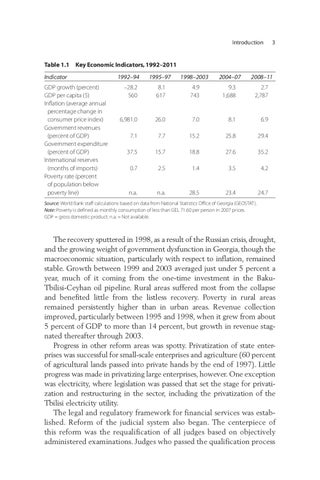
Table 1.1 Key Economic Indicators, 1992–2011 Indicator GDP growth (percent) GDP per capita ($) Inflation (average annual percentage change in consumer price index) Government revenues (percent of GDP) Government expenditure (percent of GDP) International reserves (months of imports) Poverty rate (percent of population below poverty line)
1992–94
1995–97
1998–2003
2004–07
2008–11
–28.2 560
8.1 617
4.9 743
9.3 1,688
2.7 2,787
6,981.0
26.0
7.0
8.1
6.9
7.1
7.7
15.2
25.8
29.4
37.5
15.7
18.8
27.6
35.2
0.7
2.5
1.4
3.5
4.2
n.a.
n.a.
28.5
23.4
24.7
Source: World Bank staff calculations based on data from National Statistics Office of Georgia (GEOSTAT). Note: Poverty is defined as monthly consumption of less than GEL 71.60 per person in 2007 prices. GDP = gross domestic product. n.a. = Not available.
The recovery sputtered in 1998, as a result of the Russian crisis, drought, and the growing weight of government dysfunction in Georgia, though the macroeconomic situation, particularly with respect to inflation, remained stable. Growth between 1999 and 2003 averaged just under 5 percent a year, much of it coming from the one-time investment in the BakuTbilisi-Ceyhan oil pipeline. Rural areas suffered most from the collapse and benefited little from the listless recovery. Poverty in rural areas remained persistently higher than in urban areas. Revenue collection improved, particularly between 1995 and 1998, when it grew from about 5 percent of GDP to more than 14 percent, but growth in revenue stagnated thereafter through 2003. Progress in other reform areas was spotty. Privatization of state enterprises was successful for small-scale enterprises and agriculture (60 percent of agricultural lands passed into private hands by the end of 1997). Little progress was made in privatizing large enterprises, however. One exception was electricity, where legislation was passed that set the stage for privatization and restructuring in the sector, including the privatization of the Tbilisi electricity utility. The legal and regulatory framework for financial services was established. Reform of the judicial system also began. The centerpiece of this reform was the requalification of all judges based on objectively administered examinations. Judges who passed the qualification process