How to Build a Custom WordPress Theme from Scratch
WordPress powers millions of websites across the globe, and many businesses in London rely on it for their online presence. However, there often comes a point when pre-built themes no longer meet the specific needs of a growing business. Building a custom WordPress theme from scratch allows you to create a website that is faster, more flexible, and designed specifically for your brand. Whether you are a developer or a business owner working with a WordPress consultant, understanding the process can help you make informed decisions.
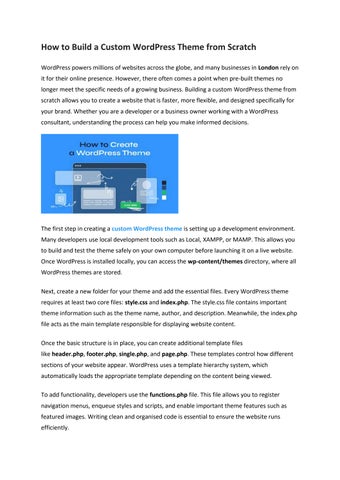
The first step in creating a custom WordPress theme is setting up a development environment. Many developers use local development tools such as Local, XAMPP, or MAMP. This allows you to build and test the theme safely on your own computer before launching it on a live website. Once WordPress is installed locally, you can access the wp-content/themes directory, where all WordPress themes are stored.
Next, create a new folder for your theme and add the essential files. Every WordPress theme requires at least two core files: style.css and index.php. The style.css file contains important theme information such as the theme name, author, and description. Meanwhile, the index.php file acts as the main template responsible for displaying website content.
Once the basic structure is in place, you can create additional template files like header.php, footer.php, single.php, and page.php. These templates control how different sections of your website appear. WordPress uses a template hierarchy system, which automatically loads the appropriate template depending on the content being viewed.
To add functionality, developers use the functions.php file. This file allows you to register navigation menus, enqueue styles and scripts, and enable important theme features such as featured images. Writing clean and organised code is essential to ensure the website runs efficiently.
Design and styling are handled through CSS, and most modern themes are built with responsive design in mind so they work smoothly across desktops, tablets, and mobile devices. Performance, accessibility, and usability should always be prioritised during development.
However, launching the theme is only the first step. A website requires ongoing updates, backups, and security monitoring. This is where a professional WordPress maintenance service becomes important, helping businesses avoid security risks and technical issues.
Many companies in London also choose to work with a WordPress consultant who can guide them through development, provide expert advice, and ensure the website supports their longterm digital goals.
Building a custom WordPress theme may require time and technical knowledge, but it provides full control over your website’s appearance and functionality. With proper maintenance and expert support, a custom theme can help your website grow and perform reliably for years to come.
Visit us at https://wordpress.dotsquares.com/wordpress-developers-london/