First Friday Letter
The World Methodist Council
Easter Greetings from the WMC President
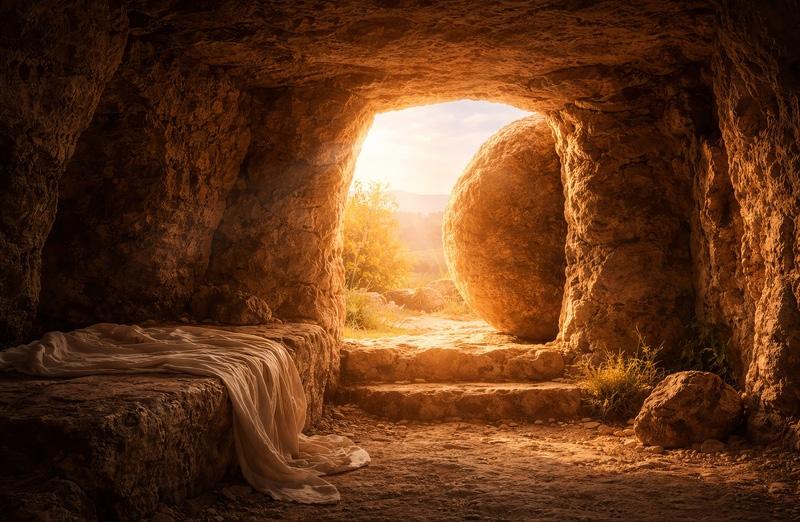
Roll the Stone Away
Luke 24:1-12
It is daybreak on that first Easter morning when Mary Magdalene, Joanna, Mary the mother of James, and other women go to the tomb. Their purpose is to prepare the body of the executed Jesus for a proper burial.
As they travel, they surely wonder how to remove the stone standing between them and Jesus’ body. Imagine how stunned and happy they are to discover that it has been rolled away.
The rest of the narrative involves the women’s perplexity, their fear at the appearance of two men in dazzling clothes, a remembrance of Jesus foretelling how his life on earth would conclude and the return trip to share the good news with the disciples. This Easter season, though, I am putting those significant matters on pause and instead lingering at the rolled away stone. After all, we live in a world and society where there are many stones that need to be rolled away.
Examples of such stones prevalent in our world today include:
• grief that accompanies deep loss; interpersonal clashes that bring hurt and disappointment; a lack of self-confidence and esteem resulting in feelings of inadequacy and insecurity; objectification of those who do not think, look and believe like us; poverty that limits possibilities and diminishes hope;
• racism that plagues countries across the globe;
• conflict and war that results in death and destruction;
• inhumane treatment of others; and so many more.
The Gospel writer Luke does not specify how the stone placed at Jesus’ tomb is moved. But clearly Jesus is at the center of the miracle of rolling it away. The two men in dazzling clothes say to the women, “ ‘Why do you look for the living among the dead? He is not here but has risen. Remember how he told you, while he was still in Galilee, that the Son of Man must be handed over to the hands of sinners and be crucified and on the third day rise again.’ Then they remembered his words, and returning from the tomb they told all this to the eleven and to all the rest.” (Luke 24: 5b-9 NRSVue)
Yes, the Risen Jesus rolls away the stones in our lives. The Crucified One- who after dying on a cross over-
April 2026
came the seemingly insurmountable stone of death with his Resurrection-makes the impossible possible. The Resurrected Christ has the capacity to move any stone in our individual or collective lives.
Jesus is the primary actor in all of this, but we have a part to play. Like the women, we are to show up, recognize Jesus at work in our lives and world, and share the good news with others.
We face grief head on and then tell others how Jesus sustained us through our pain. We lean on Jesus as we walk through difficult relationships and then share with those in similar situations what we learned from the experiences. As we grow in our identity as Christ-followers, we live into and talk about who God created us to be. We open our hearts and minds with compassion to those who are different than us, recognizing and naming how we see Christ in them. We work to eradicate poverty from the world, giving examples of how adequate resources have changed the trajectory of individuals and families. We repent of our contributions to racism and remind ourselves and others that, “There is no longer Jew or Greek; there is no longer slave or free; there is no longer male and female, for all of you are one in Christ Jesus.” (Galatians 3:28 NRSVue) We use our voices and actions to call for the end of conflicts and war. Our treatment of friends and strangers is a witness to our faith. “Thus says the Lord of hosts: Render true judgments, show kindness and mercy to one another; do not oppress the widow, the orphan, the alien, or the poor; and do not devise evil in your hearts against one another.” (Zechariah 7:9-10, NRSVue)
Jesus is at work in these and countless other ways, bringing transformation and hope by rolling away the stones that need to be removed from our lives and societies. Praise God for the Resurrected Jesus on this Easter and every day!
What are the stones in your life that you need Jesus to roll away? Who are you going to tell about how that has happened?
I invite you to join me on this Easter Sunday in praying that Jesus will roll away the stones in our lives and the world in which we live. Then when he does – let us tell others about it.
It is a joy to serve as your President
Blessings,
Bishop Debra Wallace-Padgett President World Methodist Council
From the General Secretary’s Diary
I believe the daily prayer of the Methodist Wesleyan family at this time is that the wars and unmediated conflict may come to an end so that peace may reign. To that end the World Methodist Council seeks to promote peace. In fact, the Youth and Young Adults’ programme for peace- building continues strong. In this FFL you can see the link for a Pilgrimage to Colombia. Equally, the Peace Award Laureates continue their efforts towards peace. Their witness has been highlighted in this FFL once again this month. This time with an article from H.E. Dr Fatou Bensouda, the 2025 recipient of World Methodist Peace Award. As a former Chief Prosecutor of the ICC (International Criminal Court), she denounces the danger of abandoning the international law based order and moving into a situation when might is right. This would be a denial of our common humanity and the Gospel altogether. My son, Lucas Francisco, read a book in which an anthropologist argues that humanity started when there is archeological evidence of a broken femur healed. That would only be possible within a context of care for each other. That is the beginning of humanity. I say, by the same token, when the opposite happens, forced starvation, killings, and destruction, that is when humanity collapses, with the waning of empathy. Let our prayers be practical and love be real. This year’s WMC Easter message will include a word from Dr Bensouda, a Muslim person, wishing us all a happy Easter. In this way she witnesses to the values Christians and Muslims share in common: peace and good will. Click here to view the Easter Message. This is what the work of peace-building between faiths looks like.
After the recording of the Easter message, I went next day to Geneva. Bishop Rosemarie Wenner organised a visit to the WCC for The President and I. In a short period of time we met many officers of the WCC and listened to their strategic and well thought through programmes. They have many resources available on the WCC website and there are opportunities to share in the ecumenical movement and its many ministries. We shared a meal with Bishop Rosemarie in recognition of her many years of being the Geneva Secretary. This unfortunately is coming to an end. An opportunity presents itself for someone else to serve in this capacity. The advert is in the body of this FFL. There will come the time to say a proper and official thank you to Bishop Rosemarie at the Council meeting in El Salvador. However, I would like to recognise the tremendous contribution that Bishop Wenner has made in this role. An example amongst so many, is the fact that for GEM School last year the majority of the applications were from the youth of the Methodist Churches around the world, due to her work.
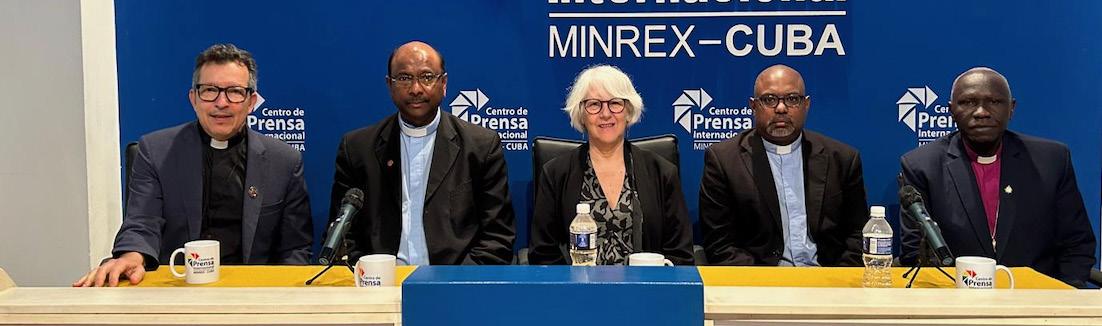
In Geneva, the WCC General Secretary, Jerry Pillay, made sure I would be included in a delegation to visit Cuba, on a pastoral visit. I was privileged to take part in it. My simple message on that trip was that Christians have a double vocation, to Peace and to Justice. Peace as we are followers of the Prince of Peace, the one who called us all to build communities of love and care. At the same time, we also follow the one who prayed for the Kingdom of God to come. This is the Kingdom of justice, peace and joy (Romans 14:17). My prayer on that visit was and continues to be that peace and justice not only join hands, but actually embrace each other for the people of Cuba. The energy blockade imposed on the Island is an act of aggression. The threat of military intervention is born of contempt and disregard for International law. In solidarity with the Cuban people and their churches, the WCC visit called for an end to both, the blockade and the threat of military intervention. See the statement here. For sure, one can say, disturbance of peace is not the way of Jesus who wished his peace upon his disciples then and also now.
Continued on next page...
From left: Rev. Dr. Reynaldo Ferreira Leao Neto, General Secretary of the World Methodist Council; Rev. Prof. Dr Jerry Pillay, General Secretary of the World Council of Churches; Rev. Dora Ester Arce Valentín, President of the Cuban Council of Churches; Rev. Philip Vinod Peacock, General Secretary of the World Communion of Reformed Churches; Rt Rev. Anthony Poggo, Secretary-General of The Anglican Communion. Photo: WCC
From the General Secretary’s Diary
Before leaving Geneva, I visited the Museum of the Reformation my first time visiting it. It is located besides St Peter’s Cathedral, the church of Calvin. It is worth a visit. It tells the story of the Reformers in Geneva and their movement. It brings the faith of the Reformers alive, ranging from the justification by faith to the role of Mary and the place of women in church and society. It also shows the present theological debate regarding slavery, the role of women, education and power. It was time to leave Geneva, with a bag full of plans.
I travelled to Rome to accompany the representatives from PROCMURA (The Programme for Christian Muslim Relations in Africa) on their visit to the Dicastery for Interreligious Dialogue. This was a follow up to the presentation Bishop Nathan Samwini, PROCMURA’s General Advisor (effectively the CEO), gave to the Steering Committee when it met in Ghana last August. We also made sure we met with the Sant’Egidio Community. They are the 1997 Peace Award Laureates. We prayed together for Peace once more at their daily prayer. The church was packed full. It was a Monday evening. There is an article here about PROCMURA’s Audience with His Holiness Pope Leo. I could not stay for that as duty called for me to be at the installation of the Archbishop of Canterbury. An interview given on that occasion can be seen here:
There is much more inside this FFL. I wish you a prayerful Good Friday, a quiet and reflective Holy Saturday and a joyful Resurrection Sunday, Rev. Dr. Reynaldo Ferreira Leão Neto (Leo) General Secretary WMC
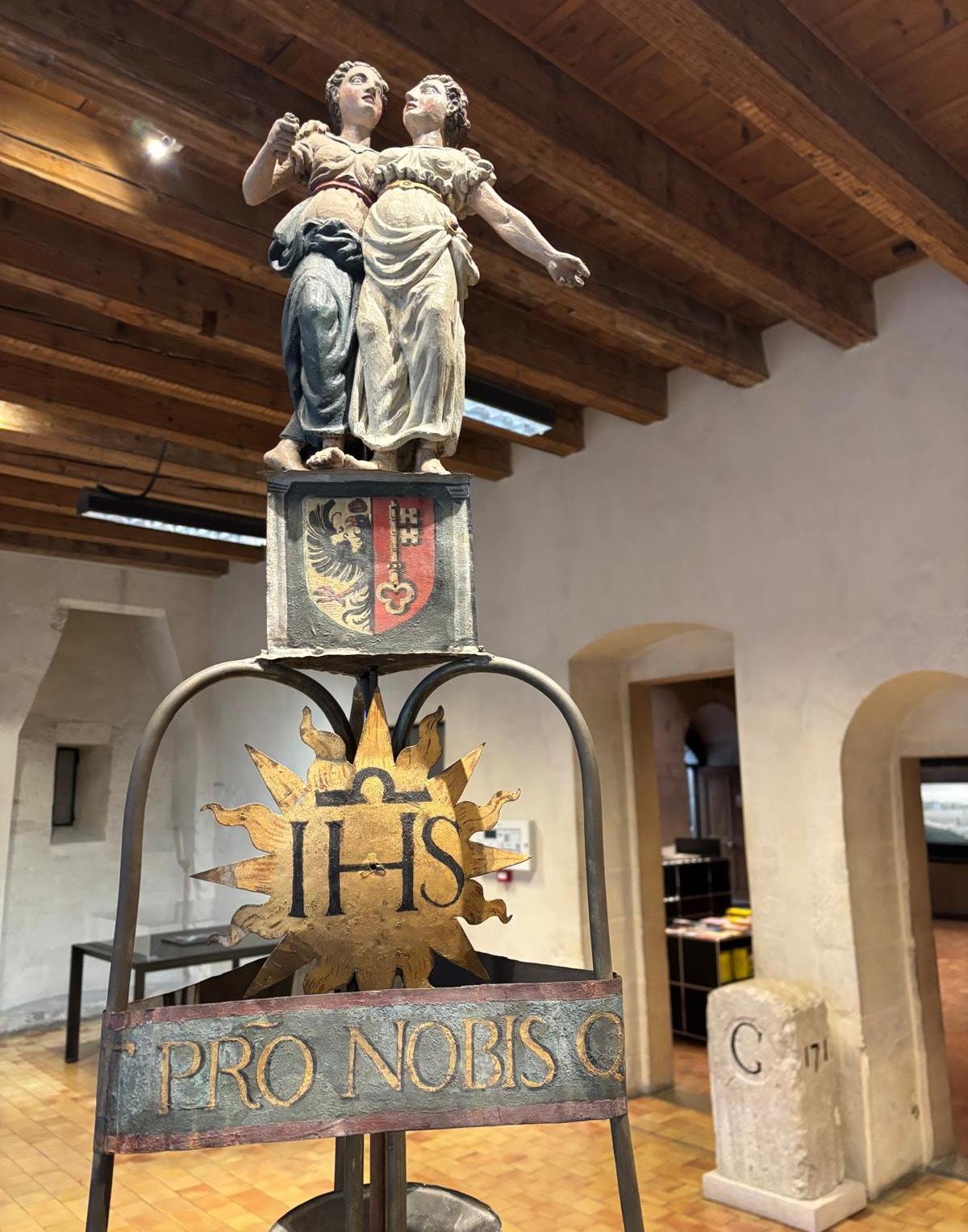
The Fountain of the Alliance of 1584, today in the Museum of Reformation in Geneva, is a siphon system that turned around the two allegorical figures of Justice and Peace, illustrating the motto: “Justice is the foundation of stable peace.”
Youthquake in Africa: Methodist Youth Converge in South Africa to Drive Transformation and Change
From Wednesday, 18 March to Sunday, 22 March 2026, the Emseni Christian Centre in South Africa became a vibrant hub of creativity, faith and youthful energy as the Africa Methodist Council Youth Movement (AMCYM) successfully held its continental inaugural Conference under the compelling theme “Youthquake in Africa: Driving Transformation and Change.”
Hosted by the Presiding Bishop of the Methodist Church of Southern Africa, Rev. Pumla Nzimande, together with her Executive team, the Conference brought together over one hundred (100) delegates drawn from Methodist Conferences across the African continent and beyond. Participating Churches included the Methodist Church of Southern Africa, Methodist Church Ghana, Methodist Church The Gambia, AME Zion Church (Western West Africa and Central South Africa), United Methodist Church of Zimbabwe (East and West Annual Conferences), United Methodist Church Mozambique, Methodist Church in Kenya, United Methodist Church Nigeria, and the Enfield Methodist Circuit of the London Methodist District, Methodist Church in Zimbabwe.
The gathering was honoured by the presence and leadership of the Africa Methodist Council (AMC) President, Most Rev. Dr Paul K. Boafo, and the General Secretary, Rev. Dr Martin Mujinga, whose participation reaffirmed the Council’s strong commitment to youth inclusion and leadership formation within African Methodism.
Bishop Sidwell Mogkothu of the Limpopo District of the Methodist Church of Southern Africa opened the Conference with the devotions. After the Holy Communion, the President of the Africa Methodist
Council, Most Rev Dr Paul Boafo, officially opened the inaugural Conference, expounding the Conference theme.
The Conference featured rich, thought-provoking plenary sessions designed to spur action and deepen strategic thinking among Methodist youth leaders. Rev. Dr Martin Mujinga opened the discussion with a compelling presentation on the Development of the Africa Methodist Council, charting the Council’s journey and its growing role on the continent. The Very Rev. Gideon D. Osabutey, Interim Chairman of AMCYM, delivered an insightful lecture on Youth and Technology, urging young people to harness digital innovation as a tool for mission, advocacy and development.
Adv. Thando Gumede, a distinguished Human Rights Defender and Pan-Africanist in South Africa, challenged delegates to pursue justice, dignity and accountable leadership. At the same time, Rev. Barry K. Boafo inspired participants with a presentation titled “African Methodist Youth Driving Faith-Based Environmental Stewardship.” The plenary series concluded with Rev. Lwazi Kondlo ( a Minister of the MCSA), who critically examined Revitalising Sustainable Economic Pathways for Africa, calling on Methodist youth to become thoughtful stewards and entrepreneurial change-makers.
Beyond dialogue and learning, the Conference also provided space for fellowship, networking and reflection. Delegates participated in heritage and leisure visits, including tours to Nelson Mandela House and Desmond Tutu House, grounding the conference experience within South Africa’s powerful legacy of faith-inspired justice and reconciliation.
Continued on next page...
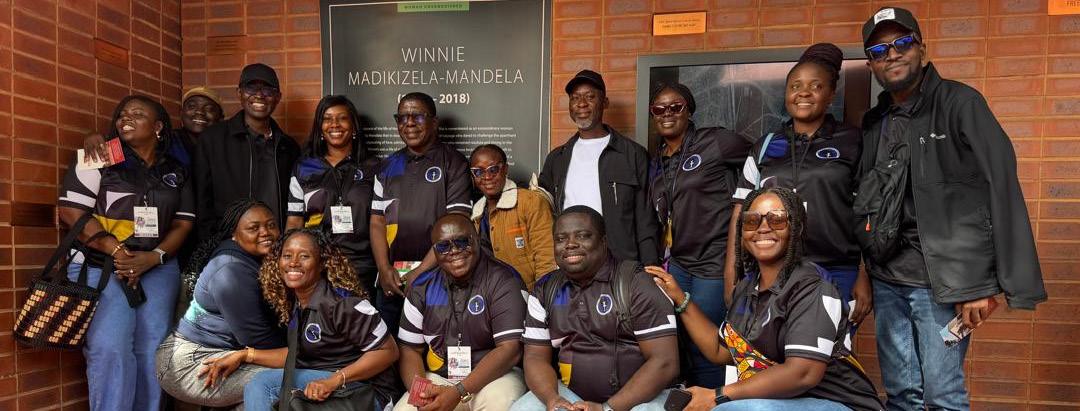
Youthquake in Africa: Methodist Youth Converge in South Africa to Drive Transformation
During its deliberations, the Conference also promulgated the AMCYM bye–laws, which seek to govern the Movement’s operations. Conference members contributed greatly to the draft, which was finally reviewed by a standing legal committee of the Conference composed of Lawyers from the various conferences.
Another key milestone of the Conference was the election of substantive AMCYM officers to serve from 2026–2030, conducted under the joint chairmanship of the AMC President and General Secretary. The newly elected executives are:
• Chairperson: Elsie A. A. L. Macauley (Methodist Church, The Gambia)
• Vice Chairperson: Rev. Derek Ben Kwofie (AME Zion Church – WWAED)
• Secretary: Sivuyile Sean Giba (Methodist Church of Southern Africa)
• Treasurer: Pamela Matema (United Methodist
and Change continued...
Church, Zimbabwe)
• Communications Officer: Nana Yaw Ampofo Ayew (Methodist Church Ghana)
• Chaplain: Rev. Dr Nene Muthuri (Methodist Church in Kenya)
• Ex-Officio: Very Rev. Gideon D. Osabutey (Methodist Church, Ghana)
The Conference reached its spiritual climax on Sunday with an impressive, spirit-filled Induction and Thanksgiving Service, officiated by Most Rev. Dr Paul Kwabena Boafo and ably supported by Rev. Pumla Nzimande. The service underscored the sacred trust placed on the new leadership and renewed the collective resolve of Africa Methodist youth to be agents of transformation.
Filed by: Nana Yaw Ampofo Ayew
Communications Officer, Africa Methodist Council Youth Movement (AMCYM)
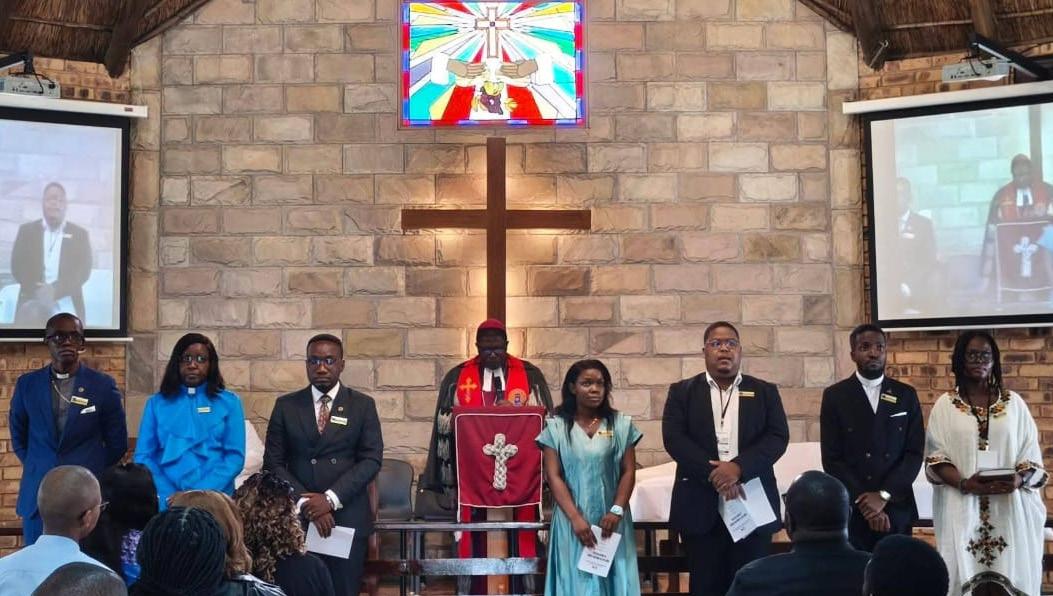
AMCYM officers to serve from 2026–2030, conducted under the joint chairmanship of the AMC President and General Secretary.
Christians in Rome hold ecumenical prayer vigil for peace
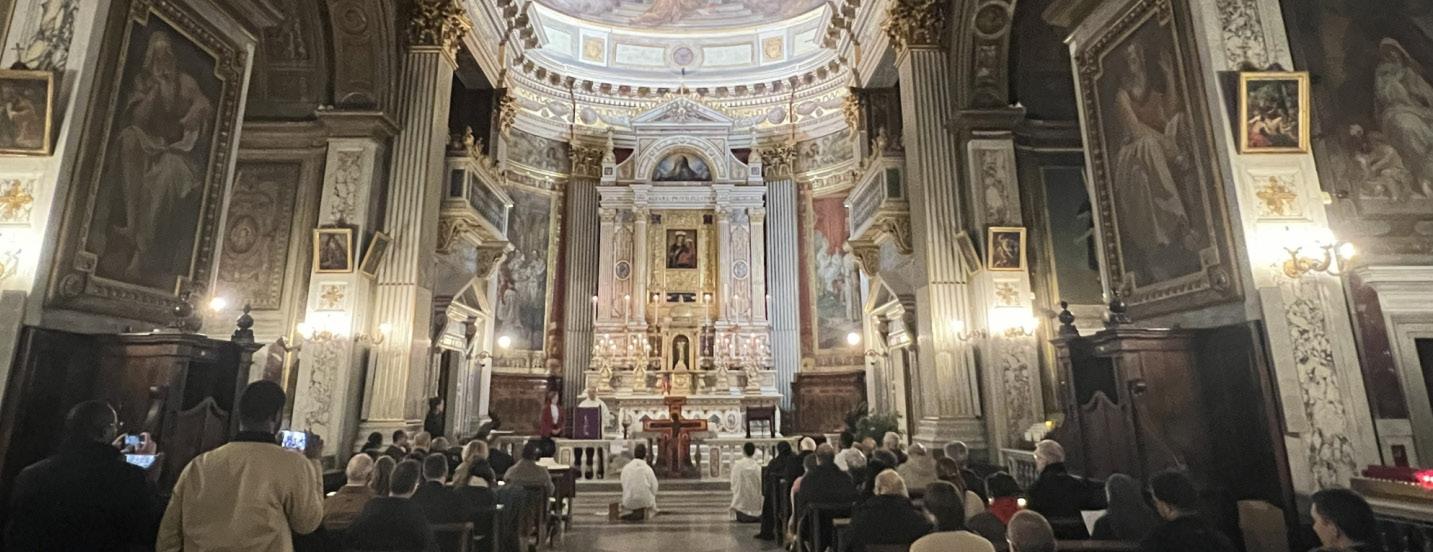
Christians from across traditions gathered in the heart of Rome on Friday, March 20, 2026, for an ecumenical prayer vigil for peace, offering a quiet yet powerful witness amid a world marked by conflict and uncertainty.
Held at the Church of Santa Lucia of Gonfalone in central Rome, the vigil brought together representatives from Anglican, Methodist, Reformed and Taizé communities, alongside participation from the Holy See. The service became a space where diversity of tradition met in shared lament, hope and intercession.
LEARN: The Taizé Community comprises of around eighty brothers from different church backgrounds – Catholic, Anglican, Protestant –and from nearly thirty countries
The vigil was organized collaboratively by the the Methodist Ecumenical Office Rome, Anglican Centre in Rome, the Reformed Churches Ecumenical Office in Rome, and the Taizé Community. Archbishop Flavio Pace, secretary of the Dicastery for Promoting Christian Unity, represented the Holy See, underscoring the significance of the gathering within the wider ecumenical movement.
Opening the service, Rev. Tara Curlewis of the Reformed Churches Ecumenical Office and Brother Matthew of the Taizé Community invited those present into a time of prayer rooted in both urgency and trust. Intercessions focused on an end to armed conflict, protection for those living in war zones and the restoration of peace across the world.
Rev. Dr. Peter Adenekan, Abp. Flavio Pace, Rev. Tara Curlewis, and Rev. Matthew A. Laferty offer a blessing at the end of the prayers. Photo by P. Cheney/ACR.
Prayers were led by Archbishop Pace, Rev. Matthew Laferty of the Methodist Ecumenical Office Rome and Sister Dr. Elizabeth Anderson of the Anglican Centre. The service concluded with a shared blessing offered by Rev. Matthew Laferty, Rev. Tara Curlewis, Rev. Dr. Peter Adenekan of the Anglican Centre, and Archbishop Pace.
Music for the vigil was provided by an ecumenical team – Rev. Sarah Mae Gabuyo from Ponte Sant’Angelo Methodist Church in Rome on flute, Mr. Conner Drennen from St. Paul’s Within the Walls Episcopal Church in Rome on piano, and Fr. Miguel Pedro Melo, SJ from the Pope’s Worldwide Prayer Network on guitar.
One of the most striking features of the evening was the participation of the congregation itself. Intercessions were offered in multiple languages — English, Italian, French, German, Spanish and Portuguese — reflecting both the global nature of the church and the shared longing for peace that transcends borders. The Lord’s Prayer was spoken in the preferred languages of those gathered, a moment that embodied unity in diversity. Music provided by local church musicians wove through the service, deepening its contemplative tone.
Continued on next page...
Photo above: Members of the congregation at the vigil in the Church of Santa Lucia.
Photo by P. Cheney/ACR.
Christians in Rome hold ecumenical prayer vigil for peace
continued...
The vigil was organized in response to a joint call for renewed commitment to the “gift of peace,” issued earlier this month by the general secretaries of several global Christian communions, including the World Methodist Council. It also took place within a broader context of heightened concern for ongoing conflicts, including the situation in the Middle East. In the Anglican Communion, the gathering coincided with the one-month anniversary of a pastoral letter from Archbishop Hosam Naoum, calling for urgent and sustained prayer as violence in the region escalates. The Council of Bishops of The United Methodist Church – a member church of the World Methodist Council – issued a call for prayer and action for peace, particularly with the escalating war in western Asia, at the beginning of March.
RELATED: WMC, Other World Communion General Secretaries issue call for renewed efforts towards the ‘gift of peace’ for all – March 2026
Reflecting on the evening, Rev. Matthew Laferty, director of the Methodist Ecumenical Office, described the importance of the evening: “Tonight’s prayer vigil witnesses to the unity that we already share in Christ, our lament for violence and death in our world, and our hope for just and durable peace. We meet each other and Christ in prayer, so
we may join hands together to work for justice and peace for all humankind.”
The 2022 report from the international Methodist-Catholic dialogue commission focused on reconciliation, calling Methodists and Catholics to peace-building together. The report states that “the reconciliation of enemies takes the form of peace-making. Part of the work of reconciliation between peoples and countries is the building of international cooperation to resolve conflicts by peaceful means and so prevent the horrors of warfare. Methodists and Catholics are called to be peacemakers and witnesses to this important work of reconciliation” (§128 of the 2022 Gothenburg Report on reconciliation).
DOWNLOAD: The 2022 Gothenburg Report on reconciliation in PDF format (753 KB)
In a time when divisions — both political and ecclesial — often dominate headlines, the vigil in Rome offered a different narrative: one of shared faith, collective compassion and a united cry for peace.
Article by: Rev. Matthew Laferty, Director of the Methodist Ecumenical Office Rome
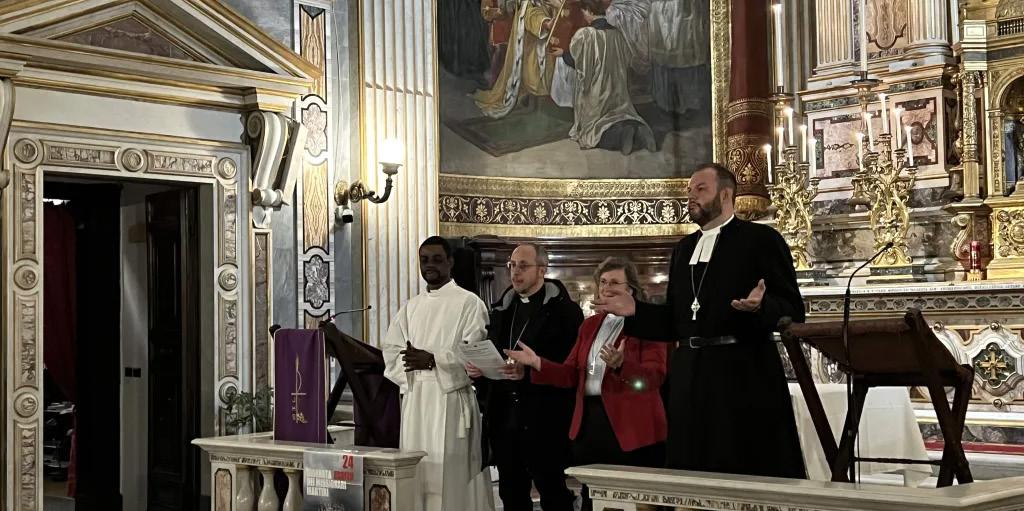
Rev. Dr. Peter Adenekan, Abp. Flavio Pace, Rev. Tara Curlewis, and Rev. Matthew A. Laferty offer a blessing at the end of the prayers. Photo by P. Cheney/ACR.
Final Call for Peace Award Nominations!
Nominations for the 2026 Peace Award are now open! Nominate someone who exemplifies Courage, Creativity, and Consistency for the World Methodist Peace Award. Applications must be submitted by April 15, 2026!
The nominee should show courage in regard to physical danger or putting personal interest at risk. Creativity should include opening new initiatives and attracting others in working for the cause of peace. Consistency is judged by effort over a period of time and intensity, despite setbacks.
Here is the link to read the full criteria: http://worldmethodistcouncil.org/whatwedo/ world-methodist-peace-award/
The recipient receives a medallion, citation and US $1000 which is symbolic of the larger recognition achieved in working for peace, justice and reconciliation. The laureate is included in the World Methodist Council Peace award booklet.
Go to www.worldmethodistcouncil.org and click on the “About the WM Peace Award” tab on the left side of the homepage and complete the online application. Please send all nomination forms to General Secretary at communications@ worldmethodistcouncil.org today!
The 2026 Peace Award Ceremony will be held during the Council Meeting in San Salvador August 14, 2026. We look forward to receiving nominations for this prestigious award.

Upcoming World Methodist Council Meeting in El Salvador
The 2026 World Methodist Council Meeting will be held at the Hilton San Salvador Hotel. Meetings will start on the afternoon of 13th August, and end with lunch on 17th August.
You will fly into El Salvador International Airport (SAL), also known as Monseñor Óscar Arnulfo Romero International Airport, which is located about 45 kilometers (27–28 miles) from downtown San Salvador.
All travel expenses and hotel accommodations must be covered by the respective member church, delegate representative, or outside organization. The WMC will not cover these costs.
If you are planning to stay a few extra days after the meeting, El Salvador offers beautiful opportunities for local tourism. Additional information will be shared soon; however, participants may enjoy hiking in natural parks, visiting beaches along the Pacific coast, exploring volcanoes, and experiencing the rich culture and cuisine of the country.
Register before April 30th to receive the Early Bird rate of $100 per registrant. Starting May 1st, registration will increase to $150 per registration. Follow the link to register today! https://www.surveymonkey.com/r/NNXN3YW
Netz4 – Making a difference in Zurich’s 4th district
Netz4 is the social welfare organisation of the Methodist Church in Zurich’s City District 4. For 35 years, our services have provided practical support to people facing social disadvantage, whilst creating opportunities for social interaction (ev. social connection) and personal development.
Youth and young adults
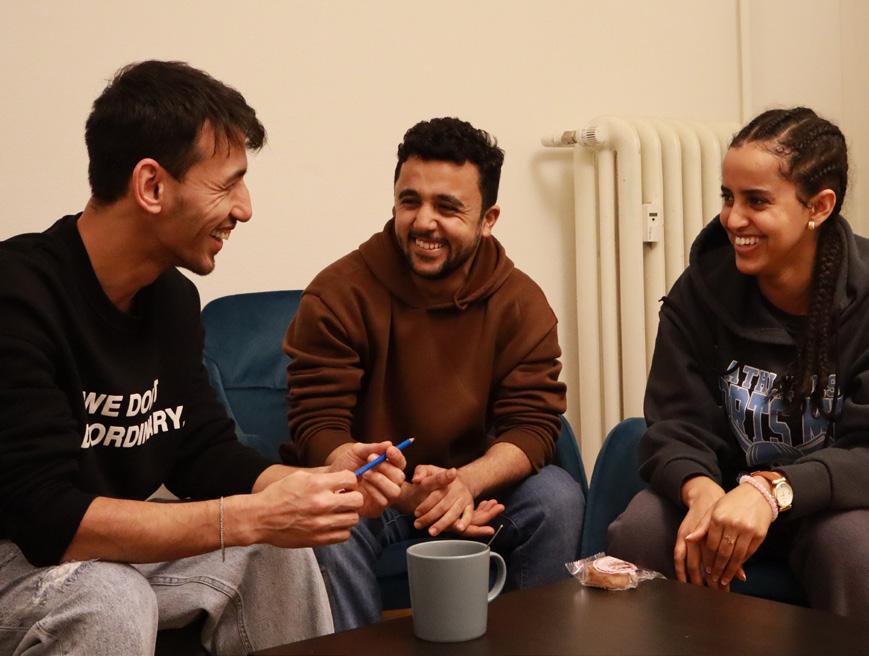
In our youth & young adults programme, we support young people aged between 16 and 30 on their journey towards a self-determined life: whether it concerns education, finding employment or accommodation, or personal challenges – we listen, motivate, and develop solutions together. The personal needs of the participants are at the heart of what we do. Our leisure activities create a space to counteract loneliness, foster social connections and offer a balance between work and relaxation. Most of the young people we support have experienced displacement. Many of them have come to Switzerland alone or do not receive the necessary support at home due to language and administrative barriers. They face countless challenges on their path to successful integration. Netz4 supports them as best it can on this long journey and helps them to create new perspectives and positive experiences.
An overview of our services:
Coffee & Coaching
Support with homework, finding apprenticeships, help with administrative and financial matters; space for leisure activities: coffee and snacks
Ladies Corner
Lunch Break
A hot meal with peers; getting to know the staff builds trust and enables further support
Coaching and German lessons, excursions and group activites Connection
Dinner together with a leisure programme on Friday evenings
Adult services
The adult services provide a low-threshold meeting place for people affected by social disadvantage. We create a space for community, participation and support. In doing so, we maintain a close cooperation with various aid organisations and municipal services. Joint strategies enable us to act professionally. Our guests experience stigmatisation in their daily lives; they are often met with condescension and labelled as people in need of help. We turn ‘those affected’ into ‘active participants’. We are convinced that people in difficult life situations should not primarily be passive recipients of help, but rather active participants both in managing their own circumstances and in shaping our services. That is why we work with volunteers: through their voluntary engagement, many people are given the opportunity to get actively involved and establish a meaningful daily routine.
Imbiss54
Spaghetti lunch with food and clothing drop-off, low-threshold advice and referral to other support services
E Nacht schänke
Overnight stay and breakfast for homeless people from Wednesday to Thursday
Treff54
Open meeting place with a sewing drop-in, Cooking and dinner together, inclusive work placements for refugees
Homecamp
Five days of social interaction in a safe, warm place over the New Year period
The story of Netz4 began in 1991 with a striking experience: young people from the Methodist Church (EMK) Zurich 4 came across a homeless man warming himself by a ventilation shaft on the church steps after their meeting. This experience sparked the idea of offering a lunchtime meal for marginalised people. Since then, the services have continued to expand and adapt to current needs. Netz4 has been an independent association since 2005, but continues to be supported by volunteers, donations, and the prayers and ethos of the EMK Zurich District 4. It is only through this support that we are able to carry out our work in the way we do.
Matthias Bommeli, a board member and former employee of Netz4, says: “Jesus not only ate and celebrated with his friends, but also, as a matter of course, with people whom no one else would have invited – God invites us all to his table. As a church, we are called to turn our attention to the ‘least of these’. Through Netz4, we seek to respond to this call by creating spaces for community and encounter, particularly for the most vulnerable and needy people in our city. As a parish, this challenges us to question our habits, adopt new perspectives and dare to engage with others. At the same time, we are enriched and are able to experience the relevance of faith in a very practical way.”
Geneva Secretary Job Opportunity
The World Methodist Council is seeking a Geneva Secretary for the term of August 2026 - August 2029. This is not a salaried position. Expenses relating to performing the duties of the Geneva Secretary will be covered. Expression of interest accompanied by a CV and the contact details for a referee should be sent to communications email at communications@worldmethodistcouncil.org.
For further information contact the chair of personnel committee Rev. Dr. Jonathan Hustler at hustlerj@methodistchurch.org.uk or the WMC General Secretary at leo@worldmethodistcouncil. org.
Applications should be in by the end of June to be considered at the upcoming World Methodist Council Meeting in August 2026.
Aims:
- to develop and maintain important relationships between the WMC, the WCC, the Lutheran World Federation (currently based in Geneva) and the World Communion of Reformed Churches (currently based in Hannover, Germany)
- to intensify the connection within the World Methodist Council by fostering unity amongst the member churches and by exploring new ways how the “ecumenical spirit” expresses itself in bringing Christians together “though that the world may believe”.
- to strengthen the witness of the WMC and its member churches through intensified cooperation with ecumenical partners in the current changes in the world and in the religious landscape.
Tasks:
- to assist the General Secretary in his work to connect the WMC with its member churches and with the ecumenical partners, namely the World Council of Churches, the Global Christian Forum, the Lutheran World Federation and the and the World Communion of Reformed Churches.
- to interpret the work of the WMC to the WCC and related ecumenical bodies and vice versa to interpret the work of the WCC and others to the members and member churches of the WMC.
- to intensify the cooperation with the WCC
through regular contacts to the General Secretary, the staff and particularly to Methodists serving as staff as well as to Methodist members in the Central Committee and the Executive Committee of the WCC.
- to report regularly to the WMC and its member churches on developments in the fields of “faith and order” and “life and work” as well as in the Pilgrimage of Justice, Reconciliation and Unity.
- to cooperate with the chairs of the Committees of the WMC, particularly with the Committees on Ecumenical Relationships, Interreligious Relationships and Social and International Affairs.
- to connect regularly with the Rome Office and Methodist Liaison Office in Jerusalem.
Scope:
- the work is currently described as to a quarter of a fulltime position
- Regular presence in Geneva about 4 - 6 times a year 3-4 days, if possible when meetings of teams etc. take place.
- Attendance at the meetings of the WCC Central Committee and other meetings upon consultation with the General Secretary
- Attendance of meetings of the WMC and regional Methodist Councils and assisting the General Secretary in preparation for the meetings.
- Regular communication with the WMC General Secretary, Officers and Standing Committee Chairs.
PROCMURA meets with Pope Leo XIV to discuss Christian-Muslim Relations
Programme for Christian Muslim Relations in Africa (PROCMURA) was honoured to have a private audience with His Holiness Pope Leo XIV at the Vatican, in a moment that reaffirmed the shared commitment to advancing constructive Christian–Muslim relations across Africa.
During the meeting, the Holy Father recognised PROCMURA’s longstanding work in building constructive relations and good neighbourliness between Christians and Muslims across the continent, noting that in a world marked by division and religious tension, such efforts demonstrate that people of different faiths can, indeed, live and work together in peace and harmony irrespective of their religious differences.
Pope Leo XIV further affirmed the Catholic Church’s openness to truth and goodness present in other religions, drawing from the Church’s teaching that it “rejects nothing of what is true and holy” in them, and emphasising the need for mutual understanding, respect, and genuine encounter.
He encouraged continued commitment to dialogue between people of different religious backgrounds, noting that authentic efforts toward unity and peaceful coexistence require openness, humility, and a shared responsibility to build communities rooted in fraternity.
This engagement marks an important moment for PROCMURA’s work, strengthening its role in advancing interreligious cooperation, peacebuilding, and good neighbourliness across the continent.
PROCMURA also met the Community of Sant’Egidio an important international community working for peace globally especially in Africa. It was a great time visiting the community as we look forward to future collaboration especially in the areas of peace building and Inter religious Dialogue.
The PROCMURA delegation was led by our General Adviser, Bishop (Dr.) Nathan Samwini, Team Leader, Ms Joy Wandabwa, and the Chairperson of PROCMURA’s European partners, Rev. Dr. Andrew Ashdown.
The WMC General Secretary accompanied the PROCMURA delegation on the first part of the visit.
The MEOR facilitated the visit of the delegation to the mosque in Rome.
Article by: Archbishop Dr. Sunday Onuoha Methodist Church Nigeria President Vision Africa
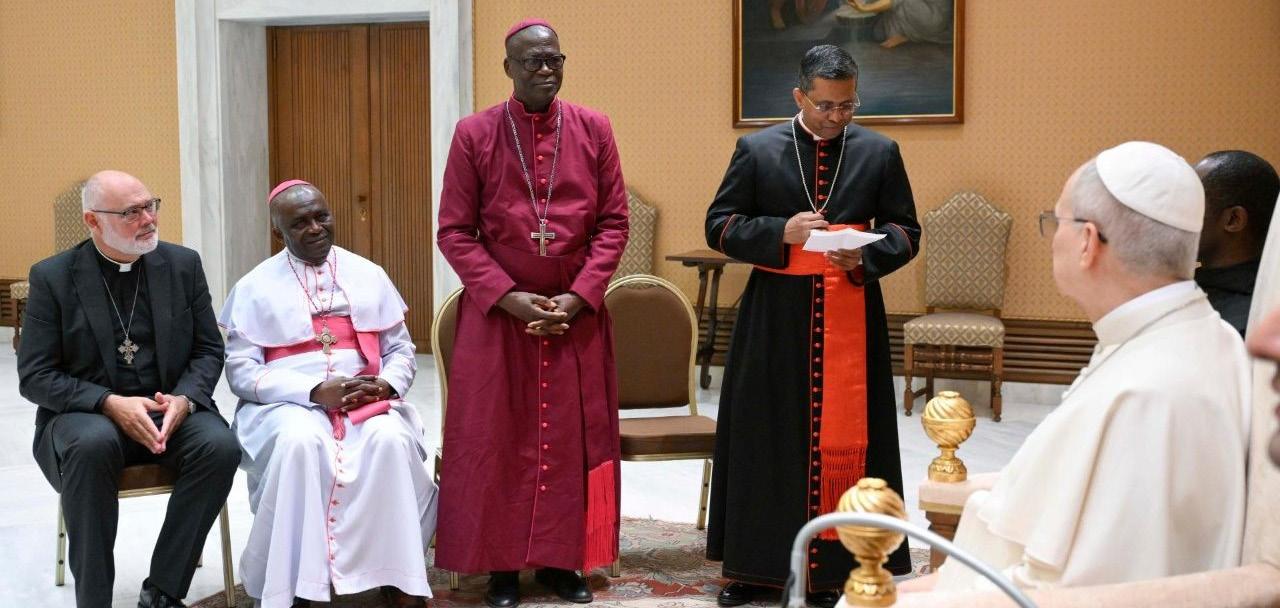
Photos courtesy of The Vatican News
Wesley House Online Course
Session and Course Taster | Enabling Good Conversations Thursday 23 April 2026 | 2.00–3.00pm |
Does this sound familiar?
“Could we meet up for coffee?”
“Could I just catch you for a chat?”
Are you in a role where you offer help and the ability to respond with both care and clarity is vital?
About this session
This free, one-hour interactive session will help you explore and refresh the practical skills that enable conversations to be both genuinely supportive and purposeful. The session also serves as an introduction to the Enabling Skills for Ministry and Mission course — an opportunity to experience the approach and ethos of the programme before committing to further study.
Who is this for?
This session is particularly suited for those whose work in the church involves offering support to people or to churches.
Who is running this session?
The session will be led by James Butler, Helen Cameron, and David Dadswell who bring a collaborative and participatory approach to learning — helping practitioners to identify where work has become stuck and to find ways to help it flow again.
Reserve your place today — this session is free to attend and is run via Zoom.
Register here - https://enablingskills.eventbrite.co.uk
Progressing towards the new
Feast of Creation – celebrating
the
Creator God and Creation in Christ
The Feast of Creation, also known as Creation Day, is observed on September 1st or the subsequent Sunday. In recent years, there has been increased engagement with the informally observed Season of Creation (September 1st through to October 4th, the Feast for Saint Francis of Assisi.)
An ecumenical process included two major international ecumenical conferences, held in Assisi, Italy in March 2024 and May 2025. A resource providing background theological reflections can be found here: www.bit.ly/assisi-2025-report . In March 2026, an ecumenical webinar was held, giving an overview to the progress made; for a recording see https://youtu.be/ F6i9Gukd5NI?t=110.
The shared hope is to celebrate more intentionally God’s act of Creation as a foundational mystery of faith. Many churches will officially begin their Feast celebrations this September! While many worlds communions, as with WMC, do not determine the lectionaries of its member churches, a joint letter of commendation from world communion leaders can be found here: https://drive.google.com/drive/u/0/folders/1vurVS93woxXY2OioKZfUCPgP8uBis4zU
THE REVISED COMMON LECTIONARY UPDATES
For churches that follow the Revised Common Lectionary for the themes and scripture texts, the committee overseeing the RCL have affirmed that the Feast of
Creation will be incorporated as of this year. Texts will be provided for each of Year A, Year B, and Year C.
DEVELOPING NEW LITURGIES - ONLINE WORKSHOPS
A series of three online workshops are planned during April, to assist liturgy commissions or local preparations for implementing the Feast. It will explore in depth the possibilities for liturgical texts and workshoping/drafting tailored texts. There will be three workshops (only in English), structured by type of texts:
Workshop on “Gathering / Introductory Rites” (Calls to Worship, Collects, Confessions/Lament)
• Workshop on “Liturgy of the Eucharist/Communion/Lord’s Supper” (Offertory Prayers, Eucharistic Prayers, Post Communion prayers; and Blessing/ Benediction texts too)
Workshop on “Liturgy of the Word” (Lections, Sermon starters)
Dates: April 16, 29, & May 14 at 3pm CEST; 90min each. To sign up www.bit.ly/feast-workshops
For further information, the WMC representative on this project is Rev. Tony Franklin-Ross (Methodist Church of New Zealand) – tonyfr@methodist.org.nz
Why international law is still the world’s best defence
Should we permit the foundations of international law to erode, the world would slip once more into anarchy and chaos.
Conceived in the long shadow of global devastation, the post–World War II order was constructed -imperfect yet purposeful – to shield humanity from a similar catastrophe.
In 1943, as the tides of battle in World War II began to turn in favour of the Allied powers, United States President Franklin D Roosevelt warned: “Unless the peace that follows recognises that the whole world is one neighbourhood, and does justice to the whole human race, the germs of another world war will remain as a constant threat to mankind.”
Today, that coveted peace is increasingly fragile.
The post-war architecture conceived to avert great-power conflict, institutionalise interstate cooperation, reduce hot wars, and entrench human rights within binding international law is now under acute pressures. It faces a combustible mix of resurgent ultranationalism, hyperintensified zero-sum strategic rivalries and hegemonic power plays, the fragmentation of longstanding alliances, and the brazen repudiation of established norms.
Multilateral institutions that once underwrote stability are increasingly marginalised or instrumentalised in the service of Machiavellian politics. Foundational treaties are hollowed out or breached outright, compliance regimes weakened, and enforcement mechanisms rendered inert—leaving the post-war international system exposed to the very coercive power politics it was designed to contain.
The result is a palpable drift towards an unchecked “force-based order”, under which might displaces right, and power eclipses principle.
International orders do not suddenly unravel because of political declarations broadcast at podiums, nor because of the conduct of aberrant outliers. They collapse when those collectively entrusted with their stewardship neglect to properly defend them – when resolve gives way to timidity, principle is bartered for political expedience, and moral clarity is supplanted by double standards.
Unless the international community acts with resolve to defend and modernise the international order – fortifying rather than constraining it, including by making it more representative and meaningfully inclusive – the global system will drift toward a far more volatile and perilous disequilibrium.
The United Nations charter – one of the central instruments of the post-war legal infrastructure – is under threat. The charter enshrines the bedrock rule of the modern international order that no state may threaten
or use force except in self-defence or with UN Security Council authorisation.
That peremptory norm – the foundation of the collective security architecture – is now visibly fraying. As raw power eclipses legal restraint, and the silence or equivocation of the many emboldens the few, the prohibition on the illegal use of force risks sliding from binding law into empty rhetoric.
Almost overnight, the threat of force – and even unilateral military action undertaken without legal authorisation or meaningful deliberation – has begun to crystallise into a disturbing new normal. This accelerating erosion of established norms is not a passing anomaly; it is a structural shift with profound implications for international peace and security.
Institutions of international law, which have played a decisive role in preventing conflict and advancing accountability are also threatened.
The International Court of Justice – the UN’s highest judicial body – has successfully adjudicated numerous interstate disputes, demonstrating the power of legal mechanisms over hard power and military confrontation.
Efforts to hold perpetrators of atrocities to account –from Nuremberg to the creation of UN ad hoc tribunals – paved the way for the International Criminal Court (ICC). Its creation in 2002 sent a powerful message that mass atrocities as merely politics by other means must no longer receive a pass, that perpetrators must be held accountable, and that impunity can no longer be tolerated. The historic cultivation of these norms may be considered a crowning achievement as this normative transformation has not only awakened humanity’s consciousness regarding atrocities, but has also reshaped expectations of accountability for such grave crimes, and recast the very narrative and language with which we confront these vital questions.
And yet, those very powers that once shaped, and at least on the surface, nurtured these norms and institutions of international justice, now blatantly erode their integrity—whether by defiance, selective invocation, or politicisation. Thus, the edifice of collective restraint trembles, vulnerable to the machinations of those who prize unbridled power above principle.
To be sure, such regression diminishes the security and prosperity of all participants in the international system, irrespective of their size or influence.
Continued on next page...
Why international law is still the world’s best defence continued...
Yet another grave assault on the very foundation of human rights advocacy lies in the entrenched “culture” of convenient indignation and performative empathy by states and self-serving and ideologically inclined actors alike.
Such expedient outrage and hollow sympathy erode the credibility of the pursuit of justice, undermining the universality of dignity for which we strive.
International law cannot be invoked à la carte, nor enforced with expedient selectivity.
Perhaps the greatest threat to international justice is not just outright opposition from ill-wishers but indifference and arbitrary application. The contrasting global reactions to different theatres of conflict in the past decade alone lay bare the hypocrisy that undermines faith in the universality and effectiveness of international law.
When our compassion is contingent upon political expedience, convenience or dictated by the fleeting spotlight of media attention or social media clickbait, we betray the fundamental, universal principle at the heart of human dignity.
Just as questionable are those who conveniently brandish the language of human rights not as “the equal and inalienable rights of all members of the human family”, but as a tactical instrument of lawfare deployed against political adversaries. Such deceptive tactics not only trivialise the suffering of victims but can also fuel and perpetuate the very conditions that enable even graver human rights abuses. Indeed, ancient wisdom bears counsel: “beware of false prophets, who come to you in sheep’s clothing, but inwardly they are ravenous wolves”. In this environment, smaller states and middle powers, in particular, cannot afford passivity. They must coordinate with strategic clarity and act with resolve to defend and reinforce a rules-based global system anchored in real and principled commitment to international law and the peaceful settlement of disputes.
Perspective is important. The Western world, even when considered as a whole, comprises about 11 to 15 percent of the global population; the remaining 85 to 89 percent of humanity resides beyond it.
In a century increasingly defined by multipolarity, the convergent interests of the so-called Global North and Global South in safeguarding peace and stability within – and one hopes beyond – their respective spheres of influence must rise above the complacencies and double standards that have long underwritten the status quo.
True advocacy demands courage – to uphold and apply the law equally and impartially, even when doing so is uncomfortable, unpopular, or personally costly. It is the discipline to defend rights not only when they align with powerful interests, or “tribal” and prevailing senti-
ments but wherever justice demands it.
The legitimacy and potency of international justice are also fundamentally anchored in ethical leadership and an unwavering fidelity to principle. It is incumbent upon the stewards of international institutions, courts and tribunals to embody integrity, impartiality, and steadfast dedication to their mandates. When these ethical foundations are shaken or compromised, the repercussions are deep and lasting: public confidence disintegrates, victims suffer renewed injustice, adversaries are emboldened, and the quest for justice is dealt a blow. The character and courage of those at the helm are not mere virtues, but the cornerstone upon which the entire edifice of international justice stands.
This is our clarion call: should we permit the foundations of international law to erode—whether through selective justice, passive indifference, or the cynical calculus of unprincipled politics—the world would slip once more into the shadows of anarchy and chaos.
We cannot yield to a world order defined by unchecked aggression, the erosion of sovereign borders under predation, and the unravelling of hard-won international norms. To acquiesce to such decline is to legitimise disorder as a governing principle, invite instability, normalise coercion, and accelerate a descent into systematic violence.
The cost would be borne by societies worldwide, in shattered security, fractured institutions, and immeasurable human suffering.
It is our shared responsibility to avert this regression.
By steadfastly upholding international law, nations around the world do more than safeguard their own futures; they erect barriers against the reckless impulses of would-be aggressors, protecting all – including the aggressors themselves – from the dire consequences of unfettered conflict.
Indifference is not an option. Wilful blindness is complicity.
In standing in firm defence of international law, we are not only enforcing norms – we are shaping the trajectory of our civilisation and honouring the enduring promise of humanity itself.
The rule of law is one of humanity’s quiet triumph – a beacon guiding our gradual rise from unbridled brute force towards greater order, justice, and civilisation.
We must never allow the law to fall silent, for it stands as humanity’s foremost defender.
Article by Dr. Fatou Bensouda, Former Chief Prosecutor of the International Criminal Court, 2025 Peace Award Recipient and Sam Sasan Shoamanesh, Former Chef de Cabinet of ICC Prosecutor
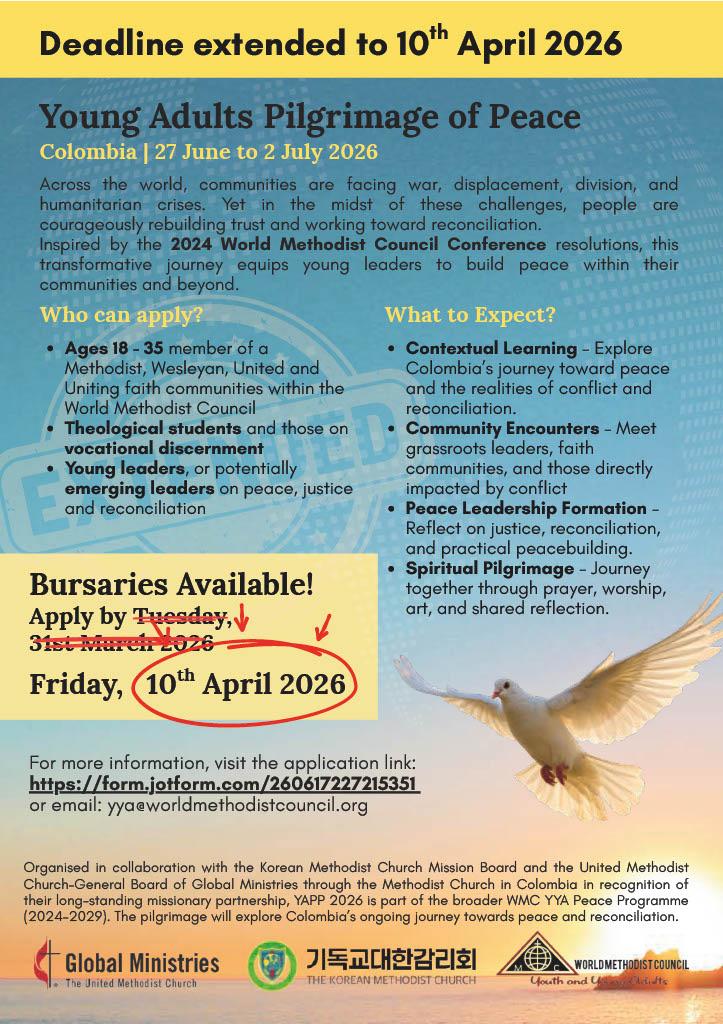
Being Church Together?
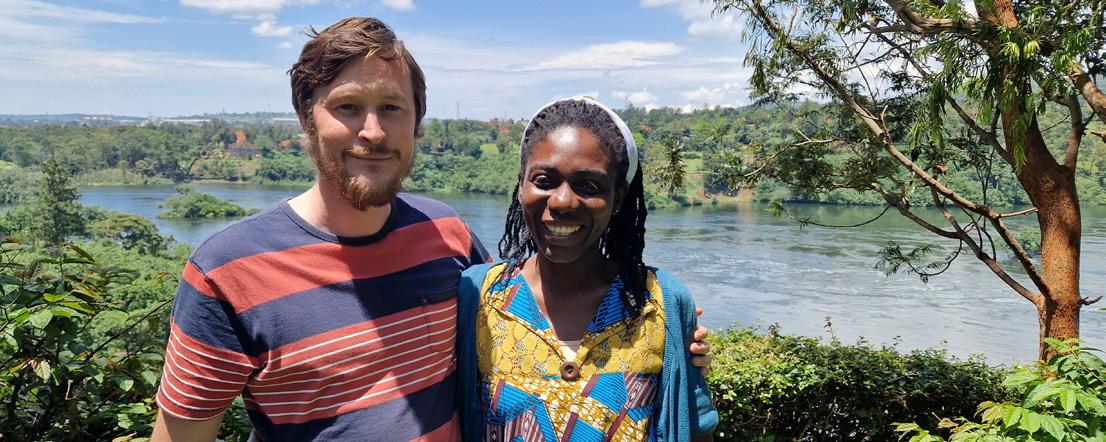
My wife Grace and I spent 7 years serving as mission partners in Italy. The Italian Methodist Church had made a request to the British Connexion for presbyters who had experience of serving in different cultures to work with their intercultural vision Essere Chiesa Insieme (Being Church Together). This vision, which encourages culturally diverse congregations to worship together, emerged in Sicily during the late nineteen eighties. Having served previously in Cameroon we encountered several people who had tried to come to Italy through the Sahara Desert and were tangibly aware of the number of people migrating to Europe in search of a better life. We had not however realized the extent to which immigration had led to church growth in Italy. The story of one of the congregations in which we served powerfully illustrates the great blessing that Christians from other parts of the world bring to churches in Europe.
The Blessing of Migration
In a town halfway between Milan and Turin a small Italian congregation was about to close when Ghanaian Christians arrived in the area. What could easily have happened in this scenario is that the new arrivals would have been welcomed to join in worship but only in the usual style of the local area, the leaders of whom would have kept total control of all decision-making regarding worship and mission. This would have been the easy option for those already in place but would have stifled the wonderful possibilities that were now apparent. Instead, the congregation was completely revitalised growing to three times its previous membership. The worship was also transformed from a traditional liturgical style to a rich kaleidoscope of worship incorporating dancing, extemporary prayer, drums and a variety of Christian music. This blessing from God only complemented the beautiful liturgical tradition already in place.
The Key to Intercultural Success
The key to success in this context was the willingness of the original members to embrace what God was doing through the blessing of Christian brothers and sisters joining their church family. They not only welcomed the new arrivals but fully incorporated them into the leadership and decision-making processes of the church. A very old and wise Italian member of the church once said, “we had to change but I am so glad we did.” Rather than clinging to power, the original membership relinquished control and recognised the need to ensure the leadership of the local church reflected the new membership. This enabled the decisions about worship and the direction of the church to truly embrace the diversity of the whole church family. After seven years of ministering in churches in Piemonte, Lombardia, and Rome we returned to Africa, serving briefly in Uganda, before
beginning my current role at Wesley House, Cambridge.
Listening to World Methodism
Part of my new role has involved theological reflection on what it means to be the church together in diverse cultural contexts. This has involved three main areas of focus.
First and foremost, it involves listening to the diversity of wisdom throughout World Methodism. With over 80 million members Methodism is growing rapidly in many parts of the globe. We witnessed an example of this vibrant growth in Uganda, when we were blessed to see the planting of five new churches in a local circuit as numerous people came to faith in Jesus Christ and needed new local places to worship. The circuit also welcomed forty new local preachers and began training them to be preachers. Additionally, three other people (in the same circuit) began the process of training for presbyteral ministry.
What does it mean to be a culturally diverse Church
Attending to the diversity of voices within the Methodist World naturally leads to a second important part of my current role; reflecting theologically on the plethora of strands woven into the rich tapestry of World Methodism. This involves asking critical questions such as “What can we learn from the length, breadth and depth of religious experience from Methodist Communities around the globe?” Moreover, what is our own distinctive contribution in our own local and national situation? Wherever we are, we each have something to bring to the table. We all have something to offer as the people of God.
The World IN my Parish
Theological reflection upon what it means, in practice, to live and worship together in intercultural Methodist congregations leads me to a third area of my current work. Wesley House has recently started an online webinar, entitled “The World IN My Parish.”
This is an online meeting place which welcomes the sharing of wisdom from a variety of people grounded in diverse congregations around the world. Thus, far we have engaged with a variety of topics including; Ministry among Chinese Congregations within the UK, Intercultural Ministry in Italy, and the nuts and bolts of Worshiping Together in Churches with People from Diverse Cultural Backgrounds.
As this work develops it is our hope that we can offer a space where people from various parts of the world can reflect and learn together about what it means to be the people called Methodists in a beautifully diverse world. If you would like to have more information please email us office@wesley.cam.ac.uk
Daniel Pratt Morris-Chapman is Director of Studies for Taught Programs at Wesley House, Cambridge. He has published both theological and practical works on intercultural ministry including his recent essay, “Being Church Together?” Religions (2025).
Daniel Pratt Morris-Chapman and Wife Grace
Please send press releases, articles and resources! Submissions should be a page around 500 words, edited and ready to publish. Contact us by Monday, 20 April at communications@worldmethodistcouncil.org if you would like your story to be included in the May edition of the First Friday Letter.
On the Web
This and past First Friday Letters can be found online at FirstFridayLetter.worldmethodistcouncil.org.
The World Methodist Council’s website may be found at worldmethodistcouncil.org
To subscribe to this newsletter, please email communications@worldmethodistcouncil.org
About the First Friday Letter
All stories and photos, unless otherwise stated, are protected by their respective copyrights. Please do not copy without expressed written permission from
ID
© Yana Lysenko | Dreamstime.com