Murch Exits the Stage
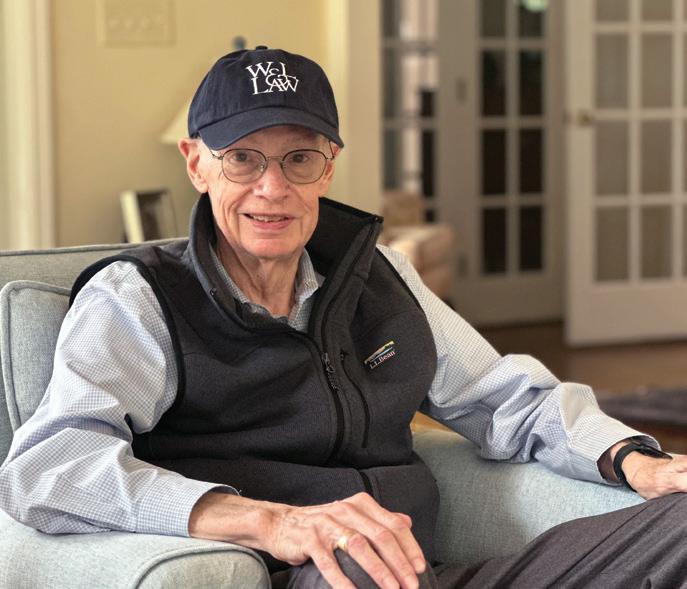
Professor Brian Murchison will retire from full-time teaching at the end of the academic year.
BY JEFF HANNA
As a two-hour Torts class wrapped up one morning last fall, a student approached a visitor who had been sitting quietly in the back row of Lewis Hall’s Classroom A.
“What did you think of the class?” she asked.
The visitor said he’d been struck by the lively Socratic exchanges between students and the professor as they debated the rescue doctrine and implied assumption of risk.
“Well,” she replied, “that’s Professor Murch. He’s a legend.”
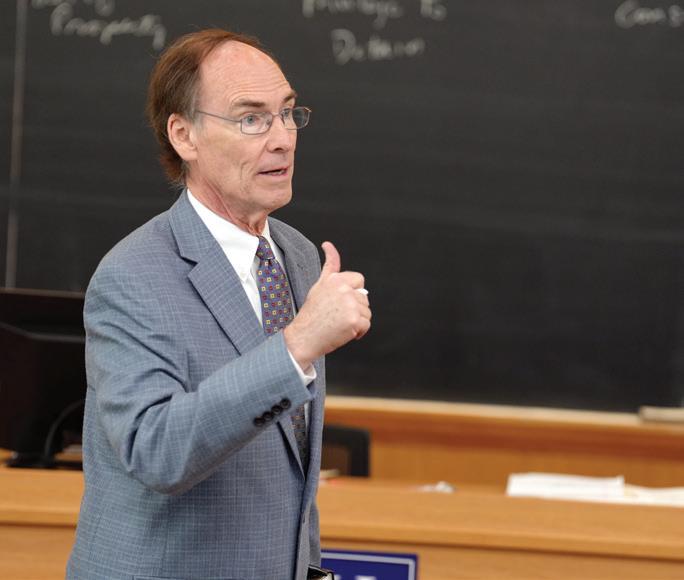
After 43 years, the legend will retire at the end of the academic year. To say that Brian Murchison, the Charles S. Rowe Professor of Law, will be missed is to understate the impact of a career that has shaped generations of W&L law students. In addition to his teaching and scholarship on administrative law, mass media law, jurisprudence, and torts, he has served as interim dean, director of the Frances Lewis Law Center, and co-founder of the Black Lung Clinic, to name only a few high-profile activities.
But Murchison’s influence has reached beyond the walls of Lewis Hall. He has touched virtually every corner of the university — from teaching undergraduate courses to serving on presidential search committees, from chairing the Commission on Institutional History and Community to directing the Mudd Center for Ethics.
In short, he has been a defining presence at W&L.
When Murchison, his wife Ann, and their 2-yearold daughter rolled into Lexington in the summer of 1982, he wasn’t thinking about a four-decade career. Mostly, he wondered how he and his young family would adjust after leaving Washington, D.C., where he’d grown up and was working at a law firm.
At Hamel, Park, McCabe & Sanders, he was on the fast track, practicing administrative law and especially enjoying work for broadcasters — “hapless broadcasters,” as he calls them — and
suggested I consider it,” he said.
Despite his reservations, Murchison sent a letter of application to Rick Kirgis, then chair of the appointments committee. Kirgis, who later served as dean from 1983 to 1988, replied that the hiring season had ended. “I thought it was his polite way of confirming that I wasn’t qualified,” said Murchison.
When hiring season began again the following year, Murchison’s phone rang. It was Kirgis, telling him it was now time to apply. Murchison remained skeptical. He assumed W&L was simply expanding its pool and that Kirgis, a Yale grad, was extending a courtesy call to a fellow Yalie. But he applied, received an offer, and faced a decision.
To say that Brian Murchison, the Charles S. Rowe Professor of Law, will be missed is to understate the impact of
a career that has shaped generations of W&L law students.
other media clients who tangled with the Federal Communications Commission.
Then a “fluky thing,” as he puts it, occurred. One of his sister’s friends told him about a faculty opening at Washington and Lee’s law school and suggested he apply. He was hesitant.
“One, I liked what I was doing. And two, I didn’t think I was qualified to be a law professor,” Murchison said. “I did not clerk for a federal judge, and my impression was that was a prerequisite for getting a teaching job.”
He did, however, have teaching experience. Between graduating from Yale University and his enrollment in Yale Law School, he spent three years in the Peace Corps teaching English in Benin, West Africa. “Maybe that’s why my sister’s friend
He could envision staying at the law firm and continuing to work in mass media law, which he loved. He’d also had fleeting thoughts of a journalism career. He was an editor of the Yale Daily News as an undergrad and had worked one summer during law school as a Metro reporter at the defunct Washington Star.
“After my second year of law school when you’re supposed to be finding a permanent job in a law firm, I was somewhat disillusioned and applied to the Star,” Murchison said.
He earned several front-page bylines, even scooping the rest of the media on the disappearance of a 12-year-old boy from his home in Vienna, Virginia. Although his reporting impressed the Star editors, they discouraged him from switching paths.
Quite the opposite, in fact. “They said, ‘Are you crazy? We don’t make any money. You’ve got to go back to law school,’” Murchison said.
He took their advice, returned to Yale for his final year, and was settled in as associate at the law firm when Kirgis called. This time he took a chance and accepted the offer.
Murchison said his transition to life as a law school professor was relatively smooth because W&L fit him so well. “I seemed to be happily in sync,” he said. “When I came here the ethos was small and personalized, and there was equality among the professors. It was the luckiest thing that could possibly have happened to me.”
In his first week, senior faculty member Lewis (Lash) Larue appeared in his doorway carrying a massive book manuscript. “It was about this thick,” Murchison said, spreading his hands a foot apart. “’Could you read this over the weekend and give me some helpful notes?’ Lash asked. I remember saying to Ann, I’m used to hierarchy in the law. This brilliant man just asked me to read his manuscript and comment on it. I thought, ‘How wonderful is that?’ It shows that this is an incredible place.”
He praised the mentoring he received from faculty colleagues like Larue, Roger Groot, Joe Ulrich, and Uncus McThenia. “These men were a generation older than I was and were great to me,” he said.
The students welcomed him as well, nicknamed him Murch, and responded to his teaching style, which included Shakespeare. An English major at Yale, Murchison begins his Administrative Law class with Hamlet. “I tell the class that the poor prince is analogous to a baffled government agency buffeted
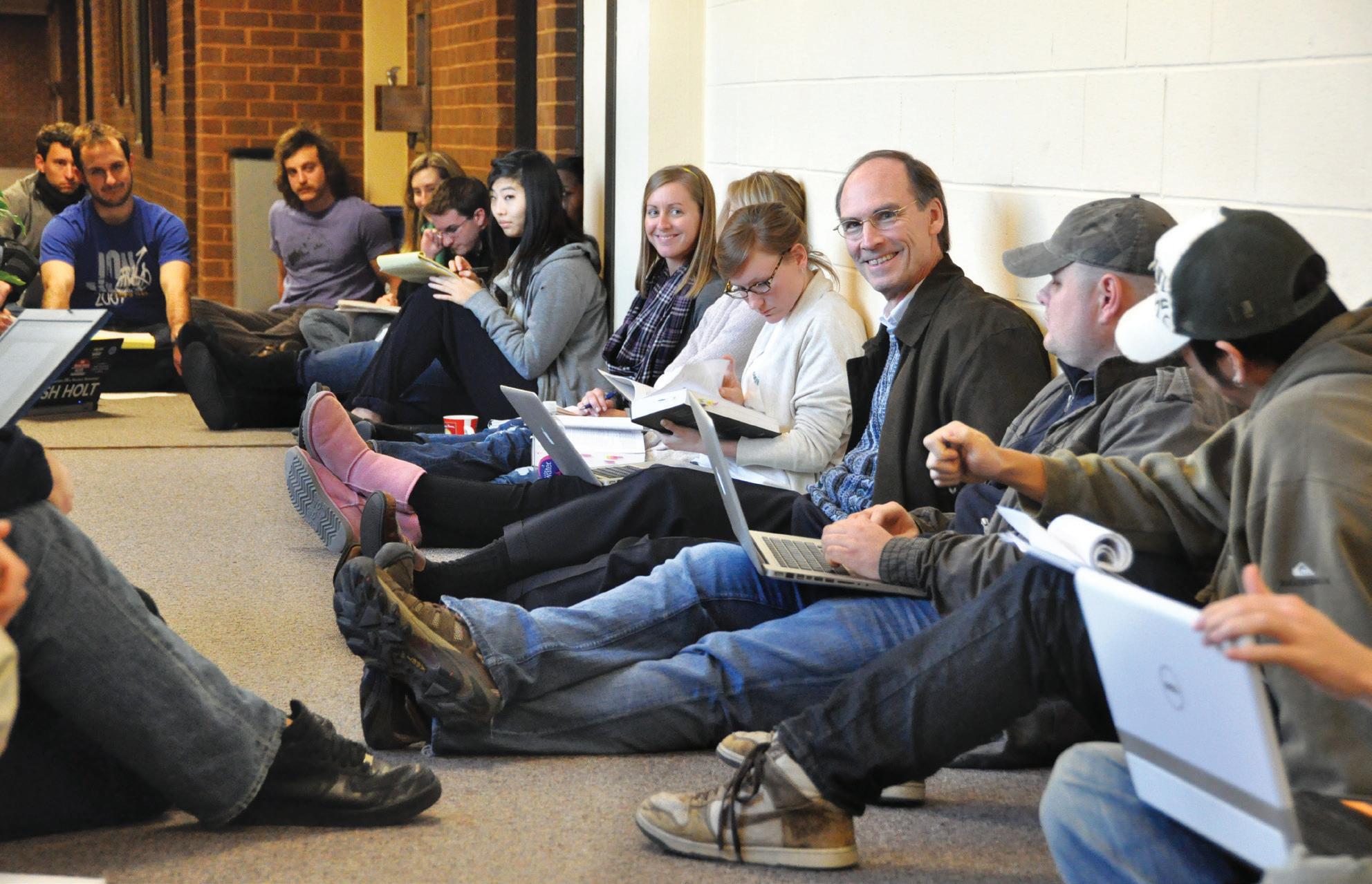
Students gather outside Murchison’s office for one of his many hallway exam review sessions.
by confused signals from the White House, Congress, public interest groups, and regulated industry,” he said. “I liken the ghost to the White House, Polonius to Congress, public interest groups to Ophelia, regulated industries to Gertrude, etc. Ultimately the course becomes a story of how the agency manages all the conflicting signals and tries to carve a way towards the public interest.”
Little wonder that the Law News once ran a feature headlined “Murch: The Shakespeare of Lewis Hall.” The story read, in part: “As anyone who has ever had Murchison as a professor can attest, in his capable hands, even the driest administrative law or business organizations case becomes a fascinating story which he unfolds for his students on his stage.”
Murchison was 30 years old when he came to W&L — younger than some of his students — and acutely aware of maintaining a professional distance. He wasn’t aiming to be everyone’s friend, he said, but he did want to be an exceptional teacher and to balance detachment with involvement. He succeeded: students awarded him 16 different teaching honors. In 1988, six years after he arrived, he won the Virginia Council of Higher Education’s Outstanding Faculty Award — the Commonwealth’s highest honor for university faculty, recognizing excellence in teaching, research scholarship, mentoring and public service.
“I wasn’t reinventing the wheel when I started,” Murchison said. “I was trying to be a good teacher, but you also have to be a good scholar. I had to figure out how to do that. I admired that very challenging
Reflections
Kaitlyn Hyun ’24L
I vividly remember my first day of law school when Professor Murchison swept into the Moot Courtroom wearing a judge’s robes, loudly called the class to order, and promptly cold called two unsuspecting students to be the attorneys arguing the case. Despite his initially dramatic appearance, I quickly learned that Professor Murchison deeply cared for his students. While Professor Murchison was so busy with commitments outside of class, he gave so much of his time to his students. In Mass Media, he individually met with each student to help prepare them for their in-class oral arguments. Conversations with him led me to pick my Note topic on the reasonable person, provocation, and Asian defendants. I am inspired to look back and see the ways Professor Murchison showed up for me and so many others.
set of requirements. It was the way it should be, and it was not easy.”
Although his scholarly writing spans many subjects, his work on the First Amendment stands out. Over 17 years, he published a trilogy of major papers about the background values of the First Amendment’s speech and press clauses: “Speech and the Self-Realization Value” (1998), “Speech and the Self-Governance Value” (2006), and “Speech and the Truth-Seeking Value” (2015).
Even with his teaching and scholarship,
a way I met professors on the other side. I loved my colleagues here in Lewis Hall. Then, a stone’s throw away, I was meeting all these other wonderful people and learning from all of them.”
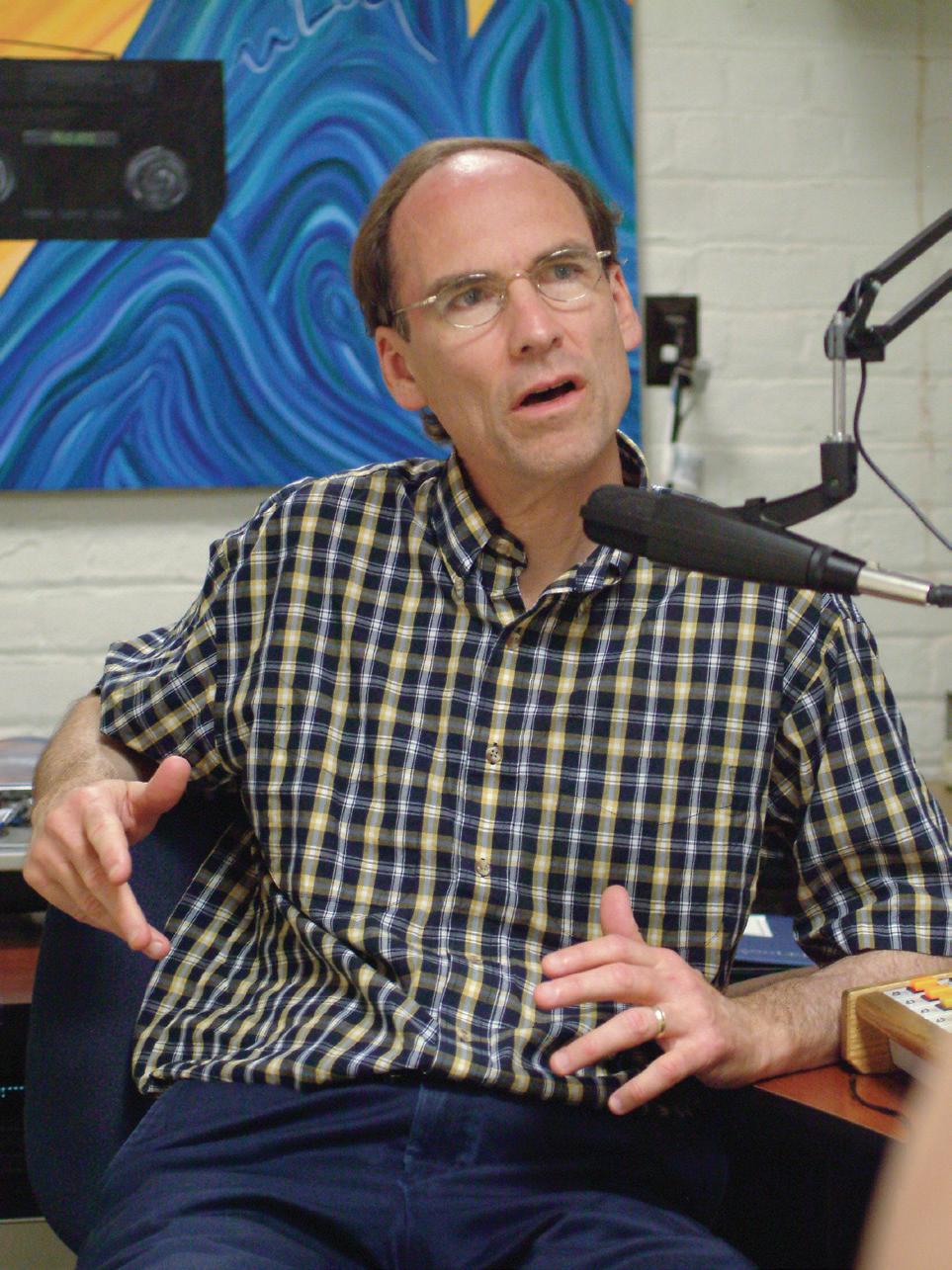
Murchison’s university-wide impact was extensive. He taught several undergraduate classes and served on pivotal university committees, including as chair of the 2005-06 presidential search. He even hosted a weekly radio program on WLUR-FM called “Equal Time.” But perhaps his most demanding assignments came in 2017, when he
Murchison’s influence has reached beyond the walls of Lewis Hall. He has touched virtually every corner of the university — from teaching undergraduate courses to serving on presidential search committees, from chairing the Commission on Institutional History and Community to directing the Mudd Center for Ethics.
Murchison managed to bridge the literal and figurative gap across Woods Creek. His undergraduate involvement began when he was invited to join early summer programs at W&L, including the Institute for Business Executives and the Alumni Colleges.
“I think they wanted somebody from the law school, and I became the law guy,” Murchison said. “I was attracted to the liberal arts anyway, and it was
Robert Howie ’93L
I was lucky enough to have Professor Brian Murchison for Torts in the fall of 1990, Administrative Law in the spring of 1991 and then Communications Law the following year. I savored each of those classes. Little Mark McAfoos and Marianne Van Camp will always stay with me from day one of Torts. I can honestly say that Professor Murchison is not only the most effective teacher I’ve ever had, but also one of the finest gentlemen I’ve ever had the privilege to meet and get to know. He was fair, caring, encouraging, supportive of every student, upbeat, engaged, utterly fascinated by the subjects he taught, giving of his time, and had a wry smile and sense of humor that I have tried to emulate all my life and career. The lawyers who have graduated from W&L over the past 40+ years have benefitted greatly from Brian Murchison’s wisdom, mentorship, passion, and humor.
was asked to lead the Commission on Institutional History and Community, which President Will Dudley empaneled to examine how W&L’s history — and the ways that history was taught and discussed — shaped the community.
Murchison had accepted an invitation to become director of the Mudd Center for Ethics, and he had to postpone that role while he chaired the commission. Beginning in August 2017 and continuing for
Sam Calhoun, the Robert O. Bentley Professor of Law
Emeritus
Brian Murchison will always have a firm place in the pantheon of great W&L law professors. Brian’s decency and integrity are evident to all. Loved by his students as a superb, devoted teacher, he’s also a generous, supportive colleague and a thoughtful, productive scholar. What sets Brian apart from even the most esteemed past legends is his extraordinary service to the law school and university in challenging roles too numerous to recount. Brian’s retirement will leave a gaping hole in the law faculty. W&L would be very fortunate to ever see his like again.
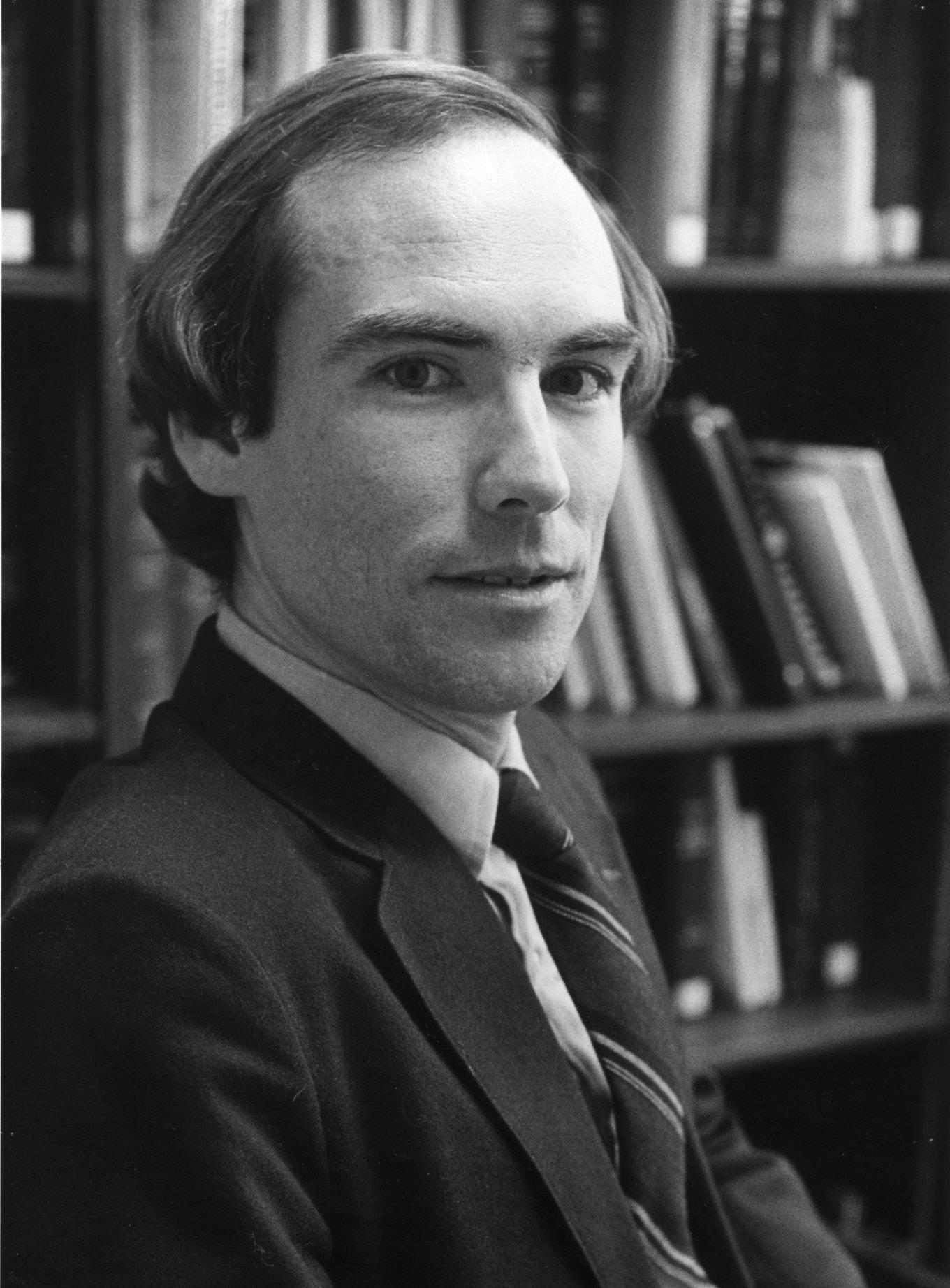
Brian Murchison in 1988.
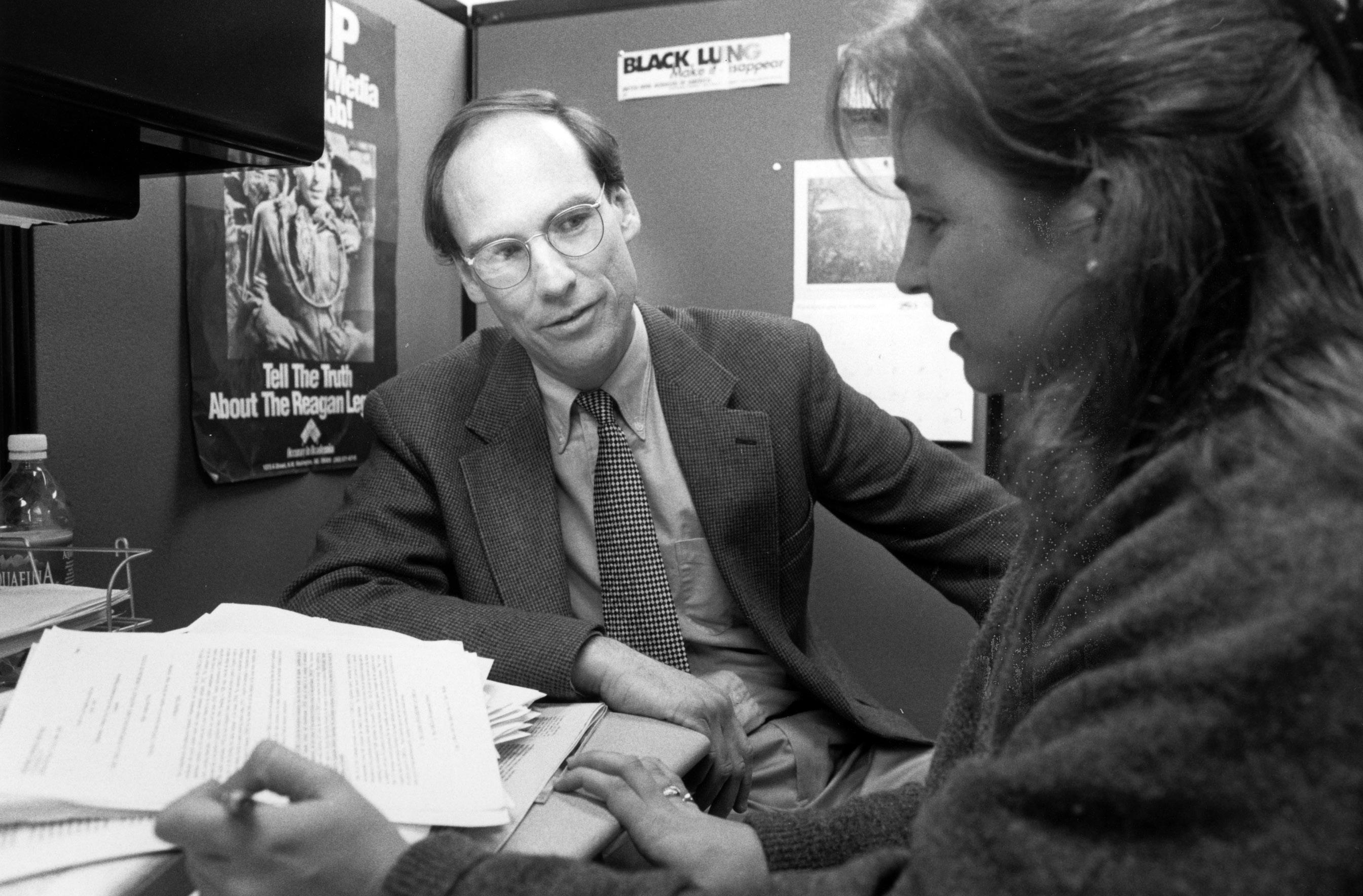
Murchison considers co-founding the Black Lung Clinic a career highlight.
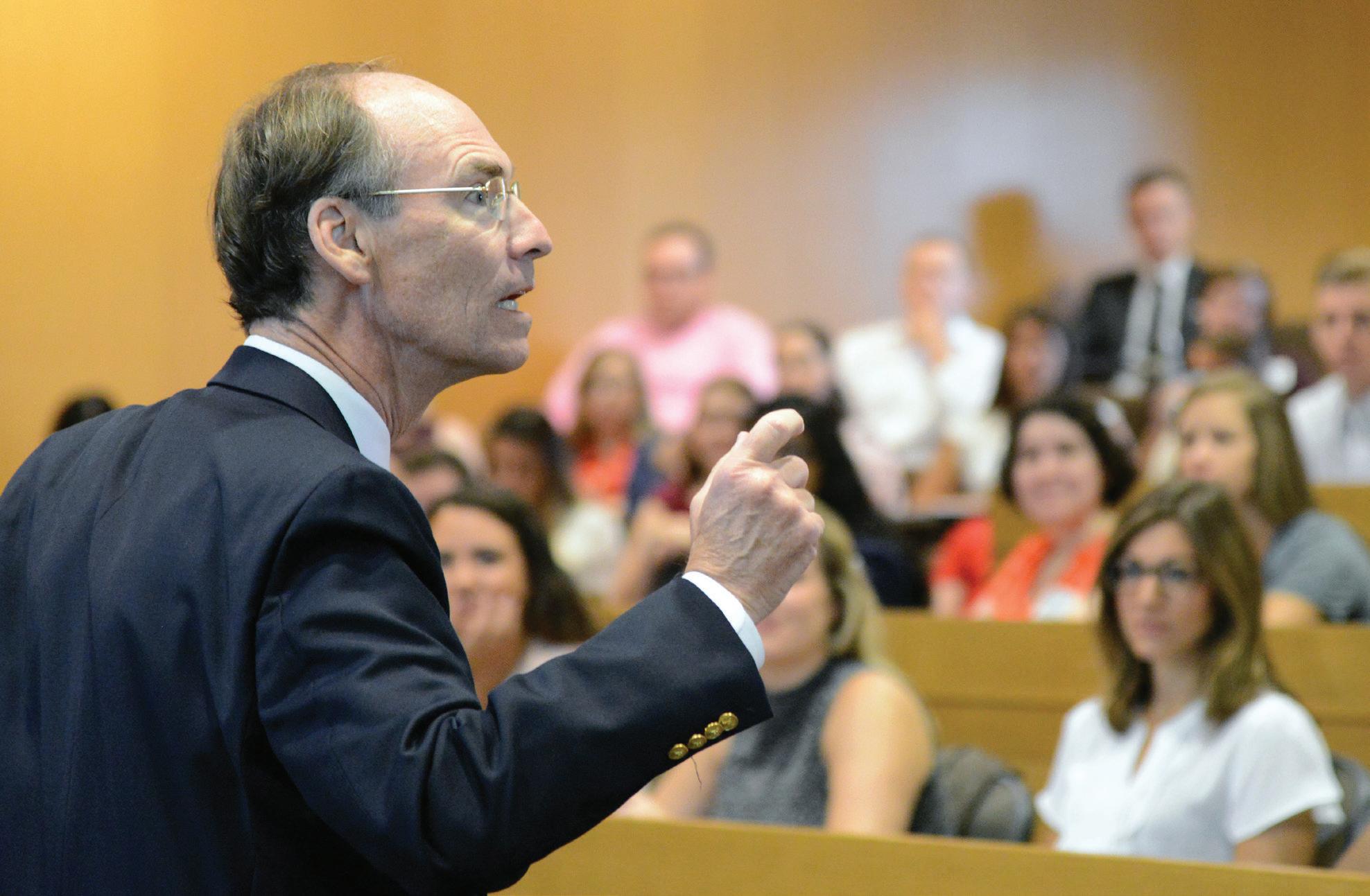
law classroom.
nine months, he led 11 students, faculty, staff, and alumni on a deep and daunting exploration of the university’s history.
“Our charge was rather nebulous, and some people thought we had no business doing what we were doing,” Murchison said. “But my job was to lead this group of people, most of whom didn’t know each other, and to come out with a unified product. My feeling even today is that, as difficult as it was, it was an incremental step toward some serious thinking that took place by the Board of Trustees after we were done.”
Murchison’s university-wide impact did not go unnoticed. The Executive Committee awarded him the William W. Pusey Award in 2008 as the faculty member or administrator who has made the greatest contribution to the university.
When asked to identify his favorite W&L experience, Murchison readily points to the Black Lung Clinic, which he co-founded with Mary Natkin, an emerita professor of law. The idea grew out of Uncas McThenia’s seminar called “Lawyering for Social Change.” Murchison would slip into the back of the classroom and listen as McThenia, a West Virginian, discussed the problems of Appalachia, including black lung disease.
“I first heard that there was a federal workers’ compensation statute but that few lawyers in West Virginia were representing coal miners because there
is no money to be made,” said Murchison. “It was the perfect thing that a pro bono-oriented law school could do.
“Learning how to win one of those cases took every ounce of stamina and brain power that I had. Mary was an experienced clinical professor, which I was not. So, we collaborated on it. This was the mid-1990s. I was coming out of a three-year term as director of the Frances Lewis Law Center, so this was a perfect time.”
Murchison related his experience with and fondness for the Black Lung Clinic in his 2015 Fall Convocation address and emphasized its the liberal arts nature.
“We had people from the biology department helping us; we had people in the English department helping us,” he said. “The whole staff of the Law School was helping us. We were studying the sociology of black lung and the coalfields. We were studying its history. It was a liberal arts interdisciplinary experience to get that legal clinic up and running in the Law School.”
Clinic students grow up fast, he said, because they are responsible for a client. Every case is different and requires an “intensive immersion into the facts” to determine why the client should win.
“The pleasure for me was seeing students grow at an exponential rate — because they know someone is counting on them,” Murchison said. “For me, the
A Great Way to Say Thanks!
At the time of his retirement in May 2026, Professor Murchison will have served as a faculty member for 44 years (1982-2026). He is the third longest-serving faculty member in W&L Law School history behind Clayton Williams and Charles P. Light and is the longest serving current faculty member at the university. He has taught and mentored generations of students and dedicated countless hours of service to the university.
at
clinic was the coolest thing and, I thought, the most useful special assignment I had.”
Nothing, though, is more important to Murchison than the classroom, which he calls “a sacred space” where interactions are of a different order and degree from any other in Lewis Hall.
“When you’re in that classroom, you are contributing to reflection about what makes this country tick,” he said. “It’s a space for argument, for illumination, for mutual respect. We expect that what goes on in the hallways and in the Brief Stop and elsewhere is important. But everything reaches its zenith in the classroom because the process of learning law is of fundamental importance.”
The Brian C. Murchison Law Scholarship Endowment was created in 2021 with gifts from members of the W&L Law Class of 1996 in honor of their 25th Law School Reunion. To honor Professor Murchison’s extraordinary impact on the W&L Law community, W&L Law aims to raise this endowment to $1.6 million, fully capitalizing the Murchison Scholarship and providing full tuition and fees for a W&L Law student each year.
Hosting his radio show “Equal Time” on WLUR.
Murchison in his element, the
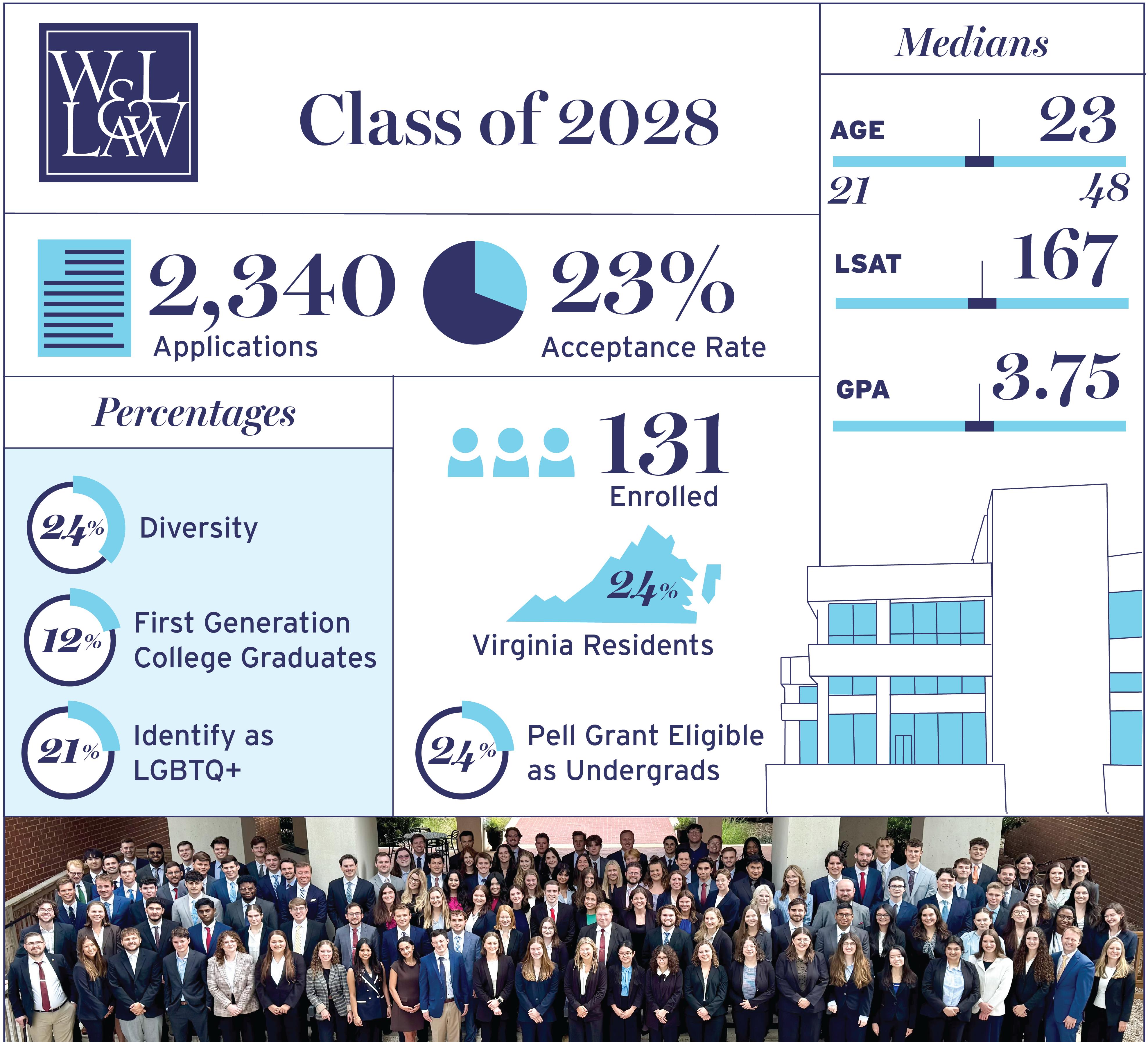
Why W&L Law
First-year law students discuss why they chose W&L.
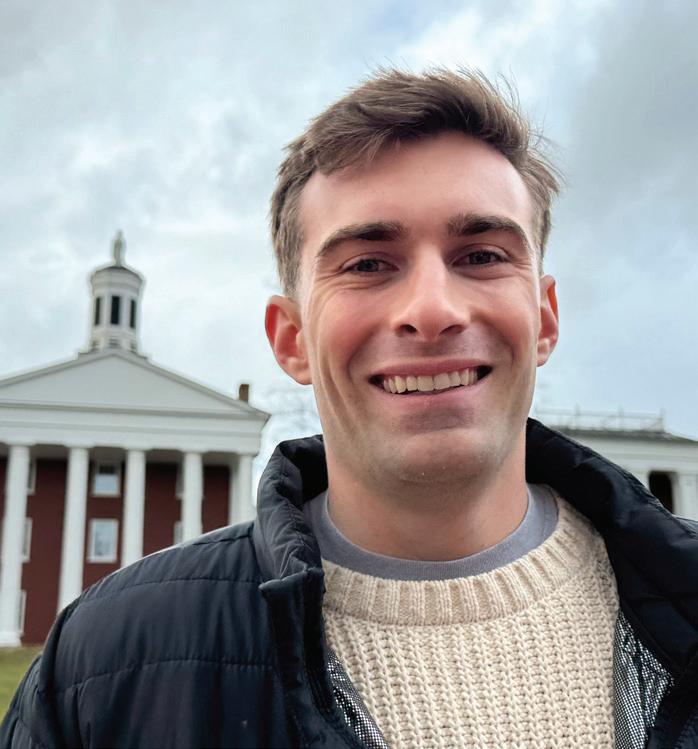
NICK PASQUARELLO
Hometown: Billings, Montana
Undergraduate Institution: Montana Technological University
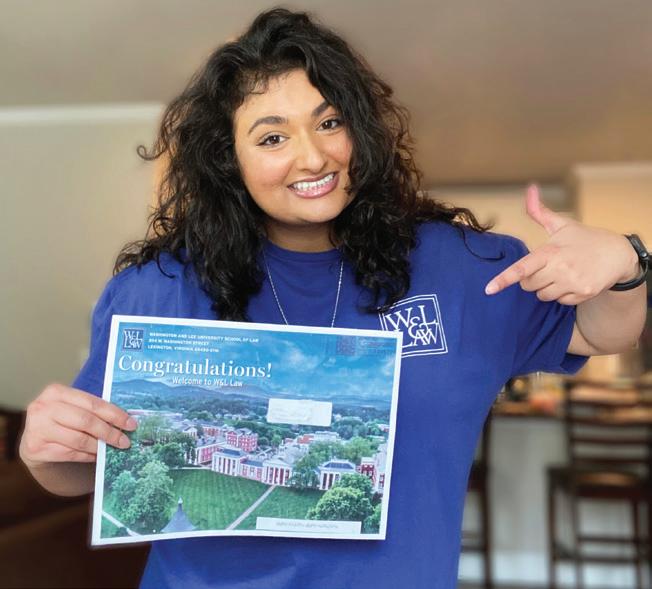
W&L stood out to me for several reasons. I visited W&L twice and was incredibly impressed by the admissions team, students, and faculty. Everything I read about W&L was confirmed during my visits. It truly is a close-knit community that wants you to succeed. I’ve felt so much support already and am thankful for the opportunity to attend such a special place.
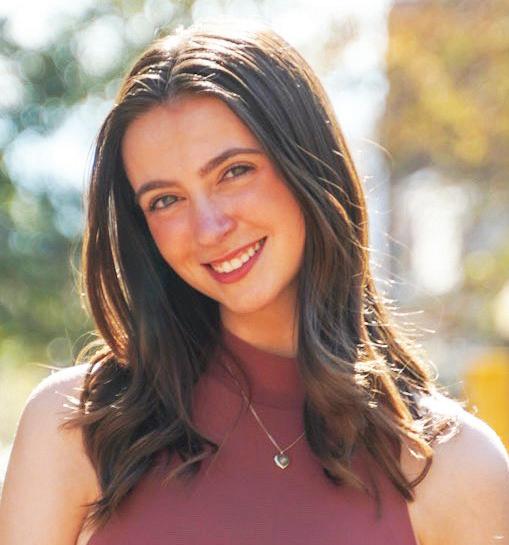
ELLE CRAWFORD
Hometown: Franklinville, New Jersey
Undergraduate Institution: Roanoke College
Throughout the admissions processes, W&L stood out as a school that had everything I was looking for. I came from a small undergraduate institution, which was extremely valuable to my education and experience as a whole. W&L prioritizes a tight-knit community and unique opportunities for every student. The collaborative environment that W&L fosters is something that I am genuinely so excited to be involved in.
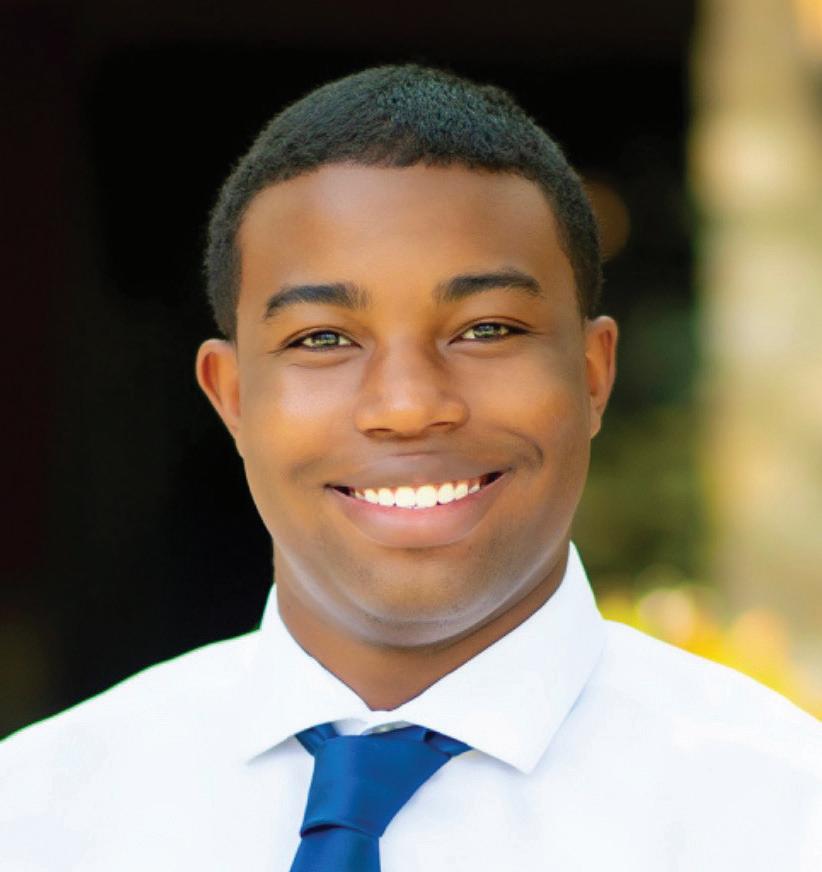
DUSTIN BICKHAM
Hometown: New Orleans, Louisiana
Undergraduate Institution: Louisiana State University
My decision to attend W&L Law was shaped largely by my experience at a large state university. When selecting a law school, I intentionally sought a more intimate academic environment — one that fostered close-knit relationships both professionally and personally. During my visit to W&L Law, I immediately sensed that this was a place where I could thrive academically while also contributing to my classmates’ growth.
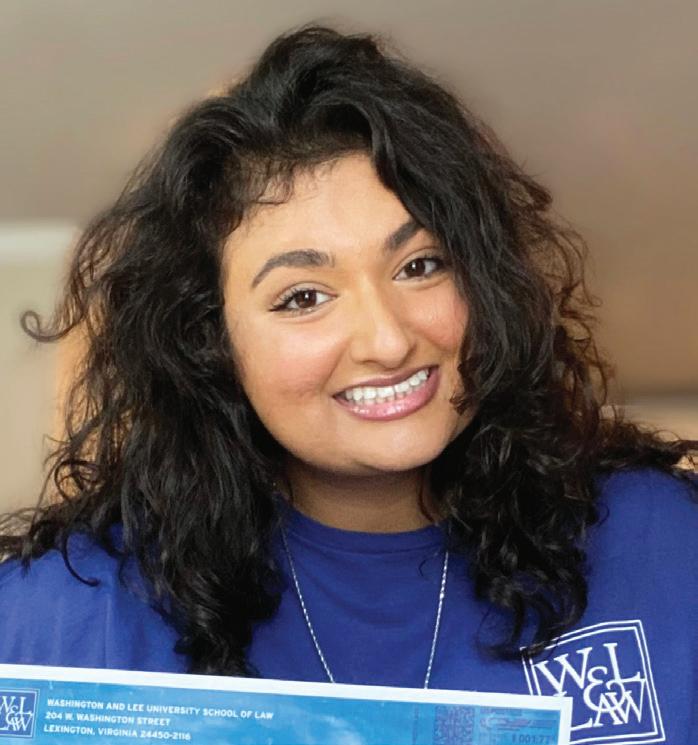
PRIYA DOGRA
Hometown: Woodstock, Georgia
Undergraduate Institution: Kennesaw State University
W&L Law feels like it was made for me. I learn most effectively in smaller class sizes, a tight-knit community, and handson experience. I was surprised to learn that W&L Law checked off every box and more! The admissions team connected me to resources in the community who are knowledgeable in my desired field. I received personalized postcards, calls, and emails. I know that the W&L Law community values its students, and I am so excited to be part of the community.
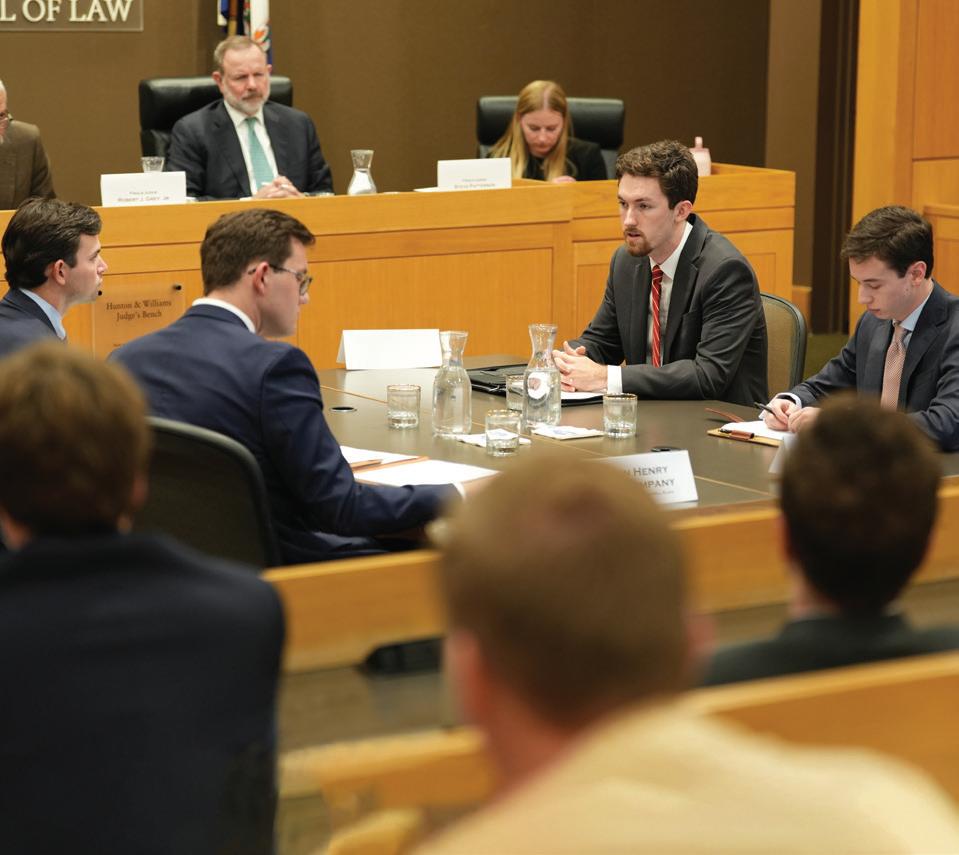
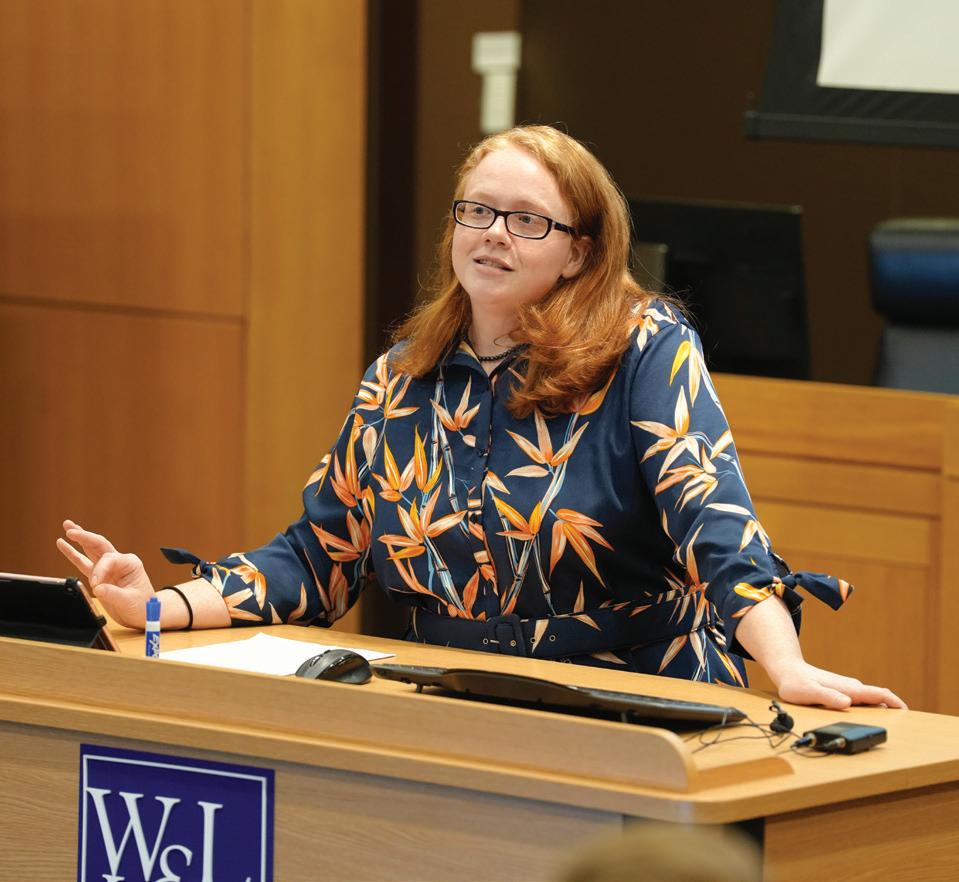

3. Students, faculty, and staff gathered for the third annual W&L Law Field Day to compete for prizes and to hoist the Wilson Cup.
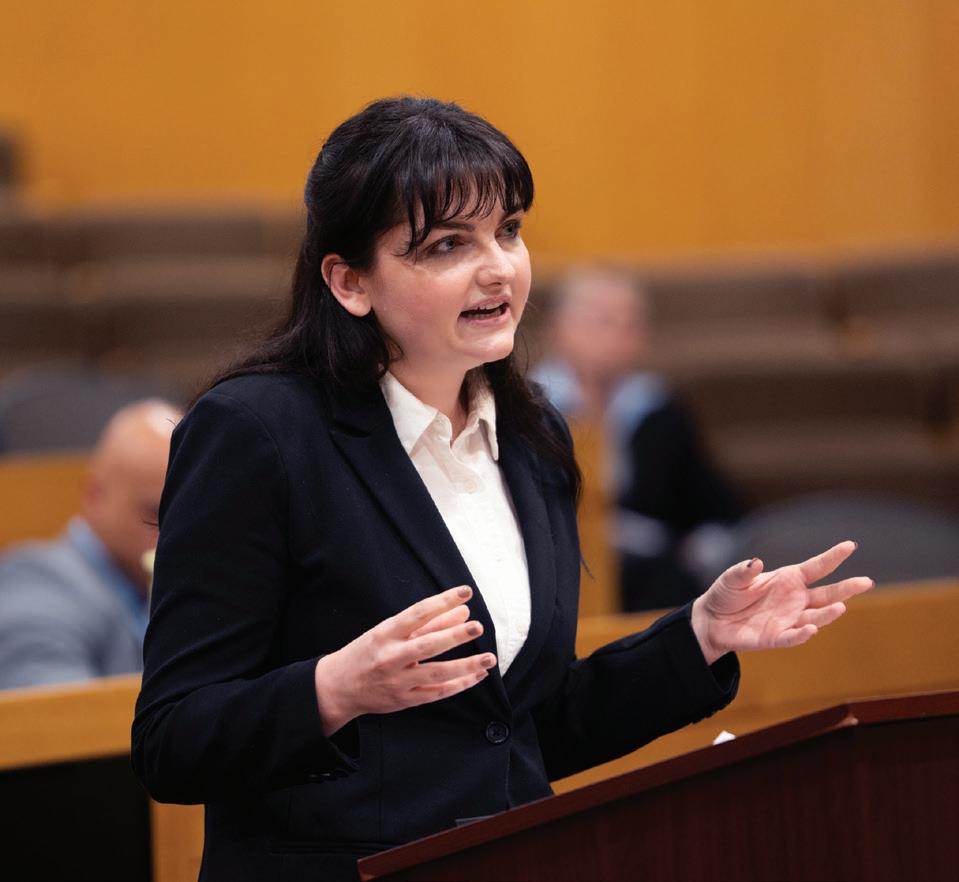
4. Kaitlyn Jacobson was the winner of the Appellate Advocacy Competition.
1. Jacob Self ’27L and Brandon Market ’27L were the winners of the Negotiation Competition.
2. Professor Alex Klein presents during the annual Supreme Court Preview event hosted by the American Constitution Society.
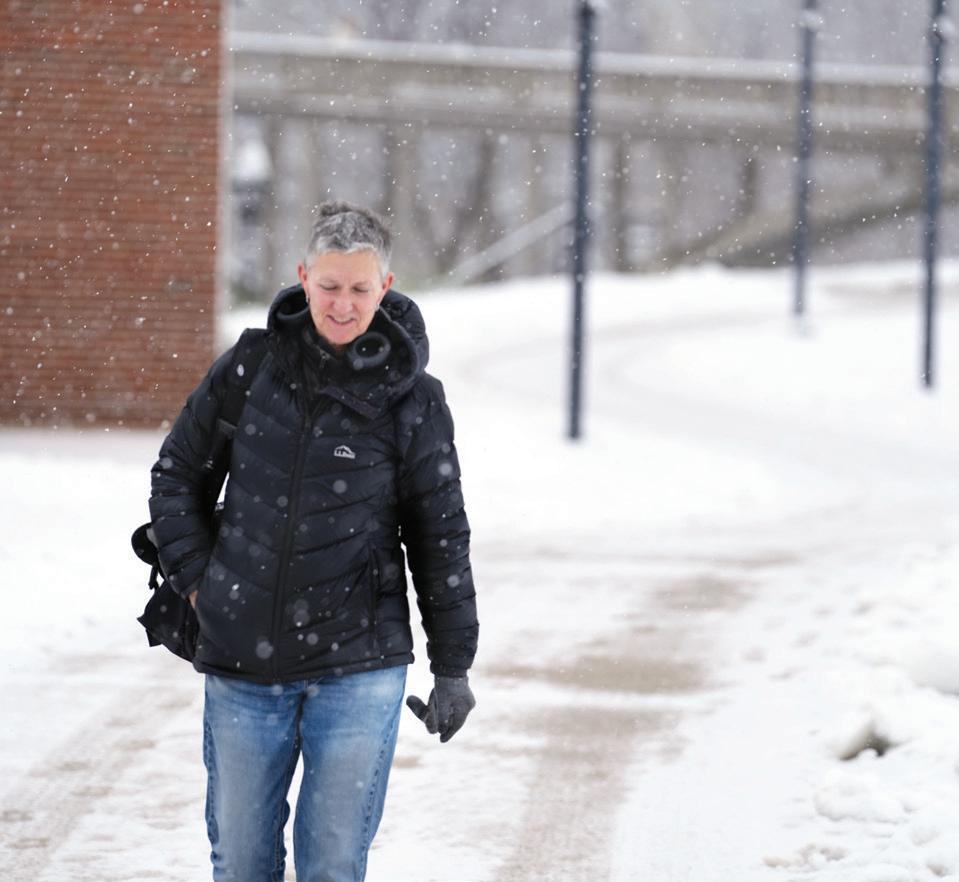
5. Early winter snows couldn’t stop Dean Melanie Wilson on her daily walk to work.
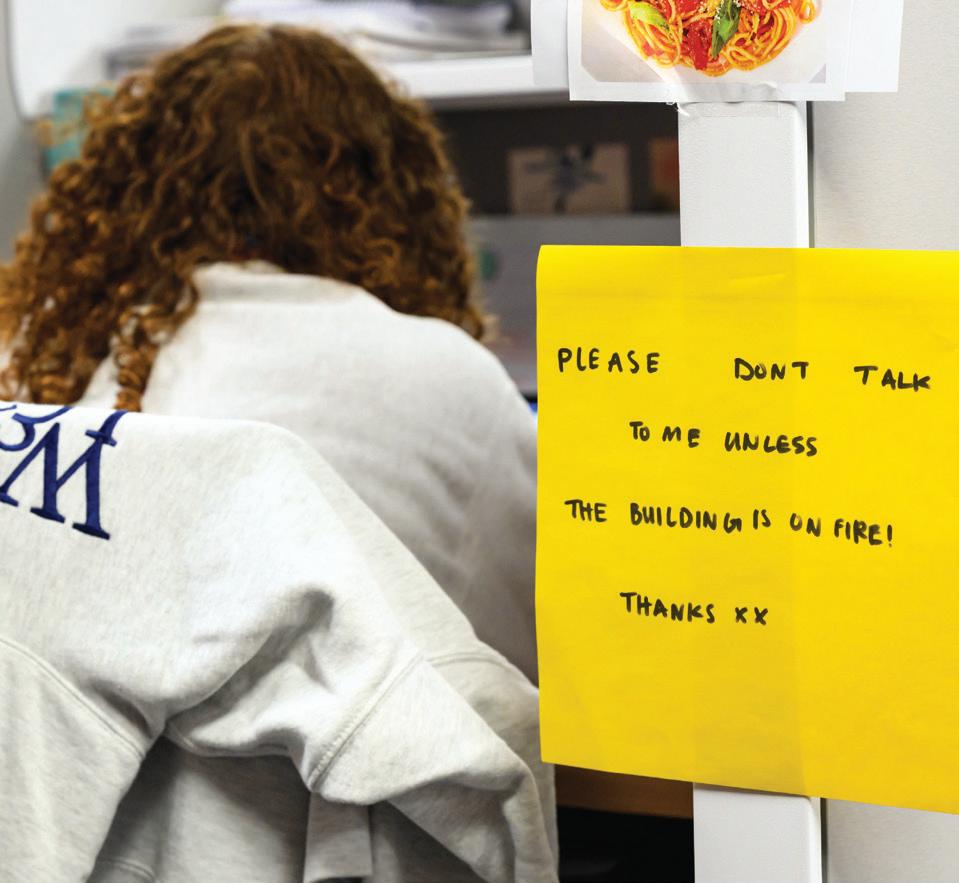
6. Our law students get very serious about preparing for exams.
Black Lung Clinic Wins at 4th Circuit
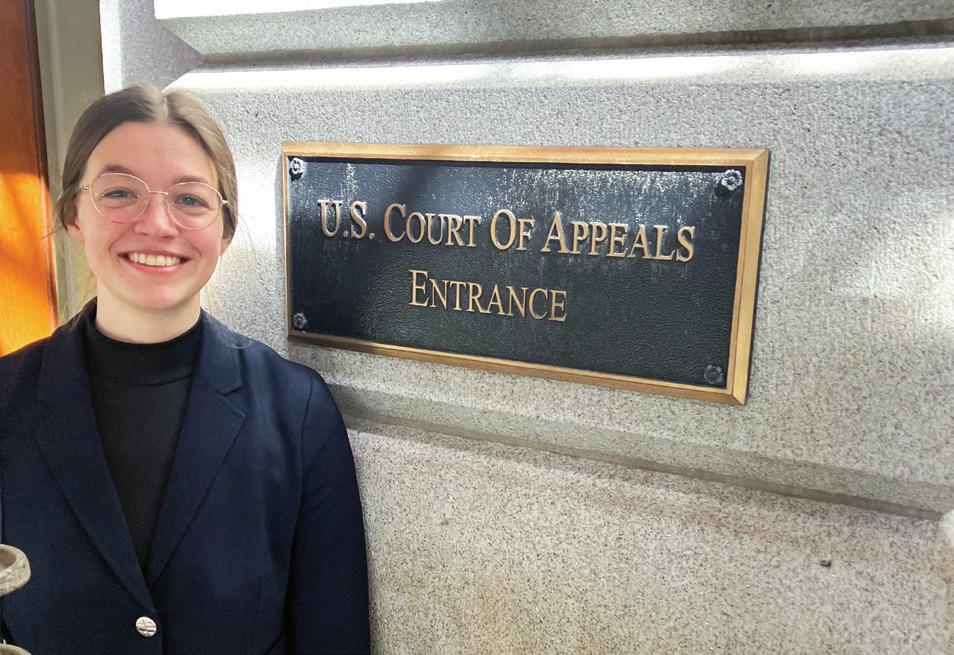
June, the Court ruled in favor of her client.
Burgess appeared before the Court as a student attorney in W&L’s Black Lung Clinic. The clinic represents coal miners diagnosed with pneumoconiosis, also known as black lung disease, in their pursuit of benefits from the coal companies they worked for. Cases in the clinic typically take many years to resolve, and Burgess’ case representing the spouse of a deceased miner was no exception, having been in the clinic’s hands since 2018.
A number of criteria must be satisfied before the various deliberative bodies involved in a black lung claim will award benefits. In this case, the administrative law judge had ruled that the clinic had not proved that the miner suffered total disability due to black lung disease. This decision was affirmed by the Benefits Review Board and then
appealed to the Fourth Circuit by the clinic. Burgess’ preparation for what would be her first ever court appearance was extensive. She put in about 175 hours working on the case, including mastering the extensive case file and its complicated medical evidence. She wrote two dozen drafts of her oral argument, which she recorded and played back to herself while running so her narrative would be etched in her brain. Numerous moot court arguments with different W&L law professors helped her refine her argument and prepare for the different ways the judges might push their inquiry.
“I knew I would have a great practice experience working in the clinic,” said Burgess. “But I did not predict I would get a master class in appellate litigation.”
Immigrant Rights Clinic Wins Citizenship for Client
Students in the Immigrant Rights Clinic have helped a client secure citizenship after a 15-year struggle. The case was among the first immigration matters ever handled by the law school, with representation beginning even before the Immigrant Rights Clinic officially opened. The clinic first assisted the client, a woman from Central America, with an asylum claim. A few years later, the clinic helped her obtain a U Visa, a citizenship pathway designed for victims of certain crimes who have suffered mental or physical harm and who assist law enforcement in investigations.
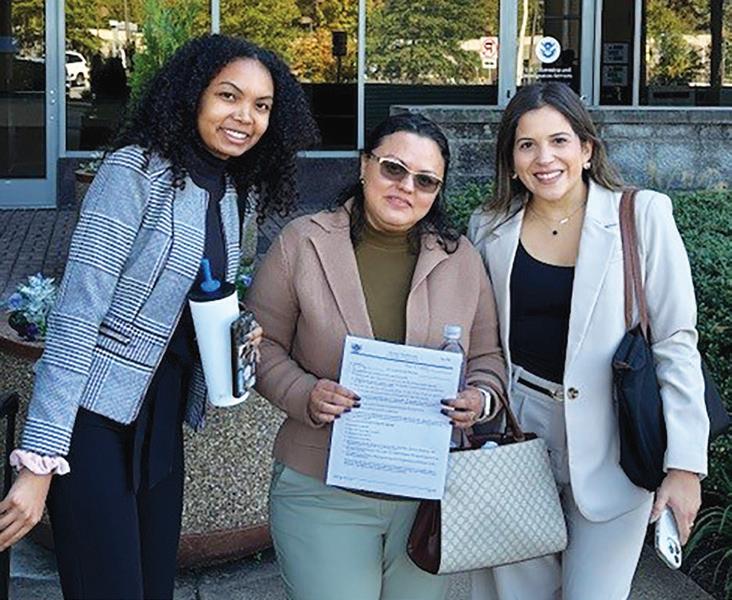
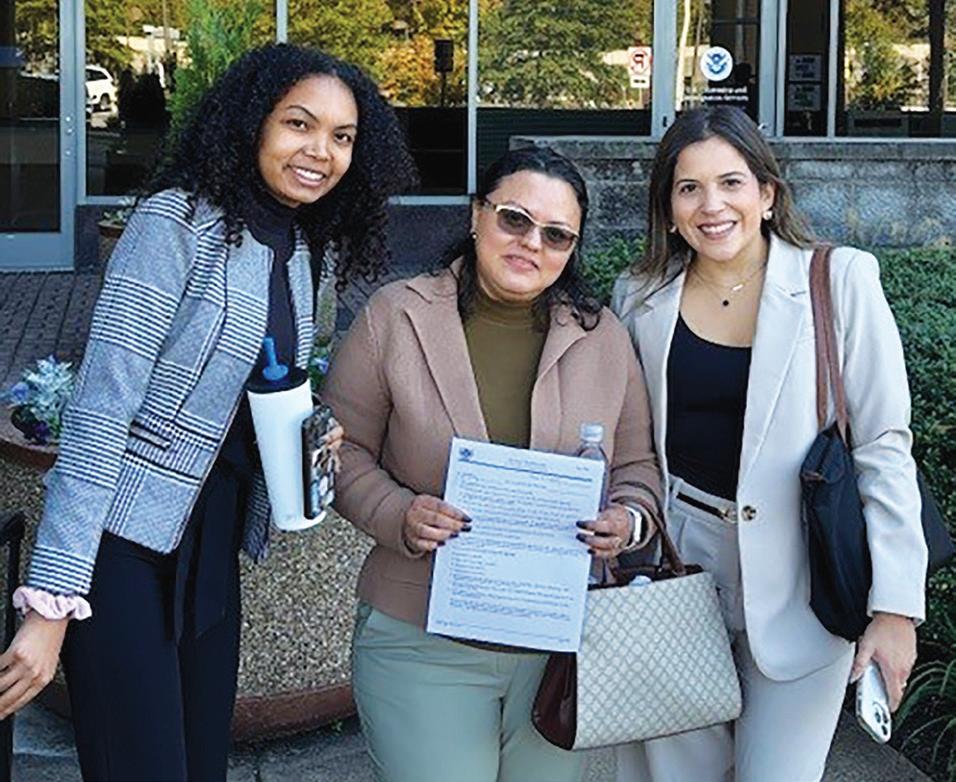
After three years as a holder of a U Visa and five years with permanent resident status, the client became eligible to apply to become a citizen, which she did in early 2025 with clinic students once again assisting with her application for naturalization. Then, this fall, law students Silvia Montiel ’26L and Susan Wanjugu ’26L began the process of preparing
the client for her interview with an officer from the United States Citizenship and Immigration Services (USCIS).
“During the USCIS interview, the officer will ask questions about the client’s immigration process as well as personal information to verify identity,” said Montiel. “So we conducted mock interviews to make sure she was prepared for that and to help her practice her English, because the interview is like an English exam as well.”
A successful naturalization interview behind her, the client attended the official swearing-in ceremony in December with others who have achieved this difficult milestone. Among the many rights the client will receive as a citizen, one privilege stood out to the law students.
“She is very excited to be able to vote,” said Wanjugu.
The People Make the Place
Meet the new faculty and professional staff who have joined the law school recently.
NEW FACULTY
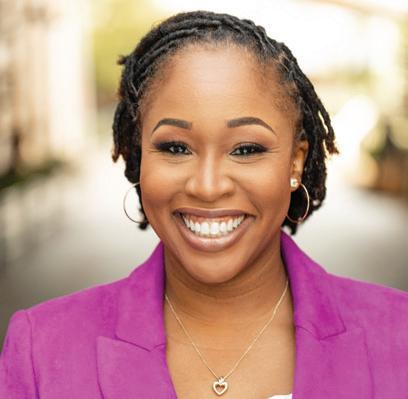
TAMMI ETHERIDGE, Associate Professor of Law
Tammi Etheridge was promoted to associate professor after serving as a visiting assistant professor during the 2023-24 academic year. She holds a Bachelor of Arts from the University of North Carolina at Chapel Hill, a Master of Arts in public policy from the University of Minnesota and a Juris Doctor from the University of Minnesota Law School. She teaches in the areas of torts, administrative law, law and economics and public health law.
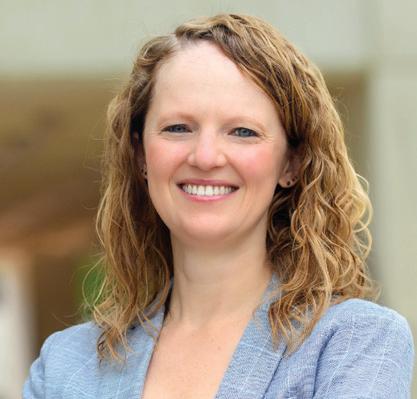
SHANNON FYFE, Assistant Professor of Law
Shannon Fyfe joined W&L from George Mason University where she was an assistant professor of philosophy, director of graduate studies in philosophy, an adjunct professor of law and a fellow in the Institute for Philosophy and Public Policy. She received a Bachelor of Arts in music and political science from the University of North Carolina at Chapel Hill, a Ph.D. in philosophy from Vanderbilt University and a Juris Doctor from the Vanderbilt University Law School. In addition to her position in the law school, Fyfe will have a courtesy appointment in W&L’s Philosophy Department. Her research interests are in legal philosophy, ethics and political philosophy, with a focus on philosophy and international conflict, particularly international criminal law.
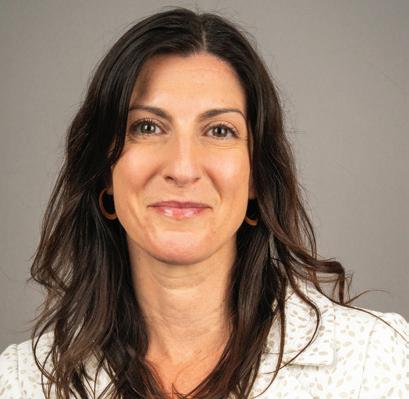
SARAH GOTTLIEB, Assistant Clinical Professor of Law
Sarah Gottlieb serves as the director of the Criminal Justice Clinic at W&L. She arrived on campus from the University of Baltimore School of Law, where she was a clinical teaching fellow with the Innocence Project Clinic. She holds a Bachelor of Arts in sociology and
art history from Boston University and a Juris Doctor from Boston College Law School. Her research is in the areas of criminal law and criminal procedure, with a focus on evaluating the efficacy of criminal legal reforms.
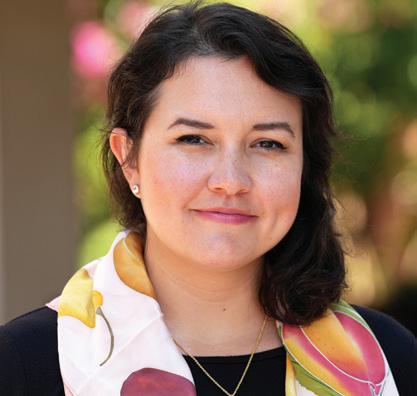
LAUREN HUGHES, Assistant Clinical Professor of Law and Director of the Immigrant Rights Clinic
Lauren Hughes joined W&L from Georgetown University, where she was a clinical teaching fellow at the Center for Applied Legal Studies. She holds a Bachelor of Arts in political science and government from DePaul University, LL.M. degrees from Duke University (international and comparative law) and Georgetown (advocacy) and a J.D. from Duke. Her teaching and research interests include immigration law, asylum and refugee law and international human rights law.
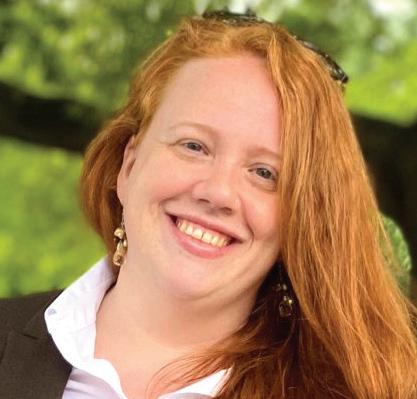
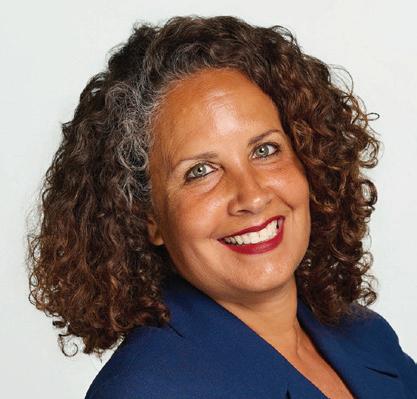
ALEXANDRA KLEIN ’16L, Assistant Professor of Law
Alexandria Klein returned to W&L from St. Mary’s University School of Law. She had previously been a visiting assistant professor of law at W&L from 2019 to 2022 and received a Juris Doctor from W&L in 2016. In addition to her law degree, she holds a BFA in theater from Virginia Commonwealth University. Her research and teaching interests include criminal law, criminal procedure, and the death penalty.
SUZETTE MALVEAUX, Roger E. Groot Professor of Law
Suzette Malveaux joined W&L from the University of Colorado at Boulder, where she was the Moses Lasky Professor of Law and director of the Byron R. White
In March last year, Annelise Burgess ’25L argued a case before the U.S. Court of Appeals for the Fourth Circuit. In
Susan Wanjugu ’26L, left, and Silvia Montiel ’26L, right, with their client.
Center for the Study of American Constitutional Law. She holds a Bachelor of Arts in sociology from Harvard University and a Juris Doctor from the New York University School of Law. She has taught civil procedure, complex litigation, employment discrimination, civil rights and constitutional law, and her scholarship explores the intersection of civil rights and civil procedure, as well as access to justice issues.
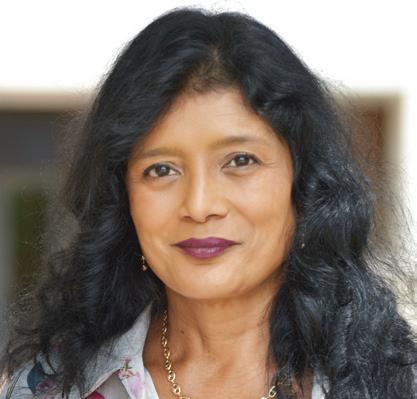
LAVANYA SABIN, Director of Bar Success and Professor of Practice
Lavanya Sabin has extensive experience in helping students prepare for bar exams, having been a private instructor and tutor for the exam, as well as leading bar exam preparation at Helix Bar Preparation and Kaplan PMBR. She was also a visiting professor and director of bar preparation for the Charleston School of Law. Sabin holds a Bachelor of Arts in political science and history from Georgetown University and a J.D. from the American University, Washington College of Law. She is an expert in all aspects of the bar exam, both in strategies, writing and substantive law.
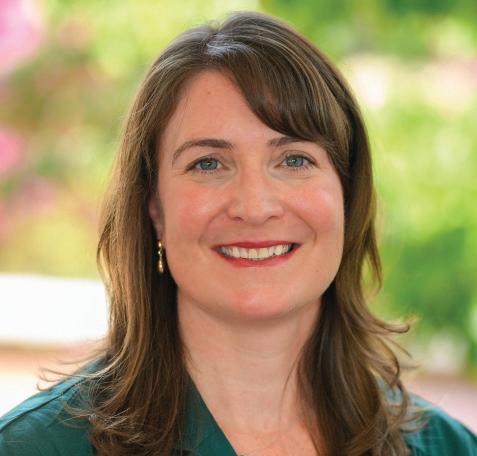
HEATHER SKEELES-SHINER ’04L, Legal Writing Professor
Heather Skeeles-Shiner was promoted to a full-time legal writing professor after serving as a visiting professor of practice during the 2023-24 academic year. Previously, she was a staff attorney in the Office of the General Counsel at W&L, in addition to serving as assistant city attorney for the city of Alexandria, assistant attorney general in the civil litigation division for the District of Columbia and senior counsel in the general litigation division of the New York City Law Department. She holds a Bachelor of Science in journalism from Ohio University and a Juris Doctor from W&L.
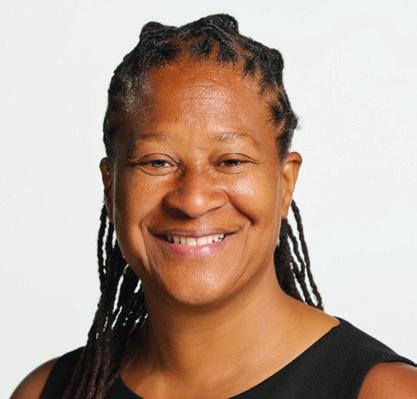
CATHERINE SMITH, Vincent L. Bradford Professor of Law
Catherine Smith joined W&L from the University of Denver where she was a professor of law at the Sturm College of Law. She holds a Bachelor of Arts in political science and government from Wofford College and a Master of Public Administration and Juris Doctor from the University of South Carolina. She teaches torts and children and the Constitution. Her teaching, scholarship and service seeks to understand and contribute to a robust children’s equality law.
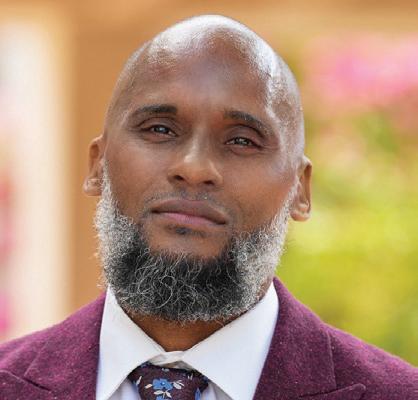
DENNIS C. SWEET IV, Assistant Clinical Professor of Law and Director of the Civil Rights and Racial Justice Clinic
Dennis Sweet joined W&L after serving as an attorney with Sweet & Associates and professor at Tougaloo College for more than a decade. He earned a Bachelor of Arts from Tougaloo College, a J.D. from the Thurgood Marshall School of Law and an LL.M. in litigation and dispute resolution from the George Washington University Law School.
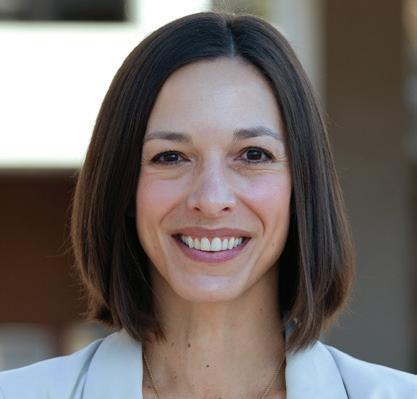
CARRIE STANTON, Assistant Professor of Law
Carrie Stanton earned a promotion to assistant professor of law after serving as a visiting assistant professor for two years. Before coming to W&L, she was a partner with Williams Mullen and was an adjunct professor at the University of Virginia School of Law. She earned a Bachelor of Arts in politics from the University of Virginia and holds a J.D. from the University of Virginia School of Law. Stanton is a business law scholar who teaches and writes in the areas of contracts, mergers and acquisitions and corporate governance.
LAW SCHOOL ADVANCEMENT
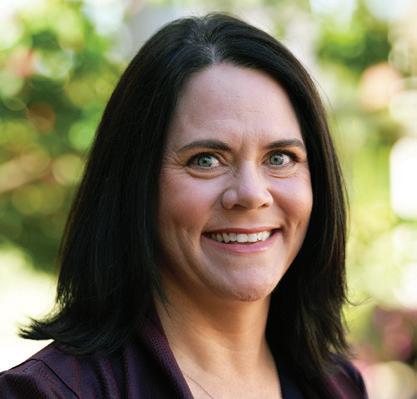
AMY EARNEST, Associate Director of Law School Advancement
Amy Earnest brings experience in alumni engagement, business development, and strategic relationship management, supporting advancement by building meaningful connections with alumni, donors, and community partners. Earnest began her career in Alumni Relations at her alma mater, Wilson College, where she developed a passion for higher education and alumni networks. She later worked in business development within the government IT and legal sectors. Returning to higher education more than four years ago, she advances institutional goals through purposeful engagement and philanthropy. Amy holds a bachelor’s degree in business management from Wilson College and is a Central Pennsylvania native.
LAURA LACY HAMILTON, Director of Law Advancement
Laura Lacy Hamilton partners with alumni and friends in advancing W&L Law School’s mission. She previously founded and led Lynchburg Beacon of Hope, raising more than $16 million to expand college access, launch High School Future Centers across 10 Virginia localities, and create experiential internship pathways for students. Hamilton has served on boards including Lynchburg’s planning commission (chair), Centra Health, William and Mary’s Society of 1918, and the National College Promise Leadership Advisory Council. A 2024 Virginia Humanitarian Award recipient, she holds degrees from Georgetown University and William & Mary.
KATIE KIRBY, Advancement Operations Manager
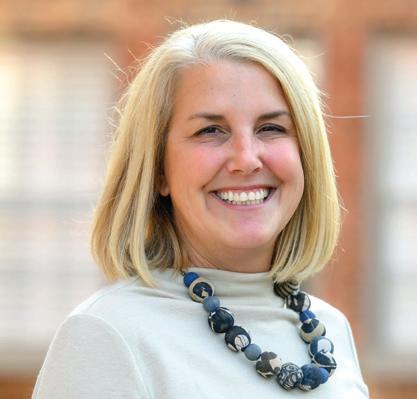

Katie Kirby joined the law school in January. She previously currently served as an executive assistant in the undergraduate admissions office, providing executive-level support, coordinating events and programs, managing budgets and reports, and maintaining cross-campus partnerships. Her background includes serving as a teacher for 17 years in the Buena Vista City Public Schools. She holds a bachelor’s degree in business administration from Mary Baldwin College and a Master of Arts in Elementary Education from Liberty University.
CAREER STRATEGY
CALEB SIMON, Assistant Director of Law Career Strategy
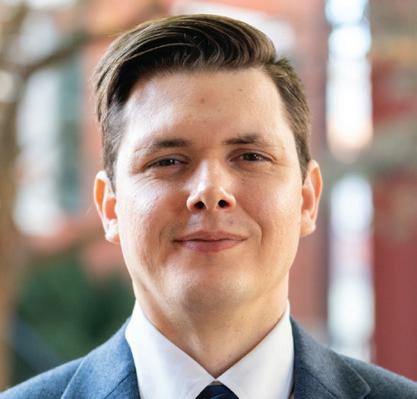
Caleb Simon brings experience in career services, counseling, and workforce development to the Office of Career Strategy, having worked in higher education, K-12, and community settings. Simon earned his Master of Education in Counselor Education from the University of Lynchburg and is a National Certified Counselor (NCC), currently advancing towards licensure as a Professional Counselor (LPC) in Virginia. Simon provides tailored career advice to law students, with a focus on helping them navigate job search strategies, document development, and professional development, and preparing them for interviews and skill-building for successful legal careers.
MELANIE STARKS, Associate Director of Career Strategy
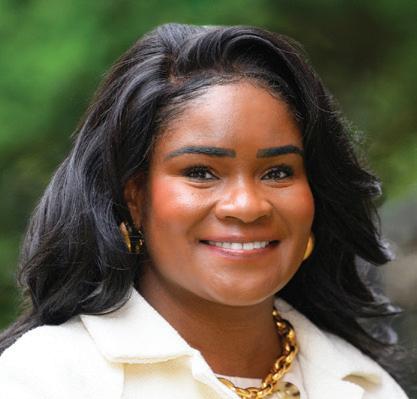
Melanie Starks graduated from Chicago-Kent College of Law in 2006. Prior to attending law school, she worked as a litigation paralegal at Paul, Weiss, Rifkind, Wharton and Garrison in New York City and as an international trade paralegal at O’Melveny and Myers in Washington, D.C. Upon graduation from law school, Starks relocated from Chicago to New Haven, where she joined Connecticut Legal Services. She practiced for five years in the Children at Risk Unit providing direct client representation in special education matters. In her role at Connecticut Legal Services, she also engaged in direct advocacy at the state legislature in addition to conducting community outreach through trainings and media presentations. For the past several years, since moving to the Roanoke area, Starks has been engaged in her community serving in various leadership roles with numerous nonprofits and volunteer organizations.
ELLEN TOMBAUGH, Associate Director of Career Strategy
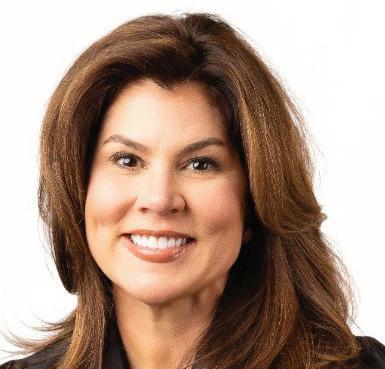
Eleanore (Ellen) Tombaugh is a graduate of the Louisiana State University Paul M. Hebert Law Center and brings over 20 years of experience in the legal and professional services sectors. She began her career practicing general civil litigation in New Orleans before transitioning to consulting and program management with PwC in New York City and KPMG in Chicago. Most recently, Tombaugh worked as a staffing consultant in Chicago, coaching candidates on career readiness and placement strategies. Combining her legal expertise with her experience in consulting and career staffing, she focuses on helping students navigate career opportunities, build workplace skills, and achieve their professional goals.
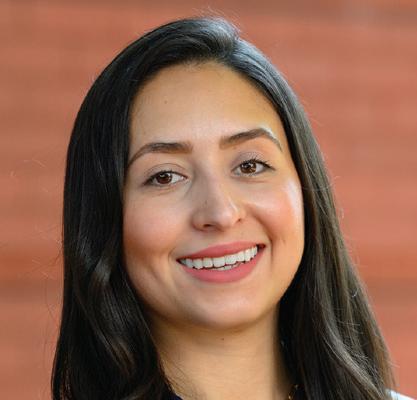
DANIELA WALLACE, Recruitment Operations Manager
Daniela Wallace brings a diverse background in marketing, administration, and nonprofit leadership to the Office of Career Strategy. She holds an MBA with a cognate in Non-Profit Leadership and Management from Liberty University, as well as a bachelor’s degree in marketing. Wallace has experience supporting executive leadership, coordinating volunteer programs, and managing marketing and data projects in both nonprofit and corporate settings. She supports employer engagement and recruiting operations, event coordination, and career development programming for law students.
Preserving a Tradition
The W&L Law walking stick is among the law school’s most distinctive traditions. Carried by generations of graduates during commencement, the walking stick is a symbol of great accomplishment and an important physical reminder of the bond that connects our nationwide community of legal professionals.
Now, thanks to one of the law school’s most generous benefactors, this tradition is sure to continue. Tom Millhiser ’81L and his wife Shelly have established an endowment to fund the purchase of the walking sticks going forward.
As alumni well know, the tradition of the walking sticks dates back to the early 20th century, when third-year law students carried these canes as a mark of their status when only two years of law school was required. This practice lapsed in the early ’60s but was resurrected by Millhiser’s class and has been spearheaded in recent years by his classmate David Weaver ’81L. Apart from the Class of 1990 — the year the then-supplier went out of business — every class since has carried walking sticks at commencement with brass name plates, bearing the W&L seal.
The Millhisers were inspired to create the walking stick endowment in part because they recognized the financial burden law students carry in obtaining their degree.
“When Sarah Hughes approached Shelly and me about endowing the walking sticks, we thought that it was a marvelous way to perpetuate an important and distinctive law school tradition reestablished by my class,” said Tom. “One of my law partners told me that he deeply regrets not purchasing a walking stick, even though his dire financial situation at graduation prevented him from doing so. I understand that his circumstance is not unusual. Now, all future law school alums will enjoy and be part of the walking stick tradition.”
Over the years, Tom Millhiser has remained
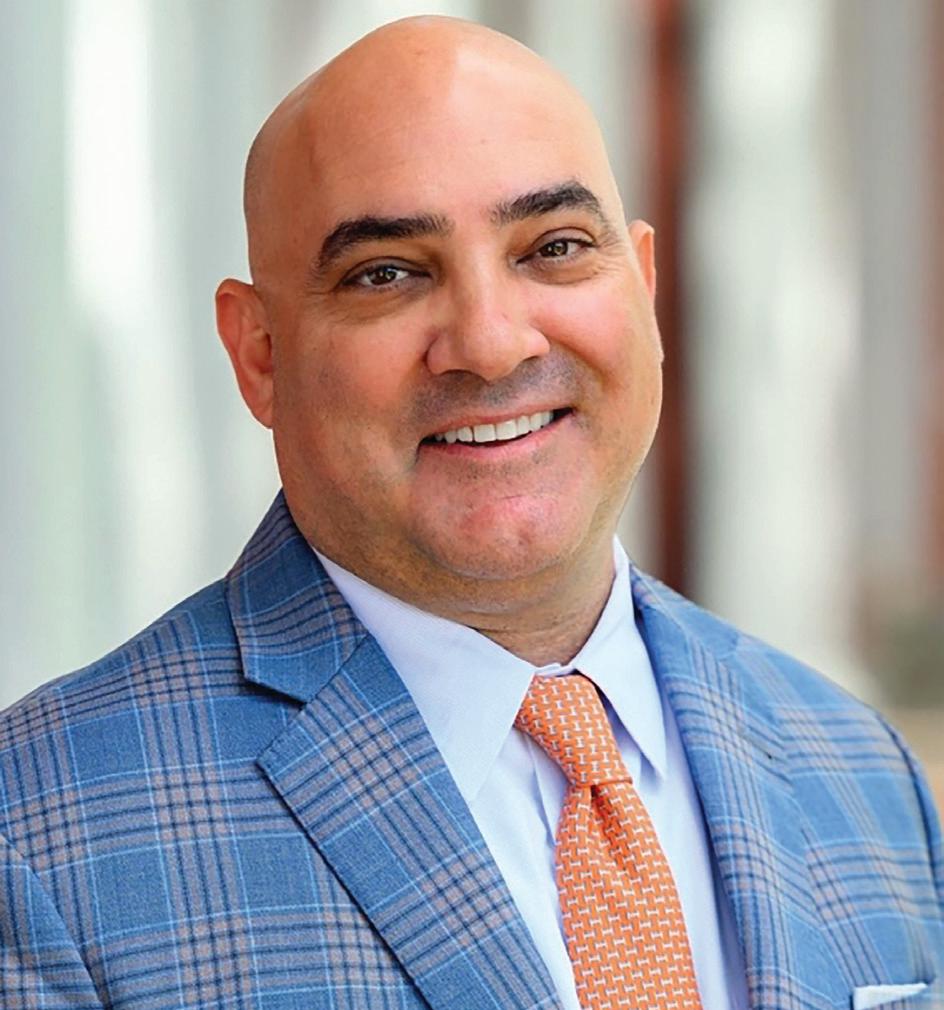
“W&L is a great education, a great community, a great network, and if giving helps foster that network, then I absolutely want to be a part of it.”
— KEVIN BATTEH ’95, ’98L
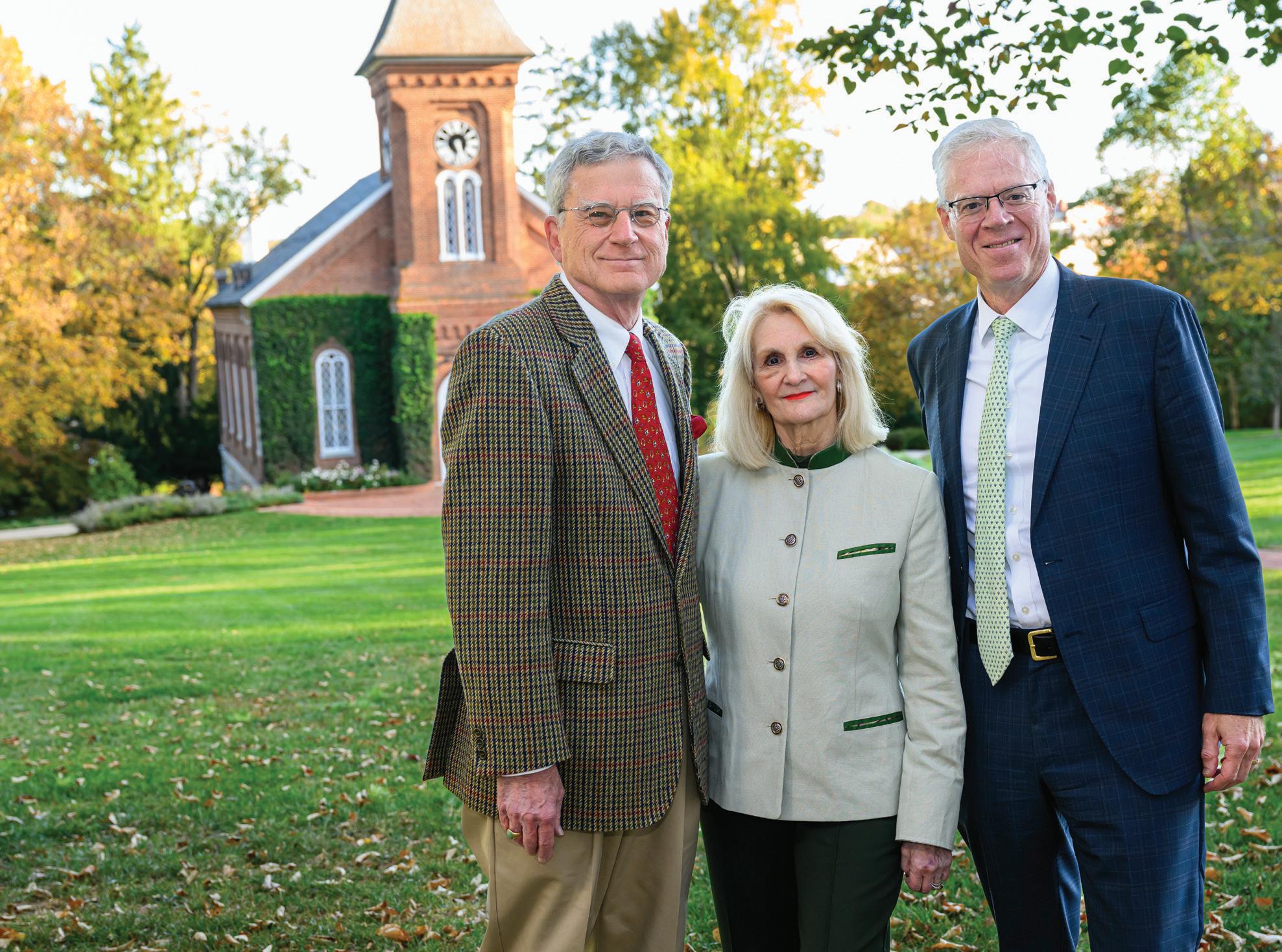
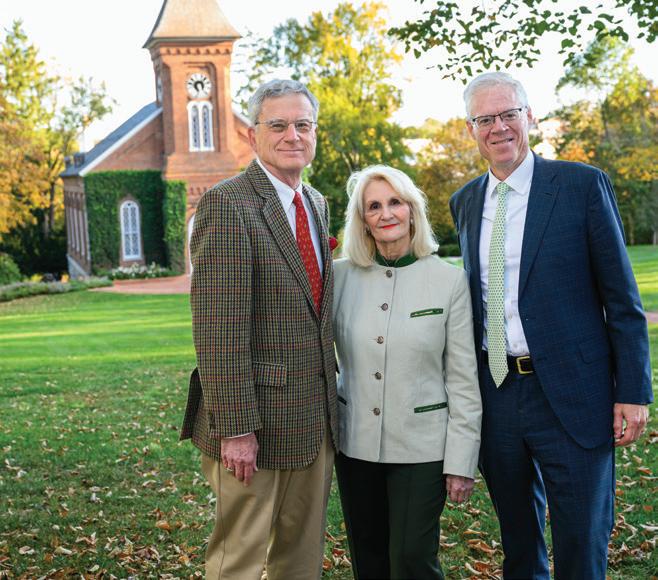
Tom Millhiser ’81L and his wife, Shelly, with President Will Dudley following the addition of their names to the Benefactor’s Wall.
deeply engaged with Washington and Lee. He served for a decade on the Law Council, including a term as president, and has been a member of the George Washington Society, the Richmond area campaign committee, and the Richmond Law Chapter. He has strengthened the W&L network as a law firm liaison and a career mentor for law students. In 2011, he received the law school’s Outstanding Alumnus Award in recognition of his service and professional accomplishments.
Tom and Shelly Millhiser have demonstrated extraordinary generosity to the law school and
were recently honored by the university with the addition of their names to the Benefactor’s Wall in Washington Hall. The Millhisers’ philanthropy includes loyal annual giving, the Class of 1981 Law Memorial Scholarship, the renovation of the Millhiser Moot Court Room, the Thomas McNally Millhiser Law Scholarship, and the Rochelle and Thomas McNally Millhiser ’81L Professorship of Practice — an endowed professorship that supports distinguished practitioners who teach in the experiential third-year curriculum, with a preference for those focusing on trusts and estates.
Why I Give | Kevin Batteh ’95, ’98L
Why I Give is a series that celebrates the generosity of Washington and Lee University alumni, students, faculty and parents. Discover the many reasons the W&L community supports Leading Lives of Consequence: The Campaign for Washington and Lee and how philanthropy shapes the university’s future while honoring its enduring value.
What inspired you to make your first gift to Washington and Lee University, and what motivates you to continue giving?
When I first graduated, I wasn’t able to make large gifts, but I thought it was important to participate. As I got older, I realized the importance of my W&L experience. It really was impactful for me to see how much Washington and Lee alumni contribute to their communities, whether it be through work or school or church. It became clear to me that Washington and Lee graduates are world citizens. That’s important, especially in a day and age when civil society is constantly being challenged. That’s certainly one of the reasons why I give. W&L is a great education, a great community, a great network, and if giving helps foster that network, then I absolutely want to be a part of it.
How do you hope your support impacts current and future generations of W&L students?
I hope that Washington and Lee is able to continue educating young men and women in perpetuity. I think an important part of giving is making sure the
university is financially sound and has the ability to educate students, irrespective of their ability to pay. I also think it’s important to ensure that students are able to have the full W&L experience. I learned so much in the classroom, but I also learned a lot out of the classroom, whether it was participating in student government, in a sport, or being part of fraternity life.
Is there a particular experience, faculty member or program at W&L that played a meaningful role in your decision to give back?
I had so many memorable experiences, whether it was sitting in a classroom with Professor [Sev] Duvall P’74, P’78 [Henry S. Fox Jr. Professor of English Emeritus] or fishing out of a canoe with philosophy Professor [Chuck] Boggs ’66, P’99 [Professor Emeritus of Philosophy] and learning how to fly fish and turkey hunt with him. I had so many amazing experiences, but what really helped to shape me were the people and the relationships I formed at Washington and Lee.
Sarah Powell ’93L Appointed General Counsel for Planet Fitness
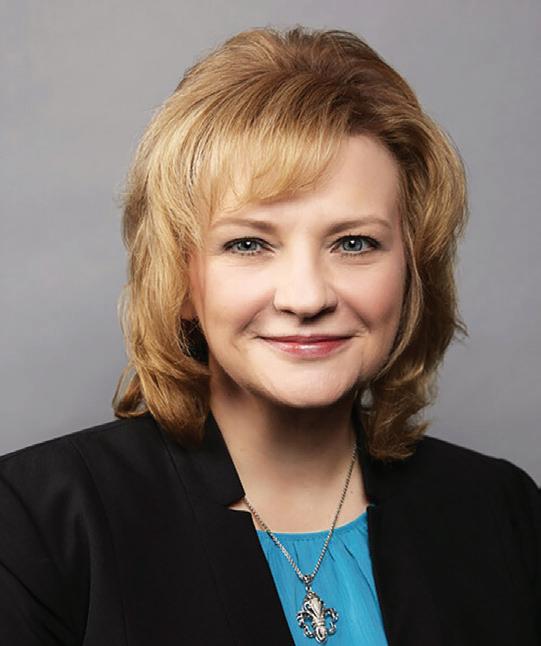
Sarah Powell, a 1993 graduate of Washington and Lee University School of Law and an emerita member of the Law Council, has been appointed general counsel of Planet Fitness, Inc., one of the largest and fastest-growing franchisors and operators of fitness centers in the U.S.
Powell is a legal and strategic business adviser with over 25 years of experience in leadership roles as in-house counsel. She most recently served as executive vice president, general counsel, and secretary at the global parent company and developer of franchisor brands GoTo Foods (formerly Focus Brands) from 2015 to present. In the role, she developed business, legal and compliance strategies for all brands of the company, which include Moe’s Southwest Grill, McAlister’s Deli, Schlotzsky’s, Auntie Anne’s, Cinnabon, Jamba, and Carvel, as well as Seattle’s Best Coffee in certain international markets.
From 2002 to 2015, Powell served as senior vice president, general counsel, and corporate secretary at publicly traded automotive aftermarket parts retailer Advance Auto Parts, where she was responsible for all company legal matters and set business, legal and compliance strategies. Earlier in her career, she held roles at Delhaize America.
Gerald Titus ’00, ’03L Appointed to West Virginia Supreme Court of Appeals
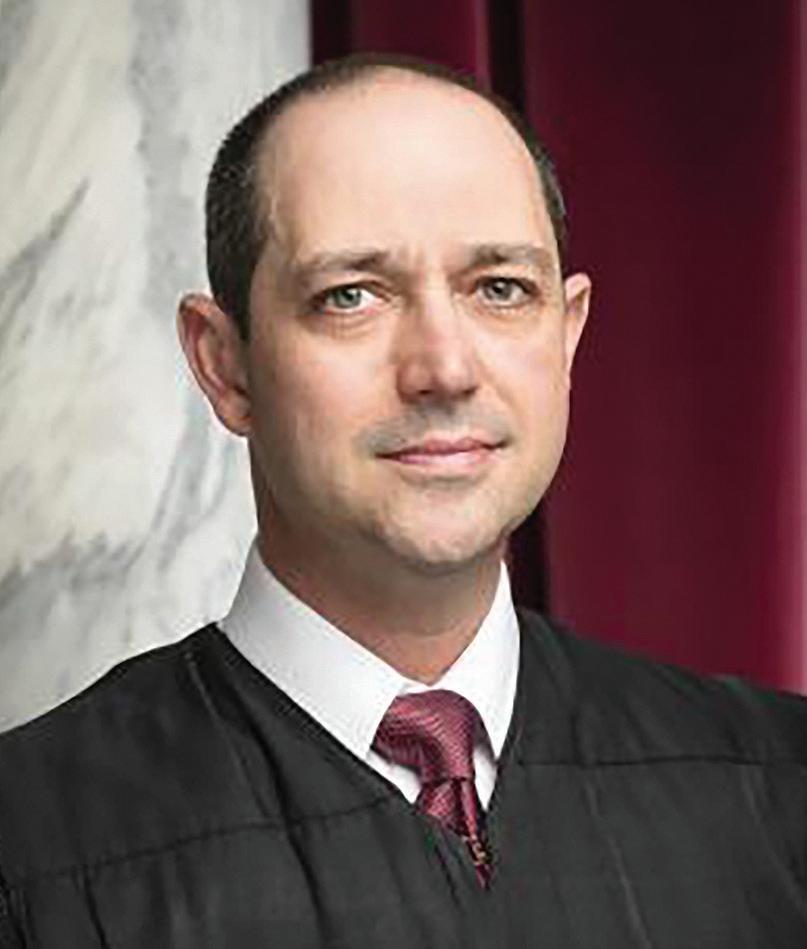
West Virginia Governor Patrick Morrisey has appointed Gerald M. Titus III ’00, ’03L of Charleston to the West Virginia Supreme Court of Appeals, filling the vacancy created by the passing of Justice Tim Armstead earlier this year.
A graduate of W&L for both his undergraduate and law degrees, Titus has built a distinguished career across multiple facets of the legal profession. Since 2009, he has been with the firm Spilman, Thomas & Battle. Titus has focused on civil litigation, criminal justice, corporate litigation, and business litigation. In addition to his private practice, he also served as an assistant United States attorney in the Southern District of West Virginia, where he worked in the Violent Crimes Division.
Titus has been recognized as a West Virginia Super Lawyers Rising Star in 2015, 2016, 2017 and 2018, and was honored multiple times by The Best Lawyers in America for his work in commercial litigation.
Luis Rivera ’05L Appointed
U.S. Bankruptcy Judge
in Middle District of Florida
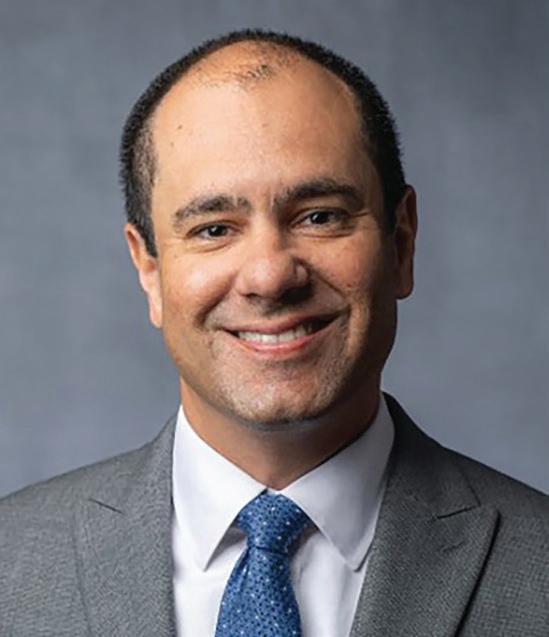
In October, the Honorable Luis E. Rivera II ’05L was sworn in as the newest bankruptcy judge for the United States Bankruptcy Court for the Middle District of Florida. He is the first Hispanic judge to serve on this court. Judge Rivera’s duty station is in Tampa, Florida. He will also preside in the Court’s Fort Myers Division. Prior to his appointment, Judge Rivera practiced law for 20 years. He served as a Chapter 7 panel trustee in the Middle District’s Fort Myers Division, and he was the managing shareholder of the Naples and Fort Myers offices of GrayRobinson, P.A.
Judge Rivera’s career in bankruptcy began in January 2002 in the Eastern District of Louisiana where he briefly served in the clerk’s office as an intake and records management clerk before attending law school at W&L.
00s
Ralph Clements ’00L was appointed by Alabama Governor Kay Ivey as associate judge on the Alabama Tax Tribunal.
Josh Jones ’04L has been appointed to the Council of the American Bar Association’s Litigation Section for a three-year term.
Dan Payne ’04L joined Intact Insurance Specialty Solutions as senior coverage manager.
Phil Yoon ’04L was elected chair of the Pennsylvania Bar Association’s House of Delegates, the state bar association’s rulemaking body, for a two-year term commencing May 9, 2025.
Michael Gaetani ’08L joined Burns White LLC as an associate attorney in the firm’s transportation practice group. He joins the firm from the Pennsylvania Office of the Attorney General, where he was senior deputy attorney general.
Leigh Faugust ’09L joined Portland General Electric as assistant general counsel.
Andrew Morton ’09L joined Miller Nash LLP in Seattle. A member of the firm’s Bankruptcy & Creditors’ Rights team, Morton advises corporate clients including financial institutions, creditors’ committees, investment funds, third-party purchasers and creditors on complex financial restructurings, reorganizations, workouts, financing transactions and related commercial matters.
10s
Richard Hallenback ’10L joined the Suffolk Commonwealth Attorney’s office in Suffolk, Virginia, as a domestic violence prosecutor.
Stephen Holland ’13L joined Brownstein Hyatt Farber Schreck as senior counsel in the Government Relations group.
Keith Jaworski ’11, ’14L joined Woods Rogers as Of Counsel in the Construction & Government Contracts group.
Eric Kiser ’15L was re-selected for membership with The National Trial Lawyers Top 40 Under 40 as a civil plaintiff in Ohio. Kiser is a member of the Thomas Law Offices, PLLC.
Gabriella Alonso ’17L, an attorney in the Dallas office of Bradley Arant Boult Cummings LLP, has been named to the 2025 Lawdragon 500 X – The Next Generation list. The third annual guide recognizes young attorneys who have been in practice for less than 15 years and who have made significant achievements early in their careers that have propelled them to the forefront of the legal profession.
Mark Zhuang ’18L joined DLA Piper in New York. Zhuang focuses his practice in the area of investment funds.
Daniele Morton ’19L joined AbbVie, a global biopharmaceutical company, in Chicago as an intellectual property attorney.
20s
Austin Palmore ’22L recently completed a two-year clerkship at the Court of Appeals of Virginia, where he was a law clerk to the Honorable Randolph A. Beales. He is currently a litigation associate with the broad-based civil practice law firm Christian & Barton, LLP in Richmond, Virginia.
Scott Koven ’24L, joined Woods Rogers as an associate in the Labor & Employment and Litigation & Dispute Resolution practices. Before joining Woods Rogers, Koven served as a judicial law clerk for the Hon. Daniel E. Ortiz on the Court of Appeals in Virginia.
Emily Brooks ’25L joined Gentry Locke in Roanoke as an associate in the firm’s General Commercial practice group.
Cole Gayle ’25L joined Gentry Locke in Roanoke as an associate in the firm’s Commercial Litigation practice group.
Madyson Kent ’25L, joined Woods Rogers as an associate in the Intellectual Property and Cybersecurity & Data Privacy practices.
Marc Sendra ’25L joined Burr & Forman an associate in the firm’s Creditors’ Rights & Bankruptcy practice group.
BIRTHS
Erica Lise Sieg ’18L and David Watkins, a daughter, Georgia Michaux Watkins, in December 2024.
In Honor of Frank Morrison ’67, ’70L
Frank Morrison ’67, ’70L, double general and long-time adjunct faculty member, passed away in October 2025 after a short battle with cancer. For more than 20 years, Frank shared his wisdom with future W&L lawyers, teaching negotiation, mediation, advanced negotiation, and collaborative practice.
Frank began his legal career in the JAG Corps, serving from 1971 to 1974, before returning to his hometown of Lynchburg to join the practice of William Rosenberger. Over the next five decades, he became a pillar of Virginia’s family law community through his work with firms including Bell, Coward, Morrison & Spies; Phillips, Morrison, Johnson & Ferrell; and One World Legacy & Estate Planning, LLC.
An accomplished litigator, Frank also was a pioneer in mediation and collaborative law, helping countless families navigate conflict with dignity and compassion. He was a founding member of the Collaborative Practice Training Institute (CPTI) and created and conducted numerous mediation trainings certified by the Virginia Supreme Court.
Throughout his 55-year legal career, Frank remained steadfast in his belief that attorneys are counselors first and litigators second, and that court should be the last resort — not the first. He often said, “I am most proud of the fact that I can settle approximately 85 percent of my cases, often in a creative manner that best meets my clients’ goals.”
Frank began his teaching journey offering CLE classes on arbitration and the collaborative process for several years with his close friend Larry Hoover before he became an adjunct professor at the law school, where he taught as many as 80 upper-level students each year.
“Teaching has been such a gift, and I am reminded of so many beautiful moments,” Frank said in an interview with W&L Law last year. “Some talk about the way that young people have changed over the years, but really, they've stayed pretty much the same. Each class, of course, has its own DNA, and students come in at different points. Some of them jump in and realize the tough part of it right away, that you learn a whole lot more from your mistakes than you do your successes. It's not about actual
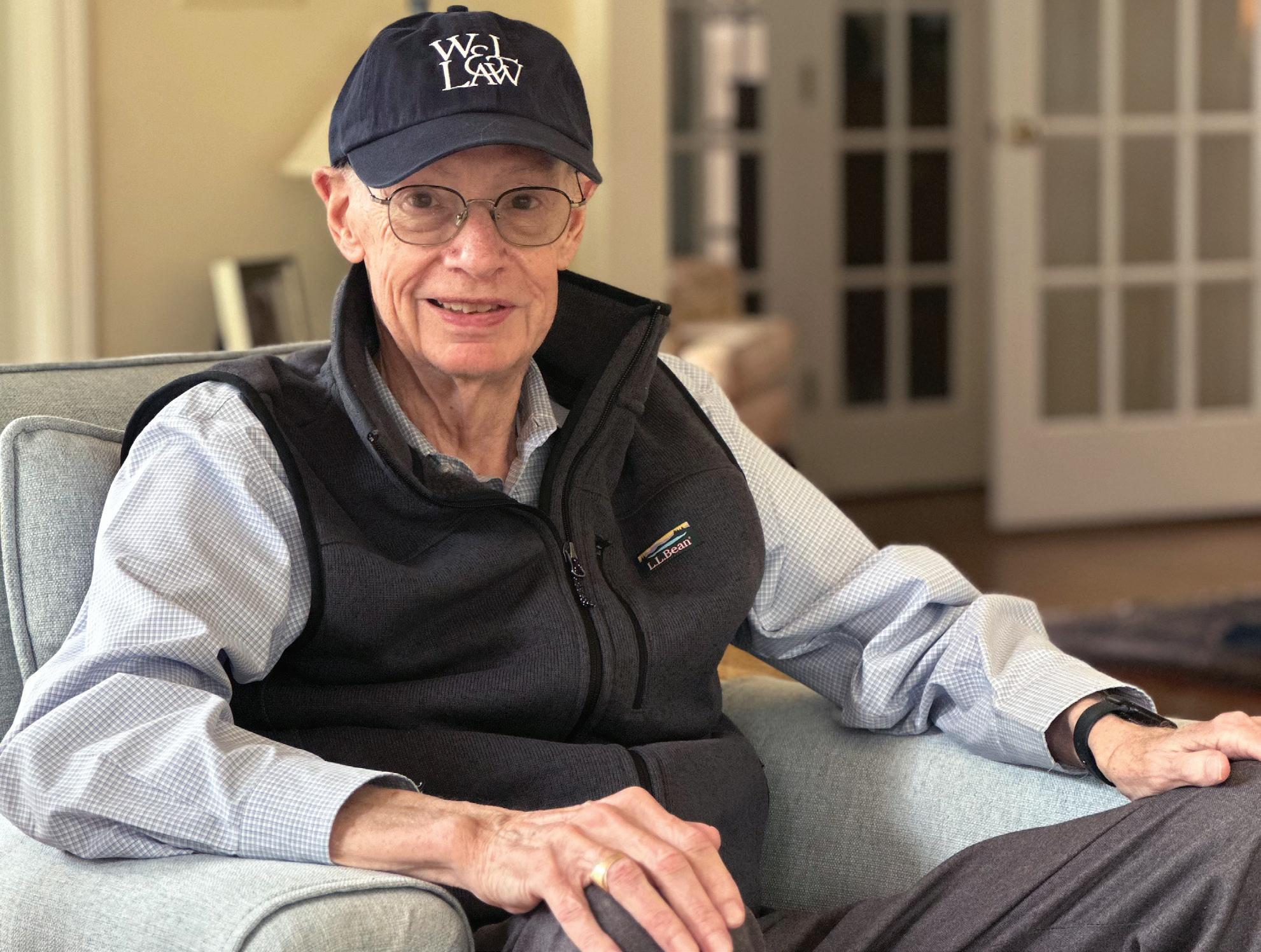
Hundreds of students benefitted from Frank’s teaching and mentorship through the years, and many were able to attend a celebration of life that Frank and his wife, Gail, hosted before his passing.
told him, “You are not listening to me.”
“As he began to share his story, I realized I wasn't fully listening. My mind was elsewhere, and I was distracted by the papers on my desk. Suddenly, he paused and said, ‘You are not listening to me.’ He was right. I wasn't. He repeated his story. He was mentally and emotionally challenged, living in a halfway house. He had a knife, a cherished gift from his late grandfather, which had become a point of conflict. The police were involved, and he was torn about what to do with the knife. This time, I listened intently, showing him through my body language and expressions that I cared. When he finished, he
“I am most proud of the fact that I can settle approximately 85 percent of my cases, often in a creative manner that best meets my clients’ goals.”
—Frank Morrison ’67, ’70L
failure, but that you can see the humility in the places that you fail; that is empowering.”
“I’ve taught CLEs that have been very effective, but you can only go so far in a weekend,” Frank added. “When you have students for an entire semester, you can move mountains.”
Frank often began his courses at W&L by telling a story from his early career — about the day a client
OBITUARIES
R. Noel Spence ’56, ’58L of Greencastle, Pennsylvania, died on July 3, 2025. After law school, he did brief stints as an attorney in the Frederick office of Charles “Mac” Mathias and as a special agent for the FBI stationed in Newark, New Jersey, before returning to Hagerstown to enter private practice. He also served two terms representing Washington County in the Maryland House of Delegates.
thanked me for listening and handed me the knife to give to the police. He left, grateful for being heard. This experience taught me the profound impact of truly listening. It was a pivotal moment that led me to focus on mediation and collaborative law, advocating for peaceful conflict resolution.”
Lane David ’24L was grateful to Frank for exposing her to areas of legal practice rarely
He later went on to work as a prosecutor in the State’s Attorney’s office, then as an associate district court judge for Washington County until his retirement.
John Alford ’57, ’59L of Lynchburg, Virginia, died on Nov. 12, 2025. As an undergraduate, he played varsity baseball, a life-long passion leading to his involvement with the
Lynchburg Hillcats. John served in the U.S. Army JAG Corps and had a distinguished legal career as a partner at Caskie & Frost.
Dick Whiteford ’57, ’60L of Sherwood Forest, Maryland, died on June 25, 2025. As a collegiate student-athlete, he wrestled and played lacrosse, joining the North-South Team as a crease attackman. He was a member of the Delta Tau
encountered in more traditional classes, gaining practical skills applicable across all practice areas.
“Professor Morrison was a calming presence in the classroom. He encouraged us to learn more about ourselves and our classmates, uniting second- and third-year students as we delved into enneagrams and conflict types,” said David. “Even now, despite the different types of law we practice, my classmates and I use the skills we learned from Professor Morrison every day. Each time we talk with opposing counsel, judges, clerks, witnesses, or victims, we lead with the lessons from Professor Morrison — treat everyone with kindness and meet people where they are.”
Tommy Bishop ’18L recalled that Frank was one of those teachers who “just ‘stay with you’ on your journey” as a lawyer. “He was probably the first law professor I ever had who made me think ‘hmmm, what if instead of just trying to win for my client, we considered a compromise.’ I now apply that ideology in nearly all my cases—what can we all agree to live with?” said Bishop. “Settling a legal dispute, while perhaps less of a stroke to the lawyer's ego than an outright victory, gives all parties the comfort and security of knowing what their outcome will be, and avoids the uncertainty of letting a judge or jury determine who gets what, or whether a party goes to jail. Professor Morrison was the architect of that outlook for me, and it has served and will serve me and my clients well, hopefully for many years after his passing.”
Delta fraternity. After law school, he joined his father’s law practice, Whiteford, Taylor, Preston LLC.
Bill Clark ’60, ’63L of Pensacola, Florida, died on Oct. 10, 2025. Upon graduating from law school, Bill and his wife, Martha, moved to Pensacola, where Bill began his law career at Harrell Wiltshire. In the early 1970s, Bill, along with his best
friend and colleague Don Partington, founded Clark Partington Attorneys at Law. Bill maintained a broad-based litigation practice, with his passion for broadcast journalism leading him to concentrate in media law and eminent domain. During his distinguished career, Bill served as president of the Escambia/Santa Rosa Bar Association, as a governor on the Board of Governors of the
Florida Bar representing the First Judicial Circuit, and as president of the Pensacola Area Chamber of Commerce.
Ed Mackinlay ’58, ’64L of Norfolk, Virginia, died on July 25, 2025. Following graduation, he joined the U.S. Navy and was commissioned as an officer after attending Officer Candidate School. Upon discharge from the Navy, he returned to Washington and Lee and graduated from the law school magna cum laude. In law school, he was Editor-in-Chief of the Law Review and a member of Order of the Coif and Omicron Delta Kappa.
Jim Slay ’65, ’71L of Westminster, Maryland, died on September 6, 2025. As an undergraduate, he was president of Delta Tau Delta Phi chapter. He practiced law in Maryland for 25 years, serving in state government as Assistant State’s AttorneyAnne Arundel County, as Assistant Secretary of State of Maryland, and as County Attorney for Talbott County. He was a partner with the law firm of Henry, Hairston and Price in Easton, MD.
Bob Beakley ’72L of Ocean City, New Jersey, died on Oct. 18, 2025. At W&L Law, he was a member of the Phi Delta Phi legal fraternity. Bob successfully argued cases before the New Jersey Supreme Court and the U.S. Court of Appeals for the Third Circuit. He also was twice named lead counsel for certified class actions for prisoners by the U.S. District Court for New Jersey. After working for Cape Atlantic Legal Services and as a partner in small firms, he opened and maintained a solo practice in Somers Point for 18 years.
Tom Ferguson ’73L of Edmund, Oklahoma, died on Aug. 16, 2025. After graduating from VMI in 1970, Tom attended law school at W&L. Upon graduation, he was commissioned as a first lieutenant, serving in the Field Artillery at Fort Sill. After passing the Virginia Bar Exam
and being admitted to practice law, Tom was promoted to captain in the Army’s Judge Advocate General’s Corps and served from 1973 to 1977 at Ft. Sill. After being honorably discharged in 1977, he joined his close friend from VMI and W&L, Bill Davis, in private practice in Bluefield, West Virginia. After two years of practicing law in Bluefield, Tom and his wife moved to Edmond where they would make their home for the next 46 years. Tom would later join the Army Reserves, again serving as a JAG officer, and rose to the rank of lieutenant colonel before retiring in 1998. He received two Meritorious Service Medals.
Michael Tryon ’79L of Orient, New York, died on June 5, 2024. Michael spent his career as a trial attorney and owned his own law firm for many years.
Jerrauld Jones ’80L of Norfolk died on May 31, 2025. He attended Princeton University, where he earned a bachelor of arts degree. After college, Jerrauld moved to New York City, where he lived for a time as a working musician. He returned to Virginia to attend Washington and Lee University, where he earned his Juris Doctor. He spent 15 years as a member of Virginia’s House of Delegates and was then appointed as the state’s Director of Juvenile Justice. He then served as a judge on Norfolk’s Juvenile and Domestic Court and later, the Circuit Court. He held this role until his health forced his retirement in 2024.
Debbie Curry ’83L of Princeton, West Virginia, died on May 25, 2025. At W&L Law she earned Order of the Coif and was selected as a Burks Scholar. Debbie was an employee of Marshall University Medical School and worked in the Center for Rural Health, where she coordinated many of the outreach efforts for the medical school. She helped to establish Coalfield Health Center in Chapmanville, where she served as the clinic’s first executive director.
Two Alumni Named Law 360 Rising Stars
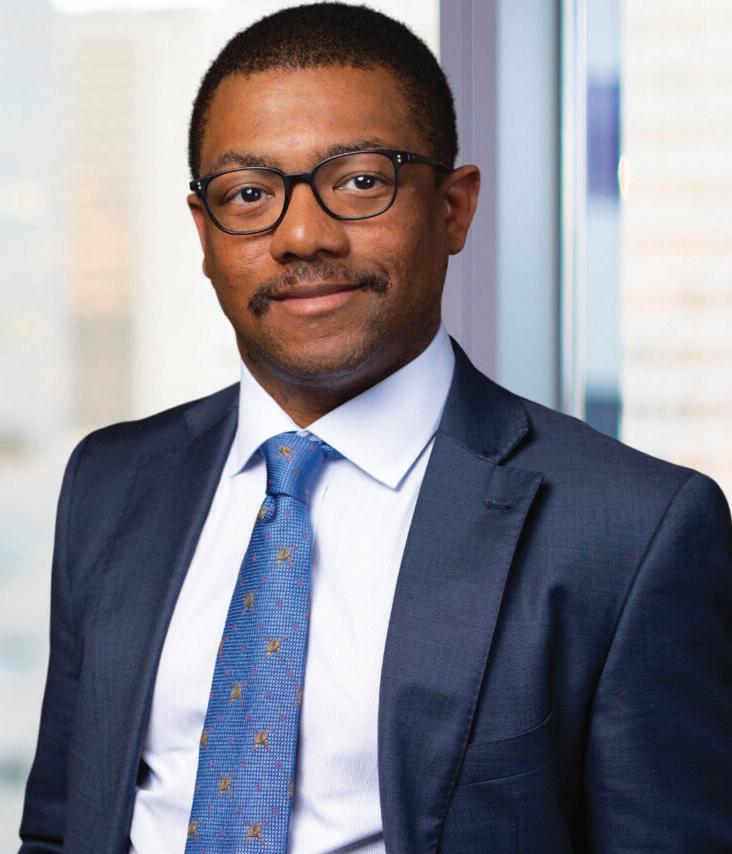
Law360 has named law alumni Patrick Barthle ’12L and Daniel Howe ’13L to its 2025 “rising stars” list of top attorneys under 40. Barthle earned a top spot as one of five cybersecurity and privacy attorneys honored in the annual recognition of lawyers “whose legal accomplishments belie their age.” Howe was recognized as a top M&A lawyer.
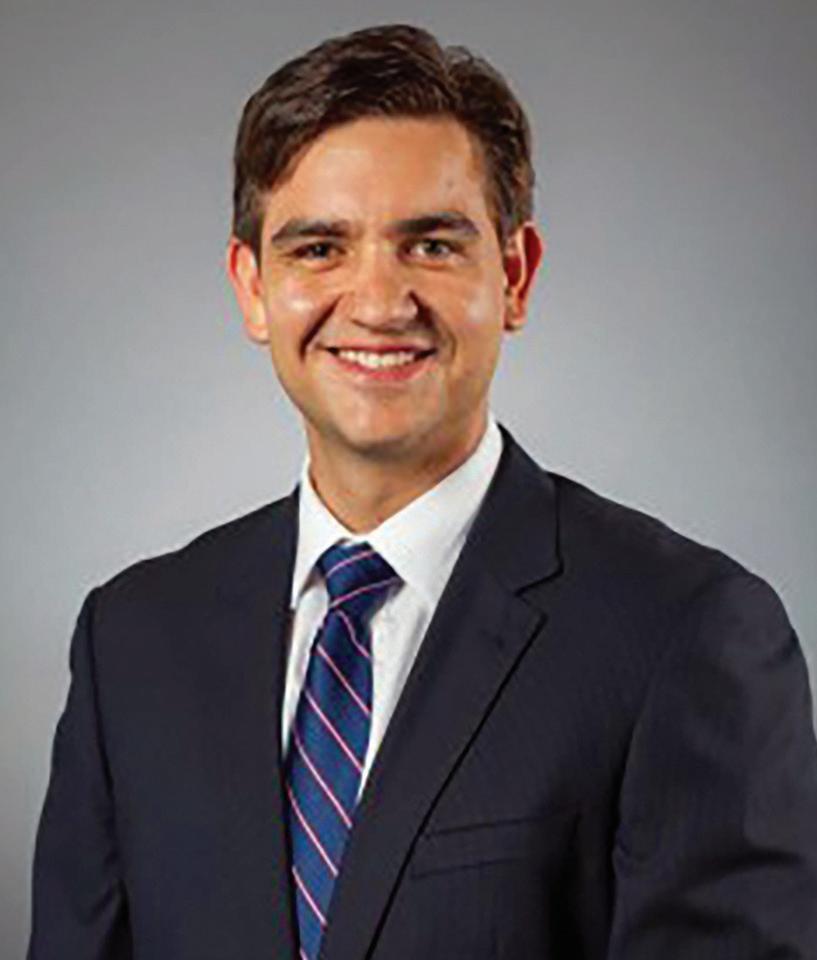
Barthle is an attorney in the Tampa, Florida, office of Morgan and Morgan. He has secured major wins for clients in data breach cases, including a $190 million settlement for 98 million Capital One customers whose Social Security numbers, bank account information and other personal data were compromised.
Howell is a partner at McGuireWoods in Richmond. His representation of Dominion Energy Inc. in its $14 billion sale of three local natural gas distribution companies and Apogee Engineering in its acquisition by private equity firm Bernhard Capital Partners earned him a spot on the Law 360 list.
Jenna
Lorence ’17L Appointed Solicitor
General of Alaska
Alaska Attorney General Stephen J. Cox has appointed Jenna Lorence ’17L as Alaska’s first state solicitor general, a new centralized leadership position created to strengthen the state’s appellate advocacy and ensure consistent, high-quality representation in courts across the country.
Lorence joins the Department of Law from the Indiana Attorney General’s Office, where she served as deputy solicitor general and represented the state in constitutional litigation and multi-state appellate matters. She previously served as assistant solicitor general for the Commonwealth of Kentucky, special counsel for the U.S. Senate Committee on the Judiciary, and as an associate at Baker & Hostetler LLP.
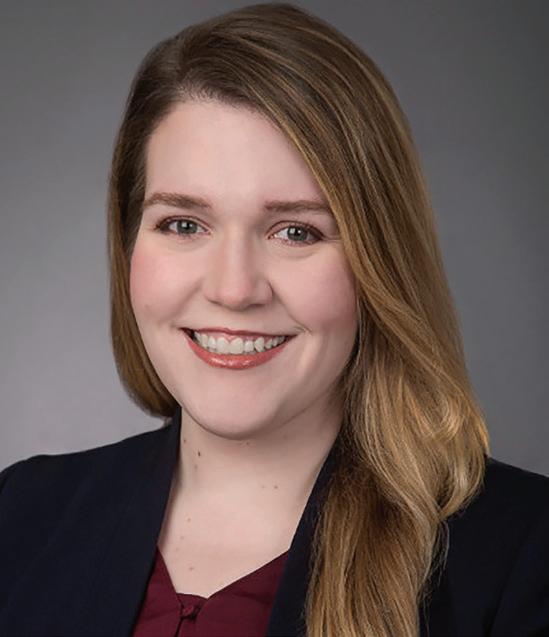
Gabriella Passidomo Smith ’19L Elected Chairman of the Florida Public Service Commission
The Florida Public Service Commission (FPSC) unanimously elected Commissioner Gabriella Passidomo Smith ’19L as chairman for a two-year term beginning January 2, 2026. Passidomo Smith was first appointed to the FPSC in 2021 and reappointed for another term through 2027. She will lead the Commission’s ongoing efforts to ensure safe, reliable, and costeffective utility service for Floridians.
Passidomo Smith is a member of the National Association of Regulatory Utility Commissioners (NARUC) and was recently appointed to the NARUC Board of Directors for a four-year term. Within NARUC, she represents the Southeastern region on the Federal Energy Regulatory Commission/NARUC Federal and State Current Issues Collaborative and serves on the Committee on Electricity, the Committee on Gas, the Gas Subcommittee on Pipeline Safety, and the Task Force on Gas Planning. In these roles, she contributes to national policy discussions on energy reliability, safety, and infrastructure planning. She was also recently selected to serve as the first vice president of the SEARUC Executive Committee.
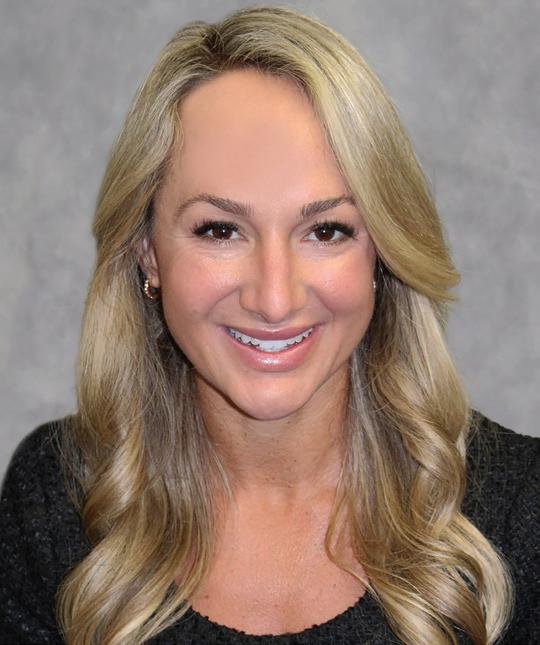
Prior to her appointment to the FPSC, Commissioner Passidomo Smith worked in the FPSC’s Office of General Counsel, providing legal analysis and recommendations on matters within the Commission’s regulatory jurisdiction.
Daniel Howe ’13L
Patrick Barthle ’12L