


Dear Postdoctoral Fellow,
It is my great pleasure to welcome you to the University of the Witwatersrand. We are delighted that you have chosen to undertake your postdoctoral research at Wits, and I hope that your time here is intellectually stimulating, professionally rewarding, and personally fulfilling.
The postdoctoral period is a pivotal stage in an academic career. At Wits, we see this as a time for deep scholarly focus, independence, and creativity. You will have the opportunity to consolidate your expertise, strengthen your publication record, and develop a strong research profile within a rigorous and supportive research environment. This period also offers the freedom to engage more broadly in academic life, including co-supervising postgraduate students, contributing to teaching, working across disciplines, and sharing your research with wider publics. These experiences are invaluable in shaping confident, capable academic leaders.
Wits is one of Africa’s leading research intensive universities, with a strong international reputation for excellence, integrity, and impact. As a university rooted in the Global South, Wits is committed to producing knowledge that is locally relevant, globally engaged, and socially responsive. Our researchers work at the frontiers of knowledge while addressing some of the most pressing challenges of our time, including health, inequality, climate change, urbanisation, digital transformation, and social justice. As a postdoctoral fellow, you are a vital part of this intellectual project. Your work strengthens our research capacity, enriches our postgraduate environment, and contributes meaningfully to Wits’ leadership role on the African continent and beyond.

We are committed to ensuring that Wits is a welcoming, inclusive, and enabling place in which to do research. A range of programmes, resources, and professional development opportunities are available to support you during your fellowship, and these are outlined in this booklet. I encourage you to make use of these opportunities and to engage with the support structures available to you. We also value your feedback, as it helps us to continually improve the postdoctoral experience at Wits.
When your fellowship comes to an end and you move on to the next stage of your career, I hope you will continue to see Wits as an intellectual home. Strong research is built on enduring relationships and partnerships, and we greatly value the ongoing connections and collaborations that our postdoctoral fellows maintain with the University.
I wish you every success during your time at Wits and look forward to the contributions you will make to our research community.
Yours sincerely
Professor Lynn Morris BSc (Hons) (Wits), DPhil (Oxon), FRSSA, FAAS, MASSAf, TWAS Deputy Vice-Chancellor: Research and Innovation

In January of 2016, I was in your shoes - starting my own postdoctoral fellowship at the University of the Witwatersrand. I was a then DST-NRF Centre of Excellence for Palaeoscience postdoctoral research fellow appointed within the Wits Evolutionary Studies Institute. I worked on pollen-based paleoclimatic reconstruction of the rainfall zones of South Africa. Today, it is with great pleasure that I am writing to welcome you in my role as Head of Postgraduate Studies and Researcher Development, a portfolio which includes the strategic oversight of postdoctoral fellows in the university.
I remember my postdoctoral fellowship fondly as a time when I was able to catapult my research career, developing my voice and creative energy as an independent researcher and building my academic CV. It is through the experience and exposure that I was afforded during my Wits postdoctoral fellowship that I have built the career that I am proud of today.
Postdoctoral fellows often find themselves feeling like they are existing in a twilight zone between being a student and having a “job”. Recentering this as an opportunity to focus entirely on building your future career, akin to a corporate internship, is key. Your postdoctoral fellowship is the last time that you can focus solely on research - without juggling your time with the pressing needs of lecturing and academic citizenship, or with short project deadlines in industry. It is also the first time that your research is not graded. Enjoy this experience!
The purpose of this handbook is to welcome and assist you in your new role as a Postdoctoral Research Fellow (PDRF) at the University of the Witwatersrand. We want you to assimilate into the culture and processes of our University as smoothly and rapidly as possible, to maximise your productivity. By so doing, it will hopefully help you enjoy your Fellowship better.
The handbook should be read in conjunction with material on the Wits Postdoctoral website (www. wits.ac.za/research/postdoctoral-fellows/), and is not meant to replace the benefits of face-to-face communication. You should never hesitate to ask questions of your Host, Head of School, Faculty or the University Research Office.
We are excited to work with you throughout your time at Wits and wish you all the best for your postdoctoral fellowship.
Welcome to our University please enjoy your stay.
Professor Jennifer Fitchett BSc (UCT), BSc Hons, MSc, PhD (Wits), MRSSA, MASSAf Head: Postgraduate Studies and Researcher Development

The origins of Wits University lie in the South African School of Mines that was established in Kimberley in 1896. This School was transferred to Johannesburg as the Transvaal Technical Institute in 1904. After two further name changes, full university status was bestowed on 1 March 1922 under the name of the University of the Witwatersrand, Johannesburg. Seven months later the inauguration of the University was duly celebrated, and Professor Jan Hofmeyr became its first principal. At the same time, construction of the campus buildings began at Milner Park on a site donated by the Johannesburg Municipality. The University had, at that stage, six faculties (Arts, Science, Medicine, Engineering, Law and Commerce), 37 departments, 73 members of academic staff and little more than 1,000 students. Now the University has five faculties (Commerce, Law and Management; Engineering and the Built Environment; Health Sciences; Humanities; and Science) and 33 Schools. There are about 2,500 full-time academic staff members and over 40,000 students of which slightly more than half are women and 4% come from countries other than South Africa. There are slightly more than one undergraduate student for every postgraduate student at Wits. The University offers about 3,000 courses and its students enjoy an average success rate of 82% for undergraduates and 73% for postgraduates. The medium of instruction is English.
Our purpose is to make a positive impact on society through creating and advancing global knowledge and fostering graduates to be leaders with integrity. By driving innovation throughout the University, embracing the diversity of our people, disciplines and ideas,
Wits will be a place where our students and staff thrive. We will strive to empower our graduates to be sociallyresponsive and adaptive to an ever-changing world. We will build on Wits’ 100 years of academic scholarship and research excellence, and use our abundance of knowledge, talent, and innovation to find solutions to the challenges of the 21st Century. Our locale will enable us to lead from the Global South, to serve as a hub of knowledge on the continent to advance inclusive and sustainable futures for all. We will be at the leading edge of innovation and academic excellence in the Global South. Excellence underpins all that we do. Our people are at the centre of what makes Wits great. We are collegial, open-minded, and respectful, and we are accountable and always act with integrity. We foster a welcoming environment and embrace the diversity of our backgrounds. Innovation is what drives us forward. We enable a space to create, collaborate, and engage in robust and informed debate, across disciplines and boundaries. We are committed to using our knowledge for the advancement of our community, city, country, continent, and the globe.
Wits is:
• Proud of its four Nobel Prize laureates - Nelson Mandela (Peace), Sir Aaron Klug (Chemistry), Sydney Brenner (Medicine) and Nadine Gordimer (Literature);
• Home to 20 prestigious South African Research Chairs and more than 441 NRF rated researchers , of which 26 are ‘A-rated’;
• Proud of its 91 Rhodes, and 32 Mandela-Rhodes Scholars;
• The source of about 3,800 peer reviewed publications per annum.

In South Africa, there are a number of different definitions of the Postdoctoral Fellowship depending on the context. All of them help to shape the experience in some way.
According to Wits (for academic purposes)
A Postdoctoral Fellowship is a research fellowship awarded to individuals that are within five years of completing their doctoral degree. These fellowships allow the candidate to develop an independent research focus and simultaneously experience other parts of the academic programme, like postgraduate student supervision and academic service.
Fellowships are always dependent on the availability of funding, the majority of which is external in nature.
According to Wits (for contractual purposes)
A Postdoctoral Fellowship is temporary in nature and normally lasts for two years. You may hold postdoctoral fellowships for a maximum of five years, should you successfully obtain further postdoctoral fellowship grants. On termination, there should be no expectation of employment with the University, and no expectation of further fixed period contracts.
According to the South African Department of Home Affairs (for visa purposes)
A Postdoctoral Fellowship is a temporary research position held by a person who has completed their doctoral studies. These Fellowships commonly last for periods ranging between one and three years, dependent
on the specific Fellowship and are dedicated purely to research.
According to the South African Revenue Service (for tax purposes)
A Postdoctoral Fellowship is awarded to a candidate who has successfully applied for the award and must be paid on the understanding that, apart from research and the duties required for the individual’s own professional development, no services are required of the candidate in return for the Fellowship. In South Africa, Postdoctoral Fellowships are non-taxed, and bound by the Binding Class Ruling entered into between the South African Revenue Service (SARS) and Universities South Africa (USAf).
Per this binding class ruling, the primary objectives of PDRFs include the following:
• To place higher education institutions at the forefront of research and innovation;
• To generate new knowledge and transfer knowledge and skills;
• To enable outstanding doctoral graduates to obtain experience of research and innovation at higher education institutions;
• To provide an opportunity to promising young researchers from different universities to enhance their research skills and expertise;
• To expand on existing research and ideas and to pursue new lines of research;
• To interact with other academics and post doctoral fellows;
• To emphasise an increase in publication outputs;
• To establish and enhance South African intellect;
• To develop knowledge for stakeholders such as the government, business, industry and social communities; and
• To promote national and international conference attendance by post doctoral fellows
Further, the binding class ruling states that PDRFs are not employees of the University and they can therefore not qualify for any employee benefits including retirement funding, membership of retirement funds, support for a medical aid scheme or any other employee benefits. This does not preclude PDRFs from performing temporary tasks for remuneration (up to a maximum of 12 hours per week), for example conducting ad hoc tutorials or marking examination papers in a similar manner as other post graduate students. This remuneration would be taxable on the same basis as for other part-time employees for services rendered.
Purpose of the Postdoctoral Fellowship
Enables post-PhD candidates to develop an independent research programme and simultaneously experience other aspects of the academic profession, such as teaching and learning, and service.
Specifically the purpose of the Postdoctoral Fellowship is to:
• Develop research independence under the guidance of an academic Host;
• Produce research publications and so strengthen the candidates CV;
• Assist, where necessary, with postgraduate student supervision;
• Contribute to the establishment of a critical (research) mass within a research group, where appropriate;
• Teach, mainly at the postgraduate level, for small percentages of active time. This teaching should be part of the Fellow’s professional development (see tax implications) and must not break compliance with the visa regulations.
Wits has specific expectations of all its Postdoctoral Fellows. Although these expectations will vary from place to place in the University, depending on Faculty and Host, these are the common expectations.
• An average peer reviewed research output of at least two publications per annum. It is understood that most of the publications will not arise in year one of the Fellowship. This implies that by the end of year two the PDRF should have published four or more publications.
• Ideally, the research should be published in journals that are found in Web of Science journals. If there is a particular reason why it is more appropriate to publish the work in local journals, then they should be in DHET ‘accredited journals’.
• A contribution to the research ethos of the group, Department, School or Institute in which you are based. This contribution should come in the form of willing participation in staff meetings, debates about research, research seminars (especially those involving postgraduate students), and similar activities to which the PDRF is invited. It is important that Fellows are active on campus and contribute to the academic programme by putting forward ideas.
• A contribution to the operation of a research laboratory (where appropriate). This contribution may involve calibrating instruments, advising postgraduate students on operating conditions, giving instrument training, commissioning preventative maintenance, etc.
• On occasions going beyond the normal expectations of a Postdoctoral Fellow (within reason) to contribute towards the University and its goal to become an internationally acclaimed research-intensive university.
Postdocs are required to negotiate leave of absence for the purposes of vacation or medical leave with their Hosts. No mandatory minimum period is prescribed. To ensure productivity during the fellowship, vacation leave should not exceed 24 working days per annum. Leave requests are to be approved by the Host, and communicated to the PDRF administrator. Approved leave will not impact on the stipend paid.
If these expectations appear to be daunting or even overwhelming, then the good news is that there is plenty of support available. You should not feel alone in your endeavours. The support provided is meant to help you achieve your full potential. Besides your family and friends (who may be far away), you should feel free to contact the following people for support.
A senior academic hosts each Postdoctoral Fellow. Your relationship with your Host is of particular importance as they are the person with whom you will have almost daily contact. Your Host will play a mentorship role in your life and is therefore the first point of call for any issue. Although you will be required to work independently, your Host will assist with your research by providing a workspace, guidance, access to resources and networks. Your host will collaborate with you in conceptualising and developing your research, identifying appropriate target journals and conferences, and where appropriate include you in co-supervision.
Your Host will, from time to time, also ask you for support in their academic activities. Some examples of this may include giving advice to postgraduate students with their research, overseeing laboratory activities, training users of research equipment, presenting research findings and discussing research outputs. You should participate in these activities as they will broaden your knowledge and understanding of the academic process. However, you should never lose focus on your research, as this will remain your primary goal during your Fellowship.
You will be embedded in your Host’s school and it will become your academic home during your Fellowship, as it is where you will do your day-to-day work. It is important to introduce yourself, and through the course of your postdoc to get to know, your Head of School/Department/Institute.
Another important person in your life is your School’s Administrator. This person will provide you with administrative support or will be able to advice you on how to get such support. Make sure you introduce yourself to this very important person.
The University Research Office is centrally placed, in organisational terms, and therefore carries the overall responsibility for the welfare of Postdoctoral Fellows at Wits. The University Research Office:
• Provides Postdoctoral Fellows with their official invitation to take up a Fellowship:
• Is the custodian of the Postdoctoral Fellowship contracts;
• Administers the payment of stipends;
● Offers moral support and an independent mediating function in the unlikely event that you end up in a dispute with your Host.
People in the University Research Office that work with Postdoctoral affairs include:
Prof. Jennifer Fitchett
Email: Jennifer.Fitchett@wits.ac.za
Telephone: +27 (0)11 717 6514
Office number: 10 022
Mrs Beverley Manus
Email: beverley.manus@wits.ac.za
Telephone: +27 (0) 11 717 1235
Office number: 10 004
Mr Alban Van Roy
Email: alban.vanroy@wits.ac.za
Telephone: +27 (0) 11 717 1389
Office number: 10 000
Website: http://www.wits.ac.za/research
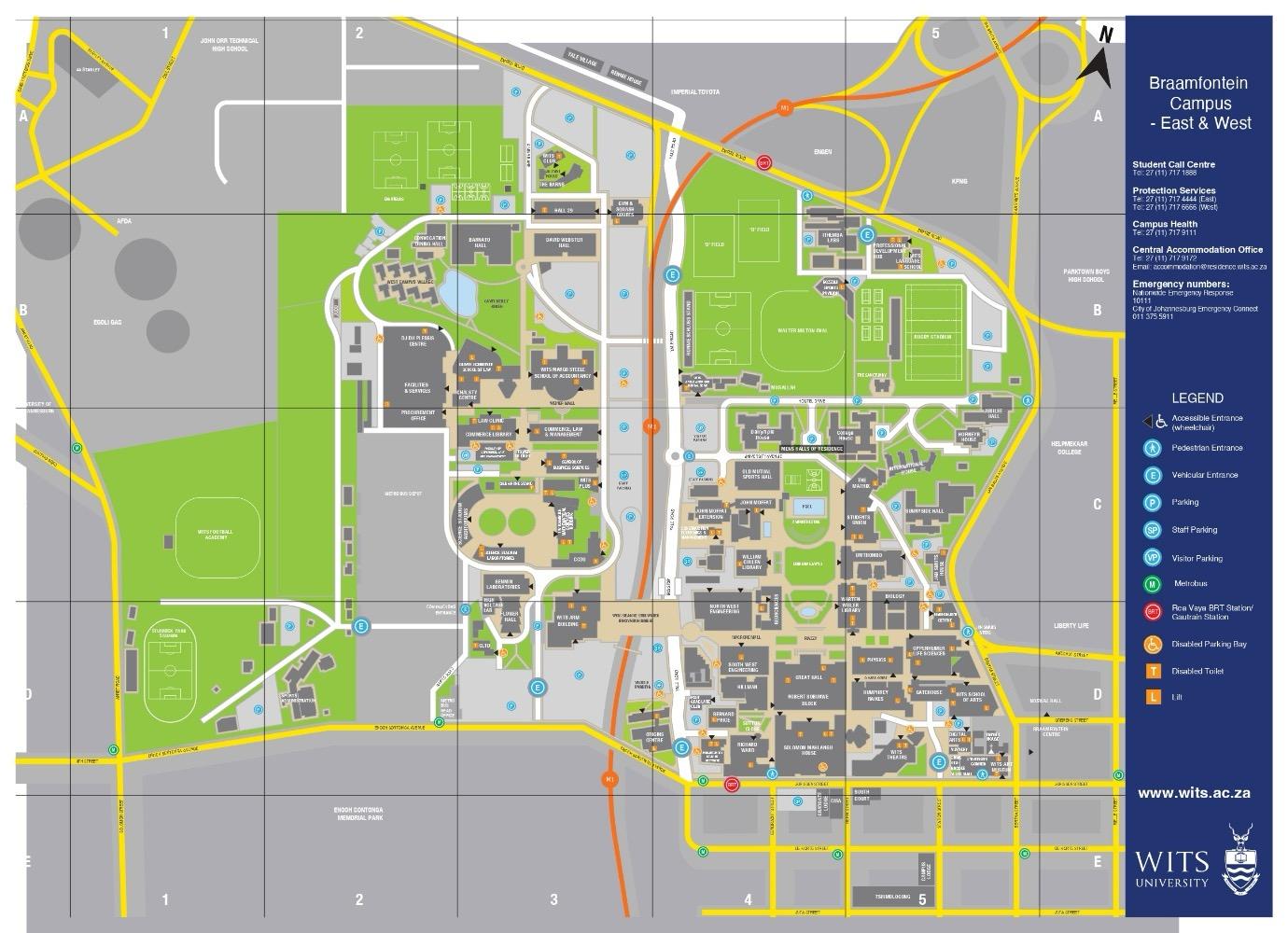
Address: Braamfontein, East campus, Solomon Mahlangu House, 10th floor

South Africa is located at the southern tip of the African continent and borders Namibia, Botswana, Zimbabwe, Mozambique and Eswatini. Lesotho is an independent country surrounded by South African territory.
South Africa has experienced a significantly different evolution from other nations in Africa as a result of two facts. Firstly, immigration from Europe reached levels not experienced in other African communities. Secondly, the strategic importance of the Cape Sea Route, as emphasized by the closure of the Suez Canal during the Six Day War and mineral wealth made the country extremely important to Western interests, particularly during the Cold War. Racial strife between the White minority and the Black majority has played a large part in the country’s history and politics, culminating in apartheid, which was instituted in 1948 by the National Party (although segregation existed prior to that date). The laws that defined apartheid (a crime against humanity) began to be repealed or abolished in 1990 after a long and sometimes violent struggle (including economic sanctions from the international community) by the Black majority as well as many White, Coloured and Indian South Africans.
Two philosophies originated in South Africa: ubuntu (the belief in a universal bond of sharing that connects all humanity); and Gandhi’s notion of “passive resistance” (satyagraha), developed while he lived in South Africa. We hope you experience these philosophies at Wits.
Regular elections have been held for almost a century; however, Black South Africans were only enfranchised in 1994. Since democracy arrived in South Africa, elections have been held and a largely peaceful environment.
The economy of South Africa is one of the largest and most developed on the continent, with modern infrastructure common throughout the country. South Africa is often referred to as the “The Rainbow Nation”, a term coined by Archbishop Desmond Tutu and later adopted by then-President Nelson Mandela as a metaphor to describe the country is newly developing multicultural diversity in the wake of segregationist apartheid ideology. The country’s socially progressive policies are rare in Africa. By 2007, the country had joined Belgium, the Netherlands, Spain and Canada in extending the right of marriage to Gay, Lesbian, Bisexual and Transgendered.
South Africa is:
• Two hours ahead of Greenwich Mean Time (GMT);
• One hour ahead of Central European Time;
• Three and a half hours behind Central Indian Time; and
• Seven hours ahead of Eastern Standard Winter Time in the USA.
Demography
According to Statistics South Africa’s 2022 census data the country’s population stands at some 62 million. It is a nation of diversity and a variety of cultures, languages and religious beliefs. South Africa has 11 official languages. English is the most commonly spoken language in official and commercial public life, but only the fifth most spoken home language.
The climate is variable across the country. In Johannesburg, (which is about 1,600m above sea level) the winters (April-October) are dry and sunny with temperatures ranging from 0°C in the mornings to 20°C at midday. Summers (November-March) are hot (minimums in the low teens and maximums in the mid-30s) and are characterised by afternoon thundershowers.
Johannesburg is the largest and most populous city in South Africa. South Africans affectionately known it as Jo’ burg, “Jozi” or “JHB”. Johannesburg is the provincial capital of the Gauteng Province, the wealthiest province in South Africa, and fourth largest economy in Sub-Saharan Africa. The city is one of the 40 largest metropolitan areas in the world, and Africa has only officially designated global city (classified as a gamma world city). Johannesburg houses the Constitutional Court, the highest court in South Africa. Johannesburg is the site of a large-scale gold trade due to its location on the mineral-rich Witwatersrand range of hills. Johannesburg is served by OR Tambo International Airport, the largest and busiest airport in Africa and a gateway for international air travel to and from the rest of southern Africa.
When you arrive in Jo ’burg you may want to take a bus tour of the City and surrounds. These can be arranged through this website: https://www.citysightseeing.co.za
Working at Wits, in Johannesburg offers you the opportunity of becoming part of, and enriched by, an urban campus in its interaction with a dynamic city.
Personal vigilance is key to remaining safe in Johannesburg. Like any other big city throughout the world, Johannesburg has its share of crime. This has been intensified due to the rapid change South Africa is experiencing in the political, social and economic spheres.
Some suggestions to enhance your safety:
• Keep valuables in a locked place and do not carry large sums of money.
• Avoid displaying expensive jewellery or other valuable items such as cameras when you walk in the street.
• Do not leave valuables on the seats of motorcars.
• Do not carry your passport with you on a daily basis; a certified copy of the page containing your personal details and study permit should be adequate.
• Do carry your medical aid membership card at all times.
• Do not walk alone at night; walk in groups.
• Do not explore unfamiliar areas of town on your own.
• Report any harassment or threatening situation, which you may have experienced to the appropriate authorities, including Campus Security and the International Students Office.
• It is advised that you know where you can reach someone in case of an emergency. Important and emergency numbers are provided at the back of this handbook.
The University has endeavoured to create a safe environment for its staff and students. The various campuses are entirely fenced off and are therefore immune to most of the crime that may occur in the City. As part of your registration process, you will be given an access card that will allow you access to the campus and to various buildings within the campus. Please keep your access card with you at all times and do not lend it to other people under any circumstances.
Unless you know Johannesburg well, it is recommended that you begin by staying in one of the University residences set aside for Postdoctoral Fellows. Bachelor flats that are serviced and furnished with free Wi-Fi are recommended. More information is available at http://www.wits.ac.za/ accommodation. After living in Johannesburg, you may consider moving to private accommodation.
The quickest and easier way to be connected is to get a cellular phone. To obtain a local sim card, you are required to produce a South African Identity document or valid Passport and proof of residence, unless you obtain this from the airport on arrival. E-sims are useful in the interim if your device supports these.
If you will be driving in South Africa, it is best to organise an international driver’s license in your home country. Such license must be issued in English by an authorised licensing department and be shown in your passport. Licenses issued in languages other than English must be accompanied by a certificate of authenticity (in English) issued by foreign Office (e.g. Embassy or console of the bearer’s country of origin). It is law in South Africa to carry your driving licence with you whenever you are driving.
As a non-South African citizen who is not yet registered on the eNaTIS (National Transport Information System) and would like to buy or register a motor vehicle in South Africa, you must produce your foreign identification document to be introduced onto the eNaTIS.
For more information on applying for a Traffic Register Number, please use this link: http://www.services.gov. za/services/content/Home/ServicesforForeignNationals/ drivingforforeigners/trafficregisternumber/en_ZA
There are several public transportation options all through Johannesburg.
• The Gautrain runs from OR Tambo international airport through to Rosebank, and Park Station. We have a Wits shuttle from the Gautrain to campus, with a small fee charged through a Wits shuttle card. The Gautrain network is further supported by Gautrain busses
• Uber and Bolt both operate in Johannesburg
• The Rea Vaya runs from suburbs such as Northcliff and Melville through to campus
The information below should assist you in obtaining the necessary visa for entry into South Africa. It is recommended that the visa is secured before you resign from your current position or make expensive travel arrangements. It is unlikely, but long delays may make it impossible for you to take up the Fellowship offer.
The information provided below should be sufficient for you to secure the appropriate visa, but you can find further information about visa applications at: http://www.dha.gov.za/index.php/immigration-services/ apply-for-a-south-african-visa
Type of Visa
IMPORTANT: As a Postdoctoral Research Fellow you should apply for a Visitors Visa Section 11 (1)(B) (iii) endorsed “for postdoctoral research at the University of Witwatersrand”.
Where to apply
You should apply at the nearest South African diplomatic or consular representative in your country. For details of your nearest consular representative, please visit www. dfa.gov.za/webmissions/index.html.
Applicants living in countries where South Africa is not represented may apply to the Director-General: Home Affairs, Private Bag X114, Pretoria, 0001, South Africa. The appropriate website is www.dha.gov.za.
What documents are needed when applying
To apply for the visitor’s visa a copy of the formal invitation letter offering you the Fellowship is required together with:
1. The visa application form is available online from www. vfsglobal.com/dha/southafrica/visitor-visa-section-3. html (Handwritten forms will not be accepted by the Department of Home Affairs);
2. A passport, valid for no less than 30 days after the expiry of the intended visit;
3. Statement and/or documentation confirming the purpose and duration of your visit – your letter of invitation will be sufficient;
4. Original medical certificate: form BI-811 (obtainable from the embassy);
5. A yellow-fever vaccination certificate (if required);
6. Original radiological report: form BI-806 (obtainable from the embassy);
7. Police clearance certificate(s), not older than six months at the time of submission, in respect of each country in which the applicant resided since the age of 18 years and lived in for 12 months or longer, or a written undertaking with receipt(s) attached thereto;
8. Proof of sufficient financial means (i.e. the cost of the Fellowship as indicated in the letter of invitation from Wits);
9. A letter from the University explaining that it will cover the cost of your return air ticket in the UNLIKELY case of your repatriation (this is sent to you with your letter of invitation);
10. Two colour passport photographs; 11. Prescribed fee normally in cash (obtainable from the embassy).
CAUTION: You are advised to confirm with the consular representative that these are all the current requirements, as regulations do change from time to time and embassy to embassy.
Please confirm with the Consular representative in your country the turnaround time of processing a visa application as it varies from country to country.
Should you wish to bring your spouse and family with you, you should apply simultaneously for an accompanying spousal visa as prescribed by the South African Embassy. The University is not allowed to provide letters of invitation for spouses that are not also taking up Postdoctoral Fellowships.
Postdoctoral Fellows with current work permits are required to get the work permit endorsed to carryout postdoctoral research concurrently at Wits. In some cases, Fellows are issued with an Exceptional Skills work permit, with the endorsement to carry out research at Wits. In such cases, the Wits offer of a Fellowship should include a statement that the research is aligned to the work the Fellow will be doing.
Internationalisation and Strategic Partnerships Office
Should it be necessary, the Internationalisation and Strategic Partnerships Office provides further support to international Postdoctoral Fellows. The office can provide advice and assistance on immigration matters aimed at dealing with exceptional circumstances.
The Internationalisation and Strategic Partnerships Office is located on the Ground Floor, Solomon Mahlangu House Braamfontein East campus and can be contacted at Telephone: +27 (0) 11 717 1054; Fax: +27 (0) 11 717 1059 or E-mail: studysa. international@wits.ac.za.
You will receive a formal letter of invitation (also called a letter of award) from the University Research Office to take up a Postdoctoral Fellowship at Wits. It will normally be emailed to you. It contains an offer of appointment and plenty of vital information. Please review this letter and all its attachments carefully prior to formally accepting the offer. The letter will provide you with the following information:
• Name of your Host;
• School/Department/Institute to which you will be affiliated;
• Normal duration of the Fellowship
• Value of the stipend and source(s) of funding;
• Where appropriate, information about the process to apply for a visitor’s visa;
• A description of a process to recover some of your travel costs;
• Any other additional information that is relevant to the appointment.
The Director will have signed the letter: Research Development or his recognised representative.
IMPORTANT: Please insist that the Director sends this letter to you: Research Development or his recognised representative in the University Research Office only. The University may not honour letters of offer sent by other people.
The formal letter of invitation will have a reply slip attached to it. Please use this reply slip to formerly accept the offer by emailing a scanned copy that you have signed to the email address indicated on the slip. You are normally given a month in which to accept the offer, failing which the offer will be withdrawn.
As the duration of a Postdoctoral Fellowship is normally at least two years, suitable and comfortable accommodation is vital for your productivity. The responsibility for arranging this accommodation is yours. This task should be tackled soon after you accept the formal invitation to take up a Fellowship.
IMPORTANT: It is vital that you complete the arrangements for your accommodation before you arrive in Johannesburg.
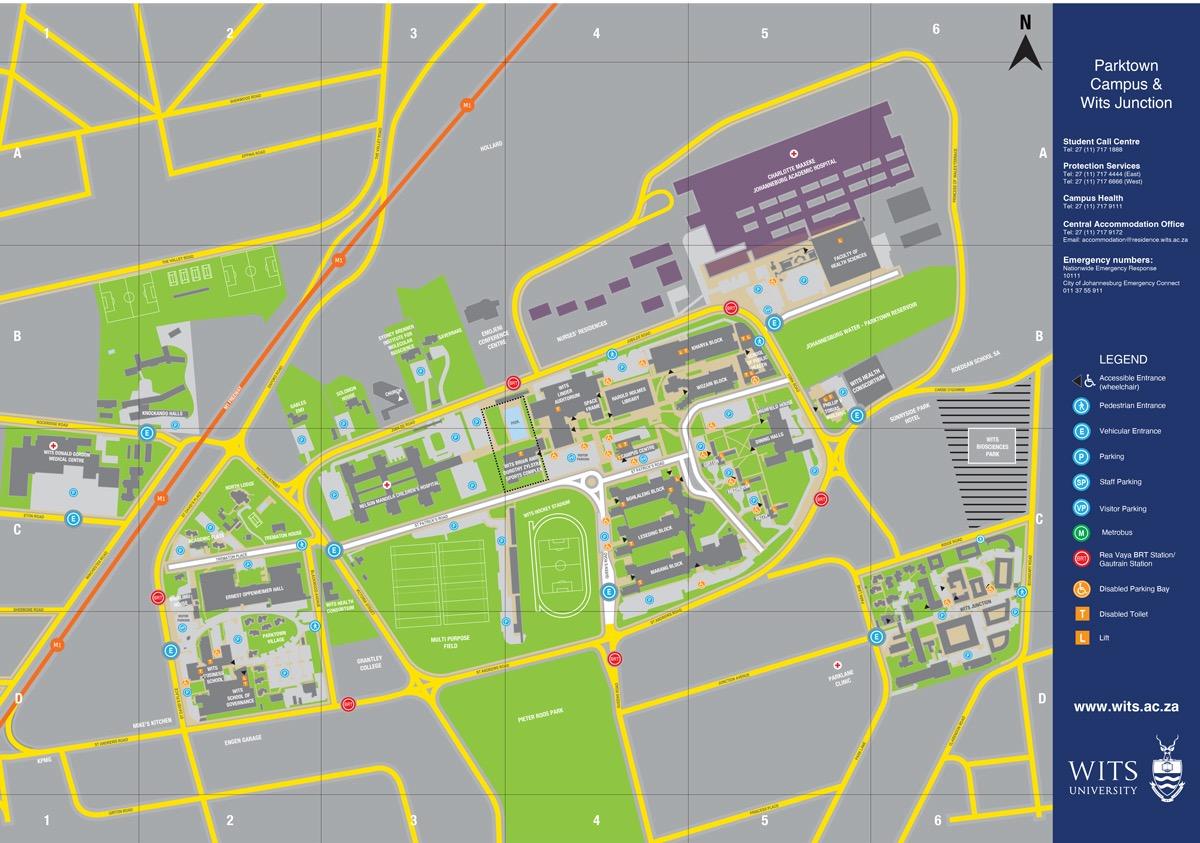
There are a number of University residences, one of which is particularly appropriate for Postdoctoral Fellows: It is called the Wits Junction. This residence offers selfcatering accommodation in studio units. Meals can be arranged through the University residence system. For more details visit the website: or contact Central Accommodation Office at Tel.: +27 (0)11 717 9173/4, email: accommodation@wits.ac.za
IMPORTANT: It is recommended that you begin your stay at Wits in a University residence. This will allow you a suitable orientation period. Later you may choose to move to private rented accommodation. As always, though, your Host will guide you through this process and should be regarded as the first port of call.
Travel arrangements from OR Tambo International Airport
It is your responsibility to arrange a suitable transfer from your arrival point to your temporary (or permanent) accommodation and then onto Wits.
If you arrive by aeroplane, two e-hailing services that can be used are Bolt and Uber, both respective applications can be downloaded for both IOS and Android devices. Alternatively, you can take the Gautrain from the airport. For the Parktown campuses exit the train at the Rosebank Station and for the Braamfontein campuses exit the train at the end of line, called Park Station. Thereafter take the appropriate Gautrain bus. For Gautrain routes and price plan visit the website: www.gautrain.co.za.
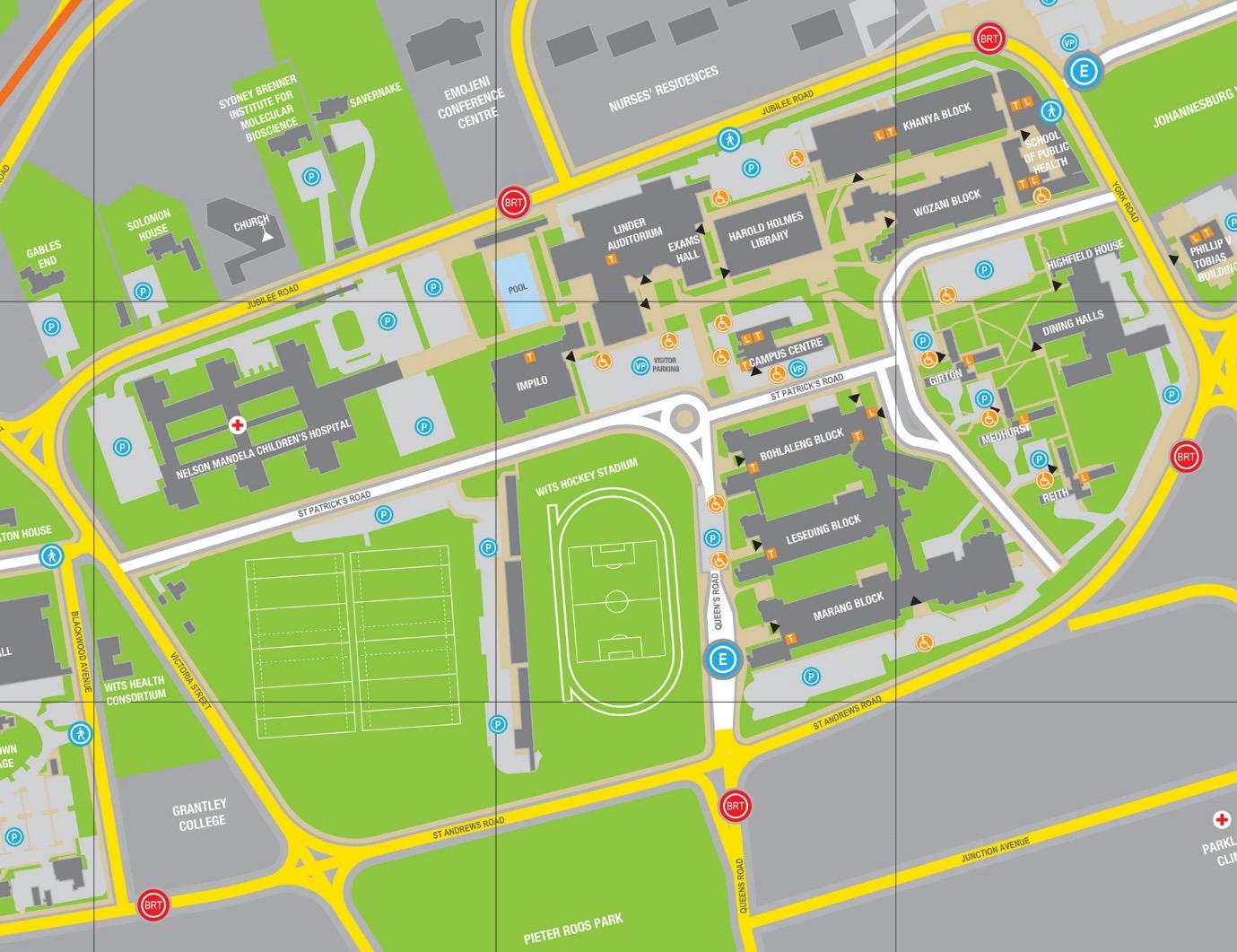
If you arrive by road, use the M1 motor way to approach the University. Take the Smit Street/Wits exit (exit 12) for the Braamfontein campuses or the Jan Smuts Avenue (exit 13) for the Parktown campuses. See map for more details. The speed limited on the M1 motorway ranges between 80 km/h and 100 km/h. Cameras regularly enforce these limits.
Foreign exchange is available at OR Tambo International Airport
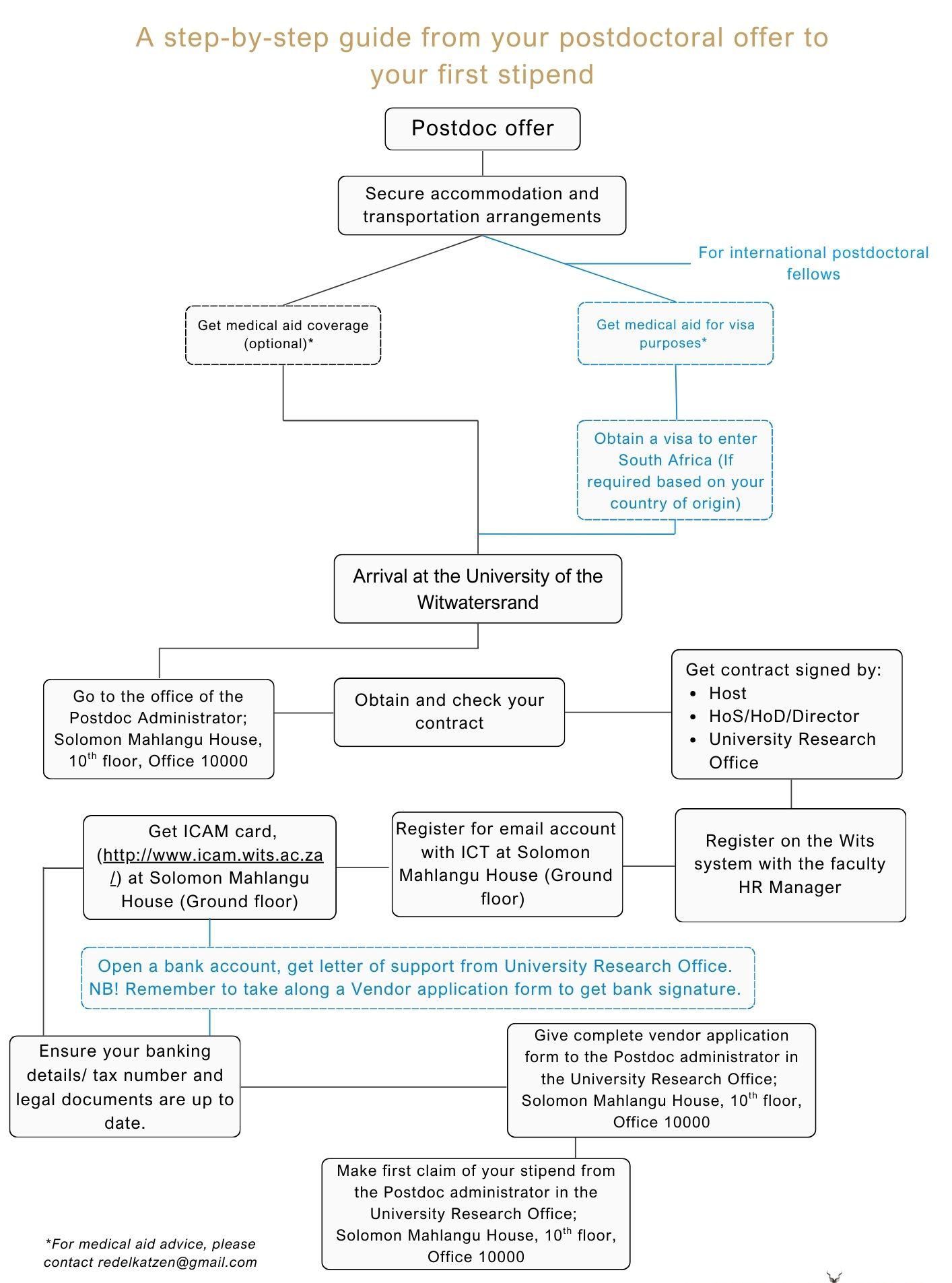
After arriving in Johannesburg, you will need to begin the registration process. This need not happen on the day of arrival but within a few days. It is often possible to complete this process in one day if you have all your necessary documentation and if all the key people are available.
The registration process begins in-person at the University Research Office. This office is located on the Braamfontein East campus, in a building called Solomon Mahlangu House (see map) at office 10 022 on the 10th floor.
Add information on understanding your contract.
• Ensure your role is well defined so you know what is expected of you
• Make sure you understand the duration of your contract and that your host can fulfil this duration
• Ensure that your funding source is the same duration as your contract
• If you are unsure of anything, ask before you sign.
The process is described in the following flow diagram.
Opening a bank account
You will need to have a bank account in South Africa to receive your stipend from the University. To open such an account you will need the following documents:
• Valid passport
• Valid visa
• Proof of residence in South Africa (letter from residence)
• Proof of source of income (formal invitation letter)
Typical banking hours during the week: 09:00-15:00 and on Saturdays: 08:30-11:00, although there may be some variance depending bank and branch. Most banks are closed on Sundays in South Africa.
Name of Bank
ABSA
ABSA
Branch name Rosebank Student Bureau
Address 21 Craddock Avenue 66 Jorissen Place
Branch name Rosebank Braamfontein
Telephone No. 011 994 6100 011 489 1700
Name of Bank Capitec Bank Capitec Bank
Branch name Mall of Rosebank Braamfontein
Address Shop 131, 50 Bath Ave 49 Jorissen Street
Branch name Rosebank Braamfontein
Telephone No. 0860 102 043 0860 10 20 43
Name of Bank FNB FNB
Branch name Parktown Braamfontein
Address 30 Wellington Road 92 Jorissen Street
Branch name Parktown Braamfontein
Telephone No. 087 345 3600 087 345 6260
Name of Bank Nedbank Nedbank
Branch name Rosebank Nedbank Corner
Address 50 Bath Avenue, shop 127-129, 96 Jorissen Street
Branch name Rosebank Braamfontein
Telephone No. 080 055 5111 080 055 5111
Name of Bank
Branch name
Standard Bank
Standard Bank
Cnr Twist and Park Central Shopping Centre Stansure House, 76 Jorissen St, Braamfontein
Address Braamfontein Braamfontein
Telephone No. 0860 101 341 0860 101 341

Per the SARS-USAf binding class ruling, postdoctoral fellows do not qualify for any employee benefits including retirement funding, membership of retirement funds, support for a medical aid scheme or any for other employee benefits.
International Postdoctoral Fellows are required by the Immigration Act, Number 13 of 2002 (as amended in 2004), to provide proof of medical insurance cover with a medical scheme registered in terms of the Medical Schemes Act, 1998 Act 131 of 1998.
The University can direct you towards a broker that can assist in choosing a medical aid however, it is very important to note that medical aid and its respective costs are entirely your own responsibility to obtain and manage.
All enquiries regarding medical aid cover can be directed to Redel Katzen at redelkatzen@gmail.com.
Workplace injuries
Workplace injuries are covered by the University insurance scheme.
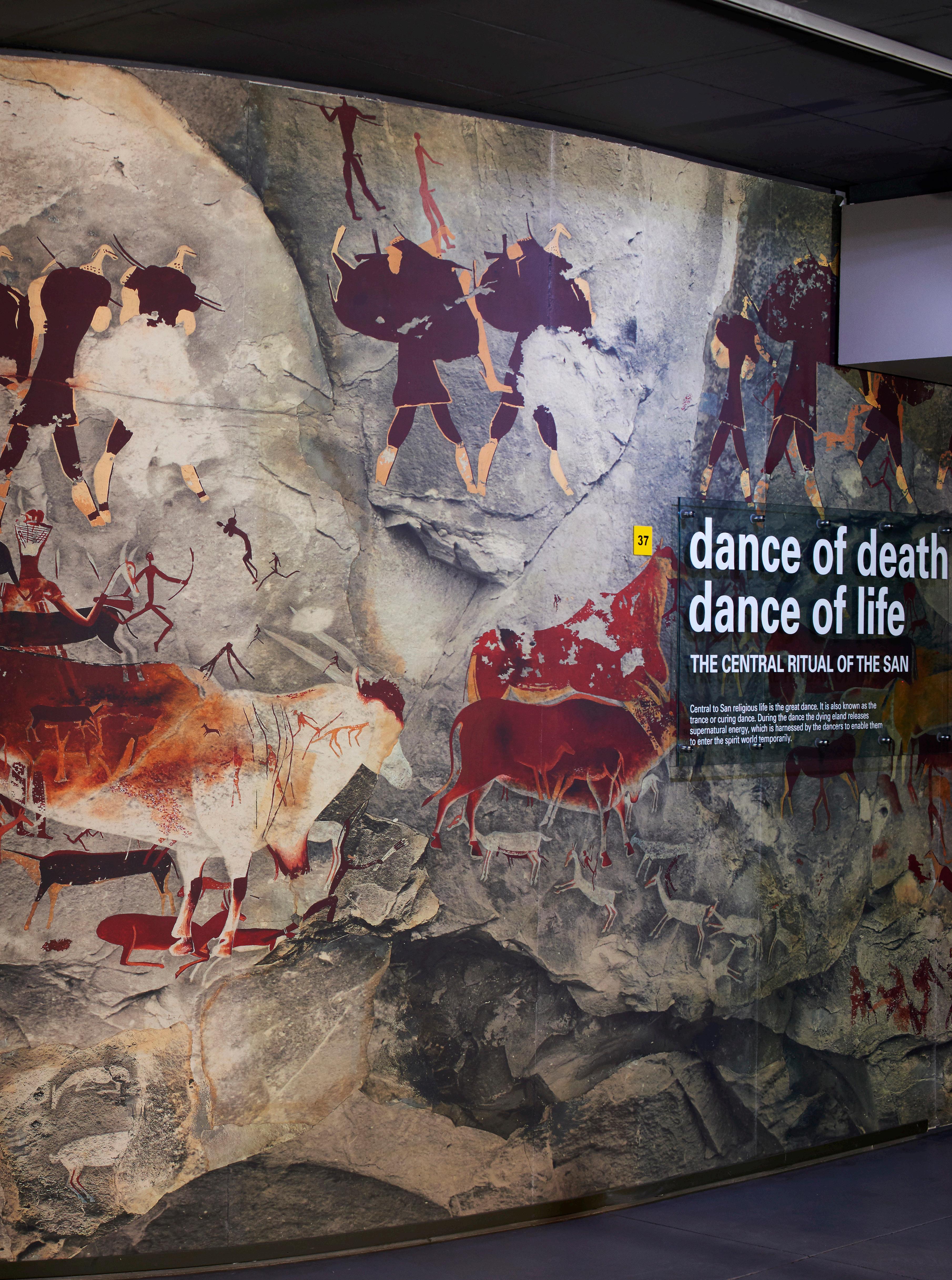
Visit the array of museums and theatres that operate on campus, many of them are free of charge. Some examples include:
• Adler Museum of Medicine; Open weekdays, 09:30-16:00; Saturdays on request; Tel: 011 717 72081
• Origins Centre; www.origins.org.za; Tel: 011 717 4700
• Wits Art Museum; www.wits.ac.za/wam; Tel: 011 717 1365
• Wits Theatre; www.wits.ac.za/witstheatre; Tel: 011 717 1376
• Wits Anglo-American Digital Dome; https://digitaldome.wits.ac.za/;
The University provides a shuttle bus service throughout the week. This service operates between the Braamfontein Campus and the Medical School in Parktown, stopping en route at the Education Campus. Visit the website for bus timetables: .
You are required to show your access card upon boarding the bus.
Commissioner of Oaths
Should you require the certification of any documents (for academic purposes, or for funding applications) there are several members of staff who are sworn Commissioners of Oaths. They are available during the mornings:
• On the Braamfontein East campus in the concourse of Solomon Mahlangu House,
• On the Parktown campus in the Faculty Office.
The Research Portal (http://libguides.wits. ac.za) gives access to a wide range of research resources and tools, including electronic journals and articles in scholarly databases, Wits research publications, catalogues, Africana, open scholarship and RefWorks, a bibliographic management tool. In addition, research support services such as interlibrary loans, question and answer service, and tutorials and guides are offered. Here you will also find links vital for successful research, especially links to organisations active in the South African research environment.
The University has its own Post Office, which is located on the ground floor of Solomon Mahlangu House on the Braamfontein East campus.
The Wits library (https://www.wits.ac.za/library) is an important source of information that will assist you during your Fellowship. It is vital that you make contact with the library and arrange an induction tour to familiarise yourself with the many services available. You may also find the online Library Guides, called Libguides, useful. The can be found at http://libguides.wits.ac.za/index.php.
The Research Commons provides quality services, expert help and seamless access to research information. It incorporates library services and computer technology and assistance, allowing Postdoctoral Fellows to pursue the entire research process in a supportive environment.
In-depth support services available to researchers include:
• One-on-one consultations with knowledgeable and highly skilled research librarians;
• Print and Web based information finding;
• Citation searching;
• Education and training in library research & application of related technologies to enhance independent information finding, utilization and lifelong learning;
• Bibliographic management software support to ease the management and compilation of references;
• Seminar programs to promote cross-fertilization of ideas;
• Interlibrary loans to access materials available at other higher education institutions and libraries;
• Borrowing of laptops for use within the Research Commons;
• Photocopying, scanning and printing;
• Advice on research publications, including institutional repositories, and dissemination of research results.
The Research Commons is located on the Ground Floor, William Cullen Library Braamfontein East campus and is open on Monday to Friday: 08:30 - 16:30 during term time.
Parking
Parking is at a premium on all Wits campuses because space is so limited. Thus, it will be necessary for you to arrange a parking permit for on-campus parking lots and structures. The Parking Office is located on the ground floor of Solomon Mahlangu House on the Braamfontein East campus. Permits can also be purchased at the Health Sciences Faculty offices on the 4th floor, Corridor B, in the Medical School building in Parktown. This office can be called on 011 717 2545. .
Wits has a vibrant sporting culture with a proud history. Wits Sport provides students and staff the opportunity to take part in various sports at different levels. The University boasts quality facilities supported by sound administration. There are 28 sports codes to choose from, you can find out more about these at https://www.wits.ac.za/sport
The University has a large number of policies that guides its day-to-day operations. All of these policies are available from the Registrars Helpdesk, a portal on the Wits Intranet; however a few key policies that impact on research are discussed below with links to the actual policies.
The University subscribes to the Singapore Statement on integrity in research. This statement was produced in September 2010 and enjoys worldwide support as the gold standard for research integrity. You can read more about the statement at https://www.wcrif.org/guidance/singapore-statement.
The University also has its own code of ethical research and all research appropriate projects needs to be approved by either one of the Human Research Ethics Committee (HREC) or the Animal Ethics Screening Committee (AESC). You can read more about the policy at https://www.wits.ac.za/research/researchersupport/research-ethics/ethics-committees.
The University also has a broader Code of Conduct, which encapsulates the core values of the University. You can read this code by following this link: https://www.wits.ac.za/students/
Use of the University’s Name
Postdoctoral Fellows are expected to publish the results of their research and to acknowledge the School, Faculty and University in all publications arising from the Fellow’s postdoctoral research project(s). The following affiliation must be included:
Author: A. N. Other
Entity/school: (Wits Institute for Citation Analysis) and/or School of Referencing, University of the Witwatersrand, Johannesburg Wits 2050, South Africa
Cost Recovery (of indirect costs of your research)
The University requires that all external funders pay for both the direct and indirect costs associate with research. The default rate for indirect costs is 25% of the direct costs excluding bursaries, but the Faculty Business Manager and Head of School can approve lower rates. You can read more about cost recovery at https://www.wits.ac.za/research/postdoctoral-fellows/wits-policies/.
Research Policy on Ownership of Intellectual Property
Wits Innovation Centre: https://www.wits.ac.za/innovation/wits-innovation-centre/
The protection of the intellectual capital and its exploitation will be carried out in accordance of the University rules and regulations and the IPR Act. A very generous share of the proceeds of the exploitation of the intellectual property may accrue to the Fellow. For more details on Intellectual Property policy please visit: https://libguides.wits.ac.za/Copyright_and_Related_Issues/SA_IP_Policy.
Sexual harassment or any other form of discrimination is not tolerated at the University. For more information, please visit https://www.wits.ac.za/geo/
Grievance Procedures
Any dispute, which cannot be resolved between the Postdoctoral Fellow and his /her Host, must be reported to the relevant Head of School or the Director of the Research Entity hosting the Fellow, in the first instance. If the Head of School or Director cannot resolve the dispute to the satisfaction of all parties concerned, the matter must be reported to the University Research Office. If satisfaction cannot be achieved then the University’s grievance procedure should be invoked. Read about this procedure at https://www.wits.ac.za/students/student-grievance-procedures/
The University has an official Occupational Health and Safety Policy endorsed by the Vice-Chancellor. The policy confirms the University’s commitment in ensuring the health, safety and welfare of all staff, students, contractors and visitors working in its environment. The University requires that all members of the University community to regard incident/accident prevention and reduction, occupational illness prevention and safe work practices as a collective and individual responsibility. Managers have a duty to provide and maintain, as far as is reasonably practicable, a working environment that is safe and without risk to health and safety. https://www.wits.ac.za/students/health-and-wellbeing/
There is a set protocol, which must be adhered to in the event of emergencies such as fire or bomb threats. Emergencies drills are occasionally conducted to help members of the faculty to remember what procedures should be followed. Please take theses drills seriously. https://www.wits.ac.za/campushealth/emergency-services/
Postdoctoral Research Fellowships are taxable unless they comply with the guidelines set out by the South African Revenue Services (SARS) Binding Class Ruling. In essence, this means that Fellowships must be granted –without fringe benefits – to a candidate who has successfully applied for the award, and must be disbursed on the understanding that, apart from research and the duties required for the individual’s own professional development, no services are required of the candidate in return for the Fellowship.
In addition to this, a Postdoctoral Research Fellow who undertakes research for the benefit of an individual or corporation will not normally be granted tax exemption on the Fellowship. Any work conducted outside of the postdoctoral fellowship, including academic work such as lecturing, must be claims-paid and will incur tax.
GBV Hotline: 0800 428 428
Police Flying Squad: 10111
Ambulance service: 10177 or 112 from a South African mobile phone
Netcare 911 (a private medical rescue service): 082 911
Tourist crisis incident report: 0861 874 911
Campus security: 011 717 4444; 011 717 6666
Lifeline for rape, trauma and crisis counselling 011 728 1347, www.lifeline.org.za
SANCA Phoenix House, drug counselling centre, 08611 REHAB, www.phoenixhouse.co.za