PhD
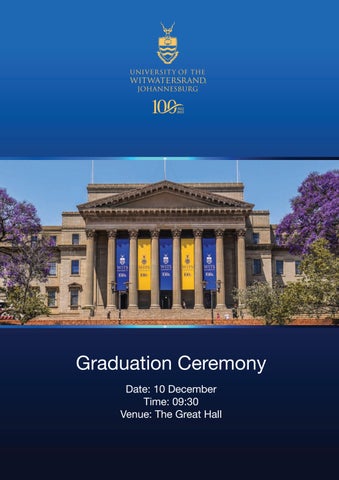
Graduation Ceremony
Date: 10 December
Time: 09:30
Venue: The Great Hall
Date: 10 December
Time: 09:30
Venue: The Great Hall
CONGRATULATIONS! HALALA!
GO LEAD SOUTH AFRICA TO GREATNESS!
A hearty congratulations to the class of 2025! Some of you are the first graduates in your family, well done! May your light shine for those who come after you! For those of you who are continuing in your family’s tradition, thanks for not dropping the ball. Education is the best self-investment. The past year changed the world as we know it, with no less than 60 countries and more than 1.3 billion people globally going to vote, including our own country. The outcomes have changed geopolitics, with the Global North becoming more internally focused. The resurgence of economic protectionism has altered trade landscapes, causing ripples across global markets. The rise of artificial intelligence and big data further reshapes the balance of power, as nations compete for supremacy in these fields. Climate change, a universal threat, has become a catalyst for geopolitical tension. The race for control over natural resources, especially in the Arctic and other vulnerable regions, has intensified. South Africa has not been spared in the regional conflict, losing our own young fighters for peace in the DRC.
As the twentieth meeting of the Group of 20 heads to our shores, a first for the continent of Africa, we have chosen Solidarity, Equality and Sustainability as our G20 theme. This speaks to our recognition of the interconnected of nations. Our shared future depends on mutual understanding, cooperation, equality and stability across nations. As our future leaders you need to adapt to an uncertain world, embrace diversity, and foster dialogue. That will help you to craft a healthier, more balanced world for future generations.
As you venture into the world, take time to expand the depth and breadth of your knowledge. Read outside your specialisation, engage with people outside your comfort zone. Understand the plight of people less fortunate than yourself. Be the change you want to see in your country first then the world. Leaders who leave footprints worth emulating, are not only the brightest but also those who take time to learn from others, who are accountable for their actions and omissions, who use what they know and what they have, to make the world a better place. Leaders who care. Those leaders do this consistently with Humility and Integrity, Always. May you be those leaders! HALALA!
CONGRATULATIONS! HALALA! GO LEAD SOUTH AFRICA TO GREATNESS!
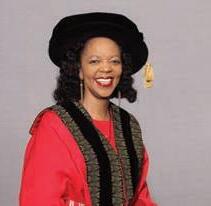
Dr Judy Dlamini Chancellor
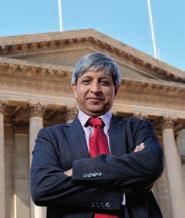
Dear Wits Graduate,
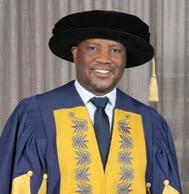
Congratulations on successfully completing your academic programme at the University of the Witwatersrand, the premier University on the continent.
You are now a member of an elite group of graduates of this august institution. More than 200 000 alumni at the cutting edge of excellence, both locally and internationally in business, the public sector, the academy, and in civil society have trodden this path.
Today, you become a member of this illustrious community.
Over the past 100 years, Wits has grown into one of the leading universities on the continent and a globally respected institution for its teaching and learning, knowledge creation and generation, and social impact. It has shaped the lives of many for the advancement of society. You are now an integral part of this proud and enduring legacy. Here at Wits, we actively pursue excellence and societal relevance in everything we do. From the abstract to the practical, our focus is on creating a space for the best thought, knowledge, and expertise to be unearthed and nurtured.
Wits is renowned for its intellectual leadership and for nurturing critical thinkers, creative innovators, problem-posers, and problem solvers. We have strived to match your ambition and drive to overcome the challenges thrown our way by the pandemic. Together we have reached the crest of the hill and proven, once again that excellence is achievable, even in times of uncertainty and adversity.
Your success has furthered our commitment to equipping the next generation of leaders with the skills and determination that you will need to find innovative and sustainable solutions to the pressing problems of the 21st Century.
As a Wits graduate, you had access to an exceptional educational experience. You have been exposed to a world-class academic and research programme and a vibrant community that makes you a true global citizen. You have been part of an institution that generates cutting-edge knowledge and innovation for South Africa and the world. It is now time for you to step into the world and use that experience, for good. We know that you will enter the next stage of your journey with the determination to build a better society tomorrow. I want to encourage you to remain a part of the Wits family by participating in our alumni programme and by further advancing the reputation of your alma mater.
Best wishes for the next steps of your journey and congratulations on being such a big part of the history of this illustrious institution.
Professor Zeblon Vilakazi, FRS Vice-Chancellor and Principal Wits University
Gaudeamus igitur
Juvenes dum sumus
Post jucundum juventutem
Post molestam senectutem
Nos habebit humus.
Ubi sunt qui ante nos
In mundo fuere?
Vadite ad superos
Transite in inferos
Hos si vis videre.
Vita nostra brevis est Brevi finietur.
Venit mors velociter
Rapit nos atrociter
Nemini parcetur.
Vivat academia
Vivant professores
Vivat membrum quodlibet
Vivat membra quaelibet
Semper sint in flore.
Vivant omnes virgines
Faciles, formosae.
Vivant et mulieres
Tenerae amabiles
Bonae laboriosae.
Vivant et republica et qui illam regit.
Vivat nostra civitas, Maecenatum caritas
Quae nos hic protegit.
Pereat tristitia, Pereant osores.
Pereat diabolus, Quivis antiburschius
Atque irrisores.
Let us rejoice therefore
While we are young.
After a pleasant youth
After a troublesome old age
The earth will have us.
Where are they
Who were in the world before us?
You may cross over to heaven
You may go to hell
If you wish to see them.
Our life is brief
It will be finished shortly.
Death comes quickly Atrociously, it snatches us away. No one is spared.
Long live the academy!
Long live the teachers!
Long live each male student!
Long live each female student!
May they always flourish!
Long live all maidens
Easy and beautiful!
Long live mature women also,
Tender and loveable
And full of good labor.
Long live the State
And the One who rules it!
Long live our City
And the charity of benefactors
Which protects us here!
Let sadness perish!
Let haters perish!
Let the devil perish!
Let whoever is against our school
Who laughs at it, perish!
Nkosi sikelel’ iAfrika
Maluphakanyisw’ uphondo lwayo,
Yizwa imithandazo yethu, Nkosi sikelela
Thina lusapho lwayo.
Morena boloka setjhaba sa heso, O fedise dintwa le matshwenyeho, O se boloke, O se boloke setjhaba sa heso, Setjhaba sa, South Afrika — South Afrika.
Uit die blou van onse hemel, Uit die diepte van ons see, Oor ons ewige gebergtes, Waar die kranse antwoord gee,
Sounds the call to come together, And united we shall stand, Let us live and strive for freedom In South Africa our land.
Wits Choir
The Wits Choir has been around since 1995. Their repertoire is colourful and vibrant. They perform regularly at graduations and important ceremonies. The Wits Choir has toured internationally as well as playing host to other choirs here. They are also active in the community, undertaking choral outreach programmes.
10 DECEMBER 2025 AT 09:30
The audience will rise as the academic procession enters the hall and will remain standing until the Acting Vice-Chancellor is in place
The Acting Vice-Chancellor will constitute the congregation
The Acting Vice-Chancellor will welcome the graduands, diplomates and guests
Conferment of an Honorary degree on Mr William Frankel
Dr William Frankel will address to the congregation
Conferment of degrees and granting of diplomas
The Acting President of Convocation will address the graduates and diplomates
The Acting Vice-Chancellor will dissolve the congregation
The audience will stand while Ihele is played
Members of the audience are requested to stand while the academic procession leaves the hall and not to leave the hall before the end of the ceremony.
In the event of load-shedding or power cuts, the Great Hall may become totally dark until the generator comes into operation.
DEAN: PROFESSOR J COHEN BCom Hons PhD (Witwatersrand)
ABRAMS, Ilene (with Distinction)
Business Sciences/Management DISSERTATION: Resilience in Ganglands: Strategies and coping mechanisms of female entrepreneurs in Westbury, Johannesburg, South Africa
BOADU, Nana Sakyibea (with Distinction)
Business Sciences/Insurance & Risk DISSERTATION: Enterprise risk management and performance of Johannesburg Stock Exchange companies: Does size really matter?
BRUWER, Lee-Andra Beatrix
Business Sciences/Marketing DISSERTATION: An investigation into consumers' intention to adopt virtual wine tour and tasting
CHALANDA, Tinenenji Linda (with Distinction)
Applied development Economics RESEARCH REPORT: Assessing tax effort and tax buoyancy in Malawi: an ARDL approach
CHIDUMBA, Nobuhle Rumbidzai Inequality Studies RESEARCH REPORT: Conservation through private ownership of commons and land: a case study in exclusivity
DITAOLE, Moipone Clementine
Accounting (Taxation) RESEARCH REPORT: A comparative analysis of the VAT threshold of South Africa and certain other countries
DLAMINI, Thabiso
Applied development Economics RESEARCH REPORT: The paradox of learning-by-doing in South Africa's industrial sector: Industrial revival of a once-thriving sector vs launching a new one
DUBE, Leeven
Accounting (Taxation) RESEARCH REPORT: Recommendations for the implementation of Transfer Pricing Simplification Measures in the Republic of South Africa
DYWILI, Khanyisa
Applied development Economics RESEARCH REPORT: Fintech financial inclusion and economic development nexus in Sub-Saharan Africa
ELLIOTT, Tracey-Leigh Inequality Studies RESEARCH REPORT: The short-termism puzzle in big tech firms appears to contradict SVO theory: Examining the evidence at the firm level of big tech
EMDIN, Danit Mikaela (with Distinction) Accounting RESEARCH REPORT: Evidence of integrated thinking in performance evaluation metrics: A review of listed entities in the United Kingdom
FULLERTON, Cameron Stewart Accounting RESEARCH REPORT: An analysis of the extent of initial underpricing and the determinants of long-run underperformance of IPOs on the Johannesburg Stock Exchange (JSE)
GALANE, Theresho
Applied development Economics RESEARCH REPORT: A South African price fixing story: Estimating overcharges in the long steel cartel
GARDA, Amaarah
Applied development Economics RESEARCH REPORT: Youth unemployment crises in sub-Saharan Africa: Exploring structural similarities
GWATIPEDZA, Leon John
Accounting RESEARCH REPORT: Filling an information gap? A content analysis of company-sponsored analyst reports for JSE-listed companies
HLAPISI, Mphulane Thato
Business Sciences/Finance RESEARCH REPORT: Investor sentiment in the South African stock market
JORDAAN, Keegan
Accounting RESEARCH REPORT: Evaluating integrated thinking in management disclosures in annual reports: Evidence from the United Kingdom (UK) listed organisations
JOYISA, Thabani Information Systems RESEARCH REPORT: Artificial Intelligence for cybersecurity: Governance insights from cybersecurity experts in the banking industry in South Africa
LEPONESA, Lieketso Angelina
Applied development Economics RESEARCH REPORT: Fertility desires and behaviours among Basotho couples: A comparative analysis of men and women
LUTHULI, Samantha Swelihle (with Distinction)
Business Sciences/Insurance & Risk DISSERTATION: Natural disasters and economic growth: Exploring the intervening role of insurance and reinsurance
MABASO, Gontse Dimpho (with Distinction) Inequality Studies RESEARCH REPORT: From a contested past to an uncertain present: Agency nurses' experiences of work in the private health care system - A South African analysis
MAKWELA, Tiego Given
Business Sciences/Management DISSERTATION: Strategic planning, technology orientation, and firm performance of small businesses in Mamelodi township in Pretoria
MALOUNGUI MOUKENDI, Christal Daisy (with Distinction)
Business Sciences/Management DISSERTATION: Factors influencing the intent to transition to the formal economy: a comparative study of informal youth entrepreneurs in Gabon and South Africa
MBHELE, Zamani Information Systems RESEARCH REPORT: The use and adaptation of learning management system by undergraduates (Gen Z) at a higher learning institution in South Africa during a pandemic
MDEKAZI, Nomalungelo Lungi
Applied development Economics RESEARCH REPORT: Path dependence in gendered employment during apartheid and how it impacts contemporary gender norms in South Africa's labour force
MOKOALA, Mamogoto Jan Accounting RESEARCH REPORT: Valuation methods used by portfolio managers of unlisted equities for reporting versus exit purposes
MOLISE, Mohau
Applied development Economics RESEARCH REPORT: Private debt and economic growth: Evidence from SSA
MONAHENG, Thato Gladys
Business Sciences/Insurance & Risk DISSERTATION: An evaluation of the treating customers fairly concept and its influence on consumers' purchase of non-life insurance products
MOONILAL, Ushir
Accounting RESEARCH REPORT: Evaluating the relationship between the market reaction to directors' dealings, and the information environment: Evidence from the JSE
MOROKE, Thari Arethabeng Teboho
Applied development Economics RESEARCH REPORT: Industrial policy tools for inclusive green industrialisation: Exploring the industrial policy tools needed to promote inclusive green industrialisation in South Africa
MOTAU, Bonolo Marang
Business Sciences/Marketing DISSERTATION: The impact of conscientious branding on consumer attitudes and reputation: a focus on beauty pageant brand equity
MOTHIBA, Ngwanamago Shillyboy
Accounting (Taxation) RESEARCH REPORT: Challenges that arise in respect of tax knowledge, tax compliance, and tax complexity for small and medium enterprises (SMEs) in South Africa
MPHAFUDI, Tshepiso
Accounting (Taxation) RESEARCH REPORT: A comparative study of tax relief measures for small, medium and micro-sized enterprises in South Africa and other developing countries
MPONWANA, Kgomotso
Accounting (Taxation) RESEARCH REPORT: Analysis of the challenges and effectiveness of Digital Services Tax: International perspective
MUKANSI, Rhirhandzu
Business Sciences/Finance RESEARCH REPORT: Examining the presence of factor premiums in South Africa's local currency sovereign bond market
MUTACHI, Kapele Economics RESEARCH REPORT: Exploring the effects of technological change on the changing nature of precarious work in the South African retail sector: The case study of SACCAWU in eThekwini Municipality, KwaZulu -Natal
NCUBE, Cebisa Busisiwe
Applied development Economics RESEARCH REPORT: An analysis of social impact investing approaches to basic education improvement in South Africa
NKABINDE, Akanyang Hlanganani Accounting RESEARCH REPORT: An analysis of ChatGPT as a tool for portfolio stock selection
NKOSI, Mahlatse Environmental and Energy Economics RESEARCH REPORT: Environmental Kuznets Curve in Energy Transition: Evidence from South Africa
NTSHAMBA, Hlumisa Business Sciences/Management DISSERTATION: Challenges that have an impact on the performance of informal micro businesses in Soweto, South Africa
NTSHEGANG, Olerato
Applied development Economics RESEARCH REPORT: The welfare impacts of renewable energy sources in South Africa
ONUORAH, Nwanneka Virginia
Applied development Economics RESEARCH REPORT: The impact of trade blocs on poverty reduction in Africa
PHUKUBJE, Mmagopholo Joyce Accounting (Taxation) RESEARCH REPORT: Value-Added Tax (VAT) on imported services: A comparison between VAT rules of South Africa and New Zealand
QUAYE, Cadell Nii Armah
Business Sciences/Finance RESEARCH REPORT : The impact of corporate governance on non-financial JSE-listed firm dividend policy and its moderating role
SEEDAT, Talhah
Accounting RESEARCH REPORT: A comparative analysis of intangible assets in LSE- and NGX-listed companies
SIMELANE, Njabulo Minenhle
Accounting RESEARCH REPORT: Impression management techniques applied by South African state-owned entities when communicating on social media platforms
TOYO, Jamil John
Business Sciences/Finance RESEARCH REPORT: An examination of the relationship between corporate social responsibility (CSR) and corporate financial performance (CFP) in South Africa
TSHIKOVHI, Phindulo
Accounting RESEARCH REPORT: An investigation of annual and integrated reporting disclosures made by South African and UK NGOs
WEST, Jonathan David Inequality Studies RESEARCH REPORT: Socio demographic vulnerabilities of heat
WINTERSTEIN, Brigitte
Business Sciences/Finance RESEARCH REPORT: Alphabetical Bias and Trading Activity: a South African perspective
ZWANE, Marvellous Tebogo
Business Sciences/Marketing DISSERTATION: The influence of storytelling advertising on consumer advertising experiences and behavioural outcomes: A case study of South African Bone Marrow Registry video
KHANYILE, Blessing Thabiso RESEARCH REPORT: The yield curve and the business cycles: Evidence from advanced and emerging economies
MAKOE, Kgaogelo RESEARCH REPORT: Political instability and firm innovation in developing countries
DE ALMEIDA, Daniela
Labour Law RESEARCH REPORT: Examining the implications of Zero-Hour Contracts in the context of loadshedding in South Africa
DIOLE, Kebafilwe Sheila DISSERTATION: A critique on the treatment of the human rights of girls and women in the traditional practice of ukuthwala
FAKIER, Tamia
Human Rights Advocacy and Litigation RESEARCH REPORT: The human rights-based liability of multinational corporations that are complicit in the Israeli-Palestinian conflict
GOIWAKAE, Othusitse Fedelis
Human Rights Advocacy and Litigation RESEARCH REPORT: Basic education jurisprudence: Courts' development of the right to basic education in South Africa
HERSELMAN, Christian Frederik
Environmental Law RESEARCH REPORT: The lack of access to clean and reliable electricity: The Section 24 Constitutional right to an environment that is not harmful to health and well-being is up in smoke
KAUFMANN, Colleen Danica Tax Law RESEARCH REPORT: The impact of remote work on the concept of 'permanent establishment'
KHOZA, Millicent
Commercial and Business Law RESEARCH REPORT: Promoting Financial Inclusion in South Africa: The role of Competition Law in addressing Big Four Banks' market concentration
MAHAPA, Selaelo Moribola
Commercial and Business Law RESEARCH REPORT: Protecting traditional medical knowledge: a critique of South Africa's sui generis framework
MAKGWALE, Lebogang Bongi Portia General RESEARCH REPORT: Eskom Holdings and its implications for South African administrative law
MANYARA, Milcah Kerubo
Information and Communications Law RESEARCH REPORT: Evaluating personal data transfer mechanisms to international organisations under the Malabo convention: A core regulatory approach
MKHONTO, Nokubonga (with Distinction) DISSERTATION: An examination of the recent developments and gaps in the rights to maintenance for partners within unmarried intimate relationships in South Africa
MOHLABI, Potlaki Emmanuel Corporate Law RESEARCH REPORT: The derivative action as a means to promote the objectives of Section 7(J) of the Companies Act 71 of 2008
MOLABA, Taboko Isaac
Human Rights Advocacy and Litigation RESEARCH REPORT: Freedom of testation in the current constitutional dispensation
MOLEFE-CHIPSWA, Lebogang General RESEARCH REPORT: The use of Chatbots as a form of direct marketing: Is it direct?
MUNYAI, Unarine Gift
Commercial and Business Law RESEARCH REPORT : Liquidation of solvent companies based on a deadlock between directors and shareholders
NDLOVU, Snethemba Zamokuhle
Commercial and Business Law RESEARCH REPORT: The liability of banks in respect of unauthorised digital payments: Is there adequate legislative protection afforded to consumers in South Africa?
NGOBENI, Masesi Virginia
Human Rights Advocacy and Litigation RESEARCH REPORT: Examining the application of the rules of intestate succession in a culturally diverse society: The position of living customary law
NKOSI, Noluthando Ntokozo DISSERTATION: Challenging the infallibility of DNA evidence: a call for reform in the criminal justice system
NONG, Lebogang David
Labour Law RESEARCH REPORT: A critical analysis of workplace union majoritarianism for the purpose of collective bargaining
OLIVIER, Nicole (with Distinction) DISSERTATION: The introduction of 'ColCrit': Critical race theory within a coloured perspective scholarship
ORELOWITZ, Pamela Miriam
Information and Communications Law RESEARCH REPORT: The law about medical research on minors and consent requirements: Time to harmonise the law?
SMOOK, Johanna Susanna
Labour Law RESEARCH REPORT: Mental health in the collective bargaining sphere: Should the demand for mental health form part of the negotiation of demands (other than wages) by the trade union movement?
SOOKLAL, Anushka RESEARCH REPORT: The employer's duty to "reasonably accommodate" employees suffering from psychosocial disability in the South African workplace: A comparative perspective
THABEDE, Ntombiyenhlanhla
Information and Communications Law RESEARCH REPORT: The utilisation of Home Affairs data by banks in South Africa: Balancing data privacy, security and compliance
TSHIKOTA, Gudani Shane (with Distinction) DISSERTATION: 'In the name of manhood': Reconciling culture and queer rights in Ulwaluko through Ubuntu and decoloniality
MABOZO, Mongezi John Governance (Governance and Management) RESEARCH REPORT: Community participation in the Mangaung Metropolitan Municipal performance management system
MAHLALELA, Cynthia Philile Governance (Governance and Management) RESEARCH REPORT: The effectiveness of ward committees in enhancing public participation at Mbuzini, Nkomazi Local Municipality
MDLALOSE, Lindiwe Patience Governance (Public and Development Sector Monitoring and Evaluation)
RESEARCH REPORT: Factors influencing the uptake of voluntary medical male circumcision in Tshwane municipality
NAMBAHU, Martha Nangula Governance (Governance and Management) RESEARCH REPORT: The effects of rational policymaking for economic adjustments in Namibia during Covid-19 pandemic
BALOYI, Katlego Economics
BUTHELEZI, Allison Samkelisiwe Business Finance
DYOSI, Phelokazi Business Sciences/Human Resources
GALEBOE, Kgomotso Business Sciences/Management
GWALA, Senamile Sthandiwe Information Systems
MACHABE, Gcinile Eliah Business Sciences/Marketing
MALEBYE, Kgalalelo Business Finance
MASITHELA, Mamohau Applied Development Economics
MOHLABA, Hlamalani Business Finance
MOTLANA, Palesa Business Sciences/Human Resources
NCHABELENG, Maphoshane Applied Development Economics
NGWENYA, Mbalenhle Mantombi Business Sciences/Management
NKOANA, Kaizer Ramosoko Business Sciences/Marketing
NTHOROANE, Lehakoe Angelique Information Systems
RAMOKGATLA, Malapi Sarah Business Sciences/Human Resources
SHAKU, Revonia Mmakgabutle Information Systems
SIPAMLA, Mninimzi Radebe Business Finance
Bachelor of Economic Science with Honours
HAWKER, Olwethu Desmond (with Distinction)
MAGONARE, Goitsione
SEDIO, Kgositsile Blessings
SONGABE, Tandazile Simanyelwe
ZULU, Lindokuhle Despina
Bachelor of Laws
BALOYI, Nonhlanhla
BENEFELDT, Aamirah
COHEN, Alyssa Hayley
DESAI, Gabriella Ashley
DUBE, Cain
FERNANDEZ, Alfonz Antonia
GOSANI, Vuyisa
HLONGWANE, Luyanda Snothile Wenzekahle
KHOZA, Anele Sphumelele
KHUMALO, Nosipho
KHUMALO, Tumelo Gomotsang
KHUMALO, Zabentungwa Jacqueline
LEWIS, Shana Kelly
MADIBA, Kamogelo Raisibe Elisa
MAHLANZA, Thabo Bongani Karakadzayi
MANABE, Tinyiko Niki
MANNGO, Vuledzani Marylene
MAPONYANE, Lesego Basetsana
MATLOU, Dimakatso Lamola Caroline
MBABA, Bubelekazi
MBOYISA, Thulane
MDINGI, Sibulela
MICHAELS, Colicia Candice
MKHWANAZI, Zinhle
MOKADI, Keamogetse Hope
MOODLEY, Martell Averyl
MOODLEY, Vaishnavi
MOTAUNG, Thobile
MTHOMBENI, Nkosana Prince
MUSI, Lesego Reshoketswe Agnes
MWALE, Divine-Love
NCUBE, Moses Goodwill
NOMANDLA, Siphesihle Ntwenhle
NZIMANDE, Neliswa
PHINDANI, Aviwe
Bachelor of Accounting Science
HLONGWA, Sbonelo
MACHAVA, Tshegofatso Gabriela
MONAMUDI, Rose Dimpho Mercy
Bachelor of Commerce
CHIRWA, Issabel
HLATSHWAYO, Bathabile Lindiwe
HOOSEN, Talhah
IBRAHIM, Muhammad Saad
KHUZWAYO, Bayanda Zola
LENTSOANE, Moyahabo
MAPHUMULO, Samkelo Bayanda
MAZIBUKO, Thembokuhle Asande
MMAKGOLANE, Rebone Mmadinoge
MNTUNGWA, Brightwell Thabiso
MORAKE, Keneilwe Elizabeth
RIKHOTSO, Ndzhaka Caswell-Jr
RINGANA, Kulani
SENGURAI, Kudzai
SIMELANE, Lungelo Nobuhle
SITHOLE, Thokozani
TSHIBUDI, Thendo
TSHOTYANA, Nomonde Queen
TSHUKUDU, Thabiso Albert
WATKINS, Bronwen Marinkie
MPETLE, Masekou Sello
MUK'MAR, Mulanga Valerie
QINA, Lebu
MOTHA, Lifa Evidence
NDHLOVU, Goodness Fisiwe
NDHLOVU, Nhlohlori
NDLOVU, Goodman Sibusiso
NDLOVU, Siphelele Kwanele Nolizwe
NGCOBO, Bandile
NKE, Aobakwe
ONYEAGBAU, Chinasa Emmanuel
RAMAPHAKELA, Vukile Arthur
RATHELELE, Mahlatse Candy
SAYDER, Surayah Minenhle
SHANGE, Nontobeko Nandi
TEMBE, Ntomb'futhi Siphosethu
YOYO, Malika Khalid
Bachelor of Economic Science
MOKOENA, Tsholo Ignatius
Postgraduate Diploma in Accountancy
BACELA, Phaphama
BUTHELEZI, Tebogo Tebello
GUMEDE, Sanele Andile
JIYANE, Noluthando Sinenhlahla
MABINDISA, Nonceba
MAPALAKANYE, Karabo Lewick
MUKWEVHO, Unarine
NAKANI, Likhona Indiphile
NTLATLANE, Maselobe Phumlani
SEMONO, Mmapule Itumeleng
TSHILIBA, Thabani
Postgraduate Diploma in Law
BUDU, Vuyolwethu Labour Law
BUWA, Thumeka General
CLOETE, Pieter Frederick Commercial and Business Law
JONKERS, Marvin Royston Corporate Law
MANUKU, Zamile Corporate Law
MARUPING, Kebafilwe Corporate Law
MFEKA, Mpendulo Xolani International Economic Law
MTWA, Mpumezo Yokoza Environmental Law
MXHONYWA, Vuyo Corporate Law
NGOZO, Baphelile Lettie Corporate Law
NJAPHA, Liza Thandokazi General
PHOSHA, Ntendeleni Corporate Law
BOPAPE, Masoma Jerry
and Development
and Evaluation (M&E)
DLADLA, Bongani Ian Security
DU PLESSIS, Evert Phillipus
LOLIWE, Thembani Patrick
MACKENZIE, Ricardo
MADONSELA, Doctor Sikhumbuzo
MANCI, Johannes Tsietsi
MKWANAZI, Itumeleng
MOLEBO, Brenda Kgabo
MOTJETJE, Boitumelo
MULADI, Mukundi
MULAUDZI, Phindulo
NEFALE, Ndamulelo
NGXANGANE, Siyanda
NKOSI, Mduduzi Johane
NKWINIKA, Fumani Michael
NTSHAKAZA, Yonela Nomalizo
NTSHANGASE, Bongiwe Sanelisiwe
QHAKAZA, Dumo
SELEPE, Anthony Dinake
TIRO, Neo Belynda
and Development
and Development
and Development
and Development
and Development
and Development
and Public Leadership
and Evaluation (M&E)
and Public Leadership
and Development Management
and Development Management
and Evaluation (M&E)
and Evaluation (M&E)
Monitoring and Evaluation (M&E)
and Development Management
and Development Management
and Evaluation (M&E)
and Evaluation (M&E)
and Development Management
and Public Leadership
and Development Management
and Development Management
Monitoring and Evaluation (M&E)
and Development Management
and Development Management
YU, Yilin Public and Development Management
BLAYI, Thabisa
BOBO, Mwansa Kabwe
Public Management
Public Management
CELE, Nobuhle Nombali
Monitoring and Evaluation
CHAMANE, Sindisiwe Gloria Public Management
DICKSON, Tamsanqa Public Management
DINALA, Civic Mathule Public Management
DIOKA, Ame
Monitoring and Evaluation
DLADLA, Lwazi Public Management
DLAMINI, Ntokozo
FENNER, Cherie Simone
GAZIDE, Thamsanqa Vafana
GEORGE, Hombakazi Penelope
GUMEDE, Samkelisiwe Zamakhondlo
HLONGWANE, Dikefa Maria
JATILENI, Ester Ndeumona Nande
KGANYAGO, Seepedi Alpheus
KHOZA, Nyiko
Monitoring and Evaluation
Monitoring and Evaluation
Monitoring and Evaluation
Monitoring and Evaluation
Monitoring and Evaluation
Monitoring and Evaluation
Monitoring and Evaluation
Monitoring and Evaluation
Monitoring and Evaluation
KHUMALO, Lindokuhle Mpumelelo Public Management
KHUZWAYO, Buhlebenkosi Victor Public Management
KIRAGU, Agnes Wanjeri
Monitoring and Evaluation
KOPANG, Kenalemang Patricia Public Management
KOSI, Ntaba Everest
KWASHU, Shadrack Masocha
LEBOTSE, Stephen Phakedi
Monitoring and Evaluation
Monitoring and Evaluation
Monitoring and Evaluation
LEOMA, Mampolelo Juliett Public Management
LETSATSI, Ntsepeng Hilda
MABENGWANA, Sinoxolo
MABUNDA, Lebogang Confidence
MAILA, Itumeleng
Monitoring and Evaluation
Monitoring and Evaluation
Monitoring and Evaluation
Monitoring and Evaluation
MAJORO, Pule Jacob Public Management
MAKGAHLELA, Lethabo Hunadi
Monitoring and Evaluation
MALAZA, Zandile Fortunate Public Management
MALI, Honjiswa Public Management
MANAMELA, Ntombifikile Faith Public Management
MAPASA, Mbasa Ricardo
MASHAPHU, Tshegofatso
MASHIGOANA, Betty
MATUMBA, Avhadivhi Baldwin
Monitoring and Evaluation
Monitoring and Evaluation
Monitoring and Evaluation
Monitoring and Evaluation
MATWA, Luyanda Public Management
MBANGENI, Masasa Lindiwe Public Management
MDLULI, Antonette Ntombizile
MGOGOSHE, Anati
Monitoring and Evaluation
Monitoring and Evaluation
MILISI, Busisiwe Public Management
MKHONDWANE, Andile Precious
MNYENGEZA, Ntombikayise Prudence
MOHAN, Prasanth
MOJELA, Kgabo Getrude
Monitoring and Evaluation
Monitoring and Evaluation
Monitoring and Evaluation
Monitoring and Evaluation
MOKABA, Klaas Public Management
MORIENYANE, Kutloano Kelebone
Monitoring and Evaluation
MOTLOUNG, Mofihli Alfred Public Management
MOTSHABA, Moleboheng Mildred
MOYIKWA, Nomakwezi
MOYO, Ronny Sphiwe Abednigo
MPHAFUDI, Magdaline
MPOFU, Nontembeko
Monitoring and Evaluation
Monitoring and Evaluation
Monitoring and Evaluation
Monitoring and Evaluation
Monitoring and Evaluation
MTEMBU, Valentia Public Management
MTSHALI, Princess Nombulelo
MULAUDZI, Ndidzulafhi
NDLOVU, Auspicious
NDWALANE, Fungile
NGOBENI, Winile Rejoyce
NTOMBELA, Nomcebo Primrose
NTOMBELA, Zanele Bongiwe
NTSELE, Ayanda Bonginhlahla
OSEMWENKHAE, Endurance Iyekoretin
PETERS, Leann
PHAKULE, Lulu Ellen
RAKATE, Pogisho Lawrence
RAMANYAI, Dithole Frederick
Public Management
Public Management
Monitoring and Evaluation
Monitoring and Evaluation
Monitoring and Evaluation
Monitoring and Evaluation
Monitoring and Evaluation
Public Management
Monitoring and Evaluation
Public Management
Public Management
Monitoring and Evaluation
Monitoring and Evaluation
RAMATSHEKGISA, Itumeleng Judith Public Management
RATSHIKUNI, Khangwelo
SATIYA, Vimbayi
SEJAKE, Malthalage Hellen
SIKANI, Siyabonga
SITHOLE, Lally
SOLOMON, Lucinda Lea-Anne Lesley
THENGA, Nkepile Olgar Motlatji
THWALA, Sthembisile Precious
TLEBERE, Disego Norah
TROLLY, Nonkululeko Phumla
TSHEKOESELE, Bonolo
ZIKALI, Collen Ntuthuko
ZONDI, Mhlonipheni Fortune
Monitoring and Evaluation
Monitoring and Evaluation
Public Management
Monitoring and Evaluation
Public Management
Monitoring and Evaluation
Public Management
Monitoring and Evaluation
Public Management
Public Management
Monitoring and Evaluation
Monitoring and Evaluation
Monitoring and Evaluation
ZUNGU, Sanelisiwe Monitoring and Evaluation
Postgraduate Diploma in Specialised Accountancy
MAJOZI, Tebogo Owami Maselebalo
MOTHATA, Tsireletso Mary
NGOZO, Mthobisi Louis
PECKU, Shantel (with Distinction)
Postgraduate Diploma in Taxation
DUBAZANA, Qiniso Siphesihle
RAPOKWANE, Mahlodi Jane
TSOTETSI, Mpho Goodness
William (Bill) Frankel was born on 14 December 1944 in South Africa. He is a Bachelor of Arts alumnus of the University of Cape Town and has been a lifelong promoter of democracy, human rights, development, and education for all in Southern Africa. These activities collectively - legal work to support the fight against apartheid, activism to promote democracy and human rights, leadership in education and development- amount to a profound contribution to the betterment of South Africa.
The impact of his wide-ranging contributions has been amplified by his astute ability to work with others. This approach of work has been a hallmark of his achievements, whether that was as part of the secret Defence and Aid network opposing apartheid, by directing funding towards the development of South Africa’s post-apartheid democracy, or by using his legal expertise to establish foundations in the United Kingdom (UK) for sustaining organisations pivotal to democratic governance in South Africa.
Whilst a student, he worked to oppose apartheid. Threatened with detention by state security, he left for the United Kingdom, where he continued his antiapartheid work whilst also practicing as a lawyer in the City of London. Early in 1966, Frankel and others were approached by Canon John Collins, canon of St Paul’s Cathedral, London, and founder of the International Defence and Aid Fund for South Africa (IDAF), to help continue IDAF’s work. So began 25 years for Frankel as IDAF’s anonymous legal adviser known only as “Mr X”. Frankel secretly channelled funds for the legal assistance of political activists on trial and in prison in South Africa, and for support to their families. Additionally, he contributed to the development of legal appeals for those on whom the death sentence had been imposed. In that time, Frankel and other IDAF supporters had to raise millions of rand worldwide for IDAF to continue funding the trials of anti-apartheid activists.
Without IDAF’s work and without Frankel’s legal expertise and underground activism to channel funds, South Africa’s transition could well have been very different. His work financially sustained the legal defence for detainees and kept their families out of destitution. For this contribution, Frankel has been honoured in both South Africa and the UK. In 2000, Frankel was appointed OBE by Queen Elizabeth II for services to human rights. In 2015 South Africa conferred on Frankel the Order of Luthuli Silver Medal for “excellent services” in the liberation struggle against apartheid, with particular reference to his secret and central involvement with IDAF. The citation states that “[f]ormer President Nelson Mandela referred to Frankel as a “veteran of the Struggle’’, something that underpins the salience of the role that Frankel played in the fight against apartheid.
Mandela acknowledged the IDAF as having provided light and hope where there was none.” Frankel shifted his work to support South Africa’s new democracy after the end of apartheid. Recognising that a democracy requires a multiplicity of sectors to work well and to adapt over time to effect systems change to a sustainable, functioning democracy, Frankel has focused on supporting the educational, civil, and non-profit sectors.
Again, he realised that working with other actors would be necessary to amplify the impact of any contribution he could make, so that a sustainable democracy in South Africa could come about. He has done this in two main ways. Through astutely leading the Trustees of the Claude Leon Foundation (CLF), a philanthropic foundation he has chaired since the early 1990s, Frankel has shown a sophisticated understanding of the complexity of the funding requirements needed for the betterment of South Africa and the many sectors that need to be sustained for a democracy to function well. Over the decades since 1994, Frankel and his trustees have been at the forefront of crucial issues of the time - development in the early years; in the middle years, bolstering constitutionalism; most recently, being alert to the climate crisis – but always with support for educational institutions running through these phases. Whilst its scope has ranged from early childhood development, schooling, post-school youth, higher education, human rights, and investigative journalism, the CLF has focused especially on the tertiary sector, with its flagship Postdoctoral Fellowship programme having funded nearly 500 fellows at South African universities since 1998.
In recognition of his contributions, Frankel was made an Honorary Fellow of the Royal Society of South Africa in 2007 for his service to science education and research, and in 2014 his alma mater UCT conferred on him the Vice-Chancellor’s Silver Medal to recognise “…his tireless work in the fields of education, human rights and constitutionalism and his ongoing support of many worthy causes through his philanthropy which continues to have a far reaching and profound impact both in South Africa and further afield”. Through using his legal skills, he established and helped run foundations in the UK for the benefit of non-profit organisations in democratic South Africa, sustaining financially, through a network of eminent volunteers, key institutions such as the South African Constitutional Court, and universities such as Wits. These organisations help to bolster South Africa’s growing democracy, whether directly or indirectly.
Frankel has served Wits by founding and chairing, since its inception in 2001, the foundation in England and Wales established for the benefit of the University, namely Wits Foundation UK. Frankel continues to give his time and expertise voluntarily, overseeing the legal and financial duties of the Trustees of Wits Foundation UK, and of several other foundations, including other South African universities. He serves many internationally based trusts and alumni who make donations via the UK.
For his contributions to democracy in South Africa, before and after 1994, the legal fraternity, education, development, and human rights in South Africa, it is befitting that the University of the Witwatersrand, Johannesburg, bestows an Honorary Doctorate Degree in Law, honoris causa, on William Henry Frankel.
Chancellor
DR NJ DLAMINI MBChB (Natal) DOH (Free State) MBA (Witwatersrand) DBL (Unisa) PGCE (Witwatersrand) IEC (Stanford-USA)
Vice-Chancellor and Principal
PROFESSOR Z VILAKAZI BSc (Manchester) MSc PhD (Witwatersrand) FRS, FAAS, MASSAf
Chairman of Council
MR I SHONGWE BA (Wesleyan) MPhil (Oxford)
Senior Deputy Vice-Chancellor (Academic)
PROFESSOR R OSMAN BA (Witwatersrand) HDipEd BEd (Unisa) MEd PhD (Witwatersrand) MASSAf
Deputy Vice-Chancellor (Research and Innovation)
PROFESSOR L MORRIS BSc (Hons) (Witwatersrand) DPhil (Oxford) FRSSA FAAS MASSAf
Deputy Vice-Chancellor (Systems and Operations)
PROFESSOR IR JANDRELL BSc(Eng) GDE PhD (Witwatersrand) IntPE(SA) PrEng FSAAE FSAIEE SMIEEE
Deputy Vice-Chancellor (People Development and Culture)
PROFESSOR G STEVENS BA (Cape Town) BA (Hons) Psych MPsych (Western Cape) DLitt et Phil (UNISA), MASSAf
Registrar
MS CG CROSLEY BA HDipEd (Witwatersrand) BEd Hons (Unisa) MEd (Witwatersrand)
Chief Financial Officer
MS MM MANYAMA CA (SA) BCom Accounting (Cape Town) BCompt Hons (Unisa) BCom Hons Taxation (Pretoria) MBA (GIBS)
Dean of Student Affairs
MR JAP SEPTEMBER BA MPhil (Cape Town)
DEANS OF THE FACULTIES
Faculty of Commerce, Law and Management
PROFESSOR J COHEN BCom Hons PhD (Witwatersrand)
Faculty of Engineering and the Built Environment
PROFESSOR T MAJOZI BSc(Eng) MSc(Eng) (Natal) PhD (UMIST) CEng PrEng FIChemE FAAS MASSAf FWISA FSAAE
Faculty of Health Sciences
PROFESSOR SA MADHI MBBCh MMed PhD (Witwatersrand) FCPaeds(SA) MASSAf RSSAf TWAS CBE
Faculty of Humanities
PROFESSOR M MUSEMWA BA Hons (Zimbabwe) MA (Cape Town) PhD (Minnesota, USA) MASSAf
Faculty of Science
PROFESSOR N CHETTY BSc Hons (Natal) MS PhD (U. Illinois Urbana-Champaign) MASSAf MSAIP MRSSA
President of Convocation
MS K MUFAMADI BA LLB LLM (Witwatersrand)
Situated in the heart of the most powerful economic hub on the African continent, drawing on the best academic talent in the region, and connected to the most influential social agents in the country, the Faculty of Commerce, Law and Management offers an exciting and contemporary set of study programmes that grapple with the economic and social challenges of our country, and the economies across the globe. The Faculty offers a unique opportunity to specialise in the technical skills that are driving and shaping business within modern economies and to study the social, legal and economic consequences of economic development and growth.
The Faculty consists of six Schools:
The Margo Steele School of Accountancy, The School of Business Sciences, The School of Economics and Finance, The School of Law, The Graduate School of Business Administration (Wits Business School), and The Wits School of Governance
The Faculty offers three undergraduate programmes in Commerce:
1. a three-year Bachelor of Commerce (B.Com),
2. a three-year Bachelor of Accounting Science (B.AccSc), and
3. a three-year Bachelor of Economic Science (B.EconSc).
Three undergraduate programmes are offered in Law:
1. a four-year LLB programme as a first degree for students wishing to study law
2. a three-year LLB programme for students who hold any prior degree but who have not completed any law subjects, and
3. a two-year LLB programme for students who hold any prior degree who have law as a major subject.
At the postgraduate level the Faculty offers a full spectrum of honours degrees, postgraduate diplomas, Masters degrees and Ph.D programmes across its six Schools. The Faculty offers exciting opportunities for MBA and related qualifications in the Wits Business School - the most research-productive business school in South Africa - and public management and development degrees offered by the Wits School of Governance - the leading South African centre for public service postgraduate training. In addition to Doctoral degrees, Masters degrees and Postgraduate Diplomas are offered in Commerce, Accountancy, Economics, Business Science, Applied Development Economics and Policy, Law, and Management.
The Faculty has an extensive offering of short course and executive education programmes.
Our Faculty has consistently produced among the best results in the final Board examination of the South African Institute of Chartered Accountants (SAICA), our law graduates are sought after by the top legal firms and our economics and business sciences graduates are leaders in corporate management, policymaking, governance and regulatory institutions in South Africa.
Our researchers are at the cutting edge of global research on, among others, banking and finance, social entrepreneurship, the labour market, macroeconomics, inequality, human rights law, commercial law, constitutional law, information systems, governance, public finance and health economics.
1. In the event of an emergency and/or fire:
The presiding official (Chancellor/Vice-Chancellor/Deputy Vice-Chancellor) will make an announcement requesting guests, graduands and staff to keep calm and remain seated; The Ushers will assist guests to proceed to the nearest Emergency exits in order to evacuate the Great Hall in an orderly fashion; Emergency exit signs are visible in red above all exit doors situated on your left and right hand sides as well as the back of the Hall; The Ushers will assist the elderly and disabled guests out of the building; The academic procession on stage must exit through the back stage door; Once outside the Great Hall all guests, graduands and staff must proceed to the main assembly point on the piazza.
2. In the event of a Bomb threat
All bomb threats will be treated as real in order to protect lives and property and the premises will be evacuated immediately.

Dear Wits Graduate,
There are a few defining moments in life – and it is without doubt that graduation is one of them!
Today, you enter the world as a graduate from one of the top universities on the African continent. You enter into a world filled with many challenges, but a world that is also filled with limitless possibilities. May you meet all the challenges and opportunities that await you with pride, drive, passion, innovation, social-conscience and positive-purpose.
In addition to earning the degree conferred upon you today, you have also earned the right to be associated with a special group of individuals – the Convocation of Wits University. Convocation represents all the degreed graduates of Wits and forms a vital link between the University and the global community in which it operates. Membership to Convocation is free and serves as an official channel, allowing you, the members, to convey to the University management your views about the University. This membership comes with several unique privileges, which include nominating the Chancellor of the University. The Convocation Executive has two members on the Wits Council (the governing body of the University) and maintains other regular contact with the University to ensure the voice of the Convocation is represented at the highest levels of The University.
There are approximately 250 000 Wits alumni worldwide. The distinction of our university is important to the prestige of our collective qualifications. We call upon you to nurture and enhance the value of your degree by promoting Wits’ image, preserving our values, and contributing towards our ongoing development, ensuring that we grow in stature as a globally competitive, proudly South African institution of higher learning. Please engage with us via our numerous social media channels and keep connected with us so you can access career support, receive invitations to events and reunions and have sight of all the latest news about Wits and prominent Witsies: www.wits.ac.za/alumni/updateyourdetails/
I would like to extend a warm welcome to you – you are now a #Witsie4Life!
Ms Kgomotso Mufamadi President of Convocation Wits University

Convocation is a statutory body that includes all graduates of the University. Convocation is the largest constituency of the University (since the founding of the University in 1922, graduates number over 200 000). Its statutory mandate is to “… discuss and state its opinion upon any matters relating to the University including matters referred to it by the Council” and allows for the views of graduates to be represented at the highest levels of governance of the University.
Words and music by S.B.P. Mnomiya
Anhom
Falalala
Obani labo?
Baphi Ahhom?
Ngibona beza
Beyikazela
Bathwel ‘ongiyane
Bavela kuphi na?
Obani labo?
Ongqondongqondo
Osibakhulu
Yibo labo hhom!
Yini na leyo?
Ihele
Ihele lezingwazi zakithi
Ahhom udwendwe
Ahhom
Udwendwe lwezingqwele zakithi
Nant’ ihele
Longqondongqondo
Nant’ ihele
Losibakhulu
Udwendwe
Udwendwe Iwezingqwele zakithi
Who are those? Which, Falalala?
I see them coming
Walking with swinging garments
They are wearing head rings
Where do they come from?
Who are those?
They are people with knowledge
They are people in authority
These are the ones
What is that?
It is a procession
A procession of our heroes
It is a procession
A procession of our champions
Here is a procession
Of people of knowledge
Here is a procession
Of people of knowledge
A procession
A procession of our heroes
Ihele is known as the ‘Black’ Gaudeamus Igitur. In song, the writer, Mnomiya uses very poetic language to describe a graduation ceremony. The soloist sings of the ‘strange’ procession of people in long robes and head gear. The choir responds by saying that these people are academics who read profound books of knowledge. Mnomiya goes on to say that the graduates are an inspiration to all of us, and we will also graduate like them one day. The song goes on to wish the graduates well and it ends with a resounding “Halala” (well done!).
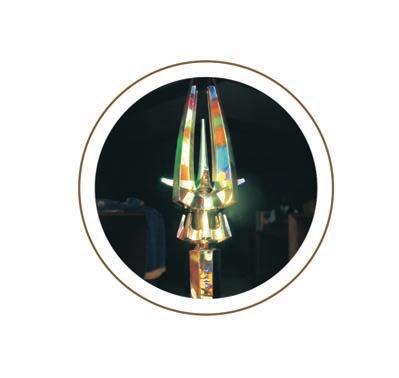
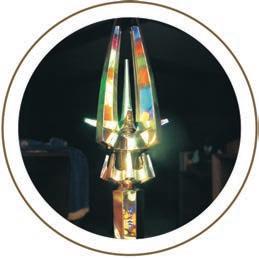
Maces were originally weapons of defence, designed to break through armour. In medieval times, bishops carried a mace instead of a sword into battle to enable them to defend themselves in accordance with the canonical rule that forbade a priest to shed blood. In time, the mace has come to be regarded as a symbol of delegated authority vested in a person or an institution. At this University, it is a symbol of the authority vested in the Chancellor and a reminder of the mandate given by the legislature of this country to the University to grant degrees.
The University mace is the work of the Edinburgh designer, silversmith and engraver, William Kirk, who designed and made the mace of the University of Stirling and of other institutions. It is silver-and gold-plated, is 1070 millimetres long and 180 millimetres broad and weighs seven kilograms. The heraldic devices used in the decoration reflect the character of this University as an institution of learning, set in a mining centre within the Republic of South Africa.
The head of the mace with its spreading vertical blades is symbolic of the horns of a springbok. The central vertical spike is representative of a rock drill on the mine, and the amber stone set in the head is intended as a tribute to a past Chancellor through its association with his name, Bernstein, which in German means amber stone. The heavy quality of the head is consistent with the traditional concept of the mace as a weapon of defence. The collar repeats the shape of the head. It consists of eight cogs which symbolise the cog-wheel in the University coat of arms and represents mining and industry. The shaft is octagonal and divided into three sections. The coat of arms of the University is placed on the shaft under the collar. Below this the words Universitas Witwatersrandensis Johannesburgi: are inscribed, followed by the date in Roman numerals – MCMLXXVI (1977) – which signifies the year of the dedication of the mace.
The mace is a symbolic portrayal of this University, this city, the Witwatersrand and the Republic of South Africa. It is a constant reminder to members of Council and Senate to uphold at all times the rights, powers and privileges of the University and its governing bodies.
The academic dress of this University is patterned on that of the Universities of Oxford and Cambridge, with modifications based on the model of the University of London and certain individual features, particularly in the costumes of office bearers and the hoods of degreesof bachelor and master.
Dress for Office Bearers
• The Chancellor wears a scarlet silk gown with a broad facing of black velvet down each side, embroidered in gold and a black velvet cap with gold cord and tassels.
• The Vice-Chancellor and Principal wears a blue silk gown with a broad facing of gold silk down each side, embroidered in blue, the sleeves being lined with gold silk. The cap is of the same design as that of the Chancellor.
• The Chairman of Council wears a black silk gown with a broad facing of red velvet down each side and around the neck, the sleeves being lined with gold silk. The cap is of the same design as that of the Chancellor.
• The academic dress of the Deputy Vice-Chancellors and the Executive Directors is the same as that of the Vice-Chancellor and Principal, except that the colour of the facing and sleeves of the gown and of the cord and tassels of the cap is silver-grey.
• The gown of the President of Convocation is of blue silk, with a broad facing of gold silk down each side, the sleeves being lined with white silk. The cap is the same as that of the Chancellor, but with a blue cord and tassels.
• The Registrar wears a black silk gown with a broad facing of blue silk down each side, bordered with gold braid. The cap is the same as that of the President of Convocation.
• A member of Council wears a black silk gown with a broad facing of gold silk. The cap is the same as that of the Chancellor.
• The gown of the President of the Students’ Representative Council is black with a broad facing of blue satin.
Graduands’ Gowns
• The gowns for all degrees of bachelor and master of the University are black, of the same pattern as the gown for a Master of Arts at the University of Oxford.
• The gown for the degree of Doctor of Philosophy is scarlet, after the University of London pattern.
• The gown for a senior doctorate is the same as that for the PhD, but with a gold satin facing on each side of the gown and with the sleeve button and cord in gold.
The Academic Hood
The academic hood is the principal feature of the costume for holders of our degrees of bachelor and master. The hood for the PhD is standard, regardless of the Faculty in which the degree was obtained. It is scarlet silk, lined with white silk.
Degree Colours
The hoods reflect the colour or colours of a particular degree or associated degrees.
As a 102-year-old public university in South Africa, Wits is proud of its record of achievement as a significant contributor to our society. We contribute capable people to society that are training in their chosen field that are engaged and able to tackle problems using evidence-based solutions. We also engage with our communities to share knowledge that we create so as to make a positive impact on the quality of life. Wits for Good.
Wits is a world-class research-intensive university based on our intellectual excellence, international competitiveness, and commitment to social justice; all of which have a measurable impact.
Here are a few of many differentiators:
• An international perspective that helps us maintain high standards in teaching and learning and research while not distracting us from our place in Johannesburg, South Africa, and Africa. In 2024 Wits authors published articles with co-authors from 199 universities, 94% of which were from countries other than South Africa.
• An intellectual hub of Africa, a founding member of the African Research University Alliance. In 2024 Wits published 2342 articles with co-authors in Africa, including 32 articles with Namibia, 61 with Botswana, 87 with Zimbabwe and 36 with Mozambique.
• An active and engaged community leader that takes a stand on social issues and is fully committed to the advancement of the public good.
• A growing contribution to the body of knowledge through peer reviewed academic publications: 4563 in 2024 and an average growth rate of 4% per year over the last five years.
• Knowledge contribution that is above global quality averages in several fields including: clinical and pre-clinical health studies (76% above global norms); arts and humanities (58% above global norms); life sciences (36% above global norms); physical sciences (12% above global norms).
• Wits is particularly associated with the study of the fields of virology, particle physics and the Higgs Boson, malaria, archaeology, paleontology, paleoanthropology, violence, local and regional politics, geochemistry, rock mechanics, deep mining, forensic anthropology, climate change, migration, social justice, and many more.
• Proud of the four Nobel laureates and the 99 Rhodes Scholars.
• Proud of our current 42000 students of whom 16600 (40%) are undertaking postgraduate studies and learning to make their own unique contributions to the global knowledge base.
• Proud of our more than 200 000 graduates. More than 90% of Wits graduates obtain permanent employment within 12 months of graduation.
• Proud of its ability to raise external funding to support and drive its research efforts, with contributions exceeding R 2 billion per annum.