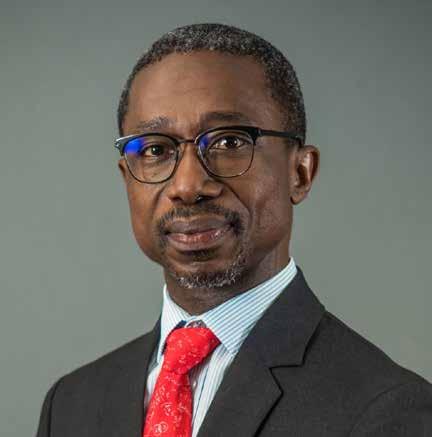
Prof. Thokozani Majozi
Dean, EBE – Elected as President and Chairman, Academy of Sciences South Africa (ASSAf)
Dear Colleagues, Students, and Friends of the Faculty,
It is with great pleasure that I present to you the second issue of WEBER, our Faculty magazine that continues to chronicle the remarkable achievements and transformative developments within the Faculty of Engineering and the Built Environment.
This issue arrives at a pivotal moment in our Faculty’s journey. We celebrate significant leadership transitions with the appointment of new Heads of Schools across Electrical and Information Engineering, Chemical and Metallurgical Engineering, Mechanical, Industrial and Aeronautical Engineering, Civil and Environmental Engineering, and Mining Engineering. These appointments bring fresh perspectives and renewed energy to our academic units. I invite you to engage with their strategic visions outlined in this issue, which demonstrate a clear alignment with our Faculty’s broader objectives and our collective commitment to excellence.
The most recent of these appointments is that of Prof. Lizelle van Dyk, the new Head of School of Chemical and Metallurgical Engineering, who commenced her duties at the beginning of September this year. This also meant she had to vacate her position as Assistant Dean (Postgraduate) in the Faculty, a role that she has played with utmost distinction for many years. Consequently, Prof. Nthabiseng Maledi has been appointed in this capacity with effect from 01 October 2025. We also extend our heartfelt congratulations to her.
We are equally delighted to welcome distinguished new members to our academic community, who join us from various walks of academic life. Prof. Ngalula Sandrine Mubenga arrives as a Fulbright Scholar from the University of Toledo and will spend a year with us, hosted by the School of Electrical and Information Engineering. Her expertise in renewable energy, electric vehicles, battery management systems and
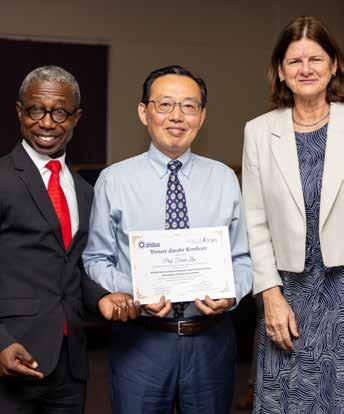
electricity generation is both timely and invaluable to our Faculty’s research agenda. We also welcome Prof. Frank Zhu as Distinguished Professor, bringing with him extensive experience as Senior Technology Fellow at Honeywell UOP in the USA, and Prof. Mamdouh Gadalla, also joining as Distinguished Professor from Port Said University in Egypt after many years in Europe. Both professors are world-renowned experts in Process Systems Engineering, and their presence significantly strengthens our capacity in this critical area. The wealth of knowledge and experience these scholars bring enriches our academic community immeasurably.
The pages of this magazine reflect the depth and breadth of talent within our Faculty community. We recognize colleagues who have ascended to higher rungs of the academic ladder through their dedication and scholarly contributions. Our postdoctoral fellows continue to push the boundaries of knowledge through their groundbreaking research, while our academic staff have garnered prestigious awards that speak to the quality of work being undertaken within our walls. Equally inspiring are the achievements of our undergraduate and postgraduate students, who remind us daily why we do what we do.
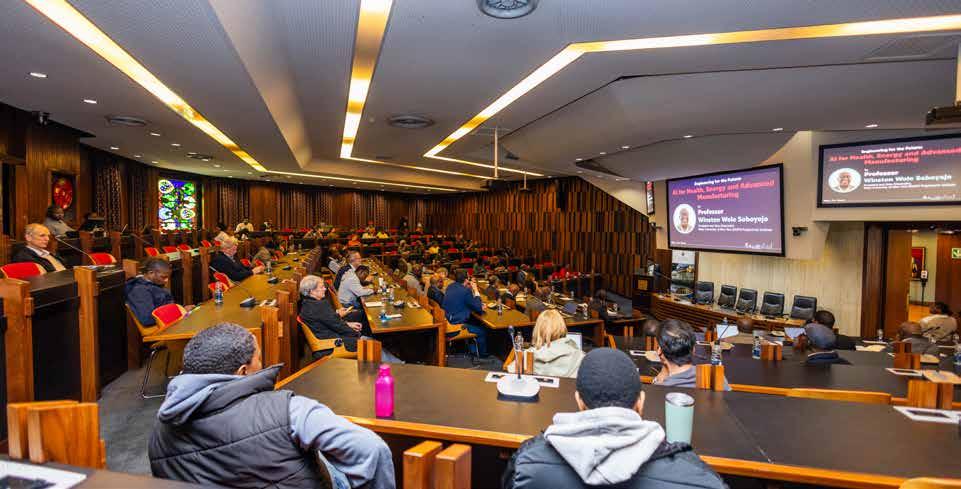
I would like to acknowledge the vital work of the Academic Development Unit under the leadership of Prof. Rodney Genga, whose efforts ensure that we remain responsive to the evolving needs of our academic community. The recent activities highlighted in this issue—from the second biennial Faculty research seminar organized by Prof. Geoff Simate, to the enriching visit by world-renowned materials scientist Prof. Wole Soboyejo from the State University of New York, and the thought-provoking panel discussion on the food, energy and water nexus organized by Dr Ifeanyi Anekwe, Prof. Michael Bodunrin and Dr Desmond Klenam—underscore our commitment to fostering intellectual exchange and addressing global challenges.
I am particularly excited to announce, for the first time, the introduction of four new funding streams that will take effect from January 2026. These initiatives represent a significant investment in our Faculty’s future:
The Sibanye-Stillwater Postdoctoral Fund will support our drive to significantly increase the number of postdoctoral fellows, strengthening our research capacity;
The Sibanye-Stillwater Postgraduate Fund will provide academic support to exceptionally deserving postgraduate students;
The Sibanye-Stillwater Academic Development Fund will support mainly early career academics as they establish themselves in their scholarly pursuits; and
The Sibanye-Stillwater Strategic Fund will enable key and critical strategic interventions within the Faculty.
These funding streams will be instrumental in advancing our academic objectives and consolidating our position as a leading Faculty on the continent.
As we approach the end of the academic year, I extend my sincere gratitude to our Faculty Registrar and the administrative team for ensuring the smooth conduct of final year examinations. To each member of our Faculty community—academic staff, professional and support staff, and students—thank you for your unwavering commitment and collective efforts that continue to position FEBE as one of the best faculties of its kind on the African continent.
While we can take pride in our achievements thus far, the year is not yet complete. Graduations, marking, and Boards of Examiners still lie ahead. I am confident that all will proceed as planned. The destination is well within reach—let us stay the course together.
Finally, my appreciation goes to the WEBER editorial team, led by Dr Desmond Klenam, for their outstanding work in preparing this edition. Your dedication ensures that the story of our Faculty is told with the excellence it deserves.
I trust you will find this issue both informative and inspiring.
Prof. Thokozani Majozi
Dean: Faculty of Engineering and the Built Environment
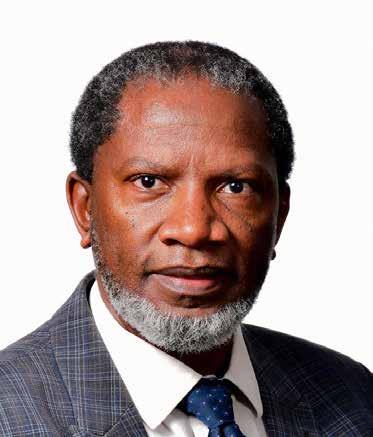
Dr. Gadalla is professor and former head of chemical engineering department at Port Said University (Egypt). He graduated with a B.Sc. with honours and an M.Sc. in chemical engineering from Cairo University. Dr. Gadalla completed his PhD in Process Integration at the University of Manchester Institute of Science and Technology UMIST, England. He worked in several international and multicultural research institutions and universities, as a Teaching Assistant in UAE University in Emirates, Research Assistant in UMIST in UK, Post-Doctoral Fellow at Delft University of Technology (Holland), Assistant Professor at Universitat Rovira i Virgili URV (Spain), Visiting Researcher in Pretoria University (South Africa), and Associate Professor at the British University in Egypt. Research areas of Dr. Gadalla cover wide range of fields ranging from process integration of chemical process industries, modelling/design of chemical plants to experimental and theoretical modelling of biomass/waste to energy and into valuable chemicals. Recently he is adopting an approach of green use of coal in industries for power and energy generation. Dr. Gadalla offered consultancy and R&D for multinational oil/gas companies, and acted as a PI/co-PI in several funded projects for energy and environment. Dr. Gadalla has scientific collaboration with many distinguished researchers from the USA, UK, Spain, South Africa and Germany. On 2016, Dr. Gadalla has
been nominated for some International Prestigious Award for his latest contribution in the area of hydrocarbon downstream. He published more than 110 publications in Scopus records, and supervised more than 20 MSc students and 10 PhD theses.
On a national state level, Dr. Gadalla has been awarded the Egypt National Incentive Award for 2015 in Engineering Science and the Principal Researcher Award from the British University in Egypt for 2016. Also, he received the Medal of Excellence from the President of Egypt in Science Festival (2017). Further, Dr. Gadalla has been listed among the World top 2% Scientists by Stanford University from 2020 till present year (2025). Also, he received the recognition of an “Active Researcher” by the University of Rovira i Virgili (Spain).
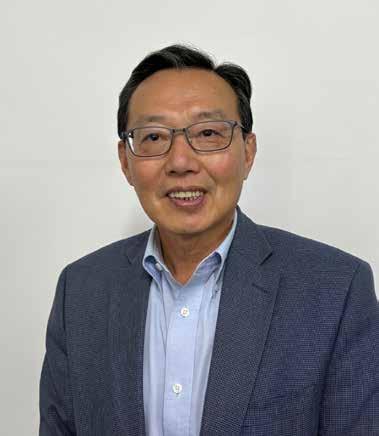
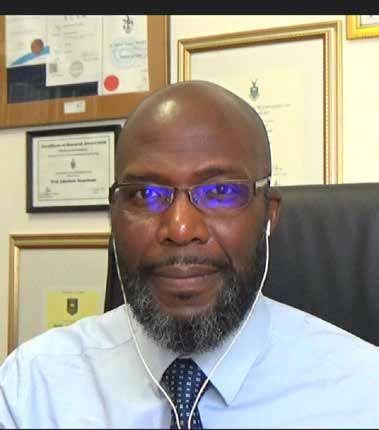
Frank (X. X.) Zhu
Distinguished Professor, University of the Witwatersrand, Johannesburg Senior R&D Fellow Honeywell UOP (Retired)
Dr Zhu is widely recognized as a leading authority in chemical process energy efficiency, having made foundational contributions to both theoretical frameworks and practical applications. His work spans the development of novel methodologies, computational tools for improving process energy efficiency, and— most importantly—their successful implementation in industrial process design and operational optimization. These efforts have delivered substantial global benefits in energy savings and CO2 reduction.
Dr Zhu currently serves as a distinguished professor at University of the Witwatersrand in South Africa. Prior to this, he served as a Senior Engineering Fellow in the Engineering Department and later as a Senior R&D Fellow in Research and Development in Honeywell. Prior to joining Honeywell, he held the position of Reader at The University of Manchester, UK, where he acted as Examination Secretary and Graduate Admission Director.
Over his career spanning more than 30 years, Frank’s focus remained steadfast: advancing process development through innovative approaches to energy efficiency. Dr Frank Zhu has made transformative contributions to chemical process energy efficiency through a series of high-impact innovations including novel process design and operation optimization. His work has been featured in Honeywell’s Exponent magazine and published in leading journals such as Industrial & Engineering Chemistry Research, Chemical Engineering Science, and Chemical Engineering Progress, helping to establish a new interdisciplinary field that unites chemistry, materials science, and engineering.
Prof. Mamdouh Gadalla
PhD (UMIST), M.Sc., B.Sc. (Hons.), AMIChemE, Consult. Engr.
In the past decade, Dr Zhu has continued to push the boundaries of innovation via developing a multiscale modeling framework that integrates molecular modeling, quantum-level simulations with process engineering principles and superstructure optimization, enabling more accurate predictions and reducing development costs. These advancements have not only transformed industrial practices but also shaped the next generation of chemical engineers by deepening the understanding of energy efficiency and sustainable process design.
Dr Zhu is a prolific scholar, credited with more than 100 peer-reviewed publications, over 70 patents, and four influential books published by Wiley/AIChE. His groundbreaking contributions have been recognized through numerous honors, including the AIChE National Research Excellence Award in Process Development (2025) and the AIChE National Energy and Sustainability Award (2014). He has also been featured in Marquis Who’s Who for Expertise in Energy Sustainability (2024–2025) and received Honeywell’s Patent of the Year Award (2014) as well as the Professional Leadership Award (2010).
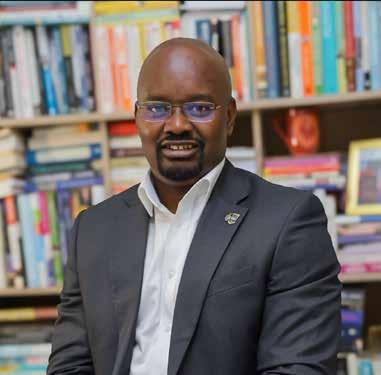
Klenam,
It is a privilege to reflect on this defining moment in our Faculty’s ongoing evolution. This edition of WEBER chronicles a season of ambitious change, inspired leadership, and scientific ingenuity—each advancing our identity as a distinctly African institution with unmistakable global traction.
At the centre of this momentum lies a sharpened commitment to excellence. Record student enrolments, stellar graduation figures, and a postdoctoral cohort that has grown from a handful to a hive are not just statistics; they are stories of minds moulded by inquiry, mentorship, and a scholarly environment that prizes curiosity as much as competence.
Our trajectory is unmistakably upward. Professor Hazelhurst’s Nature publication, Gift Maboko’s award-winning AI research, and our postgraduate trailblazers spanning continents from Berlin to Singapore all bear witness to a faculty not merely participating in the global conversation, but often setting the tone.
We are also seeing a renaissance in leadership across our schools, coupled with structural shifts toward smarter administration, revitalised curricula, and a mentorship ethos that’s more than symbolic. This is not change for its own sake. It is deliberate architecture—a foundation for a future where excellence is measured not only by academic rigour but by relevance, originality, and a pinch of daring.
No, we don’t just teach engineering. We train thinkers who calculate with purpose, build with foresight, and lead with a surprising degree of emotional intelligence. This issue of WEBER is not just a record of what we’ve done. It is a signal, equal parts archive and provocation, of where we intend to go.
At Wits’ Faculty of Engineering and the Built Environment, we foster an atmosphere of robust scholarly engagement, co-creation, and cross-pollination of ideas, transforming novices into erudite scholars. Through rigorous training and a university-wide experience, we develop undergraduates and postgraduates into young professionals who are mathematically mature, scientifically sophisticated, econometrically adept, architects of their own fate, pedagogically efficient, emotionally intelligent, and tech-evolving forces of nature. Our students are inspired to create with the heart and build with the mind, making a rapid transition from well-filled minds to well-formed minds.
Our vision is for the Faculty to produce 21st century global leaders of local significance in the space of Engineering and the Built Environment.
1. Diversity, equity and inclusion. We aim to create a Faculty that embraces.
• Diversity by valuing and celebrating the differences that exist among individuals, e.g. race, ethnicity, gender, sexual orientation, religion and socio-economic status.
• Equity by ensuring equal treatment and providing equal opportunities to all individuals, ensuring that everyone has access to resources and support to thrive.
• Inclusion by creating an environment where everyone feels welcomed, respected and valued; and environment where everyone’s voice is heard and included in decision-making processes.
2. Transforming the undergraduate curriculum.
Our curriculum should be informed by our vision and the needs of industry and stakeholder base we aim to serve. To this end we have introduced data-driven decision making for engineering and the built environment professionals across the Faculty.
3. Improving research and Innovation. Our research and innovation efforts ought to be novel, sustainable and impactful.
4.Digitisation of administration to maximise efficiency and timely delivery at all times.
• People at the core of everything we do
• Excellence in all we do
• Conducting research with impact
• Pursuing innovation that improves lives for everyone
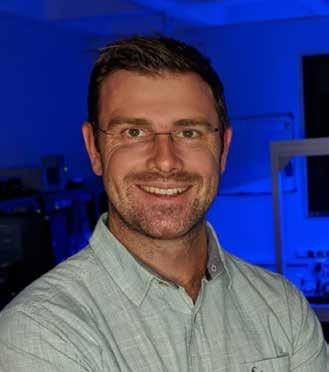

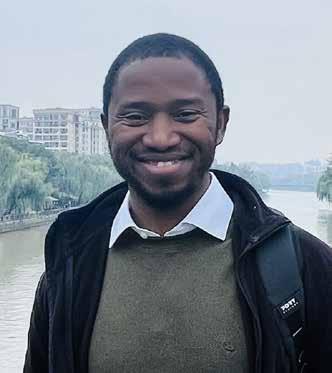
Name: Prof. Mitchell Cox
Promoted to: Associate Professor
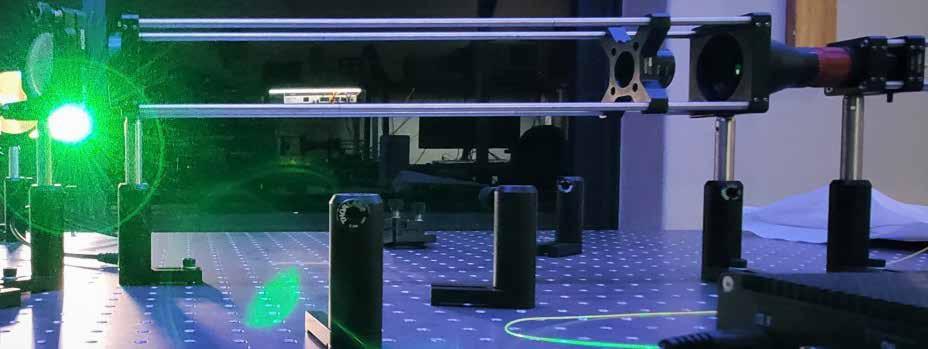
Research Area: Professor Mitchell Cox’s research focuses on structuredlight-based free-space optical (FSO) communication systems. He develops low-cost, turbulence-resilient FSO links using spatial-mode multiplexing, adaptive optics, and machine-learning-driven signal processing. His work advances optical neuromorphic computing and intelligent photonic networks to enhance data capacity, reliability, and accessibility for nextgeneration optical communication technologies.
School: School of Electrical & Information Engineering
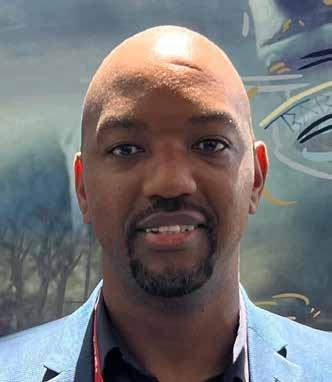
Name: Prof. Saeideh Babaee
Promoted to: Associate Professor
Research Area: Prof. Saeideh Babaee’s research focuses on sustainable energy solutions, including hydrogen production and storage, carbon capture, gas separation, gas hydrates, and energy sustainability. She also works on water treatment, valorisation of mine waste, recovery of critical materials, process simulation and optimisation, and thermodynamics. Her group aims to reduce the carbon footprint of hydrogen technologies and advance the circular economy through interdisciplinary and applied approaches.
School: School of Chemical & Metallurgical Engineering
Name: Prof. Lesedi Melton Masisi
Promoted to: Associate Professor
Research Area: My research is about the design, use of electrical machines and power electronics, these devices are required in the reduction of carbon emissions, application of green energy technologies and the electrification of transportation such as electrical vehicles and trains.
School: School of Electrical & Information Engineering
Name: Dr S Mokhahlane
Promoted to: Senior Lecturer
Research Area: Dr Lehlohonolo Sehai Mokhahlane specializes in Underground Coal Gasification and critical element recovery from coal and fly ash, advancing cleaner coal technologies, sustainable energy, and circular economy through geochemical stability, syngas optimization, environmental assessments, and sustainable extraction of strategic elements.
School: School of Chemical & Metallurgical Engineering
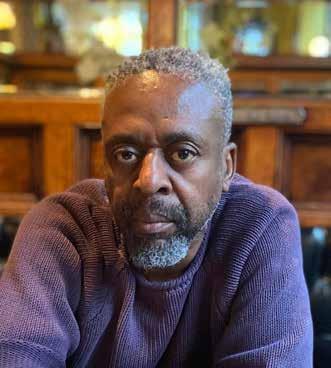
Name: Dr S Mkhabela
Promoted to: Senior Lecturer
Research Area: Drawing on my expertise in planning, urban design and architecture, I aim to improve Johannesburg’s spatial performance through a dynamic urban assessment method. By utilising audio-visual storytelling, I strive to amplify the voices of marginalised communities, ensuring that their perspectives are included in shaping the future of our urban landscape.
School: School of Architecture & Planning
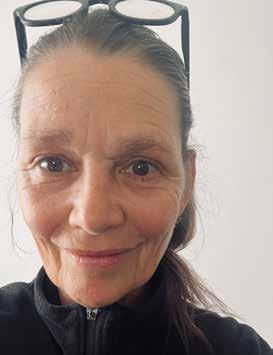
Name: Dr Kirsten Dörmann
Promoted to: Senior Lecturer
Research Area: My work is rooted in the practice of design research with a focus on domestic transformations as part of African urbanity. The research draws from the three major fields of relevance to the engagement with architectural knowledge: the academic field (i.e. architecture as discipline), the professional field (i.e. architecture as regulated practice) and the wider social field (i.e. architecture as cultural, social, economic and political expression).
School: School of Architecture & Planning
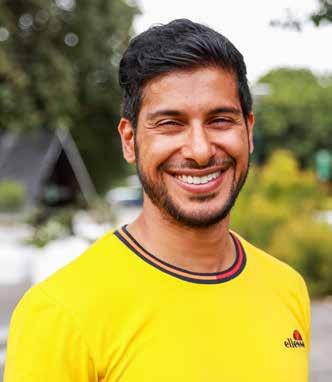
Name: Dr AK Mohammed
Promoted to: Senior Lecturer
Research Area: Dr Abdul-Khaaliq Mohamed’s research integrates biomedical and electrical engineering, neuroscience, and artificial intelligence to develop low-cost assistive technologies. His work focuses on brain-computer interfaces using EEG/EMG signals, 3D-printed prosthetic hands, and machine-learning-based signal processing for neural and muscle data, aiming to create affordable, intelligent, and accessible neuro-prosthetic systems for rehabilitation and disability support.
School: School of Electrical & Information Engineering
Hurray! Prof. Anne Fitchett – Retired Honorary Associate Professor received the NSTF South-32 Award for ‘Engineering Research Capacity Development’.
In the words of Professor Emeritus Yunus Ballim: “your light reflects off all of us Anne!”
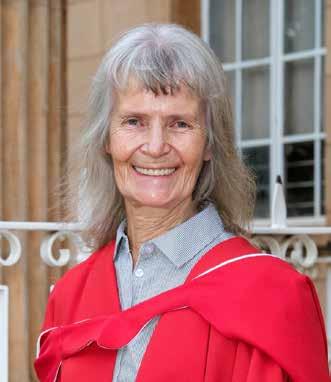
Congratulations to Professor John Ndiritu on his NRF C2 re-rating!
Congratulations to Prof. Emeritus Yunus Ballim on his recently published book!
Academic & Research Excellence
i. Dean’s special award to the HPC students Talhah Patelia, Jonathan Faller, Kapil Ramlal and Reinhard Jansen van Vuuren
This award is given to a student or a group of students that have gone anextra mile to represent the Faculty and the University on a global stage.The Award includes a full tuition fee for studies towards a master’s degree within the Faculty.
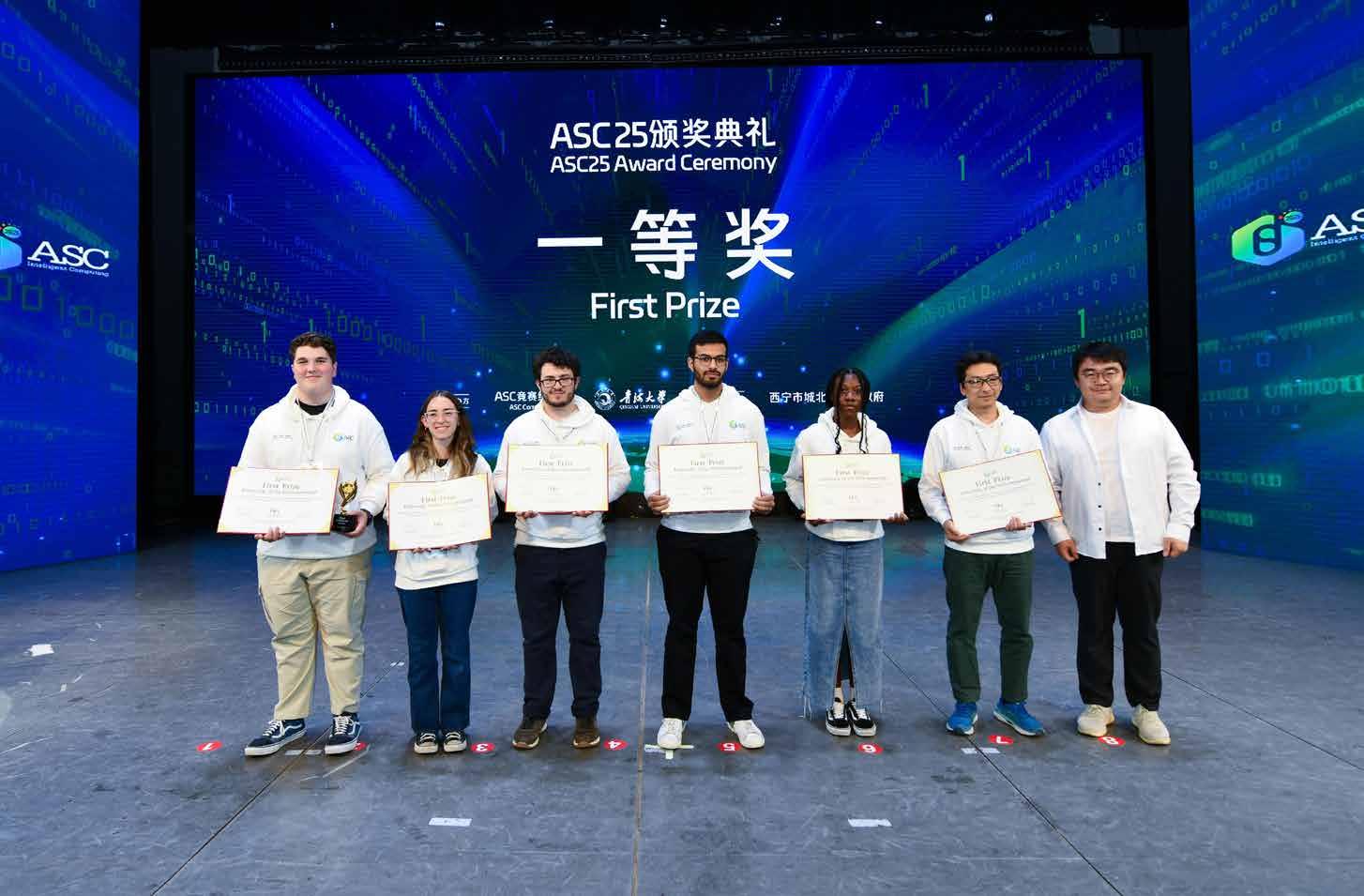
The Wits High Performance Computing (HPC) Team, under the leadership of Professor Ling Cheng, has demonstrated outstanding performance in student supercomputing competitions at both national and international levels. In 2025, Wits proudly became the first African team to qualify for the finals of the ASC Student Supercomputer Challenge, held in Xinghai, China, achieving a Top 25 placement out of more than 350 universities worldwide. The team also represented South Africa on the international stage at the ISC Student Cluster Competition in Hamburg, Germany, in both 2024 and 2025, as part of the national team selected through the Centre for High Performance Computing (CHPC) Student Cluster Competition. At the national level, Wits has consistently been a top performer at the CHPC National Conference, South Africa’s premier high-performance computing event.
Over the past 11 years, the teams standing were as follows:
• First place – seven times
• Second place – six times
• Third place – four times
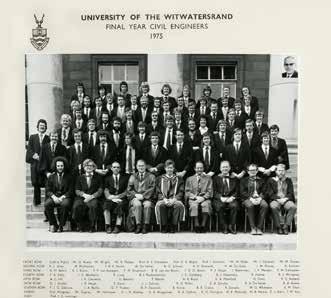
Congratulations to the School of Civil and Environmental Eng. graduating class of 1975 on their 50th anniversary
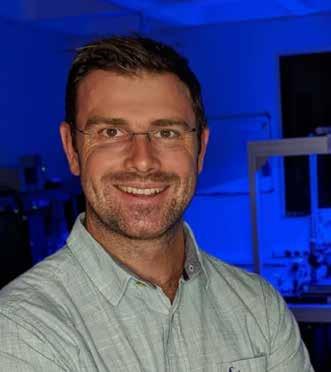
Congratulations to Dr Janina Kanjee on her recently obtained PhD
These accomplishments underscore Wits University’s prominent role in cultivating HPC expertise and its sustained impact on advancing global HPC innovation. The contribution of Professor Ling Cheng, through his leadership and guidance to the team, is formally recognized and appreciated.
ii. EIE School post-grad student, Joshua Jandrell joshua.jandrell@wits.ac.za) was awarded a prize for 1st in Masters Oral presentations, Khanyisile Masemola (1098477@students.wits.ac.za) for 3rd in PhD Gradflash at the university post-grad symposium.
iii. Dhruti (EIE PhD student) achieved a 3rd position (1st was Wits graduate PhD in Mathematics, 2nd position was UKZN PhD student in Topology). National Institute of Theoretical and Computational Sciences FameLab competition is an International competition designed to challenge participants to challenge young scientists to communicate effectively their research to the public in less than 3 minutes.
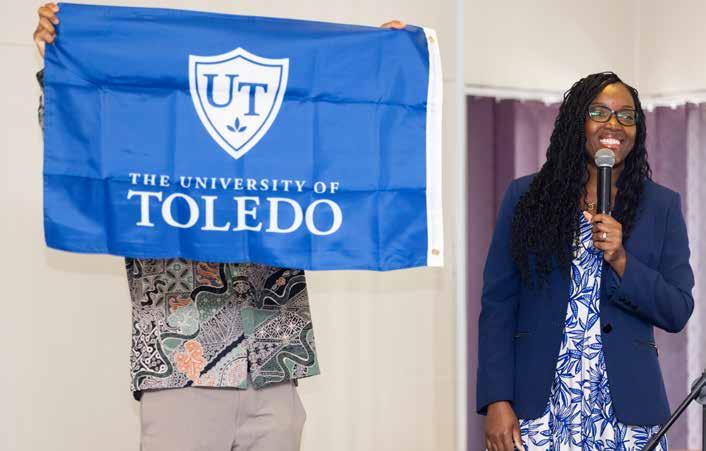
iv. The EIE School is honoured to host a USA Fulbright Scholar for a year, Prof Ngalula Sandrine Mubenga from the department of Engineering Technology at the University of Toledo, Ohio, USA. She participate in teaching and research mainly in the renewable energy knowledge area which includes electric vehicle technology. This is in line with the EBE Faculty strategic thrust in Just Energy Transition.
v. EIE distinguished professor David Limebeer david.limebeer@wits.ac.za) was recently elected fellow of the Royal Society of South Africa.
Transformation
Mr Ronnette Diale (ronnett.diale@wits.ac.za), a principal technician in the EIE School was awarded 2025 Vice Chancellors transformation award!
Community engagement
EIE School has been honoured to host the SAIEE South African Universities final undergraduate electrical engineering project competitions to be held in November . For more information, the contact person is Professor Ken Nixon (Ken.Nixon@wits.ac.za)
School of Electrical and Information Engineering, University of the Witwatersrand
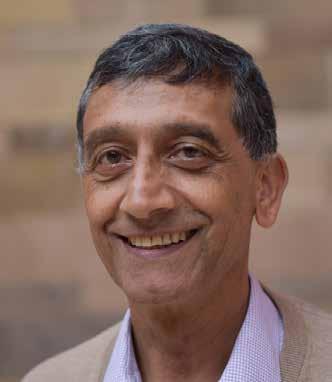
Academic Journey: A Wits alumnus in Electrical and Information Engineering, Mitchell Cox began his career at Hatch in automation and process control, including a year commissioning a nickel mine in New Caledonia. A chance encounter with a PhD student drew him into academia under Professor Bruce Mellado. Completing an MSc and later a PhD co-supervised by Professors Andrew Forbes and Ling Cheng, he credits mentorship and collegial exchanges for shaping his research trajectory and earning an NRF P-rating. His guiding principle: always listen, insights often come from unexpected places.
Research Focus: Cox’s work harnesses light to solve real-world problems. His main area, free-space optical (FSO) communications, develops low-cost, turbulence-resilient, often 3D-printed systems to help close the digital divide. He also pioneers optical AI techniques that turn atmospheric turbulence into a computational advantage, explores optical neural networks, telecom-based environmental sensing, and brain-inspired AI approaches which blend physics, engineering, and computing to design scalable, affordable technologies.
Significance of the NRF P-Rating: Achieving the NRF P-rating fulfilled a goal set early in his postgraduate studies. Despite career shifts and family responsibilities, he built an independent research portfolio and team through persistence and planning. The rating marks personal accomplishment and institutional recognition.
Contribution to Development: Through the Wits Optical Communication Lab, Cox aims to commercialise optical communication technologies that expand internet access. Balancing research innovation with practical engineering, he envisions today’s lab projects evolving into future tech spin-offs where he contributes as founder or technical lead.
Advice to Emerging Engineers: Define a long-term vision, remain curious, and engage deeply with your academic community. Seek mentorship, invite feedback, and never hesitate to ask questions, which are habits that sustain growth and discovery.
Beyond Academia: Grounded by his wife’s intuitive wisdom and inspired by Star Trek’s optimistic view of humanity, Cox draws motivation from imagining a utopian future—and working backwards to make it real.
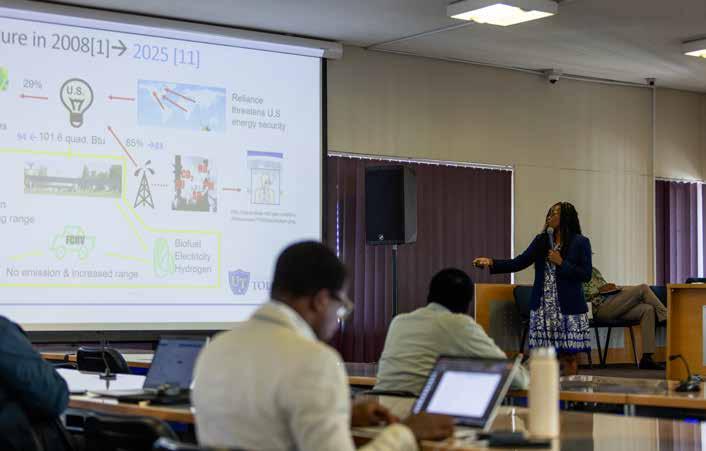
Fulbright Scholar in the School of Electrical and Information Engineering
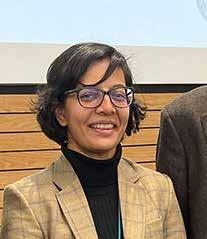
Prof. Dr. Eng. Ngalula Sandrine Mubenga is a tenured Associate Professor of Electrical Engineering Technology at the University of Toledo (USA), where she earned her B.S. (2005, Cum Laude), M.S. (2008, Best Thesis Award), and Ph.D. (2017) in Electrical Engineering. A licensed Professional Engineer in Ohio and Senior Member of IEEE, her research focuses on renewable energy, electric vehicles, battery management systems (BMS), and electricity regulation.
Sandrine holds a patent for a BMS design tool and developed a hydrogenpowered electric hybrid vehicle. As a 2025 Fulbright U.S. Scholar based at Wits University, she is collaborating with colleagues to co-teach a course and research renewable energy solutions to mitigate load shedding and strengthen the regulatory framework.
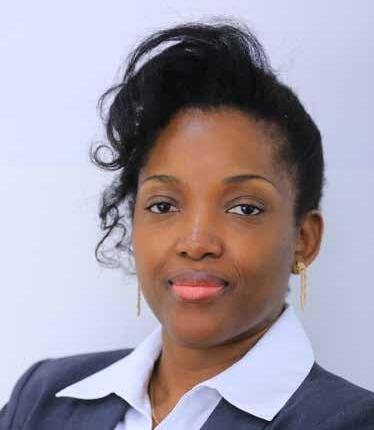
Her work has been recognized by international platforms such as Forbes Africa, BBC, and Voice of America. Prof. Mubenga is also the founder of STEM DRC Initiative, promoting STEM careers for youth, and is passionate about leveraging energy innovation to improve lives and combat climate change.”
Vision Statement
To be a catalyst for academic and administrative excellence that enables the Faculty of Engineering and the Built Environment to lead in innovation, transformation, and global relevance contributing to a just and sustainable society, in alignment with the Wits 2030 vision.
Mission Statement
As Registrar of the Faculty of Engineering and the Built Environment, my mission is to enable the realisation of the Wits 2030 strategic priorities by:
· Driving Academic Excellence and Integrity: Through robust academic governance, policy compliance, and data-informed decision-making that safeguard institutional standards and advance the quality of teaching, learning, and research.
· Enhancing Student Success and Experience: By delivering seamless, student-centred academic administrative services across the student lifecycle, ensuring that each student has equitable access to success, in line with transformation and inclusion imperatives.
· Modernising Academic Administration: By leveraging digital tools and reimagining processes to create agile, transparent, and future-oriented systems that support sustainable academic operations.
· Promoting Strategic Partnerships and Collaboration: By working across academic, administrative, and external stakeholders to create integrated solutions that advance the Faculty’s and University’s strategic goals locally and globally.
· Championing Transformation and Social Justice: By embedding equity, diversity, and inclusion in all governance and administrative practices, contributing to a more just and representative institution.
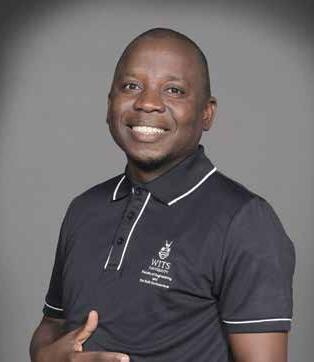
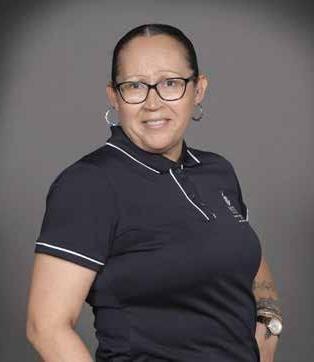
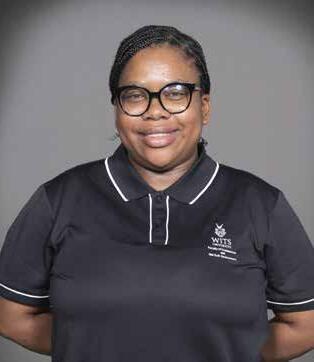
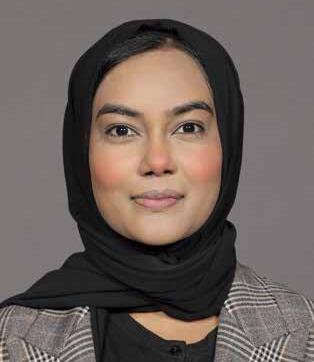
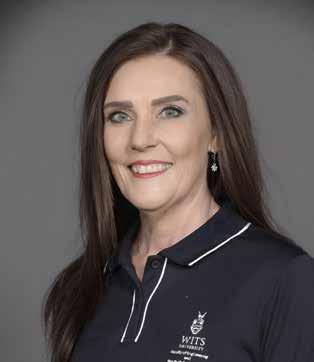
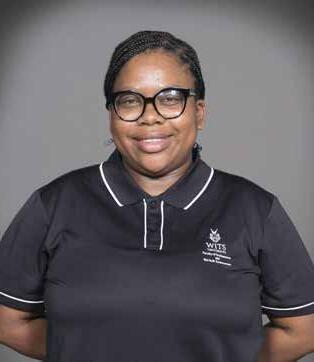
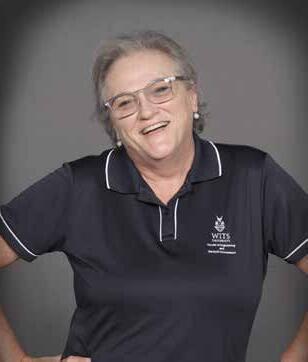
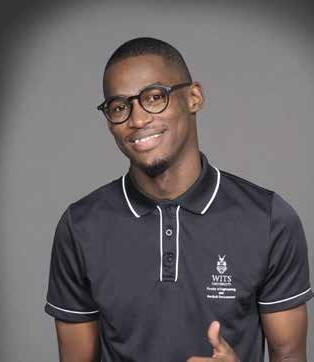
Dr
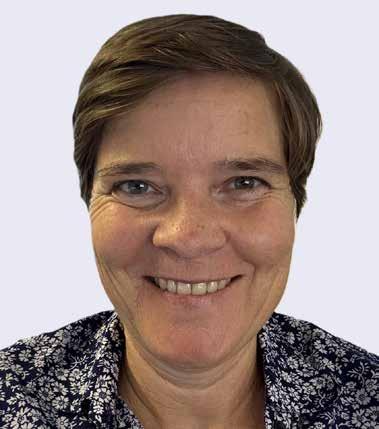
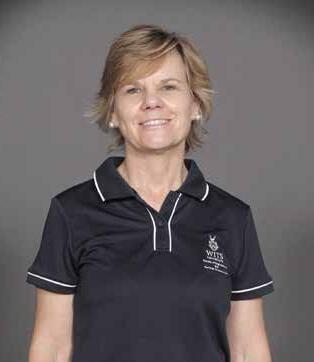
Prof. Lizelle van Dyk
Head of School of Chemical and Metallurgical Engineering
Alloying ambition with Achievement Bamisaye Olufemi Sylvester, PhD, CHMT 2025
My name is Bamisaye Olufemi Sylvester, a passionate researcher in manufacturing, materials science, and engineering, with a focus on hot deformation, corrosion, and oxidation. I began my postgraduate journey at the University of the Witwatersrand in 2021, driven not just by academic goals but by a vision to innovate in high-temperature materials. What started as a curiosity in corrosion resistance and surface engineering quickly evolved into deep scientific inquiry. My PhD research investigated the hot deformation, corrosion, and oxidation behavior of refractory high-entropy alloys for extreme environments demanding intense lab work, sleepless nights, and persistent manuscript revisions.
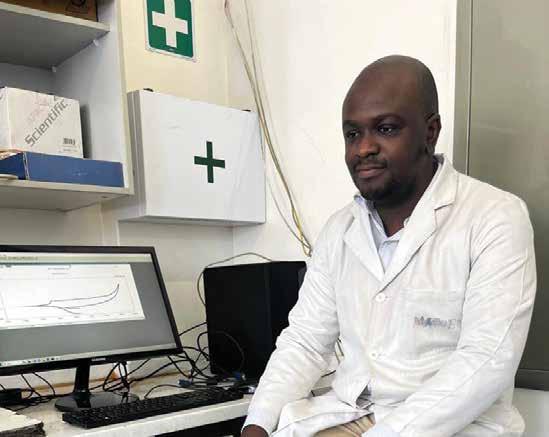
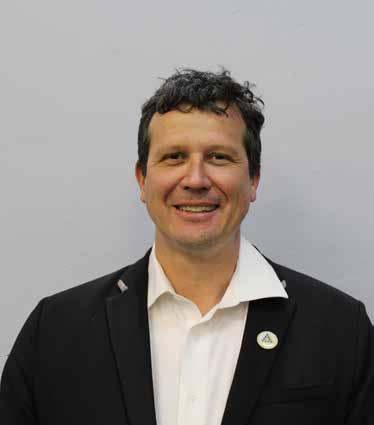
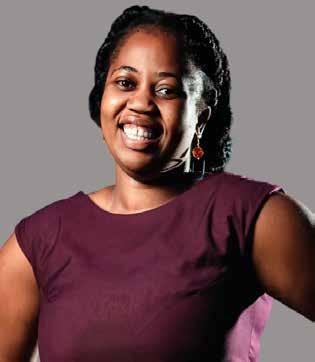
Prof. Daniel Wilke
Head of School of Mechanical and Aeronautical Engineering
Masters Candidates should become proficient in these five tenets. Emphasis on mastery of:
• Relevant scientific method
• Relevant literature underpinning the field
• Relevant techniques
• Nature and purpose of the research area
• Consequences of the research finding
PhD Candidates should become proficient in these three tenets:
• Close a gap in the relevant area of the research
• Originality and novelty in the chosen area
• Independent critical judgment
“What sets my journey apart is this: I published eight high-impact journal papers as a student, a feat made possible by unwavering discipline, supportive mentorship, and scientific curiosity. Under the tutelage of Professor Nthabiseng Maledi and Professor Bodunrin, and my mentor Dr Desmond Klenam, I learned to ask meaningful research questions and articulate complex ideas with clarity. I built interdisciplinary collaborations, embraced innovation, and honed my scientific writing through workshops and peer review. My story is not just about personal achievement it reflects the transformative power of mentorship, purpose, and a relentless drive to push boundaries in the pursuit of knowledge”.
Gift Malebo Maboko, MSc (Mechanical Engineering)
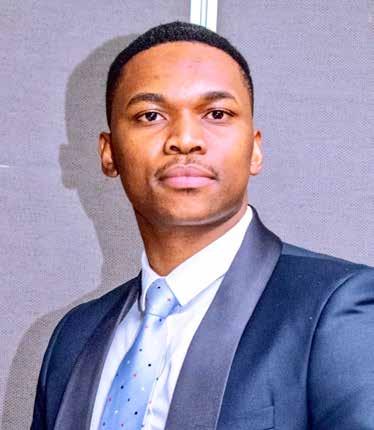
A team from the University of the Witwatersrand (Wits) has secured first place at the prestigious IEOM Society International AI-ML Competition, held during the 15th International Conference on Industrial Engineering and Operations Management at the Singapore University of Social Sciences, from 18–20 February 2025. The award-winning project, titled “Securing Mobile Connectivity: A Data-Driven Approach for Detection of Electricity Theft and Anomalies in 4G and 5G Telecommunications Base Stations,” was presented by Gift Malebo Maboko (MSc. Engineering) and Dr Mncedisi Trinity Dewa (Senior Lecturer, School of Mechanical, Industrial and Aeronautical Engineering).
Their research leverages AI and machine learning to detect irregular energy consumption patterns and combat electricity theft— an innovation with direct impact on the reliability and efficiency of global telecommunications networks.
Competing against top international institutions, the Wits team’s victory highlights South Africa’s growing influence in the global tech innovation space. The achievement marks a proud moment for the School of MIA and reinforces Wits University’s reputation as a leader in engineering research and real-world problem solving. This success is not just a win for Wits, but a milestone for African-led AI innovation on the global stage.
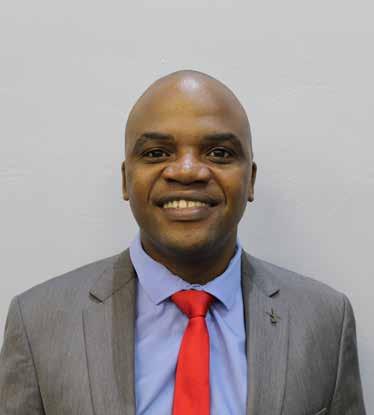
Dr Darlington Ashiegbu, a Postdoctoral Research Fellow and Independent Researcher in the SIMMET Research Group at the School of Chemical and Metallurgical Engineering, University of the Witwatersrand, has been invited to deliver a guest lecture at the prestigious Photocatalytic Synthesis (PCS) group in the Department of Chemical Engineering, University of Twente, Netherlands, on 30 June 2025. His talk, titled “Advanced Photocatalytic Strategies for Environmental Remediation and Green Hydrogen Production: From Bench to Scalable Innovation,” will showcase his research on semiconductor heterojunction photocatalysts for pollution control and sustainable energy development.
Dr. Ashiegbu’s recent work focuses on the synthesis of ZnO-BiOI photocatalysts, which have achieved near-complete degradation of contaminants such as methyl orange, chlorinated biphenyls, cyanide, and thiocyanate under simulated sunlight. He also examines how variables like catalyst mass and pollutant concentration affect degradation efficiency and the production of reactive oxygen species (ROS). In related studies, his ZnO-WO₃ composites have demonstrated effective breakdown of 4-nitrophenol and inactivation of E. coli under natural sunlight, indicating their potential for decentralized water treatment.
In advancing renewable energy solutions, Dr. Ashiegbu is developing 3D-printed ZnO-WO₃ photoelectrodes for photoelectrochemical (PEC) water splitting to produce green hydrogen. This innovative approach integrates additive manufacturing with photocatalysis to address limitations in traditional PEC systems. His invitation to speak at the PCS group underscores the international relevance of his research and highlights FEBE’s expanding global footprint in materials innovation and sustainable engineering. Follow the detailed conversation via the link: https://www.utwente.nl/en/tnw/ce/events/2025/6/322966/guest-lecture-dr.darlington-ashiegbu-university-of-witwatersrand
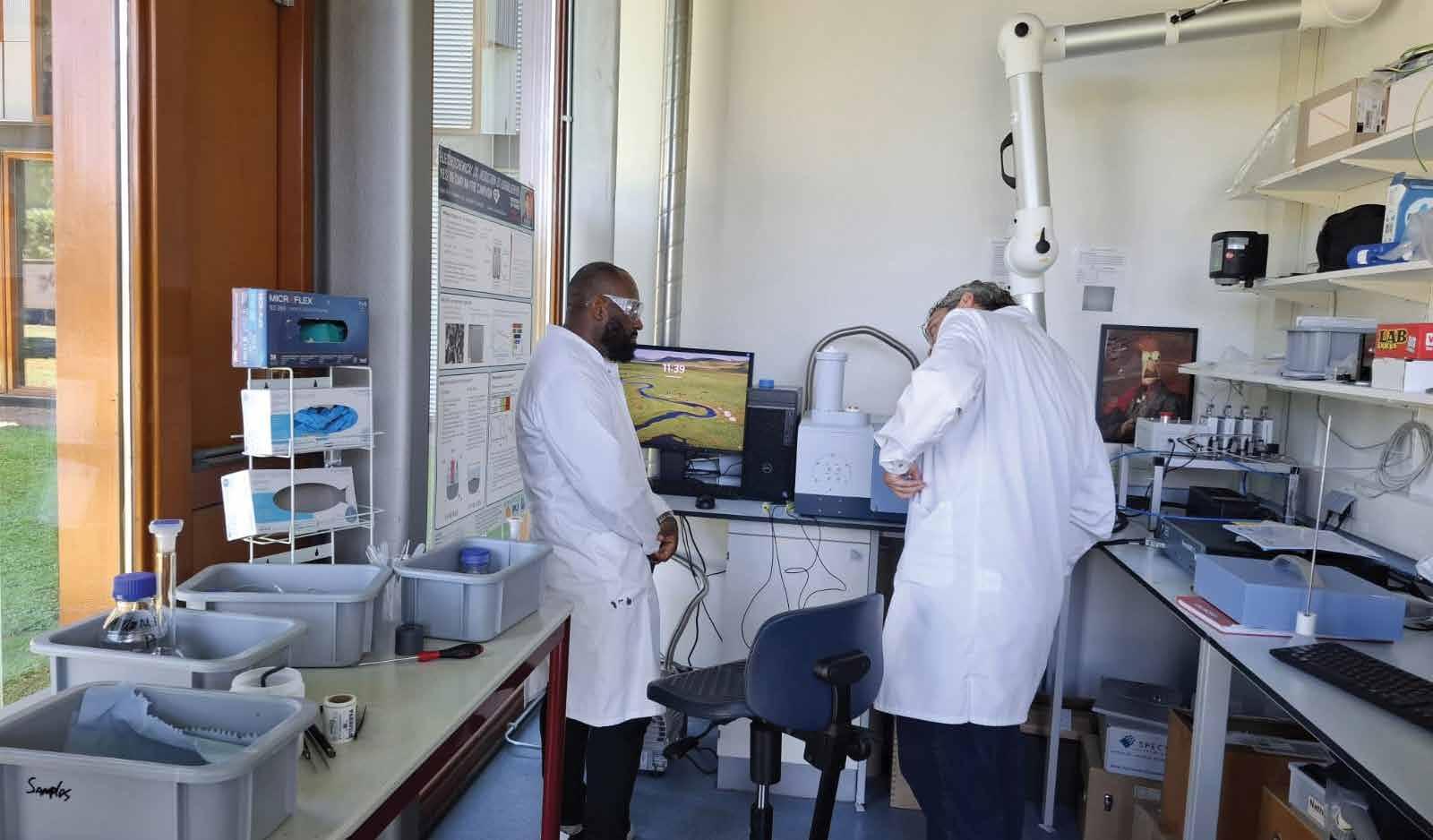
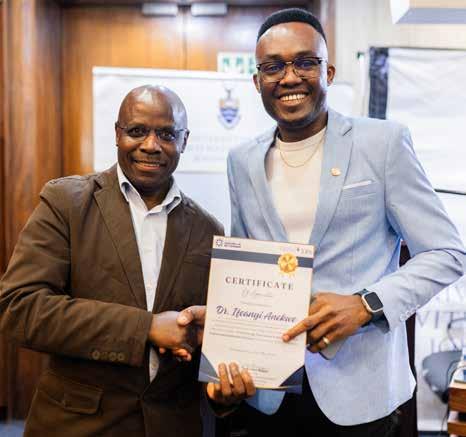
“Powering Progress Through Catalysis” – Dr Anekwe at the global stage
Wits Celebrates Dr Anekwe’s DAAD Research Fellowship at LIKAT, Germany. The University of the Witwatersrand (Wits) proudly acknowledges Dr Ifeanyi Smarte Anekwe’s successful completion of a six-month research stay at the Leibniz-Institut für Katalyse (LIKAT), Germany. Sponsored by the highly competitive DAAD Research Grants for Young Researchers, this fellowship reflects Dr Anekwe’s scientific excellence and leadership in catalysis and sustainable energy research.
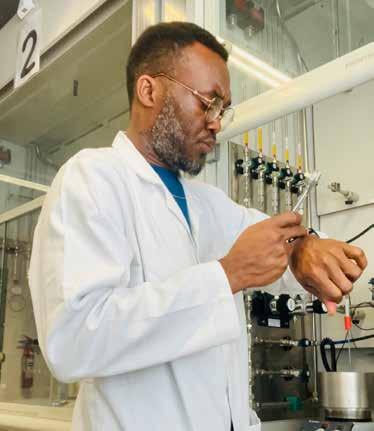
Dr Anekwe, a Research Fellow in the Sustainable Fuels and Petrochemical Synthesis (SFPS) group under Prof Yusuf Isa, collaborated with Prof Jagadeesh Rajenahally at LIKAT. His research focused on synthesising heterogeneous catalysts for converting fatty alcohols into valuable petrochemicals—advancing renewable energy production and green chemical processes.
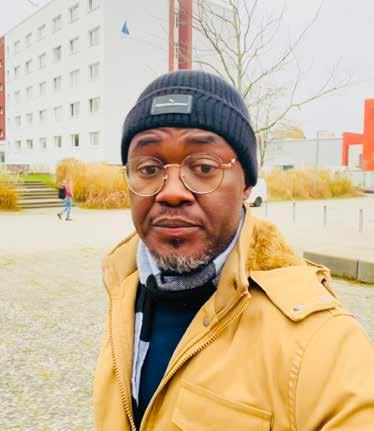
This work supports South Africa’s Just Energy Transition Implementation Plan (JET-IP) and aligns with Wits’ Faculty of Engineering and the Built Environment (FEBE) priorities in environmental sustainability. Through this collaboration, Dr Anekwe gained critical skills in catalyst design and optimisation, enriching his contribution to Wits and the broader scientific community.
With over 35 scientific publications, Dr Anekwe’s return strengthens Wits’ position as a leader in impactful, internationally connected research. His work will help drive innovation in low-carbon technologies, energy security, and climate change resilience in South Africa and beyond.
Wits University congratulates Dr Anekwe on this outstanding achievement.”
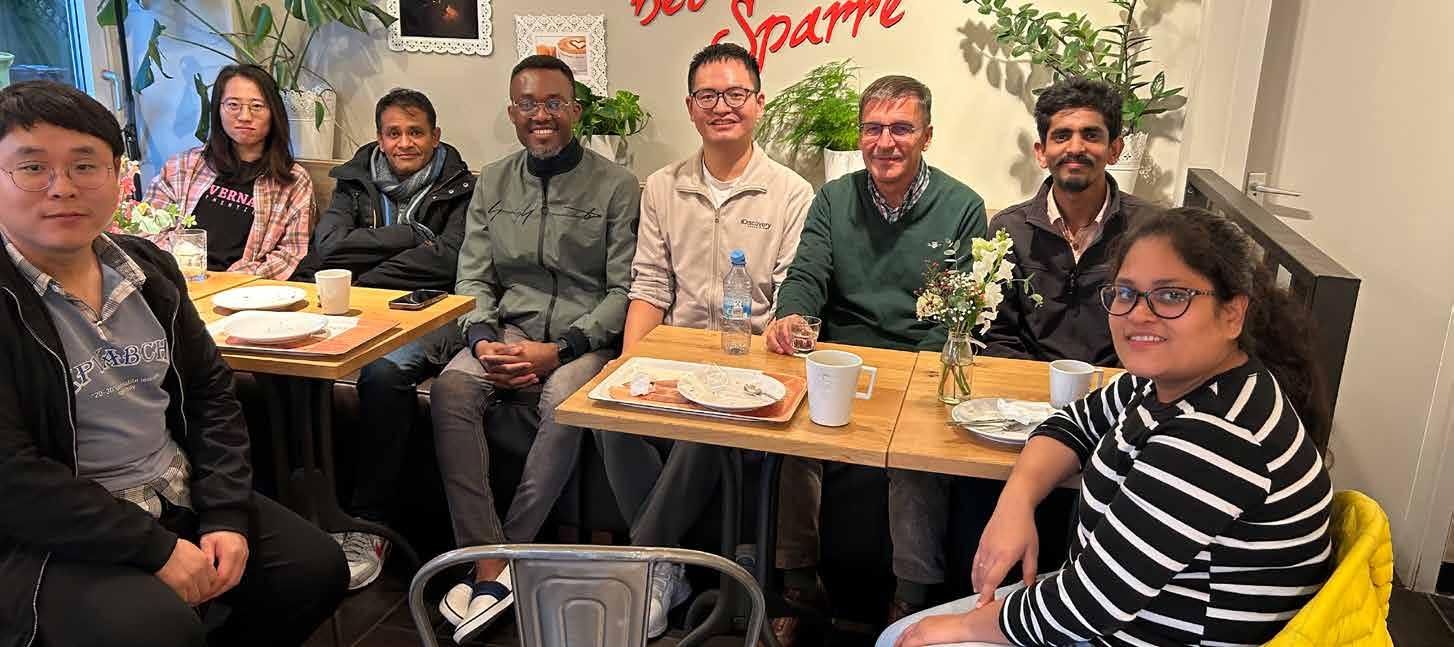
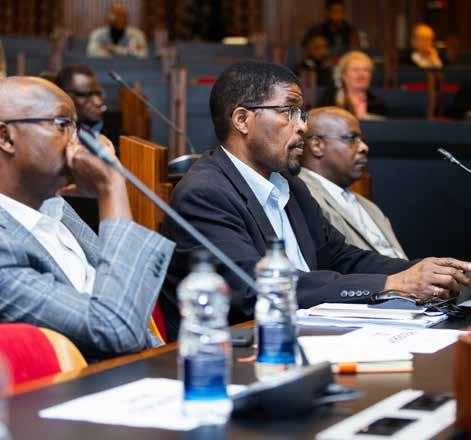
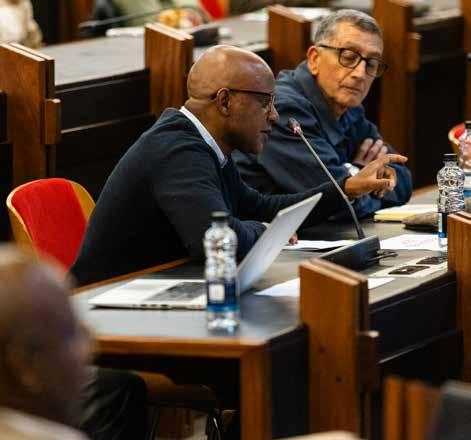
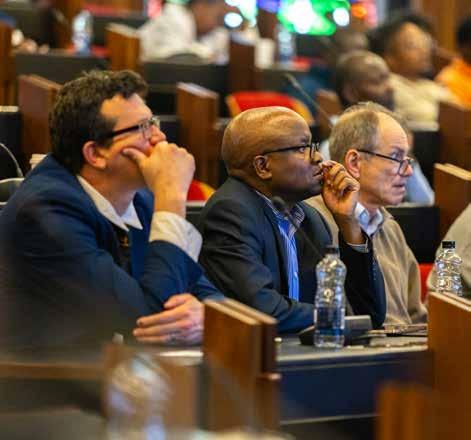
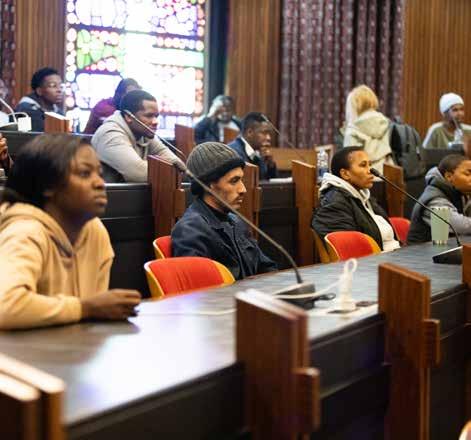
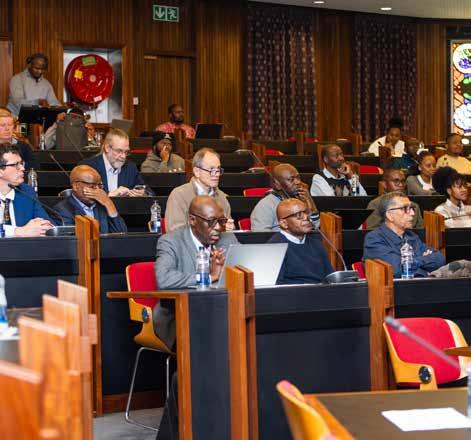
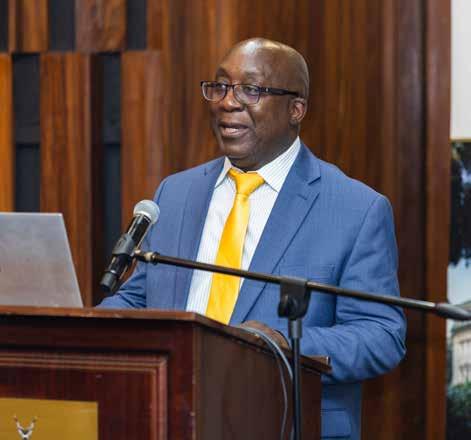
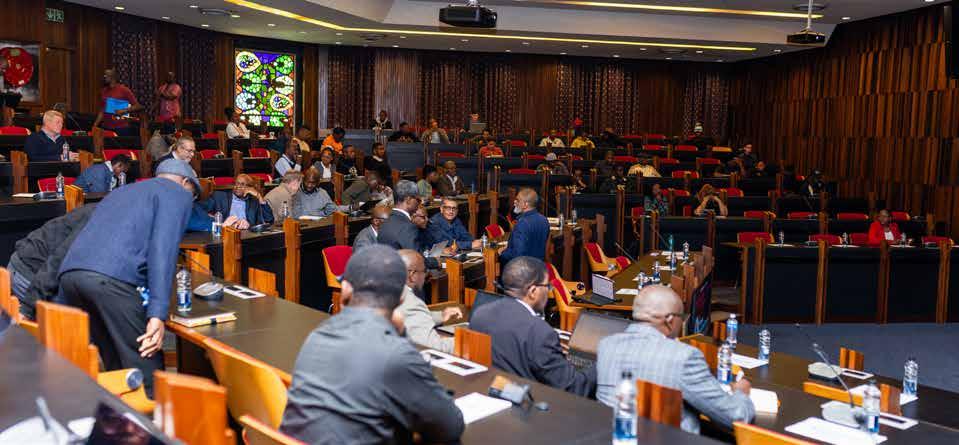
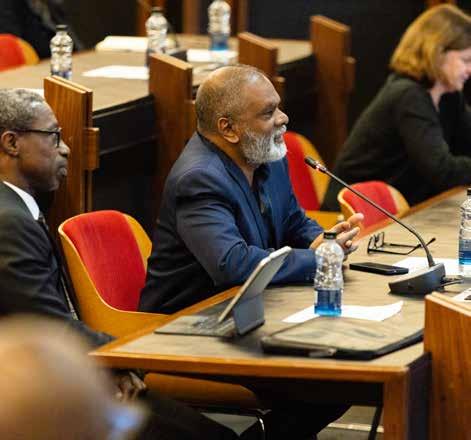
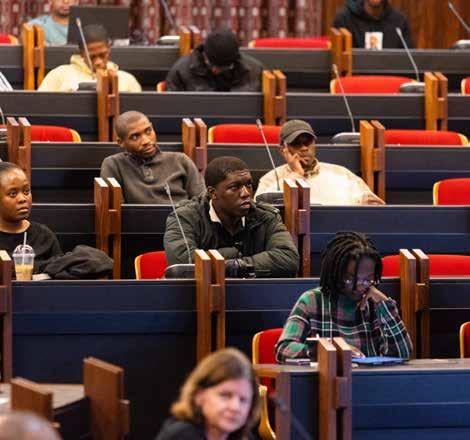
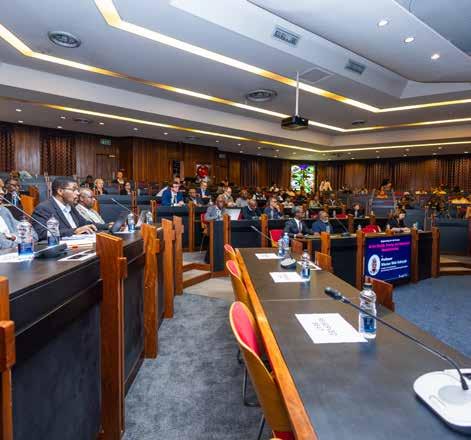
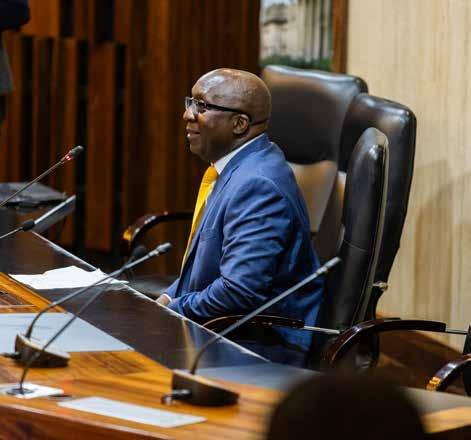
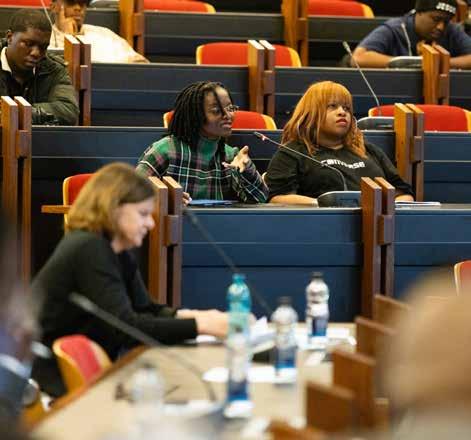
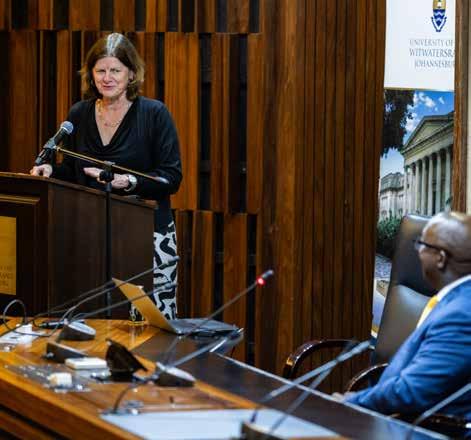
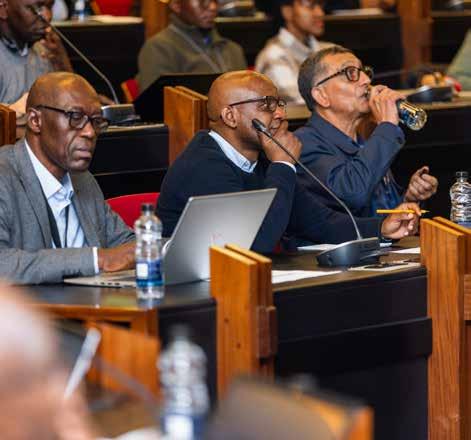
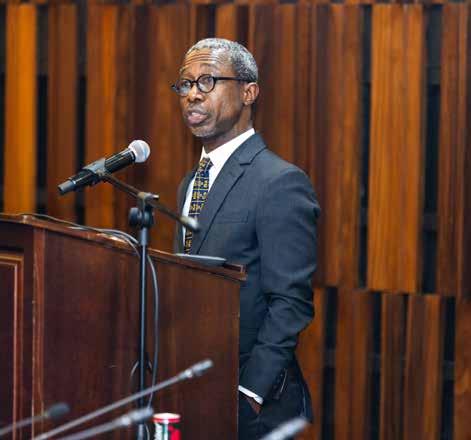
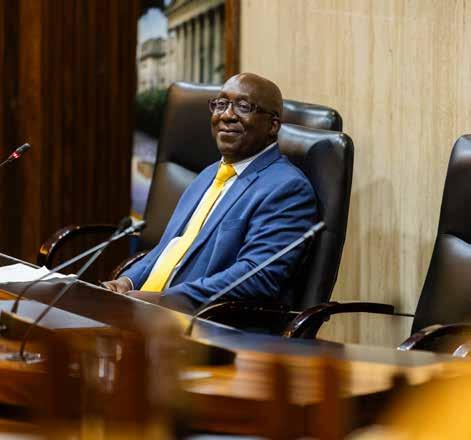
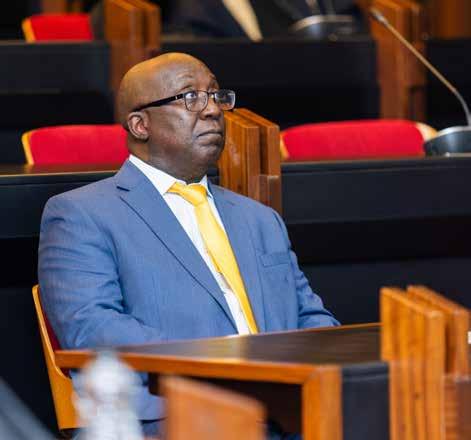
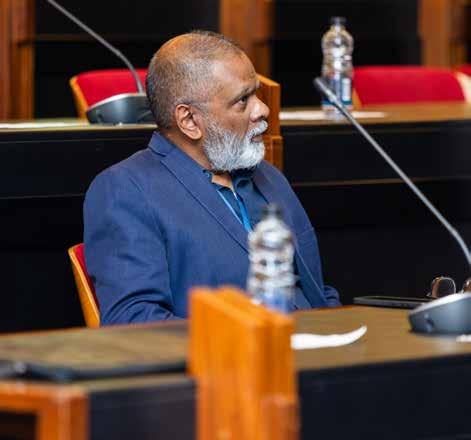
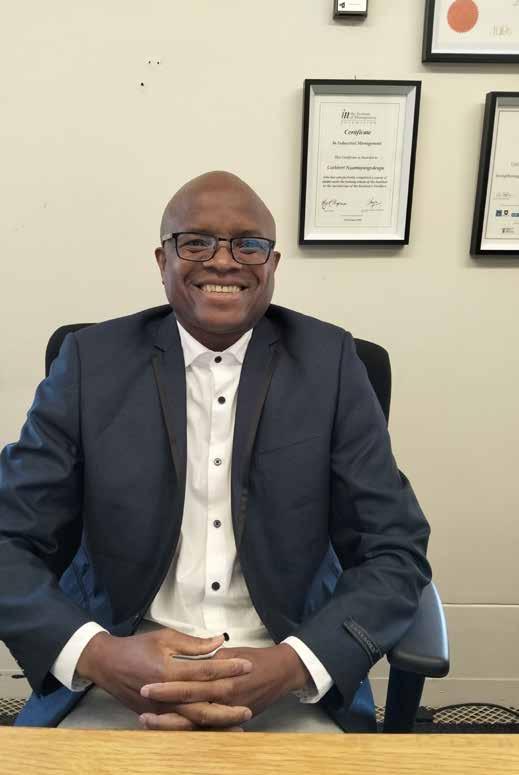
I am honoured to step into the role of Head of the School of Electrical & Information Engineering (EIE) at Wits University—a school with a proud 103year legacy of producing pioneering engineers and thought leaders. Inheriting this legacy at a time of rapid global change such as climate disruption, digital transformation, and rising energy demands is both humbling and energizing. At EIE, we’re committed to leading with purpose through a bold vision: to be the best School to work for, graduate from, and collaborate with.
Our research clusters are addressing real-world challenges. In Power and Energy, we’re enabling a Just Transition by integrating renewables into the national grid, and developing nanotech-based insulation materials and PV microgrid solutions like PECO Power. We are also home to the Johannesburg Lightning Lab, a continental leader in lightning and grid resilience. In Mobility Engineering, our control and mechatronics teams are building the systems that will drive future cities, including intelligent vehicles and smart automation.
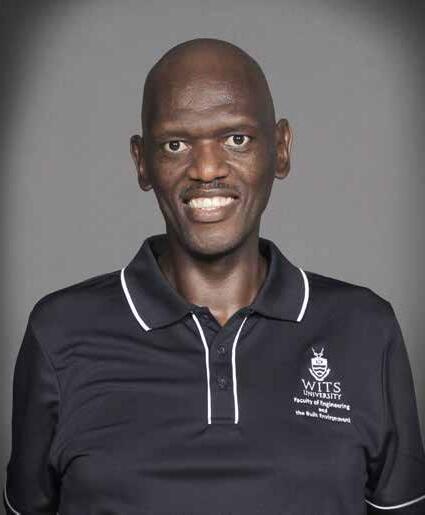
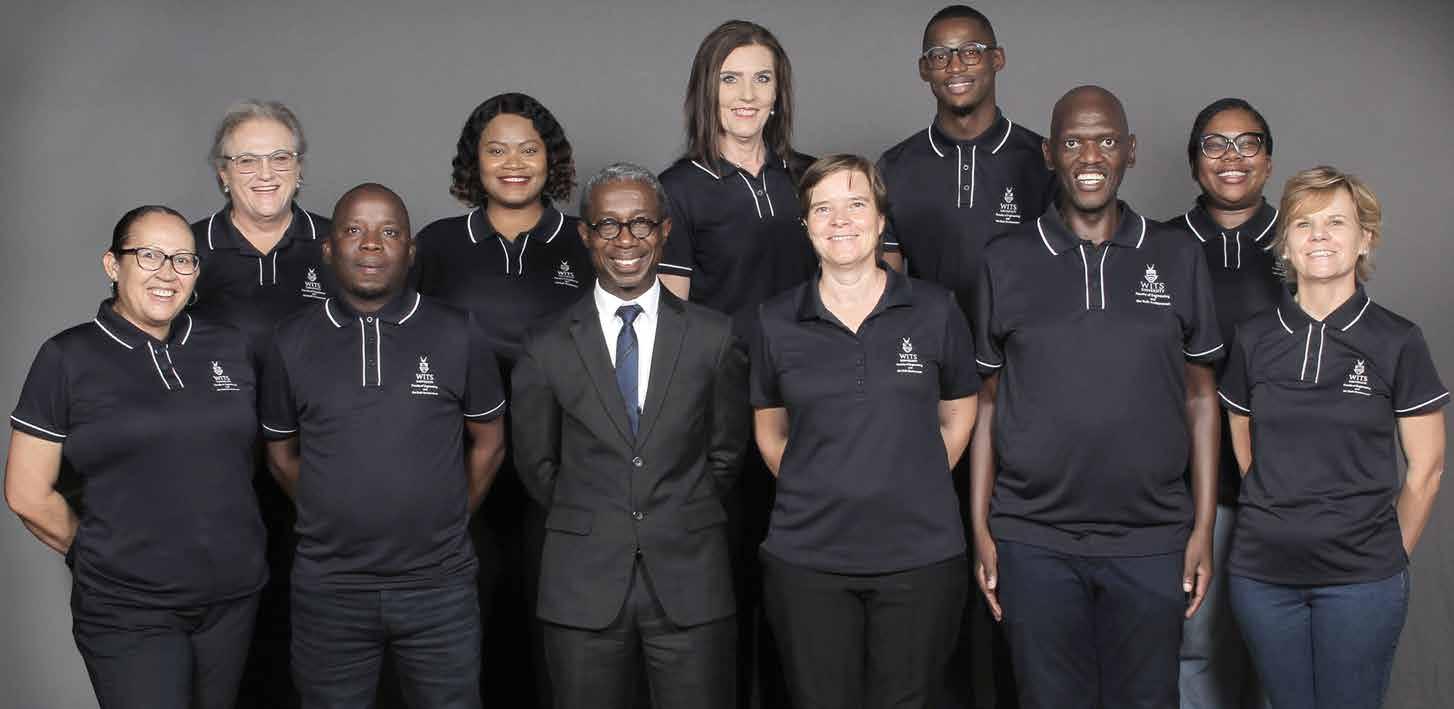
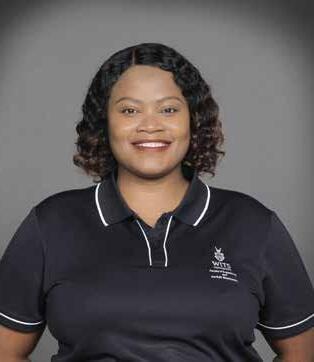
Registrar, Faculty of Engineering and the Built Environment
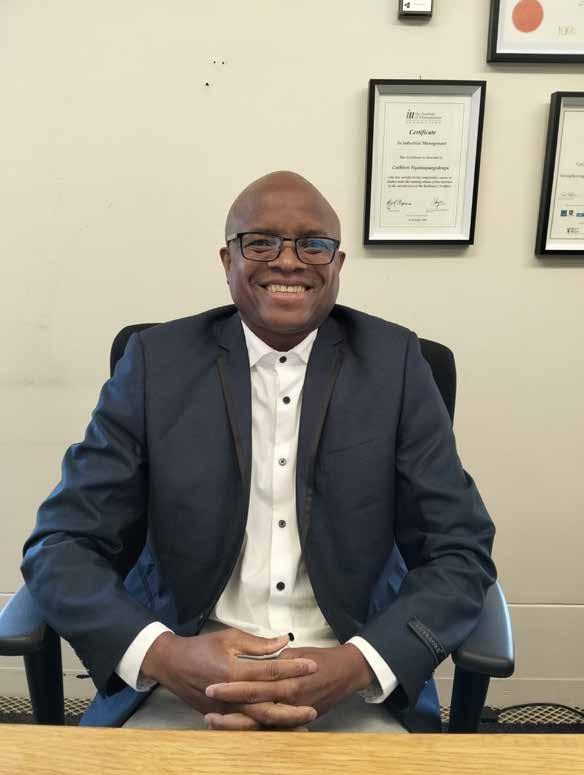
Cuthbert Nyamupangedengu Head of School of Electrical & Information Engineering
Our Communications team is advancing next-generation technologies, including 6G and optical wireless breakthroughs, while our Biomedical Engineering programme is the only undergraduate one in South Africa which is developing life-changing innovations in prosthetics and diagnostics. In Software and Ethical AI, we are shaping trustworthy AI and cybersecurity systems in partnership with the CSIR through our Centre of Excellence.
Our unique curriculum, including 3+2 pathways like BEngSc Digital Arts and Biomedical Engineering, prepares students not just for careers, but for lifelong adaptability.
As we enter our second century, we continue a legacy of excellence with wisdom, inclusivity, and impact. At EIE, the future is not just imagined engineered.
Innovating, Inspiring, Leading: The MIA Way Forward Professor Daniel Wilke
Introducing the New Head of School: Driving Innovation in Engineering Education
After 26 years at the University of Pretoria, I am honoured to join the University of the Witwatersrand as Head of the School of Mechanical, Industrial and Aeronautical Engineering. This marks a transformative moment as we reimagine the School’s contribution to engineering education, research, and national development.
Our goal is to cultivate an environment where staff realise their full research potential and students grow into independent, critical thinkers. In a world flooded with information but lacking insight, we must shift from content delivery to fostering reasoning and reflection.
To support this, we are introducing Digital Learning Partners not answer banks, but tools to develop students’ inquiry, reasoning, and metacognition through an iterative learning process. In parallel, we are embedding pre-assessments of prerequisite knowledge into modules to help identify gaps early and enable targeted concept reinforcement.
Strategic academic appointments are being fast-tracked to align our expertise with emerging needs across industries from mining and aerospace to advanced manufacturing. We are also expanding partnerships with funding bodies to translate research competencies into practical impact.
Our bursary-supported postgraduate cohort is growing and will contribute to teaching while strengthening our talent pipeline. We are embedding AI literacy across the curriculum not as a trend, but as a tool to enhance inquiry, accelerate learning, and sharpen critical thought.
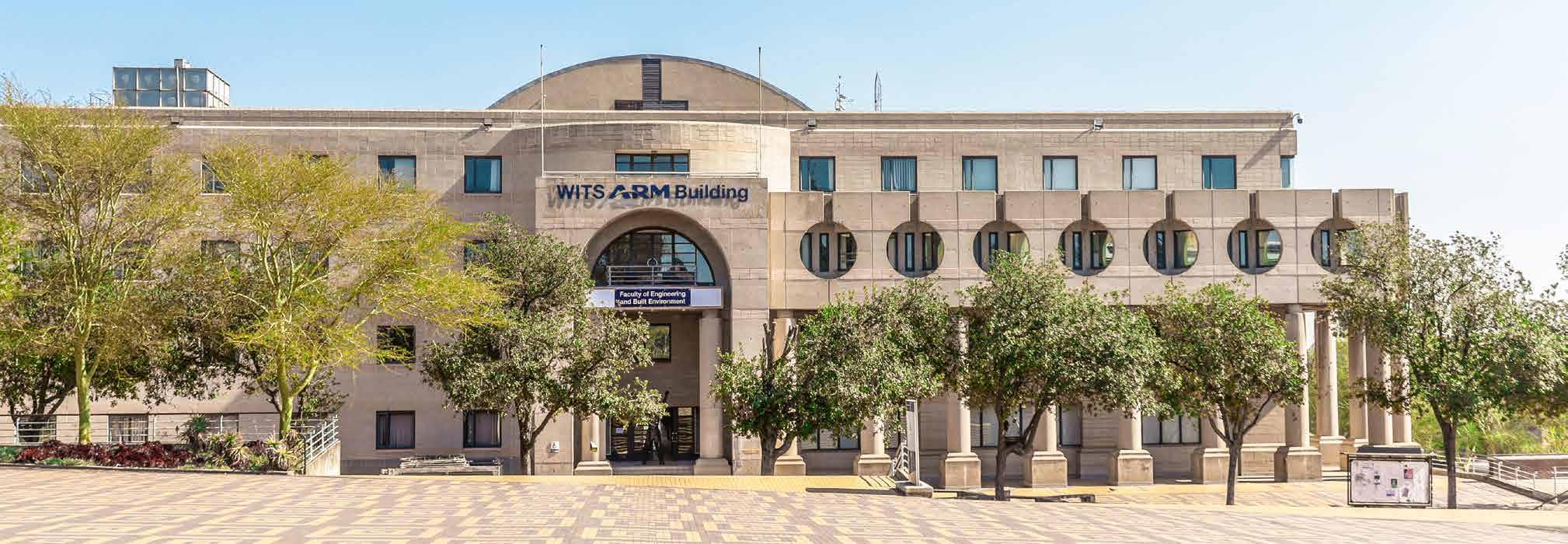
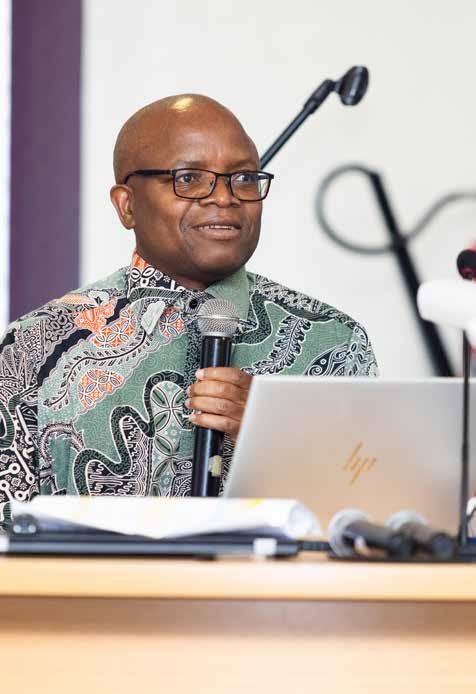
Regionally, we envision a Gauteng academic hub through inter-university collaboration sharing labs, courses, and expertise to deliver efficient, world-class education.
The School continues to host the National Aerospace Centre, which we aim to grow through innovation and global research partnerships.
Finally, we are prioritising student engagement, launching the SAIMechE Student Chapter, and closing the MIA Action Week to showcase our vision, achievements, and community impact.
This is a time of intentional transformation. Together, we will lead with purpose.
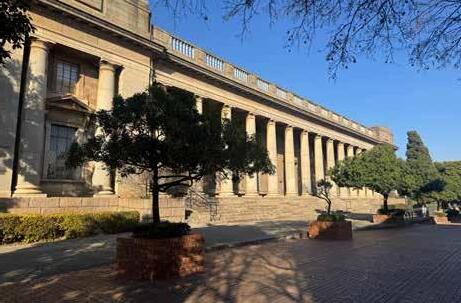
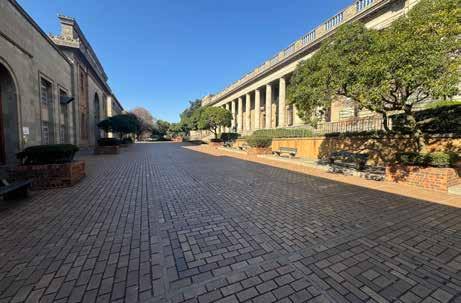
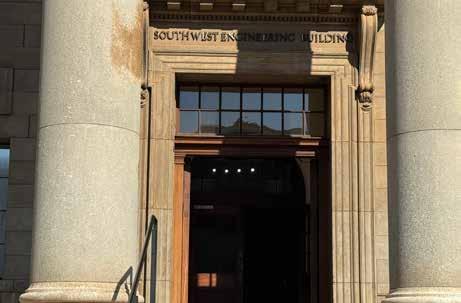
“Chiselling a New Legacy: Wits Mining School Aims for Global Top-Tier Status”
“The University of the Witwatersrand (Wits) has appointed Dr Paseka Leeuw as the new Head of the School of Mining Engineering, marking a significant leadership change at one of the world’s largest mining schools. Dr Leeuw with deep industry experience, has a bold vision: to position the Wits School of Mining Engineering among the top ten mining schools globally. He emphasized that the school is not starting from scratch but building on a strong foundation of academic excellence and industry engagement. Key industry partnerships with Anglo American, Glencore, Sibanye-Stillwater, and others form a critical pillar of this vision, supporting research, curriculum design, and student training.
School of Civil and Environmental Engineering
“The Future Is Under Construction— and He’s leading the Project”
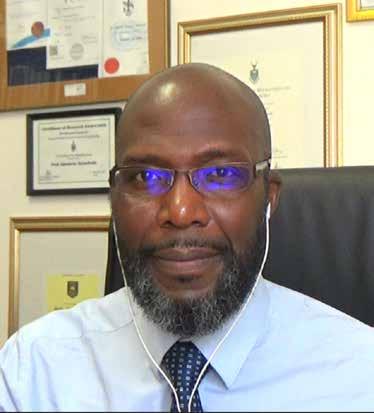
Professor Adesola Ilemobade, New Head of School Civil and Environmental Engineering
Shaping the Future of Civil and Environmental Engineering at Wits: Vision, Mission and Plans Under New Leadership
Engineering
Dr Leeuw outlined a multi-pronged strategy to elevate the school’s standing internationally. Central to this plan is the enhancement of industry-aligned curricula that prepare graduates to meet future demands in mining, especially in areas like automation, digitalization, sustainability, and energy transition. He noted that experiential learning through internships, mentorships, and secondments will be intensified to provide students with real-world exposure. In addition, the school is expanding its research focus to align with current and future industry needs, including responsible mining practices and climate-conscious operations. Dr Leeuw is also committed to fostering a culture of innovation, inclusion, and academic rigor, enabling the school to respond proactively to global shifts in the mining landscape.
Looking ahead, Wits will benchmark itself against global mining education leaders by focusing on research impact, graduate employability, and collaboration with international academic and industry partners. Dr Leeuw believes the school’s current momentum, combined with visionary leadership and industry relevance, provides a strong platform to achieve top-ten global status. He underscored that the school is not only ready but equipped to take its place among the elite institutions shaping the future of mining education and innovation.”
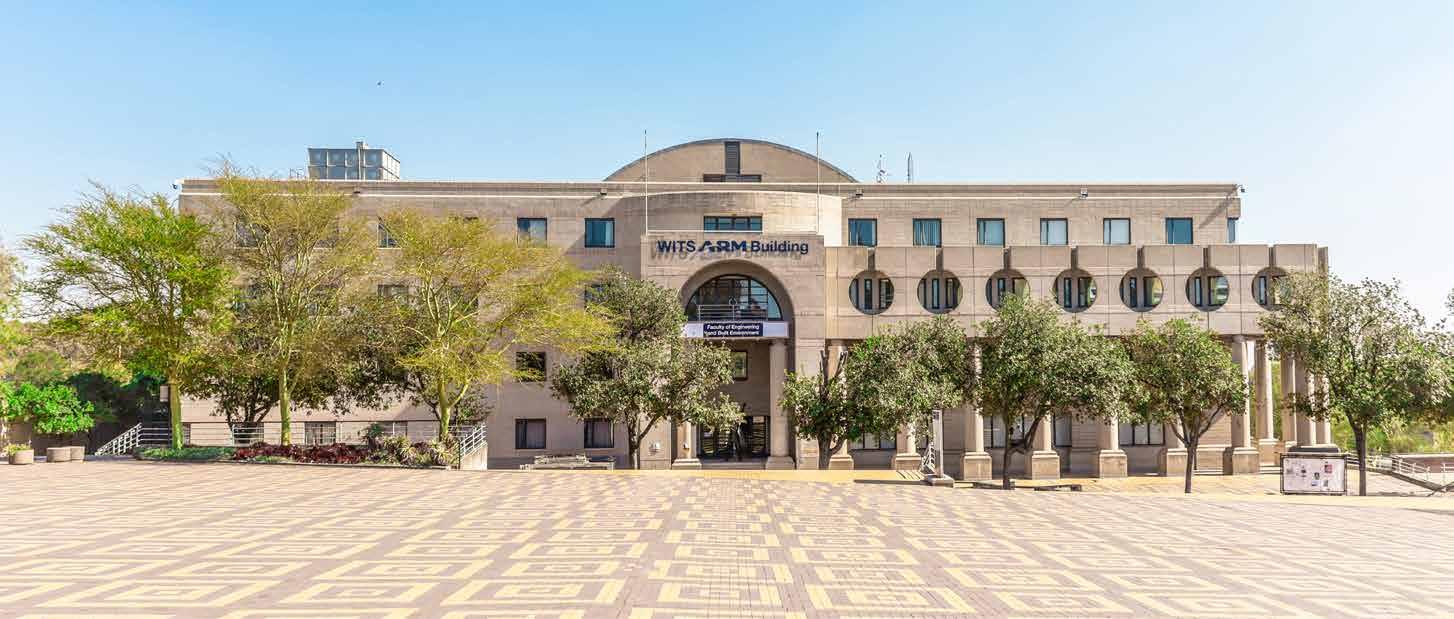
Professor Adesola Ilemobade has been appointed as the new Head of the School of Civil and Environmental Engineering (SoCEE) at the University of the Witwatersrand, bringing a forward-looking vision grounded in innovation, collaboration, and global impact. His mission is clear: to shape the future of SoCEE by fostering excellence in teaching, research, and engagement through an inclusive, dynamic, and ethically responsible academic environment.
Central to Professor Ilemobade’s leadership is the pursuit of curriculum renewal and improved throughput. He envisions a school where pedagogical practices are student-centred and future-ready, emphasizing sustainability, digital fluency, and the ethical use of emerging technologies such as artificial intelligence. To support this, creative and collaborative spaces within the Hillman Building will be reimagined as hubs for student and staff engagement.
His strategic plan focuses on strengthening staff development, increasing professional registrations, and promoting postgraduate research output. By 2030, the School aims to double its NRF-rated researchers, expand postgraduate supervision, and diversify academic representation. This vision will be supported by initiatives such as mentoring programs, targeted certifications, and partnerships with industry and sister institutions.
Professor Ilemobade also prioritizes impactful research and innovation, exemplified by projects on rainwater harvesting and construction waste reuse. Enhanced communication and recognition structures will ensure transparency, celebrate achievements, and nurture a culture of mutual respect and academic excellence.
Under his leadership, SoCEE is poised to deepen its global impact while remaining rooted in local relevance. By drawing on the School’s robust strengths which are its talented students, dedicated staff, and rich alumni network, Professor Ilemobade is set to lead SoCEE into a new era of growth, resilience, and societal contribution.
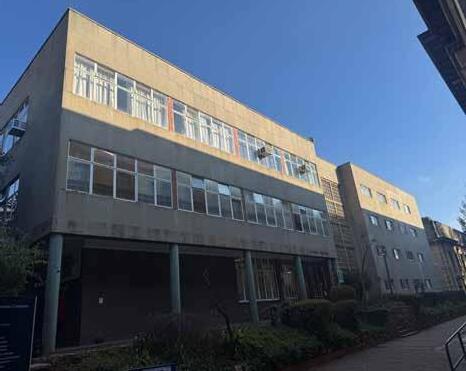
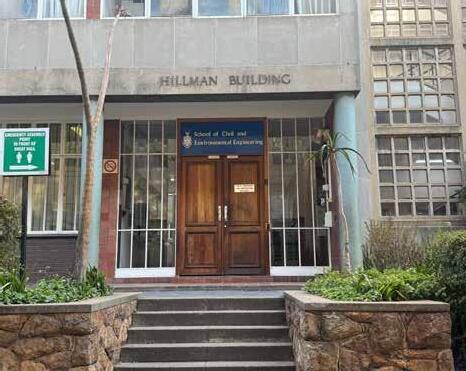
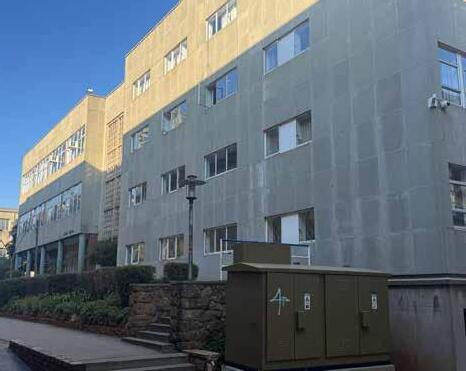
Wits Chemical and Metallurgical Engineering – where leaders are forged.
Associate Professor Lizelle van Dyk has been appointed as the new Head of the School of Chemical and Metallurgical Engineering. Prof van Dyk brings a clear vision to the role, aiming to develop the School into a leading institution that forges leaders in the field of Metallurgical and Chemical Engineering. Her focus is on creating an environment where both staff and students are supported to excel, ultimately producing engineering professionals who are equipped to make a positive and ethical impact on future global challenges.
To achieve this, Prof van Dyk emphasizes the need for a collective effort from the entire School. Key priorities will include delivering future-focused curricula of high quality, enhancing the visibility of the School’s cutting-edge research, and building strong partnerships with other academic schools, industry, and universities locally and abroad. Central to her approach is a commitment to transformation and diversity, which she views as essential for fostering unique experiences and driving innovation within the School.
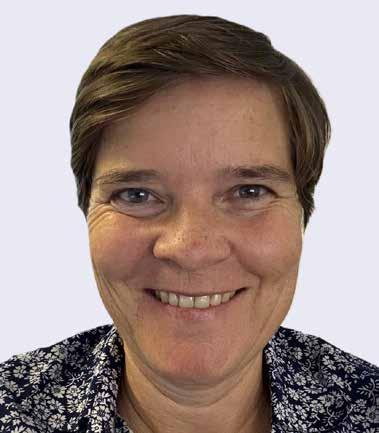
Associate Prof. Lizelle van Dyk Head: School of Chemical and Metallurgical Engineering
School of Chemical and Metallurgical Engineering
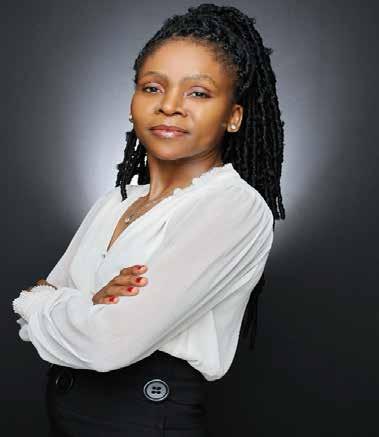
Nthabiseng Maledi is an Associate Professor at the School of Chemical and Metallurgical Engineering with more than 17 years of academic experience and a proven record of research and teaching. She holds a PhD in Metallurgical Engineering from the University of the Witwatersrand and is a C-2 rated researcher with extensive publications in the field of physical metallurgy and welding. Prof Maledi is a nominated board member at the Southern African Institute of Welding, contributing her expertise to strategic decision making. As the newly appointed Assistant Dean of Postgraduate Affairs, Prof Maledi is committed to fostering a dynamic environment that empowers students to excel academically and thrive in their professional pursuits. Outside of academia, Prof Maledi is passionate about fitness and health.














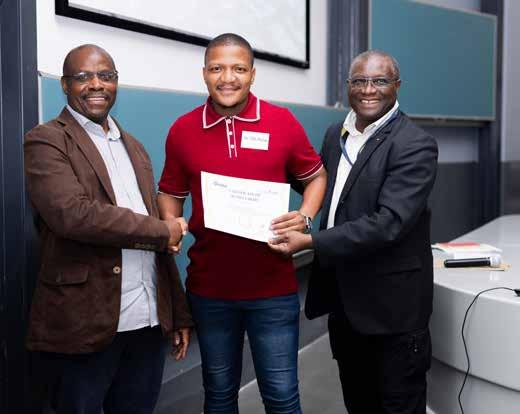
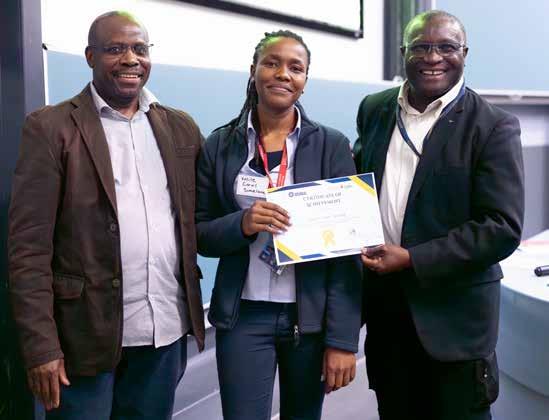
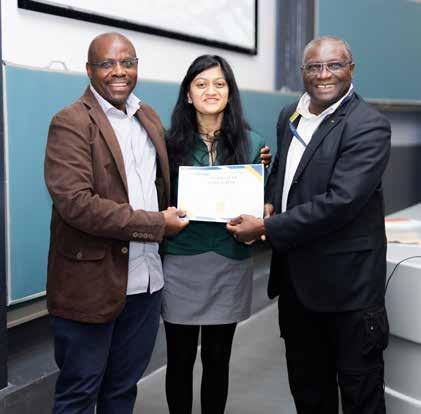
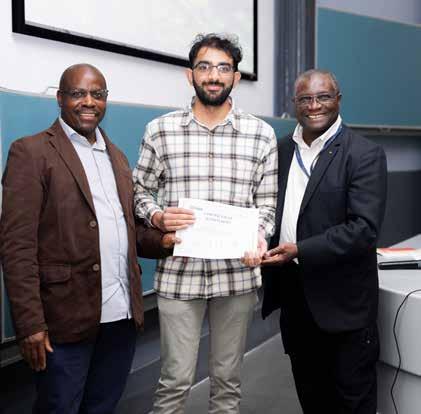
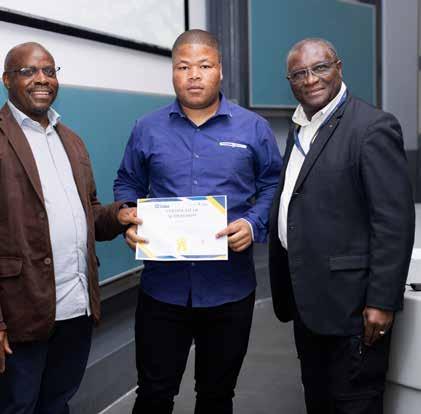
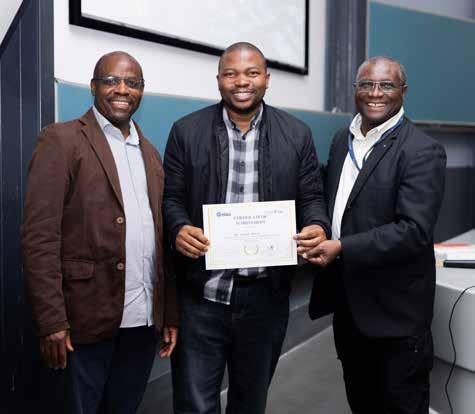
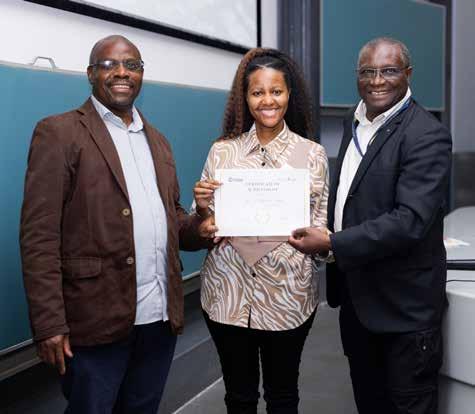
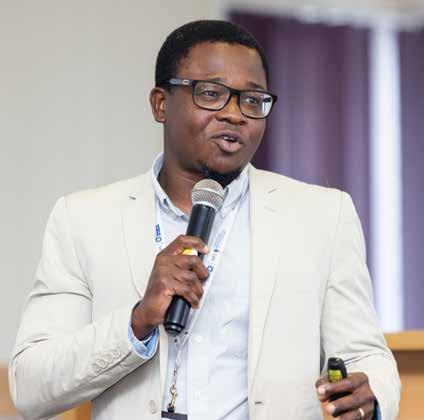
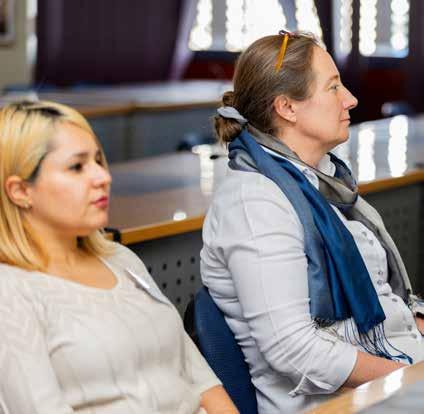
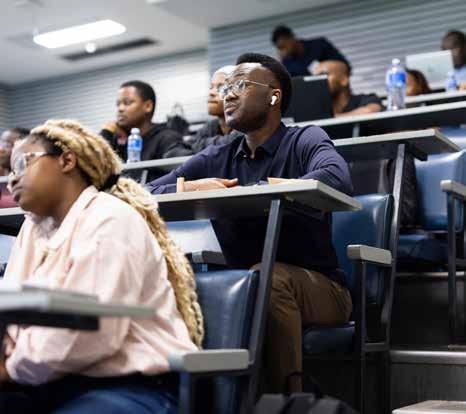
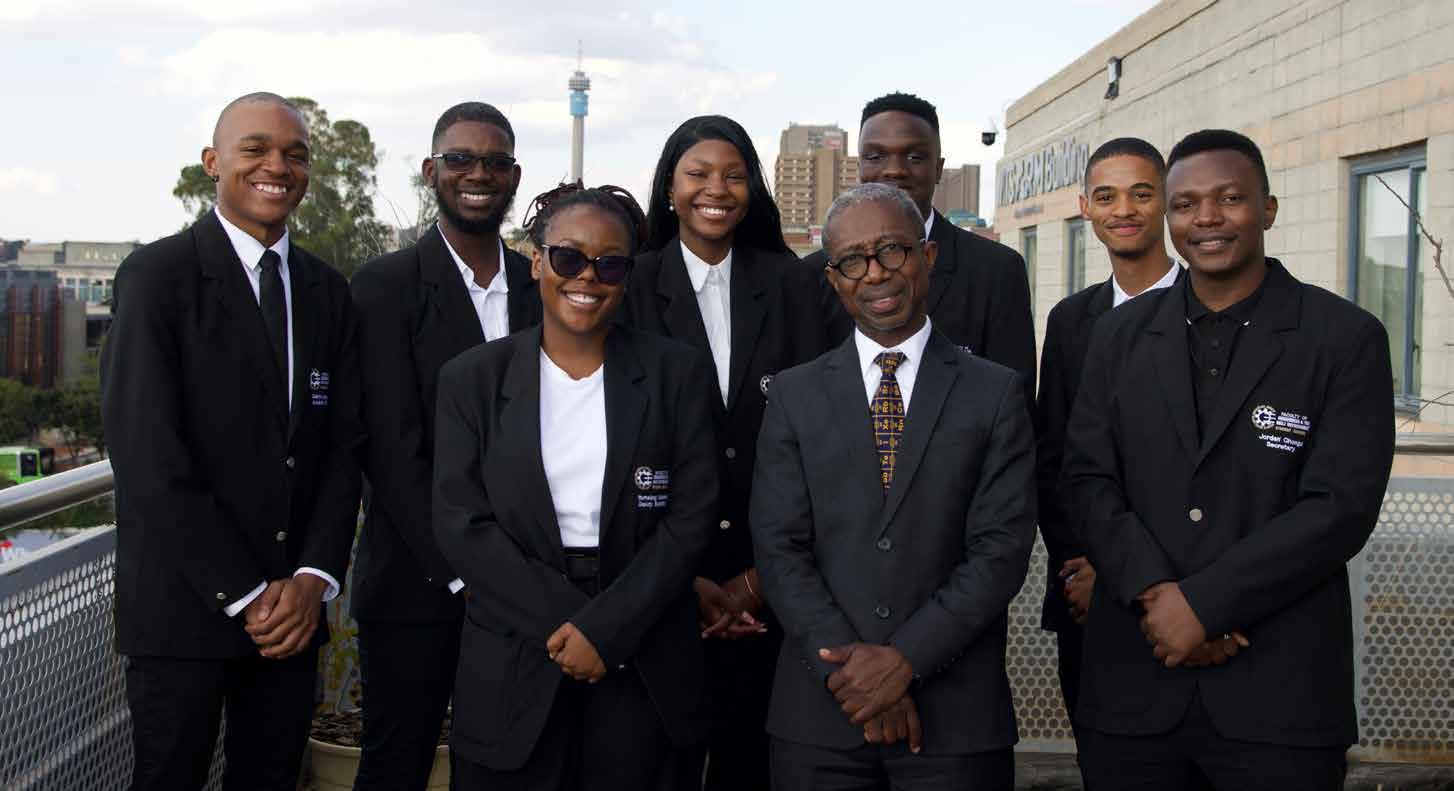
“The roots of education are bitter, but the fruit is sweet.”
– Aristotle
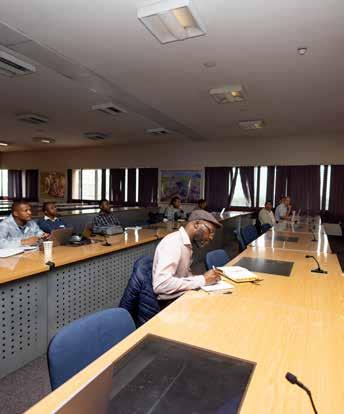
Exam season brings its fair share of stress, but it also reveals the strength, ambition, and resilience within you. Whether you’re tackling your very first university exams or preparing to cross the finish line of your academic journey, remember you’ve got this. Stay focused, be on time for your exams, come prepared, and listen carefully to the instructions from your exam coordinators. Use the resources around you, consult your lecturers, reach out to your mentors, and study in groups when you can. If the pressure starts to feel overwhelming, don’t hesitate to connect with the CCDU or ADU for support. This period demands persistence, but the reward is worth it. Each effort, no matter how small, brings you closer to your goal. And to those in their final year, this is your moment. You are about to conquer the edge, so make every effort count.
The EBE Council wishes you the very best in your exams. Prepare well, prepare in time, and push through. You are capable of more than you know]
Gabriel Wolfson, BSc (Hons, Mechanical Engineering)
Gabriel Wolfson, a recent Mechanical Engineering graduate from the University of the Witwatersrand, has made a remarkable contribution to renewable energy innovation through his final-year project. In partnership with Kathu Solar Park (KSP) a majority-owned subsidiary of ENGIE and guided by Dr Gary de Klerk (KSP) and Dr Randall Paton (Wits), Gabriel developed a machine learning tool that uses historical operational data to help optimise Concentrated Solar Power (CSP) plant performance. The program utilises reinforcement learning to provide real-time, data-driven recommendations to operators, with the potential to boost efficiency and increase revenue by as much as 10-15% during critical low-yield periods between late autumn and early spring.
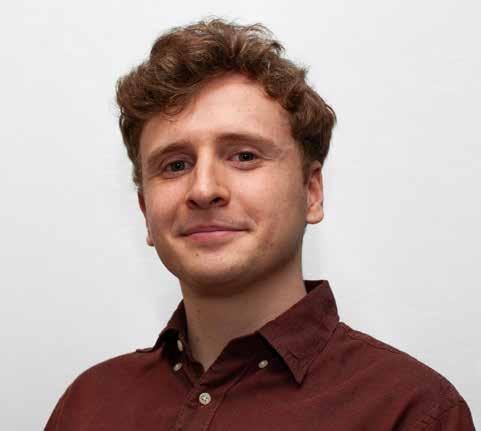
This outstanding project earned Gabriel recognition at the valediction ceremony of the School of Mechanical, Industrial, and Aeronautical Engineering and was also presented at the South African Conference on Computational and Applied Mechanics. Now part of the ENGIE Renewables Graduate Programme, Gabriel continues to apply advanced data-driven solutions to renewable energy initiatives. His achievement underscores the power of undergraduate research when grounded in strong mentorship, industry collaboration, and cutting-edge engineering demonstrating the impact Wits students can make in driving the energy transition forward.
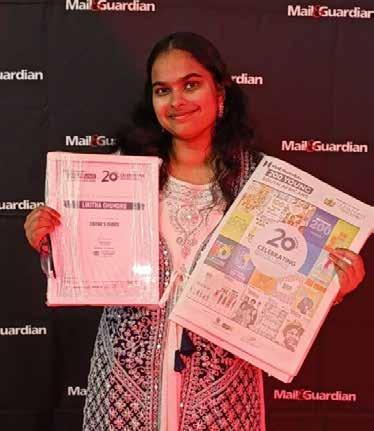
I am Likitha Chundru, a first-year Information Engineering student from the School of Electrical and Information Engineering at WITS. In high school, I was named Top Senior Scientist of 2023 at the Eskom Expo, winning R75,000 and several prestigious awards, including the Meiring Naudé Memorial Award and the WITS–Edinburgh Sustainable African Futures Prize. I also earned recognition from the University of Pretoria and the Soil Science Society. I represented South Africa at the Regeneron ISEF in Los Angeles, receiving the Wolfram Research Prize. In 2025, I was honoured among the Mail & Guardian Top 200 Young South Africans, receiving the Editor’s Choice Award.
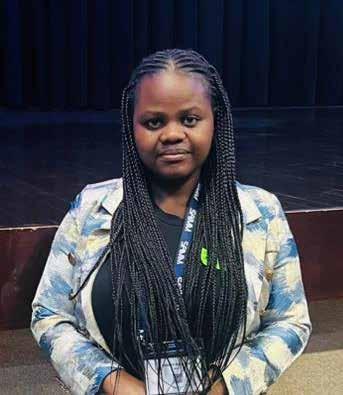
Shirley Masangu, a final-year Metallurgy and Materials Engineering student at Wits, won Overall Best Presenter (Metallurgy and Materials Engineering) at the 12th SAIMM Young Professionals Conference at Mintek. Her presentation, “Wear Behaviour of As-Cast CrCoNi and VCoNi Medium Entropy Alloys,” supervised by Dr Desmond Klenam and Professor Michael Bodunrin, from the Next Frontiers in Advanced Materials Lab, showcased innovative alloy research advancing South Africa’s sustainable materials development.
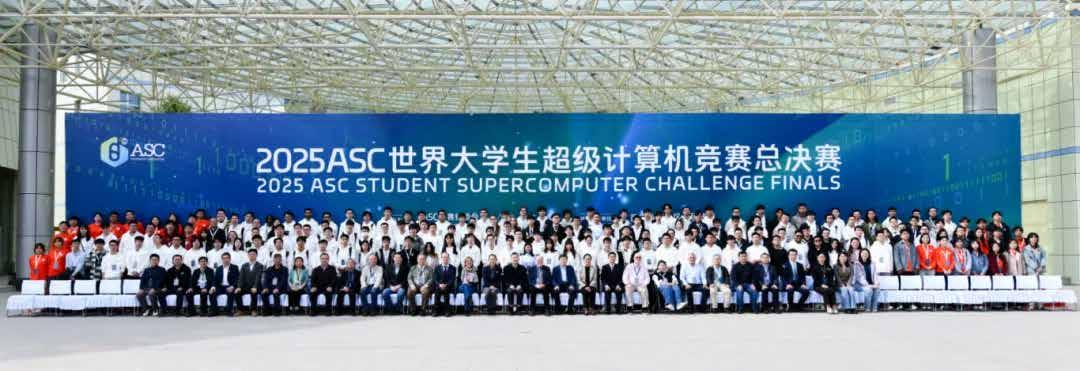
WitsHPC proudly represented South Africa at ASC25 in Xining, China, after placing in the top twenty five worldwide out of more than three hundred teams in the qualification round. Building on a strong preliminary round that focused on optimisation strategies for artificial intelligence inference, weather modelling, and particle simulation applications, the team advanced to the finals at Qinghai University, becoming the first African university to qualify for and compete in the world’s largest student supercomputing competition. At the event, WitsHPC delivered impressive benchmark results and was awarded First Prize as one of the top twenty five teams globally, marking a significant achievement for both Wits and African HPC.


Engineering Council of South Africa (ECSA)
Problem Solving
Application of Scientific and Engineering Knowledge

Engineering Design

Engineering Professionalism
















Investigations, Experiments and Data Analysis

Engineering Methods, Skills and Tools, including Information Technology

Independent Learning Ability















































Engineering Management

Individual, Team and Multidisciplinary Working

Sustainability and Impact of Engineering Activity




Professional and Technical Communication
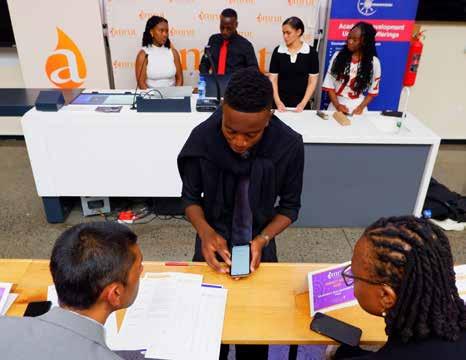
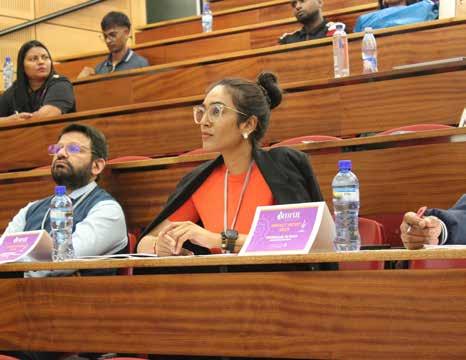
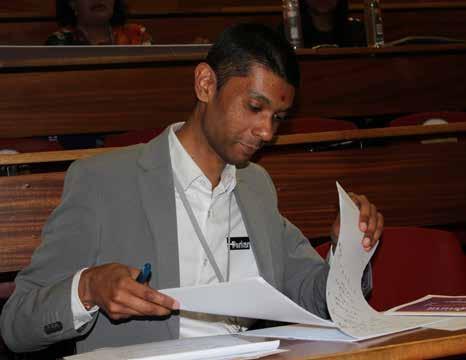
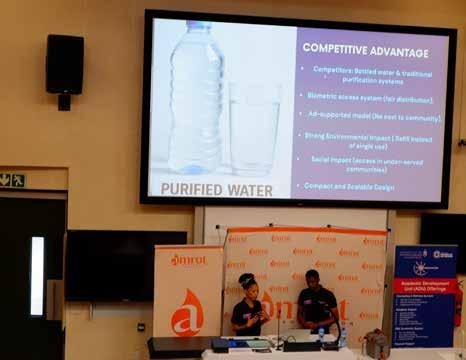
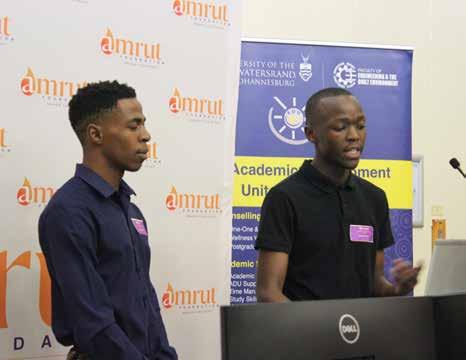
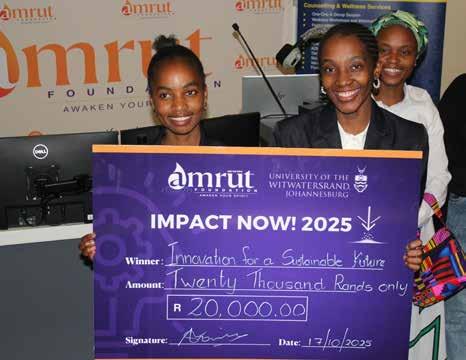
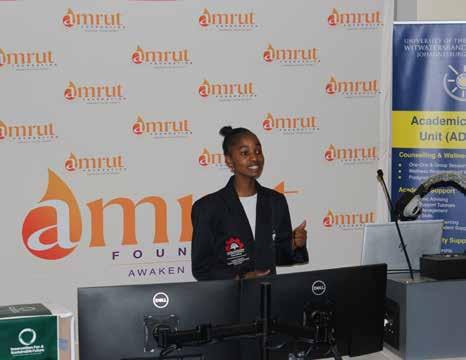
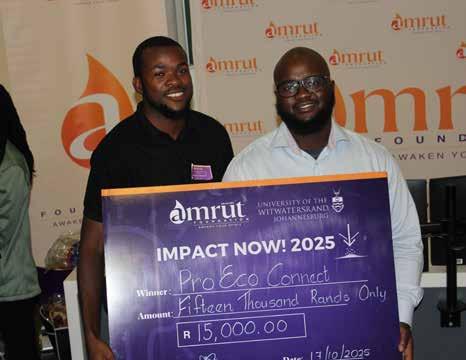
• FEBE through the ADU has partnered with the Amrut Foundation, Wits Innovation Centre and Wits Commercial Enterprise to set up Innovathon challenge. The Innovathon challenge is a competition in which students with brilliant entrepreneurial ideas and/or innovative products or services that can be converted into a thriving business have been welcomed to join and participate. The winning student group stands a chance of winning up to R 250,000 to be invested in the start - up of their business venture.
•
• The Innovathon challenge has been designed to take an Experiential Learning (Learning by Doing) pedagogical approach with the aim of cultivating practical and transferable skills and competencies required for a successful career as an entrepreneur. The learning approach has been designed to be exciting and experimental and will run from April to the end of October, with most if the activities taking place during the mid-semester and mid-year breaks. Over 25 student groups have signed up for the challenge, and the students are working in multi-disciplinary groups of between 2 - 5 people. Over the six (6) months period, the students are receiving practical entrepreneurial training in the form of workshops and one-on-one support the faculty innovation case officers, as they refine their entrepreneurial venture and/or innovation product/service into a sustainable business. The training is being done in collaboration with industry partners, Wits Commercial Enterprise and the Wits Innovation Centre.
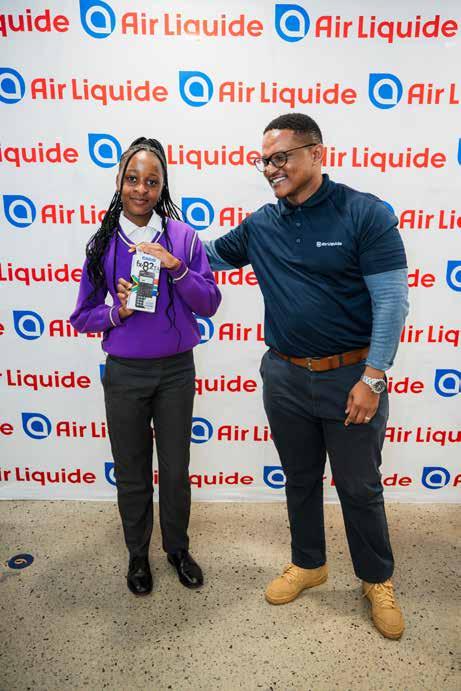
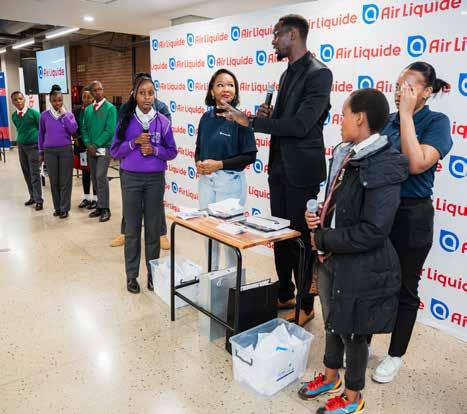
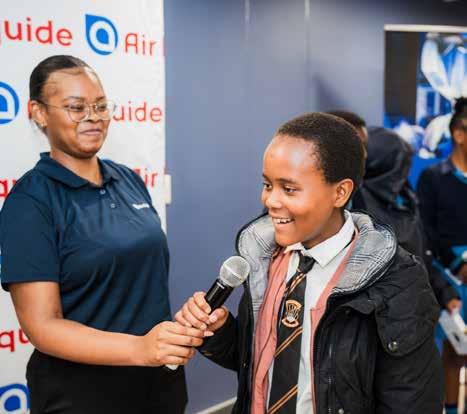
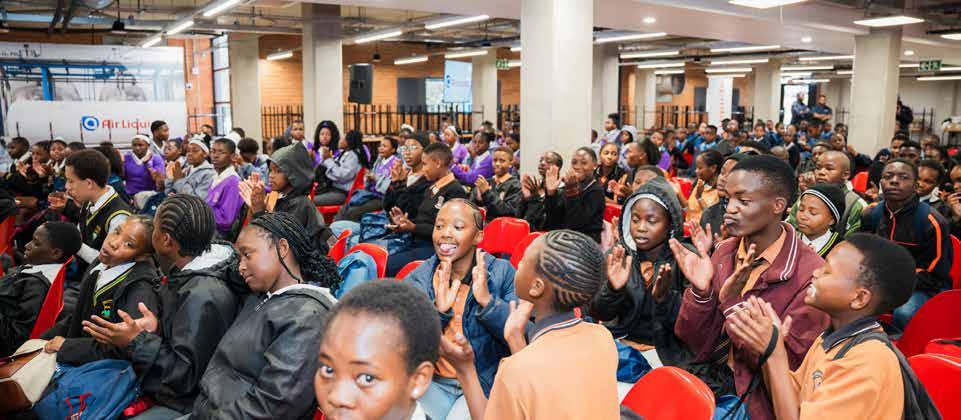
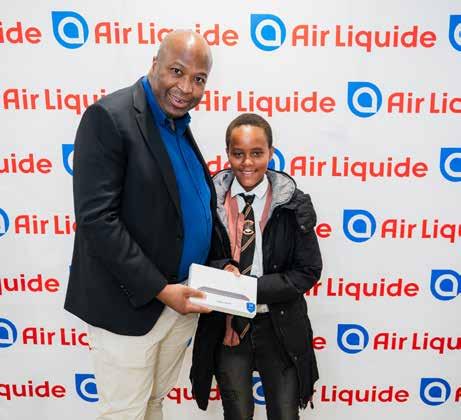
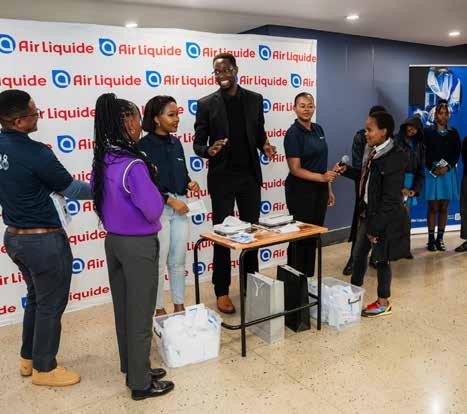
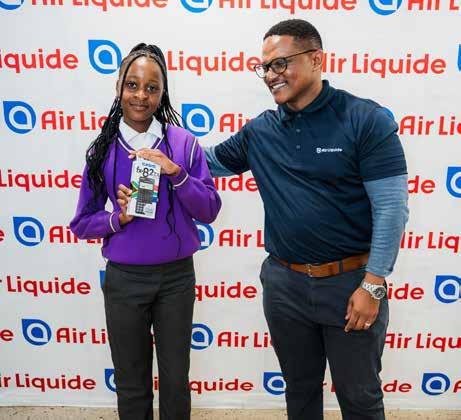
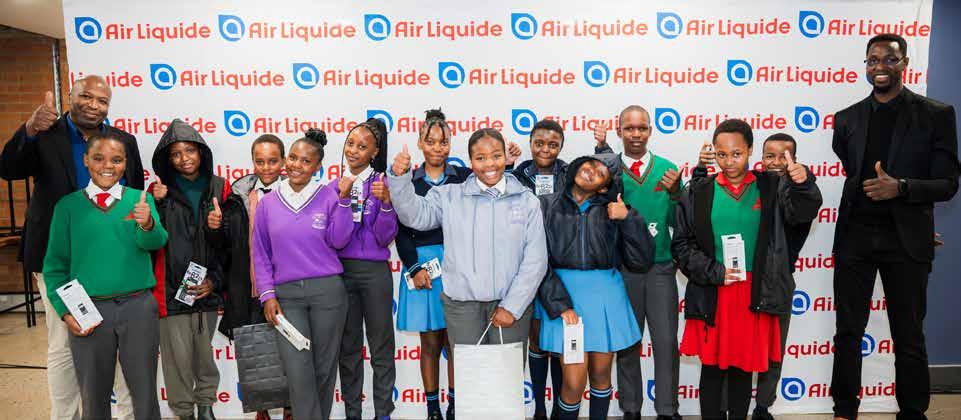
This pioneering initiative, a collaboration between Air Liquide and the Faculty of Engineering and the Built Environment at the University of the Witwatersrand, is designed to inspire, mentor, and empower learners from underserved communities to pursue careers in Science, Technology, Engineering, and Mathematics (STEM). Through the program, 300 learners are taken on an immersive journey across Wits University’s world class engineering laboratories, exploring the frontiers of digital and smart manufacturing, Mining 4.0, aerospace technology, drone innovation, and the Wits Digital Dome. Beyond exposure to cutting-edge facilities, the initiative gives learners a tangible glimpse into what a career in STEM entails, highlighting the pathways, qualifications, and skills required to excel in these fields. The experience not only sparks curiosity and ambition but also reinforces the message that innovation and excellence in STEM are within reach for every young South African, regardless of background.
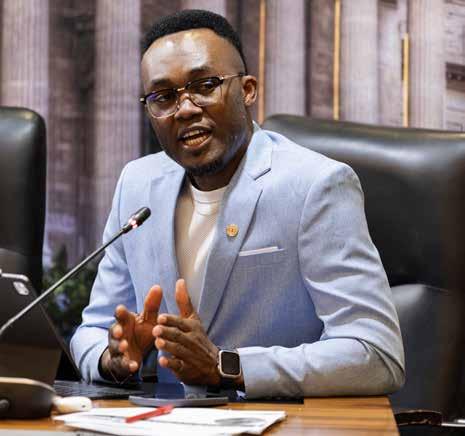
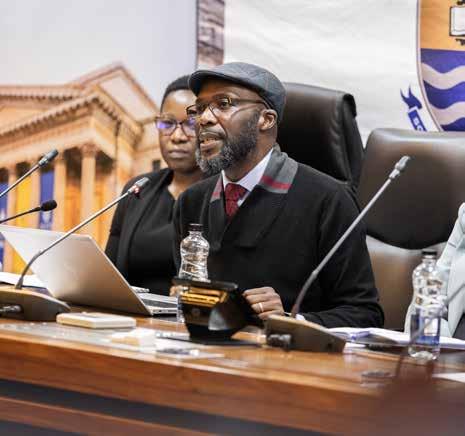
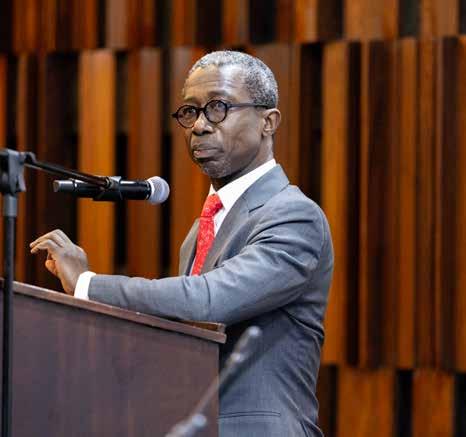
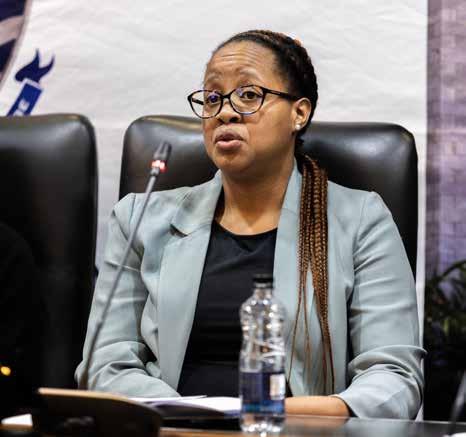
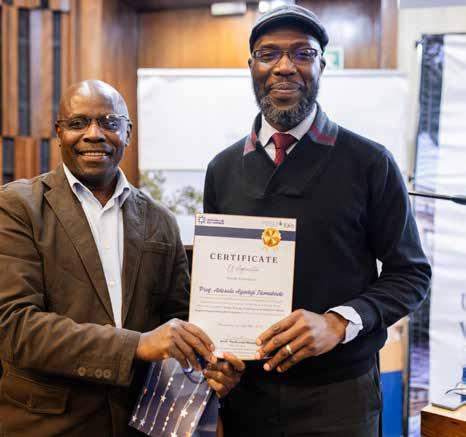
The Dean Leaps tall buildings in a single bound. Is more powerful than a locomotive. Is faster than a speeding bullet. Walks on water. Gives policy to God.
The Head of School
Leaps short buildings in a single bound. Is more powerful than a switch engine. Is just as fast as a speeding bullet. Walks on water if sea is calm. Talks with God.
Professor
Leap short buildings with a running start and favourable winds. Is almost as powerful as a switch engine. Is faster than a speeding BB. Walks on water in an indoor swimming pool. Talks with God if special request is approved.
Associate Professor
Barely clears a Quonset hut. Loses tug of war with locomotive. Can fire a speeding bullet. Swims well. Is occasionally addressed by God.
Assistant Professor
Makes high marks on the walls when trying to leap tall buildings. Is run over by locomotives. Can sometimes handle a gun without inflicting self-injury. Talks to animals.
Graduate Student
Runs into buildings. Recognizes locomotives two out of three times. Is not issued ammunition. Can stay afloat with a life jacket. Talk to walls.