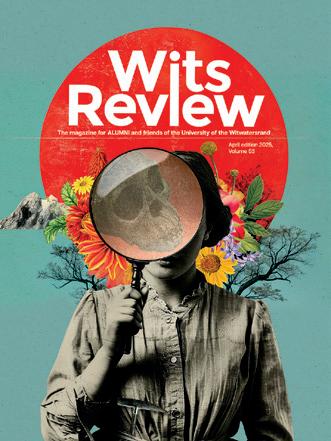
The magazine for ALUMNI and friends of the University of the Witwatersrand
April edition 2025, Volume 53
A bridge to the past
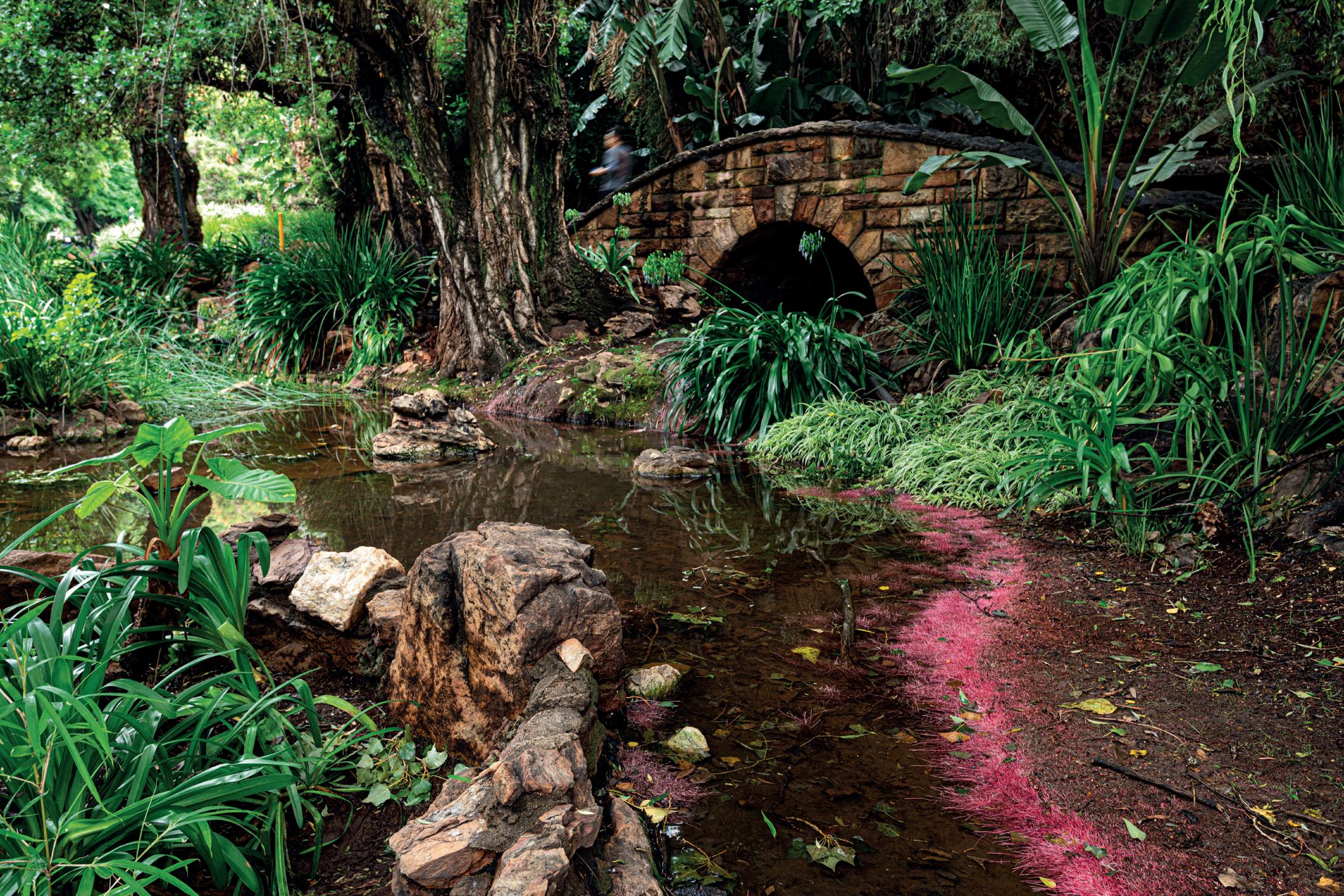
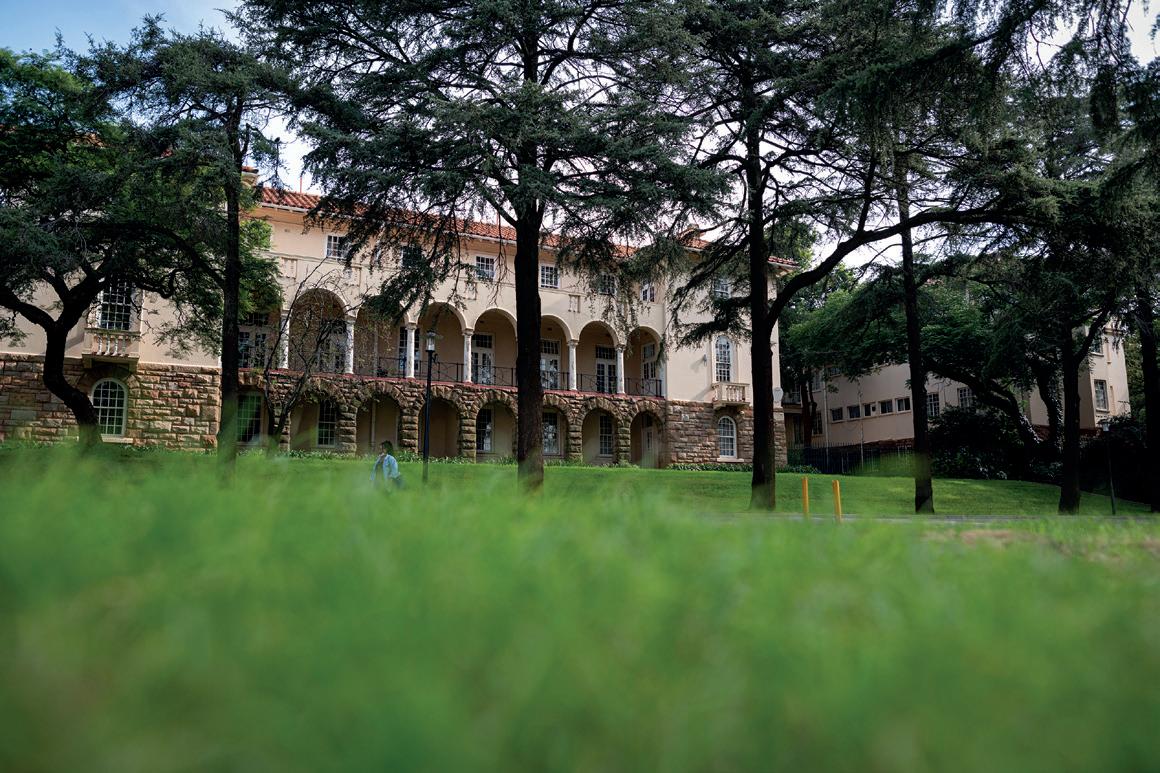
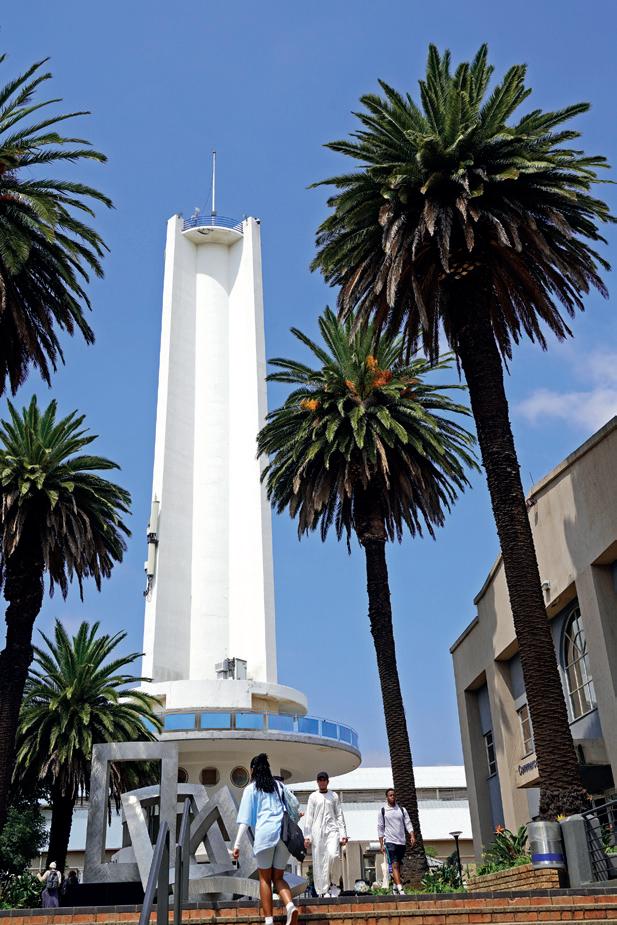
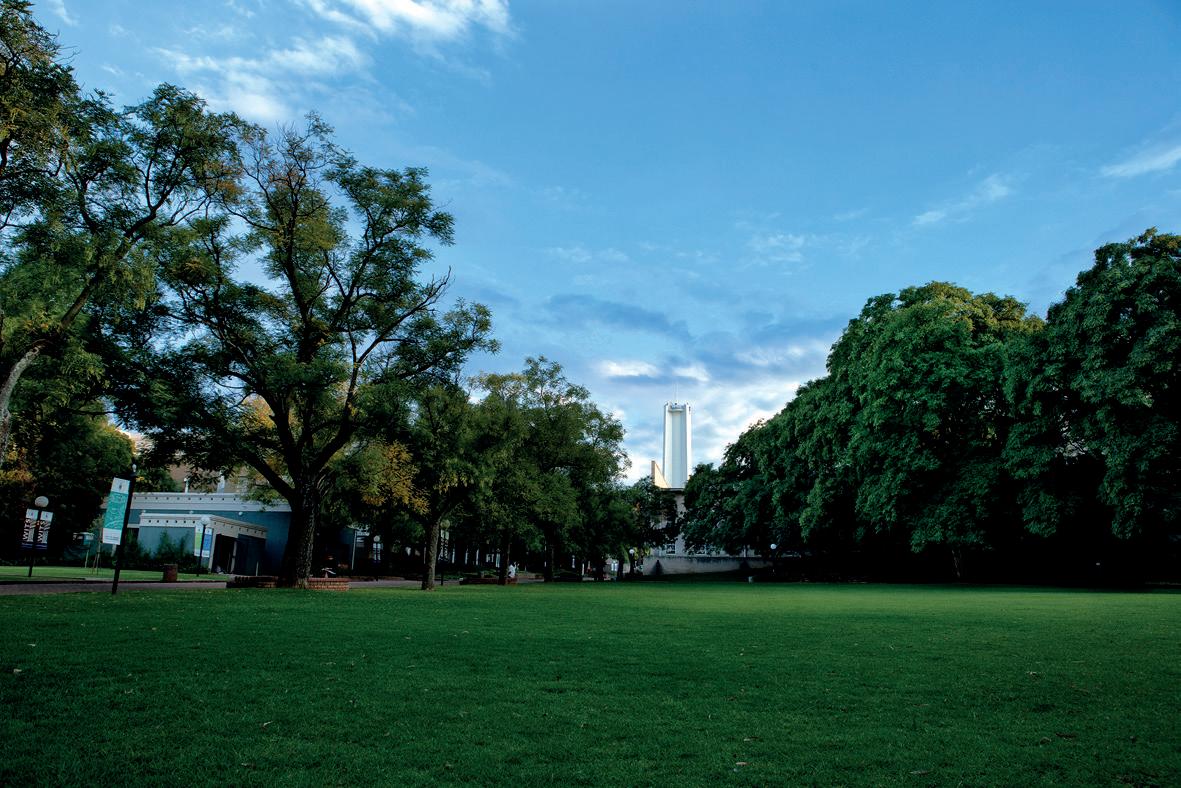
One of the most tranquil and picturesque spots on campus is the stone bridge alongside the waterfall and stream leading to the lake on the Gavin Relly Green on West Campus.
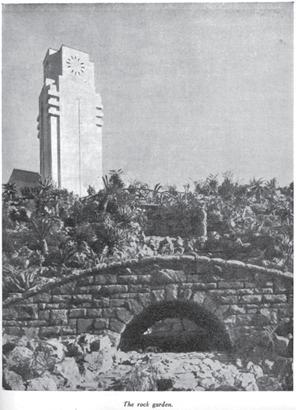
The inset photo above is a souvenir image from the Johannesburg Empire Exhibition in 1936 with an imposing Art Deco clock tower at the top of the ridge. The rock garden beyond the bridge was subsequently transformed into a tropical wonderland with the charming waterfall captivating students and visitors to this day.
Main image: Brett Eloff, Inset image: Peter Maher
64
Cover feature Unsung heroes
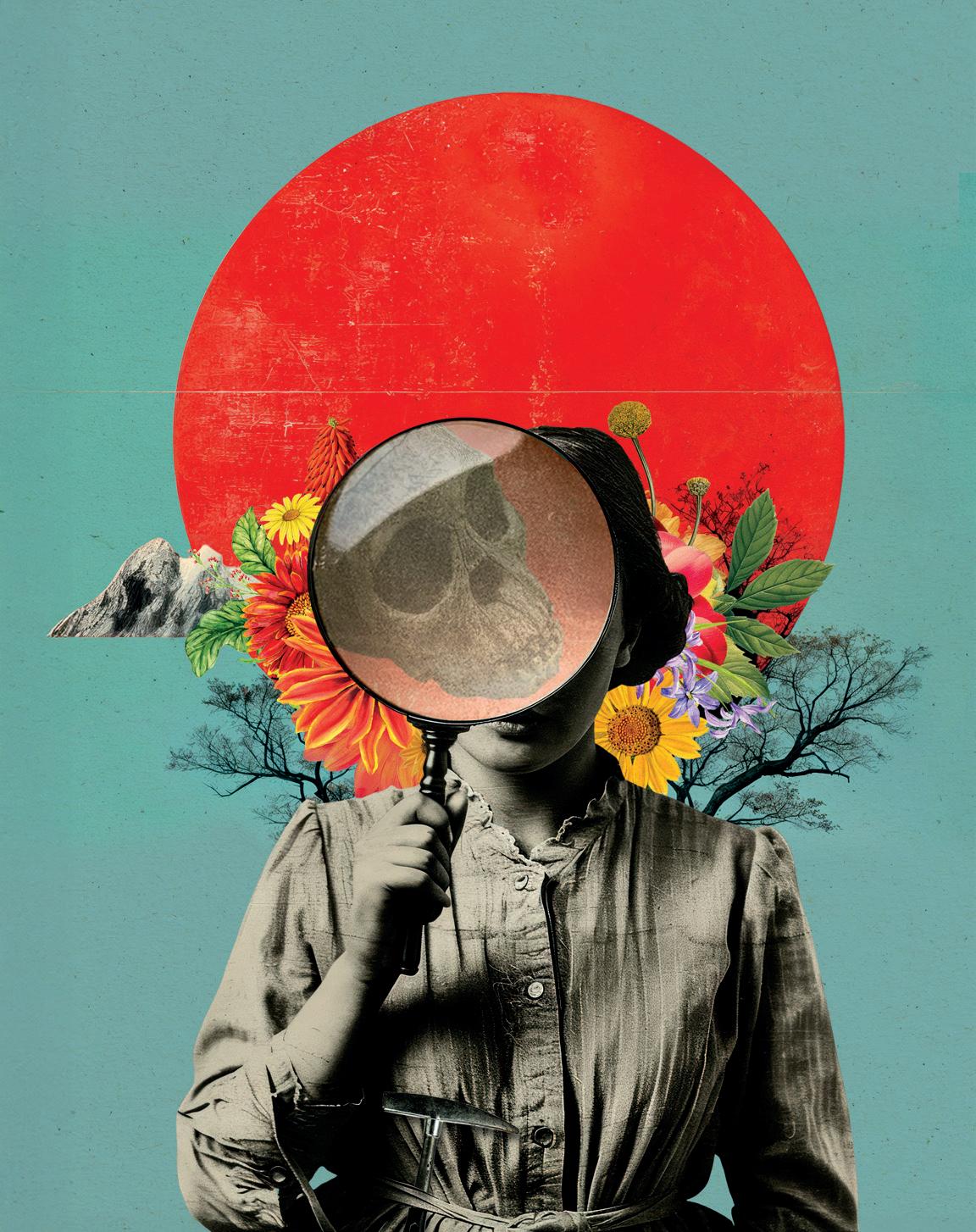
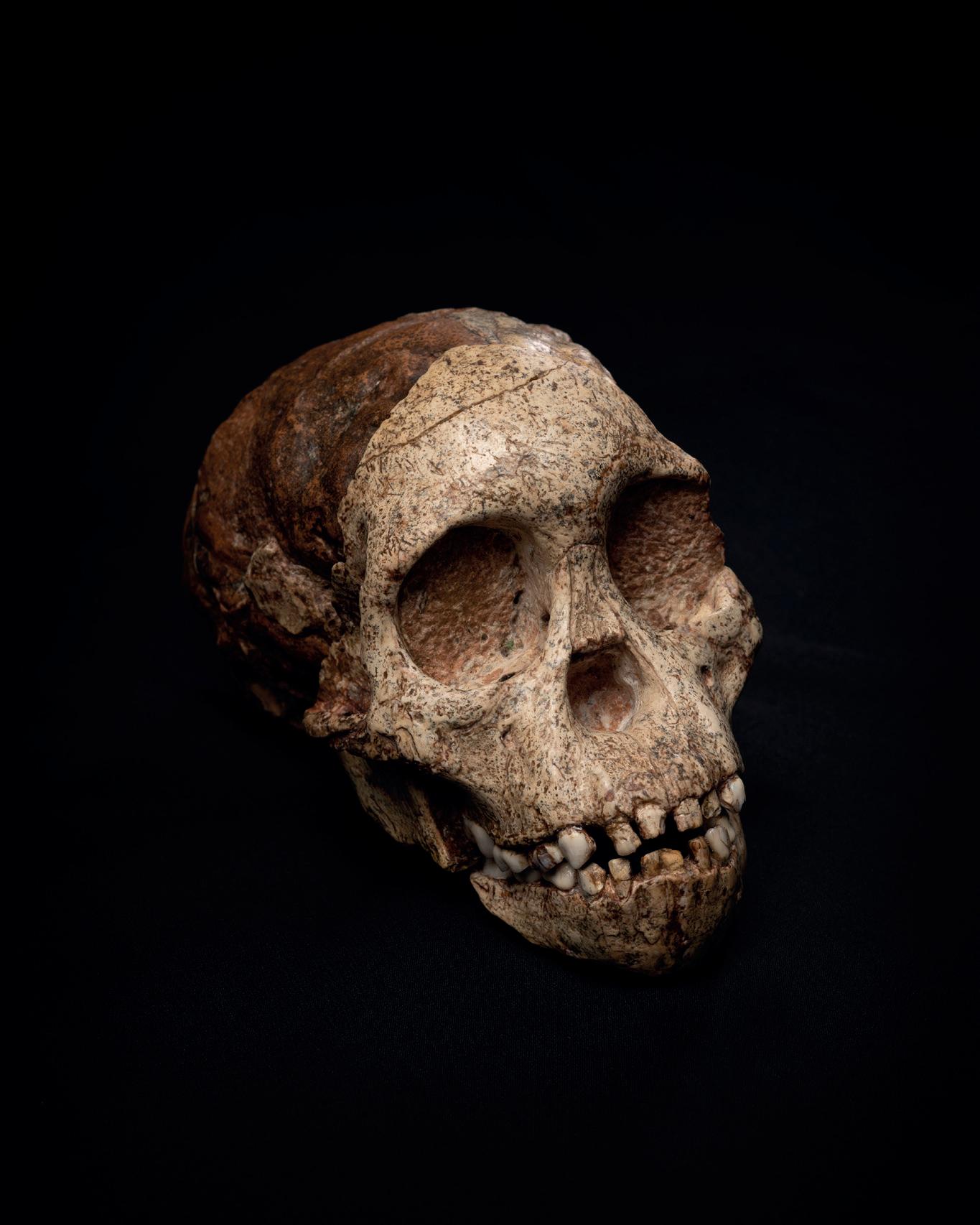
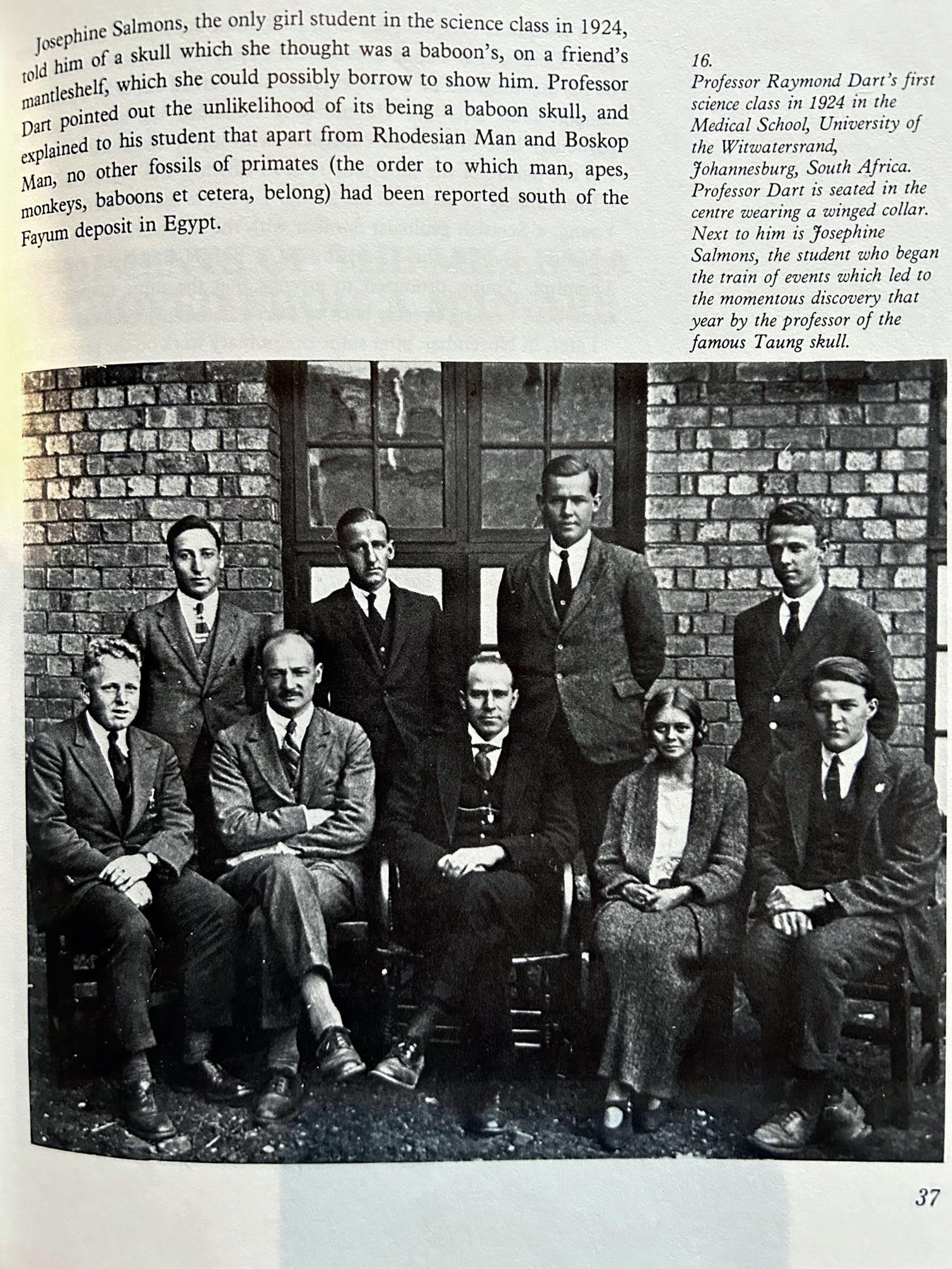
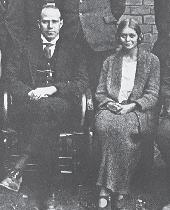
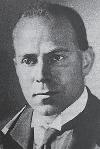
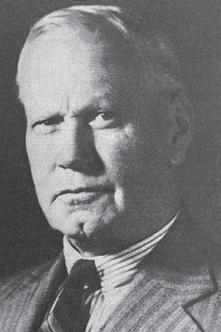
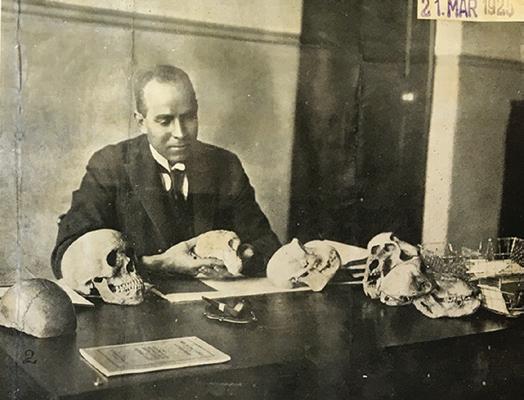
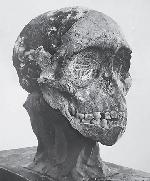
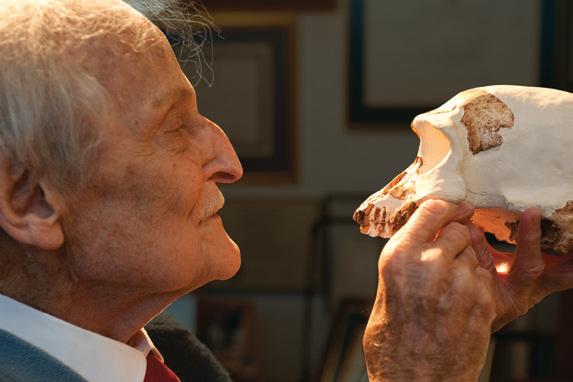
Revisiting the role of two alumni in the discovery of the Taung skull
Subscriptions per copy: South Africa R50 (incl. VAT & postage) International R100 (incl. postage)
Payment options:
Online payment using a Visa, Mastercard, American Express or Diners Club credit card at: www.wits.ac.za/alumni/ payment or by electronic transfer or bank deposit to: First National Bank, Account No. 62077141580, Branch Code 255-005, Ref.No. 29613 (+ your name) or by cash or credit card payment at the Alumni Office.
WITSReview Magazine, Volume 53, April edition 2025
Image: Brett Eloff
Image: Brett Eloff
Image: Brett Eloff
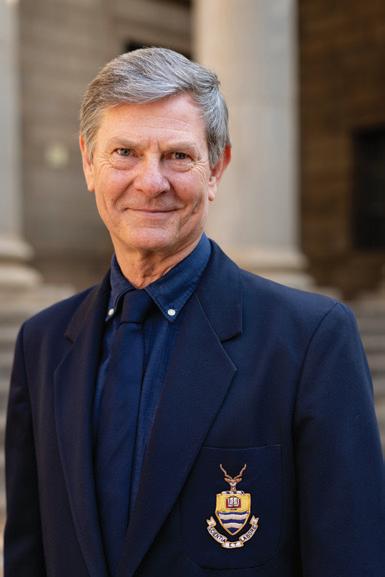
Peter Maher Director of Alumni Relations
As alumni of Wits University, your voice matters. Over 300 000 people around the world have studied at Wits and their experience and opinion of the University spreads exponentially through word of mouth and public comments. Whether you graduated five or 50 years ago, your views continue to shape and influence the reputation of our institution.
That is why your perceptions of the University matter deeply. Your views and opinions reflect your experiences and guide us toward improvement. They influence how others see Wits, including prospective students, employers, donors, and institutional partners.
The University recently conducted an institutional cultures survey to understand your experiences and perceptions of Wits and how you feel about Wits today. While the results, which appear on pages 6-7, reflect only those who were able to respond, the feedback generally aligns with what I’ve heard in conversations with alumni over the years.
Encouragingly, 92% of respondents said they are proud to be Wits alumni and 85% felt that Wits played a positive role in shaping their professional life. While 79% felt that Wits today remains one of the top institutions in South Africa, most alumni, regardless of their graduation year, feel that “standards were higher when I was a student”. Perhaps an unsurprising sentiment likely echoed by alumni at every university around the world. One measure of standards that should reassure alumni is that Wits continues to be ranked in the top 1% in the world in all the major global rankings systems.
Another area that drew my attention in the survey was campus safety. Eighty-four percent of Wits alumni agreed that, during their time at Wits, the University provided a safe and secure environment. However, only 58% of alumni that participated feel
Your opinion matters
that Wits is safe today, perhaps because of the university’s proximity to the city. In contrast, when we asked current students the same question, a different picture emerged – an overwhelming 87% said they do feel safe and secure on campus and actual crime statistics support this. An interesting bit of historical trivia –no cars were stolen on the Braamfontein Campus in 2024, while in contrast, a 1983 issue of Wits Student reported that 56 cars were stolen in 1982 and 14 in 1981.
That said, we are acutely that safety and security in Johannesburg is a real concern. Student, staff and visitor safety and security in the city and surrounding areas has been an ongoing concern and Wits continues to work with the city, the private sector and other entities to improve safety.
The University appreciates your feedback and alumni are encouraged to continue doing so. One avenue to do this is through the elected members of the Executive Committee of Convocation, a statutory body that is mandated to be the voice of Wits alumni in various University forums including the University’s Council. Candid feedback to your representatives or to the Alumni Office ensures that Wits remains grounded, responsive, and resilient.
There are many compelling reasons why alumni and Wits have a mutually beneficial relationship. As holders of a Wits qualification, you have a vested interest in the academic excellence and reputation of your alma mater. You want to know that Wits is still upholding the values and ideals that drew you here in the first place – academic rigour, critical inquiry, and a commitment to the public good.
Together, we can protect and promote the legacy of this great University. A proud, engaged alumni community makes our University stronger. You are not just former students; you are lifelong ambassadors of this institution. n
Alumni Survey Results of Wits Institutional Cultures Study
Here are some of the stand-out results from alumni participation in the University’s institutional culture survey that took place in August 2024. The survey, conducted among staff, students and alumni, provided valuable insights that will guide future initiatives of the University. 1 856 Alumni around the world participated in the survey.
List any THREE words that come to mind when you think of your time as a student at Wits?
CHALLENGING EDGE
EXCITING Would you advise close family and/or friends to study at Wits?
To what extent do you agree or disagree with the following: I would employ a Wits graduate
I am satisfied with Wits’
When I WAS at Wits, the University:
REPUTATION
Was one of the highly regarded/highest ranked/top/ had the best reputation institutions in South Africa
Was strongly involved in community engagement COMMUNITY 97%
Played a positive role in shaping my professional life ROLE 85% 84%
Ensured a safe and secure campus environment for all members SAFETY
80% 65%
Provided training that adequately prepared me for my work TRAINING
Was central to making commentary on political matters and debates COMMENTARY 69%
Thinking about Wits NOW, the University:
WITS SPIRIT GAME 2025
Welcome to the family
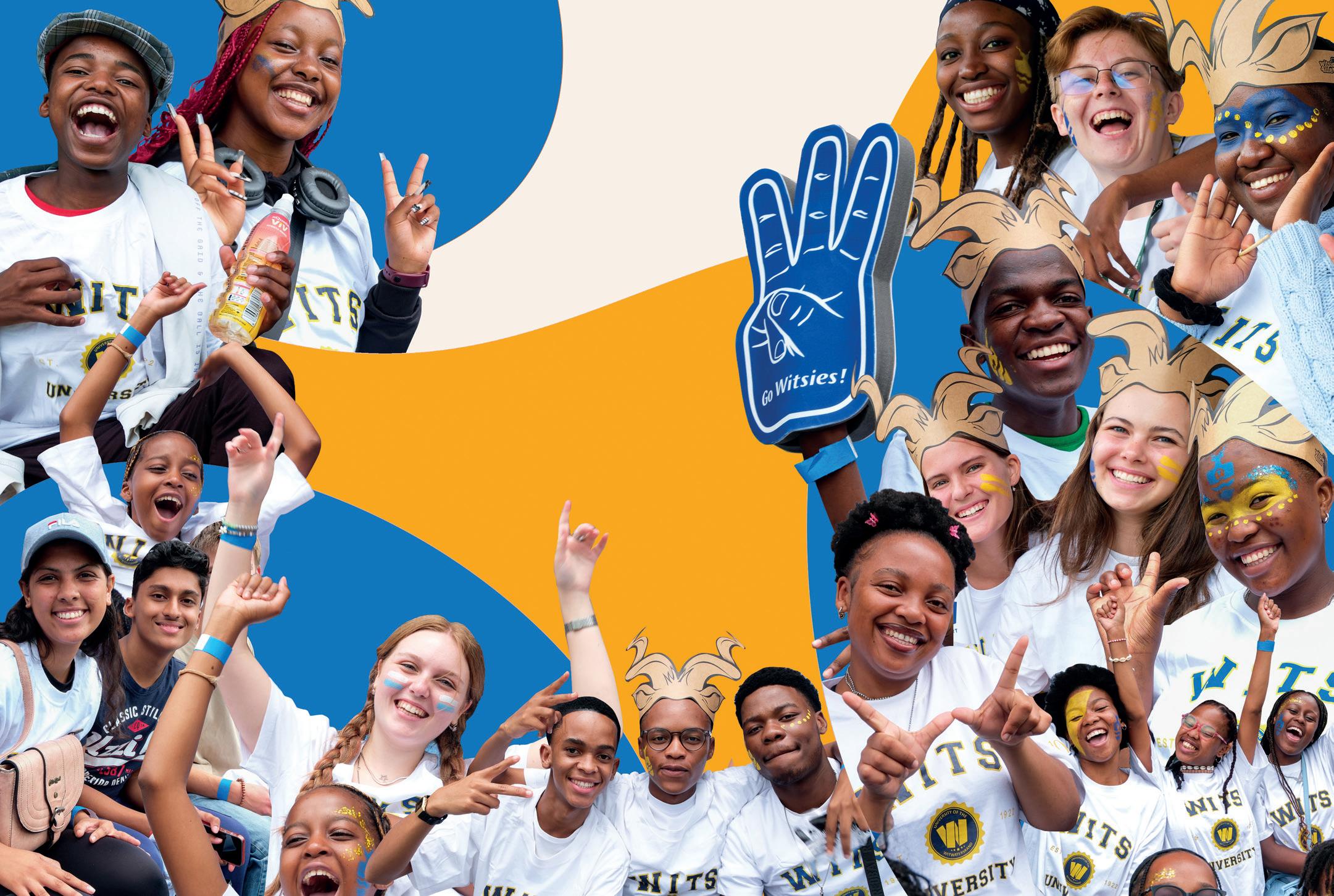
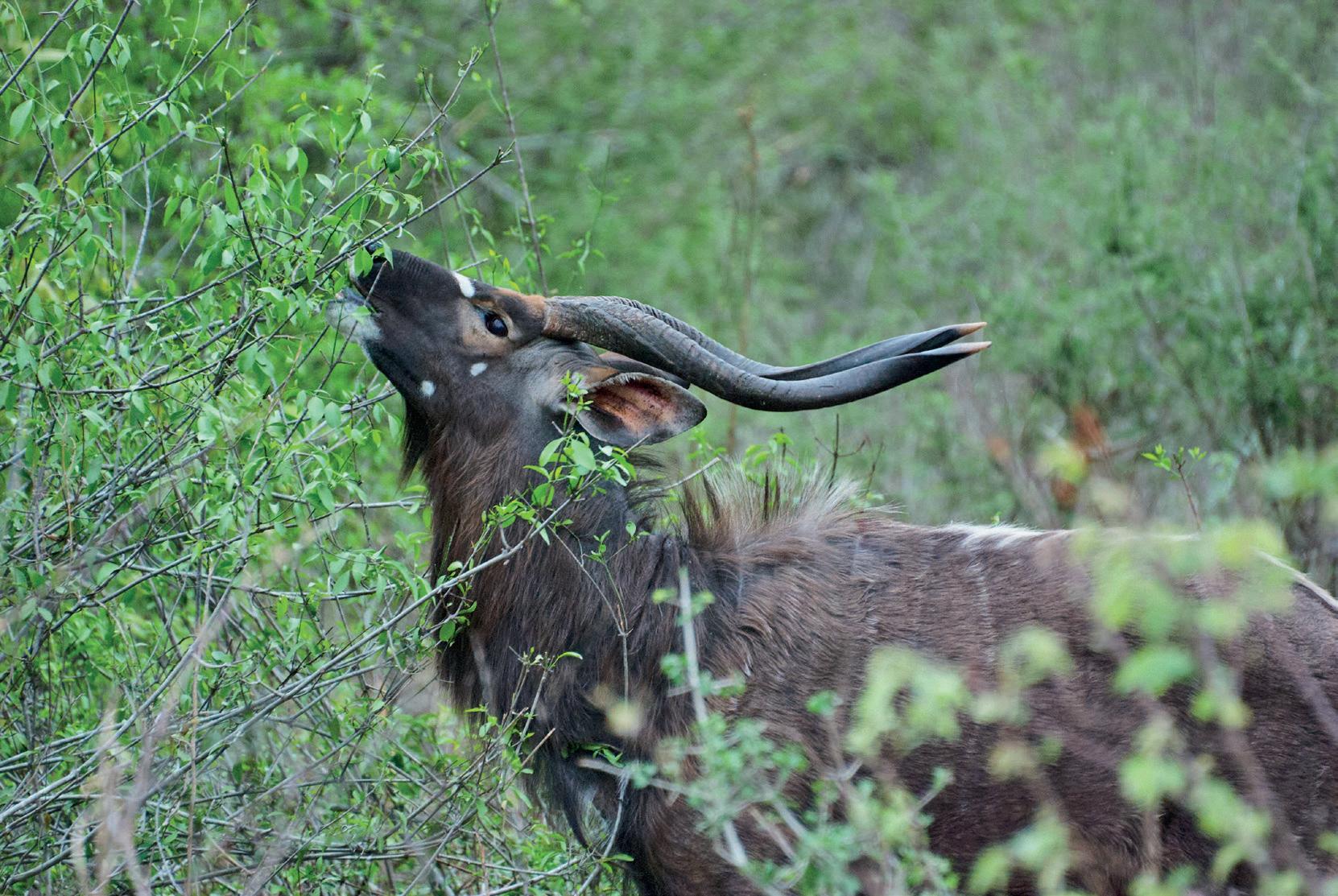
The annual Wits Spirit Game is an unforgettable rite of passage. In a packed Wits Rugby Stadium on 7 February 2025, Jerome September, Dean of Students, officially “revealed” first-year students. Kitted out with kudu horns and waving foam fingers, they put on their Witsie T-shirts as a proud symbol of becoming a lifelong member of the Wits family.
Images: Snippet Video
WITS-ANGLO AMERICAN DIGIDOME
Still a marvel
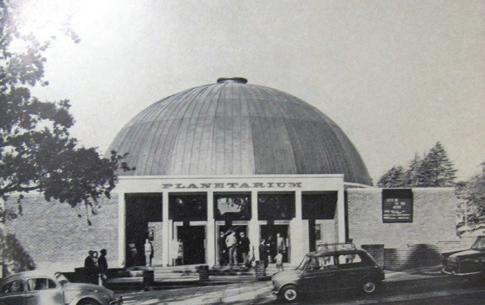
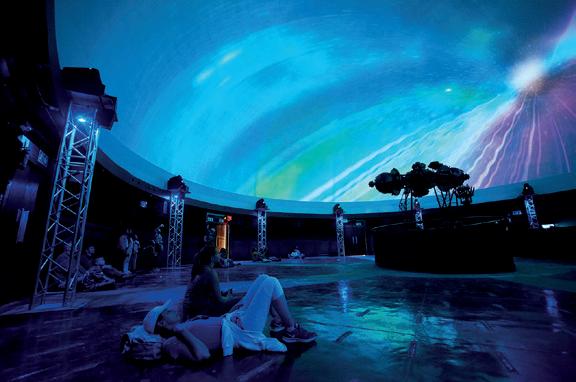
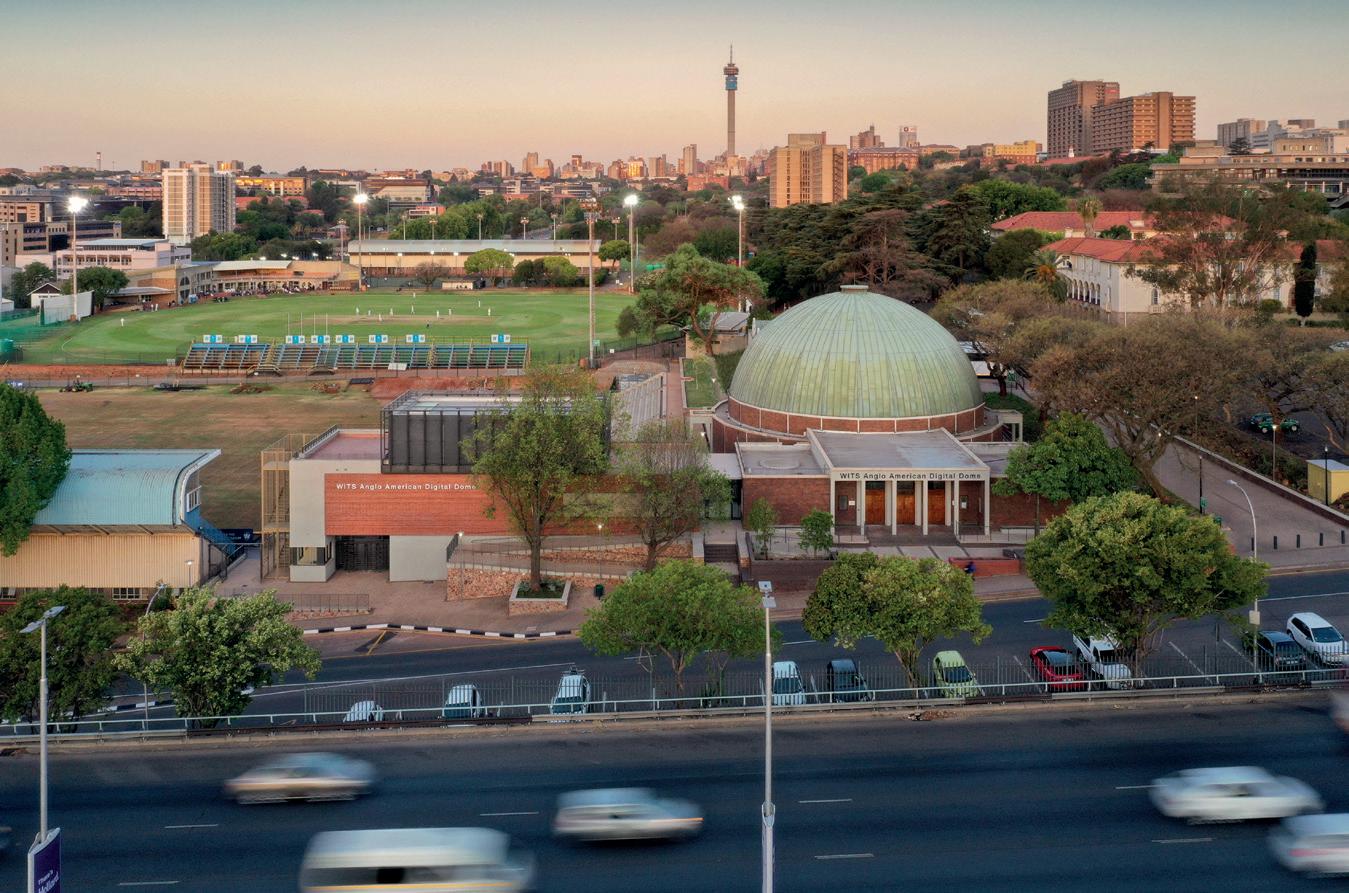
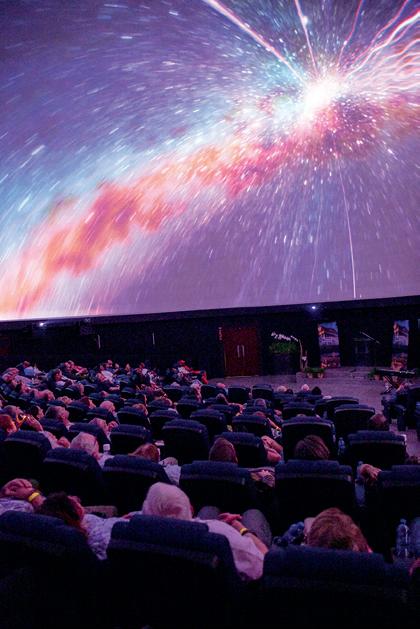
The copper-domed Wits Planetarium has been an iconic landmark on Yale Road on the East Campus since 1960. Originally built to mark the 70th anni versary of the founding of Johannesburg, it has been home to the Zeiss Mk III Projector and has had a significant impact with many visitors having experi enced its projected cosmic marvels.
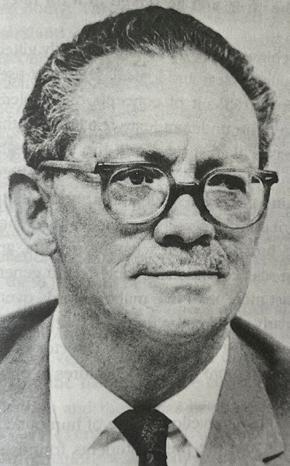
Its original architect, Eyvind Finsen PDipTP 1959), was born in Johannesburg and ma triculated at King Edward VII School. He was the recipient of the Medal of Distinction from the South African Institute of Architects in 1992 and died in 2007.
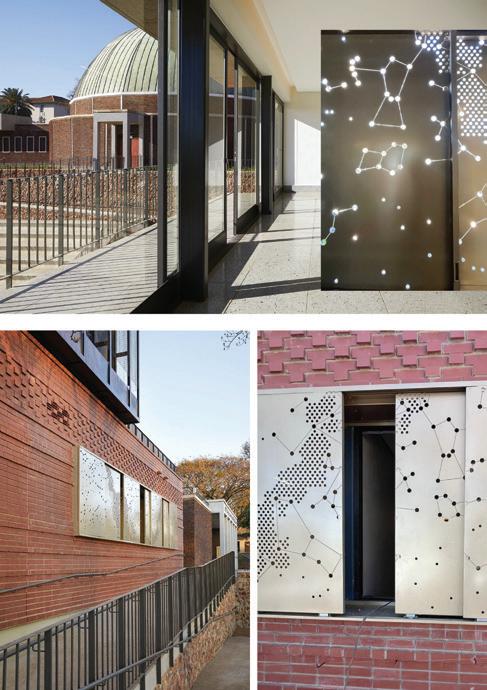
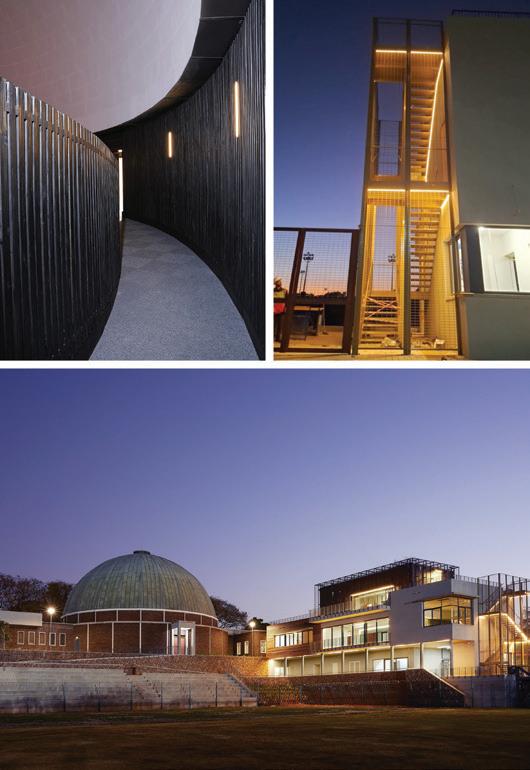
It was only fitting that another Wits-trained, Johannesburg-based architect, Kate Otten 1987), from Kate Otten Architects, was appointed to transform the Planetarium, into a fully interactive modern digital system, while William Martinson (BArch 1987, MA 1989) worked alongside as special ist heritage architect.
The new multidisciplinary facility has been re named the Wits-Anglo American Digital Dome and welcomed visitors again in February 2025 after its revamp. It offers a 360° immersive experience for visitors, with a variety of shows for young and old. This building has broadened its role well beyond astronomy, fitting in well on a 21st century campus. It will also serve as a modern teaching venue and a collaborative research space where scientists and students can visualise their work – be it in big data, astrophysics, the digital arts, artificial medicine, mi crobiology, or precision medicine.
recipient of the Herbert Prins Colosseum Trophy 2024 for Reimagining the Planetarium as the Wits-Anglo American Digital Dome. Judges praised the project as: “an outstanding example of architectural innovation and respect for heritage, seamlessly blending the old Wits Planetarium with a newly constructed addition to create a vibrant, multifunctional space.” The original Zeiss projector has been replaced by 10 brand new digital projectors to render an 8k full dome resolution
Images: Kate Otten Architects
BLEKSLEY
The people’s professor
The success of the Planetarium can in no small measure be attributed to the late Professor Arthur Bleksley (DSc 1937), a professor in applied mathematics and astronomer at Wits from 1932 to 1968. According to the archives, he was a largely self-taught, but internationally recognised, polymath whose research interests and publications included astrophysics, mathematics and nuclear energy, cosmology, quantum mechanics, solar energy and even parapsychology.
Bleksley served as the first director of the Planetarium when it opened its doors in 1960 until just before his retirement.
He had a marvellous sense of humour. On his retirement, The Star newspaper noted: “Professor Bleksley has been the greatest friend any reporter could have when it comes to scientific articles.” The headline of the Rand Daily Mail when he died in July 1984, was “the genius with the common touch”.
ARTHUR
Image: Brett Eloff
Source: Wits:
The Early Years by Bruce Murray (WUP 2022)
MEMORIES OF THE PLANETARIUM
‘It
was the spark
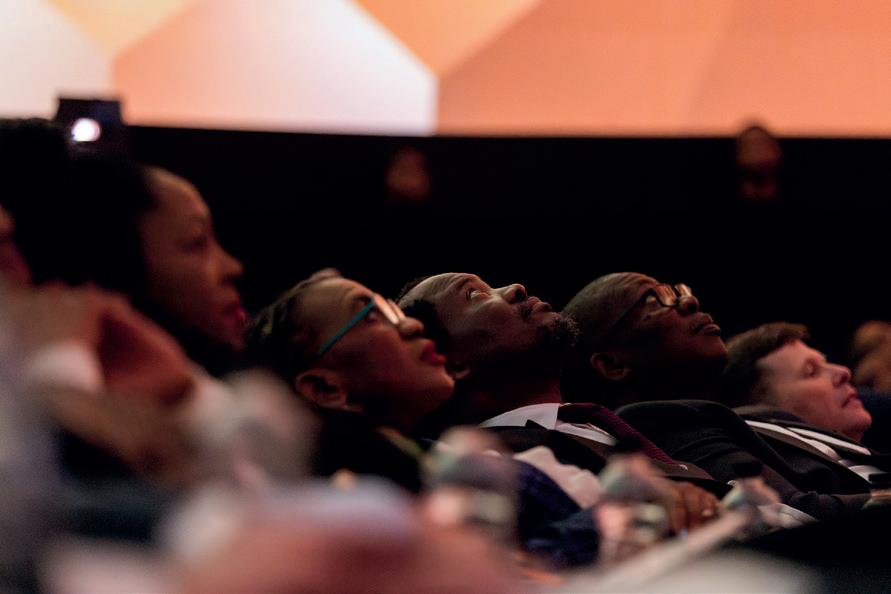
Many alumni shared special memories of the Wits Planetarium and excitement around the American Digital Dome, Vilakazi (FRS), Vice-Chancellor and Principal of Wits University:
“The experience of visiting the Planetarium has been a rite of passage for many South African children. For most, it represents their first encounter with astronomy on such a grand scale...
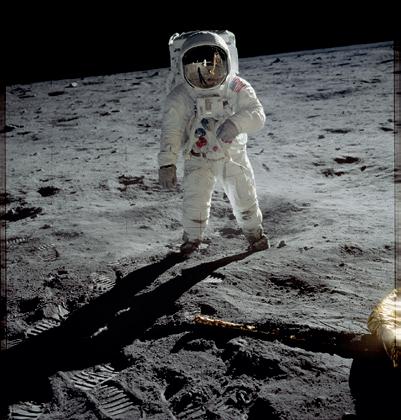
“Personally, I visited the old Planetarium in 1981 at the height of apartheid. They showed us scenes of the 1969 moon landing. This visit left a huge and indelible mark on me, and I believe that it played a key role in igniting a scientific spark that led me to the career that I pursued as a nuclear physicist.
“The screening of the moon landing in 1969 was a defining moment in the Planetarium’s history, when it became the first venue in South Africa to screen footage of the Apollo 11 touching down on the surface of the moon. This historic event brought the global space race right to the heart of Johannesburg, allowing local residents to witness one of humanity’s greatest achievements. The screening created a sense of connection to the broader world of space exploration and ignited imaginations across generations.”
Penny Aires | PDipData Pros 1983
If I’m not mistaken, as a very young child in 1957, I was taken with my older sisters to the Planetarium for a presentation about Sputnik, which was the tiny artificial satellite which Russia sent to orbit the earth. I can't remember much (it was a while ago and I was very young) except that it was something very new and amazing. History in the making.
Sphamandla Xulu | BSc Eng 2011
In 2006, during my grade 11, we were attending Saturday School on campus for maths and science under Star Schools. One day, my friend and I decided to take a short tour on campus and we came across this unfamiliar dome. We both didn't know what it was or what it was for but we saw people with their families going in, so we
decided to follow them. Upon entry we asked staff members about it. There was a show starting in 20 minutes that they invited us to see, but all we had was enough money for taxi to take us back to Soweto, not even something for lunch. The friendly staff gave us a free pass to our first exposure inside the Planetarium. We had never seen space and stars like that before, our only exposure was the sky at night. It was a memorable experience, seeing space in that way. We felt and imagined that we were astronauts.
Mandisa Shabangu | BSc 2011, PDM 2014
I enrolled at Wits for geology and I worked at the Planetarium parttime for some extra change. I used to work at the little tuckshop after the shows. I manned the register
and did some stocktaking. I liked it then because we would view the stars with the big telescope. I understood more on the subject then and it was more meaningful.
Sarah Taylor | BSc 1999, BSc Hons 2000, MSc 2002
This is another reason to be a proud “true-blue” Witsie. It is an icon in Johannesburg and an asset to the community.
Harald van den Berg | BSc Hons 1991
In the 1980s we had lectures about astronomy in the Planetarium. We were even examined on recognising projected constellations and naming stars and their Right Ascension. I showed the examiners where ‘El Nath’ was. I can still tell the time by looking at the stars.
Second from left: Professor Zeblon Vilakazi is still enthralled
Image: NASA
Astronaut Buzz Aldrin walks on the surface of the Moon during the Apollo 11 mission
Image: Chanté Schatz
What a stage!
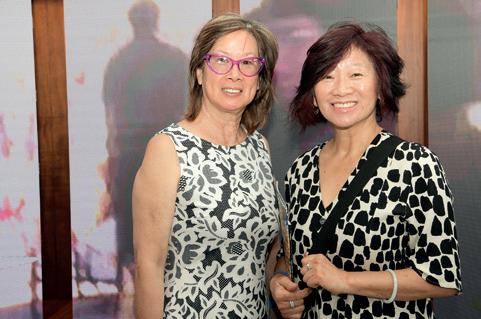
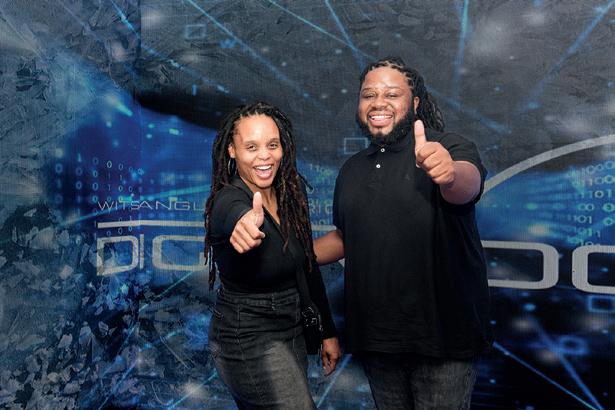
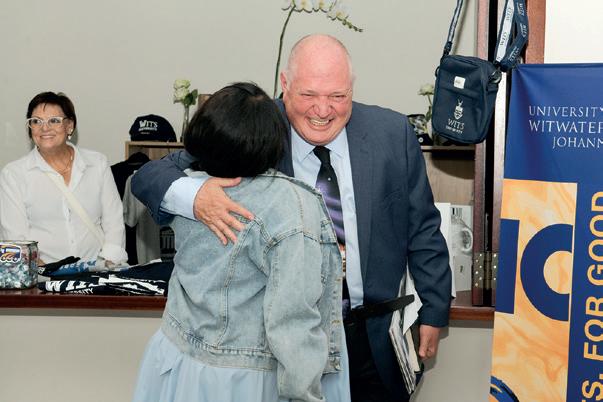
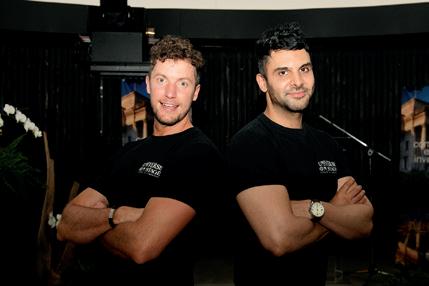
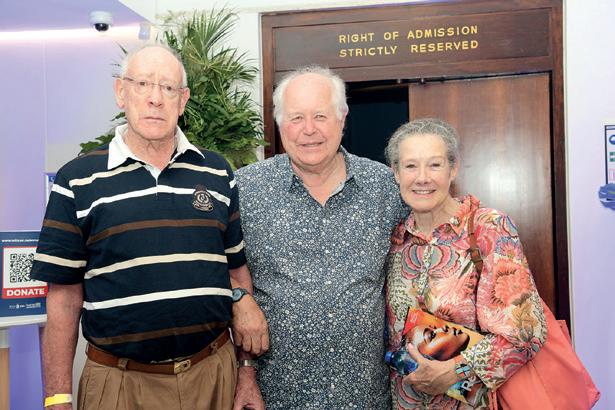
Wits Alumni Relations hosted a magical afternoon titled “Infinite Possibilities” to launch the new Wits-Anglo American Digital Dome on 16 November 2024. The programme included an address by the Vice-Chancellor, Professor Zeblon Vilakazi as well as a unique Universe on Stage performance by Witsies Dr Luca Pontiggia (BSc 2012, BSc Hons 2014, MSc 2015, PhD 2018) and Yasheen Modi (BSc 2012, BSc Hons 2013). Guests enjoyed cocktails and sundowners after the formal proceedings. SEE
ALUMNI EVENT
Image: Chanté Schatz
REUNION: ENGINEERING CLASS OF 1988
Built to last
WEBINAR: ROBYN CURNOW
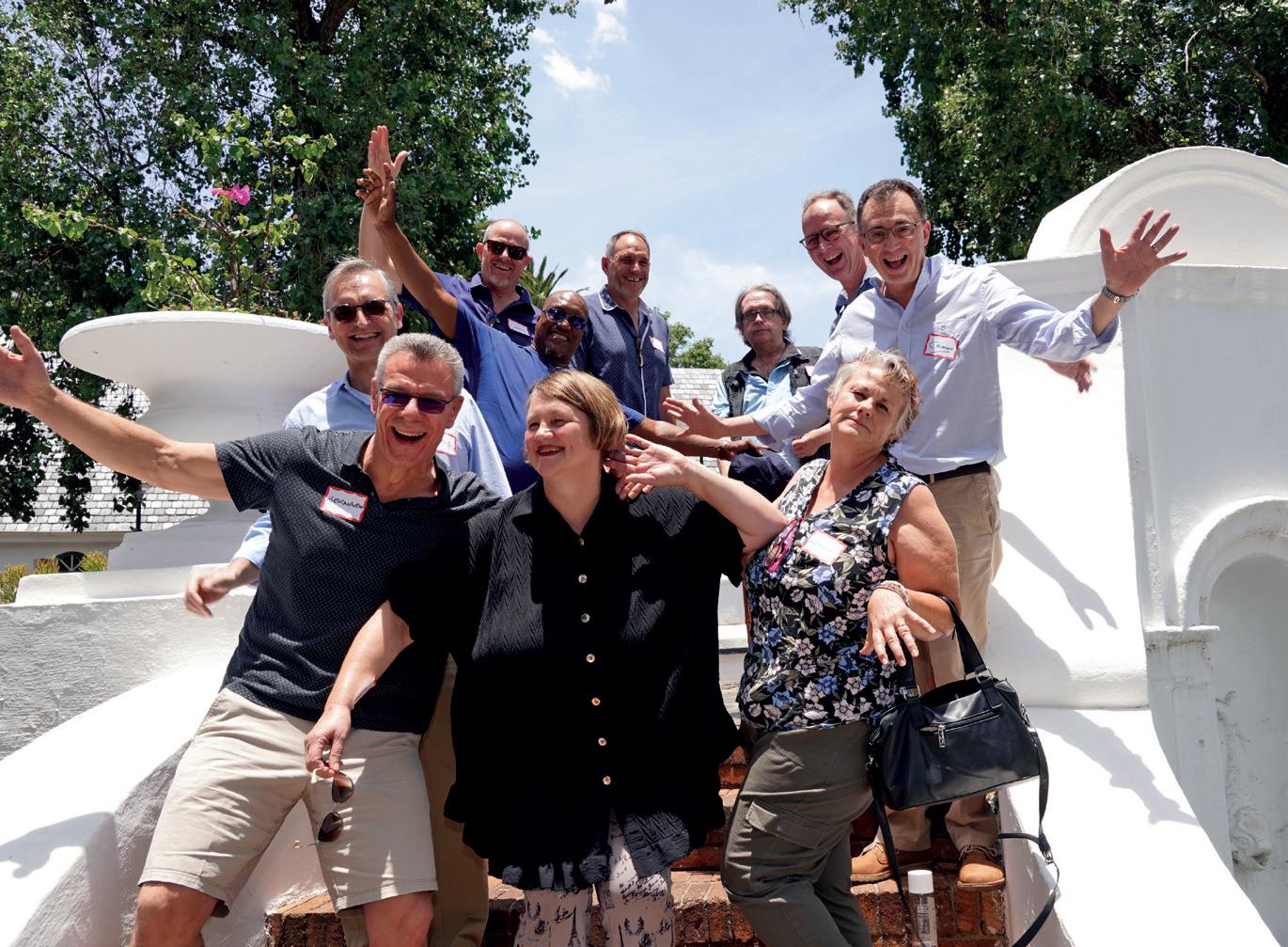
On 7 December 2024, 14 members of the 1988 Civil Engineering Class gathered in person for a reunion at the Wits Club, with another 12 joining virtually from around the world. “Many of us had not seen each other for 36 years, however reconnected (and laughed) as if no time had passed,” said Bernard Abelson who organised the reunion from Vancouver, Canada.
Above: (L to R) Bernard Abelson, Loris Manferdini, Craig Fussel, Neo Tladinyane, Adie Vienings, Trevor D’Oliveira, Conrad Visser, Genni Kvevli (née Brokenshire), Vaughan Davies, and Cristian Cottino
America’s plumber
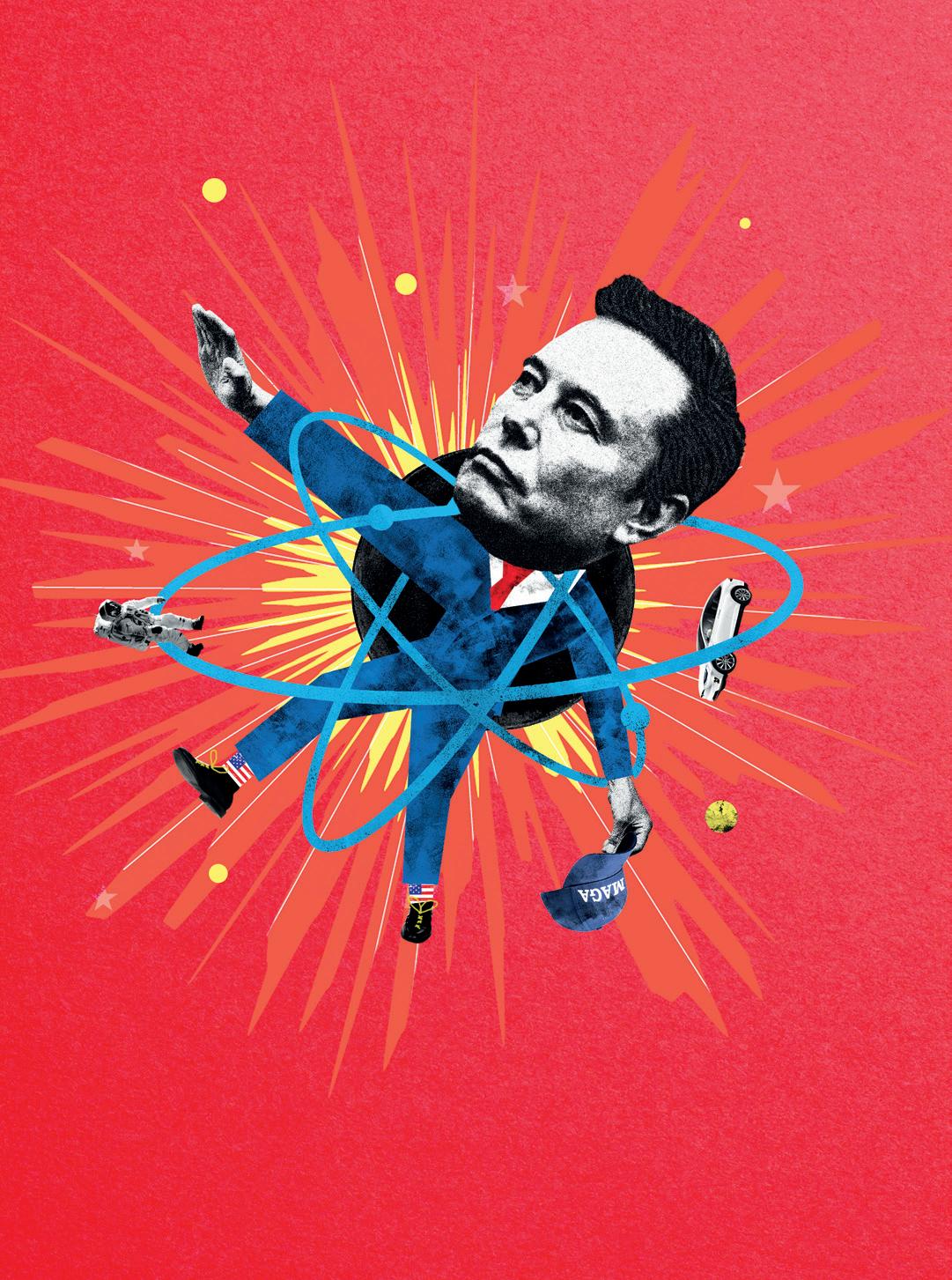
Wits Alumni Relations hosted a webinar with award-winning journalist Robyn Curnow (BA Hons 1999). She shed light on the topic: “Trump Unleashed: Unpacking the Trump Administration” with over 360 guests. Curnow is the host and founder of the Searching for America podcast and offered a perspective on Trump’s appeal for US voters: “An unreasonable man, unleashed by reasonable people.”
She said Trump’s focus on “those who are broke and not woke” was driven by America’s economic woes and he has a three-point plan to “fix” things: DOGE, tariffs and taxes. “Trump is America’s plumber,” she said.
7 September 2025
Founders’ Tea I Sunday, Gavin Reilly Green I Guest Speaker: Former Chief Justice Raymond Zondo Enquiries: events.alumni@wits.ac.za
16-18 October 2025
Wits Civil Engineering Class of 1975, 50th Reunion Enquiries: Errol Kerst errolkerst@gmail.com
Image: Peter Maher
LECTURE: SIR DAVID KING
‘Take the lead’
Professor Sir David King (BSc Hons 1961, PhD 1964, DSc honoris causa 2003) called on South Africa to take a leader ship role in tackling the climate crisis, describing it as “the greatest challenge humanity has ever had to face” during a public lecture in the Great Hall on 5 March 2025. He shared an insider experience of international climate negotiations and outlined potential pathways for nations to effectively meet climate targets and foster a resilient, low-carbon future for all. He is emeritus professor of chemistry at the University of Cambridge, chair of the Climate Crisis Advisory Group, and founder of the Centre for Climate Repair at Cambridge. READ MORE
five years, such as financial sustainability, reimagining the Braamfontein Precinct, and ensuring good governance, accountability, and ethical leadership. Under his leadership, Wits exceeded its R3 billion centenary campaign target, with major infrastructure projects receiving significant funding for
MIND set to transform AI in Africa
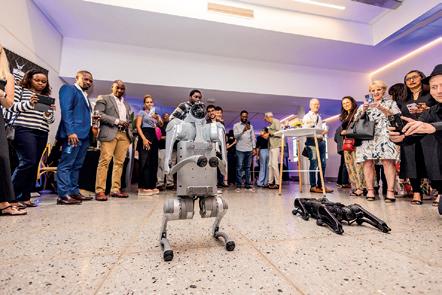
The Wits Machine Intelligence and Neural Discovery Institute (MIND Institute) was launched on 17 November 2024 as an Africa-based interdisciplinary AI research hub to position the continent as a creator rather than merely a consumer of AI technologies. Housed in the AngloAmerican Digital Dome, it seeks to address how AI interfaces with society from an ethical and policy perspective, shaping governance and ensuring AI development is safe, inclusive and beneficial to all. Experts from various fields − including computer science, engineering, psychology, philosophy, neuroscience, anatomy, creative arts, anthropology and governance − have been selected to take part in its inaugural fellows programme
Image: Chanté Schatz
Image: Chanté Schatz
Image: Chanté Schatz
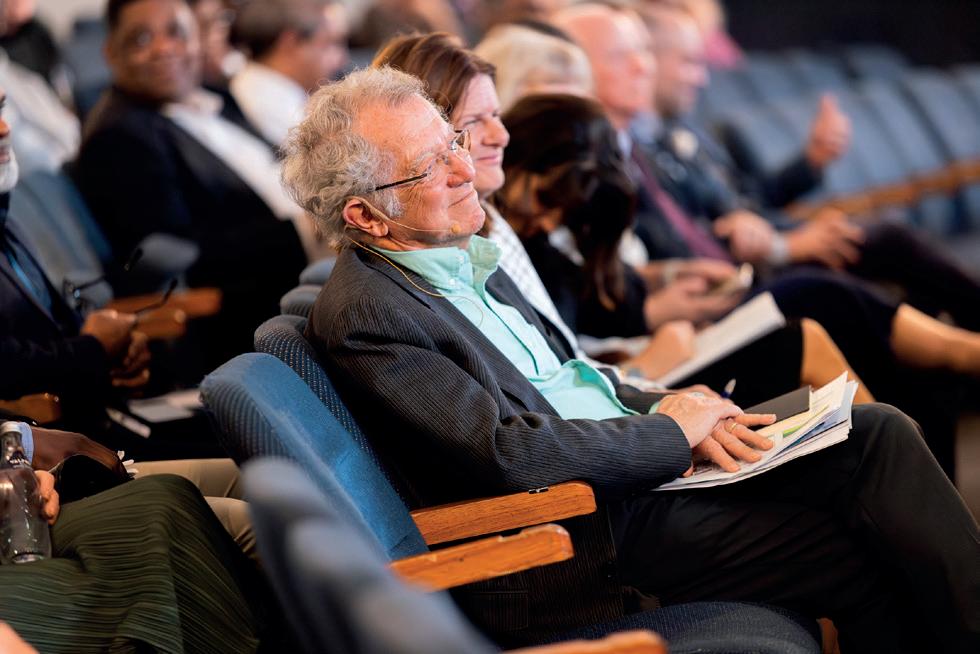
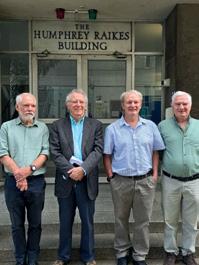
Same spot: Sir David King with Neil Coville, Charles de Koning and Dean Brady (left). At Wits in 1960 (extreme right)
ONCOLOGY
Movement is medicine
That weekly gym session or morning jog could be your best defence for surviving cancer. This is according to research led by Wits Sport and Health.
The study, recently published in the British Journal of Sports Medicine, reveals that even modest amounts of physical activity before a cancer diagnosis can significantly lower the risk of disease progression and death.
Professor Jon Patricios (MBBCh 1992), the lead author, says: “Knowing that as little as 60 minutes of regular weekly exercise may reduce the likelihood of cancer progression by 27% and death by 47%, we should encourage all doctors to use exercise as medicine.”
It’s the first large-scale study to directly measure physical activity levels in cancer patients outside the Global North, using data from South Africa’s Discovery Health Medical Scheme.
The study tracked 28 248 cancer patients over 15 years, analysing their
Sources: Wits research and British Journal of Sports Medicine
exercise habits through the Discovery Vitality Health promotion programme. Patients who engaged in even low levels of exercise, just 60 minutes per week, saw a 16% lower risk of cancer progression and a 33% lower risk of death compared to those who were inactive.
For those hitting moderate to high activity levels, the benefits were even greater: a 27% lower risk of progression and a 47% lower risk of death.
“Regular physical activity is the most powerful and accessible prescription we can give our patients. We should encourage adherence to the WHO guidelines of 300 minutes per week of moderate-intensity exercise for all of its well-described benefits,” says Patricios.
The researchers suggest there are several biological explanations for these benefits. Physical activity boosts immunity by increasing natural killer cells and lymphocytes, key components in fighting disease.
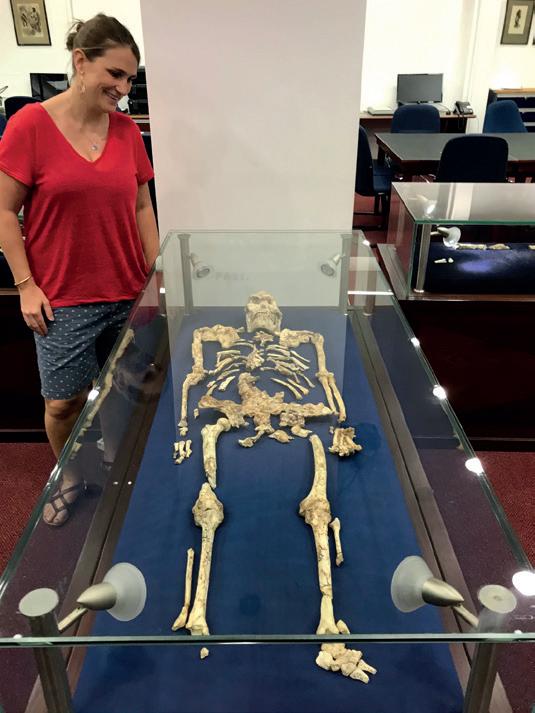
Tina Lüdecke stands beside “Little Foot,” a skeleton of Australopithecus discovered in the Sterkfontein Cave
Image: Bernhard Zipfel
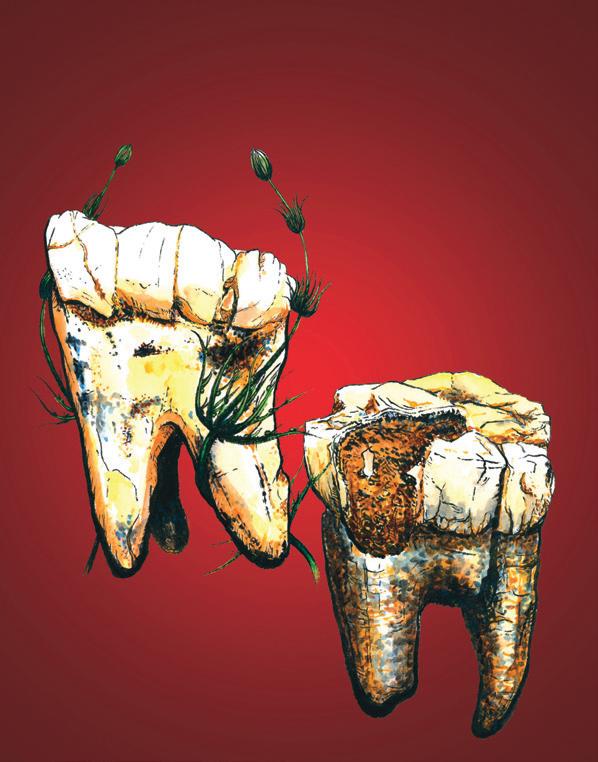
Illustration of two of the seven sampled molars from Australopithecus
Graphic: Dom Jack
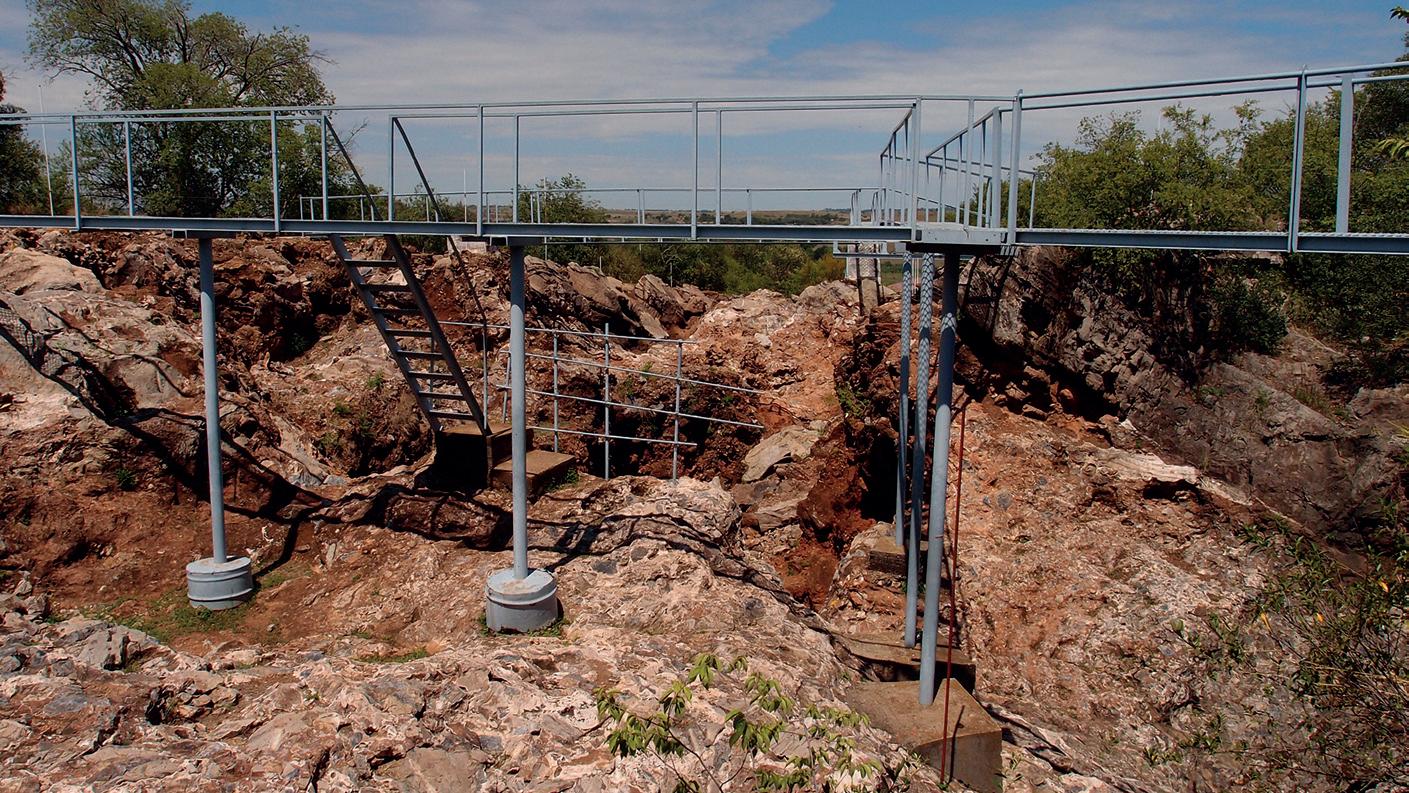
The Sterkfontein excavation site, which exposes the ancient deposits that contain Australopithecus fossils
Image: Dominic Stratford
ANTHROPOLOGY
Chew on that
A team of researchers from Wits and the Max Planck Institute for Chemistry, in Germany, provide evidence that human ancestors of the genus Australopithecus, that lived in southern Africa between 3.7 and 3.3 million years ago, survived mostly on plants.
The research team studied the chemistry from tooth enamel of several Australopithecus individuals found in the Sterkfontein cave near Johannesburg. They compared this data with that from tooth samples of coexisting animals, including monkeys, antelopes, and large predators such as hyenas, jackals, and big cats. Australopithecus had diets very similar to both their contemporaries and modern herbivores but different from carnivores.
“Tooth enamel is the hardest tissue of the mammalian body and can preserve the isotopic fingerprint of an animal's diet for millions of years,” says geochemist Tina
Sources: Wits University, Science
Lüdecke, lead author of the study.
Australopithecus had diets very similar to both their contemporaries and modern herbivores
The paper further suggests that the consumption of meat in these early hominins did not pave the way to humanising traits such as larger brains.
“This work represents a huge step in extending our ability to better understand diets and trophic level of all animals back into the scale of millions of years. The research provides clear evidence that its diet did not contain significant amounts of meat. We are honoured that the pioneering application of this new method was spearheaded at Sterkfontein, a site that continues to make fundamental contributions to science even 89 years after the first hominin fossils were discovered there by Robert Broom,” says Professor Dominic Stratford (MSc 2008, PhD 2011), director of research at the Sterkfontein Caves and co-author of the paper.
Image:
GENETICS
A roadmap of Africa’s gut
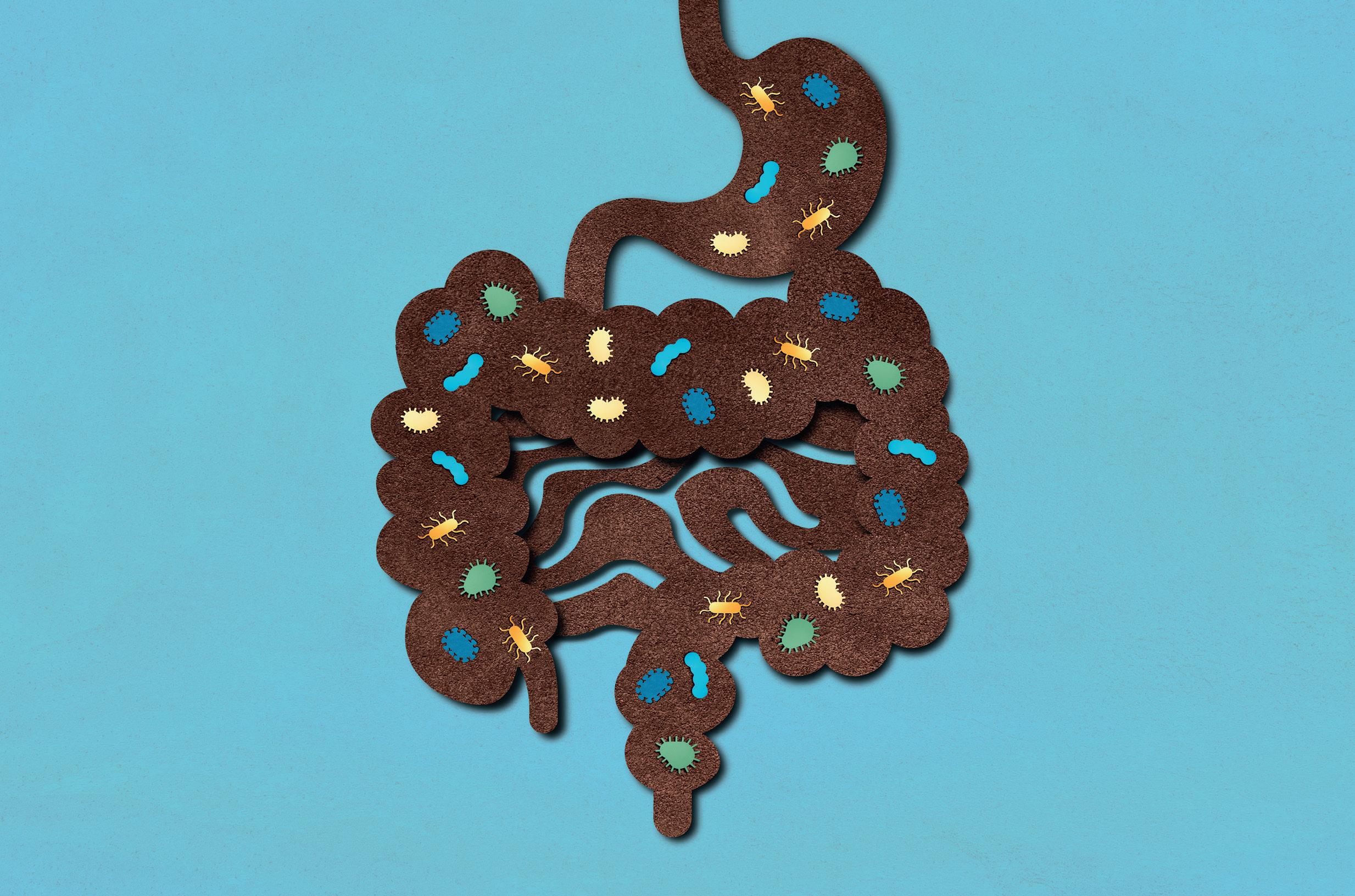
A healthy gut microbiome plays a key role in overall health, helping with nutrient absorption, drug metabolism, gut barrier integrity, immune function, and protection against harmful disease pathogens. But a lack of knowledge of the diversity of microbiomes in Africa has been a barrier to future health interventions and research.
“Africa is understudied, but with new information, we know that health and precision medicine interventions should be site- and region-specific. It can’t be a one-size-fits-all approach to gut health,” explains Professor Michele Ramsay (PhD 1987), director of the Sydney Brenner Institute for Molecular Bioscience (SBIMB), Wits University.
Now, a recent study representing the largest population-representative survey of gut metagenomes of African individuals so far has been paired with extensive clinical biomarkers and demographic data, providing extensive opportunity for microbiome-related discovery.
A paper titled Expanding the human gut microbiome atlas of Africa, published in Nature, shows a cross-sectional gut microbiome study sampling 1 801 women from Burkina Faso, Ghana, Kenya and South Africa. High-quality genomes of 1 005 bacterial and 40 135 viral species have been produced, which bolsters the information in the current human gut microbiome databases.
The study is a critical development in gut health research globally as much more can be learned, particularly about diseases such as cancer, diabetes, and obesity, and their relationship to gut microbiota.
“The importance of the microbiome for health is one of the most revolutionary scientific insights in the last 15 years. There are likely as many bacteria in the gut as there are human cells and more genetic diversity in the gut than in the human DNA,” says co-author Professor Scott Hazelhurst (BSc 1985, BSc 1986, MSc 1988), senior scientist at SBIMB and professor of bioinformatics in the School of Electrical and Information Engineering.
Sources: Wits University, Nature
Image: Adobe Stock
ENTOMOLOGY
Microscopic fossil t(h)rips
Sandiso Mnguni (PhD 2022) recently described fossil thrips from the Orapa Diamond Mine in Botswana that are more than 90 million years old in the Journal of Entomological Science.
This is the first time that a fossil thrips has been recorded anywhere in Africa – or the entire southern hemisphere. Thrips are tiny insects ranging from 0.5mm to 15mm in length, but can cause huge crop damage.
The Orapa Diamond Mine in Botswana is one of the most important fossil deposits on the continent, dating back to the Cretaceous period. Mining excavations during the 1980s at the Orapa mine uncovered and exposed fine-grained sedimentary rocks containing well preserved fossil plants and insects. At the time, geology and palaeontology researchers at Wits from what was then the Bernard Price Institute, which has since been renamed the Evolutionary Studies Institute, were invited to collect the fossil material.
Although some of the material has been studied in the past, the fossil thrips hadn’t yet been put under the microscope.
This discovery sheds light on the biodiversity and biogeography of thrips and many other groups of insects during a time when flowering plants that heavily relied on insect pollination were rapidly diversifying following changes in plant diets and habitats on account of dramatic climatic and environmental change.
Sources: The Conversation and Journal of Entomological Science
EDGE
Nature scientists
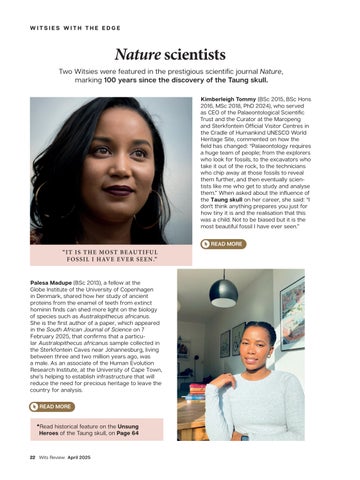
Two Witsies were featured in the prestigious scientific journal Nature , 100 years since the discovery of the Taung skull.
Kimberleigh Tommy (BSc 2015, BSc Hons 2016, MSc 2018, PhD 2024), who served as CEO of the Palaeontological Scientific Trust and the Curator at the Maropeng and Sterkfontein Official Visitor Centres in the Cradle of Humankind UNESCO World Heritage Site, commented on how the field has changed: “Palaeontology requires a huge team of people; from the explorers who look for fossils, to the excavators who take it out of the rock, to the technicians who chip away at those fossils to reveal them further, and then eventually scientists like me who get to study and analyse them.” When asked about the influence of the Taung skull on her career, she said: “I don't think anything prepares you just for how tiny it is and the realisation that this was a child. Not to be biased but it is the most beautiful fossil I have ever seen.”
READ MORE
“IT IS THE MOST BEAUTIFUL FOSSIL I HAVE EVER SEEN.”
Palesa Madupe (BSc 2013), a fellow at the Globe Institute of the University of Copenhagen in Denmark, shared how her study of ancient proteins from the enamel of teeth from extinct hominin finds can shed more light on the biology of species such as Australopithecus africanus. She is the first author of a paper, which appeared in the South African Journal of Science on 7 February 2025, that confirms that a particular Australopithecus africanus sample collected in the Sterkfontein Caves near Johannesburg, living between three and two million years ago, was a male. As an associate of the Human Evolution Research Institute, at the University of Cape Town, she’s helping to establish infrastructure that will reduce the need for precious heritage to leave the country for analysis.
READ MORE
* Read historical feature on the Unsung Heroes of the Taung skull, on Page 64
Rhodes Scholar 2025
Dr Wonderful Khumalo (MBBCh 2024) has been awarded the prestigious Rhodes Scholarship for 2025. The 23-yearold from Katlehong, in the southeast of Johannesburg, was the only Witsie to be selected from the Southern Africa region. He plans to specialise in musculoskeletal sciences, focusing on rheumatological and musculoskeletal diseases in immunocompromised individuals. His ultimate goal is to transform orthopaedic practice in resource-constrained settings, addressing some of the leading causes of disability worldwide. “One of my greatest passions is reimagining how orthopaedics is viewed, practised, and taught, particularly in under-resourced areas,” he said. “Despite the allure of Europe, I am deeply committed to returning to South Africa. There is no place like home, and I believe that true success lies in giving back to the communities that shaped us.”
Top-notch health researchers
Several Witsies were honoured at the South African Medical Research Council
Founder of PRICELESS, based at the Wits School of Public Health, research-to-pol icy unit that provides evidence, methodologies and tools for effective deci sion-making in health. Karen Hofman received a Platinum Lifetime Award. She is a renowned expert in priority setting for health investments, child health, and the commercial determinants of health, with a focus on food and beverage policies. She is a leader in leveraging fiscal, legislative, and regulatory tools to improve population health and in using science for meaningful public engagement.
leadership, groundbreaking research, and unwavering commitment to combating HIV and TB epidemics have changed lives across the world.
and director of the MRC/ Developmental Pathways for Health Research Unit at Gold Award. Norris has played a key role as co-principal investigator of the Birth to 40 cohort, Africa’s longest-running birth cohort study, ongoing for 35 years. His contributions are extensive. His work on interventions to enhance maternal and child health outcomes continues to make a profound impact on health research in South Africa and beyond.
High-profile appointments
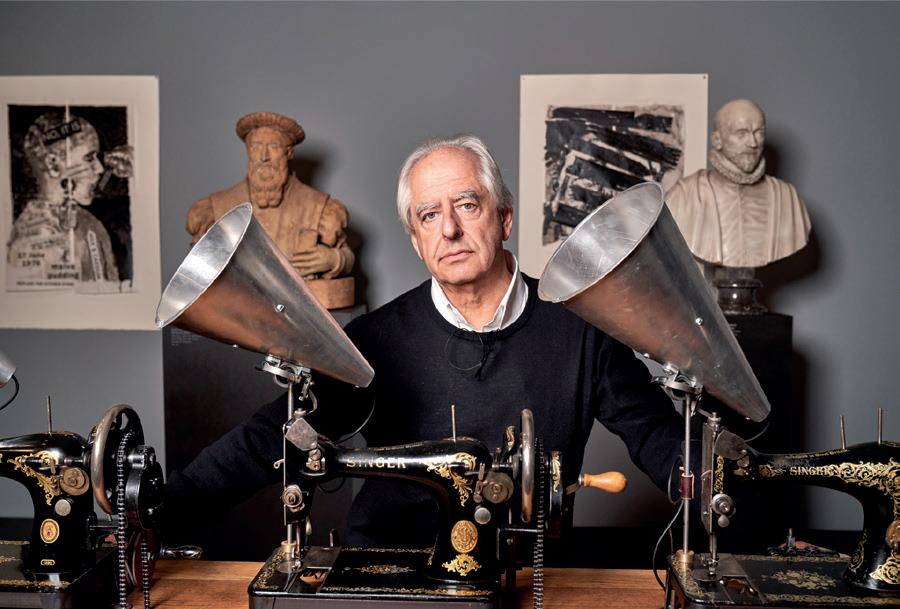
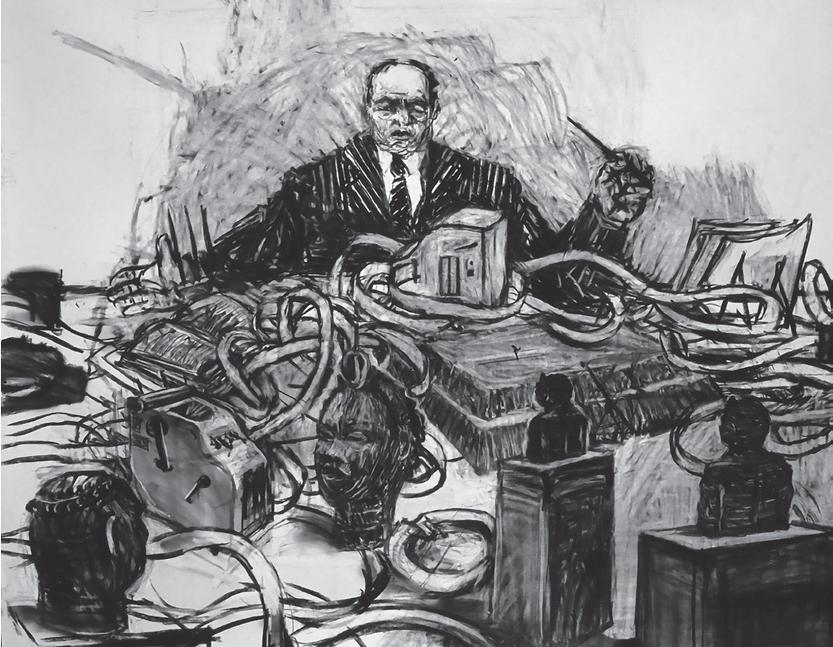
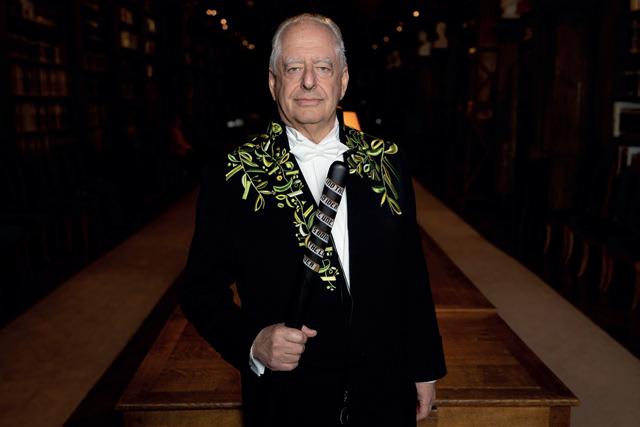
William Kentridge (BA 1977, DLitt 2004) was sworn in as Foreign Associate Member of the Académie des Beaux-Arts in Paris as a member of the Engraving and Drawing section. The organisation is one of the five academies of the Institut de France which protects s cultural heritage and encourages artistic creation. Kentridge was praised for the impact and reach of his work. He was awarded the academician sword made of black walnut wood, referring to the charcoal used by the artist in his work. At the end of the sword, the motto “Find the less good idea” is engraved in colourful beads, echoing the centre Kentridge created with artist Bronwyn Lace (BA in Johannesburg.
Above: Drawing for Mine (Soho’s Desk with Ife Head), 1991, charcoal and pastel on paper
Image: Thys Dullaart, courtesy William Kentridge Studio
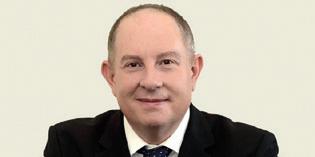
Bank Group in 2006. He faces a tough challenge as an outsider at Absa, which has had six new CEOs in as many years.
Richard Stewart (BSc 1999, BSc Hons 2000, PhD 1999) has been appointed as CEO designate and chief regional officer: Southern Africa of Sibanye Stillwater. He will succeed Neal Froneman (BSc Eng 1981) as CEO on 1 October 2025. He has more than 24 years’ experience of geological and mining industries.
Several Witsies were appointed to the new leadership of the Academy of Science of South Africa to promote and apply scientific thinking in the service of society. These include Prof Thokozani Majozi (pictured), as chair, as well as Prof Nithaya Chetty, Prof Irvy Gledhill, Prof Shireen Motala (PhD 2007) and Prof Linda Richter.
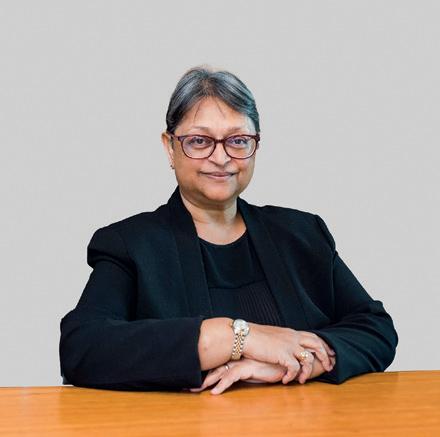
Maria Ramos (BCom 1987, BCom Hons 1988) will assume a new role as Group Chair of the British multinational bank Standard Chartered (StanChart). She was recruited from “ an extensive global search ” and her appointment improves gender diversity among major European banks. She joined StanChart’s board as an independent non-executive director in January 2021 and was the head of Absa from 2009-2019, overseeing its exit from the ownership of Britain’s Barclays.
Honorary doctorate in science
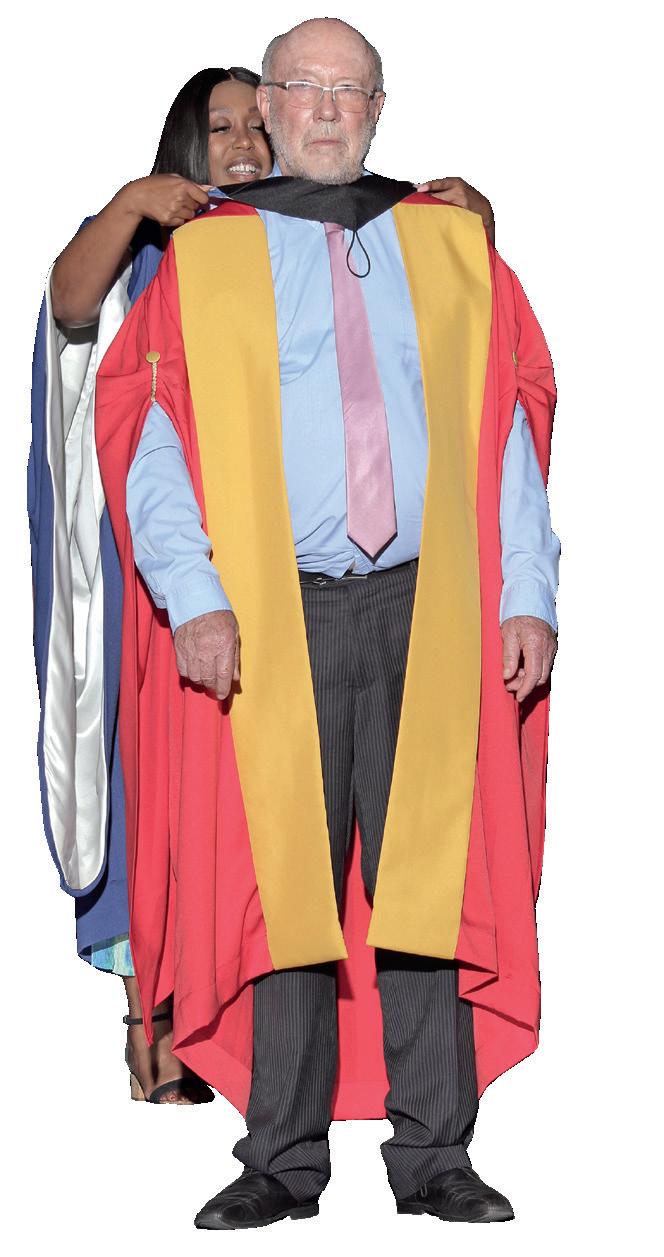
Wits conferred an honorary doctorate in science on 9 December 2024 to Dr Rob Adam for his exceptional contribution to advancing science, technology and innovation. The former managing director of the South African Radio Astronomy Observatory, Adam was recognised for his distinguished career in science leadership. He is the former CEO of the South African Nuclear Energy Corporation and the director of the Square Kilometre Array (SKA). SKA is a mega-science project that continues to push the limits of engineering and scientific endeavour through the collection and processing of vast amounts of astronomical data, stimulating cutting-edge advances in high-performance computing. Over the years, he has received prestigious awards such as the Lifetime Achievers Award of the South African National Energy Association, and he has been knighted as Chevalier de l’Ordre National du Mérite by the President of the Republic of France.
Image: Gordon Harris
Oddities and innovations
PHOTOGRAPHS BY BRETT ELOFF
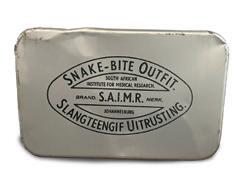
The fourth floor of the Health Sciences Medical School in Parktown is home to curiosities from the history of medicine and pharmacy. Founded in 1962, the Wits Adler Museum of Medicine grew organically from a personal collection and archives from the South African Institute of Medical Research and in June 1974 Drs Cyril (MBBCh 1933, HDipPEd 1948, LLD 1974) and Esther Adler (PhD honoris causa 1974), presented its contents officially to Wits. Today the museum is undergoing a digitisation drive. It arranges public lectures, tours, and temporary exhibitions, and provides facilities for health sciences historical teaching and research. Earlier in February 2025 acting curator, Sepeke Sekgwele, shared some of the marvels with Wits Review.
Doctor’s surgery
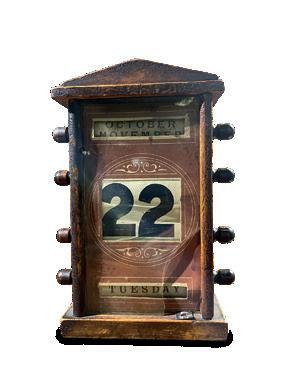
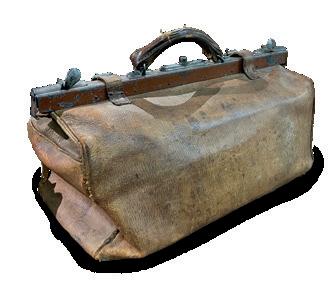
A doctor’s bag and desk calendar, from the reconstruction of a 20th century consulting room.
Original multitaskers
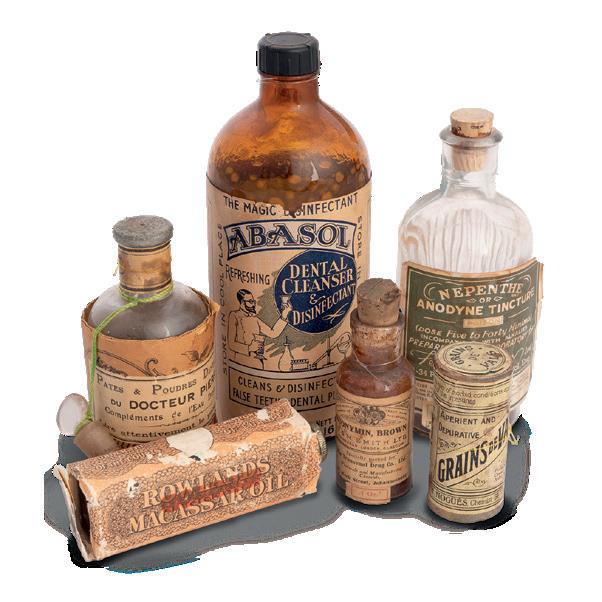
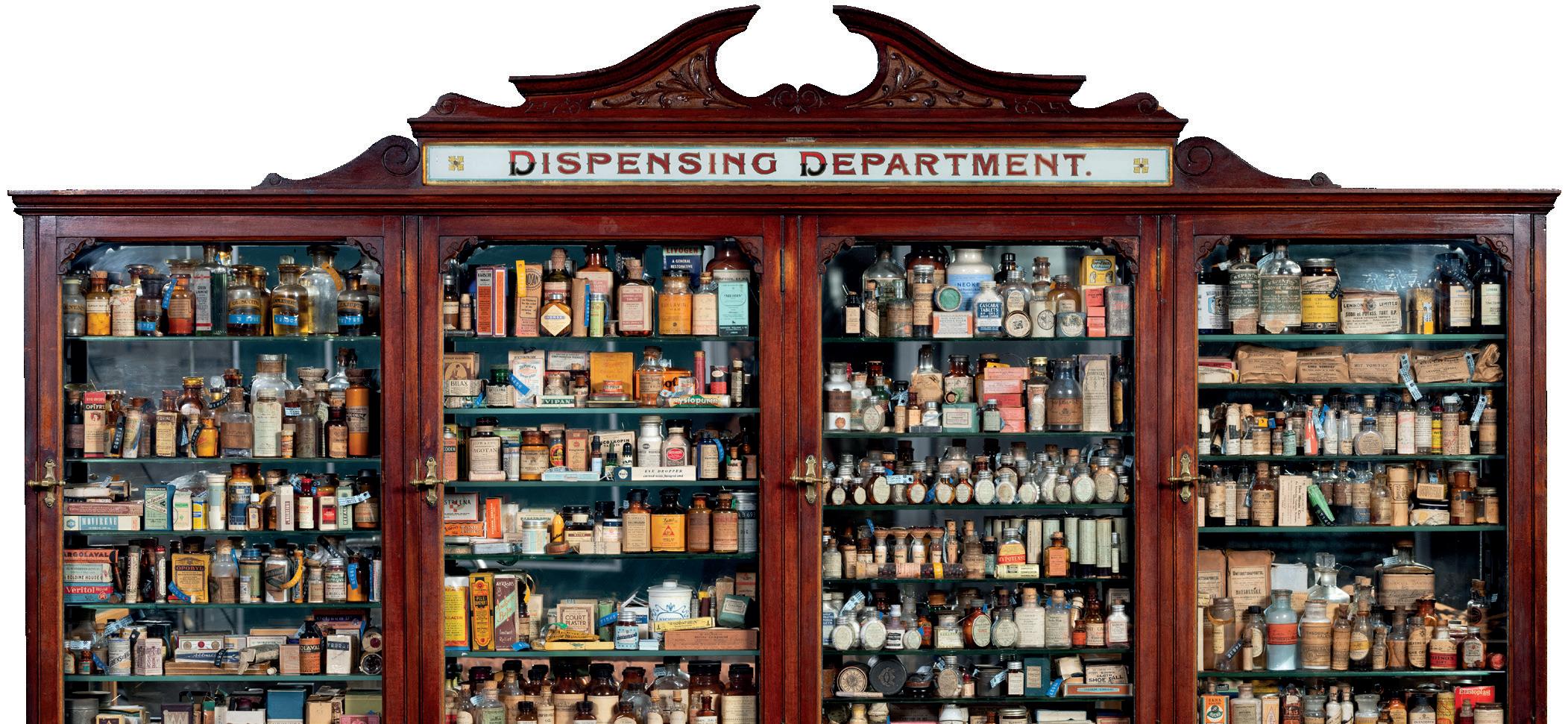
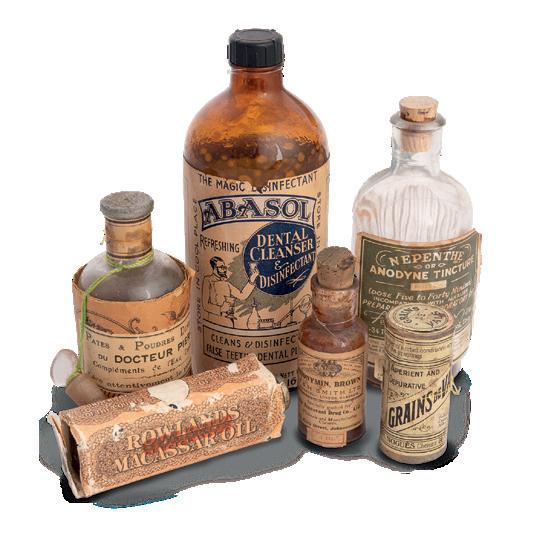
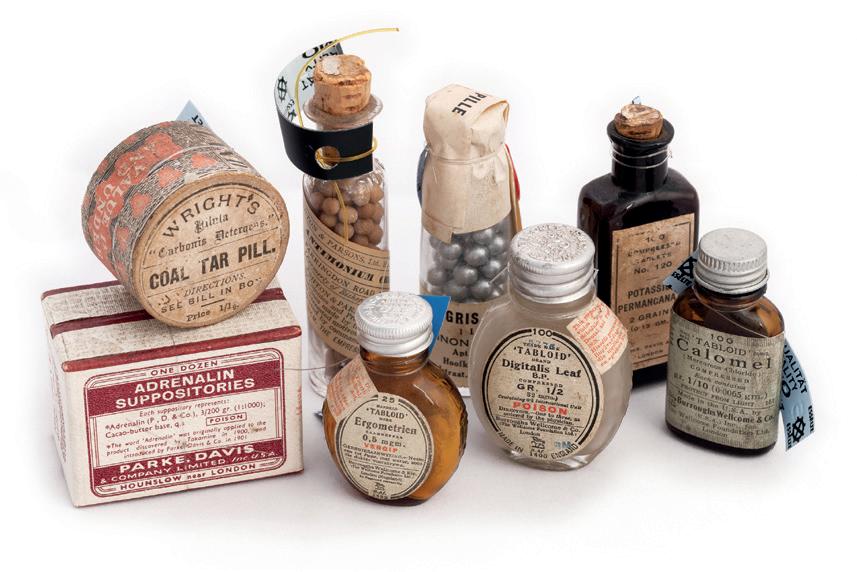
Pharmacists in the 19th and early 20th centuries weren’t just mixing up your meds—they were the original multitaskers. Along with curing your ills, they whipped up all sorts of fascinating concoctions from their shelves, including everything from bug-killing poisons and insecticides to paints, perfumes, spices, and even glues. You name it, they probably had it. And it wasn’t all in ordinary bottles—some of it came in ceramic jars, wooden cylinders, and even tin containers filled with dried herbs and plants ready to work their magic.
A scientist’s pantry
The 1906 pharmacy is an authentic reconstruction of an old Johannesburg pharmacy, fitted with the original mahogany shop fixtures and stocked with the implements and medical preparations of a bygone era.
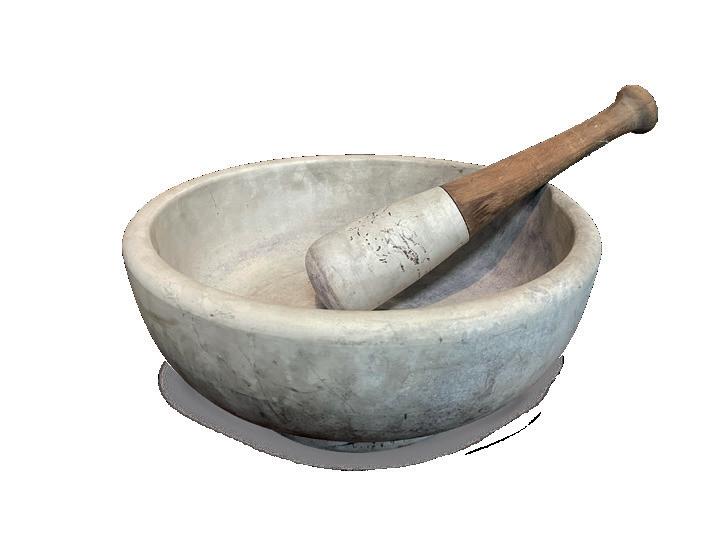
1. Mortar and pestle: was used for grinding and combining powdered medicine 2. Cork squeezers: sized stoppers for bottles
How much is enough?
Pharmacy tools
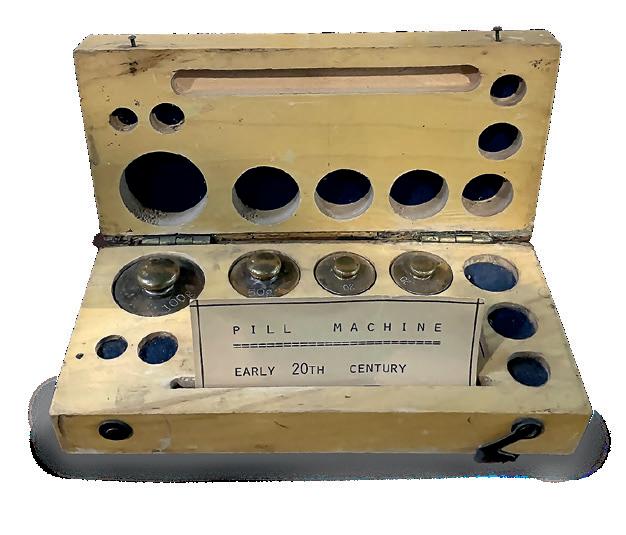
Pharmacists in the old days spent a lot of time carefully measuring chemicals by weight and volume— something they continued doing well into the late 20th century. They stuck with traditional systems of measurement, which included not just pounds, ounces, pints, and fluid ounces, but also a bunch of quirky old-school units inherited from the apothecaries. For example, a dram (or drachm) was 1/6 of an ounce (or 1/96 of a pound), or about 3 scruples, which was equal to 60 grains. For liquids, a minim was a teeny tiny measurement, equivalent to 1/480 of a fluid ounce (with 20 fluid ounces in a pint). To ensure accuracy, pharmacists used calibrated weight sets for their scales, which have since been tested to work with both digital pharmacy scales and mechanical balances like the DRX-3. These weight sets, made from copper alloys, ranged from tiny fractions up to 400 grams, and were critical for precise measurements.
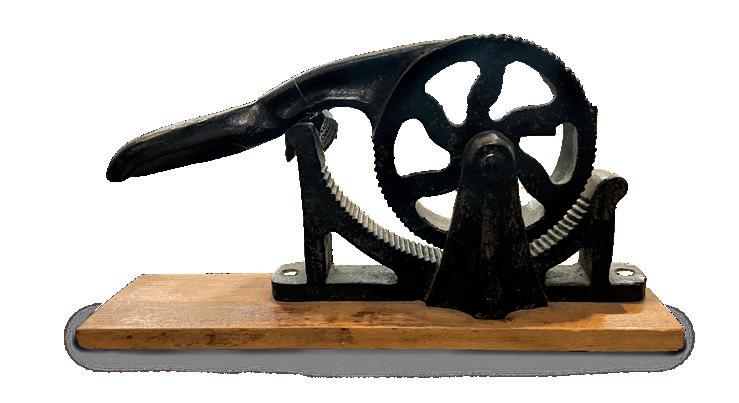
Pharmacists made many of their own pills, lotions, salves, elixirs and more according to individual recipes each doctor ordered for their patient. Prescription medicines were so varied, it was not possible to make large quantities of specific medicines and doses in factories. This meant early pharmacists had to manufacture many of the medicines they dispensed and needed quite a few tools. Like the stethoscope, pill rollers, pill tiles, suppository moulds, mortars and pestles, herb cutters and precision scales became synonymous with the tools of pharmacists. Pill rollers formed and cut pills, cork squeezers sized stoppers for bottles and the mortar and pestle were used for grinding and combining powdered medicines.
Dynamite in small packages
In 1617, England saw the birth of the Society for Apothecaries, which split off from the Grocers’ Company, giving apothecaries more freedom to sell whatever they pleased. Some served up strange potions like oil of swallows and syrup of serpents. Their treatments were based on supernatural beliefs and medieval medicine, including the wild idea of balancing the four humours, which basically meant they were mixing magic and science in a big ol’ potion of confusion.
1. Coal tar pill: Used for topical skin conditions 2. Adrenalin Suppositories: For the treatment of shock and asthma 3. Digitalis leaf: From the foxglove plant. Used to treat heart conditions 4. Calomel: Often caused mercury poisoning and used for various ailments
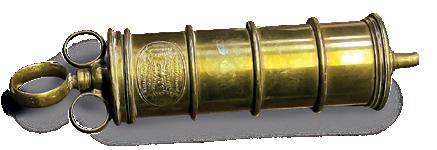
Bye bye ear wax
An old-fashioned metal syringe was historically used to pump water into the ear canal to dislodge and flush out ear wax.
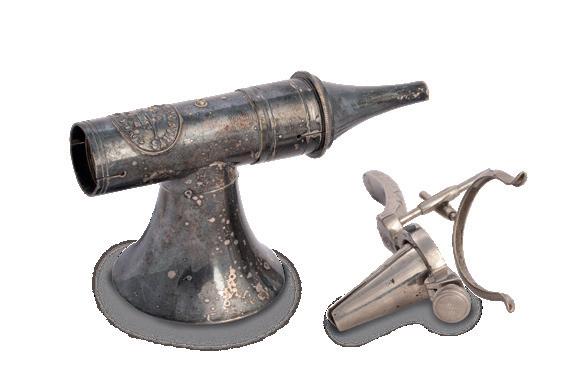
Clever light tricks!
In 1865, Scottish surgeon John Brunton created a nifty device (otoscope) to help doctors see inside the ear. It used sunlight or candlelight to light up the ear canal and eardrum, making it way easier to diagnose and treat ear problems. The device was a small brass tube with an ear speculum at one end. On the other end was an eyepiece with a tiny magnifying lens and an adjustable focus. Inside, there was a 45° angled mirror with holes in it, and opposite that, at a right angle, was a shiny silver funnel-shaped speculum. This speculum would catch the light and shine it onto the mirror, which would bounce it right into the ear. The result? The doctor could look through the eyepiece and get a clear, slightly zoomed-in view of your eardrum, all thanks to some clever light tricks!
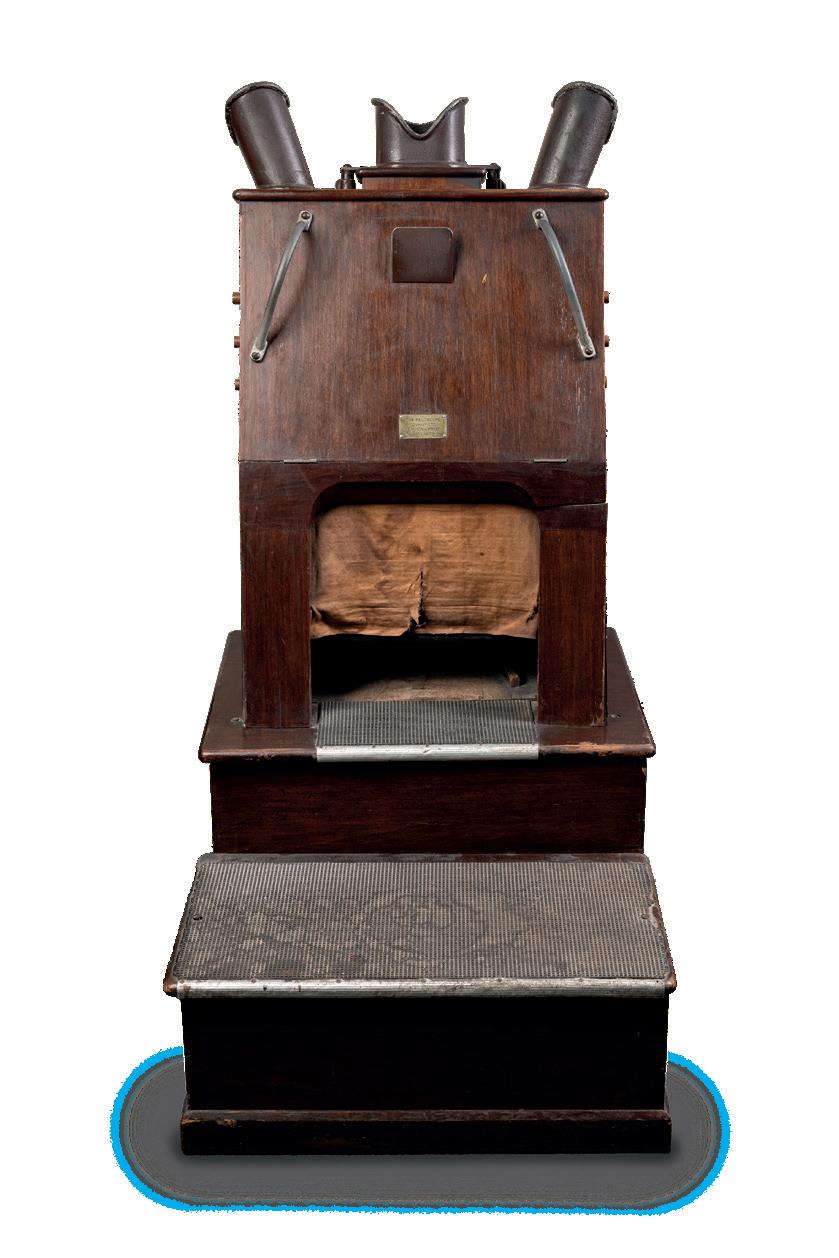
Radiation for a shoe size
Department stores loved having these wooden cabinets around during the 1930s-1950s. They were super popular, especially when parents needed to figure out their kids’ constantly changing shoe sizes. But as the 20th century rolled on, people started getting more concerned about radiation exposure. Basically, when you slipped your feet into the fluoroscope, you were standing right on top of an x-ray tube, and the only thing between you and the rays was a thin 1mm aluminium filter. Yikes!
A tea party for Dracula
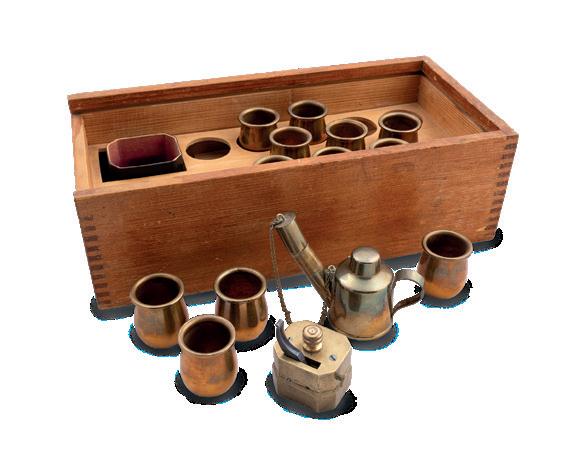
By the 19th century, bloodletting was all the rage in Europe. Bloodletting cups and incision knives were common. Its origin dates back around 3,000 years to ancient Egypt and it popped up in the medical practices of the Greeks, Romans and eventually all over Europe during the Middle Ages and Renaissance. The process itself could get a little intense—often starting with scarification (scraping the skin using a cube-shaped brass box with tiny knives), followed by cupping, which involved putting a glass dome on the skin and either sucking out the air or heating it up to create a vacuum. Sounds a bit like an ancient DIY spa treatment gone wild!
Calming the nerves
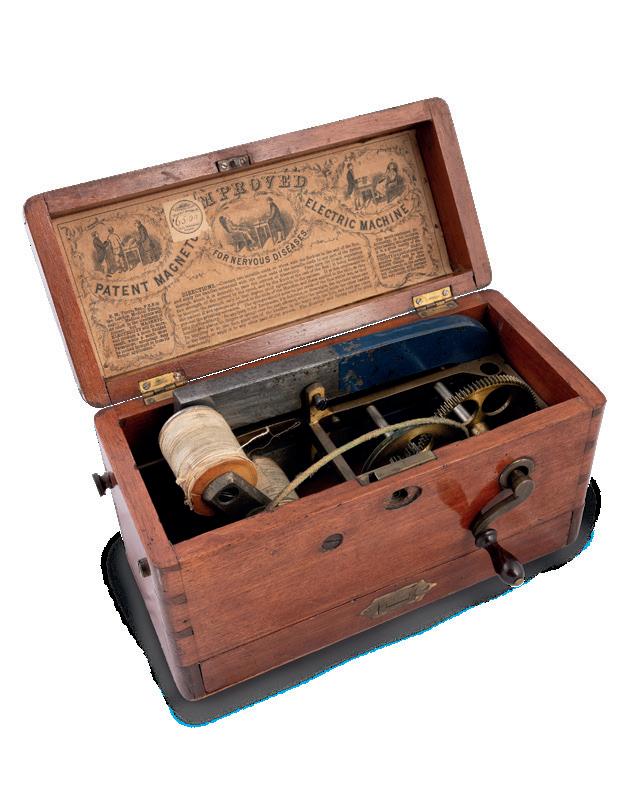
The Improved Patent Magneto Electric Machine — a fancy gadget from 1862 designed to zap your aches away! Back in the 1800s, mild electric shocks were thought to be a magical cure for all sorts of nerve-related pains. Thousands of these contraptions were churned out, and they worked by cranking a handle to generate electricity from a giant steel magnet. The strength of the shock was totally up to how fast you turned that crank, and those sleek ebony and brass handles were applied directly to the patient’s skin to deliver the shock. To make the experience less painful, doctors recommended placing a wet sponge between the handles and the skin.
Fun fact: Queen Victoria herself used one of these to ease her rheumatism.
Tactile storytelling
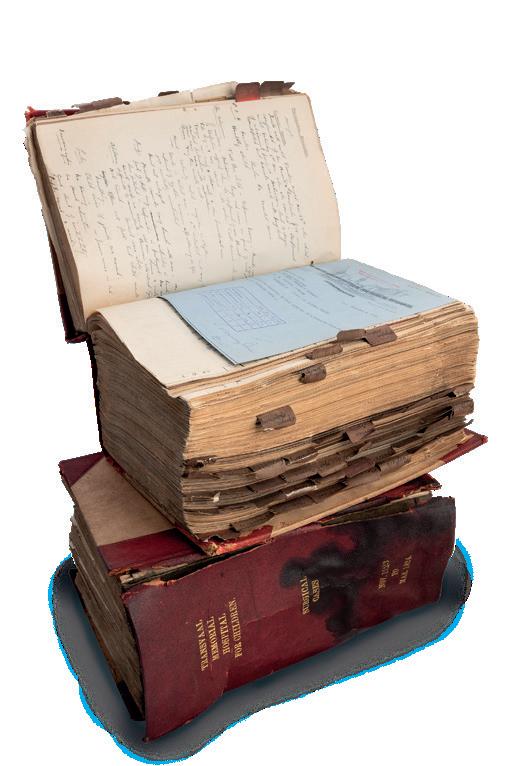
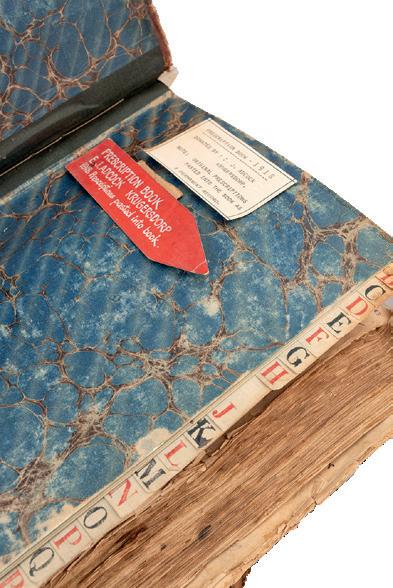
The museum has a collection of rare books and a big reference library on the history of medicine. Inside, you'll find an archive organised by different topics, with biographical information on thousands of South African doctors and health professionals, which is available for students, researchers, and anyone else who’s interested. The archive also includes papers from well-known South African doctors and health professionals.
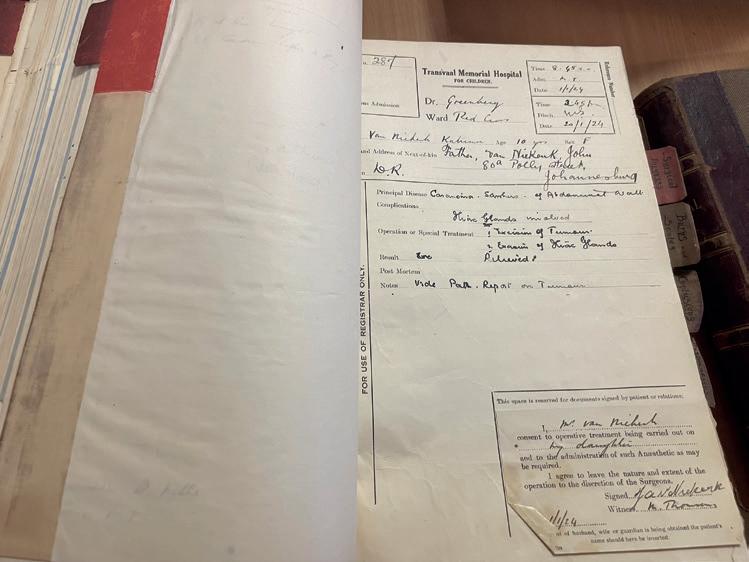
Inset: One of the documents on display is a detailed medical record of a seven-month-old patient who had an iliac tumour removed and was sent home fully recovered back in 1924.
Early dialysis
An old-fashioned washing machine?
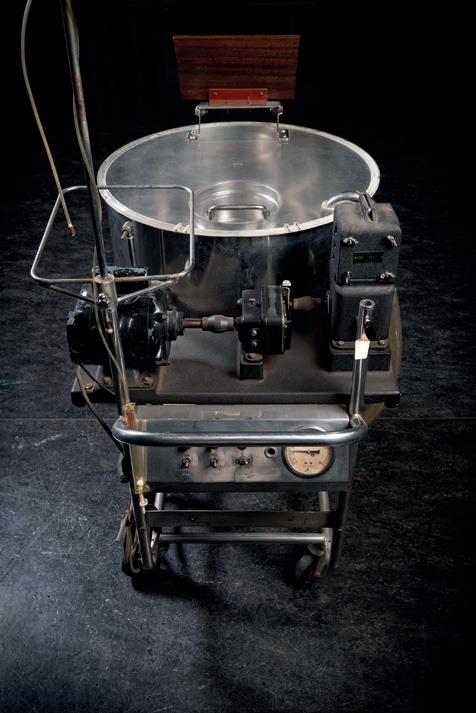
No, the Travenol artificial kidney from 1963 filtered waste products from the bloodstream by passing a patient’s blood through cellophane tubing wrapped in a coil, between woven sheets of fiberglass. The entire coil is submersed in a dialysing solution. The smaller waste particles in the blood diffuse to the dialysing solution while the larger blood cells and proteins remain in the cellophane tubing to be pumped back into the patient. Initially the procedure took eight to 14 hours per session and was repeated two or three times a week! The artificial kidney made life-saving dialysis possible for people with end-stage renal disease. Originally developed by Willem Kolff in the Netherlands in the late 1930s.
A capsuled life
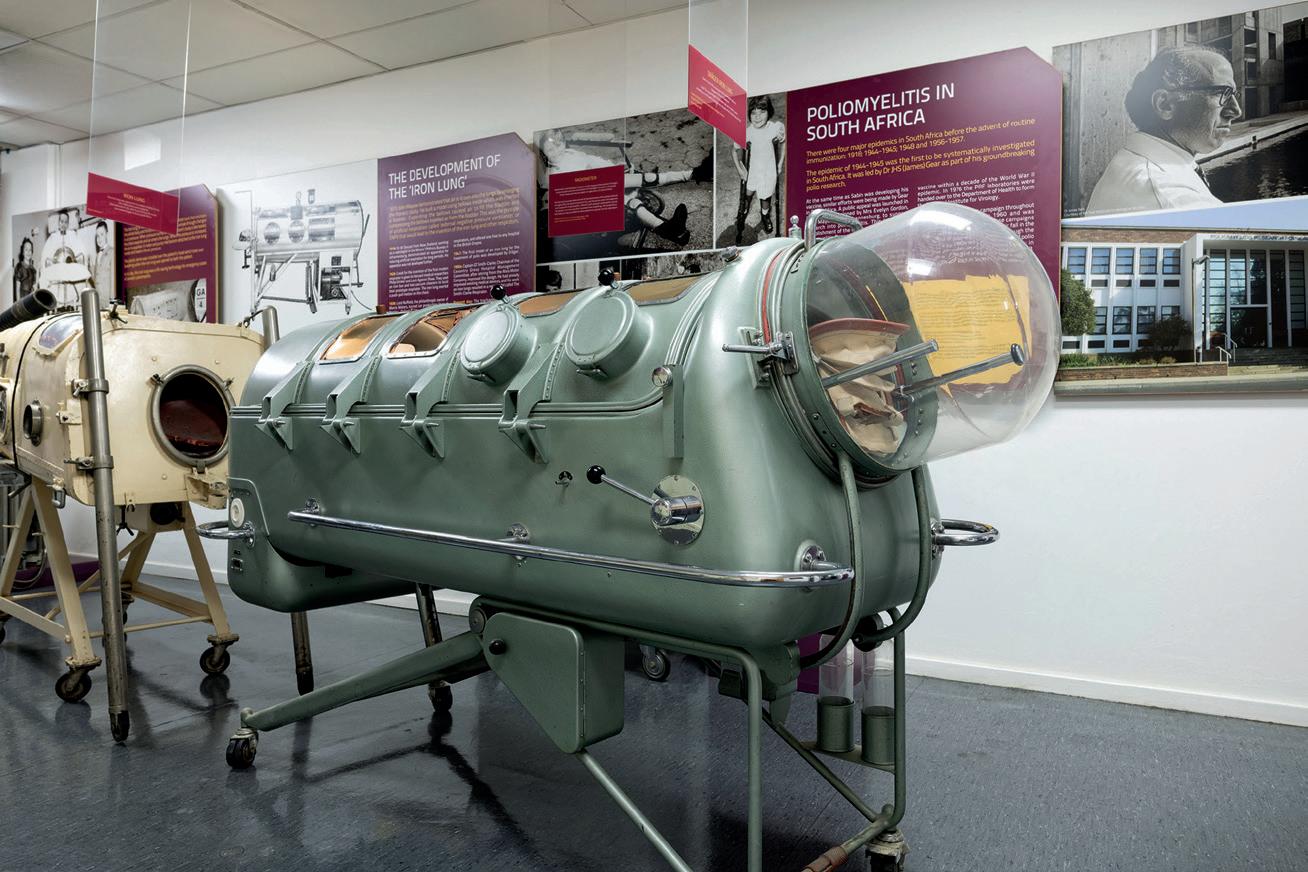
What looked like a coffin with legs, this cumbersome device, the iron lung machine, was groundbreaking in that it enabled hundreds of patients to survive polio before the polio vaccine was developed in 1955. The machine provided air pressure to help prevent patients’ lungs from collapsing. Developed in 1927, it was a fixture in polio wards during polio outbreaks. Its creation paved the way for many medical innovations used in intensive care units today.
Reconstructive magician
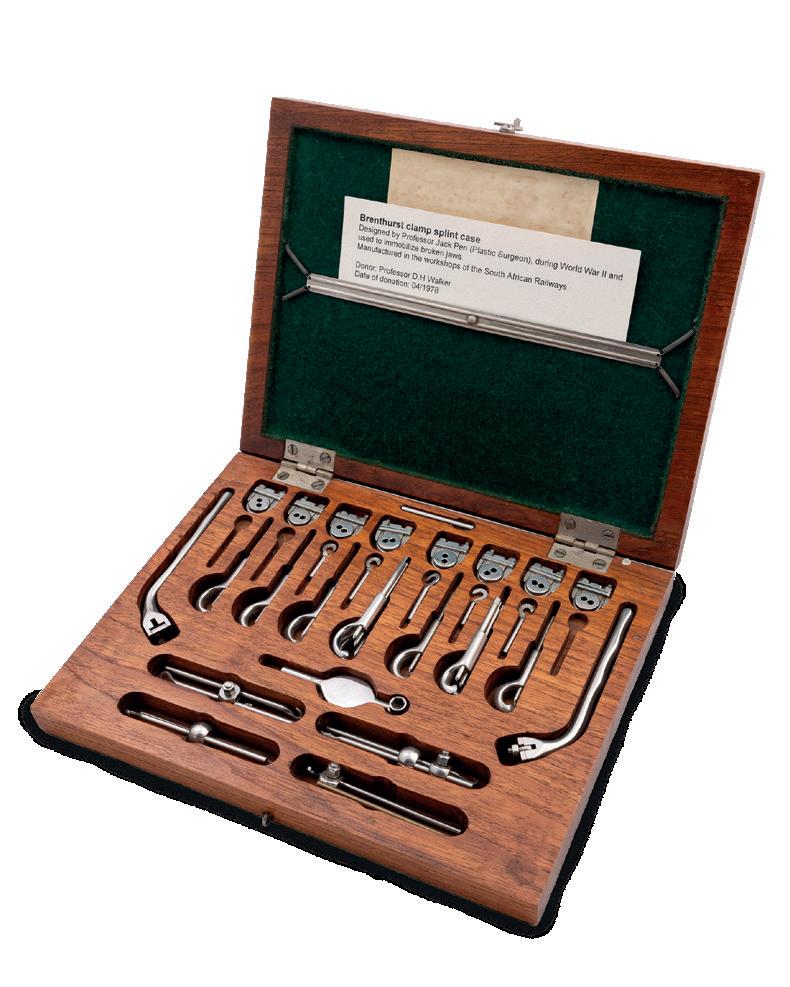
When Jack Penn (MBBCh 1932) was a third-year med student, he stumbled upon a book called Plastic Surgery of the Face by Sir Harold Gillies, and he instantly got hooked on tissue transplantation and reconstruction. This passion ended up shaping his whole career. Prof Penn became the first president of the Association of Plastic Surgeons of South Africa and set up the Brenthurst Military Hospital to help treat war injuries with plastic and reconstructive surgery. While treating countless war wounds, he developed new techniques and improved existing ones. One of these was the Brenthurst clamp splint, device used to keep jaw fractures in place, which was made in the South African Railways workshops. This set was donated to the museum by Professor Dennis Walker (MBBCh 1946, DOH 1953) in 1978.
What's the pressure?
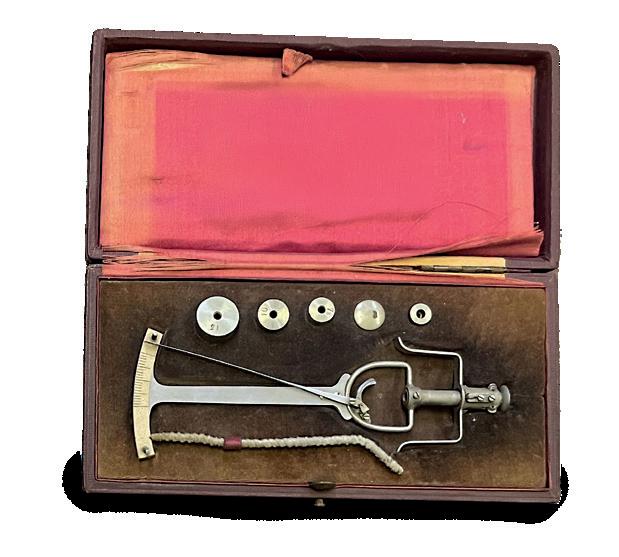
Hjalmar Schiøtz developed an excellent tonometer in 1905 to measure intraocular pressure or pressure inside the eye, an important test in evaluating if patients are at risk from glaucoma. Because of its simplicity and relative accuracy, it was the only mechanical indentation tonometer in use and accepted gold standard. The patient was required to lie flat, gravity providing a known force on a weighted metal plunger. The heavier weights caused the plunger to sink deeper for a given intraocular pressure and to give a higher scale reading. In effect, the heavier weights expanded the lower end of the scale. Original calibration was done by comparison with manometry in artificial and cadaver eyes.
Status Cult
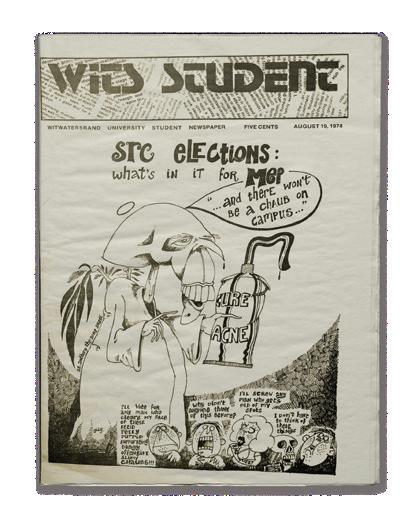
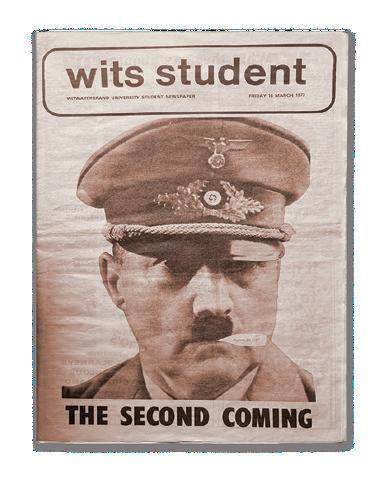
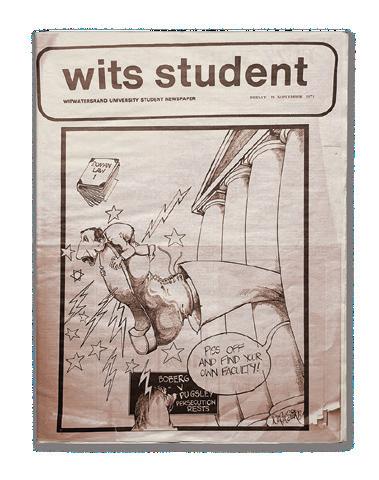
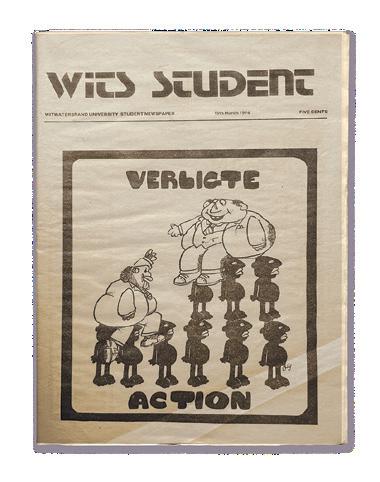
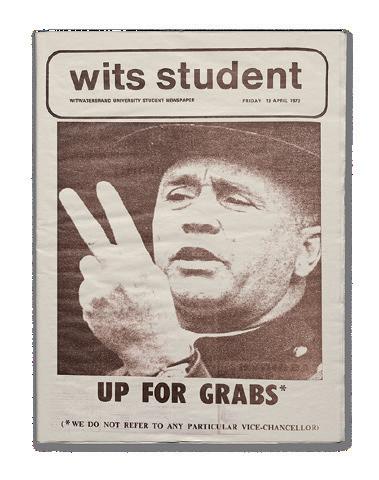
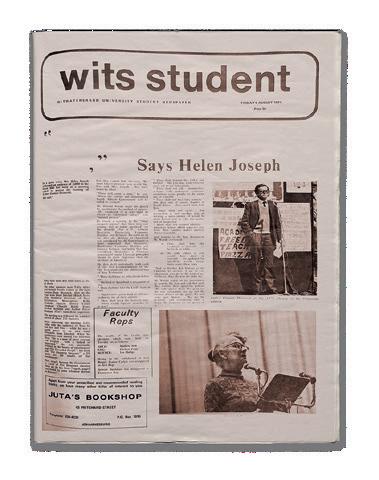
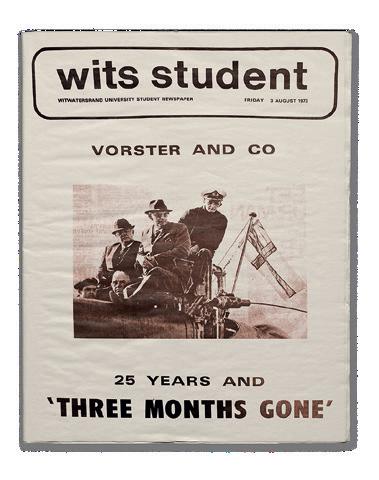
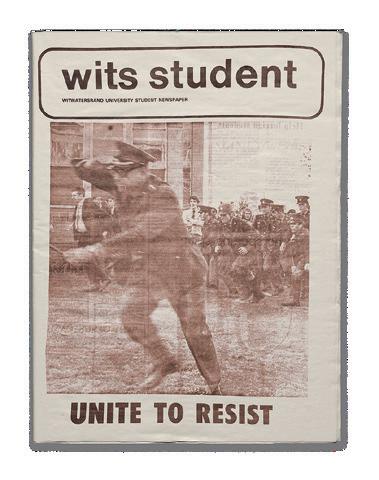
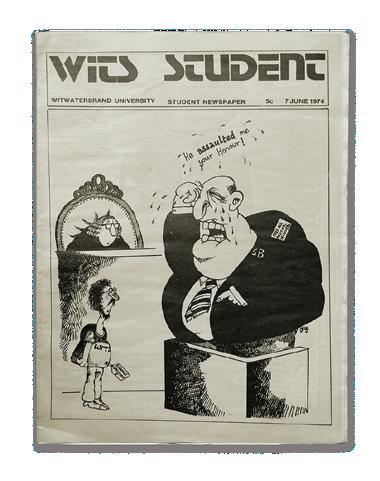
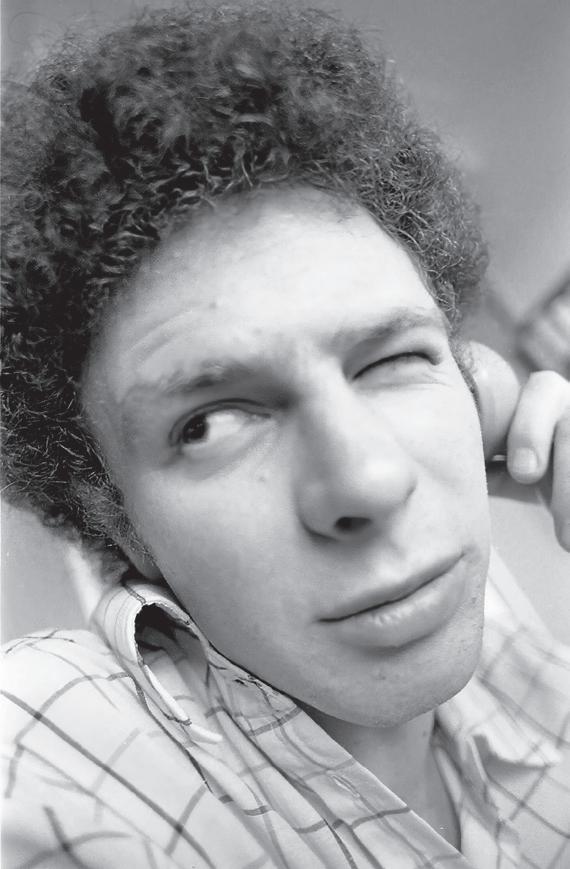
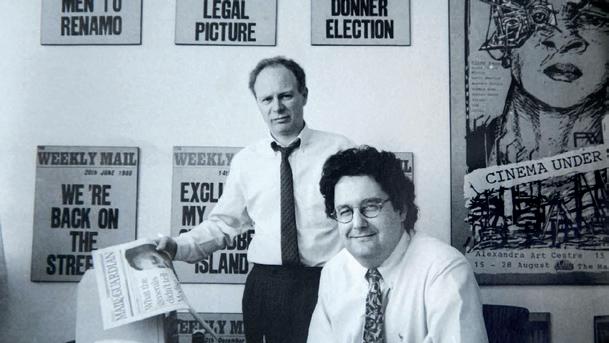
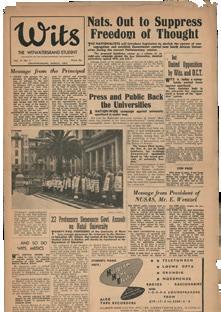
As one of the co-founders and former editor of the Weekly Mail, Dr Irwin Manoim (BA 1976, BA Hons 1977, MA 1984, DLitt honoris causa 2013) is among those who fought in the struggle for democracy, the freedom of expression and the press. Dr Manoim was invited by Wits Review to rifle through a collection of Wits Student, a vibrant student newspaper, and share his recollections as former editor. This is the first in a series remembering the Wits Student. “It was fascinating … there was so much I had forgotten. Various themes emerged. One was that in the early seventies, a tidal shift must have occurred in student culture, when the campus belatedly caught up with the 1960s student revolutions abroad.”
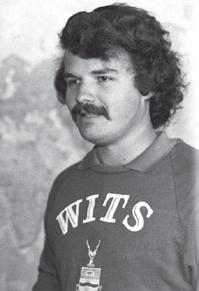
Left: A photograph of 21-year-old Irwin Manoim taken while he was editor of Wits Student in 1976
Image: Paul Laufer
Iwas recently asked when I first met my wife. “It was at Wits Student in 1976,” I said. “She was the stripper.” Heads swivelled towards her in astonishment. “I was very good at cutting trannies,” she explained awkwardly, “because I was an archi.”
Some explanations may be needed. Wits Student was the offi cial newspaper of the SRC, housed in a dungeon beneath the throbbing heart of Wits, the student canteen. The dungeon stank of slap chips, tomato sauce, dagga fumes wafting in from the lawn outside, and, most powerfully, acrid photographic chemicals.
Strung across the room were washing lines from which dangled long strips of dripping wet photographic paper, and large, transparent photographs. There were glass tables with lights beneath them, and hunched over were the strippers. Fully clothed. The long sheets of photo graphic paper were imprinted with text. The strippers sliced these up with sharp blades. They dipped knitting needles into bottles of rubber cement, rolled the needles across the back of the strips, then gummed them on to large sheets of card board the size of a newspaper page.
That’s what newspaper production looked like in the days before PCs made it all easy. Only architecture students (“archis”) were precise enough to glue the strips of paper perfectly straight. Or draw wobble-free lines with ink pens or rub on Letraset headlines, one character at a time, or crop and tape in the transparencies (“trannies”). Strippers: the most exacting and least glamorous job on Wits Student. Also, the most fun.
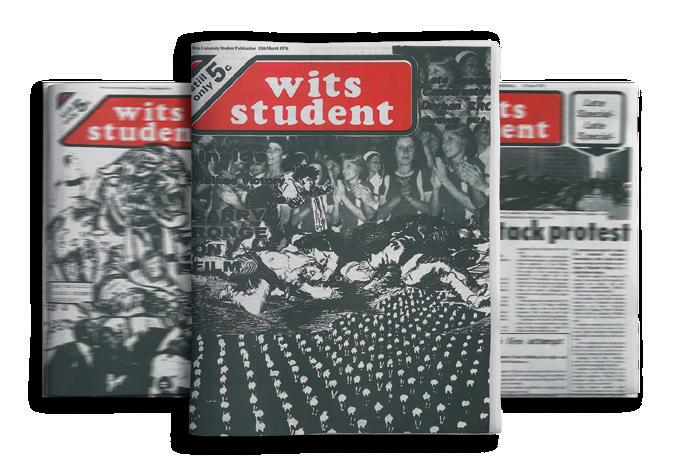
In the late sixties and the seventies, Wits Student had cult status. On a Friday morning (later on a Monday), students stampeded campus early to buy copies at five cents each. It was sacrilege to throw copies away: people treasured their Wits Students, lovingly hoarded their collections for years. One of the tensions of my marriage has been which of us bears responsibility for the negligent loss of our collection of 1970s Wits Students
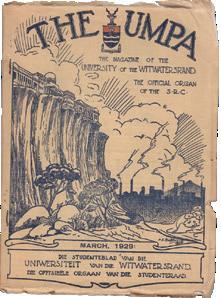
Above: Students stampeded campus early mornings, to buy copies of the Wits Student at five cents each Middle: Irwin Manoim (left) and Anton Harber in the early days of the Weekly Mail Below: The Umpa, 1929 (left); The Witwatersrand Student, 1957 (right)
Image: Wits Centre for Journalism
HURTLING TO FAME
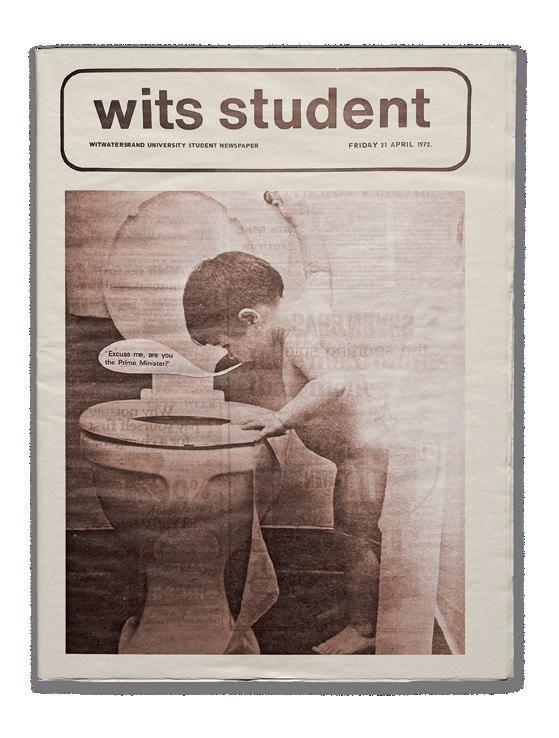
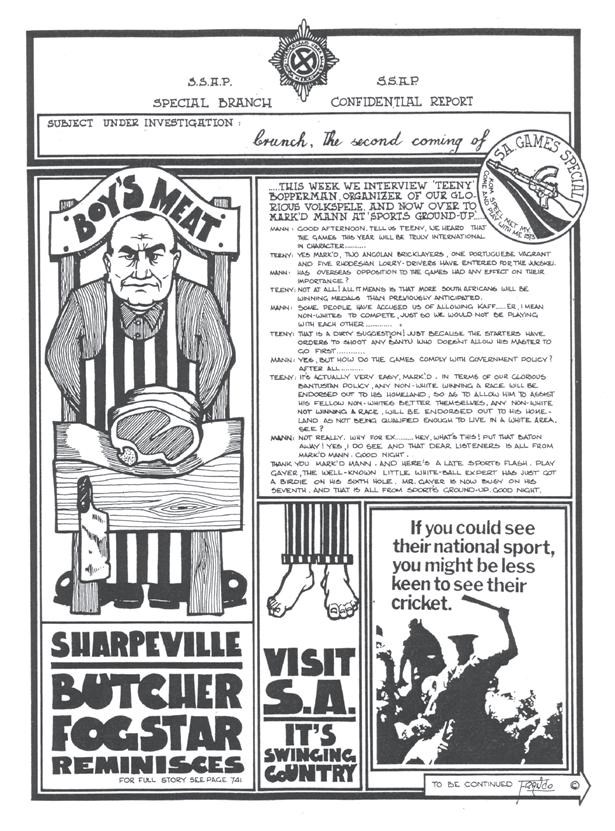
In 1976, as my own editorship came to an end, I researched a history of the paper. Seems it began in 1920 as a typed sheet called Umpa. If that means nothing to you, it is the first word of the Wits University war cry, which every student once knew. I must have found and read a copy of Umpa, because I scornfully described “slightly worse contents than those found today in the average primary school magazine”. The name changed several times, until settling on the prosaic Wits Student in 1958. The paper remained “utterly obscure”, I said, until “it took one innocuous photograph swiped from Scope magazine and a perhaps less innocuous caption to send it hurtling to fame”. That photograph (right), displayed the entire length of the 21 April 1972 front page, showed a naked infant peering into a toilet bowl. The caption was: “Excuse me, are you the prime minister?” The public reaction was astonishing. An emergency debate was held in Parliament to condemn both the newspaper and the dangerously liberal Wits University. The vice chancellor, Professor GR Bozzoli, was summonsed to Cape Town to be reprimanded by the minister of education. The editor, Eton-educated Mark Douglas-Home, nephew of former British prime minister Alec Douglas-Home, was hustled out of the country with 48 hours’ notice. (In later life he became editor of The Herald in Scotland and a novelist.) Mass meetings were held on the Library Lawns and the entire SRC resigned in protest at the assault on freedom of speech. But the event only emboldened Wits Student.
FRANCO THE CARTOONIST
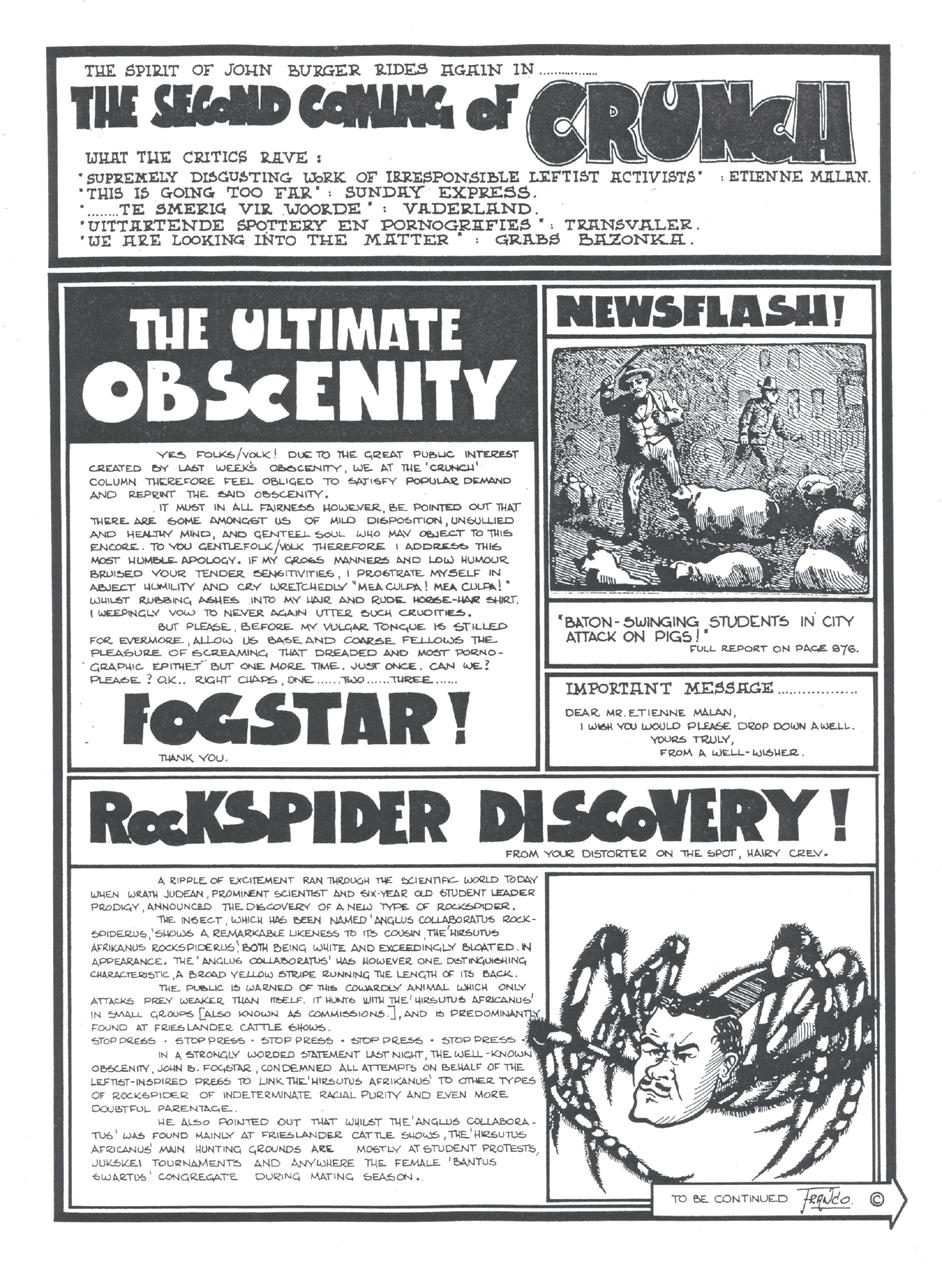
An architecture student named Franco Frescura (BArch 1977, MArch 1981, PhD 1986) appeared. Much older than his fellow students, he had drifted back and forth between studying architecture and working as a draughtsman. He began by providing occasional cartoon strips under the name Frank. In 1972, under the name Franco, he drew a weekly full page cartoon strip, the John Burger Saga, the adventures of an
archetypal racist white South African who “prays on his knees each Sunday and preys on his neighbours the rest of the week”.
Looking back, I’m astonished at the vast amounts of toil that must have gone into the cartoons, crammed with tiny little side jokes, the lengthy captions hand-lettered in an impeccable draughtsman’s handwriting. (On occasion, jokes referred to Franco at his drawing board at 3.00am.) Just to remind readers that Wits Student had not been cowed, there were frequent elliptical jokes about lavatories. Sir De Villiers Graaff, the largely ineffective leader of the parliamentary opposition, but treated with polite respect in the mainstream press, was mercilessly lampooned as a spider with “a broad yellow stripe down his back”.
The university administration watched uneasily. Missives were sent down from Central Block (Senate House did not yet exist) urging caution. The vice chancellor (“The Boz”) was a frequent victim of the satire. The cartoons became increasingly
Above: The 21 April 1972 front page of Wits Student showed a naked infant peering into a toilet bowl.
Below: Franco Frescura the cartoonist
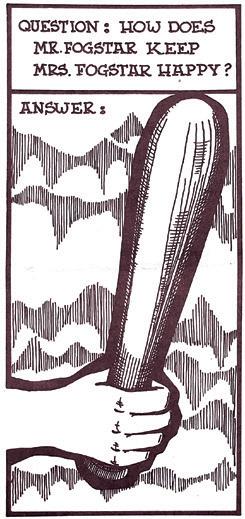
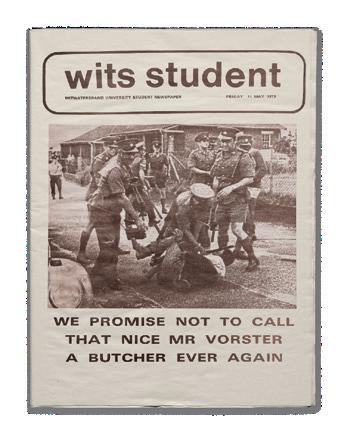
outrageous. The breaking point came in March 1973, with a cartoon showing John Vorster in butcher’s apparel, “Fogstar, Butcher of Sharpeville”. Instead of waiting for the government to act, the university hauled Frescura and editor Derek Louw (son of the editor of the Rand Daily Mail, Raymond Louw) before a Student Disciplinary Committee. The real cause was said to be a threat from an unnamed “friend of the university” to withdraw substantial donor funding. The committee pondered over several weeks, with the cartoons continuing, unabashed. The newspaper polled its readers, whose opinions ranged from “disgusting” to “bloody funny”.
One gets a sense of both the cartoons and the university dilemma from the excerpt from the committee's findings (see adjacent box).
Frescura and Louw were expelled from the university for the rest of the year. The state, slower to move, charged six of the Wits Student staff with criminal libel and defamation; charges against four were dropped. Frescura was held in custody until a magistrate remanded the case. He and Louw were found guilty and sentenced to R900 fines, plus a suspended sentence for Frescura. The sentence may have been too lenient for the state, which withdrew Frescura’s citizenship and attempted to extradite him to his place of birth, Italy. It took 10 years before his citizenship was restored. Not all students were sympathetic: letters to Wits Student complained that the cartoons had been a reckless distraction from more serious issues.
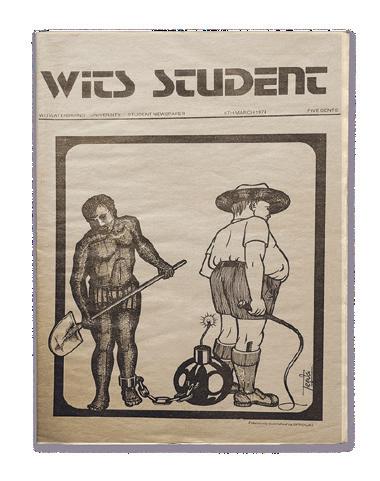
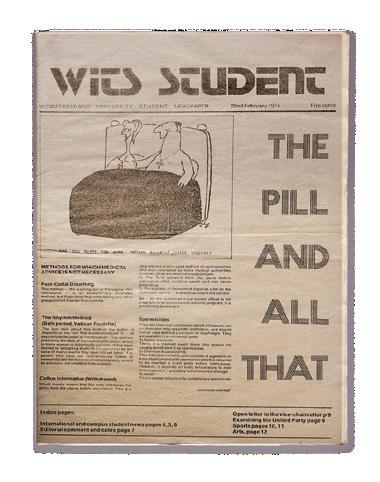
Still, a marker had been set: the next year’s Wits Student could not afford to wimp out. The first edition of 1974 was for Orientation Week. The audience was 17-year-old girls newly emerged from school, and 18-year-old boys newly emerged from South African Defence Force camps. They were treated to a shock of a different kind. The frontpage was a primer on sex, how to do it
THE TRUNCHEON DRAWING
The Committee finds that the right-thinking person on looking at it in its context, and reading the writing attached to it – in effect, how does Mr Vorster keep Mrs Vorster happy – will draw one or more of the following inferences:
a) It is intended to convey that Mrs Vorster is a masochist. Bringing in the wife of the Prime Minister in this way is scandalous.
b) In addition to (a) it is intended to convey that the Prime Minister is a sadist, which implication, if anything, is more scandalous.
c) It is intended to convey that Mr Vorster uses the implement on Mrs Vorster as an artificial phallus, implying aberrant sexual gratification on her part and possibly even impotence on his part, which implication is scandalous and disgusting beyond words.
d) It is intended to convey that Mr Vorster is a brutal man and beats Mrs Vorster and that she derives sexual satisfaction from it, which implication is again scandalous.”
and how to avoid the nuisance of getting pregnant. The unknown author, evidently extensively experienced, advised on correct techniques to put on and remove condoms, recommended obtaining the Pill from the campus health clinic rather than your parents’ doctor, and warned that backstreet abortions tended to be very dangerous. (The next year, three enterprising women reporters pretended to be newly pregnant and went in search of back-street abortionists. They had no money and were turned away. “Next time you’ll be smart enough to take the Pill,” shouted one abortionist.). n
Left: The infamous Truncheon Drawing
READ MORE: Franco Frescura feature in October 2019 issue of Wits Review, pp.42-50
WITS SPACES
Tribute to trees
PHOTOGRAPHS BY BRETT ELOFF, PETER MAHER AND MARITZ VERWEY
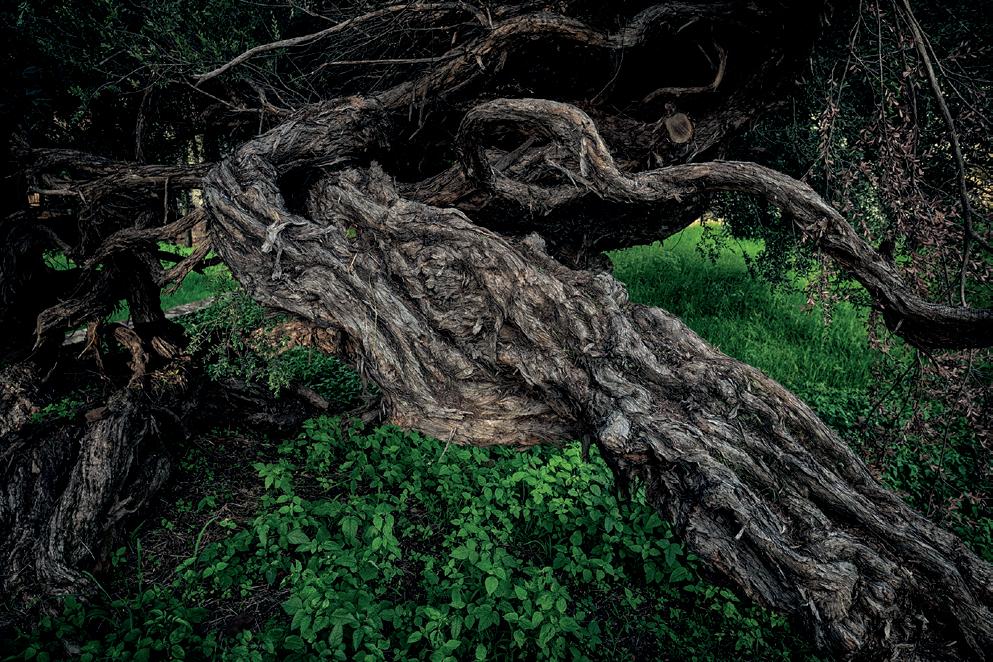
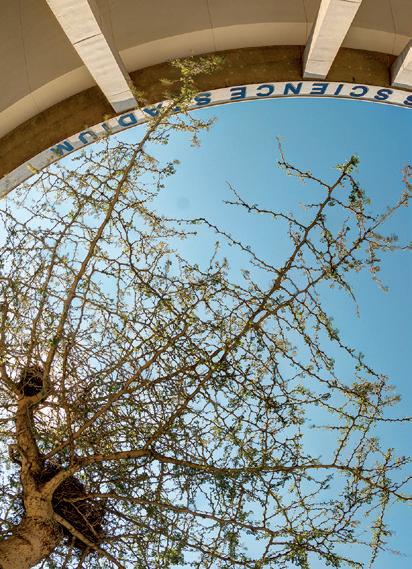
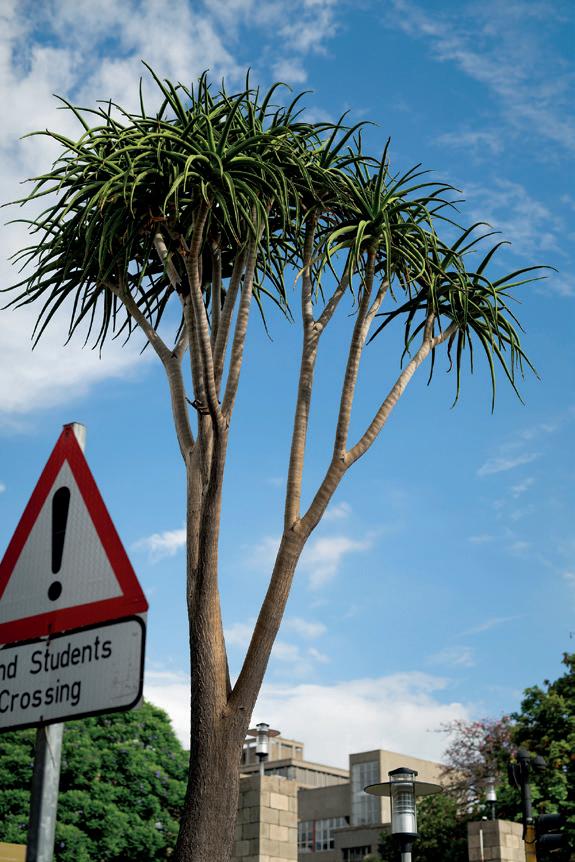
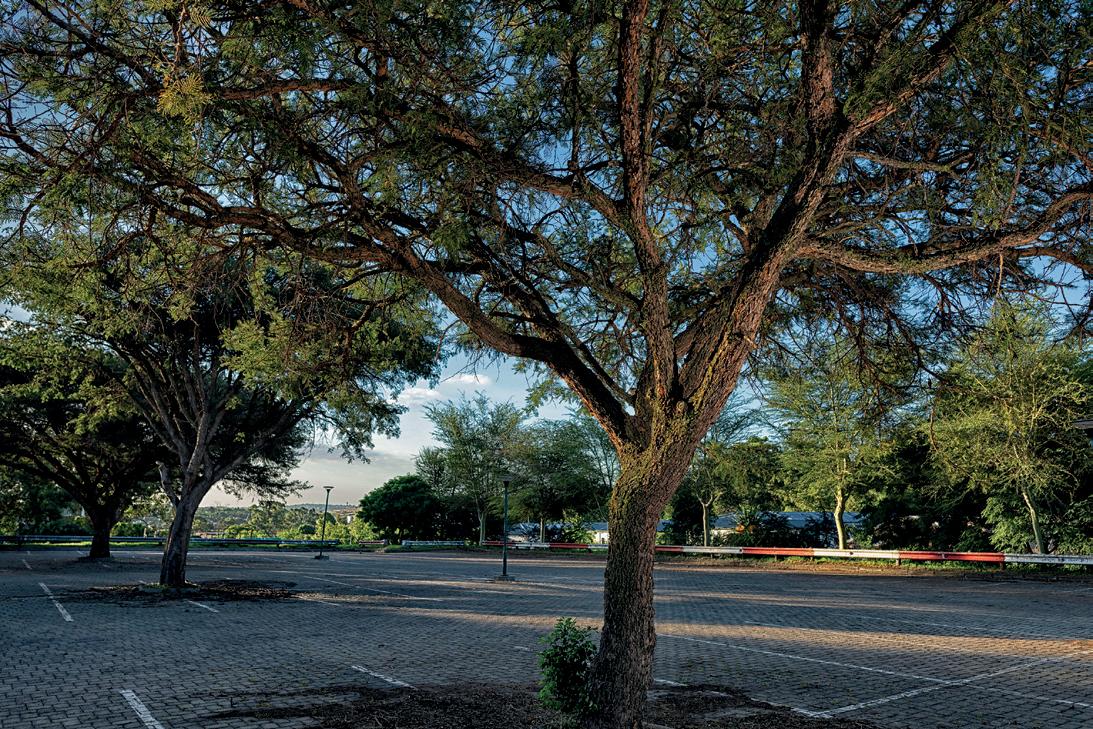
The land on which the Wits Campus is built was once savanna grassland. Today it is a unique biome and natural oasis, in which exotic trees linked to Johannesburg’s history coexist alongside indigenous trees. With changing climatic conditions, the trees at Wits are valuable carbon sinks and a delight. Some are prickly, others brooding, some are thriving, while others struggle to fend off the shothole borer beetle infestation, but all serve as familiar landmarks and silent witnesses to the flow of students and events. This is the first of a “fauna and flora” photography series.
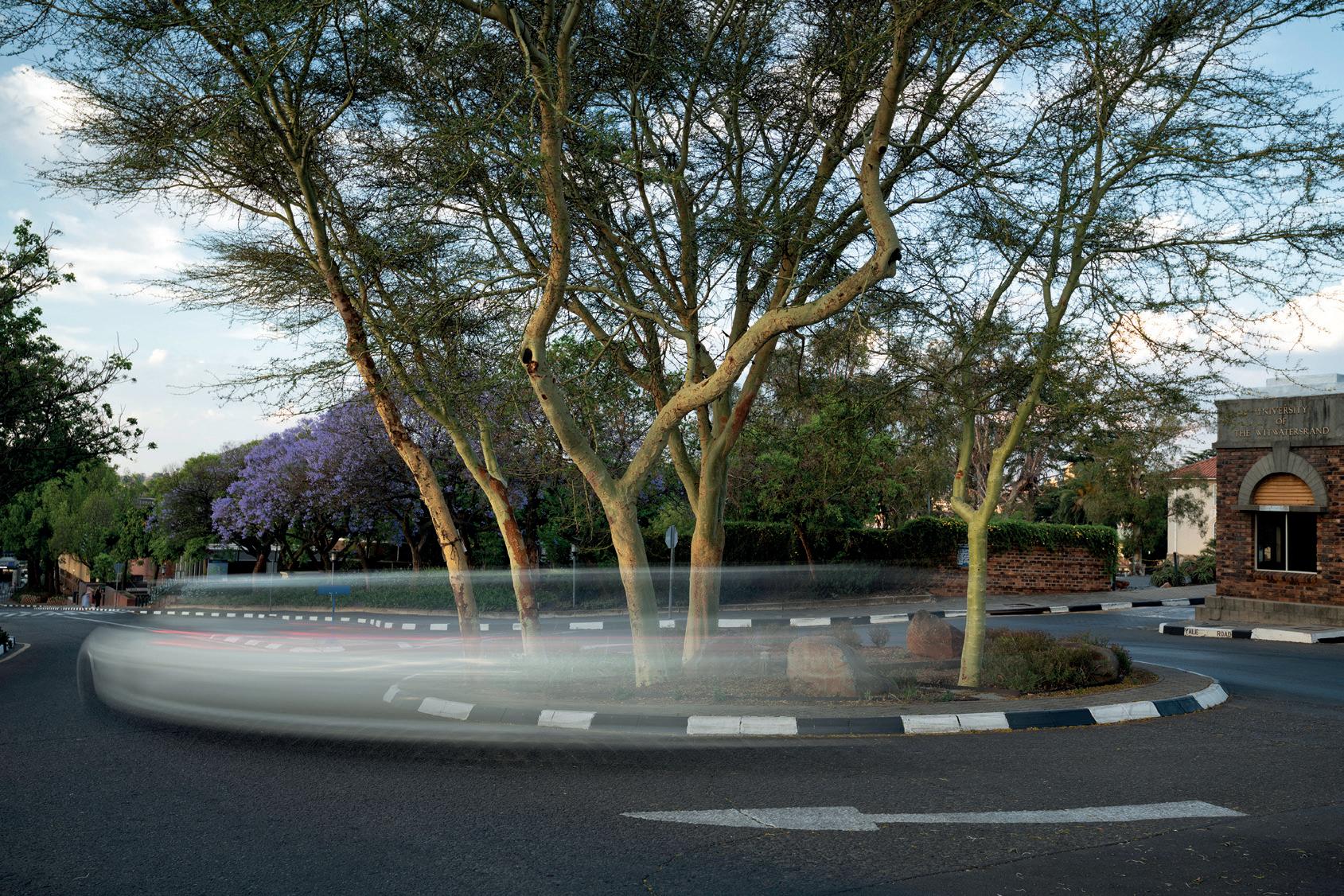
Fever-tree Acacias
1. The busy circle just above the WitsAnglo American Digidome
2. At the Science Stadium, West Campus
The knotted bark of the Small-leaved Willow on West Campus Village
An Eastern Treealoe towers next to the TW Kambule Mathematical Sciences building
Acacia xanthophloea
Salix mucronata capensis
Aloe barberiae
Acacia tortilis spirocarpa
Hairy Umbrella Acacias provide the shadiest parking spot for students who don’t mind a long walk up to lecture halls
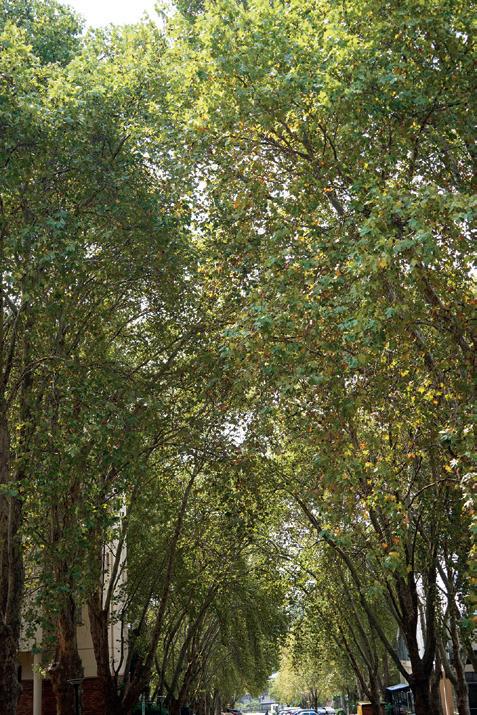
Platanus × hispanica London Plane trees form a canopy down Alumni Lane
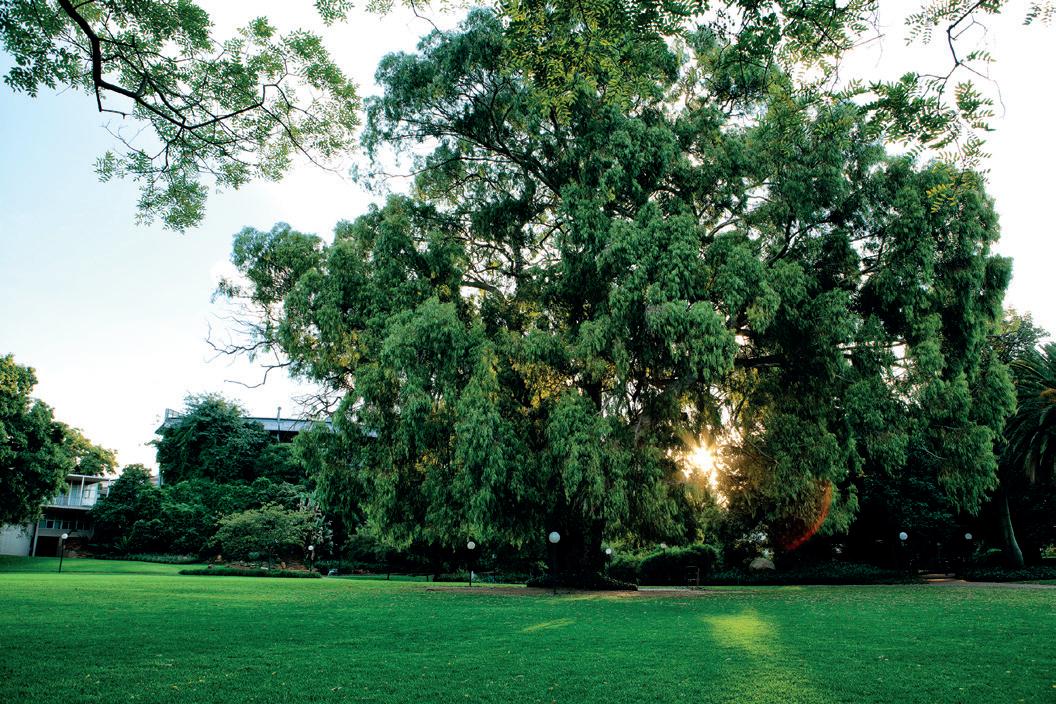
Eucalyptus globulus
The Giant Bluegum on the lush lawns of Gavin Relly Green. It has a girth of nearly 39 metres
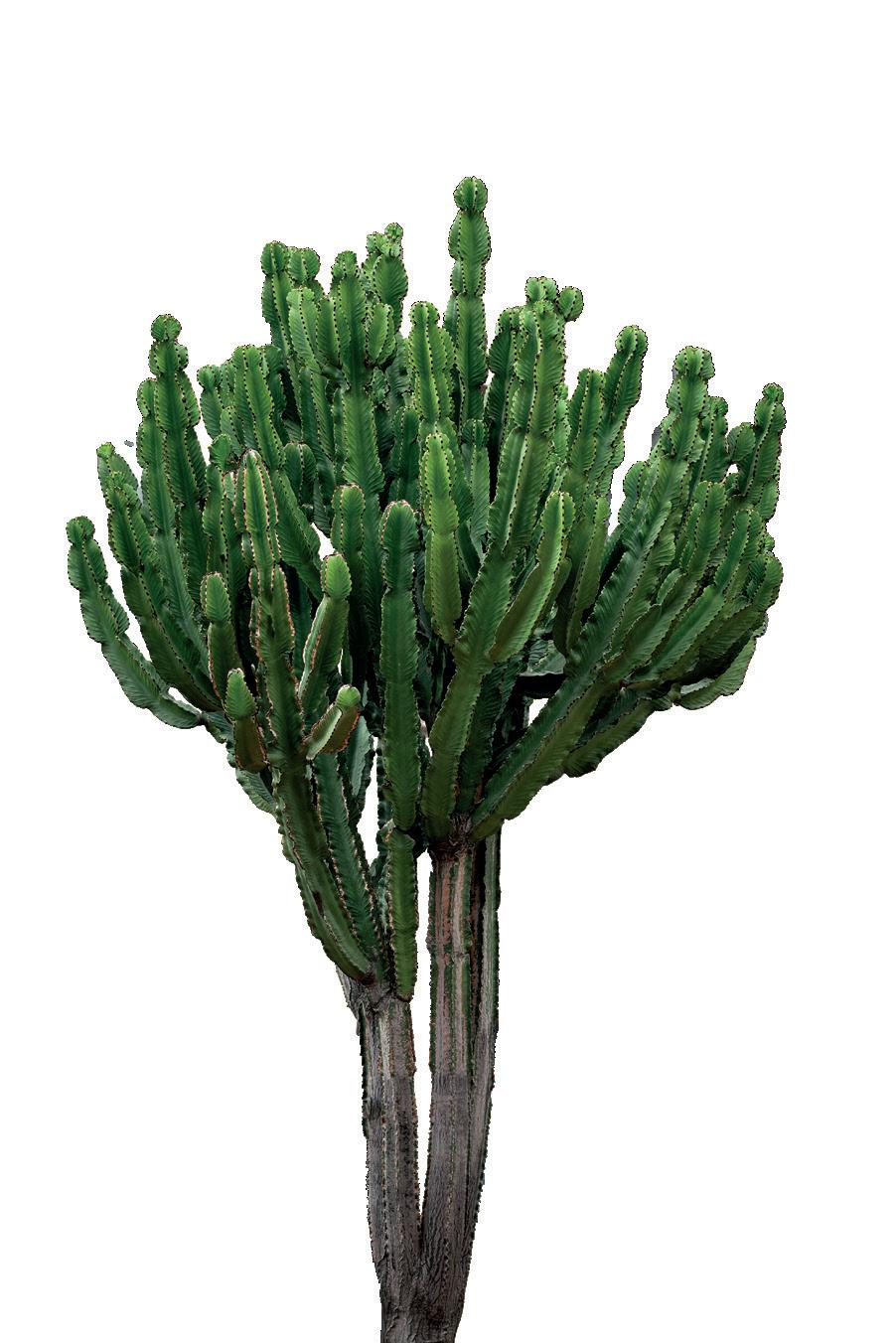
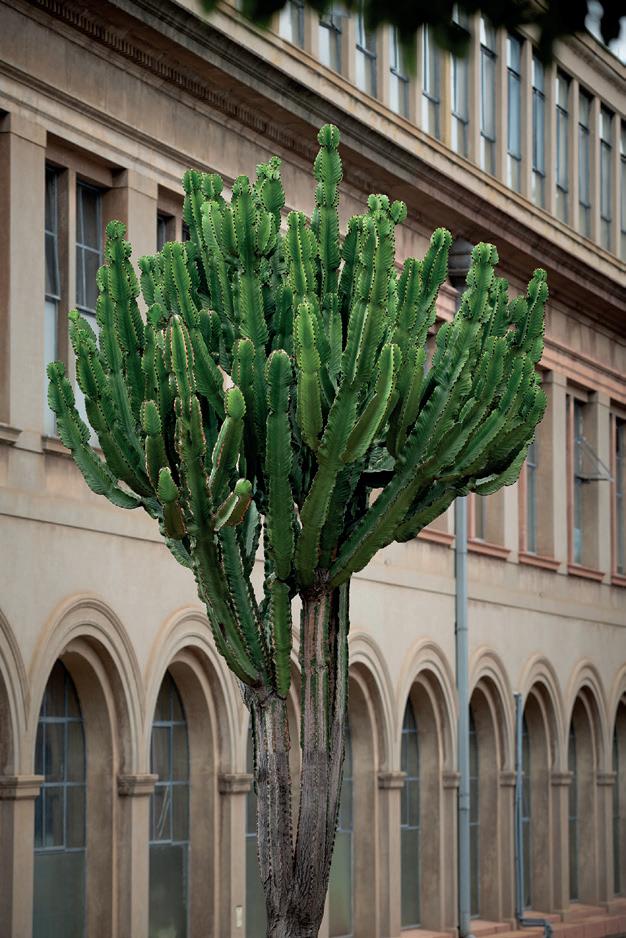
Euphorbia candelabrum
Candelabra tree making its way to the sky from a planter outside the Animal , Plant and Environmental Sciences building on East Campus
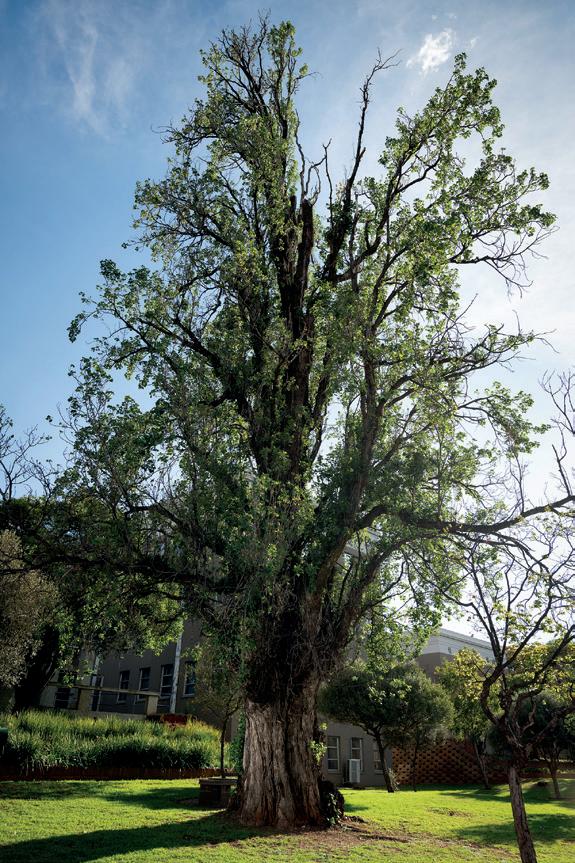
Macaranga capensis
A Wild Poplar or River Macaranga stands guard in front of the Margo Steele School of Accounting building
Pseudotsuga menziesii
Douglas fir trees line the path outside College House
Quercus robur
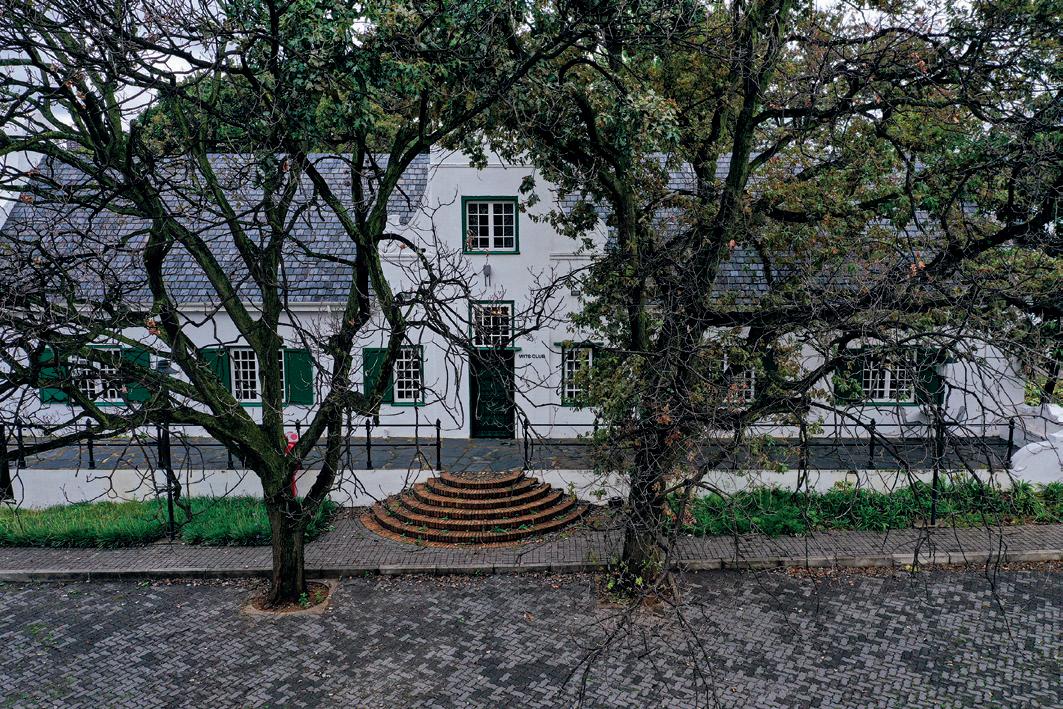
The English Oaks used to welcome visitors to the Wits Club before they were destroyed by an invasive beetle
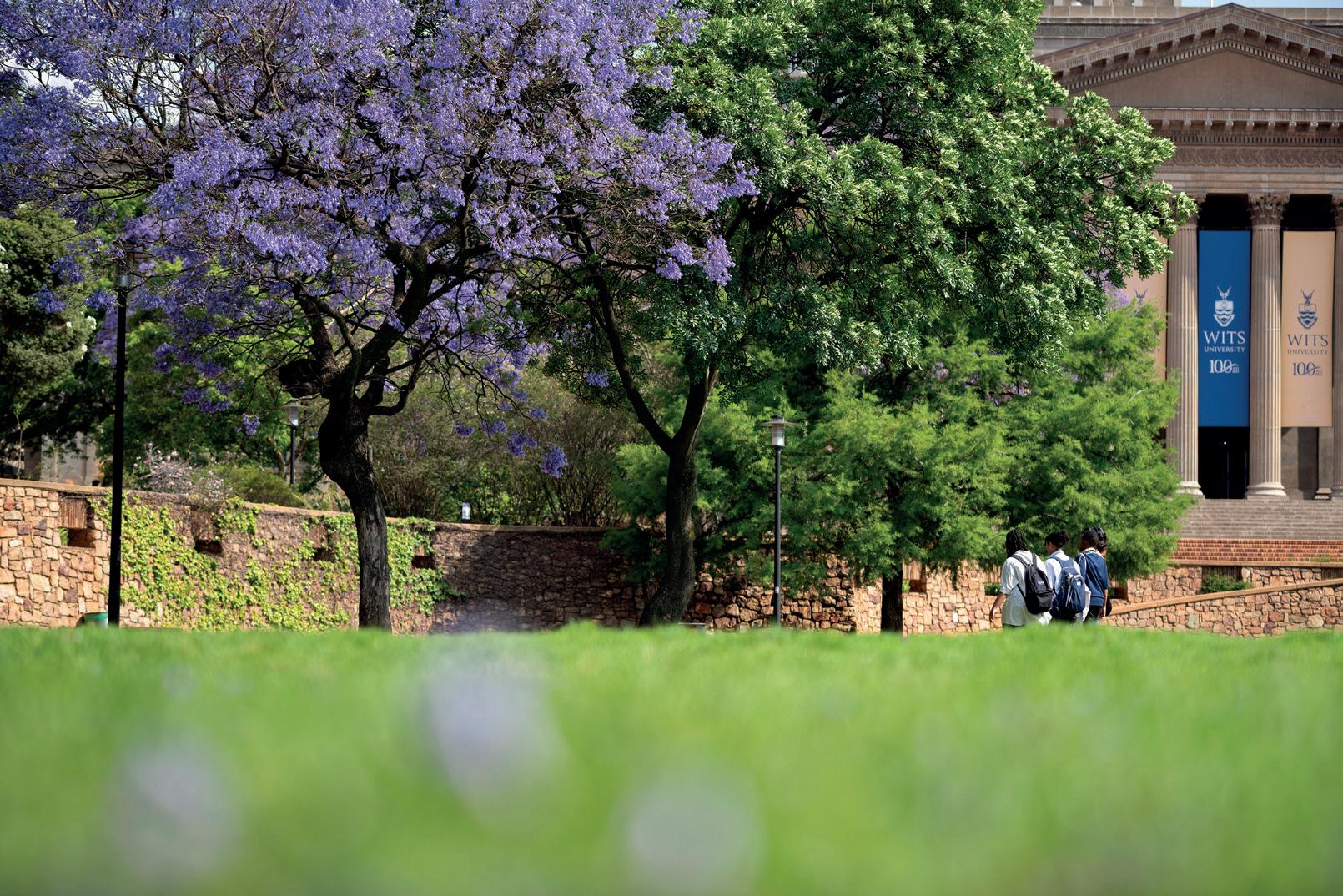
Beloved Jacarandas in bloom, framing the
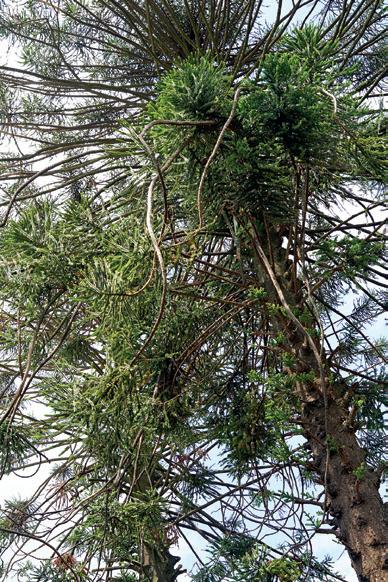
The evergreen Monkey Puzzle trees may grow to a height of 45–50 metres
The hardy Japanese Pagoda or Chinese Scholar trees provide hiding places for numerous bird species throughout the year
Jacaranda mimosifolia
Styphnolobium japonicum (left)
Araucaria araucana
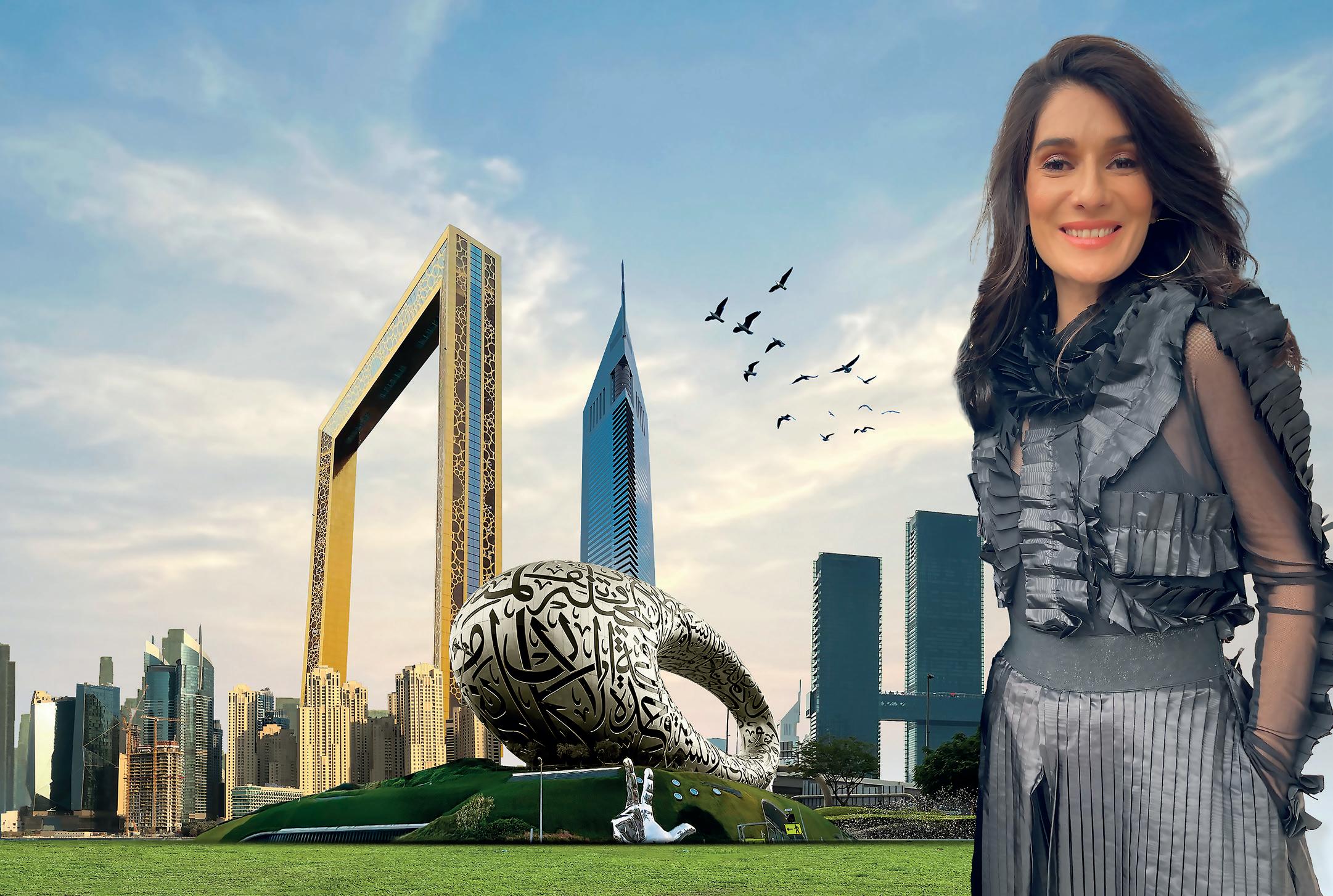
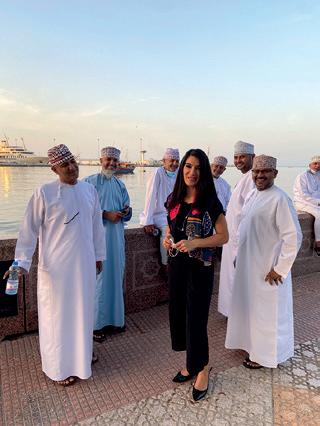
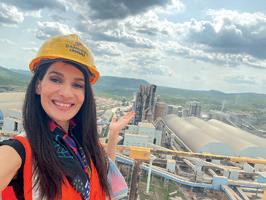
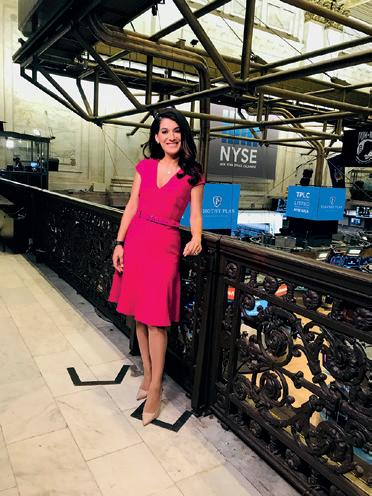
One moment she’s in Rwanda, the next in Riyadh, then Morocco, Egypt, and back to Saudi, with the United States and Europe between – this is the world of CNN presenter Eleni Giokos (BA Hons 2014).
By Heather Dugmore
ntelligent, warm, well-groomed and highly watchable, Eleni Giokos is the face of CNN’s Connecting Africa and Marketplace Middle East. She joined CNN in 2015 in Johannesburg and now lives in Dubai, where she presents on commerce, trade and macro political and economic trends in Africa and the Middle East.
“My social life is the departure lounge at airports,” she laughs. “Between jobs I’m at home in Dubai, spend ing time with my husband and daughter, and cooking. I love Greek cooking, it’s my creative outlet, and I have to say I’m so good at it that my colleagues ask me to cook for them.”
Greek cooking takes her back to her childhood in Witbank (Emalahleni), where her Mom and Dad worked all year round, running their concession store at the coalmines. “My Mom would be exhausted from working the whole week but this never stopped her from making these incredible Greek dishes over the weekend and I would help her,” Eleni recalls. “It is so much a part of me; I never tire of the delight of hot spanakopita coming out of the oven.”
ROAD TO ATLANTA
Below and right: The face of CNN: meeting fans, celebrities, statesmen, business leaders, and people on the ground
Eleni was with Bloomberg TV Africa when CNN asked her to an interview. “The whole process was serendipitous,” she says. “I was on my way to Washington DC to attend the IMF meetings for Bloomberg when CNN called me and asked me to fly to Atlanta to meet with the bosses, which I did, proudly armed with my Honours degree from Wits.”
Eleni’s family did not have the finances for her to go to university after matric and she went straight into journalism, which she'd always wanted to pursue, teaching herself, freelancing wherever she could, and working her way in print, TV, digital and radio.
“I never gave up on my goal to get a degree and I was 29 and working at CNBC when I enrolled for the mid-career Honours degree in media studies at Wits,” she explains. “One of my best achievements was being at Wits and I loved being on campus and at the wonderful library.”
She graduated in 2013 and two years later got the offer from CNN. “It was one of the wildest dreams coming true,” says Eleni. The job was to cover the whole African continent from Johannesburg.
Her presentation style was so well received that CNN started flying her to New York and London to fill in for other anchors. She was travelling so often, CNN said it would be easier for her to be based in Dubai.
First she had to have the conversation with her civil engineer husband, George Chatzicharalampous, whom she had met on her first ever trip to Greece in 2008. “Now you know why I didn’t change my surname,” she laughs. She met George at the age of 26 when she decided she needed to experience Greek culture and meet her grandparents for the first time. “I thought I would feel Greek but once I was there I realised I am more South African than Greek; now I feel I’m a beautiful combination of both.”
DROPPING ANCHOR IN DUBAI
The Eleni/George meeting is a cinematic story. They met on a beach on an island called Lemnos in the North Aegean on the first day of her trip to Greece, and then spent two idyllic weeks together. George moved from Greece to South Africa so that they could be together and they married in 2015, the same year Eleni joined CNN.
She had their daughter Cleo two years later. “A week before giving birth I went with the police on a raid to a hijacked building in the inner city. They couldn’t believe my advanced state but I had endless energy when I was pregnant.” The day Cleo was born, she wrote scripts until 1am and left for the hospital at 5am.
Cleo was four when Eleni presented George with the idea of moving to Dubai.
“I was a bit apprehensive as he had already moved to South Africa for me, but he was immediately keen,” she says. “He wants me to shine and is incredibly supportive of my career and constant travel. He has
never pushed back once and he is pursuing his own profession from Dubai.”
Eleni says everyone is employed in Dubai and throughout the United Arab Emirates (UAE). “You can apply for a two- or three-month visa and a slight extension, but if you aren’t working here within 120 days, irrespective of your circumstances, you have to leave. The only other option for staying is that you open a business here with evidence of money in the bank and income coming in.”
She describes the Middle East as “a two-speed world" and says "it should not be put into one economic geography, just as Africa shouldn’t. There are very different geopolitical elements playing out in different areas of these regions.”
On a very high-speed development trajectory is the Gulf Co-operation Council, a political and economic alliance of six Middle Eastern countries: Saudi Arabia, Kuwait, the United Arab Emirates, Qatar, Bahrain and Oman.
“They are all oil-producing countries and it is oil revenues that are funding their huge investments in infrastructure, technology, the service industry including the IT, financial and hospitality sectors and renewable energy. Dubai is the headquarters for major companies from around the world and a haven for highly skilled people. There are so many expats here from everywhere."
The UAE has a Minister of AI to advance what artificial intelligence technology can do for the region. “It’s really exciting, but it should also be managed with a high level of caution. It can be used negatively to change the direction of elections or to spread misinformation. People are already battling to distinguish truth from spin.”
Eleni says everything in Dubai is digitalised and the ease of doing business there is astonishing, as is applying for any form of documentation. “It’s incredible to think that Dubai as it is today was created in just 30 years. From a stretch of sand into a metropolis! They have spent their revenue so cleverly, keeping their eye on the biggest economic growth areas.”
When she first arrived there in 2021 she was dumbstruck by how expensive it was to live there. “I bought a cup of coffee and it was 30 dirhams, which is R149. I thought ‘what the hell am I doing here!’. I realised I had to stop converting and fortunately my salary had been adjusted.”
Another initial shock was the heat. “It was mid-July when I arrived and it was 50 degrees C. Now I’m used to it, and, of course, they have air conditioning everywhere.”
Image: Elodie Martial
Eleni and her family live in a suburb called Jumeirah Village Triangle. “It’s an open suburb with green parks, not a compound or gated community, and the safety here is incredibly liberating. It took time for me to calm down about safety issues. I still double check if my car is locked and that no one is around to jam it.
“The school system here is also amazing and very advanced. The teachers were shocked that Cleo could not read and write at the age of four. They were also perplexed by her accent as she went to an Afrikaans nursery school in South Africa, and so she spoke Afrikaans and Greek, and English with a Greek accent.”
Eleni says what concerns her is “the opulence and grandiose style of living here and that Cleo experiences this as the norm. My leveller is the sobering side of the two-speed world: the countries in dire conflict and countries where it is a daily battle for people to put food in their mouths.
HARDSHIPS OF HOME
“I grew up knowing what hardship is,” she explains. “My parents worked incredibly hard and we struggled financially and never went on holidays. We all worked in the store and were constantly approached by destitute people. My parents would help wherever they could and I saw their kindness and empathy.”
The Giokos family, which includes four daughters, moved to South Africa from Greece in 1986 in search of a better life. “Witbank was a tale of two very different cities in the 1990s. My father would take me to the mine hostels and then to the affluent white areas with swimming pools and clubhouses.
“Many South Africans were very discriminatory against Greeks; they called us names and as a child I didn’t want to be Greek because of it. My Dad would tell me that there were many people with far bigger problems. He would point out the coal-blackened money with which the miners would buy a few items at our store and say that it is because of these people that we have lights. He encouraged me to investigate the deeper issues of the economy and he would make me read all the newspapers every day and translate them for him. Because of all this, I was much more serious than my peers.”
The moment she started earning a salary she put two of her sisters, Heidi and Vicky, through school and paid for Heidi’s university education. Eleni says investing in their education was the best investment she ever made. Heidi is now a presenter on eNCA,
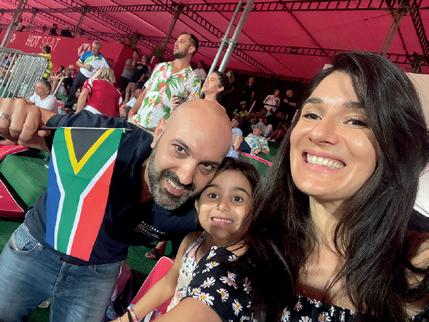
Proudly South African: George, Cleo and Eleni. Cleo is inheriting Eleni’s love of Greek cooking
eldest sister Anthi is an IT architect in Holland and Vicky is in South Africa at a steel company.
Her parents have since moved back to Greece. “I really miss South Africa,” she says. “I miss the people and the South Africanisms. I also miss so much about Johannesburg. I miss the hadedas waking me up in the morning, the thunderstorms and hearing people say ‘just now, eish, yebo and lekker’. ”
REFLECTING ON AFRICA
On one of her visits, Eleni returned to Emalahleni to cover how the coalmines are doing. “They are curtailing the coal industries but what is alarming is that South Africa isn’t taking the transition as seriously as it should,” she says. “I met school children who are so anxious because their parents have lost their jobs. It breaks my heart that people have to experience this and I hope that the new generation of South Africans is going to shift things up and that the Government of National Unity can be a driver of this.
“South Africa needs to be a proactive leader and be seen to be dealing with energy transition, the economy, crime, corruption and unemployment,” she says. “This is Africa’s time globally and it has to seize the moment.”
Despite the deep crises and conflicts in Africa, she says there are positive developments: “I had an encouraging panel discussion in Rwanda on the African Continental Free Trade Area.
“I experience momentum among so many Africans who are set on increasing our own value chain and creating processing plants and ensuring our own food security. And now that the African Union is finally a member of the G7, it means that we have a seat at the table; we are not just on the menu.” n
Assisted 26 099 students Breakdown of
By Heather Dugmore
Administering anaesthetics in a bombed-out hospital in war-torn Sri Lanka as a member of Médecins Sans Frontières (MSF), Dr Mark Cresswell (BSc 1993, BSc Hons 1995, MBBCh 1996) thought this would be his life.
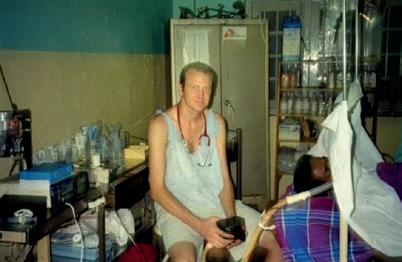
In the year 2000 Mark was in a village in Sri Lanka held by the Tamil Tigers where the MSF team (Doctors Without Borders) were attending to over 15 000 civilian refugees (pictured right).
“What struck me so deeply working with MSF was the appreciation shown by civilians caught up in the brutality of war,” says Mark, now a renowned musculoskeletal radiologist at the University of British Columbia in Vancouver.
He worked with MSF for 15 years, serving on the boards of MSF UK and Canada, the operational centres in Amsterdam and Geneva, and in the field in Yemen, Liberia and Kenya.
Mark’s life path took a different turn when he was accepted to do his radiology residency at St Mary’s Hospital in London in 2000 after six months in Sri Lanka with MSF.
“By then I knew that I loved doing image-guided procedures inside people without cutting them open. I loved using technology to find out what was happening to patients, and the advances in technology for diagnosis and surgery are phenomenal,” he explains.
All the applicants for the residency at St Mary’s were in one room when he was told that he had been selected. “I could hardly
believe it, but what was also astonishing was that my selection was received with intense animosity from some of the other applicants. They felt the opportunity should have been given to one of theirs, not some foreigner.”
Three years later, in 2004, he married Silke Appel, a German neurologist whom he'd got to know when she was doing her elective at Addington Hospital in Durban in 1996.
In 2005 Mark was accepted into the Oxford musculoskeletal radiology specialist fellowship. “By this time I was a father and I didn’t feel it was fair on my family to constantly be in high danger zones with MSF,” he says.
TWO DISASTERS
Those years brought two disastrous events for
Mark and Silke.
“We had organised to be married by long-time family friend Desmond Tutu in the Kirstenbosch Botanical Gardens under a full moon. We had saved 5 000 pounds for the celebration only to find out that someone had skimmed our mail, committed ID fraud and cleaned us out,” he explains. They managed to beg and borrow the money and continued with their wedding plans.
Then their house in London caught fire when a plumber hit a gas pipe just as their renovation was almost complete.
“We were on the ropes and had to start rebuilding, living in one room and braaing every night in the garden with the kitchen sink repurposed outside and connected to the garden hose as our kitchen had been destroyed. In between I was working at St Mary’s and then going back and forth from Oxford, completing my radiology fellowship.”
Mark’s motto is that “even in your darkest hour you don’t know what will be good for your future”. In 2005, this took the form of a meeting with Canadian chest specialist, Dr Jen Ellis, who subsequently told him that St Paul’s Hospital in Vancouver was looking for someone with his skill set.
“My sister lives there and I loved the city. Silke and I decided it would be a good move, and our children would have family there. I was offered a job at St Paul’s Hospital, which is part of the University of British Columbia, and I later heard from my head of department why they had hired me,” he says. “Jen had told them how I had dashed from the hospital to attend to my burning house and then returned the next day and carried on working with a smile on my face. They said they wanted someone like this in their group.”
MOVE TO VANCOUVER
They moved to Vancouver in 2007 with two young children. “It was a struggle as we had to requalify but we were given so many opportunities. In 2009 I was asked to assist with the organisation and co-management of imaging at the 2010 Vancouver Olympic and Paralympic Games and it was an incredible honour to work with the Chief Medical Officer for the Olympics, Jack Taunton (who passed away in October 2024).”
At the University of British Columbia, he was given the opportunity to run his own fellowship programme, training people from around the world (including South Africa) in musculoskeletal radiology. Silke is a professor of neurology at the same
university. The couple have since separated.
In 2013 Mark was asked to join the International Radiology Education Committee of the Radiology Society of North America. In 2020 he became director of the society's Global Learning Centre at Stellenbosch University, working at Tygerberg Hospital. He also lectures in the Radiology Department at Wits.
“In all my teaching, I never forget what I learnt from David Wilson at Oxford University, who became my most prominent mentor: that we are all fallible and always to bear in mind that no matter how much you know, you need to remain humble about it as it is human to err. He also taught me to deal with students humanely. He said that even the brightest of students can have an off day. If they are in an oral exam with you and you can see they are not coping, you can offer to defer the exam until later in the week.”
GIVING BACK TO THE PROFESSION
Mark says that even though he is not in the field with MSF anymore, “I am able to give back to the profession in a way that I never imagined, working through the organisations to which I belong to share skills and resources in communities where they are needed. I always say my community just got bigger, and that community very much includes South Africa, which I visit at least once a year. My brother lives in Cape Town and two years ago I drove around the whole of South Africa with my elder child. In 2025 I’m planning a similar trip with my youngest.”
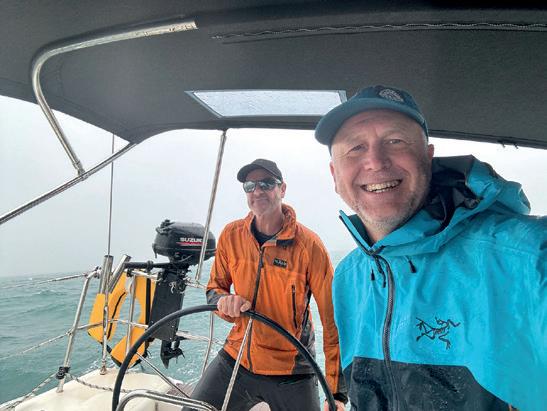
He travels the world presenting and lecturing. In 2024 he was in Australia and New Zealand on a lecture tour to all the major cities. In between he visited a bunch of Witsies, including sailing in Auckland with Dr Graham Knottenbelt (MBBCh 1996), who is at the Starship Children’s Hospital.
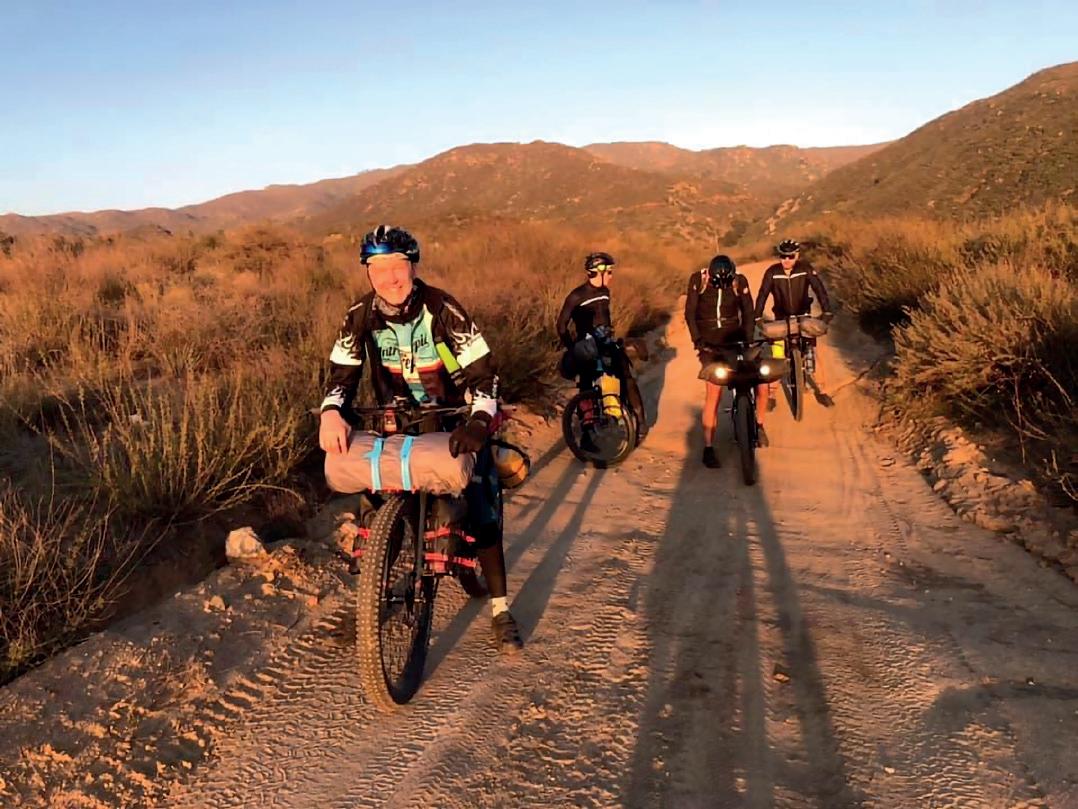
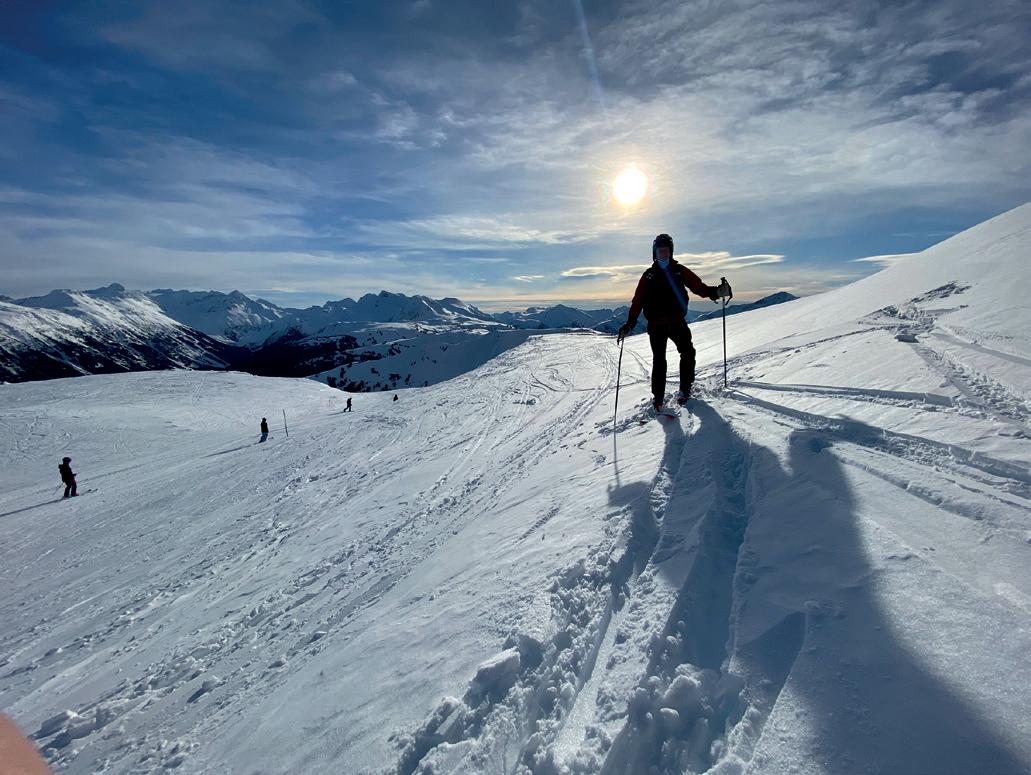
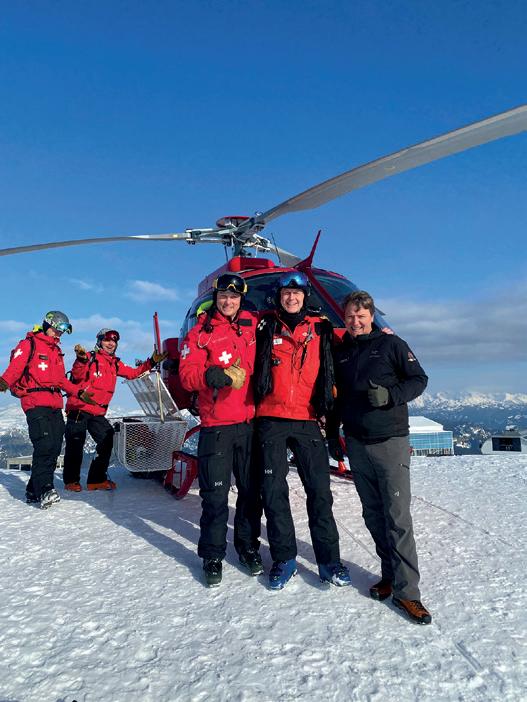
On weekends in the winter at home he is part of a medical ski patrol team. In summer he’s hiking locally and during breaks he’s bike-packing in remote areas.
He’s compulsive, always on the go, and happiest in wild places or when he’s visiting friends. “My favourite place is where my friends are,” he says. He has a lot of friends all over the world, many of them Witsies.
A BORN AND BRED WITSIE
“I’m a born and bred Witsie,” Mark explains. “My father, Professor Christopher Cresswell (DSc honoris causa 1997), was the Dean of Science at Wits for several years before he became the Vice-Principal of what was then the University of Natal in 1988. We
“
HE’S COMPULSIVE, ALWAYS ON THE GO, AND HAPPIEST IN WILD PLACES OR WHERE HIS FRIENDS ARE.
“
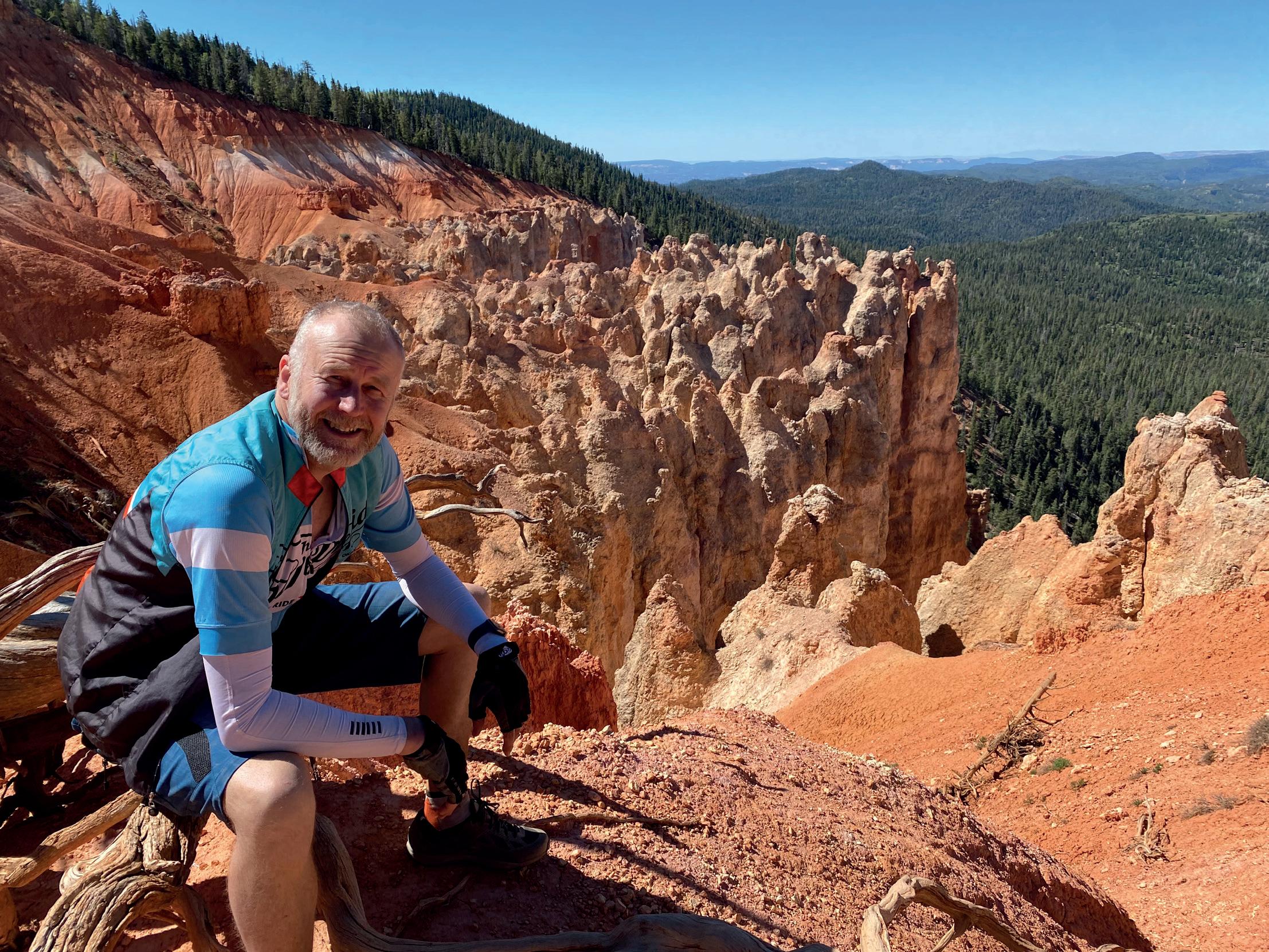
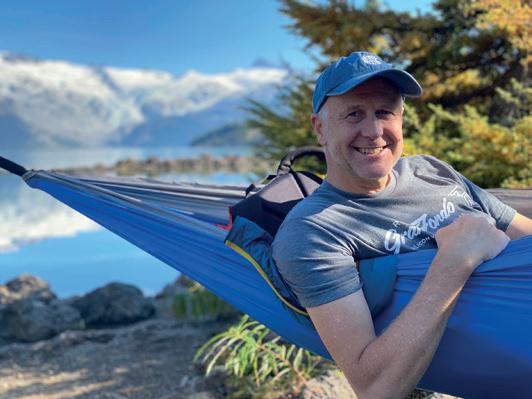
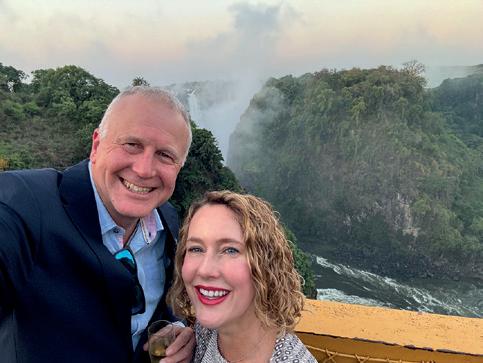
Gariboldi lake hiking, Whistler 2022; Sailing in Auckland with Graham (Medical Class of ‘96) in 2024; Southern California ‘Stage Coach 400’ 400 mile or 650km cycling route; Whistler Ski patrol 2017 to present; Vic Falls with the South African Musculoskeletal Imaging Group 2024 – with (MBBCh 1996) a pathologist in Johannesburg –
lived in Parktown, where a lot of Wits academics lived. I grew up in a very academic environment with my dad and his colleagues – a Wits community of academics and academic families, combined with political activism from my mom Evelyn.
“My mom was political in a religious and philosophical way. She believed in ‘love thy neighbour’ and she formed ‘The Christian Institute’ with Beyers Naude. They brought people from all cultures and backgrounds together to get to know each other.”
“My mom regularly took me to Soweto to help me understand the reality of the world that people lived there. When the 1976 Soweto uprising took place, I was six years old and we joined the chanting crowds and wave of humanity protesting amid the gunshots and mayhem. People might ask what mother would take a six-year-old child there, but my mother didn’t differentiate between me and all the other six-yearolds in Soweto.”
EARLY DIRECTIONS
Mark had always thought of doing medicine “but when I saw blood I fainted”, and so he took up accountancy at what is now the University of KwaZuluNatal, but after two weeks he realised this was not for him. “My dad then suggested I try working in hospitals in Durban and rural KZN to see how I felt about it, which I did. I worked in rural community clinics and townships and would hitchhike to northern Zululand to work there or wherever I was needed. I loved it, and I even got used to seeing blood!”
“I’M A BORN AND BRED WITSIE. WITS WAS HOME FOR ME FROM A VERY YOUNG AGE. AS THE CHILD OF A WITS ACADEMIC I GREW UP ON CAMPUS ATTENDING EVENTS, INCLUDING THE FREE PEOPLE’S CONCERTS.”
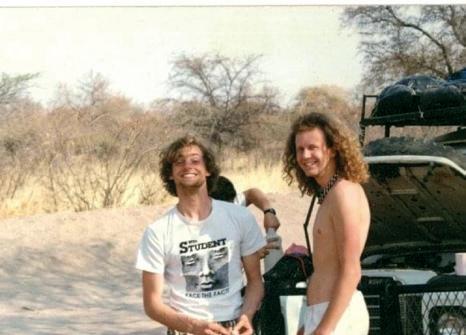
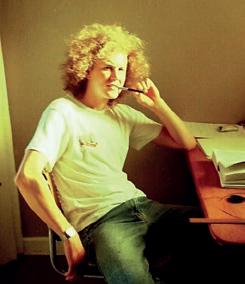
Top: Mark wiith Julian Jackson, who now works for the World Bank, in the early 1990s in the Kalahari Middle: Mark during his first year as medical student Below: In 1993 during BSc Hons programme
Mark enrolled at Wits to pursue his BSc and then his medical degree. At the same time he was fascinated with the work that palaeontologist Lee Berger was doing.
“He was busy with his PhD at the time and my fellow BSc students and I offered our labour to help Lee on his digs,” says Mark. “It was super exciting when we discovered a hominid tooth in 1993, making Gladysvale Cave near Sterkfontein the first new hominid site in 46 years.”
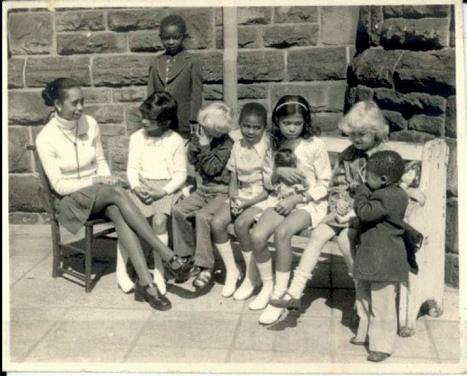
Above: St Mary’s Cathedral Johannesburg circa 1975 with Mark in the middle and his sister Clare on the right
PULLEN FARM
Named after Roy Alexander Pullen, (MBBCh 1945), DoB: 25/08/1917
Dr Roy Pullen was a medical doctor and a Wits graduate. He may have been the District Surgeon or the Superintendent at the Rob Ferreira Hospital in Nelspruit. He contracted cancer and had no children to whom to leave his farm. He bequeathed it to the Zoology Department at Wits, because he said that one of the highlights of his life was the zoology he had done in first year medicine.
Pullen farm was donated to the University in 1985. The donation’s intention was to use the farm for teaching and research while maintaining it as a nature reserve or conservation area. In 2001, management responsibility was transferred to the School of Animal, Plant and Environmental Sciences (APES).
Mark says he has the fondest memories of his time at Wits. “It was home for me from a very young age. As the child of a Wits academic I grew up on campus attending events, including the Free People’s Concerts. Then as a student there were the field trips to Gladysvale, Taung, Makapansgat, Sterkfontein caves, as well as hiking and climbing in the Magaliesberg.”
TRANS-AFRICA MOTORBIKE ADVENTURE
After graduating with his MBBCh in 1996, Mark moved back to Durban as his father had been diagnosed with cancer and he wanted to be near him. He did his diploma in anaesthetics and Christopher passed away in 1998.
A year later, Mark and a classmate Dr Mark Blaylock (MBBCh 1995, DTM&H) took off on a trans-Africa motorbike adventure, starting in Durban. “We went
through Botswana, Zimbabwe and Zambia but then my engine blew. Mark continued and his engine blew in Tanzania. In the end we went through six engines and a gearbox before we gave up!”
With the Africa trip cut short, Mark headed to Europe and travelled for a while. “I still felt the need to work in rural communities, and I had heard about MSF and got in touch with them.
“After a rigorous three-day interview they told me ‘as an anaesthetist you will be going to war zones and you need to know that when we need to evacuate the MSF team from an area, the surgeons and anaesthetists are the last to leave’ .
“The rest is history but what I want to say about MSF is that the thoroughness and honesty of the organisation is outstanding.
“The whole group works in the same direction and there is very little that cannot be achieved when everyone is aligned.” n
Image: Gavin Snow; Inset: Adobe Stock
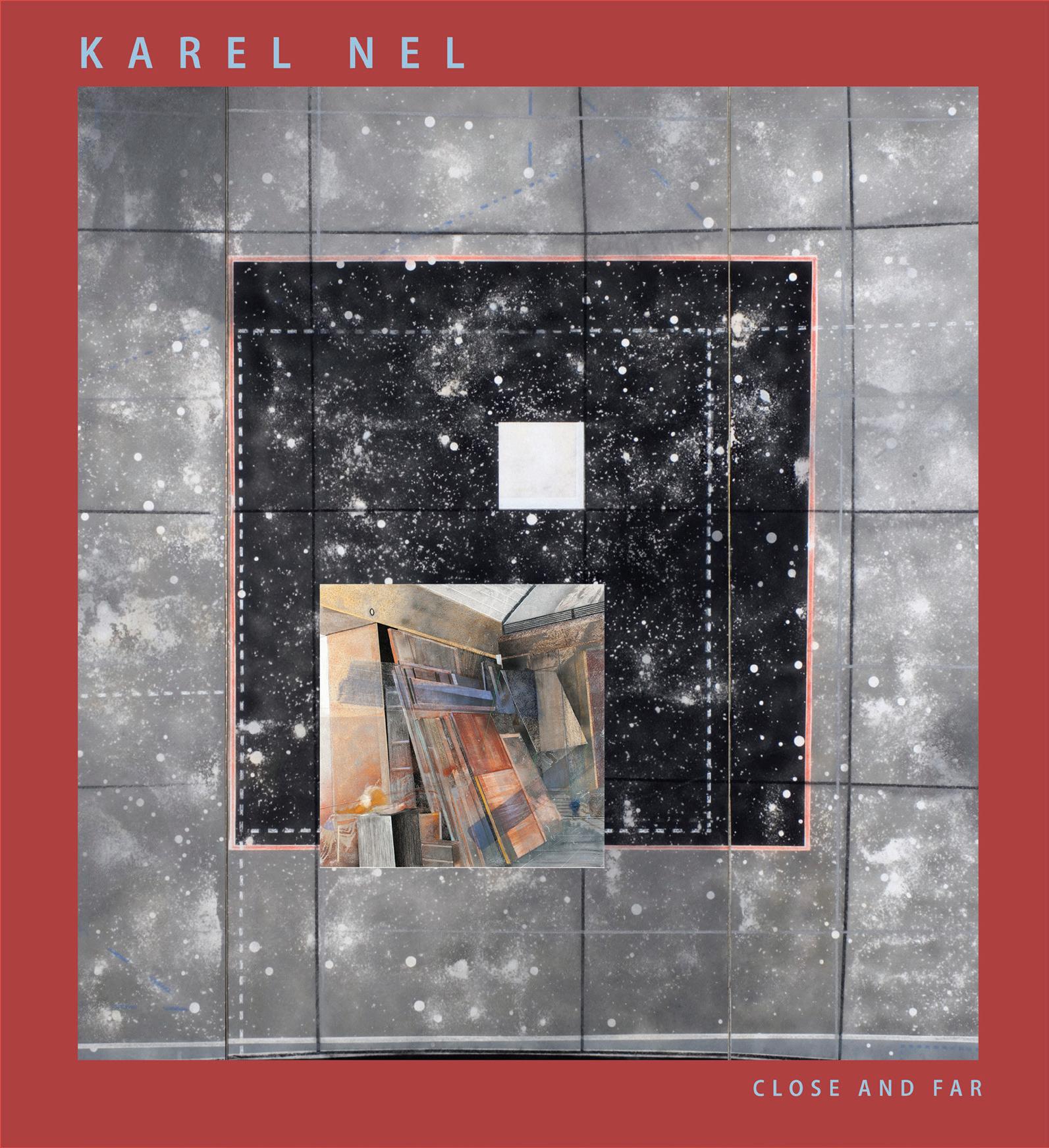
Cover of Karel Nel: Close and Far
Karel Nel: Close and Far
by Elizabeth Burroughs Palimpsest, 2025
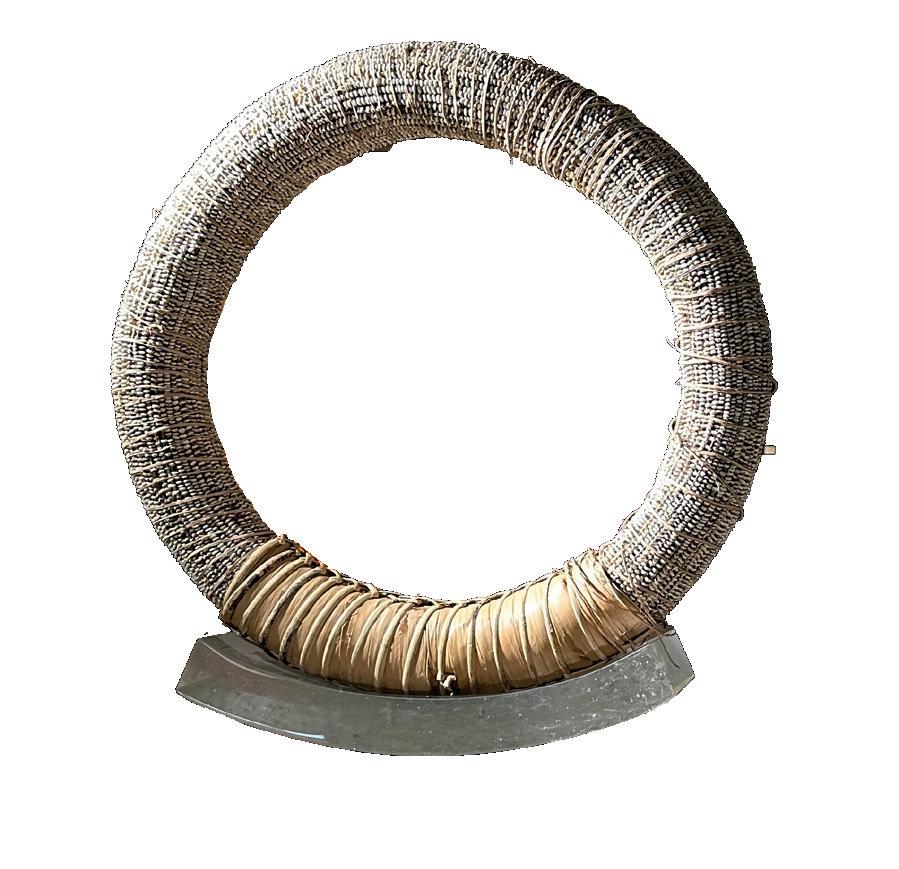
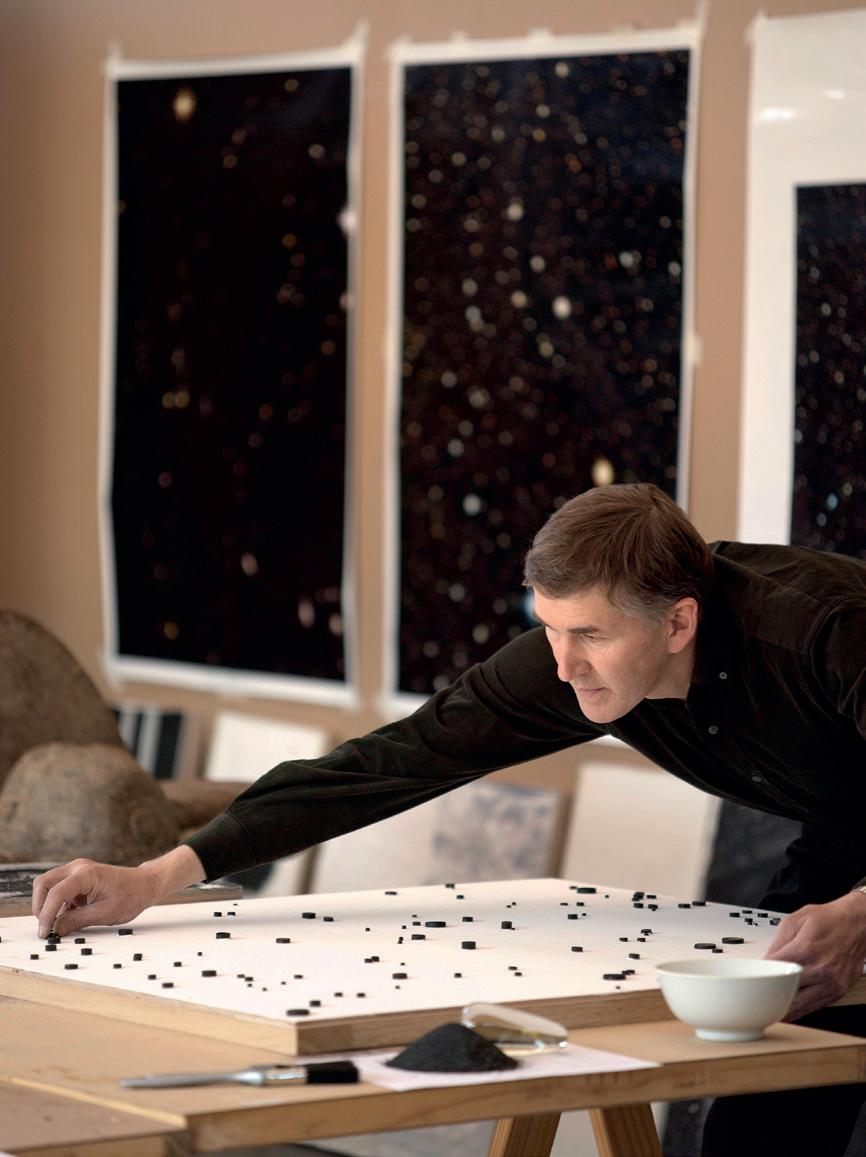
This book gives a beautiful overview of four decades of Karel Nel’s (BA FA 1978) work. He has acquired a reputation as a collector and curator of traditional African artefacts but is most renowned for his drawing. Nel held a longstanding teaching post in the Fine Arts Department at Wits and in 2018 he took up the post as senior advising curator at the Norval Foundation in Cape Town.
Close and Far was a survey exhibition at the Wits Art Museum between May and August 2024, curated by Fiona Rankin Smith before her retirement from Wits. The introduction is written by art historian, Professor Federico Freschi (BA FA 1989, PhD 2006).
Art and science have been a lifelong fascination and much of Nel’s work is informed by ideas and insights from scientists. He has been a resident artist with a team of the world’s foremost astronomers on COSMOS, an ambitious project to map a two-degree field of the universe. Annually he joins the COSMOS team in different cities around the world. For example, in 2017 he delivered a paper titled: The Structure of Darkness, which explored dark matter. He has also been fascinated by palaeoanthropology and inspired by the work of numerous scientists at Wits. He writes in his exhibition statement: “Both art and science use visualisation and mental abstraction to grasp and theorise, and my interest in the relationship between art and science is connected to questioning the long-held view that they are radically different disciplines. Both question the nature of reality, and both have sometimes constructed remarkably similar views of the world. Much of my drawing and environmental artwork explores the external and internal phenomena we call reality, and, in my work, I draw both on artistic and scientific ways of making the world.”
Listen: Art-Science engagements: Karel Nel’s brilliant darkness
The beaded circle, Wits Art Museum, 2024
Nel working on Stellar Noise, 2008 Image: Graeme Borchers
GRAPHIC NOVEL
Alexandra: A Backstory
by Solam Mkhabela Jacana 2024
In an attempt “to make knowledge production more accessible”, Dr Solam Mkhabela (PhD 2023) has used the graphic novel format to share his research. This Johannesburg-based urban planner and academic convenes the master’s programme of Urban Design at Wits. His research focuses on the history of one of South Africa’s most iconic townships, Alexandra, and the everyday lives of its residents: the property owners, tenants, political activists, informal workers and the unemployed. It is a narrative of precarity and desperate people struggling to find a space to live, dependent on social grants and the informal economy.
Mkhabela says he grew up reading comics, enjoying the genre’s visually driven oral storytelling. He challenges readers with the question “How can we build better cities?” It is a beautiful book that will be enjoyed by anyone who has an interest in history and urban geography. The foreward is written by fellow Witsie, and co-author of Alexandra: A History, Dr Noor Nieftagodien (BA Hons 1994, MA 1995, PhD 2001) who recommends it: “The author and illustrator are to be commended for producing an exciting graphic novel that should generate new interest in the histories of Alexandra and Johannesburg.”
IT IS A NARRATIVE OF PRECARITY AND DESPERATE PEOPLE STRUGGLING TO FIND A SPACE TO LIVE, DEPENDENT ON SOCIAL GRANTS AND THE INFORMAL ECONOMY.
Left: Dr Solam Mkhabela
WATCH NOW: Interview with Dr Solam Mkhabela
Apartheid Spies and the Revolutionary Underground
by Billy Keniston Wits University Press 2024
THIS BOOK IS THE FIRST IN-DEPTH STUDY OF THE APARTHEID SECURITY FORCES’ DECISION TO SEND THE PARCEL THAT KILLED JEANETTE AND KATRYN.
On 28 June 1984, Jeanette Schoon, née Curtis (BA 1971) came home to her flat in Lubango, Angola, having picked up her two children, Katryn (6) and Fritz (2), from daycare. She had just received a parcel from England with the return address that of her sister. She and Katryn were killed by the parcel bomb, which had been sent on the instructions of apartheid spy Craig Williamson. Two-year-old Fritz was the only survivor. Williamson was also responsible for the parcel bomb that killed Ruth First (BA SoSci 1946, DipLib 1963) in Mozambique in 1982. Williamson testified in his evidence before the Truth and Reconciliation Commission, which granted him amnesty, that the parcel was intended for Marius, Jeanette’s husband.
This book by Billy Keniston is the first in-depth study of the apartheid security forces’ decision to send the parcel that killed Jeanette and Katryn. It argues that the target was neither “random nor thoughtless but the result of years of intelligence work”.
Jeanette and Williamson first met in 1973 at Wits. Jeanette was part of a network of white activists fighting apartheid and Williamson had successfully infiltrated the student movement and was part of the 1972/73 Wits SRC. He also held positions of trust, first within the National Union of South African Students and later, after pretending to “flee” the country, as an office-bearer of the International Universities Exchange Fund in Sweden, which helped fund many
South African activists in exile. Keniston writes of Williamson: “He speaks not to make things more transparent, but rather to erect an even greater air of mystery around himself.”
The book is a kind of “biography of a generation”. Similar biographies, written by fellow alumni during this period, include Songs and Secrets by Barry Gilder (BA 1972, BA Hons 1972, MA 2018) in 2012, The New Radicals by Glen Moss (BA 1974, BA Hons 1975, MA 1983) in 2014, and Spy by Jonathan Ancer (BA 1993) in 2017.
Keniston is a lecturer in the History Department at Cuesta College in California and he is the author of Choosing to be Free, a biography of Rick Turner.
Image of Jeanette: Fritz Schoon, from The New Radicals
Right: Jeanette Schoon
WATCH NOW: Interview with Billy Keniston
“A PORTRAIT OF A NATION STRUGGLING TO FIND ITS SOUL THROUGH TURBULENT TIMES, AND OF A WOMAN WHO HAS DEVOTED HER LIFE TO HUMAN DIGNITY AND COMPASSION”.
MEMOIR
Tales of Love and Loss
by Hillary Hamburger Jacana (imprint Staging Post) 2025
As the first-born child of Lithuanian immigrant parents Hillary Hamburger (BA 1959, MA Clin Psych 1984) spent most of her life in Johannesburg. Her early career was as a teacher at The Central Indian High School in Fordsburg and King David High for periods during the 1950s and 1960s. Her first marriage was to Denis Kuny (BCom 1952, LLB 1954), a barrister at the Johannesburg Bar, who defended numerous political prisoners and worked alongside the likes of Advocate George Bizos (BA 1951, LLB 1954, LLD honoris causa 1999), Lord Joel Joffe (BCom 1952, LLB 1955, honoris causa 2001) and former Chief Justice Arthur Chaskalson (BCom 1952, LLB 1955, honoris causa 1990). Hamburger has also been the secretary of the International Defence and Aid Fund, an NGO which was re sponsible for raising and distributing funding to victims of apartheid laws.
She returned to Wits in the 1980s, qualified as a clinical psychologist and married Tony Hamburger. Together they founded Ububele training centre for lay and profes sional group therapists that offered community counselling in Alexandra township in northern Johannesburg. The psychologists work at communi ty clinics, hospitals and the women’s homes to support the now recognised scientifically important value of parental bonding as a necessity for future mature relationships. In 2024 this organisation was the recipient of the international Sigourney Award, in recognition for its “ingenious development of psychoanalytically informed interventions for highly
vulnerable citizens”.
Hamburger’s memoir is a rich tapestry of all these experiences and of South Africans, many well-known, such as “Nelson Mandela, his wife Graça Machel, George Bizos, famed heart transplant surgeon Christiaan Barnard, political prisoner Denis Goldberg, poet Lionel Abrahams, and theatrical producer Barney Simons.”
The publisher’s blurb says that this book provides “a portrait of a nation struggling to find its soul through turbulent times, and of a woman who has devoted her life to human dignity and compassion”.
Right: Hillary Hamburger
BIOGRAPHY
Lydia: Anthem to the Unity of Women
by Kally Forrest Jacana, 2024
In this biography Kally Forrest (BA 1973, PhD 2006) follows the life of Lydia Komape (LLM honoris causa 2002), from her rural childhood in Matlala in Limpopo, to her life as a trade unionist, rural land restitution activist and member of South Africa’s first democratic parliament. Komape is portrayed as remarkably compassionate, pragmatic and politically astute, with a keen understanding of the position of rural women, particularly at a time when the system of migrant labour engendered by apartheid was upending social relations in rural communities: “We are so discriminated against, but we are made to work like donkeys. We do all the dirty work – you must go and plough, hoe, harvest, carry water, fetch wood, and men are just sitting drinking alcohol under the tree,” she said.
ist and editor of the Labour Bulletin.
Fellow and a senior researcher on the Marikana Commission, and is currently an associate of the Society, Work and Politics Institute and the Southern Centre for Inequality Studies, at Wits.
This book won Best Biography at the 2025 Humanities and Social Sciences Awards.
Forrest offers a valuable perspective on the significant role women such as Komape played in South Africa’s grassroots movements. “She belonged to a group of activists internal to South Africa…seeped in a mode of consultation and democracy, and a deep desire for progress and change within a socialist mould.”
FICTION
The Whale’s Last Song
by Joanne Fedler
Harper Collins Australia, 2024 (Modjaji Books South Africa)
After a back injury Joanne Fedler (BA 1989, LLB 1992) started swimming in the ocean and admits being “smitten with Port Jackson sharks, whales and turtles”. Fedler is an international best-selling author and writing mentor based in Sydney, Australia. The Whale’s Last Song is her 15th book, which was initially written as a children’s story before her editor urged her to rewrite it for adults. She began writing this story soon after her mother’s death,
inspired by children’s author Kate De Camillo. It tells a story about “a girl whose sister is sick with the pox, who goes in search for a cure.” It has the structure and narrative elements of a traditional fable and includes elements of literary fiction and magical realism.
people we love. I lost my mother to ovar ian cancer during Covid. Grief is how we learn to love more fiercely and to appreci ate what really matters.”
Image: Alexander Smith
Left: Joanne Fedler
Unsung heroes
The Taung skull is one of the most significant human evolution discoveries of the 20th century, establishing Africa as a permanent focal point for the study of humanity’s origins. This year marks the 100th anniversary of Raymond Dart’s paper published in Nature on 7 February 1925. Wits Review revisits the role of two alumni in this momentous discovery.
Compiled by Jacqueline Steeneveldt
It sat there on the mantel over the fireplace with large hollow eyes and a toothy grin, embedded in limestone that had been blasted out of the Buxton Limeworks, in Taung about 400km southwest of Johannesburg. Edwin Izod, a director of the Northern Limeworks Company, had been given the fossil as a knickknack by Mr AE Spiers, the manager of the limeworks and he, in turn, passed it on to his son, Pat.
On an October day in 1924, Josephine Salmons (BSc 1926, BSc Hons 1926) was visiting with a group of friends at the Izod home. She couldn’t ignore it. It looked like a fossilised skull of an extinct baboon and bore “a neat round hole on top on the right side”.
The only female anatomy student in Professor Raymond Dart’s 1924 class at Wits, she was always on the lookout for specimens. She and her fellow students had been urged by Dart to collect fossils during their July vacation, offering a reward to the student “who gathered the most interesting relic of ancient life”. She borrowed the “memento” and presented it to her professor the following day.
THE QUARRYMAN
Dart identified the skull as an extinct primate. At the time, he was unaware of primate fossils that had been discovered in Africa south of Egypt and it was in fact only years later that he found out that Professor Sidney Haughton
(DSc honoris causa 1964) had written about baboon fossils from Taung found as early as 1919.
He was intrigued enough by the specimen to ask Professor Robert Young (DSc honoris causa 1937) in the University’s Geology Department to see if more fossils could be retrieved from the site.
Young knew the quarry at Buxton Limeworks well and had independently planned a visit there and to neighbouring lime deposits as a consultant for the Northern Lime Company. His expertise as a geologist was field work and economic mineral deposits. He would have known the Taung deposit consisted of a high-grade secondary limestone formation along the escarpment of the Kaap Plateau which was a much-needed source of lime for the burgeoning development of Johannesburg and the mining industry.
When Young arrived in Taung sometime in November of 1924, explaining Dart’s research interests, he learned that a quarryman known only as M De Bruyn had blasted out groups of fossils in breccia blocks a few weeks/days prior. De Bruyn, over time, had developed an adept eye for fossils – particularly the small, fragmentary remains like those Salmons presented to Dart. On this occasion, he had blasted out the brain case of a skull larger than those of the baboons. It was significant enough for him to alert his mine manager, AE Spiers, who kept it in his office for safekeeping.
Right: The Taung skull, blasted out of a quarry by M De Bruyn
Image: Brett Eloff
Who was Josephine Salmons?
According to Josephine Salmons’ alumni record, she was born in 1903 and completed a Bachelor of Science as well as an honours degree. She is described as a student demonstrator of anatomy, which meant she supervised and taught undergraduates through tutorials and dissections.
Her grandson, Craig Elstob, who was in touch with the Alumni Office, writes: “She missed the final year of her medical degree to marry my grandfather Prof Cecil Jackson, who was Professor of Anatomy at Onderstepoort and was an external examiner for 19 years at Wits in Histology. My grandmother passed away in Scottburgh, KwaZulu-Natal on the 22 April 1950 in her 48th year from cancer.”
Professor Sidney Haughton (DSc honoris causa 1964) publishes a paper on fossils from the South African Museum found in 1919. (In 1951 he becomes honorary scientific director of the Bernard Price Institute for Palaeontological Research at Wits)
Edward Izod, director of the Northern Lime Company, visits Taung and receives a fossilised monkey skull from AE Spiers, works manager at Buxton Limeworks since 1922. Izod returns to Johannesburg with it as a gift for his son, Pat.
* Pat Izod shows the specimen to his fellow students, including Josephine Salmons, an anatomy student in 1924.
* Salmons shows the fossil to Professor Raymond Dart who confirms that it is a primate – yet was unaware that any had been discovered in Africa south of Egypt.
Young inspected all the freshly excavated pieces and selected several fossil-bearing chunks. These included two crucial pieces containing the Taung skull and an endocranial cast which he carried personally on the train back to Johannesburg. Before leaving Taung, he inspected the discovery site and arranged that the other pieces containing bones in the calcified limestone be boxed and sent by train directly to Dart.
A HOME DELIVERY
On 28 November, Dart was preparing for his friend Christo Beyer’s wedding, at which he was to be best man. The wedding took place at his home in Melrose, Johannesburg. On the same day Young hand delivered the two pieces he had selected from Buxton to Dart, which turned out to be the fossilised skull of Australopithecus africanus. Staff of the South African Railways also delivered the boxed selections of the large bone-bearing blocks Young had secured from Spiers.
Dart started working on the skull as soon possible, chipping away at the specimen with improvised tools — including a pair of sharpened knitting needles belonging to his wife Dora
Who was Robert Young?
Robert Young was one of the longest serving members of staff in the Geology Department in the Faculty of Science and a member of the original staff of the Transvaal Technical Institute. He was a graduate of Edinburgh and Glasgow Universities and established his department as the main centre in South Africa for geology, giving more emphasis to practical aspects such as field work and economic mineral deposits.
He was married to the violinist Janet Algie, but they had no children. After his retirement Young remained active as geological consultant to a mining house. Among other appointments he served as chairman of a government commission of enquiry into the base mineral industry in 1940 and was chairman of the Diamond Control Board.
* Dart asks Professor Richard Young (DSc honoris causa 1937), geology professor at Wits, for the possibility of further material from the site. He learns of Young’s coincidental trip to Thoming (10km from Buxton) to investigate lime deposits. Young promises Dart he will call ME Spiers, manager at Buxton to be on the lookout for further fossils.
*M De Bruyn, a quarry man, recovers material from freshly blasted sandy limestone. He recognises the little baboon skulls, but finds one brain-cast of a skull that is larger than the rest and hands it to the manager.
*Young visits Buxton and sees a few Taung breccia blocks handed over from De Bruyn and selects two specimens to take with him to Johannesburg. One is a natural endocast — the fossilised mould of the inner cranium — and its matching skeletal face, with eye sockets, nose, jaw and teeth all intact. He arranges two boxes of other bone-bearing blocks to be sent to Johannesburg by rail.
* Young hand delivers the large endocast and skull fragments, embedded in the pinkish breccia, to Dart. They become a new discovery of a hominid then named Australopithecus africanus. On this day Dart is best man to friend Christo Beyers.
“HAD DART’S PAPER BEEN SUBMITTED TODAY, IT WOULD AT THE VERY LEAST HAVE INCLUDED THE NAMES OF SEVERAL OTHERS, NOTABLY, JOSEPHINE SALMONS, WHO BROUGHT THE FOSSIL TO HIS ATTENTION.”
Nature, 2025
Above: Raymond Dart, 21 March 1925. Young congratulated Dart on his article in Nature, but expressed disappointment that Dart had not waited for the geological aspects to be included
Dart papers, Wits archives
Dart starts chipping away at the embedded skull with his wife’s knitting needles.
— and no prior experience. On 23 December 1924, although the right side of the skull was embedded, he could view the face from the front. With Young’s help, the endocranial cast and the piece containing the front of the skull and the face could be manipulated perfectly together.
Dart studied the features and inferred the unique status of the skull. He dispatched his manuscript by train to the coast in time for the mail-boat to England on 6 January 1925. It arrived on the Nature editor’s desk on 30 January 1925.
A SAD LETTER
On 4 February 1925, The Star newspaper ran an article with the headline: “Blasted Out: How Professor Young
Found the Skull”. On 7 February 1925, Young wrote a letter to Dart (that was only unearthed 80 years later) apologising for the sensationalist headline and in humility outlined his role:
“… the part I played at Buxton in the actual finding of the skull was to select amongst the specimens, the piece of rock containing it from some fragments of rocks and minerals set aside in the quarry by the quarryman…I do not think it a particular importance who ‘found’ the skull, and I mention the matter here merely because of the heading of the report…I had no intention of claiming anything, however small, that was not my due.”
Young also congratulated Dart on his article in Nature, but expressed disappointment that Dart had not waited for the geological aspects to be included:
“… there can be no doubt that your work will bring great credit not only to yourself but also to the University of the Witwatersrand. It would probably have been an advantage if publication had been a little delayed to allow for a statement of the geological aspect of the find and the possible discovery of further remains at Buxton.”
Young returned to Buxton later that February in 1925, this time making a detailed study of the porous rock deposits composed of calcium carbonate, and presented a paper to the Geological Society of South Africa on 20 April 1925. This was crucial to the dating of the fossil.
Had Dart included the geological aspects of the discovery it would have
Dart posts his manuscript, photographs and drawings by mail boat to England 29 NOVEMBER
The rock parts and the left side of the face is exposed.
The manuscript arrives on the Nature editor’s desk.
Image:
eliminated later disputes in the field about the dating and origins of hominids from Africa.
NOT ONE, BUT MANY
Time has added a more critical lens to Dart’s original paper. In the celebratory edition of Nature, its editorial celebrates Dart’s excellent descriptions of the find, but it also notes: “Nature back then makes for grim reading — paternalistic, male-dominated, imperialist, colonialist and, at times, nakedly racist. Had Dart’s paper been submitted today, it would at the very least have included the names of several others, notably, Josephine Salmons, a student demonstrator of anatomy at the same university as Dart, who brought the fossil to his attention.”
There’s a growing awareness to acknowledge everyone, including the numerous labourers, who contribute to the work of scientists. Today the list of “several others” would indeed include Salmons, the quarryman De Bruyn and his manager Spiers. In both 1984 and again in 2005, prominent Wits academic, Professor Phillip Tobias (BSc 1946, BSc Hons 1947, MBBCh 1950, PhD 1953, DSc honoris causa 1994), insisted there was a “chain of discovery” after his detailed investigation into events around the Taung skull. Tobias pleaded that “… history should assign a greater role to Young in the chain of discovery of Australopithecus. Even at this late stage…it would be appropriate for him to be accorded belated, posthumous recognition.” n
4 FEBRUARY
The Star newspaper in Johannesburg publishes the first report about the Taung skull, with a headline: “Blasted Out: How Professor Young Found the Skull”
“… HISTORY SHOULD ASSIGN A GREATER ROLE TO YOUNG IN THE CHAIN OF DISCOVERY OF AUSTRALOPITHECUS. EVEN AT THIS LATE STAGE…IT WOULD BE APPROPRIATE FOR HIM TO BE ACCORDED BELATED, POSTHUMOUS RECOGNITION.”
Professor Phillip Tobias
7 FEBRUARY
Nature publishes Dart’s article and Young writes a letter to congratulate and apologise for Star headline.
FEBRUARY
Young revisits Taung and publishes a paper about the geological aspect where the Taung Skull was found, includes detailed observations, photographs and measurements.
Sources: Wits archives, Wits: The Early Years by Bruce Murray (WUP, 2022) Nature, Journal of South African Science, Palaeontologia africana
20 APRIL
Young delivers a paper to the Geological Society of South Africa: “The position in the quarry face from which it (Australopithecus) came, as pointed out by quarryman M De Bruyn, who was instrumental in rescuing the block of rock containing the fossil from debris, was a few feet to the left of the body of loose sand…”
*Sources: Wits archives and the South African Journal of Science
Grand visions of human progress from family TV viewing Will it end with a bang?
My daughter has become a fan of The Big Bang Theory (the show, that is, not the explanation for the beginning of the universe – although she likes that too). This follows her discovery of American TV series depicting a bygone world: that quaint time, a couple of decades ago, before smartphone ubiquity and TikTok and the generative AI boom. It’s a well-known phenomenon among Gen Z teens. There’s even a pop psychological term for it, “anemoia”, which describes longing for a past you’ve never experienced.
First it was Friends, then Dawson’s Creek, then Gilmore Girls. For my wife and I, this facilitated a more conventional form of nostalgia for the nineties and early noughties. The Big Bang Theory, on the other hand, doesn’t feel like the past (it first aired in 2007, but ran for twelve seasons until 2019). And, I have to admit, the show gives me a pain. Perhaps this is because it trades on academic caricatures. Or perhaps because of the inverse: a vindication of “nerd culture”. Maybe it’s a paradoxical combination of the two, presenting itself both as a vapid version of what clever people supposedly find funny and as a composite of in-jokes for science geeks or Comic-Con types. At worst, it feels a little like an enabler of incels.
I am assured that this is not the case – that I’m missing out on multiple layers of irony, and that the series grows into something with real heart (developing a degree of parity in its treatment of men and women along the way). And there’s the whole “Sheldon Cooper is a poster boy for Autism Spectrum Disorder” thing. I’m not entirely persuaded by this argument. We may be fond of the show’s neurodivergent characters, but are we laughing with them or at them?
Still, I figured that the pros outweigh the cons and agreed to make it part of our family TV viewing. But then we got to Episode 9 of Season 9, which features a cameo by the World’s Worst Bro™. There he was, swallowing his lines in that curious American-South African accent, playing himself and acting the part poorly. It was Elon Musk.
In the scene, the generally self-serving aeronautical engineer Howard Wolowitz, dragged into volunteering at a soup kitchen by his better-minded friends, is rewarded by a chance encounter with his SpaceX hero. This was 2015, you must remember, when one could still imagine Musk helping those less fortunate than himself (or at least pretending to do so). Well, those who were in the thrall of the “tech entrepreneurs will save us” narrative could imagine it. Those of us in the Humanities knew better, even back then.
In 2017, when Musk snuck another cameo into the Big Bang spin-off series Young Sheldon, he also decided to reinvent the subway and expressed his tentative interest in buying Twitter. The signs were getting clearer that the man was less a “tech genius” and more of a “very stable genius” in the Trumpian mode. The rest, as they say, is history.
But what does all this mean for my daughter, who is still trying to process the disappointment of seeing someone so reprehensible on a much-loved show? Can Big Bang be cleansed of the taint of Musk? Or is its escapist pleasure lost forever?
Never meet your heroes, they say. No doubt if fictional Howard spent much more time with real Elon, he would discover (as the rest of the world has) not only that this particular idol has feet of clay but also that – far from grand visions of human progress – his neurotic and megalomaniacal view of the world makes Howard’s low-key narcissism look saintly. It would be flattering to call the Swasticar-maker Machiavellian. Musk’s behaviour is more like that of a cartoon villain, planning to manipulate some and to enslave the rest in order to secure a permanent place on top of the global hierarchy of money and power.
Unlike the hero Howard thought he had, of course, Musk is fundamentally anti-science. The second Age of Trump will be not just casually but vehemently and programmatically opposed to any research pursued for the public good, whether in the US or around the world. South African universities have already felt the chilling effect of this; it started with medical research following the cancellation of USAID awards, and will continue to spread across disciplines.
How will it end? Perhaps there is some comfort in what, for me, is the best part of The Big Bang Theory – its catchy theme tune, with Ed Robertson’s acerbic lyrics both describing the wonder of the cosmic processes that led to the evolution of our species and hinting at our false sense of self-importance. The song also reminds us that the Big Bang will, in all likelihood, eventually be reversed: the universe is “expanding ever outward but one day / It will pause and start to go the other way / Collapsing ever inward ... Our best and brightest figure that it’ll make an even bigger bang.”
The MAGA modus operandi has been, borrowing from Silicon Valley jargon, “Move fast and break things”. Hopefully its phase of rapid, destructive expansion is over and it will soon collapse in on itself.
* Chris Thurman is Professor of English and Director of the Tsikinya-Chaka Centre in the School of Literature, Language and Media
In Memoriam
WE FONDLY REMEMBER THOSE WHO HAVE GONE BEFORE US
Chabani
Manganyi
Distinguished academic, scholar, intellectual activist, psychologist, and public servant Professor Noel Chabani Manganyi died on 31 October 2024.
He was born in the district of Louis Trichardt and after his schooling, studied at the University of South Africa where he completed a Bachelor of Arts degree in 1962, received an hon ours degree in psychology in 1964, a master’s in 1968 and a doctorate in 1970 with a thesis titled Body Image in Paraplegia. As part of his doctoral requirements, he held an internship in clinical psychology at Baragwanath Hospital and was appointed as a clinical psycholo gist, a post he occupied for three years until he left to take up a post-doctoral fellowship at Yale from 1973 until 1975.
Manganyi published a series of monographs – the first was Being Black in the World (Ravan 1973, WUP 2019), the last Looking Through the Keyhole (Ravan Press 1981). In these works, he examined the effects of institutionalised racism on the internal worlds and external realities of South Africans – including alienation, distorted relations with the body and quest for freedom. He was one of the few who, before the Truth and Reconciliation Commission, took
the psychological effects of racism on society seriously.
Manganyi examined the effects of violence on individuals and groups in Mashangu’s Reverie (Ravan 1977), which explores the place of the Black Consciousness Movement as the antithesis of the dominant and racist culture – and is seminal in the field of psychology. The exploration of the phenomenon of violence is reprised and elaborated in his later publications.
HE WAS ONE OF THE FEW WHO, BEFORE THE TRUTH AND RECONCILIATION COMMISSION, TOOK THE PSYCHOLOGICAL EFFECTS OF RACISM ON SOCIETY SERIOUSLY.
In 1976 he took up a professorship at the University of Transkei, where he established the Department of Psychology and served as its first chair. In 1980 he was appointed senior research fellow and visiting professor at Wits’ African Studies Institute. This was his home for 10 years and the place where he produced ideas that laid the foundation for his subsequent research. He continued his clinical practice part-time and spent 1985 back at Yale as a visiting fellow.
In 1990, he became ViceChancellor and Principal of the University of the North. When a fully democratic government was established in 1994, Manganyi stepped into the office of director general in the Department of Education, a position he held until 1999, when he became advisor to the Vice-Chancellor of
DLitt 2008 1940-2024
Professor Chabani Manganyi with Corina van der Spoel of Wits Press
the University of Pretoria (UP). In 2003, he was appointed VicePrincipal of UP, an office he held until March 2006. He served on the board of Wits University Press.
The concept of identity creation and retrieval, the theme of Mashangu’s Reverie, in part led to the second phase of Professor Manganyi’s literary production, which involved history and biography. He suggested that biography is the “stock-in-trade of a clinical psychologist” in the “study and reconstruction of lives both in health and disease”. The first life he chose to study was one of South Africa’s best-known authors in Exiles and Homecomings: A Biography of Es’kia Mphahlele (Ravan Press 1983).
Later he studied the life of painter Gerard Sekoto, publishing A Black Man Called Sekoto (Ravan Press 1996), which was a finalist in the Sunday Times Alan Paton Award and Gerard Sekoto: I am an African (2006). This was followed by the volume edited with David Attwell, Bury Me at the Marketplace: Es’kia Mphahlele and Company. Letters 19432006 (WUP 2009), his memoir Apartheid and the Making of a Black Psychologist (WUP 2016) won the Academy of Science of South Africa’s Humanities Book Award.
In 2024 his contribution was recognised by the Caribbean Philosophical Association when he was named a recipient of the Frantz Fanon Lifetime Achievement Award. When he was awarded an honorary doctorate by Wits in 2008, the citation read: “In the best Wits intellectual tradition Prof Manganyi has achieved enormous output, while remaining unassuming.”
Sources: Wits archive, Polity and The Conversation
Valerie Matthews
Valerie Matthews died on 9 February 2025, in her home in Charlottesville, Virginia in the United States. Val, as she was known to family and friends, was born on 11 May 1935, in Potchefstroom, to geologist Rupert Borchers and artist Muriel Borchers.
Matthews attended Roedean School in Johannesburg from the age of five, becoming a boarder at the age of eight. She credited her boarding school years with shaping her into a voracious reader and inveterate early riser. Her studies at Wits began in 1953, and she completed a diploma in architecture at a time when the field was male-dominated. She went on to practise architecture in London, Edinburgh, Johannesburg, Mount Kisco, New York, and ultimately Charlottesville, where she worked at Hayward, Llorens, and Boyd until her retirement in 1994.
She married John Matthews, a physicist, in Johannesburg in
SHE COMPLETED A DIPLOMA IN ARCHITECTURE AT A TIME WHEN THE FIELD WAS MALEDOMINATED.
1961. They had four children: Peter, Anne, David, and Jane –and shared fifteen years of marriage before John’s death from Hodgkin’s lymphoma at the age of 45. John’s work led the family from South Africa to the University of Virginia, where she first fell in love with Charlottesville and the United States; to Cambridge, England, where she discovered a lifelong passion for watercolour painting.
In 1994 Matthews suffered the sudden loss of her daughter Anne, who died at the age of 29, leaving two children orphaned in South Africa. She stepped into the breach, gaining custody of her grandchildren and bringing them back to Charlottesville, where they were embraced by extended family.
Matthews did not allow tragedy or grief to define her. She loved books and music, wrote and collected poetry, belonged to a short story group, and had a long-standing weekly art date. She was kind and compassionate to all.
She is survived by her son Peter [Kathleen], son David [Ashley], daughter Jane [Sam] and their families.
Source: Legacy.com
1940-2025
Christopher Julian Cooke
BArch 1963, HDipTP 1972
Emeritus Professor in the School of Architecture, Planning and Geomatics at the University of Cape Town (UCT), Christopher Julian Cooke, died on 24 February 2025.
Cooke, known affectionately as Julian, started teaching at UCT in 1976 and retired formally in 2000, serving as the dean in the Faculty of Engineering and the Built Environment, as well as director of the school. He played a pivotal role in forging various programmes, as well as creating a curriculum that questioned the status quo, was politically progressive and anti-apartheid. Student projects in both planning and architecture were regularly set in the urban and rural conditions of the apartheid city of Cape Town, and small towns nearby. Architecture was understood to not only be a formal artistic or sculptural endeavour, but also a socio-political one.
ARCHITECTURE
WAS UNDERSTOOD TO NOT ONLY BE A FORMAL ARTISTIC OR SCULPTURAL ENDEAVOUR, BUT ALSO A SOCIO-POLITICAL ONE.
He was editor of the journal Architecture SA from 1982 to 1987, and was re-appointed in 2003. He won several open architectural competitions in South Africa, and received many awards, including the South African Institute of Architects Gold Medal Award for architecture in 2015.
Cooke’s most significant work was the hostels upgrade programme which comprised approximately 3000 units in Nyanga, Gugulethu and Langa. He said the squalid, barrack-like hostels reminded him of Charles Dickens’ “dark, satanic mills” of
the European industrial revolution 150 years ago. The transformation took 15 years to accomplish, with Cooke establishing a relationship with the community he later he regarded as family. He described moments of beauty he encountered: “The difference between the living conditions and the way places are occupied says something profound about the greatness and resourcefulness of human beings. In one room we meet a woman who is carefully braiding her daughter’s hair. The child is sitting on a bed covered with an immaculately embroidered bedspread and on the wall next to her is a large, framed picture of a curly-haired Jesus. I find the irony in the juxtaposition of such care and beauty with the crude hostel block difficult to bear.” The project won the firm, Architects Associated, of which Cooke was part, the Impumelelo Innovations Award in 2004.
His lectures were described as interesting and accessible. He came up with the idea of a project called “Ten dreams for Cape Town”. This was a project that brought together many architects and urban designers, to rethink and, importantly, to show, an alternative Cape Town that was more efficient, egalitarian and sustainable. This project culminated in a series of lectures for one of UCT’s Summer School courses in 2019, with an accompanying exhibition. It was later turned into a book titled A Vision for a Future Cape Town.
He had an unwavering belief in the project of architecture and continued to teach long after retirement from the school as well as creating courses for UCT’s Summer School.
He will be remembered as an “exemplary architect, urban designer, teacher and human being.”
Sources: UCT and Artefacts
Image: UCT
Harold Luntz
Harold Luntz, who was Emeritus Professor at Melbourne Law School, died at the age of 87 on 29 January 2025. He was one of the world’s foremost scholars and theoreticians of torts and damages law. A much-loved colleague and lecturer, he authored numerous articles, incisive case notes, engaging book reviews, comments on the direction of the law and other publications.
Luntz was born in Johannesburg, matriculating from Athlone Boys High School. After completing a Bachelor of Arts at Wits, he studied towards his LLB, serving articles of clerkship at the same time as undertaking the degree; both took three years. In 1960, he was employed for a brief period as a solicitor in a firm of solicitors in Johannesburg and then took a Bachelor of Civil Law at Lincoln College at the University of Oxford. He began publishing in academic journals in the early 1960s.
He emigrated to Australia in 1965, joining the Faculty of Law
as a senior lecturer. He excelled as a writer and teacher. In 1970, he was admitted as a barrister and solicitor of the Supreme Court of Victoria and in 1976 was appointed George Paton Professor of Law, a position he held until his retirement in 2002. He also served as a successful Dean at the Melbourne University Law School from 1986 to 1988. Following his retirement, he continued to teach in the postgraduate programme until 2008.
Professor Luntz took time off in 1970 to pursue his interests in comparative law as visiting associate professor at Queen’s University in Ontario, Canada. Later, in 1971, he was visiting professor at the University of California, Berkeley. But his commitment was to Melbourne and Australia. He returned as Reader in Law in July 1971. His professorial chair came in July 1976, and he served as dean over three years from 1986–88. He was twice a visiting fellow at Wolfson College, Oxford, where he was attached on each occasion to the Centre for SocioLegal Studies.
He was awarded the degree of Doctor of Laws by the University of Melbourne in 1983. In 2000 he was the inaugural recipient of the John G Fleming Memorial Award for Torts Scholarship, and in 2003 he was awarded the AILA Insurance Law Prize. From 2007, the Harold Luntz Graduate Research Thesis Prize commemorating Luntz’s achievements as a “world expert on torts law” has been awarded annually to the Melbourne Law School graduate research student judged to have presented the best thesis in the previous year, provided that the nominee meets an overall level of excellence required for the award. The prize specifically honours Luntz’s contribution on
the international stage and as a former dean. Luntz was made an Officer in the general division in the Order of Australia in the Australia Day 2019 Honours List “for distinguished service to legal education, as an academic and editor, to professional development and to the community”.
After Luntz’s retirement, Justice Michael Kirby wrote a tribute in the Melbourne University Law Review in 2003 titled Harold Luntz: Doyen of the Australian Law of Torts, saying Luntz was a lawyer who, unusually, “listened before he spoke”, a man with a reputation for “reading everything”; loved by his students “because he was a good storyteller”; and throughout his long, illustrious career displayed three great strengths: commonsense, practical wisdom and plain speaking.
Justice Kirby noted that Luntz’s childhood and experiences in South Africa shaped his outlook on justice profoundly: “His childhood and youth in that country had a profound effect upon his view of the world and of the law. South Africa was never a lawless state. That, indeed, was the central problem. It embalmed in law rules that anyone with sensitivity (and particularly anyone who was from a minority) could see were offensive to human equality, to personal autonomy and to the effective operation of law as an instrument of justice. I venture to suggest that those early years left a mark on Harold Luntz that has stayed with him ever since. They help to explain his sense of urgency, his great energy, his pursuit of justice through law and his search for a better home to give voice to these ideals.”
Sources: The University of Melbourne, Wikipedia, Melbourne University Law Review
1973-2024
Prishani Naidoo
BA 1998, BA Hons 1999
SHE WILL BE REMEMBERED FOR HER WORK AND ACTIVISM, AND THROUGH THE MANY LIVES THAT SHE TOUCHED AND INFLUENCED.
Academic, researcher, and activist, Dr Prishani Naidoo died on 23 December 2024 at the age of 51. She was the director the Society, Work and Politics Institute, a research entity based in the Faculty of Humanities at Wits.
Naidoo’s intellectual interests were shaped by being part of different political communities since the 1990s. She probed questions that sought to understand and reveal alternatives to present realities.
She graduated with a Bachelor of Arts degree in 1998, majoring in English and sociology, followed by an honours degree in comparative literature. She was a member of the South African National Students’ Congress and the South African Students’ Congress, elected into leadership positions in the SASCO Wits branch between 1992 and 1997, and other representative structures, being elected Vice-President of the Wits SRC in 1995, and serving two terms of office as President
of the South African University Students’ Representative Council (from 1995 to 1997). During this time, she participated in debates and discussions on the National Commission on Higher Education and the production of the first White Paper on Higher Education.
Her first formal job, at Khanya College as a facilitator in its gender programme (between 1997 and 1999), saw her working with trade unionists. Between 1999 and 2001, she was employed as a Gender Programme Officer at the Heinrich Boell Foundation’s Southern Africa office.
In 2001, together with Ahmed Veriava (BA 1999, BA Hons 2000, PhD 2013), Nicolas Dieltiens (BA 1999, BA Hons 2001, MA 2012) and Francois Lecuyer, she established and coordinated Research and Education in Development, a collective that conducted research, facilitated education programmes and produced written materials for different organisations (between 2001
and 2008), including the South African National NGO Coalition, the Rural Development Services Network, the Environmental Justice Networking Forum, the Freedom of Expression Institute, and others.
During this time, Naidoo was also involved in the formation of the Anti-Privatisation Forum, assuming the role of its research coordinator and the Independent Media Centre of South Africa, which she coordinated nationally. In 2004, she returned to academia when she was invited into a master’s programme in Development Studies at the Centre for Civil Society in KwaZulu-Natal. Her master’s was upgraded to a PhD, which was awarded to her in 2011. In 2008, she began lecturing in the Sociology Department at Wits. Her research interests include questions related to political subjectivity, resistance, social movements, labour, poverty, neoliberalism and higher education.
In January 2023, the Centre for Applied Legal Studies welcomed her as a member of its Board of Advisors. At the time of her passing, she was completing a manuscript provisionally titled The Subject of Poverty: Policy, Protest and Politics in South Africa after 1994. She will be remembered for her work and activism, and through the many lives that she touched and influenced.
Sources: Prof Mucha Musemwa, Dean of the Faculty of Humanities at Wits, CALS
Mehnaaz Ally
Dr Mehnaaz Ally, a dedicated paediatric palliative care practitioner, died on 6 February 2025. She was found unresponsive in her home after experiencing a massive internal brain haemorrhage.
Neville Melville
BA 1962, BA Hons 1988 1937-2024
Beloved teacher and education administrator Neville Melville died in Johannesburg on 29 September 2024 at the age of 86. On the news of his death, the family received messages from past students describing how they were inspired by him and how their lives were changed by his vision to uplift disadvantaged communities.
Melville, who graduated from Wits in 1962, was also a keen sportsman, representing the university in tennis and cross country.
He taught mathematics and geography at various South African schools. In 1975 he was appointed vice-principal at Mondeor High School in Johannesburg, and in 1979 became principal at Lyttelton
A touching “walk of honour” was held for Ally as an organ donor, as she arrived at Milpark Hospital on the morning after her death. A large crowd of people turned up to show their respects as she was wheeled through the ward. The request had been sent out to “wear bright colours” as homage to her positive and colourful personality.
After completing her undergraduate degree in medicine from Wits in 2005, she pursued postgraduate studies in paediatrics, and then in paediatric palliative care. She successfully completed the post-graduate diploma in paediatric palliative medicine through the University of Cape Town in 2017, with distinction. She worked at various palliative
Manor High School.
Between 1993 and 1997, Melville served as a superintendent for the Department of Education in the West Rand. With the advent of democracy in South Africa, he was appointed as a member of a two-man commission to eval uate four education departments and to formulate a strategy to establish one, multiracial department with a suitable examination system. He was also appointed to a board of commissioners to evaluate the credibility of the matriculation examination.
care NGOs, including WitsPal (Wits Palliative Care at Chris Hani Baragwanath Hospital), the Lambano Sanctuary, a paediatric step-down unit and hospice faculty in Germiston, the Rare Diseases South Africa as well as PatchSA. According to her colleagues, her empathetic approach to care extended beyond clinical practice, she understood the importance of listening and advocacy. She was passionate about educating fellow healthcare workers about paediatric pain and had a special interest in neonatal pain and palliation. She also ran support groups and debriefing workshops for healthcare workers burdened by burnout and compassion fatigue.
Sources: Rare Diseases South Africa, Lambano Sanctuary and PatchSA
It continues to do excellent work based on a transition model from secondary school level to tertiary level. This has ensured a 99% success rate at tertiary level for the students who have attended the Edumap College.
Melville served as a trustee and chairman of the South Deep Education Trust and the South Deep Community Trust between 2014 and 2023.
He was a devoted family man who will be remembered for his work ethic, tenacity and generosity.
In 1998, Melville registered a non-profit trust called the Edumap Education Development Trust, which was aimed at upgrading mathematics and physical science by providing academic enrichment courses to students from disadvantaged backgrounds.
Melville is survived by his wife Glenys, daughters Karen (BSc 1988, HDipEd 1989, BSc Hons 1990, MSc 2003, PhD 2013), Vanessa (BNurs 1993) and four grandchildren.
Source: The Melville family
John Simon
Respected actuary and loyal Wits supporter John Simon died peacefully from dementia and frailty at the age 86 on 31 October 2024.
He was the son of Pearl and Herbert Simon, born on Crown Mines near Johannesburg in 1938. He grew up on mines along the Reef, later Benoni and finally in Westcliff, near the Johannesburg Zoo along with his younger brother Lyddon (BA Hons 1956, LLB 1958).
Simon matriculated from King Edward VII School, which provided him with many stories of friends such as Michael Feldman and Michael Whippman (BSc Hons 1960) and enough education to study mathematics through a scholarship at Wits.
He met Eddie Price (BSc 1960) and Martin Bloom (BCom 1961) at university, who became life-long friends. Although he was not the most effusive or extroverted man, he made a few lifelong friendships. He was awarded the William Cullen Medal as joint top graduate in mathematics in his final year and won the Rotary Scholarship to pursue a PhD in statistics at Princeton University. After a year, he decided that academia was not for him and went to London to study to become an actuary.
While in London, in 1962, he met Sally Caplan, whom he married two years later and they celebrated their 60th wedding anniversary in the summer of 2024. He began his actuarial studies while working at the Sun Life of Canada
offices in Cheapside in the city. At that time the notoriously difficult actuarial training was undertaken through part-time studies while working full time. He was allowed Friday afternoons off for studying and worked tirelessly each evening and most weekends, never failing an exam, but it still took four years passing one or two subjects each year. He sat his final qualifying exams six weeks after the birth of his first child, Daniel.
After Sun Life, he joined Bacon and Woodrow, a firm he stayed with until his retirement, save for a six-month sojourn at Rothschilds. He was highly respected in his field and much valued as a colleague. A few colleagues shared the following tributes about him after news of his death: “He was responsible for some of the firm’s largest clients, and had great client handling skills. He was also very good at developing staff”; “You could sum him up in three words: ability, amiability, approachability” and “the most gentle gentleman I knew”.
to him. He did most things quietly. Quietly spoken and a man of few words, his dementia made him progressively quieter and frail, but he never complained. “Where is it written it should be easy?” he had frequently said of life.
He served his profession more widely, becoming Master of the Worshipful Company of Actuaries in 1994/5, “not bad for a boy from Benoni” he would say when
Andrew Dickson
BSc Eng 1962, MSc Eng 1964 1940-2025
Former head of school in the Faculty of Mechanical Engineering at Wits Professor Andrew John Dickson died peacefully at the age of 84 in his home in Colorado, US.
Dickson matriculated from St John’s College and he was awarded with both a graduate and master’s
His wife Sally, and three children – Daniel, a lawyer and senior partner at Collyer Bristow, London; Gideon, a senior consulting software engineer at Sagentia, Cambridge; Jessica, a palliative care specialist in Calgary, Canada, and eight grandchildren survive him.
Source: Simon family
degree in mechanical engineering from Wits. He received a scholarship to the Massachusetts Institute of Technology soon after and completed another master’s in electrical engineering.
On returning to South Africa, he worked as an engineer in Mokopane for several years before returning to Wits as lecturer in Engineering Design in the School of Mechanical Engineering. Teaching was his first love. He was well-liked and respected by his students and fellow academics.
Senamile Masango
One of South Africa’s trailblazing black female nuclear scientists, Senamile Masango, died aged 37, from an unknown cause, on 8 February 2025.
Dubbed “the queen of science” by some, Masango was born in KwaNongoma, in KwaZulu-Natal. She demonstrated a passion for learning and her family encouraged her to read extensively from an early age. She enrolled at the University of KwaZulu-Natal at the age of 16 to pursue a Bachelor of Science in physics and electronics, followed by an honours degree in nuclear physics from the University of the Western Cape, where she conducted research on the B(E2) value in Neon-20. She completed a postgraduate diploma in energy leadership from Wits Business School.
In 2017 Masango was part of the first African-led experiment at the European Organisation for Nuclear Research (CERN), one of
He always had time to help his students and never turned anyone away from his door. In the early 1980s Eskom lured him back into the profession. He went on to have an illustrious career in Eskom and was, for many years, generation engineering manager. He played a major role in the team which included John Maree (BCom 1949) and Ian McRae (BSc Eng 1954, DSc Eng honoris causa 1989), who built Eskom into being one of the finest generation companies in the world at the time.
the world’s largest particle physics laboratory.
Her many accomplishments include being South Africa’s research leader at the BRICS Youth Energy Outlook in 2019, where her foundation led the winning team in 2020. Recognised among the 50 Global Inspirational Women of 2020 and a Women in Tech Global Awards finalist in 2021 and 2022, she received the prestigious International Women in Science Award, recognising her profound impact on the scientific community.
She was the executive chairperson and founder of Mphathisithele Consulting PTY, and dedicated her career to empowering African women in STEM and advancing
In the mid-1990s he returned to Wits to take up the Eskom Chair of Engineering in the Faculty. He remained in that role until his retirement. Soon after retiring, he and his wife Pam (BSc 1962) moved to Colorado to be closer to their daughter Susan van den Heever (BSc 1989, PDipEd 1989, BSc Hons 1991, MSc 1995), who is a distinguished professor of atmospheric science at Colorado State University.
Source: Dickson family
THERE ARE STILL VERY FEW BLACK WOMEN SCIENTISTS. THIS MEANS WOMEN LIKE ME HAVE TO WORK TWICE AS HARD TO PROVE THEIR WORTH.
sustainable development goals. At the time of her death, she was completing her doctoral studies in nuclear physics and was the founder of Women in Science and Engineering (Wise). Through Wise, Masango provided leadership and role models for young women wishing to enter the fields of science and engineering. Proceeds made from her speaking engagements went towards raising money to provide science kits for disadvantaged schools.
But throughout her career, Masango faced the discrimination black women face because of their race and gender. “The biggest challenge in my career is my skin colour. If you look like me, no-one believes in you; you must prove that you know your job and that you can think! There are still very few black women scientists. This means women like me have to work twice as hard to prove their worth,” she said.
Sources: BBC and NECSA
Geoffrey Klass
Johannesburg’s extraordinary bookseller Geoffrey Klass died on 27 February 2025 after a short illness. He co-founded a bookshop, the Collectors Treasury, in 1974 with his brother Jonathan, which became an institution for the city’s bibliophiles.
Klass was born in 1948 to psychiatrist father Dr Max Klass and Maisie (née Goldberg) in Johannesburg. His grandparents Solomon and Zelda Klass were immigrants to South Africa from Lithuania and they sold everything from ginger beer to baby clothes. Solomon bought property and acquired the Johannesburg Ritz Hotel and later owned a residential hotel in Berea, and for a time he was the owner of the Radium Beer Hall.
Klass attributed his love of books and collecting to his father. Books were part of the family home in Doveton Road in Parktown West, while Maisie was an avid antiques collector.
“We inherited a well-rounded view of cultural matters, and we were instilled with a love of objects and the history behind them. We don’t specialise, we don’t see boundaries, we see everything in a broad stream of culture,” Klass said in a 2005 interview with the Heritage Portal.
He matriculated at Parktown Boys High and went on to read for a Bachelor of Science degree at Wits, graduating in 1972. His
interests were broad and “the ac ademic trajectory was too narrow for his exploding mind.” He de clined the opportunity to study on a fellowship, for a PhD in Chicago.
In 1991 the Klass family bought a building at 244 Commissioner Street in old Johannesburg and part of the revitalised Maboneng to house their massive collection. It was an old face-bricked, eight-storey building which originally was an old clothing factory.
In addition to books, the stock extended to antique maps, old engravings and prints, printed ephemera, periodicals, newspapers and photographs. They also curated and dealt in vinyl records
Klass was the founding member and first chairman of the South African Bookdealers Association, the official body for out-of-print bookdealers in Southern Africa. He is survived by his brother Jonathan and sister-in-law Jenny, niece and nephew Mathew and Rebecca, and by his beloved partner, Gundi Weinick.