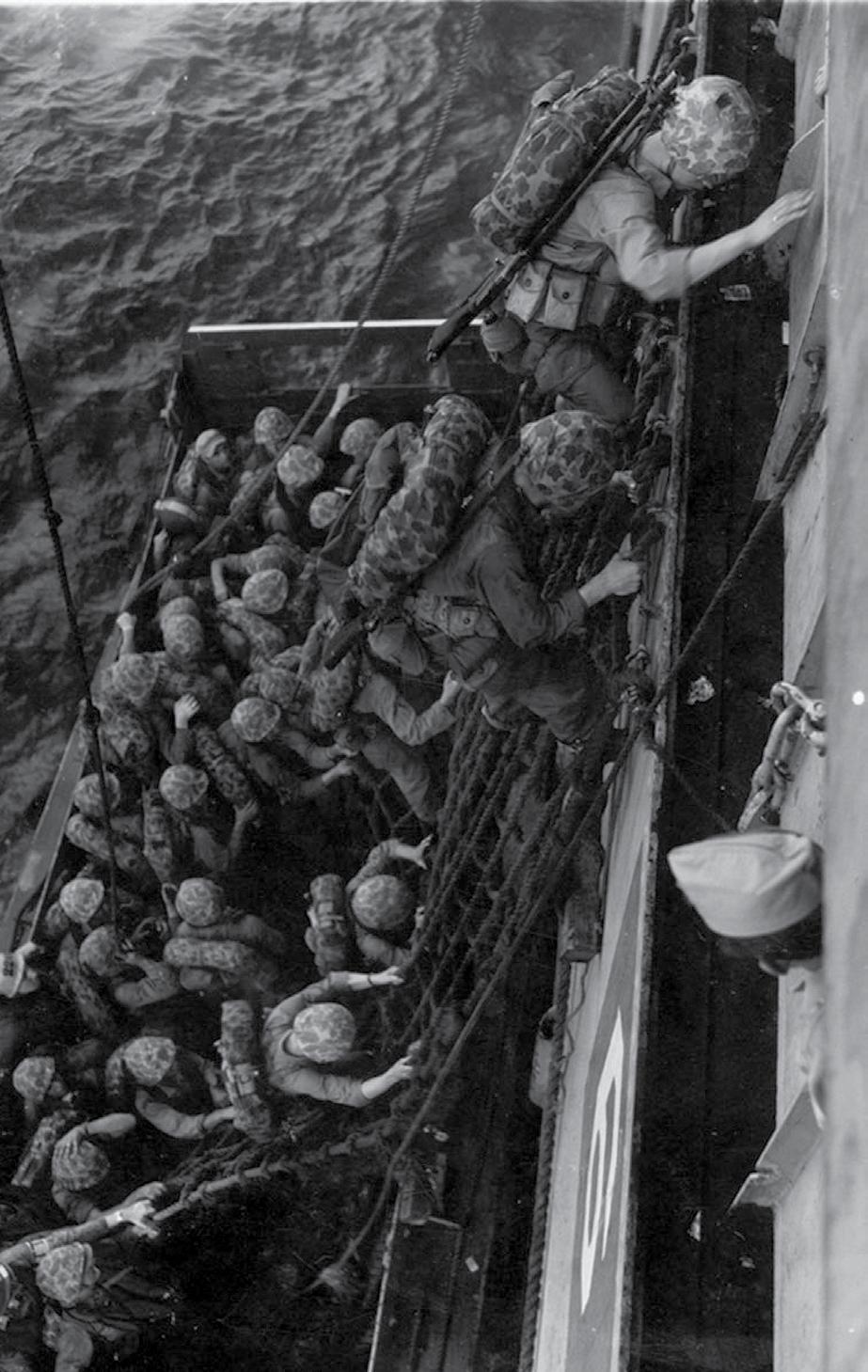
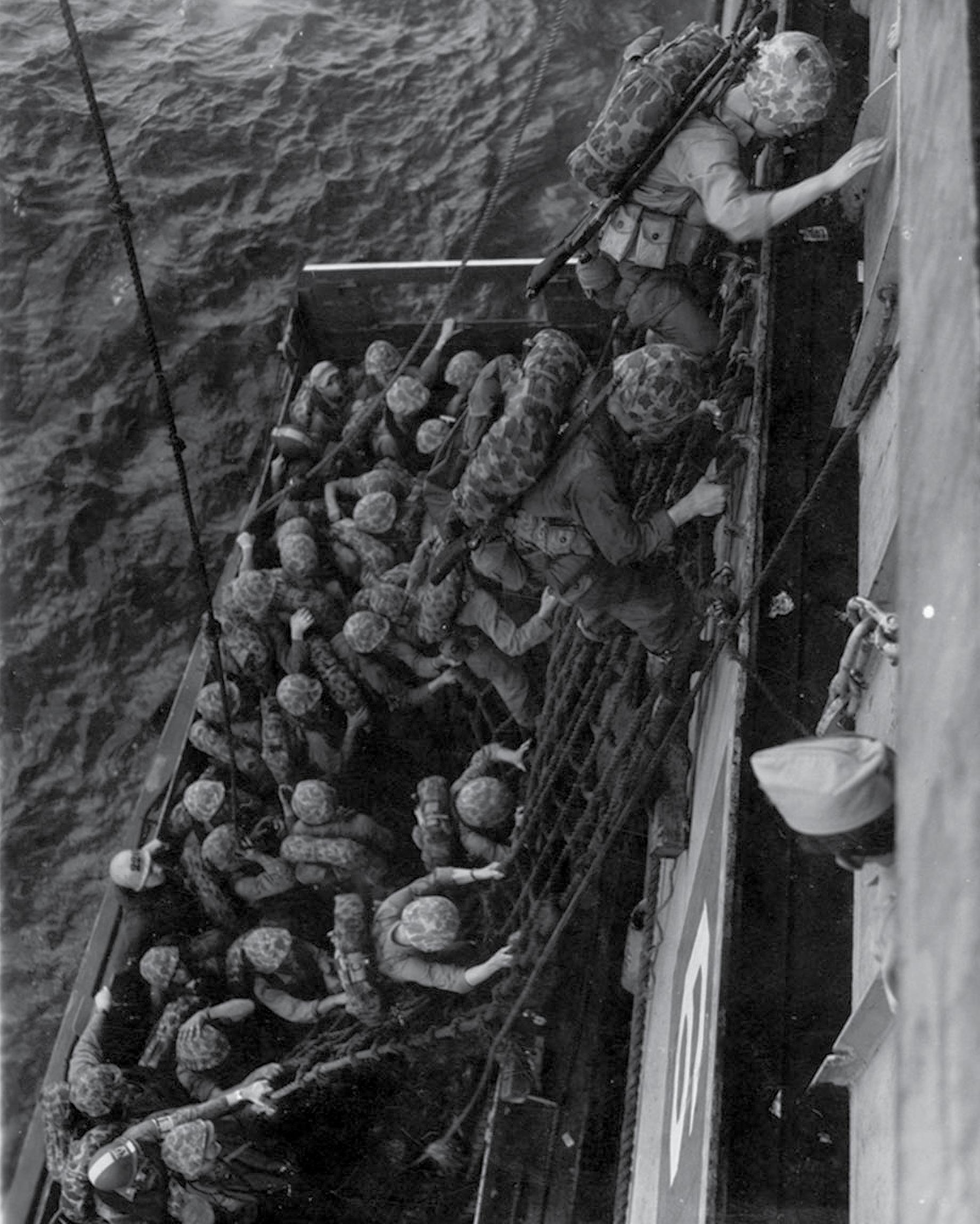
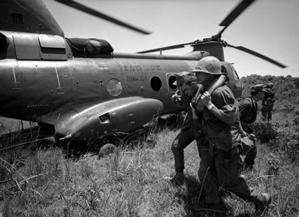
Photograph from the Richard R. Bahr Collection depicting Marines climbing the side of a ship during the Korean War era. Richard R. Bahr served with the 1st Marine Division during the Korean War. Following
Bahr was one of the original founders of the Chosin Few in Wisconsin and was the first president of the Wisconsin chapter. WVM.2286.I094
MUSEUM STAFF
FOUNDATION BOARD OF DIRECTORS
DIRECTORS AT LARGE
COLLECTION DONORS
A most sincere thank you to all who donated to our collection from July 15 through October 13, 2025. Thank you for your generosity and support of the Wisconsin Veterans Museum.
Karen J. Baumann
Giselle Lewis
SSBN 827 Association
Darlene Van Kauwenbergh
James A. Kirchberg
MUSEUM MISSION
The mission of the Wisconsin Veterans Museum is to commemorate, acknowledge, and affirm the role of Wisconsin veterans in America’s military past and present.
The Bugle is published three times each year for our members and friends through the support of the Wisconsin Veterans Museum Foundation. The Wisconsin Veterans Museum Foundation provides funds for the support of artifact acquisitions, exhibit production, and the development of educational programs.
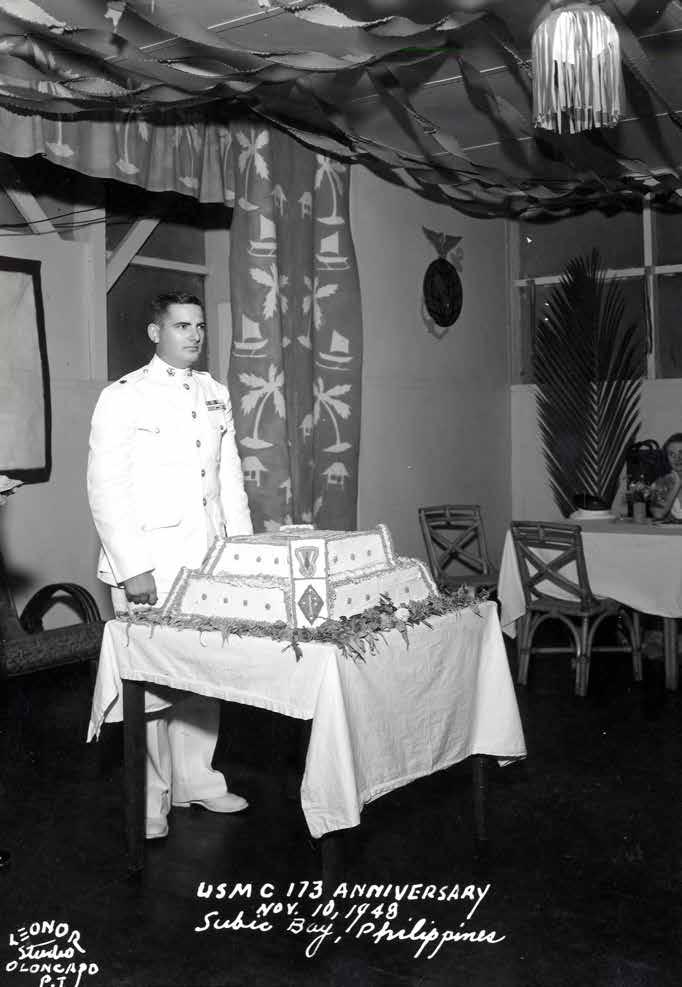
Image from the Harry L. Carlsen Collection during the 173rd anniversary of the U.S. Marine Corps celebration in Subic Bay, Philippines. Carlsen served with the USMC post – WWII. WVM.0101.I106
FROM THE SECRETARY
Greetings! This past year has been an exciting time for the Wisconsin Veterans Museum, as we continue to observe important historical milestones in our nation’s history, moving closer to celebrating the 250th anniversary of the birth of our nation.
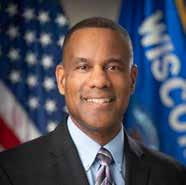
I hope you’ll forgive me, as I am particularly biased towards one of these critical milestones. As a proud Marine veteran, and the first Marine to serve as WDVA secretary, I joined with my fellow Marines and our state and nation on November 10, as we observed the 250th birthday of the formation of the US Marine Corps.
Whenever America has called, the Few and the Proud have been there. From the shores of Tripoli to storming ramparts of Chapultepec, or the battlefields of Belleau Wood, the Argonne Forest (page 12), Guadalcanal, Chosin Reservoir, Khe Sahn (page 10), Grenada, Beirut, Ramadi, Bagdad, Fallujah, Helmand Province, and many others. These important place names are more than just footnotes in history classrooms or museum exhibits; they are synonymous with the storied history and service of the Marine Corps.
It all began with a group of men in 1775 who met at a pub in Philadelphia and formed a Corps of Marines to defend our fledgling little nation. More than two and a half centuries later, the Marines remain at the nucleus of America’s strategic defense forces.
We are continually blessed as a nation to have such a dedicated group of individuals who have pledged a sacred oath to defend our Constitution and the liberties we enjoy every day. Their professionalism, toughness, and valor are renowned and respected amongst America’s closest allies and our nation’s enemies.
The Marine Corps motto is Semper Fidelis, which means "Always Faithful.'' It’s more than just a motto; it’s been an American tradition for the last 250 years, and it is a part of America’s future.
I encourage you to visit the Wisconsin Veterans Museum soon to learn about the stories of generations of Marines from the Badger State who have served honorably, as well as the stories of those who gave the ultimate sacrifice for the liberties we enjoy today.
Happy 250th Birthday to the United States Marine Corps! Semper Fi.
James Bond
Secretary, Wisconsin Department of Veterans Affairs Yours in Service,
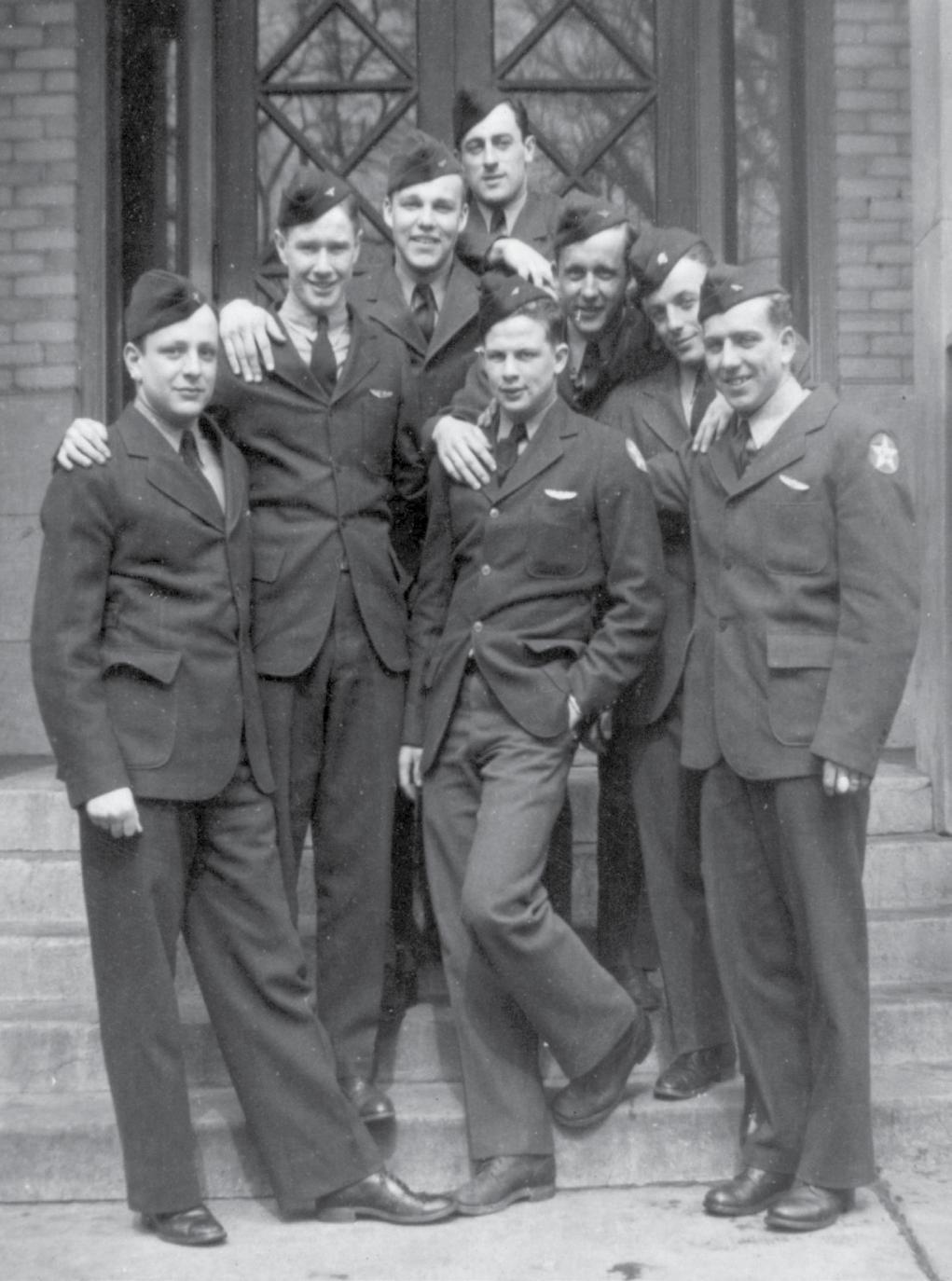
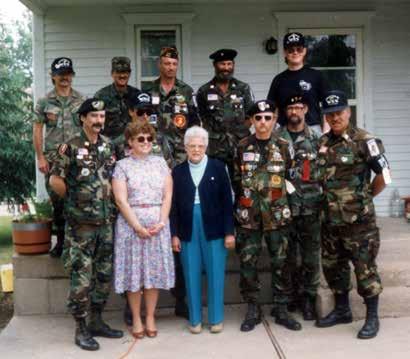
Image from the Sherman M. Tandvig Collection of a group of Marines standing on the steps of a building during World War II. Sherman Tandvig of Madison, Wisconsin served with the United States Marine Corps as a naval aviator with the Flying Badgers in World War II. Tandvig died on April 17, 2011 in Wittier, California and is buried at Rose Hills Memorial Park in Wittier. WVM.0156.I004
FROM THE DIRECTOR
Dear Friends of the Wisconsin Veterans Museum,
Greetings! I hope you all are enjoying your fall so far. We’ve had a very busy year and are looking forward to an exciting 2026.
Our temporary D-Day exhibit, put on in partnership with artist Keith Rocco, is open until the end of the year in Madison and looks fantastic. It is scheduled to move to our King location early next year. Keith is great to work with, and this exhibit brings us full circle, as he did many of the murals in our permanent galleries prior to the opening in this location on June 6, 1993.
As you are probably aware, the U.S. Army, U.S. Navy, and U.S. Marine Corps all turn 250 this year. Previous issues emphasized the army, and navy. This issue focuses on Marine stories to commemorate the Marine Corps’ birthday on November 10. Badgers have done their full duty ashore and afloat, and you’ll be impressed with what we showcase in these pages and in our collection.
The museum continues our extensive program offerings which attract audiences from across the state, nation, and world. These are only possible with the help and support of the Wisconsin Veterans Museum Foundation. I encourage everyone to see what is available on our website.
Best wishes to all of you and thank you for your continuing support. See you at the museum soon.
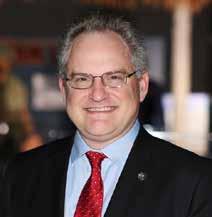
Best, Chris Kolakowski Wisconsin Veterans Museum Director
Chris Kolakowski
The US Marine Corps at 250
The United States turns 250 on July 4, 2026. However, the United States military turns 250 this year. The United States had an Army, Navy, and Marine Corps before it was an independent nation. Since 1775, Americans have defended this country and remain on duty to this day.
The United States Marine Corps (USMC) is the third service to predate the country, created by the Continental Congress on November 10, 1775. Marine infantry served with distinction during the War of Independence. The USMC was permanently established under its current name on July 11, 1798. Since that date, the Marine Corps has grown and adapted its role as part of the defense of the United States.
By: Chris Kolakowski Director
Marines have a well-earned reputation for skill and aggression on the battlefield, as seen in battle honors like Peking, Belleau Wood, Wake Island, Guadalcanal, Iwo Jima, Okinawa, Inchon, Khe Sanh, Hue, Fallujah, and elsewhere. For decades, the Marine Corps has also provided embassy guards and other support to the State Department. The Marine band is a fixture at ceremonies in Washington, D.C. Significantly, once a person earns the title Marine and the right to wear the Corps’ insignia of Eagle, Globe, and Anchor, it stays with them for life.
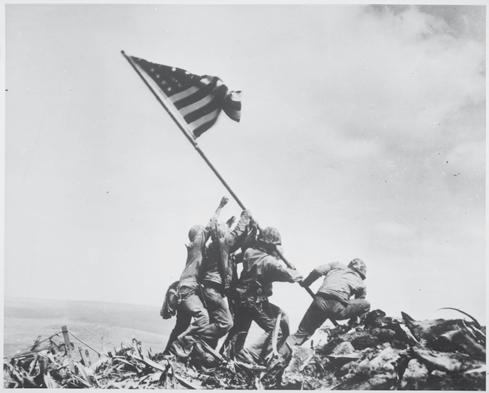
Badgers have served in the Marine Corps since the 19th century. A Wisconsinite, Monroe’s Merrill Twining, designed the 1st Marine Division patch. Three Badgers are also tied to the iconic flag raising on Iwo Jima’s Mount Suribachi: Antigo’s John Bradley helped raise the first flag, while Milwaukee’s Dave Severance sent the second group up to raise a larger flag; this was the group captured in the famous photograph by Joe Rosenthal. The photo was received in Honolulu where Madison’s Roberta Wells started the worldwide distribution.
Today, Marines remain on duty around the world in service to the United States. They exemplify the service motto, Semper Fidelis
Flag Raising on Iwo Jima February 23, 1945. Naval Photographic Center NAID: 520748
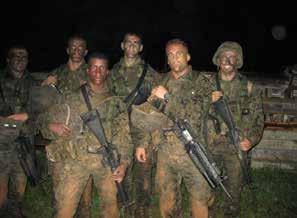
Image from the Jake Hubbard Collection at the Wisconsin Veterans Museum. 1st Fire team (reinforced) after completion of the night livefire rushes, c. 2006. Hubbard, from Stevens Point, Wisconsin, served with the 3rd Marine Air Wing, Marine Corps Air Station Miramar.
Image from the Ellison Family Collection at the Wisconsin Veterans Museum. Robert J. Ellison was a freelance photographer in the Vietnam War who was killed while working at the siege of Khe Sahn in 1968. WVM.1947.I162
MEET CORTNEY MIHULKA
PROCESSING ARCHIVIST
One of the most recent acquisitions at the museum is our new processing archivist, Cortney Mihulka. Cortney previously worked at WVM on a special digitization project of Spanish American through World War I photographs, some of which were featured in the Spring 2025 issue of The Bugle.
Although Cortney did not serve in the military, she grew up listening to stories of her grandfather, Eugene Archambault. He enlisted in the U.S. Navy from Superior, Wisconsin, and served aboard the USS Mount Olympus (AGC-8) with the 3d Amphibious Force during World War II. This connection sparked her interest in studying history at UW-Parkside. While researching in archives for school papers she developed an affinity for working with historic materials and felt like “history was alive in the letters, photographs, and records people left behind.” She went on to earn a master’s in library and information studies at UW-Madison and has since worked at academic archives and cultural heritage institutions prior to landing at WVM.
Preserving Stories; Building Connections
Cortney describes the job of the processing archivist as taking boxes of letters, diaries, photographs, and scrapbooks and building searchable collections of a veteran’s story. And yet, she notes that archives are more about preserving people’s voices and making them available to researchers, students, or family genealogist.
She says, “My job is to make sure that when someone reaches out to us with a question, they can find something that connects them to the past. That accessibility is why the work matters: it keeps history alive and ensures that veterans’ stories remain part of our shared memory.”
While boxes of old papers and photos may seem like clutter, Cortney says, “A new collection may look like a stack of unrelated documents, but as I work through them, connections often emerge. A soldier’s letter home might link to a photograph in another envelope, or a diary entry gives context to an official order. That transformation from ‘no one could find this’ to ‘anyone can explore this’ is one of the most rewarding aspects of my job.”
As is a common theme with many of the WVM staff, the connection with a family member who served makes working at the museum especially meaningful. She says, “I feel like I’m honoring my grandfather’s service and the service of so many others by helping preserve their stories.”
Welcome to the crew, Cortney.
By: Jennifer Stevenson Marketing Manager
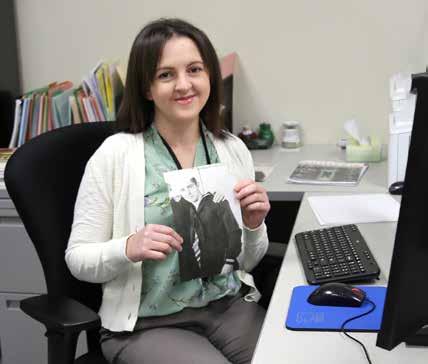
Mihulka with a service photo of her grandfather, a U.S. Navy veteran of World War II.
Henry Nabbefeld, of Appleton, Wisconsin volunteered for service in the U.S. Marine Corps in May 1917. The pride he felt in belonging to that exclusive branch reverberated throughout his service. Nabbefeld deployed to Europe in July 1918 with the 6th Marine Regiment. Upon arriving in France, they formed part of a Marine Brigade within the 2nd Division and saw heavy action at Aisne-Marne, Marbache Sector, St. Mihiel, and Meuse-Argonne.
He wrote to his parents regarding the effectiveness of the Marines, “The division which was stuck two weeks in the Argonne was the famous 42nd. They bet we could not make our first objective for which they had tried two weeks. We took it in one and onehalf hours and kept on going. Gee, I’m proud of the old second division, and especially of the Marine Brigade.”
While on occupation duty, Nabbefeld saw that the reputation of U.S. Marines, who earned the nickname “Devil Dogs,” preceded them. He wrote “I was stopped by a man in Coblenz today, who doffed his cap and respectfully asked me if I was a ‘Teufel hund.’” Later at a restaurant, “the waitresses all noticed our collar emblems, and whispered among themselves, ‘Teufel hund.’” In a third instance, Nabbefeld related that a German man “showed me a letter from his son, written July 21, in a hospital, saying he had been wounded in a battle July 18 against the terrible ‘Teufel hunden.’ He said that it was no use fighting against them, as they did not have sense enough to stop, but went ahead without caring how much they lost.”
In 2011, WVM acquired materials from Nabbefeld’s service including a uniform, footlocker, papers, and photographs. While the United States Marine Corps made up a small percentage of the American Expeditionary Forces, Nabbefeld’s story reminds us that they did more than their share to win the war.
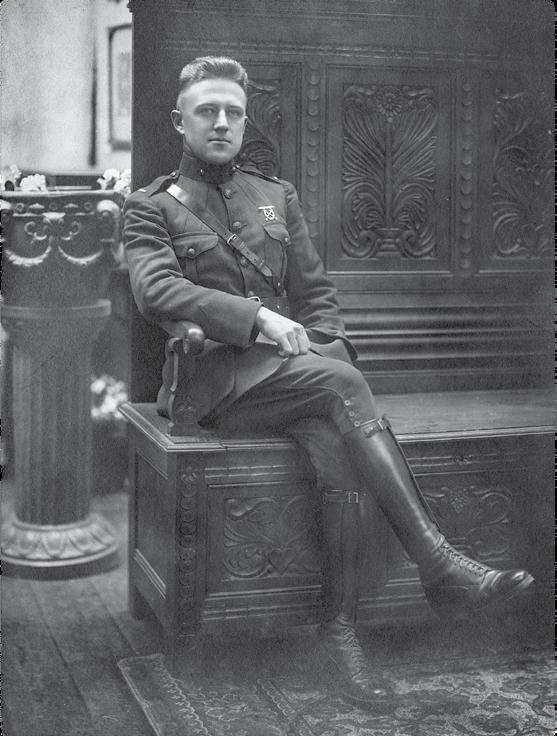
Image of Henry Nabbefeld WVM.2095.I001
Margaret Hicks Crossan joined the Marines in 1943 and served stateside as a weather observer. In addition to her training and work in that field, she also became one of the faces of the highly successful Marine Corps Women’s Reserve recruitment campaign. She appeared in numerous newspaper and magazine articles and recruitment posters highlighting her service and encouraging other women to join the Marines during World War II. Her husband, Thomas Crossan, also served in the Marine Corps in the war.
Margaret passed away in 1968, but her daughter donated materials relating to her Marine Corps service to WVM in 2006. The papers and photographs highlight Margaret’s service as a weather observer, including some of the equipment that she used, as well as her role in the recruitment effort.
On February 13, 1943, the United States Marine Corps became the final service branch to accept women into its ranks with the formation of the Women’s Reserve. Whereas female service members in other branches had nicknames like WACs (Army), WAVES (Navy), WASPS (Army Air Force), and SPARS (Coast Guard), female Marines were simply called Marines. The Commandant of the Marine Corps famously opposed allowing women into the Marines, but within months of seeing them in action, admitted that their skill and ability caused him to change his mind.
The Marine Corps Women’s Reserve performed duties ranging from clerical work to weapon assembly to aircraft repair and more. They could not deploy overseas, though eventually some served in Hawaii. Their numbers reached 19,000 during the war, due in part to a robust recruitment program.
By: Russ Horton
VETERAN IS A STORY
Reference Archivist
Image of Margaret Hicks Crossan
Other Duties As Assigned: finding wvm beyond these four walls
The Wisconsin Veterans Museum name may give the impression of a fixed place appealing to a captive audience. The work the museum staff accomplishes, however, reaches beyond the confines of the physical museum space in Madison, Wisconsin to offices in our State Capitol Building, exhibits at presidential libraries, historic markers at national battlefields, training videos for our troops, and performances at concert halls.
As a service to state legislators, the museum staff provides recommendations for historic images to decorate legislative offices. Earlier this year, State Senator Chris Kapenga (R-Delafield) and his staff visited with WVM’s curator of exhibits, Greg Krueger, to view the available content. Ultimately, the senator chose nine images which included shots of Arlington National Cemetery, World War II sea battles, and candids from Vietnam. Krueger assisted with production and installation at Senator Kapenga’s office in the State Capitol Building.
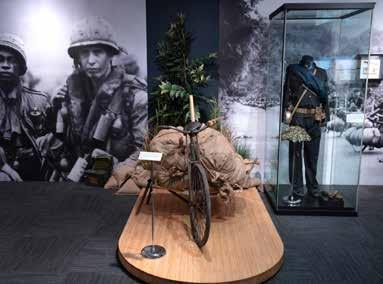
Dressed mannequin at the Lyndon B. Johnson Presidential Library with artifacts loaned from WVM.
From the State Capitol Building to the Lyndon B. Johnson Presidential Library in Austin, Texas objects from WVM made appearances. In September of 2023 WVM’s former registrar, now curatorial supervisor, Sarah Kapellush, received an inquiry about several objects from the Vietnam Era that the library was interested in borrowing for their upcoming exhibit, Ain’t No Daylight in Vietnam: March 1968. Because of the care WVM staff takes to document our collections and make them accessible for audiences outside the museum proper, the Lyndon B. Johnson Presidential Library staff were able to easily locate the items relevant to their exhibit. Kapellush performed many regular tasks for this loan like selecting objects suitable for an exhibit, presenting the artifacts to the collection committee for approval, preparing them for travel and display, and packing and prepping items for an exhibit. Kapellush says where her duties diverged from the norm were that, “We do very few loans overall and this was one of the larger (perhaps the largest) loans we’ve approved by object count.”
Well-known for our expertise in Civil War history, WVM reference archivist, Russ Horton, received a call from staff at Petersburg National Battlefield in Virginia for help in identifying soldiers buried at Poplar Grove National Cemetery. Several of the soldiers are identified as being from the 38th Wisconsin Infantry and are noted as being Native American. The Petersburg staff were hoping we could help determine tribal affiliations. Using WVM’s archives and his own personal research Horton found several of the soldiers were from the Menominee Nation and referred Petersburg to
Photo courtesy of the Lyndon B. Johnson Presidential Library in Austin, Texas.
the Menominee Nation for more information. The Menominee Nation warriors at rest in Virginia are now properly recognized.
Collaborating with the museum’s military contacts brought first-person accounts of battle to the training classroom. In November 2024, Captain Florian Waitl, Command Historian, Wisconsin National Guard, contacted WVM’s oral historian, Luke Sprague, about a documentary on the 32nd Infantry Division and the Battle of Buna he was working on with the Army University Press for classroom use.
Sprague ensured the producers had access to the cache of interviews from World War II veterans of the 32nd Infantry Division in the museum collection. Sprague says this work did not differ from his regular duties; and yet his actions led the video producers to acknowledge the importance of the oral histories in shaping the narrative of “The 32nd Infantry Division’s Nightmare: The Battle of Buna.” Sprague did acknowledge that the richness the oral history content, “provides more than one way of remembering a shared experience, and this in turn makes the retelling of those stories more robust.” The video is posted on the YouTube channel of Army University Press.
From the digital screen to live stage performances, content from the Wisconsin Veterans Museum has inspired local creatives to tell the stories of Wisconsin veterans through song. Through research in the museum archives, Ken Fitzsimmons, founding member of The Kissers and Mobilize the Poets, retells the stories of three Wisconsin Veterans in their second “rock ‘n roll” history show, The Foe and the Fallen. The Kissers first worked with content from the museum in their 2018 sold-out show The Greatest War: World War One, Wisconsin, and Why It Still Matters.
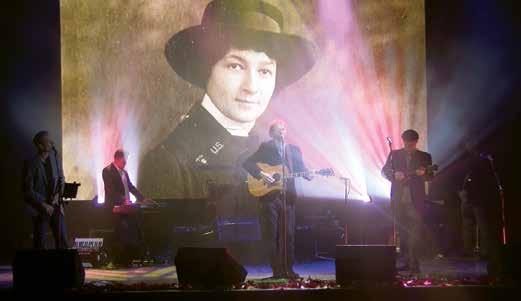
At a performance at the Barrymore Theatre in Madison this past Veterans Day, concert goers saw images from the museum collection and heard music inspired by the stories of World War I veterans Arthur Cantwell, John James Haddock, and Helen Bulovsky. Cantwell, of Shawano, barely escaped the sinking of the USS Tuscania by a U-boat. Haddock, of Milwaukee, lied about his age so he could enlist; Helen Bulovsky, of Madison, on the day she ships off to be a nurse in France called herself the "happiest mortal in town." These accounts from ordinary people of an extrordinary time in our nation's history that are preserved at the Wisconsin Veterans Museum allowed Fitzsimmons develop the show that celebrates the lives of everyday Wisconsinites. History is shared by all of us and museums hold collections in public trust. Sharing the Wisconsin Veterans Museum collection with appropriate institutions and organizations across the state and nation shows how Wisconsin Was There in the narrative of our nation and why It Still Matters.
By: Jennifer Stevenson Marketing Manager
An image of World War I nurse Helen Bulovsky from the Wisconsin Veterans Museum Collection provides a backdrop for the rock and roll history show, The Greatest War, performed by The Kissers. Photo courtesy of Ken Fitzsimmons.
NEW WHAT'S to the Collection
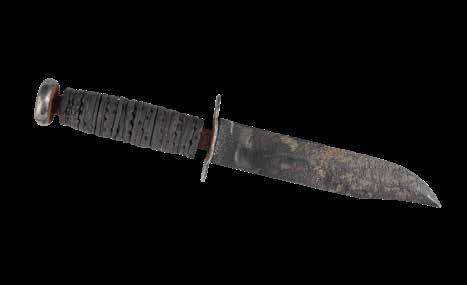
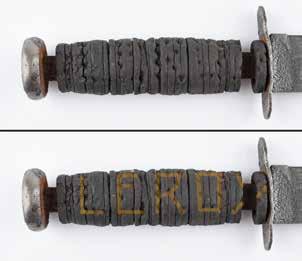
The Wisconsin Veterans Museum regularly receives additions to existing collections. These new donations often come from the veterans themselves, photographs found when cleaning out an attic or souvenirs no longer needed due to downsizing, or they may come from extended family and friends of the veteran. Generally, the story behind the intake of new collections is overshadowed by the significance of the artifacts received. However, the museum recently accepted a KA-BAR knife as an addition to the collection of Leroy J. Ziarnik, where the journey it took to get to the museum is almost as interesting as the item itself.
Between 2008-2009, Leroy J. Ziarnik donated his seabag, a scrapbook, and an oral history interview to the museum. Ziarnik was born in Manitowoc, Wisconsin, and he enlisted in the United States Marine Corps in 1943. He served as a field artillery crewman in the 4th Marine Division, 14th Regiment, 3rd Battalion, H Battery, and saw action at Roi-Namar, the Marshall Islands, Saipan, Tinian, and Iwo Jima. Following service, he returned to Wisconsin where he lived until his death in 2011.
This past summer, the KA-BAR utility knife that was issued to Ziarnik was donated as an addition to his collection. The knife was lost during action on Tinian, only to be recovered in
that it was recovered from the skeletal remains of a long-deceased enemy, though it could have just as easily been discovered hidden in a bush no one really knows for sure.
By: Sarah Kapellusch Curatorial Supervisor
The KA-BAR was gifted to Robert Cornuke of Colorado Springs, Colorado, who displayed it in his home until one day, someone noticed that the markings on the handle spelled out LEROY and LEZ. Realizing that there was a name carved into the handle, Cornuke devoted several years and many resources to finding the owner of the knife, eventually tracing it to Ziarnik. He then searched and eventually found Ziarnik’s family and offered to return the knife to them.
On July 2, 2025, Robert Cornuke met with a large group of Ziarnik’s family and friends at the Wisconsin Veterans Museum to present the knife to his family. After receiving the knife, the Ziarnik family immediately presented it to the museum as a donation for safekeeping with the other items in Ziarnik’s collection.
KA-BAR utility knife
Right: Close-up of carved handle above; below, overlay connecting the carving to reveal the name Leroy.
V2025-045
Leroy Ziarnik scrapbook image.
Left:
T ALKING SPIRITS
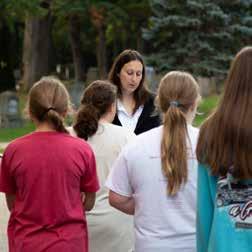
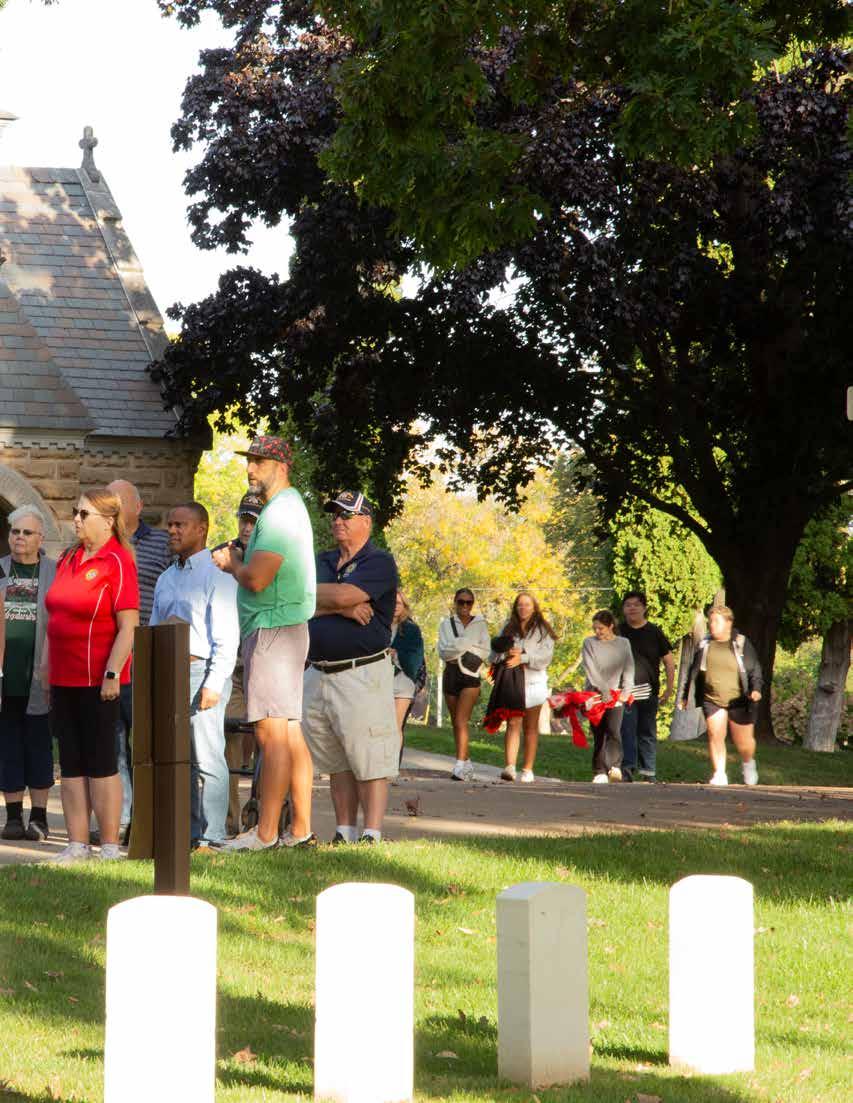
For the 27th year, the Wisconsin Veterans Museum presented its renowned Talking Spirits Cemetery Tours at historic Forest Hill Cemetery in Madison. Between May and August of 1945, guns fell silent across the globe as World War II ended. Whether in Europe or the Pacific, the end of the war came as a huge relief to millions of service members fighting and supporting the war efforts, as well as to their families on the home front. Eighty years later, the stories of our Greatest Generation have not been forgotten and remain just as important today as they were in 1945.
Cemetery tours were offered during the week of September 29 –October 5 and included nearly 750 students from 25 Wisconsin schools in attendance, ranging in grades from 4th to high school seniors (and two college-level classes). The weekend public tours brought an additional 550 guests to Forest Hill to enjoy the beautiful weekend weather. The tour guides, actors, and all the volunteers did an amazing job in making this one of the best Talking Spirits Cemetery Tours we’ve produced. We’re busy planning next year’s tour, and so be sure to check our website next August for updates on the 2026 event. Until then, you can find recordings of the vignettes from this year and years past on our YouTube channel.
In-kind donations provided by:
Bagels Forever Greenbush Bakery
Ian's Pizza
The Madison Concourse Hotel & Governor's Club
This project is supported by Dane Arts with additional funds from the Frautschi and Rowland Foundations, Diane Ballweg, and the Endres Mfg. Company Foundation.
WISCONSIN VE TERANS MUSEUM
CEME TER Y TOURS XXVII
WAR II AT 80: PATHS OF PERSEVERANCE
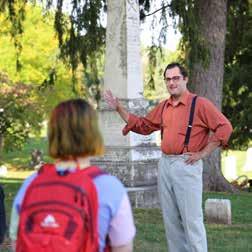
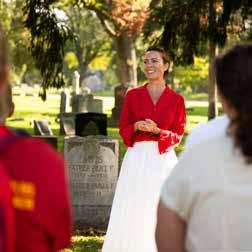
Images left to right: John Scocos, Sr., played by Stuart Mott, tells of his time as a POW; Annette Howard, played by Mary Wallin, tells of life as a woman in the US Marine Corps Womens Reserve; Molly Snow guides a student group. through the cemetery. Photos by James Kovaleski, WVM marketing specialist.
BREAKS IN SERVICE ROGER BOEKER'S STORY
Roger Boeker was raised in Madison, Wisconsin by a military family. Just days before his September 1942 birth, Boeker's father Leonard enlisted in the U.S. Army for service during World War II. His uncles, Orrin and Leon Slauson, brothers from Spring Green, Wisconsin, joined the U.S. Army Air Corps in April 1943 and August 1944. Another uncle, Arthur C. F. Boeker, served in France during the first world war with Ambulance Company No. 20. Other ancestors included a Civil War veteran of the famed Iron Brigade and eighth and ninth great-grandfathers who fought during the Revolutionary War.
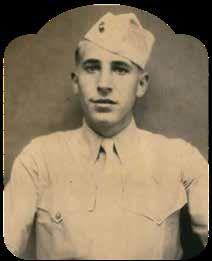
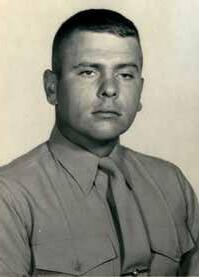
Portrait of PFC Boeker, 1966.
Mss2023.001.001
Embarking on a similar path to military service, Roger Boeker joined the University of Wisconsin's Reserve Officers' Training Corps (ROTC) when he began studying political science in 1960. However, his plans were derailed after three years when he broke his leg and was unable to complete the program. Instead, he waited until after his college graduation to enlist, and became the first to split from his family's long tradition of U.S. Army service when he joined the United States Marine Corps in August 1965.
Boeker was sent to boot camp in San Diego, California where he had the memorable experience of training under drill instructor SSgt R. Lee Ermey, who later became a well-
known Hollywood actor. He next completed infantry training at Camp Pendleton, then served as an assignment clerk responsible for arranging transportation for Marines to Vietnam.
Not long after, PFC Boeker wrote his own orders to go overseas and arrived in Da Nang in July 1966. He was assigned to Headquarters Company of the 3rd Marine Division and put in charge of the unit's education department.
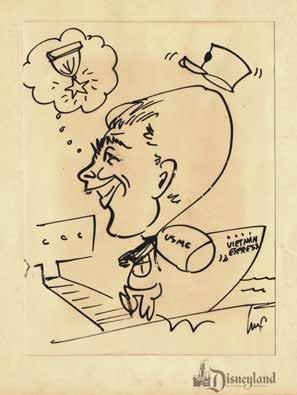
This caricature of Boeker was drawn at Disneyland in Anaheim, California in 1965. While it shows him deploying to Vietnam by sea, he in fact arrived in Da Nang via a 707 commercial airliner. Mss2023.001.001
Boeker's duties included administering high school equivalency tests, providing college counseling, and running a library that helped fill the hours of inactivity for Marines in the combat zone. These duties were occasionally broken up by orders to fly over north Vietnam and distribute propaganda leaflets over areas believed to be occupied by enemy troops.
COLLECTION FROM THE
In March 1967, Boeker was again sidelined by injury after breaking both of his legs jumping from a delivery truck while under enemy fire in Da Nang. He was medevacked to Clark Air Force Base in the Philippines and spent several weeks recovering in Japan before he returned to Vietnam.
Cpl. Boeker at the end of his tour in August 1967. Mss2023.001.001
Corporal Boeker finally returned stateside after 13 months and was honorably discharged on August 20, 1967. Upon his return home, he took a sales job with Oscar Mayer which led to 25 years of employment with a variety of food companies around the country.
He returned to Madison in 1992 and taught at Edgewood College followed by time at the Wisconsin Department of Veterans Affairs. After he retired, he became heavily involved in veteran organizations, particularly the VFW and Marine Corps League, and assisted with special programs such as Badger Honor Flights until his passing in 2018.
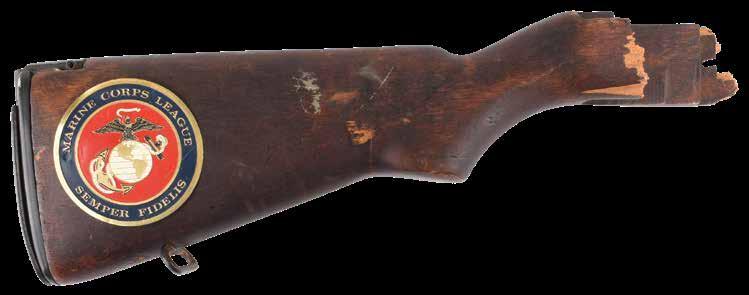
Challenge coin of the type Boeker gave out to participants of Badger Honor Flights. V2014.100.1
By: Andrea Hoffman Collections Manager
By: Cortney Mihulka Processing Archivist
e Long Way Home: e Archives of Richard W. Fischer
SinceWorld War II, approximately 1,500 Wisconsin service members have gone missing in action (MIA). Their absence leaves families waiting for answers, sometimes for decades. The search for Madison, Wisconsin native Lance Corporal Richard W. Fischer reflects that long effort and determination of the families who continue to wait.
In October 1967, Fischer arrived in Vietnam. He had joined the Marine Corps in 1966 one year after graduating from Madison East High School and was assigned to the 3rd Battalion, 5th Marines, operating in the I Corps region of South Vietnam. According to the Fischer family’s government correspondence files, Fischer was separated from his unit while on ambush patrol near Da Nang on January 8, 1968. Members of his unit attempted to locate him but were forced to withdraw when faced with heavy sniper fire. Fischer was not found in the immediate aftermath of his disappearance, nor during later investigations. His status remained MIA for over a decade until December 8, 1978 when a presumptive finding of death was issued. The family placed a memorial headstone at Forest Hill Cemetery in Madison.
Fischer’s mother Eleanor and sister Ann did not lose hope that they would one day learn what had happened to him. Their correspondence files, newspaper clippings, and programs from POW/MIA events reveal
their ongoing commitment to discovering the truth about their loved one’s fate. Ann joined the National League of Families of American Prisoners and Missing in Southeast Asia and the National Alliance of Families for the Return of America’s Missing Servicemen.
In the early 1990s, Ann provided testimony to the Senate Select Committee on POW/MIA Affairs stating, “I have waited 23 years for word of my brother and his fellow prisoners … I will not let our government forget because I cannot forget.”
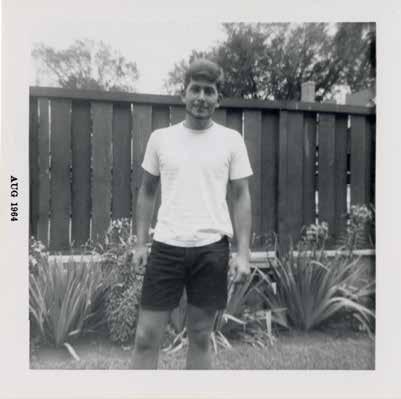
Photograph of Richard W. Fischer taken August 1964. WVM.0815.I019
“ I have waited 23 years for word of my brother and his fellow prisoners … I will not let our government forget because I cannot forget.”
In 1994, a joint U.S.-Vietnam investigative team interviewed witnesses in Quang Nam Province who described the death and burial of an American Marine near Fischer’s last known position. The team surveyed the alleged gravesite, one of several leads that ultimately helped locate his remains. In the mid-1990s, Ann and Eleanor were closer than ever to finding answers when investigators recovered human remains and uniform items consistent with Fischer’s case. Still, the remains were held in Hawaii, and it was not until 2007 that they could be positively identified using a DNA sample from Ann. Fischer finally returned home to Wisconsin and was laid to rest on November 19, 2007 beneath a headstone placed nearly 30 years earlier.
of Richard W. Fischer taken August 1964. WVM.0815.I019
Photographs and written recollections give a glimpse into Fischer’s life before his service. A childhood neighbor remembered him as quiet and kind, an athletic boy who could be seen doing handstands in his yard or participating in summer recreation at Tenney Park. These small moments of everyday life, preserved alongside the official correspondence and investigation files, create a fuller picture of the young man behind the uniform. Together, they document a family’s long search for answers and the story behind a name once listed among the missing, one that now rests at home in Wisconsin.
Photograph
MISSION : GIFT-GIVING
SHOP
WITH A PURPOSE
Veterans Receive 15% Off Everything in Store
Shop with a Purpose This Season
The Wisconsin Veterans Museum Gift Shop stocks items produced by veteran-owned businesses in Wisconsin and throughout the country. You’ll feel great shopping here knowing your purchases advance the get-it-done attitude of these enterprising veterans and the causes they give back to, all while suppporting museum programs.
Unique items you'll find in the gift shop
• Robust coffees roasted by a Marine veteran who gives back a portion of sales to support mental health services for veterans.
• Clothing tailored for women veterans by women veterans who support non-profits addressing the unique needs of women vets.
• Dog toys and pet treats from veteran-owned businesses who donate proceeds to programs that train therapy dogs for veterans.
ORAL HISTORY ARCHIVES FROM THE
November 10th is a special day for the United States Marine Corps. Here is what Wisconsin veterans had to say when asked about celebrating the Marine Corps birthday:
Raymond Stubbe
Ellen Bowers Healey
She [Lt. Gen. Carol A. Mutter] also, I was told, made it well-known that when you go to the Marine Corps Birthday Ball, which is on November tenth every year, it’s a big deal. It is a big Marine thing. We all know when the Marine Corps was organized, November 10th. And in Okinawa, a lot of people were unaccompanied. I was unaccompanied. And she made it known that if you are married and unaccompanied, you are not showing up with a date, and because that was, apparently, fairly common practice there. So she took that step, and she was bold about doing that. OH2134
I was in Okinawa in '73 to '74, with 3rd Marine Division at stationed Camp Hansen. When I first got up there, there's a place called the Northern Training Area, NTA, which infantry Marines are sent to learn river crossing techniques, rappelling down cliffs, rappelling out of choppers, night navigation with compass using stars and so on, things like that, survival. When I first got up there, there was some officer in charge--I can't remember his name but then, later on, Oliver North came up there to replace him as the officer-in-charge, he was a captain. And I remember being up there during November of '73 when it was Marine Corps Birthday, and Oliver North had a huge birthday cake that he had sent up there and he got the division band up there--and I say this because it was a rather—it was a very primitive place. There were only maybe at most about twenty Marines up there. Very detached. It took maybe two or three hours to travel up there by road, which was winding and difficult to get to, and it was very primitive living conditions up there. But Oliver really took care of his men. Like I say, he got the cake, he got the band. OH1324
Dona Drew
Absolutely. That's our birthday(November 10). That is my birthday. As a Marine, yes, that is our birthday. We do (celebrate). I do, every year. Yes. Yeah. My son had, he knows how to play the piano. And he used to play that the Marine Corps League or hymn for me…well, a lot of time. But definitely on the Marine Corps birthday he'll play that for me. OH2858
By: Luke Sprague Oral Historian
MEMBER SPOTLIGHT FOUNDATION
By: Molly Snow WVMF Membership & Events Director
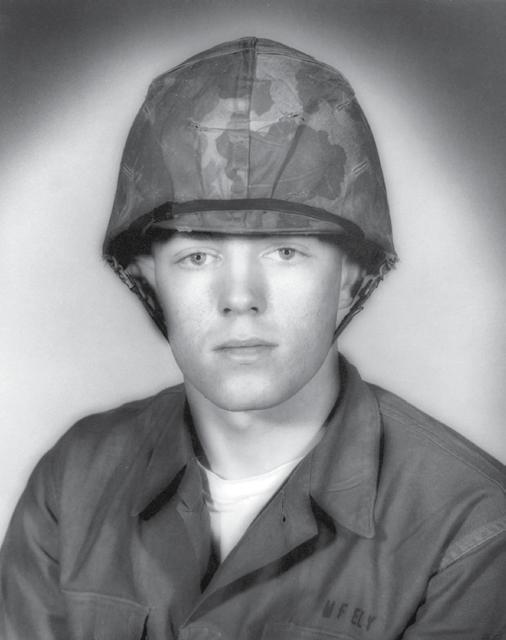
MICHAEL ELY
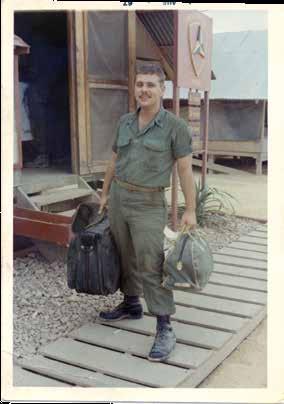
Michael Ely was raised in Madison, Wisconsin. A graduate of Madison East High School, he briefly attended the University of Wisconsin. Fascinated by the Marine Corps from a young age and realizing that school wasn’t for him (at least at that time), he decided to enlist in 1962 at the age of 18. After a visit to a recruiter’s office, he signed up for a three-year hitch through a deal he made, opting for communications.
He completed basic training in San Diego, California and trained as a field radio operator. He was then assigned to an 81 mm mortar platoon with the 1st Battalion, 5th Marines at Camp Pendleton. A year later the unit was deployed to Okinawa, Japan, where it became the 2nd Battalion, 3rd Marines. His deployment overseas lasted 13 months. He was stationed on Okinawa, and participated in operations in Japan, Taiwan, and the Philippines. At one point his unit was assigned to a ship with the U.S. Navy’s Seventh Fleet in the South China Sea. It was during this time the Gulf of Tonkin Incident occurred and the fleet patrolled the coast of Vietnam for 57 straight days before a brief rest in Hong Kong and then returned to station for another month. He returned home and was discharged in December of 1964.
Several years later, he was talking with some friends who were in the Wisconsin National Guard, and they persuaded him to enlist. Even though he was not a medic, he joined the 13th Evacuation Hospital where he was part of the supply section.
The unit was activated in 1990 and sent to Saudi Arabia to support Operation “Desert Storm”. Ely spent six months there. The mission of the hospital was to treat and stabilize patients (both Allied and Iraqi) for transport to long term care, but it was Ely’s job to procure and distribute water- a precious commodity in the desert. He served in the national guard for 20 years.
Ely has been a member of the Wisconsin Veterans Museum since 2011 and served five years on the board of directors. Thank you for your service and continued support of the museum.
Service photo Michael Ely
CONVOY SPEAKER SERIES STOPS IN ROCK COUNTY
The 3rd Annual Rock County Convoy Speaker Series was held on Saturday, November 1 at the Beloit Club in Beloit, Wisconsin, and welcomed 140 new attendees this year. Thanks to the incredible generosity of our sponsors and attendees, the Foundation raised more than $53,000 in support of Wisconsin Veterans Museum programs.
The Convoy Speaker Series brings the Wisconsin Veterans Museum to communities across the state, with a mission to connect veterans with one another and with the museum, build community connections, and educate the public about veterans’ experiences—all while sharing remarkable stories of Wisconsin’s service members.
A heartfelt thank-you to our keynote speaker, Major General (Ret.) Marcia Anderson, a proud Beloit native who made history as the first African American woman to achieve the rank of Major General in the U.S. Army. Her distinguished career, spanning nearly four decades (1979–2016), stands as a powerful story of perseverance, leadership, and trailblazing excellence. We are deeply grateful to her for sharing her inspiring journey with us.
We extend our sincere appreciation to all our generous sponsors—this event would not have been possible without your support. Event photos are available on Flickr.com in the album "2025 WVMF Rock County Convoy." We look forward to seeing you at our next convoy checkpoint.
ABC Supply
JP Cullen Construction
Rock Road Companies
Blain’s Supply
The Morse Group (in honor of Richard Sullivan)
Edgewood University
Military & Veteran Services
Degarmo Plumbing
Angus Young Architects
Carol & Mark Cullen
Dave & Christina Heiliger
Hero Sponsors
Nathaniel Millsap
Carol & Mark Cullen
Fairbanks Morse
Lycon Westphal
Nelson Young Lumber
Mid-States Concrete Industries
Ceroni Piping Company
Liz & Dennis Hansch
North American Mechanical Inc.
First National Bank & Trust Co.
County Materials Corporation
Whiton House Consulting
Angus Young Architects
Peter Skelly (in memory of World War II Veteran Floyd Heenan)
8 DEC
Mark Your Calendar
BOOK TALK WITH JOSHUA SHORES
Noon — 1:00 pm
Join author and veteran Joshua Shores who will be talking about his latest book, Counting on Death: A Marine Infantryman’s Journey from the Frontlines of Combat to the Fight for Peace. This work looks at the brutal realities of his two deployments (Iraq and Afghanistan) and his quest for redemption and selfdiscovery upon returning home.
To register visit: WisVetsMuseum.com/events or scan the QR code below
JAN
10
FILM SCREENING
The 32nd Infantry Division’s Nightmare: The Battle of Buna WVM Education Center 1:00 — 3:00 pm
Join us for a screening of The 32nd Infantry Division’s Nightmare: The Battle of Buna. The U.S. Army’s return to the offensive in the Pacific Theater occurred at the Battle of Buna. On that battlefield in New Guinea from 16 November 1942 until 22 January 1943, the untested 32nd Infantry Division fought alongside elements of the Australian Army’s 7th Division against well-prepared elements of the Imperial Japanese Army and Navy. A nightmare unfolded for the Americans as they fought both the Japanese and the jungle. Interviews and oral histories retrace the experiences of the soldiers of 32nd from its Wisconsin and Michigan National Guard origins, to Pearl Harbor, to training for war, and then to the battlefield. This is an inperson event and tickets are free but limited. Registration is required.
EXHIBIT CLOSING JANUARY 3rd
Allied forces landed the morning of June 6, 1944 on the coast of Normandy, France. The invasion included air, land, and sea forces from 15 nations including the United States, Great Britain, and Canada. Forever known as D-Day, this pivotal battle turned the course of World War II in favor of the Allies.
Wisconsin provided thousands of men and women to the European Theater. Forty-six Wisconsinites were killed in action on D-Day and many more served in the invasion and campaign. This exhibit tells their stories, using a traveling art exhibit from artist Keith Rocco combined with artifacts from the Wisconsin Veterans Museum. Catch it before it's gone.
THANK YOU DONORS A most sincere thank you to all who donated from August 2025 through the end of October 2025. You are the reason we can provide quality programming and award-winning exhibits.
Blain Supply
Generac Foundation, Inc.
Hansen, W. Lee
Bartz, COL (Ret) Claudia
Hustad, William & Jackie
Millsap, Nathaniel
Westphal & Company, Inc
American Legion Post 141 & Women's Auxiliary (Stuessy-Kuenzi Post)
American Legion Post 248 (GalvinStruckmeyer Post)
Arango-Escalante, Alejandro & Erin
Barnett, Jodi & Jim
Bieniek, Brian & Jen
Bradley, Douglas & Pam
Civil War Round Table of Milwaukee & Iron Brigade Association