THE WINE MERCHANT.
An independent magazine for independent retailers Issue 154, February 2026
A number of suppliers have managed to freeze or even reduce pre-Budget pricing on some wines they offer to indies
Wine merchants are facing unwelcome price hikes from suppliers this month as alcohol duty rises by 3.66% in line with inflation. But some importers are not applying increases across the board – and are even cutting the trade price for some wines.
Tony Wellings, owner of The Antipodean Sommelier, says: “Following three years of damaging government-driven duty increases on alcoholic beverages, we have decided, in our 15th year of trading, to absorb the current duty increase of 3.66%
on all of our wines for the whole of 2026.
“In addition, we will not be implementing any cost-driven increases from wineries. We just feel that enough is enough, and we need to support our customers with some stability, whilst we take the responsibility of battling cost increases internally.
“Yes, we have managed to negate some of the upward pressure on costs through discussions with our winery partners and favourable exchange rates, but this for us is a tactical choice. We believe that holding prices for this year, alongside delighting
our customers with great wines, at natural ABVs, is the right thing to do. The feedback so far has been overwhelmingly positive.”
South American specialist Ucopia Wines has a similar policy. “We will not be passing these increases on across the board,” says owner Laurie Webster.
“Due to a sustained period of favourable trends in exchange rates against the US dollar, we are able to ameliorate these increases in order to keep our prices stable. In the case of our South American wines, the vast majority will not change price.
13 sunk by the on-trade
Treasury Wine Estates folds as restaurant clients buy cheaper wine
18 david perry
The curated, artisan markets that took £100k out of High Street coffers
23 the burning question
Which wines would indies consign to Room 101?
28 merchant profile
A visit to Taurus Wines, just round the corner from Eric Clapton’s gaff
36 brush up on your greek
A masterclass in the company of the master, ex-beach bum Steve Daniel
40 Pet nat panel tasting
Who loves methode ancestrale? We do. Well, some it, anyway
47 focus on new zealand
Two independents explain how the category succeeds in their stores
68 central and eastern europe
Getting to know our “other” European neighbours a little better
72 Q&A: matt walls
The DJ and sometime Rhône expert is forced to reveal all
“Only 13 wines will increase slightly due to other costs at source; and a further 16 wines will actually come down in price.”
In a note to customers, he adds: “We feel this is the honourable and most honest position to take and we hope it will encourage you to continue buying our wines in 2026 and perhaps even add a few more to your range.”
Cachet Wines has also resisted a uniform price rise. “We have taken a line-by-line approach, factoring in duty changes and individual cost pressures rather than applying a single blanket increase,” says sales director David Archibald.
“In practice that has resulted in some small increases, some lines held where possible and others, such as our Mendel Lunta Malbec from Argentina, seeing a reduction in price.”
Other suppliers say that, although price increases are unavoidable, they’ve done what they can to ease the pain.
Will Oatley, commercial director at Hallgarten & Novum Wines, says: “This duty rise has impacted every wine on sale across the UK but, as you would expect, our buying team has worked tirelessly over the past 12 months to both broaden the range and ensure that we are able to offer customers the most comprehensive range possible at every commercial price point.
“We have increased our ‘No & Low’ range and, wherever possible, encouraged our partner suppliers to work with lighter bottles (lower EPR) and reduced ABV (lower duty) so long as the style and quality of their wines is not compromised.”
Lee Evans, MD of Condor Wines, says: “We issued our 2026 pricing early, on December 12, 2025. We always aim to give at least a month’s notice and, with duty increasing on February 1, that meant confirming pricing before Christmas.
“For 99% of our wines, we’ve only passed on the duty changes. That’s largely thanks to our winery partners, who listened to our advice and, in many cases, held their prices in response to the significant increases in excise duty since August 2023. Like all businesses, we’ve faced rising costs linked to inflation, National Insurance and increased packaging waste taxes. However, by managing costs carefully across the business, we’ve been able to limit our 2026 price changes to excise duty alone.”
Tom Platt, CEO of Liberty Wines, says: “We always maintain pricing (ex-duty) for the duration of a vintage. This provides stability and reassurance to our customers when they are buying wines from us.
“We share vintage change notifications, tailored to each customer, so they are aware of any vintage and price changes in advance, and have taken the same approach to communicating the duty increase. This helps our customers to plan.
“Our priority is to work with each of our customers to help them communicate and sell better quality wine. This isn’t easy –but it remains the only route to sustainable growth as duty rises and volumes decline. We’ve seen excellent results through events, education and training, and will be doing more of this in 2026.”


winemerchantmag.com 01323 871836 Instagram/Bluesky: @WineMerchantMag Unit 52 Newhaven Enterprise Centre, Denton Island, Newhaven, East Sussex BN9 9BA
Editor and Publisher: Graham Holter graham@winemerchantmag.com
Assistant Editor: Claire Harries claire@winemerchantmag.com
Reporter: Jacob Stokes jacob@winemerchantmag.com
Advertising: Sarah Hunnisett sarah@winemerchantmag.com
Accounts: Naomi Young naomi@winemerchantmag.com
Admin and reader liaison: Charlotte Gingell charlotte@winemerchantmag.com The Wine Merchant is circulated to the owners of the UK’s 1,047 specialist independent wine shops. Produced in Sussex by East Print. © Graham Holter Ltd 2026


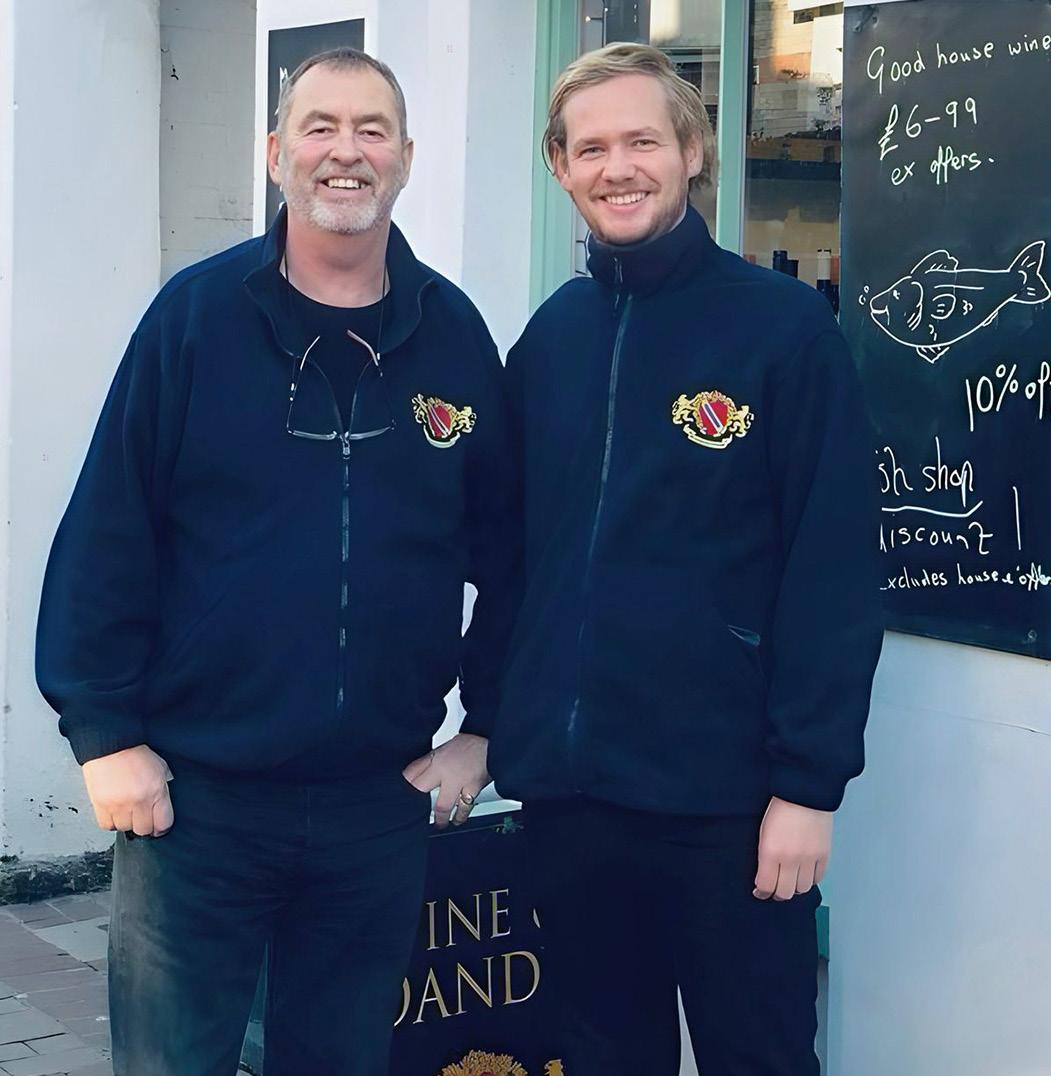
Hugh Elliot is stepping back from Wine & Dandy and his son Harry will be taking over the Taunton shop from February.
Hugh established Winesolution in 2012, and operated two stores within garden centres before relocating to the current premises on Bath Street in 2019 and rebranding as Wine & Dandy.
“I’ve always been quite interested in the business, but didn’t really ever see myself taking it over,” says Harry, who has been living abroad and working as a copywriter. “Around Christmas time, we had some really good conversations and it feels like the right time to come home and take it on.
“It’s important to me to keep the same spirit the shop already has. I’ll continue with all the fun wine tastings and my dad will remain in the shop as a wine consultant a couple of days a week.”
While Harry is sure the customers will be happy with the “smooth transition” to the new ownership, there will be some changes in store for them. “Over the years dad has cultivated his own favourite list of wines, but as I’ve been travelling around the world and trying lots of wines, I’d like to introduce some new ones to the shop and try new flavour profiles,” he says.
“I don’t want to make too many changes too quickly, but I will be bringing a bit more technological know-how to help with how things run behind the scenes.”
• Cirencester indie Phoenix Wines is on the hunt for new premises after the tenancy ended on its branch on Cricklade Street, which had been home since 2019. Owner Simon Griffiths says: “We are still trading online, and continue to offer free local delivery in Cirencester and surrounding areas. Hopefully we will be back in town permanently in 2026.”
Gills & Co in Sheffield is soon to open a separate cocktail and Champagne bar called The Gillmont, near to its branch on Ecclesall Road.
Co-owner Vic Trudgill (pictured) says:
“When Andy first opened Gills & Co, we were very much a shop. I’d say 90% was retail, but as the weeks and months went on, Andy realised that people wanted to sit in and drink way more than he expected.
Vic says they have taken inspiration from “an opulent train carriage/hotel lobby bar” and, in addition to cocktails, afternoon tea will be served.
“We want to bring something different to Sheffield,” she adds, “so it will be really high-end with a range of excellent Champagnes and cocktails. Andy has a background in cocktails, that’s really where his expertise in hospitality is, so he’s always wanted to do a premium cocktail bar.”

“Now I’d say the take-home part of what we do is way smaller than the restaurant. The bar takes up about 70% of our offering, food 25% and then 5% take-home.”
• MarchTown in Strathbungo, Glasgow, closed at the end of January. Anthony Reynolds, who came from a career at Oddbins, started the business almost a decade ago. He says: “The shop has changed hands and will doubtless change function and identity too.”


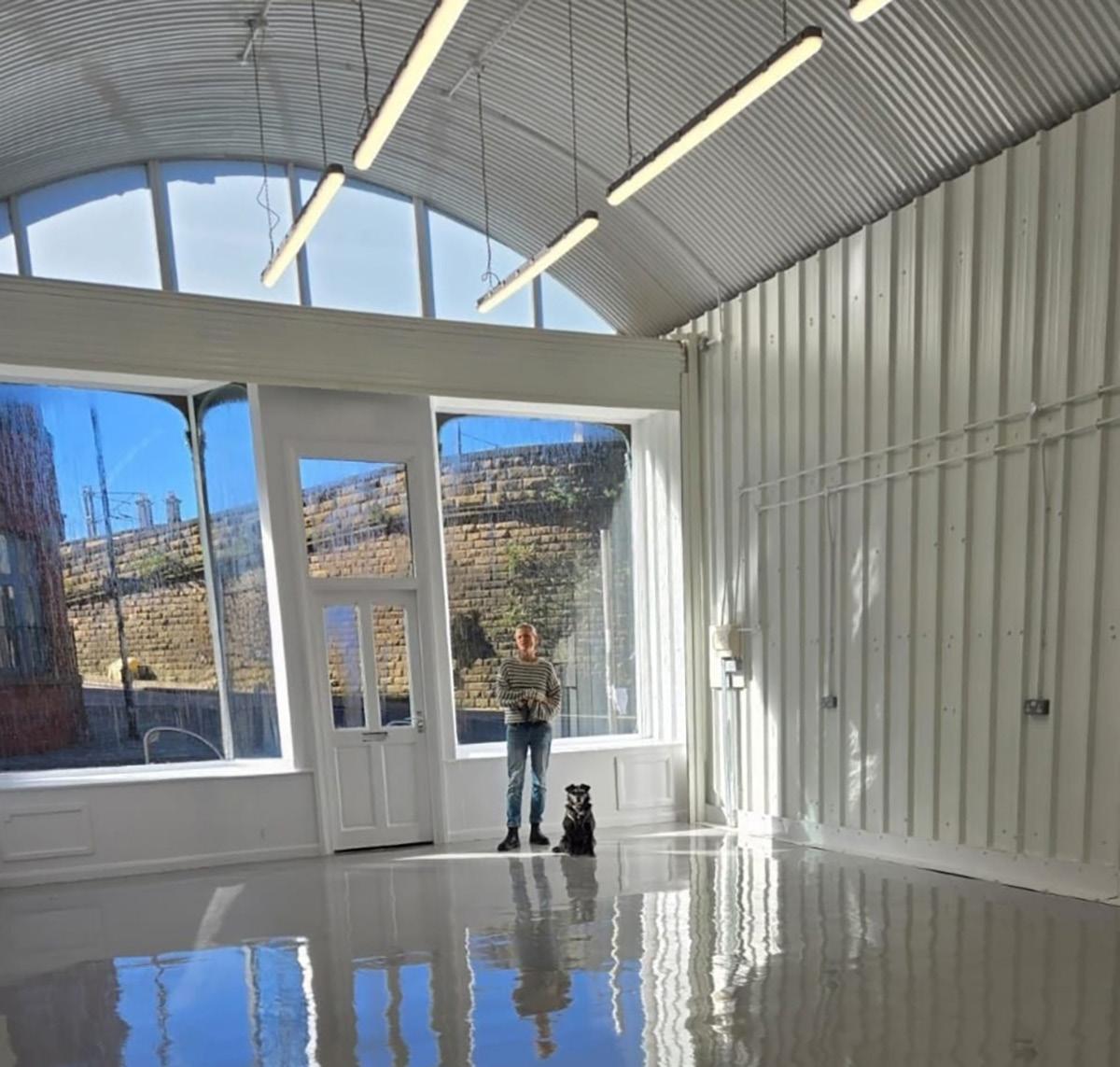
Gateshead’s Victor Indigo November is about to launch a new tasting room in the neighbouring railway arch.
Charlotte and Lorrie Fenwick opened their wine shop and bar in the town’s Railway Quarter in 2023. They have been considering expansion for some time, but didn’t want to move.
“We really like it here, we love our customers, and we really believe in the area,” Charlotte says. “We wanted to move somewhere a little bit bigger, ideally with two separate spaces. At the moment whenever we run a wine tasting event, we have to close. There’s no other way to do it.”
When the next-door arch became available, it was too good an opportunity to miss. “Because it’s a working railway above us, the structure means it’s not possible for
us to knock through, so they are going to be two separate spaces,” Charlotte explains. “It’s what we wanted anyway because we want to use that area specifically for events and pop-ups and private hire.
“We’ll make it a flexible space that will work whether we’ve got people coming in for a sit-down meal – we work with a private chef who comes and does a smallplate night for us – or coming in for a walkaround wine tasting.
“It’s really exciting for us,” she adds, “because when we first opened the business, we didn’t expect events to be a big part of what we do. We thought they would be more of a supplementary thing, but they are so important to us. Often they sell out the day they go on sale – sometimes within an hour. We know that there’s demand there and we want to be able to offer more of them.”
The couple got the keys to the premises earlier this month and hope to start running events from April.
Windsor has been without an independent wine shop since the closure of Eton Vintners in 2024. But that will change if a planning application for a shop in Thames Street is approved.
Hughes Wines & Provisions, a business set up last year by husband and wife Adam and Charlotte Hughes, wants a premises licence for off-sales only between 9am and 8pm, Monday to Sunday.
In the application, which was due to be heard on February 5, Charlotte says: “The premises is owned by the Sir Christopher Wren Hotel and is 18.8m2. It has been vacant for a while and my husband and I are planning to turn it into a small independent wine shop.
“The layout will be simple as the space is small, and our plans for the shelving design and storage show us that we will likely be able to house around 1,100 bottles in the space. The shop will sell wine at various price points, as well as a small selection of crisps, snacks, olives etc. We also plan for there to be rotating samples of wine available in store, and small monthly wine tasting events.”
• After almost two years of trading, Paul’s of Pershore in Worcestershire has closed. Owners Paul and Dan Boatright-Greene made the decision in January not to continue, with Dan saying: “Hospitality is an absolute bin fire at the moment.”
• Noble Wines Warehouse, which shut its Uckfield branch in 2024, has no stores left following the closure of its Tunbridge Wells shop. Owner Charles Mears-Lamb says: “After 25 years I have given up trying to get people through the door. We used to be a nation of savvy shoppers, now we are a nation of lazy shoppers. And when the staff earn more than you do, but you do twice the work, it’s time to call it a day.”


with Rachel Gibson MBACP

When your Valentine’s Day isn’t filled with hearts, flowers and heavily promoted (possibly leftover from Christmas) pink fizz, what feelings come up? Perhaps envy would be a good place to start. We all experience that tense and stomach-knotting sensation of feeling envious from time to time, and so often it is focused on another person.
It could be in the form of unrequited love: maybe your best friend is engaged to the person you secretly wish you’d asked out in the first place. It could be the confident colleague whose personality shone just that bit brighter than yours and who now has the promotion you were desperately after. Or perhaps it’s jealousy of the audacious competitor up the road who spends vast sums of money like it’s going out of fashion on a new website, fancy branding and a shiny new van and is now taking your best customers away.
Envy often involves two people and occurs when someone wants what someone else has (or is perceived to have). This could be another person in the form of a partner or friend, or an object, lifestyle or personality competence such as charm or intelligence. Jealousy, on the other hand, is more about fear of loss: a person, object or lifestyle that we already have, when perhaps there is a threat of someone else taking it away from us. Envy and jealousy can create toxic feelings of hostility, resentment, anger and fear.
No matter how uncomfortable the feeling, envy and jealousy can be forces for good. They tell you what you want to achieve, and what you already have that you don’t want to lose. Take a moment to think about this as it will help you to focus and be guided by your values and priorities. Put simply, I’ll quote from the romantic movie When Harry Met Sally in that famous Manhattan diner scene: “I’ll have what she’s having.”
Rachel is an integrative counsellor and a member of the British Association for Counselling & Psychotherapy. She formerly ran Wine Utopia in Winchester. To support clients in the wine trade, she offers ongoing online counselling sessions at the reduced rate of £35 per 50 minutes, so mention this article. Email rachel@rachelgibsoncounselling.co.uk.
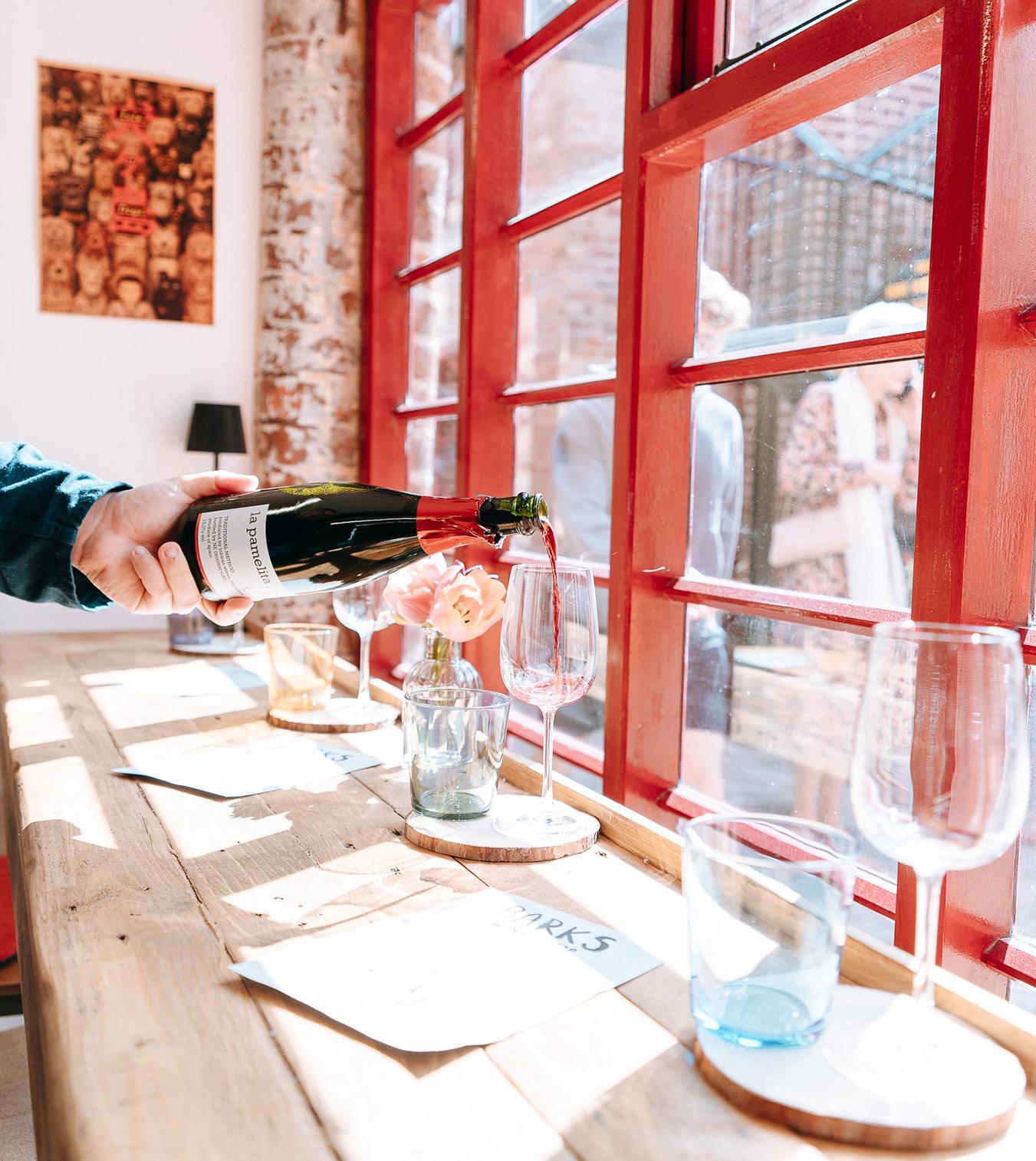
Barks Wine Shop in Sheffield, which opened last March, is moving to new premises. Owner Charles Cornelius has secured a nearby site that will offer him more space to increase his range.
“It’s about 10 metres away,” Cornelius says of the new shop, “and I’ll still be in Leah’s Yard, but it’s four times the size.
“The original place is small: I do believe it’s probably the smallest wine shop in the country, but it’s my first place and as I’d never worked in wine retail before, I was taking a big risk. The local wine scene continues to grow and the people of Sheffield took to Barks really well and I just
want to do more.”
Cornelius will get the keys for his new unit in March and intends to reopen in the first week of April.
“We are very much a bar within a wine shop and retail is a focus,” he adds. “I want to increase the range – that’s actually the primary reason I wanted to move. At the moment I have probably about 125 SKUs, and I want to double that really.”
• JN Wines in Crossgar, Co Down, is again on the hunt for wine merchants to acquire in southern England. Owner James Nicholson bought Highbury Vintners in north London six years ago and is interested in expanding his English retail presence by two or three shops. Contact details appear in the ad on page 7.
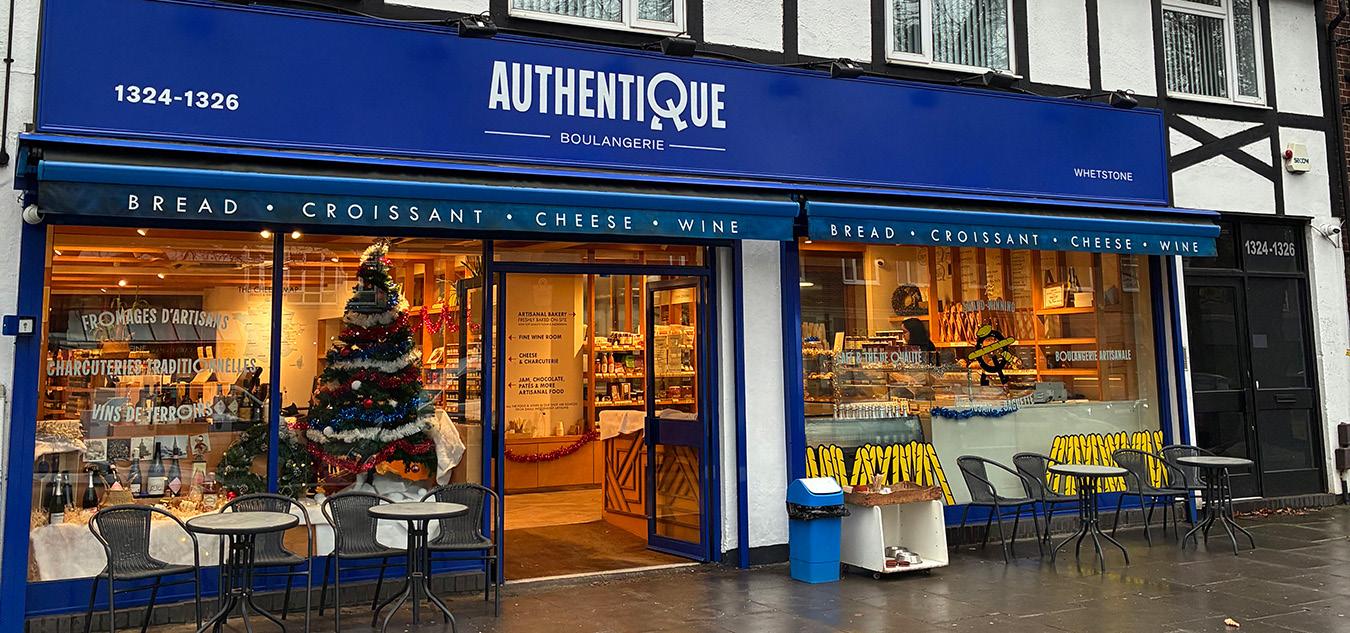
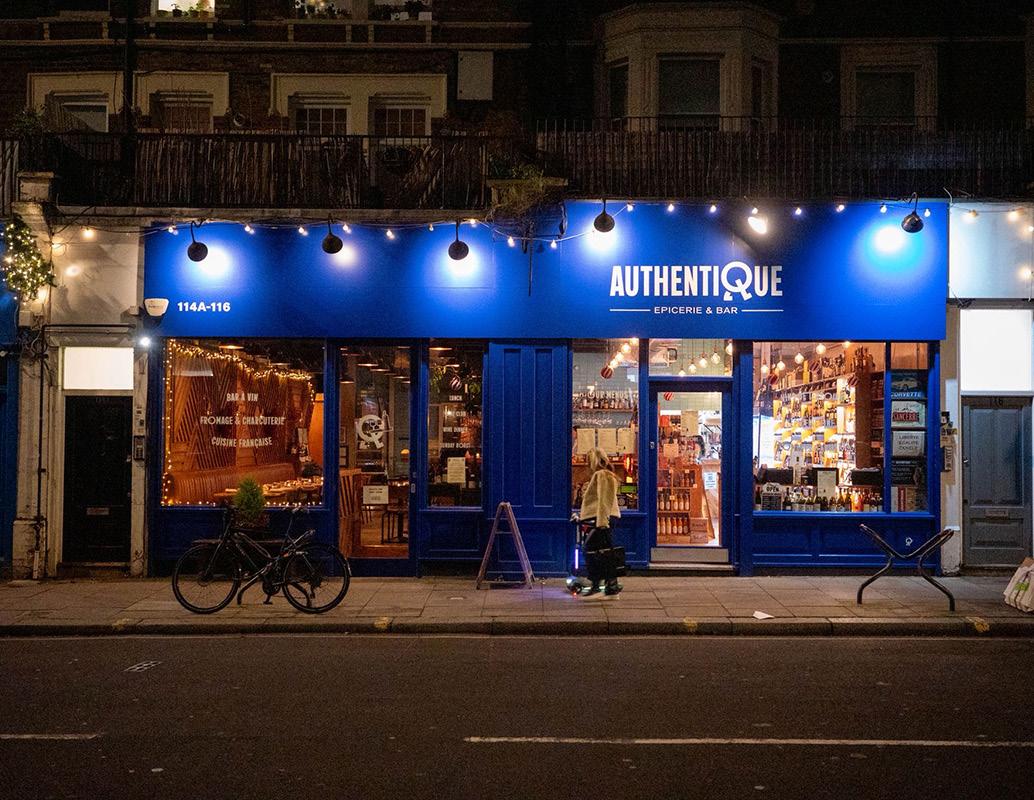
Authentique Épicerie & Bar in Tufnell Park is looking for additional premises in a central London location.
Part of the expansion plan includes the rebranding of its other sites to align with the Authentique name. Aside from the original Tufnell Park store, which launched in 2018, the business also has three bakeries. In Whetstone, the bakery and wine shop, formerly known as The French Market, will be renamed, as will the two bakeries in Tufnell Park and Finsbury Park.
“We’ve done the whole rebranding just so we have everything under the same umbrella,” explains co-owner Alexandre Bal. “The original name of Authentique makes the most sense and represents our business, because it’s all about quality, authenticity and sharing. Those are our three pillars.
“We never wanted to be a chain, as we wanted to preserve our artisanal identity, but we scaled up fairly quickly and ended up with four different venues with three
different brands.
“There are lots of restaurants, wine bars and places that contact us for the bread and the pastries, and that’s even more enhanced now that we have one brand.”
The new signwriting and branding of items across the stores, such as coffee cups, bags, aprons and T-shirts, is all underway, but Bal says there’s also plenty of admin ahead, from sorting out the website and till system to registering the new name with Deliveroo.
“If you want to preserve the quality of your customer service and your products, you need to have something that’s quite easy and harmonious to run. We have over 1,000 different wines in the bar and shop and lots of other products, and this rebranding will help simplify our processes.”
Bal is also scoping out new premises. “Ideally we’d like another venue a bit like the original one that will be a wine bar, shop and restaurant. We’re going to partner up with our chef so it will have a big restaurant focus. We’re looking at Covent Garden, Soho or Marylebone. Somewhere really central.”

Christmas has traditionally been a time for corporate largesse, and most wine merchants have done decent business supplying expensive bottles to companies wanting to butter-up their clients. But the Financial Services Authority imposes a £50 limit on gifts, and it seems that corporations are keener than ever to stick to the rules. One south London merchant reports that some of the gifts he sent out on behalf of business clients this Christmas were returned unopened. Another, in Surrey, says it’s increasingly common for recipients to phone and ask for the price of their present. In the past, he says, he’s disguised bottles of wine by inserting them into a map tube. Maybe some companies are accustomed to receiving very heavy maps as gifts.
The Wine Merchant’s annual California judging at the fabulous WBC showroom in Herne Hill ended this year in a very similar style to a Grand Prix. As the partially-depleted bottles were packed away, two of the editorial team decided (simultaneously) to test that the slo-flo wine pourers were secure in the necks of the sparkling wines by violently turning the bottles upside down. The laws of physics then dictated a synchronised explosion, showering anyone in the vicinity with traditionalmethod California fizz. Apologies to our WBC friends for adding unwanted minutes to the clear-up operation.
Ralph’s Wine Cellar in Twickenham closed at the end of January and, judging by his social media posts, owner Ralph Smith couldn’t be happier. He reports that as his 10-year lease is up, rents are high and the Budget was an additional irritant, now was a good time to go. Apparently, he will be on a jet-ski in Barbados if anyone is trying to get hold of him.


Ake & Humphris opened its latest wine bar and shop on Harrogate’s Oxford Street in mid-December.
The project was originally intended to launch last spring, as reported in the November 2024 edition of The Wine Merchant. Using the delay to their advantage, Paul Auty and the team used the time to further gauge the demand for a more hospitality-led site.
“In 2025 we applied for a variation to our licence, so we’d be able to have a little bar action in the two shops,” Auty says.
“Seeing the effect of that after six months, we realised we needed to rethink [the new site]. It needed to be more bar and less shop, so we’ve gone with 75% bar and 25% shop.
“We saw that getting our wines into people’s glasses was having a really positive knock-on effect on the retail sales we saw in our Harrogate site, and at Collingham to some extent. Not only the sales of wines by the glass but the halo effect of people buying bottles to take home, or people coming back the following week to buy a case of something they’d enjoyed drinking at the bar.
“We didn’t really know anything about bar work, so it’s been a steep learning curve. It’s like I said to some of the customers: ‘forgive me, I’ve been a wine retailer for 30 years and a bartender for about two months – I’m learning!’”
Trying to open in time to capitalise on that all-important Christmas trade can be chaotic and it was no exception for the Ake & Humphris crew. Auty compares the experience to a mash-up of various TV programmes.
“Back in June, when we were drawing up plans, it started off like Grand Designs. I was being asked where I wanted light sockets and plug sockets and things. After
that, we worked with a very creative guy who was coming up with the aesthetics of the whole project. I’m not going to compare him to Laurence Llewelyn-Bowen, but he is responsible for all the arty touches about the place.
“The final phase was in the three-week run-up to opening and was like DIY SOS, with four or five vans outside the front of the shop and sparkies, plasterers, painters, everybody just pushing to finish.”
The addition of the Oxford Street premises has allowed for some further operational changes across the business. Planning permission has been granted for the redevelopment of the storerooms at the rear of the Leeds Road shop. A new bar and tasting room will be created in their place and the basement at the new shop will be utilised for stock.
“The Leeds Road shop will be returning to retail; maybe we’ll have a couple of seats in the window,” explains Auty, “and next door, the new bar, with a separate entrance for customers, will have enough space to comfortably fit 30-40 people. Our wholesale will then operate from the downstairs of our new bar at Oxford Street.
“We want to make sure that people behind the bar are knowledgeable enough to confidently make recommendations to customers, as you would expect in a retail environment,” he adds. “Our focus this year is on product knowledge development, so I’m looking forward to taking hunting parties to supplier tastings this year.”
By WSTA chief executive Miles Beale


Duty rises fuel the economic doom loop February 1 marked another increase in alcohol duty. Another tax raid on alcohol is, of course, disappointing, but not totally unsurprising in the current economic climate. However it will not stop us from continuing to remind Government that raising taxes is a shortsighted decision which only perpetuates the economy’s “doom loop”. We have long argued that increases in duty lead to higher prices for consumers and reduction in sales, which in turn drains Treasury funds while fuelling inflation. For the financial year to date (April-December), overall alcohol duty receipts are down 1.4% (spirits -2.4%, beer -1.4%, wine -2%).
With RPI set at 3.66%, duty went up by 11p on a bottle of Prosecco, 13p on a bottle of red wine and 38p on a bottle of gin from February 1. Despite the OBR at last acknowledging higher prices lead to a decline in receipts, the Government continues to fail to recognise that its own policy is benefitting no one.
For the nation’s wine and spirit merchants, the complexities of price changes, especially for wine, which is now taxed by strength, mean more red tape headaches ahead. The WSTA continues the fight to get Government to recognise the immense pressure retail and hospitality are under and argue that the sector needs more support – and quickly.
As a reminder, on February 1 rates for wine between 8.5% and 22% abv went from £29.54 to £30.62 LPA (litres of pure alcohol). And for spirit drinks and others above 22% abv the rate went from £32.79 to £33.99 LPA. It is important to calculate total volume of pure alcohol at the new rate and only then round down to nearest pence to calculate duty payable. DO NOT simply multiply a per bottle rate as this may lead to underpayment of duty.

Nebbiolo Day, a comprehensive full-day exploration of one of the world’s most esteemed red grape varieties, returns to London for its fourth edition.
Ninety-one producers from Barolo, Barbaresco, Alto Piemonte and Valtellina will showcase their Nebbiolo wines.
Alessandro Masnaghetti, the internationally acclaimed cartographer of Italy’s premier vineyards, including Barolo and Barbaresco, will lead two masterclasses on these regions.
Walter Speller, Italy editor for JancisRobinson.com, will lead a masterclass on Prünent, the local Nebbiolo variety from little-known Valli Ossolane and a seminar on Roero, and a new generation excelling in making original, terroir-driven wines.


Trade only | Scan code to register Contact walter@walterspeller.com MARCH 3, 10.00-18.00, THE LINDLEY HALL, 80 VINCENT SQUARE, LONDON SW1P 2PB


California specialist saw restaurant buyers trading down to cheaper wines, says boss James Doidge MW. Interview: Graham Holter
The Wine Treasury saw its annual turnover plummet by 40% before directors pulled the plug on the business in December.
The importer, which represented producers in many European and new world countries but was best known as a California specialist, has been a favourite supplier of many indies since it started in 2002. But the on-trade was its main focus, and as beleaguered customers traded down to cheaper wines, managing director James Doidge MW had no option but to pursue voluntary liquidation.
The Wine Treasury had debts of just over £1m when it folded. Some of its creditors are the wineries it worked with, including California’s Kistler Vineyards (£66,970) and Silver Oak Cellars (£51,937). The biggest creditor is Ferovinum, which provides finance and logistics to the wine trade and is owed £328,171.
“We were very focused on and dependent on the on-trade, arguably to an unhealthy level,” Doidge admits.
“Our sales effectively dropped by about 40% between 2024 and 2025 and we couldn’t afford that. Arguably our turnover wasn’t high enough anyway, but it was enough to get by on. But to see that drop by 40% just makes all of the numbers unworkable.”
The Wine Treasury’s list featured mainly premium-priced wines that were impacted proportionately less than lower-priced wines by duty increases.
“But duty is one of those things that compounds the increased costs of both running a restaurant and then eating out in a restaurant,” Doidge says.

Eating out “is such an expensive thing now”
“Eating out is such an expensive thing to do now. Once you’ve added on the multipliers that a restaurant has to apply to operate, while still not making much in the way of money, then a £20 bottle of wine becomes a £100 bottle of wine.”
He adds: “Really, not many of our customers went out of business. But we did lose listings.
“In the last couple of years, there’s been a general dumbing down of wine lists. I think they’ve become less interesting. Restaurants are forced to take advantage of whatever offers they can get from wine suppliers.
“It’s the ones with bigger pockets that can offer incentives, often financial incentives in whatever form – whether it’s offering a cash advantage or very deep discounts.
“That means that smaller companies really suffer, because if a wine buyer is having to choose between a couple of wines, you can’t blame them for taking what’s potentially the less interesting but more lucrative option.”
Was Doidge surprised at how quickly things unravelled, and was there any indication in early 2025 that things might deteriorate?
“I didn’t anticipate it, to be honest,” he says. “I had no thoughts that The Wine Treasury would be gone by this time this year.
“I didn’t feel that this particular cycle was different from other ones. I think it’s just been another straw that broke the camel’s back – just another difficulty to add to everything else that we’ve had to endure since Covid. In the end, it was just too much.”
The agencies that The Wine Treasury had are now being eyed by other UK suppliers. Conversations with producers have been “really tough and saddening”, Doidge says.
“I didn’t fully appreciate that the ending was so close until the last quarter of last year. It all came to a head very, very quickly. So the vast majority of our suppliers were surprised and, of course, disappointed.
“Some of those relationships do go back a very long way. We’ve been working with Kistler for about 25 years. Our suppliers have been really supportive and they know that we’ve done our very best for them as long as we’ve been going.”
Does Doidge think that other suppliers, of a similar size, could be vulnerable?
“Well, I can’t speak for other people, and I wouldn’t want to, but clearly you need to have fairly deep resources to be able to get through this kind of situation,” he says. “And I think those companies that are going to survive are going to be ones that have deeper pockets than The Wine Treasury finally had.”
Three members of staff lost their jobs, along with Doidge and fellow director Rory Benham.
“I’m taking a couple of months out to explore a few things that are of interest to me and consider my options and what I’m going to do,” says Doidge. “Perhaps some role in customer education; regional tastings, that kind of thing. Maybe some brand ambassadorial work; maybe a bit of wine writing, which is something I’ve always wanted to do.”
Jean-Noël Girard, commercial export director of Champagne Devaux, introduces the house rosé wines. Published in association with Liberty Wines
The Côte des Bar is uniquely suited to rosé Champagne due to its Pinot Noir-dominant plantings, Burgundy like Kimmeridgian soils, and warmer southern climate.
Together these promote fuller phenolic ripeness, deeper colour, ripe red fruit aromatics and balanced structure. Pinot Noir provides the essential backbone for rosé blends, while the terroir contributes fruit purity and savoury depth.
A notable expression of the region’s diversity is Les Riceys, the only commune in Champagne with three distinct AOCs: Champagne, Côteaux Champenois and Rosé des Riceys – underscoring the southern terroir’s capacity to produce both outstanding sparkling and still wines. Champagne Devaux is one of the few producers to craft wines from all three AOCs.
Cœur des Bar Rosé
A unique rosé from the Terroirs de Cœur collection, crafted from the two rosé techniques (saignée and blend).
The wine highlights the Côte des Bar and its emblematic grapes. The blend is 80% Pinot Noir (including 8%-10% red wine and 5%-7% saignée) plus 20% Chardonnay.
It undergoes a minimum three years’ bottle ageing, more than double the regulatory requirement of 15 months. 20% reserve wines are blended in for added complexity and consistency.
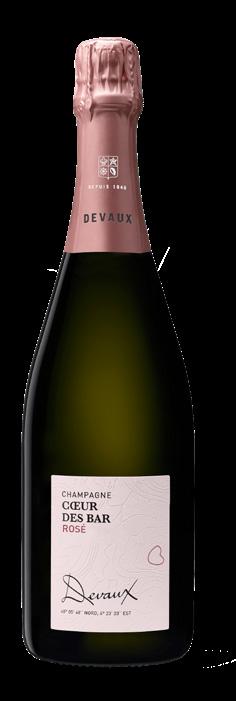
It’s an elegant and fruity rosé, with a rich raspberry nose and subtle aniseed, and violets and toasted notes on the palate. Ideal as an aperitif or with food: veal stew, seafood dishes, sweetbreads, smoked haddock or warm cherry tart.
Rosé des Riceys is one of France’s most distinctive and rare still rosé wines, produced under strict AOC regulations from 100% Pinot Noir grown on carefully selected south- and south eastfacing parcels within the village of Les Riceys.
Production is extremely limited. Although around 350 hectares of vineyards are eligible for the appellation, only a small proportion is vinified as Rosé des Riceys, resulting in average annual production of around 50,000 bottles. Yields are strictly regulated, and the wine is only produced in suitable vintages.
In style, Rosé des Riceys sits between a rosé and a light red wine. It displays a pale ruby to light cherry colour and offers expressive aromas of red berries (strawberry, raspberry, cherry), often complemented by spice, dried herbs and liquorice. On the palate, it combines freshness and structure, with gentle tannins and notable ageing potential – a rare characteristic for a rosé.
Rosé des Riceys is prized for its gastronomic versatility and its unique place in French wine heritage. Its rarity, terroir-driven character and historical significance make it a true connoisseur’s rosé.
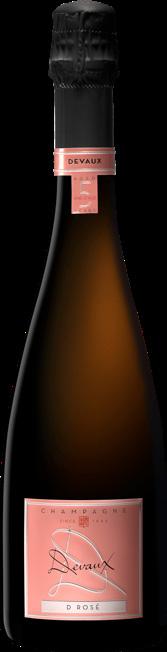
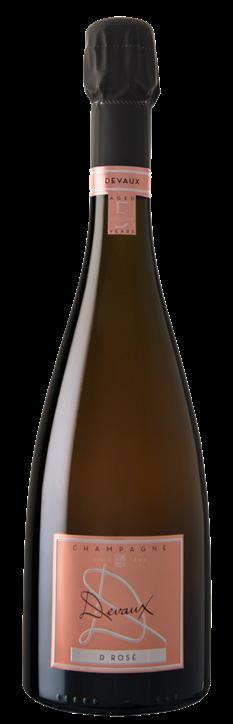
From Collection D, a premium rosé Champagne blending 50% Pinot Noir (10% vinified as red) and 50% Chardonnay.
It’s made exclusively from first-press juices, focusing on the cœur de cuvée for maximum delicacy, and aged for a minimum of five years in bottle.
Salmon-coloured with just a hint of red wine, it reveals a fresh nose of red berries and anise, evolving toward nutty notes. The mousse is soft and elegant, reflecting its careful ageing, while the palate offers a delicate finish with key flavours of red berries, apricot, orange and liquorice.
This rosé is perfect as a refined aperitif or paired with delicate dishes such as sashimi, carpaccio, red fruit desserts or maple wild rice pudding with star anise shortbread.
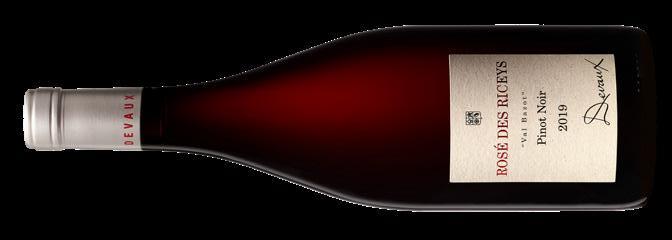
Rosé des Riceys Val Bazot 2019
A singularly delightful rosé made from grapes grown on the Val Bazot parcel, displaying a brilliant light red colour. Its freshness and energy evoke a vibrant red fruit salad. On the palate, it is fruity, creamy and structured, finishing with rich liquorice notes. It is the perfect match for traditional bistro dishes such as charcuterie, andouillette or veal blanquette.
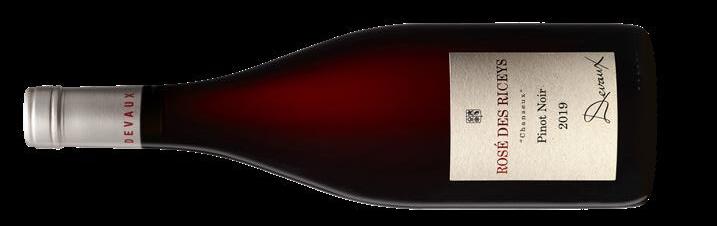
Rosé des Riceys Chanseux 2019
The Rosé des Riceys par excellence, bursting with red fruit aromas such as wild strawberries and blackberries, layered with liquorice notes. The wine is ideal with tapas, lamb or lightly spiced cuisine. As with Val Bazot, only 1,667 bottles were produced this vintage.

TRIED & TESTED
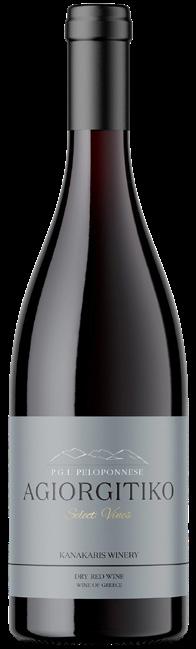
This family-owned winery high up in the Peloponnese is a relatively recent convert to Agiorgitiko, and it’s the only grape that’s treated to a little time in oak to tame its tannins. It’s a move that pays off: although there’s a delicious tartness to the blackberry and raspberry fruit, there’s also a sweet and mellow Play-Doh note.
RRP: £18.99 ABV: 13%
Liberty Wines (020 7720 5350) libertywines.co.uk
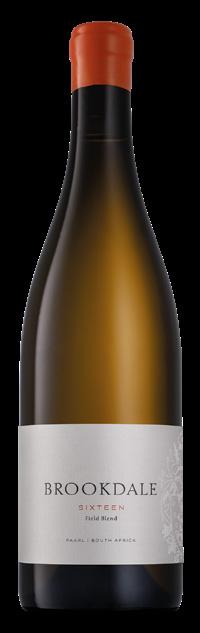
There’s always something magical about the harmony of a field blend, and this Paarl example is no exception. It’s deeply concentrated without losing an ounce of suspense. We find quince dipped in acacia honey, lemon squeezed over chalk, pineapple smashed against concrete and pears on a bed of white flowers.
RRP: £30 ABV: 13.5%
Hallgarten & Novum Wines (01582 722538) hnwines.co.uk
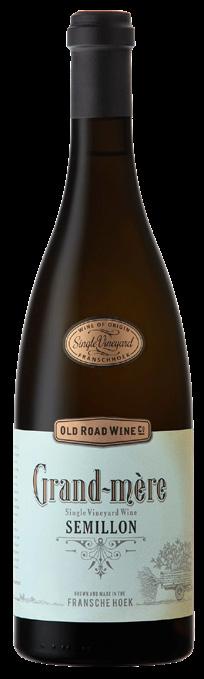
These Semillon vines, planted in Franschhoek in 1936, are still dry farmed and arguably in the form of their lives. The wine is fresh and vital, tight with sprigs of wild herbs and tree sap. There’s a subtle phenolic grip, and every molecule of it is bursting with mineral tension.
RRP: £39.95 ABV: 13%
DGB Europe (01235 841583) dgb.co.za
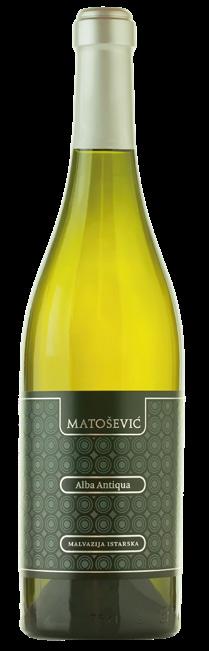
Ivica Matošević has done more than most to raise winemaking standards in Croatia, and loves to bang the drum for the Malvazija Istarska variety. This oldvine example, made only in the best years, involves skin contact and ageing in oak and acacia. Pure and slightly honeyed, with hazelnut and lemon zest.
RRP: £34 ABV: 13.5% Liberty Wines (020 7720 5350) libertywines.co.uk
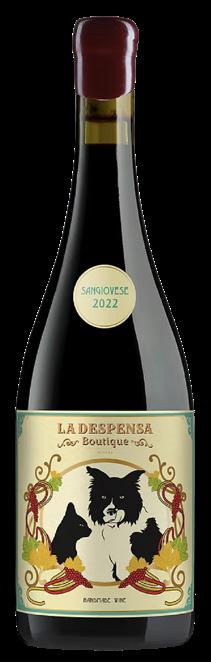
Matt Ridgway, from Dorset, runs this Colchagua Valley estate with his Chilean wife Ana. Their zingy Sangiovese is spontaneously fermented in open-top bins and sees no oak. It doesn’t need it: the wine is already fresh and aerated, with a gentle tannic rusticity framing the sour cherry and dark chocolate notes.
RRP: £21.49 ABV: 13.5%
Condor Wines (07715 671914) condorwines.co.uk
Daniel Lambert is rightly excited by his new line-up of Nova Scotia wines and we’ve dived in rather at random with this unfamiliar blend of Lucie Kuhlmann, Castel and Marquette, all hybrid varieties that thrive in Canada. An intriguing wine, with juicy bramble fruit twisting between the earthy, foresty elements.
RRP: £27 ABV: 12%
Daniel Lambert Wines (01656 661010) daniellambert.wine
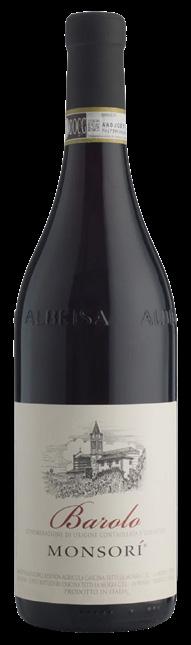
Astrum describes this as “perfect for those curious about Nebbiolo without breaking the bank” and it’s hard to disagree with that assessment. It’s got that bright, benign austerity that Barolo fans love – you have to meet the wine halfway, and succumb to its diffident, savoury charms before the red fruit core is revealed in its own sweet time.
RRP: £37.25 ABV: 14%
Astrum Wine Cellars (020 3328 4620) astrumwinecellars.com
This arresting cool-climate Chardonnay from Tasmania is a real jolt to the system with its punchy grapefruit attack. But once it’s got your attention, a mellowness kicks in. Lees stirring contributes to a satisfyingly rich texture, and on the finish there’s a distinct smack of salinity that demands a second glass.
RRP: £23.28 ABV: 13%
Milestone Wines (01200 613122) milestonewines.co.uk
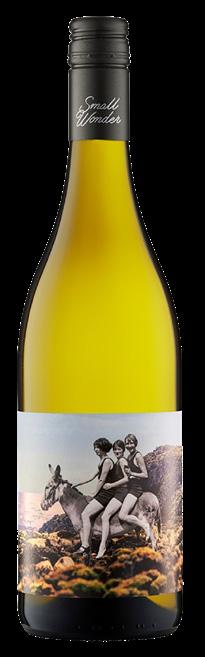

In a nutshell: While there’s nothing new about the various retail spins on Try January, the simplicity of this particular idea is appealing, though there’s more to it than meets the eye. Individual staff recommendations posted across social media have more impact when included in newsletters and have a dedicated web page.
Tell us more.
“We posted one wine and one spirit a week during January. This is the second year that we’ve done this sort of campaign. Last year we were specifically trying to pick things that people wouldn’t have a clue about and would perhaps be a bit scared to try for the first time around, and it was just me from the wine team and Steven, our spirits specialist, who took it on.
“We thought we’d take a bit of a different approach this year and get more members of the team involved and, rather than focusing on the niche factor, we went with bottles that we thought maybe hadn’t been shown a lot of love recently. Things we’ve genuinely enjoyed but maybe haven’t been shouting about as much as we could.”
Has this proved more successful?
“Yes, because I think even when you do try and sell some of these really niche items, it’s still a bit of a risk if it’s something a

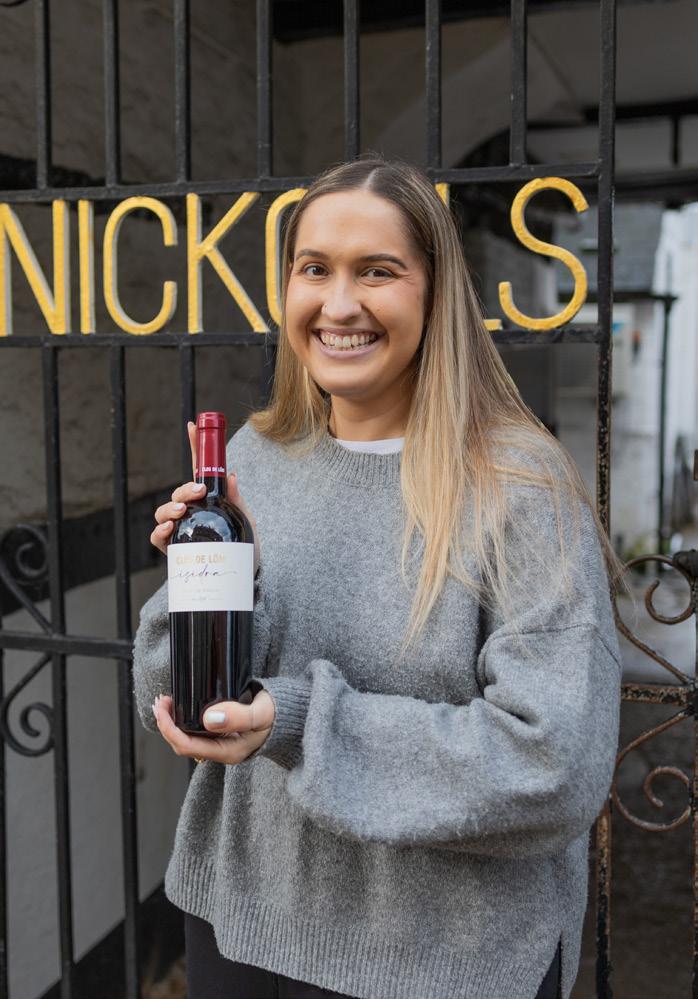
Isobel with a personal recommendation
little bit too quirky. As much as we want to be encouraging people to try things in January, rather than cutting alcohol out altogether, I think people prefer to play it safe.
“We’ve had sales of everything that has been promoted with the campaign, some higher than others, but we’ve had activation on all of them. We’ve had people come in the shop and they just show us it on their phone and say, ‘I've seen this’. That’s great for us because ultimately we want to get people through the door.”
Was price a consideration when it came to the recommendations?
“People don’t really want to spend much money in January, so the retail-friendly price point was a goal. We agreed on it all being sub-£30.
“It’s also worked having other members of the team involved. Showcasing different people’s tastes and preferences has really engaged our customers and started more conversations. It makes it more friendly and more people trust our opinions. They are more likely to listen to us and take a chance on something that they’ve not tried before.”
What did you do beyond the social media posts?
“On the day that the social media went out, we also sent out to our mailing list. We made a page on our website specifically for all the Try January picks. So on the email there’s a link to that. Every time we highlighted the new bottles on that given day, we referred back to the previous picks and made sure there was an easy way to access them in one place.
“You come out the other side of Christmas and you think, OK, we’ve been full steam ahead on Christmas marketing, where do we start in January? And I think this is just a fun and friendly easy-going campaign that works well for us.”
Isobel wins a WBC gift box containing some premium drinks and a box of chocolates.
Tell us about a bright idea that’s worked for you and you too could win a prize.
Email claire@winemerchantmag.com

Curated, artisan markets took at least £100,000 out of our High Street coffers
About three years ago, after being an active member for ages, I resigned from the chamber of commerce and stepped back from all forms of town politics. It means I don’t have to climb ladders in the snow putting up Christmas trees or turn out at 5am to marshal road closures. I resigned because of the debacle about markets in the town.
We had a meeting where the idea of a regular monthly artisan market was put forward by the chair and voted down in favour of establishing an antiques trade starting with flea markets. The plan was that, once established, the larger empty stores would become antique centres rented by the square foot. That was voted
for unanimously – except for one dissenter.
About a month later I heard about a meeting in the council offices where a number of independent retailers were to be asked their opinions. I invited myself. I brought up the idea of antique fairs and flea markets. It was unanimously accepted as a good way forward. At the end of the meeting the town clerk had an announcement to make. We were thanked for our time and told that the council had agreed to a programme of monthly artisan markets. Why? Because the chamber wanted it and they represented the local businesses.
At the time the chamber’s chair was also the town’s mayor and thus chair of the
council. That was when, after a few heated exchanges, I stepped back.
I love a good market but not when stalls compete directly with existing shops and with lower overheads.
The problem with intermittent markets is that they don’t just compete for money. They compete for parking spaces. They compete for carrying capacity. They compete for shopping time. Any additional revenue isn’t in the local economy; it goes home with the market traders.
The best thing the council or chamber can do to help High Street retailers is to do nothing, back off and stop interfering. We know our business and we are not failing. If we were, we wouldn’t still be here. We don’t need help, thank you. It doesn’t stop them from not only offering misguided help but forcing it upon us.
For years we had an unwritten rule that the High Street was never closed to traffic on Saturdays. That way anyone can put on an event without destroying existing trade. There have been occasions when someone has tried a Saturday event. It was always an absolute disaster for shops. Every decade it is generally tried again because new people don’t believe the experienced traders.
These new “curated, artisan markets” were experimental so they would try a few Saturdays. The first one was hailed a huge success. We retailers watched a lot of people march from the car parks to the other end of town. We then watched them rushing back a few hours later before their car parking ran out; their purses empty, their fingers white with the weight of carrier bags. If I multiply the trade we lost, just in the morning, by the number of other independents then the very local economy was down at least £100,000. The market organiser kept the rent revenue and her costs were covered by the council – a huge success.
If we have a hundred stalls that means a hundred vans have to be parked in town. We have 84 paid-for parking spaces. Every other potential space in town has a van in it. No one wanting to do their normal shopping can park anywhere nearby. The High Street is shut to traffic. We are not
able to sell anything more than can be easily carried.
We were promised a non-competitive, complementary market of local makers and producers. The new owner of the little Shaftesbury Deli was quite excited until a four-metre stall was erected in front of her shop selling goods from the “Somerset Deli” 20 miles away. Curated, my arse!
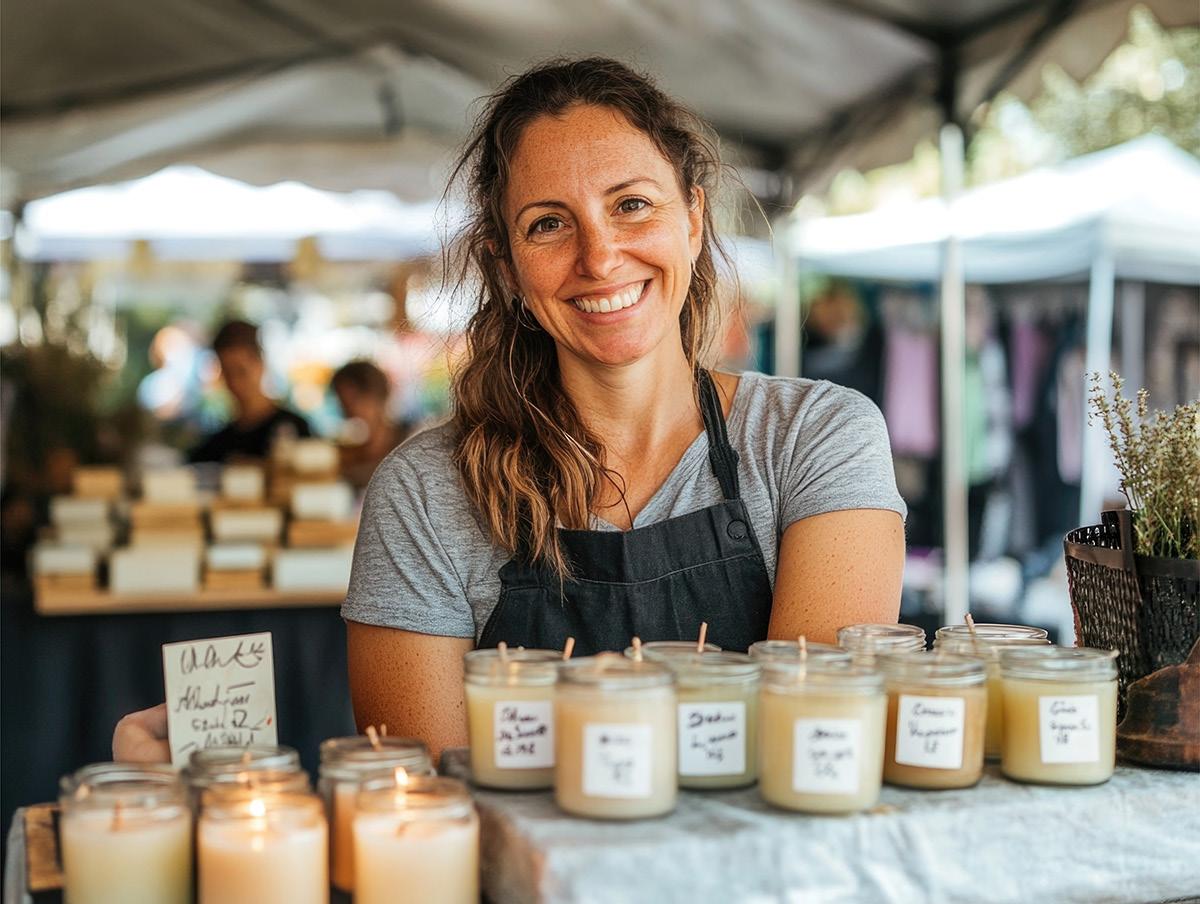
There was a stall selling hand-poured soya candles just down the street from the Botanical Candle Company who are well established local producers and retailers of hand-poured, soya candles. And of course there were a few of my local beer, cider and spirit producers – but at least they were not just retailing someone else’s stock.
The second Saturday market was scheduled for the day before the annual food festival. All the temporary toilets set up for the big Sunday event were part-filled on the Saturday. Another was scheduled for much later in the year and called the “Christmas market” a week before the town’s own, long planned Christmas market.
When I try to explain that markets may attract more people but they are attracted to the market, not the shops, I am often told that maybe I should have a market stall. What? Why? I have a shop! It has the advantage of a roof and walls and electricity and a till and stock and a licence to trade. It is also waterproof and doesn’t blow away.
Where are we now? Halfway through last year the market organiser suddenly flounced off. We still have the small, much loved, historic, weekly charter market selling local food and crafts and fish from Brixham. The big, seasonal set pieces which were almost lost are being resurrected. The other thing that has happened is that three large shop units in town, including an ex-bank, are now thriving antique centres pulling in visitors from across the area without competing with existing retailers. I can’t help thinking that we could have got here quicker
David Perry is the owner of Shaftesbury Wines in Dorset


We’ve sold wine, wool and Wensleydale. Which do you think is most problematic?
In the early years of me running this shop, back about 2007, all we sold was wine. That’s what I’d fallen in love with, that’s what I wanted to learn about, that’s what I wanted to talk to customers about: wine.
And wool. I hadn’t fallen in love with wool, but my wife, who’s a textile designer, had accumulated so much wool – and tweed, tartan, ribbon, thread, buttons and felt – that her workshop was as full as an over-stuffed cushion and our cash was all tied up in fleecy stock.
I’d just moved into bigger premises adjacent to our previous shop, and I didn’t have enough wine to fill the space. Nor did I have enough money to buy enough wine to fill the space. The solution was obvious: I would welcome my wife’s wool into the wine shop and sell it enthusiastically. As the wool stock declined, our bank balance would increase – meaning I could afford to buy more wine to fill the shelves I had just emptied of wool. We would, while this strategy worked out, abandon our historic name, Kirkness & Gorie and call ourselves – following the does-what-it-says-on-thetin philosophy – Wool & Wine.
It worked! Locals kept coming in for wine, and tourists flooded in for wool. Have you met the wool fanatics? They take it very seriously: rare breed this, natural dye that, high crimp this, low micron that … People moan about wine snobs, but have you ever met a wool snob? “Merino? Do I look like your grandmother? It must be qiviut or nothing.” (To save you looking it up I’ll tell you: it’s a particularly soft and
warm fibre, gathered from the undercoat of an arctic muskox.)
Eventually I sold all the wool – it took about three years – and we changed our name back to Kirkness & Gorie. But I didn’t manage to fill all the emptying shelves with wine. The husbands of the women who came in for wool (and it was 99.9% that way round) kept asking why we didn’t have whisky, seeing as we sold wine. So, I started selling whisky. And gin. And rum. And then other people started asking whether we couldn’t sell some nice deli food to complement the wine. So I took the leap, specialising in Italian food to start with, as our shop had advertised itself in the 19th century as an “Italian warehouseman”, and then branching out into deli goods from other wine-producing countries.
And then … then it was cheese. There was no good cheese in town, just low-
‘Merino? Do I look like your grandmother? It must be qiviut or nothing’
grade supermarket gunk and local stuff we call farm cheese: young, fresh, white, unpressed, unmatured, requiring crumbing and deep-frying to make it exciting.
I took the bait and bought a secondhand fridge from one of those farm cheesemakers. Would I ever recoup the £200 investment? How much cheese would I have to throw away every week? (Because it didn’t mature with age like wine, it went mouldy with age.) Would anyone even buy any cheese, ever?
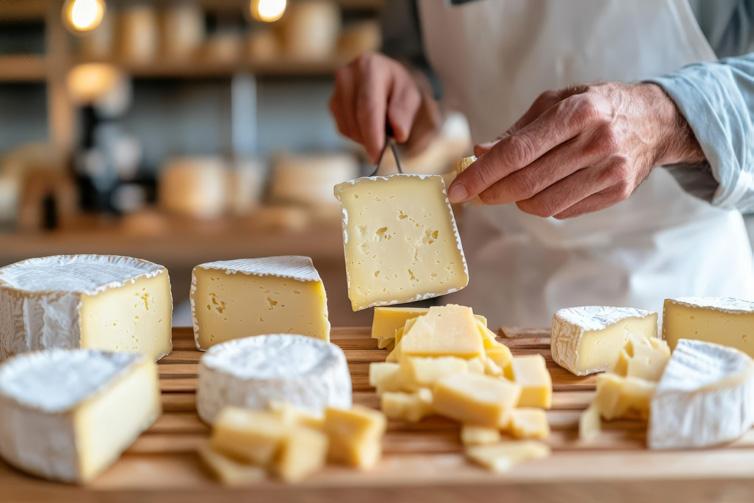
The day we announced on Facebook that we’d added cheese to the mix, something unprecedented happened: there was a queue at the door at opening time. And that queue has persisted for 15 years. Cheese is the biggest driver of footfall in our shop. I know what you’re thinking: you’re a wine shop! We are. We have lots of shelves of wine and only a single small fridge of cheese. But for every one wine lover, Orkney boasts five cheese lovers. We’re never out of that damn fridge …
And there’s the problem. You can talk to a customer for 10 minutes and sell a £20 bottle of wine. A £40 bottle if you’re lucky. Or a case of £15 bottles. But talk to a cheese lover for 10 minutes and they’ll buy a £3 wedge of Chaumes. And that’s after they’ve got you to unwrap the cheese and give them a taste, and the Minger too, for comparison. “And what else have you got that’s washed rind? Taleggio? Can I try? Mmm, I think I’ll stick to Chaumes …” After they go you have to rewrap three cheeses, and disinfect the cheese cutter and counter, because the Chaumes smells like wet labrador and leaves a sticky orange residue on everything it touches. Including your hands.
Did I mention the handwashing? Back and forth to the sink, in and out of the tub of antiseptic wipes, till your skin is cracked and burning.
Yes, customers go crazy for cheese. Yes, it brings footfall. But cheese will earn you pennies and cost you the will to live. Wool, on the other hand …
Duncan McLean is proprietor of Kirkness & Gorie, Kirkwall
MONDAY 2 ND MARCH
10.30am - 4.00pm
Hallé St Peter’s · 40 Blossom Street Ancoats · Manchester · M4 6BF
TUESDAY 3 RD MARCH
10.30am - 4.30pm Christ Church Spitalfields Commercial Street · London · E1 6LY
Pre-Registration is required. Please contact your Boutinot Account Manager with any questions or email us at: wine@boutinot.com boutinot.com

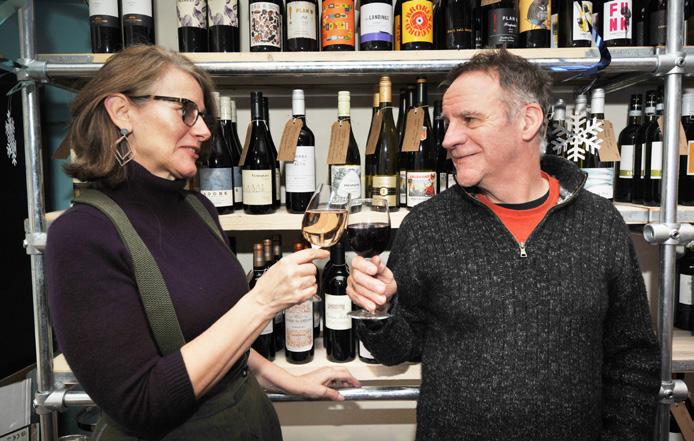
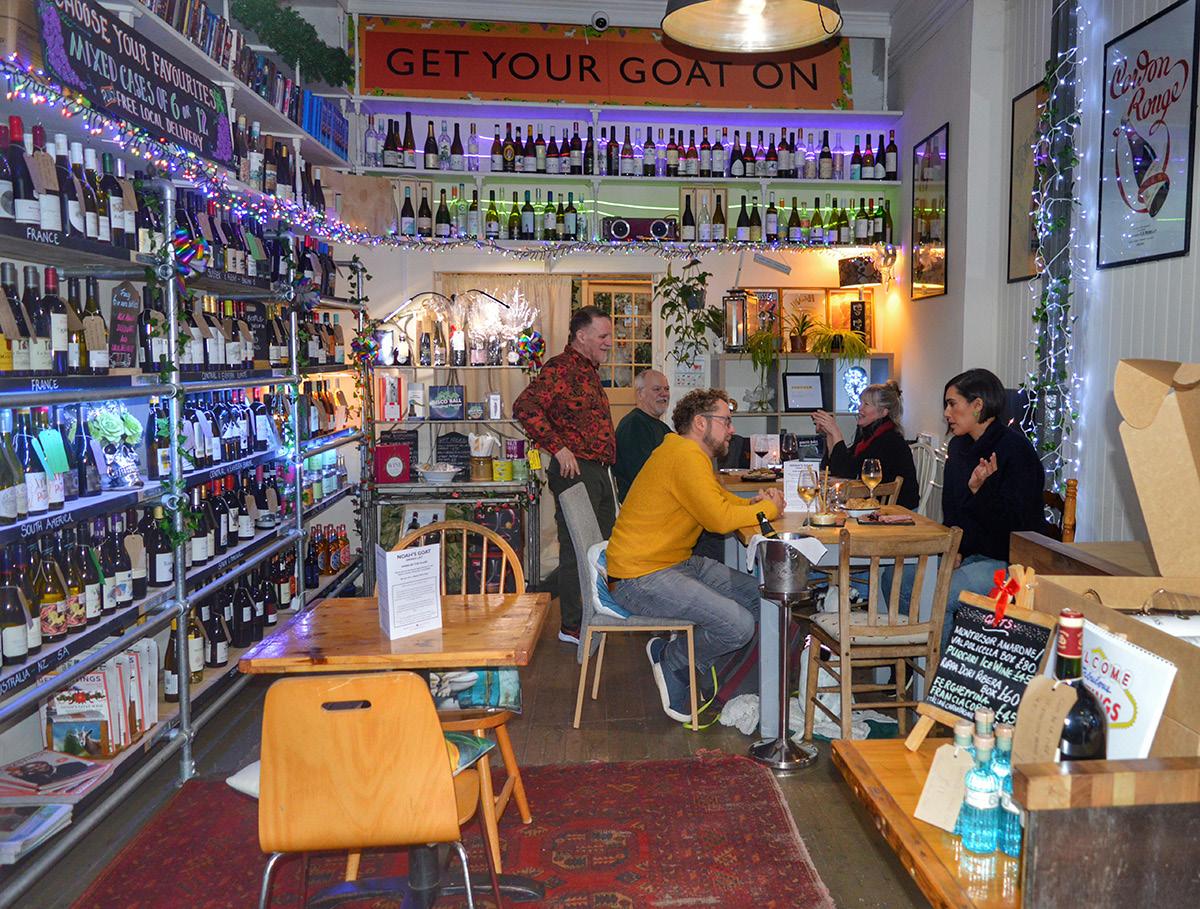
Nick Holt of Noah’s Goat reflects on his first 12 months of trade in the Hastings shop and bar he runs with wife Nicole – and offers advice to anyone thinking of doing something similar
Ayear ago Nicole and I opened our wine shop and wine bar in George Street in the Old Town in Hastings on the south coast. We had some hospitality experience, having run a pub in the town for seven years, but this was our first foray into the specialist wine trade.
It’s been a steep learning curve – which is a polite way of saying we’ve spent 12 months fucking up and wishing we’d done something differently.
That’s not to say it hasn’t been fun. (Double negative there – sorry, mum.)
After the grind of running a pub, oh the joy of having a customer walk in, chat about wine, and spend £130 without you having to run around like a loon for two hours and pander to their imaginary allergies.
Customers here are respectful and courteous and – for the most part –appreciative of the fact that we’re an independent trading in a skewed and corrupt corporate mess of a world. If you’ve come from hospitality, it’s a treat. It doesn’t even vaguely resemble work 75% of the time.
So, what would I say to anyone else daft enough to want to open a business in this quagmire of shit that passes for a global economy? Well, here are 10 tips for making your life easier if you do decide to enter the madhouse.
1. Make sure you get a rent reduction for the first year or two. Nobody makes money in the first year and not many in the second.
2. Leave yourself more than two weeks to open your shop! We had three weeks
between handing in the keys to the pub we ran and opening the store. We were so frazzled for the first month we didn’t have time to take in the fun.
3. There are a lot of wine suppliers. Avoid using the same ones as your immediate competitors, or you end up losing margin
competing on price. Just stock different wines. There are thousands out there –just ask your suppliers if they work with anyone else close by.
4. On that theme, ignore suppliers when they say “with this promotional price you can go out at £14 and make 31.3%”. Stick to the price you charge already and take the extra margin. They don’t lose out if you price low, but you do.
5. Decide what you want to be and stick to it. This includes knowing your town or city and adapting your range accordingly. You won’t sell the same wines in Wigan or Hastings that you see in a shop in Didsbury or Putney. Same goes for the types of wine you want to sell – remember, 99% of
the good folk of your town haven’t done WSET courses or a diploma or a degree in oenology. They couldn’t give one about terroir or destemming or malolactic fermentation. They just want wine that tastes nice.
6. If you’re into natural wine and biodynamics, go for it, but don’t be embarrassed not to be. It isn’t the moral imperative that some would have us believe. New-generation methodology is always backed by a bit of evangelism. You don’t need to join the cult just because they give you funny looks.
7. Have a get-out for your leftover wines by the glass. (Assuming you don’t have a second home to remortgage so you can buy a Coravin and 273 argon canisters.) Make sure you get a profit from three 175ml glasses, so the fourth (and a bit) are a bonus.
8. You will get customers, usually middleaged men, who are only in your shop to air their knowledge and make you feel small. Try and keep that look of contempt off your face, and save the Biblical profanities till after they have left, having loudly proclaimed their dislike of Chardonnay before buying a bottle of Chablis. Be happy that you sold the Chablis. I have not always been as adept at this as I could have. (See point 10 below.)
9. Don’t serve wine in a can. Watch the YouTube video of Marcel Lacont reading his poem Wine in a Can. It contains sound advice. (Be advised, it is not familyfriendly.)
10. Don’t be a dick. This is Nicole’s very sound advice when my customer service levels slip below the standards she expects.
Ihaven’t mentioned staff – that’s a whole different article, and one to be written by someone better qualified than I, and definitely less abrasive. They can be your greatest asset, but also your downfall. We are grateful that we don’t need many, we just have our lovely friends, David and Drew, to help out occasionally.
So thanks to them, and thanks to all our lovely customers, especially the regulars, who have made this first year such fun.


�The style I really struggle with is orange wine. I’ve yet to find one that I want to drink and if I can’t get enthusiastic about something, how can I sell it to my customers? I keep trying orange wines at supplier tastings but I really can’t see the attraction of their (let’s be polite) ‘unique flavour profile’. Well done for pushing the boundaries and trying something different, but it’s time to move on.”
Jonathan Williamson Wines of Interest, Ipswich
�LBV port. I know this would likely have me hounded by its devoted fans but it’s a punishment I’d be willing to take! The fresher and more elegant tawny ports have their place as great food pairings but I dread to think how many lovingly-crafted artisan cheeses were ruined this festive season by being paired with the explosion of alcohol and fruit in an LBV port. No wine needs to have everything dialled up to 100 in the way that LBV does.”
Sarah Helliwell * Champagne winner * The Stores, Frome




�The style that unnerves me is biodynamic wine. For both natural and biodynamic wines, there seems to be a blind belief in the nonintervention of winemakers, which would seem to imply that the winemaker is not important in producing great wine. Specifically for biodynamic wines, there is a lot of hocus pocus about manure and cow horns, as well as dates of the month when wines should be drunk. It gives licence to the idea that any biodynamic wine is the real deal and great conventionally made wine is not.”
Ashton McCobb Appellation Wines, Edinburgh
�For me, it would probably be Charmat method sparkling wines. I’m not a huge fan of the fruitier-profiled sparkling wines. I find them a bit too one dimensional.”
Jaime Fernandez, Vine Vero, Leigh on Sea, Essex
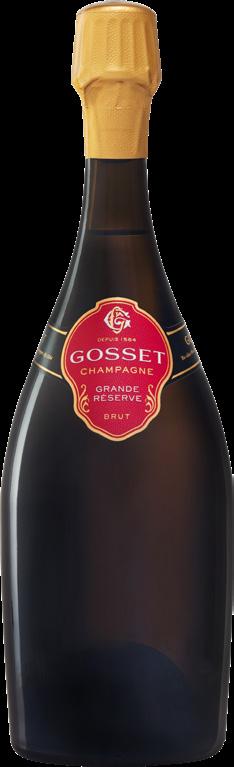
Champagne Gosset
The oldest wine house in Champagne: Äy 1584

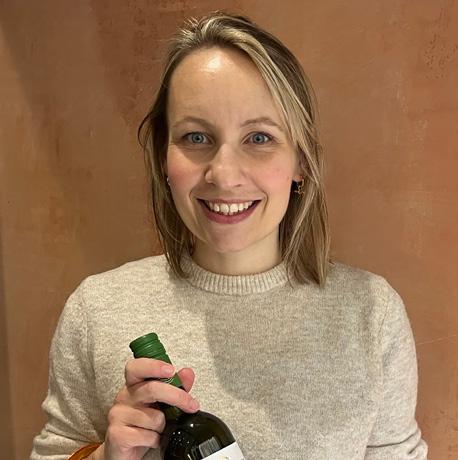
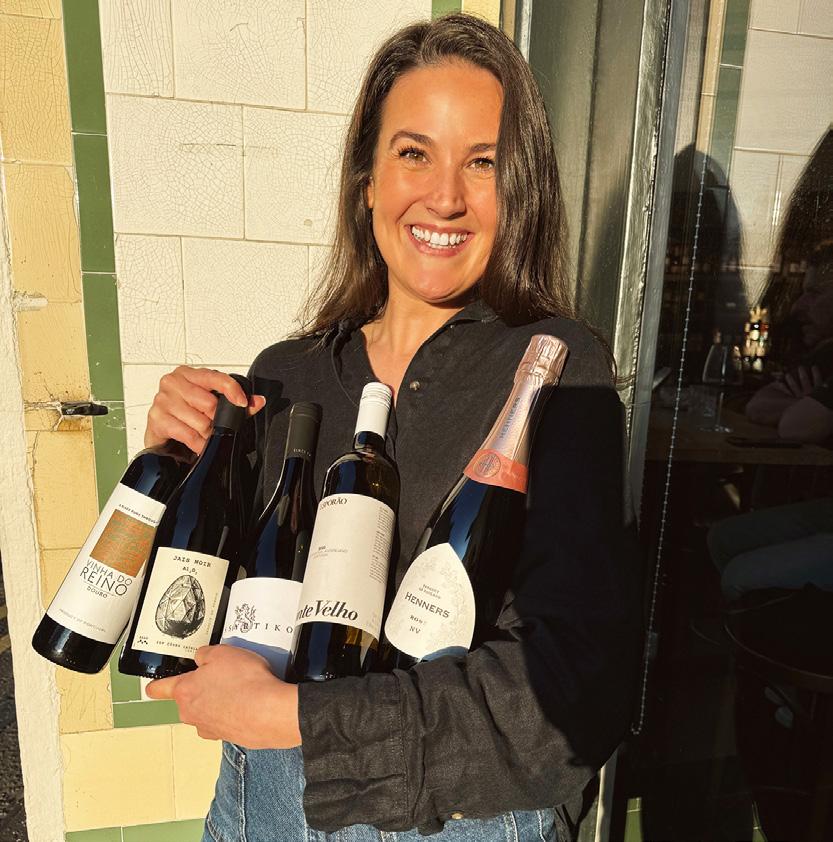
Erin is a full-time secondary school teacher with the energy and enthusiasm to have a parallel career in wine. In addition to her own tasting events, she can be found every Sunday at The Drinks Cabinet.
When moving to larger premises last summer, owners Fiona Allan and Ewan McAndrew knew they needed to expand the team. Fiona describes Erin as “an obvious candidate”.
“I first met Erin when I attended one of her Swinks wine tastings at a friend’s house,” Fiona says. “I was immediately impressed by her warmth and knowledge. She now does regular Sundays on the shop floor for us, and the customers love her.
“She has a fabulous welcoming and fun manner and does a great job of conveying her wine knowledge in a relatable and unpretentious way. She also organised and led some fantastic in-house tastings for The Drinks Cabinet in 2025 and we are hopeful 2026 will bring more of the same. We have absolute confidence Erin has a bright future in wine ahead of her and we are delighted to be part of her journey.”
The Drinks Cabinet, Aberdour, Fife
Covid made me re-evaluate whether it was a good time for a career change,” she says.
“Then my brother-in-law asked if I would do a wine tasting. I loved planning and hosting it, and the feedback was really positive, so I decided to start offering wine tastings as a business. I launched Swinks three years ago to offer mobile wine tastings. It works well alongside teaching because it’s mainly evenings or weekends, and it’s just grown organically as well. Now I work with a chef, and we do some ticketed events as well as pairing dinners.”
Last year Erin attained her WSET Level 3 and she says her next goal is to gain her Champagne Masters with The Wine Scholar Guild. “The biology definitely helps with the wine education,” she says. “It’s the geography that’s more complicated!”
rin’s interest in wine was piqued during her biology degree. “I did a couple of modules in brewing and distilling,” she says. “It was nothing major and wasn’t the focus of my degree at all, but it just gave me a flavour.
“Years ago, I attended a lecture on precision viticulture at Edinburgh Science Festival, and I just thought it was fascinating.”
On top of the day job as a biology teacher, Erin began working evenings and weekends running wine tastings. “I’d thought about a wine bar and that kind of thing, but
But Erin is working on that, starting last summer with a threeweek trip around some key wine regions in France and Italy. “My husband and I went to Champagne, Alsace and Burgundy. Then we drove into Italy, to Barolo, before heading to the south of France and along the coast. We’re looking to return to Champagne this year. I knew it would be lovely, but I hadn’t expected to love it as much as we did.”
rin also enjoys the retail side of her role at The Drinks Cabinet. “Customers will tell you what they’re cooking and ask for recommendations. It’s great to apply my knowledge in different ways and it doesn't always feel like work. They’re such lovely people here, and it's such a special building. Hopefully these are the steps toward doing more wine in the future and less teaching. Or more teaching about wine, and less biology.”
Erin wins a bottle of Champagne Devaux Cuvée D Rosé courtesy of Liberty Wines
If you’d like to nominate a Rising Star, email claire@winemerchantmag.com

A new column from Alliance Wine exploring practical, creative ways independents can sell smarter - covering everything from fine-wine offers to pricing tweaks and experiential events
I was sitting with a restaurant buyer last month as they flicked through their wine list, sighing at the usual suspects by the glass. We started talking about how the list itself is the best sales tool they have and about the tiny tweaks that quietly lift margins – like dropping the £ signs, not putting wines in price ascending order, or swapping a predictable house wine for something less known.
Before long, the list began to look less like a box-ticking exercise of necessity and more like an extension of the restaurant’s personality.
Moments like that remind me why our wholesaler workshop days work so well. Put a group of like-minded independents in a room and the stories start flowing - sharing what works, what’s surprised them, and what’s helped customers trade up with confidence. It’s proof that shared creativity, not undercutting the big distributors, is what really sparks change.
If you would like to hear more about how to get involved in Alliance’s next workshop, contact Alex Baudouin, head of independent off-trade: alex.baudouin@ alliancewine.com.
Ned Llewellyn Sales director - off-trade

Taste more than 570 wines that show the diversity the country has to offer
This unmissable biennial event will bring together 59 Portuguese wine producers from the country’s most iconic and diverse regions such as Douro, Vinhos Verdes and Alentejo or less explored areas like Algarve and Beira Interior.
In addition to the main tasting, two educational sessions will take place. Registrations are mandatory for both.
A Wines of Portugal Academy for All Trade – led by Sofia Salvador, wine educator at Wines of Portugal, from 10am to 1pm (limited to 30 participants).
Off the Beaten Track masterclass – hosted from 2.30pm to 3.30pm by the renowned Dirceu Vianna Junior MW, featuring an in-depth and inspiring tasting experience (also limited to 30 participants).
Explore a curated selection of wines at your own pace in the free pour area, featuring themed selections such as lower alcohol (<11.5%); single-varietal expressions from Portugual’s lesser known indigenous grapes; and Portugal’s sustainable winegrowing certification.

• The UK is one of Portugal’s top four export markets
• Portuguese wine imports increased by 2.6% in value in the first half of 2025
Scan the code or contact winesofportugaluk@thewineagency.pt

Kate McKeon
The Solent Cellar, Lymington
Favourite wine on my list I am a big fan of the Cataldi Madonna Montepulciano d ’Abruzzo made by a small family-run vineyard located high in the plains near L’Aquila. This wine sees no oak and is aged in stainless steel, producing dark fruits with a sweet spice and silky tannins.
Favourite wine and food match I really love Gambas al Ajillo which is a classic Spanish tapas dish, served with a crisp, aromatic Albariño. The crispness of the wine complements the savoury flavours of the shrimp, which is even better with some crusty bread to mop up the sauce.
Favourite wine trip
My first trip to Rioja is currently the most memorable. I loved enjoying the fabulous and diverse wines of the region, from young Crianzas to aged Gran Reservas. The highlight for me was eating lamb cooked on the vine cuttings with a glass of Rioja.
Favourite wine trade person Helen McGinn, our very own local wine buff. I love her infectious and enthusiastic attitude to wine which makes it more accessible for everyone.
Favourite wine shop
The Dorset Wine Company in Poundbury is a beautiful shop to stop and chat in and have a browse through the fantastic range. It’s always good to catch up with Jonathan and the team when we swap stock.
One in four adults in England do not drink alcohol, with increasing numbers of men and young people deciding to stay sober, according to a survey.
The figures, from a questionnaire of 10,000 people as part of the Health Survey for England, found that almost a quarter (24%) of adults in England had not drunk alcohol in 2024, an increase from just under a fifth (19%) in 2022.
Women appeared slightly more abstemious than men, as 26% did not drink alcohol that year compared with 22% of men. The proportion of non-drinkers increased in both genders.
The Guardian, January 27

The owner of a bar in York has barred Labour city councillors from his premises in protest against outdoor seating charges.
Steve Wood, of Plonkers Wine Bar in Cumberland Street, said the yearly £350 pavement licence fee had added to the pressure on independent businesses.
He said he hoped the ban would encourage councillors to issue licences for two years rather than one, in line with government guidance.
But licensing committee chair Rachel Melly said the authority could not afford to change the system, which already costs more to run than the money it brings in. BBC News, January 28

Millésime Bio in Montpellier ended with around 8% fewer visitors. This year, only about 8,700 people attended the fair.
The record was set in 2023 with 10,300 visitors. In 2025 there were 9,500.
The organiser attributes the decline to the lower number of exhibitors. Instead of 1,500 in the previous year, there were around 100 fewer. One reason for the decline may be, in addition to the industry’s difficulties, the competition from other large wine fairs at the beginning of the year – especially Wine Paris.
Trade fair president Jeanne Fabre emphasised that Millésime Bio does not pursue economic ambitions.
He said: “We are an association that organises the fair with volunteer staff –without a commercial structure behind it. Our main goal is the quality of the appointments for the present exhibitors.” Wein.plus, January 29
The Sustainable Wine Roundtable has welcomed five new members to its Bottle Weight Accord, as it publishes a progress review ahead of the 2026 target to reach an average bottle weight of 420g per 75cl bottle.
Distributors Ellis Wines and Guy Anderson Wines have signed up alongside Spain’s Bodega Beronia, Argentina’s Domaine Bousquet and the Quebec alcohol monopoly, Société des Alcools du Québec.
With these additions, the Bottle Weight Accord now covers more than 2.5bn bottles of wine produced annually.
The Drinks Business, January 28
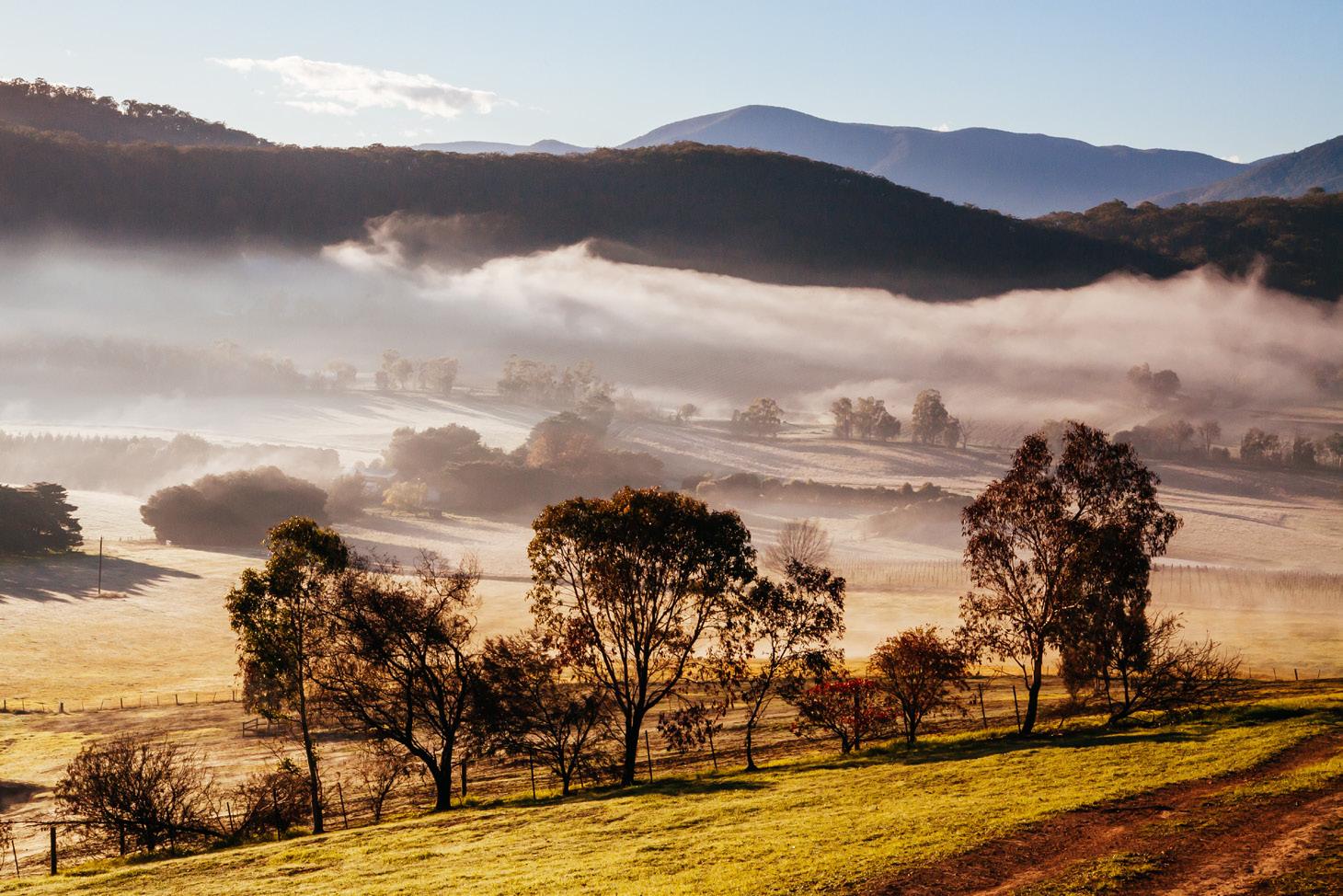
Global demand for Australian wine is continuing to dwindle, with Wine Australia’s latest export report showing an 8% decrease in 2025.
Exports slumped to $2.34bn last year as consumers in Australia’s once-lucrative market, China, reduced alcohol intake in line with wellness and cost-saving trends.
Volume also decreased last year by 6% to 613m litres, while the average value of exports decreased by 3% to $3.81 a litre.
A reduction in overall exports was also seen in the US and the UK.
ABC News, January 28
Researchers at the Hebrew University of Jerusalem have built a living biosensor made of bacteria that lights up when it detects acetic acid, the main chemical signal that wine is starting to spoil. It works in real time, even in highalcohol conditions, so wineries can catch problems early, before flavour and quality are damaged.
The approach could offer a simpler, lower-cost alternative to lab testing and strengthen quality control across fermentation-based industries.
EurekAlert, January 26




With Flying Füchs
1. What does the word “clos” usually signify in the name of a French vineyard?
(a) It has a single owner (b) It’s surrounded by a wall (c) It’s not open to the public (d) It’s part of a monastery
2. What do the initials AVA stand for?
3. What name did Italy’s Glera grape variety go by until 2009?
4. What soil type, a blend of clay and silt particles, is prized by Austrian and German wine growers for its porosity?
5. What’s the correct pronunciation of Moët?
(a) Mow-ay (b) Mow-ett (c) Moat (d) Mow-eet
Answers on page 65
by Brett

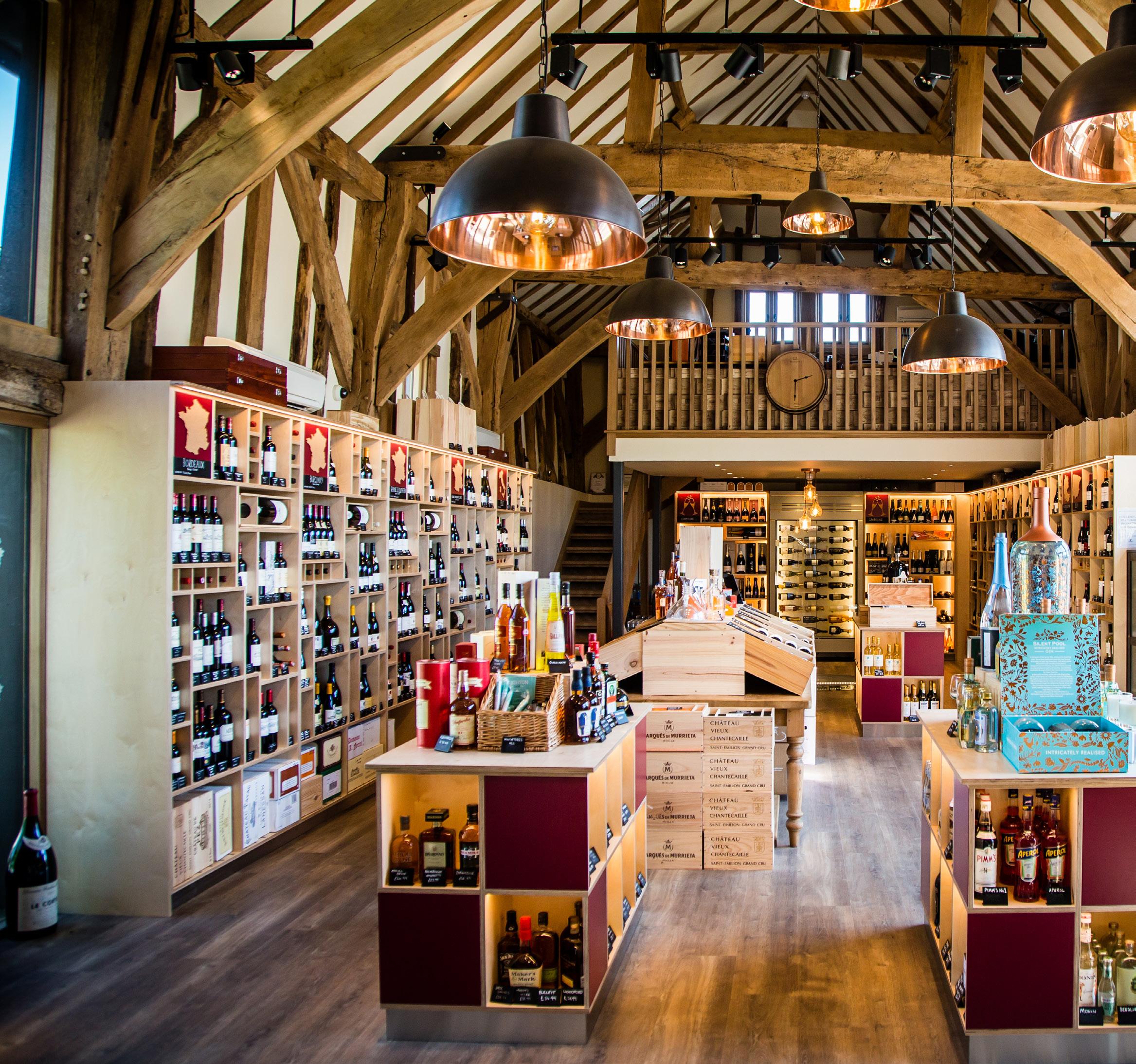
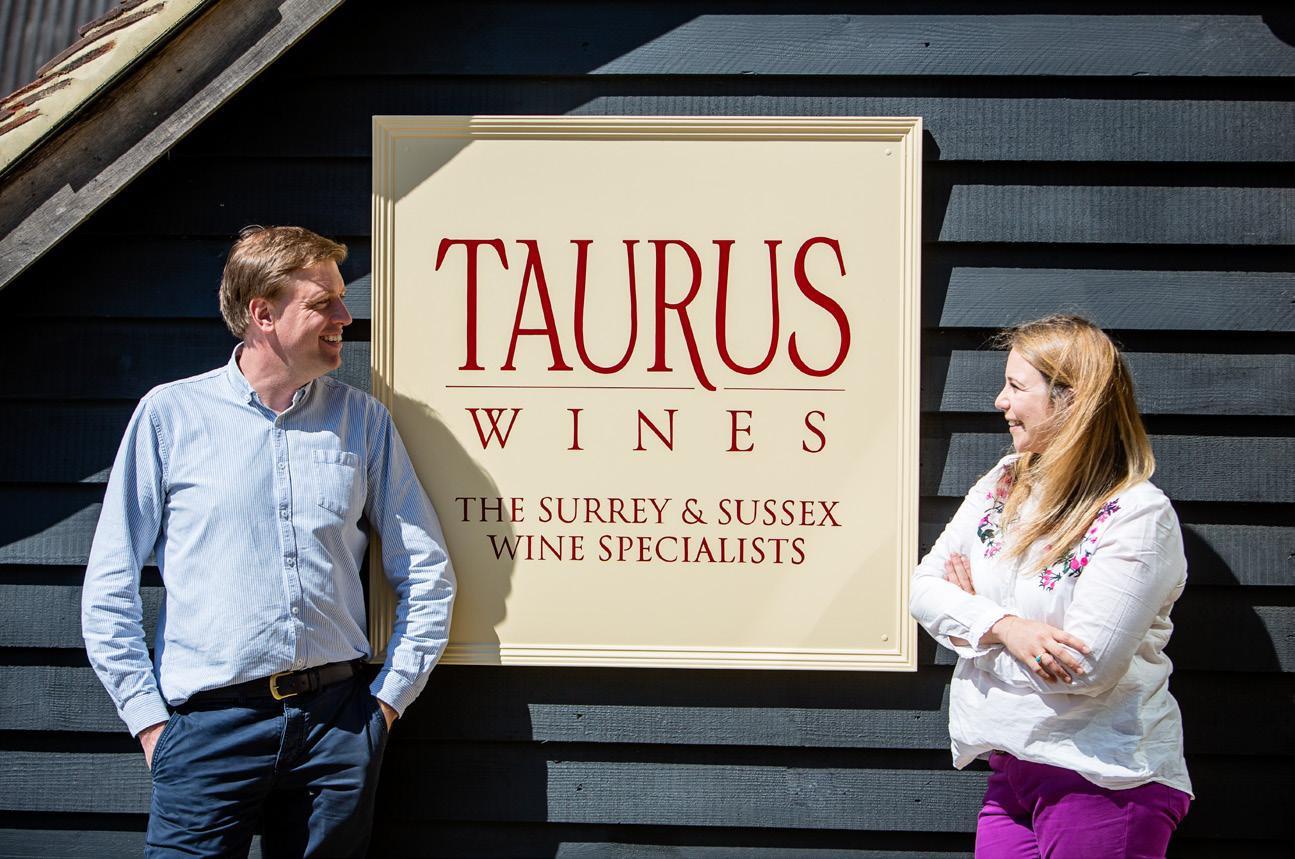
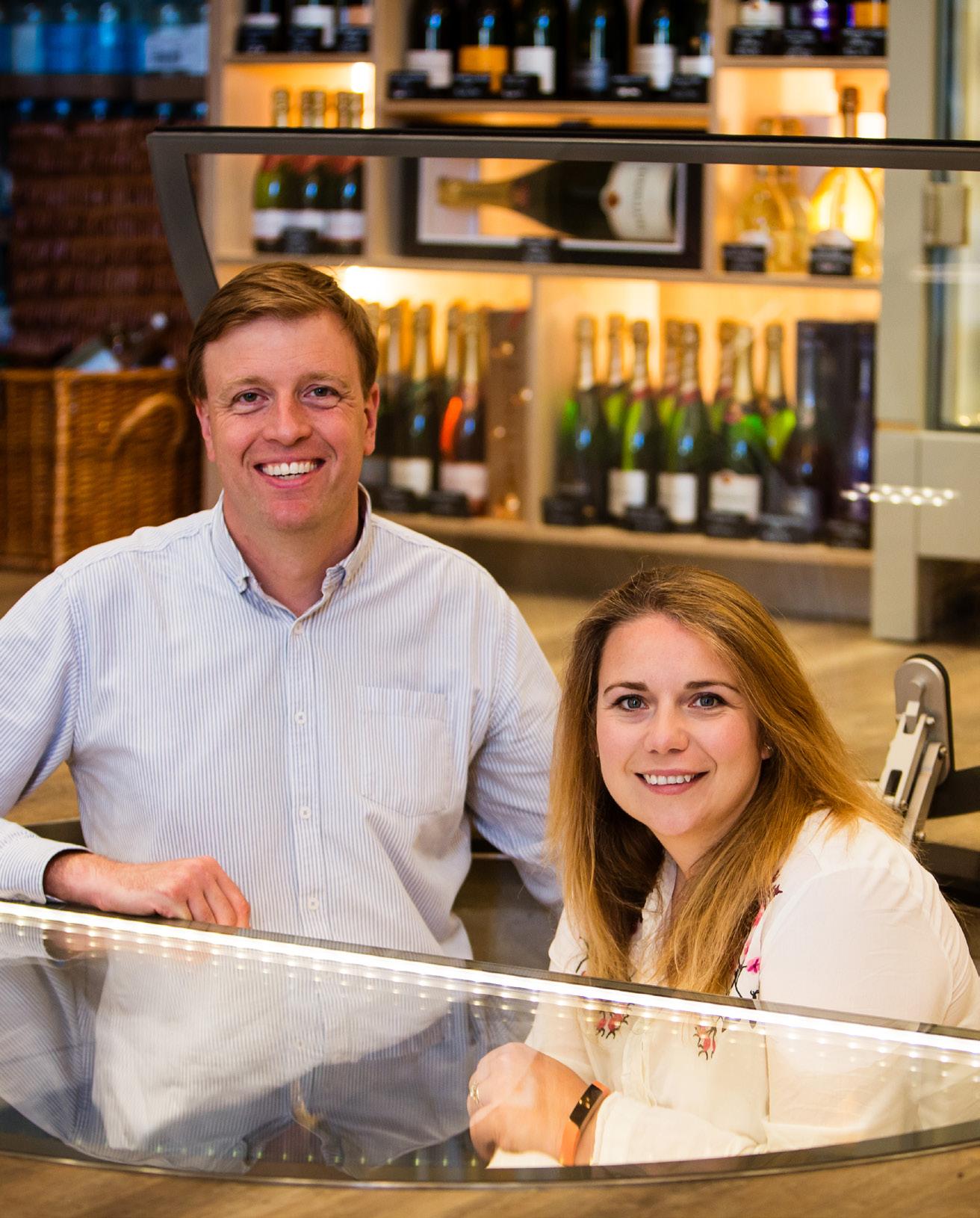
Taurus Wines is run by beautiful people in a beautiful barn in a beautiful part of England. But is business really beautiful for Rupert and Fliss Pritchett? Graham Holter finds out
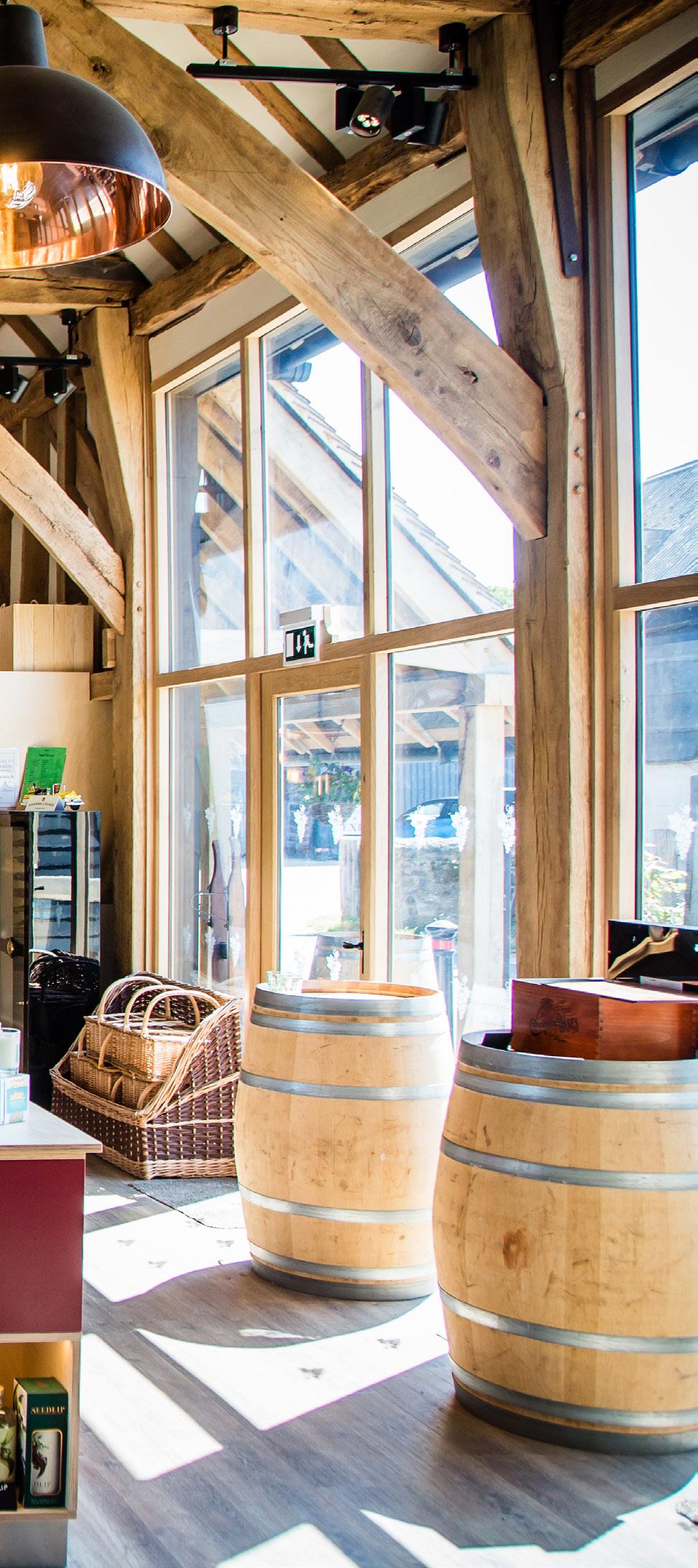
Taurus Wines wasn’t born in the barn it now inhabits, but in a tiny cowshed on the same farm in the Surrey Hills, just south of Guildford.
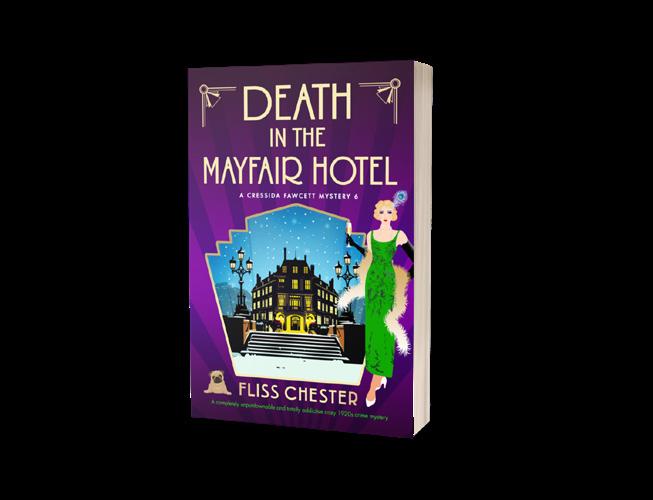
That was 25 years ago. Managing director Rupert Pritchett began his wine trade career with Victoria Wine and then Majestic; he also worked vintages in Gigondas and Margaret River. Felicity Pritchett, Rupert’s wife and fellow director, combines her involvement with the business with her career as a novelist. She writes whodunnits and romantic fiction under the name Fliss Chester. All wine shops have their charms, but the former
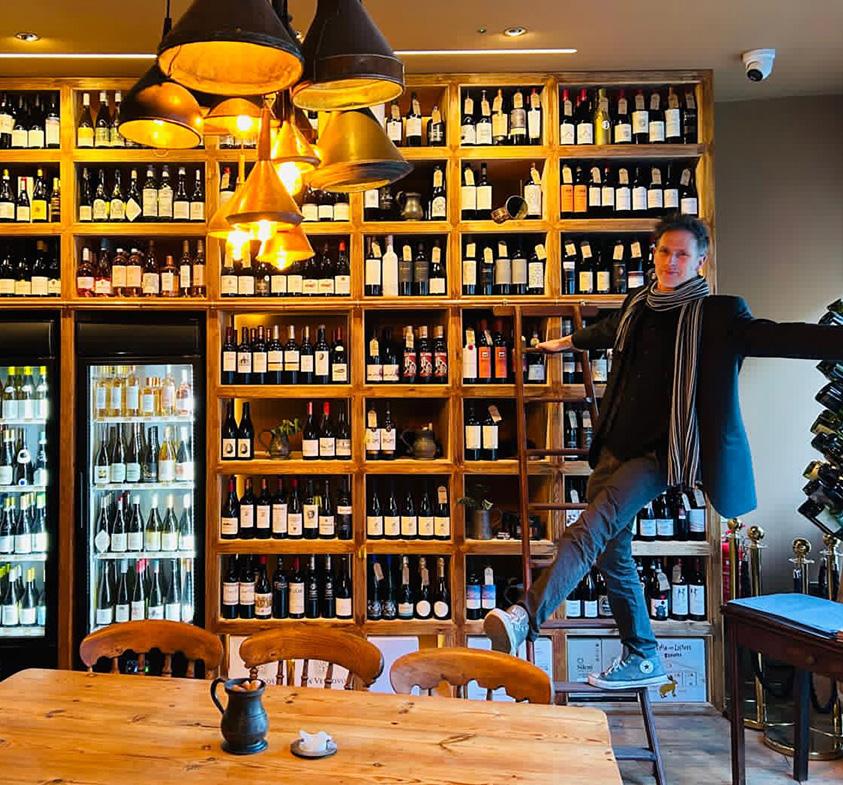
threshing barn that Taurus now calls home, financed partly through a £200,000 crowdfunding scheme, is a genuine stunner. The exposed beams and high ceiling are reassuringly authentic, but hidden inside the shell of the building are modern adaptations to comply with building regulations and fire safety. There’s an abundance of glass: bulletproof, as it happens, because shutters were not allowed on the listed building and building regs demanded security.
“The old office was in a container. The laptops closed down in the summer because they got too hot and in the winter the printer ink would freeze”
Next door is a catering business that Taurus teams up with for its dinner events, and beyond that a field of llamas. A contribution towards their upkeep is included in the service charge.
The name Taurus Wines was inspired by the history of the original shop.
“I wanted to call ourselves The Old Cowshed Wine Company, but my main customer, who was a high-end caterer, didn’t like the name at all, to put it mildly, and refused point blank to use it,” says Rupert.
“I called it Taurus Wines as a temporary measure in a hurry, because I didn’t have two beans to rub together, let alone a marketing department.
“I didn’t realise that Taurus means something to do with cross-dressing in the gay community. So about three years later, we ended up having a bit of a battle with Taurus Cafe Bar in Canal Street, Manchester, run by a 6ft 3in transvestite called Holly who thought we’d stolen their name, even though we’d started before they had.”
How much did the range grow when you moved to the barn?
Rupert: 30%, 40%, maybe a bit more. But we’ve also been able to diversify; to have dinners. We’ve got an indoor loo, which is lovely. The office previously was in a container. In the summer, the laptops closed down because they got too hot. And then in the winter, the ink would freeze in the printers.
By suddenly having this wonderful climatecontrolled environment, the quality of team that you attract is better. We’re so lucky with who works here now.
Does the vision you had in your mind for the barn match the reality?
Rupert: It probably does. We had a different opinion to my landlord about where the staircases would
go, so eventually we won. He wanted one staircase on the right, one on the left, and completely split the floor place and make it much less retail-friendly. You’d have blind spots so people can nick stuff.
We didn’t know at that time we were going to be doing dinners, and it would have cut the room in half, basically. We ended up getting a 3D model made up that he could walk through to show him our idea.
From your desks on the upper floor it almost feels like a control room for the retail area.
Rupert: Everyone has their own base up here. And frankly, more and more of our sales are not through people walking in the front door, but trade, or fine wine or whatever, so admin space is more and more important.
If there is an issue downstairs, or it just gets busy, we can flood the area quite quickly with extra staff.
Our reader survey has been showing that only about half of indie turnover now comes from walk-in sales.
Rupert: But the problem is, you wouldn’t get all the en primeur stuff, the private client stuff, unless people had in the back of their mind there was a physical premises that they could come and visit. I mean, look at Berry’s. What part of their turnover must be from walk-in trade? And yet they’ve kept that shop open – and opened the whisky one.
How much of your turnover now comes through the website?
“If there is an issue downstairs, or it just gets busy, we can flood the area quite quickly with extra staff”
Rupert: It’s stabilised post-Covid. It’s about 15% or 16%.
I was playing with the site earlier, and completed the “find your perfect wine” questionnaire from Corkable.
Rupert: What did it recommend to you?
Leonardslee wines, actually. There were some sensible selections. It was quite an enjoyable process to go through with questions about things like Marmite and how I take coffee.
Rupert: Somebody I knew in the trade said, we’ve got this young lad Tom [Planer] here – he wants to do a wine app. We had a chat, and he obviously had the kernel for something quite clever. So I encouraged him. He needed a real, proper working site that he could work with to design the thing. So we came to an agreement. Frankly, I’m getting this for free, in exchange for being his test site.
It’s a much more enjoyable experience than just a very dry click on a website, isn’t it?
Rupert: Exactly. And what we notice on a lot of websites is it’s the same old tasting notes copied and pasted. Ours are original. It’s Libby [Frangopoulos], Rebecca [Gray], Fliss … very rarely me.
Do you ever use AI to write tasting notes?
Fliss: We always try not to plagiarise other people’s words. And all AI is, is a plagiarism tool – it’s just scraping information from someone else. So you copy that tasting note and unwittingly you’ve just taken something from Berry’s or Tanners or whatever.
Rupert: Before AI, we had an issue with another merchant who we probably shouldn’t name, who basically took our tasting notes, and they were all original work from Callum [Edge, a former team member]. So I saw them at a tasting and basically asked them politely not to. They denied it, even though they’d pretty much quoted Callum. They didn’t do it again.
[We go downstairs and then up to the mezzanine at the opposite end, where there are tables and chairs and a storage space.]
Rupert: The original idea here was two tasting rooms. We originally had Enomatics.
Are the Enomatics gone?
Rupert: Totally gone. Utter waste of time. They cost a lot more to run than you might imagine. Once a fortnight you had to strip them down and give them a good wash through. And that was taking about half a morning. They’re very energy-hungry –you’re basically running three fridges. And sample usage isn’t as clean as you might think. The bottom third of most bottles was going. Fliss: Because we’re not on a high street, we don’t have many walk-ins for that sort of thing. Rupert: The big saving on them was meant to be staff: you can say to customers, “here’s a card, fill your boots”. We were finding that people coming here actually wanted to talk to us all the time anyway. You’d have staff sitting upstairs with them, enjoying a glass of wine, and having expensive machines to run. You’re better off just having some bottles on Coravin.
We find that focus tastings seem much more effective. We’ve been around long enough now to know who it’s worth opening bottles for. And you know, even with three Enomatics, whatever you had open was always wrong. You’d have orange wine week when the claret people would walk in and vice versa. So I think it’s a really good concept, a really good idea in high-football areas, but out here it just doesn’t work.
Talk us through the crowdfunding process.
Rupert: It was relatively straightforward. I had an idea of a valuation of the business in the back of my head. I wasn’t necessarily sold on the idea of crowdfunding, I’ll be honest. Then we went to see some very young people at Crowdcube, in one of those trendy offices that give kale milkshakes to you and everything’s made out of plywood.
We had a chat, and then they valued the business. And I went, OK, we’ll give this a go then. And we agreed, basically, a 10% equity release. One of the requirements for all crowdfunding was at least 2,000 contacts and we easily had an email list of more than 2,000. Back then there were half a million people in the Crowdcube database who were looking to invest in anything and everything.
The agreement was fairly small commission in the first 48 hours, when you release to your 2,000, and then you’ve got a month’s release to the half a million on the Crowdcube list. You have to raise the whole lot or bust, so you had to pick your target. Ours was £200,000.
You have to do a very, very detailed business plan, five years forward, plus management accounts, cash flow forecast; this, that and the other. That took forever, and the verification on it was extraordinary.
“Shareholders haven’t had a dividend but they have had the nice, glowing feeling of looking after a small business. There’s going to be a party for the 25th anniversary”
You hit your fundraising target. Have the new shareholders had a dividend yet?
Rupert: No, but they have had the dividend of warmth. That nice, glowing feeling of looking after a small business. There’s going to be a shareholder party for the 25th anniversary and things like that. Fliss: They got quite a lot of benefits at the start as well. It’s not just a financial transaction in a classic way. If you are this level of investor, you get free storage. They still get free storage. You know, you can have a £500 voucher towards an event in our tasting room and that sort of thing.
A few people in the wine trade were dipping their toes into crowdfunding about that time,
but I think you must be the most successful example of someone doing it on a bigger scale. Rupert: It was the first one Crowdcube had done in the wine merchant sector. So they were very kind with their commission rate to us, and then we sold it all in the reduced-rate 48-hour period, which I don’t think they were anticipating at all.
You had been talking about opening a second branch during the crowdfunding.
Rupert: We were, and it was lovely. It was up at Loseley Park [a private estate near Guildford]. They had an identical barn to this – actually twice as long – which is what they had as their farm shop. There was a building next to it, an old cow shed, so totally on brand, which we were hoping to go into. That got delayed, then there was Covid, and then in 2022 there was a really sad accident. The whole thing burned down in about an hour.
We’re still friendly with Loseley. They’re still buying our wine up at their temporary farm shop.
Might you continue the conversation when the place reopens?
Rupert: With business rates having gone where they’ve gone, and staff costs going where they’ve gone, we’re more likely to do a concession within their store.
How has business been going, broadly speaking?
Rupert: Given everything that’s been thrown at us this last year, sales are almost exactly level. I mean, literally within £100, £200. The problem is overheads have rocketed. It’s fair to say that 2024 was a miserable year for us, because the road was closed for about six months. So admittedly it was quite a low bar.
We’re doing more and more with the dinners; bottles of wine at £50-plus per bottle. Then we’ve got the good old, solid client base coming in for sub£15, and they’re your regulars who come in two or three times a week. In Covid, we had the middle ground, the £15 to £25 wines boomed because people were drinking at home and not getting out. Now we seem very much the go-to for that very special bottle for Christmas or a corporate gift, or en primeur. But it’s all ticking along.
What about wholesale?
Rupert: We’ve got, what, 25, 30, wholesale
Bulletproof glass, sourced from the USA, where it’s mandatory at ground floor level in schools
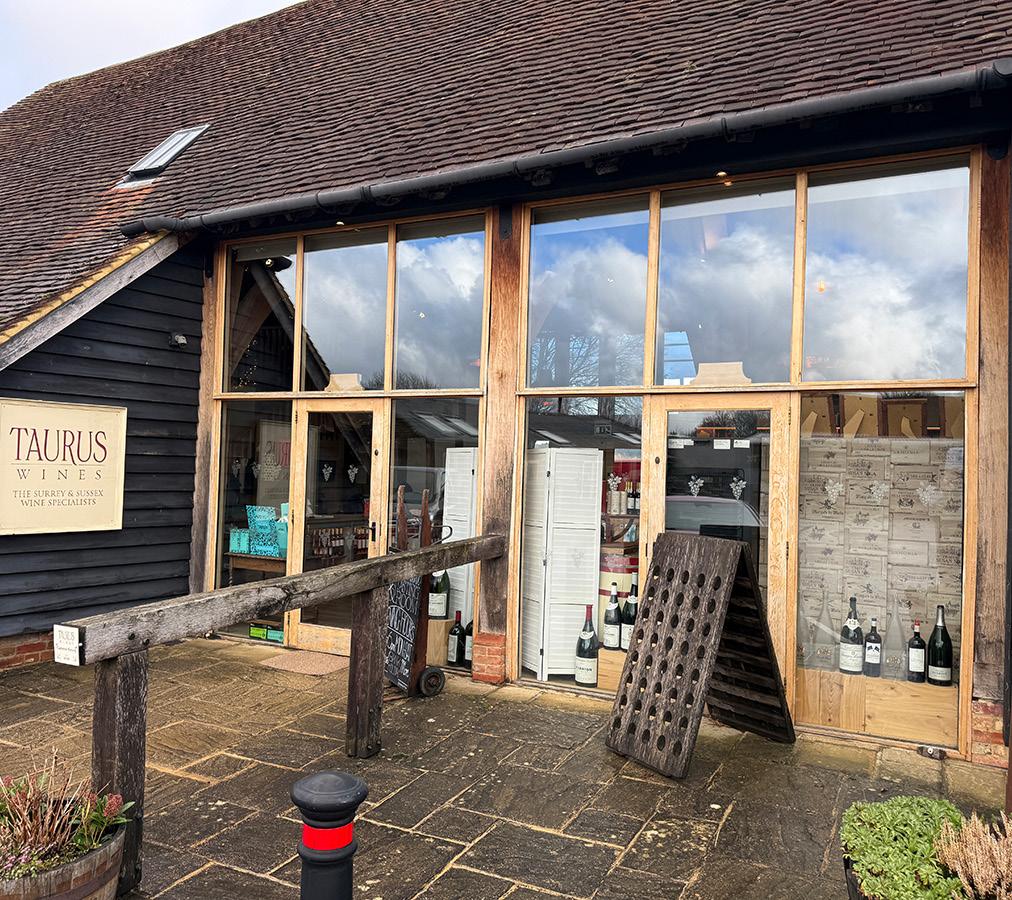
accounts? Mostly they’re quite safe. When we do have a pub, it’s normally the rich-man-saving-it-forthe-village type scenario. The local golf club: that’s 125 years old. It doesn’t make it bombproof, but the chances are it’s not going anywhere. And the Springbok Estate, a massive old country estate, a retirement home for merchant seamen.
Fliss: A lot of rum goes there.
What parts of the wine range are performing best?
Rupert: South Africa does very well; Portugal as well; France is traditionally strong. Bordeaux en primeur has become a non-starter, but Burgundy en primeur still does well.
How does en primeur work for you?
Rupert: Rebecca is in Burgundy at the moment. I think she’s got a fairly relentless schedule of 21 growers in four days. She’ll then come back and write up her report. At the end of the month, we’re doing a dinner where we’ll have the samples and there’ll be an hour-long tasting beforehand with a bit of a presentation.
“Having our own bond has been a game changer. It means we can really offer en primeur wine”
Hopefully we’ll have a lovely time and then people buy the wine. When it arrives in the summer, we then give them a bell and say, right, we’ve got a bonded warehouse. Would you like us to store it there for you, a pound a case a month – or would you like to pay your VAT and duty and have it delivered now?
Having your own bond must be useful.
Fliss: Yeah, it’s a been a game-changer. It means we can really offer en primeur wine, and receive it and store it.
Rupert: If I bought a pallet of something, we can
draw it down in manageable chunks: 50, 60 bottles at a time or whatever. So that really helps. It’s a game-changer when it comes to direct shipments.
How would you describe this part of the world, for those who don’t know it?
Rupert: Surrey Hills is 45 minutes from London on a fast train, and it’s absolutely beautiful countryside. There’s not many chimney pots, but the ones that are here tend to be pretty lovely.
If you take the track at the back of the shop and follow it around, the first house you come to is Ringo Starr’s old place. And the next house around on the hill over there is Eric Clapton’s. It’s a Surrey bubble where life is slightly different.
But it’s local people who are most affected by VAT on school fees, and by mortgage rates, because a lot of them have moved out here from Clapham, and places like that, in their mid 30s, early 40s, for the schools, for the country life, to bring their kids up. They’ve mortgaged themselves to the hilt because it’s a forever home. So they got knocked for six.
We lost two really big accounts from local schools because they’ve outsourced their catering to national suppliers to cut costs. I mean, one of them, their theatre account alone was worth 26 grand a year to us.
Not to flatter you unduly, but the shop is stunning to look at.
Rupert: I won’t lie: I think there’s one or two account managers who use us when they’re babysitting a principal for the day.
They’ll do the tour, and it will start with whichever prestige merchant in London. They can go to a restaurant for lunch and quite often in the early afternoon, they come here, show them this place as the grand finale, and then drop them back to Gatwick.
It’s also very different to other wine shops. I love a wine shop that’s in the cellar, and it feels like you’ve gone into the depths of the caverns, but it is quite intimidating if you’re not into wine. Whereas you come in here, you’ve got the big windows … if you’re one of the Pilates ladies who’s just come in, you don’t feel so intimidated.
Fliss: It’s the All Bar One effect, isn’t it? Women liked wine bars, not pubs, because pubs can be dingy and dark, whereas a wine bar was generally well lit.
“The first house you come
to is
Ringo Starr’s old place, and the next house around the hill is Eric Clapton’s. It’s a Surrey bubble”
What’s the biggest mistake you’ve made in business?
Rupert: I think we were massively underfunded at the very beginning. I literally only had £9,000 worth of pension from Majestic, which meant the first three or four years were just miserable. You know, you’re having to wait for cheques to clear before you can fill up the van with petrol.
Because you don’t have that initial capital when you are in your 20s, and you have unlimited energy, you can work 19-hour days and it doesn’t matter. But it keeps you behind the curve. But you live and learn, don’t you.
What would you like to achieve next?
Rupert: I think Covid showed that with the facilities we’ve got now, we could easily be 60% to 70% busier. And that would be lovely, because if you got to that stage, everything looks after itself. We can have more staff downstairs, so I don’t have to be so hands-on. You can afford a dedicated trade manager.
Fliss: And keep building the private clients.
Rupert: That’s fun, particularly when you get to open those accounts. I don’t particularly want to become one of those private-client traders working with big Excel spreadsheets, but one where you’re doing dinners and you’re actually trying the wines. That’s the fun part.
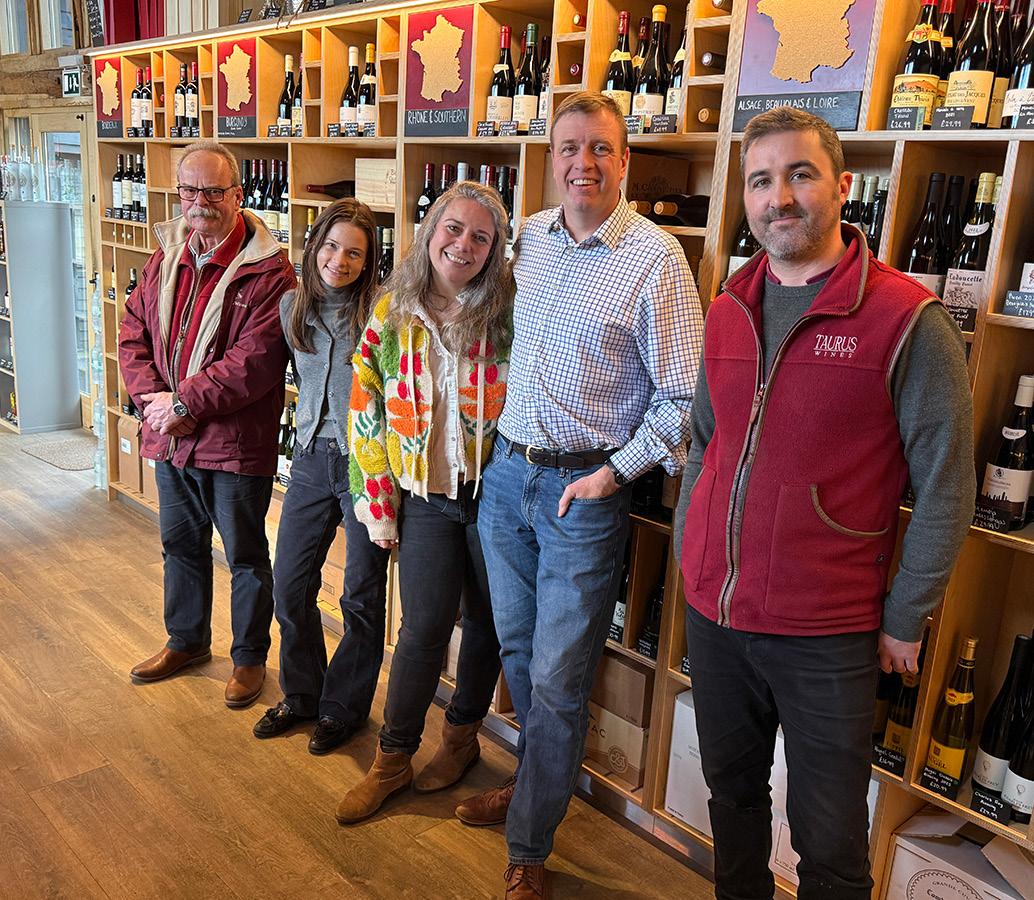

Rodolfo Bastida has been at the helm of Ramón Bilbao for over 25 years. On a recent visit to the UK, he shared his vision of testing the limits of the terroirs of Rioja and Rueda
When Ramón Bilbao became a centenarian last year, wine director Rodolfo Bastida was also celebrating his role in overseeing a quarter of its history. Taking himself back to 1999, Bastida says: “From the moment that I arrived at the company, we began refining the wines further, trying to produce wine that is focused on terroir and driven by fruit, because we love the places that we are coming from.”
What also defines Bastida’s tenure is a curiosity to push boundaries in Rueda and Rioja. Whether it’s upwards, with huge progress in high-altitude cultivation, or outwards, with the expansion into the limits of Rioja’s borders, Bastida’s Ramón Bilbao is a project of intrepid exploration. Bastida talks us through what he
Published in association with Ramón Bilbao
To try the wines come to the Jascots portfolio tasting on Tuesday, March 10 at Glaziers Hall by London Bridge
describes as “some of the real standouts” of his quarter century during a private tasting.
It starts with Finca Las Amedias in Rueda. “Rueda is a very exposed region, close to 800m altitude,” he says. “Compared to Rioja, where we have mountains, rivers and valleys, Rueda is the total opposite. It’s open, windy and dry.”
Verdejo is the key player here, its name stemming from the Spanish word for green. It has herbaceous aromas of cut grass, mediterranean herbs and fennel.
Finca Las Amedias 2020, Rueda
Moving into the Ramón Bilbao heartlands of Rioja, we start with Bastida’s adventures in the westernmost territory of the region. In the extremities of Rioja Alta, the town of Cuzcurrita is seeing an explosion in plantings as producers search for cooler areas in response to climate change.
Límite Norte 2021
A wine with many stories, not least the 50% of Maturana Blanca, one of the oldest and rarest varieties in Rioja, which was first recorded in the same local monastery where the oldest signs of Spanish language were detected. Here at Rioja’s western limits, relentless northerly winds howl at 450m above sea level. Aged in a mixture of concrete, amphorae and second-fill barriques, this wine is subtle and gentle. Sultanas and daisies, apricots and vanilla; a rise and fall kind of wine that demands a lot of attention.
We start to explore the reds. Bastida says: “Garnacha is a pessimist and Tempranillo is an optimist. At the end of July, Garnacha isn’t very big, but Tempranillo is growing everywhere. It’s like a young man dancing. Garnacha needs to have all of its resources in, and then it starts to grow.”
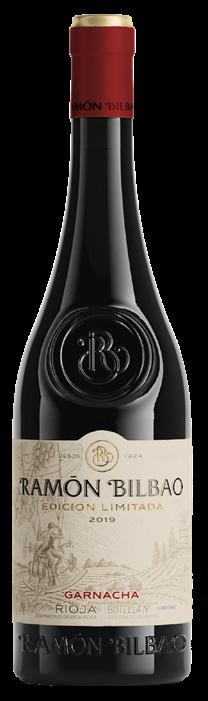
Limite Sur Garnacha 2021
From the highest point of easternmost Rioja, this Garnacha certainly doesn’t feel like a pessimist in the glass. It’s bursting with glazed cherries, strawberry jam, paprika-flecked violets and tilled earth. Glossy and concentrated, there’s a flicker of orange rind and a touch of aperitivo bittersweetness.
From the poorest, sandiest part of the estate’s oldest vineyard, this blend of 85% Verdejo and 15% Sauvignon Blanc sees four years of ageing in a mix of 4,500-litre foudres and concrete tulips. It’s reminiscent of white Bordeaux on the nose – at ease and generous with guava, white peach, fennel seed and gooseberry cream. Live and direct on the palate; citrus pith, myrtle and chalk take over the reins into a persistent mineral finish.
The reputation of American oak is being constantly challenged, Bastida is asked why he still uses it for his Reserva. “Because we like it” is the frank reply.
The wine is very classic, with coconut and dill lining a core of dense plummy fruit. It’s endlessly warm and giving, with a bedrock of toasted nuts and vanilla. Proof that despite Ramón Bilbao’s constant search for boundary-bursting invention, it still understands the importance of tradition.

I’ll go to the tasting. But spare me the hoggers, the huddlers and the harrassers
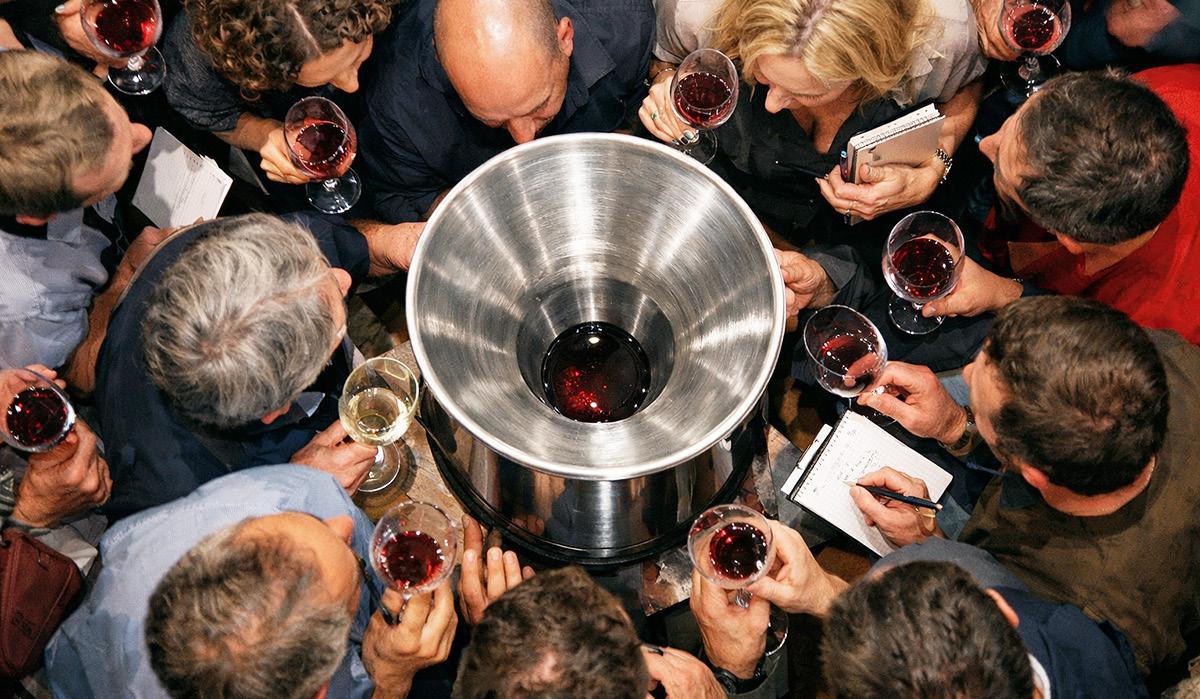
Tis the season … for portfolio tastings. I only live an hour from London, but as a train ticket is the equivalent of a small mortgage I have to be choosy about the tastings I attend. None of this will be news to anyone: let’s face it, most of you live further away from tasting venues than I do. Given the number of reminder emails I tend to receive about these events, trying to drag us all out of the safe cocoon of our wine shops is proving difficult for them.
Generally, when I do go, it’s a great way to try wines new and old, and invaluable for helping to keep the range fresh and well-priced, alongside catching up with a few old friends of course. I do have to remind myself that I should in fact put in the effort because it is worth it.
However, there was an experience recently that left me rather grumpy (understatement of the century) and I
had to leave to stop angry Cat, hulk-like, emerging in public.
Before a collective dread starts to fill the heads of suppliers (it seems that quite a lot of them have read my words over the years), the rage was this time directed at fellow attendees.
On the rare occasions that this kind of thing happens, it’s usually because a restaurant has let out a bunch of its kids (yes, I am aware that I am getting old) who piss about drinking as much of the expensive wine as possible.
While this does irritate me, I am aware I have absolutely been that person, back when I was (a) young and (b) more irresponsible than I am now.
This time, the complaints were about a bunch of people that really should have known better (read, are old enough to know better). I endured the rudeness of someone deciding they were more important and literally talking over the conversation I was having with a producer because he couldn’t possibly wait to say “I want to try your wines”. Honestly, if he (I hate to confirm it, but obviously it was a man) was that desperate to have a taste, then just dig in and ask your questions when the producer has finished his oneminute spiel about the wine.
Naturally, the good old “let’s stand round the spittoon and have a chat” lot were present, so I took to doing my finest fountain impression and hoping no one stepped into the line of fire, though I view this as more of a challenge than an irritation.
The one that really shocked me though was the person that would not leave me alone. Being in my mid-40s (although let’s not tell Mr B I have admitted to that – I prefer to hold on to early 40s until the end of the year) I didn’t really expect this, especially not when you add in the (male) colleague in attendance with me, which does tend to work in most situations.
Yes, I got hassled at a tasting by someone who was visibly drunk and thought that what he had to say to me was more important than what the poor producer was explaining. The winemaker was desperately trying to deflect the unwanted attention – “yes, I’m trying to tell her about the wines”.
I got hassled by someone who was visibly drunk and thought that he was more important than the poor producer
So, I’m approaching this round of tastings with caution. I will not be going back to that particular tasting (it turns out I’m not the only one of my colleagues who has had a bad experience). I think it’s better that we don’t let the rage out in public.
Cat Brandwood is the former owner of Toscanaccio and now head of private client sales at The Naked Grape

The Wine Merchant launched its masterclass programme for 2026 by inviting a dozen indies to spend an afternoon in the company of Hallgarten's wine development manager Steve Daniel.
Since his Oddbins days, Steve has arguably done more than anyone in the UK to promote and popularise the wines of Greece.
The standard of winemaking has never been higher – and neither has Greece's potential to make inroads into the UK independent wine scene.
Steve Daniel arrived in Greece in the 1970s to pursue a brief career as a beach bum. He fell in love with the place, though not the wines: he was a teenager, after all, and in any case what was on offer in the local tavernas was far from inspiring.
After returning home to get a proper job, he continued to make regular visits to Greece and on holiday in Crete found himself in a restaurant that presented him with a novelty: a wine list. “I’d never seen one in Greece before,” he says. “There were pictures and brief descriptions, so I tried a couple of the wines. I thought, there’s something happening here.”
Researching Greek wines in the preinternet age was a challenge, but Steve got hold of a book that referenced 30 wineries. “So I ordered samples from all the ones that I liked the idea of,” he recalls.
Steve has been championing Greek
“The industry that exists today really started in the 1980s, and a lot of the wineries we work with didn’t exist until the 2000s. So it’s a really young industry, with probably the most state-of-the-art wineries in the whole of Europe, working with really old varieties that nobody else has got”
wines ever since, first during his time heading up the Oddbins buying team and later with his own import business, Novum Wines, now part of Hallgarten. Over the past three decades, his enthusiasm has only increased as Greek winemakers have refined their skills and embraced their local varieties.
This Wine Merchant masterclass is presented in association with Hallgarten & Novum Wines
Find out more about Hallgarten's Greek wine range at hnwines.co.uk or contact hallgarten.indies@hnwines.co.uk
The estate is based an hour and a half north of Athens, in Askri in the Valley of the Muses, a low-lying area with fertile soil. “The family have been growing grapes since 1946 but the winery was only started in 2005. They want to produce wines that express where they come from but are also affordable,” says Steve.
The entry-level 700 Thespians (rrp £12.75) is made entirely from Savatiano, a variety that Steve says shares some characteristics with Trebbiano and Chardonnay. “It’s the most widely planted grape in Greece. It’s relatively low in acidity, which is very unusual for Greece because most of them have got really high acidity.
“Creamy is a good description for this wine; Savatiano can often be slightly oily.
“The 700 Thespians were the guys from
the area who volunteered to fight with the Spartans.”
We also try a rosé from the estate, A.Muse – a co-fermentation of Sauvignon Blanc and the rare Mouhtaro grape (rrp £24.25).
The Sauvignon is a remnant from the time when wineries across Greece were persuaded that international varieties were what tourists wanted. Mouhtaro, on the other hand, “is the weirdest red I’ve ever come across”, Steve says. “Loads of flavour, good acidity, low tannins and super-aromatic.”
He adds: “In 10 years Greece has gone from making absolutely terrible rosé to being the best producer, I think, on the planet. It’s very precise, with lots of flavour and intensity of fruit, but still very drinkable.”

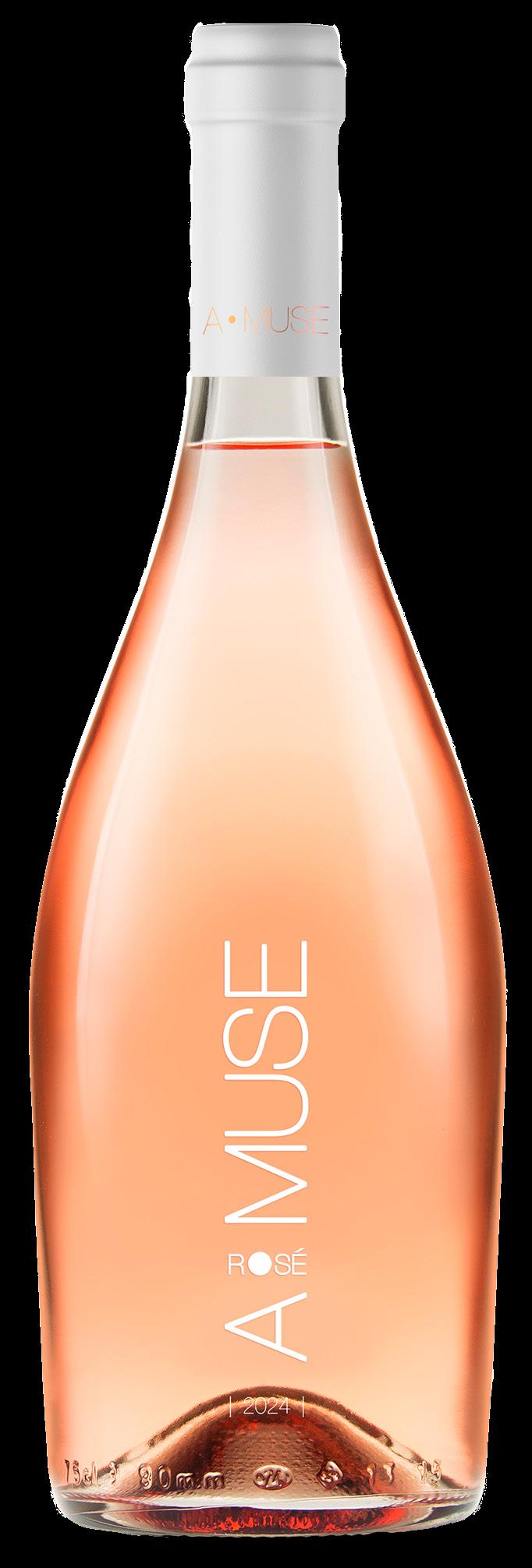

Negociant Nikos Karatzas has a modern winery in Drama, where he makes minimal-intervention wines using fruit from trusted grower partners. His attention to detail is phenomenal, Steve reports, and often very expensive.
Apla White (rrp £18) is a sushi-loving blend of Malagousia, Vidiano and Assyrtiko. “Malagousia is the Greek answer to Viognier, but with acidity and peachy fruit,” says Steve. “Vidiano is their equivalent to Chardonnay: you can barrel-ferment it and it can be like a really herbal, mineral Macon Villages. And Assyrtiko has this amazing rapier-like acidity. Malagousia is being planted more widely and actually I think it’s more user-friendly than Assyrtiko.”
He adds: “It’s just lovely and fresh and crisp, and that’s what the UK consumers have always wanted: crisp, mineral wines with some fruit. And that’s kind of what Greece does all day, every day.”
Next is Apla Rosé (rrp £18), a Xinomavro/Mavroudi/Limniona blend which won the Rosé Wine Trophy in the 2025 Wine Merchant Top 100. Like its white counterpart, it’s bursting with acidity but the fruit is there too: tangerine, strawberry and even a suggestion of tomato, a Xinomavro hallmark.
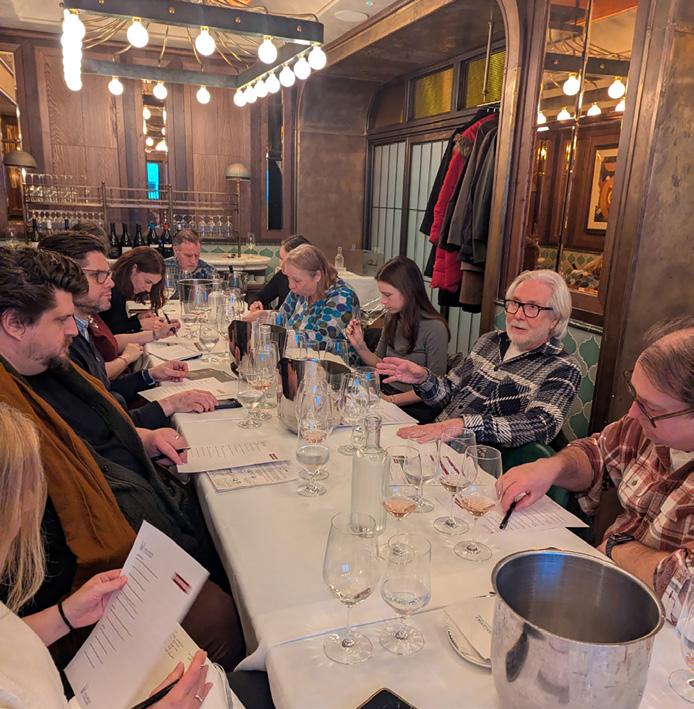

The winery is near Mount Athos at about 500m above sea level in the village where Aristotle was born.
Kyriakos Kynigopoulos, arguably Burgundy’s most famous winemaking consultant, oversees production and wants wines to have texture as well as a sense of place. Extensive ageing on the lees and in the bottle does some of that work with Oros (rrp £25.25), a blend of 70% Assyrtiko and 30% Sauvignon Blanc. “This is the current release, which is 2022 – these wines need time to express themselves and really come into their own,” says Steve.
“We say to people, if you like the PouillyFumé style, you’re going to really love this wine. It’s grassy, slightly grapefruity and rather exotic, but it’s all about the mouth feel.”
On to the Halkidiki Xinomavro (rrp £32.75), a grape which Steve describes as “the Greek equivalent of Nebbiolo”.
He says: “It takes a lot to get some colour out of it, and if you over-extract you end up with a wine that’s totally undrinkable because it’s got such high acidity.
“But the wines age forever. This is five years old and still has a way to go.”
It’s “definitely a food wine”, he adds, and in his view a competitively priced alternative to Barolo.
The 16ha vineyard is planted in the foothills of Mount Olympus, producing organic wines that are admired for their aromatics and purity.
The winery is housed in an old monastery, and has the motto “mindful winemaking, meaningful wines”. Maria Dimitriadis makes “some of the most exciting new wines in Greece”, Steve says.
The vines are planted at 400 metres in an area where temperature is moderated by a cold wind from the Russian steppes. “It’s like a natural air-conditioning unit,” says Steve.
Terre de Zeus Malagousia (rrp £24.75) “has lots of flavours going on, and a slight salinity,” he adds. “It’s not the most aromatic wine but it has texture and complexity. It’s great because it’s foodfriendly and moreish. You want another glass of it.”
Terre de Zeus Xinomavro (rrp £26.50) is a very different proposition to the Akrathos equivalent, testament to how terroir and winemaking styles can vary in Greece. It’s jammier on the nose, with freshness as well as fruit and a firm grip. “I’d put it up there against most Barolo and Barbaresco,” says Steve.
This is the Malagousia – pretty much the original,” says Steve, introducing Ktima Gerovassiliou’s best-known single varietal (rrp £26).
“Evangelos Gerovassiliou is the godfather of Greek wine. He planted his family’s farm with Malagousia in 1981. Before that, it was almost extinct – there was one tiny little plot in central Greece. The vineyard is near the coast and the vines are grown on marine fossils.
“It’s a sustainable and pretty much organic vineyard with state-of-theart winemaking. He uses mainly stainless steel but with about 15% older French barrels to give it some texture.
Santorini was a barren wasteland after the mega-eruption of 1620 BCE, which destroyed an advanced civilisation, until the Phoenicians arrived 600 years later. They brought with them purple dye, an alphabet … and vine cuttings.
“Fast forward to the 1970s and people started looking at Santorini and Assyrtiko again,” says Steve. The wines at the time were unexciting and a “young buck straight out of Bordeaux university” called Yiannis Paraskevopoulos was commissioned to sort things out. In 1994, he founded Gaia Wines.
Then in 2023 it went down to 10, which was a bit of a disaster, to say the least. And then in 2024 it went to seven, and last year it went to four.”
Three years of drought, and wildly stormy springs, are to blame.
“The price of a kilo of grapes in Santorini last year was between €10 and €15 a kilo, and you get 50 millilitres of juice out a kilo of grapes. These are actually the most expensive wine grapes on the planet.”
Paraskevopoulos claims to hate orange wines, but Gaia Clay Assyrtiko (rrp £53) is an attempt to make one with authentic flavour and character. The grapes spend seven days on their skins in ceramic spheres, and the juice is then racked off to mature for 30 months, again in spherical vessels.
“For most people, this is the benchmark. When I started trying to sell Greek wines back in the late 90s, this was my go-to wine. It’s a crowd pleaser but it’s a serious wine. It’s got lovely peachy stone fruit but also an almost Greek basil element to it.”
Gerovassiliou’s Avaton (rrp £31) is a blend of 85% Limnio, 10% Mavrotragano and 5% Mavroudi. It’s inspired by Bordeaux, where Gerovassiliou trained.
“He invested in upright wooden fermenters, like you see at Lafite and Mouton,” says Steve. “This wine doesn’t see any stainless steel at all.
“Mavrotragano is a black and crunchy grape from Santorini; Limnio is a grape from northern Greece, which is the oldestknown variety for which there are written records.”
The wine has a laurel-leaf character and suggestions of Cabernet Franc. “His wines used to be a lot chunkier,” Steve adds. “But he’s planting more and more Limnio because he really believes it produces really elegant wines – still powerful, but super-elegant.”
“Suddenly everybody realised that there was real potential in Santorini,” says Steve. “I started selling the wine in the late 90s and it was very cheap. A kilo of Santorini grapes would have been about 50 cents, half the Greek average. It then went to €1, the average for Europe.
“But what’s happened in the last three years has been catastrophic. The average yield in Santorini is 20 hectolitres per hectare; Burgundy produces 60 hectolitres.
Gaia Ammonite (rrp £95) is “probably the best example of pure Santorini Assyrtiko”, Steve believes. The wine is fermented in stainless steel and spends an extended period on its lees before a brief spell in barrel.
Assyrtiko is cropping up in other parts of Greece, but has traditionally thrived in the harsh Santorini climate, always delivering piercing acidity. “You can make these amazing fresh, intense, crisp, mineral wines, harvested in the first or second week of August,” Steve says.
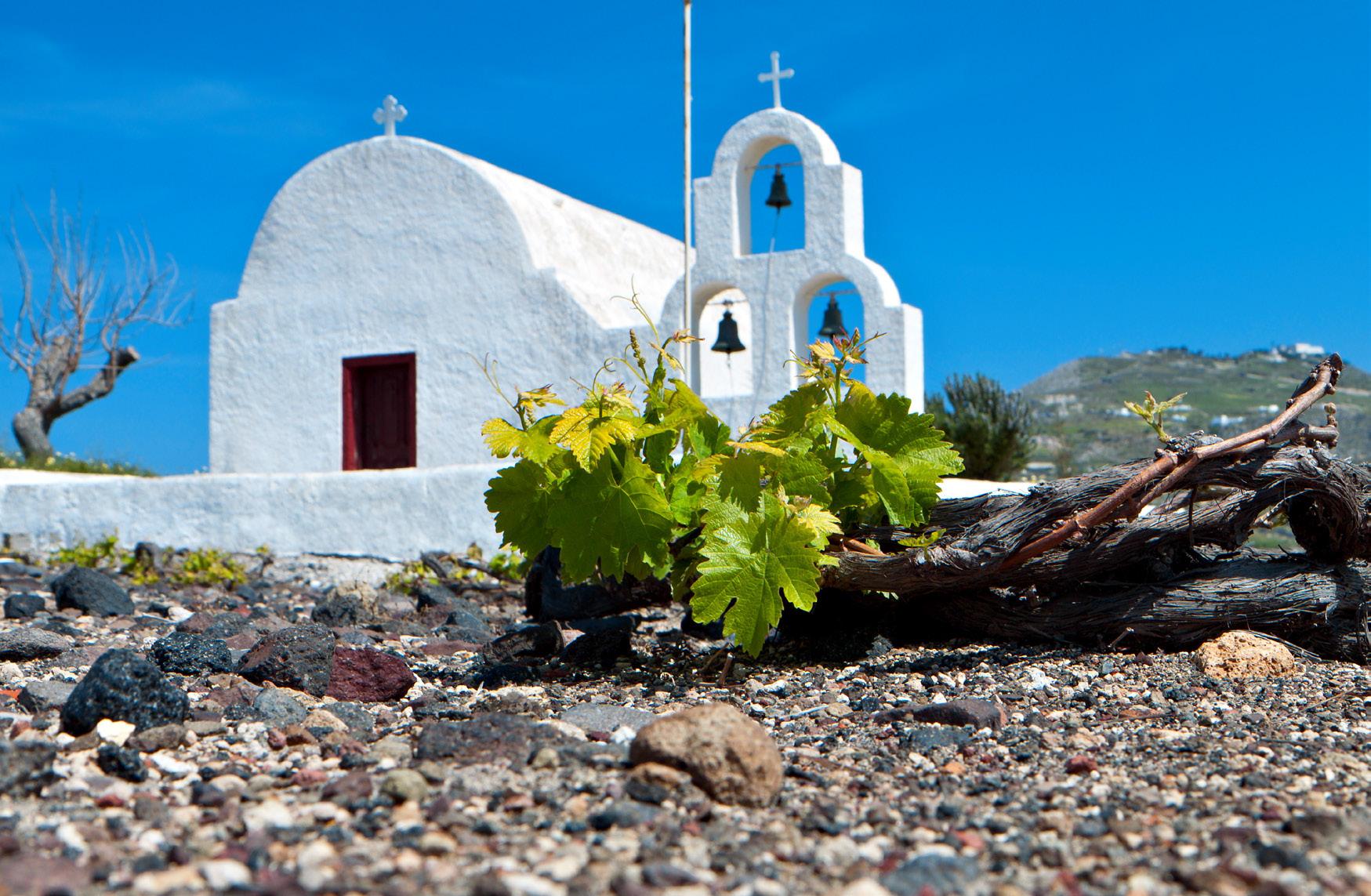

Pét nat wines seem to confuse as many people as they delight. Some retailers can't quite figure out where they fit into their sparkling wine offer. For others, they represent an exciting new category attracting a young audience.
The wines are bottled under crown caps before fermentation is finished, with no added yeast or sugar. They emerge slightly fizzy and sometimes cloudy.
The Wine Merchant tasting panel put a selection of pét nats through their paces. Here are the ones that impressed us most.
1 Las Pedreras Burbujas de Arquitón 2022, Cebreros, Spain
Graft Wine, RRP £40
This classy pét nat encapsulates exactly why Cebreros was granted DO status in 2019: old vines, poor granitic soils, extreme altitudes and ambitious producers. Under a smoky outer layer we find nervy redcurrant and glazed strawberry fruit; a dashing blood orange acidity is laced with smashed rocks and white pepper. A world beater by any metric.
2 Pablo Fallabrino Soul Surfer 3.0 2023, Uruguay
Vinos Latinos, RRP £16.95
Soul Surfer combines hoppy heroism with a proper vinous grounding. There’s enough hay and IPA to keep the natty bros happy, but underneath the ancestrale bravado lies layers of unconventional complexity. Walnuts pickled in apple cider and brioche steeped in rose water. Poached pears rewilded by a double dry hopped bitterness; this is culture war wine and it’s hard to know who came out on top.
3 Tubarão Pét Nat 2024, Vinho Verde, Portugal
Marta Vine, RRP £25
Meaning shark in Portuguese, Tubarão hunts alone. Unplugged from conventional niceties, there’s a pulsating excitement to this co-fermented field blend. Described by the panel as a wild bellini, for all it gives in sweet fleshy peaches it takes in a pithy, moreish austerity. This is the windswept kind of harmony that appeals to wild swimmers; raw, rugged and visceral.
4 Daschbosch Méthode Ancestrale 2024
Breedekloof, South Africa
Boutinot, RRP £18.95

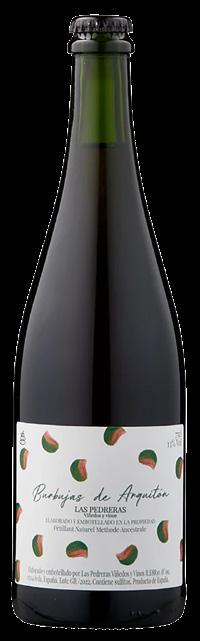

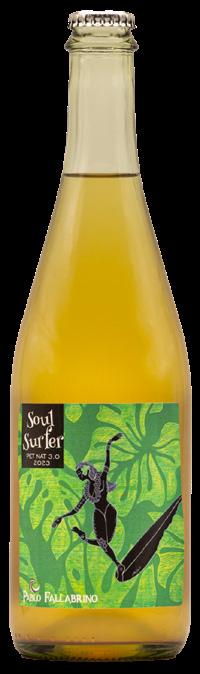

The label, inspired by the winemaker’s tendency to jump out of planes in his spare time, is unanimously loved by the panel. This certainly wouldn’t align with everyone’s pét nat perceptions; it’s absolutely pristine. Thirstquenching with its parade of bright white fruits, slowly turning golden in the sun. Flecks of chalky minerality line a generous texture, expertly propped up by a swishing acidity.
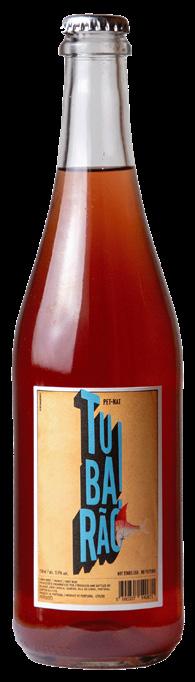
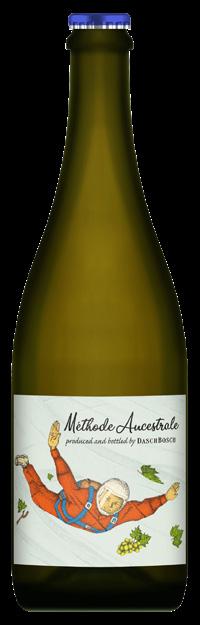
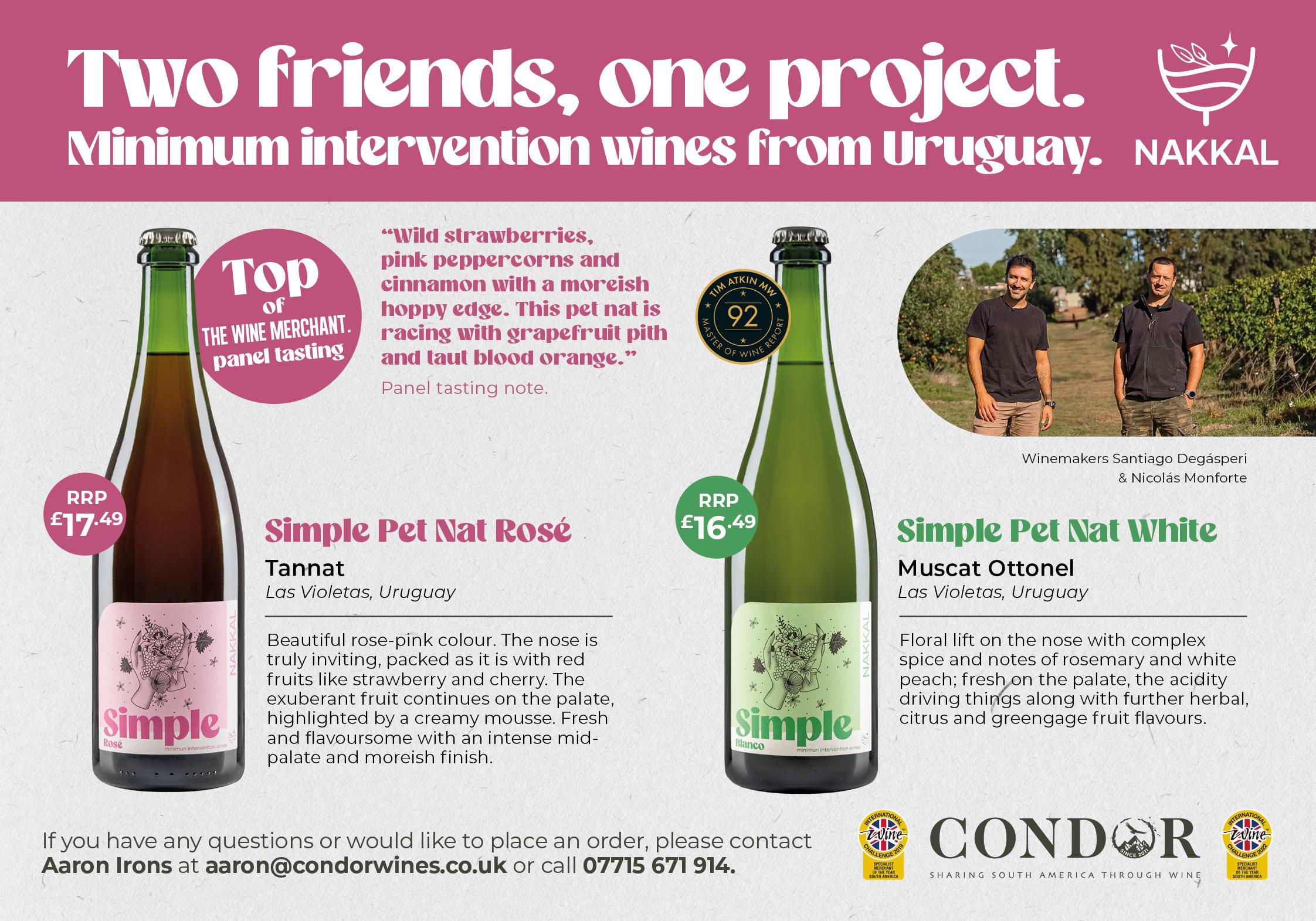
Gamin
2023 Minervois
“Appealing ripe warm, sweet cherry and berry fruits ... pure ... really good” 92/100
Jamie Goode RRP £17
Clos des Choffardieres
2022 Muscadet Sèvre et Maine sur Lie
“This is superb. Layered, complex” 95/100
Jamie Goode 17++/20
Tamlyn Currin RRP £19
Una Notte
2023 VDF Chillable Red
“Exploding with flavour ... vibrant” 17/20 Tamlyn Currin
“Juicy cherry and redcurrant ... so fresh, linear and pure with real elegance. Joyful” 94/100 Jamie Goode RRP £20

5 L’Entremetteuse L’Epine de la Rose Torontel 2021 Colchagua, Chile
Vinos Latinos, RRP £19.50
There’s novelty in the fact that these centenarian Torontel vines now bear fruit for one of the industry’s most progressive and contentious categories. An initial aromatic punch of white peach and spring blossom on the nose makes the underlying complexity on the palate feel like something of a jump-scare. It’s biscotti soaked in Islay whisky, its pretty blossoms scorched and sprinkled over a long, salted lychee finish. Edge of your seat stuff.
Condor Wines, RRP £16.99
With the panel warming to wines that encapsulate pét nat’s avant-garde persona, the name Simple seems like a double bluff. And indeed, what lies beneath the unassuming name and tattoo art label is a wine full of tautness and tenacity. A strike of grapefruit pith and blood orange gives way to wild strawberries, pink peppercorns and cinnamon on the mid palate, closing into a pleasant hoppy bitterness on the finish.
Graft Wines, RRP £27.95
Charrau’s family have farmed this estate in the Loire since 1722. Bullula, his Samur-Champigny outcast (it’s not permitted in the AOC), is evidence of the rise of younger, more experimental producers in the area. This is about as deft as pét nat can get: there’s an effortless rise and fall of crunchy red berry fruit. Almost Provencal in its elegance and precision, with a twist of something briney on a dangerously moreish finish.
Saison Wines, RRP £25
The autolytic sophistication on the nose puts this wine into Champagne impersonation territory. But what seems like a quiet Parisian boulangerie on the outside turns into something of a pét nat poster boy within. Like cider apples injected with liquid electricity, and sourdough starters swallowing whole lemons … it bounces with vigour and vitality, leaving the panel obliged to do 20 star jumps.
Vino Latinos, RRP £18.95
This 50/50 Pinot Noir/Chardonnay blend shows the playful side of Champagne’s two most beloved protagonists. Squishy red fruits are perfumed with a typically understated and elegant Chilean greenness,. The palate reveals a bleeding of quince fruit through a yeasty underlay, finishing long with cut grass and wormwood.
Vino Latinos, RRP £19.50
Las Socias makes no attempt to hide its Marsanne/Roussanne identity. A choir of exotic fruit bellows into song with the first sniff. Mandarin baritones, yuzu tenors and apricot sopranos are urged on by a slightly almondy conductor. It’s extroverted and flamboyant with just enough acidity to tame the noise. A great choice for wine novices.
Hallgarten & Novum Wines, RRP £17.95
This unlikely blend of Pinot Gris, Gruner Veltliner and Riesling represents pét nat’s more respectable side: it’s the type you’d bring home to your parents. Lively and fresh with Riesling’s white flowers pushing through a sea of peachy Pinot Gris generosity. Flecks of ginger and tangerine emerge on a salt-kissed finish.
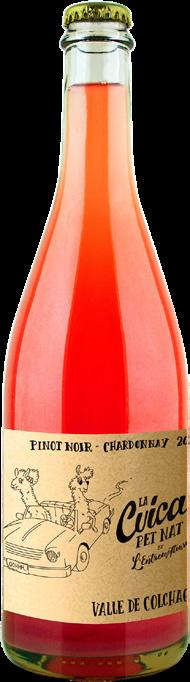
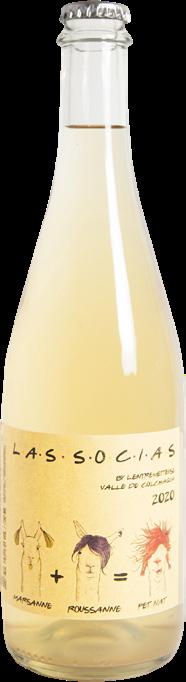
Vindependents, RRP £31.50
The brilliant label features a somehow quintessentially Americanlooking chicken – or rooster, as they’d probably prefer to call it. There’s huge drinkability here; it’s joyous and easygoing with an unashamed lick of residual sugar. Typical Zinfandel flavours of ripe strawberry and watermelon collide with lilies, toasted brioche and walnuts. Great fun but possibly a tricky sell at this price.
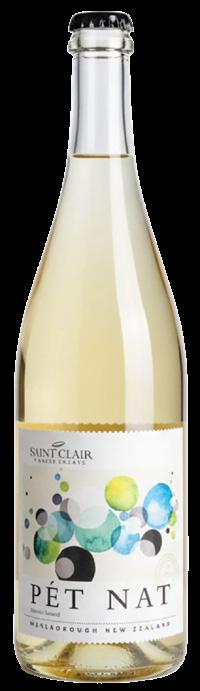
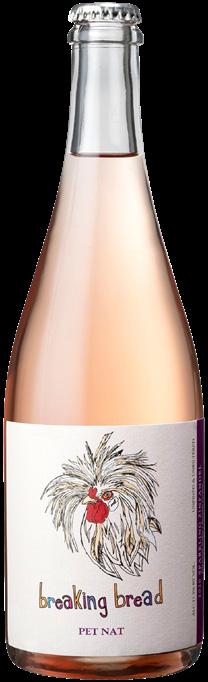





MANSFIELD DPS SEPARATELY
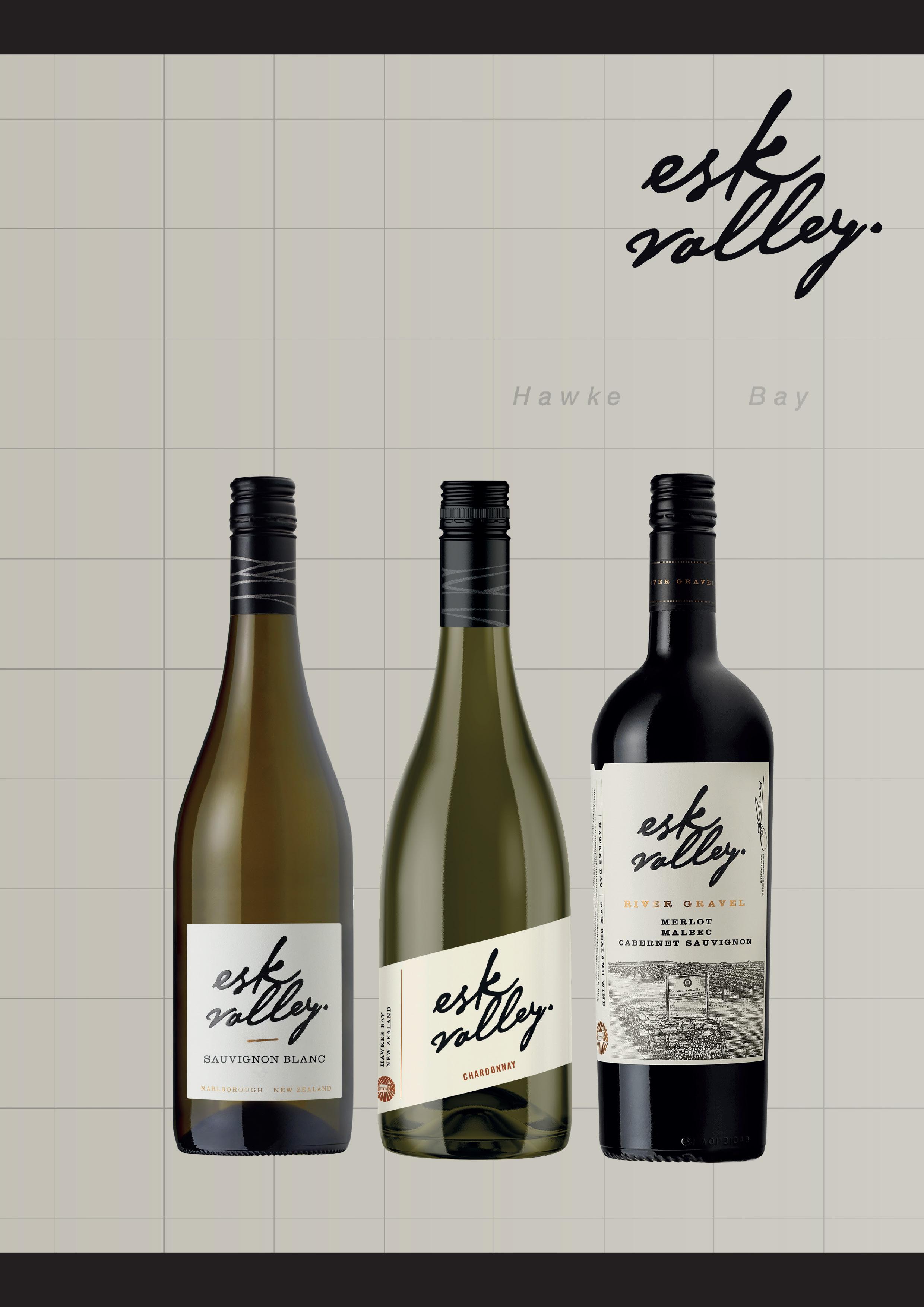
Condor Wines has announced the addition of two New Zealand producers – Mt. Beautiful and Ant Moore – to its Flight of the Condor range.
Exclusively available through Condor Wines, these new partnerships broaden Condor’s portfolio for the UK trade, adding diversity of style and reinforcing its long-standing commitment to quality, provenance and discovery.
Founded in 2011, Condor Wines has built its reputation as
Marlborough with personality, breadth and energy
Ant Moore is a hands-on, instinctive winemaker farming vineyards across Awatere, Waihopai and Wairau, capturing the full breadth of Marlborough’s terroir. His approach is grounded in curiosity and experimentation, backed by certified-sustainable farming and a close connection to each of his vineyard sites. What drew us to Ant was not just the quality of the wines, but the clarity and lift they deliver – expressive, bright, varietally true styles that work brilliantly for every sector and occasion.
Ant Moore Sauvignon Blanc RRP £14.49
Expressively aromatic, this classic Marlborough Sauvignon Blanc has juicy lime, grapefruit and tropical notes on the palate. Enjoy passion fruit and gooseberry aromas with underlying notes of mango and herbal accents.
Ant Moore Pinot Gris RRP £14.49
An elegant and lifted floral nose with notes of honeysuckle. White peach and pear notes are complemented by a refreshing dry finish.
Ant Moore Pinot Noir RRP £17.49
Vibrant red fruit aromas and notes of spice are complemented by ripe red berry flavours with pockets of mushrooms and forest floor. A silky-smooth mouth feel with well-integrated tannins.
condorwines.co.uk/home/ant-moore-wines/
the UK’s leading specialist in South American wines, working closely with producers from Argentina, Chile and Uruguay. As the business approaches its 15th anniversary in 2026, Flight of the Condor represents a natural next step, extending Condor’s journey of discovery to New Zealand, whilst remaining rooted in its South American heartland. Condor Wines co-founder and MD Lee Evans says: "Mt. Beautiful and Ant Moore are both run by teams who share our values of integrity, collaboration and building long-term partnerships. Their wines are a perfect complement to our existing portfolio.”
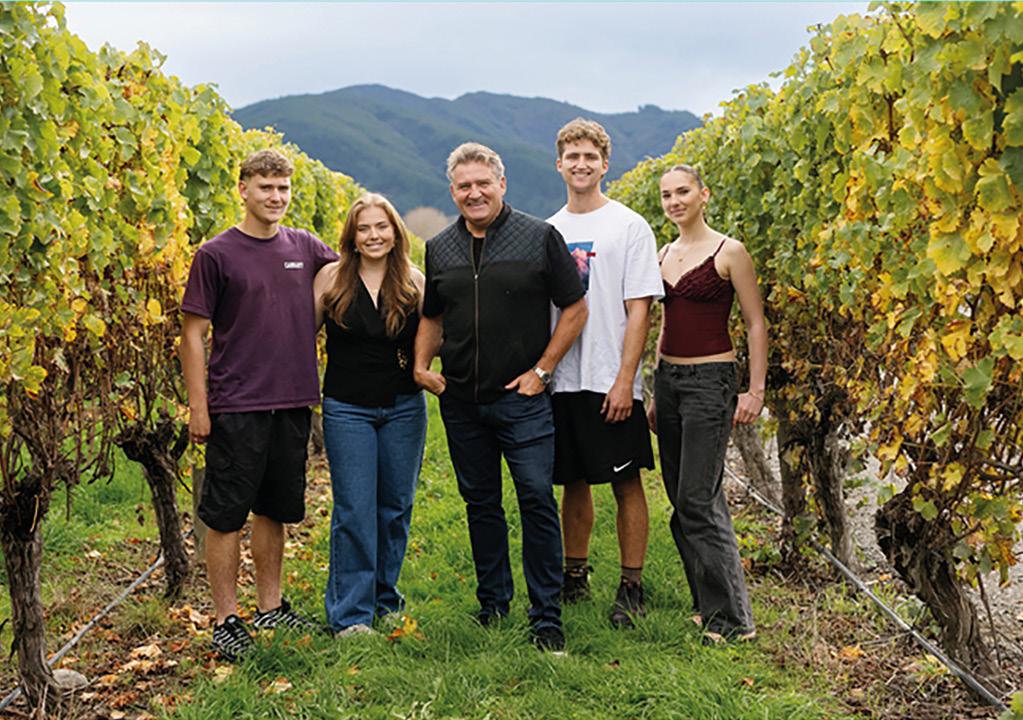
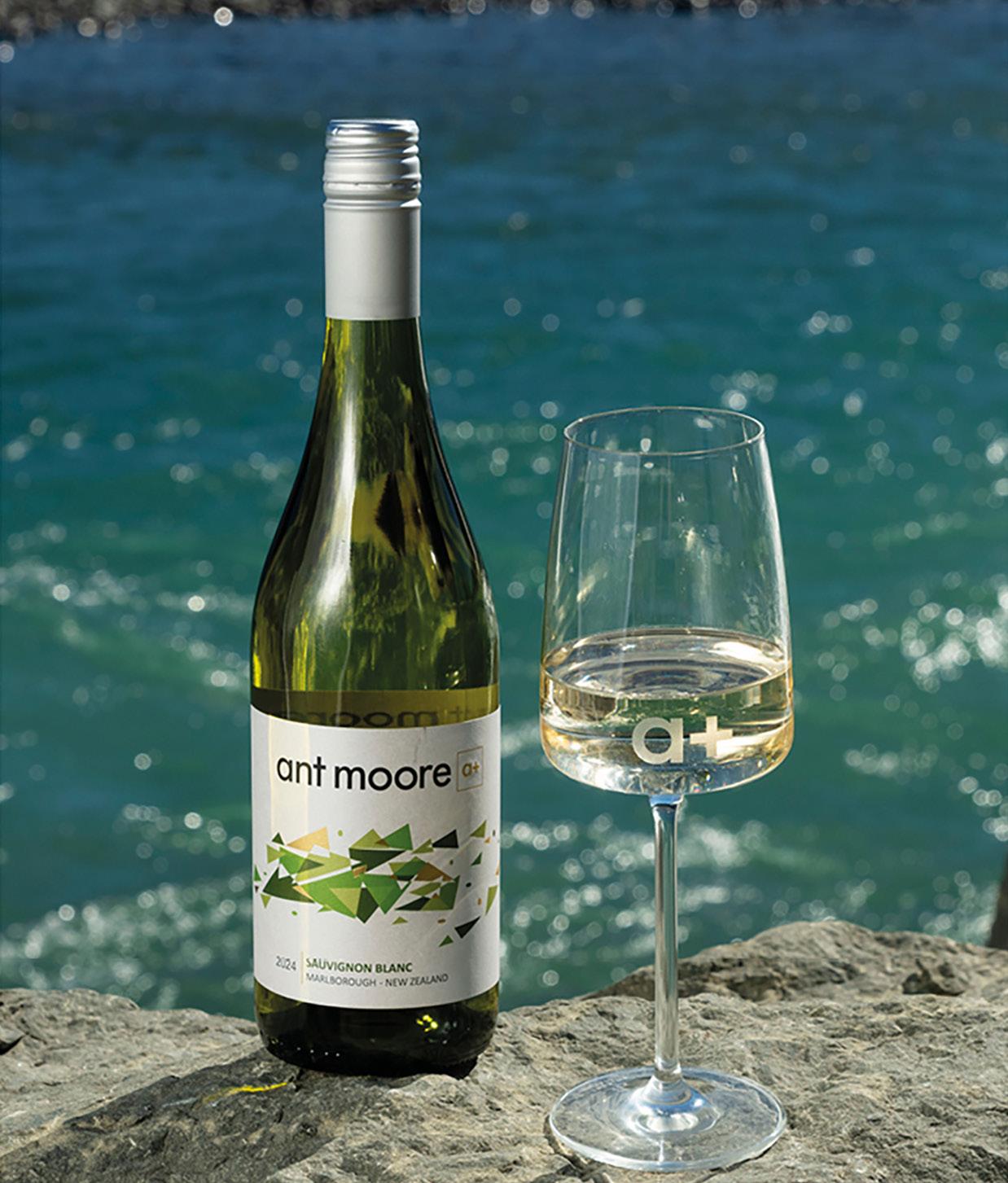
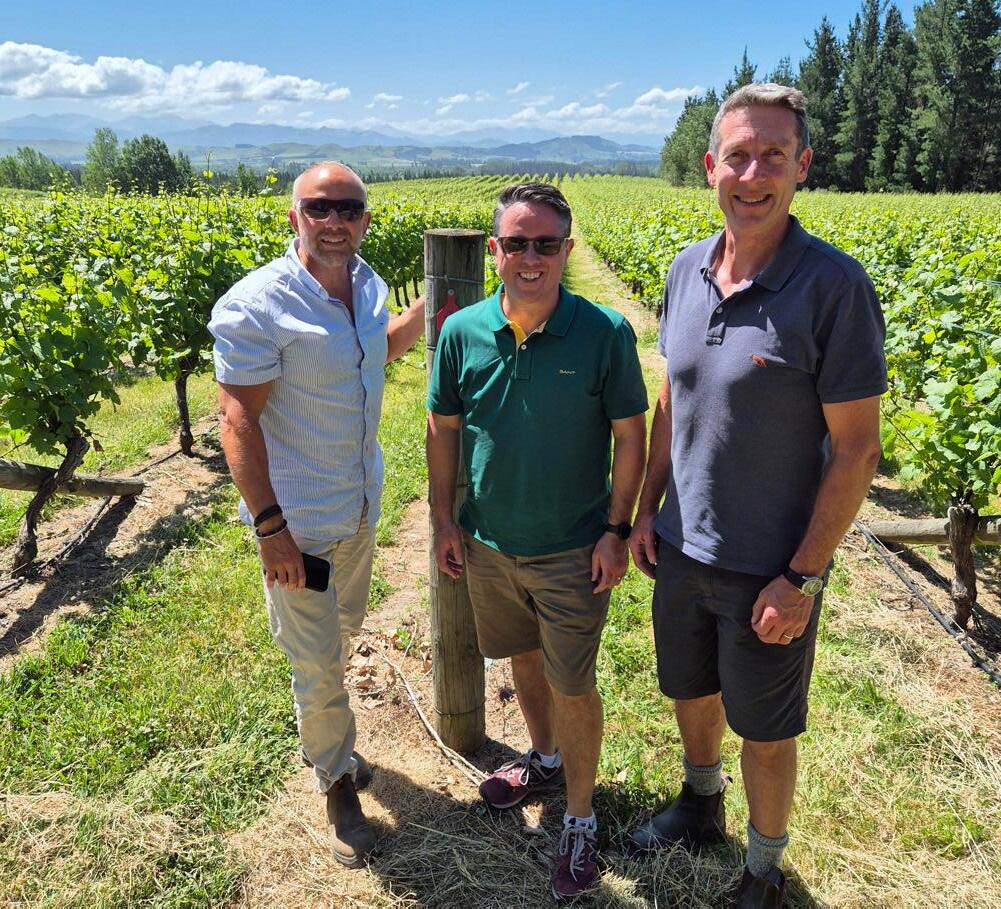

Frank Manifold
Merchants can taste six of these wines with the winemakers by signing up for a virtual tasting hosted by Amanda Barnes MW on Thursday, March 12 at 5pm.
Email events@condorwines.co.uk by Friday, February 27 to secure your place.
Find out more at condorwines.co.uk

North Canterbury is one of New Zealand’s most exciting – and still underappreciated – wine regions. Mt. Beautiful farms estate vineyards in Cheviot, crafting wines that balance purity, structure and a distinctive sense of place.
Led by winemakers Alastair Maling MW and Frank Manifold, the team focuses on nuance, texture and sustainable viticulture. Their wines offer a more restrained, refined expression of New Zealand – perfect for food occasions and trade-up options on a by-the-glass list and brilliant for independent retailers seeking something different with a real story to tell.
Mt. Beautiful Sauvignon Blanc RRP £16.79
Blackcurrant, passion fruit, dried herb and tropical notes all provide an enticing medley of flavours. The palate shows a similar fruit profile along with a creamy, textural richness, great weight, drive and finishing with a salty, salivating freshness.
Mt. Beautiful Chardonnay RRP £17.79
An enticingly complex bouquet with a fruit core of citrus, stone-fruit and nectarine complemented by notes of nuts, nougat and biscuit from the oak. The palate has a fine satin-cream touch leading to flavours of peach, nut, red apple and grapefruit, with a lengthy finish.
Mt. Beautiful Riesling RRP £17.79
A textural and mineral Riesling, with perfectly ripe flavours of citrus alongside an aroma of slate; medium dry on the palate, crisp with a floral character interwoven with citrus and further minerality. Long on the finish with electric acidity bringing refreshment.
Mt. Beautiful Pinot Noir RRP £22.49
Ripe black cherry and loganberry fruits alongside a savoury spicy note. The palate is gorgeous – loads of fruit and spice, textural yet silky and velvety with fragrant red fruits and a dark chocolate savoury finish.
Mt. Beautiful Rosé RRP £16.79
Fragrant, fresh summer red berry fruits on the nose combine beautifully with an intriguing mix of spice and savoury notes. The wine is dry, vibrant and perfect for hot summer days.
condorwines.co.uk/home/mt-beautiful-wines/
Published in association with Condor Wines
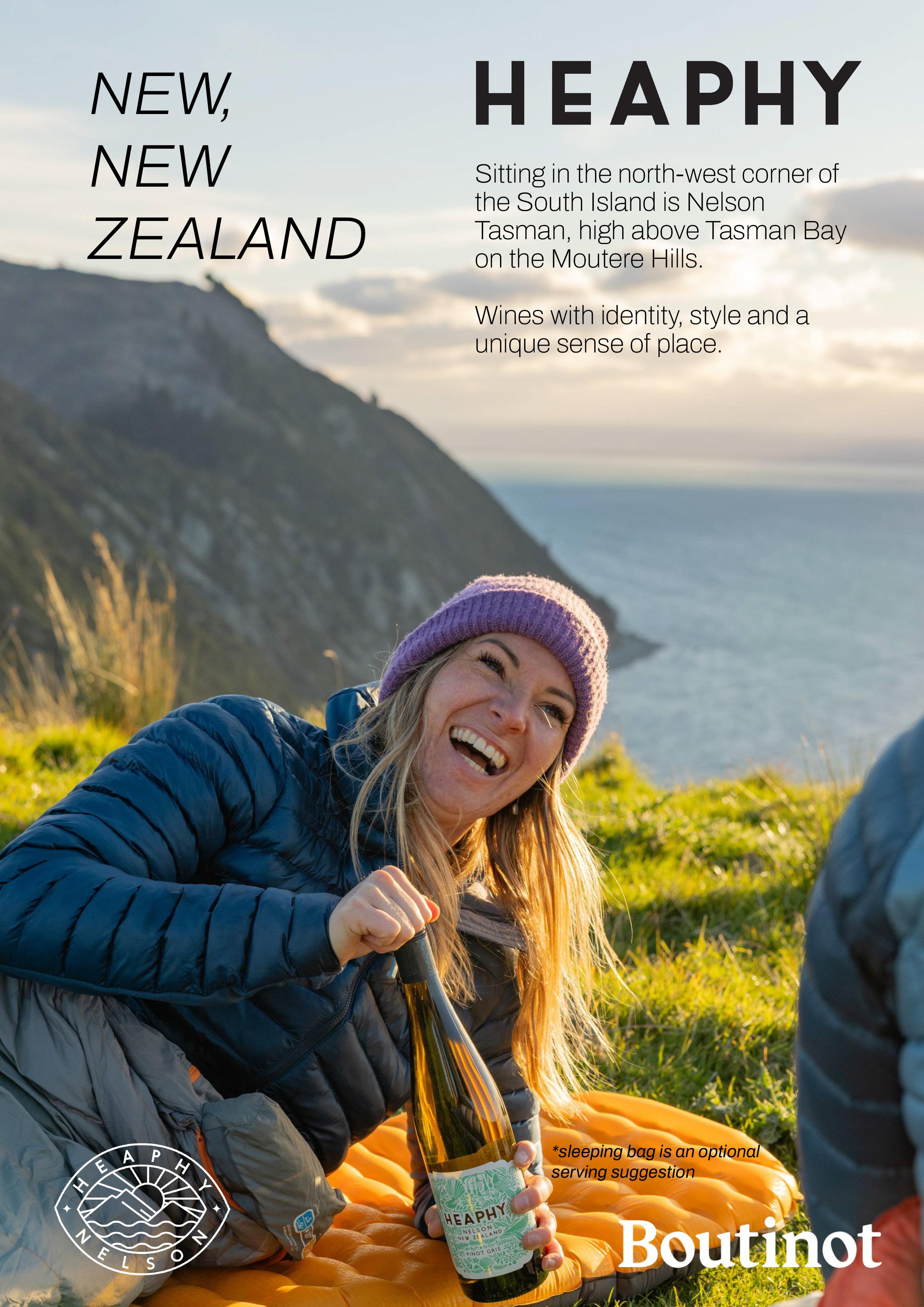
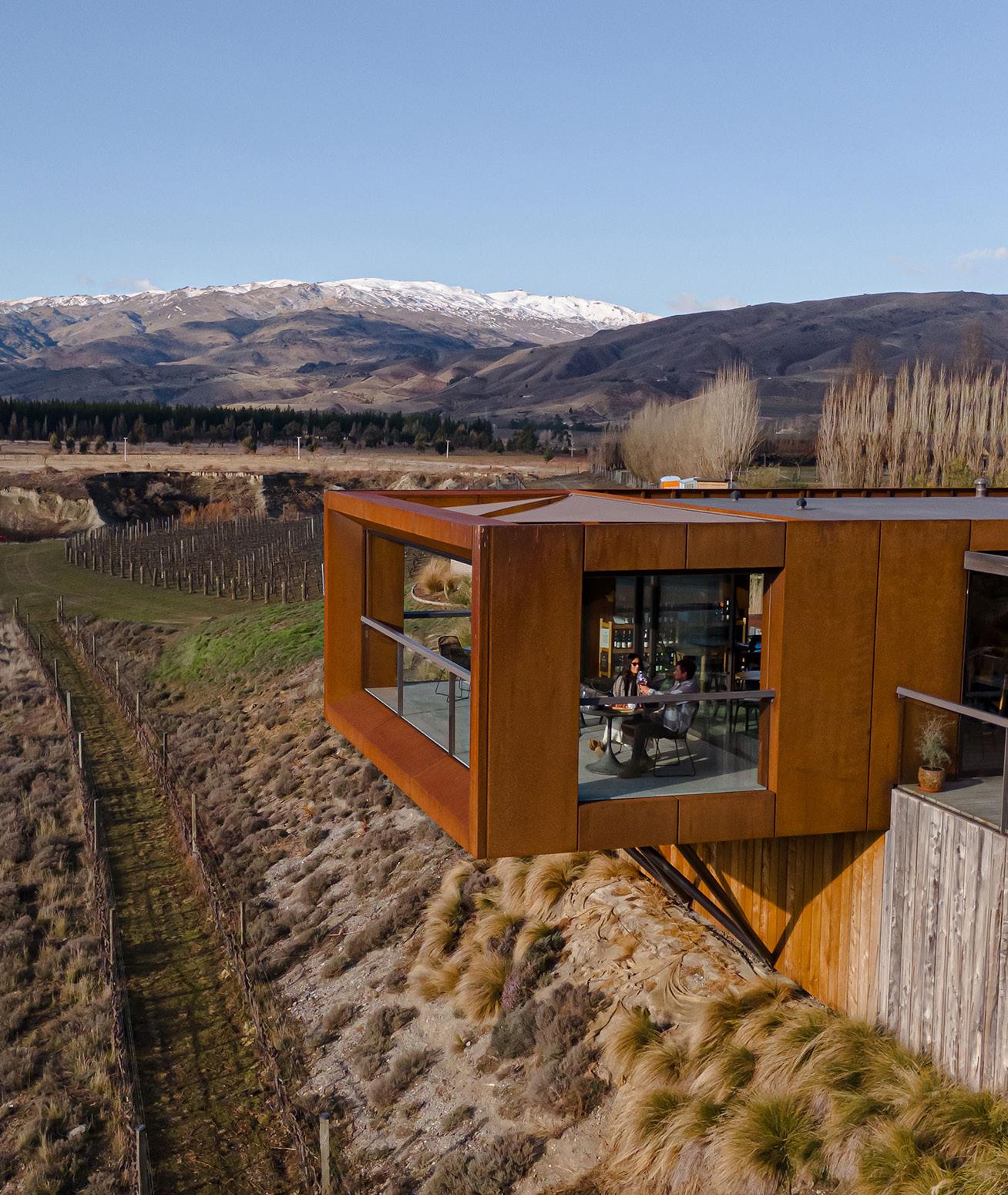
Te Kano, which takes its name from the Maori words for 'the seed', was established in Central Otago in 2016 and now farms its grapes in four estates. Winemaker Dave Sutton tells us more
Whenever we hear the words “Central Otago” we think of Pinot Noir. Are we missing something?
Yes, you are missing something! Although Pinot Noir remains our core focus, there are also exciting opportunities to taste other styles. We are super-excited about Chardonnay, and planted one of the largest Chardonnay vineyards in the region to explore the many facets that this complex wine can display. We have also found niches for less well-known red wines, with Gamay and Cabernet Franc both producing exceptionally bold and vibrant wines off our Northburn site.
You’ve chosen to work from four different estates. Could you summarise each one in three words?
Waitaki: chalky, fragrant, ethereal. Northburn: muscular, mineral, bold. Jerome: focused, structured, layered. Eliza: seductive, velvety, balanced.
The UK is waking up to the fact that New Zealand makes world-class Chardonnay. Has it always been great, or have standards been rising?
It is a combination of things, with a wider selection of clonal material available, a better understanding of site and a shift away from massive and oaky towards fresher wines with greater tension. These fresher styles better suit our cool climate, and it’s incredibly exciting to see our Chardonnays evolving and refining.
We’re kind of used to the idea that NZ Pinot can be exquisite. What do you try to achieve with yours, and are you bored of people referencing the Burgundian template?
Burgundy is a fantastic source of inspiration, but we can’t copy-paste from them and apply it to our context. We want our Land series wines to typify their subregion and show what Northburn, Bannockburn and Waitaki produce each season, enhancing them rather than forcing them into a mould. The Life series wines represent our estate style, with blending across the vineyards to craft something elegant, complex and instantly recognisable as Central Otago.
Tell us about Landwalker. Landwalker is a super subregional blend of our best single site Land parcels. We released our first vintage, the 2023, last year. It was designed as a nod to our Kiwi founder Keith Lloyd, who loves to walk the estates when he’s home. Our singlesite Land wines are made in such small quantities we decided we needed to make something that was the best of the best for international markets.
Sauvignon Blanc dominates most conversations (in the UK at least) about New Zealand wine. Do you think we need to take the blinkers off?
Sauvignon Blanc has its place as an entry into the world of New Zealand wine and, for many drinkers, it will be their first ever taste of New Zealand. Kiwis are blessed with a temperate climate, wide range of soils and climatic zones, and a willingness to give anything a go. I would encourage drinkers to explore the country, starting first in Central Otago!
What's the nicest compliment that Te Kano receives?
For me it’s the conversations with people who have seen the sites go from bare land to established vineyards. We have a regenerative approach with thriving vineyard ecosystems and areas of native plantings where once there was only bare rock. It’s that wider ecological impact that I find most satisfying about the Te Kano project.
What do you think you’ll do next?
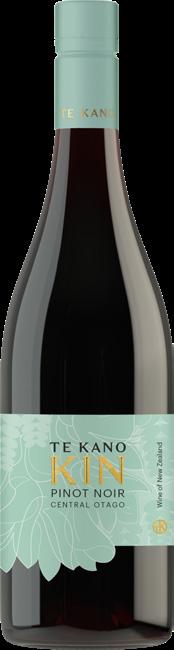
For us the journey is as important as the destination, and the footprints we leave behind us as we walk into the future. We have almost 10 years’ experience working within our sites, and the focus continues to be on refining our viticulture and winemaking to make the purest examples of our wines as possible. Winemaking is about evolution and refinement, experimenting a little each year and doing more of the things that work – and less of the things that don't.
Find out more at tekanoestate.com UK distributor: davyswine.co.uk

“ The two best wines I’ve tasted in the past two years have been from New Zealand”
New Zealand was the only country for us to grow last year in terms of turnover and items sold. The previous year we increased our sales by 110% and last year it was 5%, which I’ll take under the circumstances.
“One factor is that, despite the fact we are a small town in Northumberland, it’s amazing how many people who live in the local area have connections with the country, either through family or having visited or lived there.
“The other reason New Zealand does well is the product. There can be a bit of eye-rolling about New Zealand Sauvignon
Blanc because it’s so popular, but that’s because it’s unique and so good. Some people think it’s too one-dimensional or low-brow but we find that people come into the shop with that recognition of Sauvignon, usually Marlborough, and we can start playing on that and get them to try one from Nelson or Hawke’s Bay, which are bit more tropical. We’ve now got to the point where people don’t just come in and ask for Sauvignon from New Zealand, but for particular regions.
“Oaked Sauvignons offer another dimension and a more grown-up style that just emphasises the variety available. Once

you start taking people on that journey you can start going into other grape varieties: Albariño, Pinot Gris, Riesling – before you even get on to reds.
“You go into a supermarket and you might see Villa Maria Merlot and Pinot Noir, but there’s so much more to New Zealand red wine, across a wide range of prices.
“Chardonnays from New Zealand go very much under the radar too, because Sauvignon is where the money is, but they are some of the best I’ve ever had. We’ve also had some success recently with Gewürztraminer and Pinot Gris because they’re very food-friendly, particularly with the cuisines that people are eating for takeaways, like Chinese or Thai food.
“Tony Wellings at The Antipodean Sommelier is our biggest supplier in both volume and revenue. My two top selling wines are both his, which are Snapper Rock Sauvignon Blanc and Pinot Gris, both around that £12-£13 mark. After that it’s Fells, with Seifried and Nautilus, and then Hallgarten, where we’ve had some success with Craggy Range and Lake Chalice.
“The two best wines that I’ve tasted in the past two years have been from New Zealand.
“Two years ago, it was Te Mata Bullnose Syrah, from Fells, but last year I was introduced to Pyramid Valley from North Canterbury, made by Steve Smith, who started Craggy Range. For me they’re some of the best wines I’ve ever had from anywhere, not just New Zealand. They’re not cheap but they deserve the price tag. I’d go for the Pinot Noir, which is absolutely superb.”
Lawson's Dry Hills enjoys commercial success as New Zealand's most sustainably certified wine producer
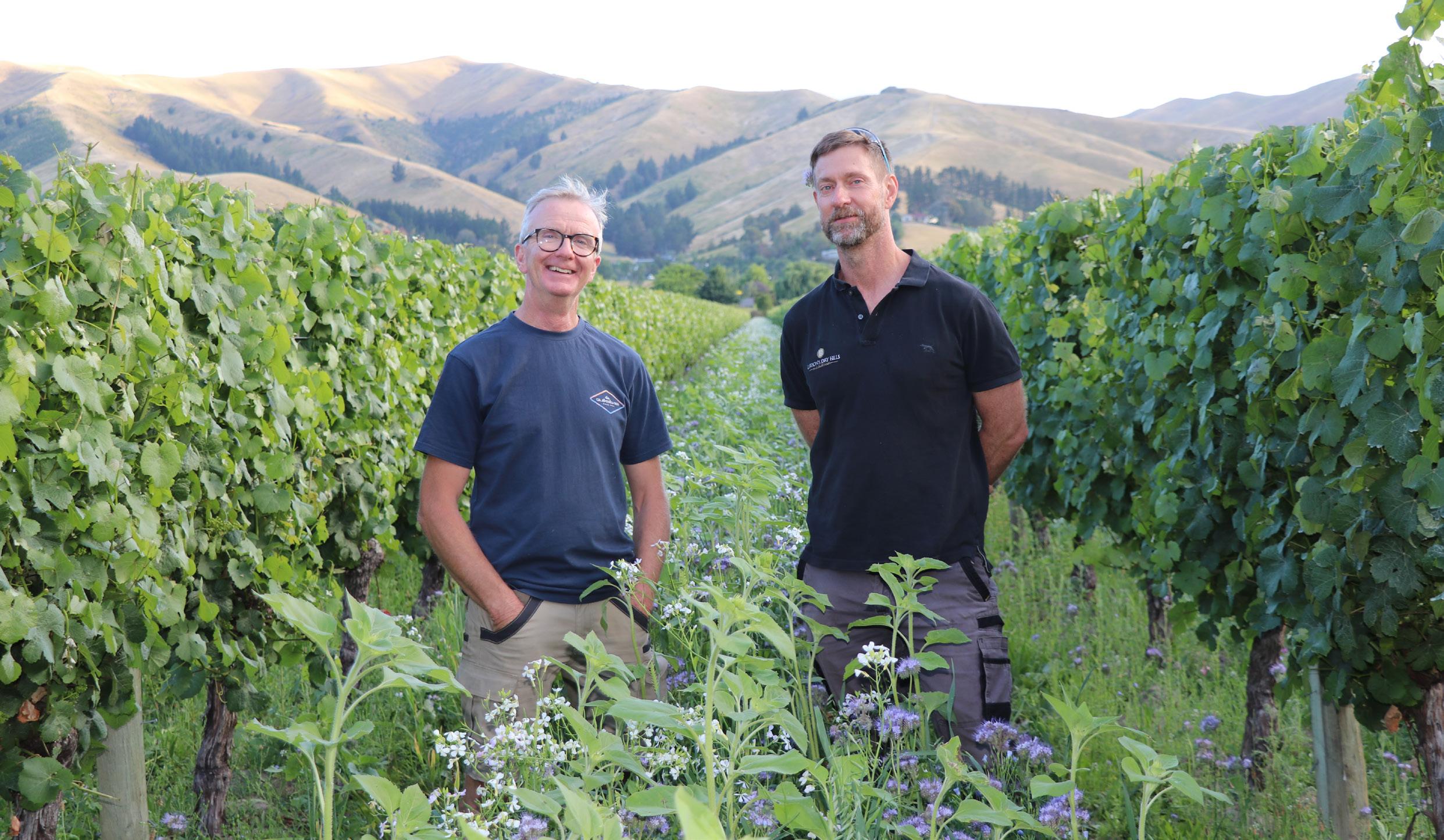
Lawson’s Dry Hills is one of Marlborough’s true pioneers. Not just because of its longevity, but because of the way the business embraces innovation and sustainability.
It was the first producer in New Zealand to bottle all its wines with screwcaps, and the list of certifications the business has achieved in its quest to reduce its environmental footprint is a long one. Read the audits for ISO14001, ISO14064, SWNZ and B Corp and it’s clear that being “New Zealand’s most sustainably certified wine producer” is no hollow boast.
“We can’t change the world, but we can make a difference,” says general manager Sion Barnsley.
“We have chosen to do something, rather than look at the global issues and feel overwhelmed because whatever we do, it isn’t enough. There is no apathy – we do what we can by making a concerted effort. The feelgood factor from being part of a proactive team is a great reward.”
Lawson’s Dry Hills is constantly evaluating its environmental sustainability and challenging itself (and its suppliers) to go further.
The use of diesel has been reduced by
upgrading machinery and switching to electric cars. An array of 200 solar panels and an ammonium refrigeration plant has meant the business is now far less reliant on grid power. Rainwater collection means the business requires 40% less water from aquifers than similar-sized wineries.
Emissions from waste to landfill have dropped 81% since 2020 thanks to smarter purchasing, and more recycling and composting.
Wine labels are no longer made from paper but from pulp derived from sugar cane waste. Bottles, weighing 390g, contain 69% recycled content and are New Zealand-made. All bottling and warehousing is based on-site.
The initiatives have been successful because the whole team buys into them.
“Our sustainability values are part of each employee’s terms of employment,” says Barnsley. “We also involve and inspire our team to ensure everyone has ownership and knows they can make a difference.
“We hold team events such as restoration of wetlands and native plantings at our vineyards. One of the team looks after our
bees, our native tree nursery, composting and the worm farm. The whole team has been involved in planting native trees at our vineyards and restoring wetland at our Waihopai site.”
The next stage of the journey is transitioning to regenerative farming.
It might all sound like expensive and labour-intensive stuff, but Lawson’s Dry Hills is reaping commercial rewards from its sustainability initiatives.
“Our key markets request ever more detailed environmental impact data which we complete with confidence,” says Barnsley. “This gives us a distinct advantage over competitors and gives valuable assurances to our customers and their customers – the wine consumer.
“The adoption of the triple bottom line – people, planet, profit – has delivered financial gain through more disciplined decision-making across every aspect of the business.”

“ The Pinots are at accessible prices compared to Burgundy. You get a lot for your money”
We first started to get traction for New Zealand in the late 90s. There’s always been a lot of love for it because it’s so easy to like, particularly Marlborough Sauvignon Blanc. Consumers just loved it then, and still do, though we do see there’s a little bit of, not weariness, but maybe a dropping-off and people looking for other things.
“A couple of years ago New Zealand Winegrowers focused just on Sauvignon [with its indie promotions], and that was OK, but I was glad to see them open it up to New Zealand wine generally, which gives us a lot more scope to reinvigorate the country for consumers.
“You do largely see good quality across the board [on Sauvignon] but there are some poor wines at entry level where they’re trying to hit price points, particularly tankered wines coming into supermarkets, which New Zealand has been very good at avoiding in the past.
“It first came into the market with a premium proposition, not the cheap and cheerful stuff that Chile and South Africa started off with. Those countries really struggled to get their prices up after that, but New Zealand came in at a certain price point and people always knew they were going to spend a little bit more for it. It’s largely been pretty good at keeping that up.
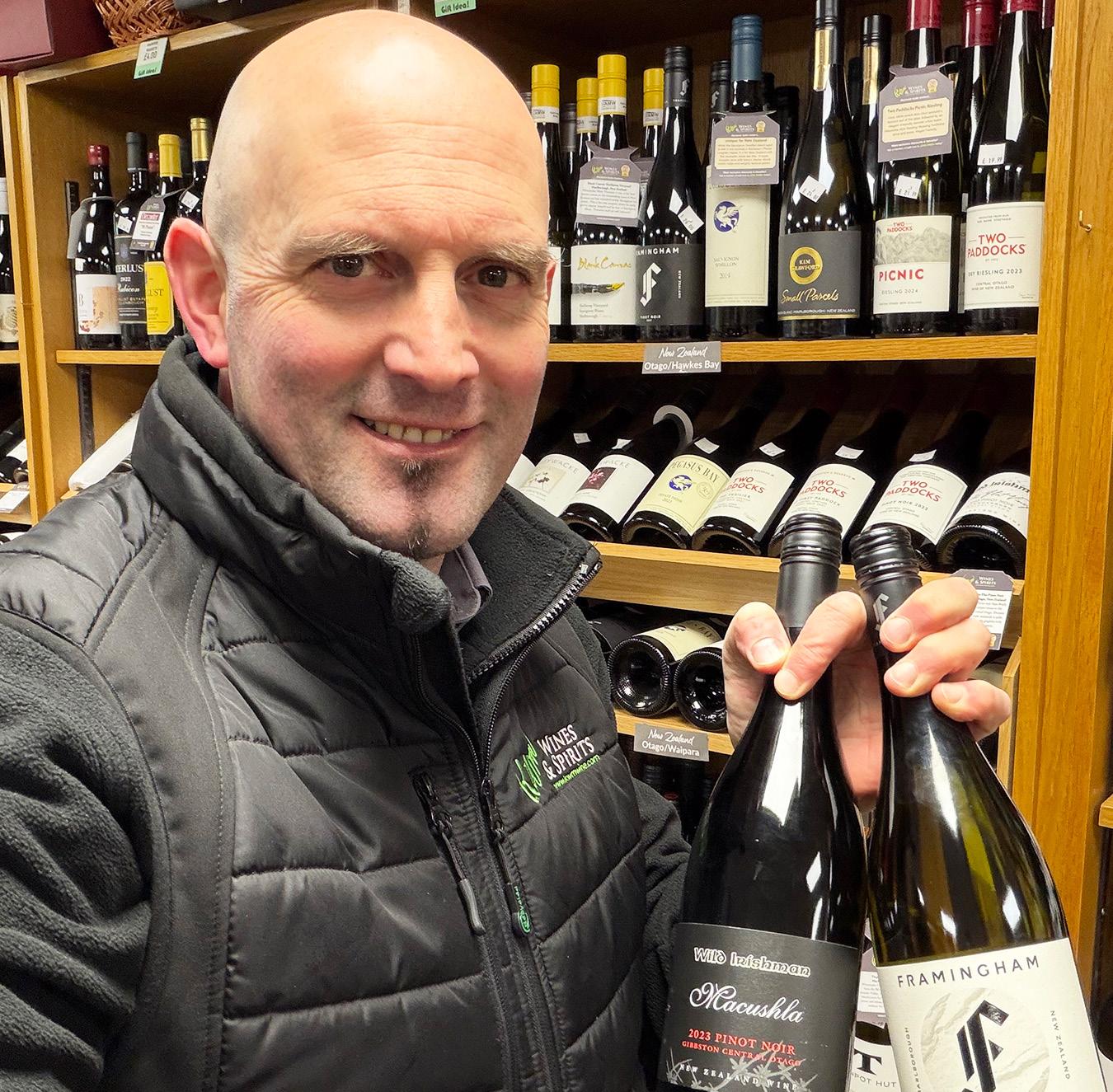
Around £13 is probably our entry point for New Zealand Sauvignon these days.
“I like Lawson’s Dry Hills for Sauvignon. It’s got different levels within its portfolio: 3 Wooly Sheep [RRP £13.95] is probably the entry point for us with it. We sell bucket loads and it’s always consistently very good bang for buck.
“I’m also a big fan of Framingham’s wines. The Sauvignon [RRP £18.85] from them is really cool: they do a lot of interesting things in the cellar with gross lees, fine lees and a bit of acacia barrel. It’s got a nice smoky complexity, a really textural sort of wine – classy stuff.
“Pegasus Bay, from Waipara in the Canterbury region, makes some really nice barrel-aged Chardonnay [£32.95] and a Pessac-style Sémillon-Sauvignon blend [RRP £24.95].
“In Central Otago, there’s a Northern Irish guy, Brian Shaw, who has teamed up with Alan Brady of Gibbston Valley and Mount Edward, to make The Wild Irishman. They’re making some fantastic Pinot; the Macushla [RRP £43.95] and Doctors Flat [RRP £45] are really impressive. The beauty of them is that they are at accessible price points if you compare them to Burgundy. You get a lot for your money. They’re brought in by a local importer in Northern Ireland but I don’t think they’re widely available because the quantities are really tiny and the wines get good critical acclaim in New Zealand.
“I took a year out 20 years ago and was in New Zealand for a month and managed to see a few regions, whistle-stopping around Waipara, Martinborough and Marlborough. But I spent a bit longer down in Central Otago. It’s a beautiful region, both for its wines and visually; it’s a sensational place.”




Phoebe Weller of Valhalla's Goat in Glasgow is our unregulated agony aunt

Dear Phoebe
I’m retiring and have decided to split my wine shop between my three daughters, depending on who loves me the most. The two who gave me the best pitch have now thrown me out on my ear. The other one I disowned because she didn’t seem to give a shit but now she won’t return my calls. What should I do?
Edward, Sandwich
Dear Edward Boohoo for Eddie. For many of us, retirement seems like a distant promise made in a time when elves and talking donkeys ruled the world. And are you sure you want to retire? Studies have shown that retirement increases the risk of chronic illness, cognitive decline and mortality. What a pickle you’ve got yourself into, but you’ve only yourself to blame, Boomer.
HTH! Phoebe
Am I just being an ancient eejit?
Dear Phoebe
You’ve probably heard of me, I’m a Big Gay Deal in the wine world. I’ve fallen for an exotic queen in another country and I’m spending most of my time drinking and carousing with them. My business partners are pissed and saying I need to get with the programme. Please advise.
Tony, Dundee
Hi Tony
What’s to stop you using your exotic

excesses as an add-on to your business back in Blighty? A decadent weekend hosted by fabulous people somewhere exotic? Sign me up. This is an opportunity to make play pay.
HTH, Phoebe
Dear Phoebe
I manage one of three shops for an owner who lives abroad. Last week, three wise sisters said that I should be in charge and that one day I would. My wife got wind of this and has some nefarious plan she wants me to carry out when the owner’s staying with us next month. How should I handle this?
Mac, Macclesfield
Dear Mac
What does Mac want? Does Mac have any thoughts of his own? This is the problem
with women, they’re all spooky and get this by doing that and don’t say it straight and maybe they meant that when they made me a sandwich without butter and before you know it you’re involved in some “nefarious plan”. Tell you what I’d do – go on an exotic decadent holiday. I can hook you up.
HTH! Phoebe
Dear Phoebe
What care I who calls me well or ill?
Wilma, Penmaenmawr
Dear Wilma
You said it girl. Telling you, what a bunch of miserable moaning men were in the postbag this month. You yabba dabba doo what you like!
Phoebe

In the UK, we’re proud of our proximity to some of the finest winemaking in the world, but much of the time we’re fixated on France, Italy, Spain and Portugal.
A little further east, countries that once belonged to the communist bloc are witnessing a revival of their winemaking traditions and producing exciting, modern wines that can broaden the horizons of specialist merchants.



Wine has been produced in Armenia for 6,000 years, and its post-communist production has tapped into some rare old vines that were planted long before phylloxera wreaked its havoc across Europe.
Today’s boutique wineries, which often work with clay amphorae, have a wealth of varieties to explore, such as Voskehat, Tozot and Koghbeni. The most celebrated variety is Areni Noir, which produces fragrant, medium-bodied and spicy reds.

Bulgaria entered the UK market with bargain-basement wines and, although its exports now hit more premium levels, prices are still attractive. Producers are increasingly interested in single-vineyard bottlings, less extracted styles and far less oak. Pét nats, skin contact whites and amphora-aged wines are all gaining traction among a new generation of producers.
Vineyard area has fallen to around 25,000ha in recent times, but with an increased emphasis on quality over quantity.
The Thracian Lowlands in the south are a reliable source of quality reds (and some very credible whites) and it’s here that many indigenous varieties thrive. Conditions in the Struma Valley, in the south west, are hotter and drier, giving the wines a more Mediterranean character. Further to the east and north, where the climate is cooler, expect to find aromatic whites and sparkling wines.
Cabernet Sauvignon and Merlot have become Bulgarian specialities, and are widely planted. Local red varieties include Mavrud (which can be rich and tannic), Melnik (sometimes compared to Nebbiolo) and Rubin (a Nebbiolo-Syrah cross). Among the whites, Dimyat makes simple, perfumed wines, as do the various incarnations of Misket.
Bulgaria will be represented at the Ivo Varbanov Wines Selection portfolio tasting on February 19 at the Bulgarian Cultural Institute in London (tickets available via Eventbrite).

Graševina, Malvazija Istarska, Pošip, Grk, Škrlet and Žlahtina are all indigenous white varieties that delight fans of Croatian wines – a group whose numbers are being swelled by tourism. The most interesting red wines are often made from Plavac Mali, Babić, Teran and Frankovka (Blaufränkisch).
Croatia has 66 PDOs across four main regions, which are Istria & Kvarner, where Malvazija Istarska makes crisp, aromatic and gastronomic wines; Slavonia & Danube, where Graševina perfoms a Riesling impersonation; Croatian Uplands, a hotspot for racy whites; and Dalmatia, where Mediterranean-style reds and marine-influenced whites are worth exploring.

This tiny former Soviet republic has been on the radar of UK wine merchants for some time, with many retailers getting the chance to go on buying and educational visits thanks to generic funding.
There are perhaps 600 indigenous grapes to explore, though only a tenth of these are produced commercially, often fermented and aged in the underground clay vessels known as qvevri.
Saperavi tends to take most of the limelight, a red-fleshed grape producing rich, structured wines with robust tannins. Rkatsiteli is a high-acid white variety that can also make intense skin-contact wines.


Márkvárt Family Estate, Szekszárd, Hungary
Márkvárt has been farmed by János since 1996. His 5.2 hectares have been certified organic since last year, focused on local grapes and traditional field blends like Kadarka, Kékfrankos, and Bikavér. Some of the Kadarka comes from over 100-year-old bush vines, giving spicy depth and vibrant fruit while staying fresh and light. Their Bikavér follows tradition, built on Kékfrankos, blended with Kadarka, Cabernet Sauvignon and Syrah for balance, structure, and bright character.
János Németh, Szekszárd, Hungary
János Németh is a new-generation winemaker based in Szekszárd, crafting elegant, terroir-driven wines that balance regional tradition with modern precision. Working with minimal intervention, he produces expressive, characterful wines. Deverto Cabernet Franc is pure and elegant, bright with fresh acidity and refined structure. Aromas of red and black berries, gentle herbs and delicate spice. A classic bistro-style wine, it offers finesse, balance, and effortless drinkability.
Lake
Sabar Estate Kéknyelű is a true rarity, grown only in Badacsony by Lake Balaton. Boutique Sabar is on volcanic basalt soils giving striking minerality and freshness. This native Hungarian variety, once nearly lost, thrives here thanks to the lake’s cooling influence. The 2024 Kéknyelű shows delicate floral notes, citrus, green herbs and white stone fruit, with crisp acidity, fine structure and a long, clean, volcanic finish; precise, elegant, and distinctly regional. Pronounced “Kayk-nyeh-loo”.
Gizella Furmint–Hárslevelű is a blend from eight outstanding vineyards, sourced from a combination of loess and volcanic soils, contributing both fruitiness and minerality. Hárslevelű brings honeyed, floral pollen and tropical notes, while Furmint provides gentle acidity with aromas of whitefleshed pear and grapefruit. Aged in stainless steel to preserve its fresh, vibrant fruit character.
Péter Winery is dedicated to producing precise, elegant wines that express Tokaj’s terroir through traditional craftsmanship. The Peter family excels in showcasing the region’s treasures, especially in their outstanding value Szamorodni and 6 Puttonyos Aszú. The Szamorodni offers classic Tokaji aromas of apricot, honey, vanilla and botrytis with balanced sweetness and acidity. The Aszú is richly layered, combining quince, dried apricot, honey and vibrant acidity with remarkable depth and balance.
Péter Benedek and his family weave four generations of tradition into gentle, modern winemaking, working in quiet harmony with nature. Sauvignon Blanc from the Epreskert vineyard is fresh and vivid; Pinot Noir from the Tűzköves vineyard is silky and generous, with bright red fruit, soft spice and smooth tannins. These wines are for those who want to discover how new regions approach well-known grape varieties, whilst still looking for high quality at a great price.
Géza Balla, Minis, Romania
Balla Géza expresses the character of the Miniș region using native grape varieties and minimal-intervention winemaking. Feketeleányka (Fetească Neagră) is delicate and fruit-forward, with ripe plum, blackberries, silkiness and gentle spice. Királyleányka (Feteasca Regala) is aromatic and fresh, with orchard and stone fruits, wildflowers and subtle tropical notes. Kadarissima is a rare wine that revives the historic Ménes red aszú style, offering sour cherry, dark chocolate and lingering botrytised complexity.
Plains, Bulgaria
Burgozone is a boutique, family-run winery set on the slopes of the Danube in northern Bulgaria. Named after a Roman fortress on the ancient Via Istrum, Burgozone blends history with a modern, elegant vision of Bulgarian wine. The Cote de Danube range focuses on fresh, fruit-driven styles from varieties such as Viognier and Pinot Noir, while the Via Istrum and Collection ranges offer more serious, structured wines, using Balkan grapes such as Tamyanka and Gamza.
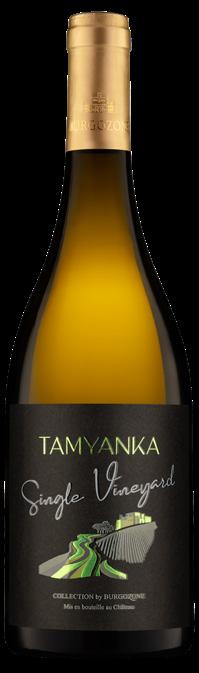
Delibo Wine Agencies has recently expanded its portfolio with several truly exciting producers in central and eastern Europe, working with both local and international grape varieties. With György Zsiga bringing expertise in CEE wines, the range now includes distinctive native grapes such as Kéknyelű, Furmint and Kadarka alongside well-known international styles, offering unique, characterful wines that have proven highly successful in the UK market.
Sponsored feature
orders@delibo.co.uk 07802 405627 delibo.co.uk




There are now 22 recognised wine regions in Hungary, reflecting the diversity of the country’s terroir. Around 180 grape varieties thrive here, and winemaking expertise has been on an upward trajectory since the fall of communism.
Today, there is plenty to excite UK wine merchants. White styles dominate production, often with a mineral character that speaks of their volcanic origins, while reds are acclaimed for their freshness and balance.
Tokaj’s world-class sweet wines need no introduction, and its principal grape, Furmint, has also gained a big following for its dry wines, which often have a fiery acidity. Among the reds, Kékfrankos (known in Austria as Blaufränkisch) is perhaps the most interesting and versatile, and the main component of Egri Bikavér.
Hungary makes distinctive styles of Pinot Noir, Cabernet Franc and Sauvignon Blanc – sometimes vinified as single varietals, and often blended with local varieties.

Sandwiched between Romania and Ukraine, Moldova is a small country with a big winemaking heritage: it claims to have more vines per person than anywhere else on earth.
During Soviet times, its wines were favoured by leaders in Moscow and its tradition of making quality wines is as authentic as that of any former communist republic in eastern Europe.
Fetească Neagră and Rară Neagră are the red varieties that tend to cause most excitement among those looking for wines with true Moldovan character, while the zesty, aromatic Viorica leads the charge for native whites.
But visitors are often surprised by the quality of wines made with international varieties (which actually dominate production). Saperavi, a Georgian favourite, also thrives in Moldova.
There are four main regions: Codru (centre), Ștefan Vodă (south east), Valul lui Traian (south west), and Bălți (north).

Romania’s rich winemaking history, and its prodigious output, aren’t always apparent in the UK, as the domestic market consumes almost every drop of what’s produced. For a while the country was perhaps best known here for its cheap and cheerful Pinot Noir, which sometimes bore little relation to counterparts in western Europe or the new world.
Romania has 33 PDOs and a wide range of terroirs. Its star varieties are Fetească Regală (making crisp and aromatic whites) and Fetească Albă, a white favoured for sparkling wines.

Serbia does not yet have the cachet of some of its neighbours, but its modern winemaking scene has started to create ripples of interest beyond its borders.
Small family winemakers have started to emerge, and new investment suggests that this is a country to watch.
Grašac (Welschriesling) is a versatile white with crisp acidity; Prokupac is the best-known local red, often making light, fruity wines but also capable of more structured and concentrated styles.
Ernest Hemingway wrote “to go to bed at night in Madrid marks you out as a little queer … nobody goes to bed in Madrid until they have killed the night”.
It might reasonably be presumed therefore that the fuel which keeps the social fires burning until the wee hours in Spain’s capital is wine, likely sourced from the vineyards surrounding the city in the DO Madrid. “A city whose global reach often overshadows its surrounding region” is how the brochure put it.
It is a name largely unknown in the UK market, obscured by the behemoth that is Rioja and drowned out in the clamour made by other more shouty wine regions such as Ribera del Duero and Rías Baixas. DO Madrid’s production of Garnacha and Tempranillo wines, together with the
intriguing indigenous white varieties, Malvar and Albillo Real, is shaped by the soil and climate, deserving of the spotlight. Move over Albariño.
A trip organised by the Vinos de Madrid Regulatory Council saw 10 merchants and writers gather in somewhat inclement weather on a Monday in October. The rain in Spain does not stay mainly on the plain, and much needed precipitation fell on Chinchòn, at 750m altitude, 45 minutes south east of Madrid and our base for the two days – an attractive historic town with a bullring, in action the night we arrived.
A speed dating-style tasting session (complete with bell rung after 20 minutes and a gentleman I would have scored highly) on the first morning was an efficient way to introduce us to eight producers from the DO, get a quick hold
on the geography, soils, altitude and grape varieties, and draw some promising initial conclusions.
This is a region of small family producers, low-intervention winemakers like MW student-one-to-watch Alvaro Ruiz, and old-vine Garnacha, which shines on the high-altitude stage here (480m-1,000m).
Tinta Fino/Tinto Madrid (aka Tempranillo) plays a secondary role, blended often with Syrah, Cabernet or Merlot. It’s the white grapes Malvar and Albillo Real which are the ingenue stars, accounting for most of the region’s output across the 42 wineries.
Altitude mitigates the continental Mediterranean climate; cool nighttime temperatures, a wide diurnal range and long growing season aid Garnacha, and these white grapes, to reach phenolic
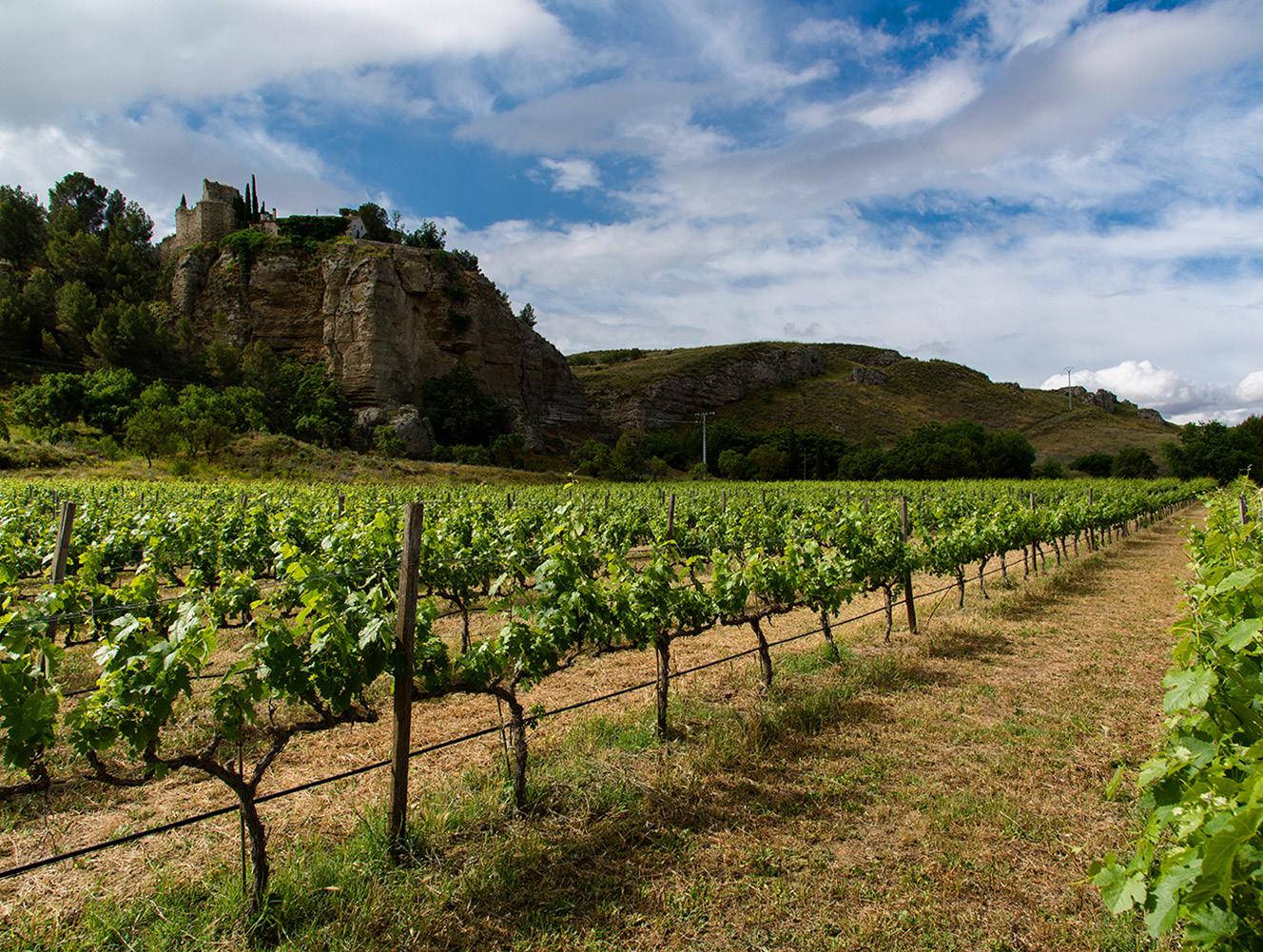
Bodegas
ripeness without losing freshness or acidity.
The PDO is demarcated to the north and west by the Sierra de Gredos, a vertical mountain range separating Madrid from Castilla y Leon, and to the east by the Alcarria, a moderately high plateau with a harsh continental climate.
The Tagus river acts as a natural border to the south. Six tributaries cross it, marking out the region’s viticultural sub zones: San Martin de Valdeiglesias, Navalcarnero, Arganda, and El Molar. Soils in the first two are composed of sandy loam, and in the latter loam and clay loam. Vineyards are mostly dry-farmed with goblet-trained low bush vines, providing an ideal sunshade for the fruit and allowing for gradual ripening.
Small is beautiful here – there are no big corporates, just family producers of a third or fourth generation, with an enthusiasm for slow farming and polyculture (chickpeas and olives rub shoulders with grapes). It’s all to the region’s credit, as the character and soul shine through brightly in the wines.
Day two provided the chance to see some diverse terroirs and visit three excellent small producers. Bodegas Licinia is a courageous enterprise led by smiley ex-industrialist turned wine appassionato Victor Cabello. Just four wines are made: the premium red and white have both been awarded Best Wines of Spain by Nariz de Oro and 91-92 Parker or IWC points, so no wonder he smiled and can afford the exclusive cover crop seeds he ships from Napa. These were arguably the best wines of the trip: a Super-Madrileño take on its Tuscan cousin, complex and savoury Tempranillo blended with Cabernet, Syrah and Merlot, alongside the mini-Meursault, Licinia Blanco, a delightfully rich, umami, barrel-aged Malvar/Torrontes blend. An indistinct doorway off the main street of
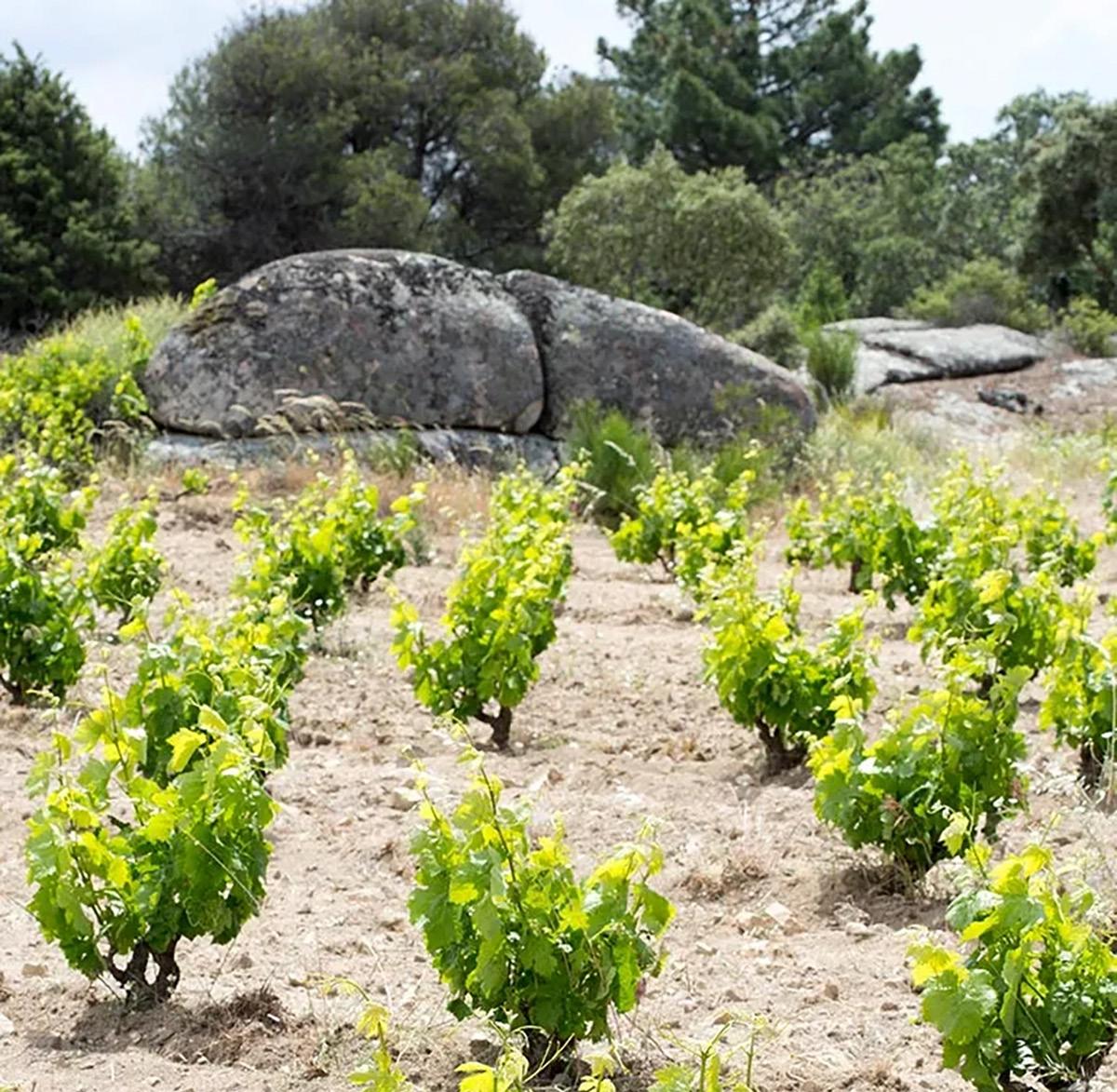
Navalcarneros led us next to Bodegas Munoz-Martin. A Jenga-like compaction of steel tanks squeezed into a tiny winery had replaced a 1950s underground cellar, with the old stone tanks carved into the walls and an ancient Garnacha vine spotlit like a Giacometti figure. A more naive artist had crafted the fun stick-figure labels for their impressive Esto Es Vida wines: a refreshing, peachy Malvar at only 11.5% abv and a blackberry, balsamic and spicescented Garnacha working well slightly chilled with our plates of jamon y queso.

The heavens opened as our minibus wound its steep and rocky way up a rutted track to the final winery, Las Moradas de Saint Martin in Valdeiglesias at 950m between Allida and Toledo. Imposing granite outcrops, juniper, pine trees and fynbos-like flora lined the Garnacha vineyards, some as old as 113 years, on sandy soils.
Resurrected by Isabel Galindo and Telmo Rodriguez in 1999, the project is now run by the Enate winery in the Pyrenees. Exciting, experimental winemaking was in
evidence here, in particular highlighting the Albillo Real grape.
Blending parcels from three different winemaking techniques (usual, oxidative and passito-style) lent the flagship white some serious depth and complexity, with a nutty, briny, saline profile. The 2018 Las Luces Garnacha from the oldest vines spent 18 months in new French oak and showed great concentration of stewed plums with a lift of blood orange; this was a stunning surprise pairing with retorcidos, deep fried sugary pastries made with egg and cinnamon. Labels here pay tribute to Spain’s literary culture using fragments of quotes from contemporary writers. These were somms’ dream wines and deserve to be seen in the UK.
Notwithstanding the high abv of the reds (15%-15.5%), quality wines abounded from this uncharted region rarely heard of in our market; one with such easy access from the capital merits greater wine discovery and tourism. Some wise sage once said that “Spain is passion you can feel in the air” – and this is undoubtedly also true in the wines of DO Madrid.
There’s a choice of north or south of England locations for the major tastings of the year from Boutinot, the supplier consistently voted the one indies most like working with in our annual survey.
There will be 40 visiting producers pouring their wines, many of which are new to the Boutinot portfolio.
Pre-registration is a must, through wine@boutinot.com or Boutinot account managers.
Monday, March 2
Hallé St Peter’s
40 Blossom Street
Manchester M4 6BF
Tuesday, March 3
Christ Church Spitalfields
Commercial Street
London E1 6LY
Wales still flies a bit under the radar compared to the adulation bestowed on English wine, but it is home to more than 30 producers, making sparkling and red, white and rosé still wines.
A group of them will be heading to London to present award-winning wines, new releases and latest vintages.
More details and registration via lauren. smith@levercliff.co.uk.
Monday, March 2
67 Pall Mall
The day dedicated to the grape behind some of Italy’s most acclaimed fullbodied reds is back for a fourth year.
The organisers promise that every Italian region where Nebbiolo is grown will be represented, with a walk-around tasting featuring the latest releases from each visiting producer.
Vineyard cartographer and Nebbiolo expert Alessandro Masnaghetti will host a couple of masterclasses.
Contact walter@walterspeller.com for more details and to register.
Tuesday, March 3
Lindley Hall
80 Vincent Square
London SW1P 2PB
The importer will showcase the full breadth of its portfolio, including family-owned producers, new vintage releases and recent portfolio additions.
Featured producers include Bollinger and Ayala Champagnes, Taylor’s port, Delamain Cognac, Domaine Chanson
of Burgundy, Oregon’s Spottswoode and Ponzi, Langlois from the Loire and Hampshire’s Exton Park, which joined the Mentzendorff line-up last year.
Guests can expect a programme of expert-led masterclasses, with sessions on sparkling wine and port, plus a panel discussion featuring a selection of brands from the portfolio.
To register email eve@mentzendorff. co.uk.
Tuesday, March 3
One Great George Street
London SW1P 3AA
Canada’s High Commission is hosting the first UK tasting dedicated to the country’s spirits.
It will feature products from British Columbia, Alberta, Saskatchewan, Nova Scotia, Ontario, Quebec and Yukon, including gin, vodka, whisky and unusual local spirits that organisers say aim to capture “the tastes of the nation’s fields, forests and seas”.
Registration via alexm@williammurray. co.uk.
Tuesday, March 3
Canada House
Trafalgar Square
London SW1Y 5BL
The team news wasn’t in on this one as we went to press but Thorman Hunt has a squad of 14 producers from the Golden State to choose from, so there’s sure to be plenty to get keep Californiaphiles happy.
Recent additions include AXA-owned Outpost Wines and Platt Vineyard, based in Howell Mountain and West Sonoma Coast respectively.
Other names to conjure with include Sonoma’s Ceritas, Cuvaison Estate in Carneros, and Shafer from the Stags Leap District AVA in Napa.
For more information and to register email vanessa@thormanhunt. co.uk.
Wednesday, March 4
67 Pall Mall
London SW1Y 5ES
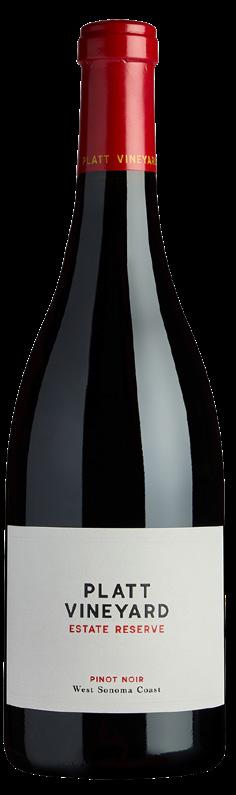
Tim Atkin MW hosts the annual tasting linked to his Rioja Special Report. It will showcase wines from producers he’s selected as First, Second and Third Growths from the region and those he’s highlighted as “rising stars”. Clare@island-media.co.uk can help with registration.
Monday, March 9
One Great George Street 1 Great George Street
London SW1P 3AA
The Somerset-based importer, an acknowledged specialist in Rhône and Burgundy, will feature a selection of classics, new vintages and recent portfolio additions.
It says it aims to give guests the opportunity to “revisit old favourites and discover what is new in our range”.
Richmond Wine Agencies and Ellis Wines are aiming to hit the high notes when they host their portfolio tasting at the Royal Opera House.
The event promises an eclectic selection of wines, including new agencies Tenuta Fratini, from the Bolgheri area of Tuscany, and Bodegas Hika, based in the Getariako Txakoliana DO of northern Spain’s Basque country.
Registration through lwishart@elliswines.co.uk.
Monday, March 9
Royal Opera House
Covent Garden, Bow Street
London WC2E 9DD
Contact miles@yapp.co.uk for more details.
Monday, March 9
67 Pall Mall
London SW1Y 5ES
The venue is an events space within the Royal College of Surgeons, so visitors should have the opportunity to carry out a thorough examination of producers’ wines before offering a prognosis on their commercial potential (we’re here all week!).
The company features fabled names such as Orenellaia of Tuscany, Spain’s Marqués de Murrieta and Alsace producer Schlumberger among the many in its portfolio.
Register with silvia.rizzo@mmdltd.co.uk.
Tuesday, March 10
The View 38-43 Lincoln’s Inn Fields
London WC2A 3PE
The Armit Wines tasting presents the opportunity to explore the depth and diversity of its ever-expanding portfolio. Each region will be represented, spanning Burgundy to Barolo, Champagne to Slovenia, Oregon to Austria, and Barossa to Bordeaux.
Alongside icons such as Château Lafleur, Tenuta San Guido, Domaine Leflaive, Château Carmes Haut-Brion, Rockford, Roagna, Château Pavie and Il Marroneto, Armit is introducing several new additions to its portfolio, including Bernhard Ott (Austria), Fèlsina (Tuscany), Montepeloso (Tuscany), Marchese Luca Spinola (Piedmont) and Moncalisse (Trentino).
Visitors will have the opportunity to “meet and engage with some of the world’s most celebrated producers, alongside a new generation of visionary winemakers shaping the future of fine wine”. Register with events@armitwines.co.uk.
Tuesday, March 10 (10.30am-4.30pm)
One Great George Street
London SW1P 3AA
This year’s Jascots gig includes a spotlight on what it calls “regional hero” producers who focus on respect for the environment and authenticity of style.
The tasting will also showcase the company’s exclusive partner producers, its range of value “essential wines” and an ontrade oriented fine wine service.
Registration via marketing@jascots. co.uk.
Tuesday, March 10
Glaziers Hall
9 Montague Close
London SE1 9DD
A diverse line-up for retailers on the eastern side of northern England to get their palates stuck into, without having to traipse down to London or across the Pennines.
Suppliers in attendance include Delibo Wines, Richmond Wine Agencies, Mentzendorff, Marta Vine, Hatch Mansfield, North South Wines, Fells, González Byass, Winetraders and Ucopia Wines. The event takes place at the home of the Northern Ballet. Tutus optional.
The importer will be presenting wines from its family-owned estates at this event in the City of London.
For the record, there’ll be wines from (deep breath!) Champagne, England, Burgundy, Beaujolais, Rhône, Loire, Alsace, Bordeaux, Languedoc, Roussillon, south west France, Provence, Italy, Spain, Portugal, Hungary, Greece, California, Argentina and New Zealand, plus some craft spirits.

Tuesday, March 10
The Northern Ballet, 2 St Cecilia Street Leeds LS2 7PA
Daniel Lambert and his team from the South Wales importer will be on the road to Manchester and London for their annual tastings.
There’s the chance to appraise the company’s award-winning French selection and take in new ranges from Nova Scotia, Margaret River and elsewhere.
Register with helen@daniellambert. wine.
Monday, March 16
Malmaison 1-3 Piccadilly
Manchester M1 3AQ
Tuesday, March 17
London Cru 21-27 Seagrave Road
London SW6 1RP
The company says the focus will be on “mindful viticulture and minimal intervention wines”. Registration via vanessa@thormanhunt.co.uk.
Tuesday, March 17
Merchant Taylors’ Hall
30 Threadneedle Street
London EC2R 8JB
The BFT returns, featuring, as the name implies, lots of fortified wines, though the line-up includes boutique producers, not just big ones.
Sardinia makes its debut and the spotlight will also fall on a mixologist plying his art, and a table of wines for 30th, 40th, 50th and 60th birthdays or anniversaries.
Masterclasses have been replaced by “highlight sessions” offering smaller, more focused and interactive experiences. These will feature: Kopke’s white, colheita and vintage ports; the small-batch port producer Porto dos Santos; Marsala from Pellegrino, Curatolo and Martinez; six VVO ports from five producers; and high-end sherry from Alvaro Domecq.
Register with admin@thebft.co.uk.
Monday, March 23
IET London, 2 Savoy Place
London WC2R 0BL
Les Grand Chais de France has expanded its indie and on-trade event from 150 to 250 premium wines for 2026.
The mini-tour calls at London and Manchester with highlights including a showcase of crémants from every region that produces them under one roof.
There will also be new listings from Chile, Spain, Germany and Hungary, and a focus on premium dealcoholised wines.
Tuesday, March 24
Vagabond Urban Winery
9 Deal Porters Way
London SE16 2AJ
Thursday, March 26
Castlefield Rooms
18-20 Castle Street
Manchester M3 4LZ
Sicily’s Etna DO is coming to London for the first time, with 38 producers pouring their wines at this walk-around tasting.
The event aims to “celebrate the majesty of the volcano”, and “immerse” visitors in Etna’s finest wines, in the metaphorical sense. To register email insidetna2026@ gmail.com.
Tuesday, March 24
Saatchi Gallery
King’s Road
London SW3 4RY
Halo Wines is offering the opportunity to taste latest releases, new vintages and old favourites from its portfolio.
There will be French wines from Champagne, Alsace, Loire, Burgundy, Beaujolais, Bordeaux, Madiran and Rhône. Germany, Austria, New Zealand, Italy, Spain, Portugal, Cyprus and Lebanon will also be represented.
Highlights include the latest addition to Halo’s portfolio, Dr Wehrheim from Germany, and the 2024 Coche, Charme and Tiara table wines from port and still wine producer Niepoort.
Register to attend with violaine@halowines.co.uk.
Tuesday, March 24
67 Pall Mall
London SW1Y 5ES
This specialist importer will be showing highlights from the portfolio that’s selected by independents for independents.
Vindependents supplies more than 1,000 wines to its 50 members, all of them leading independent UK wine merchants.
For more information contact louise@ vindependents.co.uk.
Tuesday, March 24
London W1 venue TBC
This annual tasting claims to be the foremost event at which to sample en primeur Bordeaux outside of the region.
Register with pandora.mistry@ businessfrance.fr.
Wednesday, March 25
Sabine
10 Godliman Street
London EC4V 5AJ
New Bank House
1 Brockenhurst Road
Ascot SL5 9DL 01344 871800
info@hatch.co.uk www.hatchmansfield.com

Hatch Mansfield

hatchmansfield


28 Recreation Ground Road
Stamford
Lincolnshire PE9 1EW 01780 755810
orders@abs.wine www.abs.wine

@ABSWines


The Links, Popham Close
Hanworth TW13 6JE 020 8744 5550
Mark Isham, south & London: mark@richmondwineagencies.com
Tim Hawtin, south west & London: tim@richmondwineagencies.com
Julia Langshaw, north of the UK: julia@richmondwineagencies.com
Monika Kent, north of UK monika@richmondwineagencies.com

Ground Floor
Bibendum Matthew Clark 16 St Martin’s Le Grand London EC1A 4EN
0207 449 1665 orders@walkerwodehousewines.com www.walkerwodehousewines.com

@WalkerWodehouse

Join us at the Royal Opera House as we return once more to this iconic setting for a day of discovery.
Explore an exciting range of new wines and firm favourites, meet the producers behind them and uncover the stories behind every bottle.
We’d love to raise a glass with you.
Date: Monday 9th March 2026
Time: 11am – 6pm, last entry 5pm
Place: Royal Opera House, London
RSVP: Please RSVP by Wednesday 25th February to your account manager (email details left)


Change up your antipodean wine offering to more than the average Barossa Shiraz and Marlborough Sauvignon Blanc with great value alternatives from McLaren Vale and Central Otago.
Dicey is a family-run winery in Central Otago, run by brother duo James and Matt Dicey. The terroir in this part of Bannockburn is not for the faint heart; often described as “unpredictable and potentially dangerous”, that is, incidentally, also the dictionary definition of “dicey”. Never shying away from a challenge, the brothers made wine.
Wines in the range:
• Dicey Pinot Noir, Central Otago
• Dicey Pinot Gris, Bannockburn, Central Otago
Battle of Bosworth owes its fame to a series of outstanding single-vineyard wines, made entirely from estate grown fruit. Winemaker Joch Bosworth is producing some of the most exciting and sustainable wine ranges in McClaren Vale and every label pays tribute to the natural biodiversity of the vineyards.
Wines in the range:
• Battle of Bosworth Puritan Shiraz 2019
• Battle of Bosworth Heretic 2023 Organic, McLaren Vale
Please contact your account manager for more information or to place an order.
Fells House, Station Road
Kings Langley WD4 8LH
01442 870 900
For more details about these wines and other wines from our awardwinning portfolio from some of the world’s leading wine producing families contact:
info@fells.co.uk www.fells.co.uk

@FellsWine

je_fells

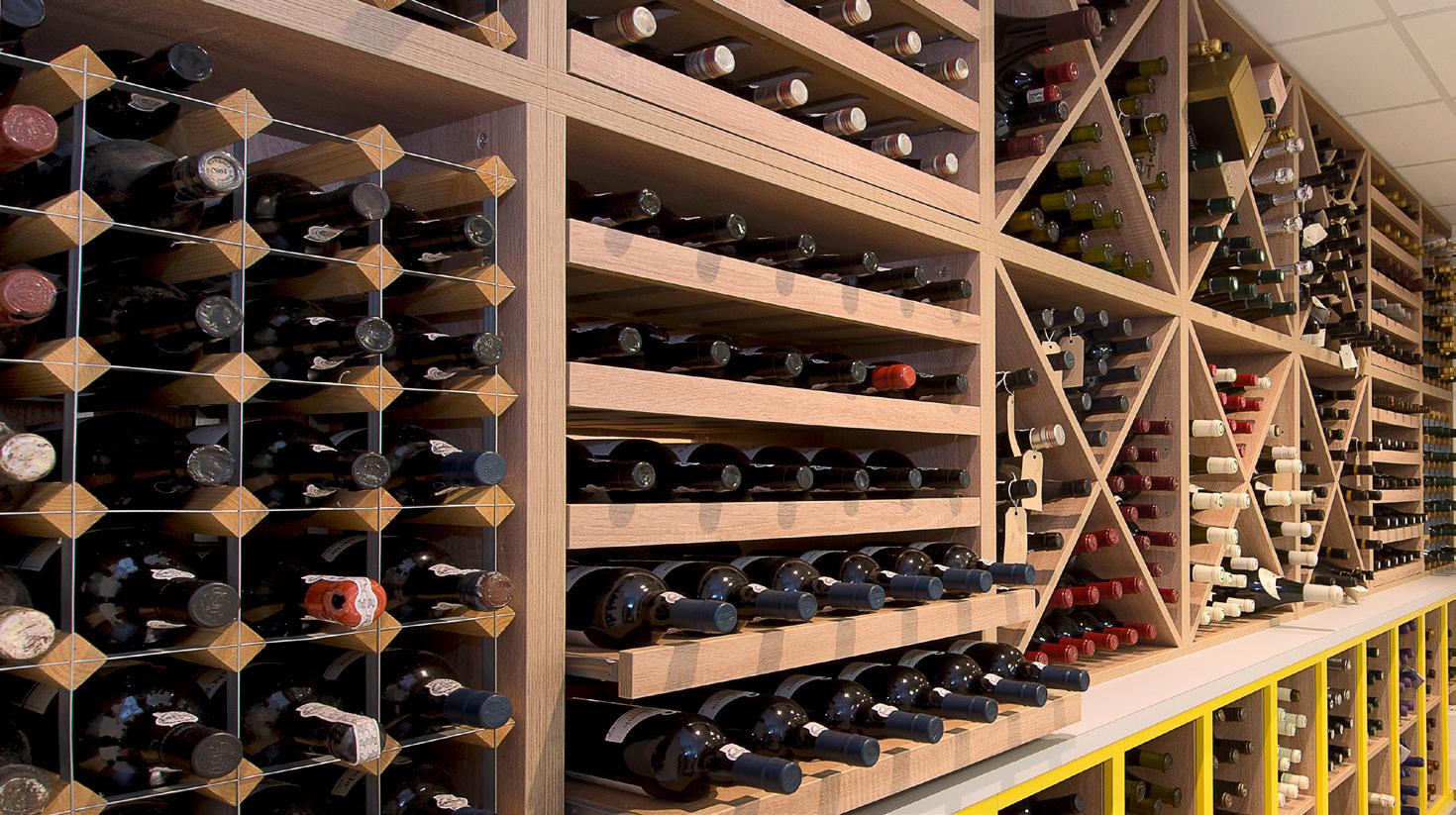
• Small parcels of fine wines, cellared by us – so you don’t have to.
• Styles and producers from around the world.
• Plus ‘Museum-release’ and ‘Ex-Château’ parcels.
For more information on all Vinothèque releases – and to enjoy special access to our Fine Wine Release Programme simply email: info@fells.co.uk.
The Ivo Varbanov Wines Selection is a curated portfolio of independent European estates, built on long-standing personal relationships and a shared focus on terroir, drinkability, and value.
The tasting will present the full portfolio, including wines from Ivo’s own Bulgarian estate alongside established producers such as Rossidi and Ketri, as well as a selection of newcomers and surprises from Bulgaria.

These will be shown alongside Spain’s Clos Figueras (Priorat); Greek estates Argatia (Naoussa) and Terra Thiva; Slovenian wineries Joannes Protner (Maribor) and Zanut (Goriška Brda); and an extensive Italian selection featuring Montelio (Lombardia), Terre Boscaratto (Veneto), Tre Monti (Emilia-Romagna), Vini La Quercia (Abruzzo), Spadafora (Sicily) Pertinace, Cornarea, and Prediomagno (Piedmont), Ligurian estates BioVio, La Pietra del Focolare, Cascina Nirasca, and Mauro Zino, with Schloss Englar and MuriGries (Alto Adige), Ronco dei Tassi (Friuli), La Rasina (Montalcino), Moroder (Marche), Le Thadee (Umbria), Antica Masseria Jorche (Puglia) and Sicily’s Palari (Faro DOC).
Where: Bulgarian Cultural Institute, 186-188
Queen’s Gate, London SW7 5HL
When: 19 February, 10.30am-5.30pm
Booking: via Eventbrite – search “Ivo Varbanov Wines Selection Portfolio Tasting”
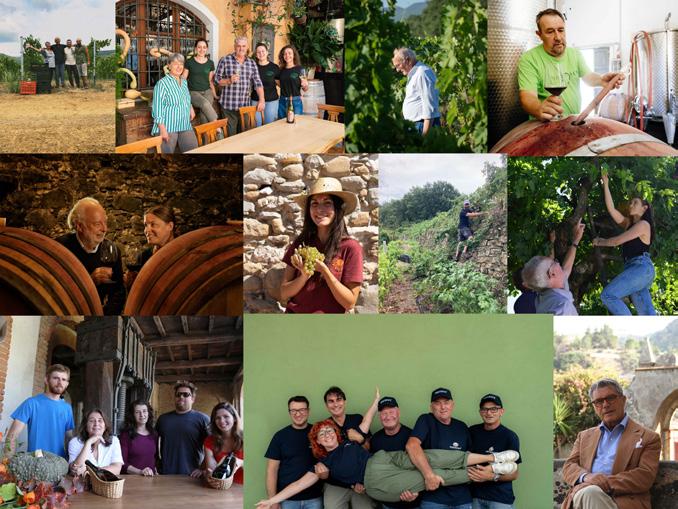

schenk family uk
Unit 5, The E Centre
Easthampstead Road
Bracknell RG12 1NF
01753 521336
www.schenkfamily-wine.co.uk

@schenkfamilyuk
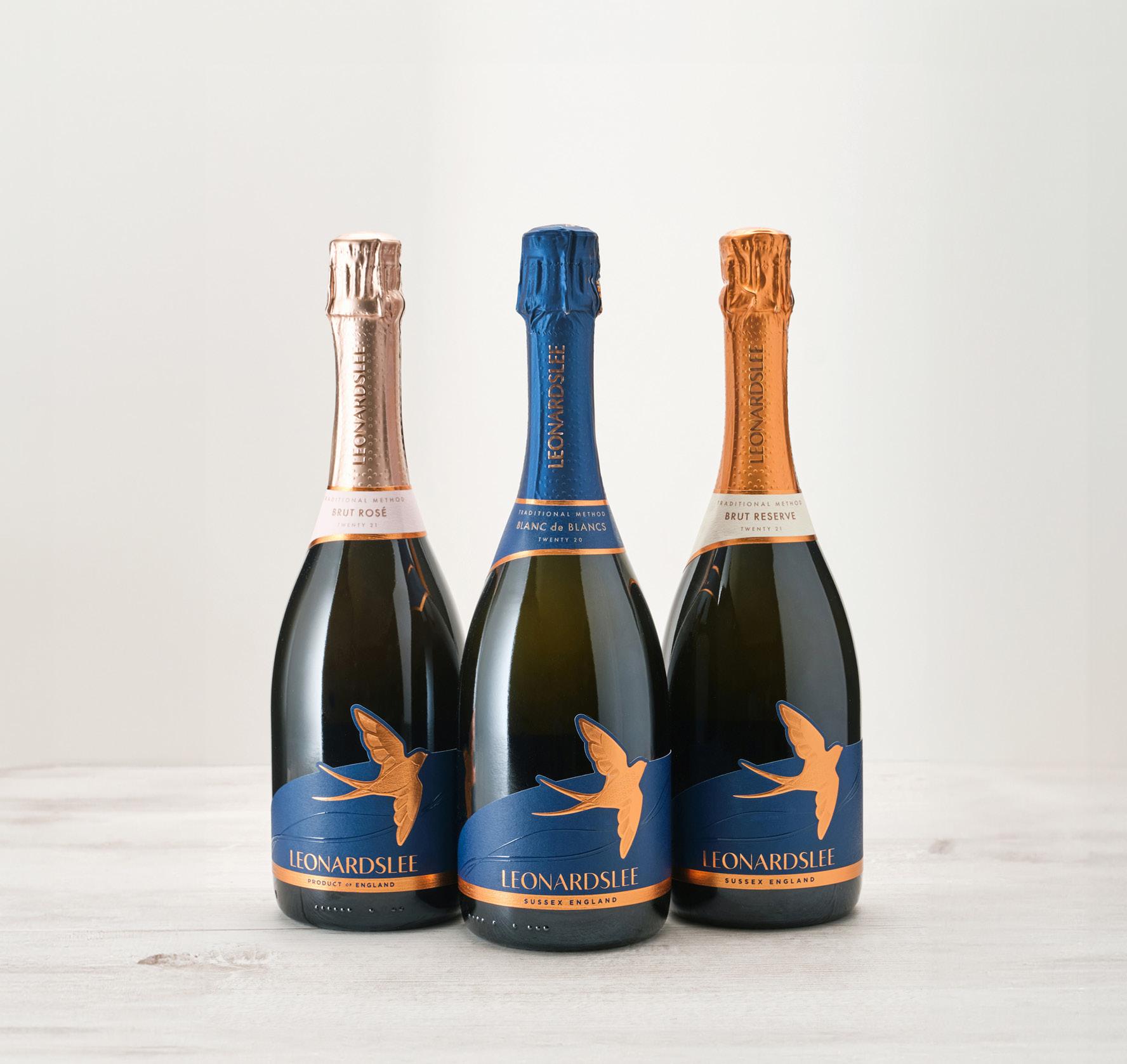
New to our South Africa portfolio: A.A. Badenhorst Family Wines
020 7720 5350
order@libertywines.co.uk www.libertywines.co.uk
@liberty_wines



Since founding A.A. Badenhorst Family Wines in the Paardeberg with his cousin Hein in 2008, Adi Badenhorst has championed attentive, hands-on farming and minimal intervention winemaking to convey an authentic expression of the Swartland.


Set within a natural amphitheatre, A.A. Badenhorst’s Kalmoesfontein farm base is home to exceptional parcels of old bush-vine Chenin Blanc, Cinsault and Grenache, planted on north, east, and south-facing slopes between the 1950s and 1970s. The ancient decomposed granite, quartz and iron-rich koffieklip soils have a sandy textured top layer that allows the vines to root deep into the ground, resulting in remarkably fragrant wines. The vines’ age and the various exposures bring further variety and depth to the fruit. The team continue to replant and work with around 70 different cultivars across Kalmoesfontein and Jakkalsfontein, the neighbouring farm.
One of the leading lights of the Swartland Revolution and South African New Wave movement, Adi has a personality as characterful as the wines he makes. From his ‘Secateurs’ range that punches well above its weight, through his layered and complex ‘Kalmoesfontein’ field blends, to his top tier Single Vineyard wines, they are benchmarks for the region.
hallgarten wines
Mulberry House Parkland Square 750 Capability Green
Luton LU1 3LU 01582 722 538
sales@hnwines.co.uk www.hnwines.co.uk

@hnwines

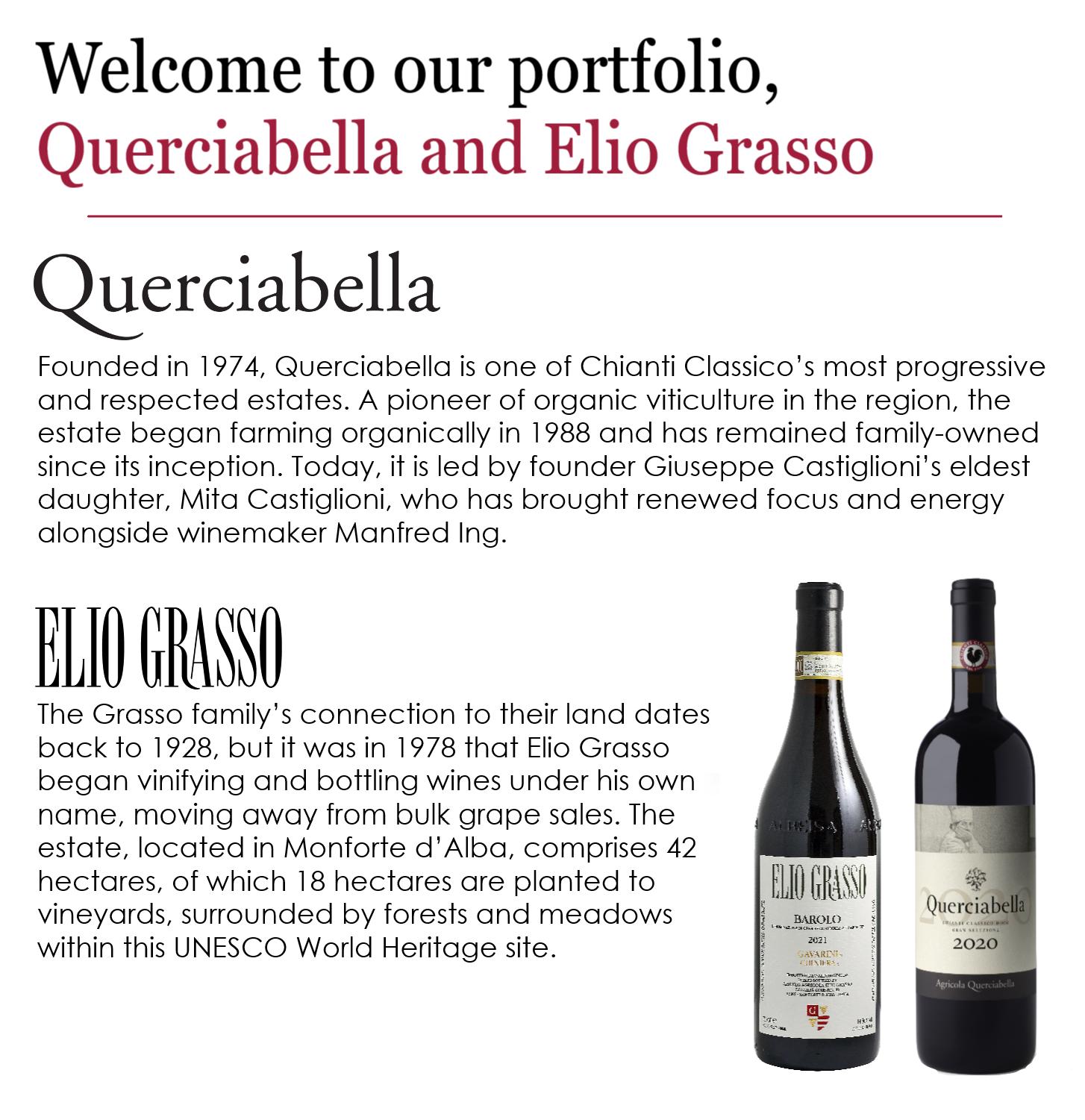
The Woolyard 52 Bermondsey Street London SE1 3UD 020 7840 3600
info@mentzendorff.co.uk www.mentzendorff.co.uk


“Like everyone and their dog who grew up in the 90s, I worked as a DJ”

Matt has been fine wine manager at Mentzendorff and a buyer for Islington indie The Sampler. His first book on wine, Drink Me!, earned him the prize for best newcomer at the 2013 Fortnum & Mason Food & Drink Awards. His latest book, The Smart Traveller’s Wine Guide to the Rhône Valley, published by L’Academie du Vin Library, is out now.
What’s the first wine you remember drinking?
Rosemount Cabernet Shiraz, when I was about 13. I remember being captivated by its juicy ripeness after the dry, leafy Bordeaux I’d tasted. But I was just a kid.
What job would you be doing if you weren’t in the wine trade?
My original intention was to work in practical special effects for films. One of my friends made it and he’s now a director. I, however, managed to cock up my A-levels –
so I started working in wine shops instead.
How do you relax?
I still love moulding stuff with my hands, so I sculpt clay and throw pots. I can’t entertain any other thoughts when I’m on the wheel so I find it therapeutic.
What’s the best book you’ve recently read?
One Thousand Vines: A New Way to Understand Wine by Pascaline Lepeltier. I know, I know, I should take a holiday ... but it is a particularly enlightening wine book. I read a lot of magazines too and have just subscribed to The Fence. It has great writing on hugely diverse topics, plus it’s rude and funny.
Give us a TV recommendation.
I have a teenage son, so I mostly watch horror films and The Simpsons Last One Laughing is highly amusing too – anything
with Bob Mortimer and Richard Ayoade in is bound to be brilliant.
Do you have any sporting loyalties?
I am terrible at all sports so I have zero interest in any of them. But family loyalty dictates I support Liverpool.
Who’s your favourite music artist?
I love Plaid for their incredibly inventive, playful and complex sounds. Like everyone and their dog that grew up in the 90s, I worked as a DJ, and I still listen to loads of electronic music, new and old.
Any superstitions?
Yes but I can’t tell you about them as that would be bad luck.
Who’s your favourite wine critic?
If Tim Atkin says a wine is good then I feel confident it will be.
What’s your most treasured possession?
An ancient bottle of Vat 69 whisky that belonged to my granddad. I managed to resist the temptation to drink it when I was younger, thankfully.
What’s your proudest moment?
It has to be the birth of my two sons –creating a brand new human being is wild. Professionally speaking, getting my first book published felt like a big achievement.
What’s your biggest regret?
I probably should have worked a bit harder at school. But it all worked out all right in the end.
Who’s your hero?
I’m continuously amazed by Andrew Jefford’s writing. Writing about wine in the time of Jefford is like writing plays in the time of Shakespeare; nothing you do can ever compare. But at least it encourages you to try harder.
Any hidden talents?
I studied jujitsu for a few years so I’m not that bothered about walking the streets at night.
What’s your favourite place in the UK?
Turf Tavern in Oxford, on a sunny Sunday afternoon, reading the papers with a pint and a cigar.
If we could grant you one wish? America to come to its senses.