Portfolio
Interior Architecture + Furniture Design
About Me
Education
2024 Kansas State University
Masters of Interior Architecture
2019 Rockhurst High school

Skills
- Hand Drafting
- Model Making
- Drawing + Sketching
- Adobe Creative Suite
- Rhino
- Revit
- Enscape
- Furniture Fabrication
I am a 4th year interior architecture student at Kansas State currently studying abroad in Orvieto, Italy. The focus of my design philosophy is on sustainability and user experience in interiors and furniture. My approach to every design is centered around improving the lives of people and the environment. I believe that through design we can create space that fosters life and beauty in our world.
Table of Contents
Adaptive Reuse Housing - Apocalyptic Tether
Coffee Shop - Bean Sprout Cafe
Retail + Activity - Montage Up-cycling Studio
Office - Kompan Headquarters

Furniture
Portable Side Table - Embrace
Coffee Table - Waterfall
Dining Chair - Steve
Plant Care Collection - Phil
20 24 28 32
4 8 12 16
Interior Architecture
Apocalyptic Tether Adaptive Reuse
Skills: Revit, Rhino, Illustrator, InDesign

Spring 2021
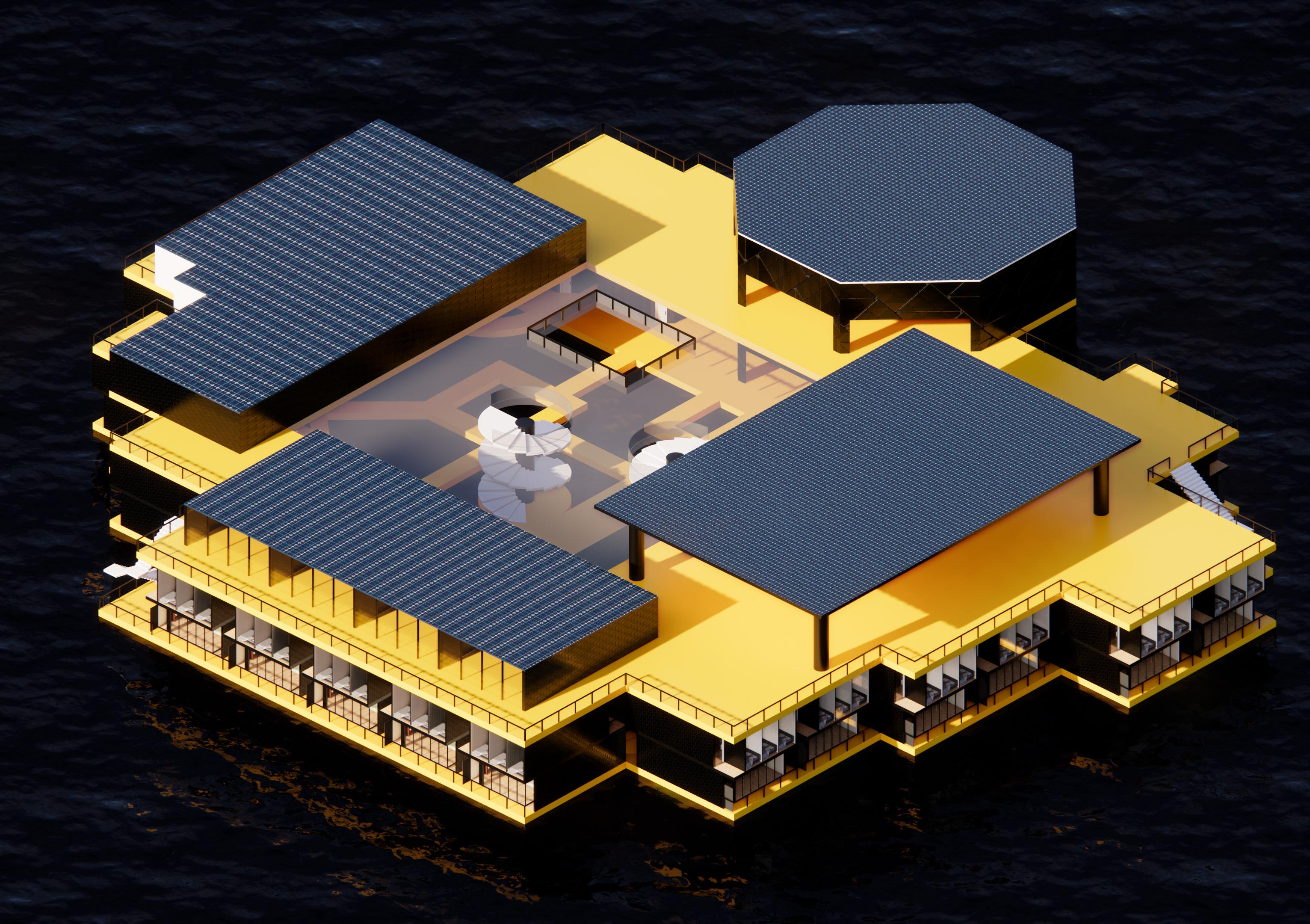
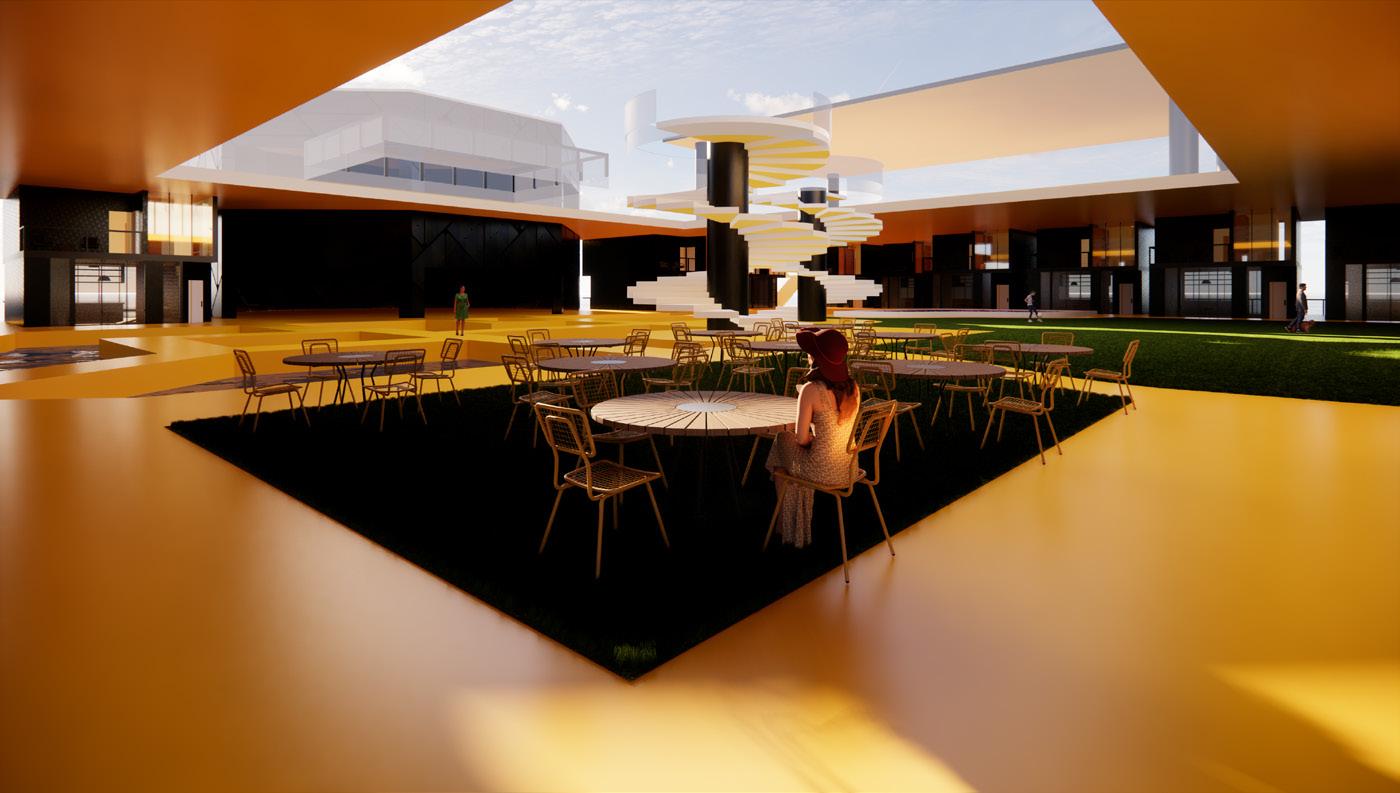
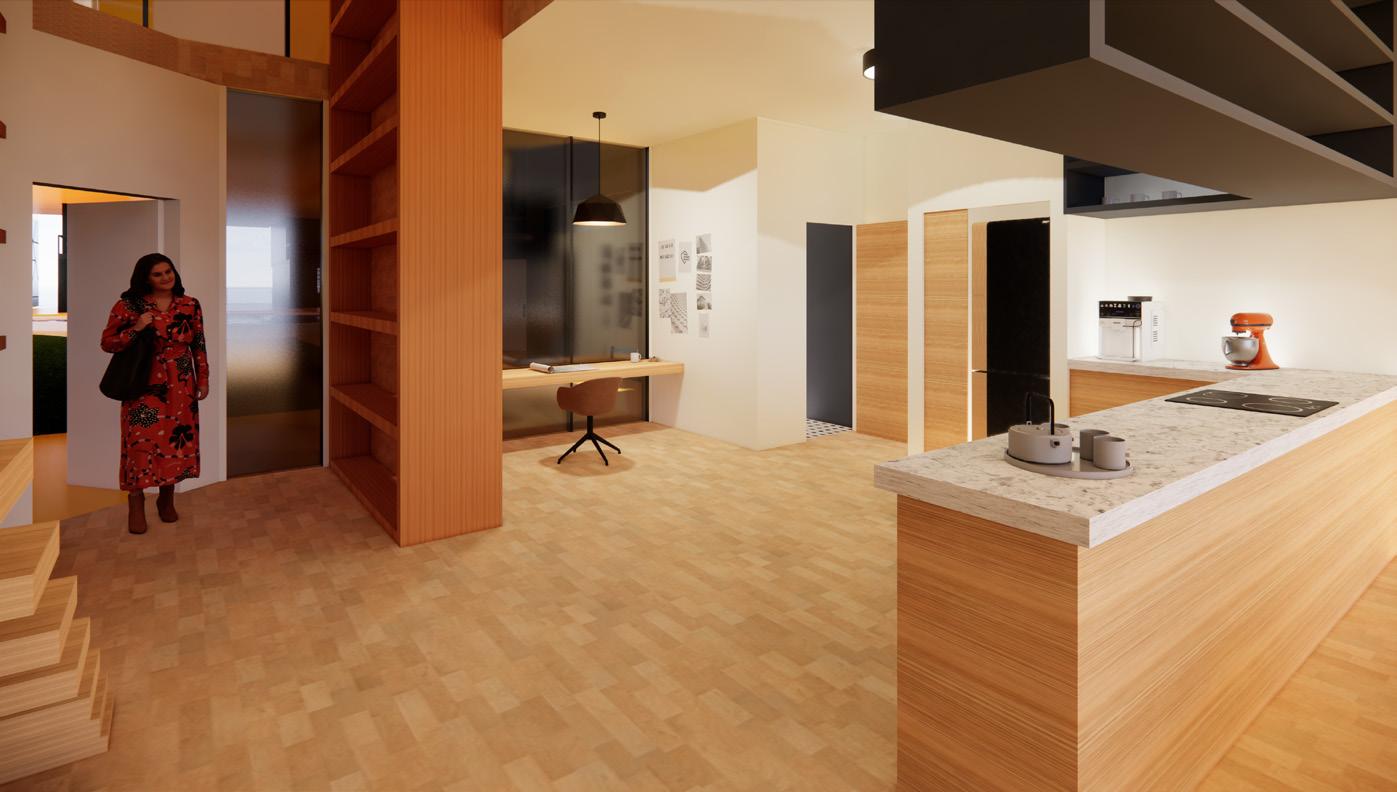
A creative approach to a holistic adaptive reuse design, this project started with developing an apocalyptic narrative from scratch, selecting a space to adapt, and designing housing for a community within a post apocalyptic world.
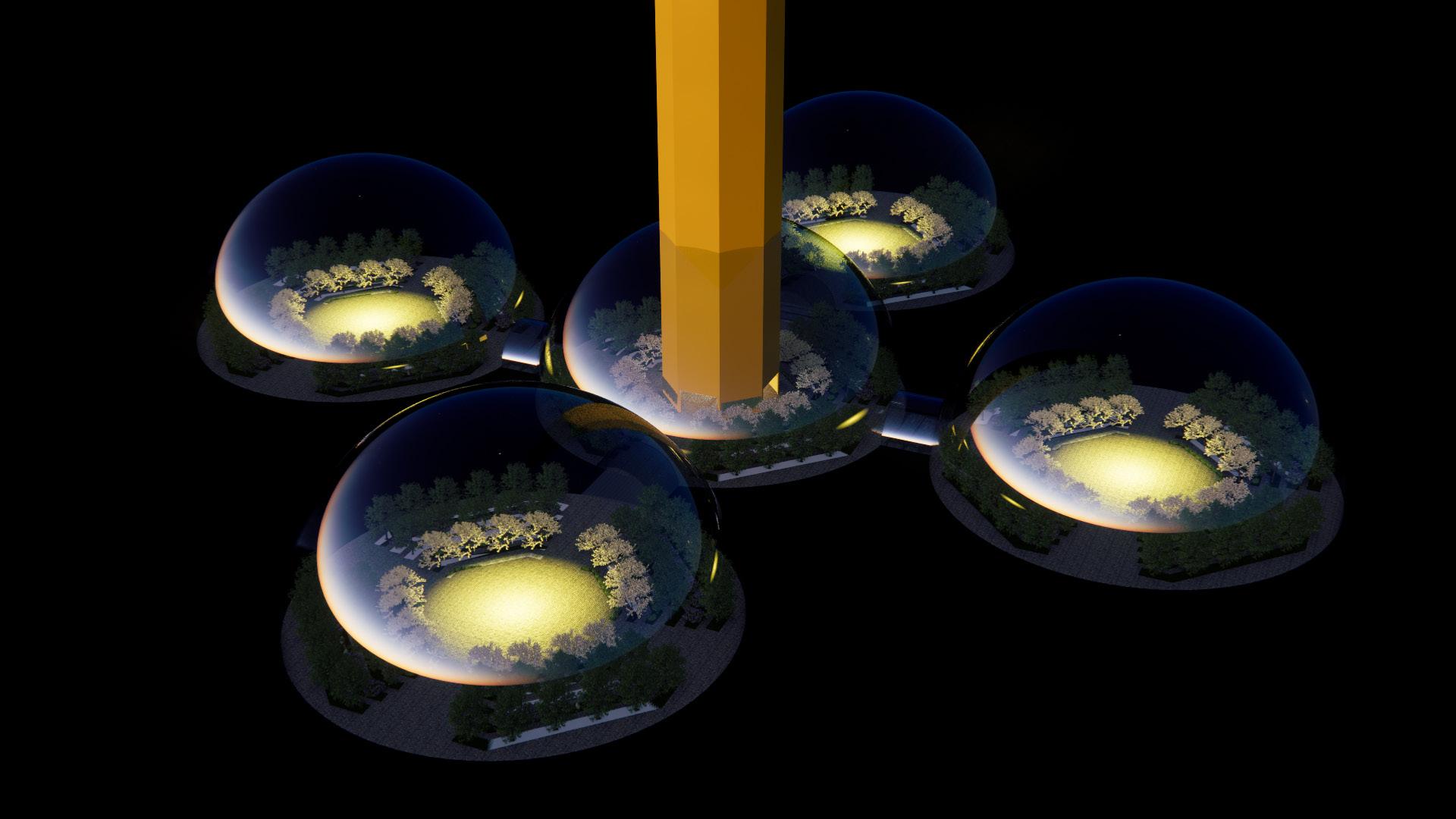
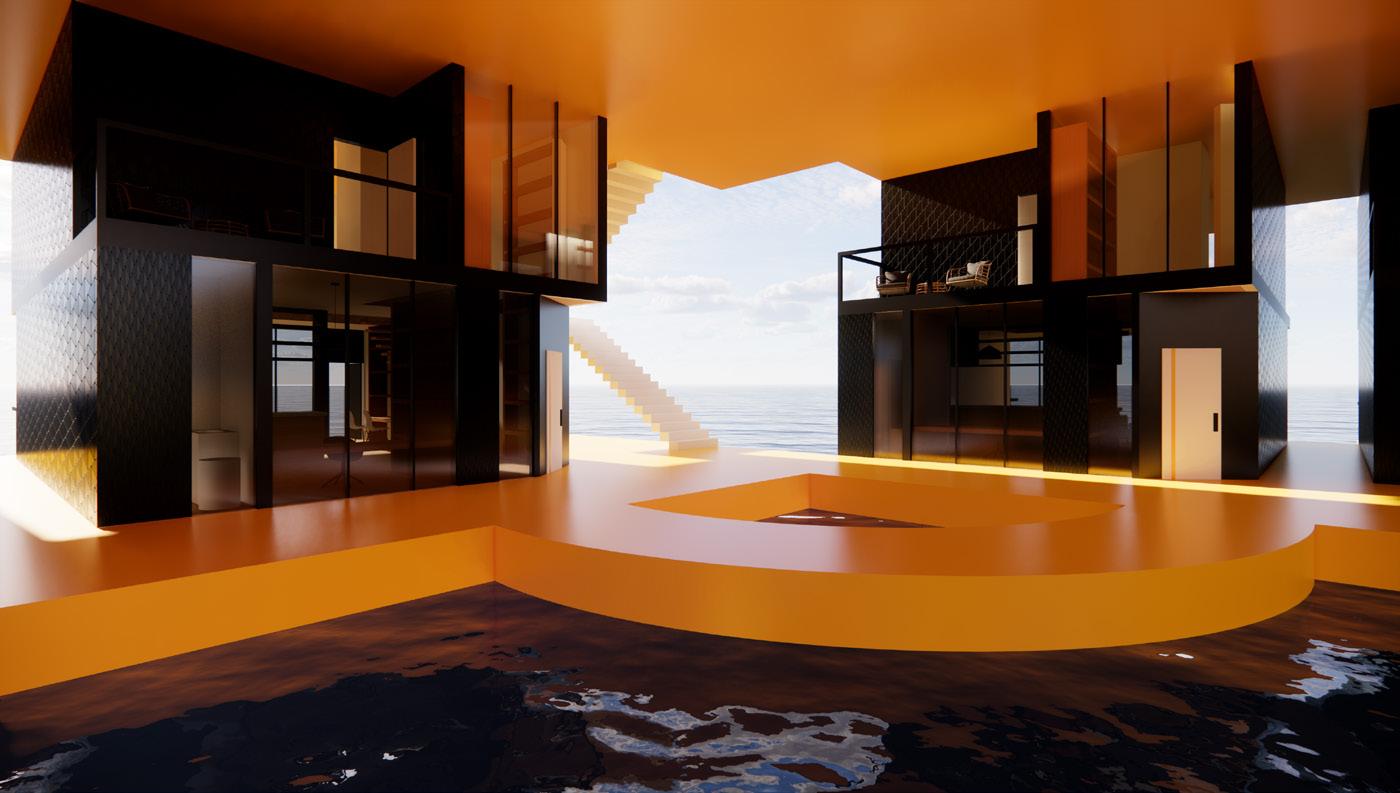
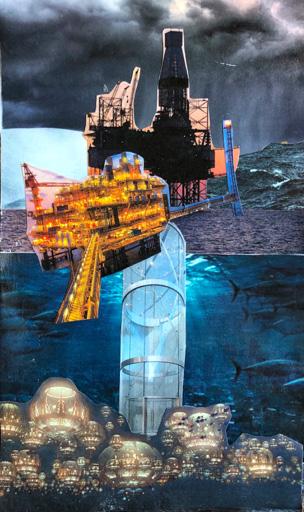
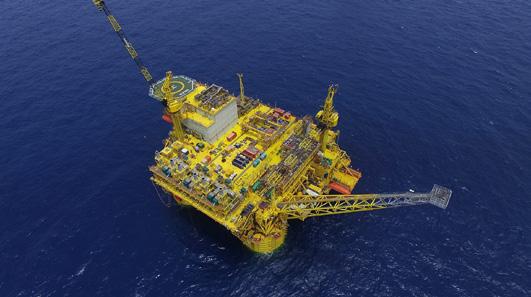
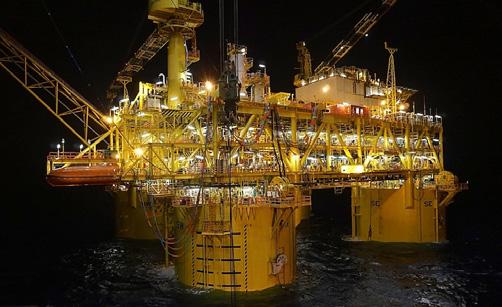
This design, called harmonious tether, utilized an off shore oil rig as housing for a community surviving an apocalypse in which the world floods. The design sought to use the rig as a way to lift humanity up while also connecting them to the earth with a tether.
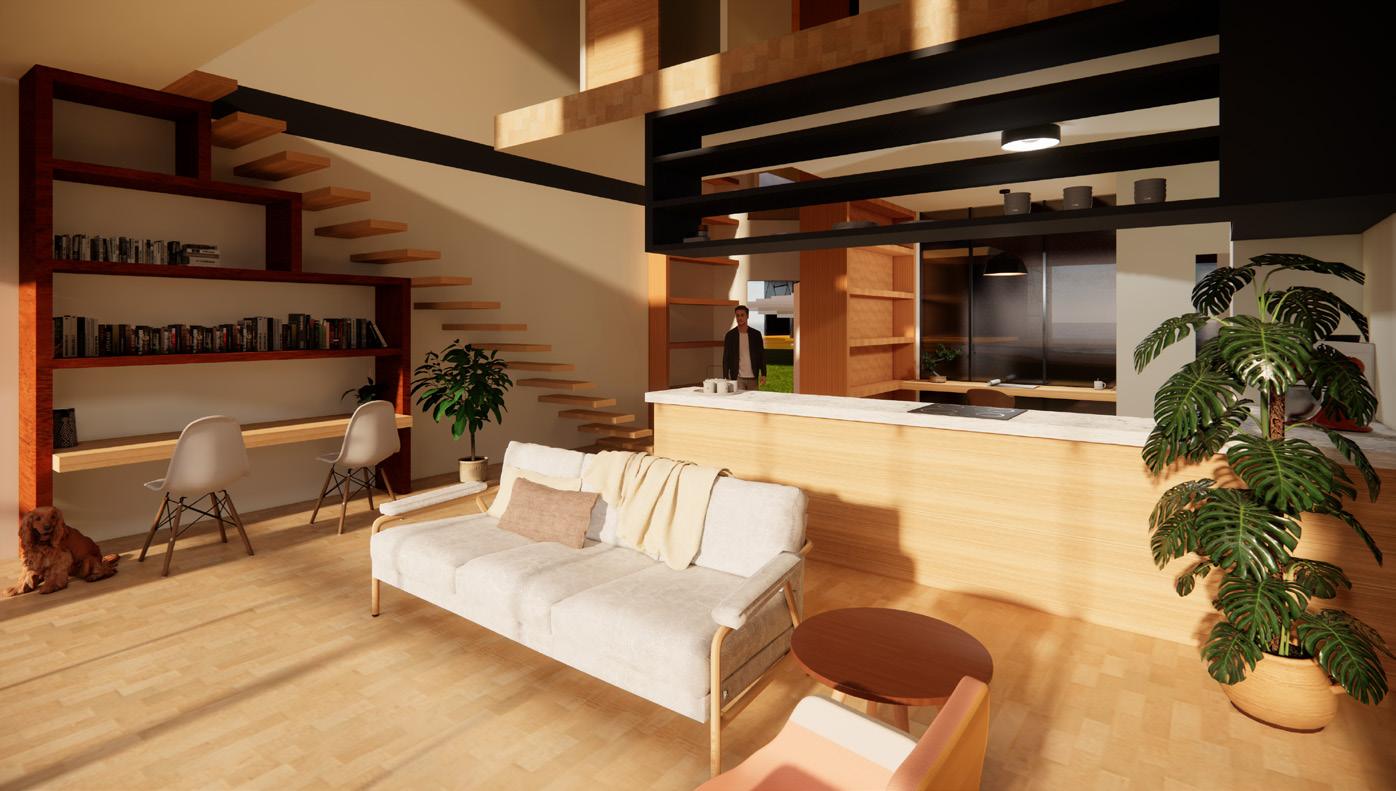
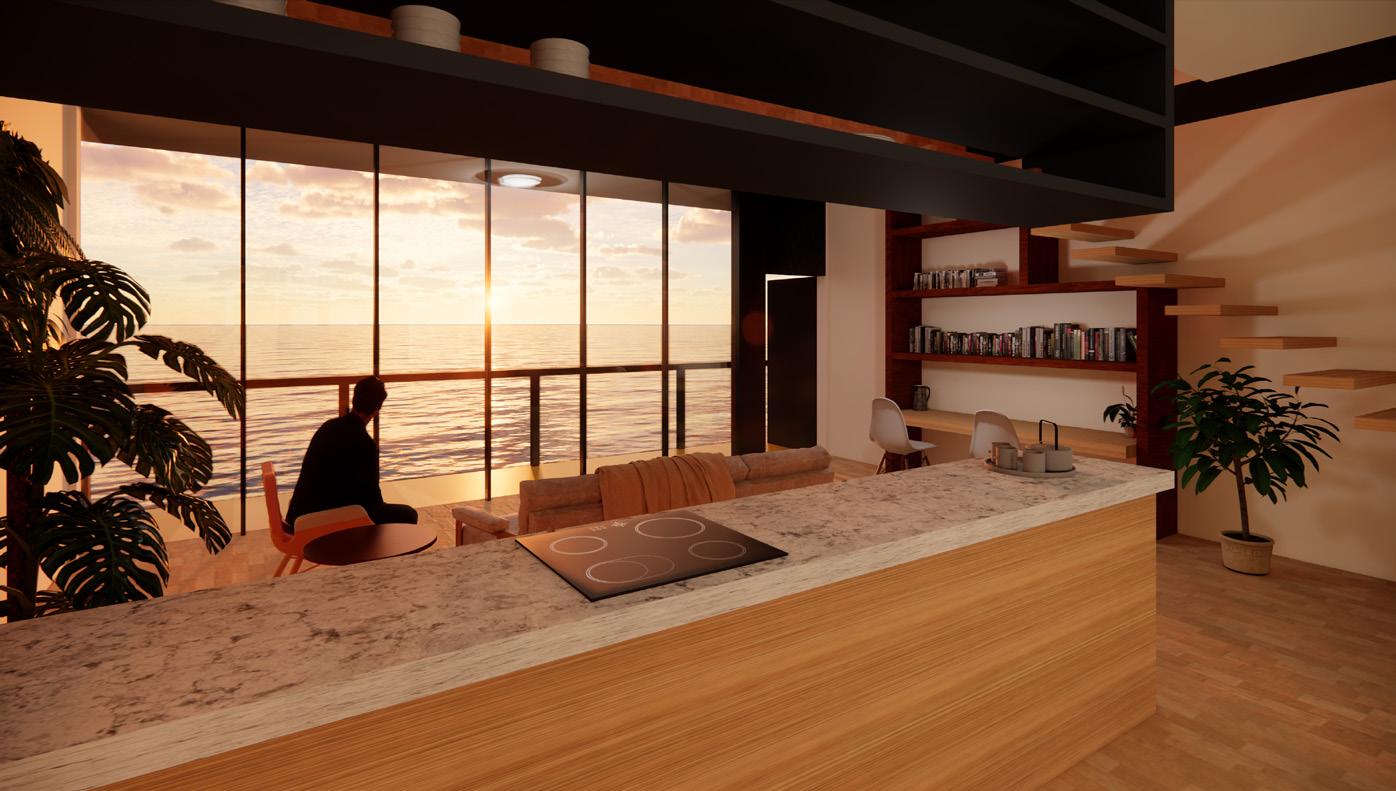
The design included three levels, with community spaces, twenty family living units, and farming bubbles on the ocean floor. Designing for a theoretical apocalyptic world was an interesting thought project in pushing the constraints of design focused on the needs of its users, in any context.
4




Level Plan
1/30” = 1’0”
Rig Lower
Scale:
Coral Garden
Elevator
10’ 0’ 30’ 60’ 100’
Grass Field
6
Seating Koi Pond
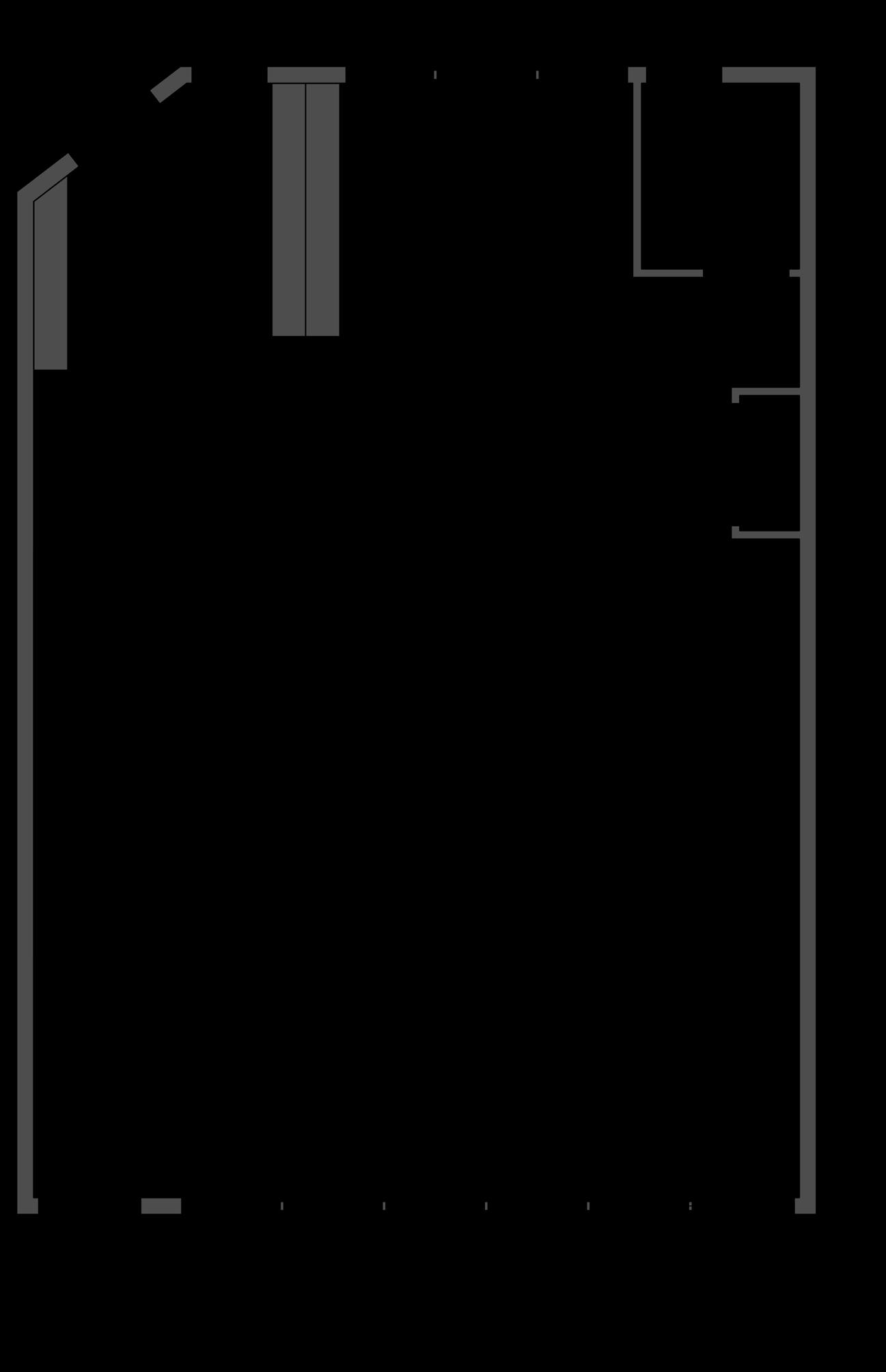
Living Unit First Floor Plan Scale: 1/3” = 1’0” Interacting Ocean Viewing Cooking Working Cleansing Eating Entering 0’ 1’ 3’ 6’ 10’
Bean Sprout Cafe Coffee Shop
Skills: Revit, Rhino, Illustrator, InDesign

Fall 2021
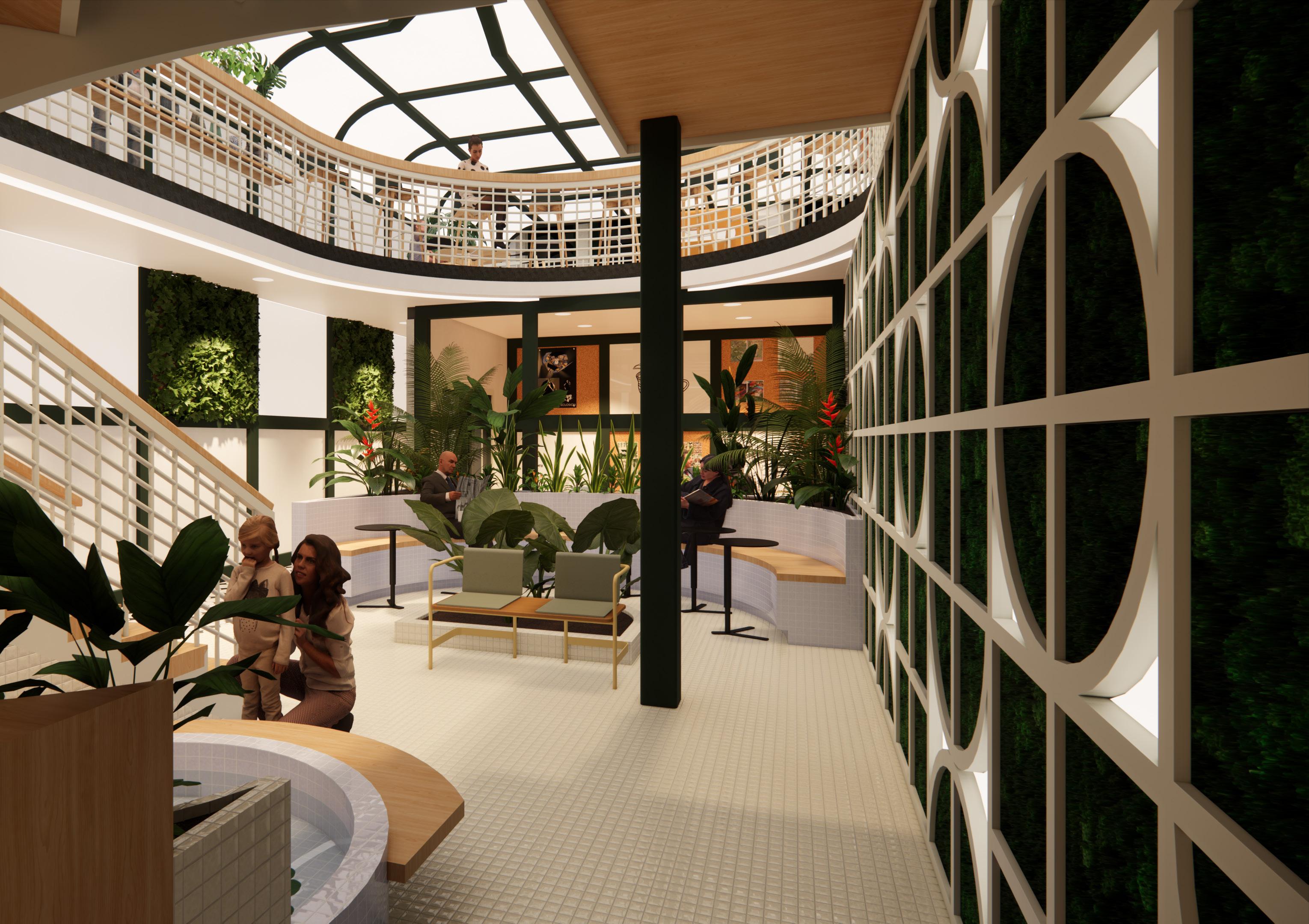
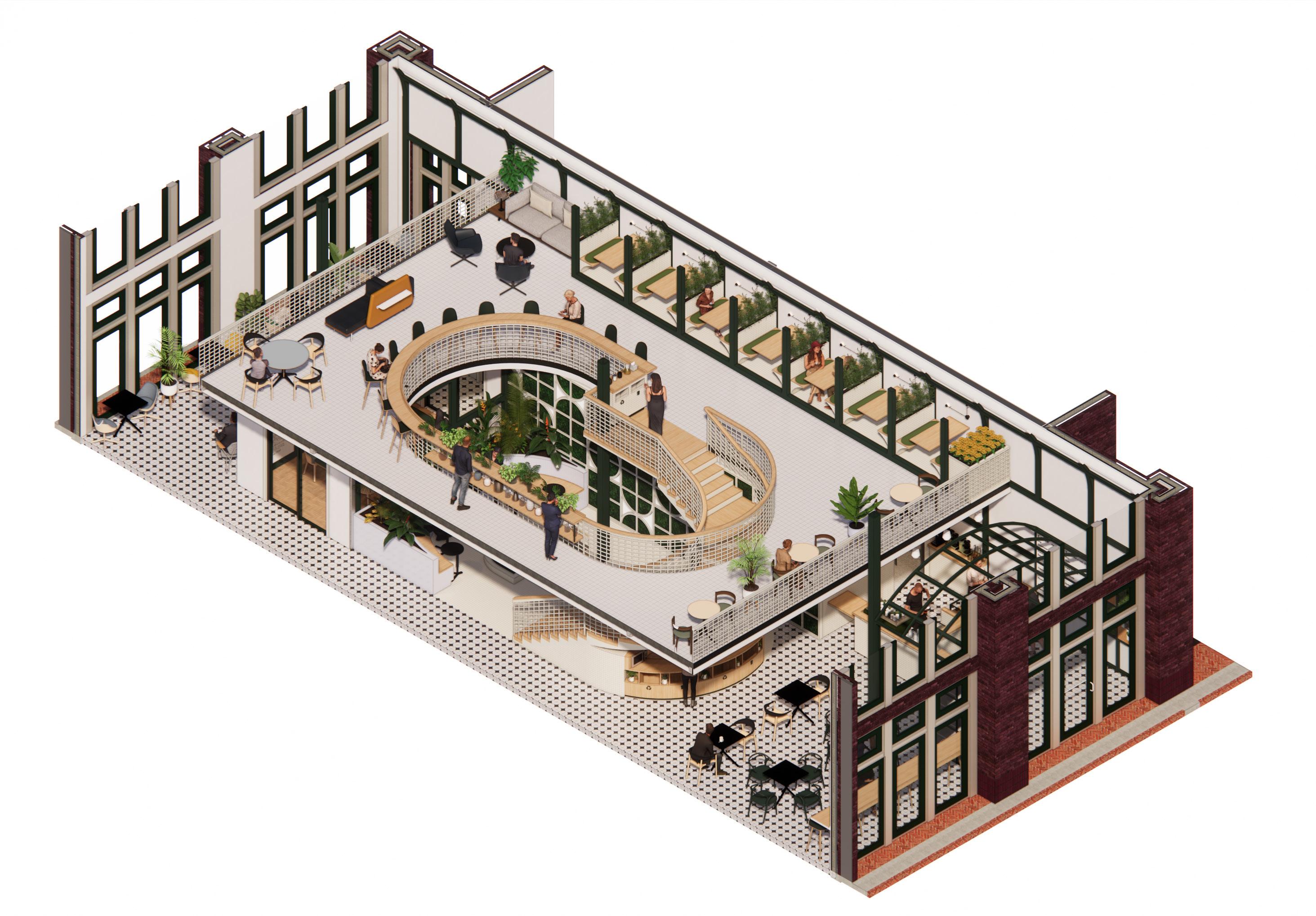
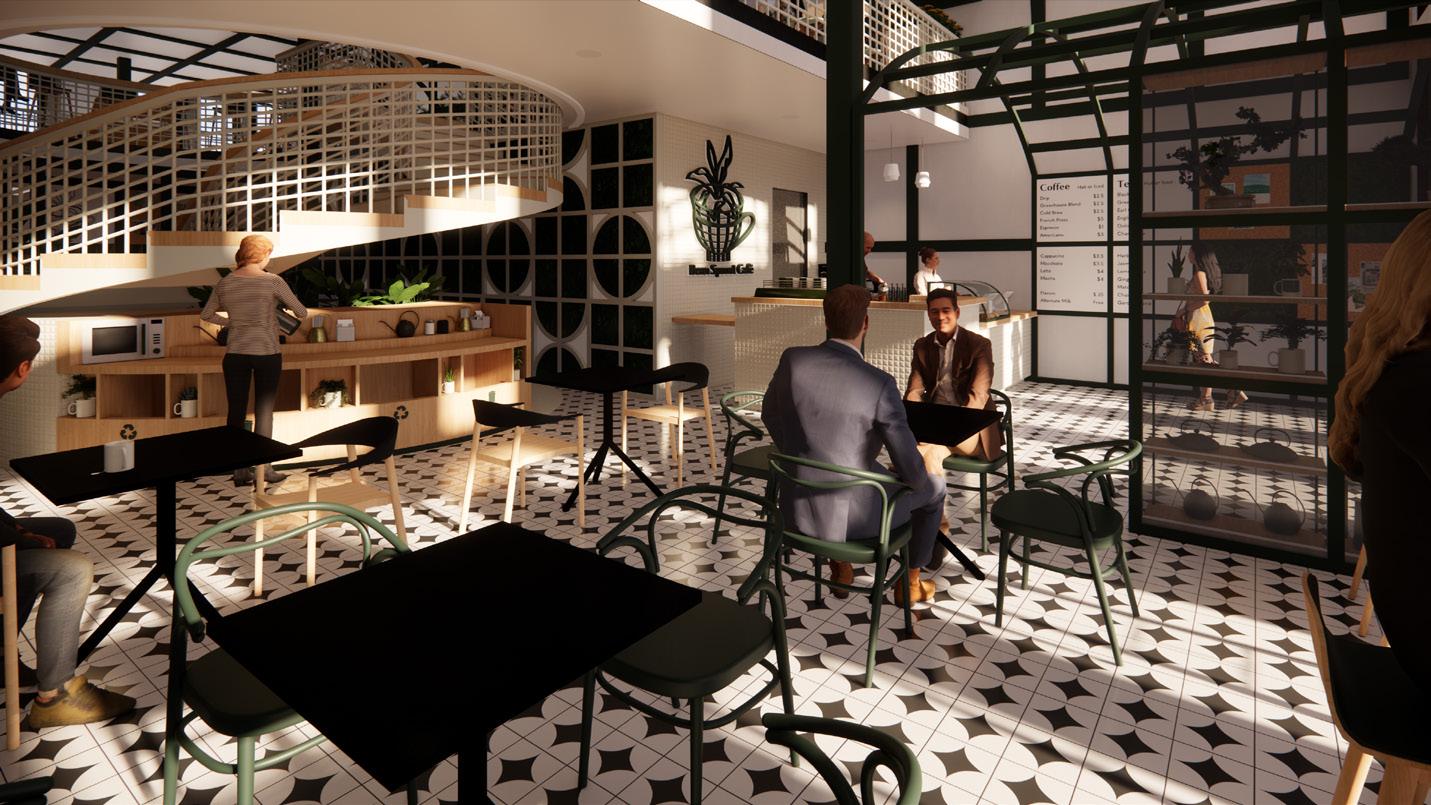
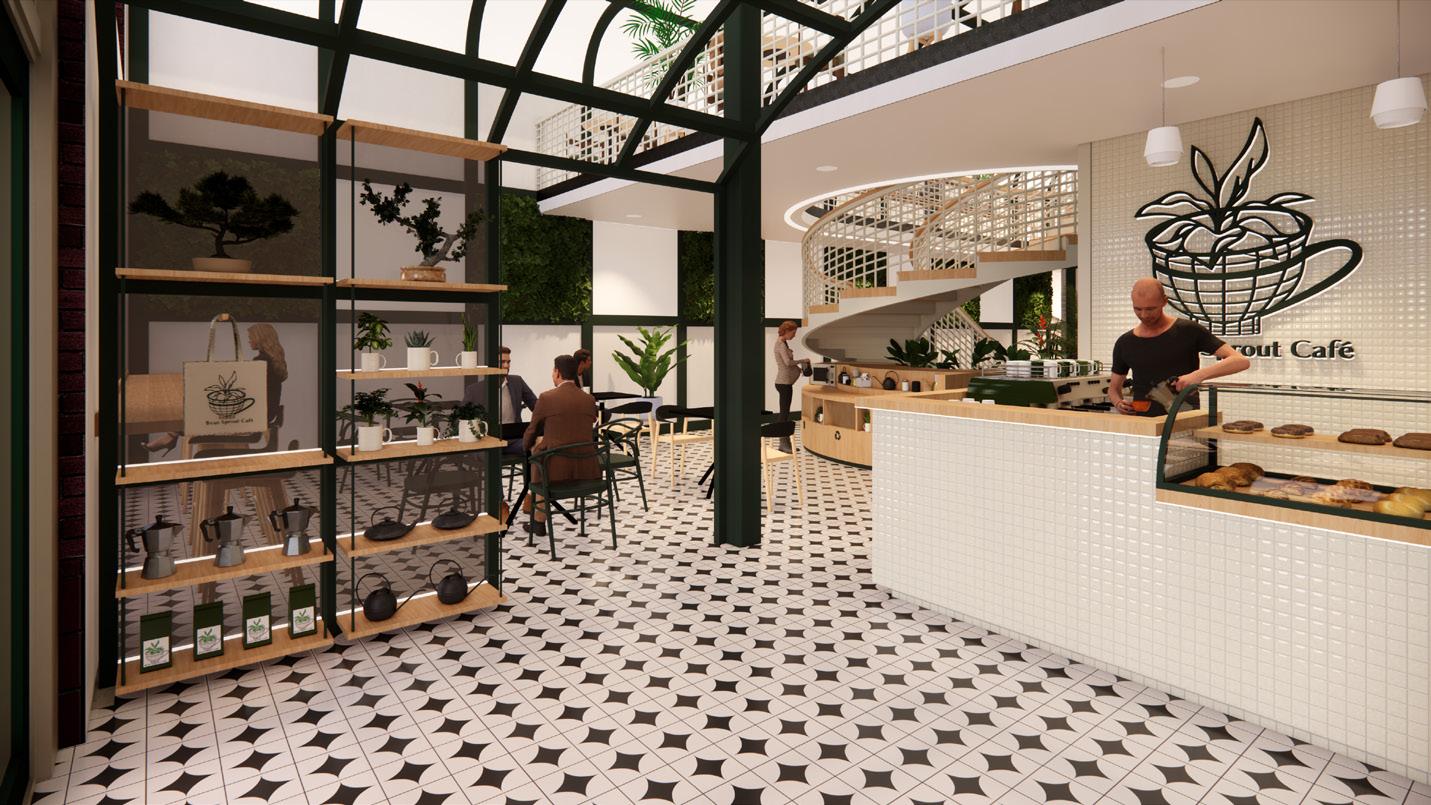
Inspired by greenhouses of the Victorian era and later, this coffee shop design seeks to create an experience of escape from daily life utilizing green space and connection to nature as a means of rejuvenating visitors. Restorative environments was a central focus throughout the design process as a way to use nature to create a therapeutic space.
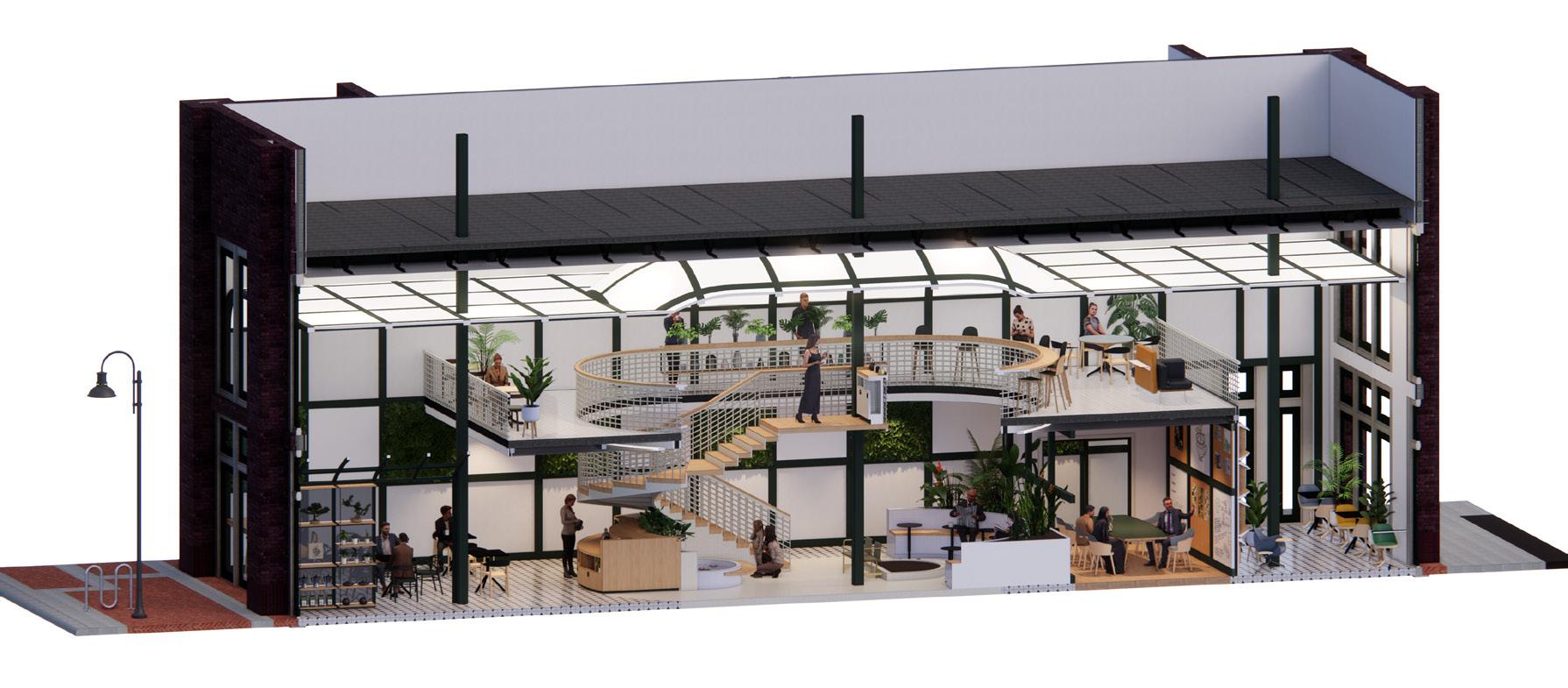
Biophilia brings life into the space in the form of planters, green-walls, a small water feature, and an artificial skylight mimicking natural day light. The design combines the energy and life from plants with the energy of coffee to rejuvenate its users both emotionally and physically.
The cafe centers around a central, double height garden, where open space and plant life blend to create a sense of decompression. In order to bring a sense of natural light into a space with limited windows, an artificial skylight, inspired by the form of greenhouses, surrounds the entire space with soft ambient light. This encompassing grid supports plant walls, display shelving, and light boxes, as well as representing the influence of greenhouses.
8
10
Stair Design Ordering & Merchandise
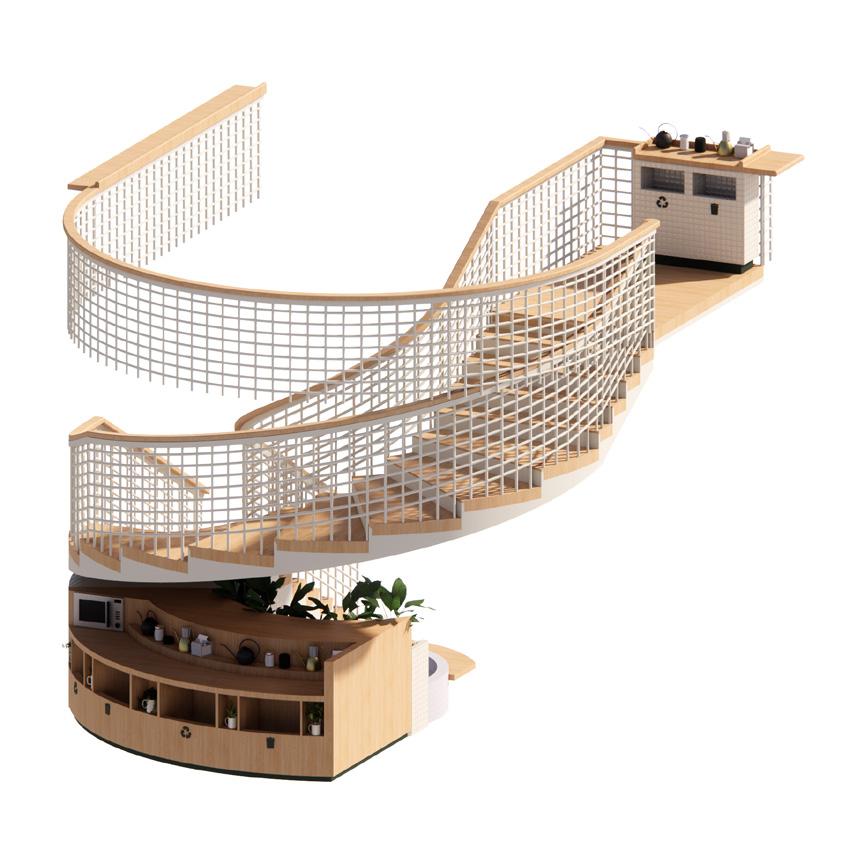
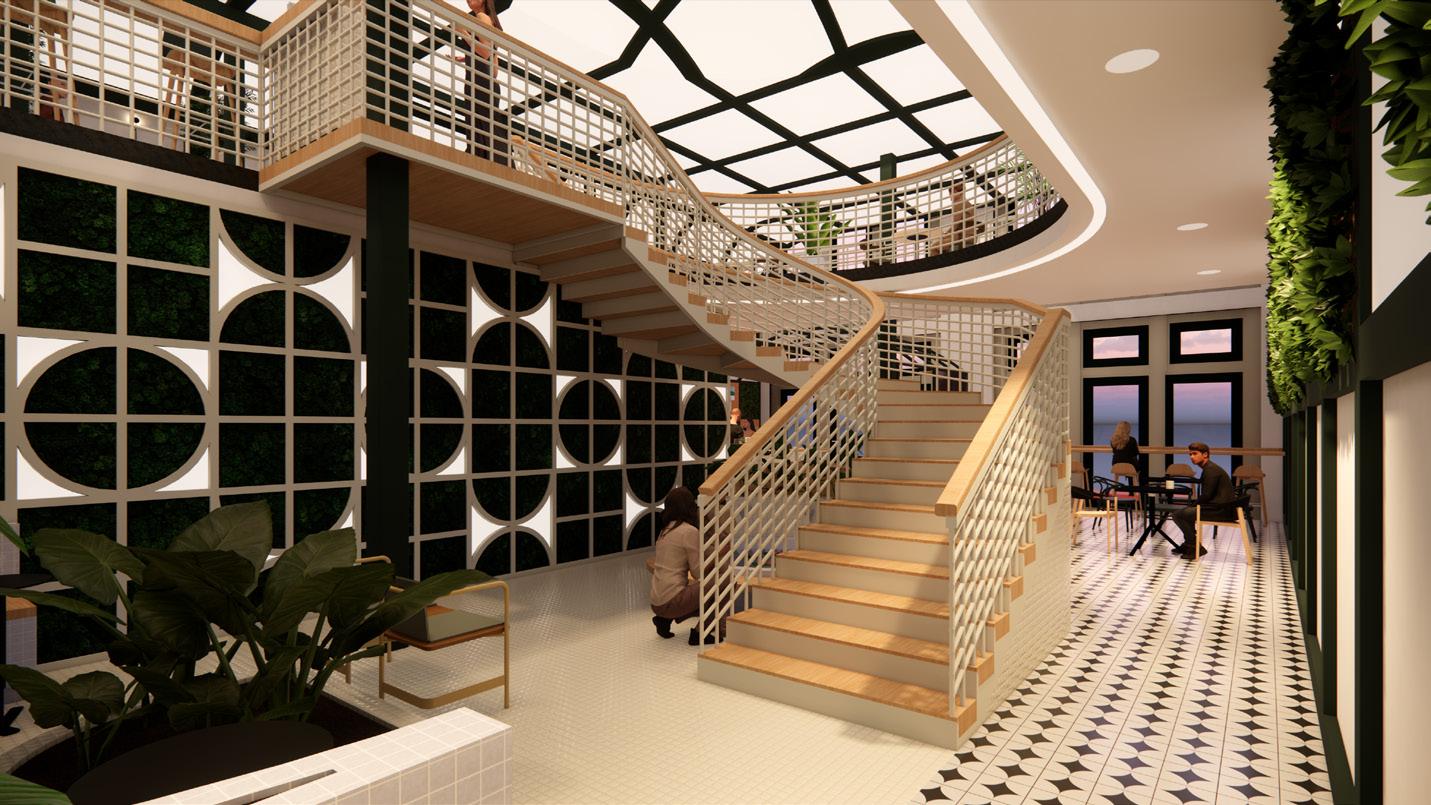
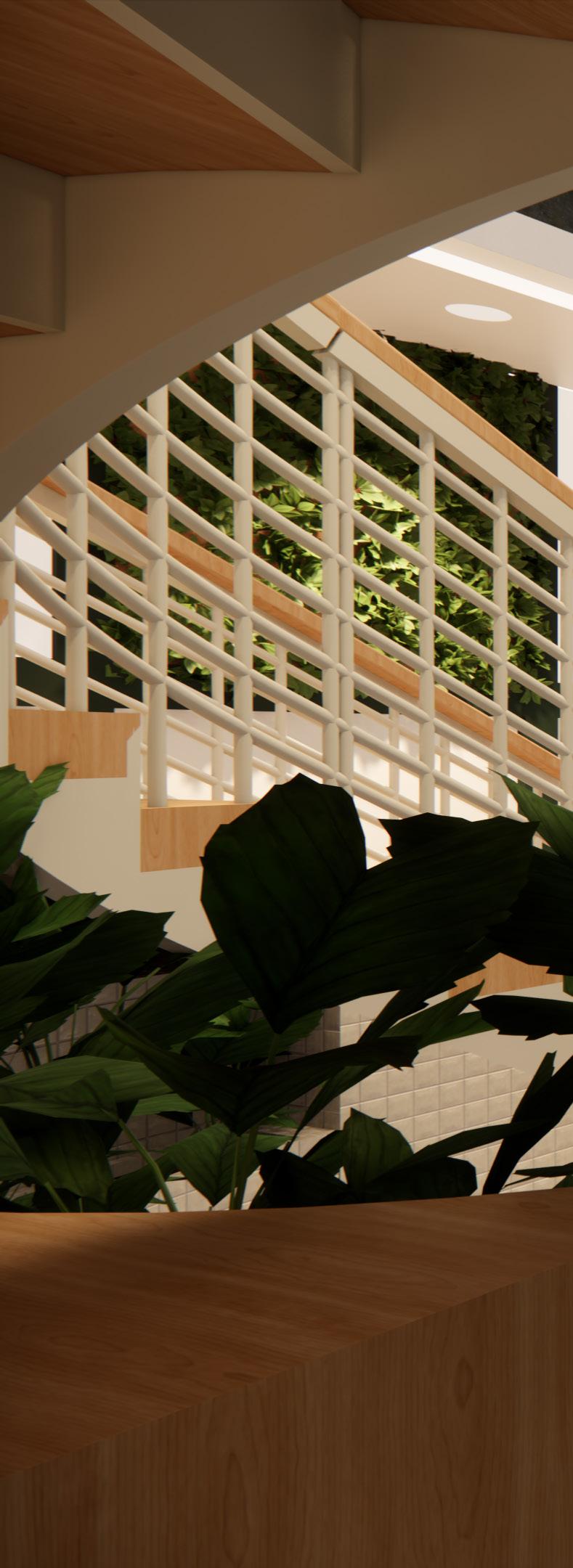
The stair to the mezzanine wraps around the garden, enveloping it and creating a sense of reveal as users of the space pass around and up it.
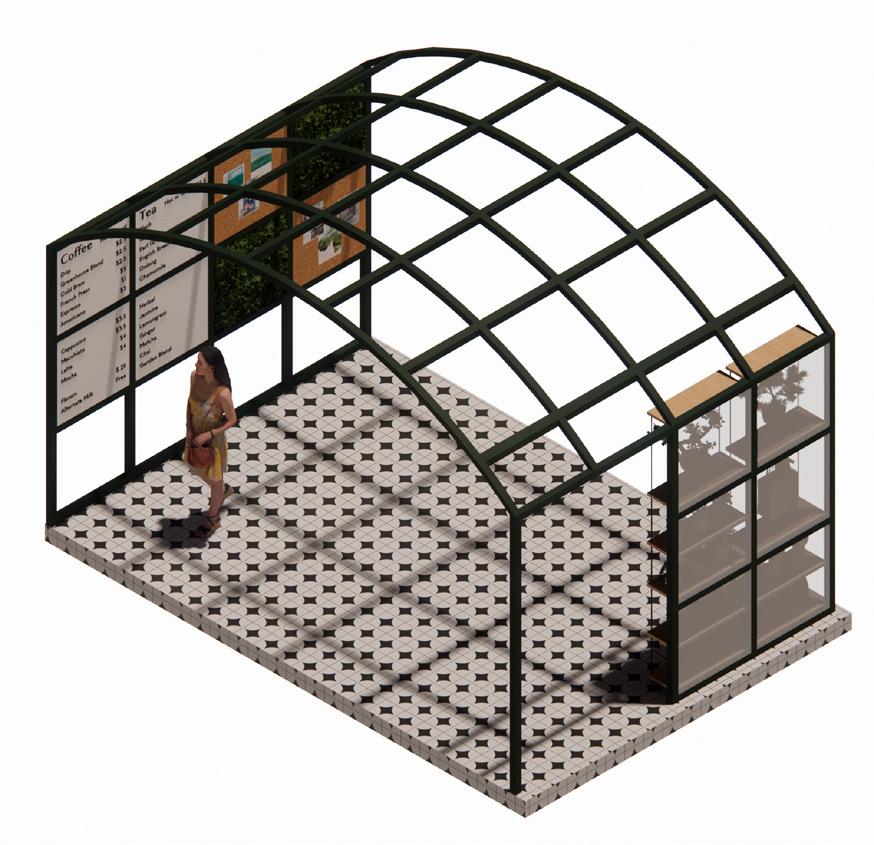
A lattice, grid awning surrounds the queuing and ordering space. The bays of the grid support the menu and merchandise shelving.
Montage Upcycling Studio
Skills: Revit, Rhino, Illustrator, InDesign
Spring 2022
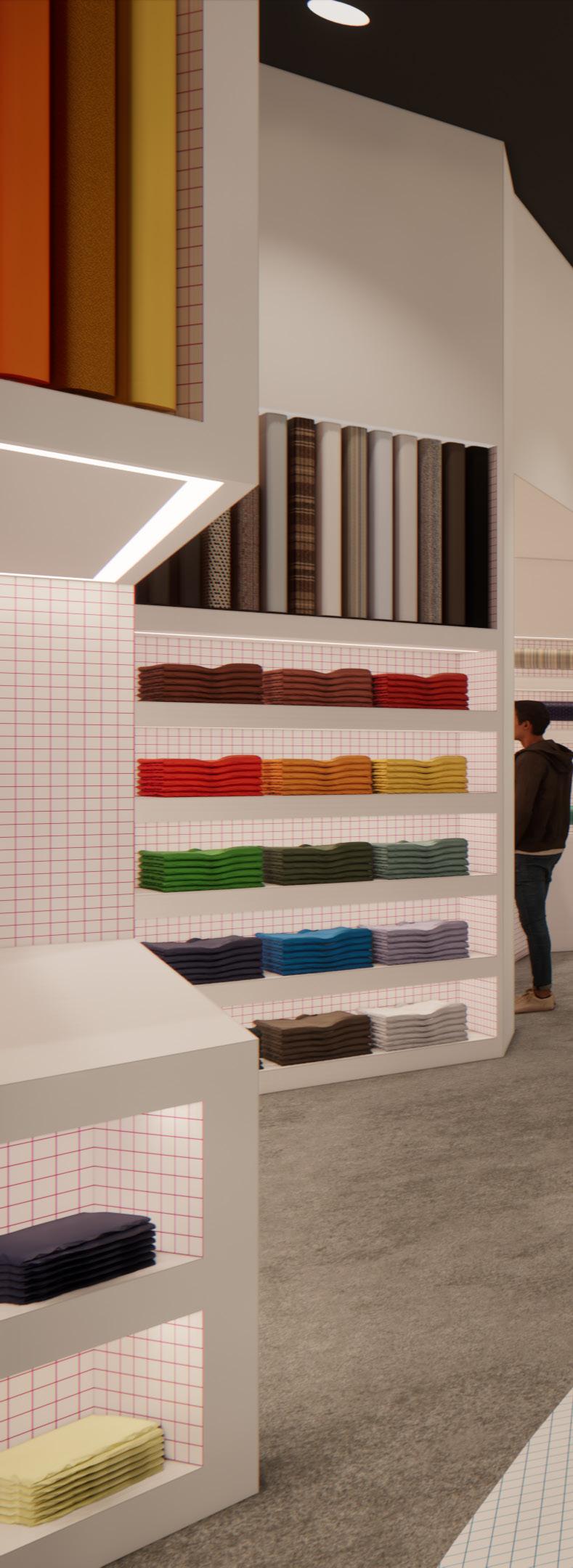
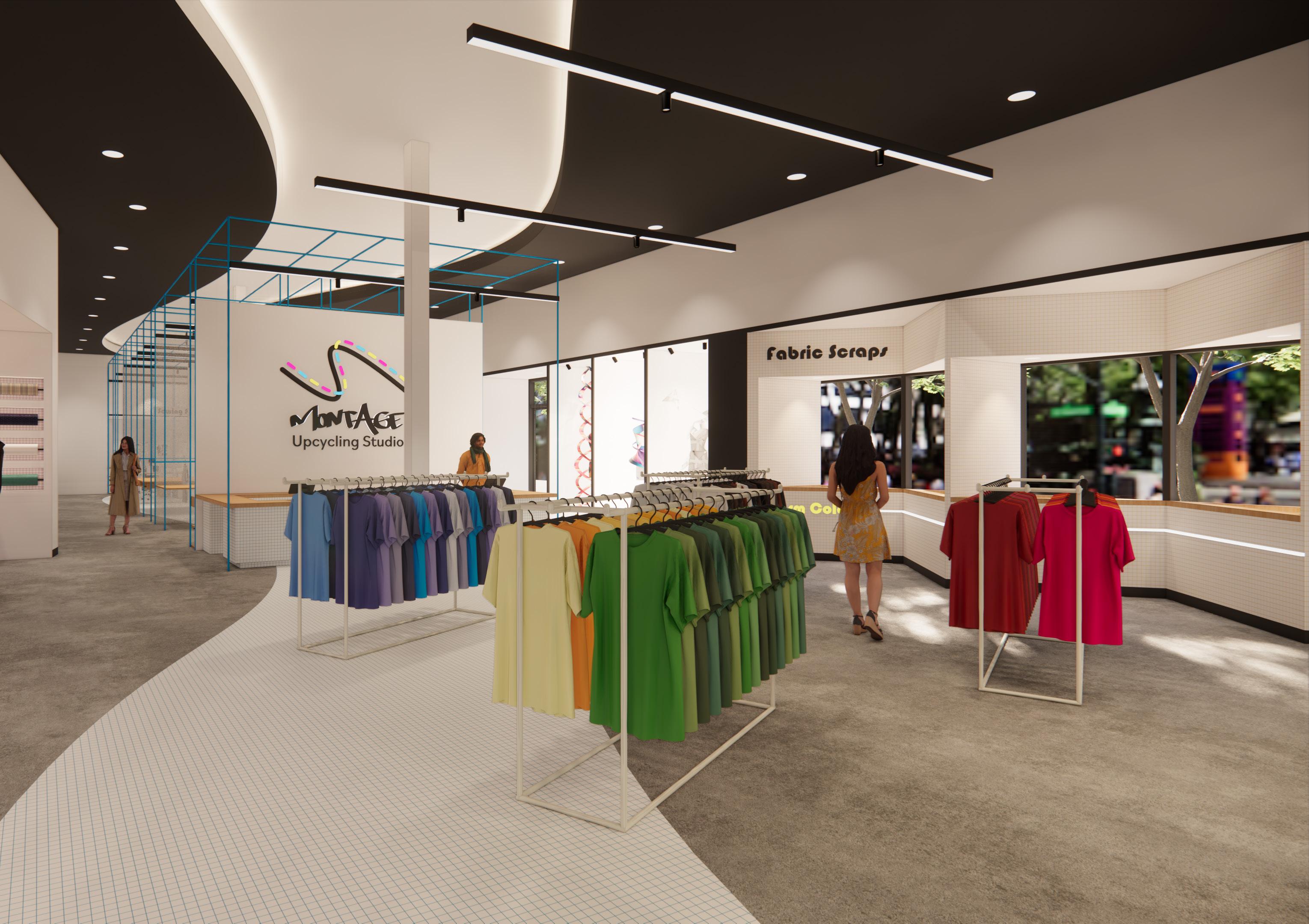
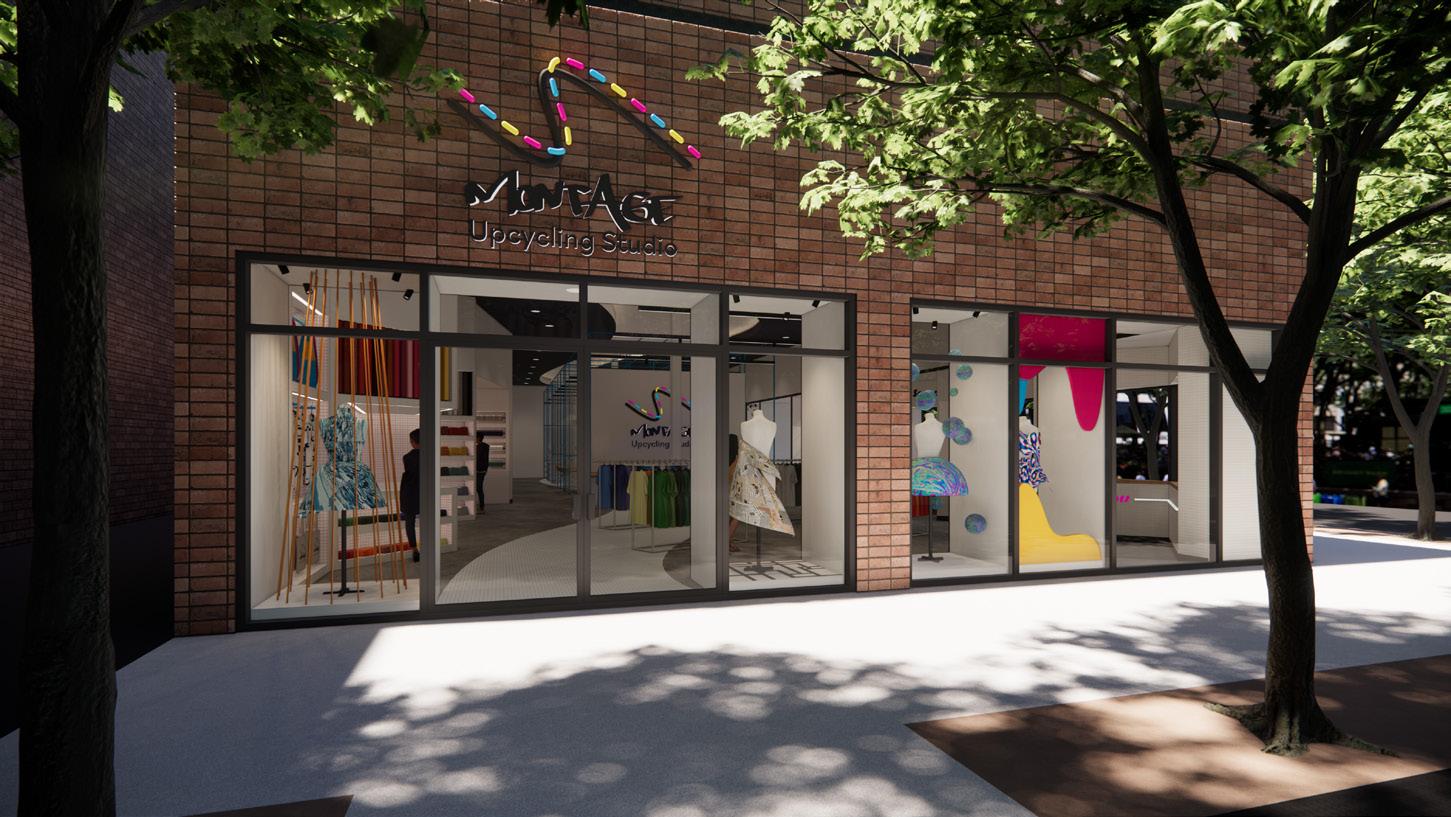
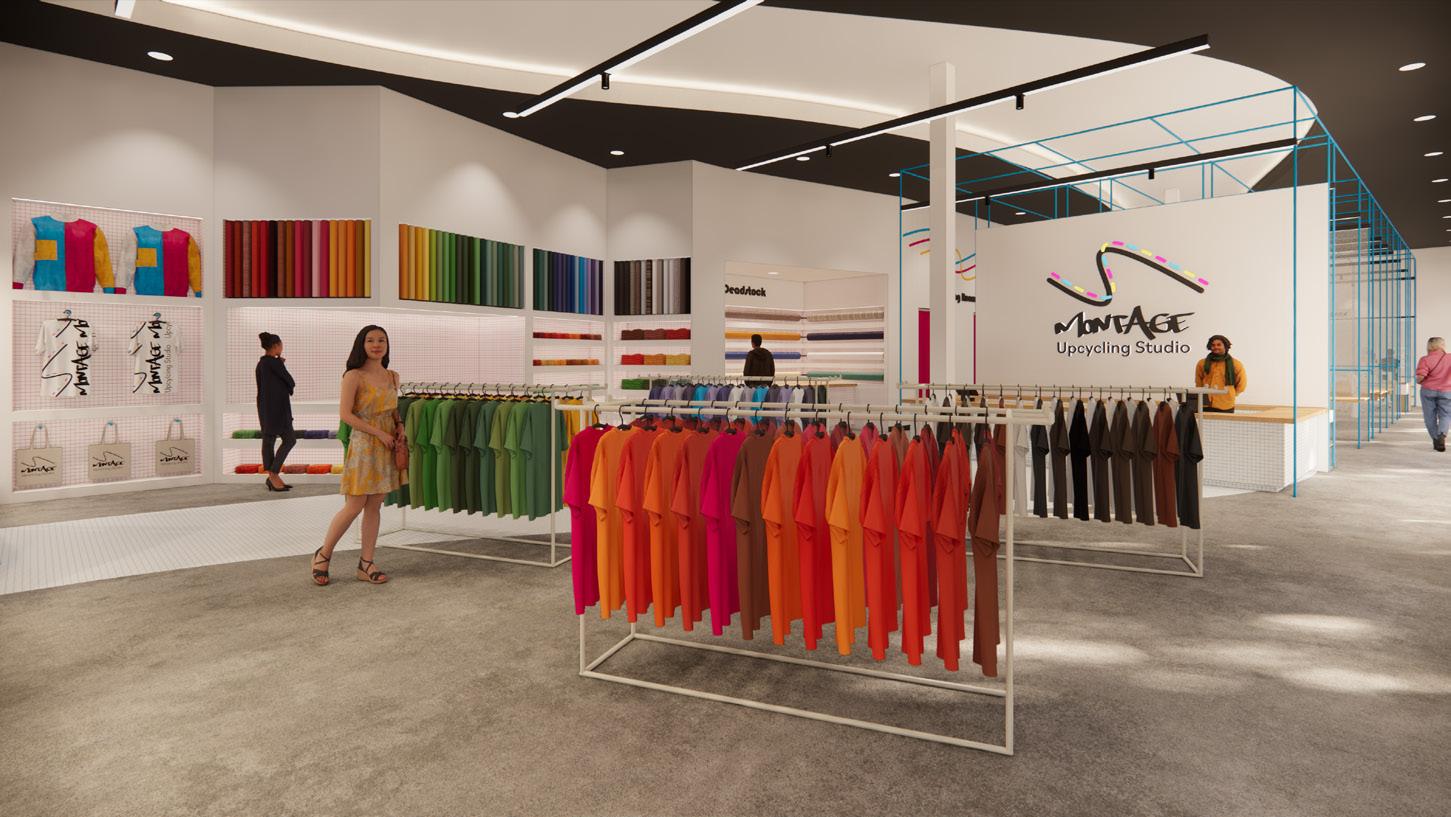
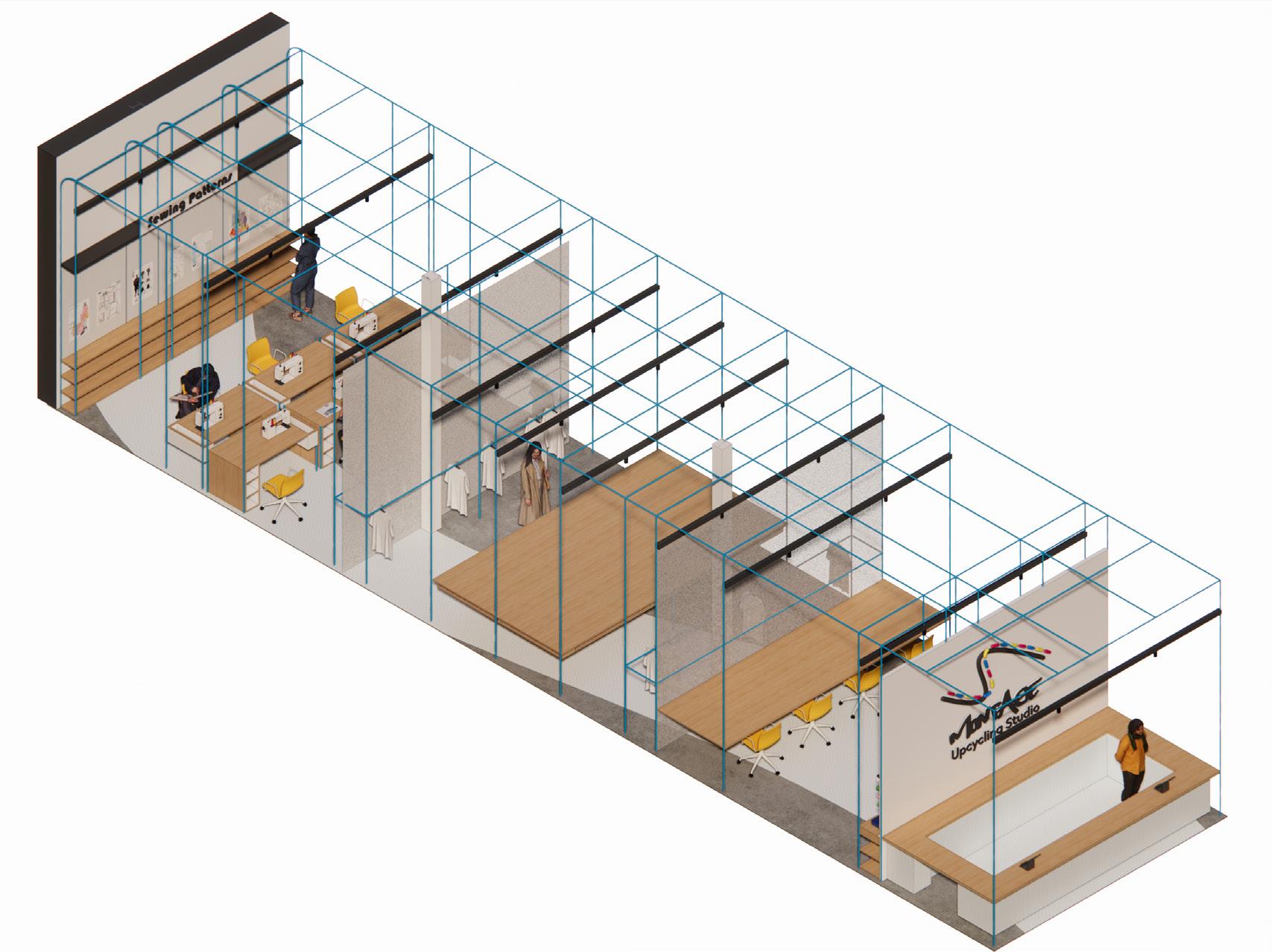
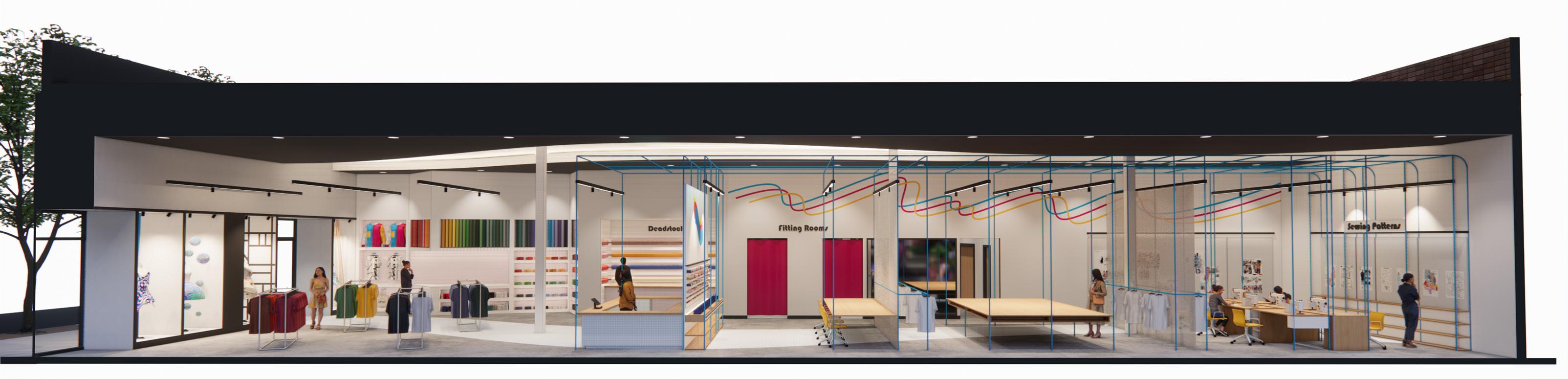
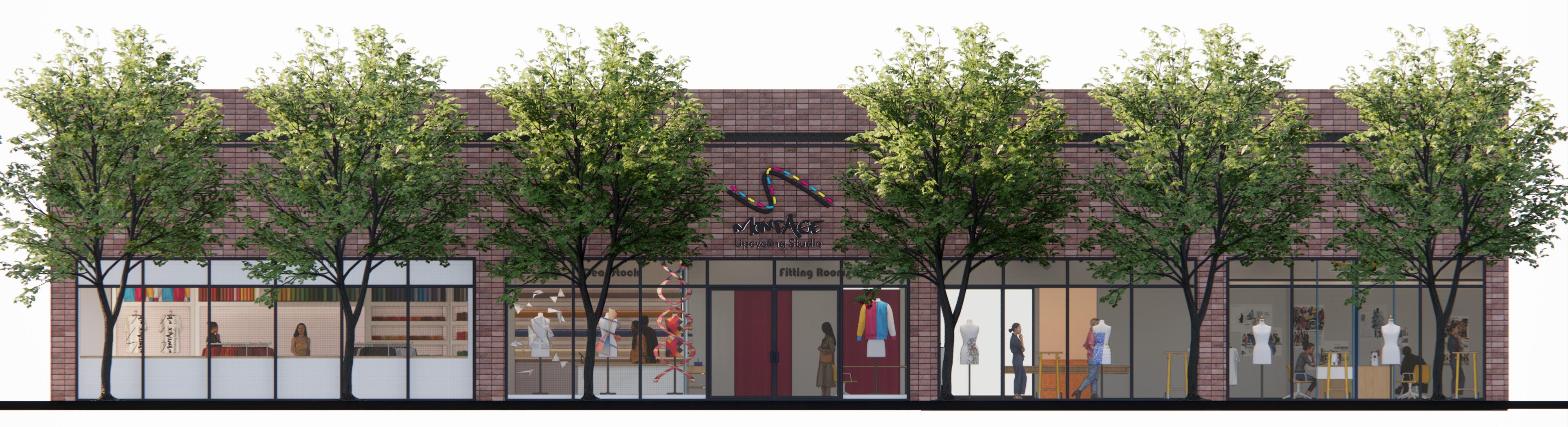
Combining retail with activity space, this design proposes an upcycling thrift store, where users can re-purpose waste material into new items and create art through fashion. Focusing on reducing waste in the clothing industry and promoting artistic expression in fashion, Montage seeks to be a community hub to promote learning new skills, sustainable practices, and socializing.

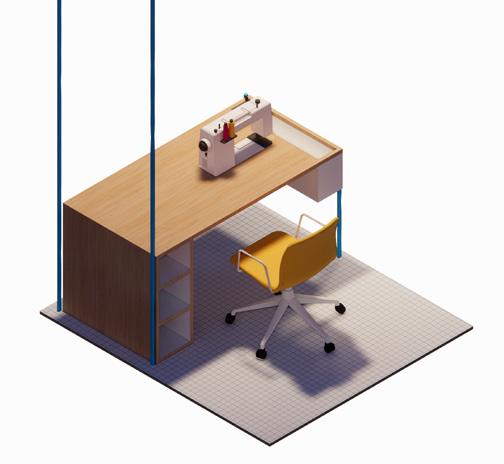
The space is divided into two main areas. Customers enter into retail space to thrift for old clothing, fabric waste, and brand merchandise. Second is the up-cycling workshop, featuring ideation space, pin up booths, cutting tables, sewing machines, and resource storage.
The design features window display booths demonstrating the possibilities of the craft by featuring artistic works created through upcycling. In order to emphasize the clothing as artwork, the space uses a minimal material palate as a blank canvas. A main feature of the space is the scaffolding element supporting the workspace, reflecting the opportunity to create something new using what exists as a framework.
12
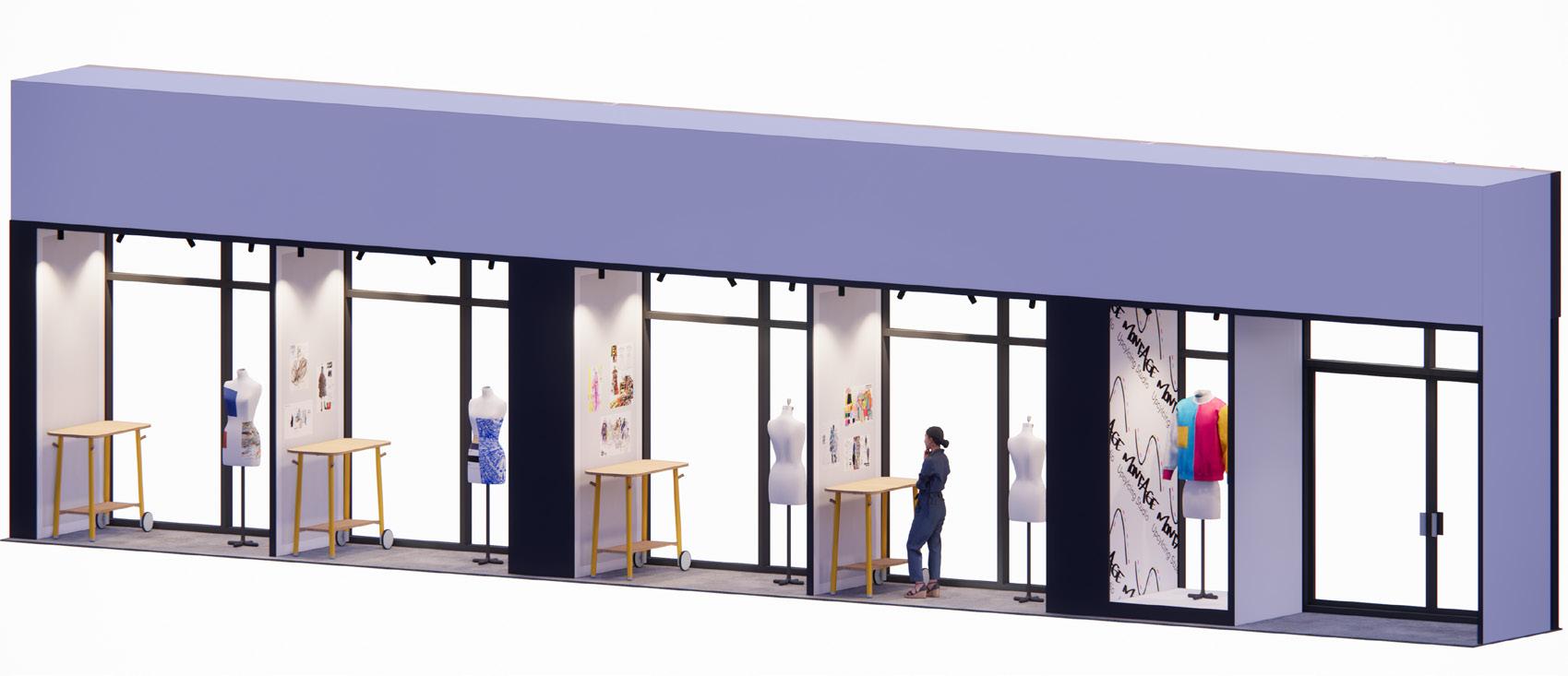
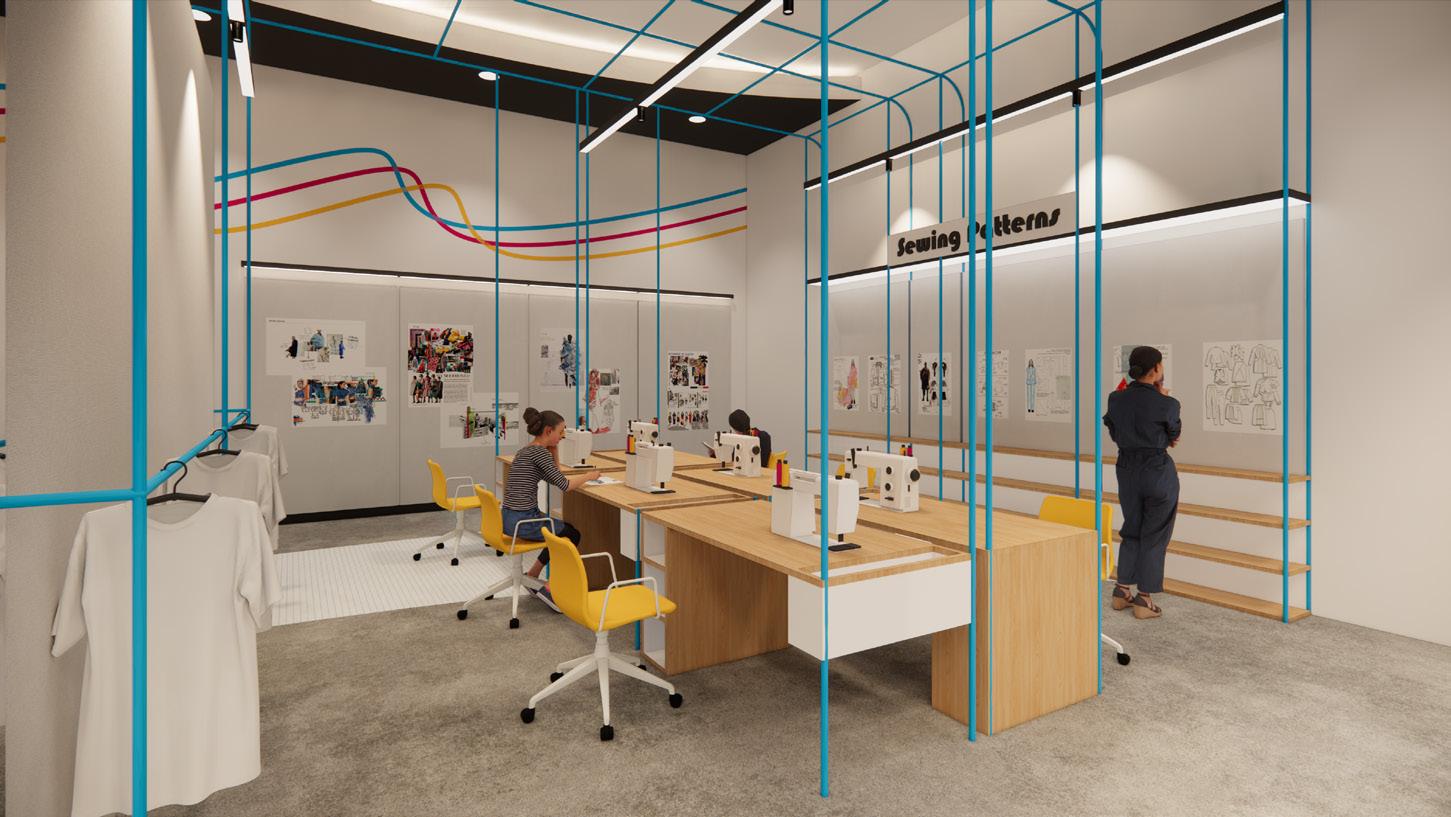
Work + Display Booths Up-cycling Workspace 14
Building Blocks Kompan Office Design
Skills: Revit, Rhino, Illustrator, InDesign
Summer 2022
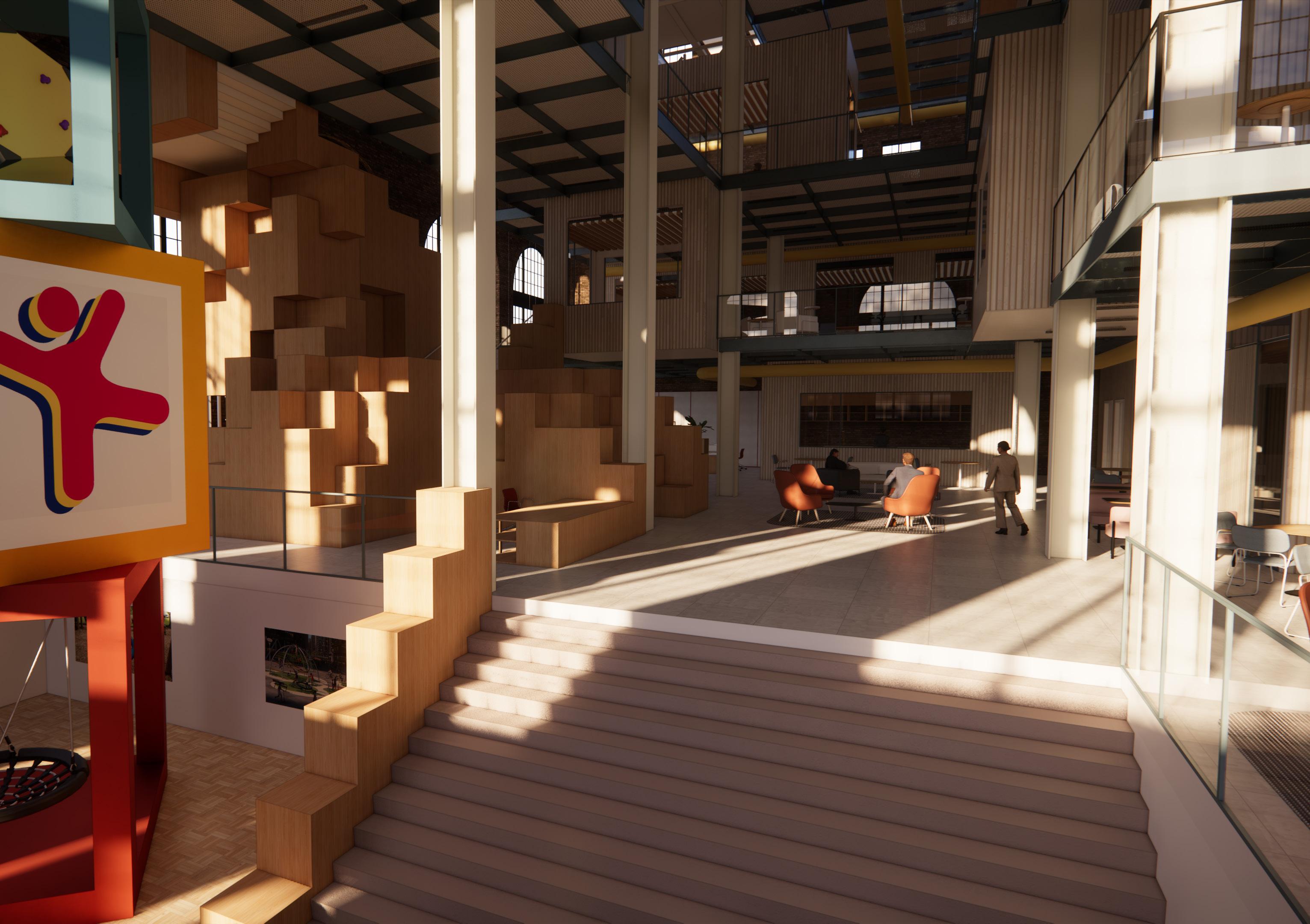
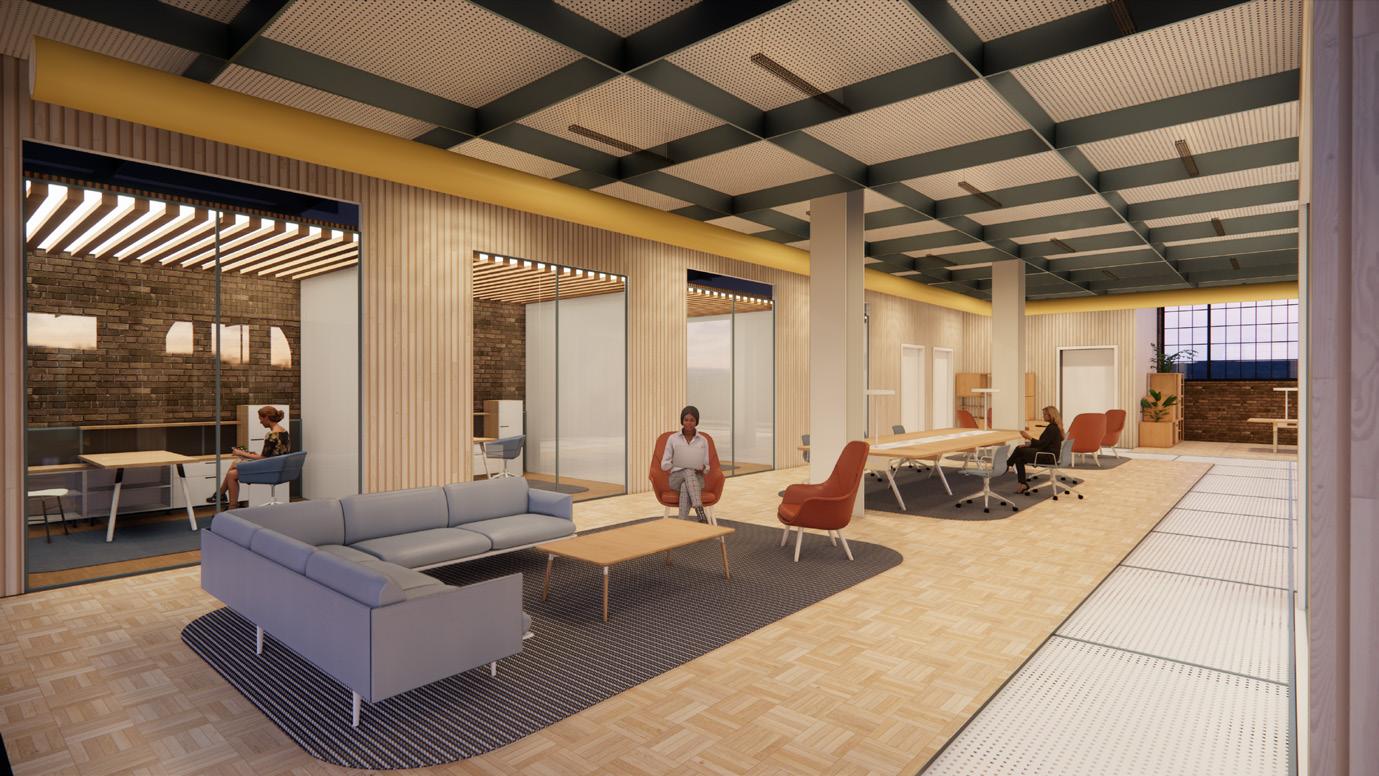
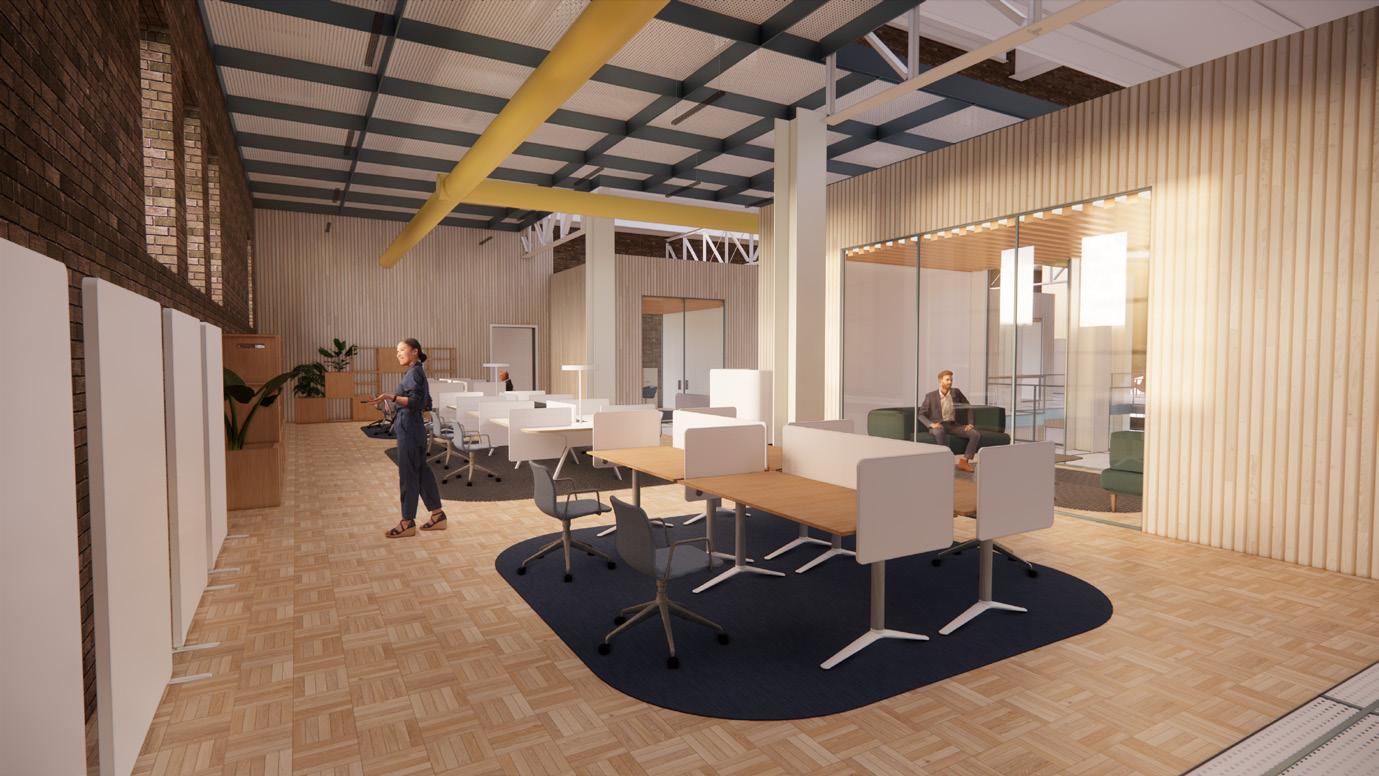
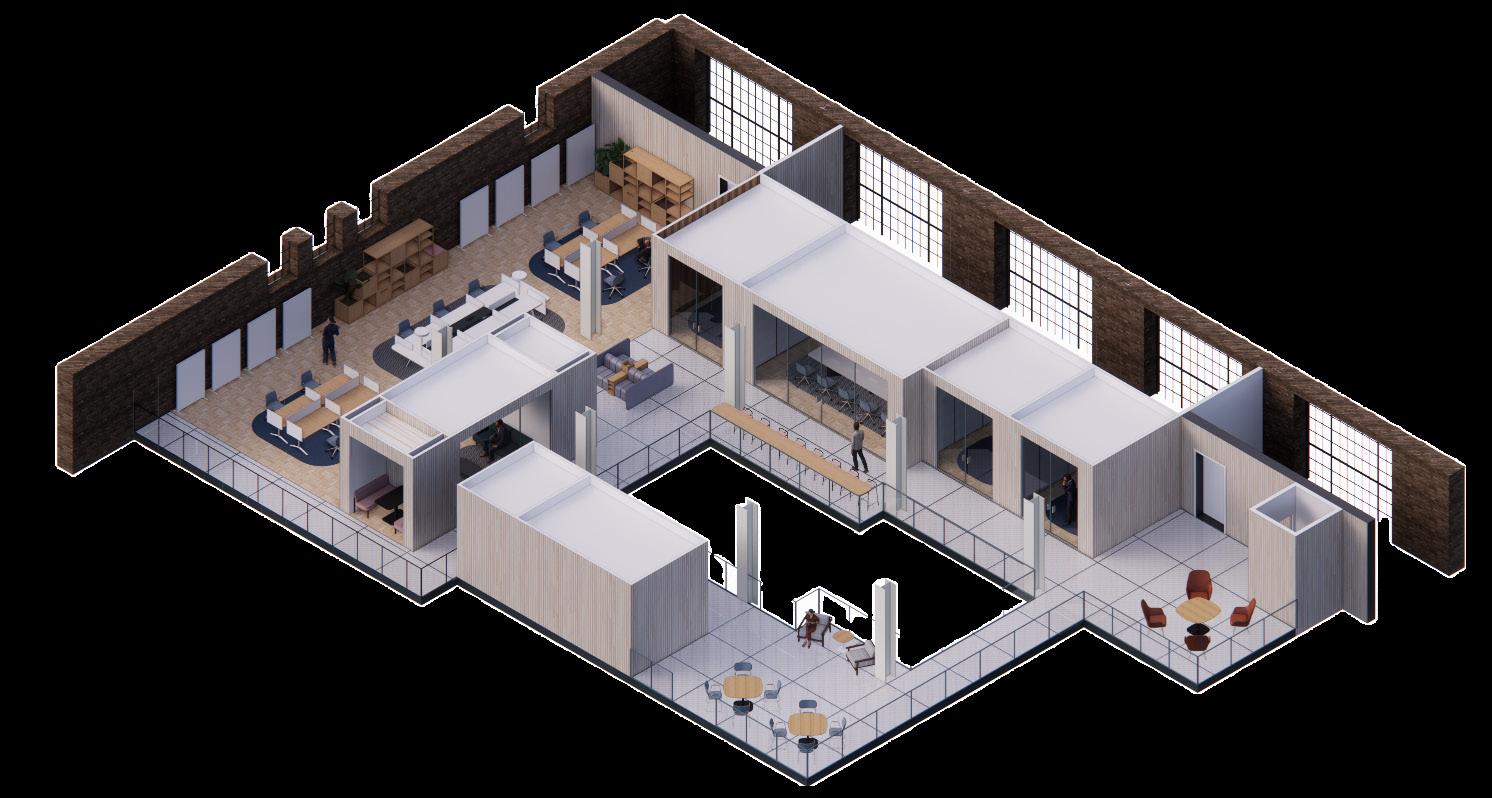
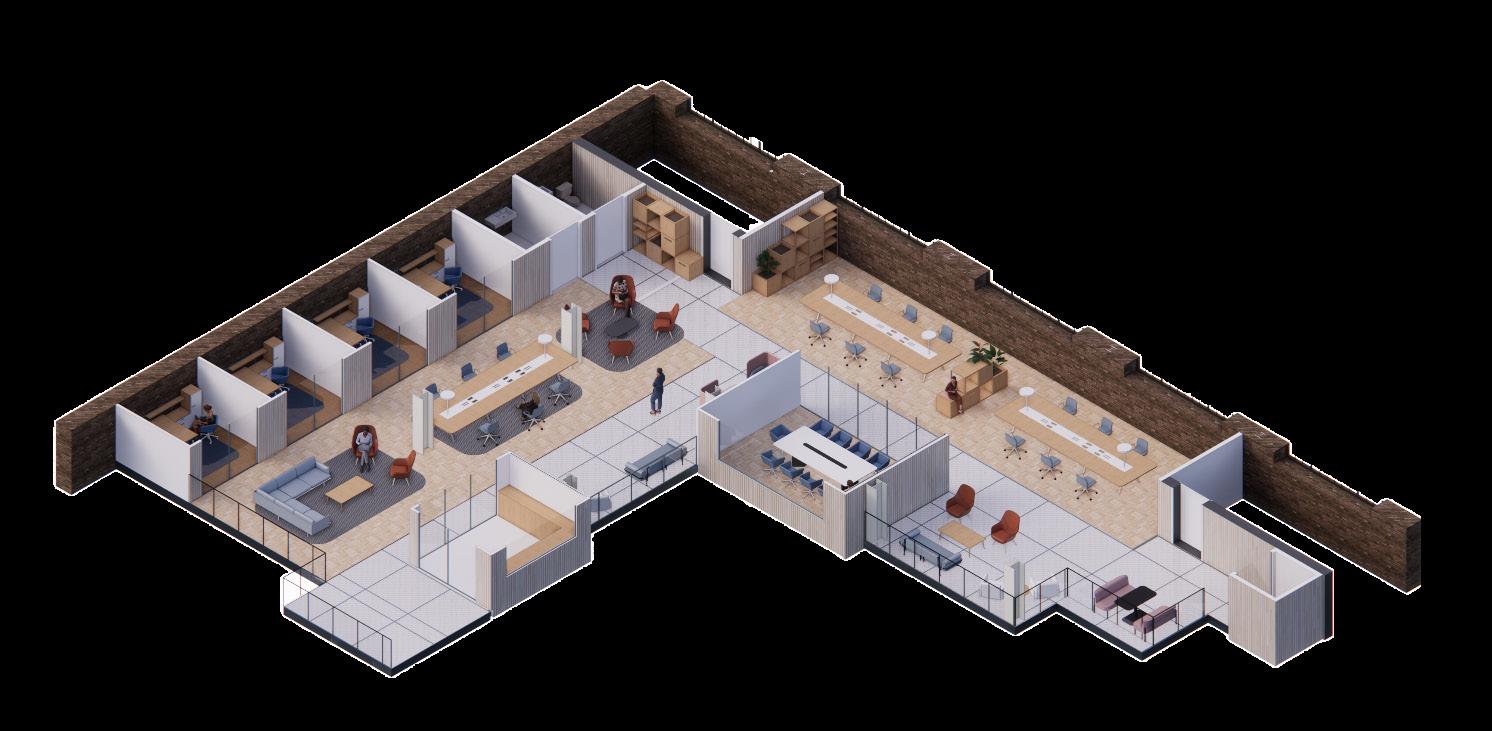
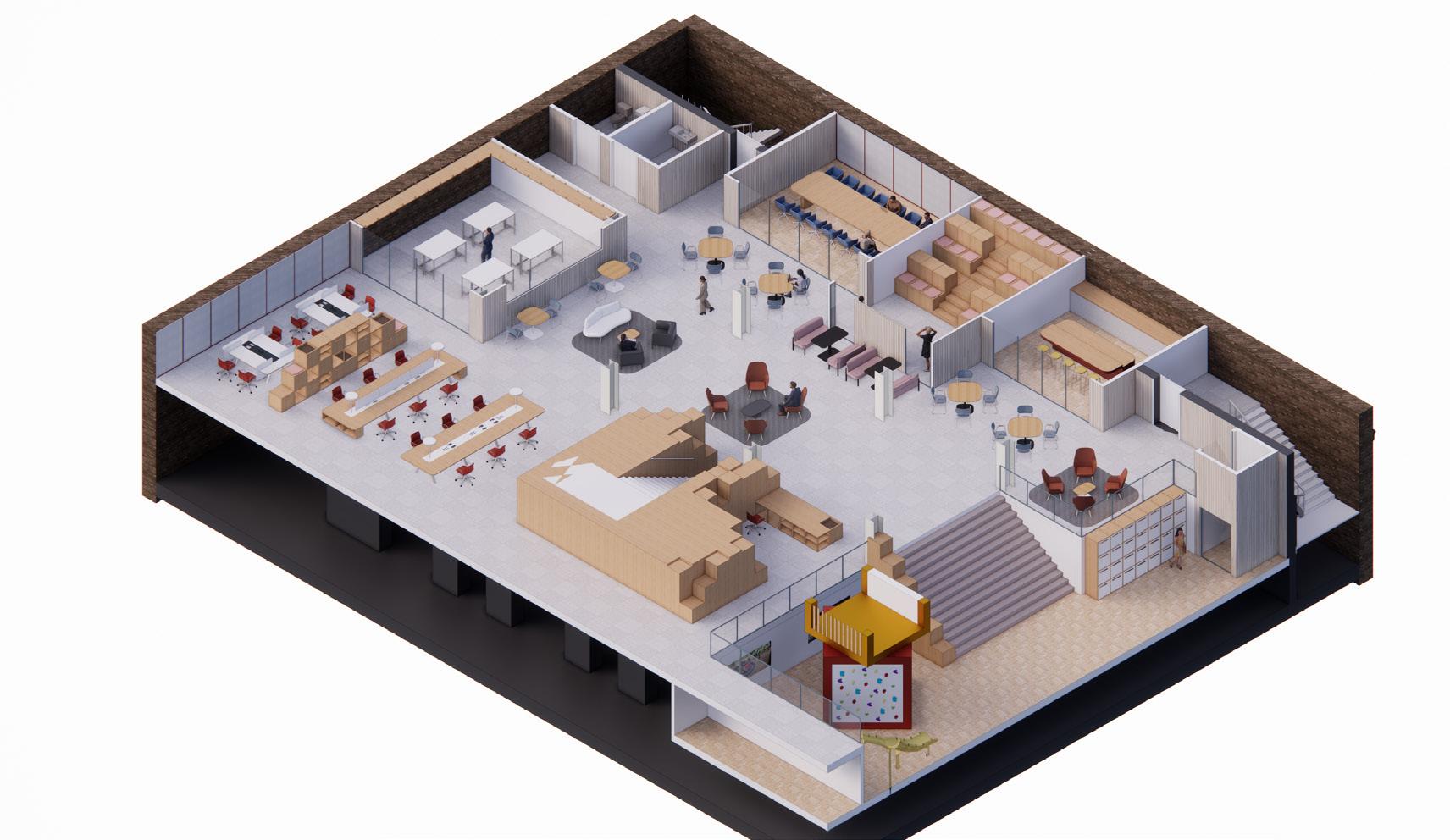
This project proposes a new regional headquarters for Danish playground manufacturer, Kompan. Located in St. Louis, the proposal looks to adapt a three story warehouse space into a multilevel collaborative office. The concept of this design, called building blocks, seeks to celebrate play as a central tenet of human life, a key component of Kompan’s mission.
In order to best represent the values of the company, the office space acts as a work-play environment, incorporating Kompan playground equipment directly into the space for display and function purposes. The design is structured as a series of building blocks, reflecting the timeless children’s playtime activity and providing a groundwork for a space that is dynamic and collaborative.
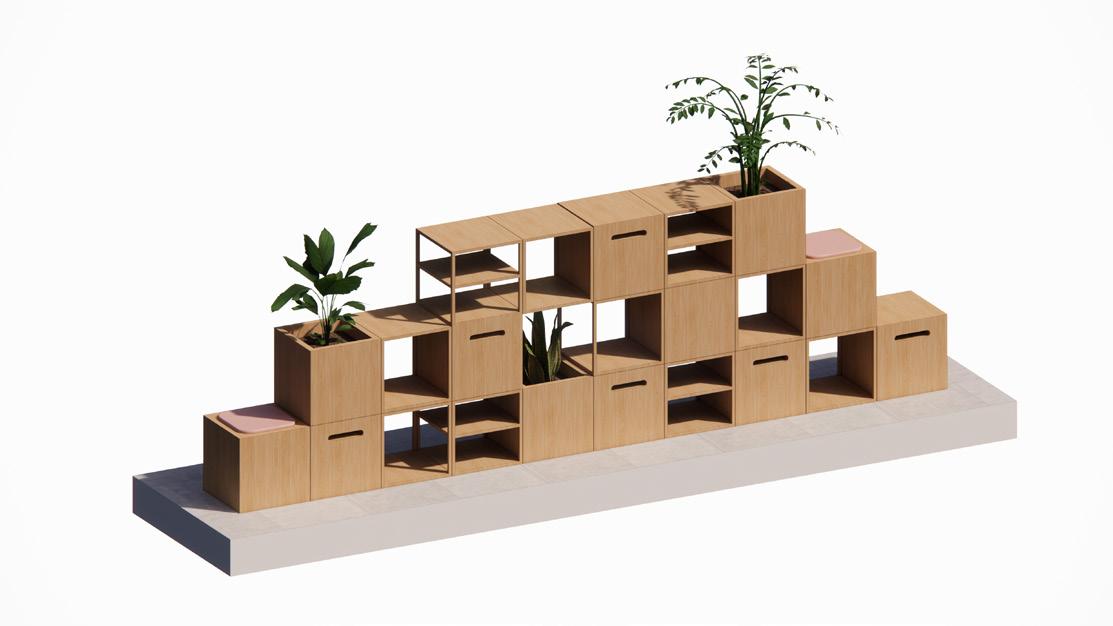
The spaces are viewed as building blocks stacked vertically creating the mezzanine levels and providing space for private offices, breakout spaces, and lounge areas with collaborative workspace filling in the spaces between on the blocks.
16
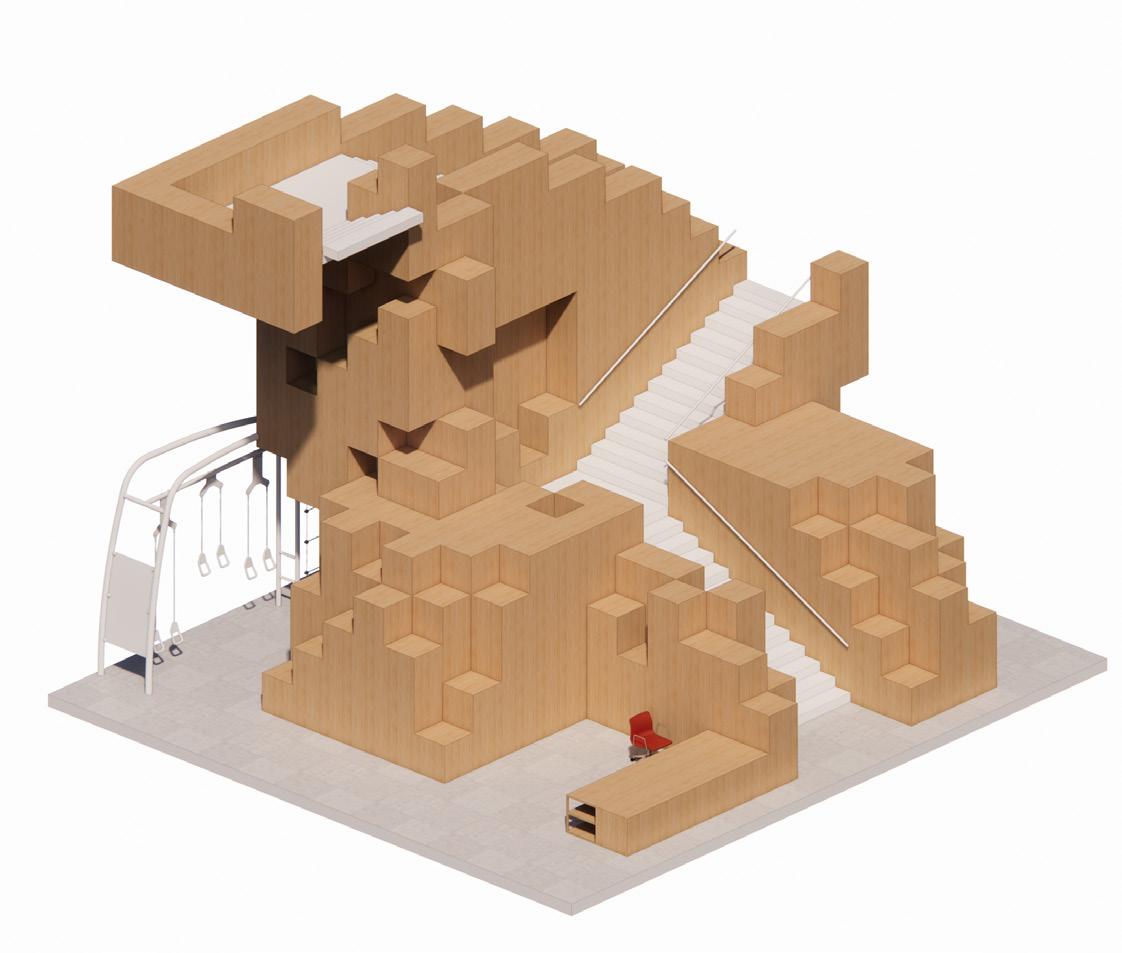
Exhibition Tower
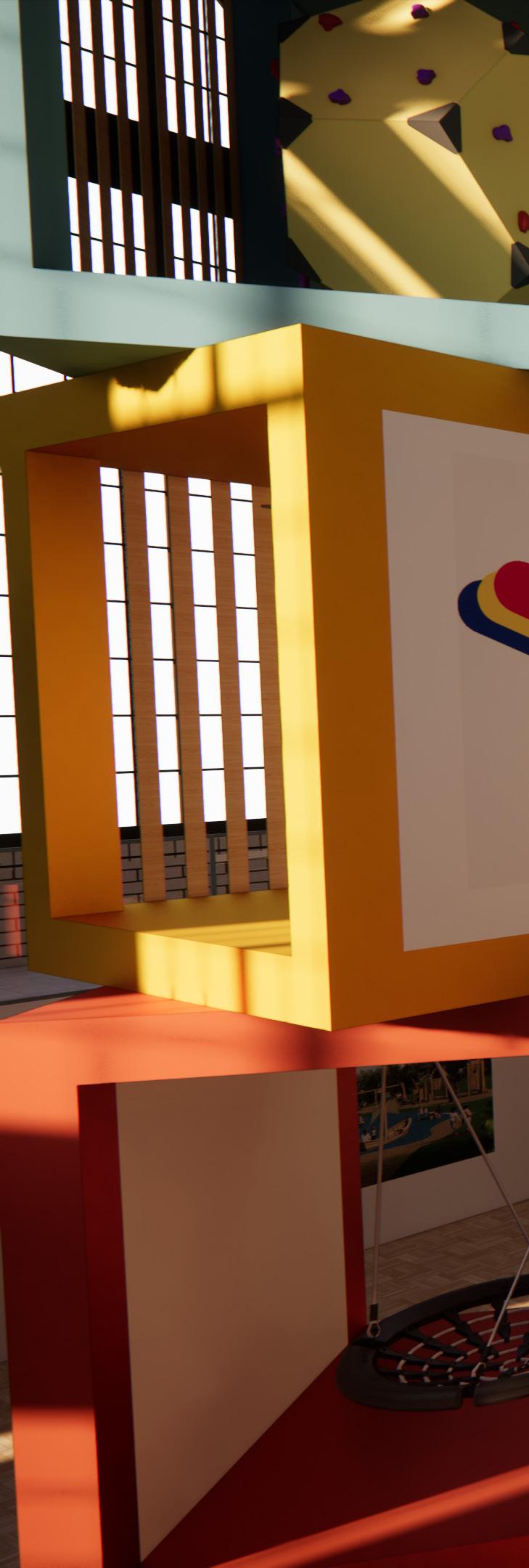
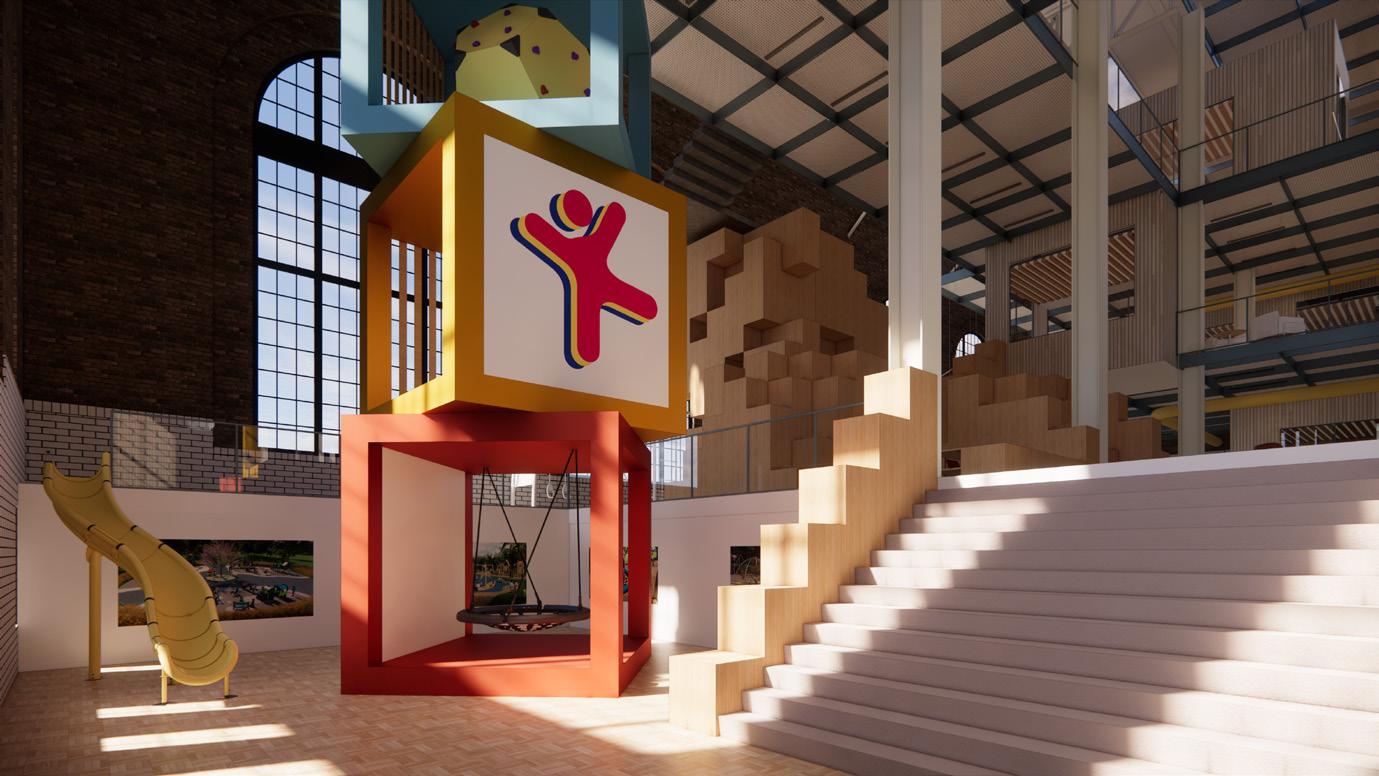
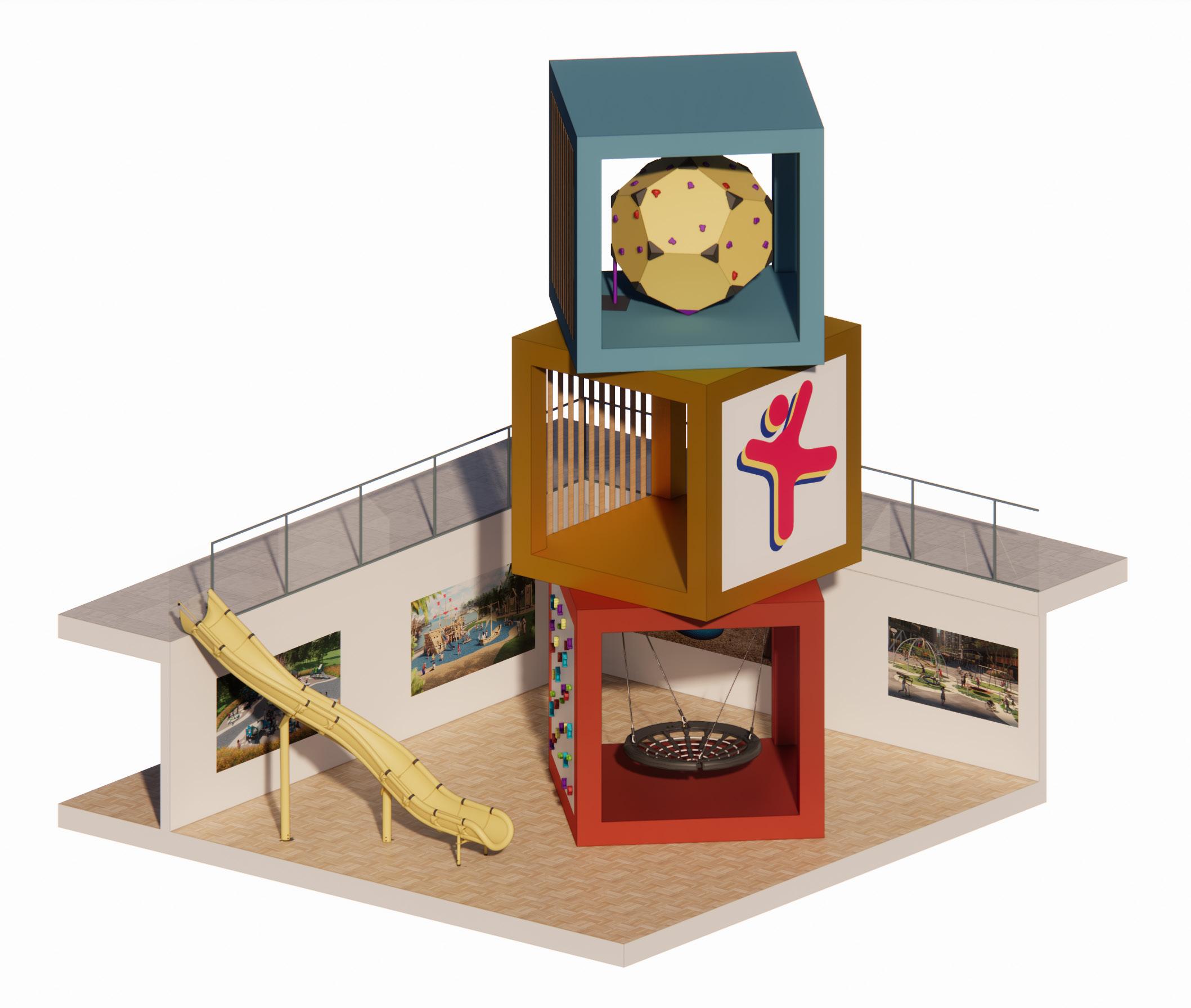
Inspired by the form of Kompan’s Triple Cube play tower, the exhibition space features a circulating display of Kompan’s latest designs. The tower of blocks combines dramatic display with interactive play elements and acts as a hub for Kompan’s designs at the entrance of the building.
18
Stair Building Blocks
Modular Cube System
Embrace Side Table
Skills: Wood + Metal Working Spring 2022
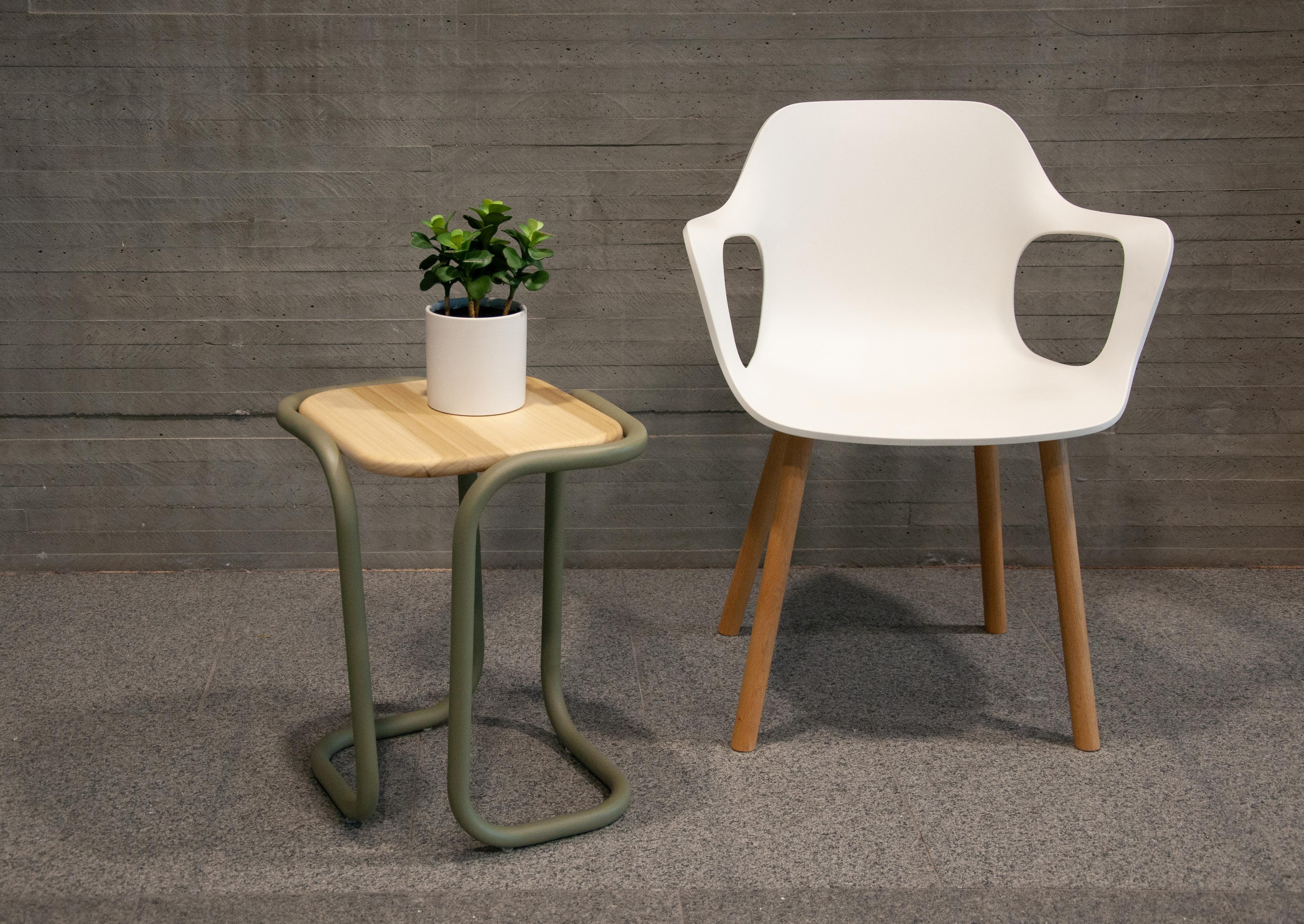
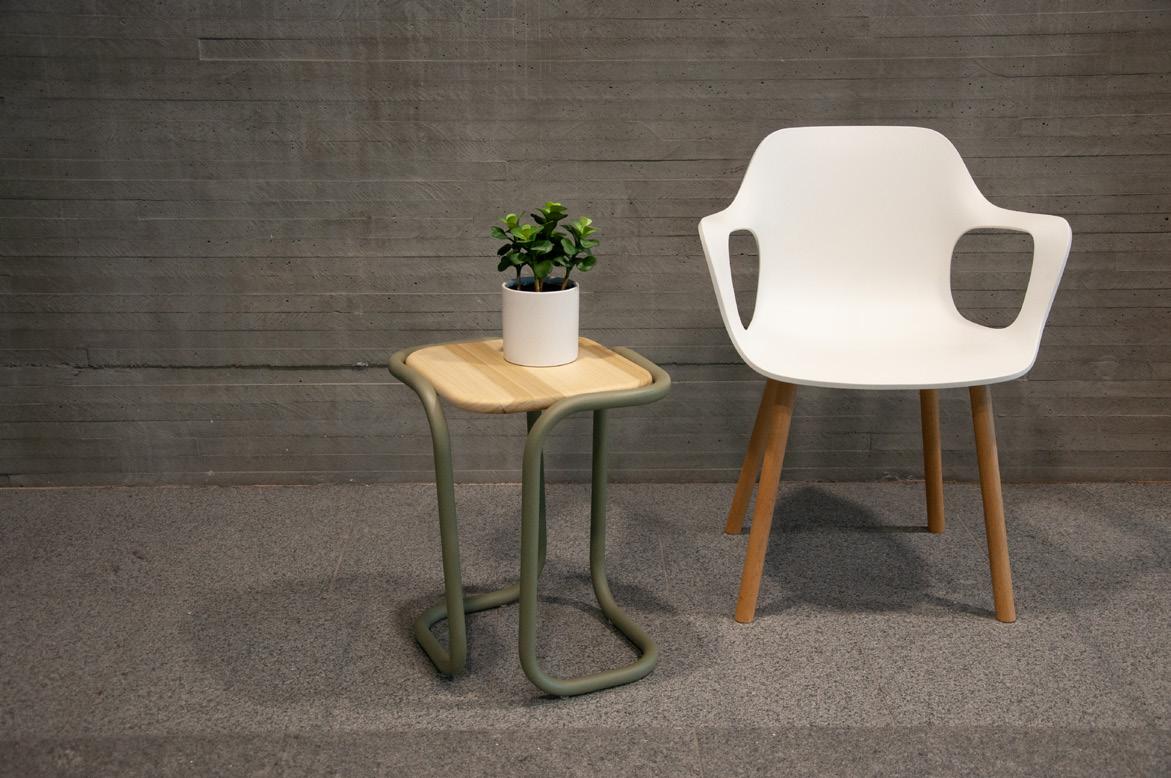
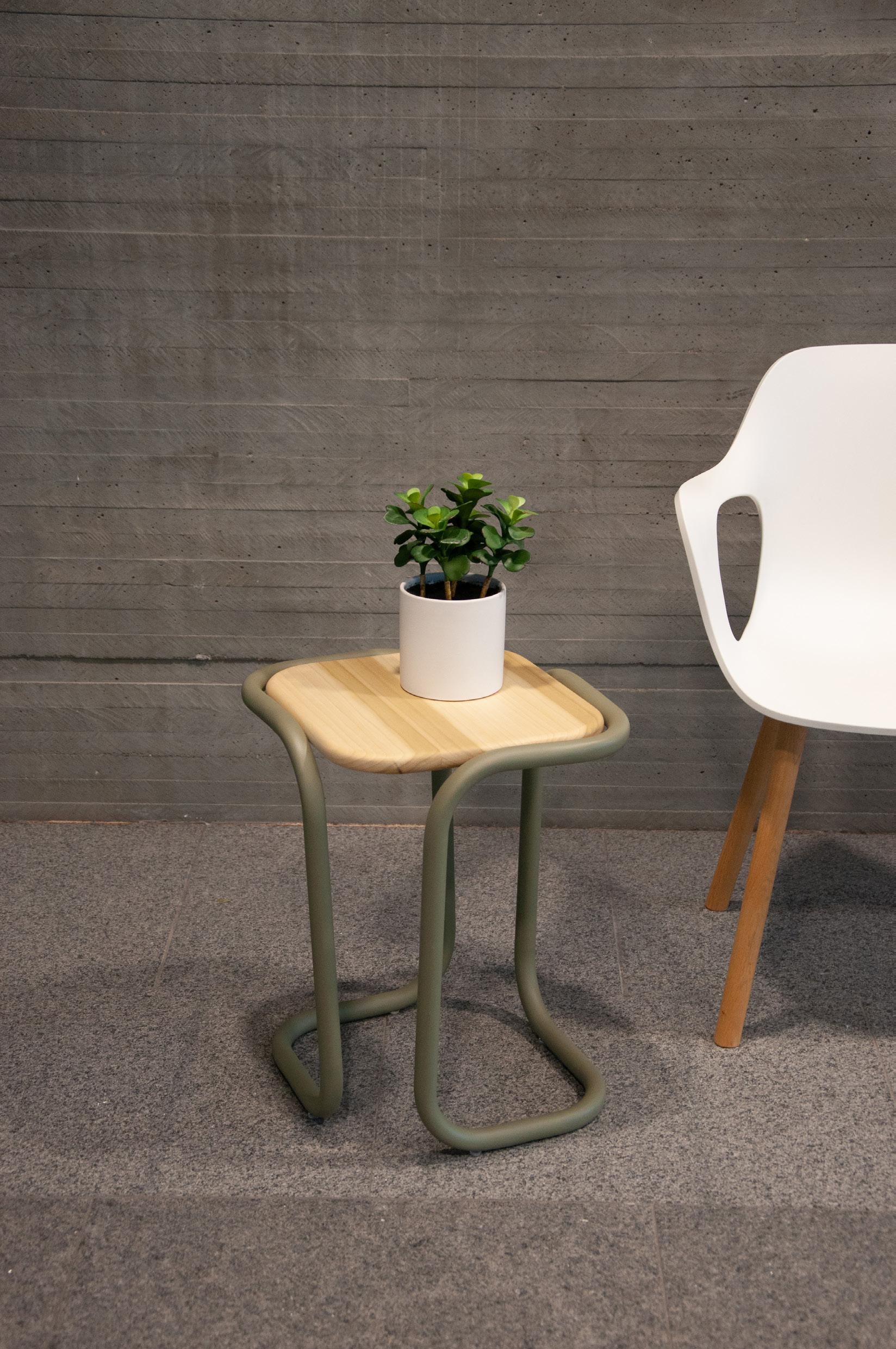
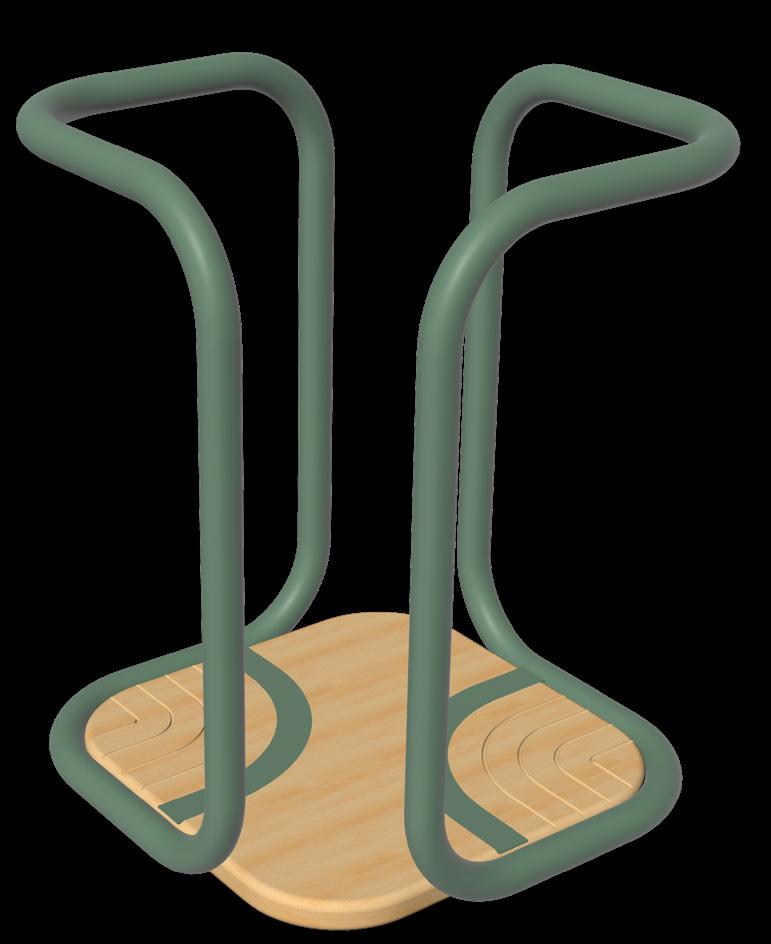
As an introduction to furniture design and the fabrication lab, the goal of this project was to design a portable side table using both metal and woodworking techniques. In order to best celebrate the two materials, the design centers around the idea of blending the wood table top with the metal base in a way that creates a cohesive dynamic.
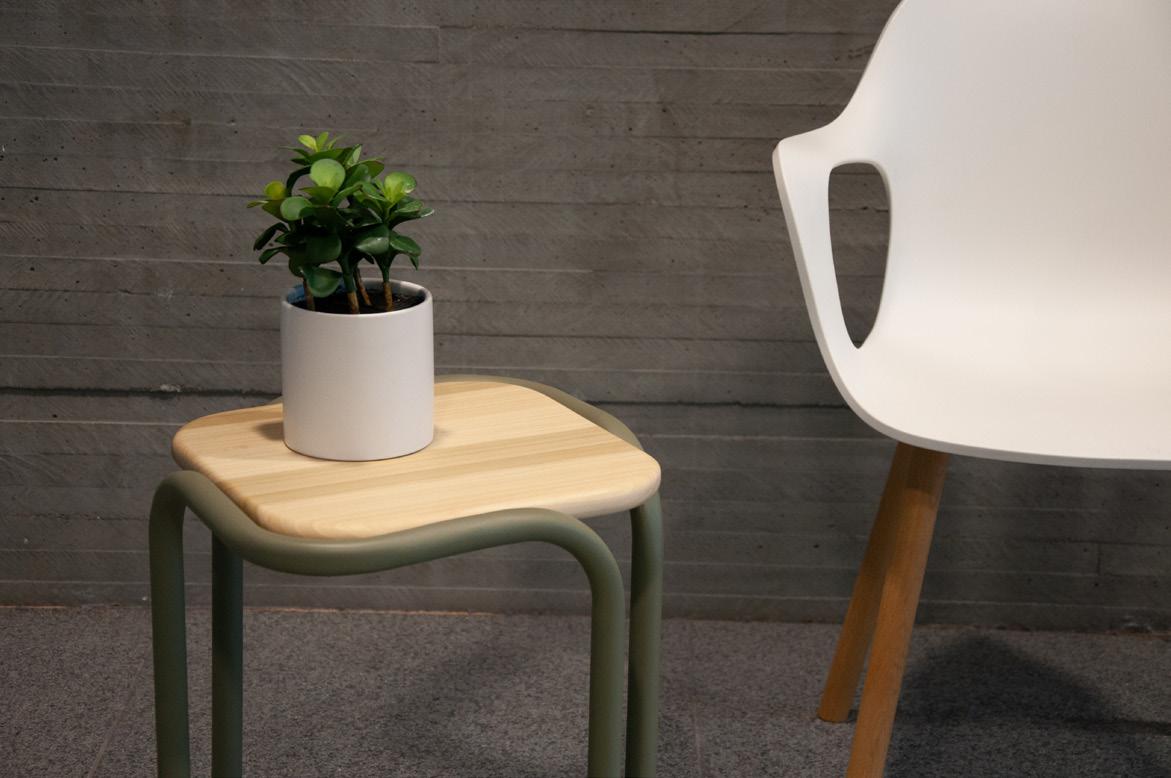
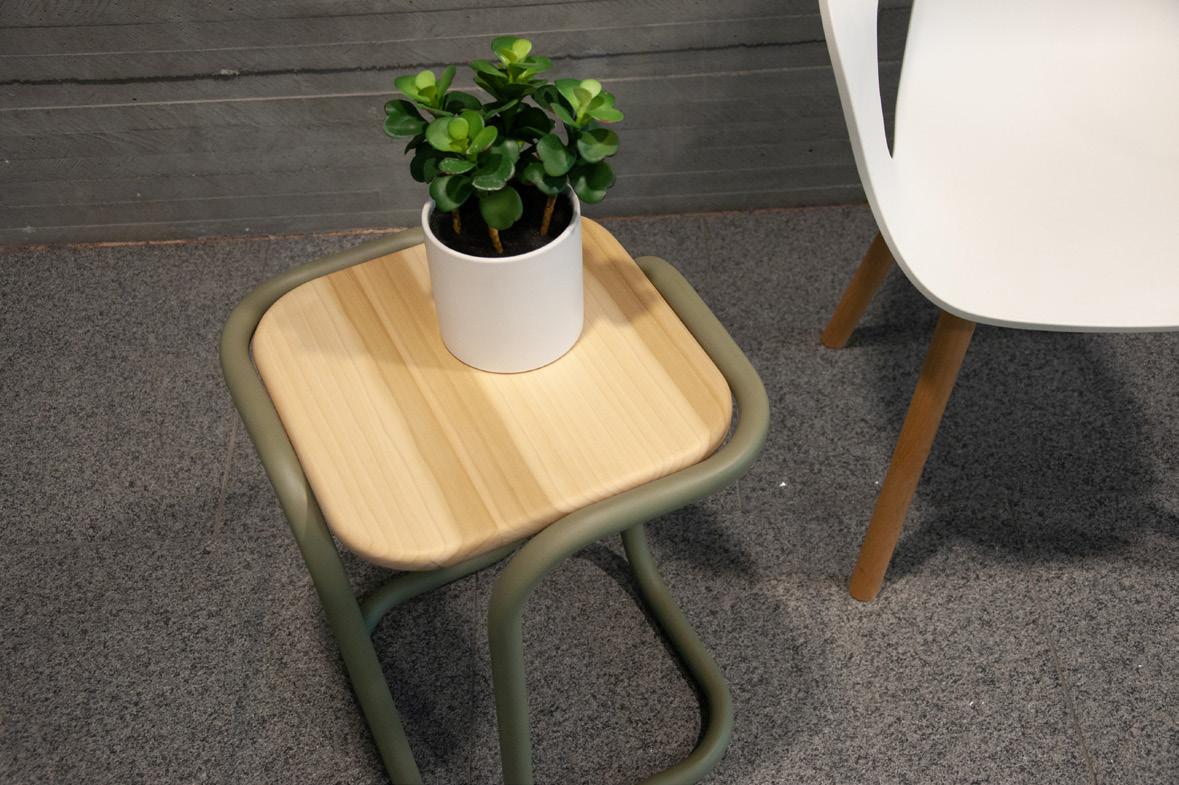
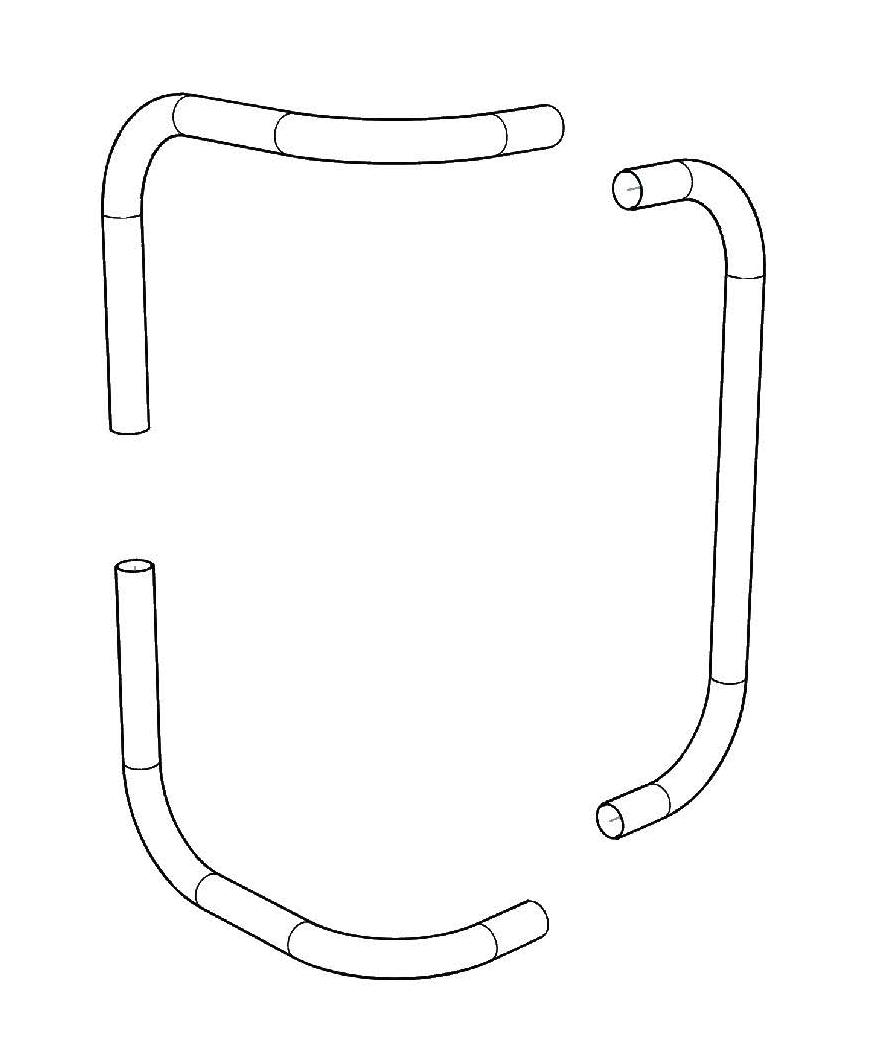
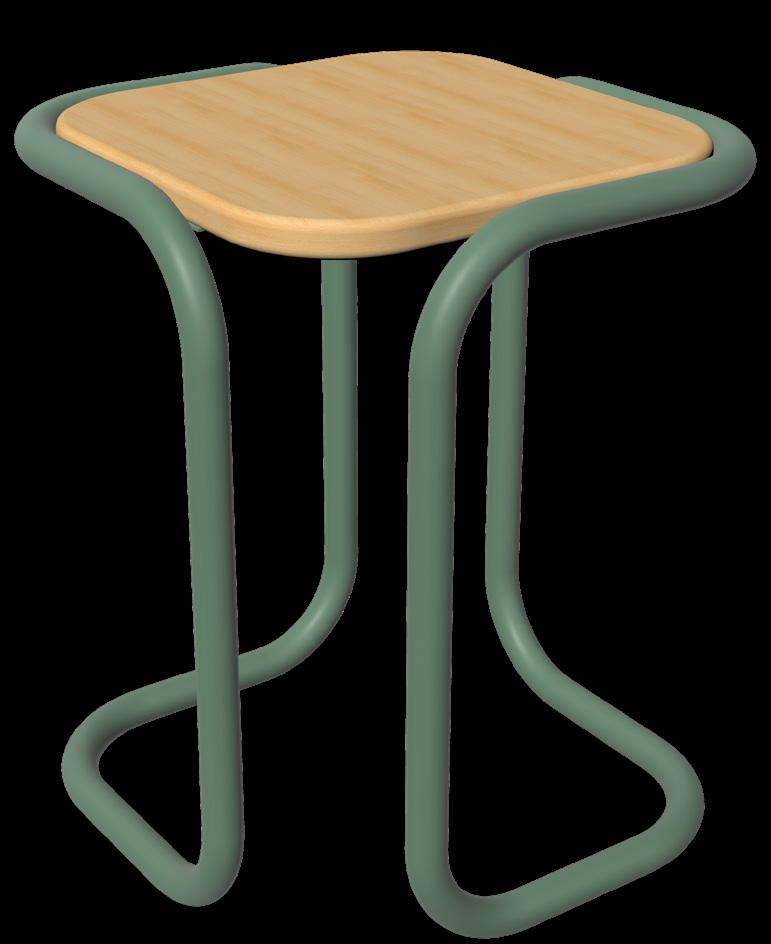
Called Embrace, the concept reflects the idea of the metal legs wrapping around the table top. This relationship creates a form in which the legs seems to reach upwards and lift the wood in a soft handhold like embrace. Metal tube was bent in three axis and welded together to create continuous wrapping legs. The legs wrap two corners, leaving the other two exposed allowing for both wood movement and handholds.
Curves are used consistently throughout the design with continuous curving legs and a rounded square table top. This creates an organic and harmonious form that is comfortable and natural. Metal tabs, mirroring the curves of the legs, are recessed into the wood, hidden from view but providing structure.
20




22
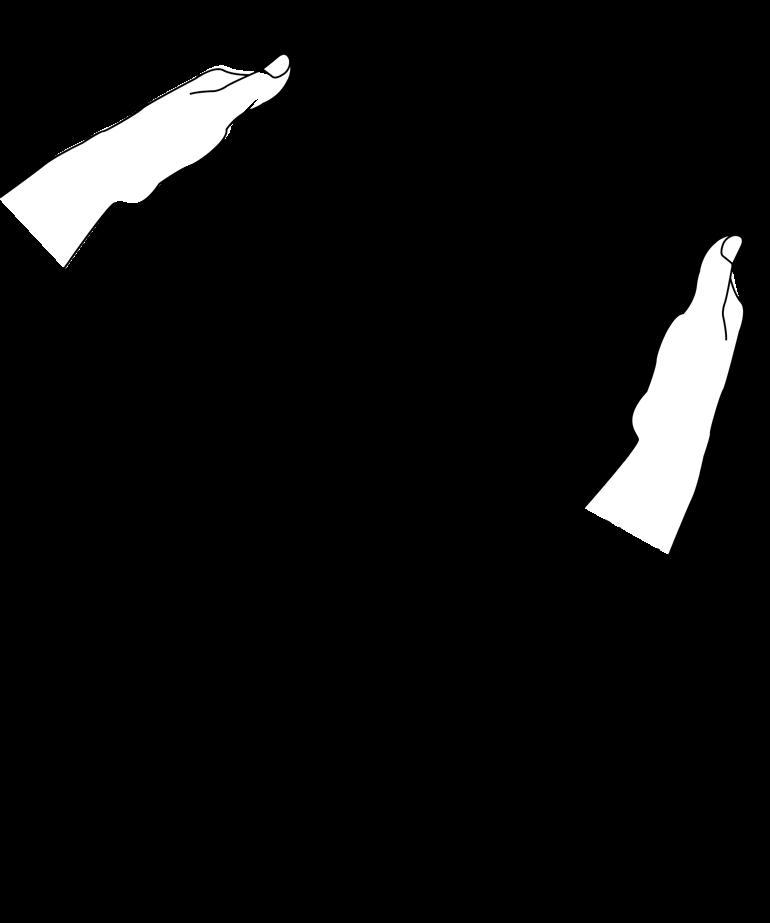
 User Interface
Construction Diagram
User Interface
Construction Diagram
Waterfall Coffee Table
Skills: Woodworking

Spring 2022 | ? Weeks
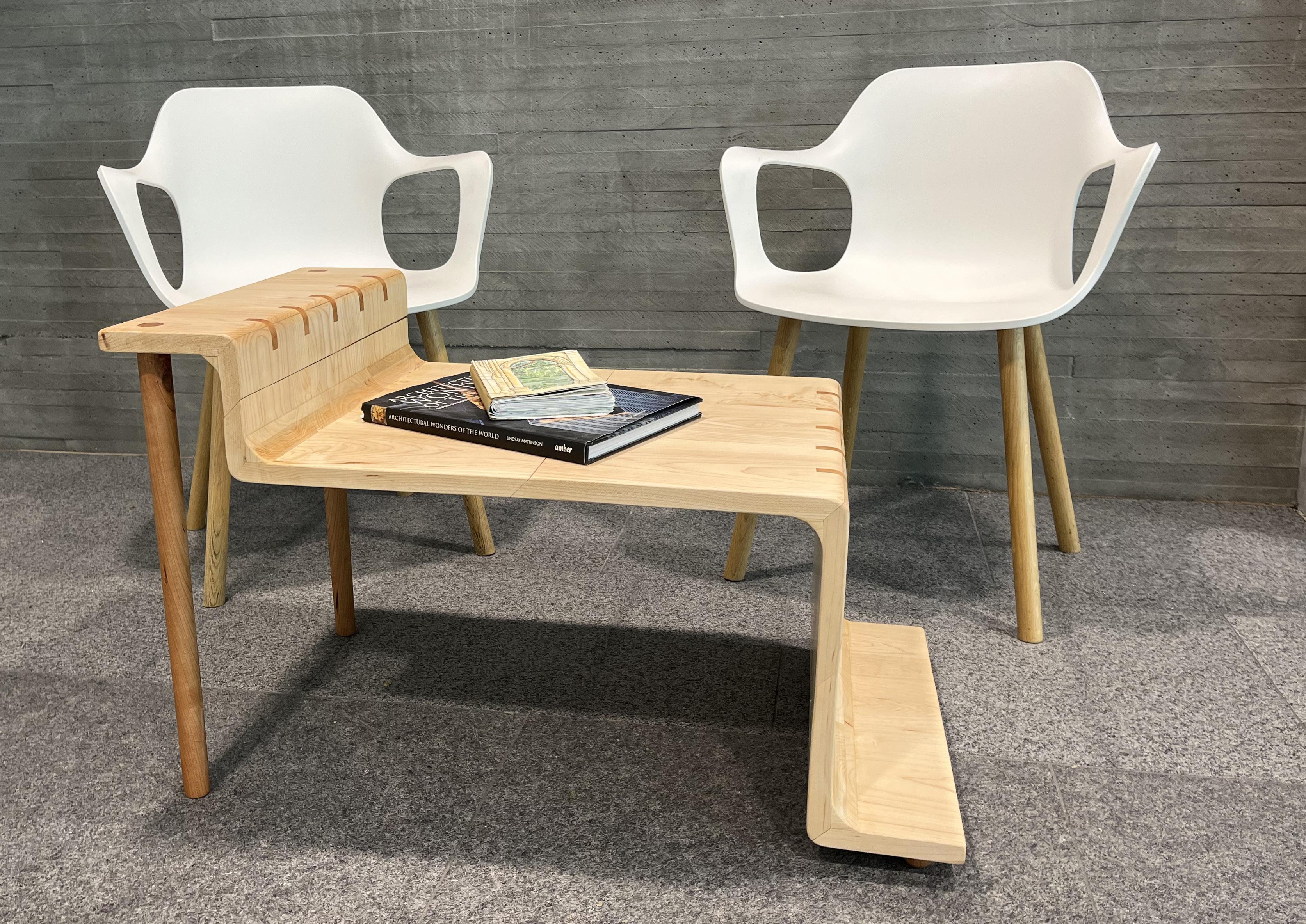
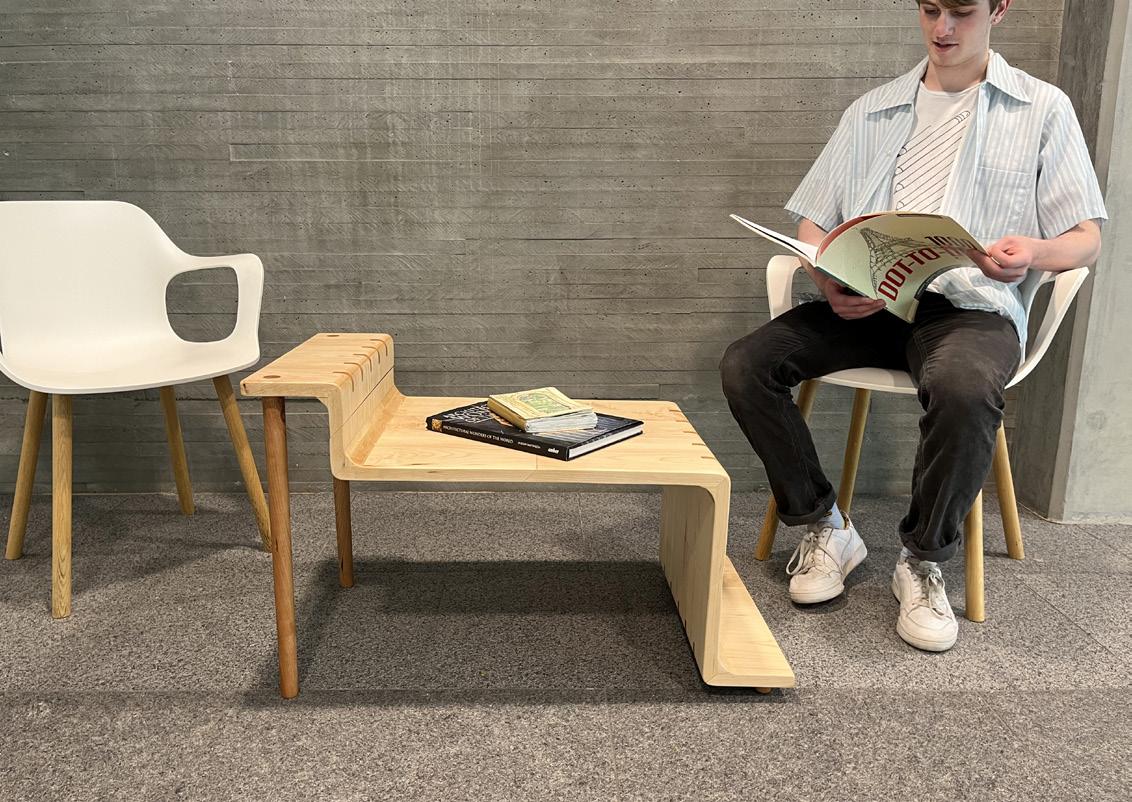
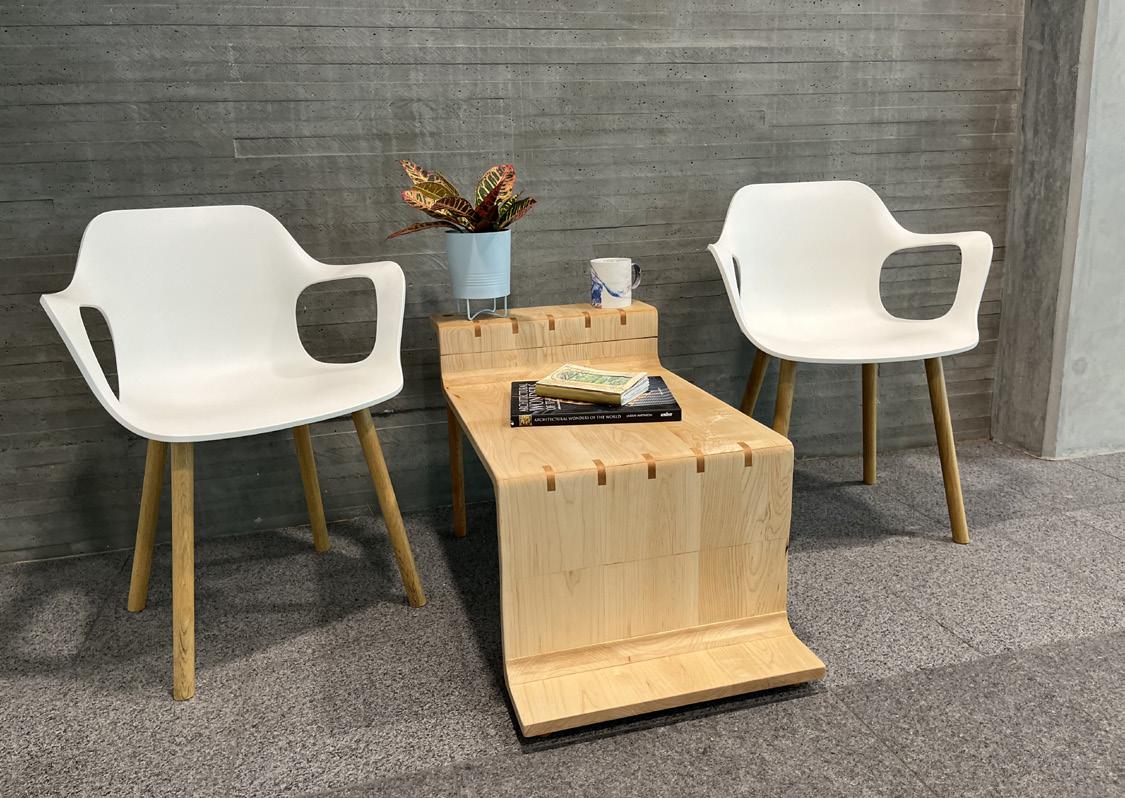
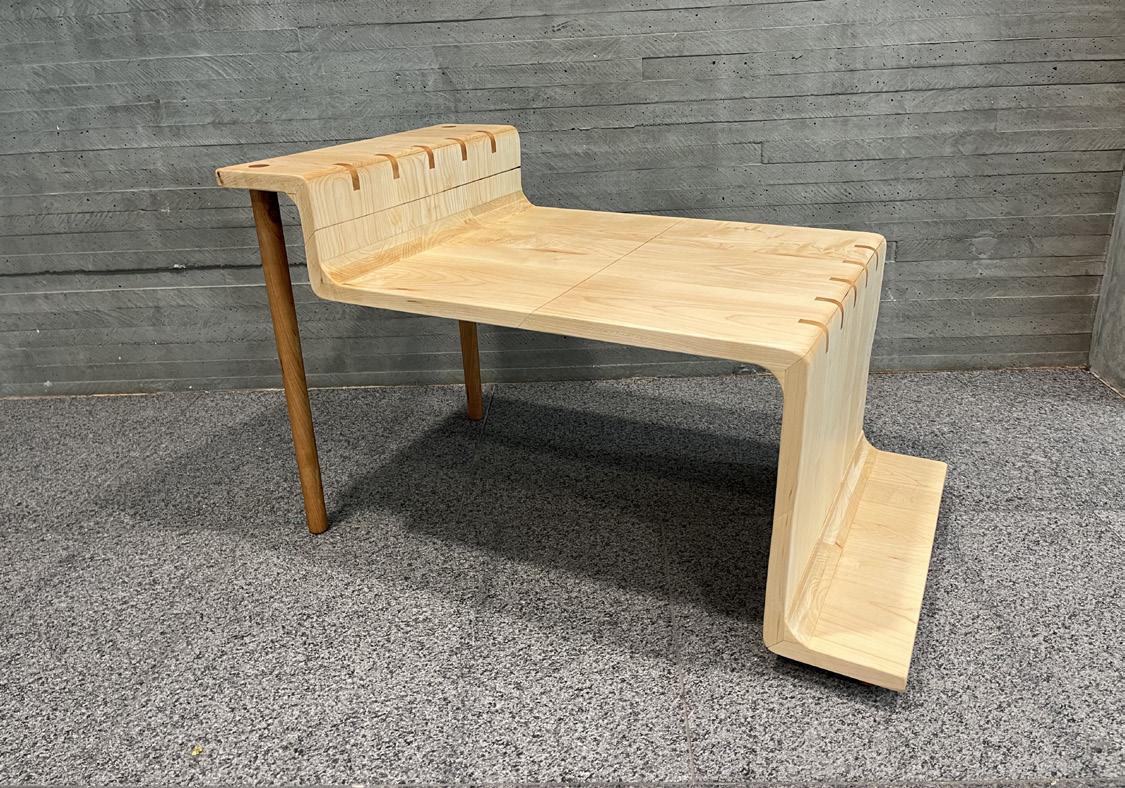
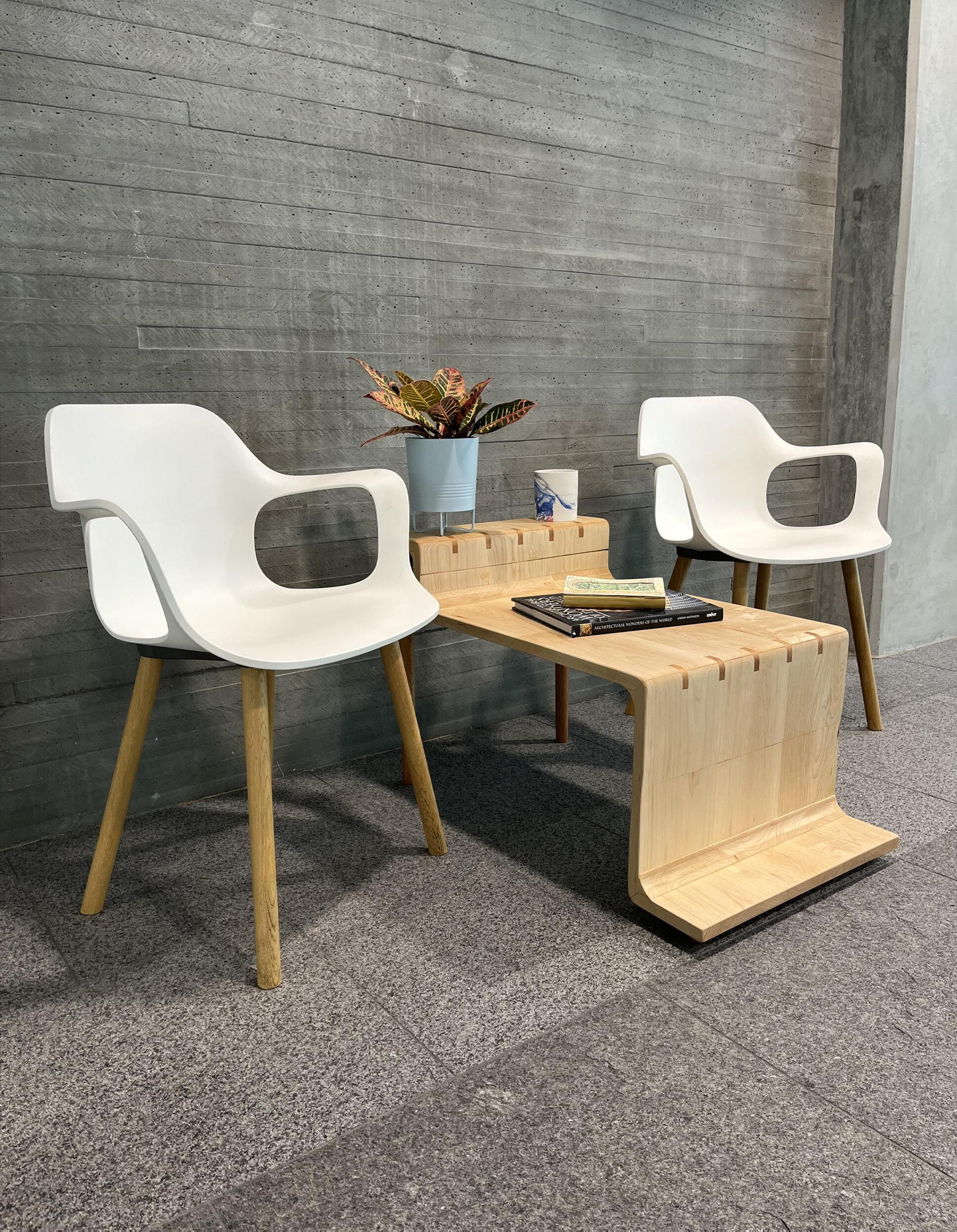
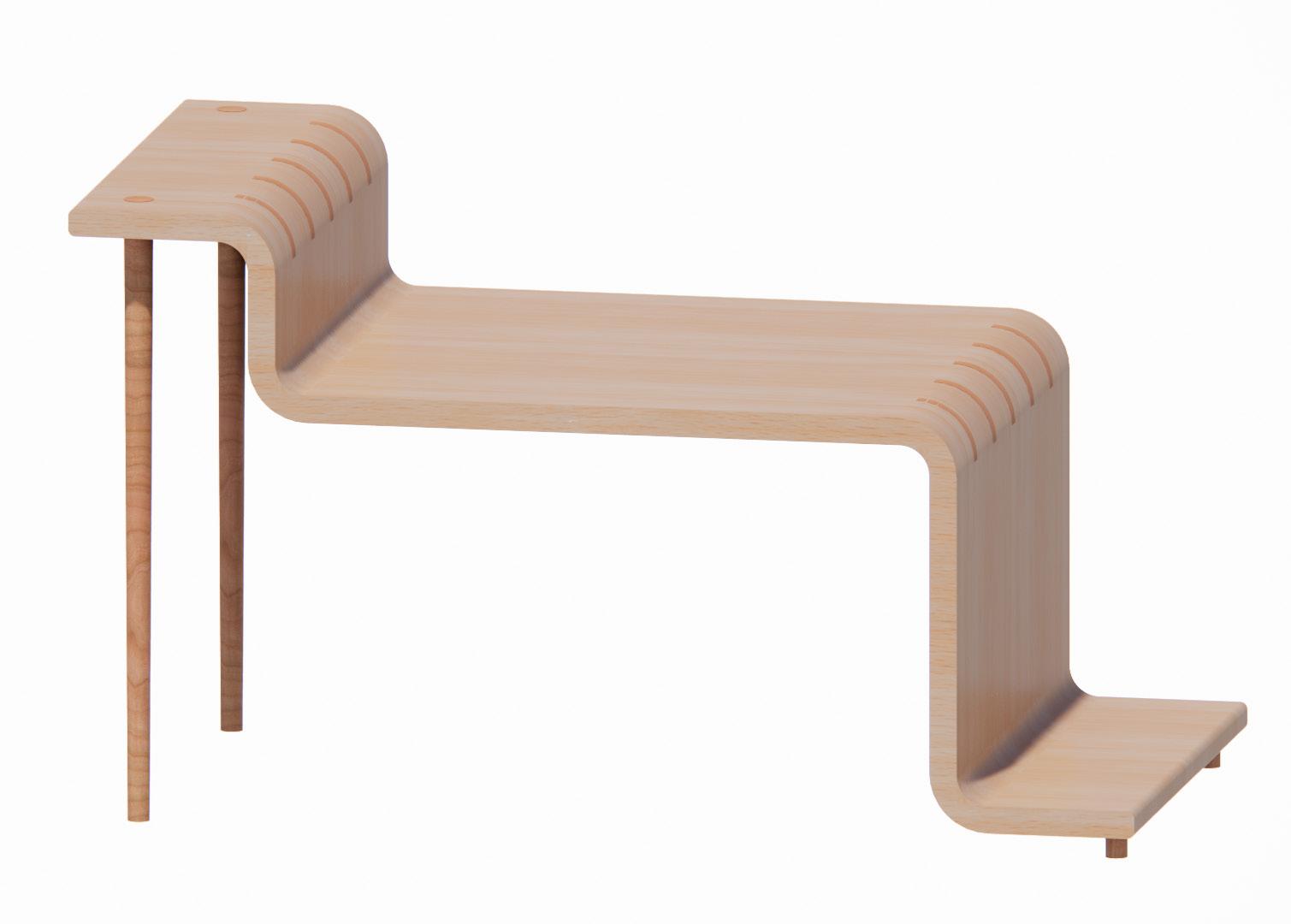
This coffee table design focuses on reacting to the principles of Scandinavian Modernism and adapting them into a unique table that is both functional and sculptural. Inspired by the natural harmony and balance seen in Scandinavian design, the table seeks to mimic the flow of a waterfall by creating a continuous curved form that flows to the ground.
The table is constructed entirely out of wood, utilizing the wood joinery techniques of mortise + tenon and spline joints. A sense of cascading directionality is emphasized by the grain seen in the hard maple table top. Minimal use of cherry seen in the legs and spline joints, creates a sense of balance through subtle contrast.
The form reflects the concept of a waterfall with three levels of continuous cascading table top. The high end rests on two tapering legs meant to create a sense of a waterfalls peak. The low end rests on two feet hidden underneath the ground level table surface appearing to be supported by the flow of the waterfall form.
24
Wedge Tenon Leg Joint
Rounded Miter Splines

Joinery
Domino Joints
The joints within this design seek to create a juxtaposition between the two woods used in the table design. This can be seen in the rounded, half inch splines on each outer curve as well as the wedge tenon legs that puncture through the table top and create a reveal. These conditions make up the moments within the design where cherry is used to compliment and contrast the hard maple table top.
Splines create a pattern within the curves that emphasizes directionality and visual interest and accentuates the organic, rounded form of the table. They ensure stability in the corners where stress is high. The design also utilizes domino joints at miter cuts to stitch together the four curves that make up the waterfall form.
 Miter
Inner Curves
Mortise & Tenon Feet
Miter
Inner Curves
Mortise & Tenon Feet
26

 Front View
Steve Plywood Chair
Skills: Wood + Metal Working, Sewing
Fall 2022
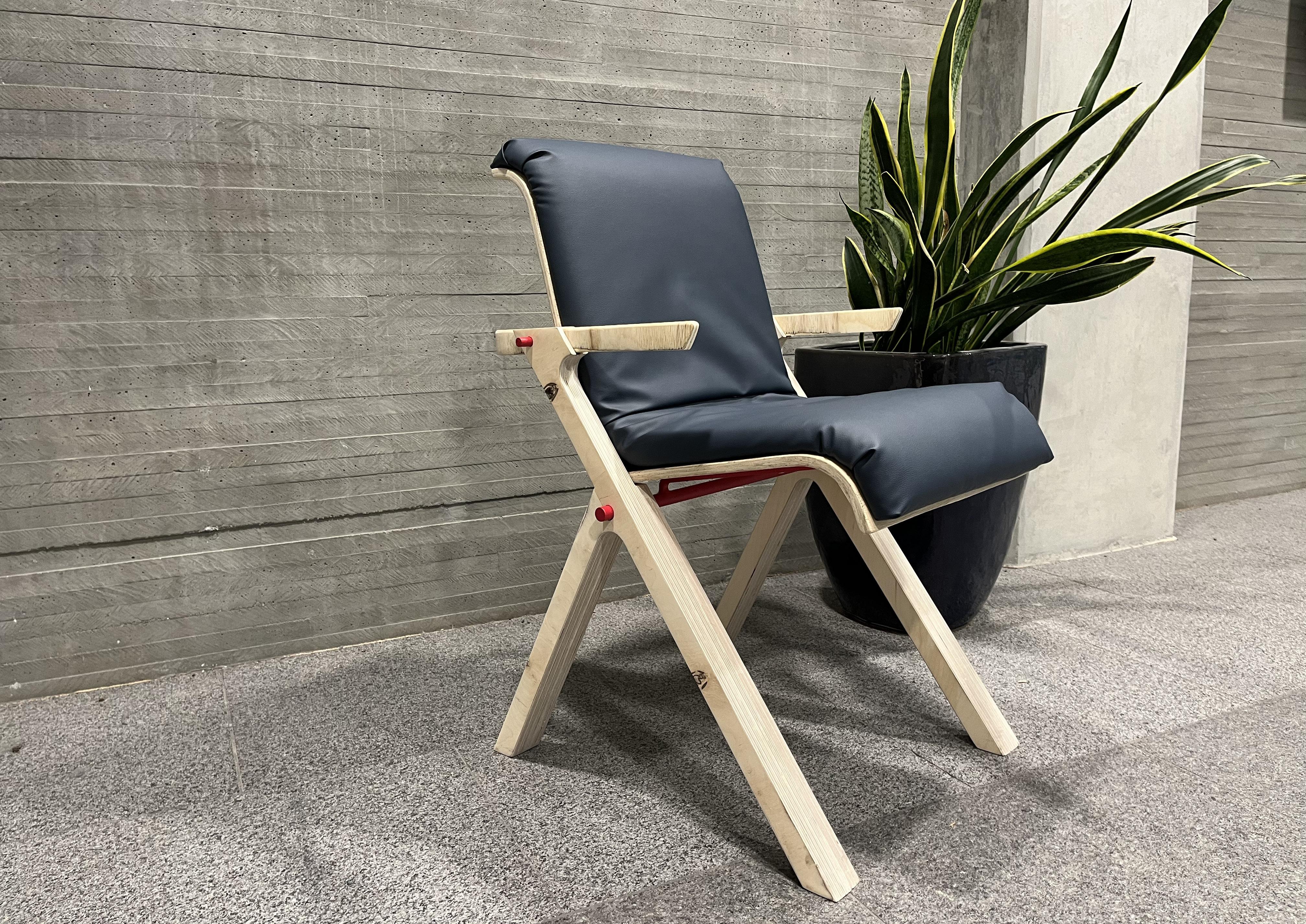
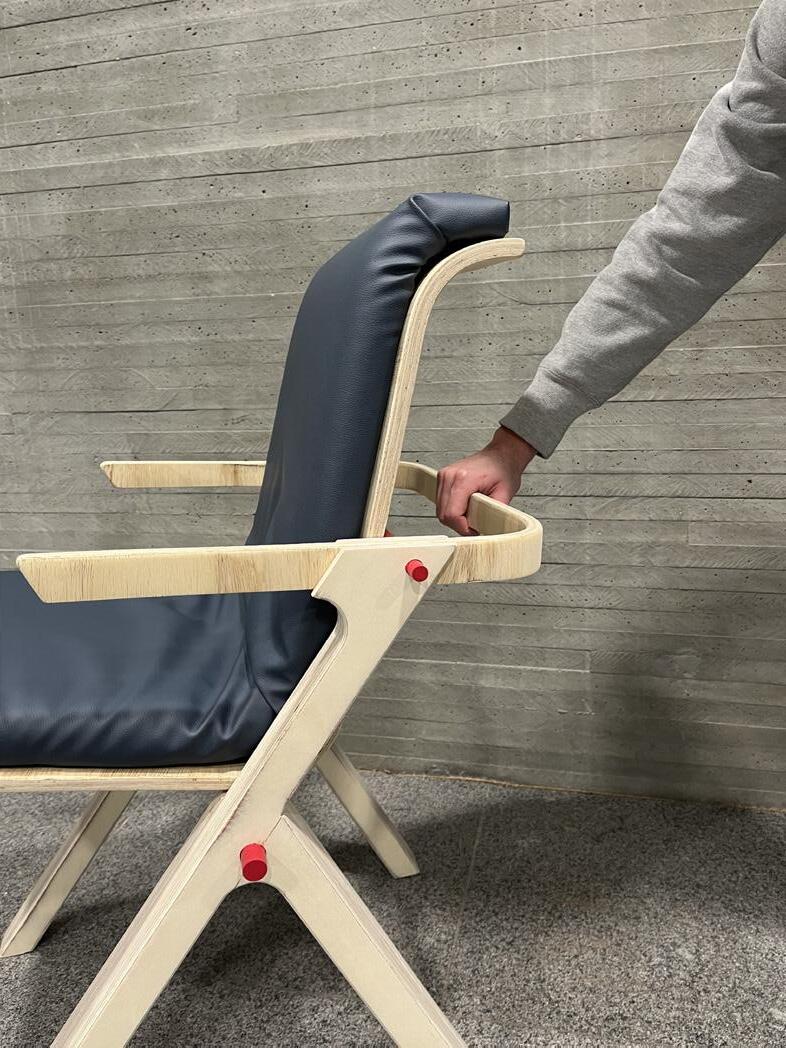
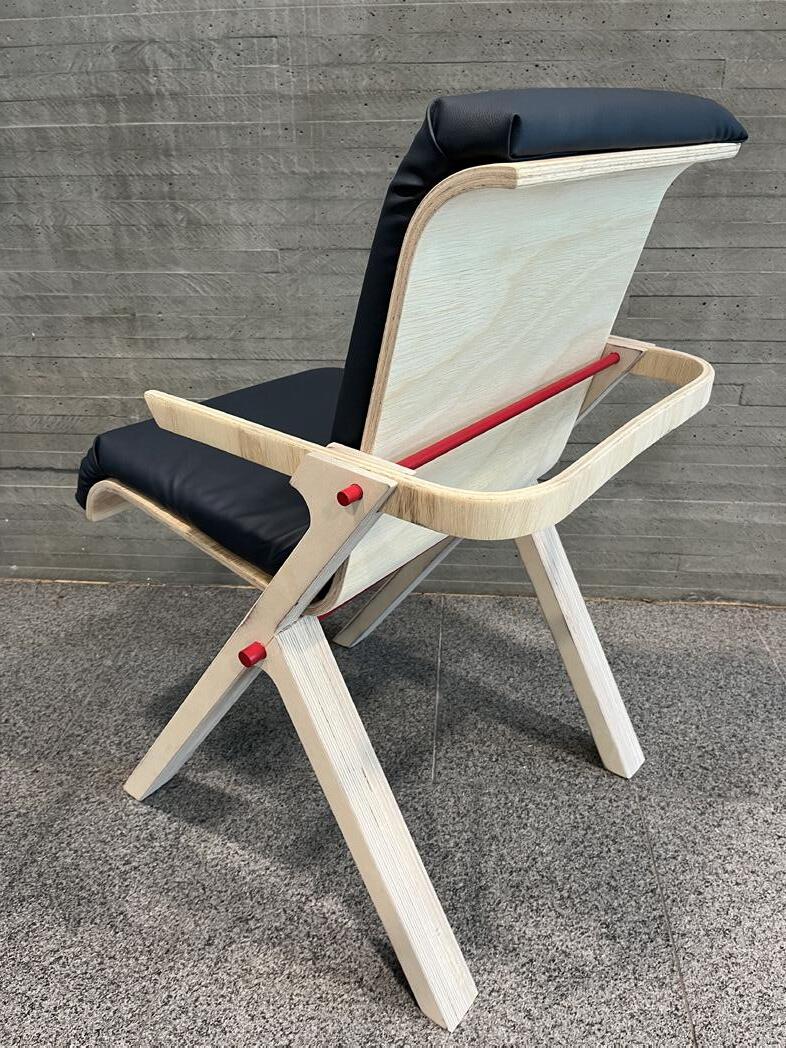
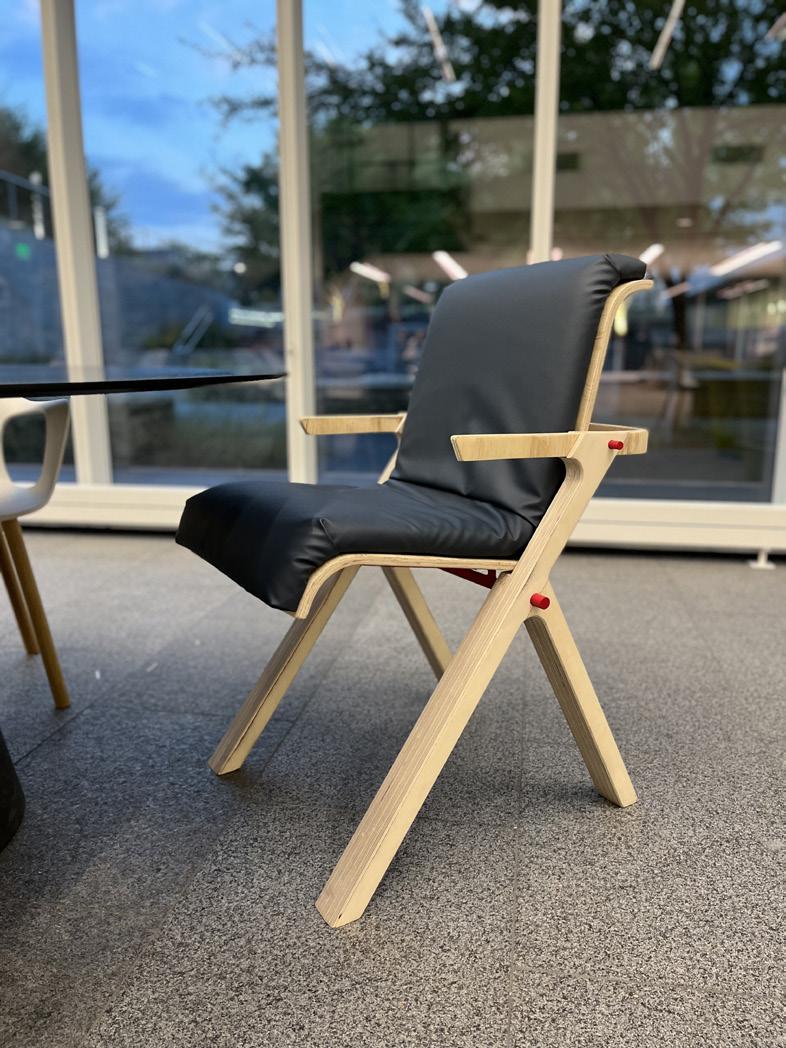
The goal of this project was to design a chair utilizing CNC and vacuum forming wood working techniques as well as an element of upholstery to create a dining chair. In addition to these new fabrication methods, this chair was completed as a group project, allowing for collaboration throughout the design and fabrication processes.
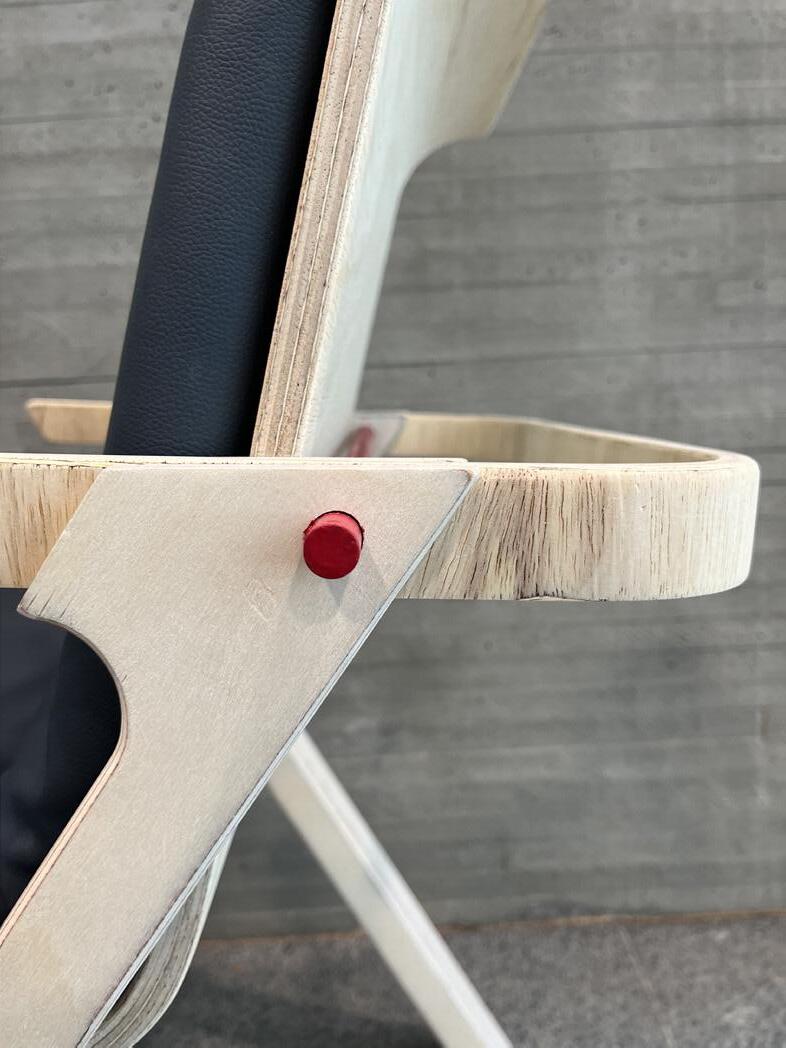
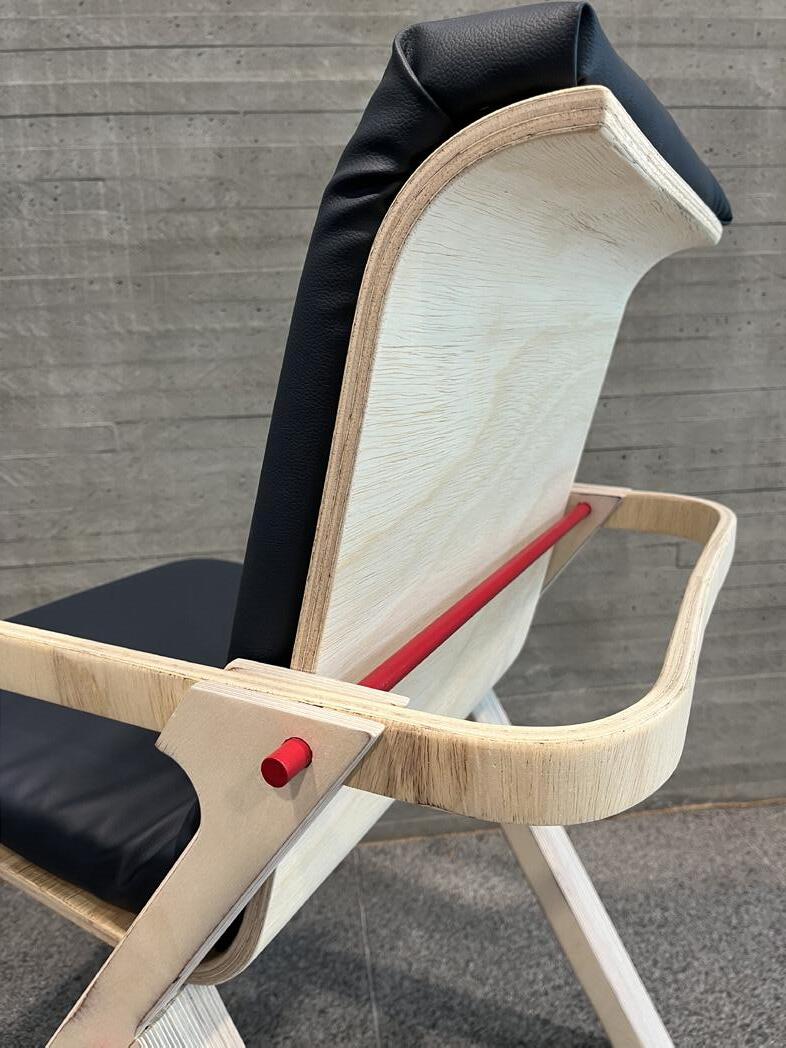
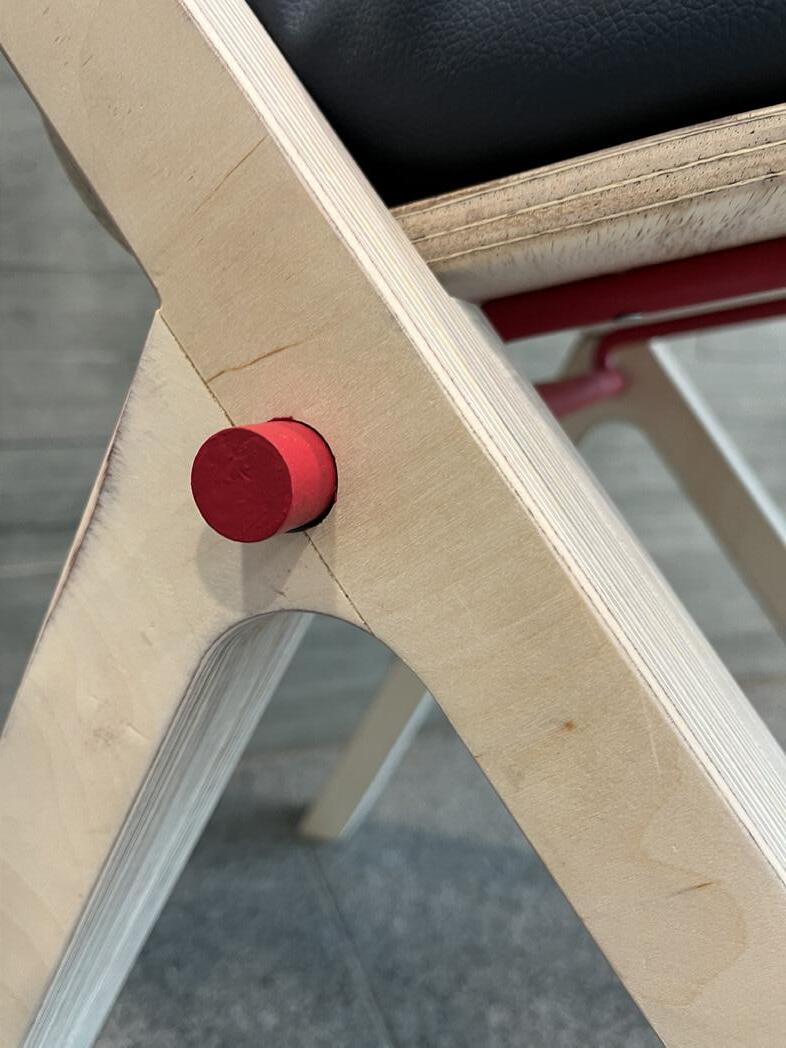
Steve seeks to unite curvilinear and angular forms in a way that creates a beautiful and comfortable dining chair. Placing high importance on ergonomics, the seat utilizes vacuum molding to create a continuous form. The wrapping curves support the users back for comfort and the seat and arm height allow for optimal dining use.
The seat is embraced by a vacuum formed arm piece that wraps around the chair and nestles into two angular legs. The legs are made up of a series of pieces cut by the CNC and layered together to promote strength at the seats weak points. A curved, metal cantilever structure supports the seat and brings a pop of color into the design that pairs well with the blue of the leather upholstery.
28
upholstery
wooden base
arm piece back support


metal structure
layered leg
The stability of the chair is based on the layering of 1/2” plywood to form the legs. Five layers were joined with a mortise and tenon connection in the center, creating an angled “v” shape.
30


 Side View
Front View
Back View
Side View
Front View
Back View
Phil Plant Care Collection
Skills: Wood + Metal Working, Sewing
Fall 2022
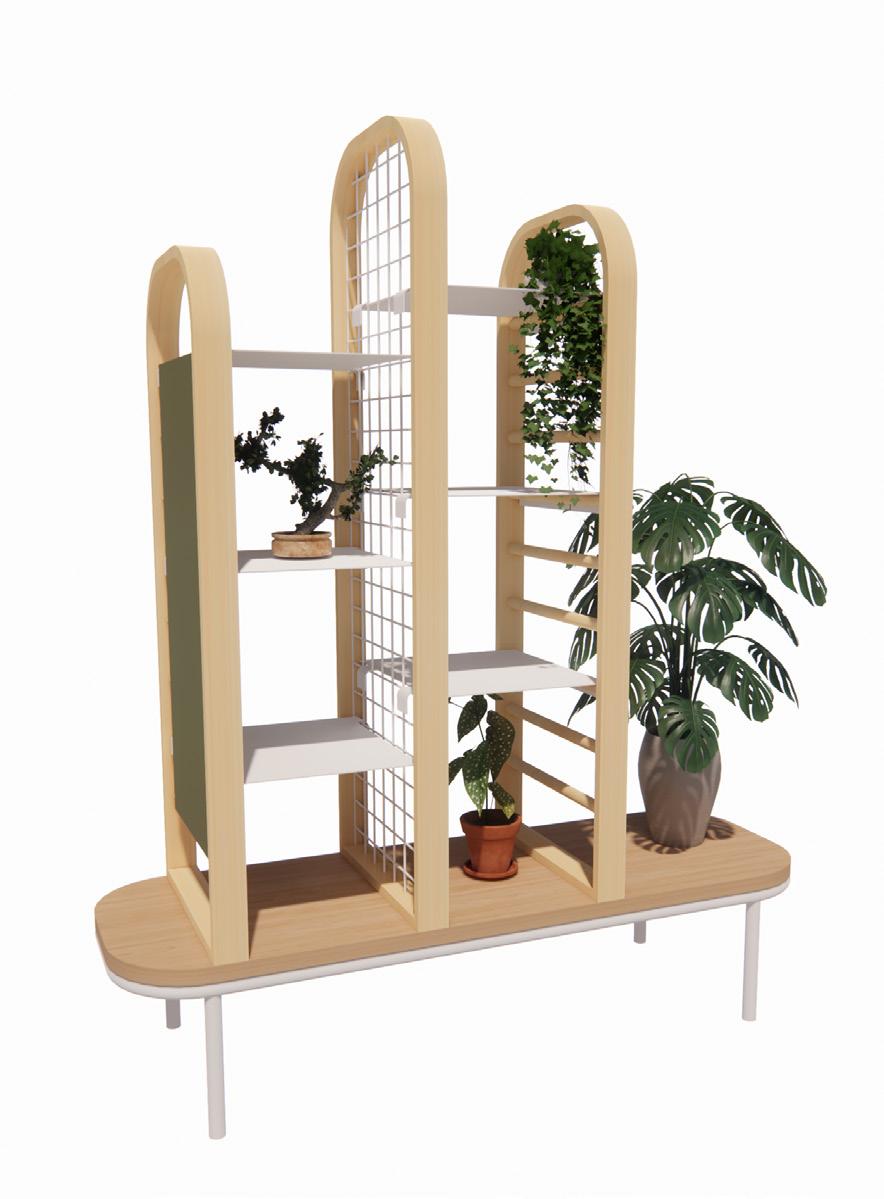
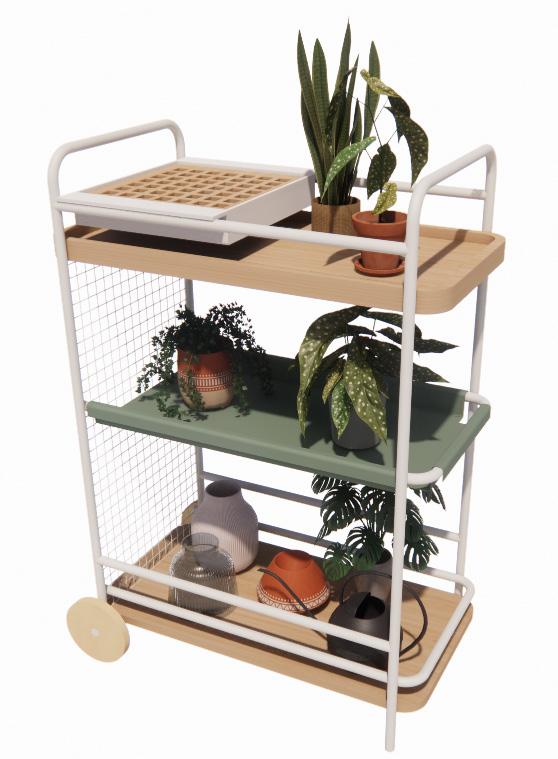
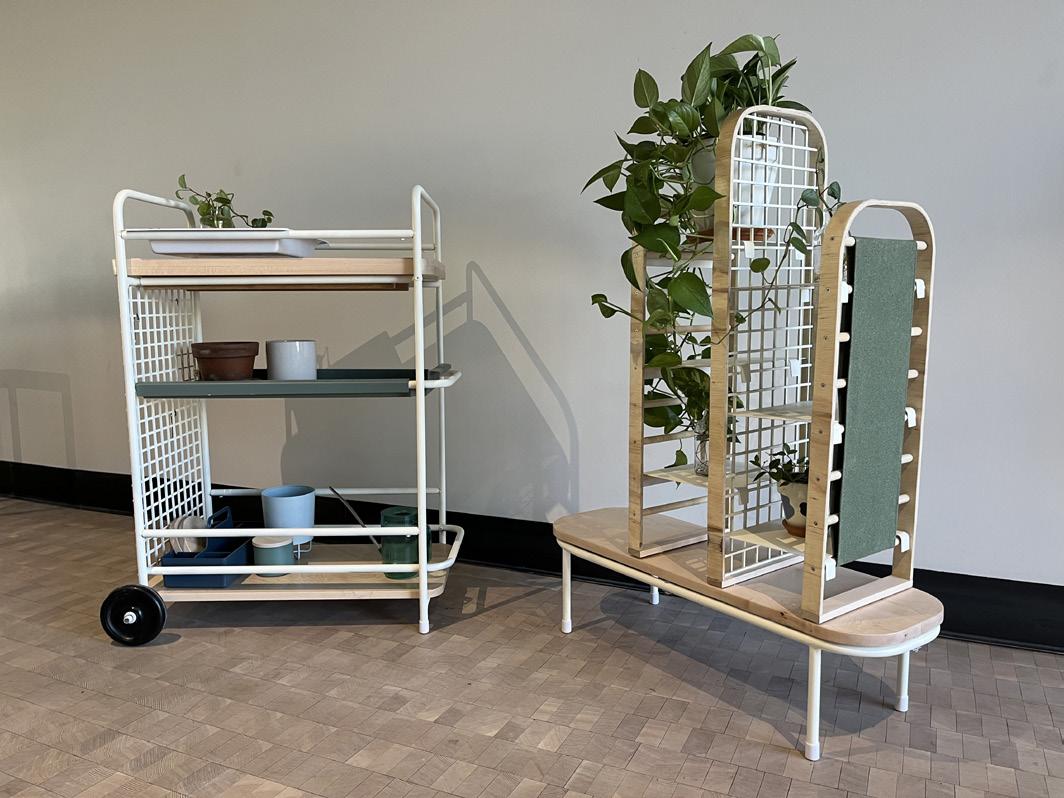
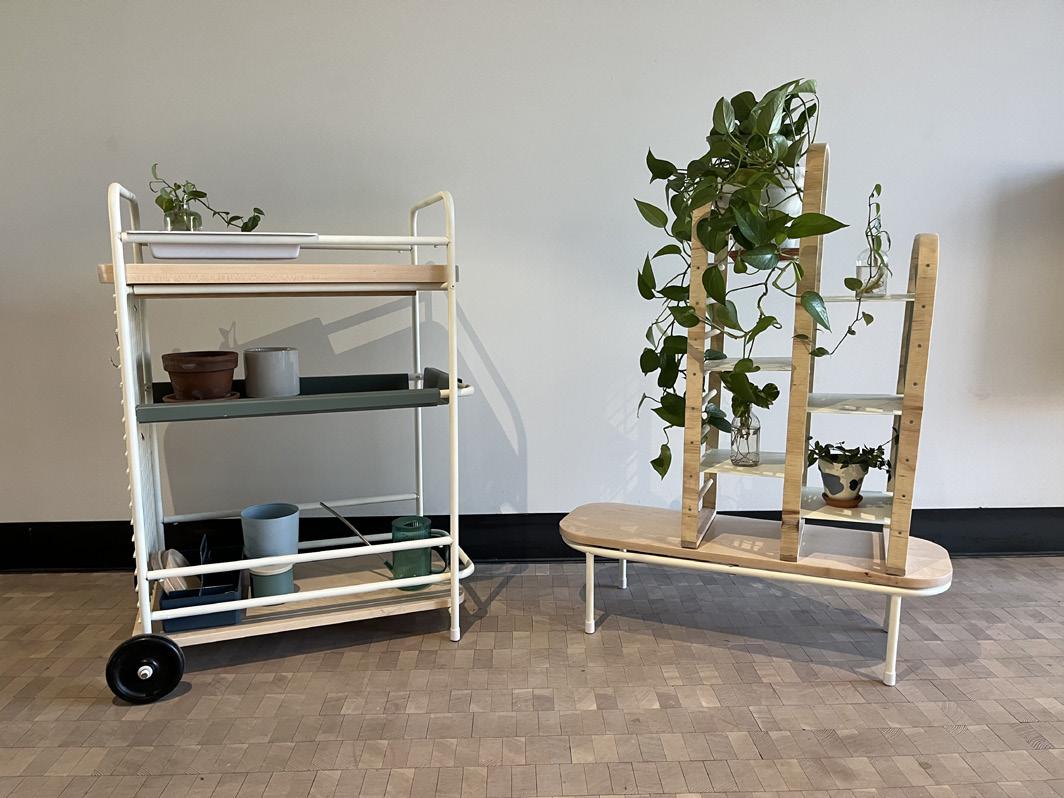
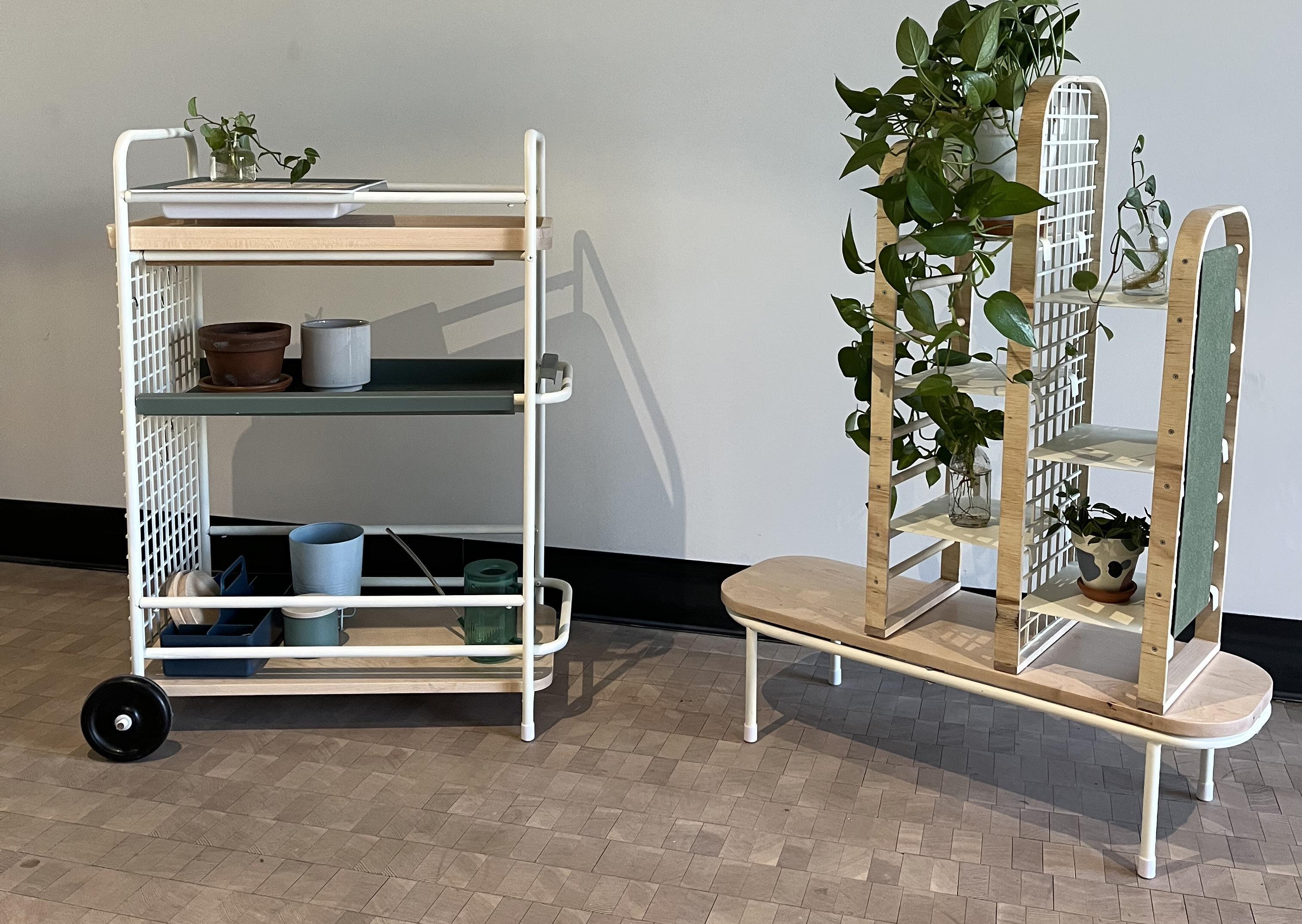
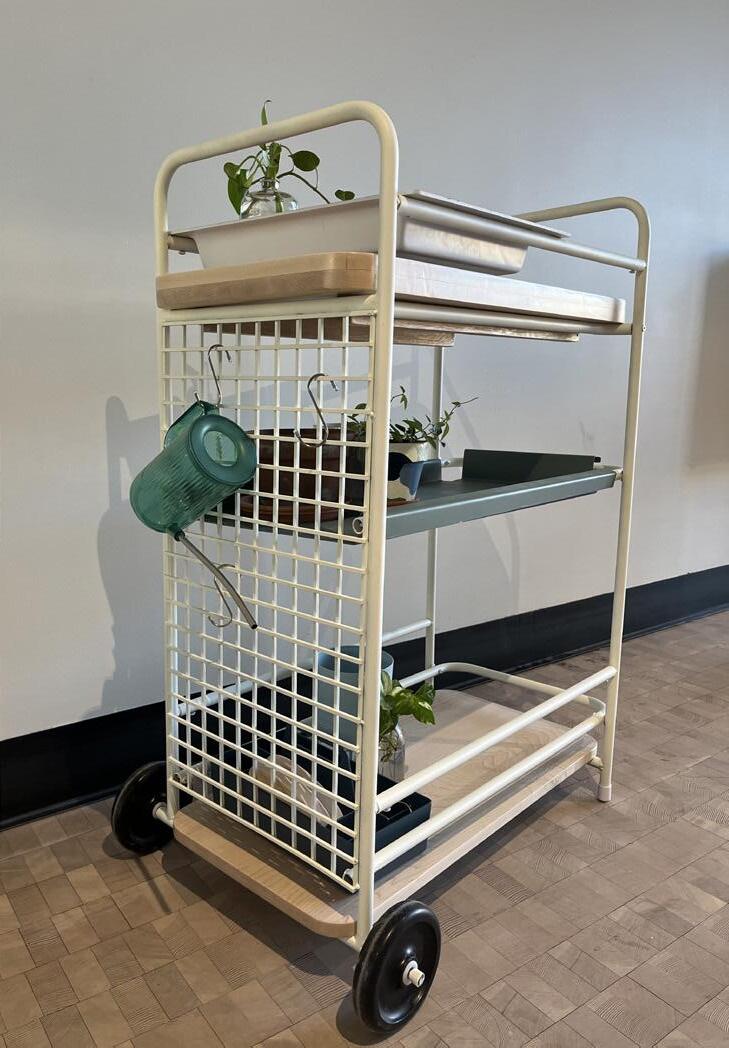
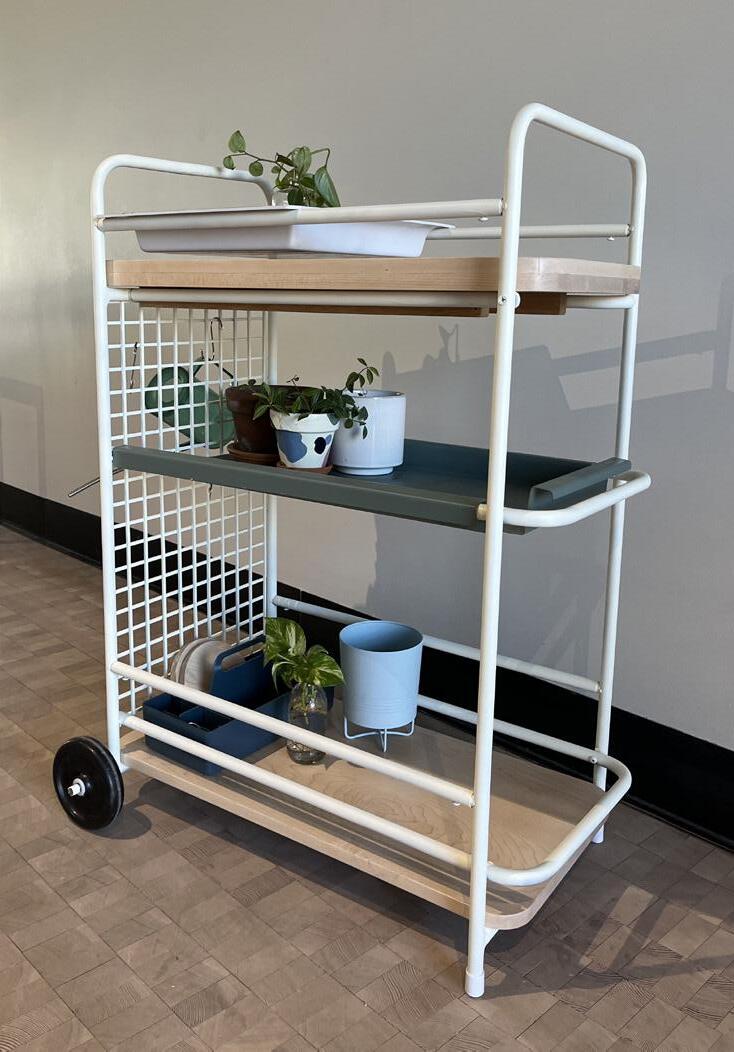
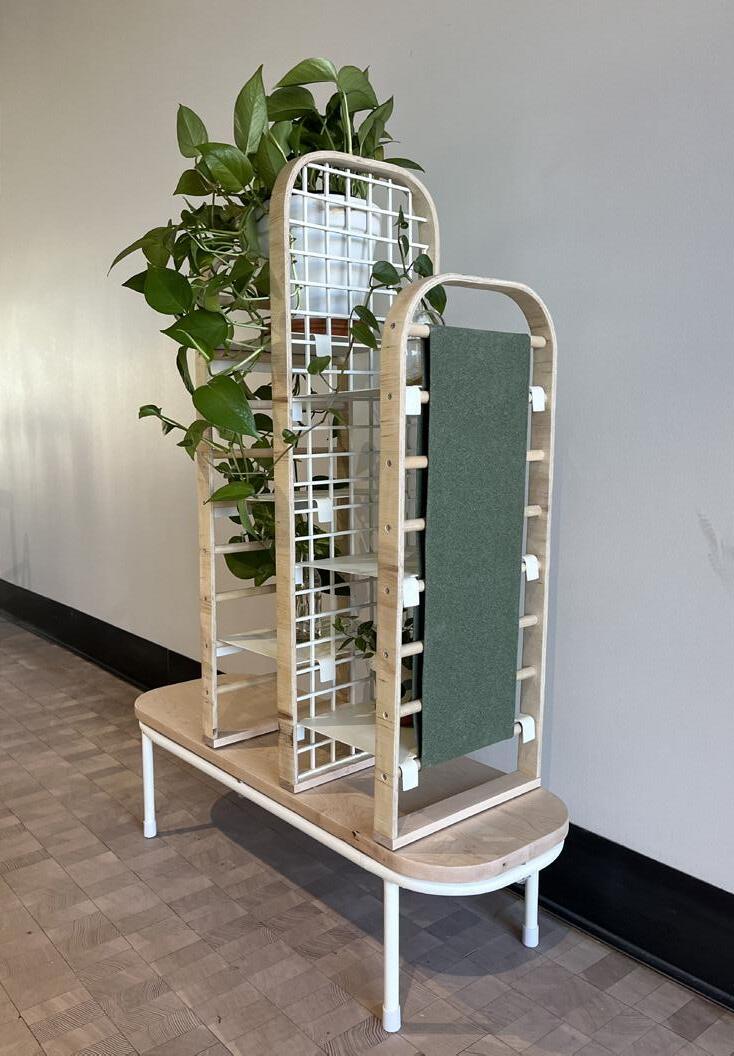
The assignment for this project was to create a collection of furniture pieces that serve task, display, and storage functions for a hobby of choice. This design seeks to create a collection for house plant care. Focusing on mitigating mess and celebrating the beauty of plants within a space, the collection makes plant care, storage, and display as easy as possible.
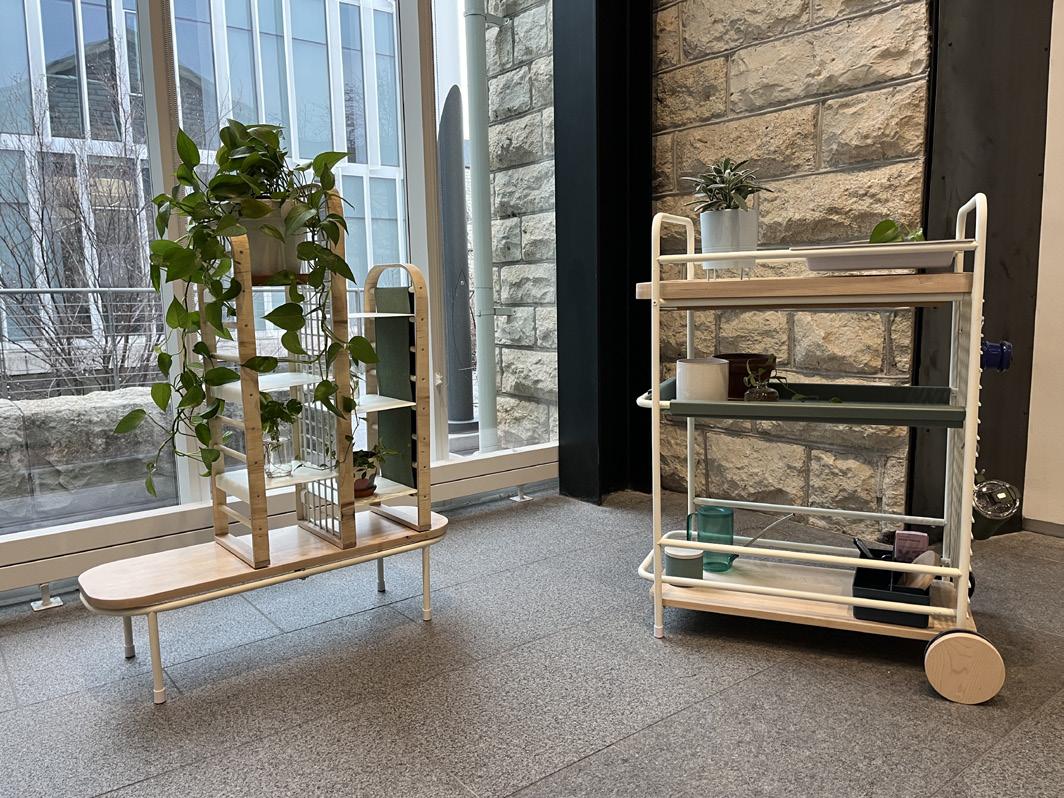
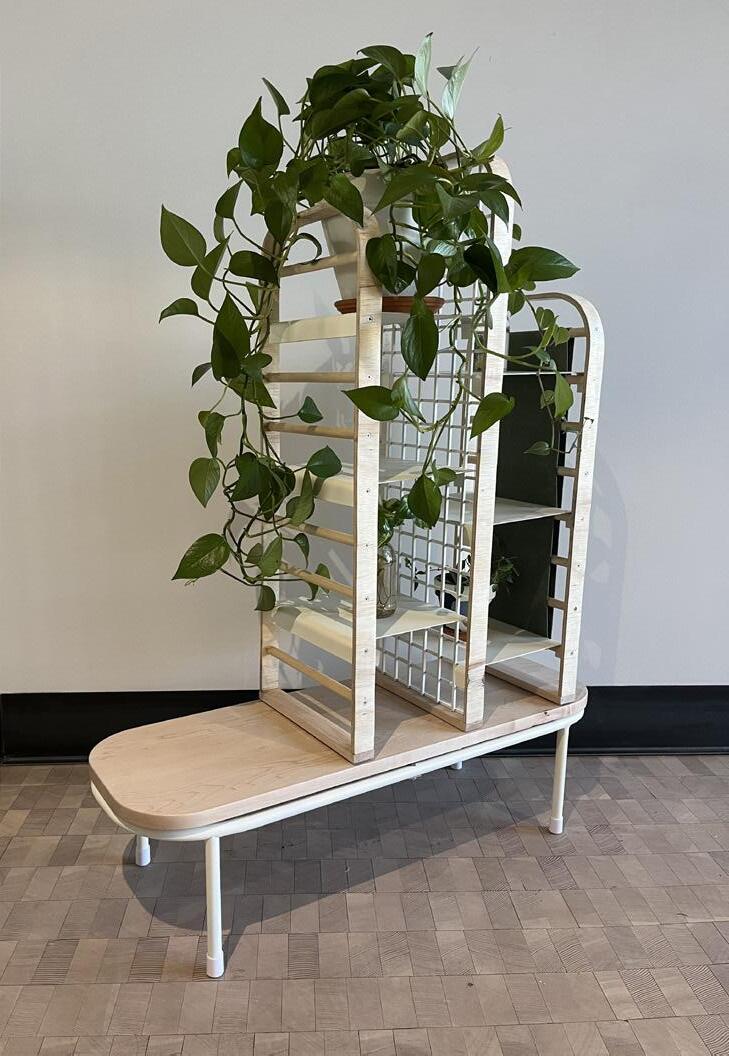
Phil Plant Care Collection includes a portable plant care cart and a multilevel, adjustable plant display stand. Both pieces utilize the same repeating rounded rectangle form, making up the arches of the plant stand and each component of the metal structure of the care cart.
The plant care cart acts as a portable workstation for watering, potting plants, and storage. It includes a thermoformed plastic watering tray, sliding work surface, and grid storage component. The plant stand celebrates plant display with its multilevel shelving system featuring adjustable shelves that adapt to plant size. Both pieces were designed to be dissembled and flat packed for easy transportation and storage.
32
Assembly

In order to allow the cart to be easily transported, the structure comes apart allowing for easy pack down. The metal members have screws hidden on their undersides strategically placed to allow for the least amount of parts with the flattest break down. The top wood tray slides off and the middle level metal shelf lifts off along with the plastic watering tray. The bottom surface can be easily unscrewed and the wheels can slide off when needed.
34