WHAT ARE STUDENTS GAINING AND LOSING IN THE AGE
OF AI?
Brittany
Collins ’14 explores the answers
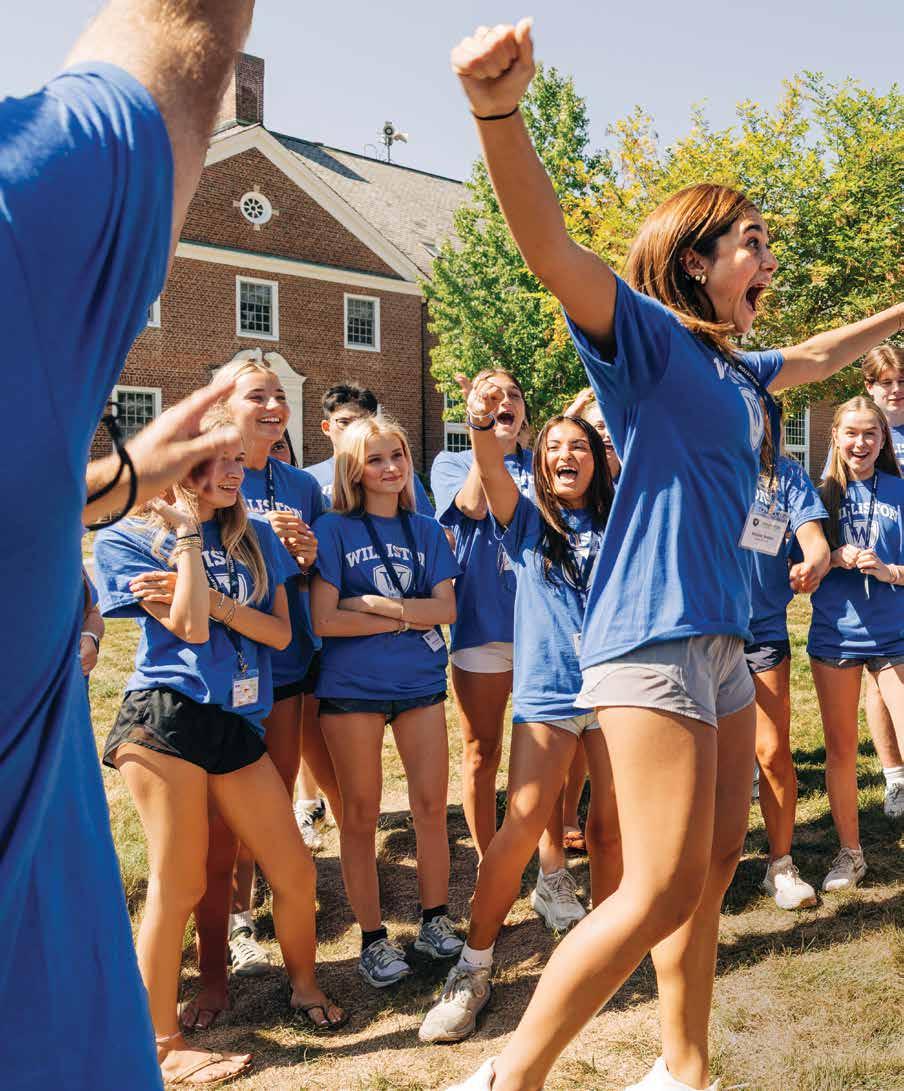
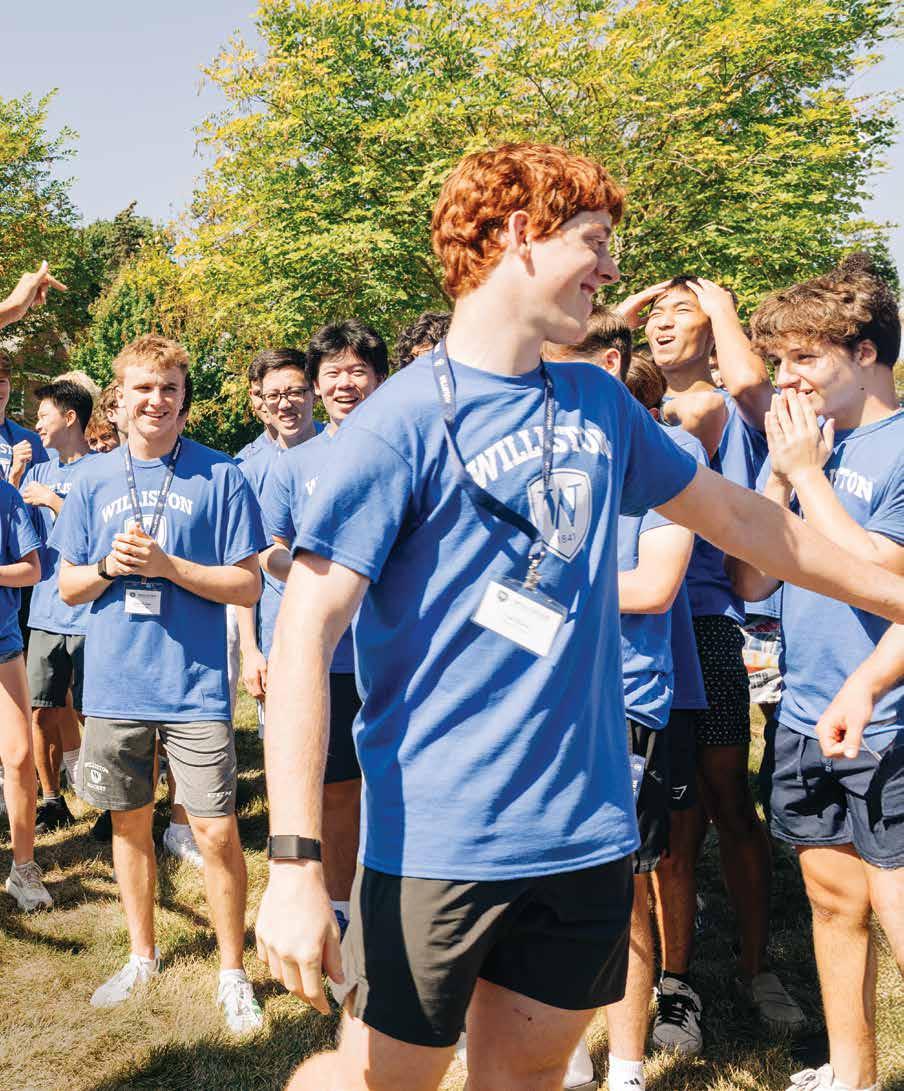
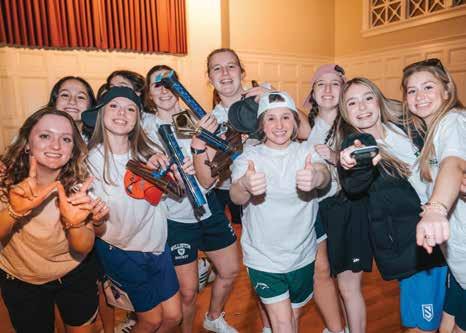
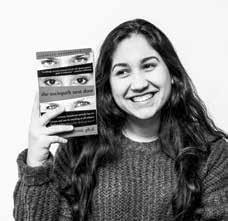
How do you help 400+ students from 24 states and 23 countries become a community in just a few days? The answer lies in Williston’s orientation process, during which students meet and bond through a wide variety of activities, including hiking, ropes courses, kickball, cardboard box races, and games. Here, Ruthie Butler ’26 jumps up to celebrate after a fun and friendly game of Rock, Paper, Scissors with Cal Hoyt ’26.
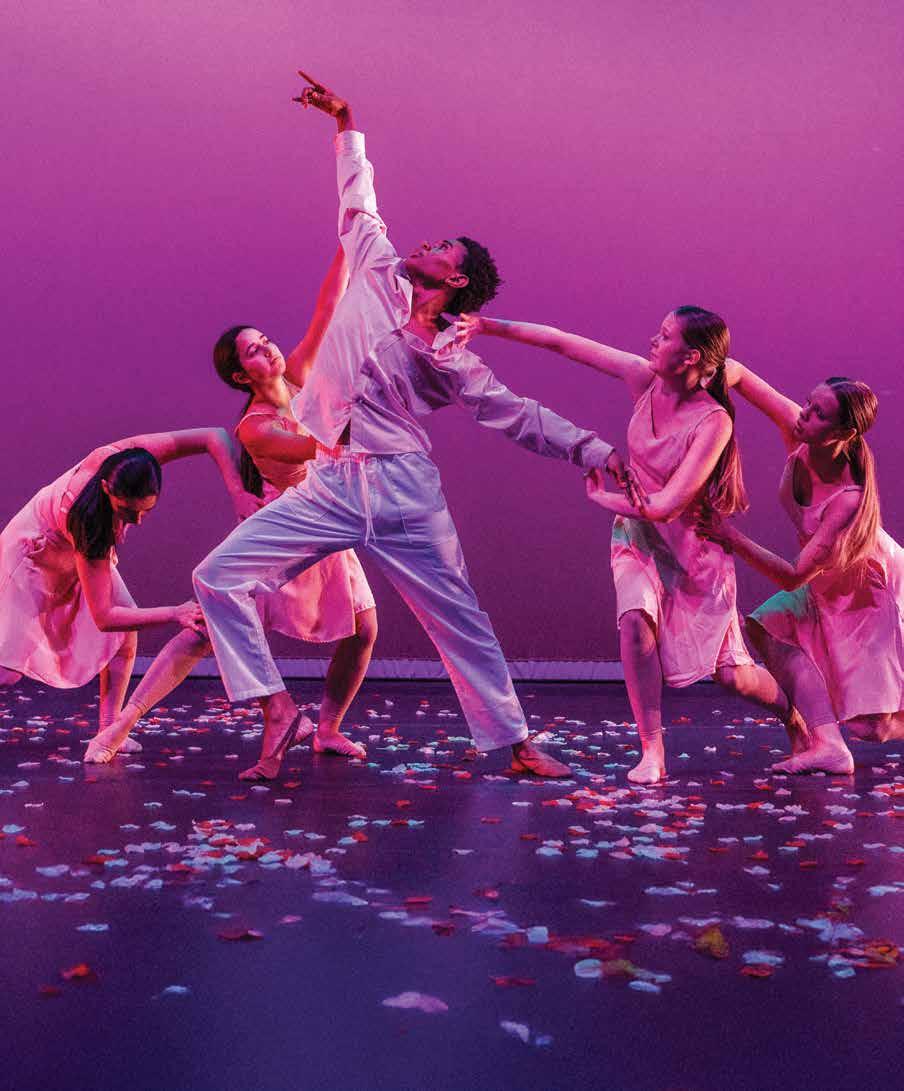
Zh’ky Johnson-Tuzo ’26 (center) and the Williston dance troupe blew us away in the spring 2025 dance concert, “Reflections”
AROUND THE QUAD
7 | CAMPUS NEWS
It wouldn’t be fall at Williston without a slate of great things happening. Read on to find out more about campus activities, new dogs on campus, classes students love, Sarah Levine’s award-winning poetry, and much more.
PHOTOGRAPH
PHOTO AT LEFT
BY
JOANNA CHATTMAN; AT RIGHT BY
JASPER COUTU
59
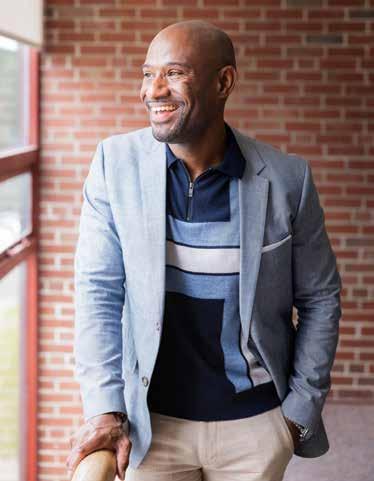
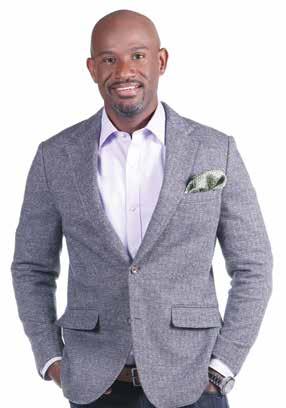
And the Williston Northampton School Medal goes to...Glenn Jones ’95! Learn more about Jones and the other Alumni and Hall of Fame award winners this year.

38
whale advocate
sunrise some 70 nautical miles offshore on Georges Bank on the
17 | WILDCAT ROUNDUP
Wise words from Paula Monopoli ’76 and Brendan Hellweg ’14; a sweet new venture by Alex Teece ’04; a Ford Hall cult classic turns 10; Todd Francis ’83 restarts a college lacrosse program
24 | CHARTING NEW WATERS
To make passage safe for ships, NOAA scientist Christina Belton ’85 maps the ocean floor
26 | AI IN THE CLASSROOM
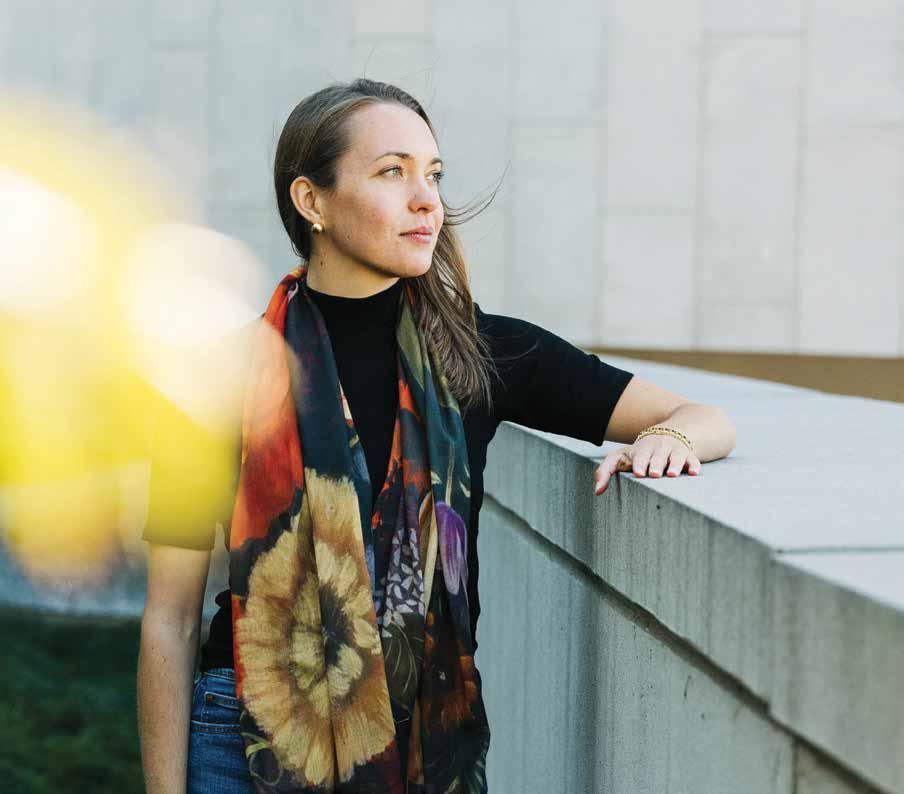
Today, students can generate essays with the push of a button. Brittany
Collins ’14 is exploring what that means for teaching them to write and think.
28 | THE ABUNDANCE OF LIFE
A pivotal moment at Williston inspired Richard “Cy” Allen ’65 to a life of service
32 | SCHOLARS @ 15
Since 2010, more than 600 alums have explored their passions—and gained college-level skills—in this engaging academic program
38 | WORKING FOR WHALES
Longtime lobsterman Marc Palombo ’74 finds a second career helping safeguard New England’s threatened right whales
42 | INTENSE BEAUTY
Climber and photographer Bissell Hazen ’87 captures beauty on the edge
44 | THE SPARK OF JOY
Through a desire to share the holiday spirit, Sparky (Corkin) Kennedy ’75 and her family have brought comfort and joy to thousands of others
46 | THE VOICE
In a quest to become an actress, Emma Sherr-Ziarko ’07 finds success behind the microphone
Right
Marc Palombo ’74 watches
fishing vessel Terri Ann
Director of Communications
ANN HALLOCK P’20, ’22
Design Director
ARUNA GOLDSTEIN
Assistant Director of Communications
DENNIS CROMMETT
Manager of Story and Content Development
GEOFF SMITH ’07
Head of School
ROBERT W. HILL III P’15, ’19
Chief Advancement Officer
ERIC YATES P’17, ’21
Director of Alumni Engagement
DELENEY MAGOFFIN
The Williston Northampton School Advancement Office 19 Payson Avenue
Easthampton, MA 01027 email: info@williston.com online: williston.com bulletin online: williston.com/ bulletin
Head’s Letter
ONondiscrimination Statement: Williston admits qualified students of any race, color, national or ethnic origin, ancestry, gender, religion, gender identity, gender expression, sexual orientation, or mental or physical disability, and extends to them all the rights, privileges, programs, and activities generally accorded or made available to students at the school. The school does not discriminate on the basis of race, color, national or ethnic origin, ancestry, gender, religion, gender identity, gender expression, sexual orientation, or mental or physical disability, or any other status protected by applicable law in the administration of its admissions, scholarships, and loans, and its educational, athletic, and other policies and programs.
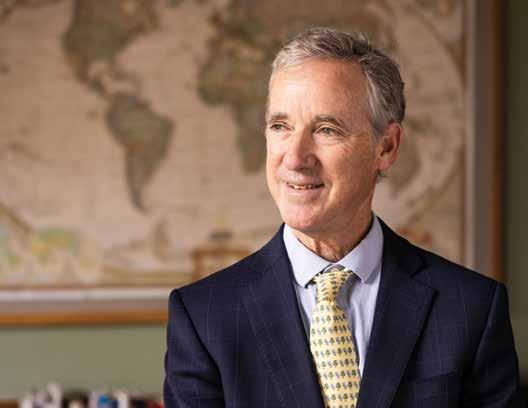
ne of the best parts of my job is when I get a moment to stop by classrooms and observe what’s happening. On any given day, I might see students presenting topics for their Williston Scholars projects, arguing a point in English class, conducting an experiment for a physics proof, or creating art in Reed’s light-filled studios. Their guides, our teachers, are as dedicated a group as you will ever find.
This year, we’ve embraced what I call a “microrevolution” in the classroom by banning cellphone use during the academic day and returning to precomputer technology in certain subjects. In English classes, for example, students are using real books, notebooks, and handwritten notes—and teachers are seeing a positive effect on engagement overall.
This does not mean we are neo-Luddites. You will still see laptops in many classrooms, and mathematics and sciences are taking full advantage of the latest tech in their subject areas. (Had I been taught linear algebra on a tablet where I could see 3D rotations, I’m convinced I would have overcome my spatial relational deficits!) Our teachers work hard to stay current and adaptive in their subject areas, and like
everyone else, we are continuously looking for the best ways—high-tech and low-tech—to teach critical thinking, analysis, logical problem solving, and clear writing. Academic work is hard work, and we want our students to challenge themselves and use their powerful brains—despite the very real tempations of ChatGPT and other tools.
These are some of the topics that educator and writer Brittany Collins ’14 is also exploring in her work (see page 26). How, she asks, can we help students see that writing is not just about having a finished essay with the push of a button, but about the far more important experience of thinking and reflecting? That’s the challenge before us. And speaking of deep thinking, be sure to take a look at our celebration of the Williston Scholars program on page 32. As you’ll hear from some recent alums, the passions and skills first sparked in this program are still burning brightly years later.

PHOTO AT LEFT BY JOANNA CHATTMAN
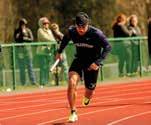
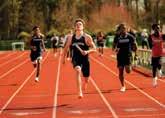


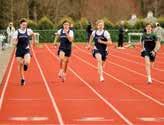
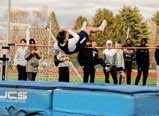
5. ON YOUR MARK, GET SET, WIN!

During the 2025 track season, the boys went on a record-breaking run—literally. The team won a NEPSAC Championship, and broke seven school records, including the 200-meter, 400, 800, and 3,000 races, along with the 300 hurdles and the 4x100 and 4x400 relays.
1.
MEMORIES OF NSFG
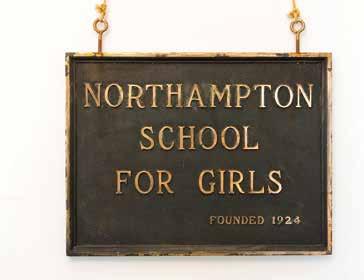
During our 100th Anniversary Celebration for the Northampton School for Girls, we filmed alumnae sharing their memories. Watch the interviews at williston.com/nsfg.
5 Things We’re
Talking About!
2.

MR. HILL THROWS FIRST PITCH
Our yearly alumni gatherings for a Portland Sea Dogs game are always a big hit, and this August, Head of School Robert Hill was asked to throw out one of the ceremonial first pitches for the game. Nice arm, Mr. Hill!
4. NO-PHONE ZONE
To help foster a more connected school environment, Williston has banned cellphones during the academic day—in class, around campus, and in the Birch Dining Commons, chapel, and theater.


3.
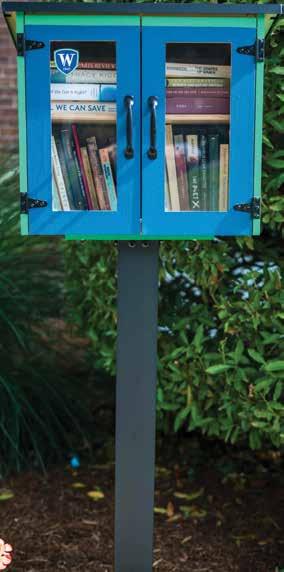
THE LITTLE LIBRARY
The English Department has found a new way to celebrate reading on campus. Nestled just outside of the Schoolhouse, the library contains a collection of nonfiction, poetry, and novels, including recent works by English teachers Sarah Sawyer and Sarah Levine. Anyone in the community is welcome to take a book and leave a book in return.

WHERE’S WILLISTON?
Everywhere! Follow us online for more ways to connect with your Wildcat pride.
JOIN US!
We’re hosting events across the country all year long. Find out where the Wildcats are going next at williston. com/alumni/events
READ ALL ABOUT IT...ONLINE
Did you know you can also view this issue online? We revamped our alumni news section online to include all stories in the current Bulletin issue, plus past articles and editions. Check it out at williston.com/bulletin
ARTISTS AT WORK
The Performing & Visual Arts Department showcases student work on Instagram, highlighting the creativity that comes out of the studios and on the stages. Find our artists at instagram. com/willistonarts

WILDCAT PRIDE ON LINKEDIN
Don’t forget to select Williston in your education listing. Williston shows up as an option when you start typing, and you’ll know it’s worked when you see the shield on your profile!


AROUND THE QUAD
Media Day photo sessions have become a highlight of the season for athletes. Each varsity team dons their game day uniforms and poses for individual and group pictures to help hype up the season ahead. This past fall, the boys water polo team got into the pool to take their pictures. Jumpei Ro ’26 smiles for one of his individual pictures here, as a teammate splashes water in the pool behind him.



CAMPUS NEWS
TOP DOGS
Meet Henry and Scout: The Newest (and Fuzziest) Members of Health & Wellness —BY GEOFF SMITH ’07
Last May, the Health & Wellness Office at Williston was an entirely human-staffed operation. By October, the team had expanded by two new canine team members, both eager to lend a paw in supporting students.
Henry, a 2-year-old black lab, and Scout, a 1-yearold yellow lab, are the two newest, fuzziest, and most energetic members of the Health & Wellness staff. The two did not arrive at the same time, but do have history with each other—making them an especially interesting tag-team duo.
Director of Mental Health Counseling Meg Colenback was introduced to Henry first, through the Puppies Behind Bars program. The program operates out of multiple correctional facilities—the dogs’ program was at the Fishkill Correctional Facility in New York state—and typically inmates (otherwise known as “trainers”) train dogs to work as service dogs, or to work for fire departments, police departments, and other first responders. Williston is one of the first private schools to receive dogs trained by Puppies Behind Bars for therapy work.
In his first two months, Henry made a noticeable difference. But Colenback noticed that at times he seemed overwhelmed in big groups. Trained to be a service dog, Henry worked best in one-on-one situ-

ations, or with Colenback directly by his side. “He’s just kind of a quiet guy,” she notes.
Enter Scout, one of Henry’s classmates at Puppies Behind Bars, and a more extroverted, crowd-loving dog. Originally, Colenback thought that Henry might be reassigned through the program, and Scout would take his place. Instead, Puppies Behind Bars and the school reached an agreement to let Williston keep both dogs and use them in tandem for Health & Wellness. It has paid off—for the school, and for Henry. “As I tell the students,” says Colenback, “Sometimes a good friend can really help.”
Henry and Scout are now a wellness duo, with Colenback as the pack leader. She can issue dozens of commands to the dogs—including bow, high-five, and salute. They go out with her on campus, too, including to dorms for visits or workshops, or as unofficial mascots at school events.
“The presence of a dog really lifts people’s spirits,” she says. “My hope is students who wouldn’t necessarily make a connection with me, might make a connection with Henry, and that can build a bridge for students to talk about something going on with them.”
Williston is community, Williston is opportunity, Williston is weekends spent under the lights on Sawyer.
Williston is Logan House and EMV sweeping Lip Sync (1). Williston is Ashton Reynolds and the Williston student section going viral. It’s Viktoria hitting a game winner from half field under the lights at the blackout game. Williston is Bennett Bartlett and Mr. Deitrich dressing up as Buddy the Elf (2) for the Holiday banquet every year. It’s Luke Grabowski doing cartwheels in the library at 9:30 on a random Tuesday morning. Williston is Juli Tatar and Annika Stackmann’s unbelievable performances in the dance concert (3). It’s petting Max, the Beatons’ dog, on the way to class.
Williston is the stupid library door that takes four tries and your last nerve to open. It’s Jedi Master Simpson promoting Areté at Assembly. Williston is Robin yelling at someone for cutting the lunch line, then giving them a hug to make it all better (4). It’s Oscar and David’s aweinspiring paintings; it’s Thursday nights in the writing center. It’s Spikeball on the quad when everyone yells at Annika Song for playing too much. It’s a genuine hello from a classmate or teacher walking by.
Williston is the nights by the fire with friends laughing for hours (5). It’s Pittman Alley doing anything and everything out of context. It’s the biggest smile and warmest hello from our forever mom, Ms. Motyka. Williston is the class of ’25, Williston is family, Williston will always be a place to call home. I will always cherish the friendships, knowledge, and sense of community we built here at Williston.


In his Commencement speech, student speaker Jake Smith ’25 riffed on his class’s experience— those moments that are somehow utterly unique, and which transcend time. See the full speech at williston.com.


Musicality and Muscle

“I am a teacher who writes, not a writer who teaches,” says recently lauded poet Sarah Levine. “During the school year, teaching and my students are the priority.”

Reflections on the creative process of award-winning poet and English teacher
Sarah Levine —STORY AND PHOTOGRAPHY BY DENNIS CROMMETT
This September, Williston faculty member Sarah Levine was recognized with a Poetry Honors award from the Massachusetts Book Awards for her 2024 poetry collection, Each Knuckle With Sugar (Driftwood Press). To learn more about how a busy teacher finds time to write such award-winning works, we asked Levine a few questions about her creative process.
Do you write at a set time of day?
It depends. I like to find pockets of time throughout the day to read and brainstorm. Every day looks different. Optimally, in the summer, I like to have late afternoons into nights to just write, especially at odd hours when the world feels asleep. New poetry and fiction do not happen every day. Summer and school year days are filled with deliberate choices: reading, revision, editing, drafting, email, continued correspondence, submissions, research, inspiration (long walks, people watching, spending time with other artists, and listening to music which triggers certain memories).
How do you collect ideas or phrases for your poems?
I have dozens of notebooks at this point filled with quotes and notes from books and things people say, memories, moments of dialogue and description, phrases that make me pause. I love language, especially syntax, the musicality and muscle of a sentence.
Is there a poem you love that makes you think, “I wish I could have written that poem?”
So many poems I love; but none I wish I wrote. Not my story. Not my voice. Just words and craft to admire and celebrate and learn from. There were collections that lived in my bag and beside my bed for years while writing my first book: Kingdom Animalia by Aracelis Girmay, Crush by Richard Siken, Bright Brave Phenomena by Amanda Nadelberg, The Lifting Dress by Lauren Berry, and Book of Questions by Pablo Neruda. A lot of Anne Sexton and Sylvia Plath too.
Does teaching influence your poetry or creative process?
I am a teacher who writes, not a writer who teaches. During the school year, teaching and my students are the priority. I love teaching. I love building a community in the classroom where we all question, think, read, and write together. We become better together. I feel so blessed to have the ability to create my own curriculum and be able to teach in a creative, collaborative way. I receive so much inspiration from my students, from their curiosity, kindness, and authenticity.
What do you recommend to a student (or alum!) looking to improve their poetry?
Be prepared. Always carry a notebook and a pen. Pay attention to the world. Pay attention to yourself, your own antics and tendencies. Daydream. Ride in the passenger seat and gaze out the window. Don’t be afraid: It’s beautiful to slow down. Breathe. Remember this is your one wild and precious life. Embrace all of it. And read. Read a lot.
If you could spend a month anywhere to just write, where would you go and why?
I would love to go back to Martha’s Vineyard in the fall or winter. I’ve done a handful of residencies there and always walk away surprised, rejuvenated, and inspired.
Is there another book on the list of nominees you’ve read and recommend?
I have read books on the poetry and fiction lists and I am honored to be included! January Gill O’Neil’s Glitter Road was a tremendous book. I am in awe of these poems’ depth, beauty, and tenderness. This collection changed me like great writing is supposed to do. Also, a personal shout-out to a Western Massachusetts icon: Kelly Link and her The Book of Love. Kelly is a personal hero of mine. I’ve been reading her stories for decades, and I am forever in love with the way she builds a world and makes me never want to leave.
What’s the most poetic thing about Williston? The geese.
CLASS IS IN SESSION
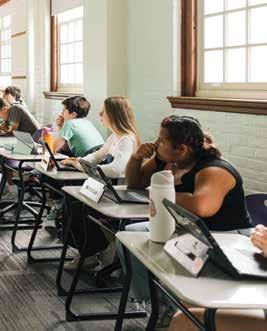
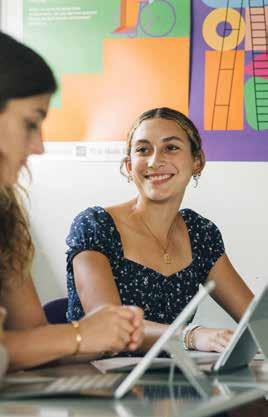
A typical class at Williston is anything but typical. With 155 courses offered each year, students are exposed to a wide array of subjects, teaching methods, academic levels, and technological integration. This fall, we spent a day peeking into different classes, and noticed one thing that unites the academic experience here: a passion by our faculty to engage students’ intellectual curiosity.

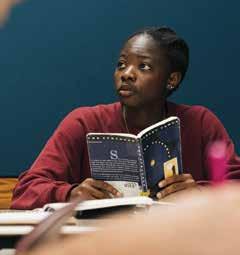
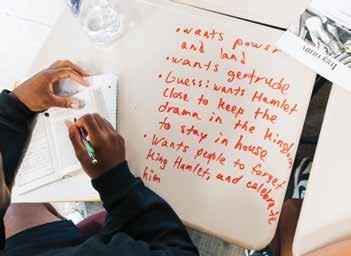
This fall, the English department made a novel technological choice: paper and pen. While students can use computers for homework assignments, during class the focus has been on books to help students more deeply focus on words and meaning. Here, Department Chair Matt Liebowitz leads a discussion about Hamlet; and in Sarah Sawyer’s class, below, students take notes in erasable marker right on the desktop. “Paper and pen have been a game changer,” Liebowitz said. “Students are engaging with the material and each other in exciting ways.”

Above and at right, AP World History students in Justin Brooks’ class can be seen learning about the Mongol Empire, a nomadic civilization that challenges the traditional assumption that major world empires developed by adopting agriculture. Students highlighted the important role that the Mongols played in spreading ideas to new parts of the world, connecting this topic to their study of Afro-Eurasian exchange networks.
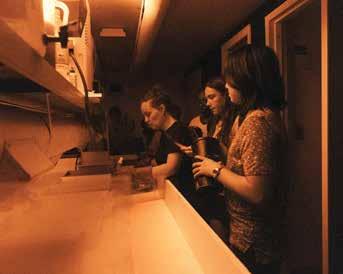
In Stefania Nugteren’s photography class, students take pinhole cameras outside (left), then come back into the darkroom to develop their images and learn about how light exposure impacts the final prints.

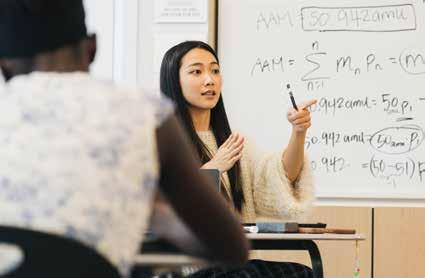
Memorizing formulas and scientific principles is one thing, but actually testing them out in a lab or group discussion is where the “aha!” moments happen. Below, students in Jane Lee’s Honors Chemistry class talk over the best way to calculate the average mass of elements through complex equations. In John Doll’s AP Biology class, above, students learn to prepare solutions for a lab that looks at the properties of biological buffers.
THE BIG QUESTION

“I loved my sculpture class because it gave me a lot of space to design what I wanted and create it with my own hands.”
—Anya Zhang ’27
“I never thought I would enjoy English because of my learning disabilities, but having supportive teachers makes it easier to advocate for myself. I have grown in the classroom because I have had such a supportive group of teachers.”
—Nina Coffee ’26
Which
classes do you love (or have you unexpectedly learned to love!)?
“The art classes at Williston are exceptional, and there is a course for almost any direction you could want to take! Experienced artists come in and show us their art in the Grubbs Gallery. My favorite class was the darkroom class; learning how to use a camera and develop film was so interesting, and something I will never forget.”
—Mia Shaw ’27

“I never really liked English classes until I got to Williston. I always viewed them as stale and repetitive, but after my first year at Williston I was able to see my English class as a chance to think outside the box and challenge conventional thoughts.”
—Hayden Hutner ’26
“I love the science classes at Williston, especially when we get to do experiments. It’s so fun to take what we have been learning in class and turn it into a hands-on experience.”
—Zora Elkin ’27

“A subject I loved taking was the architecture elective. Going into it, I didn’t have any knowledge of architecture, but during the class I found it very relaxing making the house models with the rules and complex lines.”
—Ryan Elloras ’26
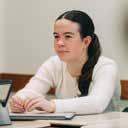
“When I think about academics at Williston, I think about Honors Algebra 2 with Mrs. Whipple. It was a very challenging class, and I learned a lot about algebra and about who I am as a student. I learned new study habits that I find useful and will continue to use, and most importantly, I stepped out of my comfort zone by asking and answering questions.”
—Riley Platt ’27
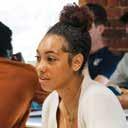
“I love the classes Williston offers. There is something for everyone to try. Journalism is a class I didn’t think I would like, but now I want to major in it in college!”
—Daryn Fox ’26

“I have loved taking French. I have taken it since seventh grade, and although it is very hard and challenging— especially because we are only allowed to speak French—I have felt so much progression and love the activities we do.”
—Maya Green ’26
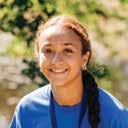
“A class I didn’t expect to love was Honors Biology. I had never really had an interest in science, but the curriculum incorporated law, which piqued my interest. Additionally, the energy and passion my teacher brought to it completely changed how I saw the subject.”
—Mia Townshend ’26

“I took AP Government and Politics this year and felt it improved my writing ability. I learned a tremendous amount, which helped me shape a better overall understanding of the United States.”
—Brenna Ziter ’26
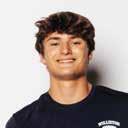
“One thing I love about academic classes at Williston is that they are discussionbased. Unlike traditional classrooms where all the chairs face the teacher, many Williston teachers arrange desks in a circle to encourage open communication and thoughtful discussions.”
—Brooks Marshall ’27
A MOTHER TO MANY
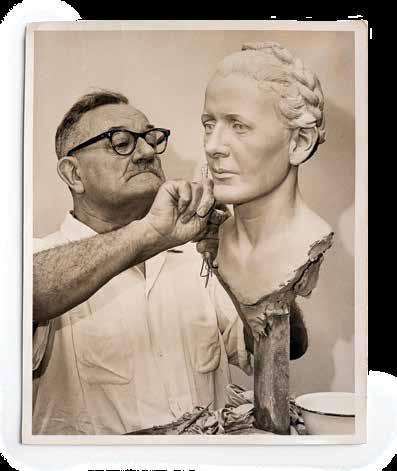
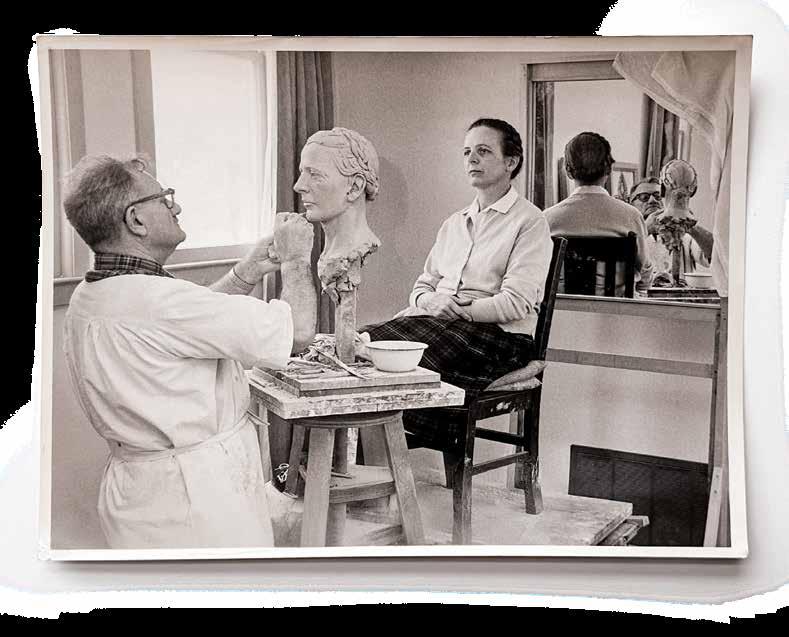
For hundreds of Williston Academy alumni, Sarah Wallis Stevens was a warm and compassionate presence in an era of strict boarding school rules. Dubbed Williston’s “den mother” by many, Sarah was the wife of longtime Headmaster Phillips Stevens and was known for her playful manner, her weekly teas and homemade cookies, and her trademark halo of braids. Small wonder that then Arts Department Head James Gardner, who taught at Williston between 1955-1967, chose to memorialize her in sculpture. Gardner worked first in clay, then cast the bust in bronze. Created sometime in the 1960s, the bust was presented to the Stevens family, and it has remained a fixture in various Stevens homes—until this year, when the family graciously donated it back to the school. Sarah’s sculpture will soon grace the entryway of the Phillips Stevens Chapel, a reminder of the welcome she extended to generations of students. —Ann Hallock

In her keynote speech during the Northampton School for Girls centennial celebration in June, Trustee Paula Monopoli ’76 gave a master class that wove together feminist legal history, the suffrage movement, and the founding of NSFG. As the Sol & Carlyn Hubert Professor of Law at the University of Maryland, Monopoli is an internationally recognized legal scholar who has written widely on gender and constitutional design. She has also done much to promote gender equality in the legal profession and academia, including founding Maryland Carey Law’s groundbreaking Women, Leadership, and Equality program. This summer, Monopoli was also recognized with the University of Maryland, Baltimore’s Distinguished University Professor award, the institution’s highest faculty appointment.
ALUMNI NEWS
WILDCAT ROUNDUP

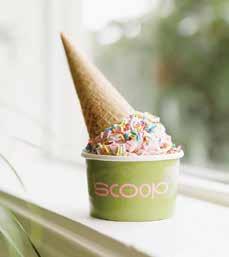
THE SWEET SPOT
A new venture by Alex Teece ’04 is widening smiles in the Bay Area BY
GEOFF SMITH ’07
It’s amazing what a simple nudge can do. Just ask Alex Teece ’04—his latest venture came as the result of a suggestion from his mother-inlaw. Teece, who formerly ran a charter school in Hawaii, recently switched gears and became the owner and operator of Lafayette Scoop in Lafayette, California, where he lives with his wife, Stephanie, and their three little kids. We caught up with Teece to ask him a few questions about running an ice cream parlor.
What made you want to open an ice cream shop?
Long story short, last summer my mother-in-law wondered why we don’t have an ice cream shop in town. I told her I had no idea—I’m from the hills of Western Massachusetts. She then asked me “Why don’t you build one?” I told her that my last venture was a public charter school. I don’t
think I’m an ice cream person or a restaurateur or that I’d do very well in retail. But she got me thinking about the idea. She said, “Well, just give it a try.” So my wife and I spent about a year designing and fundraising, and I kept waiting for that moment that was going to show me I can’t open an ice cream shop—but that moment just never came. We opened in July, and it’s been an amazing journey ever since.
What’s on the menu?
We have seven local ice cream partners from across the Bay Area. We have hand-packed pints people can buy and homemade waffle cones, which is a fun addition. One interesting variation on our menu is hand-whisked iced matcha. We partner with a café called Third Culture Bakery of Berkeley, and they provide us with their ceremonial, premium blend matcha, which we hand whisk on-site with syrups made in-house.

“Giving people ice cream is really a joyful thing,” says Teece. “Typically, no one goes and gets ice cream if they’re mad.”
What’s has surprised you?
Giving people ice cream is really a joyful thing. Typically, no one goes and gets ice cream if they’re mad. The majority of our customers come in with a smile on their faces, and our goal is to continue that smile and make it a little wider on the way out the door. We have about 90 seconds with people, so our work is pretty simple: good ice cream, matcha, and experience in our shop.
What’s popular on the menu right now?
Right now, it’s fall flavors. We have four different variations of pumpkin ice cream on our menu, from four separate ice cream makers. People come in and their first comment is, “Why do you have so many pumpkin ice creams?” And their second comment is, “All of these are so good—how do I choose between them?” And then our matcha is starting to take off as
well. We started by making only one or two a day, and now it’s closer to 20.
How sweet is it running a business that partners with other small businesses in your area?
It’s the best. These are all handshake deals that are built on trust, and I went out and engaged with every single owner of every ice cream shop who sells to us. For many of them, they’ve never done this before. Not only do people love coming to The Scoop for ice cream, they love Mitchell’s ice cream, or they love Curbside Creamery ice cream, so it’s really an awesome shared appreciation of each brand.
When you got the shop ready to open, which ice cream did you try first?
The first ice cream I tried was mango ice cream from Mitchell’s—and it’s the best ice cream I’ve ever had.
The “Ford Hall Syfur” Turns 10
This past June, the class of 2015 celebrated its tenth Reunion, and so did a cult classic from their senior year: a YouTube video single called “The Ford Hall Syfur.” Produced and directed by John Kay ’15, the video featured a group of PGs and seniors—aka the Ford Hall boys—rapping about their experience of life in Ford Hall and at Williston. “Syfur” in the title—a play on the word cypher, is a reference to then-Dorm Head, Andrew Syfu.
The video, which received more than 10,000 views, is a time capsule of the culture and style of mid-2010s Williston—from brightly colored
polos and Sperrys to references to “tucked-in shirts” and khaki pants that were the dress code of the time.
What else did we see on a rewatch?
An appearance by Mr. Whipple on camera—“Shout out to Mr. Whipple/ Let me grab my notes/He taught me all I know about graphing asymptotes,” raps Kay. Other teachers have cameos, plus there are shout-outs to Antonio’s, the Microsoft Surface stylus, the Victory Bell, and Ford Hall’s third-floor kitchenette, as well as other great Easter eggs.
Check it out on YouTube by searching “Ford Hall Syfur.”

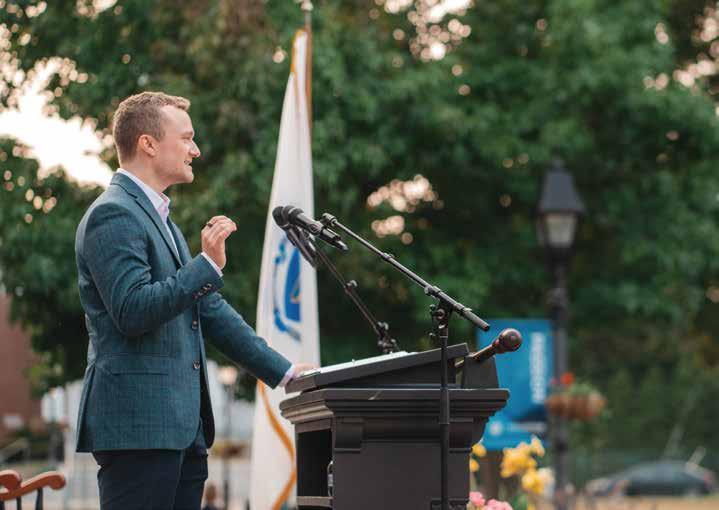
“I challenge you to try something you’re not good at yet, but that you want to explore. I challenge you to try something new, and measure yourself only on whether it brings you joy. I challenge you to commit wholeheartedly to your moments on stage and make your lines count, instead of counting your lines.”
—Brendan Hellweg ’14, in his keynote speech during the school’s 185th Convocation this fall. To see his full speech, go to williston.com/convocation2025.
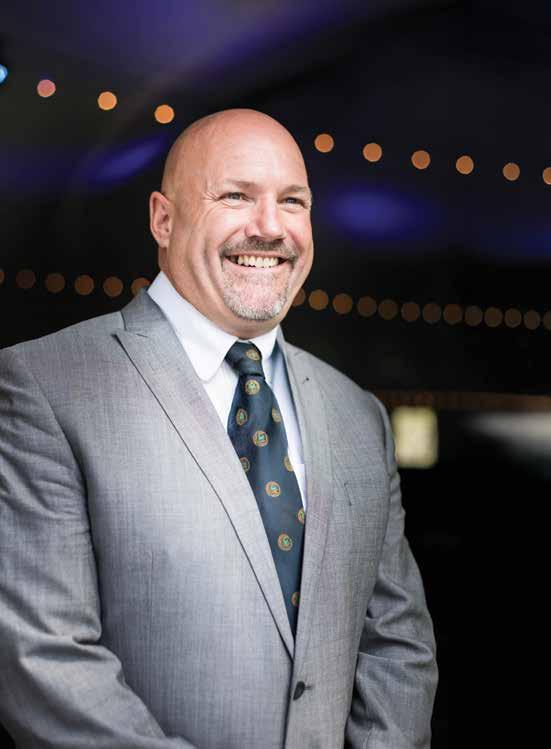
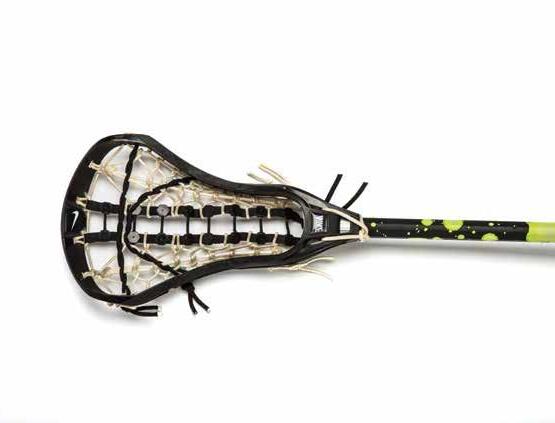
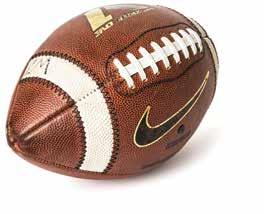
When Todd Francis ’83 arrived on the Whittier College campus in 2024 to be the new men’s lacrosse coach, he was faced with a gargantuan task. Francis, a Williston Northampton School Athletic Hall of Fame inductee and the youngest son of legendary Williston coach and Athletic Director Rick Francis, wasn’t just taking over a program—he was restarting one.
Francis, though, was undeterred. He’s been in and around lacrosse pro -

Back on the Map
As he restarts and builds the lacrosse program at Whittier College, Todd Francis ’83 draws upon the influential lessons of his dad BY GEOFF SMITH ’07
grams his entire life—and knew this was the time to try something he’s wanted to do for a long time.
A standout athlete and Denman Bowl winner at Williston, Francis had a decorated collegiate career at Cornell University—including All-Ivy and All-American honors as a senior—before going on to play a decade of professional indoor lacrosse. Since retiring from playing, Francis has coached at the professional and high school levels, as well as starting The Lacrosse Institute, a business that
teaches coaches how to use technology to improve their skills. Being the coach of a college team is something Francis had considered, but he had never felt the time was right.
“When the college coaching idea came up this time, I was in,” he said. “I’m 100 percent dedicated to getting this program back on its feet.”
The program was temporarily shuttered under the school’s previous president, who decided to cut funding from the lacrosse and football programs while altering the makeup
of the student population. Those decisions—controversial at the time— were eventually reversed. The programs were restored, and that’s when Francis entered the picture.
Located just outside of Los Angeles, Whittier is a small liberal arts college with just under 800 students and a tight-knit community that reminds Francis of Williston. “You walk to the cafeteria and half the people you pass say, ‘Hey, Coach, how are you?’ It reminded me of when I’d walk from our house behind Memorial Hall, and
everyone was like, ‘Hey, Coach Francis! See you at practice!’”
Any conversation about Francis’ connection to Williston inevitably turns to his dad, Rick Francis, the legendary football coach and longtime Williston Athletic Director. “His influence is in everything.—how I interact with kids, with recruits, with parents, with other faculty members,” Francis says. “It’s how I grew up. It’s the only way I know how to do it, how my dad did it.”
That includes recruiting the right kids for his Poets lacrosse program. Whittier’s history includes an NCAA Final Four appearance, multiple league championships, and numerous AllAmericans. But with no roster to build on, Francis is taking his time adding pieces to the puzzle. What he wants most are dedicated student-athletes, ready to compete on the field and in the classroom. He also values multisport athletes and hopes some of his players will play football in the fall.
Francis also intends to start off-thefield leadership programs for his team, pulling on experiences from Cornell to push the importance of being a leader and not just a player. While Francis describes his coaching style as unique, he still leans on creating a culture that’s familiar to him and creating “leaders here on campus.”
Francis will also contend with being a lacrosse oasis in a landscape that’s dominated by football. Having a picturesque Southern California backdrop certainly helps in recruitment, but there aren’t many other lacrosse programs in the area. Much of Whittier’s schedule will be against teams from other areas out West, including schools in Colorado and Arizona.
With the spring lacrosse season on the horizon, Francis is hopeful that this year will be a first step on the Poets’ path to greatness. “This program deserves to be legendary,” Francis says. “I want to put Whittier back on the map.”
PENCIL US IN!
2025–26 UPCOMING EVENTS
(TENTATIVE SCHEDULE)

• DECEMBER
12/4: Western Mass Holiday Celebration Garden House at Look Park, Northampton
12/11: Boston Holiday Celebration, Hampshire House
12/16: NYC Holiday Celebration, New York Yacht Club
• JANUARY
1/22: Tufts University Meet-Up
• FEBRUARY
2/11: Founders Day
• MARCH
3/19: Skidmore College Meet-Up
3/26: Boston Area College Meet-Up
• APRIL
4/9: Washington, D.C.,. Reception
• JUNE
6/5-7: Reunion, celebrating the classes ending in 1s and 6s
The WilliList
Alumni volunteers who had informal networking sessions with class of 2025 students as part the Core 12 pilot program. This new trimester-long class aims to send recent graduates off with useful life skills, such as financial literacy, resumé creation, and interviewing prowess.
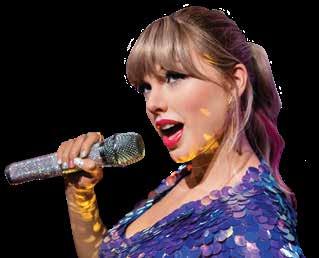
A by-the-numbers look at recent alumni highlights BY GEOFF SMITH ’07 2
Days spent discussing Taylor Swift’s music through an academic lens at a symposium co-chaired by Gates MacPherson ’19. MacPherson, who is pursuing her Ph.D. at Indiana University of Pennsylvania, collaborated on the event, which focused on Swift’s literary ability to create music on “the feminine experience and sociopolitical forces.” Among MacPherson's research interests: antiheroines in theological narratives.


75
Years since construction first began on Memorial Hall in 1950. Originally constructed as a dorm for “Middlers and Upper Middlers” —tenth and eleventh graders—the dorm first looked as it does in the photo above. Later, a peaked roof, an expanded faculty residence, and a central entrance and bridge were added.
160
Graduating high school seniors named U.S. Presidential Scholars each year by the Department of Education— and Alyssa Matricciani ’25 was one of them in 2025! The highly selective program is based on outstanding performance on the SAT or ACT, academic achievements, leadership qualities, and community service. Matricciani, who also won the White Blazer award at Commencement, is now pursuing a chemistry degree at Georgetown University.
Williston lacrosse alums who competed in the 2025 European Lacrosse Championships. Ryan Fitzpatrick ’19 took home gold for Team Israel. John Killcommons ’18 also played, representing Team Slovakia. Fitzpatrick and his Israeli teammates beat Italy, 9-8, in the championship game.
163
Student contributors to an endowed fund in honor of Elise Ollmann-Kahle ’25, a six-year senior who passed away in 2024 after a long battle with cancer. Elise’s fund, which will provide financial aid to future students, continues to grow as teams donate fundraising proceeds from “pink out” games in her memory.
Williston football alums whose teams shared the 2024 Ivy League football championship title. Columbia University, Harvard University, and Dartmouth College all shared the Ivy title that year, and Williston had two players on Columbia (Ethan Hebb ’22 and Jayden Marshall ’22), and one each on Dartmouth (James Elliott ’24) and Harvard (Dom Di Filippo ’23). 2
Years that Bermuda has celebrated Bermuda Day with a parade—which this year featured Glenn Jones ’95 as one of five Grand Marshals. Bermuda Day is the “first day of summer” on the island, and locals flock to the capital city of Hamilton for the parade and a host of other celebrations. 4
46

Charting New Waters
To make passage safe for ships, Christina Belton ’85 sails the ocean wide, mapping the sea floor BY ALEXANDRA KENNEDY
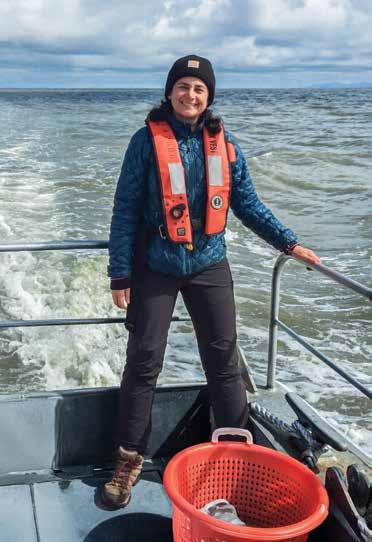
Afew times a year, scientist Christina Belton ’85 heads to sea to survey our U.S. coasts. The crew’s mission on these trips is to collect data that allows them to map the plains and ridges, trenches and shipwrecks on the sea bottom and update nautical maps. The rest of the year, Belton plans hydrographic surveys from her office in Silver Spring, Maryland, at the National Oceanic and Atmospheric Administration (NOAA, pronounced like Noah).
We recently caught up with her, fresh from a trip to the Bering Sea aboard the Fairweather, a 231-foot ship that docks in Ketchikan, Alaska. She and her
colleagues collected data on the sea floor that surrounds the Pribilof Islands, four volcanic islands about 300 miles west of mainland Alaska. Known for their fur seals, which were once ruthlessly exploited by colonists, the islands today are part of the Alaska Maritime National Wildlife Refuge and home to members of the Unangax people, whose ancestors hunted on the islands more than 10,000 years ago. The islands, Belton explains, provide ships with critical safe harbor during storms.
The physical sciences were not the direction Belton was headed in when she graduated as an art and art history major from Wheaton College more than 30 years ago. She’s charted her own career path, too, following her curiosity through the arts, design, technology, and science.
Your job is to map America’s sea coasts. Why are surveys so important?
I work for the Office of Coast Survey, a program of NOAA. Its primary mission is to update the nautical charts for maritime safety and services, but the data is used for other things, too, like storm surge modeling and fish habitat studies. Once our data is processed, it’s posted and publicly available. OCS has a saying: “Ping once. Use many times.”
A small team of us evaluate where we need to survey next. We look at how old the nautical charts are and how much change is happening to the sea floor because of things like hurricanes. We also consider the need. Is there more commerce?
Ports all over are dredging for larger and larger vessels. This happens particularly up and down the East Coast.
The Office of Coast Survey is considered a birthplace of modern American science. It dates all the way back to Thomas Jefferson, right?
Yes, it’s the oldest scientific agency in the United States. Thomas Jefferson signed it into law in 1807. It was founded because commerce was desperate to get into ports safely. They needed charts for where the shoreline and shoals were, where the safe passages were in and out of ports. Prior to that, the shipwrecks were terrible.
How much of the world’s oceans have been mapped so far?
There are international efforts to map the entire ocean to modern standards by 2030. About 27 percent of the seas meet that criteria globally. In the U.S., it’s about 54 percent. There’s still a lot of old data out there. In Alaska, some it is from when Russia owned Alaska.
How do you figure out what lies thousands of feet below the surface?
We use echo sonar mounted on the hull of the ship to measure the depth with sound. Each ship also has smaller launch boats that we deploy to shallower areas. Zillions of points get bounced off the sea floor, and the speed with which they come back tells us how deep the water is. We capture the heights of objects down there, too—say, a rock or a shipwreck—so we can find whatever might be a danger to navigation. We also have different tools
to help us account for the ship’s dynamic position.
Do you like being at sea?
I love it. It’s a required part of my job, but for me it’s a real perk—just being out on the water. I’ve been at sea as long as two months and as little as two weeks. I work with the survey team as a visiting physical scientist and, ideally, go on the survey projects that I’ve planned myself. It helps me be a better project manager and have reasonable expectations of what can get done. It feels so good to be right there to collect the raw data. It’s rare to be able to do that as a data scientist.
I’ve got to ask. Do you get seasick?
Oh, yeah, totally. A lot of people do. It’s something you have to try to manage. We talk about the weather half the time and always know what the sea is going to be doing. I have a technique for how I manage it: I always bring Diet Coke, ginger ale, carbonated waters, and lots of salty snacks.
More than 15 years ago, you made a career jump—maybe more like a leap?—from a landscape architect to a physical scientist. How did that happen?
In 2010, I was working as a landscape architect for a company that relocated me from New York to D.C., then got bought out by a bigger company. The work became less interesting. At the same time, I got really interested in GIS software—Geographic Information Systems—which urban planners use. I started taking GIS classes and was just sold on it. You can, for instance, look at land where there’s been significant climate change or deforestation or a change in resources and see how that’s going to affect its population. I attended a career fair and NOAA was there. I just really related to their mission. I took an unpaid internship for three months and found out I really loved the work. I stuck with it and the opportunities came.
Would Christina, the 16-year-old at Williston, be surprised by your life?
If someone told me, “You’re going to go to Alaska and you’re going to go many times over,” I would’ve said, “No way! That’s not my thing.” I have very warm memories of Williston. I left there feeling like I was taken care of—like I didn’t need to be scared to try new things.

WANT TO NOAA MORE?
Ocean Education Programs for Teachers and Students
Teachers at Sea: Since 1990, educators of all kinds have been working alongside NOAA scientists aboard research vessels. Participants help monitor fisheries, perform physical science studies of the ocean and climate, and map sea floors— all field experiences they can bring back to the classroom.
Internships: NOAA offers internships and volunteer opportunities to thousands of high school students, undergrads, and graduate students every year. Through the Sea Grant Student Program, it also partners with universities to offer internships and fellowships.
To learn more about Teachers at Sea and NOAA’s many student programs, see noaa.gov.
Artificial Intelligence in the Classroom
Today, students can generate essays with the push of a button. Brittany Collins ’14 is exploring what this means for teaching students to write and think.— BY
MEGAN TADY
For author and educator Brittany Collins ’14, writing her college essay was a formative experience, inviting her to reflect deeply and explore grief through writing for the first time. She had lost her father, Jeffrey Collins ’83, during the summer before her sophomore year at Williston. The writing process took six to seven months of drafting and two more of revision, sharpening not only her writing skills but also her capacity for introspection and resilience.
Today, Collins’ work centers on the effects of grief, trauma, and disability on adolescent and adult well-being; the foundations of this work were first laid at Williston. “The challenge and opportunity of really sinking deeply into something, over an extended period of time, pushed my thinking to evolve and grow as the essay grew,” she says. “Obviously, you can’t replace that with a tool.”
By “tool,” Collins means platforms like ChatGPT and other AI technologies that allow students to generate essays in seconds. Concerned about AI’s potential impact on students’ social-emotional development, Collins began researching the topic. The result is a new book, co-authored with Dr. Marlee Bunch: Leveraging AI for Human-Centered Learning: Culturally Responsive and Social-Emotional Classroom Practice in Grades 6–12.
Already, startling data has emerged about the “cognitive costs” of using AI. A recent MIT Media Lab study tracked participants writing essays with ChatGPT over four months and found they “consistently underperformed at neural, linguistic, and behavioral levels.”
“The unknown neurological or developmental impacts are certainly concerning to me,” Collins says. “I’m also concerned with the rise of deepfakes and misinformation, because it can be so convincing. Young minds are being exposed to content that might be harmful or not true.”
Collins, who studied English and education at Smith College and UMass Amherst, and earned an M.Ed. in curriculum and instruction with a focus on social-emotional learning, emphasizes that she is not a technologist. She and Bunch were driven less by expertise in AI than by curiosity about what it means for teachers and students.
“We wondered: Is AI going to make our brains all mushy?” she says. “Will this take away human empathy? And most importantly, if AI is here to stay, can we use it in a way that still services relational pedagogies, such as culturally responsive teaching and social-emotional learning?”
Their findings suggest yes—if used with guardrails. “We see AI as a tool in teachers’ toolboxes, just like other technologies,” Collins says. “There are tools out there that don’t replace both teacher and student thinking. The book makes the argument that it’s what we do with the tools rather than the tools themselves that makes the most difference.”
Still, promising examples do exist, like Clara, a free, Socratic-style AI writing companion from the nonprofit Write the World, where Collins is Director of Education. Clara prompts students with guiding questions instead of supplying answers.
“Clara encourages self-reflection, metacognition, and deeper thinking about students’ own writing techniques and intended audiences,” Collins says. “We need tools like this, tools that deepen and reinforce the human aspects of learning.”
Other AI applications help teachers create infographics for multimodal instruction or run simulations that push students to think critically, such as generating “readers” with opposing perspectives to challenge their op-eds. “AI allows you to create a persona so that students can have simulated conversations with ‘readers’ who hold different perspectives to challenge thinking,” she says.
Collins’s interest in social-emotional learning and curriculum design traces back to Williston’s Cultural Identity Development (CID) night, a campus-wide storytelling event. “Seeing what happened in those rooms and how changed people were from witnessing somebody else’s story made me start thinking: How do we bring this curriculum into the classroom?” she says. “I would not be doing anything that I’m doing without Williston.”
Reflecting on her own college essay-writing experience, she worries what might be lost for students if they outsource the task to AI, and she’s hopeful students will see the benefits of pushing through the writing process just like she did.
“The challenge as educators is getting buy-in from stressed-out teens who can have a written product with the click of a button,” she says. “If we’re offloading writing to a platform like ChatGPT, we’re forgoing the idea of writing as thinking, self-reflection, and emotional processing. At the end of the day, it’s really not about the essay. It’s about the work that goes into producing the essay that is so valuable.”
Collins is the author of Learning from Loss: A Trauma-Informed Approach to Supporting Grieving Students (Heinemann, 2021) and is at work on three additional books. More at brittanyrcollins.com.

“At the end of the day, it’s really not about the essay. It’s about the work that goes into producing the essay that is so valuable.”
THINKING ABOUT THINKING: AI RESOURCES
Want to learn more about the impacts of AI on work, life, and education? Collins suggests checking out these resources.
1.
3.
4.
5.
Co-Intelligence: Living and Working With AI by Ethan Mollick
2. One Useful Thing Substack by Ethan Mollick
Unmasking AI: My Mission to Protect What Is Human in a World of Machines by Joy Buolamwini
The Algorithmic Justice League (aji.org) founded by Joy Buolamwini
Rethinking Writing Instruction in the Age of AI: A Universal Design for Learning Approach by Randy Laist
The Abundance
of Life

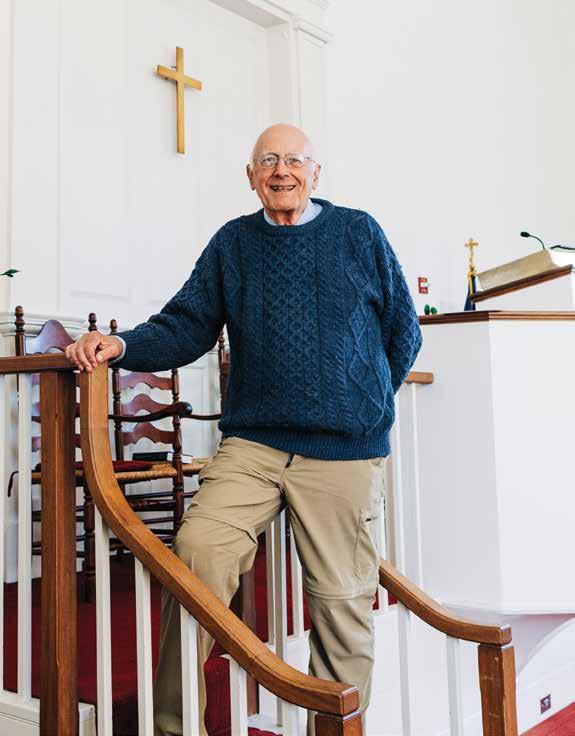
After a pivotal moment at Williston, Richard “Cy” Allen ’65 vowed to help others—and he continues to serve six decades later
BY JONATHAN ADOLPH
Richard “Cy” Allen ’65 still vividly recalls the November day in 1963 when he learned that President John F. Kennedy had been assassinated. A junior at Williston (or “upper middler” as they were known then), he had been walking to the cafeteria from his Memorial dorm room when a classmate relayed the news. “I was absolutely stunned,” recalls Allen, who like many of his peers revered Kennedy and the new leadership he represented. “I adored the man. I thought he was like an angel sent from heaven. When he said, ‘Ask not what your country can do for you, ask what you can do for your country,’ he had me in the palm of his hand.” There on the Quad, as the tragedy of Kennedy’s death sank in, Allen made a vow. “I looked up toward the heavens, and I said—maybe even out loud— ‘I’m going to join the Peace Corps.’ I was too young to know much about anything, but I knew that my life had been somehow inspired by President Kennedy, and I was going to honor him.”
PHOTOGRAPH

Allen would keep his promise, serving with his wife, Andrea, in Malawi after the two graduated from Trinity University in San Antonio. His first assignment in the southeast African country was teaching tenth-grade English, a subject—Allen notes with chagrin—that he had failed at Williston. Still, his students loved Shakespeare, particularly performing in plays, and Allen noticed a change in himself as well. “I was never so alive in my life,” he recalls. Puzzled, he wrote to a minister he had befriended in Westfield, Massachusetts, where he had attended ninth grade before Williston. “I asked him, ‘What’s going on? I feel like I’ve been baptized.’” The two exchanged letters for two years. Recognizing something special in Allen, the minister sent along in his last letter an application for Andover Newton Theological School. Allen applied, and entered the seminary upon his return.
Becoming a pastor would provide a more formal platform for Allen to continue his mission of humanitarianism, now in its sixth decade. He has lived and brought assistance to places as varied as Niger, Malawi, a South Dakota Indian reservation, and communities around New England, serving most recently as pastor in South Glastonbury, Connecticut, where he had spent his early childhood. He retired as senior pastor there in 2021, but continues on as pastor emeritus, leading group trips to Africa every year.
“I love taking small groups so that they can experience that abundance has nothing to do with bank accounts,” explains Allen, who with Andrea now has four grown children and eight grandchildren. “I just feel deeply that African people and Latin American people have a lot to teach Western civilization about what life is all about.”
We asked Allen to tell us more about his service work, how he views his role as a religious leader, and what brings him a sense of purpose in life.Were you raised in a religious household?
I would say that I grew up in a spiritually alive household. My dad taught Sunday school for a year or two. I went to Sunday school. I went to church with my parents in Westfield. Religion wasn’t something that was crammed down my throat, but my parents valued it. And then at Williston, we had daily chapel, and I enjoyed daily chapel, especially when Mr. Couch, the math teacher, was doing the prayers. He would always use the prayer of St. Francis: ‘Lord, make me an instrument of thy peace. Where there is hatred, let me sow love.’ And that just landed in me.
Your experience in the Peace Corps had a profound impact on the course of your life. Today, a number of thought leaders have proposed that young people should take part in some form of national service program as a way to
build social cohesion. Do you agree?
I would recommend it for young people. I wouldn’t require it. It’s not for everybody. There are other ways to grow your character. But I’ve known a number of young adults who have gone into AmeriCorps, Teach for America, Vista, and have had really positive experiences. It enables you to discover your own authority and your identity. It forces you to make relationships, and it’s in relationships that we learn who we are.
The role of religion in society has been evolving in recent years, with some religious groups becoming far more active in cultural and political issues. What has your experience taught you about the role that religion can play in society? I believe that churches, synagogues, and mosques have a voice that must be spoken and discussed. I think that silence, when it comes to some political issues, is sinful.
What I learned in my career is that when people know that I love them, they’ll listen to me. The one has to come before the other. Other ministers might answer differently. But I always found that if people know that I actually care about them, and love them, and have walked with them through grief or through other things, then when it comes to talk about what it means to actually love your neighbor, they’ll be willing to listen to what I have to say. They may not
From Williston to Malawi
1963
A Vow on the Quad
As a Williston junior, Allen hears the news of President Kennedy’s assassination. Deeply moved by Kennedy’s vision of service, he makes a vow on the school’s Quad: One day he will join the Peace Corps.
Late 1960s Into the Peace Corps
After graduating from Trinity University with his wife, Andrea, Allen keeps his promise. The couple travels to Malawi, where he finds himself transformed by the experience.
1970s–2021
A Ministry of Service
Allen enters the seminary and is ordained as a pastor. For the next five decades, he blends faith and action, serving communities in New England, South Dakota, and abroad.

agree with me, but they’ll listen and we can talk. Jesus was always speaking truth to the power people of his day. It got him killed, but it also created a vision of what life is meant to be. So I think that it’s always a risk to speak the truth, but if it’s spoken in love to people who know that you love them, it can make a difference.

Today Missions to Malawi
Now retired as senior pastor in South Glastonbury, Connecticut, Allen continues leading annual trips to Malawi and raising funds to help orphans, women, and students there.
What was it about President Kennedy that you found so appealing?
He was the first U.S. president from a Catholic background, and I was moved by his courage to follow his dream of being president and not let religious bias stand in the way. I admired that. I must say I was somewhat enamored of his Boston accent. I had respect for anyone who went to Hahvard. He was also a Cape Cod guy, and our family vacations were
“It’s always a risk to speak the truth, but if it’s spoken in love to people who know that you love them, it can make a difference.”
usually on Cape Cod. If you were a Cape Cod guy, you must be OK. And his wife was so beautiful, I saw them often as a couple, and I just thought, Wow, this guy is alive, and alive in a generous way. Not what can I gain from being president, but how can I use my time in office to bring abundance of life to the world?
Talk about your work today, and its impact. I’ve been going to Malawi every year for many years. I go mostly because when I’m there, I am learning how to be joyful, how to be grateful. I mean, Malawi is the poorest country in the world, but when I say to a village group, Mudziwa nyembo?, meaning, “Do you know any songs?” they just start to sing and dance, and pretty soon we’re all carrying on. And in those moments, life is abundant.
We adopted an orphanage, 120 children who were orphaned by AIDS. And we have now helped 70 women move from being a sex worker to being a business operator, and thus slowing the spread of AIDS. My church every year sends about $3,000 to help those women get a loan. And then the women are accountable to each other. They meet every Wednesday, and they bring back part of their earnings so that other women can get a loan. We also help students who can’t afford to go to school. We buy computers for the lab and science chemicals. Even though I’ve been retired for four years, the church has asked me, “Can you keep doing these Malawi mission trips?” We see what a difference it makes in the people who go with me. And we see that our money is making a big difference in a part of the world that nobody knows about.


Scholars
BY JONATHAN ADOLPH
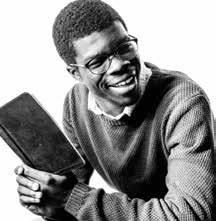
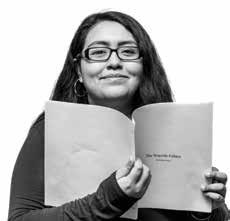
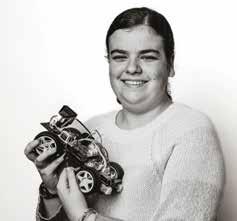
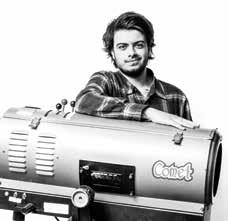


Since 2010, the Williston Scholars program has been inspiring students to pursue their passions while learning college-level research, writing, and presentation skills. In celebration, we surveyed the more than 600 alums who have completed a Scholars project, and on the following pages present some of their thoughts on the lasting impact of this engaging program.
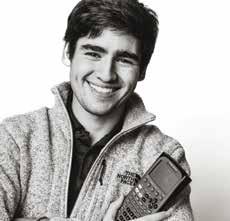
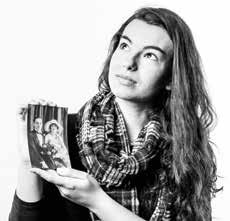
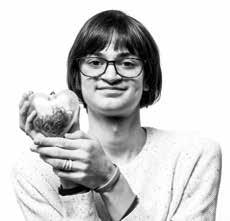
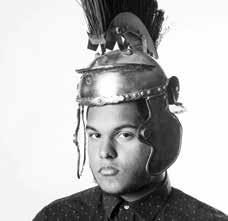
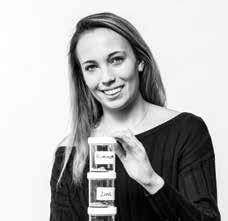
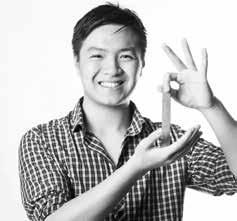
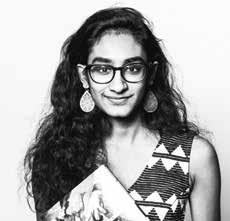
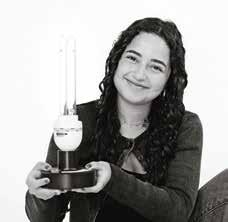
The portraits on this page reflect a sampling of Scholars from the last 15 years. To read more about their projects and many others, visit williston.com/scholars.


SCHOLARS TODAY
n an era of digitally shortened attention spans and chatbots that provide instant answers to even the most complicated questions, one Williston course that demands sustained intellectual effort and long-form presentation skills continues to grow in appeal. The Williston Scholars program—launched 15 years ago as a trimester-long elective allowing students to explore a subject of their choosing in depth—last year drew a record 64 seniors and juniors who, with the support of peers and faculty, conceived, pitched, researched, developed, and publicly presented projects on a wide range of ambitious topics.
As heartening as the program’s popularity has been for teachers and administrators, Williston Scholars has also had an inspiring impact on its participants, as revealed by a recent survey of alumni whose comments are collected here. Many credit the course with teaching them organizational and research skills that helped them succeed in college and later endeavors. Others say their Scholars topic remains an area of personal interest, shaping their college studies and even their career paths.
“Working on the Scholars project at Williston was a formative experience that continues to influence my studies, career, and personal interests today,” explained Jeremy Dube ’24, a computer engineering student and software developer who together with classmate Joe Zhou ’24 developed an artificial-intelligence–based computer therapist called Empathy Engine. “Empathy Engine wasn’t just a high school project; it was the starting point for my journey into computer engineering, ethical AI, and a career where I strive to build technology that truly matters.” Reagan Joyce ’20, whose project involved choreographing and performing a dance that explored a young girl’s journey through depression, healing, and rediscovery, also found the course profoundly transformative. “Personally, the project helped me learn about myself—how I process emotions, how I connect with others, and how I can use creativity as a tool for healing and advocacy. It laid the foundation for everything I’ve pursued since: a life rooted in compassion, a personal mission to destigmatize mental health, and a belief in the power of storytelling.”
For Williston Scholars faculty—who often serve as mentor, coach, and cheerleader as well as instructor—feedback like that is powerful validation. “I’m a real big believer in the success of this,” says Interim Dean of Faculty Chris Pelliccia, who previously taught the program’s science section. “The student experience is excellent. They can’t sit there and be passive. They’ve got to be active, and the students who get the most out of it are the ones who really dig in.” History and Global Studies teacher Sarah Klumpp agrees. “The kids who find the most reward in this process are the ones who eventually buy into the idea that this is hard work but so rewarding,” she says. “They’ve become mini-experts on their topic. They come out feeling proud of themselves for doing that hard work.”
While the Scholars program requires significant individual initiative, it supplements solitary research with collaboration and community. Over the course of the trimester, instructors guide students through the steps of developing a scholarly project, introducing college-level research methods, and drawing on resources
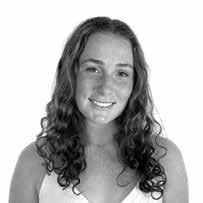
ROSIE CROOKER ’22
Scholars project: Grimm Fairytales: The Original Endings and How the Stories Are Told
Today: Senior at Union College, majoring in neuroscience with a minor in German “My Scholars project was centered on German language and Märchen, or fairytales. In my undergraduate time at Union College, I have completed a minor in German language studies, including an entire course on Märchen. Having the experience of Williston Scholars enabled me to be more prepared for these college courses, as well as to explore an interest of mine that could not be fulfilled by other Williston courses.”
both on campus and from the Five College area. Students meet regularly for peer feedback, beginning early in the semester when they first pitch their projects and continuing right through the final public presentation. (Scholars write and present academic papers, but also develop and exhibit works of fine art, dance, and theater, and present research in science and engineering). Learning to collaborate at a high level is one of the program’s most valuable takeaways, explains Academic Dean Kim Polin. “It’s wonderful to see students learn with and from each other,” she says. “They’re learning to be stronger thinkers and to give constructive feedback, skills
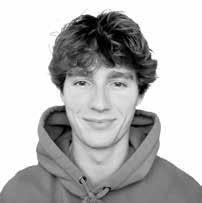
JEREMY DUBE ’24
Scholars project: AI Therapist called Empathy Engine
Today: Computer engineering student at McGill University and software developer
“Working on the Scholars project at Williston was a formative experience that continues to influence my studies, career, and personal interests today. At its core, Empathy Engine was about building an AI that could not only respond to words but also understand and adapt to human emotion. This project gave me my first real taste of what it means to integrate AI into a system designed to help people, and it planted a seed that has grown throughout my academic and professional journey. In my computer engineering studies, I’ve continued to explore the very themes that Empathy Engine introduced me to. The project also shaped how I approach my career in tech. Today, I work as a full-stack software developer, and much of what I do—integrating APIs, managing data pipelines, building interactive interfaces—feels like an evolution of what we started back then.”

REAGAN JOYCE ’20
Scholars project: Teen Depression and Mental Health Advocacy
Today: Associate at Golin in New York
“My project—a 10-minute dance exploring a young girl’s journey through depression, healing, and rediscovery of joy—was more than just choreography. It was my first attempt to express the complexities of mental health through art, and it sparked a lifelong commitment to understanding and supporting others in their emotional struggles. This passion led me to study psychology in college, where I deepened my understanding of mental health, trauma, and resilience. I later worked in a residential home supporting individuals facing mental health and substance abuse challenges, and I volunteered for the Crisis Text Line, offering real-time support to people in crisis. Each of these experiences built on the empathy and insight I first began developing during my Scholars project.

CICI YU ’23
Scholars project: Potential Treatment for Type II Diabetes
Today: Student at Barnard College majoring in biology
During my Scholars project, I studied how methionine restriction could help manage Type II diabetes. It was such an exciting opportunity to conduct research in a classroom setting and explore a new approach to a disease that still doesn’t have a cure. That project really sparked my interest in how biology connects to everyday health challenges. Now, as a b iology major at Barnard College of Columbia University, I’m looking forward to conducting more research on this and other common diseases that impact people’s daily lives.
that are really valuable professionally.”
Polin notes that the wide range and complexity of student projects can sometimes push instructors beyond their areas of expertise, so the school provides them with supplementary professional development funds “to take a class, an online lecture, or whatever else they feel they need to stay current with projects that their students are doing.”
For instructors like Klumpp, there’s another benefit: seeing students stretch themselves intellectually and personally. “It’s becoming a course that the students want to take because it challenges them,” she says. “Writing a 15-to-20-page paper
is not an easy task. And then they have to stand up and present it—not just to their class, but to an invited audience. That’s scary—but also really cool.”
And while students may not realize it at the time, a Scholars project can be the catalyst for later personal discoveries. When she was working on her 2017 Scholars project on women’s fashion in the 1970s, Natalie Aquadro ’17 began to wonder if fashion could be a bigger part of her life, or even her career. “I ended up switching my major in college to marketing,” notes Aquadro, now a fashion buyer. “I credit the Scholars project for inspiring me to look into the industry more, and to follow my passion!”
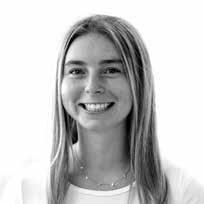
RACHEL GOODMAN ’20
Scholars project:
Anxiety Over Time: The Meaning Has Changed but the Stigma Has Not
Today: Clinical research coordinator at the Health Promotion and Resiliency Intervention Research Center at Mass General Hospital
“There are links between my Scholars project and my work today; I am now a clinical research coordinator, and one of my main focuses is on women with cardiovascular diseases who have anxiety. I get to sit in on group therapy sessions that focus on mindfulness in order to teach skills on how to reduce anxiety. I plan to get a doctorate and have a career that focuses on anxiety and depression. The Scholars project taught me the foundation of working on a long paper. I remember sitting in the library going through every book I could find about anxiety, a skill I now call a “literature review.”

ROBBY HILL ’19
Scholars project:
Felony Disenfranchisement in Alabama
Today: Marshall Scholar at Oxford University studying urban history and policy
“My Scholars project explored the contemporary effects of historic racial discrimination. This relationship is one I’ve investigated throughout my undergraduate career. Beginning with the carceral system and prisons, I learned about the legacy of urban policy and housing discrimination—policies that have exacerbated racial wealth gaps and weakened economic mobility. My senior thesis as an undergrad assessed how public infrastructure and housing development in the 1950s and ’60s affected racial demographics in cities. I now study urban history and urban policy more broadly. My Scholars project was my first step into my graduate study and professional path.”

MOLLY KINSTLE ’21
Scholars project: The DNA Game
Today: Master’s student studying molecular biology at University of Padua
“For my project, I coded an interactive game to teach middle-schoolers about DNA replication. I wanted to find a fun way to expose kids to a new area of science, as well as to combine computer science and biology (two of my favorite subjects).
Now, almost five years later, I am beginning a master’s degree in molecular biology, and am super passionate about DNA. I’m also still passionate about teaching. During college, I was a peer tutor for multiple biology and neuroscience courses, meeting one-on-one with other college students to help them with concepts they struggled with. I also worked at an online tutoring company and taught computer science to kids ages 7 to 11; in one-on-one meetings, I taught both Python and Java. (I actually only learned Java at Williston, so that was another way this project stuck with me over the years!)”
LESSONS LEARNED
Former Williston Scholars describe the skills, insights, and experiences that have stayed with them
“Williston Scholars was the closest thing to a college course I experienced while in high school. It was fundamental in teaching me time management and how to implement feedback into my artistic works.”
—Philippa Berry ’23
“One insight that has stayed with me is that failure is a part of science and life. Although I was unsuccessful in reaching my Williston Scholars project goal, I learned to analyze reasons for failure and learn from mistakes, a lesson that has stuck with me in scientific research and beyond.”—Jack Berrien ’24
“The beauty of the Scholars project is that it puts the student in the driver’s seat. You choose the topic, you design the journey, and
you learn not just about the subject, but about yourself. That kind of ownership builds confidence, curiosity, and a sense of purpose. It’s a chance to begin writing your own story—and that’s something every student deserves.” —Reagan Joyce ’20
“Scholars taught me that writing is ultimately about persuasion, and good writing uses a variety of available tools in that act of persuasion. I had loaded the first draft of my
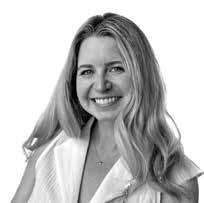
NATALIE AQUADRO ’17
Scholars project: Women’s Fashion in the 1970s and How It Evolved With Women’s Rights
Today: Fashion industry buyer
“When I did Williston Scholars, I knew I wanted my project to be about something I found genuinely interesting so it would be more fun to research and complete. I knew I was not creative or artistic enough to go into design, but it inspired me to look into other fashion-related career opportunities. I ended up switching my major in college to marketing, and geared my course selection toward the business side of the fashion industry. I credit the Scholars project for inspiring me to look into the industry more, and to follow my passion!
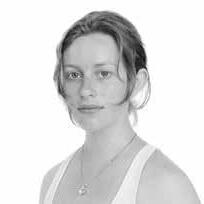
PARKER BROWN ’25
Scholars projects:
• For History: Humanizing the “Inhuman”: The Power of Black American Prison Literature
• For English: Vessels of Horror: A Thesis on Pregnancy in Modern Horror and I’m Living Now: A Collection of Political Poems
• For Visual Arts: American Flag: My View of America through Crochet Flags
Today: Student at Haverford College majoring in English and education, with a double minor in African studies and human rights
“I want to be an English teacher in juvenile detention centers, and I feel all of these pieces express that goal. My history project was an in-depth look at literature in the prison system. My English projects showed how I could both analyze and create literature through political lenses. And my visual arts project conveyed my view on a country that has left children behind bars. The failure of America is a core place of study for me, along with how we can resist it and hopefully change it for the better.”
paper with statistics, data, and charts; Sarah Klumpp encouraged me to add a human element. I brought in personal accounts from people who had lost the right to vote, and it enriched my writing.”—Robby Hill ’19
“One of the most valuable lessons I took away is the importance of asking for help. Early on, Joe Zhou ’24 and I ran into problems we couldn’t solve by ourselves. Instead of getting stuck, we reached out. We scoured forums,
asked questions in developer communities, and even contacted the creators of a product we were using. Every time we asked for guidance, we not only solved the problem but also learned something that we could apply later. In college and at work, I actively collaborate, ask questions, and leverage the expertise of those around me.”
—Jeremy Dube ’24
15
Years the Williston Scholars program has been offered
640
Students who have completed Scholars projects
7
Subjects students can do a project in: math, English, language, science, history, visual arts, and performing arts
“Williston Scholars definitely prepared me for more independent projects. When I did
independent projects in my college courses, I made sure they were on topics I really cared about, and that I would enjoy researching. It also helped inspire my professional career and made me think outside the box.”
—Natalie Aquadro ’17
“The amount of planning and time it takes to write a novel-length story gave me an appreciation for authors I did not have before.”
—Nick Kioussis ’13
WORKING FORWHALES
BY JONATHAN ADOLPH
LONGTIME LOBSTERMAN MARC PALOMBO ’74 NOW PROMOTES TECHNOLOGY THAT COULD HELP HIS FORMER INDUSTRY SAFEGUARD NEW ENGLAND’S THREATENED RIGHT WHALES
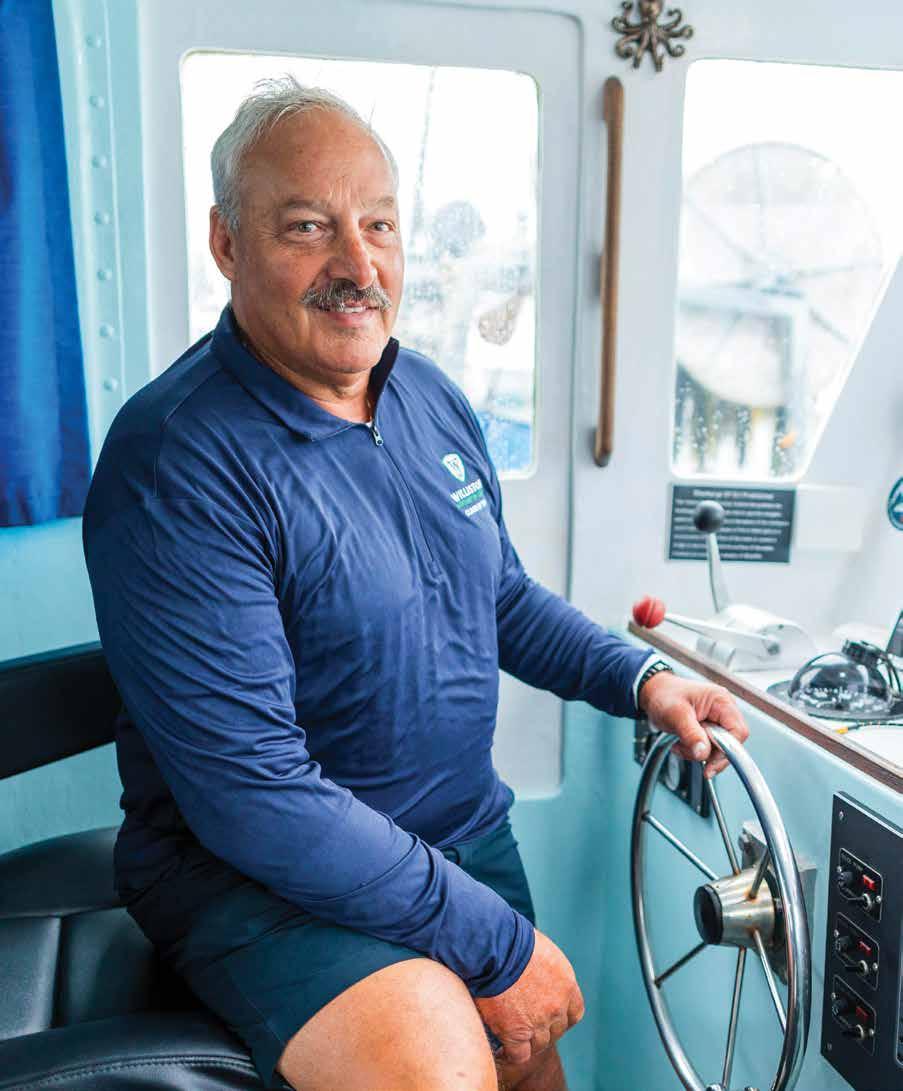
Marc Palombo ’74 spent nearly a half-century as an off-shore lobsterman, working fishing grounds as far as 120 miles off the coast of Massachusetts. The job required managing hundreds of lobster traps tethered to miles of rope in what’s called a trawl, but it could be phenomenally productive. In 1980, crewing his father’s boat as a 23-year-old graduate of the Massachusetts Maritime Academy, he earned $160,000—at the time, he points out, more than half the salary of Boston Bruins star Ray Bourque.
But that success had a cost. On a half-dozen occasions, the boat’s winch began to groan as it fought to raise the trawl, and soon the reason appeared from the depths: A whale had become tangled in the line and drowned. “It was extremely sad,” says Palombo, who now lives in Sandwich, Massachusetts, and works to prevent just such tragedies. “But we didn’t know at what rate whales were being entangled. We didn’t know about ship strikes, or anything like that.”
Today we do. The North Atlantic right whale— so named because it floated when killed, making it the “right” whale to hunt—teeters on the brink of extinction. Fewer than 400 are left on Earth, just
72 of which are breeding-age females. The animal’s practice of feeding near the surface and migrating up the East Coast each spring made it an easy target for 18th-century whalers, and its population has never recovered. Today, right whales are protected by state and federal laws, but even with safeguards in place for much of Cape Cod Bay during the spring, boats and fishing gear continue to take a toll. Some 85 percent of the species shows signs of entanglement injuries. Meanwhile, warming ocean waters are driving whales north into Canadian feeding areas, requiring new regulations and education efforts. Researchers who annually track births and deaths say more needs to be done, but the process of finding a solution—one that can preserve both whales and the multimillion-dollar New England lobster industry—remains contentious and emotional.
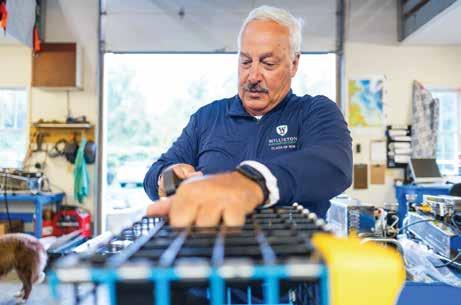
That’s where Palombo comes in. After selling his lobster boat in 2023, he began his second career working to test and promote what’s called on-demand gear. Rather than rely on a traditional floating buoy and rope to mark a trawl line, these new systems employ remote-activated floats that rise from the traps only when needed. Palombo was an early adopter of the new technology in his last
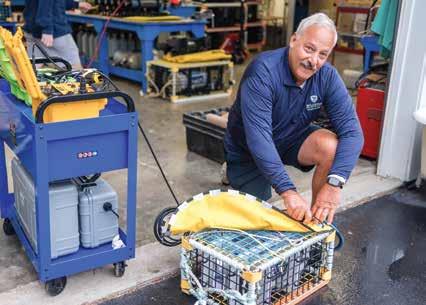
years fishing, and his personal experience allows him to serve as a vital bridge between scientists and lobstermen.
“Most of the people I work with are Ph.D.s,” he explains. “I’m just a fisherman. But I understand the equipment and I can speak to fishermen. And I guess that’s my value to them.”
Getting people to work together is a skill that Palombo developed back in his Williston days, where he excelled at team sports. His achievements playing football, hockey, and lacrosse earned him the Denman Bowl and All-American honors for lacrosse his senior year (he was inducted into the Williston Athletic Hall of Fame in 2024). The school “changed me significantly,” he says, providing him with the study habits and discipline that allowed him to graduate second in his class at Mass Maritime, where he continued his three-sport athletic career. But it was the relationships he developed at Williston that had the most profound impact on his later work. “The reason I started this whale research was because of [lacrosse coach] Kevin O’Connor, way back in tenth grade,” Palombo recalls. “He had an expression: ‘If you’re not part of the solution, you’re part of the problem.’” Palombo was reminded of that saying when he
“There are approximately 72 female right whales left able to breed. Is that enough? I don’t know, but at least on the lobsterman’s side, I am 100 percent sure we can solve this. It’s about how we have to co-exist with whales and fishing sustainably. And I believe we can do it .”
attended a 2018 symposium on whale-protection regulations and realized that as a traditional lobsterman, he may not be part of the solution. “I was 62 years old, and I was thinking, Oh, my God, what’s going to happen here? Am I going to work my whole life and then get to the end and find out that through these regulations, my business is worthless?”
But there was another option: If lobstermen agreed to use the new on-demand gear, they could fish in protected areas when others could not. Palombo agreed to give the gear a try, and found he could make it work. After a few years of success,
he joined forces with regulators and scientists to help spread the word.
Today Palombo’s task can seem as challenging as anything he faced as a star athlete. On the one hand, he knows his industry has changed in the past—back in 2009, for example, rules required lobster boats to switch to trawl lines that sink rather than float, and they did—and he’s seen that on-demand technology is working in other fisheries, most notably by Dungeness crab fisherman on the West Coast. He’s been encouraged by the development of new technology that can track individual whales, help locate lost gear, and alert

vessels that gear or whales are nearby. On the other hand, new federal legislation that would mandate on-demand gear has been put on hold in response to strong opposition from the lobster industry. Some lobstermen are voluntarily using the gear to access areas that would otherwise be off-limits, but adoption has been slow.
Palombo gets why it’s difficult. “We’re trying to change maybe 70 years of behavior,” he explains. “When you listen to the 25-year-old kid with two kids, a beautiful truck, beautiful house, beautiful boat say, ‘If you take this away from me, I’ve got nothing,’ you just hear the fear in their voice.” But he has an answer: “I did it. You can do it. It might not look the same as what you’re doing now, but you’ll be able to fish.”
Will his efforts be enough to make a difference for the whales? Palombo can’t say, but he’s confident he can help take lobstering out of the equation. “There are approximately 72 female right whales left able to breed. Is that enough? I don’t know,” he says. “But at least on the lobsterman’s side, I am 100 percent sure we can solve this. It’s about how we have to co-exist with whales and fishing sustainably. And I believe we can do it.”
Editor’s note: Marc Palombo’s opinions are his alone, and not those of any government agency.
On-demand lobster gear replaces traditional static buoys and ropes with air bags that lift a trap’s line to the surface only when it’s needed. Here, Marc Palombo packs the unit’s air bag for deployment (far left), covers sharp edges to prevent punctures, and readies the transducer for testing.
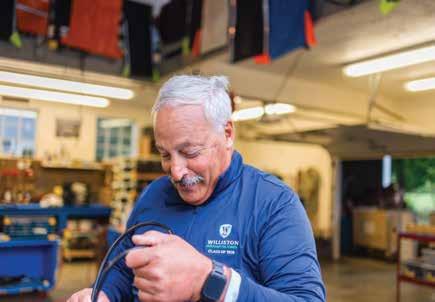
INTENSE BEAUTY
BY DENNIS CROMMETT
Climber and photographer
Bissell Hazen ’87 finds inspiration where grit meets grace
For Bissell Hazen ’87, the mountains have always been a place of striking contrast—danger and beauty, challenge and reward—and they have profoundly shaped the course of his life. After graduating from Williston, Hazen spent time living in Chamonix, France; Telluride, Colorado; and Jackson Hole, Wyoming. Drawn initially to skiing and mountaineering, he soon became captivated by rock climbing as well. The sport demanded focus, problem-solving, and determination, and Hazen threw himself into it fully. Photography came later, providing a way to engage with the climbing world even when he wasn’t on the rock. Through his lens, he learned to capture the scale, texture, and light of the landscapes he loved. Now back in Western Massachusetts, he continues to climb and explore, camera in hand, documenting the places and people that inspire him. The following four photographs showcase some of Hazen’s favorites, along with the stories behind them, in his own words.
ABOVE THE VOID
“This photo was taken at Hanging Mountain in southeastern Massachusetts. There aren’t many places around here where you get the feeling that you’re climbing above a big void, and the void is just tugging at you. I love the composition of this photo. I love the fact that it’s in the sun, but as you can see, it has a light cloud cover which acted like a lens filter. I love the lichen on the left, the fact that it’s steep, and the body position. I was definitely scared shooting this!”

PHOTOS BY BISSELL HAZEN ’87
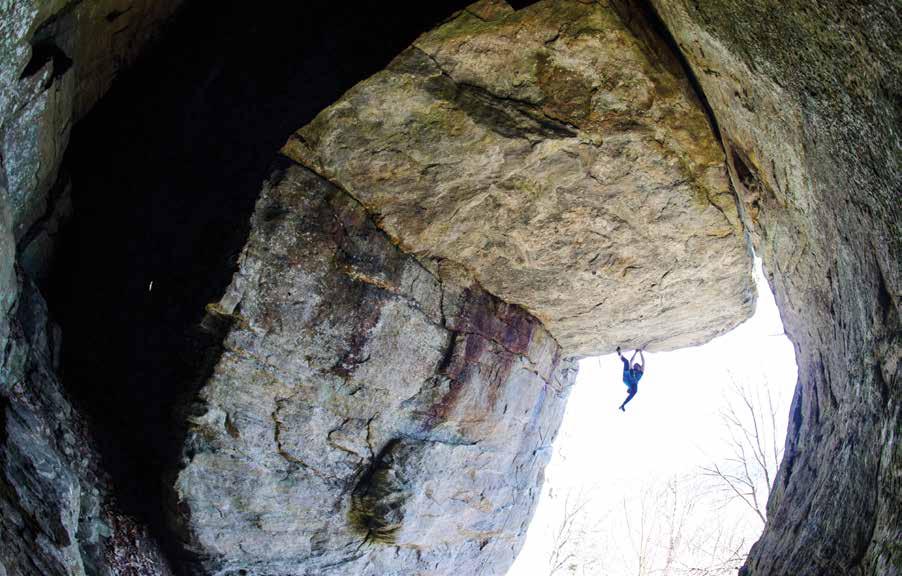
SERENDIPITY
“For this shot, I used a fisheye lens. I went to a place that climbers call Farley with just this picture in mind. As soon as I started hiking up the trail, and went to the shortcut that brings you up to the base of it, I saw a guy starting this climb, and I thought, ‘This is perfect.’ I went up as far as I could to the edge of the cave. I think this might’ve been the first time that I’d looked through that fisheye lens here, and instantly I was like, ‘Oh, my God.’”
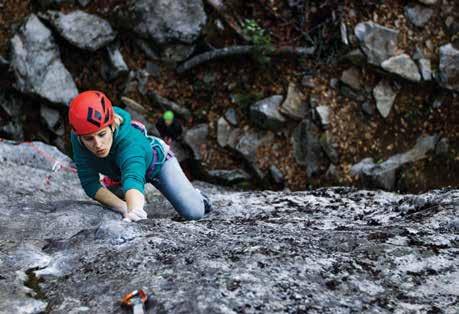
THE HOLY GRAIL
“This photo features my friends Kristen and Brian on a glorious fall day at Hanging Mountain. They just embody the rock climbing spirit that I admire and aspire to. The rock here is kind of like what you’d find in Yosemite or some of the great mountain ranges. It’s this kind of white-and-gray perfect granite. A lot of people feel that granite is the holy grail of rock to climb on. It’s the texture, even the way it smells. To me, it’s the most elegantlooking stone.”
PREPARING FOR THE CLIMB
“Here’s another one from the day at Hanging Mountain with Kristen and Brian. You can see Kristen looking up at the climb, while Brian is getting ready to lead the way up the mountain by ‘racking up,’ which is when a climber attaches a number of carabiners to his harness. The rock here is just gorgeous; it’s white, very grippy granite.”
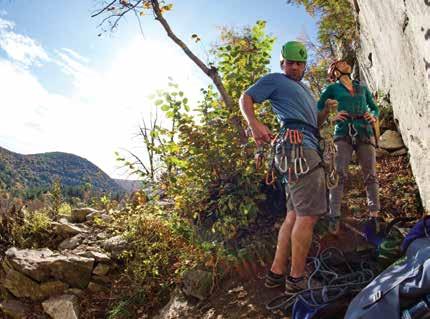
THE SPARK OF JOY
For Sparky (Corkin) Kennedy ’75 and her family, a desire to share the holiday spirit with others has brought comfort and joy to thousands of Boston-area families experiencing homelessness and poverty BY
ALEXANDRA KENNEDY
arships to Thanksgiving turkey giveaways—but it’s best known for the many enormous holiday parties that volunteers threw in major venues, from City Hall to the Boston Convention Center, for shelter residents. As many as 4,000 people would attend. Each child would receive a special toy that they had requested from Santa.
n Christmas morning in 1988, Sparky (Corkin) Kennedy ’75 and her late husband, Jake, were home in Scituate, Massachusetts, celebrating with their young family. They couldn’t help but notice the abundance. “I had a privileged life, and so did Jake, and we were giving that to our kids,” says Sparky. “They didn’t have to worry about anything.” They started to talk about all the children who weren’t as lucky and wondered, too, whether their own kids were experiencing the true spirit of the season.
By the time the next holiday rolled around, Jake and Sparky had founded Christmas in the City, an allvolunteer organization serving families in homeless shelters around Boston. It has offered many services over the last 36 years—from job fairs to college schol-
The goal of each holiday event was to create a magical moment for children. “I have so many great memories of the parties,” Zack, the second oldest Kennedy sibling, remembers. “Like the moment my dad would pass the microphone off to Santa Claus, who would open Winter Wonderland. This massive red curtain would lift and reveal a carnival, with blow-up rides and carousels, ponies and face painting and Santa booths. All the kids would line up at the curtain and rush in. It was the coolest thing.”
Jake and Sparky worked year-round, raising money, coordinating with the shelters, collecting toys, partnering with restaurants and caterers, chartering buses, hiring costume characters, and recruiting as many as a thousand volunteers. Once they were old enough, all four Kennedy kids pitched in, too. “My dad was this larger-than-life figure,” says Zack. “He was a dreamer. It was my mom, though, who did the legwork. She and an army of volunteers. My mom and dad were such a great team. They really worked in lockstep. Christmas in the City is a Boston institution.”
When Jake became ill with ALS in 2019, Chip— the youngest Kennedy—stepped in to take over
Christmas in the City so that Sparky could care for Jake fulltime. He died only a year later. Despite their grief—and the pandemic lockdown—the children rallied around Sparky to keep the organization going, as did volunteers, many of whom had been with them for decades. They started Christmas in the City Delivered, bringing meals and toys directly to the shelters.
“Now my generation of volunteers is saying, OK, we’ve been doing this for more than 30 years,” says Sparky. “We’re going to step down. The younger group has come in and they’re running the show. They have the right skills.” Today, she is still a Christmas in the City volunteer, just not at the same warp speed, and she’s busy as the owner of Kennedy Brothers Physical Therapy, the practice that Jake and one of his brothers started in the 1980s.
Last year, Zack, who’s a research scientist specializing in RNA technology in Cambridge, took the reins from Chip. He and the other volunteers— many of whom are, like him, second generation— have big plans for this year that include delivering 50 parties to 50 shelters over two weekends. The importance of doing this work really hit home for him years ago, though, when he got to chatting in line with a stranger at a Seven-11 in Mission Hill. Zack mentioned something about Christmas in the City. “Oh, yeah,” replied the man. “I went to Christmas in the City as a kid. It was the best night of my life.”
To find out more about Christmas in the City, visit christmasinthecity.org.
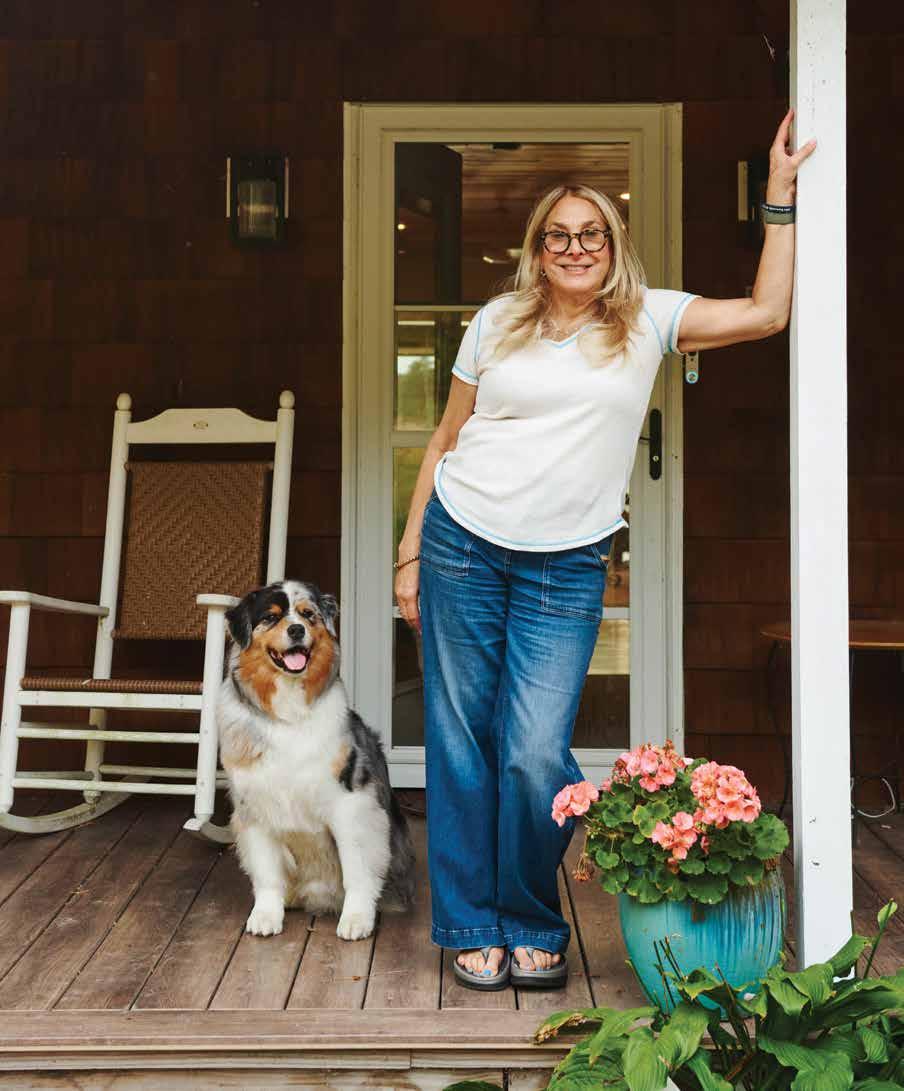
HOW SPARKY GOT HER NAME
Sparky’s classmates will remember her as Patricia, or Patty, Corkin. She got her nickname from her late husband, Jake, when she was 21, right after they first met. They were playing around one day, and he was teaching her some boxing moves, showing her how to hold her hands. “He said teasingly, ‘We’re going to call you Sparky Parker,’” she explains, “‘and then when you get famous, that will be your boxing name.’” And from that day on, the name stuck.
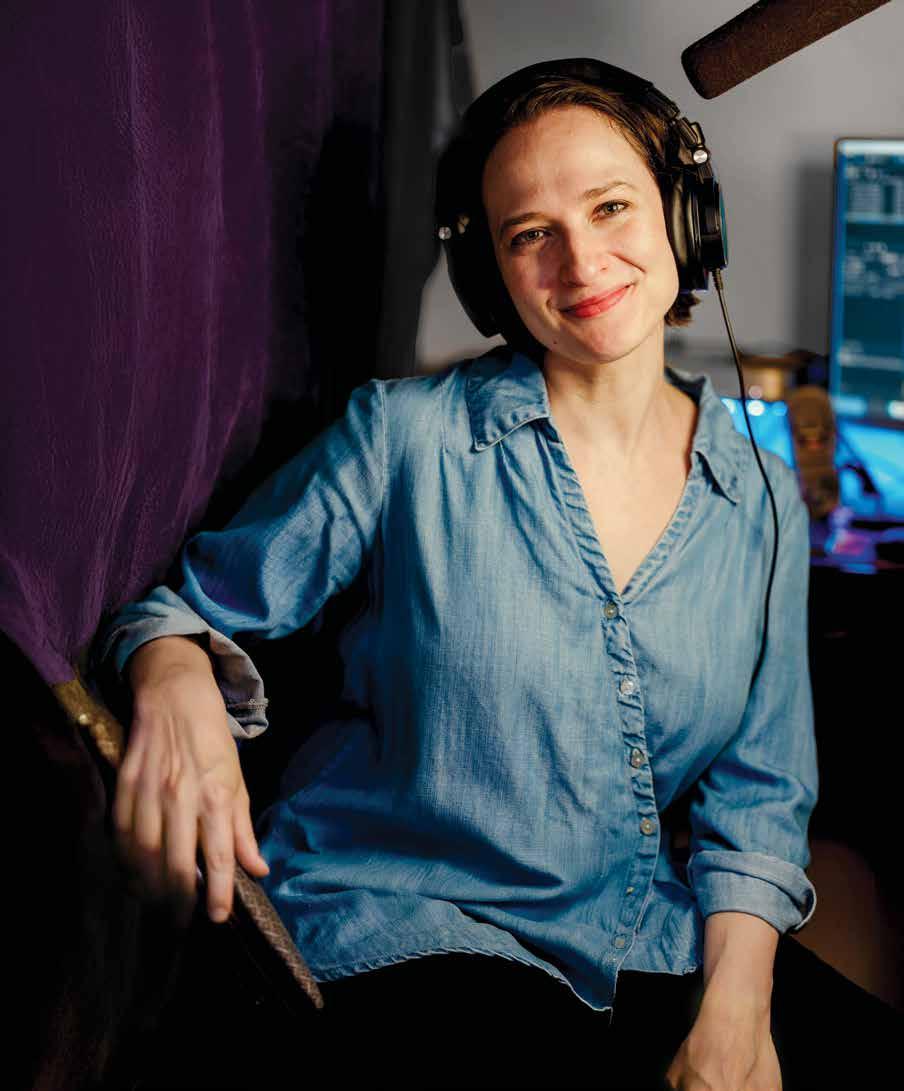
PHOTOGRAPH BY STEVEN ST. JOHN

THE VOICE
In a quest to become an actress, Emma Sherr-Ziarko ’07 finds success behind the microphone
—BY GEOFF SMITH ’07
Emma Sherr-Ziarko ’07 always dreamed of using her voice as an actress. What she didn’t know is that she’d eventually find a calling where her voice alone would take center stage.
Sherr-Ziarko grew up wanting to perform. She spent years on the Williston Theater stage—first in the Williston Summer Stage program, then as a six-year student. She continued acting through college, majoring in theater at Wesleyan University. But fresh out of college, Sherr-Ziarko stared down a reality that many actors face: Work was hard to come by.
Living in New York, her dreams of getting on stage as a dramatic actress—Sherr-Ziarko has a passion for Shakespeare’s work, in particular—were petering out. That’s when a friend from Wesleyan reached out and asked her if she wanted to try a voice-acting gig.
“I had no idea what that was at the time,” Sherr-Ziarko said. “But I said, ‘Absolutely, yes.’”
That decision jump-started her voice-acting career and has resulted in awards that offer proof positive she made the right decision.
That first call led Sherr-Ziarko to playing the role of Renée Minkowski in the indie hit podcast Wolf 359. The show revolves around the research station U.S.S. Hephaestus that is 7.8 lightyears away from Earth. Minkowski is one of the main characters, and Sherr-Ziarko’s character
appeared on 59 of the show’s 61 episodes. Since its launch, the show, which ran from 2014 through 2017, has been downloaded millions of times and maintains a place of significance in the fiction podcast scene. Sherr-Ziarko traveled to London in the summer of 2025 to sit on a panel about the show during London Podcast Festival.
“I really fell in love with voice acting,” SherrZiarko says, recalling what it was like to be part of Wolf 359 as a novice voice actor. “It was a godsend for me as a performer, as I wasn’t getting much stage work. Then I just ran with it over the past 10 years, growing my skills as a voice actor specifically and learning about the industry and the market.”
Today, Sherr-Ziarko’s credits include nearly 40 audio dramas, dozens of video games—including in the Marvel and Ghostbusters universes—commercials, narrations, and a burgeoning career as an acting coach. In August 2025, her work on the show The Strata earned her a One Voice Conference award in the Audio Drama Best Performance—Female category. Excuse her, then, if she also wants to dispel a notion about her line of work.
“A lot of people think voice acting sounds super easy—you just make funny voices and talk to yourself in a closet,” she says. “In reality, it’s much more challenging, in many ways, than being on stage or on screen because you have to create everything in your mind. You have to create so much in your imagination...there’s so much that you have to do yourself.”
Doing things herself is a common theme in Sherr-Ziarko’s journey. The one downside to starting off with a hit show like Wolf 359 is that work was again hard to find once the show wrapped up. Then, during the COVID lockdown, she had another epiphany. Never much of a video game enthusiast growing up, Sherr-Ziarko now had free time to explore the genre, and she was drawn in particular to Mass Effect, a game whose female lead character is voiced by Jennifer Hale. Hale has appeared in a huge number of video game roles, so many that she holds a Guinness Book of World Records spot for the number of appearances she’s made.
Intrigued, Sherr-Ziarko started following Hale’s career more closely. “Right around the time I started following her, [Hale] started a website called SkillsHub, where you can get coaching, take classes,
get training, and basically get guidance,” SherrZiarko says. Sherr-Ziarko not only took classes, but started coaching herself. “I worked with her and she has become my mentor, as well as some other wonderful folks in the industry.”
Now her workload is far more steady. Her teaching career is blossoming—when Sherr-Ziarko recently announced a new class she was teaching on SkillsHub, it filled immediately—and her work in both dramas and video games is growing, particularly in video games.
“I love video game acting because there is such a wide range of characters that you can be in video games,” she says, noting roles like Moon Baby (a “cheerful, Southern trucker lady”) in the space-set game Star Trucker. “I love doing work in different dialects. I’ve taken classes with creature voice experts, so I’d love to do more creature voices at some point.
“One of the core truths of acting, not to sound too pretentious, is you have to find yourself in the character, no matter what it is. It’s been cool to expand what ‘myself’ is, and I think that voice acting has really let me do that and shown me what my own range is.”
Sherr-Ziarko records mostly out of a home studio setup in her Santa Fe, New Mexico, home that she shares with her partner, Gwen Shaw, and two cats. What she’s working on next is a closely guarded secret.
“I am under a nondisclosure agreement for a lot of it,” she says with a laugh, “but there are a couple video games I’ve recorded which will hopefully be out before the end of the year. And then a bunch of audio drama stuff.”
She’s also keeping her theater dreams alive—albeit in a very voice-actor fashion. She’s launching a new podcast this fall titled “The Pod’s the Thing,” where she will invite actors together to read through a scene from Shakespeare, then break down the text itself and the historical context of the work.
Not bad for an actor who got her start performing Shakespeare at Williston.
“Williston really supported and nurtured my creativity in a way not all high school experiences give you,” she says. “I would absolutely say if I hadn’t gone to Williston, my life would not look like what it looks like now.”
WHERE TO HEAR EMMA’S VOICE
Sherr-Ziarko’s catalog of work is extensive. Here are a few of the major roles she has taken on over the years.
• Renée Minkowski, Wolf 359 audio drama
• Tessa, The Strata audio drama
• Kate Pryde, Marvel Move’s X-Men: Age of Orchis app
• Wendy, Ghostbusters: The Cursed Collection video game
• Lilly, Deep Beyond video game
• Moon Baby, Star Trucker video game
• Light, Zero Hours audio drama
• Story narration for Entertainment Weekly, Fast Company, InStyle, and Foregin Affairs
• Host, The Pod’s The Thing podcast—coming soon!
Find her online: Learn more about Sherr-Ziarko on her website, emmasherrziarko.com. Otherwise, find her on X or Instagram @TheGreatDilemma.
TALK TIPS
Sherr-Ziarko’s top tips for improving your vocal range and having more command over how you sound
“A lot of people think voice acting sounds super easy— you just make funny voices and talk to yourself in a closet,”
she says. “In reality,
it’s much more challenging in many ways than being on stage or on screen because you have to create everything in your mind.”
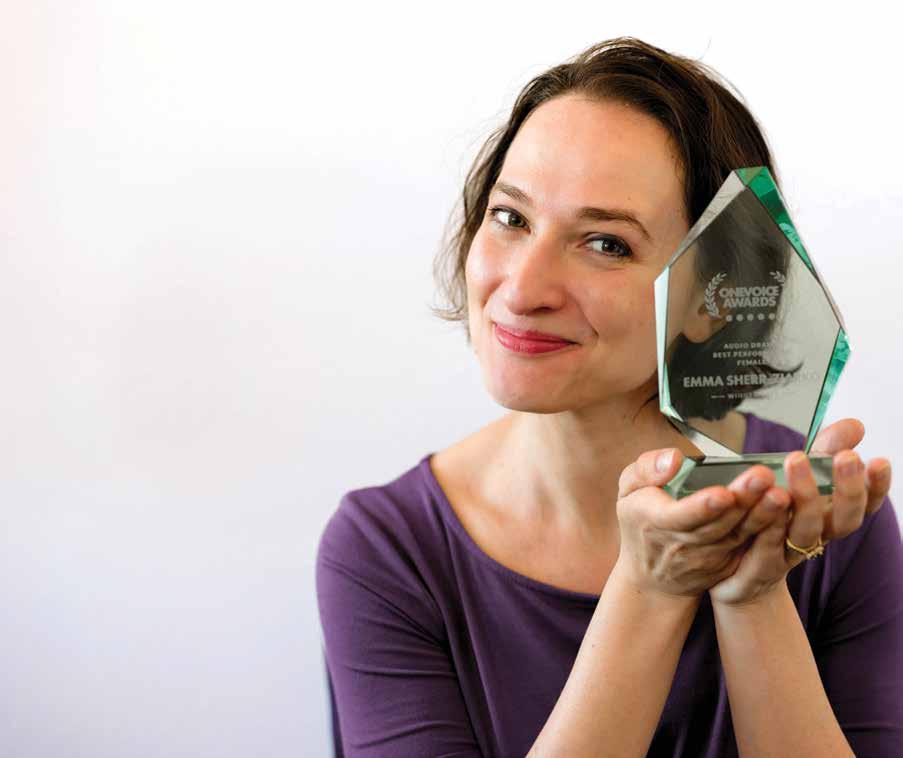
Sherr-Ziarko with her 2025 One Voice Conference award in the Audio Drama Best Performance—Female
USE YOUR BREATH
Sherr-Ziarko says the number one key to projecting your voice better is to breathe properly. “Taking theater classes or singing lessons will help you learn how that works and how you can control it and deepen it,” she says.
RELEASE THE TENSION
“Part of the trick of freeing your voice is releasing tension,” Sherr-Ziarko says. “I was trained in Linklater Voice Technique, which was
life-changing.” Fear not, though, if a technique seems hard to pick up. “Shaking out, dancing, or generally doing something to release tension in your body will make it easier for you to speak freely.”
E-NUN-CI-ATE!
It might seem obvious, but making sure you are speaking clearly (and loudly) makes a world of difference. “In theater, you have to be really precise with how you enunciate in order for
the audience to hear you clearly,” Sherr-Ziarko says. “Tongue twisters, vocal warmups, and working on Shakespeare really help.”
BUT ENUNCIATE WITH CARE
Sherr-Ziarko noted that when it comes to microphone work, a bit of a deft touch also helps. “Sibilants (‘s’ and ‘z’) and plosives (‘p’ and ‘b’) can make the mic pop—and you don’t want that,” she says. “So you’ve got to tone down the enunciation to just the right extent.”
It
was the biggest, RAINIEST, happiest,



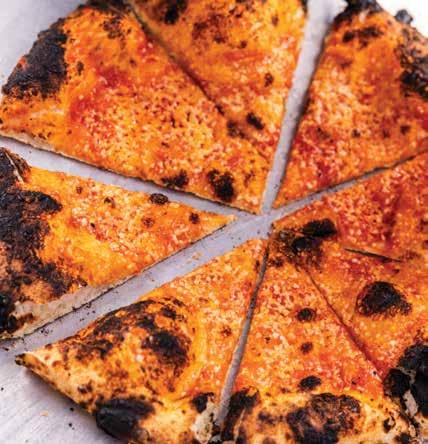

With 600+ people back on campus, this year’s Reunion was officially the largest in Williston Northampton School history. Turn the page for some of our favorite moments.

We Celebrated Ed Hing ’77
A huge crowd gathered to honor the retirement of longtime art faculty member Ed Hing ’77, P’10 with a Grubbs Gallery show of his remarkable body of photography. Just outside the gallery, a second exhibit, curated by Hing, showcased student work from the past two decades. Altogether, it was a wonderful send-off for a teacher who has influenced so many during his 28 years at Williston.
Zoë’s Pizza Stole the Show
We are still dreaming about the incredible slices cooked up by celebrity chef and cookbook author Zoë François ’85. Baked in a portable wood-fired oven on the Quad, the pizzas were devoured by alumni from all classes, but especially by Zoë’s class of 1985, which turned up in droves (39 strong) for their 40th.

Couchie Played Shutterbug
At his Athletic Hall of Fame induction ceremony, longtime coach and photography teacher Bob Couch ’50 made his remarks memorable by saying, “I want to capture this moment and remember it forever,” and then pulled out his camera and took a shot of the audience from the stage. Another classic Couchie moment? A passing thunderstorm knocked out the power and microphone, but without missing a beat, he simply projected louder and finished his speech in style.
We Got the Photos (and the Stories Behind the Photos)
The alumni photo booth was the place to be during Reunion, and we loved hearing the stories that emerged as friends or families posed together. Here are four favorites.
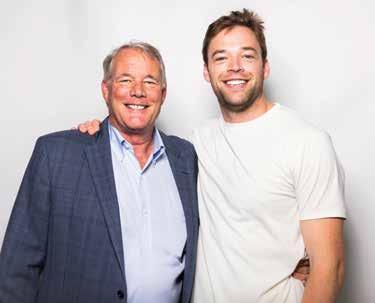
Not only do Curt McLeod ’80 and his son Curt McLeod ’15 share the world’s best alma mater, but their class years mean they always have Reunion together. Amid spending time with classmates, the two made time to walk down memory lane together. “This year, we went to the gym and looked at the team photos,” said Curt Sr. “We found our photos and also those of my two sisters who went here.”
“Tony is basically the first person I met freshman year,” said Dwight Manning ’95 of Tony Montanez ’95. The two both lived in Swan Cottage, later rooming together in Memorial Hall, and have been close friends ever since. After graduating, the duo maintained their friendship, and both wound up living in Florida, where they now get together for dinner with their spouses or for games of golf. We loved that these two old friends chose to be roomies again at Reunion!

A few weeks before Reunion, Kevin Burke ’00 found an old roll of film and had it developed. “By weird coincidence, it turned out to be photos from senior year!” he said. The photos were a hit with fellow ’00 alums, and here, Burke and Kinsey Robb ’00 recreated a happy moment from their senior year. “What struck me most at Reunion,” said Robb, “Was how quickly we slipped back into old rhythms...proof that the connections forged here are the true magic of Williston.”
We love a good Williston love story! Meg (Griffin) Waidlich ’05 and T.J. Waidlich ’05 first met in Middle School on the dance floor of Megan’s semiformal. That first dance led to a lifetime of friendship and eventually, a marriage and two children. “It was so nice being back and showing the kids the campus,” Megan said of Reunion. “We got to watch them play where we met over 20 years ago!”
Confetti Cannons Were Popping!
On Saturday night under the big tent, we loved hearing the sound of confetti cannons going off, followed by shrieks of laughter, as friends gathered to pose for the camera. Even better were the resulting photos with big smiles all around. See more shots from Reunion on Williston’s Flickr site at flickr.com/willistonnorthampton.


From left: Todd France ’85, Adam Cohn ’85, and Steve Tedesco ’85 brought the fun and laughter to their 40th Reunion
Alexandra (Jeffway) O’Hearn ’10, plus a friend in Wildcat garb
Classmates from 1985 popped confetti to help celebrate their 40th Reunion
Brad Hall ’75, left, and Michael Wills ’72




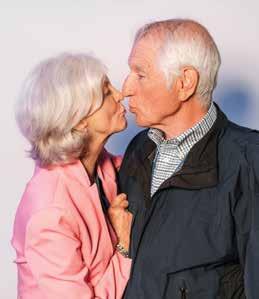
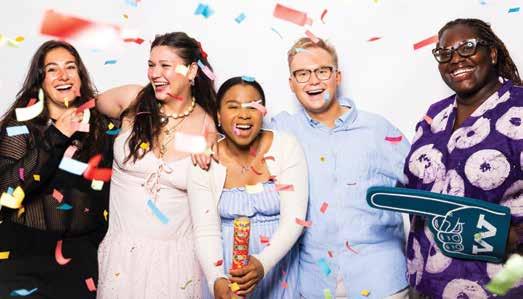
Members of the class of 1990
Members of the class of 2000
Rosemary Berman and Chris Kaltsas ’70
Members of the class of 1980
Members of the class of 2020
Members of the class 2015
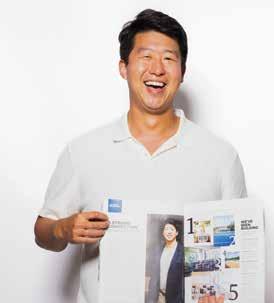
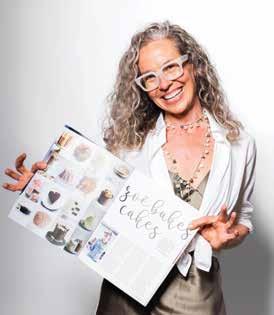
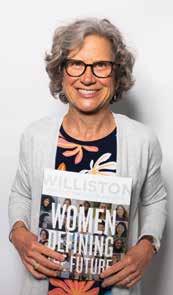
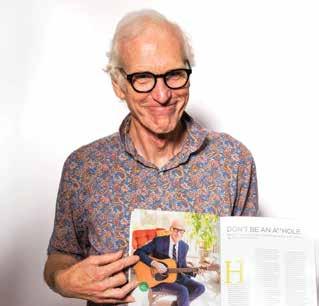
Stories Came to Life
It was a meta moment—when we asked alumni at Reunion to pose with Bulletin stories about themselves from recent issues. Some of the stories date back a few years—like the 2015 one (above) about Brad Hall’s Commencement song advising graduates “Don’t Be An A**hole.” (Watch it at www.williston.com/bradhall). Happily, that advice never goes out of date!

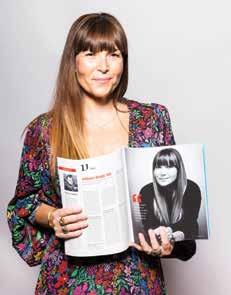


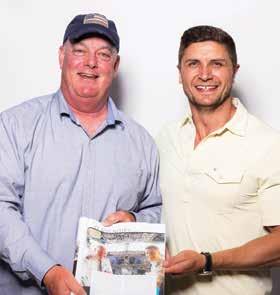
Brad Hall ’75
Reece Liang ’10
Zoë François ’85
Woolsey McKernon ’85
From left: Martha Grinnell ’85, Cherie Holmes ’75, Allison “Kinsey” Robb ’00, Stephen O’Connor ’85, and T.J. Waidlich ’05
Glenn Jones ’95
2020 Was Back, Baby!
The class of 2020 showed up in force, with 40+ classmates making it back for their 5th Reunion. There’s something extra-special about seeing this class back on campus together, since their senior spring was abruptly cut short by COVID. So glad to have you here, 2020!

The Caterwaulers Burst Into Song
At the class of 1975 celebration, a cohort of Caterwaulers gathered around the piano and belted out “Sammy” and other classics from the Caterwauler songbook (see it online at williston.com/1975sammy). Like old friendships, harmonies only get better with age.
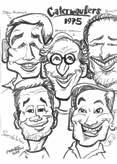
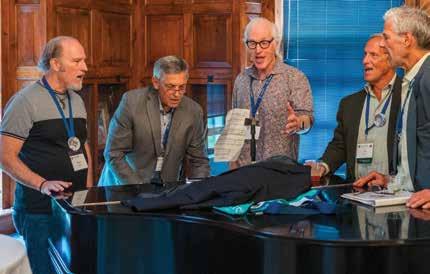
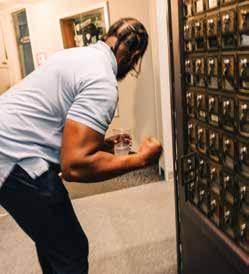
The Little Moments Were Sweet
Sometimes it’s the unexpected surprises that mean the most—like when James Dixon ’05 (left) wowed friends by recalling his exact mailbox combination in Reed. Or when Anna Sawyer ’24 (right) introduced her former babysitter, Kristina Conroy ’10, at the Athletic Hall of Fame induction.
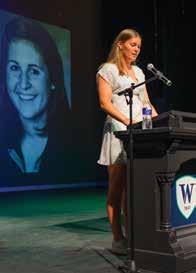
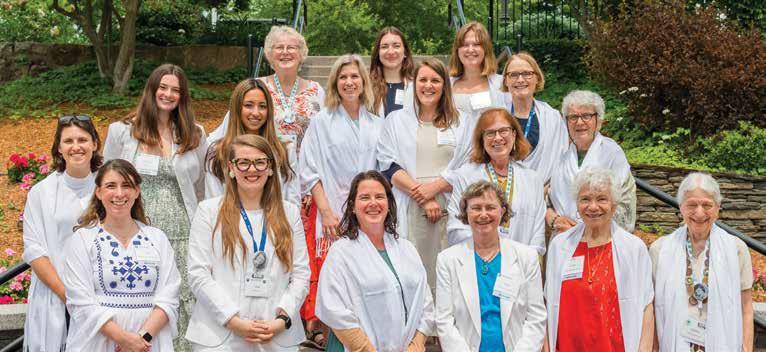
White Blazers Were In Style
Two dozen White Blazer recipients —ranging from the class of 1958 to the class of 2023—were honored at the Elm Tree Society lunch. The White Blazer award (aka the Sarah B. Whitaker Award) is traditionally given to the top female student at Commencement, a tradition that began at Northampton School for Girls. A highlight of the gathering was when Head of School Bob Hill surprised Dylan Fulcher-Melendy ’20 with her White Blazer, which she was unable to receive in 2020 due to a senior spring cut short by COVID.
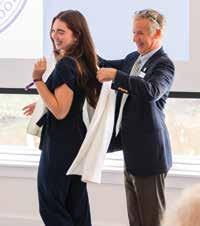
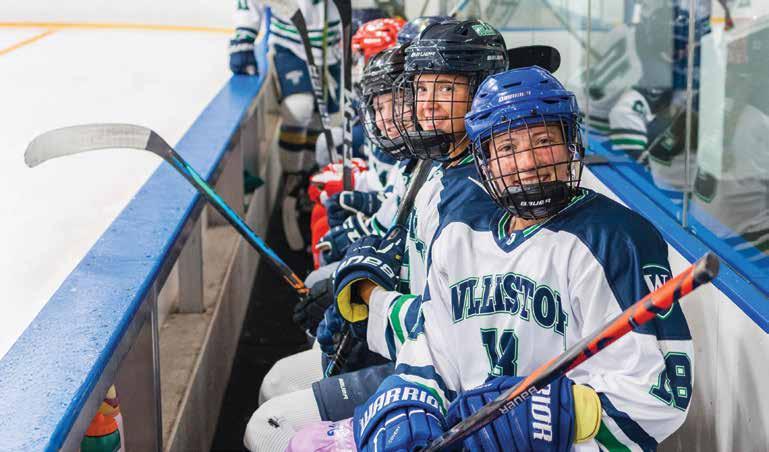
Alumni
Had Game
Alumni donned the green and blue once more to play basketball, hockey, and ultimate during Reunion. “The alumni game was such a special experience for me,” said Maura Holden ’19, pictured at right with Teaghan Hall ’22 and Maeve Reynolds ’22. “I hadn’t seen some of those teammates in years, and being in the rink with everyone was a blast. I take every opportunity I can to be back on campus. It feels like home.”
We Celebrated Alumni Achievements
Two ceremonies at Reunion—the Alumni Awards and the Athletic Hall of Fame ceremony—fête Wildcats who have achieved remarkable things. This year, four distinguished individuals and one hardworking committee received Alumni Awards for their accomplishments. We also inducted two memorable teams, seven stellar athletes, and one longtime coach into the Athletic Hall of Fame. For complete remarks, videos, and past winners, please visit williston.com/alumni.
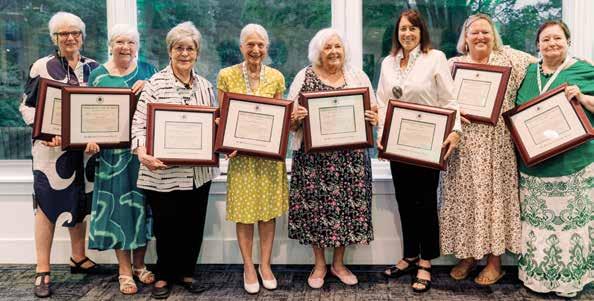
CARPENTER AWARD 2025 NORTHAMPTON SCHOOL FOR GIRLS 100TH ANNIVERSARY COMMITTEE
This year, we recognize a remarkable group of alumnae with the Daniel and Jane Carpenter Award in honor of their service on the Northampton School for Girls 100th Anniversary Planning Committee:
• Pamela (Mitchell) Andros ’67
• Faith Wilcox Barrington ’61
• Sara A. Cornwall ’70
• Deborah (Black) Davis ’58
• Marcia (Booth) Drinkard ’70
• Andrea (Madsen) Gilmore ’70
• Joan Keefe ’58
• Jill (Gordon) Mark ’71
• Linda A. Shlosser Wood ’73
• Sally (Myser) Wadhams ’71
• Linda La Shier Underhill ’71 Together, these women worked collectively to
honor the 100th anniversary of the founding of the Northampton School for Girls. Their reflections share common threads: deep appreciation for their NSFG education, admiration for inspiring faculty, lifelong friendships, and a shared commitment to preserving the school’s legacy.
When asked about the impact NSFG had on their lives, committee members spoke of how NSFG created opportunities where before there were few, celebrated academic excellence alongside extracurricular pursuits, and nurtured their confidence during formative years. Many noted the enduring impact of Miss Bement’s French program and the warmth and motherly presence of Miss Whitaker. Through their leadership and dedication, they helped ensure that the spirit of NSFG not only lives on—but thrives at Williston Northampton.
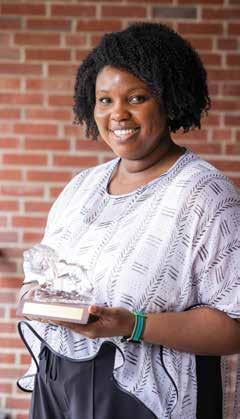
TRAILBLAZER AWARD 2025
BETSY-ANN ASSOUMOU ’05
A trailblazer in every sense of the word, Betsy-Ann Assoumou ’05 has combined intellect, perseverance, and compassion to forge an inspiring path through medicine, business, and public service. Currently a family medicine resident at Cheshire Medical Center, part of Dartmouth Health in Keene, New Hampshire, Assoumou is part of a new generation of physicians redefining what it means to care for patients with empathy, cultural awareness, and clinical excellence.
Before entering medicine, Assoumou built a successful career in finance, rising to the position of chief financial officer for Health Goes Global, a nonprofit advancing preventative health efforts worldwide. But following the death of her mother—who had emigrated from Côte d’Ivoire to pursue her doctorate and instilled in her daughter a fierce dedication to education—Assoumou felt called to make a greater impact. Assoumou went on to earn a master’s in medical science from the University of Vermont and, in 2024, completed her medical degree. Assoumou credits Williston with helping to shape the resilient spirit that carried her through this journey.
DISTINGUISHED SERVICE AWARD 2025 ED HING ’77
A proud member of the Class of 1977 and a Cum Laude Society member, Ed Hing returned to Williston Northampton School to become a transformative force in the visual and performing arts. Over the course of his 27-year tenure, Hing taught approximately 3,564 classes for Williston Northampton students.
Before returning to Williston Northampton, Hing spent over a decade as a partner at Hing Norton Inc., a New York City-based commercial photography studio.
Hing taught a diverse array of courses—five in photography and two in video—and co-taught both AP 2D Studio Art and the Williston Scholars visual art program. He served as the faculty advisor to the Film Club and played a foundational role in creating and coordinating both the Williston Photographers' Lecture Series and the Williston Film Festival. Hing also served as a dorm parent in Memorial Hall East from 1997 to 2009, coached skiing for 21 winter seasons—leading his teams to three New England championships—and supervised the Arts Intensive program.
FOUNDERS AWARD 2025 SARA CORNWALL ’70
After a successful career in marketing roles for Fortune 500 companies, Sara Cornwall made a midlife shift into the mortgage industry, where she found continued success. In addition to her professional achievements, Cornwall also earned a certificate in landscape design from the New York Botanical Garden.
An avid traveler, quilter, and advocate for underserved communities, Cornwall has donated her intricate quilt work to foster children and individuals in need. She’s also been an active volunteer with food banks, soup kitchens, and Quilts2Heal.
Cornwall has remained deeply connected to her roots, saying that “North Carolina is my home, New England is my heart.” Her gratitude to NSFG and its founders, Miss Dorothy Whitaker and Miss Sarah Bement, continues to this day.
She served on the inaugural Head’s Visiting Council and the Alumni Council, and is a member of the Elm Tree Society, having included the school in her estate plan. Her service and generosity underscore her enduring belief in the transformative power of education. Today, she continues to support Williston Northampton School as a volunteer and donor, honoring both her past and the school’s future.
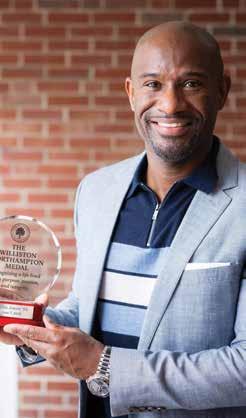
WILLISTON NORTHAMPTON SCHOOL MEDAL 2025
GLENN JONES ’95
With a distinguished career spanning more than 25 years, Glenn Jones has built an impressive legacy in media, public communications, and tourism marketing across the United States and Bermuda.
Currently an evening anchor at NBC10 Boston, Jones is an Emmy Award-winning journalist whose work in the competitive Boston media market has earned him regional acclaim.
Beyond the anchor desk, Jones’ career has been marked by a deep commitment to public service. He served as press secretary to the Premier of Bermuda and later played a key leadership role at the Bermuda Tourism Authority. There, he rose through the ranks to serve as interim CEO.
Whether shaping public policy or delivering the nightly news, Jones has remained deeply engaged in community work. He is a dedicated volunteer and advocate for social justice, youth literacy, and addiction recovery, and has served for three years as emcee of the Action for Boston Community Development gala. In 2023, he was named one of Boston’s Most Influential Men of Color by GetKonnected. Jones is also a member of Williston's Head's Visiting Council.
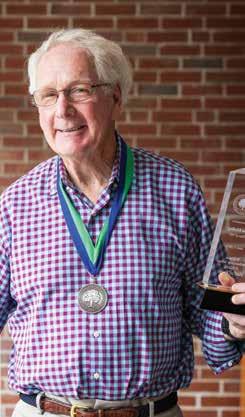
HALL OF FAME 2025 LOU KISSLING ’67
A four-sport athlete in his time at Williston, Lou Kissling is remembered for helping to set a boys swim program record-breaking time in the 200 freestyle relay along with Lewis Davis ’65, Kevin Hoben ’65, and Jim Edwards ’65. Their 1965 time—while Kissling was a sophomore—was an All-American winning time good for the third fastest relay in the country that year, and their time was a Williston record until 1999-2000—35 years later.
Additionally, Kissling was a soccer goalie, leading on the pitch and captaining the team as they went 8-1-2 his senior year. Kissling’s third sport was lacrosse, and he went on to play at Bucknell University, where he has also been selected for their Hall of Fame.
At Williston, he was a first-team All-New England selection, played in the New England all-star lacrosse game, and was also a captain. In addition to these three sports, Kissling also lettered in squash his senior year. His sports career culminated in his being honored with the Denman Award as the male senior athlete who has demonstrated exceptional achievement, faithful participation, and loyal devotion to the athletic program.
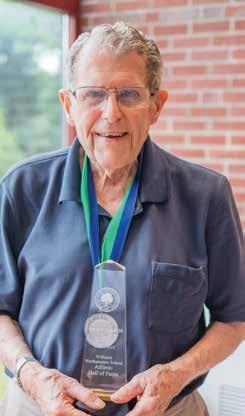
HALL OF FAME 2025 BOB COUCH ’50
In 2013, during Williston Northampton’s inaugural Hall of Fame induction ceremony, Robert Couch ’50 took the stage to help induct legendary football coach and Athletic Director Rick Francis, and quipped during his remarks that “my chance of being here in the future for any other reason is more than remote.” But here we are.
For more than 60 years, Bob Couch impacted Williston in many ways—in the classroom, in the photography lab, and with our athletic programs. Over the years, “Couchie” coached football, hockey, baseball, lacrosse, golf, and tennis. He also filmed football games.
When you walk through the hallways of the Sabina Cain Family Athletic Center, you see walls covered by team pictures from the beginning of the school’s athletic program in 1870 to the present day—Couchie is responsible for printing and framing all of those photos. For over 60 years, we’ve felt his impact here at Williston Northampton, both behind the lens and in front of it, and for that, he has earned induction as a special selection for our Hall of Fame.
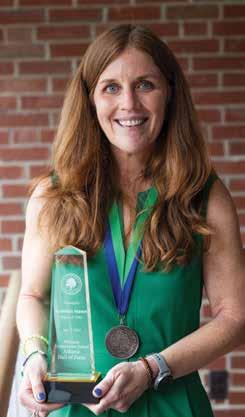
HALL OF FAME 2025 KATHLEEN (MASON) BARRY ’95
Whether on ice or on the softball diamond, Kathleen (Mason) Barry was a mainstay of Williston athletic programs in the mid-1990s. A six-time letter winner in softball and a five-time letter winner in hockey—then a record for the program— she stayed busy all three seasons.
In softball, Barry was a shutdown pitcher, twirling multiple no-hitters and one-hitters in her Wildcat career. She was dominant and a central part of the softball program's success. Her athleticism on the mound was undeniable, and competing teams and coaches took note. Because of this, she added multiple All-League Team selections to her resumé.
Barry learned to pitch here at Williston, growing from the most improved player to the most valuable player by graduation.
On the ice, she competed for four years and served as captain in her senior season. Her hockey teammates recognized her with the team sportsmanship award as well. Barry also earned two varsity letters playing field hockey in the fall, proving that her stick skills on the ice translated to grass. As a senior, Barry was honored with the Alumnae Bowl in recognition of being the most outstanding female athlete.
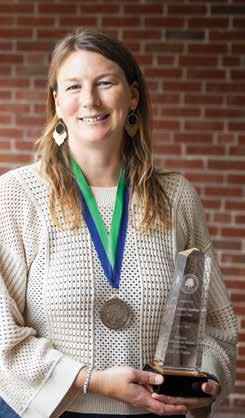
HALL OF FAME 2025 KIRA (CANON) GOODMAN ’00
In her six years at Williston, Kira (Canon) Goodman packed a lot in, earning a whopping 15 varsity letters. Her biggest achievements came in the pool, where she was a standout swimmer and water polo player. She spent six years on the swim team, skyrocketing from most improved swimmer as a freshman to being a team captain in her junior and senior years. During her time in the pool, she set five school records (200 medley relay, 50 freestyle, 200 free relay, 100 breaststroke, and 400 free relay) and earned All-New England honors in 1999 for her 100-breaststroke performance.
In water polo, Goodman earned five varsity letters, MIP honors, and a most valuable player honor. She led the team in goals and assists in her junior and senior seasons and competed at the Junior Nationals twice.
In the spring, Goodman earned four letters playing lacrosse. Goodman's tenacity and athleticism earned her a place on the Division I George Washington University water polo team, where she competed for four years.
To this day, the bond with her core group of Williston teammates in the pool and on the field continues.

HALL OF FAME 2025
JARROD ZWIRKO ’00
The Wilmot S. Babcock Pool and Williston swim program are synonymous with historical achievement. A new chapter began when Jarrod Zwirko dove into the pool. A stellar swimmer in his time at Williston, Zwirko made a significant impact both as a swimmer and water polo player during his tenure. He grew from a middle school athlete to a two-time varsity captain in both sports, leading through example, hard work, and sheer joy for the pool.
Zwirko earned All-American status as a swimmer, and his 400 and 200 freestyle relay record stands to this day. His senior year began in 1999 with a new Williston swim coach, David Koritkoski. Zwirko and his co-captain, Steve LaPlante, welcomed the new hire with the help of Athletic Director, Rick Francis. They quickly formed a vision for the team and carried out a historic run. In recognition of his Williston career and the scope of his impact, in his senior year Zwirko was awarded the Denman Bowl for most outstanding male athlete. In an individualized sport, Zwirko galvanized his team through his effort, humor, and skill. As a captain, he was a large part of setting a team culture in which team members met high expectations in training and performance, and in the process forged strong bonds.

HALL OF FAME 2025 KRISTINA CONROY ’10
With her induction into the Hall of Fame, Kristina Conroy makes Williston history, joining her dad, Mark Conroy, as the only parent-child duo in our Hall of Fame. While the pressure of being the Athletic Director’s kid can be daunting, Conroy handled herself with aplomb throughout her tenure, playing three varsity sports, earning 13 varsity letters, and winning the Alumnae Bowl.
As a five-year player in tennis, Conroy was the captain and MVP as a senior at No. 1 singles, and in her four-year high school career she went an amazing 46-8.
In soccer, Conroy was a three-year starter on three tournament-bound teams, leading as captain in her senior year.
Her best sport, though, was basketball, where Conroy went into the record books with 1,266 career points—good for fourth best in school history. She earned four MVP honors, captaining the team from her sophomore year on and earning three NEPSAC All-Star selections. Conroy was known as a fierce competitor, dedicated athlete, and role model not just to younger Wildcats, but also to faculty children who wanted to play basketball like her one day.
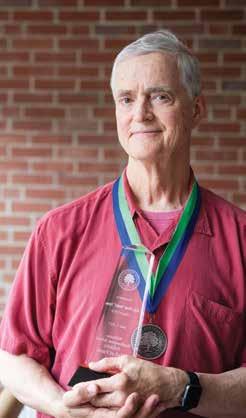
HALL OF FAME 2025 GARY DEAN “SNAKE” TIMM ’70
A talented three-year, three-sport athlete on some of the final Williston Academy teams before the school merger, Gary Dean Timm knew how to make an impact in every kind of competition. A Denman Bowl winner for the top senior athlete in the class of 1970, Timm quarterbacked the 1969 football team to a 6-1 record while earning team MVP honors and a Boston Globe All-Prep Quarterback nod. That winter in basketball, he was a first-team selection for the All-Tournament team at the Kingswood Invitational while helping guide Williston to a runner-up finish in the 1970 New England Division B tournament. Timm capped his excellent senior year by being a co-captain of the baseball team in the spring. Timm’s success was not a solo endeavor, however; in each season he played a sport at Williston, he had the pleasure of doing so alongside at least one of his brothers. Thus, it was fitting that when Timm could not be present for the ceremony, his award was accepted by his brother Gill Tim ’72, pictured above.
HALL OF FAME 2025 | 1980 BOYS SKI TEAM
In 1980, the boys ski team had a season for the record books. The team went a remarkable 19-3 in races that season en route to the New England championship and had stellar athletes up and down Coach Rick Lucchesi’s roster. It all started at the top with Robert Hazen ’81, the team’s MVP who went undefeated throughout the year. The rest of the roster included Curt McLeod ’80, Mark Stasz ’83, Christopher Messner ’80, Joe Boynton ’83, Lawrence Yanowitch ’80, and Mark Lucier ’80.
HALL OF FAME 2025 | 1980 GIRLS SKI TEAM
The girls 1980 ski team also put together a Hall of Fame campaign. The team went an amazing 15-0 in the regular season that winter to win the league and PEAGIS championships, finishing second in New Englands. The team was co-captained by Sue (White) Clifford ’81 and Suzanne Snyder ’80. The rest of Coach Patricia Smith’s team included Harriet (Tatro) DeVerry ’81, Leslie (Lucier) Marino ’81, Nicole Patenaude ’83, Michele (Eaton) Koenig ’81, Mary (Tullis) Engvall ’81, Nicky (Gross) Pierro ’81, Katherine (Mattison) Moeker ’81, Angela (Boyle) Creta ’83, Kile Keever ’82, and Valli (Kleven) Thornton ’82.
100 NORTHAMPTON SCHOOL FOR GIRLS
years of

In June, the Northampton School for Girls marked its 100th anniversary with a joyful gathering of 86 alumnae who came together for two unforgettable days of connection and celebration. Highlights included a keynote address by Trustee Paula Monopoli ’76, a visit to the NSFG campus, dinners and discussion panels, ringing the Angelus bell, and plenty of that NSFG classic: Mississippi Mud Pie. The weekend was also a chance to celebrate the hardworking NSFG 100th Anniversary Planning Committee and the NSFG Instructorship, which has now surpassed $1 million in support for faculty. It was a milestone worthy of the school’s remarkable legacy, and a reminder that the spirit of NSFG continues to thrive in the lives, friendships, and impact of its alumnae.
Songs & Traditions
A lovely part of the NSFG Reunion was hearing alumnae periodically burst into old school songs. On the final night, alumnae gathered around the NSFG Angelus, sounding the bell in honor of friends and departed classmates, then joining their voices to sing “...and we’ll always sing thy praises, Alma Mater, School, and Friend.”
A Return to Campus
Alumnae visited the original NSFG campus for a special lunch at the Glass House, where Debby (Black) Davis ’58 (pictured, far right) spoke to attendees. Reflecting on the weekend, she said, “There has been such a community of spirit among us alumae and the staff and all those who were a part of the 100th celebration. The fascinating and positive experiences we shared has revealed an amazing group of intelligent and vibrant women.”
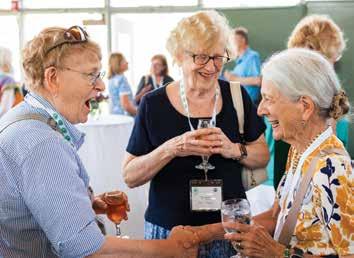

Books & Bites
At Glendale Ridge Vineyard, alumnae enjoyed cocktails, appetizers, and a signing by Eleanor “Ele” (Young) Gamarsh ’52 of her first book, My Heartfelt Journey: A Life of Reflections in Stories, Poems, and Recipes. In her remarks to the crowd, Gamarsh reflected on how NSFG shaped her voice and talked about her evolution as a writer. She noted that the Reunion weekend “was a growing experience for the young girl still in my mind and heart.” She is now at work on her second book.
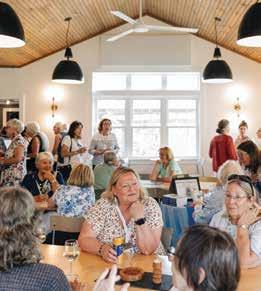
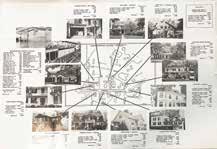

From the Archives
A trip down memory lane wouldn’t be complete without a few artifacts. Old issues of The Pegasus and L’Ormeau, archival photos and playbills, and NSFG blazers and rompers sparked memories and conversations about life at ’Hamp.
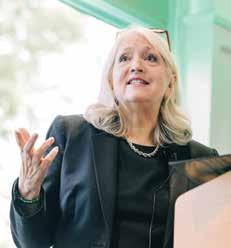
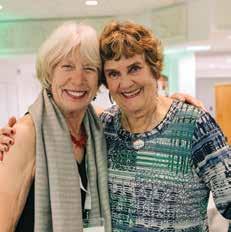
A Pioneering Legacy
In her keynote speech, Trustee Paula Monopoli ’76 (at left) spoke about NSFG’s legacy within the context of the women’s rights movement.
“Understanding our place in history gave new meaning to the experience,” said Linda (Russack) Tobin ’59. “We were really given a gift of becoming more independent women in ways that I hadn’t understood until I heard her speak.”
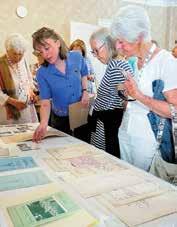
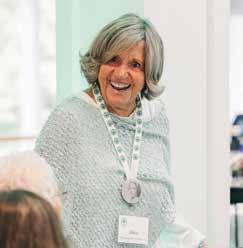
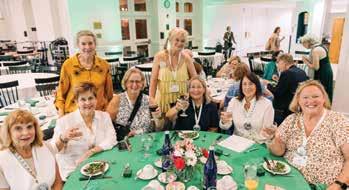
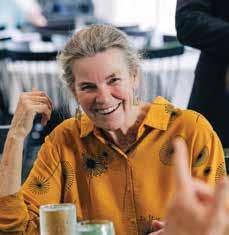
Moments to Remember
As was said of Supreme Court Justice Ruth Bader Ginsburg, the NSFG 100th may have been small, but it was truly mighty! Below are three favorite moments and stories.

The Women of Williston Northampton panel brought together alumnae, current faculty, and students for an engaging conversation celebrating the school’s legacy of women’s leadership and empowerment. Panelists reflected on their experiences, shared stories of growth and resilience, and discussed the ways Williston Northampton School continues to shape confident, capable women today.
Like many alumnae, Linda (Russack) Tobin ’59 brought along a few carefully saved artifacts, including her NSFG blazer. “I’ve stored this in a wardrobe for 68 years,” she said. “This is the blazer that we all wore—not all the time, but for special occasions and concerts and things.” Below, a detail of the blazer, which shows the “chevrons” students received for sports and activities. Hear more memories from Tobin and others in our NSFG Oral History Project. at williston.com/nsfg.
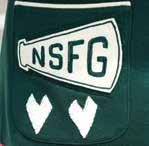
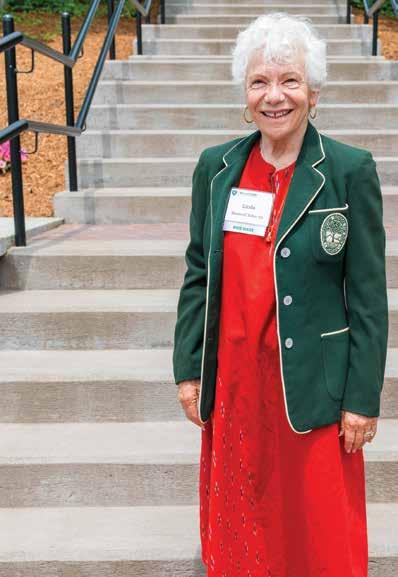
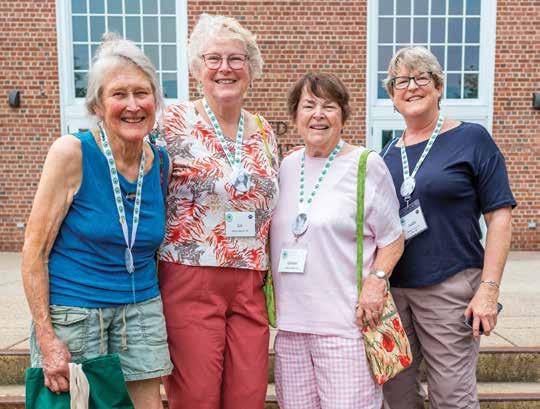

The Miller sisters showed up in force—including, from left,
Grasty
Louisa
and
Liz
noted, “We thoroughly enjoyed Reunion, especially the singing! We had plenty of practice, as 14 family members over four generations have attended the two schools.” Among the other graduates: Bruce Miller ’75, also on campus for his 50th, and their mom, Jean (Douglas) Miller ’36, on the left in the archery photo above.
Kate (Miller) Carl ’64,
(Miller)
’66,
(Miller) Hoar ’68,
Judith (Miller) Conlin ’72. Judith
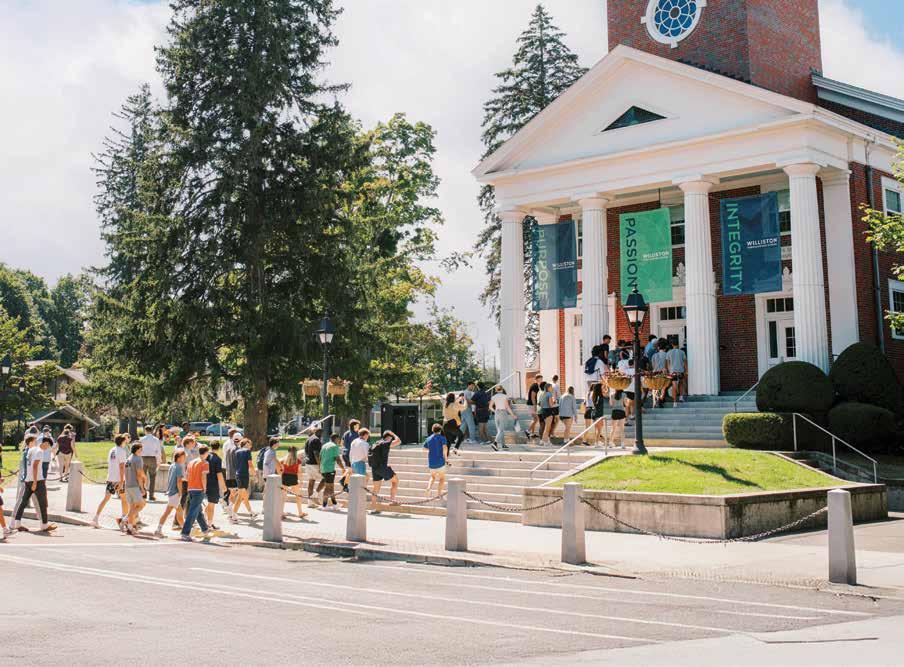
OPENING DOORS SHAPING FUTURES
Inspiring Growth, Empowering Possibility
Your gift to the Williston Northampton Fund opens doors for our students every day. It provides access to exceptional teaching, a supportive community, and opportunities that encourage growth and success. With your support, Williston remains a place where students are empowered to explore their interests, discover their strengths, and step confidently into their future.

Make your gift today at williston.com/givenow or with Venmo @WillistonNorthamptonSchool and help open doors that shape futures. Thank you!
CLASS NOTES

Elizabeth Cohen-Scheer ’08 married Conor Gannon on July 5, 2025, at the Garden House at Look Park in Florence, Massachusetts. Liz earned a doctorate in English from the University of Wisconsin, Madison, and is the Chair of the literature department at Bard High School Early College in New York. Learn more about what alums are up to on the following pages!
3EASY WAYS TO SEND US YOUR NEWS
1. Visit williston.com/alumni/classnotes.
2. Respond to your class rep’s emails requesting updates (contact info below).
3. Send the alumni office a class note directly to classnotes@williston.com.
We look forward to hearing from you!
1950 WA
Robert Couch gmanthelab@gmail.com 413-527-2964
1951 WA
R. Bardwell “Tex” Heavens bard.heavens@gmail.com
1954 WA
Alan Lazarus active.asp@gmail.com
1956 WA
John Maulbetsch maulbets@sbcglobal.net
1959 WA
Andrew Solomon andy@houstonjewelry.com
1959 NSFG
Mary Beth (Adams) Dorsey marybethdorsey@yahoo.com
1960 WA
Jim Aldrich mjaldrich@olypen.com
1961 WA
Ed Foster talismaned@aol.com
1964 WA
Paul “Duck” Doty pauldoty26@yahoo.com.au
1964 NSFG
Lydia Allen Kitfield
lydiakitfield@gmail.com
1965 WA
Thomas “Teak” Kelley Jr. tjbost@gmail.com
1966 WA
Peter Miceli petertmiceli@hotmail.com
Louis “Dee” Pellissier dee.pellissier@icloud.com
1966 NSFG
Elizabeth (Miller) Grasty emgrasty2@gmail.com
1967 WA
John Newton jmn333@aol.com
1967 NSFG
Pamela (Mitchell) Andros pandros1949@gmail.com
1968 WA
Paul Wainwright paulwainwright@comcast.net
Don Klock Klocktimes@gmail.com
1968 NSFG
Louisa (Miller) Hoar Lousia214@aol.com
1969 NSFG
Elizabeth Odgers xoxobo@tds.net
1970 NSFG
Sara Cornwall ctsails@outlook.com
1971 WA
Edward Pytka Jr. epytka@aol.com
Edward “Ned” Mulligan 401-835-6899
1971 NSFG
Sally (Myser) Wadhams sallyw@aol.com
1972
Otha Michael Wills omwills@gmail.com
1973
Betty (Chase) Hyde ehyde55555@aol.com
1974
Penny (Dods) Molyneux pennymolyneux@gmail.com
Steven Simpkin Sr. steve.simpkin@gmail.com
1975
Kathleen Krohn krohnk757@gmail.com
1976
Dana Richdale drichdale@sbcglobal.net 832-451-5298
1977
Jennifer (Carpenter) Reid jcarpe1458@aol.com
1978
John Intorcio John@intorcio.org
Jennifer (McLeod) Sleeper jennifersleeper@comcast.net
1979
Sean Kardon sean@kardon.net
Owen Mael owen_mael@yahoo.com
1980
Helen Gaillard hbgaillard@aol.com 423-505-5493
1981
Joseph Scott jscott@intellisound.net
Kathy (Mattison) Moeker kmoeco@yahoo.com
1982
Thomas Rouillard tom@tomrouillard.com
1983
Mark Berman mberman@mediashareconsulting.com
1984
Catherine (Bardagy) Winchild
catherine.winchild@gmail.com
Rex Solomon rex@rexsolomon.com
1985
Angele (Hebert) Myers angeleh@comcast.net
1986
Geordie Dunnington george_dunnington@milton.edu
Ellen (Rosenberg) Livingston ellenrlivingston@gmail.com
1987
Stephanie (Naess) Kennedy thekennedy5@mac.com
Matthew Roberts matthewjroberts22@msn.com
1988
Erica (Levine) Faulkner elfaulkner98@gmail.com
1989
Jeffrey Lovelace jfrylove@yahoo.com
1990
John Bailey john.m.bailey.ii@gmail.com
Francis Purcell frankjpurcell@comcast.net
1992
Kerry Kurian kkurian@gmail.com
Danielle (Maloney) Golas danimaloney@mac.com
1993
Sarah Griggs sarahgriggs@gmail.com
1994
Jade Brennan jadestone18@hotmail.com
LaShandra Smith-Rayfield lsrayfield@gmail.com
1995
Steve Hoyt shoyt1@gmail.com
Martha Lewis mj20lewis@gmail.com
1996
Danielle Saint Louis saintlouis@gmail.com
1997
Seth Kassels
s_kassels@hotmail.com
Elizabeth-Anne Zieminski lizzieminski@gmail.com
1998
Shaun Chapman chapman.shaun@gmail.com
1999
Corinne Fogg
corinne.fogg@gmail.com
Gregory Morrison gregory.morrison14@yahoo.com
2000
Katelyn (Webber) Schubmehl katelynewebber@gmail.com
2001
Adam Branch
adam.c.branch@gmail.com
Katherine (Ciejek) Shea katiecshea@gmail.com
2002
Devon Ducharme deducharme@gmail.com
Thomas Lucey tom.lucey@gmail.com
Oluwatosin Onafowokan toast4321@gmail.com
Evelyn (Sylvester) Miller evysylvester@gmail.com
2003
Jason Chandler
jason.chandler@rocketmail.com
Elizabeth (Kulik) Watson elizabeth.kulik@gmail.com
2004
Ted Cain tedcaine@gmail.com
Alex Teece alex.teece@gmail.com
Danielle Wieneke McCarty daniellewmccarty@gmail.com
2005
Eleanor (Etheredge) Frame nell.e.frame@gmail.com
Peter Higgins Jr. higpeter@gmail.com
2006
Lauren Noonan lmnoonan10@gmail.com
John Scannell 508-697-1865
2007
Christian D’Amour damourcp@gmail.com
Kelsey Lindsey kelsey.lindsey@gmail.com
Zach Robbins zacharymrobbins@gmail.com
2008
Evan Davis davis_ev@icloud.com
Amadi Slaughter madi.slaughter@gmail.com
2009
Matthew Thompson
matt.thompson@isquaredcapital.com
Olivia (Moses) Clough livcarrollclough@gmail.com
2010
Kristyna (Bronner) Frantz kristyna.frantz@gmail.com
Reece Liang reeceliang@gmail.com
Julia Midland juliacmidland@gmail.com
2011
Courtney (Aquadro) Goldsmith courtneyaquadro@gmail.com
Isaac Sterman isterman13@gmail.com
2012
Connor Sheehan connors543@aol.com
Alex Nunnelly alexjnunnelly@gmail.com
2013
Patrick DeNuccio patrick.denuccio@cedyankee.com
Kelly O’Donnell odonnellkelly07@gmail.com
2014
Nick Pattison nickpattycake@gmail.com
Maddy Stern maddystern95@gmail.com
2015
Maisy Glick maisyglick@gmail.com
Mackenzie Possee kenziepossee@aol.com
2016
Maddy Scott maddyscott129@gmail.com
2017
Natalie Aquadro naquadro3@gmail.com
Vasilios Fokas vfokas10@gmail.com
Leah Pezanowski leahpezanowski@gmail.com
2018
Ellie Scott elliescott1015@gmail.com
Natalie Romain ner2135@alum.barnard.edu
2019
Maddie Elsea elseas@comcast.net
2020
Nat Markey natmarkey09@gmail.com
Sarah Kimmel seskimmel@gmail.com
2021
Sonia Whitman sojowhit@gmail.com
2022
Sarah Markey sarah.markey@yale.edu 2023
Will Chalfant william31bball@gmail.com
2024
Teagan Duffy tigimary06@gmail.com 2025
Arthur (Joey) O’Donald jod1316@outlook.com
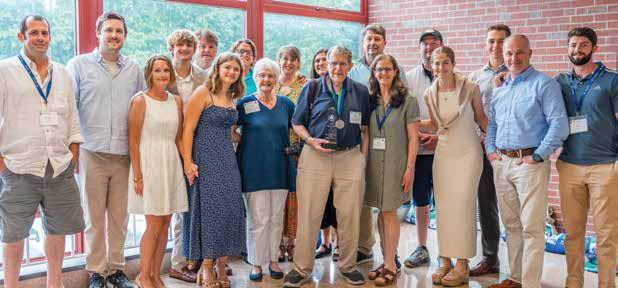

Alan Lazarus ’54 celebrating his 89th birthday
1950
Robert “Couchie” Couch represented his class at Reunion this past June. He was inducted into the Williston Northampton School Athletic Hall of Fame and had many family members present to help him celebrate this meaningful occasion.
1951
75TH REUNION IN 2026
1952
NSFG alumna Eleanor “Ele” (Young) Gamarsh returned to campus this past June for the Northampton School for Girls 100th Anniversary Celebration, and her book signing was a highlight of the program. Ele
published her first book, My Heartfelt Journey: A Life of Reflections in Stories, Poems, and Recipes, earlier this year and fellow alumnae had the opportunity to learn more about her writing journey and her life.
1954
NSFG alumnae Abigail Goman and Sandra (Tigh) Peterson returned to campus this past June for the Northampton School for Girls 100th Anniversary Celebration in conjunction with Reunion 2025.
Alan Lazarus remembers classmate Joel Katz: “Joel was my roomate my first year at Williston. That was significant, as I needed extra time to acclimate to prep school life. I was Jewish (still am) in a predominantly Christian environment. I sometimes used that as my attention-seeking efforts, which mostly failed. He was my Jewish friend and protector. We especially enjoyed our in-person Williston reunions. We have maintained an email friendship as well. Not having any responses lately, I surmised that something had changed. I definitely miss hearing from him. We did share a whole lot over a whole lot of years. May his memory be a blessing.”
Alan’s request to his classmates: “If you are reading this note or even if someone is reading it to you, fellow survivor, you should do something
meaningful for the rest of us. I’m asking you to drop me or the alumni office a note with your whereabouts and physical ‘abouts’ to let us know you are still with us. We miss and love you and cherish your friendship.”
Marc Richman shared, “So sad to read recently that we lost Joel Katz. I have many fond memories of that quiet ‘big’ man. As for me, I remain able to sit up and take nourishment without pain or assistance—a state to be highly desired in these difficult times. Love you all who remain and wish you the best!”
Bill Judge submitted this lovely message before his passing on September 17, 2025: “I am currently living in Williamstown with my wife of 60 years. Still mobile, and I have a daily coffee get-together with other elderly senior citizens. We try to solve all the world’s problems, but basically we rehash subjects from the day before. It does keep us up to date. I am fortunate to have two grandchildren at Middlebury College, one at University of Tennessee, and one at Indianapolis University. Two of the kids are still in the local high school. Keeping up with their athletic, theater, and musical efforts keeps us hopping across the New England area. I no longer drive, so I do rely on my children and friends to get around. I recently attained the age of
90 in decent physical shape, although I have given up golf and basketball. I keep up to date on Williams College athletics and other offerings, and I look forward to reading about our classmates in the next Bulletin. My thanks to Alan Lazarus for keeping the Class of 1954 involved.”
Bill Gass shared, “Still here and can still play 18 holes!”
1955
Ray Brown, Elinor (Backe) Miller, and Eleanor (Harvey) Tejirian returned to campus this past June representing their WA and NSFG classes, respectively, at Reunion.
Ray Brown was recognized throughout the weekend for his legacy as an inspiring educator, coach, and mentor whose more than 40 years of service left a lasting impact on the Williston community. On the occasion of his 70th Reunion, Williston announced the Raymond L. Brown ’55 Scholarship Fund in his honor with the enthusiastic support of his family.
1956
70TH REUNION IN 2026
John Maulbetsch writes: “I am now fully retired and, since the last set of notes, have done some traveling in Europe and Hawaii. A high point was attending the ‘once every 10 years’ performance of the Passion Play in Oberammergau. I have also enjoyed watching my now 5-yearold grandson grow and blossom. It’s been a long time since my own kids were that age, and one forgets how amazing the rapid increase in understanding and interest is at that age. I’m still in the same house in Ather-
Bob Couch ’50 and his family

ton, California, that I moved into 50 years ago and will probably leave only when carried out. If I still feel as good a year from now as I do now, I will likely attend our 70th Reunion. Y’all come, as the saying goes.”
Jack Fenny shares: “Williston plus 70 years. Wow. Following in my father’s footsteps, two years at Williston and four years at Brown University, I finished up at the University of Rhode Island with a mechanical engineering degree. I first worked in power plant design in Boston, then moved on to a startup company in Rhode Island as vice president of engineering, and finally started my own engineering firm in 1988 in Rhode Island. During that time came three children, eight grandkids, and seven great-grandkids. Marjorie and I have been married 55 years and have spent the last 34 years splitting our time between Venice, Florida, and Plymouth, Massachusetts, but we are now permanently in Massachusetts. Retirement has not fully taken place, as I still do some work for the company now owned and run by my grandson-in-law. I am grateful for all the friends I made during my time at Williston.”
Bob Stone writes: “My wife and I are taking a trip to Austria and Switzerland starting August 25. This will be our first time out of the United States in three years. The principal part will be a Danube River cruise from and back to Vienna. Best regards to all.”
Skip Berlin shares: “Hi from Eugene, Oregon. After Williston and a stint with the United States Army in Nuremberg, Germany, I attended Colgate University, thanks to the GI Bill. Then came 12 years, mostly in Latin America, with Colgate-Palmolive in international marketing management. I made a big move to bring my family together (my son was then in a United Kingdom school) and ended up in Eugene of all places, a real special area! I was Vice President of Marketing at Western Graphics, the world’s largest poster company, and a color-your-own poster outfit. Yes, we did Farrah Fawcett! Nothing but daily sweet memories of Williston, especially the ‘Terrible 6,’ Britton, Perichitch, Coyle, Oberbeck, Hill. I’m the last of the Mohicans. These days it’s plenty of swimming, Osher Lifelong Learning Institute courses, VA groups, and volunteering. How about another one of those class Zoom calls?”
Roger Bosky says: “After my 35 years working for Social Security and Mary Ann’s work as a nurse practitioner, we immediately moved west to Montana and, finally, Spokane, Washington. There was a short stint working in Yellowstone. We enjoy the more laid-back Western lifestyle with lots of hiking, backpacking, bicycling, and skiing. Mary Ann still walks half marathons and bikes a lot. Me, not so much—but still walking my 10,000 steps as directed by my Fitbit. All of the children and grandchildren
also live in this part of the country, so it’s easy to stay in touch. We have been retired for over 30 years, and it’s been like a second career, only with a lot more choices and opportunities for volunteer work, which is sorely needed and appreciated. Lots of schools and universities are now struggling with choppy waters as they try to navigate the current environment. I hope it never gets to the secondary level.”
Foster de Jesus writes: “I don’t know how much of what I say here is a repeat from the last Class Notes, but here goes. For my wife, Jane, and me, both in reasonably good health, life is based on family, exercise, travel, reading, movies, theater, weekends in the country, and occasionally a small project of some sort. We do our bit to support political issues and participate in organized events. We still live in our Manhattan loft, where we have resided since 1993. We enjoy city life for the many things it has to offer: theater, museums, and other cultural events. Having lived in Manhattan for decades, there are still areas to explore, as the city is in a constant state of change and renewal. We have a vacation home in the Adirondack Mountains. A far cry from urban life, the house is deep in the woods, away from the hustle and noise of a city that never sleeps. We frequently spend long weekends in the Adirondacks throughout the year and, in late spring and summer, we are there full time. We are watching two grandkids
grow, one recently graduated from The New School in Manhattan and the other a sophomore at the School of Visual Arts, also in Manhattan. It is with great anticipation and trepidation that we wonder how they will find their way in today’s uncertain world. As to travel, we recently made two trips to Sicily, one of which was extended to Rome and the excavated Greek ruins at Paestum. In Sicily we visited ancient Greek sites and art museums. Being Caravaggio fans, we sought out many works and, by trip’s end, viewed 15 paintings. The preserved Greek temples and amphitheaters are a treasure. We had the opportunity to attend a Greek play in the fabulous amphitheater in Siracusa. The theater was built in the fifth century B.C. The play we saw was Ajax, by Sophocles, first performed in that very amphitheater in 442 B.C. and then again in 2024 with 8,000 in attendance. Talk about staying power! Many years have passed since our last Reunion. I was retired at the last Reunion, and the one before that, and will still be retired at the next one. I have an interest to attend our 70th, and in a conversation with Roger Lockwood, he also expressed interest.”
Roger Lockwood shares: “Roger (aka Mon) and Sheila are zipping around following the sun between the Cape (summer), Norwood, Massachusetts (fall, spring), and Naples, Florida (winter). Six married children, 13 grandchildren (three wed),
From left: Eleanor “Ele” (Young) Gamarsh ’52, Debby (Black) Davis ’58, and Linda (Russack) Tobin ’59 at the NSFG 100th
From left: Brad Hall ’75, Ray Brown ’55, and Kate Burke ’75
and five great-grandchildren. Health reasonably good. Golf often. Game sucks. Sheila immersed in Stephen Ministry for our church. I am involved in League School for Autism (Trustee Chair), Dana-Farber Cancer Institute (Trustee), and church (Trustee). Loved Williston and Ohio Wesleyan after Brookline High. See you in Easthampton in early June?”
1957
Peggy (Ewing) Stern represented her class at the Northampton School for Girls 100th Anniversary Celebration on campus this past June.
1958
Debby (Black) Davis represented her class as an integral member of the NSFG 100th Celebration Planning Committee. One of her roles during the centennial celebration was speaking at the luncheon at the Glass House, which is located on the original Northampton School for Girls campus (see photo, above).
1959
Linda (Russack) Tobin represented her class at the Northampton School for Girls 100th Anniversary Celebration on campus this past June. She and her husband attended all the festivities, including the 100th Dinner (see photo, above).
Tom Korson continues to roam
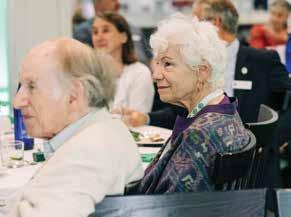
Colorado as the solitary reporter for the Apocryphal Press, satirically posting things political. He lives in a very active community and recently got together with Charlie Camp in Monument, Colorado. Charlie’s daughter, Heather Albanesi, is a sociology professor at the University of Colorado in Colorado Springs.
Andy Solomon shares: “It was with a heavy heart that we learned of the passing of Charlie DeRose. We met when, along with Chip Palmer, Rick Salwen, Hank Donais, and Dick Fish, we were students at the Junior School. He was an outstanding athlete and a major part of our class. We will all miss him greatly. I took a 5,000-mile, three-week road trip with my son, Rex, up from Houston to attend my 65th and his 40th Reunion. It was a great time being at Reunion with all of you who attended together and seeing so much of the country, including all U.S. battleships in the country, antique stores, military aircraft museums, and so very much more. We drove in a large, heavy, and comfy car without exhaustion—a time well spent and lived, full of never-to-be-forgotten memories. Earlier in the year, Houston experienced its first blizzard in history—up to four inches—and the city ground to a standstill, as it has no snow removal equipment of any kind. Those who ventured out in their cars faced conditions rarely experienced, and wrecks on the highways and byways were at record levels. We Yankees
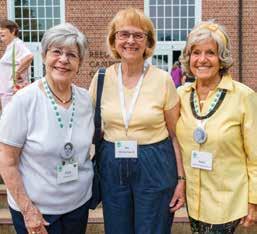
yawned and took pictures, including me from the warmth of our 20thfloor condo, while a cheery fire crackled in the fireplace—something we seldom get a chance to enjoy. I caught up on the phone with Syd Williams He tells me life is good, albeit, as with the rest of us, not without limitations, as time waits for no man. Travel to Reunions has been a challenge, and he is not likely to join us at our next big one—our 70th.”
Ned Clayton shares: “The highlight of the summer was family: the marriage on Block Island of our grandson, Capt. Peter Worrall, U.S. Army, and his fiancée, Emily Simons. Peter is entering his third year at Harvard Law School and Emily is a neonatal nurse at Boston Children’s Hospital. They were married on our beach with their families in attendance and celebrated at the Willis Homestead and at a local hotel. Dawn, Neil, Emily Worrall, Connie Clayton, and Jason Stankowski represented our family. Stephie and Ned did not attend due to some short-term medical issues, now resolved. We did participate, with 281 pictures gathered into a shared album, plus telephone calls and texts. We are proud of our children and grandchildren. Dawn and Neil have now re-settled in Long Island, New York, and are integrating into their community. Emily is a hospitalist in Salt Lake City, Utah. Peter is seven years into his military career with an U.S. Army Ranger battalion. Jason manages a successful hedge
fund, and he and Connie are looking at a possible new home in Sonoma, California. Their children are college graduates, with Willis working for a major construction company in San Francisco and Nel running a shelter for women in Flagstaff, Arizona, while she waits for her boyfriend to graduate from graduate school. Perhaps they can all look after us in our old age.”
Phil Fisher, Andy Solomon’s freshman year roommate, shares that his neuropathy has progressed, but he has a great attitude about life. He is living in a retirement community in Houston, Texas, for those over 65 and will be celebrating his 85th birthday in late September. He has been playing in a regular high-stakes poker game for over 26 years—either 25 cents or $1—and has a great time. For him, life is good.
Roy Weiner, who lives in Gainesville, Florida, is enjoying his retirement from being a premier oncologist and very much enjoys contact with his students and editing medical journals. He and Margie love having time with their kids and grandchildren. What a joy it is! One of his passions is reading historical novels. To be able to wrap himself in his Kindle and have personal time is a great pleasure. As most of us, medical things are catching up with him—ankles— but certainly not keeping him down.
Debby (Black) Davis ’58
Linda (Russack) Tobin ’59 and her husband, Stephen Pepper From left: Faith Barrington ’61, Pat (Zavorski) Coon ’61, and Joani (Montgomery) Mihalakos ’61
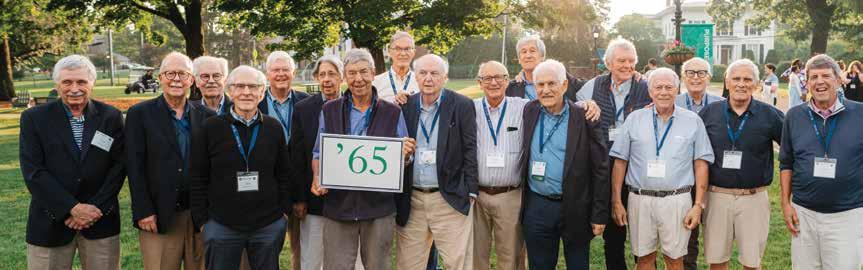
1960
The following members of the class of 1960 returned to campus to celebrate their 65th Reunion (see class photo with some attendees, below): Bob Gudheim, Bill Hastings, Thomas “Thunder” LaSalle, Kingsley Sullivan, Dave Torrey
1961
65TH REUNION IN 2026
The following 1961 NSFG classmates returned to campus to attend the Northampton School for Girls 100th Anniversary Celebration this past June (see photo with some attendees, above): Margi (Griggs) Anderson, Faith Barrington, Pat (Zavorski) Coon, Heidi (Ewing) Kapsokavathis, Joani (Montgomery) Mihalakos, Marty (Goman) Wemett
1962
Karen (Prendergast) Wittshirk represented her class at the Northampton School for Girls 100th Anniver-
sary Celebration on campus this past June.
1964
The following NSFG classmates returned to campus to attend the Northampton School for Girls 100th Anniversary Celebration this past June: Kate (Miller) Carl and Lydia (Allen) Kitfield.
Representing for the Williston Academy alumni at Reunion 2025 were Mike Brewer and Jack Heflin
1965
The following members of the Williston Academy class of ’65 came together on campus this past June for their 60th Reunion (see class photo with some attendees, above): Cy Allen, Jeff Bastable, Bill Burkhardt, Jerry Farnsworth, Park Fay, Charles Hayes, Kevin Hoben, Don Jacobson, Skip Jarocki, Harvey Kaltsas, Teak Kelley Jr., Ned Lynch,
65th REUNION
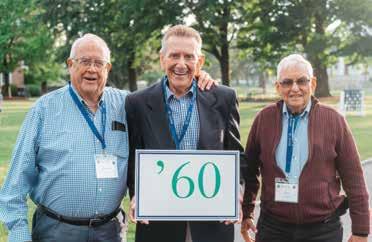
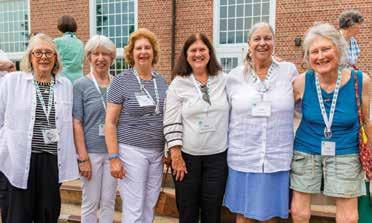
Hank Mitchell, Robert Moran, Richard Reingold, Jack Robinson, Roger Walaszek, Douglas Watson, Tad Wentworth.
NSFG alumnae who represented their class at either the Northampton School for Girls 100th Anniversary Celebration this past June included (see photo with some attendees, above): Amy (Burrows) Cain, Laurie (Butler) Foley, Laura (Gould) Grad, Barrie (Brady) Latzko, Patricia (Cannon) Scott.
Bert Spencer writes: “I just returned from a seven-day darkness retreat at Menla, a 300-acre venue near Woodstock, New York, run by Robert Thurman, the well-known Buddhist scholar. Bob, the father of four children, including Uma, was head of my major department at Columbia University, where I returned in the 1970s to finish my degree. In the 1960s, he, Timothy Leary, and Richard Alpert ’48 (also known as Ram Dass),
among others, participated in the famous Millbrook acid experiments at a mansion in Millbrook, New York. In the early 1970s I lived for a season with a schoolteacher on the Lower East Side of New York City. She and another resident in the building knew Ram Dass well, as he had recently returned from his first trip to India. One day he came down to visit, and when I met him we spoke for a while, though I forgot to mention that we were both alumni of the same preparatory school. We spoke instead about Timothy Leary and some of the serious legal problems he was facing. Darkness practice is a form of sensory deprivation and is said to be analogous to what Buddhists describe as the death state. There is a large body of Tibetan literature on this subject, beginning with the Book of the Dead. Psychedelics such as LSD are also said to induce analogous states. During a break, I asked Bob about Anita Hitchcock, the host of the Millbrook mansion, who
REUNION
1964 and 1965 NSFG classmates


many years after the experiments had loaned me and another person her beach house in the Bahamas. What a small world it is, with these connections: Menla, Thurman, Hitchcock, Ram Dass, and Williston. I have always regretted that Ram Dass, or Richard, as Philip was said to have addressed him, never came to our school to speak.”
Kevin Hoben shares, “While in Bangkok, Thailand, recently, I had the opportunity to meet with Williston alumni from different generations (see photo below). They hosted me at a wonderful dinner and a great time was had by all.”
Teak Kelley shares: “From Lake Winnipesaukee and Laconia Country Club, I’m reporting in that the Guys of ’65 had a very memorable 60th Reunion in June, with 19 classmates attending and participating in the festivities. The large attendance was in large part a result of the efforts of a stellar Reunion Committee, who joined me in encouraging participation: Jeff Bastable, Skip Jarocki, Harvey Kaltsas, Ned Lynch, and Rich Reingold. Although there
were a few last-minute cancellations, many old friendships were renewed, and some of ‘The Guys’ showed up after many years. My varsity ski team co-captain, Doug Watson, told us that his last trip to school was for our 30th Reunion! A highlight of the weekend was an informative presentation (with slides and projected data) by our own Harvey Kaltsas, to a rapt and packed audience in a room in the gym, where Dale Lash used to have an office. Harv is an acupuncture physician in Florida, and he has spent the last 20 years or so scuba diving and searching for lost ships in the Gulf of Mexico. He has had some exciting success in his search for an old slave ship that went down in the Gulf—he has recovered artifacts from several lost ships—but no treasure chest of gold or silver— yet! And Dr. Harvey made a sterling observation after Reunion that he was ‘amazed at how physically, mentally, and emotionally healthy the ’65 classmates are.’
Our class is active in Bulletin news—we stay in touch with each other. Several wrote in and noted they were sorry they could not attend Reunion: retired Rev. Cy Allen and
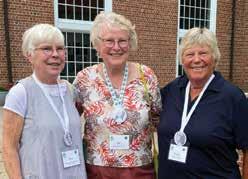
retired attorney D.A. Stevens (but they both still “work” a little) sent their best wishes; Bill Hough was in the midst of a move to Santiago, Chile, and reminded us in his shared note that Williston had been a lifechanging experience for him; Jerry Flynn wrote in with some Williston connections tidbits; and Larry Yee wrote in a note for the Bulletin: He had been on Williston’s campus for his daughter’s graduation and told us what we all knew—the campus looks spectacular! He was in Taiwan in early June and could not make Reunion. One note of most who communicated during Reunion was that we hoped to be able to make our next! Our class has been particularly connected to each other and to WNS; the Bulletin and its entries have helped us all do so. Bill Burkhardt and I continue our annual golf match in southwest Florida in the winter, and we hear from other classmates who have met up during the year with another Guy of ’65 without the need of a formal Reunion! There are at least eight of us in Florida in the winter, and East Coast guys connect, too. But, in closing, our 60th Reunion was fantastic. Thank you, Williston
On a recent trip to Bangkok, Trustee Kevin Hoben ’65 visited with eight fellow alumni from across generations. Front row, from left: Thamnoon Wanglee ’58, Suchin Wanglee ’56, Kevin Hoben ’65, Vuttichai Wanglee ’63. Back row, from left: Thinnaphan Wanglee ’97, Vuttiphol Wanglee ’95, Chittin Sibunruang ’68, Vivat Bulsuk ’69, Panop Kasemsarn ’88.
Northampton School, for your hospitality, and thank you, friends from the class of 1965! Cheers!”
Bill Burkhardt writes, “We celebrated 60 years. While my mother, Ruth Reynolds Burkhardt ’36, posthumously celebrated her 90th Reunion from Northampton School for Girls. She went on and graduated from Mount Holyoke, class of 1939.”
Tad Wentworth knows it’s never too early to recruit for future students. Teddy, age 5, is adorned with Williston gear already.
Larry Yee returned to campus with his daughter Lauren ’23 to attend his other daughter Amanda’s graduation from Williston Northampton School. Amanda ’25 is attending Wellesley College in the fall, and Lauren is a junior at Emory.
1966
60TH REUNION IN 2026
The following NSFG classmates returned to campus to attend the Northampton School for Girls 100th Anniversary Celebration this past June (see photo above): Liz (Miller) Grasty, Julie (Jennison) Washburn, Vinny (Hopf) West
Carl Shubs shares, “I am honored to have my photograph, ‘When the Color of Your Skin,’ included in the permanent exhibit of the World Peace Show at the Nagasaki Prefec-
Grandson of Tad Wentworth ’65
Larry Yee ’65, left, with his daughters Amanda ’25, center, and Lauren ’23 at the 2025 Williston Northampton School Commencement
Featured work of Carl Shubs ’66 from the World Peace Show at the Nagasaki Prefectural Art Museum, Japan
From left: Julie (Jennison) Washburn ’66, Liz (Miller) Grasty ’66 and Vinny (Hopf) West ’66
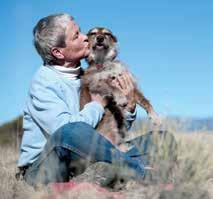
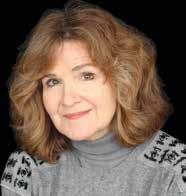
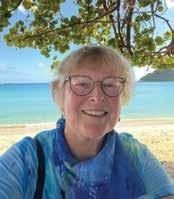

tural Art Museum in Japan, August 4–10. It will then be exhibited at Nagasaki City Hall for the remainder of the month. The full text of the photograph reads: ‘When the Color of Your Skin Is Seen as a Weapon, You Will Never Be Seen as Unarmed.’
The title of this annual exhibit, the Nagasaki 8.9 Peace Exhibition 2025, refers to the date the atomic bomb was dropped on Nagasaki during World War II. The juror for this exhibit was Susan Karhroordy, President of LELA. For the past 45 years, LELA International Artists have been commemorating the dropping of the atomic bombs on Nagasaki and Hiroshima, advocating for peace, denouncing war, and condemning the use of atomic weapons.”
Liz (Miller) Grasty writes, “The 100th Anniversary Celebration of the Northampton School for Girls was held in June just before the Williston Northampton School Reunion. My brother, Bruce Miller ’75, was celebrating his 50th Reunion. Julie (Jennison) Washburn, Vinny (Hopf) West, and I attended the 100th Anniversary and were glad to represent our class. Late in the day I appreciated the golf carts available to take us across campus—tired feet! Eva Paloheimo and Cynthia (Belsky) Zomer need our prayers and strength as they fight through chemo. Cynthia lives in Kefar Weradim, Hazafon, Israel, and is still experiencing side effects from surgery and chemotherapy for breast cancer in 2023. You can email her at cybbm@aol.com. When I shared
news of the 100th Anniversary of the Northampton School for Girls this June, Cynthia wrote back, “I just made a Mississippi mud cake last week! I can’t get it out of my system.”
I reconnected with Diane Eskenasy ’70 at Reunion. Vinny Hopf was my houseguest for the event. I have uncovered information about our classmates I have not connected with in 55 years. Please send me your news and pictures at emgrasty2@gmail. com. Don’t make me make stuff up and reinvent your lives! My life seems calm here in Southampton, Massachusetts. I recently entered the Littleville Fair (a very small fair) and won big: eight blue ribbons. See pictures on my Facebook page. I bet you are in contact with others in our class. Please ask them to send me news and pictures—or you can do it for them.”
Galey (Bissell) Sergio-Castelvetere shared that her husband, Max, has advanced Parkinson’s and is now in hospice care. She lives in San Rafael, California, and they have a son, Alex.
Kirsty (Pollard) Liberman is also caring for her husband, Allen, who has multiple health issues. Please lift them up in prayer and reach out to let them know you care.
Kay (Tobler) Liss lives in Maine. A retired writer for newspapers and magazines, as well as a teacher of literature at the high school and college levels, she is now the author of two published novels: The Last Resort
and Coming Home. More details can be found at kaytoblerliss.com.
Pam Knowles had a jazz concert at the Lion’s Den at the Red Lion Inn in Stockbridge, Massachusetts.
Patsy Townsend lives in Wilton, New Hampshire, where she is a retired air traffic controller.
Bean (Driscoll) Eastwood recently enjoyed a visit to Ender’s Island in Mystic, Connecticut.
Eva Paloheimo lives in New Mexico, where she is undergoing her second round of chemotherapy for lymphoma. She said the second round is easier than the first because she is stronger. Send her some love at epaloheimo@gmail.com. Eva continues to foster dogs for the Santa Fe Animal Shelter. She previously coordinated their mobile spay/neuter program.
Louise (Pomeroy) Gara and Julie (Jennison) Washburn have winter homes on Sanibel Island, Florida. Louise is still making repairs from damage by Hurricane Ian in 2023.
1967
The following NSFG 1967 classmates returned to campus to attend the Northampton School for Girls 100th Anniversary Celebration this past June: Pamela (Mitchell) Andros, Leslie (Israel) Goldhar, Meredith Griggs, Janet (LeBeau) Hill, Lynn (Malcolm) Truswell.
Lou Kissling Jr. represented his class by returning to campus this past June. Lou was inducted into the Athletic Hall of Fame and accepted his award during a special ceremony.
Trip Newton shares: “I had a great phone call with Lou Kissling right after his induction into the Athletic Hall of Fame a few months ago. He was a five-year student at WA (and I was at WA for four years), although obviously both in the class of ’67. We were close at school but not as close as we could have been or should have been. He was a phenomenal athlete—I only wanted to be one. And he was a great student. Again, I only wanted to be one. He was also president of the student council. He was a terrific soccer and lacrosse player. He also was a swimmer, although he quit the team after his third year to concentrate on his other sports. As the two of us looked back during our phone call, Lou said his years at WA were the ‘best five years of my life. Best education I ever had.’ Mine too, one year short of Lou. He understands the current costs for prep schools and private colleges. For now, Lou is off on safari to Africa. What a good guy AND what fun catching up. We’ll continue to do so.”
1968
The following members of the Williston Academy class of ’68 came together on campus this past June during Reunion: Chip Booth, Hal Halpern, Chip Keeney.
Eva Paloheimo ’66 and her dog Scout
Kay (Tobler) Liss ’66
Liz (Miller) Grasty ’66 in St. Thomas
Will Buckley ’68 enjoying his favorite sport

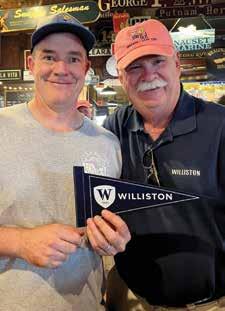
The following NSFG 1968 classmates returned to campus to attend the Northampton School for Girls 100th Anniversary Celebration this past June include: Louisa (Miller) Hoar, Diane (Yelle) Spence.
Jim Clarke writes: “I want to send a shout-out to Chip Keeney for his tireless contributions managing our Class Notes all these years. Chip, on behalf of all your classmates, your efforts have touched the hearts and minds of all of us, whether you were aware of it or not. Thank you for all that you did. I am a forever grateful and respectful teammate.”
Bruce Marshall shares: “I retired from a 52-year career in commercial real estate investment last year. My primary skill set in the real estate arena was ‘translating English to English.’ At Williston, I learned to hear
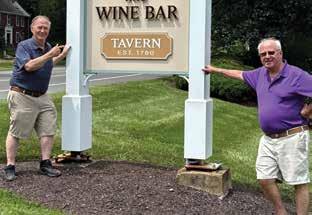
and understand different languages through our international students. Most ‘Texas investors’ couldn’t understand the ‘broken English’ of international investors. That’s where I was able to be useful. My job for my domestic real estate partners was translating and articulating what our international clients from Japan, China, and Saudi Arabia were trying to say. We traveled around the world in search of equity capital to invest in apartments, office buildings, hotels, and industrial properties. The grandson of the founder of Toyota, Taiichi Ishida, became my primary investment partner and client. We would mutually raise money in Japan, buy real estate in Texas, and then sell it to fund and develop a tilt-wing jet aircraft to compete with the Osprey. It was a fun, challenging, and rewarding career that I have now replaced with stock option trading. This activity keeps my mind consistently challenged and my energy fully expended. Sports activities have transitioned from soccer, ice hockey, track, lacrosse, and marathon running to outdoor electric bicycle riding and an occasional fly-fishing jaunt to Alaska. I have also retained my keen interest in photography for the last six decades. My personal life has been most fulfilling. I have six children and 17 grandchildren that keep me busy. It is always tons of fun to watch our children step out into the world with success and have them translate a healthy work ethic and success capability onto the next generation.
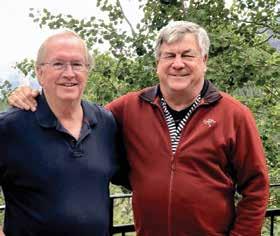
I have kept up my relationship with Richard Wischkowsky (a fellow Williston soccer player), who also lives in Dallas, where I moved in 1981 from Miami, Florida. I had the opportunity to participate in the building of an elementary school outside of Monrovia, Liberia, which I was interested in doing as a result of my friendship with Ron Padmore, our soccer captain. I had a great conversation with Ron’s brother upon that activity’s completion. My years at Williston were most influential in my personal life, coming from a small western Pennsylvania town where the high-rise was two stories. The school gave me great academic and athletic building blocks for both college and business. The friendships and mentorships which I was able to develop at Williston have continued through the decades, for which I am always most grateful.”
Cary Jubinville was honored with the inaugural Mass Golf Distinguished Service Award in 2025, recognizing his decades of volunteer leadership in Massachusetts golf. A longtime member of Longmeadow Country Club, he began his golf journey as a caddie and junior member at Orchards Golf Club in South Hadley. He served as president of the Massachusetts Golf Association in 2000, the first Western Massachusetts native in nearly 30 years to hold that position. Jubinville has been a trusted Rules Official and Official-inCharge for USGA, MGA, and Mass
Golf events, and played a major role in the capital campaign that led to the creation of the William F. Connell Golf House & Museum in Norton. In 2024, he was inducted into the Western Massachusetts Golf Hall of Fame.
Don Klock writes: “My wife, Diane, and I met Chip and Carol Keeney for lunch in July at Abigail’s Grille and Wine Bar in Weatogue, Connecticut. We decided on a halfway point between our Litchfield and Hampton homes. Abigail’s has a lot of history. The tavern was built in 1780 as the first stagecoach stop outside of Hartford on the Boston to Albany Turnpike. It was a wonderful catchup with plenty of laughs. One must love New England history!”
Ted Babcock shares: “Since our Reunion, I have been settling into retirement—kind of. I am teaching courses at my local parish and love helping people discover who God is to them. Lyn continues her gardening, and her garden attracts birds of all kinds—from hummingbirds to hawks. It is truly a place to relax. I have three grandchildren in college with five more coming along. We have also traveled a bit and enjoy it. Life is good. If any of you come to or through Pittsburgh, Pennsylvania, I would enjoy seeing you.”
Dave McGrath writes: “June of 1968 was a long time ago. For me, Williston awakened curiosity and a commitment to lifelong learning. Since ’68,
Dave McGrath ’68 with his family
Don Klock ’68 and Chip Keeney ’68 reunite over lunch
Doug Fuller ’68 and Bruce Marshall ’68 in Durango, Colorado
Chris McWilliams ’68 with John Murphy ’94, owner of Land Ho! in Orleans, Massachusetts

my greatest fulfillment comes from my family. We are a clan of 10-plus. Mary McGrath, our daughter-in-law, is second from left in the picture (see above, left), due to deliver a boy on October 14. She is married to the bald guy, Zac. Mary and Zac both went to Exeter. My daughter Libby and her husband, Jim, met at Cal Berkeley, then went to NYC for grad school. In front are our granddaughters: Kate, Annie, Margaret, and Eliza. The girls all go to Graland Country Day School in Denver. We all live within a mile of each other in town and share weekends at our house on the Eagle River in between Vail and Beaver Creek. Finally, on the far right is a gal I met 53 years ago in a saloon in Pittsford, New York. Barb and I celebrated our 50th wedding anniversary on July 26. Most folks who know me think I’m one of the luckiest guys alive. I agree—luck over talent. I’ve been self-employed my entire life—started with nothing, failed and succeeded in many different disciplines: building material distribution, construction subcontractor, general contractor, designbuild GC, real estate development, Marriott franchisee, ownership and management, direct marketing, advertising, research, consulting, digital marketing, small-cap investor. It’s always about the people, team building, and delighting customers. I’m very fortunate to be surrounded by so many remarkably able and willing folks. I will work every day until the end. Jim Cain, Ted Nellen, and
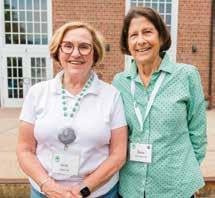
Andrew Wernick have been kind enough to keep me connected to Williston, for which I am very thankful. We are all very fortunate to have had our Williston experiences—the failures and successes. Lightweight football with Bobby Reeve, “Rocket” Robert Richards ’66, Don Treyz ’66, and Murph at wide receiver, then JV lacrosse with Coach Chris Eustis, Ted Nellen, Chip Keeney, Ronnie Padmore, and Clark in goal—both teams were undefeated. Lots of fun. Most recently read: The Pope and Mussolini, G Man: J. Edgar Hoover and the Making of the 20th Century, and Khrushchev. Combined, these three provide important insights into many geopolitical and macroeconomic challenges today. The kids at Williston are being mentally, emotionally, and physically prepared to overcome challenges and solve problems. Let’s not leave them too many.”
Jeffrey Roberts shares, “Since my wife passed away on 11/12/2023, it’s been a difficult time, but I am getting back on my feet. Although I can only guess why, I am still running a construction business, maintaining a 75-year-old house, and trying to travel. Recently, I was able to visit my brother Chris Roberts ’69 in Johnson City, Tennessee, and then on to my cousin Robert, whom I have not seen in 25 years. I am looking at him and seeing my father (Alan ’37); he is looking at me and seeing my grandfather (Jacob 1909). Robert called Alan “The A Train”—the respect was
mutual.”
Jim Cain shares: “On July 12, I had an early lunch with my Williston wrestling coach and college advisor, Coach Don Knauf. He was in New Haven, Connecticut, being honored by members of his Southern Connecticut State University wrestling team. Coach Knauf is now 90 years old and living in Florida, where he continued to coach at the high school level after leaving Southern Connecticut. I owe a lot to Coach Knauf for convincing me to join the wrestling team and, more importantly, for shoehorning me into Harvard. Jerry Hall ’69, who succeeded me as captain of the wrestling team at Williston, joined us for lunch. He, too, was accepted into the freshman class at Harvard after graduating from Williston. On my trips to visit my oldest brother, Bill, in Holyoke, I try to meet with Rich Halpern to talk about our Williston years, friends we have in common, the Red Sox, and my dreadful Minnesota Twins. More recently, we discussed the poor performance of our elected officials and their inability to work together to address our nation’s many challenges. Like me, Rich grew up in Holyoke, and we roomed together our first year in Jack Hebert’s Williston House, where John Hedbring ’66 and Dan “Puppy” Gould ’66 were the dorm counselors. They used to come into our rooms after lights out, empty our dresser drawers on the floor, and tell us we couldn’t turn the lights back
on. Rich didn’t care because he had his transistor radio on, listening to a Red Sox game. I didn’t care since I only had one extra pair of socks and a single change of underwear. Hope all of my fellow alums from the class of ’68 and their loved ones are well. Would love to hear more from you.
Will Buckley writes: “I struggled with drugs and alcohol for many years before getting sober in 2012. I now work as a recovery coach and have combined my passion for golf and mindfulness to launch Recovery Golf, a transformative program that uses the game as a tool for self-reflection and growth. It teaches people to be fully present, maintain a positive attitude, silence negative thoughts, overcome adversity, gain confidence, visualize, strategize, and experience community. It provides a welcome alternative to the complex emotions that often accompany recovery.”
Doug McClellan shares: “I retired and sold my business after 47 years on March 19, 2019. This was the perfect timing, just before COVID. I enjoy spending time with my three grandchildren and spend about six months a year at our summer home on Henderson Harbor in New York on the eastern shore of Lake Ontario with my wife. She has a wonderful vegetable garden. If you ever visit the Thousand Islands region, look me up. Good fishing, sand beaches, and restaurants. Cheers!”
1969
NSFG alumnae who represented their class at the Northampton School for Girls 100th Anniversary Celebration this past June included (see photo of some of the classmates, above): Mimi (Johnson) Hall, Linda Mann, Betsy Odgers.
Bruce Marshall ’68 with his six children at youngest son Matthew’s wedding in Austin, Texas
Linda Mann ’69 and Diane (Yelle) Spence ’68
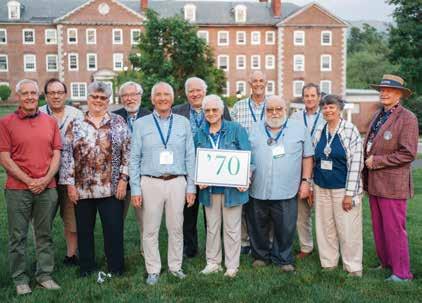
55th REUNION
Daniel Becker is summering in Montauk, New York, fishing, beaching, and swimming with his Newfoundland. He will be appearing as Doctor Van Helsing in Dracula in October in Southampton and preparing for an expedition to Antarctica in December.
1970
The following members of the Williston Academy class of ’70 came together on campus this past June for their 55th Reunion (see a photo of some of the classmates, above):
Thomas Andrew, Warner “Chip” Babcock, Luca Bencini-Tibo, Greg Creedon, Bill Czelusniak, Richard Goss, Christopher Kaltsas, Mark Newton, Joseph Rigali, Phillips Sterns, Rick Teller, Peter Urquhart, Randy York
NSFG alumnae who represented their class at the Northampton School for Girls 100th Anniversary Celebra-
tion this past June included (see photos of some of the classmates, below):
Nancy Adams, Irene (White) Berwick, Sheila (O’Brien) Cuddy, Gayl (Gonczewski) Czaplicki, Marcia (Booth) Drinkard, Kristen (Prendergast) Eastman, Diane Eskenasy, CeCe (LeBeau) Garrison, Andrea (Madsen) Gilmore, Saskia Huising, Jane (Covell) Keeney, Linda (D’Addario) Salmon, Helen (Lancaster) Wallbank
1971
55TH REUNION IN 2026
NSFG alumnae who represented their class at the Northampton School for Girls 100th Anniversary Celebration this past June included (see photo of some of the classmates, above): Margaret (Campbell)
Lacoste, Jane (Marciniak) Latka, Cynthia (Strait) Regal, Joanne (Marmo) Tyler, Lyn La Shier Underhill, Sally (Myser) Wadhams, Nancy (Lockwood) Whitcomb.
1970 classmates at the NSFG 100th Celebration

Brad Davis shares: “Entering our 50th anniversary year, Deb and I made ‘adventuring’ our theme, culminating in fall ’25 with a trip to England and Wales. We kicked off the year with zip-lining at Berkshire East in Western Massachusetts—the final two zips being across a valley and back. We also road-tripped to Nova Scotia, had our heads wired for brain research at the University of Connecticut, kayaked around Mason’s Island, where we honeymooned in ’75, spent post-election Thanksgiving in the ICU monitoring Deb’s electionagitated heart (which, with minor encouragement, returned quickly to sinus rhythm), and bicycled along the Erie Canal when visiting former Pomfret School colleagues in Rochester, New York. Every month it’s been something that, for us, qualifies as adventuring. Deb also completed writing a Wordle-related memoir that received a personal two thumbs up from Tracy Bennett, the New York Times’ Wordle editor. I’m swimming (2,000–3,000 yards per workout) but no longer compete; the thrill up and flew away after the World Masters Championships in Montreal. For now, we are thriving in northeastern Connecticut, writing journal entries and poems, and doing what we can to protest the emerging police state.”
Linda “Lyn” La Shier Underhill writes: “NSFG 100th Celebration was probably one of the best events at Williston Northampton School that I have attended. Being part of the planning committee was so exciting,
and I loved the process so much. I so miss our monthly Zoom calls, and I miss you all on the committee. This experience made me feel more a part of the school than even the 12 years while my children were there. Seeing some of the best friends of my teenage years and making new friends from previous years of NSFG was wonderful. I also enjoyed talking to some of the recent female graduates while they were on campus. One of the greatest compliments was to hear some of my classmates (we being the last class of NSFG) mention how well Williston has done with keeping NSFG alive and teaching the current students about our heritage. We love our school and the excellent education we received. I know I do for the wonderful education my children received. I also have a new granddaughter, Lily Jean Underhill, who was born August 6, 2025. She is the daughter of my son Sean Underhill ’02 and his wife, Laura.
1972
The following NSFG 1972 classmates returned to campus to attend the Northampton School for Girls 100th Anniversary Celebration this past June (see photo of some of the classmates, above): Susan Andrew, Judith (Miller) Conlin, Sheila Fisher, Deirdre (Kelleher) Grass, Trili (Goodrich) Timm
Steve August writes in: “These former Williston football teammates (see photo above) spent a day with
1971 classmates at the NSFG 100th Celebration
Brad Davis ’71 and his wife Deb


Mark Newton ’70 at his family lake home in Brookfield, New Hampshire, in June, shortly after Reunion weekend, where they ran into each other when Gil Timm spoke at the induction of his brother Gary Timm ’70 into the school’s Athletic Hall of Fame. Gil, Mark, Steve, and Steve’s grandson spent the day boating and fishing on the lake, hiking, visiting with each other, and eating Mark’s spectacular lunch at the Newton home.”
Trili (Goodrich) Timm shares, “Addie and I meet and take walks on the New Hampshire shoreline as often as we can. Still best buddies!”
Korty Church writes: “I’ve been working part time as a manager of a program called Seacoast Waste Not in Portsmouth, New Hampshire, where we work with restaurants, food distributors, and food manufacturers to pick up foods that may have not been sold or have come up on expiration dates (keeping the foods out of landfills) and then repurposing the items into nutritious individual meals for those in our communities that are experiencing some level of food insecurity. This certainly has been a rewarding and purposeful experience for me, and needless to say, I am the oldest one in the organization!”
Richard Eyre shares, “Chuck Tauck stopped by my house in Vero Beach,
Florida, for drinks and to catch up on life this past spring. He and his wife, Fran Littin, have sold the Sheldrake Point Winery on Cayuga Lake in New York.”
Charlie Howe writes in: “I’m sorry I could not make the Reunion. I would have loved seeing all of you. Fortunately, I was in Northampton the week prior and was able to swing by and show my wife, Kathryn, the campus. [Charlie and Kathryn recently celebrated their 14th wedding anniversary on August 13, 2025.] Everything was mostly open, so I took a trip down memory lane. There are a lot of beautiful improvements. I live in Saratoga County, New York, and have been in the floor covering industry for 46 years! I’m only working three days a week now, and next June I think I will be in total retirement mode. My camp in the Adirondacks got turned over to my two sons a few years ago so they can pay the bills and I can still be the unpaid caretaker (which is fine because I enjoy it). I heard from Ray Brown ’55 this past year while he was visiting an older Willy who is a client of mine. At our 40th, I was able to catch up with Steve Bunker and John Blackburn, but unfortunately they have passed. RIP. I’ve been a lung cancer survivor for 10 years, and I’m going strong, so I’ll see you at the 55th!”
Sheila Fisher adds: “It was wonderful catching up with so many class-
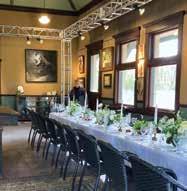


mates at the Northampton School for Girls 100th Anniversary Celebration. What a magical gathering, and a chance to still make more memories. Thanks to everyone whose vision and hard work made this milestone event a reality! It’s been a relatively quiet summer here in West Hartford, Connecticut, except for a trip to California to see old friends and time spent with local friends and family. One of the high points of the summer (speaking of venerable birthdays) was celebrating my dad’s 94th birthday at my house on August 14. He’s still a firecracker!
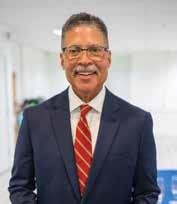
Michael Wills shares: “I spoke with Ricardo Cabodevilla a few weeks ago. He told me that he graduated from SUNY Old Westbury in 1979 and has been retired 14 years from New York State Housing Management. We hadn’t talked in a while, and it was great to catch up. Gil
Lyn La Shier Underhill ’71 with her new granddaughter, Lily
Judith (Miller) Conlin ’72 and Sheila Fisher ’72 at the NSFG 100th Celebration
From left: Steve August ’72, Mark Newton ’70, and Gil Timm ’72
Trili (Goodrich) Timm ’72 and Addie (Murphy) Tyrol ’72
Rob Galbraith ’72 at Westfield Train Depot
Korty Church ’72 and coworkers at Seacoast Waste Not
Michael Wills ’72 playing in his band (above) and in his Caterwauler tie at Reunion (below).
Sheila ’72 and Charlie Fisher
Timm and I have been calling each other on a regular basis to push fitness and to catch up. Gil and Trili just welcomed a new grandchild into the family! He and Steve August get together to go hiking on occasion. Gil and I encourage each other with our weight training and walking. Rob Galbraith served for three decades as a naval aviator with the United States Navy, retiring at the rank of captain. He called me recently and told me that he has decided to pursue licensure as a private pilot so he can get back in the air again! The last weekend in August, Rob and his wife, Katherine, had an evening of fine art, fine wine, and fine architecture at the Westfield, New York, train depot! Attendees learned about the history of the beautiful turn-of-the-century building, listed on the National Register of Historic Places, and Katherine had new artwork of hers on the walls, along with some older pieces. Rob, Katherine, and I plan to get together soon in the Adirondacks. On their way back to Westfield, Rob and Katherine are also planning to catch up with Larry Mathews and his wife, Kim, in the Syracuse area. Rob recently reconnected over the phone with Peter Day, a fellow wrestler at Williston. Peter is currently living in New Hampshire. I have been busy this summer singing and playing guitar with a 17-piece big band, solo, and with my band Blue Note. As that winds down, I am getting back into volunteer mode with back-to-school events and putting new winter coats on students in need.”
1973
NSFG alumnae who represented their class at the Northampton School for Girls 100th Anniversary Celebration this past June included

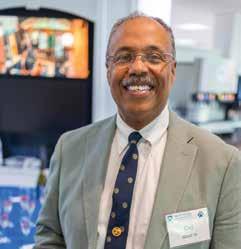
Carl Alford ’74 in his Williston Academy tie
(see photo of some of the classmates, above): Betty (Chase) Hyde, Eve Kummel, Ann (Futter) Lomeli, Kristina Madsen, Linda Shlosser Wood
The following members of the Williston Academy Class of ’73 came together on campus this past June during Reunion: Michael Hirsch, Charlie Moore, Barry Searle.
Tina Strasberg shares: “After Williston, I attended art school and enjoyed a career in New York City publishing as an art director, working at Mademoiselle, Self, GQ, and Spin magazines, The New York Times, Random House, Nickelodeon, and more. Barry Moser greatly influenced my early interest in art and printmaking. Now retired, I opened a successful eBay store, Daffodil Season (ebay. com/str/daffodilseason), after selling on Instagram. Travel, art, and antiques have always been passions, and sourcing in New England has been a fun pivot. Anything from the 1970s always catches my eye!”
Betty (Chase) Hyde writes: “I hope all my classmates had a great summer. I am looking forward to the fall. I attended the school’s Athletic Hall of Fame ceremony at Reunion in June and it was a great event. I bumped into Rick Lucchesi ’72, who was the coach of the 1980 ski team that was
inducted into the Hall of Fame this year. I realized that he lives in Westerly, Rhode Island, and, since I summer in Weekapaug, Rhode Island, Rick and I were able to get together for a boat ride with my brother, Rick Chase ‘71. It was great to catch up and spend time on the ocean. I also went to the Travelers Championship golf tournament in Cromwell, Connecticut, with Chrissy and Vinny LoBello. It was a great day watching New England golfer Keegan Bradley win the tournament.”
Jerry Martin shares: “Still working in my own business after 49 years— Safeguard Print Promo & Apparel in the Poughkeepsie area of New York. Kind of cool to be in a family business. I even have a daughter who has been with me for 10 years. Still an avid racquetball player and skier, and like to do spin class. We have a place up at Mount Snow in Vermont and spend time there during the year. Usually take a ski trip out West to Vail, but this year to Lake Tahoe. Been married to my wife, Denise, for 42 years. Have four wonderful, successful kids: 40, 39, 38, and 37. And four even more wonderful grandkids that I get to see a lot (and one more on the way in April 2025). Live in Lagrangeville, New York, 1.5 hours from NYC—close enough but also far enough from the city.”
Ginger Phakos writes, “It was a difficult year. My sister Laurinda (Phakos) O’Connor ’77 died in September 2024. She was the heart of the family and my best friend. It’s been really hard, so I’m looking forward to hearing others’ news. Turning 70 in October.”
Steve Majike adds: “I had breakfast with Barry Searle this morning, then talked with Charlie Moore via phone. I’m bummed that I missed our 50th Reunion, but I had a health issue I was dealing with at that time. I was blessed to visit Ray Solomon in the hospital shortly before he passed. He was a solid guy, devoted to promoting and supporting Williston Northampton School. I am currently 100% retired, spending 10 months a year in Leyte, Philippines, and two months in Easthampton, normally in the fall. We have a beautiful home in Palompon, 100 yards from the beach, and welcome any “Willies” passing through the Far East who need respite, a strong cup of coffee, or an ice-cold beer.
1974
Carl Alford purchased a Williston Academy tie soon after the school’s merger with Northampton School for Girls in the early 1970s and, after holding onto it for over 50 years, he wore it to the 50th-75th Reunion dinner in June during Reunion weekend.
From left: Jack Tatelman ’73, Roger “Rig” Trimbey ’73, and Greg Noble ’74 at the celebration of life for David Griswold ’73
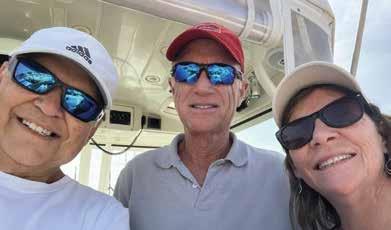
1975
The following members of the Class of 1975 returned to campus to celebrate their 50th Reunion (see class photo with some attendees, below):
Doug Andrew, Steve Andrezyk, Nancy Aquadro, Kate Burke, Bonnie Burnham, George Chambers, Patty (Corkin) Kennedy , Carl Cronin, Jim Collard, Jess Collen, Beth (Hotoph) DeLaurentis, Joe Dion, Herm Eichstaedt, Gary Enright, Reggie Fuller, Jim Gordon, Cherie Holmes, Brad Hall, Caren Hutchinson, Kathy Krohn, Bob Meara, Mary Mass, Bruce Miller, Scott Nicholson, T.J. O’Brien, Mark Ouellet, Layton Outerbridge, Cheryl Parker, David Partyka, Jon Piper, Larry Pontbriant, David Segal, Catherine Skove, Laura (Gordon) Spittle, Yvonne Shipman, Robert Van Benschoten, Scott Wakeman, and Lisa Yamilkoski.
“Once upon a time there was a tavern, where we used to raise a glass
or two. Remember how we laughed away the hours. Think of all the great things we would do? Those were the days my friend, we thought they’d never end, we’d sing and dance forever and a day. We’d live the life we choose, we’d fight and never lose, for we were young and sure to have our way.” — from Those Were the Days by singer Mary Hopkin
Kathy Krohn shares: “Our 50th Reunion was fabulous. See the list of all 1975 classmates who attended above. Brad Ferguson ’77 made a guest appearance and Harry Auerbach intended on attending. It was great to see Brownie and Couchie, who were on campus for awards and their Reunions. A few of us spoke about our dear friends from 1974 including Cary Hillas ’74, Alicia du Pont ’74, and Deb Koffman ’74—gone, but not forgotten. On Saturday night we had a class cocktail party in the Dodge Room. George Chambers put together a fantastic photo pre-




From left: Rick Chase ’71, Betty (Chase) Hyde ’73, and Rick Lucchesi ’72
Betty Hyde ’73 and Vinny LoBello ’73 at the Traveler’s Championship
Kathy Krohn ’75 and Stu Jacobson ’75
50th
REUNION
sentation that played while we reminisced and tried to catch up on a lot of conversation after 50 years! We put together a memorial presentation for our deceased classmates and faculty. We spoke of each one of the following (classmates and faculty) with shared stories: Gail Castleberry, Chris Simard, Jane (McNamara) Kelly, Brian Cowell, Pete Panomwon, Art Kopcienski, Sheryl Pharmer, Carol Steinheimer, Richard White, and Wendy Keiver; and faculty—Mr. Culver, Mr. Gregory, Mr. Archbald, Swanee, Sue Curry, Mr. Lawton, Doc Henchey, Al Shaler, Mr. Couderc, “Carpie,” Rev. Barnett, Mr. Teller, Mr. St. George, Mr. Francis, and Armand Davy. May their memories be a blessing. The incredible impact that classmates, faculty, and Williston had on each of us was shared over the weekend. Scott, Joe, Bruce, Brad, and Steve reunited as Caterwaulers with a few songs that sounded perfect to our ears! Returning to Michigan for the summer, I had dinner with Stu Jacobson. We intend on having dinner in September with Beth (Hotoph) DeLaurentis in Harbor Springs, Michigan. I have enjoyed catching up and reconnecting with so many.”
Catherine Skove writes: “It was great to see so many of our class in June, and I loved that many of you— especially our Reunion Committee— wrote in our last Bulletin, catching us up with their lives. I want to continue that effort and hope others do, too. The Reunion left me wanting to hear more, to dive deeper with everyone, but the sound decibels made that a bit hard! After leaving Williston, I tried college, but it never quite worked for me. Following brief stints in Florida and then Montana, I found my way back to New England
and have never left. I have lived just outside of Keene, New Hampshire, for the past 37 years. My house is shared with other adults, sort of a family of choice. Some have lived here going on 12 years. We are both independent but cooperative. I love to garden—vegetables and especially flowers—and have created meandering garden beds across about two acres, many with native plants. Last fall, I became a master gardener, volunteering on the University of New Hampshire Extension Infoline and for various garden projects. I also open up my garden for tours and love talking to, and sharing ideas with, other plant people. A recent collaboration with an accomplished stonemason has been a true joy and added a lot to the gardens. Over the years, I’ve worked at various jobs, from being a museum interpreter at Old Sturbridge Village selling vintage clothes, and being a hotline counselor, to creating and selling a line of flannel blouses. In 1998, I started a nonprofit performing arts center and taught and performed dance there. Teaching adults was a newfound love, and I discovered choreography and costume making as great passions, too. The opportunity to renovate several homes, including an old church on the Kennebec River in Maine, has been a challenging, fun, and creative endeavor. I hope I am now done with that. Other artistic interests have included sewing, beading, and a current deep dive into collage. New ideas for projects or things to make are always in abundance, but I am slowing down a bit and seeing the beauty in ‘less is more.’”
Bruce Miller shares: “I’m still working; yesterday I returned from a twoweek around-the-world trip to visit aviation customers in Turkey, Indo -
nesia, Australia, and New Zealand. It was too much—but I’d do it again tomorrow if I had the chance. Retirement is not on my horizon. My next scheduled trips will take me to London, Santiago, and Dubai.”
Beth (Hotoph) DeLaurentis adds, “Reunion was the best, from the rainy lunch to the reminiscing with our class in the Dodge Room to the dancing under the tent and the breakfast Sunday morning. It was so wonderful talking about old times. It makes me cry to think about it and sends shivers down my spine how nice it was to be back in Easthampton.”
Kate Burke says: “I loved seeing all our classmates at our 50th! Many thanks to all our classmates involved in the planning, along with the WNS staff making the weekend a big success. A special thanks for organizing the slideshow before the class dinner, and remembering our classmates and teachers no longer with us. As for me—enjoying retirement on Nantucket and in Southborough, Massachusetts, with my wife, Nancy Mayo, after practicing emergency medicine at Milford Regional Medical Center while also teaching at UMass Medical School for three-plus decades. Many of our siblings and extended family members live in Massachusetts and other parts of New England, hence, I am very fortunate to have
everyone nearby! Wishing everyone the best of health—and see you at our 55th!
Steve Weitz chimed in after many years. He had lunch with Jim Gordon in August (see photo above).
Buzz Masters writes: “Since Williston, I graduated from college, had multiple jobs as a coat-check girl, an editor, a corn detasseler, a receptionist, a historical guide at the Hoover Dam, a gallery manager, a gallery owner, a bartender for three days, a dishwasher at a Stucky’s until a tornado blew the Stucky’s off its foundation, a lawn waterer, a chambermaid, a house cleaner, a fresco cleaner, health food produce worker, driver for a rural clinic/driving nurses into the field, Red Cross disaster relief worker, mentor for teenagers in my studio, and have been fired from every waitressing job I ever had for mixing up orders and then bursting into tears. I now happily live in a house and studio in the woods built by some of my favorite people. My work is represented by Cynthia Winings Gallery. I love my dogs, iceberg lettuce, and my gardens. I travel as much as I can and try to go back to Italy every year, attend art residencies every other year, and to relax I will randomly mow my lawn. When I am not in my studio, and recognizing the privilege of living on this remarkable island, I serve my community as an AEMT with Memorial Ambulance and am dedicated to our community paramedicine program. My favorite flower is the tulip.”
Randy See writes, “I was sorry to
Jim Gordon ’75 and Steve Weitz ’75
Randy See ’75 on his extended walking trip through Europe
miss our 50th Reunion, but happy to see so many were able to attend. I’m working on an extended walking trip around Europe and other parts of the world. For now, I am planning a year; we’ll see how I hold up. Wishing you all good health and happy days.”
Scott Wakeman writes, “What an amazing 50th Reunion, and a special thank you to the organizing committee for all of your hard work! So wonderful to see everyone, and I found it especially great to get to know so many of you who were not in my close Williston circle. I look forward to our paths crossing more often outside of the Reunion structure, so please let us continue to reach out to each other!”
Kathy Krohn wraps up the 1975 updates by sharing, “If anyone is in Sarasota, Florida, this winter, please feel free to reach out. Even if you aren’t in the Sunshine State—reach out and let me know how you are so I can have news for the next Bulletin: krohnk757@gmail.com.”
1976
50TH REUNION IN 2026
Dana Richdale writes: “Hello, fellow classmates. Hope all are doing well. Reach out to me anytime with an update, a thought, or an anecdote harking back to our days at WNS. While driving recently, a WSJ podcast caught my attention: ‘How Scotts Miracle-Gro’s Weed Business Went Up in Smoke.’ Robert Hagedorn, a fellow classmate, came to mind. His dad, Horace Hagedorn, started Miracle-Gro back in the early 1950s. Miracle-Gro merged with Scotts back in 1995. Hawthorne Gardening Company, a subsidiary of Scotts Miracle-Gro, came about in 2014 to
capitalize on the emerging cannabis business in the United States. Interesting podcast.
Did a bit of effort to reach out to classmates, but to no avail. Actually tried a phone number for Dara (Blendermann) Casey, which was no longer in service. Dara and her husband, Larry, have resided in Andover, Massachusetts, for, well, a long time. Three daughters and a son. And I do believe she is a grandmother. Also tried researching a bit on Rick Epstein. His family was in the furniture business for a number of years in Holyoke. Rick, update us all if you can—you have gravitated toward art, notable and innovative art, am I correct? I did speak with Vince Cohee, who had heard from Steve Bischoff regarding our pending and upcoming 50th Reunion in June 2026. Wow! Feeling old. Make plans to attend. Lots of water under the bridge for all of us.”
1977
Catherine Johnson visited the Office of Alumni Engagement in September to get an early start on planning for the class of 1977’s 50th Reunion in 2027. She shares: “I’m proud to announce I am now the 50th Reunion Chairperson for the fabulous Williston class of ’77. I know it’s two years away, BUT I am looking for volunteers to be on this 50th Reunion Committee with me. I would sincerely appreciate your help! Williston has generously offered for a few committee members to attend Reunion 2026 to go to the events and gather ideas for our own 50th. Attending the Reunion can help guide our decisions for our 50th. Plus it will be a really FUN weekend on campus with the class of 1976 celebrating their 50th. I know for me it can be
easy to feel like we really connect with our family and friends because of social media, but I feel nothing compares to seeing your classmates in person, expecially while visiting our beautiful campus. Williston looks absolutely gorgeous; you have to see it in person. CLASSMATES—this is the ONE Reunion I sincerely hope you will ALL consider attending. This is the BIG ONE, our 50th. For me personally, I would love to see you ALL there in 2027! If you are interested in our 50th Reunion Committee, please text or call my cell, 603359-5103, or email me at catherine@ wooglin.net.”
1978
Amy (Holzer) Irvin shares that she’s busy volunteering for Lifeline of Ohio and educating people about organ donation, volunteering on the board of her local senior association, visiting her sister Chris and her brother-in-law Dennis (Karin’s husband) in their assisted living facilities, traveling every couple of months to see her two grandchildren (Rory’s almost 3; Remy is 3 months old) in Annapolis, Maryland, and taking care of her home and two kitties.
Remick French writes: “My wife, Marianne, and I moved to Maine and now live in Higgins Beach. One of my ocean swim friends sent their two daughters to Williston, and the youngest just graduated two years ago. Any Willies are welcome to swing by, or we can meet in Portland if you come to town. I am also open to golf anytime at Purpoodock Club, if anyone is interested.”
Carol (Adams) Dupree is excited about Medicare!
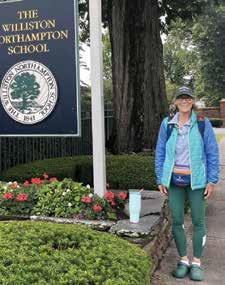
Milo Perichitch reports his son has been accepted to the University of Colorado at Boulder.
Shane Anderson says: “Ryan, my rising senior at UVM, will graduate next year as an electrical engineer. He already has a job with Global Foundries, a chip maker in Burlington. He will probably marry his high school sweetheart, who will start her doctorate in kinesiology at UVM next year. Liam has a great job working the help desk for the largest beverage distribution software company in the U.S. and is doing very well. He seems to really enjoy it. Anne and I are celebrating 32 years of marriage on May 1. Next show? Alison Krauss & Union Station. Woohoo!”
Ned Ferguson writes from Western Massachusetts that he is tending to his orchard and berries.
Tracy Carman writes: “In two weeks, my twins will be at the UMass Isenberg School of Management graduation ceremonies, bidding a bon voyage to the institution with high Latin honors! Shelby graduated in December and is working at Cigna in Bloomfield, Connecticut, as a risk management underwriter. Perry, on the other hand, is still pounding the pavement looking for a full-time gig. If anyone is aware of any entry-level financial analysis positions available in the Hartford, Connecticut, area,
Catherine Johnson ’77
please let me know.”
J. Steven Staggs reports, “We spent 10 days in Paris and Normandy in March and have Rome and Tuscany penciled in for next March. We are still on Maranacook Lake in Maine, although we may move to the coast after my wife retires.”
Marjorie (Halperin) Rosenfield says, “We are still in Rockport, Maine, half of the year, but now spend our winters in North Scottsdale, Arizona. We were no longer enjoying the winters. Having the freedom to move around is one of the great benefits of being retired. My youngest is getting married after a two-year engagement and over nine years together. We are really looking forward to it!”
Robert DeBrase writes, “All is well on my end—just enjoying retirement! My wife and I recently returned from a trip to Portugal with some friends, where we explored the Azores, Porto, and Lisbon. Now we’re excitedly looking forward to welcoming our first grandchild in July.”
Chris Rival shares, “Still here in North Reading, Massachusetts. Trying desperately to retire and move to New Hampshire. Our little town here has changed a lot in 35 years. Too many people now. Traffic is just nuts everywhere. I am in Laconia, New Hampshire, occasionally, helping my mom.”
Peter McElroy says, “I just got married to the love of my life! We honeymooned in Grand Cayman for a
week. I have a little over a year until retirement, and we plan to move from Texas to Madeira Beach, Florida.”
Teddie Barrett writes, “I retired last year, but I’m filling my time as a part-time paraprofessional at the Woburn school system! I have three grandchildren who keep me busy! A lot of babysitting! My wife and I visited with Jim McGhee and family, who live in Long Beach, California. We continued our trip to San Francisco and Lake Tahoe, which we thoroughly enjoyed!”
Paul Sigrist shares, “I had lunch with Rod Golden here in Manhattan, whom I haven’t seen since Williston graduation in 1978. Rod was in town visiting family and reached out to


me through Facebook. We walked around Riverside Park while catching up and then had lunch on the Upper West Side.”
John Intorcio is very excited to report that his younger son, Jacob, is finally engaged to his girlfriend of seven-plus years, Saretta, and will be married in October 2026. Now maybe they can get to work on some grandchildren!
1980
The following members of the class of 1980 returned to campus to celebrate their 45th Reunion (see class photo with some attendees, below): Goren Dillard, Jill Douglass, Charlie Evans, Susan (Marcus) Goldsmith, Wendy Hannah, Theodore
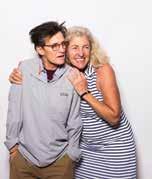
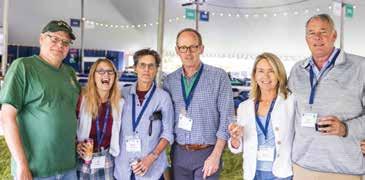
Rod Golden ’78 and Paul Sigrist ’78 reunite after 47 years
Rebecca Pearlman ’83 enjoying retirement
1980 classmates at their 45th Reunion
Peter McElroy ’78 at his wedding

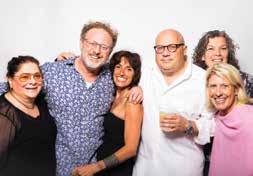
Hoffman, Andy Ivey, Sam Levin, Barb (Krohn) Lieber, Mark Lucier, Curt McLeod, Anne Mehr, Holly Phillips, Tom Pieragostini, Raymond Reggie, Holly (Steuart) Richardson, Nina Sartori, Suzanne Snyder, Steven Weinstein
1981
45TH REUNION IN 2026
1982
Peter Hodges has been named to the 2025 Franklin & Marshall College Sports Hall of Fame as part of the 1984–85 squash team.
1983
Rebecca Pearlman has retired after 32 years of teaching high school mathematics, most recently in the Bay Area. Now an empty nester in Olympia, Washington, she plans to play plenty of pickleball and explore with her husband, Ismael G. Sy, and their dog in their Winnebago Travato.
1984
Michael Marchand shares that he has been named to the 2025 Franklin & Marshall College Sports Hall of Fame as part of the 1984–85 squash team. This team featured two Williston graduates, including Peter Hodges ’82, who played squash at Williston
Quinn ’84 and granddaughter Addie 40th
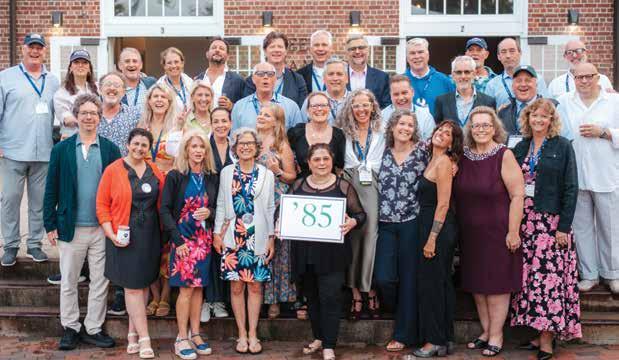
Northampton School under Coach Stephen Seybolt ’58.
David Mehr works two weeks per month in Denver and stops to see Peter Marczyk whenever he can. Peter joined David for a burger night fundraiser for Niman Ranch Next Generation Foundation Scholarship and shared that it was great to see an old friend.
David Quinn writes, “I turned 60 in May and had a chance to go away with my wife, Ana, to Hawaii: Waikiki and Oahu, where she had a confer-
ence. We enjoyed a lot of sightseeing on both the island of Oahu and the big island of Hawaii and toured the volcano parks.
We had a chance to celebrate with family at the end of the month and also celebrated my dad turning 94! For Father’s Day, my daughter Helen (24) and I visited Aidan (33), our oldest, in Tampa, Florida, and celebrated his birthday with his wife, Dani, and their then 7-month-old daughter, Addie. She is officially 9 months old now and just about to walk. I am finally accepting being a grandfather and am amazed at how great all of her
aunts and uncles treat her, and how gentle and kind they are—faces always beaming as we see her.”
1985
The following members of the class of 1985 returned to campus to celebrate their 40th Reunion (see class photo with some attendees, above): Christopher Beaudet, Christina Belton, Christopher Bersani, Bebe (Hammond) Casey, Diana Chaplin, Carol Childs, Adam Cohn, Jaime Diehl, Laura Ferriter, Todd France, Zoë (Neal) François , Michael
David
REUNION
Pete Marczyk ’84 and David Mehr ’84
Fung, Krista (Messina) Garand, Suzanne (Leibfried) Gesner, Will Glenn, Miggie Gonzalez, Jody Gottlieb, Martha Grinnell, Eric Healy, Mary Hofstetter, Kimberly Kaye, Andrew Keeffe, Mahinder Kingra, PJ Kuyper, Jennifer (Weiss) Machanic, Richard Mahaffy, Terry Martin, John Woolsey McKernon, John Moynihan, Stephen O’Connor, Steven Pinado, Christine (Manfield) Reading, Alaine (Crowther) Roberts, Phillip Sargenski, Christina Scherwin, Stephen Tedesco, James Villone, Burkley Weilburg, Stacia Wyman
1986
40TH REUNION IN 2026 1990
The following members of the class of 1990 returned to campus to celebrate their 35th Reunion (see class
photo with some attendees, below): John Bailey, Alex Ciejek, Joshua Farrell, Deirdre Griffin, Matthew
Hatch, Kara Rainey, Doug Stark, Lance Vachon, Peter Winkelman
1991
35TH REUNION IN 2026
1994
John Murphy ’94, owner of Land Ho! in Orleans, Massachusetts, encourages any Williston alumni visiting the Cape to stop in and say hello!
1995
The following members of the class of 1995 returned to campus to celebrate their 30th Reunion (see class photo with some attendees, next page): Cristopher Amanti, Kathleen (Mason) Barry, Jessica (Lang) Breish, Ryan Callahan, Bill Griggs,

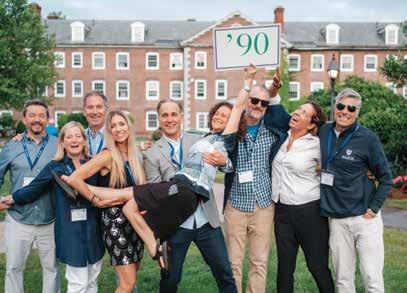

Belis Aladag ’97 and Manuel Silveira ’97 with daughter Julia
Steve Hoyt , Alexander Jones , Glenn Jones, Brian LaPierre, TJ Leenders, Dwight Manning, Tony Montanez, John Nichols, Sal Pace, Kate Pavich, Heidi Quigley, Kate Rhodes, Paul Rose, Luke Suchecki, Adam Zedonis
1996
30TH REUNION IN 2026
1997
Seth Kassels writes, “All is well up here in Tuftonboro, New Hampshire. I continue to be the Executive Director of Camp Belknap, a nonprofit overnight summer camp for boys. I recently joined Williston’s Head’s Visiting Council, which brought me back to campus and has had me connected in more detail. Wow! Williston continues to be such an impressive institution. The campus looks more beautiful than ever, the faculty are deeply engaged, and, most im-

portantly, the culture seems to be so great! If anyone is up this way, please look me up. All the best.”
Belis Aladag shares, “Manuel Silveira and I welcomed our little girl, Julia Dürrüşehvar, on April 28, 2025, in California.
Liz Zieminski encourages everyone to mark their June 2027 calendars for our 30th Reunion! Excited to start planning with everyone.
1998
Niels Gjertson and his wife, Nidhi Nahar, welcomed their first child, Aadi Kiyohito, on May 1, 2025.
1999
Greg Morrison shares, “Fortunate to celebrate 20 years with my company, which now offers a sabbatical program for milestone years of service.
Greg Morrison ’99 and his family
Niels Gjertson ’98 with his newborn son, Aadi
Katherine (Boucher) Wesmiller ’00 with her parents
We were able to take our first Disney cruise, a transatlantic one for 14 days that covered the Bahamas, Portugal, and Spain. We ended up in London for five days and had an amazing experience.”
2000
The following members of the class of 2000 returned to campus to celebrate their 25th Reunion (see class photo with some attendees, at right): Serra Aladag, Kitana Andrews, Kevin Burke, Todd Carlson, Kira (Canon) Goodman, Hillary (Weiler) Kaufman, Leah Madsen, Sean McCarty, Matthew McWilliams, Sarah (Levine) Meyer, Deirdre Miller, Morgan Nichols, Mary (Melnik) Penney, Edgar V. Ramos, Allison “Kinsey” Robb, Kate (Webber) Schubmehl, Whitney (Nields) Shaw, Amanda (Wellman) Gomez, Jarrod Zwirko.

Leah Madsen ’00 next to her artwork at Reunion
Katherine (Boucher) Wesmiller caught up with advancement staff over dinner in Saratoga, California, this spring. She was joined by her parents, Larry and Anna Marie Boucher, who, after 25 years, continue to support Williston Northampton School.
Leah Madsen was surprised and delighted to see her high school artwork displayed outside Grubbs Gallery in Reed Campus Center this past June. Student artwork, preserved for years by Ed Hing ’77, was displayed as part of his gallery show and retirement reception during Reunion.
2001
25TH REUNION IN 2026
2003
Greg Colello is the Executive Director of Scoreboard & Video Production for the New York Yankees.
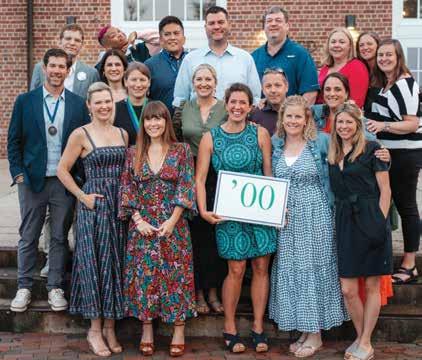
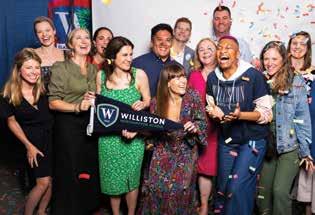
2004
A group of classmates who first met at Williston Middle School in the 1990s reunited in August at Amos Lake. In attendance were 2004 classmates Alex Teece, Thomas Cohn,

30th

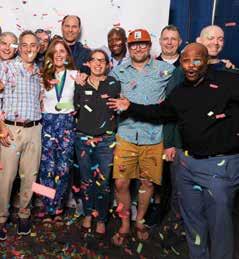
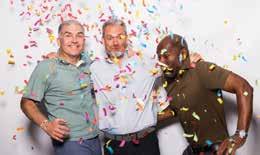

25th
REUNION
REUNION

Bryan Bolte, Josh Kaufman, Tomi Uyehara, Brian Webber, and Will Bigwood. They were joined by Sam Astor ’03.
Justine Katzenbach, Megan Litwin, Neile Golding, Sara Skolnick, and Ted Caine reunited for adven-
tures in NYC. Highlights include: da club, vests/rompers, and eating grass.
2005
The following members of the class of 2005 returned to campus to celebrate their 20th Reunion (see class photo with some attendees, below): BetsyAnn Assoumou, Sidney Baptista, Jamie Beckford, Chris Bowles, Lilah (Brown) Desabrais, James Dixon, Nell (Etheredge) Frame, Christian Hanley, Kevin Harrigan, Dee Harrison, Pete Higgins, Nate Lavigne, Hannah Morrow, Cary (Issenberg) Patel, Ryan Schille, Nate Searle, Elena Tillman, Megan (Griffin) Waidlich, T.J. Waidlich.
2006
20TH REUNION IN 2026
Jarrad Green shares: “I’m continuing to work in the entertainment industry as a singer and actor. Since marrying my wife, Ellie, who is from England, in 2020, I have lived primarily in the UK. We bought a townhouse property in the London suburbs in March 2025. In the last year or so, I have done two singing tours of much of Europe and one last fall of Great Britain, as part of a company of performers. I am currently working for Royal Caribbean Cruises on their brand-new ship, Star of the Seas, which will be in the Caribbean through next spring. I am performing
20th REUNION
Arthur “Freddie” Seabury, son of Sam (Teece) Seabury ’07

as part of the inaugural cast in the lead role of George McFly in Back to the Future: The Musical through late April 2026.”
2007
Sam (Teece) Seabury sent in photos of her baby son, Arthur “Freddie” Seabury, rocking his Willy gear.

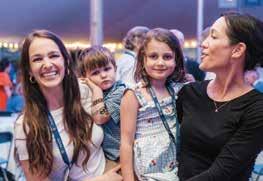
From left: Justine Katzenbach ’04, Megan Litwin ’04, Neile Golding ’04, Sara Skolnick ’04, Ted Caine ’04
From left: Alex Teece ’04, Thomas Cohn ’04, Sam Astor ’03, Bryan Bolte ’04, Josh Kaufman ’04, Tomi Uyehara ’04, Brian Webber ’04, Will Bigwood ’04
Kevin Moore ’07
Mike Silipo has landed a new job as the boys varsity lacrosse coach at St. Sebastian’s School in Needham, Massachusetts. Silipo takes the job after coaching for nine years at Boston University, most recently as the Associate Head Coach.
Kevin Moore is entering his second full season as Head Coach of the Coventry Blaze in the Elite Ice Hockey League, the top professional ice hockey league in the United Kingdom. Last season, he was named Coach of the Season after leading the Blaze to a 30-win campaign.
2008
Elizabeth Cohen-Scheer married Conor Gannon on July 5, 2025, at the Garden House at Look Park. Liz earned a doctorate in English from the University of Wisconsin, Madison. She is Chair of the literature department at Bard High School Early College in New York. (see photo on page 69).
Sam Grant has been named the Associate Athletic Director of Finance & Administration at Dartmouth College.
2009
Taylor Scyocurka is the owner and President of Green Earth Roofing Solutions.
Spencer May is making waves in Jamaica’s craft beer scene with his Wood & Water Jamaica Brew Works, launched in 2023. The brewery features ciders, IPAs, German-style ales, and stouts, often served in recycled Prosecco and Champagne bottles. May incorporates tropical flavors like tangerine, passionfruit, guava, and coffee, bringing new craft beer options to Montego Bay.
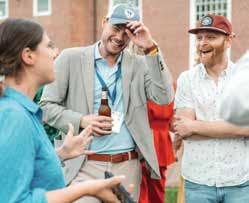
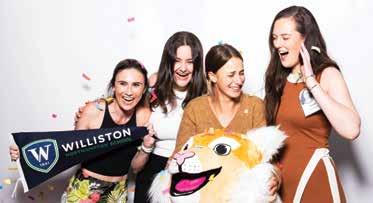
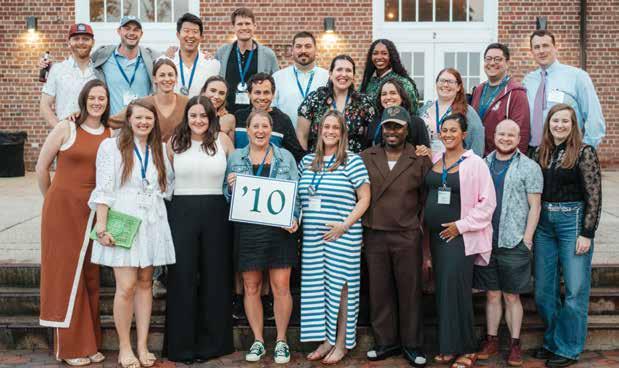

His brand honors Jamaica’s history, with a logo inspired by an old-timey bridge. After a career in wine and spirits distribution, May returned to Jamaica in 2018 and started the brewery to cultivate a local craft beer culture.
2010
The following members of the class of 2010 returned to campus to celebrate their 15th Reunion (see class photo with some attendees, above): Jenn Arboleda, Adam Chagnon, Kristina Conroy, David DeNuccio, Christina Djossa, Kristyna (Bronner) Frantz, Gabriela Garcia, Jenn
Garvin, Derrick Green, Alex (Jeffway) O’Hearn, Nathaniel JonesSikes, Reece Liang, Becca (Colasuonno) Mardula, Erin McCullough, Julia Midland, Ari Munic, Nadine Muñiz Boston, Rich Racz, Tommy Reed, Ilana Seewald, Annie Sullivan, Robby Veronesi, Shannon (Sullivan) Wotring, Chris Zombik
Katie Logan recently celebrated one year in business with her company, Logan Planning Solutions. LPS is a company looking to break the mold of the wedding industry by planning micro weddings and elopements that focus on authenticity and what is truly important to the couple. Too often, outdated traditions and expectations from others take center stage, overshadowing meaningful connection, quality time, and creating memories with the marrying
couple’s most important people. LPS is looking to disrupt that trend. LPS plans micro weddings across southern New England and elopements all over the world, creating spectacular experiences for a couple to enjoy with their most special people, instead of cookie-cutter weddings that
Erin McCullough ’10 and Alex (Jeffway) O’Hearn ’10 15th REUNION


include everyone they know. Check out loganplanningsolutions.com to learn more!
Erin McCullough celebrated the next generation of Wildcats at her classmate Alex (Jeffway) O’Hearn’s baby shower.
2011 15TH REUNION IN 2026
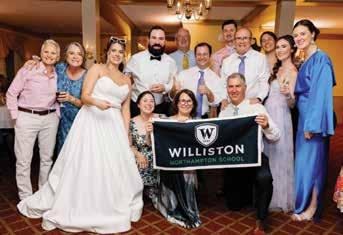
’10, Kevin Conroy ’12, Robbert Langwerden, Eugenio Garcia P’10, ‘’12, Kristina Conroy ’10, Gabriela Garcia ’10, Annie Sullivan ’10
Debbie Andres ’11 recently earned her doctorate from Rutgers University and is now teaching STEM. She has been named President-Elect of the American Association of Physics Teachers (AAPT). Debbie credits her early love of physics to her Williston Northampton School physics teacher, who was also her dorm parent.
2012
Kevin Conroy celebrated his wedding to Collin Benedict on August 2 in Waterford, Maine, with many alumni in attendance.
Hunter (Snyder) Kane and his wife, Ashley, welcomed their first baby, Sylvie, on July 22, 2025.
Alex Garcia and his wife, Michaela, were married on May 17, 2025, in Sudbury, Massachusetts.
2013
Didi (Whitman) Griffin, one of three Whitman sisters to attend Williston Northampton School, has launched her own business, Greenwich Gift Baskets.

Katie Logan ’10
Sylvie, daughter of Hunter Kane ’12
Front row: Collin Conroy, Monique and Mark Conroy. Left to right: Estey Ticknor, Laurie Garcia, Michaela Garcia, Alex Garcia ’12, Dave Sullivan P’08,
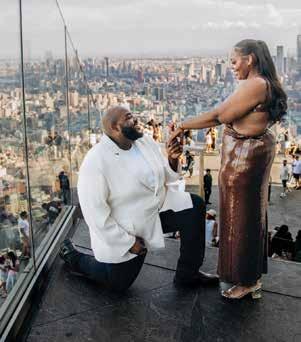
Miranda Gohh has been named a 2025 Prince/TTLP Fellow, a prestigious program supporting the next generation of creative theater producers. The yearlong fellowship provides a stipend, a budget for developing a new production, mentorship from industry leaders, and access to Columbia University’s Theatre Man-
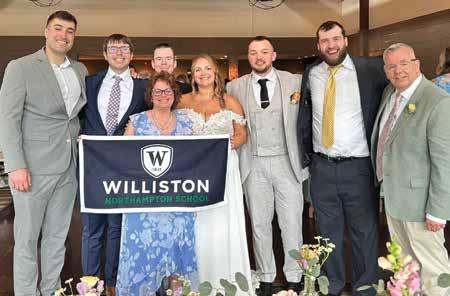
agement & Producing program. Miranda, a Tony-nominated producer, is the founder of Theatre Producers of Color (TPOC) and co-founder of The Industry Standard Group (TISG). She currently serves as Associate Producer at Mike Bosner Productions. Her Broadway co-producing credits include Gypsy, Suffs, Cabaret, Here
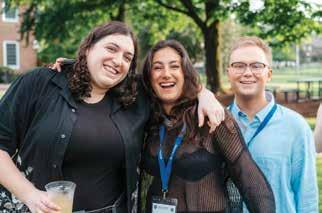
Lies Love, A Beautiful Noise: The Neil Diamond Musical, and KPOP. This fellowship recognizes her continued leadership and impact in the theater industry.
2014
Taylor (Potasky) Boland moved
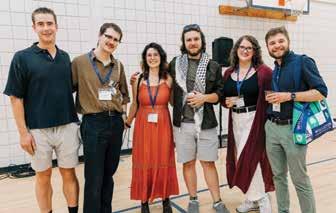
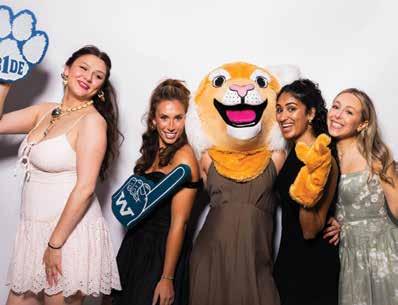

to Utah to join her family living in the Park City area after college. She became a flight attendant, flying the world with Delta, and is now a private and commercial pilot.
Marquis Francois proposed to longtime girlfriend Kiara in July—and she said yes!
Brittany Collins shares that she published her second book this year, Leveraging AI for Human-Centered Learning: Culturally Responsive and Social-Emotional Classroom Practice in Grades 6–12 (Routledge). She has three more books in the works—one for a general audience and two for teachers—and welcomes connections with anyone who has worked with youth with serious or terminal illnesses, or women living with long COVID, dysautonomia, or ME/CFS who might be interested in sharing their stories. (Read more about her on page 26).
2015
The following members of the class of 2015 returned to campus to celebrate their 10th Reunion (see class photo with some attendees, previous page): Brandon Borges, Teddy Carellas, Taylor Cheria, Milo
Marquis Francois ’14 proposing to his girlfriend Kiera
From left: Evan Cavanaugh ’15, Ryan King ’15, David King ’11, Mimi King, Jenna Moffett, Ben Moffett ’15, Chase Tanguay ’15, Mike King
From left: Connor Hagness ’22, Ava Larkin ’22, Meryl Sesselberg ’22, Rylie Tirrell ’22, Ella Mattocks ’22, Anthony Min ’22, Cooper Conlin ’23, and Jayson Alegria ’23
Cowles, Ben Cuca, Nick Dalzell, Cree Daniels, Brittany Engelman, Ashley Fitch, Lena Gandevia, Stephen Goldsmith, Coco Herbst, Cameron Hill, Marie Innarelli, Noah Jackson, Elyssa Katz, Myro Marioghae, Curt McLeod, Aidevo
Okaisabor, Caleb Parker, Mackenzie Possee, Tara Sarper, Evan Stark
Ben Moffett married Jenna Sagarino on June 7 at LaBelle Winery in Amherst, New Hampshire. Ben had many classmates, friends, and family
Lu
by his side including his mom, Mimi King, who has been a longtime faculty member at Williston Northampton School.
2016
10TH REUNION IN 2026
2020
The following members of the class of 2020 returned to campus to celebrate their 5th Reunion (see class photo with some attendees, below): Eric Albanese, Jason Albanese, Brie
th
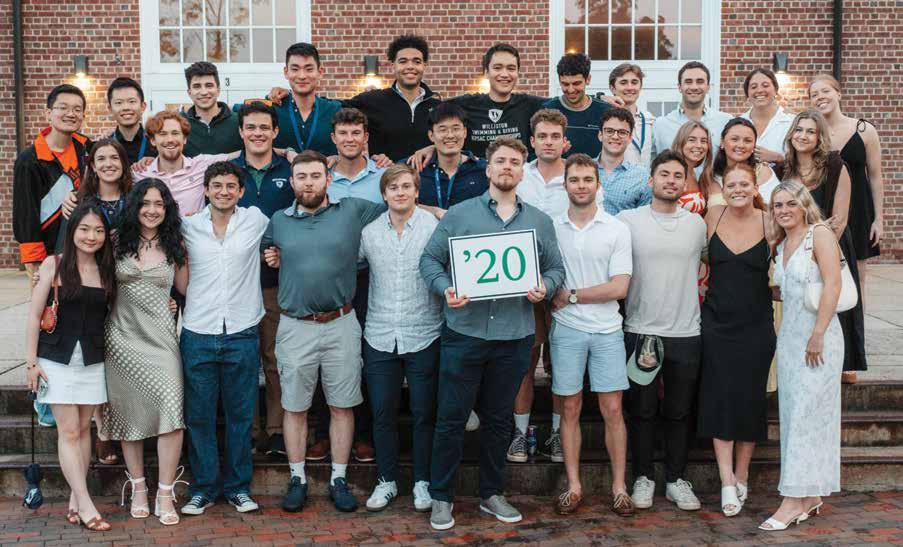
Keyu
’20 at reunion next to the 2020 class banner she designed
REUNION

Emily Crovo ’23 and Joe Easton ’23
Banas, Mike Beaulieu, Katie Borden, Henri Bourque, Noah Brooks, Penn Cancro, Maddy Cardaci, Trev Corsello, Julia Farnham, Casey Feins, Nikki Foster, Dylan FulcherMelendy, Corinne Gawle, Rachel Goodman, Ryan Goodman, William Gunn, Dylan Haaland, Sarah Kimmel, Jack Long, Keyu Lu, Fin MacDonald, Nat Markey, Jun Park, Bao Pham, Sahnet Ramirez, Riley

Alex Komessar ’22 is the owner of the food truck Pasta 212
Roche, Anya Rozario, Bryn Saarela, Lila Schaefer, Sabrina Serricchio, Cam Sherman, Mike Slate, Jack Strout, Sam Strout, Will Strout, Hal Stuart, Jonathan Toth, Vince Wang, Steven Wang
Keyu Lu returned to campus for her 5th Reunion and found the banner she created for her class for graduation! (see photo, at left)
2021 5TH REUNION IN 2026 2022
Meryl Sesselberg shared a photo (opposite page) of a recent Williston meetup in Boston including classmates Connor Hagness, Ava Larkin, Rylie Tirrell, Ella Mattocks, and Anthony Min. Also joining them


were Cooper Conlin ’23 and Jayson Alegria ’23.
Alex Komessar shared that he owns a food truck (see photo, above), became a private chef, and is in the process of starting a butter company.
2023
Emily Crovo and Joe Easton both attended the Holy Cross college meetup hosted by the alumni office this spring.
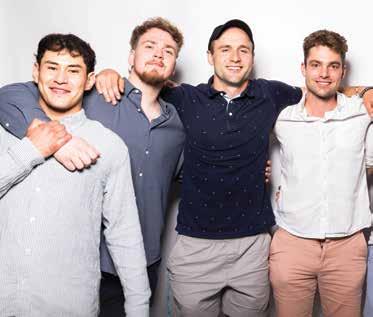
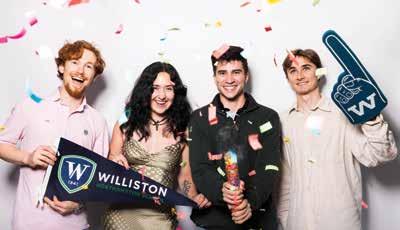
IN MEMORY
This listing contains the names of alumni whose deaths were reported to the school between April 1, 2025, and August 31, 2025, although their passing may have occurred outside those dates.
1947
Caroline (Gavin) Arnold of Leeds, Massachusetts, died April 1, 2025.
Elizabeth (Stevens) Winship of Fernandina Beach, Florida, died May 24, 2024.
1949
Robert Brown of The Villages, Florida, died April 21, 2025.
1950
Ruth (Levitan) Salloway of Boca Raton, Florida, died July 10, 2025.
1951
Barbara (Evans) Cohn of Portland, Oregon, died June 8, 2025.
Louise (Pelton) Montague of Westhampton, Massachusetts, died May 12, 2025.
1954
Andrew McKee of New Gloucester, Maine, died June 15, 2025.
Joel D. Katz of Chestnut Hill, Massachusetts, died August 14, 2025.
William J. Judge Jr. of North Adams, Massachusetts, died September 17, 2025.
Donald W. Cook of Madrid, Iowa, died September 22, 2025.
1955
Howard Shea of Natick, Massachusetts, died May 18, 2025.
Herbert M. Varnum of Worcester, Massachusetts, died September 6, 2025.
1959
John Curtiss of Waterford, Connecticut, died April 10, 2025.
Charles DeRose of Florence, Massachusetts, died July 1, 2025.
Geoffrey Hale Purdy of Danbury, Connecticut, died July 24, 2025.
1963
Roland (Rick) Wehger of Shelton, Connecticut, died April 17, 2025.
1968
Wentworth “Worthy” Durgin of Raleigh, North Carolina, died April 23, 2025.
Edward L. Kurth of San Antonio, Texas, died November 22, 2023.
1971
George M. Ewing Jr. of Minneapolis, Minnesota, died July 12, 2025.
Thomas Scott Bailey of Tulum, Mexico, died June 28, 2025.
1972
John Bruce Blackburn of Colts Neck, New Jersey, died August 10, 2025.
1979
Paul Mahan of Grayslake, Illinois, died April 4, 2025.
1981
Nancy (Archbald) Warsawski of Greenfield, Massachusetts, died March 26, 2025.
1991
Sunjay Kapur of New Dehli, India, died June 12, 2025.
1996
Eric Robert Catuccio of Venice, Florida, died on September 4, 2025.
Full obituaries and photos, when available, can be found at willistonblogs.com/obituaries, where you may leave a comment of support or remembrance.
WHO’S IN THIS ISSUE?
Your classmates are up to cool things! Find out more by flipping to the pages below.
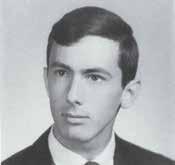
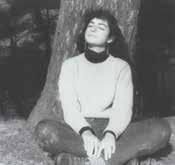
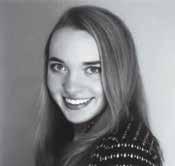
See page 28
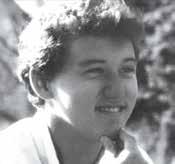
See page
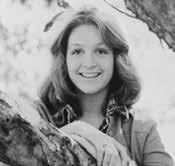
See page
See page 24
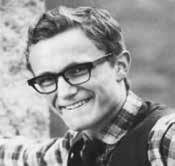
See page
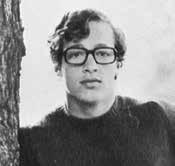
See page 38
See page 26

See page 23

See page 46

See page 20
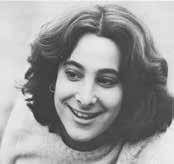
See page

See page 18
Richard “Cy” Allen ’65
Christina Belton ’85
Brittany Collins ’14
Todd Francis ’83
Bissell Hazen ’87
42
Brendan Hellweg ’14
19
Glenn Jones ’95
Sparky (Corkin) Kennedy ’75
44
Paula Monopoli ’76
17
Marc Palombo ’74
Emma Sherr-Ziarko ’07
Alex Teece ’04
Parents: If this issue is addressed to a child who no longer maintains a permanent address at your home, please notify the Alumni Office of the correct new mailing address by contacting us at alumni@williston.com or 413–529-3300. Thank you. 19
Change Service Requested