Lee Boyce CEO, Barking and Dagenham School Improvement Partnership
Claire Dorer OBE CEO, National Association of Special Schools
Andrew Lewer MBE
Former MP for Northampton South, and independent school governor, writer and consultant
Nicola Maher Senior education leader and SEND specialist
Hayley Mintern Partner, Anderson Quigley
Sophie Mustoe-Fairplay
Speech and Language Therapy Manager, Speech and Language Link
Andrew Thraves Chair of Big Education Trust, non-executive director of Academies Enterprise Trust and board member at The Confederation of School Trusts
Hugh Viney CEO and founder, Minerva Virtual Academy
DESIGN & PRINT
Fellows Media Ltd
The Gallery, Southam Lane, Cheltenham GL52 3PB 01242 259241 hello@fellowsmedia.com
ADVERTISING
Alice Ireson alice.ireson@fellowsmedia.com 01242 259249
PUBLISHER
William Clarence Education Ltd
DISTRIBUTION
(Print & Digital)
This issue of SENDsational Futures is being distributed at the Schools and Academies Show May 2026); to all UK special schools and to independent school SENCOs.
Foreword
Hello, and welcome to the first quarterly print issue of SENDsational Futures
Hopefully, you will have noticed our online presence at sendsationalfutures.com as we strive to become a major voice in the SEND landscape.
Our first print edition could not be more timely and comes just weeks after the announcement of the Schools White Paper, in which the government outlined its thinking on the future of SEND provision.
The document, Every Child Achieving and Thriving, comprises the biggest changes around SEND provision and funding in many years. With that in mind, on page 6, we provide an ‘at-a-glance’ explainer of what the reforms will mean for SEND pupils, their families and schools.
The White Paper coverage continues on pages 10-11 with insights into how local authorities are meeting the challenges ahead and, on pages 12-13, Sara Alston talks us through how schools can reduce the anxiety and disruption of frequent change and transitions during the school day as they become more inclusive.
Meanwhile, Liz Murray calls for SEND to become a specific career pathway for teachers and school leaders as a means of creating a truly specialist and expert workforce. You can read her article on pages 16-17.
Our profile, on pages 8-9, is of Kasia Sillars, a specialist SEND teacher working in the north-east of England. Kasia has experience of both the Polish and British SEND systems and talks about how they compare and what they might learn from each other.
Marie Difolco, whose son is colour-blind, shares a candid and heart-rending story which will resonate with every parent who has fought long and hard to ensure their child’s academic needs are met. Read their fascinating story on pages 34-35.
And there is lots more inside!
Our next print edition will be in the summer, but in the meantime check in on us at sendsationalfutures.com, where we update our news, features and information sections regularly.
No part of this magazine may be reproduced without the permission of the publisher. The information contained in SENDsational Futures has been published in good faith and every effort has been made to ensure its accuracy. All liability for loss, disappointment, negligence or damage caused by reliance on the information contained within this publication is hereby excluded to the fullest extent permitted by law.
authorities are ahead of the curve with SEND reforms
transitions within the school
Kasia Sillars
AI is changing learning for pupils with SEND
School Management Plus has launched a new sister website focused on one of the most important areas of UK education: special educational needs and disabilities (SEND).
The transformational impact of nature
SENDsational Futures is aimed at everyone involved in supporting children with special educational needs. A new and growing online and print publication, it offers a wealth of advice and information on working in – and navigating – this challenging but vital part of the education system. Our content includes topical news articles, opinion pieces and school profiles.
If you’re a school or MAT leader, Senco, teacher, SEND expert/consultant or parent who wants to contribute to our coverage, please get in touch: editor@SENDsationalfutures.com
Making careers education 'less about careers'
the balance
Find us at sendsationalfutures.com and @sendfutures Check in regularly on our website, follow us on LinkedIn and look out for our future print issues being published later this year.
Schools White Paper –what does it mean for children with SEND?
What you need to know about the proposed reforms
Individual Support Plans (ISPs) are the key new development in the government’s proposed reforms of SEN, set out in its Schools White Paper, and will provide a layered system of support.
It means that EHCPs will, in future, be awarded only to children with the most complex needs that can’t be met in a mainstream setting, following a threshold assessment.
Some of the reforms outlined in the documents won’t come into effect until 2029, but the government expects many will take shape sooner, as schools and parents “realise their benefits”.
A universal offer for all children
The universal offer will have a new baseline for mainstream schools that will include all pupils, and most children will have their needs met under this tier, with teachers trained to meet their needs and expectations.
This is part of the government’s plan for more SEND children to be educated in mainstream schools.
Layers of support
A child may need another tier of support over and above the one offered as universal, and there will be three of these layers:
• Targeted support will be for pupils with “ongoing and commonly occurring needs” which cannot be met under the universal offer, and will be designed with consultation with parents and carers. This might include small group interventions, or “pre-teaching”
key vocabulary to help access the curriculum, Their needs will be contained in an ISP.
• Targeted plus will be for pupils requiring more specialist help, and they will be given access to the new “experts at hand”, a local team of specialists, including educational psychologists or speech therapists, for example, on whose support schools can readily draw. Pupils in this layer will also have an ISP and access to the new inclusion bases, where they might receive interventions before returning to the mainstream setting.
• The specialist tier will require mainstream and specialist settings to work together with children with the most severe and complex SENDs. Only these children will be eligible for an EHCP in the future.
What will happen to EHCPs?
EHCPs will be created after specialist package and placement decisions have been made for children with the most severe and complex needs. If an EHCP is found not to be required, other appropriate support will be put in place, through an ISP.
From 2029-2030, there will be new thresholds against which children will be assessed as they move through phases of their education.
Pupils currently in Year 3 and above will retain existing EHCPs until at least the age of 16. Those who are in Year 2 and younger will be reassessed as they leave primary school and move to secondary.
Pupils whose needs are found to be best met with additional support in mainstream will transition to an ISP.
Tribunals to be a "last resort"
Most complaints around SEND provision will be heard through independent mediation services rather than tribunals, which will focus on complaints relating to council decisions not to carry out needs assessments.
The idea is to stop lengthy and expensive legal cases between families, and local authorities and schools.
Review of special school curriculums
The Department for Education (DfE) will work with experts to review “good curriculum practice” in special schools, after these schools indicated that they would welcome national best practice guidelines.
Special schools and alternative provision (AP) will provide specialist outreach and short-term placements for some children and young people enrolled in mainstream settings.
School inclusion strategies
There will be a new duty on schools to produce an annual inclusion strategy, which will replace SEND information reports. These will be assessed by Ofsted to check they are embedded in school practice and that the school is delivering.
Updated code of practice
The existing, statutory SEND code of practice will be updated and subject to a consultation.
All settings will have to ensure staff receive training on SEND and inclusion. The code will include new areas such as executive function, sensory, speech, language and communication, and social and emotional needs. Schools will also have to show how they support all pupils with mental health needs.
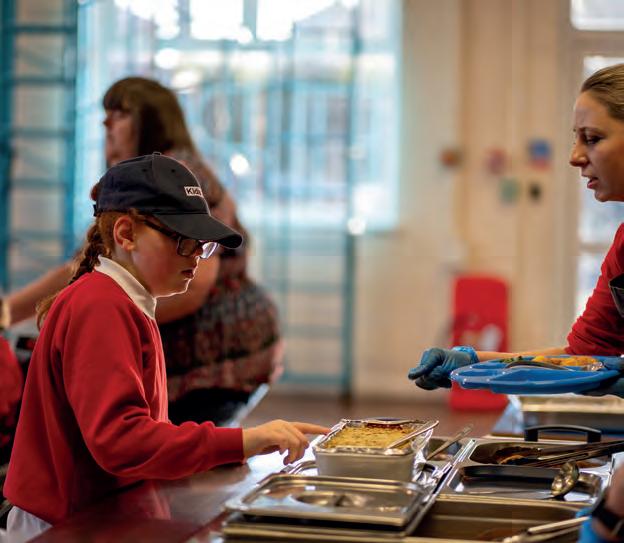
Catering for Every Child: How apetito Supports SEND pupils
Rupert Weber, General Manager of apetito’s Education Division explores how a prepared meals service can deliver meals to suit every child’s needs.
"In the UK, the demand for Special Educational Needs and Disabilities (SEND) support is rising dramatically, posing reals difficulties for SEND schools, as they face a number of challenges including staffing shortages and funding constraints.
“For many SEND schools, the challenges they face extend to the kitchen. We know up and down the country, schools are facing increasing food and labour costs. School meals being served also lack the consistent quality which many SEND pupils need to feel safe and secure. The effects of labour shortages are also felt in the kitchen, with many schools struggling to recruit kitchen staff. There are even smaller SEND schools who want to change and improve their meal provision but struggle to find
it is to provide every child with nutritious meals that suit their individual dietary requirements. Our prepared catering system offers flexible menus, which allow schools to offer an expansive range of nutritious dishes, from classic favourites to exciting new tastes, ensuring there’s always something for everyone. Whether your pupils require specialist diets or simply enjoy familiar flavours, we provide both comfort and adventure on their plates.
and texture modified meals to ensure the dietary needs of all your pupils are catered for and we have three on-site laboratories where we conduct rigorous food safety tests for microbiology, allergens and nutrition, so schools can have total peace of mind and reassurance in the safety of our meals.
a provider willing to take on smaller schools.
“Here at apetito, we’re on a mission to transform SEND school catering and we’re proud to be different. As the UK’s first and only prepared meals system, we offer unrivalled food quality and benefits to schools, which can’t be achieved in traditional in-house or contracted kitchen. We’re already feeding thousands of children a day at SEND schools of every size and like to think of ourselves as ‘inhouse made easy’.
“We’re passionate about delivering a personalised meals service that suits every child’s needs and know how vital it that pupils are able to enjoy nutritionally balanced meals that support their wellbeing and give them fuel they need to focus whilst at school!
“We know how important
“Working closely with our in-house dietitians and nutritionists, our dishes are designed to not only be tasty but also meet the highest nutritional standards. We even have a dedicated Nutritionist to support schools with menu planning for children with complex dietary needs, taking into consideration selective diets and fear of unfamiliar foods.
“We know that consistency of meals is extremely important to SEND pupils.
Our meals are cooked using same recipe, every time, so our dishes will look and taste identical every time. Our unique service also means we can easily adapt to the specialist needs of individual pupil, whether that is catering for texture modified requirements or delivering separate components of meals.
“Food safety is also a huge benefit with our model. We have ranges of allergen free
“With apetito, not only are SEND schools able to guarantee consistent quality but our service also creates efficiencies in the kitchen. Unlike traditional kitchen setups that demand a team of skilled chefs and kitchen staff to source ingredients and prepare meals from scratch for pupils with increasingly diverse dietary requirements, our catering system eliminates much of this labour-intensive work.
“In fact, our pre-prepared system typically requires 50% less staff and completely removes the requirement for skilled cooks and chefs, which in turn protects schools from the volatile labour market.”
Transform Your School Catering Today
“apetito’s service provide outstanding quality, simplified operations and serious cost savings in every bite. We proudly serve over 30,000 pupils daily and ensure that every child receives the highest quality, chefprepared, and nutritionistapproved meals that fuel their learning and well-being.”
Reach out to us today and discover how apetito can transform your school’s catering by visiting: apetito.link/SENDFutures
PROFILE: Kasia Sillars
Kasia brought her SEND experience and expertise to the UK from Poland, and sees the advantages of both systems
SCHOOL Percy Hedley Foundation, Percy Hedley School ROLE Lead Teacher
How did you come to be a SEND professional?
I didn’t plan a career in SEND – it found me. I started as a volunteer with the Podaj Dalej Foundation in my hometown, and very quickly I realised I was witnessing something powerful: families, professionals and individuals with SEND working together with passion, honesty and hope. That experience stayed with me and shaped every decision that followed.
I chose to study Special Pedagogy at The Maria Grzegorzewska University in Warsaw, completing both a Bachelor and a Master's degree, specialising in intellectual disabilities, rehabilitation in multiple disabilities and social care.
What mattered most to me was practice and working directly with children, young people and adults through the Son-Rise Program, rehabilitation foundations and charities supporting children and adults with learning disabilities and physical disabilities.
I was fortunate to learn alongside and be mentored by leading researchers and professionals in the field of disabilities, whose evidence-based thinking and ethical approach strongly influenced my practice.
Working within high-quality educational and therapeutic settings, and alongside some great practitioners in the sector, reinforced my belief that effective SEND provision must be grounded in both strong research and meaningful day-to-day work.
My goal has been to create an environment where pupils don’t just get by – they truly thrive and reach their full potential.
Alongside this, wheelchair rugby became a major part of my life. I spent over ten years as an international referee, learning from athletes about resilience and identity in the face of disability.
In 2012, I moved to the UK to see how SEND worked in a different system. I expected to stay here for a year or so. But I stayed because I found a sector that, at its best, genuinely strives to see the whole person, particularly through
organisations like the Percy Hedley School, where education and therapy are deeply interconnected.
How does SEND education in Poland differ from the UK?
From my experience, the Polish SEND system differs from the British one in ways that reflect their very different cultural and educational contexts.
In Poland, support is generally based on a formal diagnosis, with psychological-pedagogical counselling centres providing decisions that define a child’s needs and the type of provision they should receive.
This approach can give families a sense of clarity and structure, and specialist schools are more commonly used and socially accepted.
In contrast, the British system places greater emphasis on inclusion and individual rights, focusing on supporting children in mainstream schools and involving parents closely through processes such as Education, Health and Care Plans (EHCPs).
I believe both systems have clear strengths as well as limitations, and neither is perfect. They are shaped by different cultural expectations and, in my view, both could learn from each other to improve the way children with SEND are supported, ensuring more consistent and high-quality provision for all.
How do you think you have contributed to your school from your background and different perspectives?
I feel fortunate to work in a school that values my background and experiences. In my Lead role, I’ve helped develop a holistic curriculum for some of our most complex learners, shaping therapeutic and educational approaches to meet their needs.
I hope I’ve brought a fresh perspective on learning, by understanding that children learn in different ways, valuing their metacognition and helping break down barriers.
Working with colleagues, I’ve focused on ensuring pupils and families have their voices heard, improving assessment systems and translating government policy into meaningful, evidence-based practice.
I’ve also used my more unique academic background to think strategically about school systems and policy, ensuring our approaches are sustainable and effective.
Above all, my goal has been to create an
environment where pupils don’t just get by, but truly thrive and reach their full potential.
How do you relax after a busy day at work?
I like to combine simple pleasures: a walk in nature, a bit of meditation and, most importantly, enjoying some good food. I find it especially hard to resist and enjoy the North-East’s epicurean culture. It helps me relax, recharge and make sure I don’t burnout, reminding me that there’s life beyond work.
If you had not gone into teaching, what might you have done instead?
I’d have focused on shaping policies and strategies for people with disabilities. My passion is ensuring systems work effectively, inclusively and in ways that genuinely improve the lives of children, adults and families with SEND.
If you had ten minutes with the Secretary of State for Education, what advice would you give them?
As Mahatma Gandhi said: 'A society is judged by how it treats its most vulnerable members.' Yet austerity and funding cuts too often make children and adults with SEND pay the price for short-term savings first. Supporting them isn’t just a legal or financial obligation, but it’s a measure of our morality, our public service and the kind of society we want to be.
If I had ten minutes with the Secretary of State for Education, I would focus on three priorities.
First, invest in early identification and intervention. Children with SEND benefit enormously when their needs are understood as early as possible and supporting schools, families and local services to respond quickly is both lifechanging and cost-effective.
Second, strengthen the workforce. Teachers, therapists and support staff need specialist training, professional development and must feel valued, because their expertise directly shapes children’s outcomes.
Third, listen to lived experience. Families and children with SEND should be central to decisionmaking, ensuring policies reflect real-life needs.
So, in a nutshell: invest in people, listen to those on the ground and never lose sight of the children themselves – and remember that there is a human cost to funding cuts that isn't always as visible as it should be.
Councils at the forefront of SEND reforms
Local authorities have been restructuring their provision ahead of proposals
Back in December, and two months ahead of the publication of the Schools White Paper and SEND reforms, the Department for Education quietly contacted local authorities to tell them to begin their reforms immediately.
The letter told officials to start assessing their current plans to “ensure they are real best outcomes and value for young people”.
The term 'value' is crucial here.
The subtext was that the government wanted local authorities to save money, and there is nothing more expensive than sending SEND children out of their area or to independent school provision because their needs cannot be met locally.
On average, it costs councils around £10,000 each year to teach a child in a mainstream setting, but that rises to £24,000 for children attending a statefunded special school.
With demand for these places outstripping the number available, councils have been placing children with SEND in private special schools, at a cost of £64,000 per child each year – a practice the government wants to end.
But some town halls were already ahead of the curve. Up and down the country, plans are already in place to tackle the growing SEND crisis and improve provision locally.
Huge savings in Somerset
Among those making large-scale changes was Somerset Council.
The local authority expects to open more than 20 new SEND units in the next two years, as part of a £27 million cost-cutting measure.
Council leaders said that without a restructure of its SEND provision, the county would face a cumulative debt of almost £500 million by 2032-33.
The first units will be set up in some mainstream schools in Bridgwater, Burham, Cheddar, Hatch Beauchamp, Taunton, Crewkerne, and Watchet, with further units opening over the next two years.
The local authority wants SEND children to be taught in classes of six to eight pupils, rather than the current average of 30.
“This means creating a wider array of school places closer to where children live and a reduction in journey time,” said Councillor Heather Shearer, Somerset’s lead member for Children, Families and Education.
“As a large rural county, travel to school is a regular feature of the school system. However, too many children are travelling excessive distances with associated disbenefits for their wellbeing and family life.”
The programme will cater mainly for children with autism, ADHD, speech and language difficulties, and emotional dysregulation.
The SEND units will expand the number of local specialist places and reduce the pressure on special schools. As of May 2025, Somerset Council had 6,052 children with an
EHCP – a 132% rise over the past five years. As a result, the county’s special schools are full.
Shearer added: “The Council is having to help more children with SEND whilst struggling with finances. Places in independent schools are much more costly for the Council. That’s why we are looking at innovative, pacey solutions to increase the number of places within mainstream schools.”
Reflecting pupil needs
North Tyneside was among the local authorities releasing plans for restructuring of SEND provision ahead of the White Paper, including the closure of a specialist provider for children with moderate learning disabilities, expanding the age range of a special school and the opening of two new units elsewhere in the area.
North Tyneside Council said that the reorganisation would “better reflect” pupils’ changing needs, despite concerns that some youngsters could “fall through gaps”. However, many local people disagreed with the closure of the special provision, claiming children may have to travel further to get the support they need.
The council plans to open two SEND units in primary schools, one focussing on language and communication and the other on social, emotional and mental health needs.
Councillor Peter Earley, one of the cabinet members, said: “I think the plan sets out how we are going to put support for children with special educational needs at the right level and in the right place, to enable more children with those needs to
stay in mainstream education. I think that is one of the most important things we can do.”
More places in mainstream
In Oxfordshire, reforms include educating more SEND children in mainstream schools.
The county council wants to expand its ‘enhanced pathways provision’ into 40 state schools to support more young people with SEND, including pupils who are non-verbal.
The council said it needed to find new solutions to address the imbalance between government funding and local demand, and is forecast to have a high needs funding deficit of £153 million this year.
Expanding special schools
Meanwhile in Bradford, councillors approved funding of more than £22 million to create an extra 450 special needs places.
Bradford Council’s executive signed off the funding to expand existing special schools and create new SEND places to tackle a shortfall, which currently stands at more than 330 places.
A report to the council’s executive said efforts to create more SEND spaces had been previously hampered by a government decision in
2023 to refuse the opening of a new special school.
It added: “Bradford, like many local authorities, is struggling to meet the needs of a growing number of children with EHCPs or that require additional support.”
It said the problem was creating issues “such as overcapacity in schools and classrooms”, pupils “travelling long distances” to school and “increasing numbers being placed in the independent sector due to a shortage of places”.
One chance to get it right
Tim Coulson, director of the Department for Education’s regions group and Amanda Doyle, the NHS’s SEND lead, who co-wrote the letter to schools before Christmas, told councils: "System-wide change will take time, and our children and young people only get one chance.
“We must therefore begin this essential work now and your leadership and partnership is critical to this.”
Since the publication of the Schools White Paper in February, Bridget Phillipson, the education secretary, said she would give herself powers to refuse the creation of new private special schools, claiming the private-equity firms backing many of them were “sucking money out of the system”.
And under the SEND reform proposals, tighter controls were announced on private school fees to increase financial transparency.
The move away from private provision puts the onus firmly on local authorities to ensure pupils' needs are met.
Maggie Todd is a freelance education journalist.
Supporting transitions within the school day
Many SEND children struggle with change while in school – but we can help to lessen the disruption
In schools, a transition means a movement or change in the environment, relationships, behaviours, routines, roles and expectations.
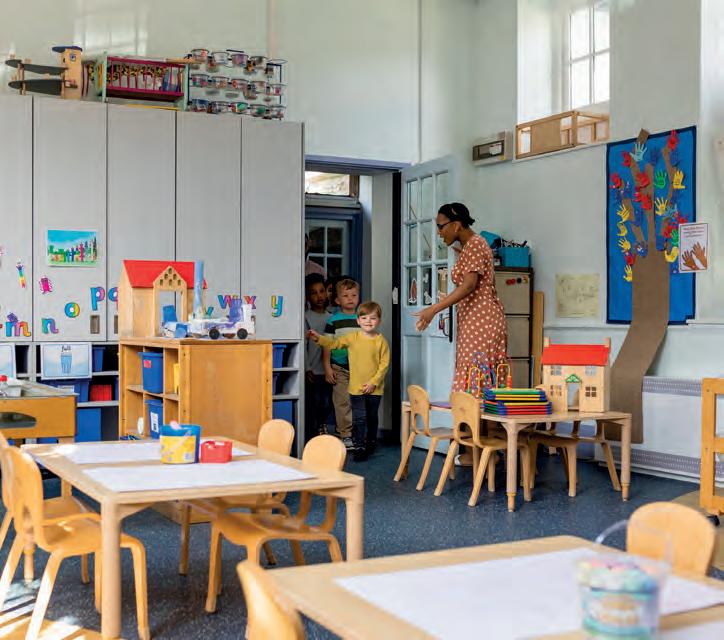
Children must manage this multiple times a day. Even when primary pupils remain in one classroom throughout, the daily transitions include coming into and leaving school, moving between activities within a lesson, moving from the carpet to a table place and going to assembly, play, lunch, PE and possibly interventions or other groups.
As they get older and the number of room and subject changes increase, the demands on children who struggle with change increase further.
Why do children struggle with transitions?
It is not just children with autism who struggle with change. Children with attachment issues or anxiety, those with experience of bullying and those who struggle to understand the workings and expectations of the school system, can also find transition problematic.
Children are also affected by whatever happened before they came to school, and this will impact their ability to manage change on that day.
How to support transitions
It is important to recognise and accept children’s emotions and worries, and to give them time and safe places. If possible, calming activities need to be introduced before the child is at the point of crisis.
The more we can remove uncertainty, the more confident the child will feel to manage transitions. Visual timetables displaying what is planned for the day, including lunch and home time, are essential for all children.
This should be enhanced with the use of an ‘Oops’ card. Often things do not go as planned and there are changes at short notice. The ‘Oops’ card is a way of marking this and explaining that the change is safe.
Support on entering the room
Transition is not a problem that can be solved once – it needs to be supported repeatedly and consistently.
Changes within the school day challenge their sense of security, confidence and belonging, and produce unknowns and uncertainty. Doing something once, does not mean they feel secure enough to do it again. We should not assume because children can manage some changes, they can manage all of them.
They may be able to manage change in a familiar setting, with familiar people and activities, but as soon as one of these variables change – for example, if there is a supply teacher, it rains or the seating plan is different, transitions can become more challenging.
The biggest change for many children is coming into school or classroom. Supporting them in those first few moments can make a huge difference to the whole day or lesson.
• Meeting and greeting children as they come into the room. A simple hello and a smile make them feel welcome, valued and wanted. This interaction allows the adult to assess where the child is and implement support if needed.
• Give them a job or role. Some children benefit from a particular role in class, so they know what they will be doing as soon as they enter and that their input is valued.
• Staggered starts. These are great for children who find coming into school with everyone else overwhelming. They may need to come in earlier,
later, or through the office. Some calm time with an adult before lessons start can be comforting.
• ‘Morning’ slides. These provide familiarity and security as children enter the class and should be the same every day/lesson. They provide expectations for the lesson, and reminders about the equipment needed. This can be adapted so each lesson starts the same way. It is important that children are not penalised for what they cannot help. This quickly exacerbates issues increasing anxieties and difficulties with transitions.
Change within the lesson
The teacher knows what should be happening in a lesson because they planned it, but this will not be clear to the pupils. Tracking on the board where we are in a lesson can help children have a greater understanding of what is happening, and how much of the lesson is still to come.
It might look like this: Entering the room > teacher input > individual working > group learning > last five minutes.
Some other approaches might include:
• Now and next cards. Some children need the visual timetable broken down further, so that it is divided into ‘now and next’ cards. ‘Now you will do this, next you will do that’. For children who need regular rewards and motivation, this works better as ‘if ... then’: ‘If you do this, then you can do this’.
• A task management board. This breaks down the tasks expected within a lesson into smaller steps. Ideally, this list will be written with the child. As each stage is completed, the child can tick it off, providing reassurance that they are doing the right thing and making progress.
• Checklists for specific times of day. These relate to points of the day or tasks, for example, changing for PE, getting their belongings at the end of the day or going to a music lesson. They provide security and reduce anxiety about the transition.
Out to, and in from, play
Unstructured times in school provide a significant change in environment, relationships, behaviours and expectations. For some children, these ‘fun’ times are more stressful than the more controlled and predictable environment of the classroom. In addition to the strategies in place elsewhere in the day, support at this point of the day could include:
• Time to calm and readjust to the changed expectations of the classroom environment.
• A safe and quiet place available during the break.
Sensory issues
In some children, difficulties with transitions are based in sensory issues, which relate to changes in noise, movement or verbal stimuli. Some pupils find it hard to sit comfortably. Neither school chairs nor sitting on the floor are sustainable for many children, but they can be supported by:
• Movement breaks. Often, simply a chance to stretch or hand out books is enough, though some children will need time outside the classroom to re-set effectively.
• Use of fidget objects or toys to support learning.
Evaluating and celebrating success
To build children’s resilience and confidence to manage transition successfully, we need to not only notice and respond when they struggle, but also identify when they manage successfully, highlighting and praising this. This is key to building their independence.
Equally, if we are to support children to manage transitions successfully, we need to be consistent. If support is in place when some staff are present, but not others, this increases uncertainty and anxiety. Effective communication and a shared agenda are key to effective support for transitions. Transition is not a problem that can be solved once – it needs to be supported repeatedly and consistently.
Sara Alston is a SEND and safeguarding trainer and consultant. Go to: seainclusion.co.uk
AI is helping SEND learners in remarkable ways…
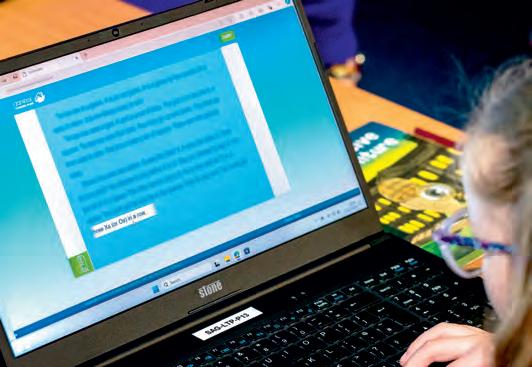
Artificial intelligence is no longer science fiction – it is helping SEND pupils to become more efficient learners
Technology can transform education when we understand both its potential and its limitations.
What is AI, really?
AI is technology that analyses its environment and responds according to goals it was designed to achieve. Think of the speech-to-text feature on your phone – it analyses the sound waves of your voice and translates them into text on screen. And so, AI’s two most powerful characteristics for special educational needs are autonomy and adaptivity.
The speech-to-text doesn’t need constant supervision to work (autonomy), and it adapts to different voices, accents, and speaking patterns (adaptivity). These same principles make AI incredibly valuable for supporting diverse learning needs.
The power of adaptivity in learning
AI can genuinely meet students where they are in their learning. Imagine an AI reading support system that listens to a student read aloud, analyses exactly where they struggle, and provides
targeted feedback in real time. Unlike a human teacher managing thirty students, this AI tutor has infinite patience and can adapt its approach moment by moment.
The AI simultaneously builds a detailed picture of pupil progress, creating rich data about exactly where each student excels and where they need support.
Real-world applications
AI is already supporting special educational needs in numerous ways:
• Visual recognition tools help students with reading difficulties by converting text to speech or providing visual cues.
• Predictive text and grammar checkers support those with dyslexia or writing challenges.
• Communication aids can help nonverbal students express themselves more effectively.
• Personalised learning platforms adjust content difficulty and presentation style based on individual learning patterns.
A word of caution
Despite the possibilities, we must approach AI thoughtfully. Commercial
interests largely drive the current AI boom. This puts pressure on schools, families and students to adopt technology solutions without clear educational purpose, creating an urgent need for AI readiness in schools.
Three key steps towards starting to get to grips with AI
• Ask yourself, ‘what do I want the AI to achieve for me and my students?’ Defining the outcome will help you take a purpose-driven approach for implementation.
• Get a policy in place for your institution by forming a team and working collaboratively.
• Ensure that you understand the safeguarding risks and requirements of adopting AI.
Rose Luckin is professor of Learner Centred Design at UCL Knowledge Lab and the director of Education Ventures Limited. For more information, go to educateventures.com
Tackling the SEND teacher training gap
A SEND-specific Initial Teacher Training pathway would strengthen teachers' skills from the start of their careers
If the Department for Education’s (DfE) recent training announcement is any guide, hopes are high that the Schools White Paper’s promise to improve and expand teacher skills in SEND will be fulfilled.
At least, we hope so.
So far, no one is really talking about a career pathway in teaching that would specialise in SEND, and perhaps they should.
The £200 million investment in courses is intended to help teaching staff adapt their teaching to meet a wide range of needs in the classroom, including visual impairments and speech and language needs.
So far, no one is really talking about a career pathway in teaching that would specialise in SEND, and perhaps they should.
The DfE says these courses will help teachers to transform children’s access to education, such as using assistive technology like speech-to-text dictation tools, and building awareness of additional needs amongst all pupils, so every child can succeed.
Some of these specialists will also be needed as ‘experts at hand’ to which schools can turn for support, according to the SEND proposals in the government’s plans.
Underpinning the training will be a new expectation set out in the SEND Code of Practice, confirming that all staff in every nursery, school
and college should receive training on SEND and inclusion – making sure that every teacher nationwide is reached.
It is a welcome and much-needed intervention which addresses a long-standing gap in the sector, with the potential to raise the bar for distributed accountability across trusts and schools.
And it will finally move away from the outdated culture in which the SENCO is seen as solely responsible for the identification and support of pupils with SEND.
Making SEND a career choice
But the impact of this initiative will depend heavily on the quality of its design and delivery. If the training is developed and led by experts with a proven track record, it has the potential to be truly transformative.
It is particularly positive to see that teachers and teaching assistants will receive training focused on the practical aspects of identification and classroom adaptation.
This is essential if the initiative is to deliver impact quickly; it should not require a prolonged period before meaningful change is seen in classrooms.
The inclusion of early years provision is also encouraging, as it should support earlier and more accurate identification of need.
Timely intervention can make a significant difference, preventing needs from being exacerbated by delays in support.
A truly inclusive system requires teachers who are equipped with a specialist skillset from the outset of their careers.
While it is welcome that leadership training is referenced through National Professional Qualifications (NPQs), there is a strong case for this to be extended further to ensure that inclusive practice is consistently embedded at every level of school and trust leadership.
A SEND-specific Initial Teacher Training (ITT) pathway would complement and strengthen this work.
With increasing numbers of pupils presenting with complex needs across both specialist and mainstream settings, a truly inclusive system requires teachers who are equipped with a specialist skillset from the outset of their careers.
It is this teacher development gap which needs to be among the fundamental issues addressed. This gap has developed because a mainstream framework still dominates teacher training, forcing SEND ITT routes to ‘bolt on’ rather than stand-alone.
Supporting success
Supporting Education Group, working with Oxfordshire-based SEND specialist multi-academy trust, The Gallery Trust, launched a successful primary SEND ITT programme in 2024.
It’s a success story which has prompted interest from trusts around the country.
The programme has seen more than 70 teachers graduate and go on to work in SEND schools in the main, with another 127 currently on the programme.
However, an issue they have identified is that applicants working in specialist settings where pupils are at Key Stage 3 can’t be accommodated on this or other similar programmes, as they don't align with primary pathways – and they can’t access secondary routes if pupils are not engaging with the Key Stage 4 curriculum.
This is because SEND ITT provision is still expected to work within a framework set for mainstream teacher training. Current ITT regulations enforce agephase rules that don’t fit SEND contexts.
SEND ITT provision is still expected to work within a framework set for mainstream teacher training.
As Harry Paget-Wall Collins, Deputy CEO of The Gallery Trust, said: “The clear problem is that the current age-phased ruling prevents some trainee teachers accessing SEND ITT, impacting on their choices and opportunities for appropriate training and development from the start.”
While the government’s £200 million announcement is welcome and will make a difference to the level of SEND support in our schools, a close look needs to be taken at the principles which underpin training routes.
I’d urge for the return of developmental stages, rather than age-phase, as the organising principle for SEND ITT.
Much is riding on the success of the proposals contained in the White Paper and the ongoing SEND consultation. They must address some of the structural issues present in existing teacher training routes.
Crucially, the reforms should lead to greater understanding at all levels of the workforce and support a cultural shift towards genuinely inclusive school communities.
Liz Murray is SEND director at Supporting Education Group (SEG), and the former director of SEND for Star Academies.
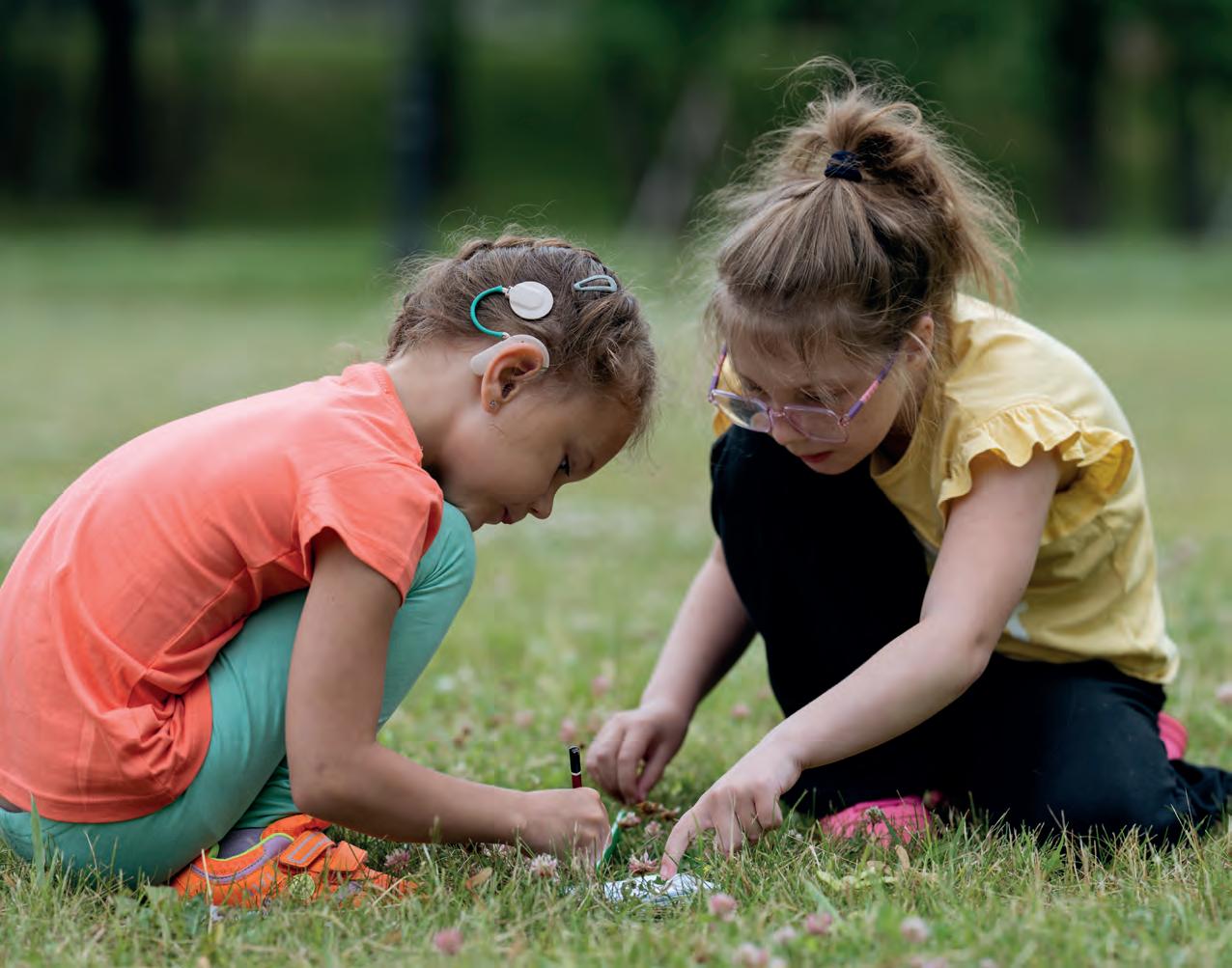
The transformational impact of nature
Forest schools allow children with SEND to really breathe and be themselves
Something remarkable happens when children step into the woods.
For many, it’s a spark of curiosity. For others, especially those with special educational needs and disabilities (SEND), it can be the first time they truly exhale.
Forest schools offer a holistic, nature-based approach that nurtures the whole child. For those with additional needs such as ADHD, autism, or sensory processing differences, the shift from an overstimulating, structured indoor setting to a natural, unpressured outdoor space can be life-changing.
In the woods, academic ability takes a back seat to real-world problemsolving, communication and resilience.
Nature as a regulator
One of the most immediate effects we witness is how children begin to selfregulate in the woodland setting. Nature has a unique
rhythm that is gentle, nonjudgemental and full of calming sensory input.
The rustle of leaves, the sound of birdsong and the texture of bark and earth all help reduce anxiety and overstimulation.
For many SEND children, who may struggle with transitions or loud, busy environments, the forest offers predictability without strict structure. Children move at their own pace, guided by curiosity instead of a timetable.
This sense of safety and freedom helps reduce challenging behaviours. Rather than being corrected or contained, children are supported to explore, make choices and discover their strengths.
Learning without limits
exploration and connection.
Activities like den building, fire lighting, nature crafts and wildlife tracking allow children to engage hands-on, developing practical skills, creativity and critical thinking.
Many SEND learners feel alienated in traditional education settings. In the woods, academic ability takes a back seat to real-world problemsolving, communication and resilience.
Nature has a unique rhythm that is gentle, nonjudgemental and full of calming sensory input.
Emotional and physical growth
Beyond learning, forest school supports emotional wellbeing. Children learn to navigate social situations, take safe risks and build relationships with peers and adults in a relaxed environment.
Many children arrive shy, frustrated, or withdrawn and leave with a sense of pride and belonging.
Forest school is not simply outdoor play. It is a carefully facilitated, child-led learning experience grounded in
Tasks are open-ended and adaptable, allowing every child to participate and succeed in their own way. The result is increased selfesteem, genuine engagement and a love for learning that often spills over into other areas of life.
The physical benefits are just as important. Climbing, balancing, digging and exploring uneven terrain improves coordination, strength and motor planning. Unlike formal PE, this movement is integrated naturally into play and exploration, making it accessible and enjoyable for all.
A parent’s perspective
Jenny, whose son, Dan, has ADHD, shares their experience:
“When COVID-19 hit and the country went into lockdown, Dan really
struggled with not being allowed outside. Before that he would regularly go round the block for a few laps between completing schoolwork.
“Then, suddenly, he was forced to sit at a computer for hours a day and really struggled. It was causing issues within the family with all of us online completing tasks, as I was a teacher teaching my class online whilst also trying to keep the peace.
he had lost through all his outdoor activities and clubs being taken away. He would come home smiling and talking about what he had learnt, what he had seen. He also engaged better with the online work.
studying forest management and arboriculture, they supported him with his work experience hours, meeting with his tutor to find out how they could best support him.
Made possible by nature–loving partners
“As he has gained his chainsaw qualifications, he has helped to assist with their tree management. If Dan has spare time he will
“Forest school became our saviour. It saved our family and Dan’s mental health. With agreement from the school, he spent every Thursday in the woods, exploring, climbing and learning about the habitat.
“It gave us our Dan back, as he had the freedom he craved with his ADHD that
“Once restrictions were lifted, he carried on attending the forest school, asking questions and decided that he wanted to work outdoors and with trees. Lisa and her husband, Paul, who is an instructor and director at Willow Bushcraft, took him under their wing and taught him different skills; he was invited to be a volunteer and helped at some of the clubs they ran. They completed checks with the school so he could do his work experience there.
“Once he finished school and got his place at college
go to the woods as his safe space, helping in any way he can.
“If you met Dan today you would not believe the changes in him, from a wild child who needed to be out, climbing and exploring to the polite, calm and helpful young man he is. Previously, you wouldn’t be able to engage him in conversation. Now he will reel off information and talk animatedly about the work he is doing.”
At Willow Bushcraft CIC, we’ve seen how a forest school environment supports children who find mainstream education challenging, and empowers them to grow emotionally, socially and physically in ways they and their families never thought possible.
At the heart of this transformative project is a unique partnership between woodlands.co.uk and Willow Bushcraft CIC. By providing access, free of charge, to a stunning Kent woodland, woodlands.co.uk makes it possible for Willow Bushcraft CIC to run our life-changing forest school programme. This collaboration is rooted in a shared belief that woodlands should be places of growth, healing and opportunity for all.
We’re incredibly lucky that woodlands.co.uk generously provides us with access to these beautiful woods free of charge, helping us make this important work possible for the children and families who need it most.
Their ethos aligns closely with our own –believing that nature should be shared, protected and used to nurture wellbeing and learning for future generations.
Lisa Bradford is lead instructor and managing director/ founder, Willow Bushcraft CIC. Go to: willowbushcraft.co.uk
Making careers education ‘less about careers’
One mainstream school is using tried and tested approaches to deliver careers advice for children with SEND
At Priory School, in north Somerset, we take careers advice and work experience very seriously. Every child has access to high-quality careers advice that will set them up for life beyond school.
Our approaches are not based on any research but are anecdotal and opinion-led. Over the years, we have simply observed what works, and what is less effective.
And we know what we do works because our NEET figures year on year are usually less than 1%, and our progression to higher education is a source of huge pride for the school.
Participation in career-related events and activities is always close to 100%, so we must be doing something right.
Engaging with SEND students and families will ensure they have the best possible careers education experience.
Early engagement and inclusive events
Even before pupils come to Priory, we run a Year 5 interview challenge at our feeder schools, which is followed up in Year 7. Students create a CV, research job roles and attend a ‘job interview’ with me. We talk about achievements, interests, favourite movies. They receive a certificate and a personalised poster.
This early experience sets the tone for the careers programme and what lies ahead. Students get to know me, the careers office becomes a familiar location, and families can be part of the conversation too.
SEND families may sometimes feel that the activity may not be appropriate, but I reassure them that it is always worthwhile, and adjustments will be made. The kids enjoy themselves and feel part of the school.
We also create a ‘quiet period’ as
part of our career conventions (open to all year groups) which lets our families know that we see them. There is less noise, fewer attendees and more space for easier conversations.
Availability and accessibility
You don’t need to over-think an inclusive career programme – small adjustments work just as well, and may be better.
Being a consistent presence in school is reassuring for many SEND students and families. Having a clear career space, in the form of a careers office, even more so, where we can give quick responses and solutions to potential problems.
A clear online presence is also very beneficial for families to literally see what is coming around the bend via the school’s Facebook page, parent comms and the school website. Our ‘shout
out’ posters give context to our events and activities and use images of real students taking part in the activities we are promoting.
Being accessible to everyone helps alleviate unnecessary fear and anxiety around what we do and helps us pivot support to the needs of every student.
Keep things flexible to promote participation
Many families have told me in the past that work experience, mock interview day and college taster day are off the cards for their SEND child, so we need to help families navigate from the fear of the unknown to the delight of seeing their child thrive.
Our local colleges are very supportive with work experience placements for SEND students, and many of the employers we work with have previous experience of supporting SEND students. They are always happy to make reasonable adjustments, such as shorter working days.
There is no reason why ALL students cannot participate in a full careers programme.
Create
a
safe space
The careers office here at Priory is not just an interview room. Students know it is a safe space during break or lunch to chill out alone or with friends. It is a hub in the school for students who prefer a quiet environment.
We have fidget toys and games but keep leaflets and unnecessary clutter to a minimum.
Don’t take yourself, or the process, too seriously
Adapting a lighter approach to what might be scary events for some students helps to manage stress.
An example of this is the Year 7 interview challenge. Many SEND families and students find the process daunting, but I explain the simple steps of CV writing and career quizzing before having an easy chat that takes the scariness away, to make it a fun activity.
A parent once told me: “He [their son] told me that you pretend to be a little daft to make him feel more relaxed. He told me that acting daft doesn’t make him more relaxed. But knowing that you are trying your best to make him more relaxed makes him feel better.”
Job done – hopefully!
Use your contacts
Use existing contacts to help your students get the college place or work experience placement they want. Transition from secondary to post-16 can be daunting for families who have to plan a new start for their child, in a new setting.
This makes your contacts in colleges and the business world a vital bridge in that transitional phase, to keep the handover as smooth as possible. I often prime employers that a particular SEND student will be in touch to request work experience, so when the student makes an approach, they are more likely to say ‘yes’.
Make it less about careers
I find myself talking less and less about careers these days, because it’s really about the best next step – a happy life, skills and confidence development, and making the world a better place.
We cannot future-proof, other than helping our young people develop skills and strengths to remain flexible and adaptable in a changing work landscape. I believe this helps many SEND – as well as non-SEND – families who find themselves overthinking an appropriate career path for the next 50+ years.
Don’t be afraid to challenge assumptions
A colleague who worked at a special school was often boggled by the refusal of families to engage with the career, programme, because they had already made the decision that their child will never have a career.
We are not a special school, but we do have a high proportion of students with
The School Experience
mild, intermediate and very complex needs. The events and activities that we roll out here are for everyone, to help our young people grow into awesome young adults.
A SEND family last year was adamant that their child would not be participating in our annual mock interview day, but with a little practice and managing of expectations, they shone so brightly that the employer picked them out as their next employee!
Stay in touch
Crossing paths with previous students validates what we do, and makes it all worthwhile, as well as showing current students real role models.
A wide range of our previous students are placed in poster form around the school. My favourite is Max. He charged through school while grappling the developing symptoms of ataxia and other diagnoses that had a significant impact on his time at school.
I bumped into him a while ago, and he is now partway through a degree, making a mint on stocks and driving a car slightly smaller than my house. Go Max!
Manage expectations, define boundaries, simplify
As career advisers, we can have a tendency to overreach and go the extra mile to support students. But we must be careful to contract effectively with SEND students and their families to define where everyone’s responsibilities lie.
We are no good to anyone if we are overwhelmed and burnt out. We are also often isolated in our roles and may find it hard to decompress. I have curated an online community of career practitioners and check in with them on a regular basis. This helps so much.
James Wilmot is head of careers at Priory Community School, Weston-super-Mare
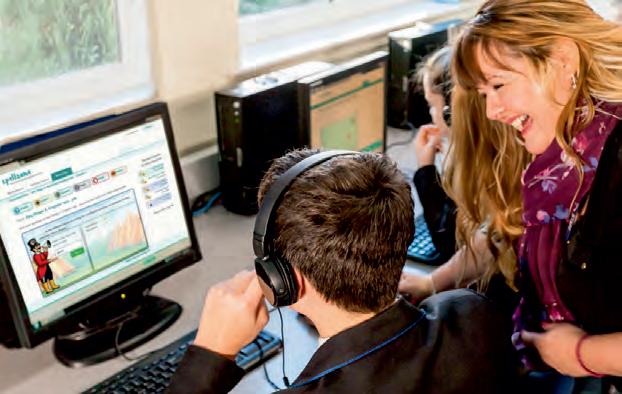
Spelling intervention designed for SEND provision
Spellzone supports learners from age six to adult across a wide range of abilities.
Ideal for targeted support, dyslexia, ESL, and literacy intervention. Spellzone provides structured, cumulative learning pathways that adapt to each student’s level and progress.
Students can work independently at their own pace on any device.
Multi-sensory activities, games, and printable worksheets reinforce learning and improve retention.
Thousands of ready-made word lists and teacher-created vocabulary.
Built-in reporting allows SENCOs and teachers to:
• monitor progress and evidence intervention impact
• support provision mapping and reviews
• share clear data with staff, parents, and inspectors
“Spellzone is an extremely useful resource. Its multi-sensory approach and reinforcement of spelling patterns make it ideal for dyslexic learners and those needing extra support.”
Tutoring and Dyslexia Centre
Liverpool
Applying to uni can be daunting for a young person with SEND
Ellie Rowley, from the admissions service, UCAS, shares what you need to know to make the process easier
Are all universities prepared and equipped to accommodate young people with SEND or are some better than others?
Each year, nearly one in five students who apply through UCAS share a disability in their application form. Universities and colleges make reasonable adjustments and offer various forms of support for students with special needs and disabilities, although the support available will vary from one institution to another.
We recommend that students do their research and speak to the university or college directly to discuss their requirements. Students can share their individual needs on their UCAS application form, such as a disability, a mental
health condition, a learning difference or long-term health condition. Sharing this information enables universities and colleges to connect students with the best support and resources.
The UCAS website includes lots of advice and guidance on this section of the application form and also features FAQs for any students looking for more information.
What should young people look out for in a university prospectus to give them more information?
The UCAS website is a great starting point as it has a range of advice for SEND students on applying to higher education – covering everything from researching their options and completing their application to preparing for university and
understanding the financial support that may be available.
As young people start their research, they can also speak to the disability adviser at the university to discuss support and adjustments, even if they don’t go on to apply there. Their contact details will be on the student support pages of the university website. When students research their options, they may want F
...universities and colleges have teams in place to make sure students can access the right support for their individual needs.
to consider whether the academic support includes flexibility with deadlines, alternative assessment methods or specialist equipment.
Other adjustments may relate to their wider lifestyle such as accommodation, travel or mental health and wellbeing services.
Students can also look at a university’s prospectus, visit a campus open day, or speak to current students at the university or college they’re interested in through Unibuddy on ucas.com
So, it’s perfectly fine for students to contact universities directly if they have a query?
Yes, universities and colleges have teams in place to make sure students can access the right support for their individual needs. UCAS has guidance for students on speaking to support services which gives examples of questions they might find useful to ask.
We recommend students contact the student support team, disability adviser or mental health adviser to
discuss their needs as early as possible, so support can be discussed and arranged for the start of the course. Universities are diverse and inclusive environments, and provide support to make sure all students have a fair and equitable chance to succeed.
Do SEND applicants have to specify their learning challenge when applying?
Admissions teams at universities and colleges make their decisions based on an applicant’s ability to meet the entry requirements, their enthusiasm for the subject area, and their potential to succeed on the course.
Any details a student shares about their individual needs or disabilities are only used to ensure they get the right support for them.
If a student changes their mind, they can tell the university or college directly at any time, but we recommend doing this sooner rather than later so there are no delays to getting the support ready.
What advice can you give to parents and
carers who might be concerned how their young person will cope?
There are many ways parents, carers and guardians can support, depending on what stage of the application journey each applicant is at.
As students start their research, encourage them to speak to the disability adviser at the university to discuss support and adjustments. Their school’s learning support team may also be able to help them identify what they need.
There is a mandatory question in the UCAS application form, in the ‘more about you’ section, which enables students to tick any of the options relating to a physical and/or mental health condition, longterm illness or learning difference.
After this, there is a free text box where students can give more information if they would like to.
This information will be shared with those arranging support, such as the student support team, disability adviser and admissions staff. If a student decides not to share this information, that’s fine – it’s entirely their decision.
If a child you’re supporting is planning to move away for university or college, they should check the health and social care services to which they may be transitioned (as required).
It is also worth ensuring you and the person you’re supporting know what the Disabled Students’ Allowance (DSA) is and what it covers – such as eligibility criteria, what it can fund, how to apply and what evidence is needed. Our DSA pages offer a complete guide, including all you need to know about the needs assessment.
Assessment – who is it for?
Taking time to reflect can lead to better and more effective strategies
In education, taking a step back and considering why we are doing something can lead to some powerful reflections.
We often do things in a certain way because we’ve inherited strategies or processes, or we’ve been advised it is the best approach and we’ve just stuck with it.
Assessment is a common area where things often remain the same. It is a frequent topic of conversation with SENCOs and leadership teams.
In many of these discussions the phrase ‘we need to show’ is uttered at some point. My response is always, ‘who do we need to show?’ Is it the leadership team, the governors, the executive headteacher, or even Ofsted?
Often, when I dig deeper, I discover that it’s just that the headteacher really likes data.
I do understand why this can be the case. Data can create headline figures which may be a simple, quick way to provide information about a school. However, that’s not a good enough reason to underpin the design of a whole assessment system.
Data-focused systems of this sort are far more common in schools than I would wish.
Historically, Ofsted wanted to see data, but Ofsted’s requirements have changed and continue to move away from a requirement for lots of data.
An alternative approach
We need to consider how information gathered through assessment helps the quality of teaching and learning.
Does it assist educators, and is it centred on supporting the child? If we can’t answer these questions then, in my opinion, our assessment processes are a waste of time.
So, what do we do instead? A good place to start is to reflect on who the current assessment system helps and supports, and why. These questions are useful to ask yourself:
• Is data the driving force for the way we assess?
• Who are the beneficiaries of our current assessment processes?
• Do we assess and monitor specifically to enhance the quality of our teaching and learning?
• Could any of our processes be streamlined?
• Are there better things teachers could be doing with their time?
Often, reflecting on these questions highlights that assessment is not focused on getting to know the child. In contrast, a child-centred approach to assessment is quite different and includes these characteristics:
• The child is at the core of the evaluation process and their voice, needs and perspectives are the priority.
• Educators actively listen to children and aim to understand their unique strengths and interests.
• Information gathered aims to identify strengths and needs in a way that empowers the child and informs supportive action.
• Less data is collected about a child’s progress or attainment.
Child-centred assessment for SEND children
In my prior role as deputy head and assessment lead at Cherry Garden School, a specialist school in London for children with profound support needs, I led on a child-centred assessment framework, which I believe to be highly relevant in supporting children with SEND.
It was based on six ‘Branch Maps’ which detailed the developmental milestones you could expect to
find in children who were working at pre-National Curriculum levels. These also aligned with the six main areas of the EYFS curriculum.
The concept was simple. If children were engaged in high-quality learning environments and supported by talented educators, then we knew progress would be excellent.
As leaders, we felt it was our priority to ensure that the standard of teaching and learning was outstanding across the school for every child.
We used the Branch Maps to monitor the curriculum areas where children were struggling to engage. Instead of tracking progress, we switched to tracking ‘concerns’ about provision.
As a senior leadership team (SLT) we wanted to be confident that the quality of teaching and learning was improving, and that this should be trackable.
The process looked like this:
• Professional discussion - Regular discussions about engagement and progress would take place within class teams. These included ongoing conversations between colleagues throughout the week, and more focused conversations which would take place during weekly progress meetings with the whole class team.
• Understanding concerns - Through these conversations, concerns could be identified. Teachers would understand which children needed adaptations to support their learning and progress.
• Discussions with senior colleagues - A member of the SLT would meet with each teacher on a half-termly basis to discuss these concerns and agree on next steps. This would sometimes be simple adjustments to provision that could be actioned quickly. On other occasions teachers could be supported by subject leads or external professionals to address the concerns.
• Understanding trends - The SLT would collate the concerns and look for patterns across class groups, key stages and subject areas. This information was used to target support and inform school improvement strategies. For example, if a significant proportion of concerns across the school were literacy-based, we might have a whole school drive towards enhancing reading areas, or improving the quality or type of books the children were accessing.
Understanding child development
Child-led assessment is underpinned by educators who need to have a good grasp of child development.
At Cherry Garden School, all our children accessed play-based learning, and staff used their understanding of child development to respond appropriately in the moment and adjust their input to support each child’s ongoing learning and progress.
It was informed by an appreciation that children don’t necessarily develop in the same way, and that flexibility in their approach was important – there was no list or tick box.
Once we have a deeper understanding about our children, and how they learn, we need to make use of this information to identify areas in which they need more support. Our assessment information should enable us to create learning spaces that help our children to thrive.
As educators, we should be constantly reviewing and adjusting our provision to ensure that children are engaged and learning.
Learning from experience
Cherry Garden was an important learning experience for me and is a valuable foundation of my work to this day. The school’s Branch Maps are now used by more than 3,000 schools and settings.
The school has had two Ofsted Inspections since introducing the Branch Maps, and the outcomes of these has confirmed the school has an effective and robust approach to assessment.
The most significant difference as a school leader, in switching approaches, was that I knew the children and their learning so much more.
I had previously been well-versed in how much progress a child had made according to data – but this wasn’t actually useful information in a review meeting with a family!
Child-centred assessment meant I was able to have real conversations with families about specific learning that had taken place. This helped to improve the quality of conversations that took place, and to enhance trust and engagement between home and school.
Asking ‘who is it for?’ is one of the most powerful questions we can ask ourselves. It can be hard to justify ‘stepping back’ when it comes to something as important as assessment, but it can lead to positive and impactful change.
Stephen Kilgour is education advisor at Tapestry. For more information about Cherry Garden Branch Maps, visit: tapestry.info/send-assessment-framework/
Reasonable adjustments are about fairness, not labels
As millions of students begin their GCSEs and A Levels, it’s worth remembering what access arrangements are for
Access is often misunderstood as something triggered by a label, SEND, diagnosis, register, or formal identification.
Reasonable adjustments exist to address fairness, not categorisation.
In education, this is often discussed in terms of exam access arrangements (EAAs), and in employment as reasonable adjustments, but the underlying principle is the same: removing barriers so capable people are not placed at a substantial disadvantage.
High ability, strong attainment, or professional competence do not remove the need for access. In many cases, they mask it.
I see this regularly in schools and colleges. There is a persistent belief that exam access arrangements are only for students who are on the SEND register, have an EHCP, or are visibly struggling academically. That is simply not the case.
A student does not need to be labelled SEND, have a diagnosis, or be underperforming in lessons to be eligible for exam access arrangements. What matters is whether they are placed at a substantial disadvantage under exam conditions.
I regularly assess students who are high attaining, working at grades 8–9 in lessons, doing well in class discussions and coursework, and not identified as SEND.
Yet when they sit formal exams, particularly those involving extended writing, their outcomes drop to 6s or 7s.
I see the same pattern at A Level. Students producing A-grade work in lessons can drop to Cs in timed exam
conditions. Not because they lack understanding, but because they run out of time.
High cognitive ability can mask difficulties such as slower processing speed, working memory inefficiencies, or increased cognitive load when planning and structuring answers.
In everyday lessons, these students often cope well and compensate effectively. It is only under timed exam conditions that the difficulty becomes apparent.
This pattern does not stop at school or college. Through workplace needs assessments, I see this all the time with adults who are clearly capable and well qualified but still struggling to get work done.
It’s rarely about competence; it’s about not having the right structures, strategies, or adjustments in place to manage time, memory, organisation, or workload.
Many of these individuals have progressed through education without formal identification, developed strong compensatory skills, and only encounter significant difficulty once the demands of the workplace expose underlying needs.
The issue is not ability. It is access. Grades tell you what a student knows. Exam access arrangements, like reasonable adjustments at work, address whether the conditions allow that knowledge or competence to be demonstrated fairly.
Reasonable adjustments are not a reward. They are not an advantage. And it is not about lowering standards.
It exists to remove a barrier that would otherwise skew the result. The expectation doesn’t change. What changes is whether someone can show what they’re capable of.
When formal identification or a register becomes the only trigger for support, people get missed. Not every need is obvious, and not every disadvantage comes with a label.
Some difficulties have been there for years, only really showing themselves under pressure and often masked in everyday situations. But they can have a real impact in exams and at work.
Good decisions around exam access arrangements and reasonable adjustments come from looking at the bigger picture over time. Patterns matter. Evidence matters. Professional judgement matters. Labels and grades on their own don’t tell the full story.
Under the Equality Act 2010, organisations have a duty to make reasonable adjustments where a person is placed at a substantial disadvantage, regardless of whether that need has been formally diagnosed or recorded.
Inclusion is not a list. It is not a register.
It is a process rooted in evidence, professional judgement and fairness.
Barry Wheller is an inclusive assessment specialist, access arrangements assessor, and founder of Inclusion Compass. For tailored advice on EAAs, or support with assessments in your school, FE setting or apprenticeship programme, email: barry@inclusioncompass.co.uk
Early intervention
Restoring the balance for dyslexic children
Early intervention can transform a child’s academic trajectory – and how they see themselves in the world
When support for a pupil with dyslexia is timely, targeted and compassionate, children begin to feel capable, valued and understood. They discover strengths rather than deficits. They reconnect with learning rather than withdrawing from it.
As the education sector reflects on the government's Schools White Paper, the importance of early identification for children with SEND has never been clearer or more hopeful. Dyslexia affects many children across the UK, yet countless pupils continue to wait far too long for recognition of their needs. By the time some finally reach assessment, they have already accumulated years of frustration, eroded confidence and a belief that school simply is not for them. Early intervention prevents this cycle. It supports children before cracks in confidence become deep emotional wounds. It preserves curiosity. It builds
resilience. And it empowers children to believe that they can succeed.
Early warning signs
Teachers are often the first to identify potential signs of dyslexia. Difficulties with phonics, struggles remembering letter sounds, challenges sequencing information or persistent working memory issues are small signals that can point to bigger underlying needs. With the right training and awareness, these early signs become opportunities for targeted help rather than missed warnings. When teachers feel confident in making adjustments, the results are powerful.
Multi-sensory instruction, cumulative phonics, repetition, breaking learning into manageable steps and providing resources tailored to need, all help children access the curriculum successfully.
These strategies are not only effective for dyslexic learners, but they also
benefit every learner in the classroom. What we often call 'reasonable adjustments' for SEND are, in reality, good teaching for all.
For SENCOs, strong systems are the key to early success. Regular screening in Key Stage 1, clear referral routes, structured intervention cycles and effective communication create a culture where children are supported long before gaps become entrenched.
SENCOs ensure that assistive technology is available early, that staff understand dyslexia-friendly teaching, and that families feel heard and guided. With long waits for external assessments in many areas, SENCO leadership is often the anchor that families rely on most.
Impact on home life
Parents are vital partners
in this early identification journey. Many notice from the earliest years that reading creates anxiety, that homework takes far longer than expected, or that their child avoids tasks that involve decoding or writing.
Parents at Moon Hall frequently describe how transformative appropriate support has been for their child and their family.
When a child struggles without explanation, the impact radiates through the home. Confidence dips, behaviours escalate and stress rises. Siblings may feel overlooked. Parents worry constantly.
Dyslexia does not exist in isolation. When needs are not met, the ripple effect touches everyone. Early intervention restores balance. It brings clarity, reassurance and hope.
A sense of belonging
At the heart of early intervention is something we too often overlook: belonging. Children do not want to feel different. They do not want to stand out. They simply want to feel like they belong in their classroom, in their learning and within their peer group.
When a child cannot access reading or writing at the same pace as others, feelings of difference intensify. This is where schools can make the greatest impact.
A child’s sense of belonging increases when their needs are met without fuss, when teachers normalise different ways of learning and when peers are encouraged to recognise strengths in every individual.
training must prioritise dyslexia identification. Schools need accessible funding pathways for assessments. Families must not be left waiting years for answers. Early intervention is not only cost effective, it is life changing.
With the right support at the right time, every dyslexic child can flourish. They can find their voice, rediscover joy in learning and step confidently into their future.
When we help children to believe, when we create environments where they belong, we enable them to become everything they can be.
*Moon Hall Assessment Centre (MHAC) provides means-tested, high-quality diagnostic assessments delivered by specialist
At the heart of early intervention is something we too often overlook: belonging.
Belonging is not an addon. It is foundational. It shapes identity, motivation and wellbeing. At Moon Hall, our motto reflects this truth: Believe, Belong, Become. Early intervention gives children the belief, the belonging and ultimately the chance to become the confident learners they deserve to be.
Government priorities
As ministers implement the reforms in their Schools White Paper, the call from families, educators and specialists is clear. Early screening must be strengthened. Teacher
teachers and psychologists, ensuring financial circumstance never becomes a barrier to understanding a child’s needs.
The centre provides detailed reports, practical recommendations and ongoing support for parents and schools. More information is available at mhacuk.com.
Michelle Catterson is executive head at Moon Hall School,
Reigate, and chair of the British Dyslexia Association
Myth Buster – dispelling the misconceptions about dyslexia
Myth 1: Dyslexia means you see letters backwards. This is probably the most common one. While some people with dyslexia might mix up letters occasionally, dyslexia isn’t a vision problem. It’s about how the brain processes language, especially the sounds within words. Glasses won’t 'fix' dyslexia, because eyesight isn’t the issue.
Myth 2: Dyslexia equals low intelligence. Absolutely not. Dyslexia occurs across the full range of intelligence. Many people with dyslexia are highly creative, great problem-solvers and brilliant at thinking big-picture. Struggling with reading or spelling says nothing about how clever someone is.
Myth 3: You grow out of dyslexia.
Dyslexia doesn’t disappear with age. Children don’t magically 'catch up' if they’re dyslexic, but with the right support, strategies and understanding, they can thrive. Adults with dyslexia often develop clever ways to work around difficulties, which can make it less obvious – but it’s still there.
So, what is dyslexia?
Dyslexia is a specific learning difference that mainly affects reading, spelling and writing. It’s linked to difficulties with phonological processing (that’s the ability to identify and work with sounds in words), working memory and processing speed. Importantly, it exists alongside many strengths, such as creativity, visual thinking and resilience.
The real myth? That dyslexia is a weakness. In reality, it’s just a different way of thinking and, when understood properly, it’s something that can be supported, celebrated and even harnessed.
Lucy Pelling is head of assessment centre, outreach & development at Moon Hall School, Reigate
We discovered my son was colour –blind when he was seven years old. Specifically, he has Protanopia. He had already started school, passed standard eye tests (which we later found out no longer include screening for colour blindness) and nothing seemed amiss. But one day, he held up two felt-tip pens and asked me, “Is this orange, or is this orange?”
One was orange. The other, bright green.
That moment still makes my heart ache and, if I’m honest, it makes me angry too. Like many parents, I didn’t know much about colour blindness (more accurately known as Colour Vision Deficiency, or CVD).
I didn’t realise there are different types and severities. I didn’t recognise the signs. I didn’t understand how it could affect learning, or that a child could live with it for years without anyone noticing.
More common than you think It turns out my son is not unusual. There are around 450,000 children currently in UK schools with CVD, yet most schools can’t identify many of the children who live with it.
Seeing red (When he can’t)
Colour blindness is a forgotten SEND that remains under-diagnosed and misunderstood
Colour blindness affects around 1 in 12 boys and 1 in 200 girls and because it disproportionately affects boys, they are potentially exposed to indirect sex discrimination through the way colour is routinely used in education.
That’s because screening for colour blindness was quietly removed from the Healthy Child Screening Programme around 2009, following a review based on outdated and flawed evidence.
It is one of the most common genetic conditions in the world and we effectively stopped looking for it.
The result? Around 80% of children start secondary school having never been screened for CVD, despite 75% having had an NHS eye test and many wearing glasses.
would know. Children assume everyone sees what they see.
Lack of training for teachers
Most teachers, through no fault of their own, aren’t trained to recognise or support CVD. It’s rarely mentioned on PGCE courses and it’s the SEND even SEND specialists admit they’ve never been trained in.
Many educators believe they’ve never taught a colourblind child yet statistically there’s likely to be at least one in every co-ed classroom of 30 (#1InEveryClassroom).
In England, opticians don’t always screen unless specifically asked. Parents assume eyes are being checked for all common visual impairments. Schools assume parents would know. Parents assume teachers
Barriers aren’t limited to reds and greens. Colour blindness affects how a person sees the whole of the visible colour spectrum and barriers show up right across the curriculum: maps and graphs, science practicals, colourcoded worksheets, revision resources, online platforms, traffic-light marking, behaviour charts, sports bibs and cones and simple instructions like: 'highlight the work you felt was easy in green'.
Sometimes nothing is printed in colour at all, yet a normal colour experience is still assumed. Pupils are asked to describe 'The effects of oil on water', or 'a walk through the woods in autumn'.
If the teacher or examiner doesn’t know the child is colour-blind, they may mark them down because they’re assuming a typical experience of colour that the child has never had.
Safety first
Beyond learning, colourblindness affects safety, too, and the safety aspect can affect us all. Warning labels, signage, indicators, hazard markings, wiring colours, emergency information: colour is used everywhere. Even something as basic as hi-vis clothing: if a colour-blind person can’t see it properly, the person wearing it is at risk. This is not a niche classroom issue, it’s a real-world risk that travels with a child into college, work and life.
None of this is about blame. It’s about change. But I am going to be direct: it is shocking that we are allowing so many children to be disadvantaged and putting people at risk when screening
and supporting is relatively quick and simple.
Teachers need as much information about their pupils as possible to get the most from them. Withholding information (by a lack of screening) creates preventable failure.
The government’s ‘Start for Life’ strategy promises to improve access and life chances in Early Years but if it fails to reintroduce
is 'red', even if they don’t see those colours the way someone with normal colour vision does.
Sometimes they will guess colours correctly based on past experience and that can convince everyone around them that they 'know their colours'.
Those strategies fall down where there is no familiar reference point or secondary indicator though, such as
My son is now 17 and preparing for his A Levels. His normal way of working has often been to use materials his teachers have marked up or adapted, which can require extra processing time, yet there is no clear guarantee that exam papers and mark schemes won’t disadvantage.
There are around 450,000 children currently in UK schools with CVD.
mandatory colour vision screening, we continue to leave hundreds of thousands of children behind.
Early identification is the single most straightforward way to stop years of avoidable issues and mistaken assumptions.
The failure to diagnose CVD has consequences. It’s often misread as inattention, confusion or lack of effort. In reality, it’s just inaccessible material. Lack of access might lead to bullying or subject avoidance (sport, geography, chemistry or any colour-heavy topic) and a growing sense of “I’m not good at this”.
Many children, like my son, develop coping strategies and this is where adults can be falsely reassured. Children can learn colour names by association from an early age: they know grass is 'green' and a fire engine
a label, number, symbol or pattern, and it all comes at a cost to confidence, progress and emotional wellbeing.
Disadvantage in exams
When CVD co-exists with other SEND needs (which it often does), the issues compound, particularly when CVD isn’t identified.
Most parents and teachers don’t realise that children with CVD are legally entitled to reasonable adjustments under the Equality Act 2010 in school, exams and the workplace. Due to misleading government guidance (which officials are aware of), very few cases are raised or supported properly. This affects children and teachers alike: thousands of educators are colour-blind too and they also deserve support.
Even when a child has been identified as colour-blind, they are still beholden to a system that isn’t set up to support them properly.
Children with CVD may be entitled to papers being opened in advance and colour information marked up, but teachers are given no instruction on how to do this, so practice varies wildly.
JCQ guidance on colour blindness remains unclear, including the push towards supervised rest breaks instead of extra time, even where rest breaks do nothing to remove a colour-based disadvantage.
There is no guarantee a paper is accessible even when it appears 'black and white' either. A question might assume a normal way of seeing colour and the mark scheme might then penalise a colour-blind student’s reality.
Until exam papers are demonstrably accessible at source and mark schemes guarantee not to discriminate, extra time remains one of the only practical ways to level the playing field.
Now the good news: teachers don’t need to know what type of colour blindness a pupil has because support strategies are nearly always the same. The key rule is simple: never use colour alone to convey information.
Interventions are low effort with high impact. They
improve access not only for colour-blind pupils, but for everyone.
Better accessibility needed
One more uncomfortable truth though: there is no cure for colour blindness. Despite what you may have heard, no glasses or app will make a pupil see colour in a 'normal' way either. Simulators can help others understand the impact, but accessible design at source is what actually removes the barrier.
We need rapid and serious change. CVD is a real visual disability but it’s also one of the easiest things to identify and support, if we choose to.
If the title of this piece sounds angry, that’s because it is. We are failing children in a way that is avoidable.
Marie Difolco is the author of Supporting Colour Blindness in Education and Beyond (Routledge), a not-forprofit book offering practical advice for teachers and families.