equity, the fearless CEO prioritizes extensive communal partnerships to anchor other issues plaguing Medicaid recipients: food insecurity, perinatal services, health and digital literacy, and even societal re-entry for returning citizens. She emphasized her method of
advocacy is more than innovative initiatives, but taking consistent action in “that belief around fair and just opportunity.”
“Oftentimes, people recognize us as innovators… However, I choose to say that what we do is enact actions very consistently that are rooted in that belief around fair and just opportunity,” Dale told The
Informer. “We're looking at the whole person–the context of their lives, their supports, their wishes and desires in order to create a better health care delivery system.”
Onwards, Upwards: The Future of D.C. Medicaid
Effective Jan. 1, income eligibility limits for D.C. Medicaid will
lower to 138% for current beneficiaries that fall under “Parent/ Caretaker Relatives” or “Childless Adults,” booting an estimated 7 to 8,000 AmeriHealth members from health care, says Maccannon.
Nonetheless, he highlighted automatic enrollment in the Healthy DC Plan, a Health Benefit Exchange program–– notably, not a Medicaid product–– that covers essential health benefits required under the ACA, such as primary and specialty care, hospitalization, and prescriptions for moderate incomes.
“It has all the medical benefits that one might expect to be covered–pharmacy benefits, behavioral health and mental health benefits, with some nuances of differences between that coverage and Medicaid,” he continued, “but it does not have a transportation benefit to get you to and from your appointments, [or] adult dental or vision coverage.”
Dale admitted that, despite the inevitable "headwinds” to come, she views the near future of Medicaid as an opportunity to lean on heightened education and collaboration across the country.
Maccannon and Carr each touted a unique benefit in Dale’s ability to emulate her deep-rooted values of empathy and wholesomeness in order to bring “the right people to the table” when forging partnerships.
extensively with community based organizations may be limited, [or] our ability to expand on some of the programs we're doing,” Maccannon told The Informer, “ but we expect to continue to focus on the wellbeing of all of the members in our plan.”
Similarly, Dale is optimistic on the future of health care and what it means to be resilient in the face of an unprecedented crisis.
“People who are more courageous leaders, who start from a commitment to who is served, I believe, will weather through these changes and contribute to improving the delivery system overall,” she said. “It's not, to me, this thing to be hopeless about, but rather …to lift up the voices of who we serve, to bring forward their aspirations and hopes for the program, and to be part of that co-creation of something that’s even better.” n
• 27 PLANS to meet your needs
• Expert enrollment help
• Essential Plans with FREE type 2 diabetes care and insulin, FREE heart disease and stroke care, FREE HIV care, plus $5 copay for children’s mental health services
DECEMBER 15, 2025 Last day to enroll for coverage starting January 1
If nothing else, the communications director considers that a key component in maintaining the MCO’s footprint.
“Our ability to contract more
IN AN ERA WHERE OBBB IS LAW, DALE’S HOLISTIC AND CULTURALLY COMPETENT DESIGN FOR A BETTER HEALTH SYSTEM IS SEEMINGLY MORE CRITICAL THAN EVER.
5 AmeriHealth Caritas DC’s Rosalyn Carr Stephens, corporate director for population health, and Keith Maccannon, director of community relations, outreach and communications celebrate Karen Dale for prioritizing compassion and holisticness care as CEO. (Courtesy Photo/Screenshot)
Big Changes are Coming in 2026. Maryland Health Connection is Here To Help!
Starting next year, federal rules will change health insurance in Maryland. We are here to help you understand what’s happening and what you can do to stay covered and save money. What to know right now:
Use Your Coverage. Your 2025 Plan Is Still Good!
If you have health insurance through Maryland Health Connection, your current plan hasn’t changed. Use your benefits through the end of the year.
Now is a great time to:
• Schedule your free annual wellness checkup
• Get care for health needs you’ve been putting off
• Use your plan before any changes happen
Plan for higher costs
The extra savings (enhanced premium tax credits) funded by the federal government will probably end this year. Financial help will still be available, but many enrollees could receive less than they
go up in 2026.
But don’t worry - we’ll help you:
• Compare plans
• Find one that fits your budget
• Connect with free help
• This year, Maryland is providing financial help thanks to a new state program, Maryland Premium Assistance. The amount of assistance depends on factors such as income, family size, and ZIP code. Eligible Marylanders can use the Get an Estimate tool to see how much they may save.
Some People May Need to Send In Extra Info
We may need to check your income again during Open Enrollment. If we do, we’ll send you a message.
Be sure to check your online account so you don’t miss anything. Changes are coming to Medicaid
For now, there are no changes to member eligibility, services, or coverage. Before any change happens,
For benefits or services information, call your managed care organization on the back of your insurance card or HealthChoice at 800-284-4510.
Immigrant eligibility changing in 2026
Starting Oct. 1, 2026, only certain immigrants will be eligible for Medicaid and Maryland Children’s Health Program (MCHP). Read more about enrollment and eligibility for immigrants.
New requirements for certain adults start in 2027
Starting Jan. 1, 2027, certain adults ages 19-64 will:
• be required to complete 80 hours per month of work, education, or community service to be eligible for Medicaid
• have their eligibility rechecked every 6 months instead of every 12 months
• If this applies to you, Medicaid will send you a letter
Retroactive Coverage Changing in 2027
Starting January 1, 2027, Medicaid will pay for fewer months of retroactive medical bills. Medicaid may pay for one month of prior expenses for certain adults and up to two months for other groups.
Need Help?
broker, contact your broker for assistance.
Maryland Health Connection remains committed to helping Marylanders get covered. We’re here to help - and we’ll guide you every step of the way.
Free expert assistance is available, and there are many ways you can get free help:
• Talk to a trained expert in your area, for free!
• Call us at 855-642-8572. Deaf and hard of hearing use Relay.
• If you had help enrolling with a
Stay Informed. Stay Covered. We know these changes can be confusing. But you’re not alone. As your trusted local resource, we’ll make sure you have the facts, the tools, and the support to stay covered and stay healthy.
You can also sign up for text alerts or email notifications to stay updated with the latest news and updates. Maryland open enrollment begins November 1, 2025. Enroll by January 15, 2026. n
Sometimes money gets tight, jobs shift, and health needs pop up. Through it all, Maryland Health Connection is here to help you find a health plan that fits your life. Every plan includes benefits you can count on, like doctor visits, mental health care, prescriptions, and more. And it’s the only place where you can get savings on your health plan. Whether you want to keep your current plan or check out new options, we’ll help you stay covered and make the most of it.
here for you through every change.
Planning Can Equal Peace and Prosperity
Donna Smith Compassion & Choices
Diversity & Inclusion Advisory & State Director
I love the winter season; it is the perfect balance of stillness and wonder. Winter provides time to reflect. I can pause long enough to reflect on the year coming to an end and prepare for the next. This season gives us the chance to reflect on the past and prepare for the future all at the same time.
This year I think about the things that were out of my control. While this may seem daunting to some, it reminds me to focus on the things I can control. One of those things is my end-of-life planning.
My first introduction to the important lesson of end-of-life planning was taught to me by my Grandfather, Harrie Bowie. He was a big fixture in my life as he could repair and do everything from cars and washer machines, to fishing and
hunting. I thought the world of him. When he started getting sick at 82, my mother took me with her to talk to him about his end of life wishes. I will never forget what he told us that day. My mother was trying to figure out how the family would pay for his funeral and other things when my grandfather interrupted her. He said “Temple (my mother’s nickname) you don’t need to worry about life insurance for me, I have been saving my whole life for this day. I have $7000.00 saved up under my bed. It will cover everything.”
And it did. My little 80 year old grandfather, who had only received an eighth grade education, who worked as butcher to feed his family of nine and was the sole provider, had the forethought of planning for his final days. He died the way he lived...not depending on anyone to provide for him or his family. This is the perfect season to plan and prepare for your end of life (whenever that may be) by first
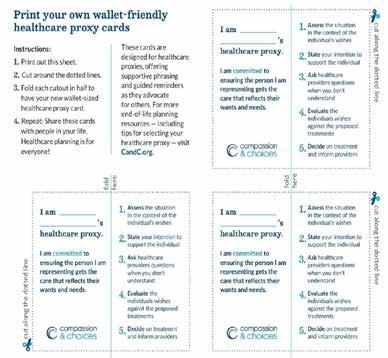
figuring out what your priorities are at the end of life. Do you want every available medical option? Do you want very few medical interventions? Who will be your healthcare proxy, the one who will make medical decisions if you are unable to make them yourself? You must document your end of life wishes in an advanced directive also known as a living will. Be sure to discuss it with your loved ones, especially your proxy. Finally, have meetings and tell everyone what your wishes are, thereby addressing any confusion before tough decisions have to be made.
Taking these steps is the most loving thing you can do for yourself and anyone you care about. Planning truly provides peace and the lack of planning is not only impacting our health and wealth but also our legacies within our communities. Life insurance, for example, is a way to transfer wealth to the next generations and beyond.
Start now, before a time of crisis and encourage anyone over the age of 18 to do the same. Include them in family discussions as much as possible so we start to change the stigma and fear behind having these conversations and taking action steps. Remember, talking about death can be intimidating and scary but
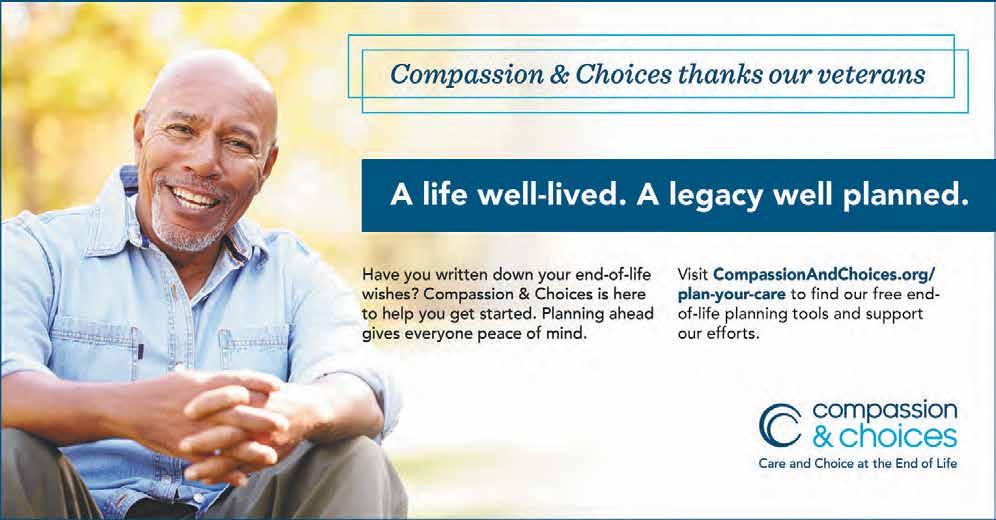
not talking about it is even scarier. I challenge you to visit www.compassionandchoices.org/eolc/finishstrong-tools/ and start TODAY! Begin 2026 with the peace of knowing you are prepared. As our elders advise, if you stay ready…you don’t have to get ready! n
Planning Equals Peace
From Fear to Faith: Securing Our Spiritual Legacy
By Zeena Regis Hospice Chaplain and Grief Counselor
End-of-life planning is often treated like a lonely chore. It can feel like a pile of paperwork, legal terms, and decisions we’d rather not face. Many of us avoid it because it feels difficult or frightening.
But it doesn’t have to be that way. For Black families, these conversations can be powerful moments of connection. They are opportunities to reflect on our faith, our values, and the stories that shaped us. They can be an act of love.
When we shift end-of-life planning from a private burden to a shared practice, something changes. We stop seeing it as “preparing for death” and start seeing it as preparing our lives to speak long after we’re gone. We begin to honor the spiritual inheritance we want to leave behind: the lessons learned, the resilience carried, the faith that held us, and the joy cultivated even in hard seasons.
This is especially urgent in our community. Too many Black families are forced to face end-of-life decisions
in crisis mode. Confusion, rushed choices, and medical trauma often overshadow moments that should be sacred.
We deserve better than that. Our loved ones deserve better. And our legacies deserve more than uncertainty.
The holidays offer a natural opening for these conversations. As we gather around tables filled with the memories of those who came before us, we laugh, cook, pray, and reconnect. These are the moments when our families feel most like themselves, and they are the moments when we can gently ask the questions that matter.
Questions like:
• What kind of care feels supportive to you if illness ever changes your daily life?
• Who do you trust to speak for you if you cannot speak for yourself?
• What kind of legacy—spiritual, emotional, and financial—do you want to leave?
• What do you need us to know so we can honor you well?
These questions aren’t morbid; they are loving. They help us protect one another. They allow us to pass down
clarity instead of chaos.
Here is the truth: End-of-life planning isn’t just about documents, though those are important. It is about storytelling. It is about lifting up our elders’ wisdom and ensuring younger generations understand the values that guide our choices. It is about weaving our cultural and spiritual traditions into decisions that honor the fullness of who we are.
We don’t have to do this alone. Organizations like Compassion & Choices can be a steady partner in this process. They offer free tools, workshops, and faith-centered resources to help families navigate these wishes with care. Their work reminds us that planning ahead is a spiritual practice rooted in dignity and self-determination.
Imagine our communities embracing this work not out of fear, but out of faith. Imagine families using advance care plans to deepen conversations about healing and justice. Imagine elders knowing their wishes will be respected, and loved ones feeling confident, rather than overwhelmed, during a crisis.
We can create that future through small, steady steps. Start with one conversation.
One question.
One moment of courage.
Ask someone you love how they envision their care. Share your own hopes. Talk about the legacy you want to leave behind, not just material things, but the values you hope will
guide your family long after you’re gone.
When we honor our stories, our faith, and our culture in these decisions, we transform the end of life from something we fear into something we approach with peace. That is a gift worth giving—to ourselves, to our families, and to our community. n
The Role of Emotional Trauma in Community Violence
Submitted by AmeriHealth Caritas District of Columbia (DC)
Community violence affects neighborhoods across the United States and often leads to trauma. Trauma results from stressful events that leave lasting impacts on mental, emotional, and physical health.1 Because trauma and violence are closely connected, breaking this cycle requires that families and communities have the support they need to do so.
How money and opportunity play a role
Where people live and how much money they earn can affect their likelihood of experiencing violence. Families with households earning $25,000 a year or less are more likely to experience violence compared to families earning $100,000 or more.2 Poverty, job loss, and lack of affordable housing make families more vulnerable.
Young people are especially at risk, with homicide being the second leading cause of death for youth ages 10 – 24.3 More than 800 young people a day are treated in emergency rooms across the country for assault-related injuries.4
Building safer communities
One of the best ways to reduce violence is to provide positive spaces for youth. Community centers provide environments where young people can learn new skills, play sports, build friendships, and find mentors. Research shows that these positive spaces
Choosing the Right Care
not only improve mental health but also reduce the likelihood of violence.5
Mental health services are equally important. Trauma from witnessing or experiencing violence can lead to depression, anxiety, and struggles in school. Community health centers and local counseling programs play a very important role in supporting families with tools to cope and heal. Access to these services helps young people and adults move forward with resilience.
Programs that work
In 2024, violent crime in Washington, DC, dropped 35%, with homicides decreasing by 32%.6 These numbers highlight the impact that community-based programs and support services can have.
Seeking support services is an important step in healing from trauma and preventing future violence. There are programs and services that offer help for families and individuals, such as:
• National Suicide & Crisis Lifeline (988): A 24/7, no-cost hotline that connects anyone in emotional distress or crisis with trained counselors.
• SAMHSA Disaster Distress Helpline (1-800-985-5990): A 24/7, no-cost helpline that provides immediate crisis counseling for people going through emotional distress related to vi-
olence, disasters, or traumas (sponsored by the Substance Abuse and Mental Health Services Administration).
• District of Columbia Hospital-Based Violence Intervention Program (HVIP): A program run by a group of hospitals in DC that supports victims of violent injury while they recover in the hospital, helping to prevent retaliation and future harm.
• Cure the Streets: A program run by the DC Office of the Attorney General that uses community members as outreach workers to mediate conflicts and prevent shootings in neighborhoods most affected by gun violence. Youth centers, mental health services, job opportunities, and strong neighborhood programs all help address trauma and prevent future violence. By working together, we can create safer, healthier communities for everyone.
Sources
1. “What is Trauma?” Substance Abuse and Mental Health Services Administration, https://www.samhsa.gov/mental-health/trauma-violence
2. “Criminal Victimization, 2022,” Bureau of Justice Statistics, U.S. Department of Justice, https://bjs.ojp.gov/document/cv22.pdf
3. “Adolescent Health,”
Knowing where to go for medical care can make a big difference in how quickly you get help and how much money you may spend. Emergency rooms (ERs), urgent care centers, and telemedicine all serve important roles, but each is designed for different needs.
The ER should only be used for life-threatening situations. You should go to the ER or call 911 if you are having symptoms such as chest pain, difficulty breathing, heavy bleeding, stroke symptoms, seizures, or loss of consciousness.7 These require immediate attention that only an ER can provide.
Urgent care is a better choice for problems that need quick treatment but are not life-threatening. These can include fevers, ear infections, sprains, minor cuts, or rashes. Urgent care centers can handle these conditions faster and often with shorter wait times than the ER.
Telemedicine is another option that has become more valuable. Telemedicine allows you to connect with a provider by phone or video quickly and is best for routine illnesses such as colds, allergies, or follow-up questions about medications. It can save you time and help determine if you need to go to urgent care or the ER.
For AmeriHealth Caritas DC enrollees, there are several urgent care options available to get care quickly, such as
• RelyMD: Urgent care that enrollees can receive by phone or video chat through the RelyMD app.
• DispatchHealth: An AmeriHealth Caritas DC provider that offers urgent medical care at home.
• Nurse Call Line: Enrollees can call the 24/7 Nurse Call Line to help determine what type of care they might need, or to get help accessing one of the other urgent care options.
To learn more about urgent care options for enrollees, visit www.amerihealthcaritasdc.com.
Centers for Disease Control and Prevention,https://www.cdc.gov/nchs/fastats/adolescent-health.htm
4. “About Youth Violence,” Centers for Disease Control and Prevention, https://www.cdc.gov/youth-violence/ about/index.html
5. Salima Meherali et al., “Safe Space for Youth Mental Health: A Scoping Review,” PLOS One, April 4, 2025, https://journals.plos.org/plosone/article?id=10.1371/journal.pone.0321074
6. “Violent Crime in D.C. Hits 30-Year Low,” United States Attorney’s Office, District of Columbia, January 3,
7. “Emergency Department (ER), Urgent Care or Express Care: Which Do You Need?” Cleveland Clinic, https://my.clevelandclinic.org/health/ articles/15940-emergency-room-urgentcare-or-express-care-which-do-you-need All images are submitted by AmeriHealth Caritas District of Columbia and are used under license for illustrative purposes only. Any individual depicted is a model a model n
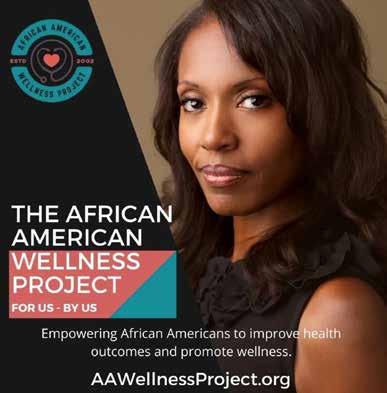
The African American Wellness Project is Continuing to Empower African American Health
By Elaine Myada African American Wellness Project
In the landscape of healthcare, disparities in access and quality are all too common, particularly for African Americans. The African American Wellness Project (AAWP) stands as a beacon of hope, aiming to bridge these gaps and empower communities to attain better health outcomes.
Established with a profound recognition of the systemic challenges faced by African Americans in healthcare, AAWP is committed to fostering wellness and equity.
Addressing the Disparities
The statistics are sobering. African Americans often receive low-
er quality care compared to other demographics, leading to stark health disparities. According to the Centers for Disease Control and Prevention (CDC), African Americans are more likely to suffer from chronic conditions such as diabetes, hypertension, and heart disease compared to their white counterparts. These disparities are further exacerbated by socioeconomic factors, historical injustices, structural inequities, and systemic biases within the healthcare system.
Our Mission and Vision
AAWP was born out of a collective vision to empower the African American community towards better health outcomes and wellness. Rooted in a mission to di-
empowerment, the project aims to enable proactive engagement with healthcare, regardless of insurance or circumstances. By promoting lifestyle changes, prevention, screening, and early detection, AAWP seeks to address the root causes of health disparities and promote health equity.
Our Initiatives and Resources
At the heart of AAWP’s efforts is the Black Doctors Speak initiative, a platform designed to amplify the voices of black healthcare professionals and address healthcare delivery inequities. Through podcasts, webinars, and multimedia content, this initiative educates, inspires, and advocates for better health outcomes in the African American community.
In addition to Black Doctors Speak, AAWP offers a wealth of resources, including culturally relevant health information, comprehensive symptom checkers, and health education programs. These
resources are designed to empower individuals to advocate for themselves and receive improved care.
Join Us in Making a Difference
The journey towards health equity and wellness for African Americans is a collective endeavor. As individuals, communities, and organizations, we must rally behind initiatives like AAWP, sup-
Clinical Trials and African Americans
Why clinical trials are important for African Americans
Ensures treatment effectiveness: Treatments may work differently based on genetics and other factors. When African Americans are not included in trials, it is unknown if new treatments will be safe
• Improves healthcare outcomes: Including diverse populations ensures that research results are applicable to all patients, which can lead to better overall health outcomes.
• Increases access to quality care: Participating in a clinical trial can provide access to state-of-the-art medical care and new experimental treatments that might not otherwise be available.
• Corrects for historical underrepresentation: African Americans are often underrepresented in clinical trials. Their participation is crucial to correct this imbalance and ensure the results of studies are relevant to their communities.
• Addresses specific health disparities: Certain diseases are more prevalent in African American communities, making participation in trials for those specific conditions especially critical for advancing treatment and prevention.
• Helps future patients: Participation allows individuals to contribute to medical knowledge, which can help future generations in their community receive the best possible care.
Why clinical trial participation is important
There are potential risks and benefits of joining a clinical trial. An individual may not benefit personally from joining a trial, but their participation can benefit other patients, especially those in their population group.
porting their efforts to eliminate disparities and uplift marginalized voices.
Here’s how to get involved:
1. Spread Awareness: Share AAWP’s resources and initiatives with your community, friends, and family. Together, we can amplify our impact and reach more individuals in need.
2.Advocate for Change: Advocate for policies and practices that promote health equity and address systemic barriers to healthcare access and quality.
3.Support AAWP: Consider donating or volunteering your time to support AAWP’s mission and initiatives. Your contribution can make a meaningful difference in the lives of African Americans across the country.
Connect With Us
Stay updated on AAWP’s latest initiatives and resources by following us on social media:
• Facebook: @AfricanAmericanWellnessProject
• Twitter: @AAWellnessProj
• Instagram: @aawellnessproject Together, we can help eliminate disparities in health and healthcare for African Americans. Join us in our mission to empower communities, promote wellness, and advocate for equitable healthcare. For more information or to get involved, visit our website at aawellnessproject.org. Let’s make a difference, one step at a time. n
Written by Safeway Sincerely Health
People might write off the idea of meal prepping for the family because it seems like a lot of work. But in truth, it can be easy, cost-effective, and convenient. With just a few hours of prep, you can save time, money, and stress for the rest of the week. Plus, the right meal prep plan can ensure your loved ones eat nourishing food every day.
Want to say goodbye to leftovers and fast food for those weekdays when you’re too tired or busy to cook? If so, read on for meal-prepping tips and ideas for families.
Benefits of family meal prep
Before learning how to meal prep for the whole family, let’s look at its benefits so you can decide if it’s the right move for you.
• Cost savings: Meal prepping tends to work best when you buy grocery items in bulk. Bulk grocery shopping to meal prep saves you money because you get more for less when buying grains, proteins, and vegetables.
How to Meal Prep for the Whole Family
• Less stress: Meal prepping once a week is less tedious than cooking from scratch every day. It can also give you more free time on your weeknights.
• Healthier diet: You can plan and prepare nutritious, balanced meals for the week. No need for unhealthy fast food or leftovers when you’re too tired to cook.
• Portion control: Part of meal prepping for the family is pre-portioning food for everyone. Pre-portioned meals help manage serving sizes and reduce overeating.
Essential tips for successful family meal prep
Now that you’re clear on the benefits of meal prepping, let’s learn how to meal prep for the whole family. And remember, these are just general guidelines. Feel free to modify these tips to fit your family’s lifestyle and dietary needs.
Plan a weekly family menu
The first step in meal prepping for your family is to create a menu for the week, including breakfast, lunch, and dinner for each day. Incorporate foods all family members like to keep them engaged and on board.
To prevent meal fatigue, experiment with different flavors and cuisines. Buying versatile ingredients that accommodate different recipes helps here. Beef, for example, can be used in stir-fries, stews, and countless other recipes.
Need some culinary inspiration?
Whether you’re looking for new meal ideas or different ways to use your favorite ingredients, there’s plenty of exciting recipes to explore online.
Create a shopping list
You can’t meal prep without ingredients. Once you draft your menu for the week, make a list of the groceries you need. Account for each ingredient and the quantity required for the week’s meal prep.
You can keep your list short by
buying ingredients that work in multiple recipes. That also opens the door to buying in bulk, which can save you money and help cut down on food and packaging waste.
Are you an in-store shopper? If so, consider organizing your grocery list by store sections or aisles. It’ll make shopping smoother by letting you buy everything you need in one section before moving to the next aisle.
Prepare
ingredients
early in the week
Once you have your groceries, you can start meal prepping. The beauty of it is that you only need to do this once a week. For the rest of the week, you simply warm and serve the portions.
Prepping ingredients may involve cleaning and chopping vegetables and cutting or cooking meat or other proteins. If any ingredient needs cooking, this is the time to do it. You can then portion the prepped meals into containers and
refrigerate.
Does preparing ingredients for the week seem like too much work? If so, lessen your labor by buying already prepped, ready-to-use ingredients like pre-cut meat and veggies.
Family
meal prep ideas for the week
The rewards for eating healthy are immense. So, when creating your meal plan, aim for a balanced diet that provides the nutrients your family needs to look and feel their best. The USDA recommends eating nutrient-packed foods such as fruits, vegetables, whole grains, and varied proteins.[2]
Get started with family meal prep
Meal prepping can help you save money and improve your family’s nutrition. Give it a try if you don’t want the hassle of daily cooking, the expense of takeout, or the unhealthiness of fast food. n
apply. See pharmacy for details.
Fresh, Flavorful, Feel-Good: A Guilt-Free Spin on Classic Food Favorites
By Dr. Patrise Holden WI Contributing Writer
Eating healthier doesn’t mean sacrificing the taste of comfort foods.
Creative professional chefs and innovative home cooks are reinventing hearty, soul-warming dishes, offering everything from a plant-based sweet potato pie to leaner lasagna and perfectly portioned lamb chops that keep the flavor rich and the guilt minimal.
Lance London’s Carolina
Classic Vegan
Sweet Potato Pie
Ingredients:
For the crust
Cooking spray
1 1/2 c. pecans
1/2 c. old-fashioned oats
1/2 c. dark brown sugar
1/2 tsp. ground cinnamon
1/4 tsp. kosher salt
1/2 c. melted coconut oil
For the filling
1 (15-oz.) can sweet potato purée
1 c. almond milk
3/4 c. dark brown sugar
2 Tbsp. cornstarch
1 tsp. pure vanilla extract
1 tsp. ground cinnamon
1/2 tsp. kosher salt
1/4 tsp. nutmeg
1/4 tsp. ground ginger
For the topping
1 (13.5-oz.) full-fat coconut cream, refrigerated (Taste of Thai works best)
3 Tbsp. powdered sugar
Pinch kosher salt
Directions:
Preheat the oven to 375° and grease a 9-inch pie plate with cooking spray.
In a food processor, add pecans, oats, brown sugar, cinnamon, and salt and pulse until coarsely chopped.
Add coconut oil and pulse until well combined and the dough starts to
stick together.
Evenly press dough into a pre prepped oven safe pie plate.
Bake until golden, 15 minutes. Let cool.
Filling: In a large bowl, whisk together filling ingredients then pour over crust and bake until only slightly jiggly in the center, 60 to 65 minutes. Cover the crust with foil if it starts to get too dark. Let cool completely.
Topping: Open can of coconut milk and scoop out hardened cream on top. In a large bowl, using a hand mixer, beat coconut cream, powdered sugar, and salt together until stiff peaks form. Serve pie with whipped coconut cream.
Joyce Barnes, Homestyle Lasagna
Joyce’s Kitchen
WI Joyces Kitchen Lasanga
Ingredients:
1 15 oz. container cottage cheese
3 cups shredded (part skim) mozzarella
1/2 cup grated parmesan cheese
1 onion diced
1/4 cup parsley
1 egg slightly beaten
1 tsp salt
1/4 tsp pepper
1 large jar of pasta sauce of your choice
1 lb ground turkey
1 box no bake lasagna noodles
Directions
Preheat the oven to 350 degrees.
Mix cottage cheese, 2 cups mozzarella, 1/4 cup parmesan cheese, parsley, egg, salt, and pepper in a bowl, set aside.
Brown the ground turkey, add onions, season with salt and pepper to taste until done.
Drain, add pasta sauce, and stir until well combined.
In a baking dish, layer with ground turkey mixture, then layer with lasagna noodles.
Next, layer with turkey mixture again, add a layer of cheese mixture, top with mozzarella cheese, repeat layers.
Bake until golden brown.
Serve with salad greens or vegetables for a healthy twist.
3 Lance London, owner of Carolina Kitchen, shows that classic desserts, like sweet potato pie, can be both healthy and delicious. (Courtesy
Photo/Carolina Kitchen)
At Whitman-Walker Health… Women’s Health Matters
Submitted by Whitman Walker
At Whitman-Walker Health, we believe all health care is important, and in fact, indispensable. Today, we want to specifically focus on how women’s health is essential— because when women thrive communities thrive, too.
Why Women’s Health Matters
Let’s face it. While all our lives are busy, women end up as the default care givers. Very often, women prioritize the health and wellness of others - children, partners or even elders before she thinks of herself. However, it’s crucial that she takes care of herself as well.
Every woman you know faces these issues:
• Unique Needs: Women face health issues specific to them— menstruation, pregnancy and childbirth, and menopause.
• Higher Risks: Conditions like osteoporosis, heart disease, stroke, and cancers such as breast and cervical require proactive screening and care.
• Mental Health: Women are disproportionately affected by anxiety and depression, making emotional well-being a critical part of overall health.
Whitman-Walker Health is here to get you Healthy.
We provide affordable, whole-person, compassionate healthcare with a team of dedicated healthcare professionals committed to delivering personalized primary care services that prioritize your well-being through rou-
tine check-ups, preventative care, or managing chronic conditions. With a focus on holistic health, we go beyond treating symptoms to address the root causes of health concerns. Our primary care services encompass a range of medical needs, ensuring that you receive comprehensive and integrated care that promotes your overall health and wellness.
Whether you are seeking cervical cancer screening, treatment for menopause symptoms, have heart health issues, need to speak to a therapist, or are seeking birth control or sexual health services, Whitman-Walker Health will work with you to achieve your goals in a safe, loving, and affirming space.
Your Health, Our Priority
Proudly operating in Congress Heights on the St. Elizabeths East campus, the Max Robinson Center is the largest expansion of inclusive healthcare in Whitman-Walker’s history. Named in honor of Max Robinson, a trailblazing journalist and advocate, this center reflects his legacy by offering a range of healthcare services that prioritize your holistic well-being.
Located at 1201 Sycamore Dr. SE, our state-of-the-art Federally Qualified Health Center (FQHC) facility is designed to be your haven for wellness, embodying the principles of compassion and accessibility. We even have an On-Site Pharmacy for all to use, whether you are a patient or not. At Whitman-Walker Health, we provide comprehensive and inclusive Primary Medical Care, Women’s Health, Healthcare for
Children 10 and up, SMART Immediate Care, Behavioral Health, Dental Care, and a range of health-related Legal, Insurance Navigation and support services to more than 20,000 individuals and families annually in the greater Washington, DC region.
Our care model is rooted in our 50+ year legacy of service to the LGBTQ communities, people living with HIV, Black and Latino communities, and other people facing barriers to accessing health care. That legacy is what makes our present and future health care welcome to everyone.
At Whitman-Walker Health, our motto “We See You” symbolizes that we see patients, but we see the person first. Call us today at: 202-7457000 to book an appointment. Or find out more about all our services at: www.whitman-walker.org. n
Whitman-Walker Health’s Max Robinson Center is a clinic where you can get health care and services, and be treated like family. We see people ages 10 and up!
Exhausted,
Aware,
and
Awakening: How Black Americans Are Redefining Resilience in 2026
By Dr. Patrise Holden WI Contributing Writer
For many Black Americans, inflation, political uncertainty, shrinking safety nets, and inequity have created a level of stress and fatigue that feels both historically familiar and newly overwhelming.
Layered into the collective exhaustion is the constant expectation to keep fighting for jobs, stability, identity and rights.
“Stress is cumulative. Financial stress, exclusion, diminishing resources, everything collided,” the founder of iOpening Enterprises said. “People are exhausted. And there is a growing concern that systems that we used to run to for support will no longer hold us up.”
Despite experiencing a collective sense of fatigue, Pickens noted that the notion of rest, for many people of color, runs contrary to the culture.
“From a mental-health perspective,” he said, “many felt they needed
permission to rest without first proving they had earned it.”
The cultural mandate to persist, rooted in generations of historic trauma, has long been celebrated as a form of resilience.
“But this year, more people began to ask a difficult question: ‘Why must we always be resilient?” Pickens questioned. “And who benefits from that expectation?’”
Rest, The New Revolution
For many, generational trauma and conditioning greatly heightened stress levels during a year filled with constant change.
“In Black communities, we are taught, ‘Stay ready so you don’t have to get ready,’” Pickens said. “This teaches a mentality that is always bracing. Ready and constantly anticipating the next threat.”
The clinical psychologist also noted that, for many, 2025 changed how people trust institutions.
“If systems failed you during your hardest moments, you’re less likely to depend on them going forward,” he said.
Occupational therapist Dr. Brea Brown warns that constant states of alertness over time can take a toll on both the mind and the body.
Functioning under high stress may result in increased health complications, internal tension, hypervigilance, and a nervous system that is continually in fight-or-flight mode.
To Brown, quiet revolt is imperative.
“Rest is resistance,” she emphasized.
Brown stressed that for many people of color, self-worth is often equated with productivity.
“We confuse activity with value,” she said. “But you’re worthy even when you’re still.”
Brown encourages using the resilience woven through Black history to strengthen both mental and physical resolve.
“Recognition of the spirit of survival in our DNA deserves grace,” she said. “Acknowledge the strength and resilience in that, while allowing grace for moments of stillness.”
The occupational therapist suggested small practical steps for mov-
healthy food for all
This institution is an equal opportunity provider.
5 Licensed occupational therapist Dr. Brea Brown advocates for “rest as resistance,” encouraging individuals to unlearn centuries of ingrained behavior that promotes pushing through. (Courtesy Photo)
4 Licensed clinical psychologist and noted speaker Dr. Isaiah Pickens advises rest as a form of mental wellness, indicating that many people of color exist in a constant state of survival mode. (Courtesy Photo/iOpening Enterprises)
ing into 2026 with peace and reflection:
1. Participate in activities that bring you joy
2. Surround yourself with positive minded people
3. Don’t be afraid to step away from the news and social media
4. Remember, rest is resistance
She also encourages getting mental health check-ups, just as one would do for physical health.
“Everyone can benefit from professional counseling, whether you are in a good spot or a low point,” Brown said. “Seek mental health check-ins even if you think, ‘I don’t have anything to talk about.’”
Healing Isn’t Weak, It’s Resistance
In a landscape of collective exhaustion and uncertainty, James W. Preston, II, in many ways, embodies the spirit of resilience and reinvention happening across many Black communities.
Entrepreneur and community mentor, Preston, 49, has formed teaching and mentoring circles for men and families on the margins. He sees investment in community as essential to healing and rebuilding. A barber who provides free haircuts to kids in D.C. and leads a jail ministry in Upper Marlboro, Maryland, Preston noted that even small acts of service can prove life-changing.
“A lot of people right now feel unseen,” he said. “But when someone shows up for you, even in a small way, it can pull you back from the edge.”
Emphasizing that growing distrust of institutions has pushed many toward self-reliance, Preston urged African Americans to create something sustainable as an act of both mental and financial reclamation.
“We’re seeing people understand that healing isn’t passive, it’s a form of resistance,” Pickens said. “When individuals choose restoration over survival mode, they’re reclaiming their power.”
n
Suffering in Silence: Older Adults Need to Speak Up About Their Mental Health
(BPT) - Connie Thomas, a 77-year-old woman from Altamont, Illinois, has navigated a long journey with her mental health. Decades ago, Thomas was diagnosed with breast cancer. Living with her diagnosis and its results was not only physically challenging but it also brought mental struggles, including depression. She managed her mental health with medication for many years. But after retirement and feeling a loss of purpose, Thomas once again experienced symptoms of depression.
It’s not unusual for older adults like Thomas to struggle with mental health issues. In fact, according to the National Council on Aging, 20% of people aged 55 and older suffer from some kind of mental health concern. After a lifetime of caring for families, raising children and serving their communities, many seniors put their own needs last, including their mental health. This can mean suffering in silence, sometimes for years.
Thomas knew better. She knew from her experience how important it is to talk about mental health, whether it’s with friends, family or your doctor. That conversation can open the door to new options. In Connie’s case, her primary care clinician offered her the GeneSight® test, a genetic test that provides additional insights into how her genes may affect medication outcomes with certain mental health medications. These results gave her clinician more information to consider when developing her treatment plan.
Finding a mental health medication that works: A frustrating process
It’s fairly common for medications that once worked to manage mental health issues like depression to stop working. According to Johns Hopkins Medicine, “symptoms return for up to 33% of people using antidepressants.”
Finding a medication for depression or anxiety that works can be a frustrating game of trial and
error. Medications work differently for everyone, and there are many reasons why one may be effective for some but not for others. Your genes may hold a clue, as they can play a role in affecting medication outcomes. A simple cheek swab can help clinicians understand which medications may require dose adjustments, be less likely to work, or have an increased risk of side effects based on your genetics.
Informed Choices
That’s why resources like the GeneSight® test are so important. The GeneSight test is a genetic test that shows health care providers how your genes may affect your outcomes with certain mental health medications, including medications that treat depression and anxiety. This information may help clinicians make more informed decisions about medication selection or dosing.
Thomas’ GeneSight test results helped her doctor decide that a lower dose of her medication may be helpful. With that adjustment, she says she is feeling better than she has in many years.
Feel empowered to take care of your mental health
Thomas shares that in her older adult community, she sees many people struggling with depression and yet unable to talk about their mental health.
“I see how unhappy they are, inwardly and outwardly,” she says. “I try to reach out, to acknowledge that they are suffering and to encourage them to talk to someone.”
She hopes telling her story will encourage others like her to talk about their mental health and then take the next step in reaching out to a health care provider. As Thomas learned, any prescribing clinician treating mental health, like her primary care clinician, can order the GeneSight test. To learn more about the test, talk with your clinician or visit GeneSight.com. n
Affordable Classes
Eczema’s True Impact on People of Color: More Than Skin Deep
Two plans, same promise… we got you.
From Medicaid to the new Healthy DC plan, two coverage options designed to fit your life today.
Don’t miss open enrollment. Now through January 31.
(BPT) - When most people think of eczema, they picture a dry, red, inflamed and itchy rash. But on darker skin tones, eczema can look very different, sometimes appearing purple, gray or dark brown. These differences can lead to a missed diagnosis and delayed treatment.
This not only worsens the symptoms of this common skin condition, but it can also increase the chances of developing additional allergic conditions. Delaying treatment for eczema can take a toll on mental health as well, causing frustration, anxiety, stigma and emotional stress.
With greater awareness and culturally informed care, eczema patients can find relief - for their body, mind and spirit.
Allergy & Asthma Network and the American College of Allergy, Asthma & Immunology (ACAAI) created the website EczemaInSkinofColor.org
to help patients and healthcare providers better identify eczema symptoms on skin of color.
What are the unique signs and symptoms of eczema in skin of color?
Eczema (also referred to as atopic dermatitis) affects people of every race and ethnicity. However, research shows that people with skin of color - especially children - are at higher risk of developing eczema and often experience more severe symptoms.
Eczema on black and brown skin often doesn’t appear as the typical red rash seen on lighter skin tones. Instead, it might look purplish, ashen gray or darker than the surrounding skin. As a result, many patients and healthcare providers may not identify the skin condition as eczema. They may diagnose it as something else or dismiss it as “just a rash.”
Without proper treatment, eczema can cause patches of lighter or darker skin in people with skin of color. (This is known as post-inflammatory hyperpigmentation or hypopigmentation.) It may also cause the skin to thicken over time. These visible changes can be especially distressing for people of color.
How does eczema affect mental health in people with skin of color?
If eczema makes you feel self-conscious, anxious or depressed, you’re not alone. The visible nature of the condition, along with the itching, discomfort and social stigma, can lead to feelings of embarrassment or isolation. Over time, this emotional strain can worsen depression, anxiety and stress.
Research presented at the ACAAI annual meeting in 2023 found that 72% of people with eczema reported they had poor mental health for 1-10 days of the previous month. Another study published in the May 2025 issue of Annals of Allergy, Asthma & Immunology found that adults with eczema are two to three times more likely to
have depression and anxiety. Yet these mental health needs too often go unaddressed.
For people of color, the emotional burden of living with eczema can be even greater. Barriers such as limited access to affordable or culturally competent healthcare, greater exposure to environmental triggers, and social and economic factors make it harder for many to get effective treatment. These challenges can lead to worse mental health outcomes.
A lack of representation in healthcare, historical and ongoing mistrust of care, and limited medical training on how eczema appears on darker skin tones all contribute to delayed eczema and mental health treatment. Addressing eczema in skin of color means not only treating the skin but also supporting the whole person.
How can I find support for mental health?
Many resources are available to help you recognize symptoms, access treatment and find support for the emotional challenges that often accompany eczema. When you visit your healthcare provider - ideally an eczema specialist such as an allergist - ask for a referral to a mental health specialist. Addressing both your skin and emotional well-being is an important part of managing eczema and improving your quality of life.
The EczemaInSkinofColor. org website is a comprehensive educational guide with advice on how to talk with your healthcare provider about stress, self-esteem, anxiety and depression related to your skin condition. It includes helpful tips for parents and caregivers of children with eczema, such as creating an “eczema kit” with creams, moisturizers and wipes to bring to school or activities.
You don’t have to manage the physical and mental burden of eczema alone. To learn more about how eczema presents on skin of color and find more resources for care and support, visit EczemaInSkinofColor.org. n
Medstar Family Choice
MedStar Family Choice Enrollees and Providers,
At MedStar Family Choice, we are dedicated to providing access to high-quality healthcare services, promoting wellness through preventive care, and championing affordability and accessibility for all.
As part of our commitment to deliver exceptional, accessible and compassionate care to the communities we serve, our team is focused on offering the support and resources you need. Whether you are a enrollee looking to understand your benefits or a provider seeking the latest tools and updates, we are here to assist you.
I welcome you to explore MedStar Family Choice offerings and reach out if you need assistance. Our team is ready to ensure that you receive the best possible care and support.
Sincerely,
Jocelyn Chisholm Carter, J.D. President, MedStar Family Choice
If you need help choosing which plan is right for you, please call 888-404-3549 for assistance.
Why kids should get a flu shot
Getting a flu shot every year is the best way to protect kids from getting sick from the flu. The flu virus changes often, so the shot is updated each year to fight it better. Even healthy kids who are 5 years old and up can catch the flu and spread it to others—like babies under 6 months, older adults, or people with health problems like asthma or diabetes.
Kids younger than 5 years old, especially under 2 years old, and kids with certain health issues can get very sick from the flu. That’s why it’s super important for them to get a flu shot every year. It helps
keep them safe and lowers the chance of going to the hospital. Everyone who is 6 months or older should get a flu shot every year to help protect themselves and others.
Flu Symptoms in Kids
• Fever that comes on fast
• Cough
• Sore throat
• Muscle aches
• Headache
If you are a MedStar Family Choice DC enrollee:
To find a doctor or schedule an appointment contact:
Enrollee Services: 888-404-3549
For Transportation contact: 866-201-9974
Monday-Friday: 8:00 a.m.-5:30 p.m.
How to stay healthy
• Wash hands often with soap and water for 20 seconds
• Cough or sneeze into your elbow or a tissue — not your hands
• Throw away tissues right after using them
• Don’t touch your face (germs can get in through your eyes, nose, or mouth)
• Stay away from sick people
What to do if your child gets sick
• Keep them home from school and other places with lots of people
• Make sure they rest and drink plenty of fluids
• Ask your doctor about medicine to help with fever or pain
• They can go back to school when they feel better and have no fever for at least 24 hours
For more information about events, programs and classes, scan the code on the right. This program is brought to you by the Government of the District of Columbia Department of Health Care Finance.
Advancing care in our communities.
Together, we are a force for good. That’s why we invest in partnerships that advance equity in local Black communities by improving access to educational opportunities, healthcare and mental health support.