Harry Truman’s INDEPENDENCE
“The Center of the World”
JAMES H. JOHNSTON
Well, it’s good to be back home in what I call the center of the world, Independence, Missouri. I think it is the greatest town in the United States. . . . And I think you’ll find everybody in Independence feels the same way about this town.
—Harry S. Truman, 1953
i had just turned nine years old when Harry Truman came home to Independence, Missouri, and, to me, truer words were never spoken than what he said about his hometown when he returned, and most in town agreed. Independence was unique. Not only was it the quintessential American small town in the heartland of the country, but it was also where the most powerful man in the world came to decompress when he was in office and later to retire.
Named for the Declaration of Independence, the town was founded in 1827 as the seat of Jackson County. It prospered as the starting point of the Santa Fe and Oregon Trails. Less auspicious was that the outlaw Frank James, brother of Jesse James, frequented the town in the early 1900s and that Ku Klux Klan meetings were reported in the newspaper as late as 1957.1
Truman’s family moved to town in 1890 when he was six years old. He graduated from the local high school in 1901, then in 1903 he and his family moved to Kansas City. After serving in the Army in World War I, Truman returned to Independence to marry his longtime sweetheart, Bess Wallace, in 1919. They took up resi dence in her mother’s house at 219 North Delaware Street.2
The quaint Independence Square is only 9 miles from downtown Kansas City, but the town was not a bedroom suburb then. Truman’s neighborhood, a few blocks west of the square, was where the gen try lived: local doctors, clergy, lawyers, merchants, educators, politicians, and businessmen. A grade school, the junior high, and the high school were there. The neighborhood was small-town-eclectic though. A boardinghouse might sit next to a man sion, and the future president’s neighbors included a file clerk.3 Today the area is the Truman Historic District.
FROM INDEPENDENCE TO WASHINGTON AND BACK
After his marriage, Truman started a clothing store in Kansas City. In 1922 he was elected one of three county judges, representing the eastern part of Jackson County. These judges were not judicial officers but akin to county councilmen. Although Truman lost reelection in 1924, voters returned him to office in 1926 as presiding judge, a county-wide office that included Kansas City voters. In this and later elections, support from Tom Pendergast’s polit ical machine in Kansas City was crucial. Truman
divided his time between the Independence and Kansas City courthouses.
When Truman was elected to the Senate in 1934, the family moved to Washington, D.C. He was elected vice president in 1944 and became president in 1945 upon President Franklin Roosevelt’s death. He was reelected in 1948 but did not run again. He returned home on January 21, 1953. Bess Truman, however, had regularly returned to the Independence home for months at a time during his presidency.4
The town had a population of about 45,000 at this time. It was small enough that I could get almost anywhere needed by bicycle. My family lived about a mile from the Truman home, but across the street from us was the home of a brother of former mayor Roger Sermon. He had been Truman’s friend since they were in the Army together. In the 1930s my parents had lived about two blocks north of the Trumans on Delaware Street, and my mother is listed in the town newspaper, the Independence Examiner as attending a “bridge-tea” along with Mrs. Truman years before I was born.5 resigenmanpolit-
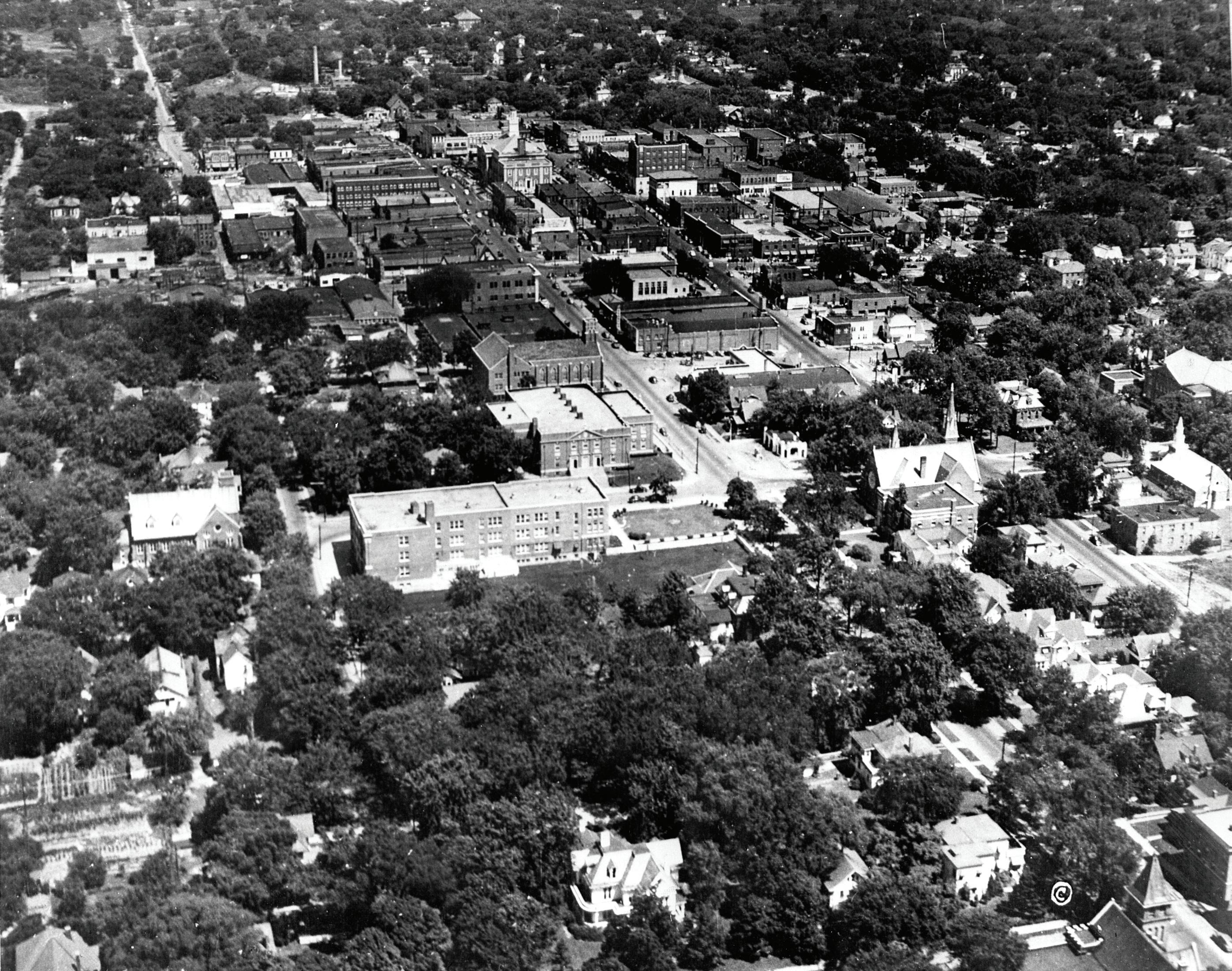
An aerial view of Independence, Missouri, taken in about 1957, captures President Harry S. Truman’s home in the center foreground. below
view taken Truman’s to Truman, of presidency.
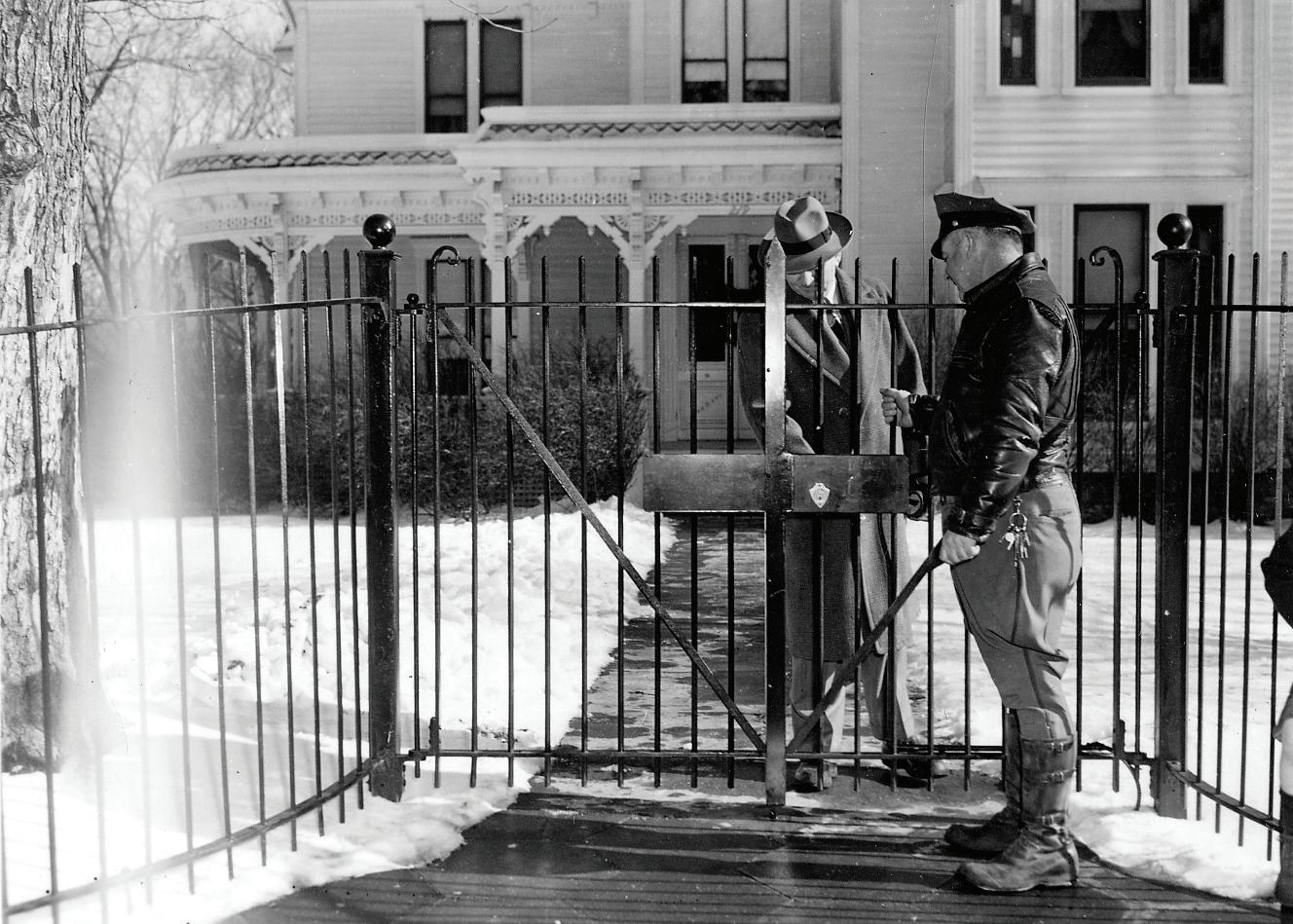
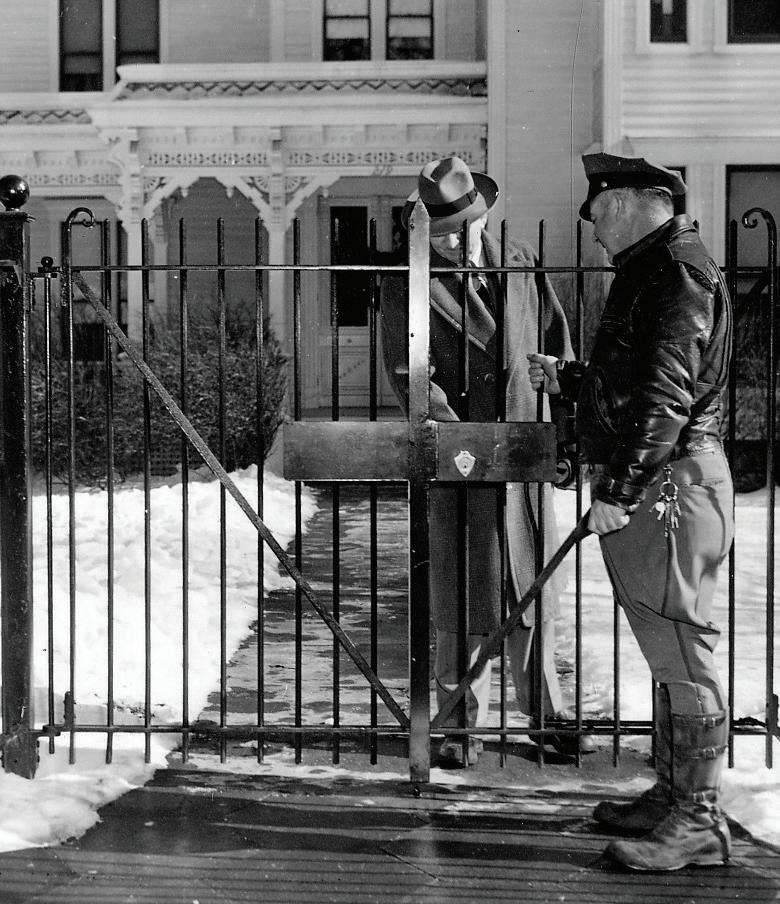
President Truman and Mike Westwood, the local policeman assigned to Truman, inspect the gate of the newly-installed fence around the Trumans’ home in Independence, 1949.
Examiner, as attending a “bridge-tea” along born.
Whenever Truman came home as president, the national press came, too. The town was on the evening news. Out-of-state license plates were the norm. Tourists stopped their cars to ask me, “Where is President Truman’s house?”
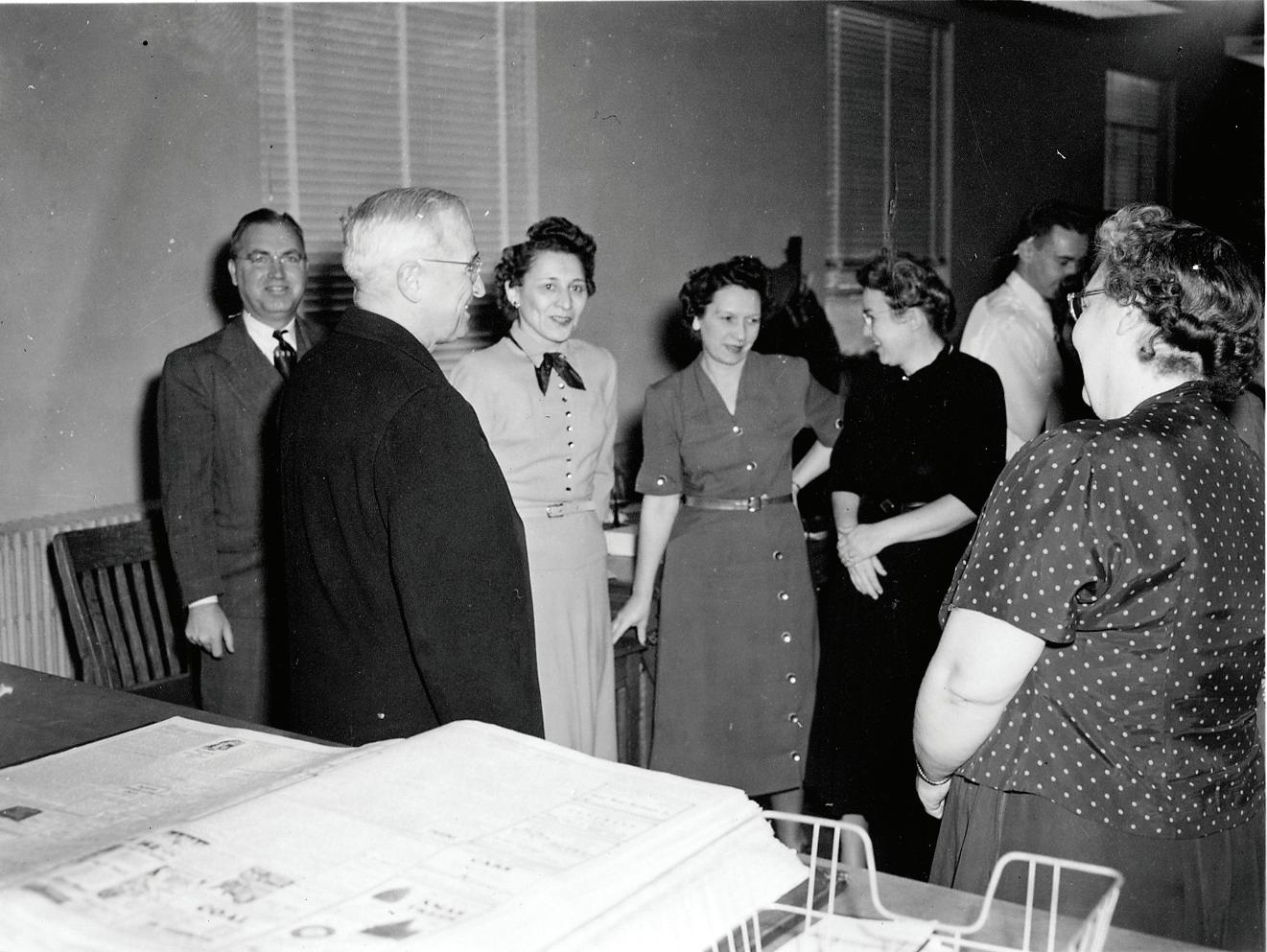
I never saw Truman in person, but I knew many who did. One was Sue Gentry, city editor for the Independence Examiner . I had a paper route and picked up my copies at the Examiner’s office. Occasionally, I went inside and talked to Gentry. It never occurred to me that she knew Truman until, researching this article, I read an oral history of hers. Bess Truman had told her to visit at the White House if she was in town.
So I did go to Washington. It was in August [1945], and things were getting sort of . . . Well, the war in Europe was already over, and it sounded like the war in the Pacific might be over pretty soon, so I thought, “Well, I’ll call Mrs. Truman.” I got a hold of her, and she said, “You’d better get down here this afternoon.” So I got a cab and went down, and that’s when Mr. Truman announced the surrender of Japan. But Mrs. Truman had me come over to the
White House, and I had tea with her on the portico and that sort of thing.6
INDEPENDENCE STORIES
For the following accounts of Truman in Independence, I asked twenty-seven people for their recollections, including relatives and high school classmates, who, like me, grew up when the Trumans were in Independence.
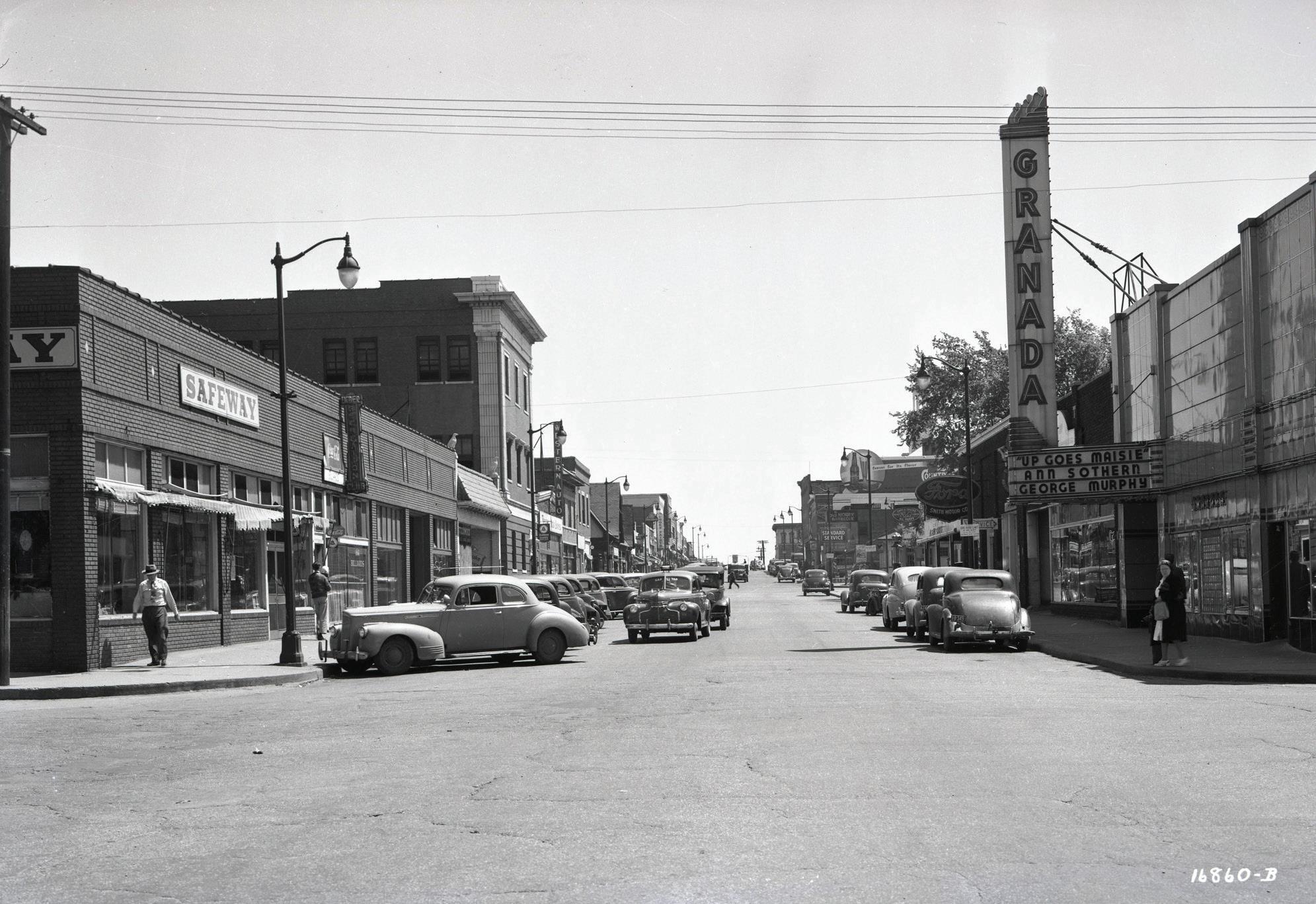
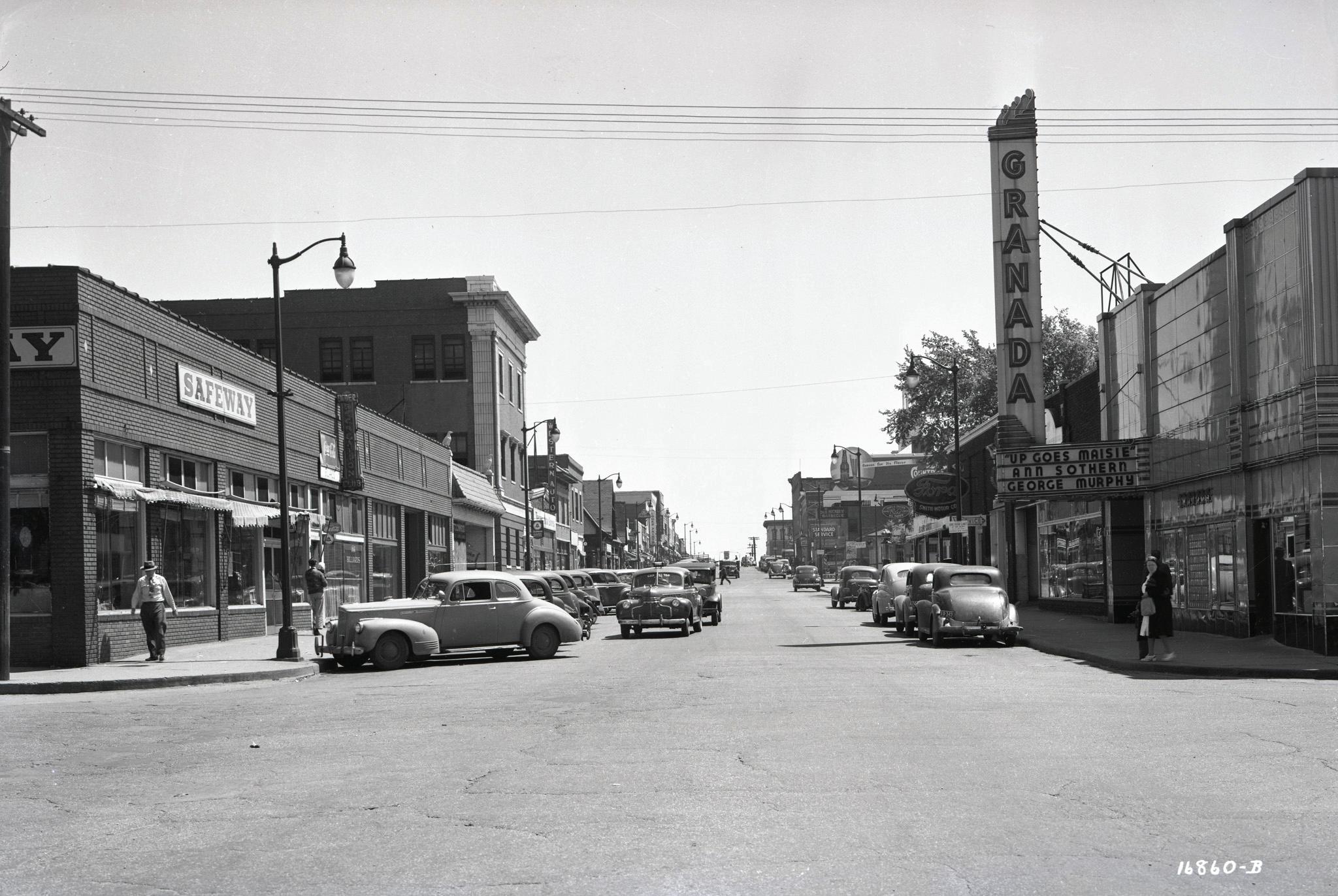
In 1947, the Secret Service sent classmate Donna Eckhoff’s father to Independence to guard the Trumans’ home. The Eckhoffs lived near the square. On Saturdays, Donna, who was five or six years old, and her father walked there on errands and then dropped by the Truman’s home, where her father chatted with the agents on duty. Donna remembers Bess Truman being home. She rescued Donna from the men’s talk and took her into the kitchen. She “would set me on one of those old stools with the red vinyl seat and the fold-out steps. She would give me peanut butter sandwiches and milk. Several times I got to play dress up in her attic. The Trumans didn’t act special.” Agent Eckhoff drove Bess Truman to the store where she did her own grocery shopping. He hated taking teenage Margaret Truman to the Granada movie theater on the square because he felt out of place with the gaggle of teenagers and sensed his presence intruded on Margaret’s privacy.7 This assignment ended abruptly when Truman left office. Former presidents were not given Secret Service protection until 1966.
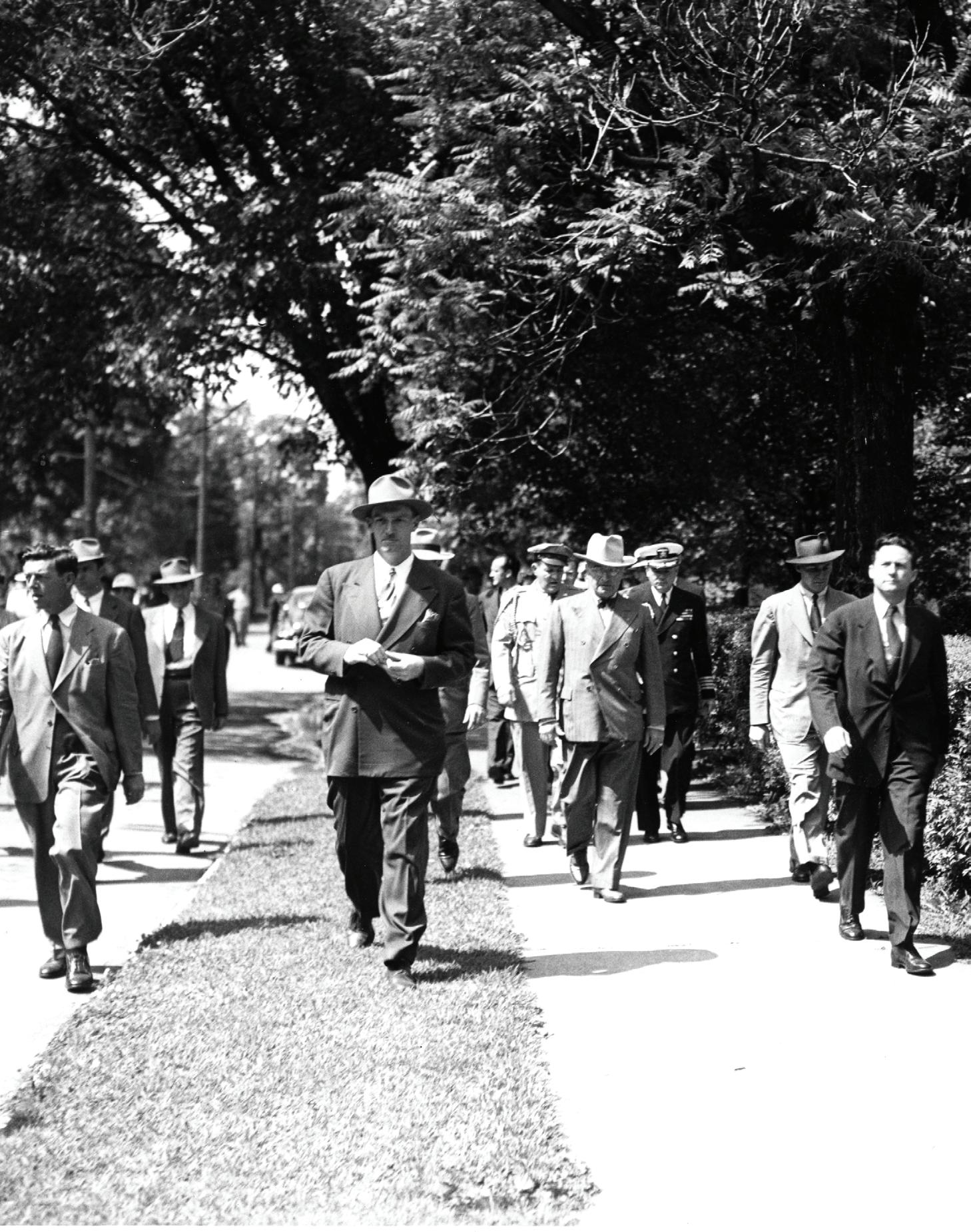
My classmates encountered Truman on his famous morning walks. Truman described his routine: “I usually take a walk of a mile and a half, at the pace of 120 steps a minute, from six-thirty to seven each morning.”8 He wore a suit and later added a cane. He was often accompanied by Paul Mike Westwood, known as Mike, a policeman the city fathers had assigned to Truman part-time for security and as a driver. I knew Westwood because he had done traffic control at high school events. Though likable, he was not exactly physically fit. If trouble broke out, I expected he would need my help.
Classmate John Barnes recalled being at the boys’ club across the street from the Trumans’ home. When we would see him start his walk a few of us would run after him and walk uptown to the courthouse on the Square and back [about a mile round-trip]. Truman loved to have us
above
Surrounded by Secret Service agents, President Truman (fourth from right) takes his daily walk in Independence, 1945.
clockwise from top left:
Scenes of Independence during the Truman era remembered by the author include the Independence Examiner office where Truman visited with editor Sue Gentry (third from left) and her staff, 1949; the junior high school, near the Truman home, which President Truman (second from left) often passed on his daily walk, and the Granada Theater where Margaret Truman enjoyed the movies. The theater is across from the Safeway, where Bess Truman sometimes shopped for groceries. ockwise left the Truman remembered by office where with and staff, the Trumans’ Truman (second from Theater Margaret Truman enjoyed The across where sometimes
had a kind
be better. wore a hat on hot days. My grandfather would tell me, that damn Democrat.” But 9
boys walk with him. [He] always had a kind word, would ask us how we were doing and told us tomorrow would be better. Like my Grandpa, he always wore a hat even on hot summer days. My grandfather would tell me, “You should not be walking with that damn Democrat.” But I did it anyway.9
Sandra Smittle McGinnis lived across the street from 219 North Delaware Street. She recalled Truman walking by. He would smile and say in a kindly, formal way, to Sandra and her playmates, “Hello, young ladies.”10
When Doug Allen was six years old, he waited near the Trumans’ home for a bus to summer camp. Truman would look at the young campers and say, “Hi kids. How are you?” or “How are you doing?” Of course, Doug had no idea who the nice man was. Doug’s sister, Sherri Allen Brown, said their mother worked at the junior high, which, like the high school, was within a block of the Trumans’ home. Whenever Truman saw her, he tipped his hat with a “Good morning” or “So nice to see you.” “He was always so chipper,” her mother said.11 When Ron Wright got off the bus at the high school in the morning, Truman was sometimes there finishing his walk and greeting students.12
Carol Keightley Haralson told of her father driving to work and seeing Truman on his walk. Her father would honk, and Truman would raise his cane in response.13 Linda Glispey Carnine’s husband, Skip, was principal at the junior high. Mike Westwood always knocked on the window and waved as he and the president passed by.14
She recalled Truman said. students. response. by.
Home from college in the summer of 1963, David Dieckman worked for a plumbing company. He was in a ditch a few blocks from the Trumans’ home, replacing a sewer line, when a Chrysler pulled up. The driver rolled down the window and asked David what he was doing. He looked up to see it was Truman and without thinking said, “I’m just digging a ditch, Harry.” Realizing he had just called the former president by his first name, David quickly explained in more detail, trying to cover up his faux pas.15
pas.
I did go on to further explain that we were replacing a sewer line at which Mr. Truman pulled his car to the curb and proceeded to get out. My boss, Herman Dieckman, was supervising the project in the yard above
go on further explain were replacing a sewer line at which Mr. Truman and proceeded to get out. My boss, Herman Dieckman, supervising the
me where Mr. Truman approached him to further assess our project. They had a brief conversation, and after a few minutes Mr. Truman went back to his car and proceeded to head to his home, where he was probably expected for lunch.”15
David’s twin sister, Charlotte Dieckman Markham, still has the certificate from the town’s Chamber of Commerce honoring her as an attendant in the Halloween Parade in 1959. To make the certificate special, the Chamber had Harry S. Truman sign it.16
Dave Bennett’s father was active in the Democratic Party and knew Truman. The Bennetts lived next door to Truman’s boyhood home, putting it on the president’s walking route. The driveway of Bennett’s house was gravel. Dave, who was six years old then, was wont to throw the rocks at things. His mother warned him not to throw at Truman. He obeyed, and the president would speak to him when he passed by.17 And like me, classmate Kirk Carpenter, who lived a few blocks from the Trumans, remembers tourists asking for directions.18
My classmate Kay Johnson Mussell recalls that her mother, who worked at the public library, used to see Truman walking around outside greeting people while he waited for his wife to pick up the latest mystery novels that the library staff held for her to read first.19
Truman approached few minutes Truman went back his car and was probably for lunch.” 15 directions. first.
Seeing Truman outside his neighborhood was not common although in his autobiographical Mr. Citizen, he wrote about, and provided photographs of, putting money in a parking meter and eating at a local cafeteria. 20 However, such outings in Independence were infrequent. Few today remember Truman except on his walks or at his library.
he
THE TRUMAN LIBRARY
Truman was a healthy 68 years old when he left the presidency, and he wanted to stay engaged in public affairs. To this end, he set out to build a library in Independence for his presidential papers. He was not wealthy, and former presidents did not receive a pension. So he took an office in the Federal Reserve Building in Kansas City, and a fund-raising campaign produced enough to build the library. Truman dedicated it in 1957 and moved his office to the building. The library keeps Independence in the spotlight to this day.
Dave Bennett’s father, who was on the city council, was instrumental in acquiring a site for the library in a city park.21 Thus a 16 mm fund-raising movie for the library, highlighting Truman’s life, shows young Dave in cowboy outfit playing in his yard as Truman walks by. The director made sure there was no toy pistol in the holster. Dave runs out and shakes the president’s hand. Dave points out that the people in the film were not actors. They were people that Truman really knew.22
Ron Wright was at the library shortly after it opened. He noticed an older man on a scaffold inside who seemed to be painting the wall. The man paused from his work to say, “Hi kids.” This was artist Thomas Hart Benton at work on the mural that graces the lobby of the library.23
The library gave Truman an opportunity to mingle with the public and with politicians and celebrities who made the pilgrimage to see the former president. Susan Ellmaker’s Girl Scout troop acted as tour guides at the library. One day, Truman took over the tour she was leading. When the tour got to an exhibit of political cartoons about him, Truman stopped at a painting by James Falter of Truman addressing a joint session of Congress that had been on the cover of the Saturday Evening Post. The president pointed to the figure of his political nemesis, Ohio Senator Robert Taft, in the front row and said with delight that Taft appeared to be asleep. Susan was at the library the day in 1960 that presidential candidate John F. Kennedy came to get Truman’s endorsement for president. Truman told the Girl Scouts that he would bring Kennedy to shake hands with them and they should think about what to say. But when it was Susan’s turn to shake hands, she was tongue-tied. Kennedy seemed puzzled by her silence, then shook her hand and moved on.24
Gary Horner had a summer job tending tennis courts near the library. He sometimes crossed paths with Truman, as they arrived in the morning at the same time. Truman might walk from his house, a mile away. “He liked to stop and talk, a little chitchat, asking how work was or about my family. He addressed me as ‘Well son, how are you?’ He would occasionally invite me into his office to talk, but I seldom went in.” One day, Gary stood in the lobby, watching Benton work on the mural. Suddenly, the artist turned around and “screamed ‘Goddamnit, kid, get out of my light,’ and a brief tirade followed.” Truman came out of his office to smooth things
over. The friendly relationship between the president and Gary continued until the day Gary came to the library on a class trip. The students gathered in the auditorium for a question-and-answer session. Gary recalls that Truman seemed to recognize him.
I asked him what he thought of Mr. [Eugene James] Powell’s book, Tom’s Boy Harry [about Truman and Tom Pendergast’s machine] and what was his relationship with Mr. Pendergast. He instantly became very angry, and with a mixture of obscenities, told me Mr. Powell didn’t know what the hell he was writing about, and I should shut up and sit down. “Give ’ em Hell Harry” [which friendly crowds shouted during speeches] had just given me some Hell! President Truman never spoke to me again.25
In the spring of 1961, I wrote the former president to invite him to speak to the 1,100 students at our high school. I followed up with a phone call to his office. The woman I talked to, who was surely his secretary Rose Conway, said the president did not make appearances before Independence groups. This still seems odd. In Mr. Citizen, Truman said in his post-presidency years: “I would make myself available to schools and colleges to lecture on American government and American history.”26
MR. CITIZEN
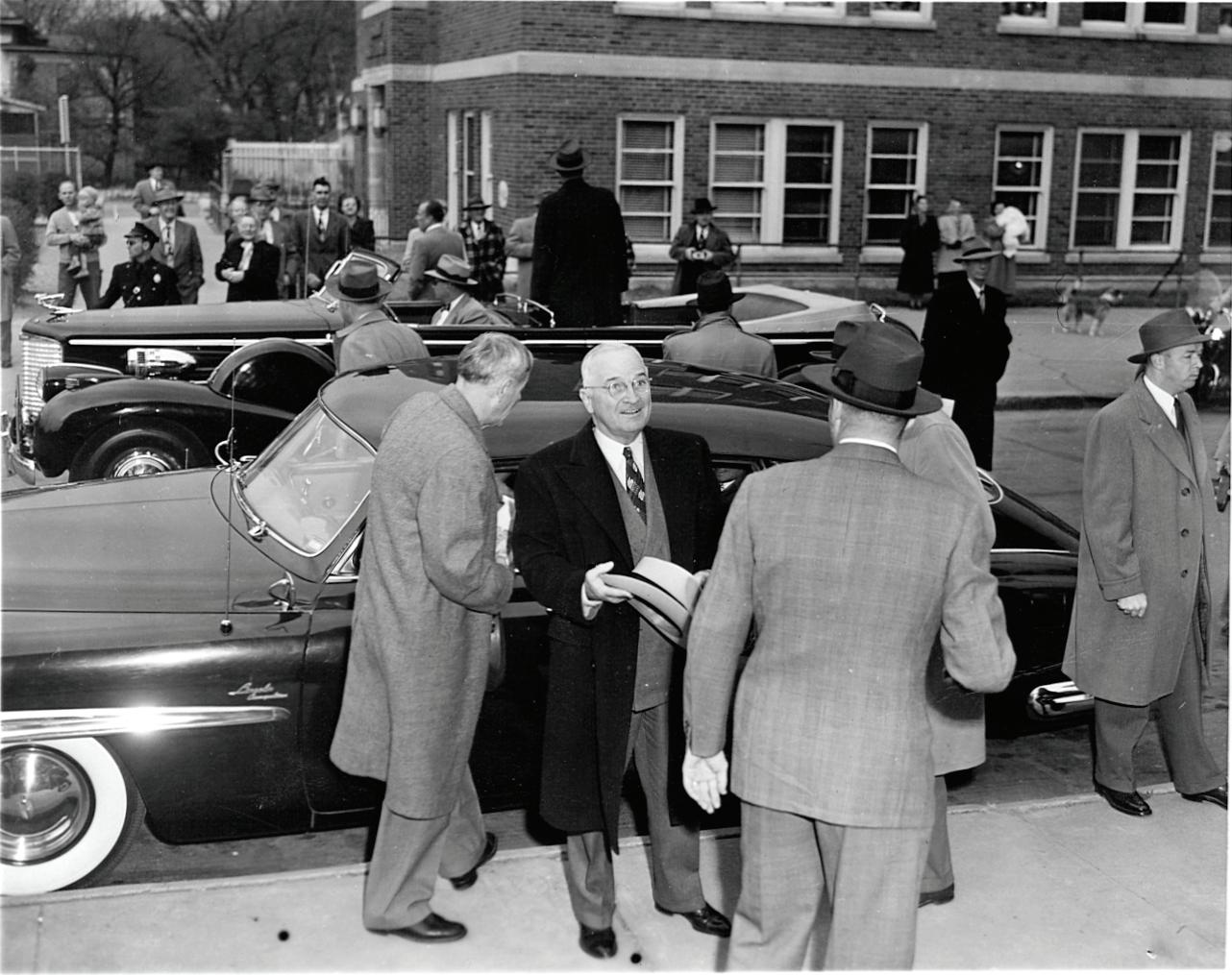
When Truman came home the evening of January 21, 1953, an estimated ten thousand people lined the route from the train station to 219 North Delaware. The oldest person in the crowd, Mrs. Jack Totty, who had known Truman since he was a boy, told a reporter, “He has been a good President—I mean he has been the best President we ever had.”27
Truman may have been reminded of the line from the popular song about soldiers returning from World War I: “How ya gonna keep ’em down on the farm after they’ve seen Paree?” 28 In Mr. Citizen, he observed that a man
elected president suddenly finds himself at the top of the world. Then just as suddenly he is again at the level of John Jones, who lives next door. . . . We believe that anybody can be President of the United States and that when he is through, he can go back to being just anybody again. I cannot say I feel exactly that way about it. It has not been that simple for me. Back home in Independence, I discovered that it was not easy to assume the role of Mr. Citizen.
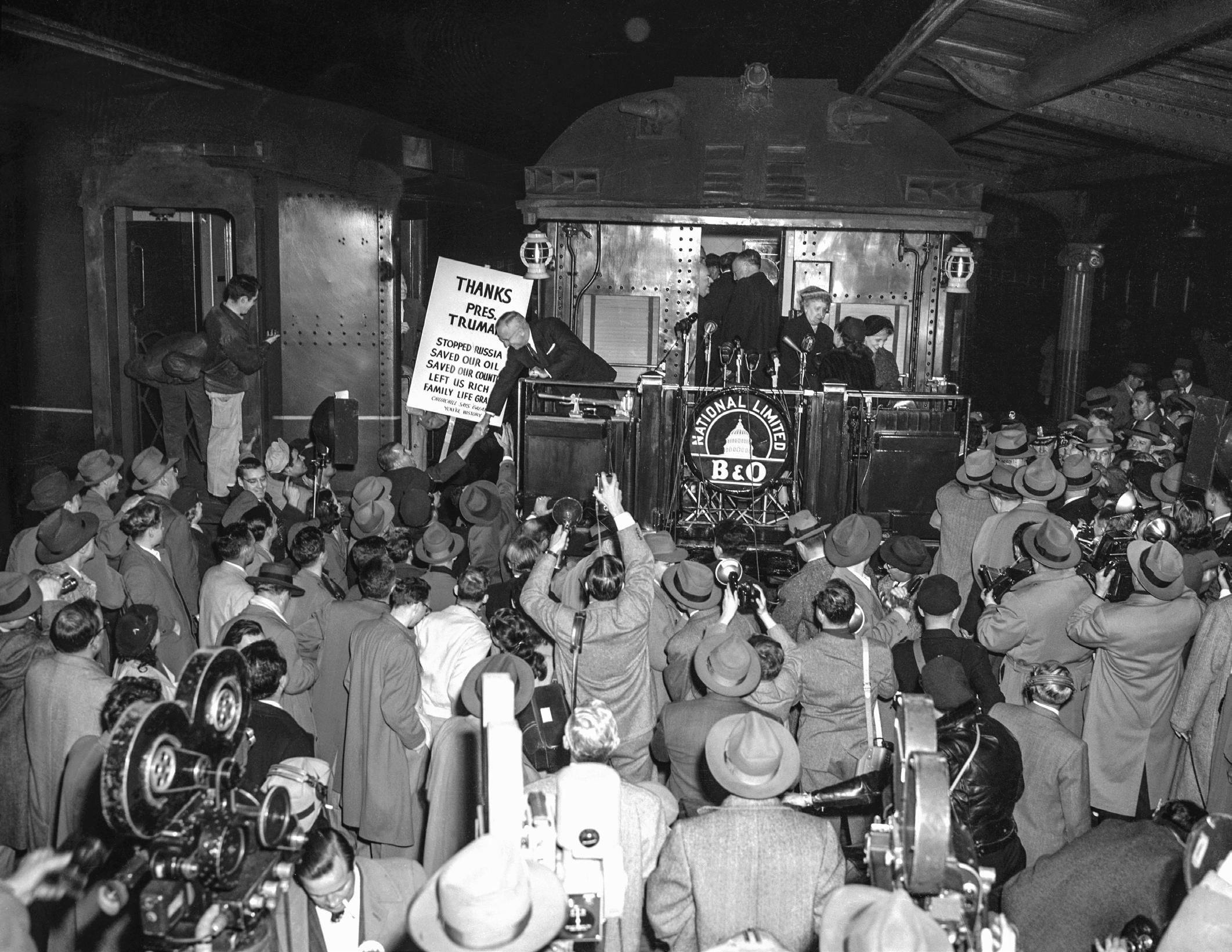
Following the Inauguration of President Dwight D. Eisenhower on January 20, 1953, crowds gathered at Washington, D.C.’s Union Station to bid farewell to the Truman family as they departed by train to return home to Independence, Missouri (right). Upon their arrival in Independence, the Trumans were met by a crowd of about ten thousand.
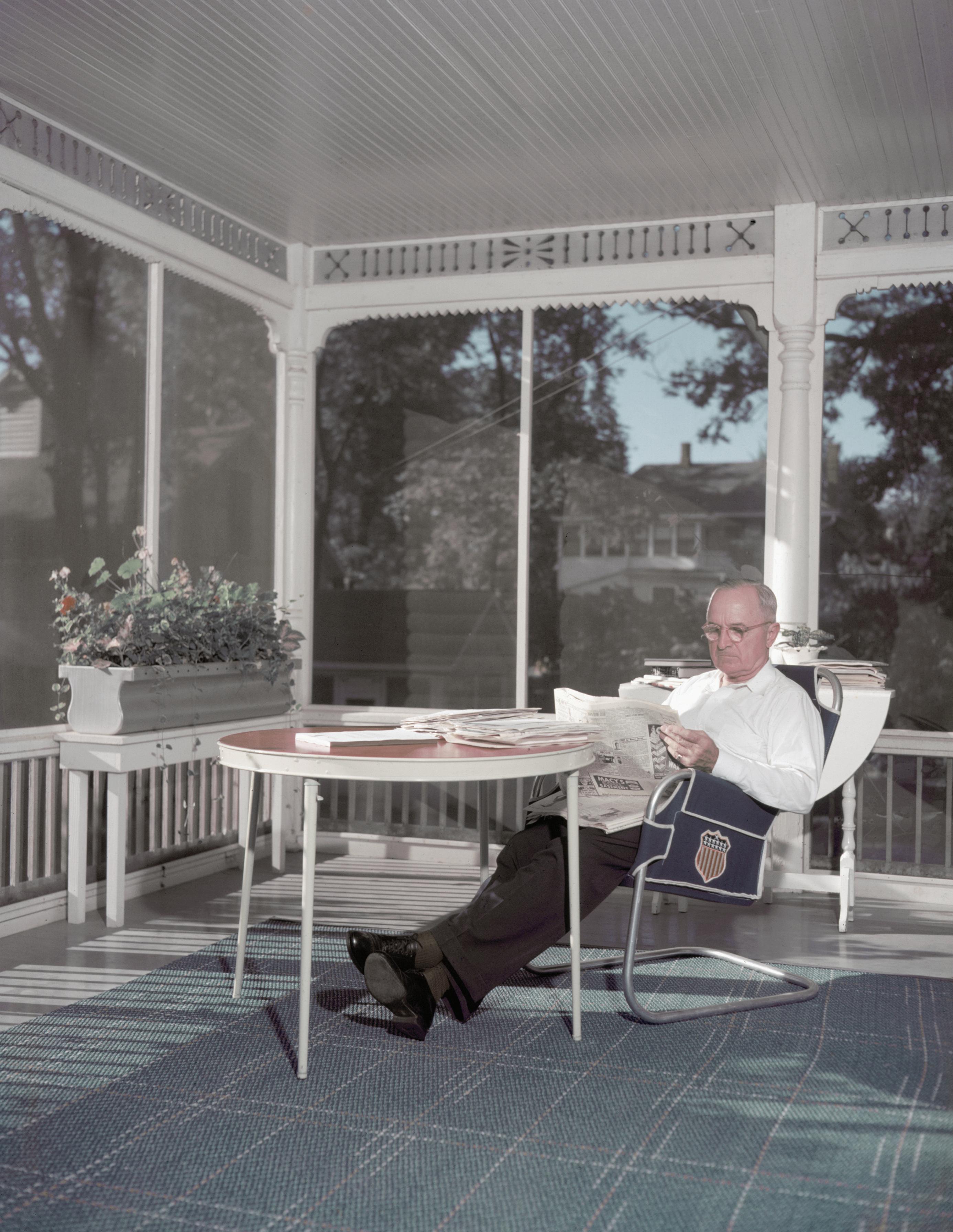
Despite his celebrity status, Truman, seen relaxing on his back porch in 1953 (below), successfully made the transition to private citizen.
left and below
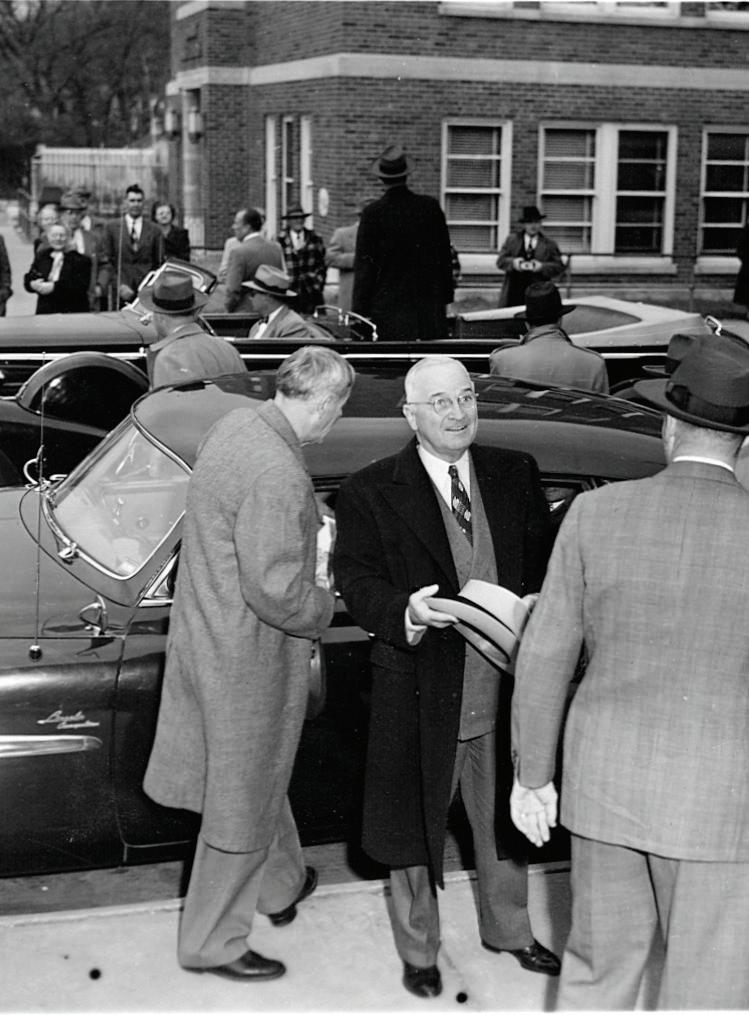
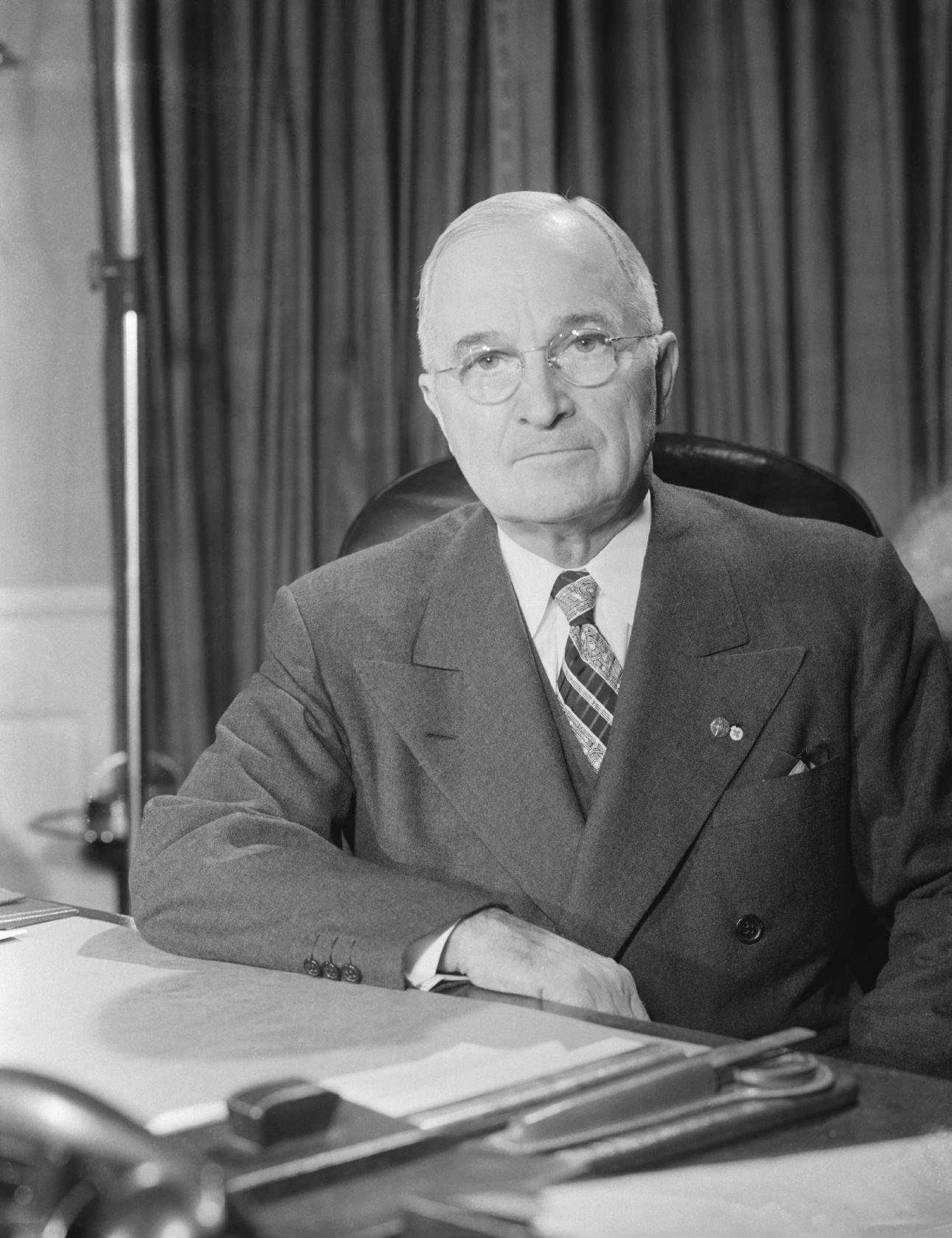
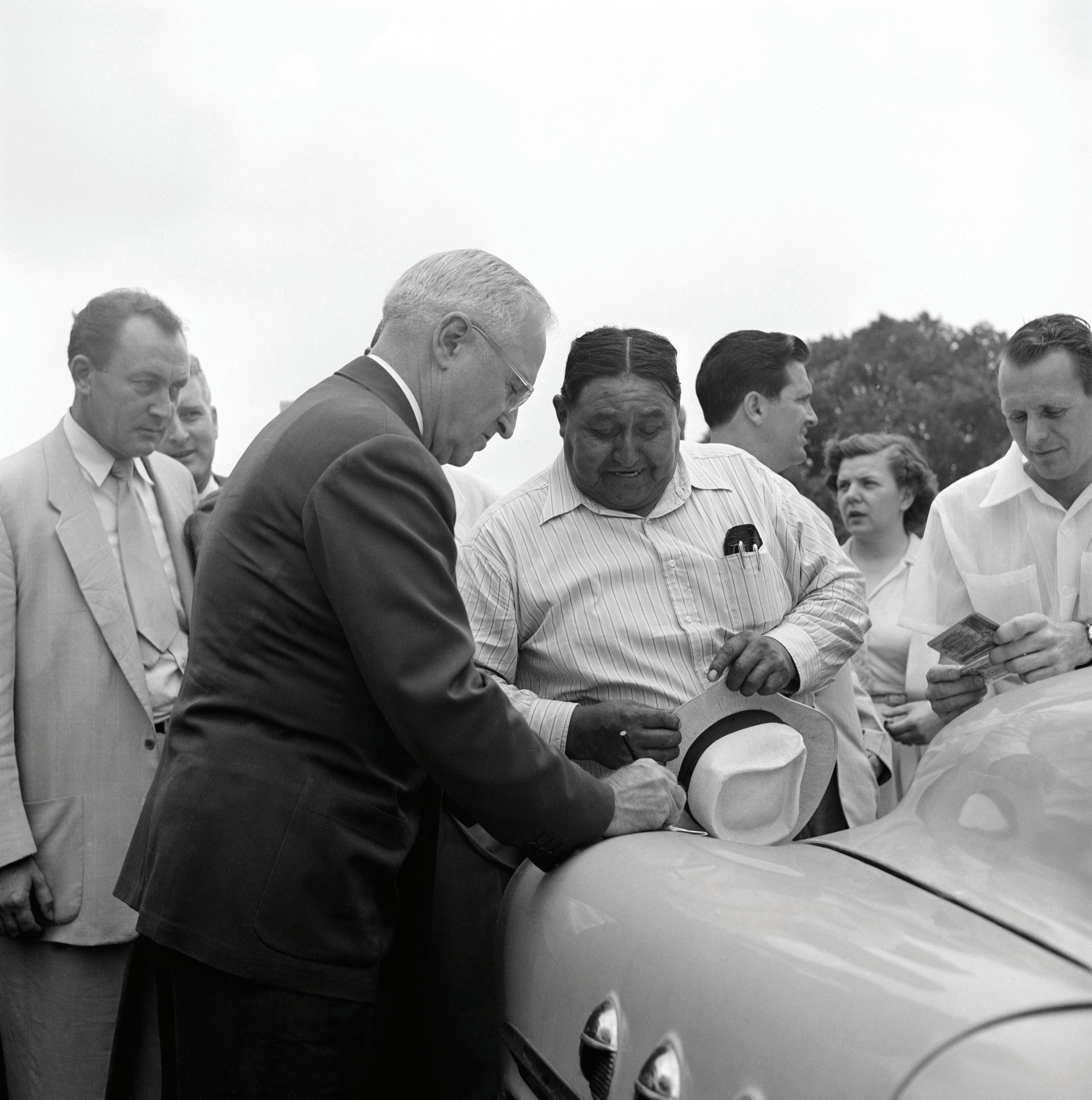
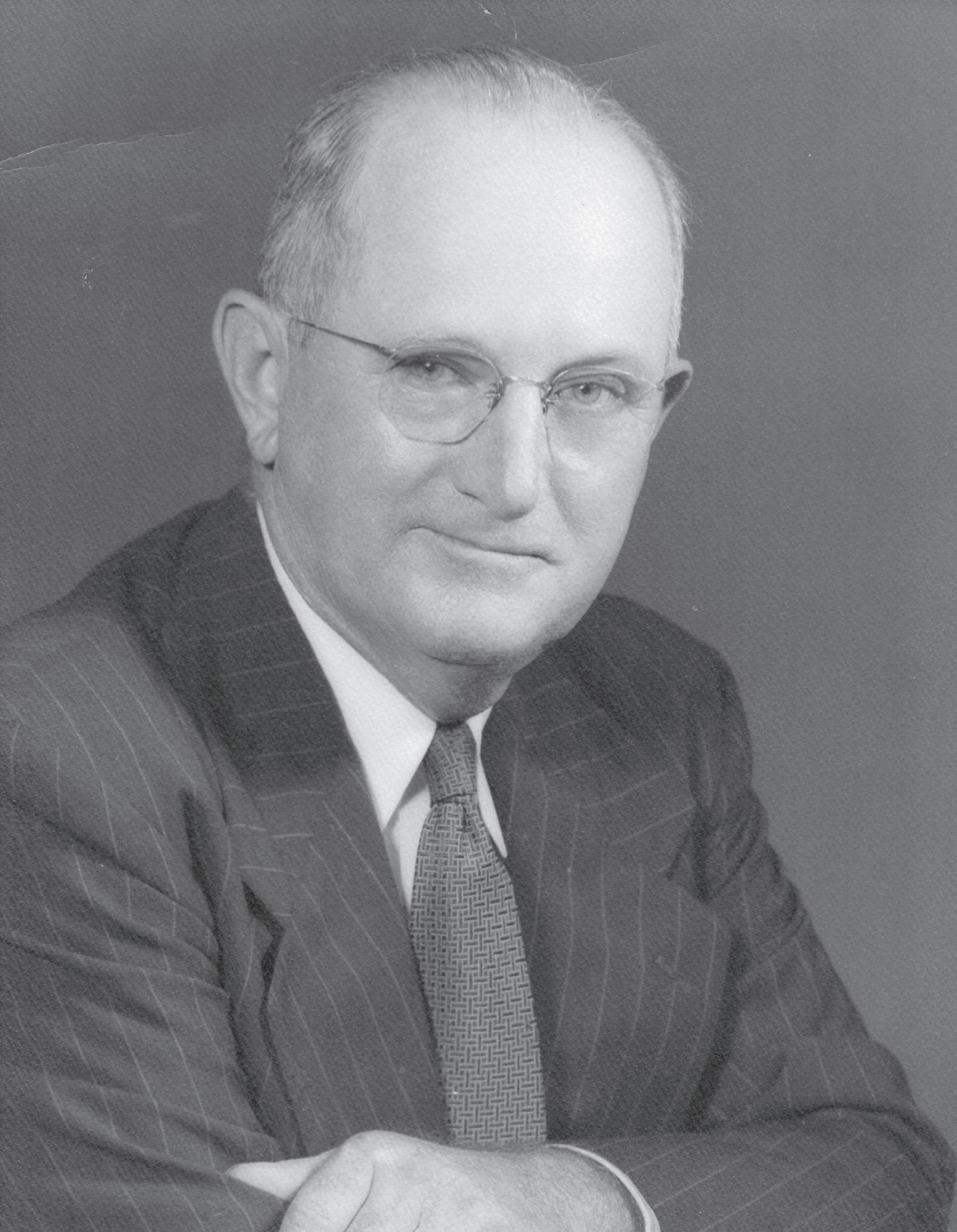
During his retirement, President Truman (seen left signing autographs, c. 1955) often greeted tourists hoping for a glimpse of him in Independence. Some tourists, however, mistook the author’s father, Harold W Johnston (below right) for the former president (below left, 1951).
I had to go through the process of again becoming a member of the community where I was raised. . . .
the process of again becoming a member of the where I was raised. . delegations Scouts, of and even from foreign they come see “that man from Missouri.” And
Perhaps it man
President he
Missouri characters, Mark Twain
Sometimes whole delegations stand outside [my house] looking over the fence—school children, Girl Scouts, all kinds of people from all parts of the country and even from foreign lands. I realize that they come to see “that man from Missouri.” And I try, when I am at home not to disappoint them. . . . Perhaps it is because once a man has been President he becomes an object of curiosity like those other notorious Missouri characters, Mark Twain and Jesse James.29
Truman was not a Mark Twain or Jesse James, but he was successful in making the transition from president to citizen. It ranks among his many impressive achievements. He did it with modesty and humor, too. In an oral history, Mike Westwood recalled driving Truman along a rural highway when they saw a sign for homemade sorghum. Truman loved sorghum, so they stopped. As Truman walked up to the roadside stand, the farmer said, “You look like Harry S. Truman.” Truman answered: “Well you know, a lot of people have told me that.” After Truman paid and started to leave, the owner decided he had been right: “You are Harry S. Truman. Here, take your money back, I’m going to give you this.” Truman rejected the offer: “No, you’re not going to give it to me. I’ve already bought it.”30
Kirk Carpenter remembers being at the teller’s window in the Bank of Independence and noticing Truman at the next window. Kirk realized who it was but still said, “You look like President Truman.” Truman answered: “That’s because I am.”31
Tourists regularly mistook my father for the president, whom they had seen only on television. My father bore a vague resemblance to Truman, but he was a staunch Herbert Hoover
Republican. He was not flattered. Once a kindly couple stepped on the elevator in Kansas City and called him “Mr. President.” My father’s face turned bright red, but he refrained from telling them what he thought of that damn Democrat.
Independence was where Truman learned the common touch. People saw themselves in him. Echoing what Mrs. Totty said when Truman came home in 1953, classmate John Milford observes today, “He was, in my opinion, one of the greatest presidents this country has ever had.”32
Truman made Independence more than just a spot on a map or a tourist attraction. It became a symbol of plain speaking and honesty, a state of mind, as I have learned after moving away. In 1967, for instance, I found myself in growing darkness at an isolated impoundment lot along the Hudson River in New York City where my car had been towed for a parking violation. When I paid the fine with a check, the police officer said he could only take cash, which I did not have. Then he noticed the check was drawn on the Bank of Independence and reversed himself. “Oh, you are from Harry Truman’s hometown. The check is good.”
notes
The title of this essay is taken from a book with the same title, Jon Taylor, Harry Truman’s Independence, The Center of the World (Charleston, S.C.: History Press, 2013). The epigraph is from a video by the National Archives, “Harry S. Truman: Home in Independence,” October 8, 2009, available on YouTube, www.youtube.com.
7. Donna Eckhoff, telephone interview by author, July 30, 2025.
8. Harry S. Truman, Mr. Citizen (New York: Bernard Geis Associates, 1960), 49–50.
9. John Barnes, e-mail to author, July 23, 2025.
10. Sandra Smittle McGinnis, e-mail to author, July 31, 2025.
11. Sherri Allen Brown, telephone interview by author, August 12, 2025, also relaying what her brother and mother remembered.
12. Ron Wright, e-mail to author, July 31, 2025.
13. Carol Keightley Haralson, e-mail to author, July 23, 2025.
14. Linda Glispey Carnine, e-mail to author, July 29, 2025.
15. David Dieckman, e-mail to author, August 9, 2025
16. Charlotte Dieckman Markham, e-mail to author, July 28, 2025.
17. Dave Bennett, interview by author, July 12, 2025.
18. Kirk Carpenter, telephone interview by author, September 2, 2025.
19. Kay Johnson Mussell, interview by author.
20. Truman, Mr. Citizen, 58.
York: July 11, 2025.
20. Truman, Mr. Citizen, 58.
21. My late brother Michael and wife, Mary Bennett Johnston, endowed the annual Howard and Virginia Bennett Forum on the Presidency at the Truman Institute in memory of her and Dave’s parents.
21. My late brother Michael and wife, Mary Bennett Johnston, endowed the annual Howard and Virginia Bennett Forum on the Presidency at the Truman Institute in memory of her and Dave Bennett’s parents.
22. “Man from Independence,” Harry S. Truman Library fund-raising video, produced and narrated by Phil Koury, 1955, available on YouTube, www.youtube.com.
22. “Man from Independence,” Harry S. Truman Library fund-raising video, produced and narrated by Phil Koury, 1955, available on YouTube, www.youtube.com; Bennett interview.
23. Ron Wright, e-mail to author, July 31, 2025.
23. Wright, e-mail.
24. Susan Ellmaker, e-mails to author, July 25–29, 2025.
24. Susan Ellmaker, e-mails to author, July 25–29, 2025.
25. Gary Horner, e-mail to author, August 9, 2025.
26. Truman, Mr. Citizen, 26.
25. Gary Horner, e-mail to author, August 9, 2025.
26. Truman, Mr. Citizen, 26.
27. Quoted in Richard J. H. Johnston, “The Return of the Native, Truman Returns to His Home Town,” New York Times, January 22, 1953, 1.
27. Quoted in Richard J. H. Johnston, “The Return of the Native, Truman Returns to His Home Town,” New York Times, January 22, 1953, 1.
28. Sheet music for the song is in the Truman Library’s collection of the family’s music and online at the library’s website.
28. Sheet music for the song is in the Truman Library’s collection of the family’s music and online at the library’s website.
29. Truman, Mr. Citizen, 29, 49–50.
29. Truman, Mr. Citizen, 29, 49–50.
30. Paul Mike Westwood, oral history interview by Jerald I. Hill and William D. Stilley, December 30, 1975, Truman Library website.
30. Paul Mike Westwood, oral history interview by Jerald I. Hill and William D. Stilley, December 30, 1975, Truman Library website.
31. Carpenter interview.
31. Carpenter interview.
32. John Milford, e-mail to author, August 7, 2025.
32. John Milford, e-mail to author, August 7, 2025.
1. “Frank James Was in Town One Day Last Week,” Jackson Examiner, April 11, 1902, 11; “Many Take the K.K.K. Oath,” Independence Examiner, August 27, 1957, 4.
2. “Chronology Harry S. Truman’s Life and Presidency,” Harry S. Truman Library and Museum website, www.trumanlibrary.gov.
3. 1920 U.S. Census.
4. Based on David McCullough, Truman (New York: Simon & Schuster, 1992).
Truman’s Independence, (Charleston, Truman
5. “For War Mothers Bridge-Tea,” Independence Examiner, March 12, 1930, 2.
6. Sue Gentry, oral history interview by Pam Smoot, December 9, 1985, Harry S Truman National Historic Site, National Park Service, www.nps. gov.