


January - February 2026
Contents
Wetherby Hosts a Successful Model United Nations Conference - Sammy S, Year 12
Wetherby Presents... Catch 22
- Yunus A, Year 8 and Oscar J, Year 13
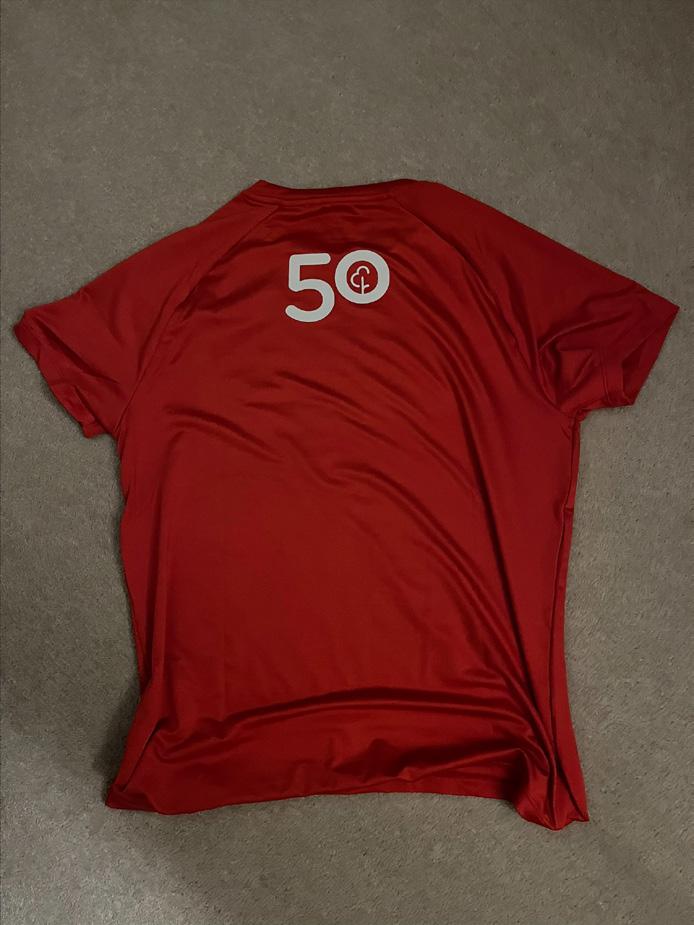
Park Run: 50 Runs EditionHenry Cr, Year 8
The New Overground - Alex M, Year 9
The 2025-26 Premier League Season - Thomas C, Year 10
The Humans Without Pain (CIP) - Santi Q, Year 10
Zipcar or Zipscam? Checking the Reciepts - Santi Q, Year 10
Non-Newtonian Fluids: A Natural Wonder - Santi Q, Year 10
Esperanto - The Earth’s Forgotten Universal Language - Domenico C, Year 10
Opinion: Is the World’s Most Powerful Nation Being Led Down a Dangerous Path? - Theo N, Year 12
Why Does Old Music Still Sound Better? - Dexter B, Year 12
Tardigrades - The Indestructable Micro-animalSanti Q, Year 10
The Immortal Jellifish: The Cell’s Master ManipulatorSanti Q, Year 10
Cover photograph - Jack A, Year 10
Contributing to the Barometer is a great way to earn gold notes, improve your writing, and it looks great on your CV
To submit articles or cover photos, join the Barometer club at Friday lunchtimes (B11) Or, you can email Mr s Bradley at nicola.bradley @wetherbysenior.co.uk
Read the latest issue at https://issuu.com/wetherbysenior
Sammy S, Year 12 writes...
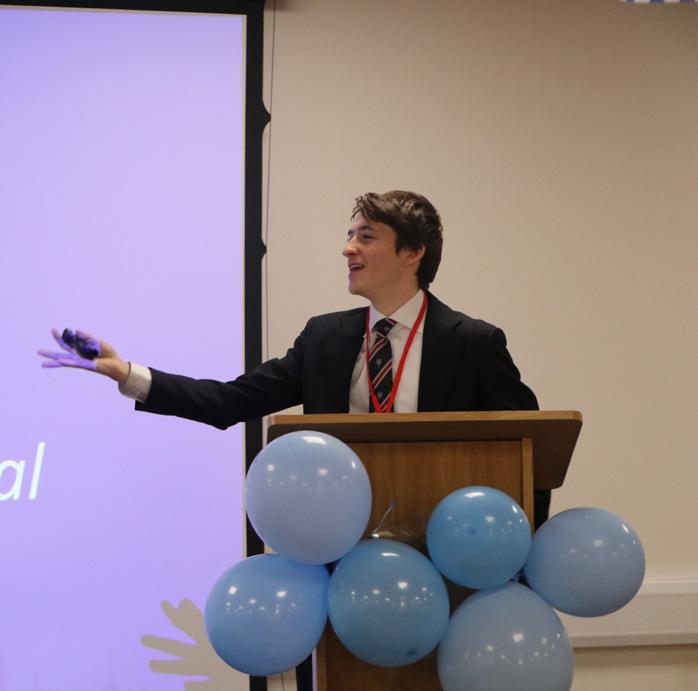
Wetherby School proudly hosted its Model United Nations conference this year, welcoming delegates from across the region for two intensive days of diplomatic debate, negotiation, and international collaboration. The event, which ran five distinct committees, represented months of meticulous planning and highlighted the dedication of Wetherby’s MUN program.
The conference featured five specialised committees, each tackling pressing global issues: the Security Council, ECOSOC (Economic and Social Council), SPECPOL (Special Political and Decolonisation Committee), UNEP (United Nations Environment Programme), and UNHRC (United Nations Human Rights Council). This diverse range of committees ensured that delegates could engage with topics spanning from international security and economic
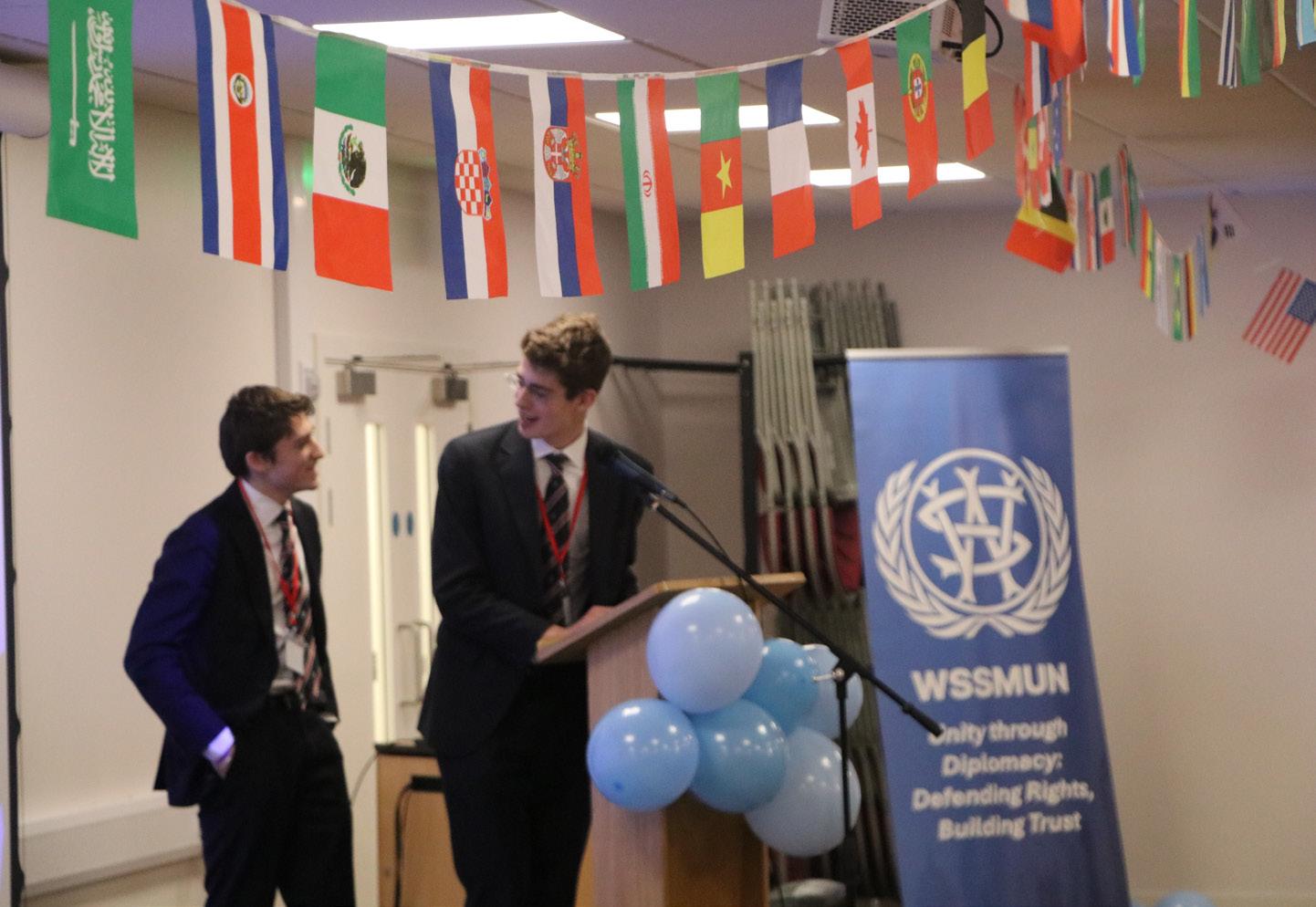
development to environmental protection and human rights.
Behind the scenes, an exceptional secretariat team had been working tirelessly since February to bring the conference to life. Leading the charge were Felix W and Daniel A, who served as Secretary-Generals, coordinating every aspect of the event with remarkable attention to detail. They were supported by a talented team of chairs who would guide debates and support parliamentary procedure:
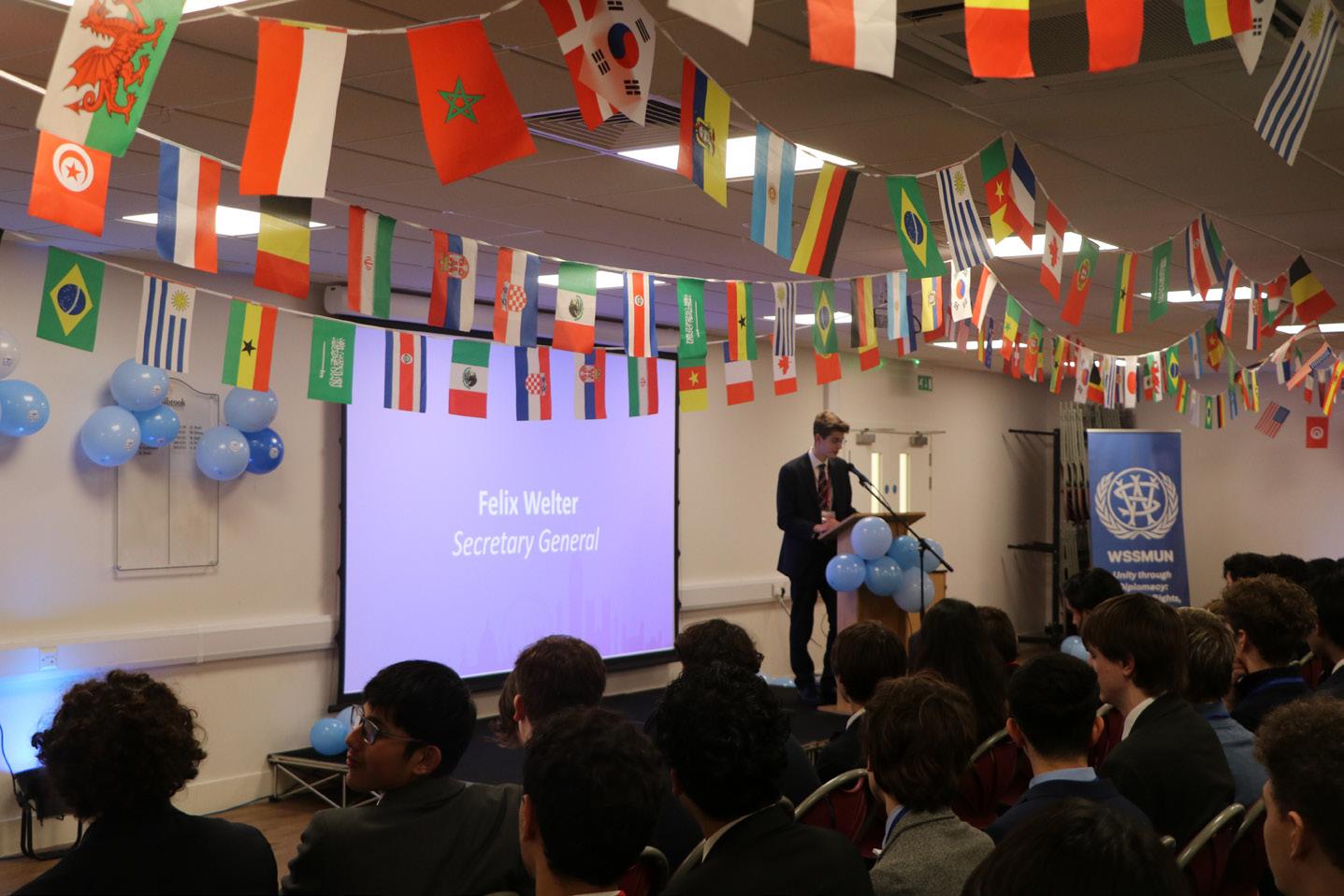
Mohamed A, Aditya D, Saif, Sammy S, and Zain S. Each chair brought their own expertise and leadership style to their respective committees, ensuring that debates remained engaging, productive, and diplomatically rigorous.
The conference officially began with delegates arriving in formal attire, embodying the professionalism and gravitas expected at international diplomatic gatherings. The atmosphere was electric with anticipation as students from different schools mingled in the reception area before the opening ceremonies.
Felix delivered the opening speech, welcoming all participants and setting the tone for the days ahead. His address emphasised the importance of collaboration, respectful debate, and the role young people play in shaping global discourse. Following
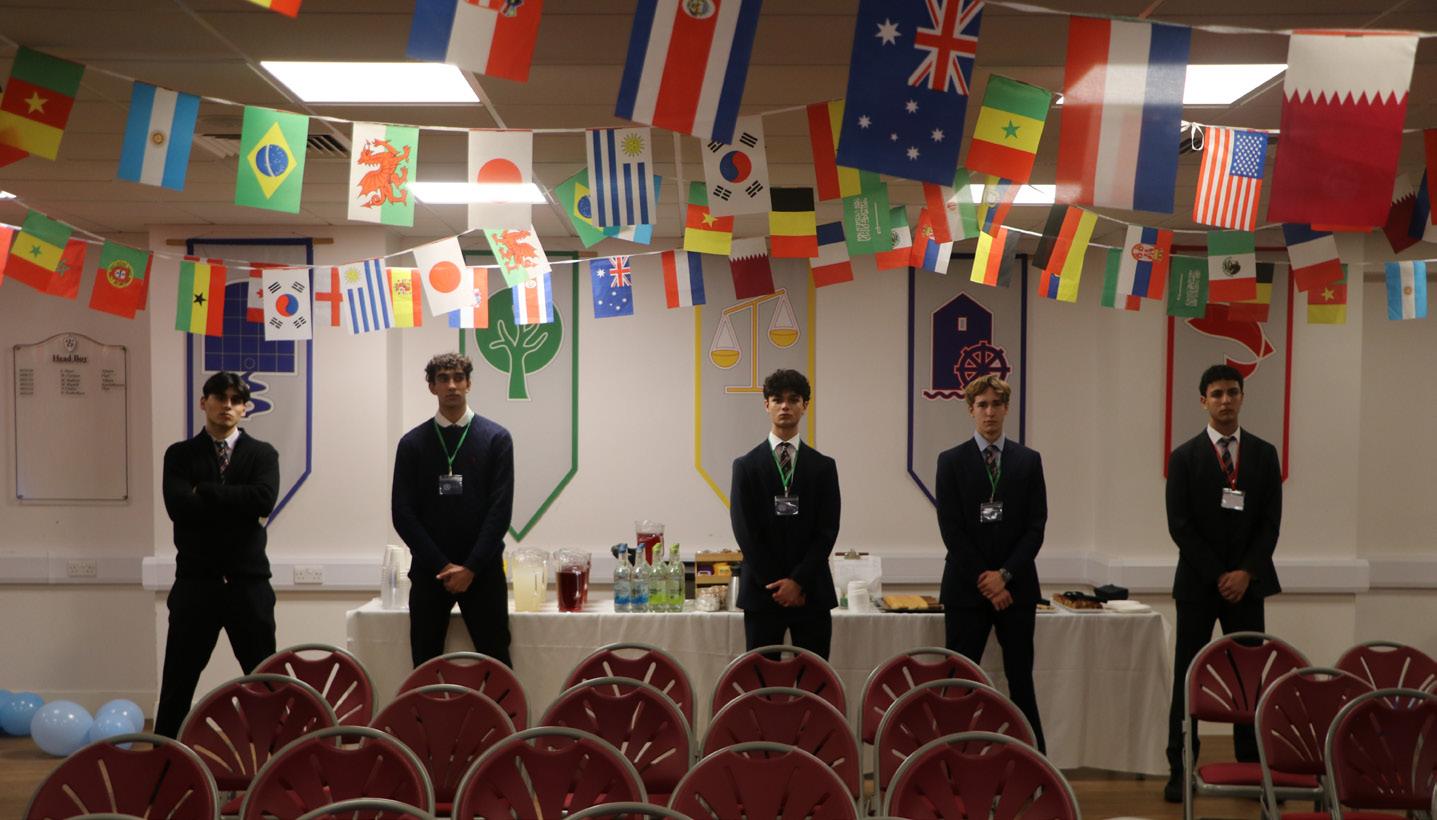
the speech, delegates enjoyed refreshments provided by Wetherby’s amazing catering staff, who ensured everyone was well-fuelled for the challenging discussions ahead.
Delegates then proceeded to their respective committee rooms, where chairs led icebreaker activities designed to ease tensions and foster camaraderie among participants who had never met before. These activities proved invaluable in creating a comfortable environment for the intense debates that would follow. Once formalities were complete, debating began in earnest, with delegates immediately diving into their research and beginning to form the diplomatic blocs that would characterise their committee work. Throughout the day, Jay moved between committee rooms, camera in hand, capturing the passion and intensity of the debates for posterity.
Everyone arrived bright and early on the second day, ready to tackle another full schedule of political challenges. Debating resumed promptly at 8:30 AM, with delegates picking up their talks
exactly where they had left off the previous evening. The energy in each committee room was high as students worked to write resolutions.
After a mid-morning snack break and lunch—once again excellently provided by the catering team— the conference shifted into its most dramatic phase: the General Assembly crisis. This joint session brought all delegates together to address an unexpected international emergency that tested their detective and communication skills.
The crisis scenario presented a complex situation: the United States had lost a nuclear missile in the waters off the northern coast of Portugal. As delegates scrambled to respond to this alarming development, the situation escalated when intelligence revealed that the missile had been stolen by a joint North Korean and Chinese operation. The room erupted into a flurry of activity as delegates formed and broke alliances, navigating the delicate balance between national interests and global security.
The simulation proved to be the highlight of the conference, with delegates showing impressive
creativity in their diplomatic strategies. Some countries worked to de-escalate tensions, others sought to leverage the crisis for strategic advantage, and still others attempted to build alliances to address the nuclear threat. The chairs skilfully managed the chaos, despite the amount of shouting ensuing, ensuring that parliamentary procedure was maintained even as the crisis intensified and more data was released to different countries.
While the conference appeared seamless to attendees, the reality behind the scenes was far more complex. The amount of preparation work required was truly unsurmountable, involving countless hours of research, logistics coordination, and problem-solving. Felix’s regular complaints about the workload became a running joke among the
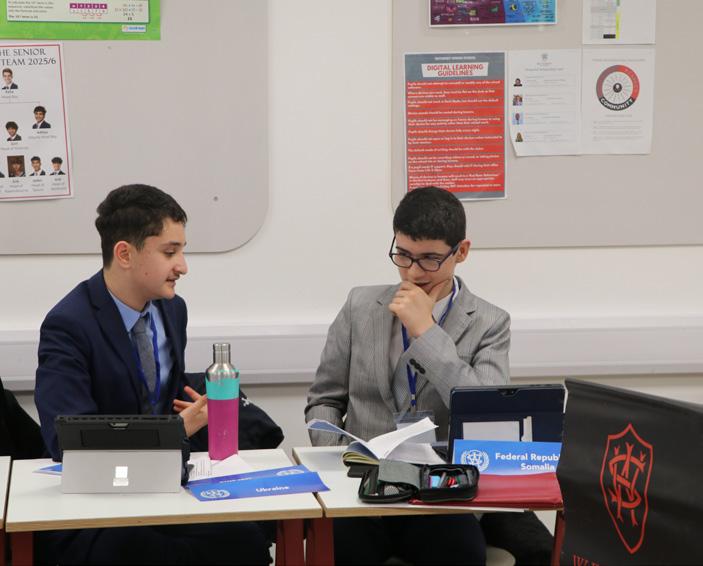
secretariat team, punctuating their planning sessions throughout the months leading up to the conference.
However, these challenges proved invaluable learning experiences. Every obstacle overcome and every mistake made provided crucial insights into what worked well and what needed improvement. The new secretariat team has carefully documented the experiences, creating attempting to solve problems before they happened.
The preparation involved far more than just planning debates. The team had to coordinate registration systems, prepare detailed background guides for each committee, arrange room bookings, manage catering logistics, create delegate badges and placards, establish voting procedures, design awards, and handle countless other details that most attendees never even noticed—precisely because the secretariat had done their jobs so well.
Despite the exhaustion, the stress, and the occasional moment of panic, hosting the conference was an incredible experience for everyone involved. The event concluded with an awards ceremony recognising both the best delegate per committee but also the best first timers, however the true reward was the experience itself, and the skills developed along the way.
In the weeks since the conference, many of the group chats created during those two intense days have gone quiet, their purpose fulfilled. However, the friendships born through shared crisis simulations, late-night resolution drafting, and collaborative problem-solving have proven strong. Delegates from different schools have stayed in touch, and the Wetherby organising team has developed bonds that will last long beyond their time at school.
For Wetherby’s MUN program, hosting the conference
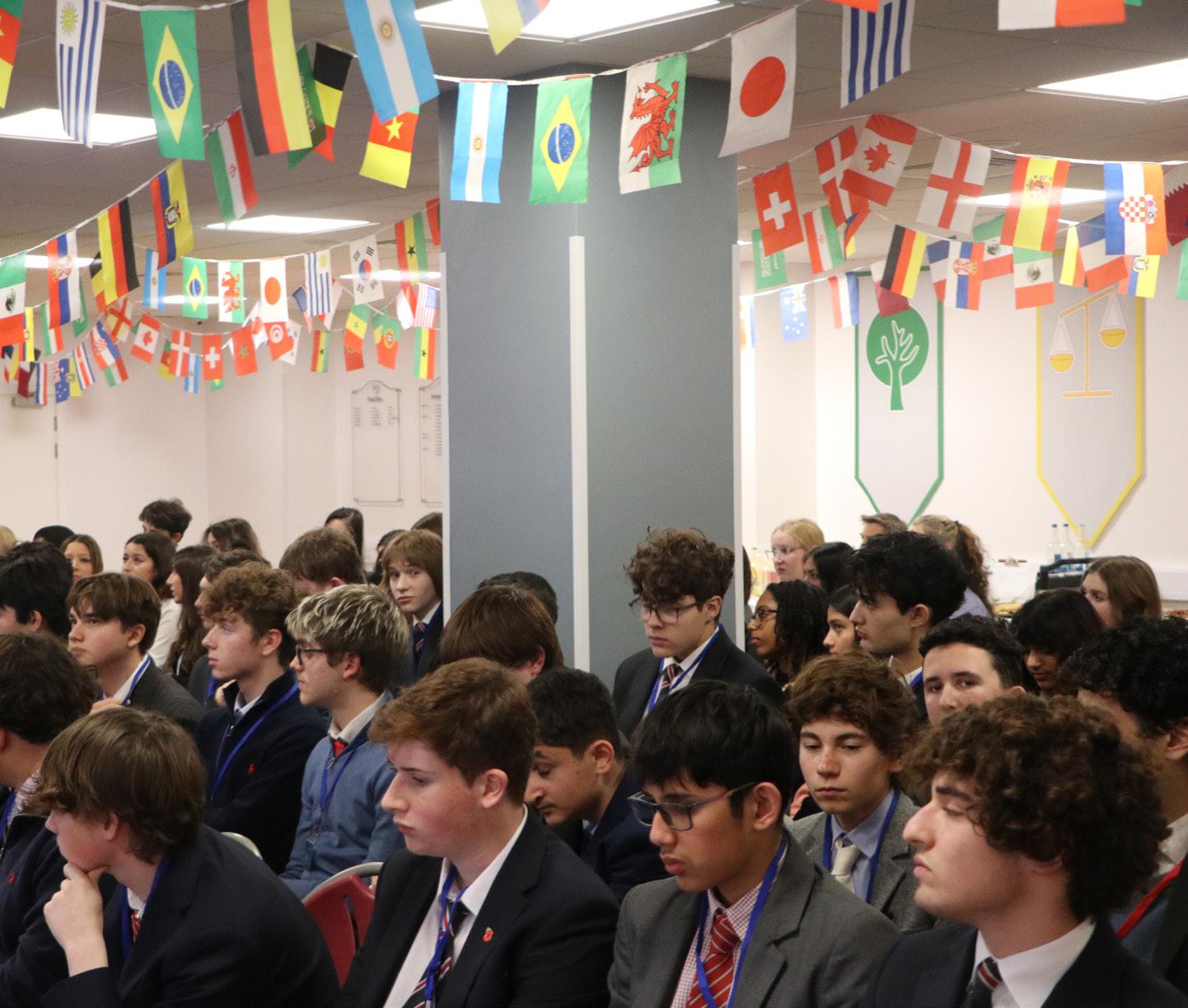
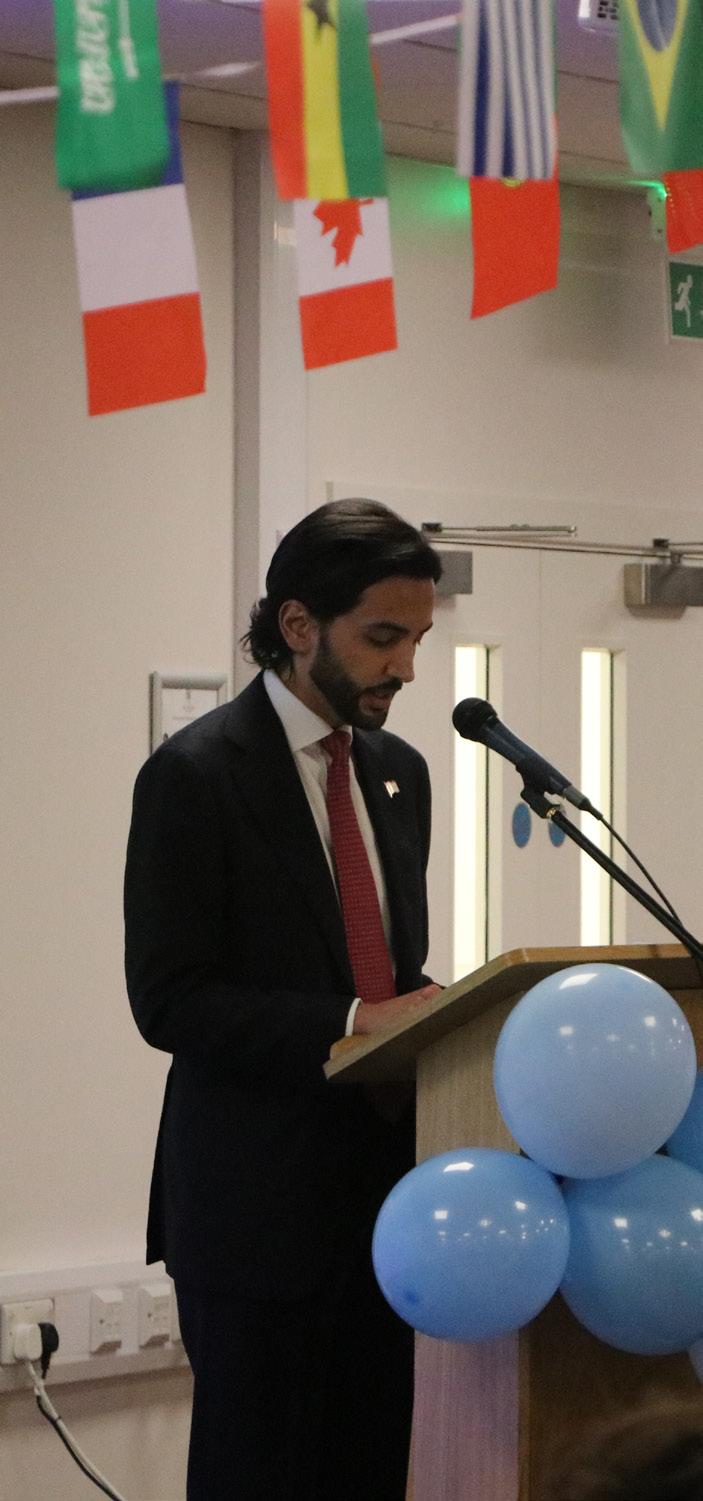
represented a milestone achievement. It demonstrated not only the school’s commitment to global education and diplomatic skills but also the remarkable capabilities of its students. The experience of organising such a complex event has equipped the secretariat team with leadership, project management, and collaborative skills that will serve them well in whatever paths they choose to follow.
As planning begins for next year’s conference, there’s a sense of excitement about building on this year’s success. With the lessons learned carefully documented and a new generation of organisers ready to take the helm, Wetherby’s MUN conference is poised to become an annual tradition that challenges and inspires young diplomats for years to come.
Yunus A, Year 8 writes...
What happened?
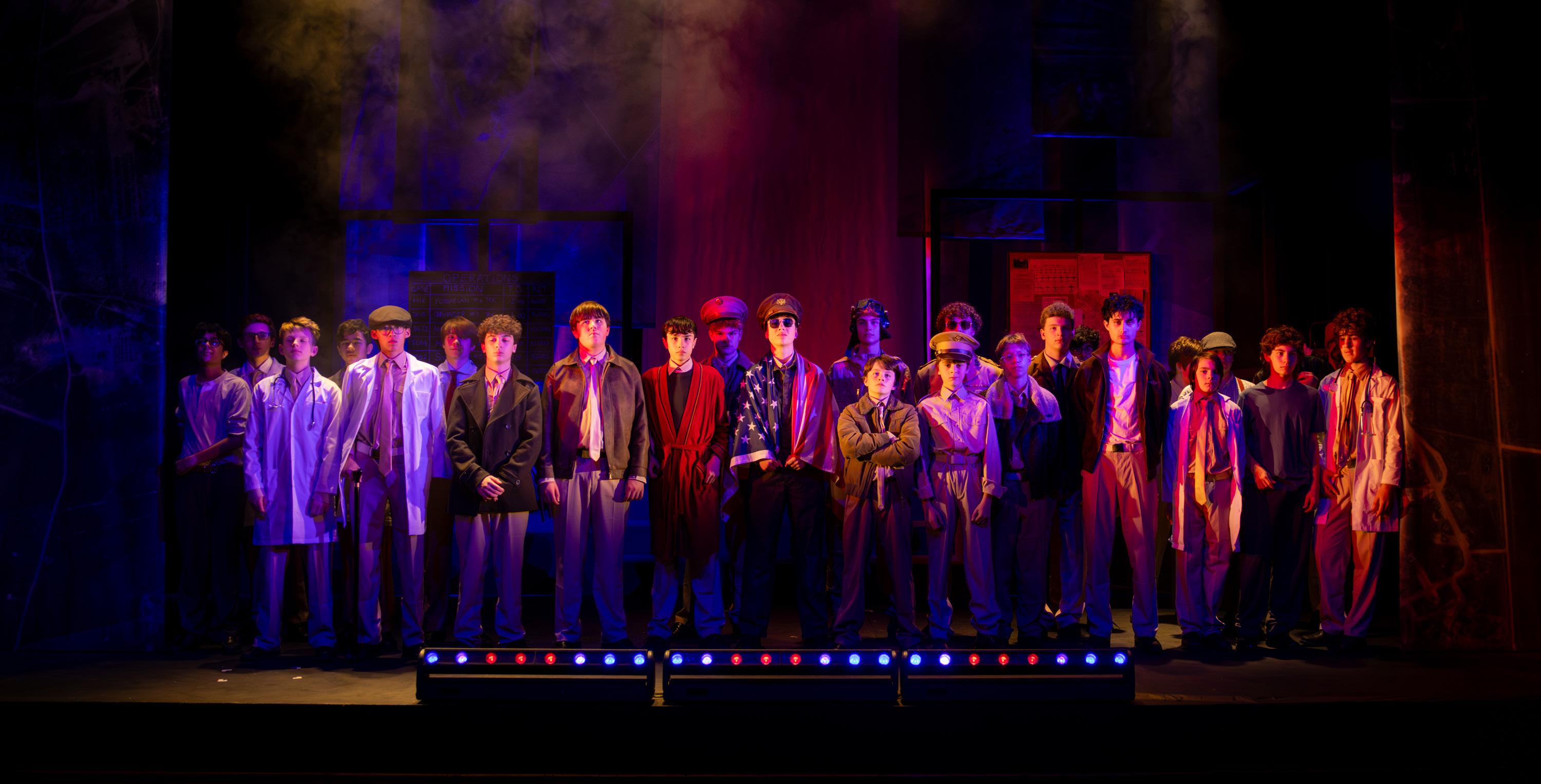
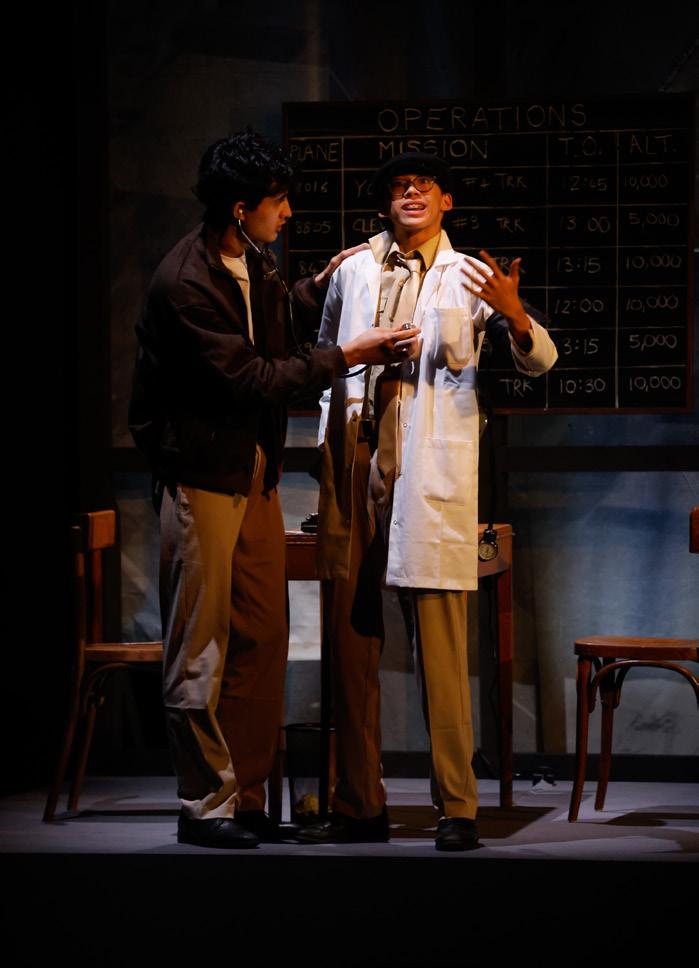
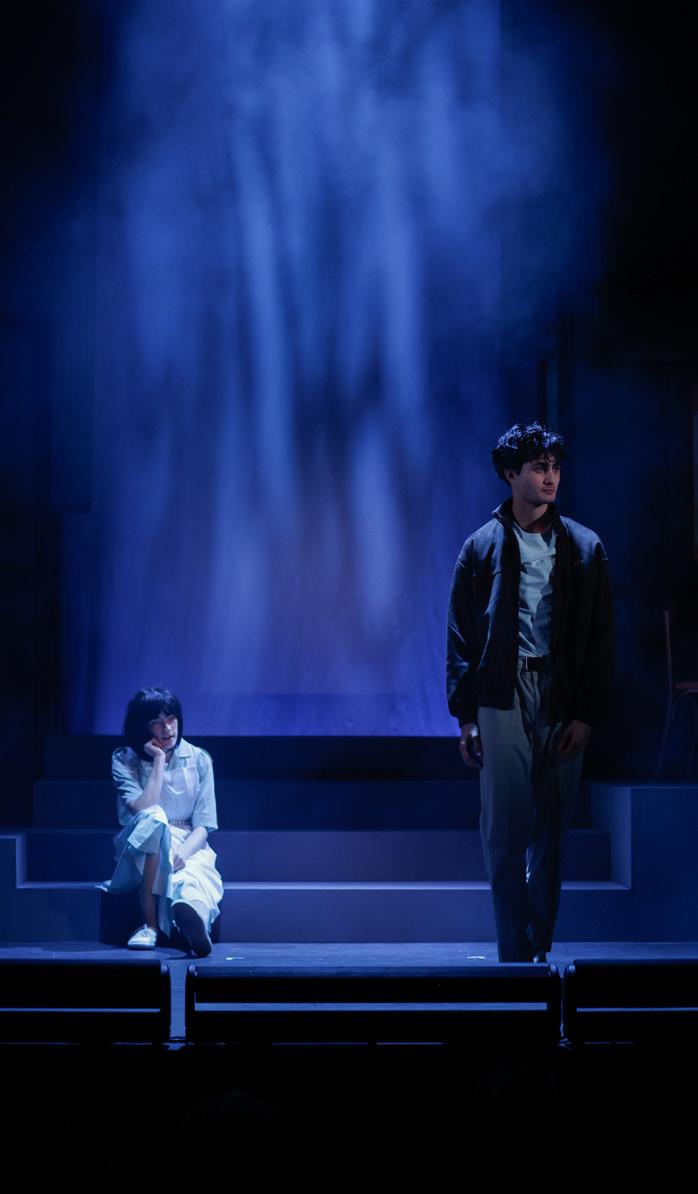
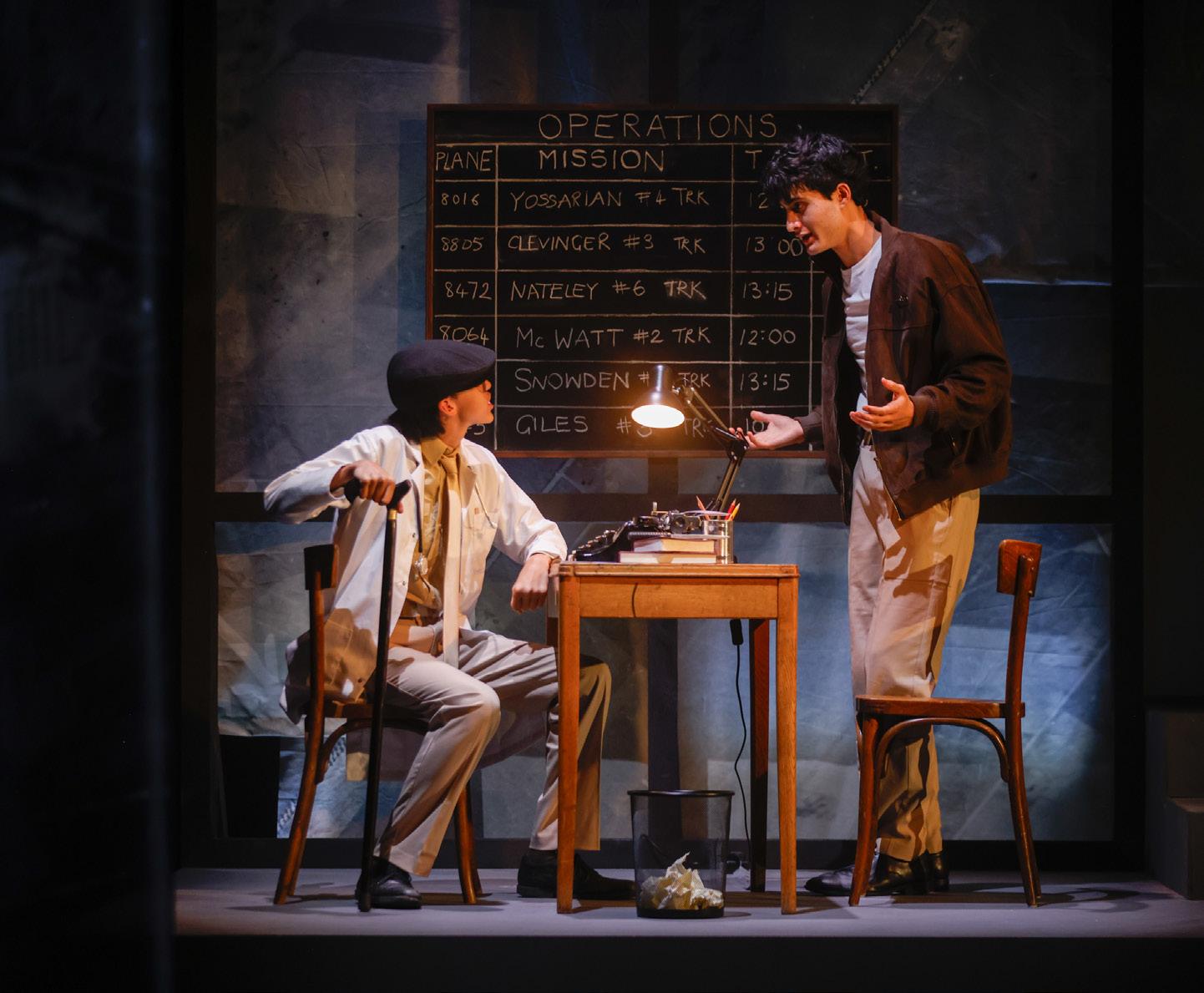
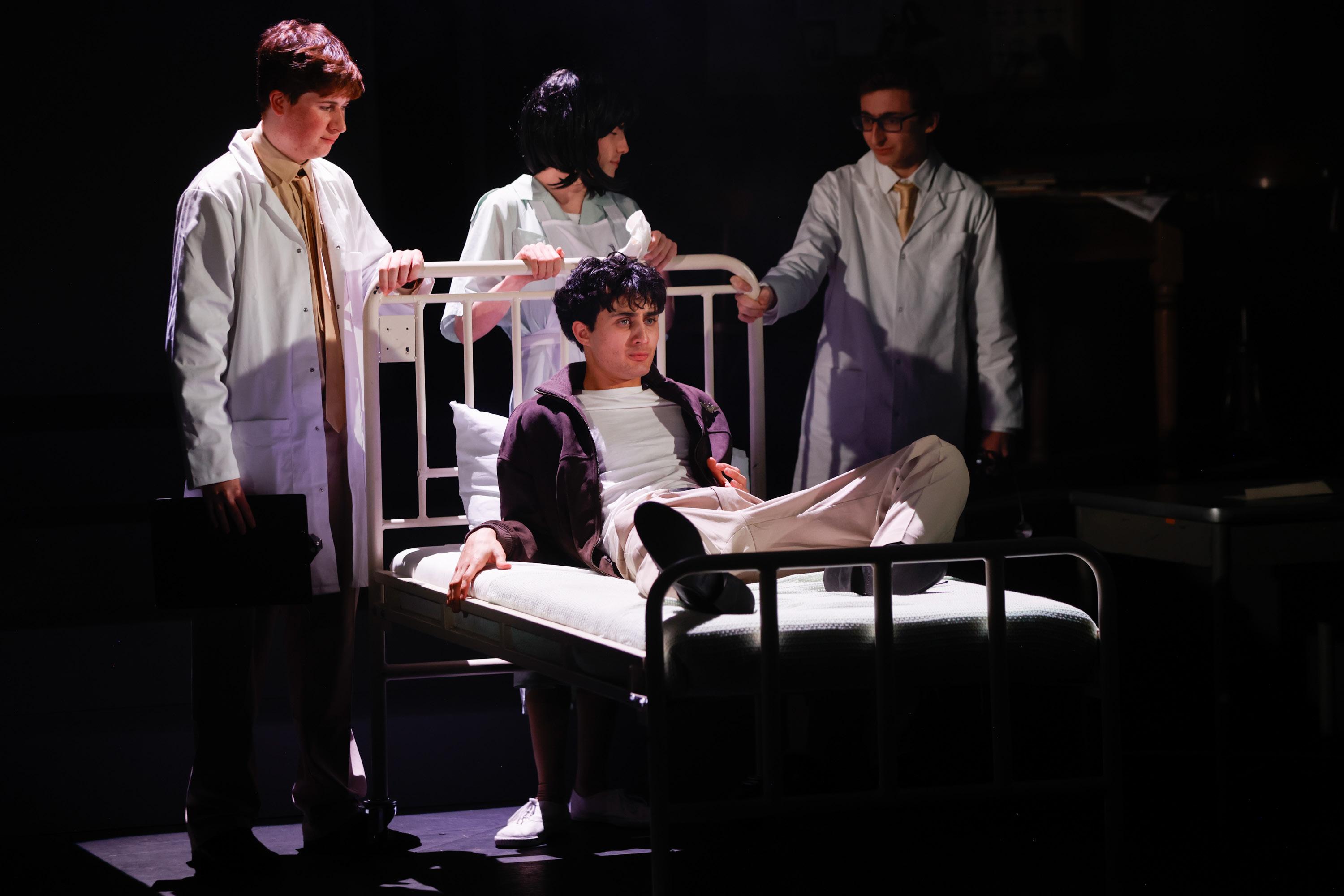
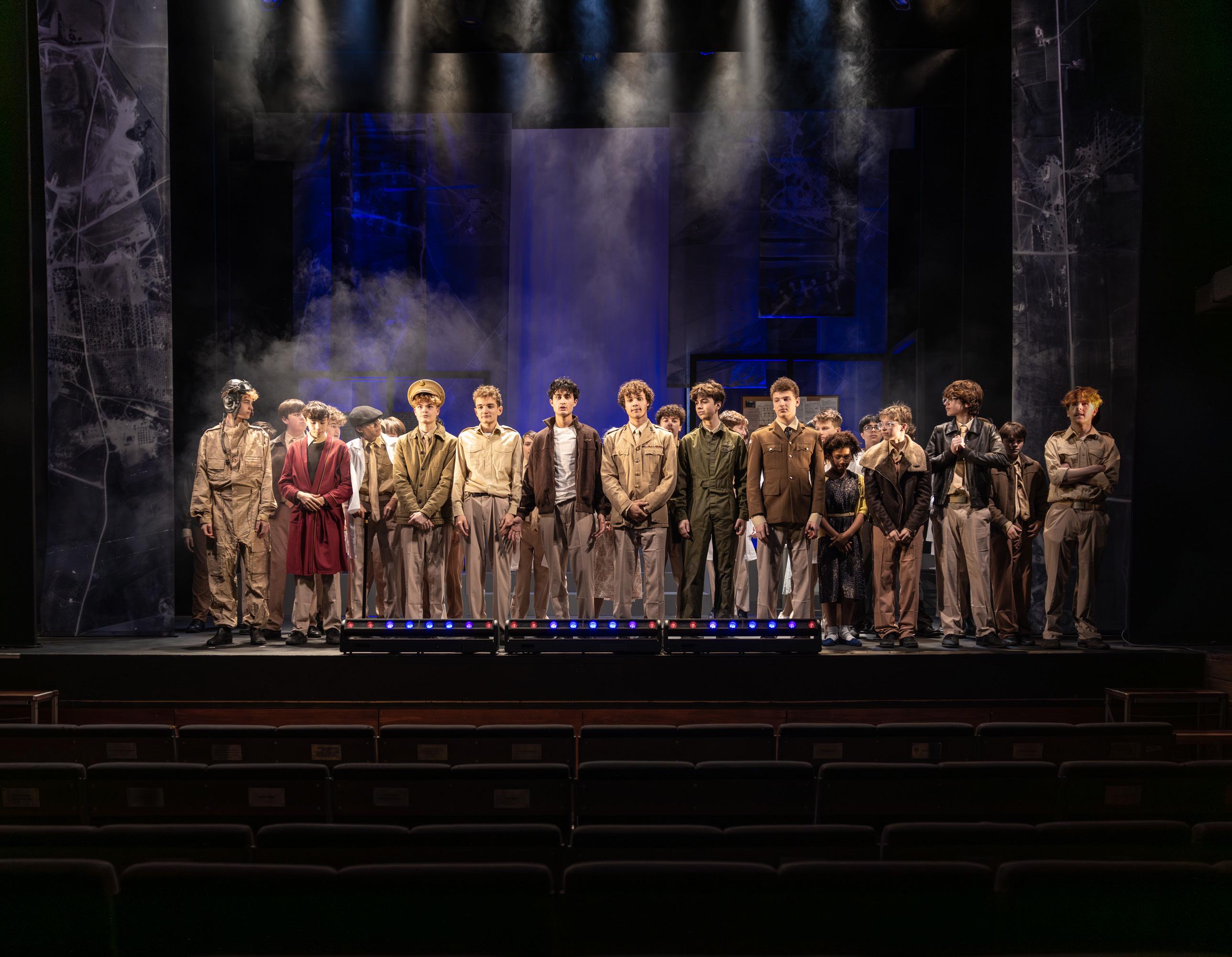
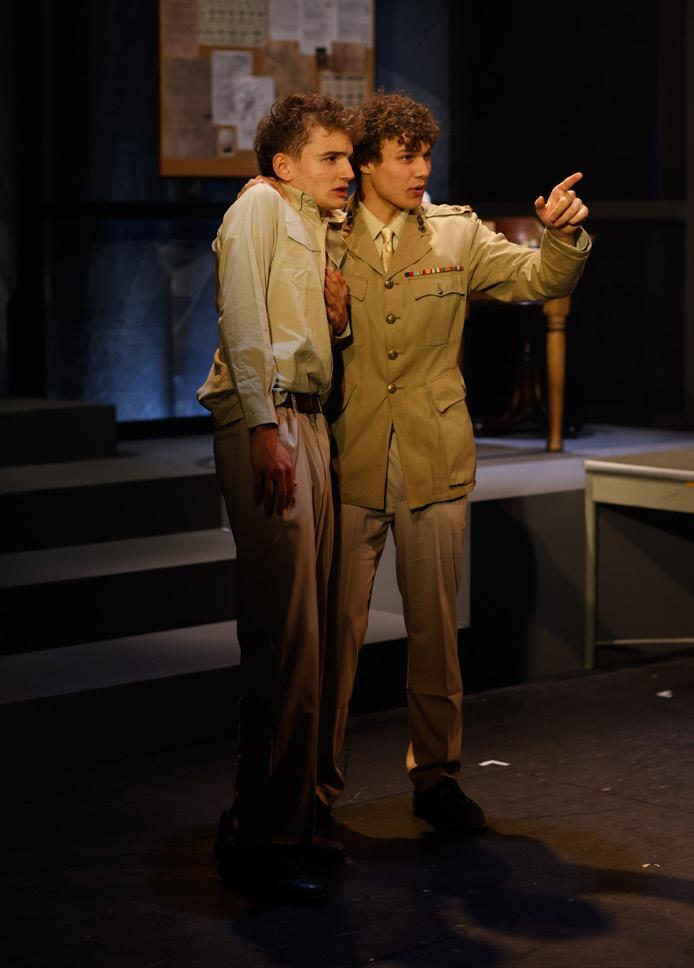
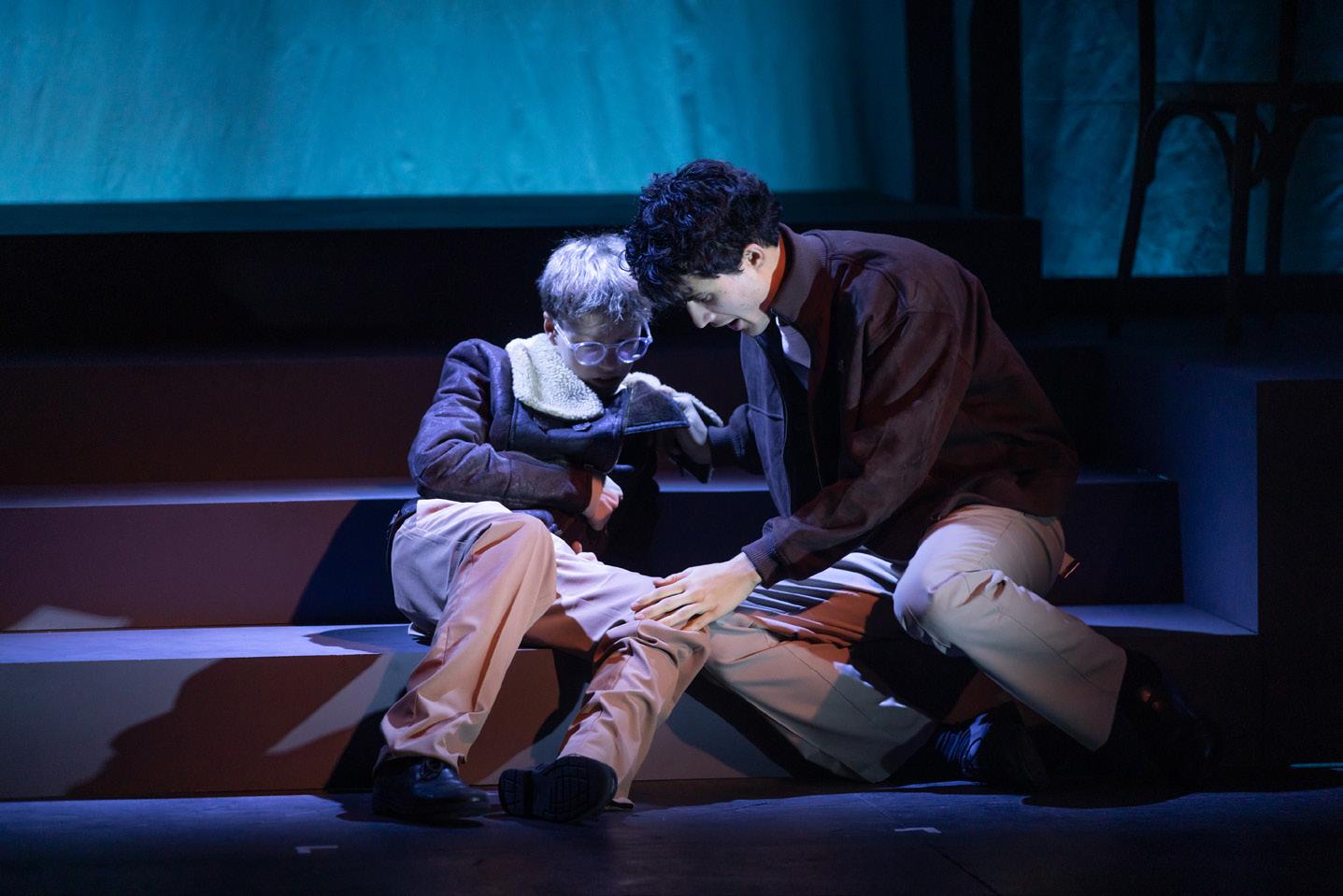
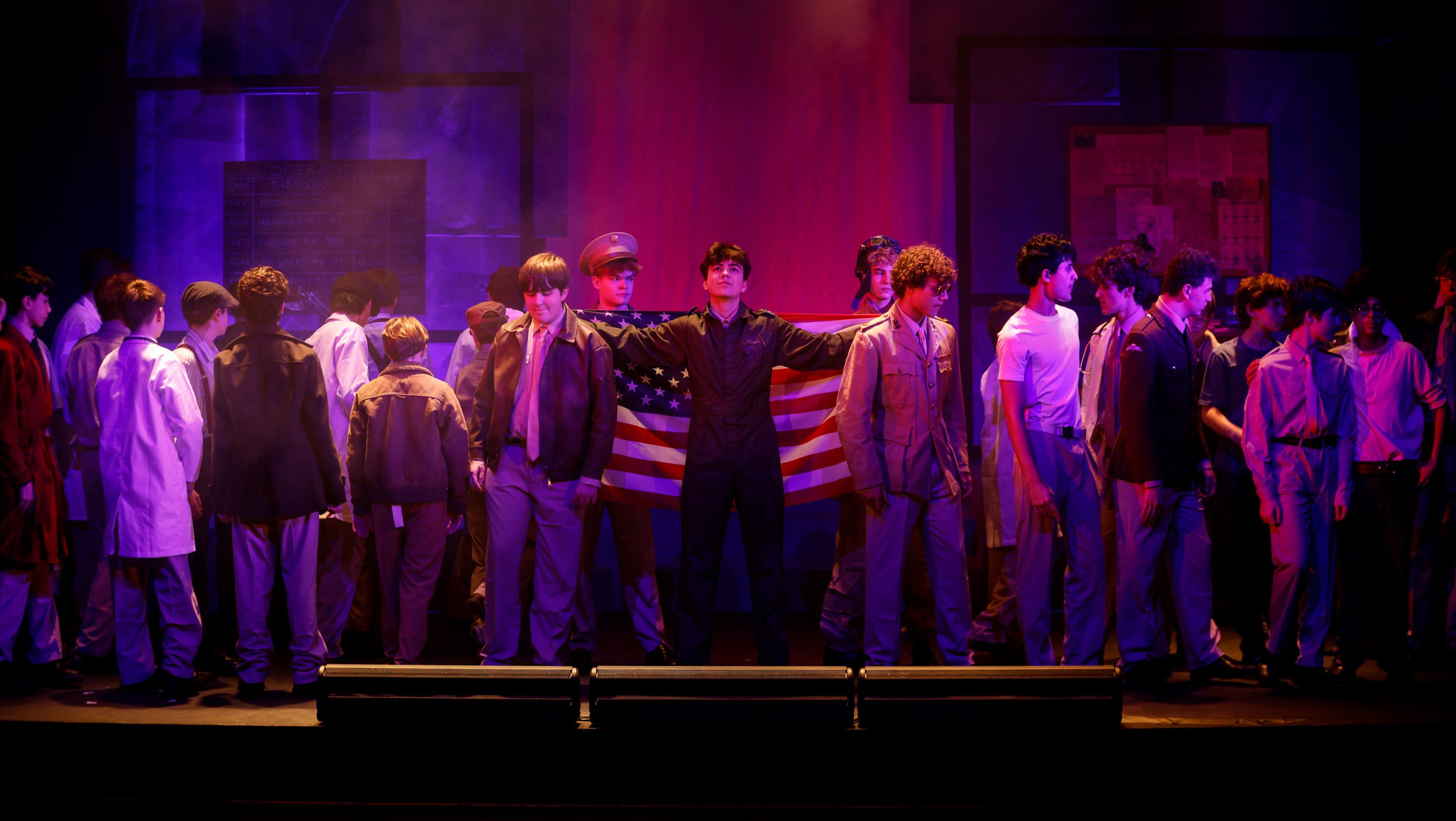
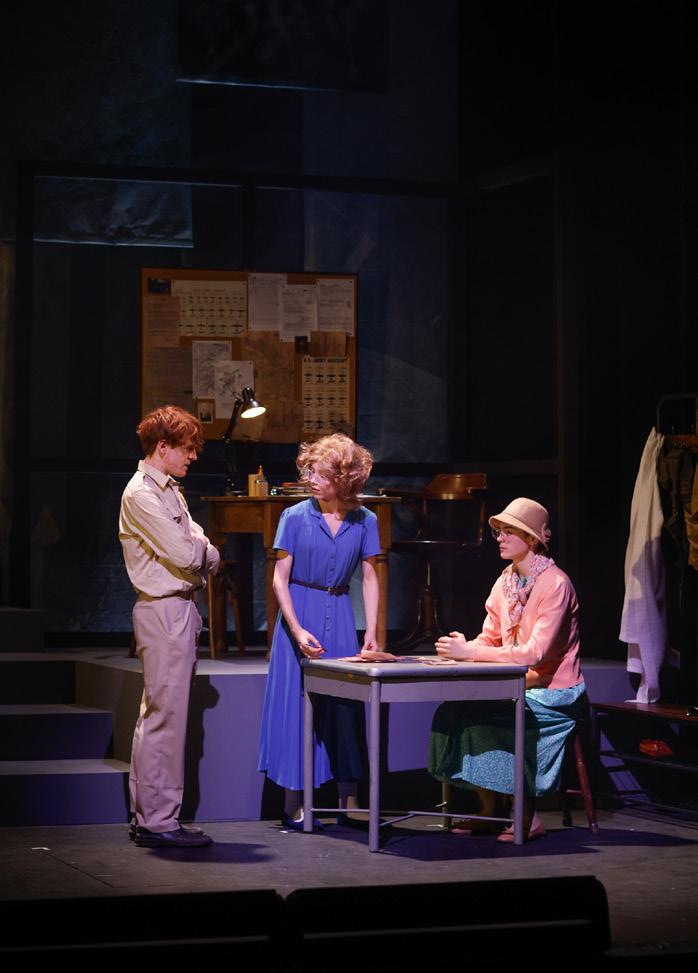
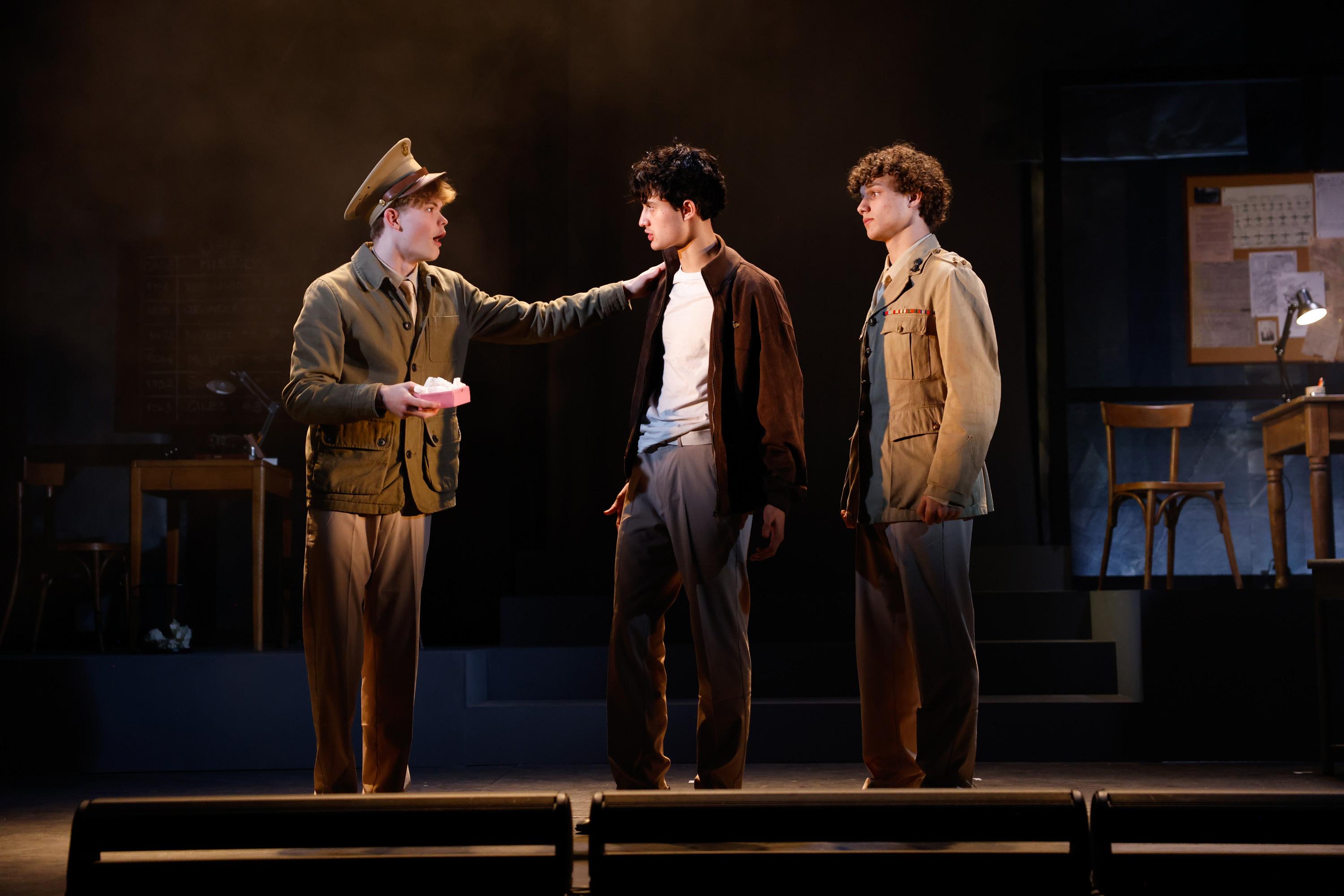
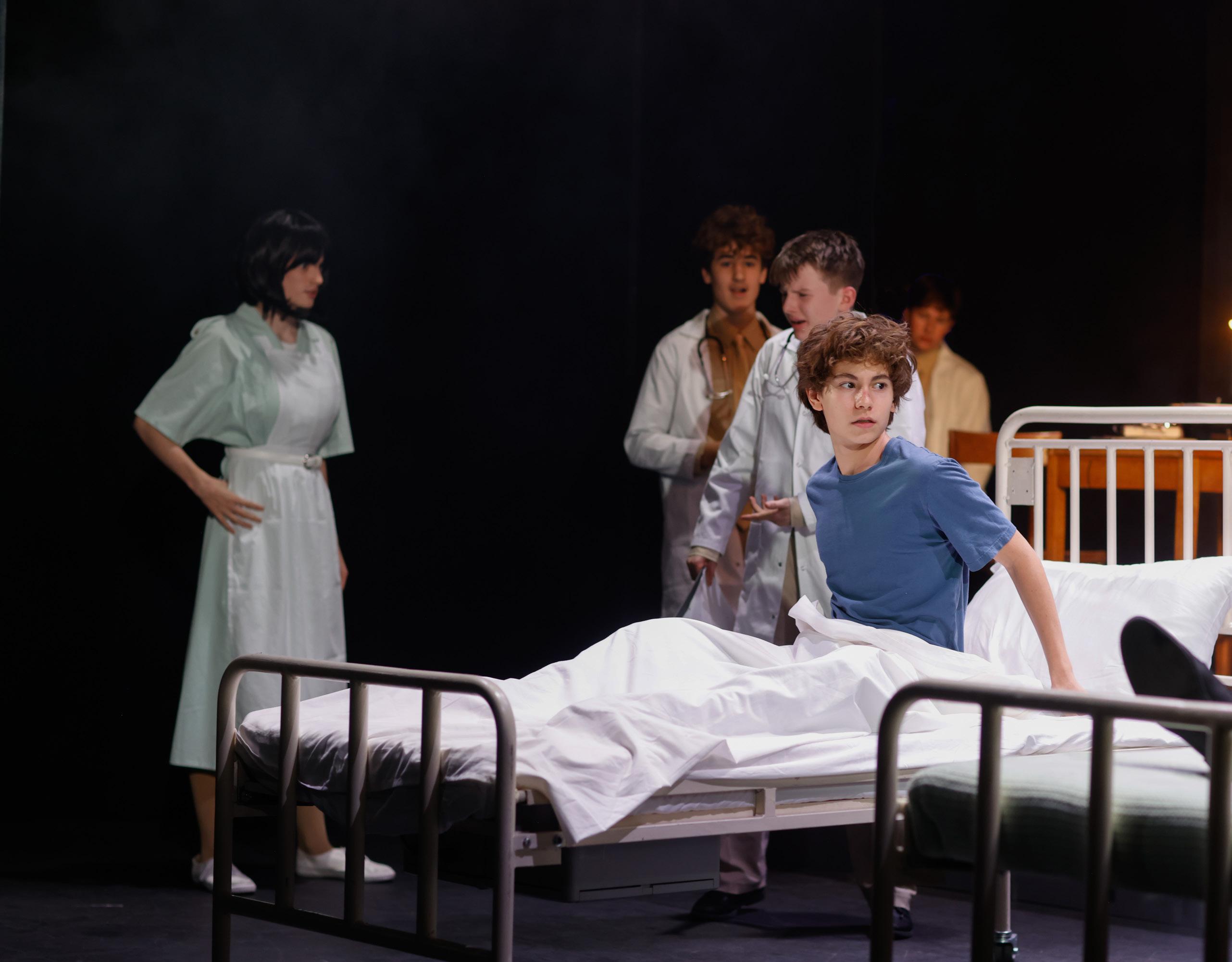
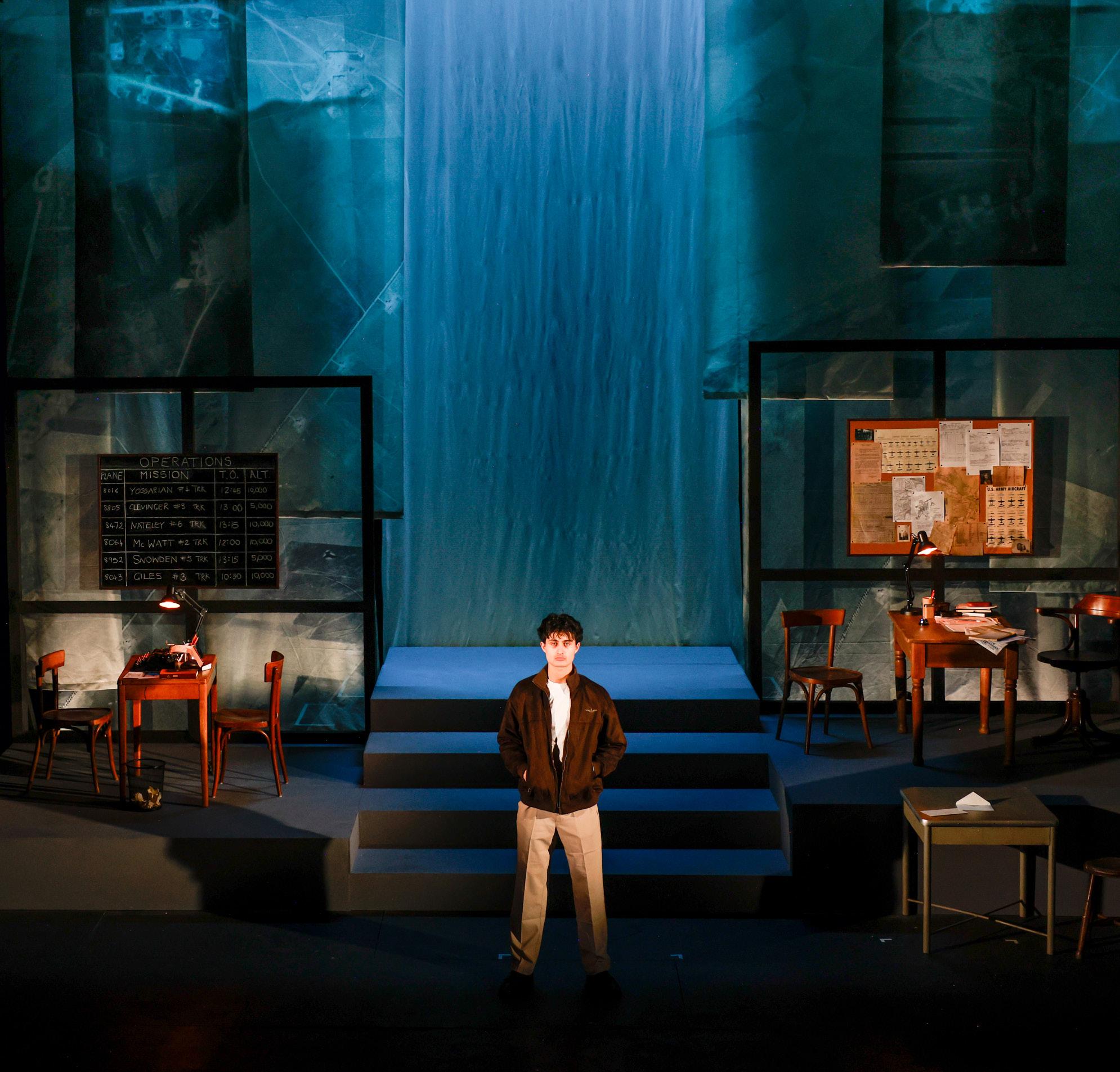
On the 10th and 11th of December, the Drama Department put on the school’s rendition of Catch-22 at the Jerwood Vanbrugh Theatre at the Royal Academy of Dramatic Art (RADA). In addition, all Lower School pupils attended a matinee performance of the play on the 10th.
What is Catch-22?
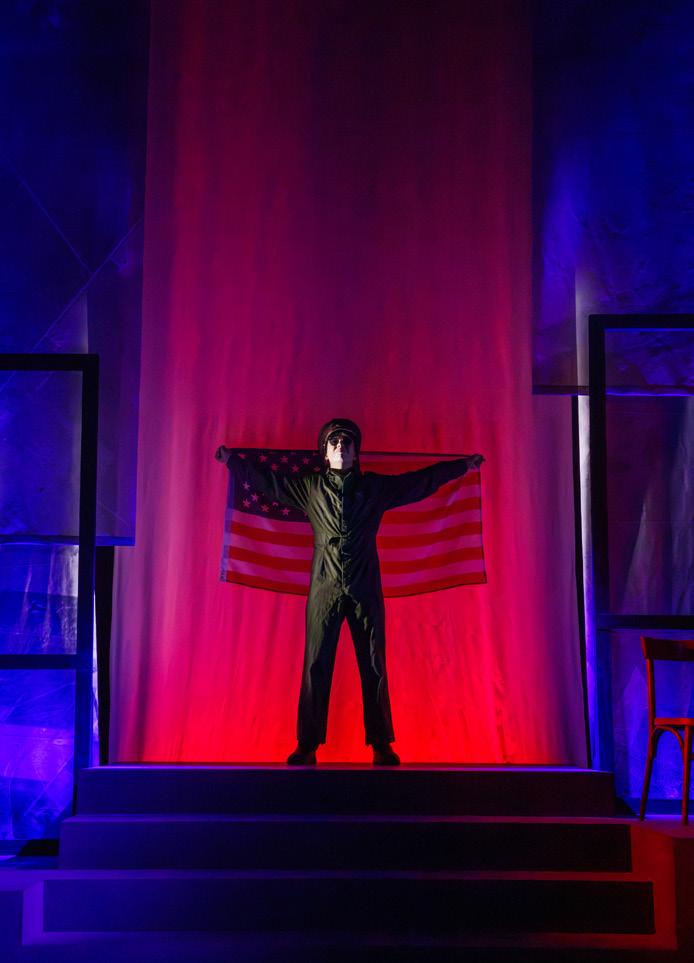
Catch-22 follows the story of Captain John Yossarian, a bombardier during the Second World War who faces unjust and constantly changing policies, corruption and the horrors of war, all while trying to return home safely. Just when he believes he is close to achieving this, there is always a catch.
Catch-22 is widely known as a novel, a play and through several film adaptations. The book was written by Joseph Heller and later adapted into a play.
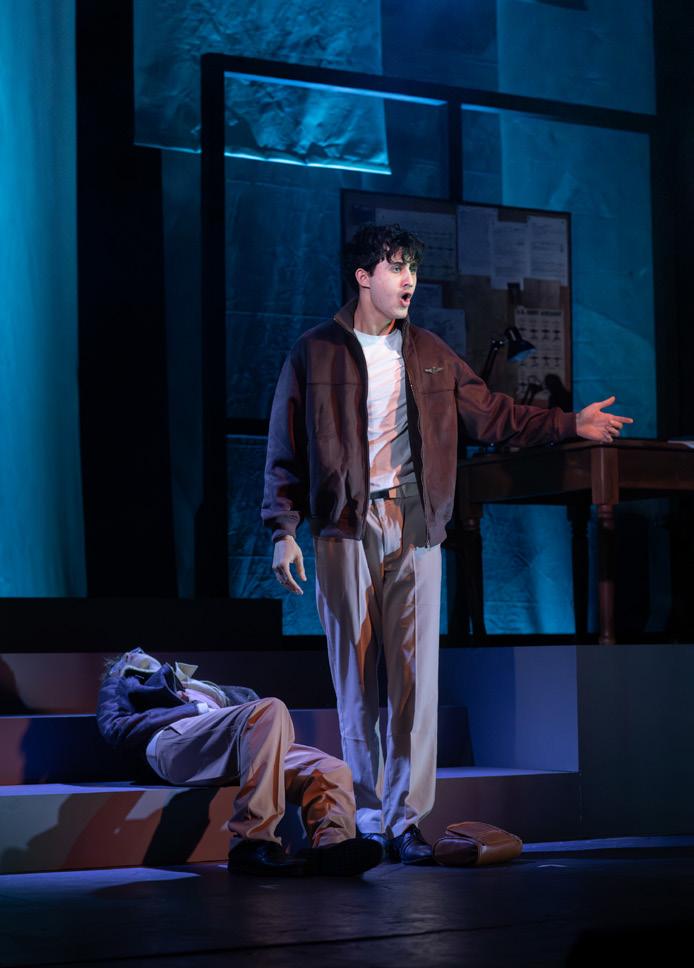
Ihsan A, Year 12, did a fantastic job portraying the lead role of Captain Yossarian. He perfectly encapsulated the character’s growing incredulity and desperation to escape the endless cycle of dangerous missions imposed on him by his commanding officers.
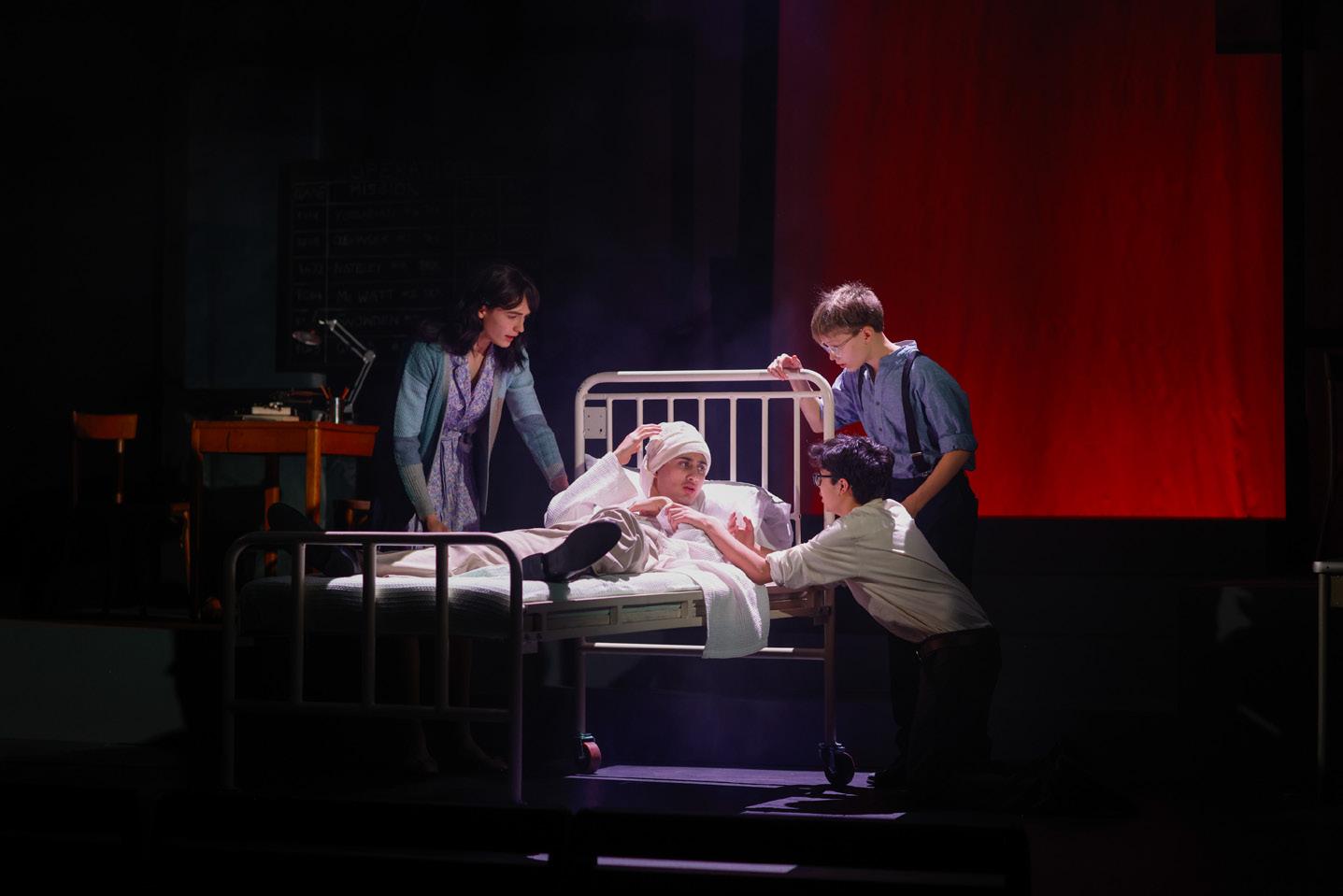
Sheraz C, Year 10, further captivated the audience with his portrayal of Doctor Daneeka. He effectively conveyed the character’s mood through both language and movement. Doctor Daneeka’s inability to help Yossarian, alongside his amusing and confusing explanation of “Catch-22”, brought humour to the production.
About the Author
Joseph Heller (1923–1999) was an American author and playwright, most famous for his satirical anti-war masterpiece Catch-22. He served as a bombardier in the
Second World War for the United States, and this military experience heavily influenced both the novel and the play. His writing is known for its sharp wit and irony, using complex narratives to highlight the absurdities of modern life and warfare.
Words from the Set
Arno P, Year 8, who played Nately on stage, said:
“Exciting and fun to do. A lovely cast and a pleasure to perform.”
Mr P Giles, Drama teacher and director of the play, said:
“It has been amazing to see the development of the boys’ professionalism while on set.”
Conclusion
Overall, this was a spectacular performance, with excellent execution and delivery from staff and pupils alike. A big thank you to everyone involved in the making of Catch-22. I will certainly be looking forward to whatever the Drama Department has in store next.







Oscar J, Year 13 writes...
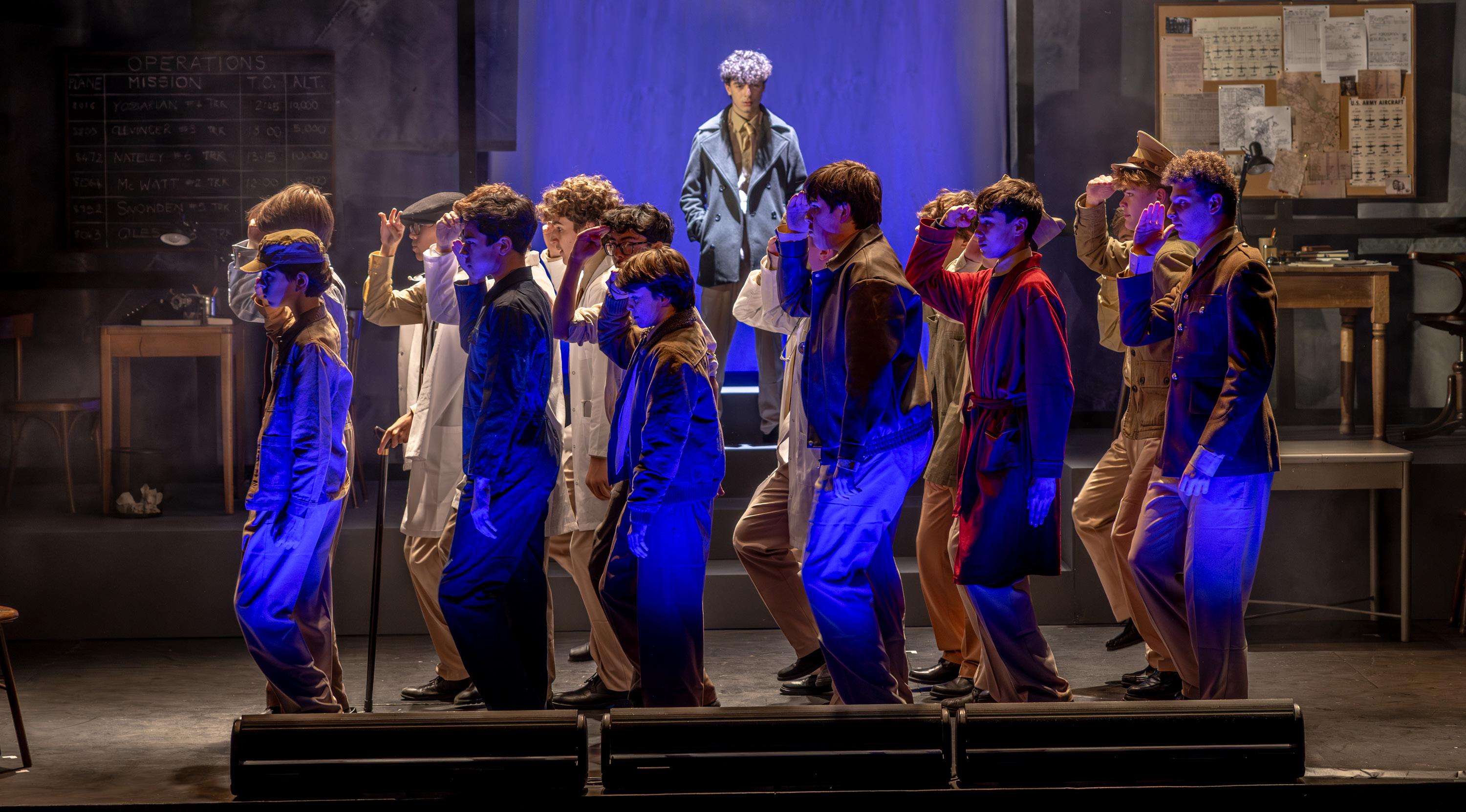
This term, the school’s Drama Department put on one of the most fun and memorable productions of the year with Catch-22, held at RADA. With a cast of 32 boys and a hardworking backstage crew, the play was fastpaced, full of energy, and packed with laughs from beginning to end.
At the centre of the show was Ihsan, Year 12, as Yossarian, who delivered a brilliant lead performance. From the moment he stepped on stage, Ihsan completely owned the role. His timing was excellent, and his reactions to the chaos unfolding around him were spot on. Whether delivering a punchline or responding to yet another frustrating dilemma, he kept the audience engaged and laughing throughout.
What made Ihsan’s performance even more impressive was its
consistency. Leading such a busy and action-filled production is no easy task, but he handled it effortlessly. He worked extremely well with the rest of the cast and remained in control even during the most chaotic scenes. His performance held the entire play together and made Yossarian a genuinely enjoyable character to watch.
The rest of the cast were equally impressive. With such a large group on stage, the production could easily have felt crowded, but instead each performer brought something unique to their role. The elaborate characters, wellthought-out reactions, and shared commitment to the performance helped create a strong atmosphere and kept the energy high throughout. Even smaller roles made a significant impact, adding to both the humour and the overall enjoyment of the show.
One of the funniest elements of the play was the use of running
jokes, particularly the repeated appearances of Nately, who persistently attempted to stab Yossarian. Each time Nately returned to the stage, the audience knew exactly what was coming, yet it somehow became funnier every time. The exaggerated movements and precise timing turned this into one of the biggest laughs of the night and a moment people were still talking about afterwards.
A huge amount of credit must also go to the backstage crew, who ensured everything ran smoothly. Scene changes were quick and well organised, helping to maintain the pace of the production. Sound and lighting cues were consistently accurate, and nothing ever felt clumsy or delayed. Their hard work allowed the cast to focus entirely on performing without worrying about what was happening behind the scenes.
The set and costumes also played a vital role in bringing the production together. Christianna Mason, who designed both, did an excellent job. The set was creative and practical, allowing smooth transitions between scenes without slowing the action. The costumes clearly defined each character and contributed to the playful, exaggerated style of the show. Together, they helped the comedy land effectively and gave the production a polished finish.
Overall, Catch-22 was a huge success and a thoroughly enjoyable night of theatre. It was energetic, humorous, and clearly the result of a great deal of teamwork and effort. The cast and crew should be incredibly proud, and it is safe to say this was a school production that will not be forgotten anytime soon.
Henry Cr, Year 8 writes...
Introduction
Parkrun is a five-kilometre event organised every Saturday in locations around the world at 9am. You can run it or walk it and, as the Course Directors always say, it is not a race but a run or walk to enjoy. I have been doing parkrun (which is spelt all in lowercase letters) for about a year and a half, and it has genuinely changed my life.
At the time of writing this article, I have completed 54 parkruns across 24 locations, with my local being Fulham Palace, which I have run thirty-one times. I have also completed parkrun in three different countries: England, Italy and Scotland, in that order. My personal best is 25 minutes and 52 seconds at Osterley parkrun in Isleworth. I have volunteered three
times due to injury, twice in 2024 and once the year before.
My Favourite Runs (in no particular order)
Fulham Palace, Fulham
This is my local run, so I might be a little biased, but I think that if it had half the runners it attracts every week, it would be one of the best courses in the country. This three-lap route travels through Bishop’s Park and runs alongside the River Thames. If you have read two of my other Barometer articles, you will know that I support Fulham FC and, luckily, Craven Cottage is extremely close to this parkrun. You even run past it for part of the course.
Beckton Park, Newham
This humble event averages just 76 runners and 14 volunteers each
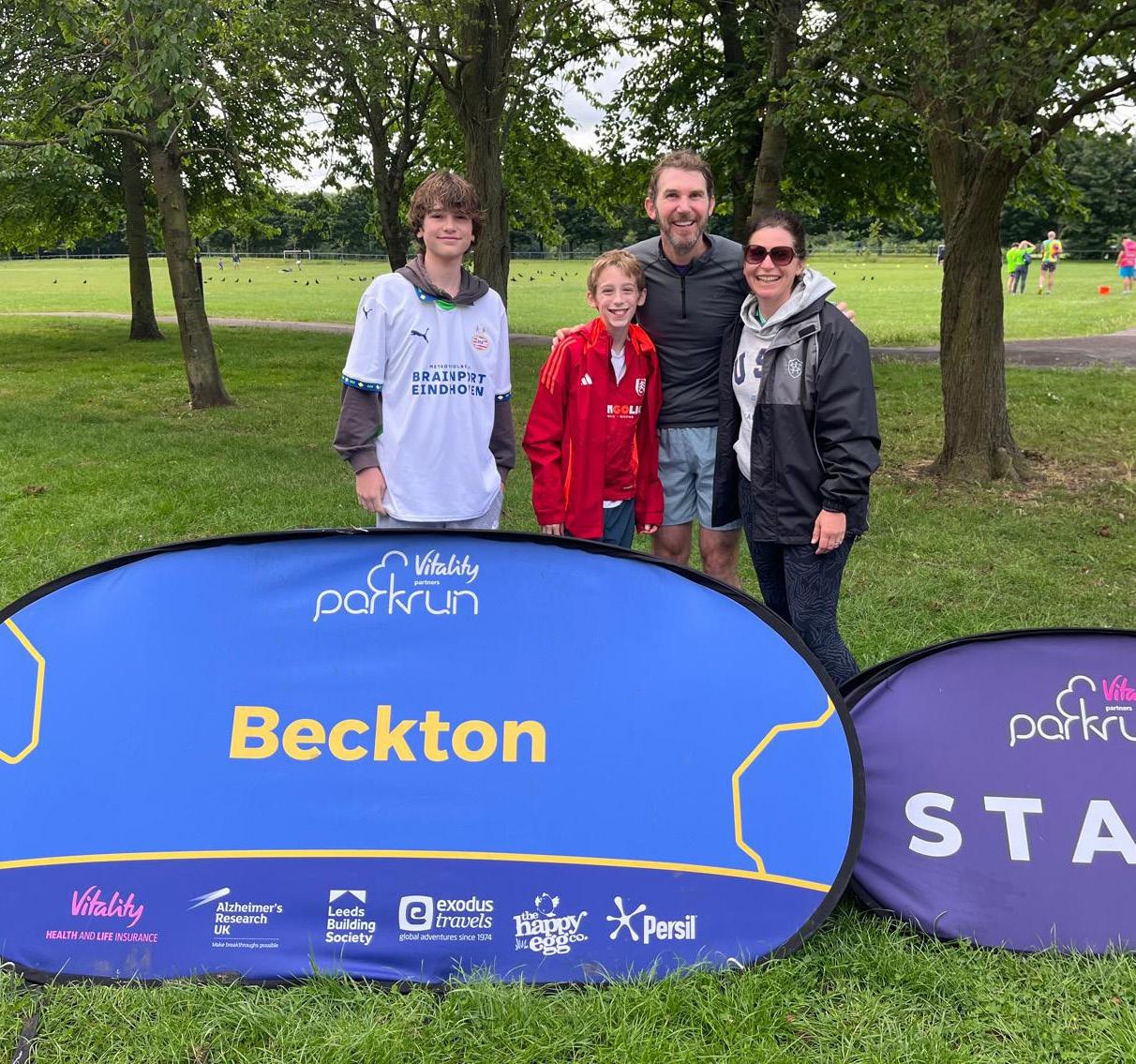
week, which makes it perfect for chasing a PB, or personal best. The course runs through a poppy field and even includes a sculpture that you can jump through. It is also connected to the Capital Ring walking route, so if that is something you are interested in, you could easily combine it with a day out in Newham.
Lanark Moor, Lanark Racecourse
This is the only parkrun in Scotland on this list and, because it is in Scotland, it starts at 9.30am instead of 9am, as parkruns do in England and most other countries. I completed this run recently, on 3 January, in freezing conditions of minus three degrees Celsius. The route takes you around a loch and through woodland, and because it was an icy winter morning, the loch was frozen and the grass was covered in frost. It was magical.
Stretford Park, Stretford
This parkrun takes place in the heart of Manchester, just 2.6 miles from the famous Old Trafford stadium. If you enjoy sport, like me, and are visiting the area to

watch a match, this is a great run to fit into your trip. The course starts on an athletics track, then takes you through woodland before finishing back on the track. You can even warm up beforehand with a lap of the track, just like a professional athlete.
Favorita, Palermo
This parkrun takes place in Sicily, Italy, and averages just 29 runners and eight volunteers each week. Even if you are running more slowly than usual, you can still finish in the top 20, which feels very impressive. My dad and I finished 15th and 16th while running quite slowly due to the
heat and humidity. The course winds through woodland, and as you pass the volunteers, they spray you with water to help you cool down. What makes this parkrun even more special is the sound of cicadas in the grass and its location right next to the Palermo FC stadium. The volunteers were incredibly friendly and welcoming.
Other parkruns I enjoyed and would recommend include:
St Albans, Hertfordshire
Osterley, Isleworth
Whitstable, Tankerton
Even if you do not enjoy running, I think you should still give parkrun a try. If running is not for you, volunteering is just as rewarding. It does not take up much of your weekend and, even if you have a bad run, you can still be proud that you took part and beat everyone who stayed in bed.

Alex M, Year 9 writes...
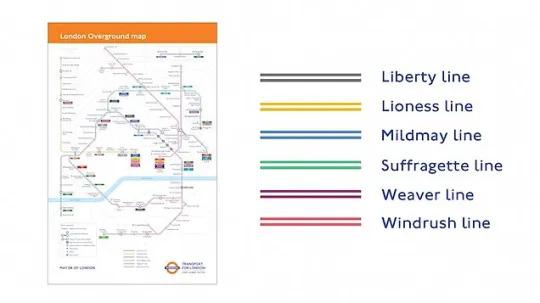
In 2024, the London Overground lines received a new look, changing from their classic orange branding to a more vibrant colour scheme, alongside the introduction of new names for each line. These names all have interesting stories behind them, with some drawing on historical heritage and others reflecting

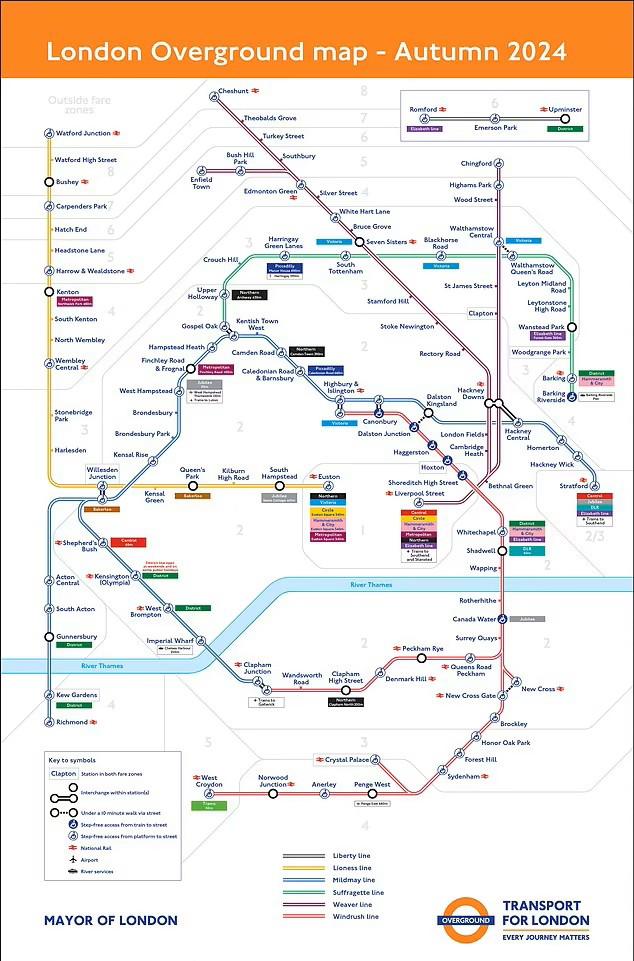
more modern narratives.
Firstly, the blue Mildmay Line. This line is named after the Mildmay Mission Hospital, which treated patients during the COVID-19 pandemic and played a significant role during the AIDS crisis in the 1980s. The name was chosen because the line runs through the Mildmay local area.
Secondly, the red Windrush Line. As the name suggests, it honours the passengers of the Empire Windrush, a ship that brought many people from the Caribbean to the UK to help fill post-war labour shortages. The line has been named to recognise this community and its descendants.
Next are the Lioness and Suffragette Lines. The yellow Lioness Line takes its name from the nickname of the England women’s football team and celebrates their achievements and influence. The green Suffragette Line is named in recognition of the Suffragettes, an East End working-class movement that fought for women’s rights. The line also runs to Barking, where the longest-living Suffragette, Annie Huggett, lived. She died at the age of 103.

The next line is the maroon Weaver Line. Despite being considered by some to be the least prominent of the Overground lines, it still has a strong historical connection. It is named because it passes through areas of London that were once central to the textile trade, including Spitalfields and Hackney.
Finally, there is the grey Liberty Line. According to TfL, this line is named “to reference the historical importance of the independence of the people of the borough of Havering”. It also reflects the character of the route itself, which is shorter than most other Overground lines and has a more unusual location.
The renaming of the Overground lines has received mixed reactions from Londoners, with opinions divided over whether it is a positive or negative change. However, the new names clearly highlight important historical and cultural stories and make the Tube map just a little bit brighter.

Thomas C, Year 10 writes...
The 2025–26 Premier League season so far has been exciting and unpredictable, and honestly one of the most enjoyable seasons to watch in a long time. As of late January 2026, the title race is still wide open, and there are plenty of storylines that make this season stand out compared to recent years.
One of the biggest features of this season is how tight the top of the table has been. Arsenal and Manchester City have been the two teams most people are talking about, with Arsenal pushing hard for the top spot and playing some excellent football, while City remain close behind and continue to challenge for the title. It feels like both teams are scoring plenty of goals, with City currently having the highest goal tally in the league, which makes almost every match exciting to watch.
A huge part of what makes this season so entertaining is the race for the Golden Boot, the award for the league’s top goalscorer. Erling Haaland is still leading by a significant margin and has been scoring in almost every
match he plays. However, he is not the only player finding the net. Players such as Igor Thiago from Brentford and Antoine Semenyo have surprised many fans with how many goals they have scored, showing that goals are not just coming from the biggest clubs. It is refreshing to see players from outside the traditional “big six” making such an impact.
Another interesting aspect of this season is the performance of some of the promoted teams, those that have recently come up from the Championship. They started strongly and initially it looked as though all three might avoid relegation, but as the season has progressed things have become more challenging, and they have had to fight hard to stay in the league. This is part of what makes the Premier League so competitive, as every team has to battle each week and even smaller
clubs are capable of surprising stronger opponents.
There have also been several dramatic moments off the pitch, including managerial changes at clubs that struggled early on, highlighting just how intense the pressure is in the Premier League. Even teams that are usually successful have experienced difficult periods. For example, Liverpool have had a tougher season compared to last year and are currently trying to climb back up the table.
In addition to domestic football, English teams have performed strongly in Europe. This season, six Premier League clubs are competing in the UEFA Champions League, which is a significant achievement for English football and demonstrates the overall strength of the league.
Overall, the 2025–26 Premier League season has been full of ups and downs, surprises, and spectacular goals. It has not been predictable, and that unpredictability is what makes it one of the most interesting seasons in years. I am excited to see how it all ends. Whether Arsenal can hold on at the top or Manchester City manage to reclaim the title, it promises to be an exciting race right up to the final matchday.

Santi Q, Year 10 writes...
Some rare individuals are born with a condition called Congenital Insensitivity to Pain (CIP).
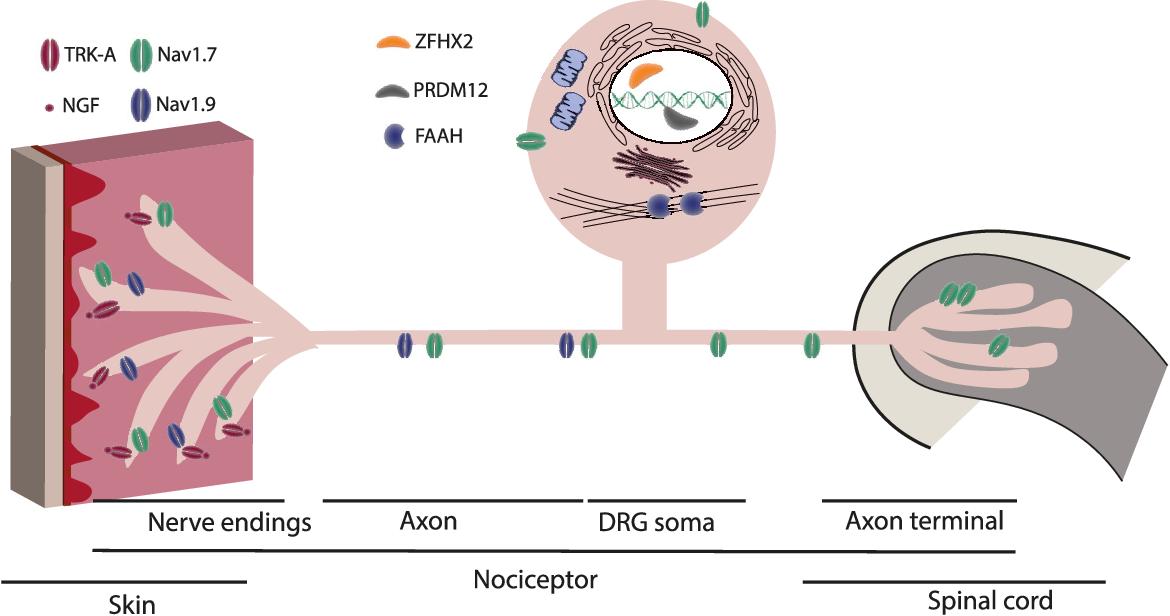
People with CIP cannot feel physical pain, even from injuries that would seriously hurt most people. This is caused by genetic mutations affecting the nervous system, something you may have learned about in Biology earlier this year alongside the reflex arc, specifically the nerve pathways that detect pain signals.
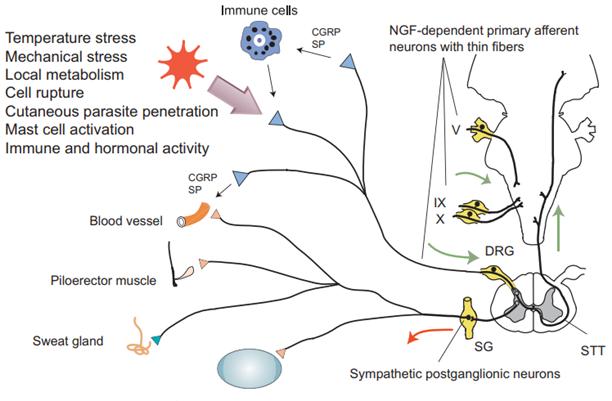
Normally, when you touch something hot or cut yourself, pain receptors in your skin send signals through sensory nerves, which are relayed through the spinal cord to the brain. In people with CIP, these signals never actually reach the brain, meaning they cannot register pain.
This might sound impressive or
even appealing, but in reality it is extremely dangerous. People with CIP can seriously injure themselves in their day-to-day lives without realising it, such as burning their skin, breaking bones, or cutting fingers. As a result, infections and internal or external injuries can be left unnoticed, which can become lifethreatening.
Everyone dislikes pain, but the truth is that it is a very useful tool. Pain provides a sharp and almost
immediate response to danger, causing us to move away quickly from harmful situations. The slower, aching pain that follows encourages us to rest the injured part and allow it to heal. Without pain, our lives would be very different and far more dangerous.
Some people with CIP can still feel pressure and touch, just not pain, which shows how specific and complex the human nervous system truly is.
Santi Q, Year 10 writes...
Thousands use Zipcar in London, a number that has had its highs and lows for 15 years since its arrival. But is it cost-effective? We’ll take into account your driving hours per year and average fees for cars.
1. Owning a car
The average yearly spending for a car that you drive moderately:
Car depreciation (loss in value): ~£1,300/year
Insurance: ~£620–£660/year, changing with age and value
Tax, MOT, servicing and repairs: ~£800–£1,000/year
Adding this together is around £3,900 per year, without fuel costs (which we’ll come back to later).
2. Using Zipcar and its hourly rentals
Renting a Zipcar will cost around £6/hour. Multiplying this number
by the number of hours you use it per year will give the amount of money spent in a year.
50h in a year -> £300/year
100h in a year -> £600/year
200h in a year -> £1,200/year
300h in a year -> £1,800/year, and so on...
Fuel is already included in Zipcar pricing, so you don’t need to pay for petrol on top of the hours spent.
3. Comparing: where do you break even?
Let’s compare the total yearly costs with a Zipcar and without, but first we need to find out how much fuel costs.
If you drive at around 25 mph in your small petrol car, you might get 45 mpg.
Petrol is around £1.50/L, or around £6.80 per gallon.
Fuel cost per mile: ~15–17p. At 25 mph, fuel cost is around £4/ hour.
It takes around 1,950 hours per year to start breaking even with Zipcar. This is extremely heavy driving, around 5 hours and 18 minutes of driving per day, which is roughly 6–7 times the UK average.
In conclusion, buy a Zipcar. Unfortunately, you can’t anymore, because they shut down in the UK last year.

Santi Q, Year 10 writes...
1. What is this fluid?
Non-Newtonian fluids are liquids that do not behave like normal liquids. Unlike water, or most other fluids for that matter, their thickness, or viscosity, changes depending on the force applied. The most famous example is oobleck, a mixture of cornstarch and water.
2. Why they’re weird
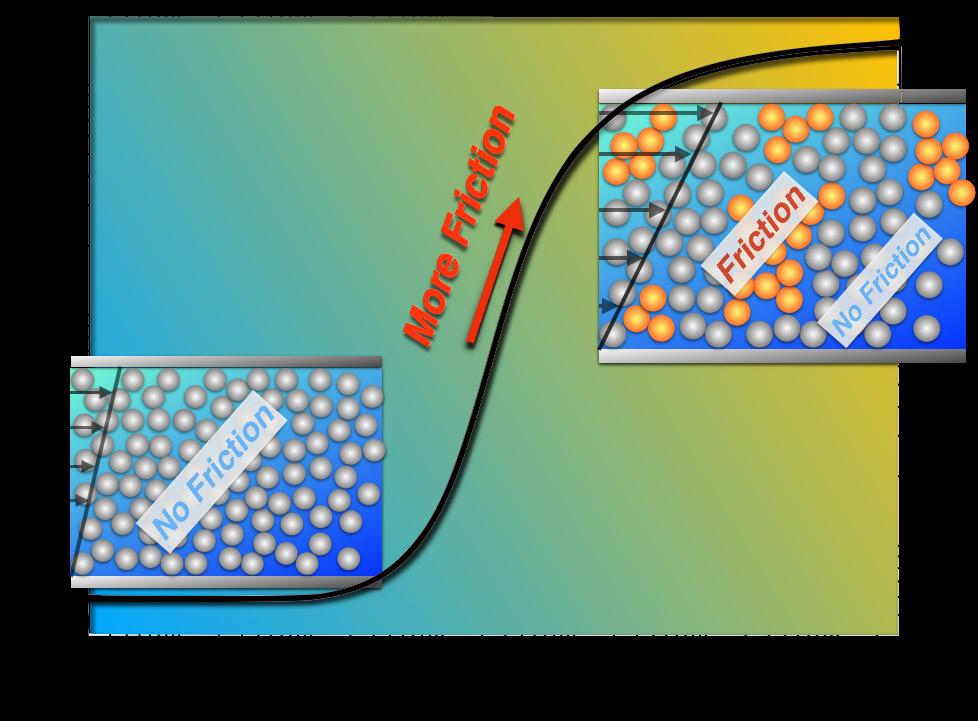
If you poke or hit this fluid, it behaves like a solid, providing a sharp response and acting almost like a brick. However, slowly dipping your hand into it will make it behave like a liquid, allowing it to flow around you.
3. How on earth
This happens because the cornstarch particles lock together under stress, temporarily resisting movement. Normally, the particles are suspended in water and can slide past each other easily, allowing the mixture to flow. However, applying a sudden force causes the particles to jam together and form a temporary solid network, a process known as shear thickening. Once the force stops, the particles slide apart again and the fluid returns to a liquid state.
Other examples include certain

types of clay, such as Silly Putty, a silicone-based material capable of stretching and bouncing before turning solid when hit or punched, and blood, which flows easily through vessels in the body but resists sudden forces.
4. Why scientists care
Non-Newtonian fluids are studied in engineering, physics, and medicine. Some applications
include protective gear, such as helmets or body armour, that use shear-thickening fluids which harden on impact, as well as industrial fluids, lubricants, and paints that behave differently under stress. They are also used in medical research to understand blood flow and how it reacts under pressure.

Domenico C, Year 10 writes...
Esperanto, meaning “one who hopes”, is a language devised in 1877 to serve as the world’s auxiliary language. Its objective was to be used as a second language in every nation, allowing communication with anyone, anywhere.
Esperanto is a mixture of numerous language families, with most of its vocabulary deriving from the Indo-European group, more specifically Romance languages (e.g. French, Spanish, Italian, Portuguese). The language is designed to be incredibly easy to learn in an effort to attract as many speakers as possible, with simple and consistent grammar rules. It is the world’s most successful constructed language, with an estimated 1,000 native speakers, 10,000 fluent speakers, and around 2 million learners.
Basics
The Esperanto alphabet consists of 28 letters: 22 from the standard English alphabet (every letter excluding q, w, x, and y), and the remaining six being letters with either a circumflex or a breve (ĉ, ĝ, ĥ, ĵ, ŝ, ŭ). These are pronounced ch, j, kh, zh, sh, and w. Stress is always placed on the penultimate syllable of a word.
Nouns always end in -o in the singular and -oj in the plural. For the accusative form, they always end in -n.
Adjectives always end in -a and agree with the noun they describe.

Verbs always take the following endings, regardless of person or irregularity:
Tense | Ending Infinitive | -i Present | -as Past | -is Future | -os Conditional | -us Imperative | -u
A notable trait of Esperanto is the ability to create words logically. The prefix mal-, for example, is used to form a word meaning the opposite of the adjective it is placed before, such as malbona, meaning “bad”.
To further learn Esperanto, one can take a Duolingo course (along with around two million others). Vocabulary is the primary hurdle to mastering Esperanto, although exposure through communities, writing, listening, and reading can also be very effective.
History
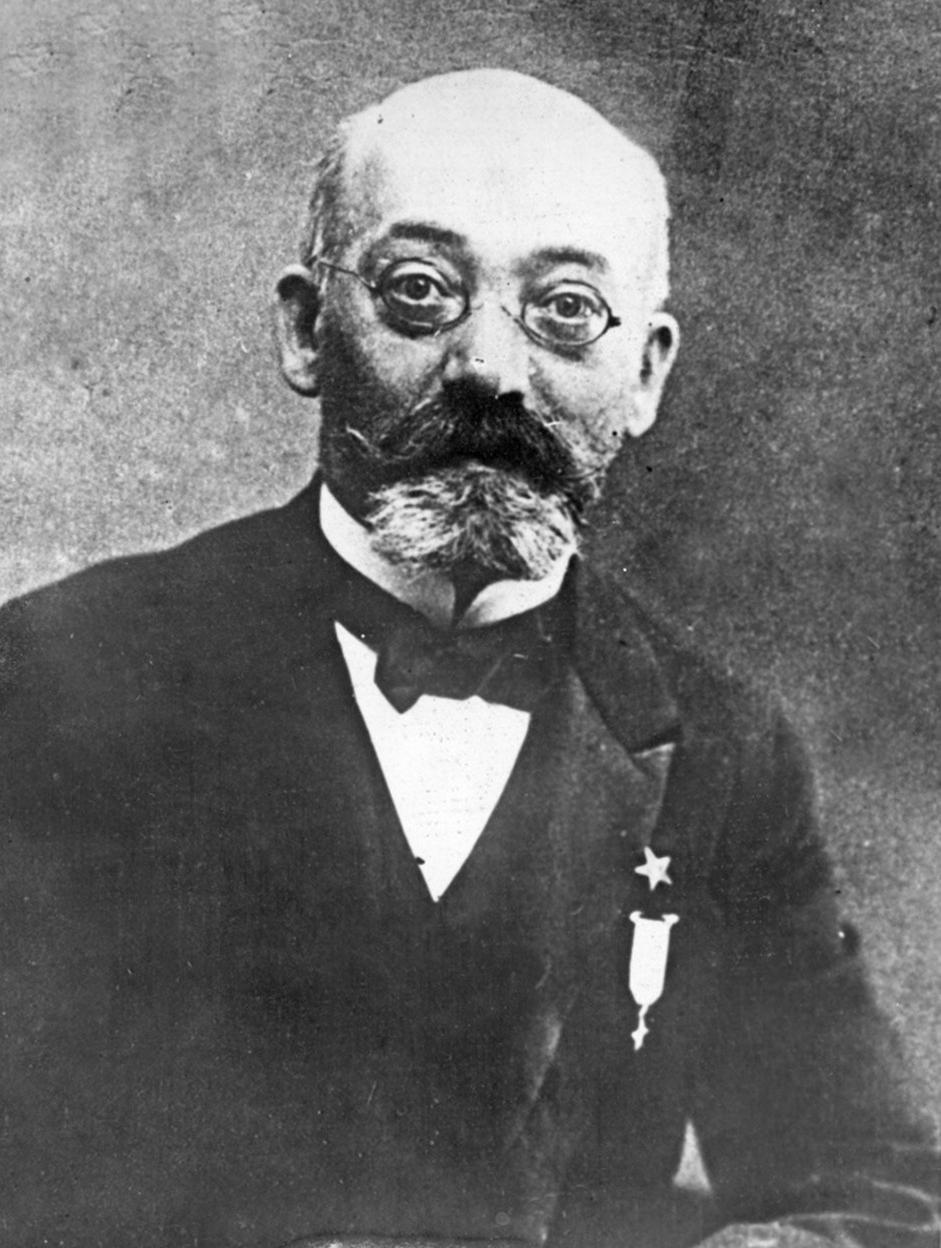
Esperanto originates from the work of a man called L. L. Zamenhof, born in the city of Białystok (or Belostok at the time) in the Russian Empire in 1859. Białystok was a multi-ethnic city, but instead of cohesion there was strict division, being informally separated into predominantly Jewish, German, Polish, and Russian areas based on ethnicity. Zamenhof himself was a Polish

Jew. Growing up, and later through his experience as a polyglot, he witnessed the deep divisions caused by linguistic identity and developed the hope that a unified language could ease these tensions. This eventually culminated in the publication of his first book, Unua Libro, in 1887, under the pseudonym “Doktoro Esperanto”, which kickstarted the movement.
The first World Esperanto Congress took place eighteen years later, in August 1905, in Boulogne-sur-Mer, France, with 688 participants attending, including Zamenhof himself. This marked the first occasion on which Esperantists from different countries conversed with one another using the constructed language. During the congress, the Declaration of Boulogne was written and ratified. This fivepoint declaration outlined what Esperantism is, with definitions and clarifications surrounding the movement. It also cited the Fundamento de Esperanto as the sole authority over the language, containing its core grammar and dictionary. Zamenhof resigned from his role as leader to prevent personal bias from influencing the language. These congresses have been held annually, except during the First and Second World Wars and the Covid pandemic.
The language continued to gain traction as the years progressed. However, there was a surge of support following the First World War, as the need for an international auxiliary language was emphasised by the conflict. As a result, a proposal by Iran at the League of Nations to adopt Esperanto for international use was put forward. Ten of the eleven delegates supported the proposal,
but it was vetoed by the French delegate, Gabriel Hanotaux, primarily because French was the dominant language of international relations at the time.
The idea of Esperanto and what it represented was disliked by several governments during this period.
In 1922, after the League of Nations suggested that all member states introduce Esperanto into their curricula, France retaliated by banning Esperanto education in public schools and universities. The French Ministry of Public Instruction argued that the
language would cause French and English to perish and that the literary standard of the world would be debased. Despite this, many Esperanto conferences were still held in France, and the language could be spoken freely.
Esperanto was frequently used by Korean socialists to communicate with resistance groups in territories occupied by Japan, such as China. This led to Korean newspapers, including Dong-a Ilbo, advocating for its use. In 1924, a declaration opposing Japanese linguistic imperialism was issued, stating that humanity
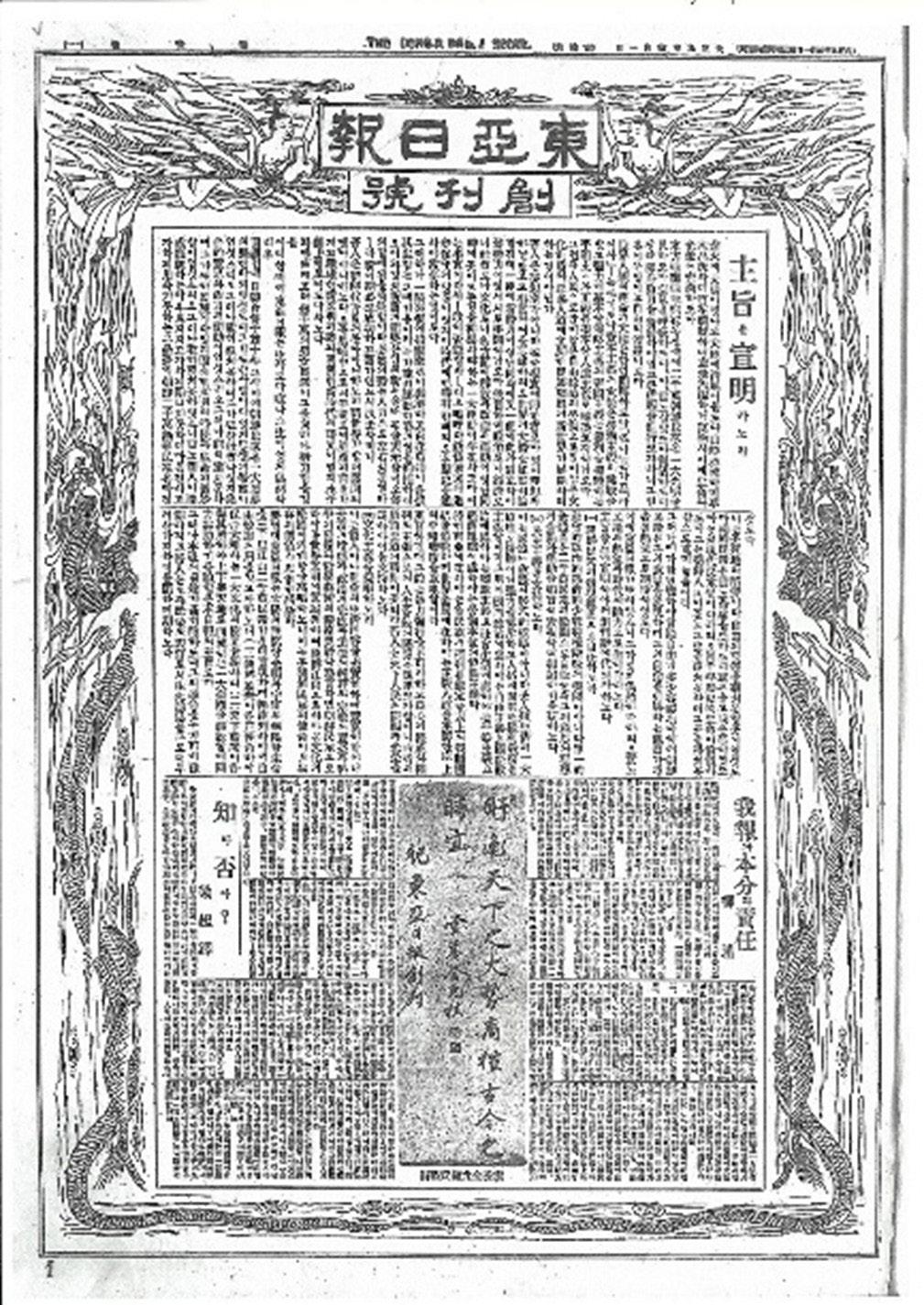
should use Esperanto in common. In 1931, following the Mukden Incident, Japan banned the teaching of Esperanto in its territories.
The Nazi regime viewed Esperanto as a potential tool for Jewish international domination. Hitler mentions this in Mein Kampf, claiming that once Jewish people established global control, Esperanto would be the ideal language to dominate the masses. Furthermore, having been created by a Jewish author in Russia and rooted in internationalism, the language was labelled Bolshevist. Esperanto was therefore outlawed, and all three of Zamenhof’s children were murdered in Nazi death camps during the Holocaust, a major factor in the language’s decline.
In Spain, Esperanto was viewed as a left-wing tool used by anarchists, internationalists, and separatists. During the Spanish Civil War, Republican forces, particularly the anarchist CNT, used Esperanto as a means of communication, which
created fear of the language within the Francoist regime. Events such as the 1937 Málaga attack led to the deaths of many Esperanto speakers. After consolidating power, the regime actively suppressed the language, although this attitude softened during the 1950s and 1960s, culminating in a World Esperanto Congress in Madrid in 1968. Similar attitudes were seen in authoritarian Portugal and monarchist Romania.
Perhaps most surprisingly, the Soviet Union repressed and exiled many Esperanto speakers until 1953. Although Esperanto was supported in the 1920s, with a Soviet Esperantist Union established and the world’s first Esperanto postage stamps issued, Stalin later reversed this stance.
He believed Esperanto to be “the language of spies”, as its international networks allowed for easy communication across borders. His policy of “Socialism in One Country” and promotion of Soviet nationalism conflicted directly with Esperanto’s ideals. As a result, many Esperantists were targeted during the Great Purge, with thousands arrested, killed, or exiled.
Overall, these measures during the interwar and wartime periods led to Esperanto’s decline. Although the language has experienced a degree of recovery, it has never returned to its earlier prominence. Nevertheless, Esperanto remains a fascinating language with a rich history, and perhaps in the future it may yet emerge as a truly international auxiliary language.

Santi Q, Year 10 writes…
When most animals grow old, they die. This is usually due to medical complications or simply because their bodies and cells eventually wear out.
However, there is a species called Turritopsis dohrnii that does not follow these usual rules. This transparent sea creature has an extraordinary ability: it can essentially reverse its ageing process and start its life cycle again, making it biologically immortal.
Baby to adult to baby to adult to baby…
Most jellyfish, and indeed almost all living creatures, go through a life cycle from young to old, changing and developing over time. In this respect, Turritopsis
dohrnii initially appears no different. Living in temperate to tropical waters, it begins life as a larva, grows into a young jellyfish attached to the sea floor, and eventually becomes a freeswimming adult.
This jellyfish, however, can do something remarkable. When it faces stress, injury, or ageing, it transforms its adult cells back into young jellyfish cells, returning to its earlier, attached stage and effectively turning back the biological clock.
How can this happen?
This process is known as transdifferentiation. Cells in the jellyfish change from one specialised type to another, essentially reprogramming themselves. Unlike human cells, which age and eventually die,
these cells can revert to an earlier stage of development.
This ability fascinates scientists, as understanding it more fully could teach us a great deal about ageing and regenerative medicine.
This species of jellyfish is tiny, usually around 4.5 mm across, roughly the size of a small eraser. Its unusual powers have earned it a reputation as one of the strangest creatures in the ocean. It is important to note, however, that predators, pollution, and disease can still kill it.
While humans will not be turning back into children any time soon, this jellyfish shows that the limits of life may be more flexible than we once thought.

Theo N, Year 12 argues...
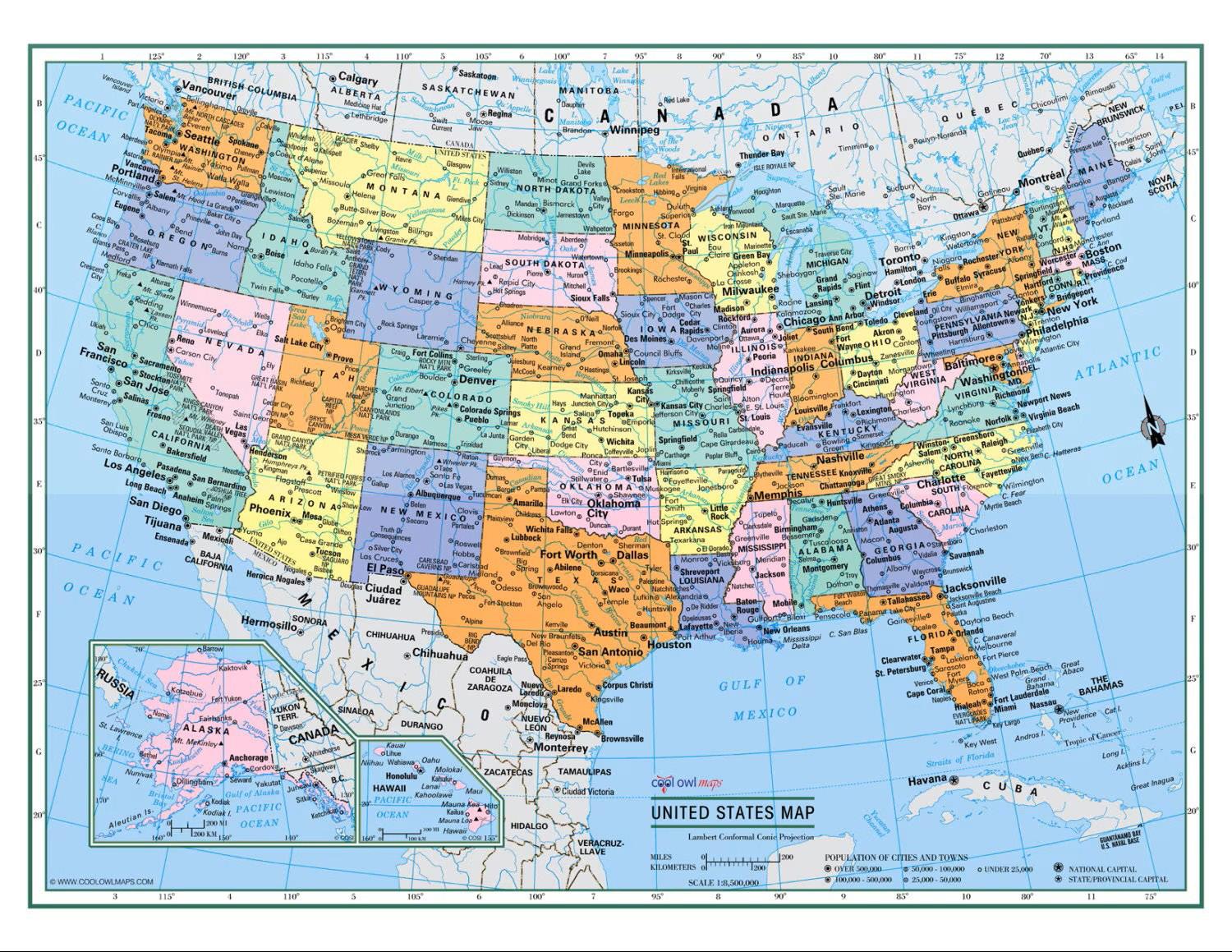
Donald Trump is America’s 45th and 47th president and needs no introduction. He is one of, if not the most controversial figures and politicians of the 21st century, and has undoubtedly solidified his place in the history books. Being such a controversial figure, with a lot of buzzwords used to describe him, it is important to ask ourselves how much truth there is in these accusations. The word being used to describe him that I want to focus on is “fascist”. People such as Zohran Mamdani (New York City’s self-described democratic socialist mayoral elect) and John Kelly (a retired four-star Marine general) have publicly called Trump a fascist.
Before presenting the facts to support whether or not Trump is a fascist and a dictator, we first must explain how one becomes a fascist and a dictator. Fascism is described as “an authoritarian and nationalistic right-wing system of government and social organisation” by the Oxford Dictionary; however, it is much more complicated than that. Robert O. Paxton is a professor of political science at Columbia University, the author of The Anatomy of Fascism, and a leading scholar in fascism. He argues that fascism is a pattern of behaviour and manifests in the following ways:
Undermining democratic institutions
Mobilising supporters against perceived internal enemies
Attacking intellectuals and independent education
In this article, I am going to discuss instances where it can be argued that President Trump fulfilled Paxton’s requirements for being a fascist.
One of the key parts of any modern democracy is the separation of powers. The separation of powers is when authority is spread across several independent bodies in an attempt to prevent an authoritarian regime from assuming control of a democracy. In simple terms, power is split among three branches: the legislative, the judicial and the executive. The legislative branch creates laws; in the United States, this takes place in the Senate and the House of Representatives.
The judiciary’s job is to interpret laws, through the courts. The executive’s job is to enforce the law, through federal agencies such as ICE, the DOJ and the IRS. Trump has, on several occasions, shown disregard for the separation of powers and used his enormous and loyal following to undermine the courts at all levels. In 2017, a judge blocked Trump’s travel ban and he publicly called this judge a “political opponent”. In 2016, he attacked a judge purely due to that judge’s Mexican heritage, saying, “He’s a Mexican. We have a border, we have a problem. And I think he’s probably very hostile to me”.
Furthermore, the Federal Reserve is America’s central bank, and its job is to regulate the money supply
and ensure financial stability. Given the size of the American economy, the Federal Reserve’s role affects the entire world. This is why it exists independently of the president and the government, in order to remove political bias. Throughout Trump’s term, he used his social media presence to place political pressure on the Federal Reserve and, in particular, its chair, Jerome Powell. He also directly threatened Powell, stating, “If I want him out, he’ll be out of there real fast, believe me. I’m not happy with him.” This demonstrates how Trump used his influence to intimidate independent institutions into aligning with his political ideology and motives.
In January 2026, the U.S. Department of Justice opened a criminal investigation into Federal Reserve Chair Jerome Powell, subpoenaing the central bank and threatening a possible indictment related to his June 2025 testimony before the Senate about a $2.5 billion renovation project, although no charges have yet been filed. Powell himself described the threat of criminal charges as a consequence of the Federal Reserve “setting interest rates based on our best assessment of what will serve the public, rather than following the preferences of the President”, implying that the probe was being used to exert political pressure rather than address genuine misconduct. Prominent economists and former central bank leaders echoed this concern. In a joint statement, former chairs and Treasury secretaries warned that the investigation
was “an unprecedented attempt to use prosecutorial attacks to undermine [the Federal Reserve’s] independence”, with potentially serious consequences for price stability and economic functioning. JPMorgan Chase CEO Jamie Dimon also stated that “everyone we know believes in Fed independence”, adding that anything which undermines it is “probably not a great idea”.
January 6th 2021 was a terrifying and chaotic moment in American history. For the first time, the country saw its own citizens violently and illegally storm its Capitol. Five people died, including a police officer. Members of Congress were forced to hide, fearing for their lives, while armed officers attempted to contain the crowd. The attackers believed that the election had been stolen and that Donald Trump deserved to become the 46th president of the United States. Prior to the riot, Trump delivered a speech lasting over an hour, repeating claims that the election was fraudulent. A grand jury later indicted him for “inciting an insurrection” on January 6th. Trump, whether admired or criticised, is undeniably intelligent, as shown by his success. The violent rhetoric used in his speech was followed by a violent riot, demonstrating a disregard for public safety, peace and unity. These traits can reasonably be considered characteristics associated with fascism.
Universities are among the oldest institutions in the world and have long symbolised intellectual freedom and disagreement, both of which are essential to a functioning democracy. Without universities, many scientific, economic and philosophical
advances would not exist. In order to continue producing independent thinkers, universities must feel free to express ideas without fear of punishment. Despite this, Trump made it a key objective of his second term to intervene in higher education.
At the beginning of his second term, Trump demanded that Ivy League universities comply with new federal policies. These demands were widely criticised as threats to institutional independence and included audits of academic programmes and changes to hiring and admissions practices. Harvard publicly refused to comply and subsequently had $2.2 billion in grants and contracts withdrawn, placing it under severe financial pressure. Harvard sued the U.S. government, accusing it of breaking federal law and violating the First Amendment, which protects free speech. A judge ruled that the Trump administration had acted unlawfully.
This case is one example among many in which Trump targeted educational institutions and the
media. While he did not directly force ABC to cancel Jimmy Kimmel Live for being critical of him, he repeatedly attacked the programme and its host, using his platform to apply public and political pressure. He has also labelled legitimate news outlets such as CNN as “fake news” and “radical left”. These actions suggest a pattern of hostility towards independent sources of information and dissent.
In conclusion, whether one supports or opposes him, Trump’s actions demonstrate a clear pattern of placing personal power above democracy, independent institutions and truth. From attacking the courts and threatening the Federal Reserve, to encouraging unrest on January 6th and exerting pressure on universities and the media, he has repeatedly undermined the systems designed to protect democratic governance. These are not minor political disagreements but deliberate attempts to centralise power and enforce loyalty. Taken together, they closely align with the behaviours Robert Paxton identifies as fascist.
Dexter B, Year 12 writes…
As a child of parents born in the 1960s, I feel as though I have had a unique experience with music of that era compared with other people in my generation. I remember going on road trips with my family listening to songs and artists they had grown up with (Stevie Wonder, Led Zeppelin, ABBA, and of course Bruce Springsteen), ensuring that I would grow up the same way. Sure enough, I did. There is just something about older music that feels more raw and full of character, and there are a number of reasons why.

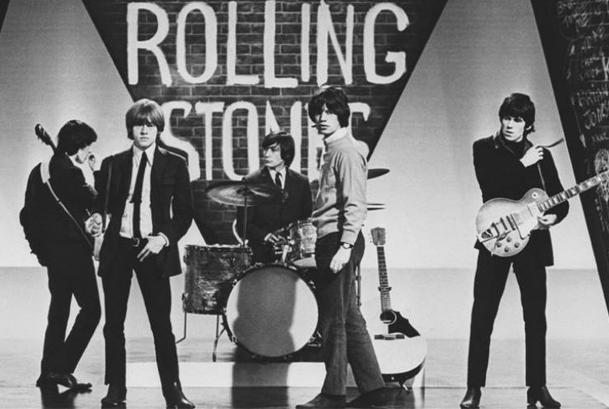
Modern music often relies on digital production, especially in hip-hop and R&B, which, despite creating a cleaner sound, can remove the organic feeling of a live band. In songs such as Sir Duke by Stevie Wonder or Gimme Shelter by The Rolling Stones, you can hear the heart and soul of the studio captured in the recording. It feels collaborative: producers whooping in the background,

musicians clearly enjoying themselves. These elements often feel missing from modern music.
Furthermore, the decline of the album since the 1990s has taken significant meaning out of music. Singles used to promote albums, but they are now often used to replace them. Albums once told stories and revealed deeper meanings after several listens. Today, many are created simply to provide enough material for
touring, with themes that remain surface-level. Artists now feel pressured to release constant singles to stay relevant, otherwise they risk being replaced by the next “up-and-coming” act that may quickly burn out. This means less time in the studio experimenting, developing a sound, or reflecting deeply on emotions, all of which once led to timeless music with lasting impact.

Meaning in songwriting more broadly has also diminished. Bob Dylan’s folk ballads explored political greed and the realities of war, while hip-hop emerged to challenge racial injustice in America during the 1980s and 1990s. Much of this depth has been replaced by catchy hooks and repetitive choruses designed to stop listeners scrolling past. Substance is often sacrificed for immediacy.
Older decades also offered greater musical variety. Rock, soul, funk, disco, jazz, folk, punk and R&B all coexisted on the charts. Today’s charts can feel more sonically similar, influenced by algorithmdriven trends and globalised production. In my view, the search for a meaningful narrative has been replaced by the pursuit of music that simply fits a “vibe”.
One of the most common arguments in favour of older music is the limited use of
autotune. Earlier recordings feel richer and more authentic because they captured real voices, including the cracks, power and imperfections that made performances human. These flaws were not mistakes; they were personality. Modern production often smooths every note into a uniform sound. Autotune can help singers stay in tune, but it can also remove the individuality that once defined an artist’s voice. As a result, many contemporary songs sound similar, while older music stands out for its emotional honesty.
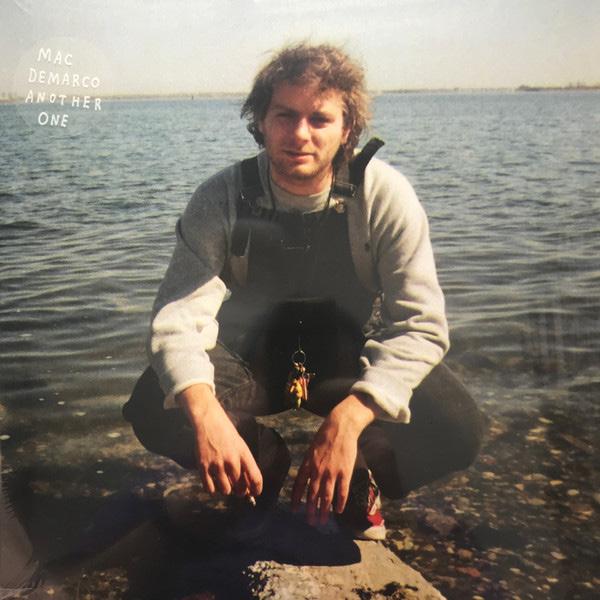
That said, modern music is not all bad. I listen to artists such as Kanye West, Laufey and Mac DeMarco, all of whom are clearly talented. Kanye West has one of the most consistent discographies of any artist, and his innovative use of autotune on 808s & Heartbreak proves that new technology can be used creatively. Laufey’s jazz-inspired music has introduced a new generation to a genre that was fading, while still respecting its roots. Mac DeMarco’s laid-back style and reflective lyrics about family and loss often appeal to me after a long day, sometimes even more than Bob Dylan, though that is rare.

There is nuance in this debate, and it will continue as new music eventually becomes old music. One day, people in my generation may well say, “They don’t make songs like Drake anymore.” However, in my opinion, modern music still cannot compare to the spirit and character of older music.

Tardigrades live in diverse regions throughout the Earth, including mountaintops, deep oceans, tropical rainforests and Antarctica. They are found almost everywhere, from moss, soil, freshwater and lichen to deep-sea hydrothermal vents.
They are among the most resilient animals known, able to survive extreme conditions ranging from just above absolute zero (−272°C) to over 150°C. They can withstand pressures up to six times greater than those found in the deepest ocean trenches, as well as nearzero pressure. Tardigrades can also survive radiation doses hundreds of times higher than what would be lethal to humans. In addition, they can endure severe dehydration, losing almost all the water in their bodies and later reviving when rehydrated, even after several decades.
Remarkably, tardigrades can
survive the conditions of outer space and were the first known animals to do so. In 2007, scientists exposed them to the vacuum and solar radiation of space. Not only did they survive, but some were also able to reproduce afterwards.
Because of these extraordinary abilities, tardigrades have become a major focus of scientific research. Their DNA protection mechanisms could one day inspire new ways to protect human cells
from radiation. This research may also help with preserving vaccines, organs, or other biological materials for long periods, and provide insight into how life can survive in the most extreme environments.
One key reason for their resilience is a unique protein called Dsup, short for “damage suppressor”, which protects their DNA from radiation damage by acting like a natural shield.

Do you have something you’d like to write about?
Is there a passion or interest you’d like to share with others?
Is there a cause you would like to draw attention to?
Would you like to report on school events?
Are you a great photographer or artist?
Send your articles (and images to go with them) to nicola.bradley@wetherbysenior.co.uk, or ask to be added to the team on Teams where you can submit it directly.
A submission deadline will be set each half term, so get writing so your article can be included!