




Orlando,FL | March26-29 | Pre-Day:March25



Orlando,FL | March26-29 | Pre-Day:March25
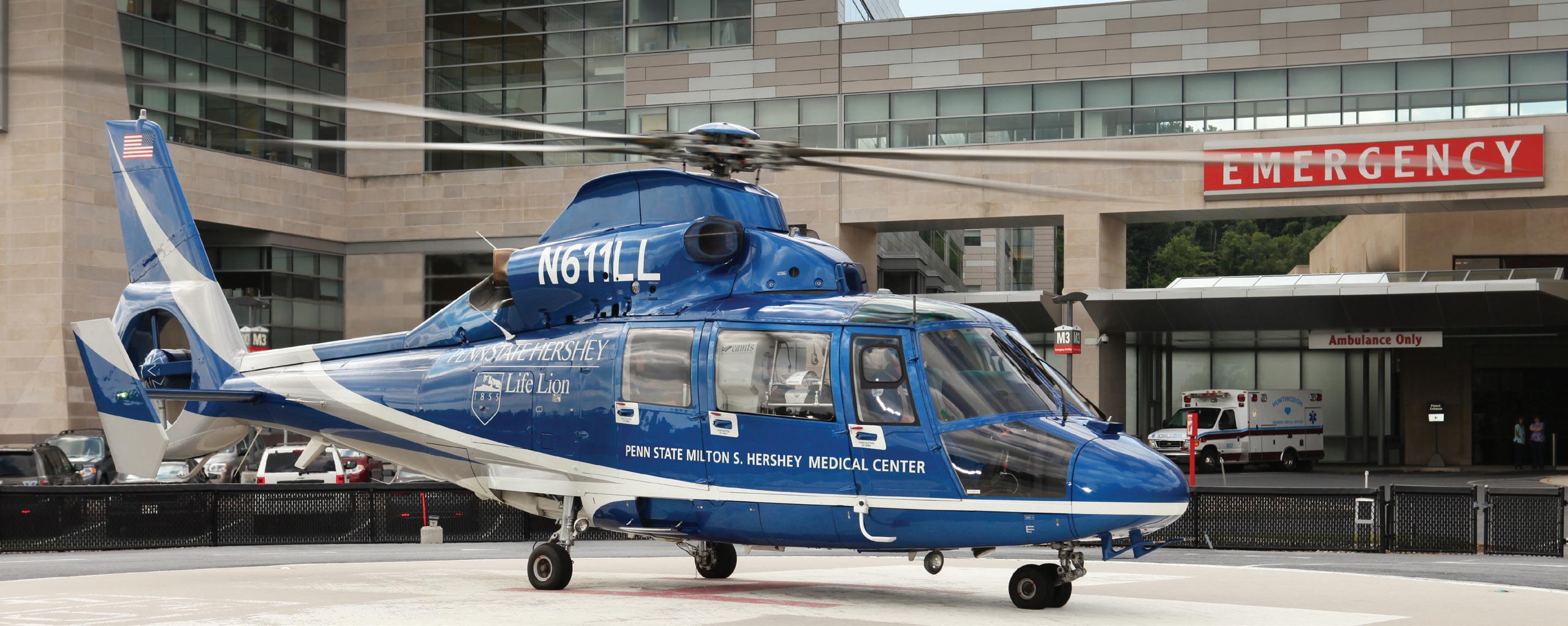

About Us: Penn State Health is a multi-hospital health system serving patients and communities across central Pennsylvania. We are the only medical facility in Pennsylvania to be accredited as a Level I pediatric trauma center and Level I adult trauma center. The system includes Penn State Health Milton S. Hershey Medical Center, Penn State Health Children’s Hospital and Penn State Cancer Institute based in Hershey, Pa.; Penn State Health Hampden Medical Center in Enola, Pa.; Penn State Health Holy Spirit Medical Center in Camp Hill, Pa.; Penn State Health Lancaster Medical Center in Lancaster, Pa.; Penn State Health St. Joseph Medical Center in Reading, Pa.; Pennsylvania Psychiatric Institute, a specialty provider of inpatient and outpatient behavioral health services, in Harrisburg, Pa.; and 2,450+ physicians and direct care providers at 225 outpatient practices. Additionally, the system jointly operates various healthcare providers, including Penn State Health Rehabilitation Hospital, Hershey Outpatient Surgery Center and Hershey Endoscopy Center.
We foster a collaborative environment rich with diversity, share a passion for patient care, and have a space for those who share our spark of innovative research interests. Our health system is expanding and we have opportunities in both academic hospital as well community hospital settings.
Benefit highlights include:
•Competitive salary with sign-on bonus
•Comprehensive benefits and retirement package
•Relocation assistance & CME allowance
•Attractive neighborhoods in scenic central Pennsylvania

Integrating Emergency Care with Population Health
Indexed in MEDLINE, PubMed, and Clarivate Web of Science, Science Citation Index Expanded
Andrew W. Phillips, MD, Associate Editor DHR Health-Edinburg, Texas
Edward Michelson, MD, Associate Editor Texas Tech University- El Paso, Texas
Dan Mayer, MD, Associate Editor Retired from Albany Medical College- Niskayuna, New York
Gayle Galletta, MD, Associate Editor University of Massachusetts Medical SchoolWorcester, Massachusetts
Yanina Purim-Shem-Tov, MD, MS, Associate Editor Rush University Medical Center-Chicago, Illinois
Section Editors
Behavioral Emergencies
Bradford Brobin, MD, MBA Chicago Medical School
Marc L. Martel, MD Hennepin County Medical Center
Ryan Ley, MD
Hennepin County Medical Center
Cardiac Care
Sam S. Torbati, MD Cedars-Sinai Medical Center
Rohit Menon, MD University of Maryland
Elif Yucebay, MD Rush University Medical Center
Mary McLean, MD
AdventHealth
Climate Change
Gary Gaddis, MD, PhD University of California, Irvine School of Medicine- Irvine, California
Clinical Practice
Casey Clements, MD, PhD Mayo Clinic
Murat Cetin, MD
Behçet Uz Child Disease and Pediatric Surgery Training and Research Hospital
Carmine Nasta, MD Università degli Studi della Campania “Luigi Vanvitelli”
David Thompson, MD University of California, San Francisco
Tom Benzoni, DO Des Moines University of Medicine and Health Sciences
Critical Care
Christopher “Kit” Tainter, MD University of California, San Diego
Joseph Shiber, MD University of Florida-College of Medicine
David Page, MD University of Alabama
Antonio Esquinas, MD, PhD, FCCP, FNIV Hospital Morales Meseguer
Mark I. Langdorf, MD, MHPE, Editor-in-Chief University of California, Irvine School of MedicineIrvine, California
Shahram Lotfipour, MD, MPH, Managing Editor University of California, Irvine School of MedicineIrvine, California
Gary Gaddis, MD, PhD, Associate Editor University of California, Irvine School of Medicine- Irvine, California
Rick A. McPheeters, DO, Associate Editor Kern Medical- Bakersfield, California
R. Gentry Wilkerson, MD, Associate Editor University of Maryland
Dell Simmons, MD Geisinger Health
Disaster Medicine
Andrew Milsten, MD, MS UMass Chan Medical Center
John Broach, MD, MPH, MBA, FACEP University of Massachusetts Medical School
Christopher Kang, MD Madigan Army Medical Center
Scott Goldstein, MD
Temple Health
Education
Danya Khoujah, MBBS University of Maryland School of Medicine
Jeffrey Druck, MD University of Colorado
Asit Misra, MD University of Miami
Cameron Hanson, MD The University of Kansas Medical Center
ED Administration, Quality, Safety
Gary Johnson, MD Upstate Medical University
Brian J. Yun, MD, MBA, MPH Harvard Medical School
Laura Walker, MD Mayo Clinic
León D. Sánchez, MD, MPH Beth Israel Deaconess Medical Center
Robert Derlet, MD
Founding Editor, California Journal of Emergency Medicine University of California, Davis
Tehreem Rehman, MD, MPH, MBA Beth Israel Deaconess Medical Center
Anthony Rosania, MD, MHA, MSHI Rutgers University
Neil Dasgupta, MD, FACEP, FAAEM Nassau University Medical Center
Emergency Medical Services
Daniel Joseph, MD Yale University
Joshua B. Gaither, MD University of Arizona, Tuscon
Brian Yun, MD, MPH, MBA, Associate Editor Boston Medical Center-Boston, Massachusetts
Michael Pulia, MD, PhD, Associate Editor University of Wisconsins Hospitals and Clinics- Madison, Wisconsin
Patrick Joseph Maher, MD, MS, Associate Editor Ichan School of Medicine at Mount Sinai- New York, New York
Donna Mendez, MD, EdD, Associate Editor University of Texas-Houston/McGovern Medical School- Houston Texas
Danya Khoujah, MBBS, Associate Editor University of Maryland School of Medicine- Baltimore, Maryland
Julian Mapp, MD University of Texas, San Antonio
Shira A. Schlesinger, MD, MPH Harbor-UCLA Medical Center
Tiffany Abramson, MD University of Southern California
Jason Pickett, MD University of Utah Health Geriatrics
Stephen Meldon, MD Cleveland Clinic
Luna Ragsdale, MD, MPH Duke University
Health Equity
Cortlyn W. Brown, MD Carolinas Medical Center
Faith Quenzer, DO, MPH Temecula Valley Hospital San Ysidro Health Center
Victor Cisneros, MD MPH Eisenhower Health
Sara Heinert, PhD, MPH Rutgers University
Naomi George, MD, MPH University of Mexico
Sarah Aly, DO Yale School of Medicine
Lauren Walter, MD University of Alabama
Infectious Disease
Elissa Schechter-Perkins, MD, MPH Boston University School of Medicine
Ioannis Koutroulis, MD, MBA, PhD George Washington University School of Medicine and Health Sciences
Stephen Liang, MD, MPHS Washington University School of Medicine
Injury Prevention
Mark Faul, PhD, MA Centers for Disease Control and Prevention
Wirachin Hoonpongsimanont, MD, MSBATS Eisenhower Medical Center
International Medicine
Heather A. Brown, MD, MPH Prisma Health Richland
Taylor Burkholder, MD, MPH Keck School of Medicine of USC
Christopher Greene, MD, MPH University of Alabama
Chris Mills, MD, MPH Santa Clara Valley Medical Center
Shada Rouhani, MD Brigham and Women’s Hospital
Legal Medicine
Melanie S. Heniff, MD, JD Indiana University School of Medicine
Statistics and Methodology
Shu B. Chan, MD, MS Resurrection Medical Center
Soheil Saadat, MD, MPH, PhD University of California, Irvine
James A. Meltzer, MD, MS Albert Einstein College of Medicine
Monica Gaddis, PhD University of Missouri, Kansas City School of Medicine
Emad Awad, PhD University of Utah Health
Musculoskeletal
Juan F. Acosta, DO, MS Pacific Northwest University
Neurosciences
Rick Lucarelli, MD Medical City Dallas Hospital
William D. Whetstone, MD University of California, San Francisco
Antonio Siniscalchi, MD Annunziata Hospital, Cosenza, Italy
Pediatric Emergency Medicine
Muhammad Waseem, MD Lincoln Medical & Mental Health Center
Cristina M. Zeretzke-Bien, MD University of Florida Jabeen Fayyaz, MD The Hospital for Sick Children
Reshvinder Dhillon, MD University of Southern Alabama
Kathleen Stephanos, MD University of Mississippi Medical Center
Official Journal of the California Chapter of the American College of Emergency Physicians, the American College of Osteopathic Emergency Physicians, the California Chapter of the American Academy of Emergency Medicine, and Official International Journal of the World Academic Council of Emergency Medicine (WACEM)



Available in MEDLINE, PubMed, PubMed Central, CINAHL, SCOPUS, Google Scholar, eScholarship, Melvyl, DOAJ, EBSCO, EMBASE, Medscape, HINARI, and MDLinx Emergency Med. Members of OASPA.
March 2026
Quincy Tran, MD, Deputy Editor University of Maryland School of Medicine- Baltimore, Maryland World Academic Council of Emergency Medicine

Editorial and Publishing Office: WestJEM/Depatment of Emergency Medicine, UC Irvine Health, 3800 W. Chapman Ave. Suite 3200, Orange, CA 92868, USA Office: 1-714-456-6389; Email: Editor@westjem.org
Integrating Emergency Care with Population Health
Indexed in MEDLINE, PubMed, and Clarivate Web of Science, Science Citation Index Expanded
Section Editors (Continued)
Public Health
John Ashurst, DO, MSc, EdD Lehigh Valley Health Network
Tony Zitek, MD Kendall Regional Medical Center
Erik S. Anderson, MD Alameda Health System-Highland Hospital
Toxicology
Jeffrey R. Suchard, MD University of California, Irvine
Howard Greller, MD Rutgers University
Trauma
Pierre Borczuk, MD Massachusetts General Hospital/Havard Medical School
Lesley Osborn, MD University of Colorado Anschutz Medical Campus
Ultrasound
J. Matthew Fields, MD Thomas Jefferson University
Chris Baker, MD University of California, San Francisco
Shane Summers, MD Brooke Army Medical Center
Robert R. Ehrman, MD, MS Wayne State University
Ryan C. Gibbons, MD Temple Health
Robert Allen, MD Keck Medicine of USC
Women’s Health
Elisabeth Calhoun, MD, MPH Trinity Health
Marianne Haughtey, MD Zucker School of Medicne at Hofstra/Northwell
Official Journal of the California Chapter of the American College of Emergency Physicians, the American College of Osteopathic Emergency Physicians, the California Chapter of the American Academy of Emergency Medicine, and Official International Journal of the World Academic Council of Emergency Medicine (WACEM)
World Academic Council of Emergency Medicine
Available in MEDLINE, PubMed, PubMed Central, CINAHL, SCOPUS, Google Scholar, eScholarship, Melvyl, DOAJ, EBSCO, EMBASE, Medscape, HINARI, and MDLinx Emergency Med. Members of OASPA.
Editorial and Publishing Office: WestJEM/Depatment of Emergency Medicine, UC Irvine Health, 3800 W. Chapman Ave. Suite 3200, Orange, CA 92868, USA Office: 1-714-456-6389; Email: Editor@westjem.org
Emergency
Integrating Emergency Care with Population Health
Indexed in MEDLINE, PubMed, and Clarivate Web of Science, Science Citation Index Expanded
Amin A. Kazzi, MD, MAAEM
The American University of Beirut, Beirut, Lebanon
Anwar Al-Awadhi, MD
Mubarak Al-Kabeer Hospital, Jabriya, Kuwait
Arif A. Cevik, MD United Arab Emirates University College of Medicine and Health Sciences, Al Ain, United Arab Emirates
Brent King, MD, MMM University of Texas, Houston
Christopher E. San Miguel, MD Ohio State University Wexner Medical Center
Daniel J. Dire, MD University of Texas Health Sciences Center San Antonio
David F.M. Brown, MD Massachusetts General Hospital/ Harvard Medical School
Douglas Ander, MD Emory University
Edward Michelson, MD Texas Tech University
Edward Panacek, MD, MPH University of South Alabama
Francesco Della Corte, MD
Azienda Ospedaliera Universitaria “Maggiore della Carità,” Novara, Italy
Hoon Chin Steven Lim, MBBS, MRCSEd Changi General Hospital
Gayle Galleta, MD
Sørlandet Sykehus HF, Akershus Universitetssykehus, Lorenskog, Norway
Jaqueline Le, MD Desert Regional Medical Center
Jeffrey Love, MD
The George Washington University School of Medicine and Health Sciences
Jonathan Olshaker, MD Boston University
Katsuhiro Kanemaru, MD University of Miyazaki Hospital, Miyazaki, Japan
Kenneth V. Iserson, MD, MBA University of Arizona, Tucson
Khrongwong Musikatavorn, MD
King Chulalongkorn Memorial Hospital, Chulalongkorn University, Bangkok, Thailand
Leslie Zun, MD, MBA Chicago Medical School
Kimberly Ang, MBA
UC Irvine Health School of Medicine
Elena Lopez-Gusman, JD
California ACEP
American College of Emergency Physicians
Amanda Mahan, Executive Director
American College of Osteopathic Emergency Physicians
John B. Christensen, MD California Chapter Division of AAEM
Randy Young, MD California ACEP
American College of Emergency Physicians
Mark I. Langdorf, MD, MHPE UC Irvine Health School of Medicine
Jorge Fernandez, MD
California ACEP
American College of Emergency Physicians University of California, San Diego
Peter A. Bell, DO, MBA
American College of Osteopathic Emergency Physicians Baptist Health Science University
Robert Suter, DO, MHA American College of Osteopathic Emergency Physicians UT Southwestern Medical Center
Shahram Lotfipour, MD, MPH UC Irvine Health School of Medicine
Brian Potts, MD, MBA California Chapter Division of AAEM Alta Bates Summit-Berkeley Campus
Linda S. Murphy, MLIS University of California, Irvine School of Medicine Librarian
Pablo Aguilera Fuenzalida, MD Pontificia Universidad Catolica de Chile, Región Metropolitana, Chile
Peter A. Bell, DO, MBA Baptist Health Sciences University
Peter Sokolove, MD University of California, San Francisco
Rachel A. Lindor, MD, JD Mayo Clinic
Robert M. Rodriguez, MD University of California, Riverside
Robert Suter, DO, MHA UT Southwestern Medical Center
Robert W. Derlet, MD University of California, Davis
Samuel J. Stratton, MD, MPH Orange County, CA, EMS Agency
Scott Rudkin, MD, MBA University of California, Irvine
Scott Zeller, MD University of California, Riverside
Terry Mulligan, DO, MPH, FIFEM ACEP Ambassador to the Netherlands Society of Emergency Physicians
Wirachin Hoonpongsimanont, MD, MSBATS
Siriraj Hospital, Mahidol University, Bangkok, Thailand
Ian Olliffe, BS Executive Editorial Director
Sheyda Aquino, BS WestJEM Editorial Director
Tran Nguyen, BS CPC-EM Editorial Director
Stephanie Burmeister, MLIS WestJEM Staff Liaison
Cassandra Saucedo, MS Executive Publishing Director
Isabella Choi, BS WestJEM Publishing Director
Alyson Tsai CPC-EM Publishing Director
June Casey, BA Copy Editor
Official Journal of the California Chapter of the American College of Emergency Physicians, the American College of Osteopathic Emergency Physicians, the California Chapter of the American Academy of Emergency Medicine, and Official International Journal of the World Academic Council of Emergency Medicine (WACEM)
World Academic Council of Emergency Medicine
Available in MEDLINE, PubMed, PubMed Central, Europe PubMed Central, PubMed Central Canada, CINAHL, SCOPUS, Google Scholar, eScholarship, Melvyl, DOAJ, EBSCO, EMBASE, Medscape, HINARI, and MDLinx Emergency Med. Members of OASPA. Editorial and Publishing Office: WestJEM/Depatment of Emergency Medicine, UC Irvine Health, 3800 W. Chapman Ave. Suite 3200, Orange, CA 92868, USA Email: Editor@westjem.org
The Council of Residency Directors in Emergency Medicine Advances in Education Research and Innovations Forum presented a peer-reviewed selection of emergency medicine graduate and undergraduate educational research and innovations in both oral and poster formats at CORD Academic Assembly 2026. Emphasis was placed on novel research questions and designs. Innovation submissions included curricular designs, technological innovations, faculty development, recruitment processes, and similar topics.
v Table of Contents
S1 "Best of the Best" Research Abstracts
S3 "Best of the Best" Innovation Abstracts
S6 Research Abstracts
S54 Innovation Abstracts
xiv Author Index
The Western Journal of Emergency Medicine: Integrating Emergency Care with Population Health would like to thank the Council of Emergency Medicine Residency Directors Board of Directors for helping to make this collaborative special issue possible. CORD abstracts are archived at: http://westjem.com/cord-abstracts and http://escholarship.org/uc/uciem_westjem.
“Best of the Best” Research Abstracts
1 Increased Use of Generative Artificial IntelligenceAssociated Language in Emergency Medicine Residency Personal Statements
Ryan McKillip, Darrow Traylor, Elise Lovell, Ravi Chacko, Andrea Carlson
2 Analysis of the eSLOE Score in ResidencyCAS: Comparing Apples to Oranges
Nathan Baggett, Reed Owens-Pochinka, Sarah Schmidt, Graci Gorman, Bradley Hernandez, Cullen Hegarty
3 Do Year-To-Year Changes in In-Service Training Exam Performance Predict First-Attempt Success on Written Board Certification?
Brian Walsh, Fred Fiesseler
4 Understanding the Decline in Emergency Medicine Qualifying Examination Pass Rates
Neelou Weeker, Nickolas Srica, Ryan Coughlin, Robert Sobehart, Kaila Pomeranz, Michael Menowsky, Tara Cassidy-Smith
5 Signals of Inclusion: Prevalence and Patterns of DEI Statements on EM Residency Websites
Abagayle Bierowski, Brittany Tian, Sulabh Neupane, Fernando Nombera-Bueno, Erin Hoag, Casey Morrone, Kathleen Cruz, Jiten Patel, Kelly Kehm, Peter Tomaselli
“Best of the Best” Innovation Abstracts
1 Realistic Dual-Setting Mass Casualty Incident Simulation to Enhance Triage and Definitive Care Skills
Scott Russo, Molly Basilio, Cosimo Laterza, Michael Berkenbush, Michael Brown
2 Provider Directed Automated Clinical Case Review for Enhanced Medical Education in the Emergency Department
Sara Lin, Laura Hopson, Karan Desai, David Somand, Sarah Tehranisa, Florian Schmitzberger, Alexander Janke
3 The Ramer - A Formal Resident as a Teacher Rotation as an Introduction to Medical Education
Timothy Khowong, Richa Gupta, Thomas Sanchez, Saumil Parikh, Anita Lui, Brian Smith, Sheetal Sheth
4 Ethics in Action: Linking Dialogue, Reflection, and Experiences
Kaila Pomeranz, Omar Shaban
5 A Simulation-Based Curriculum to Prepare Emergency Medicine Residents for the New ABEM Certifying Examination
Paige Casil, Christine Raps, Patrick Hughes, Brian Merritt, Rowan Kelner, Allison Beaulieu
Research Abstracts
1 Physical Activity, Compassion Satisfaction, and Burnout Across Varying Practice Lengths
Megan Michaels, Rebecca Jeanmonod, Donald Jeanmonod, Tuan Vo, Kyrie Cassin, Kelsey Fuchs
2 Exploring Factors that Lead to Disproportionate Rates of Medical Student Attrition: A Qualitative Study
Aubrey Kelly, Rosemarie Diaz
3 Impact of Practice Environment on Emergency Medicine Clerkship Education
Kevin McGurk, Christopher Torkilsen, McKenna Knych, Thaddeus Schmitt, Alisa Hayes
4 Resident Perceptions of APP Impact on Emergency Medicine Training: Findings from the 2025 Post-ITE Survey
Eric Blazar, Andy Little, Brian Milman, Lauren Lamparter
5 Prompts to Praise: Exploring Artificial Intelligence Use in Residency Recruitment and Faculty Letter Writing
Lauren McCafferty, Danielle Langan, Zachary Repanshek, Simi Jandu, Abbas Husain
6 Emergency Department Management of Acute Penetrating Injuries Caused by Writing Utensils
Natalie Oberhauser-Lim, Timothy Young, Sommer Aldana, Heather Kuntz
7 Threading the Needle: Competing Spectra of Burnout Susceptibility and Resilience in Emergency Medicine Residents
Emily Steelquist, Max Griffith, Aarti Jain, Joshua Jauregui, Lalena Yarris, Jaime Jordan
8 Assessing Knowledge and Preparedness of LGBTQ Healthcare Needs Among Future Physicians
Kelsey Newbold
9 USMLE Step 2 Clinical Knowledge as a Predictor of Emergency Medicine In-Training Examination Performance: A Single-Institution, Ten-Year Retrospective Cohort Study
Donald Byars, Anjeza Cipi, Megan Duggins, Jondavid Landon, Mitchell Vallone, Shai Konnar Ansell, Alexander Dornstauder
10 Trends in Fellowship Training and Secondary Board Certification Among U.S. Emergency Medicine Residency Leaders
Danielle Langan, Shorok Hassan, Amar Bukvic, William Caputo, Abbas Husain, Lindsay Shogan
11 Impact of Educational Intervention on Question Bank Utilization and Emergency Medicine Residency In-Training Exam Scores
Szymon Kutyla, Delaney Bates, Timothy Friedmann, Kestrel Reopelle
12 Improving Resident Chart Completion Rates Through Transparent Performance Feedback
Brittany Botticelli, Laura Welsh, Eric Shappell, Daniel Egan, Derek Monette, Carolyn Commissaris, Marcus Wooten, David Peak
13 Clinical Assessment of Medical Students’ Abilities Identifying and Mitigating Social Determinants of Health
Andrew Golden, Emily Craft, Justine Li
14 Feedback on Feedback: Targeted Faculty Interventions Improve Narrative Feedback in Resident Assessments
Andrew Golden, Adam McFarland, Emily Craft, Daniella Rao, Matthew Stull, Zeinab ShafieKhorassani, Matthew Mullins, Steffen Simerlink, Yasmin Moftakhar
15 Evaluating a Tofu-Based Training Model for Fascia Iliaca Block Competency and Skill Retention
Antonious Malak, Cosimo Laterza, Laura Kolster
16 A Virtual Reality Approach to Standardizing MassCasualty Training across Residency Programs
Cosimo Laterza, Stephen Powell, Michael Berkenbush, Nicholas Cozzi, Matthew Steenberg, Nicholas Kman
17 A Comparison of Two Prediction Models for the American Board of Emergency Medicine Qualifying Exam
Kestrel Reopelle, Szymon Kutyla, Delaney Bates, Timothy Friedmann
18 The Resident Effect: Evaluation Inflation for Lower-Performing Students in EM
Xiao Chi Zhang, Alexis Metoyer, Dimitrios Papanagnou, Zachary Kaplan, Chaiya Laoteppitaks, Nina Mingioni, Jiten Patel, Kathleen Cruz, Michael Pasirstein
19 Implementing a Structured Feedback Model to Enhance Medical Student Development during the EM Clerkship
Xiao Chi Zhang, Chaiya Laoteppitaks, Jason Gonzalez, Nina Mingioni, Dimitrios Papanagnou, Samuel Iovine, Joria Le, Michael Pasirstein
20 Breathing Life into Critical Decisions: A CaseBased Approach to Ventilator Education for Emergency Medicine Residents
Christine Van Dillen, Sara Baker, Caroline Kraft, Hana Kayaleh, Veronica Rosen, Roxana Zelaya, Linda Papa, Charles Updegrove
21 Results of a National Program Director Survey: The Current State of Rotations and Experiences
Richard Austin, Chinmay Patel, Kristin Delfino, Sharon Kim
22 Affordability of Childbearing During Emergency Medicine Residency: A Cost-Of-Living Analysis
Erin Dehon, Katie Weeks, Sarah Sterling, Risa Moriarity
23 Analysis of Emergency Medicine Residents Accepted Through the SOAP Who Required Remediation During Residency
Mark Gustafson, Lindsay MacConaghy, Minh Evans, Brian Burton, Stephanie Thompson
24 Equipping Medical Students to Actively Receive Feedback: A Pre-Internship Workshop to Enhance Feedback Literacy
Allison Beaulieu, Brian Merritt, Julia Ruggieri, Rowan Kelner, Christine Raps, Jeff Druck, Robert Stephen, Patrick Hughes, Zachary Drapkin
25 Can Simulation Based Microaggressions Training Provide an Equitable Learning Experience for All Residents?
Tiffany Moadel, Michael Sperandeo, David Fernandez
26 The Certifying Exam Is Coming - Are We Ready? A Faculty Communications Needs Assessment
Stephen Rogers, Brian Milman, Samuel Parnell, Joshua Ginsburg, Sarah Zamamiri, Marshall Howell, Sarah Fowler, Sonika Raj
27 Developing a Peer Support Training Curriculum for Senior Emergency Medicine Residents: Insights from a Qualitative Analysis
Kirlos Haroun, McKenzie Warshel, Kathryn Lorenz, Linda Regan, Kathryn Ritter
28 Trends in Rank Order Preferences of Emergency Medicine Residency Applicants by Applicant Type, 2020-2025
Christian Keenan, Matthew Klein, Brian Clyne
29 Resident-Led Coaching For Emergency Medicine–Bound Medical Students: A Multi-Site Prospective Study
Chelsea Johnson, Katherine Kalina, Laura Smylie, Sarkis Kouyoumjian
30 Simulation-Based Training Enhances Resident Response to an Impaired Colleague
Shannon Kostin, Cosimo Laterza, Ashley Flannery
31 Distribution of Emergency Medicine Standardized Letters of Evaluation in 2025
Ronnie Ren, Xiao Chi Zhang, Liza Smith
32 Beyond the ABCs: Design, Implementation, and Evaluation of an Advanced Resuscitation Curriculum for PGY-2 Emergency Medicine Residents
Arrianna Mohammed, Brian Smith, Thomas Sanchez, David Simon, Timothy Khowong
33 Do More Qbank Questions Earn You a Higher ITE Score?
Ashley London, Kestrel Reopelle, Timothy Friedmann, Szymon Kutyla, Delaney Bates
34 Let’s Chat about Large Language Models for Faculty Feedback: A Multi-Institution Feasibility Pilot
Hannah Mishkin, Robyn Hoelle, Danielle Von Nieda, Melody Beltran
35 “We’re Not ready”: Student-Driven Insights into EM Preparedness and Bootcamp Impact
Aubrey Brown, Kelly Mayo, Zayir Malik
36 Resident Supervision of APPs in Emergency Medicine: A National Survey of Educational Practices
Adam McFarland, Samantha Stringer, Jennifer Li, Riley Grosso
37 Evaluation of a Soft-Embalmed Cadaveric Model as an Education Innovation to Enhance Emergency Medicine Resident Competency in Distal Radius Fracture Reduction
Lina Zalikha, Sarah Chrabaszcz, Nicholas Maldonado, Caroline Srihari, Meredith Thompson, Joshua Altman
38 Training the EM Educator: A National Assessment of Medical Education Fellowship Curricula and Outcomes
Kristian Larson, Rowan Kelner, Brian Merritt, Julia Ruggieri, Megan Fix, Allison Beaulieu, Patrick Hughes
39 Stepwise Predictors: Linking Pre-Residency Step 2 CK Scores to EM In-Training Exam Performance Abagayle Bierowski, Erin Hoag, Katie Duquette, Jiten Patel, Kathleen Cruz, Kelly Kehm, Peter Tomaselli, Madeline Dwyer
40 Cost-Of-Living Adjustments and Emergency Medicine Resident Salaries: A National Analysis of PGY-1 Stipends from 2021–2025
Erin Dehon, Paul Kukulski, Katie Weeks, Risa Moriarity, Sarah Sterling
41 Mapping the MedED Landscape: How Emergency Medicine Residency Programs Structure Scholarly Tracks
Brian Merritt, Kristian Larson, Rowan Kelner, Julia Ruggieri, Megan Fix, Allison Beaulieu, Patrick Hughes
42 Building Future Educators in Emergency Medicine: A Study of Medical Education Scholarly Track Curriculum
Brian Merritt, Rowan Kelner, Kristian Larson, Julia Ruggieri, Megan Fix, Allison Beaulieu, Patrick Hughes
43 Evaluating Operational Impacts of On-Shift Morning Report in the Emergency Department
Steffen Simerlink, Andrew Golden
44 Does Chief Residency Impair In-Service Training Exam Performance or Reduce First-Attempt Board Pass Rates?
Brian Walsh, Fred Fiesseler
45 Emergency Department Medication Cost Changes After Implementing a Residency Program
Courtney Rich, Japheth Baker, Andres Gomez, Caitlin Corker Relph, Abby Pitts
46 Building Tomorrow’s Educators: How ResidentAs-Teacher Day Shapes Teaching Confidence and Career Choices
Karly Farr, James Ahn, Paul Kukulski
47 Selling Wellness: A National Review of Wellness Content on EM Residency Websites
Abagayle Bierowski, Brittany Tian, Katie Duquette, Anoushka Barpujari, Erin Hoag, Casey Morrone, Kelly Kehm, Peter Tomaselli, Amanda Deutsch, Elizabeth Martin
48 Optimizing EM Residency Application Reviews a Comparative Study: Faculty versus AI
Robert Steele, Taylor Route, Michael Macias, Lauren Donnelly
49 Content Validity Index (CVI) as a Tool for Instrument Development: A Methodological Case Study in Neonatal Lumbar Puncture and Umbilical Vein Catheterization for Emergency Medicine Simulation
Brendan Freeman, Kathryn Zabinski, Darya Ryndych
50 Compassion Satisfaction, Burnout, and Secondary Traumatic Stress Across Career Stages in Emergency Medicine Physicians
Tuan Vo, Rebecca Jeanmonod, Donald Jeanmonod
51 Embedded Palliative Care in the Emergency Department Enhances Resident Confidence and Competency
Aarsh Shah, Jacqueline Nicholas, Rahul Nayar, Erick Ferreras, Tracey Piparo, Paul Peng, Jonathan Briganti
52 Training Gaps in Emergency Medicine Procedural Complication Management
Noah Huff, Manasa Jaishankar, Enola Okonkwo, Nicole Rettig, Rebecca Lipscomb, Steven GarayMorales, Rahul Mhaskar, Shreya Narayanan, Jordan Beau
53 Effect of Standardized Faculty Feedback System on Emergency Medicine Residents’ Perceptions of Real-Time Performance Evaluation
Jessica Noonan, Padmavathi Tipparaju, Ashar Ata, Sean Geary
54 Higher Cumulative Scores from Medical Student End-Of-Shift Evaluations Are Associated with Standardized Letter of Evaluation Rankings
Christine Van Dillen, J Roa, Josef Thundiyil, Jay Ladde, Susan Miller, Linda Papa, Hana Kayaleh
55 Impact of Early Exposure on Interest in Emergency Medicine Among Underrepresented Undergraduate Students
Nathanael Camick, Oladele Osisami, Alexander Pile, Daniel Bernard, Michelle Kikel, Jimmy Truong, Gloria Felix, Tiffany Murano
56 Framing Failure: Thematic Analysis of ApplicantCited Reasons for Exam Failure in EM Residency Applications
Abagayle Bierowski, Erin Hoag, Kathleen Cruz, Jiten Patel, Kelly Kehm, Peter Tomaselli, Roberto Gonzalez Merino
57 Prevalence of Mentorship Among Pre-medical & Medical Students: A Comparison Across Genders
Adriana Facchiano, Patrick Cheatle, Chloe Jeanmonod
58 Development and National Validation of an Original Assistant/Associate Program Director Perceptions and Satisfaction Scale
Mary McLean, Alina Tsyrulnik, Geoffrey Comp, Leigh McLean
59 Senior Resident Transition to Attending Curriculum: A Local Needs Assessment
Carolyn Commissaris, Derek Monette, Eric Shappell, Daniel Egan
60 Bridging Training to Practice: How Simulation
Shapes Procedural Confidence in EM Graduates
Holly Stankewicz, Andrew Mittelman, Shaila Quazi
61 Rotation Rigor and Resident Readiness: The Effect of Rotation Difficulty on EM In-Training Exam Performance
Abagayle Bierowski, Erin Hoag, Kelly Kehm, Peter Tomaselli, Jiten Patel, Kathleen Cruz, Cody Andreoni, Madeline Dwyer, Danielle Melisiotis
62 Point of Care Ultrasound Improves Time to Confirmation in Central Line Placement
Christopher Serle, Jillian Stone, Stephen Leech, Shivani Ruf, Reshma Sharma, Tyler Moriarty, William Waite, Zakariya Hassouneh, Brooke Hoehn, Sadman Chowdhury
63 Low-Cost, Reusable, Three-Dimensional-Printed Phantoms for Resident Training in UltrasoundGuided IV Access
Shivani Ruf, Reshma Sharma, William Waite, Jillian Stone, Stephen Leech, Christopher Serle, Maria Valeria Ortega
64 Empowering Residents: A Learner-Driven Workshop to Enhance Feedback Engagement in Emergency Medicine
Allison Beaulieu, Brian Merritt, Julia Ruggieri, Rowan Kelner, Christine Raps, Patrick Hughes, Megan Fix, Robert Stephen, Jeff Druck
65 Anticipating Change: Local Attitudes Towards a New Community Emergency Medicine Residency Program
John Lee, Benjamin Johnson, Joseph Cornelius
66 Backup Policies and Practices in Emergency Medicine Residencies: A National Study
Amy Mariorenzi, Kaitlin Lipner, Michael Prucha, Gianna Petrone, Alexander Sheng
67 Rapid Cycle Deliberate Practice Improves Time to Critical Actions in Trauma
Jaron Raper, Zachary Pacheco, Andrew Bloom, Erin Shufflebarger, Benjamin Von Schweinitz, Zachary Jasper, Helena Kons, Erica Anderson, Emily Grass, Sherell Hicks
68 The Effect of Blinding Faculty Reviewers on Increasing Diversity in Residency Recruitment Dominique Hill
69 Resident Teaching Confidence: Insights from a Foundations of Emergency Medicine Survey
Sydney Miller, Michael Sobin, Frances Rusnack, Kevin Schlicksup, Kristen Moore
70 High-Fidelity Cadaveric Simulation Model for Lateral Canthotomy and Cantholysis
Alexander Bleau, Jennifer Campoli, Susan Wojcik, Conor Young, Kayla Dueland-Kuhn
71 Individualized Learning Plans for Senior Medical Students Pursuing Emergency Medicine Residency
Laryssa Patti, Amanda Esposito, Daniel Polvino, Mary Rometti
72 Heartworks to Improve Medical School Point-OfCare Ultrasound Education
Jodi DeJohn, Yana Feygin, Susan Westneat, Evan Vincent
73 Emergency Medicine Resident Perceptions of Their Own Throughput Metrics
Vanessa Cardenas, Christian Cochrane, Ross Sinicrope, Joseph Ray, Ariel Vera, David Lebowitz
74 Redefining the Academic–Community Divide: Faculty Hiring Trends from a Survey of Academic Emergency Medicine Chairs
McKenna Knych, Shannon Burke, Clara Olson
75 A Stakeholder-Driven Intervention to Combat Gender-Based Discrimination in the Emergency Department
Julia Schiff, Emma Rogers, Victoria Zhou, Mira Mamtani, Madison McKee, Frances Shofer, Emily Kaplan, Megan Gillespie, Chioma Elechi
76 A Free Smartphone Application Teaches the Motor Skills of the Head Impulse Test
Jacob Lenning, Samuel Westendorf, Ryan Luedtke, Jeffrey Kline, Anne Messman
77 Reimagining Resident Research: A Qualitative Study of Residents who Struggled to Complete Their Scholarly Project
Ridhima Ghei, Jeremy Shin, Lynn Jiang, Jaime Jordan, Keith Willner
78 Artificial Intelligence May Benefit Experienced Users More than Novices in Point-Of-Care Ultrasound Acquisition
Jacob Lenning, Corey Garrison, Paul Thanel, Aaron Mahoney
79 Measuring Our Worth: Results from the Emergency Medicine Coordinator Salary Survey
JanAlicia Ricker, Marie Hoyle, Tania Strout
80 Resident Productivity as a Predictor of Attending Physician Performance in Emergency Medicine
Jonathan McGhee
Innovation Abstracts
1 Reproducible Mock Certifying Exam Sessions: Improving Emergency Medicine Residents’ Confidence and Readiness for Boards
James Chiang, Julia Hutchison, Ravi Sumer, Nathan Stuempfig, Kyle Herout
2 Leveraging Artificial Intelligence to Innovate Scenario Development for the ABEM Certifying Exam
Ravi Sumer
3 Bridging the Practical Teaching Gap: A NeedsBased Faculty Development Curriculum in Emergency Medicine
Riley Grosso, Andrew Golden, Adam McFarland
4 Food for Thought: A Recipe for Cooking up Useful Faculty Feedback
Grant Wei, Michael DiGaetano, Meigra Chin, Jaydip Desai, Tyler Debbie
5 Advancing Health Equity Through Hybrid Emergency Medicine Education in Phnom Penh, Cambodia
Aislinn McMillan, Mai Tram Riquier, Lisa Bell, Prom Vireak, Pichthida Thim, Mahfuzul Majumdar, David Tanen
6 Leveraging Artificial Intelligence to Create Custom Summaries of Emergency Medicine Residency Application Files
Matthew Silver
7 Spin to Learn: A Gamified, Competency-Based Teaching Wheel for ED Bedside Education
Matthew Ryan, Saimanthra Ganesh, Robert Leverence
8 A Simulation-Based Curriculum for Junior Residents on Intrahospital Transport of Critically Ill Patients
Kayla Basedow, Timothy Friedmann, Duncan Grossman
9 Look, I Finished My PEM Sticker Chart!
Bryan Kane, Dawn Yenser, Kimberly Fugok, Sarah Fish, Kira Galeano, Kyle Wilson
10 The Pyloric Learning on Repeat Ultrasound Simulator (PyLORUS)
Quinn Bushman, Thomas Sanchez, Hannah Park, KeriAnne Brady, Richard Shin
11 Simulation-Enhanced Remediation: A Competency-Guided Framework for Targeted Learner Development
Ryanne Mayersak, Josh Kornegay
12 Night of Reflection: A Creative Model for Psychological Safety and Social Connection in EM
Kirlos Haroun, McKenzie Warshel, Kamna Balhara, Rodney Omron
13 A Novel Curriculum for Integrating Emergency Medicine Certifying Exam Skills into a Simulation Setting
Aubrey Bethel-Schmitz, Sara Dimeo, Ryan Adkins
14 Artificial Intelligence as a Co-Pilot to Streamline Weekly Residency Conference Communications
Jonathan Karademos, David Jones
15 Adapting to Change: Developing a High-Fidelity Mock ABEM Certifying Exam for Residency Training
Robert Tennill, Marit Tweet, Jonathan dela Cruz
16 Climate-Informed Medicine: A Three-Phase Model for Integrating Climate and Health into Undergraduate Medical Education
Lorraine Thibodeau
17 MatchMakerMD: A Novel Mentorship Pairing Software to Boost Scholarship
Shad Yasin, Kelly Reese, Andrew Mittelman, Kelly Mayo, Avery Clark
18 Innovating Emergency Medicine Simulation Training through Generative AI: A Pilot in Resident Education
Robert Tennill, Richard Selinfreund, James Waymack, Sharon Kim
19 Residency Training for Language-Concordant Care: How Effectively Can a Bilingual Emergency Medicine Residency Improve Outcomes for Patients and Hospitals?
Lincoln Sheets, Victor Cisneros
20 Development of a Prehospital and Austere Medicine Elective
Bryanne Macdonald, Matthew Shapiro, Leah Manchester, Adrianne Wurzl, Matthew Senno, Julianne Earle, Brendan McFall, Meghann ZapcicDesrochers, Seth Kelly, Liza Smith
21 Creation and Evaluation of a Departmental Junior Faculty Development Program
Adam Janicki, Alexis Kearney
22 Ultrasound Bootcamp Gamification
Giannina Alvarez Calderon, Christiaan Myburgh, Tyler Moriarty
23 Developing a Mock Certifying Exam for Graduating Residents
Timothy Friedmann, Chris Richardson, Christopher Hahn, Geoffrey Jara-Almonte
24 Code Names: Aortic Assassin Edition Gamification to Enhance Cardiovascular Emergency Education
Megan Leslie, Shayne Gue
25 Hands-On Learning: Transforming Resident Education in Hand and Wrist Fracture Management
Kathryn Lorenz, Kathryn Ritter, Kirlos Haroun, Michael Ehmann
26 RECAP: Revamping of Clinical Assessment Practices
Richa Gupta, Michelle Qu, Thomas Sanchez, Saumil Parikh, Sheetal Sheth, Brian Smith, Timothy Khowong, Anita Lui
27 Tummy Time: Gamified Educational Session for Abdominal Ultrasounds
Zachary Ravnitzky, Quinn Bushman, Richa Gupta, Thomas Sanchez, Hannah Park, KeriAnne Brady, Richard Shin
28 Structured Competency-Based Curriculum for Ultrasound-Guided Peripheral Intravenous Catheter Placement
Braden Zoller, Melanie Camejo, Monica Gaddis
29 A Novel Experiential Learning Curriculum for Rural Emergency Medicine Training
William Brown, Nick Caputo, Joshua Justice, Craig Sheedy, Carmen Wolfe
30 The Benefits of Simwars in Second Year Medical Education
Daniel Patton, Peter Anthony, Lee Reagan, Todd Peterson
31 Bedside Banter: A Serious Game for Practicing High-Stakes Communication in the Emergency Department
Tina Anjali Jagtiani, Thomas Sanchez, Brian Smith, Timothy Khowong
32 “Actually, I’m Trans”: A Skills-Based Curriculum to Improve Emergency Care for Transgender and Gender Diverse Patients
Adam McFarland, Daniel Saadeh
33 Old Dog, New Tricks: Implementing Regional Anesthesia in the Emergency Department
Madison Williams Chen, Maxwell Thompson, Samuel Burleson, Ariane Kubena, Katherine Griesmer
34 Turning the Audience into the Action: A Novel Large-Group Simulation Approach for ConferenceBased Resident Education
Tiffany Moadel, Michael Sperandeo
35 Empathy in Emergency Medicine Training: A Novel Experiential Curriculum Focused on Caring for Patients Experiencing Homelessness
Alexander Branson, Chad Holmes
36 All In: A Casino-Themed Emergency Medicine Conference Day
Amar Bukvic, Shorok Hassan, Danielle Langan
37 A Novel Murder Mystery Game to Teach Toxidromes and Toxic Alcohol Management to EM Residents
Leila Getto, Maxwell Blodgett, Kirsten Ward, Christopher Mitchell
38 The Role of Housing Stipends on Acting Intern Recruitment: A One-Year Comparison Study
Richard Dykstra, Andrew Moore, Jessica Pelletier, Rachelle Dykstra
39 A Structured Multimodal Documentation Curriculum to Address Gaps in Emergency Medicine Resident Training
Amrita Vempati, Kelsey Newbold, Kara Geren, Madison Kahle
40 Re-Engineering the CCC Meeting, Promoting a More Efficient and Evidence-Based Approach to Semi-Annual Resident Assessment
Robert Steele, Shane Joseph, Wesley Yeackle
41 Creating Individualized Learning Plans with Large Language Models for Emergency Medicine Residency In-Service Training Exam
Michael Bernazzani, Jennifer Carey, Alexandra Nordberg
42 Sports Medicine Training in Airway & Trauma (STAT) Curriculum for Sideline Event Providers
Krishen Gosine, Michel Kabbash, Rosemarie Fernandez, Alejandro Sanoja, Sarah Chrabaszcz, Joshua Altman, Jasmine Holmes, Dante LorenzoRodriguez
43 Emergency Medicine Smackdown! A Novel Debate Session in Residency Didactics Using Artificial Intelligence
Nathaniel Ladaga, Jeffrey Jones, Thomas Peterson, Megan Courtley
44 Eye on the Prize: Simulating Corneal Foreign Body Removal Training for Emergency Medicine
Residents Using Hard-Boiled Eggs
Charles Wyatt, Hyunjoo Lee
45 Social Determinants of Health Workshop: Utilizing Simulation and Gamification to Increase Social Determinants of Health Education
Amber Billet
46 Rural Emergency Department Simulation: Resource Limited, Multipart Case Well Received by Residents
Kjerstin Hensley, Joshua Neumann, Bophal Hang
47 A Novel Medical Student-Intern Mentorship Program in an Emergency Medicine SubInternship
Jack Borucki, Nicole Dubosh, Taylor Brown, Jennifer Kaminsky, Anne Grossestreuer
48 Step by Step: A Novel Approach to Central Venous Catheter Training Utilizing Microskills Stations
Meher Arora, Tina Chen, Sri Sai Dinesh Jaliparthi, Benjamin Galligos
49 Surprise Mass Casualty Incident Simulation
Ashley Schultz, Michael Murphy, Jason Becker
50 A Longitudinal ABEM Certifying Exam Curriculum for Senior Residents
Brett DerGarabedian, Alexis Pelletier-Bui, Lisa Filippone, Tara Cassidy-Smith, Rachel Jennings, Christine Collins, Simon Sarkisian
51 Implementation of an Ultrasound Scavenger Hunt Increases both Point-Of-Care Ultrasound Use and Identification of Emergent Pathology
Jillian Stone, Stephen Leech, Reshma Sharma, Tyler Moriarty, Shivani Ruf, Christopher Serle, William Waite
52 Phased Separation of Emotions and Practice in Simulation to Improve Resident Training in Resuscitative Hysterotomy
Frances Rusnack, Alexandra Ortego, Sunil George, Marina Frayberg, Alexander Croft, Amil Badoolah, Denise Gaughan
53 Podcasts Are an Effective Tool for Teaching Evidence-Based Medicine to Emergency Medicine Residents
Andrew Mastanduono, Debby Yanes
54 Improving Emergency Medicine Resident Competency in Social Determinants of Health Through a Structured Instructional Training Framework: A Pre–Post Study
William Waite, Reshma Sharma, Christine Vandillen, Danielle DiCesare, Jay Ladde
55 Paper-To-Picture – “Science You Can See” Redefining How to Stay up to Date with Current Medical Literature
Elias Makhoul, Kyle Herout, Tony Zitek
56 A SLOE Shift: A Resident-Led Rethink of Faculty Evaluation
Charles Khoury, Jarad Anderson, Madison Williams Chen, Logan Beach, Jarred Millard, Jaron Raper
57 Developing Resident Educators: A Cross-Specialty Graduate Medical Education Workshop Initiative
Allison Beaulieu, Brian Merritt, Julia Ruggieri, Robert Stephen
58 Lyrics and Leads: Remixing EKG Education Through Music
Jordan Palmer, Stephanie Cohen, Shayne Gue, Joseph Ray, Ayanna Walker, Jeff Katz, Mark Yassa, Chelsea Grant
59 Transforming Resident Efficiency Feedback: A Framework for Meaningful Productivity Metrics
Frannie Rudolf, Leslie Oyama, Taylor Murray, Brian Kwan
60 ABEM CE Prep: A Novel Approach to Prepare Residents for the ABEM Certifying Examination
James Gillen, Enola Okonkwo, Jordan Beau, Nikhil Patel
61 A Humanities-Based Innovation: Narrative Medicine for Trauma-Informed Learning in the Emergency Medicine Clerkship
Frances Rusnack, Suchismita Datta, Sunil George, Kamna Balhara, Sandra Yingling, Katie Grogan, Judith Brenner
62 Enhancing Pediatric Emergency Medicine Training through EPA-Based Simulation: A Dual Benefit for Medical Students and Emergency Medicine Trainees
Kei Wong, Marc Berenson, Irene Lieu, Christin Traba, Kyrillos Attaalla
63 Simulated ED Tracker Board Sign-Out: Enhancing Resident Confidence and Patient Safety
Michael Thompson, Joseph Ray, Stephanie Cohen
64 Difficult Conversations Made Teachable: Building Resident Confidence in Delivering Bad News
Shai Konnar Ansell, Benjamin Blackwood, Anjeza Cipi, Donald Byars
65 Enhancing Empathy for Non-English-Speaking Patients: A Novel Simulation for Emergency Medicine Residents
Sara Nelson, Irit Altman, Madeleine Puissant, Isha Agarwal, Tania Strout
66 Innovating Morbidity and Mortality Conference: “Capturing the Chaos” Through Simulation
McKenna Knych, Lacie Bailey, Nancy Jacobson, Erica Forbes, Scott Rentfrow, Thomas Yang
67 Soundcheck: A Resident-Led Podcast Model for Peer Learning and Competency Development in Emergency Ultrasound
Jon Watson
68 Derm Guess Who? A Dermatology Guessing Game for Emergency Medicine Education
Christina Shenvi, Walker Bussey-Spencer, Joseph Maitre
69 Implementation of a Novel Interfacility Transfer Curriculum
Ryan Mason, Victoria Zhou, Maurice Paquette, Anastasia Arvin-DiBlasio, Daniel Frederick
70 Code Camp: Training Confident Resuscitationists through Small-Group Simulations Using Iterative Learning
Abbas Husain, Jaclyn DiBello, Patrick Kettyle, Brendan Freeman, Ritika Gudhe, Alexandra Over
71 Dispo Dash - A Novel Game for Optimizing Triage and Disposition Skills
Kaitlin Parks, Christian Sanchez, Melody Kashef, Olumide Ojeifo, Jessica Pelletier, Amy Claussen
“Best of the Best” Research Abstracts
1Increased Use of Generative Artificial Intelligence-Associated Language in Emergency Medicine
Ryan McKillip, Darrow Traylor, Elise Lovell, Ravi Chacko, Andrea Carlson
Background: Residency leaders increasingly rely on personal statements to select candidates. The availability of artificial intelligence (AI) writing tools raises concerns that personal statements may reflect AI-generated writing rather than authentic applicant voices.
Objective: Assess the prevalence and impact of AIgenerated writing in EM residency personal statements submitted for the 2024 application cycle.
Methods: This retrospective study analyzed personal statements submitted to the EM residency of a large academic medical center from 2017 to 2024. The primary outcome was the prevalence of 27 AI-associated target words identified in prior research, or 12 control words, compared between 2024 and 2017–2023 (pre-widespread release of AI writing tools) using one-sample t tests. Secondary outcomes included complexity (Flesch Reading Ease, word count), lexical diversity (type-token ratio), and personalization (first- and third-person pronoun frequency).
Results: A total of 8,617 statements were studied (7,803 pre-2024, 814 in 2024). The proportion of statements with AI-associated words increased significantly from pre-2024 to 2024 (22.9% vs. 33.2%, P<0.001) (Figure 1). Control words were unchanged (84.4% vs. 84.3%, P=0.720). Words with the most significant absolute increases were “pivotal” (2.2% to 8.5%), “underscore” (0.5% to 3.9%), and “invaluable” (6.9% to 8.9%) (Figure 2). Word count decreased (686.5 vs. 674.3 words, P=0.005). Flesch Reading Ease decreased (43.9 vs. 41.9, P<0.001) but remained at the college level. Type-token ratio increased (0.487 vs. 0.500, P<0.001), suggesting greater
lexical diversity. First-person pronouns remained stable (50.7 vs. 51.0, P=0.383), while third-person pronouns increased (8.3 vs. 8.8, P=0.035).
Conclusions: The 10.3% absolute increase in AIassociated word prevalence suggests that approximately 1 in 10 personal statements submitted for the 2024 application cycle contained AI-generated text. Several changes in writing characteristics were observed, and further study is needed to understand the impact on program decision making.
Nathan Baggett, Reed Owens-Pochinka, Sarah Schmidt, Graci Gorman, Bradley Hernandez, Cullen Hegarty
Background: The eSLOE is a key feature of EM residency applications. ResidencyCAS (RCAS) calculates an eSLOE score utilizing an applicant’s clerkship grade, estimated guidance and ranking assessments. However, when applicants are evaluated with pass/fail grading, RCAS reassigns the weights for their eSLOE score to disregard grades. This results in applicants being assigned eSLOE scores based on two different formulas. The reliability of this new score has not yet been tested.
Objective: This project aimed to compare our internal eSLOE score with the RCAS eSLOE score and to evaluate the effect of how factors are weighted in the RCAS eSLOE score.
Methods: This was a single-site, cross-sectional study of applicants to our EM residency during the 2025-26 application cycle. Applicants were excluded if they did not receive an eSLOE. We calculated a rating for each eSLOE using our internal scoring system which converts part C of the eSLOE to a numerical score. We calculated the RCAS eSLOE score for all applicants with and without the grades in the formula. We compared the mean and standard deviation (SD) of our internal score and the RCAS eSLOE scores using ANOVA and
Tukey’s post hoc test. RCAS eSLOE scores with and without grades were compared using a T-test. This project was deemed exempt by the IRB.
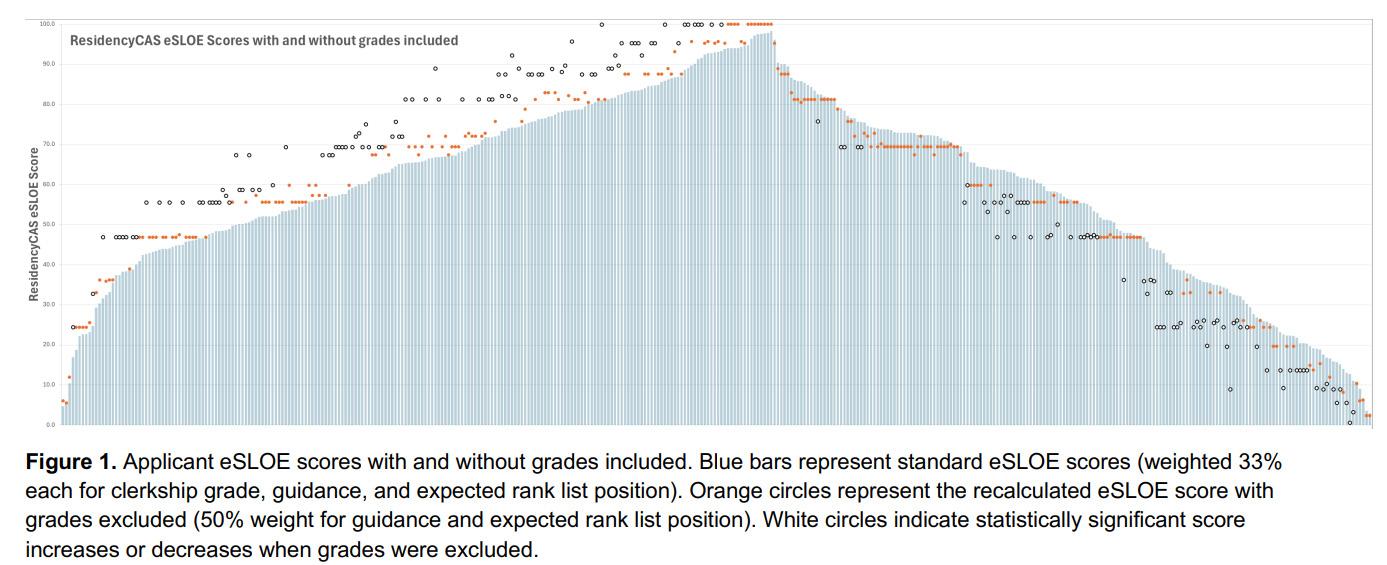
Results: 917 SLOEs from 454 applicants were analyzed. There was a statistically significant difference in mean eSLOE score between scoring methods (F(2,1359)=7.93, p<0.001). Post-hoc analysis found that the mean eSLOE score was significantly different between our internal score and the standard RCAS score including grades (p<0.001, CI=2.069.37) and the RCAS score with grades excluded (p=0.004, CI=1.31-8.62). Grades were unavailable for 63 applicants (13.9%). The RCAS eSLOE score with grades excluded resulted in increased scores for 214 (54.7%) applicants by an average of 6.5 (SD=4.6, p<0.001) and in decreased scores for 177 applicants (45.3%) by an average of 5.8 (SD=4.4, p<0.001).
Conclusion: The RCAS eSLOE score is calculated differently if the applicant received a pass/fail clerkship grade. Given the absence of standardization in EM clerkship grading, we question the utility of including the clerkship grade when calculating eSLOE scores due to added statistical variability which limits comparisons between applicants.






Brian Walsh, Fred Fiesseler
Background: In-service training examinations (ITE) are used annually to gauge resident progress, but the predictive value of changes in ITE performance for successfully passing the ABEM Qualifying Board Exam remains under-explored. We sought to determine whether year-to-year ITE percentile changes / improvements (deltaITE) forecast first-pass success on specialty written boards.
Methods: Retrospective cohort of all residency graduates (2015–2024). ITE percentiles were recorded in PGY-1, PGY2, and PGY-3. deltaITE1-2 and deltaITE2-3 were computed as percentile point gains. Primary outcome was passing the ABEM Qualifying Board Exam on the first attempt as reported by the residents to the program director. Logistic regression modeled odds of first attempt pass success by deltaITE thresholds, adjusted for initial ITE percentile. ROC analysis evaluated deltaITE-based prediction. We further analyzed a subgroup of at-risk residents who had a low baseline ITE defined as less than the 30th percentile.
Results: 86 total residents were included in the analysis. Mean deltaITE1-2 was +19.4 (SD16.1); deltaITE2-3 was +12.8 (SD10.3). Each +10-point gain in deltaITE1-2 raised odds of firstpass success by 2.9-fold (OR 2.91, 95% CI: 1.8–4.7, p<0.001). DeltaITE2-3 of +15 points independently predicted success (OR 5.6, 95% CI: 2.3–13.8, p<0.001). Combined deltaITE model AUC = 0.91 (95% CI: 0.85–0.97). In the low-baseline subgroup (n=28), sustained deltaITE > +10/year yielded 93% first-pass rate versus 43% if deltaITE <= 0 (p<0.001). DeltaITE alone explained 41% of variance in first-pass success.
Conclusion: Year-to-year ITE improvement is a robust, independent predictor of first-attempt board success, outperforming static scores. Monitoring deltaITE enables early identification of at-risk residents, supporting targeted intervention to maximize first-pass rates.
Neelou Weeker, Nickolas Srica, Ryan Coughlin, Robert Sobehart, Kaila Pomeranz, Michael Menowsky, Tara Cassidy-Smith
Background: The American Board of Emergency Medicine (ABEM) Qualifying Examination (QE) is a key step in physician certification. In 2024, the first-time pass rate dropped to 82%, the lowest in recent history, raising concerns about resident
preparedness and program effectiveness.
Objectives: Identify program-level factors associated with QE performance.
Explore national trends in residency program approaches to exam preparedness.
Methods: This cross-sectional, anonymous survey study targeted U.S. EM residency program directors (PDs). A national working group of EM educators designed the survey, which was distributed via Qualtrics to 280 PDs. Descriptive statistics and chi-square goodness-of-fit tests were used to evaluate response distributions, with p < 0.05 considered significant. Qualitative data were analyzed using inductive coding and descriptive analysis.
Results: Out of 280 surveys sent, we received a total of 128 (45.7%) responses. Several variables were collected to assess predictors of ABEM QE failure. The ITE percentile was the strongest individual predictor of ABEM QE failure, with an H-statistic of 35.36 (p < 0.000004). Geographic region was associated with a higher incidence of failures (H = 11.23, p = 0.01). Programs offering fewer structured educational hours were also associated with higher QE failure rates (H = 14.85, p = 0.021). No statistically significant differences in QE failures were observed based on program type (academic vs. community), program length, or reported trends in ITE performance. The qualitative analysis of open-ended responses revealed three major themes: resident study habits, decreased EM competitiveness, and the rigor of undergraduate medical education.
Conclusions: The recent decline in ABEM QE pass rates may reflect broader systemic pressures within EM training rather than a transient testing anomaly. This study highlights the need for ongoing programmatic reflection and national dialogue.
Abagayle Bierowski, Brittany Tian, Sulabh Neupane, Fernando Nombera-Bueno, Erin Hoag, Casey Morrone, Kathleen Cruz, Jiten Patel, Kelly Kehm, Peter Tomasell
Background: Diversity, equity, and inclusion (DEI) are increasingly recognized as essential components of resident education, workforce development, and institutional climate in graduate medical education. Because residency websites are often the first source of information about program culture, clear communication of program values is important; however, the extent to which EM programs include DEI content (and what that content entails) is unknown.
Objective: To evaluate the prevalence of DEI statements on EM residency program websites and examine whether program characteristics were associated with the presence of DEI content. A secondary aim was to characterize common themes within publicly posted DEI statements.
Methods: A cross-sectional analysis of all available
ACGME accredited emergency medicine (EM) residency program websites (N=283) was conducted in 2025 to assess the presence and content of DEI statements. Chi square tests assessed whether DEI information was associated with program size, age, length, and region; thematic analysis identified recurrent content domains within DEI statements.
Results: Of the included 283 programs, most (n=213, 75.3%) did not include a DEI statement.
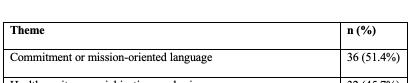
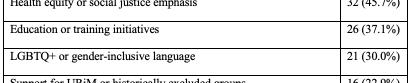
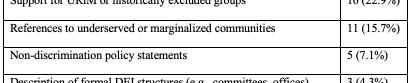
Four-year programs were more likely than 3-year programs to include a DEI statement (36.7% vs 22.2%; χ²(1,N=283)=4.58, p=0.03). Larger (≥11 annual positions) and older (est. 2006 or earlier) programs demonstrated higher inclusion of DEI language compared with smaller [31.9% vs 17.6%; χ²(1,n=283)=7.78, p=0.005] and newer [31.6% vs 18.4%; χ²(1,N=283)=6.66, p=0.01] programs. Regional differences were also observed, with programs in the Northeast (33.3%) and West (30.8%) more frequently including DEI statements than those in the South (13.5%) [χ²(3,N=283)=10.54, p=0.01]. Among those with DEI statements (n=70, 24.7%), thematic analysis identified recurrent domains (Table 1).
Conclusions: DEI content on EM residency websites is uncommon and varies significantly by program characteristics, highlighting gaps in transparency and opportunities for programs to better communicate their DEI priorities to applicants seeking programs aligned with their values.

“Best
of the Best” Innovation Abstracts 1 Realistic Dual-Setting Mass Casualty Incident Simulation to Enhance Triage and Definitive Care Skills
Scott Russo, Molly Basilio, Cosimo Laterza, Michael Berkenbush, Michael Brown
Background: Mass casualty incidents (MCI) require rapid triage, coordinated teamwork, and high-stakes decisionmaking that traditional instruction cannot replicate. Although
SALT (Sort, Assess, Lifesaving Interventions, Treatment/ Transport) triage provides a structured approach, learners rarely practice it in realistic, time-pressured environments. To address this need, we developed a dual-setting field and hospital simulation integrating triage, procedures, resource allocation, and team leadership.
Objectives: Our objective is to improve SALT triage accuracy, strengthen teamwork and communication, enhance management of life-threatening injuries in a surge environment, and develop effective resource-allocation strategies.
Curricular Design: Learners completed a one-hour session on SALT and resource management before participating in a dual-environment MCI simulation. Teams rotated between field and treatment-tent roles. The field station emphasized trauma procedures including tourniquet use, wound packing, airway management, and needle decompression. The treatment tent required coordination and decision-making under resource constraints; learners performed available procedures— cricothyrotomy, intubation, chest tube placement, and CPR—or verbalized steps when models were unavailable. Faculty used structured case sheets to maintain scenario pace and cognitive load, while paintball between rounds added fatigue and enabled equipment reset. Faculty evaluated triage accuracy, treatment appropriateness, and patient outcomes.
Impact/Effectiveness: Pre- and post-simulation surveys (1–5 scale) demonstrated significant confidence gains. SALT triage confidence improved from 1.90 to 4.14 (p < 0.001; 95% CI 1.6–2.9). Confidence in traumatic airway management increased from 2.55 to 3.85 (p < 0.001; 95% CI 0.9–1.7), and managing multiple trauma patients improved from 2.35 to 3.76 (p < 0.001; 95% CI 0.9–1.92). Participants reported that procedures (92.9%) and paintball-induced stress (85.7%) enhanced realism, and 71.4% felt comfortable managing an MCI afterward. Future iterations should incorporate objective performance metrics to further quantify skill acquisition.
Sara Lin, Laura Hopson, Karan Desai, David Somand, Sarah Tehranisa, Florian Schmitzberger, Alexander Janke
Introduction/Background: Emergency providers (EPs) shape the initial trajectory of patients but often lack feedback on outcomes after ED disposition, limiting learning and quality improvement. Manual chart review and peer feedback are time-intensive or infrequent, often after unusual or poor outcomes. Artificial intelligence tools, particularly large language models (LLMs), offer promising ways to enable reflective learning from clinical cases.
Educational Objectives: We developed a feedback pipeline for EPs to flag cases for later follow-up on clinical
course, enabling reflection and learning. This process, based on self-directed learning theory, allows EPs to submit specific questions for follow-up, receiving concise summaries via e-mail at chosen intervals.
Curricular Design: Clinicians request feedback by clicking a “Tell Me What Happens Next” button in the medical record, linking to a secure Qualtrics form to input case-specific queries and select follow-up intervals (three days, one week, or two weeks). Summaries are generated by expert clinician reviewers; concurrently, we piloted our institution’s HIPAA-compliant LLM toolkit to assess AIgenerated summary accuracy and scalability.
Impact/Effectiveness: Over 45 days, we received 103 feedback requests (average 2.3 requests per day) from 40 users: residents (24, 60%), attendings (12, 30%), and physician assistants (4, 10%). Most summaries were requested at two weeks (55, 53.4%). In 46 (44.7%) of cases, clinicians included a free-text question (e.g., “What was the final diagnosis from neurology?”). A sample of 19 initial LLM-generated summaries showed high accuracy on initial expert review. Our pilot demonstrates that userdirected feedback with patient summaries and custom inquiries on downstream events is feasible. This model has the potential to foster learning and case-based reflection for trainees and faculty. In the future, we aim to validate and automate feedback with LLMs and scale across departments and clinical roles while looking at impact on learners.
3The Ramer - A Formal Resident as a Teacher Rotation as an Introduction to Medical Education
Timothy Khowong, Richa Gupta, Thomas Sanchez, Saumil Parikh, Anita Lui, Brian Smith, Sheetal Sheth
Introduction: Emergency Medicine (EM) residents are increasingly expected to contribute to medical education, produce scholarship, and provide high-quality learner assessment; thus, there is a need for structured training in educational theory, curriculum design, and teaching skills. To address these gaps, we developed the Research and Medical Education Resident (RAMER) Rotation, a two-week curriculum designed to develop foundational educator skills while simultaneously improving assessment quality within the clerkship.
Educational Objectives: By the end of the rotation, residents will be able to:
• Apply principles of curriculum design and educational theory to teaching activities
• Provide effective, structured feedback to medical students using a Standard Direct Observational Assessment Tool (SDOT)
• Critically appraise and translate research for educational dissemination
• Develop and deliver a high-quality didactic session
Curricular Design: RAMER begins with a focused day1 workshop introducing adult learning theory, curriculum development, research fundamentals, and feedback strategies. Residents are then integrated into the student clerkship by directly observing medical students on shift and completing detailed SDOTs. Residents author a blog post summarizing and contextualizing a research article applicable to EM. They also design and deliver a didactic session for medical students and two morning reports, building a personal teaching portfolio. Resources include standardized SDOT forms, faculty mentorship, and structured templates for blog and lecture development.
Impact/Effectiveness: Since implementation, all participating residents have produced a blog post and a conference lecture, demonstrating achievement of core educator competencies. 22 residents completed the pre- and post-rotation surveys containing knowledge and attitude assessments. The average score rose from 64% to 73% (p<0.05). Mean Likertscale data was 4.9/5 for overall satisfaction, 4.6/5 for creation of needs assessments and learning objectives, and 4.3/5 for appreciation of research. Resident written feedback highlights improved confidence in teaching, assessment, and scholarship. Future iterations will include longitudinal follow-up and expand research mentorship opportunities.
Kaila Pomeranz, Omar Shaban
Background: 100+ medical students rotate through our twoweek core EM rotation annually. Ethical issues commonly arise in the ED; however, students often lack clinical context to apply pre-clinical ethics training. To address this gap, we implemented a structured ethics session with pre-reading, a written reflection, and discussion components, aiming to identify common themes encountered during core clinical rotations.
Objectives: To reinforce ethical principles through clinical application and provide an open forum for discussion.
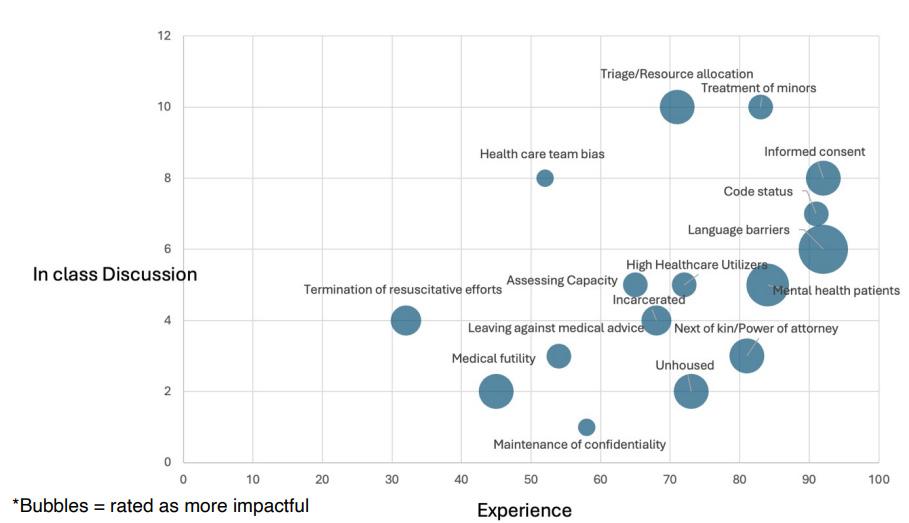
Curricular design: Second- and third-year students participate in a required in-person ethics session midway through their EM rotation. Students independently review assigned articles prior to the session. During the session, students participate in a discussion of real cases encountered in the ED or prior rotations. Students complete a survey identifying whether they have encountered common ethical scenarios and select the scenario most impactful to them. Each student submits a written ethical case reflection.
Impact/Effectiveness: Students demonstrated strong engagement during discussions. Most encountered (image 1) by students were scenarios involving informed consent, language barriers, code status, mental health patients, and treatment of minors. Treatment of minors and triage/resource allocation were brought up most frequently in discussion. Case reflections and
survey responses provided insight into frequently encountered ethical challenges, allowing identification of priority topics for future instruction. Post rotation evaluations note satisfaction with the ethics session with students noting “The ethics assigned reading helped bring to the foreground ethical concerns and considerations that are important for the care of a diverse population. It drove me to contemplate the various aspects that affect the care a patient receives.”
Paige Casil, Christine Raps, Patrick Hughes, Brian Merritt, Rowan Kelner, Allison Beaulieu
Background: The American Board of Emergency Medicine (ABEM) will launch a revised Certifying Exam in 2026 incorporating Clinical Care Cases and OSCE-style encounters to evaluate communication, clinical decisionmaking, procedural skills, and prioritization. These competencies are underrepresented in traditional oral board preparation and few resources exist beyond ABEM’s website to support resident readiness.
Objective: To develop and implement a simulation-based curriculum aligned with the new ABEM Certifying Exam and evaluate its impact on resident preparedness, confidence, and baseline competency.
Curricular Design: This simulation-based curriculum was implemented at two three-year emergency medicine (EM) residency programs for PGY-1–3 residents. Participants completed nine encounters across five case types: clinical decision making, prioritization, difficult conversations, ultrasound, and reassessment. Each encounter lasted 20 minutes with immediate debriefing; the full circuit spanned four hours followed by a 30-minute group debrief. Boardcertified EM attendings and fellows served as facilitators using standardized case materials and scoring tools. Performance was scored on a 1–8 scale. Pre/post-surveys assessed confidence, familiarity, and perceived readiness.
Impact/Effectiveness: Forty-six residents (14 PGY1, 15 PGY-2, 17 PGY-3) participated. Less than 70% had reviewed ABEM materials prior and 53% were self-reportedly unfamiliar with the OSCE/clinical care format. After participation, 89% (41/46) strongly agreed the experience enhanced their training and 98% (45/46) recommended continued implementation. Confidence and familiarity with exam structure improved significantly. Baseline performance was high, with 85% (40/46) achieving a passing score. Mean score improved by PGY level (PGY-1=5.7, PGY-2=6.3, PGY-3=6.8). This reproducible, simulation-based curriculum aligns resident medical education with ABEM’s evolving certification framework and supports milestone-based competencies while improving resident preparedness for the new exam.
Megan Michaels, Rebecca Jeanmonod, Donald Jeanmonod, Tuan Vo, Kyrie Cassin, Kelsey Fuchs
Background: Emergency physicians (EPs) consistently have the highest rates of burnout among medical specialties, largely due to the high-stress environment of the ED. Physical activity has been shown to decrease stress in the general population. This study evaluates the types of physical activity EPs engage in across varying lengths of practice and the relationship between compassion satisfaction (CS) and burnout(BO).
Objective: To examine trends in physical activity over practice length and determine whether exercise correlates with CS and BO.
Design: Cross-sectional anonymous survey using the validated Professional Quality of Life tool.
Time frame: Surveys collected over a 3-month period via email and closed EM social media groups.
Participants: Practicing EPs.
Analysis: Data were analyzed for patterns in physical activity across training levels, and Mann-Whitney tests were performed with p < 0.05 to assess correlations with CS and BO.
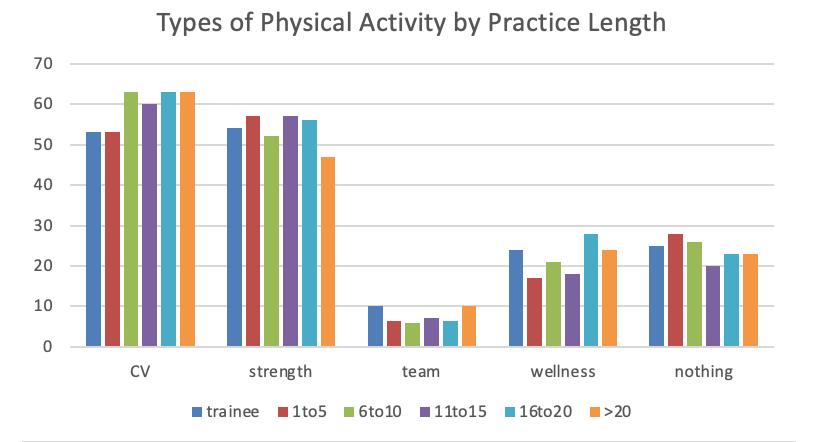
Results: A total of 1,170 EPs completed the survey: 658 female (56%), 503 male (43%), and 9 identifying as other (<1%). Trainees accounted for 166 (14%); post-graduate 1–5 years, 192 (16%); 6–10 years, 240 (21%); 11–15 years, 240 (21%); 16–20 years, 144 (12%); and >20 years, 188 (16%). About 25% of respondents performed no physical activity (range 20–28% across practice lengths). Cardiovascular training ranged from 53–63%, strength training 47–57%, team sports 5.8–10%, and wellness activities 17–24%. A U-shaped trend was seen in team sports participation, with trainees and EPs >20 years participating the most. Those engaging in
wellness activities had higher CS scores than those who did not (35.2 vs 34, p = 0.029). Physical activity alone did not improve CS (p = 0.38). Participation in any physical activity was associated with improved BO (30.2 vs 28.4, p = 0.003).
Conclusion: Most EPs maintain fitness throughout their careers, with cardiovascular and strength training being most common. Exercise correlates with lower burnout but not higher CS. Participation in mindfulness or wellness activities correlates with improved CS and BO.
Aubrey Kelly, Rosemarie Diaz
Background: Despite the benefits of diversifying the medical workforce to reflect the patient population, there is a severe national shortage of Underrepresented physicians who can provide this culturally competent and language-inclusive care. Although we know that underrepresented in medicine (URiM) students and low-income students have higher rates of attrition from medical school, there has not been a qualitative study to date that directly inquires from the students themselves about what stressors contributed to their departure from medical school.
Objectives: This study’s primary aim was to identify factors which placed students at increased risk for attrition from medical school. We hypothesized that individuals who matriculate into medical school but leave before graduating with their medical degree have additional stressors besides academic performance that contribute to their attrition.
Methods: Using constructivist approach to grounded theory, we recruited former medical students who matriculated but did not graduate from US medical schools and conducted structured anonymous qualitative interviews to identify key concepts involved in medical student attrition.
Results: We recruited 11 participants through 1 hour long virtual interviews. 10 participants were from DO programs while 1 was from an MD program. 5 identified as a URiM. All met specific inclusion criteria. We identified 5 distinct themes that former students identified as factors that led to attrition: academic challenges, financial stressors, personal wellness,
interpersonal dynamics, and institutional support.
Conclusions: Five core themes emerged describing the underlying factors associated with medical school attrition, whether by dismissal or withdrawal. These insights offer an important window into the experiences of the groups studied and show that challenges extended beyond academics alone.
Kevin McGurk, Christopher Torkilsen, McKenna Knych, Thaddeus Schmitt, Alisa Hayes
Background: Emergency medicine (EM) became a mandatory clerkship at our institution in January 2025. To accommodate a large increase in student volumes, clinical shifts were expanded to include affiliated community and lower volume neighborhood hospitals in addition to our academic medical center. Students rotate across multiple sites but the impact of practice setting on perceived educational value is unclear.
Objectives: To compare the educational effectiveness of EM shifts across academic, community, and neighborhood hospitals
Methods: After each shift, students received an anonymous survey rating whether the shift was beneficial to their education (Likert scale: 1=strongly disagree to 5=strongly agree). Responses were grouped by hospital type and compared using the Kruskal–Wallis H test.
Results: From January 1 to November 7, 2025, a total of 243 evaluations were completed: 119 academic (mean 4.83, SD 0.54), 42 community (mean 4.76, SD 0.62), and 82 neighborhood (mean 4.80, SD 0.71). There was no significant difference in ratings by site (p=0.77).
Conclusions: Despite clinical differences in practice environments, students rated the educational value of EM shifts similarly across all hospital settings. These findings support the use of diverse clinical sites to meet clerkship needs without compromising educational quality.
Eric Blazar, Andy Little, Brian Milman, Lauren Lamparter
Background/Objective: Advanced practice practitioners (APPs) are increasingly integrated into emergency medicine (EM) clinical training environments, shaping both patient care delivery and resident education. As concerns regarding APP scope of practice and impact on resident education have grown, the EM Match Taskforce sought to better understand residents’ firsthand experiences with APPs. Methods: Using data from the 2025 post–In-Training Examination (ITE) survey, we evaluated how residents across PGY levels perceive the influence of APPs on their education.
Results: Among 7,747 respondents, most residents reported either neutral or positive educational effects: 35.6% were not impacted, 30.6% somewhat positively impacted, and 7.3% very positively impacted. In contrast, 23.7% reported a somewhat negative impact and 2.7% very negative impact. Perceived negative impact increased modestly by PGY level, as illustrated in our analysis.
APPs were most frequently encountered on “out rotations” of anesthesia (47.0%), ICU (49.5%), and trauma (42.7%), but most frequently encountered during ED rotations (60.7%). Residents identified specific domains affected by the presence of APPs. Patient load (71.5% of respondents) was the most commonly identified arena of APP impact followed by performing procedures (48.7% of respondents). Fewer residents reported effects on bedside teaching (25.7%), patient rounding (22.1%), or supervision by APPs (21.0%).
Conclusions: These findings suggest that while concerns about APP involvement are prominent among educators and students considering EM, residents themselves more commonly report neutral or positive educational interactions with APPs. However, meaningful proportions identify effects on procedural opportunities and patient volume, underscoring areas where clearer role delineation and intentional educational structure may optimize training.
Lauren McCafferty, Danielle Langan, Zachary Repanshek, Simi Jandu, Abbas Husain
Background: Artificial intelligence (AI) use in medical education is rapidly expanding, with large language models increasingly applied to content creation, curriculum design, administrative and evaluative tasks, such as structuring feedback and composing Standardized Letters of Evaluation (SLOEs) and recommendation letters. While AI may streamline workflows, concerns remain, and little is known about its use in EM residency recruitment.
Objectives: To characterize AI use in EM residency recruitment. We hypothesized that use is increasing but limited by knowledge gaps, ethical concerns, and uncertainty about impact.
Methods: A national cross-sectional survey was distributed via the CORD listserv to residency leadership, clerkship directors, and faculty involved in recruitment. The REDCap survey included multiple-choice and open-ended questions on demographics, AI familiarity, general and recruitment-specific AI use, perceived benefits and concerns, and barriers. Responses were anonymized and analyzed using descriptive statistics and thematic analysis.
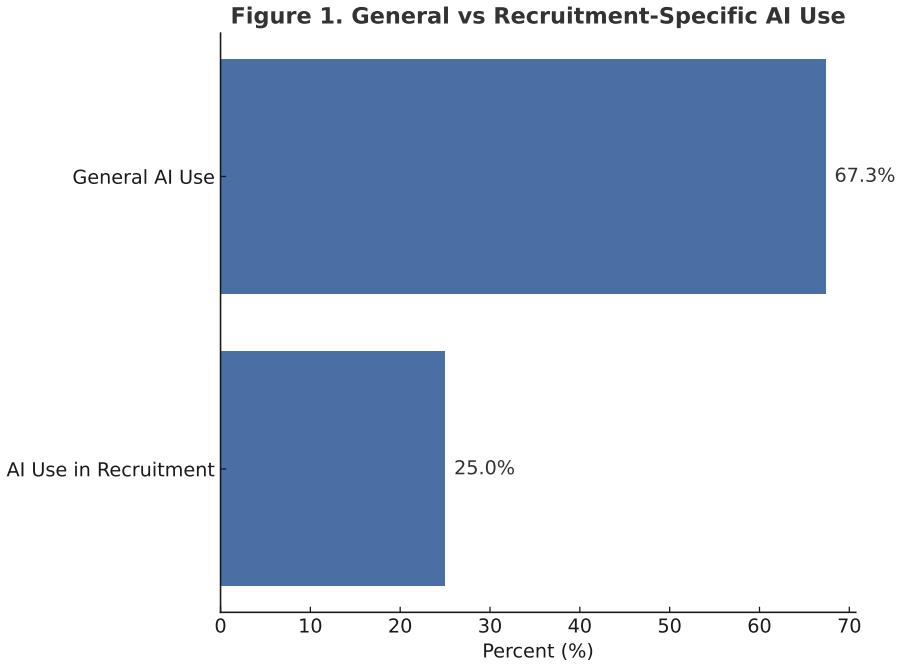
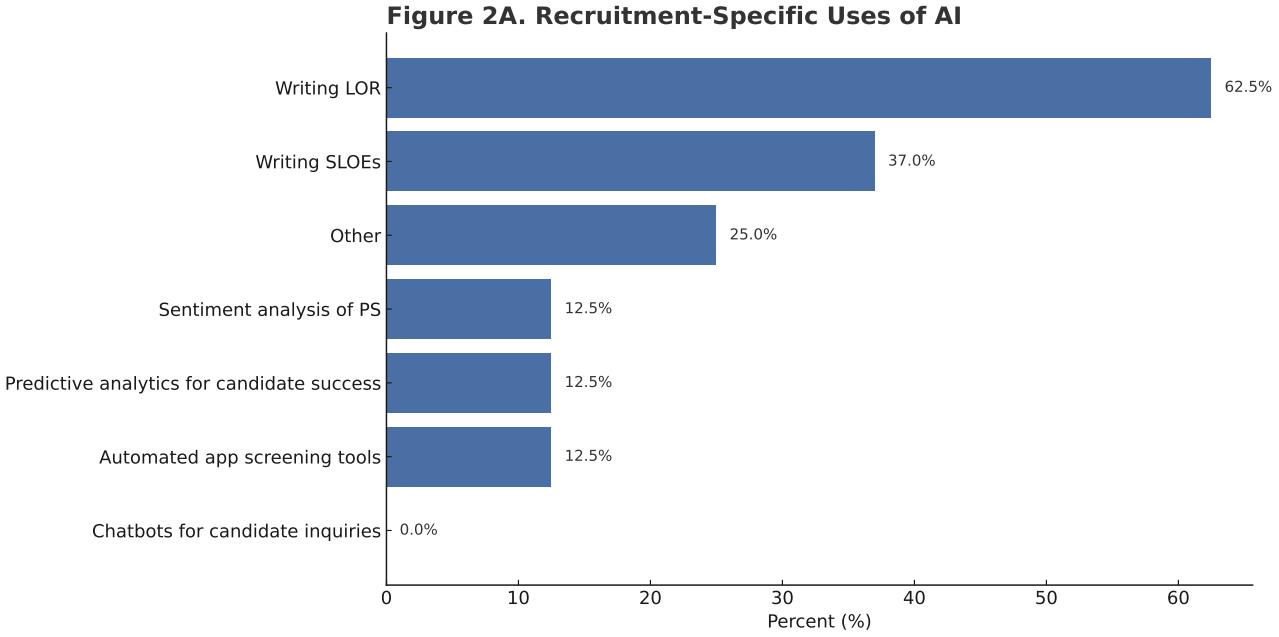
Results: Forty-five respondents from diverse programs completed the survey. AI familiarity varied; most used AI for content creation, followed by administrative and research support. Twenty-five percent reported use in recruitment, primarily for writing letters of recommendation and SLOEs. Few used automated screening, predictive analytics, or sentiment analysis. Time savings was the most cited benefit, with about half noting improved objectivity and communication with applicants. Lack of familiarity or understanding was the most common challenge and barrier, followed by concerns about data security and privacy, issues of fairness, bias, and transparency, reluctance to deviate from existing processes,
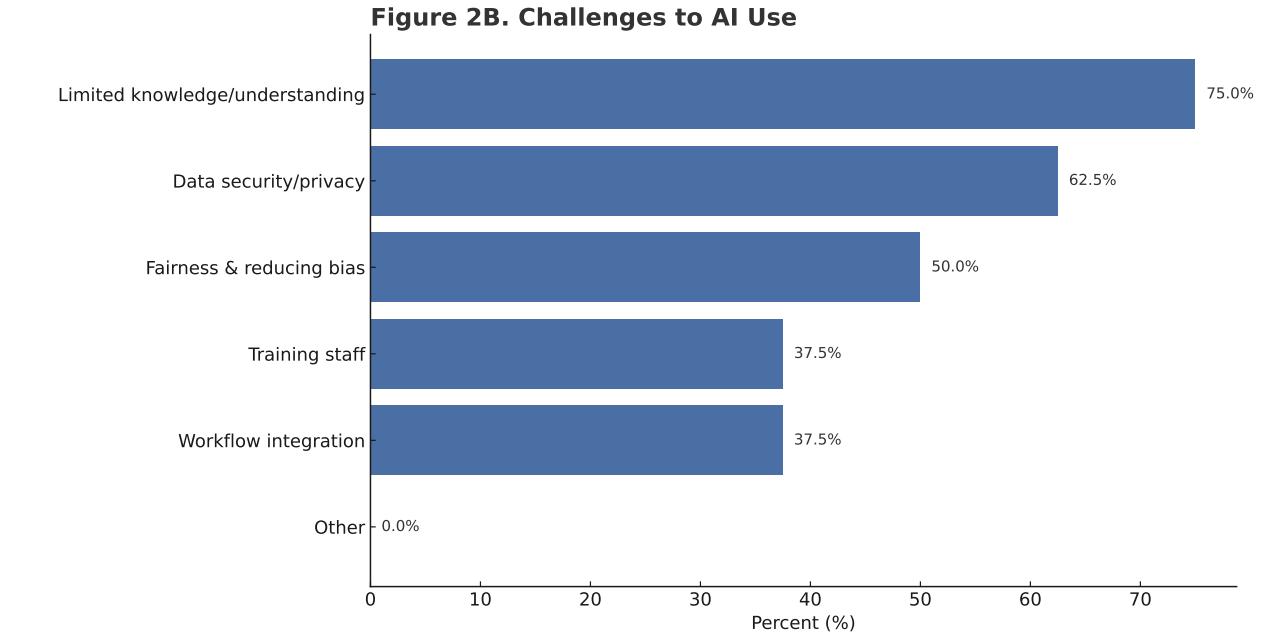
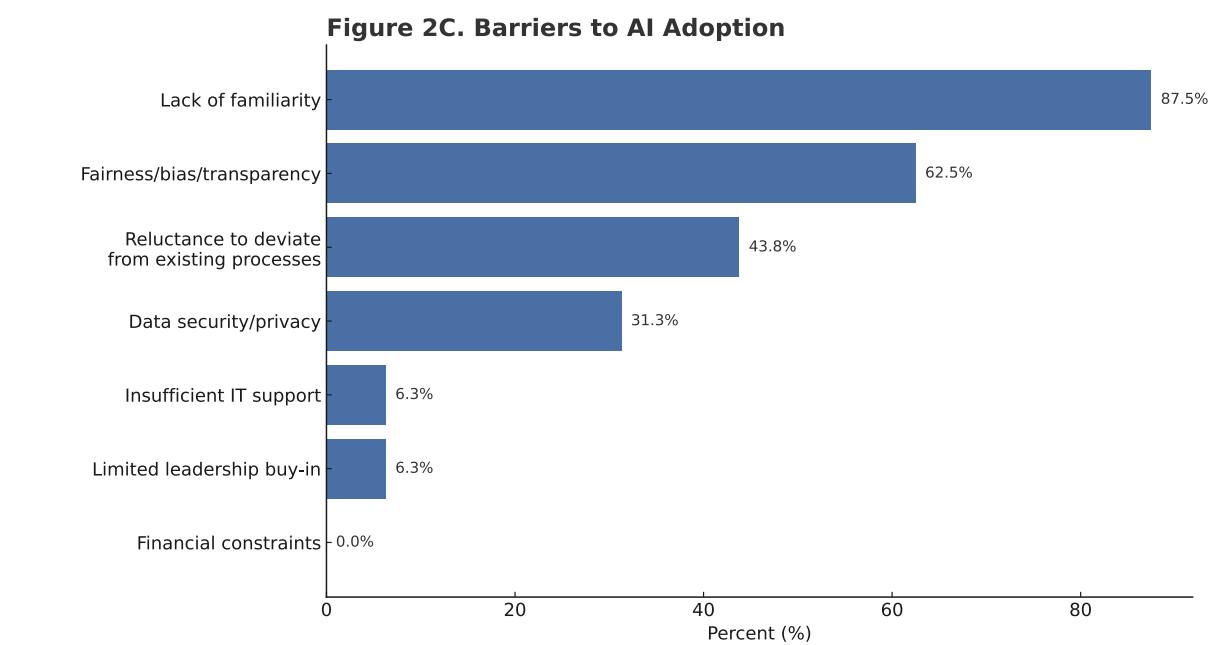
limited staff training, and workflow integration difficulties.
Conclusions: This survey provides an early assessment of AI use in EM residency recruitment, outlining common practices, benefits, concerns, and barriers to inform responsible and equitable integration into recruitment processes. Our findings highlight opportunities for clearer guidance, faculty development, and future research on practices and outcomes of AI-assisted recruitment. These insights can help shape future recommendations as AI tools evolve.
Natalie Oberhauser-Lim, Timothy Young, Sommer Aldana, Heather Kuntz
Background: Pens and pencils may be an underrecognized source of penetrating injury in the pediatric population. Literature on such injuries consists mostly of case reports of extreme presentations that may not represent the range of injuries that occur.
Objectives: We sought to identify cases of penetrating pen and pencil injuries in pediatric patients. We expected to find the majority of patients were discharged from the emergency department without need for admission or operative intervention.
Methods: This was a retrospective chart review of patients ages 0-18 years who presented to our university tertiary referral center between 2013-2024. We identified cases for consideration using international classification of disease codes for penetrating injury or injury caused by contact with sharp objects. We excluded superficial injuries and injuries not caused by writing utensils. We reviewed the included cases to identify age, gender, intentionality, location of the injury, and types of treatment required.
Results: We identified 2159 charts meeting criteria for review and found 28 cases of penetrating injuries caused by writing utensils. The subjects’ ages ranged from 5 months to 17 years at the time of injury. The median age was 8.5 years. Females accounted for 57% of cases (95%CI 39-74). Accidental injuries accounted for 75% of cases (95%CI 56-88). The majority of cases (82%, 95%CI 64-93) were managed in the emergency department and discharged. Patients were treated with antibiotics in 61% of cases (95%CI 42-76). Forty-three percent of cases (95%CI 26-61) had surgical consults, and only 18% of cases (95%CI 7-36) required management in the operating room.
Conclusions: Though the literature regarding penetrating pen and pencil injuries focuses on extreme cases
needing operative management, our cohort of patients were primarily managed in the emergency department without the need for procedural intervention. A limitation of our study is that it was a single center study.
Emily Steelquist, Max Griffith, Aarti Jain, Joshua Jauregui, Lalena Yarris, Jaime Jordan
Background: Emergency Medicine (EM) residents experience the highest rate of burnout of any specialty. Although there have been many proposed interventions, burnout remains highly prevalent.
Objectives: To explore the experiences of EM residents in recognizing, approaching, and recovering from burnout in order to inform future efforts to mitigate the burnout epidemic in trainees.
Methods: This qualitative study interviewed PGY 2-4 residents at four American EM residencies. We applied a grounded theory approach and a constructivist/ interpretivist paradigm to explore participants’ experiences through interactive dialogue and co-created interpretation. Participants were invited to complete an online survey to collect demographics, information about their burnout experiences, and to schedule a virtual 60-minute semistructured interview. Fifteen interviews were recorded, transcribed, coded, and analyzed.
Results: EM residents experience burnout susceptibility versus recovery on three spectra: coping by social connection versus withdrawal, perceiving burnout causes as societal versus individual, and seeing solutions to burnout as individual versus societal. Residents had a tendency to withdraw from others when experiencing burnout, yet believe that intentional connection can alleviate their symptoms. Viewing burnout primarily as the result of societal/organizational causes was protective. Solutions to burnout that felt most empowering to residents were individual. Perceiving burnout as the result of individual choices or seeing the solutions to burnout as requiring societal change worsened trainee distress.
Conclusions: Resilience to burnout requires residents to connect when they feel like withdrawing, and to take individual initiative when facing systemic obstacles. The difficulty of holding these intersecting views may explain the persistence of burnout, and may prompt future studies that explore how residents who demonstrate these behaviors do so in times of stress.
Kelsey Newbold
Background: Medical education must evolve to address the needs of the growing LGBTQ population which is affected by social determinants of health. However, LGBTQ-focused training is limited. Physicians report feeling underprepared to treat LGBTQ patients, contributing to poorer health outcomes. Deficits in inclusive care may begin early in medical school training, yet most research focuses on residents or attendings, with limited data on medical students over the last decade.
Objective: We assessed if gaps in LGBTQ-inclusive healthcare education begins in medical school, hypothesizing lower student preparedness for caring for LGBTQ versus non-LGBTQ patients. We also aimed to identify specific training needs and barriers to curricular integration to inform future curriculum development.
Methods: A single-institution, quantitative, cross-sectional survey was administered to 998 first- through fourth-year medical students at the Arizona College of Osteopathic Medicine in 2023. An anonymous online survey assessed preparedness, curricular exposure, and barriers. We received 126 responses (12.6% rate). Data was analyzed using Chi-square and McNemar tests (p<0.05).
Results: Students reported significantly lower comfort performing physical exams (p<0.001) and treating nonspecific complaints such as cough/back pain for LGBTQ patients compared to non-LGBTQ patients (p<0.001). Most students (91.2%) estimated receiving less than 5 hours of annual LGBTQ content and 72% felt more hours were necessary. Barriers identified included limited faculty expertise, time constraints, and perceived low institutional prioritization.
Conclusion: LGBTQ-related educational gaps appear early in medical training, with students reporting lower comfort and inadequate curricular exposure. Despite limitations of sample size and response bias, findings support expanding LGBTQinclusive curricula to improve preparedness and promote equitable care. This work is currently being expanded to include additional medical schools for broader assessment.
9 USMLE Step 2 Clinical Knowledge as a Predictor of Emergency Medicine InTraining Examination Performance: A Single-Institution, Ten-Year Retrospective Cohort Study
Donald
Byars, Anjeza Cipi, Megan Duggins, Jondavid Landon, Mitchell Vallone, Shai Konnar Ansell, Alexander Dornstauder
Background: With the transition of USMLE Step 1 to pass/fail, Step 2 has emerged as the primary standardized
metric in residency selection. Its relationship to subsequent performance during training, particularly on the American Board of Emergency Medicine (ABEM) In-Training Examination (ITE), remains incompletely defined.
Objective: To evaluate the predictive relationship between Step 2 scores and ITE performance across postgraduate years (PGY) 1–3 in emergency medicine residents.
Methods: This retrospective cohort study included 76 residents at a single institution who graduated between 2013 and 2023. Step 2 scores were correlated with ITE performance across PGY1–3 using Pearson correlations. Linear mixedeffects models with resident ID as a random effect assessed Step 2, PGY year, and their interaction. Simple slope analyses estimated the effect of Step 2 within each PGY year.
Results: Step 2 scores were moderately correlated with ITE scores in PGY1 (r = 0.40, p = 0.0003) and PGY2 (r = 0.43, p < 0.0001), but not PGY3 (r = 0.06, p = 0.59). Mixed-effects modeling demonstrated a significant interaction between Step 2 and PGY year (p = 0.0172), with predictive value concentrated in the earlier years of training. Simple slopes confirmed that each 10-point increase in Step 2 predicted a ~2-point increase in ITE score in PGY1 and PGY2, but no effect in PGY3.
Conclusions: Step 2 scores predict ITE performance during the early years of emergency medicine residency but do not forecast long-term success by PGY3. These findings support the use of Step 2 as a tool to identify residents who may require early academic support, while emphasizing the need for complementary assessments to guide progression later in training.
Danielle Langan, Shorok Hassan, Amar Bukvic, William Caputo, Abbas Husain, Lindsay Shogan
Background: Residency program leaders shape the academic pipeline in emergency medicine (EM). We assessed current demographics and postgraduate training among U.S. EM residency leadership.
Objectives: To update the national prevalence of postgraduate fellowship training and secondary board certification among EM residency leadership, assess regional variation, and compare patterns by role. We hypothesize that medical education fellowship training has increased over the past decade while regional variation persists.
Methods: We conducted a national, cross-sectional survey of all Accreditation Council for Graduate Medical Education (ACGME)-accredited EM residency program leadership via an online, confidential questionnaire. Primary outcomes were the prevalence of any postgraduate fellowship training. Programs were grouped by National Resident Matching Program (NRMP) region.
Results: We received 103 program responses (35.9%). Any fellowship training was reported by 25.5% of Program Directors (PDs), 40.0% of Assistant Program Directors (APDs), and 42.8% of Associate Program Directors (Asst PDs). Any secondary board certification was reported by 8.8% of PDs, 5.0% of APDs, and 8.2% of Asst PDs (Figure 1). Medical education was the most common fellowship (n=54), followed by ultrasound (n=24), toxicology (n=16), simulation (n=15), pediatric EM (n=11), critical care (n=7), EMS (n=5), and administration (n=3). Western programs reported the highest proportions of leaders with either fellowship or secondary certification across roles. (Figure 2).
Conclusions: Postgraduate fellowship and secondary board certification remain uncommon overall among EM residency leaders, but fellowship completion is more prevalent among junior leaders. These data provide an updated, rolespecific snapshot to inform leadership development and workforce planning.

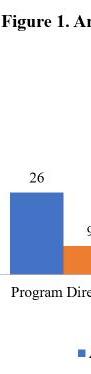
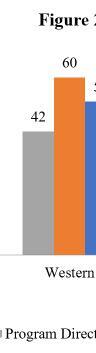
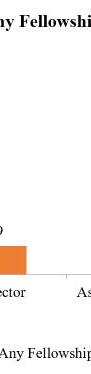
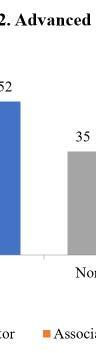
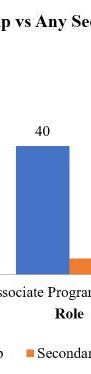
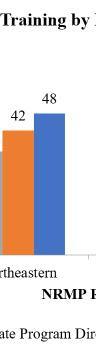
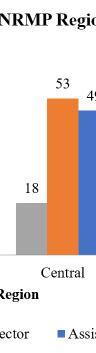
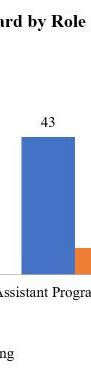
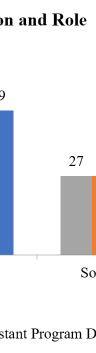
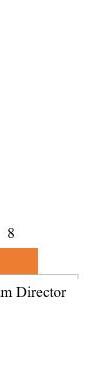
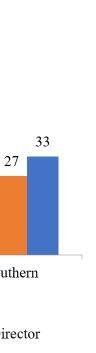
11 Impact of Educational Intervention on Question Bank Utilization and Emergency Medicine Residency In-Training Exam Scores
to become board-certified. Typical preparation for this exam includes question banks (Qbanks) and gauging and trending performance on annual In-training Exams (ITE).
Objective: We aimed to assess the impact of an educational intervention on Qbank utilization and ITE scores among EM residents. We hypothesized that the intervention would increase question bank utilization and ITE scores.
Methods: This was a retrospective observational cohort study performed at one urban EM residency program comparing residents’ question bank utilization and ITE scores at the end of academic years 2024 and 2025. We applied a multifaceted educational intervention in the 2025 academic
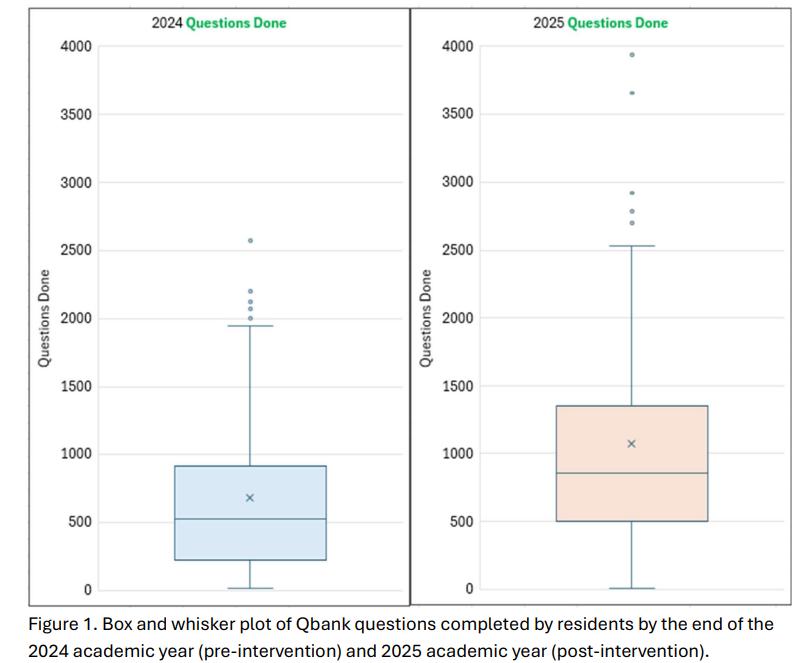
Background: EM residents must pass the American Board of Emergency Medicine (ABEM) Qualifying Exam
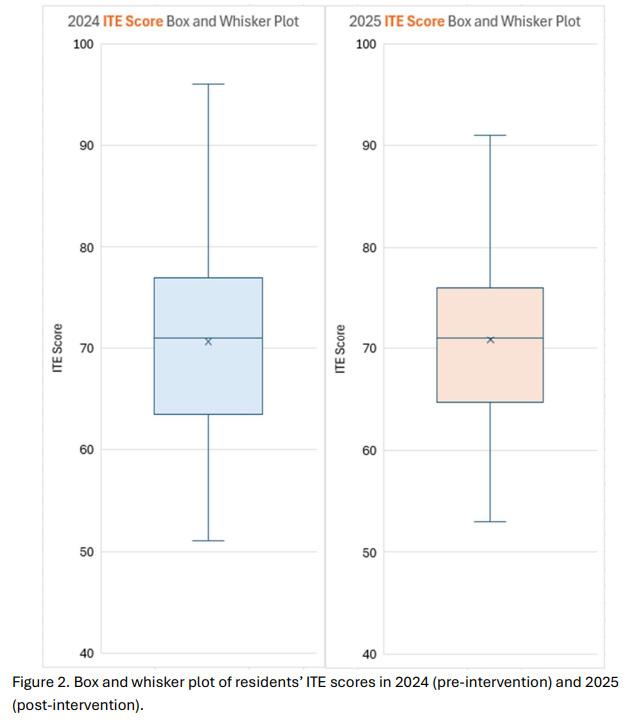
year that included regularly assigned Qbank questions, monthly ITE question review sessions during residency conference, a 4-hour gamified ITE review session one week prior to the ITE, and increased ITE score thresholds for moonlighting privileges. We measured the difference in mean Qbank questions completed and ITE scores before and after the intervention using two-sample t-tests.
Results: There were 89 residents in the pre-intervention group vs. 90 residents in the post-intervention group. The mean number of questions completed pre-intervention was 668 vs. 1072 post-intervention, which was statistically significant (p<0.0002). The mean ITE score pre-intervention was 70.6 compared to 70.8 post-intervention, which was not statistically significant.
Conclusions: Our intervention increased the amount of Qbank questions that residents performed but did not influence the average ITE score. These findings call into question the classical advice of maximizing the number of questions done in Qbanks to study. Future work should investigate how to best utilize these resources to improve scores.
Brittany Botticelli, Laura Welsh, Eric Shappell, Daniel Egan, Derek Monette, Carolyn Commissaris, Marcus Wooten, David Peak
Background: Timely chart completion remains a persistent challenge in EM residency programs, with implications for billing, quality metrics, medicolegal risk, and patient care. Traditional approaches using individual reminders, administrative follow-up, and semi-annual feedback are time-intensive and often ineffective.
Objective: To determine whether sharing individualized performance data and linking compliance with the ability to work extra shifts for compensation improves resident chart completion rates within 72 hours. We hypothesized that the intervention with financial implications would demonstrate improved performance compared to the pre-intervention period.
Methods: We conducted a retrospective cohort study at a single academic EM residency program with 60 residents. Beginning January 2024, residents received scheduled emails containing their individual 72-hour chart completion rate and the program goal. Those who did not complete 80% of charts within 72 hours were not able to moonlight. We compared mean completion rates across two pre-intervention periods (May-December 2023) and six post-intervention periods (January 2024-December 2025) using a two-sample t-test with equal variances. The primary outcome was the proportion of charts completed within 72 hours.
Results: We analyzed 471 resident-period observations
(119 pre-intervention, 352 post-intervention) (Figure 1). Mean 72-hour completion rate increased from 0.85 (SD 0.17) preintervention to 0.93 (SD 0.11) post-intervention (p<0.001). Improvement was sustained across all six post-intervention periods, with mean completion rates ranging from 0.91 to 0.95.
Conclusions: Sharing individual performance data linked to extra compensation eligibility significantly and sustainably improved resident chart completion rates. This approach is easily generalizable to programs with EMR access. Achieving further improvement may require targeted interventions. Limitations include single-site design and lack of a concurrent control group.









Andrew Golden, Emily Craft, Justine Li

Background: EDs serve as safety nets for patients vulnerable to social determinants of health (SDH). EM student rotations often integrate curricula on SDH. Despite these curricula, there are little data assessing trainees on their ability to identify and mitigate the impact of SDH.
Objectives: The purpose of this study is to assess the ability of fourth-year acting interns (AIs) to identify and mitigate SDH. We seek to better understand the relationship between this skill and other National Clinical Assessment Tool in EM (NCAT) domains. Finally, we aim to analyze how frequently faculty assess students in this area.
Methods: We adapted the NCAT to include an item about integrating SDH into plans. This is a single center retrospective study of modified NCATs completed by EM faculty for AIs from June 2023 to October 2024. Entrustment ratings on NCAT items, including the SDH item, were extracted by two reviewers and converted to ordinal numbers for analysis (1-4). Interrater reliability (IRR) was evaluated on 30 assessments. Correlation coefficients were calculated between the SDH item and other NCAT domains. Descriptive statistics are reported.
Results: A total of 329 assessments for 42 AIs completed by 58 faculty were included in the analysis. There was excellent IRR (kappa = 0.97). The SDH item was left blank in 82 NCATs (24.9%). Mean on the SDH item was 3.0 (SD 0.76). All NCAT items were positively correlated with the SDH item. Five items generated correlation coefficients greater than 0.7, including Plan Completeness (r=0.78), Plan Formulation (r=0.76), Recommendation of Interventions (r=0.75), Differential Diagnosis (r=0.74), and Attention to Abnormal Vital Signs (r=0.74).
Conclusions: Faculty may not be trained to assess AIs’ integration of SDH, as almost 25% of assessments left this item blank. When assessed, students are “Mostly Entrustable” at integrating SDH, and this skill is most positively correlated with other items of plan formulation and emergency management.
Andrew Golden, Adam McFarland, Emily Craft, Daniella Rao, Matthew Stull, Zeinab Shafie-Khorassani, Matthew Mullins, Steffen Simerlink, Yasmin Moftakhar
Background: EM residents perceive a lack of quality feedback on workplace-based assessments (WBAs). Faculty development to address this problem often summarizes best practices without providing targeted feedback to individual faculty.
Objectives: The purpose of this study is to examine the impact of individual feedback to faculty on the quality of their narrative assessments of residents. We hypothesize providing this targeted intervention will increase the quality of feedback while decreasing the quantity of resident WBAs. We hypothesized faculty would submit less WBAs of residents in an attempt to avoid receiving feedback about their narrative assessments.
Methods: This prospective interventional study took place at a single academic institution from July 2023 to June 2025. Narrative comments included in WBAs were coded as Actionable with Guidance (AwG), Actionable without Guidance (AwoG), or Nonactionable (NA). Baseline data were collected from July 2023 to June 2024. Starting July 2024, quarterly metrics showing the individual distribution of assessments using the AwG, AwoG, and NA scale; distribution across all faculty; and exemplar feedback examples were provided to each faculty. Coding of narrative comments continued through July 2025. Descriptive statistics and Chisquare analyses were performed.
Results: A total of 1523 narrative comments completed by 46 faculty were included in our analysis. Pre-intervention, feedback was 49.6% AwG, 32.5% AwoG, and 17.9% NA. Post-intervention, feedback was 66.5% AwG, 22.2%
AwoG, and 11.3% NA. The distribution of these ratings was significantly different between years, X2 (2, N=1523)=44.7, p<0.01. The baseline number of WBAs per resident per year was 19.5, increasing to 22.8 post-intervention.
Conclusions: A targeted intervention providing individualized faculty feedback on their narrative assessments of residents increases the quality and quantity of resident WBAs. Future directions include identification and analysis of barriers to high-quality narrative feedback.
Antonious Malak, Cosimo Laterza, Laura Kolster
Background: Ultrasound-guided fascia iliaca compartment block (UGFICB) is an important analgesic procedure for EM residents, but high-fidelity models (HFM) are costly. Low-fidelity models (LFM) offer inexpensive alternatives, yet their educational impact and retention remain unclear.
Objective: To evaluate pre/post-changes in confidence and knowledge after LFM-based training and assess 3-month retention; secondarily, to compare performance on LFM vs HFM. We hypothesized that the LFM would increase confidence, support knowledge retention, and perform comparably to the HFM.
Methods: This prospective simulation study was conducted in 2025 at an academic emergency department in New Jersey. Twenty-two residents participated via convenience sampling. Pre-training assessments measured confidence (100-point VAS) and procedural knowledge (10 items). After instruction, residents performed UGFICB attempts on a tofu-based LFM ($2.41) and commercial HFM ($4,225). Competency was evaluated using a validated 16item checklist (0–32). Post-training and 3-month follow-up surveys reassessed outcomes. Descriptive statistics, paired t-tests, and 95% CIs were used (α=0.05).
Results: Checklist scores did not differ (LFM: 29.14 vs HFM: 29.23, p=NS). Post intervention, confidence (46.36 points (95% CI: 33.97–58.76; p<0.001) and knowledge (21.82 points (95% CI: 16.32–27.32; p<0.001) improved. At three months, compared with baseline, confidence (+42.95; p<0.001) and knowledge (+0.05; p=0.09) remained higher. Residents reported higher confidence with the LFM (+13.64; 95% CI: 6.65–20.62; p<0.001) and preferred it overall.
Conclusion: A tofu-based LFM is a cost-effective alternative to HFM for UGFICB training, producing comparable competency, increased confidence and knowledge retention, and strong learner preference. Strong confidence retention and a small increase in knowledge support quarterly training frequency. Limitations include evaluator bias, small sample size, and single-institution design. Next steps include multi-institution validation.
Cosimo Laterza, Stephen Powell, Michael Berkenbush, Nicholas Cozzi, Matthew Steenberg, Nicholas Kman
Background: Mass-casualty incident (MCI) training is limited by logistical and financial barriers. The ACGME requires education in disaster preparedness, MCI triage, simulation-based training, and systems-based practice. Virtual reality (VR) offers a scalable method that standardizes instruction across programs.
Objectives: To evaluate accuracy, efficiency, and consistency in a VR MCI using SALT triage across geographically distinct EM residencies. We hypothesized that VR would provide uniform assessment across sites and demonstrate reliable performance metrics with expected relationships between accuracy and error patterns.
Methods: We conducted a prospective observational multi-site pilot across four academic EM residency programs in fall 2024. Forty-six residents participated via convenience sampling (n=19,12,9,6), none were excluded. PGY1–3 residents completed a Stop-the-Bleed and SALT refresher prior to the session. Participants then triaged and managed 14 simulated patients in a standardized VR simulation. One trained proctor oversaw all sessions. Simulator log data were reviewed by two statisticians. Descriptive statistics were reported as means(SD). Pearson correlations assessed associations, and one-way ANOVA compared sites.
Results: Mean triage accuracy was 71.8%(11.7) with no site differences(p=0.18). Time to triage was 566s(159) and hemorrhage control time 426s(145), without site differences(p=0.76,p=0.97). Accuracy correlated negatively with total errors(r=−0.80,p<0.001), over-triage(r=−0.50,p<0.001), and under-triage(r=−0.60,p<0.001). Hemorrhage control time showed a trend-level correlation with total errors(r=0.29,p=0.078).
Conclusions: VR MCI training produces consistent performance metrics across EM programs in different states and aligns with ACGME disaster training requirements. Expected accuracy–error correlations support construct validity. Limitations include small sample size, one platform, and no follow-up. These findings support VR MCI simulation as a scalable method to meet disaster education requirements and a practical alternative to resource-intensive MCI drills.
Kestrel Reopelle, Szymon Kutyla, Delaney Bates, Timothy Friedmann
Background: Recently, the American Board of
Emergency Medicine Qualifying Exam (ABEM QE) pass rate has declined, forcing post graduate educators to re-evaluate their preparatory curricula as well as the reliability of common preparatory resources and indicators. The ABEM-administered In-Training Exam (ITE) and commercially available question banks (Qbanks) are used for formative assessment by residencies and board eligible EM physicians to guide studying and to predict QE outcomes.
Objectives: This study aimed to determine whether a popular test prep Qbank’s QE pass prediction model differs significantly from the ABEM ITE’s prediction model. We hypothesized that there would be no difference between the two models for predicted probability of passing the ABEM QE.
Methods: This was a retrospective observational cohort study conducted at an urban academic residency. Qbank dashboard data for EM residents was collected from 2023-2025, correlated to ITE score reports from the same academic years, and de-identified for the study team. Other data collected included resident PGY and number of Qbank questions completed in the given academic year. Residents who did not take the ITE or who did not complete enough Qbank questions to have a reported probability of passing in a given year were excluded.
Results: 177 residents were included in this study and 15 were excluded. The average probability of passing the ABEM QE was 89.2% according to the commercial Qbank’s model and 82.4% according to ABEM’s model (a statistically significant difference, p<0.001)(figure 1). The significant difference between models persisted for residents with higher Qbank usage (figure 2).
Conclusions: The Qbank’s model has a more generous outcome prediction than ABEM’s, except at the lowest levels
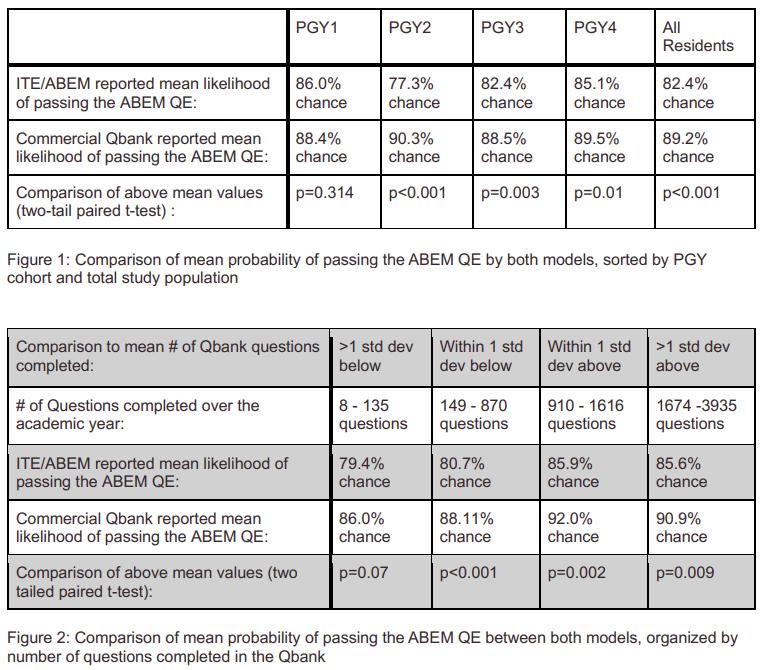
of Qbank usage. Future work should compare these models directly to QE pass rates. This data suggests we should caution trainees to not rely on any single model for formative assessment and study planning.
Xiao Chi Zhang, Alexis Metoyer, Dimitrios Papanagnou, Zachary Kaplan, Chaiya Laoteppitaks, Nina Mingioni, Jiten Patel, Kathleen Cruz, Michael Pasirstein
Background: EM clerkships rely on resident physicians, who serve as approachable, relatable, and readily available near-peer educators for medical students. Their position in the clinical hierarchy can enhance psychological safety and student comfort, but may also raise concerns about their ability to fully address learning objectives or provide fair, competency-based evaluations. Despite the role residents play in the EM clerkship, little is known about how their assessments of medical students compare with those of attending physicians. This gap limits our understanding of the variability of clerkship evaluations and the ability to identify students who may require remediation.
Objective: To compare clinical evaluation scores assigned by resident and attending for medical students completing a 3-week EM clerkship across two academic years, with focus on student performance quartiles.
Methods: We conducted a retrospective analysis of medical student performance data by resident and attending from an urban, multi-site EM clerkship between July 2023 and April 2025. Median evaluation ratings from residents and attendings were compared using paired statistical tests as appropriate. Subgroup analysis examined differences in ratings for the lowest- and highest-performing quartiles of students.
Results: A total of 487 students were analyzed. Residentbased scores were statistically higher than attending-based scores for both academic years, AY23-24 and AY24-25 (88.3% vs. 80.8%, and 86% vs. 80.8%, t-test < 0.05), especially for lower performing (lower 25% quartile) (78.8% vs. 67.5, and 77.6 vs. 66.3%, t-test <0.001). This discrepancy was not observed for upper-quartile students.
Conclusions: Residents were more likely to award higher clinical evaluation scores to lower-performing students in a required EM clerkship. This upward score inflation makes it more challenging to accurately identify students who are struggling or at risk, particularly those in the lower quartile, where early detection is essential for targeted support and remediation. These findings underscore the importance of structured educator training, including the calibration of assessments. If residents are to remain part of clerkship assessment, incorporating these skills into resident-as-teacher
curricula is critical.
Xiao Chi Zhang, Chaiya Laoteppitaks, Jason Gonzalez, Nina Mingioni, Dimitrios Papanagnou, Samuel Iovine, Joria Le, Michael Pasirstein
Background: EM has become a core clerkship at many medical schools, exposing students to high acuity care in a fast-paced environment. This environment poses a challenge when it comes to providing consistent, actionable feedback to medical students. Formative feedback is critical for guiding students towards the expected clerkship performance goals, but despite its importance, students may not receive timely formative feedback, limiting their opportunities for growth and development.
Objective: To provide a structured post-shift feedback process for students enrolled in a 3-week EM rotation to enhance the quality and frequency of meaningful student feedback.
Methods: We provided a physical feedback card (encased in a retractable badge-reel holder), based on the conceptual framework from the Pendleton feedback, to all third-year medical students rotating through their EM clerkship at a tertiary academic center ED from April to June 2025. Students were provided with verbal instructions on how to solicit feedback using the Pendleton model with their preceptors and were instructed to request a post-shift evaluation using this method after each shift. After each shift, students completed a voluntary likert-scale survey (5=most likely/agree) evaluating the frequency, quality, and satisfaction with their feedback process.
Results: We captured 259 survey data, 102 receiving Pendleton feedback, and 104 non-Pendleton feedback. Students who received Pendleton feedback reported clearer feedback (4.81 vs. 4.61, p < 0.01), more actionable next steps for improvement (4.76 vs. 4.55, p < 0.01), and an improved understanding of their clinical skills (4.75 vs. 4.57, p < 0.01). The Pendleton feedback process was also perceived to be a valuable addition to the rotation (4.52 vs. 4.62, p 0.15).
Conclusions: Students who requested and received structured feedback using the Pendleton method reported increased formative and actionable feedback than traditional feedback. Future research can the applicability of this method outside of the EM rotation to cultivate a supportive and inclusive learning environment where students are empowered to engage in growth-centered dialogue in other academic settings.
Christine Van Dillen, Sara Baker, Caroline Kraft, Hana Kayaleh, Veronica Rosen, Roxana Zelaya, Linda Papa, Charles Updegrove
Background: Mechanical ventilation is a critical yet complex skill in emergency medicine, and traditional didactics may not adequately prepare trainees for real-time ventilator decision-making. Case-based and hands-on approaches have shown promise, but their impact in EM residency education remains underexplored.
Objective: We aimed to evaluate whether an immersive, case-based ventilator curriculum would improve trainee knowledge and confidence in ventilator management. We hypothesized that participants would demonstrate significant improvement in both domains after the intervention.
Methods: We conducted a prospective educational intervention at an urban, academic Level I trauma center involving 49 EM residents and medical students, 8 if which completed both pre- and post-assessments. Participants engaged in a faculty-led ventilator workshop in which they rotated through five 30-minute stations, each centered on a dynamic case illustrating a key pathology—including asthma, COPD, CHF, and ARDS—and practiced ventilator management using real equipment. The workshop was facilitated by emergency medicine and critical care faculty, senior residents, and respiratory therapists. Learners were provided primer materials, including a video lecture and slides, prior to the session. Outcome measures included a 14item knowledge assessment covering airway protection and disease-specific ventilator strategies, as well as a confidence survey. Pre- and post-training scores were compared using descriptive statistics and hypothesis testing.
Results: Asthma knowledge pre- to post-curriculum improved 35.5% from 61.5% to 97% respectively. CHF improved 33% from 50% to 83% respectively. ARDS knowledge improved 28.5% from 65% to 36.5% respectively. Airway protection knowledge improved 27% from 58% to 85% and COPD improved 16.8% from 46.2% to 63%. Confidence in their skills managing patients with these conditions significantly improved from 38% to 54% (p=0.022).
Conclusion: A hands-on, case-based ventilator curriculum significantly improved both knowledge and confidence in mechanical ventilation among EM trainees. This model represents an effective alternative to traditional lectures, though future studies should evaluate long-term retention and broader generalizability.
Richard Austin, Chinmay Patel, Kristin Delfino, Sharon Kim
Background: The Residency Review Committee (RRC) for Emergency Medicine has proposed several changes to the program requirements for EM residency programs. Among the new requirements are ten required rotations and nine structured experiences. The need for programs to add or modify experiences and rotations has not been previously explored.
Objectives: We hypothesize that there is a variable level of preparedness for the new RRC rules.
Methods: We conducted a national survey of program directors or their representatives through the CORD listserv over three weeks in April 2025, regarding their current preparedness for the proposed changes. They were asked to indicate if they already had the rotation/experience and would not need to modify it, would need to modify it, or did not currently have the requirement.
Results: A total of 86 program directors or their representatives responded to the survey (29.9% response rate), representing both three-year (83.7%) and four-year









(16.3%) programs. Only 16% of programs reported having all required rotations in place with no modifications needed. Most programs (79%) indicated that at least one rotation needed modifications or was not currently available. The rotations most commonly reported as not currently available were toxicology (18.6%) and a low-resource ED (17.4%) (Figure 1). Only 1 program (1%) reported having all required structured experiences without need for modification. In contrast, 94% of programs indicated that at least one structured experience required modification or was not currently available. The majority of programs currently do not have telemedicine (76.7%) or observation medicine (52.3%) experiences (Figure 2).
Conclusion: Our study suggests that a few rotations and experiences may be a high-yield area for collaboration and development to help the greatest number of programs become compliant with the proposed RRC rules.
Erin Dehon, Katie Weeks, Sarah Sterling, Risa Moriarity
Background: Many EM residents complete training during prime childbearing years, making postponing family planning difficult. High living and childcare costs may create substantial financial barriers for residents starting a family.
Objectives: To evaluate the affordability of having a child during EM residency by comparing PGY-1 salaries with required annual income (RAI) across household structures.
Methods: Publicly available 2025 PGY-1 salaries were collected for 271 EM programs. Cost-of-living (COL) indices were obtained from the Council for Community and Economic Research (C2ER) 2025 Quarter 3 database, covering 272 U.S. urban areas, and applied when the program’s city was included. RAI, the minimum income required to meet basic living expenses in the program’s county, was subtracted from salary to calculate annual income surplus for three household structures: single adult, single adult with one child, and two working adults with one child.
Results: The mean PGY-1 stipend was $69,095 (SD = $7,952; range $56,707–$101,200). Surplus for a single adult without children averaged $19,762 (SD = $6,745; range −$2,059–$44,315). For a single-income household with one child, the mean surplus was −$17,466 (SD = $10,724; range −$66,291–$5,729); only 5 of 271 programs provided a positive surplus. Dual-income households with one child had a mean surplus of −$27,601 (SD = $10,616; range −$74,888–−$5,679). Over 95% of programs did not meet RAI for a single parent supporting a child. COL was negatively correlated with surplus for single adults with one child (r = −.379, p < .001), highlighting greater financial strain in
higher-cost areas.
Conclusions: Most EM PGY-1 salaries are insufficient to support a child, even with dual incomes, particularly in highCOL regions. These findings highlight the financial challenges of childbearing during residency and support the need for program-level interventions, including childcare assistance and regionally adjusted compensation, to promote resident well-being and financial stability.
Mark Gustafson, Lindsay MacConaghy, Minh Evans, Brian Burton, Stephanie Thompson
Background: Recent trends in EM show more unfilled residency positions and greater participation in the Supplemental Offer and Acceptance Program (SOAP). This has led to an increase in applicants entering EM through nontraditional pathways, including those who may be less prepared for residency challenges. Limited data exist on remediation outcomes among EM SOAP residents.
Objectives: Evaluate remediation rates and outcomes of EM SOAP residents and identify common characteristics associated with remediation.
Methods: A national, anonymous, retrospective survey was distributed to EM residency program directors whose programs participated in the SOAP from 2021 to 2024. Respondents reported the number of SOAP residents in their program during this period, how many required remediation, remediation type, candidate characteristics, core competencies remediated, and outcomes. Programs with erroneous or missing resident counts were excluded. Descriptive analyses were performed using chi-square and Fisher’s exact tests.
Results: Seventy-five programs reported 399 SOAP residents; 20.8% (n=83) required remediation. Of these, 53% underwent informal remediation, 36.1% formal remediation, 9.6% probation, 10.8% termination, and 8.4% resigned. The remediation success rate was 53.8%. Commonly remediated core competencies included Medical Knowledge (67%), Professionalism (34%), and Patient Care (31%). Characteristics associated with remediation included: pursuing another specialty that cycle (48%), limited or no EM experience (40%), international medical graduate (29%), regional ties (27%), board exam failure (23%), and academic issues (22%).
Conclusion: EM SOAP residents required remediation at a rate nearly five times higher than the previously reported average of 4.4%. Conversely, the rate of successful remediation was comparable to previously reported data. Further study is needed to understand contributing factors and develop support strategies for these residents.
Allison Beaulieu, Brian Merritt, Julia Ruggieri, Rowan Kelner, Christine Raps, Jeff Druck, Robert Stephen, Patrick Hughes, Zachary Drapkin
Background: The transition from medical school to residency is a critical period for all trainees, regardless of specialty, marked by increased responsibility and rapid professional growth. Feedback is essential for competency development, yet most research emphasizes feedback delivery rather than strategies for soliciting and receiving feedback. Learners across specialties report limited individualized feedback and often rely on faculty-initiated interactions.
Objective: To evaluate the impact of an interactive workshop designed to enhance feedback literacy among incoming emergency medicine residents.
Methods: We conducted a prospective pre-post survey study to assess a 1.5-hour “Receiving Feedback” workshop delivered during a Transition to Internship course at a U.S. medical school in May of 2025. The session covered four key concepts: clarifying expectations, setting goals, creating a feedback action plan, and adopting a growth mindset. Participants completed identical pre- and post-workshop surveys using a five-point Likert scale. Paired t-tests evaluated changes in self-reported competencies. Data were analyzed using R.
Results: Seventy-nine students participated; 59 completed both surveys. All were post-match and represented 19 anticipated specialties (Table 1). Significant gains were seen in
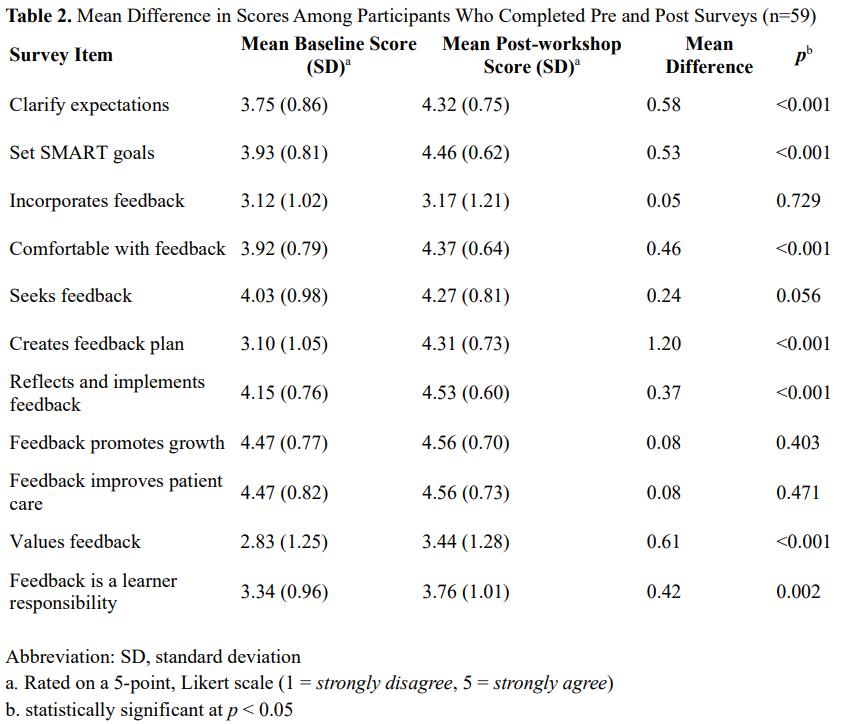
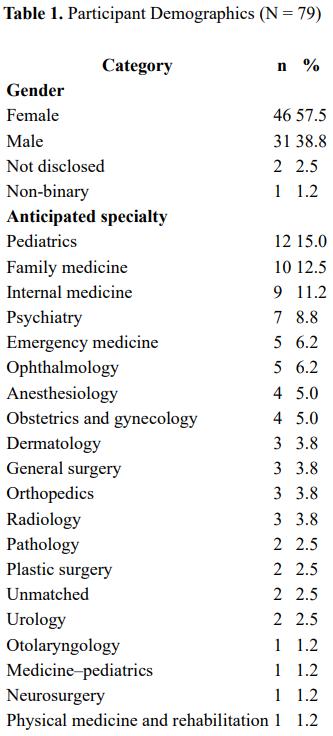
clarifying expectations, setting goals, comfort with feedback, creating a feedback plan, and reflecting on feedback (p < 0.001, Table 2). Valuing feedback and recognizing learner responsibility also improved significantly (p < 0.01, Table 2).
Conclusions: A structured workshop significantly enhanced learners’ ability to engage in feedback proactively. Introducing feedback literacy during the transition to residency may foster a culture of continuous improvement and better prepare trainees for clinical practice.
25 Can Simulation Based Microaggressions Training Provide an Equitable Learning Experience for All Residents?
Tiffany
Moadel, Michael Sperandeo, David Fernandez
Background: Emergency medicine (EM) residents frequently encounter bias and microaggressions in the workplace. Simulation may provide a psychologically safe environment to practice responding to these events, but it remains unclear whether learner demographics or prior bias experiences shape perceptions of comfort, realism, or usefulness.
Objectives: To evaluate whether resident gender, race, training level, or prior bias experiences were associated
with comfort, perceived realism, or perceived usefulness after microaggression-focused simulation scenarios. We hypothesized no group differences.
Methods: We conducted a prospective observational study of residents at a New York area EM residency program (PGY 1-5) from November 2023-March 2024. Thirty-six residents participated in two microaggression-focused simulation scenarios followed by structured debriefings. Participants completed an anonymous post-simulation survey assessing comfort, realism, and usefulness using a five-point Likert scale. Descriptive statistics characterized the sample; median and interquartile range described age. Frequencies and proportions summarized perceptions. For interpretability, agreement items were collapsed into a dichotomous variable combining strongly agree and agree versus all other responses. Proportions of dichotomized responses were compared across demographic groups using Chi-square or Wilcoxon rank sum tests, where appropriate.
Results: Thirty-six residents completed the survey. Most were female (63.6%), White (60.1%), and PGY3 (33.3%). Nearly all reported witnessing or experiencing workplace bias (94.4%). All responses were strongly agree, agree, or neutral. Comfort, realism, and usefulness did not differ by gender, race, or training level (all p>0.05). Prior bias experience was not analyzed due to small subgroup size.
Conclusions: A simulation based microaggressions curriculum appeared psychologically safe, realistic, and useful across groups. Similar perceptions suggest simulation may support equitable skill development for handling bias in clinical settings. Findings support integrating microaggression-focused simulation into residency curricula. Limitations include small sample size, single-program design, convenience sampling, and possible response bias.
26 The Certifying Exam Is Coming - Are We Ready? A Faculty Communications Needs Assessment
Stephen Rogers, Brian Milman, Samuel Parnell, Joshua Ginsburg, Sarah Zamamiri, Marshall Howell, Sarah Fowler, Sonika Raj
Background: In 2026, ABEM will introduce the new Certifying Exam (CE), replacing the Oral Exam. The CE format will assess communication skills, including conducting difficult conversations, managing conflict, and using patientcentered communication (PCC). Preparing residents for the CE requires faculty who are confident in performing, teaching, and assessing these competencies.
Objectives: We assessed faculty confidence in performing communication tasks prioritized on the CE, comfort teaching these skills, and perceptions of PGY-3 residents’ skill in these
domains. We hypothesized that faculty would indicate greater confidence in their own communication skills than those of the residents, as well as poor confidence in teaching these skills.
Methods: We developed a cross-sectional survey using a 5-point Likert scale (1 = not confident, 5 = very confident) and open-ended questions. After piloting, we sent the anonymous survey to all 117 faculty from our 3-year EM program, collecting responses from March to April 2025.
Results: The survey response rate was 60% (70/117). Faculty reported high confidence in conducting difficult conversations and using PCC, with ≥80% selecting 4 or 5. Confidence was slightly lower for managing conflict, with only 75% selecting 4 or 5. However, faculty felt that residents needed improvement in these skills. Ten percent of faculty felt residents could operate independently in difficult conversations, 5.7% in conflict management, and 7.1% in PCC. Faculty also reported low confidence teaching these skills and providing feedback. Preferred faculty development topics included feedback, de-escalation techniques, difficult patients/families, conflict with consultants or colleagues, and real-time coaching.
Conclusions: Faculty felt confident performing communication skills prioritized by the CE but identified gaps in resident skills and their own ability to teach these competencies. This highlights potential targets for curricular and faculty development.
Kirlos Haroun, McKenzie Warshel, Kathryn Lorenz, Linda Regan, Kathryn Ritter
Background: Burnout and secondary traumatic stress are common among EM residents, contributing to emotional exhaustion, reduced psychological safety, and diminished clinical engagement. Most peer support programs target faculty or interprofessional staff, leaving limited resident-focused training or curricular integration in graduate medical education.
Objectives: To evaluate the feasibility, cultural impact, and perceived effectiveness of embedding a structured peer support training program into required residency conference time for senior EM residents.
Methods: This qualitative study took place in Fall 2024 at an urban academic EM residency. Twelve PGY-4 residents were invited to a 90-minute conference-based peer support session teaching seven core response principles; six (50%) attended. Ninety days later, six residents participated in a voluntary focus group utilizing a semi-structured interview guide. Transcripts underwent inductive thematic analysis with double-coding, memoing, and coder triangulation.
Results: Residents reported increased confidence
initiating emotionally focused conversations but variable success applying skills learned during clinical work. Five themes emerged: (1) balancing emotional support with supervisory responsibilities; (2) wide variability in frequency and depth of support interactions; (3) communication and culture shifts wins, including more structured debriefing; (4) bolsters for program implementation such as a desire for booster sessions, faculty modeling, and clearer escalation pathways and (5) barriers to peer support, including time constraints, fatigue, skill decay, and limited awareness of trained supporters.
Conclusions: A brief peer support curriculum embedded in conference time was feasible and perceived to strengthen emotional leadership among senior EM residents. Reported improvements in communication practices and wellness culture support broader integration of resident-centered peer support training into GME, though findings are limited by single-site design and voluntary participation in the qualitative focus group analysis.
the proportion of osteopathic (DO) and international medical graduates (IMG’s) matching into EM has increased significantly in recent years5,6. To our knowledge, there is limited data to describe rank order list position preferences for EM among different types of applicants.
Objectives: To identify trends in EM applicant behavior using NRMP Main Residency Match data, on rank order list preference for different applicant types (US MD, US DO, USIMG, and non-US IMG) from 2020 to 2025.
Methods: This retrospective analysis utilized NRMP Match results for EM applicants from 2020 to 20257. Four applicant types were included:: US MD seniors, US DO seniors, US IMG’s seniors, and non-US IMG’s seniors. The NRMP reports rank order list categories as “only choice,” “first choice,” and “not first choice.” We compiled data for each combination of applicant type and rank order list category. The percentage of each applicant type, out of the total number of EM applicants, was calculated. The percentage of applicant type for each rank order preference was calculated.
28
Trends in Rank Order Preferences of Emergency Medicine Residency Applicants by Applicant Type, 2020 - 2025
Background: Emergency medicine (EM) experienced a sharp decline in total applications in 2022 and 2023 according to National Residency Matching Program (NRMP) data.1,4. While the number of EM applicants rebounded in 2024 and 2025, their rank order list preferences suggest changes in applicant behavior. While US allopathic (US MD) seniors have long comprised the majority of matched EM applicants,
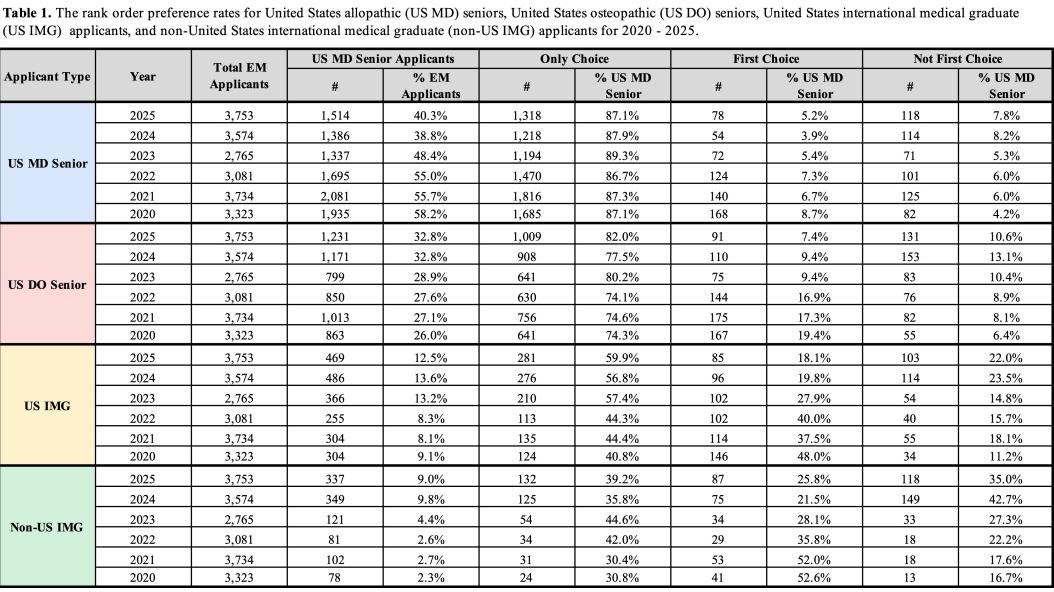
Results: Figure 1 shows the percent of each applicant type ranked EM as “not first choice” over the 2020 to 2025 time frame. Table 1 depicts the percent of all EM applicants were each specified applicant type, and includes the total numbers and percentages of each rank order preference.
Conclusions: A greater proportion of applicants are applying to EM as a second choice since 2020, regardless of applicant type. This increased rate of “not first choice” could be a leading indicator of EM’s changing appeal as a specialty choice.
Chelsea Johnson, Katherine Kalina, Laura Smylie, Sarkis Kouyoumjian
Background: At the Wayne State University School of Medicine, the emergency medicine (EM) clerkship is required for all fourth-year students. Before starting this rotation, all EM-bound students were enrolled in a resident-led coaching program and randomly paired with a resident coach at their respective clerkship site.
Objective: This study aims to determine whether resident-led coaching provides EM-bound students with more actionable, skills-focused feedback than that received by non–EM-bound peers during their required clerkship. It also examines whether coached students translate this guidance into measurable changes in on-shift behavior.
Methods: Participants were all fourth-year students completing their EM clerkship at four Wayne State–affiliated, Level I hospitals prior to the 2026 Match. EM-bound students were connected with their coach at the start of the rotation via email, and pairs were instructed to meet weekly, following a structured format. At the end of the clerkship, all students completed a piloted, anonymous Qualtrics survey about their experience during their EM clerkship. Likert-scale and freetext responses from coached and non-coached students were analyzed using unpaired t-test.
Results: Of all respondents (n=49), no significant differences were found between coached and uncoached students in self-reported ability to generate differential diagnoses (95% CI –0.23 to 0.84, p = 0.25), therapeutic plans (95% CI –0.24 to 0.41, p = 0.62) nor in ability to perform basic EM procedures (95% CI –0.05 to 1.07, p = 0.07). Nonetheless, 60% of coached students reported making behavioral changes based on resident feedback.
Conclusion: Resident-led coaching did not improve perceived clinical skills compared with peers, but most coached students adjusted their behavior because of the interaction. Coaching appears to influence learner engagement, yet its objective educational impact remains unclear, underscoring the need for more structured and
measurable coaching outcomes in EM training.
Shannon Kostin, Cosimo Laterza, Ashley Flannery
Background: Recognizing and addressing an impaired colleague is a core competency within the ACGME Professionalism (PROF) and Interpersonal and Communication Skills (ICS) Milestones. Despite this expectation, residents often feel unprepared to identify concerning behaviors or access institutional resources. Objective structured clinical examinations (OSCEs) are validated for assessing communication and professionalism but are rarely applied to this domain.
Objective: To determine whether an impaired-colleague OSCE improves resident knowledge of institutional resources and preparedness aligned with ACGME’s PROF1, PROF2 and ICS2 Milestones.
Methods: We conducted a prospective educational intervention with twenty-one EM residents at a tertiary academic center. Residents completed pre- (6-item) and post-simulation (13-item) surveys assessing knowledge of support resources, including employee assistance programs and safe ride options, and confidence in approaching an impaired peer. Participants completed a standardized OSCE with a trained faculty or fellow portraying an impaired co-resident. Data were analyzed using descriptive statistics, paired t-tests, and Cohen’s d.
Results: Twenty-one pre- and twenty post-surveys were completed; thirteen (62 percent) were paired. Knowledge improved from 1.86 (0.65) to 2.55 (0.89) overall. Paired responses showed significant gains from 1.77 (0.64) to 2.38 (0.77) (p=0.04; Cohen’s d=0.64). Knowledge of safe ride resources increased from 0.05 (0.22) to 0.80 (0.41) (p=0.002). Post-simulation confidence and understanding showed small, nonsignificant correlations.
Conclusions: A structured impaired-colleague OSCE improved resident knowledge of institutional resources and provided a realistic platform to practice communication skills central to ACGME Professionalism and Communication Milestones. Limitations include small sample size, incomplete pairing, and lack of baseline attitudinal measures. Larger cohorts and longitudinal follow-up are needed to assess sustained competency development.
Standardized Letters of Evaluation in 2025
Ronnie Ren, Xiao Chi Zhang, Liza Smith
Background: The Standardized Letter of Evaluation (SLOE) in EM established a common rubric to assess
applicant attributes that are predictive of success during residency. Various types of SLOEs exist, but a SLOE from a rotation at an EM residency program, or eSLOE, is considered the most valuable. Applicants are recommended to obtain at least one eSLOE to apply to EM and two to be competitive. Inequities in the ability to obtain SLOEs among allopathic (USMD), osteopathic (USDO), and international (IMG) applicants have been a concern.
Objectives: We aim to describe the mean number and types of SLOEs submitted by EM applicants from different training pathways.
Methods: We conducted a retrospective observational study of a de-identified subset of the CORD application dataset, which includes all applications to categorical EM programs submitted during the 2025-2026 cycle before October 1, 2025. We applied descriptive statistics to the data and correlated them with applicant training pathways.
Results: There were 3859 applicants by October 1st, with 95.67% submitting at least one SLOE. The descriptive statistics of the mean number and types of SLOEs submitted are presented in Tables 1 and 2.
Conclusions: On October 1st, the date of application release to programs for review, there was a difference in the mean number and types of SLOEs submitted by USMD, USDO, and IMG applicants to EM.
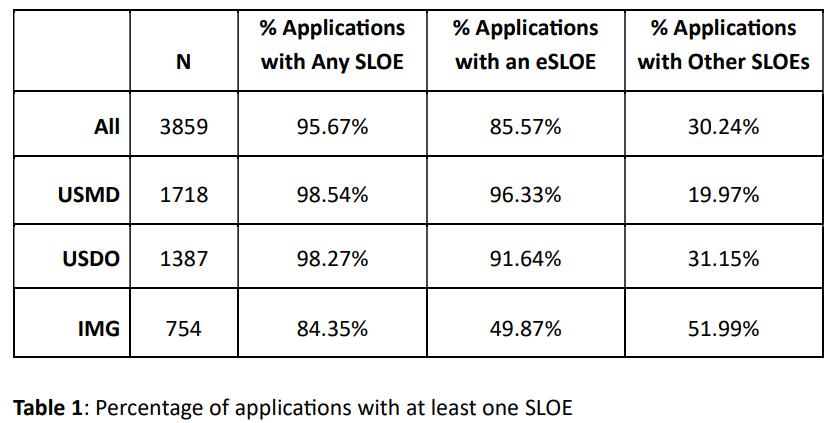
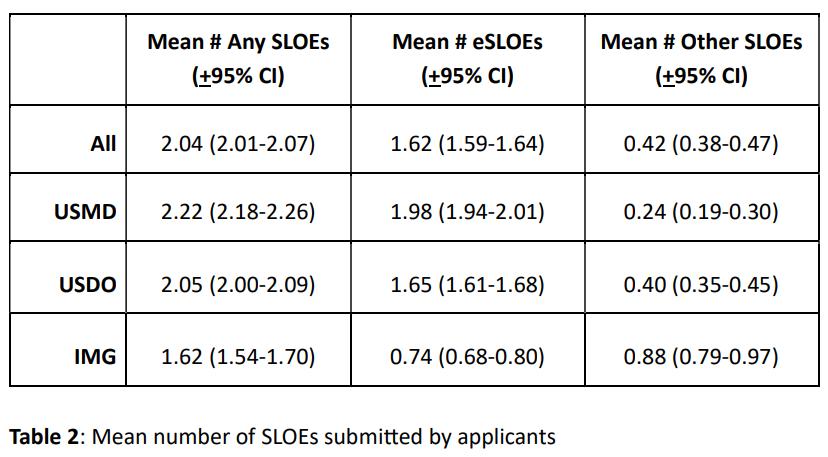
Arrianna Mohammed, Brian Smith, Thomas Sanchez, David Simon, Timothy Khowong
Background: Resuscitation skills are fundamental to emergency medicine (EM) practice, yet there is a lack of structured hands-on learning sessions for trainees. To address this gap, we developed a multimodal advanced resuscitation curriculum for PGY-2 EM residents.
Objectives: We aimed to determine whether participation in the curriculum would lead to measurable improvement in residents’ confidence, diagnostic reasoning, and resuscitation performance. Specifically, we sought to assess growth in: (1) organizing an initial approach to critically ill patients; (2) formulating shock management plans across etiologies; and (3) performing and troubleshooting key high-acuity procedures required during resuscitation.
Methods: The curriculum comprised four 2-hour, one-onone sessions. Before participation, residents completed a pretest with Likert scale questions on self-perceived confidence in advanced resuscitation and knowledge-based short-answer questions. Each session included a 15-minute simulation with debrief, a 90-minute interactive lecture, and supervised procedure practice. A post-test re-assessed confidence and knowledge, as well as self-perceived improvement. Attendings were surveyed on changes in resident performance 6 months after curriculum completion and semi-structured interviews were conducted with residents 1 year after curriculum completion.
Results: A total of 14 residents participated. The overall mean score for improvement on a 5-point Likert scale was 4.57/5, indicating a strong Kirkpatrick Level 1 reaction. Mean scores for knowledge assessment improved from 64.78 to 84.48 (p<0.05), indicating a Kirkpatrick Level 2 impact. A survey of core faculty noted residents had improved clinical and procedural skills after course completion, demonstrating Kirkpatrick Level 3 impact. Finally, qualitative semistructured interviews of residents revealed that learners felt more structured in their mental models of shock, deliberate in resuscitative decision-making, and confident performing procedures, highlighting mechanisms underlying confidence growth and skill transfer to clinical practice.
Conclusion: Implementation of a structured resuscitation curriculum significantly improved EM residents’ confidence, medical knowledge, and clinical skills.
Ashley London, Kestrel Reopelle, Timothy Friedmann, Szymon Kutyla, Delaney Bates
Background: A recent decline in American Board of Emergency Medicine Qualifying Exam (ABEM QE) pass rates has driven postgraduate educators to reassess their curricula and reliability of preparation resources. Residency programs nationwide have used the ABEM-administered in-training exam (ITE) scores as an indicator of ABEM QE performance. To facilitate ITE preparation, residency programs often assign practice questions or offer residents access to a test preparation question bank. There is limited evidence to suggest that the number of questions completed correlates with improved ITE scores.
Objectives: This study aimed to determine if there is a correlation between question bank utilization and ITE scores. We hypothesized that completing greater numbers of practice questions will correlate with higher ITE scores.
Methods: This was a retrospective observational cohort study conducted at an urban academic EM residency program. For all residents in 2023-2025, the number of questions completed and the raw ITE scores were collected, deidentified, and collated for the study team. Residents who did not take the ITE were excluded.
Results: 182 resident scores were included in the study; 10 residents excluded. A linear regression analysis of the number of practice questions completed and raw ITE scores demonstrated a weak positive correlation, albeit with a high degree of variation and poor overall fit (p=0.032, R2=0.0253) (Figure 1). The number of practice questions completed were broken up into quintiles and an ANOVA analysis was performed, which showed no statistical difference in ITE scores between the five groups (p=0.0753) (Figure 2).
Conclusions: The number of practice questions completed prior to ITE is weakly correlated to the score
residents receive on ITE. The high degree of variation found in the results suggests that other factors are involved in an individual’s ITE performance. Volume of questions alone should not be relied upon to improve resident performance.
Pilot
Hannah
Mishkin, Robyn Hoelle, Danielle Von Nieda, Melody Beltran
Background: Providing faculty feedback (FB) that is anonymous, specific, constructive, and actionable is a core requirement of the Accreditation Council for Graduate Medical Education. Synthesizing qualitative resident comments consistently and without bias can be challenging for Program Directors. Large language models (LLMs) offer a potential tool to summarize resident evaluations, reduce unintended editorial influence, enhance perceived anonymity, and frame feedback using supportive, growth-oriented language.
Objective: To assess faculty perceptions of the learner’s feedback summarized by an LLM with regard to clarity, anonymity, and usefulness.
Methods: We developed and piloted a process that used LLMs to generate anonymized summaries of resident evaluations for faculty across two emergency medicine residency programs. Resident comments were de-identified and processed through an iteratively refined prompt that produced a concise summary emphasizing key strengths, one growth opportunity, and a specific actionable educational goal for the coming year. Representative anonymous resident quotes were included to increase specificity, and all outputs were reviewed only for accuracy or professionalism before distribution as part of the annual review process.
Results: Twenty-one faculty completed an anonymous survey evaluating the LLM-generated FB summaries.
Respondents reported high levels of clarity (86 percent agreed or strongly agreed), accuracy (82 percent), enhanced sense of anonymity (82 percent), and a constructive tone (82 percent), and most found the format more useful than prior years (82 percent)
Conclusion: This low-resource approach demonstrates feasibility, a positive user experience, and potential to improve psychological safety and receptivity to feedback during the faculty evaluation process. Future studies should explore scalability, inter-rater reliability, and long-term impact on faculty development.
35
“We’re
Aubrey Brown, Kelly Mayo, Zayir Malik
Background: Medical students (MS) experience anxiety before clerkships, which may be higher before an EM clerkship due to EM’s unfamiliarity and acuity. Few opportunities exist for preclinical exposure to EM (and no LCME mandate). Limited exposure and reduced EM clerkship participation may contribute to less interest in EM residency. When MS participate in a 3rd year clerkship, their interest in EM and preparedness for Sub-Is increases. However, it is unclear how to increase preclinical MS’ interest and preparation for an EM rotation.
Objectives: We aim to 1) assess preclinical MS’ needs and perceived educational deficiencies before an EM rotation, and 2) evaluate the impact of a novel, single-day, EM bootcamp on preclinical MS’ self-assessed preparedness for clerkships.
Methods: This study was at a large urban medical school where EM is an optional 3rd-year clerkship. We designed and implemented a workshop for preclinical MS. Before and after the educational aspect, MS completed an anonymous survey assessing the perceived utility of workshops relevant to EM (guided by the SAEM CDEM curriculum topics) and their self-evaluation of clerkship preparedness using a 5-point Likert scale. We modeled the workshop after bootcamps offered to senior MS; it consisted of four stations, including: EM clerkship expectations and resources, emergency ultrasound, abscess incision and drainage, and intraosseous access.
Results: 22 pre-clinical MS completed the survey (73% response rate). 57% of MS2s requested an EM elective before the workshop, while an additional 20% were interested after the workshop. When MS rated the perceived usefulness of workshop topics, stabilization of the acutely ill patient, ACLS, and IV placement were highest rated, with over 70% of students ranking them as Extremely Useful (Figure 1). When asked to select the top three topics, they chose: basic airway
management, EUS, and evaluation of the undifferentiated patient (Table 1).
Conclusion: This study eliciting MS perspectives on EM topics highlights a potential gap in preclinical learning, and a possible barrier to EM clerkship participation and interest. Limitations of our study include: single-site, small sample size, and EM-curious respondents. Work is ongoing on how








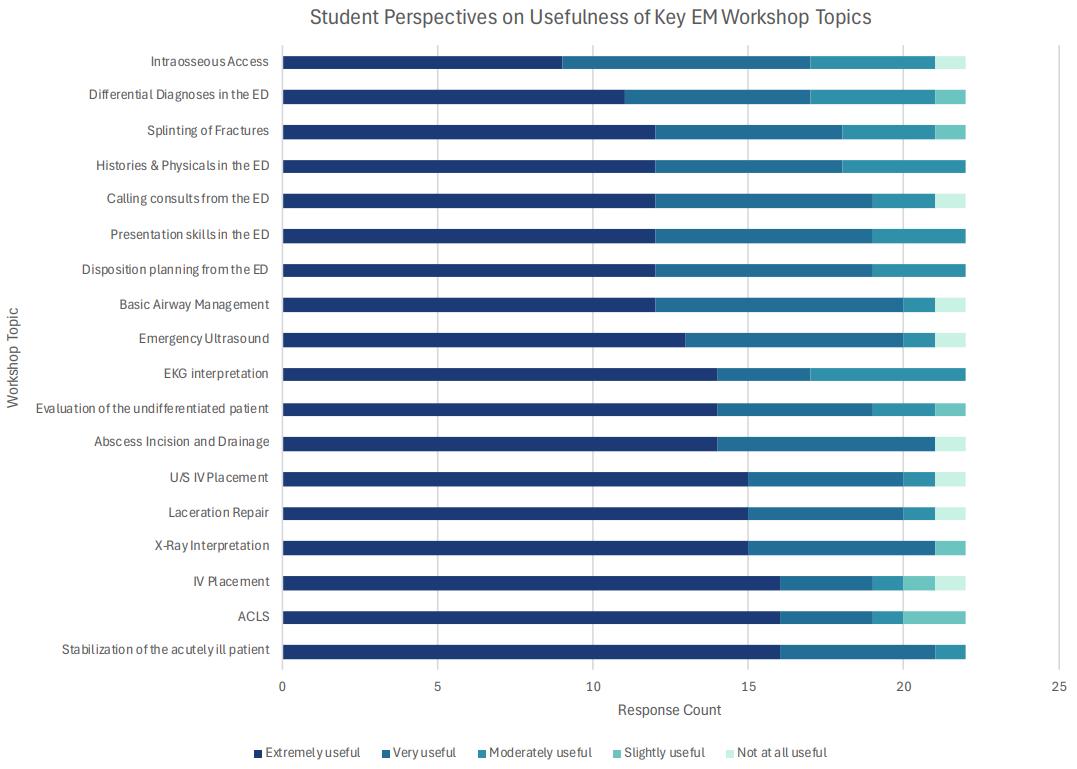
to increase EM preclinical interest and elicit perspectives on clerkship preparedness from senior MS who have completed an EM clerkship.
Adam McFarland, Samantha Stringer, Jennifer Li, Riley Grosso
Background: EM physicians increasingly supervise advanced practice providers (APPs), yet few residency programs offer training or clinical experience in APP supervision. No studies have described existing practices, attitudes, or barriers of APP supervision by EM resident physicians. This needs assessment evaluates national practices related to EM resident supervision of APPs.
Objectives: To quantify and characterize EM residencies with educational or clinical experiences in APP supervision, as well as assess attitudes and identify barriers surrounding these opportunities.
Methods: This ongoing cross-sectional survey is distributed through the CORD listserv to residency leaders and educators; non-educators are excluded. Data collected includes program descriptors, state-specific APP practice laws, prevalence and structure of resident APP supervision, residency curricula, attitudes toward APP supervision, and barriers to implementation.
Results: Thirty respondents have completed the survey to date. Five programs (16%) include resident APP supervision in clinical curricula, typically in 4-year programs at the PGY3–4 level. Seven programs (23%) report APP supervision during moonlighting. Eight programs provide didactic or on-shift education (mean 1.75 hours, range 0–3). Likert data (Figure 1) shows variability in perceived importance of APP supervision (mean 3.3 ±1.1). Respondents feel supervising medical students is insufficient preparation (2.9 ±1.0) but supervising junior residents is more adequate (3.6 ±0.9). Most agree graduates possess necessary supervision skills (4.0 ±0.8). Common barriers include beliefs that such training is unnecessary, perceptions that APP supervision is inappropriate for residents, similar skills gained supervising other learners, departmental flow concerns, and perceived APP resistance.
Lina
Conclusions: Preliminary data suggest most EM residency programs do not offer formal education or clinical experience in APP supervision, though many believe graduates are prepared. Perceptions of the importance of this training vary. Findings are limited by small sample size and few programs offering these experiences. Future directions include continued data collection and assessment of recent graduate perception of APP supervision preparation. 37
Evaluation of a Soft-Embalmed Cadaveric Model as an Education Innovation to Enhance Emergency Medicine Resident Competency in Distal Radius Fracture Reduction
Zalikha, Sarah Chrabaszcz, Nicholas Maldonado, Caroline Srihari, Meredith Thompson, Joshua Altman
Background: Distal radius fractures are common ED presentations requiring timely, technically proficient reduction. Despite their frequency, opportunities for practice and standardized assessment vary across residency programs. Soft-embalmed cadavers (SEC) provide realistic, high-fidelity practice, and video-based checklist assessment offers an objective means of evaluating procedural competence.
Objectives: To assess whether an educational intervention using a SEC model improves resident performance on a validated distal radius reduction checklist pre- and post-intervention.
Curricular Design: Two sports medicine fellowshiptrained EM faculty developed a 2-hour intervention: a 1-hour lecture on distal radius fractures and reduction technique, followed by a 1-hour skills lab using a SEC. Soft-embalming methods yield increased joint range of motion compared to formalin-based techniques, enabling wrist manipulation. A cadaver wrist was dissected to create a comminuted intraarticular distal radius fracture model, allowing repeated reductions (fig.1). Fourteen residents participated voluntarily. Each completed a video-recorded pre-intervention assessment, performing reduction steps on the SEC model after a clinical vignette with standardized prompts. Following the intervention, residents completed a post-intervention assessment. Videos were scored by two independent reviewers blinded to assessment timing using a validated 41-item checklist.
Effectiveness: Resident performance improved significantly from pre- to post-intervention (p = .001; fig.2). No significant differences in median scores between reviewers were observed, with good inter-rater reliability (ICC: 0.766 pre; 0.743 post). This study demonstrates that SEC training combined with video-based checklist evaluation provides an objective, reproducible method to teach and assess
resident competency in distal radius fracture reduction. Findings support broader integration of SEC models into EM procedural education.
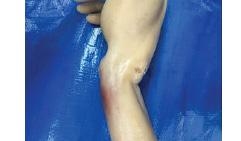





Kristian Larson, Rowan Kelner, Brian Merritt, Julia Ruggieri, Megan Fix, Allison Beaulieu, Patrick Hughes
Background: Over the past decade, medical education (MedEd) fellowships in EM have experienced significant growth. However, there is limited comprehensive data on fellowship curricula, core competencies, and career outcomes associated with these fellowships in EM. As more programs
are established, a clearer understanding of their content, goals, and impact is necessary to guide program development and ensure quality training for future EM educators.
Objectives: To describe the structure, focus areas, competencies, and emphasized skills in existing programs; identify gaps or variations; and recommend ways to optimize and standardize key elements to enhance their impact on MedEd.
Methods: A 40 item anonymous electronic survey was administered to fellows across the United States. Participants were asked about specific curricular content, career mentorship, continuing education, compensation, factors influencing program selection, and post-graduation job setting.
Results: Twenty-eight surveys were returned (70% response rate), and 26 complete surveys were analyzed. Many reported their residency had a fellowship pathway (81%) with 92% entering fellowship directly after graduation. Coverage of core educational competencies was high (92%). Exposure was more variable in other areas, such as technology integration (69%), deliberate practice (65%) research training (77%), quantitative analysis (69%), and peer review (73%). Grantsmanship was least commonly addressed (27%). Regarding outcomes, 65% had accepted a position. Of those, 76% planned to stay at their fellowship institution. Sixty-five percent were required to complete a research project, and 38% were required to present it.
Conclusion: While core educational competencies are broadly addressed, research and administrative training remain inconsistent. These results highlight opportunities to guide national curriculum standardization and improvement.
Stepwise
Pre-
Abagayle Bierowski, Erin Hoag, Katie Duquette, Jiten Patel, Kathleen Cruz, Kelly Kehm, Peter Tomaselli, Madeline Dwyer
Background: Recent declines in ABEM Qualifying Exam pass rates have heightened the need to identify trainees who may benefit from early academic support. Early predictors of ITE scores, which are established predictors of ABEM board outcomes, may help programs recognize risk before residency even begins. Step 2 CK remains the most consistent preresidency standardized assessment, but its predictive value for ITE performance throughout training has not been clearly established.
Objective: To determine whether Step 2 CK scores can provide early insight into EM ITE performance.
Methods: This retrospective cohort study included 114 residents from a single academic, urban EM residency program (2021-2025) with available Step 2 CK scores and PGY1 and/or PGY3 ITE percentiles; PGY1 represents the earliest standardized assessment, while PGY3 serves as a surrogate
for ABEM board readiness. Residents with only COMLEX Level 2-CE scores were excluded due to low representation (n=3). PGY1 ITE percentiles were analyzed across the entire cohort (n=113); PGY3 ITE percentiles were analyzed only for residents who had complete terminal PGY1-3 ITE data (n=83). Pearson correlations assessed associations between Step 2 CK and ITE percentiles. Linear regression models evaluated PGY1 ITE percentile predicted by Step 2 CK and PGY-3 ITE percentile predicted by Step 2 CK, adjusting for PGY1 ITE.
Results: In this cohort, Step 2 CK demonstrated a moderate, statistically significant correlation with PGY1 ITE percentile (r=0.39, p<0.001) and PGY3 ITE percentile (r=0.38, p<0.001). In linear regression, Step 2 CK predicted PGY1 ITE performance (β=0.34, p<0.001), explaining 15.4% of variance (Figure 1). Each 10 point increase in Step 2 CK was associated with an approximate 3.4 point increase in PGY1 ITE percentile. In the PGY3 model, Step 2 CK remained an independent predictor after adjusting for PGY1 ITE (β=0.19, p=0.049), though PGY1 ITE contributed more substantially to the model (β=0.54, p< 0.001). The combined model explained 38.1% of PGY3 ITE variance.
Conclusions: Step 2 CK scores can provide meaningful insight into ITE performance, supporting its role as an early indicator of test-taking ability and tool for advising and exampreparation planning.
cost-of-living (COL) on 2025 stipends across states, regions, and cities.
Methods: All ACGME-accredited EM programs were screened. Military programs and those without publicly available PGY-1 salary data were excluded. Salary information was available for 271 programs in 2025. Historical 2021 data were obtained from a prior study. Comparison of 2025 and 2021 PGY-1 salary data was possible for 197 programs due to program openings, closures, and data availability. COL indices were obtained from the Council for Community and Economic Research (C2ER) 2025 Q3 database, including 272 U.S. urban areas. Of 271 programs, 169 were in cities in the database; city-level COL values were applied. State-level COL values were applied to all programs. For the 2025-only analysis, published housing or COL stipends were added to base salary prior to COL adjustment. 2025 salaries were compared before and after COL adjustments.
Results: Among paired programs (n=197), PGY-1 salaries increased a mean of 16.78% from 2021 to 2025 (SD 8.04; range −6.45% to 50.6%). For 2025–2026, the national mean salary was $69,095 (range $56,707–$101,200; SD $7,952). After city-level COL adjustment (n=169), the effective mean salary was $66,232 (range $33,841–$85,890; SD $8,156); 91/169 programs remained above the adjusted stipend while 78/169 fell below their original stipend. The difference ranged from −$57,673 to $25,827 (mean −$2,942, SD $12,932). State-level COL adjustment for all programs also showed reduced purchasing power and substantial regional variation.
Conclusions: PGY-1 EM salaries increased from 2021 to 2025 but did not keep pace with inflation. COL adjustments revealed reduced effective compensation for many residents, with almost half of city-based programs falling below their nominal stipend. These findings support integrating COL benchmarks into stipend determinations to promote financial sustainability for EM trainees.
40 Cost-Of-Living Adjustments and Emergency Medicine Resident Salaries: A National Analysis of PGY-1 Stipends from 2021–2025
Erin Dehon, Paul Kukulski, Katie Weeks, Risa Moriarity, Sarah Sterling
Background: U.S. inflation approached 20% between 2021 and 2025, raising concern that residency stipends have not kept pace with rising living costs.
Objectives: To evaluate changes in Emergency Medicine (EM) PGY-1 salaries from 2021 to 2025 and the impact of
Brian Merritt, Kristian Larson, Rowan Kelner, Julia Ruggieri, Megan Fix, Allison Beaulieu, Patrick Hughes
Background: As fellowship training becomes more common in emergency medicine (EM), residency programs are increasingly incorporating scholarly tracks. Medical education (Med Ed) is a rapidly growing EM subspecialty, yet limited data exist on how these tracks are structured and implemented. Understanding current practices may support standardization and help ensure residents gain the intended skills and experiences.
Objectives: This study aims to characterize the administrative strategies and logistics for medical education
scholarly tracks within emergency medicine residency programs.
Methods: We conducted a retrospective survey of emergency medicine residency programs with medical education fellowships, as identified through the Council of Residency Directors in Emergency Medicine (CORD) Community of Practice directory. Program leaders received a REDCap-based questionnaire examining scholarly track structure. The survey was open from May to July 2025, during which follow-up reminder emails were sent every two weeks. Data analysis was completed using R.
Results: Responses were received from 39 programs (39/48, 81.3%), with 26 programs (26/39, 66.7%) reporting scholarly tracks, and 23 reporting a medical education track (23/39, 59.0%). . Residents are required to remain in a single track in 42.3% of programs (11/26), while 46.2% (12/26) allows residents to participate in multiple tracks. Of those that responded, the most common meeting frequency was quarterly (8/20), followed by monthly (7/20), bi-monthly (3/20) and semi-annually (2/20). Over half of the education tracks were led by the medical education fellowship director (11/20, 55%), with fellows (3/20, 15%) assistant/associated programs directors (2/20, 10%), and residency program director (1/20, 5%) leading the others. Only 15% (3/20) report FTE buy-down for faculty leading the track, ranging from <0.1 FTE support to 0.2–0.3 FTE.
Conclusion: MedEd tracks differ in structure, logistics, and leadership across EM residency programs. Understanding implementation and leadership for these tracks can help to guide the development of tracks at other institutions as well as improve current tracks.
Brian Merritt,
Rowan Kelner, Kristian Larson, Julia Ruggieri, Megan Fix, Allison Beaulieu, Patrick Hughes
Background: Scholarly tracks are increasingly integrated into residency training across specialties, including emergency medicine (EM), offering structured opportunities for academic development. While prior studies have examined their impact on career choice and practice settings, detailed characterization of their content and resident requirements remains limited. This study focuses on medical education tracks within EM.
Objectives: Our aim was to determine the essential components and resident requirements of medical education scholarly tracks in EM.
Methods: A retrospective survey targeted all EM programs with medical education fellowships listed on the Council of Residency Directors in EM Community of Practice website. A REDCap questionnaire assessing track content and resident requirements was distributed to fellowship directors from May to
July 2025, with biweekly reminders. Topics were based on Core Content for Education Scholarship Fellowships in Emergency Medicine by Yaris et al. Data were analyzed using R. Results: Responses were obtained from 39 of 48 programs (81.3%). Of these, 23 programs reported having a medical education scholarly track (58.9%). Over 65% included teaching methods, feedback, learning theories, bedside procedural skills, and curriculum design and evaluation (Table 1). Eleven programs required a scholarly project (47.8%): seven required a local/ institutional presentation and four required a regional/national presentation (Table 2). Eight programs required an educational presentation (34.8%), most commonly a large-group didactic (4/8, 50%) (Table 2).
Conclusion: This survey highlights key content areas for inclusion in scholarly tracks and suggests curricula can be tailored to time available with residents, ensuring flexibility while maintaining essential components. Nearly half require a scholarly project, providing structured pathways for academic development. Findings may not generalize to all EM programs, as only those with fellowships were surveyed.
Yarris, L. M., Coates, W. C., Lin, M., Lind, K., Jordan, J., Clarke, S., Guth, T. A., Santen, S. A., & Hamstra, S. J. (n.d.). A Suggested Core Content for Education Scholarship Fellowships in Emergency Medicine. Academic Emergency Medicine, 19(12), 1425–1433. https://doi.org/10.1111/ acem.12032
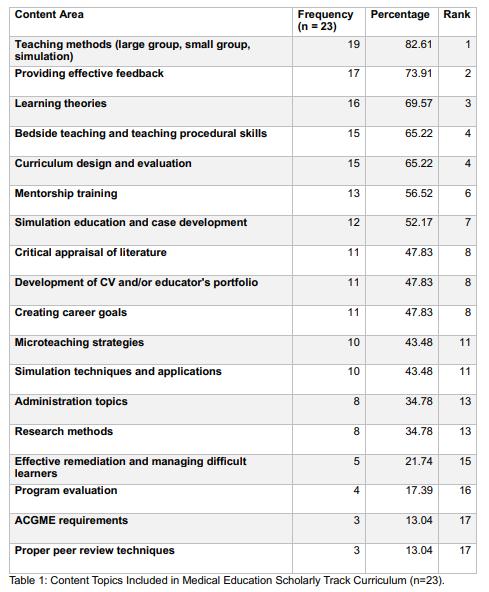
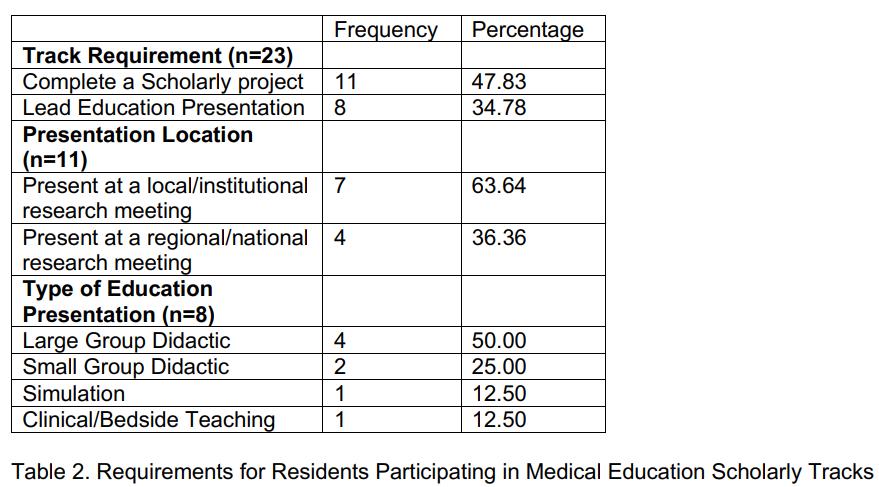
Steffen Simerlink, Andrew Golden
Background: EM residency education often relies on didactics outside of clinical care, with limited structured teaching during shifts due to concerns about effects on ED operations. Morning report, a brief daily didactic session, is widely used in other specialties but less common in EM. We implemented a daily fifteen-minute morning report during clinical shifts to provide focused education. Its operational impact is not well described.
Objectives: The objective of this study is to evaluate the impact of morning report on ED throughput metrics. We hypothesized no significant operational changes after implementation of structured daily teaching.
Methods: This retrospective observational cohort study was conducted in a high-volume, urban academic ED. Morning report occurred daily at 0930 and was facultyfacilitated. ED encounters from six months before (pre) and six months after (post) implementation were utilized, comparing patients arriving during morning report and those arriving 0700-1100 outside of morning report. Outcomes included arrival-to-provider time, ED length of stay (LOS), provider-to-disposition time, time to analgesia, and ED mortality, with subgroup analysis by ESI level.
Results: 11,765 visits were analyzed (pre n=5,835; post n=5,930). Overall LOS was similar (480.7 vs. 492.1 min, p=0.37) and provider-to-disposition time was unchanged (311.3 vs. 303.7 min, p=0.72). Arrival-to-provider time increased slightly (38.0 vs. 44.3 min, p<0.001). Time to analgesia showed no significant overall difference (240.9 vs. 288.1 min, p=0.06). Among ESI-3 patients, LOS (541.0 vs. 693.4 min, p<0.001) and time to analgesia (264.5 vs. 406.7 min, p<0.001) increased. ED mortality did not change.
Conclusions: Morning report was implemented without major effects on ED throughput; however, there were
significant trends by patient acuity, with greater impacts among ESI-3 patients. These differences highlight the need to consider patient level impacts when integrating structured educational activities into clinical shifts.
Brian Walsh, Fred Fiesseler
Background: Chief residency is a prestigious leadership position in medical training programs, often involving increased administrative, teaching, and clinical responsibilities. Concerns exist that these duties may detract from personal study time, potentially impairing performance on in-service training exams (ITE) and reducing first-attempt pass rates on the ABEM Qualifying Board Exam. This study investigates whether serving as a chief resident is associated with diminished ITE score improvements or lower board pass rates compared to non-chief residents.
Methods: We conducted a retrospective cohort analysis of 85 internal medicine residents from a single program over multiple years. Data included raw and percentile ITE scores for postgraduate years 1, 2, and 3, along with score changes (deltas) between years, and first-attempt board pass status. Residents were categorized as chief residents (n=20) or nonchief residents (n=65). Descriptive statistics (means ± standard deviations) were calculated for scores and deltas. Independent t-tests compared continuous variables between groups, and chi-square test assessed differences in pass rates. Statistical significance was set at p<0.05.
Results: Baseline PGY1 raw ITE scores were similar between chief and non-chief residents (70.85 ± 6.48 vs. 70.82 ± 7.14, p=0.98). PGY2 scores (75.85 ± 6.88 vs. 76.82 ± 6.09, p=0.55) and PGY3 scores (79.45 ± 6.25 vs. 79.68 ± 6.47, p=0.89) also showed no significant differences. Score improvements from PGY1 to PGY2 were comparable in raw scores (delta: 5.0 vs. 6.0, p=0.54). From PGY2 to PGY3, raw deltas (3.6 vs. 2.86, p=0.62) and percentile deltas (3.5% vs. -1.31%, p=0.48) likewise did not differ significantly. Firstattempt board pass rates were 6.2% higher for non-chiefs, but this result was non-significant (chi-squared=0.10, p=0.75), indicating no association with chief status.
Conclusions: Chief residency does not appear to impair ITE performance or reduce first-attempt pass rates on the ABEM Qualifying Exam. Chiefs maintained equivalent scores and improvements despite added responsibilities, suggesting that leadership roles may not compromise academic outcomes. These findings support encouraging high-performing residents to pursue chief positions without fear of negative impacts on certification.
Courtney Rich, Japheth Baker, Andres Gomez, Caitlin Corker Relph, Abby Pitts
Background: Residency programs require funding but published cost estimates do not currently consider the potential for direct patient care cost a residency may have on the hospital bottom line. Understanding the influence of a residency program on medication costs is essential for optimizing resource allocation and expectations from stakeholders.
Study Objective: Residency programs may affect clinical practice patterns and expenditures, yet their direct effects on medication costs in emergency departments (EDs) are not well identified. This study evaluated changes in medication utilization and expenditure following the implementation of an emergency medicine residency program in a rural ED.
Methods: We conducted a retrospective analysis of medication data from July 2018 through June 2023 at Magnolia Regional Health Center, a rural hospital in Corinth, Mississippi. Medications administered in the ED were extracted from the EMR; including cost to hospital, cost to patient, and date of administration. Data were divided into pre-residency (July 2018–June 2020) and post-residency (July 2020–June 2023) periods. Trends in overall medication costs and the top 10 medications by expenditure were compared over this period.
Results: After initiation of the residency program, medication costs and patient charges sharply increased, peaking within the first post-implementation year. Mean annual medication expenditure rose from $33,921 before residency
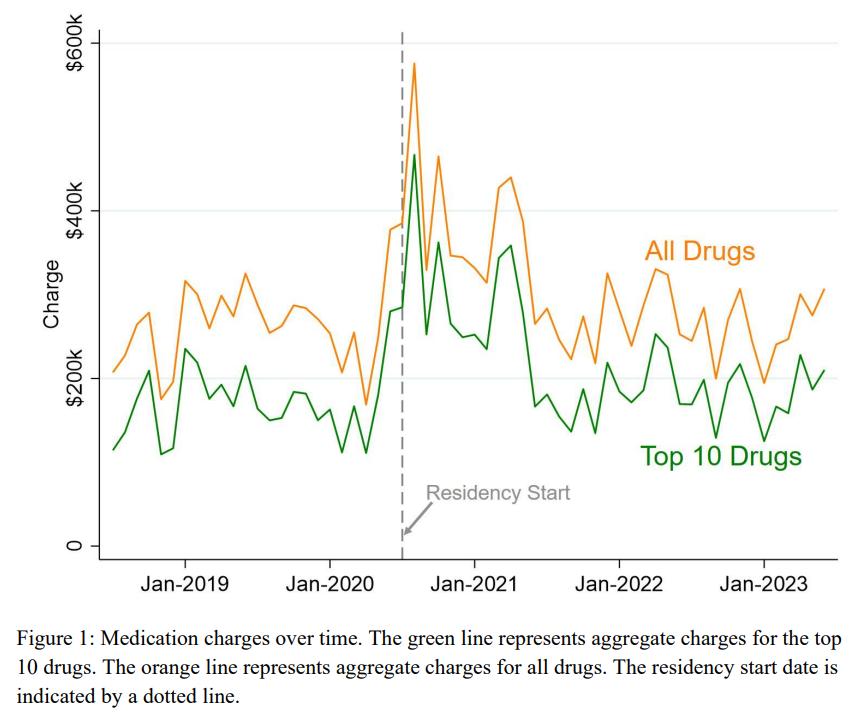
to $51,294 in the first post-residency year, then stabilized to $35,533 thereafter. These changes appeared independent of medication use related to COVID-19. Shifts in medication formulary, including use of Tenecteplase in place of Alteplase and the reduced use of Crotalidae polyvalent immune Fab following the pandemic, influenced expenditure trends.
Conclusion: Implementation of an emergency medicine residency program was associated with a transient increase in ED medication expenditures that normalized within one year. Residency programs may modestly affect short-term pharmacy costs but do not appear to increase long-term expenditures in rural emergency settings.
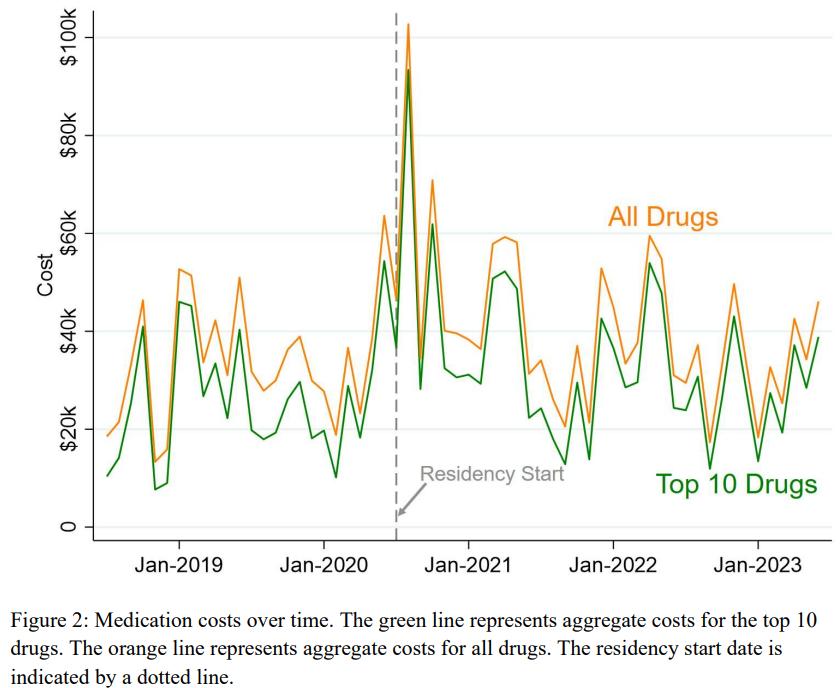
Karly Farr, James Ahn, Paul Kukulski
Background: The ACGME requires that residents be trained on how to teach. Senior residents spend approximately 25% of their clinical time teaching, and medical students report that 1/3 of their clinical learning comes from residents. In 2006, SAEM published a suggested curriculum for resident-as-teacher (RAT) training for EM residents; as of 2016, 60% of EM residency programs identified as having a RAT curriculum. It is not currently known how a RAT curriculum impacts attitudes around teaching or aspirations for future careers involving teaching.
Objectives: Our study aimed to determine if RAT training impacted teaching practices or career aspirations of PGY2 EM residents. We hypothesized that confidence to teach would
increase, perceived difficulty of teaching would decrease, and that aspirations of a career involving teaching would increase.
Methods: This was a prospective cohort study conducted at an academic 3-year EM program. RAT training is held during a 4-hour session at the start of PGY2 year. Residents created a unique ID and anonymously completed a survey of 5-point Likert style questions before and after RAT day. Results were analyzed using paired two-tailed t-tests.
Results: 10 residents were present at RAT training, 8 completed both pre and post surveys. There was a significant increase after RAT training in confidence in teaching (mean difference 0.75, 95%CI 0.16-1.34), including procedural teaching (mean difference 1.13, 95%CI 0.59-1.66). There was no significant increase in the residents’ likelihood to engage in teaching opportunities. There was no significant change in perceived difficulty of teaching learners or change in career preferences.
Conclusions: After RAT training, residents felt more confident in their teaching skills, including procedural teaching. Further, this study suggests that the acquisition of teaching skills does not necessarily increase interest in teaching or careers in education. This study is limited by its small sample size.
Abagayle Bierowski, Brittany Tian, Katie Duquette, Anoushka Barpujari, Erin Hoag, Casey Morrone, Kelly Kehm, Peter Tomaselli, Amanda Deutsch, Elizabeth Martin
Background: Wellness and well-being are increasingly emphasized as key elements of resident support in graduate medical education. Because residency websites often serve as applicants’ first window into program culture, they play an important role in conveying how programs approach wellness. Despite this, the extent and nature of wellness-related information on EM residency websites are not well characterized.
Objective: To evaluate the prevalence and characteristics of wellness-related content on EM residency program websites and to assess variation by program characteristics.
Methods: A cross-sectional analysis of all available ACGME accredited EM residency program websites (N=283) was conducted to assess the presence and content of wellness information. Chi square tests assessed whether wellness information was associated with program size, age, length, and region. Descriptive thematic analysis was inductively conducted to identify wellness content domains.
Results: 146 websites (51.6%) included wellness
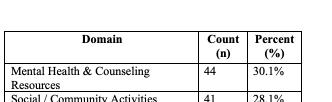
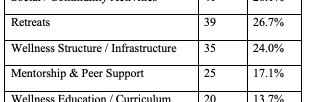
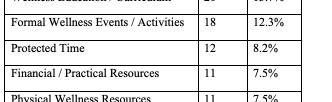
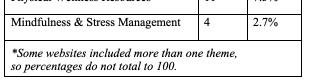
content; while this varied by region, ranging from 41.4% in the Midwest to 60.3% in the Northeast, the differences did not reach statistical significance [χ²(3,N=283)=6.86, p=0.076]. No significant associations were found between wellness content and program size (p=0.304), age (p=0.387), or length (p=0.807). Descriptive content analysis revealed substantial heterogeneity in how programs portray wellness to applicants. Common domains among programs providing descriptive information included mental health resources and access to counseling (30.1%), social and community activities (28.1%), retreats (26.7%), and presence of a formal wellness infrastructure or committee(s) (24.0%) (Table 1).
Conclusions: Wellness content on EM residency websites was inconsistently represented, with substantial variation in how support was described. The lack of program characteristicbased differences suggests that wellness communication is unsystematic and may not reflect broader institutional priorities. Clearer and more consistent wellness information could help programs better convey their culture and enable applicants to identify environments aligned with their needs.
Robert Steele, Taylor Route, Michael Macias, Lauren Donnelly
Background: Residency application volumes have increased, straining faculty time for holistic medical student application review. Artificial intelligence (AI)–assisted screening may be a solution, but can it really review student applications?
Objectives: To compare agreement and accuracy between an AI-based application scoring tool versus trained faculty application reviewers for EM residency interview screening.
Methods: We developed an AI algorithm using the cloudbased platform Airtable to generate scores in 10 predefined domains (exams, research/special projects/community service, leadership/distinction, prior EM experience, MSPE, two SLOE/letter domains, geographic affinity, exceptional bonus, and red flag). Thirty-four applicants from one recruitment cycle were independently scored by both AI and a faculty reviewer. For each domain we calculated percent exact agreement between AI and faculty. All discrepant scores were adjudicated by a trained independent blinded reviewer, who determined which score (Faculty/AI) was most accurate. We calculated the proportion of discrepant cases using McNemar’s test.
Results: Across 340 domain-level ratings, AI and faculty agreed exactly on 252 (74.1%). Agreement by domain ranged from 38.2% for leadership/distinction to 94.1% for red flag scores. Among 88 discrepant ratings, the AI score
was adjudicated correct in 58 (65.9%) and the faculty score in 30 (34.1%) (p=0.004). Patterns were similar across most individual domains.
Conclusions: An AI-based application scoring tool demonstrated substantial agreement with faculty ratings and was more likely than the individual faculty reviewer to match adjudicated scores when disagreement occurred. AIassisted scoring may be a feasible adjunct for initial residency application screening, potentially reducing faculty workload while preserving decision quality.
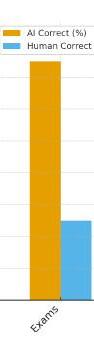
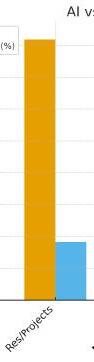
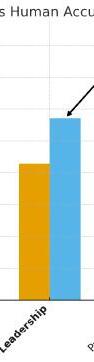
49 Content Validity Index (CVI) as a Tool for Instrument Development: A Methodological Case Study in Neonatal Lumbar Puncture and Umbilical Vein Catheterization for Emergency Medicine Simulation
Brendan Freeman, Kathryn Zabinski, Darya Ryndych
Background: The Content Validity Index (CVI) is a structured framework for evaluating instrument content. Although well-described in nursing literature, its use is limited elsewhere. Simulation-based procedural tools, particularly for neonatal lumbar puncture (LP) and umbilical vein catheterization (UVC), often lack documented content validity, creating uncertainty about instrument quality.
Objectives: To apply CVI methodology to develop and refine task-specific checklists and global rating scales for neonatal LP and UVC for emergency physicians. We hypothesized that iterative CVI analysis with expert raters would improve item- and scale-level validity metrics.
Methods: Design: Cross-sectional, survey-based instrument validation study using CVI methodology.
Setting: Electronic ratings from experts in neonatal and emergency medicine simulation.
Participants: Six expert raters recruited by purposive sampling completed two rounds of item relevance ratings. Measures: Item-Level CVI (I-CVI) and Scale-Level CVI/ Average (S-CVI/Ave) were calculated. Items below accepted thresholds (I-CVI < 0.78) were revised or removed. Descriptive statistics were used for CVI calculations.
Results: Several items showed low I-CVI values initially
and were modified or eliminated. After refinement, S-CVI/Ave values for most checklists and global rating scales approached or exceeded 0.80, indicating stronger content validity
evidence. Some individual items remained below threshold, but overall scale-level metrics improved.
Conclusions: CVI methodology offered a systematic approach for refining simulation-based assessment tools for neonatal LP and UVC. The resulting instruments demonstrate improved content validity and may strengthen evaluation practices in procedural training. Limitations include the small expert sample and absence of further validation evidence.
Tuan Vo, Rebecca Jeanmonod, Donald Jeanmonod
Background: Emergency physicians (EPs) work in highpressure environments where compassion satisfaction (CS) can coexist with burnout (BO) and secondary traumatic stress (STS), the key components of compassion fatigue. This study evaluates CS, BO, and STS across career stages and examines differences between trainees and attendings.
Methods: A cross-sectional survey using the validated Professional Quality of Life (ProQOL) tool was distributed anonymously to practicing and training EPs in the United States. Demographics were collected. Chi-Square and Kruskal–Wallis tests were used, with significance set at p < 0.05.
Results: A total of 1,170 EPs participated: 503 male (42.99%), 658 female (56.24%), and 9 identifying as other (0.77%). Respondents included 166 residents (14%), 192 EPs within 5 years post-graduation (16%), 240 with 6–10 years (21%), 240 with 11–15 years (21%), 144 with 16–20 years (12%), and 188 with >20 years (16%). Significant differences across career stages were found for CS (p = 1.99E-15), BO (p = 6.73E-11), and STS (p = 9.0E-4). CS demonstrated a U-shaped trend—highest among residents and >20-year EPs, with lower levels in mid-career. BO and STS followed inverted U-shaped trends, peaking in mid-career and lowest among trainees and late-career EPs.
Discussion: Mid-career EPs appear most vulnerable to burnout and STS, potentially due to cumulative system pressures, increasing administrative responsibilities, evolving leadership roles, job transitions, and expanding clinical and nonclinical duties. In contrast, higher CS among residents and latecareer EPs may reflect strong training environments, structured support systems, the development of long-term coping strategies, and more stable, established practice settings. These patterns suggest that the career stage plays a significant role in EP well-being. Targeted, career-specific wellness strategies— particularly those aimed at supporting mid-career physicians— may help mitigate burnout and enhance compassion satisfaction across the professional lifespan.
completed post-intervention surveys at 3 months and 9 months, assessing PC understanding and confidence with symptom management and GOC discussions. The nonparametric Wilcoxon signed-rank test was used to compare the two related groups.
Results: A total of 23 and 19 residents completed surveys at 3 and 9 months, respectively. After 9 months, statistically significant improvements were found across all three domains: PC knowledge (p = 0.013), self-reported comfort with pain and symptom management (p = 0.035), and GOC conversation confidence (p < 0.001) (Figure).
Conclusions: Integrating PCPA exposure into resident training significantly improved residents’ knowledge of PC and self-reported confidence in managing acute palliative symptoms and leading GOC discussions. This aligns with ACGME core competencies and addresses known educational gaps in resident training. Formalised PC integration should be considered as a necessary curriculum component to enhance patient-centred, compassionate care.
Aarsh Shah, Jacqueline Nicholas, Rahul Nayar, Erick Ferreras,Tracey Piparo, Paul Peng, Jonathan Briganti
Background: Early initiation of palliative care (PC) in the emergency department (ED) has been shown to improve patient-centered outcomes. However, barriers exist among emergency medicine residents, including limited education in PC and decreased confidence in serious illness symptom management and goals of care (GOC) discussions. No research has examined how an embedded-PC clinician providing on-site clinical guidance influences emergency medicine residents’ primary PC competencies.
Objectives: Evaluate residents’ PC knowledge, clinical competency in symptom management, and GOC discussions during exposure to an ED-embedded palliative care physician associate (PCPA).
Methods: Observational, qualitative study at an urban academic ED from January 1, 2025, to October 1, 2025, where a PCPA (intervention) was present during business hours. Residents
Noah Huff, Manasa Jaishankar, Enola Okonkwo, Nicole Rettig, Rebecca Lipscomb, Steven Garay-Morales, Rahul Mhaskar, Shreya Narayanan, Jordan Beau
Background: Procedural complications are an inevitable part of EM practice, yet training in technical execution, risk communication, and psychosocial support is variable and understudied. Understanding formal and informal training’s impact on EM resident preparedness is critical for patient safety and clinician well-being.
Objectives: Assess EM residents’ awareness of procedural risks, determine prevalence and effectiveness of complication management training on comfort across technical, communication, and psychosocial domains.
Methods: A cross-sectional anonymous survey was distributed nationally to EM residents assessing training exposure, perceived understanding of risks, and comfort managing complications across six domains using Likert scales (0-5). Descriptive statistics, Mann-Whitney U, and Spearman’s correlation were used to assess resident comfort and training.
Results: After excluding two PGY-10 respondents, 60 surveys were included in the analysis. Nearly all residents recognized procedural risks; 96% rated training as very/extremely important. Informal training was common (94%), formal training less so (70%). Mean comfort was highest for consent/risk discussion (3.94±0.88) and technical management (3.57±0.98), intermediate for discussing complications (3.23±1.03), and lowest for psychosocial impacts on patients (2.84±1.09) and clinicians (2.74±1.09). Formal training showed higher comfort across all domains; however, only technical management reached significance (median [IQR] 4 [3,4] vs 3 [2,4], p=0.048). Overall, 72% felt only moderately prepared or less (scores ≤3), and 28% felt unprepared (scores ≤2) to independently manage all aspects of a procedural complication. Comfort across all domains was not significantly correlated with PGY year.
Conclusions: EM residents value complication management training, but many feel unprepared to independently manage complications. Formal training improves technical comfort but impacts on psychosocial domains were minimal. Further research is needed to evaluate educational techniques and their effectiveness in developing comprehensive competency across all domains of complication management.
Jessica Noonan, Padmavathi Tipparaju, Ashar Ata, Sean Geary
Background: Real-time feedback is essential for Emergency Medicine (EM) residents, but the unpredictable clinical environment often limits consistency. Written feedback cards can improve satisfaction but are timeconsuming and resident-led.
Objectives: We hypothesized that a standardized, facultyled verbal feedback system could provide timely, consistent, and efficient feedback to improve resident satisfaction.
Methods: We conducted a prospective, pre–post intervention study in the Emergency Medicine Residency program at Albany Medical Center. Over two academic years, 36 residents and 45 faculty participated. Faculty received a 20-minute training in a
standardized model for the final hour of each shift, called ROPE IN, that incorporates real-time feedback. They were trained to verbally deliver one specific strength and one specific area for improvement per learner and record it in a database. Residents completed pre and post intervention surveys assessing feedback quality and frequency. Descriptive statistics were reported, and the pre-post responses were compared as independent groups via chi-square and Fisher’s Exact tests.
Results: Response rates for pre- and post-intervention surveys were 69 and 86%. There was a statistically significant difference in overall satisfaction with the quality of feedback received increasing from a mean of 3.9 out of 10 pre-intervention to 6.2 post-intervention (<0.01). Residents reported both an increased frequency of receiving feedback (p<0.01) and an increased percentage of faculty who consistently gave feedback that met their expectations (p=0.02). (Figure 1).
Conclusions: An intervention designed to standardize faculty approach to the last hour of clinical teaching shifts can improve resident satisfaction with the quality of feedback received, as well as increase the frequency that feedback is delivered and the percentage of faculty who regularly deliver adequate feedback in real time.
54
Higher Cumulative Scores from Medical Student End-Of-Shift Evaluations Are Associated with Standardized Letter of Evaluation Rankings
Christine Van Dillen, J Roa, Josef Thundiyil, Jay Ladde, Susan Miller, Linda Papa, Hana Kayaleh
Objective: We assessed the association between end-ofshift evaluations for medical students during an emergency medicine (EM) rotation with a Standardized Letter of Evaluation (SLOE) and whether cumulative end-of-shift evaluation scores were associated with SLOE ranking.
Methods: This was a retrospective analysis of existing end-
of shift evaluations of 4th year medical students rotating in the emergency department (ED) from May 2024 to March 2025 at a level 1 trauma center with an ACGME-accredited 3-year EM residency program. We calculated the total score of end-of-shift evaluations for each 4th year medical student rotating through EM. These scores were used to determine a student’s final grade. End-of-shift evaluations included 9 parameters: Clinical knowledge/history taking/physical exam, Clinical reasoning, Charting, Work ethic, Communication/bedside manner, Enthusiasm, Knowledge confidence, Kindness/empathy, and Response to feedback. Total score was 54 for each end-of-shift evaluation. We then calculated a cumulative score by adding the total scores from 8 consecutive end-of-shift evaluations for a potential total score of 432. The main outcomes were i) having a SLOE, and ii) SLOE ranking into categories of top 10%, top third, middle third, or lower third.
Results: There were 54 medical students who rotated though the ED from during the study period, 34 (63%) were female and 20 (37%) were male. Twenty-five (46%) had a SLOE, and 29 (54%) did not. The average cumulative end-of shift score for student rotators with a SLOE was 375.5 (95%CI 366.7-384.3) versus 354.1 (95%CI 340.3-367.9) without a SLOE (p=0.013). There was a significant correlation between cumulative end-of-shift evaluation scores and SLOE ranking with a rho of 0.701 (p<0.001) with higher rankings having higher scores. The mean cumulative score for those ranking top 10% on their SLOE was 409.4 (95%CI 358.6-460.2), those ranking top third was 386.0 (95%CI 369.9-402.0), those ranking middle third was 370.5 (95%CI 360.0-380.9), and those ranking bottom third was 356.9 (95%CI 345.0-368.7) (p<0.001).
Conclusion: This study demonstrates that higher cumulative end-of-shift scores in 4th year medical student rotators were significantly associated with both receiving a SLOE and with incremental increases in SLOE ranking categories.
Nathanael Camick, Oladele Osisami, Alexander Pile, Daniel Bernard, Michelle Kikel, Jimmy Truong, Gloria Felix, Tiffany Murano
Background: For undergraduate college students (UCS), early-exposure programs in medicine stimulate their interest, positively influencing their career aspirations and clarifying misconceptions. These programs aim to diversify the physician workforce and reduce barriers by targeting underrepresented in medicine (URM) groups. This study evaluated how early Emergency Medicine (EM) focused sessions influence URM UCS familiarity, interest, and perceived barriers.
Methods: URM UCS attended faculty-led EM sessions
as part of structured enrichment programs that provided an overview of EM and career pathways. Students completed voluntary, anonymous pre- and post-surveys assessing their EM familiarity, interest, and perceived barriers. These yearly sessions were completed in 2024 and in 2025.
Results: Combining data from both sessions, a total of 109 UCS completed the pre-survey with 87% post-survey response rates. UCS in the 2024 session included 47.4% Black/African American, 26.9% Hispanic/Latino, 3.8% mixed ethnicity, and 71.8% female; demographic data was not collected in 2025. Before the sessions, 13% of UCS were very familiar to extremely familiar with EM, while 37% of UCS expressed probable or definite interest. Barriers included financial cost (73% UCS), lack of mentorship (57% UCS), academic challenges (53% UCS), and insufficient exposure to medicine (44% UCS). EM-specific barriers included stress (65% UCS), work-life balance (58% UCS), and inadequate exposure to EM (59% UCS). Post-intervention, familiarity rose to 74% (UCS), with 84% (UCS) reporting increased interest. Students identified mentorship (84% UCS), shadowing (96% UCS), workshops (72% UCS), and info sessions (64% UCS) as key in fostering further intent to explore a career in EM.
Conclusion: This study underscores the need for targeted EM programs to support diversity through department-led initiatives for increased exposure through mentoring and shadowing for UCS URM groups. Addressing persistent barriers and limited exposure through mentorship and longitudinal engagement may further enhance efforts to diversify the EM workforce. Future plans include tracking students’ academic trajectories to evaluate retention of URM students in EM.
56
Framing Failure: Thematic Analysis of Applicant-Cited Reasons for Exam Failure in EM Residency Applications
Abagayle Bierowski, Erin Hoag, Kathleen Cruz, Jiten Patel, Kelly Kehm, Peter Tomaselli, Roberto Gonzalez Merino
Background: Variation exists in how applicants and advisors approach discussion of board failures on EM residency applications. Understanding these narratives may inform advising and holistic review practices.
Objective: To examine applicant-cited reasons for exam failure and variation in disclosure and themes by gender, degree type, and International Medical Graduate (IMG) status.
Methods: A single-site retrospective analysis of 20252026 EM ResidencyCAS submissions identified applicants with ≥1 USMLE/COMLEX failure. Two reviewers independently performed inductive qualitative coding of applicant narratives to categorize cited reasons for failure and self-reported improvement strategies. Descriptive statistics,
chi-square tests, and exploratory logistic regression examined associations by gender, degree type, IMG status, and exam type, as well as disclosure patterns.
Results: Of 1195 applications for the 2025–2026 cycle (≈30% of all EM applications), 199 (16.7%) had ≥1 USMLE/ COMLEX failure. 117 (58.8%) addressed failure(s) in a reflective statement (n=66, 56.4%), personal statement (n=45, 38.5%), or both (n=6, 5.1%). 140 reasons for failure were cited (Figure 1), including family illness/death (n=30, 25.6%), test-taking or academic difficulty (n=26, 22.2%), personal illness (n=12, 10.3%), and caregiving responsibilities (n=10, 8.5%). 32 applicants (27.4%) mentioned failure(s) without explanation. Women were more likely than men to attribute exam failure to caregiving demands (8.3% vs 1.1%, p = 0.023), and IMGs were less likely to cite personal/intrinsic causes than non-IMGs (12.9% vs 28.5%, p = 0.017).
Many applicants (n=67, 57.3%) outlined changes leading





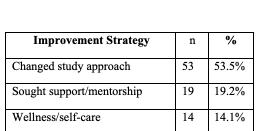
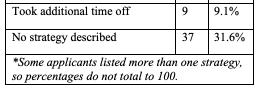
to success while 37 (31.6%) did not. Improvement strategies included altered study approach (n=53, 53.5%), seeking support/mentorship (n=19, 19.2%), wellness/self-care (n=14, 14.1%), and additional time off (n=9, 9.1%) (Table 1). Reporting did not vary by gender, degree, or IMG status.
Conclusions: These findings highlight the need for structured advising on discussing academic setbacks and for holistic review practices that recognize resilience and improvement following prior challenges.
Adriana Facchiano, Patrick Cheatle, Chloe Jeanmonod
Introduction: Formal and informal mentorship is a critical component of all levels of medical training, allowing opportunities for personal and professional development, participation in scholarly activities, and career exploration. While it is a requirement by United States accreditation bodies that medical schools provide mentorship programs, such programs are not standardized and there is no such requirement at the undergraduate level. Additionally, studies in other professional fields have shown that men are more likely to have mentors than women. This study aimed to compare the prevalence of mentorship among medical and premedical students and discern if there are gender differences.
Methods: Pre-medical and medical students were recruited to complete anonymous web-based surveys. Pre-medical students were recruited by email to 200 college programs chosen at random via the coordinator for their medical professional interest groups. Medical students were recruited by email to 200 medical schools chosen at random via the dean of students. Students were also recruited on shift at the primary study site via QR codes in the emergency department. Students indicated if they had a mentor in their specialty of interest. Choices between maleidentifying and female-identifying students were compared using chi square. The study was IRB reviewed.
Results: 238 medical students (147 (61.8%) female, 91 (38.2%) male) and 144 pre-medical students (119 (82.5%) female, 25 (17.4%) male) enrolled. Two medical students and 1 pre-medical student are non-binary and were excluded from analysis. 61% of medical students had mentors versus 18% of pre-medical students (p < 0.05). There were no significant differences in mentorship between genders in either group (p=0.74 for medical students, p = 0.81 for pre-medical students).
Conclusion: There is a mentorship gap in medical education, particularly in the undergraduate setting. This gap highlights a critical deficiency in the pre-medical experience and underscores the need for early, structured opportunities for guidance and professional development.
Mary McLean, Alina Tsyrulnik, Geoffrey Comp, Leigh McLean
Background: Assistant/Associate Program Directors (APDs) are critical to emergency medicine (EM) residencies, yet standardized tools assessing their role perceptions and satisfaction are lacking.
Objectives: We aimed to explore EM APD role perceptions and satisfaction by developing and validating an original, standardized APD Perceptions and Satisfaction (APDPS) scale.
Methods: The CORD APD Community of Practice (COP) developed an 8-item APDPS tool using systematic survey methodology. Pilot testing was conducted with the 32 COP members, 23 (72%) of whom responded. The pilot utilized preparatory psychometric analysis methodology to assess variance, internal consistency, factor structure, and convergent validity against a previously published Provider Engagement Scale (PES). Specifically, pilot analysis included Cronbach’s alpha, McDonald’s omega, principal components analysis, and Pearson correlations. The final APDPS was distributed to all 493 United States EM APDs designated on the CORD Member Directory, from 4/2024–10/2024.
Results: Pilot analysis demonstrated adequate variance and high internal consistency (Cronbach’s alpha 0.81, McDonald’s omega 0.79). Strong convergent validity with the PES was observed (r = 0.68, p < 0.001). One item loaded poorly (0.25) and was removed. The revised 7-item APDPS showed improved properties (Cronbach’s alpha 0.83, McDonald’s omega 0.81) with loadings from 0.57 to 0.85. Final distribution to 493 APDs yielded 362 respondents (73.4% overall response rate). On final analysis of the nationally-distributed survey, mean APDPS score was 3.57 (95%CI 3.51-3.64), indicating moderately positive perceptions.
Conclusions: The APDPS scale demonstrates strong psychometric properties as a validated, standardized tool for
measuring APD role perceptions and satisfaction. Overall scale scores are skewed positive but there is wide variation in these role perceptions and satisfaction. Limitations include likely response bias, as respondents were not required to answer any single survey question. Future directions will utilize this tool to explore demographic and institutional factor correlations with APD perceptions and role satisfaction.



Carolyn Commissaris, Derek Monette, Eric Shappell, Daniel Egan
Objectives: The transition from senior resident to independently practicing attending physician in EM presents substantial non-clinical challenges. Prior qualitative work has described difficulties in leadership, supervision, legal knowledge, and system navigation, yet no U.S.-based needs assessment has evaluated how best to prepare senior EM residents for this transition. This study aims to assess the perceived value, priority content, preferred format, and ideal duration of a senior resident–specific “transition to practice” (TTP) curriculum.


Methods: We conducted a single-site, cross-sectional survey of senior residents, recent graduates (≤5 years), and junior EM faculty at a four-year academic EM residency. The survey included Likert-scale, multiple-choice, and openended items addressing perceived curriculum value, preferred educational approaches, key topic domains, and optimal timeline. Descriptive statistics were used for quantitative data, and thematic analysis was applied to free-text responses.


Results: Forty-six participants (36% response rate)—18 residents, 21 alumni, and 7 junior faculty—completed the survey. Support for a PGY-4 curriculum was high (mean 4.44/5), with residents rating its value more strongly than attendings. Nearly half of respondents (48%) endorsed a 4–6-month curriculum. Small-group discussion (82%) and panel discussion (74%) were the preferred instructional methods. High-priority topics included ED documentation, malpractice and liability, billing and coding, and supervision
of residents and advanced practice providers. Differences emerged across groups: residents emphasized job search skills, whereas attendings highlighted interhospital transfers. Openended responses reflected anxiety regarding solo coverage, legal responsibility, and unfamiliar systems.
Conclusions: This needs assessment demonstrates strong support for a structured, senior resident–focused TTP curriculum in EM. Respondents favored interactive, practice-relevant instruction targeting legal, supervisory, and administrative competencies. These findings provide a foundation for curriculum design and underscore the importance of tailoring training to prepare EM residents for the demands of independent practice.
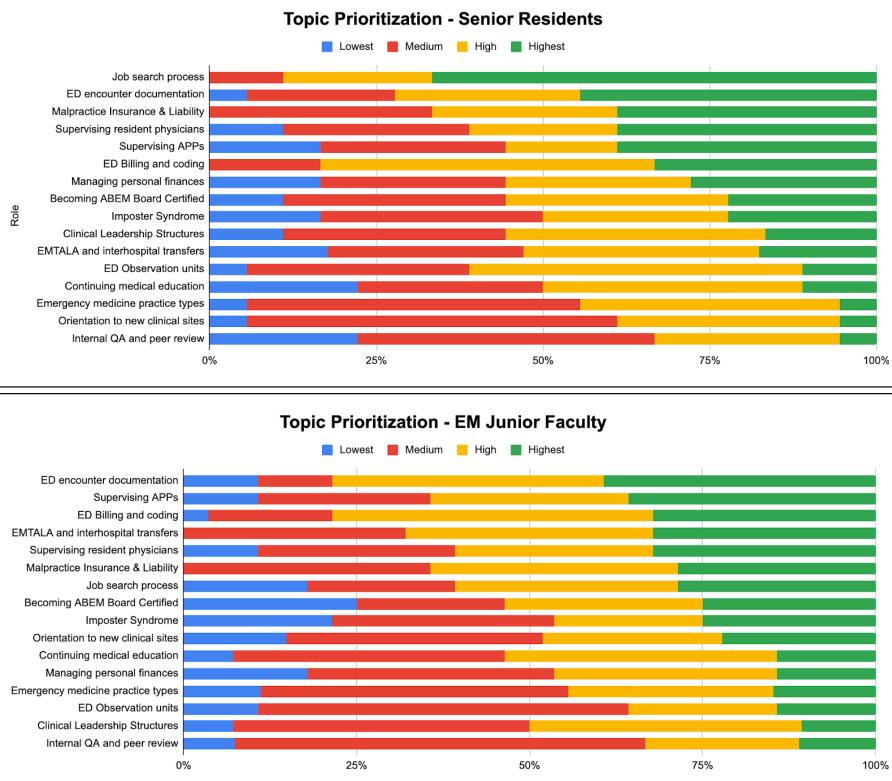
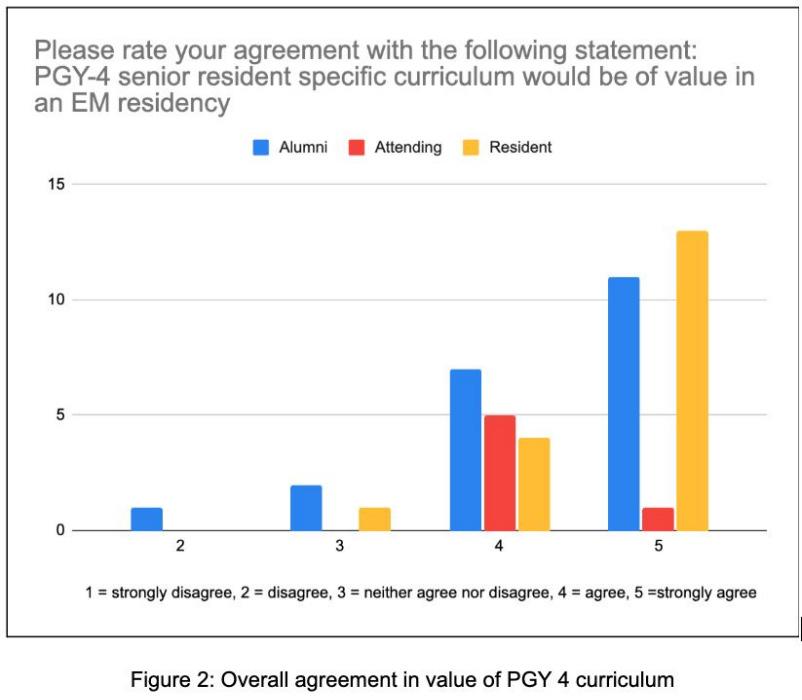
Holly Stankewicz, Andrew Mittelman, Shaila Quazi
Background: The ACGME defines procedural competency using minimum numbers of index procedures, but clinical opportunities to perform these procedures are inconsistent. Simulation-based training has been increasingly used to address experiential gaps, though resources and curricula vary widely, and standardized approaches are limited.
Objective: To examine the self-reported effect of simulation-based training on Emergency Medicine (EM) residents’ procedural confidence at or soon after graduation.
Methods: A 25-item survey was administered in 2024–2025 to senior residents and recent graduates from a convenience sample of U.S. residency programs. Question items targeted the impact of simulation on each of the ACGME procedures as well as procedural training as a whole.
Results: Responses were received from 175 residents across 22 programs, representing all U.S. regions. All residents reported presence of simulation-based procedural training and 49% rated it “critical” to procedural proficiency. Greater simulation resources were associated with higher confidence in large-bore chest tube placement and cardiac pacing. Minimum requirements for cricothyrotomy (87%), pericardiocentesis (85%), lateral canthotomy (67%), and cardiac pacing (46%) would not have been met without simulation. In multilevel logistic regression models predicting composite confidence (≥70% of procedures rated competent), structured simulation curriculum (OR 1.89) and simulation faculty (OR 1.06) were positively associated with confidence. Procedural task trainers had the strongest impact, significantly increasing the odds of achieving procedural competence (OR 6.88).
Conclusion: Simulation is a high-resource strategy for EM procedural skill acquisition, considered essential or critical by many respondents to bridge opportunity gaps. These findings emphasize the importance of consistent, wellresourced simulation training to ensure all trainees graduate prepared for safe, independent practice.
Abagayle Bierowski, Erin Hoag, Kelly Kehm, Peter Tomaselli, Jiten Patel, Kathleen Cruz, Cody Andreoni, Madeline Dwyer, Danielle Melisiotis
Background: The notion that demanding rotations immediately prior to the In-Training Examination (ITE) may affect performance is largely anecdotal. While one surgical study
demonstrated significantly lower exam performance among interns assigned to ‘hard’ rotations in the two months preceding their in-service exam, no comparable EM studies exist.
Objective: To evaluate whether rotation difficulty preceding the ITE was associated with exam performance.
Methods: This retrospective study included 166 residents from a single academic, urban EM residency program across 9 years (2017-2025), yielding 390 ITE data points. Rotation schedules and ITE percentiles were reviewed for the 12 weeks preceding the exam. Each rotation was rated ‘easy’ or ‘hard’ based on majority consensus (>75%) from surveys of current residents, recent alumni, and GME leadership; EM blocks were designated as a separate ‘medium’ category (Table 1). Week-specific differences in mean ITE percentile were evaluated using one-way ANOVA. The number of ‘easy,’ ‘medium,’ and ‘hard’ rotations in both the four and twelve weeks preceding the ITE was analyzed using Pearson correlations and multivariable regression, controlling for gender and prior ITE percentile.
Results: Rotation difficulty across the 12 weeks preceding the ITE was not significantly correlated with exam performance, nor was rotation difficulty during individual weeks in the month preceding the exam (p>0.30 for all). However, in multivariable analysis of PGY2 and PGY3 residents after controlling for gender and prior ITE performance, the number of ‘easy’ (β=+3.57, CI 1.80-5.35, p<0.001) and ‘medium’ EM weeks (β=+4.05, CI 2.605.50, p<0.001) in the month preceding the ITE were each independently associated with higher ITE percentiles; the number of ‘hard’ weeks (β=2.70, CI -0.30-5.70, p=0.078) was not (Figure 1). Prior ITE percentile was independently associated with ITE performance (r=0.60, p<0.001) and remained a significant predictor across all models.
Conclusions: Rotation difficulty in the immediate preexam period was associated with ITE performance, suggesting short-term workload may be a modifiable factor in exam preparation.









Christopher Serle, Jillian Stone, Stephen Leech, Shivani Ruf, Reshma Sharma, Tyler Moriarty, William Waite, Zakariya Hassouneh, Brooke Hoehn, Sadman Chowdhury
Background: Central Venous Line (CVL) placement is a common and emergent procedure performed in the ED. The majority of CVLs are placed under ultrasound (US) guidance as the standard of care, but the gold standard for confirmation of placement and assessing for complications remains CXR. Confirming CVL placement with CXR often has significant time delays in critically ill patients. In addition to CXR, we studied an US protocol performed immediately after CVL placement to confirm correct placement and assess for complications.
Objectives: The primary objective was to assess whether US is faster in confirming CVL placement as compared to CXR. The secondary objective was to assess if US can identify potential complications of CVL placement.
Methods: This was a prospective, observational, convenience study of ED patients at least 18 years old who required CVL placement. After CVL placement was completed, an US protocol was performed by ED providers. The protocol included a cardiac US view to visualize agitated saline in the right heart to confirm venous placement. Bilateral lung views were assessed for lung sliding to rule out pneumothorax. Images were archived and available in the electronic medical record for all providers to view. Key study variables included time to performance of CXR and time to interpretation by a boardcertified radiologist. Statistical analysis was performed using descriptive statistics, paired t-test, and 95%CI.
Results: A total of 30 patients were included. Time from US to CXR performance had a mean time of 49 minutes, p < .001 (95%CI 32.9-65.1). Time from US to CXR interpretation by radiology had a mean difference of 93 minutes, p < .001 (95%CI 73.3-112.4). No misplaced lines, arterial placement, or pneumothoraces were identified by either imaging modality.
Conclusion: In our prospective observational study, US significantly reduced time to confirmation of correct CVL placement. In addition, there was no significant difference in complication assessment when compared with standard CXR. We question if the routine use of CXR is necessary to confirm placement of CVLs.
Shivani Ruf, Reshma Sharma, William Waite, Jillian Stone, Stephen Leech, Christopher Serle, Maria Valeria Ortega
Background: Commercially available simulation phantoms











are prohibitively expensive and unaffordable for most training programs. Low-cost, reusable, three-dimensional (3D)-printed simulation models may bridge this gap by enabling learners to practice performing ultrasound (US)-guided procedures.
Objectives: This study evaluated the feasibility and educational value of a 3D-printed US-guided peripheral intravenous (PIV) simulation model for point-of-care ultrasound (POCUS) education.
Methods: Emergency medicine (EM) residents received a demonstration on model use and performed a single USguided PIV insertion attempt on the 3D-printed phantom. US trained faculty observed and graded residents on several performance metrics. Time to completion was recorded, and residents then completed a survey assessing ease of use, realism, and confidence improvement.
Results: A total of 20 EM residents tested this model. 18 residents (90%; 95% CI 68–98) completed the procedure within 2 minutes and 19 residents (95%; 95% CI 75–99) achieved successful cannulation. The median procedure time was 52 seconds. Residents rated the phantom positively. Anatomic realism received a mean score of 8.01 on a 10 cm likert scale (95% CI 7.23–8.79). US image quality was rated 8.84 (95% CI 8.25–9.42). The phantom’s impact on improved






procedural confidence averaged 8.65 (95% CI 7.97–9.33). The model was low-cost and highly usable. The 3D-printed mold costs approximately $35 to make. Based on materials used, we expect it to allow indefinite reuse. The estimated cost of materials per model was $7.11. Each model can be used at least 32 times before degradation of image quality.
Conclusion: This low-cost, reusable 3D-printed ultrasoundguided PIV phantom was effective, realistic, and feasible for resident training. The high success rate and short procedure times suggest that affordable 3D-printed models can provide a sustainable alternative to commercial simulators, expanding access to PIV training across diverse educational settings.
Allison Beaulieu, Brian Merritt, Julia Ruggieri, Rowan Kelner, Christine Raps, Patrick Hughes, Megan Fix, Robert Stephen, Jeff Druck
Objectives: Feedback is fundamental to Emergency Medicine (EM) education; however, residents frequently encounter obstacles when attempting to obtain and implement it. Learner-driven feedback strategies may improve feedback culture but approaches to promote feedback literacy are underexplored. We developed and evaluated a workshop to prepare EM residents to actively engage in the feedback process.
Methods: A prospective pre-post survey was conducted at a single academic EM residency. PGY1–PGY3 residents attended a workshop covering clarifying expectations, goal setting, and receiving feedback. Residents completed pre- and post-surveys using a 5-point Likert scale to assess comfort. Knowledge retention was assessed one week with a 15 question assessment. Pre and post-surveys were evaluated by paired t-test analysis.
Results: Thirty-one residents completed the pre-survey, and 30 completed both the post-survey and the knowledge assessment. Statistically significant improvements were observed in: clarifying expectations (Δ = 0.67; p < 0.001), creating SMART goals (Δ = 0.90; p < 0.001), comfort receiving feedback (Δ = 0.33; P = 0.01), seeking feedback (Δ = 0.40; p = 0.02), creating feedback action plans (Δ = 1.70; P < 0.001), reflecting on and implementing feedback (Δ = 0.40; p < 0.001), and recognizing feedback as the learner’s responsibility (Δ = 0.53; p = 0.002) (Table 1). Perceptions of feedback’s importance and impact on patient care remained high and unchanged (Table 1). Knowledge retention averaged 91.1%, with highest scores in Expectations and SMART Goals (96.7%) and lowest in Feedback domains (81.1%) (Table 2).
Conclusion: A structured workshop significantly improved EM residents’ comfort, knowledge, and skills in engaging with feedback. Early introduction of learner-driven
strategies may strengthen feedback culture and support professional development. Further research is needed to assess long-term retention, clinical application, and the role of faculty development.
John Lee, Benjamin Johnson, Joseph Cornelius
Background: Indiana University School of Medicine will launch a new emergency medicine residency program at Indiana University Health Bloomington (IUH-B) in 2026. No prior work has examined community perceptions of emergency medicine residency implementation in a community hospital.
Objectives: To assess community members’ awareness, attitudes, and concerns regarding the introduction of emergency medicine (EM) residents at IUH-B, and to evaluate prior experience with resident physicians, perceptions of forthcoming residents, and understanding of resident training.
Methods: This cross-sectional observational study used a concurrent convergent mixed-methods design. A convenience sample of structured surveys and semi-structured interviews was conducted with adult patients and caregivers receiving
emergency care at IUH-B, a level III trauma center with 60 ED beds, in June and July 2025. Quantitative data were analyzed with descriptive statistics and chi-square testing; qualitative data underwent transcription and thematic analysis.
Results: Thirty-nine participants completed surveys and 40 completed interviews. Many were aware of the upcoming residency programs (59%), but only 49% correctly identified an EM resident’s training level. Most (95%) felt residents would improve care quality, access, and modernization in Bloomington. Only 5% expressed concern about resident involvement, mainly supervision. Qualitative themes (Table 1) revealed optimism about benefits such as increased staffing, shorter wait times, and improved physician retention. Participants valued a resident who is competent, personable, and attentive, while wanting adequate supervision. Prior experience or awareness of the programs did not significantly influence comfort or support (χ²=0.004, p=0.95; χ²=0.034, p=0.85). The initial round of thematic coding resulted in high inter-rater reliability with a Cohen Kappa value of 0.724 (p=< 0.001).
Conclusions: Community members expressed strong support for the new residency programs and confidence in future residents providing safe, supervised care. Minimal concerns centered on experience and oversight. Findings highlight the need for community education regarding residents’ roles and training as IUH-B prepares for program implementation.
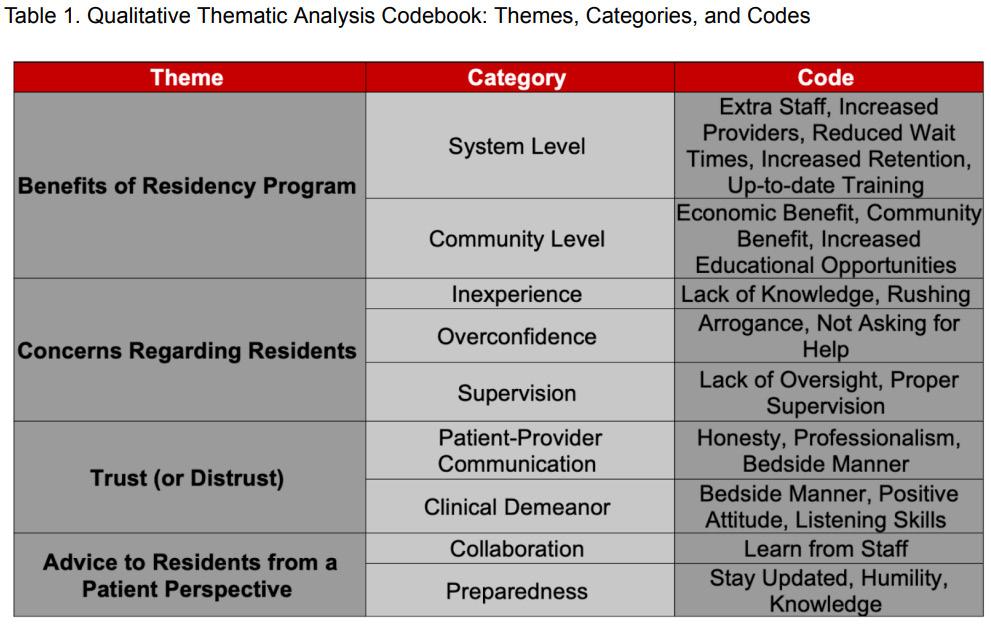
Amy Mariorenzi, Kaitlin Lipner, Michael Prucha, Gianna Petrone, Alexander Sheng
Background: Emergency Medicine (EM) residency programs face the challenge of developing systems to manage unexpected absences. Currently, there is no published literature describing the state of backup policies in EM.
Objectives: This study aims to fill that gap by examining the backup policies of ACGME-accredited EM residencies in the United States, highlighting variations and commonalities.
Methods: We conducted a cross-sectional survey of EM residency directors across the US. Respondents completed an electronic survey with multiple-choice and open-ended questions. Descriptive statistics were used for analysis.
Results: Out of 282 directors surveyed, 107 responded (37.9%). Approximately 80% of programs have a formal backup policy. Academic programs are more likely to have such policies than community-based programs (92.7% vs 54.2%). Four-year programs have a higher prevalence of formal back up policies compared to three-year programs (91.7% vs 76.3%). Smaller programs with 8 or fewer residents per post-graduate year were less likely to implement formal policies (50%).
About 54% of program directors believe their backup policy effectively meets their program needs, 34% are ambivalent, and 10% feel their policies are inadequate. For those dissatisfied or ambivalent (n=45), the key challenges include managing multiple call-outs (58%), over-use of backup (56%), and unclear distinction between excused vs unexcused absences (44%).
The predominant backup structure involves a resident on a 24-hour backup shift (55%). Conversely, 34% of programs may leave the shifts unstaffed when someone calls out.
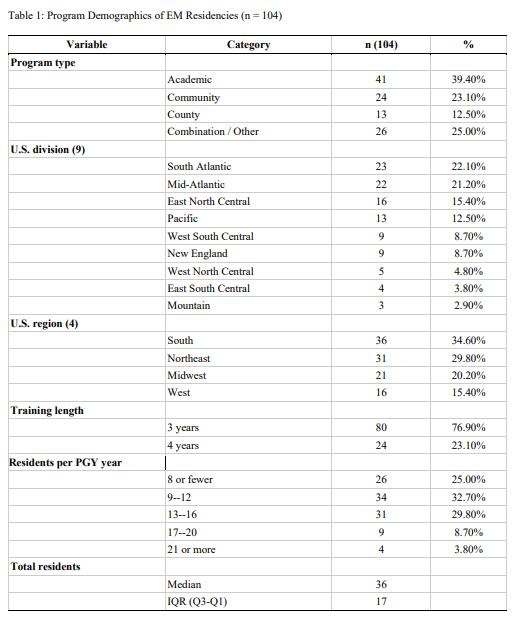
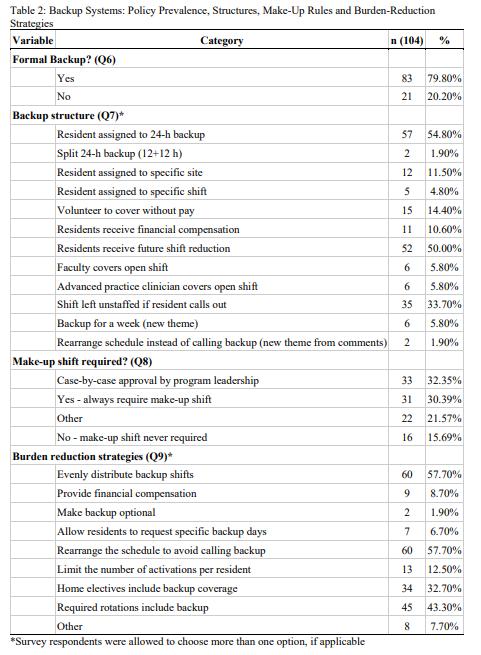
Regarding make-up shifts, decisions may be case-by-case (32%), always required (30%), never required (15%), or follow other customized rules (21%).
Conclusions: This study is the first exploration of backup systems in ACGME-accredited EM residency programs in the United States, providing valuable insights into the various approaches and challenges faced by these programs.
Jaron Raper, Zachary Pacheco, Andrew Bloom, Erin Shufflebarger, Benjamin Von Schweinitz, Zachary Jasper, Helena Kons, Erica Anderson, Emily Grass, Sherell Hicks
Background: Simulation-based trauma education is integral to developing early competence in advanced trauma life support (ATLS). Immersive simulation (IS) offers experience but provides limited opportunities for feedback and deliberate repetition. Prior research in procedural
education supports Rapid Cycle Deliberate Practice (RCDP)’s effectiveness in the acceleration of time-critical actions, but data specific to ATLS is limited.
Objectives: To compare the performance of fourth-year medical student trauma teams trained using RCDP versus IS, examining time to completion of key ATLS actions.
Methods: This prospective, randomized study was conducted at a single academic medical center. Fourth-year medical EM clerkship students participated in team-based simulated trauma resuscitations using either IS or RCDP. In a subsequent assessment case, times to completion of ATLS tasks were recorded: primary survey, hemorrhage control, intravenous (IV) access, blood/fluid transfusion, FAST, Chest/pelvis x-ray, secondary survey, trauma consultation, pelvic binder application, tranexamic acid (TXA), and chest decompression. Mean times for each task were compared between groups using the Mann–Whitney U test.
Results: Ten team simulations were analyzed (Immersive = 5; RCDP = 5). Mean completion times (seconds) for RCDP versus IS were as follows: Primary survey (36.5 vs 56.4; p = 0.14), Hemorrhage control(121.3 vs 159.6; p = 0.72), IV access (39.5 vs 92.9; p = 0.14), Blood/fluid transfusion(51.0 vs 102.8; p = 0.18), FAST exam (114.8 vs 146.7; p = 0.56), Chest/pelvis x-ray(119.8 vs 121.4; p = 1.0), Secondary survey(189.5 vs 138.8; p = 0.063), Trauma consultation(229.3 vs 316.3; p = 0.19), Pelvic binder(162.5 vs 188.5; p = 0.62), TXA(144.7 vs 220.5; p = 0.80), Chest decompression(37.8 vs 152.3; p = 0.016).
RCDP teams demonstrated faster mean performance across nearly all domains, with chest decompression achieving statistical significance and IV access and transfusion trending toward significance.
Conclusions: RCDP simulation yielded faster execution of ATLS tasks compared with IS, reaching significance for chest decompression and near-significance for IV access and transfusion. Despite a limited number of simulations, the trend across tasks suggests meaningful educational benefit, meriting further study.
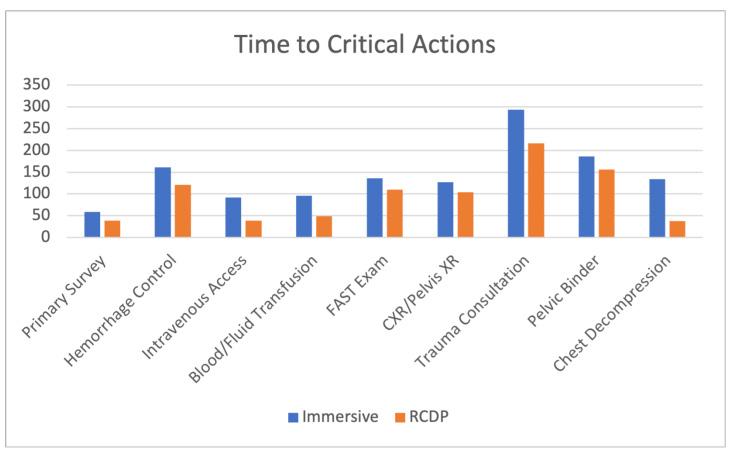
Dominique Hill
Background: The medical field has historically lacked diversity, with residency recruitment influenced by implicit bias. In 2023, the Association of American Medical Colleges reported that only 7.3% of MD EM residents were African American, compared with 64.4% Caucasian, and 41.9% of EM residents (MD and DO) identified as female.
Objectives: To evaluate the impact of blinding faculty reviewers to applicant race and gender on the diversity of medical students interviewed and matched at our EM residency program.
Methods: A retrospective observational study was conducted using Electronic Residency Application Service (ERAS) data from applicants to the Trinity Health Livonia EM residency program from 2018–2025. Demographics of medical students who interviewed and matched before and after the implementation of faculty blinding in September 2021 were compared. Applications missing race and gender were excluded from analysis.
Results: Out of 701 applicants that were interviewed, 41% self-identified as female and 40.5% as non-white. Following implementation of reviewer blinding, there was a statistically significant increase in the proportion of interviewed applicants who were female (p=0.0003), non-white (p=0.0001), and female or non-white combined (p=0.0004). Among the 45 matched residents (42% female, 57% male; 59% non-white, 40% white), differences were not statistically significant for female (p=0.3975), non-white (p=0.1240), or female or nonwhite combined (p=0.2241). 141 applicants were excluded due to missing demographic information.
Conclusions: Blinding faculty reviewers to race and gender was associated with a statistically significant increase in diversity among interviewed but not matched medical




students. The absence of significant findings for matched data may reflect the limited sample size and positions filled through the Supplemental Offer and Acceptance Program. Future research from multiple programs is needed to determine if there is a correlation between blinding faculty and improving diversity in EM residencies.
Sydney Miller, Michael Sobin, Frances Rusnack, Kevin Schlicksup, Kristen Moore
Background: Resident-as-teacher (RAT) initiatives are increasingly emphasized in EM residencies. Yet the extent to which residents feel prepared to teach and supervise junior learners and advanced practice providers (APPs) in the ED remains unclear.
Objective: To address this gap, we developed a learnerfocused survey assessing residents’ confidence in didactic teaching and clinical supervision. We hypothesized that residents would report insufficient confidence in these skills, suggesting unmet needs in RAT training.
Methods: In June 2024, Foundations of Emergency Medicine (FoEM) administered an online survey with piloted Likert-scale and multiple choice questions to program learners. Those who identified as EM resident physicians received questions regarding confidence in teaching and supervision. Descriptive statistics were reported.
Results: The FoEM learner survey collected 929 responses (15.9% response rate), with 791 representing EM resident physicians across 123 programs (PGY-1: 292; PGY-2: 239; PGY3: 223; PGY-4+: 37). Residents reported moderate confidence across most teaching domains, including delivering lectures (46.5% extremely/quite confident vs 20.6% not at all/slightly confident), teaching junior learners in classrooms (47.9% vs 15.9%) and on shift (55.4% vs 11.8%), supervising junior learners (48.2% vs 17.1%), and supervising procedures performed by junior learners (52.3% vs 15.3%, Fig. 1). Confidence was lowest
for supervising APPs (31.6% vs 35.9%). PGY-1s reported lower confidence across all domains (Fig. 2). Confidence did not differ by anticipated post-graduation practice setting.
Conclusion: EM residents report overall confidence in teaching and supervising junior learners, which increases with experience. However, confidence is notably lower for APP supervision. Further research should explore strategies to optimize early educator development and improve confidence in supervising APPs.
is a vision-saving emergency procedure used to treat orbital compartment syndrome (OCS), often caused by retrobulbar hematoma. Despite its importance, many EM trainees lack confidence in performing LCC due to the rarity of clinical exposure and limitations in existing simulation models.
Objective: To evaluate a cadaveric model that simulates retrobulbar hematoma for lateral canthotomy education in EM trainees.
Methods: Using a technique adapted from Chin et al. (2020, Int Forum Allergy Rhinol.), proptosis was simulated in fresh-frozen cadavers. This prospective observational study used pre- and post-intervention Likert scale surveys to evaluate EM residents’ LCC procedural confidence and perceptions during annual procedure labs (2022-2023) at a single academic center. Survey data was analyzed with descriptive statistics and independent statistical testing. Outcomes included prior procedural experience, self-reported procedural confidence, and perceived model fidelity.
Results: 29 participants completed the pre-intervention survey and 25 completed the post-intervention survey. Most participants were PGY-3 residents (66%), with 55% reporting having never performed the procedure. The mean confidence among participants increased from 2.79 ± 1.42 to 4.32 ± 0.99 with a mean difference of 1.53 ± 0.34, p<0.001, 95%CI 0.85-2.21. The average rated fidelity of the model without OCS simulation was 2.76 ± 1.05 and the model with OCS simulation was 4.21 ± 0.76 with a mean difference of 1.44 ± 1.12, p<0.001, 95%CI 0.977-1.90.
Conclusion: To our knowledge, this is the first study to evaluate the educational impact of a cadaver-based simulation model incorporating a simulated retrobulbar hematoma for EM residents performing LCC. By providing both anatomic realism and pathophysiologic fidelity, this model uniquely improves learner confidence and reinforces the value of realistic simulation for high-stakes procedures like LCC.
Laryssa Patti, Amanda Esposito, Daniel Polvino, Mary Rometti
Alexander Bleau, Jennifer Campoli, Susan Wojcik, Conor Young, Kayla Dueland-Kuhn
Background: Lateral canthotomy and cantholysis (LCC)
Background: Individualized learning plans (ILPs) identify learner strengths and weaknesses, and develop personalized action plans with faculty input. In 2024-5, we piloted ILPs for students enrolled in the emergency medicine (EM) TTR course. Students completed an individualized selfassessment (ISA), then developed an ILP with EM faculty. We surveyed senior medical students completing the EM TTR course regarding effectiveness and perception of ILPs.
Objectives: We hypothesize the use of ILPs for MS4s can guide their study plans and areas of improvement at the start
of residency training.
Methods: Prior to the TTR course, students completed an online pre-course survey regarding student understanding and perception of ISAs and ILPs and effectiveness of ILPs to guide undergraduate medical education (UME) and graduate medical education (GME) learning. Questions were scored on a 5-point Likert scale. Students completed an ISA and ILP with course leadership. After course completion, students completed a post-course survey. Data was collected from student surveys from March 2024 and 2025.
Results: A total of 24 medical students were included with a 100% survey response rate. Approximately 60% had never completed an ILP. Prior to intervention, students were neutral (average 2.88, standard deviation (SD) 1.33) regarding their previous knowledge of ILPs and thought there was some benefit in completing ILPs in UME (3.69, SD 0.69) and GME (4.04, SD 0.62). Following the course, students reported increased knowledge and comfort with ILPs (4.67, SD 0.48) and benefits of ILPs in UME (4.54, SD 0.51) and GME (4.65, SD 0.58). After implementation, all narrative feedback about ILP participation was positive.
Conclusions: ILP integration into UME is a useful tool for self-directed learning and was perceived positively by this pilot of medical students over two academic years. Further opportunities include expanding to continue ILPs for residents in EM.
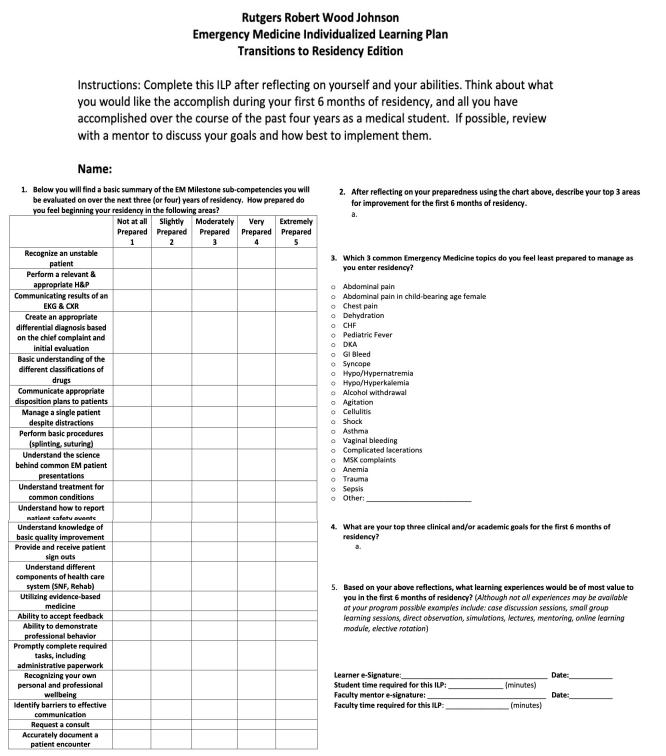
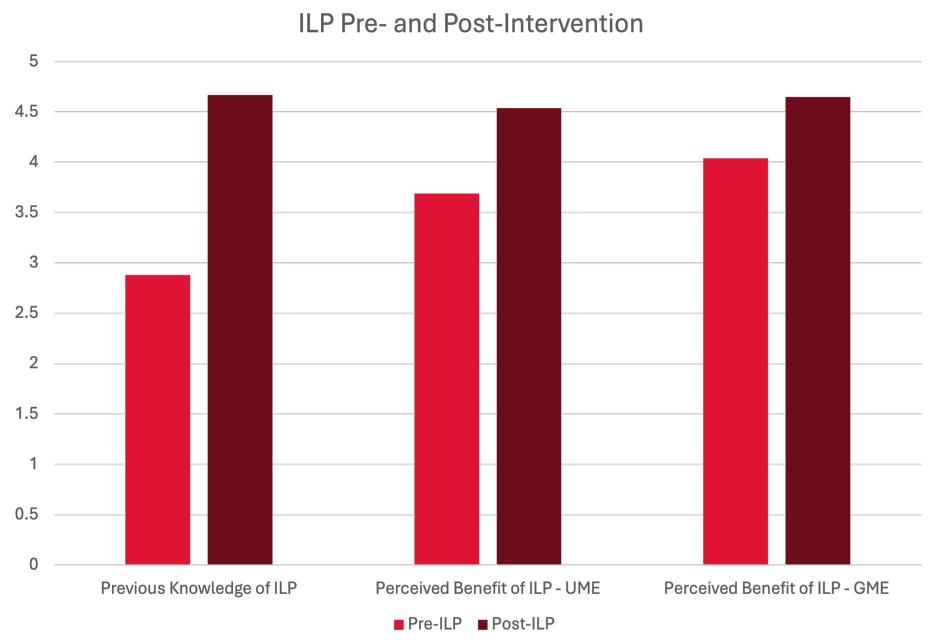
Jodi DeJohn, Yana Feygin, Susan Westneat, Evan Vincent
Background: Point-of-care ultrasound (POCUS) is a valuable tool when evaluating dyspneic patients. Oftentimes medical school students take on an observer role in critically ill dyspneic patients. Limited studies have evaluated the effectiveness of HeartWorks, a simulation-based technology enhanced learning POCUS software, in medical student education.
Objectives: Our study evaluates the efficacy of HeartWorks in medical student education. We hypothesize that HeartWorks will improve knowledge and comfortability of using POCUS during clerkship.
Methods: We conducted an observational prospective cohort study using convenience sampling at a university tertiary referral center. Participants included fourth year medical students rotating in the EM clerkship at the University of Kentucky from July 2025 to October 2025. Participants that did not complete both the pre- and postsurveys were excluded. Interventions included a one hour session on Heartworks focusing on the evaluation of acutely dyspneic and undifferentiated hypotensive patients.
Results: Fifty students met inclusion criteria. Nine students were excluded for not completing both pre- and post-surveys. Differences in comfort using POCUS and student knowledge before and after the simulation were measured. The median total score on student knowledge questions improved after the simulation (Median=8 [7,9] vs Median=7[6,8], p < 0.001). Similarly, comfort levels with POCUS and likelihood to use POCUS improved (p<0.001).
Conclusions: This study supports that HeartWorks improves student competency in EM POCUS medical student curriculum and improves comfortability and likelihood of
medical students to use POCUS during their clinical clerkship.
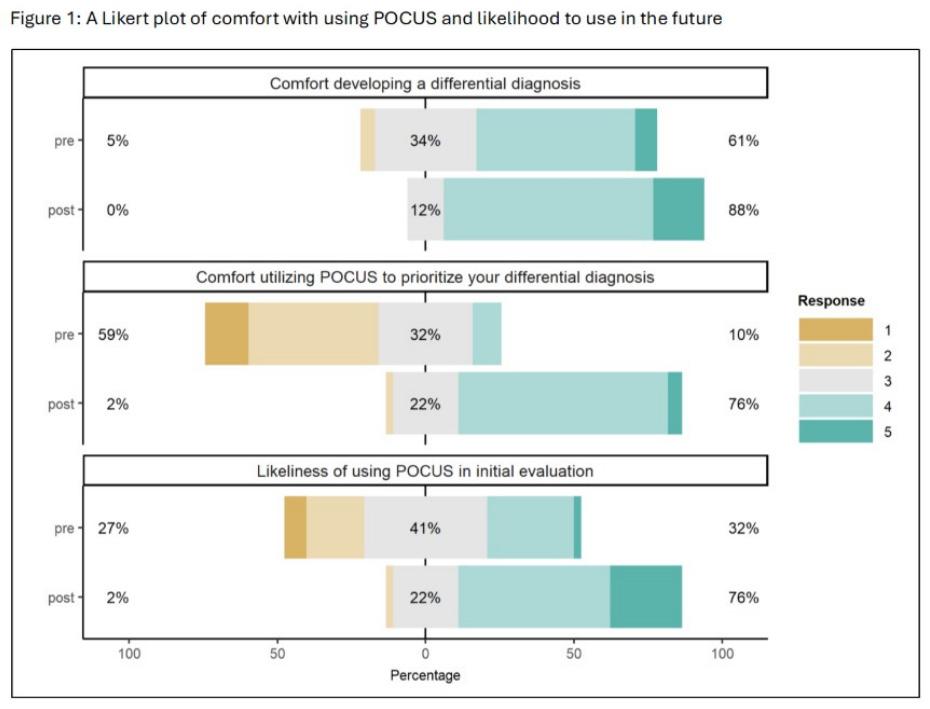
Vanessa Cardenas, Christian Cochrane, Ross Sinicrope, Joseph Ray, Ariel Vera, David Lebowitz
Background: Timeliness and efficiency are critical quality domains in emergency medicine, directly affecting patient satisfaction, departmental throughput, and resident education. Providing residents with objective feedback on performance metrics may enhance clinical efficiency and promote self-directed improvement. However, there is also concern that receiving this feedback could impact resident workflow behaviors and well-being.
Objectives: To evaluate emergency medicine residents’ perceptions of receiving weekly individualized performance metrics and to assess whether these reports influenced selfreported efficiency, workflow behaviors, and emotional wellbeing.
Methods: This pre- and post-survey study included 14 emergency medicine residents (PGY-1 to PGY-3) at a single academic community training program. Participants received weekly individualized reports summarizing their emergency department throughput and efficiency metrics. Surveys administered before and after the intervention assessed perceived effects on clinical workflow, task-switching ability, and emotional well-being.
Results: Among 14 participants, 50% reported that reviewing their metrics led to changes in their clinical practice, and 40% indicated that they continuously adjusted their workflow to improve throughput after receiving feedback. 70% expressed interest in continuing to receive individualized metrics, while 60% reported no stress, anxiety, or negative emotional impact associated with the feedback process.
Conclusions: Individualized, real-time performance feedback was well received by emergency medicine residents and was associated with self-reported improvements in workflow efficiency without adverse emotional effects. Incorporating individualized performance metrics into residency education may serve as a tool to enhance resident development and operational awareness within the emergency department.
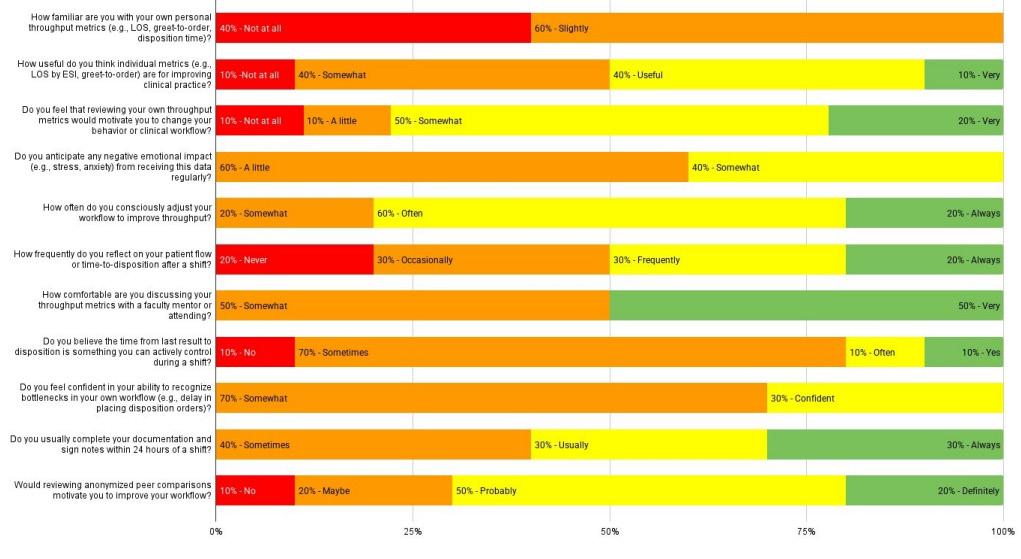
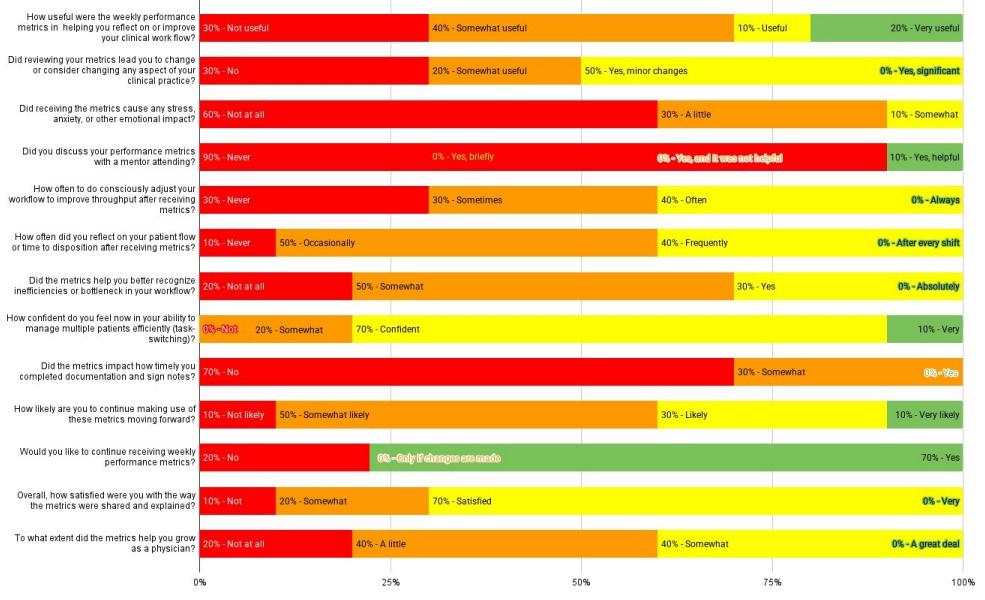
Redefining the Academic–Community Divide: Faculty Hiring Trends from a Survey of Academic Emergency Medicine Chairs
McKenna Knych, Shannon Burke, Clara Olson
Background: Prior EM studies have used residency graduate data to classify physicians entering academic or community practice. As health systems consolidate and academic departments expand into nonacademic sites, this distinction has blurred, creating blended faculty who work in both settings. Academic EM chairs provide direct insight into hiring and evolving roles.
Objectives: Characterize faculty working clinically at academic only, nonacademic only, or both (blended) sites within academic EM departments; describe projected hiring distributions; and assess how chairs rate fellowship importance when hiring.
Methods: A cross-sectional survey of full Association of Academic Chairs in Emergency Medicine (AACEM) members was administered in summer 2025. The 20-item survey included categorical, numeric, and Likert-scale questions. Data were analyzed using descriptive statistics and nonparametric tests (Wilcoxon signed-rank and Friedman).
Results: Of 135 full AACEM members, 48% (66) responded. 70% (46/66) hire for nonacademic sites, and 95% (44/46) employ faculty who work in both settings. Among these chairs, median faculty percentages were 15% (IQR 6–28%) nonacademic only, 20% (10–64%) blended, and 40% (18–73%) academic only. Estimated five-year hiring distributions were at median percentages of 25% (IQR 10–50%) nonacademic, 40% (15–70%) blended, and 10% (0–45%) academic (Figure 1). There was a significant increase in the percentage of nonacademic roles, decrease in percentage of academic roles, and no significant change in the percentage of blended roles. All chairs rated fellowship importance when hiring (Figure 2), with the highest importance ratings for academic roles, followed by blended, then nonacademic (p < .001).
Conclusions: Academic EM increasingly includes nonacademic clinical work, and academic chairs hiring for both settings project a greater proportion of nonacademic work in the future. This shows the need for EM training to
prepare all graduates - including those on academic paths - for diverse clinical environments. Fellowship training is most valued for academic roles and an important consideration for those pursuing academic EM. These findings provide a snapshot of the current landscape as EM looks toward future changes in residency training.
Julia
Schiff, Emma Rogers, Victoria
Zhou,
Mira Mamtani, Madison McKee, Frances Shofer, Emily Kaplan, Megan Gillespie, Chioma Elechi
Background: Women-identifying physicians in the emergency department experience bias and discrimination, which negatively impacts career satisfaction and advancement. This grant-funded project sought to reduce gender-based discrimination through a sustainable stakeholder-driven approach.
Objectives: To design, implement, and evaluate an intervention that addresses gender bias and microaggressions in the emergency department.
Methods: Using a mixed-methods design, we conducted two focus groups (n=7) with women-identifying residents, fellows, and attendings in a single urban emergency department. A multi-stage deductive coding process with thematic analysis informed the development of an in-person scenario-based training session where participants practiced recognizing and responding to microaggressions using roleplaying. Participants completed 14-item Likert surveys pre-, post-, and 6-months-post intervention assessing comfort addressing microaggressions and bias. Survey scores were analyzed using a linear mixed effects model.
Results: Qualitative themes included microaggressions, communication challenges, exclusion, and family planning concerns. Participants favored small-group interventions emphasizing dialogue and verbal de-escalation. Quantitative results showed significant sustained improvement in comfort dismantling bias: pre-training mean 72 (95%CI 11–19,




p<.001), post-training mean 81 (95%CI 5–14, p<.001), and 6-months mean 81 (95%CI -10 to– -2, p=.007). No significant differences were observed by gender or race.
Conclusion: Our stakeholder-driven intervention improved comfort addressing microaggressions and discrimination in the emergency department, with sustained effects at 6 months. This model highlights the value of participatory design and targeted
The success rate was worse at the 2-week follow-up (0.25 [0.20, 0.31]) than immediately after training (0.47 [0.40, 0.54]; p<0.01) for the smartphone group, but unchanged for the VOG group (0.40 [0.33, 0.47]; 0.38 [0.32, 0.45]; p=0.68).


Conclusion: Students learned the motor skills of the HIT with similar speed and proficiency using either a smartphone application or VOG, but had better skill retention with videooculography. The results demonstrate teaching potential for a low cost, specialized smartphone application that can provide rotational velocity feedback to support development of the motor skills needed to perform the head impulse test.


Jacob Lenning, Samuel Westendorf, Ryan Luedtke, Jeffrey Kline, Anne Messman
Background: The accuracy of the HINTS (head impulse test, nystagmus, and test of skew) exam is limited by the difficult head impulse test (HIT), which requires head turns of 10-15 degrees at >100 degrees/second. Feedback training with expensive video-oculography (VOG) devices and virtual simulators has been used for motor skill development.
Objective: Determine if visual feedback from the free PhyPhox smartphone application displaying rotational velocity can teach the motor skills of the HIT.
Methods: A convenience sample of twenty inexperienced medical students performed 20 HITs on a mannequin model before, immediately after, and 2-weeks following a training session. A VOG device without feedback recorded successful head turns (Figure 1). Participants were randomly assigned to perform 100 training attempts with VOG auditory feedback (n=10) or smartphone application visual feedback (n=10; Figure 1). Aggregate learning curves were constructed from the training sessions (Figure 2). Plateaus were determined by linear regression. Group success rates (total successes per attempts) were compared with Pearson’s chi-square tests (df=1, n=400).
Results: Learning curves plateaued at 43 attempts for the smartphone group and 60 for the VOG group with no statistical differences in the success rates at any number of attempts (Figure 2). Success rates improved from before to immediately after training for the smartphone (0.14 [0.10, 0.20]; 0.47 [0.40, 0.54]; p<0.01) and VOG (0.06 [0.03, 0.10]; 0.38 [0.40, 0.54]; p<0.01) groups. Success rates between groups differed before and after training (p<0.01), though absolute differences were small in this limited sample size.







Background: The scholarly activity requirement by the ACGME is broad and variably applied by residency programs. Guidance in the literature includes a systematic review that encapsulates the initiatives used by GME programs to increase scholarly activity. Additionally, a qualitative study interviewed EM residents who excelled in scholarship to discern the factors leading to success. To date, no qualitative studies have explored the perspectives of residents who struggle to meet this requirement.
Objectives: This qualitative study aims to explore the perspectives of residents who self-identified as facing difficulty completing the scholarly project.
Methods: We performed a qualitative study using a constructivist paradigm and conducted semistructured interviews at 4 American ACGME-accredited emergency medicine residency programs. We invited residents who selfidentified as struggling with scholarship. Two researchers independently performed a thematic analysis of interview transcripts. Discrepancies were resolved through in-depth discussion and negotiated consensus.
Results: 13 residents consented to be interviewed. Many had participated in scholarship before residency. Major themes identified were: barriers to scholarly project development, advice to programs, and advice to residents. Barriers to scholarly productivity included lack of: time, perceived value of scholarship, clarity around the requirement, infrastructure, skills, and mentorship. Suggestions for residency programs included setting clear expectations, providing infrastructure, and facilitating mentorship. Participants’ advice to residents included starting early and seeking a quality mentor.
Conclusions: Our analysis reveals that even residents with prior experience in scholarship can struggle to complete the scholarly project required in residency. Our participants highlight challenges to completing the scholarly project requirement and recommend strategies at multiple levels to help residents succeed. [This was completed as our group project for the MERC at CORD Program]
Jacob Lenning, Corey Garrison, Paul Thanel, Aaron Mahoney
Background: There is limited evidence defining the role of artificial intelligence (AI) guidance in point-of-care ultrasound (POCUS) education. It unknown for which learners and for which POCUS studies AI guidance is most immediately helpful due to an absence of prior repeated-measure studies.
Objective: Determine the immediate effect of AI guidance on POCUS acquisition time and image quality in novice and experienced users.
Methods: A repeated-measure experimental study was conducted in a simulated setting. A convenience sample of 14 novice users with limited POCUS training during medical school and 10 experienced emergency medicine residents recorded right upper quadrant (RUQ) abdominal and apical-4 chamber (A4C) cardiac windows with and without AI guidance on three standardized patients in randomized order. Acquisition times were compared with the Mann-Whitney U test. Three blinded reviewers assigned Boolean values for the quality
criteria: essential structures visible, correct imaging plane, and proper probe orientation. Quality criteria proportions were compared with Pearson’s chi-square for independent samples and McNemar’s test for repeated measures.
Results: 286 ultrasounds were recorded. Median [interquartile range] acquisition time (seconds) was longer with AI than without for A4C (117 [125]; 69 [62]; p<0.01) and RUQ (61 [64]; 38 [38]; p<0.01) windows in all users (Table 1). All A4C and RUQ quality criteria were more likely in experienced
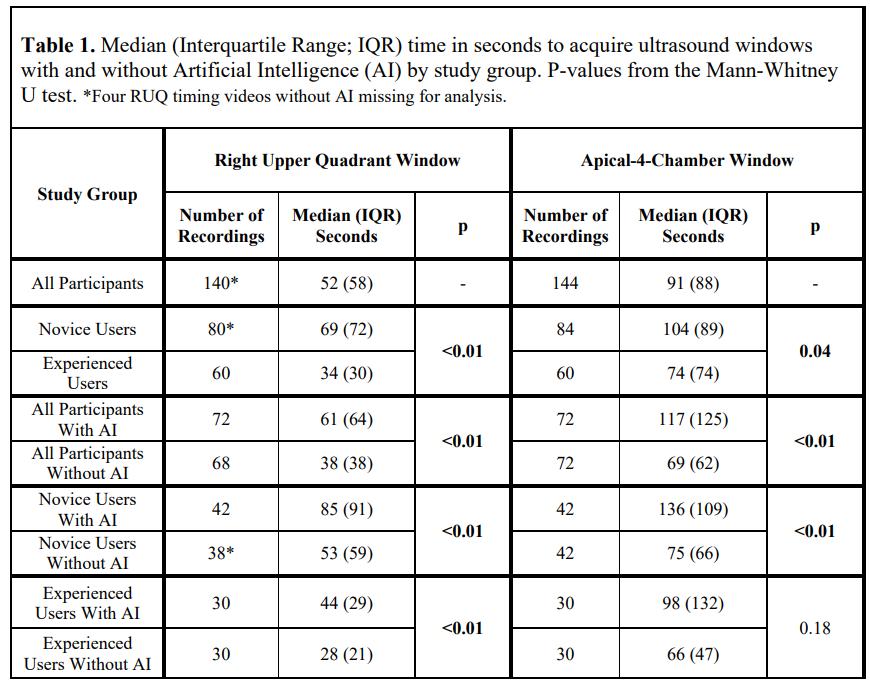
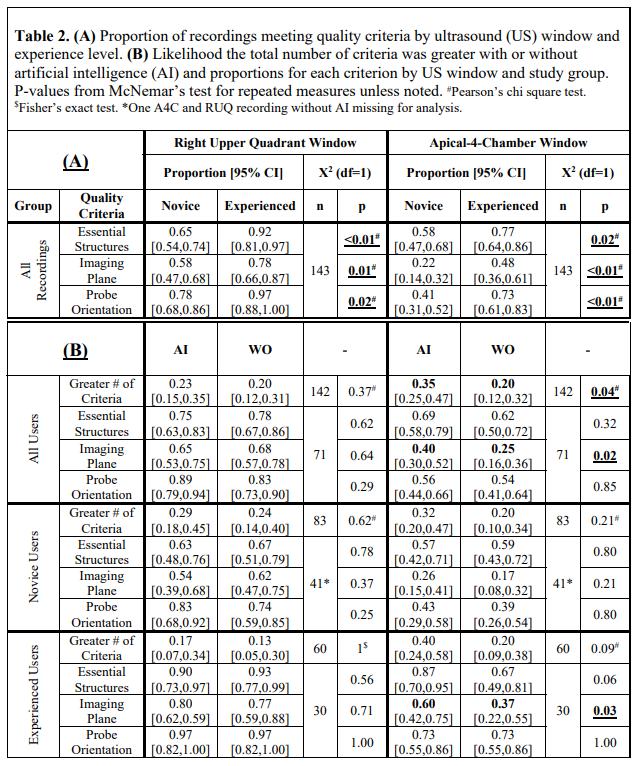
than novice users (Table 2A). The total number of A4C quality criteria was more often greater with AI (0.35 [95%CI 0.25, 0.47]) than without (0.20 [0.12, 0.32]; X2, df=1, n=142, p=0.04) for all users regardless of training level (Table 2B). The correct A4C imaging plane was more likely with AI for all users (0.40 [0.29, 0.52]; 0.25 [0.16, 0.36]; X2, df=1, n=71, p=0.02) and experienced users (0.60 [0.42, 0.75]; 0.37 [0.22, 0.55]; X2, df=1, n=30, p=0.03; Table 2B). No significant differences in quality criteria were observed for novices regardless of window or RUQ windows regardless of user.
Conclusion: AI guidance was associated with longer POCUS acquisition time for all users. The immediate effect on image quality trended more favorably for experienced users obtaining the A4C window. POCUS AI guidance is likely more beneficial for users with prior experience.
JanAlicia Ricker, Marie Hoyle, Tania Strout
Background: GME program coordinators are vital to training program success, but recent studies reveal high levels of professional burnout and job dissatisfaction. One area that may contribute to this is coordinators’ perceptions of compensation; however, little is known regarding EM coordinator compensation.
Objectives: To explore: 1) EM program coordinators’ compensation models, compensation satisfaction, and factors contributing to higher compensation, and 2) factors coordinators believe would improve job satisfaction.
Methods: We conducted an anonymous, cross-sectional survey of US-based EM program coordinators using an electronic survey platform. Responses were summarized using descriptive statistics; hierarchical logistic regression models were used to examine predictors of higher salary and perceived compensation inadequacy. Free-text responses were summarized using a qualitative descriptive approach.
Results: 120/375 (32%) coordinators completed the survey; their characteristics are provided in Table 1. The mean number of residents managed was 37.8 ± 24.2, 95% CI: 33.435.6 and 36.7% endorsed also managing EM fellowships (44/120). Salaries ranged from ≤$45,000 ($45K) to ≥$85K, with most in the $55K-$64K (39/120, 32.5%) or $65K-$74K (31/120, 25.8%) ranges. Many participants endorsed their compensation as ‘somewhat’ or ‘very inadequate,’ 93/120, 77.5%. The number of residents managed was the only significant predictor of higher (≥$75K) salary (OR 1.07, 95%CI 1.01-1.13, p=0.02), while only years of GME experience predicted endorsing inadequate compensation (11+years’ experience: OR 0.06, 95%CI 0.01-0.68, p=0.02; 4-6 years’ experience: OR 0.06, 95%CI 0.004-0.73, p=0.03).
















Eight major themes for improving job satisfaction were identified: compensation, respect, appreciation, recognition, workload, leadership team, professional development, and
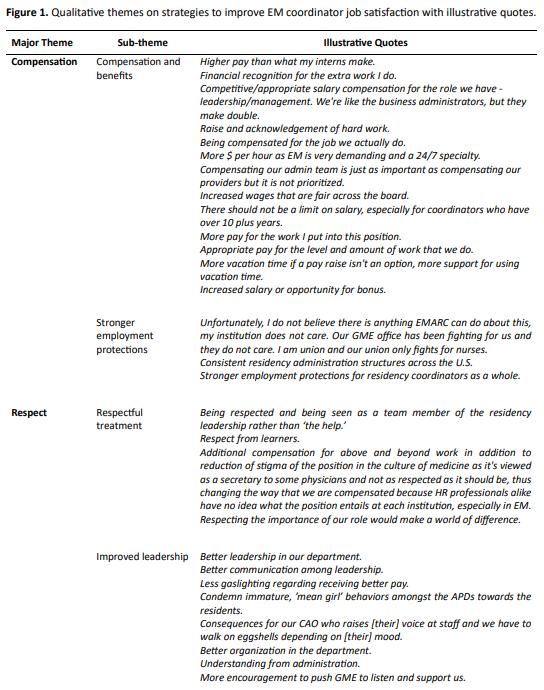
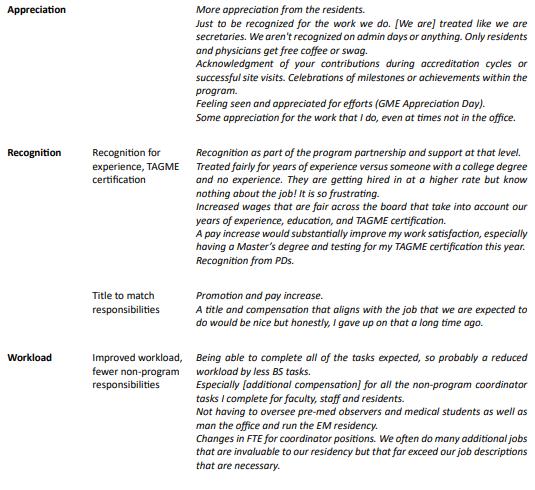
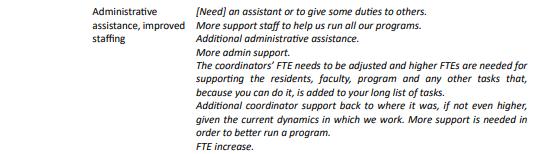
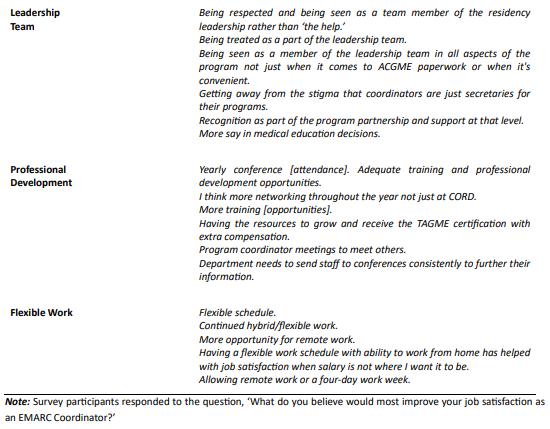
flexible work (Figure 1).
Conclusions: Respondents were largely dissatisfied with their compensation models, professional development opportunities, and role perception by colleagues. Higher salaries were associated with the number of residents managed and perceived compensation inadequacy was predicted by GME experience. Future research is needed to evaluate the impact of compensation on coordinator wellbeing.
Jonathan McGhee
Background: Clinical productivity, measured in work relative value units per hour (wRVU/hr), is a key outcome in emergency medicine (EM). Residency programs routinely track resident productivity but rarely assess its relationship to attending performance. Understanding this relationship may inform competency-based assessment, graduation readiness, and workforce planning.
Objectives: To compare resident productivity at graduation (PGY3) with early attending productivity among recent EM residency graduates at a high-volume academic Level 1 trauma center (>100,000 annual visits).
Methods: This retrospective study analyzed institutional productivity data from 2017–2024. Aggregate PGY3 productivity (2024 benchmark: 5.4 RVU/hr) was obtained from program dashboards. Attending productivity was extracted from departmental billing data, excluding physician assistants and outliers. Nine recent graduates were compared to the PGY3 benchmark and to the physician average (7.1 RVU/hr).
Results: All graduates demonstrated productivity above the PGY3 baseline. Seven of nine achieved performance at or above the physician average. 2 (8.2 and 7.8) exceeded benchmarks by >1.0 RVU/hr, while 2 Bodner (6.1 and 5.9) improved modestly. The average increase across all graduates was +1.9 RVU/hr. Scatter plot analysis demonstrated a consistent upward shift from residency to attending practice.
Conclusions: Resident productivity at graduation appears predictive of early attending efficiency. Most recent graduates surpassed both their PGY3 baseline and departmental average within one year of practice. Productivity metrics may provide valuable benchmarks for competency-based assessment and workforce readiness.
released sample videos, case structures, and scoring rubrics.
Objective: Our goals were to replicate the ABEM format for EM residents, assess readiness with aligned rubrics, provide realistic timed simulation exposure, and measure whether familiarity improved performance.
Curricular Design: Faculty reviewed all ABEM sample materials and developed twenty cases with standardized scripts and prompts matching ABEM formatting. Two full-day sessions included four fifteen-minute clinical care cases and six ten-minute stations covering reassessment, communication, conflict management, ultrasound, procedures, and patient-centered care. Actors portrayed patients and family members. Procedural and ultrasound stations used task trainers and structured prompts modeled on ABEM demo videos. Performance was scored using the ABEM 1 to 8 scale, with passing defined as 5.25 or higher. PGY-3 residents were assessed individually; PGY-1/2 residents were assessed in groups but not scored. After completing all stations, residents received individualized debriefing. Pre- and post-surveys measured understanding, confidence in key domains, and overall confidence on a 10-point scale.
Results: Twenty-seven pre-tests and thirteen post-tests were analyzed. Mean overall confidence increased from 6.00 to 7.08. Understanding of the exam format improved notably. Gains in ultrasound, procedures, and communication were modest but positive. Residents valued realistic exposure and requested refinements in logistics and scoring.
Impact/Effectiveness: PGY-3 pass rates improved from 3 of 6 in the first session to 5 of 6 in the second (9 of 12 overall). Residents noted unfamiliarity as a major barrier that improved with practice.
Next Steps: We plan to validate scoring with more examiners, expand to larger cohorts, test sessions in unfamiliar locations, and share case files and scoring tools so other residency programs can easily implement this model.
Innovation Abstracts
1
Reproducible Mock Certifying Exam
Sessions: Improving Emergency Medicine
Residents’ Confidence and Readiness for Boards
James Chiang, Julia Hutchison, Ravi Sumer, Nathan Stuempfig, Kyle Herout
Introduction: ABEM will launch a new Certifying Examination in 2026, replacing the oral boards. The format includes timed stations in clinical care, communication, procedures, and ultrasound. Few published resources exist currently help residencies prepare trainees. To address this gap, we created a high-fidelity mock exam based on ABEM’s publicly
Ravi Sumer
Background: The American Board of Emergency Medicine (ABEM) Certifying Exam, launching in 2026, replaces the traditional oral exam with a hybrid format combining clinical reasoning cases and OSCE-style stations. These cases assess competencies beyond knowledge, including communication, prioritization, and procedural skills, using standardized patients and simulation. Developing realistic, highstakes scenarios is resource-intensive, requiring expert input, standardized patient training, and iterative validation. Artificial Intelligence (AI) offers a novel approach to streamline scenario creation, ensuring diversity, fidelity, and adaptability while
reducing development time and cost. [abem.org], [abem.org]
Objectives: To describe an innovative process using AI-driven tools to generate, refine, and validate clinical and communication scenarios for the ABEM Certifying Exam.
Methods: We designed a pilot framework integrating large language models (LLMs) with expert review. AI was tasked to create case prompts aligned with ABEM’s EM Model and Knowledge, Skills, and Abilities (KSAs), incorporating undifferentiated presentations, prioritization challenges, and difficult conversations. Generated cases were iteratively refined through faculty feedback for accuracy, cultural sensitivity, and alignment with scoring rubrics. Scenarios were tested for variability, clarity, and adaptability for standardized patient scripts and simulation environments (Supplement 1).
Innovation: AI enables rapid generation of diverse, evidence-based cases that mirror real-world complexity. Features include dynamic branching logic for evolving patient conditions, embedded communication challenges, and customizable difficulty levels. This approach supports scalability, reduces cognitive load for case developers, and allows continuous updates as exam content evolves. Integration with simulation platforms and standardized patient















training enhances realism and standardization.
Conclusions: By accelerating scenario development under expert oversight and enhancing realism, this approach strengthens exam validity and fairness while reducing resource demands. Future evaluation will examine scenario quality, scoring consistency, and candidate experience during pilot testing.
Riley Grosso, Andrew Golden, Adam McFarland
Introduction: Academic Emergency Medicine (EM) faculty are expected to function as effective educators regardless of formal educational roles or training. However, practical teaching skills are rarely emphasized in traditional faculty development. A needs assessment of our academic EM faculty revealed significant discomfort and limited formal training in these areas. As expectations for inclusive, learnercentered clinical environments increase, a structured, practical, and accessible faculty development model is needed to address these gaps and strengthen day-to-day teaching practices.
Educational Objectives: Our primary educational goal is to provide continuing education on practical teaching topics to academic faculty. At the completion of our curriculum, our faculty should be able to (1) describe best practices regarding bedside teaching and procedural supervision, (2) model essential education leadership skills, and (3) develop and utilize a community of practice of likeminded academic emergency medicine educators.
Curriculum Design: Our curriculum design utilizes Kern’s conceptual framework. Our targeted needs assessment included
a survey completed by our academic faculty group serving to identify areas of discomfort. This informed our individual session goals and objectives. Our educational strategy integrates a monthly, needs-based faculty development series embedded within resident conference time. Each one-hour session, led by Education Division faculty, includes an open discussion of challenges, a 20-minute review of best practices based on relevant frameworks or literature, and think-pair-share exercises focused on translating concepts into clinical teaching practice. Curriculum evaluation is conducted through post-session surveys with questions related to effectiveness of the curriculum and barriers to implementation.
Impact: To date, 89% of faculty participants reported the sessions as effective, citing peer discussion and practical frameworks as key strengths. Scheduling conflicts were identified as the primary limitation, prompting exploration of alternative timing and potential asynchronous options. Our future plans include expanding content to address teaching medical students and incorporating objective measures of teaching behavior change.
Grant Wei, Michael DiGaetano, Meigra Chin, Jaydip Desai, Tyler Debbie
Introduction: Feedback is a critical component of continued professional development. However, the ability to generate actionable, resident-to-attending feedback is a common challenge. On one hand, residents are concerned that specific feedback can abate anonymity. On another, individual feedback does not provide a collective consensus and risks being dismissed as one’s unique perspective. We sought to create a setting in which residents provide feedback as a collective to uphold anonymity and facilitate discussion of faculty strengths and areas for growth. While literature can be found on the importance of attending-to-resident feedback, far less has been published on improving resident-to-attending feedback.
Objective: Enhance faculty development by creating an anonymous mechanism to provide consensus faculty feedback
Curricular Design: Residents met bi-monthly to formally evaluate faculty on a series of categories derived from the ACGME Clinician Educator Milestones including professionalism in the learning environment, learner assessment ability, feedback generation and delivery, and overall culture of well-being. Divided into three groups, residents were tasked to generate specific comments as a unified voice. Each cycle, deidentified feedback was shared and discussed with the program director (PD) for incorporation in the department’s annual review process.
Impact/Effectiveness: The feedback from this process, alongside individual feedback methods (unchanged from prior years), received a dramatically positive faculty response.
As documented on our ACGME Faculty survey of “Faculty member satisfied with process for evaluation as educators,” our score went from a Program Mean 3.7/5 to 4.8/5, with a corresponding rise in %Program Compliance from 60% to 100%. Teaching pearls/methods appreciated by residents were also shared at monthly faculty meetings to promote faculty development. This feedback format can be broadly implemented to enhance faculty development.
Aislinn McMillan, Mai Tram Riquier, Lisa Bell, Prom Vireak, Pichthida Thim, Mahfuzul
Majumdar, David Tanen
Introduction: Emergency Medicine (EM) is not yet a recognized specialty in Cambodia, and recent assessments highlight major gaps in emergency care capacity. At a private medical university in Phnom Penh, we piloted a short “Introduction to EM” course for senior medical students using a hybrid virtual and in-person model to expand access to foundational resuscitation concepts.
Background: Hospitals in Cambodia have limited emergency care capacity at this time and few opportunities for structured EM training, with education identified as a key gap. To help address this, we contacted local deans to gauge interest in exposing students to emergency assessment frameworks and essential resuscitation skills. Local leadership supported logistics and in-person activities. This pilot aimed to introduce core EM concepts and demonstrate how structured EM education could complement existing training.
Educational Objectives: Introduce EM principles; emphasize recognition of high-risk diagnoses and early critical actions; provide hands-on skills practice; and model a hybrid approach to expand access to specialty education.
Curricular Design: 29 virtual sessions were conducted over 10 weeks used case-based discussions focused on early recognition of life-threatening conditions. A 3-day in-person practicum followed, during which students rotated through procedural skills, simulation, and clinical encounters reinforcing communication, rapid assessment, and foundational resuscitation techniques. This course was conducted in English, the school’s language of instruction.
Impact/Effectiveness: This pilot demonstrated the feasibility of hybrid EM education to bridge geographic distance and resource limitations and expand access to specialty content not readily available locally. Further development will require a deeper needs assessment to understand the existing curriculum, identify priority gaps, and determine how an EM course can best integrate with current pathways. This early effort may support broader growth in emergency care education and capacity building in Cambodia.
Matthew Silver
Introduction: Holistic review of EM residency applications is a time consuming and cognitively demanding process, often contributing to reviewer fatigue and variability in candidate assessment. Programs need tools that streamline the review workflow, enhance consistency, and allow faculty to focus on attributes most aligned with their mission. While ResidencyCAS provides navigation and customization tools, it lacks flexibility and the ability to provide synthesized applicant summaries. Artificial Intelligence (AI) can be used to provide structured, reviewer-ready summaries tailored to program specific priorities.
Objectives: 1) Develop custom applicant summaries aligned with program specific priorities and selection criteria. 2) Enhance holistic review by ensuring all relevant applicant data is easily accessible and organized for efficient evaluation.
Methods: We implemented an AI-driven workflow using an institutionally licensed instance of Microsoft Copilot that enables secure handling of protected health information (PHI) and personally identifiable information (PII). The workflow begins by exporting applicant files from ResidencyCAS in a database format, followed by applying a detailed prompt within Copilot to parse, normalize, and summarize both structured and unstructured data for each applicant. This process generates reviewer-ready, standardized summaries that include all elements essential for holistic review. The prompt enforces strict parsing rules, section order, and formatting to ensure consistency and accuracy. Additionally, the system supports batch processing of database files and document exports, incorporates robust error handling, and applies rigorous data validation rules. Initial implementation required iterative refinement of parsing logic and output structure to accommodate variability in application data and narrative content, resulting in a streamlined and reliable summary.
Impact: Implementation of this AI-assisted workflow resulted in greater efficiency and improved focus on program specific selection factors. The system’s flexibility allows ongoing customization as program needs evolve. Planned next steps include evaluation of reviewer experience and efficiency metrics, along with continued customization and optimization of the prompt.
Matthew Ryan
Background: On-shift teaching in the Emergency Department is constrained by time pressure, cognitive overload,
and rapid patient turnover. Residents consistently desire brief but meaningful teaching moments. To meet this need, we developed a gamified teaching Spinner Wheel with 12 emergency-medicine–focused prompts designed to energize bedside teaching and promote competency-based micro-learning.
Objectives: To evaluate whether a low-cost, gamified teaching tool can (1) increase learner engagement, (2) promote cognitive flexibility by linking chief complaints to diverse competency domains, and (3) provide a scalable framework for structured bedside teaching in the ED.
Methods: The Spinner Wheel contains 12 topics representing core EM competencies, e.g., disposition, pathophysiology, evidence-based care, epidemiology, ethics, and treatment options. Residents present a case and then spin the wheel, generating a brief, focused discussion that links the chief complaint to the selected topic (e.g., chest pain + epidemiology). Attendings extend the prompt into clinical reasoning, communication, systems-based practice, or medical decision-making. Residents have used the wheel frequently and spontaneously during shifts. The project received IRB approval, and an anonymous evaluation survey has been developed, distributed, and is currently undergoing








data collection, using Likert-scale and open-ended questions regarding educational value, engagement, practicality, and cognitive impact.
Results: Preliminary data show 100% of residents who used the Spinner Wheel reported that it enhanced on-shift learning and that the topics were relevant to their clinical cases. Residents describe it as “fun,” “engaging,” and “a great way to think beyond the immediate case,” noting that it “breaks up the intensity of a busy shift” and “makes teaching feel effortless.”
Conclusions: The Spinner Wheel is a simple, gamified, competency-based micro-teaching tool that integrates seamlessly into ED workflow. It promotes cognitive agility, engagement, and deeper connections between real-time cases and core EM competencies. This low-cost intervention offers an innovative and scalable model for energizing on-shift learning in emergency medicine.
Kayla Basedow, Timothy Friedmann, Duncan Grossman
Introduction: Intrahospital transport of critically ill patients from the ED to another destination (ie. Radiology, ICU) is a high-risk period in a patients’ care. Literature suggests it is associated with adverse events including vital sign derangements and even cardiac arrest. New residents are often tasked with being the accompanying physician during critical transports despite limited experience with equipment, medications, and critical care. This course aimed to provide standardized training for junior residents to safely manage intrahospital transport.
Objectives: We developed a simulation-based curriculum to train residents to respond to various adverse events during intrahospital transport. The overarching goal of the project was to have residents feel more confident in transporting critically ill patients and develop the necessary clinical skills to respond to adverse events during transport.
Curricular Design: Residents were split into two small groups and completed both sessions. The first was a SIM session using the Rapid-Cycle Deliberate Practice (RCDP) model. Learners managed a critically ill SIM patient they “transported” to the ICU using a high-fidelity mannequin. The SIM patient experienced adverse events including oxygen desaturation, unresponsiveness, hypotension, and cardiac arrest. Per the RCDP model, after each event the SIM was paused for debrief before restarting. The second session was a hands-on, case-based skills lab using real equipment where residents learned three essential tasks: creating push-dose pressors, adjusting IV pump medication doses, and modifying ventilator settings.
Impact/Effectiveness: This course ran in both 2024
and 2025. Residents completed pre- and post-tests assessing critical actions that may be required during transport and rated their confidence in each skill. Confidence significantly improved across all skills in both years. Our residency program received feedback indicating that this was an essential course to continue annually during intern orientation. As a result, the course has now been implemented as a required annual training for all new emergency medicine residents. Future iterations of this study may expand to evaluate higher levels of Kirkpatrick data and potentially assess impacts on patient outcomes.








Introduction/Background: Pediatric emergency departments (PED) hosting pediatric emergency medicine (PEM) rotations often have residents from multiple specialties at various stages of training. This creates a challenging teaching environment for both educators and learners. Gamification has been previously demonstrated to effectively engage residents in their education.
Educational Objective: This project sought to develop a gamified approach to tracking EM PGY 1 PEM rotational
goals on a 4-week rotation.
Curricular Design: This project was conducted at a PGY 1-4 EM program training 16 residents a year. PEM rotation occurs in the PGY 1 and 4 years in a dedicated PED at a level II peds trauma center with a level IV NICU and PICU. Pediatric and family medicine residents also rotate in the PED, which is staffed by PEM-boarded attendings. Using a modified Delphi process, 10 PEM attendings and 4 EM chief residents created a sticker chart (Table 1) of observable and measurable educational activities. The activities were then categorized by ACGME Milestones for purposes of evaluation and feedback. The goals achieved were denoted by the placement of a sticker on the card. EM interns who completed the entire chart, or who had the highest number of completed activities in each 4-week block, were recognized. The chart was introduced in the summer of 2023. Rotational scores were entered by the residents into New Innovations on a 1-5 scale. The project was reviewed by the IRB.
Impact/Effectiveness: Core metrics for the PEM rotation universally increased, suggesting that a sticker chart of learner activities improved PGY 1 EM learner experience. Overall rotational scores for the rotation from EM residents for AY 22-23 (pre-chart), AY 23-24 (chart year 1) and AY 24-25 (chart year 2) increased from 4.09, to 4.34, and then 4.56. Resident scores on the quality of feedback faculty provided improved from 3.96, to 4.10, then to 4.42. Resident perception of whether the goals of the rotation were met started at 4.07 and improved to 4.31 and then to 4.57. Positive qualitative feedback from attendings, residents and nurses prompted the development of a second card, using a Bingo style, for the senior teaching resident rotation using a similar Delphi process. That card, shown in Table 2, is being implemented this academic year.






10The Pyloric Learning on Repeat Ultrasound Simulator (PyLORUS)
Quinn Bushman, Thomas Sanchez, Hannah Park, KeriAnne Brady, Richard Shin
Introduction: Hypertrophic pyloric stenosis is the most common surgical cause of nonbilious vomiting in infancy and requires prompt diagnosis for optimal outcomes. Ultrasound is the imaging standard for diagnosing pyloric stenosis, with pointof-care ultrasound (POCUS) demonstrating high sensitivity and specificity when performed by trained emergency medicine (EM) physicians and pediatric EM providers (1). Developing an ultrasound training model for EM residents to identify pyloric stenosis addresses a critical educational need. It enables residents to gain hands-on experience recognizing the characteristic sonographic findings of pyloric stenosis, such as increased pyloric muscle thickness and channel length, and to practice reproducible and accurate measurement techniques. Such training improves diagnostic confidence and expedites patient care in the emergency department.
Objective: Our aim was to create a simulated model of pediatric pyloric stenosis using inexpensive and readily available materials. Creating an open-source, reproducible, and durable model would allow for effective teaching and familiarization with this skill for all EM residents.
Design: We used ballistic gel, a water balloon, and a Gastrostomy tube (G-tube). An empty water balloon was placed around the stoma end of the G-tube, with the G-tube balloon inside. The G-tube balloon was inflated with cornstarchthickened water to simulate muscle. The balloon was tied to
the G-tube tubing with suturing material. The balloon was inflated with water through the feeding tube port, representing the stomach contents. The material was then placed in a kidneyshaped emesis basin and layered with melted ballistic gel. The feeding tube port was placed externally to the model and served as the access point for simulating infant feeding.
Impact: This model received approval from ultrasound faculty before its implementation, and it was incorporated into a scheduled conference day for residents. All residents surveyed (100%) reported that the model was an effective teaching tool, significantly boosting their confidence in evaluating pyloric stenosis after the session. Our goal is to enable all EM educators to construct this model, enhancing the educational experience for evaluating pyloric stenosis and improving the use of POCUS.



11
Simulation-Enhanced Remediation: A Competency-Guided Framework for Targeted Learner Development
Ryanne Mayersak, Josh Kornegay
Introduction / Background: Remediation in competencybased medical education (CBME) remains challenging across specialties, including Emergency Medicine (EM). Traditional strategies—extra shifts, passive review, or unstructured feedback—rarely address specific gaps or generate milestonealigned evidence of improvement. Simulation offers a safe environment for deliberate practice and direct assessment of communication, teamwork, professionalism, and clinical reasoning. With video review, feedback becomes more objective and defensible, yet its use in structured remediation and individualized learning plans (ILPs) is limited. This innovation introduces the SCORE framework, a simulationcentered remediation model integrating targeted scenario design, structured debriefing, and video-assisted reflection to support learner growth and program accountability.
Educational Objectives: • Integrate simulation into ILPs
within a competency-based model.
• Design focused simulations targeting communication, professionalism, procedural skills, or clinical reasoning.
• Use structured debriefing, video reflection, and standardized documentation to support assessment.
Curricular Design: The SCORE Framework includes four steps:
1. Gap Identification: Map performance concerns to milestones or EPAs.
2. Tailored Simulation: Use a standardized template to design individualized scenarios with observable behaviors.
3. Structured Debriefing & Video Reflection: Apply PEARLS and advocacy–inquiry with video review to build insight and a reflective portfolio.
4. Competency-Aligned Assessment: Use milestonelinked checklists and calibrated faculty ratings to support reliable documentation.
Impact / Effectiveness:
Implementation at a large academic EM program improved learner clarity, confidence, and reflective ability. Faculty reported greater transparency and defensibility in remediation. Video-assisted simulation provided objective data for advancement decisions and strengthened alignment with CBME principles. Ongoing evaluation tracks milestone progression, rater consistency, and scalability. Integrating simulation, coaching, and reflection reimagines remediation as a structured, supportive process that fosters meaningful learner growth.
Kirlos Haroun, McKenzie Warshel, Kamna Balhara, Rodney Omron,
Introduction: Physicians frequently experience emotional distress, vicarious trauma, and second victim experiences following adverse clinical events. Despite growing attention to burnout, few graduate medical education (GME) programs offer structured, reproducible models for reflection and recovery. Preliminary work within our emergency medicine residency demonstrated that a facilitated Night of Reflection— integrating art-based reflection, mindfulness, and mixed-level dialogue—created a psychologically safe space for residents and faculty to process emotionally charged encounters. Building on initial success, we examined feasibility, retention, and cultural integration across two consecutive years.
Educational Objectives: To (1) create psychologically safe spaces for structured reflection, (2) normalize vulnerability across hierarchical levels, (3) strengthen community and belonging, and (4) introduce practical coping strategies to support physicians following distressing events.
Curricular Design: The Night of Reflection is a 120-minute, department-sponsored event hosted in a faculty home to foster openness outside clinical hierarchies. Each session includes a shared meal, group norms, art- or narrativebased reflection, guided mindfulness, mixed-level discussion, large-group synthesis, and takeaway coping tools. Participation was voluntary. In 2024, eighteen participants completed pre-, post-, and 60-day surveys measuring psychological safety and social connectedness; in 2025, the model scaled to 22 attendees. Facilitators included psychologists, humanities faculty, and peer-trained EM educators. Key implementation lessons included the value of consistent facilitation, structured prompts, and visible institutional support.
Impact: Across both years, 100% of respondents agreed the sessions created a safe environment and endorsed continued participation. Qualitative feedback highlighted improved emotional processing, resident–faculty connection, and reduced isolation after adverse events. Attendance growth reflected cultural acceptance and sustainability. Next steps include developing toolkits for interdisciplinary adaptation and multi-program dissemination.
Aubrey Bethel-Schmitz, Sara Dimeo, Ryan Adkins
Introduction/Background: The new American Board of Emergency Medicine (ABEM) certifying examination will commence in 2026 as an in-person examination. In preparation for this, Dignity Health-East Valley Emergency Medicine Residency launched an innovative simulation curriculum that encompassed these topics. The development of the curriculum was grounded in Kolb’s experiential learning theory, which includes four stages: experience, reflection, conceptualization, and experimentation to solidify learning of skills and concepts
Educational Objectives: Evaluate resident pre- and postcurriculum confidence in oral boards preparation.
Curricular Design: During six dedicated simulation didactic times, residents had a 40 minute session dedicated to the new oral board format. The cases were written using the Journal of Education and Teaching - Emergency medicine updated certification exam templates. The residents received training on six different content areas: clinical decision making (CDM), prioritization, reassessment and troubleshooting (R/T), difficult conversations, managing conflict and patient centered communication (PCC). Residents filled out an anonymous pre- curriculum survey based on their confidence with their oral board preparation. A likert scale was used from 1-5, 1=Not at all confident, 5 = Very confident. Before the didactic time, residents watched a video from the ABEM website to review the specific format and reflect on a real-world experience.
Residents in teams of 2-4 performed the simulation, with one ‘hot seat’ resident, one resident grading with the attending, and the remaining residents observing. After didactic completion, the residents filled out a post-confidence level survey. The preand post- results were then compared.
Impact/Effectiveness: 3 of the 6 content areas have been performed and surveyed - CDM, R/T, and PCC. Resident confidence has improved in those specific areas significantly. Of the responding residents, there is improvement in confidence levels. CDM improved from a mean of 1.69 to 2.85(p= 0.001), PCC improved from 2 to 4.14 (p= 0.001), and R/T from a 2 to 2.83 (p=0.092). By integrating the new oral certifying exam content into regularly scheduled didactics, residents are reporting an improvement in their confidence in the oral board preparation.
14
Introduction/Background: Residency programs must generate weekly conference communications containing recurring elements that require manual assembly. This administrative load consumes faculty time, increases cognitive burden, and introduces opportunities for inconsistency. Emerging artificial intelligence systems may offer a reproducible solution to reduce time and improve the reliability of recurring educational communications. We identified a need for a standardized workflow that could decrease time spent preparing weekly conference communications while maintaining accuracy and consistency.
Educational Objectives: This innovation sought to reduce monthly time spent generating weekly conference communications, improve standardization of content, and develop a scalable workflow adaptable across graduate medical education programs.
Curricular Design: We developed an artificial intelligence
assisted workflow using structured prompts to produce weekly conference communications containing rotating language greetings, inspirational quotations, reading assignments, schedules, and accreditation information. The workflow was refined iteratively to improve clarity, reduce variation, and create a predictable sequence for information generation. Faculty used a standardized prompt and performed a brief accuracy review prior to distribution. Early challenges included the need for precise prompting, occasional formatting variability, and intermittent drift in output structure. Iterative adjustments focused on clearer prompt design and a consistently applied review step.
Impact/Effectiveness: Time required to prepare weekly conference communications decreased from approximately 30 minutes per email to 17 to 21 minutes per month after implementation. Faculty noted reduced cognitive load and greater reliability during email preparation, while residents and faculty receiving the communications reported improved clarity and consistency. The workflow has demonstrated stable performance over 12 months with minimal drift. Next steps include expanding the workflow to additional recurring educational communications and developing a transferable prompting framework for other programs.
Robert Tennill, Marit Tweet, Jonathan dela Cruz
Introduction: In 2026, ABEM will begin delivering the new Certifying Exam (CE), in place of the previous Oral Board Exam, designed to ensure graduating residents can apply the skills learned in training to simulated, real-word clinical scenarios. Residency programs are attempting to rapidly adapt to this significant change and ensure their graduates are well prepared. We developed and implemented a half-day, high-fidelity Mock ABEM CE for our PGY-3 residents to assess feasibility and educational impact.
Educational Objectives: To evaluate whether a mock exam improved residents’ confidence and perceived preparedness for the new ABEM CE including clinical care, communication, and procedural cases.
Curricular Design: We developed ten cases designed to replicate the ABEM clinical care, communication, and procedural assessments (Example Image 1, Supplement 2). Standardized patients, task-trainers, ultrasound, and faculty examiners were used to represent all proposed case types in a half-day session An introductory orientation session and structured debrief was also included. We then conducted a paired pre-post evaluation of the course. Surveys assessed confidence in passing the ABEM CE and perceived preparedness across eight competency domains (clinical decision making, prioritization, reassessment/ troubleshooting, difficult conversations, managing conflict,
patient centered communication, ultrasound, and procedures). All items used 5-point Likert scales. Paired analyses compared preto post-course responses (Table 1).
Impact And Effectiveness: Eight participants completed both the pre-course and post-course surveys. Two participants increased their overall confidence level and six reported no change. No decreases were observed. Most domains demonstrated stable or modest improvements in confidence and perceived preparedness, with the largest gains observed in reassessment/troubleshooting (mean paired change =+0.6), difficult conversations (+0.4), managing conflict (+0.5), and patient centered communication (+0.3). This course appears to help build confidence and several key skills, though a larger sample is needed to more clearly measure its impact.



16
Climate-Informed Medicine: A Three-Phase Model for Integrating Climate and Health into Undergraduate Medical Education
Lorraine Thibodeau
Introduction: Climate change is altering disease patterns, amplifying health inequities, and placing increasing strain on healthcare delivery, yet most medical schools offer limited training on its clinical relevance leaving future physicians underprepared. National calls for integration in medical education highlight a growing readiness gap. A needs assessment at our institution confirmed this gap and guided the development of a three-phase climate health curriculum.
Objectives: The curriculum sought to strengthen student understanding of climate-related health impacts, improve recognition of climate-sensitive exposures across specialties, increase awareness of healthcare’s role in greenhouse gas emissions, and cultivate a sense of professional responsibility to engage in climate-informed care and anticipatory guidance.
Design: We implemented a three-phase curriculum: an orientation module for all incoming students using foundational didactics and authentic local cases underscoring immediate relevance, integration of climate content throughout preclinical courses, and a senior planetary health elective incorporating community engagement and advocacy. This abstract evaluates the orientation component. Pre- and post-surveys assessed
changes in knowledge, attitudes, and perceived professional roles and responsibility.
Impact: A total of 145 students participated, with response rates of 92 percent for the pre-survey and 62 percent for the post-survey. Students demonstrated substantially improved understanding that climate change is already affecting patients in the United States and globally, influences all specialties, and contributes to strain on healthcare systems. Awareness of healthcare’s contribution to greenhouse gas emissions more than doubled. Notably, the proportion of students who believed physicians have both a right and a duty to discuss climaterelated health risks with patients and to provide anticipatory guidance rose from 23 percent to 37 percent. These findings suggest that an integrated, phased approach can deliver meaningful climate and health education without significant disruption to existing curricula. Future evaluation will focus on preclinical integration and the senior elective, with potential expansion into graduate medical education.
core expectations in graduate medical education, yet many EM departments lack systems to connect learners with potential mentors. Prior studies show that 94.1% of EM residents stated that mentorship was the key to success in residency. To address this gap, we developed a centralized portal to catalog active scholarly projects and research interests among EM residents, fellows, and faculty.
Educational Objectives: To increase accessibility of departmental scholarly activity and expertise, facilitate facultytrainee mentorship, and enhance research collaboration and scholarly output.
Curricular Design: The intervention followed Kern’s Six-Step Model. Our needs assessment drew from Program Evaluation Committee (PEC) meeting minutes and ACGME Survey weaknesses. In response, identification of mutual scholarly interests was prioritized. We surveyed residents, fellows, and attendings to collect research interests, ongoing projects, scholarly ideas, and mentoring capacity. After exploring options for dissemination, we deployed an interactive portal, iteratively improved the user experience via pilot rounds, and launched it during a department-wide scholarship day. Users can identify and sort collaborators through interest clustering, content expertise, and availability. A periodic newsletter highlights recent activity and encourages continued use.
Impact: Focus group feedback shows trainees have increased access to a more diverse pool of mentors, and faculty have convenient lists of mentees for collaboration. Ongoing evaluation is studying the quantitative impact on abstract submissions, poster presentations, and resident scholarly output. The implementation of a mentor/mentee pairing portal has transformed the process of identifying collaborators in an academic EM department. This model is easily scalable for other residencies or fellowships and offers promise for increasing faculty/trainee collaboration via deliberate team formation.
Robert Tennill, Richard Selinfreund, James Waymack, Sharon Kim
Shad Yasin, Kelly Reese, Andrew Mittelman, Kelly Mayo, Avery Clark
Background: Mentorship and scholarly productivity are
Introduction: Early EM residency training requires rapid development of efficient diagnostic reasoning, information gathering, and communication skills. Traditional simulation is resource-intensive and limited in scalability. Advances in generative artificial intelligence (AI) now enable realistic, interactive patient avatars that integrate history, physical exam, diagnostics, management, and interpersonal communication. We piloted an AI-simulated patient program for PGY-1 residents to assess feasibility and educational impact.
Educational Objectives: To evaluate whether AIsimulated patient encounters improve early residents’ confidence, diagnostic sequencing, clinical reasoning,
and communication skills. We also assessed comfort and perception of this novel simulation modality.
Curricular Design: Eight AI-simulated cases representing common emergency presentations (chest pain, dyspnea, abdominal pain, and weakness) were developed using avatars with diverse patient backgrounds, communication styles, and personalities (Image 1). Residents completed a pre-survey, simulation encounter, post-survey, and final assessment. The system automatically captured metrics for diagnostic sequencing, time to critical actions, and management decisions, followed by structured debriefing. This is an IRB-approved project.
Impact And Effectiveness: Eight PGY-1 residents completed all simulations. Across the first four cases mean Likert ratings ranged from 3.6–4.1/5, reflecting overall positive perceptions (Table 1). The largest pre–post gain was in comfort participating in simulation (+0.42), while other domains (perceived educational value, engagement, and clinical reasoning) remained stable. No statistically significant differences were observed, consistent with high baseline confidence and limited sample size.
This pilot demonstrates that AI-simulated patient encounters are a feasible, safe, and responsible modality for EM resident training.
experiences limited English proficiency, placing them at heightened risk. In emergency medicine, timely and accurate communication is essential for patient safety. LEP patients experience longer ED stays, higher repeat visits, and increased adverse events. Elderly LEP patients are particularly vulnerable, compounding clinical risks. Despite federal mandates, existing interpretation services often fall short of patient needs. High costs and inconsistent quality plague current language access solutions.
Curricular Design: Residency Training for LanguageConcordant Care proposes a proactive shift by training residents to provide language-concordant care. A structured, evidencebased bilingual curriculum is integrated into residency training. This curriculum spans three years, progressively building medical Spanish proficiency. It begins with foundational language skills and advances to complex clinical conversations. Digital tools, including an online learning platform and smart phrasebook, support the training. A professional development module ensures regulatory compliance in language access. A virtual compliance advisor provides real-time guidance on legal and ethical standards. Residents are prepared to achieve Qualified Bilingual Staff (QBS) status, with certification based on scenario-based assessments and rigorous testing. The curriculum supports both language acquisition and cultural competence. An interdisciplinary team with extensive clinical and educational expertise leads the project.
Impact: Our preliminary data show significant improvements in medical Spanish proficiency and pilot studies indicate high user acceptance of the smart phrasebook and digital modules. The project will evaluate language proficiency gains and assess regulatory compliance and resident self-efficacy. Key metrics include completion rates, time-to-certification, and patient satisfaction. Data collection spans multiple residency programs and clinical settings. The program’s scalability will allow broader adoption across healthcare institutions. Success will advance health equity and improve outcomes for LEP populations. This innovative approach aims to transform language access in emergency medicine nationwide.
Bryanne Macdonald, Matthew Shapiro, Leah Manchester, Adrianne Wurzl, Matthew Senno, Julianne Earle, Brendan McFall, Meghann Zapcic-Desrochers, Seth Kelly, Liza Smith
Lincoln Sheets, Victor Cisneros
Background: Nearly 20% of the U.S. population
Introduction: Subspecialty EM rotations provide students with exposure beyond a standard clerkship experience and broaden access for away rotations. They also allow programs to highlight unique strengths and engage with applicants. Existing resource-limited environment electives typically address wilderness medicine or EMS in isolation. To fill this gap, we created a fourth-year elective integrating wilderness
and prehospital care, providing comprehensive training across diverse austere and field settings.
Educational Objectives: The curriculum’s 11 objectives targeted three domains: familiarizing students with resources and capabilities across prehospital and austere environments; preparing learners for both common and unique scenarios encountered in these settings; and demonstrating how these interests can be woven into a sustainable EM career.
Curricular Design: Following Kern’s framework, a needs assessment revealed an opportunity for blended subspecialty training. A collaborative EMS, wilderness and education workgroup developed objectives, content, and assessment methods. The resulting four-week elective combined didactics, ride-alongs, simulation, wilderness field days, and ED shifts. Assessment included clinical evaluations, ride-along documentation, and participation in hands-on EMS and wilderness activities.
Impact/Effectiveness: Four fourth-year students completed the pilot rotation. Learners reported effectiveness in informing and solidifying career aspirations and satisfaction with educational strategies, particularly hands-on and clinical activities. Faculty stakeholders highlighted improved interdivisional collaboration and increased feasibility by pooling resources across subspecialties. Future enhancements include expanding content to include event and disaster medicine experiences and increasing the number of in-situ wilderness training opportunities.
Adam Janicki, Alexis Kearney
Introduction/Background: Prior studies have demonstrated that the need for faculty development within Emergency Medicine (EM) is universally high, particularly in the domains of scholarship, leadership, and education. Early career EM physicians perceive a lack of educational resources in several faculty development areas. This project addresses these needs by creating a novel program focusing on academic and career advancement.
Educational Objectives: We created a junior faculty development program to provide a structured, collaborative, and social platform designed to engage junior physicians in career advancement activities that complement existing departmental efforts and iteratively adapted the program based on qualitative feedback.
Curricular Design: The program includes in-person meetings and self-directed learning. In-person meetings occur quarterly and offer structured time to address high yield topics including 1) networking, 2) work-life balance, 3) finding your academic niche and promotion, 4) research and medical education opportunities, 5) mentor/mentee relationships, and
6) financial literacy. The series includes an orientation for new faculty to Brown EM and provides organizational support for developing careers to complement clinical practice.
Impact/Effectiveness: The program was initiated in March 2025 and 4 sessions have occurred. Thus far, 29 of 54 invited members have attended in-person sessions. Feedback has been overall positive with most attendees reporting high overall satisfaction and a positive impact on department culture. Communication and attendance have been the biggest hurdles. Since the program’s inception, we have created a departmental junior faculty listserv for easy and rapid communication. Additionally, we have advertised events during department and division meetings, as well via email to increase engagement in future events. Such a program could be adapted for junior faculty career development at other institutions.
Giannina Alvarez Calderon, Christiaan Myburgh, Tyler Moriarty
Introduction: Point-of-care ultrasound (POCUS) is a core EM skill for diagnosis and procedures. ACEP recommends structured U/S training for all new EM interns to ensure foundational knowledge in image acquisition, interpretation, and application. Given variable prior exposure, it’s essential to establish a common foundation in image acquisition, interpretation and clinical application.
Educational Objective: This innovation sought to introduce core EM U/S modalities, enhance technical skills, improve recognition of pathology, and boost resident confidence in POCUS.
Curricular Design: Interns begin with a 4-week bootcamp to build core EM knowledge before clinical shifts. A 2-day U/S bootcamp serves as the foundation of POCUS training, combining targeted lectures, hands-on scanning of standardized patients and pathology-based case reviews. Gamification encourages engagement in case competition (review of U/S clip with points given for correct anatomy and pathology identification), team challenges (interactive rounds combining scanning, image interpretation and procedural skills—Scan-Based Trivia, Prove-It Challenge, Physics/ Knobology, Blindfolded FAST Challenge) and POCUS scavenger hunt (hands-on event requiring teams to obtain real-life patient scans from the department). Faculty oversaw activities, provided immediate feedback and reinforced U/S concepts during structured debriefs.
Impact: The gamified POCUS bootcamp had a strong positive impact on learners across all measured dimensions. Residents agreed with increased motivation (96%) and engagement (100%), compared to traditional educational methods. Residents also agreed that it provided a productive level
of challenge (98%). Residents also reported greater confidence (98%) and readiness to apply POCUS skills clinically (96%). The gamification elements were highly effective in enhancing understanding and overall experience (96%).
Timothy Friedmann, Chris Richardson, Christopher Hahn, Geoffrey Jara-Almonte
Introduction: In 2025, the first cohort will take the redesigned American Board of Emergency Medicine (ABEM) certifying exam, which introduces in-person, clinical care cases emphasizing clinical decision-making and prioritization as well as communication and procedural cases. While ABEM has provided sample cases, videos, and lists of testable procedures and ultrasound skills, details regarding scoring remain limited Because this exam is a new format, traditional preparation resources are unlikely to be the ideal study methodology.
Educational Objectives: Our goals were to (1) develop a training resource that simulates exam conditions as closely as possible, (2) identify case types requiring additional training, and (3) identify trainees who might need targeted preparation.
Curricular Design: Two NYC emergency medicine residency programs collaborated to create mock cases using available ABEM resources. Six stations were included: difficult conversation, conflict management, prioritization, clinical reasoning, ultrasound, and a procedure. We developed evaluation rubrics for each station. Sessions were held at the medical school’s standardized patient (SP) center using SPs, rotating timed stations, and realistic logistics. The cost for a full-day session was approximately $9,000.






Impact: Twenty-seven graduating senior residents participated; twenty-three participated in all six stations. Table 1 shows results by station. Performance was scored as unacceptable (0), acceptable (1), or excellent (2). Average station scores were: clinical reasoning (1.10), prioritization (1.23), ultrasound (1.32), conflict (1.38), and difficult conversations (1.56). For the procedural station, residents needed ≥10 of 12 steps rated acceptable/excellent to pass; 15 of 20 met this threshold. Scores were compiled and distributed as formative feedback. Table 2 shows an example “report card” for one of the participants. While this mock exam was held at the end of the academic year, the information garnered will allow graduates to focus their preparation for the certifying exam. This initiative demonstrates a feasible, albeit resource-intensive approach to preparing graduating residents for the new ABEM exam format and highlights areas for targeted training.
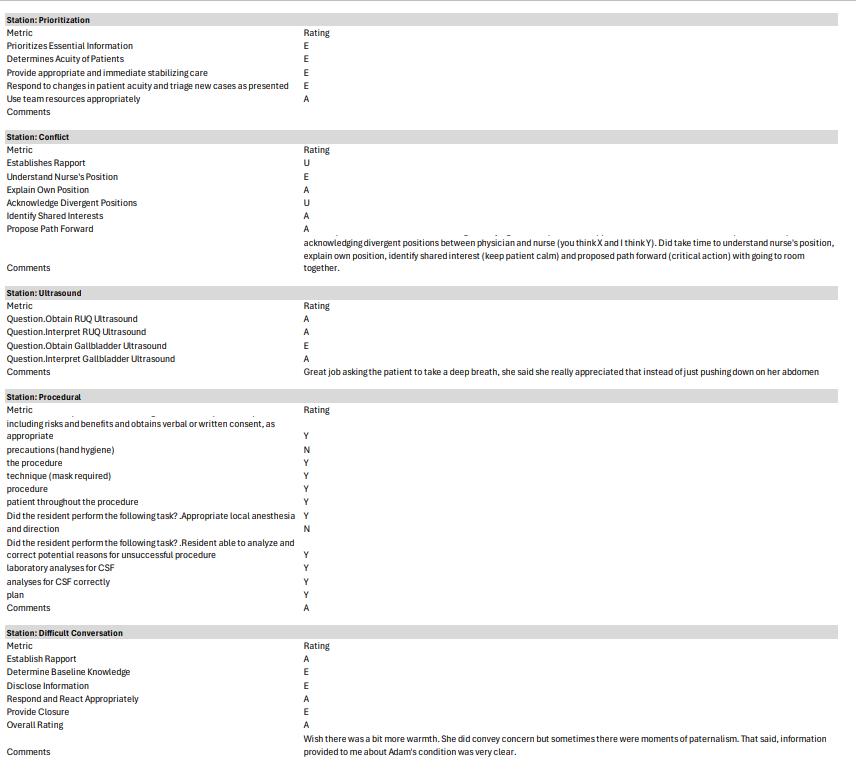
24 Code Names: Aortic Assassin Edition — Gamification to Enhance Cardiovascular Emergency Education
Megan Leslie, Shayne Gue
Introduction/Background: Aortic dissection is a life-threatening emergency requiring rapid diagnosis and coordinated management. Emergency Medicine (EM) residents must be able to recognize key terminology and initiate appropriate treatment strategies under pressure. Traditional didactic approaches may not effectively reinforce these competencies. This innovation applies gamification to promote active learning, improve retention, and strengthen clinical decision-making related to aortic dissection.
Educational Objectives: This activity aimed to (1) strengthen residents’ understanding of key terms, diagnostic criteria, and management strategies for aortic dissection; (2) improve recall and application of these concepts in high-pressure clinical scenarios; and (3) enhance teamwork and communication skills through competitive, game-based learning.
Curricular Design: The activity was implemented during weekly resident conference with 12 participants split into two teams. A 5×5 Code Names–style grid incorporated terminology related to aortic dissection, including diagnostic classifications, imaging modalities, treatments, and management priorities. A Spymaster provided single-word clues to guide teammates toward selecting the correct terms while avoiding the “assassin” card. Following the session, residents completed a four-item post-activity survey using a 5-point Likert scale assessing motivation, engagement, challenge, and perceived preparedness for managing cardiovascular emergencies.
Impact/Effectiveness: Ten residents completed the survey. Participants reported high motivation to learn cardiovascular content through this gamified format (mean 4.6/5). All respondents (100%) agreed or strongly agreed that the game was more engaging than traditional educational methods (mean 4.9/5). Residents also found the activity appropriately challenging (mean 4.6/5), with 90% agreeing it tested their abilities more effectively than standard instruction. Additionally, 80% reported feeling better prepared to manage real-life cardiovascular emergencies following participation (mean 4.0/5). Future iterations will expand this gamified approach to additional high-stakes cardiovascular and emergency medicine topics.
Intro/ Background: Emergency physicians frequently manage hand and wrist fractures. However, recent data has shown that many EM residents lack confidence in this component of the ABEM Model of Clinical Practice, highlighting the need for prioritization of orthopedic curricula in residency didactics.
Educational Objectives: By the end of our conference session, EM residents will be able to:
• Accurately interpret radiographs of distal radius fractures
• Develop confidence in independently performing distal radius reductions without Orthopedic consultation
• Execute proper technique for fracture reduction management through hands-on demonstration
Curriculum: Targeting PGY 1–4 EM residents, a fivehour session combining didactics and hands-on training
was delivered during conference time. The core curriculum centered on wrist anatomy, structured hand examination, radiographic interpretation of distal radius fracture variations, and faculty-led demonstrations of fracture reduction principles. Learners rotated through a series of hands-on stations designed to reinforce key steps in distal radius fracture reduction including application of finger traps, performance of hematoma blocks, reduction techniques using 3D-printed models, and immobilization and splinting techniques.
Impact/Effectiveness: Thirty-seven participants completed pre-training assessments and 43 completed posttraining evaluations. Knowledge improved significantly, with identification of Colles fractures increasing from 62% to 91% and Smith fractures from 43% to 88% (both p<0.001). Procedural comfort showed marked improvement, with mean comfort scores increasing from 1.77 to 3.33 on a 5-point scale (effect size d=1.8). The percentage of participants reporting comfort performing fracture reduction without consultation increased from 3% to 77%. These findings demonstrate statistically significant knowledge gains and clinically meaningful improvements in procedural confidence. Next steps include measuring residents’ skill retention and procedural comfort in practice.
Richa Gupta, Michelle Qu, Thomas Sanchez, Saumil Parikh, Sheetal Sheth, Brian Smith, Timothy Khowong, Anita Lui
Introduction: The Standardized Letter of Evaluation (SLOE) is an integral part of the emergency medicine applicant’s profile and allows programs to view EM bound students through a consistent lens. Despite the vital importance of the SLOE, when the time comes for Clerkship Directors to compose them, there is usually a dearth of direct observational data due to the natural time constraints imposed by a number of simultaneous rotators and lack of enthusiasm from educational faculty for completing shift evaluations. Current Standard Direct Observational Tools (SDOTs) exist to evaluate trainees during patient encounters but do not directly correlate to SLOEs.
Educational Objectives: The objective was to determine if a dedicated resident as a teacher on an education rotation utilizing a direct observational tool could generate additional data for use in writing SLOEs.
Curricular Design: A new evaluation form was created to reflect the competencies that are evaluated by SLOEs. A PGY-3 resident on a medical education rotation was tasked with direct observation of rotating medical students during a patient encounter and then giving them real-time feedback on their presentations. They were then asked to fill out the new evaluation form with comments on their interactions with the student.
Impact/Effectiveness: Post-rotation survey data was
collected electronically in a short-answer free text format from all 9 of our senior residents. 100% felt the new evaluation format was easy to use and helpful in providing real-time structured teaching and feedback. In prior years, the number of post-shift evaluations filled out at the end of the rotation per student ranged widely from 2-15 per student, with more evaluations being filled out for students ranked highly. Additionally, prior year evaluations infrequently provided feedback that was directly applicable to the SLOE. This year, every student had between 15-20 evaluations, 100% of which had consistent detailed data directly applicable to the SLOE. The preliminary success of our implementation is very promising here and should be considered by other programs with rotating medical students.
Zachary Ravnitzky, Quinn Bushman, Richa Gupta, Thomas Sanchez, Hannah Park, KeriAnne Brady, Richard Shin
Background: Ultrasound is an essential diagnostic modality for evaluating pediatric abdominal pathology. To enhance emergency medicine (EM) residents’ hands-on experience, we developed a series of simulated task trainers that replicate both common conditions (e.g., constipation) and less frequently encountered pathologies (e.g., pyloric stenosis). Point-of-care ultrasound (POCUS) is routinely performed in the pediatric emergency setting; however, limited exposure can leave residents underprepared or uncertain in their imaging technique and interpretation skills.
Educational Objectives: To implement a gamified learning experience that strengthens EM residents’ ability to identify and interpret pediatric abdominal ultrasound findings.
Curricular Design: A gamified educational session was held where EM residents were given a clinical prompt paired with an ultrasound-able model. Four unique models were used to show sonographic findings of constipation, intussusception, appendicitis or pyloric stenosis. Residents were directed to identify the pathology demonstrated on the model and then answer follow-up questions about management and potential complications. The session concluded with a pediatric EM faculty–led review of the characteristic ultrasound findings for each condition with real-time demonstration on the models.
Impact/Effectiveness: On a five point Likert scale survey of 14 residents, all respondents felt the activity was beneficial and enjoyable.After the session, 100% of residents noted increased confidence in identifying pyloric stenosis on ultrasound, 92.8% for identifying constipation and appendicitis, and 85.7% for identifying intussusception. Participants also rated the realism of the four ultrasound models highly, with scores ranging from 80% to 100%. The gamified ultrasound
session effectively improved resident confidence in identifying pediatric abdominal pathologies. The use of realistic, ultrasound-compatible models provided meaningful hands-on practice that helped bridge gaps in clinical exposure. These findings suggest that integrating simulation-based gamification into residency training may enhance diagnostic proficiency and learner engagement in pediatric POCUS.
Braden Zoller, Melanie Camejo, Monica Gaddis
Background: Ultrasound-guided peripheral IV catheter (USGIV) insertion is a core skill for emergency physicians, as 8–23% of emergency department patients have difficult venous access. Ultrasound guidance improves success rates and reduces complications and patient discomfort compared to traditional techniques. Despite its importance, emergency medicine residents often receive inconsistent instruction in USGIV placement, leading to variable skill acquisition. Prior studies support multimodal education using didactics, simulation, and assessment to enhance confidence and procedural success.
This innovation aims to improve first-year emergency medicine residents’ procedural competency through a structured, competency-based education program combining asynchronous learning, simulation-based deliberate practice, and objective assessment. A pre-session curriculum and validated competency checklist promote standardized skill development and feedback. Pre- and post-tests, along with a retention survey, assess changes in knowledge, skills, and confidence.
Educational objectives:
1. Describe indications, contraindications, and procedural steps for USGIV insertion.
2. Demonstrate image acquisition and dynamic needle guidance on simulation models.
3. Achieve competency using a validated USGIV checklist.
Curricular Design: Residents complete pre-learning materials and a pre-test via email, followed by a two hour simulation session focused on vascular anatomy scanning and USGIV practice. Competency is assessed at session completion utilizing a procedure checklist and post-test, with follow-up surveys administered during a subsequent ultrasound rotation to evaluate retention.
Impact/Effectiveness: This project standardizes instruction for a high-frequency procedure that directly impacts patient care quality and efficiency. Preliminary data has been collected, but a revised assessment tool will be implemented in the next academic year.
William Brown, Nick Caputo, Joshua Justice, Craig Sheedy, Carmen Wolfe
Introduction: Rural emergency medicine (EM) is a broad designation covering practice settings with low-density populations and restricted resource access. With nearly 25% of Americans living in a rural setting, this population can experience both common emergency ailments as well as specific occupational illnesses and injuries. Given that most EM residency programs are in urban or suburban areas, there may be lower familiarity with management of rural emergencies. The implementation of an experiential learning session designed for emergency medicine residents to learn about rural emergencies could provide valuable education they would not otherwise obtain in their typical clinical training settings.
Educational Objective: Increase resident knowledge and confidence in the management of emergencies occurring in rural settings
Curricular Design: This experiential learning day was administered on a farm in a rural region of Tennessee. In situ implementation allowed residents to become familiar with common equipment and geographic features that may be relevant to patient presentations. Residents were divided into six groups of mixed PGY levels and rotated through six educational stations in 35-minute intervals. Topics included crotalid envenomation, grain bin entrapment, farming-related toxidromes, horse-related traumatic injuries, tractor-related injuries, and pediatric rural drowning incidents. A variety of learning methods were utilized including mannequin-based simulation cases, traditional didactic lectures, oral board-style scenarios, and case-based written worksheets.
Effectiveness: An optional survey was conducted at the conclusion of the experiential learning session. All residents (100%) reported increased knowledge and confidence in managing rural emergencies. The majority (96%) preferred this educational activity over traditional classroom learning. Opportunities for future improvement include additional learning stations with expanded topic coverage.
Daniel Patton, Peter Anthony, Lee Reagan, Todd Peterson
Introduction: SimWars is a competitive, simulationbased educational format proven to improve resident skills, confidence, and In-Training Exam performance. Despite these benefits, it has rarely been adapted from residency to undergraduate medical education. Second-year medical students, in particular, have limited exposure to emergency
medicine (EM) principles and practices.
Objective: To create a competitive simulation event for MS2 students to gain exposure and confidence in treating emergent conditions.
Methods: A SimWars competition was implemented for second-year students at the UAB Heersink School of Medicine, timed immediately after didactics and prior to USMLE Step 1 preparation. The event began with an introductory presentation on effective communication, followed by three high-yield simulation scenarios aligned with Step 1 content. Emergency medicine residents utilized objective rubrics to score participants on accurate diagnosis, disease management, and communication. Each scenario concluded with a structured debrief focusing on core case facts and the application of EM principles to critically ill patients. Post-event, all participants completed a survey assessing changes in confidence and comfort in emergency settings.
Results: Results showed that most students reported increased confidence in diagnosing and managing acute illnesses
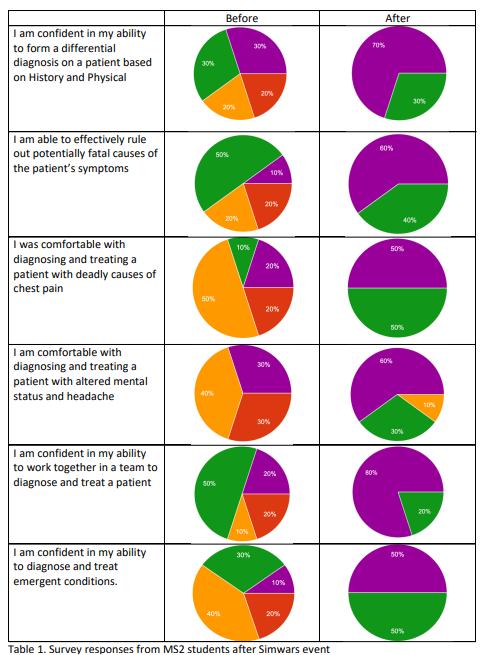
across multiple organ systems (Table 1). The most notable changes were seen with 70% of students reporting a significant increase in confidence in treating chest pain and 60% reporting an increase in confidence in treating altered mental status. Participants also noted greater comfort working in the ER, communicating within teams, and consulting with physicians.
Conclusion: SimWars is a feasible and effective educational intervention for pre-clinical medical students. It significantly enhances confidence, comfort, and foundational knowledge in emergency medicine—bridging a critical gap in early clinical training.
Tina Anjali Jagtiani, Thomas Sanchez, Brian Smith, Timothy Khowong
Background: Breaking bad news is a fundamental skill for emergency physicians, yet most residents have limited opportunities to practice before encounters with real patients and families. These encounters are emotionally charged, often occur without warning, and demand not only clinical expertise but also empathy, communication, and emotional intelligence. Despite the importance of these “soft skills,” structured practice and feedback are rare in residency training. The new ABEM certifying exam further underscores the importance of high-stakes communication, highlighting the need for innovative and effective teaching strategies.
Objectives: To create and evaluate Bedside Banter, a novel serious game combining “Mad Libs”-style prompts and role-play, to help EM residents practice high-stakes communication in a supportive environment. Goals include improving resident confidence, encouraging use of structured approaches (e.g., SPIKES), and providing an engaging way to teach and reinforce communication skills with real-time peer and faculty feedback.
Curricular Design: Residents were divided into small groups and rotated through roles: physician, patient/family member, scenario writer, and observer. A dice roll determined the case scenario, which was then customized “Mad Libs”style before role-play. Observers scored participants using a structured rubric. Pre- and post-surveys using a 5-point Likert scale assessed comfort with delivering bad news and the use of a structured communication framework such as SPIKES. Paired t-tests were used for analysis.
Impact: Twenty-three residents completed surveys. Comfort with sharing difficult news improved from 3.09 ± 0.95 to 4.04 ± 0.56 (t(22) = 4.00, p = 0.0006, Cohen’s d = 0.83, large effect). Self-reported use of a structured approach increased from 2.87 ± 1.10 to 4.43 ± 0.73 (t(22) = 5.00, p < 0.0001, Cohen’s d = 1.04, very large effect). Residents
reported high engagement and valued real-time feedback. Bedside Banter is a low-resource, high-yield educational tool that promotes active learning, fosters a safe environment for practicing difficult conversations, and improves resident confidence and structured communication. This innovation directly addresses communication competencies emphasized by ABEM and may be adaptable to other programs.
I’m
Adam McFarland, Daniel Saadeh
Introduction: Transgender and gender diverse (TGD) patients experience significant inequities in emergency care. ACGME guidelines emphasize culturally competent care, but most EM residencies provide minimal or no training on TGD health. This gap creates EM physicians who lack competency and may perpetuate disparities. We developed a practical, skills-based curriculum utilizing Kern’s framework to enhance EM residents’ confidence and competence in caring for TGD patients.
Objectives: Define terminology related to sexual and gender identity, perform an inclusive history and physical exam for TGD patients, describe key health-care needs and disparities affecting this population, and apply learned skills in a simulated environment.
Curricular Design: A needs assessment drawing on medical education literature, patient experience studies, and community resources informed curriculum development. LGBTQ+-identified education faculty designed a one-hour interactive session on terminology, pronoun use and error recovery, health disparities, and ED-specific presentations. Learners practiced these skills in breakout groups with immediate feedback. 4 weeks later, residents participated in a simulation based on a real patient case requiring gender identification, trust-building to perform a pelvic exam, and mitigating patient gender dysphoria. Simulationtrained faculty with expertise in LGBTQ+ healthcare led a structured debrief. Pre- and post-session surveys assessed learner confidence (Kirkpatrick Level 1).
Impact: Twenty-six residents participated in the initial didactic session. 91% had prior education in TGD patient care. Post-session, 97% reported increased confidence discussing gender identity and 92% in performing an organ inventory. Nearly all (97%) found the workshop valuable for their development and felt it should be continued. Fourteen residents completed the simulation, and eleven completed the post-simulation survey. 100% reported increased confidence discussing gender identity and navigating gender dysphoria. 100% felt it was valuable and would inform future clinical practice. This feasible, reproducible curriculum improved EM residents’ comfort and knowledge in TGD patient care. Future work will assess sustained impact in the clinical environment.
Madison Williams Chen, Maxwell Thompson, Samuel Burleson, Ariane Kubena, Katherine Griesmer
Introduction/Background: With new changes to the EM boards and ACEP guidelines, regional anesthesia has fallen into the realm of EM. While a foundation already exists with training in other ultrasound-guided procedures, the ability to teach and perform regional anesthesia is often dependent on opportunities, perceived knowledge and comfort with the procedure, and even faculty engagement. Following handson sessions with both faculty and residents, surveys were completed regarding barriers to teaching and implementing regional anesthesia in the ED to further enhance and prepare residents for future practice and their certifying exam.
Educational Objectives: To explore the integration of regional anesthesia into EM practice, with a focus on how the changes to the EM boards and ACEP guidelines have shifted regional anesthesia’s role in the ED. To assess the current barriers to teaching and performing regional anesthesia in the ED and propose strategies for overcoming them. To prepare residents for the certifying exam by ensuring they are equipped with the knowledge, skills, and confidence to perform regional anesthesia safely and effectively in the ED.
Curricular Design: At a Level 1 trauma center university hospital, nineteen EM attending physicians performed a simulation involving setup and performance of fascia iliaca compartment block (FICB). Separately, twelve EM resident physicians performed a simulation involving setup and performance of FICB, serratus anterior block, interscalene block, and upper extremity nerve blocks. Surveys were obtained, using a 10-point Likert scale, prior to and upon completion of both simulations to measure prior experience, comfort, and perceived barriers to learning and implementing regional anesthesia in the ED.
Impact/Effectiveness: Following the simulation,
residents and physicians alike responded positively to the educational experience. This was the second simulation hosted for residents and first simulation specifically for faculty in hopes to increase education across both groups and in turn, increase comfort and clinical use of regional anesthesia. Now with formal tracking of regional anesthesia as a procedure, there has been a significant increase in the use of regional anesthesia noted.
Tiffany Moadel, Michael Sperandeo
Introduction/Background: Emergency medicine resident conferences often rely on passive lectures, although active learning improves engagement and retention. Simulation supports experiential learning but is typically limited to small groups, requires high-fidelity equipment, or occurs away from conference spaces, reducing scalability. Programs need an interactive, low-cost simulation method that engages large groups during routine conferences.
Educational Objectives: Objectives were to create a large-group simulation suitable for a lecture setting and evaluate learner satisfaction, engagement, comfort, and selfreported knowledge before and after the session compared with standard small-group simulation.
Curricular Design: A 30-minute in-person simulation was delivered during resident conference to 46 emergency medicine residents. A faculty member portrayed a patient with nausea, vomiting, prolonged QT interval, and torsades de pointes, later replaced by a low-fidelity CPR manikin once arrest occurred. Vital signs and case elements were shown on a large monitor. One to two volunteers managed the patient on stage, while the audience used live polling to guide scenario progression at preset decision points involving history, examination, diagnostics, medications, interventions, and consultations. Majority responses determined the next step, with slides showing outcomes. When torsades occurred, volunteers placed defibrillator pads and demonstrated charging a monitor. A facilitator led a structured debrief. Learners completed an anonymous survey comparing this format with traditional simulation.
Impact/Effectiveness: Forty-six residents participated. Learners reported higher engagement (4.6 vs 3.8) and comfort (4.5 vs 3.9) with the large-group format than with standard simulation. Self-rated knowledge improved from 3.1 before the session to 4.4 after. Satisfaction was higher (4.8 vs 4.6), and all participants (100%) endorsed wanting more largegroup simulations. Qualitative feedback described increased attention, interactivity, and discussion. This low-cost, scalable model fits conference spaces, requires minimal equipment, and is adaptable to many emergency medicine topics. Future
plans include applying the format to new scenarios and evaluating retention.












35 Empathy in Emergency Medicine Training: A Novel Experiential Curriculum Focused on Caring for Patients Experiencing Homelessness
Alexander Branson, Chad Holmes
Background: Emergency medicine (EM) physicians frequently care for individuals experiencing homelessness, yet traditional residency education often provides limited exposure to community resources and lived patient experiences. Gaps in empathy, systems knowledge, and confidence can hinder effective, compassionate care. Immersive learning experiences may bridge these gaps by acquainting trainees with the environments their patients navigate daily.
Objectives: To develop and implement an integrated, singleday experiential learning program for EM interns that enhances
empathy, increases awareness of local homeless services, and improves confidence in caring for unsheltered patients.
Curricular Design: All EM interns at a large county hospital in Fort Worth, TX participated in a structured, daylong curriculum consisting of two parts. First, the morning community immersion is a guided walking tour of the Tarrant County homeless district, including facilitated small-group discussions with leadership from multiple day shelters, night shelters, and community resource agencies. Second, the afternoon field experience includes direct engagement with the hospital’s street medicine outreach team, providing supervised patient encounters in unsheltered environments. The curriculum emphasized social determinants of health, local service navigation, trauma-informed communication, and multidisciplinary collaboration. Program outcomes are being measured using pre- and post-experience surveys assessing empathy, resource awareness, and self-reported clinical confidence.
Impact/Effectiveness: Preliminary data demonstrate improvement in residents’ understanding of local homeless services, increased empathy toward individuals experiencing homelessness, and higher confidence in caring for unsheltered patients in the ED and community settings. Qualitative feedback highlights the value of authentic patient interactions and strengthened insight into systemic barriers influencing emergency care utilization. Future plans include long-term follow-up to assess sustained impact and program expansion to include longitudinal social medicine integration. Additional analysis will compare outcomes across cohorts to evaluate reproducibility and inform broader implementation.
36
Amar Bukvic, Shorok Hassan, Danielle Langan
Background: Gamification has emerged as a dynamic approach in medical education, yet few studies have integrated it into GME. We implemented a casino-themed educational session to enhance learner engagement, confidence, and application of key EM skills. This innovation addresses an educational need for active learning formats that mirror the fast-paced and decision-heavy environment of the ED and aimed to offer a repeatable and adaptable approach that could supplement traditional didactics.
Educational Objective: By the end of this educational intervention, participants will be able to demonstrate airway management skills, interpret various electrocardiograms, apply evidence-based management in rapid-response scenarios, and report increased confidence in leadership in high-stress emergency situations.
Curricular Design: This prospective educational innovation occurred during a four-hour, casino-themed EM
conference. Thirty-two learners (26 residents, 2 PA fellows, 4 medical students) rotated through four interactive game stations focused on EKG interpretation, airway management, diagnostic reasoning, and rapid response leadership. Poker chips were incorporated to encourage confidence calibration and accountability in decision-making. Resources included standard conference rooms, airway equipment, simulation manikins, EKG images, and faculty facilitators. Early challenges included station timing and standardizing scoring. Adjustments were made by adding facilitator checklists and fixed station time limits. Learners completed matched pre- and post-conference surveys assessing confidence, perceived skill improvement, educational value, and likelihood of applying skills clinically. Faculty facilitators also evaluated feasibility and effectiveness.
Impact: Approximately, 91% of learners reported improved confidence in EKG interpretation, 81% in team-based decision-making, and 69% in rapid response skills. Around 31% noted gains in leadership during high-stress scenarios. Nearly 78% were very likely to apply learned skills in practice, and 100% preferred the format over traditional didactics. Faculty feedback aligned with learner perceptions, highlighting the ease of implementation and strong engagement and supporting expansion to other EM residencies.
Leila Getto, Maxwell Blodgett, Kirsten Ward, Christopher Mitchell
Introduction/Background: Gamification is increasingly used in medical education to promote engagement and diagnostic reasoning. While escape rooms and other interactive formats have been described, to our knowledge a murder mystery structure has not been explored. Because toxicologic presentations evolve over time and often share overlapping features, the topic offers a strong educational fit for a progressive, clue-based activity. We developed a toxicologythemed murder mystery to engage Emergency Medicine residents in pattern recognition and collaborative reasoning.
Educational Objectives: Objectives were to (1) identify common toxidromes, (2) describe high-yield toxicologic physical exam elements, (3) describe clinical manifestations of toxic alcohol poisoning, (4) describe how toxic alcohol poisonings evolve over time, and (5) describe empiric management for toxic alcohol ingestions.
Curricular Design: The narrative was set at an academic conference where the keynote speaker was poisoned and six conference attendees became suspects, played by faculty characters. Each character had a defined motive, weapon (toxin), opportunity, and timeline. A character interaction map tracked how suspects intersected and guided clue placement.
Toxic alcohols were selected amongst five other toxins as the “murder weapon” for their recognizable yet diagnostically challenging features. Six mixed-PGY groups progressed through three rounds consisting of scripted interactions, suspect questioning, and individual group discussion. Each group then submitted their answers regarding the suspected character and toxin responsible for the poisoning. The 2-hour session concluded with a 30-minute lecture reviewing toxidromes, toxic alcohol presentations, exam findings, and management.
Impact/Effectiveness: Post-session surveys showed significant increases in confidence identifying toxidromes (p=0.007), recognizing toxic alcohol poisoning (p<0.001), interpreting laboratory findings (p<0.001), and managing toxic alcohol ingestion (p<0.001). Learners reported high engagement, and feedback was uniformly positive. This innovation effectively taught high-yield toxicology content and provides a model for incorporating a murder mystery session into an EM curriculum.
Richard
Dykstra, Andrew Moore, Jessica Pelletier, Rachelle Dykstra
Introduction: The visiting student rotation in EM represents a critical opportunity for residencies to showcase their program to prospective students. Although targeted scholarships for Acting Internships (AI) have been described previously, the role and impact of a housing stipend universally offered to visiting students remains unexplored. This initiative sought to use a universal housing stipend to boost the competitiveness of our visiting AI rotation with emphasis on geographic and institutional diversity.
Educational Objectives: Increase the number of applicants and geographic diversity of students applying for the visiting student AI in EM.
Curricular Design: For the 2025 season, our institution offered a $500 housing stipend to all visiting students completing our AI in EM. We reviewed the number of applicants, ratio of allopathic versus osteopathic students, the number of schools represented, and the states of schools represented. We used descriptive statistics to analyze our applicants and student cohorts pre- and post-housing stipend implementation.
Impact/Effectiveness: In 2024, we received applications from 29 students primarily from osteopathic schools that were in-state or from neighboring states (86% osteopathic, 72% in-state or neighboring state). Post-implementation in 2025, applicants tripled to 101 students (348% increase); they represented an even number of osteopathic and allopathic schools and significant geographic diversity (49% osteopathic, 45% in-state or neighboring state). This drastically different
applicant pool enabled us to build a highly competitive, diverse cohort of visiting students. The 22 visiting students completing our AI in EM for 2025 represented 21 different schools from 16 different states. A modest housing stipend offered to all visiting students was associated with enhanced competitiveness and geographic diversity of visiting students. Several limitations exist, including confounding factors such as increased advertising efforts and the national increase in students pursuing EM.
Amrita Vempati, Kelsey Newbold, Kara Geren, Madison Kahle
Introduction / Background: High-quality ED documentation is essential for communication, billing accuracy, and medicolegal protection, yet EM trainees receive little structured instruction. A needs assessment showed major gaps: 40% did not know key medical decision-making (MDM) components, 62% did not consistently document required elements, 93% had no coding education, and many lacked familiarity with relative value units (RVUs) or malpractice-related documentation. Learners requested clearer expectations and real examples, supporting the need for a structured documentation curriculum.
Educational Objectives: Objectives were to: (1) describe essential components of effective ED documentation with emphasis on MDM; (2) evaluate MDM quality and features of clear, defensible documentation; (3) explain coding elements including Complexity of Problems Addressed (COPA); (4) document procedures and critical care time to support appropriate RVU capture; and (5) apply documentation strategies that reduce medicolegal risk.
Curricular Design: We created a quarterly curriculum delivered during weekly conference and taught by EM faculty with expertise in documentation, coding, and medicolegal practice. Session 1 reviewed core ED documentation components using real examples. Session 2 involved guided review of effective MDM examples. Session 3 introduced coding principles and how documentation influences evaluation and management level assignment. Session 4 reviewed RVUs, compensation models, and documentation of procedures and critical care time. Pre- and post-surveys assessed confidence and intended behavior change.
Impact / Effectiveness: Learners across all sessions reported improved understanding and confidence. After the MDM session, 98% learned key components. After the coding session, 100% reported improved understanding, with most comfortable determining COPA and data complexity. The RVU session improved confidence documenting
procedures and critical care time. Learners planned to strengthen reasoning, timestamp key events, and apply coding principles. Ongoing implementation includes simulation-based documentation practice and objective chart audits.
Robert Steele, Shane Joseph, Wesley Yeackle
Background: EM programs are required to establish a Clinical Competency Committee (CCC) and report their trainees’ Milestones assessments to the ACGME. This summative feedback to residents is important. Programs are granted flexibility in structuring their CCC meetings to best match their size, shape, and culture. Many participants view these meetings as inefficient and unhelpful.
Objectives: Sought to improve the efficiency and utility of our CCC meetings by transitioning from open-ended, antidote-based discussions to time-structured, evidence-based reviews of objective metrics paired with a novel graphic presentation of residents’ summative Milestones progress referenced to class-specific expectations.
Design: Objective metrics were systematically collected, including conference attendance, online questions completed,
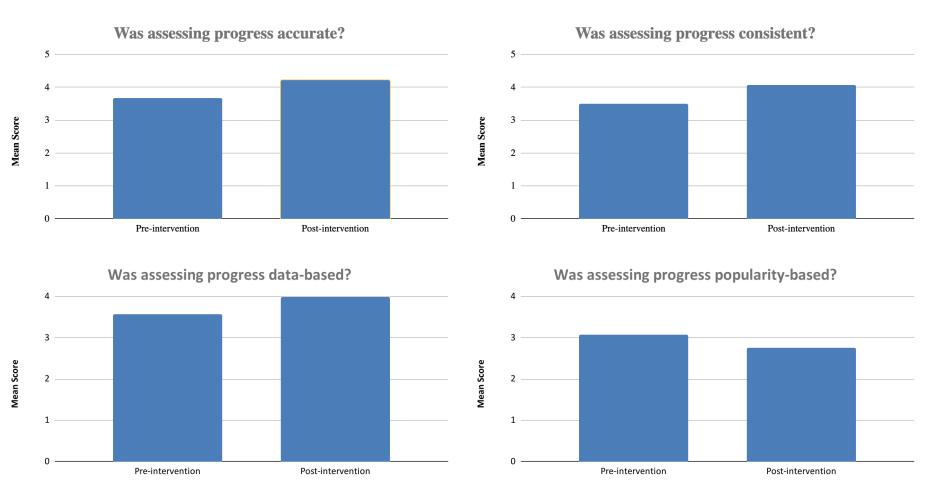
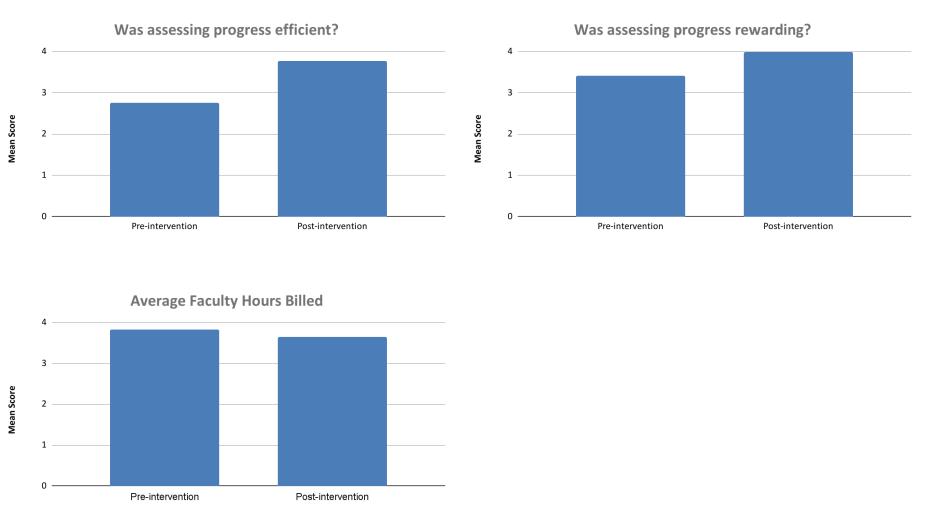
procedures completed, ultrasounds completed, total patient encounters, and inservice exam scores. A standardized process was implemented to collate these data prior to each semi-annual review, generating a concise summary slide for every resident that displayed individual performance relative to class-specific averages. A series of color-coded slides tracked each resident’s historical and projected progress within the Milestones framework, benchmarked to class expectations. To enhance efficiency, a countdown timer with an audible cue was added to structure faculty discussions. Faculty were surveyed pre/postintervention using an online survey tool with a five-point Likert scale and responses were analyzed utilizing a Wilcoxon signedrank test. Timesheets were reviewed pre- and post-intervention for total time billed for CCC meetings.
Impact: Pre/post-intervention surveys asked faculty members to report if our process of assessing resident progress was accurate, consistent, data-based, popularity-based, efficient, and/or rewarding and improvement was seen in all surveyed categories with the most significant improvement demonstrated in perceived accuracy and efficiency (both reaching p<0.05) with effect sizes (r ≈ 0.35–0.40) by Wilcoxon analysis. A trend towards reduced hours by faculty for CCC meetings was demonstrated, suggesting savings in faculty time and program budget.
Michael Bernazzani, Jennifer Carey, Alexandra Nordberg
Educational Objectives: Develop a workflow using a large language model (LLM) to generate early drafts of individualized learning plans (ILPs) for medical knowledge gaps.
Introduction/Background: ABEM published that there is a national decline in qualifying and in-training examination performance for EM residency programs over the last six years. ACGME also requires the programs create ILP’s to help residents meet their milestones. Current ILP creation centered around medical knowledge is labor intensive; requiring a faculty to resident ratio of 1:4. A lack of scalable, standardized tools for ILP development represents a significant gap in educational support. LLM’s offer a solution by generating early drafts that faculty refine, reducing the time required for creating ILPs.
Curricular Design: We developed a stepwise chatbot using a LLM to synthesize de-identified ITE reports including: domain performance, overall score, predicted pass probability, and standard error. With optional inputs of resident learning preferences and clinical schedule. We incorporated the ABEM content blueprint to ensure heavily tested domains were prioritized. The chatbot then produced a structured
ILP; outlining resources, timing, and question volume. A faculty member reviewed each plan. The prompt underwent two iterative refinements to improve output structure and weighting logic.
Impact/Effectiveness: The LLM was able to generate the initial ILP, followed by faculty review. Overall this was found to save faculty time. One faculty member produced four ILPs in half a day compared with historical estimates of one day per resident. Removing the initial drafting burden substantially reduced the workload, and allowed faculty to focus on higher-level review. Anecdotally, plans appeared comparable to traditional versions with improved structural consistency. The workflow requires only an ITE report, a LLM, and a template prompt, supporting feasibility and adaptability for other residency programs.
Krishen Gosine, Michel Kabbash, Rosemarie Fernandez, Alejandro Sanoja, Sarah Chrabaszcz, Joshua Altman, Jasmine Holmes, Dante Lorenzo-Rodriguez
Background: Effective pre-hospital airway and trauma management are critical competencies for sports medicine physicians providing sideline coverage at athletic events. Airway and non-orthopedic trauma management are not currently core competencies for sports medicine fellowships. Additionally, sports medicine fellowship trainees are recruited from various specialties and as a result have significant variation in baseline non-orthopedic emergency care.
Educational Objectives: The objective of the STAT workshop is to develop sideline and trauma management skills in sports medicine physicians providing sideline coverage.
Curricular Design: We applied Kern’s approach to the design of a curriculum for sports medicine physicians. Subject matter experts (board-certified sports medicine physicians trained in orthopedic surgery, emergency medicine, and family medicine external to the design team) reviewed training content, specific procedure learning objectives, and checklists/critical actions for each procedure. Content and checklist items were revised based on feedback. Training strategies employed (1) asynchronous learning to support development of foundational knowledge, (2) a simulation-based session to provide handson skill training in a controlled environment, and (3) in-situ simulation to support transfer of skills to the sideline setting. Training targeted basic and advanced life support skills including bag-valve mask ventilation, airway manipulation, advanced airway placement, automated defibrillator use, and trauma skills of securing spinal immobilization and needle thoracostomy. Each station was guided by procedural checklists and offered trainees the opportunity to gain mastery of the
procedure. Trainees completed pre- and post-training surveys to assess procedural confidence.
Impact: Five non-emergency medicine sports medicine physicians completed training. All participants (5/5) reported increased confidence in their ability to perform these procedures. To our knowledge, this is the first simulationbased training for management of sideline emergencies that targets non-emergency medicine physicians. Additionally, incorporation of both lab-based and in-situ simulation provides a scaffolded approach to skills development and implementation.
Nathaniel Ladaga, Jeffrey Jones, Thomas Peterson, Megan Courtley
Introduction/Background: Traditional slide-based didactics yield lower satisfaction, engagement, and retention than interactive formats. Case-based and debate-style learning improves outcomes in medical education. Building on these findings, “EM Smackdown!” was developed in 2024 as a quarterly, debate-style session integrating Artificial Intelligence (AI) search tools to support literature discovery and discussion of controversial EM topics.
Education Objectives: By the end of the session, learners will be able to conduct targeted literature reviews on clinical EM questions, effectively utilize AI-based and online tools, critically appraise and cite evidence to support their clinical decision-making, and demonstrate professionalism during structured debates. Faculty evaluators use observations of discussions and literature review skills to inform ACGME milestone assessments.
Curricular Design: Each 90-minute session begins with a faculty-developed EM vignette and corresponding management dilemma. Residents and students, randomly assigned to teams led by senior residents, review literature to construct arguments supporting or opposing management choices. Teams present findings with citations during a moderated debate. Post-session surveys assess learner comfort with rapid, targeted literature searches and solicit feedback for future topics.
Impact/Effectiveness: Participants reported that an “EM Smackdown!” session was more engaging than traditional lectures, enhanced understanding, and improved efficiency in locating reliable evidence. This model simultaneously promotes literature analysis, professional discourse, and AI integration. Given the current scarcity of AI-based curricula in medical education, this innovative format provides a practical and adaptable framework for modernized, evidence-driven didactic learning.
Charles Wyatt, Hyunjoo Lee
Background: Nearly 12 million emergency department visits annually involve ophthalmologic complaints. Proficiency in corneal foreign body (CFB) removal via slit lamp is essential for emergency physicians; however, EM residents report less than 10 hours of dedicated ophthalmologic training during residency. Despite the clinical importance, no standardized teaching approach exists in EM residency curricula. Various simulation materials including cow eyes, agar plates, and paraffin have been explored, but hard-boiled eggs represent a novel, accessible, low-cost alternative warranting investigation as a teaching tool.
Educational Objectives: To evaluate whether hard-boiled egg simulations for CFB removal significantly improve EM residents’ procedural proficiency and confidence levels, and to assess whether this approach is feasible, cost-effective, and practical for routine implementation across different training levels.
Curricular Design: Residents completed pre-simulation surveys assessing baseline experience and comfort with slit
lamp use and CFB removal techniques. A simulation model was constructed using a slit lamp, Styrofoam ball, hard-boiled egg, and pencil-lead shavings to simulate embedded corneal foreign bodies. During a structured resident conference session, participants performed CFB removal procedures on the eggbased model under supervision and completed post-simulation surveys. Confidence levels and Likert scale responses were analyzed using paired t-tests in Microsoft Excel.
Results: The simulation led to statistically significant improvements in resident procedural confidence. Mean confidence scores for performing CFB removal increased from 2.38 to 4.76 (p < 0.001). Confidence using a needle during CFB removal increased from 1.70 to 4.83 (p < 0.001). PGY1 residents demonstrated the largest relative improvement, though significant improvements were observed across all training levels, suggesting broad applicability.
Impact/Effectiveness: Hard-boiled egg simulations significantly improved residents’ confidence in CFB removal. This low-cost, accessible model proved practical for procedural education across all PGY levels. Future studies should verify clinical effectiveness and validate performance outcomes.
Social
Utilizing Simulation and Gamification to Increase Social Determinants of Health Education
Amber Billet
Introduction/Background: There is increasing need to educate Emergency Medicine (EM) residents regarding Social Determinants of Health (SDoH). ACGME requirements aside, residents need preparation to serve the unique patients in their community.
Educational Objectives:
1. Identify and understand the impact of SDoH inequity.
2. Identify the role of community health workers and how they can optimize patient care.
3. Build empathy for those impacted by SDoH factors.
Curricular Design: EM residents participated in a 5 hour workshop. Residents completed a pre-survey prior to a lecture introducing SDoH and objectives. Learners then participated in (4) attending-facilitated mini simulations consisting of 4-6 mixed PGY-level residents per group. Learners rotated through the role of patient, physician, confederate and observer in each of the four simulations which included: incarceration, religion/age, language and racism (Table 1). Each simulation comprised a 15 minute scenario, 8 minute debrief, and 2 minute transition. Learners subsequently rejoined for two brief lectures on community resources and transgender care, then modeled social roles and factors within a board game framework (“The Last Straw” or “Our World”). Residents and attendings completed a post-survey and
feedback survey, respectively.
Impact/Effectiveness: A total of 21 residents and 6 attendings participated in the workshop, with 95% and 100% agreeing/strongly agreeing that the activity was a valuable use of conference time, respectively. Comparing pre- and post-survey resident responses, 33% vs 71% (p=0.01) agreed/ strongly agreed that the ED is an appropriate venue to connect patients with community resources, 29% vs 100% (p<0.01) agreed/strongly agreed that they had received specific training on how to identify and intervene on SDoH and 33% vs 86% (p<0.01) agreed/strongly agreed that they felt confident in their knowledge of community resources and ability to connect them to patients.

Kjerstin Hensley, Joshua Neumann, Bophal Hang
Introduction: Critical Access Hospitals face staffing shortages as most EM graduates pursue urban positions. Current simulation curricula emphasize high-resource, tertiary environments, leaving a gap in training residents to manage complex, time-sensitive emergencies with limited resources. This innovation introduces a high-fidelity simulation targeting the operational and clinical challenges of a single provider in a rural ED.
Educational Objectives: Prioritize and manage simultaneous high-acuity emergencies with minimal staff and resources; demonstrate effective clinical management of rural-relevant emergencies; execute system-based tasks, such as inter-facility transfer and resource allocation; and maintain professionalism and communication with limited nursing support and distressed families.
Curricular Design: This curriculum utilizes a threepart, single provider, high-fidelity simulation for senior EM residents in a resource limited rural ED. The three concurrent cases included a critically ill patient with a peritonsillar abscess requiring potential airway management and transfer, a patient with postpartum hemorrhage, and a patient necessitating immediate lateral canthotomy. The scenario required rapid task switching, delegation, and resource allocation. Residents completed a post-simulation survey for feedback, and performance was evaluated using a customized milestones tool and structured debrief (Supplement 3).
Impact / Effectiveness: The simulation has been
implemented for the last two years and well received. The milestones tool provided objective data for focused feedback on rural specific scenarios and task switching competencies. Post-simulation surveys assessing the usefulness, relevance, and execution used a 1–4 scale (4 being highly satisfied),
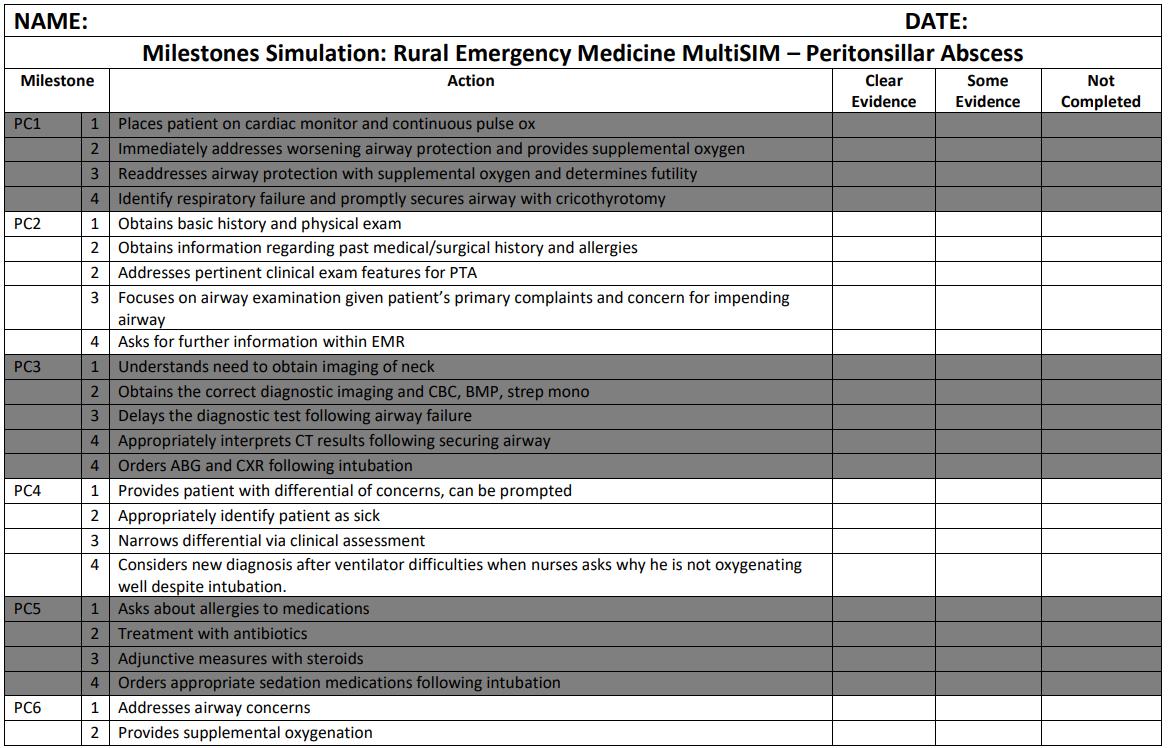
the mean score in all domains were consistently above 3, most often 4. This replicable model provides a scalable framework for preparing EM residents nationwide to function independently in rural and critical access settings.
Jack
Borucki, Nicole Dubosh, Taylor Brown, Jennifer Kaminsky, Anne Grossestreuer
Background: Most students applying to EM residencies complete sub-internships to gain exposure to residency programs and obtain a standardized letter of recommendation. Visiting students are under significant stress with pressure to perform in a new environment often without pre-existing support systems. Effective strategies to mitigate this are lacking in EM.
Objectives: To implement a medical student-intern mentorship program with the goal of improving the overall experience for visiting medical students in EM.
Design: We developed and implemented a near-peer mentorship program in our 4-week EM sub-internship in June 2025. All medical students enrolled in the sub-internship were paired with an EM intern mentor volunteer who was also rotating in our ED that month. For the July 2025 cohort, second-year resident mentors were used given interns just began residency. Mentor pairs were connected via email and students were instructed to contact their mentor. Due to the unique shift structure of the ED, we designed the interactions to be mentor/mentee initiated rather than scheduled. At the end of each rotation, anonymous surveys were distributed to participants to assess how the program was used, impact on student experience, and degree of burdensomeness to mentors.
Impact/Effectiveness: To date, 22 medical student-intern pairs have participated in the program. 93% of participants completed surveys. 21 (95%) students interacted with their mentor in-person at work and 2 (9%) interacted with their mentor outside of work. 20 students (90%) indicated it made their experience much better or slightly better. No students reported a negative impact. 16 students (73%) thought their intern mentor was more approachable than attendings. Higher student ratings of mentor approachability were correlated to more positive impact of the mentorship program on overall rotation experience (p=0.004). All resident mentors (100%) felt neutral, disagreed, or strongly disagreed that being a mentor was a significant time burden. In summary, this novel medical student-intern mentorship program positively impacted the experience of medical students without burdening residents. In the future, we plan to ensure mentors are mindful of the correlation with approachability and encourage residents to reach out to more passive students.
Meher Arora, Tina Chen, Sri Sai Dinesh Jaliparthi, Benjamin Galligos
Introduction/Background: Central venous catheter (CVC) insertion is a core procedural skill in EM, thus programs dedicate significant time to building proficiency in PGY-1s. Mastery learning prioritizes deliberate practice with goal-oriented feedback, emphasizing learning outcomes over a pre-set educational approach. Microskills break down multistep procedures into discrete building blocks that provide learners with targeted feedback and the ability to control the pace of their learning until proficiency is achieved.
Educational Objectives: Based on principles of mastery learning, we designed a microskills-based CVC insertion curriculum, which deconstructs the procedure into smaller, repeatable steps. We hypothesized this would help EM PGY-1s to better understand essential components of CVC insertion.
Curricular Design: A total of 11 microskills stations were designed based on a validated checklist developed for CVC training in resident learners. Each microskill station had three components: 1) description of the skill, 2) materials to attempt the skill, 3) materials to check mastery of the skill. Learners remained at each station until they felt confident performing the given skill.
Compared with traditional task trainers, microskill stations required a larger classroom footprint and the purchase of household supplies to provide low-fidelity representations of some steps, at an additional cost of $45 per deployment. Staggering learner start times helped prevent bottlenecks at more time-consuming stations.
Impact/Effectiveness: This curriculum was deployed in July 2024 and July 2025 intern orientation at a single academic institution, for a total of 17 EM PGY-1s. Pre- and
post- curriculum surveys assessed EM PGY-1s’ confidence, self-efficacy, and curricular satisfaction. Additionally, 3 faculty facilitators were surveyed on their impressions. This novel curriculum was well-received. EM PGY-1s reported statistically significant improvements in their confidence and self-efficacy in CVC insertion (Image 1). Qualitative surveys noted improved understanding of procedural nuances and clearer identification of steps needing additional practice. Faculty felt this curriculum offered a more individualized teaching strategy without significantly increasing facilitation time.
Ashley Schultz, Michael Murphy, Jason Becker
Background: Prioritization of care during a Mass Casualty Incident (MCI) highlight an essential competency of emergency medicine, yet residents frequently express lack of confidence in their ability to manage mass casualty incidents due to lack of exposure or insufficient practice during training. We believe the use of simulation is an effective means to bridge this gap.
Educational Objectives: At the end of this exercise, residents should gain hands-on experience with prioritization of care and management as they would be expected to encounter during a real-life MCI scenario. Residents will demonstrate effective teamwork, communication and leadership during an MCI event.
Curricular Design: EM residents and rotating 4th year medical students participated in an unannounced, simulated MCI scenario using standardized patients and procedural trainers. The scenario was based on an armed robbery that included both blunt






and penetrating injuries (Table 1). Additional “walk-in” patients were included to further simulate the demand expected on learners during an actual MCI. Standardized patients underwent training, moulage, and field triage prior to the event. After briefing, learners were expected to activate the hospitals disaster plan, designate medical command, establish triage and delegate team roles and responsibilities as incoming patients arrived. Encounters were directly monitored by EM faculty and learners were formally debriefed using the PEARLS method immediately after the exercise.
Impact/Effectiveness: 35 learners participated during the initial implementation of this exercise and were surveyed. Respondents agreed that that the MCI simulation and debrief session were effective, educational, and reported an overall increase in confidence with managing an MCI event. Future areas for improvement would include limiting the total number of learners per simulation exercise, use of a multidisciplinary team approach to more accurately reflect the practice at our institution and determining optimal frequency of practice for skill maintenance.
Brett DerGarabedian, Alexis Pelletier-Bui, Lisa Filippone, Tara Cassidy-Smith, Rachel Jennings, Christine Collins, Simon Sarkisian
Introduction/Background: The new ABEM certifying exam format, to be implemented in 2026, required curricular innovation to prepare the Class of 2025 emergency medicine residents.
Educational Objectives: Familiarize residents with the eight content areas of the certifying exam. Develop test taking strategies to increase resident confidence and comfort heading into the exam.
Curricular Design: A year-long longitudinal curriculum was developed for twelve senior EM residents, culminating in a mock certifying exam. All case types within the longitudinal curriculum were administered on the second conference day of each month, a session designated for level-specific curricular content delivered separately to senior and junior residents. A comprehensive Mock Certifying Examination Day was conducted at the conclusion of the academic year, during which each resident participated in all eight standardized case types designed to assess the full spectrum of core competencies. Table 1 outlines the case type frequency and length, faculty and space needs, and tools required for the curriculum.
Impact/Effectiveness: A retrospective survey was administered to the twelve EM residency graduates four months after completion of the curriculum. Eleven graduates completed the survey (92% response rate). The survey demonstrated a statistically significant improvement in understanding the format of the exam (p<0.001) and confidence in passing the
exam (p< 0.001). On a 5-point Likert scale, graduates strongly agreed that the mock certifying exam day felt realistic and prepared them for the ABEM certifying exam (4.8 ± 0.60). Additional results from the survey are available in Table 2. Our longitudinal curriculum prepared our residents for the certifying exam and offered opportunity for spaced repetition of skills required to apply their knowledge to a novel exam format.
Jillian Stone, Stephen Leech, Reshma Sharma, Tyler Moriarty, Shivani Ruf, Christopher Serle, William Waite
Introduction: Point-of-care ultrasound (POCUS) improves the care of critically ill patients and is a core competency skill for EM residents. Several barriers can limit POCUS use, such as limited training time, the pace of a high-volume ED, and resident engagement. In order to increase POCUS use and enhance recognition of key emergent pathology, we created a POCUS scavenger hunt competition.
Educational Objectives: The primary objective was to evaluate if the implementation of a POCUS competition increases the number of POCUS performed by residents. The secondary objective was to evaluate whether it improved identification of emergent pathology that might have otherwise been missed.
Curricular Design: Two EM Ultrasound Directors designed a unique POCUS scavenger hunt competition for our EM residency. The competition contains twenty different POCUS pathologies essential to EM listed on an oversized poster board in the resident lounge. To receive credit for collecting a pathology, the resident needed to correctly save images and complete electronic medical record documentation. Once reviewed for quality assurance by US faculty, a sticker of their face was placed on the poster under the specific pathology. Great saves and leaderboard updates were shared throughout the year to sustain engagement. A year-end award ceremony highlighted best cases and educational teaching points. The top three residents with the most stickers won, with first place





receiving a perpetual trophy.
Impact/Effectiveness: Following implementation, 90% of residents (95%CI 70-99) reported increased POCUS use. Additionally, 68% (95%CI 44-86) identified pathology they might not have otherwise discovered due to participation. The competition enhanced both education and patient care through a creative, gamified approach. Now in its second year, the US scavenger hunt continues to promote POCUS engagement and improve diagnostic awareness in the ED.
Frances Rusnack, Alexandra Ortego, Sunil George, Marina Frayberg, Alexander Croft, Amil Badoolah, Denise Gaughan
Background: Maternal cardiac arrest requiring resuscitative hysterotomy (RH) is a rare and unfortunate event that demands rapid decisions and precise procedural skills. These high-stakes cases also require trainees to perform under emotionally activating conditions. Simulation-based medical education offers an opportunity to prepare residents for these high-acuity scenarios, yet little is known about how best to support learners’ psychological safety during emotionally charged simulations. The Phased Separation of Emotions and Practice in Simulation (PSEPS) method is a novel approach in which learners first observe an emotionally charged scenario, participate in an emotional debrief, and then engage in deliberate practice. This method allows a structured separation between an emotional debrief and technical practice to promote emotional processing and skill acquisition.
Educational Objectives: To assess whether this simulation method improves resident comfort with managing maternal cardiac arrest, strengthens procedural confidence in RH, supports psychological safety, and enhances the educational experience.
Curricular Design: Seventeen EM residents in a PGY13 program participated in a simulation in which they first observed a maternal cardiac arrest, engaged in an emotional debrief, and then practiced the procedural skills involved in RH using a newly designed model. Matched pre- and posttraining surveys measured psychological-safety domains and self-efficacy. Paired t-tests compared pre- and postintervention scores.
Impact: Nine residents completed the matched surveys. Confidence increased significantly for managing cardiac arrest (Mean Δ –1.14 +/- 0.90; P = 0.015) and performing RH (Mean Δ –1.89 +/- 0.93; P < 0.001). Several psychological-safety items, including feeling valued and feeling safe to take risks, demonstrated positive trends though did not reach statistical significance. Free-text responses highlighted appreciation for
observing faculty model the scenario and emphasized interest in expanding the approach to other critical procedures. This work provides the medical community with a novel simulation debriefing approach that supports resident learning during emotionally challenging clinical scenarios and can be adapted to a variety of clinical cases.
Andrew Mastanduono, Debby Yanes
Background: Incorporation of Evidence-Based Medicine (EBM) in residency curricula is challenging for residency educators. Graduates from accredited programs are expected to be well-versed in the critical appraisal of EBM. Teaching EBM is difficult due to lack of resident motivation/interest, poorly-trained faculty, and the wellresearched dysfunction of Journal Clubs for modern learners. We developed a novel curriculum using podcasts to improve EBM education for our Emergency Medicine (EM) residents.
Methods: A pre-survey was sent to all residents and faculty to assess baseline use and opinions of EBM in clinical practice. A technology-based curriculum via published podcasts followed by in-person discussion was conducted for 6 months along with session feedback. Three months after each session, participating residents received a quiz with clinical scenarios to assess retention of knowledge gained from the sessions. A 6-month postsurvey was sent to all residents to re-examine their opinion of learning and incorporating EBM into their clinical practice, as well as to assess their overall impression of the value of the curriculum.
Results: The pre-survey noted EBM use in the clinical setting was highest among those who read more articles (p<0.028). 100% agreed with the importance of staying up-to-date with EM literature, but only 12% indicated they enjoy reading/listening to EBM resources. After each session, residents uniformly enjoyed the sessions with 98% rating them 5/5 and 2% rating them 4/5. After 6 months, 53% of participants stated they enjoyed listening to/reading EBM resources (up from 12%). Seventy-three percent noted they used EBM to make clinical decisions as a direct result of the curriculum. Residents also demonstrated strong retention of knowledge from the sessions, with an average score of 72% correct on the follow-up quizzes (Supplement 4).
Conclusion: Our novel curriculum of assigning published podcasts to emergency medicine residents is an effective, entertaining, and enjoyable means for educating resident learners on the latest evidence-based medical literature.
William Waite, Reshma Sharma, christine vandillen, Danielle DiCesare, Jay Ladde
Educational Objectives: Emergency departments serve as critical access points for patients disproportionately affected by the Social Determinants of Health (SDOH). Despite their importance, many emergency medicine (EM) trainees report limited formal education and inconsistent confidence in addressing SDOH related barriers to care. To improve resident competency, we implemented an SDOH focused Instructional Training Framework (ITF) within an EM residency program. Our objectives were to evaluate changes in EM residents’ knowledge, confidence, and perceived ability to identify and address SDOH after participating in the ITF curriculum.
Curricular Design: Residents rotated through multiple interactive stations designed to simulate real SDOH encounters and teach targeted skills. A pre and post intervention survey was administered to residents in the SDOH ITF session. Surveys used matched questions on a 1–5 Likert scale (1 = strongly disagree/very low confidence; 5 = strongly agree/very high confidence) assessing understanding of SDOH concepts, awareness of resources, confidence in screening, and ability to intervene or refer. Mean pre/post scores were compared across domains.
Impact/Effectiveness: Thirty-four physicians completed both surveys. Respondents demonstrated substantial improvement across competencies. Confidence applying SDOH screening tools increased from 2.8 to 4.4 (mean change +1.6, 95% CI 1.3–1.9). Ability to identify at-risk patients improved from 3.0 to 4.5 (mean change +1.5, 95% CI 1.2–1.8). Knowledge of community resources rose from 2.6 to 4.2 (mean change +1.6, 95% CI 1.2–2.0). Overall scores showed a uniform upward trend following the curriculum. A structured SDOH focused curriculum significantly improved EM residents’ knowledge and self-efficacy in identifying and addressing social determinants of health. Integrating targeted SDOH education into EM training may enhance resident preparedness, improve patient-centered care, and strengthen health equity efforts within emergency medicine practice.
55 Paper-To-Picture – “Science You Can See” Redefining How to Stay up to Date with Current Medical Literature
Elias Makhoul,
Kyle Herout, Tony Zitek
Background: Medical students performed better on exams when using story-based audiovisual mnemonics versus
textbooks and increased recall multiple weeks post intervention. Similar resources do not exist after medical school.
Educational Objectives: The primary objective of this study is to create mnemonic-based cartoon videos to highlight information from published scientific articles to improve retention amongst Emergency Medicine (EM) physicians. The secondary outcome is to assess clinical learning preferences pre- and post-intervention.
Curricular Design: Physicians at the Kaiser Permanente Central Valley Emergency Medicine Residency Program (KPCVEM) completed a survey to assess their preferred learning styles. A published article is selected for two journal club events between 8/1/25-10/30/25 to be discussed among physicians. The key points from each article were created into mnemonic-based cartoon videos using the Procreate App. At journal club, physicians were randomly assigned to either a cartoon-based video group or a discussion group. All participants completed a short quiz testing their recall immediately after and 3 weeks post journal club event.
Results: From the learning preferences survey, only 1(3.8%) of 26 respondents preferred reading research articles
while 11 respondents (42.3%) preferred a cartoon-based summary. For two journal articles, a total of 14 physicians watched cartoon-based summaries and had a mean score of 92.2% (SD 8.7%) on post-video quiz. For the same two articles, 12 physicians in the discussion group had a mean score of 62.2% (SD 13.9%) on the post-discussion quiz. The difference between the mean scores of the two groups was 30.0% (95% CI 19.8% to 40.2%), p < 0.0001. After 3 weeks, the cartoon-based summaries group averaged 78.6% (SD 16.5%) on the quiz compared to 59.6% (SD 20.3%) in the discussions group, a between groups difference of 19.0% (95% CI -2.8% to 40.8%), p = 0.08.
Impact: This innovation may improve learning and retention of information from medical journal articles.
Charles Khoury, Jarad Anderson, Madison Williams Chen, Logan Beach, Jarred Millard, Jaron Raper
Introduction: Traditional survey-based evaluations of faculty often produce vague or nonspecific insights and may not reflect residents’ authentic experiences with clinical teaching and supervision. To improve faculty assessment, we implemented a resident-led structured interview model in which senior residents conducted confidential, domain-based evaluations of faculty performance.
Curricular Design: The Program Director appointed four senior residents as evaluation leads and trained them in confidentiality, neutrality, and structured interviewing. Each lead interviewed eight to ten residents across postgraduate year levels. Small groups of residents evaluated a total of fifty-eight faculty members using an eight-domain guide addressing clinical teaching, professionalism, supervision, feedback, efficiency and flow, engagement and effort, freetext reflections, and a global ranking modeled after the residency match. This final question asked residents to place each faculty member in the top, middle, or lower third of a hypothetical faculty rank list and justify their reasoning. Interview responses were synthesized using an artificial intelligence model to generate anonymized domain summaries and ranking distributions. The Program Director reviewed and contextualized the summaries before integrating them into faculty development discussions.
Impact: Residents reported that peer-led interviews created greater psychological safety and encouraged more candid and comparative assessments than traditional surveys. The match-style ranking proved especially intuitive and offered a SLOE-like snapshot that clearly distinguished faculty performance. Faculty described the summaries as more actionable and credible than prior evaluations. This pilot demonstrates that a resident-driven, AI-supported interview





training in medical education. Existing programs are typically specialty-specific, resource-intensive, and reach only a small subset of interested trainees. At our large urban academic center (>1000 trainees), this gap highlighted the need for a centralized, interdisciplinary approach to enhance teaching skills across the Graduate Medical Education spectrum. To address this, a new role, Graduate Medical Education Director of Educational Development (GMEDED), was established to design and implement educational programming for all trainees.




Educational Objectives: The innovation aimed to: 1. Improve residents’ confidence in supervising junior learners. 2. Teach practical microteaching techniques. 3. Foster skills for creating safe learning environments and setting expectations. 4. Promote interdisciplinary collaboration in educational development.





Curricular Design: The GMEDED partnered with physician educators and the Residency Interdisciplinary Council (RIC) to create biannual, resident-focused workshops grounded in best practices. The inaugural twohour session, “Supervising and Microteaching Techniques,” included case-based scenarios and small-group discussions to ensure applicability and engagement. Attendance was voluntary and free. The initial event was held in a free venue, with dinner provided for 25 participants at a cost of $500 provided by the RIC.




Impact/Effectiveness: 25 residents registered, with 15 attending from 12 specialties. Assessment utilized pre- and post-session comfort scales analyzed via paired t-tests. Participants demonstrated statistically significant improvements in confidence with supervision, microteaching, and goal-setting. Feedback emphasized efficiency, dynamic learning, and practical content (Table 1). All attendees rated the session as useful and expressed interest in future offerings. Initial challenges included high last-minute cancellations (40%), prompting plans to over-invite for future sessions. This initiative successfully engaged multiple specialties and expanded educational development across the institution.
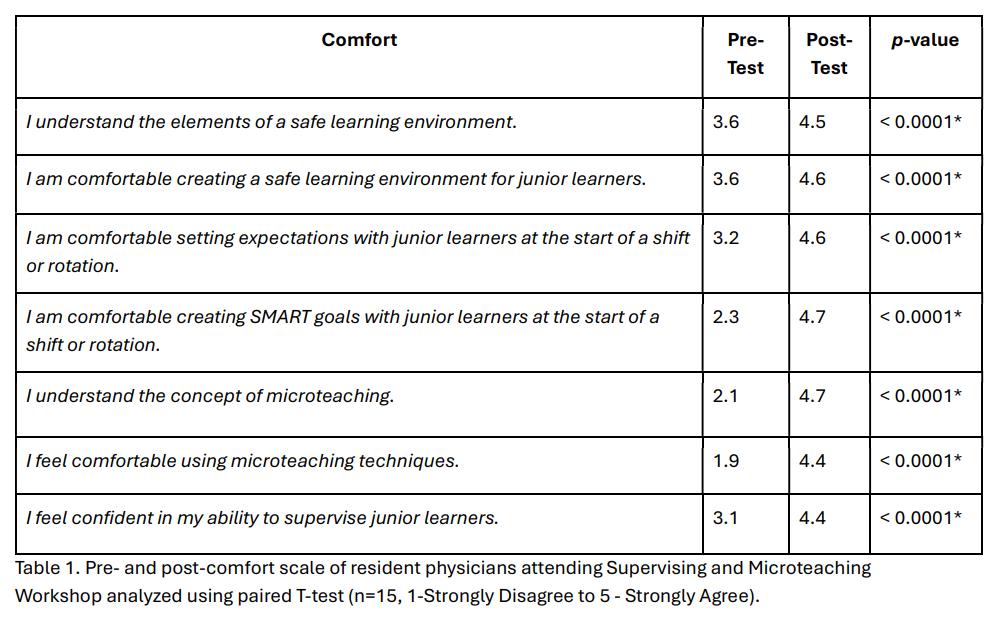
Jordan Palmer,
Stephanie
Cohen, Shayne Gue, Joseph Ray, Ayanna Walker, Jeff Katz, Mark Yassa, Chelsea Grant
Educational Objectives: To evaluate the effectiveness of using music-video based teaching for improving comprehension and retention of Sgarbossa’s criteria amongst paramedic students and post graduate year 1 (PGY-1) EM residents.
Introduction/Background: Interpreting ECGs to identify myocardial infarction is a critical, yet challenging concept for new learners like paramedic students and PGY-1 EM residents. In the case of a patient with a left bundle branch block (LBBB), this can be particularly difficult as Sgarbossa’s criteria must be utilized. While emerging evidence supports using alternative learning methods like musical mnemonics to improve engagement, limited empirical research has evaluated their effectiveness. This study addresses the gap in evidence by comparing music-video instruction to traditional lecture for teaching this diagnostic skill.
Curricular Design: This prospective study included paramedic students, PGY-1 EM interns, and medical students. Participants were divided into two groups, a traditional lecturefirst group and a music video–first group. The innovation (music video instruction) was chosen to leverage emerging data on the benefits of using multimedia tools to increase engagement and memory. The module consisted of an instructional musicvideo reinforcing Sgarbossa’s criteria. Both groups completed pre-intervention and immediate post-intervention knowledge assessments on ECG identification of ST-segment myocardial infarction and recall of Sgarbossa criteria.
Impact/Effectiveness: The lecture-first group improved their average pre-test score by 14% (46% to 60%; p = 0.00048). The music video–first group improved by 19%
(41% to 60%; p < 0.00001). There was no significant difference between the groups scores (p = 0.378), suggesting both methods were effective in reinforcing comprehension. This innovation contributes to medical education by demonstrating that music video–based instruction achieved comparable knowledge gains to traditional lecture.
Frannie Rudolf, Leslie Oyama, Taylor Murray, Brian Kwan
Introduction: Emergency Medicine (EM) residents increasingly seek objective efficiency data, yet traditional productivity metrics, such as patients per hour, are often delivered without context and fail to influence residents’ self-perception or practice. This gap highlights the need for a structured, educational approach to efficiency feedback aligned with ACGME PracticeBased Learning and Improvement milestones.
Educational Objective: To develop and implement a reproducible framework for extracting, contextualizing, and delivering EHR-derived productivity metrics to EM residents, paired with targeted education and structured feedback.
Curricular Design: We created an automated EHR query generating individualized metrics (patients per hour, ESI distribution, time-to-disposition). These data were delivered twice annually in a blinded format outside formal evaluations. Each data release was paired with brief didactics focused on interpreting productivity metrics and understanding their limitations. Residents provided feedback via anonymous surveys to guide iterative improvement.



Impact/Effectiveness: Our innovation produced a scalable framework for meaningful efficiency feedback emphasizing (1) blinded, non-punitive data sharing, (2) semiannual delivery separated from summative evaluation, and (3) pairing metrics with dedicated education. Among 35 residents, 29 responded (82.9%): 75.7% reported efficiency data were useful for their development, and 90.9% valued the accompanying educational sessions. Only 17.2% felt patients per hour accurately reflected true efficiency, underscoring the importance of contextual education and more nuanced assessment methods. This model offers a practical, generalizable approach for EM residency programs seeking to enhance resident understanding and use of productivity metrics.


James Gillen, Enola Okonkwo, Jordan Beau, Nikhil Patel
Introduction/Background: In January 2024, the
American Board of Emergency Medicine (ABEM) announced a redesigned Certifying Examination (CE) to be launched in 2026 consisting of eight case types: Clinical Decision-Making, Difficult Conversations, Managing Conflict, Patient-Centered Communication, Prioritization, Procedures, Ultrasound, and Reassessment. Led by residency program faculty serving as content experts for each case type, we developed interactive, case-based exercises (ABEM CE Prep) that reflect the new CE format and incorporated them into residency training.
Educational Objectives: (1) design and execute a series of interactive, case-based exercises that mirror ABEM’s eight CE case types with the assistance of residency program faculty content experts, and (2) create matched numerical scoring systems for formative feedback.
Curricular Design: Using ABEM materials for each of the eight CE case types, faculty content experts (1) prepared a corresponding interactive, case-based exercise, and (2) created a numerical scoring system matched to each case based on ABEM’s general scoring criteria. We initiated biannual, fourhour, in-person ABEM CE Prep training sessions within our residency conference. For these sessions, residents rotated every 15 minutes through the eight CE case stations led by the faculty content expert case creators. Resident performance at each station was assessed using each case’s structured numerical tool via QR-coded forms. The faculty content experts also provided immediate verbal feedback to each resident on their performance at each station.
Impact/Effectiveness: Our ABEM CE Prep initiative is designed to help residents prepare for the ABEM Certifying Examination and engage faculty in this interactive training. Future work should assess how resident scores during these sessions predict ABEM CE performance.
61
A Humanities-Based Innovation: Narrative Medicine for Trauma-Informed Learning in the Emergency Medicine Clerkship
Frances Rusnack, Suchismita Datta, Sunil George, Kamna Balhara, Sandra Yingling, Katie Grogan, Judith Brenner
Introduction: Medical students rotating in the ED regularly encounter high-acuity cases and traumatic events, which can challenge their well-being and learning. Narrative medicine (NM) cultivates empathy, self-awareness, and meaning making through reflective practices such as close readings and reflective writing. While it has shown positive outcomes among medical students and residents, its use in the ED remains limited. Trauma-informed care (TIC) frameworks are also emerging in undergraduate medical education to better support students’ emotional well-being in challenging clinical settings. Given the overlap in goals, we position NM as a tool that operationalizes TIC principles—namely, psychological safety and peer support—through structured,
reflective narrative practices tailored to the ED.
Educational Objectives: Students will be able to apply NM techniques to critically analyze their clinical experiences in the ED, identify TIC principles in their educational and clinical interactions, and engage in reflective practices that promote empathy and build peer support.
Curricular Design: The ADDIE instructional design model was used to create a novel NM curriculum rooted in social constructivist and critical theory for senior medical students during their EM clerkship. Twenty-three students participated from August 2024 to March 2025. Cohorts of four to six students participated in three in-person workshops and two asynchronous writing activities. Workshops included didactics, close readings, and guided reflective writing, such as “parallel charting” and creative prompts. Facilitators established trauma-informed norms and led discussions to foster psychological safety, meaning-making, and peer connection.
Impact: Twenty-two students completed the course evaluation survey (96% response rate). Most anticipate using NM in the future (95%, n=21) and felt the curriculum was relevant to their role as students (91%, n=20). Similarly, (91%) of students found the curriculum useful during their EM rotation. In written feedback, students described using NM to reflect on their clinical encounters in the ED, process emotional experiences, and build empathy. This pilot offers a feasible, transferable approach to integrating reflective, trauma-informed approaches into the EM clerkship.
Kei Wong, Marc Berenson, Irene Lieu, Christin Traba, Kyrillos Attaalla
Introduction: Emergency Medicine (EM) trainees often have limited exposure to pediatric emergencies, particularly high-acuity scenarios such as neonatal resuscitation and procedures like airway management and lumbar puncture— skills aligned with the AAMC Entrustable Professional Activities (EPAs). A 3-part simulation curriculum originally designed for third-year medical students (targeting EPAs 10–12: neonatal sepsis, informed consent, and lumbar puncture) also proved valuable for EM residents and fellows. This dual-purpose model reinforced pediatric EM knowledge and procedural skills for both learners and facilitators.
Educational Objective: To improve medical students’ knowledge, confidence, and procedural skills in managing neonatal sepsis, obtaining informed consent, and performing lumbar puncture, while enhancing EM facilitators’ clinical and teaching proficiency through a train-the-trainer approach.
Curricular Design: Delivered during pediatric clerkship,
the curriculum included: team-based neonatal sepsis simulation (EPA 10), peer-to-peer informed consent practice (EPA 11), lumbar puncture (EPA 12). EM residents and meded fellows facilitated sessions, reinforcing their own skills while teaching. Pre-session materials and videos supported learning. Surveys assessed students’ knowledge, self-efficacy, and experience; facilitators provided feedback on confidence and clinical readiness. Early implementation highlighted students’ inconsistent exposure to pediatric care, making structured debriefing a crucial component. Facilitator input led to the development of expanded debriefing guides and plans to incorporate basic BVM skills into teaching.
Impact/Effectiveness: Of 165 students, 122 completed pre- and post-surveys, showing significant improvement in self-efficacy and knowledge scores (p < 0.01). EM facilitators reported increased confidence and preparedness, with several continuing as lead instructors. They emphasized the curriculum’s relevance to core pediatric ED skills and its role in bridging educational gaps. This EPA-based simulation provides a scalable model that benefits undergraduate and graduate medical education through interdisciplinary teaching. Future steps include real-time feedback to strengthen clinical application.
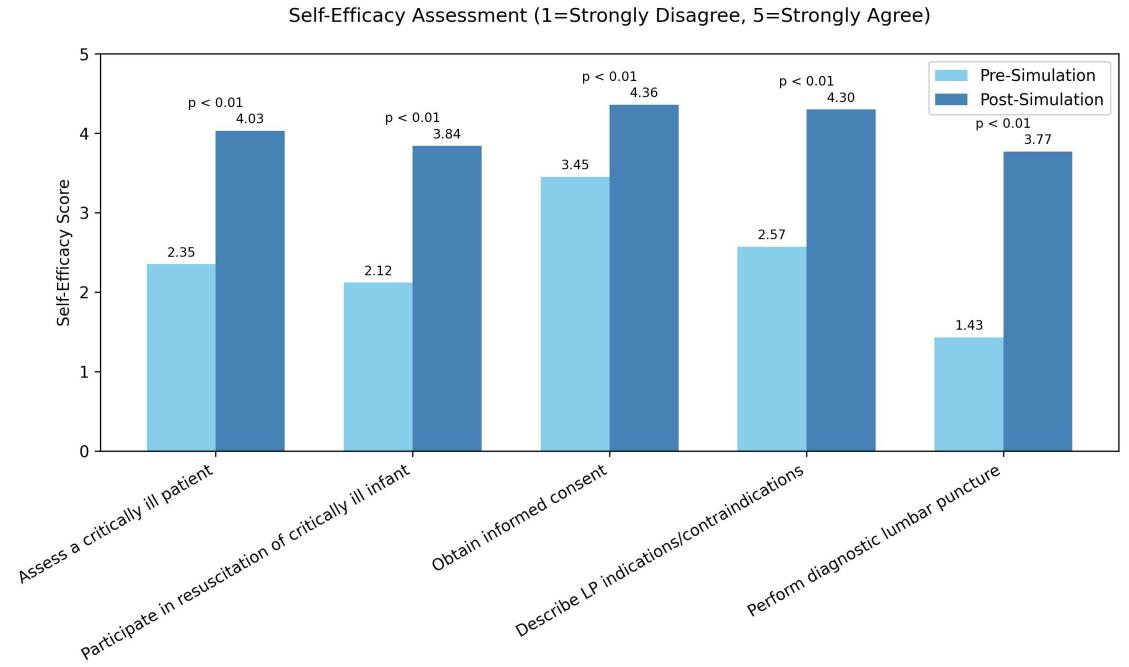
Michael Thompson, Joseph Ray, Stephanie Cohen
Introduction/Background: Effective handoffs are critical to patient safety in the emergency department, yet sign-out quality varies widely across training programs. Communication lapses during transitions of care are a common contributor to medical error. Despite this, structured practice in handoff technique remains inconsistent in residency education. To address this gap, we developed a simulation-based exercise using a realistic ED tracker board to provide residents a controlled, high-fidelity environment for practicing sign-out.
Educational Objectives: Improve resident confidence
and effectiveness in structured ED sign-outs. Reinforce communication strategies that promote patient safety.
Identify common pitfalls in transitions of care. Encourage reflection and standardization of sign-out processes.
Curricular Design: Residents participated in a simulated sign-out modeled after an actual ED tracker board populated with de-identified patient data. Each resident was assigned multiple patients with concise case summaries to sign out to peers. Faculty facilitators observed and provided feedback on clarity, organization, and anticipatory guidance. Participants completed pre- and post-session surveys assessing confidence, perceived effectiveness, and attitudes toward the process.
Impact/Effectiveness: Resident participation in the simulation led to noticeable improvements in confidence, organization, and clarity during sign-out. Learners consistently reported that the structured format enhanced communication and reduced the likelihood of missed information. Feedback highlighted the exercise’s realism and its close alignment with daily emergency department workflow. The activity encouraged reflection on communication, prioritization, and patient safety during transitions of care. Overall, this innovation represents a reproducible, low-cost educational tool for strengthening handoff proficiency and reinforcing a culture of safety in Emergency Medicine residency training.
Shai Konnar Ansell, Benjamin Blackwood, Anjeza Cipi, Donald Byars
Introduction / Background: Emergency physicians frequently lead emotionally charged conversations involving poor outcomes or end-of-life care. Recognizing the importance of this skill, the American Board of Emergency Medicine (ABEM) recently added “Difficult Conversations,” including breaking bad news, as a dedicated competency on the certifying examination. Despite this, most residency programs lack structured training in communication under emotional stress. Improving this skill set enhances patient and family trust and may mitigate burnout among clinicians.
Educational Objective: To improve resident confidence and competence in delivering bad news through a structured, reproducible, multimodal curriculum emphasizing empathy, professionalism, and reflection
Curricular Design: Thirty resident physicians participated in a multimodal curriculum featuring a podcast introducing the PROGRAMS framework, a video review, and a facilitated group discussion. Residents completed three standardized patient (SP) encounters - two at the outset
and one five months later - each observed by a supervising attending who provided immediate feedback. Confidence and competence were measured through pre- and post-intervention surveys and faculty evaluations.
Impact / Effectiveness: Resident confidence scores increased from 3.23 to 4.14 (p < 0.001), and the percentage who felt “very confident” rose from 29% to 100%. Faculty evaluation scores also improved significantly from 83.7% to 86.9% (p < 0.005). Participants described greater comfort, empathy, and self-awareness when managing difficult discussions. This reproducible, low-cost innovation provides measurable gains in communication skills essential to emergency medicine and can be readily implemented across training programs.
Sara Nelson, Irit Altman, Madeleine Puissant, Isha Agarwal, Tania Strout
Background: New immigrants and patients requiring interpreters rely on the emergency department (ED) for essential services, yet their care is often biased or delayed. At the same time, health profession students receive minimal training on the challenges these populations face. Prior work suggests that simulations in which learners assume the patient role can enhance empathy and promote behavior change.
Educational Objective: To develop a curriculum immersing learners in the experience of non-English-speaking patients seeking emergency care, aiming to foster empathy and understanding and ultimately improve care for this vulnerable population.
Curricular Design: Following Kern’s Six Steps, we conducted a targeted needs assessment through focus groups with new immigrants and community health workers (CHWs) to identify key barriers to care. These findings informed the development of a pre-work module and two patient experience simulations. The simulations place learners in the role of patient, cared for by non-English-speaking providers and illustrate the challenges new immigrants face in the ED. The simulation package includes learning objectives, simulation scripts, and a structured debrief.
Impact: We piloted the simulations with emergency medicine (EM) residents, CHWs, and interpreters over two days. Residents assumed the role of patients, while CHWs acted as physicians communicating in Arabic or French. Simulation specialists and EM faculty observed and provided feedback on the flow and content. The sessions proved feasible and emotionally engaging, with rich debrief discussions. Participants cited language barriers, fears about immigration status, medical care uncertainties, and safety concerns as key insights. Residents also shared ideas for
delivering more culturally competent care. A broader rollout and formal program evaluation are currently underway. We believe this novel intervention can enhance care for nonEnglish-speaking and immigrant patients.
McKenna Knych, Lacie Bailey, Nancy Jacobson, Erica Forbes, Scott Rentfrow,
Thomas Yang
Background: Traditional morbidity and mortality (M&M) conferences rely on retrospective review of a single case. This format fails to capture the complexity of EM practice, where physicians manage multiple undifferentiated patients in dynamic settings. Although CORD’s 2020 best practice recommendations for M&M identified simulation (sim) as a strategy to better capture the ED environment, few studies explore its use for M&M.
Educational Objectives: We piloted sim as an education modality for M&M, with objectives to recognize etiologies of errors, strengthen task-switching skills, and develop strategies for communication. We evaluated the feasibility, strengths, and limitations of using sim to present an M&M case.
Curricular Design: An actual ED case highlighting safety hazards and patient harm was selected. Eight PGY-2 residents participated in a high-fidelity sim based on the case in pairs. They concurrently managed six sign-out patients, reflecting the actual patients in the ED during the case and were interrupted every 60 seconds with questions. A structured debrief followed. In parallel, the same case was presented as a traditional M&M lecture and discussion for seven PGY-3 residents using identical discussion prompts.
Impact/Effectiveness: We evaluated both modalities with post-session surveys and facilitator observations. The
sim group rated communication and system factors as highly influential, while the traditional group emphasized individual factors. Self-assessments on patient safety and task-switching milestones were similar. Both groups perceived the activity as high impact, though fewer participants in the traditional group did so—57% (n=4) for knowledge and attitudes and 43% (n=3) for skills—compared with 86% (n=6) across all three domains in the sim group. Sim residents highlighted strategies for task-switching, managing interruptions, and team interactions, while traditional residents stressed individual task prioritization. Sim was resource intensive but valued for authenticity - “an accurate representation of day-to-day work.” Despite higher stress ratings, sim residents reported they would feel comfortable having their own cases presented in this format. A six-month follow-up survey is planned along with future M&M sim integration.
Jon Watson
Introduction/Background: Our emergency ultrasound team within a large academic health system recognized an opportunity to improve engagement and learning for residents and faculty by replacing our traditional monthly live ultrasound quality assurance (QA) meetings. We developed “Soundcheck,” a resident-led, recorded ultrasound QA podcast that transforms monthly case review into an enduring, ondemand educational experience. The initiative aligns with a flipped classroom model and supports competency-based education by allowing residents and faculty to access and review curated learning content at their convenience.
Educational Objectives: To enhance engagement and retention in ultrasound QA education through a resident-driven platform that promotes teaching, feedback, and longitudinal assessment of ultrasound interpretation and technique.
Curricular Design: Videos are publicly accessible through YouTube at youtube.com/ MedStarEmergencyPhysicians, where viewers can browse the full grid of episodes. Each month, a resident co-host participates in an individual QA session with an ultrasound faculty member that is recorded, de-identified for PHI, and edited into a 30-minute episode. Each episode is also edited into five-minute case segments called “SoundBytes,” housed in a separate playlist as an alternative format for quick, onshift, on-demand learning. Episodes feature five recent real ultrasound cases, highlighting both exemplary studies and common pitfalls. Residents also contribute to a deep dive or respond to peer-submitted questions, creating a resident-toresident learning loop. Episodes qualify for CME credit for attending physicians and PAs.
Impact/Effectiveness: This initiative replaces a traditional ultrasound QA meeting with a sustainable educational product that has achieved strong engagement and reach. In the first month of posting, episodes have received hundreds of cumulative views, demonstrating impact well beyond our residency program. Faculty and resident feedback has been overwhelmingly positive. The episodes we create can be shared with other residencies and medical schools because of their broad applicability to emergency medicine, and the model itself can be adopted by other programs to enhance their own internal educational efforts.
Christina Shenvi, Walker Bussey-Spencer, Joseph Maitre
Introduction: Dermatologic complaints are common in the emergency department (ED), yet emergency medicine trainees often report low confidence in diagnosing rashes. Traditional didactics are often passive and lack engaging visual pattern recognition practice. To address this gap, we developed Name That Rash, an interactive, gamified learning tool modeled after Guess Who, designed to improve residents’ ability to identify dermatologic disorders.
Educational Objectives: (1) Enhance recognition of common dermatologic presentations, (2) Improve diagnostic reasoning through pattern recognition, (3) Promote collaborative learning.
Curricular Design: The game was built in PowerPoint and featured a 6×4 grid of 24 commonly-encountered rashes, each with labeled images and corresponding educational slides. Participants were randomly assigned a rash. Their partner then used yes/no clinical questions to eliminate other possibilities, to identify the correct rash. This process mirrors clinical diagnostic reasoning. The format allowed real-time discussion and active learning. Beta-testing was conducted with EM residents during scheduled conference time, followed by a post-game survey assessing usability, satisfaction, and perceived educational value.
Impact/Effectiveness Twenty-four residents participated. Mean pre-game comfort with dermatologic diagnosis was 2.7 on a 5-point scale. Post-game ratings demonstrated high satisfaction and usability: rules easy to understand (4.5), mechanics intuitive (4.5), more effective than traditional methods (4.7), improved post-game confidence (4.2), and overall satisfaction (4.9). All participants (100%) stated they would recommend the game to others as a teaching tool. Qualitative feedback emphasized engagement, visual reinforcement, and interactive learning as major strengths (Supplement 5).
Conclusion: Name That Rash is an effective, engaging,
and easily implemented educational innovation that enhances residents’ confidence in dermatologic diagnosis. Gamified, image-based learning could also be scaled and used to teach other visually-oriented topics in graduate medical education.





Ryan Mason, Victoria Zhou, Maurice Paquette, Anastasia Arvin-DiBlasio, Daniel Frederick
Introduction/Background: An Interfacility Transfer (IFT) arises when care exceeds the capability of a facility. IFT is the intersection of clinical judgement, policy, regulations and EMS capability. IFTs are governed by the complex Emergency Medical Treatment And Labor Act, but the sending physician must also navigate local protocols, EMS availability, and clinical needs. EM graduates are not exposed to IFTs through formalized curricula and little in practice. Our team was awarded a competitive institutional grant - the Frymoyer Scholars Program - to create a twoyear, iterative curriculum filling the educational gap surrounding IFTs in GME.
Educational Objectives: List the elements required for a transfer. Describe the sending provider’s legal and clinical obligations. Differentiate patients’ IFT transfer needs. Contrast ED and Inpatient transfers. Weigh benefits and risks of EMS levels. Illustrate Transfer Center Workflow
Curricular Design: Educational Objectives were created after a needs assessment with stakeholders including: transfer centers, EMS, legal, residents, rural and tertiary attendings. Residents, Attendings, and Advanced Practice Providers were invited to participate. We created three, one-hour problem-based didactics on legal obligations, transfer center logistics, and EMS capabilities. One month after didactics, learners participated in one two-hour SIM of four challenging transfers cases involving active labor,
patients’ cultural concerns, change in stability and EMS/ ED staff interaction. The curriculum spanned six weeks. For assessment, participants completed a post/pre-survey and an hour-long mediated focus group following a discussion guide. Transcripts were analyzed for opportunities to improve. Gift cards were provided for participation.
Impact/Effectiveness: Despite the ubiquity of IFT in EM, core textbooks only briefly cover the process and few curricula exist in the literature. Additionally, a recent ACGME proposal for IFT curricula makes our curriculum a timely addition to EM education. Our curriculum provides the knowledge and skill to navigate the process of IFT, improving patients’ timely access to higher level of care. The curriculum was implemented in Fall of 2025, data collection is underway, and anecdotal reception has been positive.
Abbas Husain, Jaclyn DiBello, Patrick Kettyle, Brendan Freeman, Ritika Gudhe, Alexandra Over
Introduction: Leadership training in cardiac resuscitation is essential in EM education. A resident and post-graduate needs assessment demonstrated low confidence in leading codes. Code Camp is a longitudinal simulation curriculum designed to improve resident confidence in resuscitation leadership and medical decision making.
Objectives: Increased confidence in leading cardiac resuscitations, delegating and coordinating team roles, managing EMS-to-ED transfers and executing ACLS in various cases (PEA, shockable rhythm, respiratory arrest).
Curriculum Design: Using Kern’s curriculum design framework, participants (5–6 per group) rotated
roles (facilitator, leader, CPR lead, equipment lead) with access to a monitor, defibrillator, and CPR mannequin. Facilitators used scripted prompts; faculty debriefs provided real-time feedback. Based on initial feedback, a second session emphasized medical decision-making, with cases highlighting key decision points beyond rhythm recognition.
Effectiveness: 47 participants completed pre/post surveys rating their confidence in resuscitation leadership and medical decision making skills on a 5-point likert scale. Before Code Camp, 45% rated confidence as the lowest score (1 out of 5). After, only 2% rated their confidence as the lowest score with 91% reporting improvement. Paired T-Tests analyses of each Code Camp session showed significant confidence increase in all measured skills (p<0.001), highlighting the need for more education in resuscitation leadership. Feedback suggested future sessions could offer more complex, varied cases and additional time for group debriefing.
Kaitlin Parks, Christian Sanchez, Melody Kashef, Olumide Ojeifo, Jessica Pellitier, Amy Claussen
Background: Triage and disposition are critical emergency medicine skills that impact patient safety and departmental flow, yet are often underemphasized in training. To address this gap, we developed “Dispo Dash,” a gamified educational activity designed to enhance these skills through dynamic, scenario-based learning.
Methods: “Dispo Dash” was piloted at a communitybased EM residency and later implemented at an academic program. Gameplay simulates real-time triage and disposition using customized ED layouts, printed patient cards, and realistic barriers (e.g., EHR downtime, staffing). Learners earn points for accurate, efficient decisions. A pre-/post-survey assessed changes in knowledge and attitudes.
Results: Nineteen learners completed matched pre-/post-tests and a post-session questionnaire. Median scores improved from 3 [IQR: 2–3] to 4 [IQR: 4–4] out of 5 (median Δ=1.0; 95% CI: 1.0–2.0; p=0.0012). Significant gains were seen in two scenario pairs: triage accuracy rose from 42.1% to 100% (p=0.0010), and disposition accuracy rose from 0% to 57.9% (p=0.0010). PGY-1s showed the greatest improvement (median Δ=1.5; p=0.0042); other groups showed no significant change. Between-group differences were not significant (p=0.5535), likely due to small sample sizes and ceiling effects.
Feedback was highly positive: 95% agreed the session was enjoyable, educational, and linked presentations to disposition decisions. Self-efficacy ratings were high for triage (≈84%) and disposition (≈95%). Internal consistency was strong (α=0.85).
Conclusion: “Dispo Dash” was well-received and improved learners’ knowledge and confidence in triage and disposition. Broader implementation is planned at additional academic EM programs.
Adkins, R, 13
Agarwal, I, 65
Ahn, J, 46
Aldana, S, 6
Altman, I, 65
Altman, J, 37, 42
Alvarez Calderon, G, 22
Anderson, E, 67
Anderson, J, 56
Andreoni, C, 61
Ansell, S, 64, 9 Anthony, P, 30
Arora, M, 48
Arvin-DiBlasio, A, 69
Ata, A, 53
Attaalla, K, 62 Austin, R, 21
Badoolah, A, 52
Baggett, N, 2
Bailey, L, 66
Baker, J, 45
Baker, S, 20
Balhara, K, 12, 61
Barpujari, A, 47
Basedow, K, 8
Basilio, M, 1
Bates, D, 11, 17, 33
Beach, L, 56
Beau, J, 52, 60
Beaulieu, A, 5, 24, 38, 41, 42, 57, 64
Becker, J, 49
Bell, L, 5
Beltran, M, 34
Berenson, M, 62
Berkenbush, M, 1, 16
Bernard, D, 55
Bernazzani, M, 41
Bethel-Schmitz, A, 13
Bierowski, A, 5, 39, 47, 56, 61
Billet, A, 45
Blackwood, B, 64
Blazar, E, 4
Bleau, A, 70
Blodgett, M, 37
Bloom, A, 67
Borucki, J, 47
Botticelli, B, 12
Brady, K, 10, 27
Branson, A, 35
Brenner, J, 61
Briganti, J, 51
Brown, A, 35
Brown, M, 1
Brown, T, 47
Brown, W, 29
Bukvic, A, 10, 36
Burke, S, 74
Burleson, S, 33
Burton, B, 23
Bushman, Q, 10, 27
Bussey-Spencer, W, 68
Byars, D, 9, 64
Camejo, M, 28
Camick, N, 55
Campoli, J, 70
Caputo, N, 29
Caputo, W, 10
Cardenas, V, 73
Carey, J, 41
Carlson, A, 1
Casil, P, 5
Cassidy-Smith, T, 4, 50
Cassin, K, 1
Chacko, R, 1
Cheatle, P, 57
Chen, M, 33, 56
Chen, T, 48
Chiang, J, 1
Chin, M, 4
Chowdhury, S, 37, 42, 62
Cipi, A, 9, 64
Cisneros, V, 19
Clark, A, 17
Claussen, A, 71
Clyne, B, 28
Cochrane, C, 73
Cohen, S, 58, 63
Collins, C, 50
Commissaris, C, 12, 59
Comp, G, 58
Cornelius, J, 65
Coughlin, R, 4
Courtley, M, 43
Cozzi, N, 16
Craft, E, 13, 14
Croft, A, 52
Cruz, K, 5, 18, 39, 56, 61
Datta, S, 61
Debbie, T, 4
Dehon, E, 22, 40
DeJohn, J, 72
Dela Cruz, J, 15
Delfino, K, 21
DerGarabedian, B, 50
Desai, J, 4
Desai, K, 2
Deutsch, A, 47
Diaz, R, 2
DiBello, J, 70
DiCesare, D, 54
DiGaetano, M, 4
Dimeo, S, 13
Donnelly, L, 48
Dornstauder, A, 9
Drapkin, Z, 24
Druck, J, 24, 64
Dubosh, N, 47
Dueland-Kuhn, K, 70
Duggins, M, 9
Duquette, K, 39, 47
Dwyer, M, 39, 61
Dykstra, R, 38, 38
Earle, J, 20
Egan, D, 12, 59
Ehmann, M, 25
Elechi, C, 75
Esposito, A, 71 Evans, M, 23
Facchiano, A, 57
Farr, K, 46
Felix, G, 55
Fernandez, D, 25 Fernandez, R, 42 Ferreras, E, 51
Feygin, Y, 72
Fiesseler, F, 3, 44
Filippone, L, 50 Fish, S, 9
Fix, M, 38, 41, 42, 64
Flannery, A, 30 Forbes, E, 66 Fowler, S, 26 Frayberg, M, 52 Frederick, D, 69 Freeman, B, 49, 70 Friedmann, T, 8, 11, 17, 23, 33
Fuchs, K, 1 Fugok, K, 9
Gaddis, M, 28
Galeano, K, 9 Galligos, B, 48
Garay-Morales, S, 52 Garrison, C, 78
Gaughan, D, 52
Geary, S, 53 George, S, 52 George, S, 61
Geren, K, 39
Getto, L, 37
Ghei, R, 77
Gillen, J, 60 Gillespie, M, 75 Ginsburg, J, 26
Golden, A, 3, 13, 14, 43, 45
Gonzalez Merino, R, 56 Gonzalez, J, 19
Gorman, G, 2
Gosine, K, 42
Grant, C, 58
Grass, E, 67
Griesmer, K, 33
Griffith, M, 7
Grogan, K, 61
Grossestreuer, A, 47
Grossman, D, 8
Grosso, R, 3, 36
Gudhe, R, 70
Gue, S, 24, 58
Gupta, R, 3, 26, 27
Gustafson, M, 23
Hahn, C, 23
Hang, B, 46
Haroun, K, 10, 12, 25, 27
Hassan, S, 10, 36
Hassouneh, Z, 62
Hayes, A, 3
Hegarty, C, 2
Hensley, K, 46
Hernandez, B, 2
Herout, K, 1, 55
Hicks, S, 67
Hill, D, 68
Hoag, E, 5, 39, 47, 56, 61
Hoehn, B, 62
Hoelle, R, 34
Holmes, C, 35
Holmes, J, 42
Hopson, L, 2
Howell, M, 26
Hoyle, M, 79
Huff, N, 52
Hughes, P, 5, 24, 38, 41, 42, 64
Husain, A, 5, 10, 70
Hutchison, J, 1
Iovine, S, 19
Jacobson, N, 66
Jagtiani, T, 31
Jain, A, 7
Jaishankar, M, 52
Jaliparthi, S, 48
Jandu, S, 5
Janicki, A, 21
Janke, A, 2
Jara-Almonte, G, 23
Jasper, Z, 67
Jauregui, J, 7
Jeanmonod, C, 57
Jeanmonod, D, 1, 50
Jeanmonod, R, 1, 50
Jennings, R, 50
Jiang, L, 77
Johnson, B, 65
Johnson, C, 29
Jones, D, 14
Jones, J, 43
Jordan, J, 7, 77
Joseph, S, 40
Justice, J, 29
Kabbash, M, 42
Kahle, M, 39
Kalina, K, 29
Kaminsky, J, 47
Kane, B, 9
Kaplan, E, 75
Kaplan, Z, 18
Karademos, J, 14
Kashef, M, 71
Katz, J, 58
Kayaleh, H, 20, 54
Kearney, A, 21
Keenan, C, 28
Kehm, K, 5, 39, 47, 56, 61
Kelly, A, 2
Kelly, S, 20
Kelner, R, 5, 24, 38, 41, 42, 64
Kettyle, P, 70
Khoury, C, 56
Khowong, T, 3, 26, 31, 32
Kikel, M, 55
Kim, S, 18, 21
Klein, M, 28
Kline, J, 76
Kman, N, 16
Knych, M, 3, 66, 74
Kolster, L, 15
Kons, H, 67
Kornegay, J, 11
Kostin, S, 30
Kouyoumjian, S, 29
Kraft, C, 20
Kubena, A, 33
Kukulski, P, 40, 46
Kuntz, H, 6
Kutyla, S, 11, 17, 33
Kwan, B, 59
Ladaga, N, 43
Ladde, J, 54, 54
Lamparter, L, 4
Landon, J, 9
Langan, D, 5, 10, 36
Laoteppitaks, C, 18, 19
Larson, K, 38, 41, 42
Laterza, C, 1, 15, 16, 30
Le, J, 19
Lebowitz, D, 73
Lee, H, 44
Lee, J, 65
Leech, S, 51, 62, 63
Lenning, J, 76, 78
Leslie, M, 24
Li, J, 13, 36
Lieu, I, 62
Lin, S, 2
Lipner, K, 66
Lipscomb, R, 52
Little, A, 4
London, A, 33
Lorenz, K, 25, 27
Lorenzo-Rodriguez, D, 42
Lovell, E, 1
Luedtke, R, 76
Lui, A, 3, 26
MacConaghy, L, 23
Macdonald, B, 20
Macias, M, 48
Mahoney, A, 78
Maitre, J, 68
Majumdar, M, 5
Makhoul, E, 55
Malak, A, 15
Maldonado, N, 37
Mamtani, M, 75
Manchester, L, 20
Mariorenzi, A, 66
Martin, E, 47
Mason, R, 69
Mastanduono, A, 53
Mayersak, R, 11
Mayo, K, 17, 35 Malik, Z, 35
McCafferty, L, 5
McFall, B, 20
McFarland, A, 3, 14, 32, 36
McGhee, J, 80
McGurk, K, 3
McKee, M, 75
McKillip, R, 1
McLean, L, 58
McLean, M, 58
McMillan, A, 5
Melisiotis, D, 61
Menowsky, M, 4
Merritt, B, 5, 24, 38, 41, 42, 57, 64
Messman, A, 76
Metoyer, A, 18
Mhaskar, R, 52
Michaels, M, 1
Millard, J, 56
Miller, S, 54, 69
Milman, B, 4, 26
Mingioni, N, 18, 19
Mishkin, H, 34
Mitchell, C, 37
Mittelman, A, 17, 60
Moadel, T, 25, 34
Moftakhar, Y, 14
Mohammed, A, 32
Monette, D, 12, 59
Moore, A, 38
Moore, K, 69
Moriarity, R, 22, 40
Moriarty, T, 22, 51, 62
Morrone, C, 5, 47
Mullins, M, 14
Murano, T, 55
Murphy, M, 49
Murray, T, 59
Myburgh, C, 22
Narayanan, S, 52
Nayar, R, 51
Nelson, S, 65
Neumann, J, 46
Neupane, S, 5
Newbold, K, 8, 39
Nicholas, J, 51
Nombera-Bueno, F, 5
Noonan, J, 53
Nordberg, A, 41
Oberhauser-Lim, N, 6
Ojeifo, O, 71
Okonkwo, E, 52, 60 Olson, C, 74
Omron, R, 12
Ortega, M, 63
Ortego, A, 52
Osisami, O, 55
Over, A, 70
Owens-Pochinka, R, 2
Oyama, L, 59
Pacheco, Z, 67
Palmer, J, 58
Papa, L, 20, 54
Papanagnou, D, 18, 19
Paquette, M, 69
Parikh, S, 3, 26
Park, H, 10, 27
Parks, M, 71
Parnell, S, 26
Pasirstein, M, 18, 19 Patel, C, 21
Patel, J, 5, 18, 39, 56, 61
Patel, N, 60
Patti, L, 71
Patton, D, 30
Peak, D, 12
Pelletier, J, 38, 71
Pelletier-Bui, A, 50
Peng, P, 51
Peterson, T, 30, 43
Petrone, G, 66
Pile, A, 55
Piparo, T, 51
Pitts, A, 45
Polvino, D, 71
Pomeranz, K, 4, 4
Powell, S, 16
Prucha, M, 66
Puissant, M, 65
Qu, M, 26
Quazi, S, 60
Raj, S, 26
Rao, D, 14
Raper, J, 56, 67
Raps, C, 5, 24, 64
Ravnitzky, Z, 27
Ray, J, 58, 63, 73
Reagan, L, 30
Reese, K, 17
Regan, L, 27
Relph, C, 45
Ren, R, 31
Rentfrow, S, 66
Reopelle, K, 11, 17, 33
Repanshek, Z, 5
Rettig, N, 52
Rich, C, 45
Richardson, C, 23
Ricker, J, 79
Riquier, M, 5
Ritter, K, 25, 27
Roa, J, 54
Rogers, E, 75
Rogers, S, 26
Rometti, M, 71
Rosen, V, 20
Route, T, 48
Rudolf, F, 59
Ruf, S, 51, 62, 63
Ruggieri, J, 24, 38, 41, 42, 57, 64
Rusnack, F, 52, 61, 69
Russo, S, 1
Ryan, M, 7
Ryndych, D, 49
Saadeh, D, 32
Sanchez, T, 3, 10, 26, 27, 31, 32
Sanoja, A, 42
Sarkisian, S, 50
Schiff, J, 75
Schlicksup, K, 69
Schmidt, S, 2
Schmitt, T, 3
Schmitzberger, F, 2
Schultz, A, 49
Selinfreund, R, 18
Senno, M, 20
Serle, C, 51, 62, 63
Shaban, O, 4
Shafie-Khorassani, Z, 14
Shah, A, 51
Shapiro, M, 20
Shappell, E, 12, 59
Sharma, R, 51, 54, 62, 63
Sheedy, C, 29
Sheets, L, 19
Sheng, A, 66
Shenvi, C, 68
Sheth, S, 3, 26
Shin, J, 77
Shin, R, 10, 27
Shofer, F, 75
Shogan, L, 10
Shufflebarger, E, 67
Silver, M, 6
Simerlink, S, 14, 43
Simon, D, 32
Sinicrope, R, 73
Smith, B, 3, 26, 31, 32
Smith, L, 20, 31
Smylie, L, 29
Sobehart, R, 4
Sobin, M, 69
Somand, D, 2
Sperandeo, M, 25, 34
Srica, N, 4
Srihari, C, 37
Stankewicz, H, 60
Steele, R, 40, 48
Steelquist, E, 7
Steenberg, M, 16
Stephen, R, 24, 57, 64
Sterling, S, 22, 40
Stone, J, 51, 62, 63
Stringer, S, 36
Strout, T, 65, 79
Stuempfig, N, 1
Stull, M, 14
Sumer, R, 1, 2
Tanen, D, 5
Tehranisa, S, 2
Tennill, R, 15, 18
Thanel, P, 78
Thibodeau, L, 16
Thim, P, 5
Thompson, M, 33, 37, 63
Thompson, S, 23
Thundiyil, J, 54 Tian, B, 5, 47
Tipparaju, P, 53
Tomaselli, P, 5, 39, 41, 47, 56, 61
Torkilsen, C, 3
Traba, C, 62
Traylor, D, 1
Truong, J, 55
Tsyrulnik, A, 58
Tweet, M, 15
Updegrove, C, 20
Vallone, M, 9
Vandillen, C, 20, 54, 54
Vempati, A, 39
Vera, A, 73
Vincent, E, 72
Vireak, P, 5
Vo, T, 1, 50
Von Nieda, D, 34
Von Schweinitz, B, 67
Waite, W, 51, 54, 62, 63
Walker, A, 58
Walsh, B, 3, 44
Ward, K, 37
Warshel, M, 12, 27
Watson, J, 67
Waymack, J, 18
Weeker, N, 4
Weeks, K, 4, 22
Wei, G, 4
Welsh, L, 12
Westendorf, S, 76
Westneat, S, 72
Willner, K, 77
Wilson, K, 9
Wojcik, S, 70
Wolfe, C, 29
Wong, K, 62
Wooten, M, 12
Wurzl, A, 20
Wyatt, C, 44
Yanes, D, 53
Yang, T, 66
Yarris, L, 7
Yasin, S, 17
Yassa, M, 58
Yeackle, W, 40
Yenser, D, 9
Yingling, S, 61 Young, C, 70
Young, T, 6
Zabinski, K, 49
Zalikha, L, 37
Zamamiri, S, 26
Zapcic-Desrochers, M, 20
Zelaya, R, 20
Zhang, X, 18, 29, 31
Zhou, V, 69, 75
Zitek, T, 55
Zoller, B, 28