WINTER 2025 A PUBLICATION OF WESTERN THEOLOGICAL SEMINARY
LOOKING FORWARD: Preparing For The Future of the Church
The Commons is published twice each year for alumni/ae and friends of Western Theological Seminary, 101 E 13th Street, Holland, MI 49423. Reproduction in whole or in part with permission only.
Have a question or idea for a future article or story? Contact us at info@westernsem.edu.
The Commons Editorial Board: Rachel Dober, Sydney Huizenga, Brent LaVigne, Betsy Maxwell, Lindsay Porter, Anne Schmidt, Felix Theonugraha
Special thanks to Rayetta Perez for her editing expertise and to the many contributing authors in this issue.
Stay Connected!
@westernsem
@westerntheologicalseminary westernsem.edu
Nurturing Faith with Children with Disabilities
CDM’s New Worship Planning Resource
WTS and Uganda: A Relationship that Spans Generations What Is God Up To in My Church?
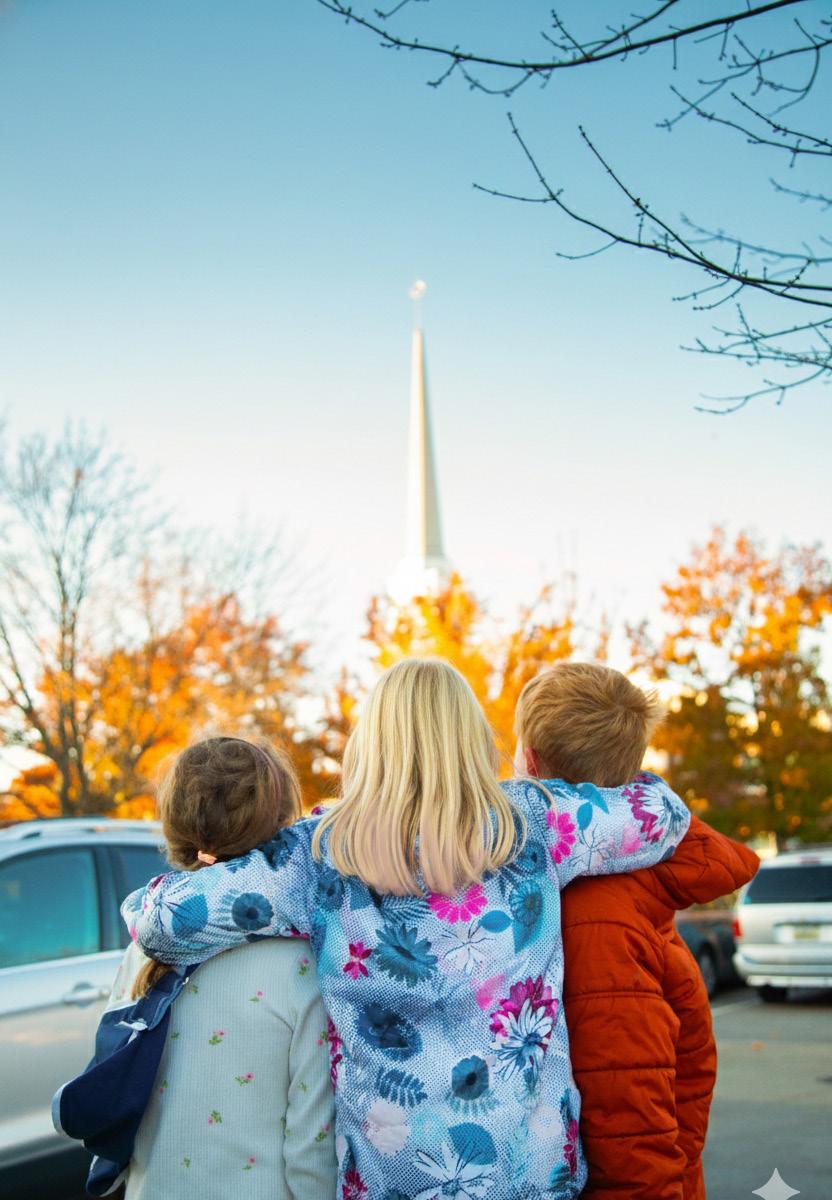
The Future Leaders of the Church The Kids of Western Theological Seminary
Annual Impact Report
Cultivating Our Call Campaign Summary
How Young is Too Young?
WTS Semester Highlights
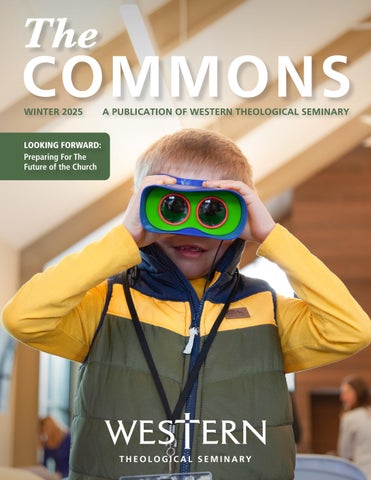
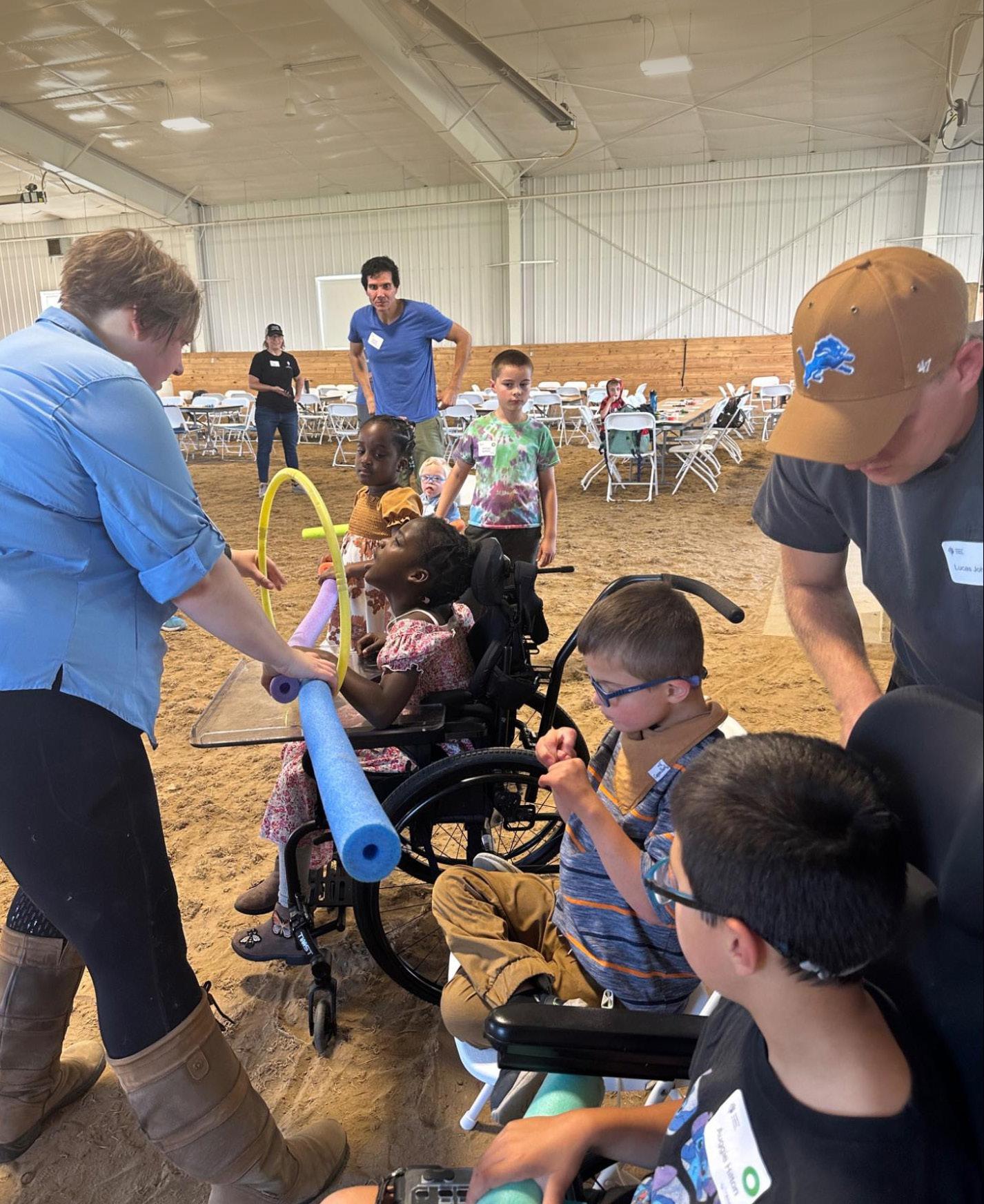
The front cover photo was taken at an event hosted by the Nurturing Children with Disabilities program. It conveys the excitement and wonder with which we look toward the future of the Church. ON THE COVER
FROM THE PRESIDENT’S DESK
The Future of the Church
We recently completed our three-year-long Cultivating Our Call campaign, and I can’t help but be filled with gratitude for your partnership in the Gospel through your prayers, encouragement, and generosity. The gifts made to this campaign are helping to form our students, women and men, for faithful Christian ministry in the world, and we are so grateful for the commitment of so many in this way.
Throughout this edition of The Commons, you will see how your gifts are enabling Western Theological Seminary (WTS) to equip students to be future leaders of the Church.
Our theme verse for the year is 1 Peter 3:15, “But in your hearts revere Christ as Lord. Always be prepared to give an answer to everyone who asks you to give the reason for the hope that you have. But do this with gentleness and respect.” We want everyone, no matter their age, to be able to give an account for the firm hope that they have in Jesus. And we want our students to be prepared to equip the Church to be able to do this as well.
Whether working through the Center for Disability and Ministry, serving needs of their congregations and community, creating spaces for community and belonging, or helping young people discern paths of ministry, the students, faculty, staff, alumni, donors, and partners of WTS are allowing God to work through them as they equip, support, and lead the Church in the United States and around the world.
As I have gotten to know our new students this year, I continue to be excited about the future leaders of the Church. They are firm in their faith, committed to the Church, and demonstrate a deep love for our Triune God. I am confident that, by God’s grace, they will be formed into leaders who will serve the Church well. In these pages, join me in reading through articles sharing stories of WTS and the future of the Church.
I’m filled with so much gratitude and thank God for you and our many partners. I look forward to the future with hope in all that God is doing.
FELIX THEONUGRAHA, PHD President of Western Theological Seminary
The Gift of Wonder: Nurturing Faith with Children with Disabilities
by Dr. Benjamin Conner — Professor of Practical Theology, Director of the Center for Disability and Ministry
In a recent survey, researcher Erik Carter found that while 84% of people with disabilities say faith is integral to their lives, only 44% attend church. Their reasons vary (transportation, accessibility, feeling unwelcome, etc.), and the challenge for the church is to become a place where people with disabilities not only attend but belong and share their gifts and passions to enrich their own faith and the faith of others.
The Center for Disability and Ministry (CDM) at Western Theological Seminary exists to support ministry leaders of all abilities in nurturing and receiving the gifts and contributions of persons with disabilities through formational opportunities, including theological education, consultation, forums, and publications. Through the Nurturing Children with Disabilities Project, funded by The Lilly Endowment, we are partnering with children and adults from local congregations to reimagine
our world, faith, and witness in ways that more fully include the gifts and perspectives of people, especially children, with disabilities.
This program partnered with eight local congregations and nearly ninety participants in immersive experiences with nature and animals, inviting them to observe and learn from children’s diverse ways of communicating as they explored key themes of faith and spirituality. As we look for theological participation beyond words, the work of David Hay and Rebecca Nye in The Spirit of the Child has been insightful:
The difficulty with almost all research on children’s spirituality [and I would add most of the ways we imagine theology and faith in general] up to the very recent past is that it focuses on God-talk . . . Researchers need to focus on the perceptions, awareness and response of children to those ordinary activities which can act as what Peter Berger calls ‘signals of transcendence (60)
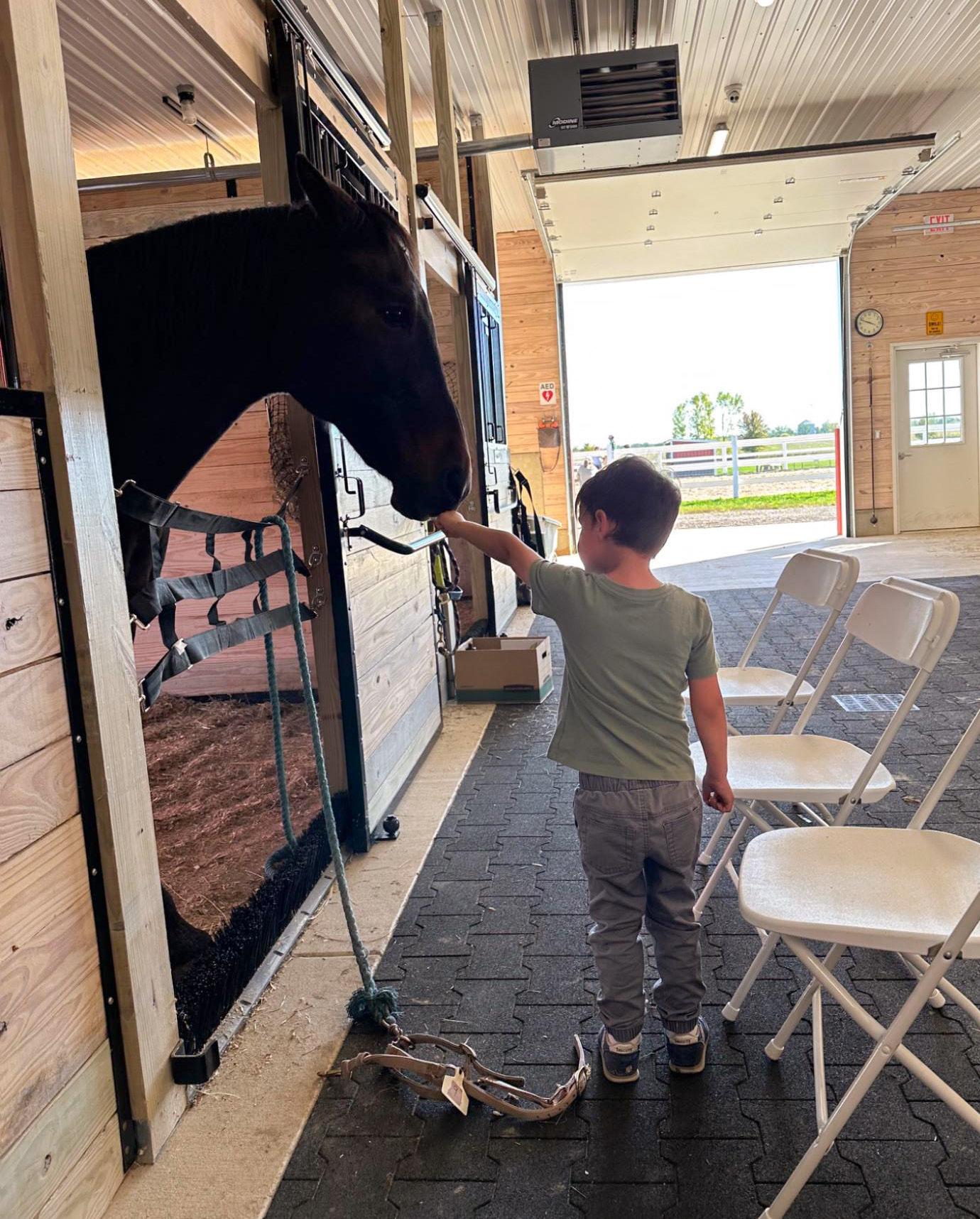
A child shows how to safely greet a horse—offering a closed fist and letting the horse come forward.
Together, congregations are attending to these signals of transcendence, to the world and the God who animates it. Participating in this deep attention with children with disabilities can be a shared form of prayer and devotion. The children and the animals are among the “two or three gathered in my name” that make up a worshipping community. When prey (horse) and predator (human) share moments of connection and harmony, we are experiencing a foretaste of the kingdom to come when “The wolf shall live with the lamb, the leopard shall lie down with the goat; the calf and the lion will feed together, and a little child shall lead them” (Isaiah 11:6).
In the NCD program, we are following the children into nature to see the world from their perspective. Representatives from eight congregations, including 43 children across the range of the ability-disability spectrum, met for
two six-week Sunday afternoon sessions (one at the Outdoor Discovery Center and the other at Renew Therapeutic Riding Center) where we gathered alongside the children to learn how to live in awe and wonder and to experience a deep sense of connection. We are following the children on horses, attending to their connections and curiosity, and then reflecting on these experiences through art (with the help of Joel Schoon-Tanis) by creating a space where children can express themselves and adults can cherish their contributions.
One of the most important postures we are developing through the Nurturing Children with Disabilities Project is recovering our capacity to wonder, which seems to come naturally to children.
We have learned that wonder is not reserved for children; it is for all of us, functioning both as an evocative response to God’s presence in creation and as a way of knowing that goes beyond intellectual cognition and levels the theological playing field.
As our theological imagination is loosened from exclusively word-centric communication and our understanding of meaningful participation broadens, we encounter rich theological insights and new conversation partners in children, horses, and the wider creation, learning to honor communication through art, song, touch, movement, and exploration.
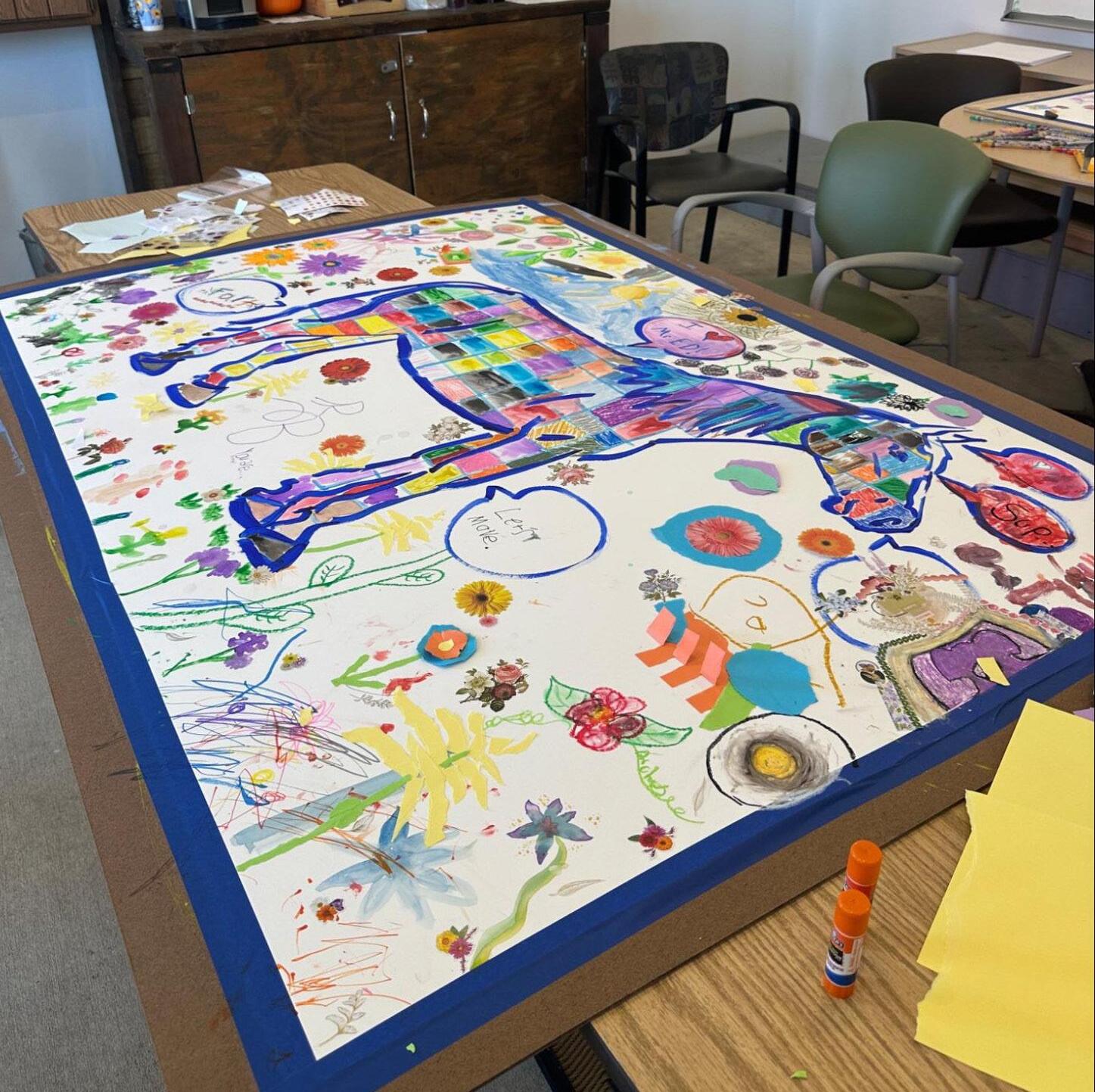
Collaborative art with Joel Schoon-Tanis, inviting many voices into a shared theological conversation about horses, creation, children, and spirituality.
The next and final phase of the Nurturing Children with Disabilities Project involves working with congregations to reflect on and act on insights about children and their faith in order to reimagine shared worship and faith formation. Congregations will experiment with new practices shaped by their immersive experiences with children and will be supported by resources from the Center for Disability and Ministry, including the Disabling the Church podcast, which amplifies the voices and giftedness of people with disabilities, as well as two free online courses. Congregations will share what they learn and pool their wisdom as they try new worship and faith-forming practices together, envisioning churches where everyone, of every ability, truly belongs.
Coming Soon: CDM’s New Worship Planning Resource
Dr. Sue Rozeboom’s course We All Worship, part of the Certificate in Ministry and Disability curriculum, has been adapted into a free, online video series to help the wider Church to nurture more inclusive worship. This new resource joins a growing library of offerings from the Center for Disability and Ministry, including Dr. Benjamin Conner’s free online Introduction to Disability and Ministry course, and the Disabling the Church podcast with Dr. Carlos Thompson. These resources are designed to equip pastors, ministry leaders, and congregations with accessible, theological, and practical tools.
With the support and collaboration of NCD Grant Administrator Luke Soderstrom and videographer Paul VanDyke, the project moved from the classroom to the camera.
The outcome is a series of eleven videos, available as a free online minicourse, Divine Universal Design for Christian Worship.
The first video session introduces the series by framing its central thesis with two questions: What if God has already provided a universal design for the church’s worship? And, by the inspiration of the Spirit, how might we recognize the accommodating provisions God in Christ has already set forth?
Sessions two through five set forth the Universal Design Theory and Universal Design for Learning, and then integrate a theology of worship and its practices centered on the Word and on the ‘visible words’ of Baptism and the Lord’s Supper.
Exploring the horses’ tools and toys, highlighting our connection with the animals and with one another.
Session six emphasizes the significance of integrating the Word and the ‘visible words’ in worship. Session seven is short, serving as a transition from sessions one through six to sessions eight through eleven. These videos offer commentary on occasions of worship led collaboratively with young adults with disabilities, namely, our Friendship House Friends and Fellows.
As these CDM projects reveal, preparing the church for the future requires spiritual reorientation: learning to discern what the Spirit of God is already doing among children and adults with disabilities and allowing their gifts to reshape our corporate lives.
ABOUT THE CENTER FOR DISABILITY AND MINISTRY
The Center for Disability and Ministry exists to help the Church recognize and respond to this work of the Spirit. We are dedicated to empowering leaders and helping congregations better respond to the diverse needs within the Church. We embrace and work to amplify the gifts that individuals with disabilities bring to the body of Christ. Looking forward, we desire to help communities and congregations see what the Spirit has always already been doing in our midst. The CDM wants to see leaders, families, and whole congregations develop a posture of hospitality toward the disability experience that anticipates the gifts of the Spirit manifest in everyone’s lives.
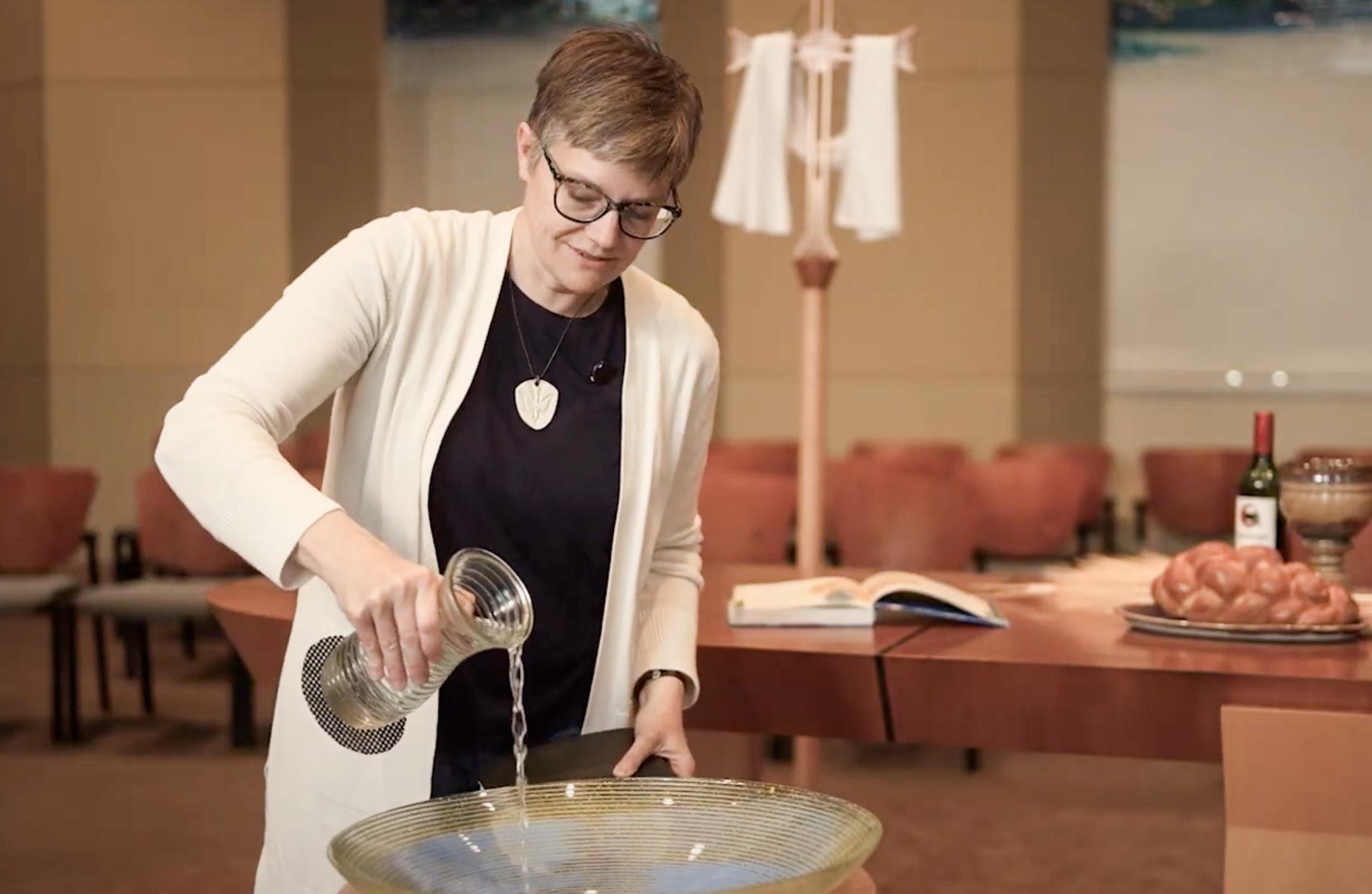
Dr. Rozeboom pours baptismal water during her new course, Divine Universal Design for Christian Worship.
What Is God Up To in My Church?
by Hannah Stevens Director of Lifelong Formation
How do you feel about the world and the Church today? What is the future of the Church? As Christians, theologians, and ministry leaders, we wrestle with these questions late into the night. We want to be faithful stewards of this era in the Church’s history. We want to anticipate the current and future needs of our congregations. We want to be relevant in a world that has lost hope in institutions and is longing for peace.
Many of us feel the weight of this calling, and as is typical of our self-reliant nature, we push onward. If we just try hard enough, surely we’ll find the right way forward. Of course, if we begin with us, we likely will miss the plot. We can’t forget the starting point must always be, “What is God up to in and through the Church?”
More specifically, we must ask “What is God up to in my church?” In the frenetic pace of our world, it is difficult to slow ourselves down and sit with this question. But how can we expect to lead congregations without it? And what will happen if we are attentive to it?
Through our work with Churches in Mission, we have had the opportunity to bear witness to several churches attempting to do just this.
Meet the Reformed Church of Highland Park in New Jersey. This church operates three nonprofits that directly support and care for their neighbors through job services, employment placement, affordable housing, ESL classes, legal services, and food access.
What was their strategic plan to get there? Prayer.
Everything they do traces back to their worship life and their commitment to taking the prayers of their people seriously. They don’t ask what everyone else needs to do. Every week, they slow down to ask, “What is God putting on our hearts? What does God want to do through us today?”
Then there is Mercy Road Church in Redford, Michigan, which is doubling down on a similar commitment. They are a congregation of fewer than a hundred people with a high rate of active participation from congregants. They have lamented how their size prevents them from having a youth group, or at least a youth group the way a larger church would. Through coaching with Churches in Mission, they started to reframe their lament into questions: “What are the things Mercy Road can do that a big church can’t? Or, what might God be calling us to do?”
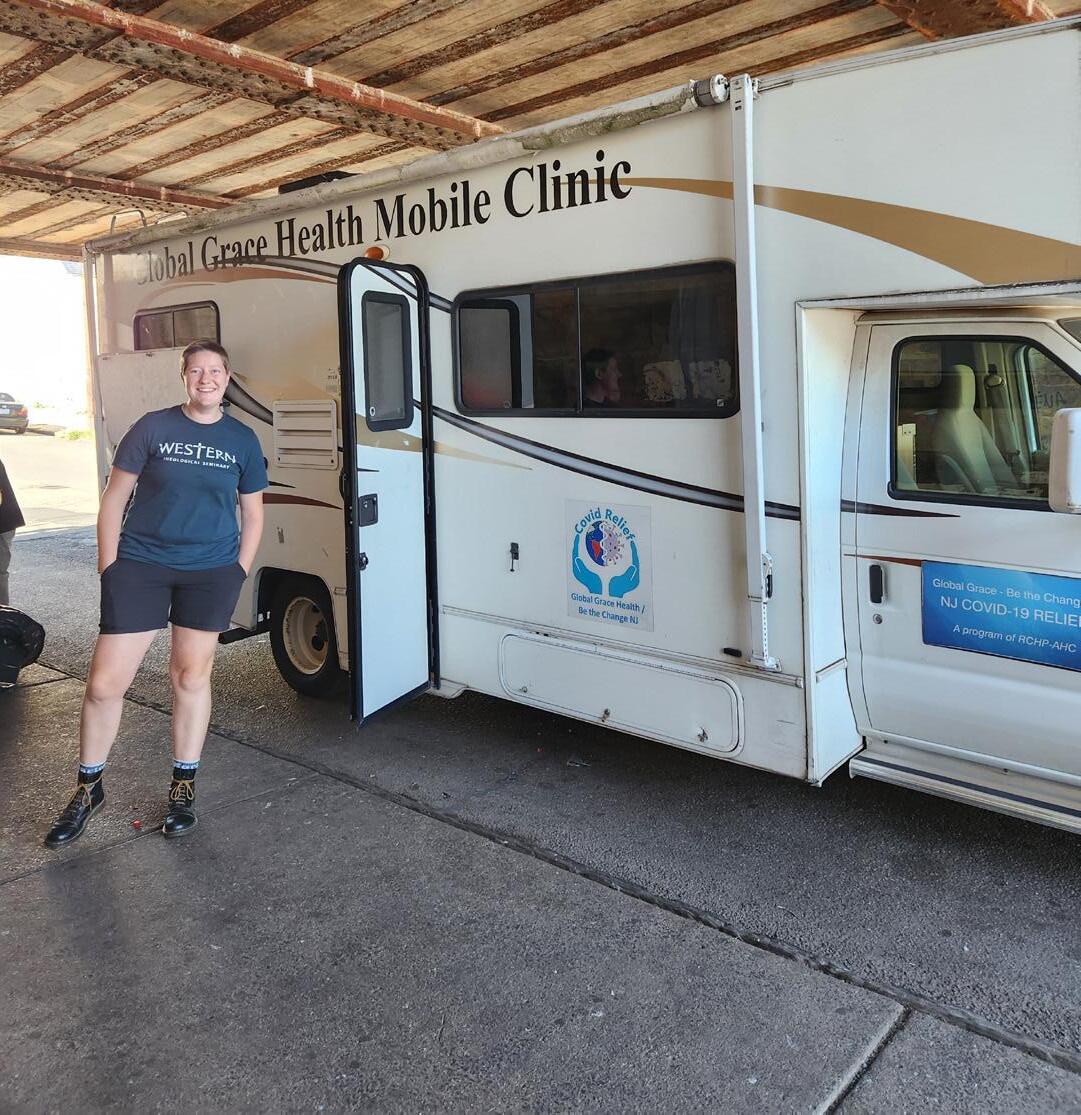
WTS Student Jess Koster with the Global Grace Mobile clinic that provides medical screenings, vaccinations, and posthospitalization care. This day, the group handed out lunches that were made with the children of RCHP.
Something clicked for the team as they began to articulate what it’s like to be part of their congregation, how they feel seen, connected, and valued. As they wondered what it would look like to extend this culture of welcome to the youth in their congregation, they realized they can lean into their strengths by investing on a personal level in every child and teenager at their church. They have also brought this value into the way they worship together by inviting youth in the congregation to lead from the front, to participate in reading Scripture, and to lead the congregation in prayer. Their future will be shaped by how God is moving through them, young and old together, paying attention to where God will lead next.
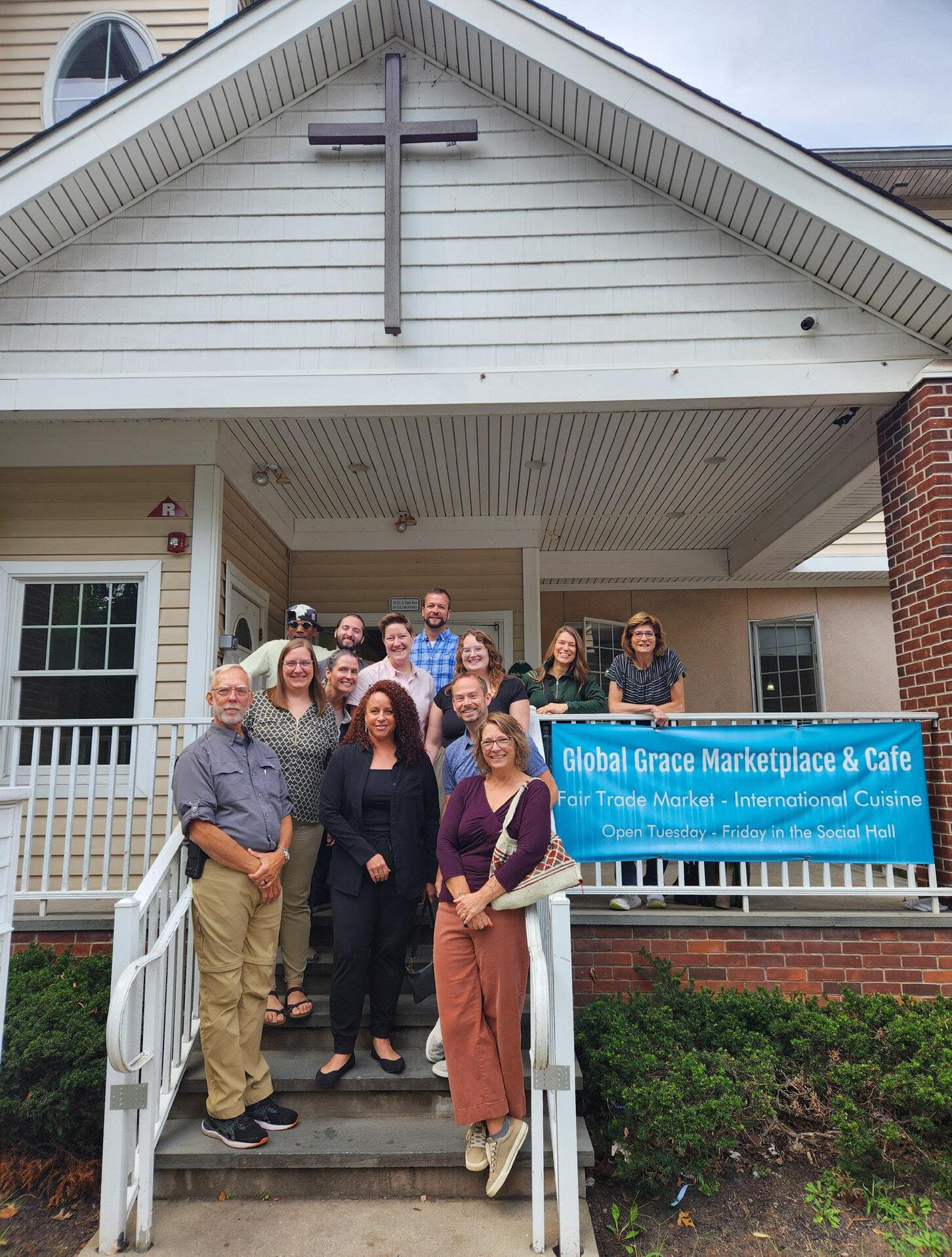
Churches in Mission Learning Journey participants traveled to Reformed Church of Highland Park (NJ) to learn how attending to the prayers of the people can spark many ripples of possibility and transform individuals, congregations, and neighborhoods.
“Their future will be shaped by how God is moving through them, young and old together, paying attention to where God will lead next.”
Over the past five years, the Churches in Mission process has journeyed with congregational teams who are paying attention to their congregation, and neighborhood, and asking how God is moving among both. As we look ahead to the next season of this initiative, we invite you to ask the same question: “What is God able to do through my church?”
To learn more and get involved, join our email list on our website: westernsem.edu/churches-in-mission/
The Kids of Western Theological Seminary
A reflection on the impact of partnership with WTS on our entire community
by Dr. Brent LaVigne Vice President of Development
Right after Christmas, my family was able to join me in Holland. For these first few months in my role as Vice President of Development at WTS, as we wait for our house to sell and find a new one, we get the opportunity to live in the apartments owned by Western Seminary, which are affectionately known as the “Red Bricks”.
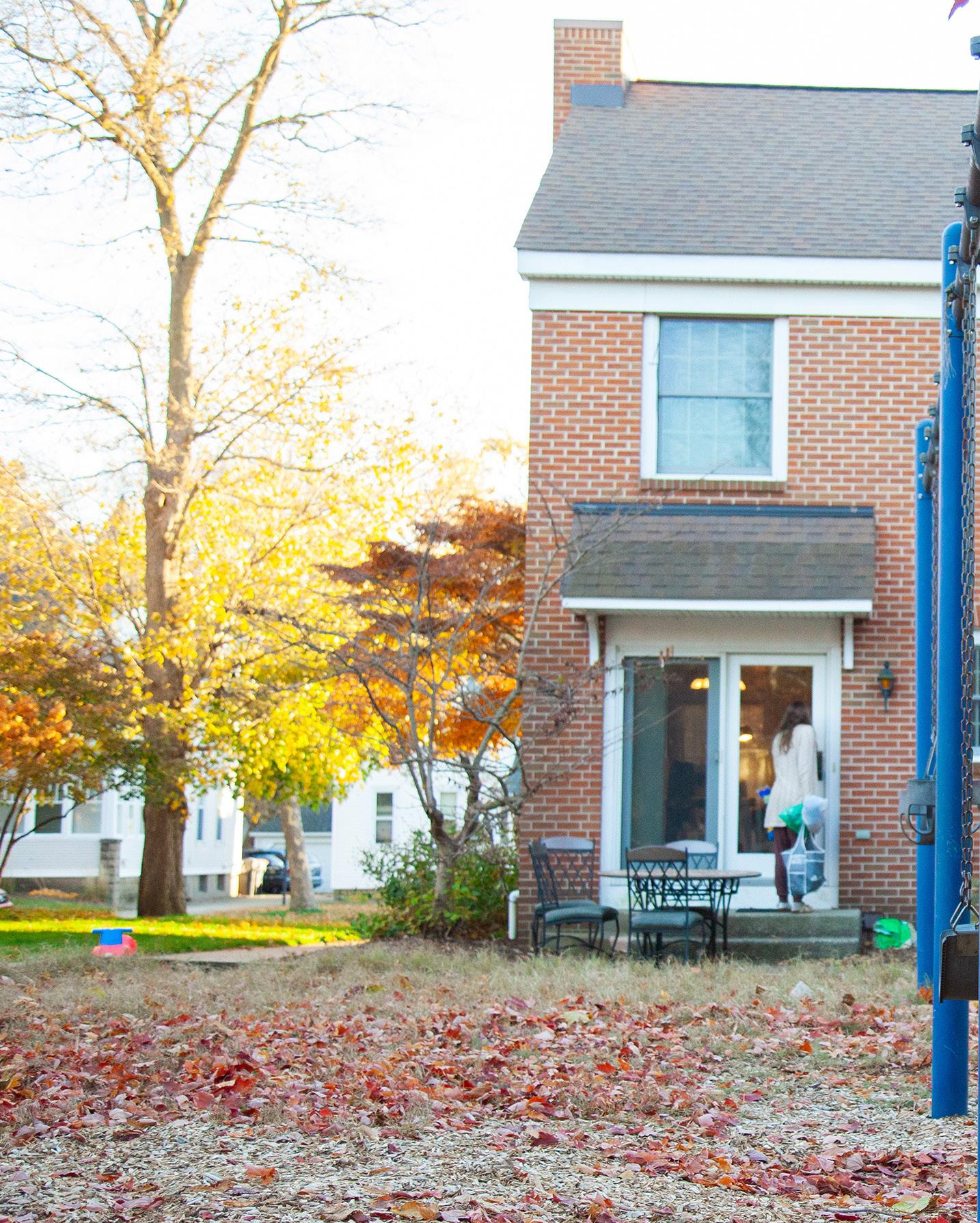
The Red Bricks are townhouse/apartment units with front doors facing the seminary and the surrounding blocks and back doors opening to a common green space with a playground, fire pit, and picnic tables, etc.
One morning, I woke up to a beautiful snowfall after returning late the night before from a trip for Western. Even before eating breakfast, my kids saw other kids playing in the backyard, dressed in their snow gear, and ran out the door.
My kids asked me to play outside, so I put on my jacket and boots and joined them. I would normally concentrate on shoveling snow and removing snow from my cars, but my daughter repeatedly asked me to help her. She was intent on pulling down the long icicles that were hanging from the roofline.
As I broke off a few large icicles, other kids came over and wanted some as well. So that is how I was recruited to be the “Ice Man” for all the kids of the Red Bricks.
As I became part of their operation, which included building a snow fort from the pile of snow that was plowed together from the parking lot, I took a few moments to reflect on what was happening.
These kids are on a unique journey. Every one of their parents is responding to a call from God to learn more from His word and prepare for ministry. The kids come along and are a part of that journey, too.
I was a pastor’s kid growing up, and although my father completed seminary by correspondence, I know what it was like to follow God’s call even as a child.
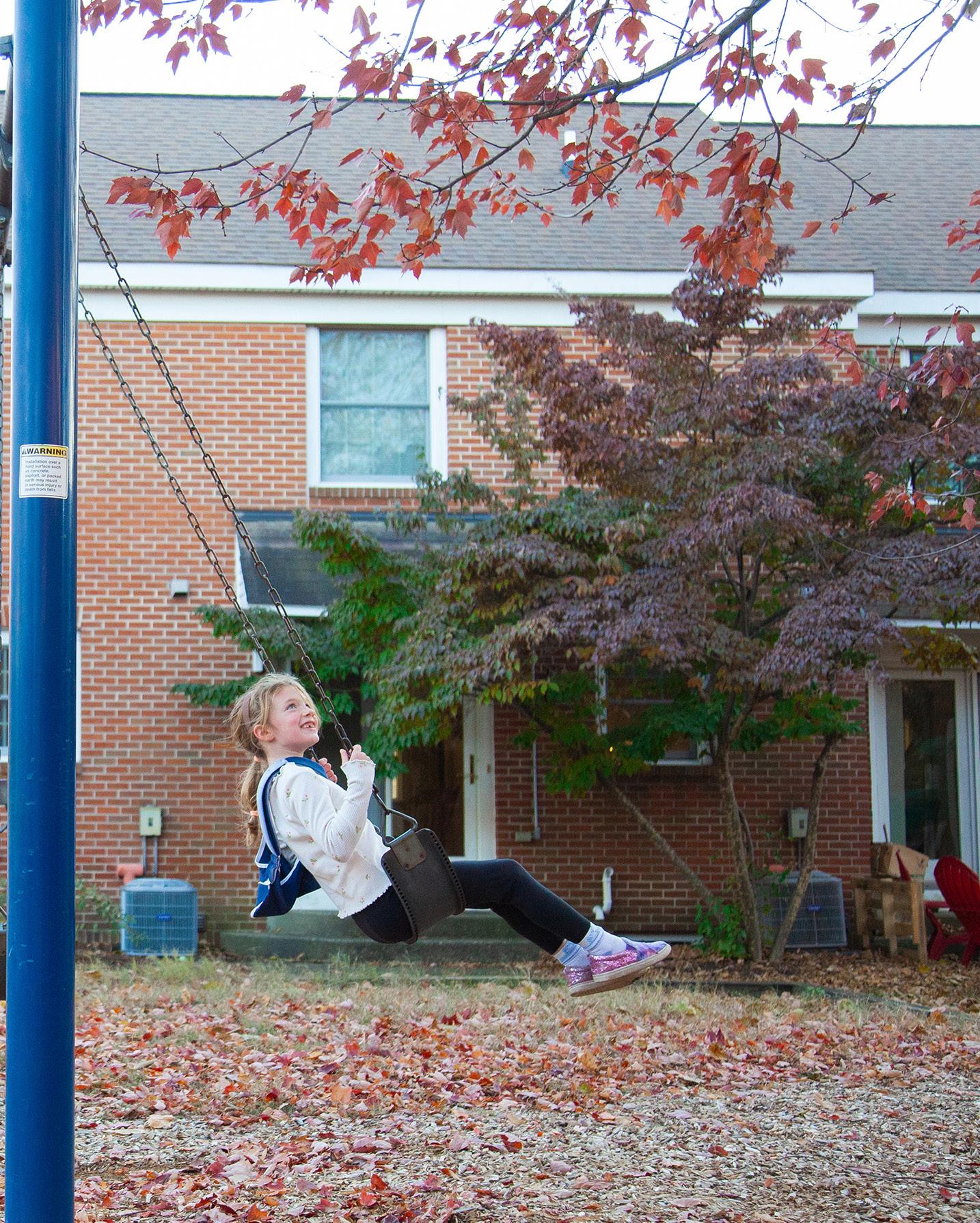
The reality is that these kids are here short term while one or both of their parents are studying at WTS. After this, they will disperse to other places. But while they are here, they are creating special friendships - a bundled-up tribe - and forming a unique community, which is truly a gift to them and to their parents.
When you pray, give to, and advocate for the seminary, it impacts the women and men who are being trained for Christian ministry - and their families. You are partnering in the work that God is doing at WTS - in the classroom, in the library, on the Red Bricks playground, and on the pile of snow in our parking lot that is part snow fort and part mini sledding hill. You are part of what God is doing within the adults as well as the kids.
God is providing for my kids by giving them this wonderful, temporary, rich community filled with laughter and joy.
I am grateful. Grateful that as the snow falls, we eat warm soup for lunch, and we hang the snowclothes to dry. Grateful for God’s care for my family and for the other families of our students. Grateful for the way that your partnership reverberates in so many ways, even and especially to our kids.
May God bless you, wherever you are, from snowy Holland, Michigan, and Western Theological Seminary.
WTS AND UGANDA:
A Relationship that Spans Generations
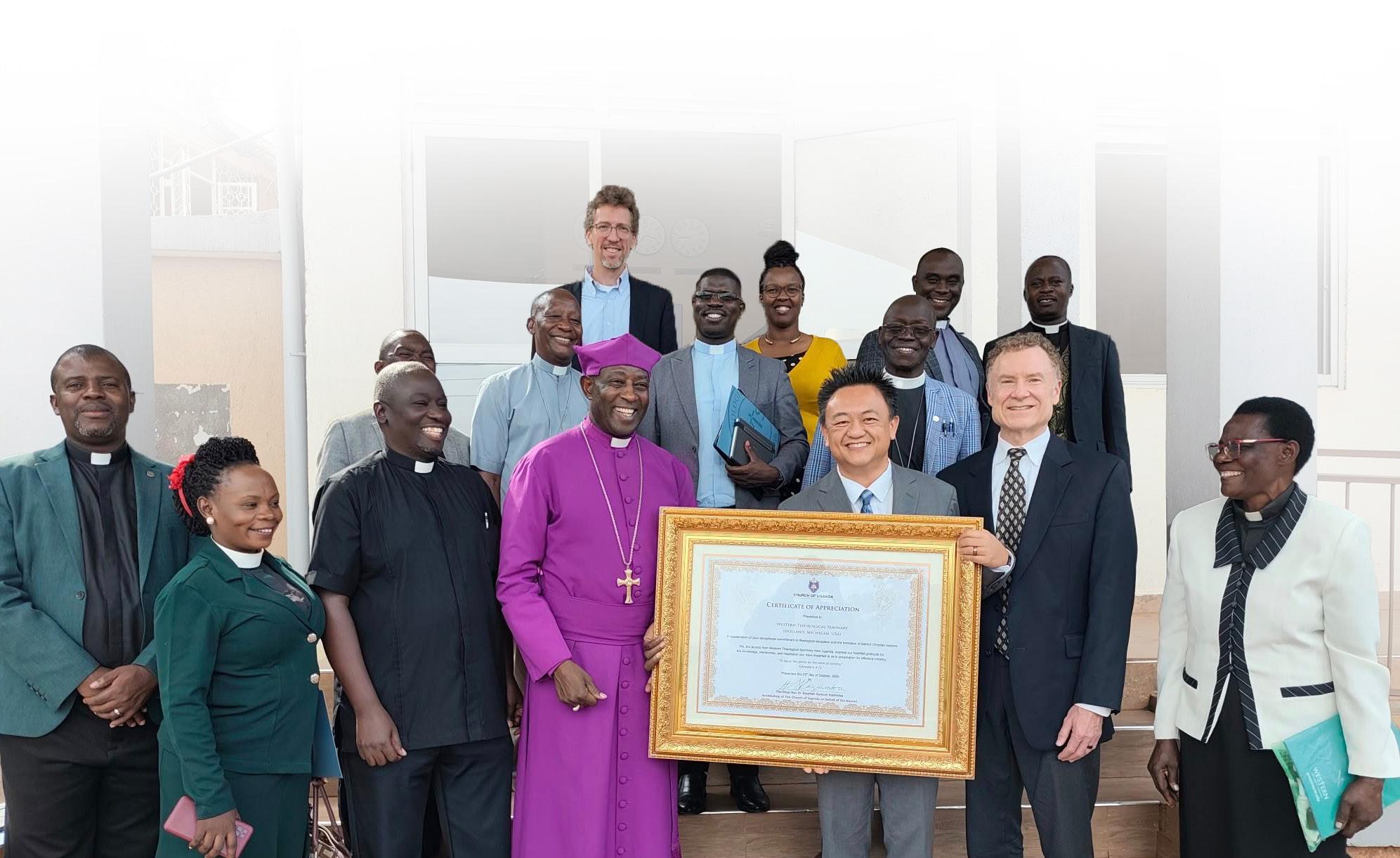
A relationship that has lasted generations began in 2000 when Milly Erema came to Western Theological Seminary (WTS) as a Master of Theology (ThM) student. Since then, twelve other Ugandan students have completed ThM degrees at WTS, and one more is studying now. Among the graduates is Stephen Kaziimba Mugalu, currently the Archbishop of Uganda, a church with 13 million members across 39 dioceses. Kaziimba completed his ThM in 2003 and a DMin in 2007. A year ago, his son, Moses Kisakye Mugalu, earned a ThM at WTS.
Western has eagerly cultivated this relationship over the years. When representatives were invited to Kampala for the Archbishop’s enthronement ceremony in 2020, President Theonugraha attended with three members of the WTS community.
During that trip, the delegation also visited Uganda Christian University (UCU), Africa’s leading Christian institution of higher education. When invited back by UCU in 2025, the president traveled with Board Chair Stephen Spoelhof, Associate Academic Dean David Komline, Amanda Onapito, a friend of WTS who formerly served as the Director of Communication for the Church of Uganda.
The group began their visit by facilitating a retreat for leaders of the Mukono diocese of the Church of Uganda, at a facility operated by Rev. Captain Titus Baraka, ThM (’02). Spoelhof spoke on prayer, Komline on Wesley’s Aldersgate experience, and Theonugraha on leadership. The dialogical sessions allowed deep mutual learning, and the WTS group especially enjoyed joining Ugandans in song.
Later, the Archbishop hosted a meal for WTS alumni at his Namirembe guesthouse. Komline shared: “What a delight to see people I’ve known in the WTS context in their own context.” Of the 11 graduates present, three have completed doctorates, and all are serving in full-time ministry. The Archbishop expressed gratitude:
“I thank Western Theological Seminary for remaining faithful to Scripture and upholding the moral values we cherish as the Church of Uganda. During my Doctor of Ministry studies, I focused on servant leadership. The foundation I received continues to inspire my ministry and leadership today.”
Reflecting on the visit, Spoelhof said: “Our immersion into Ugandan culture was enlightening. God has been working in the Global South, and WTS has dipped its toes into this vast opportunity over the past two decades.”
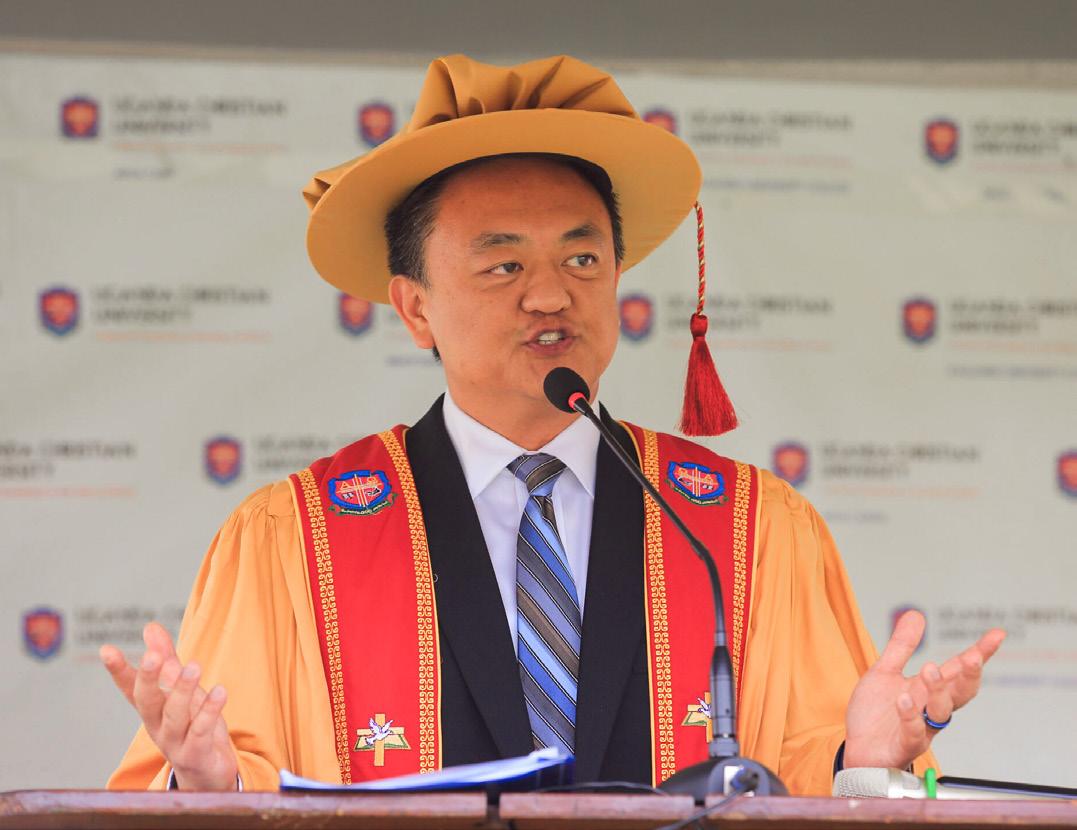
President Theonugraha also delivered two talks at UCU, founded as Bishop Tucker Theological College in 1913 and now enrolling 15,000 students across five campuses. His first talk, “Toward a Christ-Centered, Hope-Filled, Spirit-Transformed Christian Learning Community,” served as the school’s annual lecture. Two days later, he delivered the commencement address, “A Magnificent Obsession,” reminding students who they are, whose they are, and why they are here.
WTS looks forward to further partnership with the Church of Uganda and UCU. As Theonugraha told his audience: “In this age of polycentric Christianity, theological education at WTS is incomplete unless we listen to and learn from our brothers and sisters around the world. I hope our partnership is marked by intentional listening, growing trust, and mutual recognition of the gifts we all bring.”
WTS GRADUATES SERVING IN UGANDA
Archbishop Rev. Dr. Stephen Kaziimba (‘03, ‘07)
Church of Uganda, Namirembe Diocese
Rev. Dr. Milly Erema (‘01)
Kingsway Ministries, Mukono Diocese
Rev. Canon Titus Baraka (‘02) Mukono Diocese, Words of Hope
Rev. Canon Samuel Waswa (‘05) Mukono Diocese
Rev. Latima Muwanguzi (‘06) Ndejje University
Rev. Dr. Canon Henry Majwala (‘13) Kampala Diocese
Rev. Dr. Asaph Senoga (‘14) Mukono Diocese
Rev. Godfrey Kyome (‘16) Mukono Diocese
Rev. Juliet Nabatanzi Kansiime (‘19) Ndejje University
Rev. Isaac Lubega (‘20) Mukono Diocese
Rev. Moses Kisakye Mugalu (‘24) Kampala Diocese
Samuel Mbabaali (‘24)
PhD student at Trinity Evangelical Divinity School
Announcing a New Associate Director of the Vita Scholars Program, Rev. Dr. Katlyn DeVries
With Director Keith Starkenburg’s appointment as Interim Dean and Vice President of Academic Affairs, he appointed Rev. Dr. Katlyn DeVries to join him as the Associate Director of the Vita Scholars Program. Dr. DeVries brings a wealth of connections to churches and ministries, as well as experience teaching and mentoring WTS students. She looks forward to walking alongside these students in their formation.
The Future Leaders of the Church
The Vita Scholars Program at Hope College and WTS provides a pathway for ministryminded students to graduate with their BA and MDiv in five or six years, rather than the typical seven or more. Young people graduate with less debt and are inspired and equipped to serve in pastoral ministry. Launched in 2021 with a grant from the Kern Family Foundation, the program will graduate its first cohort of four students this spring.
The original cohort of Vita Scholars (from left to right: Alan Bettner, Sawyer Winstead, Dawson Kryska, and Aidan O’Meara) will graduate in Spring 2026.
MEET SAMANTHA JONES
Why did you join the Vita Scholars Program?
I felt called to ministry and wanted an education that placed a high emphasis on spiritual growth and personal development. At Western, I’m not just someone who will enter the workforce; I am a person made in God’s image and created to further His kingdom.
What’s an experience you’ve had in Vita that will stick with you?
I have seen the redemptive work of God in this group, and have never felt more empowered to pursue my calling than when I am with them. They have shown up when it mattered most, prayed over me, and walked with me through some of the darkest seasons of my life.While I am no longer the only woman in the program (and I am grateful for that), I hold it as an honor, not a detriment, to have been the first.
Where do you sense God is calling you now and into the next few years?
I sense God is calling me to the intersection of academia and pastoral ministry. I am passionate about helping others explore their faith through academic thought, while also recognizing that learning is a holistic process. Knowledge of God creates knowledge of self.
What’s one hope you have for the church as you look to the future?
My hope for the future of the church is that we are able to grow in our capacity for curiosity. There is so much beauty to be found in trying to understand where someone is coming from without needing to argue or have a perfect response. It’s enough just to listen and wonder at how God has worked in each specific situation.
Why did you join the Vita Scholars Program?
I joined the Vita Scholars program because of its commitment to not only biblical studies and practical ministry tools and experiences, but also its deeprootedness in relationships and walking alongside others.
Where do you sense God is calling you now and into the next few years?
I sense that God is calling me into a deeper immersion in the life of the local church. When I first joined Vita Scholars, I did not have a specific context in mind. Through testimonies, group discussions, and prayer, God has developed within me a calling to love the local church and to attend to and love the stories of those around me.
What’s one hope you have for the church as you look to the future?
My hope is that, amidst all of our unique and diverse contexts, the Church can continue to pursue the unity Jesus desires: “The glory that you have given me I have given them, so that they may be one, as we are one, I in them and you in me, that they may become completely one” (John 17:22-23).
MEET DAWSON KRYSKA
Vita Scholars Program Meeting
IMPACT REPORT
ENROLLMENT
Over the past 30 years, we have seen significant growth. This means that we are graduating and sending more students than ever to ministry work.
$6,385,177
$2,494,041
$176,154
$2,494,983
$1,006,240
$322,485
$112,384
$100,252
LONG-TERM INVESTMENTS
A combination of endowments and other long-term investments
$6,322,909
$2,626,909
$860,824
$870,649
$714,431
SEMINARY OPERATING
In October, we celebrated the conclusion of our three-year campaign, Cultivating Our Call. Thanks to the generosity of seminary and community partners, critical academic programs and scholarship initiatives were started and expanded. Our initial campaign goals were surpassed by the generosity of so many and the provision of God. The total raised was over $11.7 million. Praise God from whom all blessings flow!
BRANCH 1: MENTAL HEALTH COUNSELING
Prepare qualified counselors with a Christian worldview by creating the Master of Arts (MA) in Clinical Mental Health Counseling (launched Fall 2024).
BRANCH 2: SCHOLARSHIPS
TOTAL RAISED:
$11.7 MILLION
Equip pastors and church leaders to provide counsel and identify when congregants need help from a mental health professional.
Create and grow immediate-impact scholarships for future pastors, counselors, and leaders so that seminary education is affordable and accessible.
BRANCH 3: INITIATIVES AND CENTERS
Strengthen, grow, and expand our centers and initiatives to better support ministry leaders.
Intercultural Capacity and International Engagement
1 Samuel Chapter 3:8, 10
WHEN GOD CALLS YOU
“Then Eli perceived that the LORD had called the boy...Now the LORD came and stood and called, “Samuel! Samuel!” And Samuel said, “Speak, for your servant is listening.”
Samuel was only a boy at the time of this calling, yet he grew to become one of Israel’s most remarkable prophets and priests. He would go on to anoint David, establishing the lineage of the Lord Jesus, the redeemer of the world.
How young is too young?
by Rick Capotosto Associate Director of Development
While traveling around the country to meet with supporters, alumni, and church leaders,
I am often asked, “What is Western doing to fill the many pastoral vacancies in our Reformed churches?” This concern is understandable.
My response to this question is usually another question: “Can you tell me the names of two or three high school students in your congregation who are being nurtured for the ministry?” I also ask if their congregation offers financial incentives for theological education or if they are intentionally developing a pathway toward ministry for their young people.
Do we doubt for a minute that God may be calling young people in our communities to serve His Church? While not every child is spiritually attuned, some are. What is too young?
Waiting for young women and men of faith to get through college has become a dangerous strategy. Many find their faith deconstructed during these years, being far from their supportive Christian communities. At the least, there is little encouragement to pursue a life of ministry when the world offers so many practical, enriching alternatives.
Pastor Steve DeVries, a 2014 WTS graduate and 10-year veteran pastor at North Holland Reformed Church, is one encouraging example of someone who heard God’s calling early in life and diligently answered it with the help of perceptive mentors within the church.
“When
I was 17 years old, I began to cautiously wonder about a call to ministry. What made the difference was hearing from people I trusted and respected; that this sense of calling wasn’t a far-fetched dream, but rather quite consistent with what they already saw God doing in my life.
It made all the difference to be told by older and wiser people in the congregation that they perceived God equipping me for ministry They backed it up by entrusting me with a progression of leadership opportunities in the church, sparking my fire for ministry, and encouraging me along the way. This foundation was enough to sustain my sense of calling through high school and college, with all of their distractions, and lead me to seminary for the formal training and formation I needed.
This is the kind of involvement I have tried to carry forward as lead pastor of North Holland Reformed, making our church mindful of God’s whispers and urgings to the young saints in our midst.”
Such attentiveness by the local church has been common throughout church history, identifying young people with a passion and calling for ministry.
Western’s VITA Scholars Program* makes this process even easier. Participants decide in high school to enter a ministry track, combining college and seminary in an accelerated program. Such programs affirm the readiness of many young people to discern a call to the ministry. With the program now in its 5th year, the response and the results have been amazing.
Filling the Church’s need for qualified leaders remains a primary goal at Western Theological Seminary, and we welcome the help of the local church to identify and encourage their young people in that direction. Theological training and formational excellence still make up the vital foundation needed for a lifetime of ministry, and Western stands ready to provide that for the amazing young leaders of tomorrow’s Church.
As you sit in church next week, look around at the young faces and imagine. How young is too young? Who can I encourage this week?
To learn more about the Vita Scholars Program and hear testimonials from current students, turn to PAGE 13.
SEMESTER HIGHLIGHTS
NEW STAFF AT WTS
Many new faces have been added to the staff at WTS the last few months. Below are the new staff members who have joined the WTS community and their roles.
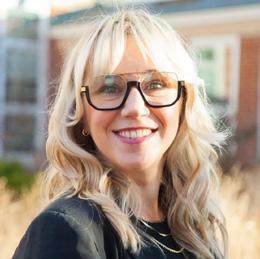
Rachel Dober Associate Development Officer
KATHY EHMANN RETIREMENT
Sydney Johnson EdTech Specialist
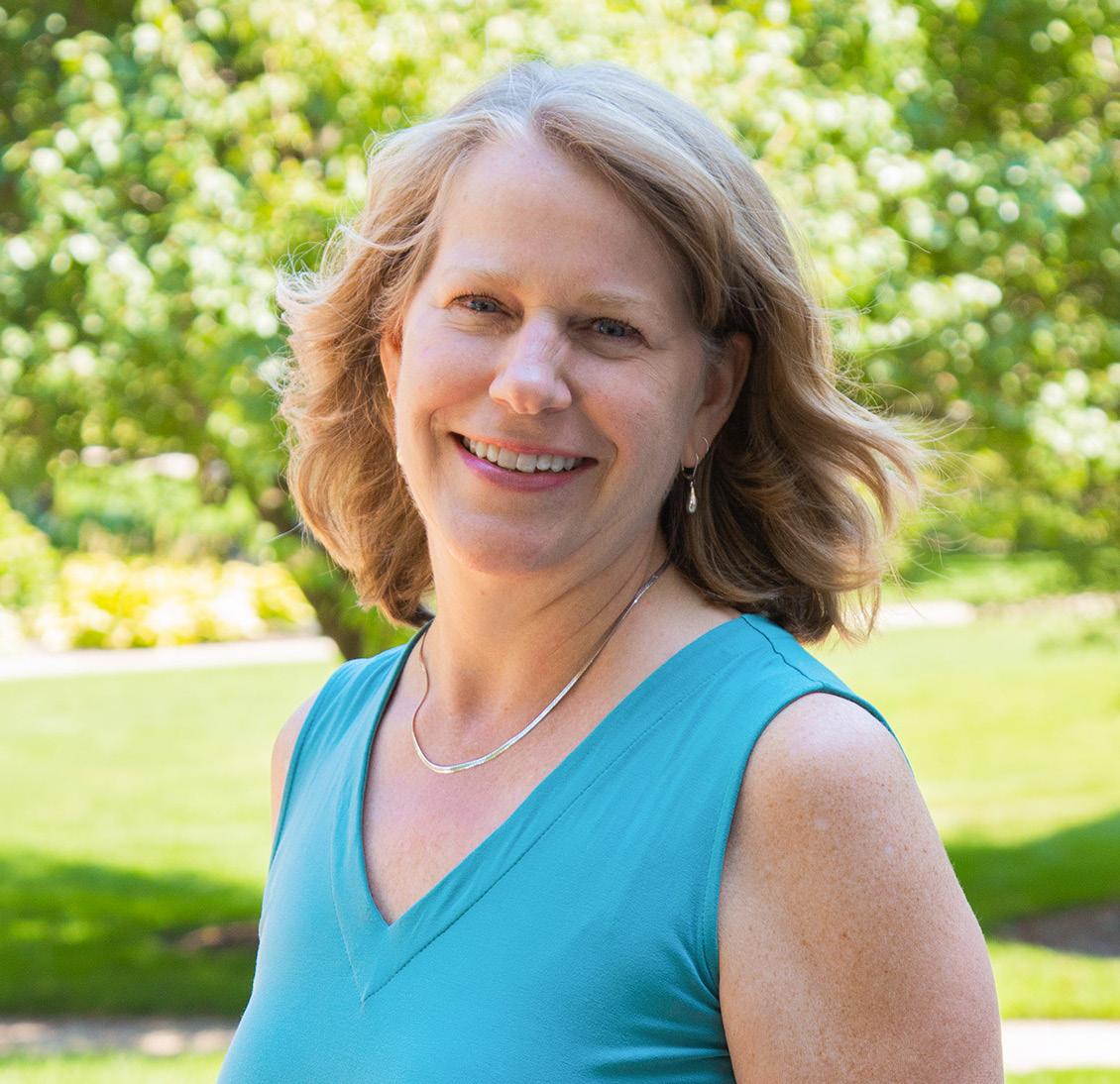
Jennifer Knott Registrar
Betsy Maxwell Creative Specialist
After many years serving at WTS in a variety of roles, Kathy Ehmann has retired. We wish her joy in her retirement years and thank her for the impact that she has had on staff, faculty, and students at WTS.
CAROL’S FESTSCHRIFT
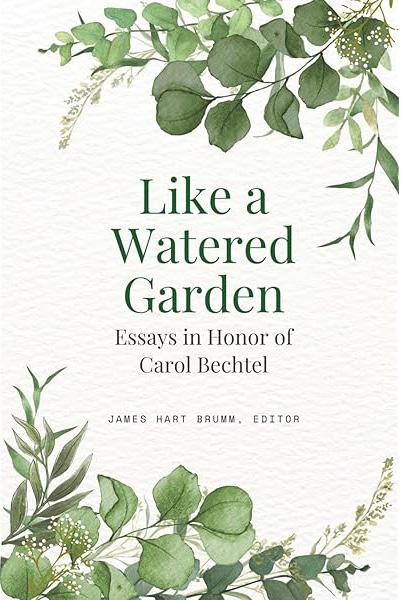
This year, a collection of essays titled, Like a Watered Garden, was published in honor of Rev. Dr. Carol Bechtel at the time of her retirement. If you are interested in a copy of this Festschrift, it is available on Amazon. You may also reach out to the Development Office at advancement@westernsem.edu.
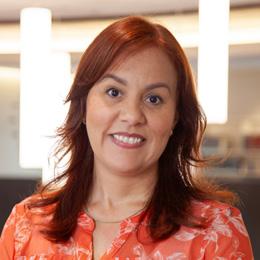
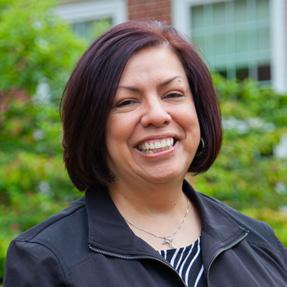
Yajaira Ruiz Human Resources Generalist
Yolanda Vega Doctor of Ministry Program Coordinator
Thank you to Anne Schmidt for four years of service at Western Theological Seminary as Marketing and Communications Director. Anne is moving on to a new opportunity, but we want to thank her for the incredible work she did to support the mission of WTS.
VISIT FROM REV DR. PAUL WESTON
This September, Revd Dr. Paul Weston, Missiologist and Fellow at Ridley Hall, Cambridge University, spent a week at WTS. During his visit, Dr. Weston joined a PastorTheologian Lunch panel on “Telling the Story of the Gospel in a Post-Enlightenment Age” with Dr. George Hunsberger (Missiologist, Professor Emeritus, Western Theological Seminary) and Dr. Esther Theonugraha (Director of Spiritual Formation and Mission, Faith Reformed Church, Zeeland, MI). He also spoke at “Mission 101 – Developing Missionary Spirituality in Our Personal Lives,” a collaborative event between WTS and Faith Reformed Church, and preached in chapel. We are grateful for the insights and fellowship he shared with us during his time at WTS.
OSTERHAVEN LECTURE
The 2025 Osterhaven Lectures, designed to address an aspect of the contemporary relevance of Reformed theology, were held on September 8 and 9. This year’s lecturer was Dr. David Fergusson, who serves as the Regius Professor of Divinity at the University of Cambridge and Dean of the Chapel Royal in Scotland. Dr. Fergusson gave two formal lectures titled, “Reformed Aesthetics: Historical and Ecumenical Perspectives” and “Two Cheers for Nicaea: Reflections on the Doctrine of the Trinity.” He also preached in chapel at WTS. We are grateful for the opportunity to hear from Dr. Fergusson in areas of his expertise.
GREAT LAKES THEOLOGY AND PREACHING CONFERENCE
WTS is thankful for the energy and participation from those who attended the Great Lakes Theology and Preaching Conference on November 6–7. We welcomed twelve undergraduate students and others exploring a call to seminary. They presented theological papers and sermons around the theme “God the Creator.” Keynote speaker Dr. Jonathan Moo, Bruner-Welch Endowed Chair in Theology and Professor of New Testament and Environmental Studies at Whitworth University, also delivered a lecture titled “Worshipping God and Cherishing the Earth in the Apocalypse.
HOPE-WESTERN PRISON EDUCATION PROGRAM
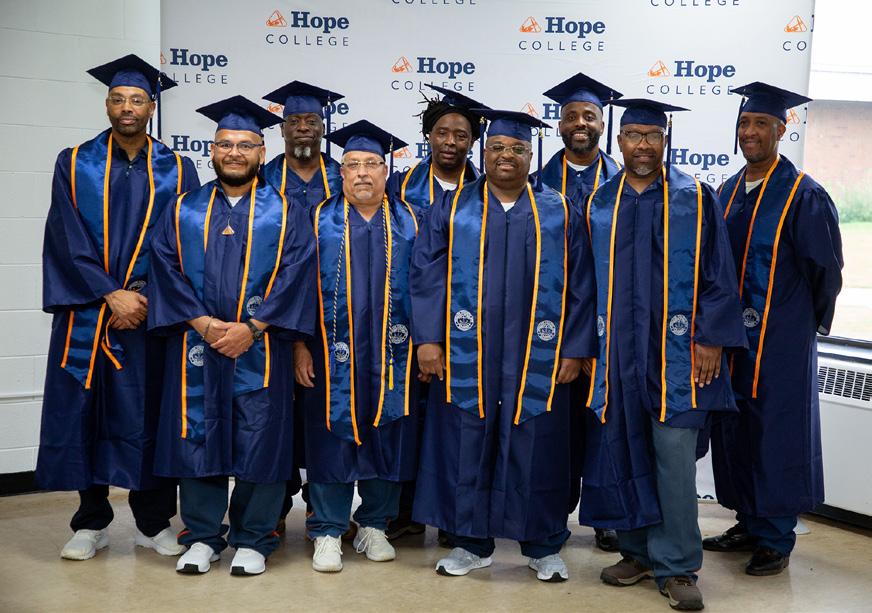
The Hope-Western Prison Education Program celebrated its first Commencement on Wednesday, June 25, 2025, at Muskegon Correctional Facility, honoring eleven graduates.
On August 26, HWPEP launched the 2025-2026 academic year, welcoming 22 new men as Hope College students, who began a four-year Bachelor of Arts track. Previous HWPEP graduates now serve as tutors and encouragers.
Additionally, the Inside Out program launched this fall, where WTS students travel weekly to Muskegon Correctional Facility for a Justice and Reconciliation class held alongside HWPEP students.
ALUMLINE NEWS
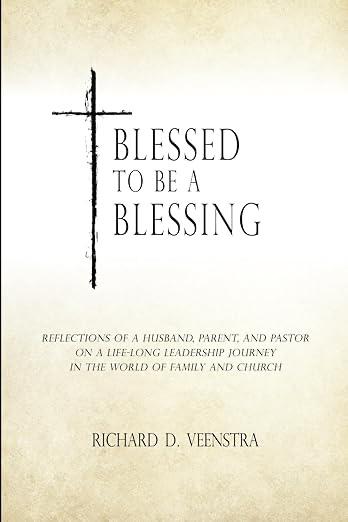
Richard Veenstra ‘72 recently published Blessed to Be a Blessing: Reflections of a Husband, Parent and Pastor on a Life-long Leadership Journey in the World of Family and Church. The book is available on Amazon.
James McDonald ‘81 has retired as a US Army Chaplain. He received his Master of Education from USC in 1982. He and his wife Carol have been married for 52 years.
Peter Dykema ’87 is in his 24th year as a professor of history at Arkansas Tech University. He teaches courses on the Reformation as well as the history of Christianity, among others. Recently, he has served as co-director of Arkansas Governor’s School, a statefunded month-long summer program for gifted and talented rising high-school seniors.
Robert Miller ‘98 recently started serving as a staff chaplain at Munson Medical Center in Traverse City, Michigan.
Edie Lenz ‘02 received her DMin from Fuller Theological Seminary in March 2025. Her dissertation, Joy in the Mourning: Thriving in a Ministry of Loss, was an exploration of congregational grief, tools of mourning, and adaptive change. She is moving into the role of Synod Executive of the Regional Synod of Mid America as well as working with Churches Learning Change and The Leader’s Journey.
Dale Vos ‘04 received his MBA in Project Management from Lakeland University in 2012. He has been the Instructor of Agriculture at Dordt University since 2019.
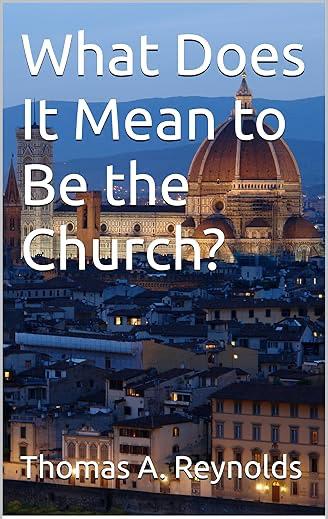
Thomas Reynolds ‘13 has published What Does It Mean to Be the Church? The book is available on Amazon.
Steve DeHaan ‘14 and his wife Sarah, recently adopted their son, Elijah (5), who joins their other children, Hannah (11), Isaiah (9) and Leah (6). Steve continues to serve at Hope Reformed Church in George, Iowa, and as a chaplain in the Iowa Army National Guard.
Sarah Samson ‘19 graduated from Fuller Theological Seminary in 2005 with her MDiv and from WTS in 2019 with her DMin. She became a board certified chaplain in 2010 and currently leads the Spiritual Care Department for Beacon Health System in South Bend, Indiana.
Kristin Brouwer ‘20 is currently pursuing a Doctorate of Ministry in leadership and spiritual formation. She also recently accepted a new position as the director of campus ministires at Dordt University.
Marta Smith ‘20 is the Youth Pastor at The Table MPLS in Minneapolis, MN.
Brianne Christiansen ‘21 was installed as the pastor of First Presbyterian Church of Omaha on August 4, 2024.
Craig Wong ‘22 is the Executive Director of New College Berkeley in Berkeley, California.
Anne Marie Holwerda Warner ‘24 was ordained as a priest in the Episcopal Diocese of the Great Lakes on June 28, 2025 at Grace Episcopal Church in East Grand Rapids. She plans to continue to serve her home church of St. Luke’s Kalamazoo as Curate for 55 & Better through 2026.
Merari Herrera ‘24 was ordained as a Teaching Elder in the Presbyterian Church in America on October 12, 2025. Her role will be as church planter at Denver Presbyterian Church.
ON TO GLORY
Please join us in prayer for the families of those in the WTS community who we have recently learned have passed on to glory.
Phillip Miller (1943-2025)
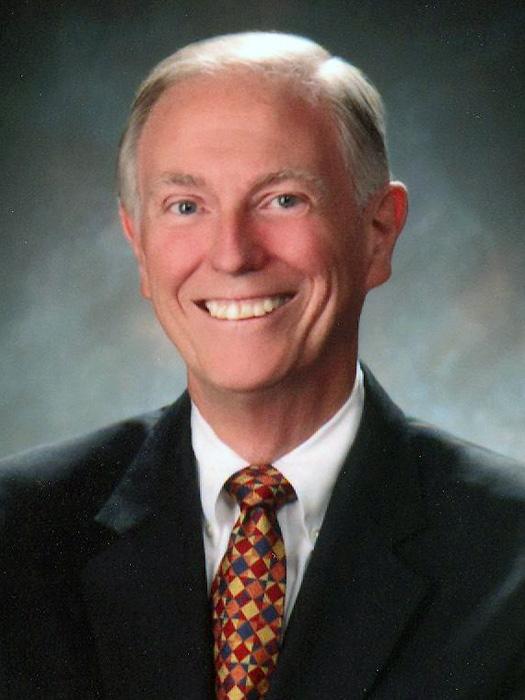
Western Theological Seminary gives thanks for the life of Philip D. Miller, who passed away on October 5, 2025, at the age of 82. Phil and his family made a lasting imprint on the Holland and West Michigan communities through his business leadership and philanthropy. Phil specifically impacted WTS as a board member and partner throughout his life. His generosity, contrasted with his humility, are gifts for which we thank our God.
Vernon Sterk (1943-2025)
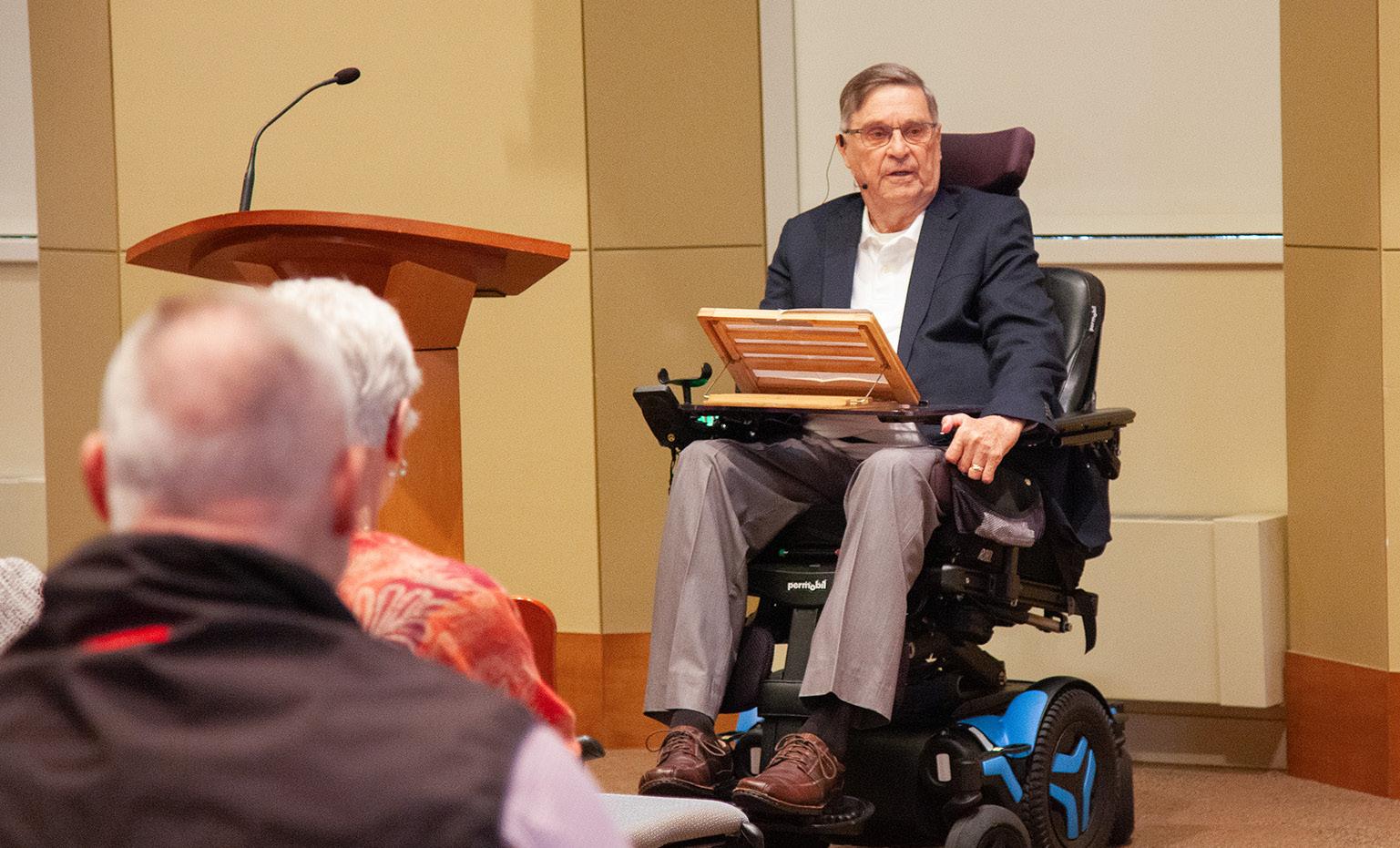
Western Theological Seminary celebrates the life and ministry of Rev. Dr. Vernon J. Sterk, who passed away on October 25, 2025, at the age of 82. Vern was a graduate of the WTS class of 1968. Following graduation, Vern and his wife, Carla, were missionaries to the Tzotzil indigenous tribe in Chiapas, Mexico, for 41 years. He and Carla also served as professors of Missiology at Western Theological Seminary from 1997 until 2009. We are grateful for Vern’s ministry, joy in life, and passion for sharing Jesus with others.
George Menning ‘53
b. Feb. 9, 1925, Grand Rapids, MI
d. Feb. 24, 2025, Bryant, AR
Louis P. Kraay ‘56
b. Feb. 26, 1928, IL
d. May 16, 2025, MI
Neva Evenhouse ‘84
b. Sept. 26, 1933, Watkins Glen, NY
d. June 9, 2025, Grand Rapids, MI
David Tellinghuisen ‘87
b. Oct. 2, 1961, Breckenridge, MN
d. June 13, 2025, Sioux City, IA
Rowland Van Es ‘64
b. Apr. 3, 1939, Mescalaro, NM
d. July 9, 2025, Salina, KS
Norman Ratering ‘61
b. Oct. 15, 1930
d. Aug. 24, 2025, Eau Claire, WI
Donald Hoekstra ‘73, ‘87
d. Sept. 13, 2025
Donald Jansma ‘57
b. July 7, 1932, Fulton, IL
d. Sept. 13, 2025, Holland, MI
Mark D. Bush ‘84
b. Sept. 24, 1957, Randolph, NE
d. Sept. 25, 2025, Muskegon, MI
James Blaine ‘69
d. Oct. 18, 2025
Donald A. Vandenberg ‘52
b. Aug. 28, 1927, Sterling, IL
d. Nov. 12, 2025
Tonda Forsman ‘96
b. Oct. 20, 1936, Kalamazoo, MI
d. Nov. 5, 2012, Grand Junction, MI
Gary Hofmeyer, ‘76
b. Feb. 21, 1949, Orange City, IA
d. Nov. 26, 2025, Florida
101 E 13th Street
Holland, MI 49423
(616) 392-8555 westernsem.edu
INDIVIDUAL COURSES: OPEN TO ANYONE
In Spring 2026, WTS is highlighting the following individual courses: Art of Sabbath, Christian Interior Life, Pastoral Imagination, and Eschatology. The online version of these courses will be asynchronous. These courses, also taken by our master’s and graduate certificate students, are open to anyone - regardless of your previous educational background.
Dr. Travis West | Online
January 12, 2026—May 1, 2026
For information on each semester’s individual courses, visit courses.westernsem.edu. To learn more or to apply, contact admissions@westernsem.edu. Art of the