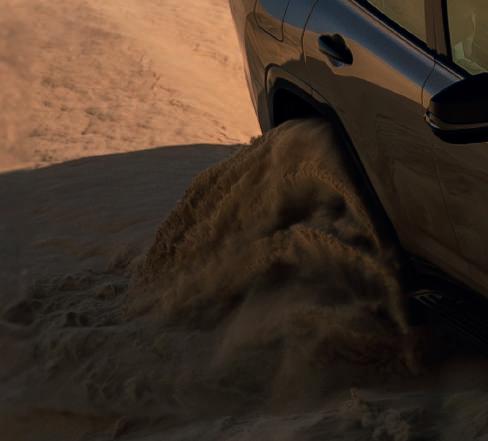
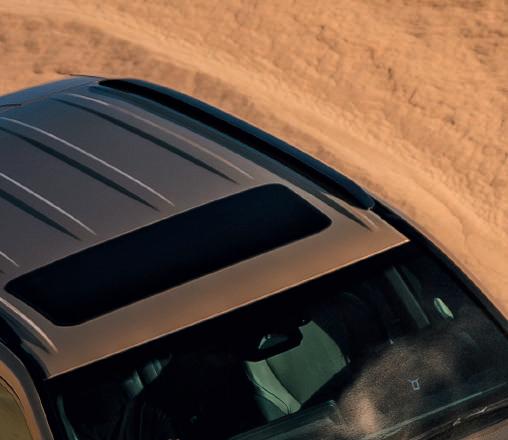
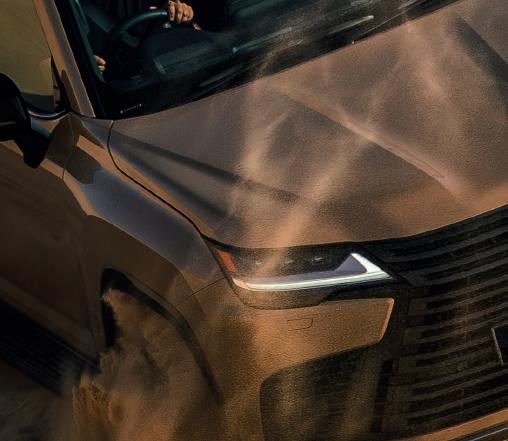
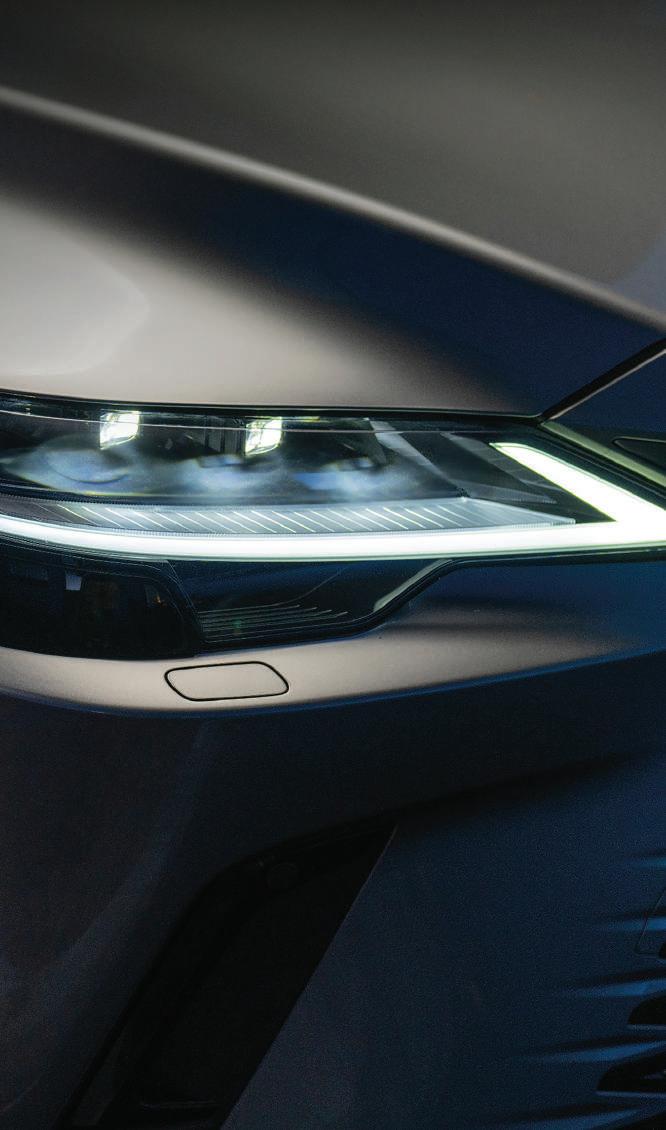
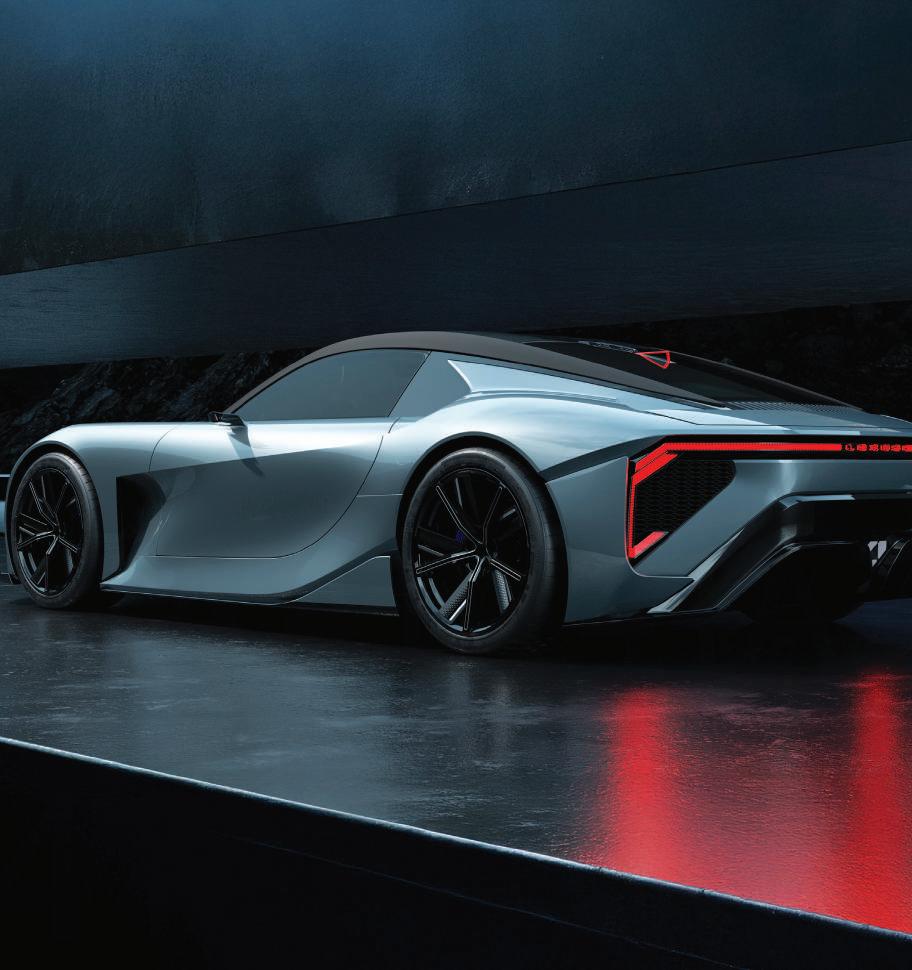
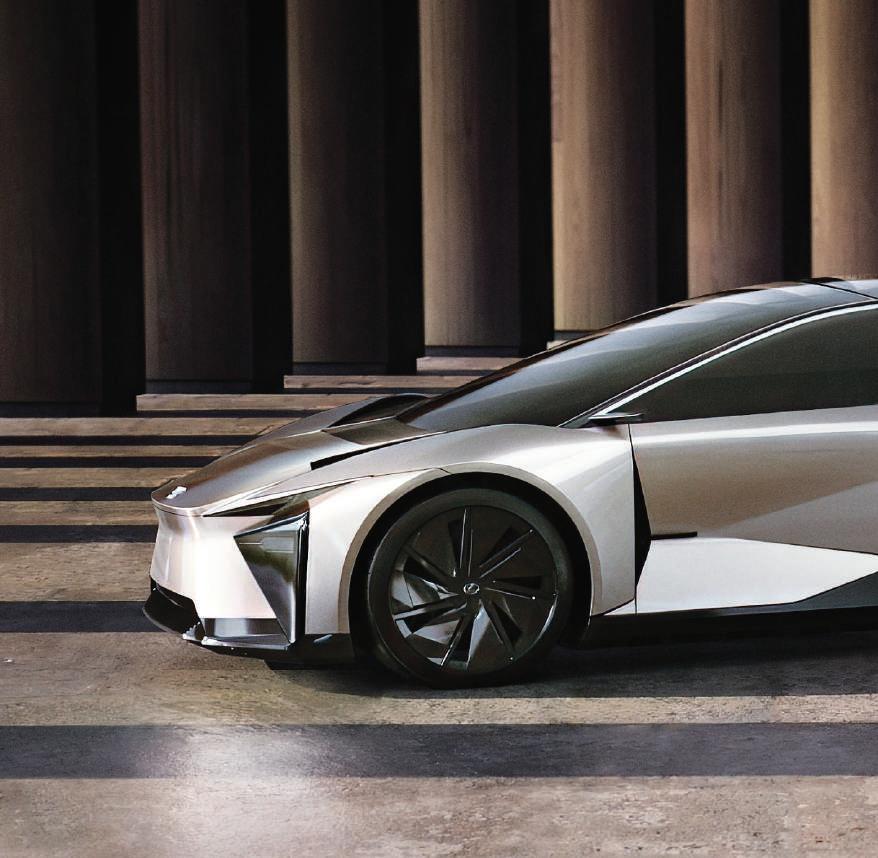
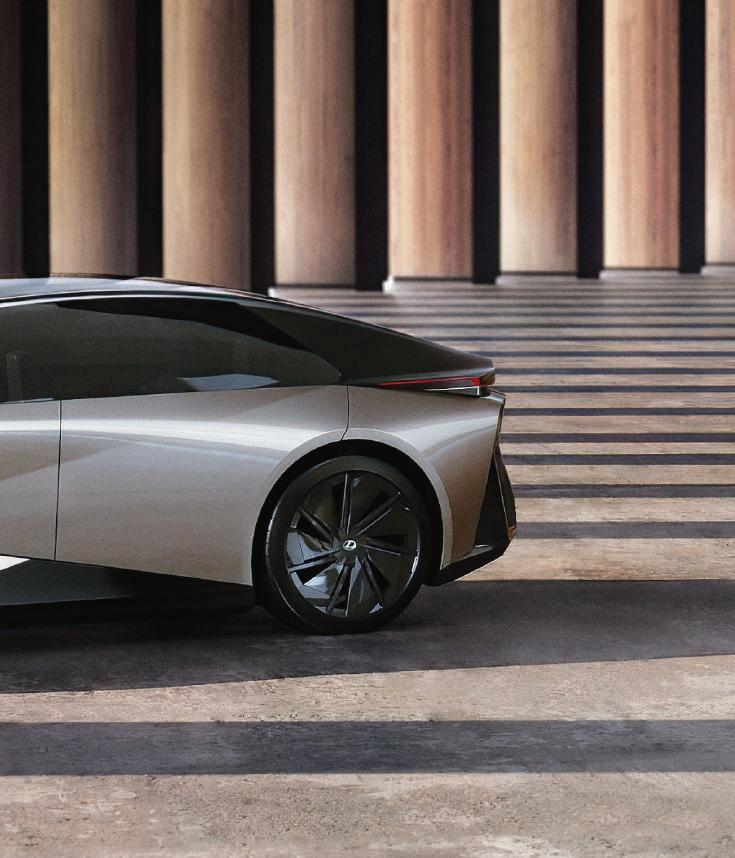
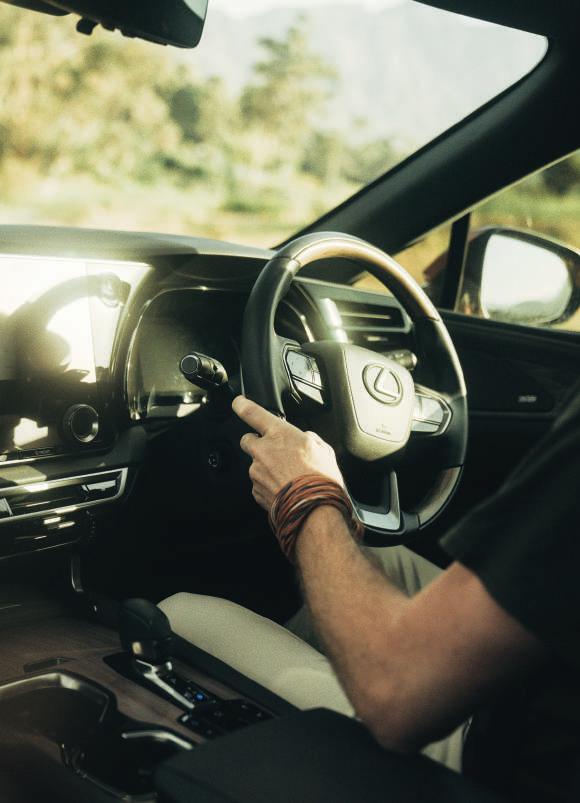
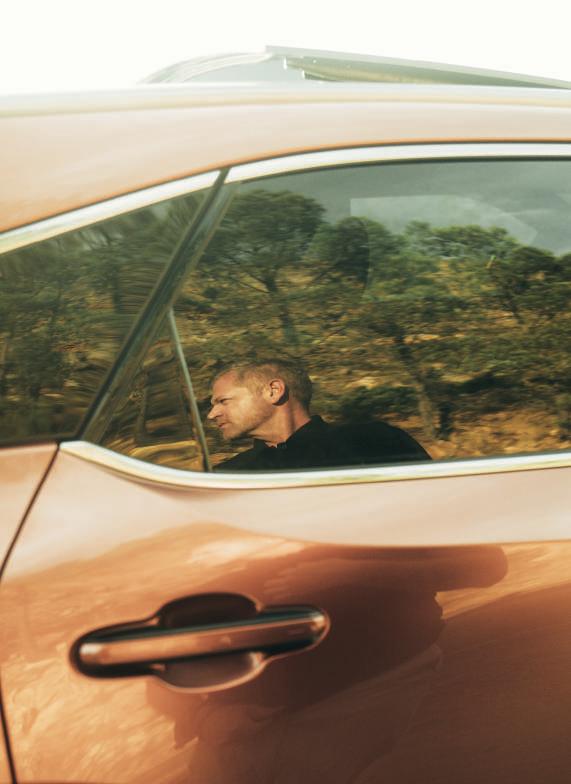
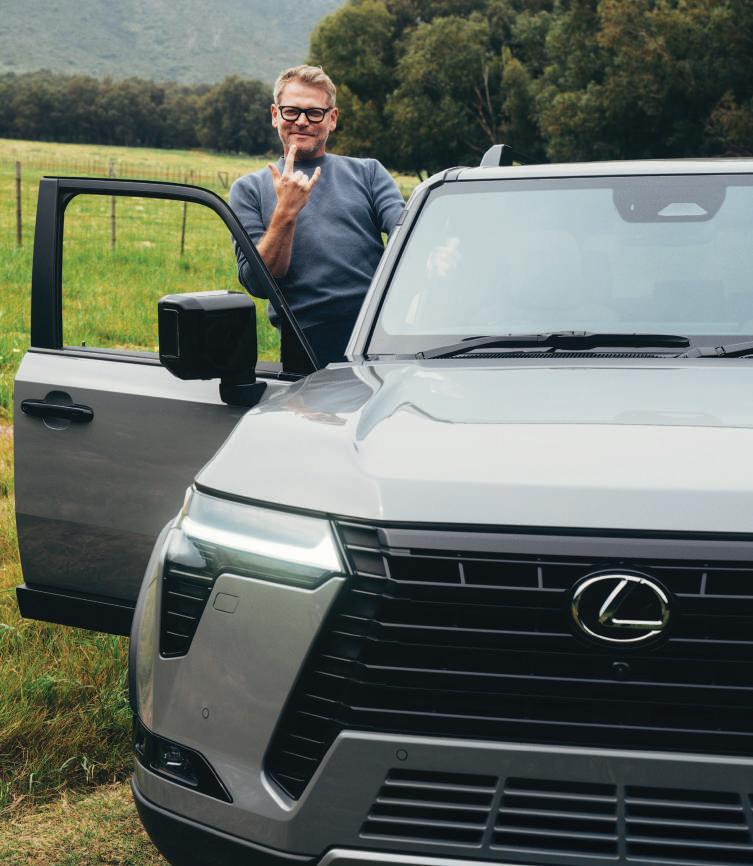
REDEFINE OFF-ROAD EXPLORATION WITH THE LEXUS OVERTRAIL PROJECT.
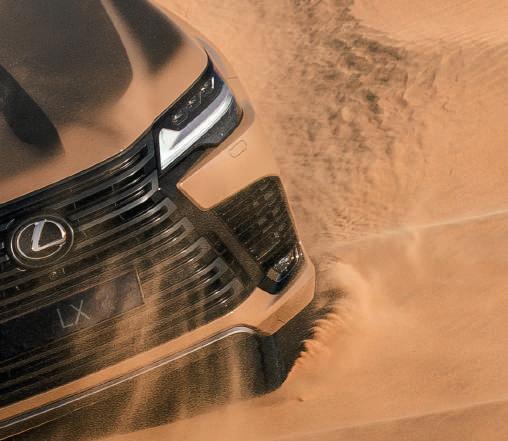
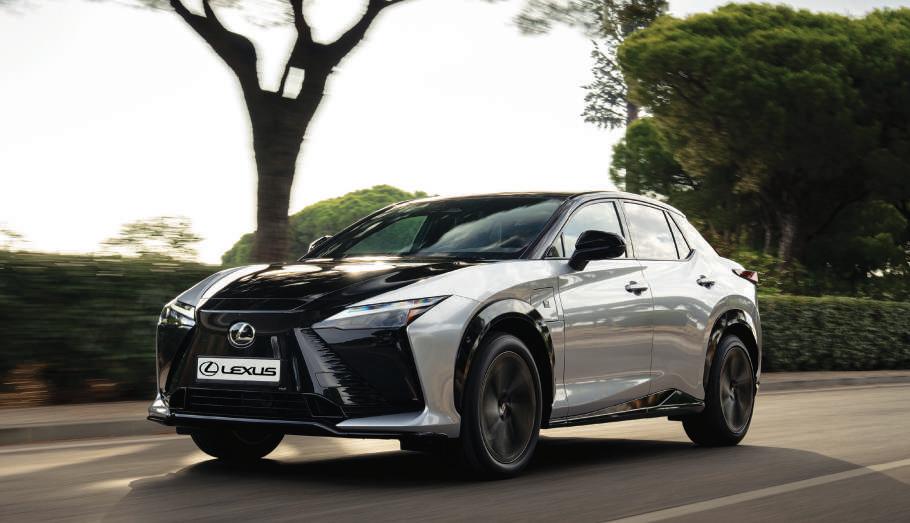
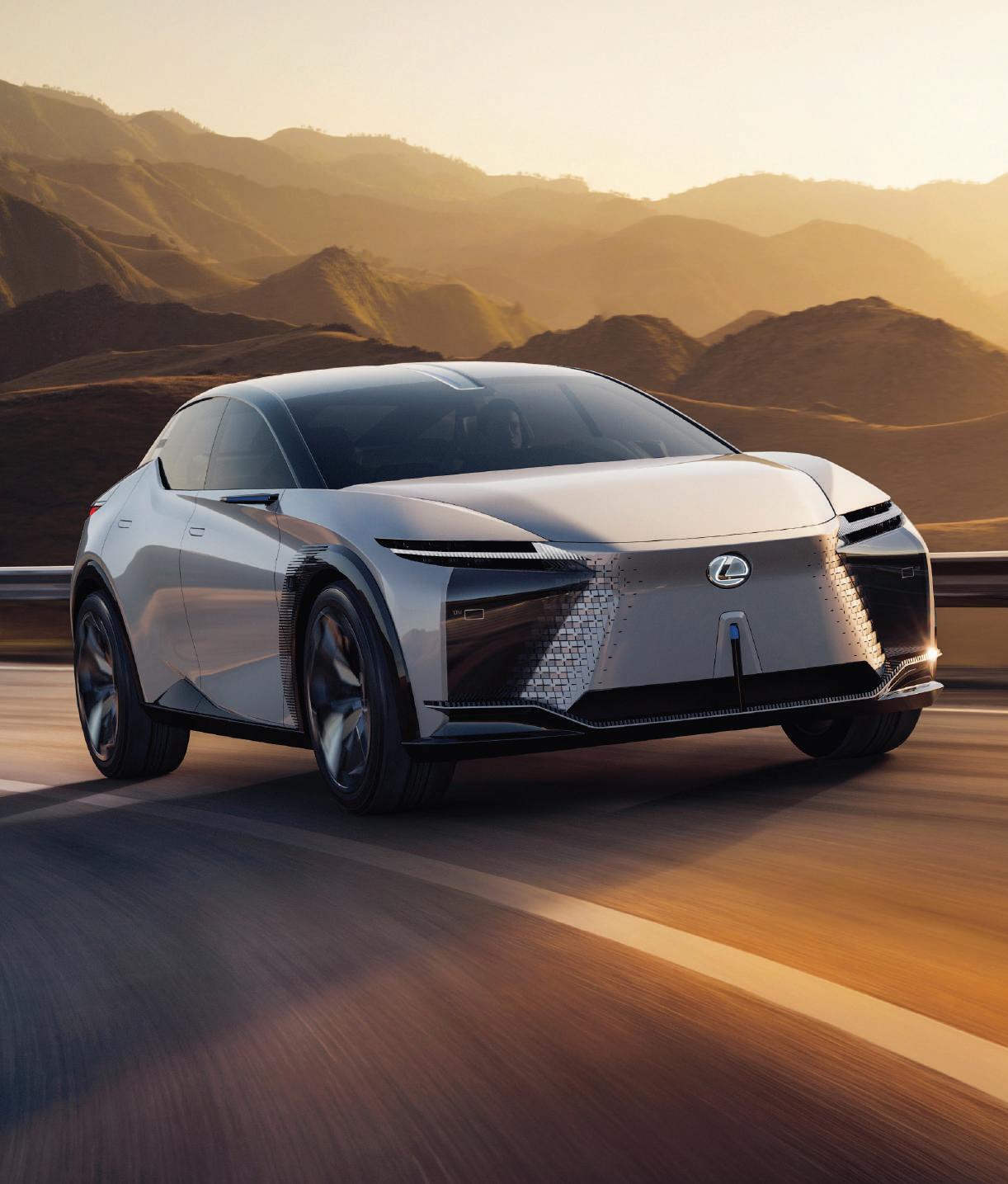
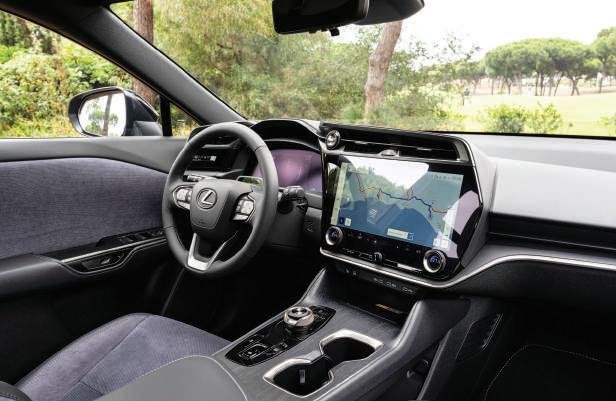
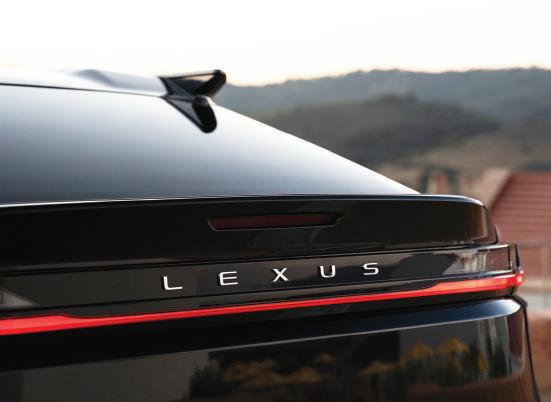
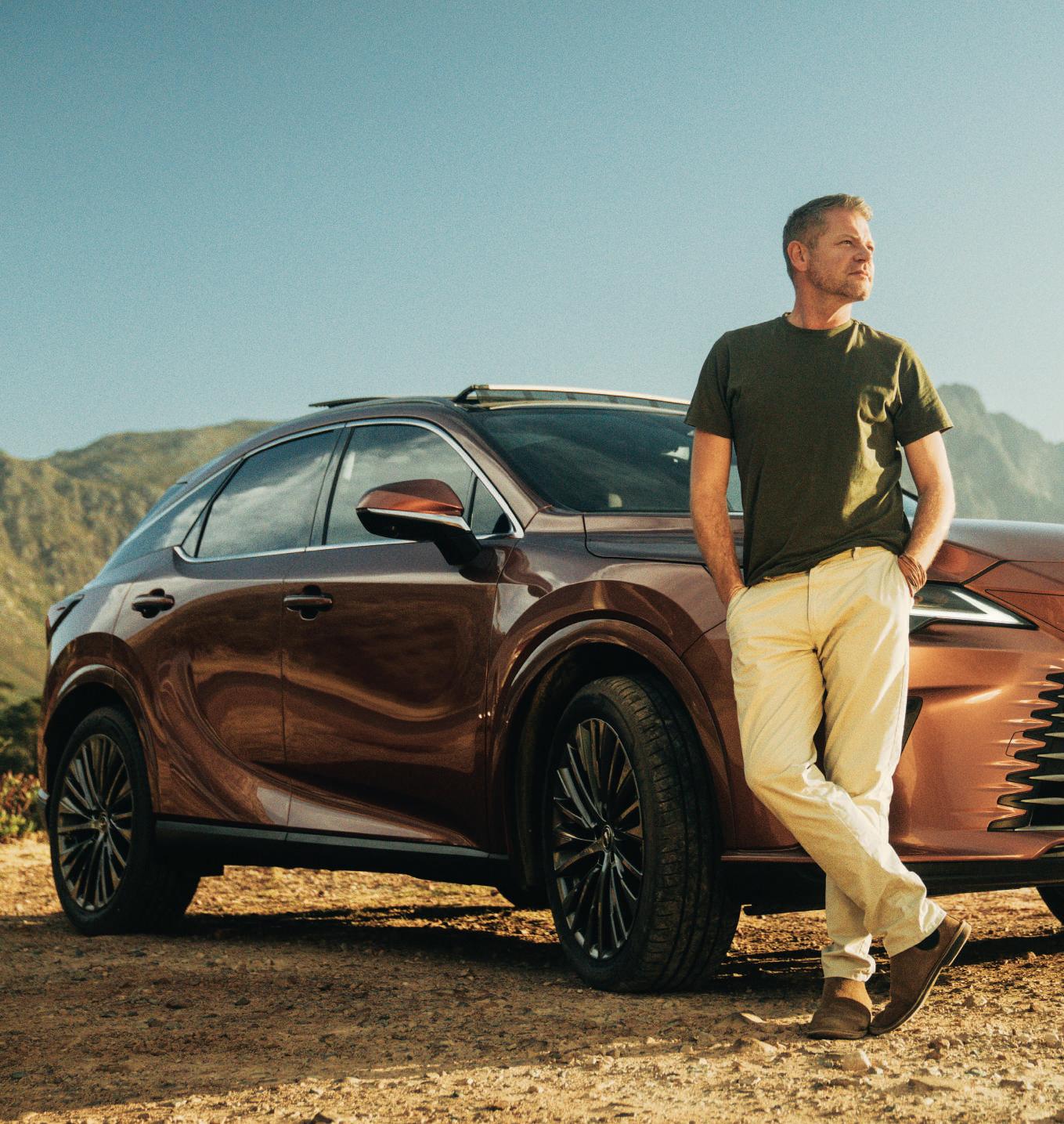
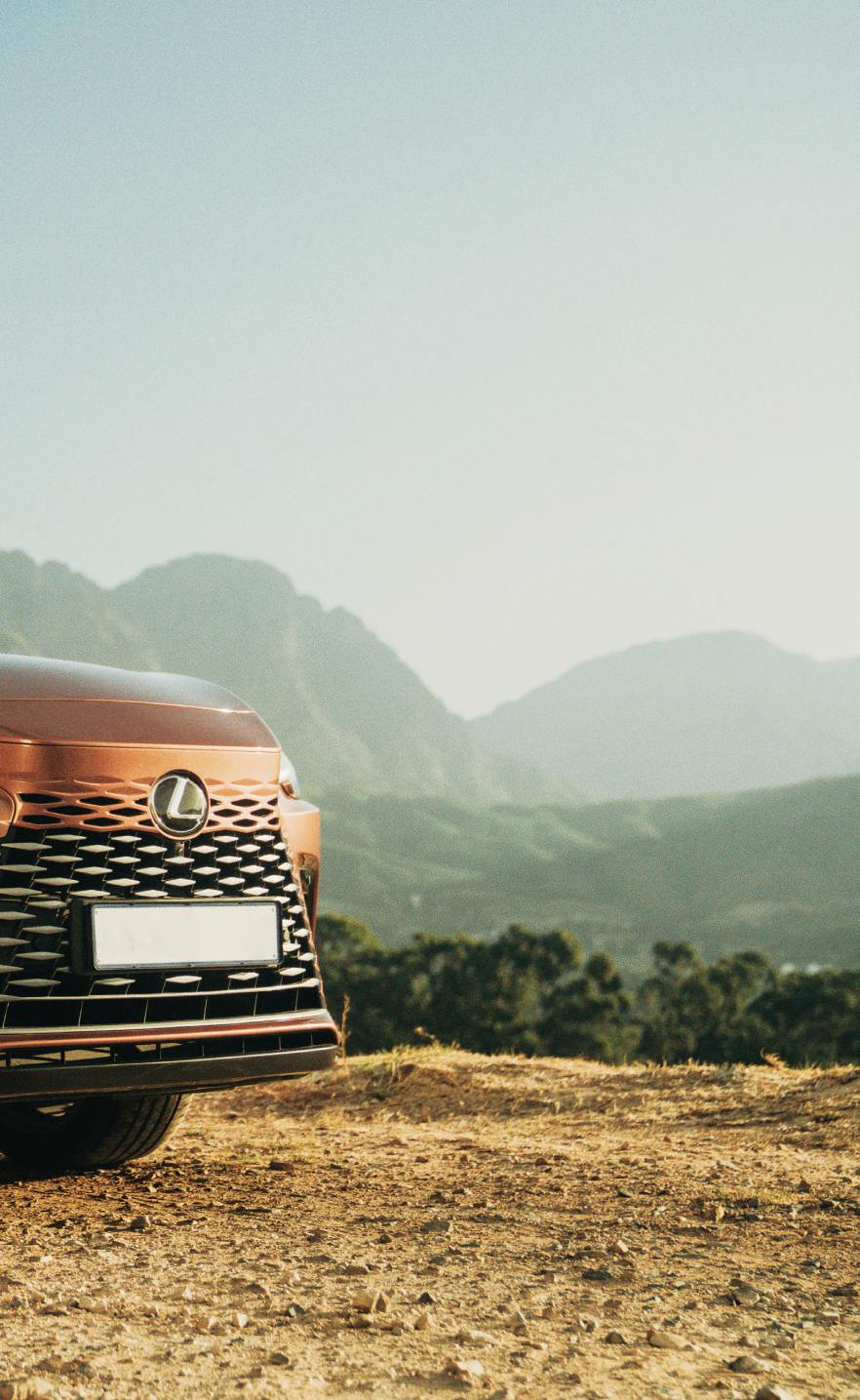
Adventure like never before in the new Overtrail range. As a passionate off-road enthusiast, a casual trailblazer or a city explorer, the GX Overtrail and LX Overtrail will make every route a thrilling experience. The Lexus Overtrail Project invites you into the 4x4 world with pure luxury, pairing capable, rugged features like Multi-Terrain Select, Differential Lock and 4-Wheel-Drive, with a luxurious, spacious cabin. The trails await you.
CONTENTS
and independent artists rise. We look at a few of the country’s major art fairs and the evolving dynamics around art as a compelling investment.
The Publishing Partnership
EDITOR
SUSAN NEWHAM-BLAKE snewham@tppsa.co.za
ART DIRECTOR
TINA REDDELL
COPY EDITOR
WENDY MARITZ
PUBLISHING DIRECTOR
SUSAN NEWHAM-BLAKE
PRODUCTION DIRECTOR
JOHN MORKEL
FINANCIAL MANAGER
NAEEMA ABRAHAMS
Lexus South Africa
VICE PRESIDENT MARKETING & HEAD OF LEXUS
GLENN CROMPTON
6 OF WRIST AND WHEEL
How fine watches learnt the language of motoring.
8 IMITATING NO ONE
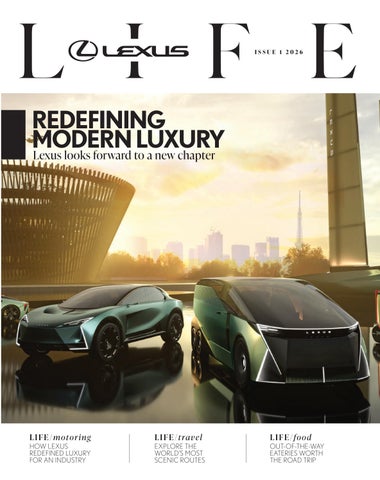
On the eve of a seismic shift in direction, we look at Lexus’s evolution and how it continues to redefine luxury for an entire industry.
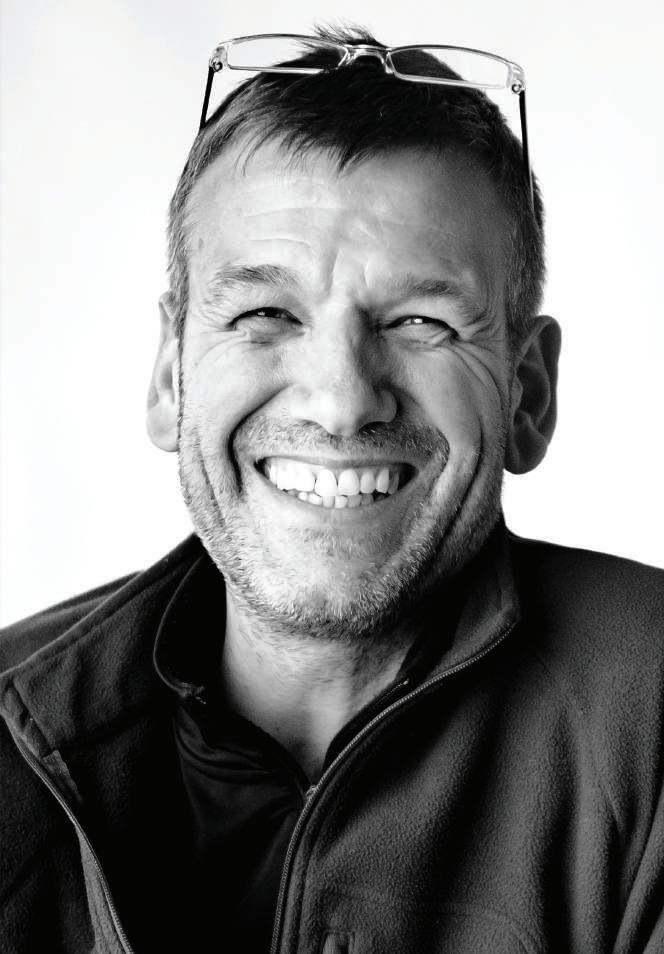
12 SIMON SAYS...
Lexus Chief of Design Simon Humphries discusses the essence of car design and a place for excellence in an increasingly throwaway world.
18 A-TEAM EXCELLENCE
Exploring the two standout examples of Lexus’s Next Chapter ethos: the ES sedan and the RZ 450e.
24 HAVE CAR, WILL TRAVEL
Why chef and innovator Jan Hendrik van der Westhuizen is the perfect fit for the role of Lexus ambassador.
28 ART AS INVESTMENT
The South African art market is fast evolving as young collectors
32 DOUBLE VISION
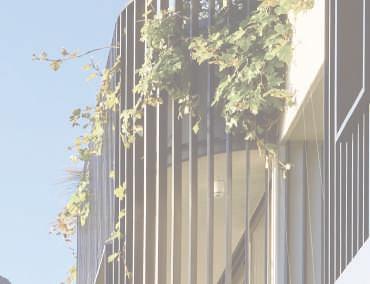
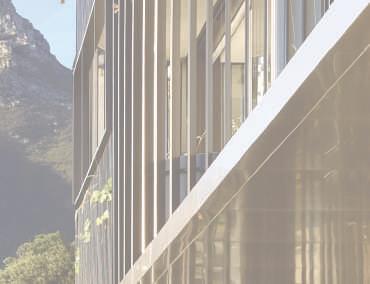
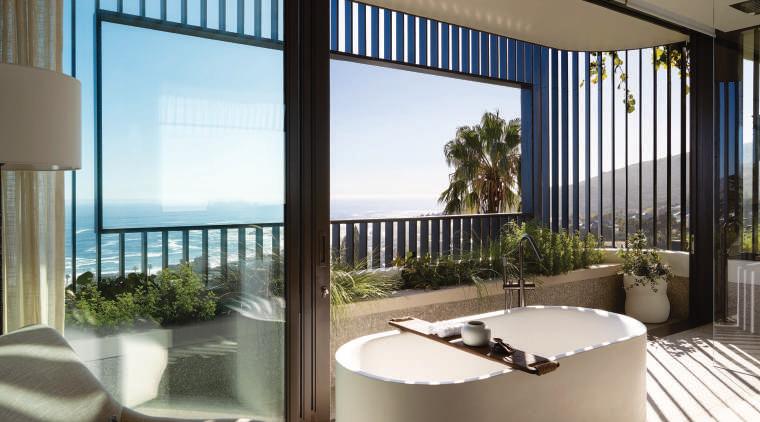
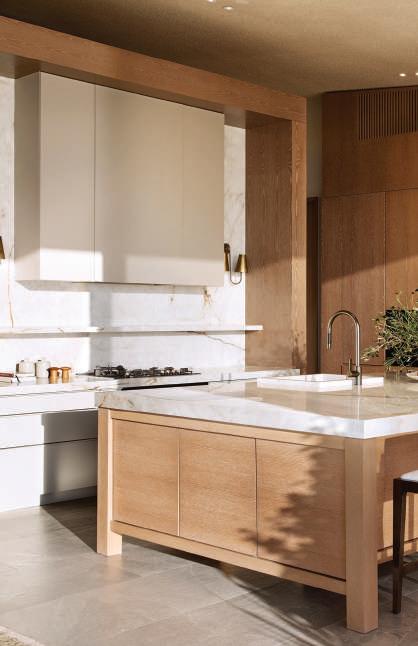
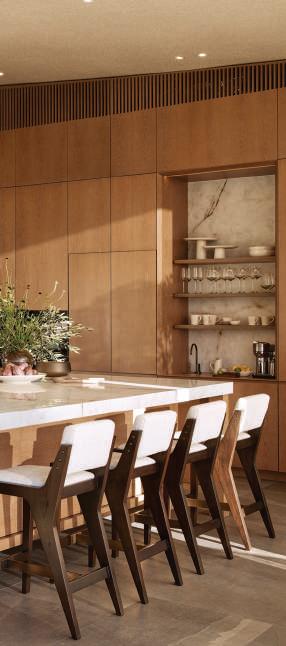
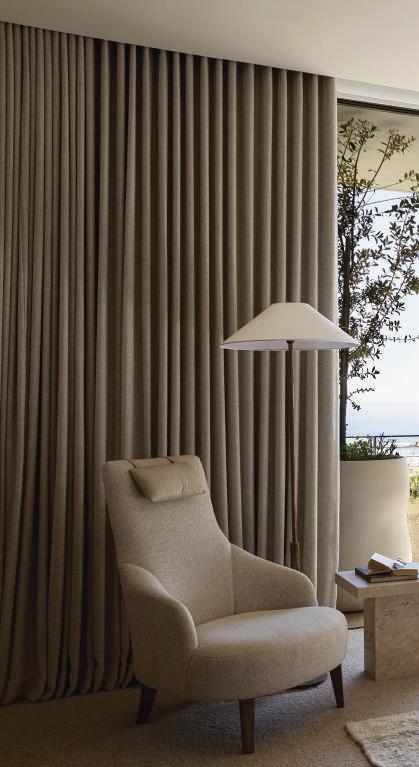
The close collaboration between a Cape Town architect and interior designer elevates a Camps Bay newbuild into an oasis of calm.
38 TOP 8 MOST SCENIC DRIVES
There’s nothing more liberating than being on the open road. But some roads are more spectacular than others. We share our favourites.
48 WORTH THE ROAD TRIP
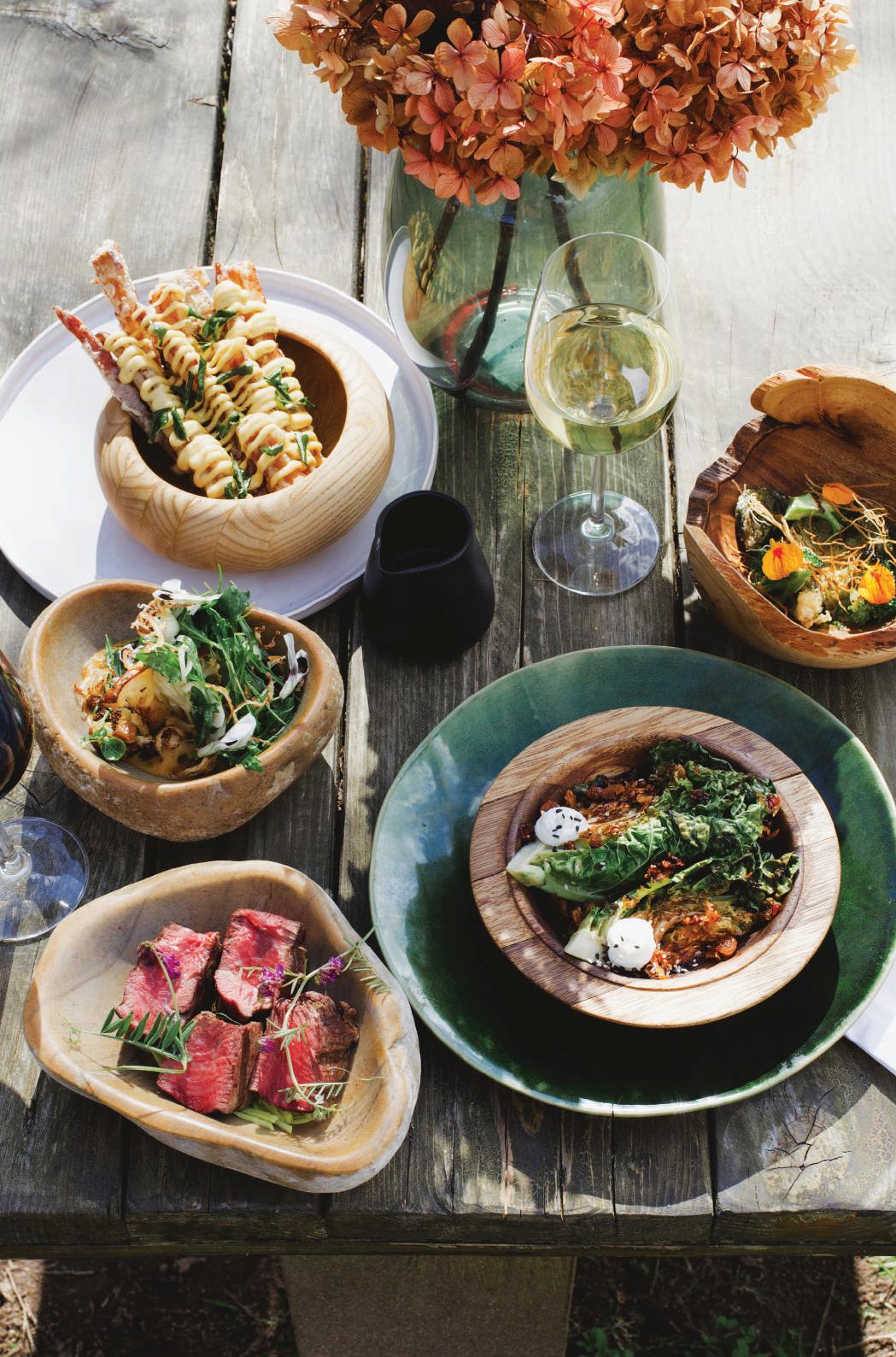
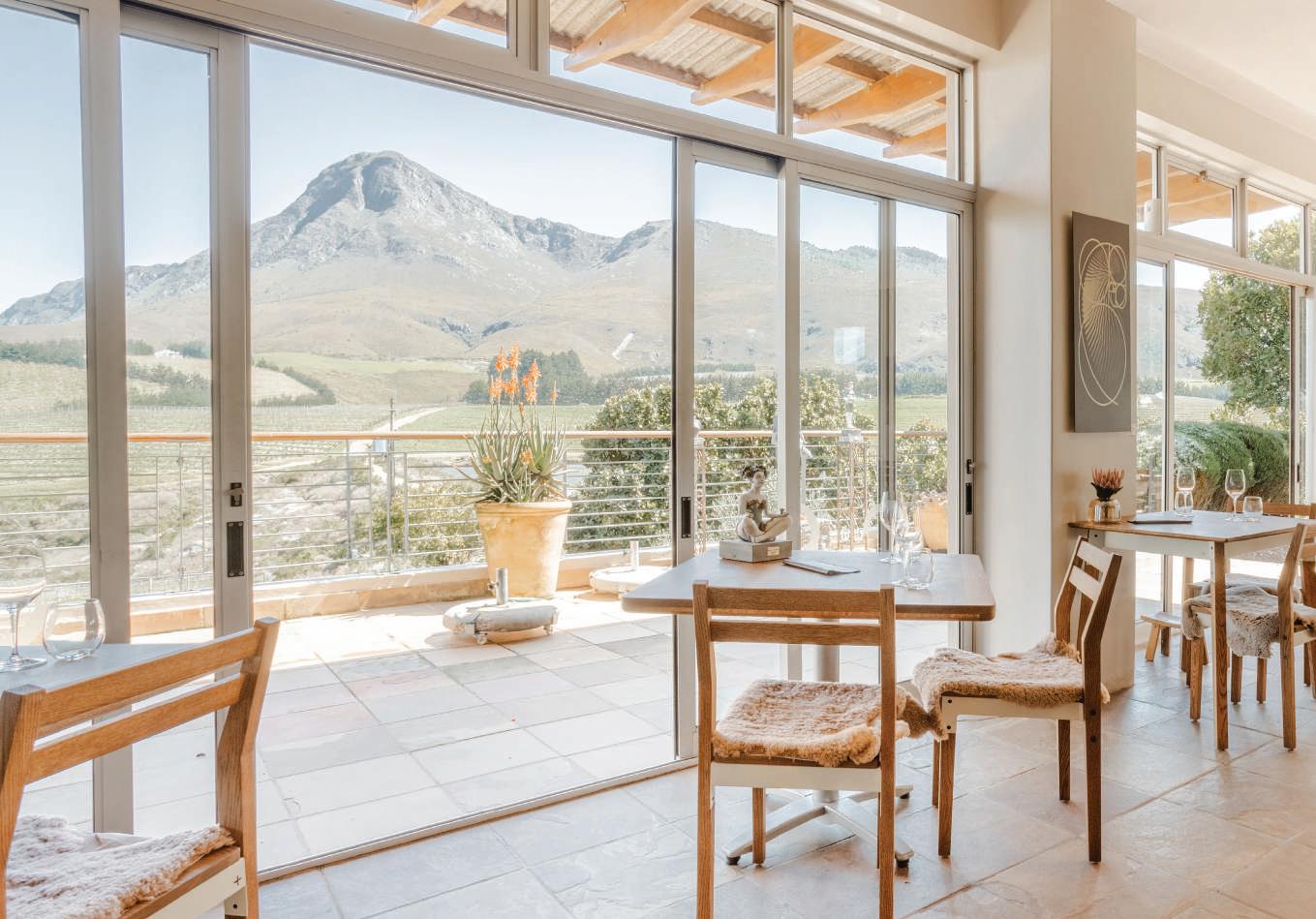
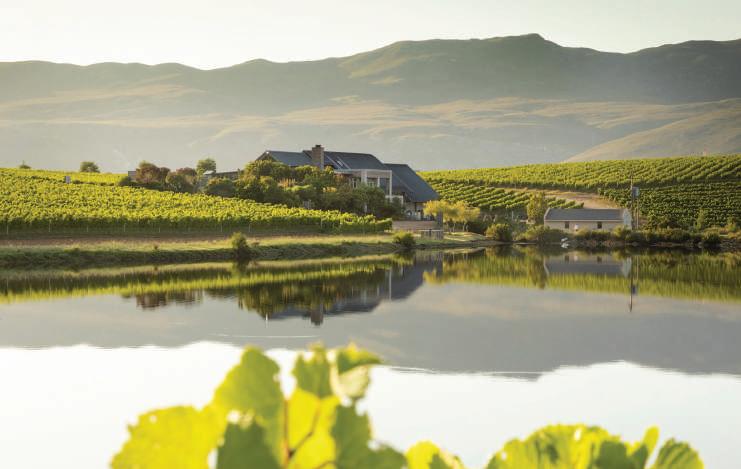
These out-of-the-way eateries are worth the drive for their spectacular scenery and delectable fare.
56 BIG IN JAPAN
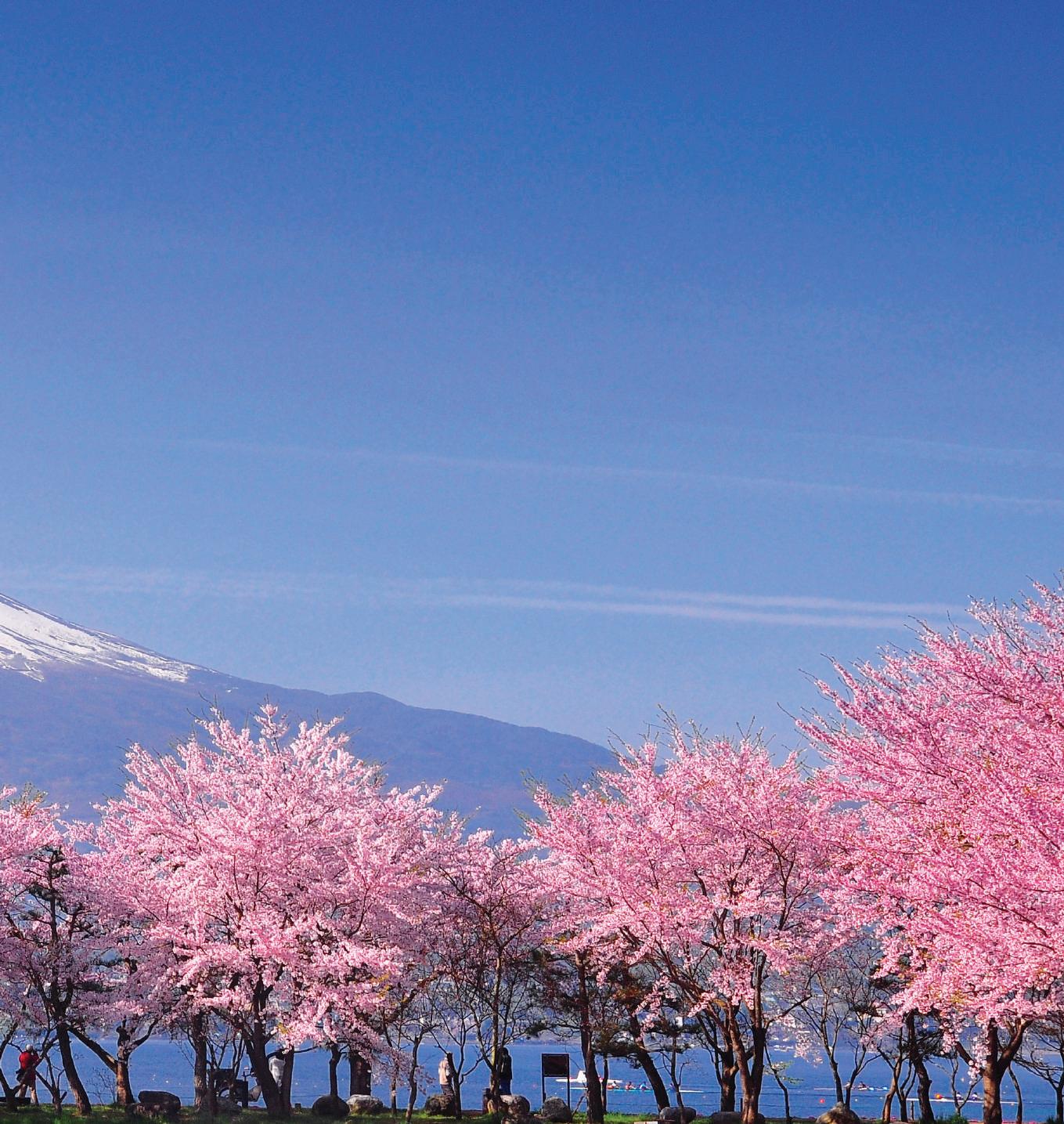
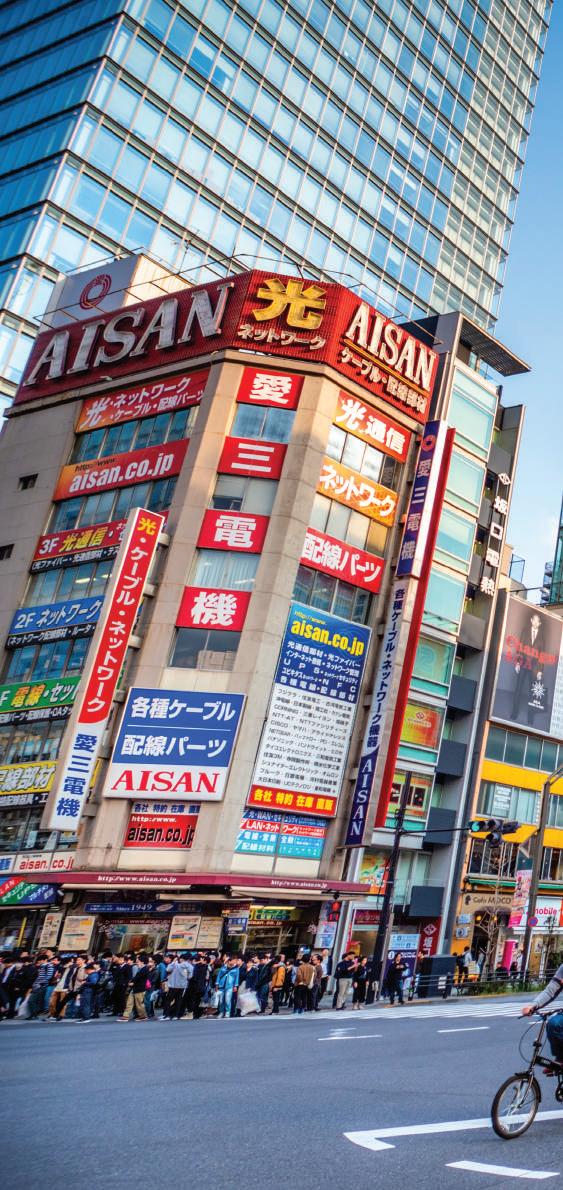
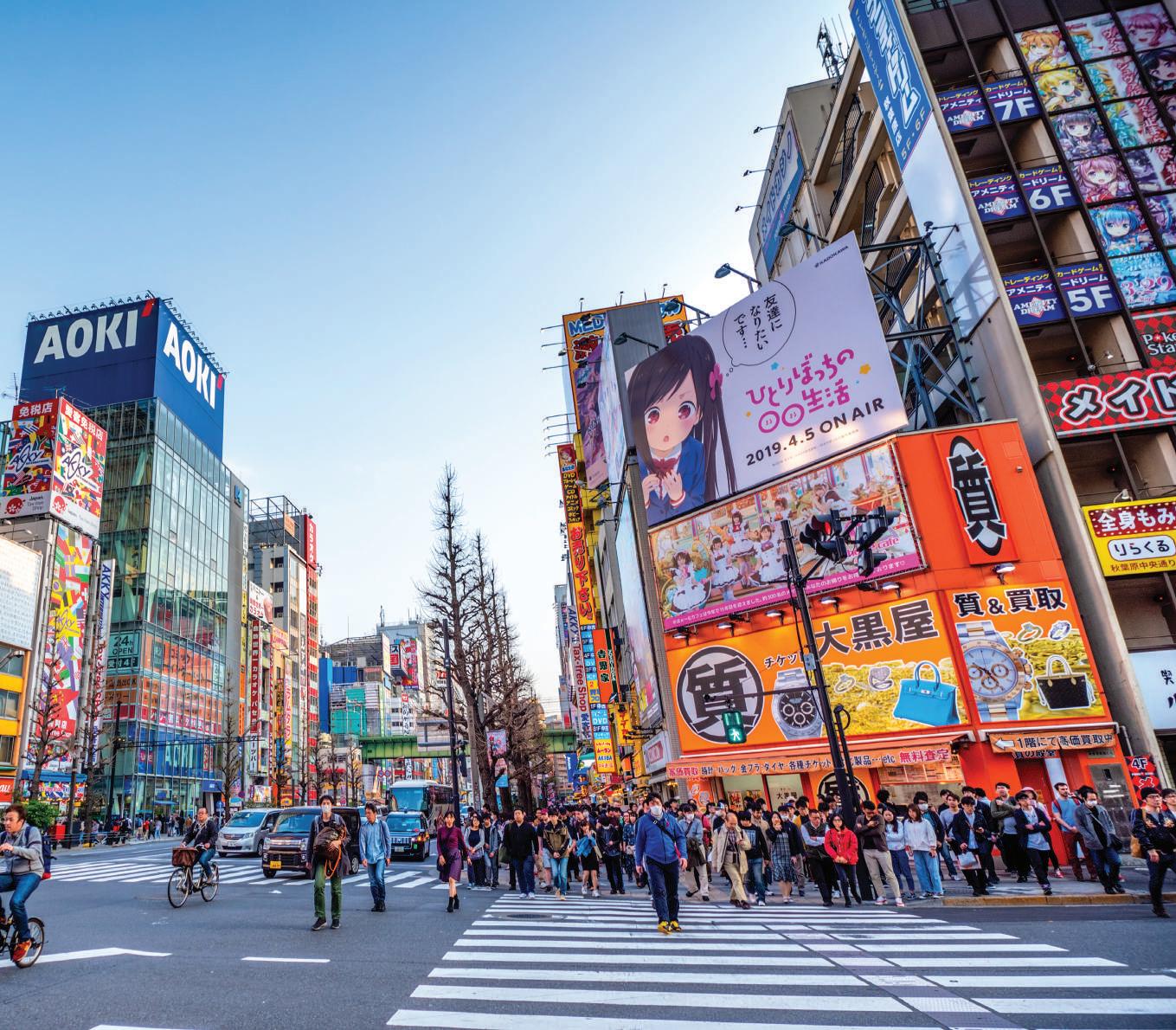
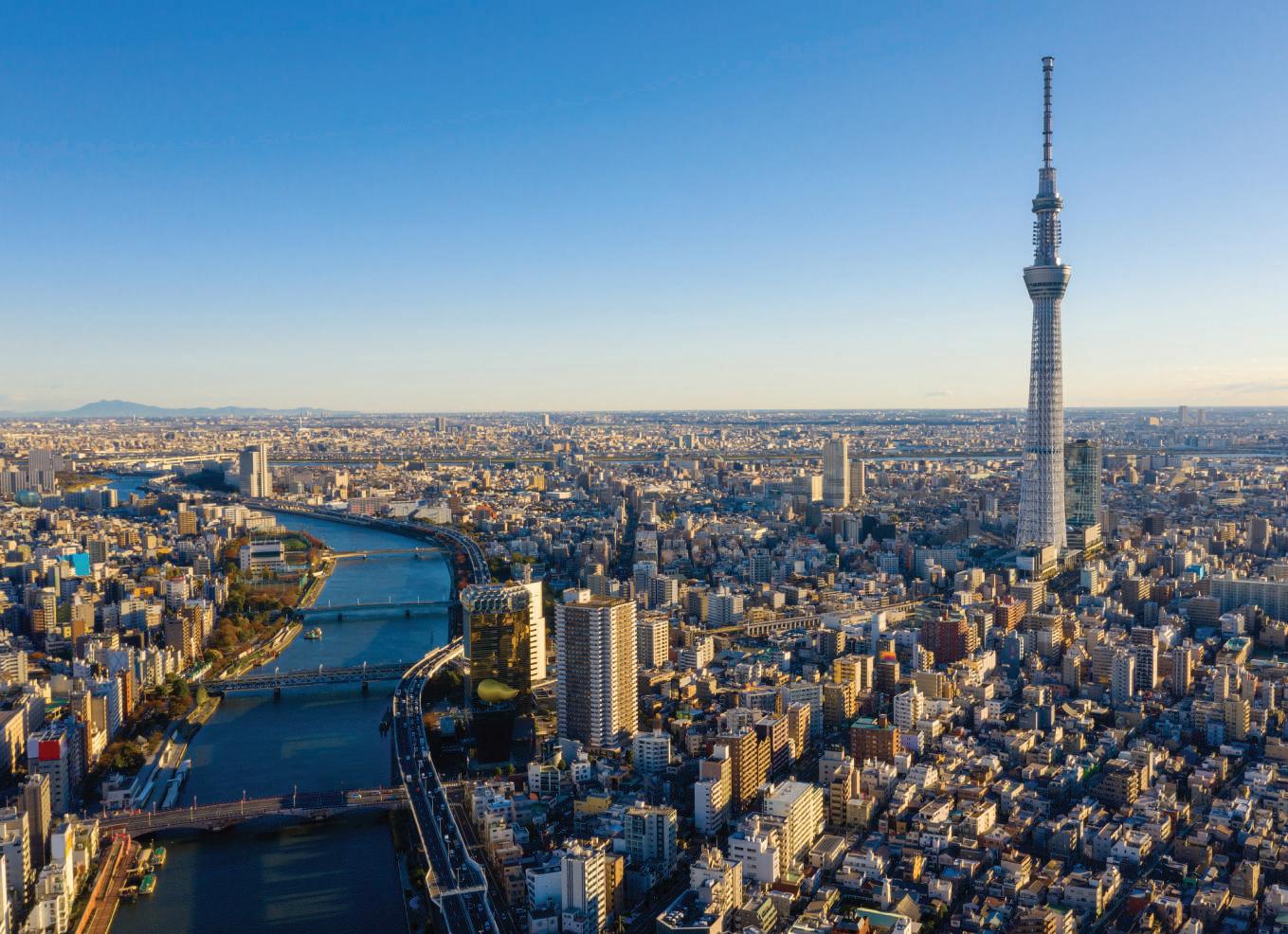
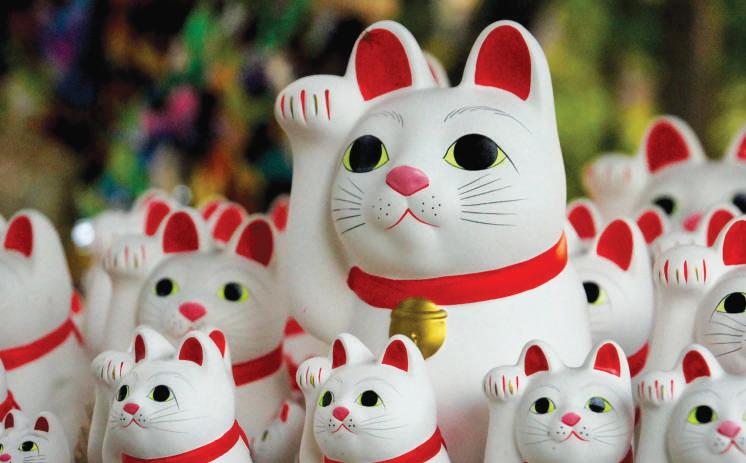
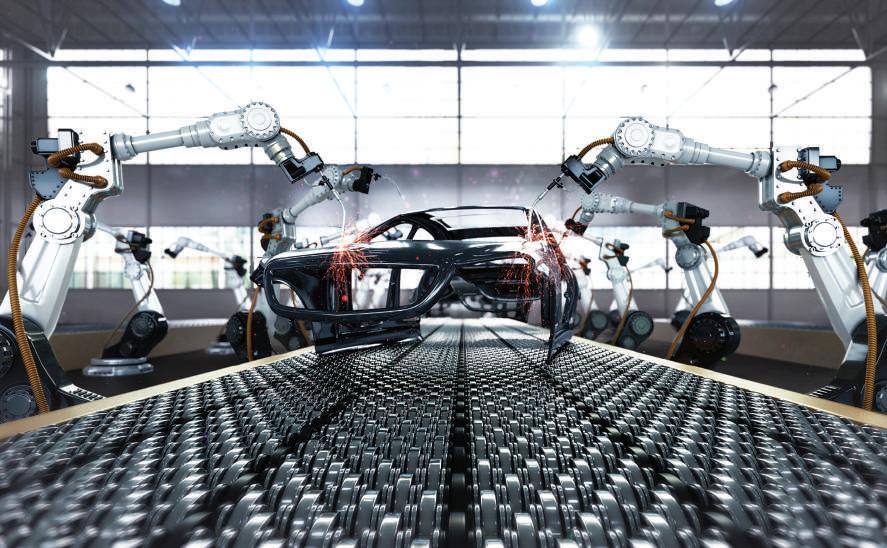
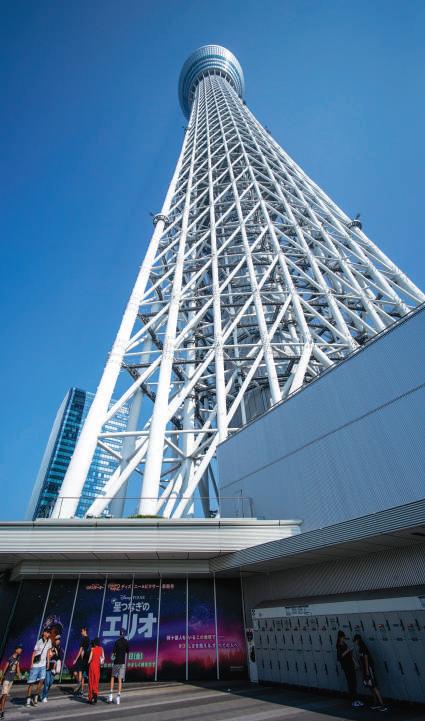
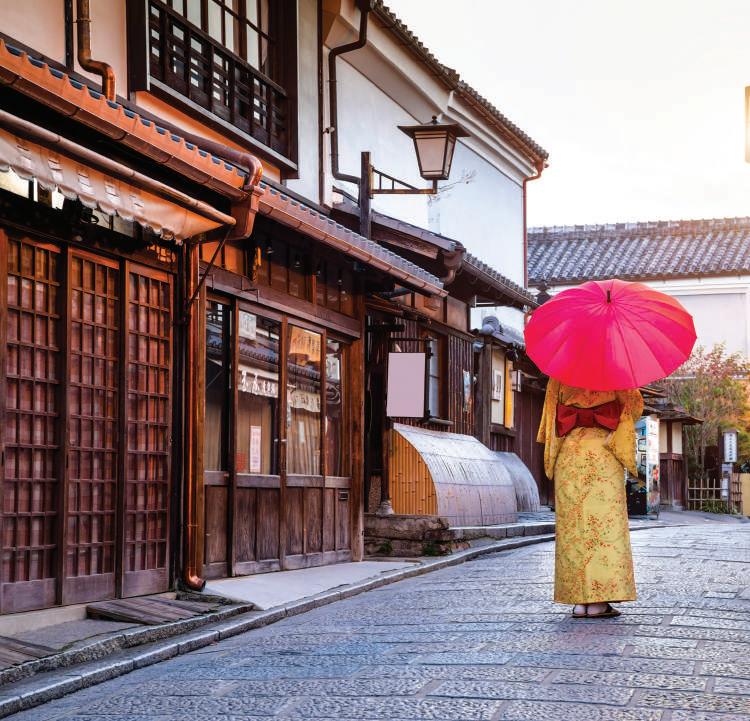
The Land of the Rising Sun is a tantalising blend of ancient tradition and futuristic creation, its philosophies colouring its art, fashion, food and tech developments, and, increasingly, our own ways of living.
64 FUTURE PERFECT: LEXUS
In confounding times, understanding the path ahead is crucial. Lexus Life tracks the likely routes for mobility.
GENERAL MANAGER
MARKETING COMMUNICATIONS
TASNEEM LORGAT
COMMUNICATIONS
RIAAN ESTERHUYSEN
MZO WITBOOI
REFILWE RAMATLHODI NDHLOVU
JENNA FRAZER
ADVERTISING
RETHABILE BOPAPE
NATASHA LOURENS
PRODUCED FOR LEXUS BY
The Publishing Partnership (Pty) Ltd, PO Box 15054, Vlaeberg 8018.
Copyright: The Publishing Partnership (Pty) Ltd 2026. All rights reserved. Reproduction in whole or in part is prohibited without the prior permission of the editor. Opinions expressed are those of the authors and not of Lexus South Africa.
A NEW CHAPTER IN LUXURY LIVING
Welcome to the first edition of Lexus Life magazine – a celebration of craftsmanship, innovation and the art of living well. This is more than a magazine; it’s an invitation to experience life through the lens of Lexus, where every detail matters and every journey is designed to inspire.
At Lexus, we believe luxury is not defined by excess but by excellence. It’s the quiet confidence of precision engineering, the harmony between technology and artistry and the pursuit of experiences that elevate the everyday. This philosophy extends beyond the road, it shapes how we travel, how we appreciate art and how we curate the spaces and moments that bring joy.
WWe explore the world of Lexus and the lifestyle it represents. You’ll discover stories that go beyond the driver’s seat – journeys to breathtaking destinations, insights into contemporary art and design and features on the finest in architecture, gastronomy and innovation. Each article is crafted to spark curiosity and inspire you to embrace life’s most rewarding experiences.
Why Lexus Life ? Because luxury today is multi-dimensional. It’s about performance and sustainability, heritage and modernity, individuality and connection. Our customers and readers are discerning, adventurous and passionate about quality. They seek more than products; they seek meaning, beauty and authenticity. This magazine is designed for you: the connoisseur who values not only what you own but also how you live.
As you turn these pages, you’ll encounter the essence of Lexus: bold yet refined, innovative yet timeless. From the artistry behind our vehicles to the cultural movements shaping the future of design, Lexus Life is your guide to a world where creativity meets craftsmanship. We’ll take you inside ateliers and studios, introduce you to visionaries redefining luxury, and share curated experiences that reflect the Lexus spirit.
This is also a moment to look ahead. The future of mobility is evolving and Lexus is at the forefront, pioneering electrification, embracing sustainable materials and reimagining what it means to move through the world. In
this issue, we delve into these innovations and explore how they align with a lifestyle that values both progress and preservation.
But Lexus Life is not just about aspiration, it’s about inspiration. It’s about savouring the journey, whether that’s a weekend escape to a hidden gem, discovering a new artist whose work moves you or indulging in culinary excellence that transforms a meal into a memory. Luxury is personal and we aim to make every story resonate with your own pursuit of the extraordinary.
Thank you for joining us on this exciting journey. We invite you to immerse yourself in these pages, to explore, to dream and to discover. Lexus Life is here to celebrate not only the cars we create but the lives we inspire. Because at Lexus, we don’t just design vehicles, we design experiences. And now, we’ve designed a magazine that reflects that same philosophy.
Welcome to Lexus Life . Let’s drive forward, together.
Glenn Crompton
Vice President Marketing & Head of
Lexus
IN THE LEAD
From design breakthroughs to luxury releases, the journey begins here.
SCENTS of summer
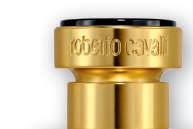
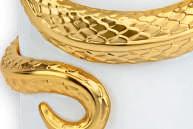
We love how fashion – and a touch of the exotic – has shaped the bottle design of these two fragrances.
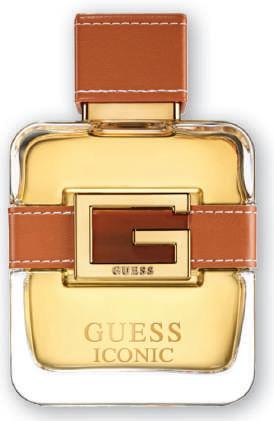
The bottle of Roberto Cavalli’s Serpentine is adorned with a gold snake, paying homage to the fashion designer’s very first fragrance (of the same name) released in 2005. Detachable from the 100ml bottle, the snake – symbolic of temptation and seduction – doubles as a wearable bracelet, perfect for evenings out. This scent is most suited for after dark, with its bold and heady array of sensual notes including blackcurrant, patchouli, saffron and lavender. Similarly, a tan leather belt with pronounced stitching and Guess’s G logo as a buckle cinches the masculinity of Guess Iconic Homme. The advertising campaign suggests the pleasures of aviation, and the overall mood evoked is one of adventureseeking and travel. The fragrance is a modern take on a classic fougère – a traditionally woody, grassy scent. Expect Sichuan pepper, vetiver, fresh sage, geranium and suede. bacherco.co.za
TRUST stands rm
Lexus’s 7-Year Warranty cements the marque’s commitment to an all-life journey.
Enduring quality, always the Lexus departure point, is the foundation of the company’s recently launched 7-Year Warranty Campaign.
The warranty comes standard across the Lexus range, providing cover for 7 years or 105 000km (whichever occurs first) against manufacturing or material defects, and 7 years or 100 000km for GX & LX models. Additionally, the cover can be extended to a maximum of 10 years/unlimited km, ensuring total piece of mind in the event of failure or malfunction.
‘Our 7-Year Warranty is a natural extension of our philosophy of confidence, comfort and a considered experience for every passenger, giving customers peace of mind and reinforcing our belief in the enduring quality of every Lexus,’ says Tasneem Lorgat, General Manager: Marketing Communications at Lexus South Africa. lexus.co.za
SAFARI in style
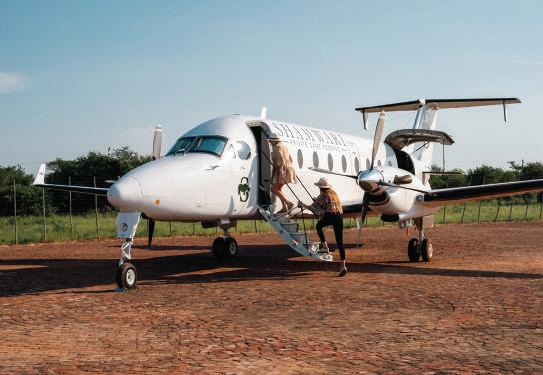
A new private air shuttle makes safari travel even more accessible.
Shamwari Private Game Reserve has introduced a new air shuttle linking Cape Town and Johannesburg directly to the reserve’s private airstrip (1 hour 45 minutes from Cape Town International Airport and 2 hours 12 minutes from OR Tambo International Airport). The new service makes one of South Africa’s most esteemed safari destinations easier to reach, while giving travellers more time to experience the reserve’s newly refurbished lodges.
The 16-seat Beechcraft 1900D reduces traditional travel time by four hours. Guests are met at the airstrip and driven to their chosen lodge at the reserve, often spotting wildlife on the way. ‘The Shamwari Air Shuttle gives people their time back. It provides a convenient and time-efficient way for guests to reach us without spending hours at airports,’ says Joe Cloete, CEO of Shamwari. ‘Their safari experience starts on the aircraft, and the short transfer doubles as a game drive. It means visitors can now enjoy their full stay without having to cut it short to fit in with commercial flight schedules.’
The launch follows a period of recognition for the Eastern Cape reserve. Long Lee Manor was recently awarded a Michelin Key, while Shamwari Private Game Reserve was named Global winner for Best Luxury Private Game Reserve in Southern Africa and Luxury All-Inclusive Lodge at the World Luxury Travel Awards 2025, as well as Regional Winner for Best Luxury Tented Safari Camp. These accolades coincide with the completion of an extensive refurbishment programme that has revitalised all the Shamwari lodges in recent years. shamwari.com
A LEAGUE of their own
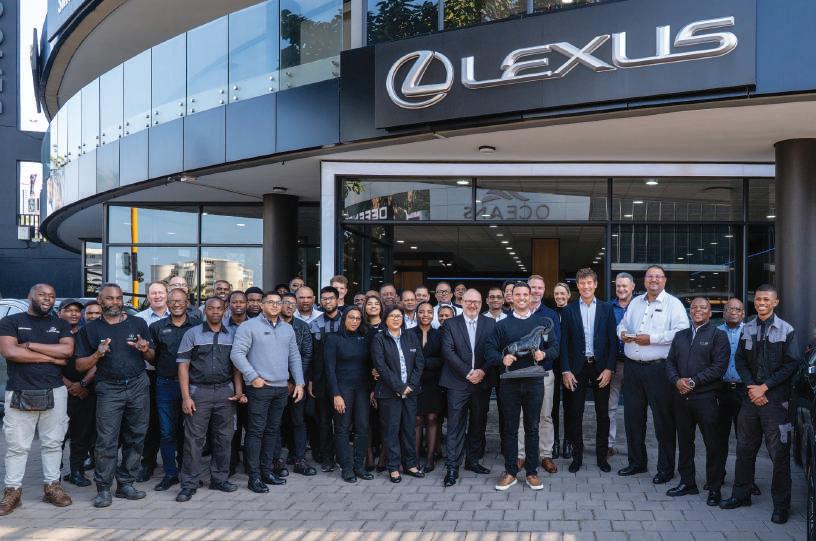
Still on a high after winning Dealer of the Year, Dealer Principal Ian Greig tells us how it’s going at SMG Lexus in Umhlanga.
‘This recognition means the world to us,’ says Dealer Principal Ian Greig. ‘It’s a powerful affirmation of the hard work, passion and commitment our team brings every single day. Being named Dealer of the Year is not just a reflection of performance metrics, it’s a testament to the culture we’ve built at SMG Lexus Umhlanga, one that places people, service and excellence at the heart of everything we do. We’re incredibly proud and deeply grateful.’ smglexusumhlanga.co.za
GLOBAL community
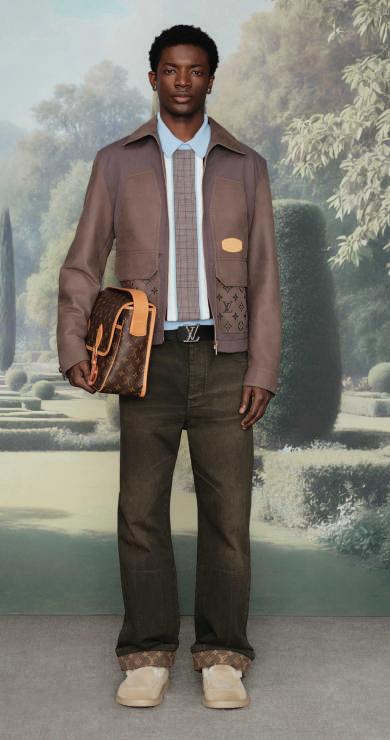
The Louis Vuitton Spring/Summer 2026 Men’s Pre-Collection retreats to the English countryside.
Louis Vuitton Men’s Creative Director Pharrell Williams unveils a contemporary men’s wardrobe nestled in the bucolic English countryside. The collection pays homage to classic country dress codes with a fusion of the dandy aesthetic and Parisian savoir-faire. Since 1854, Louis Vuitton has placed fashion in the context of culture, bringing unique designs to the world, and combining innovation with style and uncompromising quality. To complete the wardrobe, the maison remains faithful to the spirit of its founder, Louis Vuitton, who invented a genuine ‘Art of Travel’, with luggage, bags and accessories that are as creative as they are elegant and practical. louisvuitton.com
How fine watches learnt the language of driving.
BY PAIGE DORKIN
Luxury watchmaking and car design have long been in conversation, the back and forth animated over decades by a mutual passion. Because a serious timepiece and a serious vehicle share an understanding of luxury – not as excess, but as precision.
Shared instruments
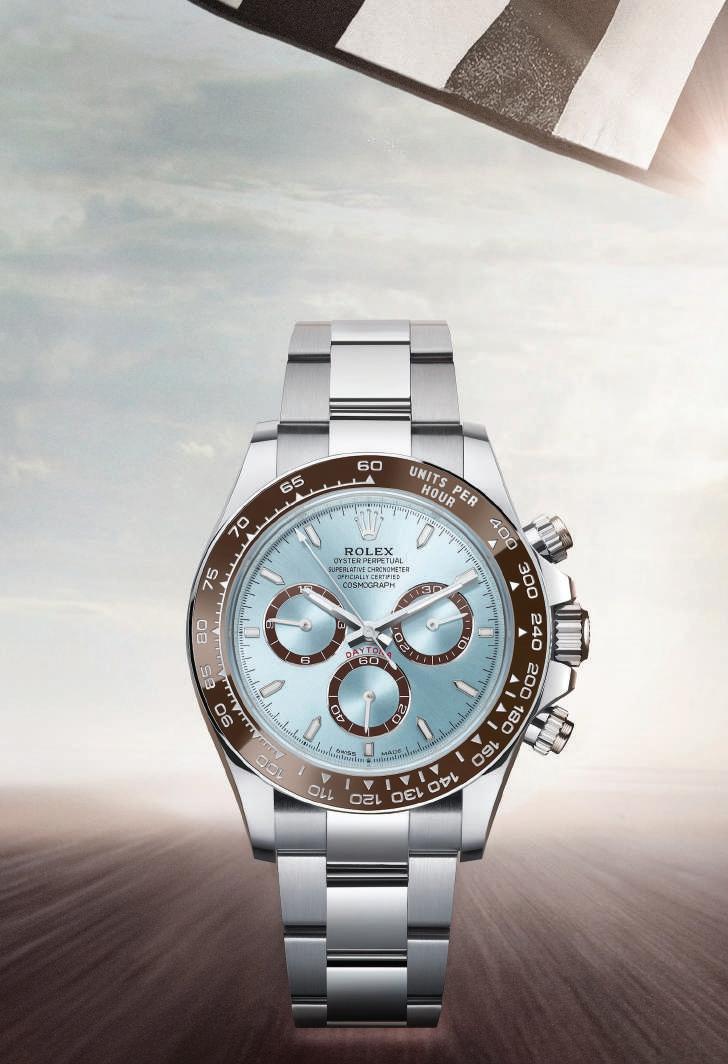
Take, for instance, the chronograph and the tachymeter. In 1963, Rolex launched the Cosmograph Daytona, a chronograph designed specifically for professional racing drivers. The engraved tachymeter bezel allowed
OF WRIST AND WHEEL
drivers to calculate average speeds over a set distance, up to 400 units per hour. Even today, that scale gives the watch its instantly recognisable ‘instrument’ aesthetic: bold numerals, crisp markers and a bezel that behaves like a miniature racing speed gauge on your wrist.
The tachymeter remains one of the clearest intersections between horology and motoring. Start the chronograph at a kilometre marker, stop it at the next and the second hand points directly to your average speed. No apps, no satellites, just a clever scale and reliable movement.
OMEGA’s Chronostop Driver is another example of functional overlap, also from the 1960s. In this case, the watch’s dial was rotated by 90 degrees so that the driver could read it more easily without lifting their hands from the steering wheel. Engineered specifically for driving, it became a cult
ABOVE LEFT
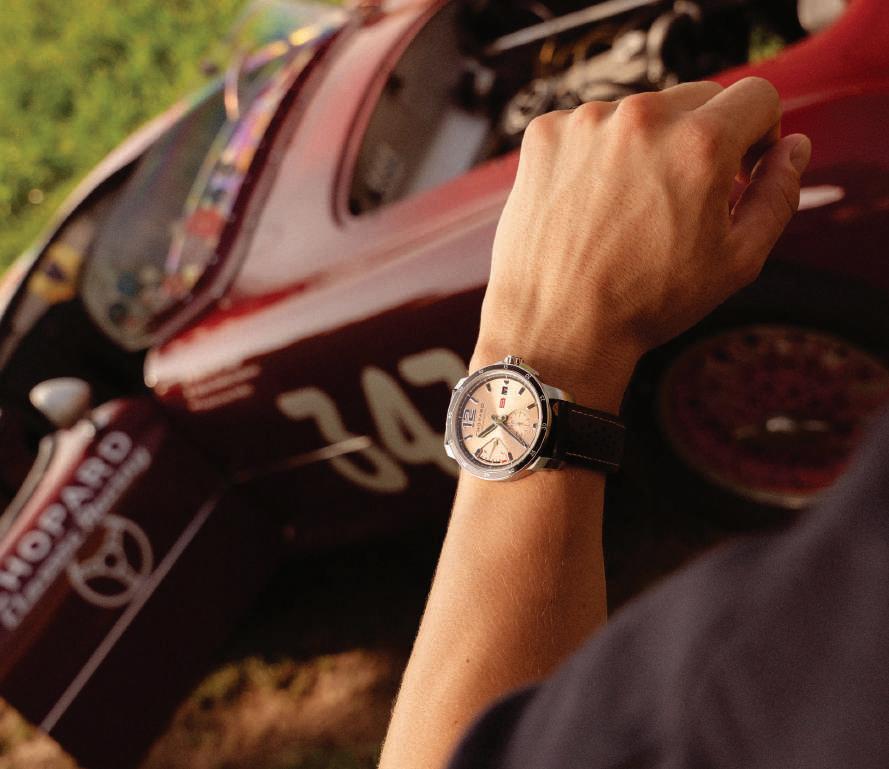
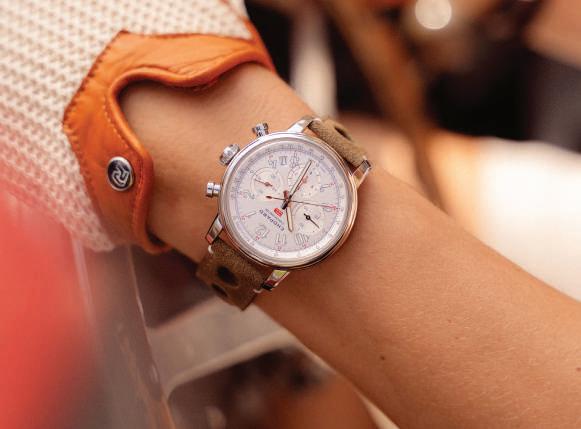
The Chopard Mille Miglia GTS Power Control 2025 Race Edition is a limitededition (250 pieces) luxury sports watch celebrating Chopard’s classic car rally.
ABOVE OMEGA’s Speedmaster Racing CoAxial Master Chronometer Chronograph 44.25mm is a high-precision, sporty luxury watch that draws on OMEGA’s motor-racing heritage.
favourite among petrolheads. It’s also a reminder that, when these pieces were first conceived, they were tools rather than just lifestyle accessories.
A shared visual language
From those early instruments grew a design vocabulary that still links racing chronographs to the dashboard of a high-performance car.
OMEGA’s Speedmaster Racing line uses a distinctive ‘racing’ minute track, modelled on the iconic chequered racing flag, to improve readability at a glance.
Bright accents and high-contrast sub-dials make it feel like a strip of the instrument panel has been condensed into 44.25mm of steel.
Chopard’s Mille Miglia Race Edition takes the metaphor even further. Chopard explicitly positioned this collection as ‘building a bridge between automotive engineering and mechanical watchmaking’, drawing its inspiration from the thousand-mile Italian endurance race. There is no shortage of visual cues here: the bold Arabic numerals like vintage gauge fonts; a tachymeter scale around the periphery; and straps that echo the car. Perforated calfskin recalls driving gloves, while rubber linings are imprinted with a tread pattern inspired by 1960s racing tyres.
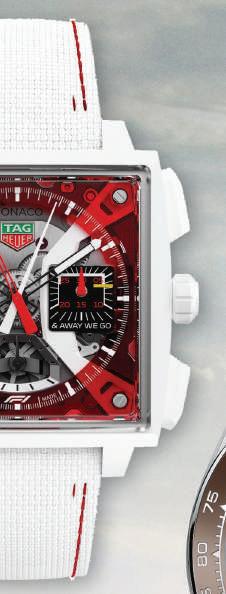
Then, there’s the TAG Heuer Monaco, arguably the most recognisable square chronograph in watchmaking. With its left-hand crown, stark geometry and upright stance on the wrist, it looks almost like a fragment of a dashboard extruded into three dimensions. It’s a motorsport-inspired classic and homage to 1970s stopwatches.
These pieces share a visual language with motorsports: circular registers like mini gauges, contrast scales around the edge of the dial, flashes of ‘warning light’ colour on hands and markers, and perforated or contraststitched straps that could have come straight from a steering wheel or seat.
Shared materials
Look beneath the surface – or under the bonnet – and the affinity runs deeper still. Both disciplines have embraced titanium, ceramic and advanced composites for their blend of lightness, strength and resistance. A ceramic bezel on a watch and a ceramic component in a performance braking system answer the same brief: endure heat and abrasion expertly. Carbon-fibre cases and end links echo the weave found throughout modern performance cabins. And the softly bead-blasted or brushed surfaces of a fine chronograph could sit comfortably alongside the metalwork on a wellfinished centre console.
There is also a shared affection for one very specific type of display: the power reserve indicator. In horological terms, it shows how much energy remains in the mainspring (the number of hours the watch will continue running before it needs winding). Many watchmakers explicitly liken this to a fuel gauge and go as far as to design it that way: an arc or linear scale with a
CLOCKWISE
FROM ABOVE
The TAG Heuer Monaco, instantly recognisable for its distinctive square case and abiding association with motorsport history.
The Rolex Cosmograph Daytona – an iconic, highperformance chronograph watch, developed for endurance racing drivers.
Chopard’s Mille Miglia Classic Chronograph Tribute to Sir Stirling Moss pays tribute to Moss’s legendary 1955 Mille Miglia win.
hand sweeping from ‘full’ to ‘empty’. On the wrist, it has the same psychological effect as the range indicator on a well-calibrated instrument cluster: reassurance, and an invitation to enjoy the drive without glancing anxiously at the clock.
A shared experience of luxury
But engineering speak aside, the real connection between high watchmaking and high motoring lies in how they make you feel. There’s a sense of ritual in strapping on a mechanical chronograph – the weight of the case, the give of the leather, the first press of a pusher to reset the hands. It’s not unlike settling into the driver’s seat: door closing with a well-damped thud, instruments waking up in a controlled sweep.
And while both watches and cars are now so often reduced to screens and software, it’s striking how powerful the analogue remains. A mechanical chronograph and a well-crafted cabin represent a particular kind of luxury. Modern cabins that are designed around the driver, rather than around screens, share the same philosophy as these watches: clarity first. Controls fall naturally to hand, information is presented in layers, textures are chosen as much for feel and for appearance. In a Lexus interior, this manifests as minimal glare, carefully tuned switchgear and surfaces shaped to create a sense of calm, cocooned focus. The best driver’s watches aim for the same effect – never clamouring for attention but always ready when needed.
IMITATING NO ONE
It seems impossible to remember a world without Lexus. The marque made its debut on the world stage 36 years ago and it’s come a long way since then. On the eve of a seismic shift in direction, we look at the brand’s evolution and how it continues to redefine luxury for an entire industry.
BY PETER FROST
1994,
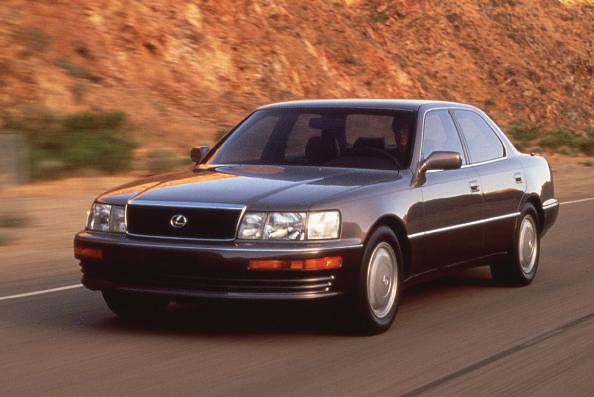
a time of hope and jubilation when South Africa had just celebrated its first free and fair election. Possibility was in the air and everyone was looking around for the new and the exceptional. It seemed the perfect time to introduce a new brand to the country. Lexus slipped quietly into South Africa in typically understated fashion, offering up a handful of LS400s, intended to test the waters. The fullsize luxury sedan (LS), conceived in 1989, had already taken the USA by storm and represented the best example of what Lexus was all about; a flagship and a flagbearer.
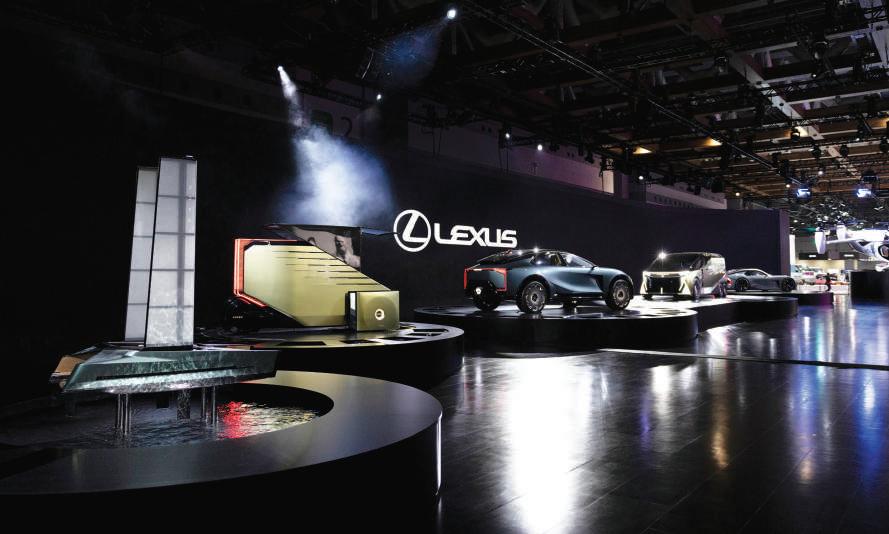
Fast-forward to the Japan Mobility Show 2025 and the announcement by Akio Toyoda of Lexus’s new direction. The brand would focus on innovation
and pioneering ideas under the guiding principle of ‘Discover’.
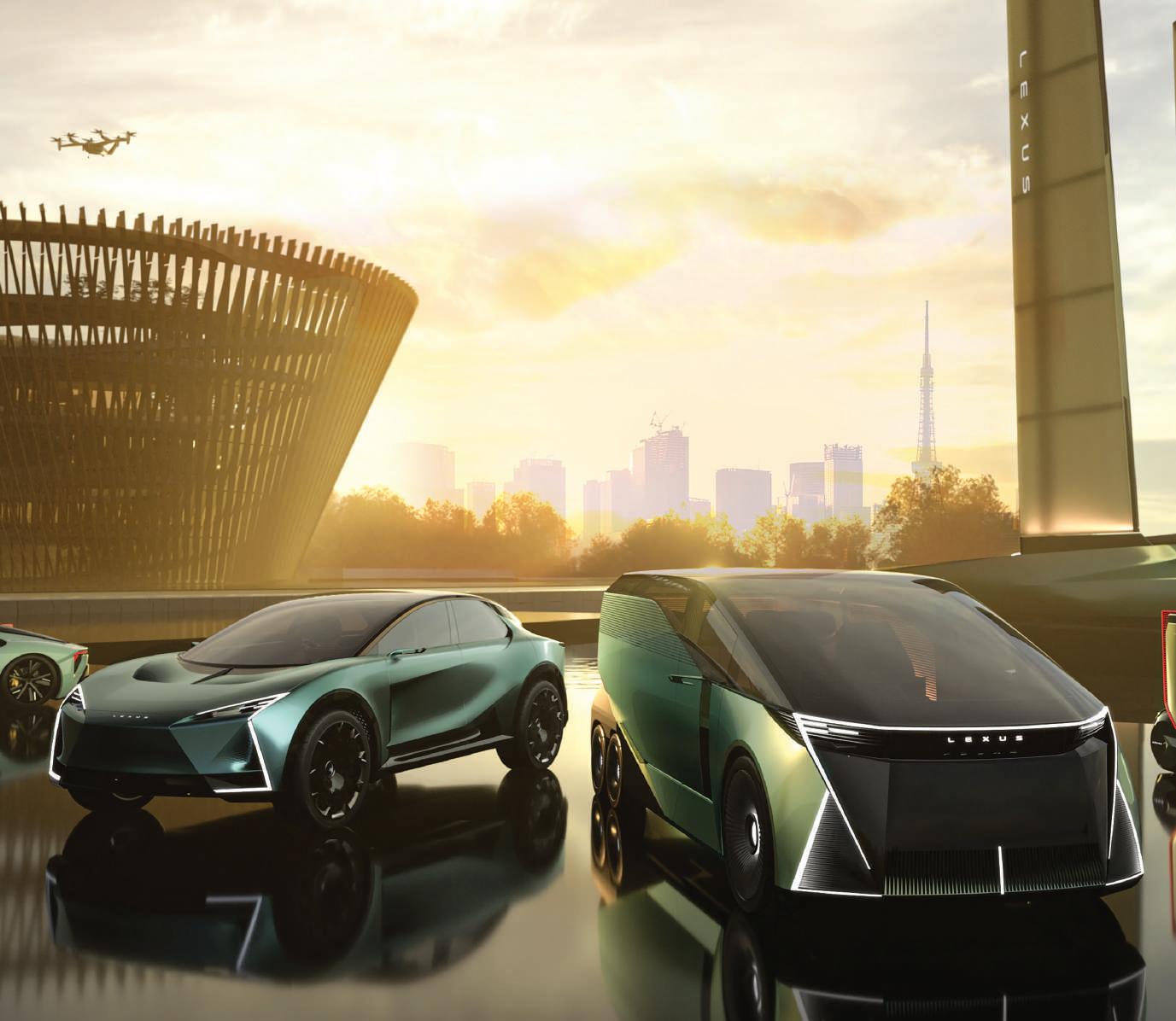
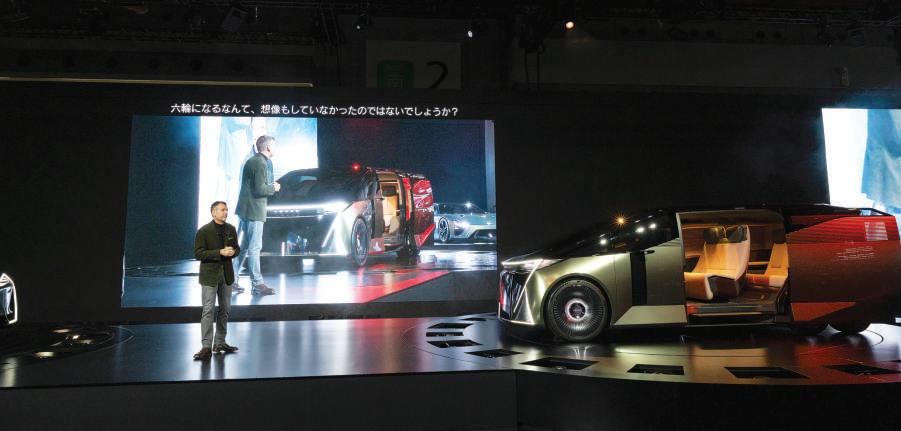
Henceforth, said Chief Branding Officer Simon Humphries, the S would signify ‘space’, rather than ‘sedan’, a clear signal to the world that the marque, known once for its sedans, would now concentrate on expanding on the concept of luxury: new body shapes, new ways of moving (think autonomous catamarans, personalised micro cars).
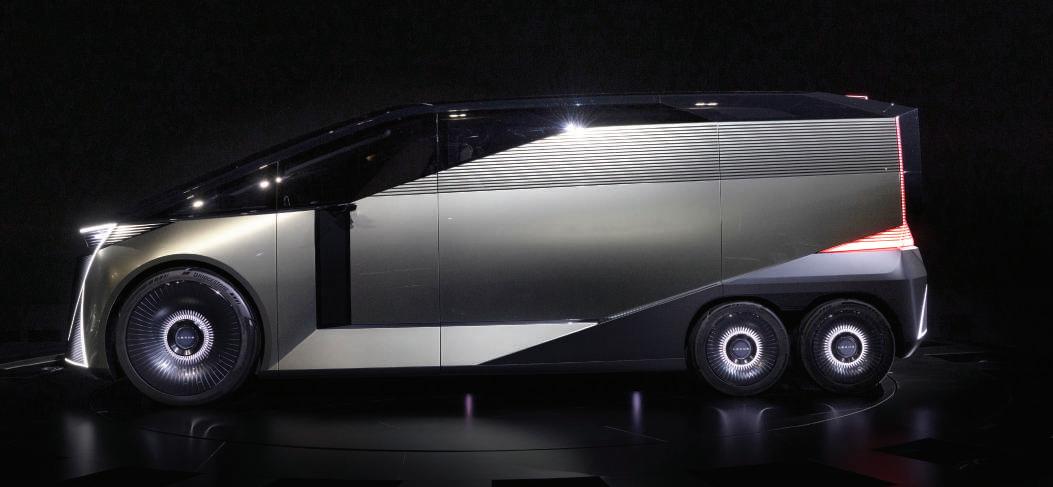
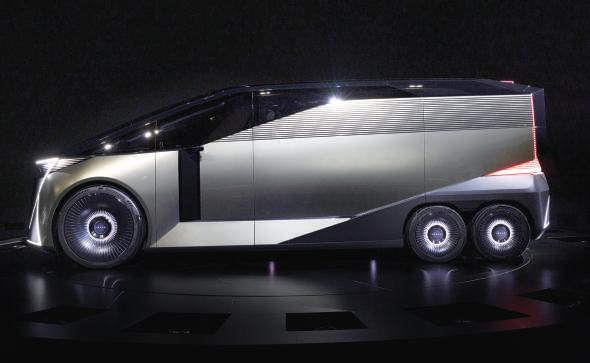
To underscore the statement, Lexus showed its six-wheeled vehicle, named the LS Concept. The groundwork was laid for a new chapter.
So how did the evolution happen, and what will remain integral to the Lexus brand?
The early years: ‘Build the best car in the world’
‘Lexus has always brought a unique perspective to the market,’ says
Glenn Crompton, Vice President Marketing and Head of Lexus. ‘From the pioneering LS luxury sedan that reset category rules, to the IS 200 that brought an avant garde challenge to the mainstream German sport sedans, or the RX that gave birth to the luxury SUV category.’ It’s a journey that began with a simple statement.
Toyota’s Chairman, Eiji Toyoda, asked his team in 1983 to build him the world’s greatest vehicle. At the time, Toyota was unquestionably on a roll but some way off the number-one spot internationally. Toyoda’s request heralded a push into the world, a commitment to conquer both the US and European markets. His strategy was simple but brilliant: if we can build the best car in the world, it will prove we can be trusted to take families to work and school in our other cars.
To achieve this, a new brand was born. Lexus engineers, the best money could buy, headed by master engineer Ichiro Suzuki, spared no expense, dived deeper and asked more questions than had ever been asked in pursuit of the making of a production car. Suzuki’s Circle F (for ‘flagship’) team became known both as heroes and villains, pushing budgets and timelines in the relentless pursuit of absolute excellence. Six years and $1 billion later, the LS was revealed to the world at, predictably, the North American International Auto Show in Detroit. It was an unqualified smash hit.
Along with the launch came details of its creation, many of which speak to
Milestones of the Lexus journey include the sixwheeler people carrier, unveiled by Chief Branding Officer Simon Humphries at the Japan Mobility Show recently (above). The LF-Z Electrified (opposite) showcased Lexus’s intention to follow a multi-route power path, including battery, ICE engines and hybrid technology.
Timeline LEXUS FIRSTS
the then and current ethos of Lexus. It had to be both economical and powerful, use innovative materials such as aluminium, and employ new technologies in construction, namely laser welding. But, crucially, it laid down the concept of setting engineering and quality standards and then rigidly sticking to them. So it was that 973 engine prototypes were made and 450 car prototypes tried, tested and retested.
The Circle F team laid out what luxury meant and broke it down into categories: silence, efficiency, power, reliability and elegance, the trickiest of all. (How do you quantify elegance?) Through rigorous testing, they created a car equal (and superior in most areas) to the top German and American luxury automobile brands.
The groundwork had been laid.
Redefining
luxury: Cementing the legacy
On the back of the LS success came a raft of launches, including the ES and the SC 400 coupé. But it was the world’s first luxury crossover, the RX300, that marked the next important milestone. It was to be a prescient move. The shift away from sedans towards hatchbacks, crossovers and SUVs had begun in earnest, and Lexus’s astute thinking was that the segments needn’t be agricultural or compromised in terms of luxury.
Redefining luxury was again its raison d’être, bold thinking and the meticulous follow-through of key components. The world responded, and Lexus steered a course towards multi-purpose vehicles, even as it excelled in the luxury sedan market. (In two short years, Lexus outsold the equivalent top German and American models.)
1989
The first steering wheel with an integrated SRS airbag and wide tilt/ telescopic adjustment on the LS 460.
The
technology years: Warmth, electronics and a shift to SUVs
A key component of the LS success had been the quiet inclusion of electronics into the engineering mix. Now, as the world advanced helter-skelter towards a digital future, Lexus embraced further technology, notably in the fields of safety, where it was already leading. But not at the expense of the driver or passenger experience. ‘Electronics is our friend,’ a chief engineer said at the time, ‘but nothing should replace the human-centric car.’ To underline this human-centric warmth, the concept of L-Finesse was implemented. Announced in 2003, L-Finesse gave Lexus a coherent, Japanese-inflected design philosophy that guided not only surfacing, graphics and cabin treatment, but also the relationship of car and occupants. It was an acknowledgement of the importance of warmth and tactility in an age of machines and technology.
The growing importance of design
It also heralded an era of design importance. The Lexus emphasis had been on integrity and authority, depth of engineering and commitment to deep quality. But, as the first decade of the new millennium swung into view, a new determination evolved, one pushing the boundaries of design. Only a bold statement would work and Simon Humphries, working with designers Katsuhiko Inatomi and Takeshi Tanabe, came up with one. The Spindle Grille electrified the design world in 2011, a sinewy confluence of lines both organic and, to many, outrageous. Humphries’s aim was that the Spindle serve as the anchor for proportion and lighting on
1998
The world’s first luxury crossover, the Lexus RX 300.
2005
The world’s first luxury hybrid SUV, the Lexus RX 400h.
all future models. Crucially, though, it also set the marque on a new design course. Into the new decade Lexus had a well-established strategy: to combine the best of authentically developed engineering with a new daring in design. Stand-out examples of the angular, beautifully wrought architecture were the Fourth Generation RX, as well as spectacular LF and LC iterations.
‘It was an exciting time to be part of the brand, says Riaan Esterhuysen, Senior Manager for Public Relations and Corporate Communications. ‘To be immersed in its growth and truly understand the guiding principles such as omotenashi , takumi craftsmanship, attention to detail as well as the endearing solidity that Lexus was engineering into its brand DNA. What a privilege.’
It was the age of leaps in technology as well, and as electric and hybrid powertrains grew in importance, Lexus identified another milestone, its Next Chapter. Building on four pillars (design, the Lexus Driving Signature, electrification and advanced technology), it laid out a
2006
The first production car with an 8-speed automatic transmission in the LS 460.
path through the maelstrom. The new, customisable GA-K platform was at its core a foundation for hybrid and electric vehicles. The Lexus ES was the first to take to GA-K, followed in 2022 by the Lexus NX. Next Chapter embraces a multipowertrain approach to mobility, understanding that different parts of the world with different challenges need various powerplant choices. So it is that Lexus celebrates ICE engines into 2026, even as it hones its hybrid offerings and welcomes its full electric fleet.
The future: Authentic luxury endures
It’s clear then why Akio Toyoda launched the principle of ‘Discover’. Lexus, always the innovator, often the pioneer, has the history and kudos to lean into new thought and disruption. ‘Lexus is a brand about vehicles, but it’s also about lifestyle,’ emphasised Lance Scott, Head of ED2 (European Design Development) at the Japan Mobility Show 2025. It’s an approach echoed by Glenn Crompton at Lexus South Africa.
2005
The world’s first twin-chamber front-passenger airbag on the Lexus IS.
2007
The world’s first full-hybrid V8 powertrain in a production car on the LS 600h.
Invention by kakezan or multiplication is Akio Toyoda’s vision for the future (right) –a multipronged strategy that expands Lexus’s strengths of luxury, elegance, exploration and discovery. Along with new models, such as the latest ES (above), the marque plans to innovate in other areas.
OPPOSITE
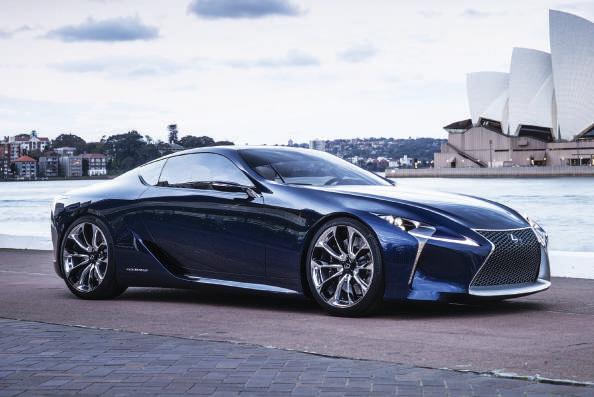
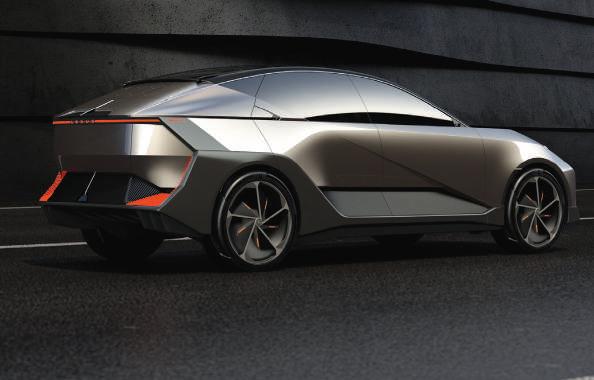
The evolution of excellence: from the LS 400 (top), to the extraordinary Lexus LC 500 luxury sports coupé, developed from the Lexus LF-LC concept (middle) to 2025’s Lexus LF-ZL concept, showing the way for a future flagship battery electric SUV (bottom).
‘I’m particularly proud of our new dealerships that are incorporating a new lifestyle Corporate Identity, transitioning Lexus dealers from a sales outlet to luxury experience centres.’
Evolution and disruption are clearly in the Lexus DNA. Ingredients for the future are lateral thinking, nerves of steel and resolve. But never forgetting the Lexus core values of authentic luxury – space, honesty, attention to detail, individuality and meticulousness – and warmth. A sure-fire menu for success.
2007
The world’s first mass-produced car with LED lowbeam headlamps on the LS 600h.
2018
The world’s first mass-produced car with side cameras in place of mirrors on the ES.
SIMON SAYS...
Haruhiko Hirai’s exquisite 2009 Lexus LFA (left) captured Simon Humphries and Wahei Hirai’s L-Finesse philosophy perfectly: simplicity, elegance and anticipation. L-Finesse as a way forward evolved seamlessly into the Spindle Era, Next Chapter and today’s focus, Discover, which centres on an all-embracing approach to mobility.
Simplicity is an art form as old as the oldest cultures. Lexus Chief of Design Simon Humphries discusses the essence of car design and a place for excellence in an increasingly throwaway world.
BY PETER FROST
WWWilliam Hogarth’s Line of Beauty, from the painter’s 18thcentury analysis of beauty, identified a sinewy, graceful flow of energy along a plane that felt ‘right’ to the human eye and left the viewer somehow animated. Like other Enlightenment aesthetics, Hogarth was attempting to codify principles of taste and beauty. His investigations sparked a creative explosion in all forms of design, from architecture to fine art. Like Leonardo Fibonacci’s famous spiral, his focus on an existing but hidden visual truism unleashed an avalanche of creative energy.
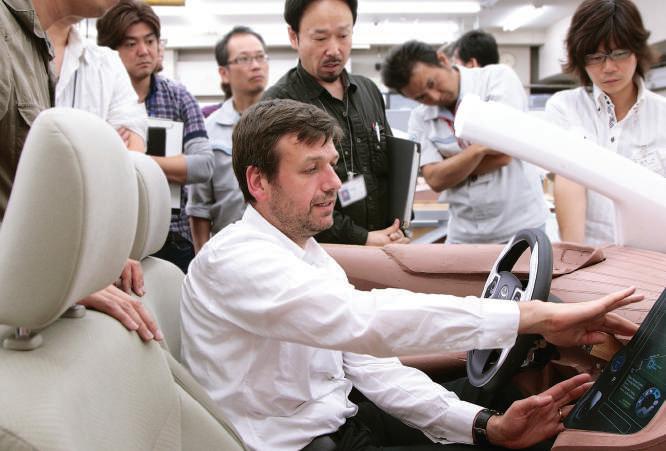
Simon Humphries, Chief Design Officer and Chief Branding Officer at Lexus, might be said to be the synthesis of both of these great men. And he’s on a mission to focus on those fundamental truisms. The Brit, who has overseen design and branding for the international behemoth since 2018, believes strongly in a design coherence that stands the test of time. A coherence that has its roots in simplicity.
Take the gorgeous new Lexus ES, due soon in South Africa. Humphries has guided the evolution of the marque’s long-established ‘L-Finesse’ approach (the synthesis of elegance, technology and human warmth, fashioned by master designer Wahei Hirai) and updated it. He’s managed to do this by returning
to a certain simplicity, coalescing Hogarth’s line and folding in that sense of unspoken ‘rightness’. Executed under takumi ’s guiding principle of ultimate craftsmanship, the result is a car as beautiful as it is functional. It speaks to the heart as well as the head. ‘Design isn’t only about making things look nice. It’s about making things work beautifully,’ he says.
The pull of the East
Humphries began his creative journey in the north of England at DCA Design, and it wasn’t long before the elegance of an Eastern aesthetic
drew him to Japan; first at ILI Design and finally Toyota in 1994, where he found a natural home for his combined design focus of purity and practicality. ‘Japanese design has a humility to it – a sense that space itself has value. Western design fills space; Japanese design listens to it.’
His presence was quickly felt; Humphries’s work on the astonishing Toyota bB compact hatchback concept stopped traffic at the Tokyo Motor Show in 1999 and led to a string of notable design innovations. Arguably, of course, his work on the LF-S and LC sports cars is his signature triumph. LF stands for
ABOVE AND FAR RIGHT
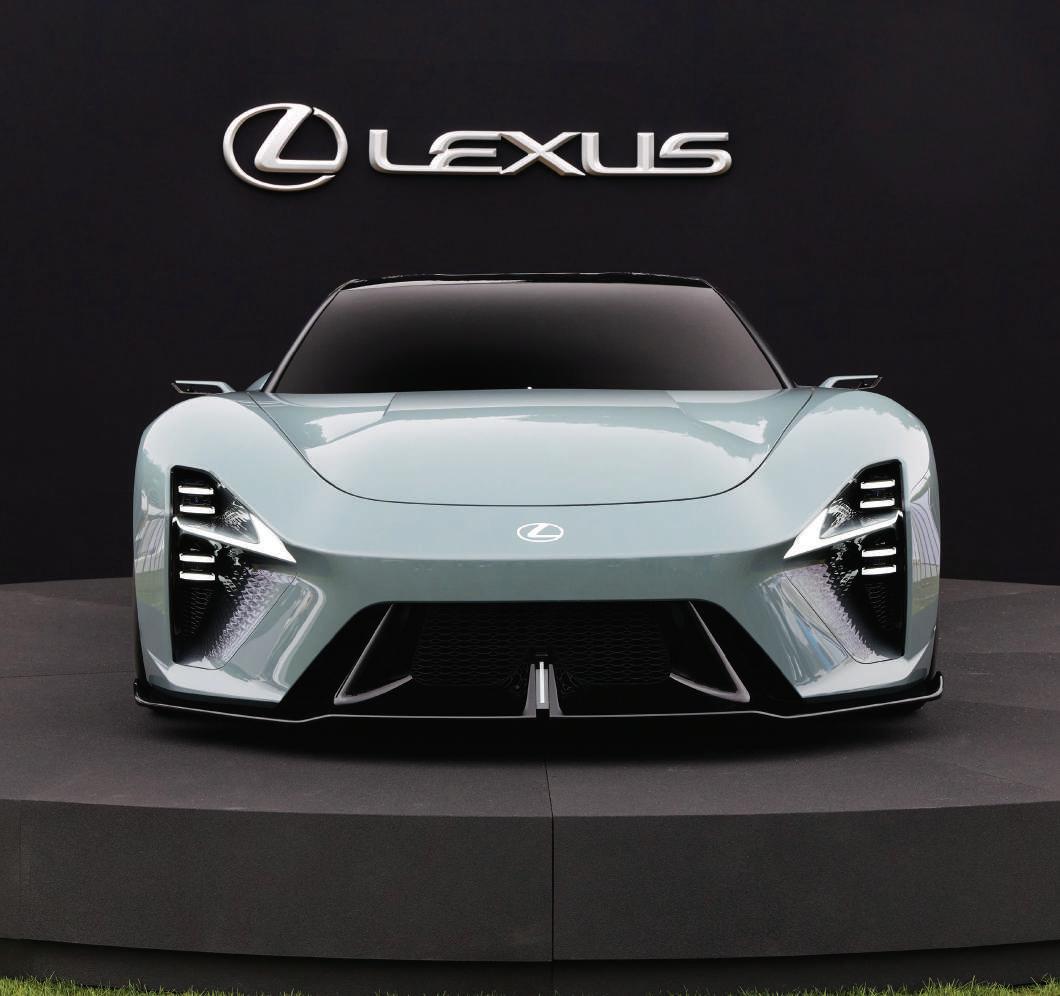
2025’s Sports Concept, the spiritual successor to the LFA and sharp point of the brand’s focus on fully immersive motoring.
TOP RIGHT
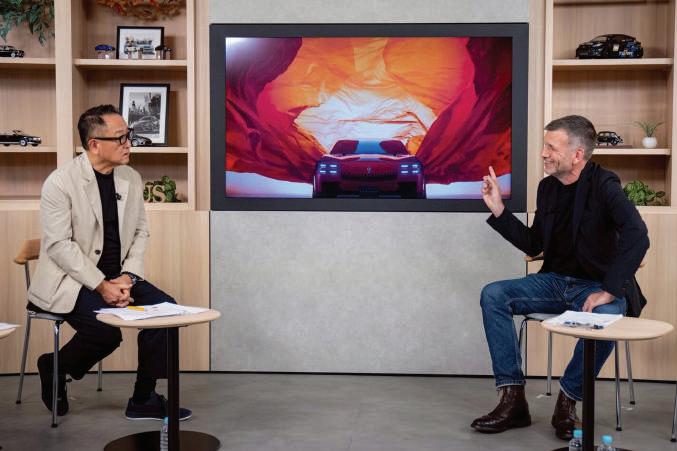
Toyoda’s words to Humphries: ‘We want to go beyond imitation to improvement, and innovation. I think it’s time for some of our vehicles to push into the realm of innovation.’
Lexus Future and Humphries saw Lexus as a marque very different to the august chariots of before. Started in 2003, the sleek, instantly recognisable two doors that came out of the development phase evolved from concept to rollout under his guidance (although he’d be the first to acknowledge the dedicated team in the mix). If ever a range spoke to his dual obsessions of simple elegance and practical execution, it’s the LF family.
It was also at this time that Humphries began to hone the idea of L-Finesse, a coalescing of elegance, technology and human warmth. In
part, it was born from the need to show the world that Eastern cars need not be soulless. Arguably, Toyota and Lexus had been almost too successful in promoting their bulletproof nature over a sense of heart. Humphries’s intention with the L-Finesse ‘finessing’ was to show the passion behind the creative input, the human warmth. The approach aimed to raise Lexus above the crowd of effective but essentially anodyne Eastern competitors and excel in a European arena where dynamism and soul are as important as reliability and quality.
Making Lexus design talked about
His next step was to make Lexus stand out. This he did with one masterstroke, still a topic of discussion today. The Spindle Grille on the GS, designed by Katsuhiko Inatomi and Takeshi Tanabe, was all anyone could talk about in 2011. It became the hot topic of debate across the design world and broke through into broader conversations. Indeed, with the spindle, Humphries’s intent was clear. ‘Every Lexus needed to be instantly recognisable from 100 metres away,’ he said at the time. The spindle would serve as the anchor for proportion and lighting on all future models.
Inatomi and Tanabe’s basic shape – two opposing trapezoids meeting at a narrow waist – emerged from the junction of the upper and lower
‘A designer is occasionally a troublemaker ... Good design should have a little bit of chaos – just enough to stop it becoming predictable.’
air intakes. That intersection gave the grille its characteristic hourglass contour. It adhered to the team’s core philosophy – clean geometric logic with emotional surface tension – and set the marque on its course towards design daring.
The success of the Spindle Grille allowed Lexus to take risks into the future, to be brave where others held back. The results were manifold: increased sales, certainly, but also a new admiration for Lexus’s spirit. Lexus owners were suddenly a multitude of tribes; the established, but also the disruptors.
He went further. As electrification changed the very nature (and shape) of the grille, he and his team infused its ethos into the rest of the car; that essential contrast between tension and release is now integrated into the car’s overall form.
‘Electrification gives us new possibilities in design’, he says. ‘Without the need for a large radiator opening, the spindle could now be expressed in the mass of the car in the way the surfaces flow from narrow to wide.’
Enter the Next Chapter
Humphries called this evolution Next Chapter, the first examples being the 2022 RX and the battery-electric RZ. Traditional openings gave way to body-coloured central panels, a response to reduced cooling requirements and new aerodynamic and packaging targets.
And so to the current fleet, notably two of the season’s big hitters: the latest Lexus ES sedan and the flagship large SUV, the RZ, both due in South Africa soon.
The ES is the clearest manifestation of Humphries’s evolution. Externally,
The all-wheeldrive Lexus LF-ZC is the marque’s next-generation battery electric offering (due soon), and will feature a modular structure splitting the vehicle body into three parts, front, centre and rear, as well as innovations inside such as bamboo fiber panels. The group’s new Arene software platform will allow over-theair updates, and the range from its next-generation prismatic battery pack is expected to be 1 000km.
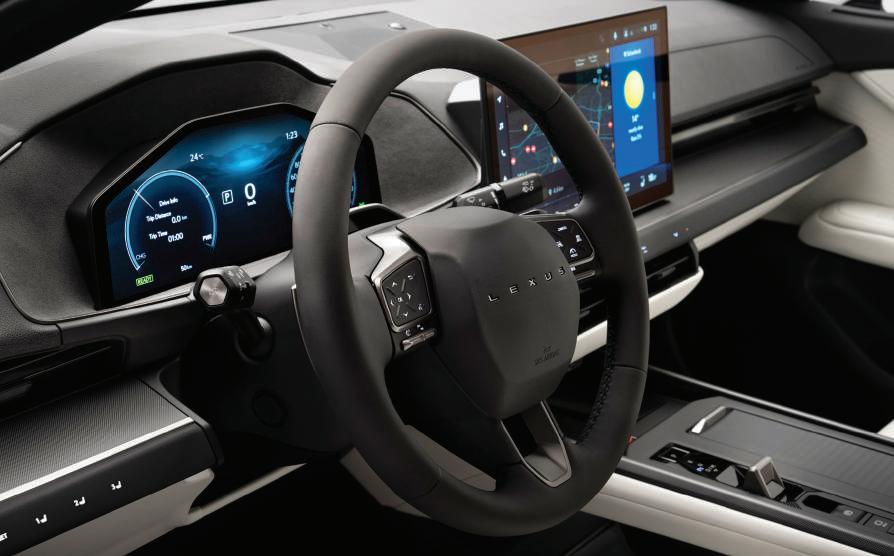
it emphasises an almost feline intensity, angular, ready to pounce, and, inside, it’s a wholly different place to previous models. Cleared of many ancillary controls and overly complex lines, it accents instead a series of simple planes, dedicated screens and complete serenity.
‘I’m trying to get away from overstyling, get back to basics and ask what’s fundamentally necessary’, said Humphries, and certainly that has been realised.
The RZ echoes those top notes and adds an air of rarity, of exclusivity. The marque’s flagship BEV now features an F-Sport derivative, imbuing the large SUV with a sense of aggressive intent, even as it excels at quiet luxury. It’s a beautiful, imposingly well-muscled beast, demonstrably a Humphriesinspired standout stunner.
The age of Discover
So what of the future? At the 2025 Japan Mobility Show in Tokyo, Humphries stepped up to the mic as the Chief Branding Officer, announcing details of Lexus’s new direction. In a nutshell, Lexus will become the innovation hub for the wider company, innovating in exciting lateral ways. From now on, the Lexus emphasis will be on space as the ultimate luxury, exploring novel ways to bring luxury into hitherto unknow areas. What does this mean? It means expect industrial design as well as cars, anything from autonomous catamarans to personalised, ultra-luxurious travel pods. And to crack on, Humphries unveiled two stunners at Toyko, both carrying the LS moniker. One a sixwheel luxury transporter, the other a coupé. Except, this time, LS doesn’t
stand for Luxury Sedan, it denotes Luxury Space and Luxury Sport. Announcing the brave new direction, Humphries explained: ‘It allows Lexus to act more freely, to continue taking on challenges as a pioneer.’
Lexus then gains latitude to push proportion, packaging and userexperience experiments without carrying the ceremonial expectations (and limitations) of being the flagship brand.
Expect intriguing things from Lexus in future. And with Simon Humphries at the helm of design, look out for the unexpected. ‘A designer is part engineer, part psychologist, part storyteller and, occasionally, a troublemaker.’ A troublemaker? Indeed, he says. ‘Good design should have a little bit of chaos – just enough to stop it becoming predictable.’
Words surely to live by.
LEXUS DESIGN INNOVATIONS
All quiet
The 1989 LS 400 combined a wind-tunnel-driven shape with obsessive NVH design targets and exceptional panel fit/finish to create one of the world’s quietest cars ever made.
Inventing the luxury crossover
Lexus created the modern luxury crossover formula: sedan-like design and packaging on a unibody with SUV stance and liftgate versatility. The approach reshaped premium exterior/interior layouts across the industry and the world.
L-Finesse – taking Japanese design to the world
Announced in 2003, L-finesse gave Lexus a coherent, Japanese-inflected design philosophy that guided surfacing, graphics and cabin treatment for the future.
The Spindle phenomenon
Lexus’s bold, instantly recognisable face began a movement in luxury motoring to sell an attitude as much as a feature.
Lights, camera, action
The LS 600h introduced series-production LED low beams (with its distinctive multi-projector styling), accelerating the move to intricate lamp signatures and energy-efficient exterior lighting.
Six wheels, not four
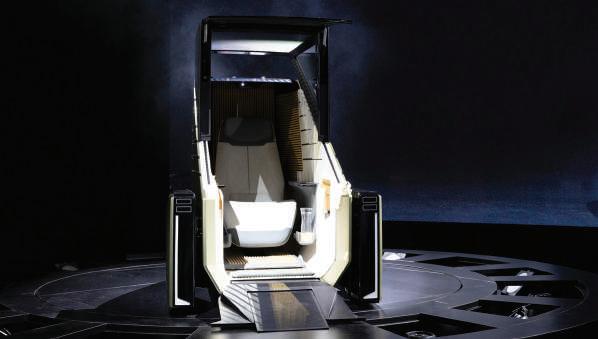
The LS Concept, unveiled at the Japan Mobility Show in 2025, radically reimagined packaging, maximised floor space and offered unrivalled access to the interior.
A
-team EXCELLENCE
Leading the Lexus charge into the next era are two standout examples of the marque’s Next Chapter ethos. The eightgeneration ES sedan and the RZ 450e point to a change-up in both design and power focus.
BY PETER FROST
As the new year unfolds, there’s good reason to cheer if you’re a Lexus fan. The allnew, eighth generation Lexus ES sedan is here, as is the updated RZ, Lexus’s first fully electric vehicle. But first, a step back. Lexus is at an intriguing crossroads. Unveiling a larger brand strategy for the Toyota group in October 2025, Chief Branding Officer Simon Humphries echoed Aiko Toyoda’s directive that Lexus will henceforth be the Innovator in the family. ‘Lexus can now move more freely,’ said Humphries, ‘and will continue to push forward as a pioneer.’ In essence that means Lexus has been given more leeway to experiment, with design as well as application. That’s good news for Lexus fans who have admired the steady evolution of the brand from establishment stalwart to elegant disruptor. Humphries has been at the forefront of this evolution, and indeed his Next Chapter ethos folds neatly into this new direction. Next Chapter revolves around the
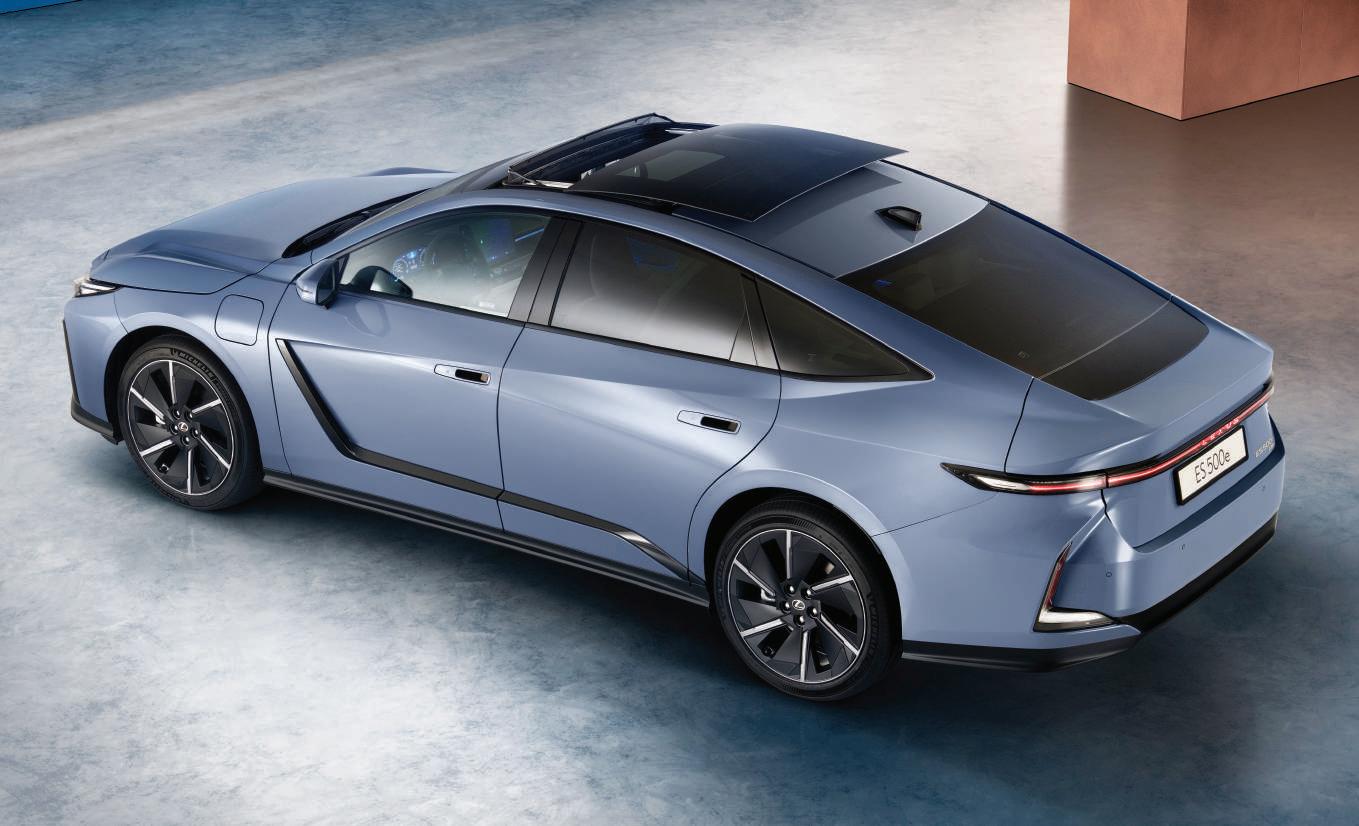
The eighth generation ES takes all of the previous cars’ strengths and adds a dose of design excitement straight out of the Next Chapter playbook.
CLOCKWISE FROM TOP LEFT
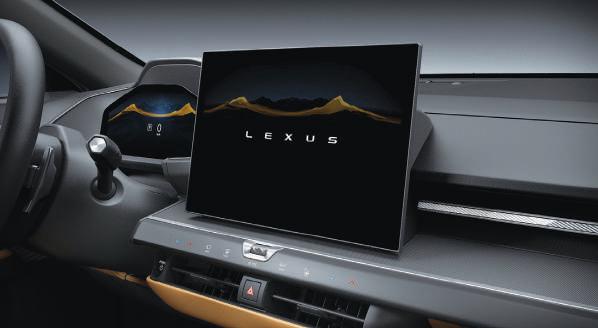
The upper section of the ES cockpit is wide open to prioritise the driver’s view, while the instrument combimeter is presented in an asymmetrical 12.3inch digital array.
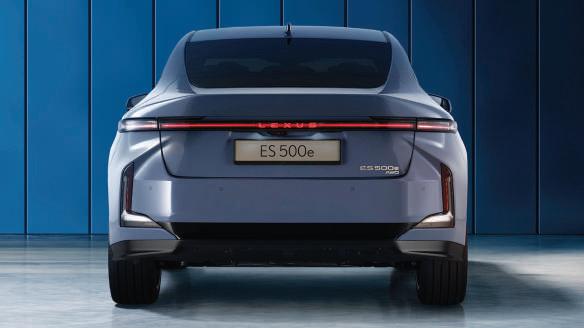
L-signature rear lights have been introduced, making the car instantly recognisable.
ES features the latest Lexus Clean Tech x Elegance design concept. Excess detail is removed to create a simple and clean space.
increased importance of electric motoring, informing both car design and function. It’s not just about drivetrains though; it translates to a bravery in design (expect some revolutionary, rather than evolutionary industrial designs soon) as well as a keener focus on the role of multiple power units, electric, hybrid and traditional ICE engines.
Lexus ES: The fine art of the sedan
Back to the Lexus ES which, in South Africa, is now the Lexus sedan linchpin. Globally, the ES has been a mainstay of Lexus since it launched alongside the LS in 1989. It was introduced in South Africa in 2013 and proved an instant hit as a supremely spacious, beautifully appointed, luxury mid-size executive sedan. Its key differentiator was comfort, its unapologetically serene nature winning it many friends.
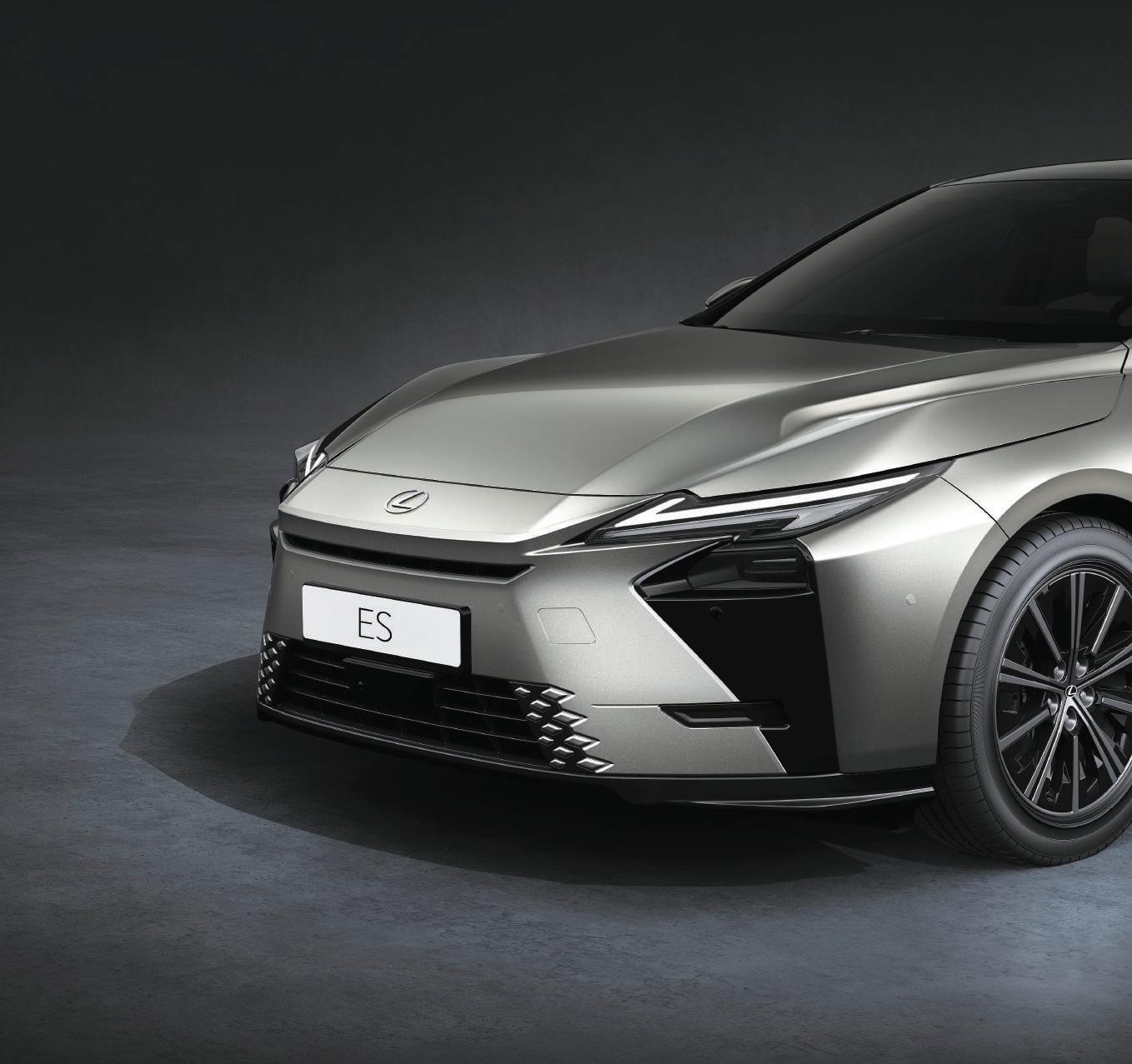
The eighth generation takes all those strengths and adds a dose of design excitement straight out of the Next Chapter playbook. New technologies and enhanced connectivity and safety have also been added. Its world premiere at Auto Shanghai garnered universal praise, reflecting the next-phase interpretation of Lexus’s spindle body vocabulary, influenced by the LF-ZC concept. The bold yet minimalist look melded with a simple, clean aesthetic that takes the fight not only to the Europeans but also the Chinese, who have led the way in minimalist, electric-inspired design.
ES design: Fusion thinking,
traditional serenity
Simon Humphries’s guiding hand is immediately obvious. The exterior styling combines his oft-stated fusion of bold presence with a minimalist
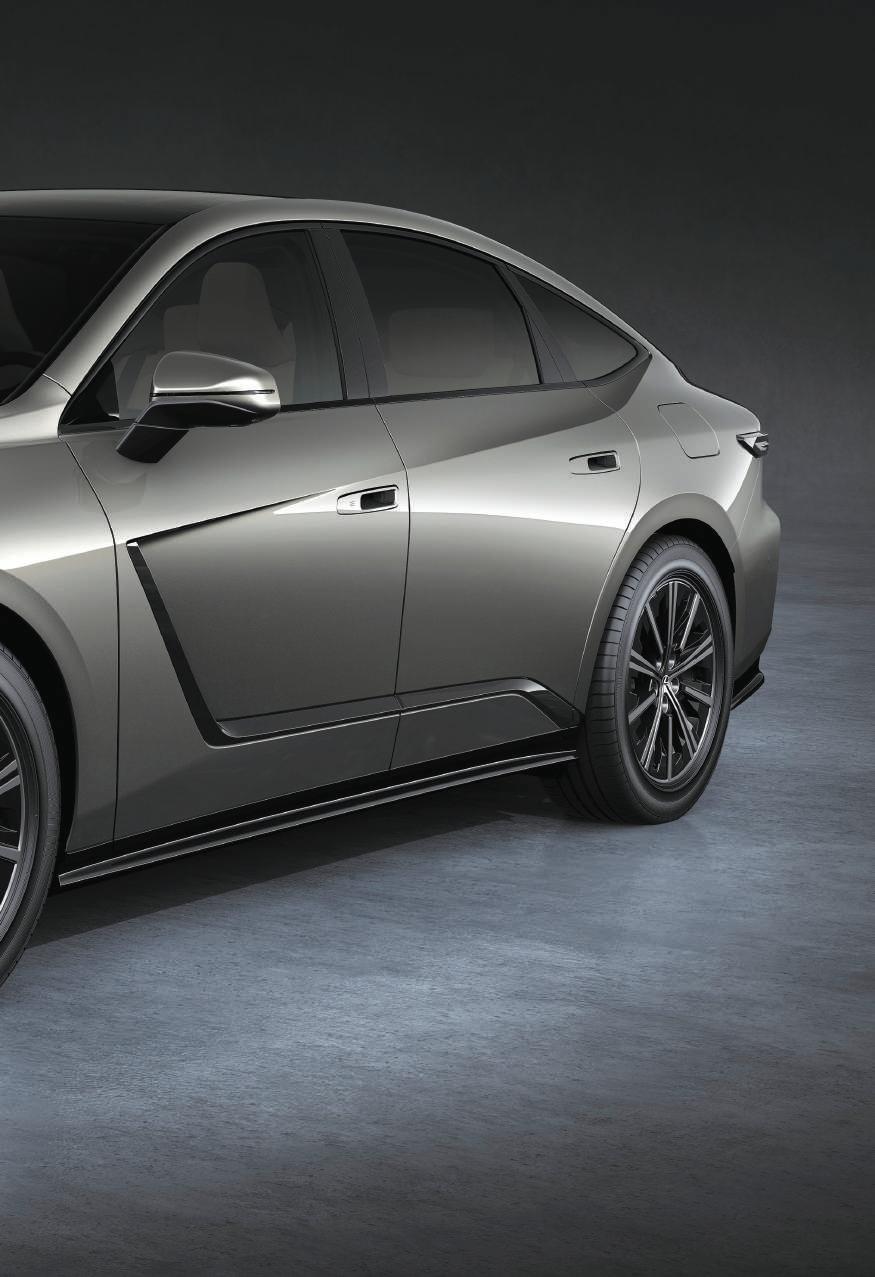
approach. The flowing silhouette has a ‘trunkless’ look, with the cabin tapering sharply to the rear. It contrasts sharply with the lower body, which is defined by contrasting planar and sculpted surfaces, and powerfully contoured and aerodynamically efficient shoulders. It effectively advances Lexus’s vision for next-generation battery-electric vehicle design, incorporating a new spindle body that evokes electrified power. It’s grown as well, even if it looks sleeker, in height, width as well as length.
At the rear, the light bar is integrated with the illuminated Lexus logo and incorporates the tail and stop lights, with other lamps moved to the outer edges. This works well to emphasise the car’s wide stance and planted, muscular rear profile. Inside is the clearest manifestation yet of Humphries’s evolution. It’s a wholly different place to previous
models. Cleared of many ancillary controls and overly complex lines, it accents instead a series of simple planes, dedicated screens and allencompassing serenity.
And yet there are plenty of previous ES best-in-class touches, notably at the rear. The rear cabin can be fitted with reclining seats for example, and, for the seat behind the front passenger, an ottoman leg support for tired feet.
Equally luxurious, the front passenger seat has a forward-folding function to maximise rear leg room and improve the view.
Other innovations on the ES include an optimised Mark Levinson sound signature and bamboo layering, which uses advanced printing techniques and light transmission technology to create a surface illumination effect that synchronises beautifully with the cabin’s ambient lighting.
ABOVE
The ES’s flowing silhouette has a ‘trunkless’ look, with the cabin tapering sharply to the rear. It contrasts sharply with the lower body, which is defined by contrasting planar and sculpted surfaces, and powerfully contoured and aerodynamically efficient shoulders.
Propulsion: The power of choice
Lexus’s wider strategy of maintaining various powertrain options for different markets across the world reflects in the new ES lineup. So the range includes an updated hybrid (ES 350h), and, for the first time, ES batteryelectric versions.
In South Africa, the 350h makes use of the respected 2.5-litre petrol unit, along with an upgraded battery offering higher output. Together, there is 182kW available, more than enough for executive levels of acceleration and overtaking ability.
The battery-electric sister model ES 350 has an output of 165kW and a range of just under 500km. Both systems use a bespoke control logic to deliver a combination of strong acceleration and fuel efficiency. The power unit’s increased rigidity also helps suppress vibrations, contributing to a quieter, more refined cabin.
It’s clear then that new ES aims to continue its assault on the sedan market, but with renewed spirit and a design-forward attitude. It is essentially a redefining of the sedan for a new energy landscape.
Lexus RZ: Space, grace and precision
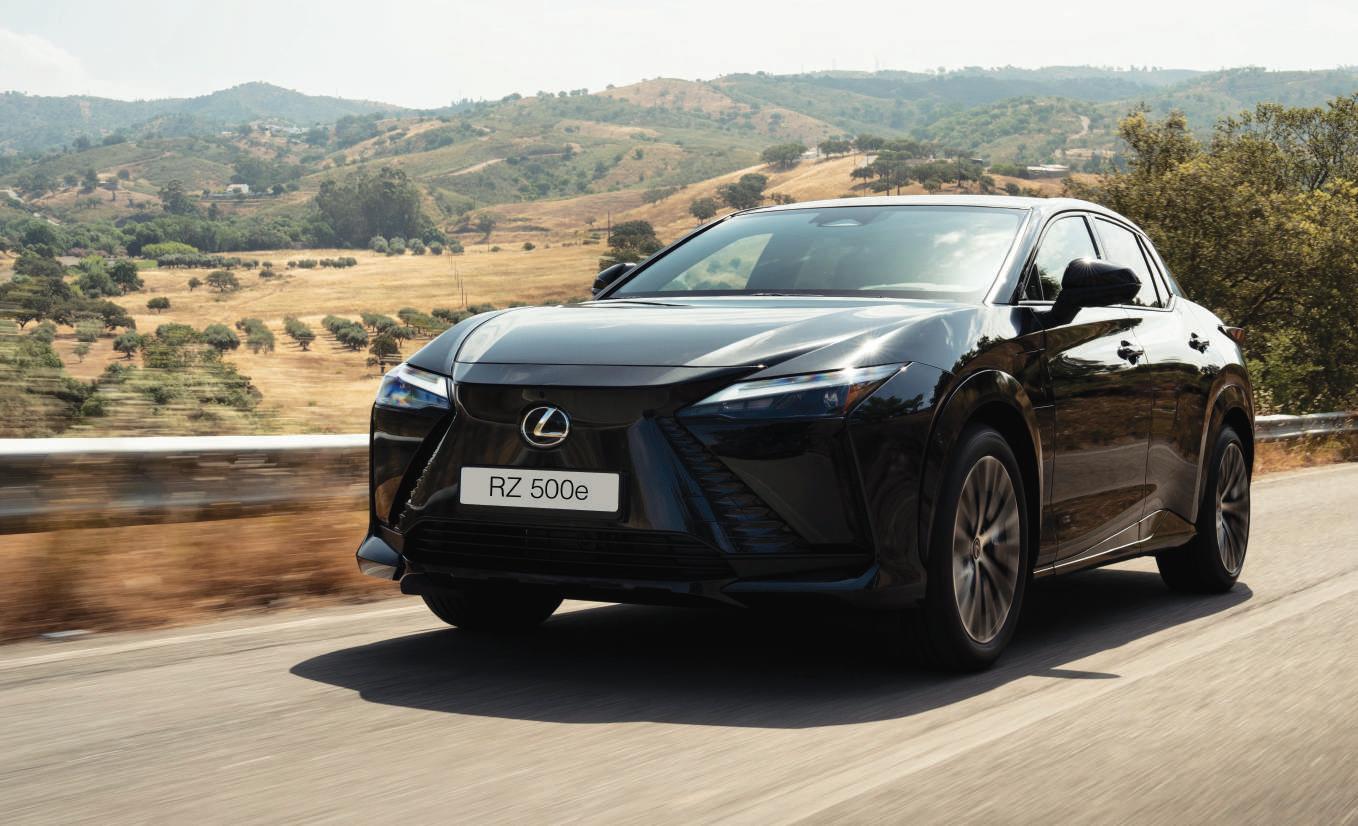
Appropriately enough, Daichi Kimura’s beautiful RZ crossover was inspired by an African icon of speed, the cheetah. Appropriate because the RZ 450e can rocket to 100 km/h in just five seconds. And at rest his car certainly suggests a readiness to sprint. The designer’s focus, guided by Lexus’s Next Chapter ethos, was to create a shape as exciting as it was unusual. Given that much of the electric car design world has erred on the side of caution so as not to alienate traditional customers, that’s brave. Brave turns out to be wholly appropriate with the RZ, Lexus’s first
CLOCKWISE FROM ABOVE
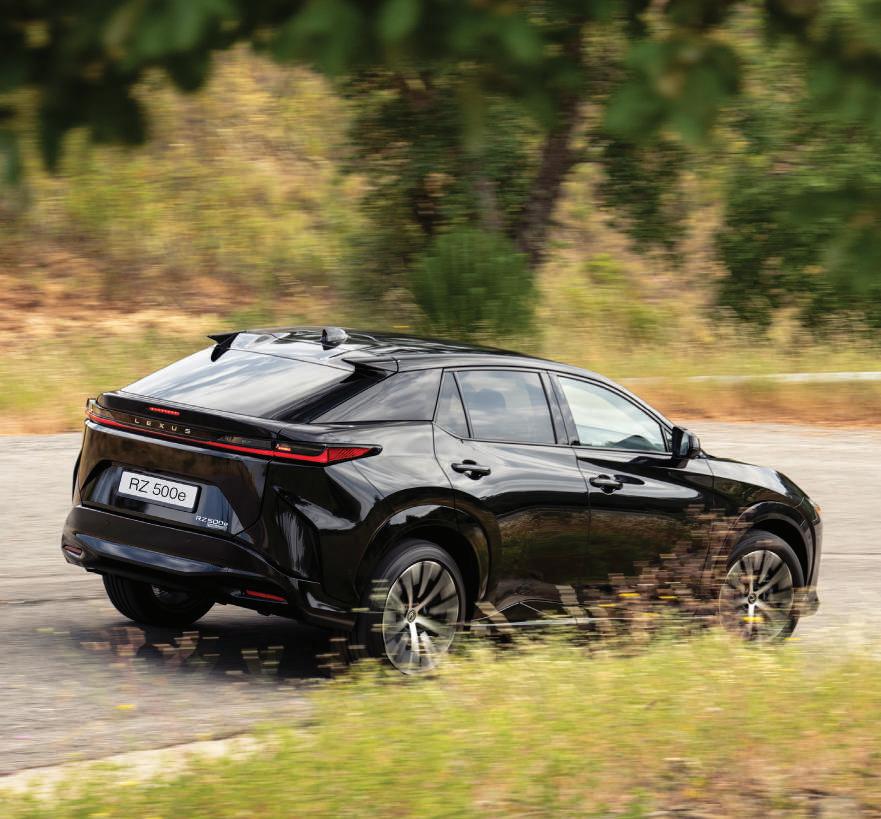
The batteryelectric luxury RZ SUV has been comprehensively revised, introducing innovative technologies that deliver more power, enhanced control and deeper driver engagement.
A new floor silencer beneath the rear seats and enhanced soundproofing mean the new RZ is exceptionally quiet.
The new RZ’s range has been increased by up to 100km, depending on the model.
bespoke, ground-up electric offering. It has introduced any number of firsts into the Lexus family, namely steering by wire, console-like yoke steering wheels, e-Axle (a compact and modular system that combines the motor, gearing and power control unit between the driven wheels) and Direct4, the Lexus all-wheel drive system that uses both front and rear e-Axles to automatically adjust power distribution and traction for enhanced performance and stability.
Inside: All the space in the world
But technology is only part of the package. Front and centre in the new Lexus age is the concept of space: how it’s best used, where it works hardest, why it’s important. In the RZ, a sizeable SUV, the magic is in the svelte exterior and cavernous interior. Alchemy indeed. Inside, RZ offers class-leading space fore and aft, as
well as impressive boot space at the rear. Those rear seats are especially noteworthy, easily best in class. Not only physical space but abstract space as well, room enough between furniture, people and glazing. It’s a psychological approach that isn’t immediately obvious, but one that sees rewards the more time is spent in the car.
Look around and feel the quality – materials on the RZ are top drawer, touch-sensitive and exquisitely tailored. And beyond what’s visible, work has been done beneath the surface; soundproofing and insulation are superb, and a new motor mount design suppresses vibration, making the RZ whisper quiet and refined over all road surfaces.
Drive the future
As Lexus’s first ground-up batteryelectric car, the RZ has much riding on it. To ensure its prowess, the com-
pany has included a powerful 77kW battery as well as a fast charging 22kW on-board AC charger for effective recharging. The system is lighter than many competitor setups and contributes to the car’s rigidity too, situated as it is under the seats to become a structural part of the vehicle’s frame.
Get in, press the starter button and ease away. The sense is of that indefinable Lexus authority, a mix of solidity and clarity of purpose. Ease into traffic and the size shrinks. Manoeuvres are quickly completed, there’s a liquidness to progress, it’s easy and seamless, features of electric motoring that newcomers quickly come to appreciate and then demand.
What sets the RZ apart is the sense of root and branch quality; as it powers through the drive, it offers up an example of what real luxury feels like. In the weight of the controls, the care taken in tactility, the ease of operation, it’s a masterclass in detail and meticulousness.
RZ then is the culmination of thousands of hours of research and refinement in the best Lexus tradition. In South Africa, with a range of over 400km, it will be the choice of a discerning tribe determined to make the best of town and country life, cleanly, efficiently and with an eye on global best-practice.
The car for a caring, qualityobsessed generation. Future proof.
Get in, press the RZ starter button and ease away. The sense is of that indefinable Lexus authority, a mix of solidity and clarity of purpose.
HAVE WILL TRAVEL CAR,
Chef and master innovator Jan Hendrik van der Westhuizen knows a thing or two about careful research, attention to detail and the need for luxury in both life and work. It’s no wonder he’s a perfect fit for the role of Lexus ambassador.
BY PETER FROST
People are always surprised when they actually meet Michelin-celebrated chef Jan Hendrik van der Westhuizen. South Africa’s globetrotting success story has the kind of international Insta profile that suggests a cross between George Clooney and Luke Evans – impossibly glamorous.
The truth is very different. Deeply rooted in the countryside and the soil, his instincts steer him towards an honesty of both message and action. That clarity of purpose has been his distinction, leading him to his nowcelebrated group of restaurants, bistros, books and collaborations.
All of which resonated with Lexus. More than that, his attention to detail, obsession with painstaking crafting, exhaustive research and quiet luxury
drew their attention. It didn’t take a genius to work out that the two were made for each other.
So, in 2025, Lexus South Africa named Jan Hendrik a brand ambassador. It was the start of a special journey.
Natural-born travellers, Lexus and Jan both Jan is, by any metric a polymath: chef, innovator, photographer and stylist, seemingly able to juggle umpteen balls at once. Food, obviously, but riding high in second place is a love of travel. It’s reflected in his volume JAN Voyage , a smorgasbord of flavours, culture, travelogue and moments gleaned from the French coast and the rolling Ligurian hills of Italy. He regularly scours the globe for new inspiration and recently returned from Morocco in search of 100 flavours
as part of the first ever JAN Voyage: Discovery . And, of course, there’s South Africa which, clichés aside, really is the bomb; very few regions of the world offer as much opportunity for ranging far and wide as the Republic. And Jan has good reason to move around his home country; JAN Franschhoek in the Winelands, a partnership with the iconic Palace of the Lost City in the North West, and, now, Le Bistrot de JAN at the InterContinental Table Bay in the V&A Waterfront Cape Town need his care and attention.
It made sense that Lexus partner with Jan to showcase the marque’s SUV offerings, the sublime RX 450h and the GX 550 SE – both are at home in the Cape satellite hotpots and the far-off Karoo. It’s been an interesting exercise for the man who loves travelling, road trips and an empty horizon.
LEFT AND ABOVE
Jan’s chosen SUV for off-thebeaten-track discoveries in South Africa, the Lexus GX550 Overtrail, combines highlevel luxury with peerless off-tar ability.
‘For me driving isn’t just a journey, it’s part of the creative process,’ says Jan. The RX is my city ride and there’s nothing quite like driving into Cape Town, with Table Mountain on one side and the sparkling ocean on the other.
‘Those views of the iconic harbour front influenced some of the dishes we serve at the new Le Bistrot de JAN at the InterContinental Table Bay.’
The GX on the other hand is Jan’s get-out-of-town choice. It’s ideal for exploring the Winelands and beyond.
‘That GX handles the off-road aspects of the region beautifully, allowing me to really get to where I want to be. And, yes, I absolutely love driving in the Cape. It’s more than just getting from point A to B for me; it’s where so much of the inspiration for my menus comes to life. Recently, I woke up early and took a one-hour drive out to Caledon, through the rolling hills of the Overberg. Breathtaking views, definitely, but also because of something I’ve been craving: my favourite chicken mayonnaise on home-baked, fire-oven bread at Dassiesfontein Padstal, on the N2 outside the dorp.
‘On the way, I called a friend who lives overseas and asked: do we really
realise how lucky we are? Whether we’ve left South Africa permanently or just temporarily, moments like these remind me of what we have here. The landscapes, the flavours, the people.
‘Take spekboom, for example, it’s such a common plant in South Africa, but when we transform it into a refreshing spekboom and melon gazpacho at JAN Franschhoek, it becomes something entirely unexpected on the plate’.
The Datsun tjorretjie years
Cars, road trips, quiet places and inspirational landscapes have always been important to Jan.
That memorable road trip down from Middelburg, where he grew up, to Cape Town, where he came to study, will always be special.
‘Back in those days, my pride and joy was a blue Datsun that my Ouma bought me as a present. I set off from Middelburg with a suitcase, a few cassette tapes, and what I thought was enough cash for petrol and toll gates. Of course, by the time I hit the Karoo, I realised my maths had been a bit optimistic. Back then there was no SnapScan or banking apps, only the hope that you could charm your way out of a tricky situation. I ended up trading a few rusks and a good story with a petrol attendant to make up the difference. Somehow, both the Datsun and I made it to Cape Town in one piece, running mostly on fumes and a bit of pity from a kind stranger.’
A tiddler named Rosie
‘I’ve always adored the charm of a vintage vehicle, there’s something wonderfully romantic about the hum, and occasional protest, of an old engine on an open road. Of course, that romance often comes with a bit of drama. My 1962 vintage car, affectionately known as Rosie, has more personality than some people I know and never fails to keep me on my toes, sometimes between Nice and Apricale, which I call home. She may have her moments but I wouldn’t trade her for the world’.
Camel milk and red dust
Invariably Jan’s car travels are inextricably linked with his food journey.
ABOVE
‘I absolutely love driving in the Cape. It’s more than just getting from point A to B for me, it’s where so much of the inspiration for my menus comes to life.’
‘When we filmed Season 3 of the JAN show, we decided to do this mad, beautiful road trip up to the Northern Cape. I think we were chasing a feeling more than a destination, that sense of raw South African space where the land just stretches forever. We packed the crew into a couple of bakkies and headed north, cooking under the stars and sleeping out on the salt pans.
‘At one point, we visited this incredible little camel milk farm and I remember thinking, “We are definitely not in Nice anymore.” Between the red dunes, the gravel roads and the occasional lost GPS signal, it felt like an expedition.
‘Looking back, I have to laugh. A Lexus SUV would have come in very handy, because when you’re out there, caked in dust, running on coffee and curiosity, you start to appreciate the beauty of a smooth ride.’
Ultimately, travel is about growth and discovery and getting happily lost. For Jan Hendrik, the journey is the joy, and long may it continue he says. So Middelburg, Cape Town, Nice, where next? He’s not sure. But
The GX is Jan’s get-out-oftown choice. It’s ideal for exploring the Winelands and beyond.
always there’s a return – to a South Africa that settles his soul, quietens the noise, simplifies.
‘That Northern Cape trip reminded me why I tell stories about South Africa. It’s magical.’
And Lexus is happy to be along for the ride – camels, spekboom, trout stream and much more besides. Go discover.
AS INVESTMENTART
The South African art market is fast evolving as young collectors and independent artists rise.
BY ANNA BENNETT
Art has long been viewed as a compelling investment, and, as more South African artists gain global recognition, attention to the local art ecosystem continues to rise. We look at some of the country’s major art fairs and the evolving market dynamics shaping collectors and artists alike.
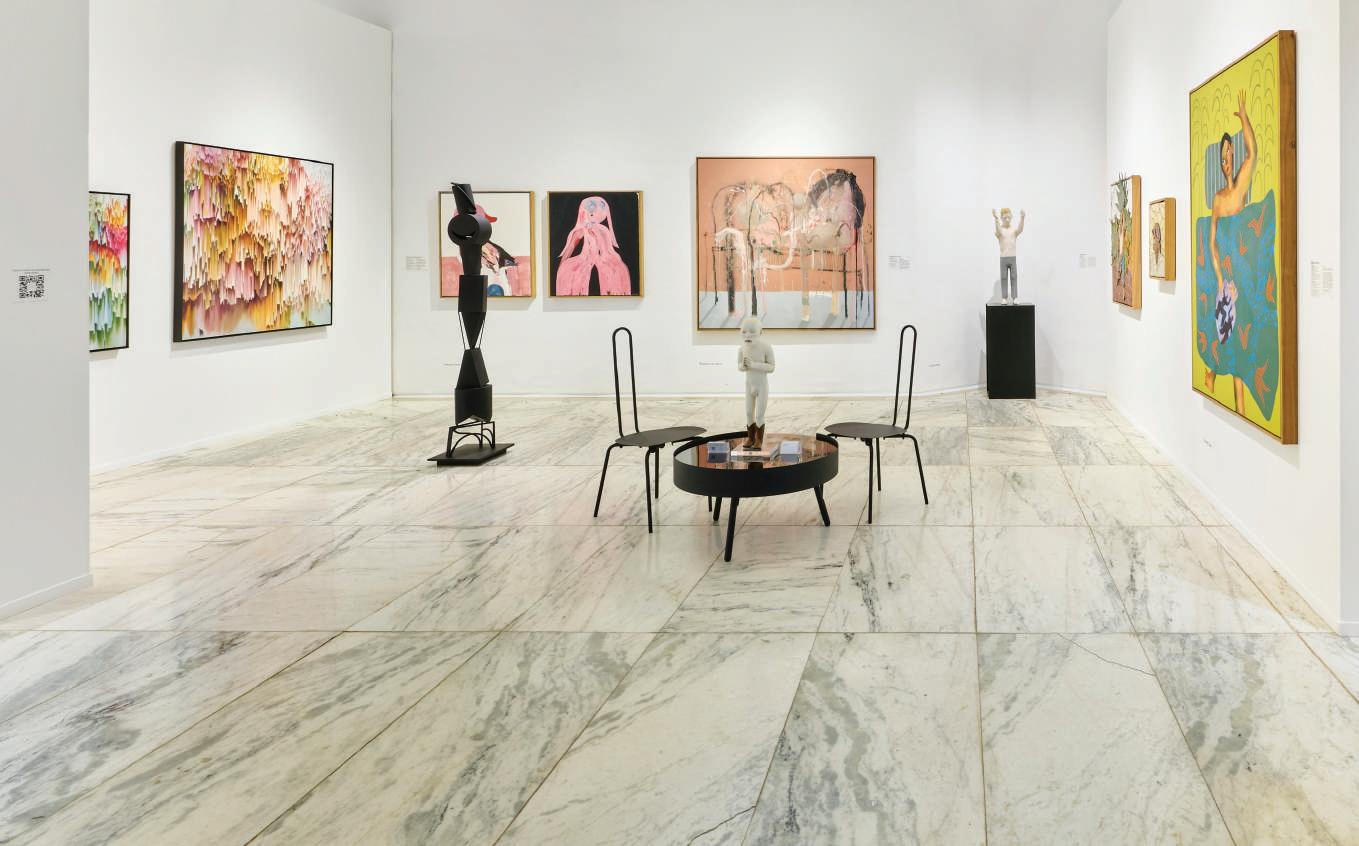
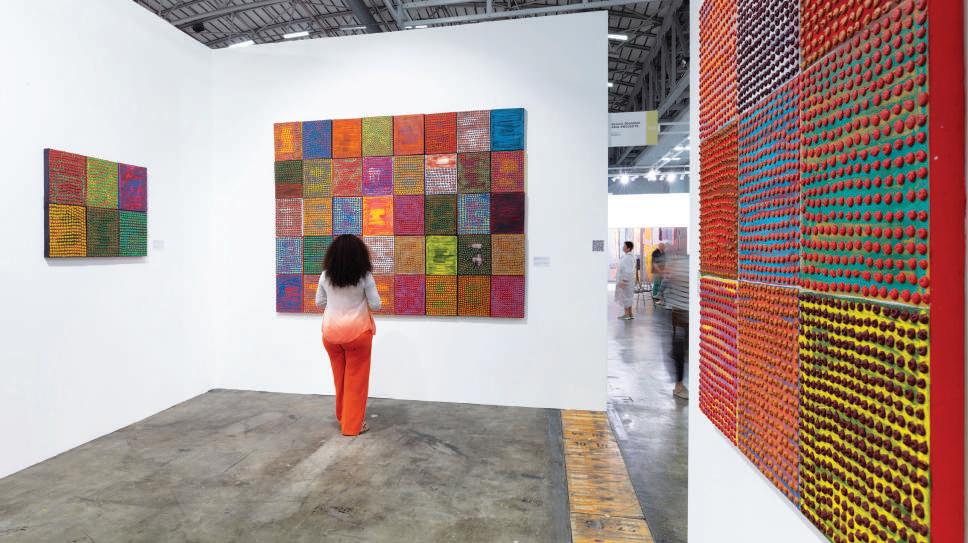
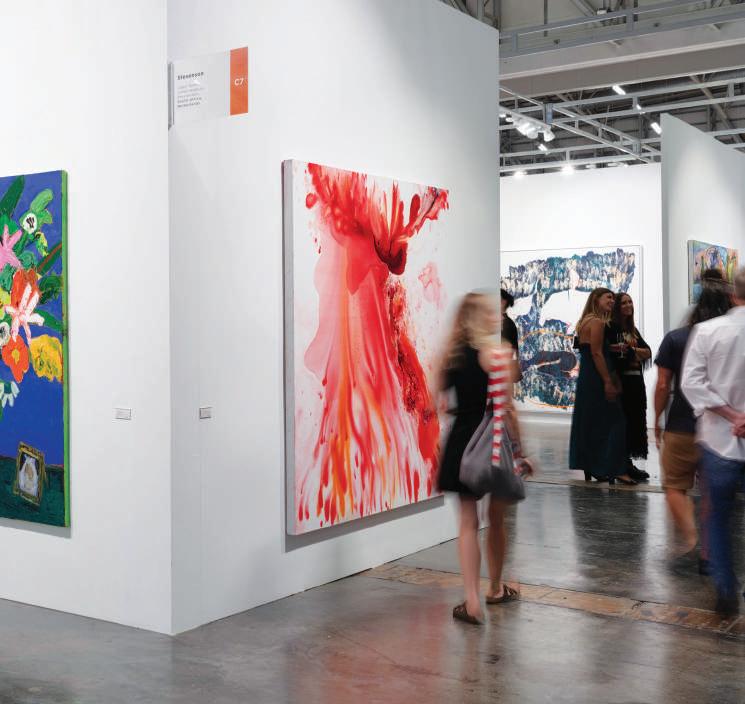
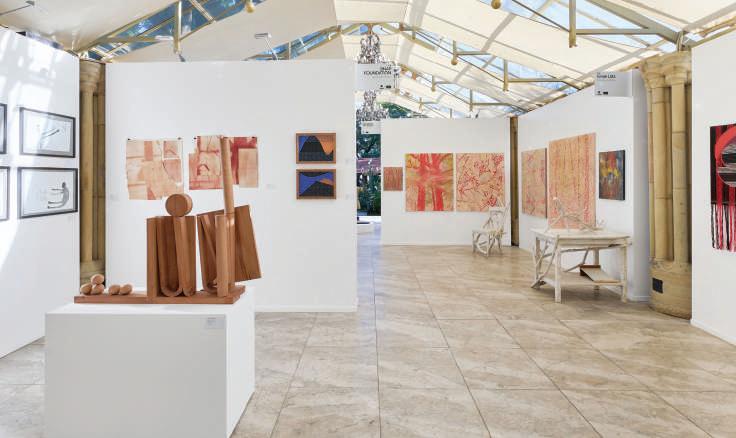
THE INVESTEC CAPE TOWN ART FAIR in February is an annual fixture on the global art calendar and the largest fair on the continent in terms of both exhibitors and visitors.
Despite a softer global art market, director Laura Vincenti says interest in South African artists remains robust.
‘We continue to see a well-deserved appreciation of South African artists in global conversations, placed alongside a selection of artists from Africa and elsewhere – all of whom are showcased at our fair.’
She emphasises the fair’s role in strengthening international market access while ensuring artists receive meaningful recognition at home. ‘It’s equally important for an artist’s immediate surroundings – their country – to also offer recognition within the context of their local environment, not just on the global stage.’
The past several years have seen what many framed as a global ‘African art boom’. Vincenti notes this trend has matured, and we’re shifting away from collecting African art as a commodity trend, and towards a consolidated practice of collecting art from the continent because its value is recognised, not because it’s fashionable.
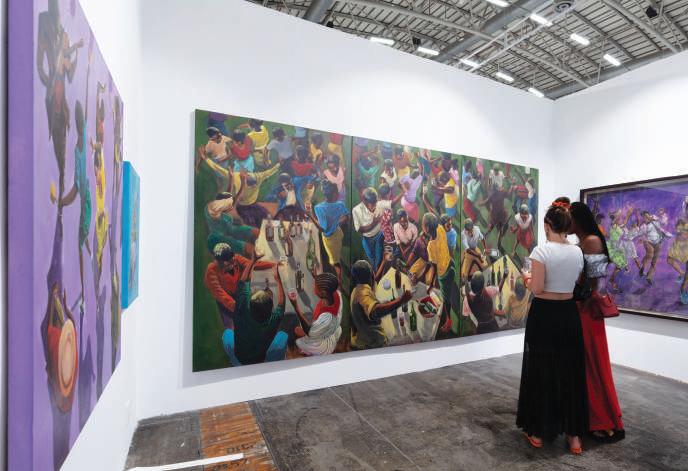
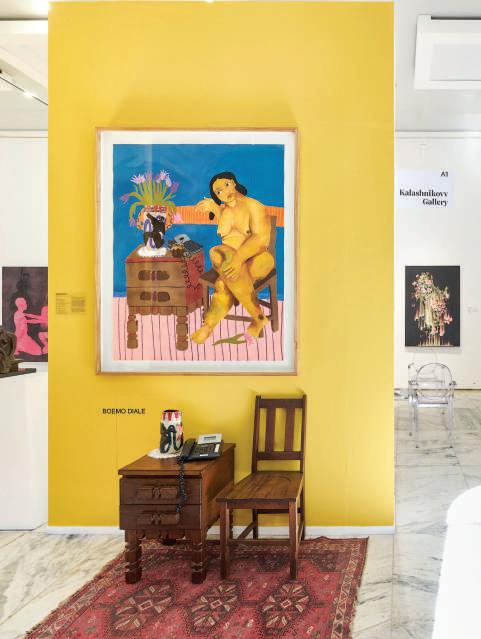
ABOVE Kalashnikovv Gallery Booth at RMB Latitudes Art Fair 2025.
TOP RIGHT
This booth, in the Lookout section at the Investec Cape Town Art Fair 2025, represents 16 on Lerotholi (Langa, Cape Town, South Africa) and features work by Langa-born artist Mongezi Gum.
FAR LEFT
The AMG Projects (Lagos, Nigeria) booth in the Generationscurated section at the Investec Cape Town Art Fair 2025. Works featured are by artist Gbolahan Ayoola.
With South African and other African artists increasingly entering major international collections, their positions are becoming structurally entrenched rather than trend-driven.
This year saw established names such as Sam Nhlengethwa and Penny Siopis, alongside rising artists like Mmangaliso Nzuza and Talia Ramkilawan. The focus, she says, remains on artistic excellence first, with investment value following.
Vincenti believes that solid and consistent collaborations between local institutions and other key actors in the art ecosystem are crucial means to uplifting local artists, as well as ensuring their recognition both locally and abroad.
The art world is also undergoing a shift in language and perception. ‘It’s not “South African art” on a global stage; it’s contemporary art from South Africa. This ensures more inclusion of South African artists’ cultures of making in the context of the global contemporary art canon.’
RMB LATITUDES is a younger, but fast-growing art fair held in May each year in Johannesburg. Known for its forward-looking stance and support for Africa-led initiatives, it champions galleries, project spaces and artistcentric platforms.
Curator and head of sales Denzo Nyathi points to the growing profile of artists such as Cinthia Malunga, who has maintained her visibility with multiple exhibitions across Europe over the past few years. Buqaqawuli Nobakada is another young artist having ‘huge moments overseas’ and Boemo Diale has shown on several continents this year.
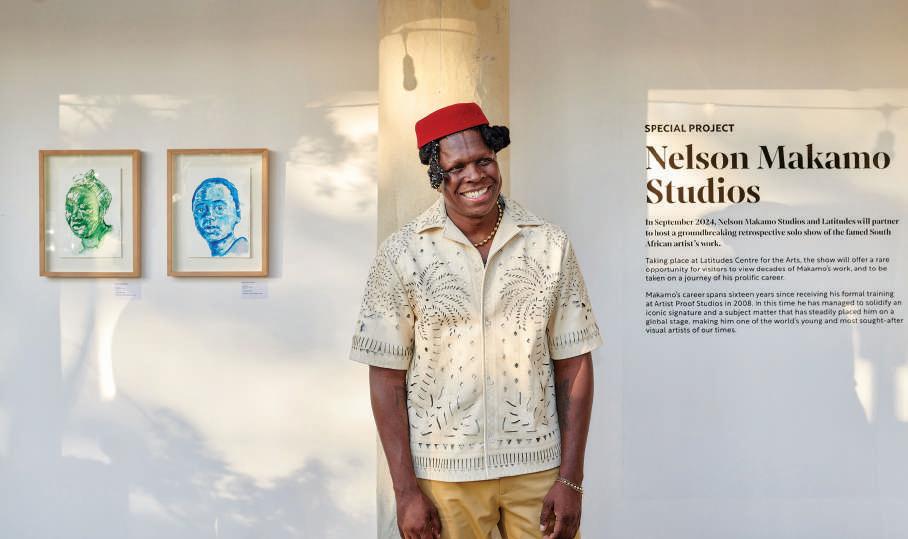
Nelson Makamo continues to command strong commercial and cultural interest. ‘This hasn’t waned in the last 15 years; it’s growing. He’s received huge commercial validation and his cultural legitimacy is only looking to grow in the next few years which, for the purposes of investment, is big.
‘When artists become associated with museums or institutes of fine art, that adds to their investment value.’
Nyathi sees a generational shift in collecting. While established names like Marlene Dumas, William Kentridge and others remain foundational, younger collectors are entering the market and backing emerging voices.
‘Younger collectors want to buy into other young artists. Their buying power is growing and, with it, the value of these artists’ work.’
He points to a diversification of buyers and a redistribution of power within the art ecosystem. While many galleries face headwinds globally, independent artists are thriving. Social platforms have enabled direct sales and wider reach, and RMB Latitudes’
‘Younger collectors are trying to find their way into this exclusive club to support other young artists and, as their buying power increases, we’re seeing the value of these artists’ work increase, which is an exciting synergy.’
INDEX programme provides artistrun exposure outside traditional gallery structures.
‘Younger collectors are trying to find their way into this exclusive club to support other young artists and, as their buying power increases, we’re seeing the value of these artists’ work increase, which is a really exciting synergy.’
This comes with a significant shift in the balance of power. ‘I’d say for everyone working inside the industry, the changes that are happening are anything but subtle.’
A number of galleries around the world are struggling or closing. ‘What we’re experiencing is known as a downturn in the market, but, on a more positive note, the downturn is being most observed in the normal traditional ways of buying art.’
On the flipside, independent artists are more successful now than ever.
Nyathi says there are so many different ways to showcase artists without the necessity for gallery representation. ‘This causes a lot of fear for the industry because the model we’ve been working on now has been the standard in the local context for 30 years and in the broader international context since the ’60s.’
Artists are managing a lot of their own enquiries, many via Instagram. Collectors will often DM an artist and
BELOW Nelson Makamo in his solo booth at RMB Latitudes 2024.
buy directly and logistical support is often outsourced to a specialised service provider, with more artists becoming equipped for selling through e-commerce.
At the same time, RMB Latitudes Art Fair’s INDEX platform provides independent artists with a chance to showcase their work outside of conventional gallery representation. Novel initiatives such as ‘Art Under the Bed’, where artists sell work informally in domestic spaces, are gaining traction. There’s no big team, no grand production. ‘Collectors are drawn to the transparency and the
TOP LEFT
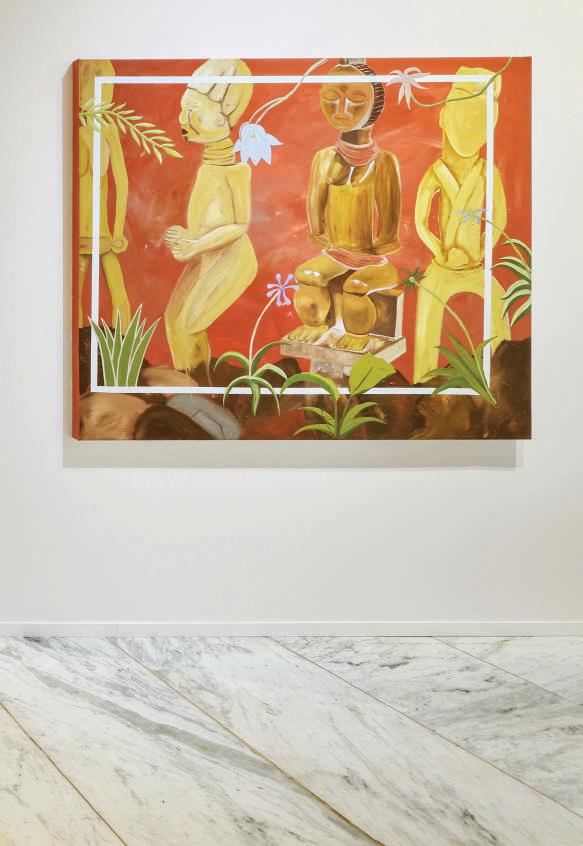
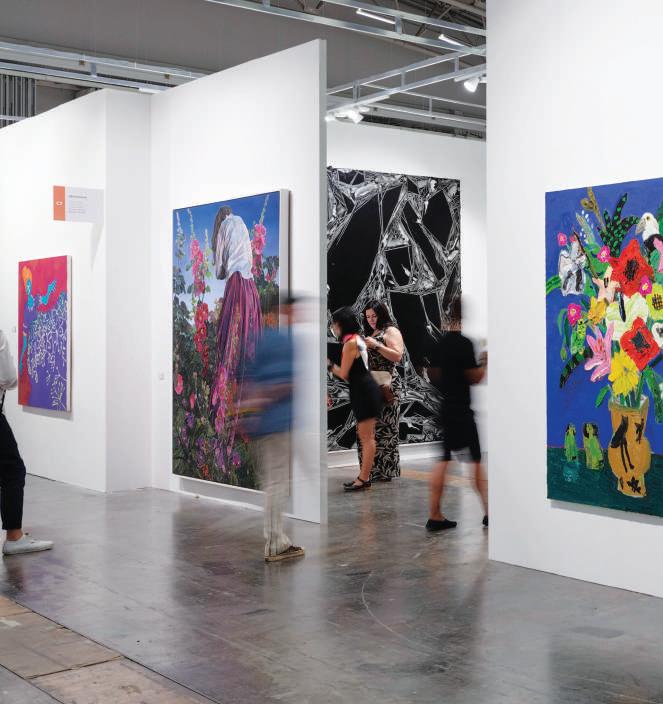
Cape Town and Johannesburgbased gallery Stevenson exhibited in the Main Section of the Investec Cape Town Art Fair 2025.
ABOVE
Boemo Diale, shown by Kalashnikovv Gallery, at the RMB Latitudes Art Fair 2024.
LEFT
immediacy… All these vehicles are making art easier to invest in. It’s all about accessibility right now.’
The UBS Global Art Market Report 2025 reflects similar shifts: sales at smaller galleries (turnover under $250 000) rose 17% despite a broader market dip, with increasing interest in agile platforms, satellite fairs and ‘affordable’ art.
FNB ART JOBURG is the country’s oldest major art fair and remains a key platform for Southern African artists. Known for its strong museum and patron network and deep roots
RMB Latitudes’ INDEX programme, curated by Bonolo Kavula in 2025.
in the region’s art history, it will also become a defining platform in the year ahead.
As for art and it’s investment potential, one needs to look at three high-profile sales in 2025, underscoring South Africa’s investment credentials: ‘Lady from the Orient’ by Vladimir Tretchikoff was sold at auction in May for R31.1 million, breaking the previous world record for a work by the artist. ‘Portrait of a Cape Muslim Woman’ by Irma Stern sold in October for R21.7 million setting a new record for an Africanbased female sitter. And Marlene Dumas (born in South Africa) achieved R245-million for a 1997 painting ‘Miss January’, setting a world record for a living female artist. The sale was abroad but amplifies South Africa’s relevance.
These sales highlight not only international appetite but also the global stature South African-born artists continue to command. As the market evolves – with younger collectors, decentralised selling models and greater international appreciation – South Africa’s art landscape is entering a period of change, heightening the region’s relevance in the art market.
The close collaboration between a Cape Town architect and interior designer elevates a Camps Bay newbuild into an oasis of calm. A textured material palette and endless views turn house into haven.
BY MARTIN JACOBS
VISION DOUBLE
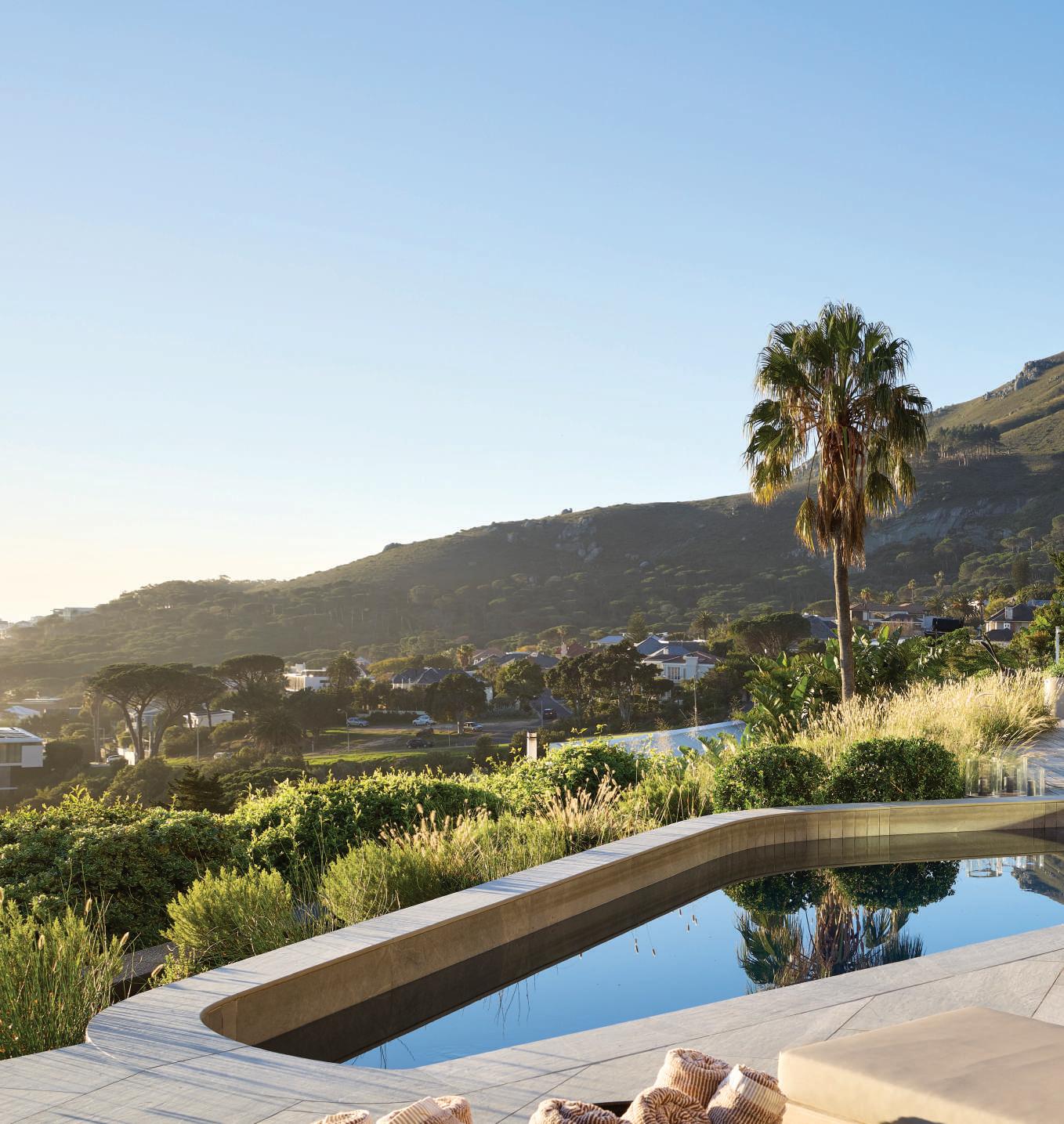
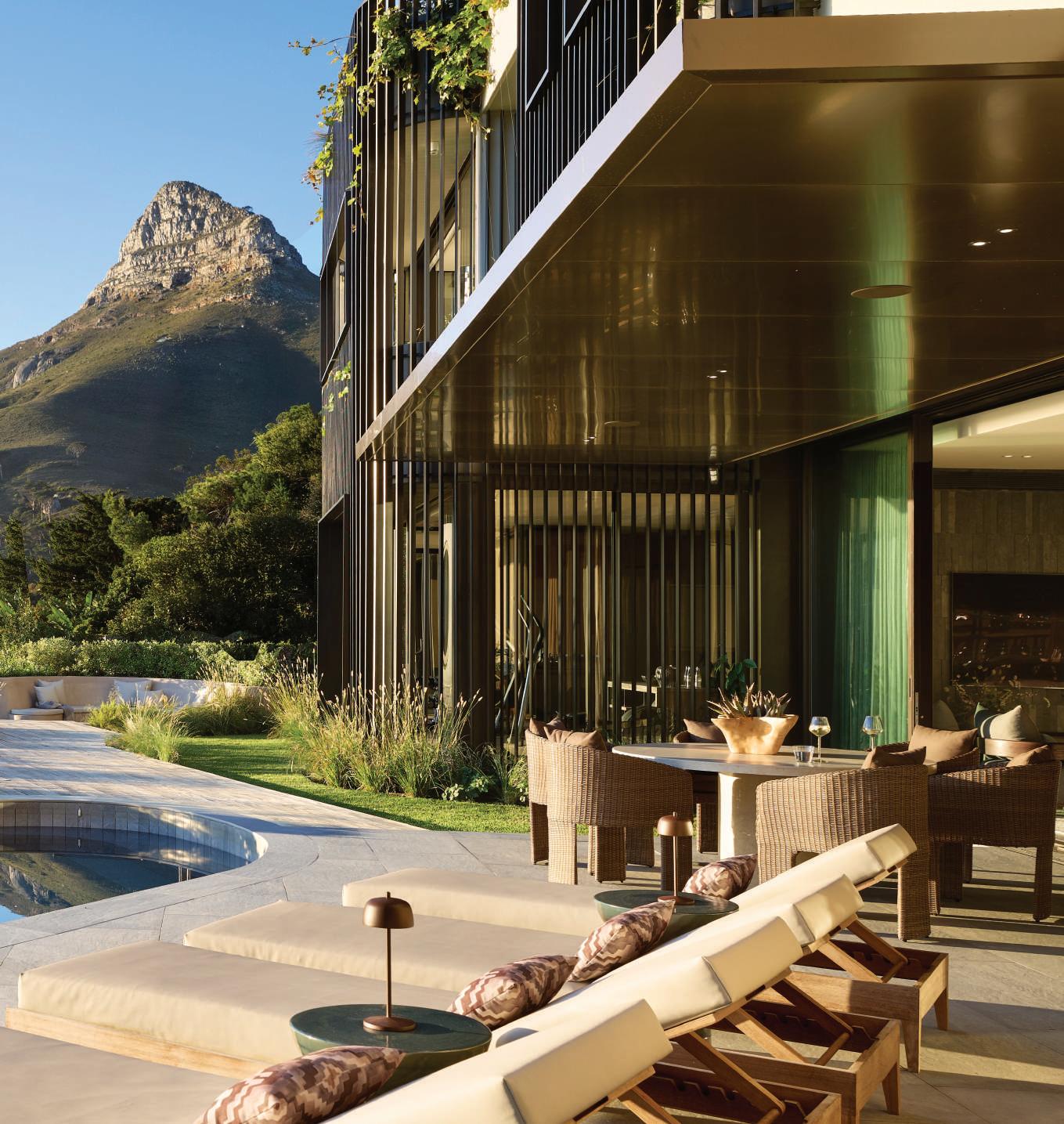
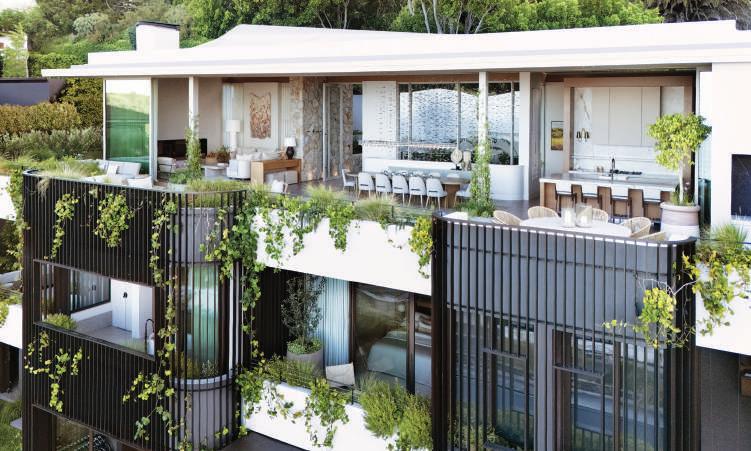
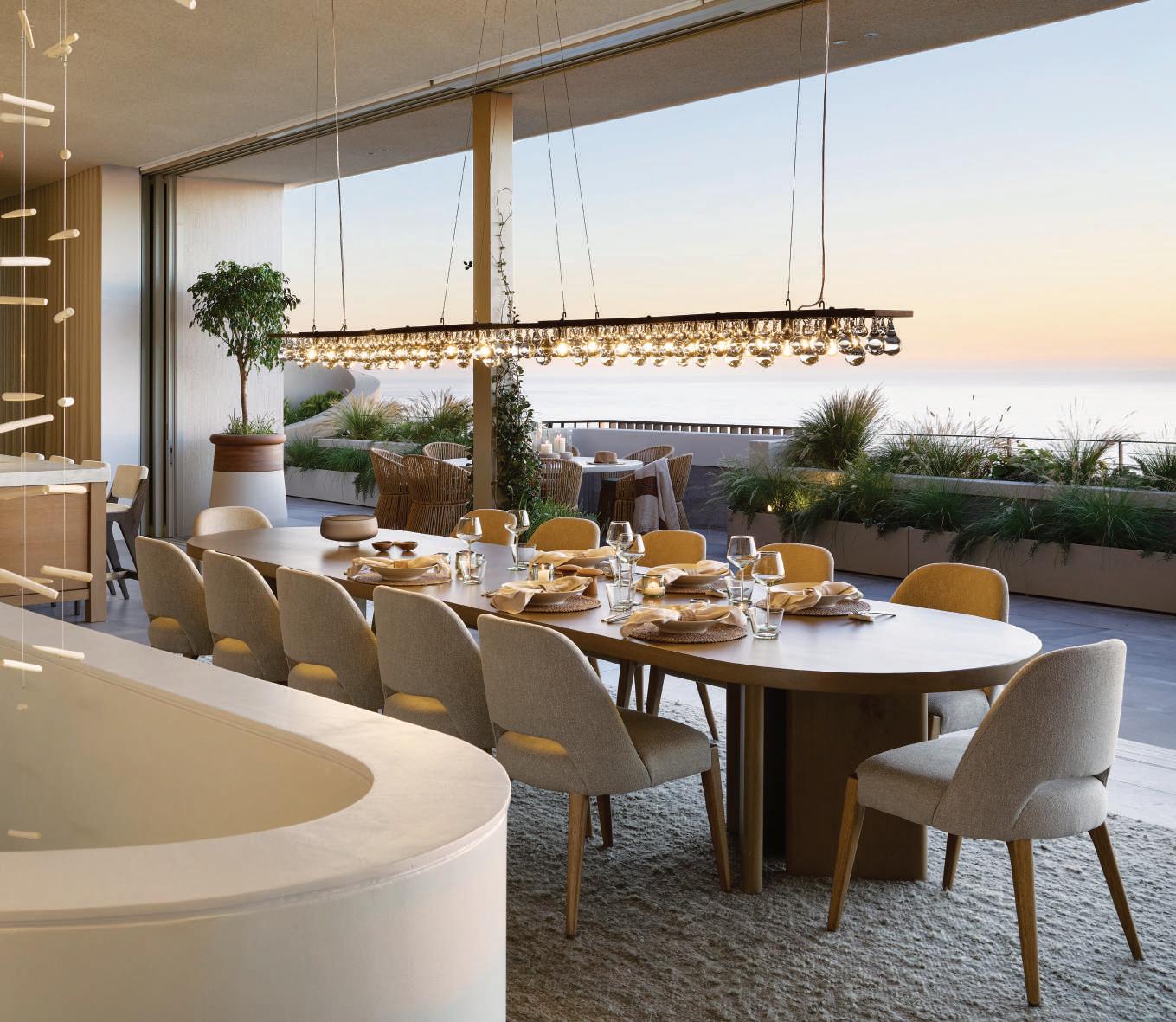
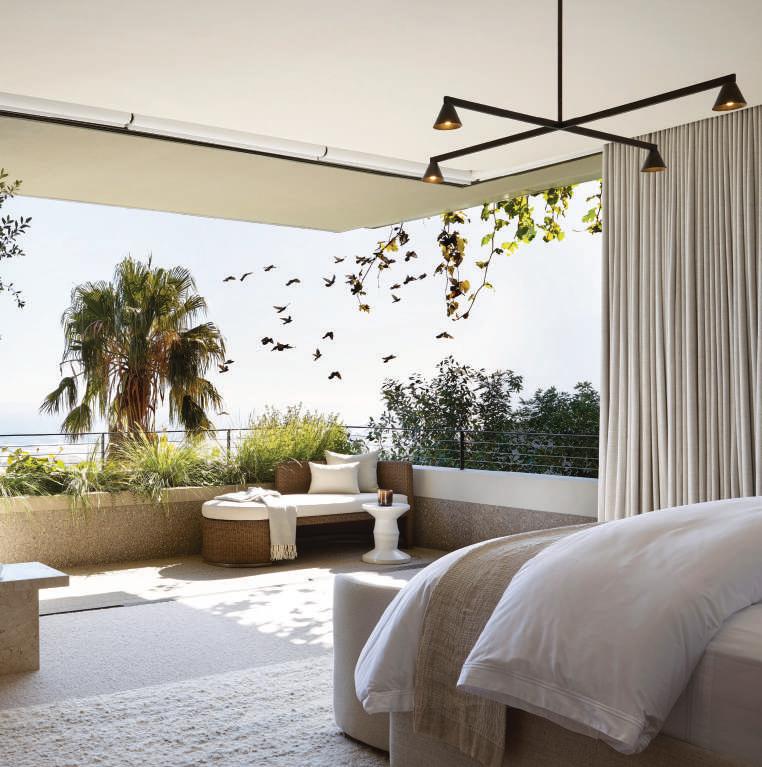
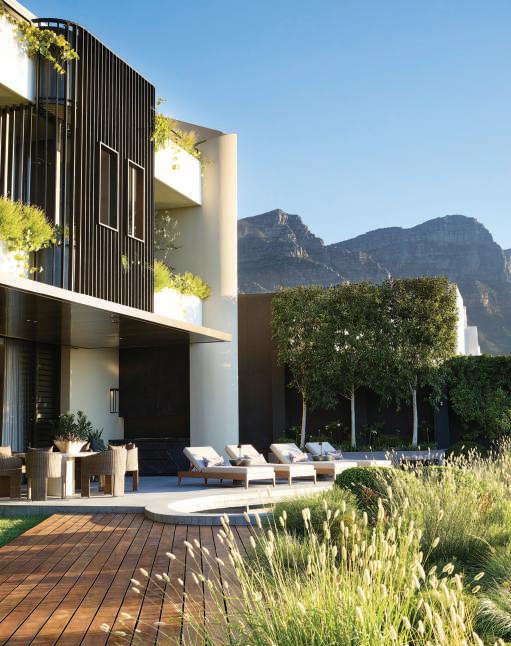
Architect Renato Graça and interior designer Lucille Cronje conceptualised a sophisticated and luxurious coastal home that honours all things local.
VISION
Cross the threshold of this Camps Bay home and the view immediately takes over: sea and sky sweep across the open-plan interior, blurring the line between indoors and out and casting the living space as a seamless extension of the shoreline.
‘If you were to take a photograph of the uppermost storey that included its sand-textured ceiling and the Cape Granite rock at its entrance, you could say it’s an abstract version of being on the beach,’ says project architect Renato Graça, founder of GSquared. The entertainment area as beach became one of several conceptual anchors for both him and interior designer Lucille Cronje of Studio Cronje, each of whom referenced the sense of place time and again when shaping both the home’s atmosphere and experience.
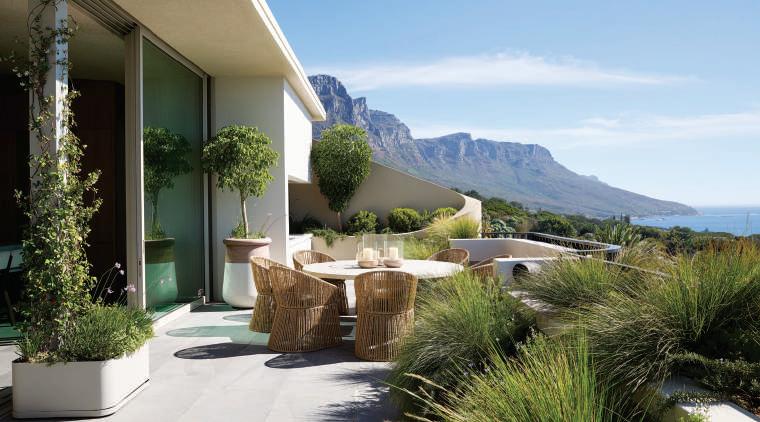
No stranger to Camps Bay, the homeowner requested a house that would take advantage of its setting; the architecture was to maximise panoramic views of Lion’s Head, the Twelve Apostles and the bay, and the interior design should favour all things local. From the diaphanous entertainment space to the darker interiors two storeys below, the newbuild is as much a celebration of its location as it is of the power of partnership and craft. ‘Our studios had a very good give-and-take balance, both contributing equally to the project,’ says Cronje. What began as a shared commitment between architect and interior designer to a deeply customised, distinctly South
African home evolved into a design dialogue, in which the disciplines continually informed and elevated one another.
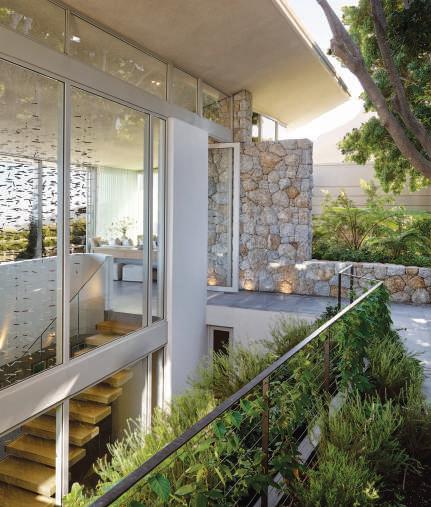
Entry to the home is on the uppermost – and lightest – storey, one with the most panoramic views. With his client’s brief emphasising ‘light and height’, Graça endeavoured to maximise both. ‘When I discovered we were able to lift the roof in one corner, its curved form evolved,’ he explains of the architectural device –much like its textured surface – that softens the room. Cronje recalls the time spent perfecting the Marmoran finish that coats the ceiling. ‘We went through so many samples to get it to look exactly like beach sand; we had to get the stipple just right.’ The curved roof allowed for clerestory windows in the elevated ‘living room’, and these not only offer glimpses of the cable car station, but flood the space with morning light, as does the wall of glass extending the height of all three storeys which looks over and, in places, opens onto a vertical garden.
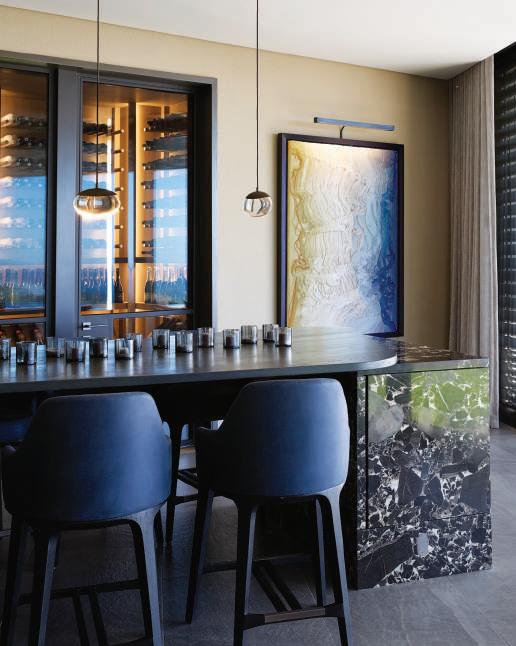
Highly social, the homeowner wanted an expansive entertainment space separated from both garden and pool. ‘Guests are entertained up top, before circulating past the middle-storey bedrooms to the downstairs informal lounge, wine cellar, garden and fire pit,’ says Graça. This descent is not only experiential but atmospheric too, with Cronje introducing a shift in colour to darker, more mountainous tones and textures – like slate and marble, a nod
CLOCKWISE FROM TOP LEFT
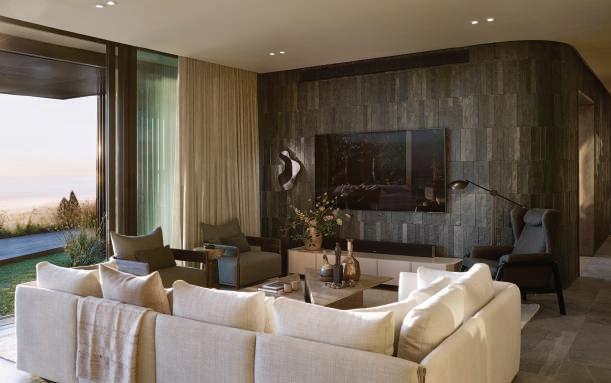
The creatives imagined the uppermost storey’s entertainment space as an abstraction of Camps Bay beach; the curved forms of bespoke dining chairs echo the architecture’s snaking contours; a slate-clad wall is a textural nod to Table Mountain; Cape Granite at the entrance sets the tone.
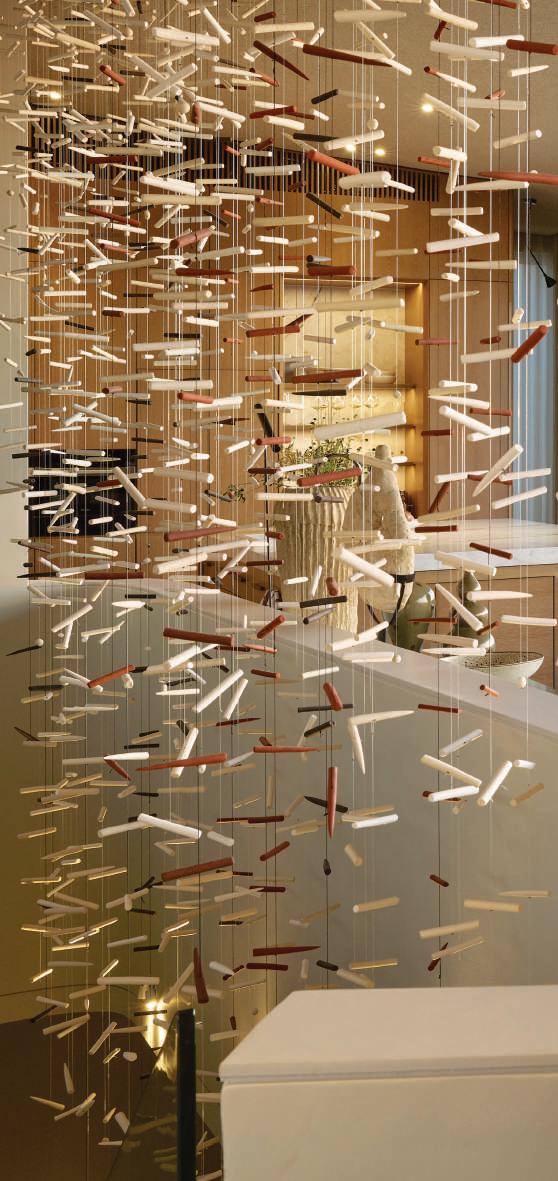
to Table Mountain – on the bottommost storey. ‘I like the narrative of being drawn down the open stairwell, between the vertical garden and suspended ceramic installation by Nindya Ceramics, into this moody, almost club-like vibe downstairs, which feels relaxed,’ she explains. A curved wall on this storey speaks to how the homeowner’s brief pushed architect and interior designer alike. ‘Our client loves symmetry and clean lines, but wasn’t averse to something organic,’ says Graça who, breaking from his
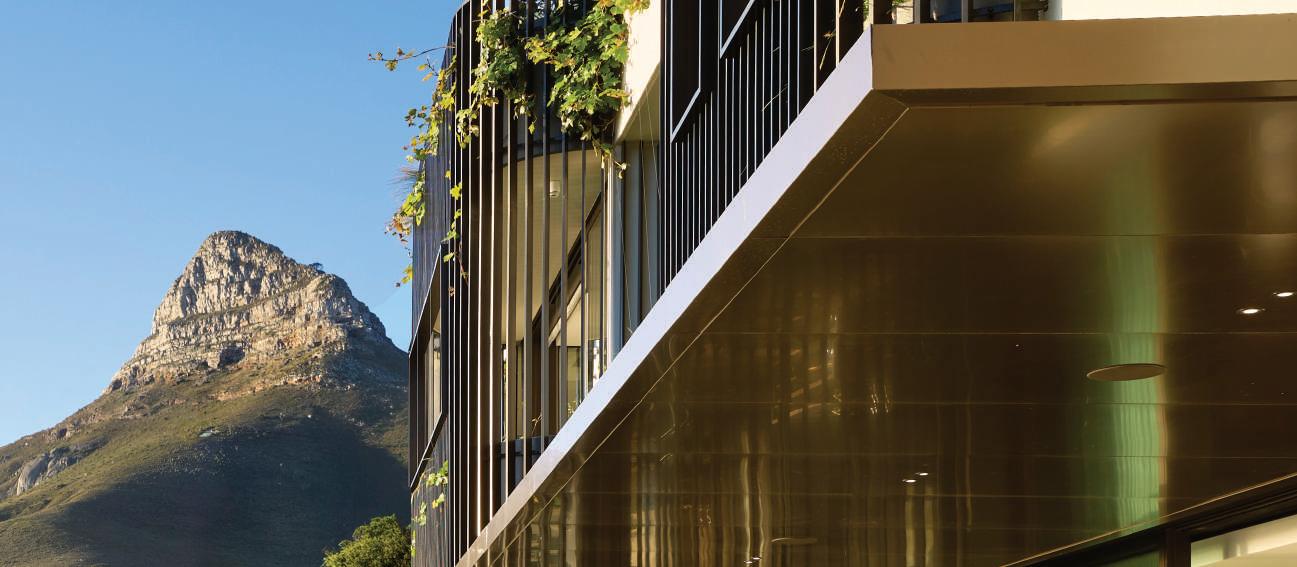
trademark linearity, introduced subtle curves throughout the home, including for the screens on the front façade. The sinuous forms of these screens modulate afternoon sunlight, offer privacy, disrupt the horizontality of the façade, and are a framework onto which Franchesca Watson’s and Shannon Law’s soft landscaping can take hold. ‘I’d like the plantings to take over these structures, soften them and make them an architectural element that changes with the seasons.’
In keeping with her practice of favouring uniqueness and originality, Cronje saw the downstairs curved wall as an opportunity to draw the exterior indoors. ‘Conceptually, I wanted the slatted screens to feel like they were curving into the space,’ she explains. ‘I love to develop my own finishes and used
slate tiles, customised into thin strips, for a sophisticated pattern.’ Both indoors and out, finishes were innovatively interpreted and applied, and furniture customised for particular spaces and uses.
A strong passion of the homeowner and both creatives, local contemporary art has pride of place at every turn. Commissions from artists including Elize Vossgätter, Sasha Hartslief, Mark Rautenbach, Kilnhouse, Cathy Abraham and Zarah Cassim are, in some instances, their largest artworks to date. Such bespoke art, décor and architecture define the home, a response to the homeowner’s desire for an entirely unique house imbued with both an African and South African feel. The result is a refined Camps Bay home that feels rooted in place, and elevated through collaboration.
CLOCKWISE FROM ABOVE
A screen filters sunlight and offers privacy in the primary bathroom; views of the Twelve Apostles are as striking as those of the ocean; for the kitchen, Cronje chose stone surfaces with shapes and colours evocative of clouds; Franchesca Watson and Shannon Law’s landscaping softens boundaries; a darker palette creates a cocooning mood in the wine cellar and at the tasting island; three bedrooms on the middle floor, including this primary, open onto uninterrupted ocean views.
From the diaphanous entertainment space to the darker interiors two storeys below, the newbuild is as much a celebration of its location as it is of the power of partnership and craft.
TOP 8
MOST SCENIC DRIVES
There’s nothing more liberating than being on the open road. But some roads are better than others. Here are our favourites.
BY SUSAN NEWHAM-BLAKE
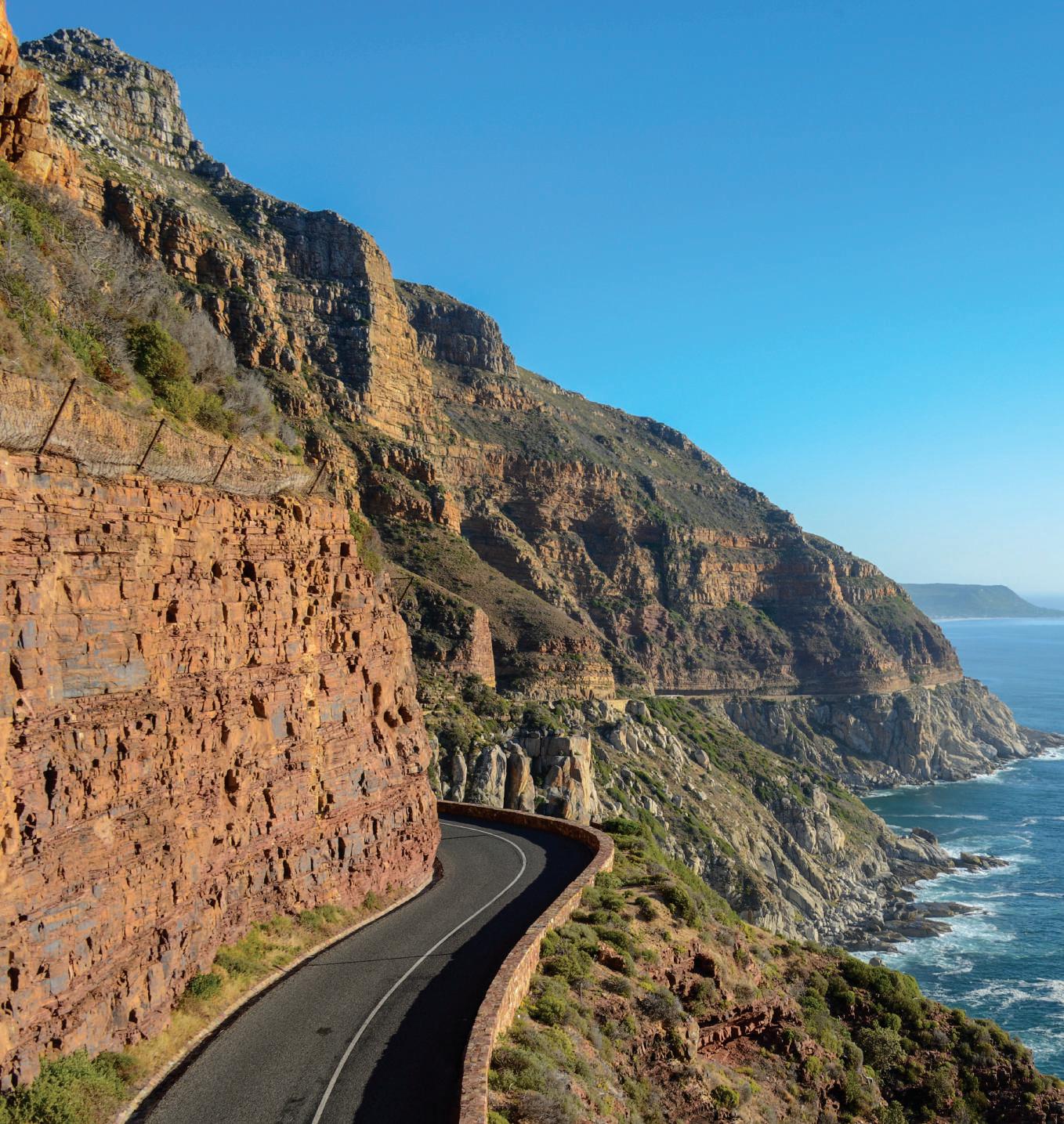
1Dramatic beauty
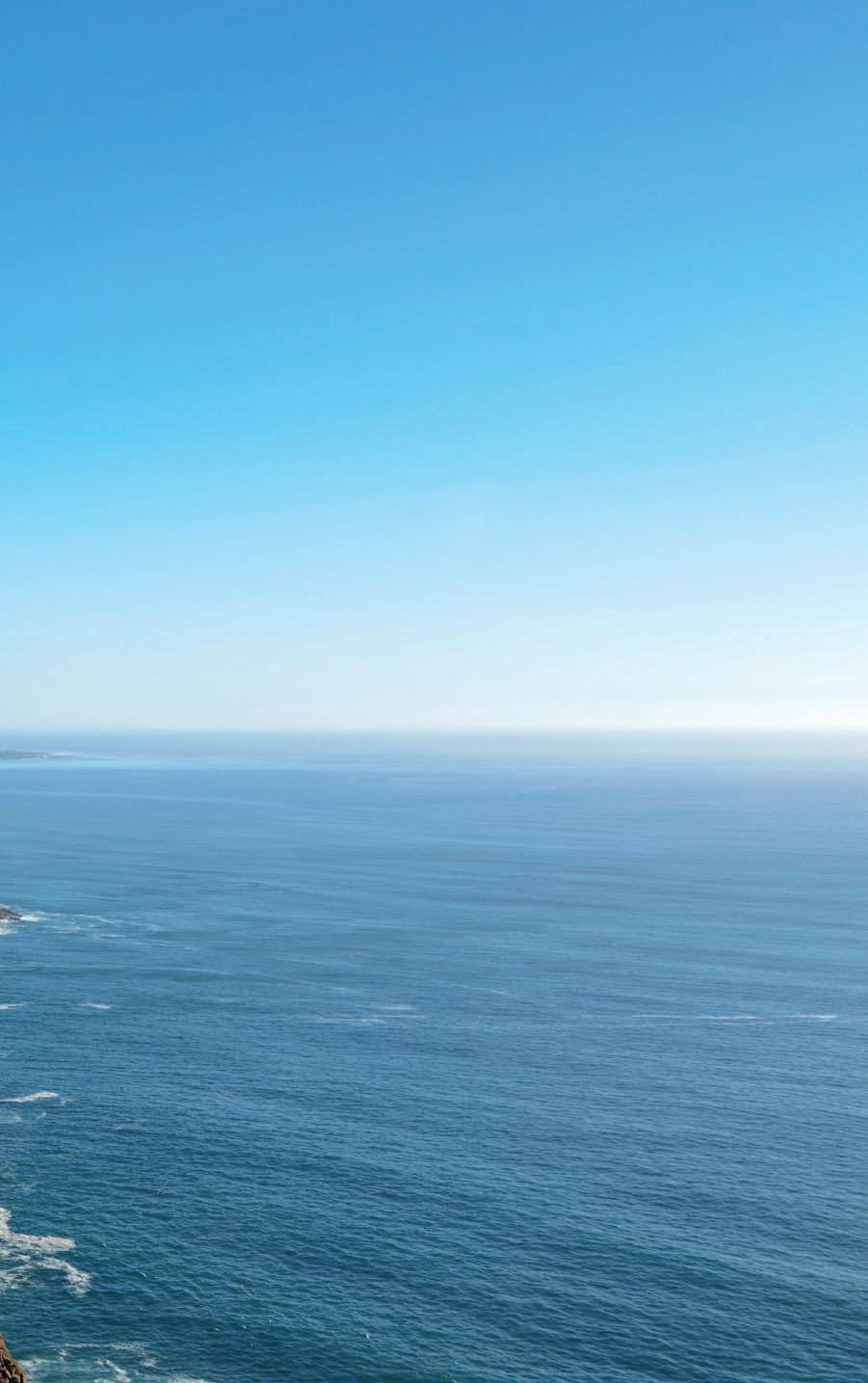
Chapman’s Peak Drive, carved into sandstone cliffs overlooking the turquoise Atlantic, is perhaps one of the most spectacular drives in the world. Affectionately called Chappies by locals, the dramatic stretch of road between Hout Bay and Noordhoek in Cape Town is an engineering feat. Initially constructed during World War I, this 9km route with its 114 curves, skirts Chapman’s Peak, the 593m high southerly extension of the Constantiaberg, and follows the rocky coastline to reveal breathtaking views in both directions.
Lookout: There are several marked scenic viewpoints on the 9km route between Noordhoek and Hout Bay with safe parking and panoramic vistas. One of the best is the site overlooking Hout Bay and Sentinel Peak.
2 Photographer’s paradise
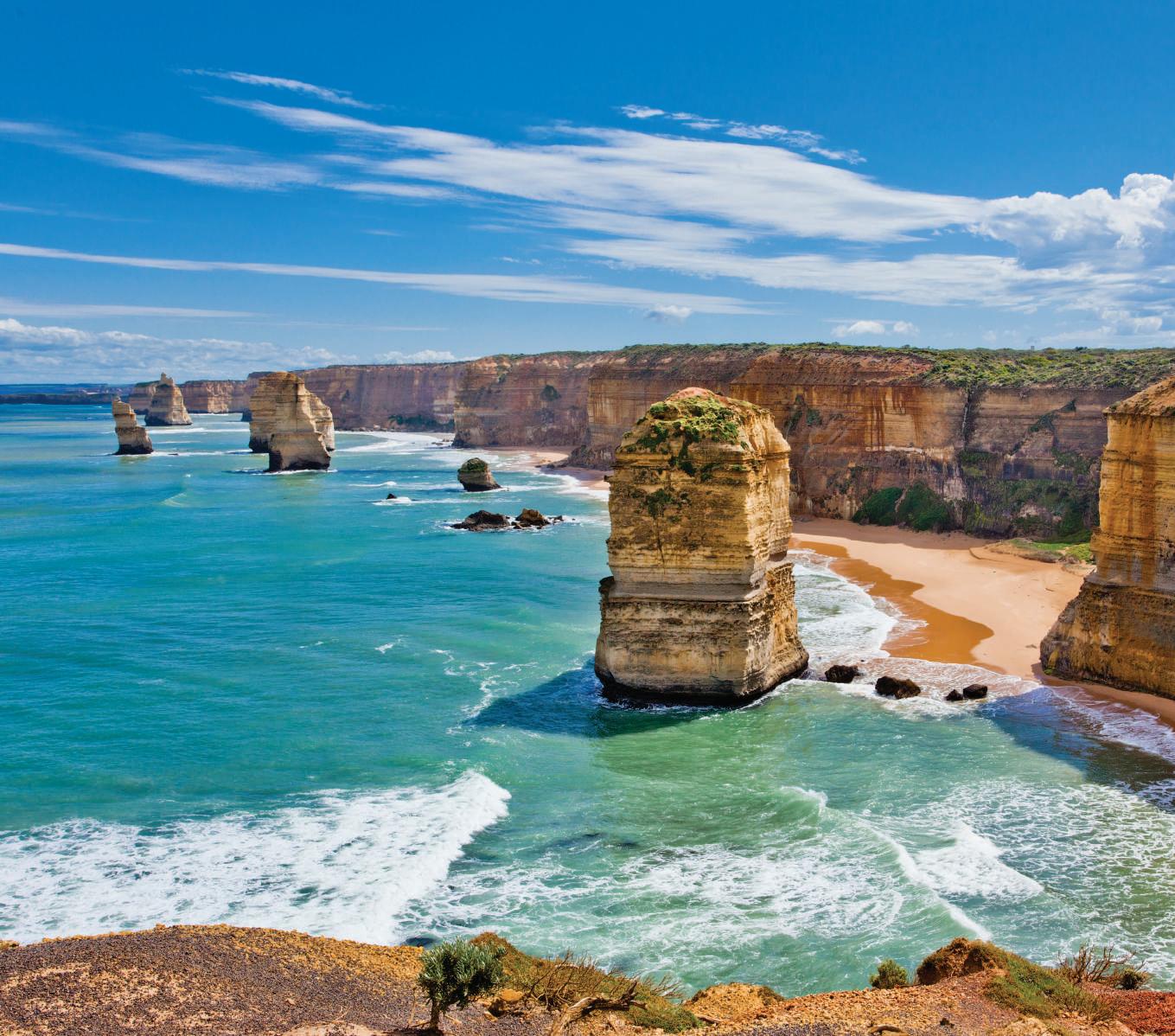
The Great Ocean Road is a 243km scenic highway in Victoria, Australia, built by returned servicemen as a memorial to World War I soldiers. It runs along the coast between Torquay and Allansford, passing through diverse landscapes like rainforests and rugged cliffs. Key attractions include the 12 Apostles, Loch Ard Gorge and Great
Otway National Park. Whether tackled in a single day or savoured slowly over several, the Great Ocean Road is less a journey than a moving panorama of Australia’s raw coastal splendour.
Lookout: Stop at the official lookout to view the incredible limestones stacks known as the 12 Apostles.
3
4x4 fun
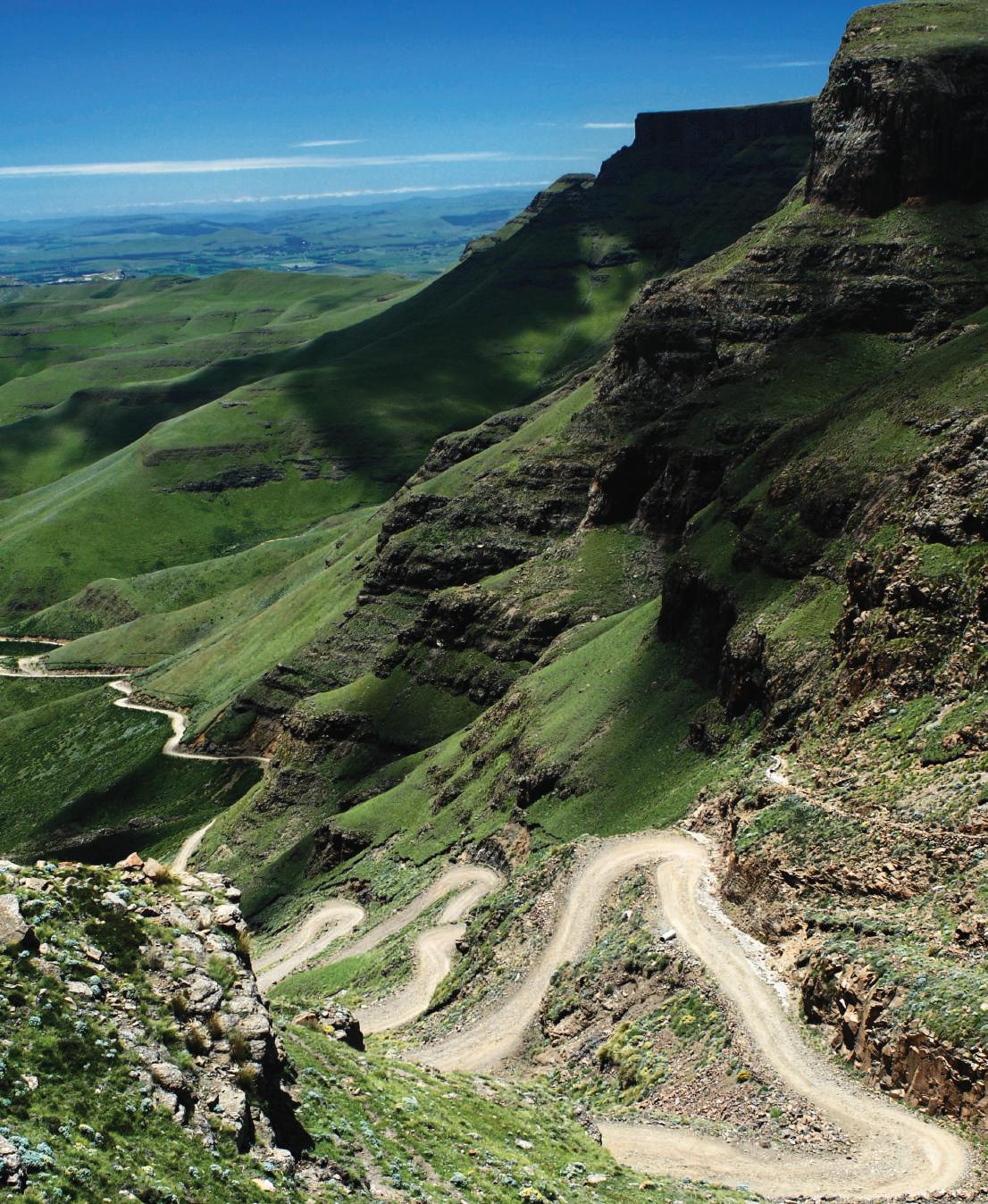
Known for its challenging, steep, and rocky gravel track that winds through the majestic Drakensberg mountains, the legendary Sani Pass links South Africa and the mountain kingdom of Lesotho. The drive demands a capable 4x4 vehicle and a confident hand at the wheel, as hairpin bends and sheer drops test both nerves and skill. Rising from an altitude of around 1 500 metres to nearly 2 900 metres, the climb offers breathtaking views that shift from lush valleys to rugged alpine landscapes. Mist and sudden weather changes
are common, adding to the drama of the journey, which is best attempted in summer when conditions are more favourable. Allow a full day to complete the route and savour its natural beauty, history and sense of adventure.
Lookout: The highest pub in Africa is the Sani Mountain Lodge pub, located at the top of the Sani Pass on the border of South Africa and Lesotho. It sits at an altitude of approximately 2 874 metres above sea level.
4 Glacial wonder
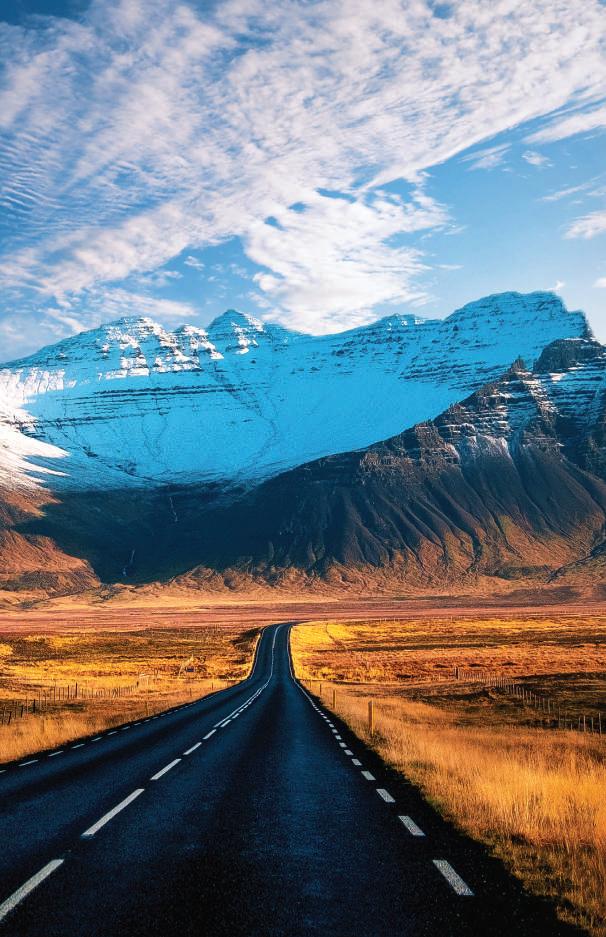
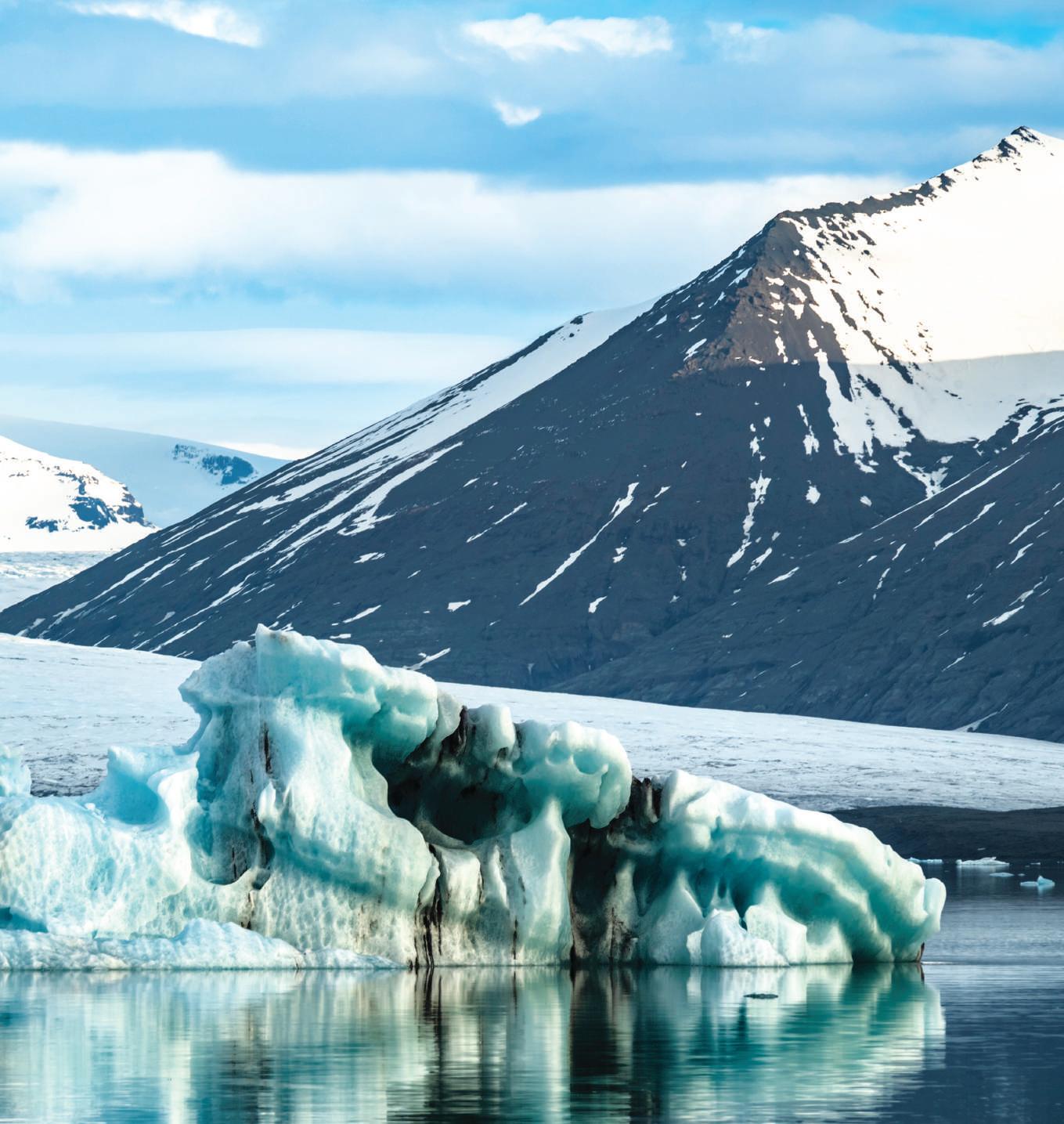
The Iceland Ring Road is a 1 332km circular highway circling the entire island and linking most of its major towns and natural wonders. This fully tarred route leads travellers through a landscape of surreal diversity from thundering waterfalls and vast glaciers to steaming lava fields, black-sand beaches, and deep fjords carved by ice and time. Along the way, small fishing villages, geothermal pools and moss-covered plains reveal the quiet rhythm of island life. Accessible year-round, the Ring Road can be driven in a week, although 10–14 days allows time to explore at leisure and linger at Iceland’s ever-changing horizons. Lookout: Pull over at one of the many roadside viewpoints overlooking a glacial lagoon or northern fjord to take in a sweeping panorama where ice, mountain, and sea meet – a reminder of Iceland’s otherworldly beauty.
5 Sunshine drive
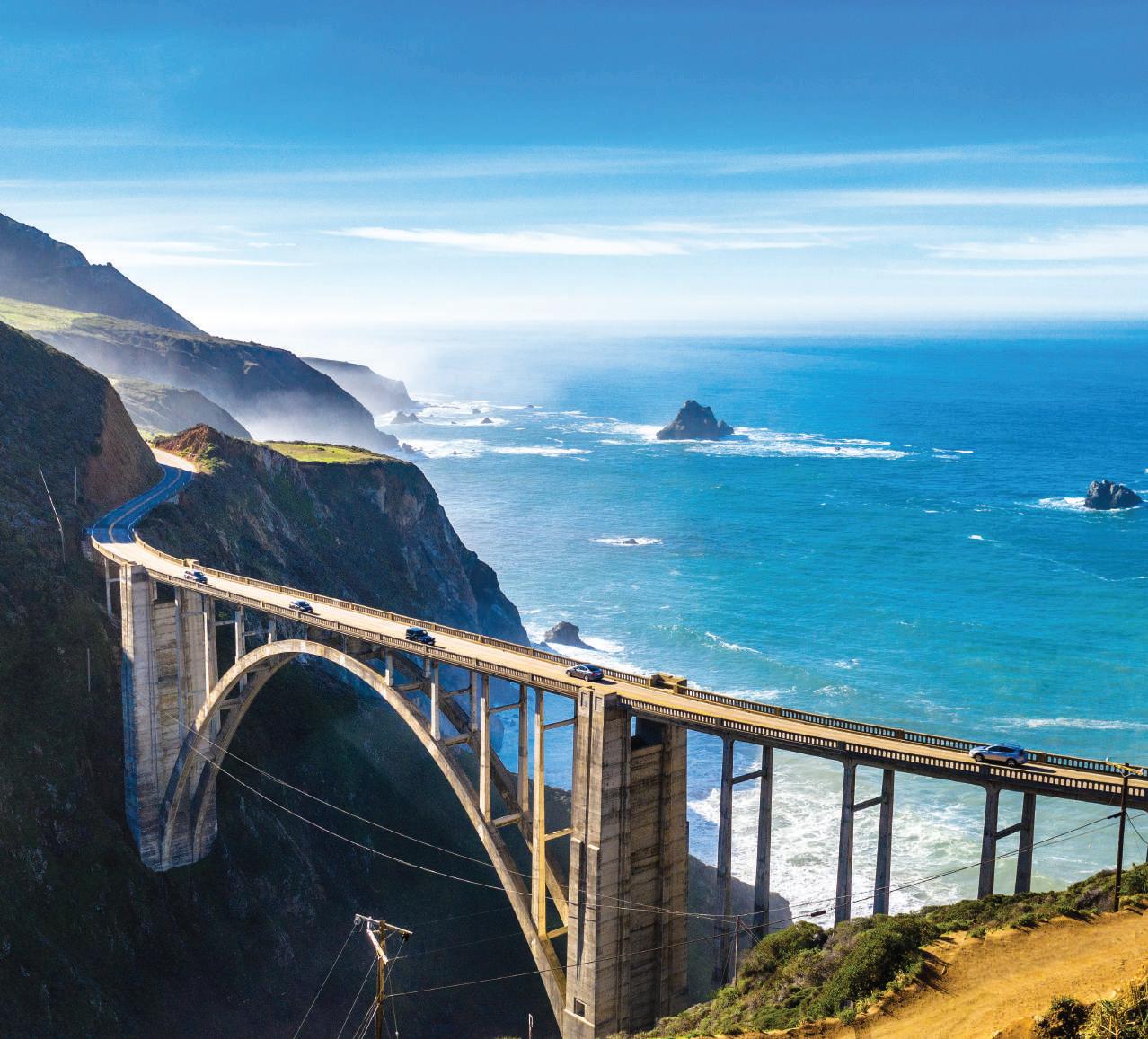
The Pacific Coast Highway is one of the world’s most celebrated coastal drives, tracing more than 1 000km of California’s rugged and spectacular shoreline along State Route 1. This legendary road weaves through a tapestry of seaside towns, windswept bluffs and sun-drenched beaches, capturing the very essence of the Golden State. The most iconic stretch between San Francisco and Los Angeles is a journey of cinematic beauty, where every curve reveals another breathtaking vista of the Pacific. Big Sur, with its dramatic cliffs plunging into the ocean, is the route’s highlight, while charming stops like
Monterey, Carmel-by-the-Sea and Santa Barbara invite travellers to linger among art galleries, surf breaks and palm-lined promenades. With its ever-changing light and rhythm of sea and sky, the Pacific Coast Highway is both a drive and an odyssey of freedom, beauty and endless horizons.
Lookout: The official turn-off at Bixby Creek Bridge is a must-stop with expansive parking and a dramatic bridge spanning the canyon with the ocean beyond. McWay Falls is another must-see with water cascading 24m from a cliff straight onto the beach below.
6
Vast wilderness
The Icefields Parkway is a 230km stretch of alpine splendour, winding through the heart of the Canadian Rockies, connecting Lake Louise in Banff National Park with the town of Jasper in Jasper National Park. Also known as Highway 93, it’s hailed as one of the world’s most beautiful drives, traversing glacier-clad peaks, turquoise lakes and vast wilderness. Highlights include the majestic Columbia Icefield and Athabasca Glacier, where visitors can step onto ancient ice or join guided tours. Wildlife sightings, from elk to mountain goats, are common, and countless lookouts invite moments
of pause and awe. With its raw grandeur and shifting mountain light, the Icefields Parkway is more than a road; it’s a passage through the very soul of the Rockies. A Parks Canada Pass is required, and a full day is best allowed to savour the experience.
Lookout: At the Crowfoot Glacier Viewpoint, visitors are treated to sweeping views of the glacier cascading down the mountainside above the shimmering waters of Bow Lake. A short drive away, the Bow Lake Viewpoint offers another breathtaking perspective, with the Crowfoot Glacier and Wapta Icefield forming a dramatic alpine backdrop.
7 The long road
Argentina’s Ruta 40 is one of the world’s longest highways stretching 5 194km along the western spine of the country, tracing the length of the Andes Mountains. Beginning in La Quiaca near the Bolivian border and ending at Cabo Vírgenes at the Strait of Magellan, it crosses an astonishing range of landscapes, from high-altitude plateaus and fertile vineyards to arid deserts and the windswept
plains of Patagonia. Along its course, travellers encounter remote villages rich in indigenous heritage, charming towns steeped in history, and endless horizons that shift with every region.
Lookout : Find a vantage point beside the Andes, where the road cuts through the geological formations of the Quebrada de Las Flechas, or stop at a mountain lake or the glistening salt flats of Salinas Grandes.
8
Bella strada
The Amalfi Drive is a scenic 50km highway along the Campania coastline in Southern Italy, stretching between Sorrento and Salerno. It’s famous for its breathtaking views, winding roads carved into cliffs, and picturesque towns like Positano, Amalfi and Ravello. While considered a legendary and beautiful drive, it is also known for being narrow and winding, demanding
focus from the driver. But the scent of citrus and salt carried on the air and the spectacular views gets this world-famous driving route on the list.
Lookout: A scenic terrace above the road at one of the hairpins as the route descends towards Amalfi/Positano provides great views of the sea, the villages and the road beneath.
WORTH THE ROAD TRIP
These out-of-the-way establishments are worth the drive, not only for their spectacular scenery but also for their delectable food.
A SLIVER OF CIVILISATION AT THE EDGE OF THE WILD COAST
BY KEITH BAIN
Few places on earth can hold a candle to Chintsa’s calm beauty. Here, at the southernmost point of the Wild Coast, just 45km from East London, the town provides access to a 20-odd kilometre
stretch of uninterrupted beach backed by colossal dunes. The drive off the main coastal road into Chintsa East is circuitous and pulse-elevating, giving the sense of disappearing into deepest countryside. And then it’s rolling green hills all the way into the village, sprawling gated estates with manicured golf courses notwithstanding.
The drive is as wild and unruly as the coastline, which makes swanky Prana Lodge even more of a find. Its owners have installed a number of sumptuous villa-style suites within a gorgeously jungly 17-acre semi-wild garden behind the towering sand dunes. When you do venture down the dune and onto the beach, there’s zero chance of
encountering anything resembling a crowd. It’s a genuine battery recharger with a balance of barefoot back-tonature beachcombing and luxuries that include butler-style service, an excellent spa offering calming therapies, and a restaurant that’s easily the best place to eat for 100km in any direction. Lunch is a relaxed three-course affair – think French onion tart to start, or a mezze platter of crisp chilli calamari, lamb kofta, tahini hummus, chorizo, tzatziki and flatbread. And then spicy lamb ribs, a selection of homemade burgers (beef and grilled aubergine, pulled pork and Asian slaw, or cajun chicken with bacon) or tempura stir-fried pork.
After you’ve dined, it’s an easy climb along a wooden boardwalk to the top of a steep dune, where there’s a deck to chill out, cocktail in hand, while you watch out for dolphins and whales. Or take the plunge into the soft sand down below and amble along the shoreline, encountering sunbathing cows, whalebones and opportunities to reconnect with yourself. All of it is good reason to stay a while; if you do, dinner’s a somewhat more lavish experience, fine-dining done with good humour and without necessarily going over the top. If you do indulge, though, the immaculate suites are a short stroll away. pranalodge.co.za
CLOCKWISE FROM ABOVE Stairway to heaven, or rather the wooden steps to the beach from the top of the dune behind which Prana Lodge sits.
Prana’s lunchtime dishes are light, with an emphasis on nourishing ingredients.
The restaurant edges onto the poolside area, with views of the semijungly garden.
FOOD THAT’S FAR FROM NORMAL
‘We’re a decent drive away from everything,’ says Tamsin Reed, chef and owner of Melfort, a gem of a restaurant at Marianne Wine Estate in the Stellenbosch countryside. ‘For our diners, it’s an escape to paradise. There’s beauty in not being in the hustle and bustle; it means we can be very present where we are.’
Melfort is reached by turning off the busy R44, heading down an avenue of trees, up a hill, and then down into bucolic bliss at the bottom of the hill, surrounded by vineyards and overlooking a dam, complete with deck and tables. A nearby vegetable garden boasts future ingredients.
‘We use produce from local farms and from our own garden, including foraged ingredients,’ Tamsin says. Her set menu and à la carte sharing menus change monthly, but always feature elements such as ‘seaweed’ or ‘red wine and dandelion root jus’, both used in a braised rib dish made with grass-fed beef.
‘We celebrate the entirety of the season – meat, foraged ingredients, fresh farm produce, and seafood, too,’ Tamsin says. All produce is organic, and meat is from grass-fed animals.
Such intentionality goes into every menu item, from the bread course (which might comprise Lowerland Kalahari white wheat focaccia baked with activated charcoal and served with smoked Jersey butter, farmstyle Cheddar and honey harvested from Melfort’s own hives) to a recent dish made using Cape Point chokka
CLOCKWISE FROM ABOVE LEFT
Melfort’s outdoor deck overlooks a small dam, which is enfolded by vegetation.
Expect to find dishes inspired by the seasons and featuring unusual and sometimes foraged produce or greens straight from the on-site garden.
Emphasis is on wholesomeness, nutrient abundance and avoiding processed ingredients –and that goes for desserts, too.
and served with foraged greens, dune spinach, ricotta and sorghum. This year, she created a beautiful braaied kohlrabi dish served with a pea and broad bean salsa, almonds, and dandelion-and-seaweed jus, plus loads of unfamiliar, highly nutritious greens on the side.
‘We try our absolute best to have guests leave our restaurant feeling better than when they walked in,’ says Tamsin.
‘One reason we’re different to other restaurants is that we’re not trying to copy anyone. I don’t care about trends or what everyone else is doing. My focus is on just how delicious seasonal food can be, and on showcasing ingredients that aren’t widely used. That makes us unique. Our guests definitely feel it.’
And they taste it too. melfort.co
TASTE HEAVEN ON EARTH
Defined by the looming Babilonstoring Mountains and right on the doorstep of Hermanus, the entire Hemel-en-Aarde Wine Route, which stretches along the R320 between Hermanus and Caledon, is a stunner. Come for tastings and you’ll feel you’ve arrived in proper wine country, unimpeded by city congestion. Bulging with awards, winemaking innovation and some of the country’s best- (and least-) known wine farms, it’s where you’ll find Creation (Africa’s second-finest wine farm, according to The World’s 50 Best
Vineyards, a globally curated ranking programme), where low-intervention winemaker Jean-Claude Martin lets nature express itself through the wine. In the restaurant at Creation’s tasting room, JC’s wife Carolyn has developed an approach to sophisticated dining that taps into the latest ideas about health and flavour. Not only is the entire menu based on Ayurvedic principles, but there’s no gluten, barely any dairy and pretty much no sugar.
Each course is formulated to enhance health while hitting the right notes in terms of the wines its paired with.
The recent ‘Power of Flowers’ springtime menu included a twist on
traditional fish and chips and mushy peas: trout with firm, flavourful peas, paired with Chardonnay. There was a Pinot Noir-paired ‘Red Velvet’ course comprising lamb cutlets (herbcrusted oyster mushrooms and tofu skewer for those on a plant-based regimen), waterblommetjie maize quenelles and broccoli. An elevated braaibroodjie, made with gluten-free bread, onion and tomato, was served with slivers of Klein River Gruberg cheese and basil gremolata. And a glass of JC’s Syrah. Lunch can get rather touchy-feely, too. Meals are a crash course in sensory awareness – you might be moved to participate in tiny gestures designed to illustrate how food and
wine flavours are impacted by factors such as touch and sound.
This summer sees a new ‘Power of Love’ menu launching, each course set to raise spirits, fortify immune systems and satisfy all the senses. Unlike so many tasting menus, there’s nothing longwinded, overwhelming, or exhausting about this one. It’s nourishment and beautiful flavours rather than an ordeal. And it’s verifiably healthy, says Carolyn, whose head chefs have not only done stints in Michelin-star restaurants in Europe, but work with integrated medicine experts to ensure that ingredients and menus deliver real health benefits. creationwines.com
CLOCKWISE FROM TOP LEFT
The restaurant is light-filled with spectacular views.
Art on the plate: food at Creation follows the seasons, and aims to appeal to all the senses while pairing beautifully with wines made with minimal human interference.
Creation’s tasting room and restaurant amid the farm’s vineyards.
FEED YOUR SOUL
You leave your car at Nirox, the Cradle of Humankind’s fabulous sculpture park, about an hour or so out of Joburg, and are delivered to a restored and handsomely refurbished dairy farm by game viewer. Although safari-style drives are a possibility elsewhere in the area, guests at Farmhouse58 are more likely to set off on hikes across the property – zebra and other herbivores roam free, and there are extensive trails into the semi-wild.
Even more likely, though, is simply settling in for a few hours or days of respite. Accommodation options, arranged around expansive gardens, are marvellously monastic and everywhere you look there’s another nook designed for mellowing out. There are hay bales on the gigantic lawns, stone pathways, tall trees and peaceful sitting areas. Up at The Lapa, an open-air bar and lounge, breakfast is served to in-house guests while waiters rake sand as though tending to a Zen garden. Nearby, at the indoor-outdoor restaurant called The Shed, tables spill onto the terrace at the edge of the wild and wondrous garden, lawns rolling down to one of the dams on the estate. On the grass, families cluster
around tables soaking up the peace. The Shed’s menu celebrates what local farmers and artisanal producers have on offer, while the real heart of its culinary focus is the large, regenerative on-site produce garden. Seasonality and sustainability determine what ends up on the plate as much as the imagination of whoever’s presiding over the kitchen. Outside, dry-stacked rock and rammed earth form the backdrop to Joe’s Boma, with its wood-fired oven, producing grills, pizzas, roasts and freshly harvested vegetables from the adjoining garden.
At Nirox, directly next door, you can book for a meal at ‘And then there was fire…’, an open-to-theelements restaurant overlooking the sculpture garden’s lawns. Food is based on an Argentine open-fire cooking concept and ranges from wood-fired steaks and roasted vegetables to grilled bone marrow on toast, plus fabulous tapas-style small plates and flavoursome salads. And after your meal, you can walk it all off by taking in the extensive collection of art installations spread across the grounds. You’ll likely not be quite ready to get in your car to go anywhere, which is a perfect reason to have a room at Farmhouse58; and when you wake up, you can do it all over again. farmhouse58.co
CLOCKWISE FROM RIGHT Farmhouse58’s produce garden is responsible for much of the fresh harvest that ends up on the plate.
The interior of The Shed, the main restaurant at Farmhosue58.
Open to the elements, The Lapa is a bar-cum-lounge where breakfasts are served.
What isn’t grown on site at Farmhouse58 comes from the abundant farms and artisanal suppliers in the area, part of the hotel’s commitment to supporting and involving the local community.
BIG IN
An iconic Japanese scene: cherry blossoms in bloom with the snow-capped peak of Mount Fuji in the background.
JAPAN
The Land of the Rising Sun is a tantalising blend of ancient tradition and futuristic creation, its philosophies colouring its art, fashion, food and tech developments, and, increasingly, our own ways of living.
BY GLYNIS HORNING
Extending beyond its contributions to science and technology, and informing these at every level, is Japan’s extraordinary culture.
Japan may seem geographically small (a third of the size of South Africa) and remote (isolated off the Asian mainland, it remains one of the few places where English is not widely spoken), but it has one of the world’s largest economies and is a global leader in the electronics, robotics and automotive industries.
Extending beyond its contributions to science and technology, and informing these at every level, is its extraordinary culture. This is evident everywhere: from the ancient rituals embodied in ikebana flower arranging (focused on simplicity, asymmetry and balance), the chanoyu ‘way of tea’ ceremony (emphasising harmony, respect, purity, tranquillity, spirituality and hospitality), and Noh theatre (stylised and stripped of all extraneous elements), through to today’s vibrant J-pop, comics, anime and video games, which blend modern technology with classic themes and styles.
All this is fuelling a growing number of tourists – in 2025, visitors surpassed 30 million for the first time, according to the Japan National Tourism Organization. Tourists come for more than the cherry blossoms, the snows of Mount Fuji, the Buddhist and Shinto temples, the imperial palaces, the bullet trains, and the exotic shopping and food, though these continue to seduce.
Today, shopping ranges from traditional kimonos and yukatas (lightweight summer robes), maneki-nekos (beckoning ‘lucky-cat’ figurines) and fans (folding sensu or rigid uchiwa, in bamboo, paper and silk) to a slew of edible delights: meticulously handcrafted wagashi sweets, delicate Shiroi Koibito white chocolate cookies and Tokyo Bananas (whimsical banana-shaped sponge cakes with custard filling).
For all its philosophical, industrial and business seriousness, fun novelties such as these are big in Japan, where socks come in Hello Kitty, sushi and sumo-wrestler designs, some with split toes, and self-deprecating ‘Engrish’ T-shirts embracing unintentionally hilarious English mistakes: ‘Something is about to happy!’, ‘Just it do’, ‘Elvis is dead, Sinatra is dead, And me I feel also not so good.’
But it’s the electronics market that dominates, centred on Japaneseproduced smartphones (Sony, Sharp, Fujitsu), cameras (Sony, Nikon, Canon), watches (Seiko, Citizen, Casio) and home appliances (Toshiba, Mitsubishi, Hitachi). The prime electronics hub is Tokyo’s Akihabara Electric Town district, affectionately known as Akiba after a former local shrine, and featuring Yodobashi Camera, one of Japan’s largest consumer electronics mass retailers, alongside smaller, specialis shops. Akiba is the home of otaku
CLOCKWISE FROM TOP
An unsurprising scene in one of the world’s most populous countries.
Colourful silk umbrellas have a rich symbolic significance in Japanese culture.
The OriHime robot was demonstrated during the World Robot Expo at the World Robot Summit in Tokyo.
culture, centred on intense passion for aspects of Japanese pop culture – this is where Tokyo geeks seek out the latest manga (comics), anime (animated series), video games, software, electronic gadgets and toys. Electronics and robotics rule in Japan. OriHime, a white, green-eyed, 4kg robot, is empowering people with disabilities to work remotely. The shoulder-mounted version functions as a tour guide offering visitors guided walks through Tokyo neighbourhoods.
The power of robots is most vividly illustrated in the automotive industry,
where vehicles are assembled by vast armies of bots. Humans use their skills to programme the robots and their uniquely human senses to complete the final inspection process. One does not work without the other; together, human and machine create works of art and guarantee the ultimate end experience for the customer.
At the Toyota Kaikan Museum in Toyota City outside Nagoya, visitors can enjoy interactive exhibits featuring vehicle production. They can also learn the history of the company and of Japan’s automotive industry through demos
of actual machinery at the Toyota Commemorative Museum of Industry and Technology in central Nagoya.
Japan ranked in the top 12 economies in the Global Innovation Index 2025 , its innovative spirit driven by kaizen – the philosophy of making ongoing incremental improvements to existing products and processes, rather than pursuing radical innovations alone. It’s an approach that is human-centric, aiming to enhance daily life and have a positive impact on society, as reflected in the development of not only humanoid robots, but AI applications and major advancements in consumer
CLOCKWISE FROM ABOVE Sunrise over Tokyo.
Maneki-neko, or ‘beckoning cats’, are traditional Japanese figurines believed to bring good luck, prosperity and business success.
A robotic arm assists in welding a car at an assembly plant in an automobile manufacturing plant.
electronics, from the first pocket calculator to modern digital devices.
The cultural underpinnings of all this include principles such as Ma – the concept of meaningful empty space or negative space, that can foster creativity – and a tendency to internalise and adapt foreign technologies in what is referred to as ‘judo strategy’, based on the principle of ‘maximum efficiency with minimum effort’.
The automotive industry is one of the most celebrated examples of Japanese innovation and ingenuity. The Toyota Production System (TPS), referred to as ‘lean manufacturing’,
has been credited with revolutionising production processes globally by focusing on reducing waste and improving efficiency, and enhancing product quality and reliability.
Other philosophies at play are monozukuri (the art of making things), which emphasises the importance of quality, precision and respect for the materials and tools used, and omotenashi (thoughtful consideration), rooted in the tea ceremony tradition, which is about selfless hospitality –anticipating and solving problems for the customer before they even arise. These are credited in producing features like the Lexus RZ’s radiant heaters and dimmable panoramic roof, the RX’s height-adjustable cup holders and hands-free power tailgate, and the UX 300e’s quiet windows that mimic sliding doors, reports the Lexus Europe Newsroom.
The result is carefully considered and considerate products, services and experiences in every field, which have put Japan in a league of its own. The country constantly evolves and manages to astonish visitors. Who knew that countless Japanese businesses are now unmanned, from gyms to capsule hotels, where clients simply scan a code, enter and enjoy? Or that Japan has thousands of Love Hotels, providing much-needed privacy for couples in a country where many live with family or in apartments with thin walls? Or that there are vending machines stocked with natural Japanese spring water near the top of sacred Mount Fuji, considerately painted brown so as not to disturb the scenery?
With Japan now on everyone’s bucket list, could the ethos that drives it, with its emphasis on respect, harmony, collective responsibility and appreciation for simplicity and balance, serve as an antidote to the excesses in individualism and rampant consumerism in our current throwaway Western culture?
Monozukuri, the art of making things, emphasises the importance of quality, precision and respect for the materials and tools used. Omotenashi is about selfless hospitality.
MUST SEES/DO’S
Tokyo Skytree
The second-tallest free-standing structure in the world at 634m gives stunning views over the city from glassed observation decks at 350 and 450m. A fusion of neo-futuristic and traditional Japanese design, it was created to defy even the worst earthquakes.
Mount Fuji
Take a bus (2,5 hours) or bullet train (barely an hour) from Tokyo, before embarking on a six-hour hike to the iconic 3,776m summit of this UNESCO World Heritage site. It is Japan’s tallest peak and a sacred mountain. Register in advance by installing Shizuoka Prefecture’s official app, ‘Shizuoka Prefecture FUJI NAVI’ on your smartphone.
The Imperial Palace Home of Emperor Naruhito, who ascended the ‘Chrysanthemum Throne’ in 2019. The palace stands in the heart of Tokyo on the site of Edo Castle, home to the Shogun (military rulers of Japan from 1603 to 1868). Entrance is free and the Imperial Palace Loop makes a great 5km jogging course, featuring moats, bridges and ancient walls.
Gion
Stroll Kyoto’s colourful geisha district, where women trained in the traditional Japanese arts of dance, music, tea ceremonies and conversation give shows in traditional settings. Explore alone, or join a two-hour guided tour
Warner Bros. Studio Tour Tokyo
This is bigger, newer and more interactive than other studio
tours. Families will also love Junglia, a nature theme park that opened in Okinawa in July, with attractions ranging from a dinosaur safari to ziplines, bungee glides and a giant hot air balloon that takes you up for a 360-degree view of Okinawa – the forest, the sea and sunset.
WHERE TO STAY
Japan’s hotels offer everything from private hot tubs to 24hour spas, karaoke rooms and deliberately kitsch cafes, in settings from traditional tea houses to glass skyscrapers. In November 2025, the cheapest room in Japan was around R1 000 a night. Certain venues will be more expensive, but these are generally quite exceptional.
Trunk (Hotel) Yoyogi Park
This serene little hotel in central Tokyo is a 15-minute walk from Shibuya Crossing, where 3 000 people can cross during a single green light cycle. Old and new design meet in upcycled furnishings, contemporary artworks and a sensational rooftop pool. Trunk took Hotel of the Year at the AHEAD Asia 2024 awards and Best of the Best in Architecture at the International ICONIC Awards 2025.
Hotel K5
A 1920s Tokyo bank has been cleverly converted into the city’s latest designer hotel, all high ceilings, warm wood, live plants, copper-lined lifts and geometric flooring. Instead of a TV in the rooms, there’s a vinyl collection to listen to as you relax in your bathtub.
Sowaka
FAR LEFT
A ground-up view of the Tokyo Skytree tower. At 624m, it is the tallest structure in Japan. Tokyo is considered a leading travel destination offering a dynamic blend of modern cityscapes, historic temples, vibrant shopping districts, diverse gastronomy, museums, and cultural attractions in the world’s most populous metropolis.
LEFT
A woman in traditional wear makes her way down Kyoto Street.
RIGHT
The Imperial Palace stands in the heart of Tokyo on the site of Edo Castle, the former home of the Shogun, the historic military rulers of Japan.
Sowaka (‘happiness’ or ‘wellbeing’) is a renovated teahouse with a leafy courtyard in Kyoto’s historic geisha district. It blends traditional aesthetics with modern luxury, showcasing local craftsmanship in the likes of handmade speakers from local cedar, and natural wool mattresses from a local company.
ESPACIO
The Hakone Geihinkan Rin-Poh-Ki Ryu
The ultimate private retreat lies in the secluded Hankone Valley near Mount Fuji, with exclusive access to a hot mineral spring. A private cable car carries guests to nine individual villas featuring traditional Japanese woodwork, paper and sculptures. Each villa has two indoor baths, an open-air bath, a plunge pool and a sauna. You can take forest walks and visit
nearby museums and shrines, but at these rates, you’ll probably want to just chill and absorb the atmosphere.
WHERE TO EAT
Japanese street food is delicious and very affordable, with tamagoyaki (rolled omelette) for around ¥100 (about R11), and ramen, gyudon (beef and rice bowls) and onigiri (rice balls) for around ¥500 (R55) to ¥1 000 (R114). But for those primed to splurge, there are unforgettable culinary experiences to be had in some of the world’s most exciting restaurants.
Myojaku
Celebrated for the ‘harmony, lightness and purity’ of chef Hidetoshi Nakamura’s cuisine,
Tokyo’s Myojaku restaurant was awarded a third Michelin star in 2025. The setting is minimal and the menu avant-garde, built around seasonal ingredients from across Japan. They are cooked with little seasoning, in ‘deep-sea spring water’ from nearby Miyazu Bay (said to capture the flavours of Japan’s forests, rivers and seas). The chef curates personalised multicourse meals with a fixed price.
Sézanne
Looking out over central Tokyo from the seventh floor of the Four Seasons Hotel, this 3-star Michelin restaurant has taken numerous awards, including Tatler Best Asia-Pacific Restaurant of 2025, and is #7 on the World’s 50 Best Restaurants List 2025. Chef Daniel Calvert’s focus is French food with Chinese influences, and his menus change seasonally, with jaw-dropping innovative deserts.
Gion Sasaki
A charcoal brazier takes centre stage in this three-star Kyoto restaurant, where charismatic chef Hiroshi Sasaki creates ‘Sasaki Theatre’ in a renovated 90-year-old wooden house. His cuisine is traditionally Japanese, yet creative and experimental, incorporating new ideas. Be prepared for sushi served with a Japanese wash brush, and an invitation to dress pieces yourself with soy sauce.
Shinjuku Food Tour
A fun alternative way to sample Tokyo’s culinary delights is with an expert guide on a three-hour city walking and culture tour, where you sample 15 Japanese dishes at four eateries (a food stall, an informal bar, a traditional eatery and a gastrobar), and enjoy two complimentary drinks (alcoholic and non-alcoholic).
F PERFECT: LEXUS UTURE
In an increasingly dystopian world, understanding the path ahead is as crucial as it is confounding. Lexus Life tracks the likely routes for mobility.
BY PETER FROST
Imagine a time when we had no smartphones, weren’t a plane trip away from almost anywhere on earth, didn’t stand a chance if we got pneumonia or, more relevantly, couldn’t be assured we’d get where we were driving because our cars were manifestly unreliable.
Put that all in the blender and drink the reality: all those innovations happened in the last two seconds of human’s time on earth. We are in the age of disruption, so much so that even disruption feels like the norm.
In the middle of this maelstrom sits mobility, arguably the single greatest accomplishment of the modern age.
Less than 200 years after the Stephenson brothers perfected the locomotive, mobility is now personal, professional – and vital. Its complex evolution in this new century has confounded even the best, but solving the dilemmas it throws up can point to a demonstrably better world. It’s a good time to be an innovator, an ideal time to be a pioneer.
In certain things the experts agree. Carbon neutrality is the goal. ‘The enemy is carbon, not internal combus-
tion engines,’ says Lexus Chairman Aiko Toyoda. The second is that the world is an unequal place and carbon goals should reflect that reality. ‘The right solution in the right place.’ That means a multi-pathway approach to mobility: electric where there is both infrastructure and appetite; hybrid where there are challenges of distance; and ICE where there are constraints of cost, infrastructure and access. And scientific advances in all those associated areas must happen, from cleaner fuels to better batteries and simplified manufacturing processes.
Against this backdrop, Aiko Toyoda’s recent repositioning of the Toyota brands is significant. At the centre is Lexus, which he has indicated will focus on innovation, pioneering the kinds of advances that will be needed in the new era: platforms and powertrains as well as applications, infrastructure and design. ‘Automotive design needs a revolution of ideas. The key is this: how quickly can we incorporate user needs into our products?’ says Chief Branding Officer Simon Humphries. Expect unusual designs and solutions to trans-
port dilemmas, starting with the company’s audacious luxury, six-wheeler people carrier, revealed recently. And yet, equally important, the Lexus focus will remain firmly on the individual. Research has shown that in the luxury segment a connection between car and driver is vital, even as technology works to isolate and insulate. Individuality and bespoke experiences will become ever more important at the top end of the market. Hence the central pillar of Lexus’s Next Chapter ethos, which is the Lexus Driving Signature. It’s a philosophy centred on a linear connection between the driver and the vehicle, aiming to offer a natural, confident and enjoyable driving experience. It’s achieved through refined engineering that makes the steering, acceleration and braking systems feel more predictable and responsive, allowing the driver to feel more connected and in control. That sounds vintage Lexus – working technically to achieve an emotional goal.
The electric convergence
Over the next decade, global motoring is likely to be defined less by a single technology – electric – than by a convergence of electrification and software advances, making all powertrains far more efficient. And while global EV sales should reach 40 million units by 2030 with oil demand peaking by 2029, the ICE engine isn’t going anywhere yet. Instead, it will likely get cleaner, with new materials, AI intervention and electronic governance working its magic. China’s upward trajectory will continue, Europe will remain the electric innovator and the US will transition slowly, mixing hybrids and a new wave of lower-cost EVs.
Carefully does it...
There are challenges to the developing new order. Toyoda has warned about social costs if policy pushes a single path: ‘If electric vehicles simply become the only choice, people’s jobs would be lost,’ he says, citing 5.5 million Japanese auto jobs tied to enginerelated work. In South Africa the issue is equally significant, and the reason a government plan for electric is, to date, vague at best. The better news is that projections suggest the costs of both electric cars and charging will fall steadily in the Global South, as In-
dia and China expand their influence and battery prices fall. But penetration will stay low until at least 2040, according to Bloomberg. Of greater impact will be the cleaning up of dirty fuels, a major Developing World problem, which will be addressed by technology and advances in processing.
South Africa perfectly illustrates the global North-South adoption gap. Despite government moving to stimulate local EV production and supply chains, a multi-platform approach is vital.
‘We do not believe that one powertrain is going to dominate in the future,’ says Toyota South Africa CEO Andrew Kirby, as he outlines a challenging environment, facing strong Chinese competition. ‘It’s difficult to pivot to producing electrified cars when only a handful are sold in SA, with little incentive to sell, drive or purchase NEVs.’
The Lexus future
What does this mean for Lexus’s future? Expect disciplined electrification that considers regional energy realities, and a daring design language that prioritises function, packaging and human experience over ornamentation. Chief Design Officer Simon Humphries describes the approach as ‘a concentration on the fundamentals’, focusing on a holistic, warm approach to the experience of owning a luxury car.
The destination then is carbon neutrality, but the route, says Lexus Marketing Planning Senior Manager
The Lexus future will be populated by exciting design and innovation, not just cars. Recent announcements at the Japan Mobility Show highlighted the company’s focus on industrial design as well as a 360-degree approach to mobility. The delightful eVTOL, an electric vertical takeoff and landing aircraft (right), was an example on show, as was the groundbreaking six-wheeler people carrier (far left).
Jonia Mkonto, will vary by market and time, balancing jobs, infrastructure and consumer choice.
‘Lexus remains firmly committed to our multi-pathway approach. We’ll continue to tailor electrification to the needs of customers by drawing on the strengths and characteristics of each vehicle type. And continue to study and introduce models that will meet all our diverse customers.’
In that landscape, Lexus’s competitive edge is likely to come from its traditional strengths – deep, genuine quality, attention to detail, careful research and development and daring design. Marketing Manager for Lexus South Africa Natasha Lourens confirms this. ‘For Lexus, it’s about progress with purpose, embracing technology in a way that enhances the human experience and stays true to our belief that luxury should feel personal, intuitive and deeply considered’. Staying true to those tenets is likely to ensure success, whatever the powertrain. Sound reasoning indeed.
THE HARMONY BETWEEN WORLDS.
THAT’S WHY WE OFFER A 7-YEAR WARRANTY. STAN DARD.
Imagine a space where outside flows effortlessly within.
That’s Engawa, a philosophy of seamless connection and calm balance. In every Lexus, it shapes design that unites driver and road, power and peace. It’s this harmony that defines every Lexus. And the confidence behind our 7-year warranty. Standard.