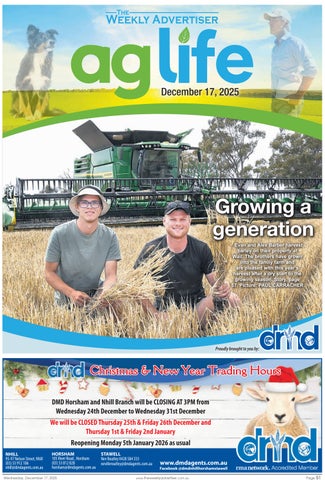
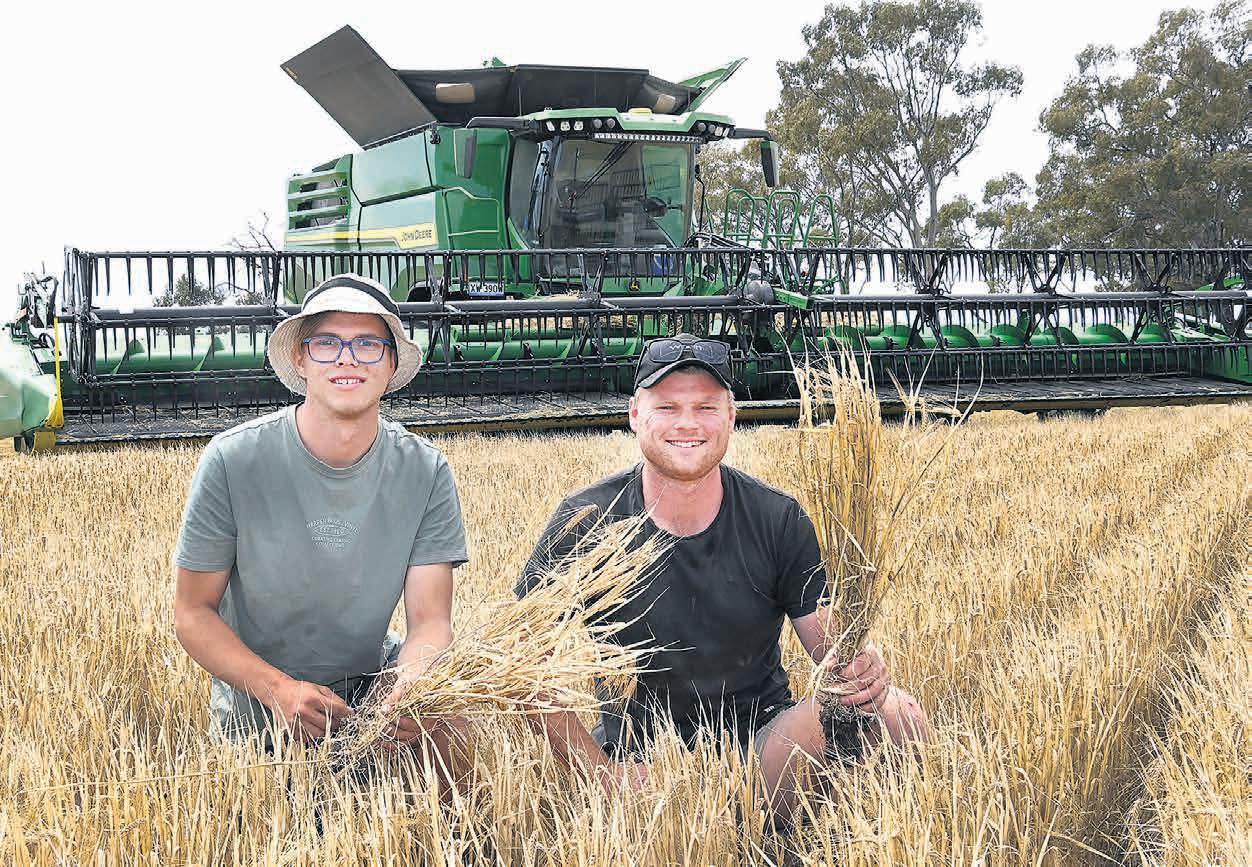
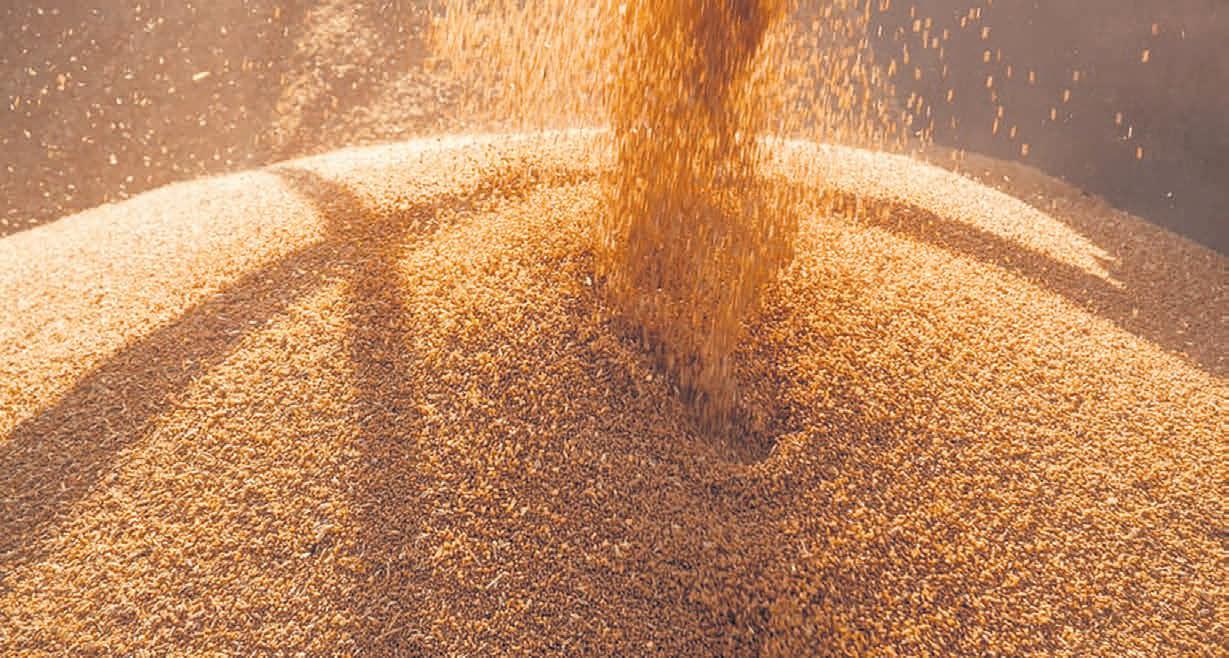
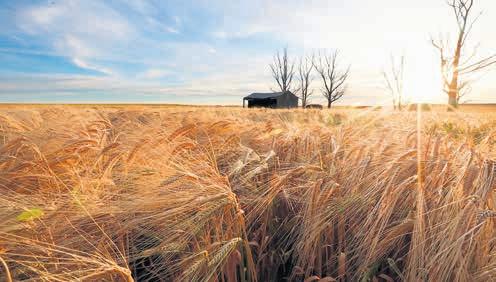
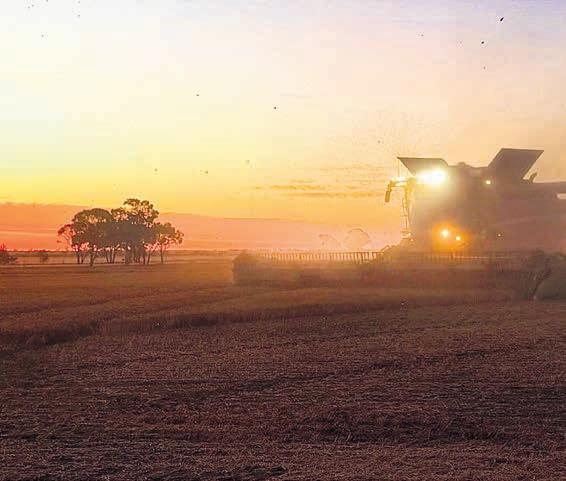
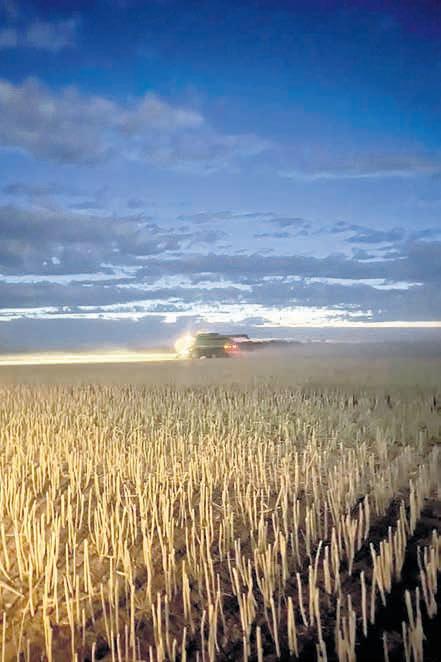
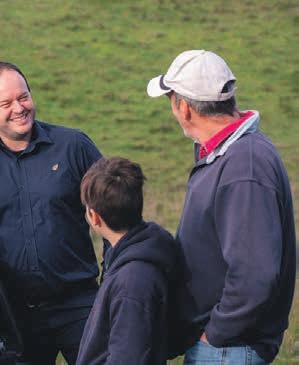
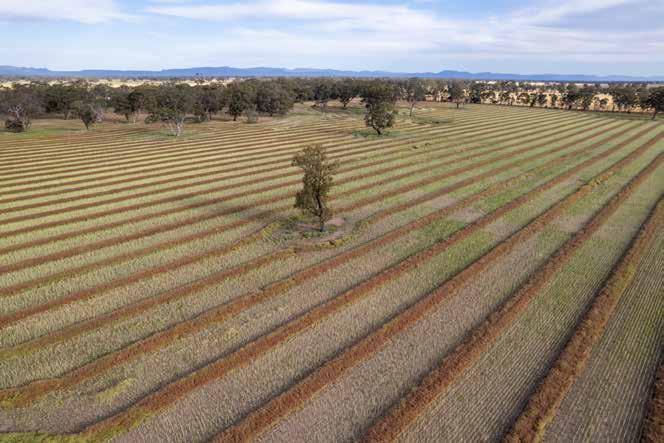
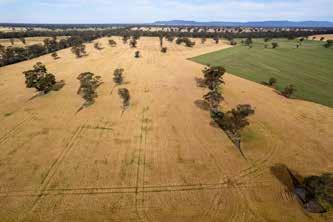
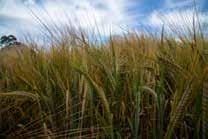
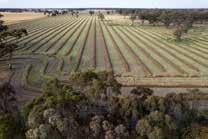
Evan and Alex Barber harvest barley on their property at Wail. The brothers have grown into the family farm and are pleased with this year’s harvest after a dry start to the growing season. Story, page 57. Picture: PAUL CARRACHER
DMD Horsham and Nhill Branch will be CLOSING AT 3PM from Wednesday 24th December to Wednesday 31st December
We will be CLOSED Thursday 25th & Friday 26th December and Thursday 1st & Friday 2nd January
Reopening Monday 5th January 2026 as usual
Christmas & New Year Trading Hours
Exceeding averages
Increasingly volatile global markets will play a key role to growth prospects across the Australian agribusiness sector in 2026, underscoring the importance of maintaining strong diversified trade relationships.
Bendigo Bank’s 2026 Australian Agriculture Outlook report outlined a broadly positive 2026 for Australian agriculture, but with about two thirds of Australian agricultural products exported, global influences will be integral.
Bendigo Bank Agribusiness industry insights senior manager Eliza Redfern said seasonal risk and economic uncertainty remained at the forefront.
“While higher on-farm costs will weigh on the production of vegetables and milk, the tight supply outlook for sheep and wool, in addition to strong export demand for beef and demand lifting for some crops, will help support pricing into the new year,” she said.
With the Victorian harvest off to a slow start, running more than 50 per cent behind the five-year average, the delay has had an immediate firming effect on nearby cash prices for feed grains. However, Victoria is forecast to deliver a crop of 8.5-million tonnes, slightly exceeding the 10-year average.
Once the volume goes to market,
prices are forecast to face downward harvest pressure – the heavy flow, coupled with a globally wellsupplied market and weak international futures, is expected to reverse recent short-term gains, with many growers opting to store grain and await better post-harvest values.
The forecast for 2026 is that harvest pressure will keep wheat prices soft early, but strength should emerge in the second quarter of the year as Southeast Asian feed demand lifts.
Barley values are likely to find support from China and the Middle East in early 2026, with barley and canola to dominate first-quarter exports, allowing wheat to roll into the second quarter.
High-protein and noodle wheat are attracting early buyer interest, while demand for feed grain is at a historical peak, driven by sustained, high-volume output across all key intensive farming sectors.
“Australia’s total winter crop production for 2025-26 is now forecast at 62.3-million tonnes, representing a 12 per cent increase from our mid-year estimate of 54.5-million tonnes,” Ms Redfern said.
“This would be the third largest crop on record.”
Lamb and wool
The recent run of strong prices is expected to continue into 2026 due
to firm demand and the tight supply environment, with lamb and mutton supply likely to remain lower in the first half of 2026.
Australian lamb prices are expected to ease from the recent record highs, but will remain well above the five-year average.
Victorian lamb supply will continue to build, but the quantity of lambs available is still expected to be lower following a prolonged period of destocking.
Firm processor and export demand, as well as restocking activity should conditions allow, will also be supportive for prices.
Dry conditions over the past two seasons have resulted in destocking across the state, so sheep prices should remain elevated, should favourable conditions prevail.
“We’re also expecting Australian lamb and mutton supply will remain lower in the first half of 2026, with prices easing from recent record highs but remaining well above the five-year average,” Ms Redfern said “The recent run of strong prices is expected to continue into 2026 due to firm demand and the tight supply environment.”
The Victorian wool market is looking to continue its positive start to the season, with further price growth driven primarily by reduced supply.
Down wins photography award
If a picture tells a thousand words, then the winning shots in the GrainGrowers annual calendar competition deliver a compelling visual story about the Australian grain industry.
Philip Down, of Speed, was judged the winner of the photographic competition.
Mr Down will receive $1000 for his first-place finish with a photograph titled ‘Evening Barley’.
The judges commented of his photo: ‘A beautifully lit image that draws the viewer straight into the golden crop. The depth, warmth and gentle stillness make it a peaceful and captivating scene.’
Second place was Mindy Hussey, of Goondiwindi, Queensland, with ‘Golden Tonnes’, taking home $500; while third place, $250, was awarded to Georgie Hamilton, of Wee Waa, NSW, with
‘Super Harvest Moon’. The People’s Choice Award, $250, was Carly Egan, of Milbrulong, NSW, with ‘The Next Generation’.
GrainGrowers’ chief executive Shona Gawel said the competition was popular and had been running for more than a decade.
“The images really do help to capture the uniqueness of what happens on our grain farms across the country and the wide abundance of interesting subject matter,” she said.
The top 12 selected images will now be featured in the upcoming 2026 GrainGrowers calendar.
Winning entries will also receive industry-wide exposure through GrainGrowers’ publications and social media channels.
People can view the winning images on the GrainGrowers website.
PICTURE PERFECT: ‘Evening Barley’ by Philip Down, of Speed.
Grain Brokerage
Site, delivered and ex-farm pricing
We can help you find the best value for your grain
We manage the marketing and sales process so you can focus on what you do best –growing the crop!
• Cereals • Pulses • Oil Seeds
Hub a centre for collaboration
Anewplant protein hub and glasshouse at Horsham SmartFarm is now operational, allowing researchers from universities and private enterprise to work with Agriculture Victoria.
The facilities will help researchers and industry partners discover and develop high-protein crop varieties, tailored to meet growing global demand for plant-based foods such as lentils, chickpeas and field peas.
The hub will provide collaborative spaces for start-ups, researchers and growers, alongside a fully equipped test kitchen, advanced analytical equipment and facilities to explore new plant-based products.
The hub allows for up to 10 Doctor of Philosophy, PhD, students and three start-ups to shape future research opportunities.
Agriculture Minister Ros Spence said the hub was a $12-million investment from the State Government – $9-million for the hub and $3-million for the glasshouse.
“Victoria is leading the way in plant-based protein research, building world-class facilities and fostering collaboration that will transform agriculture and strengthen regional economies,” he said.
Ms Spence said construction of the hub created dozens of jobs across trades, suppliers, professional and technical services.
She said moving forward, it would continue to create opportunities in research, education and industry collaboration.
Students from primary school through to post-graduate level in the region will also benefit from handson learning in a dedicated education space, creating pathways for future careers in agriculture.
Parliamentary Secretary for Regional Victoria Michaela Settle said the new glasshouse would accelerate crop research, improve pest and disease management and boost climate resilience – helping farmers adapt to changing conditions and maintain productivity.
“This investment will help our communities reach new markets, drive local jobs, champion sustainable practices, and ensure a strong
and resilient future for regional Victoria,” she said.
Member for Western Victoria Jacinta Ermacora said the region was already a leader in growing crops for plant-based protein products.
“Having fit-for-purpose facilities like the Plant Protein Hub at Horsham SmartFarm strengthens our research capabilities and opens the door to new opportunities across agriculture and food innovation,” she said.
Victoria’s pulse industry generated $638-million in export income last year, and Australia exports about 2.5-million tonnes of pulses annually, making it the second-largest pulse exporter in the world.
The opening comes after Agriculture Victoria research employees at Horsham faced job cuts after a State Government plan to restructure and reduce staffing.
Positions ‘no longer required’ include five scientist positions in the Agriculture Resources Sciences division.
In August, a ‘Change proposal and staff consultation pack’ for Agricultural Victoria Research division, outlined proposed changes to improve ‘cross-branch co-ordination at Horsham Smartfarm’; and a new co-ordinator role at the Horsham Smartfarm to work across multiple branches at Horsham.
At the time, the Victorian Farmers Federation and Member for Lowan Emma Kealy expressed concern about the job cuts, with VFF president Brett Hosking saying: “Any reduction in staff and services would be a backward step for Victorian agriculture, particularly in areas safeguarding the sector against pests and diseases.”
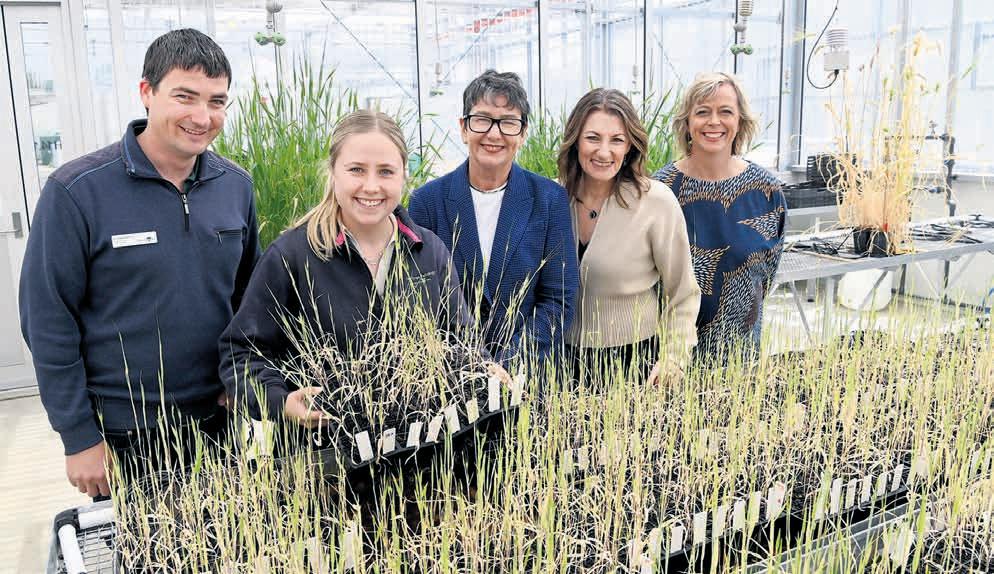
OFFICIAL: From left, Agriculture
Victoria researchers Josh Fanning and Chloe Findlay, Parliamentary Secretary for Regional Victoria Michaela Settle, Agriculture Victoria research head Simone Warner and research leader Cassandra Walker at the opening of a new plant protein hub and glasshouse at Horsham SmartFarm.
Pictures: PAUL CARRACHER
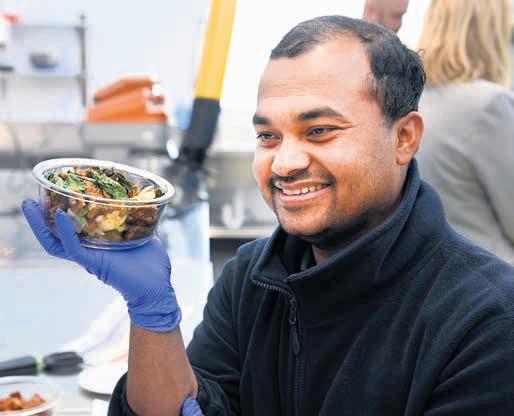
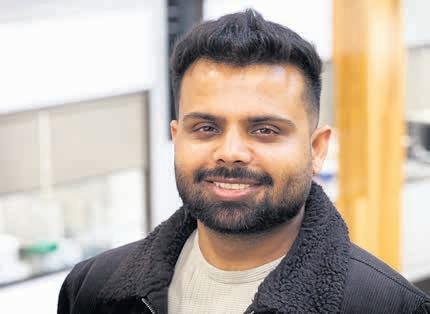
LEARNING: PhD student Amrit BK with food he cooked from plant-based meat.
Barber’s season on track
BY BROWNYN HASTINGS
Farming is a lifestyle more than an occupation for brothers Alex and Evan Barber, having spent their respective 27 and 22 years on their family farm at Wail, near Dimboola.
Working with their parents Russell and Lisa, Alex said this year’s harvest so far was pleasing, despite not getting much rain during the colder months.
“We’re doing four-and-a-half tonnes a hectare, five in some spots, so it’s not too bad,” he said.
A family-run business, Mr Barber said the progression into farming was a gradual one.
“Mum and dad got us into it when we were young and as time went on, we got more into it,” he said.
“But when you’ve lived it all your life, it’s just what you do. It’s a good lifestyle, I enjoy it, and I think mum and dad are happy with what me and Evan are doing.
“You never know, me and my brother might end up taking over the farm in years to come, and hopefully I’ll keep the generations going when I have kids one day.”
Above expectations
Minyip farmer and VFF Grains president Ryan Milgate said late rains had delayed harvesting in some areas.
“Everyone’s keen to get into harvest
and get some grain in the bin, but Mother Nature seems to have a few other ideas on her mind at the moment,” he said.
“I don’t think the rain per se has done much damage that I’m aware of, it’s probably the first rain, which is not normally a big problem, it’s the second and third that become an issue.”
Mr Milgate said there had been some isolated hailstorms in November.
“We were fortunate enough to get under a hailstorm last month, but that has knocked a bit of barley out,” he said.
“We’re not 100 per cent sure on the full extent yet, being fairly isolated, but it’s certainly causing a lot of damage to people’s confidence and nerves at the moment.”
Mr Milgate said lentils and canola were generally the first harvested in the region.
“There’s canola coming off, and lentils have been a bit of an interesting one this year. We’ve got guys that probably haven’t desiccated lentils yet, and there’s also lentils that have been harvested –they’re a bit all over the shop,” he said.
“And there’s been a little bit of barley done, it’s a bit of a stocking filler.
“If lentils or canola aren’t quite right, a lot of people are happy to have a crack at some barley and see what they find.”
Mr Milgate said he had heard that everything that had been harvested so far was yielding above growers’ expectations.
“Quality so far in the Wimmera area has been really good,” he said.
“There’s some pleasing results given it was a pretty tough season.
“But normally everyone in the Wimmera likes to have a finish-by-Christmas type scenario, in Horsham and north and east, but I think that’s well and truly off the cards now, unfortunately.”
Weather delays
Agriculture Victoria seasonal risk agronomist Dale Grey said although harvest was winding up in much of the Mallee, it had been a slow start in the Wimmera.
“Their season elongated out because the October rain they had was helpful to crops,” he said.
“And then the rain interruptions as well has meant the Wimmera is not getting a start that it would like.”
Mr Grey said models were ‘sitting on the fence’.
“At this time of the year, anything could happen, and that is normal,” he said.
The December to February prediction is for neutral rainfall with warmer temperatures than average.
ANOTHER DAY: Breanne Mills, of Kalkee.
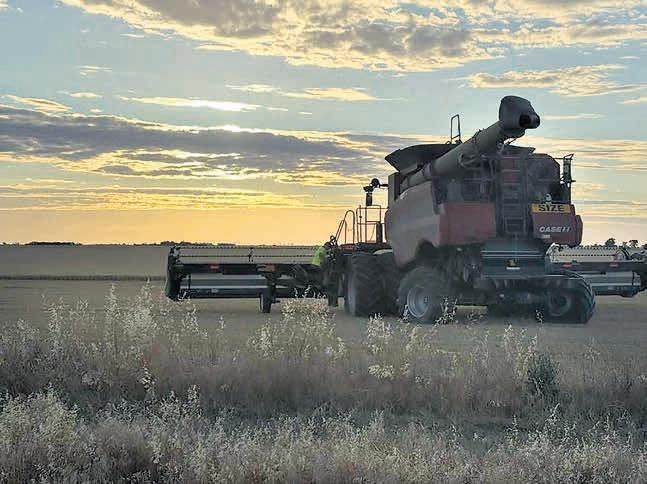
SUN SETTING: Brett Wheaton working into the evening.
Worthy of interest
Like it or not, artificial intelligence is making its mark in agriculture.
As I’m learning, it can do extraordinary things, most of which we don’t have to fear.
I’m not very interested in mechanical things, like cars, which as far as I’m concerned, just need to get me comfortably from A to B. No need for all the bells and whistles.
But when it comes to saving farmers time, and therefore money, the latest technology available is worthy of interest.
So being a mechanical luddite, I was a tad overwhelmed when I was sent to report from the world’s largest agricultural machinery trade fair, Agritechnica, in Hannover, Germany.
Picture this: an exhibition site of more than 400,000 square metres with about 25 separate pavilions, filled with nearly 3000 exhibits from 50 countries.
This year was the first to have a small group of Australian exhibitors.
I only had two days at the event and no real idea where to start.
Needless to say, I did well over my 10,000 steps a day.
There were shuttle buses to take you around the vast expanse of
Country Today
with Libby Price
venues, but I kept standing on the wrong side of the road and missing the buses.
As you can imagine, the tractor manufacturers were throwing money at the event.
The latest advances spell it out clearly that autonomous tractors not only will become commonplace, they’ll be able to do a better job than human operators.
For example, this year’s Agritechnica winners of Smart Farming and Robotics were a tractor, which ‘uses camera sensors and artificial intelligence, AI, to analyse cropflow images in real time and automatically adjust processing parameters for optimal kernel processing in forage harvesters’.
I think that means it can slow down when AI tells it the crop load is heavier. Hopefully you know what it means.
The other was a forage harvester which could also make adjustments on its own.
For livestock producers, the big news is that, at last, the Victo-
rian and New South Wales governments approved the use of virtual fencing.
Tasmania was the first state to approve it and now it’s only South Australia that is lagging.
I think it’s a great win, especially for dairy farmers in our largest dairying state.
On Country Today I interviewed the Australian representative for the New Zealand company, Halter, which in less than a decade has grown to be the largest provider of virtual fencing in the world and is the fastest growing company in the country.
It’s proving its worth in Tasmania, and already Victorian dairy and beef farmers have signed up to adopt the technology.
The halters, or collars, on the cows are run by solar power and farmers just have to put up towers for reception and manage it from their iPhone or laptop.
The farmer simply draws boundaries with their finger on the app.
The cattle learn that a vibration on their collar warns them not to go too close to the boundary.
And it leads to happier cows as the collars can monitor cattle health and pasture productivity.
As they say, happy wife, happy life. Happy cow, happy farmer.
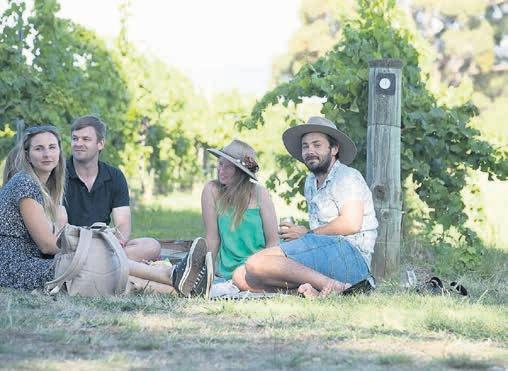
Evening among the vines
Grampians Wine will host its first event for 2026 at Fallen Giants Vineyard on January 3.
‘An evening in the vines’, from 4pm to 8pm, has become a regular event on the Grampians Wine calendar.
Each January, the region’s finest popup event offers an evening of wine tasting, music and food, plus a playground for children.
Food vans will be on site serving food at the vineyard, which sits at the base of the Grampians National Park, offering stunning views and a picturesque set-
ting. People are invited to bring a picnic rug or chair and enjoy a beautiful summer evening.
A tasting ticket, costing $8, entitles attendees to taste all Grampians Wines featured at the event.
‘An evening in the vines’ is free-entry for non-tasters, designated drivers and children.
Fallen Giants Vineyard is at 4113 Ararat-Halls Gap Road, Halls Gap. People can buy tickets at events. humanitix.com/an-evening-in-thevines-with-grampians-wine-2026.
PICTURESQUE: Relax among the vines at Grampians Wine’s first event of the year at Fallen Giants Vineyard on January 3.
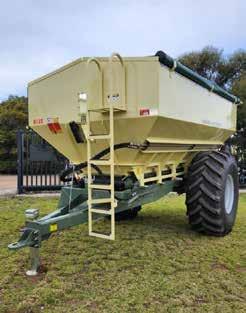
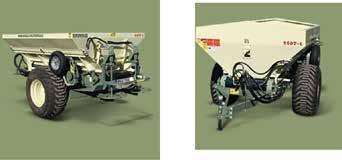
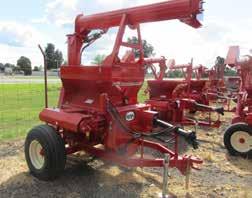
Multi-purpose Fertilizer Spreaders
2.5 to 16 Tonne models available. PTO or Hydraulic drive. Range of options including 3 metre track, Weighing Systems and i4M Variable
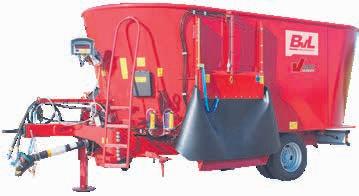
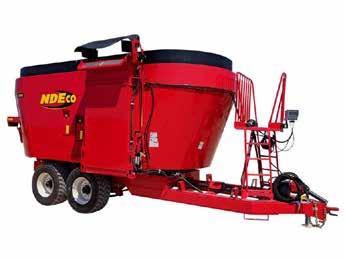
Vertical Feed -mixers
10 to 40 cubic metre capacity.
Single or Twin Augers. Front Door or Side Doors with 3 9 ft elevators.
Quick and effective mixing, complete and rapid emptying. Efficient large curved, carbide-insert knives.
Also Available: The “ heavy duty everything” range of
ROLLER MILLS
Precision-machined 16” diameter rolls, which provide more grain rolling area per revolution compared to other brands of roller mills with smaller diameter rolls. Save time and money year after year by rolling more grain per hour with less horsepower.
Handles both Dry and High Moisture Rolling PTO or Electric - with Folding Discharge Augers
DEGELMAN BIO SPREADERS
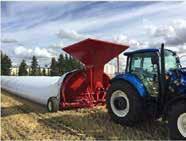
Also available: RENN GRAIN BAGGERS & BAG UNLOADER SYSTEMS
Levy remains despite ‘pause’
Councils are warning primary producers they will still be required to pay Emergency Service and Volunteer Fund levies, despite the State Government announcement of a ‘pause’.
As part of its Budget update earlier this month, the Labor government announced changes to the ESVF – including no increase to the variable rate for primary production land, an increase to the volunteer rebate cap for farmland from $5-million to $10-million, and a delay to the change for investment properties by 12 months.
But Hindmarsh Shire Council has issued a notice to farmers to say they will still see a charge for the levy on their rates notices.
The ‘freeze’ means they will be charged the same variable rate as what they were in the 2024-25 and 2025-26 financial years.
The ESVF charges are made up of the two following rates: variable, which will be 28.7 cents per $1000 of capital improved value for the next two financial years; and fixed, which is the current fixed rate for 2025-26, $275.00.
The rate is determined by the State Revenue Office and may change each financial year.
Hindmarsh Mayor Ron Ismay said the council would continue its advocacy against the ESVF. He said while welcoming the relief for
primary producers for two years, the council would continue to work with the Municipal Association of Victoria and Rural Councils Victoria to urge the government to enact permanent changes that did not unfairly burden communities.
“While this short-term outcome is welcomed, this is not the outcome that we have been advocating for,” he said.
“Victoria’s emergency services are so vital to our community, but their funding should not be unfairly taken from the pockets of dedicated emergency service volunteers.
“It is encouraging to see the Victorian government is listening, and we’re committed to continued advocacy for the needs of our farmers and wider community.”
The pause comes after backlash – particularly among regional councils and communities – with protests staged across the state this year, including a major rally on the steps of Parliament House in May, involving a number of Wimmera people.
Opposition to the ESVF was led by farmers, who face large increases on the property tax, and Country Fire Authority volunteers, who felt the new tax was an unfair imposition, given the volunteer hours they contributed to the emergency services.
‘Gingerbread’ enabling genetic profiling
A graduate researcher is harnessing the power of artificial intelligence to make genetic selection easier for breeders and researchers seeking varieties from the Australian Grains Genebank, AGG, at Horsham SmartFarm.
Software engineer and PhD student at Agribio Bundoora, Nivin Goonesekera, is working on a thesis titled ‘Seeing is believing: Visualising the Australian Grains Genebank’.
Mr Goonesekera is part of Agriculture Victoria’s higher education program and co-supervised by Agriculture Victoria’s Plant Functional Genomics team and the La Trobe University School of Computing, Engineering and Mathematical Sciences.
Mr Goonesekera said his research had resulted in an AIdriven, multi-dimensional search and visualisation tool called Gingerbread, which would complement other digital tools in use and increase access to plant-genetic resources at the AGG.
“The AGG currently stores over 190,000 types of seed from more than 150 countries worldwide,”
Mr Goonesekera said.
“For plant breeders, this enormous and complex collection can be quite challenging and time consuming to search through.
“Gingerbread will benefit plant
breeders who are wanting to identify genetic material best suited for their research.
“The tool has been coded with Python and uses AI algorithms to provide a 2D representation of the genebank genotype data.
“Through the client interface, researchers can input criteria and extract a world-map-like view of plant material contained in the genebank.”
Results from the AGG dataset can be displayed in many kinds of views such as geographical, plant pedigree disease or pesticideresistant traits, and also highlight variety duplicates.
Gingerbread leverages the genetic profiling of the AGG’s collection, which was funded
through a $30-million strategic partnership between Agriculture Victoria and the Grains Research and Development Corporation, to unlock the potential of AGG resources for Australian grain growers.
More than 50,000 genotypes have already been publicly released by the partnership and can be accessed on the Harvard Dataverse.
Mr Goonesekera intends to contact researchers and breeders to help with Gingerbread’s beta testing phase early next year.
People can learn more about the higher education program, the AGG and the AGG Strategic Partnership at agriculture.vic.gov.au.
Goonesekera
Large red lentil variety
Highest yielding of all the large and medium IMI lentil varieties
Highest ascochyta blight resistance of all the IMI lentil varieties
Good level of BGM resistance
Moderate to good vegetative frost tolerance Scan QR for
Wishing all a prosperous 2026
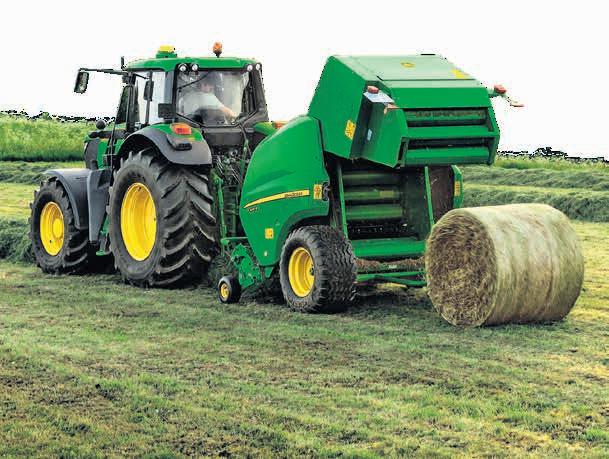
If there is one job that must test the mental fortitude of even the very best, it would have to be a hay-baling contractor in a soft spring like what we have just experienced.
In a weather pattern that has been beneficial for some, and very frustrating for others, things have finally started to dry off, with the forecast for the remainder of December looking more attune to the types of conditions we are used to in the Wimmera at this time of year.
One thing the weather has done is return to a more familiar system whereby the south has consistently received higher rainfall totals than the more northern regions as the events have rolled through.
This, combined with warmer weather and the usual cap on daily maximum temps, has seen an astonishing turnaround in feed levels in areas such as Hamilton, Mortlake and surrounds.
Sheep feed has quickly turned to cattle feed in those areas, however the appetite to trade livestock in order to utilise this feed has been there to some extent, but also limited at the same time.
This is due to factors such as being wary of what will happen when the weather gets really warm, enjoying some money flowing in for a change and not wanting to see it dis-
appear again straight away by buying trade stock at elevated levels, or simply wanting to have a spell knowing that purchasing trade stock now will inevitably require supplementary feeding in order to turn them around.
For those willing to put in the effort, the rewards look to be there.
Using new season lambs as an example, some early trade results from some of the more established feeding operators are yielding acceptable returns, even despite the high buy in costs.
All in all, with a little bit from column A and a little bit from column B in 2025, it all begs the question as to what is in store for 2026? Let’s wait and see.
At AWN, we would like to wish all of our clients and peers a restful Christmas and New Year period, and we look forward to another productive and hopefully prosperous season in 2026.
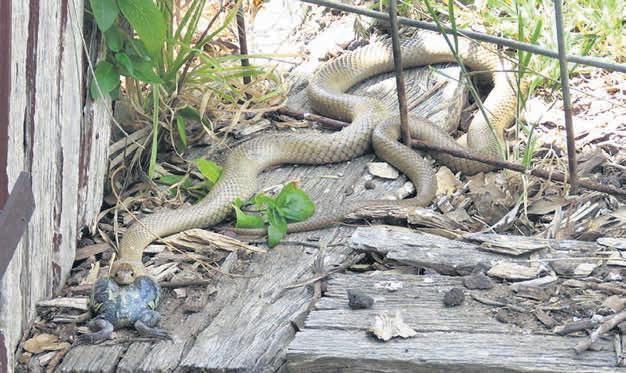
HELLO... AGAIN: Horsham resident June Liddy has had her third annual encounter with a brown snake – this year eating a pobblebonk frog metres from her house. Mrs Liddy said she was looking for a missing chook when she found the snake about three metres from her back door. “I raced inside, alerted the family, grabbed my camera and took several photos,” she said. “We called a snake catcher, but he said he could not arrive for two hours.” Mrs Liddy said she and her family set up to keep the snake corralled, but after an hour it made a break for it, slithering around the side of the house and heading for an in-ground water tank where they lost sight of it. “Last year she entered my glasshouse and stayed for three days until I banged a shovel on the back wall loudly, and the next day she had departed,” she said. “The year before I was carrying a basket of washing to the clothesline when movement caught my eye – there she was standing up on her tail. I stopped immediately, slowly stepped backwards and she went down and slithered off in the opposite direction.”
Women on Farms Gathering
At Hamilton from March 20 to 26, the next annual Women on Farms Gathering has the theme ‘Fields of Strength, Seeds of
Change’. Guest speakers, programs, ticket information and more will be available in coming weeks.
This year’s event at Benalla included keynote speakers, workshops, tours, live music and networking opportunities.