Editor: Jonathan Fraser. Editorial enquiries to jon@fu-media.co.uk
ADVERTISE HERE
To advertise your business to Birmingham Law Society members call Fraser Urquhart Media on 0116 2533445 or you can email jon@fu-media.co.uk or kevin@fu-media.co.uk
A Guide To AI In Accounting And Finance: Prompts And Challenges
A City of Hidden Gems
The German Christmas Market has been with us for a few weeks, and with the turning of the calendar page to December, we are reminded that another year has run its course. For many of us in the legal profession, December is not a slow month; rather, it becomes a challenging final sprint to finish projects or clear the “to do” list before everyone becomes uncontactable. Yet, in the midst of this familiar flurry, I hope this final Bulletin of the year offers a contemplative pause—a moment to breathe, to reflect on what we have achieved together, and to look forward with shared optimism.
2025 has been a testament to the resilience and heart of the Birmingham legal community. This year has thrown many
challenges in the way of lawyers: Mazur, digital transformation and AI, threats to solicitors’ ability to hold client money, an uncertain economic climate, difficult conditions for recruitment and retention, and always the constant pressure to deliver exceptional service. In my own practice, as in so many of yours, I have seen first-hand the pressures faced by fee-earners, support staff, and students alike. And yet, I have also seen the extraordinary generosity of spirit that defines our profession— cross-firm friendships, generous mentorship, and colleagues stepping in for one another during the most demanding weeks.
Across our Society, the achievements of the past year are wide-reaching. In everything
the Society has done this year we are flying the flag for Birmingham and our diverse legal community—whether responding to consultations, building new regional partnerships, or continuing our engagement with colleagues across Europe. We have seen the strengthening of our committees, including the creation of a new Legal Tech Committee to face the challenges of implementing digital change and AI. One of the joys of this year has been spending time with students and aspiring lawyers, whether at university events or during panel discussions. Their ambition, curiosity, and openness have reminded me that our greatest collective strength lies in our willingness to share our time, our networks, and our knowledge.
My sincere gratitude goes to every member who has contributed their expertise and energy, particularly those who volunteer their time through our committees and working groups.
As we reach the finish line of 2025, I want to emphasise the importance of stepping back. December has a habit of swallowing our best intentions, and the year-end rush can leave even the most seasoned among us feeling stretched. But I urge each of you to carve out moments of quiet over the coming weeks. Put down the device, close the case file, and immerse yourself in the joy of connection with friends and family. This pause is not a luxury; it is a necessity. Our clarity, judgement, and compassion are all renewed when we allow ourselves to rest.
While we step back, the BLS team will be stepping forward into preparations for what promises to be an exceptional 2026. My Presidential year got off to a flying start, and next year is shaping up to be a memorable one, during which we will proudly support Birmingham Mind as our chosen charity—a cause whose focus on mental wellbeing feels especially resonant at this time of year. February will bring the Birmingham Law Society Legal Awards, a highlight of our calendar and a celebration of the talent, innovation and excellence within our profession. And as the days grow longer, we will gather for our Summer Family Festival—an inclusive, relaxed opportunity to celebrate not just the law, but the people behind it and their loved ones.
The theme of my year is Birmingham’s “hidden gems”, and in the spirit of the season (call it an early Christmas present) I wanted to recommend a few of my recent discoveries in the city. No money or freebies have changed hands for these recommendations: I just think Birmingham’s best places should be supported when we see them.
Txikiteo is a fantastic wine bar selling small and large plates in the Jewellery Quarter. I went there recently with friends and can’t recommend it enough – it’s a taste of Iberia in the West Midlands.
This one’s hardly a hidden gem, but it’s been closed for ages and has recently reopened—the Birmingham Museum and Art Gallery. I love making some time to see something that interests me here during the lunch break.
For those craving winter light and fresh air, the Harborne Walkway offers a peaceful green corridor—perfect for clearing the mind after a long week.
And if, like me, you find solace in good coffee and beautiful surroundings, a visit to Medicine Bakery—whether on New Street or at the Mailbox—provides the ideal venue. Their cakes are undeniable.
As the year closes, please accept my heartfelt thanks for your continued membership, commitment, and participation in the life of the Birmingham Law Society. The strength of any professional body lies not in its buildings or formal structures, but in the people who bring it to life with their energy, generosity, and shared sense of purpose. You have done that abundantly this year, and I am both proud and honoured to serve as your President.
On behalf of the Society, I wish you and your loved ones a peaceful Christmas, a joyful festive season, and a New Year filled with good health, happiness, and renewed purpose. I look forward to all we will achieve together in 2026.
Meet The Council
The role of Council is to represent the members of the Society in overseeing the activities of the Board. Comprising of 22 members, the Council is a diverse and representative sample of our membership.
With thanks to our Gold Sponsors
Guy Barnett Kristian Campbell-Drummond, Weightmans LLP Catherine Edwards, Arden University
Mary Kaye, Rayden Solicitors Pardeep Lagha, NEC Group Grace Mullis, Irwin Mitchell LLP
Christie Nelson, Freeths LLP Matt O’Brien, Jonas Roy Bloom Janai Parker, Gateley Legal
Richard Port MBE Alexander Pritchard-Jones, No5 Barristers’ Chambers Sarah Ramsey
Bernard Shepherd, BES Legal Solicitors
Lubna Shuja, Legal Swan Solicitors
Daniel Skermer, PA Forum
Dee Smythe, The Barrister Group Lisa Watts, 3PB Barristers Peter Wiseman
Victoria Zinzan, Irwin Mitchell LLP
Events
MEMBER’S EVENTS
Autumn Budget 2025: What does it mean for you and your clients? in collaboration with Quilter Cheviot
10th December, 8am – 10am, Quilter Cheviot. FREE for all to attend
Implementing a risk-based approach to AML: Practical strategies for your firm in partnership with Amiqus 20th January, 12pm – 1pm, Online FREE for all to attend
Stronger Together: A Trilogy of Support & Success in partnership with Mandy Rees
27th January, 12pm – 2pm, Revolución de Cuba. £25 +VAT for members | £30 +VAT for non-members
Social Networking in partnership with Solihull Chamber of Commerce
5th February, 5pm – 7pm, Lexus Solihull. FREE for members | £10 +VAT for non-members
2026 Legal Awards sponsored by Fazenda, Kangs Solicitors, PA Forum, St Philips Chambers and The University of Law, Access Managed Services, JM Glendinning Professional Risks, Landmark Information
12th February, 6.45pm – 12am, ICC £120 +VAT for member ticket | £150 +VAT for non-member ticket
To reserve your place and find out more, make sure that you visit www.birminghamlawsociety.co.uk
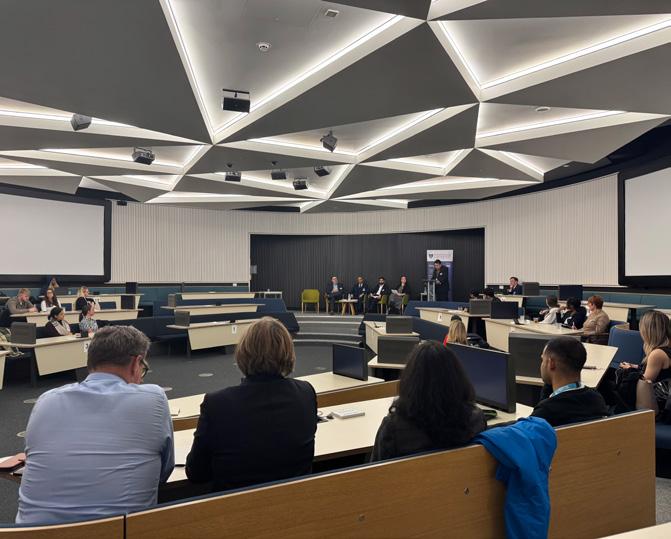
Empowering In-House Counsel Mastering Influence and Mitigating Fraud with AI
Ultimate Porsche Driving Day
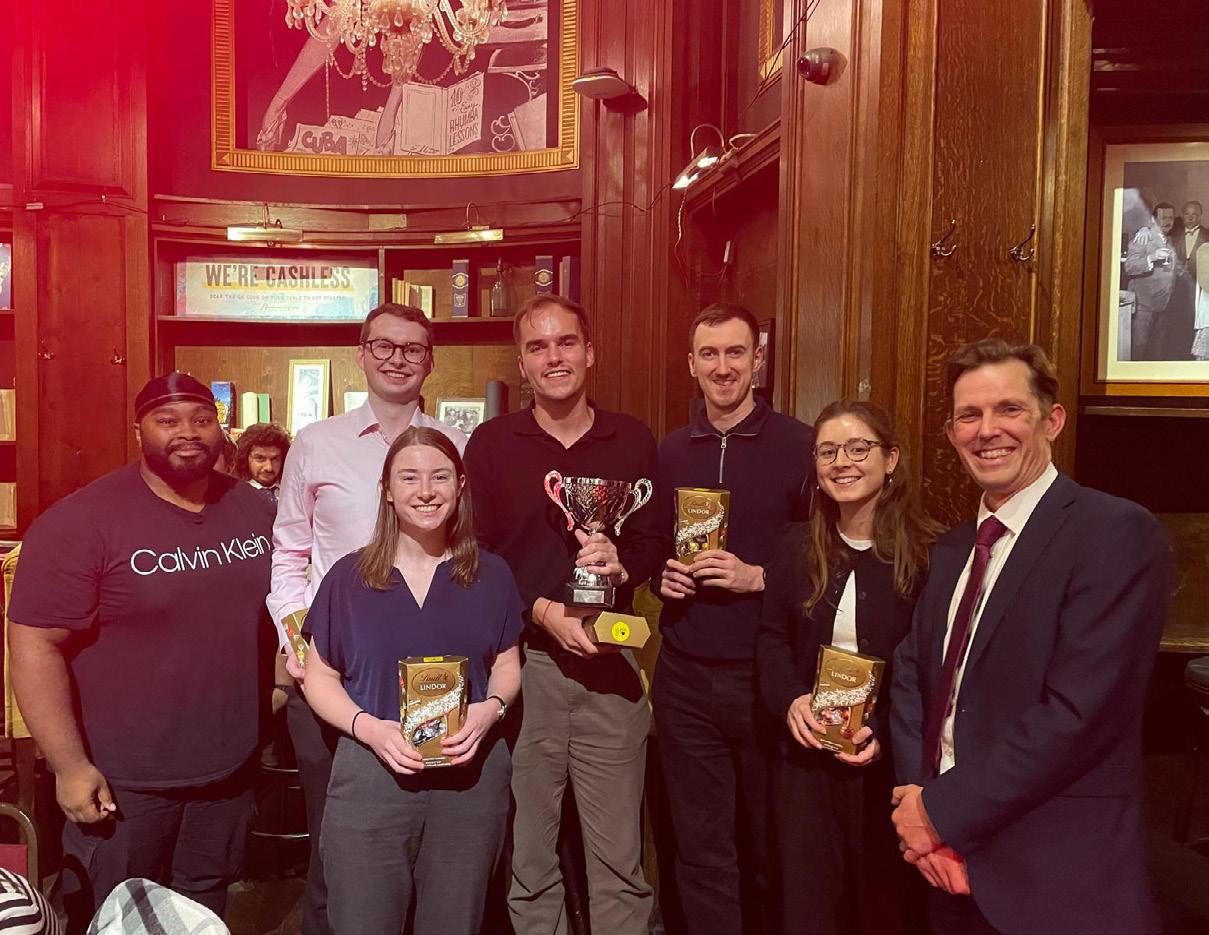
BLS, BSG & BTSS Legal Eagles Quiz
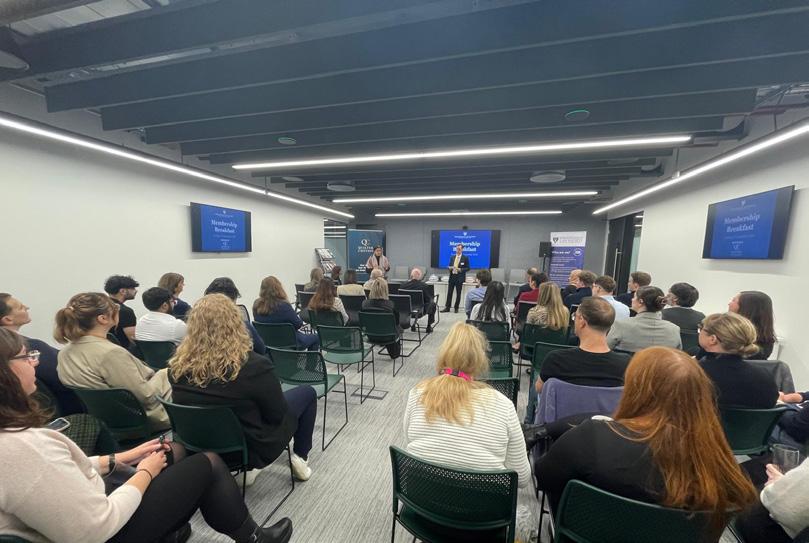
LGBTQ+ Sub Committee Crafts and Networking Membership Breakfast
Mental Elf Run
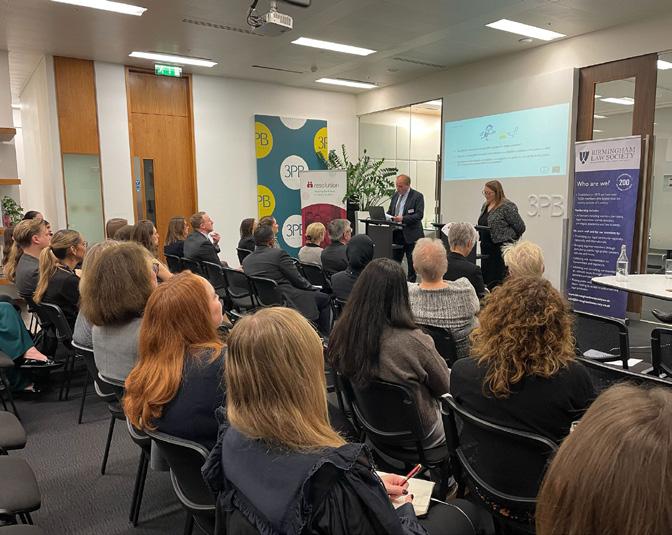
Artificial Intelligence in Dispute Resolution
Newly Qualified Celebration
Changing Face of Family Law
UK Lawtech Investment Surges As Government-Backed Initiative
Closes
The Justice Gap
LawtechUK’s latest Investment Snapshot shows the UK’s legal technology (lawtech) sector is entering a new phase of maturity, with record levels of investment and growing alignment between innovation, access to justice, and public policy.
According to the Snapshot, British lawtechs raised £116.6 million between 1 January and 30 June 2025 from 27 companies, almost matching the full-year 2024 total of £139.6 million from 30 companies. The average deal size of £4.3 million demonstrates strong investor confidence and growing momentum in the sector.
LawtechUK, a Ministry of Justice-backed initiative, is helping to drive the digital transformation of the legal sector and cement the UK’s position as a leading global lawtech hub. Since 2020, LawtechUK has played a pivotal role in building the world’s fastest-growing lawtech ecosystem. In the first half of 2025 alone, the total number of UK lawtech companies grew from 270 to 295, demonstrating the steady expansion of the ecosystem. Within that, LawtechUKengaged companies accounted for nearly half of all funding, with 13 firms securing £30.4 million in the first half of the year.
AI presents a transformative opportunity to tackle the accessto-justice gap. 38% of adults in England and Wales who have faced legal issues in the past four years did not access legal support, often due to concerns about the cost or a lack of understanding of their legal rights. Now, digital triage, AI chatbots, and self-service tools in areas including family law and employment rights are making legal advice more affordable and as easy to access as online banking, while freeing up lawyers to focus on complex or high-value cases.
Christina Blacklaws, Chair of the LawtechUK Panel, said: “There’s a vast unmet legal need in the UK, and technology is helping to address it. From housing and family disputes to small-business contracts, lawtech is putting justice back within reach by removing barriers of cost, complexity and time. The pace of investment indicates a recognition that the UK’s justice gap is a £11.4 billion opportunity for business to do good, profitably.”
LawtechUK’s Blueprint for Transforming Consumer Legal Services highlights the urgent need for lawtech innovation and adoption, stating, “The current model of delivery of consumer legal services is unsustainable as it cannot be sustainably scaled to meet the overwhelming demand.”
In response, many firms have already adopted digital tools to reduce routine work, expedite service delivery, increase capacity and free up lawyers to focus on complex cases. With 82% of UK lawyers either already using AI, or planning to do so imminently, LawtechUK will launch its new legal tech matching tool for SME firms on 26 November at its Early Stage Showcase event in Cardiff, which celebrates the UK earlystage alumni startups from LawtechUK programmes.
The new LawtechUK tool helps SME law firms find the most suitable legal tech solutions by guiding them through a short set of questions about tech needs, payment preferences, and integration requirements. Based on their answers, a list of recommended tools from the LawtechUK Ecosystem Tracker will be generated, showing suitability, along with links to detailed profiles. This makes it easier for firms to identify relevant and practical options, providing valuable insights into the SME-focused legal tech market.
St Ives Riviera Conference 2025
The Business and Property team from St Ives Chambers successfully hosted their annual end of summer conference in Cannes this year, continuing a tradition of excellence in professional development and networking.
Over two days, eight members of the team joined invited solicitors for a programme of networking opportunities and informal sessions tailored to the evolving needs of the legal sector.
This year’s programme featured guest speaker Matt Edmundson, host of “The E-commerce Podcast”, who delivered an insightful session on marketing psychology and business development strategies. The team’s own Mark Baldwin complemented this with a practical session exploring the nuances of when and how to effectively encourage clients to pursue mediation.
Following a gruelling morning(!), guests relaxed with a well-deserved lunch at the beach club, and the weekend culminated in a Black-Tie dinner at the renowned Majestic Hotel, overlooking Cannes’ picturesque seafront.
The feedback from attendees has been overwhelmingly positive. Martin Langston and Priya Tromans (Head and Deputy Head of the Business and Property group respectively), expressed their sincere gratitude to all those whose engagement and contributions made this year’s conference another memorable success.
Law Firm Uncovers £629,000 in Hidden
Anthony Collins Solicitors has uncovered previously unknown assets worth £629,000 while handling a complex estate administration case.
According to Lindsey Bohanna, legal director in the firm’s personal planning team, the shift to digital banking has made it increasingly difficult for families to identify all of a loved one’s assets. “Even close family members are often not fully across the finances of a deceased relative,” she explains. “We’ve used Estatesearch’s Financial Profile search for around four years to make sure nothing is missed.”
The case began with another firm that had acted as deputy for a woman who died in 2017. Anthony Collins Solicitors had been deputy for the woman’s daughter, who held a life interest in her mother’s estate, until the daughter also passed away. Though separate, the two estates were closely linked and complicated.
After tracing a family member who was the residual beneficiary, Bohanna’s team could have assumed the
Join the BLS In-House Committee
The Committee is looking for new Committee Members to join and help build a thriving in-house community in the region.
If you are interested, please email info@ birminghamlawsociety.co.uk before 19th December 2025.
To join the committee you must:
1. Be working an in-house legal role;
2. Work or live in the West Midlands region; and
3. Be a member of Birmingham Law Society (you can join as a member if you are selected for the committee).
For any questions, feel free to email info@ birminghamlawsociety.co.uk.
Hidden Estate Assets
estate was non-taxable, as no asset information had been passed on. But remembering that the family farm had once been sold, Bohanna decided to run an Estatesearch asset search.
Estatesearch quickly identified multiple positive matches. By contacting each bank, more assets were confirmed, and further letters revealed additional accounts. In total, the search uncovered £629,000 spread across multiple financial institutions.
The discovery ensured the correct inheritance tax calculations could be made and guaranteed that the beneficiary received their full entitlement. It also protected the firm from future liability if additional assets were to emerge later.
“Our approach is rooted in social purpose,” Bohanna says. “Using Estatesearch adds a layer of certainty for clients, ensuring everything has been handled properly with no surprises down the line.”
Committee News
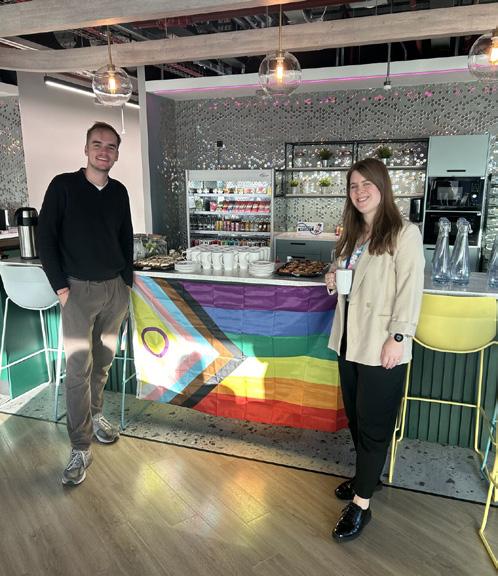
Reflecting On Trans Awareness Week Crafts & Networking Eve
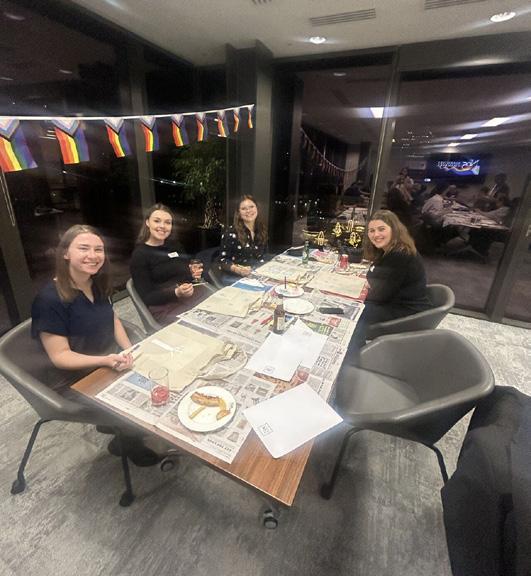
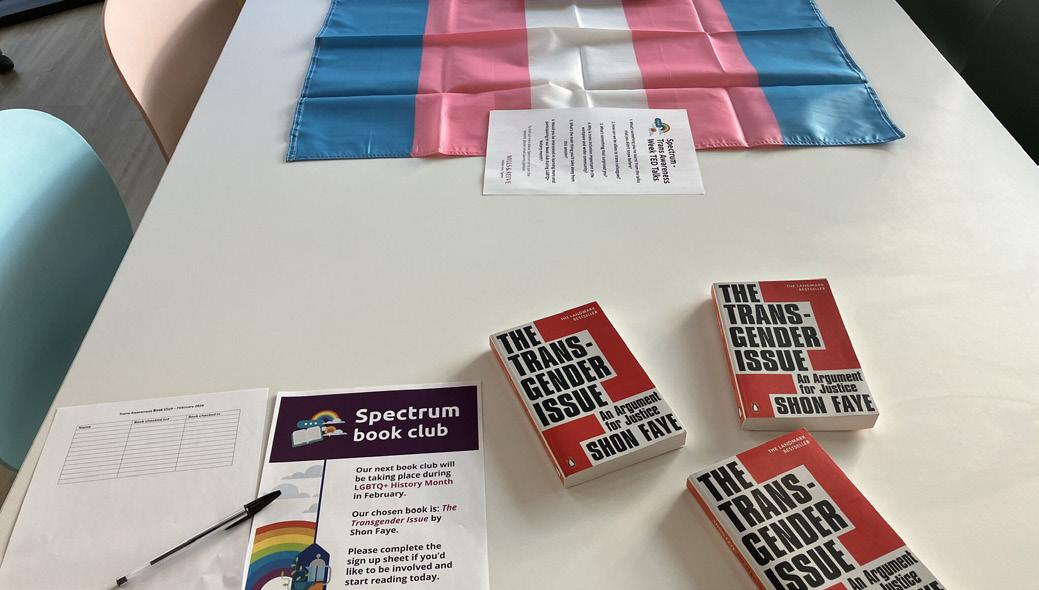
On 18 November, the Birmingham Law Society LGBTQ+ Sub-Committee hosted a relaxed and creative evening at No5 Barristers’ Chambers, sponsored by Irwin Mitchell. The event brought together allies across the profession to mark Trans Awareness Week in a way that was both meaningful and enjoyable. Attendees took part in tote bag painting, sewing, crocheting, and bracelet making—activities that encouraged conversation and connection in an informal setting.
Vice-Chair, Lucy Williams shared that “Spreading awareness and showing solidarity with trans people is more important than ever. We have a responsibility to champion inclusivity and create spaces where everyone feels seen and supported.
Advocacy doesn’t always happen in formal settings; sometimes it’s in the simple act of coming together, sharing creativity, and reaffirming that trans rights matter. Thank you to Shannon Meehan and Stephanie Atkins for all their work in organising the event. Thank you also to Catherine Edwards for leading the crafts.”
Thank you to everyone who joined us and to our sponsors for making this possible. Let’s continue to stand together and ensure our profession reflects the diversity of our community in Birmingham.”
What is the ECCTA 2023? Summarising the Economic Crime and Corporate Transparency Act
The Economic Crime and Corporate Transparency Act 2023 (ECCTA) represents a seismic shift in the way companies are formed in the UK. Driven by the need to crack down on fraud and money laundering, the Act introduces critical safeguards to ensure transparency and accuracy of data. But for law firms facilitating company formations, this new era comes with added complexity—and a substantial administrative burden writes Nikoo Ordodary, Director, Business Law ay Dye & Durham.
While the Act’s goals are laudable, its implementation forces law firms to register as Authorised Corporate Service Providers (ACSPs), fundamentally altering the landscape of their compliance obligations. For many, this creates a challenge: how do you maintain efficiency, uphold your client commitments, and navigate these changes without overextending your resources?
For law firms, the move to become an ACSP is more than just a tick-box exercise. It requires time, resources, and meticulous oversight:
• Mandatory registration with Companies House brings increased scrutiny and ongoing compliance responsibilities.
• Additional processes for each company formation, including secure client verification procedures, add layers of complexity to already stringent workflows.
• Increased regulatory liability, should a formation go wrong, puts firms at risk of reputational and financial damage.
An ACSP is an entity, supervised for antimoney laundering supervision, which is required to ensure the appropriate checks have been carried out on all company subscribers prior to filing.
These checks include identity verification to a standard published by Companies House. This would require already-busy law firms to stay abreast of updates to Companies House, and to potentially engage the services of an identity verification technology provider, meaning further research and expense. Companies House has announced that from Tuesday 18 November 2025, legal requirements for directors and people with significant control (PSCs) of companies to verify their identities will begin.
From 18 November 2025:
• new directors will need to verify their identity to incorporate a company or be appointed to an existing company
• existing directors will need to confirm they have verified their identity at the same time as they file their next annual confirmation statement, during a 12-month transition period
• existing PSCs will need to verify their identity in line with an appointed day within 12 months of the commencement of mandatory identity verification on 18 November
For firms already balancing their clients’ legal needs with existing compliance duties, this represents a significant challenge—one that many might not have anticipated when offering company formation and CoSec services.
Dye & Durham understands that law firms are experts in the law, not in navigating the evolving technicalities of company formation regulations. That’s why we offer a complete solution to alleviate the burden and streamline the process.
As an experienced partner in company formations, Dye & Durham is uniquely positioned to:
• Register as an ACSP on your behalf, handling all formation-related compliance so you don’t have to.
• Ensure full adherence to the Economic Crime and Corporate Transparency Act, providing peace of mind and protecting your firm from regulatory risks.
• Utilise our own Government-certified identity verification technology, ensuring all compliance checks are completed in accordance with Companies House requirements,
• Allow you to focus on what you do best—delivering exceptional legal advice and services to your clients.
The Act is in phased implementation, leaving firms little time to adapt. Waiting until the last minute increases the risk of disruption, delays, and reputational harm. Partnering with Dye & Durham today ensures a seamless transition, making compliance not only manageable but effortless.
By outsourcing your company formation needs, you’ll avoid costly internal restructuring and protect your firm from unnecessary risks—all while providing your clients with a smooth, efficient service.
The ECCTA 2023 may bring new challenges, but it also offers an opportunity to future-proof your firm by aligning with trusted partners who specialise in compliance. The reinforcement of ECCTA 2023 also enhances accuracy and reliability of data provided to Companies House. Dye & Durham is here to shoulder the burden, enabling you to navigate these changes with confidence.
Don’t let the burden of becoming an ACSP hold you back. Contact us today to discover how we can transform your company formation processes and keep your focus on what matters most: serving your clients.
Watch the Law Society Webinar: Navigation ECCTA 2023 – What you need to know here.
Dye & Durham UK: dyedurham.co.uk
Dye & Durham UK, Company Formations: dyedurham.co.uk/solution/ companyformations
Introducing Birmingham’s Hidden Heroes
Birmingham is an extraordinary city — rich in diversity, talent, and community spirit. But we also face big issues: social injustice, homelessness, mental health, and crime.
That’s where LoveBrum steps in. They shine a spotlight on the volunteer-led, hard-toreach organisations who are working tirelessly — often without the recognition or funding they deserve.
Through their fundraising and corporate partnerships, every penny raised stays right here in Birmingham — helping to build stronger, more resilient communities.
Spotlight on our Hidden Heroes
Here are just a few of the incredible causes we currently support:
Alive Wellness Centre
• What they do: Alive brings holistic support to survivors of youth violence and knife crime. They offer counselling, physical activity (like football and strength training), peer support groups, and more, creating a safe space for healing.
• Why it matters: For young people who’ve experienced trauma, these services don’t just help them recover — they build resilience, connection, and hope.
• How LoveBrum helps: By supporting initiatives like ALIVE, we’re helping bring trauma-informed mental health support directly into communities where it’s needed most. Tabor Living
• What they do: They provide accommodation and tailored support to those experiencing or at risk of homelessness –from emergency beds to ‘next-step’ move-on rooms.
• Why it matters: Tabor Living help residents access employment, build life skills, and regain independence, it’s more than just a bed.
• How LoveBrum helps: LoveBrum awarded a Community Impact Fund to Tabor House supporting them with growing their reach and supporting meal provision for guests.
Birmingham United Foundation
• What they do: This foundation harnesses the power of sport to bring communities together, support young people, and build life skills.
• Why it matters: In parts of Birmingham where youth services are under pressure, their work provides essential structure and enrichment to young people.
• How LoveBrum helps: By supporting Birmingham United Foundation, LoveBrum helps them offer more free sessions, extend their reach, and build sustainable programmes for Brum’s young people.
You can find out more about the incredible hidden gem projects across Birmingham and how you can get involved by visiting lovebrum.org.uk or contacting hello@lovebrum. org.uk
Jobs Board
Experienced Divorce & Family Law Solicitor
Employer: Woolley & Co Solicitors
Location: Remote (UK-based)
Job Type: Full-Time, Flexible Working
Salary: As a consultant on our fee-sharing model, your earnings are uncapped, typically ranging from £50,000–£150,000 depending on the targets you set for yourself.
Are you an experienced divorce and family law solicitor with at least 5 years’ post-qualification experience in England & Wales? Are you ready to take control of your career while enjoying the freedom of fully flexible working? Woolley & Co, Solicitors is looking for exceptional solicitors to join our innovative, forward-thinking team. This is an outstanding opportunity to excel in family law while achieving the flexibility to shape a work-life balance that works for you. With our uncapped fee-sharing model, solicitors typically earn between £50,000–£150,000, giving you the freedom to set your own targets and substantially increase your income.
About Us Woolley & Co Solicitors, is a forward-thinking, fully remote law firm specialising in family law. We pride ourselves on delivering outstanding client care while providing our team with the flexibility, autonomy, and recognition they deserve. Join us to work on highquality, privately funded family law cases for regional, national, and international clients.
Why Join Us? Complete flexibility: Work from anywhere in the UK, setting your own schedule through our cloud-based systems. Significant earning potential: Our fee-sharing model rewards your expertise, with uncapped income. Dedicated marketing support: A steady flow of quality leads generated by our marketing team. Administrative support: Skilled staff handle enquiries so you can focus on your cases. Supportive environment: Ongoing training, coaching, and management support. Specialist expertise: Join one of the UK’s leading teams dedicated solely to family law. Collaborative culture: A friendly, supportive team with no rigid hierarchy.
The Role You’ll manage your own caseload of family and matrimonial matters, including divorce, financial settlements, child arrangements, and cohabitation disputes. This is an excellent role for ambitious solicitors seeking flexibility, autonomy, and high-quality work.
Qualifications & Experience:
• Solicitor with at least 5 years’ post-qualification experience (PQE) specialising in family law (England and Wales).
• Proven expertise in handling a broad range of privately funded family law cases.
Skills: Strong technical ability and client care skills, excellent communication and interpersonal skills, confidence to manage your caseload independently, empathy, discretion, and the ability to work autonomously.
What Our Team Says “The earning potential is highly competitive, and the flexibility allows me to balance career and family life while still handling varied, interesting cases.” – Gemma Scourfield, Wales
“Recognition, appreciation, job satisfaction, and great pay. Woolley & Co offers interesting work in a caring, supportive environment.” –Karen Agnew-Griffith, Norfolk
“The flexibility to work from home while achieving the highest earnings of my career, all from the comfort of home.” – Rebecca Franklin, West Midlands
How to Apply
If this sounds like the perfect role for you, we’d love to hear from you. Please send your CV and a covering letter to Michelle Webley at michelle.webley@family-lawfirm.co.uk. For an informal discussion, call Michelle on +44 (0)1789 330310. Visit www.family-lawfirm.co.uk/ careers for more.
Firm Reports Strong Half-Year Deals Activity And New Hire
The Corporate team of top ranking, award-winning West Midlands law firm Sydney Mitchell has reported strong corporate deals activity for the first half of 2025, with completed deals value totaling in excess of £20million.
The deals completed since January this year span a range of sectors including hospitality, leisure and retail, with specific transactions including for a UK holiday site operator, a national pub chain and a Vision Express store.
Team head and Sydney Mitchell Partner Roy Colaba comments: “The team has had an extremely busy first half of 2025 with corporate transactions completing for a strong mix of existing and new clients from across the Midlands and UK.
“This level of activity is set to maintain for the remainder of 2025. As such a new recruit for the Corporate department is much needed.”
Benazir Mir has joined the firm as a Solicitor within the Corporate team. She completed her training as a Paralegal at Sydney Mitchell in 2021, and now returns from national firm Harrison Clark Rickerbys to once again support the firm’s Corporate department.
“With the team already busy and new instructions on the horizon, Benazir is a great fit for the team, not only as we know her legal competence and ability from her previous time with us as a paralegal, but also as she now also has lots of hands-on experience
to bring to the table as a newly qualified solicitor,” adds Roy.
Benazir says: “I’m pleased to be returning to Sydney Mitchell and joining the Corporate team at such an exciting time. Roy is extremely knowledgeable in his field, and I know I will learn a great deal from working alongside him. With the team being so busy, there are plenty of opportunities for me to continue developing and progressing in my career, particularly at this early stage.”
Founded over 260 years ago and with offices in Birmingham and Solihull, Sydney Mitchell LLP’s specialist team portfolio covers employment, commercial property, company and commercial services, shareholder disputes, contract law, litigation, personal injury, insolvency, residential property, dispute resolution, immigration, wills and probate, tax and trusts, personal injury, as well as family and child law. It is a Top Tier Legal 500 firm, Lexcel accredited, seven-times winner of the Birmingham Law Society Firm of the Year (5-15 partners) / Regional Law Firm, and won the Excellence in Professional Services award in the Nachural Signature Awards 2025 Birmingham.
Birmingham Team Strengthened To Tackle Rise In Will Disputes
strengthened
team in the city to respond to a dramatic increase in inheritance disputes.
The triple impact of a rise in the number of blended families, an ageing population of ‘baby boomers’ and an increase in the number of people diagnosed with dementia, which could leave a will open to challenge, are all driving the increase in cases.
FBC Manby Bowdler, as part of a wider expansion across the Midlands, is responding by strengthening its city centre team with a dedicated contentious probate team, led by award-winning lawyer Charlotte Clode, a partner at the firm and previous winner of Lawyer of the Year at the Modern Law Awards.
Charlotte, a top ranked litigator and one of the firm’s lead advisors on contentious wills, trusts and probate matters, is joined by Kimberly Mears, partner and a specialist in estate matters including challenges to the validity of wills, inheritance claims and the removal of executors and trustees.
Kimberly said the growth of the dedicated and specialist team included solicitor Rowan Jones and paralegal Olivia Grindle.
“Estates where assets have been left behind without a will have risen by more than 50,000 in the last year
according to the Ministry of Justice data and probate disputes that end up in court have also increased by 37 per cent.
“These figures are alarming but not surprising. When someone dies intestate, the law dictates how their estate is distributed, which may not reflect their wishes or family circumstances. This can lead to bitter disputes, particularly in complex family structures such as blended families or where there are estranged relatives.
“When you add in an ageing population with higher generational wealth and an increase in the number of wills being challenged on the basis of mental capacity, it’s clear why we are seeing this trend.
“The sheer number of enquiries we are receiving in relation to wills, trusts and probate was the catalyst to us strengthening our team here in Birmingham.”
FBC Manby Bowdler has
a specialist
BOOK NOW!
Don’t miss out on your chance to attend the biggest and best event in the West Midlands legal calendar.
You are invited to join Birmingham Law Society for it's 24th annual awards.
The awards will shine the spotlight on member firms, teams and individuals who have excelled over the past 12 months.
The drinks reception will start at 6.45pm before being seated to hear from President Matt O'Brien who will be handing out the Lifetime Achievement Award, followed by a four course meal. We will be crowning the winner's of the awards at the end of the evening.
Tickets for the Birmingham Law Society Legal Awards 2026 are on sale now!
Please see overleaf for details on how to book your tickets. Booking Form >
BOOK NOW!
12TH FEBRUARY 2026, 6.45PM
INTERNATIONAL CONVENTION CENTRE, BIRMINGHAM
Members - £120 + VAT
Non-Members - £150 + VAT
Alternatively, you can return this form to: Birmingham Law Society Office 292, 2nd Floor, The Lewis Building, 35 Bull Street, Birmingham, B4 6AF
I
I
Firm Announces Record Results After Year Of Growth & Expansion
Excello Law, which has offices in Birmingham, Leicester, Nottingham and Stoke-on-Trent, has announced record financial results, marking another year of strong growth and expansion in the UK and internationally.
Annual turnover rose to £30.5 million by year end 30 June 2025 – an increase of 26.6% on the previous twelve months. Total turnover has grown 170% overall since 2022. Excello Law has 270 lawyers worldwide as of October 2025, more than double the 2020 headcount.
Of the firm’s 216 partners, 105 (49%)
are women, reflecting Excello’s longstanding commitment to equality and inclusion at senior levels.
This year has marked Excello’s first international expansion with offices opened in California and Dubai, as well as a new office in Belfast. The growing firm, one of the first fee-share law firms to be launched in the UK when it was founded by George Bisnought in 2009, is not funded through private equity.
Net profit in 2025 was £731,000, reinforcing Excello’s position as one of the UK’s most successful and innovative dispersed law firms.
Excello’s structure offers multiple tailored entry routes: from fee-share partnerships and team transitions to the creation of new, independently branded firms within its unique House of Brands model. This flexibility allows lawyers to shape their own journey, supported by Excello’s established reputation, technology and offices.
George Bisnought, Excello’s founder and Chief Executive, commented on these results: “Our continued success and long-term sustainable growth are down to the exceptional calibre of our lawyers and the strength of our model. At Excello, individuality is our greatest asset. We provide an environment where lawyers are free
to lead their practice, supported by world-class infrastructure designed around their goals.
“We recruit only highly experienced lawyers who value autonomy, excellence and entrepreneurship. Our success shows that when you truly listen to people, support their ambitions and remove the barriers of traditional law, excellence follows naturally.”
Excello Law’s ‘Excello 360’ support model provides every lawyer with tailored access to a full law firm infrastructure, including a dedicated team of more than 40 professionals in compliance, finance, IT and marketing. The firm also offers support with business development and transition assistance, ensuring lawyers can focus on their clients from day one.
Collaboration is at the heart of the Excello community: 42% of new client matters are generated through internal referrals, supported by the firm’s Director of Community, who fosters cross-practice connections.
Excello Law has 10 offices across the UK including in London, Manchester, Birmingham and Belfast. It has international offices in California and Dubai.
Firm Announces Strategic Acquisition To Create New Market Leader
NBB Law, a respected Birmingham and London-based legal practice known for its client-focused service and specialist expertise, is pleased to announce the successful acquisition of Waldrons Solicitors, a highly regarded practice with a distinguished history dating back to 1867. For more than 150 years, Waldrons has been recognised for its integrity, professionalism, and trusted service to clients and communities.
This acquisition marks not only a milestone in growth for NBB Law, but also a continuation of a remarkable legacy. The firm will remain committed to the values and standards that have defined Waldrons for generations, while
also bringing new resources, expertise, and innovation to ensure its future success.
Clients can expect continuity in the relationships and services they rely upon, now enhanced by the broader opportunities this new chapter will bring. The move reflects NBB Law’s strategic vision to build a truly national legal practice that meets the complex, evolving needs of clients across communities and industries. With over 130 staff, including 70 lawyers across 8 combined office locations in England, with a combined income of £8.5 million, the firm will offer clients unrivalled access to talent, cross-sector insights, and innovative legal solutions.
In a joint statement, NBB Law Managing Director Rob Bhol and Senior Partner Paul Nicholls said: “This is a defining moment in our firm’s history, the acquisition of Waldrons Solicitors not only brings together two firms with highly complementary strengths, but it also marks our commitment to bringing legal services of the highest standards to local communities with a focus on
agility, collaboration, and excellence.”
“Taking on the custodianship of a firm established in 1867 is both a privilege and a responsibility. We deeply respect the generations of professionals whose hard work and integrity built this legacy. Our commitment is to preserve what makes the firm distinctive, to honour the trust of its clients, and to ensure that its reputation for excellence continues to grow long into the future.”
Managing Director Joseph Norton at Waldrons Solicitors, added: “The team here at Waldrons are proud of what we’ve built over many decades. Joining forces with NBB Law opens new horizons for our clients and our people. This new chapter honours the legacy of our late Managing Director, John Roberts, whose visionary leadership for over 30 years shaped the foundation of the firm. The transition will bring both stability and opportunity for our people, and will also reassure our clients that the people they know and trust will remain in place. As our brand and business continues to evolve, the heritage and values of both firms will remain.”
New Chair Of Resolution West Midlands Group Is Elected
Kadie Bennett is one of the youngest chairs to be elected at Resolution and she is focused on improving the UK’s family justice system.
Birmingham, October 23, 2025 –Members of Resolution, a leading organisation for family justice professionals in England and Wales, have elected Kadie Bennett as the new chair of their thriving West Midlands group.
A family law solicitor at Birminghambased law firm, Anthony Collins, Kadie is one of the youngest solicitors to take the role of chair at Resolution, regionally or nationally. The Resolution West Midlands Group has more than 336 active members representing the Black Country, Wolverhampton, Worcester, and Birmingham.
Founded in 1982, Resolution is made up of family lawyers, mediators and other professionals committed to the constructive resolution of divorce, separation and family disputes.
With approximately 6,500 members nationally, the group provides training and educational resources to members, ensuring they can support families and individuals during difficult times whilst promoting the benefits of alternative dispute resolution (ADR). The organisation also lobbies for a fairer family justice system and is leading a campaign for cohabiting couples to have increased rights when their relationships end or break down.
Kadie became a Resolution committee member in November 2018, shortly after qualifying as a solicitor at the age of 24. At the time, she was one of the youngest qualified solicitors in the country. After graduating from Newcastle University at the age of 21, she progressed directly to a Legal Practice Course, before securing a training contract at Anthony Collins in 2013 and qualifying as a solicitor in September 2015.
Kadie Bennett said: “I am proud to be leading the regional branch of this vibrant and knowledgeable organisation, which is actively
supporting family justice professionals in the West Midlands by enabling them to make a difference to peoples’ lives. I am also looking forward to furthering Resolution’s ambition to improve the family justice system.”
Ranking for Legal 500 2026 in Family Law, Kadie advises and acts for clients experiencing relationship breakdowns, including divorce, financial remedy and cohabitee disputes, as well as domestic abuse and Children Act matters. With additional experience in property, wills, estate planning and probate, she brings a unique perspective to many cases where financial and estate matters intersect. She successfully achieved Resolution Specialist Accreditation in both Private Law - Children and Complex Financial Remedy matters.
Headquartered in the West Midlands, Anthony Collins is an award-winning provider of legal services, with a strong sense of social purpose. The firm aims to make a positive difference by improving lives, communities and society in the sectors where it operates – from health and social care, to education, housing, charities, local government, social business and legal services for individuals.
Rayden Solicitors joins forces with the UK’s largest Clinical Negligence and Serious Injury practice
Fletchers Group, which owns market leading Clinical Negligence and Serious Injury practices, has acquired Rayden Solicitors in a deal which will enable the long-term growth and further expansion of the Rayden brand across the country.
The acquisition by Fletchers is a huge opportunity for the business – Rayden Solicitors will benefit from
the scale of Fletchers, its investment and the strategic support of the senior leadership team. Katherine Rayden, Senior Partner and founder of Rayden Solicitors will also join the Fletchers Group Executive Committee.
Under the terms of the acquisition, Rayden Solicitors will continue to operate independently, retaining its brand and office locations. Clients will still be represented by Rayden Solicitors, will see no change in how the firm works for them and will be supported by the same trusted teams that have been at their side throughout their matter.
The investment from Fletchers Group will enable Rayden Solicitors to expand more rapidly, developing a national presence. The support of Fletchers Group, across resources, technology and infrastructure, will underpin the growth strategy of Rayden Solicitors, allowing the firm to increase market share whilst
enhancing Rayden’s reputation as one of the leading specialist family law firms in England and Wales.
Katherine Rayden, Senior Partner, says “This is a fantastic opportunity for us, we are delighted to be joining forces with Fletchers Group. This acquisition will benefit both our colleagues and our clients, whilst retaining our trusted Rayden brand. We will have access to more resources and support in all areas of the business, helping us to accelerate our growth plans, and thereby augmenting our capabilities and our offering to clients.
We share the same values as Fletchers – a commitment to providing the best possible results for our clients, based on industry leading expertise and first-class client care. This acquisition is the natural next stage in the growth of Rayden Solicitors.”
The Future Of Professional Services AML Supervision Sponsor News
Absolutely typical – I go on leave to an off-grid eco cabin in deepest, darkest rural Scotland to get away from it all, and it’s that very week that the decision that the FCA will assume responsibility for professional sector AML supervision was announced writes By Graham MacKenzie, Director of AML and Financial Crime Risk at Amiqus.
The absence of a decent mobile signal or Wi-Fi over the last week did, however, give me the space to reflect and think through some of the consequences of what is a seismic change in the UK’s AML landscape, and what this may look and feel like for professional service firms moving forward…
The consultation on supervisory reform has been a significant backstory to my professional life in recent years. I’m in a relatively unique position in that I’ve worked closely with the FCA and HM Treasury in various guises – as a Professional Services Supervisor, as chair of the UK AML Supervisors forum, in the
context of the FCA’s initial approach to professional services regulation through OPBAS, and also in my previous life working in financial services and financial crimes compliance up until 2016.
The High-Level Rationale v. the Nitty Gritty Realities:
Although (after such a long wait) the precise timing of the announcement took me by surprise, there were significant high-level reasons why a single professional services supervisor was always going to be an attractive option to the UK government, and the FCA was the preferred home for it (bearing in mind this outcome was strongly supported at early stage by key, influential stakeholders such as the Wolfsberg Group). To name but a couple:
• It means a single, centralised point of supervisory control and accountability.
• The ongoing perception that professional bodies had a significant conflict of interest in being both regulators and representatives.
• The requirement to show change and a direction of travel ahead of the next FATF mutual evaluation.
Of course, there are equally many granular reasons why this outcome is fraught with challenge. There is a huge amount of governance, operational, and legislative arrangements to be made, and hurdles to be overcome. For example:
• The complexity of dual regulation and what becomes of the role of existing regulatory mechanisms and decisionmaking bodies such as the SDT/SSDT.
• Supervisory powers – many professional body AML powers are predicated upon individual regulation rather than entity regulation. Supervisory action for AML breaches can be taken against the individual professional under professional codes of conduct, rather than the entity they work for. How might this work under the FCA regime?
(N.B. It may be that, in time, an equivalent to the FCA’s current Senior Managers regime is implemented across Professional Services, to ensure individual along with collective accountability).
• How data or sensitive intelligence records are transferred or accessed, along with historical compliance records.
• Plugging resource, knowledge, and expertise gaps at the FCA, given the scale, intricacies and nuances of the professional sector.
• Who bears the costs of the initial transition and how the costs of the future model may be fairly apportioned. All significant unknowns to work through, with further consultation required.
The Consequences for Professional Bodies:
Where could it leave professional bodies, soon to be bereft of a significant part of their regulatory remit?
Many PBSs have invested significantly in recent years to upskill, bring in additional resources, and build structures to show improvements in the face of OPBAS findings. Might they, in time, look to refocus current AML resource to further educate, support, and represent members who may face FCA scrutiny at some point in the future? Or will they
simply wind down AML operations, particularly if members are not prepared to pay for such services?
The Big Question: what might FCA AML Supervision look like for professional services firms?
Although (as many others have pointed out) none of this will happen overnight. Changes are likely to take a significant period of time, potentially years. But this is not the time to ease off or take the foot of the gas.
A new world (with a lot of new terminology and acronyms) awaits professional services firms. In time, there is likely to be a step change required in professional services to meet the FCA’s supervisory expectations.
While much of this remains conjecture; think:
• Principles-based and risk-based supervision – with a focus on outcomes. For those in the professional services sector, who have long yearned for more ‘black and white’ AML guidance from the supervisor, it may well be that the opposite holds true. It is very unlikely that the FCA will issue a ‘step-by-step playbook’ for professional services firms on how to achieve AML compliance.
Firms will be required to demonstrate to the FCA how their individual systems and controls have been effective in mitigating financial crime risk in the context of their clients, services, and business environment.
• A focus on data and data collection. This is a key supervisory tool used by the FCA, to assess risk, gather intelligence, and identify and assess patterns of noncompliance.
If you haven’t got your data in order, put the processes in place to start collecting it now. The FCA will ask for it, probably early on its tenure. They’ll look unfavourably on those that can’t respond clearly and efficiently.
(N.B. while this will affect all firms, this will be particularly acute for those firms who are large enough that the FCA believe may pose a systemic risk or threat to underlying markets, regions or consumers).
• Regulatory communication by way of high-level keynote speeches by senior FCA representatives – signalling
supervisory focus, direction or intent. Here’s a recent example: Showing financial crime the red card | FCA.
• Given the length and breadth of the professional services sector, thematic reviews will also likely be used extensively by the FCA to deliver sector-wide supervisory messages.
• A bespoke approach to supervision based on firm size or potential for systemic risk. Larger firms may come under a relationship management model. Smaller firms are unlikely to get less frequent direct interaction on an ongoing basis.
• A structured, regimented approach to the use of a new raft of likely supervisory powers. This could include significant fining limits or potentially the power to appoint an independent skilled person (a s.166 review in financial services parlance) into an accountancy or legal firm.
• A focus on technology. The FCA is (rightly) heavily focused on harnessing innovation and technology in the prevention of economic crime. Another nail in the coffin for traditional hardcopy verification and manual AML processes across professional services.
Finally, there is a human story to all this. I know many who still work in professional services AML supervision. They’ve worked long and hard (and very successfully) to improve AML awareness and standards in recent years. Now, they face significant uncertainty. I hope HMT, the FCA and others recognise these efforts when the transition crystallises.
We hope this has provided some useful initial context and insight. So many questions remain unanswered, uncertainty and challenges to overcome. But, at least we now have a direction of travel to all work towards.
I recommend you look over the FCA website to get an early sense of how the future of AML supervision may look and feel. There will be a lot to get the collective heads around (and get used to) in the years ahead.
For a confidential chat, or support with any of the above, contact us via sales@ amiqus.co, or Graham directly on graham@amiqus.co.
In Conversation With Global Health Law Expert Professor Lawrence Gostin
On November 13 2025, Lawrence Gostin, Distinguished University Professor at Georgetown Law, delivered the first Birmingham Law School Annual Lecture. His talk, entitled ‘Standing up for Science’, criticised the health policies of individuals like Robert F. Kennedy Jr. and explored the crisis of trust in vaccines, public health, and science in the United States
Before his lecture, the University of Birmingham sat down with Lawrence to ask him some questions.
With RFK Jr. as Health Secretary in the US, in what ways do you feel that trust in public health information is being undermined?
“Basically, you’ve got a health secretary that doesn’t believe in science, that spews out conspiracy theories. Even before he became secretary, he was probably the world’s leading purveyor of vaccine scepticism. He’s continuing to do that with links between vaccines and autism, changing childhood immunizations schedules, and the whole MAHA (Make American Healthy Again) movement. It’s based on natural remedies and supplements and healthy living against medications, against vaccines.
“So more than undermining health, he’s dismantling our public health and infrastructure, and particularly dismantling our most venerable scientific agencies, CDC, NIH, and the FDA.”
How hard do you think the road back is going to be?
“I think it’s going to be very hard. I mean, a lot of
this arose because of COVID and its aftermath, that public distrust after COVID. I think it’s going to be very hard. Especially whether or not we’re going to have trustworthy health information. I’m currently chairing a commission for the journal ‘Nature’ on quality health information for all and trying to figure out: How do you get good health information? Especially when there’s so much amplification on social media, fuelled by artificial intelligence.”
Where should people be looking now when they’re trying to wade through this mass of misinformation?
“Unfortunately, even some of the safe harbours are at risk. All of my life, the strategy I used for differentiating the high quality from low quality health information is looking at something as simple as the US CDC website. It was authoritative and evidence driven, but even now, it’s being censored, changed, even the origins of COVID are being manipulated as a political tool. I think that is a real problem. I mean trust in public health agencies, including public health agencies in the UK, US, WHO, and others, are under enormous stress and political influence”
Taking that more global outlook, do you think that what’s happening in America is going to have a knock-on effect globally?
“It has already. Childhood immunisation rates and even the adult immunisation rates have plummeted in a lot of countries around the world.
“Social media isn’t limited to the United States. You still have the same amplification of conspiracy theories and false and misleading information everywhere, even in Africa.
“Trump and Kennedy are not the only populist leaders, there are populist leaders, on both the left and the right, in the world that are undermining progress in global health. Even when I was in Berlin, I talked to the German health minister, and I said, “could it happen here?” And he said, “We’re just an election away”. Here you’ve got Nigel Farage, who was very mischievous during the COVID pandemic.
“And so, I don’t think any democracy can take this for granted.”
Do you think that use of AI in healthcare is going to further undermine trust in how health data is collected and used?
“Of course. Artificial intelligence has a lot of value in health and medicine and could lead to dramatic scientific innovations. It also can help governments provide high quality information.
“Unfortunately, there’s no doubt that it amplifies conspiracy theories and false and misleading information. The algorithms that there are meant to shock, meant to send out information that shocks and images that shock. And often the public can’t differentiate between high and low quality information.”
Motivation
Hello Rockstar!!!
Do you think that universities have a bigger role to play in combatting that misinformation?
“The attack on academia is part of the playbook of the Autocrat. It’s happening in the United States and Hungary, in many parts of the world. The United States boasts among the greatest universities in the world: Harvard, Stanford, Yale, and others. Many of them had to capitulate in the face of the barrage on academics. I do think academics need to be brave. I’m calling my talk tonight ‘Standing up for Science’, I think that’s really, crucially important.”
Looking forward then, what needs to change?
“Well, the first thing we need is to restore public trust in science and public health. I think that’s extraordinarily important. We have to invest in science research; we have to invest in robust health systems. I also think the education system, particularly in this age of social media, needs to change. I think those are the major challenges that we face.
“We still face the same enduring challenges like pandemics, antimicrobial resistance, so that our drugs can continue to be effective. But I think we’re highly likely to get another pandemic. I can’t tell you when and I can’t tell you what the pathogen will be, but I can tell you for sure that we will have it. I don’t think we’ prepared for it, and that’s on top of ongoing problems of chronic diseases; cancer, diabetes, heart disease, that are crippling societies.”
Do you think that there’s anything we should be feeling optimistic about in the outlook of global health?
“I think we’re in a golden age of scientific innovation. I think it’s very likely that when the next pandemic hits, it won’t take us a year to get a vaccine, even though that was record breaking speed. Usually, it’s 10 years. But it’ll be a matter of months, even weeks, and artificial intelligence and messenger RNA technology will drive that. I think that science is our future.”
We’ve all seen that classic X Factor contestant who, pre-performance tells the host they exited the womb with a microphone and have been wowing loved ones and locals ever since with their voice. They (sorry men….but it’s usually a man) walk on stage oozing confidence, strutting like they’ve already won the show. Then, the music starts... and ouch! They think they’re amazing, but the audience is cringing writes Rebecca Mander of Bounce Forward.
Confidence? Check. Self-awareness? Not so much. The same can happen in your career—confidence alone isn’t enough. Sure, it’s essential for putting yourself out there, but without self-awareness, you might miss the mark (cue the cringing audience). So how do you balance both for that winning performance in your career?
Why Confidence AND Self-Awareness Matter
Confidence gives you the courage to take risks, speak up in meetings, and say "yes" to opportunities. But without self-awareness, it can lead to some cringey moments, like being that colleague who thinks they’re awesome, but everyone else... maybe not so much.
Self-awareness, on the other hand, is your secret weapon—it helps you understand your strengths and weaknesses. When paired with confidence, it keeps you from falling into the overconfidence trap, where you think you're hitting the high notes but are actually a bit off-key.
Together, confidence and self-awareness are the power duo for smashing your career goals. It’s easy to overestimate your abilities or overlook areas where you need to improve.
How to Build Your Confidence and Self-Awareness
1. Reflect on Your Wins: Create a list of moments where you succeeded, whether it was delivering a great project or nailing that client pitch. Revisiting your achievements reminds you what you’re capable of and helps build your confidence. Plus, reflecting on how you overcame challenges sharpens your self-awareness. Use our strengths finder to help you identify the strengths you used in these moments in the confidence kit provided below
2. Get Some Honest Feedback: Want to know if you’re truly hitting the right notes in your career? Ask for feedback. Yes, it can feel scary (and no one likes Simon Cowell-level honesty), but constructive criticism is invaluable. Ask peers, line managers, friends…It can help you see blind spots and understand how others perceive your performance.
3. Set Stretch Goals: Confidence grows through action, and setting stretch goals— challenges just outside your comfort zone—will push you to grow. Whether it’s coming to meetings with your camera on (a BIG MUST in my book), leading a big meeting or tackling a project that makes you a little nervous. These goals help you expand your skills and prove to yourself that you can do more than you thought.
A Final Thought (and a Reality Check)
Here’s the truth: Even the best performers miss a note now and then. Confidence doesn’t mean being perfect. It means being resilient, learning from mistakes, and keeping your eyes on the bigger picture. Self-awareness is the key to making sure you stay in tune and keep improving.
Ready to Nail Your Performance?
If it’s time to build both your confidence and your self-awareness, take time to reflect on your successes, listen to feedback, and keep pushing yourself with new goals. That’s the real winning combination, and unlike some of those X Factor hopefuls, you won’t leave the audience cringing. Here is our free gift to help you!
Why not drop 3 of your magic moments into the Career Confidence and Clarity Facebook Group here…You can post anonymously and it will really boost your confidence and inspire others like the rockstar you are!
For inspirational stories and brilliant bounce mindsets, don't forget to follow the Bounce Mindset Podcast
BLS Welcomes New Membership Coordinator
Oksana is a Ukrainian-qualified lawyer with over a decade of experience in corporate law and professional services.
She moved to the UK in 2022 due to the invasion of Ukraine and has since expanded her skills in project and event management, operations optimisation, CRM systems, and stakeholder engagement.
“I am delighted to return to a legal environment and to contribute to the work of such a respected professional organisation as Birmingham Law Society. I am genuinely excited to support the legal community once againnot only by assisting members, but also by taking a more active role in the life of the Society which plays such an important part in Birmingham’s legal profession.
I am particularly eager to continue learning about the English legal culture from within and to support my colleagues by creating valuable spaces for professional development, dialogue, and collaboration.
I look forward to supporting the delivery of high-profile legal events, connecting with professionals across the sector, and contributing to the Society’s wider activities.
You’ll see me at many BLS events, so please do come and say hello - or feel free to get in touch for a chat by emailing Oksana.Davydova@birminghamlawsociety. co.uk or connecting with me on LinkedIn.”
Sydney Mitchell Charity Ball: Magic, Music, And Generosity
A black-tie charity ball hosted by local law firm Sydney Mitchell has raised more than £5,000 for local charities Solihull Carer’s Trust and the Marie Curie Hospice Solihull.
Held on the 10 October at the National Conference Centre, Birmingham, the event was “a marvellous evening and a truly enjoyable way to raise funds for two fantastic charities”, according to Sydney Mitchell’s senior partner Karen Moores.
Carers Trust Solihull provides invaluable support for local carers in the community of all ages, empowering them to live fulfilling lives, not defined by their caring role, and ensuring their voices are heard, respected, and valued. The funds raised will contribute towards their continuing support for young carers.
From its Hospice on Marsh Lane, Solihull, Marie Curie helps people with an illness they are likely to die from, and the people close to them, to receive the care and support they need. The generosity of the donations raised will bolster ongoing projects that help families create memories with their loved ones.
“Both charities are unwavering in their commitment to making a significant and lasting difference to the lives of those who need their support,” Karen says. “We are immensely grateful to all of those who generously donated raffle prizes, suppliers of the event and those who attended on the night, for their kindness and generosity.”
Vice President of the Magic Circle and host for the evening, Michael J Fitch, captivated the dinner’s guests with his breathtaking magic skills. Birmingham band The House of Chords and Blackjack Fun Casino Hire provided lively entertainment until the early hours, whilst photographer Bruce Foster captured the evening.
Founded over 260 years ago and with offices in Birmingham and Solihull, Sydney Mitchell LLP’s specialist team portfolio covers employment, commercial property, company and commercial services, shareholder disputes, contract law, litigation, personal injury, insolvency, residential property, dispute resolution, immigration, wills and probate, tax and trusts, personal injury, as well as family and child law. It is a Top Tier Legal 500 firm, Lexcel accredited, seven-times winner of the Birmingham Law Society Firm of the Year (515 partners) / Regional Law Firm, and won the Excellence in Professional Services award in the Nachural Signature Awards 2025 Birmingham.
Bouncing Forward: Goal Setting for Legal Professionals in 2026
As the year winds down, many of you tell me they feel two things at once — relief and restlessness. December gives a moment to breathe…well before the madness begins…January asks what you’ll do with that breath. Legal work doesn’t slow down just because you want to. Files grow. Clients call. Deadlines creep. Before you know it, the holiday you meant to take, the decorating you planned, or the afternoon with family you promised yourself gets swallowed by “just one more email.” writes Rebecca Mander of GuruYou.
So how on earth are you expected to think about your career strategy?
Goal setting isn’t about thinking about where you’d like to be when you’re in the shower or sat on the train. As Antoine de Saint-Exupéry said, “A goal without a plan is just a wish.”and no great results came from wishing.
You spend so much of your time serving other people’s priorities that your own can drift. A plan helps you:
• Get honest about what matters
• Set boundaries that protect your wellbeing
• Stay aligned with your values
• Make choices rather than reacting to noise
January helps because it offers psychological clean edges. A sense of “fresh start” that isn’t about pressure — it’s about permission.
And if your plans include reviewing your
workload, rethinking your future direction, reshaping how you work, or simply reclaiming your evenings, you’re allowed that.
Your HUGG — the Huge Unbelievably Great Goal
In the Bounce Mindset® Programme we talk a lot about your HUGG. It’s your Huge Unbelievably Great Goal— the one that makes your stomach flutter because it matters so much.
Lawyers are trained to be sensible. Contained. Realistic. But sometimes realism is just fear wearing a suit. Your HUGG is the opposite of fear.
It’s the plan that stretches you without breaking you. It can be professional, personal, financial, or a mix. For some, it’s redesigning how and when they work. For others, it’s starting a business, taking time out, exploring a new path, or creating more space for family.
One of our Bouncers shared this with me:
“I’ve spent the whole year working towards my Huge Unbelievably Great Goal — buying a home for me and the children. I’m expecting my mortgage offer tomorrow. I’m so proud of myself.”
That’s what a HUGG unlocks: pride, clarity, momentum.
So ask yourself:
What’s the big goal that excites and scares you?
And what would shift in your life if you reached it?
Write it down. Say it out loud. Let it breathe.
There are various ways we have got you covered in planning your HUGG to get you there in manageable steps that begin immediately. You can download my Goal Setting Ebook here
Or get your name down for my FREE masterclass in 2026…
Beth — one of our clients— wanted to shift roles within 12 months. She broke it down: research, networking, a qualification, a refreshed CV. She didn’t sprint. She moved steadily. And steady got her there.
Reflect. Adjust. Celebrate. Repeat. Your goals will grow as you do. Monthly or quarterly check-ins help you pause long enough to ask:
• What’s working?
• What’s draining me?
• What needs adjusting?
• What deserves a quiet celebration?
No-one thrives on pressure alone. Celebrate the things you’d normally brush off — finishing a course, having an honest conversation, or choosing rest when you needed it.
Accountability also helps more than people admit. A mentor, coach, or trusted colleague keeps you honest, supported, and moving.
Looking ahead to 2026
Strategic goal setting isn’t about remaking your life overnight. It’s about moving with intention, step by step. The Bounce Mindset® Framework gives you the map:
And if you want support to start the year strong, we’re opening the waitlist for our FREE Masterclass on Goal Setting in 2026 — created specifically for busy legal professionals who want to bounce forward, not burn out. Go to bit.ly/ BounceMindsetChallenge26 to make sure you are the first to know when this is LIVE.
Your career and your life deserve space.
And you deserve goals that feel like they belong to you.
Wishing you the very best of Christmas fun and ready for you when you need some support in 2026,
Rebecca xx
Highways Made Simple: Landmark’s Solution For Smarter Conveyancing
For conveyancing transactions, a Highways report is an essential resource, helping identify potential access issues and infrastructure considerations. However, as some conveyancers would agree, it can be a challenge to get this information.
Local Authority highways departments often face resource constraints, leading to delayed turnaround times for extents plans, and in some cases, highways departments have stopped providing highways information all together.
Introducing SiteSolutions Highways
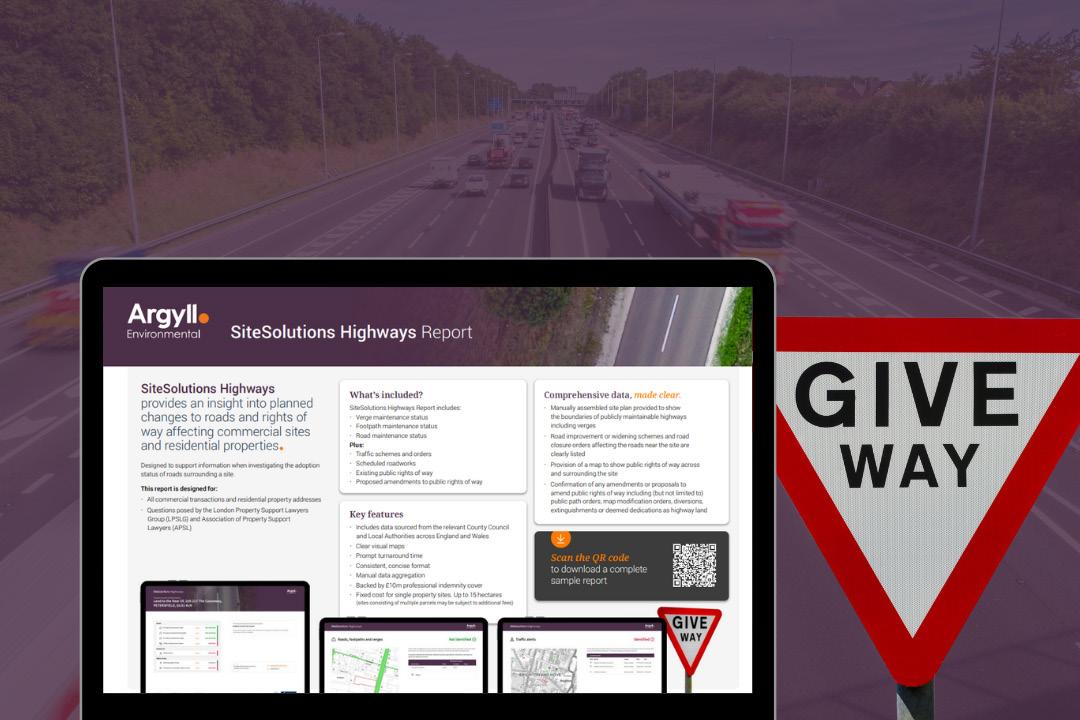
SiteSolutions Highways is Landmark’s unique highways report. It provides detailed insights about the roads, footpaths, and verges that adjoin and abut a site, helping customers stay informed about:
• whether roads, footpaths, and verges are
maintainable at public expense
• nearby road improvement schemes or traffic regulation orders
• temporary roadworks and their anticipated impact
• existing rights of way through the site
• proposed changes to rights of way that could affect the site
Our report answers the core highways questions and requirements posed by the London Property Support Lawyers Group (LPSLG) for comprehensive due diligence.
Faster Turnaround With InHouse Data
At Landmark, we have our own in–house database of highways extents. This means:
• no need to contact the Local Authority for most sites
• quicker turnaround times
• line-only reports available where full extents data isn’t accessible
Keeping it consistent
Each Local Authority varies in the quality, speed, and cost of highways data. With SiteSolutions Highways, you eliminate that uncertainty.
Here’s Why:
• clarity: no more messy, hard-to-read plans. We digitise the extents data from the Local Authority so our customers will always receive a clear plan with the same high quality regardless of location. Our remastered landscape design and hyperlinked search results make it easier than ever to interpret the data.
• speed: some councils are taking over 100 working days to provide extents information.
Landmark’s in-house data means most reports are returned within 7 working days, and if all data is available, within 2 working
days. For urgent cases, we can produce a line– only report at no extra cost while waiting for the full results.
• fixed price: for standard sites, our Highways report is offered at a fixed RRP of £175.00 + VAT, regardless of Local Authority fees. Larger sites or those requiring additional roads may incur additional fees.
More Than Just Maintenance Status
The highways report goes beyond basic data. We include traffic schemes and orders, roadworks and rights of way data, helping our customers gain a clearer understanding of how nearby infrastructure could impact their site.
In Summary
Landmark’s SiteSolutions Highways report delivers clear and consistent highways data with fast turnaround times, fixed pricing, and comprehensive insights, all backed by expert support. By reducing reliance on Local Authority data, it helps conveyancers avoid long delays and unpredictable costs, making the highways search process smoother, faster and more reliable.
Download the SiteSolutions Highways sample report and product card .
Article originally published by Landmark Information Group
Are you ready to help your firm transition into a better future?
As the UK’s leading provider of property insights and expertise, Landmark’s in-house sustainability consultants are not only driving net zero and supply chain due diligence in our business but are also helping property professionals achieve the same goals.
Where do you need to start?
• Helping your firm reduce GHG emissions and start their net zero journey?
• Advice on the impact of climate change for law firms and your clients?
• Support with supply chain due diligence?
Landmark Information empowers property professionals to navigate sustainability challenges, wherever they are on their journey.
Top 10 Topics For 2026: What Should Be On Your Radar
What does 2026 have in store from a risk, compliance and regulatory perspective?
In this article, Rebecca Atkinson, Solicitor and New York Attorney at McArthur Akinson, shares ten of the most significant risk, compliance and regulatory issues for the coming year.
1. The FCA take over from the SRA as AML supervisor- when?
Following a consultation in 2023, the UK government announced on 21 October 2025 that the Financial Conduct Authority (FCA) will take over as AML supervisor for legal, accountancy and trust and company service providers, removing that responsibility from 22 separate supervisors including the Solicitors Regulation Authority (SRA). As at the time of writing there are many unknowns. It is not known when this change will occur and how much lead in time firms will have. However, the change does require legislation to be enacted and therefore needs parliamentary time to be available. Additionally, consultations on many aspects of the change will need to take place and have in fact already begun with the first consultation now open and closing on 24 December 2025
(Anti-Money Laundering and CounterTerrorist Financing Supervision Reform: Duties, Powers, and Accountability Consultation - GOV.UK). With so much to be determined, it is unlikely that the switch to the FCA will happen in 2026 or maybe even 2027.
Top concerns and aspects to consider are:
i) Will firms be subject to dual regulation and punishment, first by the FCA for AML regulation breaches and then by the SRA for breaches of the SRA Standards and Regulations;
ii) Will the SRA retain their relatively newly given unlimited fines for economic crimes and what will FCA fines look like;
iii) How will supervision by the FCA be funded and will firms have to pay an additional fee over and above what is paid to the SRA;
iv) Will the FCA understand legal practice and privilege;
v) Will law firms have to follow new guidance and what will that guidance look like; and
vi) Will the FCA require much more data sharing by firms and what data In the meantime it is business as usual
with the SRA being the regulator.
2. Dentons SDT case now in the Court of Appeal
In March 2025, on appeal by the SRA, the High Court overturned the SDT’s dismissal of the allegations against Dentons for alleged breaches of the money laundering regulations. The High Court held that the SDT had erred in determining the allegations should be dismissed because the wrongdoing did not amount to professional misconduct. The High Court held that the SRA standards in the Principles and Code of Conduct were established once the tribunal made a finding that the legislative requirements had not been met. Additionally, inadvertent breaches and subsequent robust policies, controls and procedures are good mitigation but did not justify dismissal of the case by the SDT and the case were referred back to the SDT.
It was reported in September 2025 that Dentons have now been given permission to appeal to the Court of Appeal. It is not known when that appeal will be heard and its outcome will be important to the legal community.
3. Home Office consultation- UKFIU Information Order powers
A consultation that may have slipped under the radar is the Home Office consultation in relation to the Information Order powers contained in s338ZH of the Proceeds of Crime Act 2002 and s22B of the Terrorism Act 2000 (CHECK). Those powers were introduced to allow the UK Forensic Intelligence Unit (UKFIU) to compel businesses in the AML regulated sector who had submitted a money laundering or terrorist financing disclosure to provide specific further information about their client. The powers were amended by the Economic Crime and Corporate Transparency Act 2023 (ECCTA) so that they could be used to compel information for analysis purposes in nondisclosure contexts.
Under the current framework, for the UKFIU to obtain an Information Order it must make an application to the Magistrates Court. The Home Office engagement exercise document sets out that the UKFIU ‘has not felt able to use’ the power to apply to court for Information Orders due to the high volume of court applications that would
be needed to meet current information demands, the pace at which the UKFIU is expected to respond to international requests and the existing Code of Practice’s requirement to consider less intrusive means plus. For these reasons and a lack of ‘expertise and resource challenges to prepare court applications’ UKFIU consider the current powers not operationally practicable or sustainable.
The Home Office has therefore sought views to their proposed changes to allow UKFIU to issue such Orders without judicial oversight and has proposed an internal oversight mechanism in its place. Of concern is the UKFIU’s understanding of privilege and ensuring that such Orders are drafted in a way that can be complied with. Orders can be appealed to the High Court by way of judicial review and this will be unpalatable for the profession. The Professional Regulation Committee at the Birmingham Law Society has responded to the consultation which closed on 7 November 2025. If the proposed changes go ahead, the legal profession may receive more Information Orders than before.
4. SRA Consumer Protection Consultation- where are we at?
Readers will recall the SRA consulted on a wide range of topics under the banner of ‘Consumer Protection’ following the fraud committed at Axiom Ince. The consultation was split onto three parts:
• The model of solicitors holding client money, covering issues such as how, when and for how long law firms should hold client money (if at all), alternatives to operating a client account and if rules around interest earnt on client accounts, or how long firms can hold client money after the end of a case, need changing so they better serve client’s interest.
• Protecting the client money that solicitors hold, covering issues relating to controls, checks and balances firms are obliged to have in place to protect money held in client accounts. Including how accountants’ reports are prepared and when they need submitting to the regulator and approaches to dormant firms.
• Delivering and paying for a sustainable compensation fund, covering issues such as how funding
of the scheme is split between law firm and individual solicitor contributions and whether, in the longer term, contributions should be varied based on considerations such as size of firm, areas of law or other risk factors. The consultation also explores questions around potential payment caps and whether certain types of claim should remain eligible.
The consultation closed in February 2025 and we do not yet have the SRA’s report and next steps following the consultation responses. This is due very soon and so keep an eye out. It is unlikely that solicitors will be stopped from holding monies but other aspects such as submission of accountant’s reports could change.
5. Potential AML regulatory changes in 2026
With what is said to be the aim of improving the effectiveness of the AML regulations, the UK government shared draft legislation amending the AML regulations and invited feedback by 30 September 2025. The proposed changes are to narrow the definition of high risk third countries to be those on the ‘Call for Action list’ set by the Financial Action Task Force (the ‘blacklist’) and therefore if acting for a client established in one of those countries specific EDD must be undertaken. If this change is made then a client established in the ‘Jurisdictions under Increased Monitoring’ list (the “grey list”), specific EDD as set out in the regulations does not need to be undertaken. However, firms must still consider the jurisdiction a client is established in, and this may not therefore be lessening the burden by much. As a reminder countries on the blacklist are Iran, Myanmar and the Democratic People’s Republic of Korea.
A further proposed change is to apply EDD on ‘“unusually complex or unusually large” instead of ‘complex or unusually large’. This is not much of a shift, especially as complexity is most likely viewed in the context of practice and it is only unusually complex transactions that would be deemed higher risk.
There is also proposed a requirement on banks to take reasonable measures to understand the purpose of pooled client accounts and assess the risk, and then if needed put controls in to manage that risk. To enable that to happen holders of pooled client
accounts must, on request, provide the bank with information about the identity of persons whose funds are held in the account. This has the potential to increase the regulatory burden on banks and solicitors with possible ‘debanking’ of firms by banks if firms refuse to provide due diligence they have gathered on their client. Firms will need to consider duties of confidentiality and legal privilege and how these will be addressed.
6. SRA continuing competency annual report and what’s happening next
The SRA published their annual assessment of continuing competence on 28 July 2025. Headline findings are:
- Most solicitors keep their knowledge and skills up to date and most firms have effective systems and controls in place. Further solicitors are competent and capable of delivering good quality legal services
- There were good examples of solicitors demonstrating learning and development including regularly reflecting on all aspects of their role and recording outcomes.
- There has been an increase in reports about solicitors to the SRA from 11,177 to 12,046.
- There was a decrease in reports for residential conveyancing and commercial law but an increase in criminal and civil.
- The SRA note that there are some solicitors they saw who were not fully reflecting on all aspects of their practice and had limited awareness of warning notices and guidance.
The SRA’s report sets out that areas of focus for the SRA in the following 12 months are investigating the continuing competency regime in firms in the context of criminal and civil practitioners.
7. SRA AML annual report, thematic review on source of funds and wealth and the next AML thematic review theme
The SRA published their annual AML report on 30 October 2025. The report is rich with information on the SRA’s findings from their AML work. The report sets out that in total 935 firms were engaged with. Of these the SRA conducted 317 proactive
Regulation Report
Top 10 Topics For 2026: What Should Be On Your Radar cont’d.
inspections, 516 desk-based reviews, 71 engagements as part of thematic work and 25 AML audit reviews.
Of the 833 firms who received proactive inspections or desk-based reviews, 270 were deemed not compliant, 451 partially compliant and 112 compliant. Those that were deemed non-compliant were referred for investigation.
The SRA also conducted a review of independent audits, and the report sets out that they have started a three-year cyclical programme to review the outcomes of large firm’s last independent audit. Of the 25 firms who were asked to provide their independent audit report the following findings were made:
o 22 had an independent audit carried out in the last 2 years
o 24 out of 25 involved a review of PCPs and a sample of files
o All 25 firms had met the recommendations made in the audit report. However, 6 firm were referred for desk-based review or inspection as the audit had noted missing CDD on files.
The report is too lengthy to summarise here and all MLROs and MLCOs should read it and learn from the findings made by the SRA.
The SRA also published their thematic review on source of funds and wealth on 5 November 2025 finding that there was inadequate scrutiny of documents, missing audit trails, source of funds checks missing and information given not corresponding to the monies received. The thematic review report sets out for firms what the SRA expects and what good practice looks like.
As announced at the SRA’s COLP/COFA conference on 21 October 2025 the next AML thematic review theme will be on the adequacy of policies, controls and procedures and what happens on the ground. Firms should ensure their practice wide risk assessment, AML policy, client and matter risk assessment and any accompanying documentation is up to date and being followed.
2025) on the following proposals:
• to make changes to when complaints information must be provided to a client so that it must be provided at the conclusion of the client’s matter
• require complaints information to be clear, accessible and in a prominent place on firms’ websites, where they have one (and made available on request when they don’t have a website)
• include the LSB’s definition of a complaint in the SRAs glossary of defined terms
• develop new guidance to help those the SRA regulates understand these new requirements and how to meet the Standards and Regulations and combine this with existing guidance on publishing complaints procedures.
Following this consultation the SRA published their response in October 2025 and set out that they will proceed with their proposed new requirement for solicitors to provide complaints information at the conclusion of the matter, on request and if a complaint is made. Further the SRA will proceed with their proposal to update the Transparency Rules to include that complaints information is clear, accessible and in a prominent place on a firm’s website. The SRA will provide guidance on the term ‘prominent’. In addition, the LSB’s definition of a complaint will be added to the SRA Standards and Regulations.
The SRA have also set out that they will provide further guidance, and they will start to collect timeliness data on complaints handling during 2026. They will then consider whether to publish that data.
9. Authorised Corporate Service Providers deadlines
The Economic Crime and Corporate Transparency Act 2023 introduced a requirement for law firms who wish to file documents at Companies House or incorporate companies on behalf of clients to become an authorised corporate service provider (ACSP) and the time by which they must become one has been pushed back to Spring 2026.
Control (PSCs) will be compulsory and a 12-month transition period to verify the identity for the 7 million or so existing directors and PSCs will occur. Those persons can verify their identity directly with Companies House or use an ACSP to do so.
Whilst firms may be comfortable filing documents and incorporating companies as an ASCP they need to carefully consider if they wish to identify their client and confirm the same to Companies House, a government department. There is no risk-based approach with this identification process (unlike that allowed by the AML regulations) and it may not be possible for the firm to use a third party identification and verification platform provider to assist with that process for contractual and reliance reasons.
10. Mazur- conduct of litigation
Last but not least, the case of Mazur v Charles Russell Speechlys LLP [2025] EWCH 2341 (KB) sent shock waves across the profession in September 2025 by confirming the legislative position that non-authorised persons cannot carry on the reserved legal activity of the conduct of litigation simply by virtue of being an employee of an authorised firm. Further a non-authorised person cannot carry out the conduct of litigation under the supervision of an authorised person and instead a nonauthorised person can, support an authorised person in undertaking the conduct of litigation.
The line between conducting and assisting is one for interpretation but there are certain tasks which will be conducting and not assisting such as issuing legal proceedings or defending them. Interpreting the law in this area has become complicated and this is evidenced by the fact that the Law Society Practice note is now on its 5th iteration in just one month of being published.
Following on from a thematic review into first tier complaints handling, the SRA consulted (which ended 1 August
In addition, from November 2025 when incorporating a new company, verification of the identity of new directors and Persons with Significant
The Legal Services Board are reviewing what regulators informed the professions about the legislative position as it seems that some have provided inaccurate information and CILEX have applied to appeal the ruling. So, things may change yet. However, we are where we are and firms who have non authorised persons conducting litigation must amend their practices. If they do not do so they will be committing a criminal offence, and this will almost certainly require reporting to the SRA.
8. SRA Transparency Rules upcoming changes relating to complaints
Reflections: Peter Wiseman, Honorary Council Member
55 years ago, in October 1970, I was launched into the world as a newbie solicitor. Day 1 I found myself in front of the magistrates who were sitting in the splendour of the Assize Court. The adrenalin was in overdrive but success, I got my adjournment. Reflecting on this my mind had possibly been harking back to a previous visit when, as a teenager, I had sat in the gallery during a capital murder trial. The grim solemnity of the proceedings seemed to descend into an almost inaudible murmur with a character all of their own. Spine chilling. Thank goodness those days are behind us, otherwise there could have been six innocent Irishmen who, as likely as not, could have been sent to the gallows. Understandably, in the heightened emotions of the time most Brummies would scarcely have shed a tear
Casting my mind back to when I started, there were far fewer of us: less than 40,000 practising certificates. There was a court system that worked: the magistrates’ courts and higher courts were disposing of cases, by today’s standards, at breathtaking speed. By and large the civil system was working efficiently and, importantly from the practitioner’s point of view, we had experienced knowledgeable court staff who were helpful. The oil in the system which enabled it to work so well was a comprehensive legal aid system which, importantly, attracted many of the best legal minds to publicly funded work.
Of course, there were shortcomings and inefficiencies which cried out for reform. As an example in my articles I was briefly employed as a completions clerk. A meeting would be arranged at the vendor’s solicitors’ office, with the mortgagee and purchaser’s representatives present.
After a wide-ranging discussion, usually on the latest performance of “the Villa” or “the Blue noses” there’d be a grown-up version of pass the parcel with a conveyance, mortgage deed, banker’s draft, undertakings and a bundle of title deeds being passed around the table. It was good for networking! There was an upside. Following a short trial/hearing at assizes or quarter sessions, I could go upstairs to the costs clerk with my file, agree a fee and leave with a cheque in my hand. It worked wonders for cash flow.
It was inevitable that the free market would come knocking on the door. Despite resistance from within the profession it wasn’t possible to justify such things as scale fees for conveyancing. Almost hand in glove with these changes, advertising soon followed. The profession itself came under ever closer scrutiny culminating in the 2004 Clementi report on the regulation of legal services and the removal of self-regulation.
Despite being held up as a world leading example of a body regulating itself for the public good, we had to recognise that this was not the preferred direction of travel. I will refrain from the temptation to launch into the shortcomings of the SRA. It is no part of a regulator’s job to make itself popular. However, it is essential that it retains the consent and confidence of those it is regulating. Recent events involving Axiom and SSB Law have come as no surprise and are the culmination of a long list of failings. With a new CEO due to take over, I’d like to think their priority will be to take a long hard look at its structure to include the qualifications of its personnel and, importantly, a re-examination of its core priorities. Unless there is a change of culture, disenchantment with a failing regulator will escalate still further with the potential for unforeseen consequences.
Much is being written about AI and there’s no doubting it is already becoming a game changer. Certainly, I’m the last
person to express an opinion on how it will shape our profession. I’m only just getting to know a little about copilot, and it will come as no surprise to anyone who is familiar with it that I’ve not used it here. Issues surrounding such matters as AI judgments raises serious questions in my mind.
With the prospect of AI handling most transaction work, it is hard to avoid the conclusion that a much smaller cohort of solicitors may be needed. Will 172,000 or so practising certificates be sustainable? Whilst accepting that our profession, time and again has proved to be both resourceful and resilient, it is difficult to see which parts of the legal landscape will be left open to them where AI has not already established a presence in some form or another. I suppose the plus side is, we might be able to sidestep some of the criticism coming from politicians and the press. Wishful thinking?
Every generation of lawyers must confront a multitude of challenges arguably, this one more so than most with concerns over the constant chipping away at the rule of law and such perennial issues as access to justice and human rights continuing to be areas of concern. Looking around BLS, I am so impressed by our members and particularly the dedication of the unsung heroes of our specialist committees who give generously of their time to discuss and debate current issues and respond to consultation papers.
As a former chair of the Consultation Committee (now Regulation Committee) I have seen first-hand the outstanding quality of this work and the respect afforded to our responses by outside bodies. Stormy waters ahead there may be but I’m confident they can be safely negotiated: bon voyage; bon chance!
A Guide To AI In Accounting And Finance: Prompts And Challenges
Having previously cast a lens on artificial intelligence’s transformation of the accounting and finance function specifically examining the benefits and outputs of AI technology (take a look at www.jayvaglobal.com/news/ ai-accounting-benefits-outputs), we’re now focusing on prompt examples to apply and pitfalls to overcome – in order to succeed in your AI strategies and objectives.
Example Prompts And Scenarios For Ai Queries
In bookkeeping, collecting information from various sources, consolidating it and preparing reports and documents for period end (and routine) activities or in readiness for annual auditing from scratch takes an excessively long time. With AI, these tasks happen in minutes. Here are a few real-life scenarios of AI prompts in an accounting and finance setting:
1. Summarise the financial position of the firm for July, August and September, covering the specific headings ‘working capital’, ‘client liabilities’, ‘cash flow movement’, ‘fee performance by staff member’ and ‘profit’.
2. Create a management report which includes the key financials from each month in the quarter ending 30th September, with an executive summary of financial position, identifying any concerning large debtor and WIP balances which need to be actioned.
where receipts have been paid against invoices with the same invoice number.
4. Review fee earner summary reports for the three-month period from July to September and identify which staff members have the highest fees billed amount compared with their fees entered budget figure for the same period.
5. Our firm’s average debtor days are X. How does this compare with the current average in law firms in the UK?
6. Our EBITDA is 18%. How does this compare in our sector?
7. Create a revised and comprehensive checklist for my legal cashiering team to follow as part of robust month end controls. The checklist should identify the tasks required and the sequence of those tasks, identifying any dependencies and also anything required for compliance with the solicitors’ accounts rules and HMRC compliance.
This is not an exhaustive list. More suggestions are available at www. jayvaglobal.com/news/ai-accountingprompts-challenges
Challenges Of Using Ai In Legal Accounts
In business-critical accounting and finance roles, there are security and compliance risks associated with AI usage, some of which are outlined here:
• Wider impact of AI internally and externally to your organisation. The impact on professional indemnity insurance, staff retention, supervision oversight, billing models, pricing transparency and more are still evolving.
• Historically, the law sector hasn’t been an early adopter of new innovations. AI poses an interesting new chapter for practices as they progress along their AI adoption journey. Companies must strike the right balance between embracing AI’s transformational opportunities and fighting AI’s privacy threats.
• Lack of confidentiality within open web-based AI answer engines. To keep your data safe, only use AI systems which operate in your own protected environment such as Microsoft Copilot or functionality within your case and practice management software. Open web models can memorise and reveal personal information by lacking the necessary safeguards to prevent unauthorised data access.
• Inability to deliver region-specific results. You don’t want outputs referring to other currencies and VAT/GST rates or other nuanced differences. If your AI system knows your location, results pertain exactly to your region which is much preferable and actionable.
Final thoughts
The way you interact with AI is just as important as the technology itself. Thoughtfully crafted prompts unlock impressive efficiencies, while a cleareyed understanding of potential issues ensures AI’s operated safely, compliantly and effectively – paramount on the legal cashiering stage. As AI evolves, law firms embracing it with both curiosity and caution are best positioned to lead the way.
Even More Help From Jayva
Jayva’s here to help you strike the ‘curiosity-caution’ balance and get the most out of the tools at your disposal.
Read our earlier blogs on AI at www. jayvaglobal.com/news, discover our AI services at www.jayvaglobal.com/ ai-consultancy-training, and contact us by emailing info@jayvaglobal.com or calling 0333 2020 995.