Report on the Current-Year Financial Sustainability Statement page 81
Contact Details and Distribution
Contact Council
To contact Western Downs Regional Council, you can:
1. Phone our Customer Contact Team on 1300 COUNCIL (1300 268 624) or 07 4679 4000 (interstate)
2. Visit in person at your local Customer Service Centre
3. Find us on Facebook, Twitter and Instagram
4. Email Council at info@wdrc.qld.gov.au
5. Write to us, addressing all correspondence to:
The Chief Executive Officer
Western Downs Regional Council
PO Box 551
DALBY QLD 4405
Customer Service Centre Locations
80-86 Heeney Street Chinchilla
30 Marble Street Dalby
22 George Street Jandowae
81 Murilla Street Miles (Dogwood Crossing)
19 Fry Street Tara
6 Henderson Road Wandoan
Distribution
Western Downs Regional Council's Annual Report is available in hard copy or electronic format.
Printed copies of the report may be obtained for a fee by writing to Western Downs Region Council, PO Box 551 DALBY QLD 4405, emailing info@wdrc.qld.gov.au or phoning 1300 268 624 (or 07 4679 4000 from interstate) during business hours.
Alternatively, you can download a copy for free from Council's website www.wdrc.qld.gov.au
About This Report
As well as being a legislative requirement for Local Government, Council’s 2024-25 Annual Report serves to keep our residents, ratepayers, business and industry, employees, community groups, and partnering government agencies, informed of our performance over the previous financial year.
This Annual Report focuses on Council’s financial and operational performance for the 2024-25 financial year against the Corporate Plan 2021 - 2026, which establishes the strategic direction of Council’s programs and initiatives into prioritised and measurable actions.
This was achieved by structuring the Corporate Plan around the following four strategic priority areas to create a clear link between Council’s planned delivery and the needs and expectations of our local communities:
Strong Diverse Economy | Active Vibrant Community | Quality Lifestyle | Sustainable Organisation
Alignment to these four strategic priorities flows into Council budgets and operational plans, to ensure Council delivers against a shared vision for the Western Downs.
How to Read this Report
This Report is divided into five chapters designed to help you find the information you are looking for.
Chapter 1: Setting the Scene – includes a profile of the Western Downs region, Council’s role within the community, and a Community Financial Report consisting of key points highlighting our financial performance.
Chapter 2: Your Councillors – includes a message from the Mayor, shows our Councillors and their portfolios, and responds to the statutory information required for Councillor Governance.
Chapter 3: Our Organisation – shows our organisational structure, includes a message from the Chief Executive Officer, and responds to the statutory information required for Corporate Governance.
Chapter 4: Reporting the Organisation’s Performance –outlines our strategic direction, summarises our achievements toward meeting the objectives of the Corporate Plan, and provides an assessment of Council’s overall performance by our Executive Leadership Team.
Chapter 5: Financial Reporting – includes our audited and certified General Purpose Financial Statements that detail Council’s financial position for the year ending 30 June 2025.
SETTING THE SCENE CHAPTER 1:
The Region
The Western Downs: A region of opportunity and connection
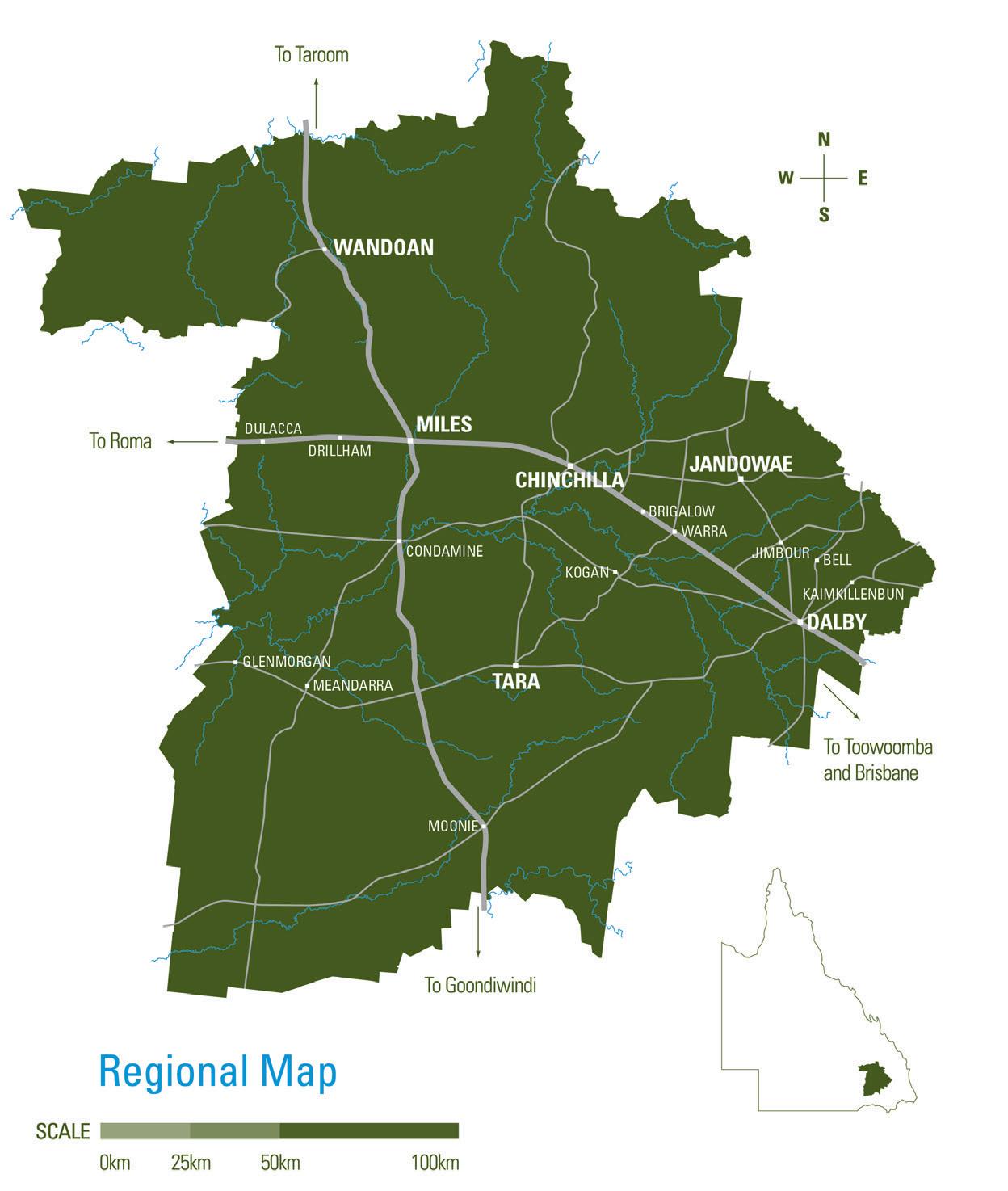
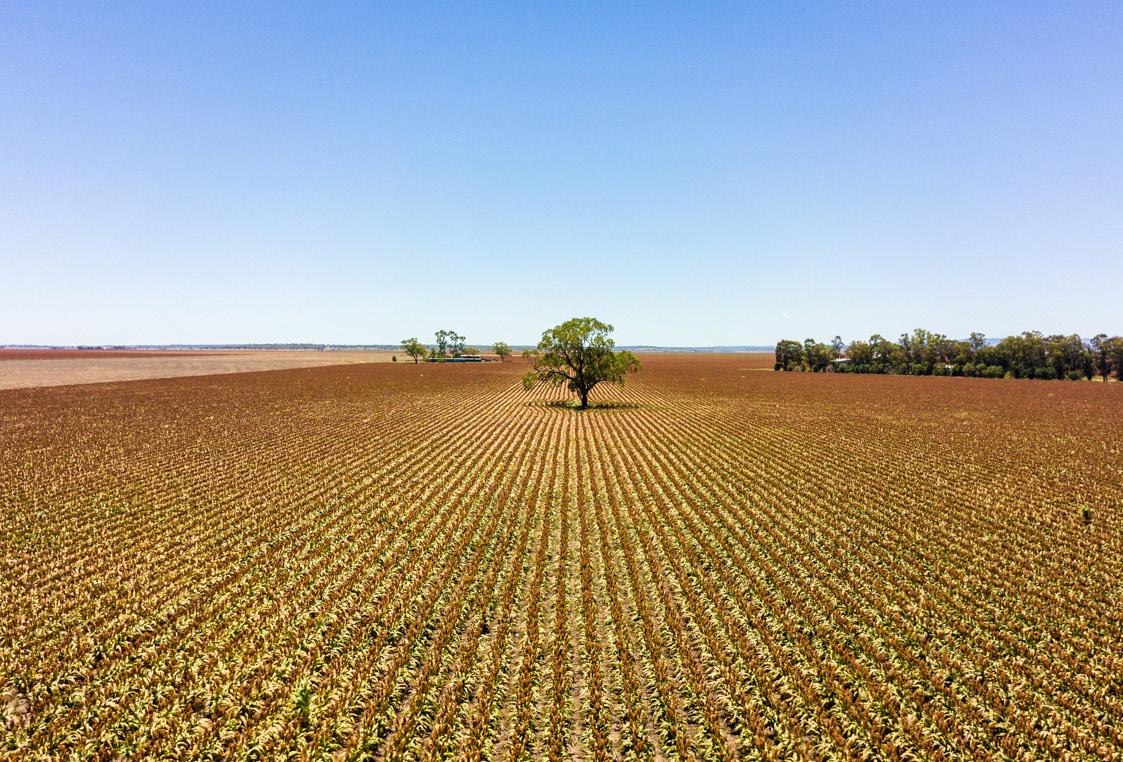
The Western Downs is a diverse region at the forefront of a changing world. Its 38,000 square kilometres of pure possibility, where innovation, industry and lifestyle converge. For the more than 35,000 people who proudly call this region home, the Western Downs offers breathtaking natural landscapes, happy, inclusive communities, and abundant opportunities within two and a half hours from Brisbane.
Our core industries are built on the back of our thriving agricultural sector, paving the way for the diversified manufacturing, energy, intensive agricultural, and tourism sectors that underpin our strong economy. With an impressive investment pipeline of more than $7.5 billion spanning various industries at different stages of development, the Western Downs is increasingly attractive to developers and investors.
Our rapidly expanding economic landscape is highlighted by a Gross Regional Product of $5.28 billion in 2024.
Agriculture remains the region's leading employer and our primary export industry, contributing $1.57 billion in exports during 2023/24 - a remarkable growth of 629% since 2018/19. Our livestock industry makes up 54.4% of this agricultural output with almost a quarter of the nation's feedlots operating right here on the Western Downs.
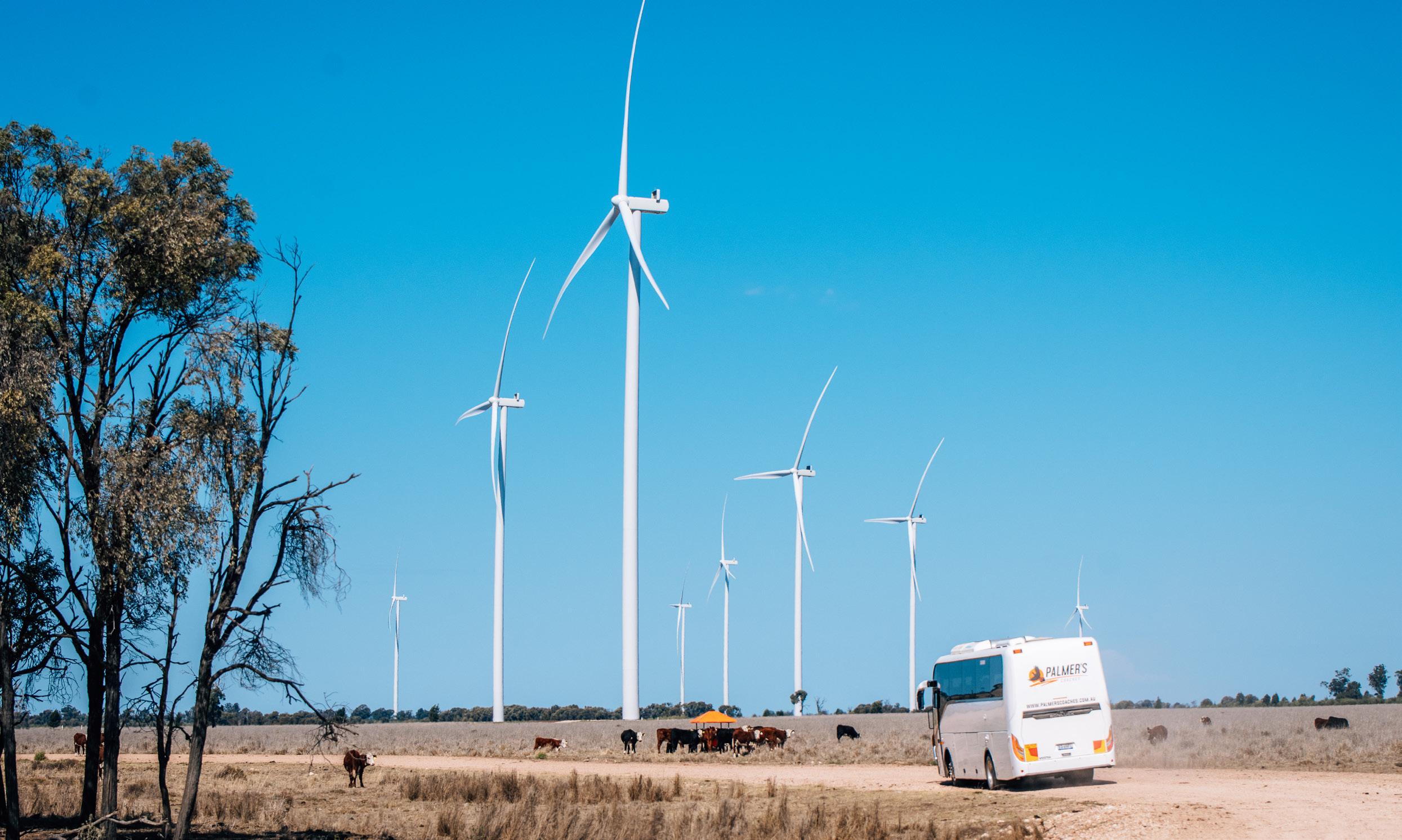
Nestled in the resource-rich heart of the Surat Basin, the Western Downs is proudly recognised as the 'Energy Capital of Queensland.' Our region powers more than two million Australian homes and businesses every single day, driving growth across five essential pillars of power production: coal, gas, wind, solar, and large-scale batteries. As we chart new paths in renewables, our reputation as a powerhouse of energy production grows stronger.
The Western Downs delights in its array of signature destination events, each celebrating the experiences and personalities that make our region truly special. From the ancient and majestic forests of the Bunya Mountains to the renowned Miles Historical Village Museum - one of Australia’s finest - our region is filled with remarkable sights and attractions. This blend of remarkable lifestyle, vibrant events, and a flourishing economy creates an inviting environment for living, working, studying, and recreation.
Connectivity is central to the Western Downs experience. Three major arterial routes - Leichhardt, Moonie, and Warrego Highways - along with the West Moreton rail system, link us seamlessly to the rest of Australia. Aerodromes in Chinchilla, Dalby, Miles, Tara, Meandarra, and Moonie complement our transport network, while the Westlander train (operated
by Queensland Rail Travel) connects us to Brisbane, Roma, and beyond. Our strategic location offers effortless access to national and international markets through the Port of Brisbane and Toowoomba Wellcamp Airport.
Our region thrives on the passion and dedication of its people. Community spirit runs deep in the Western Downs, reflected in our strong tradition of volunteerism - 19.5% of residents contributed time to a community group or service in the 2021 Census. Ask anyone what truly sets our region apart, and the answer rings clear: 'it’s the people that make it’.
On the Western Downs, an active and fulfilling lifestyle awaits, complemented by modern, inclusive infrastructure and affordable living. Young families are drawn to the region’s more affordable cost of living, with housing prices averaging $382,500 in 2024 - markedly lower than the regional Queensland average of $685,000. Renters enjoy a median weekly rent of $380, compared to $650 across regional Queensland, making the Western Downs accessible for all.
Families who choose to call the Western Downs home discover a wealth of educational opportunities, with high-performing public and private schools including Queensland’s largest school farm, a proud feature of Dalby State High School. Tertiary education and academic support are more accessible than ever with the opening of a dedicated Country Universities Centre learning and study hub in Chinchilla in March 2025.
There’s no such thing as peak hour traffic and the daily commute to work is short, ensuring the days are filled with more play and less rush. Here in the Western Downs, you’ll find incredible recreational facilities - sparkling aquatic centres, skate parks, family-friendly playgrounds, and peaceful parks perfect for unwinding or catching up with friends.
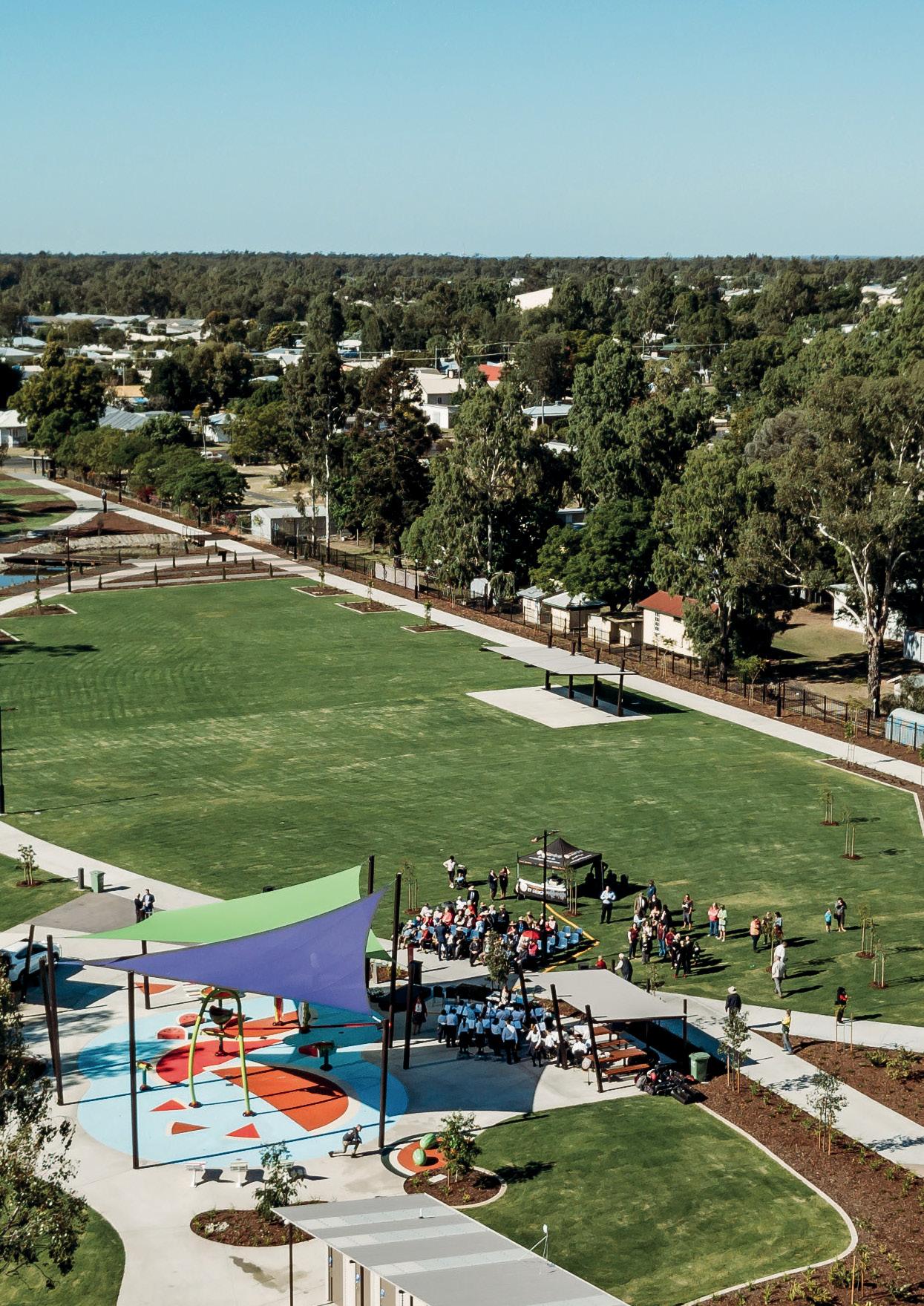
Adventure is always on the agenda. Wander through the acclaimed Chinchilla Botanical Parkland, test your skills on the Bunya Mountain bike trails, or catch a film under the stars at the new outdoor cinema at Dalby’s lively new community square. Our beautifully upgraded waterfront camping spots encourage locals and visitors to get out and explore our region’s glorious climate.
The Western Downs is bursting with flavours; take a break from homecooked meals and venture out to our buzzing cafes, stylish restaurants, eclectic bars, and roaming food trucks serving up everything from gourmet cheeses to wood-fired pizzas and aromatic curries.
When it comes to essential services, you’re covered. Five hospitals, an outpatient clinic, and a growing network of allied health providersincluding physiotherapists, chiropractors, and optometrists - ensure the wellbeing of our communities remains a priority.
Living in an agricultural heartland, fresh produce is at your fingertipswhether you’re picking up farm-fresh goods at a local market or stocking up at town supermarkets. Love to shop? You’ll discover chic boutiques showcasing designer labels and specialist retailers offering everything from plush homewares to farming essentials - all right here in the region.
Whether you’re seeking new opportunities, genuine connections, or just a place to truly belong, the Western Downs invites you to experience a community where people and progress come together - and every day feels inspired.
The Role of Council
At Western Downs Regional Council, we take our role as the front-line level of government seriously. It is important to us that we remain the most accessible level of government in our local communities, and that the decisions made today, positively shape the region for the benefit of future generations.
We believe in and adhere to the following principles of local government:
a) Transparent and effective processes and decision-making in the public interest;
b) Sustainable development and management of assets and infrastructure, and delivery of effective services;
c) Democratic representation, social inclusion, and meaningful community engagement;
d) Good governance of, and by, local government; and
e) Ethical and legal behaviours of councillors and local government employees
Council's Vision
A diverse region at the forefront of the changing world.
Council's Culture Statement
Here at Western Downs Regional Council - It's The People That Make It. We act as one, committed to empowering productive teams with our people enjoying high levels of personal job satisfaction.
Council's Values
As elected representatives and staff of Western Downs Regional Council, our behaviour reflects our values: Communication, Leadership, Respect, Balance, Teamwork and Accountability.
Council's Risk Appetite Statement
Council has a high appetite for initiatives where there is a good understanding of the risk, and there is confidence that the outcomes will lead to significant business improvements or service delivery.
Council's Strategic Priorities
The services, projects and initiatives that Council is committed to delivering are in response to the strategic priorities identified under the following four focus areas of delivery for the Corporate Plan 2021 - 2026:
Our
Our
Community Financial Report
This report summarises Council's financial position at 30 June 2025.
Council is committed to ensuring it is financially sustainable in the longterm while ensuring our region is affordable for our families to live, work, prosper, and play.
For 2024-25, Council has delivered on these commitments with its finances strengthened and ratepayers having to pay relatively low rates and utilities charges for the delivery of services.
This Community Financial Report consists of the following five key statements or elements
1. Statement of Comprehensive Income (Profit and Loss Statement);
2. Statement of Financial Position (Balance Sheet);
3. Statement of Changes in Equity (how Council's equity or net worth has grown from one year to the next);
4. Statement of Cash Flows (how Council has used and grown its cash); and
5. Financial Sustainability Measures (how we sustain Council's business financially).
Significant achievements for 2024-25 include:
1. Delivering an operating surplus of $18,549,000 (recurrent revenue of $206,190,000 less recurrent expenses of $187,641,000); and
2. Completing capital works of $119,326,000.
1. Statement of Comprehensive Income (Profit and Loss)
The Statement of Comprehensive Income details where Council received its money and how it spent this money delivering services to our region.
The difference is Council's operating surplus which will be used at a point in time to deliver services.
Financial Summary 2024-25
Revenue and Expenditure - Recent Operating Surpluses $'million
Our operating surplus is the outcome which results from deducting our day-to-day expenditure, including depreciation of our property, plant and equipment, from our day-to-day revenue.
Revenue - where does our money come from?
This year Council received $266,020,000 in revenue which consisted of $206,190,000 in recurrent revenue and $59,830,000 in capital revenue.
Recurrent or day-to-day revenue of $206,190,000 comprised:
• Rates and Utility Charges $118,905,000;
• Operating Grants and Subsides $26,918,000;
• Sales of Major Services $26,040,000, including sale of gravel from our quarry and gravel pits, revenue from the use of our saleyards, and revenue from contracts to maintain and upgrade Federal and State Government owned road networks;
• Fees and Charges $8,956,000;
• Rental Income $704,000;
• Interest Revenue $16,771,000; and
• Other Income $7,896,000.
In addition, we received Capital Grant Revenue of $59,737,000 to assist in delivering capital projects. This consisted mainly of grants provided by the State and Federal Government and contributions from the resource sector.
The following graph shows the breakup of our recurrent revenue
RECURRENT REVENUE
Rates and Utilities Operating Grants and Subsides
Sales of Major Services Fees and Charges
Rental Income
Expenses - how was the money spent?
We incur both operating and capital expenditure in delivering services to our community.
Recurrent or day-to-day expenditure of $187,641,000 comprised:
• Employee Benefits $57,859,000;
• Materials and Services Cost $75,990,000;
• Depreciation and Amortisation $52,564,000; and
• Finance Costs $1,228,000.
In addition, capital expenses totalled $10,085,000 which mainly related to the write-off of assets where assets needed to be replaced earlier than expected.
The following graph shows the breakup of our recurrent expenditure:
Council's most significant asset is our road and bridge network which is valued at $1,054,869,000. The region has over 7,500 kilometres of Council owned roads which is by far the largest in Queensland and the second largest local government road network in Australia.
Council uses this property, plant, and equipment to provide services to the community. Therefore, it is necessary that we maintain these assets to an appropriate standard. Based on valuations provided by independent valuers, the remaining lives as a percentage of these assets' useful lives average 64.2%. This indicates our assets are in very good condition. The percentages for Council's major assets classes are provided in the following table.
2. Statement of Financial Position (Balance Sheet)
The Statement of Financial Position measures what we own (our assets) and what we owe (our liabilities), resulting in our net worth at the end of the financial year.
Assets - what do we own?
At 30 June 2025, Council's assets were valued at $2,197,996,000 and comprised:
• Property, plant and equipment including intangibles $1,905,673,000;
• Cash and cash investments $254,493,000;
• Trade and other receivables $29,362,000; and
• Inventories and contract assets $8,468,000.
The breakdown of Council's property, plant, and equipment is graphically represented below:
Liabilities - what do we owe?
At 30 June 2025, Council's liabilities total $45,646,000. Our liabilities comprised:
• Trade and other payables $16,310,000;
• Employee leave liabilities $14,328,000;
• Provisions to restore Council's quarry, gravel pits, landfills and evaporation ponds $9,440,000; and
• Contract and lease liabilities $5,568,000.
Our Net Worth
Our net worth is $2,152,350,000 which comprised assets of $2,197,996,000 less liabilities of $45,646,000.
3. Statement of Changes in Equity
The Statement of Changes in Equity measures the changes in our net worth and shows the movement in our retained earnings and asset revaluation surplus.
The increase in our net worth (i.e. Equity) of $126,534,000 was due to a positive net result of $68,294,000 (i.e. revenue of $266,020,000 less expenditure of $197,726,000) and an increase in the value of our assets of $58,285,000.
4. Statement of Cash Flows
The Statement of Cash Flows shows all the activities undertaken during the year that impact our cash balances.
Our cash balances decreased by $12,509,000 over the course of the year due to the expending of the grant funding received to restore Council assets damaged in the flood events experienced in prior years. Council's main source of cash is invested in the State Government Capital Guaranteed Queensland Treasury Corporation Cash Fund. The balance in this account on 30 June 2025 was $125,406,000.
At 30 June 2025, Council had adequate unrestricted cash to meet 11.0 months of operating expenditure excluding depreciation without receiving any form of revenue and without having to borrow.
5. Financial Sustainability Measures - how strong is Council financially?
A local government is considered financially sustainable if it can maintain its financial capital (equity or net worth) and its infrastructure over the long-term. In forming a view of the local government's financial sustainability, several financial ratios are used.
Council’s performance as at 30 June 2025 against these ratios is listed below.
Measure
Operating Performance (measure Council profitability)
Results for the current and 5-year average have met the target.
Results for the current and 5-year average have met the target.
Liquidity (measure the number of months Council can survive without having to raise any revenue or having to borrow)
Unrestricted
Asset Management (measure the extent we are sustaining our asset base)
Financial Capacity (measure the extent to which Council has control over its decision-making)
Results exceed the target due to Council's strong cash position.
Results for the current and 5-year average have met the target.
Results for the current and 5-year average have met the target.
* Council-Controlled Revenue and Population Growth measures are reported for contextual purposes only and are not audited by the Queensland Audit Office.
The above table indicates that Council is operating on a financially sustainable basis and can adequately deliver the range of services it provides to the region.
CHAPTER 2: YOUR COUNCILLORS
Mayor's Message
There has never been a better time to live, work, prosper, and play in the Western Downs.
As Mayor, I am proud to present this Annual Report, which reflects a year of remarkable progress, innovation, and community spirit across our region.
The Western Downs continues to prove its place as a regional powerhouse, going from strength to strength. Our success is no accident - it is the result of vision, hard work, and a shared commitment to building a region that is feeding, clothing, and powering the nation.
With a Gross Regional Product of $5.28 billion, we contribute over 1% of Queensland’s Gross State Product and nearly 6% of the state’s Gross Agricultural Product, despite representing just 0.6% of the population. These figures speak volumes about the strength and resilience of our local industries.
Our economy is built on the solid foundations of our agriculture, intensive agriculture, energy, and manufacturing industries. These pillar industries continue to demonstrate the innovation and adaptability that define the Western Downs, and are supported by a community that embraces opportunity and works together to achieve shared success.
A key driver of our region’s growth has been the spirit of coexistence and collaboration. Our communities, landholders, businesses, and large developers have consistently taken a big-picture approach, recognising that we are stronger together. Council’s CommunitiesPartneringFramework, which was adopted last financial year, lays out our principles for working together and being good neighbours. This year, we proudly announced the first recipients of our ‘Great Neighbour’ and ‘Good Neighbour’ badges - large developers who have embraced the ethos of the Communities Partnering Framework and have become a real part of the communities in which they operate.
This collaborative spirit is evident in the way our industries support one another. Energy developers power our manufacturers, who in turn drive our agricultural sectors. This interconnectedness fuels not only our economy but also the many organisations and businesses that contribute to the vibrancy of our communities.
A standout example of the way our core industries and industry groups are working together to maximise impact and build opportunity was the launch of the Queensland Manufacturing Institute’s ‘Shape Western Downs Energy Future’ initiative. Delivered in partnership with Council and funded through the Regional Economic Futures Fund. This program is designed to connect our region’s more than 120 manufacturing businesses with emerging opportunities in the renewable energy sector. Leveraging the region's prime location, reliable environmental conditions, and access to high-capacity transmission infrastructure, this initiative is helping local manufacturers position themselves for sustainable growth and long-term success.
Our region’s reputation as a place of innovation and leadership was further cemented this year with the return of the highly regarded Accelerate Manufacturing Conference and the Young Entrepreneur Summit. These events showcase our position at the forefront of manufacturing innovation and inspire our youth to become the success stories of tomorrow. We also
celebrated the strength and diversity of our local business community and producers through events like the Indigenous Business Expo and Chef’s Table, delivered in partnership with Toowoomba and Surat Basin Enterprise.
Liveability remains a cornerstone of the region’s appeal. Our calendar of events continues to draw thousands of visitors from across the country, eager to experience the unique charm of the Western Downs. From the Big Skies Festival at the iconic Jimbour House to the delicious Chinchilla Melon Fest, the Words Out West Readers and Writers Festival, and the Regional Artists’ Exhibition at Lapunyah Gallery, our arts and culture scene is thriving.
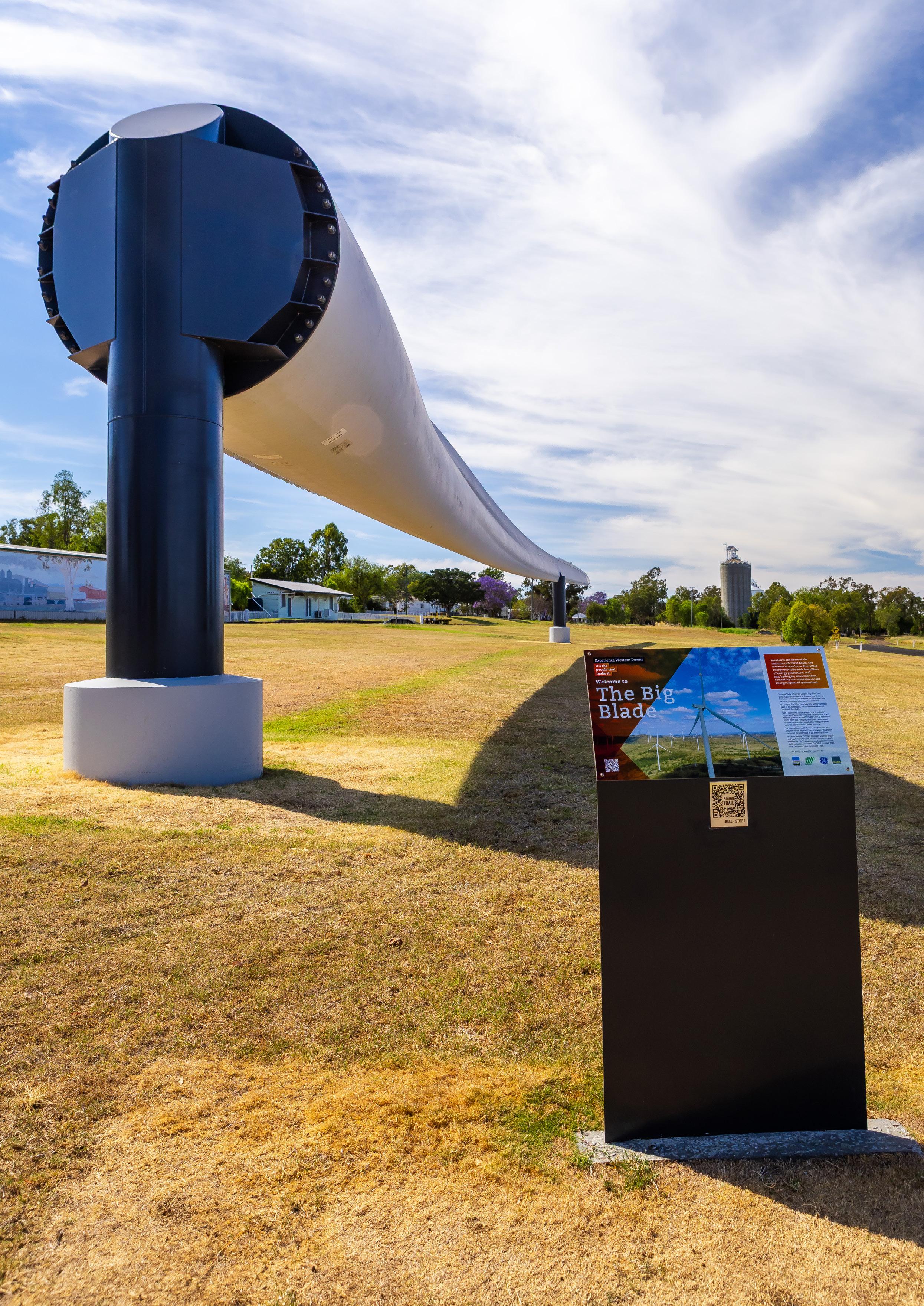
We also celebrated new additions to our public spaces, including stunning metal sculptures at Lake Broadwater created by acclaimed sculptor Fred Beel, with the designs inspired by local high school students. We unveiled the ‘Big Blade’ in Bell this year, a 67-metre-long wind turbine blade weighing over 22 tonnes, symbolising our proud status as The Energy Capital of Queensland and providing a unique opportunity for education as well as tourism.
Council remains committed to providing fit-for-purpose facilities that meet the needs of our growing and diverse communities. This year saw continued engagement on the Dalby Cultural Centre and Thomas Jack Park, with draft concept designs released in November. We also progressed the Chinchilla Aquatic Centre Masterplan, and celebrated the Dalby Regional Saleyards being recognised as one of the top three saleyards in Australia and a premier venue for cattle producers and buyers.
Community engagement is at the heart of everything we do. We know that the best outcomes are achieved when we work together with our residents. This year, we invited community input on amendments to the Western Downs Planning Scheme and the development of our new Regional Workforce Strategy. These conversations are essential to shaping a future that reflects the aspirations and needs of our people.
As we reflect on the past year, it is clear that the Western Downs is a region defined by strength, opportunity, and community spirit. The energy and character of our people, the outstanding liveability, and the innovation and determination of our businesses all combine to create a region with a bright and prosperous future.
I extend my heartfelt thanks to the dedicated staff of Western Downs Regional Council, whose efforts have been instrumental in our success. I am inspired by the journey ahead and look forward to continuing our work together to enhance the liveability, productivity, and capacity of our region.
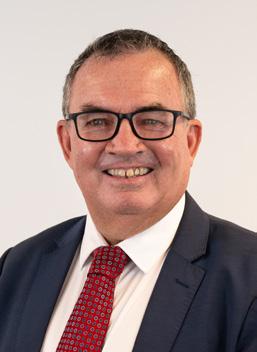
Mayor Andrew Smith
Portfolio - Economic Advocacy and Investment Attraction
Phone: 4679 4004
Mobile: 0438 755 896
andrew.smith@wdrc.qld.gov.au
"There has never been a better time to live, work, prosper, and play in the Western Downs."
Your Councillors
The Western Downs Regional Council local government area is represented by eight elected Councillors, and an elected Mayor who are responsible for the strategic direction of Council. There are no wards or divisions within the Western Downs Regional Council. Council elections are held every four years with the most recent election being held on 16 March 2024. For detailed information in relation to Councillor entitlements, remuneration packages, committee representation, and meeting attendance, please refer to the next section of this report containing Statutory Information. Council appoints Councillors to identified portfolios. The portfolio system enables collaboration with community and stakeholders, supports the implementation of Council's strategic priorities aligned with the portfolio subject area, and creates opportunities for partnership and innovation.
Mayor Andrew Smith
Portfolio - Economic Advocacy and Investment Attraction
Phone: 4679 4004
Mobile: 0438 755 896
Email: andrew.smith @wdrc.qld.gov.au
Councillor Sam Condon
Portfolio - Utilities
(Water, Wastewater, and Gas)
Phone: 4679 4004
Mobile: 0474 734 237
Email: sam.condon @wdrc.qld.gov.au
Councillor
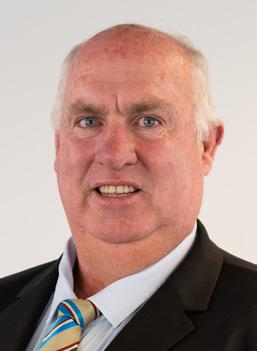
George Moore
Portfolio - Corporate Governance and Finance
(Finance, Governance, and Internal Audit)
Phone: 4679 4004
Mobile: 0437 536 990
Email: george.moore @wdrc.qld.gov.au
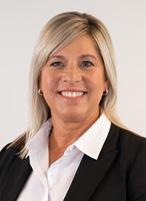
Deputy Mayor
Kylie Bourne
Portfolio - Planning and Environment
(Statutory Planning, Development and Compliance, Environment and Health, Waste and Rural Services)
Phone: 4679 4004
Mobile: 0467 171 225
Email: kylie.bourne @wdrc.qld.gov.au
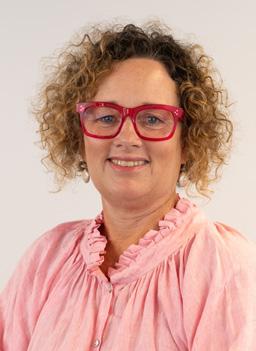
Councillor
Megan James
Portfolio - Business Strategy and Economic Development
(Business Strategy and Planning (including Saleyards) and Economic Development)
Phone : 4679 4004
Mobile: 0419 946 575
Email: megan.james @wdrc.qld.gov.au
Councillor Greg Olm
Portfolio - Works and Technical Services
(Civil Works, Fleets, Quarries, Asset Management, and Design)
Phone: 4679 4004
Mobile: 0477 606 049
Email: greg.olm @wdrc.qld.gov.au
Statutory Information - Councillor Governance
As the community's elected representatives, the Mayor and Councillors are responsible for the successful management of the Western Downs Regional Council local government area. To ensure Council's leadership is fair and equitable, and that decisions are made in the best interest for our region, Council is required to act in accordance with the Local Government Act 2009, Local Government Regulation 2012, and associated State and Federal legislation.
Councillor
Sophie Bougoure
Portfolio - Council Facilities
(Aerodromes, Sporting Facilities, Showgrounds and Community Buildings)
Phone: 4679 4004
Mobile: 0429 838 332
Email: sophie.bougoure @wdrc.qld.gov.au
Councillor
Kaye Maguire
Portfolio - Tourism and Recreational Spaces
(Tourism Attraction, Major Events, Parks, Open Spaces, Gardens, and Cemeteries)
Phone: 4679 4004
Mobile: 0475 007 555
Email: kaye.maguire @wdrc.qld.gov.au
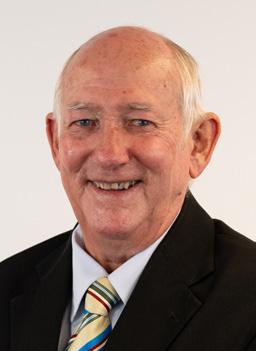
Councillor
Peter Saxelby
Portfolio - Community and Cultural Development
(Libraries, Community Development and Cultural Development)
Phone: 4679 4004
Mobile: 0475 007 554
Email: peter.saxelby @wdrc.qld.gov.au
Council makes decisions at Ordinary Meetings of Council which are held each month. The ordinary meetings are held at regional locations on a rotational basis. Special Meetings of Council are called as required, with the only items of business conducted at these meetings being the business stated in the meeting notice.
Members of the public may attend Ordinary and Special meetings. Individuals or groups may address Council on a particular matter of public interest by deputation. Deputations may be arranged through the Office of the Chief Executive Officer.
Council may at times resolve to temporarily close a meeting under section 254J of the Local Government Regulation 2012 to discuss a confidential matter, however all decisions about such matters are made in an open meeting.
Council meetings are carried out in accordance with relevant legislation and Council's meeting procedures.
The date, time, and location of all ordinary and special meetings are published at least annually and are available on Council's website, and all Customer Service Centres.
The agenda and related reports (excluding confidential items) for each meeting are publicly available by 5pm the next business day after the notice of meeting is given to each Councillor.
Minutes of all Council meetings are published on our website within the statutory ten days following the meeting.
A total of twelve (12) Ordinary meetings and one Special meeting were held from 1 July 2024 to 30 June 2025.
In accordance with section 186(1)(c) of the Local Government Regulation 2012, details of attendance of Councillors at Ordinary and Special Meetings during 2024-25 are provided below:
Summary of Meeting Attendance by Councillors - 1 July 2024 to 30 June 2025
Pursuant to section 254K of the Local Government Regulation 2012, Councillors unable to attend meetings in person, where approved by the Chairperson or Chief Executive Officer to take part in the meeting by audio link or audio-visual link, are taken to be present at the meeting.
Councillor Briefings and Workshops
In addition to regular Council meetings, Councillor briefing sessions, and workshops are also held to inform Council of important issues. These sessions are not a decision-making forum and therefore allow detailed discussions to explore options and develop a better understanding of the issues.
Decisions of Council can only be made during actual Council meetings.
Councillor Remuneration and Expenses Reimbursement
The Local Government Regulation 2012, in section 186(1)(a) and (b) requires the annual report to detail the total remuneration, including superannuation contributions paid to each councillor for the financial year as well as expenses incurred in accordance with the Councillor Expenses Reimbursement Policy
Councillor remuneration is determined by the Local Government Remuneration Commission on an annual basis.
The Councillor Expenses Reimbursement Policy ensures Councillors are provided a reasonable level of resources and equipment in order to carry out their official duties in an effective and efficient manner.
Councillor's Remuneration, Superannuation, Expenses Incurred, and Facilities provided 1 July 2024 to 30 June 2025.
Cr
Cr
Particular Resolutions
Section 250(1) of the Local Government Regulation 2012 requires Council to adopt an expenses reimbursement policy. Council made a resolution to amend the Councillors Expenses Reimbursement Policy at its Ordinary Meeting of Council on 19 September 2024 as below:
The purpose of this report is to present the proposed Councillor Expenses Reimbursement - Statutory Policy for adoption as a result of a review of the Councillor Expenses Reimbursement - Council Policy
COUNCIL
RESOLUTION
Moved By Cr. K. A. Bourne
Seconded By Cr. M. J. James
That, pursuant to sections 250 and 251 of the Local Government Regulation 2012, Council resolves to:
1. adopt the amended Councillor Expenses ReimbursementStatutory Policy as per Attachment two; and
2. ensure the policy is publicly available and published on Council's website as soon as practicable.
CARRIED (8 to 1)
Expenditure from Councillors Discretionary Funds
Western Downs Regional Council does not provide Councillors with discretionary funds.
Overseas Travel
One Councillor travelled overseas for Council business during the 2024-25 financial year.
Councillor: Kaye Maguire
Destination: Singapore
Purpose of Travel: Attend a Trade Mission in Singapore as part of Queensland Country Tourism. For training and networking with South-East Asia tourism markets along with operators and other professionals in the tourism industry to promote tourism in the Western Downs.
Cost: Nil cost to Council, trip was self-funded.
Complaints about Councillor Conduct and Performance
The roles, responsibilities, and obligations of Councillors are set in the Local Government Act 2009. Further, the Code of Conduct for Councillors in Queensland sets out the standard of behaviour expected of Councillors when carrying out their roles, responsibilities, and obligations as elected representatives of their communities.
The Office of Independent Assessor considers complaints against Councillors.
The Local Government Regulation 2012, in section 186 specifies the particulars of Councillors' conduct that must be contained in the annual report for a financial year as detailed below.
Number of Councillor Conduct Orders and Disciplinary Actions 1 July 2024 to 30 June 2025
Chairperson makes an order for unsuitable meeting conduct (section 150I(2) of Local Government Act 2009)
Councillors make an order for unsuitable meeting conduct of Chairperson (section 150IA(2)(b) of Local Government Act 2009)
Council order for disciplinary action against a Councillor for a conduct breach (section 150AH(1) of Local Government Act 2009)
Councillor Conduct Tribunal decision, order and recommendation about Councillor misconduct and connected conduct breach (section 150AR(1) of Local Government Act 2009)
Name of each Councillor to whom a decision, order or recommendation was made (sections 150I(2), 150IA(2)(b) or 150AR(1) of the Local Government Act 2009)
A description of the unsuitable meeting conduct, inappropriate conduct or misconduct engaged in by each Councillor
A summary of a decision, order or recommendation made for each Councillor
Conduct and Performance of Councillors 1 July 2024 to 30 June 2025
referred to the assessor by local government entities for the local government (section 150P(2)(a) of Local Government Act 2009)
Matters notified to the Crime and Corruption Commission (section 150P(3) of Local Government Act 2009)
information given under section 150AF(3)(a) of the Local Government Act 2009
Occasions local government asked another entity to investigate under Chapter 5A, part 3, division 5 of the Local Government Act 2009 for the local government, the suspected conduct breach of a Councillor
Applications heard by Conduct Tribunal under chapter 5A, part 3, division 6 of the Local Government Act 2009 about whether a Councillor engaged in misconduct or a conduct breach
to local government from the assessor under section 150AC(1) of Local Government Act 2009
Total number of suspected conduct breaches for which an investigation not started or discontinued under section 150AEA of the Local Government Act 2009
Decisions by the local government under section 150AG(1) of the Local Government Act 2009 whether or not Councillor engaged in a conduct breach
Matters not decided by the end of the financial year under section 150AG(1) of the Local Government Act 2009
Average time taken by the local government in making a decision under section 150AG(1) of the Local Government Act 2009 N/A
Council must keep and publish a Councillor Conduct Register that records orders made about unsuitable meeting conduct by a Councillor, decisions not to start, or to discontinue investigation of suspected conduct breaches, decisions about the suspected conduct breaches referred to Council, and decisions about whether or not a Councillor engaged in misconduct or a conduct breach made by the Councillor Conduct Tribunal. The Councillor Conduct Register is located on Council's website.
CHAPTER 3: OUR ORGANISATION
Chief Executive Officer's Message
Each financial year presents a new opportunity for Western Downs Regional Council to build on its reputation as a region of choice to live, work, and prosper. As Chief Executive Officer, I’m proud to reflect on a year marked by steady progress, thoughtful planning, and a continued commitment to delivering quality services for our community.
As an organisation our standards are high, but our aspirations for the Western Downs are even higher. Guided by our Corporate Plan, we’ve remained focused on our strategic priorities and the long-term wellbeing of the Western Downs. This Annual Report measures our performance against those priorities and highlights the work we’ve done to support the region's strong, diverse economy, and vibrant communities.
"I’m confident that the work we’ve done in 2024/25 positions us well for a strong, dynamic future, cementing the region's position at the forefront of the changing world."
Our organisation continues to operate with financial discipline, maintaining a healthy cash and investment balance of $253.5 million as of 30 June 2025, and retaining our position as one of the few debt-free local governments in Queensland. This financial strength allows us to invest confidently in the futureplanning proactively and seizing opportunities to shape the future of the Western Downs.
We’ve taken deliberate steps this year to better understand the evolving needs of our region, investing time and resources into reviewing what our communities and economy will need in the years to come. We are laying
the groundwork for future decisions that are grounded in evidence and carefully balance opportunity with sustainability.
Strong, persistent advocacy remains a key focus for Western Downs Regional Council. Over the past twelve (12) months Council has continued to proactively engage with the State and Federal Governments to secure support for our region's most pressing needs: water security, a safe and well-maintained road network and digital connectivity.
A major milestone this year was the successful completion of Phase Two of our once-in-a-generation project to replace our corporate enterprise resource planning system. Phase Two saw updates including a new HR payroll system, electronic timesheets and digital asset management improvements. This process is about more than just upgrading our technology - it’s about improving how we work, enhancing customer experience, and empowering and equipping our staff with new skills. Our in-house SMART Digital team, supported by staff from across the organisation, has shown what’s possible when innovation and collaboration come together. Phase Three is now underway and is set to revolutionise how our community interacts with Council through a unified, customer-centric digital platform.
In March 2025, we hosted a sector-first Energy Industry Round Table, bringing together executives from both traditional and renewable energy companies to discuss shared challenges and opportunities. This event was a bold step forward in shaping the future of our region, helping to foster understanding, collaboration, and sustainable growth for both energy developers and our communities.
Another major achievement was the completion of our landmark flood recovery program, restoring roads damaged by consecutive flood events
in 2021 and 2022. This achievement is significant not only because of the scale of the work completed, but also because of the innovative, local-first way in which it was structured and implemented. An incredible 94% of the works were completed using local contractors and suppliers, ensuring that the economic benefits stayed within the Western Downs and endowing local businesses with valuable large-scale project experience. It’s a powerful example of how practical planning and local partnerships can deliver real value.
In October, Council successfully transferred its community housing portfolio to Community Housing (Qld) Ltd, a specialist provider with the expertise to manage and potentially grow this vital service. This transition ensures continued access to quality housing for those most in need and reflects our commitment to sustainable, community-focused planning.
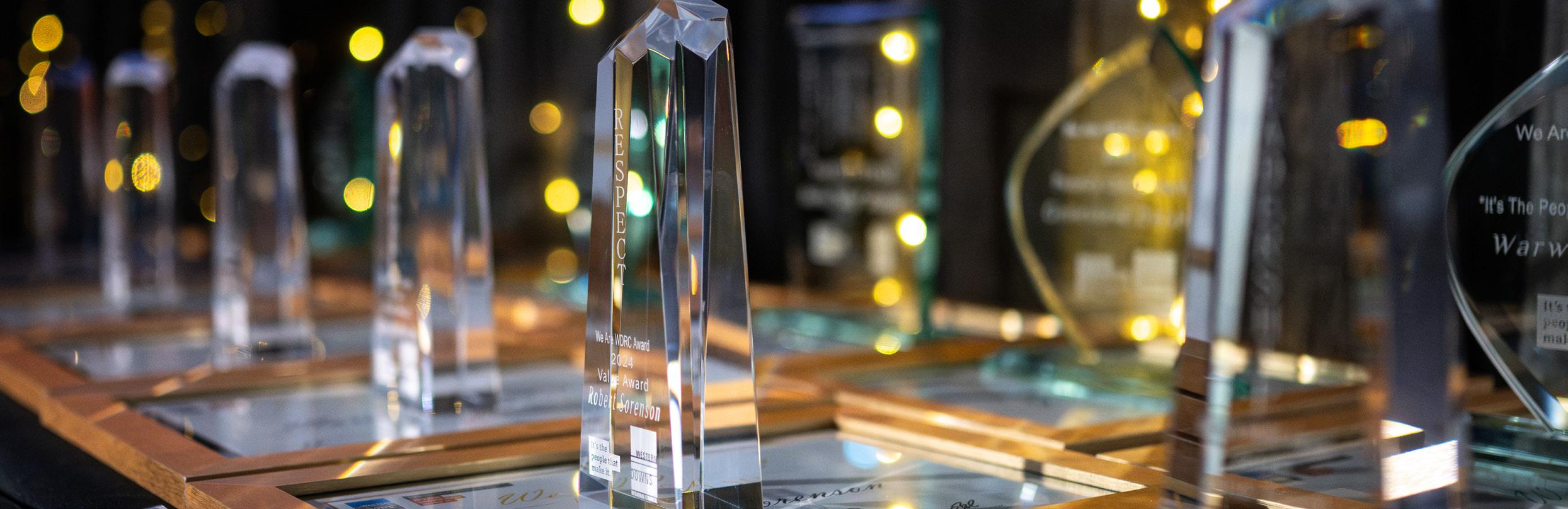
This year also saw our organisation recognised for excellence across multiple fronts. Our Works Manager - Maintenance, Sam Fitzgerald, was named Young Manager of the Year at the Local Government Managers Association (LGMA) Awards for Excellence. Our library services team earned their third Queensland Public Library Association (QPLA) award since 2021 for the Picture Western Downs initiative, which celebrates our region’s rich cultural heritage. Council was also named Large Employer of the Year at the Queensland Training Awards Regional Finals for the fourth consecutive year, with trainee Courtney McConville receiving the Aboriginal and Torres Strait Islander Student of the Year award. These accolades reflect the passion, professionalism, and talent of our people.
We know that our success is built on the strength of our workforce. Our staff are the heart of our organisation, and we work together as One Team - that's why we continue to invest in professional development and training. As an organisation we endeavour to foster a culture where our people feel valued, supported, and safe. Over the past year, our focus on safety has delivered positive results, with 2024/25 seeing a reduction in reported injuries and time lost to injuries compared to the previous twelve (12) months. We remain committed to ensuring that every staff member returns home safely at the end of each day.
As we look ahead, I’m confident that the work we’ve done in 2024/25 positions us well for a strong, dynamic future, cementing the region's position at the forefront of the changing world. We've made meaningful progress and demonstrated our commitment to serving the Western Downs community with integrity and purpose over the past twelve (12) months. I look forward to continuing this work in the year ahead.
Jodie Taylor Chief Executive Officer
Our Organisational Structure
In consultation with our communities, the elected Council sets the strategic direction of the organisation under the authority of the State Government via the Local Government Act 2009. Council's Corporate Plan 2021 - 2026 is our long-term vision for the Western Downs.
The Chief Executive Officer and Executive Leadership Team are responsible for carrying out the decisions of Council as well as providing professional advice on how to best achieve identified priorities within allocated resources.
In consultation with Council, the Executive Leadership Team, and their staff develop annual operational plans and budgets aligned to the Corporate Plan. An assessment of progress against these plans is provided to Council each quarter via the operational plan review, and annually to the community via this annual report. This annual report accounts for the strategic priorities which were addressed in Council's 2024-25OperationalPlan
To ensure our organisation is effectively undertaking its responsibilities, internal audits are carried out to evaluate systems and processes, and to encourage a culture of continuous improvement. Overseeing internal audit activities, the Audit Committee provides an independent and external review of the corporate governance framework.
Western Downs Regional Council is structured into the following four divisions:
• Executive Services lead by the Chief Executive Officer
• Corporate Services lead by the General Manager (Corporate Services)
• Community and Liveability lead by the General Manager (Community and Liveability)
• Infrastructure Services lead by the General Manager (Infrastructure Services)
The executive leadership and senior leadership are responsible for the functions shown in the organisational chart. Their role is to assist Council in making timely and informed decisions, backed by trusted advice and supported by effective and inclusive governance.
As leaders of the organisation, the executive and senior leadership teams are responsible for ensuring their department service our region's local communities effectively and efficiently.
Each division is further segmented into functional departments, as shown below.
Statutory Information - Corporate Governance
Significant Business Activity
Western Downs Regional Council conducted eight significant business activities during the 2024-25 financial year, as listed below.
• Commercial Works
• Waste Management
• Gas Supply
• Quarries
• Water (type 2 significant business activity)
• Sewerage (type 2 significant business activity)
• Dalby Regional Saleyards @ Western Downs
• Washdown Bays
The competitive neutrality principles have been applied to these significant business activities with relevant adjustments made as a result.
For a full list of business activities conducted by Council, refer to Chapter 5 of this report, see Note 23 'National Competition Policy' of the Financial Statements, on page 73.
Competitive Neutrality Complaints
No complaints were received during the 2024-25 financial year.
Identifying Beneficial Enterprises
During this reporting period Council did not conduct any beneficial enterprises. A beneficial enterprise is one that Council considers is directed to benefit, and can reasonably expected to benefit, the whole or part of the local government.
Executive Team Remuneration
The Executive Leadership Team comprises of the roles of Chief Executive Officer, General Manager (Corporate Services), General Manager (Community and Liveability), and General Manager (Infrastructure Services).
Incumbents in these roles were engaged under performance-based maximum term contract arrangements. Gross remuneration packages for the 2024-25 financial year totalled $1,390,532.21, including cash, leave loading, superannuation, and motor vehicle allowance, comprised of three remuneration packages within the range of $300,000 - $400,000, and one remuneration package within the range of $400,000 - $500,000.
Overseas Travel
No employee travelled overseas in an official capacity during the 2024-25 financial year.
Administration Action Complaints and Complaints Management Process
As part of Council's commitment to dealing fairly with administrative action complaints, all administrative action complaints are processed in accordance with Council's Complaints Management System which is supported by the Complaints Management Policy and associated standard work practice. This ensures objective reviews of complaint matters, and assessment of complaints prior to the complaint outcome being provided to the customer. Council ensures that customers are aware of their rights to access the internal review process, and to external third-party review mechanisms, should they remain dissatisfied with the outcome of their complaint.
Council applies the principles of the Human Rights Act 2019 when assessing and dealing with complaint matters to ensure that Council is acting compatibly with human rights and gives proper consideration of human rights before making a decision.
Council is committed to maintaining a collaborative working relationship with the Queensland Ombudsman's Office and other external review agencies.
The Complaints Management Team is responsible for capturing and identifying complaints received by Council, either by phone, email or in writing, and for ensuring they are responded to within agreed timeframes. The team also facilitates continuous improvement through the organisation by engaging with departments to resolve complaints.
The Complaints Management Policy and standard work practice were reviewed during the 2024-25 financial year.
The number of administrative action complaints made to Council: 19*
The number of administrative action complaints resolved by Council under the complaint's management process: 19*
The number of administrative complaints not resolved by the local government under the complaint's management process: Nil
The number of administrative action complaints not resolved that were made in a previous financial year: Nil
The percentage of administrative action complaints resolved within agreed timeframes: 100% * includes 5 internal reviews
Human Rights
Council has an adopted Human Rights Policy and is committed to protecting and promoting human rights by ensuring that human rights are considered when making decisions, interpreting and applying the law, developing policy, and providing services to our community. Council also recognises that it has an important role to play in complying with Queensland's Human Rights Act 2019 through its actions, decisions, proposals and recommendations.
Under the Human Rights Act 2019, a person who believes that Council has breached their human rights obligations has the right to complain by raising a complaint directly with Council. Under section 65 of the Human Rights Act 2019, Council has forty-five (45) business days to respond, after which the individual can make a formal complaint to the Queensland Human Rights Commission if the complaint has not been responded to or the person is not satisfied with Council's response. During 2024-25 Council did not receive any human rights complaints.
Public Sector Ethics - Reporting
Council has a formal Code of Conduct and Standards of Conduct for staff which incorporates the ethics, principles, and obligations under the Public Sector Ethics Act 1994. Mandatory induction training for all new employees includes details on the requirements and obligations for all staff under the Code of Conduct. All new employees completed corporate induction training during 2024-25. Council continued to deliver education and awareness sessions to all employees on their ethical obligation as part of Council's commitment to the highest standards of public sector ethics.
Internal Audit
The internal audit function is established under section 105 of the Local Government Act 2009. It is an integral component of Council's corporate governance framework designed to add value to our business operations through continuous improvement. Internal audit is an independent function within the Council reporting to the Chief Executive Officer and the Audit Committee. The purpose of the internal audit function is to independently examine and evaluate Council processes and activities and provide assurance to Council, management, and the community. Council has contracted O'Connor Marsden and Associates to perform the internal audit function.
The scope of internal audit work to be performed each financial year is set out in the Three-Year Strategic Internal Audit Plan, endorsed by the Chief Executive Officer and the Audit Committee, and approved by Council. Audit and other activities undertaken during the 2024-25 financial year include:
• Major Fleet Procurement
• Council Vehicle Leases and Fuel Cards
• Business Review of Saleyards
• Community Owned and Operated Facilities
• Business Continuity
The Audit Committee
The Audit Committee comprised of two councillors and one independent member and operates under a Terms of Reference adopted by Council.
Audit Committee comprised of:
• Councillor George Moore (Chair)
• Councillor Andrew Smith (Member)
• Ms Mary Goodwin (Independent Member)
The primary objective of the Audit Committee is to assist Council and the Chief Executive Officer to fulfil their obligations in corporate governance and the oversight of financial management and reporting responsibilities imposed under sections 208 to 211 of the Local Government Regulation 2012. The Committee met three times during the financial year, examined the draft financial statements, and reviewed reports presented by internal audit and external audit.
Registers
The following registers were kept by Council during the reporting period:
• Local Laws Register (section 31 of Local Government Act 2009)
• Councillor Conduct Register (section 150DX-150DZ of Local Government Act 2009)
• Register of Cost Recovery Fees and Commercial Charges (section 98 of Local Government Act 2009)
• Asset Register (section 104 Local Government Act 2009)
• Delegations Registers (section 260 of Local Government Act 2009)
• Registers of Interests Councillors, Chief Executive Officer, Senior Executive Employees and related persons (section 201A, 201B and 201C of Local Government Act 2009; section 290 of Local Government Regulation 2012)
• Business Activity Register (section 56 of Local Government Regulation 2012)
• Register of Pre-Qualified Suppliers
• Register of Roads (section 74 of Local Government Act 2009)
• Environmentally Relevant Activities
• Registers under the Plumbing and Drainage Regulations 2019:
• Permits and Inspection Certificates (section 112)
• Greywater use and onsite sewage facilities (section 114)
• Show cause and enforcement notices (section 115)
Financial Accountability
The Financial Statements of Western Downs Regional Council for the period 1 July 2024 to 30 June 2025, as audited by the Auditor-General can be found in Chapter 5 of this report from page 36.
For the Current Year Financial Sustainability Statement as well as the Unaudited Long-Term Financial Sustainability Statement for 2024-25, please refer to the General-Purpose Financial Statements on pages 79 and 86 respectively.
The Auditor-General's audited reports about Financial Statements and the Current Year Financial Sustainability Statement can be found in Chapter 5 of this report on pages 76 and 81 respectively.
Community Financial Report
A simplified version of our financial performance for the period 1 July 2024 to 30 June 2025 as reported in our audited Financial Statements is provided in the Community Financial Report presented in Chapter 1 of this report, pages 8 to 11.
Grants to Community Groups
Donations and grants paid to community organisations for 2024-25 totalled $344,590.
Rates Rebates and Concessions
During 2024-25 special charges totalling $417,650 were levied with respect to the maintenance of roads related to quarries. In accordance
with Council policy, pensioner concessions of $499,242 and community organisation concessions of $488,679 were granted during the year.
Changes to Council Tenders
No invitations to change tenders under section 228(8) of the Local Government Regulation 2012, were made during the 2024-25 financial year.
Cooperation Between Local Governments
In accordance with section 190(1)(d) of the Local Government Regulation 2012, Council must include details of any services, facility or activity supplied by another local government (under an agreement for conducting a joint government activity), where special rates or charges were levied.
There were no such services provided by another local government in the 2024-25 financial year.
Council fosters regional cooperation on issues affecting local government. In support of this commitment, the Mayor, Councillors, Senior Executive Officers, and Council employees attend relevant conferences and events and meet with other local authorities and government agencies as part of their duties.
Particular Resolutions
Council made no resolution during the year under section 206(2) of the Local Government Regulation 2012, in relation to the value of Council non-current physical assets.
Overall Performance Assessment
In Chapter Four of this report, the Chief Executive Officer provides an informed assessment of Council's overall performance against the Corporate Plan and annual Operational Plan, following the summary of the organisation's performance outcomes, on pages 28 to 30.
REPORTING PERFORMANCE CHAPTER 4:
Council's Strategic Direction
The Western Downs Regional Council’s Corporate Plan 2021 - 2026 sets out Council’s vision through four strategic priorities. These priorities are underpinned by the key success drivers that Council has committed to achieve, and which guide our Operational Plan.
As Council is just one key stakeholder in the delivery of our communities’ needs and expectations. The things Council is responsible for and contributes to, were identified and prioritised under each strategic priority areas. Then programs and deliverables in each priority area were identified to guide Council’s operations for the term of the Corporate Plan.
Western Downs Regional Council is committed to delivering services, projects and initiatives in response to these strategic priorities.
Council aims to play a primary role in building confidence in our communities and securing opportunities for our region.
Advocacy: A Regional Voice
• To actively seek and foster strategic partnerships
• For a long term domestic and industrial water supply for our region
• For health and social services that ensure ‘Whole of Life’ care for our residents
• For a safe and well maintained state and federal road network
• For telecommunications and digital connectivity to support and advance our region
Measuring Our Success
Alignment to these four strategic priority areas and to our Vision, Values, Advocacy and Risk strategies flows into Council budgets and operational work priorities for each financial year which is measured quarterly.
This Annual Report provides our community and key stakeholders with a broad overview and assessment of our performance for the 2024-25 financial year against our Corporate Plan 2021 - 2026 and the Chief Executive Officer’s assessment of our progress. Highlights of important achievements under each strategic theme are detailed in the Performance Outcome Highlights.
A Diverse Region at the Forefront of the Changing World:
Strong Diverse Economy (Progress)
• We aggressively attract business and investment opportunities
• Our region is a recognised leader in agribusiness, energy and manufacturing
• We deliver water security to enable future economic growth
• We proactively advance our region as a tourism destination
• Our businesses and industry actively live and buy local
Active Vibrant Community (People)
• We are a happy, inclusive community, proud of where we live
• Our people of diverse backgrounds and ages are united by social, cultural and sporting activities
• Our parks, open spaces, and community facilities are alive with activities and connect our communities
• We are a strong sustainable community supported by volunteers
• We empower communities to develop local initiatives and events
Quality Lifestyle (Place)
• Our residents are provided with modern infrastructure and quality essential services across our region
• Our recreational spaces and community facilities are attractive, safe and accessible
• We invest in safe, well maintained road networks to connect our region and support economic activities
• We attract families to live, work, prosper and play in our region
• We take pride in our natural assets, environment and heritage
Sustainable Organisation (Performance)
• We are recognised as a financially intelligent and responsible Council
• We focus on proactive, sustainable planning for our future
• Our people are skilled and values-driven to make a real difference
• Our agile and responsive business model enables us to align our capacity with service delivery
• Our effective asset management ensures that we responsibly maintain our community assets
Performance Assessment
An informed assessment of how Council performed in the 2024-25 financial year against each of the strategic priorities expressed in the CorporatePlan 2021 - 2026, has been compiled by the Chief Executive Officer and is shown and detailed on the following pages.
STRONG DIVERSE ECONOMY (Progress)
Assessment Key
The following symbols indicate our progress at the end of the 2024-25 financial year:
ACHIEVED
NOT ACHIEVED
We aggressively attract business and investment opportunities
Our region is a recognised leader in agribusiness, energy and manufacturing
We deliver water security to enable future economic growth
We proactively advance our region as a tourism destination
Our businesses and industry actively live and buy local
Identify opportunities that facilitate new investment to the region (including in tourism).
Enable aggressive investment attraction to the region.
Investigations for the Western Downs Planning Scheme Amendment Three is progressed and thoroughly examined.
Identify and enable opportunities that facilitate industry leading trials or adoption of new innovation and technologies in the region.
Review water supply options to increase regional water security.
Water supply improvements progressed for economic growth in Dalby.
Enable and support growth of our tourism project across our region.
Enable business and industry to actively live and by local.
The Western Downs workforce is growing, optimised and fit for the future.
ACTIVE VIBRANT COMMUNITY (People)
Progress the Dalby Cultural Centre project.
We are a happy, inclusive community, proud of where we live
Our people of diverse backgrounds and ages are united by social, cultural and sporting activities
Our parks, open spaces, and community facilities are alive with activities and connect our communities
We are a strong sustainable community supported by volunteers
We empower communities to develop local initiatives and events
Ensure community groups have access to a single, user friendly web hosting platform to host public facing information, contact details, community events and other relevant data to a central point.
Our community is informed by proactive and timely communications and given the opportunity to have its say on issues that matter to it. (Community engagement satisfaction increased from 3.65 to 4.45 but did not reach the target of 5.5. Communication satisfaction increased from 4.07 to 4.58 but did not reach the target 5.5.)
A Council wide online based ticketing system for events and programs (NOTE: not for facilities bookings) to replace the various platforms used.) (no longer required due to change in major event space)
Community groups operated by volunteers using Council facilities (liaison and agreements) have access to a quality community database and calendar of events.
Strengthen our community organisations' future sustainability, in specific galleries and museums.
Engage creatively and through tactical literature with youth.
QUALITY LIFESTYLE (Place)
Our residents are provided with modern infrastructure and quality essential services across our region
Our recreational spaces and community facilities are attractive, safe and accessible
We invest in safe, well maintained road networks to connect our region and support economic activities
We attract families to live, work, prosper and play in our region
We take pride in our natural assets, environment and heritage
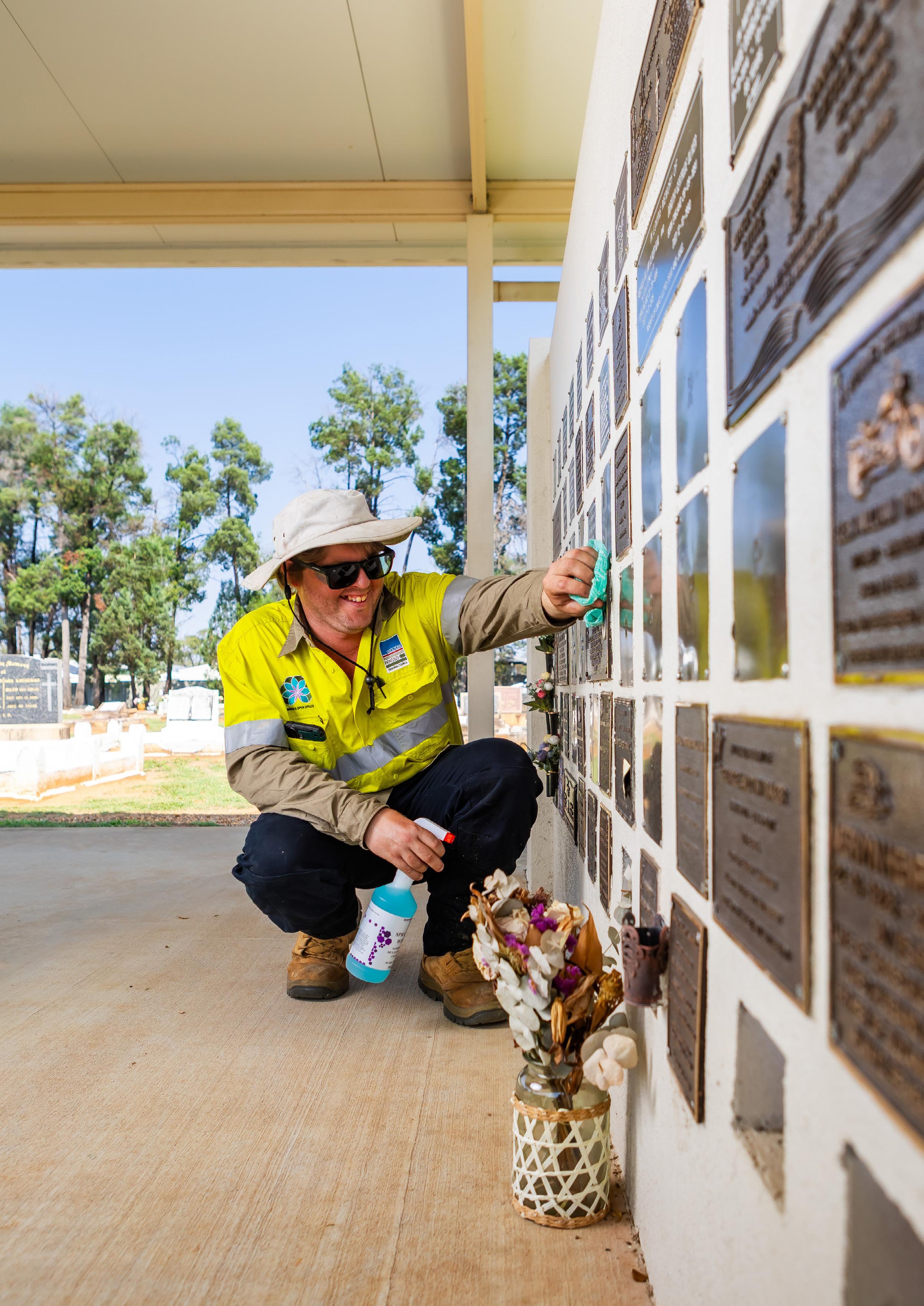
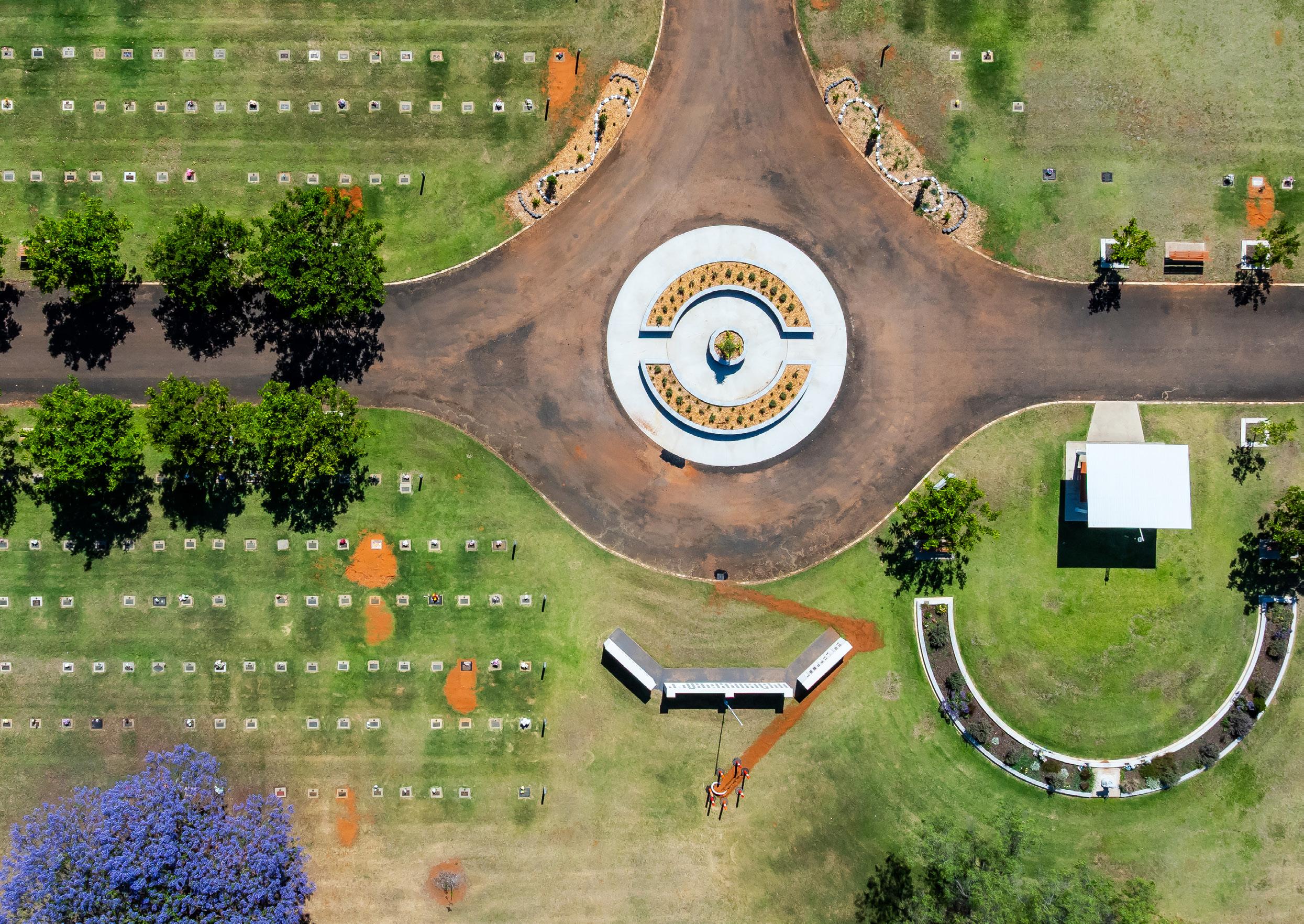
Implementation of new cemetery operating model.
Review council boat ramp operations at our regional recreational sites.
Council inspects and assesses the condition of underground stormwater assets.
Council is proactively focusing on maintaining and improving roadside drainage to protect our road assets and improve amenity to the surround community.
Deliver on the endorsed Local Housing Action Plan and enable residential development and diversity of stock in the Western Downs region.
Performance Assessment
SUSTAINABLE ORGANISATION (Performance)
We are recognised as a financially intelligent and responsible Council
We focus on proactive, sustainable planning for the future
Our people are skilled and valuesdriven to make a real difference
Our agile and responsive business model enables us to align our capacity with service delivery
Our effective asset management ensures that we responsibly maintain our community assets
ADVOCACY (A Regional Voice)
To actively seek and foster strategic partnerships
For a long term domestic and industrial water supply for our region
For a health and social services that ensure 'Whole of Life' care for our residents
For a safe and well maintained state and federal road network
For telecommunications and digital connectivity to support and advance our region
Implementation of carbon reduction initiatives.
Build a modern suite of local laws aligned to community needs and expectations.
The 2025-26 Capital Works Program is developed and presented to Council with a focus on one hundred (100) per cent delivery of the program.
Progress Council's digital program initiatives in accordance with adopted Digital Roadmap 2022-2025
Service level planning focusses on sustainability.
Comprehensive service level review for Parks and Recreation.
Asset Management Plans are rewritten for all of Council's asset classes
We actively advocate on issues that align to our long-term strategic objectives and vision for our region.
Performance Highlights
Active Vibrant Community
Over the past year, we’ve enthusiastically showcased our region’s vibrant culture, breathtaking landscapes, and thriving communities. The Western Downs region is flourishing thanks to the energy and diversity of families and individuals from all walks of life - united by a shared passion for social, cultural, and educational pursuits.
Council championed the lifestyle, innovation, and opportunity of the Western Downs in a widely acclaimed video campaign ‘Western Downs: 38,000kms of Pure Possibility’ to celebrate our growing industries, breathtaking natural landscapes, and happy inclusive communities. We encouraged tourism by inviting locals and visitors to discover the unique spirit of Miles through a creative campaign aligned with the Queensland Top Tourism Towns Awards.
Tens of thousands of visitors flocked to our region to participate in our truly unique destination events last year, from punting on camel races at the 2024 Tara Festival of Camels and Culture or taking up skiing on watermelons at the 2025 Chinchilla Melon Festival, proudly supported by Council's Major Events Grants Program.
Council led the way in supporting a dynamic range of community events, creating unforgettable experiences across the spread of our towns and localities. From lively regional drive-in movies and pool parties to engaging seniors’ and youth month festivities, Australia Day Awards, and our ninth Not Just for Laughs comedy road show, there’s been much to celebrate. The 2024 Regional Artists’ Exhibition marked its impressive 11th year, highlighting the incredible talents of our local creatives across a spectrum of traditional and contemporary mediums.
We immersed ourselves in the winter edition of Regional Lifestyle Magazine, celebrating our distinctive tourist attractions, interesting people,
iconic events, entrepreneurs, and some of the most wonderful agricultural stories that set our region apart. Supported by Council, this publication was received with great enthusiasm from far and wide.
Audiences were enchanted by world-class opera and captivating performances from renowned soloists and chamber musicians at the historic Jimbour House. The sun set on our final extraordinary four-day Big Skies Festival, featuring legendary Australian music artists, regional tours and boutique dining experiences, paving the way for exciting new events and future activations in the Western Downs.
Cultural growth is thriving. In June 2025, Council unveiled the latest attraction in our regional sculptural trail at Lake Broadwater featuring striking new metal sculptures inspired by sketches from Dalby State School and Our Lady of the Southern Cross College students. Art lovers were invited to step into the worlds of five Chinchilla artists through a new app-based virtual art exhibition and interactive meet-theartist experience.
We reinforced our commitment to meaningful communication and community engagement through the delivery of a series of master plans for some of our region’s most beloved parks and recreation areas. These plans lay the groundwork for future capital investment and guide future community investment to ensure these cherished spaces remain vibrant, sustainable, and welcoming for generations to come.
Additionally, Council established new community advisory and youth advisory panels to help guide the Thomas Jack Park Precinct project which includes a new library, cinema, art gallery, visitor information centre and parkland play experience.
Strong Diverse Economy
Council actively shaped a brighter future for the region in 2024-25 by diversifying our economy, innovative planning for the future, enhancing liveability, and investing in resilient infrastructure to support our agriculture, manufacturing, energy and intensive agriculture industries.
We championed the region’s priorities at both State and Federal Government levels, advocating for water security and economic growth. Our commitment to regional progress also drove us to push for improved digital connectivity across regional Australia, increased Federal funding for the Warrego Highway and greater investment for safer Statemanaged roads.
On the home front, Council continued to drive growth with innovative water and road infrastructure projects that support economic development in our communities. Council continued to proactively progress our water supply strategy through the advancement of the Dalby Water Supply Upgrade Project. Preplanning commenced on essential future water capacity building projects for Condamine, Jandowae and Bell in Council's 10 Year Capital Works Plan
Council completed one of Queensland’s largest flood recovery programs to restore extensive damage to the region's critical road infrastructure. Approved for $167 million by the Queensland Reconstruction Authority, about 94% of the work was done by local suppliers and contractors. Covering approximately 2,600 kilometres, almost 60% of Council’s unsealed gravel roads, the program used 1.5 million tonnes of local gravel. Through Council's commitment to utilising local resources, the project finished around $50 million under the recognised funding.
In March 2025, we hosted a sector-first Energy Industry Round Table, bringing together executives from both traditional and renewable energy companies to discuss shared challenges and opportunities. This event was a bold step forward in shaping the future of our region, helping to foster understanding, collaboration, and sustainable growth for both energy developers and our communities.
We continued to support the region's thriving livestock industry though our Council owned and operated Dalby Regional Saleyards facility. In 2024-25, the saleyards handled 230,706 head, processing eighty (80) to one hundred (100) lots per hour, positioning it among the top three yards in the nation. Agriculture, including intensive farming, continues to be the region's largest employer and economic pillar. Council empowered local farmers and landowners through the delivery of several programs.
In January 2025, Council released an Expression of Interest for highimpact industrial land at Dalby-Apunyal Road to boost the region's economy and pave the way for new or expanded industry development opportunities. Council also adopted its Amendment 2.0 to the Western Downs Planning Scheme this year, offering a diverse range of business and planning enhancements aimed at welcoming industry, stimulating development, and reducing red tape.
To inspire new development and attract construction of new units, multicomplexes, and land subdivisions, Council continued to promote our Housing and Land Incentive to fuel growth across our thriving region.
Quality Lifestyle
In 2024-25, the Western Downs region witnessed the progression of a remarkable collection of legacy projects that will significantly enhance our local lifestyle and reinforce the region's identity as an attractive destination to live, work, play and prosper. Planning for future investment in aquatic centres, cultural centre facilities, showgrounds, and parklands was at the heart of developing major liveability projects last year. Each project was shaped by strong community collaboration, placing engagement and quality lifestyle at the forefront of our regional facility development.
Our dedication to listening and responding to community needs was reflected in the release of an early draft concept for a new Chinchilla Aquatic Centre in late 2024. Council continues to engage with a dedicated local stakeholder group to determine the final inclusions and detailed design for this exciting new aquatic facility.
Council also asked the Western Downs community to collaborate on the design of a new Dalby Cultural Centre featuring a new multipurpose cinema, library, art gallery and visitor information centre and a master plan for a range of new play and recreation offerings in the Thomas Jack Park Precinct. Draft plans for the cultural centre and parkland were shared with the public in October 2024.
Forward-thinking masterplans were developed for some of Council's much-loved regional showgrounds as a direct action from the Western Downs Showgrounds Strategy 2023-2038. In 2024, work began on
developing draft master plans for the Dalby and Tara Showgrounds to guide future capital investment by the community in these assets and to meet the changing needs of users now and into the future. The Dalby and Tara communities helped formulate the draft plans through a series of community drop-in sessions, neighbour input, and user group meetings.
In February 2025, Council entered into a new five-year partnership with Belgravia Leisure to oversee management of its six regional aquatic centres, aiming to further improve experiences at pools in Chinchilla, Dalby, Jandowae, Miles, Tara, and Wandoan. Recognising how much our communities value and rely on these aquatic facilities, Council reinforced its commitment to maintaining our pools and aquatic programs to a high standard through this updated management arrangement.
A new edition of LIVE Western Downs Magazine, created with Toowoomba and Surat Basin Enterprise and Council, highlighted the region's fabulous lifestyle, natural attractions, and vibrant culture. We also updated our visitor welcome guides covering the broader Chinchilla, Dalby, Jandowae, Miles, Tara, and Wandoan regions. These guides, available online and at Visitor Information Centres, provide information about local natural features, cultural sites, historical landmarks, entertainment, and leisure activities in and around these towns.
Our award-winning library services were cast into the spotlight once again, this time for excellence and innovation in heritage services, celebrating its historical image database initiative, the Picture Western Downs Collection.
Sustainable Organisation
Strongly guided by our corporate values of communication, leadership, respect, balance, teamwork, and accountability, in 2026, 'together, we made a real difference' driving real, positive cultural improvement across the organisation. As a Council, we did more than recognise that 'it's the people that make it' - we celebrated it! Council introduced a new culture statement to guide our cultural development: 'We act as one, committed to empowering productive teams, with our people enjoying high levels of job satisfaction.' We encouraged cross department collaboration and strengthened internal relationships through by nurturing and encouraging strong, compassionate and effective leaders to continue our vital work in building a proactive workplace culture.
The organisation's dedication to employee development was recognised with its fourth Large Employer of the Year award at the Queensland Training Awards. Works Manager Sam Fitzgerald received the LGMA 2025 Young Manager of the Year for Leadership and Management Excellence, Warwick Taylor was named Team Member of the Year at the Institute of Public Works Engineering Australasia, Queensland and Northern Territory (IPWEA-QNT) Awards and Council secured second place in the Australasian Management Challenge among ten of the best Queensland councils.
This year, led by our SMART Digital team, the organisation successfully completed Phase Two of our enterprise resource planning project, introducing a new HR payroll system, implementation of electronic timesheets, and improved digital asset management. These technology upgrades have streamlined operations, enhanced customer service, and upskilled staff. Phase Three of this initiative also kicked off in 2024-25 and will deliver a unified, customer-focused digital platform for community interaction with Council.
Council commenced a three-year project to review its Local Laws to reduce red tape and do away with outdated regulatory frameworks and charges. During the first phase of this project in 2024-25, internal stakeholders
were invited to provide feedback to guide which laws will go to broad community engagement in late 2025 and early 2026.
Sustainable service delivery was the driving factor behind Council initiating transfer of fifty-two (52) Council-owned and maintained community housing dwellings to not-for-profit specialist community housing provider Community Housing (Qld) Ltd in October 2024. The transfer provides opportunity to grow the region's offering of affordable, quality community housing now and into the future, whilst also allowing Council to concentrate on the delivery of core services such as water, waste, roads and infrastructure.
Throughout 2024-25, Council maintained its position as one of Queensland’s few debt-free Councils. Additionally, Council strategically secured over $86.65 million in external funding through capital and operational grants and contributions to offset the cost of Council projects and initiatives.
Announced in September 2024, the Western Downs benefited from a $500,000 investment into bushfire resilience in the wake of the catastrophic bushfires that ravaged the region in 2023. The funding is supporting an ongoing bushfire mitigation study to improve community disaster preparedness and resilience. Council further invested in the region's disaster preparedness and resilience through its Ready Together Day in 2024, encouraging residents to understand their risks and prepare household emergency plans.
Council also looked at innovative ways to reduce and reuse, using around 188,000 kilograms of recycled rubber (the equivalent of 24,200 passenger car tyres) as part of the bitumen mixture for its $3.4 million Regional Bitumen Reseal Program. We also encouraged ratepayers to make the switch to e-notices for rates, water, and gas bills, providing a faster, more convenient, and environmentally friendly way to manage online payments.
CHAPTER 5: FINANCIAL REPORTING
INDEPENDENT AUDITOR’S REPORT
To the councillors of Western Downs Regional Council
Report on the audit of the financial report
Opinion
I have audited the financial report of Western Downs Regional Council
The financial report comprises the statement of financial position as at 30 June 2025, the statement of comprehensive income, statement of changes in equity and statement of cash flows for the year then ended, notes to the financial statements including material accounting policy information and the certificate given by the Mayor and the Chief Executive Officer
In my opinion, the financial report:
a) gives a true and fair view of the council’s financial position as at 30 June 2025, and of its financial performance for the year then ended; and
b) complies with the Local Government Act 2009, the Local Government Regulation 2012 and Australian Accounting Standards.
Basis for opinion
I conducted my audit in accordance with the Auditor-General Auditing Standards, which incorporate the Australian Auditing Standards. My responsibilities under those standards are further described in the Auditor’s responsibilities for the audit of the financial report section of my report.
I am independent of the council in accordance with the ethical requirements of the Accounting Professional and Ethical Standards Board’s APES 110 Code of Ethics for Professional Accountants (including Independence Standards) (the Code) that are relevant to my audit of the financial report in Australia. I have also fulfilled my other ethical responsibilities in accordance with the Code and the Auditor-General Auditing Standards
I believe that the audit evidence I have obtained is sufficient and appropriate to provide a basis for my opinion.
Other information
The councillors are responsible for the other information.
The other information comprises the information included in the entity’s annual report for the year ended 30 June 2025, but does not include the financial report and our auditor’s report thereon
At the date of this auditor’s report, the available other information in Western Down Regional Council’s annual report for the year ended 30 June 2025 was the current year financial sustainability statement, current year financial sustainability statement - contextual ratios (unaudited) and unaudited long-term financial sustainability statement
My opinion on the financial report does not cover the other information and accordingly I do not express any form of assurance conclusion thereon. However, as required by the Local Government Regulation 2012, I have formed a separate opinion on the current year financial sustainability statement.
In connection with my audit of the financial report, my responsibility is to read the other information and, in doing so, consider whether the other information is materially inconsistent with the financial report and my knowledge obtained in the audit or otherwise appears to be materially misstated.
If, based on the work I have performed, I conclude that there is a material misstatement of this information, I am required to report that fact. I have nothing to report in this regard.
Responsibilities of the councillors for the financial report
The councillors are responsible for the preparation of the financial report that gives a true and fair view in accordance with the Local Government Act 2009, the Local Government Regulation 2012 and Australian Accounting Standards, and for such internal control as the councillors determine is necessary to enable the preparation of the financial report that is free from material misstatement, whether due to fraud or error.
The councillors are also responsible for assessing the council’s ability to continue as a going concern, disclosing, as applicable, matters relating to going concern and using the going concern basis of accounting unless it is intended to abolish the council or to otherwise cease operations of the council.
Auditor’s responsibilities for the audit of the financial report
My objectives are to obtain reasonable assurance about whether the financial report as a whole is free from material misstatement, whether due to fraud or error, and to issue an auditor’s report that includes my opinion. Reasonable assurance is a high level of assurance, but is not a guarantee that an audit conducted in accordance with the Australian Auditing Standards will always detect a material misstatement when it exists. Misstatements can arise from fraud or error and are considered material if, individually or in the aggregate, they could reasonably be expected to influence the economic decisions of users taken on the basis of this financial report.
A further description of my responsibilities for the audit of the financial report is located at the Auditing and Assurance Standards Board website at: https://www.auasb.gov.au/auditors_responsibilities/ar4.pdf
This description forms part of my auditor’s report.
Report on other legal and regulatory requirements
In accordance with s. 40 of the Auditor-General Act 2009, for the year ended 30 June 2025:
a) I received all the information and explanations I required b) I consider that, the prescribed requirements in relation to the establishment and keeping of accounts were complied with in all material respects.
Prescribed requirements scope
The prescribed requirements for the establishment and keeping of accounts are contained in the Local Government Act 2009, and the Local Government Regulation 2012 The applicable requirements include those for keeping financial records that correctly record and explain the council’s transactions and account balances to enable the preparation of a true and fair financial report.
30 October 2025
David Adams Queensland Audit Office as delegate of the Auditor-General Brisbane
INDEPENDENT AUDITOR’S REPORT
To the Councillors of Western Downs Regional Council
Report on the Current-Year Financial Sustainability Statement
Opinion
I have audited the accompanying current year financial sustainability statement of Western Downs Regional Council for the year ended 30 June 2025, comprising the statement, explanatory notes, and the certificate of accuracy given by the Mayor and the Chief Executive Officer.
In accordance with s 212 of the Local Government Regulation 2012, in my opinion, in all material respects, the current year financial sustainability statement of Western Downs Regional Council for the year ended 30 June 2025 has been accurately calculated.
Basis of opinion
I conducted my audit in accordance with the Auditor-General Auditing Standards, which incorporate the Australian Auditing Standards. My responsibilities under those standards are further described in the Auditor’s responsibilities for the audit of the current year financial sustainability statement section of my report.
I am independent of the council in accordance with the ethical requirements of the Accounting Professional and Ethical Standards Board APES 110 Code of Ethics for Professional Accountants (including Independence Standards) (the Code) that are relevant to my audit of the statement in Australia. I have also fulfilled my other ethical responsibilities in accordance with the Code and the Auditor-General Auditing Standards
I believe that the audit evidence I have obtained is sufficient and appropriate to provide a basis for my opinion.
Emphasis of matter – basis of accounting
I draw attention to Note 1 which describes the basis of accounting The current year financial sustainability statement has been prepared in accordance with the Financial Management (Sustainability) Guideline 2024 for the purpose of fulfilling the council’s reporting responsibilities under the Local Government Regulation 2012. As a result, the statement may not be suitable for another purpose. My opinion is not modified in respect of this matter.
Other Information
The councillors are responsible for the other information.
The other information comprises the information included in the entity’s annual report for the year ended 30 June 2025, but does not include the financial sustainability statement and our auditor’s report thereon.
At the date of this auditor’s report, the available other information in Western Down Regional Council’s annual report for the year ended 30 June 2025 was the general-purpose financial statements, current-year financial sustainability statement - contextual ratios (unaudited), and the unaudited long-term financial sustainability statement
My opinion on the current year financial sustainability statement does not cover the other information and accordingly I do not express any form of assurance conclusion thereon. However, as required by the Local Government Regulation 2012, I have formed a separate opinion on the general-purpose financial report.
In connection with my audit of the financial sustainability statement, my responsibility is to read the other information and, in doing so, consider whether the other information is materially inconsistent with the financial sustainability statement and my knowledge obtained in the audit or otherwise appears to be materially misstated.
If, based on the work I have performed, I conclude that there is a material misstatement of this information, I am required to report that fact. I have nothing to report in this regard.
Responsibilities of the councillors for the current year financial sustainability statement
The councillors are responsible for the preparation and fair presentation of the current year financial sustainability statement in accordance with the Local Government Regulation 2012 The councillors responsibility also includes such internal control as the councillors determine is necessary to enable the preparation and fair presentation of the statement that is accurately calculated and is free from material misstatement, whether due to fraud or error.
Auditor’s responsibilities for the audit of the current year financial sustainability statement
My objectives are to obtain reasonable assurance about whether the current year financial sustainability statement as a whole is free from material misstatement, whether due to fraud or error, and to issue an auditor’s report that includes my opinion. Reasonable assurance is a high level of assurance, but is not a guarantee that an audit conducted in accordance with the Australian Auditing Standards will always detect a material misstatement when it exists. Misstatements can arise from fraud or error and are considered material if, individually or in the aggregate, they could reasonably be expected to influence the economic decisions of users taken on the basis of this statement.
My responsibility does not extend to forming an opinion on the appropriateness or relevance of the reported ratios, nor on the council’s future sustainability.
As part of an audit in accordance with the Australian Auditing Standards, I exercise professional judgement and maintain professional scepticism throughout the audit. I also:
• Identify and assess the risks of material misstatement of the statement, whether due to fraud or error, design and perform audit procedures responsive to those risks, and obtain audit evidence that is sufficient and appropriate to provide a basis for my opinion. The risk of not detecting a material misstatement resulting from fraud is higher than for one resulting from error, as fraud may involve collusion, forgery, intentional omissions, misrepresentations, or the override of internal control.
• Obtain an understanding of internal control relevant to the audit in order to design audit procedures that are appropriate in the circumstances, but not for the purpose of expressing an opinion on the effectiveness of the council’s internal control.
• Evaluate the appropriateness of material accounting policy information used and the reasonableness of accounting estimates and related disclosures made by the council.
I communicate with the council regarding, among other matters, the planned scope and timing of the audit and significant audit findings, including any significant deficiencies in internal control that I identify during my audit
30 October 2025
David Adams Queensland Audit Office as delegate of the Auditor-General Brisbane