The Piazza at Tysons
An Urban Planning Perspective
By WDG Architecture, Fall 2025
VISION AND CONTEXT
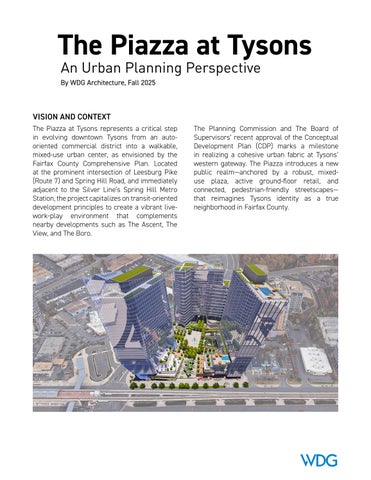
The Piazza at Tysons represents a critical step in evolving downtown Tysons from an autooriented commercial district into a walkable, mixed-use urban center, as envisioned by the Fairfax County Comprehensive Plan. Located at the prominent intersection of Leesburg Pike (Route 7) and Spring Hill Road, and immediately adjacent to the Silver Line’s Spring Hill Metro Station, the project capitalizes on transit-oriented development principles to create a vibrant livework-play environment that complements nearby developments such as The Ascent, The View, and The Boro.
The Planning Commission and The Board of Supervisors’ recent approval of the Conceptual Development Plan (CDP) marks a milestone in realizing a cohesive urban fabric at Tysons’ western gateway. The Piazza introduces a new public realm—anchored by a robust, mixeduse plaza, active ground-floor retail, and connected, pedestrian-friendly streetscapes— that reimagines Tysons identity as a true neighborhood in Fairfax County.

URBAN DESIGN FRAMEWORK
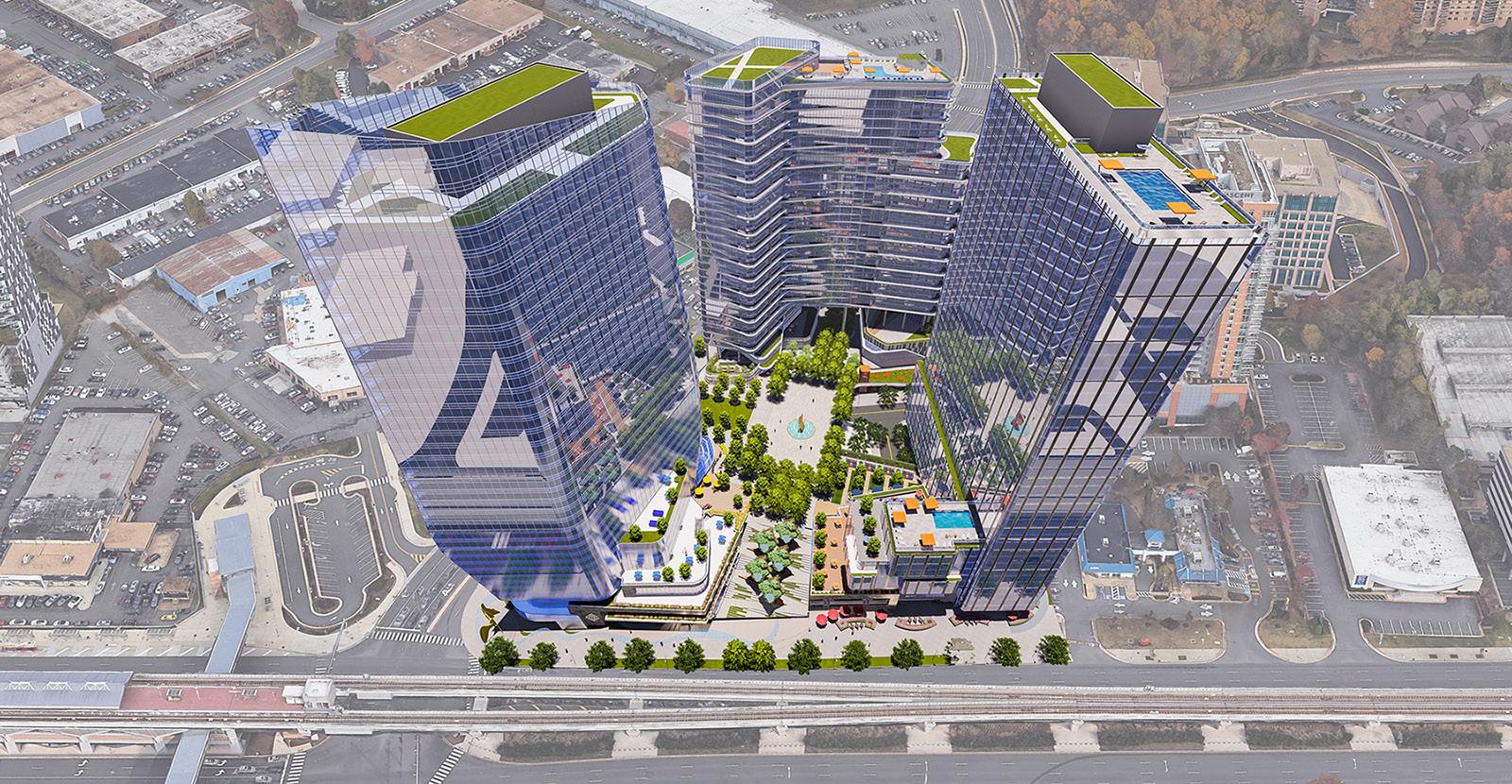
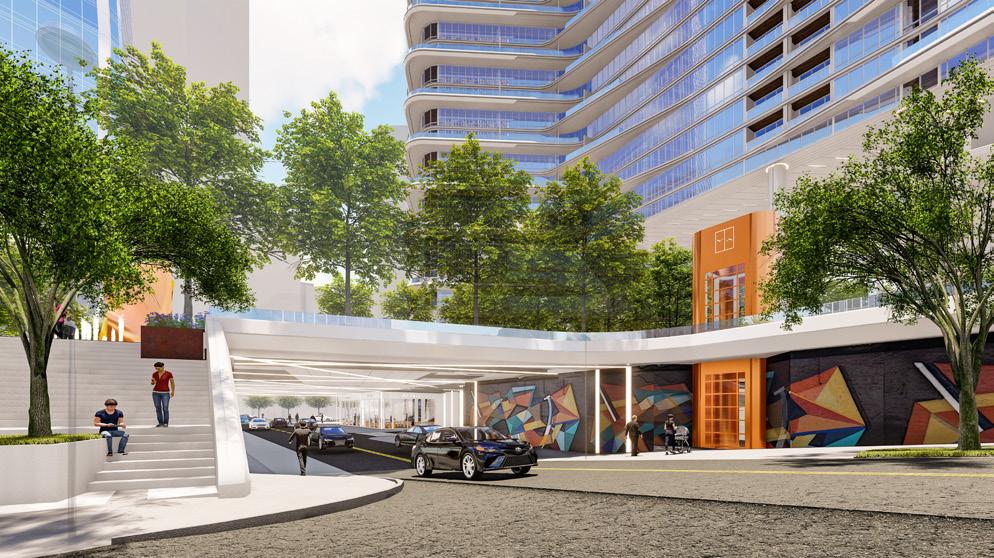
The master plan organizes the site around a multi-level urban plaza, or Piazza, serving as both a community gathering space and a connective hub for the district. The Piazza level is entirely pedestrian-oriented, designed to host social activities, events, and public life without vehicular traffic. Vehicular access and service circulation are provided from Via Traverso, Broad Street, Spring Hill Road, Leesburg Pike, and West Street, maintaining a clear separation between pedestrian and vehicular zones.
Surrounding the Piazza, a mix of residential, hotel, office, and retail uses are carefully integrated to ensure activity throughout the day and evening. Key design elements of The Piazza are defined by a fine-grained street network that introduces the new internal street, Via Traverso, to break down superblocks and improve circulation and permeability. The defined build-to lines along Spring Hill Road and Leesburg Pike, reinforcing an urban street edge with generous sidewalks, landscape panels, and active storefronts.
The plan organizes uses vertically: retail and cultural amenities at grade, residential and hotel programs above, and underground structured parking that prioritizes the pedestrian experience by eliminating surface lots.
A hierarchy of open spaces—from the signature public piazza to smaller landscaped terraces and rooftop amenity decks—creates a variety of social and recreational opportunities throughout the site.
The design embodies WDG Architecture’s commitment to integrating public life into private development by pairing density with human scale, streets and spaces that feel walkable, active and comfortable, and creating a built environment that fosters daily interaction, livability and connection.
CONNECTIVITY AND MOBILITY
Transit accessibility anchors the Piazza’s planning framework. Within walking distance of the Silver Line’s Spring Hill Metro Station, the development embraces multimodal mobility through enhanced pedestrian connections linking Leesburg Pike, Spring Hill Road, and the Metro station. Continuous sidewalks, shaded streetscapes, and safe crossings create a comfortable and intuitive pedestrian experience.
Complementing this, dedicated bicycle infrastructure provides direct connections to Fairfax County’s planned bike network. The introduction of Via Traverso further improves vehicular circulation by consolidating loading, garage entries, and service functions along internal drives—minimizing conflicts with pedestrian routes and maintaining a walkable public realm.
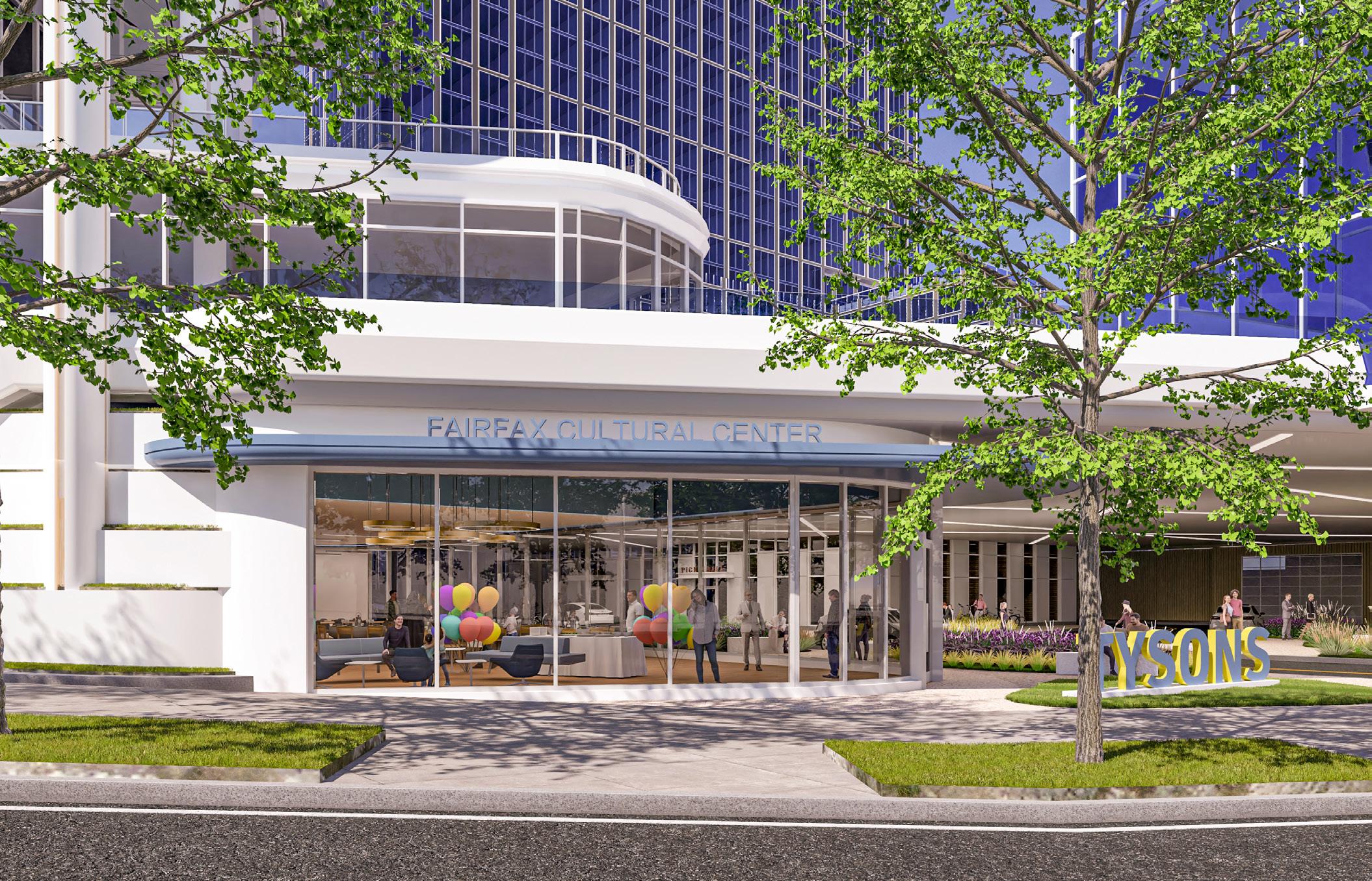
To foster a strong sense of community within the neighborhood, the project will feature a
community-oriented Fairfax County Cultural Center — a venue where residents and visitors can gather, exhibit, and socialize. Strategically located along Spring Hill Road, the Cultural Center activates the public realm by hosting community events, art exhibitions, and cultural programs that celebrate local creativity and encourage year-round engagement.
The master plan promotes transit-oriented density, featuring building heights ranging from 30 to 400 feet and an open space network totaling 2.1 acres within the 4.5-acre site.
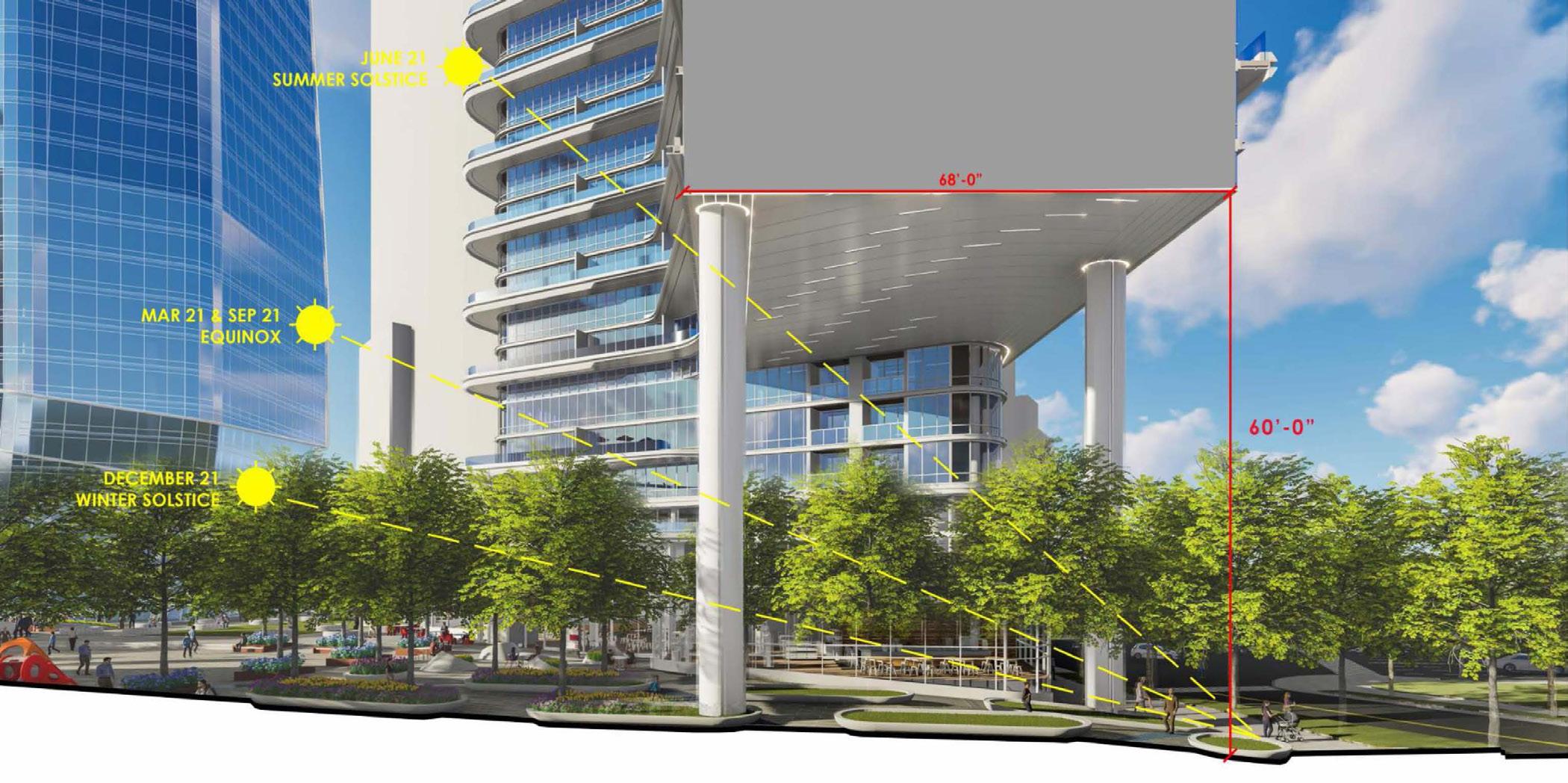
Building massing is organized to emphasize a compact urban form, frame key corridors, and preserve daylight access to public spaces. Collectively, these strategies support Fairfax County’s goal of reducing reliance on singleoccupancy vehicles while fostering sustainable, connected, and equitable urban growth.
THE PUBLIC REALM AND PLACEMAKING
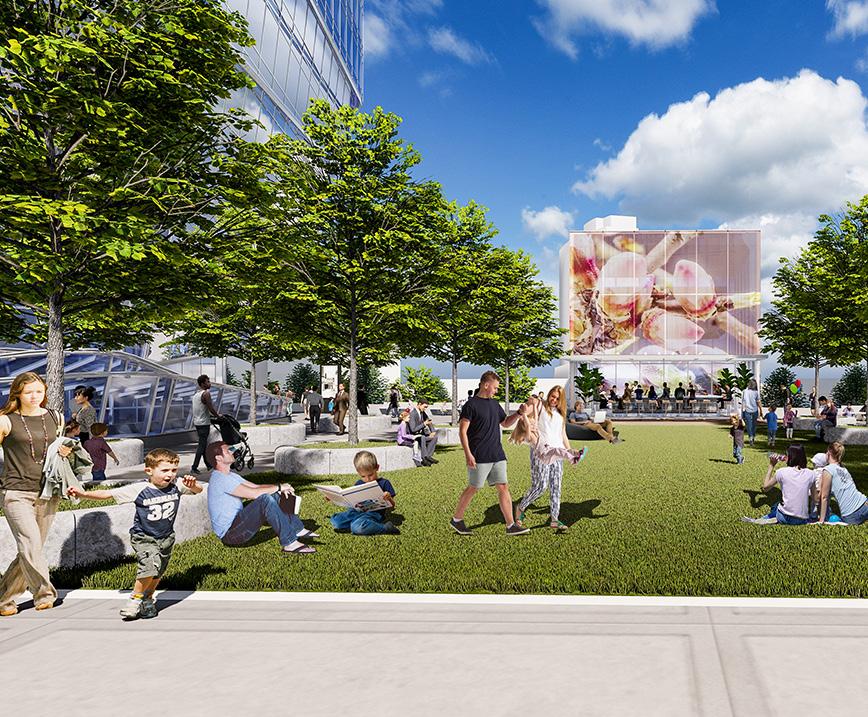
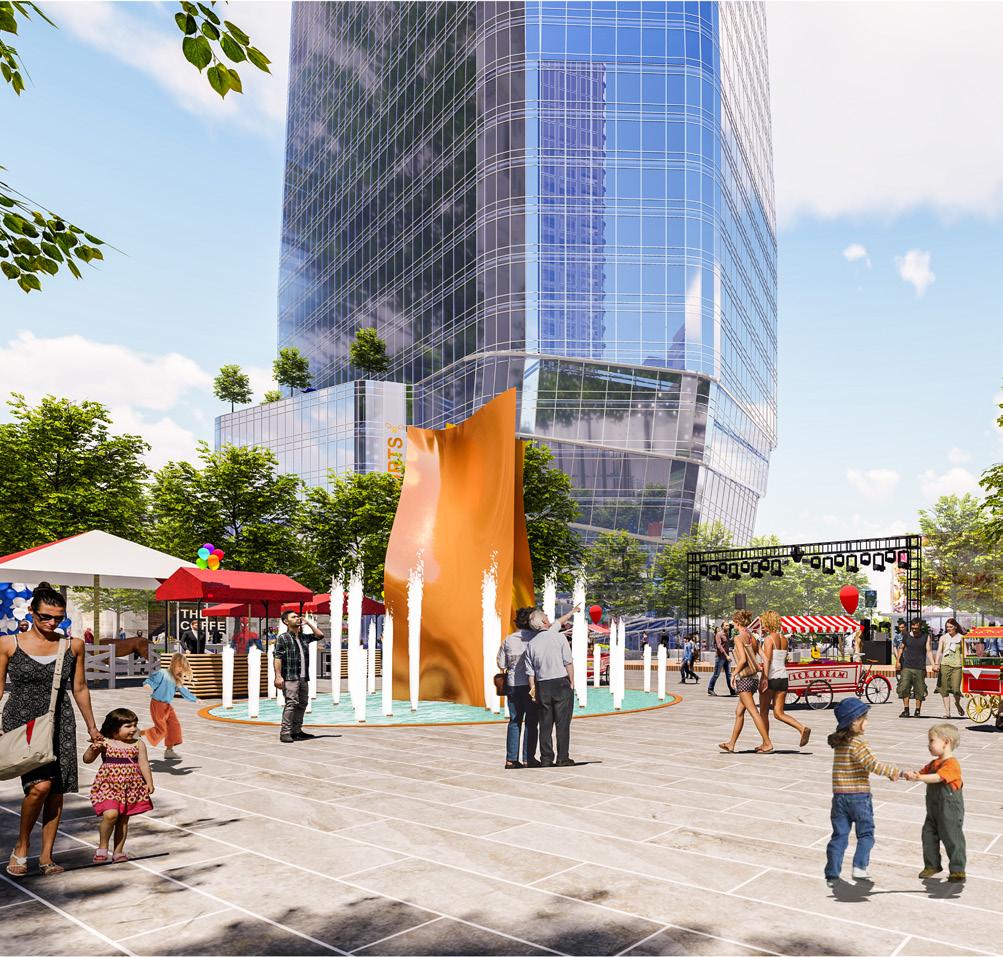
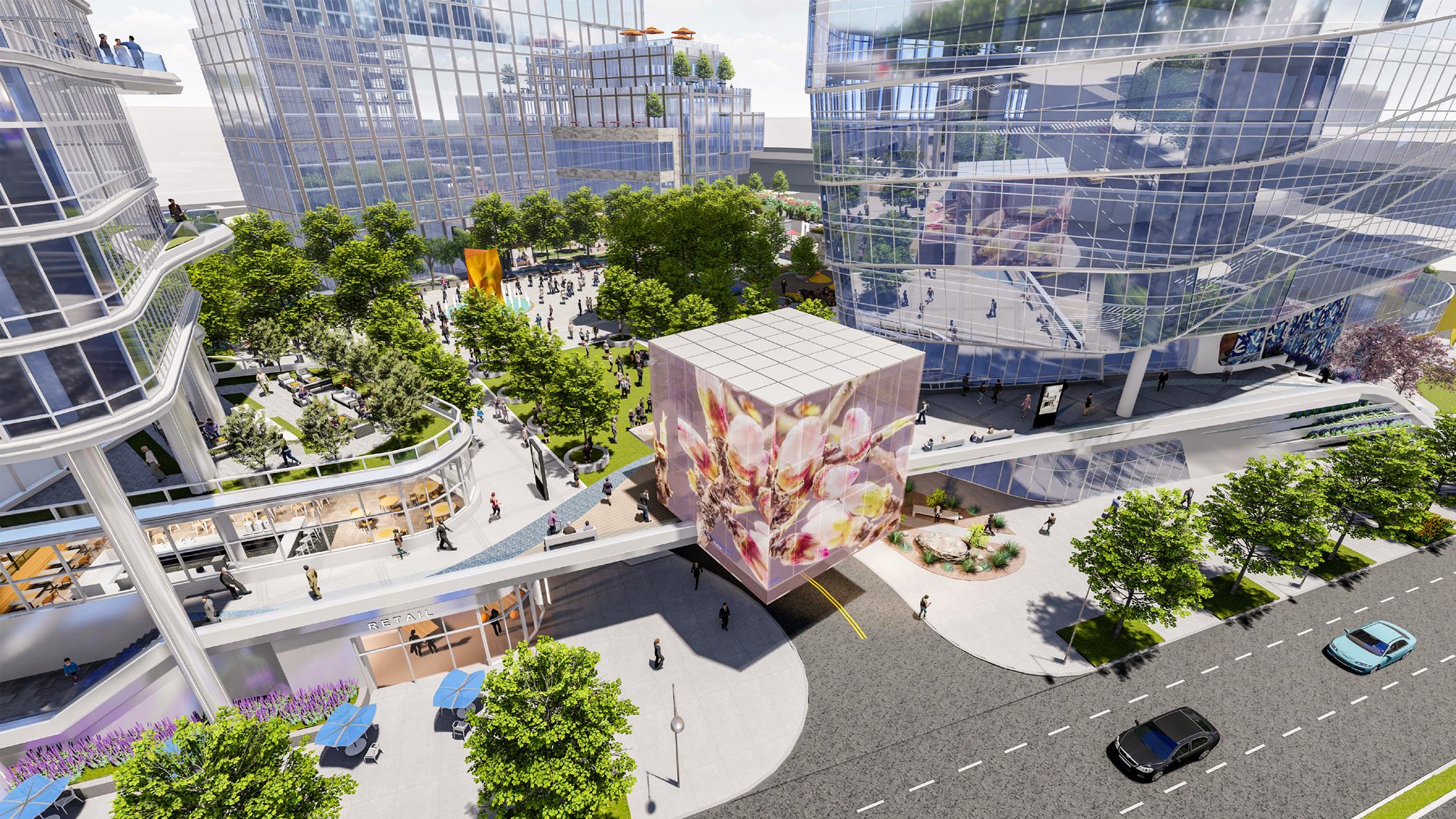
The Piazza is envisioned as the social and visual heart of the development—a “civic room” for Tysons that celebrates the vibrant, peoplecentered activities that make a neighborhood feel alive. Designed as a welcoming gathering place, it features landscaped lawns, shaded seating areas, and flexible event zones that can host community activities year-round, from farmers markets and concerts to art installations and pop-up events. The spaces are thoughtfully programmed for all ages, encouraging multigenerational use and a sense of community.
At the center stands The Cube, a transparent pavilion that anchors the plaza and serves as both a landmark and an invitation—enhancing visibility along Leesburg Pike while reflecting Tysons’ evolving urban identity. Public art, lighting, and carefully selected materials further contribute to the character and vibrancy of the Piazza.
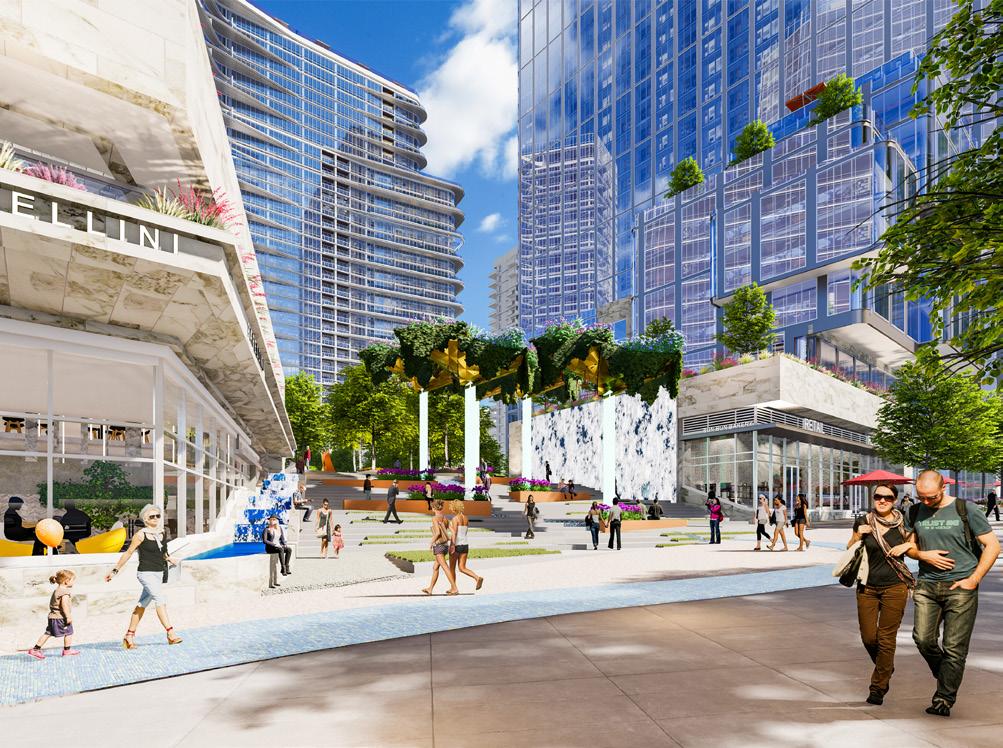
Equally important are the surrounding streetscapes, where continuous building frontages, active retail façades, and pedestrianfriendly design elements transform what was once a car-dominated corridor into a lively, walkable environment. Seasonal landscaping adds texture and color throughout the year, aligning with Fairfax County’s streetscape guidelines and the Tysons Urban Design Standards to create a cohesive, human-scaled public realm.
SUSTAINABILITY INTEGRATION
From a sustainability perspective, this project takes a practical and forward-thinking approach, building on what’s already here while introducing green systems that make the community more resilient and environmentally responsible. By focusing on development around the existing transit systems, the Piazza is helping reduce car use, cut carbon emissions, and support regional sustainability goals. The buildings themselves are designed to be high-performing and energyefficient, with façades that maximize daylight, rooftop green spaces, and on-site stormwater management.
CONCLUSION
The approval of the Piazza at Tysons affirms the project’s alignment with the County’s long-term vision for a dynamic, walkable, transit-connected Tysons. More than a collection of buildings, it is a holistic urban framework that transforms an underutilized parcel into a thriving district— linking people, place, and purpose.
Through thoughtful planning, design excellence from WDG and our amazing teammates, and a strong partnership with Fairfax County Planning staff, the Piazza at Tysons sets a benchmark for the next generation of urban development—a model for sustainable growth, civic engagement, and placemaking at the urban scale.

Siti Abdul-Rahman Managing Principal SAbdulRahman@wdgarch.com

JP Gonzalez Project Designer john.gonzalez@wdgarch.com
