Return of the Reunion: Reporting from the Wilts & Berks Canal
Previewing the sites for 2026


Return of the Reunion: Reporting from the Wilts & Berks Canal
Previewing the sites for 2026
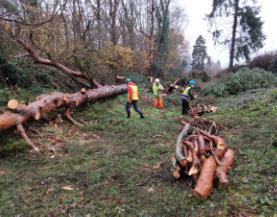
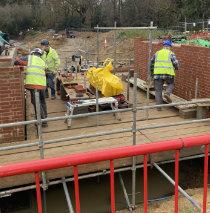
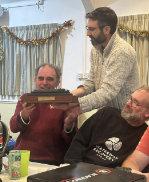
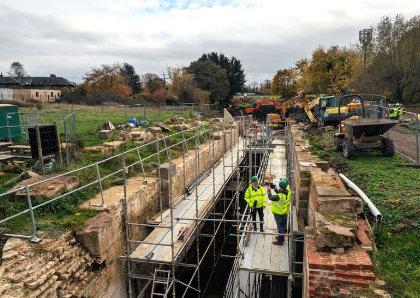
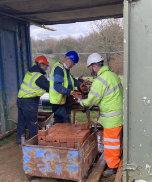
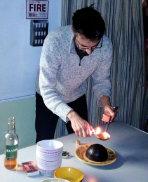
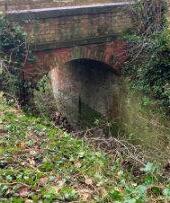
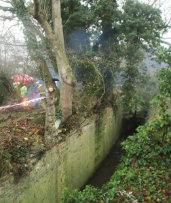
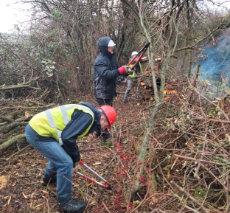
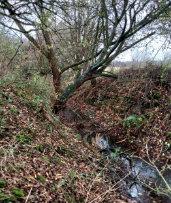
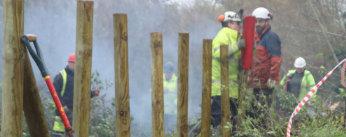
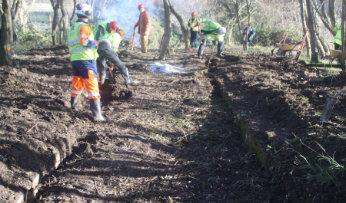
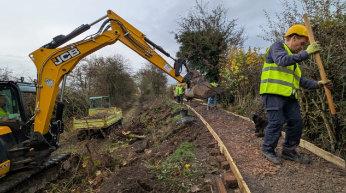
As usual our WRG Forestry and London WRG mobile groups got together with our friends in KESCRG for their last outing of 2025, an annual joint Christmas party and dig. This year the site was the Wey & Arun Canal at Rooks Hill. The pictures show WRG Forestry leading the clearing of the next length of canal to the south, ready for reinstating the missing Fanesbridge Lock; more progress following on from the summer Canal Camps work on building abutments for the new Rooks Hill Bridge; the production line cutting the half bricks and closers (quarter bricks) for the special Sussex Bond brickwork; David Miller receiving the Kescrg award during the Saterday night party; and Stephen Davis setting fire to the pudding
Pics: Jo Alderman, Tim Lewis, the Editor
For latest news on our activities visit our website wrg.org.uk
See Facebook group: WRG Follow us on @wrg_navvies
Intro London WRG, Forestry and KESCRG on the Wey & Arun 3
Editor’s Welcome and thanks 4-5
Chairman’s Comment 6-7 Cleanup Book now for the BCN 8-9
CanalCampspreview First five Sites for 2026 10-16
KESCRG dig on the Wilts & Berks 17
Diary Weekend working parties and more 18-19
Reunionreport and Wilts & Berks restoration feature 20-26
Progress updates from around the waterways network 27-37
Letters Modern materials and methods?38-39
PLEASE NOTE: subscriptions renewal cheques should be made out to The Inland Waterways Association. Note that our address will be changing soon: see page 5
Editor: Martin Ludgate, 35 Silvester Road, East Dulwich London SE22 9PB. 020-8693 3266 martin.ludgate@wrg.org.uk
Contributions welcome, by email or post, to the address above. If sending a lot of large picture files, please contact the editor first. Pressdateforissue335:15January.
Subscriptions: Ayear'ssubscription(6issues) isaminimum of £5.00 (please add a donation if you can) to WRG, Unit 16B, First Floor, Chiltern Court, Asheridge Road, Chesham HP5 2PX. Cheques must be made out to The Inland Waterways Association (although the proceeds will be put to WRG / Navvies use).
Distribution: John Hawkins, 4 Links Way, Croxley Green WD3 3RQ 01923 448559 john.hawkins@wrg.org.uk
Navvies is published by Waterway Recovery Group and is available to all interested in promoting or supporting the restoration and conservation of inland waterways by voluntary effort in Great Britain. Articles may be reproduced in allied magazines provided that the source is acknowledged.
WRG may not agree with opinions expressed in this magazine, but encourages publication as a matter of interest. Nothing printed may be construed as policy or an official announcement unless so stated - otherwise WRG and IWA accept no liability for any matter in this magazine.
Waterway Recovery Group is part of The Inland Waterways Association, (registered office: Unit 16B, First Floor, Chiltern Court, Asheridge Road, Chesham HP5 2PX), a nonprofit distributing company limited by guarantee, registered in England no 612245, and registered as a charity no 212342. VAT registration no 342 0715 89.
Directors of WRG: Rick Barnes, George Eycott, Helen Gardner, John Hawkins, Dave Hearnden, Nigel Lee, Mike Palmer, George Rogers, Jonathan Smith, Harry Watts, Mike Wills.
ISSN: 0953-6655 © 2025 WRG
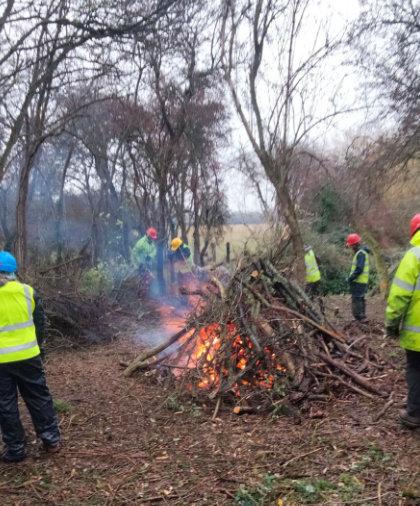
Cover picture: Volunteers clearing vegetation from one of four structures (three locks and a swing bridge) at Grove on the Wilts & Berks Canal during the WRG Reunion - see report, page 20 (picture by the editor) Back cover: Two sites that we’re expecting to be supporting on 2026’s Canal Camps programme: (top) the Lichfield Canal, reinstating the canal channel between Gallows Wharf and Tamworth Road (Borrowcop) Locks (picture by LHCRT); and (bottom) the Cotswold Canals, where following the completion of the head of John Robinson Lock by Cotswold Canals Trust we will be working on the canal basin below it (picture by CCT)
Come and pull shopping trolleys and bikes out of the murky waters of the Birmingham Canal Navigations! You know you want to!
A very warm welcome from the editor to this, the final issue of Navvies of 2025 (or, depending on various things including the vagaries of the Christmas post and the arrival of the Chairman’s Comment pages) the first issue of Navvies of 2026. And with that thought in mind, it seems a good time to be looking back on 2025 and forward into the New Year.
Looking back, a few weeks ago we held our first WRG Reunion working party since six years earlier, and a very successful weekend it was too. Around 75 volunteers took part, occupying almost all of the beds (yes, beds!) available in the accommodation. We had a great time, lots of us met up with fellow volunteers that we hadn’t seen for ages, and between us all we completed some very important work on the Wilts & Berks Canal. Clearing trees and undergrowth from around the former locks and bridges on this section will enable the Wilts & Berks Canal Trust to investigate what’s left of these structures,so that they can then make plans for restoring them, and get some practical reconstruction work under way in the not too distant future. That will mean some real progress on a part of the canal which hasn’t seen a great deal of restoration work to date, but has been chosen as one of four strategic lengths to be tackled in the coming years - see our feature on the Reunion and the Wilts & Berks Canal restoration on pages 20-26.
Looking ahead to 2026 now, there’s another major working party planned for March - it’s a rather different one, but if you enjoyed the Reunion, then I reckon there’s a good chance you’ll also like the BCN Cleanup. What’s different about it is that we aren’t actually restoring derelict canals, we’re trying to keep navigable (but underused) ones open by clearing out the junk that a misguided minority of people keep throwing in the canals.
There’s a certain amount of competition among volunteers for the most bikes pulled out, the biggest tyre, or the weirdest objecta sword, a barbecue or an electric guitar? We’ve found them all! See pages 8-9 for more about this enjoyable and useful weekend, and how to book in for it.
On the subject of working on canals that are already open, rather than abandoned ones under restoration, if you look at our Camps Preview on pages 10-16 you’ll find a new site listed (or perhaps a very old one - some of us worked there 30plus years ago), Hanwell Locks on the Grand Union Canal. We won’t be working on the locks themselves - we’ll leave that to the Canal & River Trust as its their job to maintain them - but we’ll be restoring the former water-saving side-ponds as an interesting historic feature (currently on the official Heritage at Risk register).
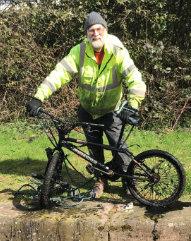
“Should we be spreading our resources on non-functioning features of navigable waterways when there are real restoration schemes to support?” I hear you ask. Well, that’s a valid question, and you’re welcome to take advantage of the Letters Page if you want to start a discussion. But at the same time, we do have four more actual canal restoration projects listed in the Camps preview: Lichfield, Cotswold, Wey & Arun and Wilts & Berks. And after my editorial in the last issue commenting on the large amount of non-trad concreting that we seemed to be doing recently, there seems to be a bit more of a mix of other types of work this time.
But on the subject of modern materials, the Letters Page has made a reappearance on pages 38-39 (after an absence due to a lack of letters) with some thoughts from Steve Morley on old versus new materials and methods. He makes some interesting points: please feel free to send your own views for publication.
Finally, here are a few words from John Hawkins who looks after Navvies magazine printing, stuffing into envelopes, labelling and posting…
Firstly thanks to the London Canal Museum for the continuing use of the Museum for our “Navvies magazine stuffing evenings”, although these days that doesn’t happen very often. I’ll try explain the reasons why… People who have attended these evenings must now be wondering why Navvies is dropping through their letter box, but they haven’t seen any emails, Facebook messages, etc about a ‘stuffing date’.
For a while now Navvies has been produced and distributed in a slightly different way.The file copies for the pending issue are sent to the printers via Chris Griffiths. They then give an expected delivery date, usually about six days, but this date can change, often to a shorter time. We don’t get a confirmed date until the morning of the delivery to me by DPD.
Meanwhile I’ve asked for the labels to be printed at the IWA office in Chesham. I sort out the labels / envelopes for those going overseas, to a few
people who receive more than one copy and also folks who are due to renew their membership. On occasions the complete operation (labelling, stuffing etc) has been carried out over a weekend dig or Canal Camp if dates etc permit. Those people who attended the Museum will realise that the most boring part is sticking the labels, I sometimes ‘strike lucky’ and get this part done over a weekend dig. But the stuffing is sometimes carried out by me at home. My thoughts are: is it reasonable to ask folks to travel to London just to do the stuffing? This part is really down to timings and availability to all.
When all are stuffed I take them to IWA head office for onward posting.
Once again many thanks to people who assist in any stage of the distribution of Navvies. Happy New Year, John
I would like to add my own thanks to everyone who supported Navvies during 2025 including all those who contributed articles, letters, pictures or anything else to the magazine; all the subscribers who kindly added a donation; John Hawkins, Chris Griffiths and the volunteers at the London Canal Museum stuffing sessions for helping with printing and production; the Head Office team for dealing with subscriptions; Dave Wedd for compiling the Diary; Robert Goundry for sourcing and compiling reports for the Progress section; Lesley for proofreading; and anyone else I’ve forgotten.
A Merry Christmas (if this issue comes out in time) or a Happy New Year (if it doesn’t) from the editor to all our readers, and hopefully I’ll see plenty of you on the New Year Canal Camp or on a dig somewhere in 2026.
Martin Ludgate
Asof7JanuarytheheadofficeofWRGand itsparentbodytheInlandWaterways Association(andtheofficialregisteredoffice ofIWA)ismovingto:
HardyHouse,NorthbridgeRoad, Berkhamsted,HP41EF.
Thetelephonenumberwillremainthesame: 01494783453
…onwhetherNavviesisbumperandupbeatorthinandmiserable,whywe can’tmentionfivepotentialrestorationsitesyet,andwhat‘Restoration’means…
You may remember that I started my comment in the last Navvies by saying that issue was ‘bumper and upbeat’. Which, in hindsight, was a ‘rookie mistake’ on my part. Describing issue 333 in that way means I am ‘hoist by my own petard’ (*), especially given that the main thrust of that comment was that the readers of Navvies possess healthy scepticism. Because, if I don’t make such effusive comments this time, ‘some’ may conclude that this edition is ‘thin and miserable’.
Only ‘some’ mind – the rest of you know that (a) waterway restoration is always full of activity / excitement / communication / development / fun and, (b) even if there was a shortage of any of those items, Martin wouldn’t permit a ‘thin and miserable’ issue and would plunder the Navvies heritage to generate ‘remember when we used to think this’ articles.
However, it looks like I may be able to survive my mistake from issue 333, because I truly believe this issue is also bumper and upbeat. Thinking about it, it’s even better, as 333 was predominantly looking back at 2025, whereas this issue is more concerned with looking forward to 2026.
True, Martin begins his editorial with some previous events, but within two paragraphs he is onto “Looking ahead to 2026 now…” Then pretty much every “Progress” article from other societies starts with recent work but that seems mainly to give some context to the
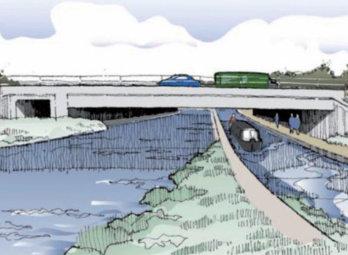
‘”New funding and support and exciting plans”: impressions of the Cotswold Canals going under the M5…
bulk of their report which is looking to the future, with news of new funding and support and the exciting plans (**) that now look likely.
And sandwiched between those two is seven pages dealing with what our Canal Camps schedule is currently looking like for 2026. Martin has, as ever, produced a splendid bit of journalism across pages 10-16 by which I mean that it gives the reader a reasonable account of the work we can be sure about, together with the projects that we are hopeful will ‘come good’. But I can tell you that, as well as the sites that Martin mentions, there are at least another five restorations that we can’t publicly talk about yet.
“Why is that?” you ask. It’s the same reasoning that has existed since the start of WRG – the work is known / planned etc. and is well within our abilities; however it needs a bit more ‘politicking’ to make sure everybody is happy that it’s going ahead. We have learnt the hard way that it’s vital for the local restoration societies to complete these negotiations before we go public with our commitment. Of course, as soon as the way is prepared and we agree to go ahead, you will, though the pages of this magazine, be the first to know.
Finally, my thanks to Steve Morley for his contribution to what I consider to be one of the most important debates at the moment: That ‘R-word’ (Restoration) – what does it actually mean?
Mike Palmer
* Presumably the WRG equivalent of this saying is “hoist by my own barrowhoist”!
** With regard to recent announcements, both Cotswold Canals Trust and Lichfield & Hatherton Canals Restoration Trust have confirmed that they would like us to be one of the teams that deliver their newly funded projects. What that work actually turns out to be is still up in the air, as they work out who (and when) is going to perform the many tasks they now have the funding to deliver. But WRG is determined to help them complete their work and we look forward to both working with them and seeing their project move forward towards the most important ‘R-word’ – re-opening.
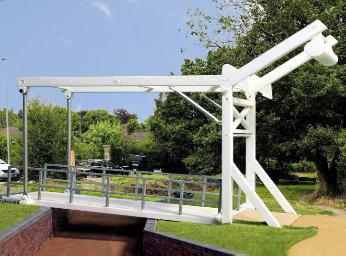
…and the Lichfield Canal’s plans for reinstating the Tamworth Road to Gallows Wharf section
IfyouenjoyedtheWRGReunionweekend,there’sagoodchanceyou’dalso enjoyaweekendofsupermarkettrolleys,bikesandtyresontheCleanup...
Following on from the successful WRG Reunion dig on the Wilts & Berks Canal is another centrally booked big weekend working party: the BCN Cleanup. So what is the BCN, and why are we cleaning it up?
The BCN is the Birmingham Canal Navigations, once the biggest, busiest and densest network of industrial canals in the country, covering the entire Birmingham, Wolverhampton, Walsall and Black Country. The system extended to around 160 miles at one time, and was busy with working boats right up into the 1960s. Today, although it isn’t everyone’s idea of a canal boat holiday destination, it has a fascination all of its own, many dedicated enthusiasts and aficionados and an active BCN Society (BCNS) supporting it - and it includes some attractive rural cruising grounds away from the ex-industrial areas, as well as its towpaths providing benefits for local communities. But closures following the decline in freight traffic have reduced the mileage to around 100; and just as serious is the effect that these closures have had on the surviving parts of the network…
BCN Cleanup site: Daw End Branch Canal
The problem: The closures hit a couple of what would have been very useful links to the outside world - the Hatherton Branch to the north west, and the Lichfield Canal to the north east. Both of these are the subject of restoration plans by the Lichfield & Hatherton Canals Restoration Trust (see elsewhere in this issue), but it’s likely to be quite some years before they are complete. In the meantime, the surviving largely rural canals of the northern BCNthe eastern Wyrley & Essington, the Daw End Branch, the Anglesey Branch and the Rushall - are only accessible from elsewhere in the Midlands via roundabout routes going through Birmingham, Walsall or Wolverhampton. So these canals tend to be underused, and that means they attract rubbish, and as a result they get a reputation for being difficult to navigate, which puts boaters off, and so on.
The solution: To break this vicious circle of neglect and obstruction, the BCN Cleanup as launched in 1997, with volunteers from BCNS, WRG and IWA armed with grappling hooks targeting the Walsall Canal, reckoned at the time to be the worst. They spent a weekend hauling out shopping trolleys, old bikes, prams and some junk that defied identificationand made an immediate vast improvement. I can vouch for this, having boated it in a deepdraught boat in 1996 (we snapped our gearbox, were stranded for three days in the back end of Walsall, and had to be dragged through one section by a kind chap in a JCB from a neighbouring building site) and 1998 (we sailed through without touching the bottom once!)
Since then the format has been the same: target a length where boaters have reported problems, tackle it with a big bunch of volunteers wielding grappling hooks, and take it away in a fleet of workboats. Over 28 years the volunteers have dragged out countless bikes and tyres (plus more exciting ‘finds’ including a set of goalposts, a toilet, a sword and a coffin!) and helped keep the underused parts of the BCN system navigable.
The 2026 Cleanup: This time the organisers have chosen the Daw End Branch Canal. And like last year, as well as the usual grappling for sunken junk in the canal there will also be work from boats, tackling overhanging vegetation on the non-towpath side.
Overnight WRG-style accommodation (sorry no beds this time!) and food will be provided in either Brownhills or Walsall Wood: all who book will be sent joining instructions. Day visitors are welcome: contact Chris Morgan on morgac15@caerphilly.gov.uk or 07974 111 354. Those wanting overnight accommodation / food will need to book in advance: go to wrg.org.uk, click on ‘Canal Camps & Weekend Digs’ and select ‘Birmingham Canals Cleanup 2026’; or contact head office on enquiries@wrg.org.uk or 01494 783453.
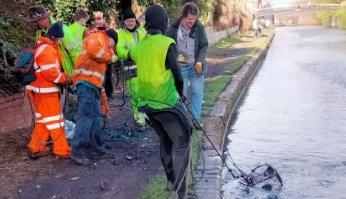
Another of Tesco’s finest is hauled out and sent on its way. How many trolleys this year?
By the time the next Navvies comes out, we aim to have a programme of summer Canal Camps. In the meantime here’s a preview of five sites
WRG Canal Camps 2026: a ‘pre-preview’ of five planned sites
As this issue of Navvies hits your doormat either just before Christmas or just after New Year, we will (hopefully) be getting close to putting together our programme of week-long WRG Canal Camps for 2026. And by the time the next issue comes out, we should have a Camps Booklet (paper or electronic) with full details. But rather than keep you in the dark until then about what we’re going to be doing during the summer of ’26, on these pages we’ve put together some initial information about five sites which as we go to press are looking very likely to make it into the final list - plus some initial words on a few other sites that might make it into either the coming year’s or perhaps more likely 2027’s programme.
PLEASE DO NOTE THAT EVERYTHING IN HERE IS STILL TO BE CONFIRMED
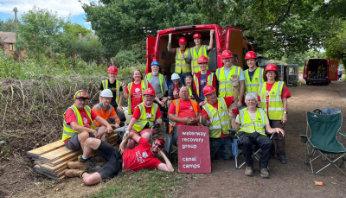
What will we be doing on the camp? Restoring the two main brick and stone walls of a canal basin that forms the tail of John Robinson Lock, near Stonehouseone old wall will need taking down and rebuilding it; the other one will have its existing brickwork restored.
Why are we doing it? It follows on from the restoration of the lock chamber walls (which we worked on during the 2024 Canal Camps programme) and the top end of the lock (which Cotswold Canal Trust volunteers have rebuilt). It will form the link from the lock (and the section of restored canal above it) to the new length of canal to be built to replace the ‘missing mile’ which was lost when the M5 motorway was built in the 1970s.
What’s the bigger picture?
Theworkdescribedaboveispartof thePhase1b(seemapbelow)section ofcanalfromSaultoStonehouse whichwasawardedamajor grant fromtheNationalLotteryHeritage Fundin2020,andhasrecentlyreceivedanotherlargeLotterygranttocompletethe work(whichhasbeenhitbadlybyconstructionpriceinflation).Evenwiththis fundingitwillrelyonalotofvolunteerworktocompleteit,butonceitisfinishedit willconnecttothealreadyrestoredPhase1asection(fromStonehousetoStroudand beyond),andcreateaten-milenavigableextensionofthenationalwaterways networkfromSaulJunctionalmosttoBrimscombePort.Thisinturnwouldpavethe wayforfurtherworkonthePhase2andPhase3lengths,leadingeventuallytofull reopeningthroughtotheRiverThames.
Phase1bSaultoStonehouse: Lotterygrantconfirmed2020
Phase3BrimscombetoWaterPark:Some restorationcompletedmainlyaroundCerney
Phase1aStonehouseto Brimscombe:complete(except BrimscombePortlength)
Phase1bSaultoStonehouse: Lotterygrantconfirmed2020
Phase3BrimscombetoWaterPark:Some restorationcompletedmainlyaroundCerney
Phase1aStonehouseto Brimscombe:complete(except BrimscombePortlength)
Phase2WaterParktoInglesham: Someworkcompletedaround Eisey.IngleshamLockrestored RThames toOxford
Phase2WaterParktoInglesham: Someworkcompletedaround Eisey.IngleshamLockrestored
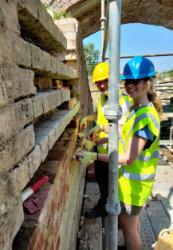
What will we be doing on the camp? The precise work hasn’t been confirmed yet, but it will follow on from last year’s work on the edge of Lichfield, where we built concrete canal wall sections
Why are we doing it? It’s part of a project to connect together the existing restored sections at Tamworth Road Locks (Borrowcop Canal Park) and Gallows Wharf. This involves a new road bridge (to be built by professional contractors), a relocated Lock 24 (to be built by Lichfield & Hatherton Canals Restoration Trust) and a connecting section of canal (which is where Canal Camps volunteers have been involved).
Inrecentyearstherehasbeenagreat dealofrestorationprogressinthe Lichfieldarea.ThisincludesthelongrunningrestorationofTamworthRoad
Locks,re-creationofalongsectionofcanalandtowpathwallatFossewayLane, creationofDarnfordMoorsEcologyParkcentredaroundarestoredre-watered lengthofcanal,andimportantsectionsofacanaldiversionaroundanobstructed sectioninLichfieldwhichhavebeenbuiltaspartofroadandhousingconstruction schemes.Thecurrentprojectishelpingtolinkthesesuccessestogether,andinthe mediumtermtoworktowardscreatingacontinuousrestoredandnavigablelength ofcanalfromHuddlesfordJunctiontoLichfieldandbeyond.Andthatwillbeamajor steptowardstheultimateaimofreopeningthecanalthroughtoOgleyJunctionand linkupwiththerestoftheBirminghamCanalNavigationsnetwork.
What will we be doing on the camp?
Repairing former sideponds (brick-built chambers alongside locks, connected to the locks by paddles and used as a water-saving measure) on the Hanwell flight on the southern Grand Union Canal on the edge of West London. The work will be a mixture of demolition and rebuilding of the worst parts, repairing minor damage, and repointing surviving brickwork.

These are unusual heritage structures (they include the only three sets of triple sideponds in the country), but having gone out of regular use around 50 years ago they are in poor condition and on the Heritage at Risk’ register, and will suffer further damage if not repaired. There is some funding from the National Lottery Heritage Fund, but we need to provide labour.
What’s the bigger picture? Unlikeourusualworksites,thisisanavigable waterwayinregularusebyboats(thesidepondsarenotessentialfor thelocksto operate).Howeverwesupportitinlinewithourbelief(andthatofourparentbody theInlandWaterwaysAssociation-seetheirpublication Waterways for Today)in protectingtheheritagebenefitsoftheentirewaterwaysnetwork,bothnavigableand unnavigable,forfuturegenerations.
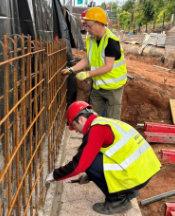
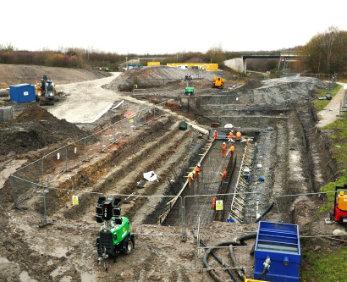
What will we be doing on the camp? We will be working on digging out (with machines) 300 metres of canal that has been filled in, and creating a canal bank on the towpath side from gabions (wire cages filled with stones) topped with nature-friendly coir rolls.
Why are we doing it? It follows on from 2025’s big project (now on the way to completion) to build the new Rooks Hill Bridge to carry the Downs Link bridleway over the canal. The length of reexcavated canal will link together this new bridge and another section that volunteers helped to restore a few years ago (including building two lift bridges) at Birtley near Bramley, creating a restored length of around a mile of canal. This will then be further extended south by rebuilding the missing Fanesbridge Lock.
What’s the bigger picture? TheWey&Arun CanalTrustaimstoreopen theentirethroughroutefrom theRiverWeyNavigation aboveGuildfordtotheRiver ArunandtheSouthCoast. Someimportantsections havealreadybeenreopened, includingthreemilesand sevenlocksthrough Loxwood,aswellasshorter lengths onthecanal’s summitlevelthrough DunsfoldandfromMalhamto Newbridge. Theworkat BirtleyandRooksHillhelpsto closethegapsbetweenthese existingrestoredsectionsand theRiverWey.

canaltakingshapeatRooksBridgeinsummer 2025. Another 300m to create on
River Wey to the Thames
Shalford Bramley
Birtley Rowly
Rooks Hill site Birtley lift bridges section
Locks 8-16
Restored Loxwood Link section
River Arun to the South Coast
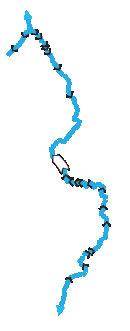
Canal Camp site: Rooks Hill to Birtley
Restored Summit length
What will we be doing on the camp? Working on demolishing unsound brickwork on one of the walls of Pewsham Bottom Lock, and then rebuilding it in brick.
Why are we doing it?
It’s the next stage of the Wilts & Berks Canal Trust’s priority scheme to develop the Pewsham flight of three locks (including other buildings such as a carpenter’s workshop and dry dock as well as the locks) as a heritage site, and to extend the already re-watered length below the locks up the flight.
What’s the bigger picture? WBCTaimsto eventuallycompletethe longestcanalrestoration projectinthecountry,from theThamesinAbingdonto theKennet&AvonCanalat Semington.Inthemediumtermithasidentifiedfourkeyschemestofocuson: SwindontoRoyalWoottonBassett,WantagetotheThames,Semingtonto Melksham,andthePewshamlengththatwewillbeworkingon.
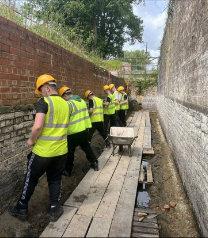
PewshamBottomLock’sbrickworkreceivingattention
See our WRG Reunion feature on pages 20-26 for more about the Wilts & Berks
The five projects on the preceding pages represent the ‘front runners’, sites which we expect will feature in the 2026 Canal Camps programme. But there are a number of other waterway restoration schemes which are also in the frame for possible future Canal Camps - either as later additions to the programme, or in following years. They include…
…and where else?
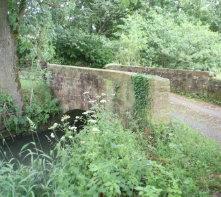
Siltedup:thefeederfromtheDanetoRudyardReservoir
Cotswold Canals: new lock. In addition to the project to reconstruct the basin below John Robinson Lock near Eastington which we already described on page 11, there are some other tasks on the Cotswold restoration that have also been identified as possible Canal Camps work. One of these is related to the ‘Missing Mile’ section of canal obliterated during construction of the M5 motorway 50 years ago, which is being bypassed by a mile of new channel on a different route. To get under the motorway, the new canal will share an existing bridge with the River Frome - and that puts restrictions on the canal’s water level. This means that two new locks will be needed, one each side of the M5, to return it to the original level. And building one of these looks like it might be a Canal Camps job.
Cotswold Canals: landing stage. Yetanotherpossibleprojectonthe CotswoldCanalsconcernsalockwhichhasalreadybeenrestored,butneedsa landingstageinstalling.Thiscouldbea‘carpentrykit’assemblyandinstallationjob carriedoutbyaCanalCamp
LapalCanal:HarborneTunnel.Actuallyit’stechnicallyalongbridgeunderamain roadratherthanatunnel,butwhateveritis,itwasbuiltafewyearsagotomake provisionfortherestoredLapalCanal(theabandonedlengthoftheDudleyNo2Canal fromHalesowentoSellyOak,ontheedgeofBirmingham)underanewmainroad. Butthecanalchannelandassociatedtowpathsneedworktocompletethatprovision.
Caldon Canal: feeder clearing. Longstanding volunteers may recall the 1996 WRG Reunion spent clearing silt from a feeder channel which supplied water from the River Daye to Rudyard Reservoir, feeding the Caldon Canal (and in turn the Trent & Mersey Canal). It’s silted again, and also has more serious engineering problems - but water supplies are needed more than ever.
THESE ARE PROVISIONAL PROJECTS, ARE AT AN EARLIER STAGE OF PLANNING, AND ARE LESS LIKELY TO FEATURE IN THE 2026 PROGRAMME
MobilegroupKESCRGspentaweekendatDoubleBridge,andgotachance tocheckoutthenearbyPewshamLocks,plannedsiteforsummerCamps…
On our October weekend digwe headed back to the Pewsham site tohelp the MCC (Melksham Chippenham & Calne) branch of Wilts and Berks Canal Trust.
After a very late change in accommodation(less than 36 hours) our band of merry diggers metinTheRisingSunat ChristianMalford,someaimingfordinnerwhichit turnedoutwasn'tavailable.Thelatestlandlord informedustheoldlandlordwouldn’treleasethe Facebookpageandwebsite,norshutitdown.So afteragreatpintofTributewetookadvicefrom thelocalsandorderedina curry, ordered more great beer and we felt very settled. Eventually thebarrel ran out and we headed for bed!
We didn't have the luxury of a cookthis time but Steve D shopped, ‘RAF Martin’ breakfasted, and Ian and Steve C cooked. Dr Liz had caked on Friday for us and then when we arrived at Saturday tea break it turned out Fiona had also caked. So we had to choose between, apple, chocolate, fruit cake and Bakewelltart, needless to say I think everyone tried all four!
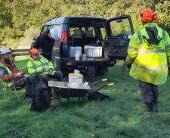
Fiona was our very able, friendly and organised lead on site. A full 0.9 miles from the compound at Pewsham to the site at Double Bridge meant we made good use of quad and trailer and Flossie the Land Rover Disco got the brew kit, lunch and hand tools to site.
Our task for the weekend was to rake out dead mortar, pull out loose bricks, fill holes, reassemble,and re-point as much as we could. This was duly done to all that we could communally reach. We didn't unfortunatelyhave an Ed (our tallest volunteer),but the two Steves coped.We tried our best to repair it for maximum longevity.
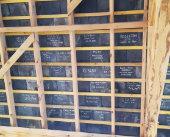
Lastly once packed up on Sunday we took a look at the new Dry Dock building which had built by WBCT since our last visit earlier in the summer, and a very fine structure it is too. We searched out the slates that we had sponsored,and took lots of photographs.
Hopefully next time out we can get on with Pewsham Bottom lock!
Ian Williamson
Week-longCanalCampscost£80orasstated.Bookingforeventslabelled‘WRG AsheridgeRoad,CheshamHP52PX.Tel:01494783453,enquiries@wrg.org.uk.
Jan 9-11 wrgFT
Jan10-11 LondonWRG
Jan 17-18 wrgBITM
Feb 7-8 KESCRG
Wilts & Berks Canal: Grove Locks Fri 10am.Accommodation: Watchfield
Chelmer&BlackwaterNavigation
Wessex Waterways: Oriel Bridge on the Wilts & Berks
Wilts & Berks Canal. Joint dig with WRG Forestry
Feb7-8 LondonWRG Tobearranged
Feb 13-15 wrgFT
Feb 14-15 KESCRG
Feb28-Mar1 LondonWRG
Feb 28-Mar 1 wrgBITM
Mar7-8 KESCRG
Mar 7-8 wrgFT
Mar 14-15
IWA/BCNS/WRG
North Wilts Canal: Starting Fri am. Joint dig with KESCRG
Wilts & Berks Canal: Joint with WRG Forestry, scrub bashing, probably Wantage
Shrewsbury&NewportCanals
Maidenhead Waterways: Bray Cut
Wilts & Berks Canal. Bank protection at Rushey Platt
Buckingham Canal
BCN Cleanup: on the Daw End Branch. See pages 8-9
Mar14-15 LondonWRG SupportingtheBCNCleanup
Mar 21-22 wrgBITM To be arranged
Mar 22 NCA
Apr 11-12 KESCRG
Northern CanalsAssociation: Meeting on Chesterfield Canal
Cotswold Canals (Thames & Severn Canal), Weymoor bridge, hopefully finishing
Apr18-19 LondonWRG Tobearranged,possiblyCotswoldCanals
Apr 18-19 wrgBITM To be arranged
Apr 29-May 5 IWA/WRG Support camp for iWACanalway Cavalcade festival at Little Venice, London
May9-10
KESCRG Cotswold Canals (Stroudwater Navigation), John Robinson lock area, progressing
May 16-17 wrgBITM To be arranged
Jun6-7 KESCRG Wey &Arun Canal, Rooks Hill Bridge, hopefully starting excavation / towpath creation
Jun 20-21 wrgBITM To be arranged
Jul 18-19 wrgBITM To be arranged
Sep 26-2 wrgBITM
Oct 10-11
London WRG
Oct 17-18 wrgBITM
Maidenhead Waterways: Bray Cut
Shrewsbury & Newport Canals
Basingstoke Canal: To be confirmed
Oct 23-30 wrgFT To be arranged
Nov 21-22 wrgBITM To be arranged
Dec 12-13 wrgBITM
Maidenhead Waterways: Bray Cut
CanalCamp’ shouldgoto:WRGCanalCamps,Unit16B,FirstFloor,ChilternCourt, DiarycontributionstoDaveWedd,Tel07816175454,dave.wedd@wrgbitm.org.uk
CliveAlderman
TimLewis 07802-518094 london@wrg.org.uk
Dave Wedd 07816-175454 dave.wedd@wrgbitm.org.uk
Ed Walker
07887-568029 ed@edwalker.org.uk
TimLewis 07802-518094 london@wrg.org.uk
CliveAlderman or Swindon area
Ed Walker 07887-568029 ed@edwalker.org.uk
TimLewis 07802-518094 london@wrg.org.uk
Dave Wedd 07816-175454 dave.wedd@wrgbitm.org.uk
Ed Walker 07887-568029 ed@edwalker.org.uk
CliveAlderman 01494 783453 enquiries@wrg.org.uk
TimLewis 07802-518094 london@wrg.org.uk
Dave Wedd 07816-175454 dave.wedd@wrgbitm.org.uk
Ivan Cane northern.canals2021@btinternet.com up the landscaping
Ed Walker 07887-568029 ed@edwalker.org.uk
TimLewis 07802-518094 london@wrg.org.uk
Dave Wedd 07816-175454 dave.wedd@wrgbitm.org.uk
Pete Fleming pete.fleming@waterways.org.uk the work on the lock
Ed Walker 07887-568029 ed@edwalker.org.uk
Dave Wedd 07816-175454 dave.wedd@wrgbitm.org.uk north of bridge
Ed Walker 07887-568029 ed@edwalker.org.uk
Dave Wedd 07816-175454 dave.wedd@wrgbitm.org.uk
Dave Wedd 07816-175454 dave.wedd@wrgbitm.org.uk
Dave Wedd 07816-175454 dave.wedd@wrgbitm.org.uk
Tim Lewis 07802-518094 london@wrg.org.uk
Dave Wedd 07816-175454 dave.wedd@wrgbitm.org.uk
CliveAlderman
Dave Wedd 07816-175454 dave.wedd@wrgbitm.org.uk
Dave Wedd 07816-175454 dave.wedd@wrgbitm.org.uk
SixyearsafterWRGheldthelastofwhathadbeenregularannual‘Reunion’ majorautumnworkingparties,theeventreturned.Theeditorreports…
WRG Reunion Dig
Wilts&BerksCanal,22-23November
Remember the WRG Reunion? No? Perhaps it might jog your memory more if we called it by its other name of the Bonfire Bash? Yes, the annual big autumn (usually) scrubclearing working party and big get-together for Canal Camps volunteers, folks from WRG regional groups or other mobile groups, and anyone else who wanted to join in. The one that attracted anything from around 70 to a
couple of hundred volunteers, and often made a massive difference to a local canal restoration group’s rate of progress.
Still not ringing any bells? Well, that’s probably because for a variety of reasons we haven’t managed to run one for way too long – so long that a significant proportion of regular WRG volunteers may well have joined our ranks since the last Reunion happened a shocking six years ago.
But having overcome those problems –which have included the dreaded pandemic
Length(originally):52miles(main line)8miles(NorthWiltsbranch)
Locks:42(mainline)11(NWilts)
Date closed: 1914 (an aqueduct failure had already closed the canal to through trade)
Possible replacement arm on new route
Chippenham
Strategic project 2: Develop Pewshamsite
Thames & Severn Canal (Cotswold Canals) under restoration To Reading To Stroud and Saul Junction To Inglesham To Bath
Cricklade
Possible diversion around Cricklade
North Wilts Canal Wilts & Berks Canal
Royal Wootton Bassett SWINDON
Dauntsey
Calne Pewsham Foxham
Semington Kennet & Avon Canal
Strategic project 3: Link together the restored Swindon and Royal Wootton Bassett lengths
Strategic project 1: Create Melsham
Link diversion via River Avon to reconnect Wilts & Berks to Kennet & Avon Canal
Planned diversion around Swindon: western part already built / restored / under construction as part of Wichelstowe developments
plus difficulties since then in finding a site with enough work, all the necessary permissions, and a suitably large accommodation – it finally all came together on the weekend of 2223 November on the Wilts & Berks Canal. Well, actually it had started to come together quite a lot earlier, as local waterway society the Wilts & Berks Canal Trust worked with WRG’s site team to plan the event. And on the practical side, an
Possible diversion using drawdown channel of new Thames Water reservoir (if built)

River Thames to Oxford and Inglesham
To Reading and London WRG Reunion 2025 work site: Grove Locks Strategic project 4: Bring boats back from the Thames to Wantage
TheWilts&BerksCanalwasopenedin1810and ranfor52milesfromtheRiverThamesinAbingdon totheKennet&AvonCanalatSemington.In1814a branchcanal,theNorthWiltsCanal,openedlinking theWilts&BerksinSwindontotheThames& SevernCanalnearCricklade.Followingcompetition fromtheGreatWesternRailwayandthecollapseof anaqueduct,theWilts&BerksCanalclosedin1914,
TheWilts&BerksCanalTrust wasfoundedin 1979astheWilts&Berks CanalAmenityGroup,initiallywiththeintentionofpreserving whatwasleftofthecanal,butlaterchangingitsobjectivestoincludefullrestorationto navigation.Thiswouldfaceseriouschallenges,includingobstructionofsectionsoftheroute atallthreeofitsextremities,wherepartsofMelksham,CrickladeandAbingdonhadbeenbuiltonthecanal’s originalline,andalsoaroundthejunctionofthethreearmsoftherouteinSwindon,wheresectionshad disappearedunderthedevelopmentandexpansionofthetown.Howeverbetweentheseblockagestherewere manymilesofrelativelyunobstructedruralwaterway,wherecanalrestorershaveworkedonnumerous sectionsovertheyearsparticularlyonthewesternlengthreachingfromSwindontoSemington. Meanwhilediversionroutesaroundthemajorblockageswereplanned,tobeconstructedasandwhen fundingwasavailable.InrecentyearstheWichelstowedevelopmentsonthesouthsideofSwindonhave enabledsomemajorsectionsofoneoftheseplanneddiversionstobebuilt. WCBT has recently agreed on a 25 year plan to focus its efforts on four projects where its resources can be used to best effect. Project No 4 is the one that WRG’s work has helped to launch…
1:MelkshamLink:Reconnecting the Wilts & Berks canal to the Kennet &Avon canal at Semington and bringing the canal to Melksham town centre via a new route using the RiverAvon
2:PewshamWaterside:Turning the isolated Pewsham Locks restoration site into an easy-to-access community heritage resource for walking/cycling, education, boating, picnicking and much more.
3: Connecting RoyalWootton Bassett to Swindon: With sections of the canal in water in both towns, it should be a relatively easy task to connect the two towns… except that the M4 motortway is in the way!
4: Bringing Boats Back to Wantage: Reconnecting the Wilts & Berks canal to the River Thames, getting under theA34 main road and Great Western railway line , and bringing the canal back to Wantage and Grove.An important part of this is the proposed Thames Water reservoir known as SESRO (South East Strategic Reservoir Option) being planned nearAbindon: see page 18 for more on this.
advance party from our specialist WRG Forestry team had been on site on the Friday to get work started. But as far as most of the volunteers were concerned it began on the evening of Friday 21 November, as people started arriving at the weekend accommodation at Hill End Outdoor Education Centre. I arrived with part of the London WRG contingent in our minibus, and having successfully negotiated the parking instructions (“park in the first car park, walk to the second car park, and look for the blue dragon…”) we found ourselves in the building (called the Blue Dragon for no obvious reason) where we would be eating, socialising, and at this point, signing-in for the weekend. We were then given instructions on how to find our sleeping accommodation (‘North Dormitory’ was full, so we would be in ‘Middle Dormitory’), we headed back out on foot in the dark and realised we should have listened more carefully to the directions, as we were lost. But after a bit of guesswork and a trek uphill along a trackway, helped some useful signs that had been put up for us, we found a building called the Middle Dorm, and in it a sleeping room that still had plenty of beds free. Yes, BEDS! No airbeds, sleeping mats or camp beds for us, this was proper luxury accommodation with real beds! All of a sudden the walk in the dark seemed a very small inconvenience. Having bagged our beds we headed back to the Blue Dragon
and spent the rest of the evening socialising with lots of navvies, some of whom I hadn’t seen for quite a few years.
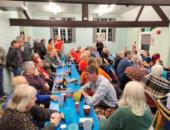
Our leader for the weekend, Becky ‘Bex’ Parr, welcomed us and asked us to take a look at the details of the sites that we were working on, which she’d put up on the wall, and to write our names next to one of the sites ‘B’, ‘C’ and ‘D’. Having seen the weather forecast for the weekend, I will admit to indulging in some scrutinising of the work details to make sure it said ‘bonfires’ next to whichever one I chose… C, as it happens… but in the end I realised that it said the same on all three of them…
[My notes at this point say “Bungle’s Canalway Cavalcade drinks – twice a year is too much, says Fran” – make of that what you will…]
The next morning the forecast proved to be true, and as we awoke from a good night’s sleep the rain was hammering down on the roof. So the day began with the novel experience of putting on waterproofs to go to breakfast. Down in the Blue Dragon, the catering team had done us proud, and after we’d eaten Bex gave us a more detailed briefing. This memorably included instructions not to use hand tools for cutting down anything bigger than site leader Nigel’s wrist (someone suggested that perhaps a 3D printer could have been used to produce life-size replicas of Nigel’s wrist to hand out to each of the site teams), confirmation that
we would have having bonfires on all sites (so my worrying had been in vain), and the invaluable advice not to “be a dick”.
Soon we were piling ourselves and our kit into the vans (we had the entire central WRG fleet) and heading off for the work site. This was quite some distance from the accommodation; an understandable result of the difficulty in finding both suitable work and suitable accommodation for a work party of 75 or so volunteers. One or two vehicles managed to continue the previous evening’s theme of losing our way while trying to find the dorms, and took a couple of detours before arriving at the site. But after a couple of round trips by all the vans, we’d all arrived at the drop-off point for the worksite, on a farm track at the corner of a field just outside the village of Grove, which in turn is just outside Wantage town, some eight miles or so from the original east end of the canal, where it met the River Thames in Abingdon.
Our sense of direction and ability to
recognise a derelict canal having apparently deserted us, we were about to march off down a dirt track heading off in completely the wrong direction (“I’m sorry, WBCT, we seem to have restored your canal in the wrong place…”) , but were soon put right and each given tools and a couple of fence posts to carry, the reason for which became

apparent later [and yes, we had the obligatory ‘take a fence’ joke] and sent off in the correct direction with a solar farm on the left and a strip of dense vegetation on the right showing where the canal had been. A few hundred yards further and a sign marking Site B indicated the first of the work-sites. Others marked Site C and Site D.
The three sites were all slightly different, but all had something in common. They were the sites of long-derelict former navigation works, and the job was to clear upwards of 100 years’ worth (the canal was finally abandoned in 1914) of trees and vegetation from in and around them, (and if necessary fence them off temporarily for the safety of walkers on the surviving former towpath), so that WBCT’s engineers can get in an inspect them, and the Trust can begin restoring them.
This section was where the canal climbed out of the Thames valley via a well spaced out flight of six locks. The first, Grove Bottom Lock, was the target for Site B’s volunteers. The second lock, with the unusual name of Spirit Lock [Why? Holy Spirit? White spirit? Fighting spirit? I don’t know!] was the second of the locks, and formed site D. In between them was a swing bridge, and this was the Site C team’s job.
[An aside: we were told that it was a swing bridge, but quickly donning my anorak I replied “I think you’ll find that the Wilts & Berks used lift bridges, not swing bridges”. A
later online examination of a 19th century Ordnance Survey map shows it clearly marked ‘Swing bridge’. Oh well.]
They’ve all survived in different states of dereliction. Site B Grove Bottom Lock was recognisably a 70ft by 7ft standard narrowbeam lock chamber, but the generally good condition of quite a lot of the offside wall has been rather spoilt by some enormous trees growing out of the top few feet of the wall. Site D Spirit Lock was a different matter: it had been largely filled in, and only part of the top of one of the walls was just visible. Some excavation work was planned alongside vegetation clearance, to (hopefully) uncover the coping stones. At site C, the swing (or lift) bridge, enough of the abutments remained that they looked capable of being rebuilt.
“So that’s B, C and D; what happened to Site A?” I hear you ask. Well, so did we. It turns out it was an overspill site we didn’t work on. But in addition to WRG Forestry’s chainsaw operators starting the clearance by carrying out the main tree-felling work at sites B to D before handing it over to the rest of us to cut up and clear, they also had their own sites E, F and G including the fourth lock (Grove Common Lock). Being some distance away, I’m not sure quite what they got up to, although occasionally the distant snarl of a chainsaw could be heard on the wind.
And speaking of the wind, the weather was still living up to the forecast – cold, wet
The future of the eastern sections of the canal (on which we were working at the Reunion) is very much tied up with Thames Water’s plans for a new reservoir in the Abingdon area. Known as SESRO (the South East Strategic Reservoir Option), its site straddles the original Wilts & Berks Canal line between Abingdon and Wantage. This could be either very bad or very good news for canal restoration plans.
Until recently it looked like it might be the former, with what’s left of the canal set to be obliterated and nothing provided in compensation. And rather than taking the option of building the three mile long connection from the reservoir to the Thames (which is needed, both to get the water to where it’s needed in the South East, and to provide an emergency reservoir emptying facility) as an open channel which could form the future canal (conveniently bypassing one of the challenges to restoration: how to bypass a filled-in and built-on section of the old canal in Abingdon) it is to be built as an underground culvert.
However following an initial consultation, a new water channel is to be provided which skirts the reservoir, designed to be suitable for future use as a canal channel to replace the section which will be lost when the reservoir is built.
It would, however, be even better if they could provide a completed length of canal, including some work on the necessary locks and other navigation structures. And especially if this could be carried on down to the Thames, in place of the culvert.
There’s a second consultation, closing 13 January: see http://thames-sro.co.uk/ sesro/statcon2025
and windy. Someone pointed out that there might be a touch of irony in the situation where we were shivering in the cold and gloom, while surrounded by solar farms.
[Someone else suggested that the solar farms were actually stealing our sunshine, and what we really needed was some wind farms to do likewise with the wind. And someone else started singing “please don’t take my sunshine away…”]
But despite all this, we set to work and soon had bonfires lit and were making a good start on clearing the surrounding of the locks and bridge.
[Another aside: someone mentioned that the local volunteers “don’t have fire”.
What, have Wiltshire and Berkshire not discovered it yet? Have they even invented the wheel? No, it turned out that chipping and other methods of vegetation disposal were the norm, and we were specially favoured by being able to burn ours. Given the weather, we really appreciated this.]
The wind did have one serious impact: it blew the flames on the Burco boiler sideways, making it extremely slow to boil, and significantly delaying the tea-break. Eventually a combination of parking Mick’s 4X4 where it would form a wind shield and various bodies huddled around the Burco resulted in it boiling at around 11.30am. We made up for it by having an early lunch.
Work continued after lunch, clearing more scrub before spending the latter part ‘turning in’ the bonfires to make sure they were all burnt down by the end of the afternoon. Another job at Site B involved putting in a long line of fence posts and barbed wire along the full length of the towpath side wall to protect walkers from falling in, so the sound of post-bonking punctuated the afternoon.
[My notes say “Tim burned his hat, and mixed his metaphors.” I think that’s a reference to the usual expression being to either ‘burn your bridges’ or ‘eat your hat’.]
We’d made a really good impression on the work by the time we packed up and returned to the accommodation in the gathering dusk. The accommodation not only has beds but lots of showers, and a ‘beer run’ was organised before the excellent evening meal (my notes just say “PIE”!)
Bex thanked us all for our hard work, and credited one particular longstanding volunteer – Tim Dodwell, who had been in at the start in the 1960s of both London WRG’s predecessor body the Inland Waterways Association’s London & Home Counties working party and Navvies Notebook (now Navvies) magazine. And another enjoyable evening of socialising continued until late.
At this point in my dig reports I usually tend to run out of things to say, and end with a rather tame “Sunday was more the same, and then we went home”. But on this occasion, in one particular way, Sunday was very much not the same as Saturday: in place of cold, rain, wind and gloom it was a glorious sunny (if chilly) autumn day.
Site C team having completed their job of clearing the surroundings of the swingbridge on Saturday, their volunteers were reassigned to Site B (Bottom Lock), where the post-bonking and fencing work were completed, and very nearly all of the trees that Forestry had felled (apart from a couple of inaccessible ones) were cleared by the end of the day.
Meanwhile Site D (Spirit Lock) had got very archaeological, with excavation of the top of the chamber walls carried out along both sides of the lock and around the gate recess areas at both ends, confirming that it had the usual pattern (for narrow locks) of a single top gate and a pair of bottom gates. As for coping stones being found, it appeared that the walls had actually lost the top 1 metre or so (this will be confirmed by digging down to the top cill, and checking

how far below the top of the existing brickwork it is), so the copers have either been lost or buried in the chamber. [“They’re here in spirit”, somebody said…]
Wilts & Berks Canal Trust thanked us for all our work, and explained how it forms a crucial first step towards their longer-term plans. Restoration of the six Grove Locks in the medium term will (along with the construction of a new section of canal as part of Thames Water’s reservoir plans – see page 24) form an important step towards a 25-year ‘boats to Wantage’ plan.
In the much shorter term, they also bought us doughnuts and biscuits!
And then we went back to the accommodation, packed up and went home. Thank you to leader Bex, sites leader Nigel, the cooking team, the van drivers, the leaders for each site, and all the volunteers. It was a great weekend, the Reunion is well and truly back in the WRG calendar, and let’s keep it there!
Martin Ludgate
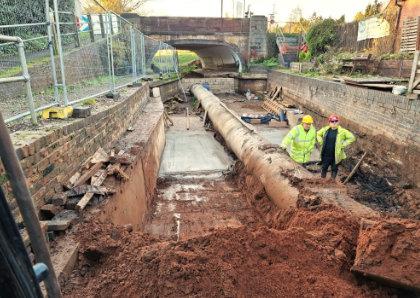
At Staveley, the project to extend the six-mile isolated restored and navigablelengthviatwonewbridgesandanewlockcontinuestoprogress
The Chesterfield Canal Trust is managing the restoration of the next length of the canal east from the end of the restored Chesterfield to Staveley section using the £5.8m awarded by the Staveley Town Deal and 160,000 cubic metres of clay donated by Suon Ltd.
Although not long, this is a complex section to restore for several reasons:
• Two new bridges are needed to carry routes over the canal including the Trans Pennine Trail (TPT)
• A great deal of clay is needed to build up the level of parts of the canal which have suffered from mining subsidence.
• A new lock is needed. Some years ago when the first section east of Staveley Town Basin was restored, a lock was added to lower the canal to a suitable level to get under an existing (out of use but not officially abandoned) railway line. The second new lock will return the canal to its original level. (Ironically the railway, and plans to reuse it in connection with HS2, have now been abandoned.)
The first new bridge, carrying the TPT, was installed in 2024. Work has now progressed to excavating the site of the lock and beginning construction of the chamber, as seen in this picture taken from the new TPT bridge.
Shropshire Union Canal Society’s volunteers have moved on, and are working on the length from Schoolhouse Bridge to Malthouse Bridge
Shropshire Union Canal Society - November 2025 work party report
“The distance between Schoolhouse Bridge [the recently built road bridge about half a mile beyond Crickheath Wharf, the present limit of navigation on the English length of the Montgomery Canal] and Malthouse Bridge [the next bridge beyond there heading towards Llanymynech and the Welsh border] is 340 metres”, explains Shropshire Union Canal Society restoration project manager Tom Fulda. “In the absence of an access haul road alongside the canal, the channel will be used for plant access to deliver materials. 250 metres of the channel had been previously cleared last winter, and time was spent this time clearing the remainder of overhanging branches, saplings and small trees to permit dumper and digger access. Passage through to Waen Wen [a canal basin a little way beyond Malthouse Bridge] was also enabled by the removal of a redundant (but very solid!) headwall at Malthouse Bridge”. As elsewhere, the unrestored towpath becomes muddy and slippery in wet weather and has plenty of trip hazards from tree roots. Before towpath construction could start, stumps and tree roots growing in the channel bank and under the towpath had to be removed. Also, in preparation the hedge alongside the towpath which had become heavily overgrown was cut back to its previous line.
The standard specification is for a 1.2 metre wide towpath

Removal of vegetation in the channel prior to surfacing the towpath
Constructing the towpath
comprising compacted aggregate between boards. Starting from Malthouse Bridge back towards the compound at Schoolhouse Bridge, 60 metres of towpath was constructed and surfaced with stone. The rate of progress will accelerate considerably now the preparation works have been completed and as we get closer to the compound where the materials are stored.
This winter’s environmental programme comprises hedge laying and hedge planting, starting by the compound and working back towards last year’s area nearer Crickheath. This got a massive boost on the Friday of the November work party with five corporate volunteers from Aico in Oswestry clearing and preparing this length ready for pleaching. So a big thank you to them – they certainly put in a shift and apparently enjoyed it so much that more colleagues are expected for next month’s work party.

In Waen Wen final preparations were made for tree work by contractors over the winter. This will entail felling of trees at or below the future water level which have grown up since the channel eventually emptied of water several decades ago. At one end of the basin the remaining brash created last time was burned on Friday and Saturday. At the other end redundant drainpipes (which used to convey surface water to Crickheath after the canal fell into disuse and a mains water supply was available) were removed from the channel along with a brick inspection chamber. An access ramp into the basin was built and a further ramp over the culvert running beneath the basin was constructed. This enables plant access over the culvert whilst felling, clearance and site investigation activities are underway.
Removing the pipeline laid in the canal bed after it closed
Reporting a big push from Somersetshire Coal Canal Society to get the four wing walls of Terminus Bridge near Paulton Basin completed
Somersetshire Coal Canal: Rebuilding Terminus Bridge - The Fourth Big Work Party
SCCS push to get the next stretch at Paulton and Timsbury in water: On Sundays 14 and 28 September, Somersetshire Coal Canal Society held the third and fourth instalments of our 'Big Work Party' series. These focused on restoring the four wing walls of Terminus Bridge near Paulton Basin. This project has been ongoing for years, and the increased volunteer turnout was exactly what we needed to push it towards completion! Following successful sessions in April and June, we committed to two final work parties in September, hoping for cooperative weather. Many of the original volunteers returned, driven by a shared passion to see the walls fully restored.
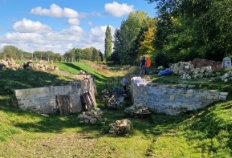
While we hold regular Sunday work parties at Paulton, these special events have zeroed in on rebuilding the bridge walls, drawing in skilled builders and stonemasons for the task.
On some of the Big Work Parties, we had local stonemason Robbie Allen of Robbie Allen Fireplaces who generously donated his time and expertise, guiding the team to ensure the walls are both sturdy and visually impressive. On other work parties we had Ian Watson, a lecturer at Wiltshire College doing a similar role. Canal restoration enthusiast and YouTuber, Steve Court of Court Above The Cut documented the events with his camera and drone. Adrian, one of our dedicated regular volunteers, tirelessly mixed mortar for hours at the work parties, ensuring the builders could keep up momentum throughout the day. Dave Schafer, a volunteer at our Combe Hay work parties also chipped in to help with mixing mortar. The landowners generously pitched in too - helping transport the mortar to the bridge site, kindly offering driveways for parking, washroom facility access and
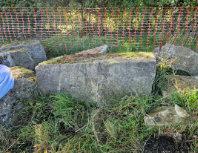
hot drinks to keep the team refreshed and comfortable throughout the day.
Community support has been incredible. The Red Lion at Paulton cooked food for us after each event, while Paul Gilbert Carpentry and General Building, along with Dave Wordley Building & Maintenance, contributed their craftsmanship. Fiona not only helped with stone-laying but also treated us to her fantastic homemade cakes during breaks. Kat and I ensured the event ran smoothly, arranging car parking, food, tea breaks and mucking in where needed. Lots of other volunteers, too many to mention, came and got stuck in too!
Thanks to the tremendous effort of all our volunteers across the four Big Work Parties, we've made fantastic progress. The project is nearly ready for the next section to be put into water. Our final push involves backfilling and pointing the stonework, putting finishing touches on the nearby sluice gate, and cutting and fixing the huge coping stones into position.
If you’d like to know more about the Somersetshire Coal Canal, visit our website www. coalcanal.com, or our Facebook and Instagram pages ‘Coal Canal’.
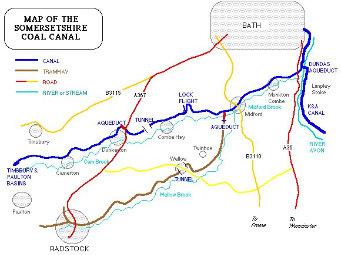
The Somersetshire Coal Canal began its journey at Limpley Stoke, connecting with the Kennet & Avon Canal. The canal ran west to Midford, crossing the River Cam on a stunning Bath Stone aqueduct, before the route divided.
The Southern Arm to Radstock was ultimately a failure; it was rapidly replaced by a tramway and then largely obliterated by the Somerset Dorset Joint Railway (now closed).
The more enduring Northern Arm continued to Combe Hay, where engineers conquered the elevation with an impressive flight of 22 locks. From the summit level, the canal followed the twists of the Cam Valley, navigating one tunnel and three more aqueducts on its way to the busy Paulton and Timsbury Basins.
The Somersetshire Coal Canal Society (SCCS) is the driving force behind the restoration of the 10.5 mile long coal canal.
When you’re building a new wooden footbridge on a floodplain, you need to make sure it won’t float away. Here’s how Stover Canal Trust did it…
Two thirds of the way along the two mile long Stover Canal which ran north from Newton Abbot in South Devon, a pair of water channels combine and enter it from the east. One is a by-wash channel leading down from the Ventiford Basin at the northern limit of the canal and the other is the Fishwick Feeder channel. This brought water from the nearby River Teign to supplement the canal’s working water supply.
The term Fishwick Feeder takes its name from Fishwick House which used to stand alongside the River Teign. There, a sluice and weir were installed to direct river water across the fields into the canal. The house has long since disappeared and the sluice has fallen into disrepair but the route that the water used to take can still be seen.
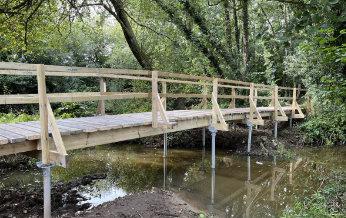
Two previous timber footbridges had been constructed and the second was installed around 20 years ago to bridge these watercourses. This was necessary to maintain an uninterrupted towpath for the whole length of the canal. Unfortunately the canal runs through the flood plain of the Rivers Bovey and Teign, and a number of severe flood events had caused the bridge to lift and settle, together with some rotation. A number of repair events had been undertaken by the Trust but it was decided that it was no longer possible to achieve an attractive and safe structure and so a replacement was agreed on. We could have put up a metal replacement but were conscious of the rural setting and so opted to keep a wooden structure with modern supports.
As a number of the supports for the bridge would be constantly in water it was decided, after considering various options, to use galvanised ground screws installed by a local company named No More Digging from Exeter. A tracked excavator was fitted with a hydraulically operated screwing device and was gyroscopically controlled to ensure verticality. A laser level was used to ensure the pairs of screw heads were to the correct level bearing in mind that the bridge deck had shallow ramps at either side. Some of the screws were required to be 4 metres in length as another device in the machine indicated when the required end resistance pressure had been achieved.
At the end of September the work party volunteers were given a weekend for the construction of the bridge. Structural timber was used to form the cross braces and longitudinal bearers. 225mm x 50mm sections were chosen to bridge the longest span of
Length: 2 miles
Locks: 5
Closed: 1943 (last used in 1930s)
4.0 metres. The handrails and posts were also formed in new timber.
The deck of the bridge was formed by making use of recycled boards supplied by Sibelco Ltd. following the demolition of some of their redundant clay stores.
We are very grateful to Sibelco for their invaluable assistance to the Trust over the years and to the Inland Waterways Association, South West Section, for their very generous contribution towards the cost of the ground screws. I am also very proud of our volunteer force for working long hours and as a team in order to complete the work over just one weekend.
It is hoped that we have constructed a bridge which is both rustically attractive and sturdy enough to withstand any significant flood flows across the meadows.
Paul Taper Chair, Stover Canal Trust
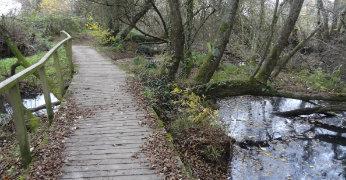
…orratherlackofprogress,astheSussexOuseRestorationTrustlooks backonwhatithasdonebutreluctantlyacceptsthattherewillbenomore
Unfortunately, this is more a lack of progress report because the Sussex Ouse Restoration Trust (SORT) is in the latter stages of closing down. SORT has been the only local body actively interested in and working on restoring or preserving the Sussex Ouse Navigation and its structures for the last twenty-five years but has now reached the stage where it can do no more. Local opinion (from councils to government agencies to small interest groups) is much more interested in the ‘river’ being a natural waterway rather than a constructed one.
Individuals we encounter on the towpath are very complimentary of the efforts SORT has made but our efforts to publicise the benefits of the waterway are no match for those chasing the legal rights of the river or for its just wending its own way in its own time. Two or three years ago I attended a meeting where the rights of the river were being developed. We were all asked to put one key right on a yellow post-it and stick it to the wall.
The suggested rights were read out and 27 of the 28 were about, justifiably, green matters; such as the right not to be polluted. The odd one out was from me: the right to retain its industrial heritage. This drew loud gasps from most of the participants but no opportunity to discuss my point. Other attempts for SORT to get involved in discussions on the future of the navigation, sorry river, have been ignored.
The Sussex Ouse Navigation is a very rural waterway of 22 miles and 19 locks. The
by SORT
head of the navigation is just to the north of Haywards Heath and its course takes it near Uckfield, through Lewes and to the sea at Newhaven. It was constructed to William Jessop’s design between 1791 and 1812, closing to commercial traffic in the late 1850s.
It doesn’t connect to other waterways and only touches public roads and footpaths in a few places, which makes complying with Charity Commission requirements on public access very difficult to achieve. There is no chance of restoring enough publicly accessible areas which would allow restoration of the cuts between those areas to occur and be used by the public. So, we have had to call it a day.

However, over the years SORT has helped a good few landowners with preserving their locks and we got the National Trust interested in restoring Irongate Lock in Sheffield Park until they decided just to preserve what we had uncovered. We have always thought they missed a major opportunity here to attract more people to the house and gardens.
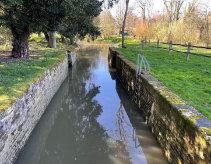
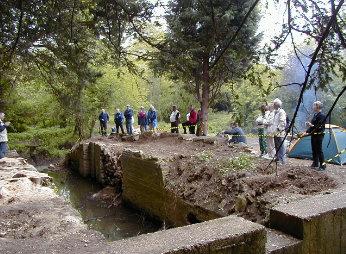
SORT’s achievement of digging out and restoring Isfield Lock (fifth of nineteen) is something to be celebrated and enjoyed into the future. We took the lock and its adjoining wharf from an overgrown and collapsing condition to solid structures in a peaceful and beautiful area where they can be appreciated by the public who can also learn more about the whole navigation, Isfield Lock and its history, as well as canals in general from the Information Board we have installed lock-side.
The lock is not fully restored because we will never be able to join the cut at each end into the main water course and so removal of the war-time installed concrete ‘dam’ in the chamber (and then fitting gates) would have had no point and been very costly.
The pictures show the start and end of the Isfield Lock story.
SORT has had much help over the years, for which we thank everyone. Too many to mention, but I must mention the landowners of Isfield Lock (Isfield Place and Sutton Hall –the boundary runs down the middle of the cut), IWA (for grants at key times amongst other things) and the mobile restoration groups who appeared to help with specialist or more labour-intensive tasks: Essex WRG, KESCRG and WRG Forestry.
I hope no other restoration groups have to do this.
David (Evvo) Evans, Trustee and Chair, Sussex Ouse Restoration Trust
Another new length of canal in Swindon, Stafford Riverway Link are planning a bridge, and the Cotswold Canals hit the Lottery jackpot…
Sankey Canal Restoration Society (SCRS) has been conducting work parties recently that are paving the way for several projects. We have been concentrating on a number of locations along the canal, such as Spike Island in Widnes, which has seen a new dam constructed that allows the brine water from the River Mersey to come in and keep the marina section in water. We have also been cleaning up thecoppicestones and cutting back vegetation along the bank. A similar clean-up job was conducted at Sankey Bridges, allowing us to reveal the remains of the old swing bridge.
We also worked at Penkford Bridge at Newton-le-Willows, with the assistance of Newton Anglers, cleaning up the small stretch of canal that remains in this section. It is hoped that further work will reveal more about this small section and we can make it more of an important part of the existing canal structure. We have also been working on Broad Oak Basin, situated near to the old mines of Parr, St Helens, and there is scope for a much larger preservation project.
Last but not least, we have recently been involved in surveying the canal, and we hope that this will aid any restoration plans in the future.
Dr David Harrison
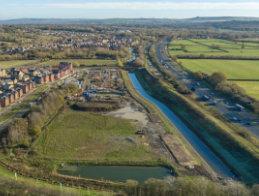
There’s plenty elsewhere in this issue about the WRG Reunion at Grove Locks, the forthcoming Canal Camps site at Pewsham, and the four sections that the Wilts & Berks Canal Trust will be targeting in the coming years. But there’s also been some significant progress in Swindon. Two sections of canal already exist: a length of the original line, and a section of a planned east-west diversion around the town which will bypass sections that have disappeared under the town centre. Both of these have already benefited several years ago from sections of canal being (re)created as part of the Wichelstowe major housing development on Swindon’s south side. The aerial photo shows another new 500 metre length of the diversion which was recently watered; a further 500m will follow, linking this section to the rewatered length of original canal, creating a total length of around 4km. WBCT
The big news on the Cotswold Canals (Thames & Severn Canal and Stroudwater Navigation) restoration is that a National Lottery Heritage Fund grant of £6.46 million has been awarded, which will support the completion of Phase 1b of the canal restoration, also known as the ‘Cotswold Canals Connected’ scheme. This will reopen the route from the connection with the Gloucester & Sharpness Canal (and the rest of the national network) at Saul Junction to Stonehouse, where it meets up with the already restored Phase 1a length which runs through Stroud and almost to Brimscombe Port. This will open up a ten mile length accessible to visiting boats from all over the system for the first time in over 70 years.
The funding was in addition to the £10m granted in 2020; the need for extra cash was result of the rampant inflation in construction costs in general, coupled with delays caused by the pandemic. The work includes dealing with the ‘Missing Mile’ lost to M5 motorway construction in the 1970s, which will require new channels, two new locks, and modifying the bridge which carries the M5 over the River Frome to enable the canal to pass under it alongside the river. The Missing Mile work is likely to involve significant volunteer work by Cotswold Canals Trust as well as visiting groups including WRG.
The Cotswold Canals Connected Partnership has a target reopening date of 2029.
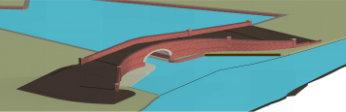
The Stafford Riverway Link scheme aims to reopen the Staffordshire & Worcestershire Canal’s Stafford Branch, a mile-long waterway which was based on the River Sow, and connected to the canal via a lock and junction at Baswich. Work so far has concentrated on creating a canal basin by the junction. The next stage will be to build a roving bridge to carry the towpath of the main canal over the site of the filled-in entrance to the Branch, which will then be excavated. Over to SRL…
We are aware that news of our progress has been in short supply recently, but our officers and the people they liaise with have all been working hard behind the scenes. Thank you all very much, it means we may have something concrete, (yes, pun intended), to report in the New Year.
We have known for some time that, subject to other permissions, we could start on the building of the roving bridge without the Canal & River Trust’s involvement, so long as the works didn’t encroach on their land (i.e towpath). Our Architect realigned the position of the bridge slightly to comply with that and his new drawings together with the Structural Engineers’ drawings were submitted to various authorities.
On Wednesday, 10th December, our Clerk of Works, Architect, chairman and other members of our committee met on site with these engineers, (including BSkyB, we have a fibre-optic cable to move), and we can now expect to make a start on bridge early in the new year. Here is one of the technical drawings provided by the Structural Engineer. As you will see, we have a lot to do!
Phrases like "champing at the bit", etc, are whirling around the Building Team and the SRL Volunteers in general at the moment. Bring it on!
Is the frequent use of modern materials on canal restoration projects a cause for concern? Steve Morley responds to the editor’s question…
Dear Martin
Your editorial in Navvies 333 [in which I asked if we should be concerned at the amount of reinforced concrete and other modern materials and methods that we found ourselves using to restore heritage waterways, whether we should accept that these are new structure for which new methods are appropriate (and much more affordable), or whether some middle-ground or compromise was possible …Ed] struck a chord with various thoughts I have been having lately.
Restoring things ‘as they were built’ does not necessarily meet the needs of the world 200 years later. Bridge 1 on the Buckingham Canal was reputedly demolished because it was too narrow for the local farmer’s combine harvester. Rebuilding it ‘as was’, however desirable, would have meant that an alternative crossing would have been needed. The design of Bridge 2 will likewise be dependent on the future use of the adjacent land – a footbridge or another full highway specification construction.
Current thinking by the ‘Heritage Police’ seems to be that original and modern can coexist provided the difference is obvious. Thus Bridge 1 retained what remained of the original stone arch, surmounted by brick piers supporting steel beams and a concrete deck. Another example of this is the pub on the platform at Kew Gardens (District Line and Overground) railway station, with two original buildings connected by a modern glass atrium.
There is also the consideration of what is original. When the Sheffield & South Yorkshire Navigation was (belatedly) rebuilt to accommodate larger craft in the early 1980s, the new lock cabins and other buildings were designed in a contemporary style which is now very much of its time.
What of the methods used in restoration? With the lack of finance and the limited availability of voluntary labour, methods have necessarily been adapted from those used by
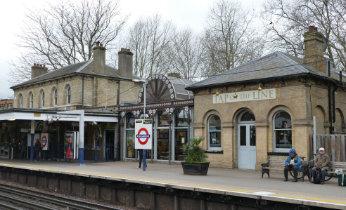
The Kew Gardens station pub: a modern glass atrium links two original buildings
the first navvies. And where would we get the supply of horses nowadays? Likewise puddling the clay lining by running a herd of cows along the canal bed is probably less practical than a Bentomat lining.
Finally we need to consider the changed use of the canal network. I’m not just thinking about the facilities needed for today’s boaters but the potential for the canal network for transferring water from areas of surplus to where it is needed; surely preferable to excavating expensive pipelines. This will potentially involve changes in water levels at some locations and consideration will have to be made as to how this is achieved.
There’s a lot to think about; perhaps we should be looking for another word to replace ‘restoration’ – perhaps even ‘repurposing’.
Regards
Steve Morley

The Buckingham Canal’s approach: steel beams and concrete deck on remains of old abutments
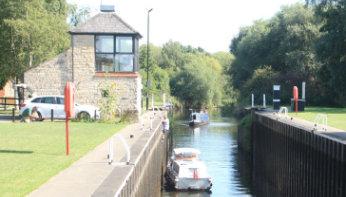
“Of its time”: contemporary lock cabin built during the Sheffield & South Yorks 1980s enlargement
Fancy working here this summer?
Or here? See our Canal Camps sites preview