







































































WAteRWAYs edItOR: Ross Stokes Tel: 01283 742962 r.stokes@wwonline.co.uk
ARt edItOR: Claire Davis
AdVeRtIsINg desIgN: Jo Ward
AdVeRtIsINg PROdUctION: Samantha Furniss s.furniss@wwonline.co.uk
RePROgRAPHIcs:
Waterways World Ltd, 151 Station Street, Burton-on-Trent, Staffordshire, DE14 1BG. Printed in England by Warners (Midlands) PLC, Bourne, Lincs
Articles may be reproduced provided permission is obtained and acknowledgement made.
ISSN 0969-0654
A non-profit distributing company limited by guarantee (612245), Registered as a Charity (No. 212342)
Founded: 1946, Incorporated 1958
RegIsteRed OffIce: Unit 16B, Chiltern Court, Asheridge Road, Chesham, Buckinghamshire, HP5 2PX Tel: 01494 783453 iwa@waterways.org.uk www.waterways.org.uk
For press enquiries contact: pressoffice@waterways.org.uk
All IWA national and branch committee volunteers can be contacted by email: firstname.lastname@waterways.org.uk
Nothing printed in Waterways may be construed as policy or an official announcement unless stated, otherwise IWA accepts no liability for any matter in the magazine. Although every care is taken with advertising matters no responsibility whatsoever can be accepted for any matter advertised. Where a photo credit includes a note such as CC-BY-SA, the image is made available under that Creative Commons licence; full details at www.creativecommons.org
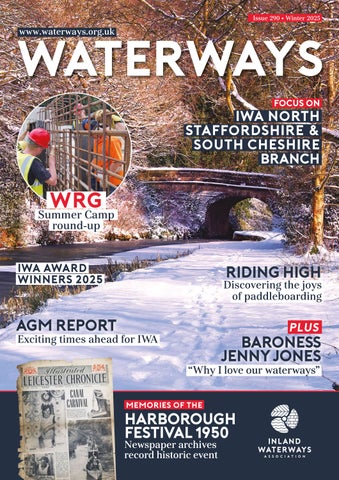
P4 Welcome
From our National Chair, Mike Wills
P6 News
The latest happenings and events
P10 AgM RePORt
A new period of clarity and consolidation
P12 IWA awards
Congratulations and a big thank you to the winners of our 2025 awards
P14 campaign update
Catch up with IWA’s latest activities
P18 Photo competition
Time is running out to enter
P19 Love your waterways
We talk to Baroness Jenny Jones
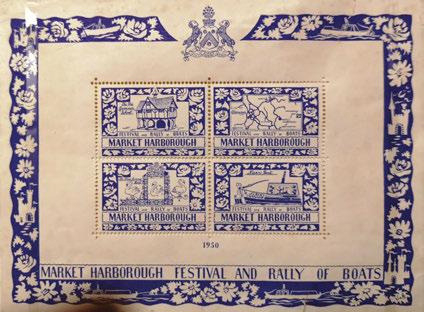
P20 Harborough festival 1950
What the archives reveal about the event that captured the national imagination
P26 Branch focus
North Staffordshire & South Cheshire
P28 WRg activities
Round-up of our Summer Camp projects
P30 Lovely Langport
A remarkable waterside success story
P32 Riding high
The fun of paddleboarding
P34 HVO – a clean fuel
A reported contamination investigated
1. Your voice is counted when IWA speaks up for all those who enjoy the country’s canals and rivers
2. IWA lobbies national and local government and works with other organisations to repair, improve and protect our waterways heritage
3. Restoration is kept high priority through IWA’s Waterway Recovery Group
4. IWA campaigns to defend the waterways from unwelcome development
5. IWA branch Canal Clean-ups keep many waterways clear of rubbish
6. over 10,000 days of volunteering each year will be supported with the right training, tools and materials
7. IWA provides training in traditional and work site skills for the waterway restoration sector


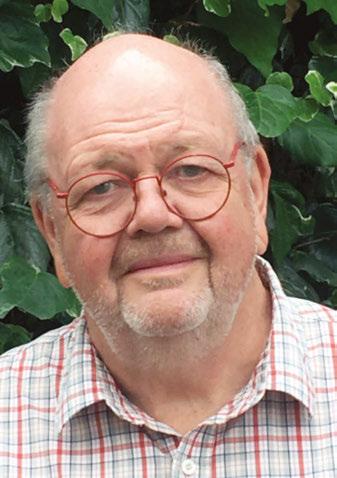
Iam writing this just a few days a er our AGM in No ingham, details of which are included within this issue of Waterways (see page 10). So why is that important, you may ask? Well, for the first time since I became a trustee, there was a definite buzz around at the AGM. Indeed, I even heard the occasional mention of ‘inspirational’ which is a word that has not been easy to apply to IWA recently.
As well as celebrating some campaign successes, such as influencing the Senedd on the funding of the Monmouthshire & Brecon Canal, we also shared the vision for our new campaign, The Waterway Risk Index, which will soon provide transformative information on all our waterways and help predict their future and how we might be able to improve it. New ideas on greywater recycling, updates on HVO use and WRG’s concrete-laying summer all helped us to look forward with raised expectations of what we can achieve. So, this is an exciting time for us or, as I said at the AGM, “I believe that the tide has turned for IWA.” I hope that I can
encourage you to share my enthusiasm. I also hope that our expanded communications team will help spread the word of our successes, despite the di culties within the waterways environment that remain clear to us all.
We are reviewing our restoration activities. We have appointed a small group of experts in this area to help advise our trustees on approaches to improve our restoration o er in the changing circumstances we now face. Restoration is at the very heart of IWA; indeed, its founding was based largely on a vision of restoring our network. We are looking at how to work more closely with our WRG colleagues and the many restoration societies for the benefit of us all.



In my last column I asked for your help on how you thought we should develop our vision and campaigns. Thank you so much for your responses. I only wish we had the time and resources to take up all your suggestions. However, I will try to incorporate many of your comments as we review our campaigns and restoration activities. I am particularly grateful to the number

of you who pointed out the need to ensure that IWA asserts its own identi . We campaign, we restore, we educate, we support all the network of inland waterways. Only IWA has this national reach and presence, and we must reassert our influence on decision makers and fundholders throughout Great Britain.
mike.wills@waterways.org.uk



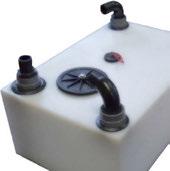
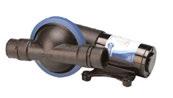
Toilets, Tanks, Hoses, Clips, Gauges, Deck Fittings, Vent Filters and everything you need plus Advice & Guidance
Providing the best seat on-board .....
Supported by our Worldwide Spares Delivery Service













sales@leesan.com T: 01295 770000




PUB OPENING TIMES
SUN 12PM TILL 11.30pm

MON & TUE 12pm TILL 10pm/11pm WED TO FRI 12pm TILL 11.30pm SAT 12pm TILL 12am

FOOD SERVING TIMES
MON TO FRI 12pm - 2.15pm / 5.30pm-8.15pm SAT 12PM - 8.15pm SUNDAY - 12pm - 4:30pm (SUNDAY ROAST ONLY) BOOKINGS ADVISED







Call us: 01902 276756
https://www.dogandpartridgecalfheath.com https://www.facebook.com/CalfHeathDogandPatridge Lomas Enterprises T/a Dog & Partridge, Straight Mile, Calf Heath, Wolverhampton, WV10 7DW

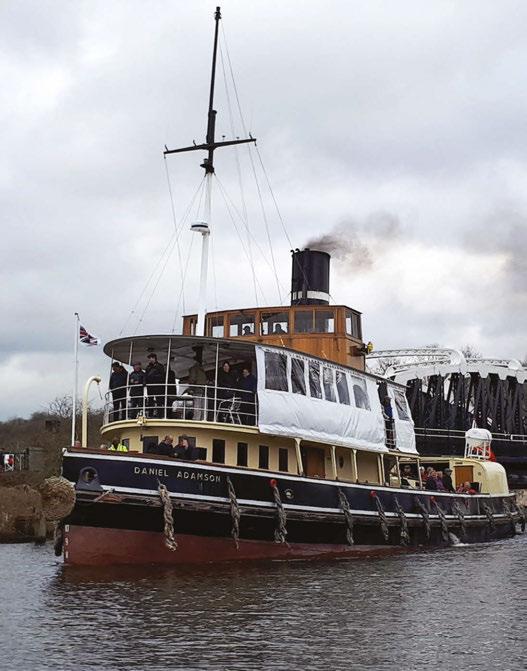
Delegates and MPs at the Labour Party conference in September were disappointed to learn that their luxurious art deco venue for social events in the form of the steam ship Daniel Adamson (the Danny) would not be attending. Organisers of the conference, based around the exhibition centres of Liverpool’s former King’s Dock, had booked the steam ship with its wonderful period lounges to be available in the nearby Canning Dock, both venues being on the Liverpool waterfront.
The Danny is normally offering public cruises on Cheshire’s Weaver Navigation, and to cross the Mersey to Liverpool required passage through Marsh Lock to enter the Manchester Ship Canal and onwards to Liverpool, but in early September Canal & River Trust engineers discovered that there were safety concerns with the electric motors that powered the lock and deemed it unsafe to use. The possibility of utilising manual means of operation was ruled out as this equipment has not been maintained for emergency use. The Danny is marooned on the Weaver indefinitely with no estimated repair date.
The Danny was built in 1903 for the Shropshire Union Railway & Canal Co. A volunteer-led charity saved the vessel from the scrapyard in 2004 and today it is supported by many organisations including the National Heritage Lottery Fund. The vessel hosts an extensive educational programme as well as public cruises.
The River Weaver situation, together with the long-term closure of the Anderton Boat Lift, means that for some considerable time the river, once a heavily used commercial waterway, has now been completely cut off for boaters with no access to the national network. A commercial boat yard taking vessels larger than the standard narrowboat will now be restricted in its operations.
Jim Forkin, Chair of IWA’s Chester & Merseyside Branch, said: “Boatowners on the Weaver have my sympathy for this situation and owners on the network wanting to cruise this wonderful historic water must be bitterly disappointed.
“This is systematic of underfunding and neglecting a network which helped power the Industrial Revolution and was only saved by the people of Britain after WWII who cared and understood its role. Now with modern roles as a green corridor and safe open air space for many in the urban environment it is vital to see new funding for the network.”
The removal of safeguarding for the cancelled HS2 routes has been welcomed by IWA. The decision finally allows two major canal restoration projects – at Measham and Staveley – to move forward after years of uncertainty.
The government has lifted safeguarding directions for the former HS2 Phase 2b Eastern Leg, between the West Midlands and Leeds. The announcement, made in the Secretary of State for Transport’s six-monthly report to Parliament in July, removes planning restrictions that had effectively frozen development along the former route.
“I am formally lifting the safeguarding directions for the former Phase 2b Eastern Leg, removing the uncertainty that has affected many people along the former route,” the Secretary of State confirmed.
The decision marks a turning point for the Ashby Canal. The restoration of a 1,100m section at Measham has been stalled since 2014, when the original HS2 alignment cut directly through the proposed Measham Waterside housing development. Despite several revisions to the route – in 2016, 2017 and a promised review in 2018 – the safeguarding remained in place until now, making both the housing scheme and the canal restoration unviable.
With the safeguarding lifted, the £100m Measham Waterside development can finally proceed, bringing with it the long-planned extension of the Ashby Canal and new community amenities.
The decision will also simplify the Chesterfield Canal restoration at Staveley, where safeguarding requirements had forced costly design changes. Plans had required the addition of an extra lock and the deepening of another to pass beneath a proposed railway bridge for an HS2 depot, even though the depot itself had been abandoned.
IWA has repeatedly called for the safeguarding to be removed and wrote to the Rail Minister in February highlighting the unnecessary delays and the impact on volunteerled waterway projects.
Phase 2b East was abandoned in 2021, and HS2 East (Kingsbury to East Midlands Parkway) was formally cancelled in 2023. Safeguarding for Phase 2a (Bradley to Crewe) was largely lifted earlier this year, while the western section (Crewe to Manchester) remains under review pending future decisions on Northern Powerhouse Rail.
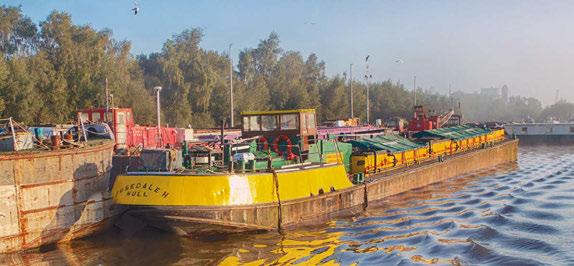
The Canal & River Trust has issued a notice of plans to close Sykehouse Lock on the New Junction Canal near Thorne, South Yorkshire, from 3rd November to 19th December, for bottom- and top-gate repairs.
IWA says the six-week closure is excessive and disregards the impact on navigation and local businesses. The duration of the intended closure is likely to have a substantial impact on navigation users, particularly commercial freight. The route is used by Casper River & Canal Transport and Mainmast (Exol Oil).
Between the two companies, one barge load of oil (400 tonnes), two 300-tonne barge loads of scrap and one 100-tonne load of cement are transported through the lock each week. This adds up to 1,100 tonnes and the closure puts the equivalent of 88 25-tonne lorry journeys per week back on the road, adding to congestion and pollution in the local area.
IWA has called on CRT to minimise the length of the stoppage to reduce the effect on commercial water freight, local roads and air quality.
A recent report by IWA’s Freight Group highlights the untapped potential of our inland waterways as a sustainable alternative to road freight. With the UK striving to meet net zero targets, the report shows that moving freight by barge offers substantial environmental and economic benefits.
IWA Freight Group’s David Lowe said: “To maximise the benefits of freight on the waterways, the infrastructure needs to be available and maintenance on key traffic routes carried out as efficiently as possible.”
IWA warmly welcomes Campbell Robb in his new role of Chief Executive of the Canal & River Trust.
Mike Wills, National Chair of IWA, said: “Mr Robb’s leadership comes at a pivotal moment for our inland waterways, with challenges that are as complex as they are pressing. We all know the impact of underfunding, the strain of unexpected waterway closures, and the increasing demands placed on the network from extreme weather events. These are issues that require clear vision and decisive action.
“The UK’s canal and river network is a remarkable national asset, one that deserves long-term security as a navigable system. Delivering this will demand renewed attention to the fundamentals: effective water management, sustained infrastructure maintenance, and ongoing dredging and vegetation management. These are not optional extras: they are the foundations of a living, working waterway system.
“As ever, IWA stands ready to work alongside CRT to help secure the resources and support needed to meet these challenges. We extend to Mr Robb our very best wishes for success. The role he holds is vital, and his effectiveness will be wished for by all who value the future of our inland waterways,”
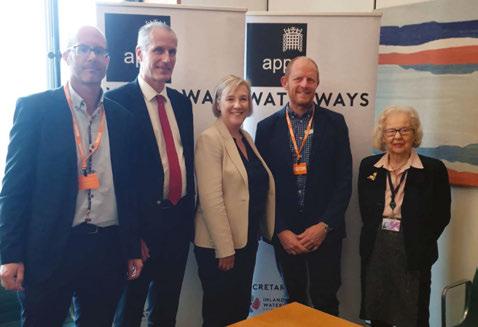
Under the secretariat of IWA, the All-Party Parliamentary Group (APPG) for the Waterways convened to hear expert evidence from the Canal & River Trust and the Middle Level Commissioners on the growing impact of climate change across the nation’s waterways.
Members heard that changing rainfall patterns in the Middle Level are affecting vegetation management, while reduced water flows in the River Nene, combined with sea-level and bed-level rises, could prevent boats from entering or leaving the system. Flooding and coastal surge risks are also increasing, leaving lowlying areas vulnerable. Responsibility for these regions lies primarily with the Environment Agency, but both navigation authorities are operating under mounting financial pressures.
The session highlighted that while waterways are among the first to experience the effects of climate change, they can also be part of the solution through adaptation, mitigation, and enhancement of the natural environment in pursuit of net zero.
Mr Esterson, Sefton Central MP and chair of the Waterways APPG, questioned MLC on its experiences of recent flooding, which revealed how many communities remain disconnected from the risks of living below sea level.
Mr Esterson said: “There are real challenges as the impacts of climate change intensify, but also significant opportunities in how we adapt and mitigate. These are serious issues relating to our waterways, that go far beyond those who live and work on the water. Our changing climate affects communities, economies, and environments alike. Yet within that jeopardy lies opportunity; opportunity to improve how people enjoy our waterways and to remind MPs just how many of their constituents live near and depend upon them.”
A major theme of the discussion was the question of funding, with Defra’s settlement for CRT reduced at a time when climate-related infrastructure costs are rising sharply.
IWA has submitted evidence to the Department for Transport’s Call for Evidence on Decarbonising Smaller Vessels, urging the government to back a practical, affordable transition to low-carbon boating on Britain’s inland waterways.
Through its Sustainable Boating Group, IWA has developed a clear strategy addressing both propulsion and domestic energy use on leisure craft. The submission outlines how decarbonisation can be achieved across the sector – but only with government support.
“IWA believes there is a clear technological pathway for decarbonisation of the inland waterways leisure fleet which can be achieved quickly and at low cost. However, given the current state of inland waterway funding and regulatory obstacles, it cannot happen without the assistance of central government.”
Bowman Bradley, chair of the Sustainable Boating Group
The strategy’s first focus is on new-build craft, which are expected to move increasingly towards electric propulsion as diesel engine production declines. Most boat-builders already offer electric options but IWA warns that a lack of charging infrastructure and current battery limitations mean that most electric boats will still require back-up generators in the near term.
IWA argues that, given the chronic underfunding of the inland waterways network, installing a comprehensive recharging system will be impossible without targeted government investment.
For the existing fleet, which numbers in the tens of thousands and will remain in service for many years, widespread conversion to electric power is unrealistic.
Instead, IWA identifies hydrotreated vegetable oil as the most sustainable ‘drop-in’ alternative to mineral diesel. HVO can be used immediately in existing engines and generators, offering a major reduction in emissions without the need for costly retrofits.
However, HVO is not currently accessible to leisure boaters due to high costs and complex fuel duty regulations. IWA is working alongside the Cruising Association, the Royal Yachting Association and British Marine to urge the government to make HVO available at an affordable price and ensure it is sourced from sustainable feedstocks (more page 34).
“IWA supports measures to guarantee that renewable fuels are genuinely sustainable,” Bradley added. “Decarbonisation of the inland waterways sector is both desirable and deliverable – but it will only happen with effective government action.”
The Environment Agency agreed to significantly reduce the length of a planned closure of the River Thames to repair a footbridge following pressure from IWA and other stakeholders.
Temple Footbridge, which crosses the Thames west of Temple Lock near Marlow, was closed in May 2023 after concerns were raised about the structure’s condition. In a subsequent notice, EA proposed a full river closure from 10th September to 8th October to allow bridge removal and repair works – a plan that drew strong criticism from navigation and business groups.
IWA argued that a month-long, round-the-clock closure during one of the busiest times of the boating season was “excessive and unnecessary”, warning of serious disruption to boaters, local businesses and visitors using the Thames Path National Trail.
After sustained pressure, including formal representations from IWA’s South East Region, EA confirmed that the river closure would be reduced to just one week, rather than a full month – a decision widely welcomed by river users.
“Closing one of the most popular stretches of the Thames for a month during peak season made no sense,” said IWA South East Regional Chair Verna Smith. “It would have been bad for businesses, boaters and walkers alike. All river users have been left in limbo for more than two years.”
Smith called for greater accountability from EA over the bridge’s condition and the delays in its repair. “Serious questions remain,” she said. “How did EA’s neglect allow this structure to deteriorate so badly? Why has it taken so long to act? And most importantly, what is its plan to deliver a sustainable repair and manage its assets properly?”
IWA had urged EA to postpone major works until November, to allow limited daily navigation if possible, and to publish a clear timetable for full bridge repair.
While the revised one-week closure was welcomed, IWA continues to press for transparency and for future maintenance planning that avoids prolonged or poorly timed river closures. EA then said the revised one-week closure was not sufficient, but decided to temporarily re-open the navigation using the bridge’s side arches for a period including half-term week, until 2 November. The navigation will then be completely closed while the central arch is removed for an undisclosed period.
At the time of going to press, access is limited to both sides of the arch which has a navigable depth of 1.3m. The EA urges boaters to take extreme care when navigating the section.
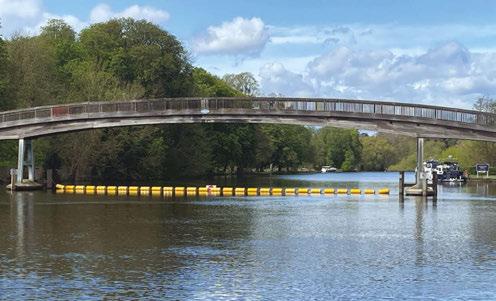
I was pleased to see the Jericho Wharf (pictured right) included in the IWA Heritage Sites at Risk article in your Autumn issue of Waterways
As a trustee of both the Jericho Wharf Trust and Jericho Living Heritage Trust (and an IWA member) I’d be interested to know how this situation came to IWA’s attention, and the basis for its inclusion.
And as an Oxford local historian I’d be interested to know if you might like an article outlining the heritage importance of the site. In short, the key is one family, the Wards, who over three generations distinguished themselves as coal merchants, boat-builders, and philanthropists. Most notably they donated the land for St Barnabas’ Church (shown in your artist’s impression) and also funded a 19th-century Floating Chapel for boatmen. (I contributed a piece about this to Waterways World back in June 2012.)
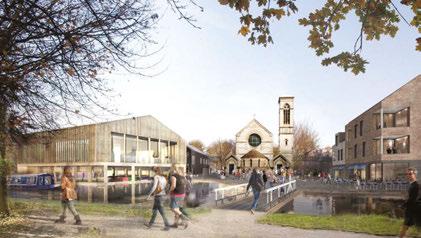
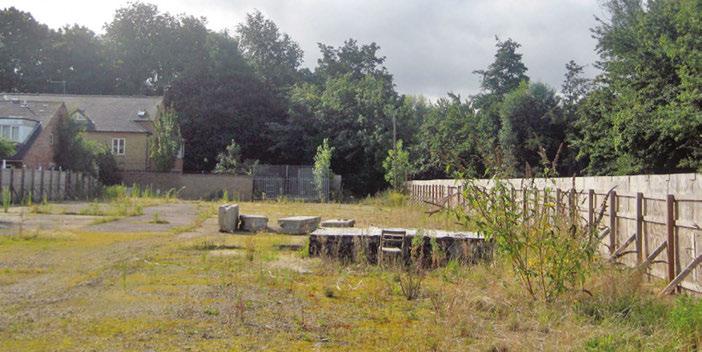
As the Jericho Wharf Trust is thinking of issuing a press release on the basis of the site being featured in this national register – to support our request to Oxford City Council to issue a Compulsory Purchase Order – it would be helpful to know IWA’s position.
Mark Davies, Oxford
Yes please, Mark re your article offer. We are always keen to publish stories of interest about our waterways – Editor
Hugh Pearman (pictured) from IWA’s Heritage Advisory Panel replies: We’ve known about the plight of the Jericho boatyard for a while. What brought it to our attention this time was the fact that last year JWT launched its online petition for Oxford City Council to compulsorily purchase the site, along with the fact that the existing planning permission was due to lapse shortly.

This is a place where planning and heritage issues converge. Fragments remain from its time as a working wharf such as the dock and derelict outbuildings. But heritage is about people as much as things as you point out regarding the Ward family. The Wharf is tied into the working history of the wider Jericho area. Whatever gets built should reflect that history in real terms, i.e. a substantial working wharf element.
We discussed it at the IWA Heritage Advisory Panel and supported the petition. Regarding redevelopment, we’re in favour of the 2016 Haworth Tompkins-designed concept scheme which includes a high level of working wharf activity plus new housing. Given the likelihood of an unsuitable new development proposal emerging, it seemed right to us to highlight it in our Heritage Risk list.
The Broads Authority has invited comments on its proposal for a below-inflation increase in 2026/27 boat tolls of 2.5%, coupled with investment in some improvements to navigation.
This has been enabled, despite falling boat numbers, by a belated recognition by Defra that navigation is fundamental to the character of the Broads, bringing benefits to the economy, the natural and built environment, local communities and the lives of individual people.
IWA has previously made this case to government, pointing out that adequate funding is needed for safety provision and maintenance, yet the Broads Authority has been the only major inland navigation authority not to receive government funding to support maintenance of navigation, only ring-fenced National Parks grant funding.
IWA urged the government to recognise the need for financial support to ensure that navigation and the character of the Broads are maintained, and Defra has now responded by allowing more flexible use of National Park funding to support navigation – albeit without providing any new money.
IWA’s Navigation Committee has written to the Broads Authority setting out IWA’s concerns in considering next year’s tolls – that the current level of maintenance should not be degraded, improvements should be made to navigation where possible, and efforts should be made to stem the decline in boat numbers – and supporting the proposed increase in boat tolls.
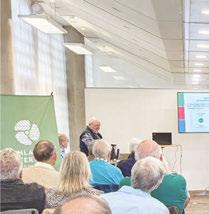
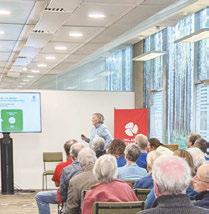
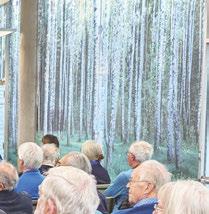
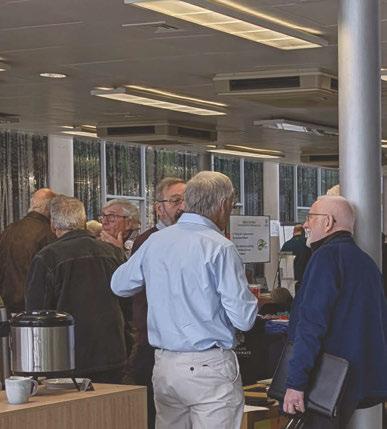


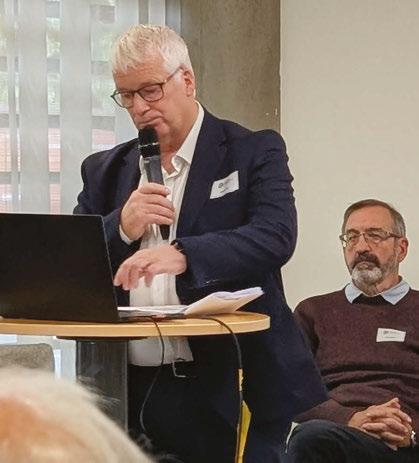
More than 100 members a ended IWA’s 66th Annual General Meeting on 27th September at the Jubilee Centre in No ingham, with 80 people a ending in person and 23 joining via Zoom. National Chair Mike Wills opened the day with thanks to members, sta and volunteers for their continued support.
The event began with an energetic presentation by Campaigns & Public A airs Director, Charlie Norman. Charlie highlighted the successes of IWA’s campaigns, om the Bridgewater Canal breach which garnered national press coverage, to Langport’s river regeneration project which demonstrated the power of collaboration.
Looking ahead, Charlie described 2025 as a strategic year to prepare IWA for an even stronger 2026.
An exciting announcement was the upcoming launch of the Waterways Risk
Index, a pioneering mapping system unique to IWA, which will identi the most urgent challenges facing the network. Charlie emphasised how this evidence-led approach will strengthen IWA’s voice in Parliament, in the press and with communities.
There were also updates on the progress of IWA’s Freight Group and Sustainable Boating Group, alongside praise for campaigns such as Be er by Barge. Each example underlined IWA’s influence in shaping the future of Britain’s waterways.
Hannah Rigley and Paul Thomas shared the story of this summer’s Mon & Brec campaign. Facing unprecedented low water levels and restrictions, IWA worked alongside Canal & River Trust and local communities to highlight the risks. The campaign petition gathered 14,000 signatures, secured cross-par support at the Welsh Senedd, and pushed for both immediate solutions and long-term resilience.
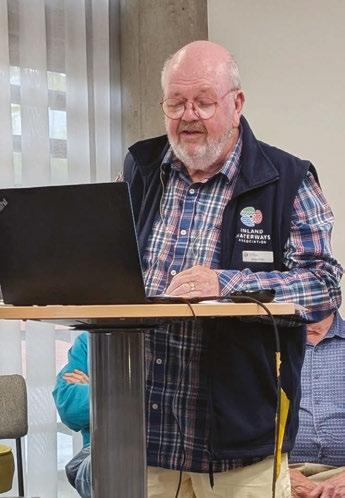
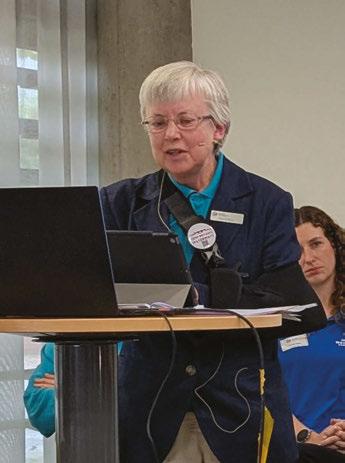




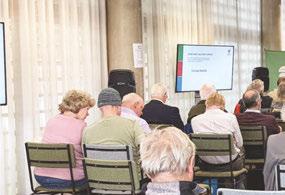
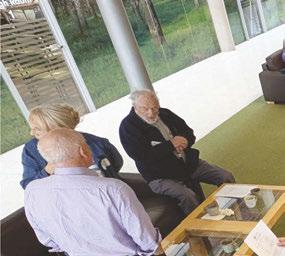
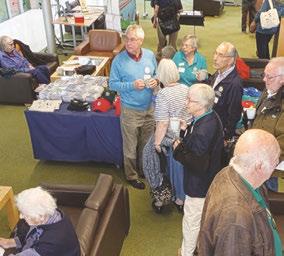
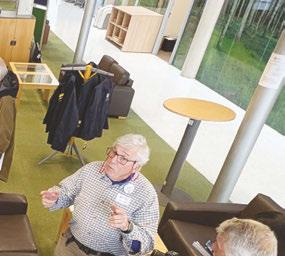
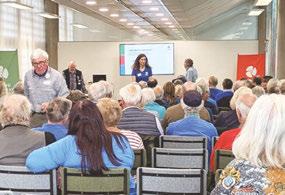
The formal AGM session saw members approve the minutes of the previous meeting, review finance updates and confirm the reappointment of trustees Mike Wills and Dave Chapman. Mike reflected that IWA has entered a new period of clari and consolidation, with strengthened objectives and renewed energy.
In the a ernoon members heard specialist talks on sustainable boating, water management and restoration, before departing for guided visits to local canal restoration sites.
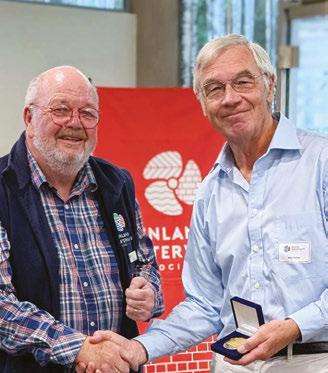
The a ernoon also featured the presentation of IWA’s National Awards and the Sustainable Boating Awards, recognising outstanding contributions across the association. IWA is incredibly proud to acknowledge these champions for their vital contributions.

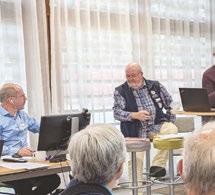
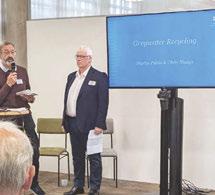

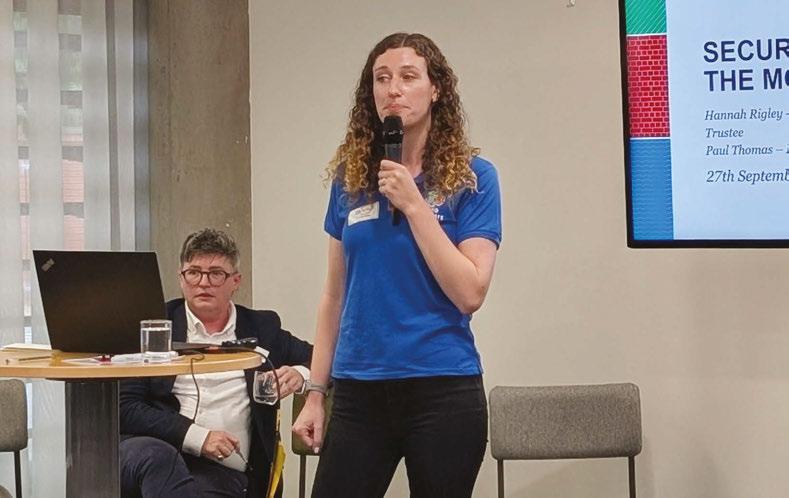
The Sustainable Boating Awards were presented in partnership with Towpath Talk. These awards recognise individuals, organisations and businesses making a real di erence in sustainable boating.
Awarded to the individual, chari or communi organisation that, in the opinion of the judges, has made the most valuable contribution to sustainable boating during the last 12 months.
For developing a sustainable strategy for its fleet and helping evaluate a unit that o ers the possibili of converting an existing diesel boat to a parallel hybrid at an acceptable cost.
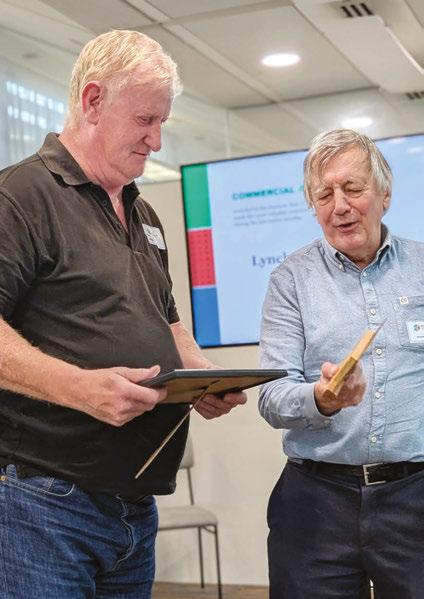
Awarded to the business that, in the opinion of the judges, has made the most valuable contribution to sustainable boating during the last 12 months.
Lynch Motors
For its pioneering work in bringing to market a parallel hybrid technology that o ers a cheaper and more sustainable means of retrofi ing an electric drive to a diesel boat.
Details of the Awards are at waterways.org.uk/campaigns/sustainableboating#award
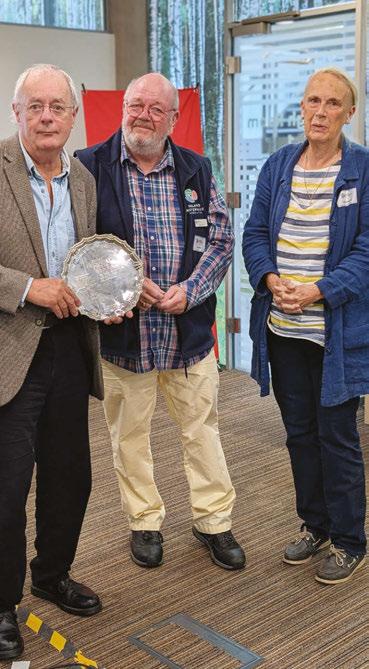
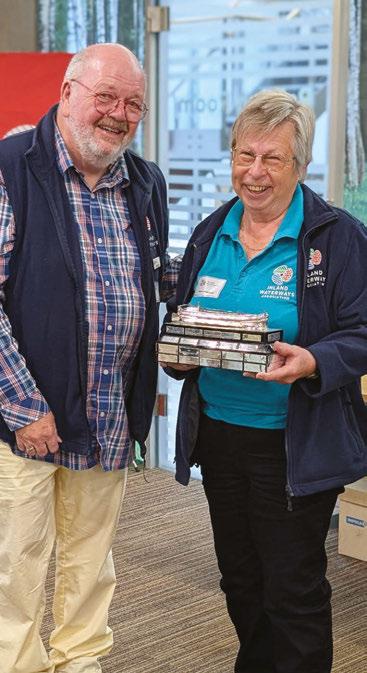
For the IWA branch which, in the opinion of a panel consisting of the National Chair, Depu National Chairs and Chief Executive, has made the greatest progress and achievement in promoting IWA’s aims and objectives during the past year. All branches are considered, without need for nomination. The trophy is a silver salver, donated by former National Chair David Stevenson in 1998.
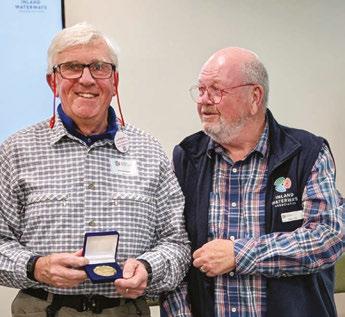
Celebrated for its exceptional e orts in organising the IWA Harborough ’75 event. Andrew and Debbie Shephard were given special recognition for their leadership and input. The firstclass event had national significance for IWA. It was a vibrant, memorable celebration that brought people together and honoured the past while engaging new supporters for the future.







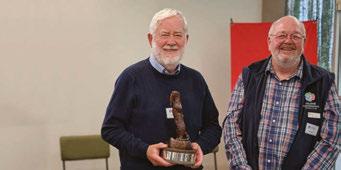
For a person, socie or trust who has made the most significant contribution to the restoration of an inland waterway. A cash prize is given to the waterway restoration group associated with the winner, where the winner is a named individual. The aims and objectives of the group must be consistent with IWA’s aims and objectives. The trophy is a carved wooden o er.
Helen’s dedication has seen 15 miles of towpath converted and over £2.5m secured in grants. She recently negotiated £10,000 om Lancaster Ci Council to enable CRT surveys. Helen is passionate about communi engagement, organising events and writing walking and cycling guides.
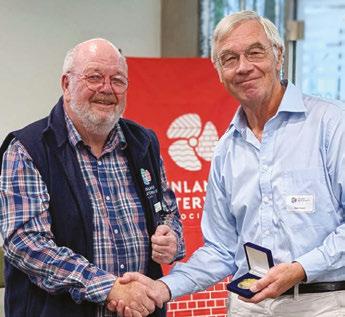
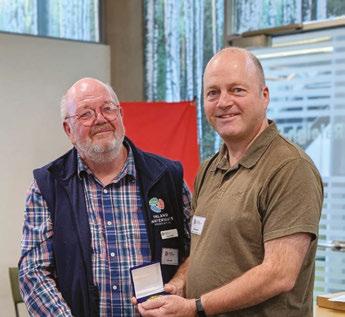
For members of the association whose efforts and support are considered to have brought significant benefit to the association over a sustained period.
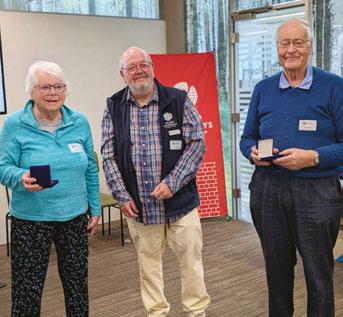
Nigel Hardacre A dedicated member of the branch committee since 2004, bringing IT expertise and a passion for waterways, Nigel keeps the branch’s online presence active and engaging as well as leading hugely popular guided walks and talks. His work has become a vital way of raising funds and awareness for the branch. He also gets stuck into working parties, putting his chainsaw and strimmer training to good restorative use.
Nick Parker Awarded for his outstanding achievement of 17 years’ volunteering on IWA’s finance and investment committees. Nick’s work has been essential to the strength of the organisation. His attention to detail and persistence have helped steer IWA’s finances with wisdom and security.
Andrew Phasey Recognised for his exceptional long-term contribution to the delivery of the IWA Certificate of Boat Management Scheme, Andrew is the heart of this training scheme. Thanks to his perseverance, more than 200 volunteer skippers of small passenger boats have the skills and qualifications required to operate safely. Andrew ensured the scheme remained one of IWA’s most impactful contributions to waterway restoration.
Jeanne and Derek Smith Acknowledged for an incredible 50 years of continuous service, Jeanne and Derek have both shown loyalty, energy and spirit during this time, inspiring many others along the way. They have organised National Trailboat Rallies, edited publications, led waterway walks and run sales stands and websites. Their dedication has been extraordinary.
Verna Smith Verna’s contributions began when she ran local branch stands with her sister. Since then, she has served as branch chair, regional chair and trustee. She has more recently been active with the Environment Agency too. Verna’s work on publicity and campaigning is truly remarkable.
This is IWA’s premier award for a member who has, in the opinion of trustees, made an outstanding contribution in furthering the association’s campaign.
Helen Whitehouse
Helen’s longstanding service has made her an exemplar for us all. Since joining IWA in 1983, Helen has held multiple roles, serving as committee member and trustee. In each role she has brought energy, vision and commitment. Helen earned IWA’s highest honour for enduring service, wit and spirit. She has run seminars, organised publicity and supported members. Helen has also looked after IWA clothing and managed the IWA sales and recruiting stand for many years. She brings people together and always offers creative solutions. The waterways have benefitted enormously from her unfailing support.
The IWA needs your support more than ever. Here’s how you can help our cause…
Reduced government funding and a changing climate are pu ing the network under greater threat. With this in mind we’re launching a new campaign: the Waterways Risk Index, using Met O ce climate data and IWA’s expertise to show which waterways face the greatest threats by 2050 and why. Only IWA can take this wide view of the state of the entire system.
This past summer has starkly demonstrated the urgent challenges facing our waterways: failing in astructure, water shortages, maintenance backlogs, extended navigation stoppages, the impact of climate change and heritage loss.
Without investment and protection today, the benefits of our waterways for people, nature and the economy will unravel.
So this is our call to safeguard the waterways for tomorrow: without investment and action, canals could face further closures, damage and loss of access for communities and wildlife.
Look out for more information about the campaign across all our channels.


How you can help
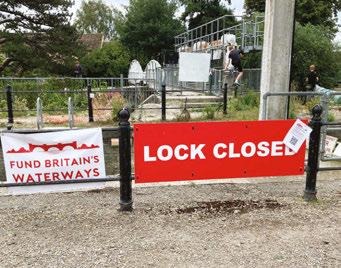
• WRITE TO LOCAL AND REGIONAL POLITICIANS, mayors and MPs, highlighting the benefits of waterways, the threat to them and the FBW campaign.
• SUPPORT FBW POSTS ON SOCIAL MEDIA by liking and sharing posts with the hashtag #FundBritainsWaterways, and post on social media yourself.


The Cambridgeshire & Peterborough Combined Authority has confirmed that it will contribute £500,000 from its allocation of the UK Shared Prosperity Fund (UKSPF) to the Cam Conservators for work to stabilise Baits Bite Lock.
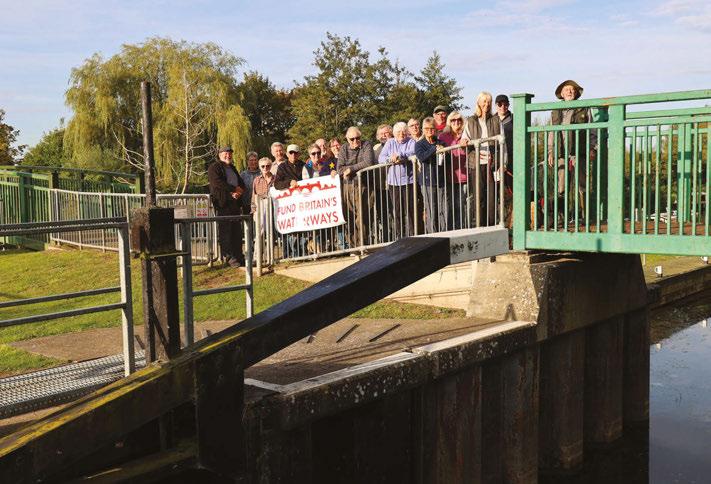
This follows the Fund Britain’s Waterways campaign cruise on the River Cam to Baits Bite Lock on 3rd August which focused the attention of local and national politicians on the underfunding issue.
UKSPF is a £2.6bn government programme designed to replace EU structural and investment funds and provide funding for local investment across the UK. It was launched as part of the Levelling Up agenda and allocates funding to local authorities, which then develop local investment plans. In this case Cambridgeshire & Peterborough CA is providing £800,000 to the River Cam and Peterborough Cathedral, which were described by Cambridgeshire & Peterborough Mayor Paul Bristow as “two of our region’s greatest assets”.
Work to temporarily stabilise Baits Bite Lock island was planned to start on 4th August, the day following the FBW campaign cruise. It was delayed slightly but is now progressing well and is expected to take 16 weeks, with the hope that it will be completed in 2025 which would mean the lock has been closed for 20 months since May 2024. The cost is expected to be in the range of £1.3m to £1.5m.
Baits Bite Lock is one of two locks on the River Cam which had to be closed because of structural and safety issues. The £500,000 UKSPF contribution is evidently small compared with what is needed for both temporary stabilisation and longer-term solutions for Baits Bite and Jesus locks, but Paul Bristow’s intention is that it will kickstart a collaborative funding effort.
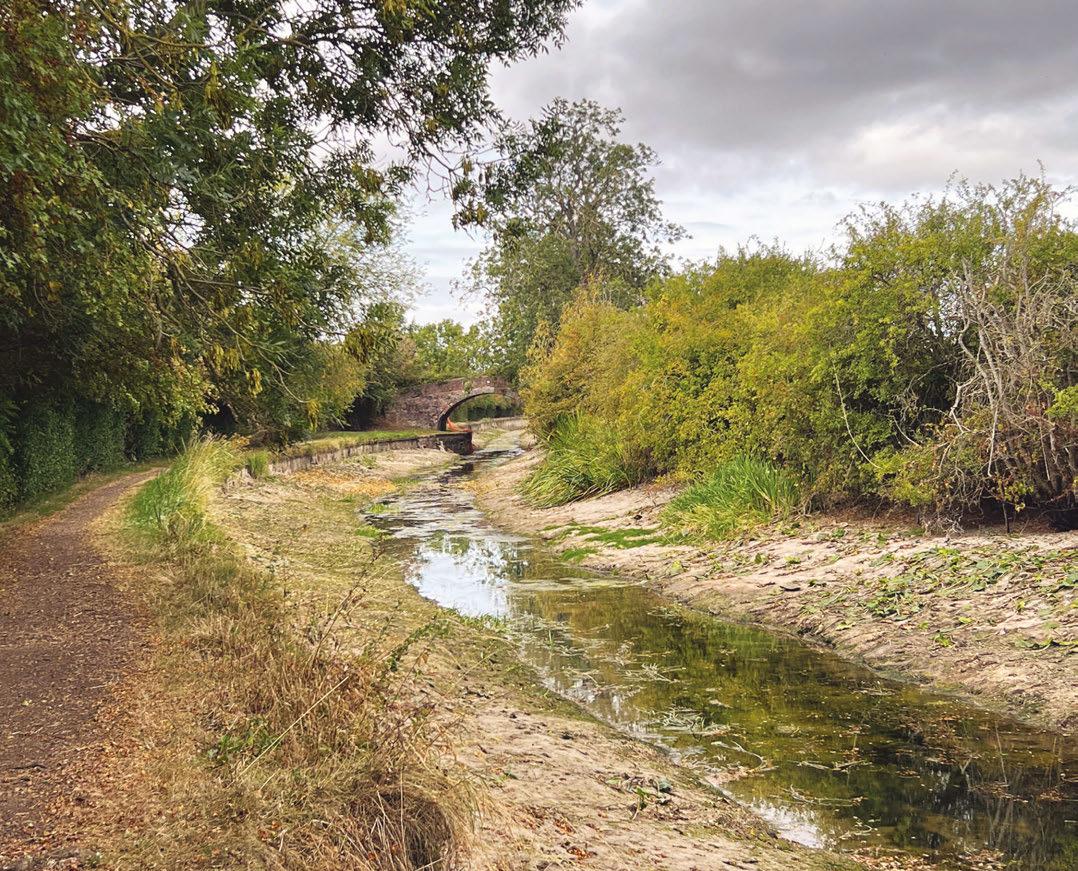
Brandon Lock on the River Little Ouse has now been closed for nearly two years, following use of the lock in January 2024 for flood management. This resulted in the approach channel and lock becoming completely silted up, making them too shallow for boats to use and preventing the opening of the lock gates. Even though it was the Environment Agency Flood Management team whose action caused the siltation, it is the Navigation team which is expected to provide the funds to remove it – and which is unable to do so.
The siltation was highlighted by a Wilderness Boat Owners Club campaign cruise under the FBW banner in September 2024. The problem has continued this year and EA has advised against navigation to Brandon. The concern is that this lock will join Welches Dam and Swaffham Bulbeck locks on the list of permanent closures.
The Wilderness Boat Owners Club plans to make an FBW campaign cruise to Brandon Lock on Friday 21st November.
Local support would be very much appreciated. Please email info@fundbritainswaterways.org.
uk if you are interested in joining the Great Ouse, Brandon Lock cruise or supporting from the shore.
Building on the enthusiasm generated by the River Cam campaign cruise, local organiser Great Ouse Boating Association (GOBA) is discussing plans for a cruise on the River Great Ouse in 2026. The Great Ouse has recently become central to several planned major projects (the Universal Studios theme park near Bedford, the Fens Reservoir and the proposed new town at Tempsford). The aims of the cruise are to highlight the many benefits provided by the river and draw attention to the lack of funding for the Environment Agency to maintain its infrastructure. A particular issue is St Ives Lock, where only three of the seven sluice gates are functioning, but this is symptomatic of a much wider problem of assets in the Anglian region reaching the end of their life.
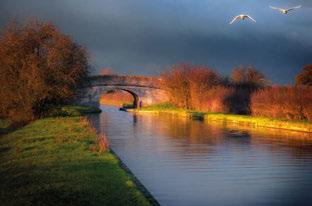
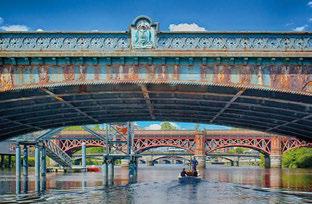
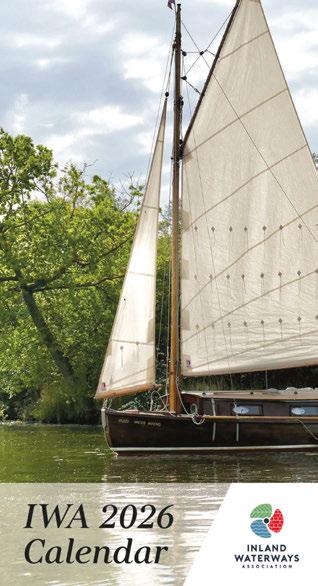
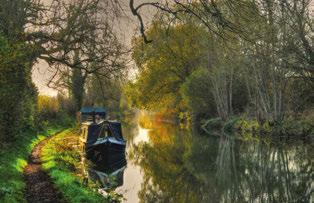
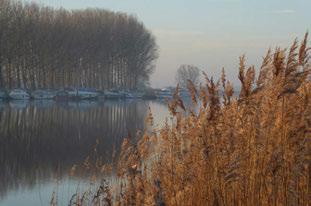
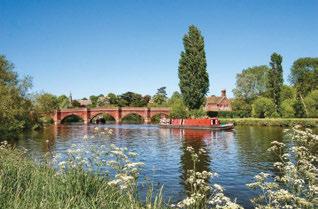
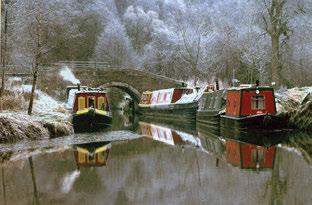
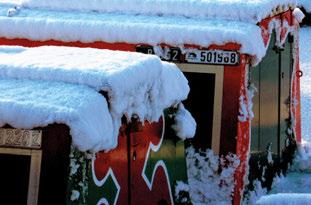
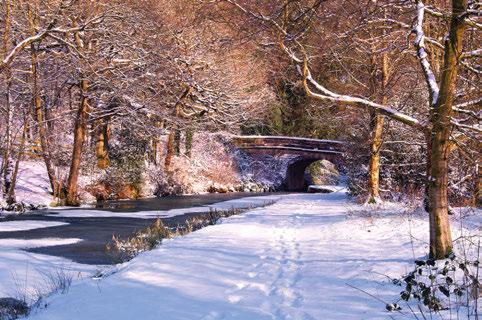


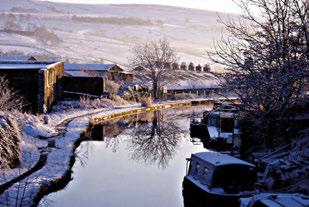
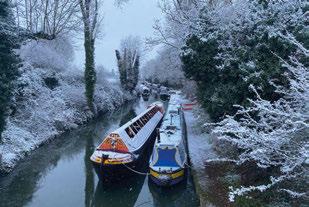

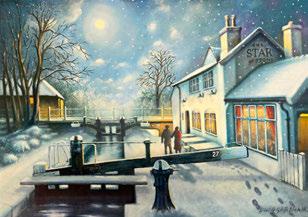
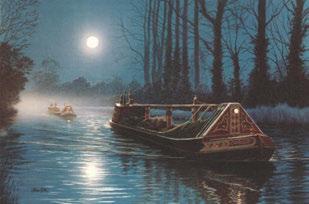

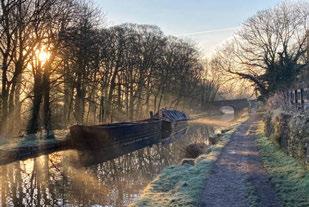

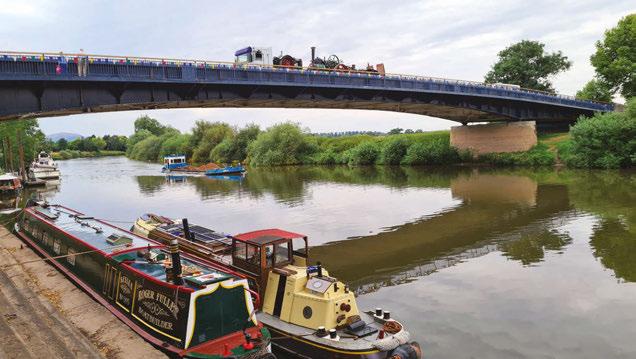
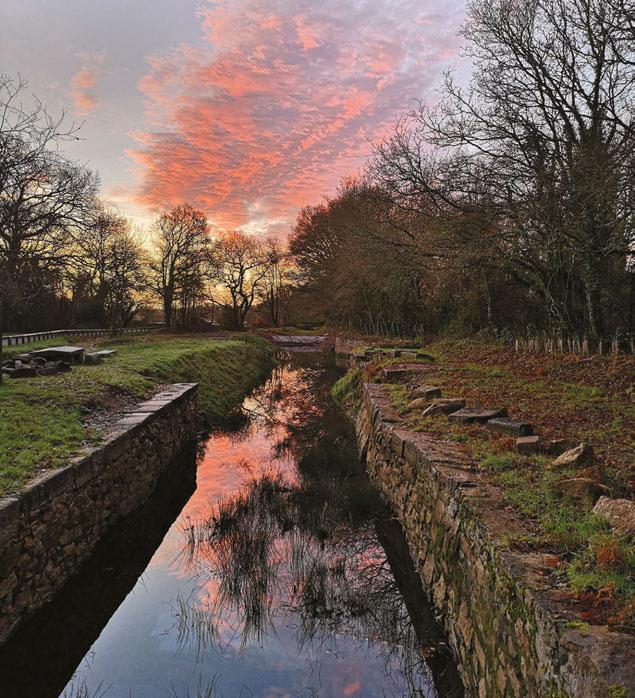
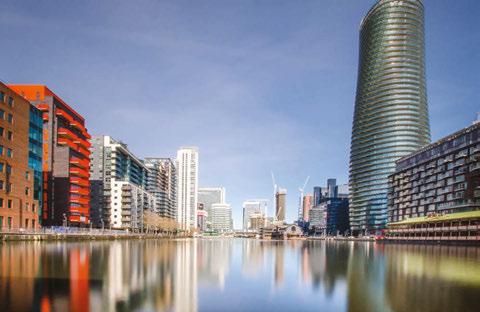
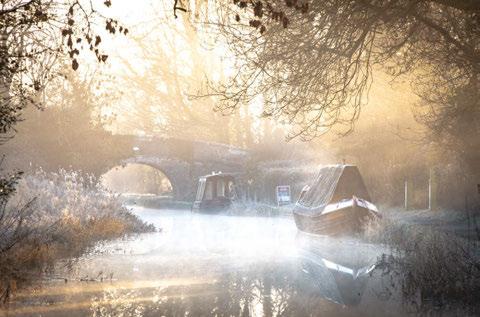
There is still time to enter IWA’s 2025 Photography Competition but the deadline is looming. Entries close 31st December 2025. This year we are doing things a li le di erently. Rather than placing limitations on your entries with themed categories, we are opening it up to any photo featuring our beautiful waterways. We want to see your best images of any aspect of life on our inland canals, rivers, lakes and reservoirs. IWA relies on quali images for our campaigns, and by sharing some of your favourite photographs you will be supporting our work. Here are last year’s winning images to help inspire you.
THE WINNER WILL RECEIVE a £25 voucher to spend in our shop and runners-up an IWA goody bag. Winning photos may also feature in our calendars and Christmas cards, as well as our other campaigning materials. Please submit your photos to campaigns@ waterways.org.uk
share your favourite photographs to support our campaigns
















We
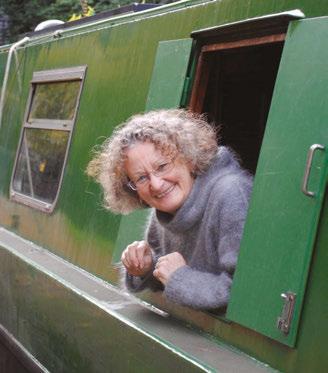
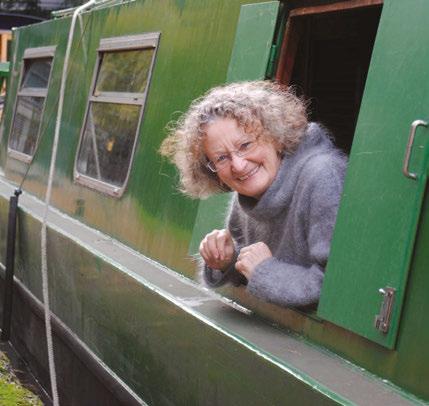
Jenny Jones of Moulsecoomb grew up on a council estate in Brighton and worked in a variety of jobs including 10 years as an archaeologist, before embarking on a political career, joining the Green Party in 1988. Her interests and political views focus strongly on social issues and environmental protection (water pollution, sustainable transport, climate change) and she has been particularly critical of water companies failing to stop pollution.
How did you get into boating?
I lived in the Seychelles for many years and did a lot of boating but suffered a lot of seasickness. When I left, I vowed never to step on a boat again. Then, once back in UK in 1998, a new boyfriend was a liveaboard and he invited me onto his boat, Arthur Dent. Despite my vow, we boated happily for many more years. In the early days, the mattress was one that we rolled up during the day to make more space. One morning I found I’d been sleeping very soundly on a windlass left underneath it. We sold the boat just before lockdown because we found we were both very busy and not using it enough to keep up its care. I do miss it.
Where did it take you on the network?
We went to lots of rural England where you can tie up (very carefully) to a tree at night, drink a beer and watch dusk fall. It was a wonderful way to unwind from our jobs and enjoy new places, new vistas. We also did a lot of tidal boating as members of St Pancras Cruising Club, including two fun trips to the Medway. It’s wonderful to visit a new place, a new town, then be able to walk back to the comforts of the home you have brought with you.
Any favourite spots?
We loved almost everywhere we went, especially the upper reaches of the Thames, but a visit to the Stort sticks in my mind as an interesting journey. We had family aboard on a day trip and almost everything that could go wrong, did go wrong. A grandniece fell while climbing over a fence and cut her knees, a nephew let go of a windlass while closing a paddle and it flew off and hit him on the head, and a granddaughter fell into the canal without the adults noticing, but was rescued very quickly by her resourceful young cousin (luckily all were fine). We can laugh about it now.
A penny for your thoughts on the current state of Britain’s waterways?
I’m not completely up to date but it seems that the waterways are generally underfunded, for the benefit they provide, for access to nature and well-being. They are an amazing resource, especially for town and city dwellers who might be short of green space otherwise.
What changes have you observed in your time on the network?
More people seem to live aboard with less travelling. I see this particularly in and around London, where rents are so high. That means more demand for toilet facilities, Elsan pumpouts and fresh water. There are also tiny stretches of canal being reopened and I admire the volunteers who put in so much effort. It’s a hugely worthwhile thing to do, for local people and visitors.
Any advice for new boaters?
Just do it! What’s the worst that can happen? (See above.)
You are a member of the Waterways All Party Parliamentary Group. As a busy and active member of the Upper House, why did you accept IWA’s invitation to join?
Pure nostalgia. I loved the time spent boating and want to encourage others. I also care that we maintain our precious waterways network as a resource for recreation, and also as a historic curiosity that still serves a purpose for people and wildlife.








Historian KAY ANDREWS delves into the archives to uncover some of the events leading up to the 1950 Market Harborough Festival & Rally of Boats, which a racted 30,000 visitors
“Flags and bunting flu ered om shops and main buildings, and tonight floodlighting and hundreds of twinkling fairy lights will turn a mile of the town’s canal into a dazzling spectacle resembling a Venetian carnival”
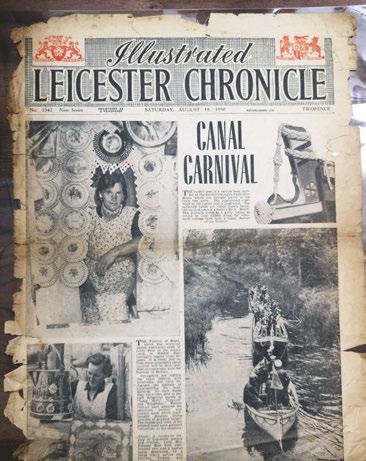
The above quote om the Leicester Evening Mail of Monday 14th August 1950 paints an enticing picture of the Market Harborough Festival & Rally of Boats 75 years ago. The festival, organised by IWA and Market Harborough Urban District Council, was held over six days and a ended by 130 boats and 30,000 visitors. Today, most knowledge of the event is amed by the later writings of Robert Aickman and Tom Rolt, o en focusing on the growing personal ri between the two over the IWA’s leadership.


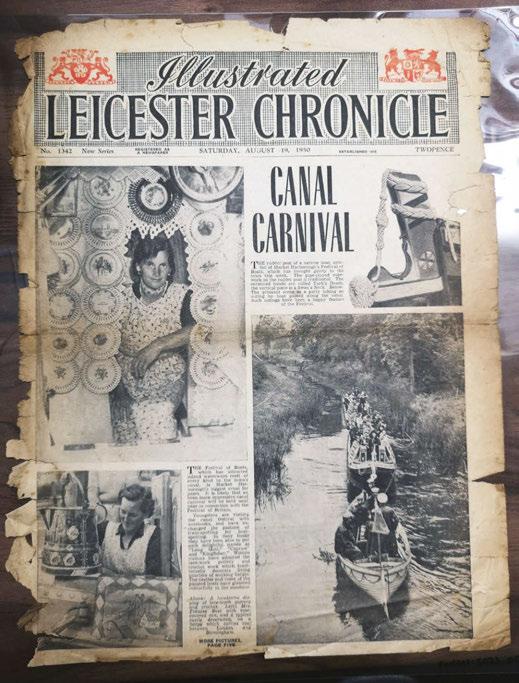
However, a dive into the British Newspaper Archive reveals a far more interesting view of the festival: one of post-war optimism, a sense of adventure, plus a growing interest in the canals and the people using them. Taking place just five years a er World War II ended, the festival captured the imagination of boaters and land folk alike.
Earlier this year, Foxton Canal Museum asked me to research the 1950 festival for its summer exhibition. Although today I am known as a roving trader, selling my hand-painted canal art, my work as a historian has continued as I research, write and speak on canal history. The opening of the museum’s exhibition coincided with IWA Leicestershire Branch’s 75th Anniversary event to mark the 1950 festival. Using the British Newspaper Archive for primary accounts brought the festival to life in unexpected ways: Sea Scouts om Wharfedale travelling there in an old lifeboat, boats built at home using WWII bridge pontoons and a journalist travelling with a boat club flotilla. In addition, articles reflected how the quiet Leicestershire town of Market Harborough, with 42,000 inhabitants, coped with 30,000 visitors.
The vast British Newspaper Archive is a treasure trove for researchers but it is not without its pitfalls. Searches can be productive or reveal very li le. Astonishingly, a first cursory delve for the festival identified more than 100 relevant stories. Additionally, the breadth of coverage om newspapers nationwide was surprising – especially as these were not one-o syndicated articles appearing across multiple papers, but rather individual news
stories. Newspapers around the country reported on activities relating to the festival ranging om the Halifax Daily Courier to the Surrey Advertiser, and the Scunthorpe & Frodingham Star to the Gloucestershire Echo. Many newspapers om towns across the Midlands carried reports, as well as national papers The Stage, the theatre newspaper, and The Sphere, an illustrated newspaper. Importantly, coverage began to appear early in 1950 especially in the Harborough paper, and built a growing interest in the following months.
The Market Harborough Advertiser & Midland Mail reflected the local mood in the lead-up to the festival. Not all reports were positive. Early in March, the paper reported possible navigation problems to Harborough due to invasive duckweed. About clearing duckweed, local boat-hire business owner Harry Foster, told a newspaper: “I used to get schoolchildren to rake out the rushes and weed with hayforks. I gave them a good tea on the canal banks and they used to enjoy every minute of it.”
Despite the duckweed, which ultimately caused some boats to leave early, interest grew. The council contributed £350 and other organisations signed up. The Leicester Evening Mail reported the Chamber of Trade’s commitment to showcase the town’s commerce for three days during the festival. Yet, as momentum grew, so did local concerns about food availabili . Rationing was still in place and an influx of people might create food shortages in the town.
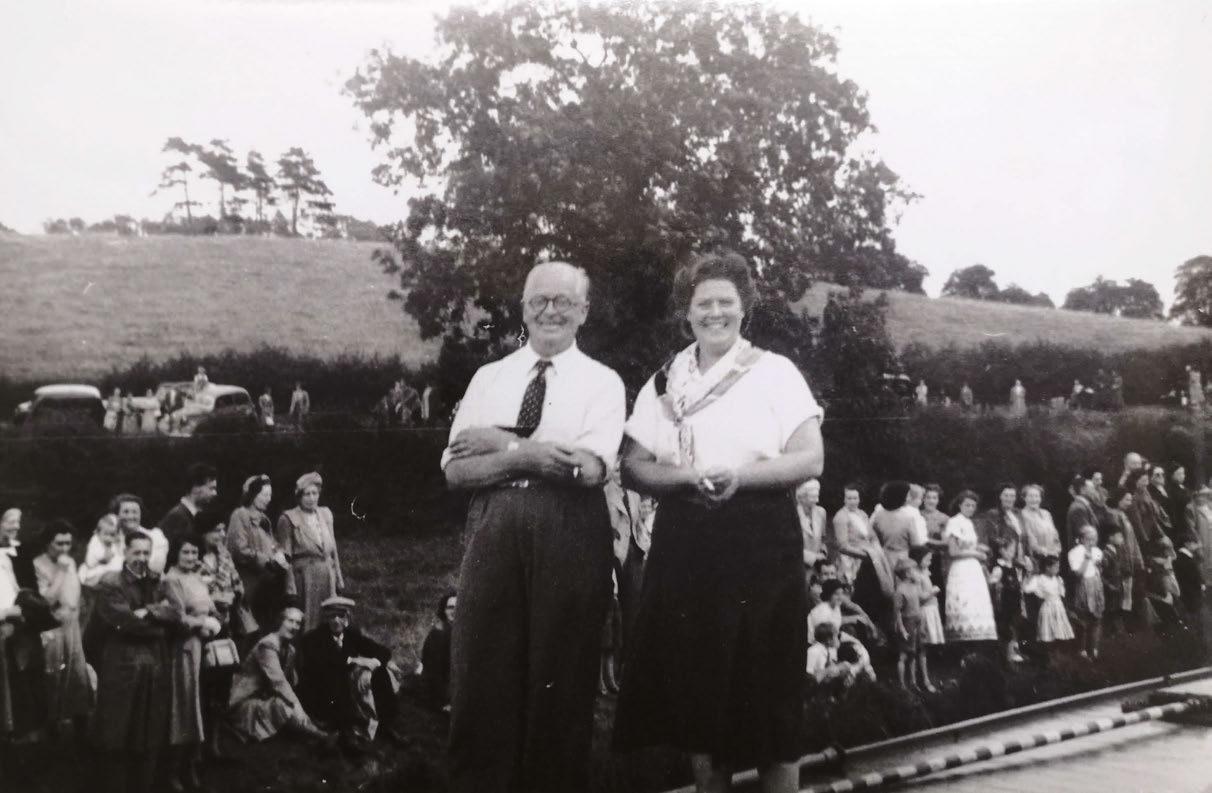
In response a public meeting was held in June, and reported in the Harborough paper. London staff from the Ministry of Food, alongside members of the council and Robert Aickman, reassured the town’s people that cafés, hotels and shops would be supplied with more provisions to cover the increased population. This positive outcome was just as well as some of the boats had already begun their journey to Market Harborough.
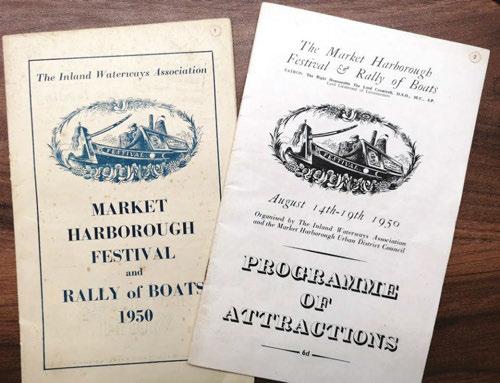
Although the festival took place in mid-August, boats began to travel to Market Harborough weeks ahead from 1st June. IWA’s registration brochure (held by Foxton Canal Museum) noted early departure was allowed for boaters wishing to be entered for the distance or most enterprising route awards. As a result, boats could travel in stages, completing their journey around work commitments.
As the boats began to travel, newspaper reports reflected the diversity of craft: canoes, converted pontoons, cabin cruisers, a smattering of converted lifeboats, converted former carrying narrowboats and four working pairs of carrying boats were all mentioned. In many instances the names of boats and crew were reported, allowing the museum to collate a growing attendance list. Interestingly, despite being so few in number, it was the carrying pairs and their crews who gained the most attention from the press. However, it is the stories of other boats that reflect a post-war sense of adventure.
My favourite newspaper accounts often appear in multiple articles. Notably, the coverage of a group of Sea Scouts, all aged under 15, travelling to Harborough from Ripon in a German lifeboat. The group’s departure was reported on the front page of the Halifax Evening Courier (9th August 1950), and featured a blurry photo of the excited scouts aboard an open, wooden lifeboat at the beginning of their trip. Full details of the journey emerged in the Bradford Observer on Monday 21st August. The scouts had raised £40 to buy the boat and undertook the challenge of reaching the festival. Unfortunately, it wasn’t plain sailing: “After being swamped by a barge, the engine took in water. They stripped and cleaned it. Near Nottingham a connecting rod broke, so they dismantled the engine and four boys carried it to Nottingham by hitchhiking. When it came back the engine collapsed ‘for good’.” Amazingly the boys continued and were gifted another engine but it too broke down. Now without an engine, the scouts showed tenacity and the Observer reflected that, “From just south of Nottingham they towed and rowed the entire distance
to Market Harborough (nearly 100 miles) in four days.” The final challenge came in the form of a broken lock. The only option was to lift the boat out and carry it around the lock before continuing their journey. Finally, on the very last afternoon of the festival and too late to be included in the awards, the scouts reached Harborough. The Leicester Evening Mail shared a photo of the jubilant scouts after their arrival and described how they had been met by excited crowds.
In comparison a Northamptonshire journalist’s journey seems quite mundane. Alistair Foot, a Northampton Chronicle & Echo journalist, took the enterprising step of travelling aboard a converted naval launch from Weston Cruising Club and reporting along the way. The accounts are at times comedic and reveal a sense of camaraderie between the crews travelling in convoy. Foot describes the dismal wet August weather and reveals challenges faced along the way.
One of the boats struggled to squeeze through a bridge, while another broke down and had to be pulled through the Northampton locks in the rain. Two of the boats were too wide for one of the locks and had to turn back. Perhaps the star of the piece was Judy the cocker spaniel who as well as jumping in the canal also rolled in a dead fish.
On the approach to Buckby Locks, Foot notes the beautiful scenery. Of course, this was before the M1 was built alongside. As well as descriptions of the state of the canals, the pubs and people met along the way, the accounts reflect the mix of people participating: groups of friends, families with young children and couples, most of whom had lived through the war.
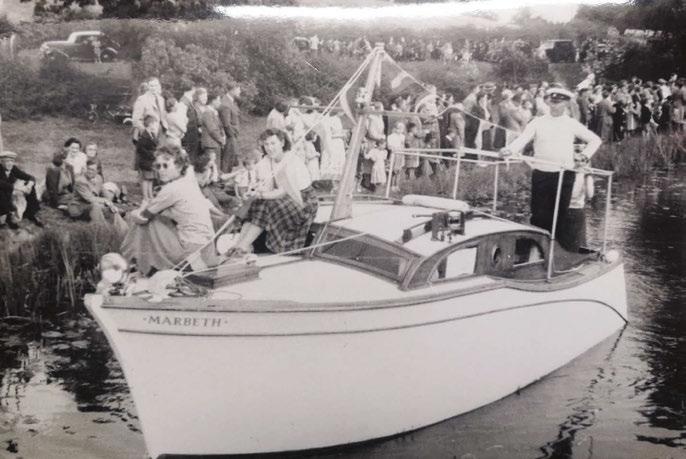
Only five years since the war ended, the country was slowly recovering and rebuilding. Echoes of wartime service appear in some of the newspaper articles, though only relating to men. Unfortunately, the same is not true of the women who, if mentioned at all, were at best reduced to their husbands’ names or at worst ignored in reports. One woman attending the festival, who had served on the waterways during the war, was Sonia Smith. Smith is not referred to by name in the papers and only appears in a statuesque, glamorous photo posing on her boats.
Other glimpses of wartime experiences emerge through the reports, such as Commander H. Brooks and his unnamed wife who travelled by motorised punt from the Fens. Similarly, the wartime roles of brothers Charles and George Poulter were mentioned in the Surrey Advertiser. The brothers won the Aickman cup for the vessel making the ‘most enterprising and meritorious journey’ covering 271 miles from Surrey. The paper notes Charles had served in the Royal Engineers and George as secretary at the Ministry of Supply and also a volunteer in the civil defence “in the most heavily bombed part of London”. (It appears contributing to the war effort with a desk job was perhaps not seen as ‘enough’ alongside a brother in the Royal Engineers.)
Of course, none of the 1950 newspapers mentioned the physical or psychological impact of war, but it is hard not to wonder how the conflict and the gradual rebuilding of life post-war had impacted everyone. The legacy of war also reached further than just the people present.
Many of the boats attending the 1950 festival were military surplus. A good few of the festival boats were converted ex-military vessels or built from pontoon bridges. Early in August, the first boat to arrive, admittedly by road, was Samuel James, a DIY boat built using a wartime pontoon base. Being too wide to navigate the narrow locks en route, the builder and owner, Mr A.T. Adams, drove the boat from Wellingborough to Harborough on the back of a lorry. Adams later won a festival prize for best boat conversion. Other converted boats with a military heritage included naval launches and RAF pinnaces. The wartime use is usually mentioned in passing when describing the different boats.
Just as former military craft found new leisure uses, other wartime restrictions were also beginning to lift. Although some items continued to be rationed, one restriction that was lifted no doubt helped increase the numbers visiting the festival. In May 1950 petrol rationing ended and, for the first time in 10 years, those with cars who could afford to were able to take ‘drives out’ for fun, without worrying about running out of fuel and coupons. The volume of festival traffic was recorded in the Leicester Evening Mail on Thursday 17th August, which reported “mobile police had to control traffic leading to the canal basin”. Alongside the lifting of the fuel ration, other factors noted in the newspapers encouraged people to visit. Train fares within a 60-mile radius were reduced for the week, plus the council laid on late-night buses after the town’s fireworks display. Boaters were also able to register with the Inland Waterways Executive and claim reduced tolls on their journey to Harborough. The festival coincided with Leicester’s factory fortnight which also helped encourage visitors, especially those keen to see the carrying boats.
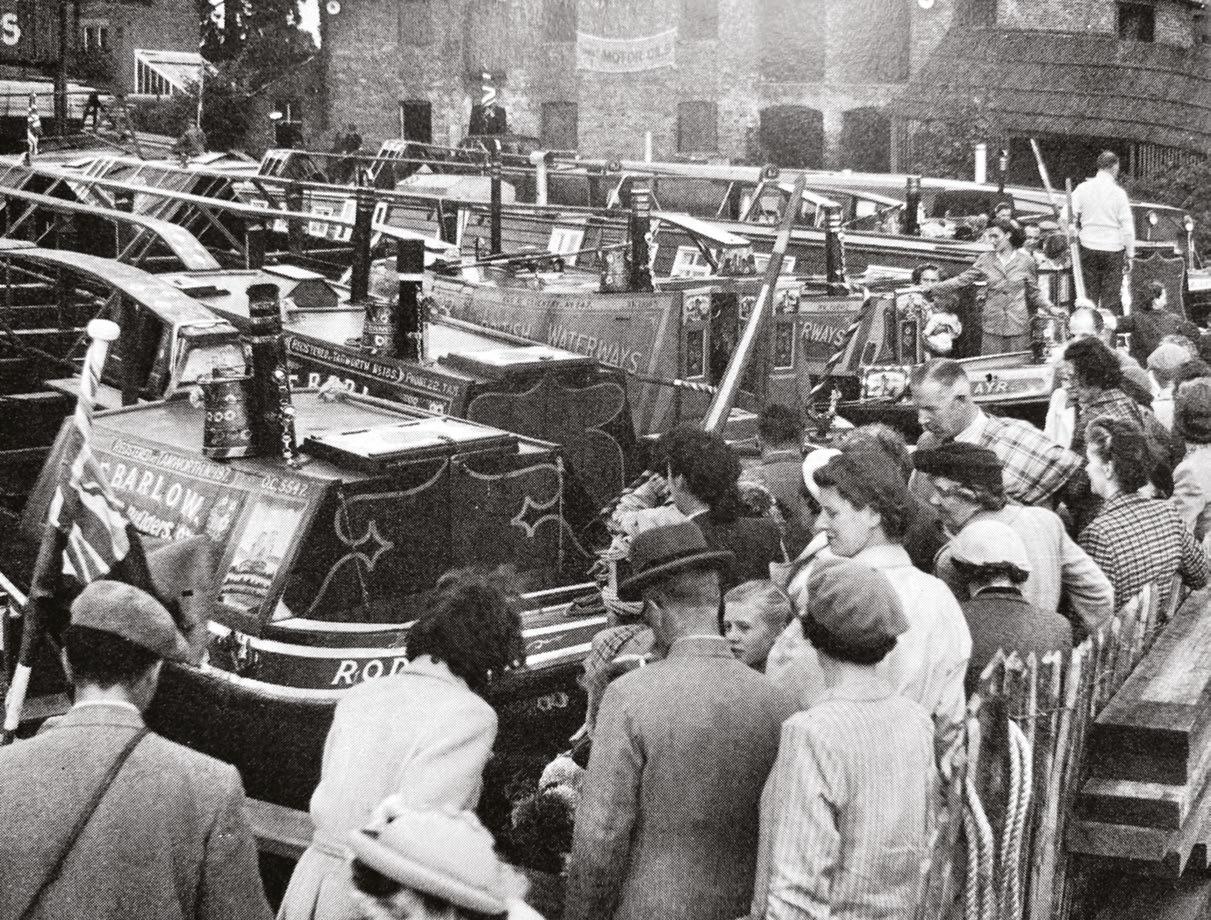
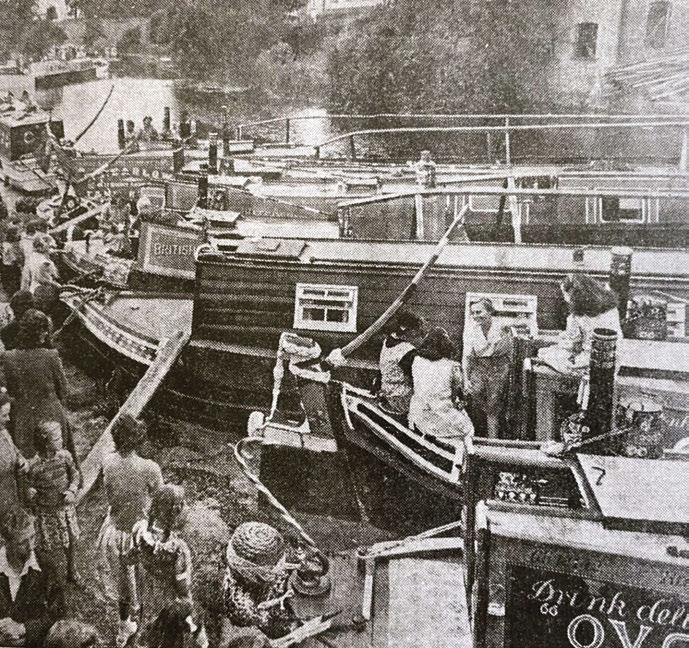
Although most boats at the festival were cruisers, it was the carrying narrowboats that elicited the most interest from the public and journalists. The four pairs were all moored in the canal basin, closest to the canal entry
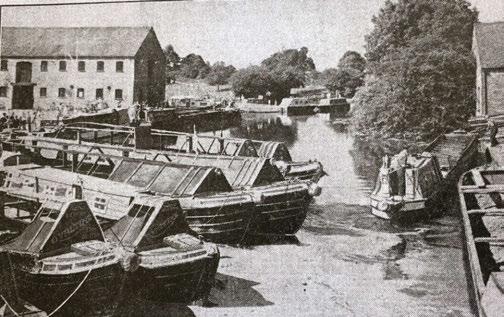
The four pairs were all moored in the canal basin, closest to the canal entry point, so were easily accessible to visitors.
The fascination with the back cabins, and notably the women onboard, was prevalent, especially in news reports
point, so they were easily accessible to visitors. The fascination with the back cabins, and notably the women onboard, was prevalent, especially in news reports. There was an overwhelming curiosity in the tiny living quarters, and for once the public could get close to moored carrying boats.
One reason for the fascination is linked to the 1945 Ealing Studios film Painted Boats, a romantic tale of wartime canal life. Although it was five years on from the film’s release, it was still being shown daily in multiple screenings across the country. Undoubtedly, most cinema goers would have seen Painted Boats, perhaps more than once. With canals and boats often off limits to the public, the festival gave visitors the opportunity to see carrying boats and meet canal workers. The film was also shown during the festival and stills were used in the advertising brochure. But it wasn’t just the canal workers who became celebrities for the week, as children roamed the towpaths seeking autographs from all and any boaters.
Now, 75 years on from the Market Harborough Festival & Rally of Boats, the legacy has sadly been reduced to soundbites and bold – often inaccurate – statements. The event is worthy of continuing research, not just for the wrangling of the IWA’s leadership at the time but as an event of its time, in a place that embraced the concept of a town-wide event that took on national importance.
It should also be remembered for those intrepid boaters of all ages, in all kinds of craft, who used up precious spare time to navigate the waterways and the duckweed in mainly their little cruisers. The festival sated an appetite for learning more about the canals, and the council was keen for it to return as part of the 1951 Festival of Britain. Sadly, the implosion of IWA’s leadership during the coming months put paid to a second event. In hindsight the festival at Harborough was a moment when the stars aligned, capturing a post-war can-do attitude and a local council committed to the cause, as well as the canny choice of Market Harborough as a venue by IWA’s leadership.
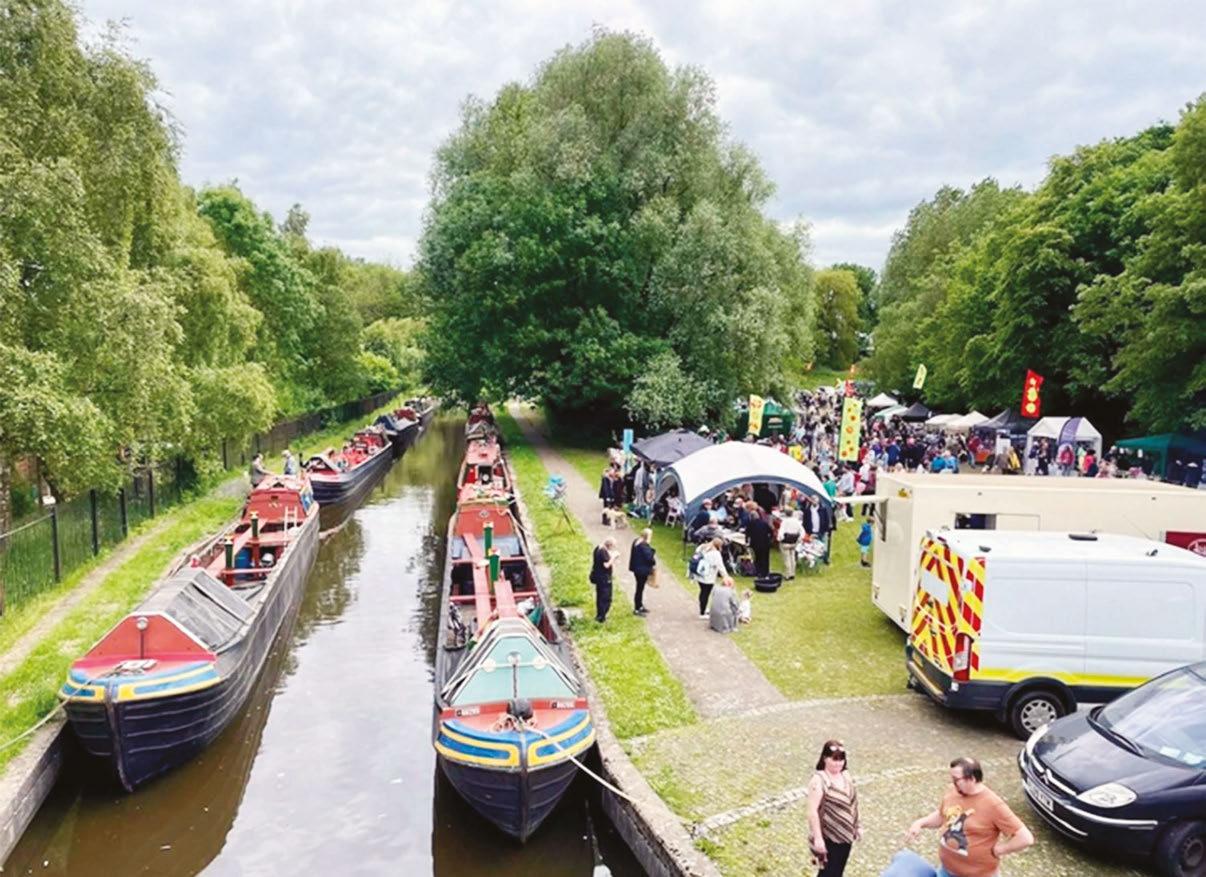
IWA North Staffordshire & South Cheshire Branch covers an area of contrasts. With the Potteries city of Stoke-on-Trent at its heart, the historic salt town of Middlewich at its north-west boundary and the former silk mill towns of Leek and Congleton to the north-east, the region has a rich industrial heritage as well as modern industry and urban landscapes, especially along sections of the Trent & Mersey Canal. However, it is primarily a rural area. Both the Caldon and Macclesfield canals climb through glorious scenery towards the Peak District, while the Trent & Mersey itself passes through lush farmland as it descends the Cheshire Locks heading north, or follows the River Trent south from Stoke, through Stone and on to Great Haywood Junction.
As an active branch, it works closely with several other local waterways groups. It runs regular work parties with the Trent & Mersey Canal Society on the Cheshire Locks, where a dedicated team of volunteers work hard to keep lock gates, railings and other infrastructure neatly painted and attractive.
With more than 30 locks on the flight, this is very much the local equivalent of painting the Forth Bridge.
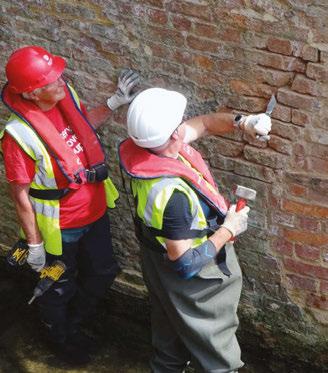
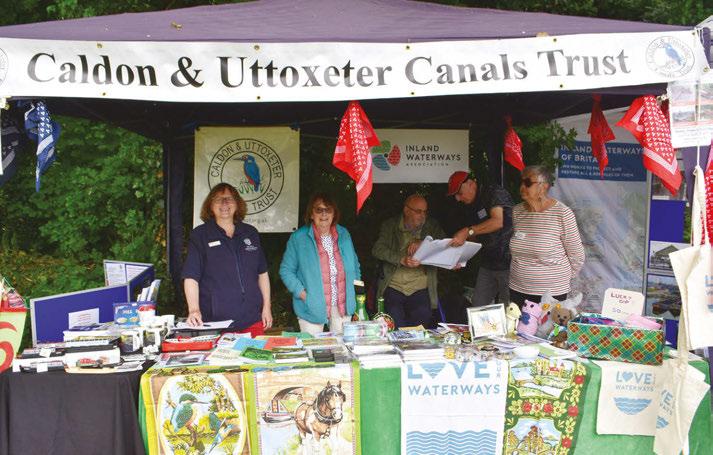
Work parties on the (unnavigable) Uttoxeter Canal with volunteers from the Caldon & Uttoxeter Canals Trust are more ad hoc but have included some major projects, often assisted by Waterways Recovery Group, maintaining footpaths along the former canal route and uncovering the remaining traces of locks, weirs and spillways.
The branch holds monthly socials between October and April at the Stokeon-Trent Boat Club in Endon, a friendly venue with free parking, built-in digital projector facilities for guest speakers and an excellent bar. The first social of the season was a presentation on the Transforming the Trent Headwaters Project, an initiative led by Staffordshire Wildlife Trust with ambitions to improve
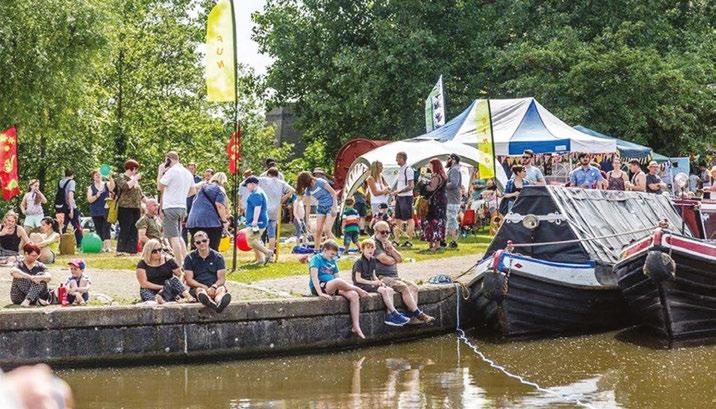
The branch has played its part, supporting the annual Etruria Canals Festival which takes place annually the weekend after the late May Bank Holiday
both the natural environment, heritage landscapes and human health and wellbeing along the Upper Trent and its tributaries, including the local canals. There is potential for many more opportunities for the branch to both shape and support this project as it develops.
Another regular work par location is the site of the former Burslem Branch Canal in Stoke-on-Trent. The Burslem Port Trust has campaigned for many years to restore and rewater this arm o the Trent & Mersey, lost to a breach in 1961. Its potential to provide good moorings for prospective visitors to the Po eries’ mother town of Burslem and support redevelopment and renewal of this part of the ci is great, and the branch has supported these aims where it can. This year, a collaboration with Sta ordshire Universi saw five architecture students use the branch canal and the surviving historic warehouse building as the inspiration for one of their final year projects, giving the trust excellent publici and some interesting ideas for the future.


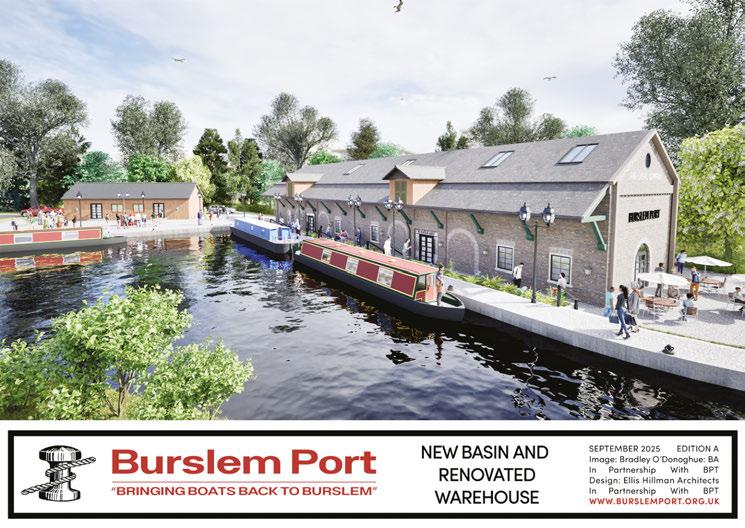


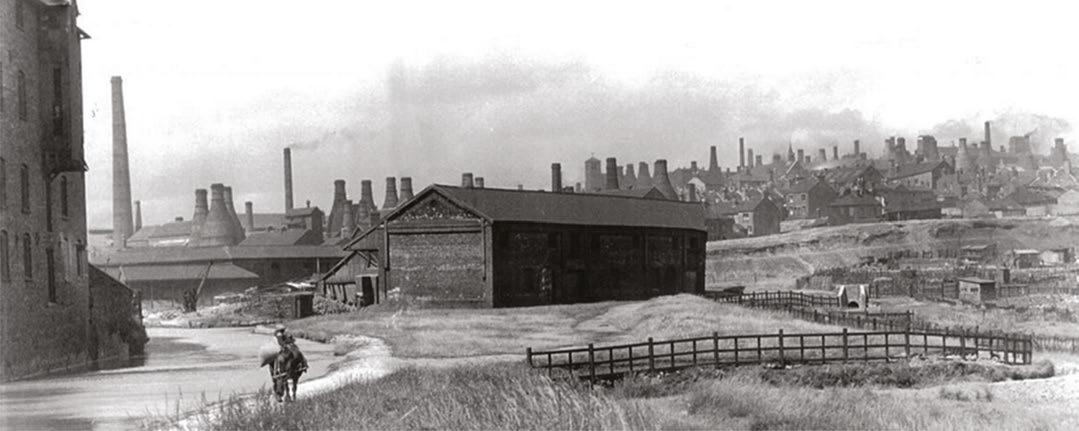
Several other talks focus on Stokeon-Trent, which has been celebrating its centenary as a ci this year. The branch has played its part, supporting the annual Etruria Canals Festival, held annually the weekend a er the late May Bank Holiday. If you haven’t visited it before, put the date in your diary for next year and particularly for 2027, the 250th anniversary of the opening of the Trent & Mersey Canal.
In 2024, the branch celebrated two 50th anniversaries: the reopening of the Caldon Canal, and the formation of the branch itself. Membership is generally a li le older than it once was and while it’s a blessing to have such a great team of dedicated and knowledgeable people, it could do with a few more hands to help with commi ee roles and at events.



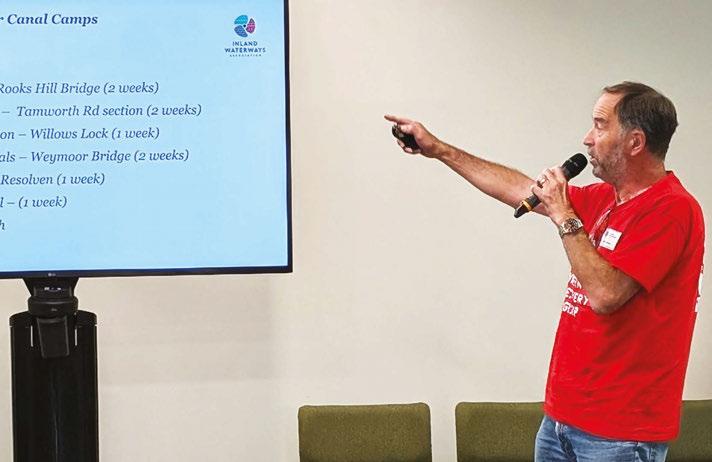
Each summer, Waterway Recovery Group volunteers tackle ambitious canal restoration projects up and down the country, and 2025 was no exception. From bridge-building in Surrey to lock repairs in Lincolnshire, WRG’s Canal Camps once again played a vital role in reconnecting, conserving and celebrating our waterways. Here’s a roundup of where WRG made a di erence.
LENGTH: 7 miles • LOCKS: 30 • DATE CLOSED: 1954
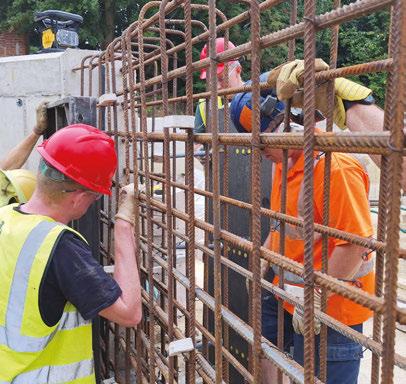
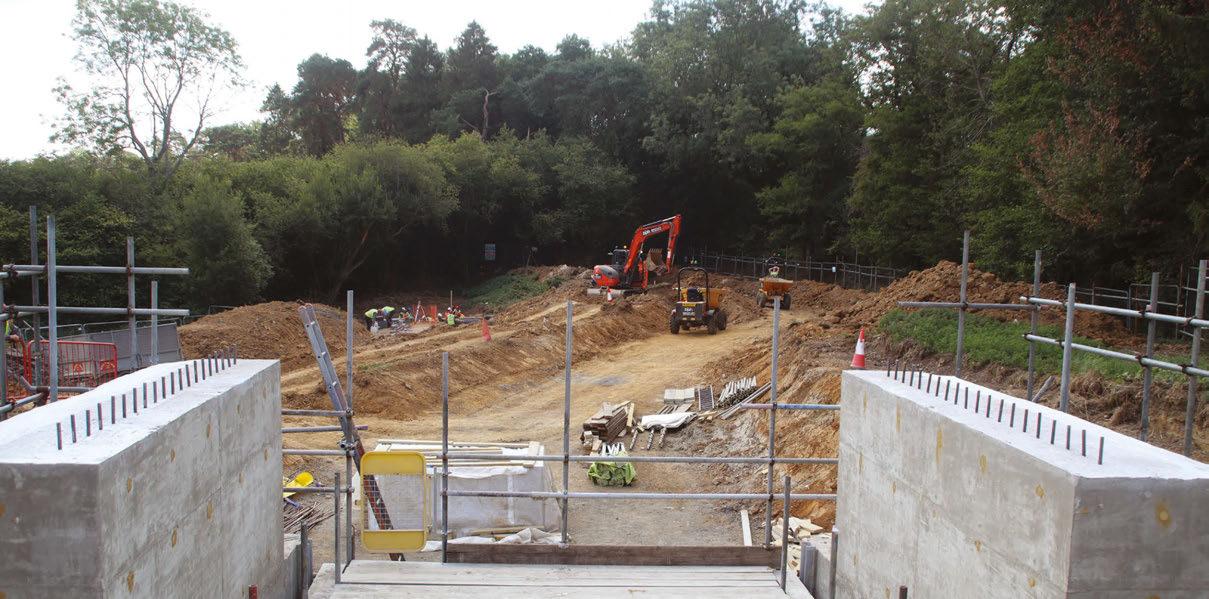
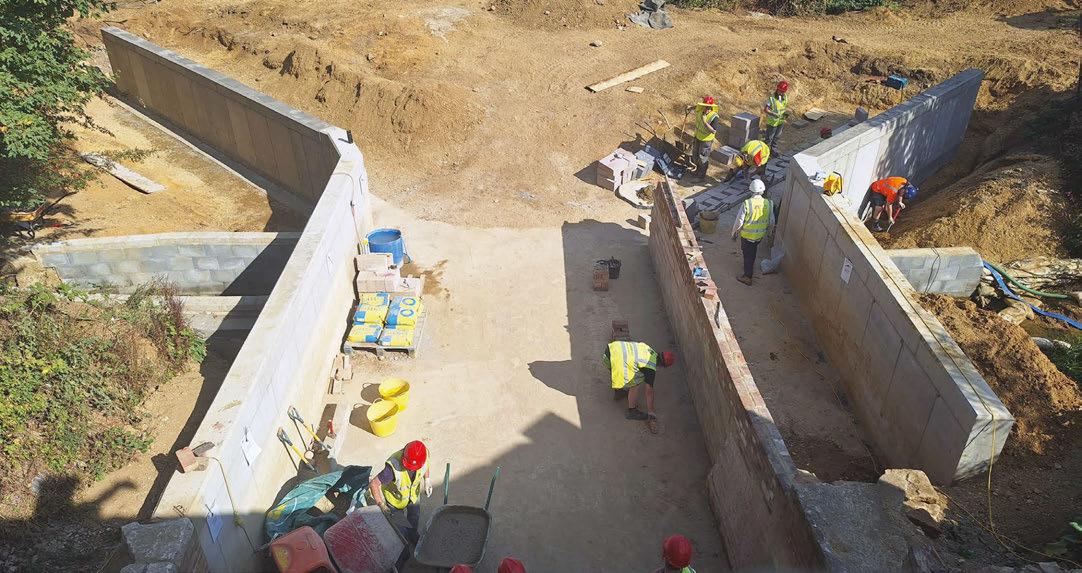
Building sections of reinforced concrete canal channel near Gallows Wharf. It’s part of a project (which also involves Lichfield & Hatherton Canals Restoration Trust building a new lock, and the local authori building a new road-bridge) to link together two alreadycompleted sections of canal at Borrowcop Locks (Tamworth Road) and Gallows Wharf, on the outskirts of Lichfield.
The work is part of a long-term plan to connect various sections of new and restored canal together to create a restored route running through om the Coventry Canal at Huddlesford Junction to Lichfield, and beyond to link up to the navigable length of the Wyrley & Essington Canal at Ogley Junction. This would not only create an a ractive restored waterway in its own right, it would also provide a route to encourage more boats onto the navigable but underused northern reaches of the Birmingham Canal Navigations network.
LENGTH: 23 miles • LOCKS: originally 26 • DATE CLOSED: 1871
The Canal Camp project
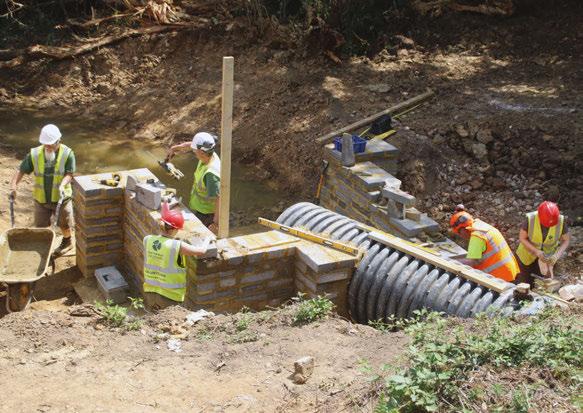
The first stages of building a bridge at Rooks Hill, plus reinstating a section of canal channel and extending a stream culvert under the canal. The bridge will carry the Downs Link bridleway over the canal, allowing the removal of an existing causeway and clearing the way for reinstatement of a length of canal which will also include the rebuilt Fanesbridge Lock.
The wider picture
Excavation of a 300m length of canal (where the original channel has been filled in) will link the Rooks Hill length to the Birtley section which has already been restored in recent years including building two new li -bridges, creating a longer length of restored canal. For the longer term, the work here reduces the amount of unrestored waterway between the restored summit section at Dunsfold and the north end of the canal.
In the coming years it is hoped to link the restored sections together to create longer navigable lengths, with the eventual aim of reopening the entire through-route between the Thames and the South Coast.
Length: 36 miles • Locks: 56 • Date cLoseD: 1927-1946
The Canal Camp project
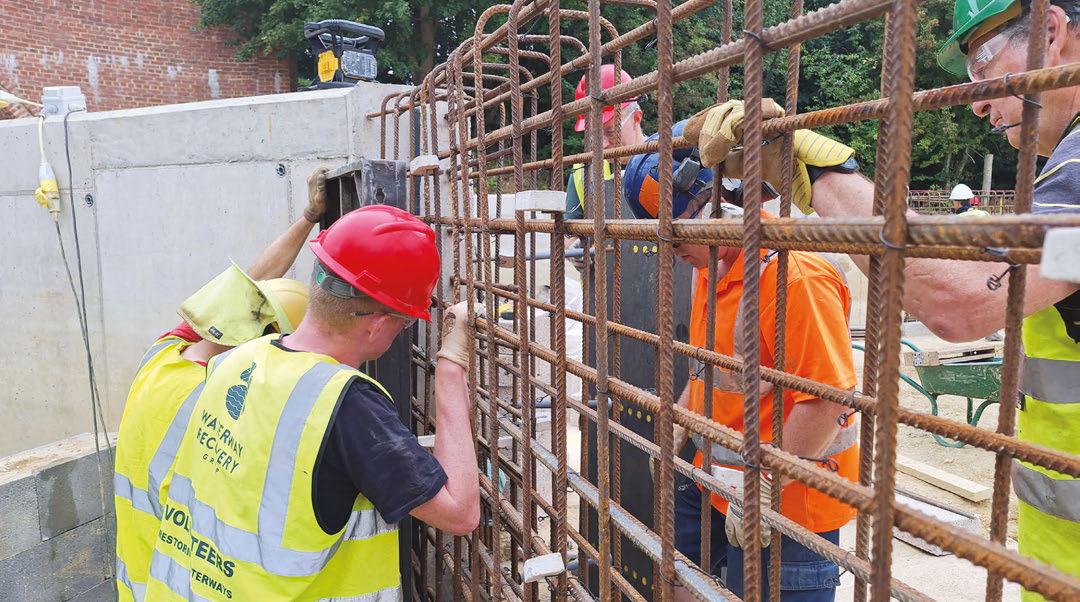
Reinstating the canal channel in reinforced concrete alongside Weymoor Bridge on the thames & severn canal. a new culvert was installed under the canal last year, to replace an open ditch cut through the canal bed which had been carrying a small stream. the channel then needed to be rebuilt above the culvert.
The wider picture
although most of the restoration effort on the cotswold canals (the thames & severn canal and the stroudwater navigation) in recent years has been concentrated on getting the western Phase 1a and 1b sections from saul Junction to stroud and Brimscombe Port (both supported by major Lottery grants) open and connected to the network, the cotswold canals trust works on other sites when the opportunity arises.
one such site is Weymoor Bridge, towards the east end of the thames & severn canal, which was reinstated several years ago thanks to a legacy specifically for this purpose. other work carried out nearby over the years has included lock restorations and a new bridge in the cerney area, meaning that a significant length of restored canal could be put together here in the medium term.
Ultimately the aim is for it to form part of the restored through-route from Inglesham on the thames to saul Junction on the gloucester & sharpness canal.
LeNGTH: 11 miles • LoCkS: 8 • DATe CLoSeD: 1924
The Canal Camp project
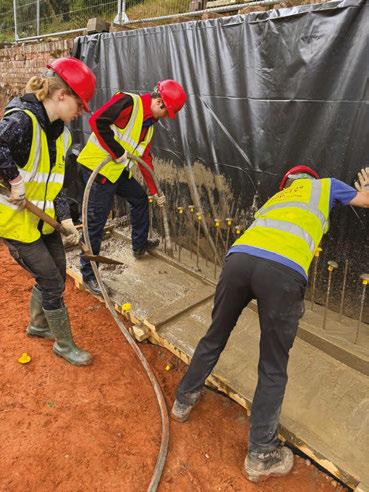
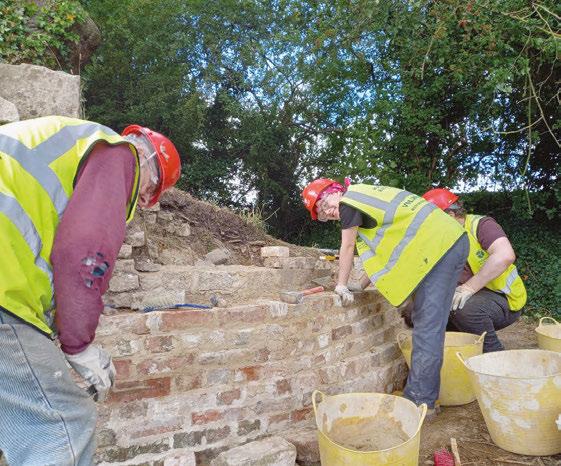
Continuing repairs to Ticklepenny Lock including chamber wall and wing wall repairs, as well as casting concrete coping stones. The lock is a historic structure which has suffered from decay and damage from water running through the chamber and would deteriorate further if left as it is.
wider picture
The Louth Navigation was an 11-mile waterway which connected Louth with the mouth of the Humber estuary at Tetney Haven. Although mostly built as an artificial canal, it made some use of the River Lud in its upper reaches near Louth. It fell into disuse and was abandoned in the 1920s but survived as a water channel because much of it formed part of the local land drainage system. Since the 1980s the Louth Navigation Trust has been working to conserve and restore what survives of its structures, as well as promoting the towpath as a walking route, and restoring the Navigation Warehouse at Canal Head in Louth as a community centre, and generally raising awareness of the Navigation.
The Canal Camp project
Building and installing wooden lock tail footbridges at locks 12 and 13, and creating an overflow culvert under the canal towpath near Resolven. The footbridges will allow access to the off-side (non-towpath side) of the canals, and facilitate future restoration work on the locks themselves. And the new culvert will prevent excess water after heavy rain from overtopping and damaging the canal bank
A great deal of restoration work was carried out on the Neath Canal back in the 1980s to 2000s, led by the Neath & Tennant Canal Preservation Society and supported by visiting mobile volunteer groups including WRG, as well as significant external funding.
This enabled a series of seven locks (numbers 8 to 14) from Resolven to Ysgwrfa to be restored and a trip-boat to operate. A major new aqueduct was built across the River Neath at Ynysbwllog to replace one washed away by floods in the 1970s, and further lock restorations were carried out at Clyne, Machin and Tyn-yr-Heol locks (numbers 1 to 4).
There were still serious obstacles to further restoration including blockages from road crossings in Neath and at the south-west end of the main restored length at Resolven, but there appeared good prospects for reopening through from Neath to Ysgwrfa but also along the connected Tennant Canal from the junction at Aberdulais towards Swansea.
However, the restoration’s progress faltered, major funding proved hard to find, and ultimately the lack of sufficient money and support to maintain the existing restored lengths meant they began to deteriorate and become unnavigable again.
Recently a new organisation, the Tŷ Banc Canal Group, has been formed to try to get the restoration back on track again. It has a long list of priority works, and the Canal Camp jobs formed part of this work to begin to reverse the decline.
Swansea Canal
LeNGTH: 16 miles (originally) • LoCkS: 36 (originally) • DATe CLoSeD: 1928-1960
The Canal Camp project
Putting stone cladding on the concrete by-wash (overflow) channel that has been built to bypass Clydach (Upper) Lock. The lock was formerly buried under a council yard but has been uncovered and restored by Swansea Canal Society. It will need a by-wash to function.
The wider picture
This lock will link together the length passing through Trebanos Locks, scene of previous Canal Camps, and Clydach Lower (or Mond) lock (planned for restoration) and SCS’s new Canal Centre. In the longer term SCS hopes to restore the surviving 6 miles from Clydach to Godre’r Graig. Ultimately It’s a long-term aim of some involved in canal restoration in South Wales to eventually link together the existing projects to create a 35-mile regional waterways network. This would involve:
• Restoring the surviving Swansea Canal from Clydach to Godre’r-Graig
• Getting the Neath restoration back on track and open past the obstructions down to Aberdulais and Neath
• Restore the Tennant Canal from Aberdulais to Swansea Docks
• Bypassing the lost lower Swansea Canal using the River Tawe
• Linking them together via a new route through Swansea Docks.
















New film records the successful revival of a stretch of the River Parre , thanks in no small part to the e orts of IWA’s West Country Branch
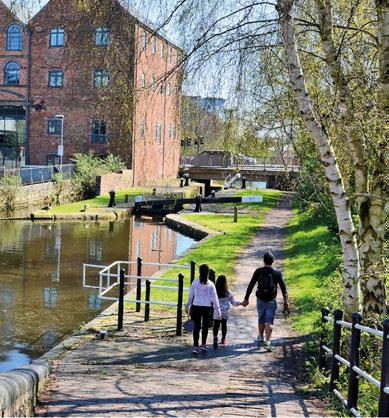
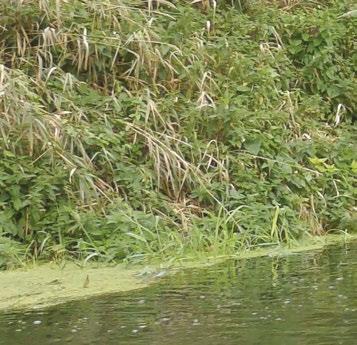
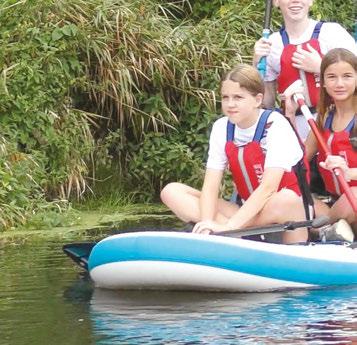
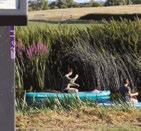
Once a quiet backwater, Langport’s stretch of the River Parre is now alive with paddleboards, café cha er and the laughter of families by the water. What began as a local dream to reconnect the town with its river has become a shining example of how waterways can breathe new life into a communi .
Five years on om the completion of the £300,000 Langport River Project, a joint partnership between Langport Town Council and IWA, the transformation is unmistakable. The 7.6-mile stretch of the Upper Parre – flowing through the Somerset Levels between Bow Bridge and Huish Bridge – now a racts around 250,000 visitors a year. New shops and cafés have flourished, and the riverside is once again at the heart of local life.




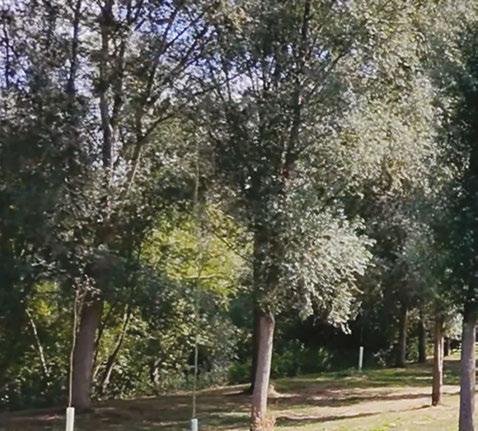
At the centre of the revival is Cocklemoor, Langport’s green riverside meadow where old towpaths have become scenic walkways. Here you’ll find picnic spots shaded by willow, accessible fishing platforms, pontoons for paddlecra , and even solar-lit seating made om recycled materials.
It’s also home to the The Duchess of Cocklemoor, the town’s much-loved communi boat, which o ers river trips led by local volunteers.
Whether you’re dri ing through water meadows alive with birdsong or watching kingfishers dart along the banks, it’s a chance to experience the Parre as the people of Langport always hoped to – as a place of calm, connection and communi .






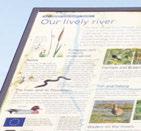

To celebrate the project’s continuing success, local filmmaker Gordon McKerrow has captured its story in a new short film featuring reflections om Val Saunders, former leader of Langport Town Council, and Ray Alexander of IWA’s West Country Branch.
“Langport’s story shows just what can be done to enhance an area by improving its waterway and waterside,” says Ray. “It wasn’t a big, multimillion-pound project but it has delivered so much for the area.”
“Langport
has become a café culture centre and we rarely have an emp shop on the high street.”
Val Saunders, former leader of Langport Town Council

The river and its tributaries are now designated as navigable, om the sluice gates of Oath Lock upstream to Thorney Mills half lock (disused) along with short sections of the River Yeo and the River Isle. Fortunately, no major remedial navigational work, such as dredging or lock repair, was needed.
At Huish Bridge, the slipway has been restored for trailboats and paddle cra , with a new car park and communi space. Langport Town Council acquired both Cocklemoor and the Huish Bridge slipway om the Environment Agency to deliver the project. Nearby, a cycle hire operates at Bow Bridge and a rowing club is based at Huish Bridge.


IWA West Country Branch worked with councillors and council sta to initiate the project and see it through. An IWA consultant engineer surveyed the slipway and advised on its restoration. IWA’s Waterway Recovery Group helped at Langport on three occasions: removing silt om the slipway, undertaking tree clearance works and, earlier this year, renewing the paths across Cocklemoor.

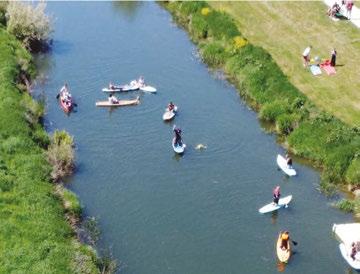
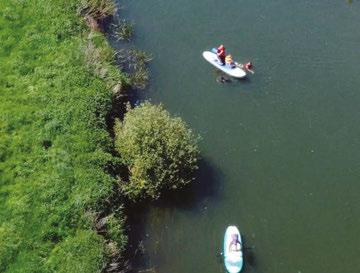
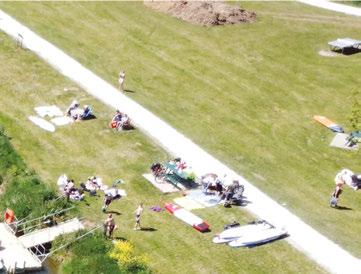
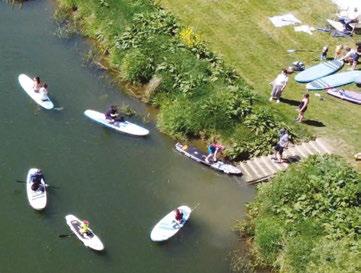
IWA provided much appreciated expertise and muscle power for the project – desilting the slipway, clearing overgrown trees, and renewing the Cocklemoor paths to keep the riverside accessible and a ractive to users.
From the start, the project’s focus has been as much about the environment as enjoyment. Solar lighting, e-bike charging points, recycled furniture, outdoor exercise equipment and biodiversi monitoring all play a part in keeping the riverside both sustainable and vibrant.
Langport Town Clerk Gerard Tucker says the communi ’s ambitions are still strong: “We’re grateful to IWA for helping us deliver our vision. But we’re not finished yet – we’d love to add more paths, cycle routes, parking and even a mooring for The Duchess to make it easier for people to enjoy the river.”
Funded through European and local authori grants, with support om the Canoe Foundation, the Langport River Project has become a model for how small towns can embrace their waterways.
Langport’s river now does more than flow through the Somerset countryside – it brings people, nature and communi spirit together.
If you visit Langport…
• Take a trip on The Duchess of Cocklemoor Book a gentle river cruise with local volunteers and see the Parre om the best seat in town.
• Stroll the Cocklemoor Pathways. Follow the riverside trails for views across the Levels or pack a picnic to enjoy by the water.
• Hire a bike or paddleboard. Cycle hire at Bow Bridge or launch your canoe or paddleboard om the Huish Bridge slipway.
• Spot the wildlife. Keep an eye out for herons, egrets, kingfishers and the occasional o er along this thriving waterway.
• Stop for a coffee. Langport’s café culture is flourishing. Try one of the independent spots on the high street for a riverside treat.
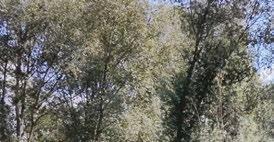
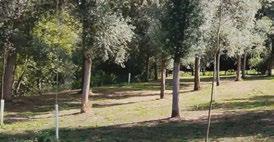


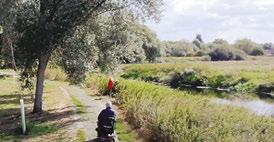











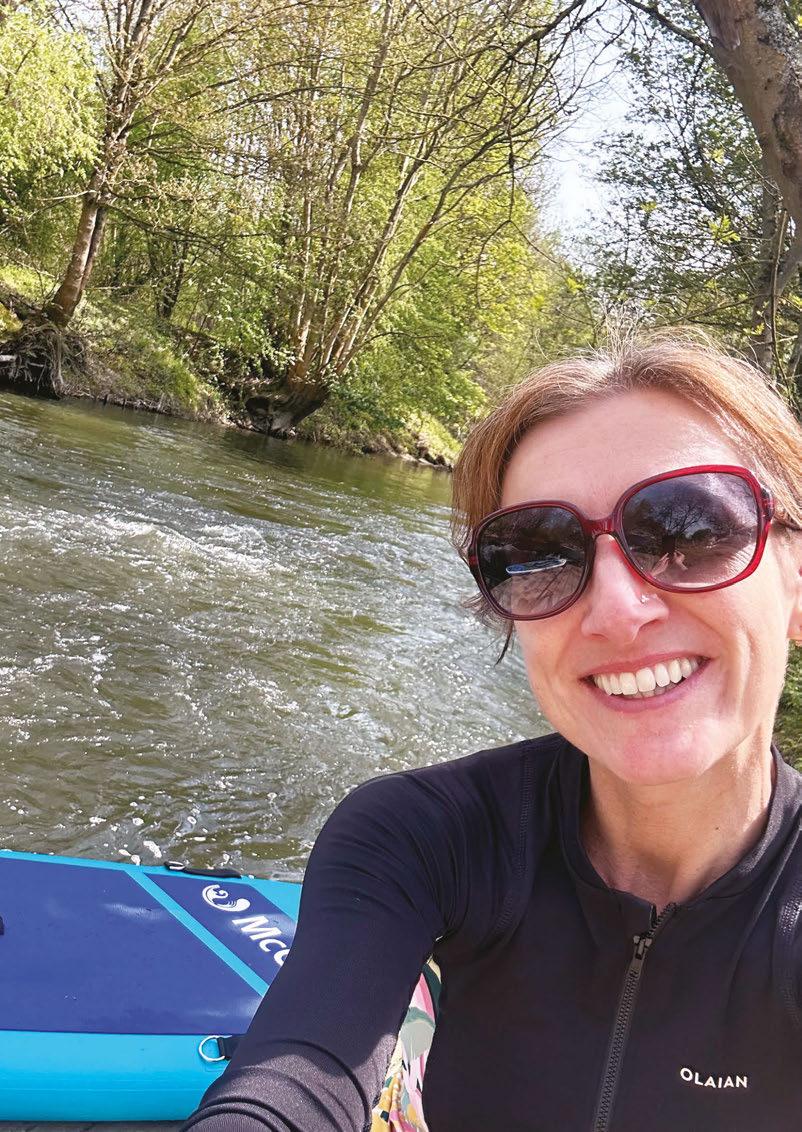
A er conquering her initial fears, JULIA MORTON discovers the joys of paddleboarding
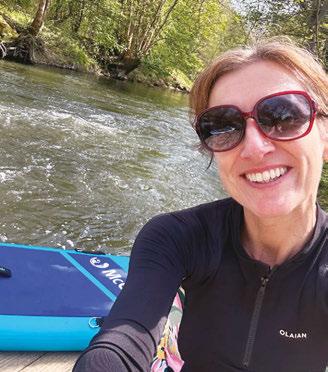
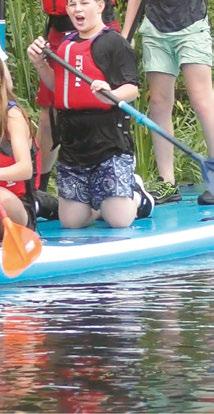
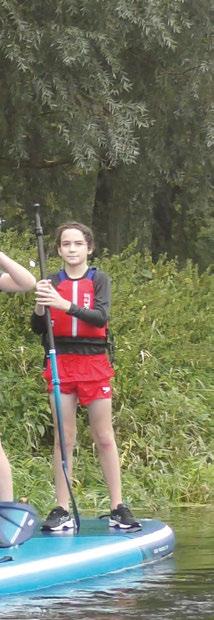
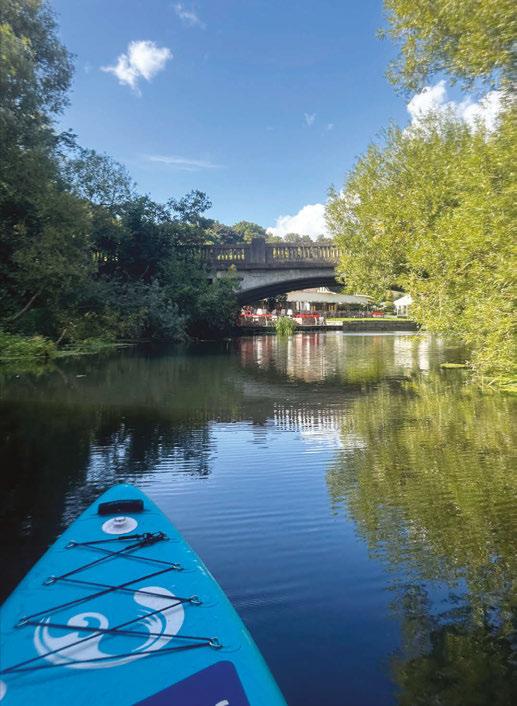
It was summer 2024 and I was about to try the now very popular sport of paddleboarding for the first time. I’d thought about giving it a go years ago in France but, as a smallersized person who hates ge ing cold and wet, I just hadn’t had the bo le until now.
My son was sat on the ont of the board, me kneeling behind, and I was feeling brave enough to a empt standing up. He said, “No, Mum, we’ll fall in!” Oh, ye of li le faith. I stood up, stayed dry and that was it. I was hooked.
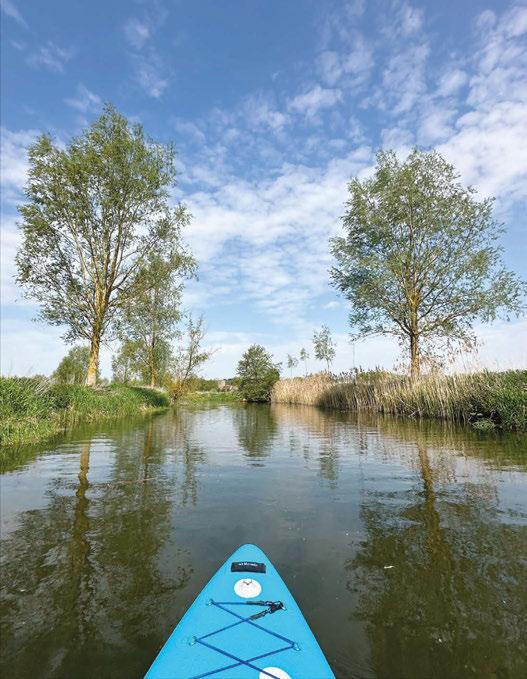
Living in Colchester, Essex, I’m lucky to have so many places to get out on the water. There are local river entry points, the surrounding sea and estuaries, and all of it set in the beautiful Constable countryside. The River Stour is at the heart of the area, and the Dedham-to-Flatford paddle is a classic. It even has a tea room stop at the National Trust proper at Flatford – a perfect excuse for a slice of cake. A li le further into Essex, the
Chelmer River and the routes to Heybridge or Paper Mill
Lock are personal favourites.
But that’s what I love about it: it’s exercise for pleasure, I’m outside in nature, moving my body, and there’s usually co ee and cake at the end of it. Paddleboarding gives me such a clear head. Life is full of noise, screens and to-do lists but, out on the river, all I can hear are birds and the sound of my paddle hi ing the water.
I’ve always enjoyed being active and outdoors but walking alone never felt quite right for me. I’ve tried kayaking and cycling too, but they didn’t click either.
Paddleboarding just fits. It’s peaceful, it’s social when I want it to be, and it all packs neatly into the back of my small car.
Like any outdoor sport, it’s important to understand the risks. Even in summer, rivers can hold hidden dangers. Before ge ing too confident, I took the time to learn about water safe , downloaded apps for paddle locations and wind conditions, bought my river licence and joined a local group.
That group – East of England Paddle Sports – has been a huge part of my journey. It’s such a iendly, welcoming communi on Facebook. Oli, who runs it, has years of
outdoor leadership experience, and the other admins are just as knowledgeable. They organise ee paddles around Colchester and north Essex, helping people explore new routes and meet others who share the same passion. You can use the group to ask questions, share routes or find paddling buddies, so you never have to go out alone unless you want to.
It was at one of Oli’s beginner lessons that I met a lovely woman who’s now a dear iend and we paddle together regularly. It’s funny how something new can open doors to unexpected iendships.
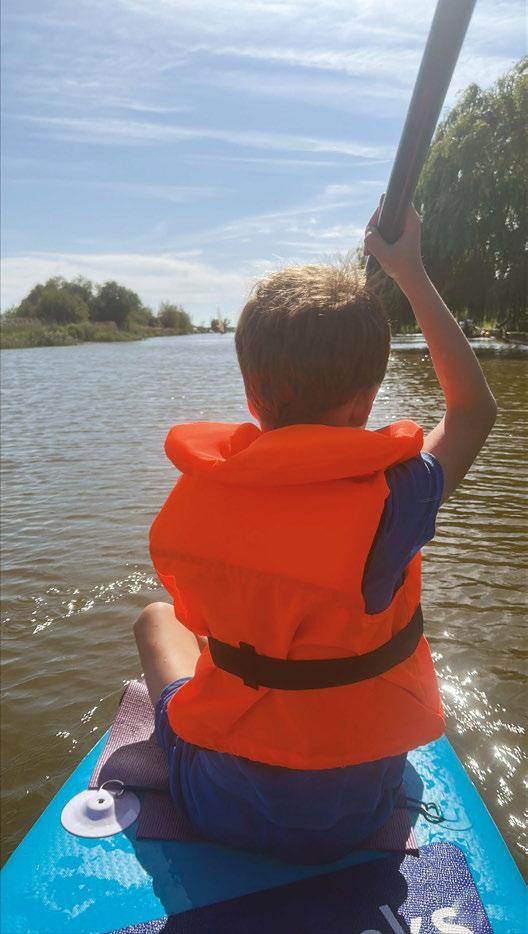
My son hasn’t quite made the leap to his own board yet but he still loves sitting on the front of mine. We’ve shared some special adventures this year, just the two of us on the water
My passion for the sport has really surprised me. I’ve been out every week from March through to early November. It’s taken me into surrounding counties, including the Norfolk Broads, and next year I’d love to travel further afield. Paddleboarding has given me a way to be outside, feel free and find a little solitude when I need it.
My son hasn’t quite made the leap to his own board yet but he still loves sitting on the front of mine. We’ve shared some
special adventures this year, just the two of us on the water.
I’d recommend paddleboarding to anyone, no matter your ability. With so many different board styles and sizes now, there’s something to suit everyone. Join a group, download the apps, stay safe and, most importantly, respect the countryside and nature. It’s beautiful and, maybe next spring, it’ll be your turn to get out on the water and enjoy the calm of Britain’s waterways.
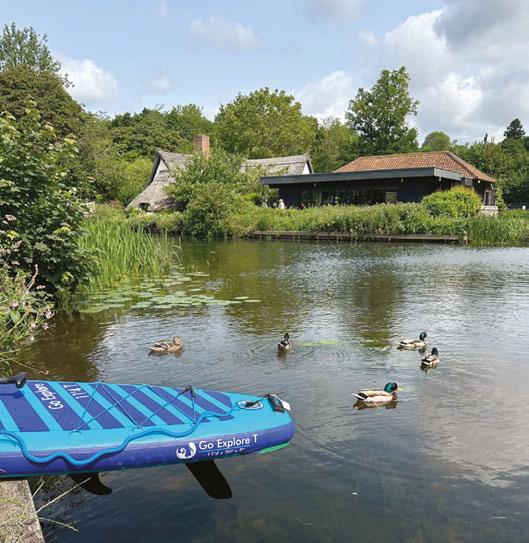
The tranquil Chelmer & Blackwater Navigation, managed by Essex Waterways, is popular with paddlers who want to get afloat on a canoe, kayak or paddleboard. If you don’t have your own, you can hire a Canadian canoe, a single or double kayak (life jacket, oars and licence all included) from the Essex Waterways office at Paper Mill Lock. Prices are £20 per hour (single kayak) and £25 per hour (double kayak or Canadian canoe). Licence fees apply to all non-powered craft including dinghies and inflatables, costing £6 for a single day, £16.50 for a week, or £42 annually.
essexwaterways.com
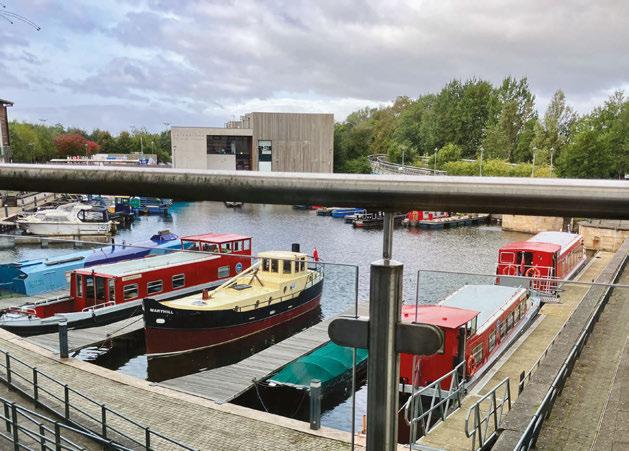
by JOnATHAn MOSSE
Somewhat to the alarm of the HVO Joint Working Group (made up of members from IWA, RYA, the Cruising Association and British Marine) we recently heard worrying reports from a blue-water sailor who had filled up his tank with HVO (hydro-treated vegetable oil) in Sweden.
He had observed a glutinous deposit forming in the bottom of the tank that looked capable of blocking the fuel system, much in the way that FAME diesel does through the ministrations of ‘diesel bug’.
Apart from being 90% carbon neutral, one of the primary reasons for choosing HVO over FAME-based mineral diesel is its 10-year shelf life, as opposed to diesel bought at the pumps which can only claim six months.
Further enquiry elicited that Fuel Set (an emulsifying anti-diesel bug preparation) had been added to the fuel in question, quite possibly in excessive quantities.
The group immediately set up a trial, progressively adding more and more Fuel Set to a measured quantity of HVO and, much relieved, we’re pleased to report that we were soon able to replicate the outcome that our lumpy-water sailor had with his Swedish consignment of HVO.
By the time we reached treble the normal concentration of Fuel Set to fuel, globules had started to form and, within a further day, there was a teaspoonful in the bottom of 4 litres of HVO.
Conjecture suggests that the Fuel Set had reacted with a cold flow additive which, in Scandinavia, is likely to be in a greater concentration than in, say, the UK. However, we are repeating the experiment with ordinary mineral diesel and so far have not had the same reaction, although we will continue to raise the concentration of the additive.
At this stage the key points to make are:
• HVO is a very clean fuel without FAME and is unlikely to suffer from diesel bug.
• There is no need to add any further treatments.
• Any required additives will have been added by the fuel manufacturer to meet specification requirements, e.g. lubricity and cold flow additives.
• Over-treatment with some emulsifying diesel bug additives (e.g. Fuel Set) can lead to additive dropout which appears as glutinous globules.
• In the very unlikely event of diesel bug, then a biocide additive (e.g. Marine 16) should be used.
• Keeping water out of the fuel and removing water from lowest point of the fuel tank (and the water separating filter) are the most effective ways of preventing the majority of fuel-related problems.
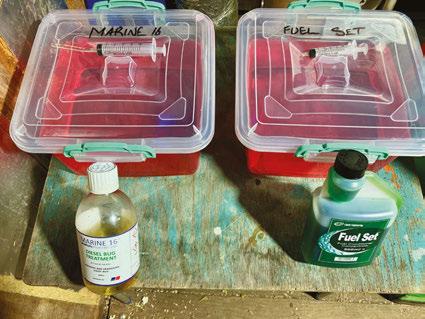
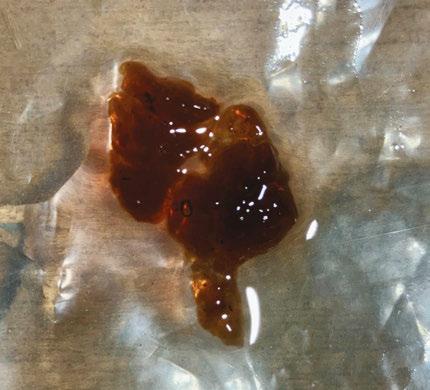
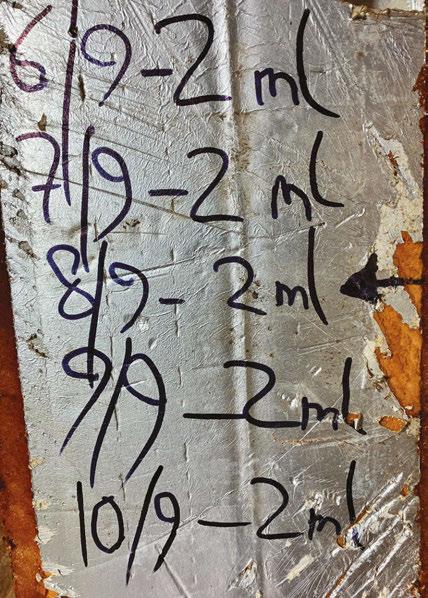
We have also tested Marine 16 alongside our Fuel Set trial and, even with extreme concentrations, have not (as expected) observed any deposits forming. You can do your own homework at pbo.co.uk/gear/12diesel-bug-treatments-tested-43353.