






‘My boyfriend called me a white supremacist,’ PAGE 10























ISAAC AMEND, TINASHE CHINGARANDE, PETER ROSENSTEIN, PATRICK FOLLIARD, TERRI SCHLICHENMEYER, JOE PHILLIPS, EVAN CAPLAN, ANKUSH KUMAR, ESTEBAN RIOSECO, TOM SITUMO, AYMAN ECKFORD CREATIVE DESIGN/PRODUCTION
MEAGHAN JUBA production@azercreative.com
SALES & ADMINISTRATION
DIRECTOR OF SALES & MARKETING
STEPHEN RUTGERS srutgers@washblade.com ext. 8077
SR. ACCT. EXECUTIVE
BRIAN PITTS bpitts@washblade.com ext. 8089
CLASSIFIED ADVERTISING/ADMINISTRATION
PHILLIP G. ROCKSTROH prockstroh@washblade.com ext. 8092
NATIONAL ADVERTISING
RIVENDELL MEDIA 212-242-6863; sales@rivendellmedia.com
For distribution, contact Lynne Brown at 202-747-2077, ext. 8075.






Hearing to determine if order should be reinstated against Pasha
By LOU CHIBBARO JR. | lchibbaro@washblade.com
A D.C. Superior Court judge on April 17 rescinded an anti-stalking order he approved in February at the request of Capital Pride Alliance against local LGBTQ activist Darren Pasha.
In a ruling at a court status hearing, Judge Robert D. Okum agreed with defendant Darren Pasha’s stated concern that the initial order was too broad and did not specify who specifically he must stay at least 100 feet away from, as called for in the order.
Okum ruled on April 17 that the initial order, which he noted was oral rather than written, would be suspended until an evidentiary hearing takes place in which Capital Pride will need to present evidence justifying the need for such an order.
“I’m fine with scheduling a hearing at which the plaintiff can present evidence, and the defendant can present evidence,” Okum said. “But I’m not fine with just continuing this oral TRO [Temporary Restraining Order] that Mr. Pasha really doesn’t even have notice of. That seems unfair,” he said.
After asking both Pasha and Capital Pride Alliance Attorney Nick Harrison when they would be available for the evidence hearing, Okum set the date for April 27 at 11 a.m. in Superior Court.
The case began when Capital Pride Alliance, the D.C.based LGBTQ group that organizes the city’s annual Pride events, filed a Civil Complaint on Oct. 27, 2025, against Pasha, accusing him of engaging in a year-long
effort to harass, intimidate, and stalk Capital Pride’s staff, board members, and volunteers.
The complaint was accompanied by a separate motion seeking a restraining order, preliminary injunction, and anti-stalking order prohibiting Pasha from “any further contact, harassment, intimidation, or interference with the Plaintiff, its staff, board members, volunteers, and affiliates.”
In his initial ruling in February, Okum issued an order requiring Pasha to stay at least 100 feet away from Capital Pride staff, board members, and volunteers until the April 17 status hearing. He reduced the stay-away distance from the 200 yards requested by Capital Pride.
Pasha, who has so far represented himself in court without an attorney, has argued in multiple court filings and motions that the Capital Pride stalking allegations are untrue. In his initial 16-page response to the complaint, Pasha said it appears to be a form of retaliation against him for a dispute he has had with Capital Pride and its former board president, Ashley Smith, who has since resigned from the board.
“It is evident that the document is replete with false, misleading, and unsubstantiated assertions,” Pasha’s court response states.
At the April 17 hearing, Okum also ruled that, as standard procedure for civil complaints such as this one, he has ordered both parties to enter into court-supervised mediation to attempt to reach a settlement rather than
go to trial.
In an earlier ruling Okum denied Pasha’s request for a jury trial, stating that civil cases such as this must undergo a trial with the judge determining the verdict under existing civil court statutes.
The April 17 court hearing was held in a courtroom at the courthouse, but as allowed under current court rules, Capital Pride attorney Harrison and Capital Pride official June Crenshaw participated virtually through a video connection. Pasha attended the hearing in the courtroom.
Capital Pride didn’t immediately respond to a request by the Washington Blade for its reaction to the judge’s ruling rescinding the stay-away order.
“This is clearly a case of retaliation,” Pasha told the Blade after the hearing. “Today the judge removed the stay-away order and asked Capital Pride Alliance to present enough evidence and examples to see if a stay-away order should be granted,” he said. “Because Pride is coming up in June, we need to see where this is going.”
Cape Henlopen has gender identity nondiscrimination policy
By LOU CHIBBARO JR. | lchibbaro@washblade.com
The Cape Henlopen School District in Delaware, one of five school districts in several states where the U.S. Department of Education earlier this month rescinded agreements protecting the rights of transgender students, says it will continue to provide a “safe and supportive learning environment” for all students.

In response to a request for comment, a spokesperson for the Cape Henlopen district sent the Washington Blade a short statement on its response to the federal Education Department’s action under orders from the Trump administration that ended what were called school district “resolution agreements” put in place under the administration of President Joe Biden.
Among other things, the federally initiated agreements required schools to train faculty on responding to a student’s preferred name and pronouns and to implement policies that allow transgender students to use bathrooms
and locker rooms that align with their gender identity.
“The Cape Henlopen School District has received correspondence from the U.S. Department of Education’s Office of Civil Rights regarding the resolution agreement entered in March 2024,” the Cape Henlopen School District’s statement says. “As always, we are committed to providing a safe and supportive learning environment where all students can succeed,” it says.
“We will continue to work collaboratively to ensure our practices and programs support the well-being, growth, and achievement of every student in our District,” the statement concludes.
Although it did not respond specifically to the Trump-initiated action ending federal protections for trans students, a statement on the Cape Henlopen School District’s website says the district has a policy of non-discrimination based on a wide range of categories, including race, religion, creed, gender, and “sexual orientation or gender identity.”
The Trump administration’s latest action does not take away nondiscrimination policies put in place by school districts on their own.
The Cape Henlopen district is in Sussex County, a short distance from Rehoboth Beach, a Delaware resort town with many LGBTQ residents and summer visitors.
The other school districts for which the U.S. education department ended the trans nondiscrimination agreements include the Delaware Valley School District in Pennsylvania, Sacramento City Unified School District in California, Fife School District in Washington State, and La Mesa Spring Valley School District also in California.
Kimberly Richey, the Department of Education’s Assistant Secretary for Civil Rights, said in a statement that the decision to terminate the school agreements highlighted the Trump administration’s efforts to prevent trans students from participating in girls’ and women’s sports teams and accessing shared locker rooms.
“Today, the Trump administration is removing the unnecessary and unlawful burdens that prior administrations imposed on schools in its relentless pursuit of a radical transgender agenda,” she said in her statement.
Shiwali Patel, an official with the National Women’s Law Center, said in a statement that the action removing protections for trans students would negatively impact all students.
“There is absolutely no basis for what the Department of Education is doing, and it is unimaginably cruel,” she said. “Parents, teachers, and students need the Department to focus on addressing real harms on campuses instead of rolling back policies that keep all students safe.”




































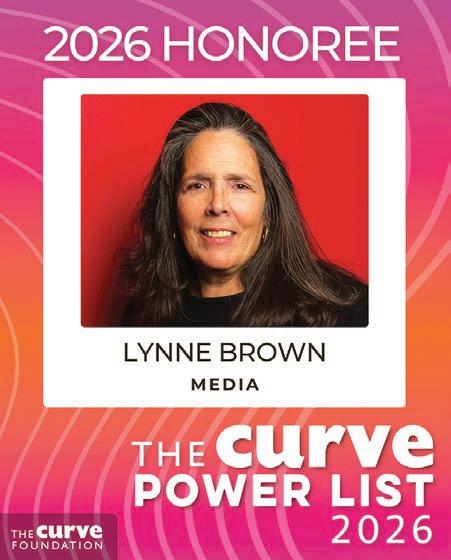
Washington Blade Publisher Lynne Brown has been named to the 2026 Curve Power List celebrating LGBTQ+ women and nonbinary individuals in North America who are blazing trails in their chosen fields.
“From sports and entertainment icons to corporate leaders and lawmakers, these individuals are breaking barriers, challenging norms, and shaping the future,” Curve Foundation/Curve magazine said in announcing this year’s list, which includes ABC newscaster Robin Roberts, comedian/actress Hannah Einbinder, and singer/actress Renee Rapp, among others.
Brown has worked for the Washington Blade for nearly 40 years. She was named publisher in 2007 before becoming a co-owner in 2010.
“I am honored to be recognized by Curve magazine during Lesbian Visibility Week,” Brown said. “Receiving this Curve honor is twofold. I was an early subscriber to Curve. I enjoy the product and know its history. Its journalism, layout and humorous features have inspired me.
“As an owner/publisher, receiving recognition from a similar source acknowledges my work and efforts, with a sincerity I truly appreciate.Franco Stevens , the publisher of Curve, is a business person of duration, experience, and purpose. The fact that they are in the media business, and honoring me and my publication makes it a tiny bit sweeter.”
Nominations for the Curve Power List come from the community: peers, mentors, fans, and employers.
Curve explained the significance of the list in its announcement: “An annual, publicly nominated list of impactful LGBTQ+ women and nonbinary changemakers is crucial in current times to counter discrimination, legislative rollbacks, hostility, and the invisibility of queer women within mainstream and marginal spaces and endeavors. Such a list also fosters encouragement and solidarity, and elevates voices and achievements— from high-profile roles to under appreciated areas of life.”
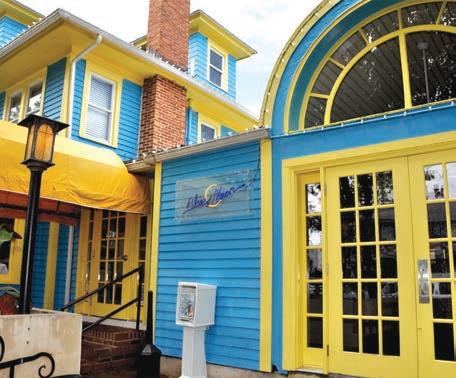
The Blue Moon in Rehoboth Beach, Del., has been an iconic presence in the local LGBTQ community for four decades but its status remains murky after a sheriff’s auction of the property was abruptly called off on Tuesday.
The property was listed for sale in December. At that time, owner Tim Ragan told the Blade that he is committed to preserving its legacy as a gay-friendly space.
“We had no idea the interest this would create,” Ragan said in December. “I guess I was a little naive about that.”
Ragan explained that he and longtime partner Randy Haney were separating the real estate from the business. The two buildings associated with the sale were listed by Carrie Lingo at 35 Baltimore Ave., and include an apartment, the front restaurant (6,600 square feet with three floors and a basement), and a secondary building (roughly 1,800 square feet on two floors). They were listed for $4.5 million.
The bar and restaurant business is being sold separately; the price was not publicly disclosed.
But then, earlier this year, the Blue Moon real estate listing turned up on the Sussex County Sheriff’s Office auction site. The auction was slated for Tuesday, April 21 but hours before the sale, the listing changed to “active under contract” indicating that a buyer has been found but the sale is not yet final. As of Wednesday morning, the listing has been removed from the sheriff’s auction site.
Ragan didn’t respond to Blade inquiries about the auction. Back in December, he told the Blade, “It’s time to look for the next people who can continue the history of the Moon and cultivate the next chapter,” noting that he turns 70 this year. “We’re not panicked; we separated the building from the business. Some buyers can’t afford both.”
The identity of the buyer was not disclosed, nor was the sale price.
FROM STAFF REPORTS
Virginia voters on Tuesday narrowly approved a congressional redistricting plan ahead of the 2026 midterm elections.
The referendum passed by a 51-48 vote margin. Virginia’s last Census happened in 2020. The next time maps would have been redrawn was intended for 2030, but the referendum results allow for redistricting to happen this year, while allowing the standard district procedures to resume after the 2030 Census.
Many congressional maps have been redrawn since the Trump-Vance administration took office, adding seats for both Republicans and Democrats.
Ten of 11 of Virginia’s congressional districts will now favor Democrats.
The Human Rights Campaign PAC supported the referendum.

“Virginians made their voices heard today, rebuking Republi -
cans’ attempts to stack the deck in their favor in the 2026 midterm elections and beyond,” said Human Rights Campaign PAC President Kelley Robinson in a statement. “This year, we’re going to take Congress back from the fringe extremists who have bent the knee to President Trump’s historically unpopular agenda at every turn.”
“Virginians just put anti-equality, anti-democracy, and anti-freedom lawmakers on notice — together, we are fighting for a future where every single American’s vote matters and where every elected official must earn their constituents’ trust,” she added.
SAM EPNER







By EMMA PAIDRA
When Evan decided it was time to tell his boyfriend that he voted for Trump, he couldn’t get the words out. “I was stuttering for 20 minutes straight on the phone,” he told Uncloseted Media and GAY TIMES.
Once he finally worked up the courage, he was met with pushback: “He made fun of me. … He called me a racist and a white supremacist,” says Evan, a 21-year-old math major who lives in Long Island, N.Y.
That pushback isn’t unusual: According to a 2023 Pew Research Center survey, 83 percent of queer men typically vote Democrat. One key reason gay men swing left in 2026 is because of the Trump administration and MAGA-aligned politicians’ track record on LGBTQ issues. Since the start of Trump’s second term, his administration has terminated more than $1 billion worth of grants to HIV-related research, removed the Pride flag from the Stonewall National Monument and shut down the LGBTQ-specific option on the 988 youth suicide hotline.
Because of this, many of the fewer than one in five LGBTQ men who cast their ballot for Trump in 2024 face judgment for their political affiliation.
“People think that I hate myself for being gay, and that I’m a gay traitor. … I wish there were more gay conservatives or moderates,” says Evan, who requested to use a pseudonym due to fears over retaliation for his political views.
Nick Duncan, 43, can relate to Evan’s fears about being an open Trump supporter: “I mostly get hatred. I’ve never lost a conservative friend because I’m gay, but I’ve lost all of my gay friends because I’m conservative,” says Duncan, a hospitality executive who lives in Miami. “I’ve divorced myself from what I refer to as the Alphabet Mafia.”
Duncan says he feels so unwelcome by the LGBTQ community that he’s hesitant to attend certain queer events. “Nowadays, I would never go to a Pride event,” Duncan told Uncloseted Media and GAY TIMES. “I don’t feel that I would be safe.”
Despite these concerns, Duncan doesn’t hide his political views when looking for love. “I’m in a long-term relationship now, and when I have been on the dating market, I’m very open and upfront about [my political views]. So I think it just weeds out most people who would have an issue.”
For Evan, political differences have been a source of tension in his relationship even before he told his boyfriend who he voted for. “When I first met him, he asked me if I liked Trump. … He was kind of scaring me. So I said, ‘I don’t know,’” Evan recalls. “He said, ‘Good answer, because if you said yes, I couldn’t even talk to you.’”
Since revealing his conservative identity, Evan has had multiple arguments with his boyfriend about politics. “This guy, who I’ve been dating for almost a year, he’s way too far left. … The first proof is he thinks there’s more than two genders,” says Evan. “I tried telling him there were only two genders, and he got mad at me.”
Though Evan believes there are only two genders, research suggests that gender is a spectrum allowing for multiple gender identities.
According to a 2025 report from Pew Research Center, 71 percent of LGBTQ adults view the Republican Party as unfriendly toward LGBTQ Americans. Duncan thinks these critiques are unreasonable: “The Republican Party is not nearly as anti-gay as [leftists] believe,” he says. “The Trump administration has plenty of openly gay people in the administration, and Trump actually supported gay marriage before it was cool.”
Gay members of the Trump administration include Treasury Secretary Scott Bessent, as well as Tony Fabrizio, a pollster and strategist. Additionally, Trump did tell the Advocate in a 2000 interview that though “the institution of marriage should be between a man and a woman,” he thinks amending the Civil Rights Act to grant the same protections to gay people that we give to other Americans is “only fair.”
But since then, Trump has appointed Supreme Court justices who have denounced marriage equality and Cabinet members with anti-LGBTQ track records, including Pete Hegseth, Marco Rubio, and Pam Bondi.
Duncan says part of the reason he isn’t worried about Trump’s anti-LGBTQ track record is because he doesn’t view being gay as the most important part of his identity: “The most important part of who I am is as a father.”
Duncan is not alone: A 2020 report from the UCLA Williams Institute School of Law found that Republican lesbian, gay, and bisexual people are more likely to feel connected to other parts of their identities than their sexual orientations.
Evan doesn’t identify with the community at large and does not like to be referred to as “LGBTQ” or “queer.”
“I realized I’m normal. I’m not LGBTQ,” he says. “I’m just gay.”
Evan’s desire to be seen as “normal” rings of Vice President JD Vance’s 2024 comments on Joe Rogan’s podcast, where he said Trump could win the “normal gay” vote.
During this same interview, Vance suggested that parents of genderqueer children use their children’s identities as a rejection of having white privilege. Vance received significant backlash for these comments, with the Human Rights Campaign responding to the vice president’s remarks over X.
For Chris Doane, 56, voting Republican is the only choice that makes sense, as he believes voting for a Democrat goes directly against his interests as a queer man. “Conservatives don’t want to murder gays. They want them saved,” he says. “Muslims vote Democrat, because if the Democrats win, they get to stay [in the U.S.], they get to take power, and they will murder gays brutally with a smile on their face,” says Doane.
Doane’s comments are unfounded and display racist stereotypes peddled by farright American media: One study from the Brennan Center for Justice compiled data from 1984 to 2020 and found that racial resentment is more prevalent on the right than on the left.
Doane was raised in a conservative family in Bryan, Texas, and isn’t out to his family because he fears that they won’t accept him. For him, voting Republican is part of his heritage. “I was told, ‘Don’t ever let Democrats in control. They’ll ruin our country,’” he says. “That’s pretty much what they did, and that’s why President Trump is working overtime to straighten it all back out.”
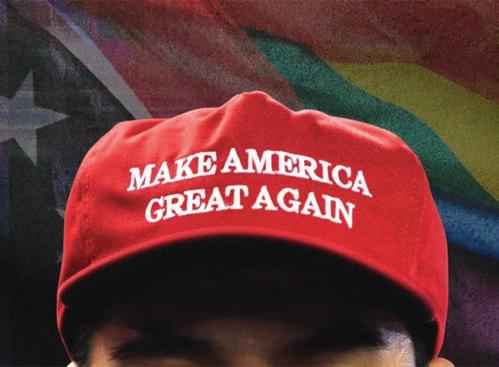
Though Doane and other gay Republicans hold a range of views, a common thread is a hesitancy around trans rights. So, they align more with the Trump administration, which has railed against the trans community with Trump’s policies and rhetoric.
For example, Doane sees being able to transition as a matter of personal freedom but thinks gender-affirming care for trans kids is a step too far.
“When it comes to transgender, I have nothing against that. I just believe that when you make that transition, it should be at a point where your brain is fully developed … and you’re actually going to enjoy that transition,” he says.
He also holds the view that for a trans person to be accepted as their correct gender, they must fully physically transition. “If you’re gonna transgender, transgender all the way. If you’ve still got male parts on you, you don’t belong in the women’s dressing room.” However, research suggests otherwise, with a 2025 study indicating that policing bathroom access can lead to mental distress in trans youth.
Duncan has his own doubts.
“I disagree with the integration of gender ideology and radical wokeism into the LGBT community. You are free to live under any delusion you so desire. You’re not free to require me to live under your delusion as well,” he says. “But if somebody wants to live as a man or a woman, however it is, I firmly believe they have the right to do that. I would never get in the way of it.”
Duncan also believes that education about LGBTQ people should be limited in schools. He sees adolescence as a fundamentally confusing time, and believes an education about LGBTQ communities would “add on layers of confusion.” This belief seems to be in line with Gov. Ron DeSantis’s 2022 “Don’t Say Gay” bill, which has banned education on gender identity and sexual orientation in Florida’s classrooms from pre-kindergarten until the end of eighth grade, though there are exceptions for health lessons.
“It’s OK to tell kids that some boys like boys, some girls like girls, some people like both. But it just needs to be kept vague and general,” Duncan says. “However you are is OK. We don’t need to expose children to gay media because if you’re gay, you’re going to know.”
(This article is republished with permission from Uncloseted Media. It was written in partnership with Gay Times magazine.)
By JOE REBERKENNY | jreberkenny@washblade.com
Despite the dreary, chilly weather on Sunday, the energy inside the Salamander Hotel in downtown Washington was warm and welcoming. With the U.S. Capitol, National Mall, and the Washington Monument as a fitting backdrop, political leaders in the LGBTQ movement gathered to celebrate the strides made over the past year and to reframe their path forward at the LGBTQ+ Victory Fund National Champagne Brunch. Just over a mile and a half away, an increasingly hostile Trump administration loomed, sharpening the urgency of their fight.
Given the current political climate—one that has many LGBTQ advocates wary about the future of LGBTQ rights, especially for transgender members of the community— LGBTQ people showed up in full force (and full ‘fits) to support the next wave of LGBTQ elected officials. Colorful print shirts and bright jackets filled the ballroom, while cherry blossom centerpieces echoed the hotel’s location, just feet from the Tidal Basin. Even as guests moved through long lines for seafood paella and waffles after speeches from LGBTQ elected officials and allies, the general feeling remained upbeat.
This year’s brunch — the 25th annual — was complete with drinks, discussions of what’s on the agenda, and, of course, a slew of high-ranking LGBTQ elected officials and allies, from local offices all the way to Capitol Hill, representing states both red and blue.
Of the guests at this year’s LGBTQ Victory Brunch, none was more anticipated than 2028 presidential hopeful and Kentucky Gov. Andy Beshear. The 63rd governor of Kentucky and the state’s 50th attorney general, Beshear was honored with the Allyship Award and delivered the keynote address to more than 150 attendees at the national brunch.
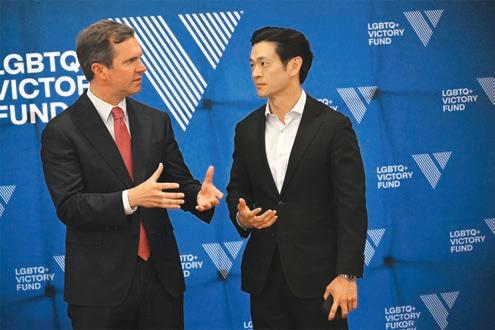
The governor, who has made multiple allusions to his 2028 bid for the Democratic seat in the presidential election over the past year, covered a wide range of topics when speaking with journalists before the brunch, as well as during his highly anticipated keynote address. He came out strongly condemning the use of discrimination as a political tool — something he said the Republican Party has increasingly embraced, particularly against the transgender community. The ACLU’s anti-LGBTQ tracker currently shows 17 statewide bills across the country that have passed into law.
“It’s sad that some people are passing legislation that discriminates solely for political reasons. They are willing to tear away somebody’s rights just to fire up a base and get more votes,” Beshear said. “ And it’s sad that we’ve got a federal administration right now engaging in discrimination in just about every form, every day. That harms people who love this country and want to contribute to it. As a country, we are slipping backwards.”
He continued, arguing that while the Democratic Party often touts itself as a party of inclusion, it must still reckon with the gap between rhetoric and policy.
“Discrimination is never okay. It’s not a bargaining chip so that you can win elections. I’m against discrimination because it’s wrong, and it’s always going to be wrong. We shouldn’t be allowing a little bit of discrimination in order to do better in the polls or on Election Day. We should stand up for who we are and be the true party of inclusion.”
He also highlighted his record on protecting the most vulnerable in his home state of Kentucky, where his father also served as governor from 2007-2015. Beshear has remained a vocal advocate for LGBTQ rights, frequently opposing legislation in the Bluegrass State — including Senate Bill 150, which would have required parental notification when students come out at school, restricted pronoun use to biological sex, and limited instruction on human sexuality in school curricula.
“I vetoed every anti-LGBTQ bill that came to my desk, and I still won reelection by five points in a state Donald Trump would win by 30 the next year. So don’t tell me we should throw anybody under the bus. We can stand for all of our convictions and still win. We can govern in a way that tells people they are welcome and accepted. It makes a difference when your governor is willing to say that he sees you and that he’s with you.”
He also turned to the U.S. Supreme Court, which he said has played an increasingly harmful role in LGBTQ rights.
“That Supreme Court decision allowing conversion therapy is wrong. It’s horrifying, and torture is torture. It should never be done in the name of religion or free speech,” he said while giving his keynote. “I vehemently disagree with the idea that this barbaric practice can continue. Torture is not a First Amendment right.”
Prior to the keynote, while speaking with journalists, Beshear was asked how Democrats should approach LGBTQ rights when the issue has become so divisive nationally. He responded with a clear message centered on principle over politics.
“Never throw anyone under the bus. Stand up for your convictions, and don’t let polling decide what you believe. If you’re not willing to stand up for your convictions because of polling, they’re not real convictions. We should be the party where people feel they can come and be exactly who they are. That’s how we win and who we’re supposed to be.”
One unique element of Beshear’s approach to LGBTQ rights is his consistent use of faith alongside inclusion. He often frames scripture as a call to love rather than exclusion, arguing against those who, as he put it in his speech, try to “love, vote, or look like you” differently. This framing is part of why he maintains a 64 percent approval rating in a solidly red state that voted for Trump by 30 points
“Faith is meant to lift people up and never kick anyone while they’re down. When we’re told to love our neighbor as ourselves, there’s no asterisk and no exception. There’s no ‘unless’ people look different, pray different, or love different than you. We are simply called to accept and love one another. When people try to add that comma, they’re changing the message.”
He also briefly addressed the possibility of a presidential run in 2028, again emphasizing inclusion over ambition.
“This doesn’t have anything to do with 2028 — it has to do with right and wrong. Nobody should be thrown under the bus for political gain. We shouldn’t allow discrimination just to do better in the polls. That’s what people expect from us.”
Eugene Daniels, former Politico reporter and current MSNBC journalist, attended the event and spoke to the Washington Blade about Beshear’s ability to bridge divides on issues that often polarize voters.
“What’s striking about Andy Beshear is his ability to take what many Democrats call cultural issues and make them kitchen-table issues,” Daniels said. “He talks about protecting trans kids not just as policy, but as a parent and as a person of faith. That’s a connection a lot of Democrats struggle to make. He frames it in a way that resonates beyond politics. And that’s why he stands out.”
Victory Fund President Evan Low also spoke at the event, emphasizing that the organization’s mission is not solely focused on higher office, but on electing LGBTQ leaders at the local and state level where many key decisions are made.
“We are laser focused on state and local races because that’s where so many of these decisions are made,” Low said. “Even if Washington is taking chances away from people, we can still protect them at the state level. We want LGBTQ people not just at the table, but setting the agenda. This is about governing power, not just representation. And we are not taking our foot off the gas.”
Tristan Schukraft, founder and CEO of MISTR, a telemedicine platform specializing in HIV prevention, and owner of one of the most famous LGBTQ clubs in the world, the Abbey in West Hollywood, Calif., was also in attendance and was awarded the National Impact Award for his efforts to curb HIV through his telemedicine service, MISTR.
“Ending HIV is within reach — we have the tools right now,” Schukraft told the crowd, commending past administrations on their work to stopping the virus from continuing to ravage the LGBTQ community. “As ADAP, the AIDS drug assistance program is now under threat in 20 states, we’re stepping up offering insurance and premium assistance. It doesn’t matter what office you hold, HIV is an issue that can be resolved, and if we don’t end HIV, it’s not because we did not have the tools, but it’s because we did not act.”
LGBTQ Catholic groups have sharply criticized President Donald Trump over his criticisms of Pope Leo XIV.
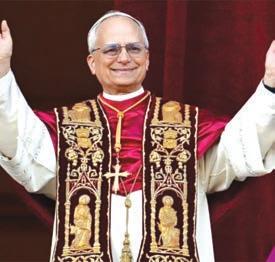
Leo on April 13 told reporters while traveling to Algeria that he had “no fear of the Trump administration” after the president described him as “weak on crime” and “terrible for foreign policy” in response to his opposition to the Iran war. (Trump on the same day posted to Truth Social an image that appeared to show him as Jesus Christ. He removed it on April 13 amid backlash from religious leaders.)
Vice President JD Vance, who is Catholic, during a Fox News Channel interview on the same day said “in some cases, it would be best for the Vatican to stick to matters of morality, to stick to matters of what’s going on with the Catholic church, and let the president of the United
States stick to dictating American public policy.” Vance on April 14 once again discussed Leo during an appearance at a Turning Point USA event in Athens, Ga., saying he should “be careful when he talks about matters of theology.”
Italian Prime Minister Giorgia Meloni; former U.S. Ambassador to the Vatican Miguel Díaz; and Oklahoma City Archbishop Paul Coakley, president of the U.S. Conference of Catholic Bishops, are among those who have criticized Trump over his comments. The president, for his part, has said he will not apologize to Leo.
“The world is being ravaged by a handful of tyrants,” said Leo on Thursday at a cathedral in Bamenda, Cameroon.
Francis DeBernardo is the executive director of New Ways Ministry, a Maryland-based LGBTQ Catholic organization. He told the Washington Blade on Thursday that Trump’s comments about Leo “are one more example of the ridiculous hubris of this leader (Trump) whose entire record shows that he is nothing more than a middle-school bully.”
“LGBTQ+ adults were often bullied as children, and they have learned the lesson that bullies act when they feel frightened or threatened,” said DeBernardo. “But secular power does not threaten the Vicar of Christ, and
Pope Leo’s response illustrates this truth perfectly.”
DeBernardo added Trump “is obviously frightened that Pope Leo, an American, has more power and influence than the president on the world stage.”
“Like most Trumpian bullying, this strategy will backfire,” DeBernardo told the Blade. “Moral truth and compassion always overcome ignorant hate. Trump’s actions are not an example of his power, but of his impotence.”
Marianne Duddy-Burke, executive director of DignityUSA, an LGBTQ Catholic organization, echoed DeBernardo.
“He [Trump] has demonstrated throughout both presidencies that he doesn’t understand the basic concepts of any faith system that is founded on the dignity of human beings, the importance of common good,” Duddy-Burke told the Blade on Thursday during a telephone interview. “It’s just appalling.”
Duddy-Burke praised Leo and the American cardinals who have publicly criticized Trump.
“The pope’s popularity — given how much more respect Pope Leo has than the man sitting in the White House — is a blow to his ego,” Duddy-Burke told the Blade. “That seems to be a sore sport for him.”
“It’s such an imperialistic world view,” she added.
MICHAEL K. LAVERS
The Australian Red Cross Blood Service (Lifeblood) has lifted additional restrictions on LGBTQ people who want to donate blood.
The Star-Observer, an Australian LGBTQ newspaper, reported new Lifeblood rules that took effect on Monday will allow “gay and bisexual men and transgender people in long-term monogamous relationships to donate blood and platelets for the first time.”
The new policy defines “long-term monogamous relationships” as those that are at least six months.
All potential donors — regardless of their sexual orientation or gender identity — will answer the same questions about recent sexual activity.
“Previous donor rules prevented many people from

the LGBTQIA+ community from donating blood or platelets if they’d had sex within the past three months,” said Lifeblood CEO Stephen Cornelissen in a press release that announced the new policy. “These latest changes mean many gay and bisexual men and transgender people in long-term, monogamous relationships will become eligible to donate blood or platelets for the first time.”
Lifeblood in 2025 ended its blanket ban on sexually active LGBTQ people from donating blood.
Rodney Croome, an Australian LGBTQ activist who is the spokesperson for Let Us Give, a campaign that has championed the changes, donated blood on Monday.
“After three decades of advocacy, and for the first time in my life, I was able to donate blood today,” said Croome in a Facebook post that showed him donating blood.
“From today, gay men, and bisexual men and transgender women who have sex with men, are able to give blood without the traditional three month abstinence period. All donors are now asked the same questions about sex regardless of the gender of our sexual partners.”
MICHAEL K. LAVERS
The European Union’s top court on Tuesday struck down Hungary’s anti-LGBTQ propaganda law.
Hungarian MPs in 2021 approved Act LXXIX of 2021. “It shall be forbidden to make accessible to persons who have not attained the age of 18 years advertisement that depicts sexuality in a gratuitous manner or that propagates or portrays divergence from self-identity corresponding to sex at birth, sex change or homosexuality,” it reads.
The European Commission in 2022 challenged the law. Sixteen EU countries — Austria, Belgium, Denmark, Estonia, Finland, France, Germany, Greece, Ireland, Luxembourg, Malta, the Netherlands, Portugal, Slovenia, Spain, and Sweden — joined the lawsuit. The European Parliament also supported it. Outgoing Hungarian Prime Minister Viktor Orbán, for his part, said his government would defend the law.
The EU Court of Justice heard the case in 2024.
A press release that announced the ruling on Tuesday said Hungary “acted in breach of EU law.”
“The court finds, for the first time, a separate infringe-
ment of Article 2 TEU (Treaty on European Union), which lists the values on which the (European) Union is founded and which are common to all the Member States,” it reads. “The aspects of the amending law targeting content which portrays or promotes deviation from the self-identity corresponding to the sex assigned at birth, gender reassignment, or homosexuality constitute a coordinated series of discriminatory measures which are in breach, in a way that is both manifest and particularly serious, of the rights of non-cisgender persons — including transgender persons — or non-heterosexual persons, as well as the values of respect for human dignity, equality and respect for human rights, including the rights of persons belonging to minorities.”
“Consequently, that law is contrary to the very identity of the (European) Union as a common legal order in a society in which pluralism prevails,” notes the press release. “Hungary cannot validly rely on its national identity as justification for adopting a law which is in breach of the values re-
ferred to above.”
The Háttér Society, a Hungarian LGBTQ rights group, said the ruling “is a milestone for the protection of human rights in the European Union, and it is also a historic victory for LGBTQI people in Hungary.”
The court issued its ruling nine days after Péter Magyar ousted Orbán in Hungary’s elections.
Orbán took office in 2010.
He and his government faced widespread criticism over its anti-LGBTQ crackdown that included laws that banned Pride events and other public LGBTQ events. (Upwards of 100,000 people last June denied the prohibition and marched in Budapest’s annual Pride parade.)
“Those amendments constitute a particularly serious interference with several fundamental rights protected by the (EU) Charter (of Fundamental Rights), namely the prohibition on discrimination based on sex,” notes the court’s press release.
MICHAEL K.
LAVERS















is a 2025 IAN Book of the Year nominated author and civil rights activist from Columbia, Conn.
The state of Tennessee has a long history of political discrimination against its 225,000 LGBTQ citizens. In 2019, a district attorney remarked that gay people should not receive domestic violence protections, and in 2023, for five months in Murfreesboro, homosexual acts in public were illegal, prompting a federal judge to have the ordinance removed.
In 2022, I briefly lived in Tennessee and played rugby with the LGBTQ-inclusive Nashville Grizzlies, who welcomed me with open arms as an ally, teaching me that rugby isn’t always about winning or losing – it’s about creating a safe, inclusive, and joyful space for people looking to feel welcome.
In Tennessee, where 87% of the LGBTQ community has experienced workplace discrimination, and where, each year, countless bills that target their identities are introduced, it can be difficult to feel welcome. The Nashville Grizzlies played rugby with the exuberance of newly liberated people who were finally able to be their authentic selves. I was inspired by their brotherhood.
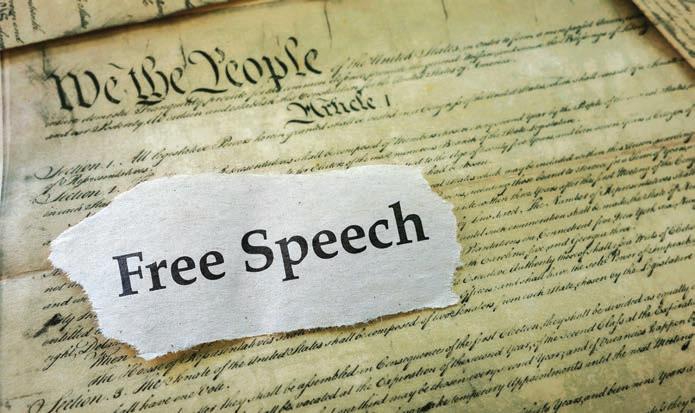
When I read about the Charlie Kirk Act being passed last week, I felt a visceral need to write about it.
While the bill is presented as legislation that strengthens free speech and encourages greater public discourse on campuses, it would effectively allow a school to expel a student who felt compelled to walk out on a speaker with hateful views, forcing marginalized groups to sit through existentially harmful rhetoric.
And ironically, it doesn’t seem like free speech goes both ways — a Tennessee University administrator lost their job last year for sharing negative views on Charlie Kirk, and countless LGBTQ books have been banned not only in schools, but even in adult libraries.
We like to think that as time moves forward, progress is inevitable, but this isn’t always the case. In a 2023 study, 27% of LGBTQ Tennesseans and 43% of transgender people in the state have considered relocating, forcing them to reckon with leaving home in pursuit of a better life. Nashville Grizzlies Captain Ethan Thatcher told me, “I’ve thought about leaving Tennessee. Hard not to when the government does not want you here. What has kept me here is the Grizzlies community, and the thought that existence is resistance.”
Everybody in our country deserves to feel safe. I thought that was a core value of the American ethos, but apparently, in some states, certain groups are welcome while others are ostracized.
Tennessee Gov. Bill Lee should reject the Charlie Kirk Act.
is executive director of the Gay Men’s Chorus of Washington, D.C.
How arts institutions built the city that politics couldn’t Doing the work that politicians have left undone
Washington is often described as a city consumed by politics. The story is usually about power — who has it, who wants it, who just lost it. But that version of Washington barely scratches the surface.
The real texture of this place — its neighborhoods, its memory, its communities, its soul— rarely fits inside the horse-race coverage that so often defines the city from the outside. Much of that texture lives in the city’s cultural institutions: its theaters, choruses, galleries, and community arts spaces.
And right now, that foundation is under threat from pressures such as rising costs, shrinking grants, and uncertain funding cycles. When arts organizations in this city close or cut back, what disappears is not a season of concerts. It is the room where a teenager finds out the city has a place for them. It is the stage where a neighborhood tells its own story. It is years of civic life, built slowly and at great cost.
I serve as the executive director of the Gay Men’s Chorus of Washington, DC (GMCW). We were founded in 1981, the same year the AIDS crisis began reshaping our community in ways we are still reckoning with. Our first public performance was at the District Building, at Mayor Marion Barry’s invitation. Our first holiday concert was a collaboration with the DC Area Feminist Chorus and D.C.’s Different Drummers. From the very beginning, we were not just a singing group. We were a civic statement. And we were part of a city that had been making civic statements through art for a very long time.
In 1965, Frank Kameny and the Mattachine Society of Washington organized the first gay rights picket at the White House. A decade later, Lambda Rising — founded as the first non-bar business in D.C. serving the gay community — hosted the city’s first official Gay Pride event and became what participants called “The Community Building”: bookstore, meeting hall, political nerve center, and arts hub all at once. DC Black Pride launched in 1991, born directly from the urgent organizing that the HIV/AIDS crisis demanded. In a city where queer people had been fired from federal jobs for who they were, cultural space was a form of resistance.
That is the history we inherited when GMCW held its organizing meeting on June 28, 1981, deliberately chosen as the 12th anniversary of Stonewall. We struggled early on to find a church willing to host us. St. Mark’s Episcopal finally said yes. It was the same church that had hosted Mattachine Society meetings. In that small fact, you can see how Washington works: religious space, movement history, and performing arts overlapping to create something the city needed.
Over more than four decades, we have tried to honor that inheritance. We have performed at the White House and at Washington National Cathedral. We were the first queer choral group invited to perform at a presidential inauguration, appearing during Bill Clinton’s second inaugural in 1997. We have partnered with Whitman-Walker Health, the Library of Congress, and community organizations across the District.
Some of the work I am most proud of is the work we are doing for the future. Our GenOUT Youth Chorus, launched in 2015, was the first LGBTQ+ youth chorus in the D.C. area. These young people find in GenOUT a place that tells them they are not problems to be managed. They are artists. They are part of this community. They belong here, and they have something to say.
That is what arts institutions do that no policy document fully captures. They create the conditions for people to recognize themselves and each other. Dance Place turned an abandoned Brookland warehouse into a community cultural center. GALA Hispanic Theatre has tied performance to youth education for nearly 50 years. Woolly Mammoth has challenged and expanded what theater can hold. Shakespeare Theatre Company’s Free For All has drawn thousands to classical performance, free of charge, year after year.
These organizations are infrastructure. Right now, this infrastructure is fragile. Arts organizations run on thin margins, on the faith of donors and audiences and grantmakers, on the labor of people who could earn more doing something else and choose not to. When that support erodes — as it periodically does, often in the name of austerity or political expediency — what is lost is the connective tissue of civic life.
Washington is a political city. But it is also a city where queer people have sung, mourned, celebrated, and organized for decades. It is a city where arts institutions have again and again shown up to do the work that politics left undone.
is a longtime LGBTQ rights and Democratic Party activist. He writes regularly for the Blade.
Committed to fighting for statehood for our 700,000 residents
Kevin Chavous said, “I’m running for D.C. Council At-Large because Washingtonians deserve leadership focused on improving their everyday quality of life. Throughout my career, I’ve worked on the practical business of city government, and public policy, focused on solving real problems, and making government work better for the people it serves.”
Kevin’s experience spans safer streets, affordable housing, early education and school readiness, workforce and economic opportunity, support for seniors, and the day-to-day operations of city government. The knowledge he brings to the office is grounded in experience, clear-eyed oversight, and a commitment to delivering results. His platform outlines his priorities and approach, but as he has said, “it’s not the end of the conversation. I believe the best solutions come from listening and working together.”
Kevin believes safe streets are the foundation of strong neighborhoods. He is committed to having Washingtonians feel secure in their neighborhoods, and working to ensure all public safety efforts are smart, fair, and effective. To Kevin that means an approach focusing on enforcement that works, prevention that matters, and a range of services to stop crime before it happens. Kevin supports smart, effective policing, with a focus on violent crime, and getting repeat offenders off the streets. To do this he will work to strengthen community policing with the aim of rebuilding trust in every community, which will improve neighborhood-level safety. He will introduce legislation to expand targeted mental health and crisis-response services. The goal again, to prevent violence before it occurs. He will work to see government coordinates youth diversion, workforce, and support programs, which can intervene early, and reduce recidivism.
Kevin understands housing stability is essential for families, seniors, and workers, to stay and thrive in D.C. His housing priorities focus on increasing the supply of affordable housing, helping people build long-term stability in the neighborhoods they call home. He will work to increase the affordable housing supply through zoning updates, ADUs, and adaptive reuse of vacant properties. He will submit legislation to strengthen programs that help first-time, and longtime homeowners, buy and then stay in their homes. He will work to expand permanent supportive housing and targeted rental assistance for vulnerable residents, and protect tenants ensuring housing laws are enforced clearly, and consistently.
Kevin believes “every child should enter school ready to learn, with the support needed to succeed from day one. Early investment pays lifelong dividends – for families and for the District.” He will work on the Council to expand early childhood education, and school-readiness programs, citywide. He supports quality and affordable childcare for all children, birth to three, including seeing students begin the school year healthy, by supporting access to medical and dental screenings for all children.
Kevin knows economic opportunity allows families and communities to thrive. He will fight to see D.C.’s growth creates real pathways to good jobs, strong local businesses, and longterm stability for residents in every ward. His approach connects workforce training, worker protections, and neighborhood investment, so that growth benefits the people who live here. He will work to expand job training, apprenticeships, and career pipelines tied to high-demand fields, including construction, healthcare, and infrastructure. He will fight to strengthen First Source and local hiring requirements, so D.C. residents benefit directly from major development projects such as the new RFK site. He will demand the government protect workers by enforcing wage, safety, and labor standards, and holding bad actors accountable. He will introduce legislation to invest more in neighborhood-based economic development, including small businesses, BIDs, and commercial-to-residential revitalization.
Kevin has spoken out for the seniors in our city saying, “seniors built this city – and D.C. must ensure they can age with dignity, security, and independence.” Kevin will work to expand property tax relief and housing supports, so seniors can age in place. He will work with the AG to strengthen protections against fraud, exploitation, and predatory practices targeting seniors. He will support and work to expand nutrition, transportation, and community-based programs, that reduce the isolation many seniors face.
Kevin’s experience working for the Council, in the oversight role he had, gives him a practical understanding of what works, what doesn’t, and how to fix it – without delay. He will use that experience as he works to strengthen agency oversight to ensure laws are implemented as intended, and to improve service delivery by fixing bottlenecks, and outdated processes.





















Loraine
By EMMA CIESLIK


as a ‘force of nature’
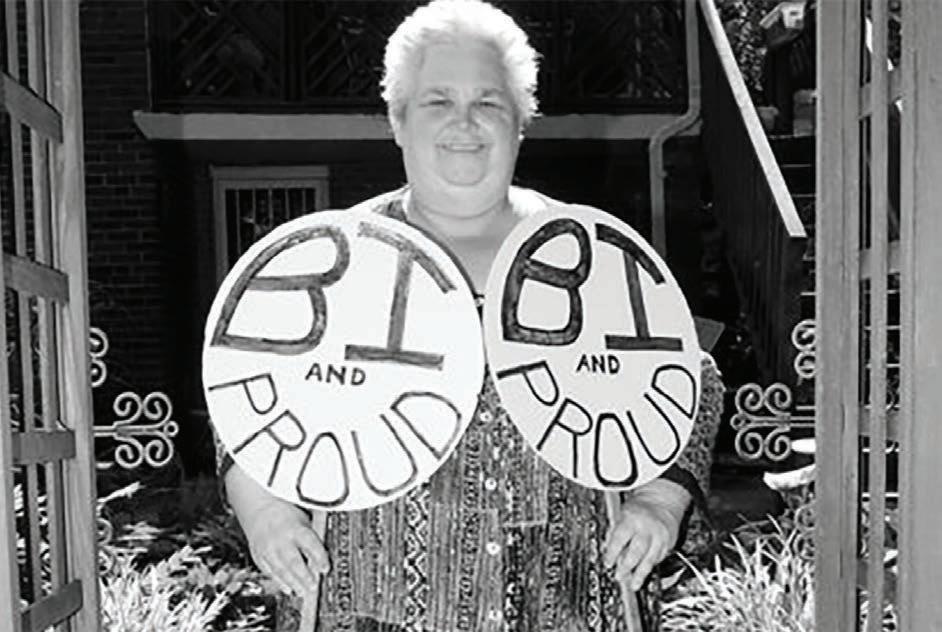
The Montgomery County Pride Center will host a celebration honoring the life and legacy of Loraine Hutchins, Ph.D., on May 2. People are invited to attend the onsite memorial or a livestream event. The on-site event will begin at 10 a.m. with a meet-and-greet mixer before moving into a memorial service around the theme “Loraine a Force of Nature!” at 11 a.m., a panel talk at 12 p.m., break out sessions for artists, academics, and activists to build on her legacy at 1 p.m. and a closing reception at 2 p.m.
Attendees are encouraged to register for the onsite memorial gathering or the livestreamed memorial . The goal of this event is also to collect stories and memories of Loraine. Attendees and others can share their stories at padlet.com.
An obituary for Hutchins was published in the Blade last Nov. 24, where people can learn more about her activism in the bisexual community. A private service for friends and family was held in December but this memorial service is open to all.
Alongside her groundbreaking work organizing for U.S. bisexual rights and liberation including co-editing “Bi Any Other Name: BIsexual People Speak Out” (1991), she also integrated faith into her sexual education and advocacy work. Her 2001 doctoral dissertation, “Erotic Rites: A Cultural Analysis of Contemporary U.S. Sacred Sexuality Traditions and Trends,” offered a pointed queer and feminist analysis to sex-neutral and sex-positive spiritual traditions in the United States. Her thesis was also groundbreaking in exploring the intersections between sex workers and those in caregiving professionals, including spiritual ones.
In an oral history interview conducted by Michelle Mueller back in August 2023, Hutchins described herself as a “priestess without a congregation.” While she has occasionally had a sense of community and feels part of a group of loving people, she admitted that “I don’t feel like we have the shape or the purpose that we need.”
“I’ve often experienced being the Cassandra in the room, the Cassandra in the community. Somebody who’s kind of way out there ahead, thinking through the strategic action points that my community hasn’t gotten to yet, and getting a lot of resistance and hostile responses from people who are frightened by dissent and confl ict and not ready for the changes we have to make to survive,” she said.
“For somebody who’s bisexual in an out political
way and who’s been a spokesperson for the polyamory movement in an out political way, it’s very exposing. And it’s very important to me to be able to try to explain and help other people understand the connection between spirituality and sexuality,” she explained citing how even as a graduate student she was “exploring how to feel erotic and spiritual, and not feel them in confl ict with each other in my own spiritual contemplative life and my own sensual body awareness of being alive in the world.”
“Every religion has a sense of sacred sexuality. It’s just they put a lot of boundaries and regulations on it, and if we have a spiritual practice that is totally affi rming of women’s priesthood and of gay people, queer people’s ability to minister to everyone and to be ministered to be everyone, what does that do to
the gender of God, or our understanding of how we practice our spirituality and our sexuality in community and privately?”
“There’s no easy answer,” she concludes, and she continued to grapple with these questions throughout her life, co-editing another seminal text, “Sexuality, Religion and the Sacred: Bisexual, Pansexual, and Polysexual Perspectives,” published in 2012. Her work blending spiritual and queer liberation remains groundbreaking to this day.
Rev. Eric Eldritch, a local community organizer and ordained Pagan minister with Circle Sanctuary who has worked for decades with the DC Center’s Center Faith to organize the Pride Interfaith Service, is eager to highlight this element of her legacy at the memorial service next month.

Center Aging Monthly Luncheon With Yoga will be at 12 p.m. at the DC Center for the LGBT Community. Email Mac at maca@thedccenter.org if you require ASL interpreter assistance, have any dietary restrictions, or questions about this event.
Lesbian Visibility Week will be at 7 p.m. at the DC Center for the LGBT Community. There will be a special screening of “Ahead of the Curve.” Enjoy an evening of film, conversation, and community, with cocktails and beverages available throughout the night For more details, visit the DC Center’s website.
Trans Discussion Group will be at 7 p.m. on Zoom. This event is intended to provide an emotionally and physically safe space for trans people and those who may be questioning their gender identity/expression to join together in community and learn from one another. For more details, email info@thedccenter.org.
GoGay DC will host “LGBTQ+ Community Brunch” at 11 a.m. at Freddie’s Beach Bar & Restaurant. This fun weekly event brings the DMV area LGBTQ+ community, including allies, together for delicious food and conversation. Attendance is free and more details are available on Eventbrite.
Nellie’s Sports Bar will host “Nellie’s DC Drag Brunch” at 12 p.m. Join Sapphire Blue, Deja Diamond and their team of drag performers for the most fun you’ll have all weekend. Tickets start at $58.51 and are available on Eventbrite.
LGBTQ+ Community Coffee and Conversation will be at 12 p.m. at As You Are. This event is for people looking to make more friends and meaningful connections in the LGBTQ community. Attendance is free and more details are available on Eventbrite.
Center Aging: Monday Coffee Klatch will be at 10 a.m. on Zoom. This is a social hour for older LGBTQ+ adults. Guests are encouraged to bring a beverage of choice. For more information, contact Adam (adamheller@thedccenter.org).
Genderqueer DC will be at 7 p.m. on Zoom. This is a support group for people who identify outside of the gender binary, whether you’re bigender, agender, genderfluid, or just know that you’re not 100% cis. For more details, visit www.genderqueerdc.org or Facebook.
By TINASHE CHINGARANDE
The DC Center for the LGBT Community will host “Candlelight Vigil” at 6:30 p.m. This is a vigil centered on reflection, support, and collective care. Attendees are encouraged to gather at 6:30 p.m., with the program beginning promptly at 7 p.m. and concluding by 8 p.m. The event will take place on the closedoff Wiltberger Street, providing a dedicated and intimate space for remembrance. Electronic candle lights will be available to participants. For those seeking additional support or who have questions ahead of the event, please contact counseling@thedccenter.org.
Job Club will be at 6 p.m. on Zoom upon request. This is a weekly job support program to help job entrants and seekers, including the long-term unemployed, improve self-confidence, motivation, resilience and productivity for effective job searches and networking — allowing participants to move away from being merely “applicants” toward being “candidates.” For more information, email centercareers@thedccenter.org or visit www.thedccenter.org/ careers.
The DC Center for the LGBT Community will host “Movement for Healing” at 3 p.m. This trauma- and yoga therapy–informed class is designed to help guests gently reconnect with their body and their breath. Through mindful movement, somatic awareness, and grounding practices, guests will explore how to release tension, increase mobility, and cultivate a deeper sense of safety and ease within. For more details, visit the DC Center’s website.
The DC Center’s Fresh Produce Program will be held all day at the DC Center for the LGBT Community. People will be informed on Wednesday at 5 p.m. if they are picked to receive a produce box. No proof of residency or income is required. For more information, email supportdesk@thedccenter.org or call 202-682-2245.
Virtual Yoga Class will be at 7 p.m. on Zoom. This free weekly class is a combination of yoga, breathwork and meditation that allows LGBTQ+ community members to continue their healing journey with somatic and mindfulness practices. For more details, visit the DC Center’s website.
The DC LGBTQ+ Community Center is marking a milestone year in its new home with a vibrant birthday celebration, inviting the community, allies, and media to join the festivities on Saturday, April 25 at 1 p.m.
Since opening its doors in Shaw, The DC LGBTQ+ Community Center has become a hub of support, advocacy, and celebration for LGBTQ+ residents across the District.
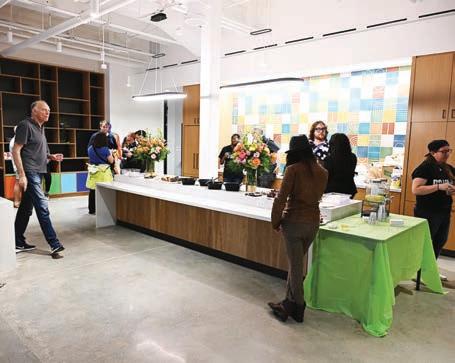
The birthday bash promises a day of programming including Yoga (Center Wellness), Micro Bouquet Making (Center Social), Zine Making (Center Arts), and so much more. Guests can also enjoy tours of the Center’s expanded facilities, showcasing spaces for programs, services, and community events. Since relocating, the Center has expanded its programs, providing critical services. The birthday bash underscores the DC LGBTQ+ Community Center’s commitment to creating an inclusive space where everyone regardless of identity, age, or background can find community and empowerment.
For more details, contact Paul Marengo at 202-7052890.







Nonbinary playwright Katherine Gwynn delivers ferocious ghost story
By PATRICK FOLLIARD
As if the world weren’t already hideous enough, Kore, the trans woman protagonist in nonbinary playwright Katherine Gwynn’s “Everything, Devoured,” wants to summon a demon to her humble Chicago apartment. While her friends think it’s just a bit of afterwork fun akin to reading horoscopes or Tarot cards, Kansas born Kore is dead serious.
Nu Sass Productions’ world premiere of Gwynn’s play oozes queer energy. Messages come across as if delivered by blow horn. It’s not afraid of expository dialogue or padding a singular moment of queer joy.
In a truly intimate black box at Sitar Arts Centers in Adams Morgan just down the block from Harris Teeter, scenic designer Simone Schneeberg deftly creates the generic flat whose ordinariness is only overshadowed by some weak attempts at individuality, but that’s all about to change.
Plans have been made, and Kore (June Dickson-Burke) has invited her nearest and dearest to her place.
Her nonbinary lesbian partner Julian (Tristan Evans) has cheap red wine and weed on the ready. Dinner is in the oven. Soon, lively trans masc bestie Dante (Selena Gill) arrives bearing a hostess gift – it’s the specially requested bag of pig blood, integral to the evening’s fun. In little time, the twentysomething friends will have painted a pentagram circled with salt in the middle of the living room floor. Candles are lit. Sacred words are spoken.
Shifts in light and sound by designers Vida Huang and Di Carey, respectively, signal contact with the beyond. Much to the friends’ surprise, they’ve successfully summoned a demon and it’s a real doozy: Ronald Reagan as demon drag queen.
Costumed in a corseted pinstripe suit adorned with a few Gautier cones, the pronoun-less guest star from the underworld makes quite an entrance – a full-on lip sync to Madonna’s “Vogue” replete with huge flashing eyes, an evil smile and darting tongue.
FILM
Spectacularly played by O’Malley Steuerman (“actor, DRAGster, playwright, and producer from Baltimore”) Ronald Reagan as demon drag queen is lewd, taunting, and reads with the kind of sharp wit that puts other queens in the shade.
The entertainment doesn’t stop there. Soon, the demon is juggling provocative props (fleshy dildo, a baby doll, and a copy of Marx) or performing sock puppetry to a 1982 recording of journalist Lester Kinsolving asking about the “gay plague” to which Reagan’s Press Secretary Larry Speakes charmingly replies, “I don’t have it ... do you?” That proved a real knee slapper in the pressroom.
Throughout the play’s early scenes, a young man sits unnoticed at Kore’s kitchen counter. Now and then, he comments with a disapproving harrumph or a distinctly gay one-liner. He’s privy to all, but the lady of the house is unaware of him until he joins the party. His name is Michael (Christian Harris). He died in 1989 and has been hanging around ever since.
Wry and undeniably spectral, Michael is the play’s link to queer past. He remembers the hurts and horrors of the AIDS epidemic, but not so much about the emergence of ‘genderqueer’ as an identity label, reflecting a shift toward a broader gender spectrum. That came later.
Without doubt, the uniformly queer cast is committed. They play their queer characters with authenticity, lending a realness to queer people’s valid concerns and fears in the current atmosphere. (For instance, anarchist/barista Dante accuses Julian of hiding out in their safe role of social worker at a nice nonprofit; and Kore speaks about the fear surrounding the Kansas bill making it illegal for transgender people to display their gender on a driver’s license.)
Based in Chicago, Gwynn has written a queer play with a punch; and prior to ever being staged, this new work was prestigiously named both a 2025 O’Neill Semi-Finalist as well as 2025 Bay Area Playwrights Festival Finalist.
Billed as a ferocious queer ghost story, “Everything, De-
voured” doesn’t disappoint. In the hands of queer co-directors Tracey Erbacher and Ileana Blustein, Gwynn’s fevered yet thoughtful and quick paced but penetrating piece unfolds compellingly.
Intuitive staging and chemistry among players, especially two hander scenes involving Kore, display a quiet intensity that feels true to life. Other scenes bring out the anger, protectiveness and some divisiveness among the friends. Gwynn’s informed and powerful writing is brought to the fore.
Nu Sass Productions has been uplifting women and marginalized genders in all aspects of theater since 2009. The company’s two-part name stems from “Nu” (Chinese for woman) and “Sass” (sassy).
Its latest offering fits the bill and then some.
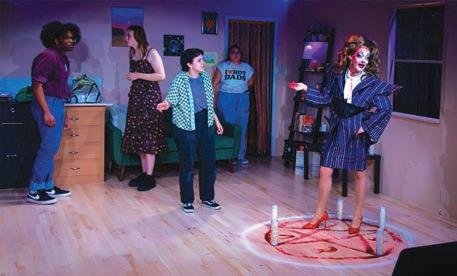
‘Everything, Devoured’ Through May 10 | Nu Sass Productions | Sitar Arts Center 1724 Kalorama Road, N.W. | $25 (general admission) | Nusass.com
An acting legend meets his match in ‘The Christophers’
And they both come out on top
By JOHN PAUL KING

Ian McKellen may now be known as much for being a champion of the international LGBTQ equality movement as he is for being a thespian. Out and proud since 1988 and encouraging others in the public eye to follow his lead, he’s a living example of the fact that it’s not only possible for an out gay man to be successful as an actor, but to rise to the top of his profession while unapologetically bringing his own queerness into the spotlight with him all the way there. For that example alone, he would deserve his status as a hero of our community; his tireless advocacy – which he continues even today, at 86 – elevates him to the level of icon. Those who know him mostly for that, however, may not have a full appreciation for his skills as an actor; it’s true that
his performances in the “Lord of the Rings” and “X-Men” movies are familiar, however, this is a man who has spent more than six decades performing in everything from “Hamlet” to “Waiting for Godot” to “Cats,” and while his franchise-elevating talents certainly shine through in his blockbuster roles, the range and nuance he’s acquired through all that accumulated experience might be better showcased in some of the smaller, less bombastic films in which he has appeared – and the latest effort from prolific director Steven Soderbergh, a darkly comedic crime caper set in the dusty margins of the art world, is just the kind of film we mean.
Now in theaters for a limited release, “The Christophers” casts McKellen opposite Michaela Coel (“Chewing Gum,” “I May Destroy You”) for what is essentially a London-set two-character game of intellectual cat-and-mouse. He’s Julian Sklar, an elderly painter who was once an art-world superstar but hasn’t produced a new work in decades; she’s Lori Butler, an art critic and restoration expert who is working in a food truck by the Thames to make ends meet when she is approached by Sklar’s children (James Corden, Jessica
Gunning) with a proposition. Hoping to cash in on their father’s fame, they want to set her up as his new assistant, allowing her access to an attic containing unfinished canvases he abandoned decades ago – so that she can use her skills to finish them herself, creating a forged series of completed paintings that can be “posthumously discovered” after his death and sold for a fortune.
She takes the job, unable to resist an opportunity to get close to Sklar – who, despite his renown, now lives as a bitter and unkempt recluse – for reasons of her own. Though his health is fading, his personality is as full-blown as ever; he’s also still sharp, wily, and experienced enough with his avaricious children to be suspicious of their motives for hiring her. Even so, she wins his trust (or something like it) and piques his interest, setting the stage for a relationship that’s part professional protocol, part confessional candor, and part battleof-wits – and in which the “scamming” appears to be going in both directions.




Chris Bowers
Polly Donaldson
Connie Fox & Donna Adair
Tammy Smith & Associates



Dr. Nancy & Mrs.Tora Kennedy
Susan Kutliro & Barbara Snyder
Carole and Judy Jesiolowski


Chris Lay & Dr. Mari Blackburn
Sherri McGee & Kris Aulenbach




Kenneth Currier & Mike Tyler
David & Marti Garrett
Leslie Ledogar & Marilyn Hewitt
Bryce Lingo & Shaun Tull Team
Evelyn Maurmeyer in memory of Natalie Moss



Sandra Pace & Barbara Passiko




Kim Parks & Sharon Denny
Teri Seaton
Kim Witmer
Debbie Woods & Leslie Sinclair
Above The Dunes
Aqua Bar & Grill
Bethany Blues
Big Chill Surf Cantina
Colleen Clark
DJ Peggy Castle
DJ Nan
DJ Sunshine
First State Brewing Company
Freddie’s Beach Bar
Kiwi’s Kove
Mama’s Black Sheep
The Listening Booth
Regina Sayles
Sapphic Lit Pop Up Book Store
Surf Bagel
Thompson Island Grill

Chris Allison
Trudy Albrecht
Randy Amoyen
Karen Anderson
Judith Ashbrook
Wanda Ashbrook
Mary Backer Chris Beagle
Michael Beigay Celeste Beaupre
Crystal Beckwith Karen Black Deborah Bosick Logan Braden
Joe Burton
Jett Butterworth Mary Ann Brewer Kathleen Callahan
Monica Chmielewski
Daniel Clark
Barbara Clipper
Chuck Connolly
Susan D’Addario
Je Dannis
Melissa Danskin
Mike DeFlavia
Karen DeSantis
Karen Doctor
Lissa Dulany
Brenda Dunn
Dawn Dupre
Sue Ebbitt
Eric Engberg
Mark Eubanks
Logan Farro
Connie Fox
Kate Galloway
Marvin Garcia
Susan Green
Leslie Hegamaster
Leslie Jennings
Andrew Keller
Shelley Kingsbury
Michael Kluk
Lisa Koenigsberg
Patricia Krupa Karen Laitman
Lloyd
Lokhard Liz Lokhard
Teddi Lowery
Maddox
Madonna
Manfredi Robb Mapou
Maresca Nancy Maresca
Marks
Mease
Sherri McGee
Andrea Miller
Milan Mladjan
Meg Morgan Julie Neymeyer Pat Nickols
Maggie Ottato Denise Page Rochelle Parks
Joanie Pegler
Kevin Pelland
Rina Pellegrini
Deb Quinton
Amelia Riley Paula Roberts Elizabeth Rois Larry Rosen Karen Rubin-Hamilton Maria Scanapieco Teri Seaton
Doug Sellers
Shauna Severo Kelly Sheridan Susan Shollenberger
Kim Smitas Laurie Snyder Heather Standish Barb Thompson Jennifer Varone S. Hope Vella
Mark Von Stein
Sherrie Walker
Gloria Walls
Zip Warmerdam Lee Whitehead
Kim Witmer
Yackel

I don’t see the point in a relationship
Life is short and I want to do whatever I want
By MICHAEL RADKOWSKY
Michael,
I’m 34, and after being on the dating scene for about 12 years, I’m coming to the conclusion that I don’t want to be in a relationship.
I don’t love hanging out with the same person over and over again. I don’t feel all gooey when I’ve been with someone for a while. I run out of things to say, and also, it just gets boring.
I like my space. I don’t like having to share the bathroom or have someone next to me all night, especially when they want to go to sleep holding me. I know that sounds like heaven to a lot of people but it just feels intrusive to me.
It’s a pain to have to compromise what I want to do. When I want to go someplace on vacation, or try a restaurant, or get up early to go to the gym, or sleep in, I don’t want to have to run that by someone else and get their OK. Life’s short. I want to do what I want to do.
I feel like we are constantly bombarded with the message to date and find a mate, but I don’t really see the point. I don’t think I’m an introvert—I have a lot of friends—but I also like to spend time by myself and not be accountable to anyone.
When I think about marriage, it seems like a very old-fashioned concept, developed for straight people who want to have children. Historically you needed one person to work and another one to stay home and raise the kids. And you needed to stay together to give your kids two parents and a stable home. I get that.
But if I’m not having kids, what’s the point? I don’t need a husband to have sex. I can and do hook up all the time. It’s so easy to
find someone online. And I get to have a lot more variety when I’m single than when I’m dating. Even though my relationships are always open, when I am dating someone, I always hook up a lot less, because I have to worry about the boyfriend’s feelings being hurt if I hook up “too much.”
I know I sound unromantic and maybe selfish but this is how I see it.
My friends are all about having a boyfriend. They think I’m being ridiculous. Can I get another opinion?
Michael replies:
You make great points. Relationships do require us to give up some of our independence. They can feel stifling at times. And when the excitement of a new partner fades, things will at times feel “boring” in all sorts of ways, including sex. You can choose to avoid all of this by remaining single.
But relationships also give us tremendous overlapping opportunities to grow, including:
Being pushed to develop a clear sense of self: When we must constantly decide what we are willing to do or not do as part of a couple; and when our partner inevitably and frequently has interests, values, and priorities that conflict with ours, then we are challenged, over and over, to decide what is most important to us and how we want to live our lives.
Frequent opportunities to build resilience: All those old issues from our past that get us upset or riled up? We have to work through them so that we can stay (pretty) calm rather than losing our minds when our buttons are pressed.
















Improving our ability to have hard conversations – and without rancor: Unless we’re able to disagree, speak up, or confront when it’s important to do so, we are going to twist ourselves into a pretzel striving to accommodate the other person. And being able to engage in tough talks in a loving way is necessary if we want to have a loving relationship.
Becoming a more generous person: You wrote that you like to have things your way. But part of life, whether or not we are partnered, involves being thoughtful, considerate, and willing to put someone else first at times. Great relationships require us to do all of these things regularly—and many of us find that contributing to the happiness of someone we care about can increase our own happiness.
Besides these ongoing challenges, relationships give us the experience of someone knowing us deeply, and knowing someone deeply. There can be great comfort in going through life with someone with whom we have this intimate connection, along with ongoing shared experiences of trust, support, comfort, and love. Long-term companionship is also an adventure: Can we keep the relationship vibrant and fun as we both keep changing over time?









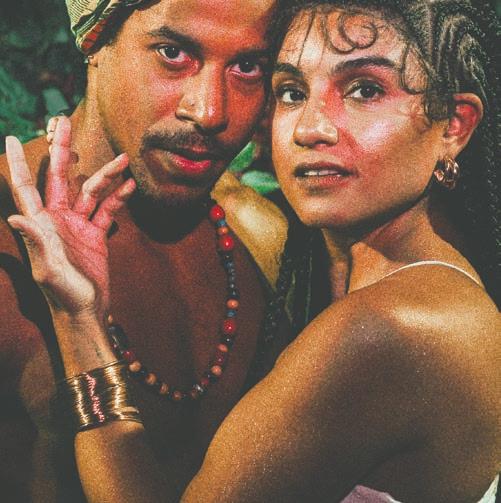


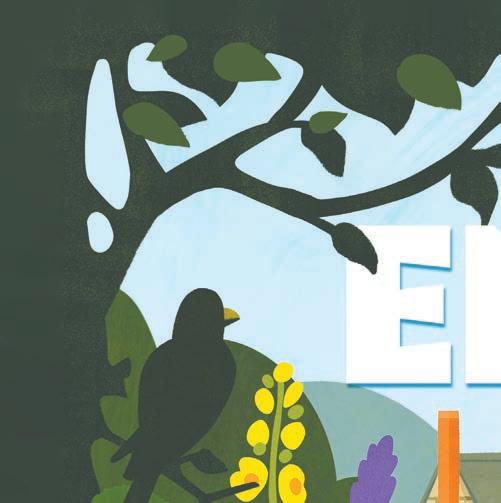
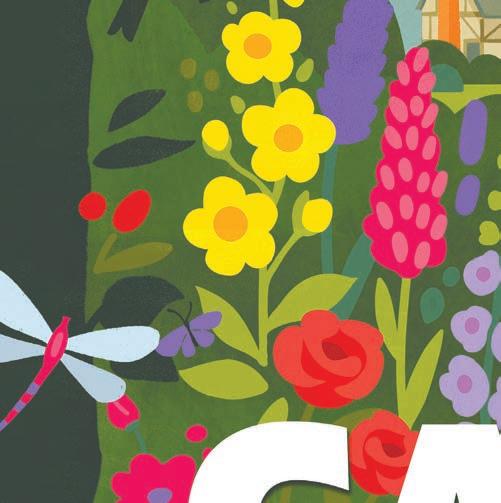




MAY 8-10, 2026
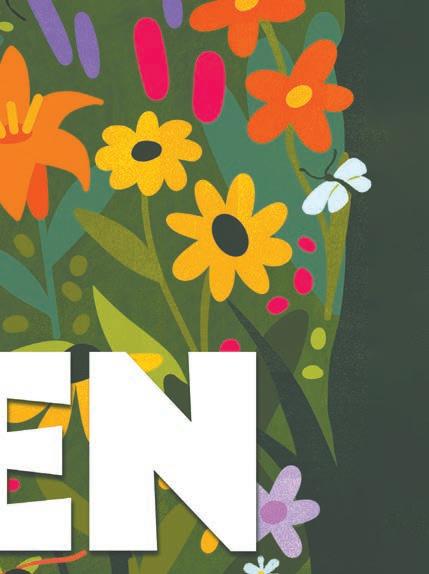
Audience favorite soprano Emily Noël joins an ensemble of viols and lute for this springtime program curated by Mary Springfels and narrated by Holly Twyford.
TICKETS: FOLGER.EDU/GARDEN










FERNANDO’S CLEANING
Residential & Commercial Cleaning, Reasonable Rates, Free Estimates, Routine, 1-Time, Move-In/Move-Out 202-486-6183

Email:
and your ad will appear in print & online! If you need assistance, please email the text & image to: classifieds@washblade.com or call 202-747-2077
COUNSELING COUNSELING FOR LGBTQ
People. Individual/Couples counseling with a volunteer peer counselor. GMCC, serving our community since 1973. 202-580-8861 gaymenscounseling.org No fees. Donation requested.
BRITISH REMODELING
Local licensed company with over 25 years of experience. Specializing in bathrooms, kitchens & all interior/exterior repairs. Drywall, paint, electrical, wallpaper, roofing & siding. Trevor 703-303-8699
LIMOUSINES
KASPER’S LIVERY SERVICE

Your Personal Limo/Uber Service WHERE DO YOU WANT TO GO? LET ME TAKE YOU THERE! Proper DC License & Livery Insured. Gay & Veteran Owner/Operator. Since 1987. 202-554-2471 www.KasperLivery.com
AMAZING 1BR + DEN APT

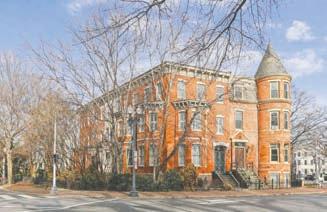









1 Bedroom & Den, one & 1/2 baths(all white marble) 1042sq ft. In-unit full size washer & dryer w great storage - amazing kitchen. This apartment is becoming available for the first time in 6years. All Utilities Included except Cable/ Internet. Street Parking - No Pets. $3500/mth. Email: larskontzDC@gmail.com Lars 202-368-9742 RENT COLLEGE PARK, MD FURNISHED 1BR NEW FABULOUSLY RENOVATED YOU MUST SEE THIS semi-private, furnished, basement apartment located in North College Park steps from City dining, Mom’s and other stores. Easy access major roadways & only 10 min walk to Metro. $1745.00 per month ***All Utilities Included.*** bit.ly/4r79Qje email: cprental@ymail.com
This circa-1890 stately Grand Dame commands a premier position overlooking life on Logan Circle. With two sides of broad bay windows on 3 levels, bathing the home in natural light--each framing beautiful views of the park--and a coveted fenced and private courtyard, you’ll have a front row seat to this historic neighborhood in downtown DC. 6 bedrooms/3 baths and private entry to lower level living. Andy Alderdice - 301.466.5898 andy4homes@gmail.com Long & Foster Real Estate 202-234-4100
Luxury Real Estate SpecialistLicensed in MD, DC & VA Integrity. Experience. Commitment. Local.

TALL,
iso tall, 20-something, well-hung, white dude ready to give up what between his legs to a top’s nice lips for some sheer delight. Sincere responses, please text me. I will get back to you. Available 24 hrs a day. CALL OR TEXT: 240-457-1292
Massage or Deep Tissue. Appts. Low Rates, 24/7, In-Calls. 202-486-6183 PLACE YOUR AD TODAY! WashingtonBlade.com/classifieds Thanks for reading the Blade!