Washington Blade, Volume 57, Issue 14, April 03, 2026
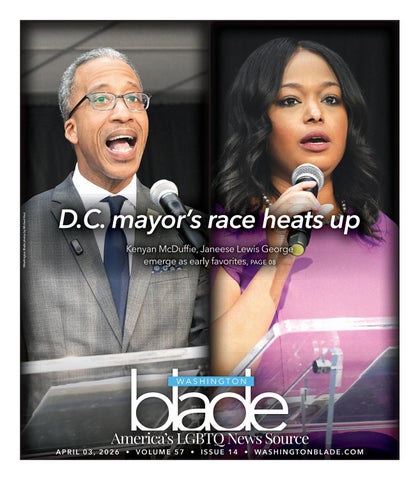
Kenyan McDuffie, Janeese Lewis George emerge as early favorites, PAGE 08
ADDRESS PO Box 60664
Washington DC 20039
PHONE
202-747-2077
E-MAIL news@washblade.com INTERNET washingtonblade.com
PUBLISHED BY Brown Naff Pitts Omnimedia, Inc.
PUBLISHER
LYNNE J. BROWN lbrown@washblade.com ext. 8075
EDITORIAL EDITOR
KEVIN NAFF
knaff@washblade.com ext. 8088
SR. NEWS REPORTER
LOU CHIBBARO JR. lchibbaro@washblade.com ext. 8079
WHITE HOUSE CORRESPONDENT JOE REBERKENNY jreberkenny@washblade.com ext. 9463
INTERNATIONAL NEWS EDITOR
MICHAEL K. LAVERS mlavers@washblade.com ext. 8093
POP CULTURE REPORTER
JOHN PAUL KING
PHOTO EDITOR
MICHAEL KEY mkey@washblade.com ext 8084
CONTRIBUTING WRITERS
DANIEL ITAI, ISAAC AMEND, TINASHE CHINGARANDE, PETER ROSENSTEIN, PATRICK FOLLIARD, TERRI SCHLICHENMEYER, JOE PHILLIPS, EVAN CAPLAN, ANKUSH KUMAR, ESTEBAN RIOSECO, SAM KISIKA, ELVIS KAWEDO, DAWN ENNIS CREATIVE DESIGN/PRODUCTION
MEAGHAN JUBA production@azercreative.com
SALES & ADMINISTRATION
DIRECTOR OF SALES & MARKETING
STEPHEN RUTGERS srutgers@washblade.com ext. 8077
SR. ACCT. EXECUTIVE
BRIAN PITTS bpitts@washblade.com ext. 8089
CLASSIFIED ADVERTISING/ADMINISTRATION
PHILLIP G. ROCKSTROH prockstroh@washblade.com ext. 8092
NATIONAL ADVERTISING
RIVENDELL MEDIA 212-242-6863; sales@rivendellmedia.com
For distribution, contact Lynne
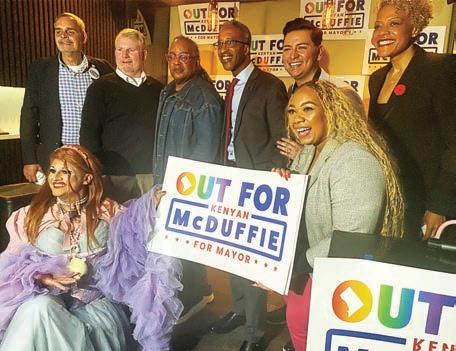
‘Out for McDuffie’ event held at D.C. gay bar
Mayoral candidate cites record of longtime support for LGBTQ rights
By LOU CHIBBARO JR. | lchibbaro@washblade.com
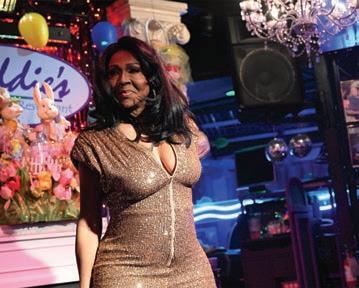
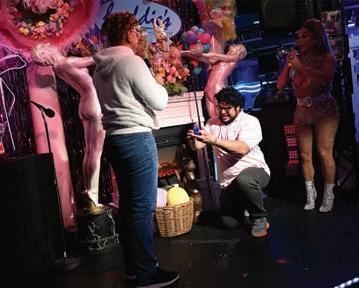
More than 100 people filled the upstairs room of the D.C. gay bar Number 9 on Thursday night, March 26, to listen to D.C. mayoral candidate Kenyan McDuffie at an event promoted as an “Out for McDuffie” meet and greet session.
Several local LGBTQ activists who attended the event said they support McDuffie, a former D.C. Council member, in his run for mayor while others said they had not yet decided whom to vote for in the June 16 D.C. Democratic primary election.
As of March 27, eight other Democrats were competing against McDuffy in the June 16 primary, including D.C. Council member Janeese Lewis George (D-Ward 4), considered McDuffie’s lead opponent. Lewis George also has a record of strong support on LGBTQ issues.
Most political observers consider McDuffie and Lewis George the two lead candidates in the race, with the others having far less name recognition.
The two lead organizers of the Out for McDuffie event were LGBTQ rights advocates Courtney Snowden, a former D.C. deputy mayor in the administration of Mayor Muriel Bowser, and Cesar Toledo, executive director of
“I’m a candidate for mayor of Washington, D.C. and I’m running for mayor because I love this city,” McDuffie told the gathering after being introduced by Snowden. “And now more than ever we need leadership to take us to the future,” he said, adding that he and his administration would “stand up and fight” against President Donald Trump’s efforts to intervene in local D.C. affairs.
“Our strength is in the 700,000 beautifully diverse residents of Washington, D.C.” he told the gathering. “And as Courtney said, I didn’t just show up and run for mayor and then start saying that I’m going to be an ally for the queer community, for the LGBTQ+ community,” he said, “I’ve lived my entire professional life fighting for justice and fighting for fairness.”
Following his speech, McDuffie told the Washington Blade, “We’re going to fight to protect our LGBTQ+ community every single day. That’s what I’ve spent my career doing, making sure we have a beautifully diverse and inclusive city.”
He remained at Number 9, located at 1435 P St., N.W., for nearly an hour after he spoke, chatting with attendees.
D.C.’s affirming congregations to mark Holy Week, Easter Dignity Washington among groups holding events
By SAM EPNER
LGBTQ-friendly congregations in the D.C. area this week are marking Easter and Holy Week.
The Metropolitan Community Church of Washington, D.C., located in Mount Vernon Square, holds both online and in-person services.
An online-only Good Friday service will take place on April 3 at 7 p.m. In person or online Resurrection Sunday services will take place on April 5 at 10:30 a.m. Dignity Washington, an LGBTQ Catholic group, is also holding Holy Week and Easter events.
The group on March 29 held a Palm Sunday prayer event. Dignity Washington on April 5 will hold a Mass at St. Margaret’s Episcopal Church at 6 p.m. It will be livestreamed on Facebook.
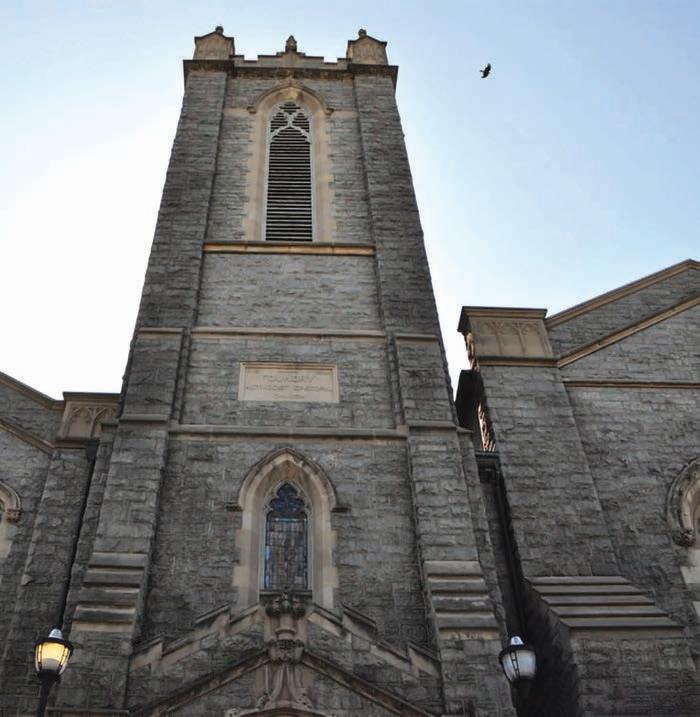
Foundry United Methodist Church holds two Easter Sunday services at 9 and 11:15 a.m.
Riverside Baptist Church, located in Southwest Washington, is an “Inclusive, Multicultural, Christ-Centered” congregation that also offers Holy Week and Easter activities.
The church on Good Friday at 3 p.m. is holding an outreach period in which they will clean up the neighborhood. Easter Sunday services will be held at 9:45 a.m., starting with a musical prelude, followed by services.
The church offers weekly “Wednesday Witness,” a youth and safety zone drop-in,
serving as a safe space for the students of Jefferson Middle School and the community. It takes place from 3-5 p.m.
The DC LGBTQ+ Community Center offers a comprehensive list of inclusive faith communities on its website. The Association of Welcoming and Affirming Baptists offers a list of churches partnered with their organization that are inclusive and mainly Baptist, but the group does feature churches of other denominations.
The 18th National Rainbow Seder took place at the Human Rights Campaign on March 29. The sold out event is the country’s largest Passover Seder for the Jewish LGBTQ community.
Organizations behind the event included Bet Mishpachah, a local D.C. LGBTQ synagogue that Rabbi Jake Singer-Beilin leads, and GLOE, an Edlavitch DC Jewish Community Center program that sponsors events for the queer Jewish community. The theme for this year’s Seder was “Liberation for All Who Journey: Remembering, Resisting, Rebuilding.” Rabbis Atara Cohen, Koach Frazier, and Avigayil Halpern led it.
The Seder honored the late GLOE cochair Michael Singer. Singer also served on the Edlavitch DC Jewish Community Center’s board.
“This Seder is both a celebration of how far we have come and a call to continue building a more just and inclusive world.” Bet Mishpachah Executive Director Joshua Maxey told the Washington Blade.
the local LGBTQ youth housing services organization Wanda Alston Foundation.
D.C. mayoral candidate KENYAN MCDUFFIE held a meet and greet at Number 9 last week. (Washington Blade photo by Lou Chibbaro, Jr.)
Foundry United Methodist holds two Easter Sunday services at 9 and 11:15 a.m. (Blade file photo by Michael Key)
As mayor’s race takes shape, candidates endorse LGBTQ equality
Some activists divided between support for McDuffie, Lewis George
By LOU CHIBBARO JR. | lchibbaro@washblade.com
Like nearly all recent D.C. elections, LGBTQ voters will be choosing a candidate for mayor in 2026 from a list of mostly strong LGBTQ rights supporters in the city’s June 16 primary.
As of March 30, the D.C. Board of Elections’ list of candidates who submitted the required number of petition signatures for the June 16 primary ballot included 10 mayoral candidates: nine Democrats and one Statehood Green Party candidate.
Among those candidates, six, all Democrats, have issued statements expressing strong support for LGBTQ rights, including the two leading Democratic contenders, former D.C. Council member Kenyan McDuffie and current Council member Janeese Lewis George, who represents Ward 4.
One of the lesser-known Democratic candidates who released an LGBTQ supportive statement, Rini Sampath, a cyber security consultant, told the Washington Blade she identifies as queer, becoming one of the first known LGBTQ D.C. mayoral candidates to gain access to a major party primary ballot.
“We’re living in an extremely diverse community, an extremely unique community,” she told the Blade. “And being able to self-label, self-identify as queer is something that I just want to take pride in.”
Similar to McDuffie and Lewis George, Sampath released statements to the Blade and the Capital Stonewall Democrats, the city’s largest LGBTQ local political group, expressing support for LGBTQ rights and outlining plans for LGBTQ supportive policies if elected mayor.
Although many D.C. LGBTQ activists have said they have yet to decide whom to support for mayor, those who have decided appear to be divided between McDuffie and Lewis George. Most D.C. political observers consider McDuffie and Lewis George to be the two leading candidates in the mayoral race.
The other Democratic mayoral contenders who have released statements expressing support on LGBTQ issues include Gary Goodweather, a local real estate manager and developer who has been actively campaigning at LGBTQ events; Vincent Orange, a former At-Large and Ward 5 D.C. Council member; and Kathy Henderson, a longtime Ward 5 community activist and elected Advisory Neighborhood Commissioner.
The remaining two Democratic mayoral candidates, Hope Solomon, a former U.S. Department of Homeland Security contractor and Dupont Circle civic activist; and Ernest Johnson, a real estate broker and Ward 1 community activist, did not respond to inquiries from the Blade and Capital Stonewall Democrats seeking information about their position on LGBTQ related issues.
Robert Gross, the Statehood Green Party candidate who is running unopposed in the June 16 primary, also didn’t respond to in-
quires from the Blade about his position on LGBTQ issues.
D.C. Board of Elections records show that at least five Republican candidates filed papers to run for mayor in the June 16 GOP primary, but none of them remained as candidates as of March 30, when the election board issued its updated candidate list.
Just one of the five Republican candidates replied to an email message from the Washington Blade sent to all mayoral candidates in early March seeking their position on LGBTQ issues. That candidate, Esa Muhammad, whose website identifies him as an engineer, consultant, and local business owner, sent a reply expressing opposition to LGBTQ rights.
“Unfortunately, I do not support LGBTQ because The God only created 2 genders (Adam/Eve),” he wrote. “Anyway, I will be fair to you all despite your sick way of looking at life,” he stated.
Capital Stonewall Democrats President Stevie McCarty said his group sent questionnaires to all the Democratic mayoral candidates as well as to Democrats running for other offices such as D.C. Council. Information posted on the group’s website shows only four of the mayoral candidates returned a complete questionnaire: McDuffie, Lewis George, Goodweather, and Sampath.
Each of them provides detailed information of their plans for supporting LGBTQ policies if elected and their record of support on LGBTQ issues. McCarty said the questionnaire responses for all candidates that submitted them can be accessed at outvotedc.
org
He said Capital Stonewall Democrats will hold virtual LGBTQ forums in April, including a mayoral forum on April 8. He said the group’s members will vote on the candidate endorsements online from April 20 through May 11, and the group expects to announce its endorsements May 14.
GLAA DC, formerly known as the Gay and Lesbian Activists Alliance of Washington, has issued candidate ratings for most D.C. elections since the 1970s, and the nonpartisan LGBTQ group was expected to issue ratings for mayoral candidates this year. But like in recent years, the group is expected to base its ratings on mostly non-LGBTQ issues, with a progressive, left-leaning perspective, according to a nine-page “Back to Basics GLAA Policy Brief 2026” that the group released in March.
The LGBTQ activists who are backing McDuffie or Lewis George appear to be gravitating to the two based on their political leanings separate from LGBTQ issues, just like voters in general. Lewis George, who identifies as a democratic socialist, is popular among LGBTQ and non-LGBTQ “progressives.”
McDuffie, who is seen as a more moderate candidate along the lines of current D.C.
Mayor Muriel Bowser, is being supported by LGBTQ activists who hold those views, some of whom currently work in the Bowser administration.
Among at least 10 candidates for D.C. mayor, former Council member KENYAN MCDUFFIE and current Council member JANEESE LEWIS GEORGE are viewed as frontrunners. (Washington Blade photos by Michael Key)
Among Lewis George’s LGBTQ supporters are longtime Ward 8 community leader Philip Pannell and former Capital Stonewall Democrats president Howard Garrett. Among the LGBTQ McDuffie backers are longtime D.C. Democratic activists John Fanning and David Meadows.
Longtime D.C. LGBTQ Democratic Party activist Peter Rosenstein, who is supporting McDuffie, has raised concerns about Lewis George’s backing by the national group Democratic Socialists of America. In Facebook postings, Rosenstein points to the Democratic Socialists of America’s opposition to Israel as a country and said it is viewed by many in the Jewish community as promoting antisemitism. He has criticized Lewis George for not speaking out against that and for accepting the DSA’s endorsement.
In an interview with the Blade, Lewis George strongly disputed that assessment, saying she has been a strong ally and supporter of the Jewish community.
“I’m a member of the Metro DSA here in D.C. that I work with to fight for labor and for tenant rights,” she said. “I’m also a member of the Democratic Party,” she added, saying, “There are things that the Democratic Party does that I don’t agree with. There are things that the national DSA does that I don’t agree with. That’s a group that I work with.”
“But I want to be clear that I am running for mayor to represent all of our community, and that includes our amazing and historical Jewish community here in D.C.,” she said. “I have had the amazing opportunity to spend time at synagogues and talking to Jewish leaders and groups and institutions. And so, there should be no worry here.”
Following are short excerpts from the detailed statements the five Democratic mayoral candidates submitted to the Capital Stonewall Democrats or the Washington Blade.
Kenyan McDuffie: “As mayor, every piece of legislation I sign, craft, or endorse should also encompass the interest and input of the LGBTQ community members and
advocates…From housing to health care and everything in between… We have a dire crisis regarding the rise in homelessness especially among the youth in our LGBTQ communities. In my administration that simply cannot be the status quo and will not be...I have been a consistent champion for our LGBTQ community and will remain so as Mayor of D.C.’
Janeese Lewis George: “As mayor, I will protect our LGBTQ+ neighbors against federal attacks on their identity, including their health care…On the Council I have been a strong supporter of pro-LGBTQ+ bills, including making D.C. a sanctuary for people seeking gender-affirming health care as well as addressing discrimination and harassment in nightlife and hospitality…And as mayor, I am prepared to move up and win those fights – a fight for D.C. statehood, a fight for our true economy, and a real opportunity to uplift our Black queer and trans youth.”
Gary Goodweather: “A Goodweather administration will defend every D.C. law protecting LGBTQ residents. I will establish a Defend DC office to coordinate the District’s legal and public response to federal overreach, with LGBTQ+ protections explicitly within its mandate…My affordable D.C. plan will produce 50,000 new homes with 36,000 affordable units, and I will ensure LGBTQ+ youth housing programs are funded as a budget priority.”
Rini Sampath: “I am an immigrant, proud queer woman, and a 10-year resident of Washington, D.C…For me, LGBTQ+ voters including transgender and nonbinary residents, are not a separate or symbolic constituency; they are a core part of a broader, multiracial, cross-ward coalition rooted in in equity and opportunity.”
Vincent Orange: “I have a long and consistent record of supporting LGBTQ+ equality and inclusion in the District of Columbia, grounded in both policy and personal commitment. As the District’s Democratic Committeeman from 2006 to 2015, I publicly supported marriage equality and voted accordingly … During my time on the D.C. Council, I worked to advance protections for LGBTQ+ residents, including authoring and passing legislation to prohibit discrimination against transgender individuals in the workplace.”
Kathy Henderson: Kathy Henderson has maintained a consistent record of treating all members of the community with dignity, compassion, and respect, regardless of gender, race, ethnicity, sexual orientation, identity, political party, national origin, or ideology. Kathy Henderson embraced the late Wanda Alston as a colleague and good friend…Alston was the first director of the Mayor’s Office of LGBTQ Affairs and Henderson helped to organize and facilitate the first LGBTQ citizens summit.”
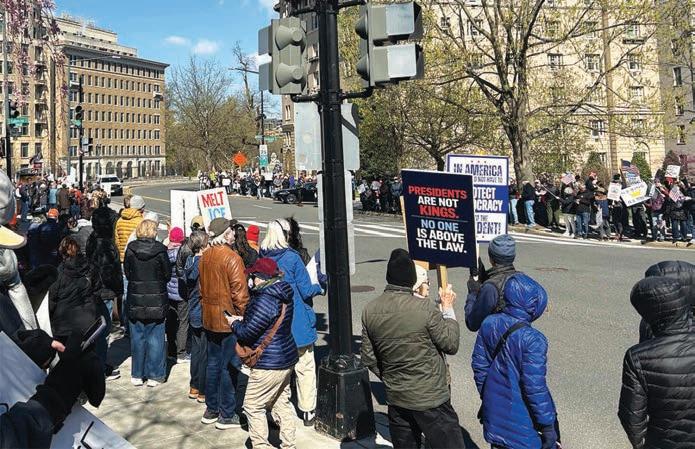
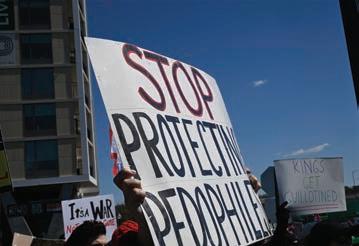
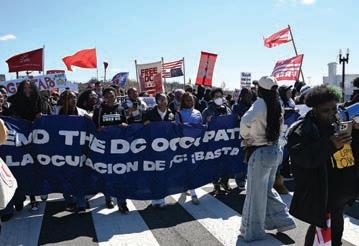
Thousands attend ‘No Kings’ protests in D.C. Demanding accountability and defending democracy
By JOE REBERKENNY | jreberkenny@washblade.com
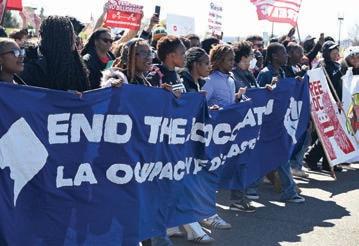
Across all 50 states — and D.C. — more than 8 million people came out nationwide from towns big and small, red and blue, to make their voices heard. That united voice echoed what nearly 20,000 protesters declared in the nation’s capital back in October 2025: the citizens of the U.S. would not sit idly by as Donald Trump and his administration erode democracy, attempt to restrict human rights, loosens First Amendment protections, and begin wars without congressional approval
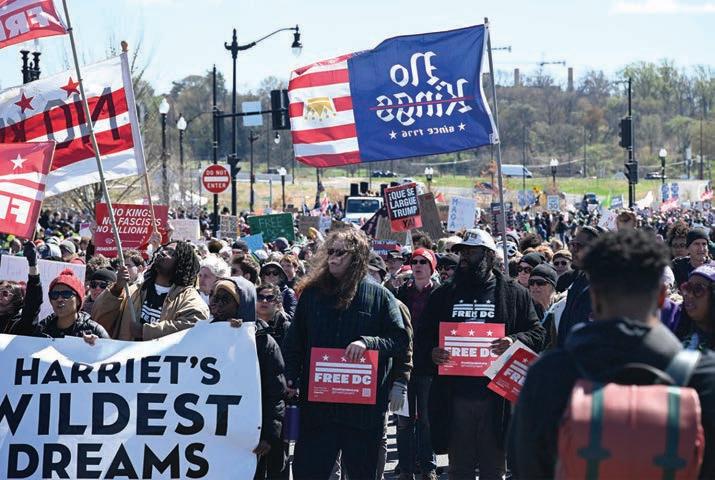
While there were countless differences among the thousands who joined the “No Kings” protests this weekend in the DMV — from creeds and socioeconomic statuses to races, sexualities, and gender identities — there was one thing that united them all during the chilly March 28 weather: a commitment to making their voices heard.
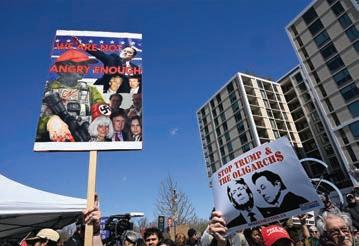
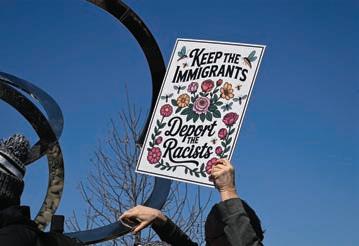
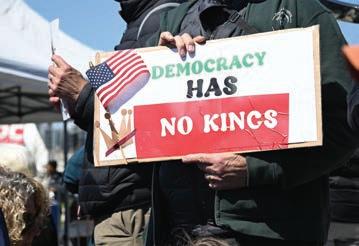
By 10 a.m., the Washington Blade estimated around 200 people had braved bitter winds and temperatures hovering around 40 degrees, with bright sun, to stand along the cherry blossom-adorned streets of Kalorama and Connecticut Avenue. Protesters carried signs large and small, from professional printed banners criticizing Trump’s disregard for the “everyman” to handmade signs emphasizing love, calling for the melting of ICE, and addressing issue-specific concerns like ending the wars in Gaza and Iran — both policies propagated by President Donald Trump.
While a solid group of D.C. residents came out with babies in strollers and dogs on leashes, the Kalorama protest skewed older with a majority-white crowd.
On the other side of town, the more heavily attended protest in Anacostia started at 1:30 p.m., crossing the Frederick Douglass Bridge.
MS Now estimates that over 20,000 people marched across the bridge, sending a clear message to the president, his administration, and the Republican-controlled federal government: federal overreach is not what the majority of Americans want to see, hear, or witness as protesters in the thousands came out for, as organizers say “the single largest non-violent day of action” in American history.
The two marches on Saturday differed in both theme and location — the Kalorama protest felt like a small-town demonstration in a big city, covering a wide variety of topics, whereas the Anacostia protest was more focused, directly calling out and pushing back against the actions of Stephen Miller, the White House chief of staff, and other Trump allies.
Many participants shared their reasons for marching with glee — shouting as cars honked in support passing by and discussing the broader issues within the current political climate with those standing next to them: some neighbors, some friends, others complete strangers. Regardless, an important discussion was happening across the city.
A surprise to many participants — and the Blade reporter covering the event — was seeing U.S. Rep. Sara Jacobs (D-Calif.) stand outside in near-freezing temperatures with her staff and some signs.
Jacobs used the exclusive — and more intimate — ability to speak on her experience watching everything unfold from inside the halls of Congress.
“We had votes until midnight last night, so I couldn’t make it back to San Diego for the march, but it’s important to show up and cheer on people standing up and making their voices heard,” Jacobs said. “This is just the start. We need to make our voices heard every day through the end of the year.”
Jacobs also used the opportunity to criticize congressional inaction from those on the opposing aisle, reminding the Blade that a legislator’s job is to protect and secure the people they represent — not the interests of a wannabe king or corporations that back many congressional campaigns through PACs.
“It makes me angry at my Republican colleagues who won’t stand up to Trump. Actions like this inject courage into my colleagues — they need to see that the American people have their back,” she added, eventually emphasizing the public responsibility lawmakers have to protecting the Constitution and everyone in the country (which the Supreme Court had pointed out as far back as 1886 with Yick Wo v. Hopkins). “Congress is not going to save people. This is about everyone showing up and making our voices heard and building the democracy we want.”
Ashley Gould, a tourist visiting from Missouri, told the Blade that despite Washington being seen as one of the most politically active towns in the country, over the past few years, she and many other politically active Missourians have been preparing for this moment and were zealous to have their voices heard together as one.
“I’m actually visiting my sister from Missouri, and we’ve been doing this since the first No Kings protest [there]. I wanted to see how you guys did it here,” she said. “As someone in a red state, we’re not represented in Congress right now, so I don’t personally have a say in any of this. If I can do one small thing, I want kids in our town to see me trying to make a difference, get petitions signed. This is all we have.”
Gould continued, “I don’t know if it’s going to cause an impact for elected officials, but I hope that little kid who sees us with the posters sees that we do have a voice— and maybe one day they can, if they can’t right now.”
Gary Bowman, another early protest-goer, held a sign that pointed out the obscurity — and unconstitutional nature — of the current administration’s actions.
“I hate the direction the country is going in, and Donald Trump is not fit to be in office,” Bowman said, adding that his choice of sign exemplified that. “It’s obvious based on his policies — his attacks on the trans and LGBTQ communities — that he’s trying to suppress people. And the Republican Congress isn’t helping.”
When asked how the phrase “No Kings” resonates with him, especially since this is the third one held in two years, Bowman said it may be catchy for headlines or help inspire creative signs (like Trump on a golden throne or toilet), but the march and protest are about something much more important.
“‘No Kings’ is a catchphrase for me; I’m more concerned about losing our democracy. We, the people, have a voice we should use,” he said, elaborating on how this administration’s course of action disregards rules designed to prevent an authoritarian — or wannabe-authoritarian — from taking power. “I don’t think Trump is overstepping … I think he’s shattering democratic norms. He wants to do what’s right for Donald Trump, not for anyone else.”
He concluded bluntly that unless everyone — including Republicans in power — stand up to the president for these ludicrous choices, change won’t happen, regardless of how loud he or any other Trump critics scream at protests.
“Until we have a Congress that would actually look at protests and take action, it won’t matter. He’ll just get pissed off and act against them,” Bowman said.
When asked what he could say to those in charge, he finished strongly: “If I could say one thing to him? Fuck off, Donald Trump.”
Jameson Woosley and Elena Lacayo were standing on the corner of Kalorama Road, holding their baby tight as pink cherry blossom trees swayed behind them, as if to cheer on the protesters.
“It’s the degradation of democracy. Every day there’s an overreach by the executive branch, and Congress just sits on their hands,” Woosley said, standing side by side with Lacayo.
“It’s terrifying for my baby. This administration has turned people who’ve done nothing wrong into criminals — it’s Orwellian. Up is down, war is peace,” Lacayo noted. “I was raised in another country with authoritarians… I’m a citizen here, and I’m going to use every right I have to advocate for those who can’t.”
Lacayo then spoke about how, for many, direct protests against government action (and inaction) are the only choice — especially under a supermajority federal government with the White House, Supreme Court, and both chambers of Congress.
“We have no choice but to believe change can come. This is what we can do. We must continue fighting; that’s what the human spirit is about,” she said.
A scene from Saturday’s protest in D.C. (Blade photo by Joe Reberkenny)
Supreme Court rules against Colorado conversion therapy ban
8-1 decision could have sweeping impact
By JOE REBERKENNY | jreberkenny@washblade.com
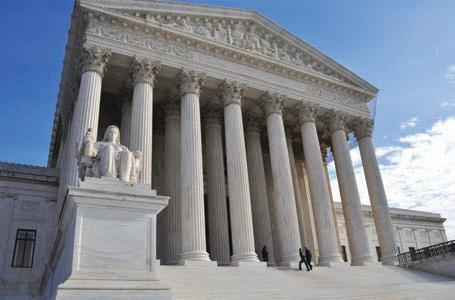
The U.S. Supreme Court on Tuesday ruled against a Colorado law that bans so-called conversion therapy for minors.
The justices last October heard oral arguments in Chiles v. Salazar. Today they ruled 8-1 in favor of Kaley Chiles, a Christian therapist who challenged the 2019 law.
In the case, which was heard by the justices in October 2025, Chiles successfully argued to the court that the law restricting this type of therapy was unconstitutional, leading to it being struck down.
The Supreme Court ultimately found that lower state and federal courts has “erred by failing to apply sufficiently rigorous First Amendment scrutiny,” ultimately reversing the widely discredited “medical” treatment that has support by a very narrow margin of mental health specialists — specifically religious and socially conservative ones. This is despite the fact that Colorado state officials have never enforced the measure in practice, and included a religious exemption for people “engaged in the practice of religious ministry.” The now moot law carried fines of up to $5,000 for each violation and possible suspension or revocation of a counselor’s license.
In the ruling, the court said the law, that specifically applies to talk therapy “impermissibly” interferes with free speech rights of Americans, and despite it being “regard[ed] its policy as essential to public health and safety, but the First Amendment stands as a shield against any effort to enforce orthodoxy in thought or speech in this country,” Justice Neil Gorsuch wrote for himself and seven other justices from across the ideological spectrum who overturned the low court’s ruling. He went on to add that the original ban “trains directly on the content of her speech and permits her to express some viewpoints but not others.”
Only Justice Ketanji Brown Jackson dissented, which included an in depth summary of her departure from the other eight justices, explaining her fears about the verdict — and its eventual chilling effect on legislation that could attempts to restrict regulatory speech for religious attitudes— despite that these regulations are often made as a direct creation of years of essentially unanimous research, and are vetted though regulatory boards for specific jobs
“This decision might make speech-only therapies and other medical treatments involving practitioner speech
effectively unregulatable,” Jackson wrote on page 32 of the 35-page opinion issued by court in response to her opposing eight members comments on the bench.
Since the ruling late Tuesday morning, a slew of LGBTQ advocacy groups, as well as groups promoting LGBTQ discrimination, have issued statements on the direct impact this will have across the country for LGBTQ people.
Democratic Senator, running for reelection in Colorado, John Hickenlooper issued a condemnation of the practice on his X (formerly Twitter). “Conversion therapy is cruel and inhumane, plain and simple. This SCOTUS decision is dangerous for LGBTQ+ Americans,” Our LGBTQ+ community deserves safety, acceptance, and love. We won’t ever let up in our fight for a better nation.”
Conversion therapy is cruel and inhumane, plain and simple. This SCOTUS decision is dangerous for LGBTQ+ Americans.,” the former Governor said on the platform “Our LGBTQ+ community deserves safety, acceptance, and love. We won’t ever let up in our fight for a better nation.”
Polly Crozier, director of family advocacy at GLBTQ Legal Advocates & Defenders (GLAD Law), provided a statement to the Washington Blade on the court’s decision.
“Today’s Supreme Court ruling limited Colorado’s statute that preemptively shielded minors from conversion therapy, but it leaves open avenues for states to protect families from harmful, unscrupulous, and misleading practices that divide parents from their children and put LGBTQ+ youth at risk,” Crozier wrote, pointing to the overwhelming evidence on conversion therapy that argues this type of regulatory legislation is helping those suffering rather than harming. “The evidence is clear that conversion practices lead to increased anxiety, depression, and suicidality. This is a dangerous practice that has been condemned by every major medical association in the country. Today’s decision does not change the science, and it does not change the fact that conversion therapists who harm patients will still face legal consequences, and that family advocates, mental health practitioners, and all of us who care about the wellbeing of youth will continue working to shield LGBTQ+ young people and their families from this dangerous practice.”
Human Rights Campaign President Kelley Robinson, who leads the nation’s largest LGBTQ advocacy group, also provided a statement, calling the courts choice a “reckless decision.” The statement also points out how their own data (from the group’s philanthropic arm of the organization) was cited in Brown Jackson’s dissent in the amicus brief
“The court has weaponized free-speech in order to prioritize anti-LGBTQ+ bias over the safety, health and wellbeing of children,” her statement reads. “So-called ‘conversion therapy’ is pseudoscience, not real therapy. It has been condemned by every mainstream medical and mental health association and harms families, traumatizes children, and robs people of their faith communities. It is cruel and should never be offered under the guise of legitimate mental healthcare. To undermine protections that keep kids and families safe from these abusive practices is shocking — and our children deserve better.”
Liberty Counsel, a nonprofit, tax-exempt Christian ministry that uses litigation to promote evangelical Christian values and limit LGBTQ protections, which was designated as a hate group by the Southern Poverty Law Center, was also cited in the court’s amicus brief, but in support of overturning the law.
“The U.S. Supreme Court’s resounding decision in Chiles v. Salazar is a major victory for the integrity of the counseling profession,” Mat Staver, Founder and Chairman of Liberty Council said today. “This ruling ensures the government cannot strip the First Amendment away from licensed counselors and dictate a state-mandated ideology between counselor and client. Talk therapy is speech, and the government has no authority to restrict that speech to just one viewpoint. Counseling bans can now be struck down nationwide so that people can get the counseling they need.”
GLAAD, one of the nation’s oldest non-profit organizations focused on LGBTQ advocacy and cultural change issued a statement pon the verdict, emphasizing what multiple advocate groups have said – this decision will impact an already vulnerable youth population at an elevated high risk.
“The Court once again prioritized malice over best practice medicine,” Sarah Kate Ellis, President and CEO of GLAAD said in a statement. “In the face of this harmful decision, we need to amplify the voices of survivors of this dangerous and disproven practice, and continue to hold anyone who peddles in this junk science liable.”
Adrian Shanker, the former Deputy Assistant Secretary for Health Policy at Health and Human Services under President Biden, who also led LGBTQI+ policy at the agency spoke about the detrimental impact this will have on rules and regulations within the healthcare field that are supposed to be inherently secular by nature.
“No matter what the Supreme Court decided today, it is irrefutable that conversion therapy is harmful to the health and wellbeing of LGBTQI+ youth,” Shanker told the Blade, continuing the Trump Administration’s choice to no longer formally support LGBTQ inclusive policy “That’s why in the Biden administration we advanced policies to safeguard youth from this harmful practice.”
In an consistently updated document started in 2018 that cites the major harms risks conversion therapy poses to LGBTQ people, the Trevor Project, the leading suicide prevention and crisis intervention organization for LGBTQ young people, included that the federal government’s own research proved the practice at best questionable and at worst deadly.
In a 2023 report entitled Moving Beyond Change Efforts: Evidence and Action to Support and Affirm LGBTQI+ Youth, the U.S. Department of Health and Human Services’ Substance Abuse and Mental Health Services Administration stressed that “[sexual orientation and gender identity] change efforts are harmful practices that are never appropriate with LGBTQI+ youth, and efforts are needed to end these practices,” the summary of the fight against conversion therapy in the U.S. reads.
More than 20 states and D.C. banned the widely discredited practice for minors prior to the Supreme Court’s ruling.
(Washington Blade photo by Michael Key)
Glisten report details hostile climate for LGBTQ students
Survey finds persistent harassment in classrooms
By JOE REBERKENNY | jreberkenny@washblade.com
The Gay, Lesbian, and Straight Education Network (now referred to as Glisten rather than GLSEN following a February rebrand) released its 13th National School Climate Survey on Tuesday, offering an often under-evaluated and under-addressed look at the realities LGBTQ students are dealing with within America’s K-12 schools.
The revised report provides new data points that could indicate the future of the current LGBTQ youth population, highlighting rising issues within school structures that often disproportionately impact LGBTQ students, while also offering a more “nuanced portrait” of how they are maneuvering these challenges.
The most alarming piece of data shows that “two in three students” reported feeling unsafe in school during the 2023–2024 school year due to their sexual orientation, gender identity, or gender expression. That high number becomes clearer as other findings in the research corroborate the points made — especially for those who haven’t stepped into a modern American classroom recently — which seems to be the best way to get a sense of what it is like to learn in one.
An additional data point showing LGBTQ students’ heightened sense of insecurity is reinforced by the widespread and constant harassment students face for their sexuality or gender identity.
The survey found that 62 percent of students experienced verbal, physical, or online harassment based on sexual orientation, while 68 percent reported the same due to their gender identity or expression.
Fifty-three percent — slightly more than half of all respondents — said they faced LGBTQ-related discrimination, including being barred from using facilities aligned with their gender identity in schools.
The survey also highlights disparities within the community — particularly within the 2023–2024 data, which emphasizes the unique struggles faced by transgender and non-white students. Trans students reported that 86 percent of them avoided certain school spaces out of fear for their safety. Non-white LGBTQ students (including Black, Indigenous, and people of color, referred to in the data as BIPOC) face a particularly difficult time within schools, with 48 percent reporting harassment based on their race or ethnicity.
In addition to these high levels of harassment, survey respondents also noted that the broader political climate shaping
Washington is impacting their daily experiences in negative ways. Many reported that school environments felt more hostile during the 2024–2025 school year amid escalating anti-LGBTQ rhetoric across the country, in the news, and within the White House as policy debates continue.
Despite these conditions — which attempt to generalize and adequately compare the discrimination, harassment, and bullying faced by LGBTQ students in K-12 schools — the report underscores that LGBTQ students are not easily categorized.
“Young people actually defy the static labels of victim or hero,” said Glisten CEO Melanie Willingham-Jaggers, speaking to the Washington Blade at a reception for the data’s release. “They are neither all downtrodden nor all resilient — they are complicated and multifaceted. What we are finding through our research is that they are actually creating solutions with and for each other. They understand they can’t rely on these systems, so they are doing something themselves.”
That dual reality — that LGBTQ students appear hyper-resilient amid systemic failure in school systems that make their experiences more difficult — is a defining theme of this year’s findings.
“There’s a resilience and a power and a clarity in young people that says there is no use in trying to change who I am because I am who I am,” Willingham-Jaggers said at the event held in the NEA building. “What is also true is that a super hostile political environment is really terrible for everyone’s mental health, including children. It ought not be on a 13-yearold or a 16-year-old to keep themselves safe. That’s what parents are for, that’s what adults in schools are for, and that’s what education is supposed to do.”
She added that the data reflects broader institutional shortcomings, especially as many attempts to fix these systemic issues continue to fall short or worsen conditions for the most marginalized. Trans people of color often face the worst instances of discrimination, harassment, and bullying, and the structures in place to alleviate these issues can sometimes make them worse.
“Unfortunately, our leaders and our institutions are failing our children,” she said, pointing out that education should serve as a pathway out of adversity and into a better future. “Education is supposed to be helping our young people connect with each other, and allow for
them to envision a world so they can leave school, and come out into the world, and be leaders … I think you can take the moral temperature of a country by how they treat their children. And we are — the collective ‘we,’ personified by our leaders — failing our children.”
Despite the troubling data highlighting how difficult it is to be an LGBTQ K-12 student today, the survey points to clear pathways for improvement.
These include being upfront and inclusive with LGBTQ students in a variety of ways. When schools provide comprehensive anti-bullying policies, LGBTQ students reported they were more likely to look forward to school and feel like they belonged. This also extends to expanding sex education to include often-overlooked sexual and gender minorities. Increased instances of positive LGBTQ inclusion were linked to better academic performance, attendance, and overall belonging, while negative depictions and exclusionary practices were linked to worse outcomes.
A major positive finding of the study is that when LGBTQ students reported having access to supportive educators, inclusive curricula, explicit anti-bullying policies, and Gender and Sexuality Alliances (GSAs), they also reported higher GPAs and a stronger sense of belonging — suggesting that even small, targeted policy shifts can meaningfully improve outcomes.
In a statement accompanying the report, Willingham-Jaggers emphasized the importance of listening to students’ experiences in full, which they acknowledged can be difficult to capture.
“LGBTQ+ youth, including intersex, asexual, and two-spirit students, are whole people with complex lives that defy the tired boxes of ‘victim’ or ‘leader’ into which they are so often placed,” she said. “Safety is not just the absence of harm; it is active affirmation. At a moment when young people’s identities are being debated and restricted, this study speaks truth to a menacing power.”
Researchers behind the survey also noted a shift in methodology this year, incorporating more qualitative data through student focus groups. By broadening beyond strictly quantitative measures, the data offers a deeper understanding of students’ lived experiences and strengthens the overall findings.
“Similar to previous findings, we continue to find that schools continue to be hostile sites for LGBTQ+ students and in
particular for trans and gender-expanding students and BIPOC students,” said Yu-Chi Wang and Shweta Moorthy. “Students provided us with more context and emotion behind our findings … helping us better understand what was happening in our schools and brainstorm ways we can improve it.”
For Willingham-Jaggers, the stakes extend beyond education alone and into the kind of adults these students will become — and, for some, the leaders who will shape the future. By instilling the values of understanding, equality, and democracy early, young people are better equipped to navigate future challenges and reshape the systems they inherit.
“Education is the cornerstone of democracy,” she said. “Education provides an immune system for autocracy. Democracy is born anew every generation, and education is its midwife. We need young people to be ready to build a future that is bigger than the tiny, weak vision of those currently in power.”
Even in a moment she described as “dark and frightening,” Willingham-Jaggers framed the report as both a warning and a call to action. “I feel really privileged to be leading this organization at this moment, because this moment is really critical,” she said. “I’m glad it’s me building the team and envisioning with our young people the future that we’re trying to build.”
The report concludes by recognizing the many organizations that contributed to the development of its findings. Focus group partners included Able South Carolina, Advocates for Youth, Freedom Oklahoma, interACT: Advocates for Intersex Youth, Louisville Youth Group, the Montrose Center, National Queer Asian Pacific Islander Alliance, National Black Justice Collective, Trans Mentor Project, and Youth Celebrate Diversity. Additional organizations — including GenderCool, Immigration Equality, interACT, SIECUS, and UnidosUS — also helped review and update the survey.
The methodology and data collection instruments used in Glisten’s 2025 National School Climate Survey were reviewed and approved by an independent Institutional Review Board, ensuring the study met established ethical standards and best practices for research involving human subjects.
The full report can be accessed at Glisten’s website at glisten.org.
(Photo by ishook/Bigstock)
SEAN KOSOFSKY
was director of policy at the Triangle Foundation.
Now more than ever: the importance of LGBTQ activism
What would Jeffrey Montgomery do?
For half a century, the arc of LGBTQ progress in America has bent—slowly, imperfectly—toward justice. We fought for visibility, for legal protections, for the right to marry, serve openly, and live with dignity. Each generation built on the courage of the last.
And yet today, that progress is in peril. Across the country, lawmakers are rolling back protections, demonizing LGBTQ people for political gain, and trying to erase us from public life.
Opponents of our equality are working to erase us from the Constitution, and indeed, public life. In moments like this, based on my personal involvement working with one of the most effective leaders for LGBTQ rights I find myself asking a simple question: What would Jeffrey do?
Jeffrey Montgomery—the focus of a new documentary “America You Kill Me” and a long time Michigan activist and founder of the Triangle Foundation—was never content with quiet advocacy or compromise. He was a rabble-rouser, a strategist, and a relentless thorn in the side of powerful bigots. When politicians tried to marginalize LGBTQ people, Jeffrey didn’t politely ask for scraps. He forced the issue.
Jeffrey Montgomery started with his own determined voice and turned it into a movement. His story is living proof that personal courage can spark national conversations about justice and inclusion.
At a moment when the LGBTQ movement again faces hostility and regression, Jeffrey’s playbook offers lessons we would be wise to remember.
First, Jeffrey understood the importance of punching above our weight. In the early days of LGBTQ organizing, our movement was small, underfunded, and politically marginalized. But Jeffrey refused to let opponents see us that way. Through visibility, media savvy, and relentless organizing, he made LGBTQ advocates appear larger, stronger, and more unified than our numbers alone might suggest.
That perception mattered. Political opponents think twice before attacking a movement that looks organized, energized, and capable of mobilizing public pressure. Jeffrey knew that power is partly about reality—but also about what
your opponent believes your power to be.
Second, Jeffrey never compromised on the value of our lives. Movements make compromises all the time. Politics often requires it. But Jeffrey understood that some things are not negotiable. The basic humanity of LGBTQ people is one of them. You can’t put our basic rights on the ballot. You don’t tell people to wait their turn. There are no turns. It’s now. It’s always now.
Too often, our opponents frame equality as something to be bargained over—as if the dignity and safety of queer people were a policy preference rather than a fundamental right. Jeffrey rejected that premise entirely.
You can negotiate strategy. You can negotiate timelines. But you cannot negotiate the worth of human lives.
And finally, Jeffrey understood the power of coalition. Today, one of the most effective tactics used against marginalized communities is division. If LGBTQ people can be fractured—by identity, ideology, generation, or strategy—our collective strength weakens.
Jeffrey instinctively resisted that trap. He worked with civil rights groups, labor leaders, faith communities, civic leaders and allies across movements. He understood that the fight for LGBTQ equality was never isolated from the broader fight for justice.
When opponents try to divide us, the answer is not retreat into smaller camps. The answer is to build broader ones.
If Jeffrey Montgomery were here today, he would not be discouraged by the backlash we are seeing. He would recognize it for what it is: the predictable response of those who feel their power slipping away.
And he would remind us that progress has never been linear. It has always required courage, persistence, and a willingness to challenge power directly. So, when the moment feels uncertain, when the political winds shift against us, and when our opponents try to make us feel small, the question remains a useful one: What would Jeffrey do?
If history is any guide, the answer would be simple. He would make some noise. And making noise, today, means refusing to let fear, fatigue, or false unity quiet us when our lives are on the line.
D.C. not the
ROSENSTEIN
is a longtime LGBTQ rights and Democratic Party activist. He writes regularly for the Blade.
place for antisemitic
Democratic Socialists of America
Candidates like Janeese Lewis George should reject its endorsement
D.C. is not the place for the antisemitic Democratic Socialists of America (DSA), who advocate for the end of the State of Israel from the ‘river to the sea.’ The candidates they endorse agree to their platform, which includes not talking to any Zionist organizations. Being a Zionist simply means supporting the existence of the State of Israel. It does not mean supporting the war criminal who heads the government, or what he is doing, including murdering innocent Palestinians, or bombing civilians in Iran and Lebanon. As Ron Halber, CEO of the Jewish Community Relations Council of Greater Washington, wrote in a column in DC Jewish Week, the views of the DSA are totally unacceptable.
The Council is non-political, but I am not. I can say one candidate for mayor, Janeese Lewis George, has asked for, and received, the endorsement of the DSA, and by doing so agrees to its antisemitic platform. After her endorsement became public, George tried to ‘privately apologize’ saying she didn’t see the questionnaire submitted by her campaign, rather it was submitted by a staffer. Now George says she is both not antisemitic, and supports Palestinians. Well, that sounds good. But she, and anyone else who accepts the DSA endorsement, has to answer a series of questions: 1. Are you for a two-state solution and the continued existence of the State of Israel, contrary to the position of the DSA? 2. Do you support BDS? 3. What is your definition of a Zionist? 4. What is your acceptable definition of antisemitism? 5. Will you meet with Zionist groups in DC?
Then, we must recognize if one candidate, like George, can go after and accept an endorsement from an antisemitic organization, it gives tacit permission for others to do the same with organizations that might be Islamophobic, racist, homophobic, sexist, or anti-immigrant. All unacceptable. I urge D.C. voters to reject any candidate, for any office, who has the endorsement of the DSA. That is not what we want the leaders of our government to represent. Thankfully, there are many choices in this year’s Democratic primary elections for every office. There is a race for mayor, congressional delegate, attorney general, Council chair, two D.C. Council at-large seats, additional Council seats, Democratic State Committee seats and ANCs. D.C. political leadership will look very different after this election.
I urge voters to whittle down their choices by first rejecting anyone endorsed by the DSA. The DSA’s platform, aside from being antisemitic, also includes suggestions to ‘Defund the Police.’ That is a slogan some of the candidates running adopted a few years ago, thinking the people wanted it. They quickly found the people of D.C. didn’t want fewer police, they wanted their police better trained, with better community oversight. They wanted to be sure the police were here to protect them, not to harass them. People should know the DSA at one point even withdrew its endorsement from Rep. Alexandra Ocasio-Cortez (D-N.Y.) as she wasn’t strident enough in her opposition to Israel and actually met with a Zionist organization. There are many Zionists like me — a gay, Jewish man — who support the existence of the State of Israel, yet want to see Netanyahu, a war criminal, a murderer, tried for his crimes and in jail, and his government replaced. Zionists who support Palestinians and want them to have their own free state.
As you decide who gets your vote, one way to find out about a candidate is looking at their website. I would suggest you reject any candidate who doesn’t have a strong issues section. The least you can expect of a candidate is to tell you in detail what they intend to do if you elect them. That includes our delegate to Congress, even if they won’t have a vote. If Democrats take back the House of Representatives, we can expect our delegate to once again get a vote in committee, and that can be very important.
In the next couple of weeks, I will make some endorsements and share them with you in the Blade, for anyone who might be interested. They will detail why I endorse a particular candidate. I will not suggest second, third, fourth, or fifth choices. That is for you to decide. No matter who you give your first vote to, even with ranked choice voting, you can still vote for only one person. If you decide to list more choices, make sure the views of your second, and other choices, coincide with those of your first choice.
So here is to an honest election season, one in which we end up with candidates winning who really care about our city, who have proven track records, and who will make us proud. Your job is to VOTE, and I hope everyone will.
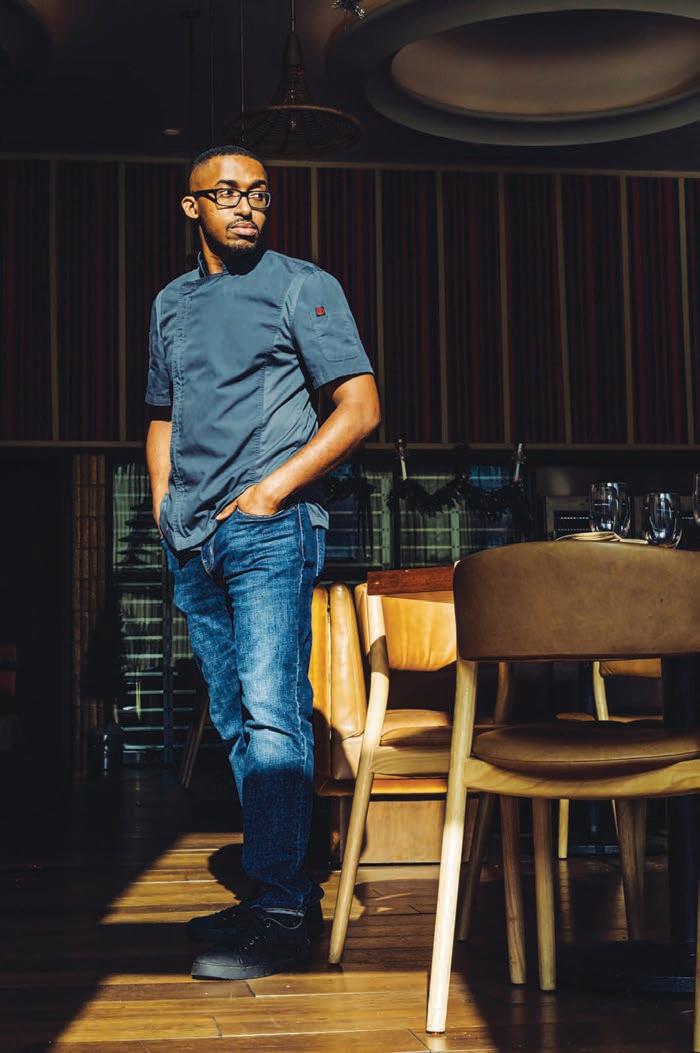
In Anthony Jones’s kitchen, all sorts of flags fly, including his own. Executive chef at award-winning restaurant Marcus DC, Jones has reached culinary heights (James Beard Award semifinalist for Emerging Chef, anyone?), yet he’s just getting started.
Briefly stepping away from his award-winning station, Jones took a moment under a different set of lights. Recently, he temporarily gave up his post at the restaurant for a starring small-screen slot on the latest season of “Top Chef,” which debuted in March. (The show airs weekly on Bravo and Peacock).
Before his strategic slice-and-dice competition, however, Jones, who identifies as gay, draws from his deep DMV roots. In the years before “Top Chef” and the top chef spot at Marcus, he was born and raised in Sunderland, Md., in southern Maryland, near the Chesapeake.
Early memories were steeped in afternoons on boats with his dad bonding over fishing, and wandering the garden of his great-grandparents spread with fresh vegetables and a few hogs. “It was Southern, old-school ethics and upbringing,” he said. “Family and food went hand in hand.” Weekends meant grabbing bushels of crabs, dad and grandma would cook and crack them. Family members would host fish fries for extra cash. In this seafood-heavy youth, Jones managed time to sneak in episodes of the “OG” Japanese “Iron Chef” show, which helped inspire him to pursue a career in the kitchen.
Jones moved to D.C. after graduating from college, ending up at lauded Restaurant Eve, and met famed chef Marcus Samuelson, who brought him to Miami to be part of the opening team for Red Rooster Overtown. After three years, Jones moved back to D.C., where he ran Dirty Habit, reinventing and reimagining the menu, integrating West African flavors and ingredients.
Samuelson, however, wouldn’t let a talent like Jones stay away for too long. Pulling Jones back into his orbit, Samuelson elevated Jones to help him open his namesake restaurant Marcus DC, which has been named a top-five restaurant by the Washington Post. Since then, Jones has been nominated as a semifinalist for the RAMMYs Rising Culinary Star in 2026 and won the Eater DC’s Rising Chef award in 2025.
Samuelson’s Marcus is a tour de force interpreting the Black Diaspora on the plate, from the American South to West Africa, along with his signature “Swedopi-
Award-winning D.C. chef reaching new culinary heights
Anthony Jones of Marcus DC competing on ‘Top Chef’
By EVAN CAPLAN
an” touches. Yet it’s Jones who has deeply informed the plate, elevating his own story to date. Marcus DC is primarily a seafood restaurant, which serves Jones well.
“Where I’m from is seafood heavy, and as I’ve progressed in my career, I’ve moved away from meat.” Veggies and fish are hero dishes. His own dish, Mel’s Crab Rice, was not only lauded by the Washington Post,
but is framed by his youth carrying home the crustaceans from Mel’s crab truck. It’s a bowl of Carolina rice, layered with pickled okra, uni béarnaise, and crab. Jones also points to a dish on the opening menu, rockfish and brassica, paying respect to a landmark D.C. institution, Ben’s Chili Bowl. Jones reverse engineered a favorite bowl of chili that’s seafood instead of meat forward,
leveraging octopus and rockfish along with different riffs of cauliflower: showing his intellectual, creative, and cultural sides.
While “Top Chef” is showing Jones’s spotlight side, he also lets his identity show at work. “In the kitchen, I make sure we’re inclusive. We don’t tolerate discrimination. Everyone that’s here should feel confident to express themselves. There are so many different flags in the kitchen.”
Jones says that he didn’t fully express his gay identity until fairly recently. He felt reluctant coming out to certain family members, “you’re scared to tell them about being different,” he says, and while that anxiety ate at him, “I’m lucky and fortunate to have unconditional love and that weight off my shoulders.”
Today, “I’m me all the time, Monday to Sunday. I’m honest with people, and my staff is honest with me.”
“Being a chef is hard,” he says, “and being a chef of color is even more difficult.”
Yet his LGBTQ identity is a juggling act, he says. “I need to keep that balance, because once someone finds out something about you, their opinion can change, whether you want it or not.”
Being on a whole season of TV cooking competition, however, might mean millions more might have an opinion of him (Jones has appeared on TV already, on an episode of “Chopped”). To prepare, he says, “I’ve just kept a level head. It’s just an honor to be on top chef with amazing people happy to be there.”
Plus, this season is set in the Carolinas, and Jones attended Johnson & Wales University in Charlotte, N.C. “It’s a full story of my life, now a monumental moment for me.”
Jones also recently was nominated for a James Beard Foundation Award. “JBF has been a north star, a dream for so long. I always had this goal on my wall.”
Being at the top spot at Marcus DC, making waves through his accolades, and cooking on Bravo means that Jones is highly visible. “I think that if someone has a similar background to me, and can see our story, trajectory, and success, they can have more ability to be themselves. This is my goal.”
Back at Marcus, Jones has plenty up his chef’s white’s sleeves. A new spring menu is in the works. He’ll be launching a new tasting menu “dining experience,” he says, and has plans to work on more events and collaborations with chefs and friends to bring in new talent and share the culinary wealth.
ANTHONY JONES (Photo by Joshua Foo)
THE LUCKIEST FIND ON TH STREET
PROOF YOU DON’T HAVE TO SACRIFICE STYLE TO LEAVE A SMALL FOOTPRINT
1 & 2-Bedroom condominium townhomes on 3-levels with roof terraces.
CALENDAR |
Friday, April 03
Center Aging Monthly Luncheon With Yoga will be at 12 p.m. at the DC Center for the LGBT Community. Email Mac at maca@thedccenter.org if you require ASL interpreter assistance, have any dietary restrictions, or questions about this event.
GoGay DC will host “First Friday LGBTQ+ Community Social” at 7 p.m. at Silver Diner Ballston. This is a chance to relax, make new friends, and enjoy happy hour specials at this classic retro venue. Attendance is free and more details are available on Eventbrite.
Saturday, April 04
GoGay DC will host “LGBTQ+ Community Brunch” at 11 a.m. at Freddie’s Beach Bar & Restaurant. This fun weekly event brings the DMV area LGBTQ+ community, including allies, together for delicious food and conversation. Attendance is free and more details are available on Eventbrite.
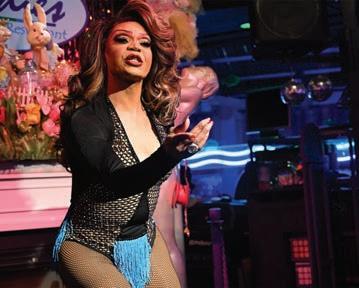
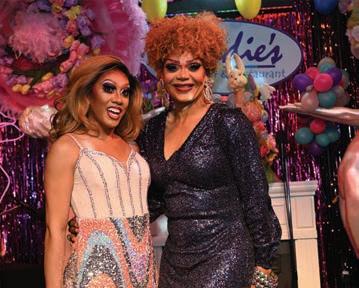
Nellies Sports Bar will host “Nellies DC Drag Brunch” at 12 p.m. Come get served like a queen, by a queen at the top rated Drag Brunch in DC! Join Sapphire Blue, Deja Diamond and their team of amazing drag performers, for the most fun you’ll have all weekend. Tickets start at $58.51 and are available on Eventbrite.
Monday, April 06
Center Aging: Monday Coffee Klatch will be at 10 a.m. on Zoom. This is a social hour for older LGBTQ+ adults. Guests are encouraged to bring a beverage of choice. For more information, contact Adam (adamheller@thedccenter.org).
GoGay DC will host “LGBTQ+ Community Happy Hour Meetup” at 5:30 p.m. at Freddie’s Beach Bar and restaurant. This event is ideal for making new friends. It’s free to attend. The group will gather inside at the purple booth to the left. Attendance is free and more details are available on Eventbrite.
By TINASHE CHINGARANDE
Tuesday, April 07
Universal Pride Meeting will be at 7 p.m. on Zoom. This group seeks to support, educate, empower, and create change for people with disabilities. For more details, email andyarias09@gmail.com.
Wednesday, April 08
Job Club will be at 6 p.m. on Zoom upon request. This is a weekly job support program to help job entrants and seekers, including the long-term unemployed, improve self-confidence, motivation, resilience and productivity for effective job searches and networking — allowing participants to move away from being merely “applicants” toward being “candidates.” For more information, email centercareers@thedccenter.org or visit www.thedccenter.org/careers.
Thursday, April 09
The DC Center’s Fresh Produce Program will be held all day at the DC Center for the LGBT Community. To be more fair with who is receiving boxes, the program is moving to a lottery system. People will be informed on Wednesday at 5:00 pm if they are picked to receive a produce box. No proof of residency or income is required. For more information, email supportdesk@thedccenter.org or call 202-682-2245.
Virtual Yoga Class will be at 7 p.m. on Zoom. This free weekly class is a combination of yoga, breathwork and meditation that allows LGBTQ+ community members to continue their healing journey with somatic and mindfulness practices. For more details, visit the DC Center’s website.
OUT & ABOUT
Women’s FEST returns to Rehoboth Beach next week
Women’s+ FEST 2026 will begin on Thursday, April 9 at CAMP Rehoboth Community Center.
The festival will celebrate a remarkable milestone in 2026: its silver anniversary. For 25 years, Women’s+ FEST has brought fun and entertainment for all those on the spectrum of the feminine spirit. There will be a variety of events including a golf tournament, mini-concerts and happy hour meetups.
For more information, visit Camp Rehoboth’s website.
Rehoboth’s 25th annual Women’s FEST kicks off next week. (Washington Blade file photo by Daniel Truitt)
Introducing the Torchbearers Awards
Honoring queer, trans women and nonbinary people FROM STAFF REPORTS
(Editor’s note: We are republishing this list of honorees from last week’s Blade. See washingtonblade.com for photos of all the awardees.)
The Torchbearers Awards are more than recognition— they are a continuation of legacy. They honor the quiet architects of progress in our community: those who organize, advocate, build, and protect, often without fanfare but always with purpose. Rooted in a belief in intentional recognition, this honor names those who carry our movements forward—those who make room for others, who remind us that change is both generational and generative. In a time marked by uncertainty and challenge, these leaders push forward with courage, clarity,
— Filmmaker / Former Executive Director of Just Vision
8. Ashlee Davis (she/her)
— Global Head of Inclusive Outcomes, Ancestry
9. Jazmine Hughes (she/her)
— Journalist and Former Editor at New York Times Magazine
10. Queen Adesuyi (they/she)
— Policy Advisor & Organizer, Reframe Health & Justice
11. Michele Rayner, Esq. (she/her)
— Civil Rights Attorney, State Representative (Florida House of Representatives)
12. Gaby Vincent (she/her)
— Sports/Cultural Commentator and Community Leader
13. Jenny Nguyen (she/her)
— Founder & Owner, The Sports Bra
and an unwavering commitment to expanding opportunity and equity.
This year’s honorees reflect the full breadth of our community, spanning generations, backgrounds, identities, and industries. From Legends, with decades of leadership and having created pathways for others, to Illuminators, who are lighting new paths with creativity and innovation, each Torchbearer represents the power of intergenerational leadership and the strength found in our diversity. They are organizers, advocates, artists, policy leaders, healers, and changemakers whose lived experiences shape a shared vision for equity and liberation.
14. Denice Frohman (she/her)
— Independent Artist, Poet / Performer
15. Vida Rangel (she/her)
— Founder, Our Trans Capital
16. Roxanne Anderson (they/them)
— Executive Director, Our Space
17. Ann Marie Gothard (she/her)
— Co-Founder & President, Pride Live (Stonewall National Monument Visitor Center)
18. Diana Rodriquez (she/her)
— Co-Founder & CEO, Pride Live (Stonewall National Monument Visitor Center)
19. Wendi Cooper (she/her)
— Founder / Executive Director, Transcending Women
20. Toya Matthews (she/her)
— City of San Antonio, Texas
21. Mayor Gina Ortiz Jones (she/her)
— Sports/Cultural Commentator and Community Leader
22. Charity Blackwell (she/her)
— Poet, LGBTQ Advocate & Community Leader
23. Wilhelmina Indermaur (she/her)
— Director of Communications, Tyler Clementi Foundation
24. Em Chadwick (she/her)
— CMO, For Them & Autostraddle
25. Kylo Freeman (they/he)
— CEO, For Them & Autostraddle
LEGEND AWARDEES
1. Sheila Alexander-Reid (she/her)
— Executive Director, PHL Diversity, Philadelphia Convention & Visitors Bureau
This award is our love letter to queer and trans women and nonbinary people who carry the flame when it would be easier to let it dim. To those who consistently show up, who use their voice and visibility and stand firm, often without recognition, so that others may live more freely and fully. The Torchbearers Awards celebrates not just what has been done, but the enduring spirit, responsibility, and collective care that ensure the work continues, and that the flame is always passed forward.
Co-Creators of the Torchbearers Awards: Shannon Alston, June Crenshaw, Heidi Ellis
25. J. Gia Loving (she/ella) — Co-Executive Director, GSA Network
Iconic Eddie Izzard takes on 23 characters in ‘Hamlet’
Energized take on role offers accessible way to enjoy Shakespeare
By PATRICK FOLLIARD
Eddie Izzard is an icon.
Best known for her innovative standup and film roles, the famed British performer is also a queer activist who over the years has good-naturedly shared details from her decades long trans journey. What’s more, Izzard has remarkably run 43 marathons in 51 days for charity.
And now, Izzard finds a towering new challenge with the worldwide tour of “The Tragedy of Hamlet” (at Shakespeare Theatre Company’s Klein Theatre through April 11), in which she plays 23 characters (Hamlet, King Claudius, Queen Gertrude, the ghost, etc.) in a solo performance running just over two hours.
At a recent performance, Izzard, before slipping into character, appeared on the unadorned stage to say that though in-
fused with comedy, “Hamlet” is definitely a tragedy, a story of a family and country both tearing themselves apart. She also warns that there’ll be a lot of breaking the fourth wall. After all, it didn’t exist in 1600 around the time when “Hamlet” was written.
The play unfolds in flurry of movement and scandal as the Danish prince begins to plot revenge after learning that his father, the old king was conspired against and murdered.
While some of Izzard’s character shifts are shown only by a subtle change in stance or modulation of voice, others are more obviously displayed like court sycophant Polonius walking with a stiff leg and mimed cane, or his ill-fated daughter Ophelia trotting girlishly across the upstage platform.
Delivered downstage at the intimate Klein venue, Izzard’s Hamlet soliloquies are performed with striking clarity. The one actor play is adapted and edited by Mark Izzard (the star’s older brother) and directed by Selina Cadell who successfully fosters the visceral connection between the actor and the house. Directly addressing an audience is something Izzard does exceedingly
well. You feel as if she’s looking at/speaking to only you.
Cuts and choices are made that might not please traditionalists. The stabbing of eavesdropping Polonius might prove disappointingly underplayed to some. Whereas, the subsequent satisfying dual/ death scene is long and precisely choreographed. Fear not, Izzard doesn’t flag a bit, not even when battling a cough (as was the case on the night of No Kings Day).
Not surprisingly, Izzard leans into the comedy. Her deliciously placed pauses, lines read ironically, and double takes, all gifts of comedy sharpened to perfection over a long career that kicked off as a street performer in the early eighties in London’s Covent Garden.
The play within a play scene finds Hamlet slyly rattling the conscience of King Claudius. As played by Izzard, it’s wickedly delightful and especially good. And the back and forth between the grave diggers done as a clever Cockney and his green assistant is a master class in how to play a Shakespearean clown.
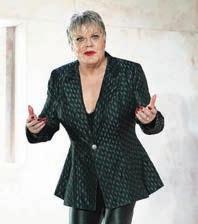
Kitted out in a black peplum jacket over leather leggings and boots, Izzard gives
gender fluid shades of contemporary diehard scenester and a Renaissance courtier. (Design and styling by Tom Piper and Libby DaCosta)
Attention has been paid to the blonde high ponytail, crimson lips and matching lacquered nails. The hands are important. Whether balled into fists or fingers fluttering, they’re in use, especially when playing Hamlet’s ex-friends Rosencrantz and Guildenstern (a clever surprise that can’t be spoiled).
Tom Piper’s set is wonderfully minimal. It’s an empty white walled space with three narrow windows that appear cut deeply into stone like those of a castle. These white flats serve as the ideal canvas for lighting designer Tyler Elich’s looming shadows, ghostly green light, and other unexpected flourishes of drama.
‘The Tragedy of Hamlet’ Through April 11 Shakespeare Theatre Company’s Klein Theatre 450 7th St., N.W. | Tickets start at $90 Shakespearetheatre.org CONTINUES AT WASHINGTONBLADE.COM
Embracing classic tropes with a candid exploration of
By JOHN PAUL KING
It’s probably no surprise that the last decade or so has seen a “renaissance” in horror cinema. Long underestimated and dismissed by critics and ignored by all the awards bodies as genre films, horror movies were deemed for generations as unworthy of serious consideration; relegated into the realm of “fandom,” where generations of young movie fanatics were left to find deeper significance on their own, they have inspired countless future film artists whose creative vision would be shaped by their influence. Add to that the increasing state of existential anxiety that has us living like frogs in a slow-boiling pot, and it seems as if the evolution of horror into what might be our culture’s most resonant form of pop art expression was more or less inevitable all along.
Queer audiences, of course, have always understood that horror provides an ideal vehicle to express the “coded” themes that spring from existence as a stigmatized outsider, and while the rise of the genre as an art form has been fueled by filmmakers from every community, the transgressive influence of queerness – particularly when armed with “camp,” its most surefire means of subversion – has played an undeniable role in building a world where movies like “Sinners” and “Weapons” can finally be lauded at the Oscars for their artistic qualities as well as celebrated for their success at providing paying audiences with a healthy jolt of adrenaline.
Perhaps unsurprisingly, the boldest and most biting entries are coming from trans filmmakers like Jane Schoenbrun (“I Saw the TV Glow”) – and like Australian director Alice Maio Mackay, whose new film “The Serpent’s Skin” opened in New York last weekend and expands to Los Angeles this week.
Described in a review from RogerEbert. com as “a kind of ‘Scanners’ for the dolls,” it’s a movie that embraces classic horror tropes
queer experience
within a sensibility that blends candid exploration of trans experience with an obvious love for camp. It centers on twenty-something trans girl Anna (Alexandra McVicker), who escapes the toxic environment of both her dysfunctional household and her conservative hometown by running away to the “Big City” and moving in with her big sister (Charlotte Chimes). On her first night in town, she connects with Danny (Jordan Dulieu), a neighbor (the only “hottie” in the building, according to her sister) who plays guitar in a band and ticks off all her “edgy” boxes, and has a one-night stand.
The very next day, she starts a new job at a record store, where she connects – through an intense and unexpected incident – with local tattoo artist Gen (Avalon Faust), a young woman she has seen in psychic visions, and who has been likewise drawn to her. The reason? They are both “witches,” born with abilities that give them a potentially deadly power over ordinary humans, and bound together in an ancient supernatural legacy.
It goes without saying that they fall in love; together, they teach and learn from each other as they try to master the mysterious magical gifts they both possess; but when Danny coincidentally books Gen for a tattoo inspired by his earlier “fling” with Anna, an ancient evil is unleashed, leading
to a string of horrific incidents and forcing them to confront the dark influences within their own traumatic histories which may have conjured this malevolent spirit in the first place, before it wreaks its soul-stealing havoc upon the entire community.
Confronting the theme of imposed trans “guilt” head on, “Serpent’s Skin” emanates from a softer, gentler place than most horror films, focusing less on scares than on the sense of responsibility which seems naturally to arise just from being “different.”. Both McVicker and Faust bring a palpable feeling of weight to their roles, as if their characters are carrying not only their own fate upon their shoulders, but that of the world at large; blessed (or cursed) with a layer of awareness that both elevates and isolates them, their characters evoke a haunting sense of responsibility, which permeates their relationship and supersedes their personal desires. At the same time, they bring a mix of respect and eroticism to the sapphic romance at the center of the film, evoking a connection to the transgressive and iconic “lesbian noir” genre but replacing its sense of amoral cynicism with an imperative toward empathy and social responsibility.
All of this helps to make the film’s heroines relatable, and raises the stakes by investing us not just in the defeat of supernatural evil, but the triumph of love. Yet we can’t help but feel that there’s something lost – a certain edge, perhaps – that might have turned up the heat and given the horror a more palpable bite. Though there are moments of genuine fright, most of the “scary” stuff is campy enough to keep us from taking things too seriously – despite the best efforts of the charismatic Dulieu, who literally sinks his teeth into his portrayal of the possessed version of Danny.
More genuinely disturbing are the movie’s scenes of self-harm, which both underscore and indict the trope of trans “victim-
Risking it all for love during World War II
New book follows story of Black, gay expat in Paris
By TERRI SCHLICHENMEYER
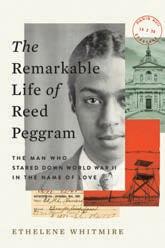
You couldn’t escape it. When you fell in love, that was it: you were there for good. Leaving your amour’s side was unthinkable, turning away was impossible. You’d do anything for that person you loved – even, as in the new biography, “The Remarkable Life of Reed Peggram” by Ethelene Whitmire, you’d escape toward danger.
On Aug. 28, 1938, Reed Peggram boarded a ship from Hoboken, N.J., hoping to “become a proper gentleman” and fulfill his
dreams. A prolific writer and Harvard scholar of comparative literature, he’d recently been awarded the Rosenwald Fellowship, which put him in the company of literary stars like Du Bois, Hurston, and Hughes. Both Peggram’s mother and grandmother were then domestic workers, and they had big expectations for him. Reed himself was eager to study abroad, for professional and personal reasons; he was “determined to become a French professor and an accom-
plished linguist” and “He also hoped to find love.”
What better place to do it than in Paris?
Outgoing and confident, Peggram made friends easily and had no trouble moving “through the world of his white male peers.” Where he faltered was in his lack of funds. He relied on the kindness of his many friends –one of whom introduced Peggram to a “man who would become so pivotal in his life,” a Danish man named Arne.
hood” while reminding us of the very real fear at the center of many trans lives, especially when lived under the oppression of a mindset that deplores their very existence. Still, though Mackay’s film may touch on themes of queer and trans existence and build its premise on a kind of magical bond that makes us all “sisters under the skin,” it is mostly constructed as a stylish tribute to the classic thrillers of an earlier age, evoking the psychological edge of directors like Hitchcock and DePalma while embracing the lurid “shock value” of the B-movie horror that shaped the vision of a modern generation of filmmakers who grew up watching it –and even if it never quite delivers the kind of scares that linger in our minds as we try to go to sleep at night, it makes up for the shortfall with a smart, sensitive, and savvy script and a rare depiction of trans/lesbian love that wins us over with chemistry, emotional intelligence, and enviable solidarity. What makes “The Serpent’s Skin” feel particularly remarkable is that it comes from a 21-year-old filmmaker. Mackey, who built the foundation of her career behind the camera with a series of low-budget horror shorts in her teens, has already made an impact with movies ranging from the vampire horror comedy “So Vam” (released when she was 16) to the horror musical “Satanic Panic” and the queer holiday shockfest “Carnage for Christmas”. With her latest effort, she deploys a confidence and a style that encompasses both the deep psychological nuance of the horror genre and its guilty-pleasure thrills, rendered in an aesthetic that is grounded in intimate queer and trans authenticity and yet remains daring enough to take detours into the surreal and psychedelic without apology.
It’s the kind of movie that feels like a breakthrough, especially in an era when it feels especially urgent for trans stories to be told.
Peggram and Arne had a lot in common, and they began to enmesh their lives and dreams of living in the United States. But there were complications: homosexuality was largely forbidden, World War II was in its early stages, and it quickly became apparent that it was dangerous to stay in Europe.
‘The Remarkable Life of Reed Peggram’ By Ethelene
c.2026, Viking | $30 308 pages
CONTINUES AT WASHINGTONBLADE.COM
ALEXANDRA MCVICKER and AVALON FAUST in ‘Serpent’s Skin.’ (Image courtesy of Dark Star)
Whitmire
• Spend a family-friendly day by the Anacostia River surrounded by music, art, and the spirit of spring.
• Enjoy live performances, discover interactive crafts, local food, and more
Come for a few hours or stay all day. However you spend it, make it your moment to welcome the season and find your bloom.
• Plus, gather along the waterfront for a stunning fireworks show at 8:30 PM that’ll light up the night sky and leave you in awe. Scan the QR code or learn more at NationalCherryBlossomFestival.org
CIRCLE SPONSORS
Freddie’s Follies
Queens perform at popular Arlington drag show
‘No
Kings’ rally and march
Demonstrators in Anacostia join nationwide protests (Washington Blade photos by Michael Key)
A “No Kings” demonstration was held in Anacostia on Saturday to protest the Trump administration. Speakers at the rally included LGBTQ activist, Rayceen Pendarvis. Following the rally, demonstrators marched across the Frederick Douglass Memorial Bridge.
The Freddie’s Follies drag show was held at Freddie’s Beach Bar in Arlington, Va. on Saturday. Performers included Monet Dupree, Natalie Cole, Shalita Ramen, Makayla Starr and Gigi Paris Couture.
(Washington Blade photos by Michael Key)
Surviving spring cleaning
Create a space that feels comfortable, welcoming, and easy to maintain
By VALERIE M. BLAKE
Whether or not you are getting ready to sell your home, spring is finally upon us — you know, the time of year when you can open the windows to a warm breeze and commit to decluttering and thoroughly cleaning your home.
While decluttering, you will be faced with the challenge of what to keep and what to discard. Mysterious items may appear: the missing charger, the set of keys that open nothing, or, with any luck, that one important document you know you put “in a safe place.” The journey often turns into an archaeological dig through the layers of your daily life. Along the way, you will likely encounter objects that have been misplaced or are no longer needed, and you’ll wonder why you kept them in the first place.
The kitchen junk drawer, for example, is a universal catch-all that defies categorization. You might open it looking for a rubber band and instead discover a lone screw of unknown origin, a tube of hardened Super Glue, and at least four pens that no longer work.
Closets offer another layer of surprises, where you can find things that don’t seem to belong at all: cash in a coat pocket, a single glove, a book you meant to read, or
a box filled with cables for devices you no longer own.
It’s guaranteed that if you only have one of a pair of something, its mate will appear shortly after you have thrown away the one you had. And, if you were intentionally searching for an item, it will turn up in the last place you look, simply because once you found it, you stopped looking.
Linen closets and bathroom cabinets can also harbor oddities. Now is the time to discard half-used or duplicate products you don’t remember buying, travel-sized toiletries from trips long past, or expired medications.
Under furniture is where things get truly mysterious. Reaching beneath a couch or bed in search of a dropped item often yields a collection of the unexpected: assorted coins, dust-covered pet toys, a missing sock, and perhaps something that makes you pause, like a long-lost piece of jewelry or an object you were convinced had disappeared forever.
Organizing garages and basements takes the experience to another level, where consolidating tools or seasonal decorations stored there can quickly turn into an encounter with objects that defy explanation.
Why is there a box of tiles from a renovation that happened a decade ago? Do you really need the instruction manuals for appliances you no longer own? What could possibly be in the box that hasn’t been opened since you moved in?
Even searches within a home office - looking through files, drawers of old electronics, or stacks of paperwork—can yield similarly strange results. I recently found several flash drives with client files from 2014, a cache of notebooks containing names and phone numbers of prospects who left the area 15 years ago, and Turbo Tax installation CDs from as far back as 1997.
If decluttering hasn’t defeated you, then thoroughly cleaning your house may not be as overwhelming as you might think. Breaking it into manageable steps makes the process far simpler and even satisfying. A consistent method is the key to success.
Before you reach for cleaning supplies, take one last walk through each room and gather items that belong elsewhere for return to their proper place. Put away clothing and take out trash. This step instantly makes your home look better and clears the way for more effective cleaning. Working from top to bottom, dust ceiling fans, light fix-
tures, shelves, and blinds first so that any debris falls to the floor for addressing later. Use a microfiber cloth or handheld Swiffer to trap dust rather than spreading it around. Don’t forget overlooked areas like the tops of door frames, windowsills, and baseboards.
Move on to surfaces. Wipe down countertops and furniture with appropriate cleaners. Squeegee windows to let the sun shine in. Pay special attention to kitchen appliances. Stovetops, microwaves, and refrigerator handles tend to collect grime quickly, as do the tops of upper cabinets. In bathrooms, disinfect sinks, toilets, tubs, and showers.
CONTINUES AT WASHINGTONBLADE.COM
VALERIE M. BLAKE is a licensed Associate Broker in D.C., Maryland, and Virginia with RLAH @properties. Call or text her at 202-246-8602, email her at valerie@DCHomeQuest.com or follow her on Facebook at TheRealst8ofAffairs.
It’s that time of year: spring cleaning! (Image via Bigstock/megaflopp)
People. Individual/Couples counseling with a volunteer peer counselor. GMCC, serving our community since 1973. 202-580-8861 gaymenscounseling.org No fees. Donation requested.
Thanks for reading The Blade!
HANDYMAN
BRITISH REMODELING
Local licensed company with over 25 years of experience. Specializing in bathrooms, kitchens & all interior/exterior repairs. Drywall, paint, electrical, wallpaper, roofing & siding. Trevor 703-303-8699
LEGAL NOTICE
SUPERIOR COURT OF THE DISTRICT OF COLUMBIA PROBATE DIVISION
2026 ADM 000240
Cecelia Anderson, Name of Decedent
Notice of Appointment, Notice to Creditors and Notice to Unknown Heirs Syreeta Anderson, whose address is 844 Xenla St., SE, Washington, DC 20032 was appointed Personal Representative of the estate of Cecelia Anderson who died on December 1, 2025 without a Will and will serve without Court supervision. All unknown heirs and heirs whose whereabouts are unknown shall enter their appearance in this proceeding. Objections to such appointment shall be filed with the Register of Wills, D.C., 515 5th Street, N.W., Building A, 3rd Floor, Washington, DC. 20001, on or before 09/27/2026. Claims against the decedent shall be presented to the undersigned with a copy to the Register of Wills or to the Register of Wills with a copy to the undersigned, on or before 09/27/2026, or be forever barred. Persons believed to be heirs or legatees of the decedent who do not receive a copy of this notice by mail within 25 days of its publication shall so inform the Register of Wills, including name, address and relationship.
Date of first publication: 03/27/2026
Name of Newspaper and/or periodical: Washington Blade /s/Syreeta Anderson, 202-468-2377 844 Xenia St SE, Washington DC 20032 /s/Nicole Stevens, Register of Wills.
LIMOUSINES
KASPER’S LIVERY SERVICE
Your Personal Limo/Uber Service
WHERE DO YOU WANT TO GO. LET ME TAKE YOU THERE!
Proper DC License & Livery Insured. Gay & Veteran Owner/Operator. Since 1987. 202-554-2471 www.KasperLivery.com
Please tell our advertisers, “I saw your ad in the Blade!”
MOVING
GREAT SCOTT MOVING
Local & Long Distance. Get a Great Move at a Great Price! Call (301) 6992066
We’ve moved the Blade, Embassies & the Smithsonian’s piano collection! Let us move you!
RENT COLLEGE PARK, MD FURNISHED 1BR - BSMT. YOU MUST SEE THIS
NEW FABULOUSLY RENOVATED
semi-private furnished basement apartment located in North College Park steps from City dining, Mom’s and other stores, easy access major roadways & only 10 min walk to Metro. $1745.00 per month ***All Utilities Included.*** bit.ly/4r79Qje email: cprental@ymail.com
FOR SALE / VA BEACH
WATERFRONT VA BCH HM
Older 3 story, 6 bedrooms, 3 baths, 3 kits. Renovate or investment opportunity on Ches Bay with view of Ch Bay tunnel. Upscale neighborhood. Sit on beach in your front yard, enjoy water sports, excellent employment opportunities, beautiful view at amazing value. Once in a lifetime opportunity. Showings by appt, its a gem waiting for you. Lisa Wood, 803-522-1081 laeperson62@gmail.com
FOR SALE / DC
This circa-1890 stately Grand Dame commands a premier position overlooking life on Logan Circle. With two sides of broad bay windows on 3 levels, bathing the home in natural light--each framing beautiful views of the park--and a coveted fenced and private courtyard, you’ll have a front row seat to this historic neighborhood in downtown DC. 6 bedrooms/3 baths and private entry to lower level living. Andy Alderdice - 301.466.5898 andy4homes@gmail.com Long & Foster Real Estate 202-234-4100
Luxury Real Estate SpecialistLicensed in MD, DC & VA Integrity. Experience. Commitment. Local.
MEN FOR MEN
TALL, NICE LOOKING, WHITE MAN
iso tall, 20-something, well-hung, white dude ready to give up what between his legs to a top’s nice lips for some sheer delight. Sincere responses, please text me. I will get back to you. Available 24 hrs a day. CALL OR TEXT: 240-457-1292