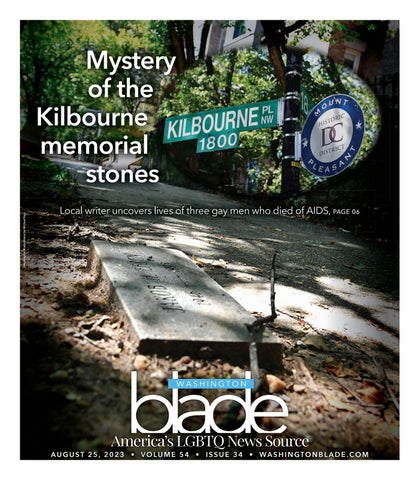













































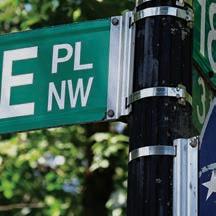



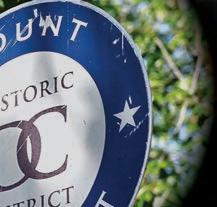








AUGUST 25, 2023 • VOLUME 54 • ISSUE 34 • WASHINGTONBLADE.COM Local writer uncovers lives of three gay men who died of AIDS, PAGE 06 (Washington Blade
by
Key) Mystery of the Kilbourne memorial stones
photos
Michael










02 • WASHINGTONBLADE.COM • AUGUST 25, 2023 TOM GAFFNEYSENIOR LOAN OFFICER NMLS ID #182206 703.307.5877 tga ney@ mtg.com www.Ga neyLoans.com FIRST HERITAGE MORTGAGE, LLC 3201 JERMANTOWN ROAD, SUITE 800 FAIRFAX, VA 22030 First Heritage Mortgage, LLC | Company NMLS ID #86548 (www.nmlsconsumeraccess.org) This is an advertisement and not a guarantee of lending. Terms and conditions apply. All approvals subject to underwriting guidelines. Prepared: 09/05/2018. CURRENT INCENTIVES ** $20K in Closing Costs* *with use of preferred Lender and Title **not valid on previous contracts and must se le on or before 08/31/23. *Closing costs paid when using First Heritage Mortgage and does not include pre-paids. Pricing and terms may change, please speak with Loan O cer. POTOMAC OVERLOOK MONUMENT SERIES FROM THE $700’S 500 TRIGGERFISH DRIVE, NATIONAL HARBOR, MD 20745 SALES@INTEGRITYHMW.COM | (703) 223-6286 READY TO LIVE AT NATIONAL HARBOR? The Potomac Overlook Monument Series Luxury Townhomes starting from the $700’s VA LOANS WITH $0 DOWN AND ALL CLOSING COSTS PAID* 8463




























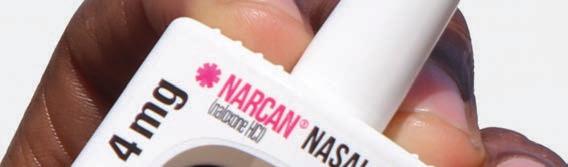






AUGUST 25, 2023 • WASHINGTONBLADE.COM • 03 LIVE LONG DC Saving lives from the opioid epidemic TO SAVE A LIFE Naloxone (aka NARCAN®) is a medication that reverses an opioid overdose and can save the life of your friend, your loved one, even yourself. NO COST. NO PRESCRIPTION. NO IDENTIFICATION. Text LiveLongDC to 888-811 to find naloxone near you.
Thank you to our sponsors and partners of the Washington Blade.

ADDRESS PO Box 53352

Washington DC 20009
PHONE
202-747-2077
E-MAIL news@washblade.com
INTERNET washingtonblade.com
PUBLISHED BY Brown Naff Pitts Omnimedia, Inc.

PUBLISHER
LYNNE J. BROWN lbrown@washblade.com ext. 8075
EDITORIAL
EDITOR
KEVIN NAFF knaff@washblade.com ext. 8088 SR. NEWS REPORTER
LOU CHIBBARO JR. lchibbaro@washblade.com ext. 8079


WHITE HOUSE CORRESPONDENT
CHRIS KANE ckane@washblade.com extg 8083
INTERNATIONAL NEWS EDITOR
MICHAEL K. LAVERS mlavers@washblade.com ext. 8093
POP CULTURE REPORTER
JOHN PAUL KING
PHOTO EDITOR
MICHAEL KEY mkey@washblade.com ext 8084
WRITERS
CONTRIBUTING
DANIEL ITAI, EDICIÓN CIENTONCE, QUORUM, WDG, STEPHANIE MONDRAGÓN, ISAAC AMEND , TINASHE CHINGARANDE, DUNIA ORELLANA, REPORTAR SIN MIEDO, PARKER PURIFOY, PETER ROSENSTEIN, MARK LEE, LATEEFAH WILLIAMS, KATE CLINTON, KATHI WOLFE, ERNESTO VALLE, YARIEL VALDÉS GONZÁLEZ, LYNARE ROBBINS, PHILIP VAN SLOOTEN, KATLEGO K. KOLANYANE-KESUPILE, KAELA ROEDER, TREMENDA NOTA, ALBERTO J. VALENTÍN, MAYKEL GONZÁLEZ VIVERO, ORGULLO LGBT. CO, ESTEBAN GUZMAN, ANDRÉS I. JOVÉ RODRÍGUEZ, WINTER HAWK CREATIVE DESIGN/PRODUCTION AZERCREATIVE.COM
SALES & ADMINISTRATION
DIRECTOR OF SALES & MARKETING







STEPHEN RUTGERS srutgers@washblade.com ext. 8077


SR. ACCT. EXECUTIVE BRIAN PITTS
bpitts@washblade.com ext. 8089
CLASSIFIED ADVERTISING/ADMINISTRATION


PHILLIP G. ROCKSTROH prockstroh@washblade.com ext. 8092
NATIONAL ADVERTISING
RIVENDELL MEDIA
212-242-6863; sales@rivendellmedia.com
Community Partners

For distribution, contact Lynne Brown at 202-747-2077, ext. 8075. Distributed by Southwest Distribution Inc.

All material in the Washington Blade is protected by federal copyright law and may not be reproduced without the written consent of the Washington Blade. The sexual orientation of advertisers, photographers, writers and cartoonists published herein is neither inferred nor implied. The appearance of names or pictorial representation does not necessarily indicate the sexual orientation of that person or persons. Although the Washington Blade is supported by many fine advertisers, we cannot accept responsibility for claims made by advertisers. Unsolicited editorial material is accepted by the Washington Blade, but the paper cannot take responsibility for its return. The editors reserve the right to accept, reject or edit any submission. A single copy of the Washington Blade is available from authorized distribution points, to any individual within a 50-mile radius of Washington, D.C. Multiple copies are available from the Washington Blade office only. Call for rates. If you are unable to get to a convenient free distribution point, you may receive a 52-week mailed subscription for $195 per year or $5.00 per single issue. Checks or credit card orders can be sent to Phil Rockstroh at prockstroh@ washblade.com. Postmaster: Send address changes to the Washington Blade, PO BOX 53352 Washington, DC 20009. The Washington Blade is published weekly, on Friday, by Brown Naff Pitts Omnimedia, Inc. Rates for businesses/institutions are $450 per year. Periodical postage paid at Washington, D.C., and additional mailing offices. Editorial positions of the Washington Blade are expressed in editorials and in editors’ notes as determined by the paper’s editors. Other opinions are those of the writers and do not necessarily represent the opinion of the Washington Blade or its staff. To submit a letter or commentary: Letters should be fewer than 400 words; commentaries should be fewer than 750 words. Submissions may be edited for content and length, and must include a name, address and phone number for verification. Send submissions by e-mail to knaff@ washblade.com.


04 • WASHINGTONBLADE.COM • AUGUST 25, 2023
©2023 BROWN NAFF PITTS OMNIMEDIA, INC.
Te Only Stack Style Guide v 1 | February 2018
VOLUME 54 ISSUE 34


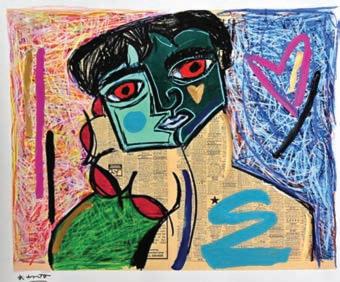
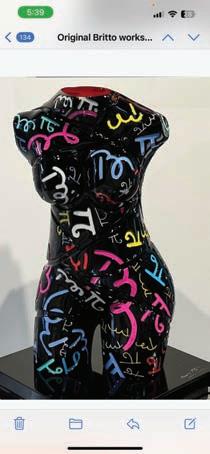

AUGUST 25, 2023 • WASHINGTONBLADE.COM • 05 HeartKids Originalmixedmediaoncanvas framed43x34 $15,600 Madonna OriginalMixedmediaoncanvas 30x40 $14,750 Thoughts Originalmixedmediaonpaper36x48 matted&framed $19,500 ClassicBrittoBlackTorso Limitededition,signed, number17/10012x12x21 $4,800 SmileyFaceMagenta OriginalBrittodrawing framed8x10 $3,200
HollinHallShoppingCenter 7918FortHuntRd. AlexandriaVA22308
FeaturingOriginal worksby
establishedartists
Tues-Sat11am-6pm,Sun10am-3pm CustomFrameShopon-premises "PopUp"location inOLDTOWNAlexandria 108N.St.AsaphSt. Fridays5-7pm Saturdays11am-4pm orbyappointmenttext703-856-5277
ROMEROBRITTO anddozensofother local,emergingand
Unraveling mystery of the Kilbourne Place memorial stones
Three gay men lived in this Mount Pleasant neighborhood before dying of AIDS
By TEE MINTER
Walking down Kilbourne Place is like stepping into another world. The quiet street lined with row homes is a far cry from the hustle and bustle of Mount Pleasant Street. Mount Pleasant is a village within a city with a thriving El Salvadoran population, long-term residents, and newcomers such as myself. On any given day, Purple Patch is serving up sizzling plates of Sisig and the 43 bus is whizzing its way on its journey to the Kennedy Center. On Kilbourne Place, the sound of sizzling pork and the loud hum of the Metrobus can be heard. Within this little slice of serenity, there are three men that I’ve become acquainted with: Robert Rockerhousen, Jakob Efsen and Charles Winney.
On Aug. 18, 2022, my dear friend Courtney decided that it was a good idea to take a walk around the neighborhood after a long day’s work. As we took a right on Lamont Street to walk up Kilbourne, I decided to slow my pace and lag behind. When I caught up to Courtney, she was standing in front of 1755 Kilbourne Place staring at a patch of grass.
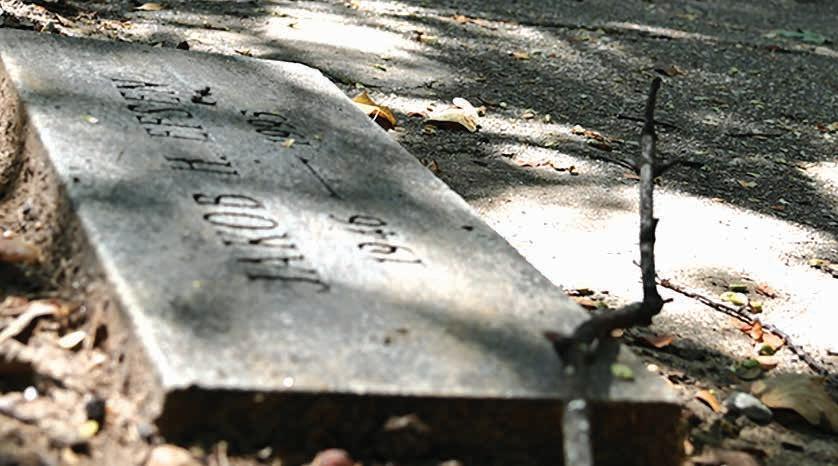
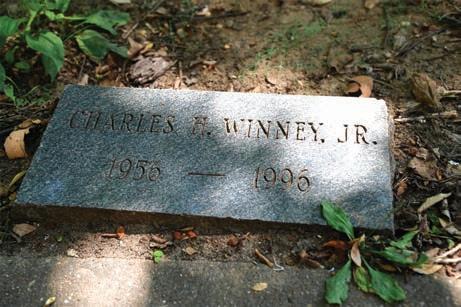
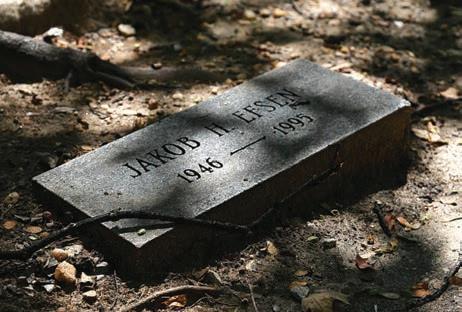
I looked down at what caught her eye. It was a headstone with the name Robert Rockershousen and the years 19591998 etched onto it. We both sat there and scratched our heads at this find. Without exchanging words, I stepped a couple of paces to the left and found Jakob Efsen and Charles Winney’s headstones. Courtney and I reconvened back at Robert’s stone and we started to exchange ideas about what these headstones could be.
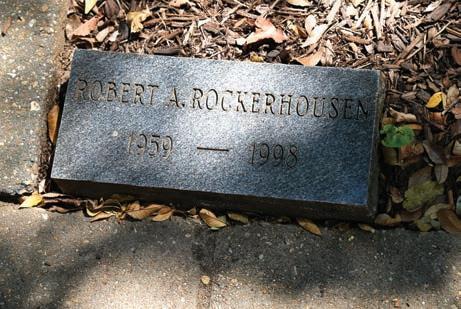
My first thought was that these were trees planted as a memorial but Courtney reminded me that there were no trees. We said that these could be stones for beloved family pets but the names sounded too human. Getting caught up in trying to find out why headstones would be in this quiet neighborhood, we forgot the years that were etched into them. We both settled on the stones being a memorial for slaves since an enslaved burial ground was found not too far away in Adams Morgan. Now that the mosquitoes were biting at every inch of exposed skin, we settled on this rationale and walked away. Before leaving, I decided to snap a picture.
One glass of wine and a few hours later, I pulled out my phone and took a look at the headstone. The enslaved memorial theory was quickly discarded because I saw the year 1998 clear as day. Doing what most people in my age group do when we’re looking for information, I turned to the Internet. I posted on the r/washingtondc subreddit hoping to ask residents if they knew anything about these stones. The commenters on that post were as confused as I was. Knowing that I needed more information, I walked back down the street the following day and took pictures of Jakob and Charles’s stone. It was on this second trip back and actually paying attention to the stones that a thought started to form. All three of the stones were in honor of men who passed away in the mid-to-late 1990s who were all under 50 years of age. I decided to take another shot at the Internet and back on the r/washingtondc subreddit I made a post soliciting the help of elders in the area’s LGBTQ community. As I was waiting for comments to roll in, I was anxiously checking my phone and refreshing the feed hoping that someone somewhere had answers. No one could say who, what, or when the stones were placed on Kilbourne Place but a few provided some valuable insight on the neighborhood and a few told me to check the Washington Blade’s obituary section with my library card. That night, I spent hours going through each issue in the 1998 archives until I landed on the Nov. 13, 1998 issue. There in black and white was Robert and his cause of death was listed as complications from AIDS.
I went back into the archives and started scrolling through 1996 until I got to July 26, 1996 where I found Charles. In
black and white was the cause of death due to complications of AIDS. It took a while for me to find Jakob’s obituary but it was found through the NAMES Project AIDS Memorial Quilt. Even though his cause of death wasn’t explicitly listed as complications from AIDS on his obituary, I knew what that 3x6 panel represented. Here before me were three men who were gay and died from AIDS. At first, my looking into these headstones was something to satiate my curiosity. I was still relatively new to Mount Pleasant and I wanted to know every little thing about the place I now call home. I did not know that this undertaking would become deeply personal for me.
I didn’t fully embrace and accept myself until I turned 25. Growing up, I had conflicting feelings about my sexuality and identity. As young as elementary school I knew I had an attraction to girls and I preferred to present more masculine. Among my friend group, I preferred to be called Tee because Tiana never sounded right to my ears. It wasn’t until adolescence that I also realized I had an attraction to boys. Throughout my adolescent and early adult life, I had visible relationships with men and closeted relationships with women. It was already programmed that there was a “wrongness” within me. I was mocked for my tomboyish appearance. I couldn’t maintain friendships with other girls because they would be immediately labeled as dykes. In college, the dean of my sorority indicated that she would feel “uncomfortable” changing in front of me, implying that there is something inherently predatory about my sexuality.
The closet is where I stayed until June of 2022. Around that time, the walls of the closet started to close in on me and a change needed to happen. I chopped off all of my hair, threw away my feminine clothing, and became Tee again. While this newfound freedom was liberating, there was also a deep sense of regret. When I went to Pride that year I saw a beautiful and vibrant community. A community that I knew nothing about and was afraid of my whole life. Stumbling upon Robert, Charles, and Jake’s headstones as a newly out queer person allowed me an opportunity to learn about a community that I deprived myself of in favor of trying to be “normal.”
I immediately got to work researching everything I could about the men. No longer was finding out the person or entity that placed the headstones an important part of my research. The most important thing was telling the stories of these three men and the lives that they led. Jakob was the first of the three that I started researching. There was already quite a bit of information on him due to his quilt panel. On his panel, there was a pair of cowboy boots and three flags. The cowboy boots represented his love for square dancing. He was a proud member of DC Lambda Squares, which is the area’s LGBTQ square dancing group. DC Lambda Squares members made Jakob’s panel. The three flags represented places that were deeply personal to him. Denmark represents the place he was born. Sweden represents the nationality of his parents, and South Korea represents where Jake served and lived during his time in the PeaceCorps.
Jakob Efsen was born on Feb. 5, 1946 in Denmark. At some point in his childhood, he and his family relocated to Middletown Township, N.J., where he stayed until adulthood. Upon completion of university, he volunteered for the PeaceCorps where he served as a tuberculosis control volunteer in South Korea. In doing research about Jakob, I found a Facebook group of PeaceCorps volunteers who served in Korea. One of his friends, Neil Landreville with whom I had the pleasure speaking, was in K group 13 with Jakob between 1970-1972.
On June 23, 2023, I had the pleasure of speaking with Neil. Neil is now 77 years old and a retired HIV nurse living
in New York City. He has a certain youthfulness and brightness to his voice that immediately endears you to him. We stayed on the phone for more than an hour talking about what he knew about Jake and trading stories of our careers in healthcare. Neil met Jake in San Jose where they were roommates for three days before PeaceCorps training in Hawaii. Neil first noticed that Jake was very tall and had an enthusiasm for life. He expressed that the people who knew Jake were immediately taken in by his generosity.
In the weeks they had to learn Korean and how to administer care to people with tuberculosis, Neil fondly remembers how Jake liked to take photos of flowers. Jake went on to become staff for PeaceCorps following the completion of his volunteer term. Being so inspired by the work he did in Korea, Jake came to the DMV area and worked as a tuberculosis case manager in Prince George’s County. Neil expressed that the same reason he worked in the Bronx during the height of the AIDS epidemic is the same reason Jake took on the job in Prince George’s County — he wanted to work directly with the people.
06 • WASHINGTONBLADE.COM • AUGUST 25, 2023 • LOCAL NEWS
ON PAGE 08
CONTINUES
Three gay men are memorialized in stones placed along Kilbourne Place in Mount Pleasant. (Blade photo by Michael Key)






AUGUST 25, 2023 • WASHINGTONBLADE.COM • 07
CONTINUED FROM PAGE 06
Kilbourne stones memorialize lives of three gay men
Another fascinating bit about Jake is that he liked to write letters to the editor in response to stories he read in the local newspaper. He was very vocal about his feelings on former Mayor Marion Barry during his drug scandal. He was also vocal about road safety and I have to believe he was passionate about it because he liked to ride his bicycle throughout the neighborhood. Another piece that spoke to me that I remembered when speaking to Neil is one from the Aug. 14, 1987 edition of The Washington Times. The piece was titled “AIDS: The Situation That the U.S. Faces.”
Six years into the AIDS epidemic, the crisis was being ignored by the government. Then-President Ronald Reagan did not mention the word AIDS publicly for years until after his Hollywood friend Rock Hudson came out as gay and revealed that he was living with AIDS. The government was so adamant about not mentioning AIDS that the topic was met with laughter and homophobic remarks in a 1982 press conference in which former Press Secretary Larry Speakes asked reporter Lester Kinsolving if he had AIDS. It wasn’t until the late 1980s when the AIDS death toll was nearing hundreds of thousands did the government expand funding for research and drug development.
In that time of governmental neglect, misinformation, and homophobia, Jake posed a challenge in his piece. He stated, “If Mr. Sobaran thinks the heterosexual population of this nation is safe from the AIDS infection, I suggest he study the incidence of genital herpes in the United States.” In talking with Neil, it was discovered that Jakob already knew he was HIV positive as early as 1990. Neil recounted a visit to D.C. to Jakob’s home where he stayed with his partner. He recalls Jake mentioning that he was taking Bactrim as a prophylactic for PCP (pneumocystis pneumonia). Even though Jake was living with HIV, he continued to work as a tuberculosis case manager all the way up until a couple of weeks before his passing.
Hearing that detail about Jake impressed and also flustered me. Tuberculosis is one of the many opportunistic infections for people living with compromised immune systems. I asked Neil if he was worried about Jake working such a job in his condition and he responded with “that was Jake.” Jakob died on June 5, 1995 with his long-term partner Bradford Jewett by his side. Neil went to the subsequent funeral service where he noticed that it was attended by a majority of his D.C. friends. Still not having any information on Charles and Robert and knowing that they were neighbors, I asked Neil if it would be OK if I sent him photos of Charles and Robert to see if he remembers them at Jake’s service. Unfortunately, he did not recall seeing them there.
Feeling at peace with what I found out about Jake, I started to look into Charles. Charles Winney was born on March 2, 1956 in Saratoga Springs, N.Y., where he lived until moving to Baltimore to attend John Hopkins University in 1974 to study to be a pharmacist. It’s unclear how far he made it at Hopkins because he eventually went to the Howard University School of Pharmacy to continue his studies. In looking into Charles’s background, I wanted to find a better photo other than the black and white one used for his obituary. I scoured The Bison (Howard University’s yearbook) looking for any indication of Charles but he wasn’t in there. I continued searching for anything that could lead me to a photo of Charles and a Google search of his name led to a resume.
The resume was for a pharmaceutical researcher based out of Kansas. In the section where he listed the people he mentored, Charles was one of his interns in the summer of 1986 and he was listed as a senior. I went back to the 1986 and 1987 issue of The Bison looking for a photo of him and again, there was no photo. It is unclear whether Charles completed his studies at Howard but he worked for the pharmacy at George Washington University Hospital before working at Fidia Pharmaceuticals before retiring on disability in 1993. Charles also
worked in the healthcare industry. Unfortunately, not much is known about Charles at this point. I reached out for information to various people but none have yet to respond. Charles passed away on July 11, 1996, with his partner Larry Martin by his side.
While waiting for more information on Charles and Robert, I began to ponder a little bit more about Charles because just like me, he lived at the intersection of Blackness and queerness. That intersection was something that I had to reconcile within myself. In my community, it’s not uncommon to hear someone mention that homosexuality isn’t “African” or that homosexuality is an “agenda” being pushed by the white mainstream media to destroy the Black family structure. The thought that I struggled with through all these years was that by accepting my queerness, I too would be trading in my Blackness. The Black community is a community that had to build itself from the ground up. Through forced migration, we lost most of our native tongue, culture, and history. Some of those have been retained and passed down, which is evident in our music or cultural practices (i.e. jumping the broom at weddings) but it has been blended with the language, culture, and customs by the same people who kidnapped us from Africa.
Christianity was used as a way to instill subservience in slaves. Slave masters and captors frequently quoted Ephesians 6:5 to justify their complicity in bondage to human beings. “Slaves, obey your earthly masters with respect and fear, and with sincerity of heart, just as you would obey Christ,” the verse said. The Black church has become a pillar of the community and incubated the Civil Rights Movement. The Black church is also the same institution that uses Leviticus 20:13 to shun their very own. “If a man lieth with mankind as he lieth with a woman, both of them have committed an abomination,” the verse says.
Even though the Black church is currently experiencing drops in attendance, not too many Black people are far removed from the influence the church has had on our people and unfortunately, homophobia has been one of its influences.
With this history in perspective, in certain parts of the Black community, queerness is viewed as giving into white supremacy where males are seen as giving up their masculinity for a more subservient, feminine position. The women are viewed as wanting to become men in order to escape gender-based oppression and only in finding the “right man,” will the woman return to her “natural” position. Being a Black gay man in the 70s, 80s, and 90s, I wonder how Charles navigated these social issues. For Charles to have been out and in a long-term relationship during those times is a testament to his bravery.
In the process of digging through public records trying to find Charles, an unexpected call came in. Neil forwarded my request for information on Jake to a fellow PeaceCorps friend, Susan Pawlowsky. While she did not know Jake, she does have a love for genealogy. I asked her if she could use her skills to help me find information on Charles and Robert. She agreed and in the information that she sent, she sent the information for Robert’s mother. Acting on faith, I penned a letter and dropped it in the mail to Mrs. Rockerhousen.
On July 1, 2023, I had the pleasure of speaking with Arleen Rockerhousen. I expected to answer questions about my motivations in wanting to know information about her but I was met with a surprisingly sweet and pleasant voice. I told her to tell me what Robert was like and the type of child that he was.
Robert Rockerhousen was born on Aug. 17, 1959 in Michigan. Mrs. Rockerhousen explained that he had a good group of friends growing up but she would often find Robert in his room studying maps. Robert had wanderlust and had wanted to see the world from an early age. This passion for travel was ignited even further when he got a job at a local AAA of-
fice in high school where he again was surrounded by maps. After high school, Robert went to the University of Michigan Ann Arbor where he had an internship with Victoria University in Toronto. He graduated with a bachelor’s degree in 1981. Upon completion of his undergraduate studies, Robert took whatever money he had and traveled around Europe until his money ran out.
When Robert came back to the states, he worked for American Express Travel Related Services until he eventually landed a job at the World Bank as a tariff specialist in Washington, D.C. Mrs. Rockerhousen was familiar with his group of friends in D.C. I found it quite funny when she mentioned that one of his friends was a cartographer due to his love of maps when he was younger. She also mentioned that she was familiar with Larry and Charles. In her recollection of events, she stated that the property on 1755 Kilbourne Place was not Robert’s primary residence. She stated that it was co-owned by him and his longtime friend John Koran. In a brief exchange with Mr. Koran, it was mentioned that he and Robert did indeed own and live on the property until Robert fell ill and eventually sold it to live with his partner Luis in the Shaw neighborhood.
Mrs. Rockerhousen mentioned that Robert, Charles, and Larry were very close and they enjoyed her cooking whenever she would come over. She mentioned that their favorite dish was her German lasagna. She isn’t quite sure how Robert, Charles, and Larry became friends but she remembers them very fondly. While listening to her reminisce about her son, I did not want to talk about HIV. I grew up in a post antiretroviral world due to being born in late 1996. I never knew a time when HIV was more than just a chronic manageable condition. In researching the AIDS epidemic to gain perspective on the times in which Robert, Charles, and Jake lived, just seeing footage and pictures was more than gutting in and of itself. I could not imagine being a parent and having to witness your child die before their time.
When the topic of HIV came up in regards to her son, Mrs. Rockerhousen spoke with poise and clarity. She mentioned that one of her biggest regrets when it came to Robert was that he couldn’t feel he could come out to her and their family. It wasn’t until Robert fell ill that he came out to them. Nevertheless, Mrs. Rockerhousen was very supportive of Robert and showed up when he needed her. On Nov. 6, 1998, Robert passed away at the age of 39 with his partner Luis Schunk by his side. Mrs. Rockerhousen mentioned that Charles’s partner Larry Martin held a wake for him inside of his house. I tried reaching out to Larry in order to find out more information on Charles, Robert, and if there was any connection to Jake but as of now there has been no response.
I still don’t know who placed those stones on Kilbourne Place and maybe I will never know. At first, I felt like Nancy Drew trying to unravel this mystery but when the lives of these three men unfolded in front of me, the mystery had to take a backseat. In front of me were three men who lived dynamic lives in spite of the AIDS epidemic. Robert, Charles, and Jake lived in their truths in a time when living in your truth could be met with scorn. Living in your truth meant having to witness the government neglect you as a virus was overtaking your community. Living in your truth meant watching friends and loved ones die but still finding community within each other.
When Mrs. Rockerhousen mentioned Larry having Robert’s wake in his own home, that touched me in a way that I could not imagine. It showed the love between friends and between members of a community. That is what these stones represent. Whoever placed these stones on this quiet stretch of street in the middle of Mount Pleasant loved Robert, Charles, and Jake enough to remember them where they felt the most comfortable. They were remembered in a place where they could be free without the prying eyes of the public. They were remembered at home, where the heart truly lives.
08 • WASHINGTONBLADE.COM • AUGUST 25, 2023 • LOCAL NEWS

AUGUST 25, 2023 • WASHINGTONBLADE.COM • 09
‘Archive Activism’ reveals efforts to recover hidden LGBTQ gov’t documents
Memoir by Charles Francis highlights ‘secrets’ held at LBJ Presidential Library
By LOU CHIBBARO JR. | lchibbaro@washblade.com
A newly released book called “Archive Activism: Memoir Of A ‘Uniquely Nasty’ Journey” describes the efforts by author Charles Francis and his supporters to uncover long hidden documents, among other things, revealing how LGBTQ federal workers were forced out of their jobs in the 1950s and 1960s.
Francis, a former public relations consultant and longtime Washington insider, co-founded in 2011 a repurposed Mattachine Society of Washington, D.C. as an advocacy group to uncover LGBTQ-related historical and archival documents while advocating for LGBTQ equality.
The original Mattachine Society of Washington was co-founded by pioneering D.C. gay rights advocate Frank Kameny in the early 1960s as D.C.’s first gay rights organization.
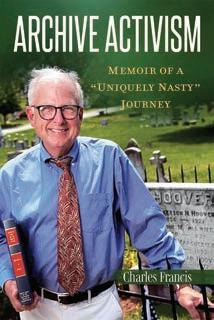
Francis points out that the title of his book is taken, in part, from a 1964 document in which an attorney for the then U.S. Civil Service Commission named John Steele defended the longstanding policy of not allowing LGBTQ people to work for the government.
“What it boils down to is that most men look upon homosexuality as something ‘uniquely nasty,’ not just a form of
Comings & Goings
immorality,” Steele states in the document.
“Archive Activism is the story of recovering forgotten, sealed – often deleted – LGBTQ history and using it to fight for equality and social justice at a time of historic erasure, book bans, and political assault,” Francis told the Washington Blade. “This is not a bland text about ‘LGBTQ history month,’” he said.
“It is about protecting ourselves, our families and political gains by understanding the shoulders we stand upon through original archival research,” he said in a statement. “A gay, ex-Republican raised in Texas in the ‘50s and ‘60s, I was awakened by the power of our history, our gay and lesbian legacy and the fight to save American democracy,” he said.
Francis’s book covers his early years in Washington working for nationally known public relations executive and Republican Party advocate Bob Gray, his efforts to help elect former Texas Gov. George W. Bush as U.S. president in the 2000 presidential election, and his subsequent disillusionment with Bush after Bush became an outspoken advocate for a federal constitutional amendment to ban same-sex marriage.
The book also tells how Francis in 2000 formed the Republican Unity Coalition, an LGBTQ supportive group that called on the Republican Party to make homosexuality a “non-issue” for the GOP. In a development that surprised many GOP officials, then U.S. Sen. Alan Simpson (R-Wyo.), former president Gerald Ford, and Mary Cheney, daughter of former U.S. Vice President Dick Cheney, signed on as members of the RUC group.
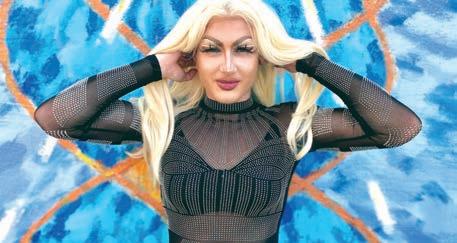
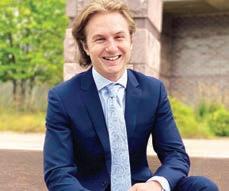
Brett Ries, lawyer and drag artist, fights for First Amendment
 By PETER ROSENSTEIN
The Comings & Goings column is about sharing the professional successes of our community. We want to recognize those landing new jobs, new clients for their business, joining boards of organizations and other achievements. Please share your successes with us at: comingsandgoings@washblade.com.
The Comings & Goings column also invites LGBTQ+ college students to share their successes with us. If you have been elected to a student government position, gotten an exciting internship, or are graduating and beginning your career with a great job, let us know so we can share your success.
Congratulations to Brett Ries honored by the National LGBTQ+ Bar Association, winning their Michael Greenberg Student Writing Competition for his soon-to-be-published article, “Don’t Be a Drag: How Drag Bans Can Violate the First Amendment.”
Ries said, “I am honored to be the winner of this competition, and to have increasing visibility for queer people in the political and legal fields.”
Washington, D.C. attracts interesting people and one of
them is this South Dakota native. He is blessed with good looks, talent, and brains, and has committed to using all those attributes to benefit the LGBTQ community. Ries is a drag artist and graduate of Duke Law School. He is a politician and writer.
He first spent time in D.C. as an intern with Sen. Tammy Baldwin (D-Wisc.), where he assisted in researching and drafting of a bipartisan resolution honoring the 50th anniversary of Stonewall. He spent time in D.C. as a summer intern with Williams and Connelly, LLC, one of the nation’s top law firms. He will now join the firm fulltime.
I met Ries recently and talked with him about his career and hopes for the future; his upcoming work in the law and his hopes to continue working as a drag performer. He told me “As a drag artist, the recent attacks on drag hit especially close to home. Drag is educational, entertaining, and expressive. It is not criminal, dangerous, or immoral.” He added, “I want to be part of the fight we must keep fighting, to protect our community. My hope is my research and recent TEDx talk can contribute to that fight.” I urge everyone to take a few moments to listen to his Tedx talk.
Highlights of his young life include: running a grassroots campaign in 2018 for the South Dakota State Legislature while still a full-time college student; and leading an executive team of youth, ages 18-24, teaching them how to canvass. Based on those accomplishments he was featured in a CNN article, radio interviews, and gave motivational talks
Francis describes in the book his early archive activism efforts that included co-founding the Kameny Papers Project, which arranged for the Library of Congress to acquire the voluminous collection of the documents of Frank Kameny. The Mattachine Society of Washington also arranged for the Library of Congress to acquire the papers and documentary films produced by D.C. LGBTQ rights advocate Lilli Vincenz.
A statement released by the book’s publisher, University of North Texas Press, says the book breaks ground in uncovering LGBTQ-related documents generated under President Lyndon Johnson.
“For the first time, ‘Archive Activism’ reveals how LGBTQ secrets were held for decades at the LBJ Presidential Library in the papers of President Johnson’s personal secretary, sealed until her death at age 105,” the statement says.
Francis and Mattachine Society of Washington co-founder Pate Felts went to Texas in 2016 to work with LBJ Library officials to find LGBTQ-related documents, including those showing that Johnson quietly fired a longtime Johnson family friend and White House staffer named Robert “Bob” Waldron after learning that Waldron had “engaged in homosexual acts,” according to one of the documents.
“‘Archive Activism’ is a rescue mission for primary archival materials located in archives and libraries, large and small, worldwide,” Francis says in the book. “It is a preservation-minded movement to recover and protect historical queer memory,” he writes. “Archive Activism is a populist mission to recover the erased past and to document the government animus that continues to course through LGBTQ political and policy history.”
in South Dakota high schools. After starting law school, he worked with OutLaw, as director of advocacy. He is a published author and his publications include, “Not Up For Deliberation: Expanding the Peña-Rodriguez Protection To Cover Jury Bias Against LGBTQ+ Individuals;” and “Looking Backward to Move Forward: Ending the ‘History and Tradition’ of Gun Violence Against the LGBTQ+ Community.”
He also worked as a legal intern in the office of the U.S. Attorney, Southern District of New York, and is a trained theatrical performer. He was raised on a farm and is a first-generation college student. During the pandemic he organized a local LGBTQ march in his hometown, and worked with the mayor on LGBTQ issues. He has appeared on the HBO show, “We’re Here.”
Ries earned his bachelor’s degree in Criminal Justice & Political Science, and a minor in Theatre from the University of South Dakota, graduating summa cum laude. His thesis was, “The Relationship Between LGBTQ+ Representation on the Political and Theatrical Stages.” He earned his Juris Doctor from the Duke University School of Law.
10 • WASHINGTONBLADE.COM • AUGUST 25, 2023 • LOCAL NEWS
BRETT V. RIES
BRETT V. RIES AS VINNY VIDI VICI

AUGUST 25, 2023 • WASHINGTONBLADE.COM • 11
Youngkin embraces a softer ‘parental rights’ message
Republican Virginia Gov. Glenn Youngkin has a lot at stake with the potential for his party to win control over both chambers of the state’s General Assembly in November and the growing chorus of high-profile GOP donors urging him to run for president.
Appearing before a crowd of Republican voters last month in Salem, Va., alongside state Sen. David Suetterlein (R-Roanoke), the governor was flanked by a huge sign that read, “Parents Matter,” a message that Youngkin’s 2021 gubernatorial campaign had used to fire up conservative Virginians concerned about education policies, including LGBTQ matters.
However, the Washington Post notes that while “parental rights” arguments were previously focused on opposition to pro-LGBTQ policies, pandemic mask mandates, and the teaching of critical race theory in Virginia schools, “this year’s edition is decidedly more middle-ofthe-road.”
During campaign events for GOP state legislature candidates in battleground districts across the state, Youngkin has been “treading carefully around the red meat occasionally served up by his audiences,” steering “comments back toward the catchall idea of parents being involved in their kids’ lives,” the Post reports.
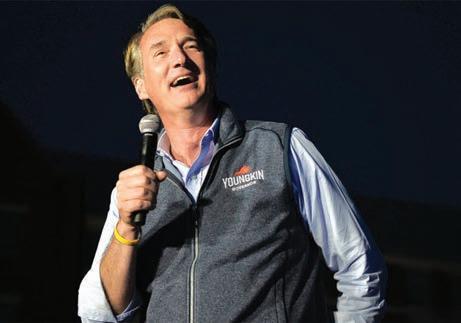
For instance, during last month’s event with Suetterlein, a member of the audience said her daughter had been “brainwashed” on social media into believing it possible for someone to be both gay and a Christian, which Youngkin addressed by urging parents to “be engaged” in their kids’ lives and educate them on the dangers of social media.
At the same time, Youngkin’s tenure as governor has
seen a flurry of anti-LGBTQ policies, especially targeting youth, schools and the transgender community, which, unlike his “parents’ rights” rhetoric, has not abated or become less extreme.
Last month, the governor reportedly took down a page on the Virginia Department of Health’s website that offered two links for LGBTQ youth to access resources after the right-wing news outlet The Daily Wire inquired about it.

Last year, the Human Rights Campaign wrote, “Youngkin unveiled a new directive restricting the rights of transgender students in schools, ordering all 133 school districts to adopt policies that would require transgender students to use facilities and participate in activities cor-
Freedom Caucus threatens gov’t shutdown over ‘woke’ military policies
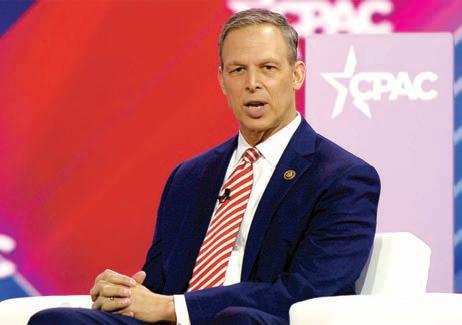
The U.S. House Freedom Caucus has raised the specter of a government shutdown by announcing on Monday plans to oppose any stop-gap funding measure that fails to, among other demands, “end the Left’s cancerous woke policies in the Pentagon.”
Conditioning support for a must-pass spending bill on its inclusion of conservative policies that will almost certainly be a non-starter in the Senate, let alone the White House, the caucus’s 45 ultraconservative members have once again created headaches for their House Speaker, U.S. Rep. Kevin McCarthy (R-Calif.)
The chamber’s top Republican, who is hustling to pass a bill before the end of September to avoid a shutdown, has said he would back a temporary continuing resolution to buy more time for budget talks so long as they do not extend past early December.
Along with combatting the “woke” policies “undermin-
ing our military’s core warfighting mission,” the caucus wants to stem the flow of immigrants at the southern border and “address the unprecedented weaponization of the Justice Department and FBI.”
A spokesperson did not respond to a request seeking details about which specific policies at the Pentagon the group finds objectionable, but caucus members in recent months have targeted those impacting the LGBTQ community in amendments to other spending bills.
For example, these House Republicans have sought to block government funding of healthcare services for transgender Americans serving in the U.S. Armed Forces and pushed bans that would prohibit military bases from flying Pride flags and hosting drag shows or other LGBTQ events, such as celebrations honoring Pride month.
Communications staff for the caucus’s chair, communications chair, and policy chair, U.S. Reps. Scott Perry (Pa.),
responding with their sex assigned at birth.”
When running for governor in 2021, Youngkin appeared on Fox News to defend a teacher who was suspended for refusing to use a student’s preferred pronouns, vowing to “stand up for teachers and parents against these kinds of cancel culture initiatives.”
HRC and Equality Virginia in March counted more than two dozen anti-LGBTQ bills that were introduced by Youngkin’s GOP allies in the legislature during this session, all of which were ultimately defeated as Democrats have retained control of the upper chamber.
These included:
• A measure to ban gender affirming care for transgender youth, which also sought to erode anti-discrimination protections for health insurers and permit the companies to opt out of covering gender affirming care for adults.
• A policy requiring schools to “out” students by informing parents when their child has disclosed experiences of gender dysphoria or asked any employee of their school to participate in their social transitioning, such as by using preferred names or pronouns, and requiring parental consent “prior to the implementation at such school of any plan concerning any gender incongruence.”
• A requirement for students to obtain a court order to change a student’s name on any school record.
• Legislation requiring parental consent and notification when their child participates in any Gender-Sexuality Alliance or Gay-Straight Alliance (GSA) club at school.
CHRISTOPHER KANE
Lauren Boebert (Colo.), and Chip Roy (Texas), did not immediately respond to requests for clarification about the Pentagon policies.
12 • WASHINGTONBLADE.COM • AUGUST 25, 2023 • LOCAL NEWS
CHRISTOPHER KANE
Gov. GLENN YOUNGKIN (R-Va.) (Blade file photo by Michael Key)
U.S. Rep. SCOTT PERRY (R-Pa.), chair of the U.S. House Freedom Caucus, speaking at the 2013 Conservative Political Action Conference (Blade photo by Michael Key)
202.882.1648










AUGUST 25, 2023 • WASHINGTONBLADE.COM • 13
LGBTQ groups to join 60th anniversary March on Washington Organizers say Aug. 26 event marks continuation of MLK’s work
By LOU CHIBBARO JR. | lchibbaro@washblade.com
At least four national LGBTQ rights organizations will participate in the 60th anniversary March on Washington: A Continuation of Dr. King’s Work, which is scheduled to begin Saturday, Aug. 26, with a rally at the Lincoln Memorial.
The LGBTQ organizations participating in the event include the National LGBTQ Task Force, whose executive director, Kierra Johnson, is scheduled to speak at the pre-march rally.
The other LGBTQ organizations scheduled to participate include the D.C.-based Center for Black Equity and the Human Rights Campaign and PFLAG.
The National LGBTQ Task Force and PFLAG this year are celebrating the 50th anniversary of their founding in 1973. PFLAG, formerly known as Parents And Friends of Lesbians And Gays, currently uses just the PFLAG name and describes itself as the “largest organization dedicated to
supporting, educating, and advocating for LGBTQ+ people and their families.”
Earl Fowlkes, executive director of Center for Black Equity, said representatives from his organization and from HRC and PFLAG participated in a conference call with organizers of the march, who welcomed the LGBTQ organizations’ participation.
Among the lead organizers of the 60th anniversary March on Washington are Martin Luther King III, the oldest son of Martin Luther King Jr.; his wife, Andrea Waters King; and longtime civil rights leader Rev. Al Sharpton.
“My dad’s speech at the March on Washington nearly 60 years ago was a profound moment in American history,” King III said in a statement. “Despite the significant progress we have made over these six decades, we need to rededicate ourselves to the mission my dad gave his life for,” he said.
“The March on Washington will not just be a commemoration but a continuation of what Dr. King and our predecessors started,” Sharpton said in the statement released by the event’s organizers. “We must remember why we are still marching: civil rights of Black, Brown, Asian, Jewish, LGBTQ Americans and women are under relentless attack,” Sharpton said.
“I am honored to stand with the King family as we bring together these groups for a historic, cross-cultural and cross-generational demonstration to show that an attack on one of us is an attack on all of us,” Sharpton said. “Together, we will show the nation the strength in our unity and our re-
solve to realize Dr. King’s dream of a fair nation for all of us.”
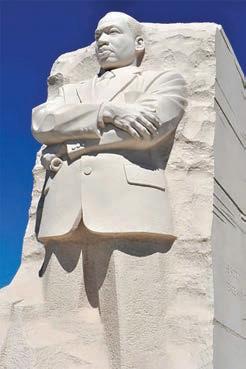
The statement released by the event’s organizers says a pre-program for the rally and march was scheduled to begin at 8 a.m. at the Lincoln Memorial, with the main program set to begin at 11 a.m. at the Lincoln Memorial site.
“Following the program, a march will begin through the streets of the nation’s capital,” the statement says, adding that additional details such as the route of the march would be released soon.
Longtime D.C. African-American and LGBTQ rights advocate Phil Pannell said this year’s inclusion of an LGBTQ speaker at the March on Washington rally represents a continuation of a welcoming of LGBTQ participation in the event over the past 20 or more years.
But Pannell said former D.C. Congressional Del. Walter Fauntroy, the lead organizer of the first of the resumed MLK Washington marches that took place in 1983, marking its 20th anniversary, strongly opposed allowing an LGBTQ person to speak at the event. Pannell points out that he and three other Black gay activists held a protest against Fauntroy’s position at his Capitol Hill office that resulted in their getting arrested. The Washington Blade reported their arrests in a news story.
Shortly after their arrests, “there was a conference call of all the major civil rights leaders and Audrey Lorde, a Black lesbian writer and poet, was put on the program” as a speaker, Pannell said in a text message to the Blade.
“There will be an LGBT speaker this Saturday,” Pannell added. “So, getting arrested 40 years ago was worth it.”
Two D.C. gay bar customers stabbed on sidewalk near Dupont Circle Judge orders woman held without bond, calls for mental health exam
By LOU CHIBBARO JR. | lchibbaro@washblade.com
D.C. police on Aug. 18 arrested a 35-year-old woman on two counts of assault with a dangerous weapon after two men who had just stepped outside the gay bar Fireplace at the corner of 22nd and P streets, N.W., reported she struck them in the neck with a sharp object.

Police and court records show the incident took place about 7:30 p.m.
One of the two men, who was sitting on a bench on the sidewalk at a bus stop in front of the Fireplace who was stabbed by the woman, was taken to a nearby hospital after he was bleeding “profusely” from the neck from the stab wound, according to an arrest affidavit filed in D.C. Superior Court.
However, the affidavit says that person, listed as Victim 2, was recovering from his injury and the other person attacked by the woman, Victim 1, suffered a less serious neck wound that did not require hospitalization.
Larry Ray, a Fireplace customer who knows the two victims, said they had stepped outside the bar to smoke a cigarette minutes before they were attacked.
The arrest affidavit says Victim 1 was standing on the sidewalk in front of the Z-Burger carryout restaurant located two doors away from the Fireplace when the woman allegedly attacked him.
Police and court records identify the woman as Mary Kennedy, 35, of no fixed address. She has been held in jail with-
out bond since the time of her arrest on Aug. 18.
She appeared for a preliminary hearing on Tuesday, Aug. 22, when D.C. Superior Court Judge Sean Staples turned down a request by her court-appointed defense attorney asking that she be released while awaiting trial on grounds of “her lack of criminal history.”
The judge ordered that Kennedy undergo a mental health exam before returning to court on Aug. 28, for a follow-up hearing, when he said he would evaluate whether she was mentally capable of understanding the court proceedings.
The arrest affidavit says a uniformed U.S. Secret Service officer initially apprehended Kennedy minutes after she fled from the scene after stabbing the man sitting at the bus stop.
The affidavit says a bystander who observed the incident who is identified as Witness 1 and the two victims told police that Kennedy had no verbal interaction with either of the victims. The two stabbings were an “unprovoked action,” according to the affidavit.
The affidavit also reports that at the time D.C. police arrived on the scene and placed Kennedy under arrest “a scissor with blood on it” was recovered from Kennedy’s purse. The scissor is listed as the weapon used in the two stabbings.
A D.C. police incident report says the two stabbings are
not listed as suspected hate crimes.
The Fireplace’s day manager, who identified himself as Scott, told the Washington Blade the two stabbings had nothing to do with the Fireplace.
“They just walked out to get some air,” he said. “It had nothing to do with the bar. They were at the wrong place at the wrong time. It was just some crazy lady.”
But the Fireplace customer who was attacked by the woman while sitting at the bus stop, who wrote about how he was attacked on social media, including Twitter and Facebook, said he considers the attack against him a hate crime. The Blade reached out to the man for comment in a Facebook message, and he replied that he did not object to being identified by his name, Lawrence Goodwin Jr.
“I feel that this was a hate crime,” he told the Blade in a Facebook message. “I feel this was an attempt on my life and I feel I deserve some form of justice as I’m actively seeking counsel.”
In one of his Facebook postings, Goodwin said he is grateful to the D.C. Fire and Emergency Medical Services Department technician who arrived on the scene and aggressively pressed down on his neck to stop the bleeding and who he believes saved his life. He says in one of his postings that the stab wound was a “hair off” from a vital artery that could have killed him if the stab wound was in a slightly different place on his neck.
Goodwin also created a GoFundMe page in which he says the injury from the stabbing incident prevented him from returning to work for at least a week with no pay while he recuperates.
14 • WASHINGTONBLADE.COM • AUGUST 25, 2023 • LOCAL NEWS
Saturday’s March on Washington kicks off at 8 a.m. at the Lincoln Memorial.
(Washington Blade photo by Michael Key)















AUGUST 25, 2023 • WASHINGTONBLADE.COM • 15 Better cannabis. Best Prices. AGAIN! Celebrating 10 years of cannabis with heart Now open to all 21+ 6925 Blair Rd. NW • 202.465.4260
Police identify suspect in murder of California storeowner Community mourns death of LGBTQ ally Laura Ann Carleton
By BRODY LEVESQUE
San Bernardino County Sheriff Shannon Dicus held a press conference Monday to brief the public on the updates to the investigation into the murder of beloved Cedar Glen shop owner Laura Ann Carleton last Friday evening.
The suspect was identified as local resident, 27-yearold Travis Ikeguchi, who shot and killed Carleton after she confronted him in front of her store over his removal of a Pride flag. The two exchanged words and after yelling homophobic epithets he shot her then fled on foot.
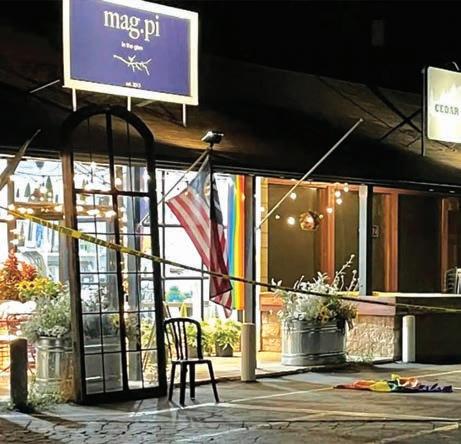
He was followed by several witnesses who reported his location to sheriff’s dispatchers.
Dicus told reporters that deputies from the Twin Peaks substation confronted Ikeguchi near Torrey Road and Rause Rancho Road east of Highway 173, about a mile from the homicide scene at the Mag.Pi clothing boutique at 28938 Hook Creek Road in Cedar Glen.
As deputies attempted to engage the suspect, he refused to drop his weapon and opened fire on them, striking multiple squad cars. The sheriff said the deputies returned fire striking Ikeguchi who died at the scene. Dicus noted that none of his personnel were hurt.
The sheriff noted that the handgun found on Ikeguchi
was believed to be the same weapon used to murder Carleton adding that the semiautomatic pistol was not registered to him, and he did not have a license to carry a concealed weapon.
Dicus also said during Monday’s media briefing that Ikeguchi’s family had reported him missing the day before the shooting.
San Bernardino County Sheriff’s investigators said that Ikeguchi frequently posted hate-filled content on social media. News media outlets, including the Los Angeles Blade were able to locate X (formerly known as Twitter) and GAB accounts matching his name.
His social media posts were filled with Christian nationalist hate-filled themes and re-Tweets often targeting the LGBTQ community. Both accounts were still active Monday evening.
Dicus said that the investigation is actively ongoing and that the San Bernardino County District Attorney’s office will investigate the shooting of Ikeguchi, as is standard practice with all lethal force encounters involving law enforcement agencies.
Anyone with information regarding this incident is urged to contact the Homicide Detail at 909-890-4904.
Trevor Project responds to reports of staff dissension, union busting Non-profit disputes accusations of drop in service quality
 FROM STAFF REPORTS
The Trevor Project, a non-profit that works to end suicide among LGBTQ youth, responded to a recent Washington Blade report alleging widespread staff dissension, union busting, and other challenges, acknowledging it needs to improve the working environment for its crisis counselors, but disputing many of the other allegations made by nearly a dozen current and former senior employees.
The Blade story, published on Aug. 10, further alleges long wait times for distressed callers and some former staffers said the organization grew too quickly, resulting in a drop in service quality.
“A lot of us were joking that it was the most corporatized nonprofit that anyone has ever worked for,” said a former mid-level employee who spoke on condition of anonymity. “It was very money driven, very growth, growth, growth.”
But a former Trevor official responded, saying that the growth enabled Trevor to help more youth in crisis and that significant changes were made to improve service. Trevor declined to make senior leadership available for interviews for the Aug. 10 story nor would sources speak with attribution for this story.
Specifically, a Trevor spokesperson said the organization made the following changes:
• • Shifting Clinical Operations’ focus to prioritize quality, sustainability, and impact instead of growth;
• • Transforming the staffing model across lifeline and digital crisis services to address overnight understaffing, inaccurate workforce planning, and unrealistic goals;
• • Increasing pay and wellness benefits for Clinical
Operations staff.
The changes have resulted in a decrease in abandonment rates across services, the spokesperson said, noting the organization has the highest level of accreditation from the American Association of Suicidology.
Staff concerns led to the Friends of Trevor United union to begin organizing in early 2022. Gloria Middleton, president of the Communications Workers of America Local 1180, under which Friends of Trevor is organized, said Trevor opposed the union. While union organizers were in talks with Trevor, the organization began laying off workers. The union condemned that, calling it “union busting,” and said that Trevor intentionally gave the union very little time to respond.
The Trevor spokesperson disputes this, saying the union didn’t form until 2023.
“We voluntarily recognized the union in approximately six weeks,” the spokesperson said. “… We communicated to staff immediately to acknowledge the recognition request and said that we respect employees’ right to unionize; when Trevor recognized the union, we communicated to staff again that we were pleased to share that information.”
Crisis counselor Rae Kaplan told the Blade she was fired by Trevor for reacting with emojis during an all-staff meeting, another accusation that Trevor disputes.
The Trevor spokesperson said Kaplan was a contractor at Insight Global, not a staff member, therefore, Insight Global informed Rae of the separation.
“Nobody’s role was reduced, nor would be, for using Google Meet reactions or emojis,” the Trevor source said.
Trevor’s CEO and co-founder Peggy Rajski is a straight, white cisgender woman and sources told the Blade that
the C-suite is almost entirely white and cisgender.
“I think there needs to be a permanent CEO who is LGBTQ+,” said Preston Mitchum, who served as a director of advocacy and government affairs at Trevor before he quit in February. “And in my opinion, one who is a person of color, or at least someone who actively understands intersectional framework and how to have these culturally important clinical conversations of competence and responsibility to specific communities.”
But Trevor claims it prizes diversity among its executive team and that the team is composed of “experienced leaders, including: eight women (seven who are cisgender, one who is transgender); four men (three who are cisgender, one who is transgender); in addition, seven are BIPOC.” Additionally, in the last few years, Trevor has created the organization’s first affinity groups: Black@ Trevor, Trans@Trevor, AAPI@Trevor, Latinx@Trevor, and Disability@Trevor, the source noted.
Trevor also takes issue with allegations that it had lax policies governing staff spending. One source told the Blade, “there were no policies around spending,” while another insisted that the organization did not even have a per diem policy in place for employee travel.
“Like any organization, we have policies and approval processes around expenses such as travel, meals, business spending, etc., as well as annual budgeting,” the Trevor source said, adding that the per diem policy is spelled out in an employee handbook.
16 • WASHINGTONBLADE.COM • AUGUST 25, 2023 • NATIONAL NEWS
The scene of last week’s shooting at the mag.pi store in Lake Arrowhead, Calif.












AUGUST 25, 2023 • WASHINGTONBLADE.COM • 17 1310 P EN NSYLVA NIA AVE. SE • 202.629.4 45 5 • JADEFITNES SD C.CO M 1 ON 1 PE RSO NA L TRAI NI NG • G RO UP FITNESS • YOGA • FA MI LY TRA INING S EN IO R FITNESS • TEE N TRA INI NG • PILATES • R EI KI BRING A FRIEND MONTH FRIENDS WORK OUT FREE IN AUGUST MAKE YOUR HOLIDAY/VACATION RESERVATION TODAY BOARDING • DAYCARE GROOMING city-dogs.com 301 H Street NE 1 83 218t h S tr eet NW 202-234-9247 info@city-dogs.com Now selling Open Farm pet food
LEE CARPENTER
is an Estates & Trusts attorney at the law firm of Offit Kurman, P.A., and can be reached at 410-209-6426 or Lee.Carpenter@OffitKurman.com. This article is intended to provide general information about legal topics and should not be construed as legal advice.






For more than a decade, the freedom to marry has been available to Maryland’s same-sex couples. Those who have approached the altar, the chuppah, or the courthouse and tied the knot enjoy legal benefits that were denied them as domestic partners. These include the right to receive an inheritance if one partner dies without a will, and to avoid Maryland’s hefty inheritance tax.
Under the new legislation, these rights are now available to Maryland’s unmarried couples as well.
By registering as domestic partners, unmarried couples can ensure that if one partner dies without a will, the survivor will be entitled to an inheritance equivalent to what a surviving spouse would receive. This could be as much as the entire estate or a lesser amount for couples who have children from a prior relationship. The surviving partner also has the right to serve as personal representative, or executor, of the deceased partner’s estate.
Whether a partner dies with or without a will, this new law exempts the surviving partner from Maryland’s 10% inheritance tax on any property received from the deceased partner. The tax normally applies to any bequest left to someone who is not a spouse or close family member. By way of example, a registered couple would save some $30,000.00 in inheritance taxes if one partner died with $300,000.00 in assets, compared with an unmarried couple who had not registered.
The law will also recognize children born to registered domestic partners as the legal descendants of both parents.
Beginning Oct. 1, 2023, a couple can register as domestic partners by completing an affidavit with their names and address. Each partner must be at least 18 years old, unmarried, and in no other domestic partnership. The signed and notarized form must then be submitted to the Register of Wills in their county of residence with a $25 payment either in person or by mail. A registry is available to same-sex and opposite-sex couples alike.
Once their application is approved, the couple will receive a certificate of domestic partnership. The Registers will all be able to access the records of the other registers, so a couple will be able to move to a different Maryland county without having to re-register.

An unmarried couple that has registered with the state can terminate their partnership in four ways — by the mutual agreement of the partners, by one partner who has been abandoned by the other partner for at least six months, or upon the death or marriage of either partner.
Couples who register should consider taking additional steps to ensure that they are prepared for the unexpected, including the death or disability of a partner. Have an attorney draw up your estate-planning documents, including a will, financial power of attorney, and advance medical directive. Your partner may be your primary beneficiary under your will, but you might want to include gifts to your children, nieces and nephews, or charitable organizations as well. A well-thought-out will also says who inherits and who settles the estate if you and your partner are both deceased.
If your beneficiaries include children, your will could include a trust for their benefit. Placing a child’s inheritance into a trust will help ensure that the assets go toward worthwhile purposes, such as college, medical care, or maybe the down payment on a house. A will can also name guardians to look after any children who may be under the age of 18 when both parents are gone.
If you or your partner becomes unable to manage your own finances or medical care, having a power of attorney and advance directive will help ensure that someone you trust is authorized to make these decisions on your behalf.
At a time when fewer people than ever are getting married, and even fewer prepare a will before they die, having the right to register as domestic partners is a huge win for Maryland’s unmarried couples. If you and your partner decide to register, be sure to finish the job by having an estate plan prepared to help you navigate some of life’s biggest uncertainties.
18 • WASHINGTONBLADE.COM • AUGUST 25, 2023 • VIEWPOINT
couples
inheritance rights in Md. Surviving partners entitled to equivalent to what spouse would receive A new battery collection & recycling program is being charged up in DC this November. Thisprogramisoverseenby: doee.dc.gov
How to Wondering How to Recycle
Batteries? Batteries? This program will: Be free to District residents and businesses Accept single-use & rechargeable household batteries Be run by Learn more about the program launch or where to recycle batteries right now: Go to: bit.ly/DCsustainablematerials Email: productstewardship@dc.gov Call: 1-877-723-1297
Unmarried
win new
Wondering
Recycle Your Your
MADDIE GESCHU
(they/them)
is a government relations representative with the Eating Disorders Coalition for Research, Policy, & Action.






As a nonbinary Asian American working in mental health advocacy, it’s clear to me that queer and trans Americans today are facing twin crises. State laws politicize our very humanity while our online infrastructure profits off our depression and others’ anger and fear. Both have led to a surge in violence against us that feels inescapable. But there’s one thing I’m sure of: Big Tech is not our savior or our ally.
Yes – social media can offer needed reprieve, important news, and community building. I certainly love a good meme. But for every positive Facebook interaction on trans content by queer people, there are four transphobic Facebook interactions. Of these transphobic interactions, more than one-third target trans people of color – primarily Black trans people. There’s no denying that Big Tech has and will continue to exploit our identities, privacy, and mental health for its billions in profits – and no rainbow capitalist façade can hide that. Yet, amid federal efforts to rein in harm (see the Kids Online Safety Act), it frustrates me that Big Tech is weaponizing trusted LGBTQ organizations as pawns in their last-ditch efforts to escape accountability. It is critical our communities not give Big Tech a pass, especially when they are feeding young people hours of extreme queer-specific suicidal content to keep them a captive audience for advertisers.
In my work to advocate for the Kids Online Safety Act, we have significantly revised the legislation and received input from many diverse and respected organizations to ensure no harm is done to those the bill seeks to protect—including the LGBTQ community. Importantly, because of these meaningful conversations from key allies, GLAAD, GLSEN, and PFLAG have dropped their opposition to the bill.
Our partner organizations know Big Tech is not innocent as it purports to be.
Earlier this year, GLAAD gave Instagram, Facebook, and YouTube failing grades, citing a lack of prohibition on deadnaming. Facebook and Instagram have failed to suspend large anti-LGBTQ hate accounts, which drove death threats to children’s hospitals after spreading misinformation about gender-affirming care. YouTube is consistently slow to take action against hate campaigns directed towards LGBTQ content creators – including refusing to suspend accounts that engage in targeted harassment.
Companies say they’re working on improving their platforms to make them safer, but their hyper-targeted algorithmic practices are proven to heighten a user’s risk for anxiety, depression, disordered eating, and suicidal behaviors. For LGBTQ+ youth, one survey found 24% were recommended dieting or pro-eating disorder content every time they went on a platform, compared to 18% of non-LGBTQ+ youth. Another survey reported 56% of LGBTQ+ youth had been cyberbullied in their lifetime compared to 32% of non-LGBTQ+ youth.
These companies aren’t incentivized to change – they’re incentivized to cover it up. Instagram alone makes more than $230 million annually from pro-eating disorder content. These are the types of predatory business practices the Kids Online Safety Act would finally hold Big Tech accountable to address.
One of Big Tech’s primary talking points suggests that the Kids Online Safety Act would empower states to censor queer, trans, and other marginalized voices. This argument evokes well-founded fear for our communities – and historically this fear holds true – but the talking point is completely false. The Kids Online Safety Act doesn’t filter or block anything. And where the bill would require Big Tech to ensure their own product designs and business practices don’t create or exacerbate specific harms to kids, those harms are narrowly defined to real and deadly issues — ones that disproportionately affect LGBTQ kids. Disgustingly, Big Tech claims allyship while funding the transphobic policymakers who censor our voices – to the tune of $1 million just in 2020. Big Tech can’t have it both ways, and we cannot allow the industry to control the narrative.
The Kids Online Safety Act is not a cure-all, but it is one powerful tool to interrupt Big Tech’s profit-driven warpath. Asking the industry politely to change its ways isn’t working; it’s up to us – especially those of us most impacted – to build legal accountability for their gross negligence and ensure the safety of our younger queer and trans people.
Did you know that you can recycle paint in the District?


District residents can recycle paint at one of the following events:
RFK Stadium Lot 3 - 2400 E Capitol St NE
Saturday, September 16, 2023 (7am-2pm)
Thursday, September 21, 2023 (10am-2pm)
Thursday, October 12, 2023 (10am-2pm)
Saturday, October 21, 2023 (7am-2pm)
Paint drop-off locations and free pick-up for over 5 gallons are also available year-round.

For more information visit: paintcare.org/dc
doee.dc.gov
VIEWPOINT • AUGUST 25, 2023 • WASHINGTONBLADE.COM • 19
How big tech exploits the LGBTQ+ community to avoid regulation
Kids Online Safety Act a powerful tool to interrupt profit-driven warpath
PETER ROSENSTEIN
is a longtime LGBTQ rights and Democratic Party activist. He writes regularly for the Blade.
James Crutchfield, longtime D.C. LGBTQ community
leader,
dies at 77
Beloved local activist remembered for extensive volunteer efforts
 By LOU CHIBBARO JR. | lchibbaro@washblade.com
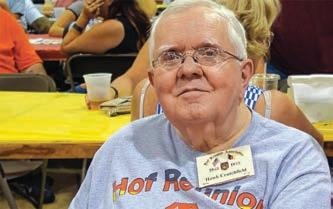
James “Hawk” Crutchfield, a U.S. Air Force veteran and career program analyst with the U.S. Federal Communications Commission who devoted more than 40 years to volunteer leadership work for at least eight D.C.-based LGBTQ organizations, died on July 29 of natural causes at his Dupont Circle area residence. He was 77.
I had to laugh when I read three members of Congress (complete fools) introduced a bill to end Home Rule in D.C. Obviously, they felt comfortable telling 700,000 people they couldn’t run their own government. A government that for years has been better run than Congress. The bill has zero chance of becoming law but represents another Republican show of offensive arrogance.
From 1995 to 2001 there was a federally mandated Control Board overseeing D.C. Since 1997, with the Control Board, and then for more than two decades since it was ended, D.C. has had a balanced budget. When was the last time congress balanced its budget? D.C. today has a budget of about $20 billion, with 36,000 employees, and a triple-A bond rating. Congress is seeing the federal government’s bond ratings going down.
The introducers of the bill clearly have no desire to serve the constituents who elected them, or those in D.C., being much more interested in interfering in other people’s lives; whether it is the people of D.C., the LGBTQ+ community, or women. Did these clowns who introduced the bill bother to figure out what Congress would have to do if it actually took away Home Rule? Of course not, that would have taken some time, and some brains, which they clearly don’t have. There is nothing in the bill dealing with the aftermath were it ever to pass, but then I guess they always knew it couldn’t.
The bill was proposed by this trio of House Republicans, they said, as a solution to help D.C. reduce crime. They figured repealing the D.C. Home Rule Act would do that, letting Congress figure it out. The trio was led by freshman Rep. Andrew Ogles (R-Tenn.). Home Rule is the 1973 law that gave D.C. its elected mayor and City Council. There is an added absurdity of having the bill introduced by Ogles who represents the Nashville area of Tennessee. Tennessee’s crime rate of 672.70 per 100,000 is the fourth highest in the country. And it might come as a surprise to Ogles, clearly not a very bright representative, that Tennessee often ranks within the top 10 most dangerous states in the U.S., and Nashville is the fourth most dangerous city in Tennessee. So, I would suggest he might spend more time trying to figure out how to take care of his own constituents, those who made a mistake by electing him, before he tries to tell others how to live, or solve, their problems. I don’t know much about the other two clowns who co-sponsored his bill, but one, Byron Donalds is a Republican from Florida, enough said, and the other is Matthew M. Rosendale (R-Mont.). I guess the people of Montana don’t need him to do anything for them so he had nothing else to do.
I agree the District of Columbia, like other major cities, has a crime problem, much of it related to the explosion of guns in the nation. But then the idea Republicans in Congress would do anything to help in this area is idiotic. They would rather do anything they can to keep the guns flowing so in no way would their controlling things make D.C. residents safer.
For the good of the nation, we need to get guns off our streets and the only way to do that is by passing strong gun-control legislation. Don’t hold your breath for Congress to do that. Without even knowing I would bet these three who introduced this bill never met a gun they didn’t like. They are part of the group of Republicans who whenever there is a shooting in their own District offer only thoughts and prayers, but no real help. They do the same whenever there is a mass shooting anywhere in the country, and “according to the Gun Violence Archive, there have been more than 420 mass shootings in 2023 so far, which is defined as an incident in which four or more victims are shot or killed.”
All this bill does is once again remind the decent, intelligent people of the nation, and I am still confident they are in the majority, that the only way to move our nation forward is to defeat every Republican. As long as the Republican Party is in the grip of Donald Trump and his cult, they will not change, so we need to defeat them all.
Shortly after he moved to D.C. in 1976 following 12 years of service in the Air Force, including a tour in Vietnam, Crutchfield became involved in local LGBT organizations and in efforts to secure the rights of LGBTQ people in D.C. and across the country, according to the D.C. Rainbow History Project, for which Crutchfield was a co-founder in 2000.
A 2009 write-up on Crutchfield by the Rainbow History Project at the time it named him an LGBT Community Pioneer describes him as “a community builder, one of those hard-working people and a classic example of the busy person others ask to get things done.”
The biographical write-up says the long list of Crutchfield’s community endeavors and leadership efforts began around 1978 when he served as secretary for the D.C. LGBT supportive Metropolitan Community Church’s Prison Outreach Committee and volunteered for the MCC Homeless Women Feeding Program through 1981.
He served as president of the then D.C. Gay Community Center from 1982 to 1988; became involved in gay sports organizations, social and youth services groups, LGBTQ veterans organizations, the early D.C. Gay Pride events, and local neighborhood groups, the Rainbow History write-up says.
Crutchfield was born on Oct. 11, 1945, in New Tazewell, Tenn., and grew up in Madison Heights, Mich., a suburb of Detroit. His LinkedIn page says he graduated from Lamphere High School in Madison Heights before attending Mohawk Valley Community College in Utica, N.Y.
He then enlisted in the U.S. Air Force for which he served for 12 years, with tours of duty in the Philippines, Vietnam, Germany, Florida, New York, and at the Pentagon prior to his honorable discharge in 1976. His LinkedIn page says he worked briefly in a civilian job at the Pentagon before beginning a 24-year tenure with the U.S. Federal Communications Commission.
His Facebook page says he served as a Supervisory Program Analyst at the FCC at the time of his retirement in 2001. Following his retirement, while continuing his involvement in LGBTQ causes, he worked as a receptionist at D.C.’s Foundry United Methodist Church for several years.
His longtime friend Gerry Woods, an official with Prime Timers DC, a men’s social organization for which Crutchfield was a member, summed up Crutchfield’s community group involvements.
“James was a long-time member of the Gay Activist Alliance (GAA), former president of the Gay Community Center of DC, a founding member of SMYAL (Sexual Minority Youth Assistance League), a longtime member of the Board of Directors of the Rainbow History Project, and president of CARA (Capital Area RainBowlers Association),” according to a write-up by Woods.
“James was also active in the local LGBT sci-fi group, and they met in his home on 17th and P Streets, N.W. for many years,” Woods said.
The Rainbow History Project write-up says Crutchfield served for two years as president of the Capital Area Gay, Lesbian and Bisexual Veterans of America and served as secretary for an earlier local LGBT veterans group.
Mark Meinke, another co-founder of the Rainbow History Project, said Crutchfield, who Meinke said was “snagged” by fellow activists to get involved with Rainbow History, became “an indefatigable member of our archival/historical organization.”
Added Meinke, “James was always a carer, a supporter of people and organizations. We also bonded over our love of diners and cats. But what I most strongly recall is his sense of humor and his intolerance of intolerance,” said Meinke. “We have lost a friend and a shining light.”
Crutchfield’s half-brother, James Lee, said Crutchfield was predeceased by his parents Willard and Hazel Crutchfield/Lee, his stepfather James Lee, and siblings Gordon Crutchfield, Walter Lee, and Bert Lee.
He is survived by brothers Daniel Crutchfield/Lee of Alabama, James Lee Jr. of Florida, and 11 nieces and nephews.
James Lee said there will not be a funeral or burial, “only a simple cremation.” Gerry Woods said friends in D.C. are planning a memorial tribute for Crutchfield and will soon announce information about the tribute.
20 • WASHINGTONBLADE.COM • AUGUST 25, 2023 • VIEWPOINT
Three House jokers introduce bill to end D.C. Home Rule Congress should instead focus on gun reform
JAMES ‘HAWK’ CRUTCHFIELD (Photo courtesy Gerry Woods)

AUGUST 25, 2023 • WASHINGTONBLADE.COM • 21 A fun show with something for everyone! All original songs by musicians
Steven Tyler &
Perry of Aerosmith,
Bareilles,
Flaming Lips,
A, Cyndi Lauper, John Legend, Panic! At the Disco, Plain White T’s,
Might Be Giants & T.I., and David Bowie. Please visit the website or call for ticket purchase information and performance updates. www.Clear SpaceTheatre.org 302.227.2270 20 Baltimore Ave (Beach Block) Rehoboth Beach, DE 19971
like
Joe
Sara
The
Lady
They
Mark S. King on new book and surviving HIV and meth
‘My Fabulous Disease’ writer chronicles experiences with humor, honesty
By TIM MURPHY
HIV/AIDS writer Mark S. King, a GLAAD- and National Lesbian and Gay Journalists Association award-winning author of the popular blog My Fabulous Disease has published a new book out Sept. 1 that’s a compendium of the blog’s best pieces, as well as pieces he wrote well before the blog, back in the 1990s. Pre-order “My Fabulous Disease: Chronicles of a Gay Survivor” at marksking.com/marks-newbook. He’s appearing at the U.S. Conference on HIV/AIDS on Sept. 7 in D.C.
Diagnosed with HIV in 1985, Mark has taken a lifetime of ups and downs and turned them into a, well, fabulous collection of pithy, witty, often brutally honest and self-critical short essays on everything from how we gay men are so good at shaming and judging one another for all sorts of things to his gay brother’s tale of helping his lover, who was dying of AIDS, end his own life with a Seconal cocktail to what it was like starting his own gay erotic phone line in the 1980s to how he’s morphed into a total top who wants sex only a fraction as often as when he was young. The essays range from quite raw and painful to utterly hilarious. King has that perfect Oscar Wilde/Paul Lynde way with a quip: “I got The Clap so many times that I started calling it The Applause.” Or, marveling at how little sexual energy he has currently, at 62, compared to his youth, that these days, “10 minutes is a triumph of passion and stamina.”
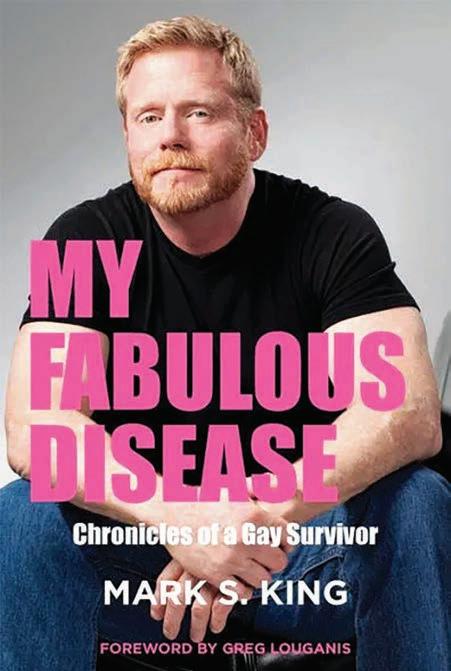
I like Mark’s writing because he doesn’t shy away from examining aspects of himself that many of us gay men would rather look away from: His vanity, narcissism and need for attention. Things he’s done in the past that have hurt people, including family members and lovers. Even what he sees as his own manipulativeness in seducing a 30-year-old man when he was 15 — this in an age when we would almost unanimously agree that all the responsibility for a statutory-rape situation lies with the legal adult, not the child.
TIM MURPHY: Mark, thanks for talking to me. So, you and your husband Michael, a federal healthcare worker, live in Atlanta, yes?
MARK S. KING: As we speak, I’m surrounded by boxes because we’re moving in a few days from an apartment in Midtown to a home in North Decatur. Michael’s currently holed up in his home office and he doesn’t come out until after five.
MURPHY: What’s a typical day like for you?
KING: My cat Henry wakes me up around 6:30 a.m., but fortunately Michael feeds him breakfast and starts the coffee, so I can sleep longer. I stumble out around 7 a.m., have my coffee and look at my emails. Or sometimes, if I’m writing something, if the solution I’ve been looking for occurs to me around 6:30 a.m., I’m at the keyboard making it work even before I have coffee. If I’m in the zone like that, I can forget to have breakfast. But then I have my go-to daily conversations with usually two out of three people: my brother, Dick, who’s gay and lives in Shreveport, La., with [TheBody. com writer] Charles Sanchez, and with my friend Lynn. Then I go to the gym to work on any part of my body that is visible in a tank top. As long as my chest is bigger than my stomach, I’m fine. I play racquetball, so that takes care of the legs. Things like calves, you either have them or you don’t. I know I should be doing yoga and stretching and working on what they call your core, whatever that is. At some point as I age it’s going to be more important to be able to bend
over and pick things up, not lift a large weight above my head.
MURPHY: Do you do steroids?
KING: I have—I don’t any more. Testosterone is not steroids.
MURPHY: Oh, I know. Why no more steroids?
KING: Age, and the fact that they can damage your liver and kidneys. It’s also true that taking testosterone has made my prostate the size of a grapefruit, but I haven’t stopped that.
MURPHY: When you first went on testosterone, did you notice changes in your mood, libido and strength?
KING: Yes, all those things. I take it because it works. I’ve been on it for 20 years … when I’m not working out, I deflate like a balloon. I feel like the Grindr hookup that doesn’t look like his pictures.
MURPHY: What do you do the rest of the day and night?
KING: Play with my cats and write a little bit. I sound like a man of leisure, and I kind of am. After Michael finishes work, we cook dinner. I’m a much better cook than I was when I met him.
MURPHY: Mark, you grew up Louisiana?
KING: My dad was an Air Force officer so we lived all over the place, but when he retired when I was in fifth grade—I’m the youngest of six—we moved to Louisiana.
MURPHY: When did you start writing?
KING: I wrote silly little stories when I was a kid, and then when I went to work for an AIDS agency in 1986, [the now defunct] L.A. Shanti, it was growing so fast that I became the media guy, the one writing the newsletter and press releases. But it’s only been in the last 20 years that I’ve really been able to identify as a writer. The turning point was when I started writing My Fabulous Disease consistently. Prior to that, I’d write columns for Frontiers and then send them to different gay papers around the country who would print them.
Of all the editors I ever worked with, Bonnie Goldman, who founded [the HIV/AIDS site] TheBody, challenged me the most. “Why are you saying it this way?” she’d ask. She told me that the more warts, faults and doubts I revealed, the more I’d draw people in. She really worked for me and asked me to write a blog for TheBody.
It was after Bonnie left TheBody that I started My Fabulous Disease. I’d actually started it as a website to promote my first book, “A Place Like This,” and my web designer told me to blog on that page to keep it fresh and bring people to it. For a long time, I had to keep telling myself, “If you continue to build it, they will come.” Now, in a good month, I’ll get 100,000 hits. I’ll also share my content with HIV Plus, Poz—it doesn’t matter.
MURPHY: One thing I like about your writing is that you are ruthlessly honest. What’s been one good and one bad outcome of that?
KING: Certainly I felt good about writing about addiction. I wrote a piece about a relapse I had when I was still dealing with its fallout. That felt good because I suffer, as many of us do, with imposter syndrome. I’d think, “If they only saw behind the curtain, that I struggle with drug addiction and have ruined relationships and have all sorts of wreckage in my wake, then they wouldn’t like me anymore.” So to have been able to write that piece only days after coming to— some might say it’s dangerous to write about such a thing so soon, but my writing is my therapy, my way of sorting out my own feelings. So I wrote it and then pressed the button.
MURPHY: In your book, you have several pieces written about a decade ago or more about how we gay men tend to shame one another—how HIV-negative men shame positive men by using phrases like “drug- and disease-free” or “clean” and “you be, too,” or how older HIV survivors shame younger gay men for having tons of sex without condoms now that PrEP is available. Do you think in the years since you published those pieces, we’ve become a less shaming community overall?
KING: You’re right, I wrote a lot of that when social media and hook-up apps were inflaming various stigmas. Gay men are remarkably good at shaming our own—we’ve been shamed so much that we’ve developed claws of our own. I haven’t been on hook-up apps the last ten years, so I can only go by conversations I have, which make me think that stigma is alleviating a little bit. But these things are generational. We were raised for decades in mortal fear of sex, which is a really powerful emotion that doesn’t just go away with a scientific breakthrough like U=U [undetectable = untransmittable, the now-proven fact that people with HIV on meds with undetectable viral load cannot transmit HIV sexually] or PrEP.
(Continues at thecaftanchronicles.substack.com)
22 • WASHINGTONBLADE.COM • AUGUST 25, 2023

AUGUST 25, 2023 • WASHINGTONBLADE.COM • 23
CALENDAR |
Friday, August 25
Center Aging Monthly Luncheon and Yoga will be at 12 p.m. at the DC Center for the LGBT Community. Lunch will be held in the climate-controlled atrium at the Reeves Center. To RSVP, visit the DC Center’s website.
Center Aging Friday Tea Time will be at 2 p.m. on Zoom. This is a social hour for older LGBTQ adults. For more details, email adam@thedccenter.org.
Trans Support Group will be at 7 p.m. on Zoom. This group is intended to provide emotionally and physically safe space for trans people and those who may be questioning their gender identity or expression to join together in community and learn from one another. For more details, email supportdesk@thedccenter.org.
Women in Their Twenties and Thirties will meet at 8 p.m. on Zoom. This is a social discussion group for queer women in the Washington, D.C. area. For more details, visit their closed Facebook group.
Saturday, August 26
Black Lesbian Support Group will be at 11 a.m. on Zoom. This is a peer-led support group devoted to the joys and challenges of being a Black lesbian. For more details, email supportdesk@thedccenter.org.
GoGay DC will host “LGBTQ+ Brunch” at 10 a.m. at Freddie’s Beach Bar & Restaurant. This fun weekly event brings the DMV area LGBTQ+ community, including allies, together for delicious food and conversation. Admission is free and more details are available on Eventbrite.
Sunday, August 27
GoGay DC will host “LGBTQ+ Brunch” at 11 a.m. at Puro Gusto. This event is ideal for meeting new people and community building. Admission is free and more details are available on Eventbrite.
GoGay DC will host “LGBTQ+ Dinner & Conversation” at 6 p.m. at Federico Ristorante Italiano. Guests are encouraged to come enjoy an evening of Italian-style dining and conversation with other LGBTQ+ folk on the enclosed front patio. Admission is free and more details are available on Eventbrite.
Looking for a laugh during presidential election season?
The Hamilton and The Schuyler will team up for “UNPOPULAR OPINIONS”, a comedy debate show, on Thursday, Aug. 31 at 8 p.m. at Hamilton Hotel DC.
Comedian and champion debater Peru Flores will square off against his special guests in impromptu debates based on a specific theme. Guests will have no idea what the unpopular opinions are, so they are encouraged to fasten their seatbelts and get ready for a chaotic and hilarious ride.
Tickets start at $20 and can be purchased on Eventbrite.
By TINASHE CHINGARANDE
Monday, August 28
Center Aging Monday Coffee and Conversation will be at 10 a.m. on Zoom. LGBT Older Adults — and friends — are invited to enjoy friendly conversations and to discuss any issues you might be dealing with. For more information, visit the Center Aging’s Facebook or Twitter.
Queer Book Club will be at 6:30 p.m. on Zoom. This month’s reading is “The Long Way to a Small, Angry Planet” by Becky Chambers. For more details, email supportdesk@thedccenter.org.
Tuesday, August 29
Genderqueer DC will be at 7 p.m. on Zoom. This support group is for people who identify outside of the gender binary, whether bigender, agender, genderfluid, or just not 100% cis. For more details, visit www.genderqueerdc.org or Facebook.
Out Professionals will host “Out Pro Meaningful LGBTQ Networking” at 6 p.m. at The Westin DC City Center. Out Pro creates a welcoming environment that welcomes the full diversity of the LGBTQ community, as well as supportive allies. Guests are encouraged to come enjoy a complimentary signature cocktail or mocktail and appetizers, courtesy of the hotel. Tickets cost $85 and can be purchased on Eventbrite.
Wednesday, August 30
Job Club will be at 6 p.m. on Zoom. This is a weekly job support program to help job entrants and seekers, including the long-term unemployed, improve self-confidence, motivation, resilience and productivity for effective job searches and networking — allowing participants to move away from being merely “applicants” toward being “candidates.” For more information, email centercareers@thedccenter.org or visit www.thedccenter.org/careers.
Thursday, August 31
Virtual Yoga Class with Jesse Z. will be at 12 p.m. online. This is a weekly class focusing on yoga, breathwork, and meditation. Guests are encouraged to RSVP on the DC Center’s website, providing your name, email address, and zip code, along with any questions you may have. A link to the event will be sent at 6 p.m. the day before.
OUT & ABOUT
Drag for kids at Shaker’s
There will be a family-friendly drag event on Saturday, Sept. 9 at 12 p.m. at Shakers, a newly opened LGBTQ bar in D.C.
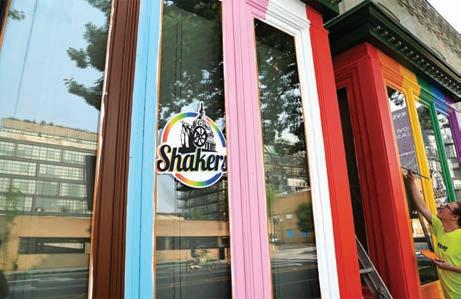
The event, in partnership with local drag performer Tara Hoot, will feature a family fun story time and song performances, all from Tara Hoot. There will also be snacks and refreshments.
This event is free and more details can be found on Shakers’ Instagram page.
Shaker’s hosts a drag event for kids on Sept. 9.
24 • WASHINGTONBLADE.COM • AUGUST 25, 2023
(Blade photo by Michael Key)
Labor Day sees return of SunFestival to Rehoboth Beach
DJs, live auction, comedy and more planned for end-of-summer bash
Labor Day Weekend in Rehoboth Beach brings more than the end of summer — it brings the annual SunFestival celebration benefitting CAMP Rehoboth.
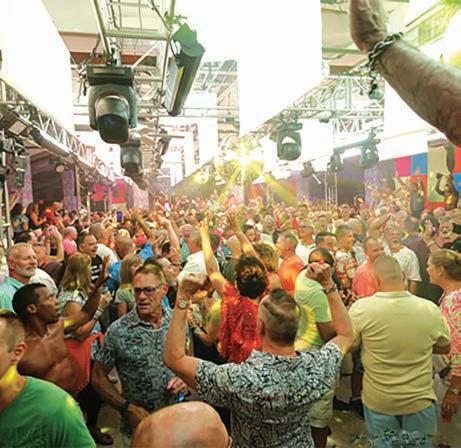
The weekend promises two nights of revelry with entertainers and nationally known DJs creating the “ultimate party to close out summer” Sept. 2-3.
Saturday’s $45 general admission tickets are sold out but you can join a waitlist at the event’s website. That ticket grants you access to a comedy show and an auction where you can bid on six experiences like an eight-day boat tour through Belgium and the Netherlands or a week’s stay in Lisbon, Portugal. Organizations have donated these experiences to CAMP to auction off, with all proceeds going to the organization.
The $95 pass to both nights is also sold out. But general admission tickets for the Sept. 3 dance party starting at 7 p.m. with DJs Robbie Leslie and Joe Gauthreaux remain available. CAMP Rehoboth promises a “state-of-the-art club-like atmosphere,” with
new design elements and video imaging.




Visit camprehoboth.com for tickets and more information. The weekend’s schedule is below:
Saturday, Sept. 2: A Night of Comedy, Drag, and Song, plus a LIVE Auction! (Doors Open at 6:30 p.m. Auction and show promptly start at 7:30 p.m.) Featuring Dixie Longate and Randy Roberts

Serving up Tupperware lady realness, join in Dixie’s living room party and all its hilarity. Randy Roberts brings thrills with uncanny impersonations of iconic female vocalists and cabaret.
Experience a night filled with laughter and song as these talented performers will lift your spirits and tickle your funny bone. And not to be missed: the live auction. Check out the live auction items camprehoboth.com/sunfest2023live.
Sunday Sept. 3: A Night of Dance. (Doors open at 7 p.m. Dance ends at 1 a.m.) Featuring DJ Robbie Leslie and DJ Joe Gauthreaux.
Both DJs will offer an unforgettable musical jour-




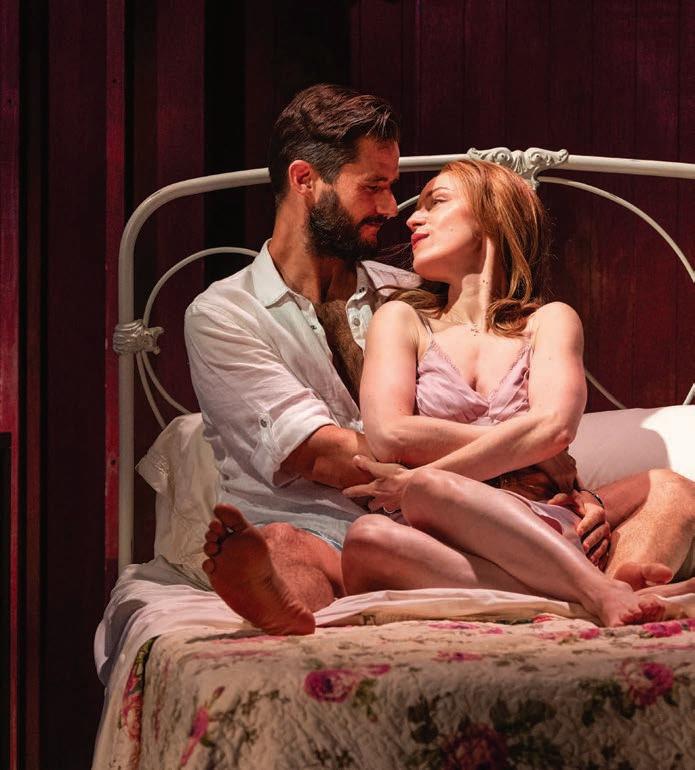
ney starting with classic mirror ball memories, dance floor anthems, and the latest club beats, according to a CAMP Rehoboth statement. Events are held at the Rehoboth Beach Convention Center, which CAMP promises will be transformed “into the ultimate dance party to close out the summer.”
JOEL LEV-TOV
AUGUST 25, 2023 • WASHINGTONBLADE.COM • 25
FEATURE
SigTheatre.org | 703 820 9771 NOW THROUGH SEPTEMBER 17
Last
Years Pride Night: August 25
A scene from previous SunFestival celebrations. (Blade file photo by Daniel Truitt)
The
sweeping and passionate musical featuring the Tony Award-winning score by the writer of Parade and The
Five
Photo of Mark Evans and Erin Davie by Daniel Rader
















26 • WASHINGTONBLADE.COM • AUGUST 25, 2023 LEFT PAGE LeeAnnGroup.com|302.645.6664(Office) 16698KingsHighway,SuiteA,Lewes,DE19958 #1 IN DE HOME SALES IN 2022 #1 TEAM IN COASTAL DELAWARE #2 BHHS NATIONWIDE THE ONLY NAME IN REAL ESTATE AT THE BEACH.
It’s easytopictureyourselfrelaxinginthisrecent & completelyrenovated 4 bedroom, 3 bathhomethat’s just 200 stepstothebeach! Locatedon a generouslysizedprivatecul-de-sac parcelisalsojust a walkorbikeridetothediningandshoppingofdowntown Lewes












COASTAL ELEGANCE...
isyoursfromthis Schell Brother's Whimbrelbuildon a premiumwoodedlotin Sawgrass! Boasting 5 bedroomsand 3 bathswithanoversizedgarage, thishomefeatureshickory hardwood floors, soaringceilings, gas fireplace, solarpanels, screenedporchandpaver patiooverlooking a privatewoodedcreeksetting. Sawgrassoffersresort-styleamenities allwithincloseproximitytothe Rehoboth


WHY WAIT TO BUILD?









Thisupgradedandbarelylivedin 4-bedroom, 3.5-bath, Schell Brother’s Shearwatermodel iswaitingfor you! Situatedon a¾ acrelot, Eastof Rt 1, backingtoopenspaceandwoods, thishomefeatures a spacious, open floorplan, gas fireplace,gourmetkitchen, 3 cargarageandmore! Just a shortdriveorbikeridetodowntown Lewes!



CUSTOM



Showcasingtheepitomeofluxuryliving, thisformerbuilder's custom 4 BR/4.5 BA homehasexquisitefeaturesandexpansivelivingspacesspanningover 5800 squarefeet! Highlightsinclude Brazilian Cherryhardwood flooring, afloor-to-ceilingstone fireplace, bonusbar/lounge, epicoutdoorlivingspaceincluding a saltwaterpool, andsomuchmore! Convenienceispaired withseclusionasthispropertyisstrategicallylocatedclosetothebeaches, shopping, and diningoptions. Yet, itremainstucked away withintheconfinesof a privateandserenesetting

AUGUST 25, 2023 • WASHINGTONBLADE.COM • 27
RIGHT PAGE
BUILT IN BOOKHAMMER ESTATES!
269
Winifred Way, Lewes, DE | MLS: DESU2046430 | $949,900
16672 New Road, Lewes, DE | MLS: DESU2044142 NEW PRICE - NOW$1,575,000
Beachboardwalkandnightlife! 20806
Black Oak Pl, Rehoboth Beach, DE | MLS: DESU2046426 | $919,900 ELEVATE YOUR COASTAL STYLE ON LEWES BEACH!
No rentalrestrictions! 7
Rehoboth Avenue, Lewes Beach, DE | MLS: DESU2046360 | $1,950,000
Meet ‘one of the most powerful disabled people on the planet’
Eddie Ndopu a wizard of advocacy and glam
By KATHI WOLFE
(Editor’s Note: One in four people in America has a disability, according to CDC. Queer and disabled people have long been a vital part of the LGBTQ community. Take two of the many queer history icons who were disabled: Michelangelo is believed to have been autistic. Marsha P. Johnson had physical and psychiatric disabilities. Today, Deaf-Blind fantasy writer Elsa Sjunneson, actor and bilateral amputee Eric Graise and Kathy Martinez, a blind, Latinx lesbian, who was Assistant Secretary of Labor for Disability Employment Policy for the Obama administration are just a few of the people who identify as queer and disabled. Yet, the stories of this vital segment of the queer community have rarely been told. It its series “Queer, Crip and Here,” the Blade is telling some of these long unheard stories.)
Everything comes full circle: back to Britney Spears for Eddie Ndopu, 32, a queer, Black, disabled man who is a wizard with advocacy and glam.
“I knew I was queer early on,” Ndopu whose memoir “Sipping Dom Perignon Through a Straw: Reimagining Success as a Disabled Achiever“ (Legacy Lit) is just out, told the Blade recently in an extended interview, “though I didn’t have the language for it.”

Ndopu, whose mother fled from South Africa because of apartheid, was born in Namibia. At age nine, he and his family moved to Cape Town, South Africa. He was raised by his mother, a single mom.
When he was two, he was diagnosed with spinal muscular atrophy. He was expected to die from this degenerative disability by the time he turned five.
Decades later, Ndopu knows what it means to live with declining strength, and the knowledge, that while we’ll all die, he’ll likely die sooner than most of us.
At the same time,through his queerness, disability, and imagination, Ndopu said, he embodies what it’s like to live a fabulous life.
It began when he was a child watching and listening to Spears. “Britney was the first pop star I encountered as a young boy,” Ndopu said. “She was iconic in so many ways. I adored her! I watched her dance.”
His mother gave him an album by Spears. “It was my thing,” Ndopu said, “The first thing I owned.”
Spears seemed unstoppable to Ndopu. It triggered something in him. “It made me want to be on the global stage,” he said.
Years later, Ndopu empathized with Spears when she fought to be released from the conservatorship she was under from 2008 to 2021.
“Disabled fans, especially, were with Britney in her battle to be free,” Ndopu said, “because often, disabled people, particularly intellectually disabled people, have been denied agency. Have been denied their autonomy.”
We owe Spears an apology, Ndopu said. “It’s analogous to what disabled people go through,” he added, “we’re owed an apology for all the ways in which we’ve been made to endure so much [through ableism].” (This reporter is queer and disabled.)
Since childhood, Ndopu has loved beauty, fashion and glam. “My first dream was to be a designer,” he said, “I sketched in art classes in school.”
Ndopu daydreamed about living in the United States –about being based in New York City. He watched the soap opera “The Bold and the Beautiful.” “I didn’t watch for the stories about the characters,” Ndopu said, “I watched for
the fashion! It gave me glimpses into a world where I wanted to be.”
But as his disability progressed, Ndopu lost strength in his hands. He could no longer draw. “I had to dream a new dream,” he said, “I knew I wanted to do something extraordinary. I imagined an escape.”
One day, he looked through a magazine and saw a story about a school, the African Leadership Academy, that was going to train young people in Africa to be future leaders. He applied to the school.
“They rejected me. Because they didn’t know what to do with me,” Ndopu said, “I wrote to them and got in.”
“I don’t know if I’d do that today,” but I did then,” he added, “that was my saving grace.”
Going there was Ndopu’s first big break. When he was only in his teens, Ndopu was speaking about disability justice.
After graduating from the Leadership Academy, Ndopu graduated with a bachelor’s degree in interdisciplinary studies from Carleton University in Canada in 2014. In 2017, Ndopu was the first African student with a degenerative disability to graduate with a master’s in public policy from the Blavatnik School of Government, Oxford University. Based at Somerville College, Ndopu received a full scholarship from Oxford.
Today, Ndopu, known for his fab oversized, bejeweled sunglasses, is an award-winning global humanitarian and social justice advocate. Time magazine has called him “one of the most powerful disabled people on the planet.”
Ndopu, fulfilling his childhood daydream, now, lives in New York City.
He is on the board of the United Nations Foundation, a group founded by Ted Turner to support the work of the UN. He works for the UN as a global advocate for sustainable development on issues from climate change to hunger.
Ndopu likes to identify as queer because, he believes, the word “queer” embodies all of his identities – from race to disability to sexuality to being fabulous. “I love to identify as queer,” he said.
In college, Ndopu was infatuated with a guy on the basketball team. He was heartbroken when his affections were unrequited. “That was the moment when I fully embraced my queerness,” Ndopu said, “I came out with my first heartbreak. There was no sitting with it. I went from zero to 100!”
Ndopu became one of the directors at Carleton’s gender and sexuality resource center. He studied queer theory.
There’s a critical contradiction for queer, disabled people, Ndopu believes. At its best, queerness (and the queer community) celebrates the full spectrum of bodies, sexuality and gender from nonbinary to pansexual to two-spirit. “The body is at the center for queer folks,” he said, “that’s something to celebrate.”
On the other side of the coin, though, the queer com-
munity doesn’t want to accept, “doesn’t want to have a conversation about bodies that aren’t the socialized idea of the body,” Ndopu said.
That often boils down to ableism toward queer, disabled bodies, Ndopu said. If you’re queer and disabled, you go through “the tension between acceptance and desire,” Ndopu said.
There are many “inspirational” memoirs by disabled people – tales of “overcoming” disability – of overpowering insurmountable odds.
Thankfully, Ndopu’s memoir doesn’t fit this bill at all. “Sipping Dom Perignon Through a Straw” is searing and intimate. Ndopu describes his family: what it was like to grow up with an absent father, how oppressed his mother was by apartheid and how loving and caring she was of him. But much of the memoir is focused on his year at Oxford.
For most people, queer, non-queer, disabled or nondisabled, being at Oxford would have been like being in a fairy tale. Like living the fantasy of your life.
For Ndopu, it was a crowning achievement. He had friends, studied what he wanted to study at a renowned university, and, even became student body president of his program.
Yet, from the get-go, his time at Oxford was riddled with ableism. The physical inaccessibility of the buildings was bad enough. But, Ndopu needs help 24/7 with activities of daily life from getting dressed to going to the bathroom. Finding and paying for caregivers at Oxford was a nightmare for him.
“A sharp, illuminating debut memoir,” Publishers Weekly, said of Ndopu’s book, “...Ndopu shines a light on ableism both conscious and unconscious.”
His experience at Oxford made Ndopu realize that being successful wouldn’t protect him from disability-based prejudice and discrimination. Being brilliant wouldn’t guarantee that you’d have a caregiver to help you pee. He came to believe exceptionalism is used against disabled people (and other marginalized groups).
“The idea that we have to be resilient – that if we have enough grit we’ll overcome all obstacles is used to oppress disabled people,” he said.
You might think that, given his shortened life expectancy and experience of ableism, homophobia, and racism, Ndopu would give up hope. But you’d be wrong.
“I’m going to go out like a fucking meteor!” queer and disabled icon Audre Lorde says in the epigraph to Ndopu’s memoir.
“I deliberately chose this quote from Lorde’s Cancer Journals,” Ndopu said, “I hope I’ll die in as close to a transcendent experience as possible.”
No matter what, Ndopu will be fabulous. “It’s not a frivolous thing,” Ndopu said, “being fabulous makes me, visible.”
For too long, queer and disabled people have been invisible, he added.
28 • WASHINGTONBLADE.COM • AUGUST 25, 2023 FEATURE
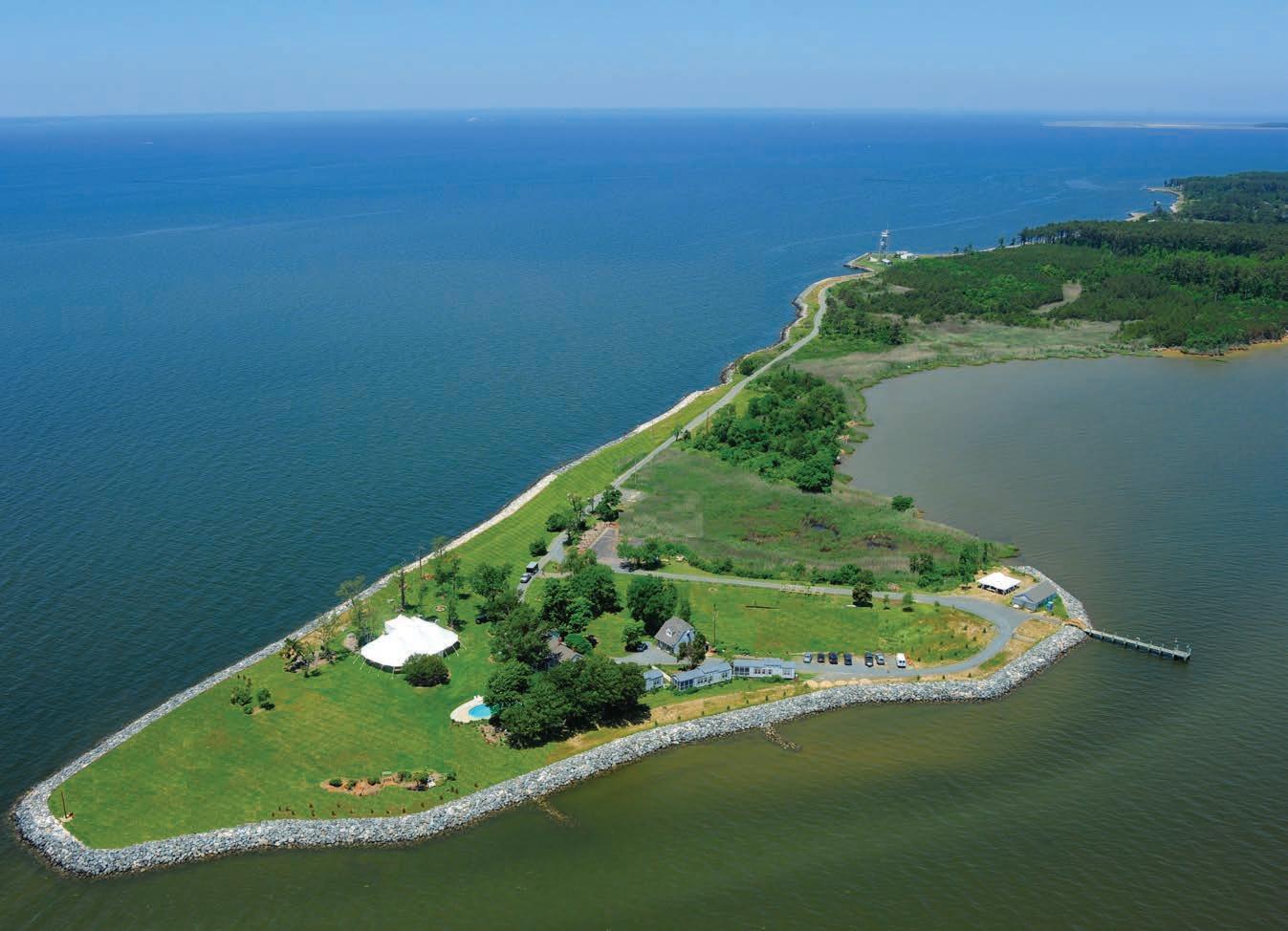

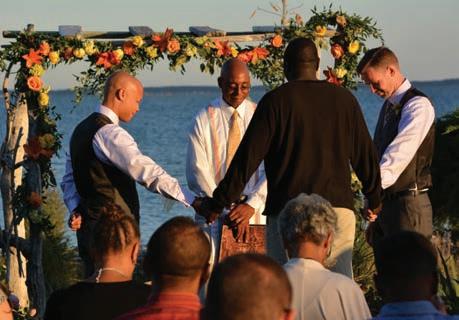









AUGUST 25, 2023 • WASHINGTONBLADE.COM • 29 PRIVATE, WEEKEND WATERFRONT WEDDINGS. FOR THE PRICE OF 6 HOURS, HAVE A DESTINATION WEEKEND, JUST 2 HOURS FROM D.C. 410-886-2452 blackwalnutpointinn.com
Meet Ian Anthony Coleman, actor on the move
Looking ahead after memorable roles in ‘Color Purple,’ ‘Prom’
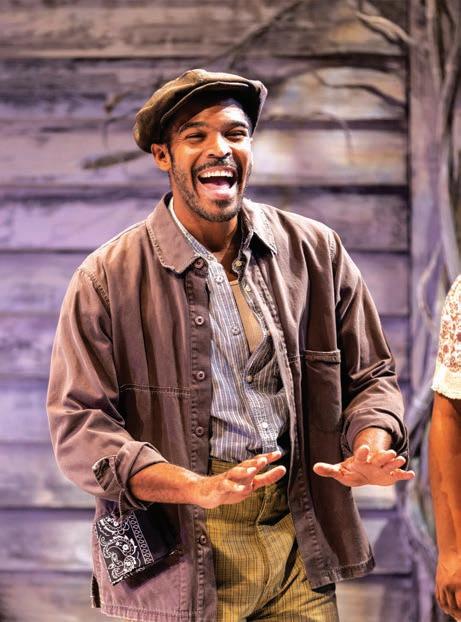 By PATRICK FOLLIARD
Early this summer, Ian Anthony Coleman staged hit Broadway musical “The Prom,” at the popular Montgomery College Summer Dinner Theatre in Rockville. It was a gratifying work experience for the out director/actor/educator, as well as a homecoming of sorts. Ten years earlier, just out of college, Coleman was there playing the Tin Man in “The Wiz,” a significant starting point in his varied and busy MVA performing arts career.
After graduating from Carnegie Mellon University in Pittsburgh with a B.S. in International Relations & Politics, and a minor in French & Francophone Studies, he returned to his native D.C. Initially unsure how to proceed, he soon enjoyed a stint working in early childhood education followed by a miserable eight months in corporate sales; but at the same time, he was auditioning, taking classes, and performing.
But unlike the apocryphal tale of the movie star who’d been discovered at a soda fountain, Coleman’s foray into show biz was more deliberate and to an extent strategized.
As he increasingly envisioned a career in the arts, Coleman devised a plan. He knew without a BFA, he was at a disadvantage, but he was talented and smart so he examined the trajectories of other young local actors and followed suit. His formulated acting path followed a familiar template including the aforementioned Summer Dinner Theatre, a community theater production of “Parade” at Kensington Arts Theatre, and then Keegan Theatre, a professional company in Dupont Circle, which led to Arlington’s Tony Award-winning Signature Theatre (“Grand Hotel”). More gigs ensued around town including Arena, Olney, Round House, more Signature, and others.
It was while playing Hud, “a butt-naked hippie” in the musical “Hair” every night at Keegan that he decided to leave his buttoned-up day job and embrace the actor’s hustle culture. “I was good at it. The city knew me as a young baritone who could also act and dance, and I was working a lot,” recalls Coleman, 33.
But the freelance life eventually paled next to a steady salary, adds the Fort Totten resident. So, three years ago he revisited education and was hired to head the drama department at an independent school in suburban Mary-
land where he instructs daily and directs three productions a school year. He happily remains on staff.
“My mission as burgeoning director is to create the artistic scene that I want for myself and future artists especially since I’m training young artists. I keep real with them about how it is and talk about the shortcomings I see in the industry.”
Though his staging experience is extensive, his sole professional directing credit is “Crowns” at Creative Cauldron in Falls Church. (More were slated to happen, but the pandemic put the kibosh on that.) He’s determined to change that around.
For years, Coleman buried himself in work hoping to keep personal questions at bay, but by college he was out to friends and his mother. It took the death of his beloved great aunt in 2020 to prompt him to come out to his entire extended family. His grandmother handled the news particularly well. In fact, there’s evidence on TikTok (over 200,000 views) of her celebrating his revelation with music (Diana Ross’ “I’m Coming Out”) and a glass of wine.
Of course, there were other bumps in 2020: “As a Black person, George Floyd’s murder shook my core especially in the context of the pandemic and feelings of isolation. I felt theaters weren’t paying enough attention so I voiced my disappointment on FB; it resonated with a lot of people who felt the same.”

“Most actors have little agency in the industry; we’re easily replaceable. Sometimes that scares us into not calling out inequities we see.”
As far as acting goes, Coleman isn’t giving up his union card yet. He’s looking forward to his next age range. He’d love to play the titular serial killer in “Sweeney Todd.”
Putting on his director’s hat, he’d like to do “Five Guys Named Moe,” “The Bubbly Black Girl Sheds Her Chameleon Skin,” “Oklahoma!” and “A Little Night Music,” adding one of his chief hopes is to be an artistic director at the right company.
This time last year, classes coincided with the opening of “The Color Purple” (Coleman played Bobby) at Signature, one of the few mainstage productions that was cancelled due to COVID and then rescheduled. He concedes a full-time day job plus eight shows a week was arduous, but adds he does some of his best work under extreme pressure.
“That’s my new 10-year goal, to be an artistic director and a changemaker.”
Ian Anthony Coleman Director/Actor/Educator
www.IananthonyColeman.com 30 • WASHINGTONBLADE.COM • AUGUST 25, 2023 THEATER
IAN ANTHONY COLEMAN as Bobby in Signature Theatre’s ‘The Color Purple’ in the fall of 2022. (Photo by Christopher Mueller)


AUGUST 25, 2023 • WASHINGTONBLADE.COM • 31 Montifalco Vineyard Estate Winery Where everywine is fabulous… 1800 Fray Road, Ruckersville, VA Monticello Wine Country montifalcovineyard.com info@montifalco.com | 434-989-9115
‘Every Body’ casts overdue spotlight on intersex lives Three activists move past childhood dominated by shame
 By JOHN PAUL KING
Even within the larger LGBTQIA+ community, intersex people remain something of a mystery for most of us.
That’s not meant to start a guilt trip; it’s an observation hinting at the power of the stigma that has kept intersex stories buried in the dusty cabinets of medical research halls even as the other segments of the queer population have been given increased representation – and with it, the chance to express their truth – in the public sphere. Guided by unquestioned assumptions about “natural” expressions of gender, the scientific and medical establishment has long shrouded the facts around intersex people, often even from the parents of intersex children, as they made autocratic decisions about medical procedures to “correct” what they perceived as nature’s “mistake.” How can someone share their truth with the world if it’s always been kept a secret from them, too?
As laid out in “Every Body,” “RBG” director Julie Cohen’s documentary profile of three prominently visible intersex individuals (now streaming on Peacock after a theatrical release earlier this summer), the answer to that question is that they can only do it by forging a new truth, based in their own experience and independent from the expectations of others.
The film’s three subjects – actor/screenwriter River Gallo (they/them), political consultant Alicia Roth Weigel (she/they), and Ph.D. student Sean Saifa Wall (he/ him) have each moved beyond a childhood dominated by shame and secrecy into a thriving adulthood lived as their authentic selves – something only made possible by a choice to disregard medical advice about keeping the reality of their bodies a secret. Now leaders and advocates in a global movement for greater understanding of the intersex community, they share the narratives of the lives that have gotten them there – both the ones that were forced upon them and their families from their birth, and the ones they have written for themselves.
Woven within these profiles is a historical tale about the vastly influential yet little-remembered Dr. John Money, a sex researcher whose views on gender became central to institutionalizing a 1950s-era sensibility into accepted medical thought around intersex people; more specifically, it relates a stranger-than-fiction case of medical abuse under Money’s care, featuring exclusive archival footage from NBC News archives, and exposing the fallacies behind medical protocols that continue to linger, unchecked, years after being resoundingly debunked.
It’s through this wide-view look at the context in which intersex people have historically been framed by doctors and psychiatrists that the film provokes the most vigorous emotional response from audiences, perhaps; the real life-story of David Reimer, subject of the experiment that would eventually discredit Money’s work, is a heartbreaking one, and the footage of the film’s three
subjects watching the harrowing interviews the deeply damaged Reimer gave when his story was made public provides some of the movie’s most viscerally moving moments.
Indeed, Cohen’s original concept for the movie was a straightforward exploration of the Reimer case, but after connecting online with Weigel, and through them, with Gallo and Wall, she changed direction. Struck by their commitment to the cause of greater understanding and better medical care for intersex people, she began filming their activism and their day-to-day lives. As she says in her press notes, “What had started as an archival documentary became a film very much set in the present.”
– on his own platform by challenging their simplistic conceptions about the biology of gender, reminding us of how formidable we can be when we speak from a truth gained through lived experience.
It’s scenes like these that overcome the dark weight of a less-enlightened past to help the documentary move into the more hopeful light of today’s active struggle for something better. Having claimed, at last, the autonomy over their own body that was denied them as children, these three are ready to stand and fight for a future in which others like them will never have to face what they and countless intersex people throughout history have had to experience. When “Every Body” moves, finally, into the here and now, it drops us into a community made up of individuals who have found each other in spite of the secrecy, whose willingness to share their truth with each other and with their allies has changed the way a generation of intersex individuals learn to think of themselves. It takes us to a rally designed to bring an end to the age of secretive surgeries performed without consent on individuals too young to decide for themselves, channeling the lessons learned and experience gained from the queer and trans rights movements that came before them to work for a cultural shift toward greater acceptance, inclusion, and understanding. It leaves us feeling assured that the oft-horrific mistreatment and forced conformity of past decades might finally be replaced by the kind of compassionate and informed guidance that everyone deserves when it comes to decisions impacting the very core of their identity. Carefully-structured but organically-flowing, and infused with a sense of purpose that avoids the performative grandstanding of culture warfare to find the joy that lies behind the most genuinely persuasive movements for change, Cohen’s documentary makes its statement by leaving us on an “up” note.
It’s a shift in approach that focuses the movie on transcendence over trauma. Through the inspirational sagas of its three central figures, “Every Body” resoundingly emphasizes the empowerment that comes with taking control of one’s own narrative, and the freedom and forgiveness that can blossom in a more fully self-actualized life than the one they were encouraged or even coerced to accept in their younger years. Watching Gallo’s tender reminiscences with their mother, or hearing Wall’s empathetic acceptance of his now-deceased parents’ choices for him in the face of what they knew or were told, is a welcome contrast to the often strident dialogue we are growing ever more accustomed to encountering around such matters in the public conversation; at the same time, there’s a deeply satisfying thrill that comes in seeing Weigel stymie a Texas Legislature or shut down a visibly shaken Steven Crowder – the controversial conservative comedian and pundit whose signature schtick spawned all those notorious “Change My Mind” memes
Unfortunately, like most such documentaries coming into the world now, as virulent antagonism against all segments of the queer community grows ever more ominous, the optimistic tone that may have seemed appropriate at its inception can’t help but feel a bit out of step. That’s not a flaw in the film, but a gauge of a time that feels a little more precarious than most of us are comfortable with, and when our culture’s long-standing obsession with an “either/or” binary construct of gender – made painfully obvious by the film’s opening montage of elaborate “gender reveal” party stunts – looks more and more like an immovable wedge.
Still, current moods notwithstanding, the fight must go on, and “Every Body” is the kind of movie that can inspire even the most weary warriors to push forward against the tide of closed-minded bigotry that seems so bent on engulfing our nation.
For that reason alone, it comes with our highest recommendation.
32 • WASHINGTONBLADE.COM • AUGUST 25, 2023 FILM
Intersex activists SEAN SAIFA WALL, ALICE ROTH WEIGEL, and RIVER GALLO


















AUGUST 25, 2023 • WASHINGTONBLADE.COM • 33 13500 Layhill Road • Silver Spring, MD \ Bus Transportation & Extended Day Available \ admission@barrie.org \301.576.2800 barrie.org 3 Months to Grade 12 Come see for yourself! Admission Open House Saturday, October 21 3 Mos - Grade 5 | 9:00 – 10:15am Grades 6-12 | 11:00 – 12:15pm Learn more and RSVP: barrie.org/admission Ask about our Millenium Scholarship and Fall Expeditions for Grades 6-12! At Barrie School, everyone belongs! A sense of belonging is crucial to our students’ day-to-day happiness, satisfaction, and mental and physical health. We build this understanding into our curriculum and into ongoing e orts to make sure every member of the Barrie community feels they belong.
Con Acento Evry Pleasure hosts

Hispanic heritage celebration at JR.’s
Pleasure hosted the Con Acento drag show and dance party celebrating Hispanic heritage at JR.’s on Saturday, August 19. Performers included Jayzeer Shantey, Uriel Bonchello and Yeveah Altieri. Music was pro-
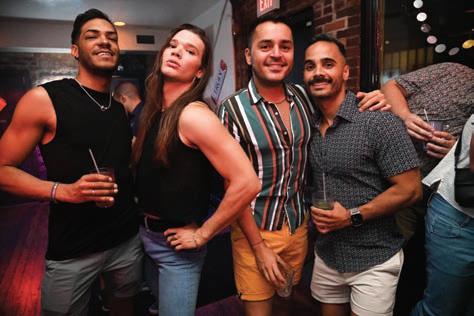
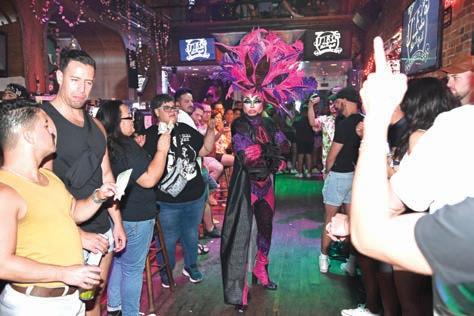
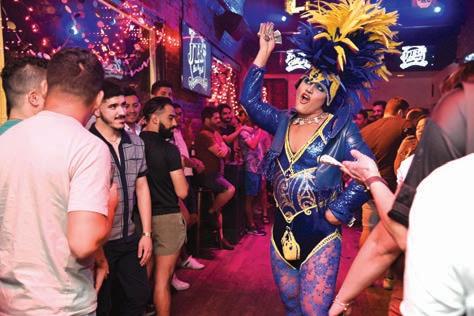
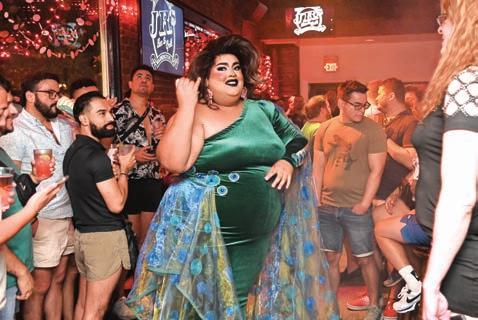
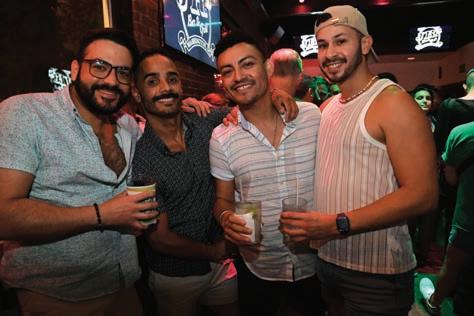
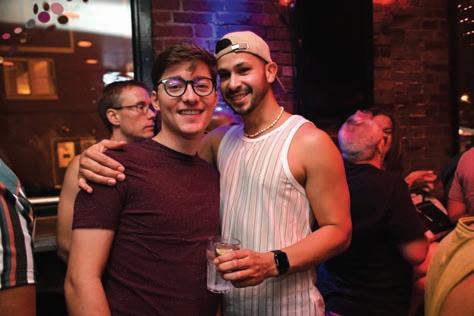
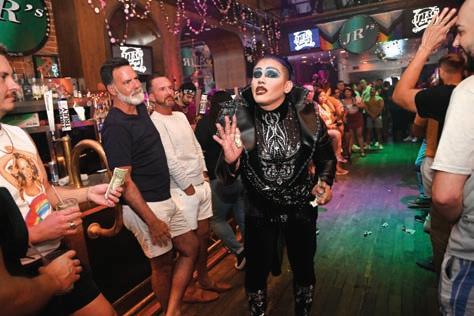
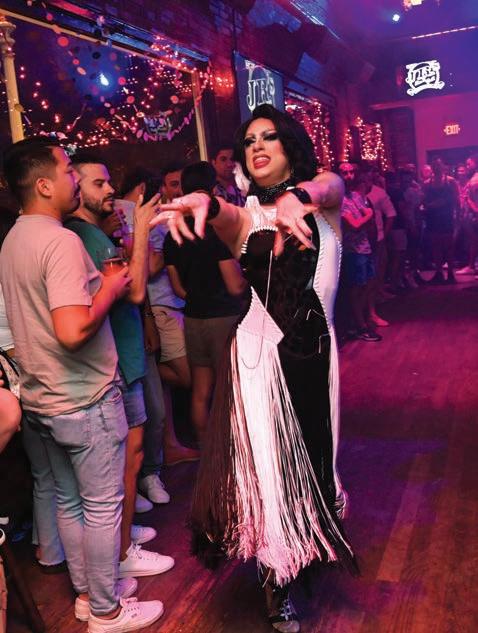
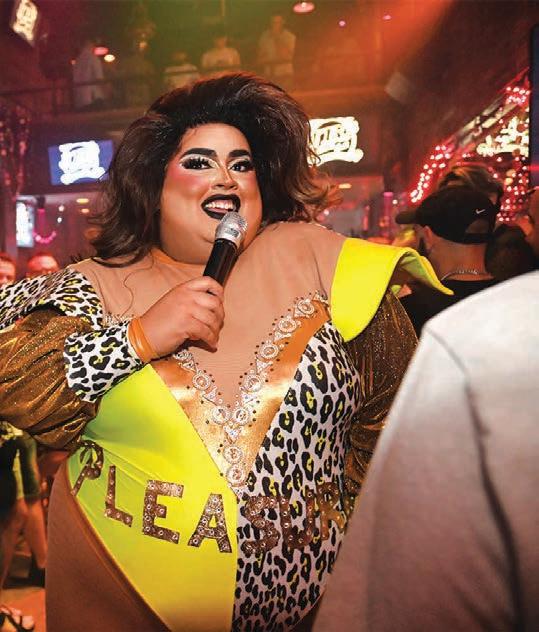
34 • WASHINGTONBLADE.COM • AUGUST 25, 2023
Evry
vided by DJ Andre.
(Washington Blade photos by Michael Key)









AUGUST 25, 2023 • WASHINGTONBLADE.COM • 35
Sidelined by high interest rates?
Consider refinancing options, buying down points
By JUSTIN NOBLE
Unimpressed by the current offerings on these DMV streets? Yeah, me too. Luckily we are heading into the busy “fall market” where we are set to see an influx of new inventory hitting the market just after Labor Day. While you might still be unsure if buying in this current real estate market and with these higher interest rates really makes sense for you, I want to outline a few options that might make sense for you and make that dream of homeownership, in this current market, more attainable than you once thought.
DATE THE RATEMARRY THE HOME
I’m sure we have all heard this by now. Everyone is saying to date the interest rate and you can always refinance. I agree with this sentiment 50% of the time. None of us knows what will happen in the future, right? Will interest rates drop lower than they are currently sitting? Sure, I think that’s a safe assumption. So if we are using that logic then if you find a home that you simply cannot live without then you should buy it and hope that interest rates drop and you can refinance that mortgage into a lower rate. With current limited inventory and higher interest rates we are seeing buyers getting some pretty good deals across all categories of homes (condo, co-op, townhome etc.) and so it still might make sense to buy a home now. Also, your motivation to move out of your friend’s basement or a roommate situation might be the driving factor.
ADJUST YOUR MINDSET
If you are dead set on buying a home right now, I get it. I am an Aries and I want things done NOW. That being said – there is a great option for making the current interest rates a bit more bearable. Adjustable rates are a great way to save in the short term. The way that adjustable rate mortgages work is that you are basically locked into a lower interest rate for a specifically set amount of time and then once that time passes your rate is adjusted to the current market or whatever your terms are set to increase by. Adjustable rate mortgages get a bad rep because of what happened in the last market crash. The loans that were being handed out back in 2007 were what’s called “no-doc loans” meaning that basically mortgage companies were not asking for documentation and would lend money out to everyone with very little verification of credit, employment, salary etc. In today’s mortgage market, the requirements to qualify for a loan are much greater and the same goes for an adjustable rate. Keep in mind that sometimes the terms of an adjustable rate loan do not make sense.
BUY POINTS
A newer method to make your mortgage more within reach is to buy down points. When it comes to your interest rate you have the ability, with most lenders, to come to the table with a specific percentage of the total loan amount, in cash, to buy down the interest of the overall loan and thus will result in a lower interest rate and lower monthly fee. This is, of course, only effective if you have that cash on hand needed to buy down the points and this would be outside of any down payment amount you have already

put down on the loan. This is a costly method and sometimes depending on how long you see yourself in that home - it doesn’t always make sense.
TAKE A BEAT
Sometimes the best thing we can do in life is to just take a moment to breathe. This is also helpful in the real estate market, although I never do. Anyway, if you are just super stressed about home buying after writing a few offers and being beat out or if you just can’t wrap your head around the expense of these interest rates, then take some time and regroup. During this regroup you can make a few changes to your finances that will help you in the long run with your borrowing power and overall mortgage health.
Credit: your credit worthiness does affect your mortgage interest rate. Work on your credit score to help with your mortgage outlook and you will notice a change in your interest rate. It is pretty easy to work on improving your credit through healthy bill paying and spending. There are a few groups that can help with this, outside of your day-to-day healthy credit habits, but I always recommend speaking with a lender to help navigate you in the right direction. Debt: pay off those student loans. Your borrowing power is surrounded by your debt to income ratio. Pay off loans that you have entirely or as close as possible. Just be aggressive with them. This will help you with the amount you can borrow in addition to your overall “image” when a lender looks at your file. While you are sitting on the bench waiting for more inventory or for the interest rates to drop – make smart decisions to buy down debt that you are currently carrying around.
As I mentioned before, economists’ predictions show that interest rates are sure to drop due to our current level of inflation being in a better place. It is likely that rates will drop, however no one has a crystal ball. The few tips listed above put the power in your hands and the ability to control what option makes the most sense for you in your home buying journey. Buying down points or adjustable rate mortgages are sometimes great options for some home buyers. Looking inward and working on your credit worthiness and debt are also great ideas for those that are not willing to subscribe to the refinance option or an adjustable rate mentality where the risk is too high. Home ownership is truly possible and when you have a toolkit outfitted with the right mortgage lender and realtor to help guide you through the process – it really is seamless.
(I am not a mortgage broker and do not claim to be.)

JUSTIN NOBLE
is a Realtor with Sotheby’s international Realty licensed in D.C., Maryland, and Delaware for your DMV and Delaware Beach needs. Specializing in first-time homebuyers, development and new construction as well as estate sales, Justin is a well-versed agent, highly regarded, and provides white glove service at every price point. Reach him at 202-503-4243, Justin.Noble@SothebysRealty.com or BurnsandNoble.com.
36 • WASHINGTONBLADE.COM • AUGUST 25, 2023 • BUSINESS
Fall means more inventory, but high interest rates are proving challenging for some buyers.
REAL ESTATE
SHAZAMM! This sleek 3-bedroom, 2-bath corner unit at The Jamieson is ready for cosmopolitan YOU! Bursting with light and enjoying airy rooms, it offers the best in secure turn-key living! Gleaming hardwood floors, floor-to-ceiling windows, carpeted bedrooms and enhanced storage supplement the open floor plan where entertaining is a snap. The gracious living room and dining room abut the kitchen where a pass-through permits casual dining, easy access to the dining area or even the perfect set-up for a cocktail or wine bar. The sleek kitchen with stainless appliances and soft-close cabinets and drawers is efficient and contributes further to the ease of living. A welcoming hallway leads to three carpeted bedrooms, each with glorious light and generous closet space. The primary bedroom enjoys its own ceramic-tiled bath with oversize bathtub, separate shower and double sinks within extensive cabinetry. Don’t miss its walk-in closet with organized storage, including additional shelving. The remaining two bedrooms are nicely proportioned and enjoy the use of a ceramic-tiled hall bath. Depending on your needs, one could even be an in-home office or den. Other amenities of this contemporary residence include a full-sized washer and dryer, additional storage bin on the same floor for any overflow needs and two deeded garage parking spaces, #18 and #108. Since purchasing this handsome home, the owners have replaced one of the HVAC units and included a new thermostat. The water heater and bathroom toilet fixtures were replaced. Living room shades were added to control the light and cornice work was installed. The range and refrigerator have been replaced and additional shelving was added to the pantry. Even refreshed paint has been accomplished. There are so many advantages of this remarkable home: extensive views of Courthouse Square, a rooftop terrace for the building which surveys the Masonic Memorial and Alexandria skyline, fast elevators throughout the building, convenient location for recycling and trash disposal, and delightful quiet without street, Metro, building or mechanical noise. There is a daytime concierge and nearby establishments provide grocery, pharmacy, restaurants, cleaners and other desired services. The community is pet-friendly and multiple options for mass transportation are at your fingertips. So discard all your concerns and begin living the stress-free life of being a Jamieson resident! It can be at your fingertips in a heartbeat!







AUGUST 25, 2023 • WASHINGTONBLADE.COM • 37 DONNA CRAMER 703.627.9578 703.549.9292 (OFFICE ) www.donnacramer.com CHERIE WILDEROTTER 703.371.3345 703.549.9292 (OFFICE ) www.cheriewilderotter.com
2050 Jamieson Avenue, Unit 1216 Alexandria, VA 22314 | $855,000
PROFESSIONAL DIRECTORY
MASSAGE REFRESH YOURSELF
Massage for active adults. Private studio near Rosslyn. Fri-Mon, 12-8. text 301-704-1158 or visit http://www.mymassagebygary.com
POLITICAL SUPPORT
LGBTQ+ ATTACKS ARE WORSE THAN EVER!! FIGHT BACK!
Donate a dollar or more to my campaign. I am John Clayton, an LGBTQ+ candidate, running for county supervisor in Iowa. Please join others to make our voices heard. Thank you!
Paidwww.claytonjc.com
for by Climate Crisis Committee for Clayton
BULLETIN BOARD
Academy of Hope
Adult Public Charter School REQUEST FOR PROPOSALS
Transportation Contractor
The Academy of Hope Adult Public Charter School located in Washington, DC requests proposals for Transportation Contractor. Proposals are due August 31st, 2023. You can find the detailed request for proposal and submission information at https://aohdc.org/get-involved/jobs/
HOUSING SHARE & PERSONAL ADS ARE FREE*!
*First 25 words in print are free. Email your text and contact information to: classifieds@washblade.com Anything over 25 words is $1. each additional word.
CLEANING FERNANDO’S CLEANING
Residential & Commercial
Cleaning, Reasonable Rates, Free Estimates, Routine, 1-Time, Move-In/Move-Out


202-234-7050 / 202-486-6183
LIMOUSINES
KASPER’S LIVERY SERVICE
Since 1987.
Gay & Veteran Owner/Operator. Lincoln Continental Sedan! Proper DC License & Livery Insured. www.KasperLivery.com

202-554-2471
MOVERS
PROFESSIONAL
MOVING & STORAGE
Let Our Movers Do The Heavy Lifting. Mention the Blade for 5% OFF of our regular rates. Call today
202.734.3080
www.aroundtownmovers.com
BODYWORK
THE MAGIC TOUCH
COUNSELING COUNSELING FOR LGBTQ


People Individual/couple counseling with a volunteer peer counselor. GMCC, serving our community since 1973.
202-580-8661
gaymenscounseling.org No fees, donation requested.
HANDYMAN BRITISH REMODELING
Local licensed company with over 25 years of experience. Specializing in bathrooms, kitchens & all interior/exterior repairs. Drywall, paint, electrical, wallpaper, roofing & siding Trevor 703-303-8699

LEGAL SERVICES
ADOPTION, DONOR, SURROGACY
legal services. Jennifer represents LGBTQ clients in DC, MD & VA interested in adoption or ART matters.
240-863- 2441
JFairfax@Jenniferfairfax.com
Swedish, Massage or Deep Tissue. Appts. Low Rates, 24/7, In-Calls. 202-486-6183
THE WASHINGTON BLADE PUBLISHES
DC LEGAL NOTICES
including probate, small estates and foreign estates. Public notices are required to be published in newspapers of general circulation because these venues (now both print and online) reach the largest number of people in the community, while offering an easily archivable and verifiable outlet to make sure the notice was published when and how it was intended. Further, newspapers display notices in the context of other news and information that people in the community read. Newspapers and their associated websites are the appropriate forums for notices that affect citizens and the general public.
38 • WASHINGTONBLADE.COM • AUGUST 25, 2023 • CLASSIFIEDS
PLACE YOUR AD ONLINE AT: WASHINGTONBLADE.COM/CLASSIFIEDS! If you need assistance, please email the text & image for your ad to: classifieds@washblade.com or call 202-747-2077 x 8092 & we will be happy to assist you!

AUGUST 25, 2023 • WASHINGTONBLADE.COM • 39