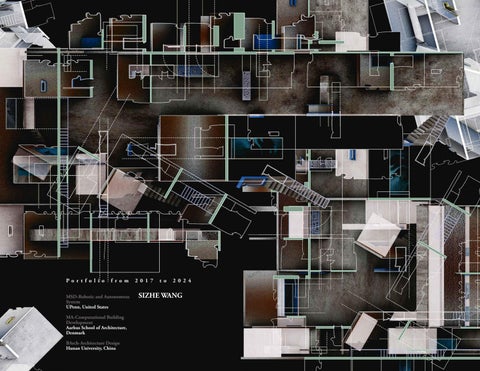
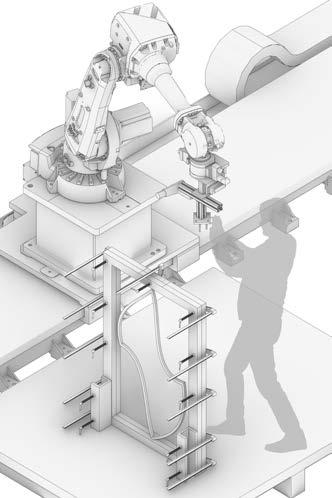
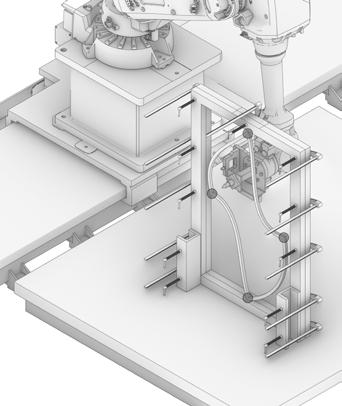
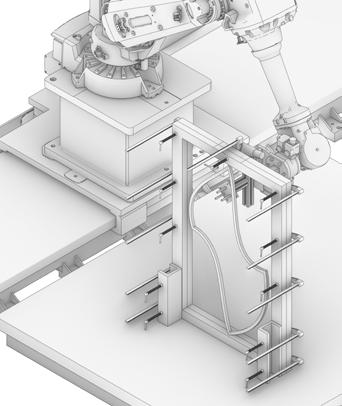
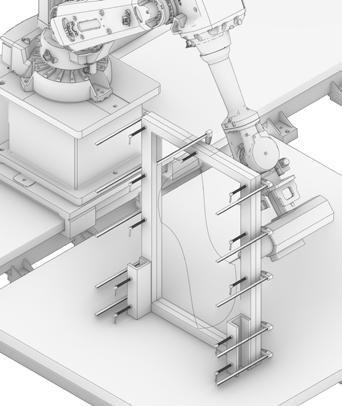
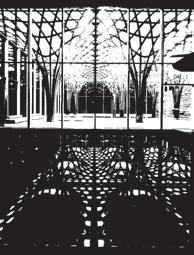
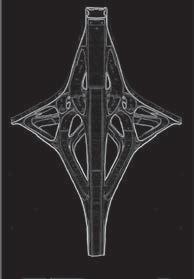
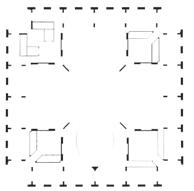
This portfolio showcases the synergy of computational design, robotics, and hightech in architecture, highlighting a journey where technology reshapes traditional architectural paradigms. Computational design, with its algorithmic prowess, brings forth a new era of precision and innovation, allowing for the creation of complex and sustainable structures that meld aesthetics with functionality.
Robotics emerges as a pivotal force, translating digital models into physical realities, showcasing how automated processes and robotic arms are not just tools but integral components that realize intricate and once-unfeasible designs. This integration exemplifies a shift towards efficient and precise construction methodologies.
High-tech advancements further propel this architectural evolution, integrating artificial intelligence, virtual reality, and smart materials to produce buildings that are not only structures but living entities capable of adaptation and learning. These technologies catalyze a new architectural ethos, where the built environment is responsive, sustainable, and intimately connected to human experience.
This collection is a narrative of how computational design, robotics, and hightech are not merely adjuncts but foundational elements that drive the future of architecture, creating spaces that are not only functional but experientially rich and forward-thinking.
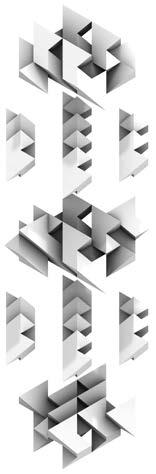
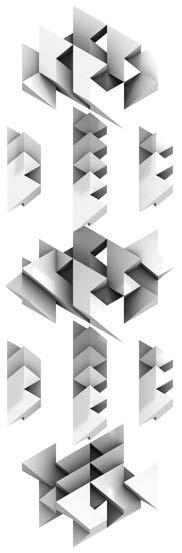
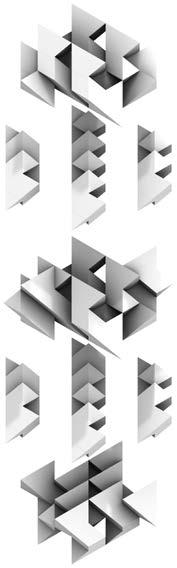
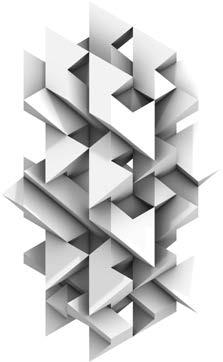
ARCHITECTURAL DRAWING
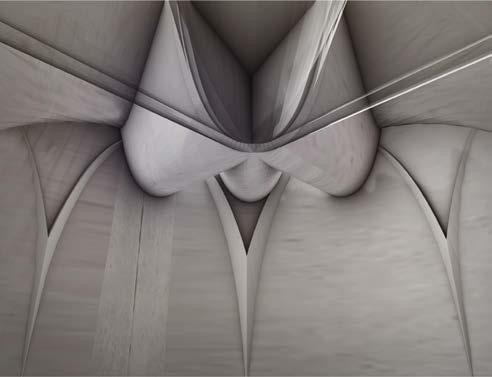
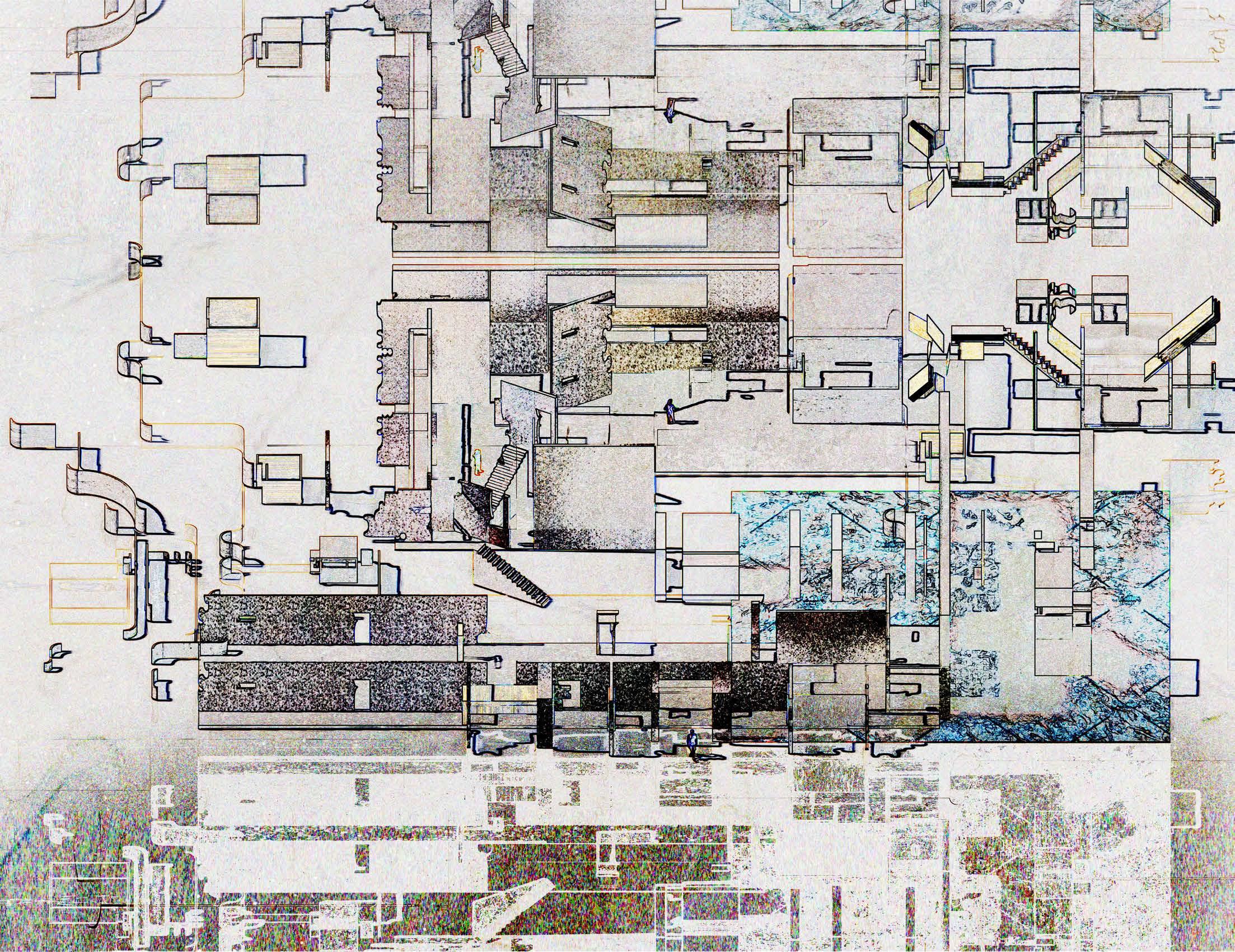
INFINITE RELATIVITY PARK
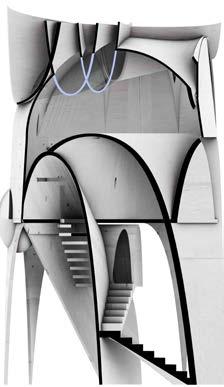
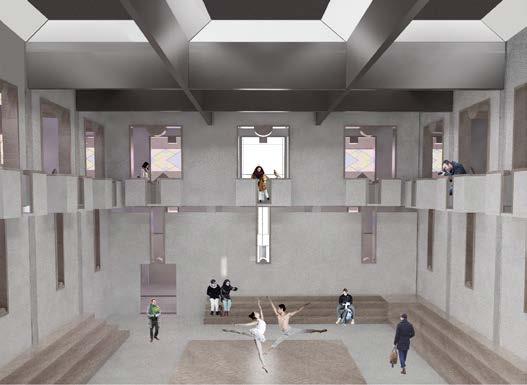
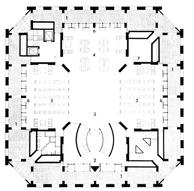
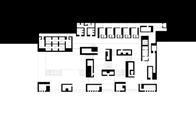
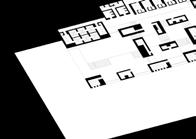
WALL-DOOR-WINDOW EXHIBITION HALL
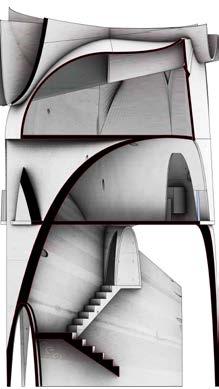
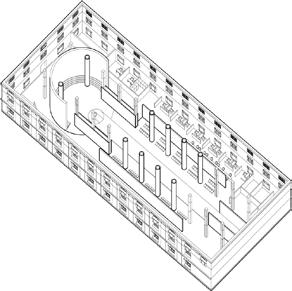
HUMAN LIBRARY
WORKING SAMPLE
AVANT-GARDE BOOKSTORE
ZAO/standardarchitecture,2023
Fabrication - 3D Printing {A-1}
A UTONOMOUS V ILLA
ACADEMIC, Individual Work, 2020 [1st Semester in Master]
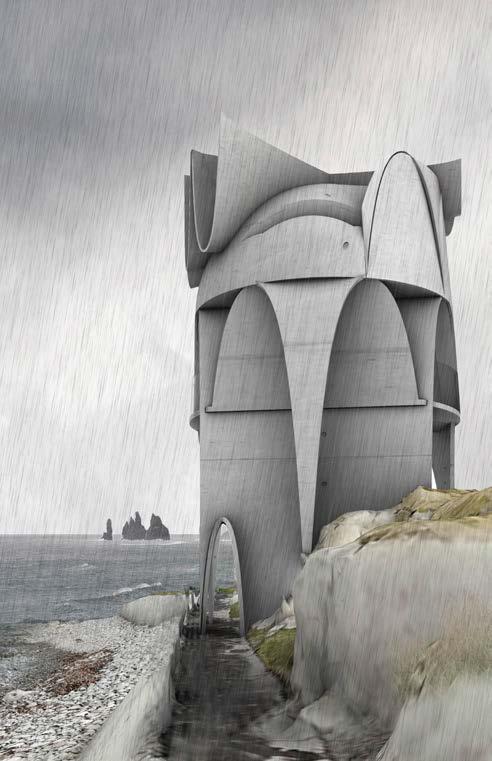
Site: Jalshof, Shetland Island, England | Caretaker's House
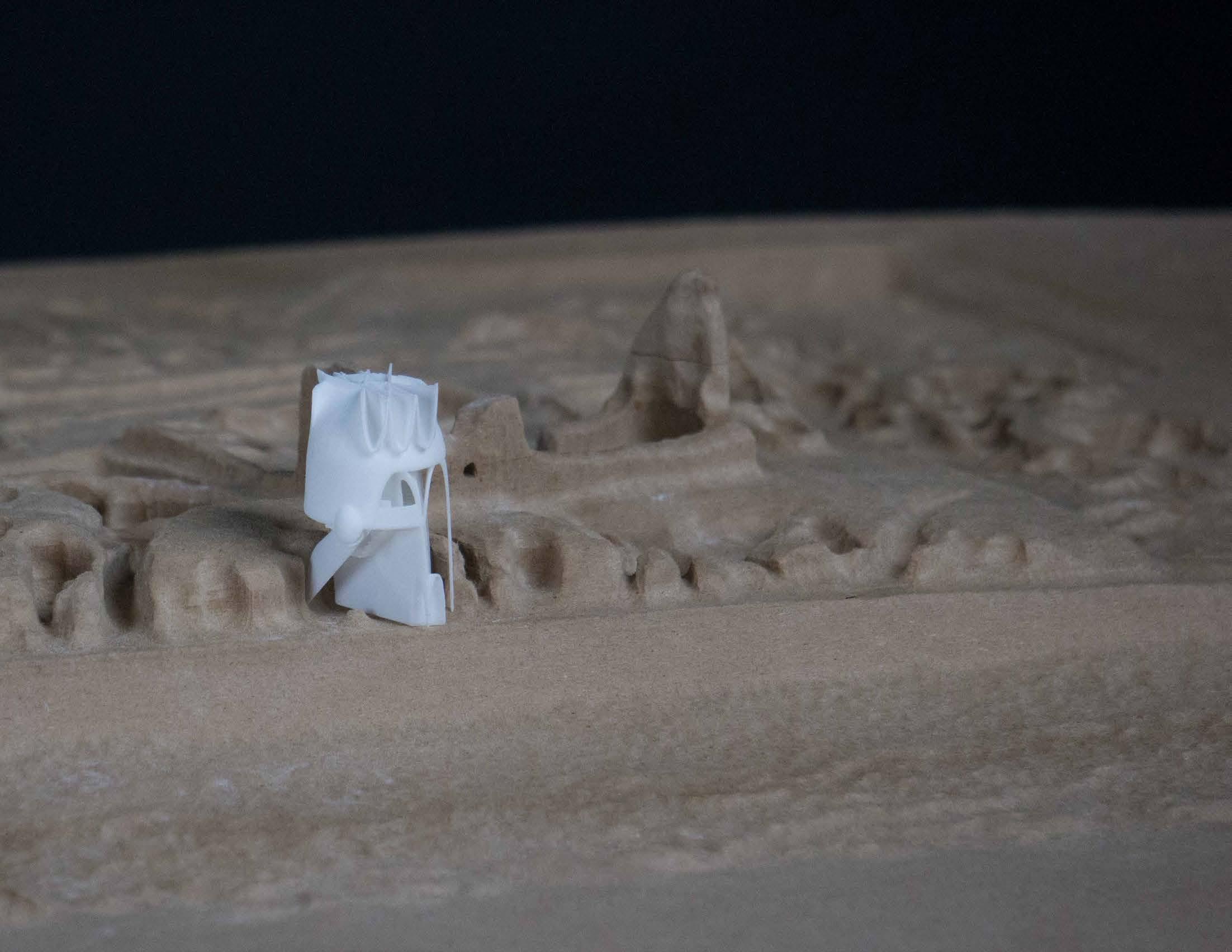
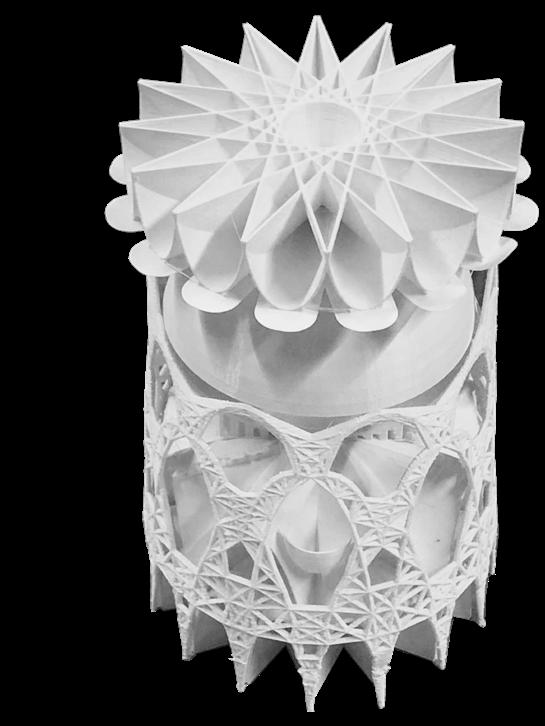
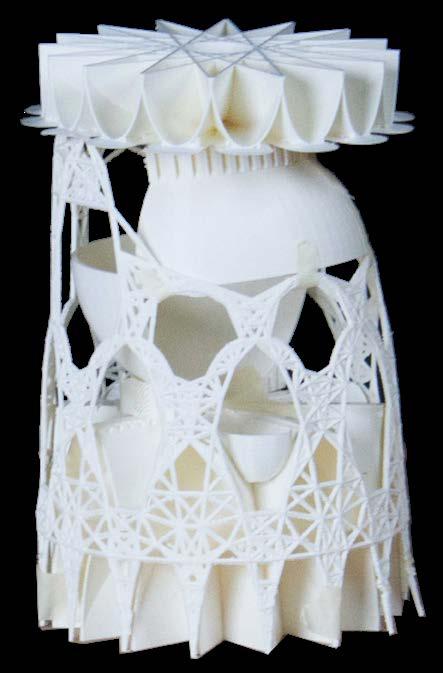
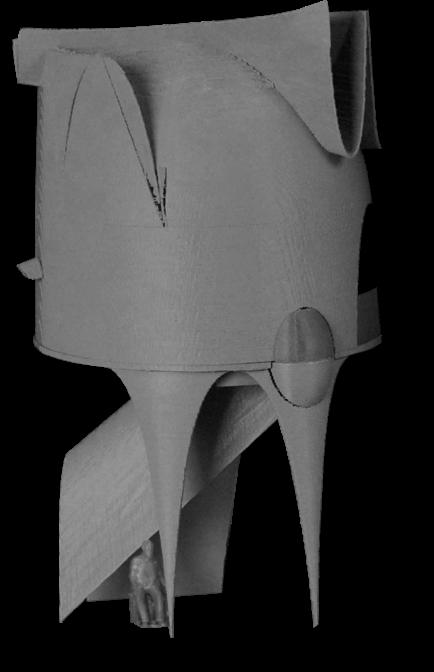
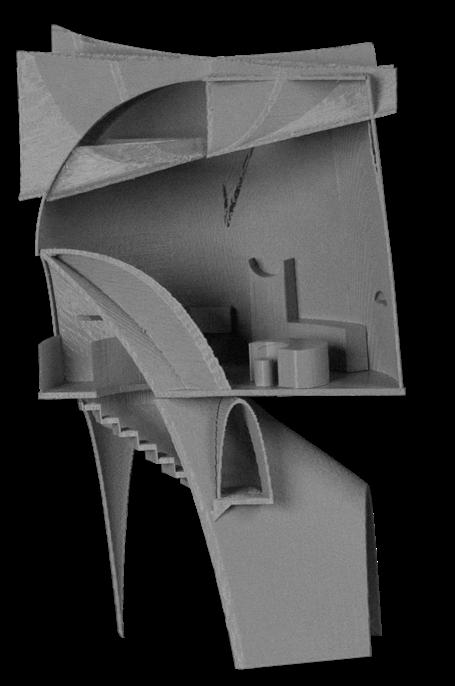
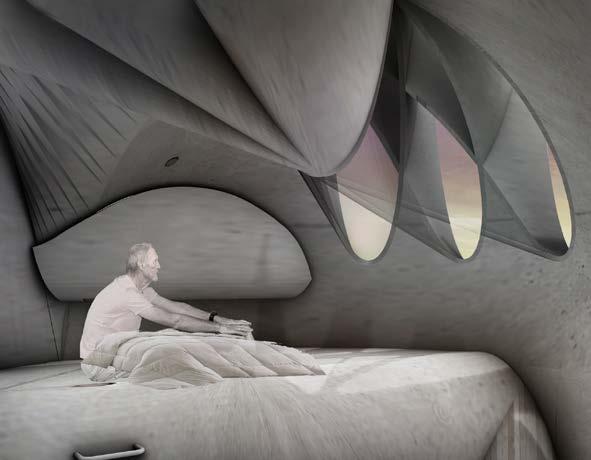
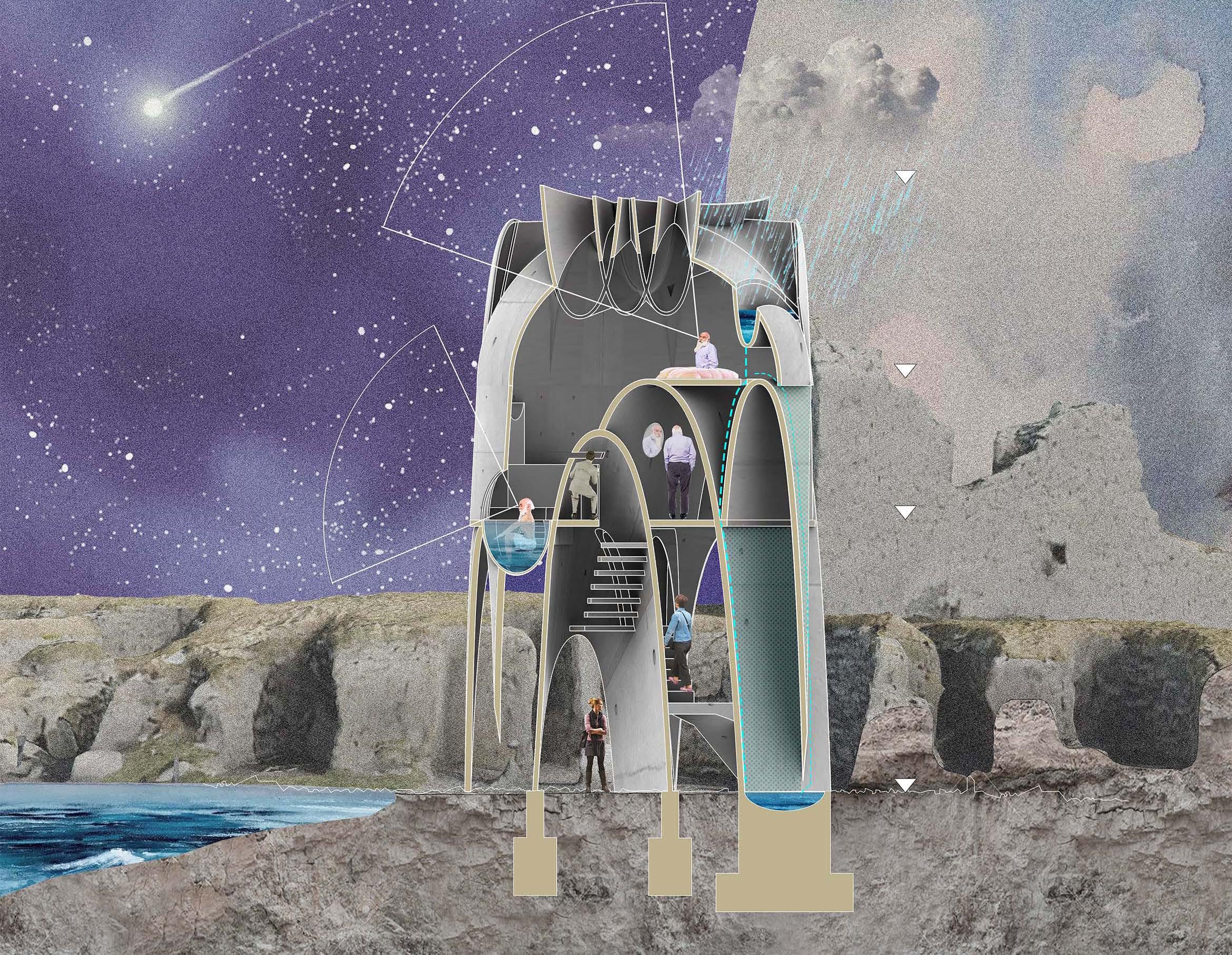
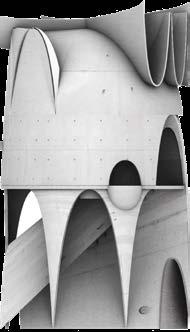
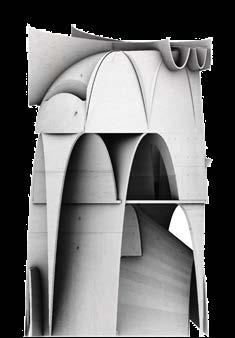
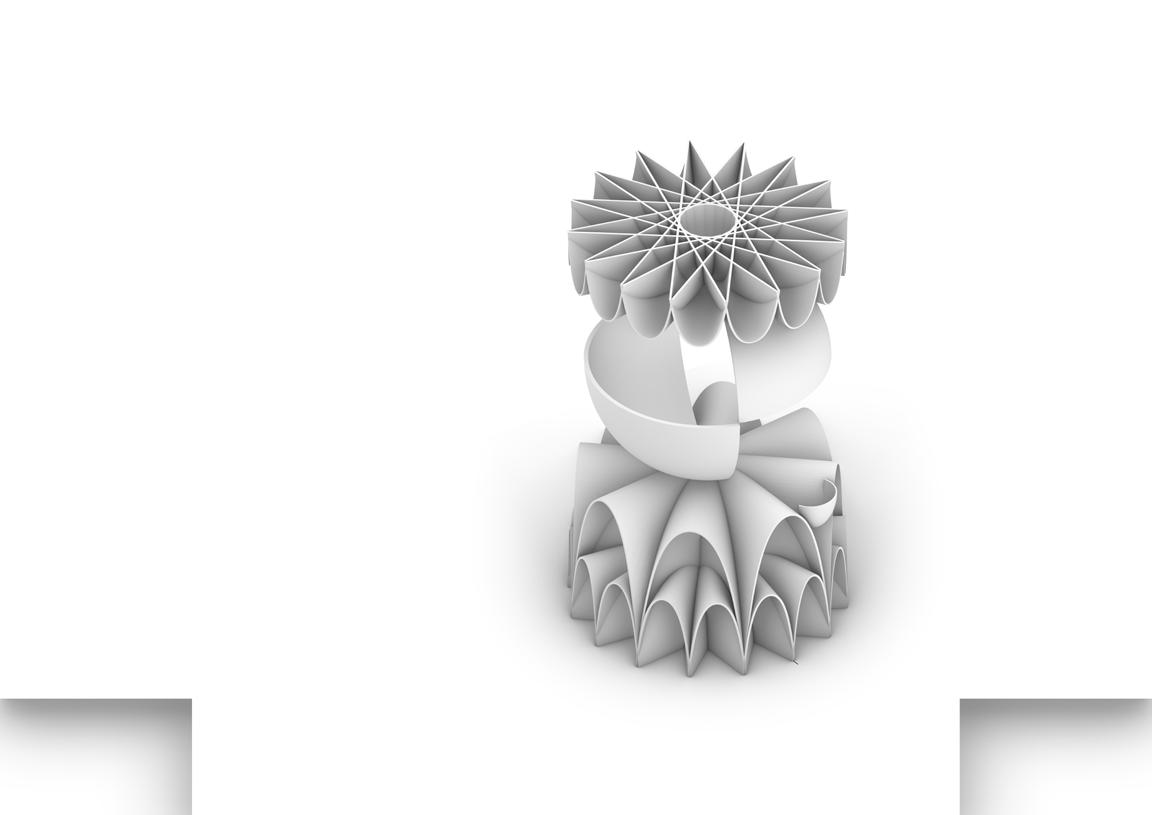
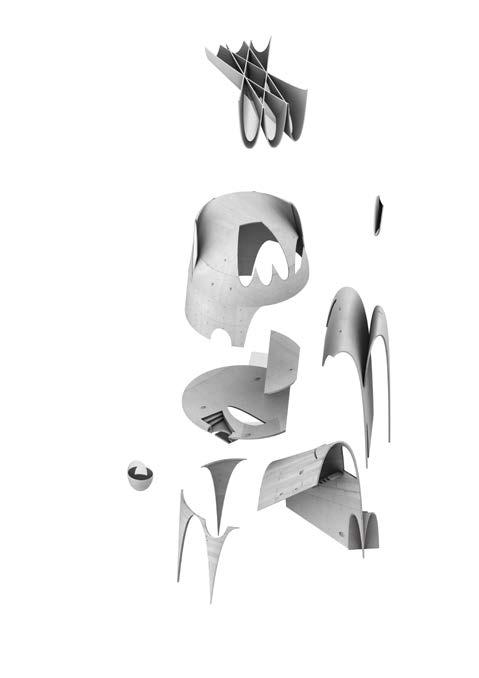
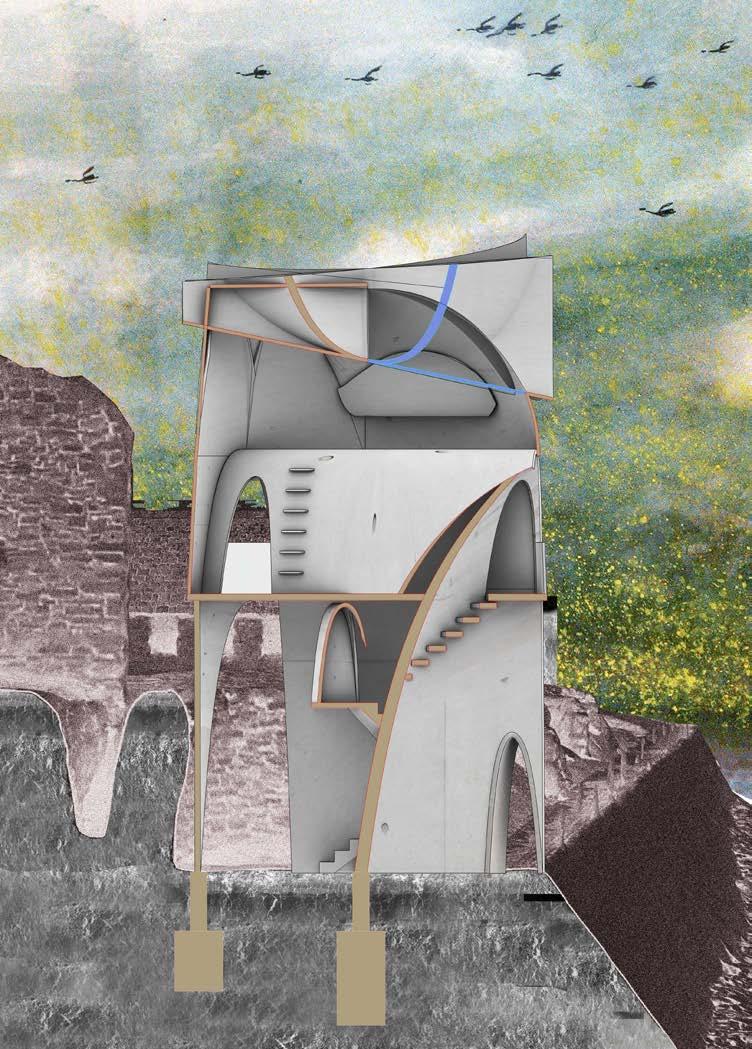
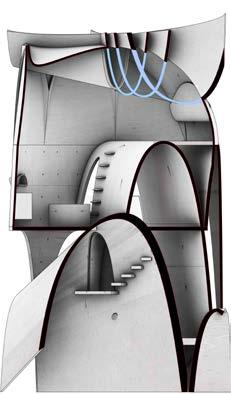
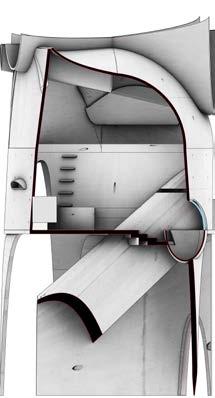
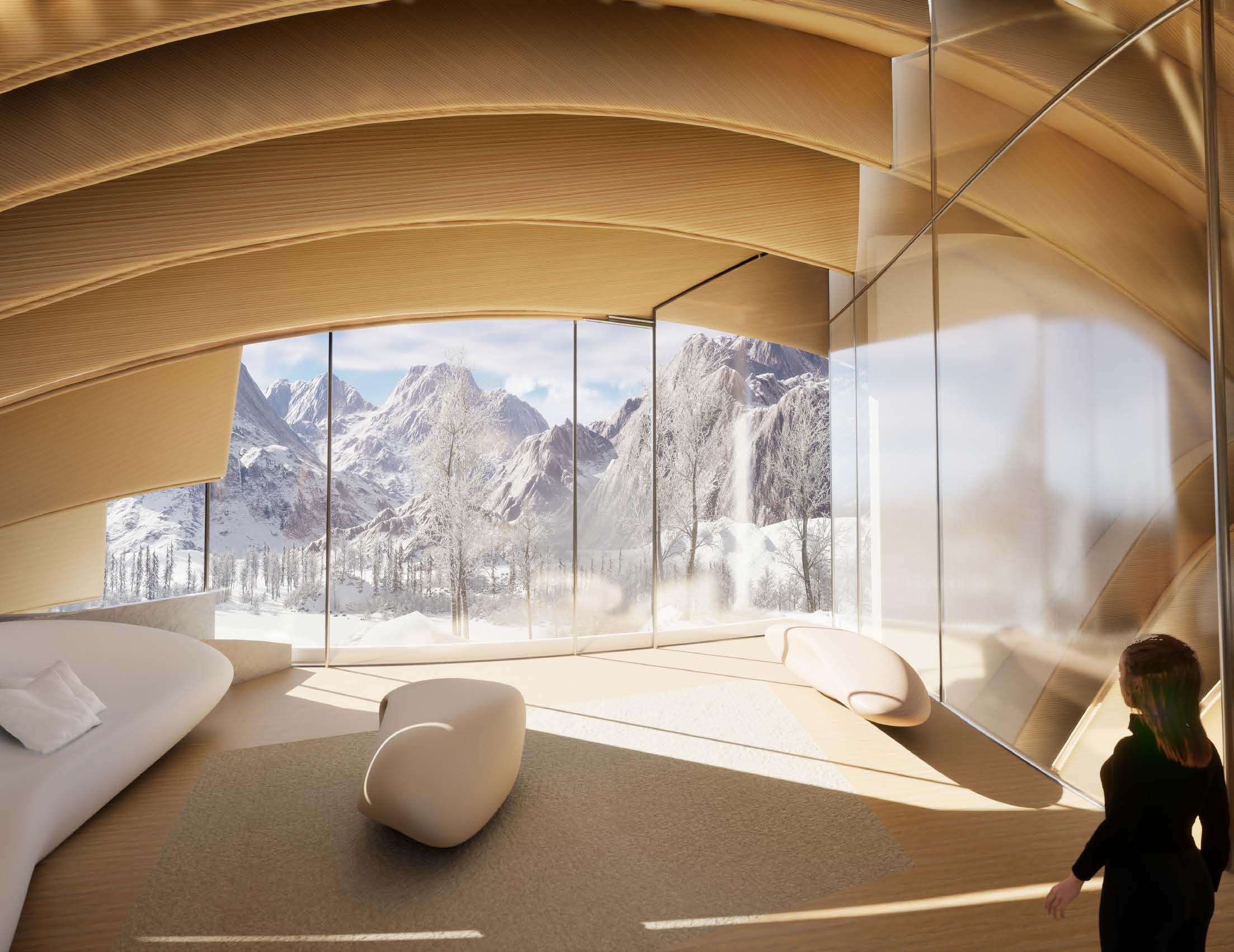
In the ruins on Shetland island, a caretaker house was required to be designed. The caretaker was derived from a science fiction Neurosorcer. I captured the beauty of nature and integrated them into this villa, to heal the loneliness and melancholy of the client. An autonomous villa was comprised of a series of well-organized arch spaces, which was generated by a series of geometric evolution, in order to explore form consistency, space complexity, and material brutalism of architecture.
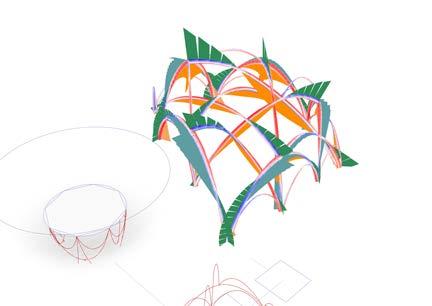
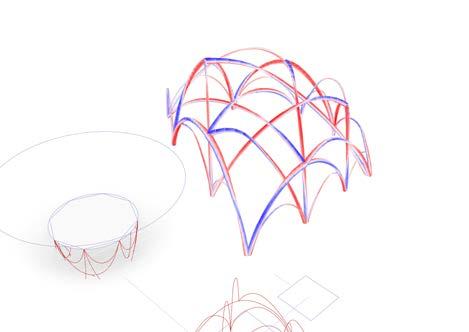
Basic skeleton of the building was the layer superposition control line of the inverted catenary, and by adjusting each layer's footing point position, each layer's height and each layer's direction (inverted or upright), the shape of the skeleton was determined. The form of the building is inspired by the design intention and methodology of the prosthetic.
The necessary control lines, such as symmetrical, adjacent, cross-level, continuous lines, were selected as the final skeleton of the form. Used different operations, such as loft, intersect, and Boolean operations to generate different arched surfaces. Therefore, this was a process from logic to form, and also a discussion of space.
Skeleton
Line
JULIUS HOUSE
From SKETCH to SECTION - A RHYTHMIC ARCH INTUITION'S LEARNING
Dear friends,
Welcome to my house! After you go upstairs, You can take a glimpse of my life from the stripe window. If you can see me, you are very welcome to knock the door. If I’m not here, which means I’m sleeping. Please come here next time.
Julius
Structure Design
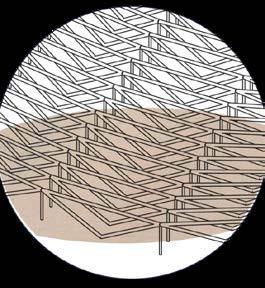
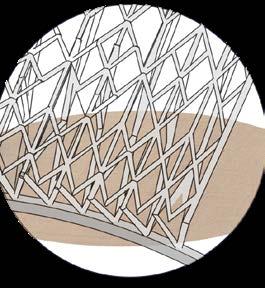
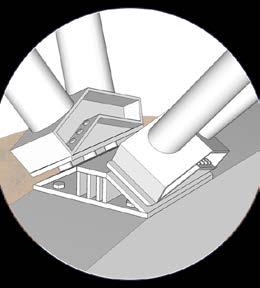
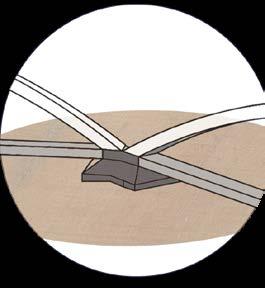
The design of the structure is a difficult negotiation process. In order to balance the purity of the building space, the umbrellashaped pillars were generated according to the logical lines. The concrete walls that fell on three sides were shear walls to maintain the beauty of the space. Therefore, each component of the building play its due role. A brutalist, sculpture-like architecture is born.
Truss Skeleton based on logic lines to suport the dome and roof
STRUCTURE 1.0
STRUCTURE 2.0
P LEATED I CE- H OUSE
ACADEMIC, Group Work, 2023 [1st Semester in Master]
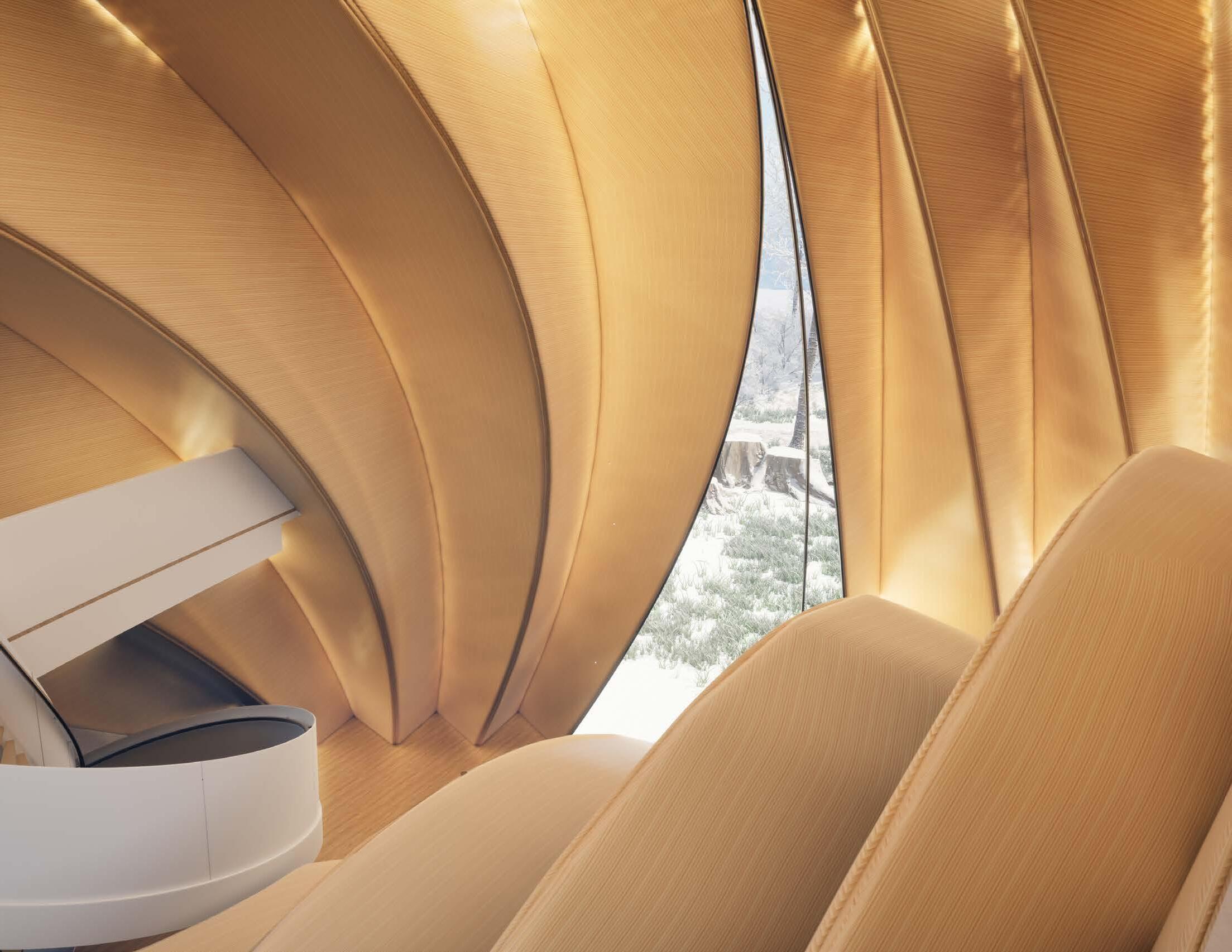
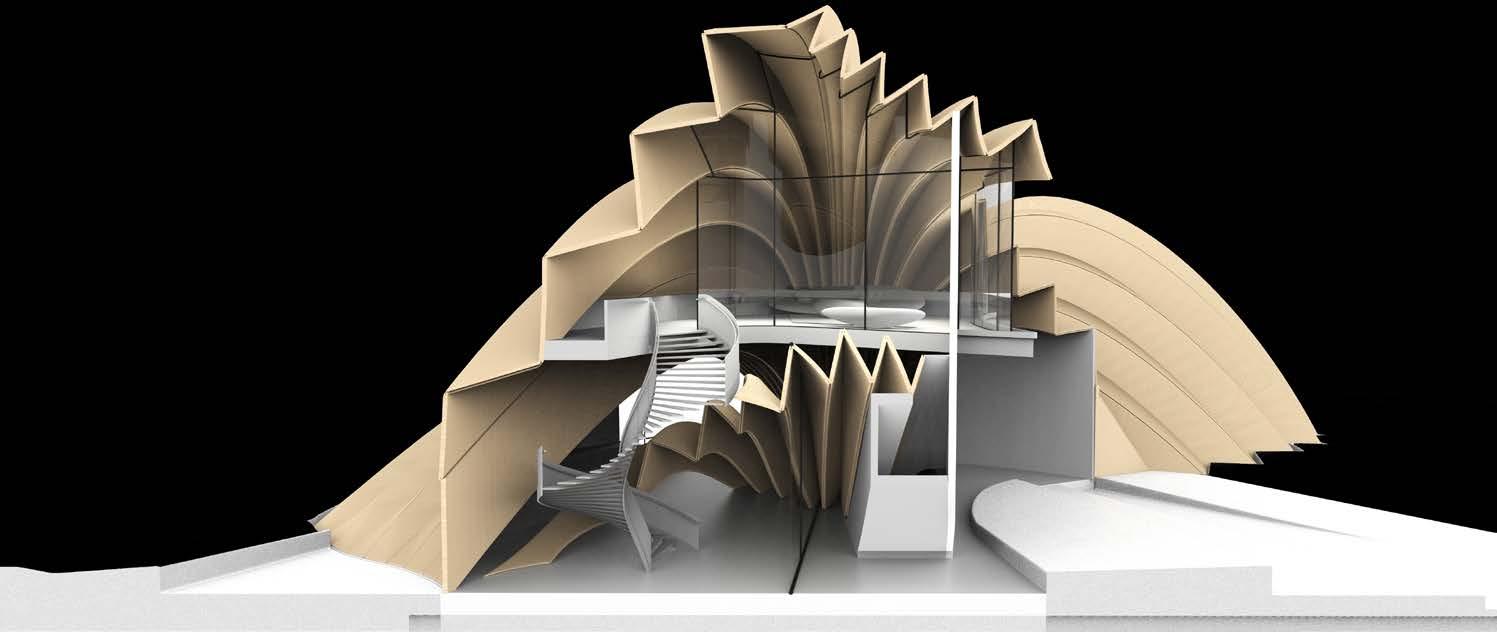
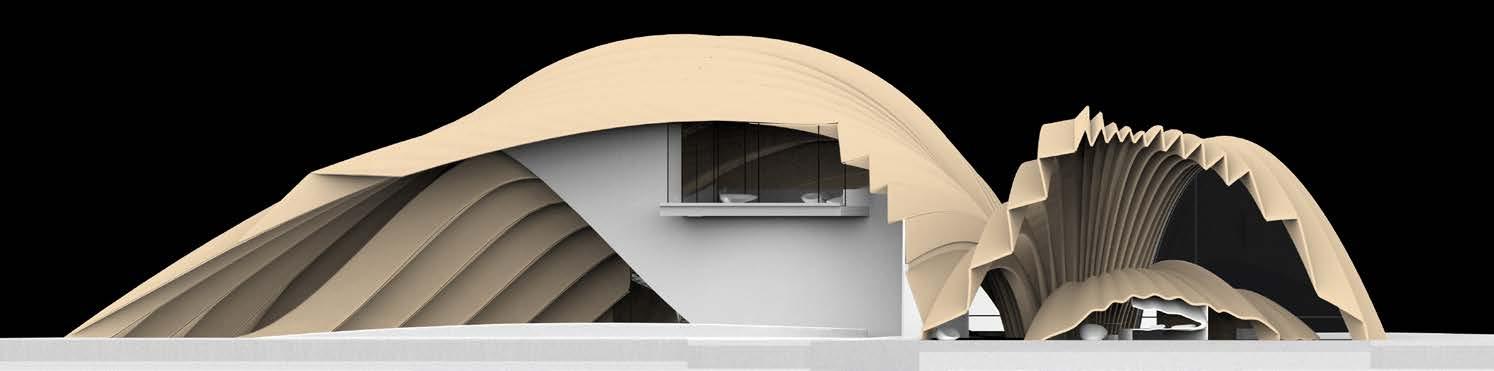
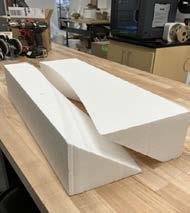
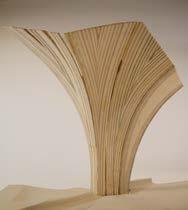
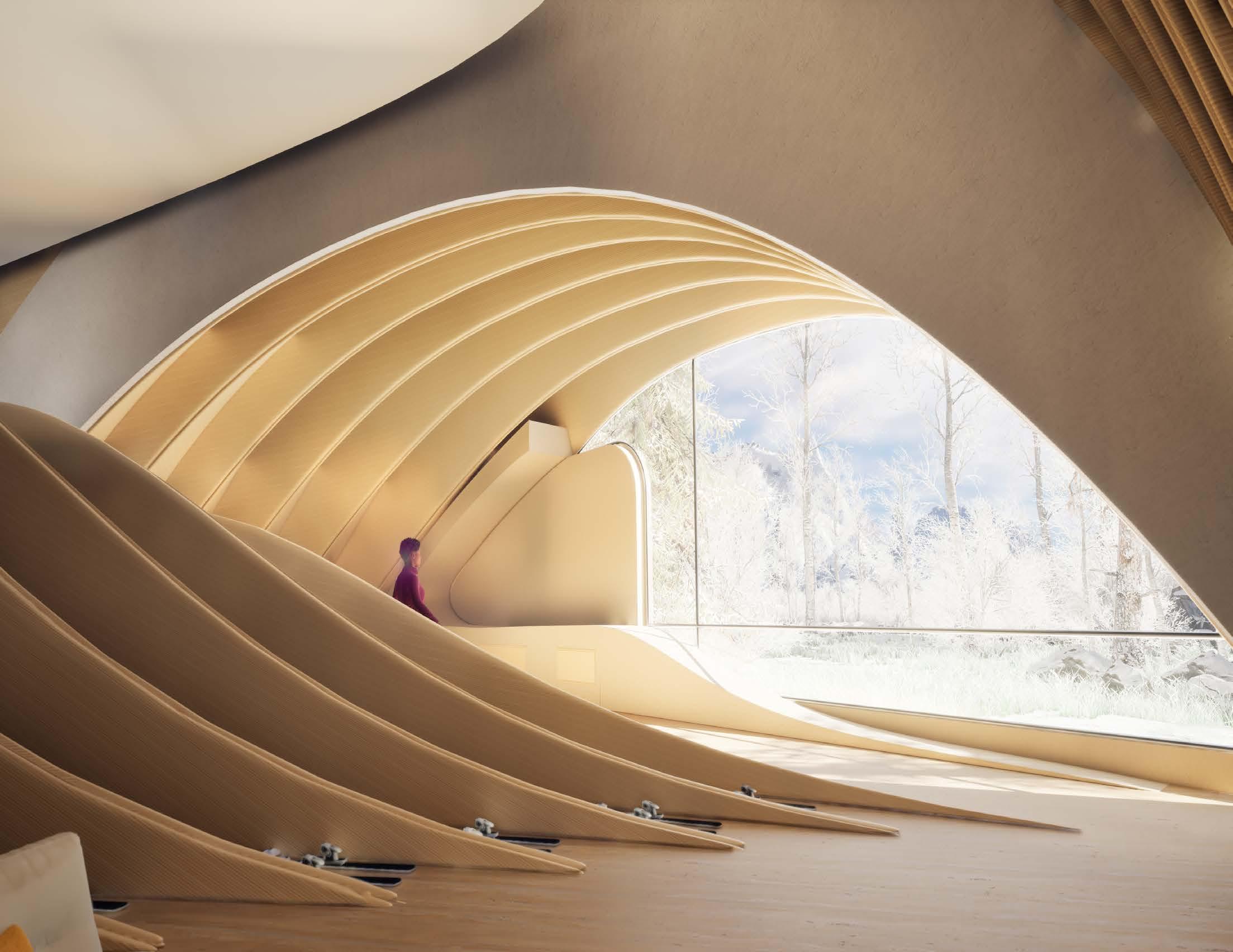
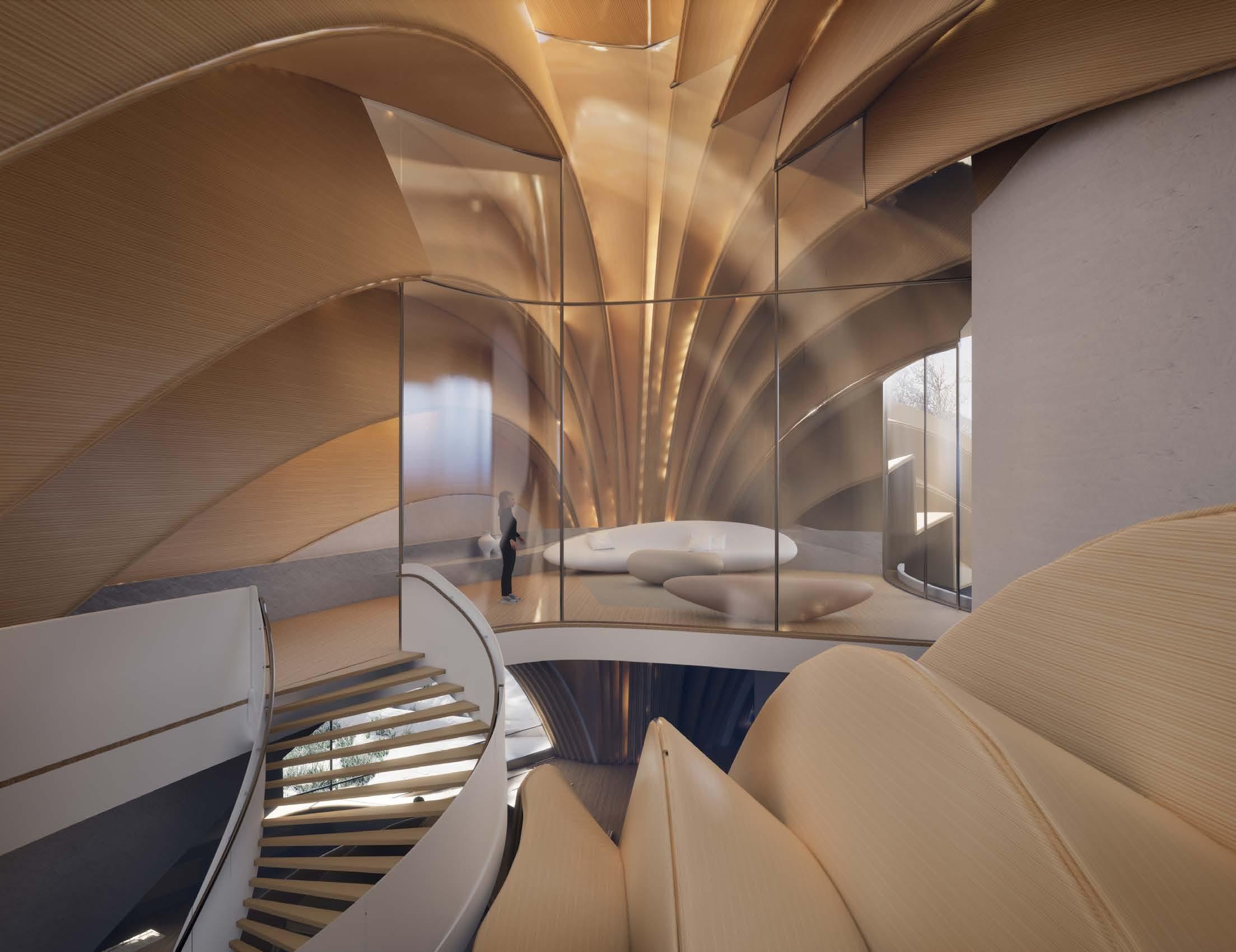
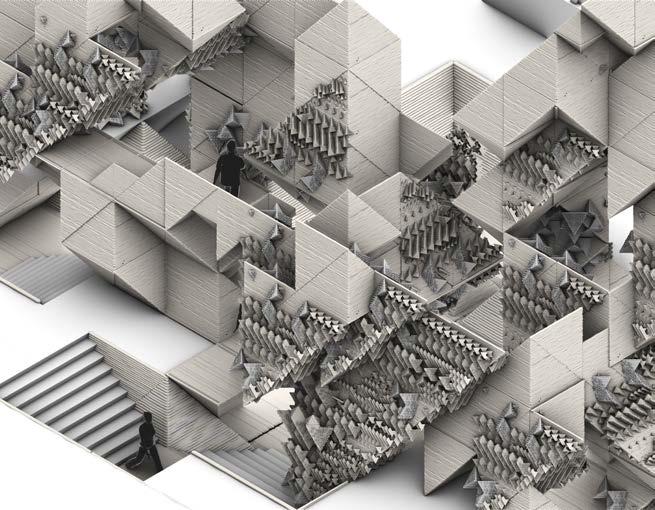
Our design journey focused on seamlessly integrating our fabrication insights into diverse spaces, creatively utilizing pleated structures to shape environments. Instead of confining pleats to roofing, we merged them with the ground, sometimes integrating them into furniture or circulation. This approach generated unique spatial experiences rooted in our fabrication ethos, blending innovation with tradition. Pleat intensity defined privacy, while openness delineated public areas. The interaction between elements like stairs and pleats bridged conventional architecture with our innovative approach. In parallel, Patrick's project harnessed robotic fabrication and machine learning to autonomously identify materials, revolutionizing construction in challenging environments, pushing architectural boundaries.
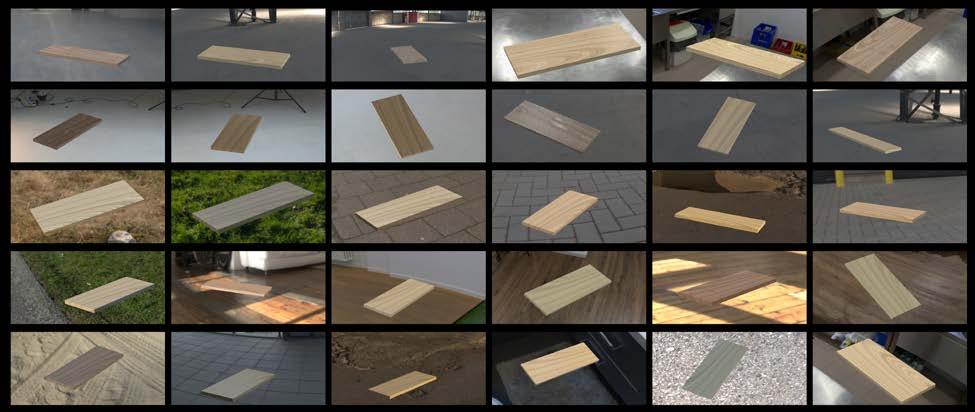
Render with different lightings
Render with different Environments
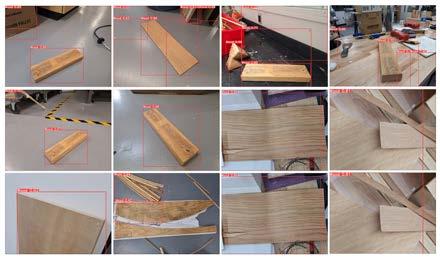
To enable this, generating a machine learning model capable of detecting wood in various environment becomes necessary. The intial step consists of training the model model by inputting a large library of images in various environments and manually indicating the wood in each of the images. However, manually drawing a rectangle around thousands of images can be a very time consuming process. The objective is to streamline this process by leveraging a rendering engine that can generate not only thousands of frames with diverse views, lighting, and backgrounds but also provide the material ID for each image. This approach optimizes the training process, eliminating the need for manual highlighting of wood in every single image. {A-2}
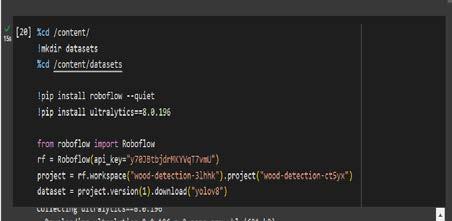
YoloV8 & Roboflow
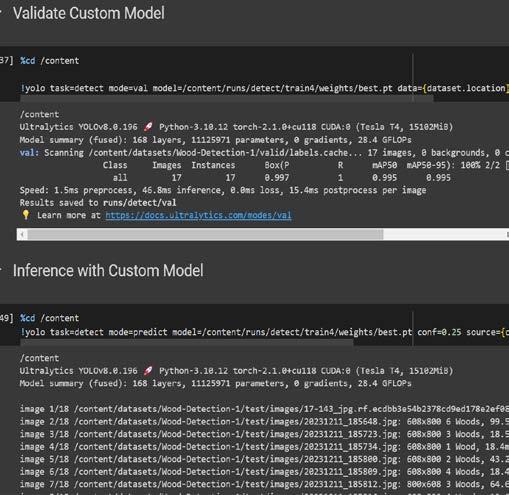
YoloV8 interferance with Custom Model - Custom Training
KIT-OF-PART
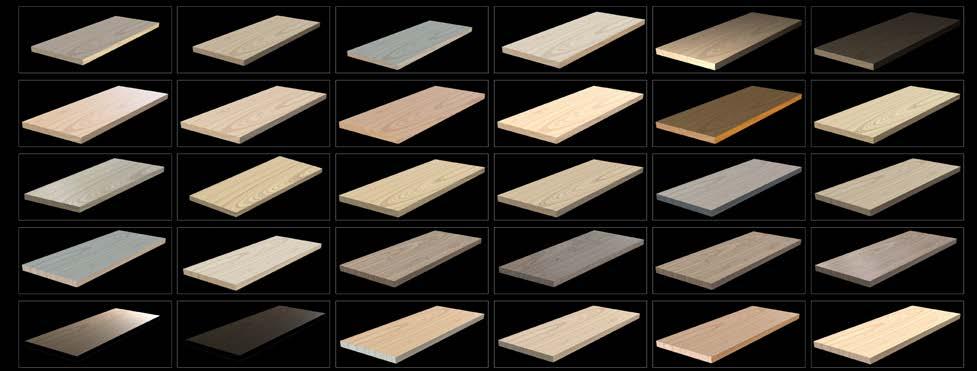
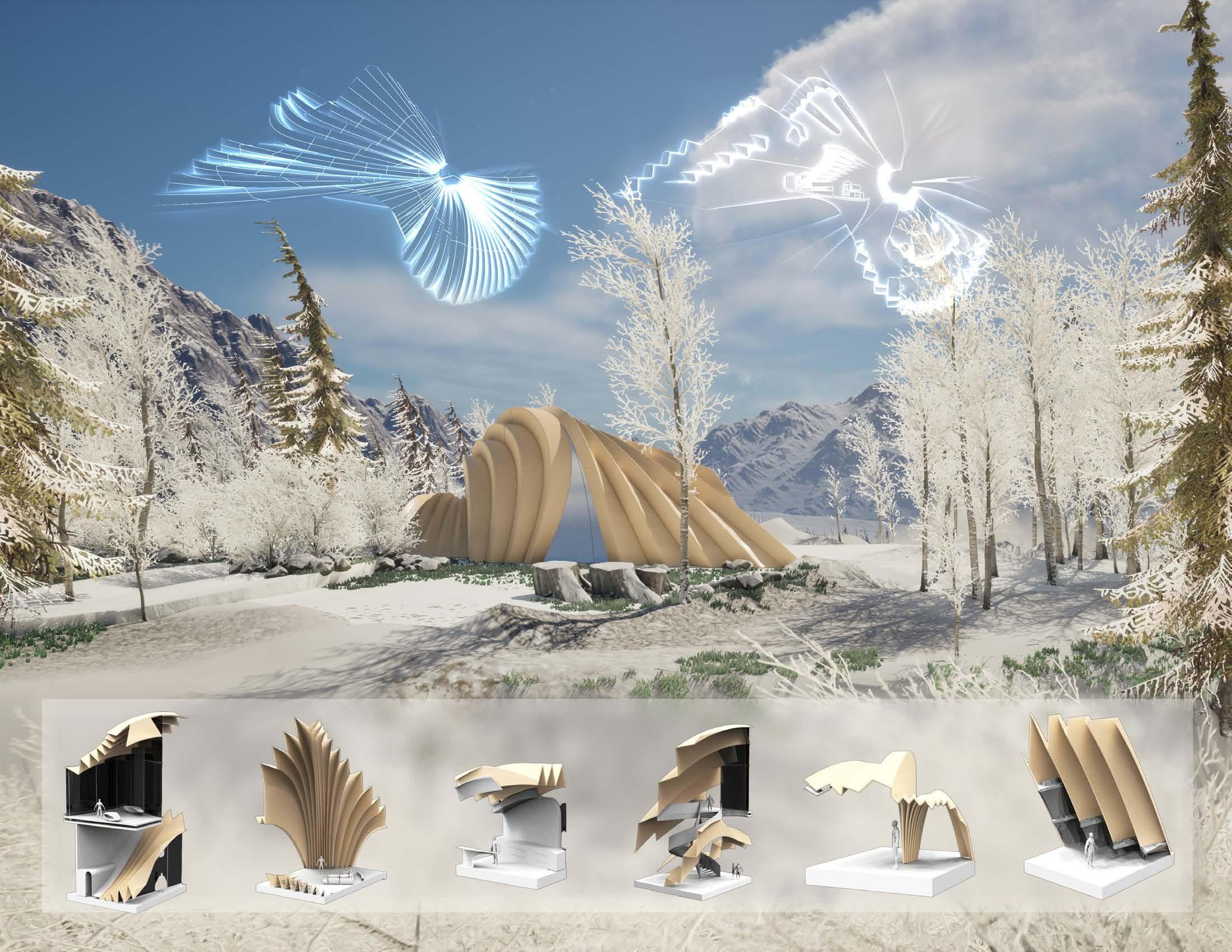
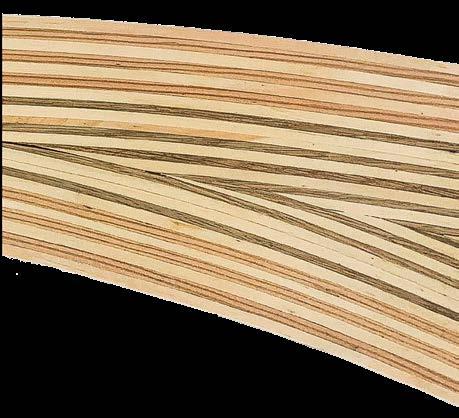
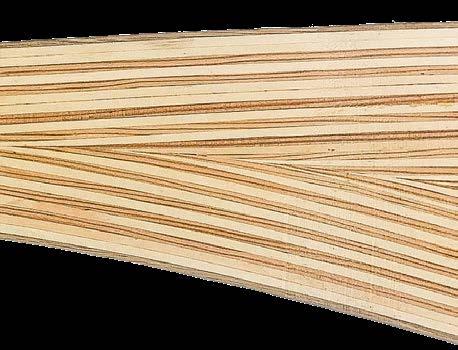
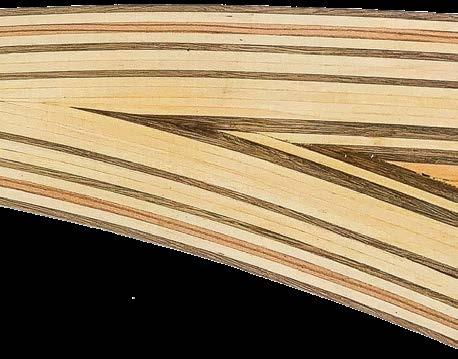
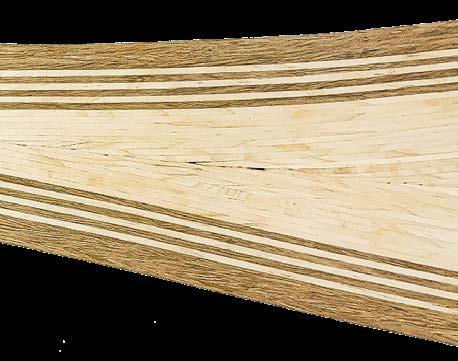
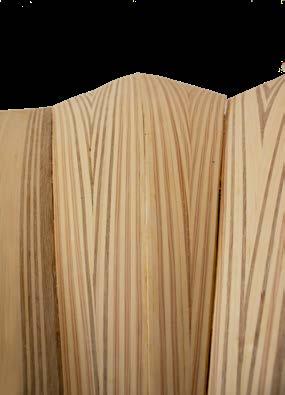
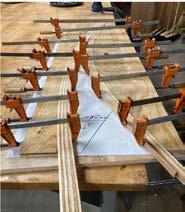
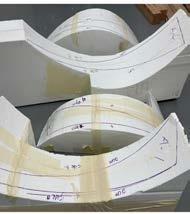
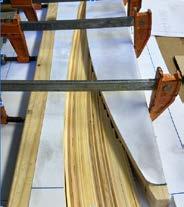
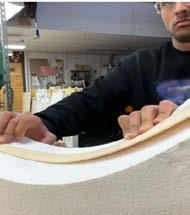
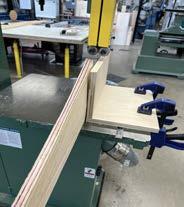
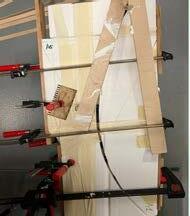
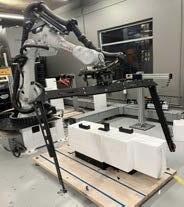
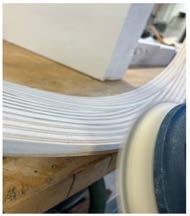
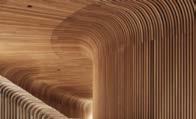
The project's facade employs an innovative laminated bending wood technique. Through experimentation, a combination of softwoods (pine, Douglas fir) and hardwood (oak) was achieved, resulting in a structure that is flexible in the middle and sturdy on both sides. The first bend is realized by placing the woods in a zigzag pattern inside the first wooden mold. After sanding, a second bending is achieved using a robotically controlled hot wire to cut
molds. The final step involves assembling the pieces together.
Living Room
CHINESE STAGE
ACADEMIC, Group Work, 2017 [undergraduate 4th year]
Partner: Xinyu Zhu, Liang Zhao
Supervisor: Mingxing Song /729427970@qq.com
Changsha | Theatre Complex Design
Role Conceptual Design (70%), Analysis(90%), Physical Modeling (30%), Visualization (70%)
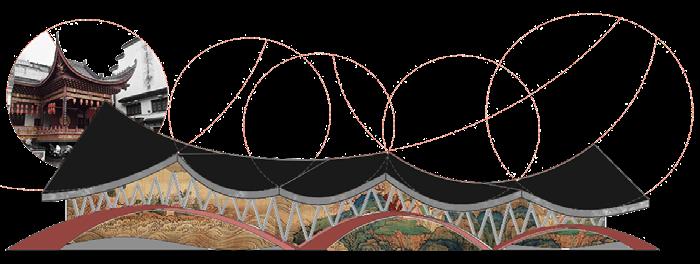
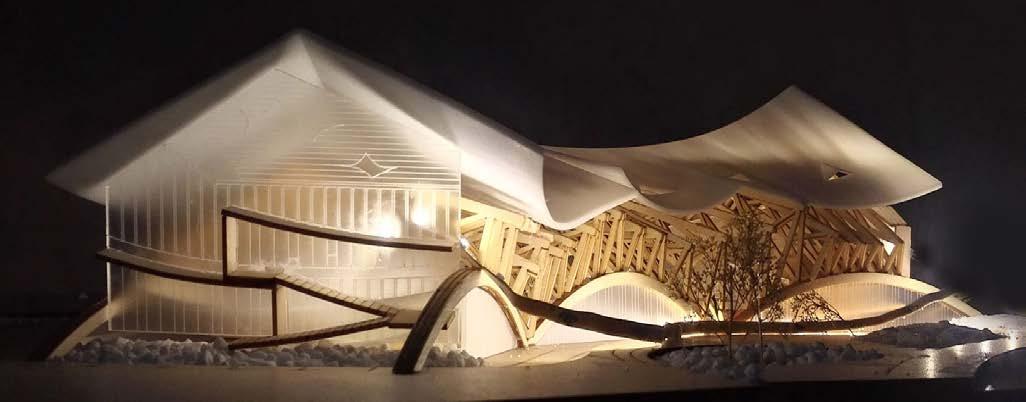
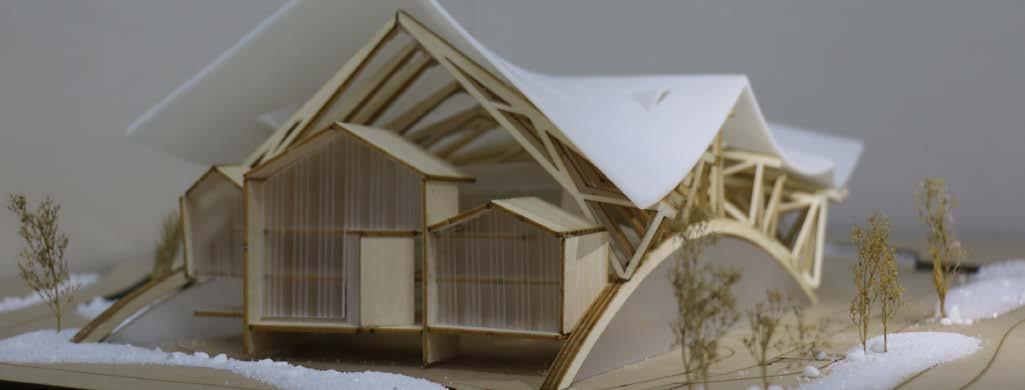
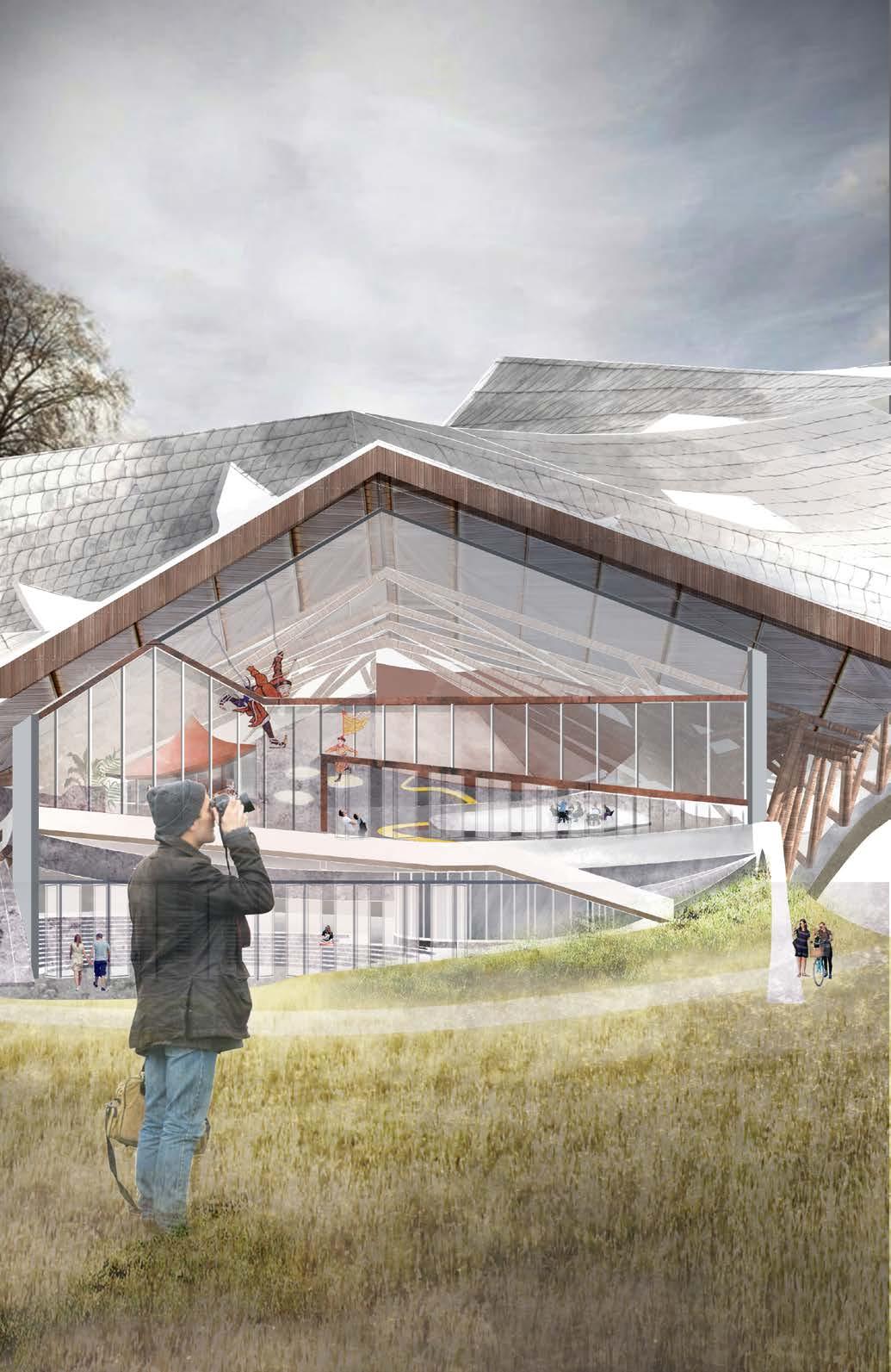
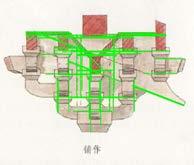
This project is a long-span building with Chinese ancient architecture's elements, including upswept eave and viewing mode. In this case, the project not only maintains the local dialogue, but also recalls surrounding mountain and lake in a readable way. How to use structure technique to make the form realizable is another consideration.
Lanscape
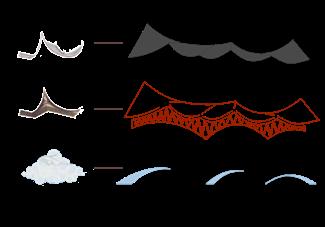
The ups and downs roof form is based on the ancient stages wave in China. The picturesque landscape then will be limited to the three levels of the structure, which shapes a new mountain-river image.
GENIUS LOCI - CHINESE IMAGE
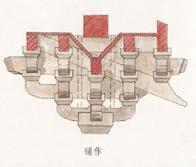
stage eave rigid frame cloud arch {
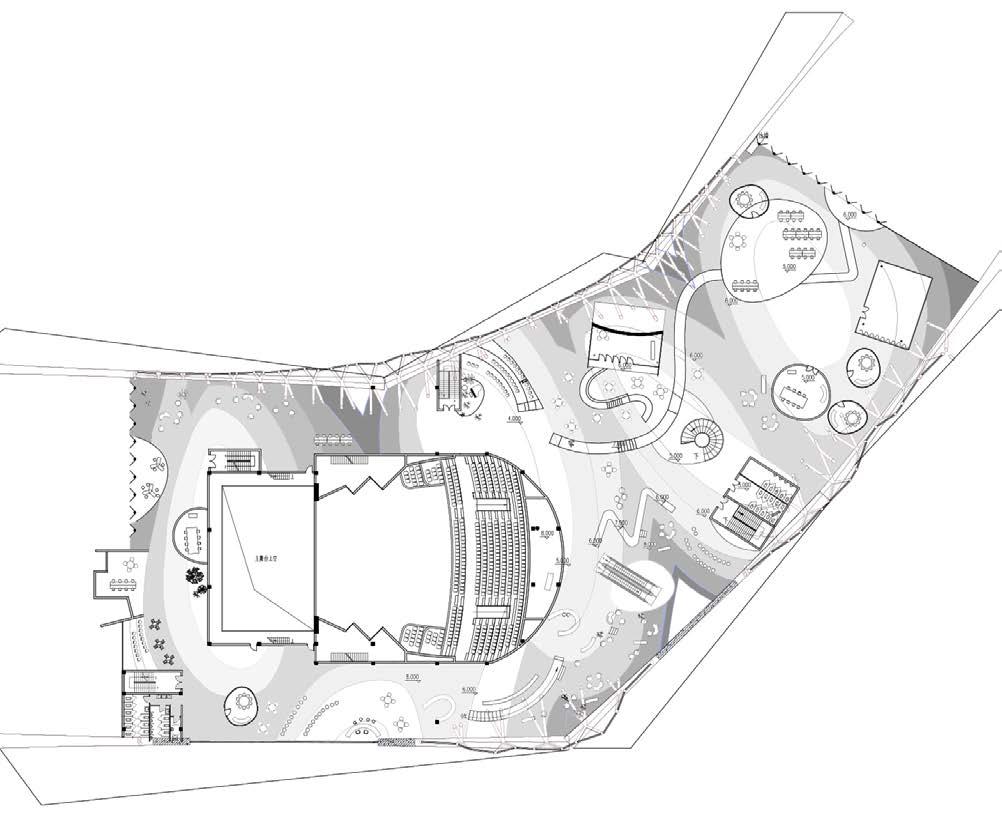
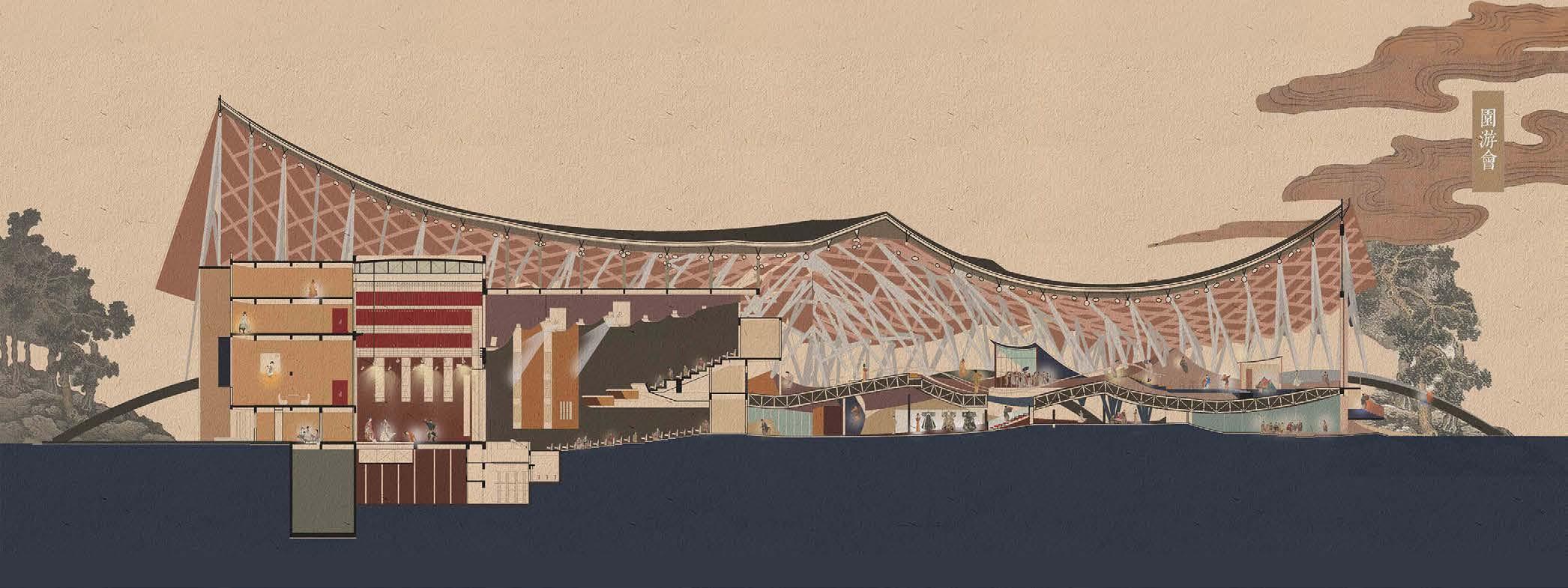
Duo pitched roof , rampway connected with grassland, and clival floorslab are demonstrated on the gable section. Interial space and diverse activities can also be shown in another visual angle.
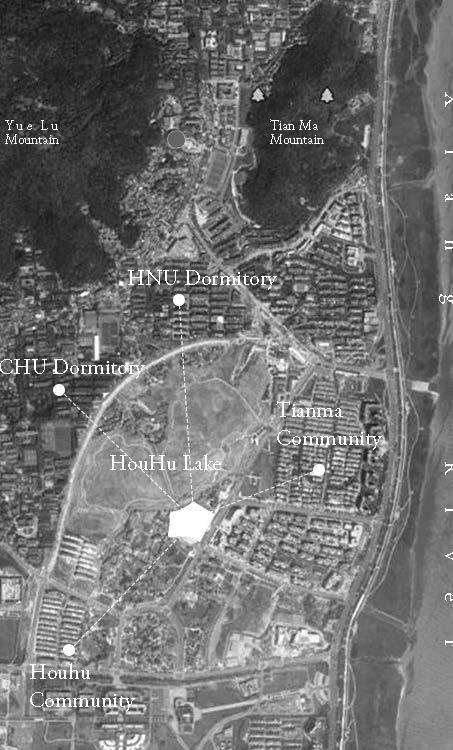
The site is adjacent to Houhu Lake and could people get a view of mountain. Roads and the environment surrounding it provide three different perspectives [A-A, B-1/B-2, C-C] of the architecture. Landscape penetration between the roof and structure, gable intersection towards the
A-A Landscape Penetration
HouHu Lake
Rendering is done by Xinyu Zhu.
This rendering is done by Xinyu Zhu.
The main spaces is covered with rigid frame, which is supported by reinfored concrete arches and connect roof system by steel system(steel rafter and steel purline). The section of the structure is like a eave in antient building in China. A grey space under the eave can be generated.
COHESION SELF
ACADEMIC, Individual Work 2018, [Undergraduated Graduation Design, 5th year]
Urban design is for the purpose of activating the historical block German Concession in Hankou. Vertical axis is named Cultural Axis,which tandem several ancient buildings in 19th century. Horizontal axis is the Entertainment Axis. Dock, cellar store, hotel, and subway transfer station(a series of facilities) provide the possibility of prosperity of the block.
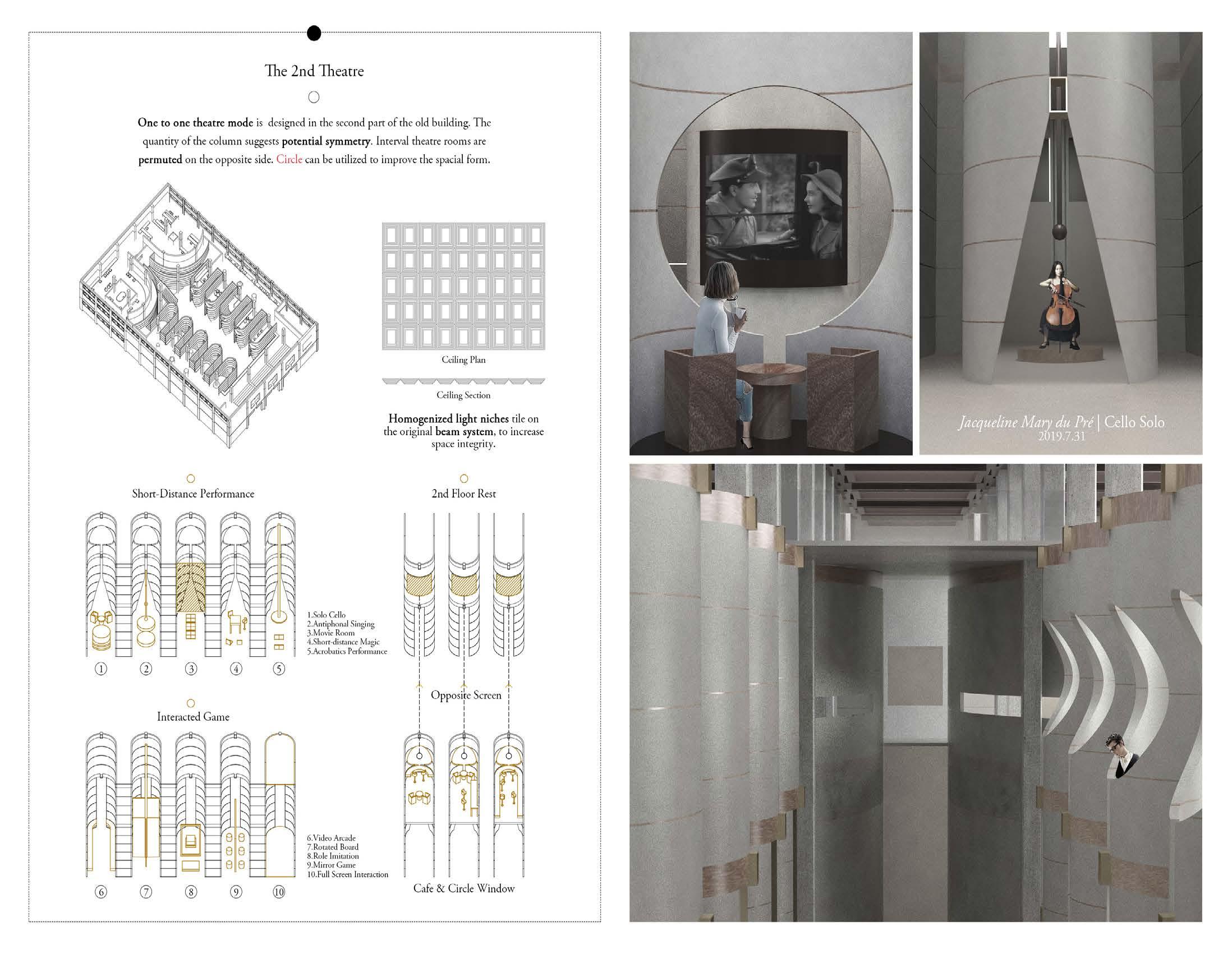
The original warehouse was established gradually to satisfy different store needs. So it could be divided into 3 different parts. Explored the cohesion quality of the in-heritage of each part and combined with 3 types of viewing performance. Geometry elements were born in the grid analysis. A new order of wall was added into the original homogenized column-system.
The 1st Theatre
The 3rd Theatre
-5}
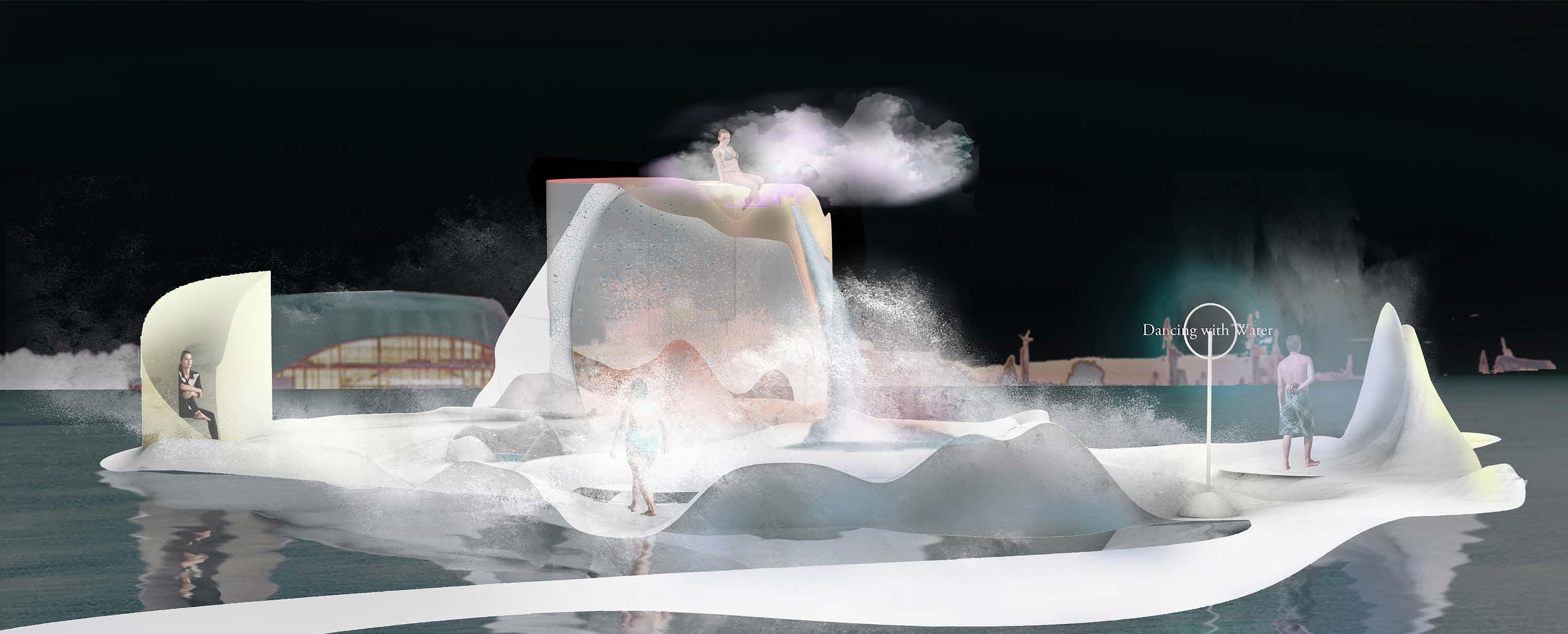
D ANCING with W ATER
ACADEMIC, Individual Work, 2020 [2nd Semester in Master]
Supervisor: Joel Letkemann (Email:jl@aarch.dk Tel:+45 8936 0325)
Site: Hamburg Harbor | Water-cycle sensory spa
"We live not on the summit of a solid earth, but rather at the bottom of an ocean of air.” - Sean Lally
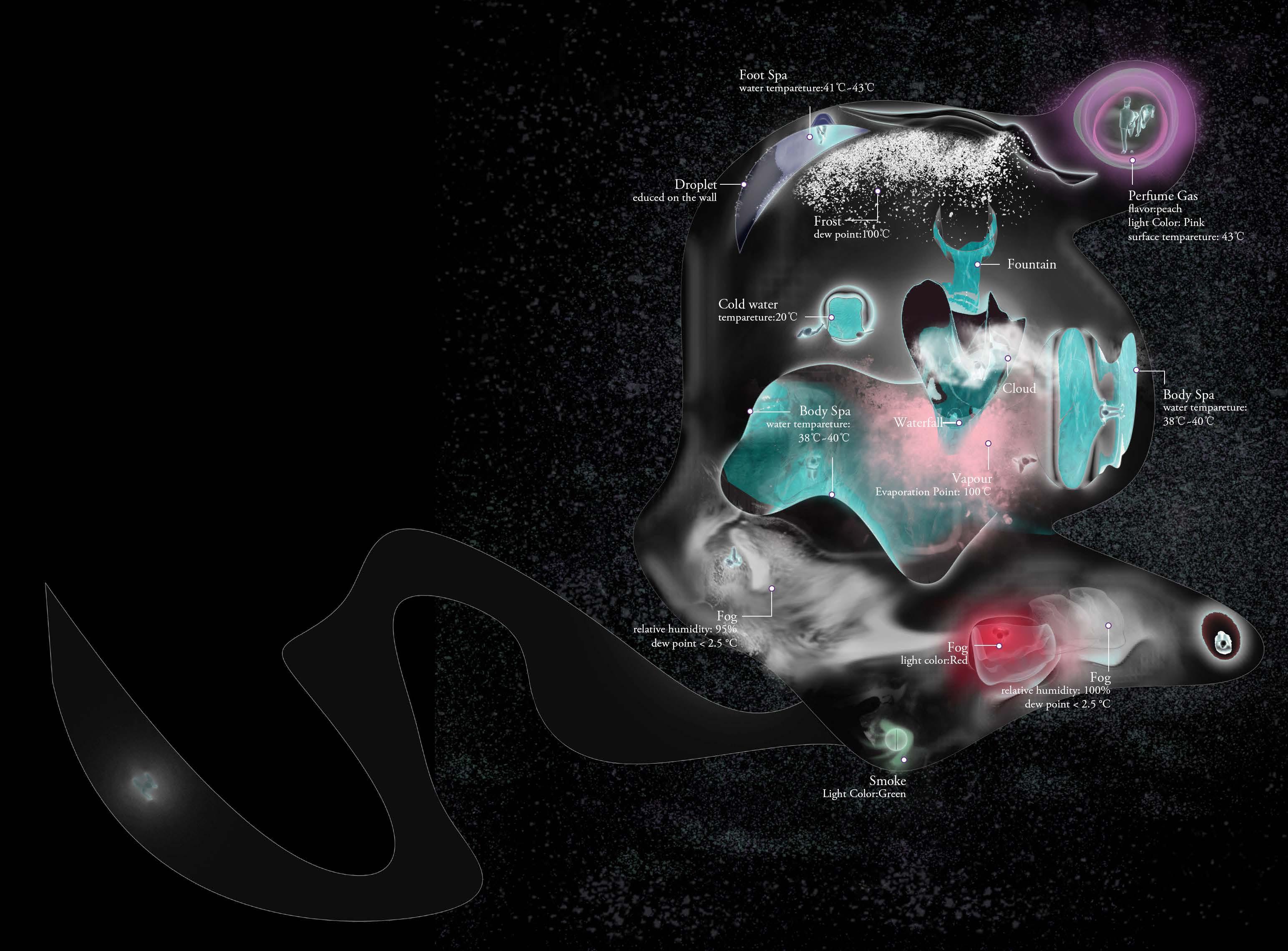
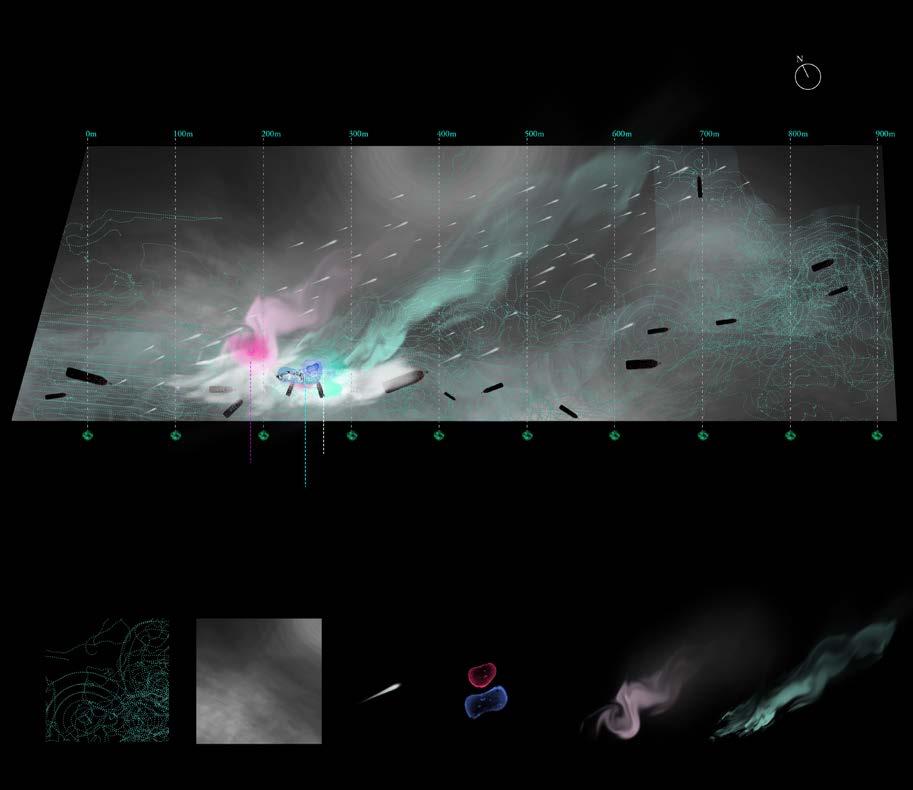
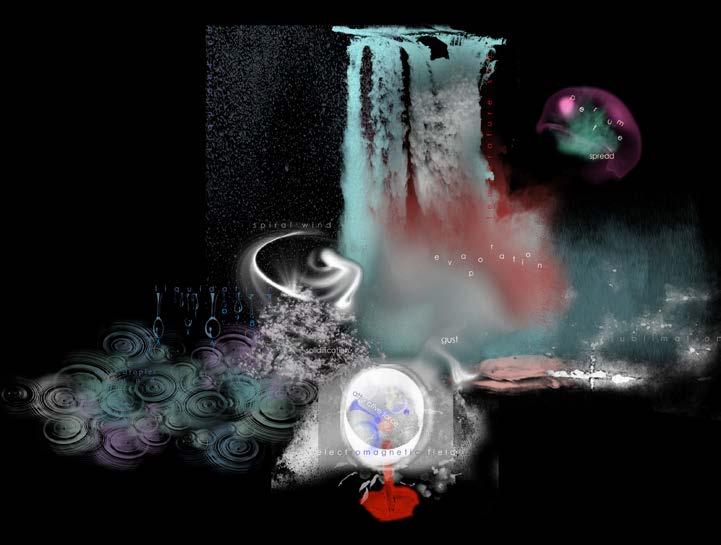
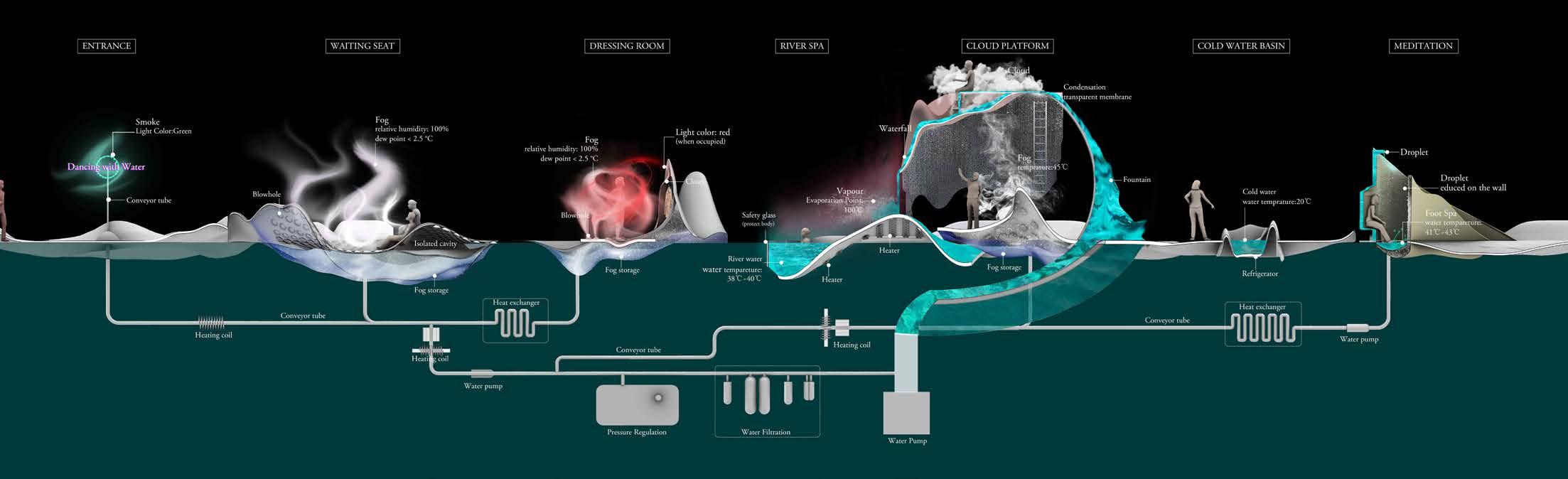
Water of Elbe River is a very important energy in the site. I would like to use Elbe River water as the main energy source to create a meteorological architecture. A series of physical transformation processes between different forms of water are responding to different space. Hence, this project describes how this meteorological architecture play with the water and render what various kinds of picturesque scenes. This fairyland is also a surprise for the seaman who spend a few days on tough sea voyage, and the seaman gains a short-lived but fantastic experience with water in an unconventional way. So, this water-architecture elaborates the correlation between body, water substance and nature element's characteristics. Architecture is not only shaped by geometrical forming and division, architecture is but also an integration of natural element from the nature.
METEOROLOGIC MACHINE multiple water cycle
THE INTENTION OF MACHINE
1.to find the potential merge possibility space which is made by natural element;
2.to record the memory of free and uncontrollable substances;
3.to explore a new feeling on the smell, skin, view which are corresponding to olfaction, tactility, visual sense.
I am dedicated to exploring the aesthetics of painting and brushwork. The brushwork's aesthetics of matierial from nature is explored in this step.
Wave of Elbe Atmosphere Wind Core Odor Diffusion Vapor Diffusion
P OLYHEDRON C LAY R OBOTICS P RINTING
ACADEMIC, Group Work, 2023 [1nd Semester in MSD-RAS]
Supervisor: Saunders, Andrew <asaun@design.upenn.edu>
Partner: Shenaia Kaylion Turner, Yang Meng, Riddharth Jain
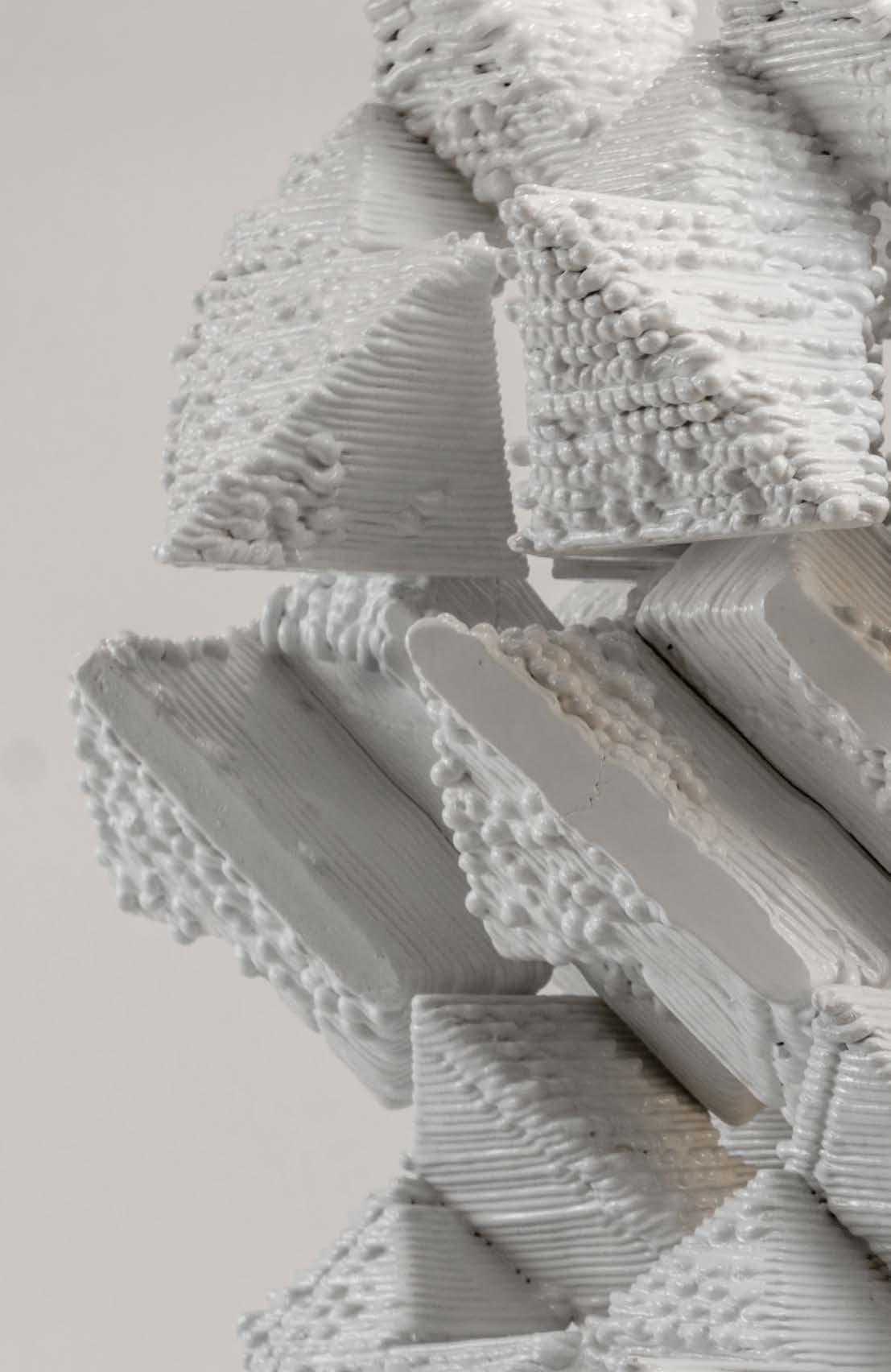
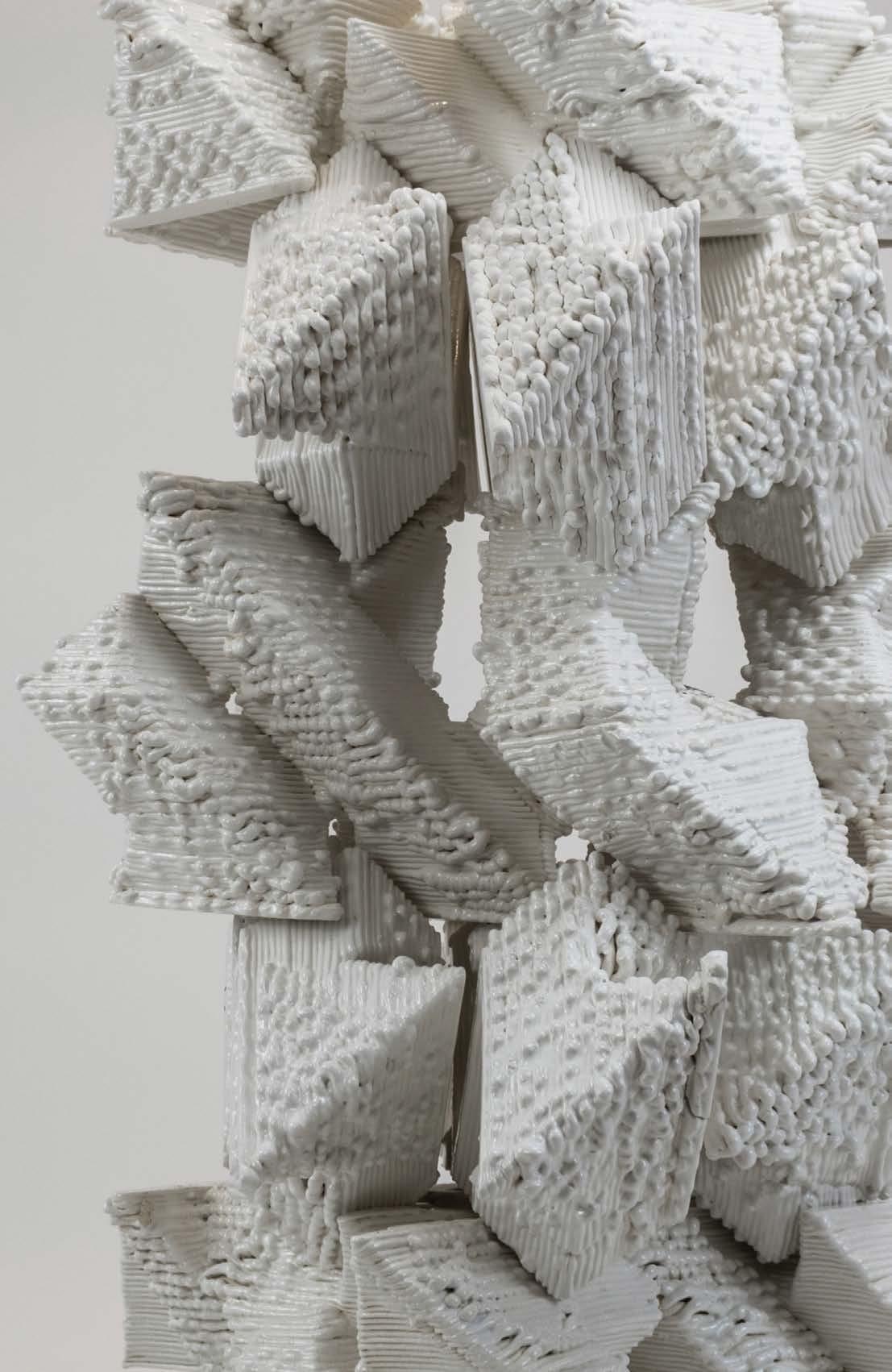
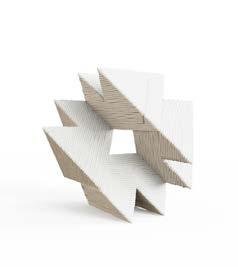
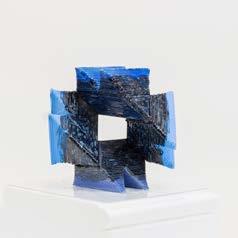
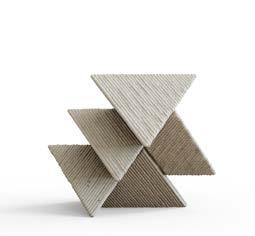
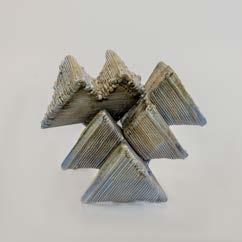
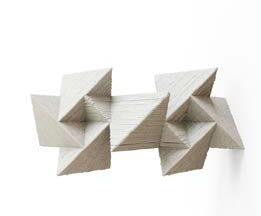
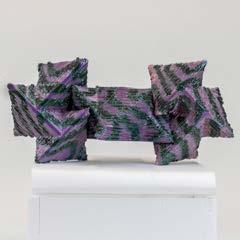
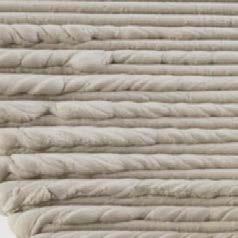
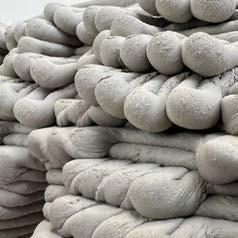
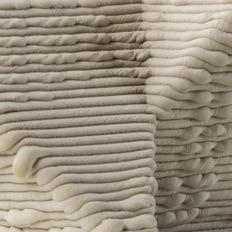
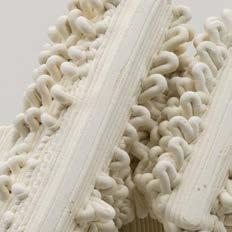
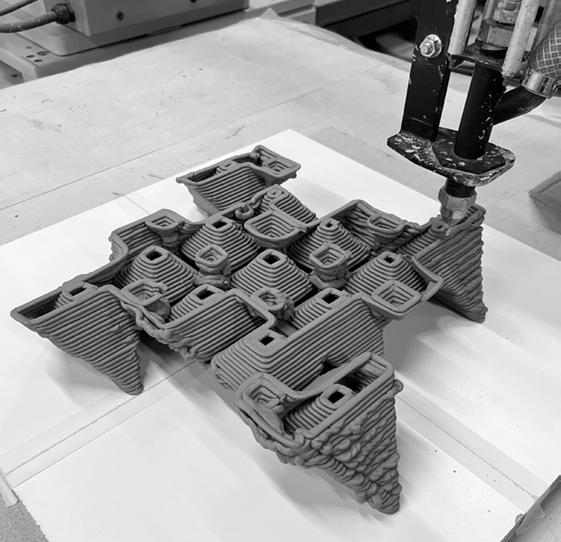
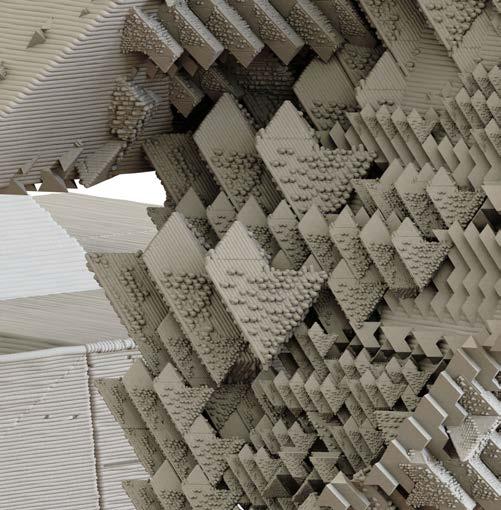
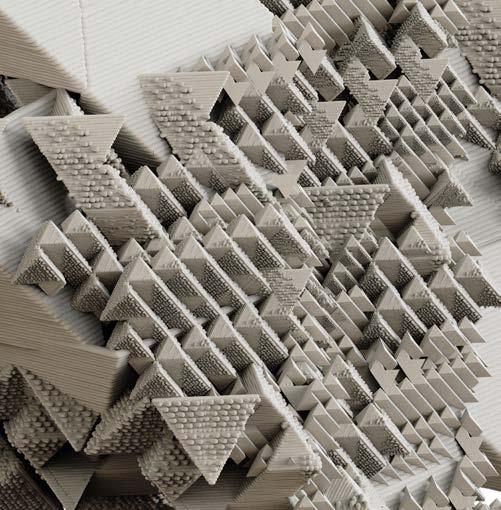
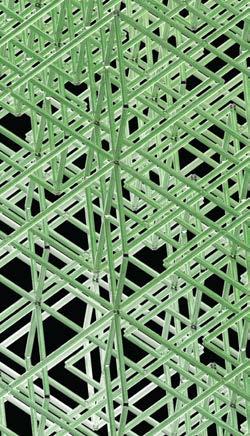
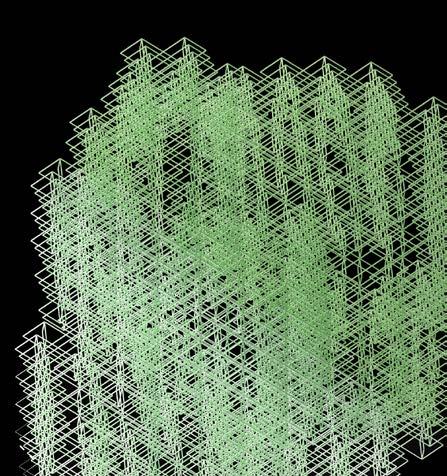
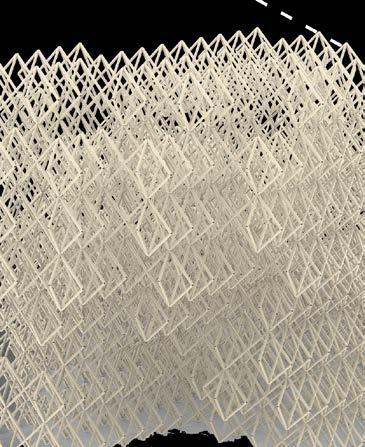
From studying Robinson Fredenthal’s “Black Forest” prototype, we gained a deeper understanding of polyhedra and geometric composition. The unique abstraction and iterative characteristics of geometric elements will form various results through different sequences and organizations. In the practice, 3D printing these polyhedrons with a robotic arm, I learned about the entire process, from filling clay printing to bisque firing, and how to adjust the input data to form different printing effects.
Today, incorporating robotics and autonomous systems nudged us into exploring new angles to the piece, except for just the geometry as an element. Being able to formulate new ideas to enhance or elaborate on the essence of the geometry is made easier by, for example, defamiliarization and using the relief pattern to highlight the spiral in our design.
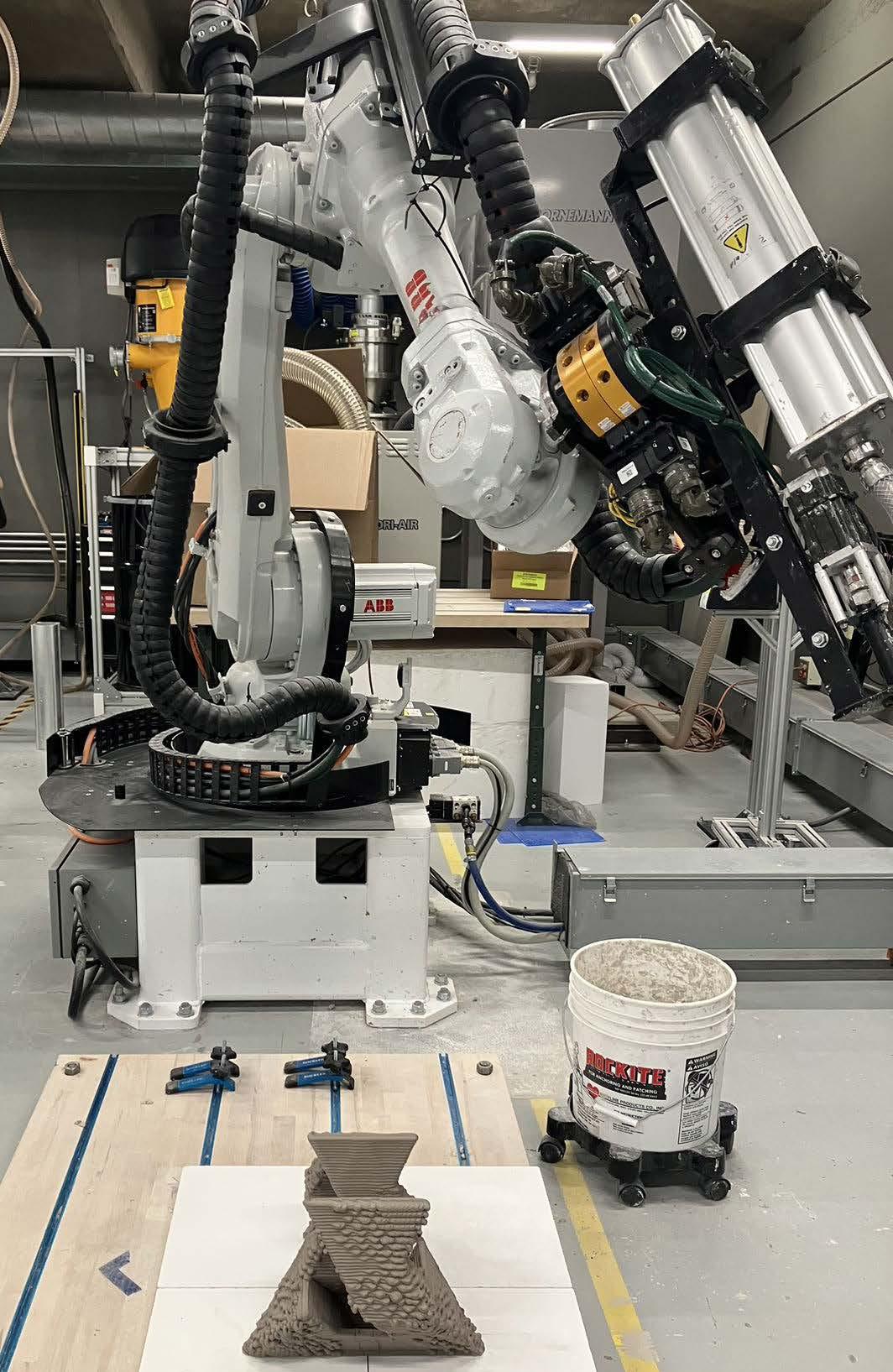
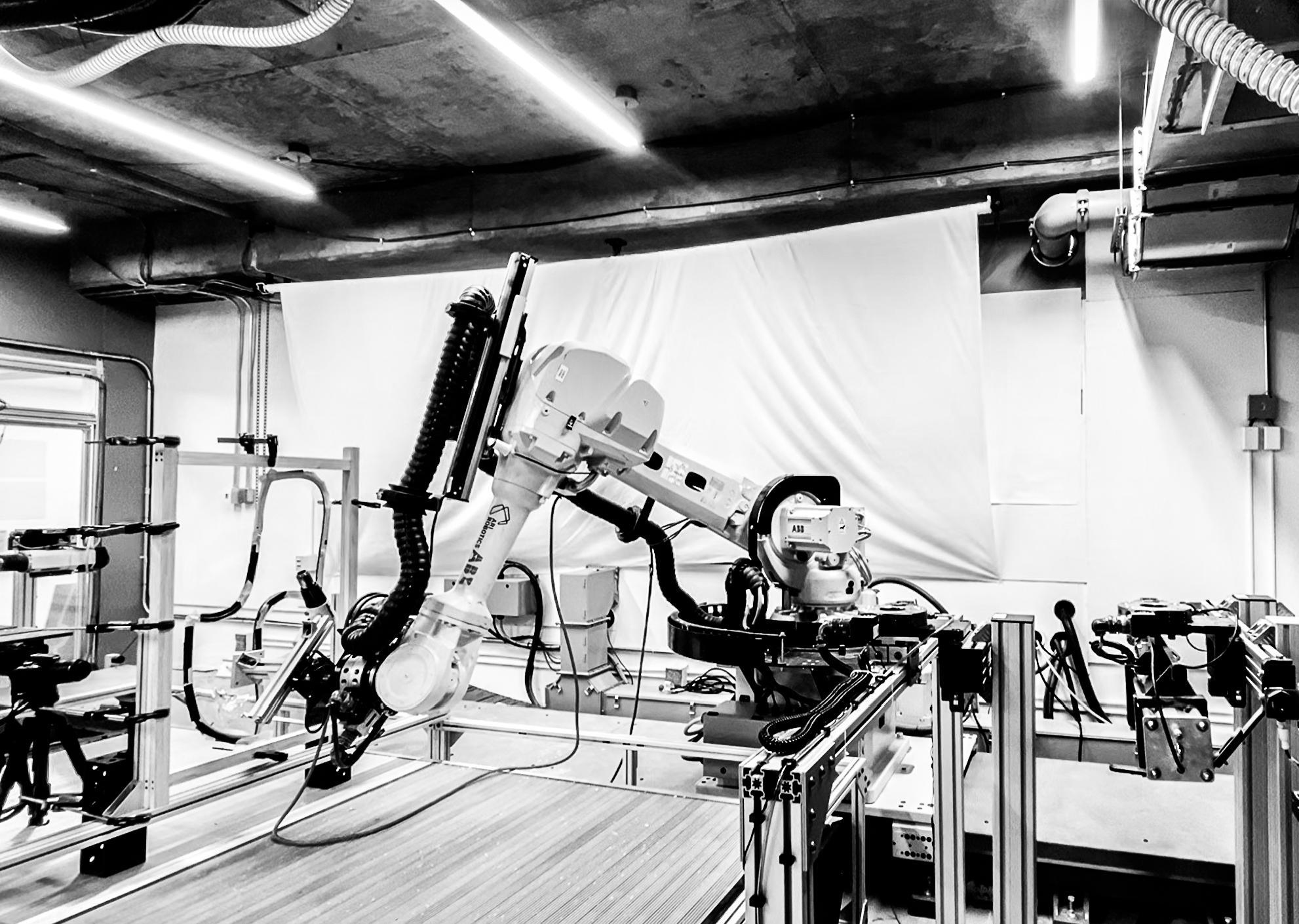
With the use of ABB IRB4600-60 robots with clay end effectors to produce clay bricks, we were able to test, create, and recreate multiple directions for the project.
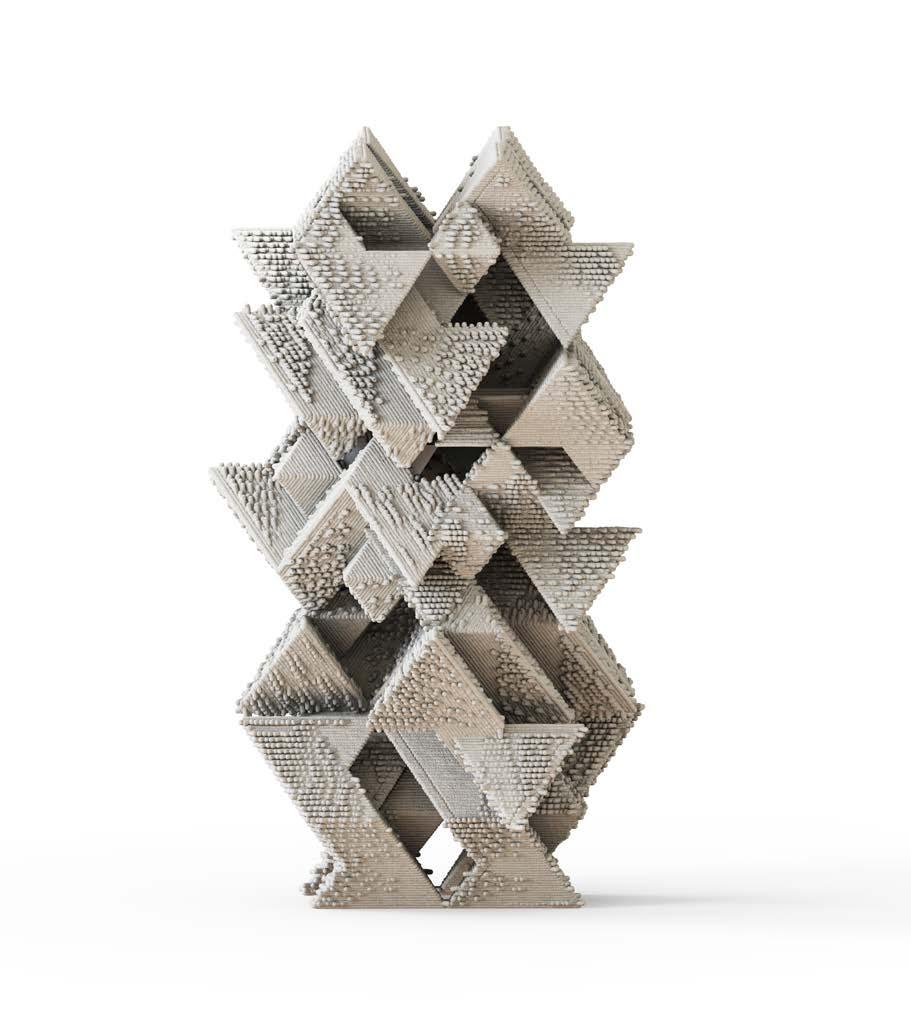
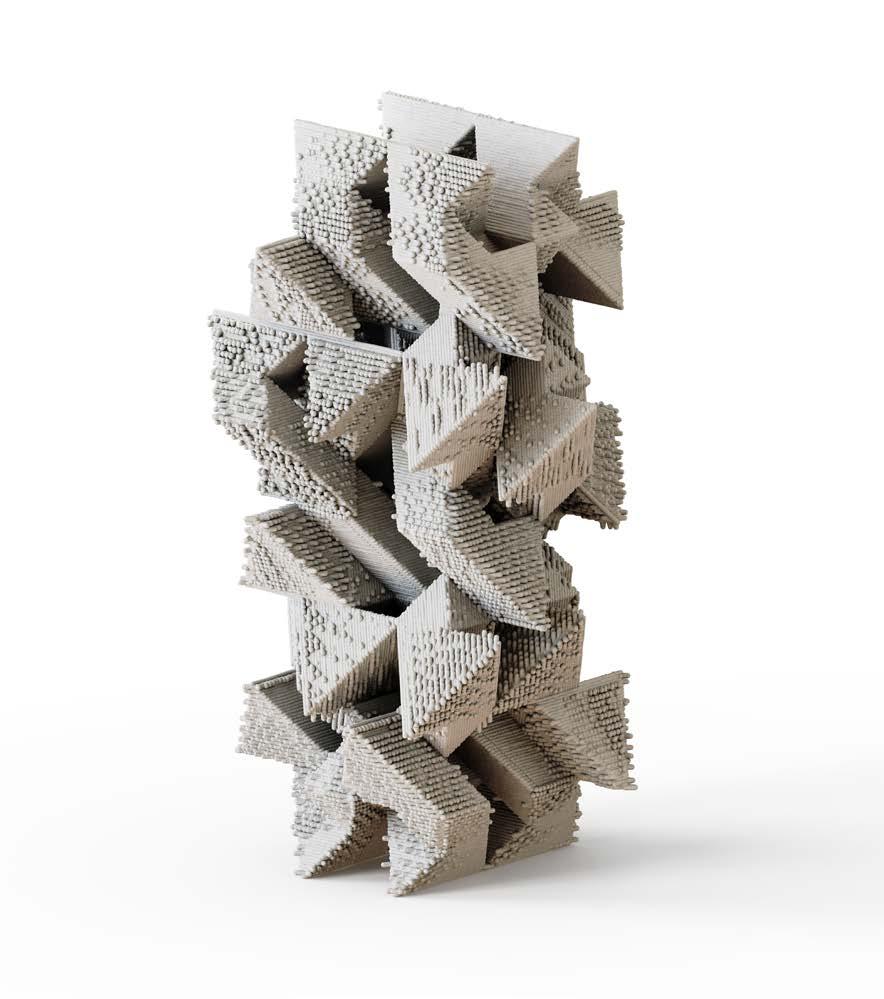
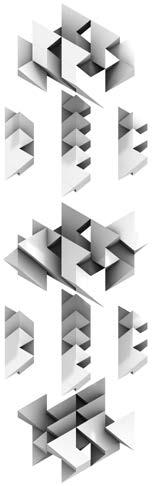
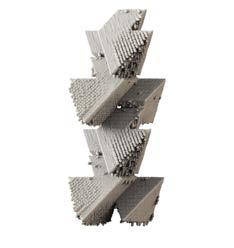
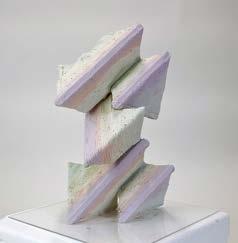
A complete design was formulated based on the arrangement logic of Fredenthal, which fuses octahedrons and tetrahedrons and then divides the piece into printable, stable, smaller groups of tetrahedrons and octahedrons for clay extrusion.
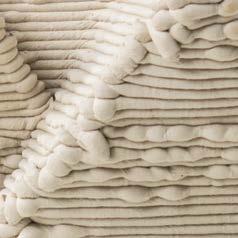
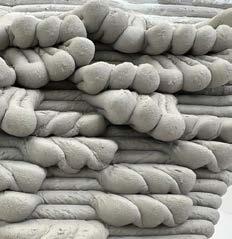
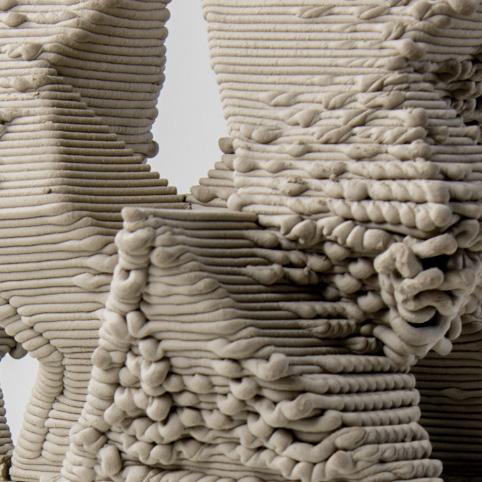
In about 8 weeks, we understood how the material (clay) acts when extruded from a 6mm nozzle vertically down. The amount of slope required for a stable extrusion, the speed of extrusion, and the moisture content in the clay are all actants for the piece. The physical properties of clay change after drying and more after bisque firing, which were factors to be considered prior to extrusion.
This studio opens the territory to understand the material and use it for the benefit of exploring more using the robot. The geometry in itself is a design guiding factor and imposes a strong influence on the viewer if fused systematically. Robot
PREPROTOTYPE - MICRORELIEF
Fredenthal work was governed by stable tetrahedrons and octahedrons in combination as a space-filling triangulated network. In geometry, a tetrahedron, also known as a triangular pyramid, is a polyhedron composed of four triangular faces, six straight edges, and four vertex corners. The geometry is stable as a geometry, which is given by angles of 60 degrees with all sides of the same size divides the weight in equal proportions via all sides to the base edge. Space-filling is the packing of 3-dimensional bodies in an infinite array such that all the spaces are occupied without the intersection of contiguous cells. The diagram below helps us understand the concept in linear space packing.
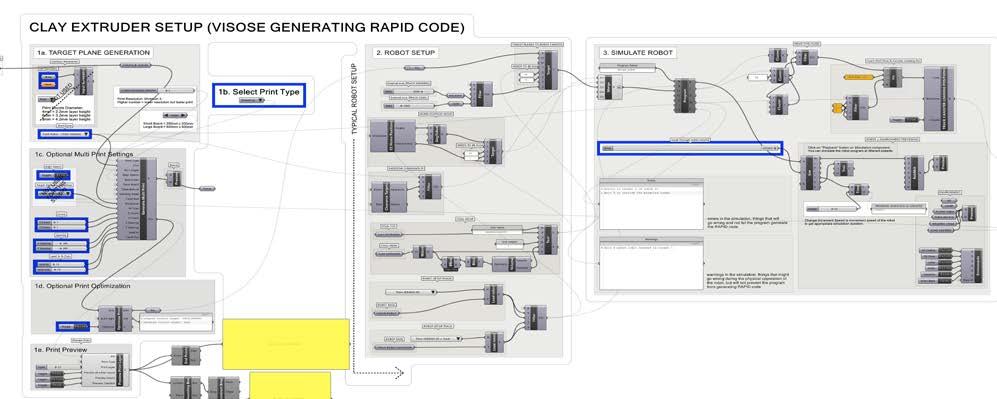
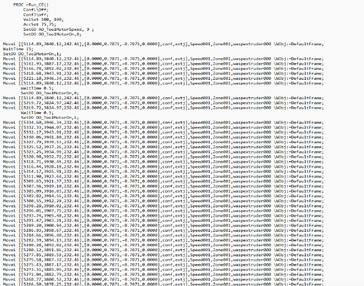
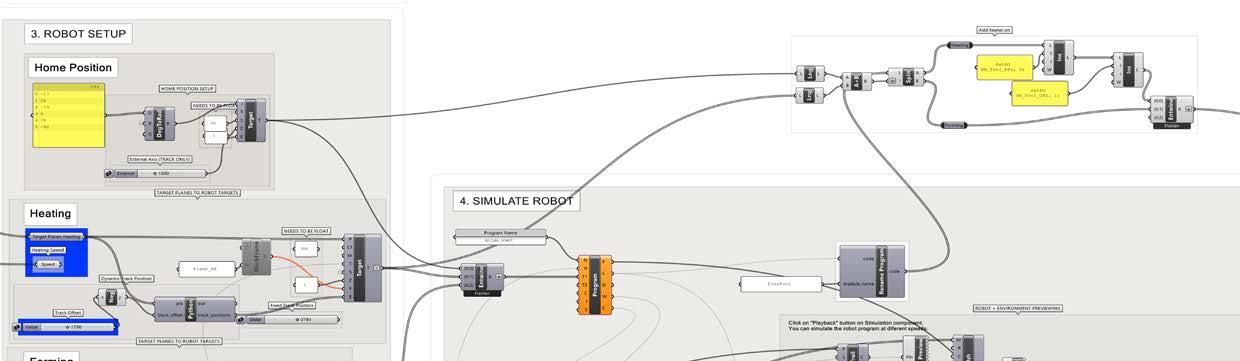
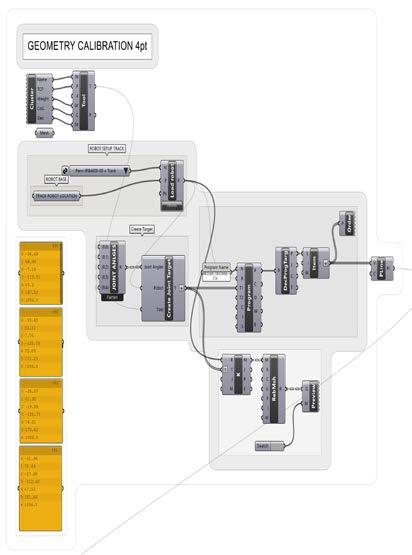
The process integrates robotics, Grasshopper, and RobotStudio to accomplish printing. Initially, a group of components is established in Grasshopper, where both external and internal support breps are inputted. The model is then transformed into printable paths, and images are projected onto various surfaces to create micro-relief effects. Subsequently, the printing paths are decomposed into points and TCP (Tool Center Point) Planes, which serve as the robot's Target Planes. A 4600 Floor robot is selected for robot setup and simulation. Following the simulation, RAPID code is exported and transferred to RobotStudio, and then to the robot to complete the printing process.
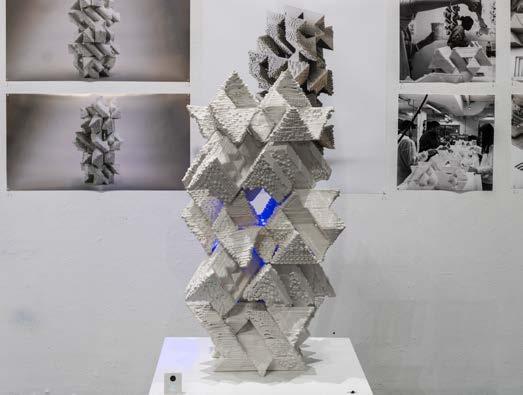
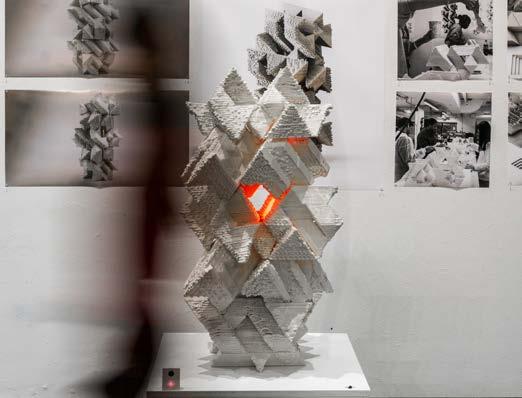
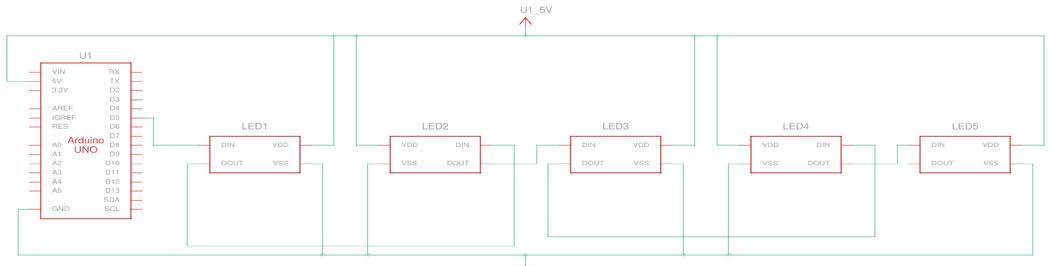
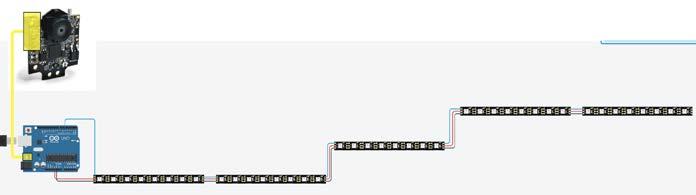
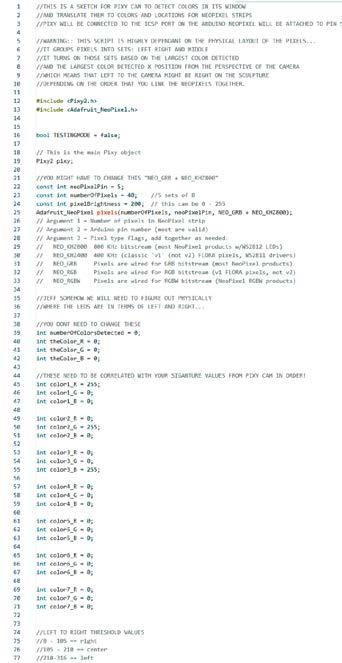
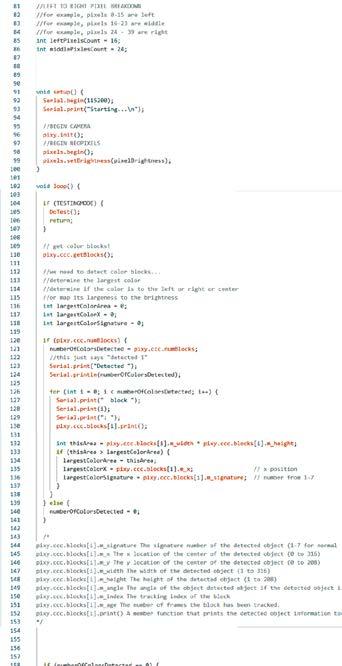
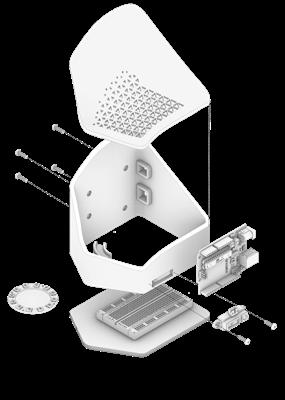
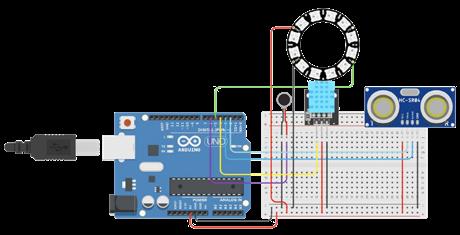
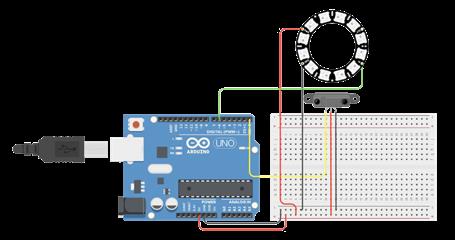
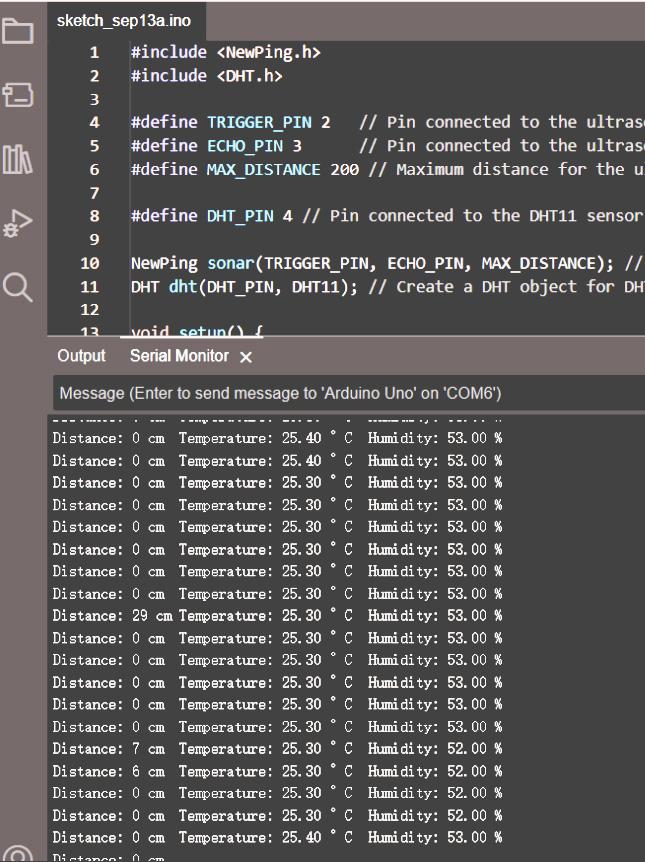
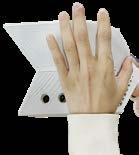
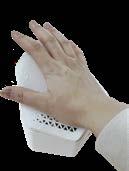
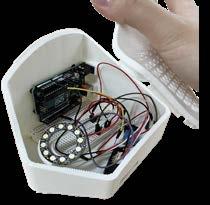
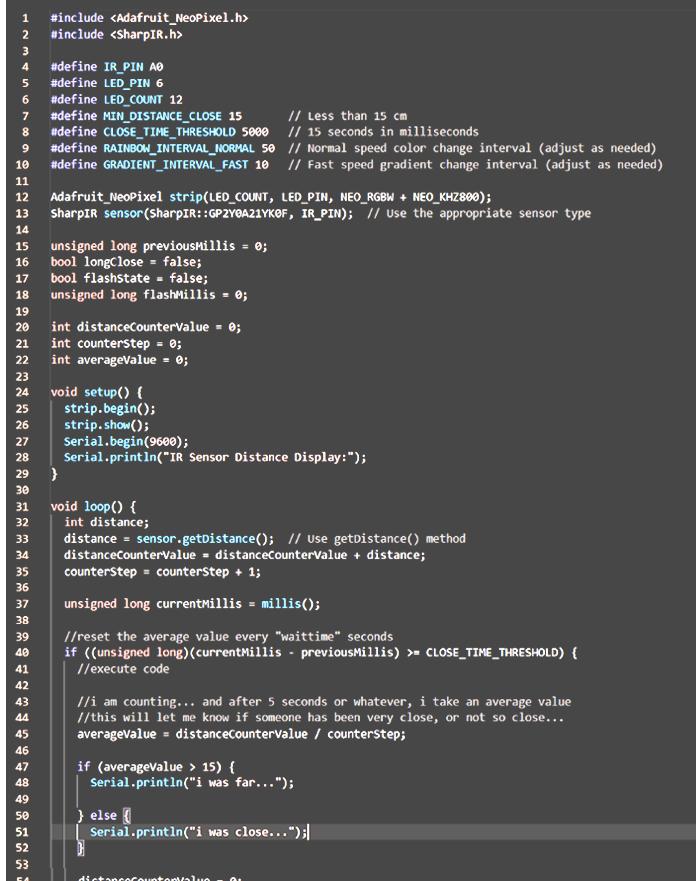
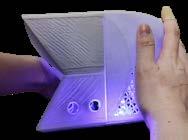
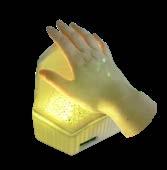
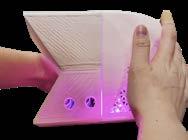
Final interactive prototype, we used Camera(sensor) and 6 Neopixel light belts (actuator) to animate our architectural form through human and environment color interaction. Our sensing and actuating circuit were artfully hidden within and designed in coordination with our project. (We used Arduino IDE as the platform to develop the code.)
The courtyard design is rooted in Robinson Fredenthal's infinite grid system, giving rise to an ever-expanding array of geometric shapes that converge into a unique spatial forest - the Robinson Fredenthal labyrinth. This intricate layout merges positive and negative geometric forms, seamlessly interweaving upper and lower spaces to create an engaging journey for pedestrians. In terms of construction, large blocks are subdivided into 750mm, 1500mm, 3000mm, and 6000mm modules, while smaller bricks follow suit. The diagonal orientation of these components adds depth and spatial dimension. The saddle joint remains a key connection method, with brick sizes transitioning from small to large, imparting varying density to the building's façade.
{A-7}
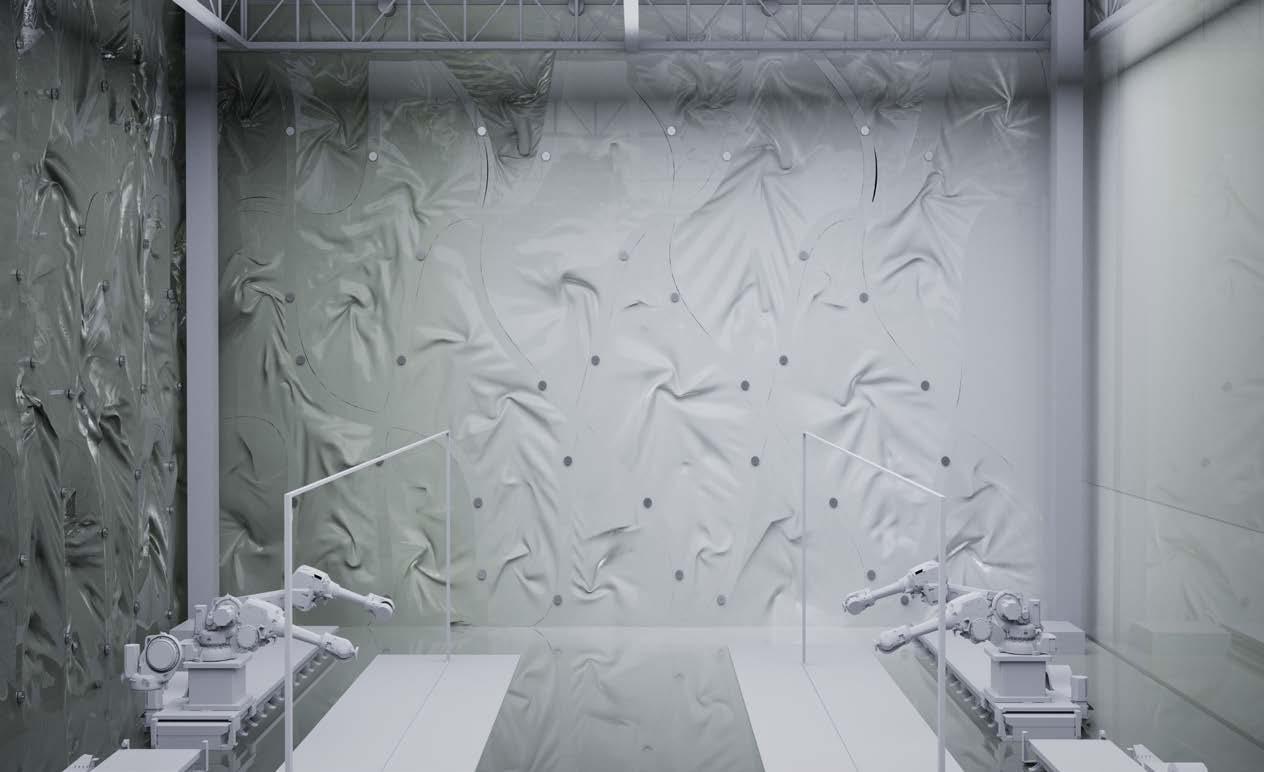
Localized Robotics Thermoforming
ACADEMIC, Individual Work, 2024 [Thesis Project]
Supervisor: Robert Stuart Smith (Email: rssmith@design.upenn.edu)
Partner: Claudia Campuzano, Yang Meng
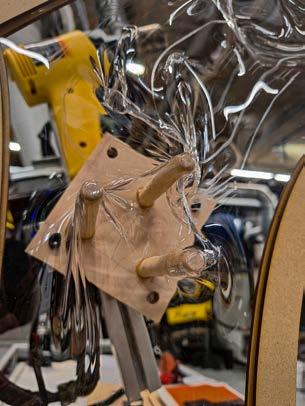
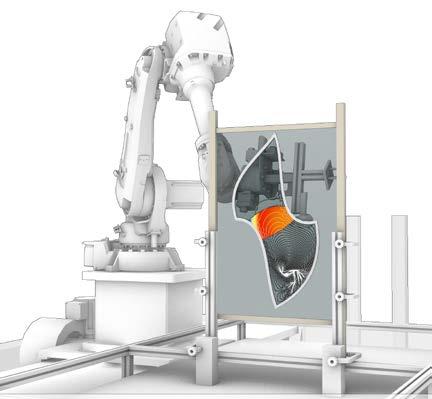
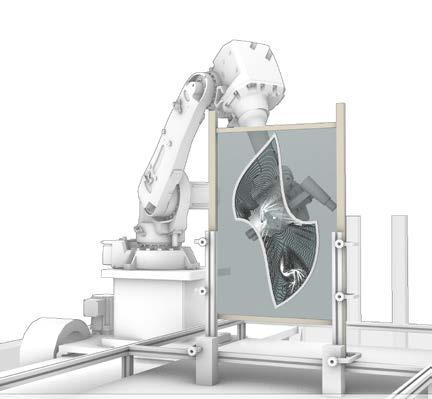
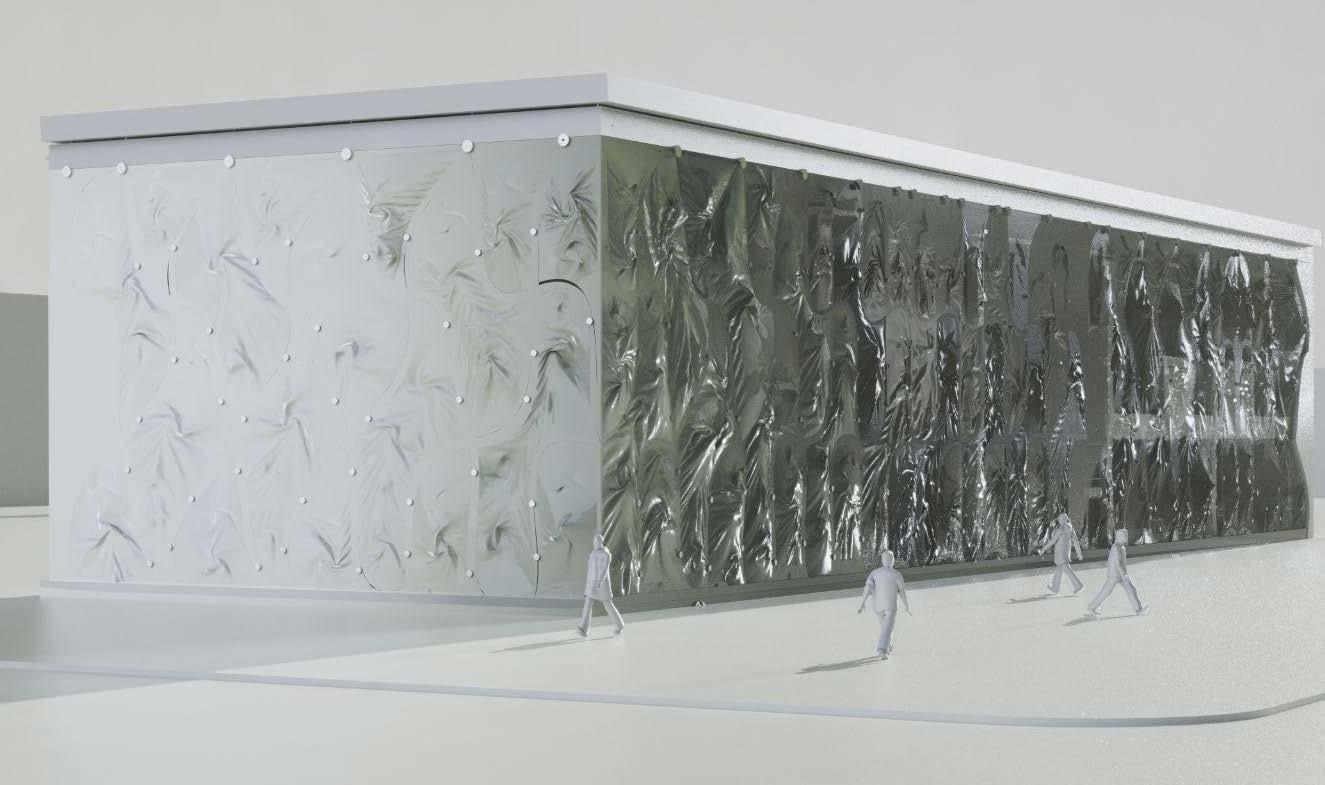
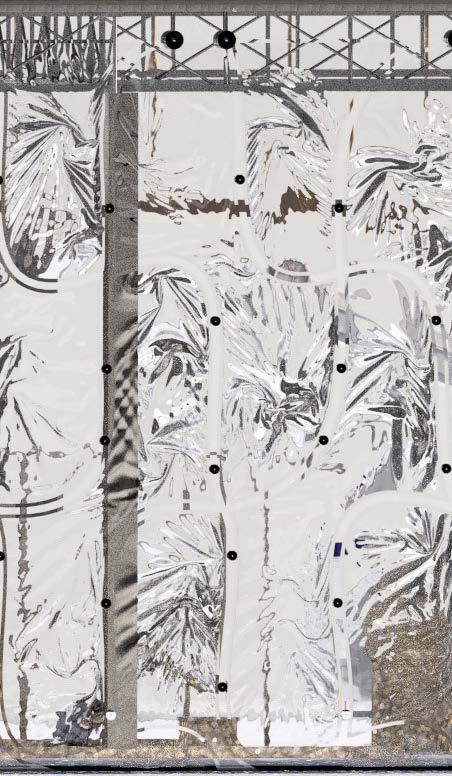
Robotic thermoforming process that involves localized heating and manipulation of thermoplastic sheets; this labiates the need for molds in the thermoforming process. Our exploration extends to speculative design for building envelopes, where we investigate the aesthetic and production implications of a gesture-based approach to robotic thermoforming. This research offers a perspective on ornamentation and envelope design.proportions, composition, and elements, and then creating a Bespoke
○ Heating Path and Temperature Curve
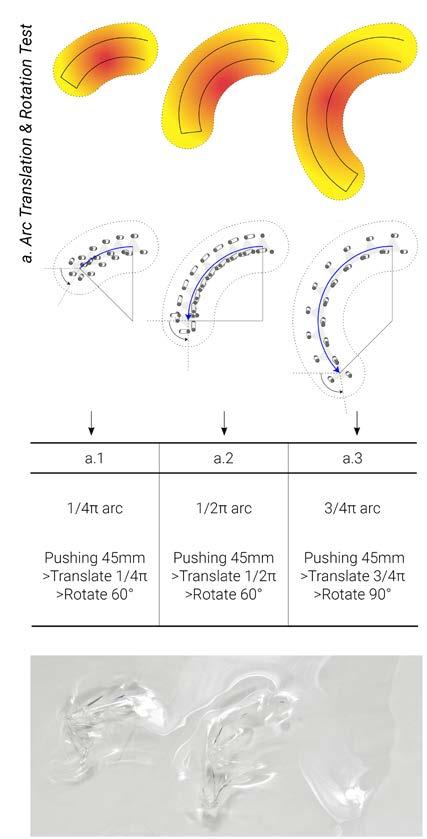
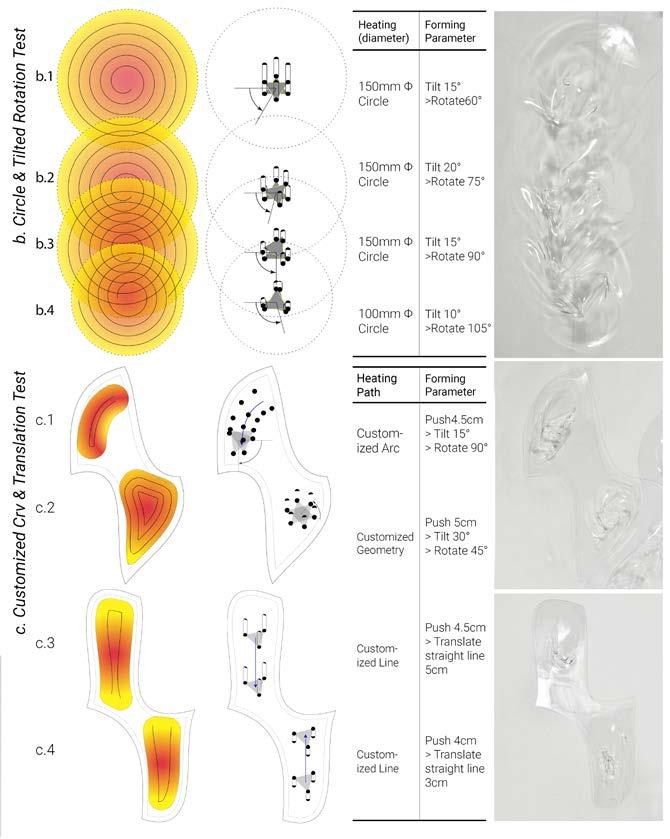
○ Parametric Heating Path and Forming Path Tests
The effectiveness of the heat gun is influenced by various factors, including the heating path, the distance between the heat gun and the PETG sheet, and the speed at which the heat gun moves. What is Interesting is that we discovered that different heating paths produce varied effects.
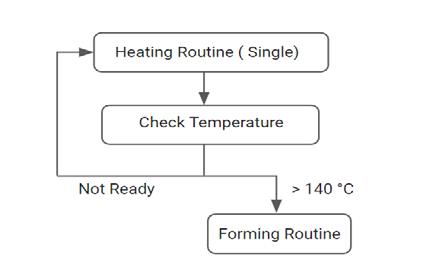
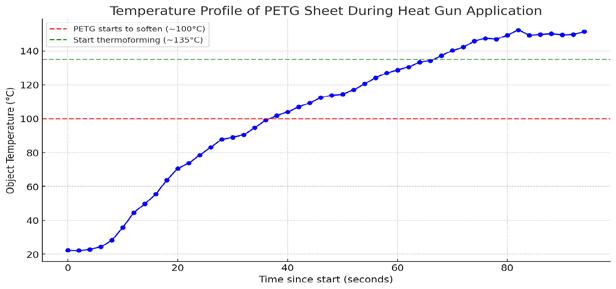
To minimize failures and enhance efficiency in thermoforming, precise control over the temperature of PETG sheets is essential. PETG’s glass transition temperature (Tg) is 84°C (Focke et al. 2009), where it becomes pliable and solidifies upon cooling. We incorporated an infrared sensor and an Arduino UNO module to facilitate the collection and analysis of temperature data. As depicted in , 1/16" thick PETG material reaches the Tg in about 30 seconds and becomes suitable for thermoforming upon reaching 135°C. The entire process takes approximately one to two minutes.
Robotics Gesture Catalog
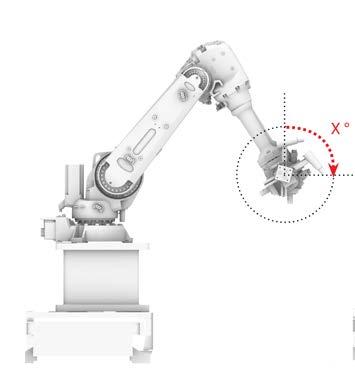
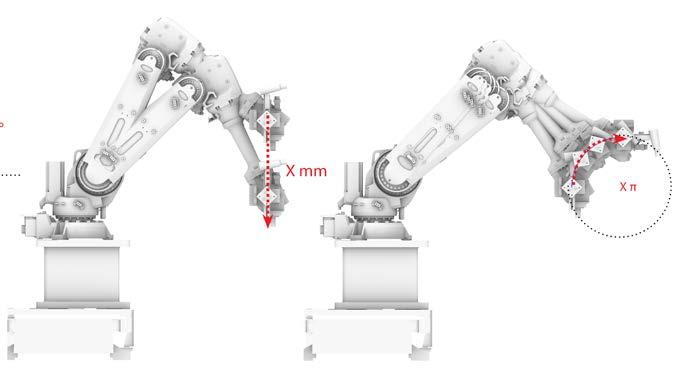
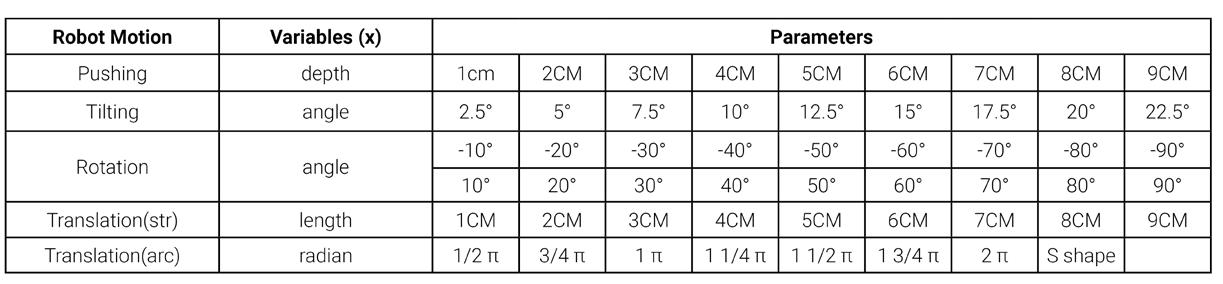
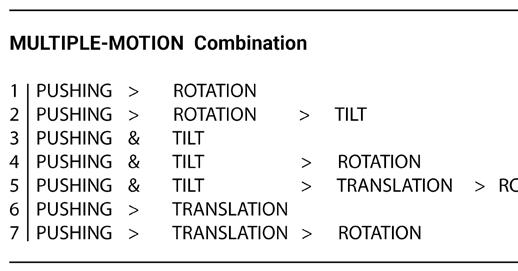
We further categorized and parameterized forming paths into gestures such as pushing, tilting, rotating, and translating along straight or curved lines, creating complex paths like tilting angle rotation, tilting angle translation, etc. Utilizing data from previous experiments, we conducted additional tests on robotic gestures to refine our parameter catalog.
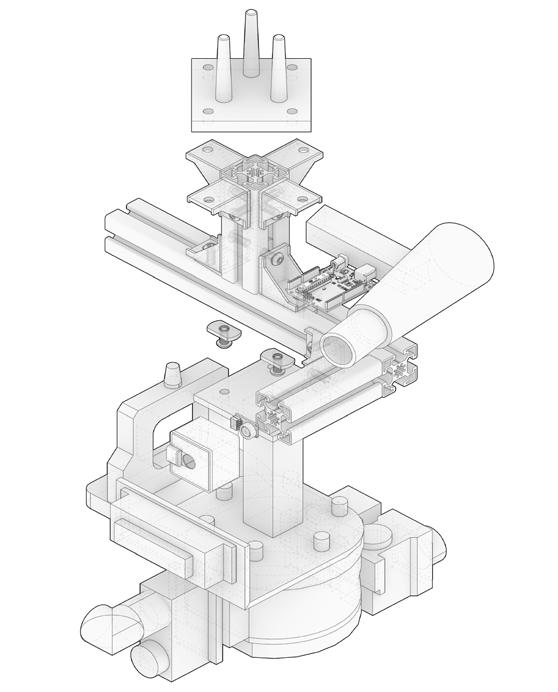
○ Robotics Dual-End Effector Design
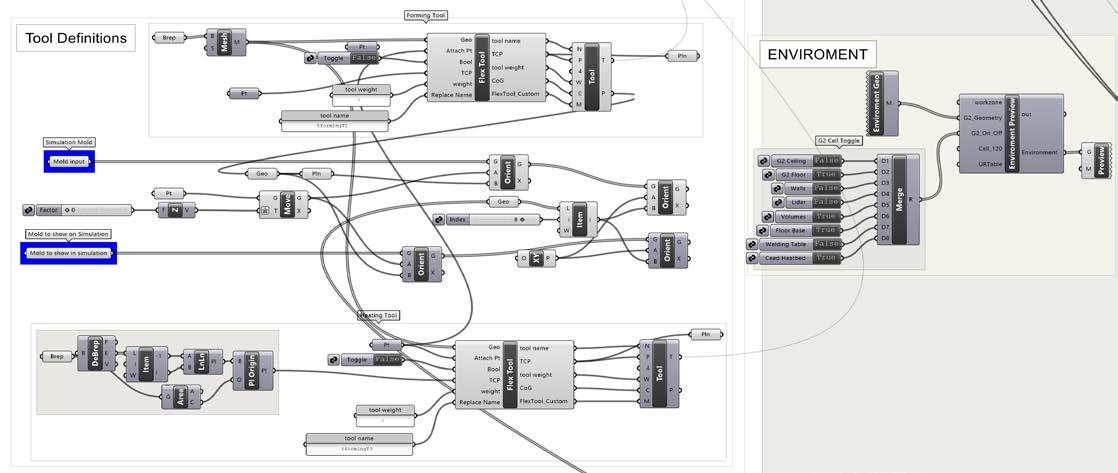
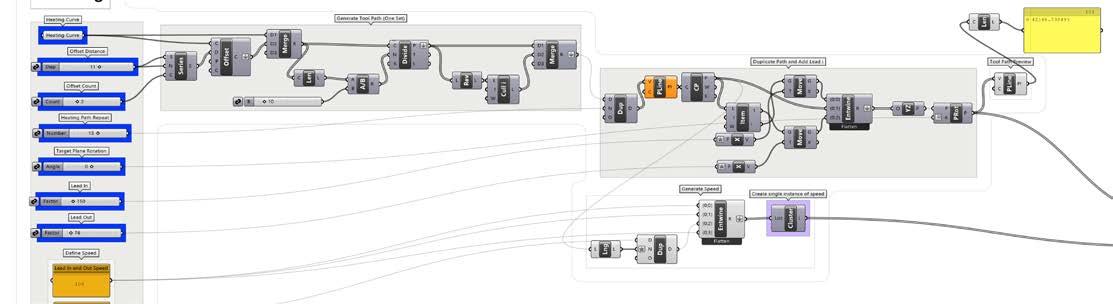
Tool Definition & Heating Forming Path Script
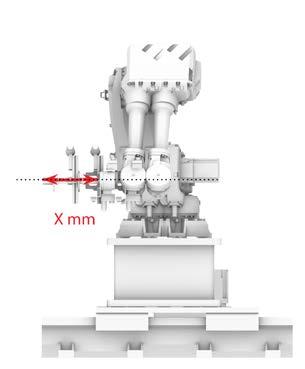
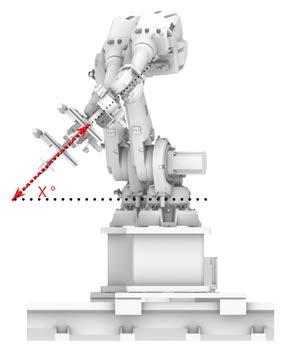
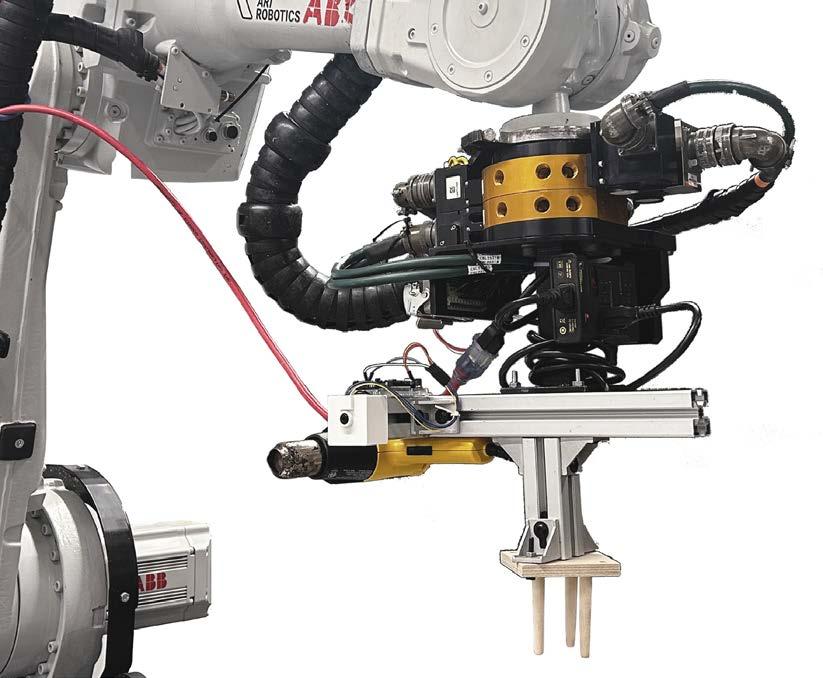
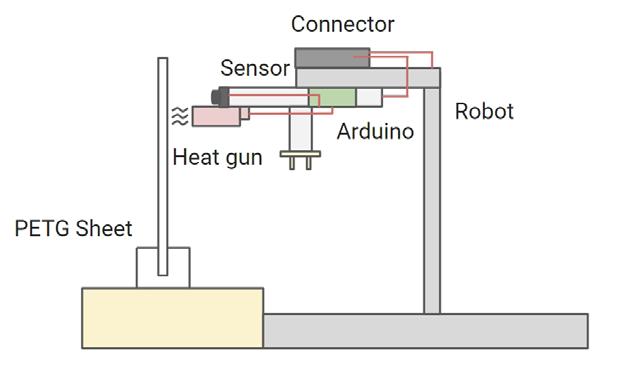
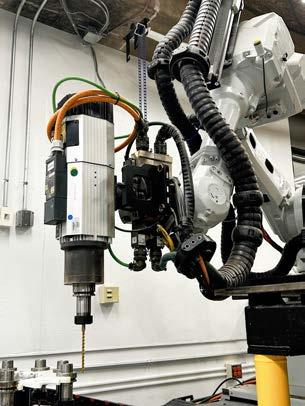
In our research, we introduce an innovative end effector that combines the heating and forming processes in thermoforming, and real-time temperature control. This allows for localized and repeatable heating and forming operations.
In our research, we introduce an innovative end effector that combines the heating and forming processes in
incorporating infrared sensors for precise data collection and thermal control.
Cyberphysics Thermal Control System
In this experiment, our goal is to investigate the following question: How can we use our heating tool to generate a gesture-based approach in our design? Within this study, we utilize Grasshopper to achieve more control and precision in the parameters.
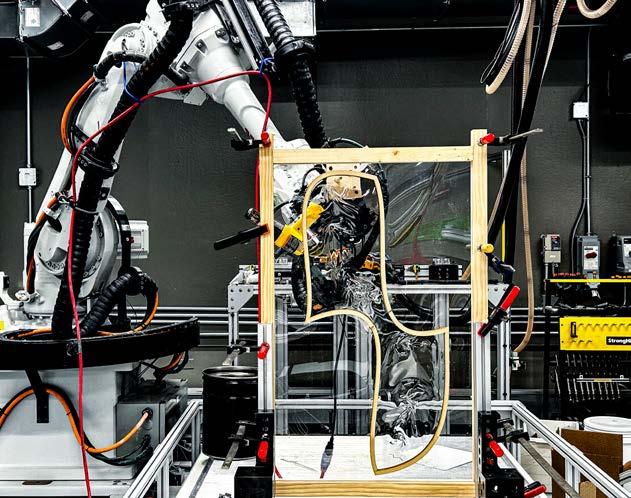
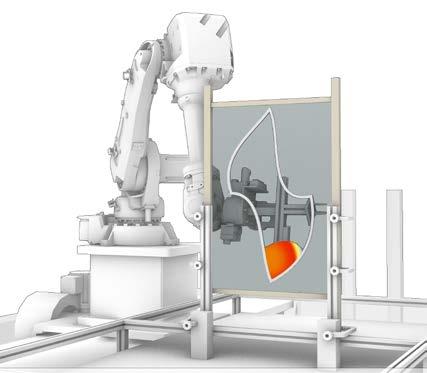
Applying knowledge gained from 2.3, the robotic fabrication setup from 2.2 was extended through the addition of a new dual-head EOAT that consisted of the 3-prong forming tool and Experiment 2.3 selected heat gun. An infrared sensor was also incorporated to provide feedback on a PETG sheet’s temperature during heating. A larger PETG sheet size of 24” x 36” and 1/16” thickness was employed and clamped in between two layers of wood in a vertically orientated 22” x 40” frame.
○ Localized Heating and Themoforming Simulation Developing
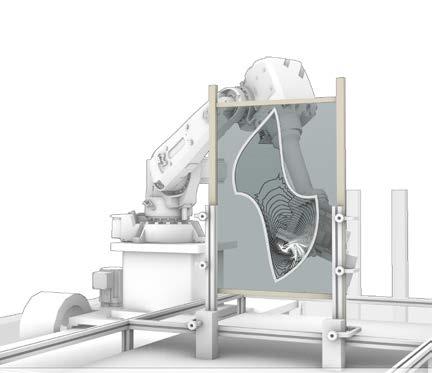
A closed-loop approach to iterative, multi-pass localized robotic heating and forming of PETG thermoplastic sheets was developed and evaluated for its ability to produce custom-formed parts that embody several different ornamental features formed from different draft angles (angles of incidence). The method incorporates temperature sensor feedback during localized heating and explores different patterns and quantities of robot tool-path motion for both heating and manipulation-based forming. A robot milling routine is also incorporated to support the manufacturing of sheets with a variable boundary shape. A series of heating and forming approaches are tested and evaluated within the robotics facility using an ABB IRB 4600-60 tracked robot.
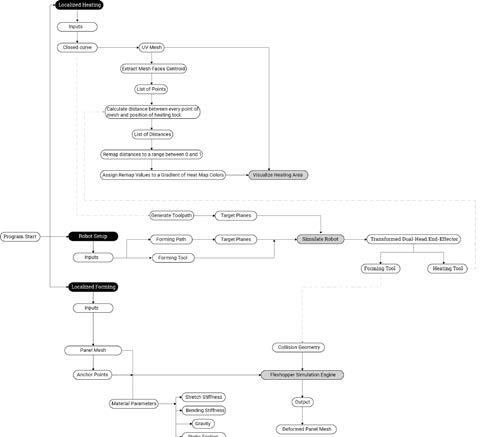
A simulation workflow was developed that served as a predictive model for robotic thermoforming and acted as a feedback loop throughout our process (Figure 15). More importantly, it enabled our design speculation of building envelopes that would not be possible otherwise. To evaluate the ability of the simulation to represent manufactured outcomes, a series of PETG sheets were physically formed and 3D scanned using AESUB Blue 3D Scanning Spray to ensure the visibility of the transparent sheets during scanning. (Figure 16) Scan results were compared to digital simulated outcomes of the same robotic manufacturing operations. Deviations between the simulation and physical outcomes are depicted in Figure 17. Visual observation also indicates that simulations did not capture all small-scale details apparent in the physically manufactured parts but were effective at describing overall formal descriptions and character of each manufactured part, making the simulation suitable for use in design activities prior to fabrication.
○ Simulation & Calibration Script
Calibration Dual thermoforming Milling
Thermoforming Process Milling-Spindle
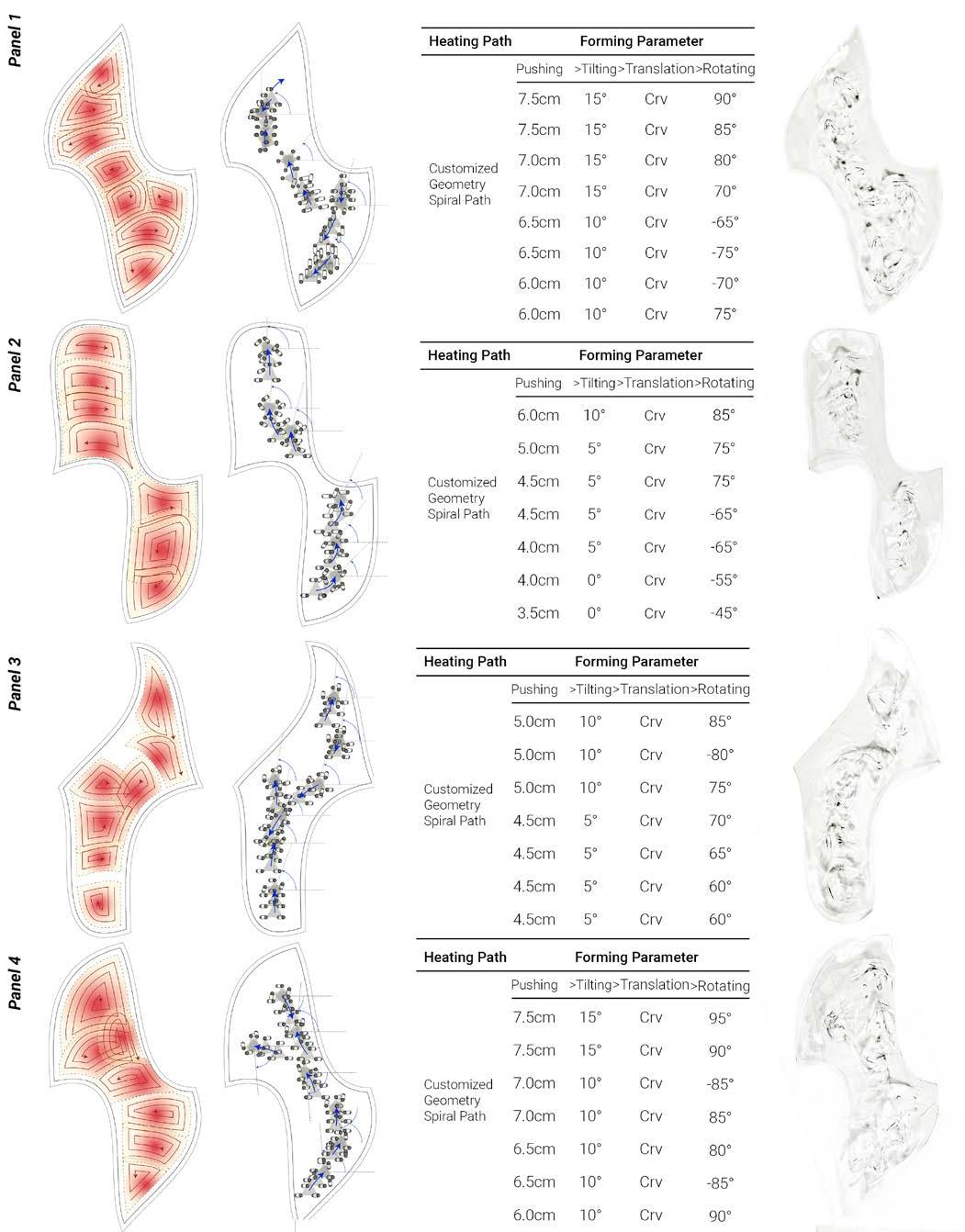
We applied the developed localized heating and robotic manipulation thermoforming process to a multi-part prototype measuring 1.6m in height and 0.8m in width, consisting of five custom-shaped and formed PETG sheets. Each panel underwent between 5 and 7 local robotic thermoforming operations. Customized heating and forming curves were designed for each panel shape. Adjacent heating regions partially overlapped to ensure that each forming operation could interact with and merge together to produce an overall coherent and complex thermoforming pattern-like effect. The forming paths use progressively increasing tilt angles and translation curves that aligned to the curvature of the panel's boundary curves and were constrained to lengths ranging from 4-7 cm, ending each translation curve with varying degrees of rotation, continuously increasing in a positive direction or alternating between positive and negative values .
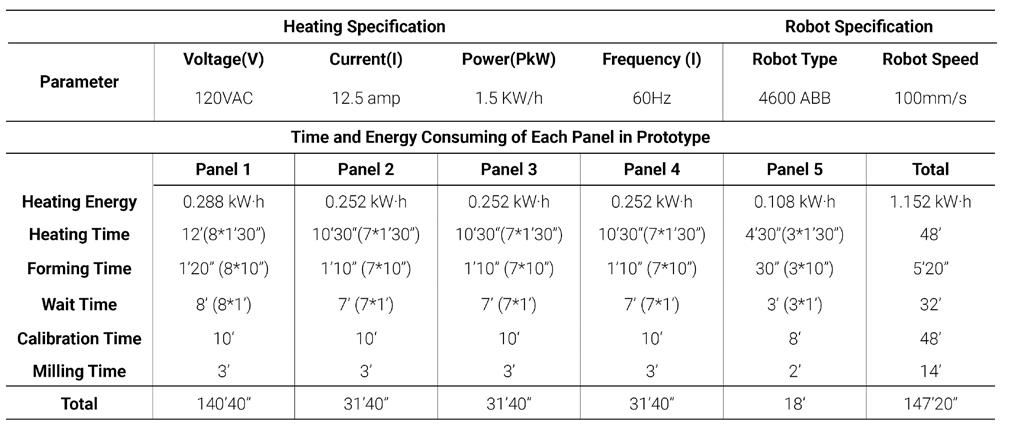
This aimed to produce an implied directional grain in the formed outcome of each panel. Through these multiple, localized heating and forming operations, the deformation appears to visually intensify towards the top of the prototype, with precisely graduated parameters that follow the prototype's geometric curves and flow patterns. Data on the entire prototype’s manufacturing process was recorded and resulted in an overall work-cell sheet calibration time of 48 minutes, an overall heating time of 48 minutes, a shared forming time of 37 minutes 20 seconds, and a milling time of 14 min. Time and energy consumption of each panel of the prototype
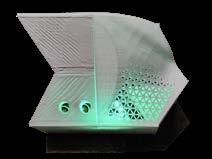
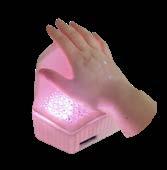
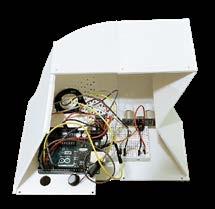
Arduino Sensor Interactive System
ACADEMIC, Group Work
Supervisor: Jeffrey Anderson (jsanderson.1512@gmail.com)
This work explores control, feedback, energy and force in relation to interactions of matter, space and perceived activity (human or non-human), and the embedment of Internet of Things (IOT) technologies to drive additional design agencies.
B-3
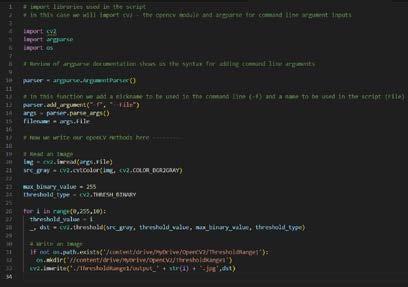
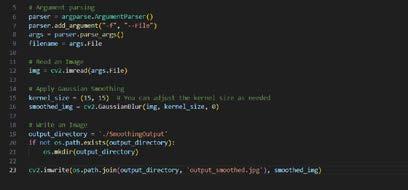
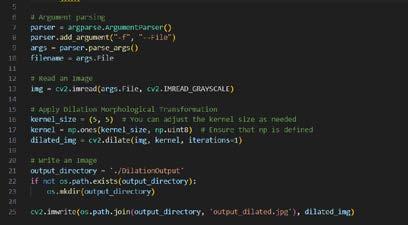
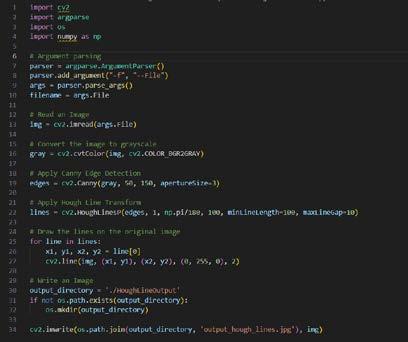
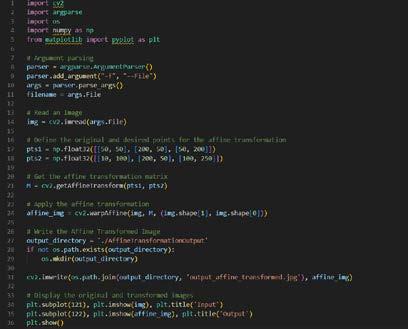
OpenCV Coding Image Processing
ACADEMIC, Individual Work
Course: Machine Learning & Algorithmic Design
Supervisor: Patrick Danahy, pdanahy@design.upenn.edu
This project aimed to process 10 series of images by different algorithms on a open source platform - GoogleColab(/ OpenCV). 10 different algorithms includes: Threshold, Gaussian blurring, Gradient, Dilation, Canny Edge Detection, Hough line Transform, Hough Circle Transform, Watershed Segmentation Process, Interactive Fourier Transform, Perspective Transformation.
GoogleColab /OpenCV
AGGRIGATION/ VOLUX
ACADEMIC, Group Work [2018]
MSD-Robotics and Autonomous System Summer workshop
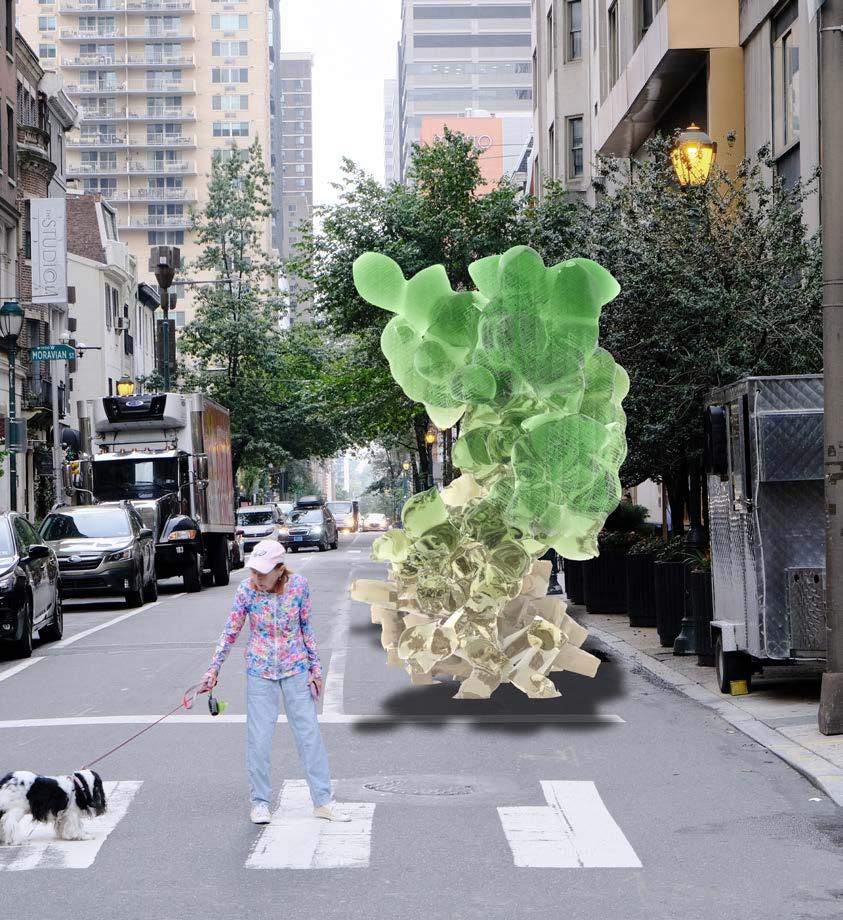
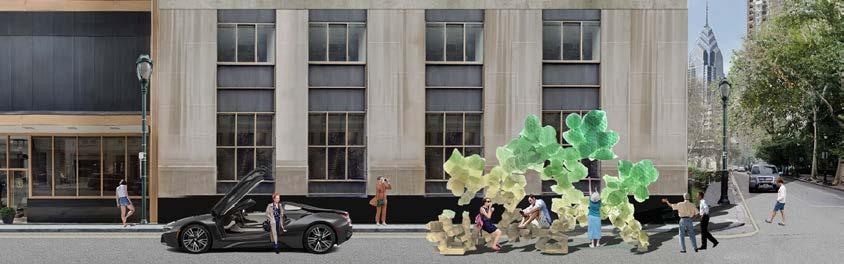
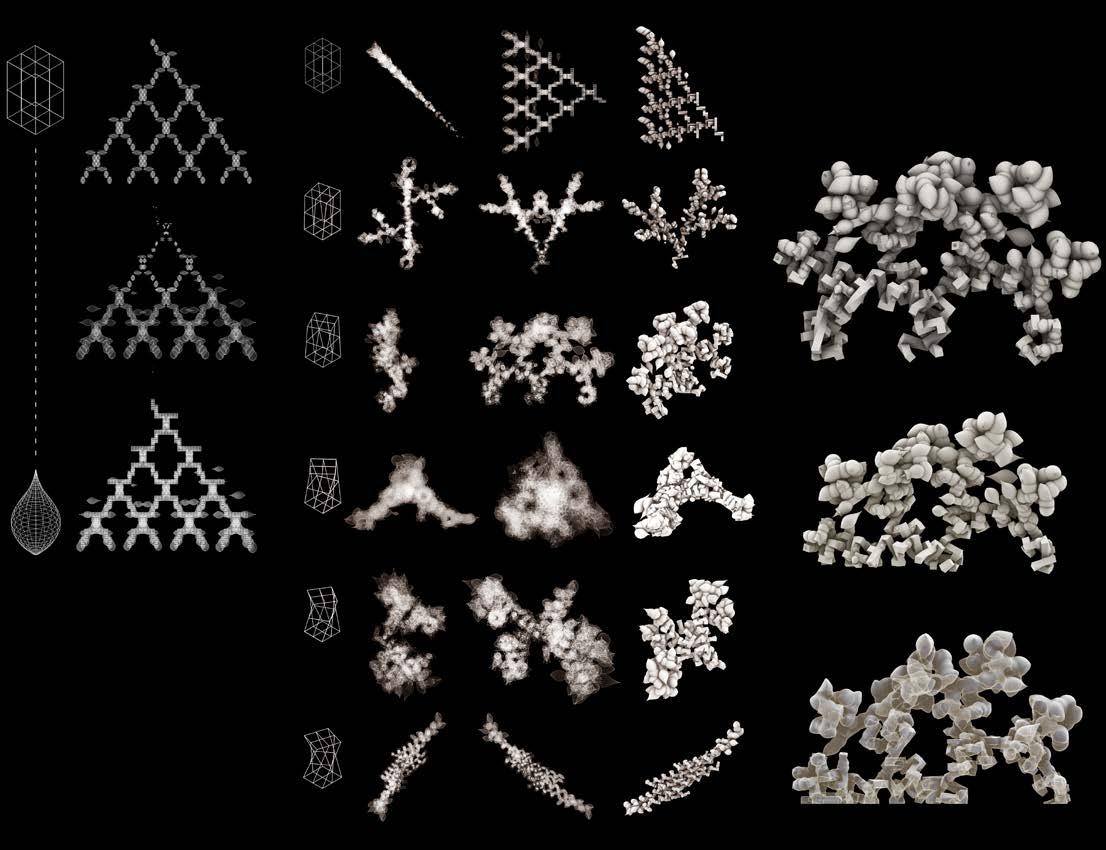
The number of parks throughout Philadelphia increases dramatically each year on the third Friday in September, when activists, artists, architects, and other citizens transform metered parking spaces into temporary public parks. Known as PARKing) Day, this annual event re-imagines the possibilities of 160 square feet of public space. The event celebrates parks and other public spaces in cities across the country, and raises awareness of the need for more pedestrian-friendly spaces in our urban areas Our installation will be made by robotics lattice plastic 3d printing on-site. We gave the lattice structure more variability by changing its cell shapes and colors. And we use the algorithm of recursive aggregation of Brownian difference sets between the water drop shape and the square shape to find the shape. Then use Z-brush to smooth the final detailed shape.
{A-6}
B ESPOKEN Z ENVO F ACTORY
ACADEMIC, Individual Work, 2020 [3rd Semester in Master]
Supervisor: Robert Brandt Trempe Jr (Email: rbt@aarch.dk Tel:+45 8936 0232)
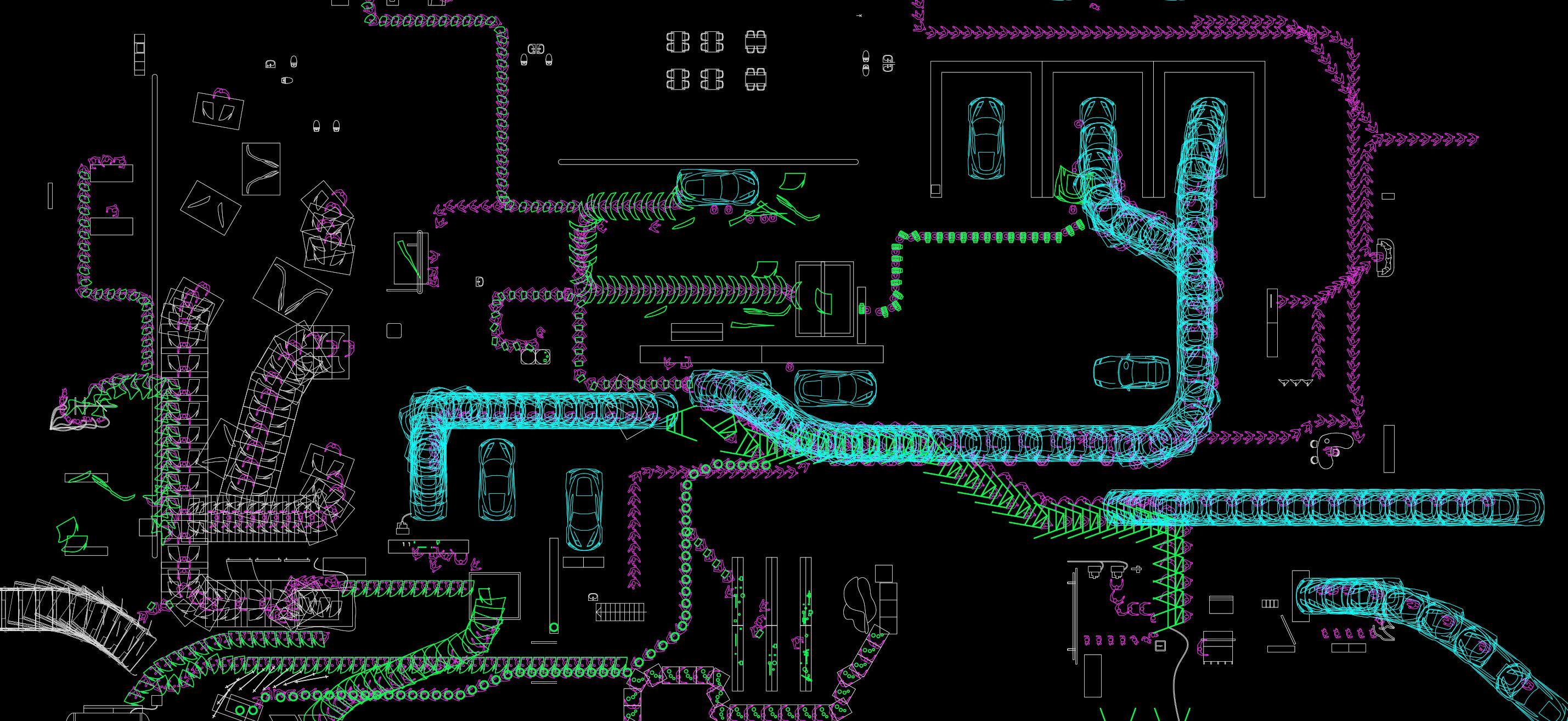
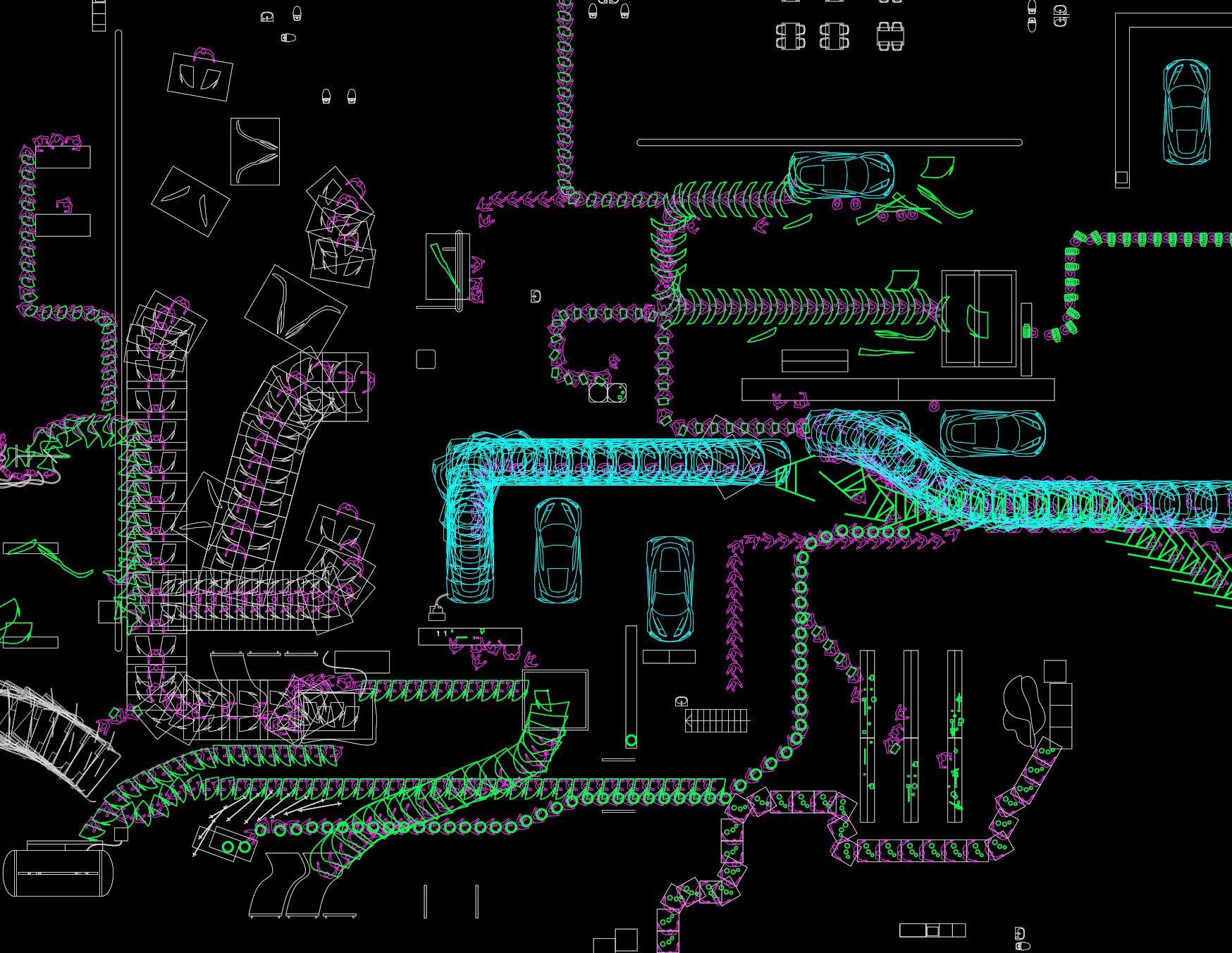
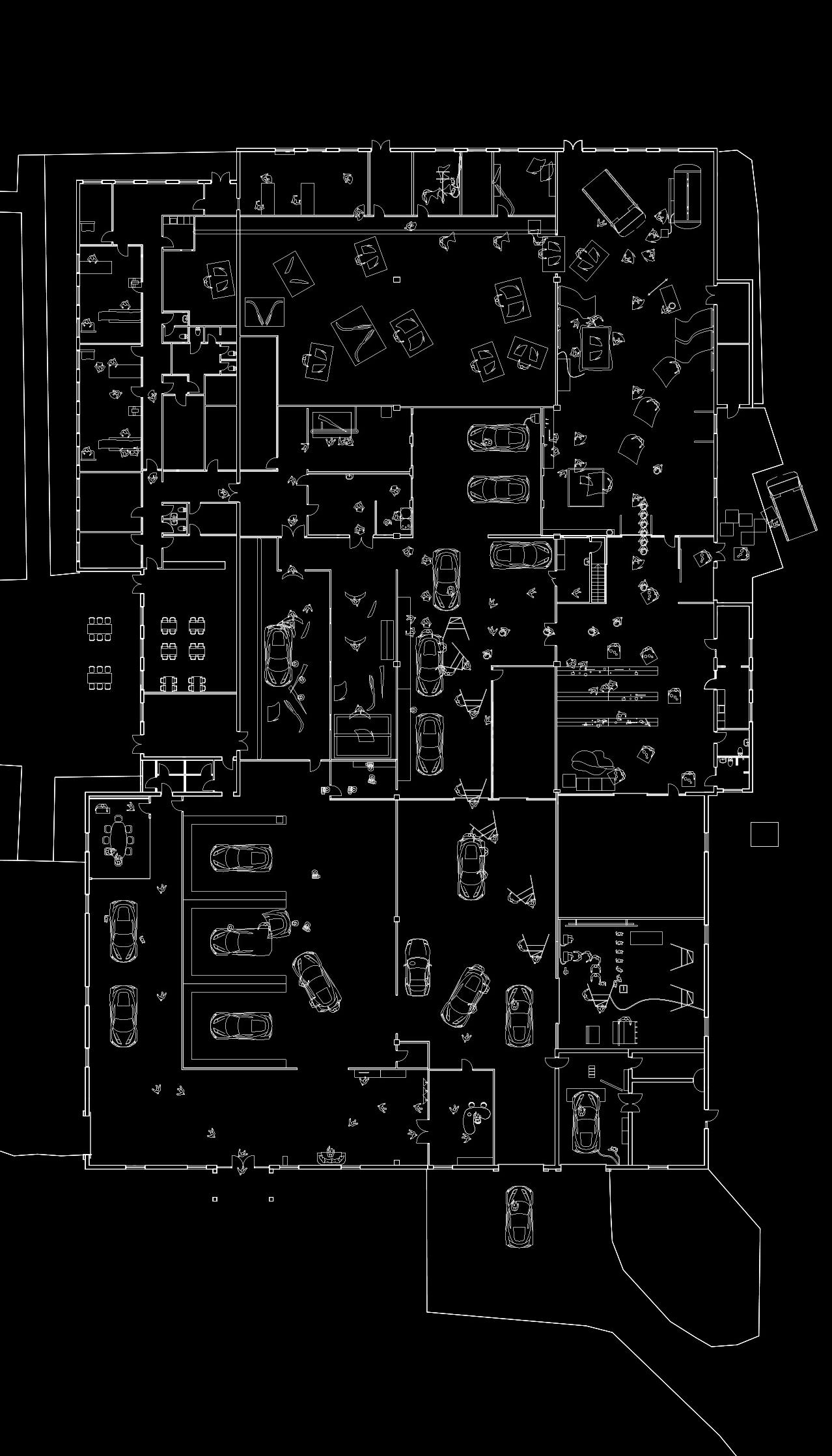
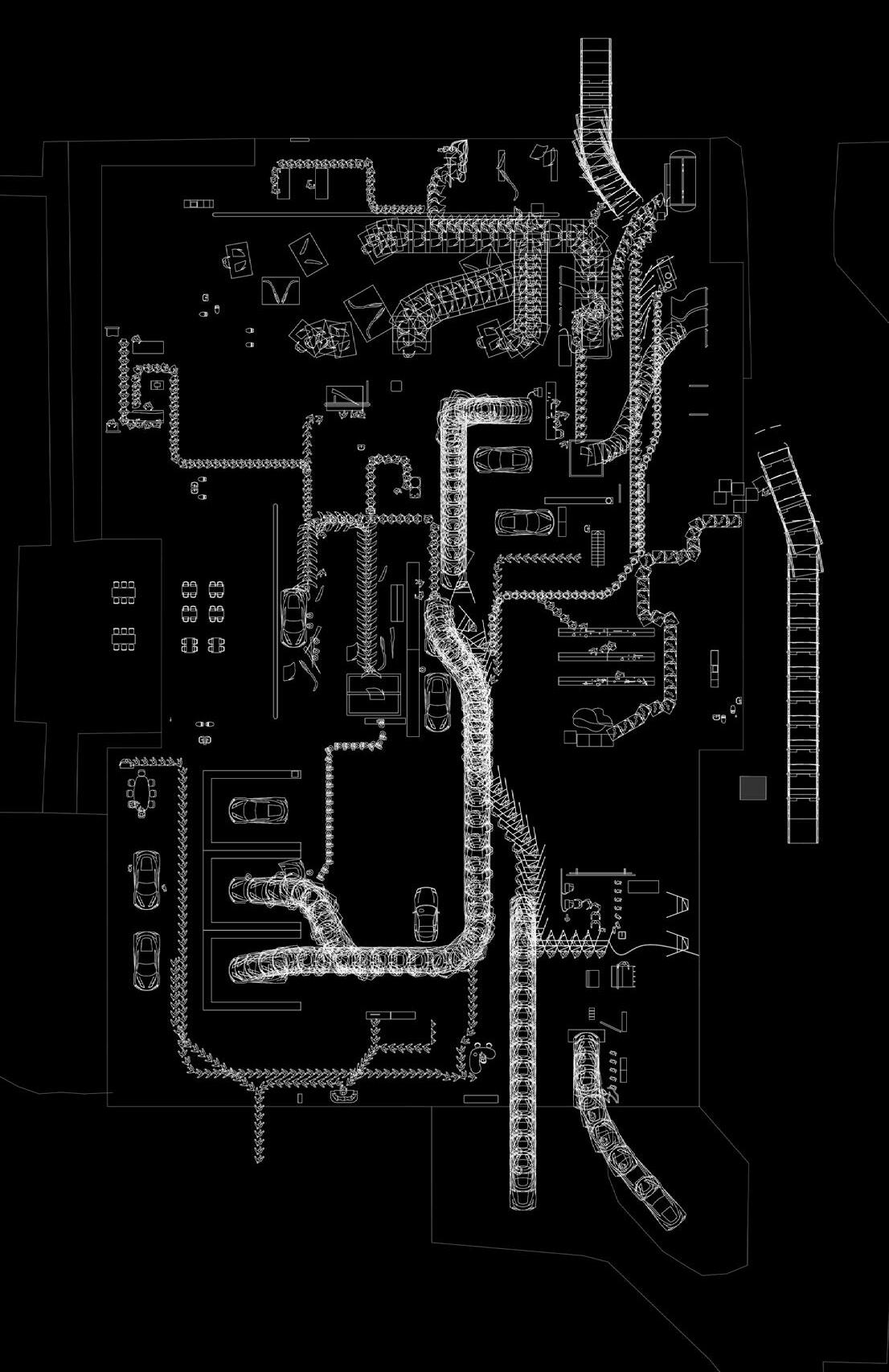
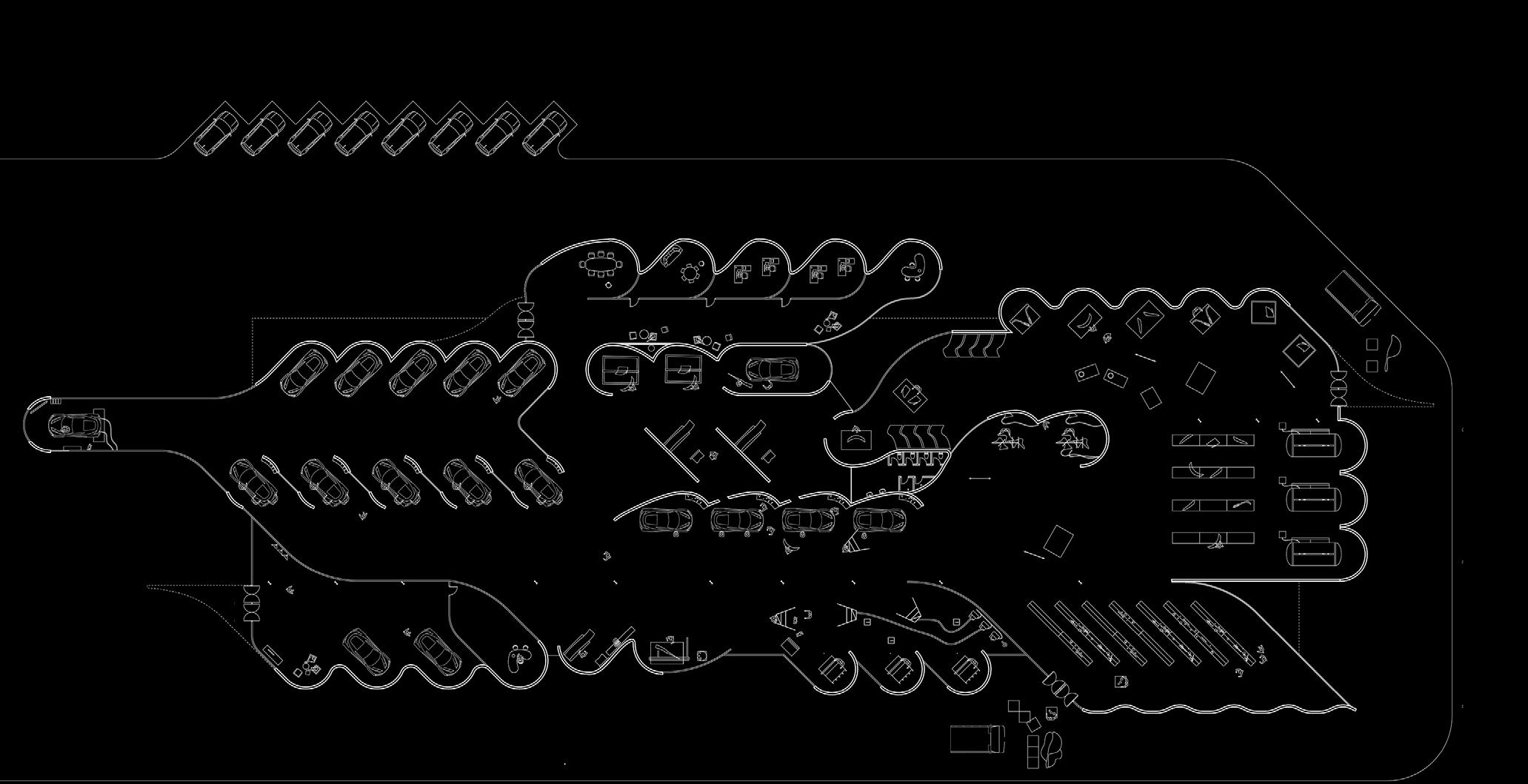
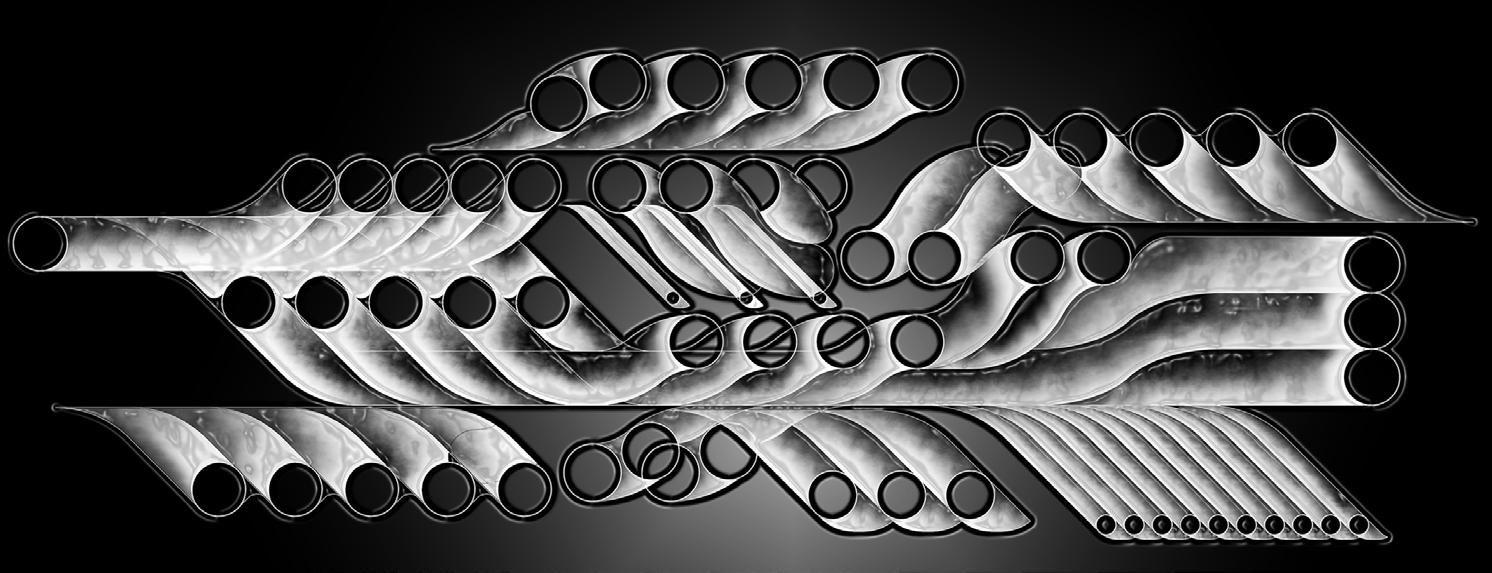
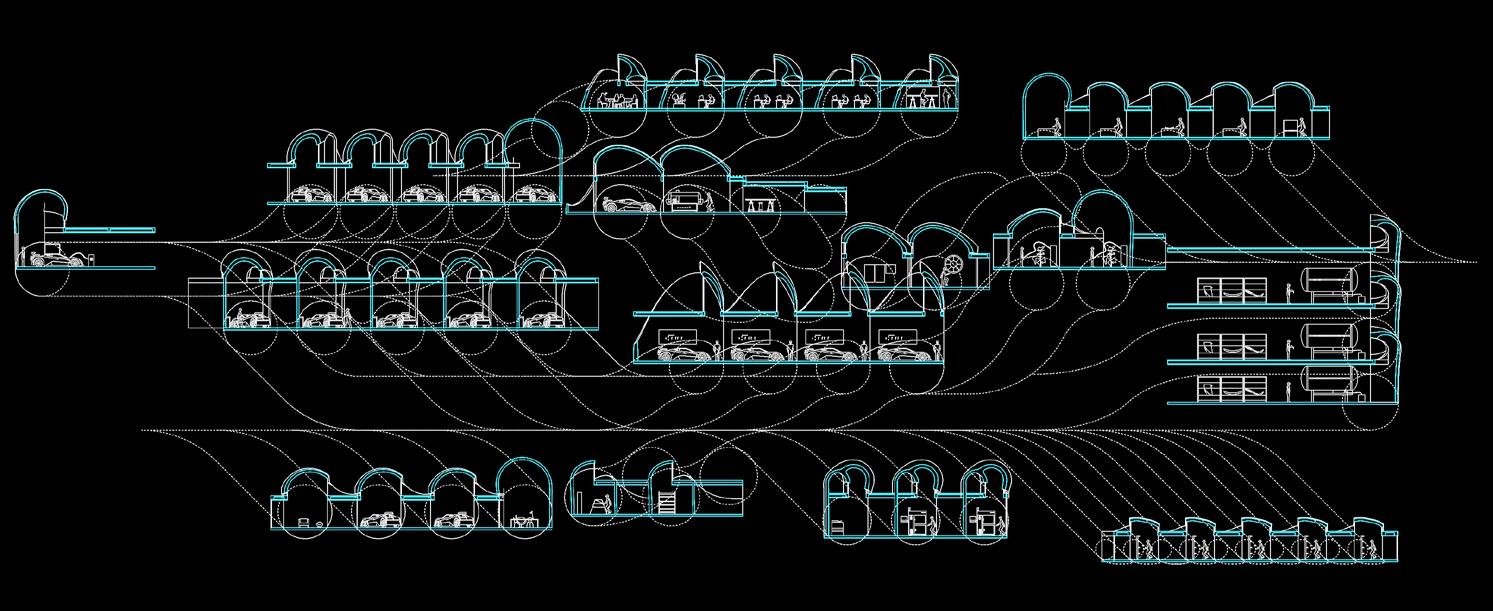
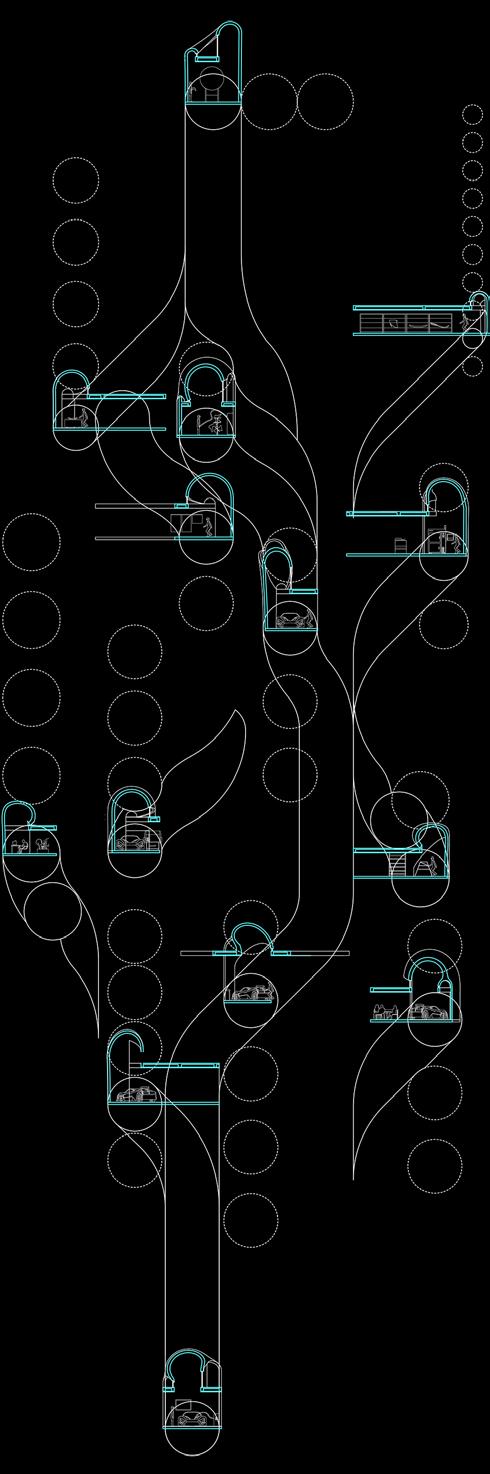
The project is to edit, extend and reconstruct the existing Zenvo supercar factory. Bespoke is the decisive factor within the methodology designed. Through tuning the existing manufacturing process drawing in an aesthetics evolution, the customized supercar factory is generated. Then, multiple line manufacturing correspondent section drawing and one-line manufacturing correspondent section drawings were generated. I think architectural painting has become the tools of analyzing information in this process, by visualizing the information, exploring the most essential features of architecture through the balance of graphic aesthetics, proportions, composition, and elements, and then creating a Bespoke architecture.
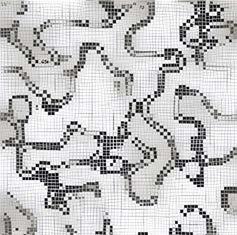
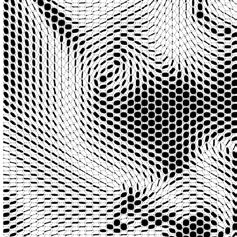
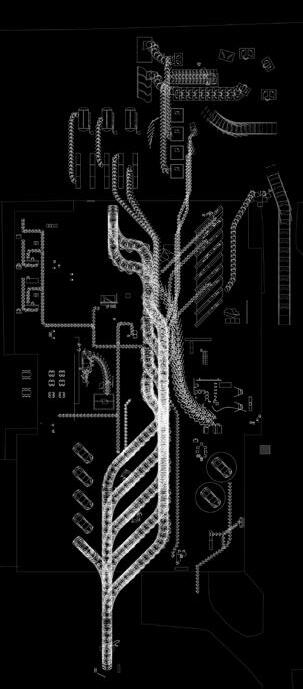
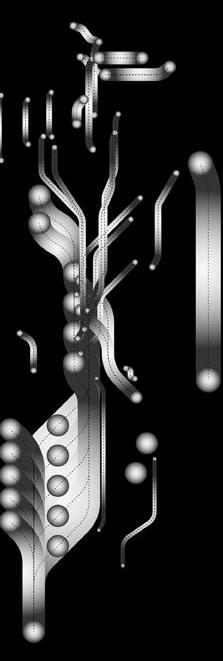
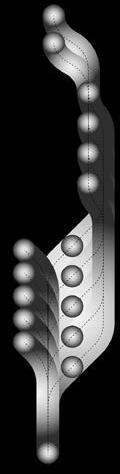
As in the exploration of architectural drawing, I tried to abstract the physical motions into abstract static stopping points and dynamic trajectories, by circles and rounded contour patterns respectively. Represent these two elements and fill them with a gradient of black and light. At the same time, architectural drawing, as a new research object takes priority over the information behind it. It is found that the operation of graphics by the subconscious will further strengthen the sense of stagnation and flow. However, looking at this painting again, I found that the radii and chamfers of the pipes for people and cars are different, destroying drawing's aesthetic. Therefore, by filtering the essence of the painting and extracting the most critical geometric elements, I created the second architectural painting(right) for the purpose of optimizing the sense of flow. You can find that the right one is more harmonious than the middle one, and you can feel the energy transfer within the drawing. It also increases the sense of juxtaposition, forming a new infinitely developing order prototype, which seems to flow unhindered. This is in line with my architectural purpose (to create a smoother Zenvo manufacturing flow).
Movement and stillness are a pair of relative concepts. In some way, stillness can express movement. As for the city's bus system, we feel the bus when it stops at bus stations, and the station (the direction of the road) implies the direction of the car’s movement. Therefore, I picked a static point (that is, the circular element in top drawing) to place the walls. And by fabricating curved shapes, different curvatures suggest the direction of movement. Expressing movement by statics is a kind of logic and ideological liberation. The pressed surface has a dynamic trend as if the movement of the object drives the flow of surrounding molecules, energy, force, and fields. The flowing sense is expressed by the overlapping of the diagram and the multiple-line section drawing. The static sense is expressed in the vertical section of each solid in the vertical section drawing. However, it also shows the whole manufacturing process of one car.
Rhizomatic Drawing & CNC Milling
ACADEMIC, Individual work
Rhizomatic Mapping Workshop,2020
Supervisor: Robert Brandt Trempe Jr (Email: rbt@aarch.dk Tel:+45 8936 0232)
|Rhizomatic System| A Rhizomatic Drawing from Reading
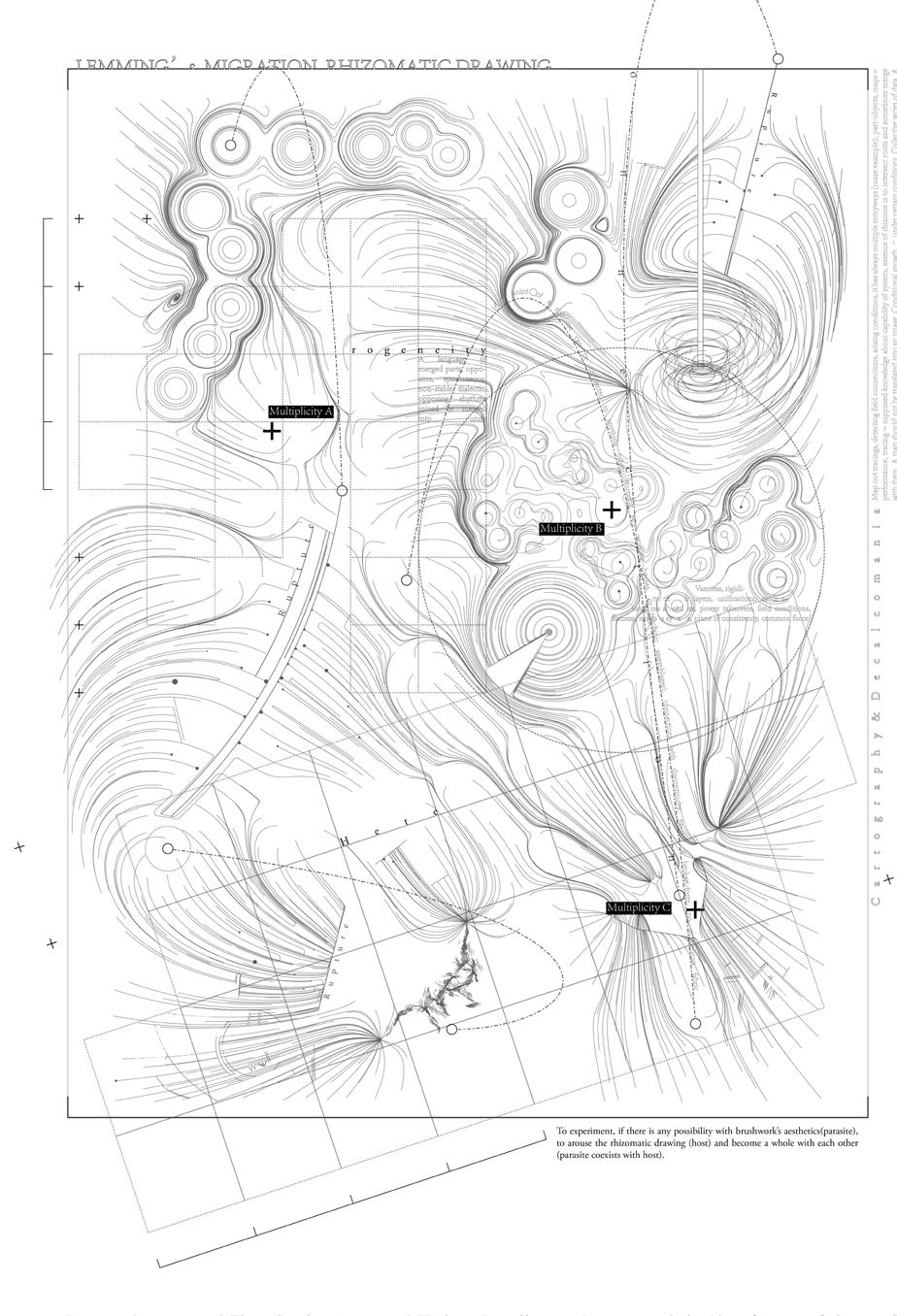
A periodical migration of lemmings is an typical example of how the balance of nature is maintained within an animal population. The normal periods. Small migration in searching food and shelter. Once a suitable area is found, the lemmings settled down and do two things necessary for survival. The first is eating. Lemmings subsists on the roots and shoots of plants. The second thing lemmings do is reproduce. The second thing lemmings do is reproduce.
As more and more individuals are born, food and water supply begin to diminish. Every three to four years, some populations in localities go to great density. In response to this overcrowding, lemmings exist a very specialized behaviour, Individual begins to migrate away from the centre of the dense population. They group together and move in detectible ways across the countryside. If a stream or river interrupts their path, they swim across. Many die during migration, starvation
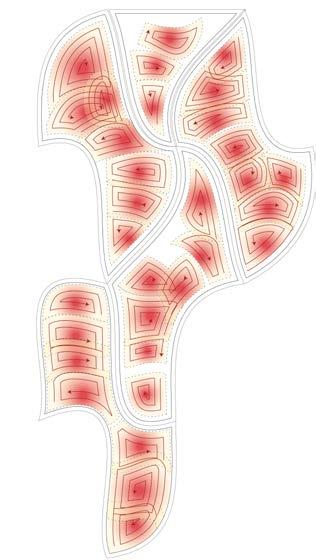
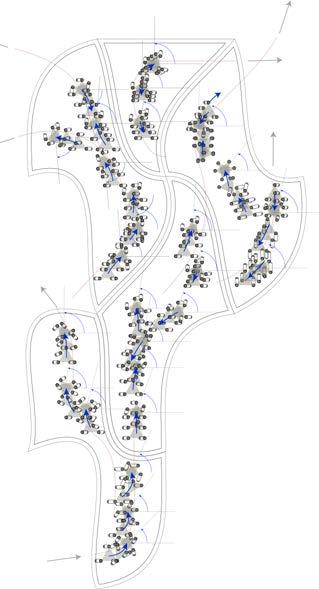
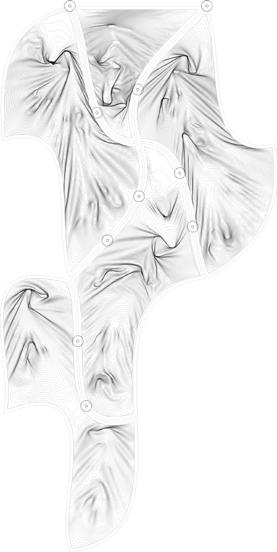
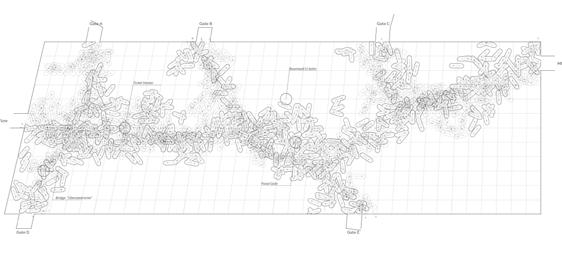
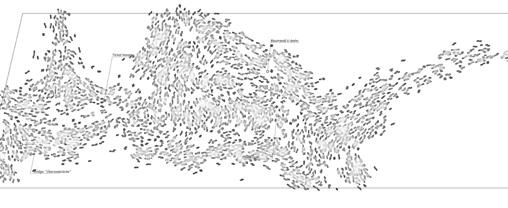
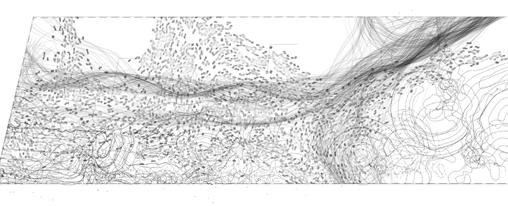
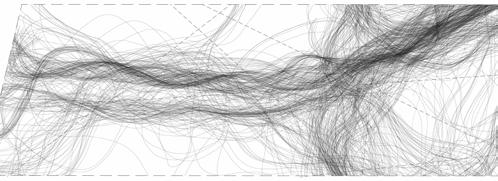
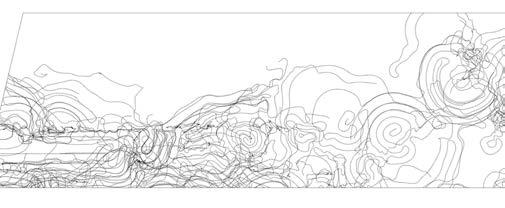
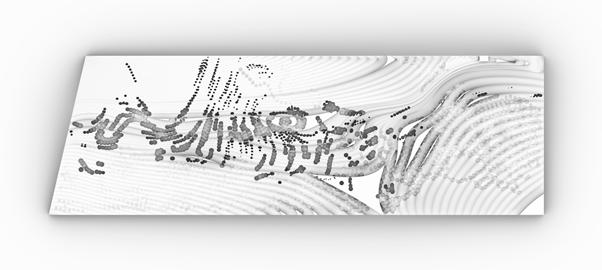
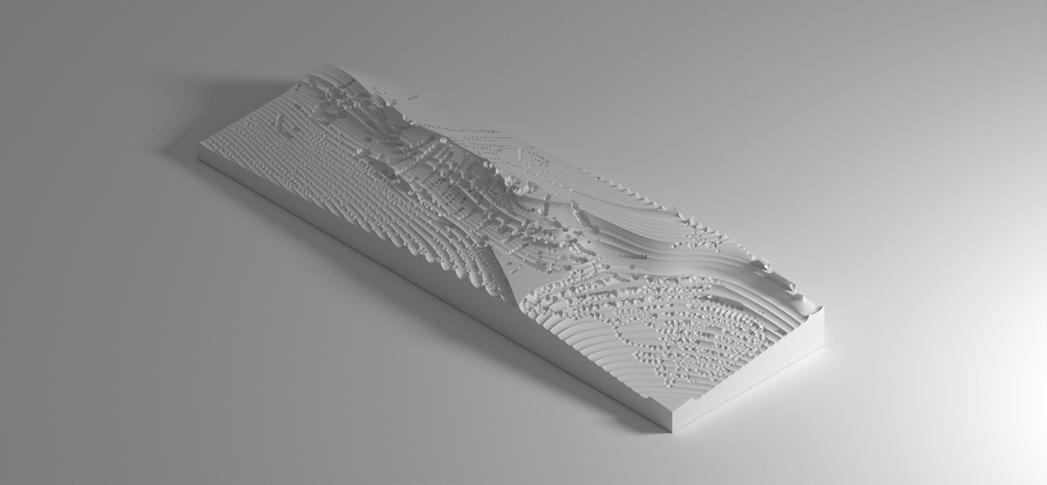
The same way was also used for the mapping of Hamberg Habour. A series of the parametric drawing represent the human, vehicle, and water streamline respectively. All the drawings are generated by grasshopper. All the drawings were overlapped together to show the density and interaction of three aspects. The density and the intersection would be perceived by the integration drawing. Then, all the lines in the drawing were separated into numerable dots. They symbolized each movement of the nozzle for CNC milling. The white model has been shown above.
Residential Area Planning
ACADEMIC, Individual Work 2016, [Undergraduated Graduation Design, 3th year]
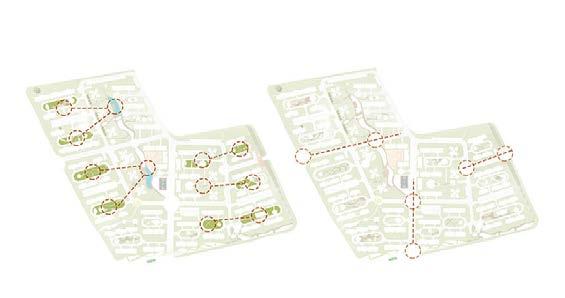
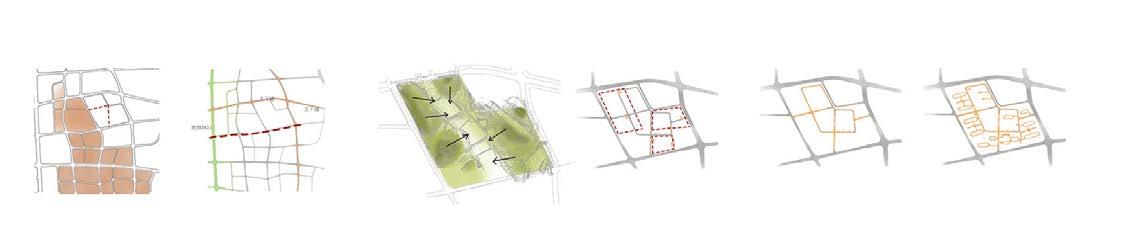
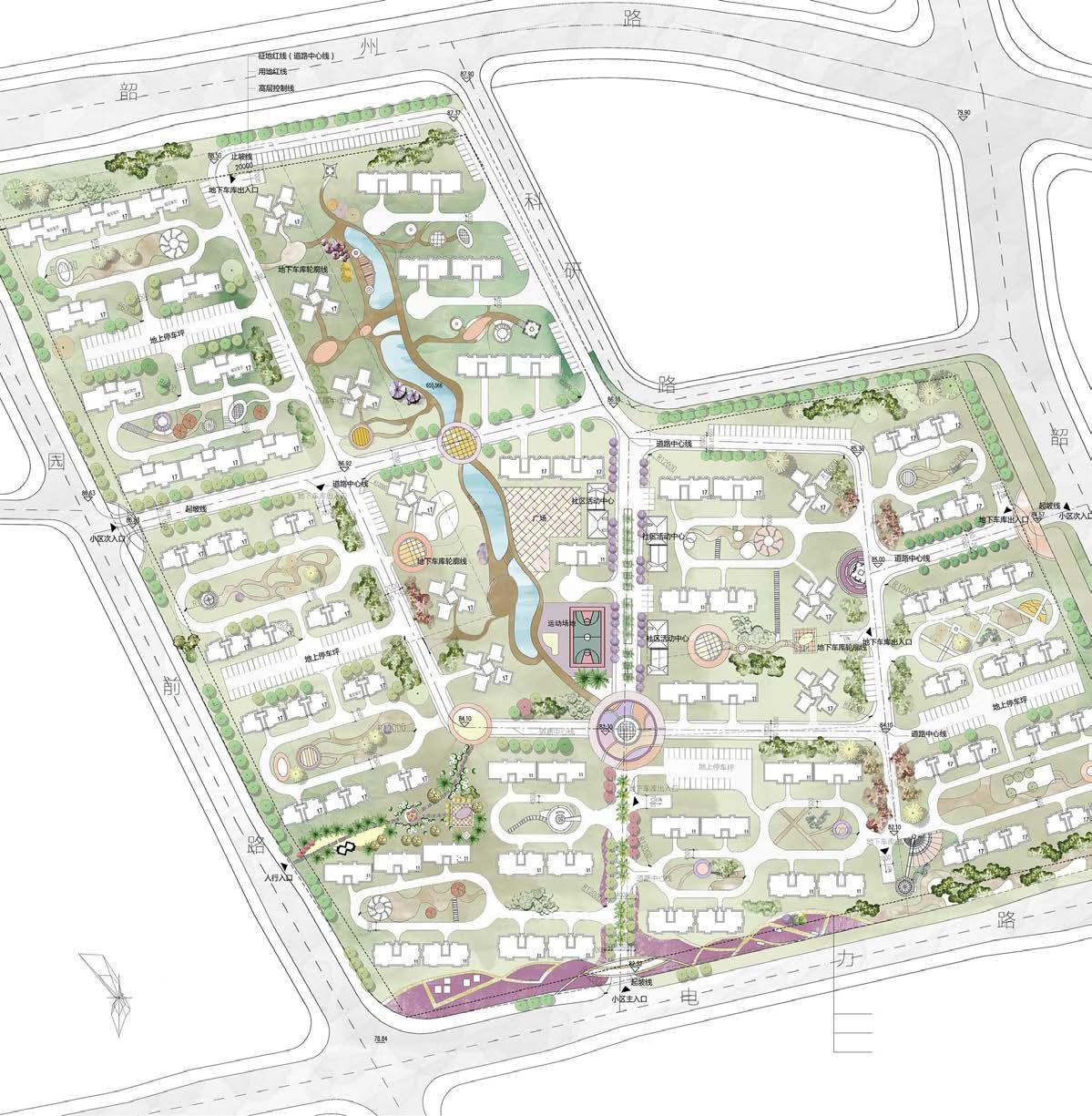
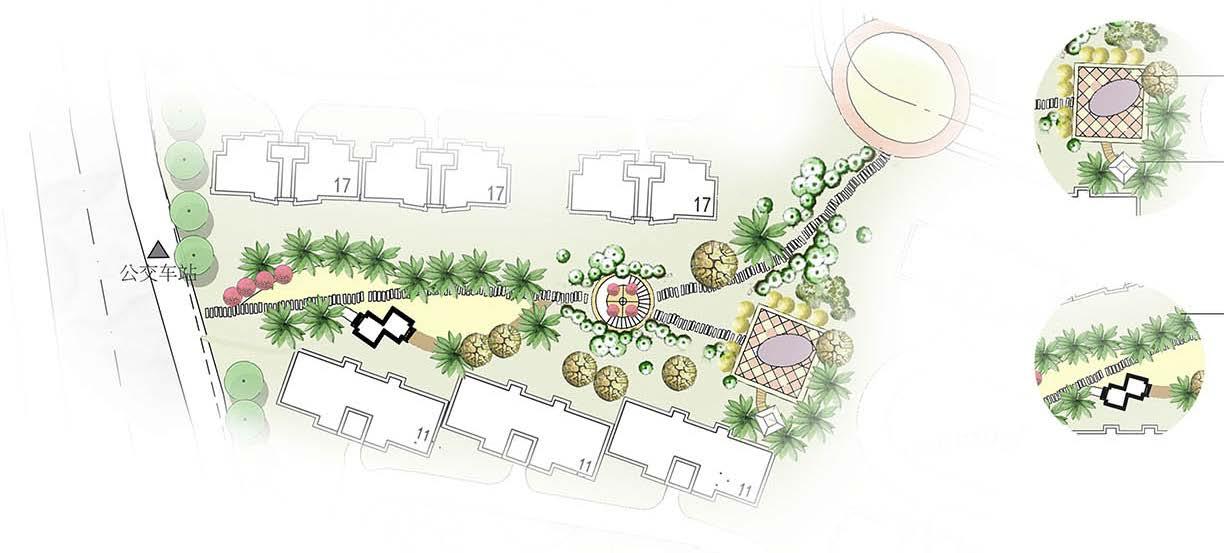
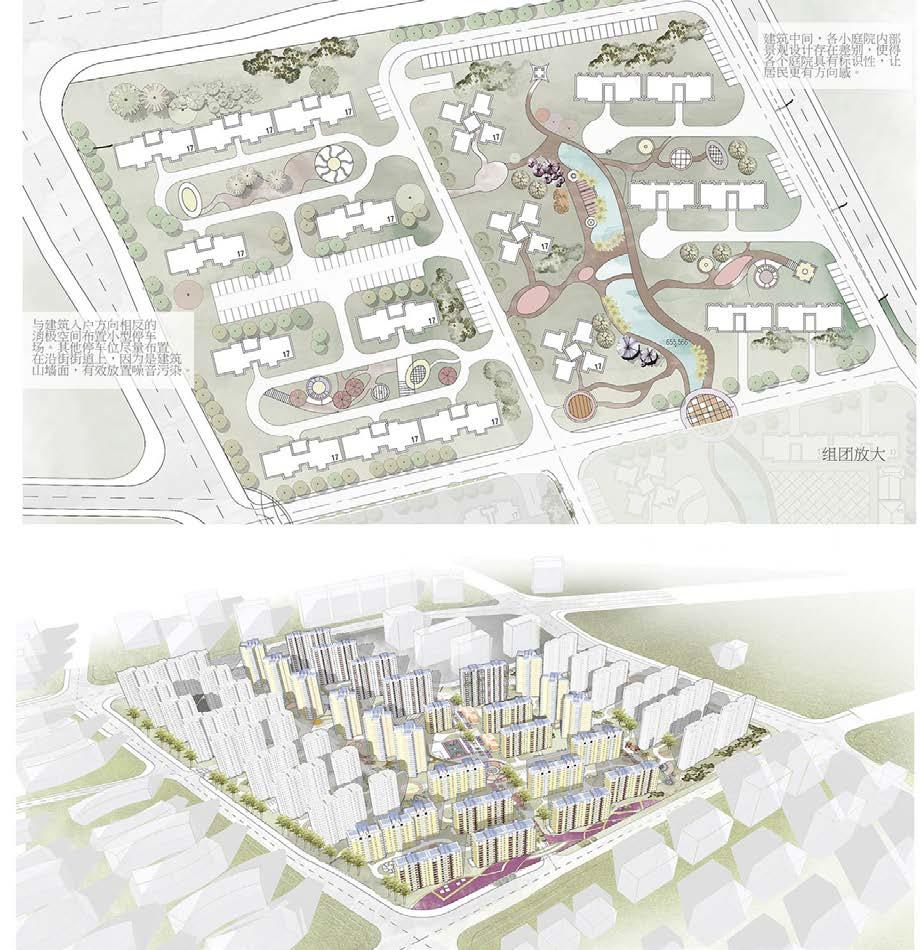
This is a residential area planning and design project located in Yuelu District, Changsha City. It involves road planning, housing planning, plot ratio (FAR) consideration, landscaping design, node design, and fire lane design.
Curculation / Transportation / Regional
Function and Streamline Analysis
landscape design
Block Design
ARCHITECTURE DRAWING
"Drawing Investigations - on how drawings become a spontaneous, conscious procedure for constructing architecture."
ACADEMIC, Individual Work 2021
Supervisor: Claudia Carbone
(Email:cc@aarch.dk Tel:0045 8936 0305)
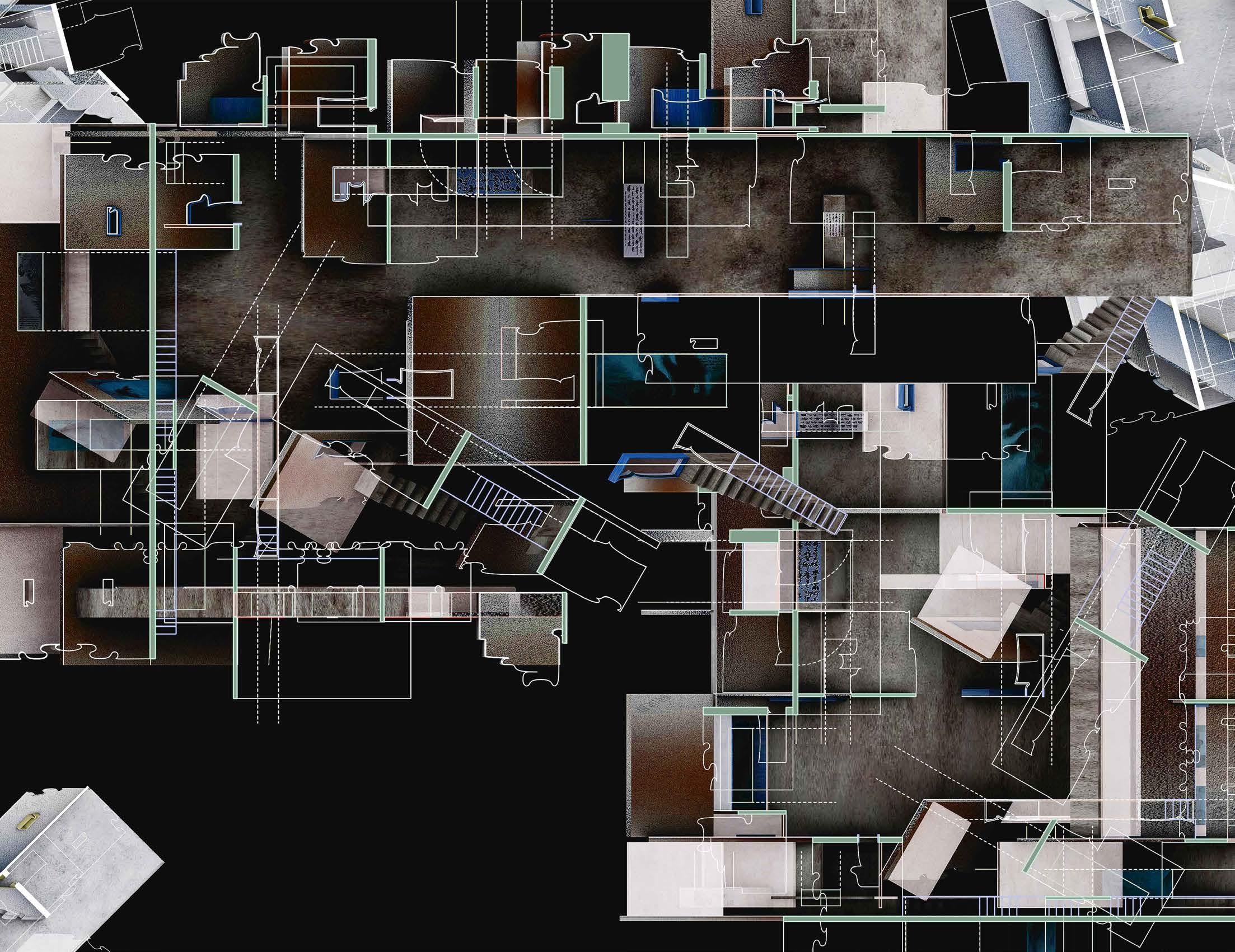
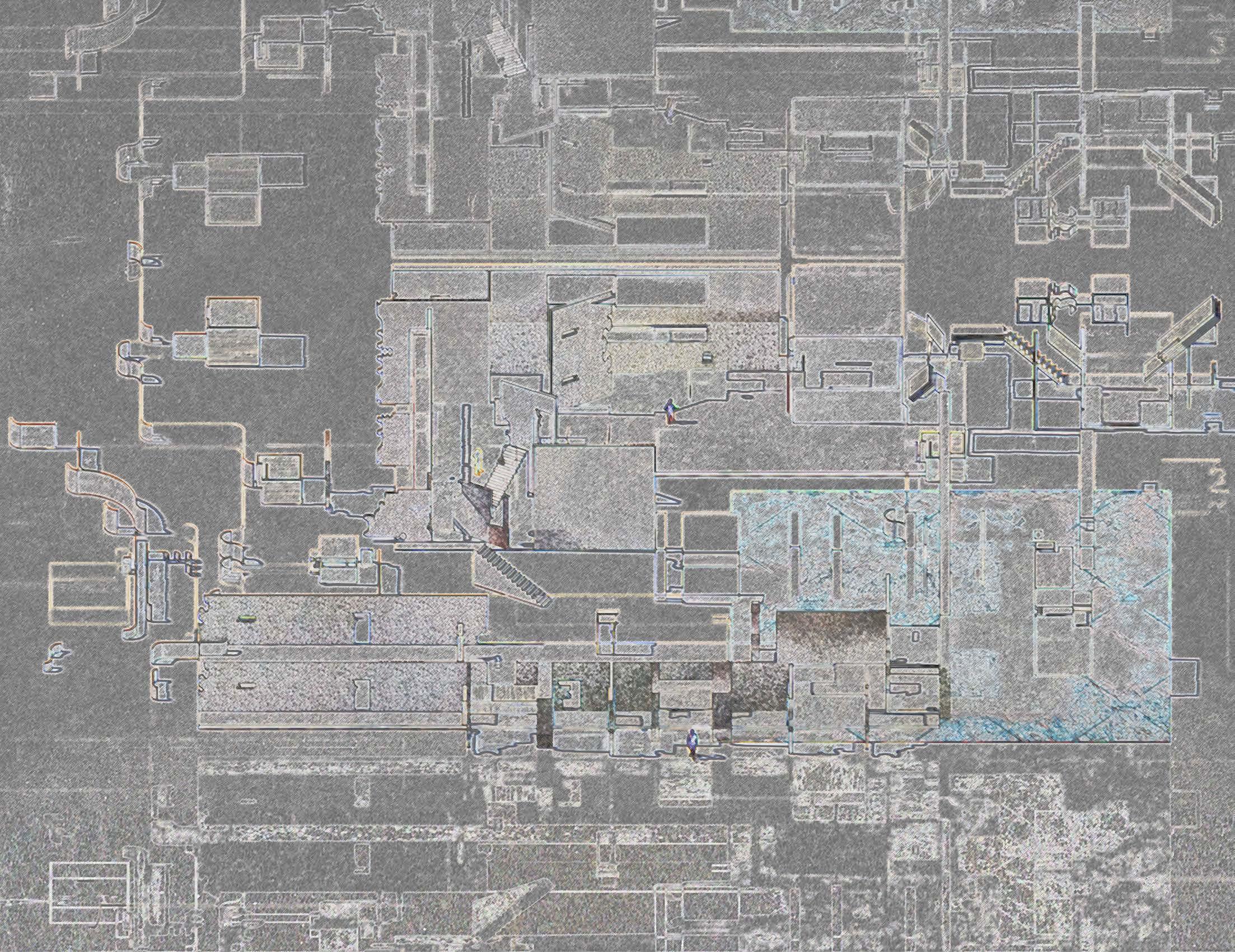
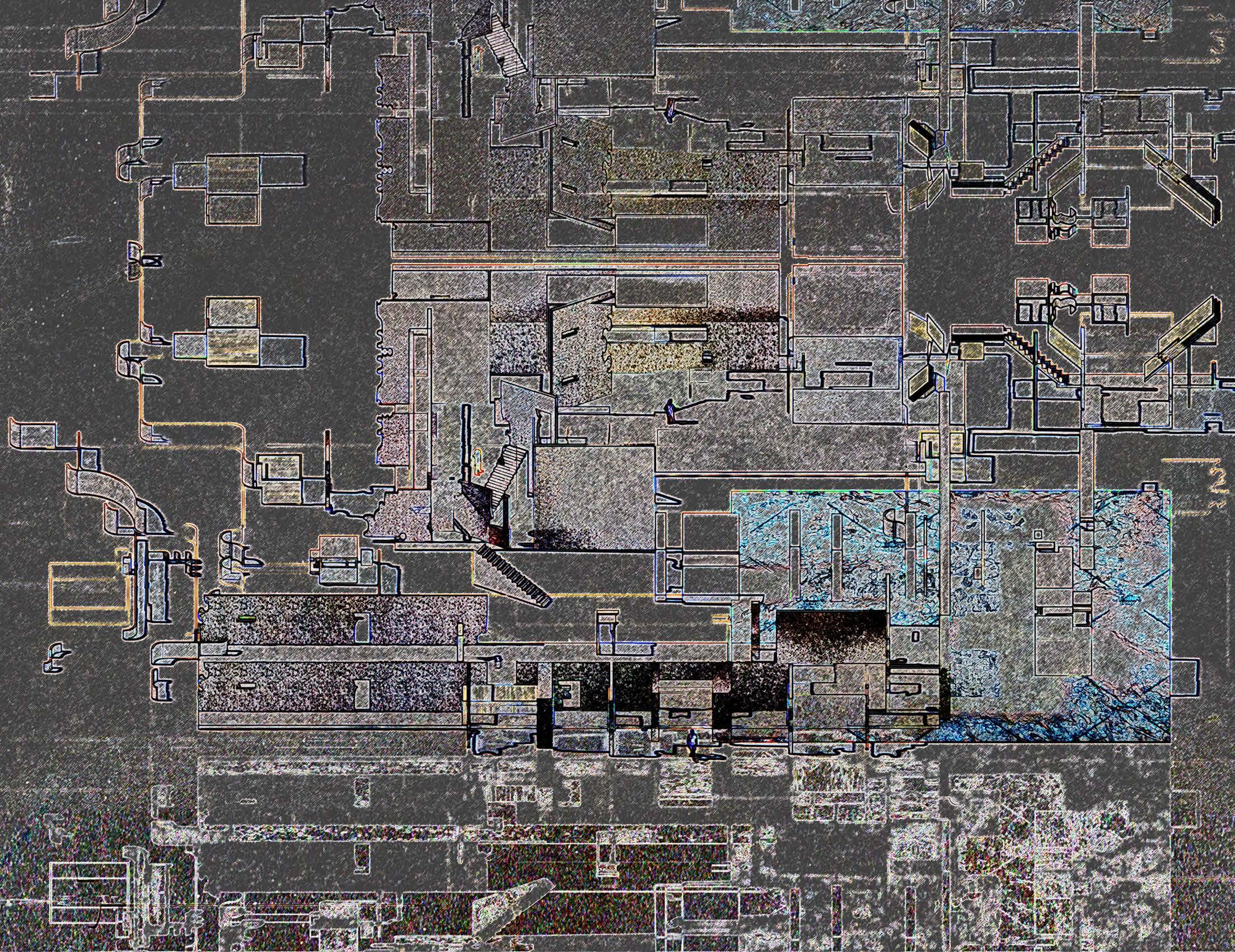
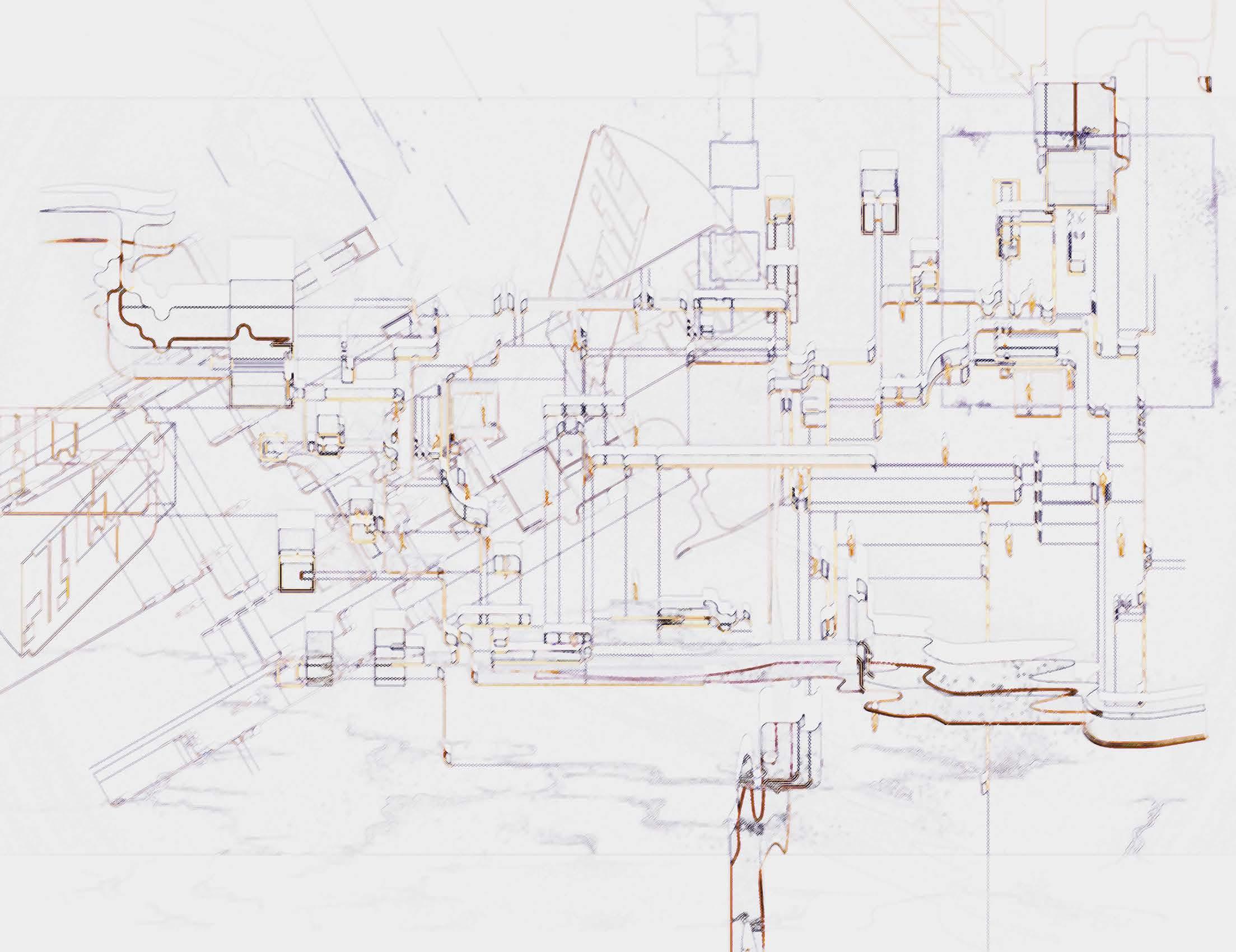
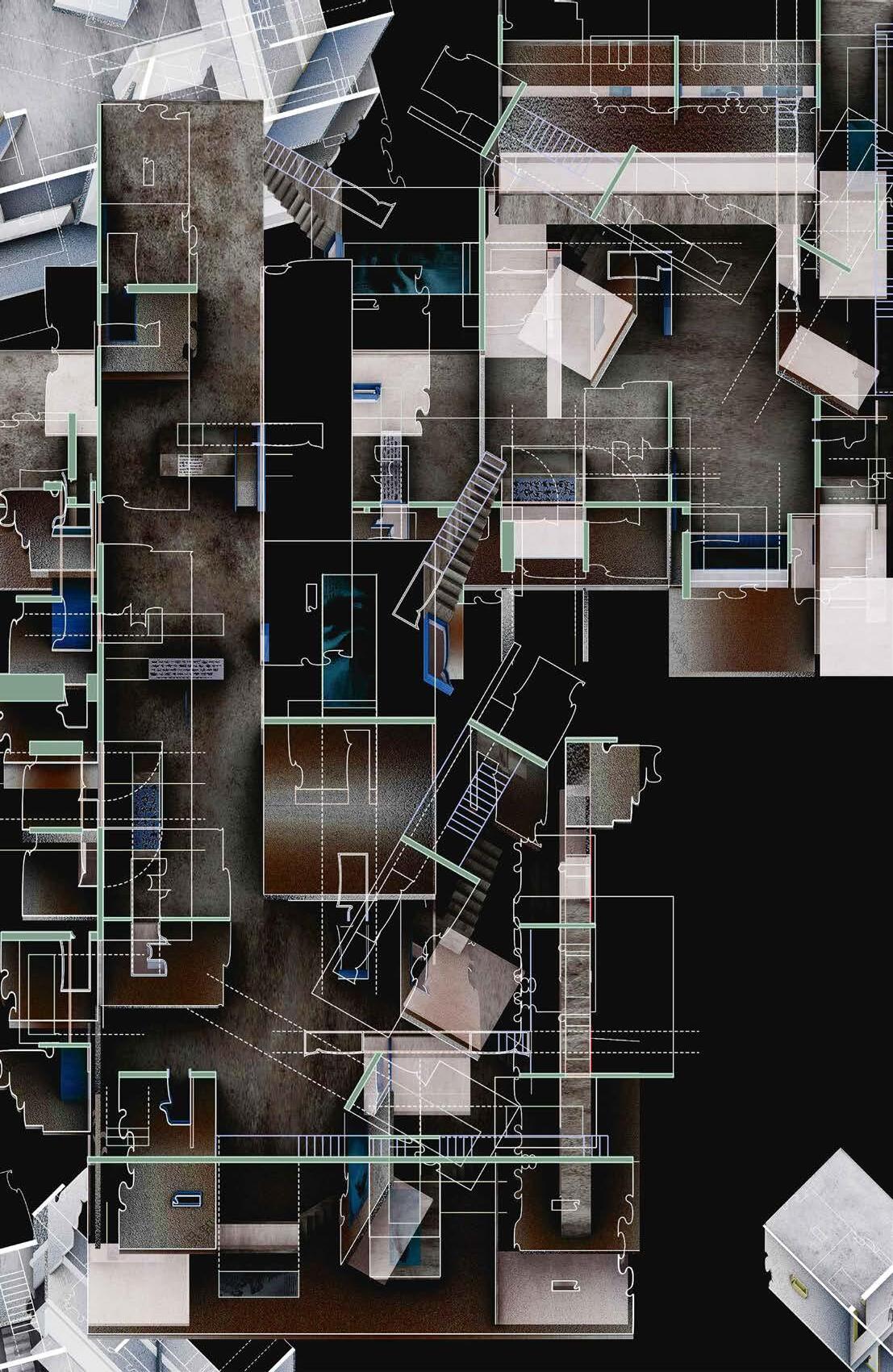
Drawings are ceaseless thinking instruments while constructing architecture. Drawings are intervened and aroused by subconsciously-manual-fluidity and consciously-cerebralinstruction. Through translations of famous Chinese writing, the project aims to capture characteristic architectural moments, found and expressed in the text, to work with tools like pencil and mouse, in digital and/or analogue projection. Furthermore, in iterations to work to unfold of ideas, structures, relationships etc. inherent in the text.
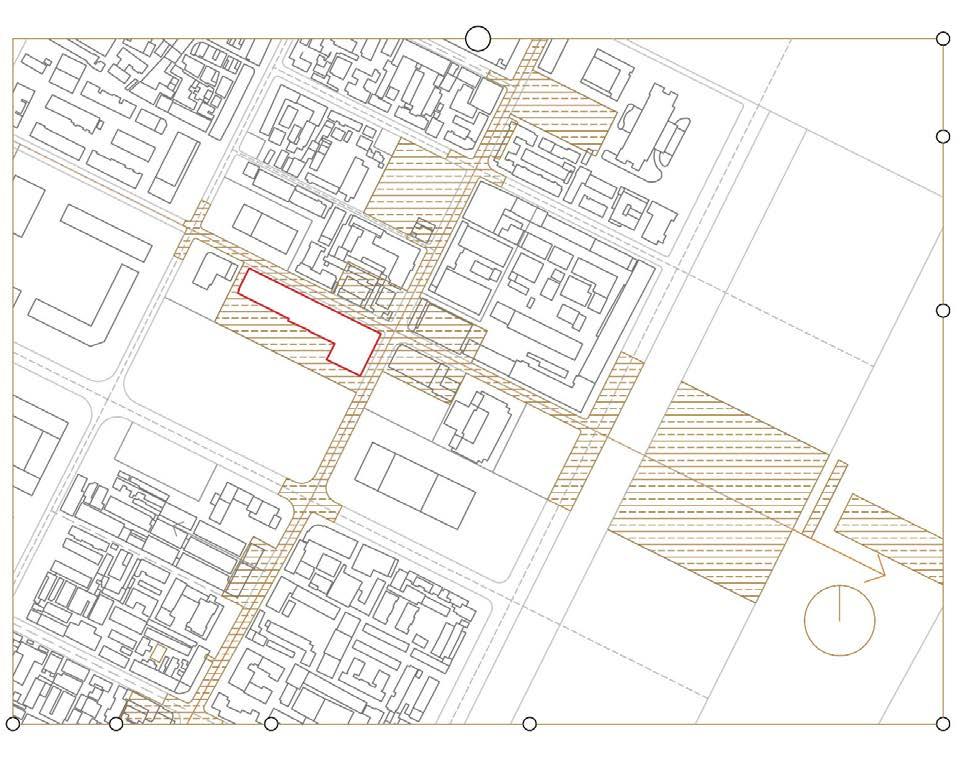
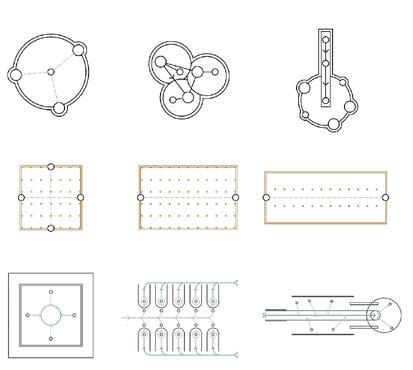
Final result pointed out a Zhuangzi Monument with four parts:
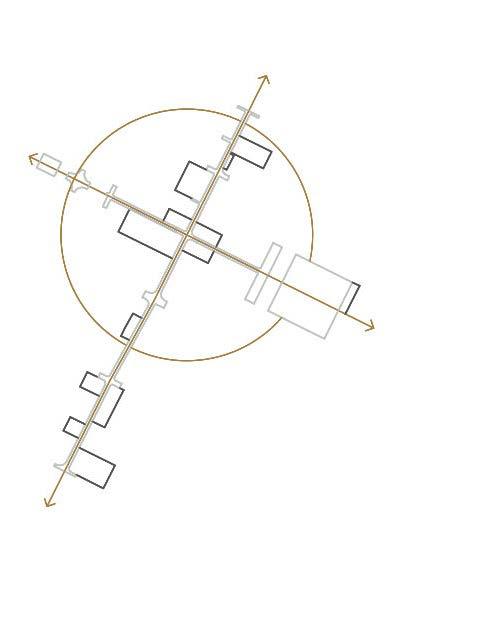
1.Infinite Relativity Park,
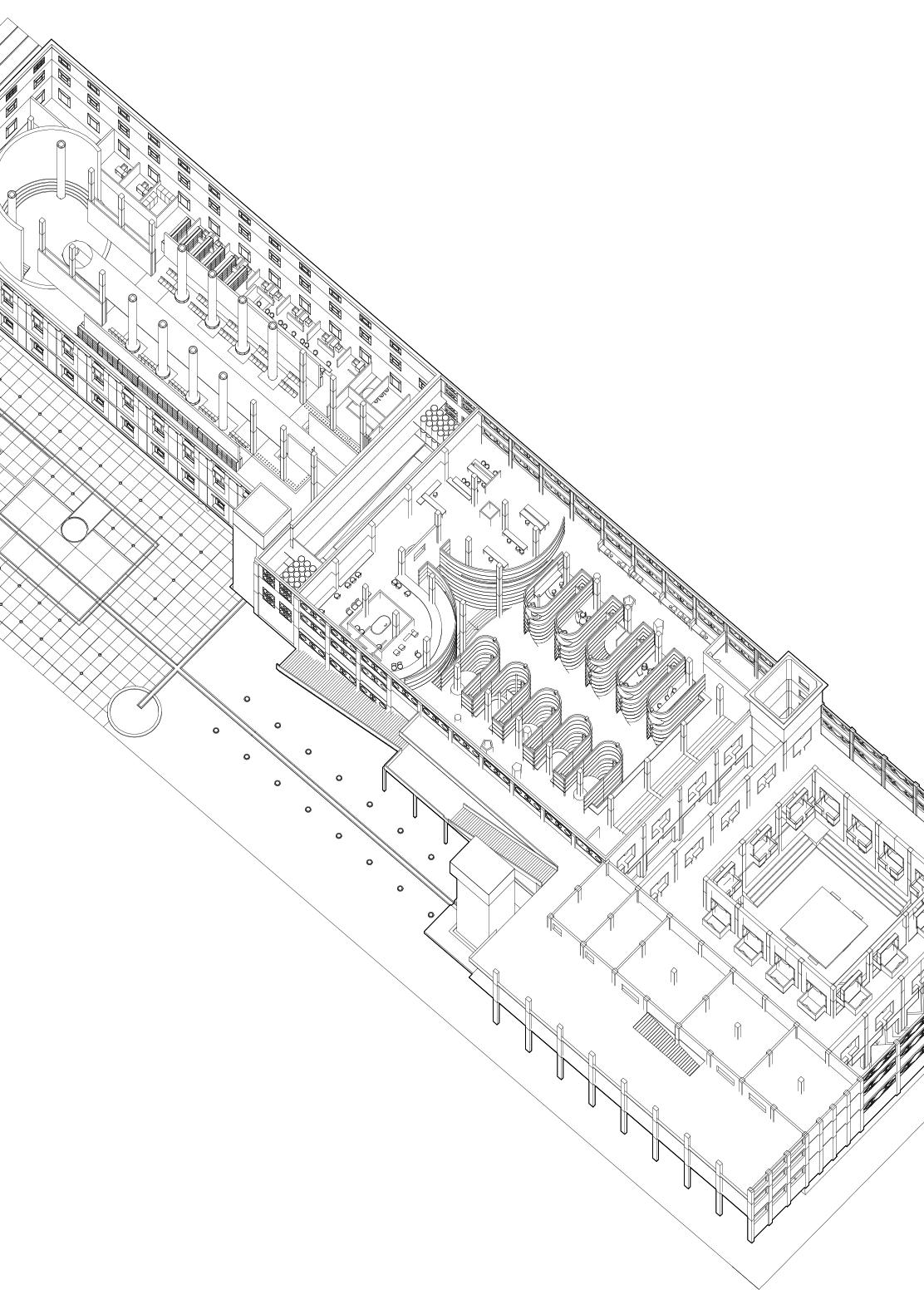
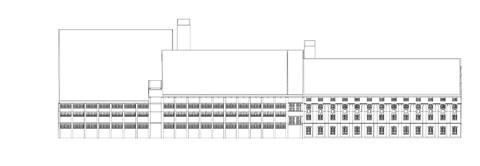
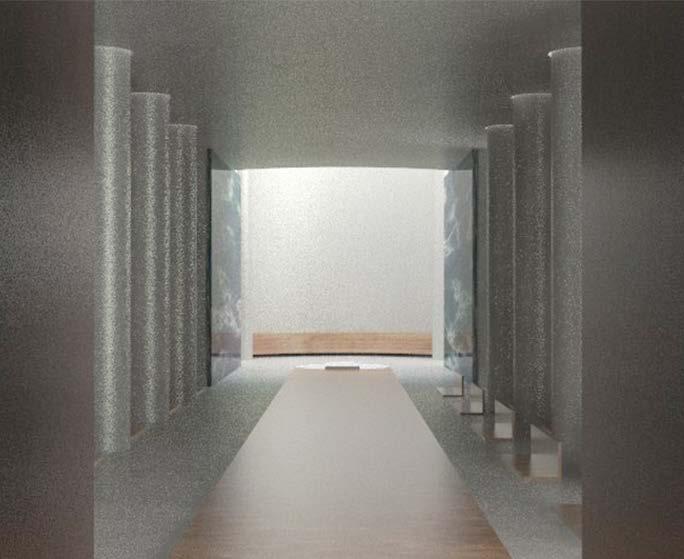
2.Wall-Doorway-Window Exhibition Hall - Architecture
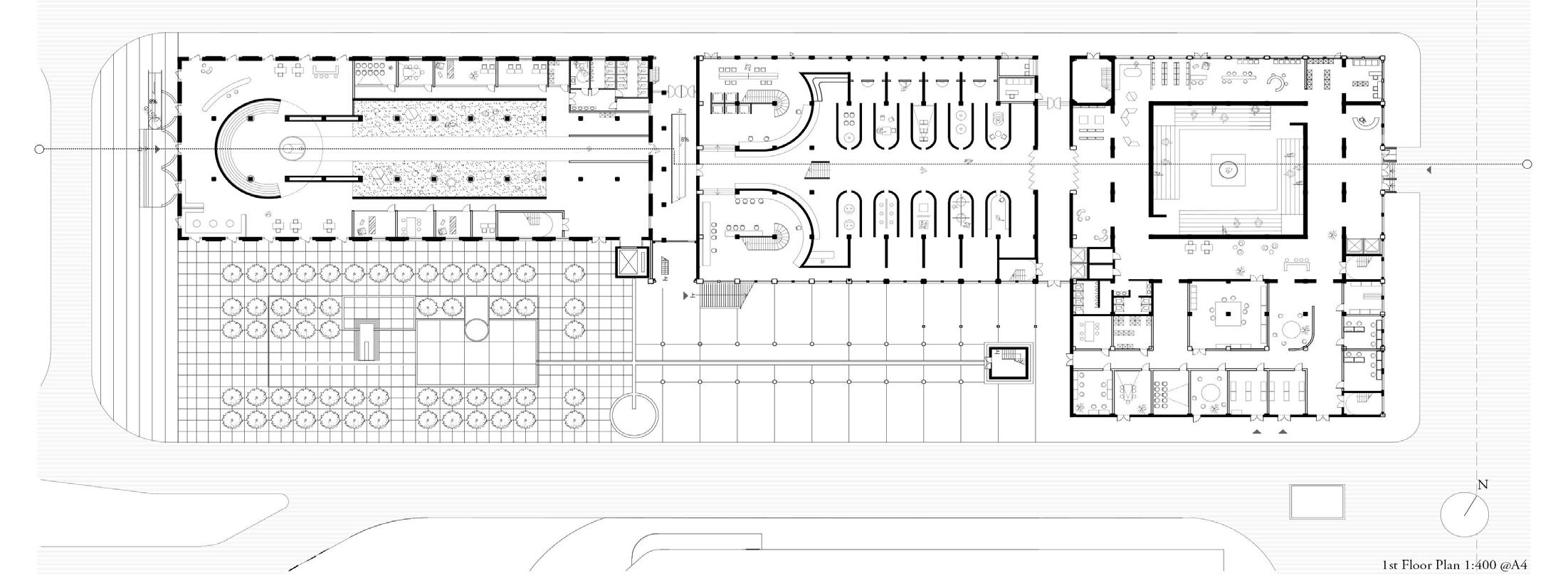
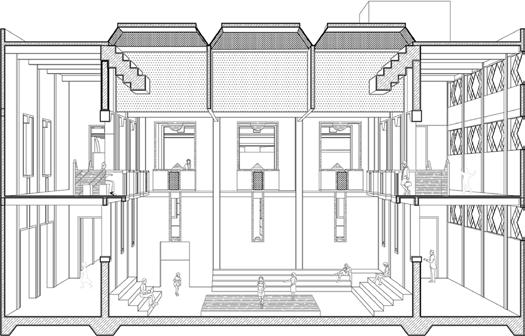
3.Human Library
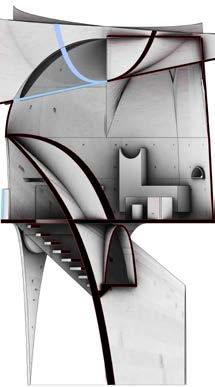
4.Lush Garden
I selected three typical drawings as the end of my portfolio, which symbolize my present thought about Architecture, and my great willing of architecture drawing exploration in the future.
If you need more information about this project, please feel free to contact with me.
C-1
ACHITECTURE DRAWING: Zhuangzi Monument
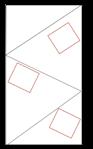
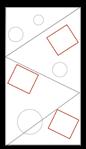
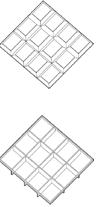
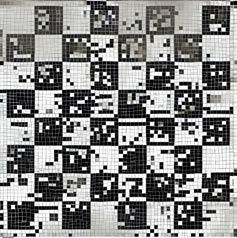
Infinite Relativity Park
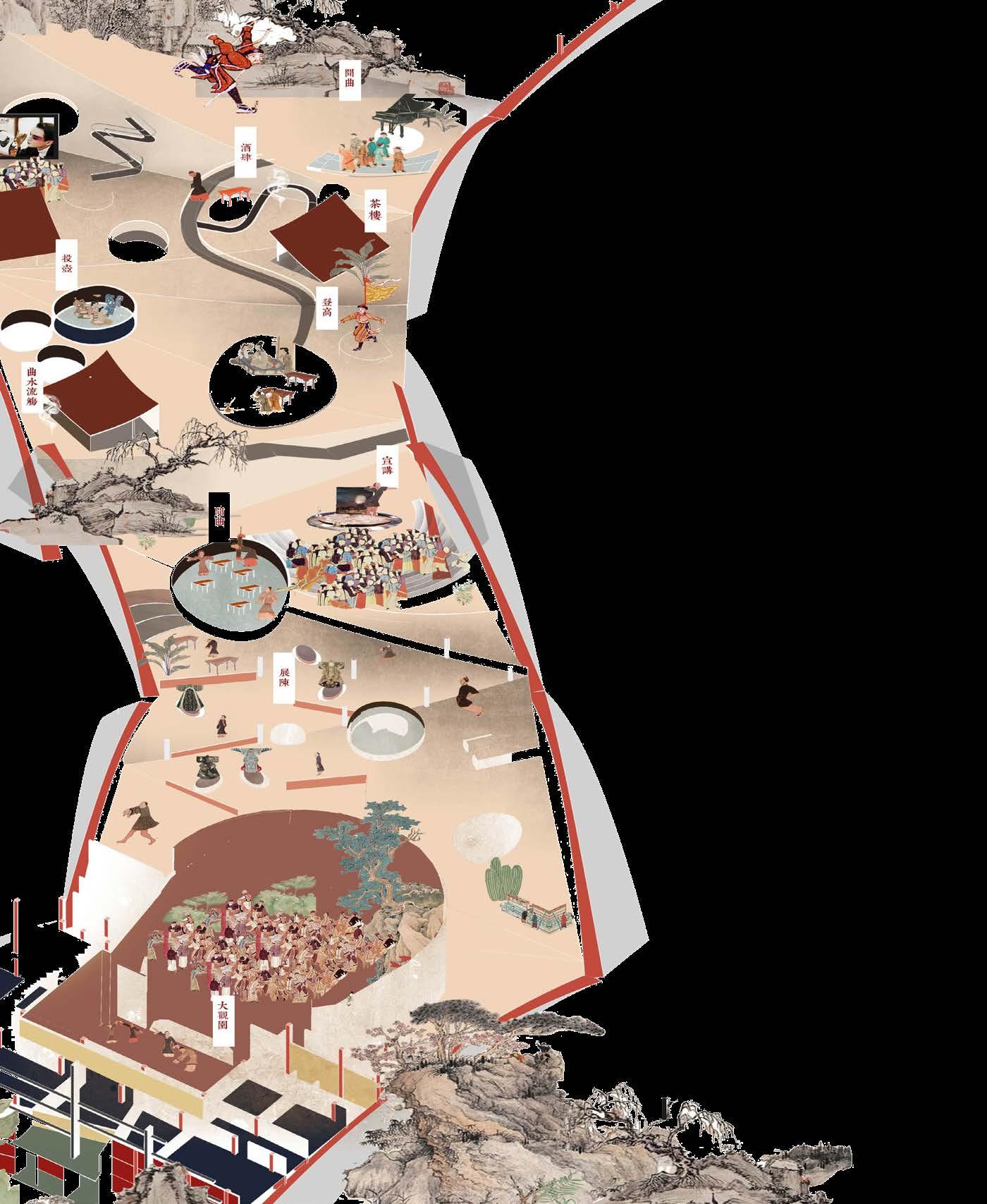
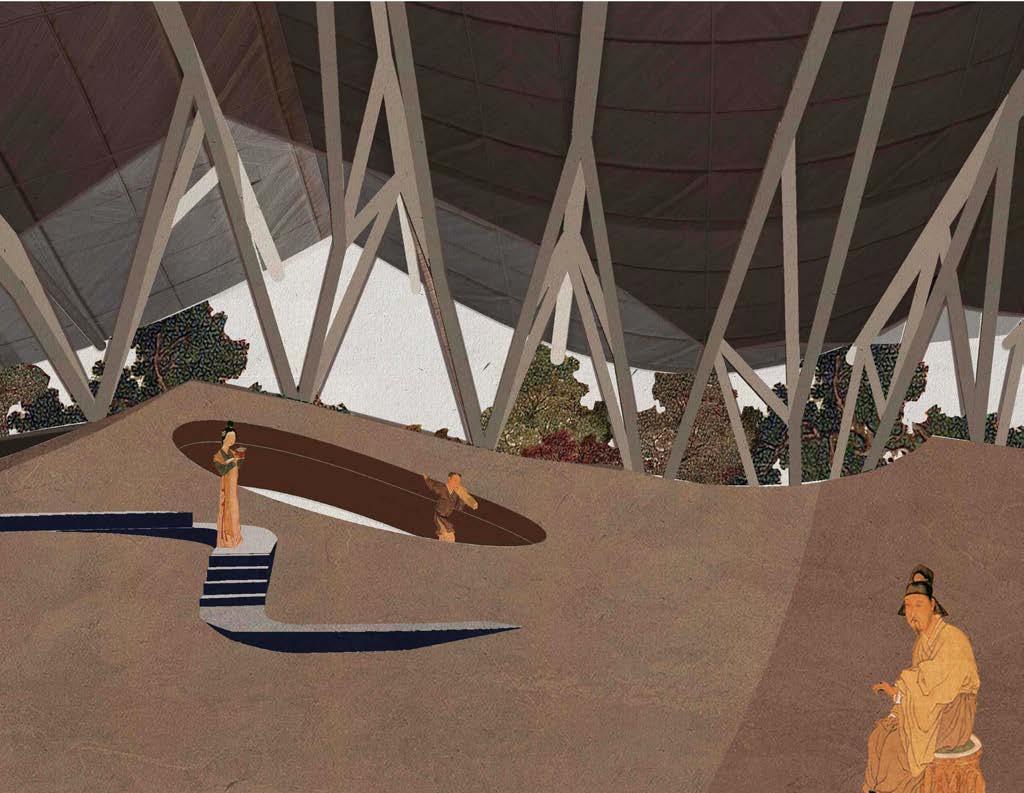
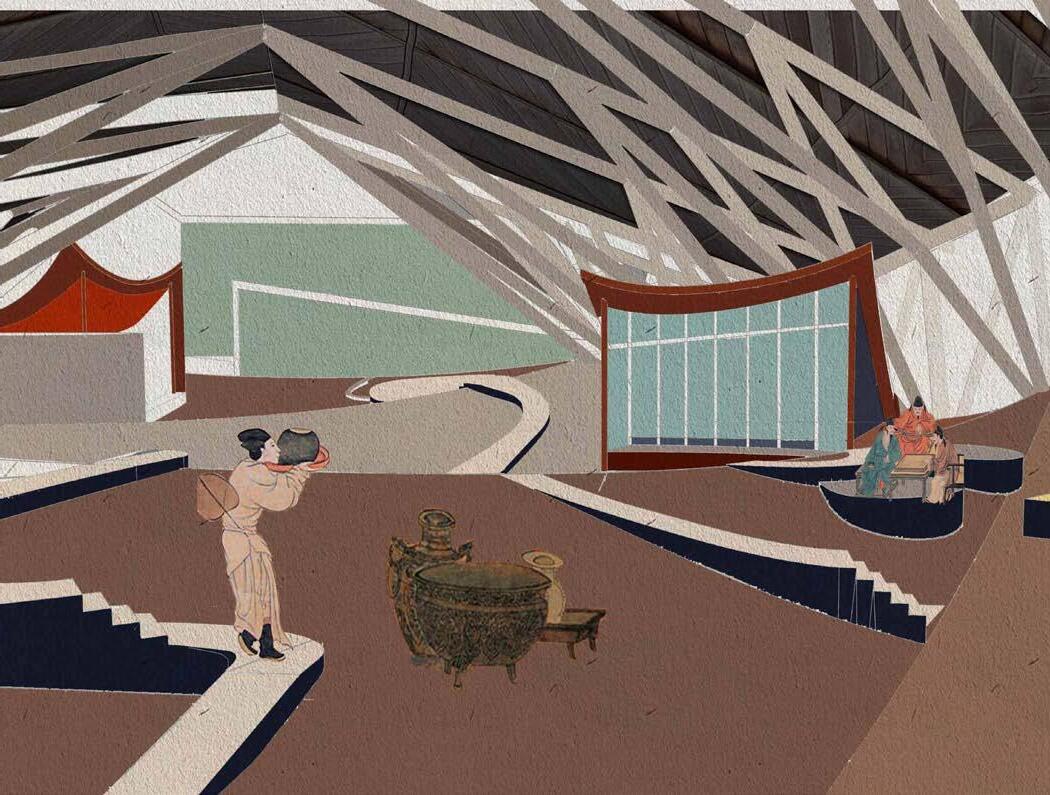
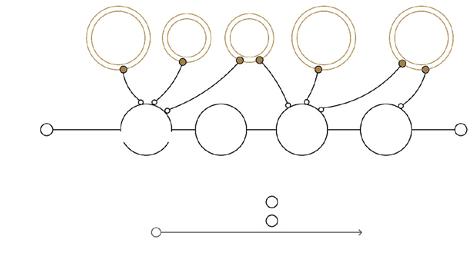
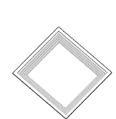
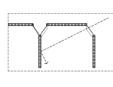
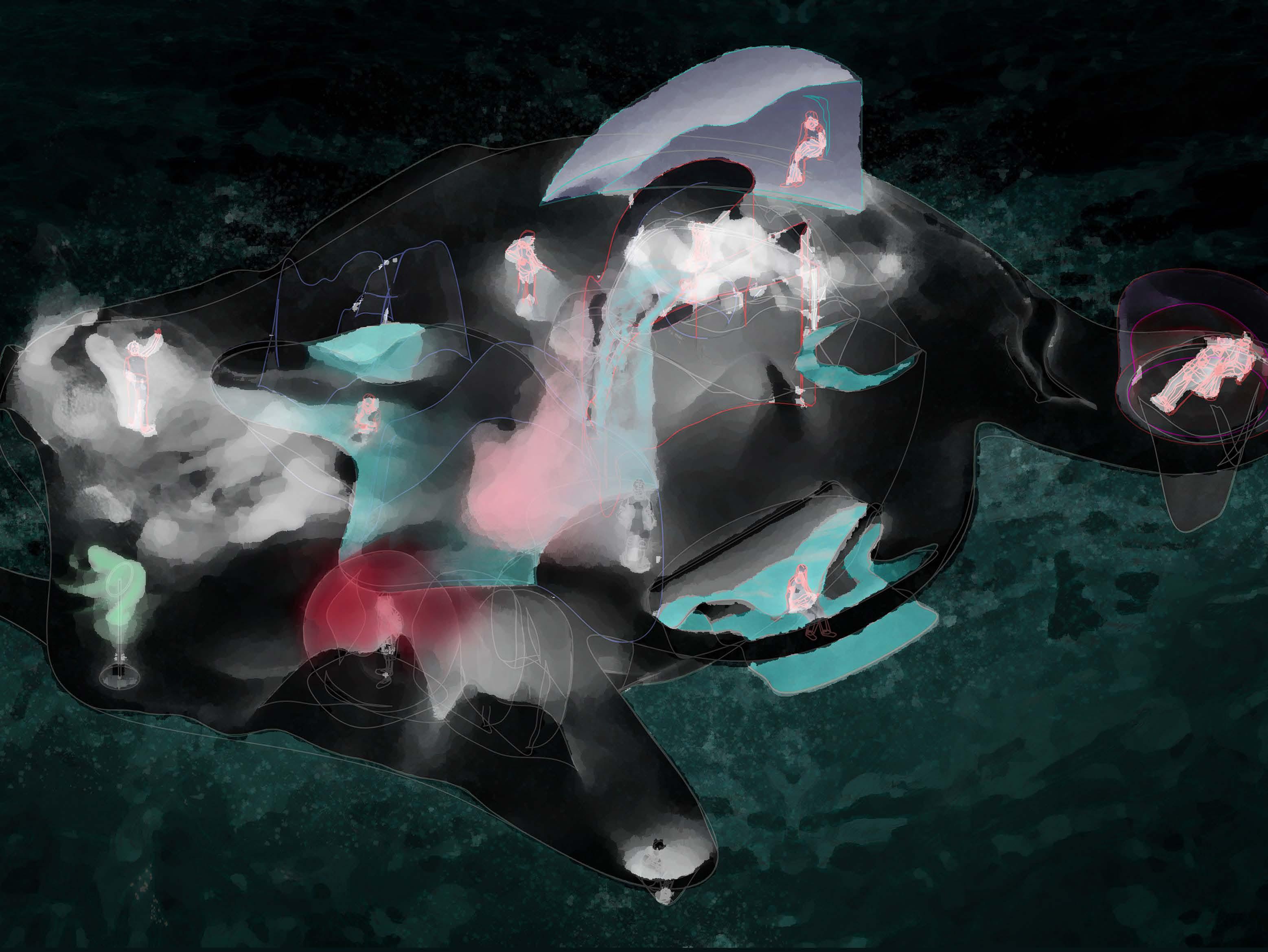
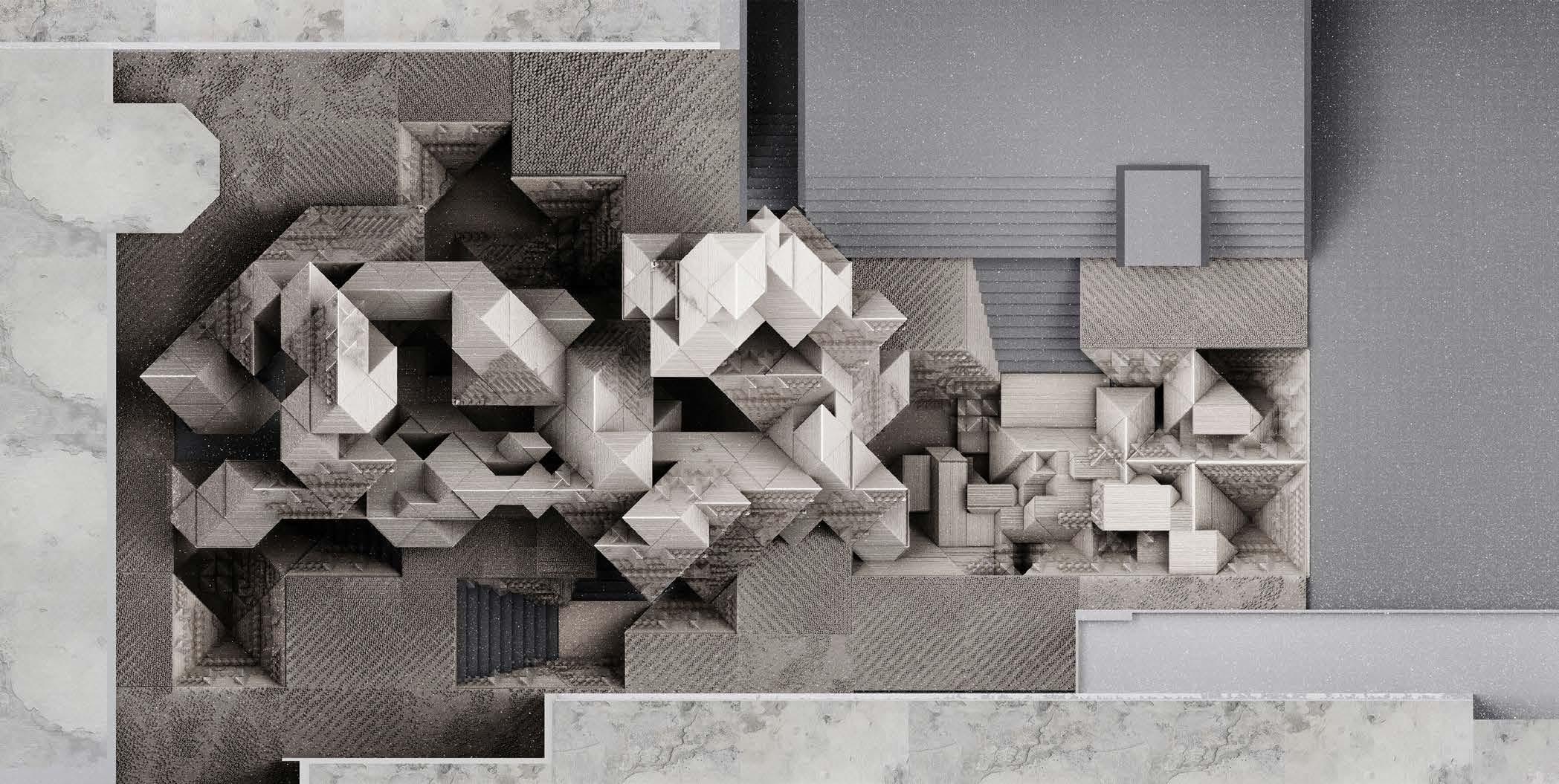
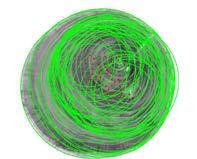
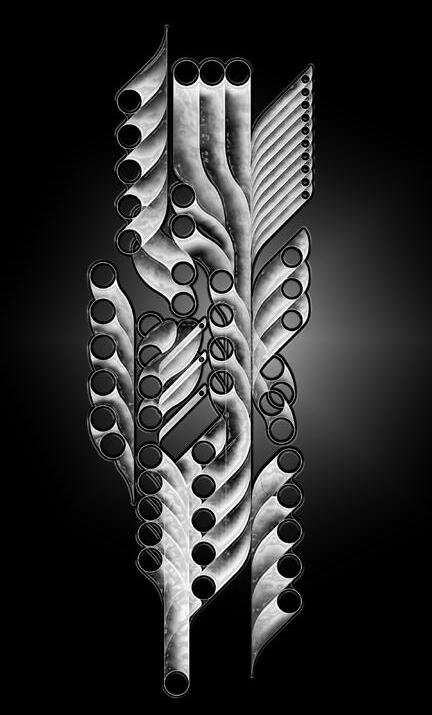
This drawing shows the first part of Zhuangzi Qiushui Memorial Hall - Infinite Relativity Park. It is the process of translating the hand-painted translation of Qiushui’s first three questions to digital painting and architectural space. This architectural drawing emphasizes three elements, infinity, the relativity of big and small, and the indisputable correspondence.
(This drawing was drawn by rhino and PS.)
C-2 ACHITECTURE DRAWING Zhuangzi Monument
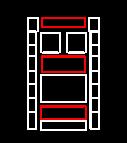
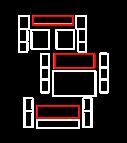
Concentrated version by segments of each part
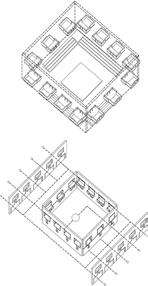
The four parts of the Zhuangzi Qiushui Memorial Hall (infinite relativity park, wall and door profit and loss exhibition hall, human library, and lush garden) are extracted from each part to form a condensed version of a monumental building with implied philosophies. Architectural painting uses a vertical axonometric perspective, and its mirror and ground reflections, to present an architectural fantasy. (This drawing was drawn by rhino,PS and pencil.)