
Wanderlust, Issue 237, (February/March 2025)

Page 1


CHECK IN

9 Editor’s Welcome

Why our annual look at where to go in the year ahead has changed

10 Contributors

Meet the team; plus, we ask: what makes a Wanderlust traveller?

12 Viewfinder

Drink in Uluru from the skies, Palm Springs architecture and a Kyoto beyond the city crowds

17 Your Photos

You send us your top travel shots

JOURNAL

21 Grapevine

The latest travel news and views, plus the French cathedrals that outshine even the reopened Notre-Dame, and we announce our Reader Travel Awards results

33 Armchair Travel

Discover why the shortlists for this year’s Stanford Travel Writing Awards offer plenty to savour

36 Just Back From: Austria & Illinois

Embrace the joy of small towns in Carinthia and the Prairie State; plus, your letter of the month

43 Health

Why allergy season is arriving earlier and earlier for travellers

44 Sustainable Travel

From cosy hay hotels to free public transport, a greener Germany awaits modern visitors

50 Departures

The new trips for 2025 that are set to make it a year to remember

54 World Food

Uncover the roots of Slovakia’s increasingly modern food scene

58 Dream Sleep: Australia

A plush stay on a Queensland cattle station offers a chance to connect with Australian history

60 Dream Sleeps: Africa

The best new camps and lodges for encountering Africa’s wildlife

TRAVELOGUES

86 Namibia

By sharing their way of life with visitors, the drought-ravaged desert communities of Namibia’s remote north-west are finding new ways to help preserve their cultures and the landscape

96 Capitals of Culture

Divided for generations, Italy’s Gorizia and Slovenia’s Nova Gorica are now the first-ever cross-border Capital of Culture. As the party begins, we visit a region still wrestling with its past

106 The Three Guianas

The three Guianas of Guyane, Suriname and Guyana reveal a unique corner of South America where the past and present intersect and borders fade into the haze of shared legacies

120 New York State

A century after F Scott Fitzgerald’s The Great Gatsby was published, the ‘Gold Coast’ mansions of New York State that inspired it have lost none of their ability to dazzle visitors

130 British Columbia

In the whale-filled waters of Canada’s Great Bear Sea, a new network of protection areas have been established that hold the key not just to marine conservation but to the future of the region’s Indigenous peoples

164 The Good to Go List

From milestone anniversaries to iconic cultural events, we pick the destinations that offer curious, intrepid and responsible travellers the greatest prize of all in 2025: the chance to travel and be a part of something special

DISCOVER

230 Indigenous Culture

The crafts of the Wayuu people can be found across Colombia, but the culture behind them offers far more than just souvenirs

232 Urban Spotlight

A twin-city break in Finland’s Helsinki and Tampere reveals art, saunas and Moomins galore

240 Celebrating Train Travel

Fifty years on since the fall of Saigon, we travel the historic Reunification Express railway

243 European Break

Peer beyond the vampire kitsch of Transylvania on a new trail

248 Wildlife Encounters

Why Rajasthan’s landscapes hide incredible wild secrets

250 British Break

Discover the Tyneside Coast, where saints, surfers, seals and Romans have all washed up

255 Wander Quiz

Test your rail-travel knowledge

258 Meet the Locals

We talk art and fashion with Jeddah local Leila Hafiz

Good to go

For more than three decades, our editorial team has carefully curated our annual travel recommendations, traditionally known as the ‘Hot List’. This year, however, we’re charting a new course with the ‘Good to Go List’ (p164). This isn’t just a rebranding; it’s a deliberate shift towards showcasing destinations that inspire, challenge and reward responsible travellers. Every place on this list offers exceptional experiences while telling compelling stories that are specific to 2025.

From milestone anniversaries to transformative cultural events, the Good to Go List highlights travel that deepens our connection to the world and each other. These destinations feature innovative developments – groundbreaking art museums, restored landmarks, rewilded natural spaces – and exemplify tourism that respects heritage and uplifts communities while preserving their narratives. This ethos aligns seamlessly with our 2025 editorial theme: the ‘Year of Locals’.

This year’s list invites travellers to engage meaningfully, making choices that matter. Namibia, our cover star, stands as a beacon of this ethos, thanks to its dedication to conservation-led tourism (p86). Elsewhere, New York State’s celebration of The Great Gatsby’s anniversary brings literary history vividly to life (p120). These stories, together with others from the Good to Go List that will be featured across the year, spotlight the vital role of locals in shaping authentic travel experiences.

We’re also marking 200 years of passenger rail travel with a new regular column on rail journeys (p240), highlighting some of the most breathtaking train routes across the globe. Rail travel, a slower, more sustainable option, offers a chance to savour the journey itself, a subject we’ll return to often in 2025 – including a special rail-themed edition. Whether you’re drawn to literary landmarks, cultural breakthroughs or ethical wildlife adventures, 2025 offers extraordinary opportunities to connect deeply with the world and its people. Embrace these moments and make your journeys count.

Safe travels,

Responsible,conscious andsustainabletravel isattheheartof everything wedo

Established in 1993, Wanderlust is the UK’s longest-running travelmedia brand and the #1 Consumer Travel Magazine in the UK

What we cover...

Off-the-beaten-path and off-season destinations and experiences around the world

Thought-provoking content for all kinds of travellers, ranging from culture, history, art and heritage through to our unrivalled nature, wildlife and adventure-travel coverage

Extensive coverage of immersive, authentic and longer travel experiences for the passionate travellers who care deeply about our planet and its people

A strong focus on responsible, sustainable travel throughout our publications in print and online, culminating in our unique and annual The Travel Green ListTM issue

Advertisement Features

Every issue of Wanderlust includes ‘advertisement features’ – advertising content that Wanderlust Travel Media Ltd has been paid to produce by advertisers. These are clearly marked by the words ‘Advertisement Feature’ and can be further identified through a coloured borderline at the bottom of each relevant page. While written by the same high-quality journalists we engage for the remainder of our content, advertisement feature content does not necessarily reflect the views of Wanderlust or its editorial team.

The changing world

(this page; top–bottom) Conservation-led tourism shows us a new side to Namibia; Oheka Castle in New York State is one of many mansions that may have inspired The Great Gatsby; (front cover) a satellite image of the Namib Desert and Sossusvlei, Namibia, captured by Korea’s Kompsat-2, courtesy of KARI/ESA

Meet the new team

Contributing

“I’m heading to a country I’ve never visited before: Costa Rica. I’ve shied away from it because it’s –understandably – so popular. Will I find places that are still wild? Will I escape the crowds and spend time with local communities? I’ll let you know in an upcoming Wanderlust story!”

YASMIN HARAKE

Special Features Editor

“I’ll soon be touching down in Jeddah, Saudi Arabia, then heading to an ancient Arabian oasis. Once a rest stop for pilgrims and traders along the incense route, AlUla is home to a rich history and a local people known for their hospitality. I’m looking forward to hearing their stories and sharing them on my return.”

Contributing

”This year, I can’t wait to get back to the Caucasus, both to travel and to celebrate Novruz Festival. I’m researching stories on the Silk Roads, and it’s fascinating to see the depths of the roots of Zoroastrian tradition in this region. In the mountain villages there are fire and flame festivals.”

DIANA JARVIS

Sustainability Editor

“I’m most looking forward to visiting Zambia and Malawi on a ‘green safari’. The camps I’m visiting are 100% solar powered, even down to the electric safari vehicles – which makes them quieter and disturbs the wildlife less. Tourism income here also directly supports a number of important local projects.”

Contributing Editor

“This February, I’ll be in Vancouver to experience the Invictus Games, a powerful celebration of resilience and adaptive excellence that, as a wheelchair user and spinal-injury survivor myself, has a unique draw. I’m also heading to Whistler, to see what’s on offer for Disabled lovers of the outdoors.”

DIANNE APEN-SADLER

Senior Digital Editor

“I’m hoping to visit Latvia. Partly because my mother’s side of the family has Latvian roots, and partly because I want to experience the country’s Midsummer celebrations, which involve eating cheese, drinking beer and singing the night away. All things I love, but I must admit that I thought they came from my English side…”

Diversity In Travel Writing Matters

ALICE MORRISON

Contributing Editor

“I’m most looking forward to going to Najran in the far south of Saudi Arabia. That will mean I have successfully completed my expedition to be the first person to cross the Kingdom, north to south, on foot. I am 300km in and I’ve already found petroglyphs, Stone Age tools and wolf tracks.”

TOM BENNEDIK

Digital Specialist

“I’m looking forward to visiting Vilnius in Lithuania this year. As it’s the European Green Capital for 2025 –where 95% of residents live within 300m of greenery –I’ll be exploring the city by bike. I’ll also be there in time to experience Street Music Day, when 5,000 artists fill the capital, transforming it into a huge open-air stage.”

Since 2020, Wanderlust has committed to working on commissioning at least 20% of its content from travel writers from underrepresented backgrounds and historically underrepresented groups. These include members of Indigenous communities, people of colour, LGBTQIA+ activists, people with health conditions or impairments, and people from disadvantaged socio-economic backgrounds. We want everyone to share their passion for travel with our readers!

© Wanderlust Travel Media Ltd, 2025, ISSN 1351-4733 Published by Wanderlust Travel Media, Capital House, 25 Chapel St, Marylebone, London NW1 5DH. All rights are reserved. Reproduction in any manner, in whole or in part, is strictly forbidden without the prior written consent of the publishers. All prices are correct at time of press. No responsibility for incorrect information can be accepted. Views expressed in articles are those of the authors, and not necessarily the publishers. Wanderlust is a registered trademark. US distribution Wanderlust (ISSN No: 1351-4733, USPS No: 23718) is published six times per year by Wanderlust Travel Media Limited, and

SUSTAINABILITY

distributed in the USA by Asendia USA, 701 Ashland Ave, Folcroft PA. Application to Mail at Periodicals Postage Prices is pending at Philadelphia, PA, and additional mailing offices. POSTMASTER: send address changes to Wanderlust, 701 Ashland Ave, Folcroft, PA. 19032. Contributions & work experience For details, please go to www.wanderlustmagazine.com/about-us Printing Walstead Roche, Victoria Business Park Roche, St Austell, Cornwall PL26 8LX Newstrade distribution Marketforce (UK) Ltd: 0203 787 9001 Circulation marketing Intermedia Brand Marketing Ltd: 01293 312001

Wanderlust is printed on paper from sustainable forestry and produced using suppliers who conform to ISO14001, an industrial environmental standard that ensures commitment

emissions and environmentally sensitive waste management. The paper can be widely recycled.

Get In Touch

LONDON OFFICE

Capital House, 25 Chapel St, Marylebone, London NW1 5DH

Subscriptions +44 (0)1371 853641, subs@wanderlust.co.uk

Advertising +44 (0)20 4583 5486, sales@wanderlust.co.uk

General Enquiries: UK: +44 (0)20 8185 0958 USA: +1 64 6844 8718 info@wanderlust.co.uk

EDITORIAL CONTENT

Editor-in-Chief George Kipouros @georgiostravels

Founding Editor Lyn Hughes @wanderlust.lyn

Associate Editor Gareth Clark

Senior Digital Editor Dianne Apen-Sadler @diannedeewrites

North America Editor Jacqui Agate @jacquiagate

Special Features Managing Editor Rosie Fitzgerald

Special Features Editor Yasmin Harake

Regional Editor Laura Field

Sustainability Editor Diana Jarvis

Contributing Editors Kate Humble, Bettany Hughes, Sophie Morgan, Alice Morrison, Sherry L Rupert & Mark Stratton

Assisted by Yvonne Gordon

DESIGN

Art Director Graham Berridge

DIGITAL

Digital Creative Director Anil Karwal

Digital Specialist Tom Bennedik

Digital Executive Lisa Huang

COMMERCIAL PARTNERSHIPS

Chief Commercial Officer Adam Lloyds (adam.lloyds@wanderlust.co.uk)

VP Brand Partnerships David Read (david.read@wanderlust.co.uk)

VP Destination Partnerships James A. Smith (james.smith@wanderlustmagazine.com)

Senior Creative Partnerships Manager

Simon Bryson @_bryos

BUSINESS

Chief Executive George Kipouros

Chief Operating Officer

Elliot Wellsteed-Crook

Marketing & Social Media Manager

Christina Wildman Mullett (maternity leave)

Wanderlust Club Manager Maria Manta

In memory of Co-founder & Publisher Paul Morrison

Who is the Traveller?

We’ve often met you at events and shows, but through our Reader Survey, we set out to understand what we all share in common. Meet the typical Wanderlust traveller…

Well-informed

Wanderlust travellers love to research their journeys. They book their trips with expert tour operators and explore with knowledgeable local guides.

A dventurous

Wanderlust travellers are curious about the world and always seek out the road less travelled. They delve beneath the surface of a destination to find authentic experiences all year round.

N ature-loving

Wanderlust travellers relish the feeling of being in the natural world. They delight in exploring the outdoors and encountering wildlife where it belongs: in the wild!

D iscerning

Wanderlust travellers seek out meaningful culture, art, music and gastronomic experiences to better immerse themselves in the destinations they visit.

E clectic

Wanderlust travellers have a wide range of interests and will explore every angle of a destination. From hiking and rail adventures to luxury stays and expedition cruises, each journey is always different.

R espectful

Wanderlust travellers care about their impact on people and the planet. They cherish local customs, traditions and values, including those of Indigenous communities. They always opt for ethical wildlife experiences.

L

ocally focused

Wanderlust travellers actively support local communities and businesses. They seek out accommodation, restaurants and shopping experiences with a clear sense of place, and they forge lasting connections with the locals they meet.

U nbiased

Wanderlust travellers are open-minded and receptive. They are keen to form their own opinions about a destination and are willing to challenge preconceptions and prejudices.

S ustainable

Wanderlust travellers aspire to travel sustainably. They are conscious of their carbon footprint as well as their impact on local communities and the planet. They want their journey to be a force for good.

T railblazing

Wanderlust travellers are pioneers in exploring emerging destinations and are always open to new experiences. They embrace off-season travel, take longer trips and go beyond the usual tourist hotspots.

Uluru-Kata Tjuta

National Park, Northern Territory, Australia

Photographer: Ben McRae. To mark 30 years of Wanderlust, we asked you to pick your favourite image from a selection of winning shots submitted across the last ten editions of our Travel Photo of the Year competition. The ‘Best of the Best’ winner, Ben McRae, won a photo commission to Australia’s Northern Territory, from where he returned with this incredible aerial shot of Kata Tjuta with Uluru in the distance. It was particularly poignant given that this year sees the 40th anniversary of the handover of Uluru and Kata Tjuta to the Traditional Owners of the land, the Anangu. “It’s only possible to take this picture from a helicopter,” says Ben. “It’s an image few people get because helicopters aren’t permitted to slow or hover over the rock formation below, so I had to take a burst of shots.” Visit wanderlustmagazine.com to see all the winners in our Travel Photo of the Year ‘Best of the Best’ competition ⊲

Palm Springs, California, USA

In the mid-20th century, California’s Palm Springs became a hotbed for ambitious architects. A post-war economic boom and the town’s popularity among the Hollywood set provided the money to experiment, as designs by the likes of Albert Frey and Hugh Kaptur jettisoned the earlier craze for Spanish Revival homes in favour of something more modern, working in tandem with the desert setting. As Sheila Hamilton’s new Palm Springs book shows, these mid-20thcentury designs are now every bit as appealing to visitors as the desert city’s celebrated outdoors. And with Modernism Week (13–23 Feb) offering rare tours of many of these homes, now is the time to go. In particular, don’t miss the chance to see the Aluminaire House – the world’s first all-metal home, designed by Frey and A Lawrence Kocher in 1931 – which has finally found a permanent location at the Palm Springs Art Museum. © Delphotos/Alamy. Palm Springs by Sheila Hamilton (Assouline; £85) is out now. assouline.com

The hills of Wazuka-cho, outside Kyoto, Japan

The tourism trail known as the Golden Route follows the old Tokaido road between Tokyo and Kyoto, once the busiest path in Edo-era Japan. Its modern equivalent is no less popular among travellers, for whom Kyoto has long been the next logical stop after the capital. The geisha district of Gion, the torii gates of Fushimi Inari shrine and the gilt walls of Kinkaku temple are splashed all over Instagram these days, but the city’s charms extend far beyond its centre, as François Simon’s new book, Kyoto, shows. From August’s ritual of Gozan Okuribi, which sees bonfires in the shape of giant Japanese characters burnt into the surrounding hillsides, to the terraces of nearby Wazuka-cho, where you can meet locals picking the famous uji matcha tea leaves, myriad experiences can be found on Kyoto’s fringes. In the wider region’s traditions, culture and the people themselves, you’ll find encounters that shine every bit as bright as the Golden Route. © Image Professionals GmbH/Alamy. Kyoto by François Simon (Assouline; £85) is out now. assouline.com

#wanderlustmag

You’ve been sending us images of your latest trips and favourite adventures – tag us at #wanderlustmag on Instagram, or email them to us at fromtheroad@wanderlustmagazine.com

”Rongbuk monastery is unique in Tibet for being shared by monks and nuns (though they don’t sit together).” Martin Harmer

”Porto’s Livraria Lello bookstore, with its ornate staircase and elegant Art Deco, is a photographer’s dream!” @alexdiasphoto

“We had to get up at 3am to make it to the popular viewpoint overlooking Indonesia’s Mount Bromo and its fellow volcanoes in the Tengger Crater for sunrise. It was worth it to see how this famous view changed throughout the dawn and increasing daylight.” Mike Segal

”Enjoying the peace at Kennin-ji in Kyoto, Japan. This is said to be the oldest Zen temple in the city.” Katie Buckby

“The Aiguille du Midi, towering above France’s Chamonix valley, looks amazing with fresh snow and an icy-blue sky.” Fiona Jeffrey

”It’s a steep hike up to Bhutan’s Tiger’s Nest, but the views of the monastery and Paro valley make it worthwhile.” @jcsamyn

”Autumn is when the trees create a changing tapestry at Wiltshire’s Stourhead country house in the UK.” @sare2121

What’s New

All the latest flights, exhibitions and stays, plus new finds, travelling solo and how to see Spain by train

Culture worth saving

March is a special time for Saudi Arabia’s Taif region, as this is the start of the rose-harvest season. Picked in the early morning, roses are sold at the local market or distilled for use in beauty products and medicine. Now this practice has been recognised by UNESCO, having been added to its list of Intangible Cultural Heritage. Other new additions include Paraguay’s Guarania music, the tradition of making Nabulsi soap in Palestine and China’s Spring Festival. However, UNESCO also sounded a note of caution, declaring Botswana’s wosana rainmaking ritual and Indonesia’s reog ponorogo, a centuries-old theatrical dance, to be in need of safeguarding.

Awelcome find

Vilnius Cathedral is undoubtedly one of the city’s treasures, having served as Lithuania’s main Catholic cathedral since its first incarnation in the late 14th century. And yet it seems that there are still hidden gems to be discovered there, as researchers have recently uncovered the burial crowns of a trio of Lithuanian and Polish rulers, found within a secret chamber within the cathedral’s crypts. Thought to have been hidden there during the outbreak of the Second World War in 1939, the finds include the crowns, jewellery and symbols of state of Alexander Jagiellon (1461–1506), Elizabeth of Austria (1436–1505) and Barbara Radziwiłł (1520–1551). Gintaras Grušas, the Archbishop of Vilnius, has announced that the treasures will be examined, restored and then put on display in the coming months.

Exhibitions & openings

The exhibition Brasil! Brasil! The Birth of Modernism at London’s Royal Academy of Arts picks out ten key Brazilian artists from the 20th century. Running until 21 April, it includes the works of lesser-known, female and Indigenous artists, peering closer at the Afro-Brazilian influences that many of them embraced. royalacademy.org

With the opening of the East Storehouse in London in May, and the East Museum to follow in 2026, the team at the V&A are certainly busy. That hasn’t stopped them from putting together The Great Mughals: Art, Architecture and Opulence, a new exhibition at their South Kensington museum (until 5 May) that looks at the ‘Golden Age’ of the Mughal court (1560–1660). vam.ac.uk

Visitors to the Isle of Man will soon be very familiar with the name Archibald Knox. The Manx Museum in Douglas is set to feature an exhibition ( 5 Apr–1 Mar 2026) dedicated to the designer and artist, and there will also be workshops, talks and walks. visitiom.co.uk

The Yale Center for British Art in Connecticut, USA, will reopen on 29 March following a two-year closure. Its collection has been finessed to create a more nuanced narrative around British art, and it relaunches with two new exhibitions: JMW Turner: Romance and Reality (29 Mar–27 Jul) and Tracey Emin: I Loved You Until the Morning (pictured; 29 Mar–Aug 10). britishart.yale.edu

In Norway, Trondheim’s historic post office has been transformed into PoMo, a modern and contemporary art museum that opens on 15 February. Its inaugural exhibition, Postcards from the Future (until 22 Jun), showcases picks from its own collection, offering a coy glimpse of what’s to come. pomo.no

Spain by train

Home to the second-largest high-speed rail network in the world, you can travel Spain in the blink of an eye these days. And now it’s services are easier to navigate than ever. Renfe, the state-owned rail operator, has launched the Spain Rail Pass, which is aimed squarely at international travellers. For anyone familiar with Japan’s J-Pass and its many incarnations, it’s similar in principle. The pass provides access for tourists to all long- and mid-distance high-speed services, including AVE and Avant trains, with a choice of seating between standard and comfort. Standard seats are priced from €215 (£180) for four trips and €450 (£380) for ten. The pass is valid for six months and is active for one month from the moment that it’s first used, allowing for a lot more flexibility if you want to switch up your itinerary. renfe.com/es/en

See the Earth from space

Much has been made of the rise of astrotourism in recent years, particularly after the planet entered the peak of the sun’s 11-year solar cycle last October, bringing with it the strongest auroras seen in centuries. But what about the flipside: how about viewing the Earth from space?

The European Space Agency (ESA) has an extensive archive of ‘Earth from Space’ videos and photography, offering a rare glimpse of some of the most remarkable places on Earth, from busy capitals to remote glaciers.

This issue’s cover image, a satellite shot of Sossusvlei and the sand seas of the Namib Desert, even comes from this archive. The dry riverbed of the Tsauchab can be seen in the blue-and-white area of the image. The lower part of the shot reveals a road, from which a path shoots off towards Dune 45, a popular stop en route to Sossusvlei, the salt and clay pan that is one of Namibia’s most eye-catching landmarks. To learn more about the ESA’s ‘Earth from Space’ programme, or to see other unique space imagery, visit esa.int

LáFhéilePádraig (StPatrick’sDay)

Firstobservedinthe10thcenturyto markthedeathofthepatronsaint ofIreland,themodernversionof StPatrick’sDay(17March)isnowa muchbroader,liveliercelebration of theIrishdiasporaandculture.

Four

Whilethefar-reachingIrish diasporacelebratesStPatrick’s Dayacrosstheglobe,thereare onlyfourplaceswhereitisapublic holiday:theRepublicofIreland, NorthernIreland,Montserrat andtheCanadianprovinceof NewfoundlandandLabrador.

18,170km

SpeakingoftheIrishdiaspora,the cityofAucklandinNewZealand hoststhefurthestcelebrations fromtheEmeraldIsleitself–some 18,170kmaway.

1962

StPatrick’sDayparadesstartedin NorthAmericainthe18thcentury, withIrelandonlyfollowingsuitin the20thcentury.Oneofthemost famouscelebrationsisinChicago, wherethecitydyesitsrivergreen–atraditionstartedin1962.

17Sep

Notsatisfiedwithjustoneday ofcelebrations,barsandpubs acrosstheglobenowalsomark 17 September,aka‘StPracticeDay’, thehalfwaypointtoStPaddy’s.

6am

Ireland’searliestStPatrick’sDay paradeisheldinDingleat6am,a traditionfirststartedtocircumvent lawspreventingparadesbetween sunriseandsunset.Theearlystart ispopularamongrevellers,but there’sasecondparadeat12.45pm forthosewhowantalie-in.

New sleeps Tour-op news

The World Heritage site of AlUla in Saudi Arabia now has another five-star property. The Chedi Hegra (pictured) is also one for train enthusiasts, as the hotel was built on the former site of Hegra train station. With 35 rooms, suites and villas – many created from existing buildings – the property has views of the necropolis and spectacular rock formations nearby. ghmhotels.com

The first Four Seasons Hotel and Residences on Colombia’s Caribbean coast opens in mid-2025. The new property lies just outside Cartagena’s walled centre, within a collection of restored landmarks – including a 16th-century temple and a 1920s Beaux-Arts-style club – in the city’s hip Getsemaní neighbourhood. It’s a setting of temptations even before you consider the eight restaurants and bars, rooftop pools and spa. fourseasons.com/cartagena

Warangi Ridge, the sister property of Craters Edge in Ngorongoro, is set to open within Serengeti National Park on 1 June. Guests will be able to book daytime or nighttime game drives, strolls along the Orangi River and specialised bird walks before relaxing in one of 20 tented suites, each with its own private deck and plunge pool. thewildernesscollection.com

The remote Rosewood Miyakojima flings open its doors on 1 March. Perched above Oura Bay, its 55 rooms and four restaurants and bars offer a serene retreat, set deep in the far south of the Okinawa Islands. Guests can snorkel Miyakojima’s coral-filled waters, glimpse sea turtles in the wild or just take it easy. rosewoodhotels.com

Visitors to the newly opened Ran Baas the Palace in Patiala, India, can expect a royal welcome, given the building once served as part of the Maharaja’s palace. Consisting of 35 suites, conservation architect Abha Narain Lambah is behind the design, which blends late-Mughal, Rajput, Sikh and Colonial styles. theparkhotels.com

New tour operator Wild Paths (wild-paths.co.uk) specialises in ‘wild adventures’ in Africa, with itineraries including diving into the heart of South Africa’s sardine run (pictured), or a Kenyan safari and beach combo that includes a train ride from Nairobi to Tsavo. What makes Wild Paths unique is that it has also committed to giving 30% of its profits to conservation and community projects. In other news, G Adventures (gadventures.com) has launched a range of ‘Solo-ish Adventures’, with itineraries crafted to drive connections both within tour groups and to the local communities. Complimentary arrival transfers, first-day dinner parties, a built-in ‘Me-Day’ and female leaders are all part of the experience. Also looking after solo travellers are Pura Aventura (pura-aventura.com), who have introduced shared departures on four of its inn-to-inn self-guided walks. With set departure dates, it means that guests can choose to walk alone or together, or join up for dinner or seek quiet time instead.

The latest flight routes

Finnair has introduced a new flight to Kirkenes in northern Norway, a popular stop for those wishing to see the northern lights. The route will fly from Helsinki via Ivalo three times a week and begins on 1 April, in time for the midnight sun. In other Nordic airline news, Norwegian is set to connect the UK to three new destinations: Copenhagen, (Denmark), Riga (Latvia) and the Norwegian port city of Ålesund, which serves as the gateway to the Geirangerfjord and Hjørundfjord. British low-cost airline EasyJet is opening up even more of Europe to UK-based travellers, with 26 new routes launching, including Rimini (Italy) from London Gatwick in April, and Funchal (Madeira) from London Luton and Kalamata (Greece) from Manchester in June. The airline will also introduce its first sub-Saharan service, with flights from Gatwick to Sal in Cape Verde operating three times a week from 31 March. Lastly, TAPAir Portugalhas just relaunched flights to Brazil’s Amazon city of Manaus from Lisbon.

French cathedrals

The

historic Notre-Dame in Paris has finally reopened, but where else in France can you see great Gothic cathedrals?

As French President Emmanuel Macron declared in December: “The bells of Notre-Dame are ringing again.” It is the first time since 15 April 2019, when they were silenced by a fire that ripped through the 860-year-old cathedral’s roof. But while the rush to see this reborn Parisian icon is understandable, France is not short of historic cathedrals.Those outside the city hold just as much

Gothic appeal – without adding to the capital’s 50 million visitors a year.

North-west of Paris, Normandy’s Rouen is home to a cathedral that is a part of art history. Having caught the eye of Claude Monet, the artist honed his talents in the 1890s by creating more than 30 paintings of it, often focussing on the elaborate western facade. Look out, too, for its Tour de Beurre, a tower said to have been paid for by locals given dispensation to eat butter (a Norman speciality) over Lent.

North of Paris,in the former Picardy capital of Amiens, you’ll find the largest cathedral in France (twice the volume of Notre-Dame). It was originally created in the 13th century to house a reliquary of John the Baptist (a skull, later encased in gold).The flying buttresses and gigantic Gothic arches take the plaudits,but pay special

Built to last (this page; clockwise from top left) Rouen Cathedral has the highest spire in France, peaking at 151m; a glimpse of the stained glass of German artist Imi Knoebel in Reims Cathedral; the oxen statues of Laon Cathedral are said to be in honour of the beasts who helped build it, though no one really knows the truth; the intricate sandstone exterior of Strasbourg Cathedral turns a magical colour in the twilight; the unfinished Gothic cathedral of Narbonne is a mass of flying buttresses and imposing arches; Chartres Cathedral is known for the rich colour of its stained glass; Amiens Cathedral measures 200,000 cubic metres, making it the largest in France

attention to the interior flooring: a monochrome labyrinth design said to represent the path to the Holy Land. In the Centre-Val de Loire region lies the 12th-century cathedral of Chartres.Its mismatched spires (one flamboyantly Gothic,the other plainly Romanesque) are second only in fame to its stained-glass windows. And for more remarkable glasswork, head north-east to Reims.Its cathedral was once the coronation site of France’s monarchy, and its windows – including a series by artist Marc Chagall – are among the finest you’ll see anywhere.

Nearby,the cathedral of Laon influenced those of Reims and Chartres as one of the earlier Gothic designs,built at a similar time to Notre-Dame. One curious feature is the 16 statues of oxen atop its towers – an alleged tribute to the animals who helped build it.

But if it’s architectural drama you’re after, head to the cathedrals of Strasbourg and Narbonne.The latter was never completed, though it stands as a testament to overambition: it’s said that to have finished it would have meant demolishing the city’s now-gone Roman wall. However, its 40m-high choir is impressive nonetheless and tops even that of Notre-Dame.

Alamy

READER TRAVEL AWARDS

The winners

Once again, you voted in your tens of thousands. Now the results are in, it’s time to see who triumphed at this year’s Reader Travel Awards

It’s that time again.The Wanderlust ReaderTravel Awards is an event we always look forward to. After spending the year rooting out new stories, interesting destinations and ways that travel can impact the world around us in a positive way, it’s always a joy to see what you,the reader,think. As ever,you let us know in your droves. A record-breaking 168,000 readers cast a total of 3.5 million votes this year, eliciting a few surprises along the way. The 23rd edition of the awards, supported byVisit Costa Rica, was no less rousing. Held at London’sTate Modern, it was hosted by acclaimed actor, comedian and travel-show presenter JackWhitehall, known for

his Travels with My Father TV series on Netflix, as well as the more recent Fatherhood with My Father.In his hands, it proved an unforgettable evening as 22 awards,spanning destinations,tour operators and airlines, were handed out. So, on to the winners… Australia stamped its authority on these awards again by taking the Most Desirable Country (World) title for the second year in a row – and the third in four years – pipping Canada (silver) and Japan (bronze).It’s just reward for a nation that has worked hard to foreground Aboriginal- andTorres Strait Islander-run cultural tours and experiences in recent times, opening up new ways for visitors to see the country.

And the winner is… (top–bottom) Representatives for Costa Rica pick up the nation’s award for Most Desirable Destination for Sustainability; comedian, actor and travel-show presenter Jack Whitehall (sans father) takes centre stage as the host of this year’s Wanderlust Reader Travel Awards

In Europe, Italy took the continent’s Most Desirable Country title, pushing last year’s winner, Croatia, into silver position and showing that its infinite variety, history, culture and food can never be discounted. Meanwhile, France took bronze in a year when its hosting ofthe Olympic Games made 2024 a summer to remember.

In the Most Desirable City categories, Tokyo was this year’s big riser, emerging from last year’s bronze position to take the World award, while Spain’s culture-filled capital Madrid replaced Seville at the top of the Europe category, bolstered no doubt by the exciting opening in 2023 of its much-anticipated

Royal Collections Gallery, which had been 25 years in the making.

Always among the most eagerly awaited titles is the award for Emerging Destination, which reveals those places that did something to catch your eye over the last 12 months. This year, your gaze turned to the Silk Road, with Uzbekistan – whose expanding high-speed rail network has made it far easier to explore – winning gold, while Albania and Qatar took silver and bronze respectively.

In the Most Desirable Island category, Malta (Europe) and Sri Lanka (World) grabbed the top honours. The former in particular has had a busy year, having hosted its first Biennale and reopened some eagerly anticipated sites following long renovations (Grand Master’s Palace, Malta Maritime Museum), reinforcing its credentials as an island where culture places far higher on visitors’ agendas than its shores.Whereas Sri Lanka, which beatTaiwan and Puerto Rico into silver and bronze place respectively, has received a boost recently from the addition of its first long-distance hike, the Pekoe Trail. This 300km route offers a great new way to discover the tea country of the island’s lush Central Highlands.

The Most Desirable Region (Europe) category saw the Greek Islands retain its title, just ahead of the Croatian Islands, an exciting new entry in the top ten,whose remote parks and historical villages are often unsung as the perfect way to escape Croatia’s more overrun corners. Elsewhere, the enduring popularity of the Galápagos

Islands saw it win the World award, beating theAmerican South into silver and Queensland into bronze.

The special-interest categories have proved a popular addition to the awards in recent years, and this edition threw up some exciting names. The Sustainability award arguably resonates with Wanderlust readers the most, and Costa Rica – the first tropical nation to reverse deforestation – confirmed its green credentials in your eyes by taking the top spot, pushing last year’s winner, Germany, into silver place. (You can read about the latter’s strides in becoming a greener nation to visit in this issue’s SustainableTravel feature on page 44.) Other specialist destination winners included New Zealand (Adventure), Germany (Culture & Heritage), South Africa (Nature & Wildlife) and France (Gastronomy).

There were some first-time awards, too, including the new Favourite Expedition Cruise title, held with the support of the Expedition Cruise Network. This honours a growing industry of small-ship operators,

Making history clockwise from top left) Wanderlust Editor-in-Chief George Kipouros takes to the stage; TV historian and avid traveller Bettany Hughes [left] alongside Wanderlust co-founder Lyn Hughes [right] – no relation; the Wanderlust ‘W’ at London’s Tate Modern; guests gather in the Tate’s Turbine Hall; Jack Whitehall leads the cheers

including this year’s winner HX Hurtigruten Expeditions, whose lighter footprint and increasingly sustainable offerings are shaking up the cruise world.

And where would we be without tour operators and airlines? This year saw Qatar Airways wrestle gold away from Singapore Airlines (silver), while there were some clear winners in the tour-operator categories, with AudleyTravel taking both the Nature & Wildlife and Culture & Heritage awards, while Exodus AdventureTravels won the Adventure and Spain titles. Lastly, Trailfinders retained its iron grip on Favourite GeneralTour Operator, as did Journey Latin America in the Specialist Tour Operator category. Proof, if needed, that keeping your standards high doesn’t go unnoticed by our eagle-eyed readers. For the full list of category winners and top tens,please visit wanderlustmagazine.com

Read this!

The shortlists for this year’s Edward Stanford Travel Writing Awards reveal some modern classics and familiar faces IN ASSOCIATION WITH

Edward

BlackGhosts

by Noo Saro-Wiwa Canongate; £15

Noo Saro-Wiwa goes beyond the usual historical or political subjects that draw the focus of most books on China and instead looks at what she calls ‘Black ghosts’: the large numbers of African economic migrants living there. In doing so, she explores a littledocumented world.

OntheShadow Tracks

by Clare Hammond Allen Lane; £25

While working as a journalist in Yangon, Claire Hammond finds a map that shows a web of unknown railways across Myanmar. Setting out to discover their origin, she travels from contested areas to border towns while telling a tale of colonial legacy.

StanfordTravel Book of theYear: LISTEN

ARMCHAIR TRAVEL

SlowTrains toIstanbul

byTom Chesshyre Summersdale; £20

Rail enthusiast Tom Chesshyre sets off on a 7,350km trip shadowing the old Orient Express route across Europe, albeit in less luxury – you and I would call it Interrailing. Across 55 trains, he shows the true value of travel by rail: where every stop offers a side adventure.

ThePlaceofTides

by James Rebanks

Allen Lane; £22

James Rebanks recalls his time alongside an elderly woman whose job is to gather the down of wild eider ducks on a remote Norwegian island on the cusp of the Arctic Circle. It’s a centuries-old trade that has long been in decline, but in her persistence and resolve, the author gains a

HERE! OFF THE PAGE

Season eight of Wanderlust’s popular podcast, Off the Page, drops in March with episodes onTürkiye (Turkey; pictured), Queensland and Colombia, among others.And, if you enjoyed this issue’s article on Canada’s Great Bear Sea (p130), check out our very special episode on unique Indigenous experiences in British Columbia, with insights from the inspirational people behind them.You can browse our goldmine of previous episodes, too, which includes an engrossing chat from 2022 with writer Alex Robinson about travelling onVietnam’s Reunification Express railway (p240). Available on all the usual podcast channels.

Readers get 10% off by using the code‘Wandering’ on the Stanfords website (www.stanfords.co.uk). Wanderlust members can get 25% off. See p163

remarkable glimpse of a life that is ruled by the seasons.

Wayfarer

by Phoebe Smith Harper Collins; £17

Former Wanderlust editor Phoebe Smith swaps globetrotting for a story that is much closer to home – emotionally and geographically. Against a backdrop of Britain’s pilgrim paths, she retreads her own tale of trauma and loss, weaving it with those of past travellers.

Wild

Twin by Jeff Young Little Toller; £20

Jeff Young drifts 1970s Europe in a haze of dives, scrapes, cathedrals and, eventually, deportation and breakdown, before returning home to care for his dying father. A poignant tale of dreams, loss and the hole that travels fills in us all.

VikingAward for Fiction with a Sense of Place:

RiverEast,RiverWest by Aube Rey Lescur Duckworth Books; £10

Set in: The Chinese cities of Qingdao and Shanghai, against a backdrop of China’s economic boom.

TheMinistryofTime by Kaliane Bradley Sceptre; £17

Set in: A near-future London and historical Arctic.

ThereareRivers intheSky by Elif Shafak Viking; £19

Set in: Iraq, London and Türkiye (Turkey), charting a story that spans centuries.

ThisMotherlessLand by Nikki May Doubleday; £17

Set in: Lagos (Nigeria) and England. A decolonial retelling of Jane Austen’s Mansfield Park

WhatIKnowAboutYou by Éric Chacour; translated by Pablo Strauss Gallic Books; £10

Set in: 1980s Cairo (Egypt) and Montreal (Canada).

YouAreHere by David Nicholls Sceptre; £20

Set in: England, spanning a series of encounters on the Coast to Coast Path.

Carinthia, Austria

Known for its pristine lakes and dramatic mountain landscapes, Carinthia offers a unique blend of outdoor adventures, cultural heritage and winter charm. Tom Bennedik reports back from Austria’s Alpine wonderland

HIGHLIGHTS

Carinthia’s provincial capital of Klagenfurt was my starting point for exploring the region’s many treasures. I joined a guided walking tour of the Old Town, uncovering its rich history and culture, including the legend of the lindwurm, the mythical dragon defeated by the city’s residents and commemorated with an iconic fountain in Neuer Platz. The tour also explored the city’s striking Renaissance courtyards, architectural masterpieces that showcase Klagenfurt’s astounding prosperity during the 16th century.

The city has two main Christmas markets, including the central Christkindlmarkt with live entertainment and bars. These generally open at the very end of November and run until just before Christmas Day. The standout, however, was the enchanting

Hafenknistern at the Lendhafen (landing port). Despite being a relatively new addition, this market’s magical location on the canal beneath Johannes Church makes it unique. I browsed local artisans selling handmade crafts and bars serving mulled wine and festive cocktails while a brass band pumped out traditional carols.

Next, I set out to explore Wörthersee, the largest lake in Carinthia and also one of its most beautiful. It is especially celebrated for its crystal-clear waters. Travelling by boat, I stopped at picturesque destinations such as the charming lakeside town of Velden am Wörthersee and the serene village of Maria Wörth, known for its iconic church perched on a peninsula. If you prefer to stay on land, the lakeside paths offer dreamy walks alongside the tranquil shores. On rare occasions, the lake freezes over, inviting locals and visitors alike to skate on its glittering surface. For a festive experience high in the Austrian Alps, the Katschberg Advent Trail (late November–December) is a must-visit. This 2km out-and-back path is illuminated by lanterns, and it winds through a snowy wonderland with charming alpine huts offering warm drinks and festive cheer en route. Inside, you’ll find locals crafting wooden toys and storytellers sharing captivating tales. The only way to reach the trail is by taking a horse-drawn carriage – complete

with cosy blankets – along a snow-covered path. The result was a truly unforgettable way to embrace the winter season.

MUST SEE

Soaring above the waters of Wörthersee, the striking Pyramidenkogel is a marvel of design and engineering. As the tallest wooden viewing tower in the world (at 100m high), it offers breathtaking 360-degree views of Carinthia, extending as far as Italy and Slovakia on clear days.

To reach this iconic landmark, I took a boat to the charming village of Maria Wörth, where a short bus ride up the hill brought me to the tower’s base. From there, you can either ride a transparent elevator or ascend more than 400 steps to the observation deck, where jaw-dropping panoramas await.

For the young at heart, there’s an exhilarating slide back down to ground level – a 20-second thrill ride at speeds of up to 25kph. After channelling my inner ten-year-old and shrieking throughout the rapid descent, I needed a moment to steady myself, only to spot an unflattering photo of me mid-slide proudly displayed in the gift shop for everyone to see!

Seasonal joys (clockwise from top left) Neuer Platz is dominated by its 16th-century Dragon Fountain; the handsome Winter Church sits on the shore of Wörthersee; the Hafenknistern market at the Lendhafen; the Pyramidenkogel is the highest wooden viewing tower in the world; hearty Kärntner kasnudeln (cheesy dumplings) will warm you up; the Christmas celebrations in Klagenfurt channel the festive spirit Shutterstock; Tom Bennedik

At the base of the tower, a small seasonal market adds to the charm, offering alpacawool clothing, freshly baked pretzels and locally made cheeses. Don’t miss the chance to snap a selfie with the adorable alpacas.

TOP TIP

To enjoy grand views of Klagenfurt, make your way to the tower at St Egid’s Parish Church. After a steep climb – don’t forget to pause midway to catch your breath –you’ll be rewarded with sweeping vistas of the city and a glimpse of Wörthersee. If you prefer a more leisurely experience, head to the Sky Bar at Select Hotel Moser Verdino (select-hotels.com). Here you can soak in panoramic views of the city and surrounding mountains while sipping on expertly crafted cocktails – a perfect pairing with the scenery.

CAUTIONARY TALE

The Badehaus at Millstätter See is an idyllic retreat (badehaus-millstaettersee.at) offering breathtaking views of the surrounding natural beauty, especially on a sunny winter’s day. Unwind with its soothing sauna sessions, indulgent massage treatments and serene infinity pool, all designed

to rejuvenate body and mind. For the daring, there’s the ultimate winter thrill: taking a plunge in the freezing lake. But be warned: the ice-cold waters are not for the faint-hearted, and staying in for more than a few seconds is not recommended!

I WISH I HAD KNOWN

A daytime boat trip on Wörthersee treats you to stunning views of the surrounding mountains and tranquil waters. But, in the evening, I missed out on the Magical Advent boat trip (woertherseeschifffahrt.at). This delightful journey offers a festive feast,

complete with delicious cuisine and mulled wine, all aboard a beautifully illuminated vessel. The magic doesn’t end there: a stop at Velden am Wörthersee allows passengers to explore the charming Christmas market along the lakeshore before sailing back across the glistening water.

ANYTHING ELSE?

As a food enthusiast, I was eager to dive into Carinthia’s culinary scene, and it didn’t disappoint. My first stop was the Benediktiner Market in Klagenfurt, open Thursday to Saturday, where the wide variety of stalls offer plenty of local delicacies. Highlights include reindling, a cinnamon-spiced raisin cake, and Kärntner nudeln , the region’s signature pasta pockets.

The standout dish was the Kärntner kasnudeln (Carinthian cheese dumplings) at Bierhaus zum Augustin (gut-essen-trinken.at), perfectly paired with one of their housebrewed beers. Coming a close second was the delicious pumpkin soup followed by spinatknödel (spinach dumplings) at the Hotel Bacher am Katschberg’s restaurant (urlaub-katschberg.at). It’s the perfect way to warm up after a day on the slopes or exploring the Advent Trail.

The fine-dining experience at Das Kulinarium (daskulinarium.at) in Klagenfurt delivers sophisticated cuisine in an elegant setting. It’s a great way to taste some local specialities at a very reasonable price. For a taste of Carinthia’s beverages, the Schleppe Brewery (schleppe.at) on the outskirts of Klagenfurt is a must-visit. Here you can sample a variety of beers, whiskeys and schnapps, each reflecting the region’s unique Alpine and cultural heritage.

The author’s trip was supported by Visit  Carinthia (visitcarinthia.at) and Visit Klagenfurt (visitklagenfurt.at) ⊲

Illinois, USA

There’s more to the Prairie State than Chicago’s high rises and deep-dish pizzas, discovers Rashmi Narayan

Most visitors to the Midwestern state of Illinois set their sights on Chicago. This culturerich metropolis, wrapped around the south-western finger of sprawling Lake Michigan, has an iconic skyline and plenty to entice travellers. But while theWindy City’s musical heritage, impressive architecture and cherished local food scene capture the imagination, there’s lots to explore beyond its urban limits.

Illinois stands up to its Prairie State nickname. Its countryside is characterised by endless cornfields and historical small towns such as Galena and Rockford, home to some impressive architecture dating back to the 19th century.A road trip through the wider state also reveals state parks featuring extraordinary canyons and beautiful wildflowers. Here’s what you shouldn’t miss…

HIGHLIGHTS

In Chicago, be sure to book a ticket for one of the famed architecture tours along the river. First Lady Cruises (cruisechicago.com)

offer narrated 90-minute boat rides,providing insight into the city’s impressive structures and the impact of the Great Fire of 1871. The Art Institute of Chicago is also a mustvisit, thanks to its transcendent collection of Impressionist and Post-Impressionist works. Drive two hours south-west of Chicago to reach jewels such as Starved Rock State Park, home to rocky terrain and abundant waterfalls, and the smaller Matthiessen State Park,which bursts with colour between July and August as its sunflowers bloom.

MUSTSEE

Chicago’s art and architecture should be at the heart of any itinerary, but I found the city’s sand-trimmed coastline to be a pleasant surprise.A vast expanse of urban beaches hug Lake Michigan, where you can have a go at everything from paddleboarding to jet-skiing. Elsewhere, try a cycling tour with Bobby’s Bike Hike (bobbysbikehike.com), which follows Chicago’s urban trails and provides views of both the city’s skyline and Lake Michigan. It also includes some classic food stops.

Locals take pride in their deep-dish pizza, and while these ‘pies’ and their signature buttery crust are everywhere, Illinois chain Lou Malnati’s is among the signature go-tos. Elsewhere,The Wieners Circle on North Clark Street is a must for Chicago-style hot dogs (typically made with an all-beef frankfurter). Expect comically surly staff, especially if you ask for non-traditional ketchup.

Beyond the metropolis, small towns such as Rockford (145km north-west of Chicago) are worth the drive. Make time to tour Laurent House, a restored masterpiece by architect Frank Lloyd Wright. Completed for the SecondWorldWar veteran Kenneth Laurent in 1952, it is the only house inWright’s portfolio that was designed to be wheelchair accessible.This single-storey building in the Usonian style (a term coined byWright to

The high life (clockwise from top) Skyscrapers and waterfront beaches combine where Chicago meets Lake Michigan; be sure to try a Chicago deep-dish pizza; the sunflowers of Matthiessen State Park

depict his vision of America’s architecture) is flooded with daylight, while the grounds feature a koi pond and gardens swarmed by crimson-coloured cardinal birds.

In the far north-western corner of the state lies the town of Galena. It is best known for its well-preserved 19th-century buildings, including the Italianate Belvedere Mansion, as well as its welcoming LGBTQ+ community.Visitors will find an abundance of inclusive accommodation, and June’s Pride Picnic in Grant Park is now an annual highlight.

In Galena, I met with many locals who had left behind Chicago in favour of a quiet life. One Galena native whose story stuck with me was Geoffrey Mikol, a photographer with Down syndrome, who is the owner of the River Bend Gallery in the heart of town. His photos touch on the beauty of the region and the wider Midwest, capturing forests turned golden in the fall and rolling farmland.

TOP TIP

Exploring Illinois’ unspoilt countryside is one of the ultimate joys of a road trip here, but the views are even better from above. If the winds are in your favour, balloon flights with Galena on the Fly (buyaballoonride.com) are a fabulous way to take in the state’s rippling prairies.

CAUTIONARY TALE

Illinois is large, so you may end up spending a lot of time on the road. For example,

a straight drive across the length of the state, north to south, should typically take around six hours.That said, there are plenty of worthwhile stops along the way.

State capital Springfield, in the heart of Illinois, is a great place to break up a road trip. Follow in the footsteps of the 16th president at the Lincoln Home National Historic Site (where ‘Honest Abe’ lived from 1844 to 1861),then take a tour of the Capitol building.

I WISH I’D KNOWN

Allocate plenty of time to visit The Art Institute of Chicago. I spent an entire afternoon admiring the permanent exhibits there,which featured Claude Monet, Jackson Pollock and Vincent van Gogh, but had very little time to explore the temporary shows. Also bear in mind that Illinois changes with the seasons. The waterfalls and hiking trails at Starved Rock State Park were impressive when I visited in the fall, but it’s a different world as the region fills with wildflowers in spring.

ANYTHING ELSE?

Don’t miss out on Illinois’elegant gardens.In Rockford, visit Anderson Japanese Gardens, just five minutes from Frank LloydWright’s Laurent House.This tranquil five-hectare space is dotted with bonsai trees, koi ponds and waterfalls, and it also has a tea house that hosts traditional Japanese tea ceremonies. Another must-see is Cantigny in DuPage County, 40 minutes’ drive west of Chicago. This 200-hectare estate once belonged to Robert R McCormick, a former editor of the Chicago Tribune; it now features a peaceful botanical garden, a military museum and several hiking trails worth exploring.

FURTHER READING

Visit enjoyillinois.com for help planning trips.

The author travelled with support from the Illinois Office ofTourism

YOUR LETTERS

Pilgrimtrails

I loved the article on pilgrimage routes that you did last year [issue Feb/March 2024]. The deep spirituality of these travels have a reward beyond the sights and physical experience. It was a further pleasure to see India at the start of the list, though I have another area to add: Uttarakhand’s Valley of Flowers and the Sikh pilgrimage site of the Gurudwara Hemkund Sahib.

This is one of my favourite treks. The pilgrim route is supported by a network of gurudwaras (Sikh places of worship), which have the infrastructure to lodge and feed Sikhs destined for Hemkund Sahib – though anybody who is travelling that way will be welcomed. The route is decorated by the brahma kamal, a rare flower with an unusual fragrance, which blossoms during the rainy season. The village of Ghangaria, which lies along the pilgrim route, is also a good base for treks to the Valley of Flowers (pictured above), an area that bursts into colour – fuchsia, white, yellow and streaks of red – during the monsoon period. However, this is a time of landslides in the valley, so factor a few buffer days into your itinerary, in case of disruptions. Nandini Chakraborty

Please drop us a line with your stories and travel tips at fromtheroad@wanderlustmagazine.com and help others find their way. Be sure to also follow us on Facebook (wanderlusttravelmagazine), Threads (@wanderlustmag), X (@wanderlustmag) and Instagram (@wanderlustmag).

Old town charms (clockwise from top-left) The European-inspired Coronado Theatre in Rockford is an architectural beauty that was shuttered for years after it closed in 1984, until a local non-profit raised the funds to restore it to its former glory and it reopened in 2001; historic Galena has more than 1,000 buildings that were constructed before 1900; inside the scenic French Canyon in Starved Rock State Park
Alamy; Nandini Chakraborty

Breathing easier

The effects of climate change don’t stop at the environment, as travellers with allergic disorders are discovering, writes Dr Glenis Scadding

The world is changing around us as a result of climate change. For travellers, it’s something we see first-hand, from extreme weather to the pollution that contributes to it.But the effect on our health, particularly those with allergies, is far less talked about.

Those suffering with hay fever (allergic rhinitis) may have noticed changes in when they’re affected, as pollen seasons lengthen around the world. Consequently, even if you travel in the early months of the year, you should bring a supply of preventive treatment to avoid potential flare-ups.

The reason for this is because pollen distribution varies according to climate,with higher temperatures and higher ambient CO2 levels speeding up flower development,causing earlier blooming. In the USA, for example, the length of pollen season increased by 21% between 1990 and 2018, according to one study in the Proceedings of the NationalAcademy of Sciences

A change in plant distribution is also having an effect.One particular culprit is ragweed, the major allergen for hay fever in the USA;this has been spreading across Europe since the 1960s.

Pollution is another factor. People who are susceptible to allergens and travel to cities with heavy pollution, such as Kinshasa, Lahore or Delhi, may want to wear a mask that filters airborne particles when outside.Exposure to pollen plus pollutants such as particulate matter (PM) increases the likelihood of flare-ups of hay fever, asthma and other allergic disorders.

It isn’t just in cities that you’ll need a mask.One upshot of climate change is extreme weather, causing major wildfires in Australia, Greece and most recently Los Angeles. Smoke from these fires contains a mix of respiratory irritants and carcinogenic substances, affecting both residents and tourists. You don’t even need to be in the area to be impacted by it;prevailing winds can carry smoke hundreds of kilometres,so keep an eye on your local air quality. A less obvious risk are thunderstorms, which can cause pollen grains to burst and lead to people inhaling high levels of pollen.This has been associated with severe and deadly asthma events in patients who previously had experienced only hay fever, which is why it’s wise for hay-fever sufferers to carry a reliever inhaler.

ALLERGIES BY THE NUMBERS*

3.6 BILLION

people live in areas highly susceptible to climate change.

400 MILLION people are globally affected by hay fever (allergic rhinitis), with prevalence rates between 10% and 30% among adults.

262 MILLION people were affected by asthma in 2019, causing 455,000 deaths.

5 TRAVEL TIPS FOR THOSE WITH ALLERGIES

Counting pollen (top) Apps such as IQAir Visual can give you the real-time data of pollen and pollution levels in the air, so you can plan for difficult days; (below) thunderstorms can lead to people inhaling high levels of pollen all at once, causing asthma attacks even in hay-fever sufferers with no history of asthma

1 Check pollen counts in your chosen destination and try to minimise exposure. Surgical masks (FP2 or 3) reduce hay-fever symptoms, as do intranasal Hay Balm or Vaseline. Saline can be used to douche the nose after exposure.

2 Allergy UK recommends using the Naroo sports mask (naroomask.com) if you suffer from hay fever. This prevents 99% of pollen from reaching the airway and is both washable and breathable.

3 Carry extra supplies of your regular treatments and rescue therapy, including plenty of antihistamines, beta-2 agonists and oral corticosteroids.

4 Always have a brief written resume of your medical history and therapy in the language of the countries that you visit.

5 To avoid spending too much time outdoors when pollen and pollution levels are high, check before going out by using the IQAir Air Visual app (Android/iOS).

Dr Glenis Scadding is an honorary consultant allergist and rhinologist at the Royal National ENT Hospital in London.

A greener Germany

From hay hotels

to

free public transport, Germany’s

cities,

towns, villages and stays are adopting a more sustainable path. Andrew Eames looks at how you can follow their lead

A haystack of one’s own (left & below)

For hikers and cyclists especially, the emergence in Germany of  heuhotels (hay hotels) as a cosy and sustainable alternative to city and town stays have been a boon. They offer both a good night’s sleep and a great story to tell afterwards

Farmer Borchers showed little surprise when I asked to sleep in his barn.

“Two things,” he said, as he closed the doors of the cowshed: “No smoking in bed. And mind the bird.” He pointed upwards. High in the barn window, a songthrush was sitting in its nest. I assured him that his bird was safe with me.

Once he left, I unrolled my sleeping bag and started to undress.Then, just as I was hunkering down, a patrol of cats marched through. I could see this would be no ordinary night’s sleep.

For cyclists, hikers and eco-minded travellers alike, Germany’s heuhotels,

or hay hotels, have become a popular form of accommodation (bauernhofurlaub.de; heu-hotel.de). In my cycle ride across Lower Saxony, I stayed in three such places, although only Borchers’ barn actually had hay in it; the rest consisted of straw beds, so as to be allergy free.

All three nights were brilliantly warm and, most importantly, sustainable. However, I did have one moment of anxiety on night number two, when a sudden noise that sounded like a biscuit trapped in a tumble dryer turned out to be the automatic cattle feeder swinging into action.

It should come as no surprise to any Germany watcher that the nation’s green credentials go right down to the (dried) grassroots.This is, after all, the nation whose Green Party has played a key part in the recent governing coalition. Although pushing through a law demanding complete conversion for all households to heat pumps has proved to be a step too far as the election looms in February.

This is the nation where bottle deposits are still a big thing, and where households who have lots of general rubbish end up paying for it by the kilo, while everything recyclable is free. It is also a country that has turned away completely from nuclear power, setting very ambitious goals for its future energy supply, with a target of 80% of all electricity to come from renewable sources by 2030, and 100% by 2035.

It’s no surprise, then, that sustainable tourism is a big trend here. And you don’t have to sleep in haybarns to get a taste for it. ⊲

Case study

Freiburg: Europe’s ‘Solar City’

In the foothills of the Black Forest, not far from the border with France, Freiburg is leading the way in Germany when it comes to cutting emissions. For transport, that means reducing local reliance on cars by ensuring that 70% of the population lives within 500m of a tram stop, as well as creating a cycle network that now spans some 400km.

But it’s Freiburg’s adoption of renewables that has caught the eye in particular. The city’s Vauban district has become a model of sustainability, with much of its power now solargenerated. The town hall even generates more energy than it requires (from solar, ground source and air source pumps), feeding the excess power back into the grid.

All this flagship activity has created an economy of its own, with cutting-edge eco-consultancies settling their HQs here, employing 12,000 people in the sector.

Of course, solar can’t be relied on at all times, so there are other initiatives too. The biggest is bioenergy generated from wood, forestry byproducts and household waste. Then there’s a small amount of hydroelectric and windpower generation, plus energy that comes from anaerobic digesters on farms across the region, turning waste and other organic materials into biofuel.

TOP SUSTAINABLE TRAVEL INITIATIVES

Sustainable transport

The biggest news in recent years has been the introduction of the Deutschland Ticket (int.bahn.de), which gives unlimited access to both rail (except intercity express trains) and bus transport across the country for just €58 (£48) a month.

Unlike the UK, where many branch lines have been cut, the German rail network has branches everywhere. There are also plenty of good regional deals to be found, such as the Bavaria Ticket that allows 24-hour unlimited travel for up to five people (from €32/£26.50; int.bahn.de).

Some 24 areas also give away cards or ticket booklets that include free public transport for overnight guests, as part of DB’s Destination Nature programme (fahrtziel-natur.de). For example, in the Harz Mountains, visitors will pay a spa or guest fee to their host on arrival; in return, they receive a booklet that serves as a Harz holiday ticket (HATIX), allowing free bus and tram travel in the area.

Green accommodation

A large number of hotels are changing to meet various eco-certification standards. At the top level are Germany’s Bio Hotels (biohotels.info). The requirements for this certification are strict: for example, all food served has to be organic, the electricity supply has to be 100% green, the bathroom cosmetics need to be natural and heating should come from heat pumps or similar.

There are several other eco-authenticators to look out for when booking.

The Biosphere, Certified Green Hotel, DEHOGA Environmental Check, GreenSign and Green Key labels are

Sun city (clockwise from top left) Since 2009, Freiburg’s tram network has been run on renewable energy; the Sonnenschiff building in Vauban produces four times more energy than it consumes; Hamburg’s St Pauli bunker now has a new hotel; a glimpse into why Freiburg is Europe’s ‘Solar City’

all signals that your accommodation is working to become more sustainable.

The recycling of Germany’s industrial buildings

Germany has led the way in big-budget flagship projects that recycle former industrial sites for new purposes, rather than knocking them down. The most quoted example is the Zeche Zollverein coal mine and coking plant in Essen, which is now a UNESCO-recognised museum and leisure complex. Also in the Ruhr area are former slag heaps that have been turned into recreational and art sites, such as the Tetrahedron (Tetraeder) at Bottrop and the rollercoaster-walkway known as the Tiger and Turtle at Duisburg. These and several other artificial hills are connected via a 200km network of paths known as Halden-Hügel-Hopping (slag-heap hill hopping).

Cycling holidays

The nation that invented the motorway is also extremely considerate of the cyclist. Many a major road is shadowed by a dedicated cycleway, while local bus services in popular holiday areas come with cycle racks on the

Alamy

back. There are also several long-distance cycle routes of note, including those along the banks of the Rhine, the Elbe and the Danube rivers.

Other popular cycleways include the route around Lake Constance and the path that runs along the Baltic Coast. And for those of a historical bent, there’s a cycle path that follows the old border between East and West, known as the Iron Curtain Trail. For more ideas, visit cycling-holiday.com/germany.

Boat and bike cruising

There’s a strong overlap between cycling and river cruising, particularly on the Mosel and the Rhine. The beauty of this kind of travel is that your hotel – the boat – moves with you, dropping you off in the best spots. Organisers can suggest a cycling itinerary, picking you up downriver later in the day. Or just stay on board for a leisurely cruise instead. For this category of travel, it is best to stick to smaller, more boutique boats (often converted barges), where the experience will be more personal. There are some good suggestions at boatbiketours.com.

Case study

Hamburg: Greening the skies

Last year’s opening of the Reverb by Hard Rock hotel atop a giant Second World War bunker in Hamburg set the tone for the city’s green revolution. The bunker, which is home to a concert hall, a climbing centre, a nightclub and more, has always been considered too large to remove. However, a five-floor addition to its roof has added a whole new sustainable dimension to the building.

The extension incorporates some 4,700 trees and shrubs, 13,000 other plants and a small apple orchard, as well as a roof garden reached via a ‘mountain path’ – a 560m-long metal girdle that winds around the exterior. The bunker’s rooftop is now the highest freely accessible public space in Hamburg (hamburgbunker.com).

This development fits perfectly with the city’s avowed goal to install a total of 100 hectares of green roof space in the metropolitan area by early 2025. Plans include the greening of at least 70% of all new buildings and any suitably flat or gently pitched roofs that are undergoing renovation.

SCHMILKA: ECO-VILLAGE EXTRAORDINAIRE

At first sight, there’s nothing too extraordinary about Schmilka. This handsome hamlet of halftimbered houses is wedged into a cleft in the hills on the east bank of the Elbe, a few kilometres downriver from the Czechia border. But its fame goes far beyond its looks.

Schmilka’s guiding light has been Sven-Erik Hitzer, a rock-climbing enthusiast who bought a house here in the 1990s as a holiday home. Since then, he has acquired several more houses and given Schmilka a new lease of life as a sustainable retreat.

Visitors are even discouraged from arriving by car. Paddlesteamers (and trains) from Dresden head upriver to Bad Schandau, the main resort town for Saxon Switzerland National Park, from where Schmilka is just a ten-minute bus ride away. The village is also easily reached via the Painters’ Way footpath that threads the hill country of Saxon Switzerland.

The first sign of anything ‘different’ as you arrive are the al-fresco hot tubs in the village centre. But that’s just a taster. Today, the food in its restaurants, the bread from its bakery and the beer from its brewery are all prepared with sustainability in mind.

The brewery follows 200-year-old principles, and the flour for the bakery is still ground on millstones powered by water. Even the furniture in the accommodation is mostly hand-made, while the hot tubs are heated by burning logs sourced from the nearby hills.

In the village, there’s a spa with various naturopathic and ayurvedic offerings, as well as several places to stay. The 17th-century Hotel zur Mühle lies at the heart of Schmilka, but it only has eight rooms, so it pays to book well ahead.

Exciting new trips for 2025

From swimming with manta rays to overlanding across Africa, we pick some of the stand-out trips for the year ahead. Visit wanderlustmag.com for the full list of 25!

HIT THE TRACKS IN CHINA AND LAOS

In 2021, a new high-speed railway opened in Laos, linking up a country whose infrastructure had, until that point, largely consisted of an antiquated bus network. Stretching 1,000km between China’sYunnan Province and the peaceful Laos capital Vientiane, the adventures it opens up are endless. Now BambooTravel is making the most of this rail line with its new 16-night China to Laos by Train trip. Starting in Yunnan provincial capital Kunming, guests hurtle towards the tea

terraces of Pu’er, once an important stop on theTea Horse Road trading route. From there, you’ll head south to the Dai and Hani communities of lush Xishuangbanna, then hop the China-Laos border to Muang La, a secluded farming village surrounded by natural springs. The temples of Luang Prabang and cycling trips in the countryside beyondVangVieng are the icing on the cake as you finally roll towards Vientiane. BambooTravel (bambootravel.co.uk). Flexible dates; 16 nights from £4,375pp, including international flights.

SWIM WITH MANTAS IN THE MALDIVES

Hanifaru Bay in the Maldives is known for the annual arrival of the largest aggregation of manta rays in the world. Between May and November, a perfect storm of conditions creates a rich plankton soup that draws hundreds of rays, who perform displays rarely seen anywhere else. DiveWorldwide’s Maldives Manta Ray Extravaganza takes in not just snorkel trips of Hanifaru Bay – during the full-moon period when manta numbers peak – but this 11-day liveaboard tour also heads to the atolls of Baa, Raa and Lhaviyani for open-water reef dives. An onboard expert from the MantaTrust will explain everything you need to know about these rays and other marine life, as well as the safest way to photograph them. Best of all, there is the chance to contribute to citizen-science experiments aimed at helping these creatures thrive long after you’ve left. DiveWorldwide (diveworldwide.com). 2 Sep; 13 days from £3,895pp, including international flights.

CROSS THE BALKANS BY SEA, ROAD AND RAIL

As we all look to reduce the impact of our travels, more people are turning to slow adventures. But the logistics can be daunting, which is why our eye was taken by the new London to Albania Rail and Sea Adventure guided tour by Adventures byTrain. Boarding at St Pancras, you’ll be whisked beneath the Channel and across the Alps to Italy by rail, before heading south to catch the overnight ferry to Albania and the Balkans beyond. Highlights include pit stops in some remarkable cities, from the cave-pocked hills of Italy’s Matera to Ottoman-built Berat and artsyTirana in Albania, to historic Sarajevo in Bosnia and the beautifully preserved citadel of Kotor on the Montenegro coast.Watching the landscapes trickle by in between is every bit as captivating. Adventures by Train (adventuresbytrain.com). 18 Apr; 13 nights from £4,795pp, including all ferry and train travel.

A ONE-OFF TRIP ACROSS SOUTHERN AFRICA

As a form of travel, there’s something both thrilling and nostalgic about overlanding, as you breeze past borders on roads of every condition. KE Adventure’s Ultimate Overland:Coast to Coast Southern Africa small group trip is a one-off adventure that passes through five countries, as guests overnight in lodges, guesthouses and camps along the way. Stops in some of the wildest corners of the continent offer plenty to look forward to, from the red dunes of Namibia’s Sossusvlei and Botswana’s lily-pad-strewn Okavango Delta to the giant elephant herds of Zimbabwe’s Hwange NP and the Big Five of Kruger NP in South Africa. In between, game drives, rhino walking safaris, island camping, a river cruise and a chance to spend time with the San Bushmen are just some of the perks that will keep you eager to get back on the road. KE Adventure (keadventure.com). 6 Nov; 27 days from £6,475pp, including international flights.

GILDED-AGE EXCESS IN NEW YORK STATE

All eyes are on the mansions of NewYork State in 2025, thanks to the 100th anniversary of F Scott Fitzgerald’s Jazz Age masterpiece The Great Gatsby and a new season of The Gilded Age TV series. America AsYou Like It’s self-guided Great Gatsby and the Gilded Age trip puts both eras in the spotlight, beginning on Long Island’s ‘Gold Coast’, so named for the industrialists who scattered it with mansions around the turn of the 20th century. By the 1920s, the likes of the OldWestbury Gardens estate – used in filming The Gilded Age – proved fertile inspiration for Fitzgerald. From there, visits to the former home of the artist Edward Hopper and the European-style streets of Albany show a side of the state that few bother to explore further. America As You Like It (americaasyoulikeit.com). Flexible dates; 10 nights from £2,375pp, including international flights.

CRUISE COLOMBIA’S ‘MOTHER RIVER’

Until recently, reaching the towns and rural villages along Colombia’s Magdalena River was particularly tricky due to their remoteness. But as a new generation of luxury riverboats hits the water in 2025,they’re suddenly within reach. Journey Latin America’s Magdalena River Cruise: Colombia’s Hidden Gems includes a seven-night cruise along a waterway seen as the heart of the country. In a region once coveted by Spain’s conquistadors, stops include the dazzling colonial cities of Mompox and Cartagena. Beyond these lie the carnivals of Barranquilla, the floating village of Nueva Venecia and UNESCO-listed Palenque,where the first ‘free African town’was founded in the Americas by those who had fled slavery. It’s a chance to see a Colombia few discover. Journey Latin America (journeylatinamerica.com).

Flexible dates, with the first departure in May; 12 nights from £4,500pp, excluding international flights.

EXPLORE NORWAY’S OVERLOOKED ISLANDS

While Norway’s Lofoten islands get plenty of attention, far less is made of Vesteralen, its quieter neighbour. Discover the World’s new Around Vesteralen self-guided road trip crosses an archipelago riddled with great hikes and linked by bridges that arc over whale-filled seas that you can explore on boat safaris. Like Lofoten, it’s filled with craggy peaks and remote villages, from the puffin-stacked cliffs and endless shores of Bleik to the fishing town of Hovden. But the highlight is resilient Nyksund, whose community has been rebuilt after the village was twice abandoned;now it’s an artistic hub filled with galleries. The chance to meet those who rebuilt it and made their lives there or walk the rugged Queen’s Trail to Bø is to be savoured. Discover the World (discover-the-world.com). Flexible dates (best: May–Sep); 7 nights from £1,451pp, excluding international flights.

ROAM THE LESSER-SEEN DOLOMITES

Italy’s Dolomites are well known among travellers.The snow-flecked peaks, mountain trails and earthy Alpine cooking are catnip to those exploring Italy’s rugged north. So our curiosity was piqued by Audley Travel’s new Best of the Dolomites trip, which promises to explore some of its lesser-seen areas and delve into those more familiar spots in different ways. Provincial capital Bolzano is a good example, as guests sample the town’s beer scene before cruising the breweries of a region whose hop culture dates back some 1,000 years. Or perhaps try your hand at creating your own cheese using centuries-old techniques amid the green mountain pastures of Seiser Alm, or explore the language and culture of the Ladin people, who have inhabited this region since the seventh century. It’s a fresh look at a familiar destination. AudleyTravel (audleytravel.com). Flexible dates; 9 nights from £5,995pp, including international flights.

VIETNAM FOR SOLO TRAVELLERS

Geared to solo travellers, G Adventures’ Solo-ish Vietnam small group tour ticks off the great north-south sights in a year when the country marks the 50th anniversary of the fall of Saigon.As well as an overnight junk-boat trip among the karst outcrops of Halong Bay and stays in bustling Hanoi and imperial Hue,there are chances to explore modern Vietnam.A homestay on the Mekong Delta puts rural life in perspective, while a visit to Oodles of Noodles in Hoi An shows the good work being done by a social enterprise helping at-risk youth develop culinary careers. GAdventures (gadventures.com).Year-round; 10 nights from £1,149pp, excluding international flights.

This is just a taster of our top picks for the year ahead.Visit wanderlustmagazine.com to see our fulllist of 25 trips for 2025

Alex Moljing; Frank Ahlson/Visit Norway; Neptuno; G Adventures

A taste of Slovakia

Slovakia’s food scene is having a moment, writes Sarah Thompson. But even in the capital, where international influences are encouraging local chefs to experiment, you can still savour the

flavours of the past

In recent years, Slovakia has embraced a gastronomic revolution.This has come hand in hand with broader social changes, as the country’s economic transformation has attracted international businesses and brought new ingredients and global cuisines. In cities such as the capital Bratislava, sushi bars, Italian trattorias and fusion restaurants blending traditional Slovak recipes with modern techniques are now a common sight, and it has had a revitalising effect on the country’s food culture. This influx of global trends hasn’t diminished the love of local flavours. On the contrary, it has spurred renewed interest in traditional foods, with chefs and home cooks alike striving to modernise Slovak classics while preserving their essence. Restaurants are likewise experimenting with lighter versions of heavy dishes, using organic ingredients alongside contemporary plating styles to appeal to today’s diners. As such, an exciting new food scene has developed. DespiteWestern influences, Slovakia remains committed to safeguarding its culinary identity for future generations.Traditional cooking classes, food festivals and local markets celebrate Slovak staples, ensuring they remain part of the cultural fabric. Just as significantly, the Slow

Food movement has gained traction here, promoting sustainable practices and preserving regional specialities such as oškvarkové pagáče (pork crackling biscuits) and žinčica (a fermented sheep-milk drink).

A shining example of this dedication is the rise of local vineyards producing award-winning wines, particularly in the Little Carpathians region.These wines often accompany Slovak feasts, adding a layer of sophistication to meals deeply connected to their roots.

To get a real taste of the country, visitors should explore both Slovakia’s bustling cities and its serene countryside. Even in Bratislava,restaurants such as Sogu Bistro (sogu.sk) offer authentic, traditional dishes. Meanwhile, rural inns and family-run establishments provide a glimpse into the heart of Slovak hospitality, where recipes are served with a side of history and pride.

The one thing that unites the many elements of Slovakia’s food culture is a reluctance to stand still. As the country looks to the future, its culinary landscape continues to evolve.This fusion of tradition and innovation ensures that while global influences shape its food scene, the soul of Slovak cuisine remains firmly rooted in its heritage.

Moving on (top) The many restaurants and bars of Bratislava are playing host to a new wave of chefs, who are evolving Slovak cuisine while still keeping its heritage intact

FIVE SLOVAK DISHES YOU SHOULD TRY (AND WHERE IN BRATISLAVA TO FIND THEM)

1

Bryndzové halušky (sheep cheese dumplings)

Slovakia’s national dish is bryndzové halušky, made of soft potato dumplings mixed with bryndza, a creamy and tangy sheep cheese, and topped with crispy fried bacon.The dish is rich and hearty, with a unique, slightly tangy flavour that highlights the cheese. It pairs wonderfully with a cold Slovak beer. Where to eat: Zylinder Cafe Restaurant (zylinder.sk) in Bratislava’s Old Town offers authentic halušky in a cosy, traditional setting.

2

Kapustnica (cabbage soup)

Kapustnica is a beloved soup made with sauerkraut and smoked sausage, which is often enhanced with dried mushrooms and plums for a sweet and savoury balance.Its tangy broth is spiced with paprika and served with sour cream, making it a comforting dish, especially at Christmas. Where to eat: In the capital, Modrá Hviezda (modrahviezda.sk) and U Sedliaka (usedliaka.sk) are both known for their exceptional kapustnica, made with fresh, local ingredients.

3 Guláš (goulash)

Slovak guláš is a hearty, paprika-rich stew with tender chunks of beef, pork or venison,

slow-cooked with onions, garlic and spices.This thick, flavourful dish, with its mildly spicy kick, is typically served with bread or dumplings. Wheretoeat:Flagship Restaurant,which is set in a converted theatre (bratislavskarestauracia.sk), and Prasná Bašta (Zámočnícka 11) are both top choices for an authentic Slovak guláš.

4

Pirohy (stuffed dumplings)

Pirohy are dumplings packed with savoury fillings like bryndza cheese or potatoes, or sweet options like jam.They are usually boiled and served with melted butter or topped with breadcrumbs and powdered sugar for dessert versions. Where to eat: Try Bratislavský Meštiansky Pivovar (mestianskypivovar.sk) or Savage Garden (savagebistro.sk) for a delicious mix of savoury and sweet pirohy.

5

Pečená kačica s lokšami (roast duck with potato flatbread)

This dish features tender, slow-roasted duck with crispy skin, served with lokše (a chewy potato flatbread) and stewed cabbage, which adds a sweet and tangy contrast to the rich duck. Where to eat: Modrá Hviezda and Slovak Pub (slovakpub.sk) offer an authentic experience in a rustic atmosphere.

DID YOU KNOW?

Slivovica, Slovakia’s iconic spirit, is made from plums and occasionally other fruits. Known for its fruity aroma and warming finish, it’s a staple of Slovak celebrations. Sampling this potent brandy is a must for immersing yourself in the country’s local traditions.

WANDERLUST RECOMMENDS

Liam Luxe’s Slovak Cookbook: Traditional Authentic Recipes from Slovakia (£10; Amazon) is an excellent resource for home cooks exploring Slovak cuisine.

Gilberton Outback Retreat Queensland,Australia

A lavish stay on a family-run cattle station in Queensland’s Outback offers a chance to explore a history spanning farming, gold-mining and 4,000-year-old Indigenous rock art

For many travellers to Queensland, the thought of tearing themselves away from the eastern coastline and the Great Barrier Reef is often too much to bear.Yet those daring enough to take the road less travelled inland will be rewarded with a thrilling taste of Queensland’s storied Outback.

The Gilberton Outback Retreat was opened by cattle farmers Lyn and Rob French back in 2014. Built on 35,600 hectares of a working cattle station, it perches without fuss on the banks of the Gilberton River. Over the years, this stay has been fashioned into an exclusive and inimitable experience, combining wilderness, Australian history and culture, and the down-to-earth friendliness of rural family life.

The connection with the land is etched into almost every corner of the studio-style accommodation, which includes a bed, a kitchenette and an en suite.The building is crafted from steel and a combination of ironwood, Cyprus pine and other estate-sourced timbers, while hand-picked granite, quartz, river ribbon and sandstone form the cooling mosaic of the bathroom floor. Its open front, overlooking the seasonally flooded riverbed and native woodland canopy, was designed with the Outback’s signature ochre sunrises in mind, though the view can just as easily be enjoyed from the comfort of the king-size bed or, if you prefer, freestanding bath. At the same time, cattle-herding snapshots from generations gone by scatter the walls to remind you exactly where you are.

A sixth-generation farmer, Rob was born and raised on Gilberton, and it’s his in-depth knowledge of the land,now shared with Lyn,that brings stays here to life.Guided morning walks through the bush offer a chance to absorb the extraordinary history of the estate,including the arrival in 1869 of Rob’s ancestors to what was then a gold-boom town. Mining was intermittently carried out until the mid-1900s, and relics of the goldfield can still be explored. Mineral fossicking – using metal detectors to search for gold – is a thrilling way to spend an afternoon, and it’s amazing how quickly you get into it when a find is at stake.

Joining Lyn to feed the cattle on farm tours around the estate in a 4WD buggy delivers a taster of day-to-day station life. But the real gem here is a guided hike to the Indigenous rock paintings that lie hidden high among the sandstone escarpments. Estimated to be 4,000-plus years old, depictions include traditional foods, animal tracks and handprints.The sites were shared with Rob’s family by ancestors of theYanga people, with whom they developed a bond.

Completing the Outback experience are the hearty, home-cooked meals served up nightly here.These are typically enjoyed around the family table in the main house, or by the outdoor fire pit.This is when you’ll hear undiluted tales of rural life, typically disclosed over a beer, and it’s where guests go from being a visitor to a family friend. All-inclusive retreat stays are from £485 per person,per night. gilbertonoutbackretreat.com

Gilberton
Retreat; Ingrid Hendriksen; Justin Reid

Africa’s wildest new safari lodges and camps

From a night in a hide to the latest luxury glamping experience, we pick some of the best new wilderness stays that make the most of Africa’s wildlife

WILDERNESS MOKETE, MABABE, BOTSWANA

It’s rare for a new lodge or camp to be surrounded by territory that’s uncharted, safari-wise, but Mokete can justifiably make that claim. There has never been any luxury accommodation in Mababe before, even though it’s a region of tremendous ecological significance, stitching together grasslands, wetlands and mopane woodlands. Thousand-strong herds of buffalo roam here, attracting lions and other predators. The camp, conceived in conjunction with the local community, is styled and run with Wilderness’ signature flair; it’s also fully off-grid, powered by solar energy and cooled by natural ventilation and shade. Excitingly, the tents have retractable roofs so that you can stargaze in bed. From £900pp per night, includes full board and guided safaris; wildernessdestinations.com

ANGAMA AMBOSELI, KIMANA SANCTUARY, KENYA

Well over 2,000 hectares in extent, Kimana lies within a crucial wildlife corridor linking Amboseli National Park, the Chyulu Hills and Tsavo. The people behind the superb Angama Mara have leased this special place from the community. Set among the fever trees, Angama Amboseli has tents decorated in earthy tones, with private decks, outdoor showers and rocking chairs.The surroundings are graced with giants: heavy-tusked elephants patrol the acacia-dotted savannahs and mighty Kilimanjaro is a constant presence. With just ten suites, you’ll have the entire sanctuary to yourself. From £1,390pp per night, includes full board and guided safaris; angama.com

AFRICA

Set in the little-knownVhembe Biosphere Reserve, near the borders with Botswana, Zimbabwe and Mozambique, Luvhondo promises a safari with a difference. Hiking, mountain biking and samango monkey tracking are all on the menu. One exciting future option is the chance to glide through the treetops like a bird, thanks to the planned addition of a solar-powered cable car.This is due to open in May 2025, offering travellers a hornbill’s-eye view of this rugged highland site. Luvhondo’s creator is Few & Far, a recently launched global safari brand that is actively investing in carbon sequestration.The goal is to ensure that, within its first three years, the lodge is carbon neutral. From £1,410pp per night, includes full board and guided safaris; fewandfarluvhondo.com

KARANGOMA, OKAVANGO DELTA, BOTSWANA

In the Sembukushu language, the word karangoma can mean drum beating, ancestral healing, bringing good future to the tribe or, when one is ill, cure-dancing.While that may sound like a tall order for one tented camp, its creators – safari operatorWild Expeditions working in partnership with local Elder Olatotse Sarefo – are confident that guests will find healing and harmony in this beautiful, pristine corner of Botswana’s glittering wetlands. It lies within the vast KAZATransfrontier Park, which is larger in area than California and almost as big as France. With luck, you could see African wild dogs on your forays. From £550pp per night, includes full board and guided safaris; wild-expeditions.africa

LALA LIMPOPO SLEEPOUT HIDE, MASHATU, BOTSWANA

We’re told that good things come to those who wait.This overnight hide is proof. In the bush, a lot of the action occurs after dark, but night drives – during which your tracker scans the surroundings with a spotlight – can be hit and miss. Sometimes, you’ll see porcupines, owls or big cats, but that’s largely down to luck. Imagine if, instead, you stayed put and waited for nocturnal creatures to come to you?This is the thinking behind Lala Limpopo, a new photographic hide you can sleep in. Essentially, it’s a mini lodge for up to four people, set beside a sensitively lit waterhole.When something exciting appears, your guide will wake you up. From £350pp per night as an extra activity for guests staying at one of Mashatu’s camps; mashatu.com

FEW & FAR LUVHONDO, SOUTPANSBERG RANGE, SOUTH

Created by the highly respected

this

that the only way to

by

flight is a wildlife-watching experience in itself, with a good chance of seeing elephants, hippos and other creatures in the sapphireblue waters below. Once you’ve touched down, you can expect impeccable hospitality and guiding.The romantic, canvas-walled suites are decorated with original African art and textiles, and the perks don’t end there: the open-fronted lounge areas are so spacious that you could almost get lost in them. From £540pp per night, includes full board and guided safaris; atzaro-okavango.com

safari operator African Bush Camps in conjunction with luxury specialists Atzaró,
solar-powered camp is so remote
reach it is
taking a private helicopter from the nearest town (the safari hub of Maun).The
ATZARÓ OKAVANGO CAMP, OKAVANGO DELTA, BOTSWANA

KIBALE LODGE, KIBALE, UGANDA

Of all the places where you can track wild chimpanzees in the East African highlands, Kibale National Park is one of the best.While many other chimp habitats are steep, humid and tangled environments, Kibale is a gently undulating, sunlit forest with space between the trees, allowing you – and the chimps – room to manoeuvre.The region’s newest base is set a little apart from the forest. Hand-built and decorated by local builders, carpenters, upholsterers and other artisans, Kibale Lodge serves locally inspired dishes such as filinda bean stew with groundnut sauce, making it a refreshingly authentic place to prepare for your trek. From £775pp per night, includes full board and lodge activities; volcanoessafaris.com

ONE NATURE MARA RIVER, SERENGETI, TANZANIA

With a splash of turquoise here and a dash of chintz there,this delightful little seven-villa lodge takes small, playful steps away from the classic safari palette of oatmeal, khaki and taupe. Powered by the sun, it’s perched on a hill with superb views of the Serengeti-Mara landscape, stretching all the way to the MaraTriangle. From June to November, when the Great Migration of wildebeests and zebras arrives,you’ll be in the thick of it.The lodge’s guides also take care to avoid the areas where too many vehicles gather, ensuring you have a front-row seat as the drama unfolds – a privilege indeed. From £1,420pp per night, includes full board and guided safaris; onenaturehotels.com

Ila’s main area was destroyed by fire in 2023. Fortunately, nobody was harmed in the incident and there has since been a happy ending: in true phoenix-from-the-ashes fashion, this much-loved lodge has risen once more. Still set on the banks of the Kafue River, its new incarnation comes with a curvaceous woven structure set on foundations built from the sand of abandoned termite mounds.As you’d expect from a company that takes sustainability and environmental protection extremely seriously, important details such as water and waste management are well handled. As an extra bonus, all of its wildlife-watching excursions take place in smooth, quiet electric vehicles and boats. From £470pp per night,includes full board and guided safaris; greensafaris.com

ILA SAFARI LODGE, KAFUE, ZAMBIA

Run by conservationist photographers with a keen eye, Great Plains create ultra-luxurious camps which are so beautifully detailed that guests find it hard to tear themselves away.At Mara Toto Tree Camp, the treehouse-style suites are timber and canvas affairs, with

gecko-shaped screen door handles, copperclad bathtubs and inspiring original art. The dining here is particularly sensational –think sushi, caramelised popcorn, and handmade energy balls as snacks.There are also special-occasion,vegan-friendly dinners with

TSODILO HILLS SLEEP-OUT CAMP, KALAHARI, BOTSWANA

While Botswana is famous for wildlife safaris, it also has remarkable cultural sites. Breathtakingly remote, the UNESCO World Heritage-listedTsodilo Hills has one of the highest concentrations of rock art in the world.Desert & Delta Safaris,who run the nearby Nxamaseri Island Lodge,invite guests staying three nights or more there to experience this atmospheric place by sleeping in a low-impact camp of three small, simple pods. It comes at no extra cost, as guests share campfire tales before rising at dawn to hike in the hills and see the paintings at their best. Stays at Nxamaseri Island Lodge from £505pp per night, includes full board and guided safaris; desertdelta.com

hand-picked wines in the evenings. Outside this luxury cocoon lies a wildlife-packed wilderness with leopards and lion prides found nearby. From £1,130pp per night, includes full board and guided safaris; greatplainsconservation.com

MWAMBA LODGE, TARANGIRE, TANZANIA

Dotted with ancient baobab trees,Tarangire National Park has a timeless atmosphere.This is an excellent place to see elephants – you’ll find vast congregations of them near the park’s namesake river – plus zebras, cheetahs and lions are often encountered as well. Located on a rocky hilltop within the Randilen reserve on the edge of the park, Mwamba has grandstand views from its glorious deck and from the infinity pool just below. Unusually for a safari lodge, its room rates do not include park entry fees or game drives, making this a goodvalue option if you have no wish to go on drives twice a day. From £275pp per night,includes full board;greatlakessafaris.com

Great Lakes Safaris; Great Plains/Andrew Howard; Verity FitzGerald
MARA TOTO TREE CAMP, MASAI MARA, KENYA

WIN A TRIP FOR TWO TO RODRIGUES ISLAND

With its tranquil beaches, waters that thrum with life and fascinating natural and cultural heritage – all bundled into a tiny volcanic package off the east coast of Mauritius –Rodrigues Island is somewhere you need to get acquainted with, and fast.

Natural & cultural heritage

Blissfully remote – it’s a 90-minute flight to Mauritius – the pace of life on Rodrigues is slow compared with its Indian Ocean neighbours. It’s the perfect place to unplug from the bustle and connect with the locals. Rodriguan hospitality is second to none, particularly when it comes to sharing Creole cuisine such as sausage rougaille and some truly tasty papaya pie. If you’re lucky, you’ll see the traditional Sega Tambour dance, which has achieved UNESCO status. And don’t miss the François Leguat Reserve, a valley home to some 2,500 giant Aldabra tortoises.

Wondrous waters

Beneath Rodrigues’ waves, a tropical haven awaits. This is thanks, in large part, to the 90km fringing coral reef that encircles the coastline. Don your snorkelling or scuba gear to head out in search of giant trevally and marlin. Water sports are big business on Rodrigues. The island is particularly renowned for its kitesurfing, and there are few better places to give it a try. If you visit in July, you can even observe some of the best in the world at the International Kitesurf Festival. Or if you’re looking for somewhere to simply lay your head, Île aux Cocos, Trou d’Argent and Grande Anse Beach won’t disappoint.

Slice of paradise (clockwise from top left) The François Leguat Reserve is home to more than 2,500 friendly tortoises; spend time winding down on the pristine beaches; try your hand at cruising slowly on a pirogue boat; scuba dive or snorkel in Rodrigues Island’s crystalline waters

ABOUT THE PRIZE

We’re offering one lucky reader the chance to spend five nights on this far-flung isle, staying in a charming eco-lodge, guesthouse or boutique property, where you’ll be surrounded by Rodrigues’ natural beauty. Airport transfers and activities are included; you’ll even embark on an island tour to hidden gems such as paradisical beaches or off-the-beaten-track viewpoints. There are also water-based excursions, such as snorkelling, kayaking or paddleboarding.

HOW TO ENTER

For a chance to win this incredible Rodrigues Island trip for two, visit www.wanderlustmagazine. com/competitions. Entries close at midnight on 25 March 2025. Ts&Cs apply.

COSTA RICASurprises of of

A travel guide to the authentic, surprising and sustainable travel experiences in the land of pura vida

The sun is setting on the Pacific, and I stand warming my face in the glow of the billowy pastel skies. My blissful state of peace is interrupted by a troop of shrieking capuchin monkeys. This cheeky white-faced crew are raiding the exact mango that I’d had my eye on for breakfast. With a cursory glance from one fuzzy-browed gang member, they high-tail it into the swaying trees as I look on helplessly from my balcony perch. It is one of many moments on my trip to Costa Rica where I feel like I’ve stumbled onto the set of a nature documentary.

A few days before, I’d been exploring some of the verdant volcanic landscapes of this small country wedged between the Pacific and the Caribbean. My base was La Fortuna, a fun town in the foothills of the Tilarán Mountains that sits in thrall of the Arenal volcano.

From my room I had ever-changing views of the active stratovolcano, whose conical form was cloaked in mist when I arrived. But an early start the next day rewarded me with an unhindered view of this behemoth. It was hard to take my eyes off it.

I hiked to see another of the region’s wonders, the La Fortuna waterfall. My

steep descent to see the cascade was accompanied by fluttering butterflies, and I cooled my stinging thighs by wading into a pool downstream. With a quarter of the country protected by national parks and reserves, this is a destination that suits active travellers. Thrills include barrelling through rapids, whizzing above rainforests on ziplines, surfing off secluded beaches, sloth spotting and witnessing hatching turtles. But perhaps the ultimate pleasure is knowing you’re somewhere that takes immense pride in protecting its extraordinary biodiversity and wealth of natural resources.

Going green (top) Some 700 species of frog call Costa Rica home, and visitors can head out on a night walk with a local guide to spot them in their natural habitat

While I could opt to take on the churning rapids of the Balsa and Toro rivers, I chose to soak in La Fortuna’s steamy hot springs instead, then headed to Costa Rica’s etherealsounding cloud forests with a guide. These high-altitude rainforests had long intrigued me, and the sight of Monteverde Cloud Forest Reserve was as dreamy as I’d hoped. Low-hanging clouds cloaked the treetops. There were towering strangler figs – almost nightmarish with their snaking roots – huge feathery ferns, lichen-encrusted boulders and dangling vines that I had to push aside like beaded curtains. It was surprisingly noisy too: the constant drip and trickle of water and cacophony of birds echoed through the

forest. I saw iridescent hummingbirds flit past, and my guide pointed out a northern emerald toucanet and its majestic bill. The forest has some 425 species of bird, he told me, including the luminous quetzal and the little-seen three-wattled bellbird, named after its bell-like call. Six species of feline – jaguars, ocelots, pumas, oncillas, margays and jaguarundis – also slink surreptitiously through this unique habitat, though went unseen for now.

From the forest floor, we headed up to stroll along the suspension bridges that are strung across a section of the canopy, gazing out over a hazy sea of green. But wherever I went in Costa Rica, from the cool mountains and humid jungle-edged beaches to the city streets and cloud forests,

Take a walk on the wild side (clockwise from bottom left) Whitefaced capuchin monkeys can be seen all over Costa Rica; Arenal Volcano is 1,657m high; the ocelot is just one of six species of big cat that call Costa Rica home; Monteverde’s suspension bridges take you up into the jungle canopy

vegetation seemingly tried to cover everything in sight. Nature definitely rules here, and the nation has embraced this with enthusiasm.

Costa Rica has long been a trailblazer for conservation, and as I travelled around the country, I found that genuinely sustainable practices are the norm here, rather than the exception. Whether it was the restaurants I ate in, the tours I took or the ecolodges I stayed at, a deep-rooted respect for the land and dedication to preserving its abundant natural charms were a given.

Wanderlust has compiled this full guide to the country’s sustainable and authentic experiences so that you, too, can find surprises in Costa Rica. Rachel Truman

Did you Did you know?

Costa Rica is home to more than 6.5% of the world’s biodiversity.

FROM THE TRADITIONAL TO THE CONTEMPORARY

Fresh produce and home-style cooking, shaped by Spanish, Caribbean and Indigenous influences, will have you craving Costa Rican dishes long after you’ve left, says travel writer

Tropical fruits flourish here. Some are familiar, such as pineapples and passion fruit; others are exotic and intriguing. There is guanabana (soursop), marañón (a sour cashew fruit), pejibaye (peach palm fruit), jocote (a sour stone fruit) and bite-size nance (distilled to make a heady liquor). You’ll see fruit stands brimming with colourful produce wherever you go, while drool-worthy fruit platters are de rigueur at breakfast.

Street vendors also sell tasty Tico treats. On the Caribbean coast, look out for pati (spicy patties) and gallos, small tortillas daubed with a blob of meat or picadillo (a mixture of minced meat, vegetables and spices). Cool off with a copo – a cone of shaved ice drenched with syrup and drizzled with condensed milk. You’ll soon see why gallo pinto (smoky black beans and rice) is a national obsession. Be sure to also work your way through the array of tamales, crispy empanadas and lime-drenched ceviches

Walking tours of San Jose’s historic Central Market are a great way to try some typical Tico food. You’ll find plenty of sodas (small, low-key

cafés serving traditional cuisine) here, dishing up local favourites such as casados – a workers’ lunch of combo-style plates that typically feature a protein, rice, picadillo, cabbage salad and trimmings such as tortillas, plantains and sauces.

Opt for arroz con camarones (rice with prawns) and whole snapper on the coast. Out there, the shores are peppered with hip beachside restaurants. On the Pacific side of the country, hit up Pangas Beach Club for its seafood-heavy Guanacaste sampler plate, and also try the steak, which has been sizzled on volcanic rocks.

For seriously refined food, book into Silvestre in downtown San José, acclaimed for its elevated take on local classics and firm focus on sustainable ingredients. Think hearts of palm cake with gremolata, white tomato sauce and crispy corn, or charcoal-grilled wahoo fish with chilli, cashew and corn broth.

In the capital, the gastronomic traditions of Costa Rica’s Indigenous people, including the Bribri and Cabécar, are

Top tip

Don’t leave Costa Rica without trying the national dish, gallo pinto (rice and beans).

preserved and showcased at Sikwa. Chef Pablo Bonilla educated himself on the age-old recipes of these communities, as well as their cooking techniques and ingredients. You can try his spin on them in his restaurant/research centre.

Of course, you can’t enjoy the robust flavours of Costa Rica without trying the country’s prized coffee. See where your morning brew comes from by staying on an organic coffee farm. Finca Rosa Blanca, for example, is just one of the many places in Costa Rica that takes guests on tours and tastings. While there, be sure to order a café chorreado to try the nation’s traditional pour-over coffee.

Tasty treats (this page; clockwise from top) Gallo pinto is Costa Rica’s national dish; guanabana is just one of the many exotic fruits on offer; nance is distilled to produce a liquor; San José’s Central Market is filled with fresh produce

Wake up and Wake up

Did you Did you know?

Costa Rica produces over 1.5 million bags of coffee every year.

SMELL THE COFFEE

To get a taste of Costa Rica’s rich coffee-growing heritage, nothing beats a stay at a coffee farm. Here’s what travel writer Steph Dyson got up to during her time at Finca Rosa Blanca, near San José

Without the glossy-red berries clinging to the branches of the shrubs in front of me, I wouldn’t have known I was on a coffee farm. Neat rows of plants had been supplanted by a hodgepodge of vegetation. The frayed leaves of banana plants reached towards a canopy of coral trees that echoed with the throaty hoot of Lesson’s motmots and cast a dappled shade.

Costa Rica has a rich history of coffee production. The plant was first introduced here in 1779, but producers have long dedicated themselves to quality over quantity. In 2002, when Glenn and Teri Jampol bought Finca Rosa Blanca, a 12-hectare coffee farm in the hills above San José, they converted to organic farming. While eschewing chemicals was key to their new approach, their greater impact came from something far simpler: they began planting thousands of trees.

“Shade-giving vegetation is just as important as the coffee plants themselves,” explained my guide

Ulises Zúñiga, as we followed a rough, calathea-lined path through the plantation. A canopy of native vegetation produces nitrogen and natural shade for the delicate arabica coffee plants, fostering a diverse ecosystem where natural predators control pests. Since the farm turned organic, bird species have increased from 40 to 145. And with a slew of awards, including Best Central American coffee, under their belt, the farm’s dedication to quality has more than paid off.

From bean to brew (top to bottom) Get hands-on with the coffee-making process at a Costa Rican farm; join locals to help out with the coffee bean harvest

6

eco-friendly farms to visit

1

El Toledo

Wake up and smell the coffee – literally – at this organic, family-run finca in Alajuela province, whose rustic but charming A-frame cabins overlook the plantation. It is known for the quality of its brews and distinctly unusual coffee fruit wine.

2 Hacienda Espíritu Santo

This 258-hectare plantation outside San José is a more commercialised operation, growing beans for global brands such as Starbucks. Discover local wooden handicrafts and, of course, coffee in their shop.

3

Café Monteverde

Run by an association of 20 families in the Monteverde highlands, this farm’s tours introduce you to the notes of cloud forest-grown coffee. Short on time? Visit its café in nearby Santa Elena.

4

Finca Paraíso Orgánico

Learn how this pineapple plantation near La Fortuna goes against the chemicalheavy approach used by many farms. Tours finish with a pineapple juice or piña colada.

5 Palmitour

Palm hearts are on the menu at this organic farm in the north-east, where tours include a lunch of everything from ceviche to fruit salad and bread – all utilising different types of palm, of course.

6 Don Juan Don’t miss learning the secrets of coffee, chocolate and sugar cane on a tour of one of the country’s bestknown fincas, situated not far from La Fortuna.

AT SANTIAGO’S TABLE

Wanderlust’s special features managing editor, Rosie Fitzgerald, catches up with Costa Rican chef Santiago Fernández Benedetto to talk about his love of food, his country, and why sustainability is always on his menu

Can you tell us about your restaurant, Silvestre?

My partners and I opened Silvestre in July 2017 after months of trying to figure out the most convenient venue to establish a newly conceived business idea that we thought was kind of bold. Our plan was to create a new Costa Rican cuisine, inspired by our culture and our heritage. We also wanted it to be free enough to allow us to play with any modern culinary technique feasible, and we wanted to always favour what’s pure and local.

This was not being tried fully by any other chef at the time. My approach, which my partners (siblings who I previously worked with for seven years at their restaurant in La Fortuna) supported and encouraged, was slightly audacious in the sense that it was a big experiment. But I knew it was inevitable. The development of our gastronomy would be determined by the huge amount of ingredients, known or untamed, present in our wilderness and on our farms.

In 2016, I had just returned from six years of valuable lessons with a few talented chefs in Sydney, Australia. Being around so many chefs from around the world made me yearn for the authenticity of my own country’s cuisine, and I felt I could play a part in making it prosper and shine.

How did you get into cooking ?

At 14, I was making my own candy recipes and selling them at school;

at 16, after a conversation with my mother, she called chef Claudio Dubuis, the owner of Le Chandelier, one of San José’s most important restaurants back then. In a matter of days, I was working in his kitchen and thinking to myself that I was in the right place.

How have you made sustainability a focus in your restaurant?

Through thinking as if we were in a crisis while enjoying abundance! That is the core value of our kitchen.

What can visitors expect from a visit to Silvestre?

An authentic and refreshing travesty of Costa Rican flavours

presented with nuances, allegory, nostalgia, folklore and playfulness. We are always loyal to the values of our country, respect for the environment, admiration for the ones who preceded us and love for what identifies us as Ticos.

Is there one thing about Costa Rican gastronomy that you think may surprise visitors?

The freshness and high quality found in local ingredients.

What does sustainable travel mean to you?

For me, sustainable travel is being aware of one’s impact as a traveller. It is undeniable that every traveller can potentially produce a positive impact just as easily as they can enable harm or cause damage to the places that they visit.

Unethical growth and overexploitation of resources to satisfy the demands of tourism are regularly contrasted against a population that is aware of the necessity for safeguarding their ecosystems. In Costa Rica, you’ll see communities that are interested in going one step further to fix their environmental issues for the sake of the travellers who visit them. There are examples of this in many parts of the country.

Feast your eyes (clockwise from top) At Silvestre, innovation is always on the menu; the restaurant serves up dishes that look too good to eat; chef Santiago started making his own recipes at just 14 years old; the interior of his restaurant matches the beauty of the food

Silvestre

“Being around so many chefs from all around the world made me yearn for the authenticity of my own country’s cuisine, and I felt I could take part in making it prosper and shine”

HOWLERS, HERONS AND HUMIDITY:

A quiet sail in Costa Rica’s Caňo Negro wetlands A quiet sail in Costa Rica’s Caňo Negro wetlands

Writer Meera Dattani finds an ecotourism haven in northern Costa Rica...

Cacophony is the only way to describe it. Up in the trees, orange howler monkeys are going wild. My naturalist guide, Rebeca (María Rebeca Paniagua Barboza), tells me they’re like teenagers, hanging out in the same tree, eating, pooping and sleeping. In

this respect, they’re not dissimilar to the slow-moving sloths I’d seen earlier. Home for the howlers is the Caño Negro wetlands in Costa Rica’s northern Alajuela province, set around Lake Caño Negro. My group sails the Rio Frío along a forest corridor, my eyes darting around for caimans,

iguanas and the Jesus Christ lizard, so named because of its ability to run on water. I spot a piano bird (named after its ‘piano keys’ markings), and from a distance I can see a toucan.

Later, I spy a boat-billed heron, which Rebeca tells me is the main predator of baby turtles. Thereafter, I turn my attention to spotting these babies in an irrational rescue mission.

Call of the wild (this page; clockwise from top left) You’ll likely hear a howler monkey long before you see one; big cats such as the cougar can be found in the Caño Negro wetlands; look out for bright toucans; these wetlands are an important habitat for much of Costa Rica’s wildlife

The trip is one giant biology lesson. After learning that capuchin monkeys eat iguanas, I quickly accepted the circle of life here. These are fascinating primates, who have learnt the secrets of which plants hold water and how to use rocks to turn seemingly inaccessible shellfish into dinner. My guide, Marvin Araya Salas, calls them “gangsters”, recalling an episode by a hotel when one capuchin posed for a photo while the rest grabbed the fruit. Of course, the wetlands are no zoo, and that attitude goes a long way. I know that while I may not see them, this habitat is home to endangered jaguars, cougars and ocelots. In the dry season, migratory birds head to the riverside beaches and lagoons.

Despite general environmental angst, I feel quietly confident that these wetlands will survive. Renato Paniagua Rodrígueza, who operates Caño Negro Experience Nature Tours, runs an environmental education programme for the local children, who help with wildlife monitoring; right now, there are 387 bird species here. You also hope that the Indigenous communities, who possess vast knowledge about the land and rewilding, will be consulted more when it comes to ecotourism.

Leaving the Caño Negro wetlands is another adventure. When people say Costa Rica is ‘lush’, these aren’t just words. Sugarcane, yucca, plantain… it all grows in the surrounding countryside. Costa Rica is very green, in more ways than one.

Wins for

WILDLIFE

Biologist and creative Neel Zaver heads to Sarapiqui to see how its parrot species are being protected...

Living among the Macaw Recovery Network (MRN) team in Sarapiqui, we were on a mission to bring parrot species such as the great green macaw back from the edge of extinction in the heart of the bird’s habitat. Once a vibrant icon of Central and South American rainforests, it faces a fight for survival. Classified as critically endangered, fewer than 600 remain in Costa Rica – and less than 1,000 in the wild worldwide.

Did you Did you know?

We carried out nest monitoring throughout wider Sarapiqui, tracking both the health and population numbers of the great green macaw. I was shown how community collaboration had been integral to MRN’s operations – not only to help protect critically endangered species, but also to promote local stewardship and education around ancestral land. While speaking to local

Costa Rica is home to 28 national parks, three of which are UNESCO Sites.

landowners, the MRN discovered a cattle farm booming in biodiversity. Building good relationships with the owner, they eventually purchased the land, leading to the creation of the Sarapiqui Rainforest Reserve to help preserve both the habitat of the great green macaw and species such as howler monkeys and poison dart frogs. I also spoke to the Women Rangers at the plant nursery in Casa del Titor, originally formed to help six women from Boca Tapada who were displaced from their jobs during Covid-19. It was so successful that it continued, and Casa del Titor plant nursery was established in 2022. It has helped to protect key plant species such as the mountain almond tree, which is crucial for the great green macaw. It also allows women in rural communities to become primary income earners. A win-win.

3 more wildlife success stories

3 more success stories

Costa Rica is home to more than 500,000 species, representing about 6.5% of the world’s total biodiversity. With its tropical climate, diverse topography and variation in altitudes, the country houses many protected ecosystems, from tropical rainforests and dry forests to coastal areas, mangroves and cloud forests. This has made it a magnet for organisations at the forefront of species protection. Here are just three of them:

1 Turtles

Costa Rica is a global hotspot for sea turtle nesting, providing a critical habitat for both olive ridleys and leatherbacks. They face numerous threats, including habitat loss, pollution and illegal poaching. Organisations such as the Sea Turtle Conservancy have been conducting research and conservation in Tortuguero since the 1950s, making significant strides in the protection of both species. There has been increased hatchling survival of olive ridleys during mass nesting events, while habitat protection and bycatch reduction has led to signs of population recovery for the leatherback.

2 Jaguar

The largest cat in the Western Hemisphere, jaguars have been eradicated from nearly 50% of their historic range. NGOs such as Panthera have driven population recovery throughout Costa Rica and wider Central America with the establishment of their Jaguar Corridor initiative, connecting jaguar populations from Mexico to Argentina. Their Parties to CITES (the Convention on

International Trade in Endangered Species) have adopted resolutions to eliminate jaguar poaching, mitigate threats to connectivity and recognise jaguars as the flagship species of the Americas.

3 Macaws

The scarlet and great green macaws are among Costa Rica’s most recognisable birds, but they are also the most endangered parrots in the world. Fortunately, the Macaw Recovery Network has been working hard towards helping them bounce back. In the field, they apply scientifically regimented strategies to protect vulnerable nests, monitoring and studying wild populations. They also create breeding centres for rescued scarlet and great green macaws, providing them with the best quality of life and the opportunity to form partner bonds and breed as they would in the wild.

Cat calls Huge efforts are underway to protect the jaguar in and around Costa Rica

Meet the

LOCALS

Community-based tourism is a great way to see the most authentic side of a country and get stuck in with conservation projects, all while supporting and getting to know the locals at the same time. Luckily, Costa Rica has ample experiences to choose from, as Steph Dyson finds out

There’s no guarantee we’ll see anything,” warned our guide, Pierro, as our small group clambered quietly onto the shore. We crossed the strip of land between the channels of Tortuguero National Park and the Caribbean Sea, then a murmur came through the radio. Pierro gestured towards the left and we extinguished our torches.

Soon, we found her. The green sea turtle was unaware of her audience, and we stood in hushed reverence as she laid eggs into her painstakingly dug crater. “They can lay up to 110 in one night,” Pierro whispered.

By a twist of fate, she had chosen to nest here; across the border, in Nicaragua, subsistence hunting of this endangered species is still legal. But through a 40-year collaboration between the international non-profit Sea Turtle Conservancy and the community, Tortuguero National Park’s

green sea turtle population has seen an increase of 417% (1971–2003). More than 40,000 green sea turtles make their annual pilgrimage to the park’s 24km strip of beach.

To watch, it’s mandatory to be accompanied by a certified local guide, and timings are strictly controlled to avoid disturbing the

Beach escape (this page; top to bottom)

A boat tour is a great way to see more of the wildlife that lives in this national park: Tortuguero NP is an important nesting site for green sea turtles

turtles. So, after a few minutes, we moved on, passing trenches of sand flattened by scaly bellies in their laborious haul up the beach. I wouldn’t be there two months later to watch the hatchlings erupt from their nests, but I felt safe in the knowledge that when they returned, they would find refuge once again.

3 more community-based tourism experiencs

3 more tourism experiencs

1 Bijagua de Upala

Visit local cacao farms in Costa Rica’s volcanoflanked highlands. As well as getting to taste the chocolate, you can learn about the cultural significance of this sacred bean to rural communities across the ages.

2 Sarapiqui

Inspired by the natural world and Indigenous customs, Sarapiqui’s artisans make craft jewellery, clothing and ornaments using banana stem fibres, natural dyes and locally sourced wood. They are great sustainable souvenirs to take home.

3 Reserva Santa Elena

This community-run cloud forest reserve receives far less footfall than nearby Monteverde, but it’s possible to spot resplendent quetzals – an electric green, mohawkcoiffed bird – dozing in the forest canopy.

Alamy; Shutterstock

SUSTAINABLE STAYS

Going green doesn’t mean compromising on luxury. Steph Dyson reports on Costa Rica’s best eco-stays

Costa Rica flies the flag globally for sustainable tourism and has a slew of lodgings offering ample green choices for your trip. Some are engaged in pioneering scientific research, others have even helped shape governmental environmental policy – these hotels have serious eco-credentials

1

SCP Corcovado

Wilderness Lodge

Hidden in a private reserve in the Osa Peninsula, this newly renovated five-star lodge has opened a crossdiscipline research centre where local marine biologists and international scientists work on a pioneering ocean-land collaboration. Guests can also participate in citizen-science projects, tracking turtles or recording pods of migrating humpback whales. scphotel.com/corcovado

2

Finca Rosa Blanca

Considered among the pioneers of regenerative tourism in Costa Rica, this organic coffee farm and hotel was one of the first carbon-neutral lodgings in the country. Owner Glenn Jampol even helped write the standards for Costa Rica’s Certification of Sustainable Tourism. Since 1985, its team has planted over 5,000 native trees, and it employs only Costa Rican staff. fincarosablanca.com

3

Lagarta Lodge

Set in the Nicoya Peninsula, this luxury coastal lodge manages the adjoining Nosara Biological Reserve, which protects mangrove forests and 270 species of wildlife. A portion of all room rates support local conservation and educational projects, while an on-site art gallery exhibits contemporary work from the Maleku people, showcasing the region’s Indigenous heritage. lagartalodge.com

4 Senda Monteverde

Surrounded by Costa Rica’s biodiverse cloud forest, this hotel only employs local staff, with most hailing from within walking distance. A backof-the-house tour shows guests everything from its solar energy and water conservation systems to the greenhouse where it has grown the 5,500 (and counting) native plants that are being used to replant the hotel’s deforested grounds. sendamonteverde.com

Nature sleeps (this page; top to bottom) Lagarta Lodge’s infinity pool overlooks the Nosara Biological Reserve; sustainability is at the heart of Finca Rosa Blanca; the hotel sits in 12 hectares of reforested land

Find more more stays: visitcostarica. com/costa-rica/ planning-your-trip/ accommodations

5 Lapa Rios Lodge

This off-grid lodge on the Pacuare River was founded by Rafael Gallo, whose activism against the damming of the Pacuare changed governmental legislation around the use of environmental impact studies in infrastructure projects. It was built using reclaimed materials and runs on solar and hydroelectric energy. Since 1989, its team has planted 30,000 trees to restore the surrounding rainforest. rioslodge.com

6 Selva Verde Lodge

This private reserve and ecolodge in north-eastern Costa Rica has a non-profit which supports English-language and environmental training in local communities, as well as ecotourism projects. Opt for a homestay with a local family or learn from an expert naturalist guide through its evening lecture series. selvaverde.com

Carbon offsetting Carbon

A return flight from London to San José produces 968kg of carbon per passenger. Costa Rica is working towards net-zero emissions by 2050, a goal in line with the 1.5°C trajectory set out in the Paris Agreement. Advances have been made, with the government passing a moratorium on oil exploration and exploitation that has been extended until 2050.

THROUGH INDIGENOUS EYES

Did you Did you know?

Around 114,000 Indigenous people live in Costa Rica

Meeting the Indigenous peoples of Costa Rica not only allows you to support local communities, but it also opens up a world of unique experiences and a history few visitors see, as travel writer Ash Bhardwaj discovers...

During Costa Rica’s colonial era, the remoteness of the southern Talamanca Mountains sheltered the region’s Indigenous Bribri people. This helped them to preserve their culture, but it can still be challenging to reach the area today.

The Yorkin River, which marks part of Costa Rica’s border with Panama, is the best highway through this terrain. I took a dugout canoe from a slipway in Bambú to reach Yorkin Indigenous Reserve. Racing upstream over

rapids, we pulled in at a stone beach where two children played in the river, watched over by their father.

The jungle here teems with life, and the Bribri use that bounty for everything, ranging from camphor sap that repels mosquitoes to a plant that they chew for toothache.

Much of what I thought was jungle turned out to be the gardens of villagers, with plant species piled around each other and butterflies flitting between branches.

Local eats (this page) Meet the Bribri and help them to prepare traditional meals while learning about their way of life

“We don’t farm monocultures,” said Albin, a guide who lives in the village, “because the plants evolved to work in harmony: the legumes put nitrogen into the soil and banana trees put down potassium, so we don’t need artificial products or fertilisers.”

As we walked towards the village, Albin plucked from a tree an orangeand-green fruit shaped like a ribbed rugby ball. It was about the length of my handspan.

“This is the cacao tree,” said Albin, tenderly touching the trunk. “Our mythology says that it was the most beautiful tree in paradise, and that it came to Earth as a gift.” He split the fruit in half to reveal white flesh and tightly packed seeds. “The flesh is sweet,” he said, “but the seeds need to be prepared.”

In a clearing of thatched houses balanced on stilts, we entered a white wooden hut that was lined with racks of reddish-brown seeds.

“We leave them to ferment for a week,” he said. “That’s when the chocolate flavour develops, thanks to enzymes and microorganisms. Then we dry them in the sun.”

Alamy;
Visit Costa Rica

Albin toasted a handful on the stove, then rolled them with a stone and tossed them in a large pan. This separated the lighter shell from the toasted inner flesh, or ‘nibs’, which he poured into a hand grinder. As he turned the handle, thick paste oozed from the grinder and the deep, rich scent of dark chocolate filled the hut. This was pure cacao butter, speckled with flecks of toasted nibs. The Bribri dry it and sell it to tourists, and it creates the best chocolate that I have ever eaten when added to condensed milk.

“It is strange,” Albin said. “Cacao was important to our ancestors; it is a sacred plant that made us strong, physically and spiritually. Now it’s one of the main reasons tourists come. They learn our story through the story of cacao, and their income helps to keep our culture and community alive.

“So, we look after the cacao tree because it looks after us.”

Crafty business (this page; clockwise from left) Wooden masks are created by the Boruca to wear during the Danza de los Diablitos ceremony; purchasing crafts from official reserves is a good way to ensure your money is going to Indigenous communities

3 Places to meet Indigenous Places to meet poples in Costa Rica in Costa Rica

Around 114,000 Indigenous people – of eight major ethnic groups – live in Costa Rica. Not all Indigenous communities want to receive tourists, so be respectful and only visit through verified operators.

1

The Kèköldi Indigenous Territory

The Kèköldi are part of the Bribri, whose culture is rooted in ecosystem conservation. Their 4,865-hectare territory is at the base of the Talamanca Mountains. Visitors can enjoy a 2.5-hour hike through the jungle, which passes traditional cacao gardens. You will encounter mammals, reptiles and amphibians, then finish at an old ceremonial ground that is now home to a research centre; there you can contribute to a bird-monitoring programme. Last season, it counted over 3 million birds of 17 different species, including peregrine falcons and plumbeous kites.

2 Maleku Indigenous group

While the Maleku are Costa Rica’s smallest Indigenous group by population, they protect their culture through reforestation. The Maleku believe that forest animals are their relatives, and their plant-medicine is widely respected. Tourist revenue helps them to reclaim land around their territory, near La Fortuna in northern Costa Rica, and plant the trees that sustain this way of life.

The Maleku offer a tour that starts before sunset with an introduction to their culture and philosophy. It then continues with a night walk in the forest, allowing visitors to see the nocturnal wildlife that they have lived in harmony with for centuries.

3

Boruca Indigenous group

The Boruca live in a selfgoverned territory along the Panama border and are wellknown for their craftwork. Their painted balsa-wood masks, decorated with woven cloth, are integral to the ‘Danza de los Diablitos’ ceremony, which celebrates their resistance to the Spanish Conquistadors. Imitation masks are sold across the country, but a group of Boruca women have fought to reclaim this heritage and make it part of the local economy. Stay in family homes to learn about Boruca art, their festivals and their fight for recognition as well as independence.

COSTA RICA

It’s not just the wildlife and wilderness that will wow you in this colourful country. The vibrant nation has plenty for culture-curious visitors to enjoy too, says Rachel Truman

From wild music festivals and street parties to age-old handicrafts, there are many ways to connect with Costa Rica’s culture.

Join the festival

The Ticos love a good party, and feriados (festivals) pepper the Costa Rican calendar. Time your visit for any of the following, and you’ll see how the locals embrace their pura vida attitude.

There’s no fear of January blues in Palmares, which starts the year with a bang. Join in with the boisterous celebrations that take over the small central valley town for two weeks every January. Las Fiestas de Palmares brings outdoor concerts, dancing, food stalls and late-night partying, as well as traditional events such as the annual horse parade (or tope), complete with riders in full cowboy or cowgirl gear.

Visit during carnival time and you’re in for a treat, particularly in the port city of Puntarenas, which explodes in a spectacle of colour and noise. Expect street parades with costumes and energetic dancing, incredible firework displays and live music.

The laidback Limón Province on the Caribbean coast is the place to be in April. Home to a heady mix of Latino, Afro-Caribbean and Bribri cultures, the region’s diverse music styles are celebrated at the Southern Caribbean Festival. The stage for this music fest is Chiquita Beach, a usually quiet stretch of jungle-draped soft sand.

Celebrations take hold of the entire country on September 15, a national holiday that marks the date that Costa Rica gained independence from Spain in 1821. A ‘freedom torch’ is carried through El Salvador, Guatemala, Honduras and Nicaragua before reaching Costa Rica’s former capital, Cartago. You’ll also see patriotic street parades, folk dancing and flag waving erupt around the country.

Admire the art

To seek out the regional arts and crafts of Costa Rica is to unearth this small country’s creative heart. With its origins deep-rooted in rural life, the elaborate painting of handmade oxcarts (or carretas) is a tradition that started in the early 20th century. Oxen were used to transport coffee beans from the mountains to the Pacific coast, with these colourful and customised modes of transport Alamy;

Cultural highlights (clockwise from far left) The Costa Rican capital is abuzz with festivities all year round; the Indigenous Chorotega people are keeping their pottery traditions alive; hundreds of horse riders fill the streets during El Tope, a celebration of the National Day of Horsemen; head to Sarchí to see hand-painted oxcarts

Did you Did youknow?

Costa Rica has been recognised as one of the happiest countries in the world.

enabling the oxherders to identify their own carts (as well as boast of their family’s social status). Many were also kitted out with bells and whistles, to play music as they were pulled along the rugged terrain. Learn about the tradition in Sarchí, a small town at the hub of the oxherding community.

Visit the communities of Guaitil and San Vicente in the Nicoya Peninsula to admire the pottery of the Indigenous Chorotega people. Made here using local clay for generations, the region’s artisans adopt the same techniques today. The ceramics are handpainted with animal designs using natural dyes. Visit the San Vicente Eco-Museum to see some examples.

Elsewhere, the Limón Province is home to the Indigenous Bribri people, who live in remote villages in the Talamanca Mountains. You can visit communities of this matrilineal society to see how natural materials are used in their handicrafts – baskets are woven with palm fibres, while jewellery is made with carved shells and seeds.

There’s a strong creative community in the Monteverde region too, with independent galleries showcasing local art. Support its women artists by visiting the Cooperative of Artisans, Santa Elena, Monteverde. Its workshop exhibits and sells decorative objects, paintings, ceramics, clothing and jewellery so these women can support themselves and their families.

Move to the music

The rhythmic beat of calypso, soca, salsa, merengue and reggae fills the air in Costa Rica, from the clubs of San José to humble sodas. At every street parade and local event, you’ll find live music and dancing.

The country’s music traditions are deep-rooted, with some of its oldest found in the Guanacaste province. Its folkloric music features the quijongo (a musical bow) and oboe-like chirimía, and it dates to pre-colonial times. Visit on Guanacaste Day in July, when the annexation of Nicoya from Nicaragua to Costa Rica in 1824 is celebrated, to see performances in costume. The province is also known for its dancing, influenced by Andalucian flamenco. Take to the dancefloor yourself in the region’s fun-loving beach town of Tamarindo. It lures visitors with its beaches, breaks and late-night beats. There’s always a venue with live salsa, merengue or reggae there, so stake out a seat and settle in for the night.

There’s no better time to hear the infectious rhythms and beats of the Caribbean than the Southern Caribbean Festival and the Carnaval de Limón. A vibrant celebration of local Afro-Caribbean culture, the carnival happens every October. Head to Puerto Limón to shimmy with abandon in the streets to the distinct strains of Limón calypso, soca, reggae and more. For a more chilled out vibe, you’ll find local bands performing beachside along the coast in Cauhita and Puerto Viejo. It’s hard to beat El Sendero Beach Club in Puerto Viejo for dancing to live reggae on the sands with a guaro sour. A real taste of pura vida!

Make it

HAPPEN

Turn your dreams of visiting Costa Rica into a reality with these trips with sustainability-minded tour operators

Costa Rica’s Coastal Secrets

From the wildlife-rich waterways of Tortuguero to the dense jungle coastline of the Osa Peninsula, Exodus Travel’s Costa Rica’s Coastal Secrets itinerary shows the diversity of this nation’s nature in all its glory. Spot scarlet macaws brightening up the forests, watch humpback whales splashing in the ocean, see sloths slowly crawl along branches, and so much more.

Costa Rica Walks and Wildlife

Join KE Adventure Travel on a scenic walk beneath the Arenal volcano before sinking into mud pools, bathing in hot springs, cooling off in waterfalls and seeing incredible wildlife all around. Next, you will head south to relax at the beach town of Dominical before heading to the Osa Peninsula. A boat ride will cruise you past dolphins, whales and turtles. Over at the El Copal Reserve, more walking can be enjoyed as you look out for exotic birds such as quetzals.

Discover Costa Rica

From whitewater rafting and ziplining to horse riding and treks along hanging bridges, Audley Travel’s Discover Costa Rica itinerary is bound to get the heart racing. It’s not all about adrenaline though, with plenty of chances to slow down and appreciate the culture too. A stay at Pacuare Lodge will allow you to meet the Cabécares, one of the country’s largest Indigenous groups. On a hike with a Cabécar guide, you can discover the secrets of the rainforest, visit a Cabécar village and walk centuries-old trails.

Explore and Relax in Costa Rica: Volcanoes to the Beach

It may be an action-packed country, but that doesn’t mean you can’t make time to chill out. On Journey Latin America’s Explore and Relax in Costa Rica: Volcanoes to the Beach itinerary, you can experience both the fast and the slow life. Spend your nights in countryside retreats and eco-lodges, and fill your days with guided excursions around the picture-perfect Arenal volcano. You’ll also explore the Monteverde cloud forest in search of its rich bird and animal life, before finishing at a beach on the Nicoya Peninsula for the ultimate relaxation and rejuvenation.

Costa Rica: Caribbean Rainforest Photography Workshop

Perfect your wildlife snaps on this trip with Wildlife Worldwide. On the Costa Rica: Caribbean Rainforest Photography Workshop, you will travel with leading wildlife photographers Nick Garbutt and Alex Hyde, delving into the Caribbean regions of Costa Rica. With visits to Tortuguero National Park, Sarapiqui and Bosque de Paz, there will be ample opportunities to practice your skills on frogs, monkeys, sloths, birds and Costa Rica’s other wild denizens.

travelogues

Join Canada’s First Nations in helping save the seas, visit the real-life mansions of The Great Gatsby, explore the first transborder Capital of Culture, and more

Meet the peoples of Namibia’s arid north 86

Visit Italy and Slovenia’s culture capitals 96

The shared legacies of the three Guianas 106

Explore the literary roots of New York State 120

Help an eco-revolution in British Columbia 130

DESERT Tales from the

Through sharing their traditions and stories of survival with a small number of visitors, the drought-ravaged desert communities of Namibia’s remote north-west have found new ways to help preserve their cultures and this wild landscape in a changing world

Words and photographs

Clutching his walking pole with both hands behind his neck like a pensive snooker player, my guide Stanley Kasaona stopped to scan the ochrecoloured dunes of the Namib Desert.

“It’s as though we are on another planet, isn’t it?” he mused softly while staring off into the distance. The sands were speckled with occasional tufts of bushman grass and stretched for kilometres. Across the horizon, the setting sun had turned a cloudless blue sky into a hazy pastel pink. Everything was silent apart from the light whistle of the wind as it gently rearranged the golden granules around our feet.

Beneath us, on the banks of Namibia’s Kunene River, Serra Cafema – a Wilderness-owned, solar-powered luxury tented camp – glistened like a mirage under the waning light. Surrounded by wild tamarix ferns, emerald acacias and yellow-flowering nara bushes, it emerged like an oasis, shimmering beneath the Cafema mountains.

Retraining his deep-brown eyes to the steep descent in front of us, Stanley turned and offered me his hand: “Come on; this way.”

Within seconds, we were gliding at speed, our hands tightly clasped. My walking boots

sliced through the powdery sand, even as I sank calf-deep into the dune with every step. We stopped to catch our breath at the base, laughing at the thrill of playfully slipping and skidding down this mammoth dune.

“Now we are friends,” Stanley exclaimed with a big smile.

WHEN THE RAINS STOPPED

It was August and I had come to the Namib Desert, just a few kilometres from the Namibia-Angola border, for more than its dunes. Few make it to this far north-western corner of the country, which is home to a tapestry of communities living in an increasingly transforming and harsh environment. I wanted to see whether tourism was helping the region’s remotest villages to conserve this ancient land, despite the toughest of conditions.

The Namib Desert sprawls for more than 80,000 sq km, stretching the Atlantic coastline from southern Angola to north-western South Africa, and it is one of the oldest deserts on Earth. With an estimated annual rainfall of less than 10mm, it is also thought to be among the driest. As a result, life in this region relies on water from the perennial Kunene River, which slithers the foothills of the Cafema mountains, creating a natural border between Namibia and Angola.

Not a raindrop in sight (left–right) Stanley leads the way through the sands of the ancient Namib  Desert, where some areas may date back as far as 80 million years; Hupize [right], one of Crocodile’s daughters, and her child; (previous spread) parts of the Namib Desert are among the driest places on Earth, which means the current droughts are making life even tougher for its communities

Stanley explained to me that the river was also why his ancestors, known as the Himba (OvaHimba) people – descendants of the Bantu who originated fromWest and Central Africa – chose this region to call home.

“Those that stayed around the Kunene survived,” he said. “Their families are still here today. The river is a source for life.”

Mostly living as semi-nomadic livestock farmers, the Himba were once considered to be among the richest peoples in Africa, due to the number of livestock that they kept. Setting up temporary villages, Himba families would journey up to 60km a day in search of water and vegetation so their cattle, goats, sheep and chickens could graze.

Throughout the 1980s and ’90s, however, a severe drought across the African continent led to the loss of an estimated 90% of the Himba’s livestock.Their people survived against the odds, and the herds increased again when the rains returned. But, since 2013, Namibia has faced recurring droughts again, with the government describing the current situation as ‘the most severe for 100 years’.

Coming to a halt on a small hill an hour later, we spotted a village. “This is Otapi, home to Crocodile, who is the wife of the Chief,” announced Stanley.

“How did she come to be called ‘Crocodile’?” I wondered out loud.

“She was attacked by one while collecting water for her family on the Angolan side of the Kunene,” he replied matter-of-factly.

The settlement was flanked by a circle of large stones. Inside, I counted at least eight dwellings. Stanley explained how each home was built by the women of the village using mopane-wood sticks and insulated with dried cow dung, which kept the houses cool in summer and warm in winter.

“During the 1980s and ’90s, a severe drought led to the loss of 90% of the Himba’s livestock”

Families are, once again, losing a lot of livestock, and even the area’s hardened desert wildlife has almost disappeared as a result. Still, the Himba continue to survive, travelling as far as is required on a daily basis to find water and vegetation for grazing.

MEETING ‘CROCODILE’

The next day began with Stanley excitedly handing me a helmet. Our morning activity? A crash course in quad biking, with training taking place on a makeshift course near to the camp. It took two circuits before I was declared ready for the dunes.

We made our way slowly along the sedimentary escarpment leading out of the camp before speeding into the hills. Up and down the golden pyramids we went, climbing and plunging, while carefully following a route that skimmed the dunes, keeping our impact as light as possible. Every moment offered a new perspective and an extraordinary view of a landscape few have the opportunity to see. Occasionally, our path would run alongside fresh oryx tracks that vanished high into the hills. At one point, Stanley stopped to point out a horned adder curled up beneath a rock. I lost count of the amount of ‘wows’ I uttered as I paused to take yet another picture.

The Himba way of life has always been a humble one: the men and boys are predominantly herders, who ensure the sometimes hundredsstrong flocks are fed and watered.They often live away from home for weeks, if not months, on end.The women and girls run the village, fetching water from the river and keeping everyone fed, ensuring that the children grow up strong and healthy. Some grow their own crops – corn, pumpkins, tobacco, beans – in allotment-style spaces along the riverbank.

“Moro moro nwapenduka [Good morning],” said Crocodile, giving a warm smile.We shook hands – a sign of respect in Himba culture –then I joined her, cross-legged, on the sand. Crocodile was an elegant woman of around 55 years old; her chin was held high, her posture was confident. Her skirt, which was made from cowhide, had been a gift, presented to her during her comingof-age ceremony many years ago. Around her neck she wore several beaded necklaces celebrating the nine occasions on which she had become a mother. The decorative cowhide on her head had been placed there by her father when she went through puberty, and her long fingers held an old clay pipe, stuffed with fresh tobacco, which she delicately smoked. Her sister, Mukjeimi, sat beading nearby while young children played all around.

“I grew up in Angola, where there were many civil wars,” Crocodile explained, answering my question on how she felt about visitors coming to her village. “When I crossed the river into Namibia, I started seeing tourists and their cameras for the first time. At first, I thought they were holding

Out in the dunes (this page; top to bottom) Stanley the guide lingers near the top of a dune; once you get the hang of them, quad bikes make getting around the Namib Desert a whole lot easier; the goliath heron – seen here on the Kunene River – is the largest of the heron species, with a wingspan that measures up to two metres wide; (opposite page; top to bottom) many of the items that Crocodile wears tell her life’s story, from the decorative cowhide placed on her head at puberty to the beaded necklaces that represent each of her children; the reptile that Crocodile takes her name from is common to the banks of the Kunene

weapons.Then one of the Elders explained that these people were just visiting; that they only wanted to speak to me and take my picture. It was a completely different experience to the other side of the river.”

Today, Crocodile and her family welcome guests with the hope that they can teach them about Himba traditions that have been practised for hundreds of years.They also make hand-crafted souvenirs for visitors, providing a small, but direct, revenue stream to the village.

Wilderness leases from the Himba the land on which the Serra Cafema camp is built. Additionally, the current Namibian government has recognised that conservation practices are most likely to succeed if Indigenous groups are able to maintain their land rights.The regulations around tourism have been formed around that idea. At my camp, a per-guest, per-night conservancy fee is required, which goes towards building local infrastructure, providing healthcare and mobile schools for the children. In turn, guests are invited to visit three nearby villages to interact and improve their understanding of Himba culture.

community at a time. “We do not want to affect or change their way of life,” he told me. “We are there only to make life a little better.”

Like the other women in the village, Crocodile’s skin and hair were covered in an auburn-coloured paste – a mixture of ochre rock pigment and a butterfat made from goat milk that is known as ‘otjize’.The lack of water in the desert means washing is impossible, so the women rub otjize into their skin as a cleanser.Together with a herbal smoke bath, using leaves taken from the commiphora tree, they are able to keep their skin clean, supple and smelling good. “For the men,” she added, roaring with laughter.

“We do not want to affect or change the Himba way of life… We’re only there to make it better”

Despite the idea being frowned upon in Western cultures, polygamy is a natural way of life here, for the simple reason that the survival of the family bloodline is a priority if you’re living in the punishing, arid climes of the oldest desert on Earth. It is common for Himba men to have several wives, with the particular hope of producing as many males as possible.

Make a difference while on safari

1 Pick a safari endorsed by the local villages

A reputable operator, based within a community-led conservancy, will put local needs first. This means your conservancy fee will go towards infrastructure and services. A little online research will tell you how an operator works with the conservancy leaders. If in doubt, ask them directly.

2 Meet the community Elders

“I see tourism as an opportunity for us,” Crocodile said. “With whatever we earn from selling our handicrafts, I go to the small shop at the camp and buy porridge, and I feed my children. I also sometimes cross the river to Angola to buy jewellery for the girls. It helps our women appear more beautiful for our men. If I make enough money, I buy goats.”

Her words made me think of something Stanley had said earlier, when confirming that only one guest group could visit the

Stanley helped me to understand this better: “The boys and men are vital for looking after the cattle,” he explained. “And having healthy cattle is how families build wealth and pass it on from generation to generation. It is how they survive.”

He paused thoughtfully, realising I needed to break even further away my Western perspective to fully comprehend what he was saying. “You know: in the Himba community there is no such thing as love,” he told me. “I never saw my father kissing my mother, or them holding hands while walking around together.The purpose of the family, the village, is to survive.”

Whether you go with a guide or self-drive, it is considered respectful to stop off at the local village to meet the Elders of the community, particularly in Namibia. Typically, this involves an introduction as well as a brief on the area from those who know it best. As well as being courteous, this is a great way to gain insight on where to find wildlife.

3 Carry local currency

If you’re considering buying souvenirs, do so at the local village. Bear in mind that card machines are a rare find –especially in areas without any access to electricity – so carry local currency or, at a push, bring US dollars to pay by cash.

4 Dress appropriately in local villages

Loose-fitting shirts, shorts and trousers are recommended for both sun-protection reasons and as respectable dress.

5 Ask about foundations

Many community-focused safari camps have foundations that fundraise for local projects, including female entrepreneurship programmes, building schools and health centres, and buying farm tools. Financial donations can make a great difference on a local level.

Desert-adapted life (clockwise from top left) The venomous horned adder has a prominent horn above each eye and likes to hide in the shade of bushes and rocks during the day, often burying itself in the sand; a flock of ostriches gather amid the parched scrub of the Damaraland; life in the Namib desert isn’t easy, with droughts having taken their toll on the Himba people; (opposite page) Serra Cafema camp is set against the vast Hartmann’s Valley, sharing the space with the Himba – from whom Wilderness rent the land – with conservation and guest fees paid by visitors helping to support various community programmes

Another way (clockwise from top left) The children of De Riet display the handicrafts that villagers sell to help fund the community as droughts take their toll on its traditional farming livelihood; desert-adapted black rhino freely wander a 25,000 sq km area of Damaraland, though you can join tours tracking them on foot at Wilderness Desert Rhino Camp; Laurence and Rebecca Adams; the people of De Riet village have learnt to live in harmony with the elephants, who have been known to pull up crops and damage gardens, meaning the villagers have had to find other ways to support themselves, such as turning to cultural tourism

A TALE OF COEXISTENCE

Leaving Otapi behind, I travelled south to Damaraland, a more rugged, sedimentary landscape. Here, against a backdrop of mountain peaks and ranges,Wilderness’ Damaraland Camp provides a laid-back and community-focused safari experience.

Even getting to the camp was a thrill. On the drive from the local airstrip, my guide Eno Handjaba and I spotted several springboks, two giraffes and a herd of ostrich.

Despite the dramatic change of scenery –and the seemingly abundant wildlife – Eno informed me that there hadn’t been a full rainy season here since 2018.The rivers had struggled to flow for more than a few days a year in all that time, meaning the wildlife and livestock were often lacking nutrients and a water supply. This story of perpetual drought sounded sadly familiar, and it has taken its toll on the Damara people, whose wealth –like the Himba’s – is rooted in their livestock.

In the small village of De Riet, siblings Rebecca and Laurence Adams also have to walk large distances during the day to source food and water for their goats and cattle. In addition to the drought, they face another of nature’s challenges: living side-by-side with the region’s desert-adapted wildlife. Elephant, lion and black rhino are just some of the species found in this area, making going in search of water a hazardous routine.

“It’s the elephants who cause the most damage, pulling out our crops,” remarked Laurence, referring to the community vegetable garden tucked behind the wooden houses.They also have a tendency to unearth and break into water pipes when the drought is at its worst. “It was once difficult, but we have learnt to live with it and have even considered new ways to look after ourselves.”

These new ways include sourcing income by engaging in the region’s tourism initiatives. De Riet villagers belong to the Torra Conservancy, which benefits from the per-person, per-night fees paid by guests of three Wilderness camps,

Angola

• Serra Cafema

• Damaraland Camp De Riet

• WINDHOEK N amib

Namibia

providing food and lodging for children attending the local school.

“Without that help, we’d have to fund the meals and hostel out of our own pockets,” Laurence said. “Very few people can afford to do that regularly, so we are very grateful.”

In addition to supporting the De Riet school, the funds from Damaraland Camp have launched several special projects for villagers, including a women’s sewing skills initiative and a tea station at the village information point.The only problem, said Laurence, was that some of the independent visitors who chose to self-drive could be a little careless in their approach.

“When they camp in our dry riverbeds, they don’t realise that they are ensuring no new vegetation can survive. Sometimes they drive past the village at 70kph, spreading dust in their wake. If I could ask anything of them, I would say: please visit the village; come and meet us – the Elders – and let us teach you about this environment.We can tell you about the elephants, lions, cheetahs; let us help to protect you and the animals. You can learn about our lives and our history.”

With a small ring in my pocket – sold to me by one of the Adams’ young great-grandchildren, who were manning the tiny tin shed of gifts outside the family house – I joined Eno, who insisted that we take the dusty track that overlooked the riverbed back to the camp.

“I have a feeling…” he said knowingly. Within minutes, we had rounded a corner to find a herd of female desert elephants, including a baby, sheltering from the sun under the foliage of an old acacia tree.

“They are cooling themselves,” whispered Eno as he turned off the engine of the safari truck.We watched on as the elephants rested, occasionally spraying a trunkful of dust over their bodies. Just a few metres away, the Adamses were tending to their vegetable garden before dusk.

When to go

Northern Namibia is a year-round destination that is rarely impacted by the country’s traditional rainy season (December to March) The shoulder seasons (May to June; September to October) are the best months to visit, before the northern hemisphere summer crowds arrive in July and August

Getting there & around

Lufthansa (lufthansa.com) and its partner Discover Airlines fly daily from London to Windhoek via Frankfurt from £816 return. Flights take from around 14 hours.

Internal flights are served by Wilderness Air, Wilderness’ domestic airline, which can be booked when making accommodation reservations at wildernessdestinations.com. Travellers can also self-drive to any Wilderness camps.

Where to stay & activities

Room rates at Wilderness’ Serra Cafema camp cost from £684pp per night. Tents at Damaraland Camp begin at £387pp per night. All activities, including wildlife watching and community visits, are included in the price. To book, go to wildernessdestinations. com/africa/Namibia.

Carbon offset

A return flight from London to Windhoek via Frankfurt produces 1,264kg of CO2 per passenger. Wanderlust encourages you to offset your travel footprint through a reputable provider that considers its impact on local communities. To find out more, visit wanderlustmagazine.com/ inspiration/sustainable-travel

The Trip

The author travelled with Wilderness on a tailor-made trip to north-west Namibia. The company runs safari camps and itineraries in Namibia, Botswana, Kenya, Rwanda, South Africa, Tanzania, Zambia and Zimbabwe (wildernessdestinations.com).

South Africa Botswana Zambia Zimbabwe

When the walls came tumbling down

As Italy’s Gorizia and Slovenia’s Nova Gorica become the first cross-border Capitals of Culture, we visit an area still coming to terms with its divided past

Roaming around us as we chatted, Mauro Leban’s golden retriever unknowingly recreated a famous picture. Back in 1947, a cow belonging to the retired farmer’s family was photographed in their yard. It stood astride a freshly painted white line, its front legs inYugoslavia (now Slovenia), its back legs in Italy.

The image came to represent the absurdity of a border drawn up in Paris by the Allies in the aftermath of the SecondWorldWar. In the newly Italian city of Gorizia, 45km north of Trieste, the line divided property and relatives overnight. As the Cold War went on, it was reinforced with barbed-wire fences patrolled by guards. Mauro had to show a special passport just to access half of his fields.

Since Slovenia joined Italy in the EU in 2004, and then the Schengen area in 2007, the border has been essentially invisible.This

year, at the latter’s invitation, Gorizia and its modern Slovenian counterpart Nova Gorica become the first joint-nation European Capitals of Culture. It’s a momentous occasion given the 20th-century history of the two cities, though one that few outside this region would recognise. I wanted to learn more about two neighbours still trying to make sense of the situation that divided them.

ACROSS THE DIVIDE

The Berlin-style division is just one aspect of the area’s complex heritage. Gorizia began the 20th century as a multicultural corner of the Austro-Hungarian Empire in which four languages – Friulian,Venetian, German and Slovene – were in daily use. During the First WorldWar, the city was taken by Italy; in the SecondWorldWar, it fell into German hands; then, after the war,Yugoslavia took over. At each turn, parts of its population endured

suppression. By the time the infamous line handed most of Gorizia to Italy in 1947, it had been ruled by Mussolini, Hitler andTito. Piazza dellaVittoria, the de facto centre of Gorizia, betrays layers of this complicated past.The square is edged with Austro-Hungarian-era pastel buildings and a Baroquestyle church with onion-domed bell towers. Café terraces cluster around the shrapnel-pocked Neptune fountain and everything is overlooked by a rebuilt hilltop castle containing a museum on the FirstWorldWar. I wandered over to Gorizia’s cathedral, another reconstruction.Thankfully, its old chapel remains intact, retaining its 15th-century frescoes. Elsewhere, another survivor of the city’s torrid history is the 18th-century synagogue, now home to a museum.The town’s Jewish community weren’t so fortunate: two Jewish teenagers were Gorizia’s sole survivors of Germany’s SecondWorldWar

Debbie Ward; Maja Murenc; Photo Studio Altran from Gorizia Contesa: Fotografie dello Studio Altran 1944–1954 by Antonella Gallarotti
Dancing across the divide (this page; above) The opening Capitals of Culture ceremony is going to be held on the Piazza della Transalpina/Trg Evrope, a square shared by both Gorizia and Nova Gorica that was once divided by a barbed-wire fence; (opposite page; clockwise from far left) the infamous photo from 1947 that shows the newly drawn border splitting the yard (and an oblivious cow) of Mauro Leban’s family between two countries; modern-day Mauro and his golden retriever in the same yard; the Go! Borderless festivities see events and exhibitions pondering the legacy of a divide that scarred these regions for generations

death camps.The names of some of the disappeared appear on tiny brass tiles within the paving slabs of an adjacent pocket-sized park.

I stayed onVia Rastello, a street beloved of period-drama film crews.This area has been revitalised with pop-ups; it also has stories to tell. Amid the old shopfronts, a plaque marks the home of a former resident who journeyed from his own divided city toWest Berlin in the 1960s to help digTunnel 29, an escape route beneath the BerlinWall that is named after the number of refugees who fled through it.

I spent the morning high above Gorizia in the hills surrounding the Italian village of Oslavia. Its patchwork of vineyards is part of the Collio wine region, and I watched as ribbons of autumnal mist drifted over the

vines.Together with my guide Raffaella Grasselli, I was here to hike a new walking route known as the Orange BenchTrail, which links seven wine cellars. As we strolled, I saw leafless trees bright with overripe persimmons. What few roads I encountered were busier with Lycra-clad cyclists than cars.

I tried to imagine this peaceful landscape carved with trenches, as it was during the First World War.This area was even referenced in Ernest Hemingway’s wartime epic novel A Farewell to Arms, and it saw some of the most severe fighting in Italy.

I was curious about the legacies of that era, so I called in on Matej Feigl, a second-generation winemaker. His Fiegl Winery is among the collective of seven vineyards that created the trail, and visitors can drop in at their cellar doors for tastings in between hunting out notable viewpoints, where QR codes reveal more of the region’s history. I asked Matej if he still found relics of the war on his land.

arranged alongside them on the floor. Such discoveries are common here, and Matej teased that he didn’t always bother to get the ammunition defused.

His attitude speaks to a wider tale of resilience that is told across this region. On these embattled slopes, legend has it that one of the few agricultural survivors of the war was the ribolla gialla grape variety. Its juice and macerated skins are now used to produce Oslavia’s orange wines, named for their distinctive amber hue.

“In the First World War, the Collio region saw some of the most severe fighting in Italy”

“You’ll see in the cellar,” he told me, giving a wry smile. He didn’t disappoint.

Helmets, badges, flasks and grenades scattered display cases, with a row of large shells

Just beyond Matej’s vines lay the towering stone cylinder of the Oslavia War Memorial.

It’s one of the largest First World War cemeteries in Italy, an ossuary containing the remains of thousands of soldiers, though only a fraction of them are named on the inscribed inner walls.

Mussolini opened the memorial in 1938. On the same visit, he made a speech atTrieste outlining new anti-Jewish laws, including a ban on mixed marriages, exclusion from a range of professions and loss of nationality.

“He closed the chapter on the FirstWorld War with this cemetery and opened the path to the SecondWorldWar with his speech,” my Gorizia guide Raffaella later commented.

AWL; Fabrice Gallina; Shutterstock
Medieval street life (clockwise from above) Gorizia’s regenerated Via Rastello takes its name from a gate that used to close off the castle town from the surrounding countryside during medieval times, though these days it’s better known for its boutique shops; Oslavia’s war memorial rises above the vine-growing hills of the Collio region, which was once part of the Isonzo Front – a brutal First World War battleground on which some 1.7 million soldiers were either killed or severely injured; the view from Gorizia Castle over the terracotta roofs of the old town; Gorizia’s shrapnel-pocked Fountain of Neptune

HOW THE OTHER HALF LIVED

Across the border, in the hills of Slovenia, I was later surprised to find a tribute to another dictator: formerYugoslavia president Josip Broz Tito. Since the collapse of Communism, only the affectionate word Naš (meaning ‘our’) had been removed from the giant stone inscription that originally read, ‘NašTito’.

“There’s no nostalgia,” my Slovenian guide Boris Strukelj explained. “But you need to look at Tito as two separate figures: the dictator... but also the person who freed this area from Nazi fascism.”

“Tito approved plans to create Nova Gorica, creating a kind of display window to the West”

The creation of the border in 1947 had left CommunistYugoslavia with few of the divided city’s facilities. In response, Tito approved plans to create Nova Gorica (New Gorizia), creating a kind of display window to the West. Early aspects of the city were designed by Edvard Ravnikar, a former student of influential Swiss-French architect Le Corbusier.The first residents – lured from farmland to a then shopless city – were given apartments with south-facing balconies big enough to keep two pigs and ten hens.

A mission statement inscribed on a wall near the city centre still reads: ‘We will build something beautiful that will shine across the border.’ Having previously browsed Gorizia’s cobbled streets, shuttered windows and old mansions, ‘beauty’ was not the first word that came to mind as I strolled its neighbour. But, as Slovenian writer and guide Blaž Kosovel explained:“Nova Gorica is a really good example for teaching urbanism. It’s the now-fashionable 15-minute city.”

We strolled between zones separating the residential, social and political. Instead of churches at the centre, there were arts hubs. Blaž pointed out how its Modernist apartment blocks ranged from village-style to high-rise and were spaced so as not to shade each other. Nova Gorica even claims to have had a supermarket before Italy or Austria, and in the 1980s, it purposefully lured its neighbours across the border to gamble in the town’s first casino.

Memories of the past are everywhere in the city. Posturing Socialist statues of soldiers and farmers front the City Hall, facing a lawn

that will host some of this year’s Capitals of Culture events. More subtle sculptures from 2008 commemorate the free labour of the YouthWork Brigades,who arrived from across Yugoslavia to lay the show town’s foundations. There were some incongruous elements too, such as the pines and palm trees that edge Nova Gorica’s main boulevard. Even more bizarre was the sight of three ancient headstones – a reminder that this part of the city was once a cemetery in Gorizia.

I encountered more exotic planting at Park Rafut, a formerly private botanical garden that opened to the public last year following a long restoration. Here I weaved among sequoia, cork trees and towering bamboo stalks only to discover an Egyptian-influenced villa. It’s perhaps not so unexpected given the park was completed in the early 20th century by Anton Laščak, who had worked as an architect in Alexandria.

More unusual history lay in the hilltop Kostanjevica Franciscan monastery, where I laid my hand on the cool marble tomb of the exiled French king Charles X. He was the last reigning monarch of the Bourbon dynasty, which had returned to the French throne following the death of Napoleon. Such was his unpopularity, however, he lasted just five years before a revolution sent him back into exile. He died nearby, in 1836, after unsuccessfully fleeing a cholera outbreak. Amid grapevines and olives, a garden of highly scented Bourbon roses is tended here in his family’s memory. His homeland had no such sentimentality at the time and reputedly rejected the gift of his heart.

Perhaps Nova Gorica’s greatest draw to visitors is as a gateway to the Soča/Isonzo River, famous for its kayaking, rafting and canyoning. On the city’s outskirts, the startling turquoise water is spanned by the Solkan Bridge, the world’s longest stone arch viaduct, on which a piano recital will be held this

Carlo Sclauzero; Debbie Ward; Fabrice Gallina; Marijan Močivnik; Nova Gorica and Vipava Valley Tourist Board; Photo Studio Altran
Crossing the line (this page; top–bottom) Gorizia Castle was heavily bombed in the First World War and owes its medieval appearance more to a romantic renovation in the early 1930s than to its original design; winemaker Matej Fiegl sits on one of the benches that give the Orange Bench Trail, which winds through several wineries in the Collio region, its name; (opposite page; clockwise from the top left) the gates to the garden that lies beside Gorizia’s synagogue; soldiers in the 1940s patrol and mark the cemetery where the border line cuts through; the high-rises of Nova Gorica stand in contrast to its medieval Italian neighbour

summer as part of the Capitals of Culture celebrations. It was inaugurated in 1906 by Archduke Franz Ferdinand, whose later assassination sparked the FirstWorldWar. It was yet another reminder of how this area sits at a crossroads in European history.

NEW CONNECTIONS

Back on the Italian side of the border, I found myself shaping plum-stuffed gnocchi in my palms at a community kitchen in Gorizia. It was here that I learnt how history infuses even the local cuisine. Restaurant menus in town

are filled with hearty Hungarian-influenced goulash as well as pasta dishes and gooey cheese-and-potato frico (a potato pancake speciality of the Fruili-Venezia Guili region). My gnocchi was inspired by the upcoming celebrations and contained fruity twists from the region’s Austro-Hungarian roots.

By now, I’d become accustomed to my phone pinging several times a day to welcome me to Italy or Slovenia. By taxi or on foot, I hopped freely between the two to learn both sides of their story. Inside a former Italian guards’ hut at the border by Mauro’s ⊲

2025 Capitals of Culture events

The opening Capitals of Culture (CoC) ceremony is on 8 February in Piazza della Transalpina/Trg Evrope. Later in the year, Nova Gorica’s Solkan Quarry, will play host to Borderless Body, a dance event featuring AI and robotics (3 Jul). Andy Warhol’s multi-disciplinary work features in Beyond Borders at Gorizia’s Palazzo Attems Petzenstein (until 4 May). And Slovenian-Italian artist Zoran Mušič will be the subject of exhibitions at Kromberk Castle. For Association 4704’s site-specific arts events, see quarantasettezeroquattro.it. Some ongoing exhibitions in Gorizia include the newly restored Synagogue’s permanent exhibition on Jewish philosopher Carlo Michelstaedter. And in Palazzo Coronini Cronberg, you can see two of Franz Xaver Messerschmidt’s remarkable self sculptures (pictured below).

Explore the area’s history at Smart Space, Gorizia’s new digital exhibition venue. Nova Gorica’s equivalent is EPIC (from March), in a warehouse near the train station. Lastly, dual-city food festival Taste Without Borders (26–28 Sep) has multiple gastronomic events. There are tie-in music and arts events across the wider region too. Villa Manin (near Udine) welcomes singers Alanis Morissette (22 Jun) and Sting (9 Jul), while Robbie Williams plays Trieste (17 Jul). American photojournalist Steve McCurry is showcased at Trieste’s Salone degli Incanti until 4 May, and Villa Manin hosts the exhibition Borders: From Turner and Monet to Hopper (11 Oct 2025 –26 Apr 2026). For more CoC events, visit go2025.eu/en

AWL; Matjaž
Prešeren; Marijan Močivnik; Miha Bratina; Nova Gorica and Vipava Valley Tourist Board; Photo Studio Altran
The other side (clockwise from top left) Kostanjevica Church was founded in the early 17th century but later achieved fame as the resting place of Charles X, the last Bourbon king of France, whose remains have been part of a tug of war between Nova Gorica and French historians for years; the Soča/Isonzo River is known for its kayaking; the homemade smuggling devices found in the Museum of Smuggling; the largest stone viaduct in the world towers over the Soča Valley; soldiers in 1947 prove the folly of dividing up a city from afar; the produce of Slovenia’s Vipava Valley is a match for even Italy’s Collio region

Italy

Gorizia Nova Gorica

Slovenia

farmyard, I watched archive footage of the 1947 line being poured from paint pots and heard modern residents’ testimonies. One told how, fearful of being branded a collaborator, her relative would only greet her cross-border family by shaking dust from a dropped hanky.

Later, I strode a few metres to the Slovenian checkpoint, which now houses the tiny Museum of Smuggling. From the mid-1950s, limited day trips were allowed across the border, bringing new black-market opportunities: cheap meat and eggs fromYugoslavia; coffee, fashion and electronics from Italy. Contraband was stowed in bike tyres, car light housings and bras.

“We use each other,” he shrugged.“There’s this idea of unbalanced power.The ColdWar is still in the behaviour,” he told me. “The European Capitals of Culture is a nice opportunity but it’s not the solution for 70 years of bad political choices.”

“Contraband was stowed in bike tyres, car light housings and bras”

“Slowly, smuggling turned into a national sport,” smiled curator Davor Mihelic.

I chuckled at the displays of shoes with hollow heels, tape recorders in washing powder and the reconstructed interrogation area that doubled as a modern-day escape room. More sobering was a chart of relative values: 30kg of Italian coffee could buy a wedding reception at aYugoslavian restaurant.

If petty smuggling (which rarely risked more than fines) inspired ever-greater feats of ingenuity, a less subtle version was played out in Miren Cemetery. Here, packages were routinely lobbed over the fence, only to be batted back when spotted by guards. I stood astride a line of tiles marking the old border, a foot in each country, and I noticed the divide had even sliced through someone’s grave.

The tales of smuggling had given me a sense of cross-border solidarity.Yet when I joined Gioele Peressini of digital arts organisation Association 4704 for a coffee in Gorizia, he shared his concerns that these transactional relationships still linger today.

Gioele told me about growing up with jets from a NATO base flying over his garden to Kosovo, and how it hurt to see the wire fence fleetingly rise again during the pandemic to enforce Italy and Slovenia’s differing restrictions. But he was also enthused by art’s power to enlighten. Association 4704 produced the films I’d seen earlier at the former checkpoint, and it mounts the cross-border In/Visible Cities festival each September, highlighting local history. Its Capitals of Culture initiatives will include site-specific audio performances.

Gioele stressed: “What we want to show people is that the history of the culture of Gorizia is not just an Italian culture… there’s also a part of this culture we rejected.”

The opening ceremony for European Capitals of Culture 2025 will take place in the square known as Piazza della Transalpina to Italians andTrg Evrope to Slovenians. It’s here the latter’s EU ascension was celebrated with the symbolic removal of the border fence in 2004.A much-photographed metal disc at its centre marks the path of the invisible division.

The original railway station on the square’s Slovenian side has trains to lakes Bled and Bohinj. Several blocks away, Italy’s Gorizia Central Station serves Trieste, Venice and Naples.The two hubs have never been connected before, but thanks to Capitals of Culture talks, they will finally link up via the suburb of Šempeter pri Gorici. It’s a 20-minute journey that has taken 78 years to happen.

Need to know

When to go

Year-round, but the twin cities’ year in the sun begins on 8 February with the Capitals of Culture opening ceremony. Thereafter, events scatter the calendar; see p91 for more details.

Getting there & around

Gorizia and Nova Gorica’s centres are a 45-minute walk apart. They can be accessed by road or train from Venice, Trieste or Ljubljana, all within two hours. Airlines serving these gateways include British Airways (ba.com), easyJet (easyjet.com), Ryanair (ryanair.com) and Wizz Air (wizzair.com). A direct flight from London Gatwick to Ljubljana, for example, takes from two hours and 15 minutes and costs from £46 return.

Carbon offset

A return flight from London to Ljubljana produces 248kg of CO2 per passenger. Wanderlust encourages you to offset your travel footprint through a reputable provider. For advice on finding one, visit wanderlustmagazine. com/inspiration/sustainable-travel.

Where to stay

In Gorizia, the Grand Hotel Entourage (hotelentourage.it; from £100pn) offers rooms in a modernised 16th-century palace. Or try 1848 Chef’s Rooms (milleottocentoquarantotto.it; from £83pn), a stone-walled heritage conversion with a communal kitchen on Via Rastello. Both are centrally located. Nova Gorica’s casino hotel Perla Resort & Entertainment has a smart basement spa and pool, and its Calypso restaurant is highly recommended (perla-novagorica.com; from £120pn). Alternatively, DAM hotel (damhotel.si; from £132pn) is a boutique stay with its own Michelin-starred eatery, while the villa-style Sabotin (hotelsabotin.com; from £90pn) in nearby Solkan is a good base for cycling and river adventures.

Further reading & information

For more on Italy’s wider Friuli Venezia Giulia region, visit its tourist office site at turismofvg.it/en. Nova Gorica and its surrounds are covered by the Slovenian Tourist Board website slovenia.info/en

The author’s trip was supported by PromoTurismoFVG (turismofvg.it/en), ENIT – The Italian Government Tourist Board (italia.it/en), Nova Gorica and the Slovenian Tourist Board (slovenia.info/en).

Lines

on a

The three Guianas of Guyane, Suriname and Guyana reveal a unique corner of South America where the past and present intersect and borders fade into shared legacies

& photographs

Words
George Kipouros

This was, without a doubt, the most mesmerising landing I had ever experienced.The vast expanse of the Atlantic’s deep blues suddenly gave way to a seemingly infinite sea of emerald green, stretching unbroken to the horizon. Only the sinuous rivers, shimmering like molten silver in the sunlight, disrupted the dense, untamed jungle. For 30 breathtaking minutes, the canopy below showcased nature’s great secret, untouched and eternal. As the plane descended to Cayenne, I felt as though we were being swallowed whole by the beating heart of the Amazon rainforest. And yet, paradoxically, this wild, remote corner of the world was officially European Union territory. A good ten hours earlier, I had departed Paris on what was technically an ‘internal’ flight, a notion that felt entirely surreal as we touched down in French Guyane amid the lush and untamed wilderness.

I was embarking on a two-week journey through the three Guianas – Guyane (French Guiana), Suriname and Guyana – a trio of nations forming one of the least-visited corners of South America. For most travellers who venture here, the allure lies in the unparalleled wildlife of the Amazon basin: vibrant birds, elusive cats and acrobatic primates. But I sought more than the jungle’s famed inhabitants; I came to uncover the stories of the diverse people who call this region home, exploring a tapestry of cultures and histories unlike anywhere else on Earth.

THE AMAZON’S FRENCH CORNER

Cayenne, Guyane’s miniature capital, welcomed me with its sleepy charm and the humid embrace of the tropics. At its heart is the Place des Palmistes, lined with towering

royal palms.This was a hub of life: families lingered on benches while children chased each other in the shadows of pastel-coloured colonial-era Creole houses with intricate wrought-iron balconies.

Gwen, my encyclopaedic local guide, was quick to take me to the city’s “highlight”: the bustling central market, where the aromas of cinnamon and pepper filled the air. Here, vendors from the Hmong community (originally from former French Indochina colonies) sold vegetables cultivated on fertile plots just outside the city, while Amerindians, Brazilians, Chinese, Surinamese and French locals bartered in a mix of languages.

wealthiest corners. Gwen shared with me the town’s layered history, pointing out its Indigenous roots, its foundation as a French penal colony and its modern identity as both Amazonian and French.

“We are a mix of migrations... many forced and some voluntary”

The city’s cultural mosaic truly took shape during the 1970s economic boom, spurred on by the construction of the Guyane Space Centre. Migrants, including Hmong farmers and Chinese labourers from Canton, were brought in to support the growth.

“We are a mix of migrations,” Gwen noted, “many forced and some voluntary.”

Cayenne’s cultural tapestry reflects its long history of migration,from 19th-century indentured workers to more recent arrivals seeking opportunities in one of South America’s

As we wandered, I asked Gwen what had happened to the people who were here before the Europeans. Her expression grew heavier and more thoughtful. “Alas, only six of the original 22 Indigenous Amerindian groups remain in Guyane,” she replied, her words

providing a stark reminder of the patterned devastation that colonisation left in its wake.

Nearby, Gwen gestured towards the Governor’s Palace, the oldest building in Cayenne, which was constructed in 1729 and now serves as the seat of the French prefecture.

“A bit ironic, isn’t it?” she remarked with sadness, pointing out how this symbol of colonial authority had endured while so many Indigenous communities had not. Her words hung in the air as we prepared to explore the deeper layers of the region’s colonial past.

ISLANDS OF NO SALVATION

My journey soon took me to Kourou, a modern town built to support Europe’s space programme. But it wasn’t the promise of rockets that drew me here. Offshore lay my true destination: the Îles du Salut.

These ‘Islands of Salvation’ are as haunting as their name is evocative. Once home to Indigenous peoples, they later became notorious as a penal colony. In the late 1960s, this infamy entered the global imagination through the extraordinary tale of Papillon, the famous memoir by Henri Charrière, who chronicled his harrowing experiences as a prisoner on the islands.

“His story is incredible,” admitted Gwen, “but it’s also the story of countless others who didn’t escape.”

Charrière, who claimed to have been falsely convicted of murder and was eventually pardoned in 1970, was sentenced to hard labour on these islands in 1933. His memoir recounts years of brutal conditions, constant attempts at escape and unimaginable resilience in the face of despair. Charrière was not

alone. Between 1852 and 1953, over 67,000 convicts passed through these shores.

And yet the islands are a paradox: an Edenic beauty of lush vegetation and unimaginably pristine beaches quite at odds with their history of despair. As we strolled Île Royale, the largest and most developed of the three (Devil’s Island itself is not open to visitors), the size of the penal colony became evident.We started with the prison ruins, where Gwen led me to a small cell, its narrow space barely enough to sit up or lie down.

“This is what freedom fighters and petty thieves alike endured,” she explained.

“Many never left these walls.”

Île Saint-Joseph was the most feared. Its crumbling ruins still evoke an eerie atmosphere. “Once sent here, prisoners were often lost to the world,” Gwen explained.

A difficult past (this page; clockwise from top left) Creole houses in Cayenne’s Place du Coq; the golden sands of Île Saint-Joseph belie the island’s dark past; a local man cycles past Cayenne City Hall; a capuchin monkey on Île Royale; one of many vendors of Hmong descent in Cayenne Market; (opposite page; clockwise from top left) a glimpse of the Amazon upon landing in Guyane; Cayenne as seen from Fort Cépérou; the largest building in the Île Royale penal colony is the military hospital, which was built for personnel stationed on the island rather than prisoners; (previous spread) Kaieteur Falls is more than four times higher than Niagara

Lift off! (this page; clockwise from top right) The Ariane 5 missile prop at the Guyane Space Centre in Kourou, where European space missions are launched thousands of kilometres from Europe; the old penal buildings in Saint-Laurent-du-Maroni – a former prisoner processing and transportation hub – have been repurposed for the community; Devil’s Island gained worldwide notoriety on the release of Henri Charrière’s memoir about his time in its brutal penal system; guide Gwen gives a trademark smile; the exquisite interior of the Church of Saint Joseph D’Iracoubo; (opposite page) a pirogue on the Commewijne river

Now its rusted cell bars, solitary confinement chambers and decaying walls are gradually being reclaimed by nature.

These islands were hell for those imprisoned here; today, they are a serene sanctuary for the local wildlife. Lively capuchin monkeys darted through the trees while resplendent scarlet ibis glided overhead, offering a sharp contrast to the images of suffering that once defined this place.

Yet Saint-Joseph also boasts the trio’s most beautiful beaches, with uniquely swimmable waters – not only in Guyane but across all three Guianas. In fact, Gwen highlighted that many visitors come here not to see the remnants of the prisons, but to experience the lush beauty of the islands, which Charrière described with surprising fondness amid his harrowing tale.

“The absurdity,” Gwen noted, “is that today these former prison islands are now a place of escape for travellers.”

Returning to Kourou, Gwen and I paid a visit to the Guyane Space Centre, Europe’s gateway to the stars.The spaceport’s location – close to the equator and outside the hurricane belt – makes it ideal for rocket launches. The American-style bus tour described the technical marvels of the Ariane 5 and 6 expendable launch systems, which require the evacuation of the surrounding islands.

“Welcome to Europe’s spaceport… in South America,” Gwen quipped, her tone laced with irony. For locals, the space centre symbolises both opportunity and exploitation. “It’s a form of neocolonialism,” she told me. “While the site has brought jobs and infrastructure, many residents question the fairness of its financial benefits.”

Further along the coast, we stopped at the Church of Saint Joseph D’Iracoubo with its spectacular interior, before visiting SaintLaurent-du-Maroni, once the heart of the country’s penal system and now a rapidly growing city near the Surinamese border. This former transportation camp, with its colonial architecture, has been repurposed and embraced by the local community.The courtyards and cells, where convicts once awaited their fates, have been transformed into spaces for art exhibits and festivals.

The library and drama school are also in former prison buildings. Gwen told me this was common across the city, where many striking colonial-era government buildings have found a new purpose as community centres, their heavy histories softened by their new roles in service of the people.

“We’re reclaiming the heritage for ourselves,” she affirmed, her tone imbued with pride. It was a poignant reminder that even a sombre past could be reshaped into a foundation for human creativity.

SURINAME’S ELLIS ISLAND

My journey into Suriname began with a three-minute river crossing from SaintLaurent-du-Maroni to Albina by pirogue.

“Welcome to Willoughbyland,” my new guide Stefano had announced, a nod to the country’s brief history as an English colony before the Dutch took control.

Stefano was eager for me to grasp the story of how Suriname came to be. The country’s colonial origins can be traced back to the 1667 Treaty of Breda, which brought to an end the Second Anglo-Dutch War. It saw the two sides exchange territories, and as part of this deal, the Dutch traded New Amsterdam – modern-day NewYork City – to the British for Suriname.

As we wandered, Stefano outlined the five major ethnic groups that define Suriname today: South Asian, Javanese, Creole, Chinese and Maroon.

“We Surinamese define our nationality not by ethnicity, but by citizenship,” he said, his voice tinged with pride. “We’re actually the most diverse people of the Guianas, and we speak over 20 languages.”

“Many colonial-era government buildings have found a new purpose as community centres”

“Back then, Suriname was considered far more valuable than what is now Manhattan!” Stefano said with a knowing smile.

One reminder of this history is Fort New Amsterdam, strategically situated where the Commewijne and Suriname Rivers meet, an hour away from Albina. Once a pentagonal fortress, it now serves as an open-air museum chronicling the waves of migration that have shaped Suriname into one of the most ethnically diverse nations on Earth.

“This is our Ellis Island,” Stefano explained. “Every ship that arrived in Suriname, whether carrying enslaved Africans or indentured labourers, docked here first.” Unlike Ellis Island, however, Fort New Amsterdam was completely devoid of visitors that day, leaving us to explore its grounds in solitude.

This diversity is deeply rooted in Suriname’s complex history, which came to light during my stay at Frederiksdorp Plantation.

Once one of more than 400 plantations in Suriname that relied on the labour of enslaved workers, Frederiksdorp has since been transformed into a tourist resort.Today, the mostly Dutch visitors can be found enjoying its pool and restaurant, a stark contrast to the site’s sombre past. Yet the plantation also serves as a window into the living cultural mosaic of Suriname.

At Frederiksdorp’s restaurant, the ‘aunties’ in the kitchen prepared exceptional Javanese dishes.

“Better than in Jakarta!” declared Sean, our cheerful waiter. He was a descendant of Javanese migrants who had arrived as indentured workers, and he eagerly shared the story of how his heritage contributes to Suriname’s “incredible food scene”.

WORLD-HERITAGE WONDERS

Suriname’s capital, Paramaribo, is undoubtedly one of the most architecturally captivating cities in the Americas. Its historic heart is a UNESCO World Heritage site laced

with well-preserved wooden buildings whose steep gabled roofs, wide verandas and intricate latticework entrance the eye.

These ‘tropical Dutch’ structures reflect an architectural ingenuity that allowed European designs to adapt to Suriname’s humid climate, utilising local materials like hardwoods and ventilation-friendly layouts. It feels both European and distinctly Caribbean – I thought it resembled a South American version of New Orleans.

Amid Paramaribo’s colonial buildings lies a vivid expression of its multicultural identity: mosques, synagogues, churches and Hindu and Confucian temples all stand in close proximity.The city’s architectural crown jewel, the Basilica of St Peter and Paul, reputedly the largest wooden structure in theWestern Hemisphere, remains a masterpiece of craftsmanship and was consecrated in 1885.

Yet perhaps the most striking testament to Paramaribo’s cultural harmony is the coexistence of the Neveh Shalom Synagogue, first built in 1719, and the Omar Ibn Al-Khattab Mosque, constructed in 1937, standing side by side.Their proximity is not just a quirk of urban planning but a profound symbol of the religious tolerance that defines the city.

“The Jewish community has always felt safe here,” Stefano remarked. It was a striking statement for a region marked by such a complex colonial past.

Beyond the capital, the history of the Jewish community came into sharper focus at the Jodensavanne (or ‘Jews’ Savannah’), a UNESCOWorld Heritage site that was once the epicentre of the largest Jewish plantation settlement in the Americas.

Established in 1666 by Portuguese Sephardic Jews fleeing persecution in

Europe, the settlement grew to around 230 Jewish settlers.They collectively owned more than 1,000 enslaved Africans and Indigenous Amerindians, who laboured on plantations producing sugar, coffee, cotton and cocoa.

The site, located in the middle of the jungle but easily accessible from Paramaribo, tells a story of complex contradictions. While the Jewish settlers enjoyed freedoms of religion and ownership rarely afforded to others in the Americas, the oppression they inflicted on enslaved peoples was no different to that of other European colonists.

The Indigenous Amerindians, who originally inhabited the area, were among the first to be subjugated to the brutal plantation system, their lives forever altered by the arrival of the settlers. However, by the late 18th century, the plantation owners had abandoned Jodensavanne, leaving behind a village and community that slowly fell into ruin.

At the heart of today’s site still stands the Beraha VeSalom (or ‘Blessing and Peace’) Synagogue, last used for worship in 1865. This was the first synagogue of architectural significance on the American continent; today, it stands surrounded by lush jungle foliage.To my eyes, it looked for all the world like a Jewish version of AngkorWat.

A MAROON LEGACY

Next, I took a day trip to Santigron, the closest of the villages built by the Maroons (descendants of escaped enslaved Africans) to Paramaribo.There I was led by guide and community memberTigana Landveld, who was determined to show me just why this village, established around the turn of the 20th century, embodies the resilience of the Maroon communities.

With roots in Ghana and the Congo region, villagers have preserved their heritage through traditional dances, vibrant clothing and farming practices. However, perhaps the best example of their adaptability lay in the heart of Santigron, in its temple, where Christianity blends with African animism. Here, anthropomorphic totems representing spiritual ancestors stand alongside the image of the holy cross, reflecting the fusion of beliefs that shape the villagers’ spirituality.

Nearby, the Saramacca River winds past the village, its calm waters concealing dangers like piranhas and electric eels.

“Anacondas are the real threat here,” Tigana warned, noting that villagers have installed nets to keep them at bay.

Life in Santigron, however, is changing. Its population has dwindled to barely 900 ⊲

A diverse land (this page; clockwise from top left) A local man takes it easy in Paramaribo; the diversity of the carvings within the Basilica of St Peter and Paul speak to the incredible blend of cultures that you see across Suriname; the Beraha VeShalom (Blessing and Peace) Synagogue in Jodensavanne was inaugurated in 1685 and built using brick transported from Europe. Prior to this, there was no major synagogue of any note in the New World. However, it was gradually abandoned in the early 19th century, as Jodensavanne’s villagers moved away. The synagogue was last used for worship in 1865

Paramaribo’s jewels (this page; clockwise from top right) Paramaribo’s Neveh Shalom Synagogue has a sandy floor inside as a reminder of the Hebrews’ 40 years in the desert, and of a time when the Inquisition was prominent in Europe and Judaism was practised in secret cellars sprinkled with sand to muffle the sound of the feet of worshippers; the Basilica of St Peter and Paul is said to be the largest wooden building in the Western Hemisphere; the Kong Ngie Tong Sang has been the home of the Chinese-Surinamese Association since the late 19th century; the Sri Vishnu Mandir Hindu temple in Paramaribo; the Omar Ibn Al-Khattab Mosque
Living history (this page; clockwise from top left) The 18th-century Fort Zeelandia in Paramaribo was built by the British atop an earlier defence by the French, then later taken over by the Dutch; Paramaribo is filled with treasures; the Surinamese capital’s Ministry of Finance building was built in 1836; the Presidential Palace in Paramaribo opens to the public on Independence Day (25 Nov); inside Fort Zeelandia; Paramaribo’s Ministry of Social Affairs building; (opposite page; clockwise from top left) Georgetown’s Botanical Gardens; a smiling Tigana; the Animistic/Christian temple in Santigron; Georgetown’s magnificent St George’s Cathedral

as many of the younger generation move to Paramaribo in search of better opportunities.Tigana spoke of his six children, who had relocated to the capital to access quality education and to learn Dutch, which is essential for future work prospects.

“In the village, they’d speak almost only Saramaccan,” he said, reflecting on the shift from traditional life to urbanisation.

Yet language remains a unifying thread in Suriname’s cultural landscape. “Most people here speak at least three languages: their native tongue, Dutch and Surinamese (Sranan Tongo),” explained Stefano. He noted that, despite tensions between ethnic groups before independence, the country has remained largely peaceful in recent decades.

In Paramaribo, signs of rapid change highlighted Suriname’s evolving priorities. Near the Dutch-colonial-era Presidential Palace, the streets were closed as the government

announced a US$10 billion (£8 billion) offshore oil deal withTotal Energies, a major economic development with serious environmental implications.This modernisation reflects broader tensions, similar to those in villages like Santigron, where traditional life is increasingly at odds with urbanisation.

Yet, amid these changes, Suriname’s strength lies in its unity. “That’s what makes Suriname unique,” Stefano reflected.“We’ve learnt to live together, not just side by side.”

NATURE’S CROWN JEWEL

A short flight took me to Georgetown in Guyana, and from there, a small propeller plane carried me on to one of South America’s most awe-inspiring natural wonders: Kaieteur Falls. Flying low over the dense Amazon felt like stepping into a nature documentary, with the pilot offering a breathtaking aerial view of the tumbling waters

– undoubtedly one of the most spectacular sights I’ve ever witnessed.

Kaieteur Falls, the world’s largest single-drop waterfall, plunges 226m into a mist-shrouded gorge.The Potaro River, swollen from the rainy season, surged into an untouched, prehistoric-looking valley. Golden frogs nestled in bromeliads and flashes of orange from cock-of-the-rock birds punctuated the emerald landscape. To top it off, we experienced this magical scene in near solitude, with only 20 visitors in the park that day.

Paul, our local guide, explained that the Amerindian Patamona people were the first to encounter the falls, naming them Kayik Tuwuk.They were then ‘discovered’ by British geologist Charles Barrington Brown in 1870 and designated a national park in 1929, safeguarding them from overdevelopment. Even today, only around 10,000 visitors ⊲

arrive annually – a fraction of the crowds at Niagara or Iguazu – ensuring that Kaieteur’s pristine beauty remains intact.

Returning to Georgetown, Guyana’s capital, the contrast with Kaieteur’s untouched wilderness was striking.The city buzzed with energy, blending its English colonial heritage with the rapid transformations brought about by Guyana’s recent oil boom.

While not yet UNESCO-inscribed, Georgetown’s wooden architecture is no less remarkable than that of the Surinamese capital. St George’s Cathedral, once the world’s tallest wooden church, stands out with its Neo-Gothic design and whitewashed exterior. Nearby, the City Hall is another Neo-Gothic masterpiece and was under restoration during my visit, reflecting the city’s gradual efforts to preserve its heritage.The Tudor-Revival-style High Court and the Neoclassical Parliament Building added to the architectural variety that makes this city a hidden gem. Georgetown, however, faces significant challenges. While new skyscrapers rise on the strength of its burgeoning oil wealth, the city struggles with litter, inadequate maintenance and safety concerns after dark. Still, it is the warmth and friendliness of its people that leave the strongest impression.

“It is indeed the Guyanese that will win you over,” explained local guide Paul as he began introducing me to the rich culture of the country.

The city’s colourful and jam-packed Stabroek Market was the obvious first stop. This multi-level bazaar offers everything from fresh produce to handmade perfumes. I noticed many vendors had small altars to Ganesh on their stands, reflecting the deep Indian influence in Georgetown.

Paul explained that around 44% of Guyana’s population is of Indian descent, a legacy of the 250,000 Indians brought by the British to work as indentured labourers on Guyana’s sugar plantations after the abolition of slavery.

each dish telling a story from the country’s many cultures. My unexpected favourite was a fiery coconut stew from the Arawak stand, representing one of the nine Indigenous nations of Guyana.

“Guyana played a pivotal role in the abolition of slavery”

This Indian heritage extends far beyond religion, shaping much of the city’s food culture as well.

“The ingredients and spices that grow here make Indian food taste better than anywhere else,” Paul remarked, pointing out the vibrant culinary scene.

The city’s gastronomic diversity was on full display during the Guyana Regional Food Festival, held annually on Main Street.

“Great food is perhaps one of the biggest pulls of Guyana,” Paul explained as we wandered through stalls filled with the aromas of pepperpot (beef stew with a powerful kick), roti and grilled fish.The festival celebrated the fusion of Afro-Caribbean, Indian and Amerindian influences,

The introduction to Amerindian culture continued at the Walter Roth Museum of Anthropology, where exhibits of crafts and tools provided insights into the lives of the region’s first inhabitants. My guide, George, shared stories of the spiritual connections that the Amerindian Nations have to the land, and their ongoing efforts to preserve their traditions.

“While we’re now less than 10% of the population, our heritage is still alive,” he emphasised, pointing to the languages, rituals and art still prevalent here.

PIONEERING FREEDOM

I shifted my focus from the country’s Amerindian past to the Afro-Guyanese story of resistance and resilience. Guides Eon and Jessica offer an insightful tour dedicated to bringing these powerful stories to life.

Guyana played a pivotal role in the abolition of slavery, as it was home to some key uprisings, and the country became a blueprint for many emancipated communities across the Americas.

Fallen heroes (opposite page; clockwise from top left) The 1823 Emancipation Monument on the Kingston Seawall in Georgetown commemorates the Demerara Rebellion, which became a pivotal turning point in the abolition of slavery in the British Empire; the Guyana Regional Food Festival in full swing; Paul at Kaieteur Falls; you can see manatees in Georgetown’s Botanical Gardens; Eon and Jessica of Singing Chef Adventures; Georgetown’s statue of Queen Victoria, outside the High Court, is a contentious reminder of Guyana’s colonial past; (this page) Kaieteur Falls has an average flow rate of 663 cubic metres per second

The tour began at the 1763 Monument, a towering statue honouring the Berbice Rebellion. Eon and Jessica recounted how Kofi, an enslaved African, led one of South America’s first major revolts against the Dutch colonisers, demanding freedom and justice. Although ultimately suppressed,the rebellion inspired future resistance across the region.

We continued to the 1823 Rebellion Memorial, commemorating another landmark uprising. This revolt involved thousands of enslaved Africans, who sought freedom after rumours spread that emancipation had already been granted but was being withheld by local plantation owners. The rebellion, though brutally crushed, became a catalyst for the eventual abolition of slavery throughout the British Empire.

The centrepiece of the tour was Victoria village, the first community in Guyana purchased collectively by freed slaves. In 1839, just one year after slavery was completely abolished here, 83 individuals pooled their savings to buy the plantation. They named it after QueenVictoria,who had supported the abolitionist movement.

We visited the hut where the funds were gathered and saw the wheelbarrow used to deliver the payment.

“This was more than a purchase,” Jessica explained. “It was a declaration of independence and self-determination.” Victoria would later become a model for other communities of people freed from slavery across the Americas, demonstrating the potential for self-governance and economic independence.

It summed up a journey that had become a vivid exploration of the shared histories and striking contrasts of the three Guianas.What unites these nations is not only the expanse of the Amazon basin, with its unparalleled biodiversity, but also the imprint left behind by colonialism, shaped by three empires. Their legacies gave rise to diverse populations forged through forced migration, indentured labour and cultural amalgamation.

Another tie binding this trio is the tragic story of the region’s original inhabitants, the Amerindians. Once free to move across territories, their populations have been decimated; those who endure continue to preserve their traditions with pride, serving as a living connection to the past.

Despite their different paths, the three Guianas share a profound bond. Their landscapes are extraordinary, but it is the resilience of the people and the richness of their stories that resonate most deeply.These lands, shaped by survival and renewal, are a testament to the idea that borders are just lines on a map.As Stefano aptly said:“What unites us is greater than what divides us.”

Need to know

Whentogo

The three Guianas share a tropicalclimate, with temperatures averaging 27°C year-round. The best time to visit is during the dryseasons: February to March and August to October. The rainyseasons (April to July and November to January) see Kaieteur Falls at its most spectacular and lots of greenery but can make travel trickier.

to find one, visit wanderlustmagazine. com/inspiration/sustainable-travel.

Currency&visa

Gettingthere&around

Access to the three Guianas typically begins in Guyana’s Cheddi Jagan International Airport in Georgetown, which is the bestserved hub in the region and can be reached from London Gatwick with BritishAirways (ba.com). Flights cost from £554 return and take 11.5 hours (including a stop in St Lucia). Alternatives include Guyane’s Cayenne-Félix Eboué Airport, reached via Paris with AirFrance (airfrance.co.uk), and Suriname’s Johan Adolf Pengel International Airport, near Paramaribo, which has connections via Amsterdam with KLM (klm.com). Sadly, the three countries are not well connected internally, and although border crossings are straightforward – with river ferries linking Guyane and Suriname – the connection from Suriname to Guyana by land is long and challenging, so most will simply fly on Trans Guyana Airways’ tiny aircraft between the two (transguyana.net). No flights operate between Guyane and Suriname or Guyana.

Guyane: Euro (€), currently €1.21 to the UK£. No visa is required for UK nationals for stays of up to 90 days. Suriname: Surinamese dollar (SRD), currently SRD44 to the UK£. UK nationals do not need a visa for stays of up to 90 days but must pay an online entry fee of £42 (suriname.vfsevisa.com).

Guyana: Guyanese dollar (GYD), currently GYD265 to the UK£. UK, EU and US nationals do not require a visa for stays of up to 90 days.

Wheretostay

Options in the three Guianas vary, although high-end accommodation is usually very expensive and the choice is limited. Exceptional stays include the HotelKerAlberte(hotelkeralberte.com; from £140pn) in Cayenne and the ToraricaResorts properties in Paramaribo (torarica.com; from £110pn). In Georgetown, the Marriott (marriott.com; from £400pn) is the top international-standard address in town, although many more are scheduled to open in 2025 (visit guyanatourism.com for a complete list).

TheTrip

Carbonoffset

A return flight from London to Georgetown produces 940kg of CO2 per passenger. Wanderlust encourages you to offset your travel footprint through a reputable provider. For advice on how

The author’s journey was organised by Latin Routes (latinroutes.co.uk; 020 8546 6222), the Wanderlust-awardwinning specialists in tailor-made holidays to Latin America. Its 12-day History and Cultures of the Guianas trip explores all highlights mentioned in this article and costs from £9,799pp, including international and domestic flights, many meals and all tours.

French Guiana
Guyana
Suriname
• CAYENNE
• PARAMARIBO
• Victoria
• Kaieteur Falls
• Saint-Laurent-du-Maroni • Îles du Salut Kourou
Jodensavanne
GEORGETOWN

The Great Gatsby In search of the

It has been 100 years since F Scott Fitzgerald’s Jazz Age masterpiece The Great Gatsby was first published, yet the ‘Gold Coast’ mansions of  New York State that inspired it have lost none of their lustre

Northport Bay shone like a slab of marble, the water’s surface veined with gold from a melting evening sun.The sky was raked with clouds and every boat in the harbour appeared twice: once in its solid form and a second time as a sparkling reflection. On the horizon, gargantuan homes cast their own images in the bay. I imagined that any one of them could have a green light burning at the end of its dock – one that a lovelorn Jay Gatsby might reach out for in vain.

I was in the small waterfront village of Northport, on Long Island’s North Shore, a region whose extravagant displays of wealth have earned it the nickname the ‘Gold Coast’.The area, with its twinkling early 20th-century mansions, storybook towns and heartstopping Long Island Sound views, is known as the inspiration for F Scott Fitzgerald’s The Great Gatsby, which will celebrate 100 years since its first publication in April 2025.

For me, the journey to New York State in search of the novel’s real-life locations was something close to a pilgrimage. I first read The Great Gatsby when I was a teenager and have returned to it almost every year since, hungrily scanning the pages for nuggets of wisdom, like a prospector panning for gold. My copy, whose cover features a doe-eyed Daisy Buchanan, is faded and dog-eared.

entered the public domain and a flurry of adaptations, from graphic novels to theatre plays, followed (succeeding Baz Luhrmann’s flamboyant 2013 movie). Right now, The Great Gatsby is the most sought-after ticket on New York City’s Broadway, while sites across the state are making plans for special centenary celebrations.

It’s no wonder that the novel has such universal appeal. As it follows Jay Gatsby’s quest to win back the heart of affluent socialite Daisy Buchanan, the book takes a scalpel to the human condition. Love, hope and idealism clash with gross excess, egotism and the hollowness of the privileged classes. It holds a cracked mirror to American society, and its comments on class, racism and the fragility of the American Dream feel as precise today as they must have back then.

“There’s no doubt that the sparkling lives of Long Island’s elite served as a muse for the book”

I’m not alone in my love for this classic novel, either.Today, Gatsby fever has reached a crescendo. In 2021, the book

The Great Gatsby is equally a novel about a specific place and moment within an era, and the RoaringTwenties glitter and rumble on the page. It is set in 1922, a time period sandwiched between two World Wars, in which the USA cemented its status as a global superpower, bolstered by booming manufacturing industries and the exploitation of natural resources such as coal and timber. It was also a time when prohibition laws failed to quell the flow of illegal liquor. As Fitzgerald wrote: ‘The parties were bigger, the pace was faster, the buildings were higher, the morals looser.’

EGG HUNT

The fictional Long Island peninsulas of ‘East Egg’ and ‘West Egg’ – likely based on real-life communities – drive the novel’s plot.The former is the domain of the old-money elite, such as the characters Tom and Daisy Buchanan, while the nouveau riche, including Gatsby himself, live on the adjacentWest Egg.

Fitzgerald wrote: ‘Twenty miles from the city a pair of enormous eggs, identical in contour and separated only by a courtesy bay, jut out into the most domesticated body of salt water in theWestern hemisphere, the great wet barnyard of Long Island Sound.’

Pore over a map of Long Island’s Gold Coast and you’ll make out a pair of peninsulas that fit Fitzgerald’s description. Divided by the Manhasset Bay, the misshapen spits of land known as Great Neck and Cow Neck are widely considered to be the reallifeWest Egg and East Egg. Even today, the novel is still a key driver of tourism to this mansion-stitched region.

Fitzgerald and his wife Zelda lived in Great Neck (‘the less fashionable of the two’) from 1922 to 1924. And while it’s not clear which, if any, of the remaining Gold Coast mansions the Fitzgeralds frequented, there’s no doubt that the sparkling lives of Long Island’s elite (a set that the Fitzgeralds were newly part of) served as a fertile muse for the book.

Leaving behind the boutique shops and seafood restaurants of my Northport base, I began by driving around Great Neck.The home the Fitzgeralds lived in – an elegant Mediterranean-style property – is privately owned and therefore not available ⊲

All that glitters (opposite page; clockwise from top) The iconic cover of the original 1925 first edition of The Great Gatsby was painted by the Spanish artist Francis Cugat; the historical buildings of Northport; Manhasset Bay separates the two Long Island peninsulas of Great Neck and Cow Neck, thought to be the inspirations for Fitzgerald’s West Egg and East Egg; (this page) Northport Bay is part of Long Island’s so-called ‘Gold Coast’, whose mansions recall a time when this was the playground of the USA’s wealthiest capitalists; (previous spread) Oheka Castle is still the largest private home in New York State

since the days when they were created

The silver screen (this page; clockwise from top) Old Westbury Gardens is a popular location with filmmakers, and the estate has featured in many movies and TV series down the years, from Alfred Hitchcock’s North by Northwest to current HBO hit The Gilded Age; Westbury House is a magnificent time capsule of the early 20th century; the house and gardens have been open to the public since 1959; (opposite page) the grounds of Old Westbury are some of the grandest in the state, spanning 87 hectares of formal gardens and woodland paths, which have remained largely untouched

Follow in Fitzgerald’s footsteps

Montgomery, Alabama

Head to the Alabama state capital, where F Scott Fitzgerald’s wife, née Zelda Sayre, was born, and where the couple lived for a short time in the early 1930s. A literary tour will take you to the Alabama State Capitol – on the steps of which a young Zelda played as a child –and to Chris’ Hot Dogs, a fast-food joint frequented by the pair.

The city’s bookish highlight is the Scott and Zelda Fitzgerald Museum, which occupies the home the couple lived in while in Alabama. You can even stay in it overnight, as the upper floor has been transformed into a pair of suites with echoes of the Jazz Age.

Louisville, Kentucky

F Scott Fitzgerald was stationed at Louisville’s former military base, Camp Taylor, during the First World War. It’s said that he would often prop up the bar of the Beaux-Arts-style Seelbach Hotel. It has been suggested that the colourful characters Fitzgerald met at the hotel bar inspired The Great Gatsby’s bootleggers. The city will mark the novel’s anniversary with a string of special events. The Seelbach also plans to open a new Gatsby-inspired suite.

Westport, Connecticut

The coastal town of Westport – across the Sound from Long Island’s mansion-dotted North Shore – has been floated as another muse for Fitzgerald’s ‘Eggs’. After they were married, Scott and Zelda spirited away to this waterfront bolthole, renting a small home in town. A young, party-loving millionaire named Frederick E Lewis, who lived close to the Fitzgeralds during this time, has been suggested as one inspiration for Jay Gatsby. Decide for yourself while exploring the town’s beaches, independentstore-packed Main Street and contemporary art gallery.

for tours. The town’s main artery, with its modern restaurants and chic clothing stores, would have looked wildly different back in Fitzgerald’s day too. But I found a more tangible dose of the Gatsby era about a 20-minute drive east, at Old Westbury Gardens.This is just one of a string of historical estates collectively known as ‘The Great Gatsby Mansions’.

Towering wrought-iron gates announced my arrival, opening out onto a swooping alley of linden trees. Eventually, a red-brick mansion came into view, with a yawning columned entryway and a façade licked with gold leaf. In the novel,Tom and Daisy’s East Egg pile is described as ‘a cheerful red-andwhite Georgian Colonial mansion overlooking the bay’.While no single property is confirmed as the Buchanan mansion’s blueprint, this one feels about as close as you might get.

residences in Palm Beach, Florida and New Jersey for the rest of the year.The grounds have more recently been used for filming an episode of The Gilded Age, an HBO series following the lives of America’s upper classes in the late 19th century.

“All these wealthy people wanted to build great estates like they had in Europe,” explained my guide, Paul Hunchak. “This is one of them. It was designed to look like an English estate, and [the owners] wanted it to be extremely authentic.”

“All these wealthy people wanted to build great estates like they had in Europe”

We passed through a pair of heavy doors and were swallowed by a dark-wood-clad foyer. A ceiling fresco depicted a cloud-streaked blue sky, and a pair of cupids were carved into a colossal fireplace. A taxidermied stag looked out from the wall with gaping, glassy eyes.

The Restoration-style home was designed by Englishman George A Crawley in 1904 and was owned by John Phipps and his wife Margarita.Tours offer insights into the mansion’s affluent proprietors, sharing a backstory befitting one of Gatsby’s party guests: John was the son of Henry Phipps, an industrialist who made his fortune in steel alongside the illustrious Andrew Carnegie.

They would have used the estate as a spring ‘cottage’, escaping to alternate

The estate used English craftsmen as part of a major renovation project beginning in 2019, and the interiors are filled with antique objets d’art collected from English auction houses. If Fitzgerald’s pensive narrator Nick Carraway were to wander the halls, I imagine he’d be in awe of its beauty but quietly critical of its overt lavishness.

As I explored the tangle of rooms, I searched for whispers of Gatsby – and I found one soon enough. Hanging in a heavy golden frame was a work by master portrait painter Joshua Reynolds, depicting

Henry Scott, third Duke of Buccleuch and his siblings, whom Nick Carraway claims to be descended from in the novel. Hunchak also explained that the famous polo player Tommy Hitchcock Jr, the inspiration for the character of Tom Buchanan, was a friend of the family. It was a reminder of the thin thread between Fitzgerald’s fiction and his reality, and how these mansions keep fragments of the novel and the past alive in glittering material form.

THE NEVERENDING PARTY

Although the OldWestbury Gardens mansion looks the part, Hunchak explained that the “genteel and old-school” Phipps family were not fans of large parties. The same cannot be said for Otto Hermann Kahn, the proprietor of the sprawling Oheka Castle, around 16km to the east, in Huntington.

‘It was a factual imitation of some Hotel de Ville in Normandy, with a tower on one side, spanking new under a thin beard of raw ivy,’ Fitzgerald wrote of Gatsby’s West Egg mansion.The French-château-inspired Oheka Castle, with its towers and turrets, roughly fits the description, right down to the sheet of ivy crawling up the facade.

Company and was the country’s first billionaire.Think Taylor Swift or Jeff Bezos.”

The property was also the setting for giant Gatsby-style parties, drawing Hollywood stars such as Charlie Chaplin and a ‘who’s who’ of NewYork’s elite and creative classes, including the composer George Gershwin.

“The lavish parties that were depicted in The Great Gatsby were loosely based on the parties that Otto Kahn threw here,” saidVicky as we peeked into a wood-panelled room, its shelves heaving with leather-bound books. Meanwhile, Otto’s wife, Addie, despised her husband’s excess:“She called it ‘Otto’s Zoo’.”

The mansion has been a draw for modern-day stars too. Everyone from Nicole Kidman to Justin Timberlake has visited the site, which now doubles as a fine hotel. It was also the setting for Taylor Swift’s ‘Blank Space’ music video, filmed in 2014.The mega-star sings from the top of a wrought-iron-clad staircase and rides snowwhite horses through the formal French gardens, originally designed by the revered Olmsted Brothers.

“ Oheka Castle is the second-largest private home in the country”

“It’s the second-largest private home in the country, after Biltmore in North Carolina,” said tour guide Vicky as she led me through a cavernous dining room decorated with heavy taupe-coloured drapes and jewel-encrusted chandeliers. “Kahn wanted his mansion to be at the highest point on Long Island… but that was taken. So, for two years, he had soil trucked in to raise this plot to the highest point.That’s why you can see the water.”

Indeed, through the giant windows I could make out the yacht-studded Long Island Sound. Kahn’s extravagant deed struck me as more than a little Gatsby-esque. He was a wealthy banker, who was heavily involved in the railroad industry and a keen art collector.Though the property is now filled with reproductions, the marble busts, Italian landscape paintings and regal portraiture give the rooms a gallery-like feeling.

“You might know the names of some of Otto’s contemporaries,” Vicky said. “The Vanderbilts, JP Morgan, and John D Rockefeller, who owned the Standard Oil

Today, the mansion is on the National Register of Historic Places (“As well it should be,”Vicky chimed), but its future wasn’t always certain. From 1948, the Eastern Military Academy occupied the property, destroying the gardens. When it left in the 1970s, the mansion stood hollow and abandoned. If a private developer hadn’t purchased it in 1984, it may have faced the wrecking ball.

That’s true for many of the Gold Coast’s sparkling estates. Between the late 19th century and the 1930s, there were more than 1,000 mansions here; today, less than a third survive. However, the public’s enduring love for The Great Gatsby might help to save these building blocks of American history.

THE GLITTERING APPLE

“Doing a Fitzgerald tour, I often meet superfans,” said Kevin Fitzpatrick, an author, Fitzgerald buff and guide on the Great Gatsby Boat Tour, which sweeps across Manhasset Bay. “You can see the looks on people’s faces when we say: this is PortWashington (Cow Neck) – this is East Egg. Over there is Great Neck – that’s West Egg.”

On Long Island, I’d made a last visit to Sands Point Preserve, a sprawling estate ⊲

Relics of excess (this page; top–bottom) Tours of Westbury House show how the wealthy elite of the early 20th century lived; Otto Hermann Kahn was known for the lavish parties that he threw at his Oheka Castle mansion; Old Westbury Gardens is the epitome of the English-style estates that cropped up on Long Island’s ‘Gold Coast’, and its house is furnished with artwork left over from when the Phipps family lived there; (opposite page) Oheka Castle reputedly cost Kahn US$11 million to create, with a chunk of this sunk into the Gatsby-esque folly of raising the land so that he could have the highest vantage point in the area
Restoring the past (clockwise from top left) The gardens of Oheka Castle had to be recreated from the plans of their original designers, after they were largely destroyed by a military academy that occupied the site in the mid-20th century; the dome of the Plaza Hotel’s Palm Court is every bit the spectacle; The Algonquin was a haunt of New York’s Jazz Age literati, including Dorothy Parker and the Fitzgeralds; Falaise Mansion is one of a pair of early 20th-century homes open to tours at Sands Point Preserve; Addie, the wife of Otto Hermann Kahn, was far from amused by her husband’s Gatsby-esque partying

at the very tip of East Egg (Cow Neck). I toured Falaise Mansion, a French-style property built in 1923 by magnate Harry Guggenheim, and looked over the rippling Long Island Sound from a perfectly positioned bench.There was time for a quick tour of Port Washington, Cow Neck Peninsula’s main community, with its dockside seafood spots and down-to-earth bars; then I hopped on the Long Island Railroad and hurtled towards NewYork City to meet Kevin.We sat down at the Algonquin Hotel, a known haunt of NewYork’s Jazz Age literati, including the Fitzgeralds themselves.

“When you’re on the train going through Queens, by the baseball fields, that’s where the ‘Valley of Ashes’ was,” Kevin explained, speaking of the bleak, polluted industrial wasteland between Long Island and Manhattan that Fitzgerald describes in the novel.Today, the land has been transformed into the lush Flushing Meadows Corona Park, whereas in the book, it symbolises the dark side of America’s economic explosion.

I had read The Great Gatsby long before I visited where it was set. The Big Apple in those pages seemed to be one of glittering promise and morbid decadence. It was a city that needn’t sleep, for it dreamt big enough in its waking hours; a place where boozeblurred parties spiralled in hotel suites and speakeasies swirled with jazz. It was a place so swollen with life that even the fast-multiplying skyscrapers couldn’t contain it.

“It was a city that needn’t sleep, for it dreamt big enough in its waking hours”

It is no less full of vitality today. NewYork is one of the most touristed places in the world, with upwards of 64 million visitors each year. Kevin whisked me past the Beaux-Artsstyle Scribner Building, where the novel’s original publisher, Charles Scribner’s Sons, was located, and into the Plaza Hotel, a favourite hangout of Scott and Zelda’s and the setting for one of the novel’s most climactic scenes. Today, a Gatsby-themed suite milks the literary connection, and it has become endlessly popular with Fitzgerald fans.

Need to know

“Everything was booming, including the railway network. But at the same time, there were a lot of problems: a lack of equal justice, division of classes, racial intolerance, the treatment of Native Americans. All of that was being swept under the rug,” Kevin said.

Indeed, The Great Gatsby is intensely critical of the upper classes’ ‘vast carelessness’, and several of my tour guides had spoken of the fierce divides between rich and poor during the 1920s. At this time, just 5% of the USA’s elite made a third of all its income; meanwhile, two-thirds of the population existed below the poverty line. However, despite Fitzgerald’s reproval of America’s upper classes, the author had a foot in that world himself – particularly in NewYork City.

“The novel is so successful because it’s ultimately about what makes us human,” Fitzpatrick said as we walked under the glimmering stained-glass skylight of the hotel’s Palm Court. “It’s about love, it’s about loss, it’s about class. That’s why the novel is so universal.”

As love for Fitzgerald’s classic story endures and expands, curiosity about its twinkling setting will likely grow too. Long Island’s Gold Coast and the skyscraper-sewn boulevards of NewYork City capture the elusive spirit of the era in the same way Fitzgerald’s prose does – with all its layers and contradictions, its darkness and light.To visit is indeed to be ‘borne back ceaselessly into the past’, as Fitzgerald wrote, but you’ll also get a glimpse into the people, the places and the period that birthed modern America.

When to go

Spring and autumn are fine times for a trip, with mild temperatures and fewer visitors frequenting Long Island’s lavish estates. You can also expect to see some bursts of fall colour in the parks and mansion grounds from late September. New York City bustles year-round.

Getting there & around

Both London Gatwick and Heathrow have daily direct flights to New York City’s John F Kennedy International Airport, while the latter also flies to Newark Liberty International Airport. Flights cost from about £305 and take around eight hours. You can catch the Long Island Railroad from Penn Station to Long Island hubs, including Port Washington and Great Neck. A rental car provides extra freedom.

Carbon offset

A return flight from London to New York City produces 618kg of CO2 per passenger. Wanderlust encourages you to offset your travel footprint through a reputable provider. To find one, visit wanderlustmagazine.com/ inspiration/sustainable-travel.

Where to stay

The boutique Northport Hotel makes a stylish base for exploring Long Island’s North Shore (thenorthporthotel.com; from £323pn), centring you within the shops and restaurants of its quaint namesake. Or embrace the Gatsby theme at Oheka Castle, which has 34 luxurious rooms and suites (oheka.com; from £391pn). There’s endless choice in New York City proper, where The New Yorker (newyorkerhotel.com; from £260pn), an Art Deco jewel built in 1929, captures the true spirit of the Jazz Age.

Further reading & information

Visit iloveny.com and discoverlongisland.com The author’s trip was supported by

GREAT GOOD The and the

A network of newly designated marine protected areas within the Great Bear Sea is now safeguarding Northern British Columbia’s wildlife-filled waters – and First Nations voices are leading the charge

Protecting the sea (left–right) In 2022, research by the World Wildlife Federation showed that almost 90% of shipping routes in the Great Bear Sea — tankers, ferries, cruise ships and other commercial vessels — travelled through critical whale habitats, making the monitoring of their speeds and waste vitally important to the survival of endangered species such as humpbacks (pictured); the Douglas Channel is one of the most diverse ecosystems within British Columbia, known in particular for its abundant marine wildlife, including humpbacks, orcas, seals and sea lions; (previous spread) a grizzly bear forages on mussels in Knight Inlet

The silence felt loud as I leant over the bow and greedily scanned the waters. Now that the boat’s engines were dead, all that was left was the gentle lapping of the sea.

My eyes were fixed firmly on the water when, suddenly, I heard a “hffffffttttttt” sound.With a breathy gulp that sounded like a wave breaking on the shore, the huge jaws of a humpback broke the surface, scooping up wriggling fish caught in a carefully made net of bubbles.

My guide Rob Bryce, owner and operator of Northern BC Jet Boat Tours, was beaming, even though he’d probably glimpsed this scene on a million occasions. “Lots of times, they just look like a log with barnacles on, then boom: they just go up in the air!” he said.

The air still carried the whiff of salt and slightly putrid fish as I, remaining bolt upright, body coursing with adrenaline, looked out across the landscape.

“This time of year, humpbacks are solitary. It’s just the younger ones that are still here,” explained Rob. It was a rich reward for a trip that had more than delivered on its promise.

That morning, I’d boarded Rob’s boat in Kitimat in Northern British Columbia, a two-hour flight fromVancouver.This town of just 9,000 people lies in traditional Haisla First Nation territory and offers an easy access point for some of the most isolated sections of the Great Bear Rainforest. It was the perfect starting point for a daytripper like me.

The narrow walls of the fjord had opened into wide vistas as we turned down a smaller arm of the Douglas Channel, an artery of ocean that fords 140km into British Columbia’s mainland, all the way to Kitimat.Visitors usually travel to this remote Canadian coastline to spot bears, staying deep in the forest in isolated wilderness lodges only accessible by boat or float plane.

This part of British Columbia is home to the largest population of grizzly (brown) bears in Canada.You can even spot them from the water. I saw giant, shaggy, solitary grizzlies sitting chewing sedge grass, bulking up as best they could before the salmon returned. As Rob positioned the boat, I was close enough to hear them chew and to see the steam rising from their damp fur beneath errant sunbeams.

Rob took me deep into the Douglas Channel. In its most striking spots, waterfall after waterfall appeared in ladders tumbling down from looming glaciers, cutting the rock like knives. A mother seal and nursing baby jumped into the water as our wake covered their rock.To warm up from the rain, we soaked our muscles in an isolated hot spring decorated with mementos – flags

of sports teams mainly – from others who had made it this far out.

I wasn’t here just to see wildlife, though. These waters form one section of a vast, newly designated network of Marine Protected Areas (MPAs) within the Great Bear Sea (AKA the Northern Shelf Bioregion). It has been years in the making, and I’d just witnessed part of what makes it special. But as the days went by, I discovered that it holds the key to more than just marine conservation.

THE FIRST OF ITS KIND

Study any map of British Columbia (BC) and you’ll see a vast scattering of intricate isles, inlets, fjords and meandering waterways that cut deep into the interior like veins in a piece of marble. More than 40,000 islands

like a spine, catching the warm, wet air that smashes in from the ocean.

In 2016, 85% of the rainforest was declared off-limits to loggers, including 70% of its old-growth forests.Yet this Galápagos of the north would be nothing without the ocean and tidal estuaries. Now these waters are finally receiving similar protections to the rainforest, and central to this change has been the work of the coastal First Nations, who have preserved the land and sea here for millennia. Twenty-six distinct First Nations still call it home.

A network of protected areas has been created across 30% of the Great Bear Sea, a vast stretch of water that spans two-thirds of the coast of British Columbia, reaching down from the Canada-Alaska border to the northern tip of Vancouver Island. Home to kelp

“A network of protected areas is being created across 30% of the Great Bear Sea”

fringe the coast, sodden and searing.This region is a place of intense beauty and brutal weather. It’s also home to the largest remaining coastal temperate rainforest in the world.

The Great Bear Rainforest stretches more than 400km along the northern and central coast of the province, from the Alaskan border to Knight Inlet. Roughly the size of Ireland, it represents a quarter of all remaining coastal temperate rainforests left on the planet. Here, 1,000-year-old trees can tower over 50m high, and a fringe of coastal mountains topped by glaciers runs the mainland

forests, rare corals, expansive sponge beds, eelgrass meadows, fin whales, humpbacks, orcas, salmon, herring, sea otters, dolphins and sea birds, the sea’s 10 million hectares include some of the most ecologically productive cold-water marine regions in the world.

Just as importantly, the Great Bear Sea MPA network differs from other conservation areas in that it puts First Nations stewardship at its core. It is the first scheme of its kind in Canada, and it has recently been boosted by a partnership that includes 17 coastal First Nations, the Government of

The wild seas (this page; clockwise from top) Kermode bears are white because of a recessive gene that both parents must carry for a cub to have white fur, making the likelihood of one being born very low; Steller sea lions live in communities along the coast of the Great Bear Rainforest; wild Pacific white-sided dolphins can sometimes be seen ‘bow riding’ (swimming near the front of a ship); the Knight Inlet Lodge boat on the edge of Glendale Cove; (opposite page) if you’re lucky, you might spot humpbacks bubble-net feeding, a process that involves a whale blowing bubbles from its blowhole to stun and trap its prey

Canada and the Province of British Columbia, which secured CA$335 million (£187 million) of long-term funding for large-scale, Indigenous-led conservation.

It is the culmination of two decades of work by Indigenous communities,who have battled to see the region protected from further harm. They will lead and make decisions on how to sustainably manage the needs of the communities here and how best to protect these culturally important and vital ecosystems. But, as I would discover, this isn’t just about environmental protection; it’s also about reconciliation and Indigenous autonomy.

A BIT OF BACKGROUND

To understand what makes this new initiative so special, I needed to learn more about the history of the region. So I spoke to the people who know these lands and waters best.

“We still have untouched wilderness here,” said Dallas Smith, president of the Nanwakolas Council, who told me of the long-running partnership between environmental activists, the Canadian Government and the First Nations that has protected this remote coastline through a series of hard-fought agreements dating back more than 25 years.

“What makes the Great Bear Sea special is that we [the coastal First Nations] have been a part of it for 14,000 years, predating the last ice age,” he told me. “Colonisation took a lot of the trust that we had in our identities and our surroundings away from us. But over the years of spatial-land-use and marine-use planning, we’ve gained this momentum back, to where we’re not just fighting to be seen; we’re fighting for everybody to see what used to be.”

The Great Bear Rainforest was named by the activists, Dallas said, inspired by the wildlife that dwells there. Beyond its population of grizzlies, this is the home of the near-mythical Kermode bear (or spirit bear).With their naturally white fur, about 10% of black bears born in this area – and only here – carry the recessive gene that gives them their colouring.

The rainforest’s name initially caused some consternation, though. “I hated it,” Dallas told me. “I was like: this isn’t the Great Bear Rainforest; this is the territory of the Haida Nation, the Tlowitsis Nation, the Heiltsuk territory. But from a marketing point of view, it made it globally significant. And so we’ve grown to like it over time.”

It’s believed that the Great Bear Rainforest protections have so far helped to create nearly 1,300 jobs, launched over 130 new businesses and raised household incomes across the region. It’s hoped that the Great Bear Sea MPA network can do the same, if not more.

“We’re ocean people,” said Dallas. “Our intent was always to protect the land and the sea. Protecting the trees didn’t matter if we

didn’t protect the ocean and the ecosystems at the shore.That’s where all the life really is.”

Overfishing, habit loss, an increase in shipping traffic and climate change have all impacted this rare treasure.The money secured as part of the Great Bear Sea Project Finance for Permanence (PFP) agreement will help to conserve 84 at-risk species using both traditional knowledge and science.

“It’s important that outsiders are starting to realise… that Indigenous people are part of what makes an ecosystem healthy,” said Dallas. “Our stories, our beliefs, the wisdom of our Elders has always backed that up. But others are starting to understand that now.”

This archipelago of 150 rocky, rugged, densely forested islands is located just beneath the Alaskan panhandle, two hours’ flight north fromVancouver.When I visited, I navigated narrow channels, islands and rocks as sharp as teeth, following the kelp forests – vital carbon sinks – across a swollen Pacific, and glimpsed centuries-old, pre-contact totem poles.

Here, Haida Tourism, an Indigenous-owned company, forms part of the Haida Nation’s pioneering work to develop businesses that achieve financial

“Indigenous people are actually part of what makes an ecosystem healthy”

independence, improve the life of the Haida people and protect nature. Stays at its lodges, including Haida House, also feature tours with cultural guides.

ACCESS ALL AREAS

It’s an exciting next step, but the coastal region’s Indigenous communities still face two major hurdles: finding ways to attract visitors to this remote area and ensuring they receive the benefits from the tourism that their stewardship enables. One positive example of this lies at the northernmost tip of the Great Bear Sea on Haida Gwaii, the ancestral territory of the Haida Nation.

Much of the good work being done is about preserving and rebuilding ways of life.To see this first-hand, I headed back to Vancouver and boarded a 45-minute flight to overnight in Campbell River onVancouver Island. I was on my way to the 100% Indigenous-owned Knight Inlet Lodge, which was bought by a partnership of the Da’naxda’xw Awaetlala, Mamalilikulla,Tlowitsis,Wei Wai Kum and K’ómoks Nations back in 2017.

Knight Inlet is the longest fjord on the British Columbia coast.The lodge itself is housed on a pontoon in Glendale Cove, halfway down its 125km span, and it takes a 25-minute float-plane ride over from Campbell River just to reach it.

Glued to my window, I watched as we flew over islands and valleys where the effects of logging are starkly visible, and was mesmerised as I realised the lines of broken water I could see in the ocean were a pod of dolphins, moving at pace. Landing on a sea turned turquoise by the glacier run-off, I said goodbye to my phone signal.

The lodge houses travellers on two- and three-night wildlife-viewing experiences. Less than an hour after arriving, I spotted my first grizzlies from a tiny four-seater boat out in the cove. It was a mother and two cubs. I soon settled into a routine of donning and removing outdoor gear in the boot room, then jumping into boats to explore.

The Haida Pledge

Visitors to Haida Gwaii are asked to adhere to the Haida Pledge. It includes requests for visitors to ask permission before taking pictures of people and places, and to respect all beings. haidagwaiipledge.ca

The lodge is committed to conservation and to protecting the wildlife on which it depends. Pioneering projects have included bear facial recognition (to better track populations and understand their habits), as well as a bear-viewing licence fee that helps fund the protection of wild bears and their ecosystems.

The business is also an important source of employment for the Da’naxda’xw Awaetlala Nation – a population of around 250 – whose ancestral territory is Knight Inlet. In turn, it’s a way of sharing and preserving

culture, and being able to be physically present in these remote lands.

It was here that I met Stanley Beans and Steven Glendale, guides and Nation members, who shared stories of their culture with guests at nightly talks and led trips out into the inlet to explain their history.

“See that?” asked Stanley on one of our trips, pointing to the red paint left by his ancestors on a rock. Later, as we moored the boat back at the lodge, Steven pointed to the trees: “There used to be a village here.”

The next day, Stanley and Steven sailed me the length of the inlet and out into the ocean.This tour is only for those who book three nights or more, as it takes a lot of fuel to get to the open sea. Escorted first by dolphins, then by a pod of four orcas, we had lunch on the ocean while watching humpbacks surface.We glimpsed rafts of sea otters afloat in the kelp fronds as the sun lit the far-away mountains. It looked too perfect to

136 February/March 2025
Returning home (this page; clockwise from top left) Beginning in mid-July, marine tours from Knight Inlet Lodge visit the boundaries of Robson Bight Marine Orca Whale Sanctuary, an area frequented by 16 different pods of orca; the village of Tsatsisnukwomi; the totem outside the big house in Tsatsisnukwomi; Great Bear Rainforest is home to the largest and densest population of grizzly bears in the world, with bear tours from Knight Inlet Lodge a good way to see them; Liz Davidson moved back to Knight Inlet after more than 40 years away; this totem pole comes from a pre-contact village that survives in Haida Gwaii

be real. It was then that a sea lion popped up, slapping a fish on the water’s surface.

“Let’s stop at my village,” said Stanley.We paused at Tsatsisnukwomi (meaning ‘Place of the Eelgrass’), located on an island where the inlet meets the ocean.Today there are ten inhabitants. On the dock, I met Liz Davidson, a resident and Da’naxda’xw Awaetlala Nation member. She was waiting beneath painted totems that had been raised in honour of a passed community member.

“When we first moved back here from Calgary, I was scared all the time,” Liz told me. Having returned to her childhood village after more than 40 years away, it had taken a while for her to get used to the forest again.

Abandoned in the late 1960s, the resettling of Tsatsisnukwomi began in the ’80s. “You have to be self-sufficient out here,” she said. “You have to support your family. You have to figure out how.” The lodge helps by providing employment and visitors.

She led me through the village.The big house gave an idea of what a traditional village would once have looked like. Built in the 2000s by Liz’s father, a hereditary chief, it returned a ceremonial centre to the Nation. She led me inside.There was an earthen floor and built-in stepped benches that surrounded the whole room, with just a glimmer of natural light from the opening above the fire pit.

“This is our sacred space,” Liz told me, explaining some of the stories behind the carved cedar masks of ravens, thunderbirds and bears, and telling me about the dances passed down the generations. Colossal ancient cedars held up the roof.These trees are no longer found on this territory; they had to be sourced from neighbours. “We call the cedar the tree of life because, traditionally, it provided us with absolutely everything we needed, aside from food,” Liz explained.

Maybe the Great Bear Sea initiative –especially its funding – will eventually allow other Nations to be present on their ancestral lands.That’s the hope. Many now live in villages on Vancouver Island or across Canada’s urban hubs. But employment stewarding the ocean, in land and ocean management, and in tourism is a growing opportunity for those who want to return.

On heading back to the dock, Liz pointed out an ancient canoe run of cleared stones on the beach. “Our inlet is one of few on the coast that still gets an abundance of eulachon fish,” she told me, describing how her family still spend one month each year (“Because we fish the traditional way”) at the head of the inlet making a ceremonially important oil from them.The presence of this fish is proof that Indigenous knowledge has long been key to protecting this ecosystem, and how important it is that it takes centre stage once more.

Dallas Smith

Dallas Smith is the founder and president of Nanwakolas Council, which represents six member Nations: Mamalilikulla First Nation, Tlowitsis Nation, Da’naxda’xw Awaetlala Nation, Wei Wai Kum Nation, We Wai Kai Nation and K’ómoks Nation. These nations are located on northern Vancouver Island and the neighbouring southern Central Coast region. Dallas was a key negotiator in the Great Bear Rainforest agreement, which protected the area from industrial logging. He has also played a central role in the new Great Bear Sea agreements.

“The Great Bear Sea is very significant to us. The designation of the Great Bear Rainforest was based on other people’s visions and goals. We sat there for years at a planning table, watching forest companies, environmentalists, tour companies and mining companies talk about how they wanted to manage our territories – the territories that sustained us. It was very challenging. We sort of got on and rode it out until we found a chance to take the steering wheel.We have brought it back to the sea because that’s the giver of life to our people.

of the greater good is finally starting to be seen by everybody.

“We established the Great Bear Sea because we were trying to protect our identities and who we are as people. Instead of us fighting to belong, people are now looking to us for answers.There’s been a generational shift.

“We lost a lot of our ability to understand the interactions of nature. That’s being reborn again”

“We got to such a point of colonisation where we only had jurisdiction over our reserves, and only a few people had knowledge of the rest of our traditional territories. Now, our youth are going to summer camps out there, they’re working as summer students in the stewardship offices and they’re starting to understand that there’s so much more than just the socially challenged areas that we live in right now. There are these grand fjords, these great inlets and these wonderful places that are part of their history and part of who they are.We lost a lot of our culture.We lost a lot of our ability to understand the interactions of nature.That’s being reborn again.

“It’s taken 25 years for us to achieve some of these goals, but it helped us figure out what it was going to cost to do it. We need to better manage our ocean resources. It’s been challenging because we’ve had to restructure how some people do business in our territories – our own people included. But the sense

“Bringing people home is a huge part of what we’re doing. The funding for the Great Bear Sea has been able to put us in a position where we can start thinking a lot more holistically. We’ve built opportunities for our people to come back after university or college and apply their education within their communities. That’s starting to make our communities stronger again.”

Alexandra Thomas

Alexandra Thomas is from the Tlowitsis First Nation and is the forest stewardship coordinator for Nanwakolas Council. She works with member Nations to provide support in forestry planning and to decolonise and indigenise the approach to resource management, while educating external partners on Kwakwaka’wakw values, history and culture. Before going to university, she worked as one of the Tlowitsis guardian watchmen – custodians hired by their Nations to watch over and protect the ancestral lands and sea.

“I’ve lived on the coast my whole life. My Nation has been displaced from our traditional lands since 1969, and we’ve spread out across British Columbia.We are currently in the process of establishing a new village for our citizens on Vancouver Island, near Campbell River, known as Nenagwas, or ‘A Place to Come Home to’ in English. It’s really exciting to think that people are going to be coming back.

of hours, or you can helicopter in or get a seaplane.

“My culture looks at the world through relationships. Nothing exists in isolation”

“People don’t realise that much of BC’s coast is islands and remote inlets. It’s a difficult part of the world to get to. You’re looking at boating for a couple

“Before I went to university, I worked as a guardian watchman for my Nation with my mom, GinaThomas.The key part of being a guardian is stewardship – being actively present on the land and observing. One of the most important things in First Nations culture is observing things. Many First Nations people don’t get the opportunity to be on their traditional territory, so having a role where you’re out there all the time, monitoring these ecosystems, is just incredible. It felt like this was where I was meant to be.

“We have such incredible history here, and it’s something I talk about a lot in my work. But it’s not widely known in Canadian culture. My culture is about looking at the world through relationships. Nothing exists in isolation. Our relationship with the salmon is just as important as our relationship with our family because they are our family. A lot of our science and technology came from wildlife and from nature itself because we were observing what the ecosystems were doing and imitated that balance and harmony.

“I think that First Nations people have a lot of answers to current challenges, but they’re not written down in a textbook: it’s through storytelling; it’s through experiences; it’s through relationships.That’s the way forward.”

Mike Willie

Mike Willie is a hereditary chief of the Musgamakw Dzawada‘enuxw First Nation, members of the Kwakwaka’wakw group of Nations. He is also the owner of Sea Wolf Adventures and co-owner of Coastal Rainforest Safaris. Both companies offer wildlife viewing and cultural tours on the ocean, operating from the north of Vancouver Island to the Broughton Archipelago, Johnstone Strait and the Great Bear Rainforest.

“I grew up in a tiny place called Kingcome Inlet, in Ukwana’lis (or KingcomeVillage).There were only about 80 people. No roads. No cars could get there. It was really remote.

“From 1884 to 1951, it was against the law for Indigenous people to practise our culture, and some of our chiefs would go to jail. Kingcome’s remoteness played a role in preserving a lot of our history, which has shaped who I am today and shaped my companies. I want to employ our people to get them off the reserves – reserves the government made for us, to keep us there while resource extraction happens around us. I want to make a difference through conservation work, to protect our ecosystems and wildlife.

“Not only is that good for us as First Nations but it’s good for the ancestors, the grizzly bears, the orcas too.We’ve seen so many orcas this year. And the bears are coming back. Before, I’d seen bears running up the river in search of fish, knowing they weren’t going to find any.We’ve had to watch them getting skinny; that’s what drove me and my team to fight hard to get the farms out.

“Our experiences are all boat-based wildlife safaris. Sea Wolf Adventures goes into the fjords of the mainland and focuses on grizzly bears mainly. Coastal Rainforest Safaris is the same thing, but we’re on the northern tip of Vancouver Island.We have sea otters up there and a lot of humpbacks. But we’ve also been seeing sea wolves – a subspecies of grey wolf that is endemic to the Pacific coast of Canada – on the adjacent tiny islands. They like to swim.

“We’ve learned how to co-exist with the land and only take as much as we need”

“It’s hard to explain the feeling of going into places where our ancestors would have paddled through the waterways. Tourists help us to be out on the water and to see who is out in the territory so we can protect it.We’re the presence out there now. And it’s working.

Need to know

When to go

Winter here can be harsh. Knight Inlet Lodge opens from mid-May to mid-October; Haida House at Tllaal (haidatourism.ca) is open from March to the end of December. Northern BC Jet Boat Tours (northernbcjetboattours.ca) run whale-watching tours from late July to October and bear-viewing from late May to early July, when the bears emerge from hibernation, and from mid-August until late October (salmon season).

Getting there & around

Vancouver is served by daily direct flights from UK airports including London Heathrow and Gatwick, Glasgow and Manchester from £568 return, taking around 10 hours. From there, Air Canada (aircanada.com) and Pacific Coastal Airlines (pacificcoastal.com) fly to Haida Gwaii, arriving in Sandspit and Masset respectively; West Jet (westjet.com) and Air Canada fly to Northwest Regional Airport Terrace-Kitimat; and Pacific Coastal Airlines flies to Campbell River.

“Over the past few years, we’ve really worked hard on getting the salmon-farming industry out of our territory. It’s paid off. Now there are thousands of wild salmon coming back. My team had tears in their eyes when they started to see the river turning black because there were so many. Before that, sometimes we’d only have 50 to 80 salmon coming back.

“We’re just starting the Indigenous tourism economy here. It’s an ethical choice. It’s not just about sharing our story; it’s about connecting our people to their ancestral territories, supporting our conservation work and funding work like language revitalisation. We’ve been stewards for thousands and thousands of years.We’ve learnt how to co-exist with the land and only take as much as we need.That’s the Indigenous way;we invented sustainability.”

Carbon offset

A return flight from London to Vancouver produces 766kg per passenger. Wanderlust encourages you to offset your travel footprint through a reputable provider. For advice on finding one, visit wanderlustmagazine. com/inspiration/sustainable-travel.

Where to stay

A three-night stay at Knight Inlet Lodge (grizzlytours.com) costs from £1,885pp, based on double occupancy.

Further reading & information

Visit the British Columbia tourism site (hellobc.com) for help planning your trip

The author travelled with the support of Destination BC (destinationbc.ca) and Knight Inlet Lodge (grizzlytours.com).

Alaska

British Columbia Canada USA

Kitimat
Campbell River
Knight Inlet
Terrace
Masset Sandspit H aid
Alamy;

THE EXPLORER’S GUIDE TO QATAR

Qatar is where the ultra-modern and stoutly traditional co-exist with frictionless ease. Where museums and souqs are a stone’s throw from desert dunes and mangroves. It’s a place full of surprises and deserves exploration.

WHAT IS IT REALLY LIKE TO TRAVEL IN QATAR?

An expat who has lived and travelled in Qatar for a number of years explains why the country often captivates and surprises first-time visitors

Over the years, I have met lots of people who travelled to Qatar. They often arrive full of preconceptions, drawn in by stop-over deals on the way to far-flung destinations. Without fail, they swiftly realise there is far more to this nation than malls and deserts, and always come away swearing to return again. However, things are changing fast here. A decade or so ago, pretty much only people transiting through Doha’s Hamad International Airport had even heard of Qatar. Then the FIFA World Cup Qatar 2022 took place. Suddenly there were travel articles about Qatar in magazines and newspapers around the world. Some 46 new hotels were opened in 2022 alone, with around 60% of them being five-star stays.

Museums, galleries and cultural centres have cropped up like mushrooms, built by the biggest

names in modern architecture. And the country is continuing to evolve.

Freelance travel guide Siham Haleem says: “15 years ago, I struggled to keep people busy on a two-hour city tour in Doha; now, seven hours are not enough. The country has grown in so many ways, and there is plenty to keep people occupied for a week or more.”

From Doha’s many cultural sights –world-class museums, Souq Waqif, the Corniche – to the archaeological and wild gems found around the country, visitors need to manage their time more stringently these days.

Qatar might be a relatively small nation (just over half the size of Wales), with travellers able to experience many of its varied sights on a brief visit, but it pays to take it slowly, whether soaking up the mysterious Singing Dunes or star-gazing out by the Inland Sea. But the best thing is that it still isn’t overrun with tourists – and nor does it want to be.

Surprising sights (this spread; clockwise from far left) The Al Thakira Mangroves are best explored by kayak; Doha’s Museum of Islamic Art was designed by Pritzker Prize-winning architect IM Pei; the restored palace of Sheikh Abdullahbin Jassim At Thani, considered the father of modern Qatar; the sun sets over a dhow in the harbour

For visitors, Qatar is well suited whether you’re after a brief cultural impression or a deeper immersion. The country is a self-contained capsule of Arabian traditions. In many places, travellers are still treated as a nice surprise, with locals interested in where you’ve come from and what you think of the country. Arabian hospitality means something in Qatar. Stroll through Doha’s Souq Waqif and pop into the Majlis Al Dama, where Qatari men congregate to play the traditional board game al dama, and they will happily introduce you to the game (women and men alike). Or perhaps you’re exploring the Al Jassasiya petroglyph site when a local shows you their find. People here never seem to tire of welcoming you.

Tourism might still be in its relative infancy in Qatar, but I truly hope that it forever remains one of those places over which people bond, having visited and found – to their surprise – a country like no other. A welcoming, wild, cultural pearl of the Gulf.

GETTING AROUND QATAR

Exploring

Doha

is easy, thanks to its efficient public transport and affordable taxis and Uber rides. But you’ll need a car to explore further…

Doha public transport

Within Doha you’ll find a good public network of buses, a metro system, trams and feeder buses – all of them relatively easy to negotiate. The metro system, which opened in 2019, is the perhaps best way to get around the city. It is modern, clean, efficient and safe. Its three lines (a fourth is under construction) connect you with most of Doha, including the airport. It has three types of carriage to choose from: the snazzy Gold (QAR10/£2 per trip), Standard (QAR2/40p) and Family

On the move (this page; top to bottom) Look out for Karwa taxis, which can be hailed by using an app; Msheireb Metro Station was awarded the 2020 World Special Prize Interior by the Prix Versailles

(QAR2/40p). A day pass costs from QAR6 (£1.20), and you’ll need to tap on and off. There are free feeder buses within a 2km radius of metro stations marked Metrolink.

Within Msheireb and in Lusail, in the north of Doha, there are trams that connect you to the metro system. The little Msheireb tram is free and runs roughly every 10 minutes through the area, while the Lusail tram costs QAR2 (40p) per ride.

The blue-coloured Karwa buses cover most of the areas in and around Doha that the metro does not reach, and you will need to buy a Karwa Smart Card to pay the minimum QAR2.50 fare per trip. The cards are available in supermarkets, at the airport and at Ooredoo ATMs.

Taxis and Uber

Within Doha, Karwa taxis can be hailed by using an app, as can Ubers. Both are clean, safe and cheap, with Ubers often turning up within a minute of ordering the ride. Taxis take credit cards.

Car hire

To get around outside of Doha, car hire is the best option, as the road

system is both superb and modern. Hiring a car allows you flexibility and freedom, and all you need is an international driving licence, your national driving licence and a credit card with three months of validity. Cars drive on the right hand side here, and a larger 4WD is generally safer and more comfortable. But do not try any off-roading without an experienced driver by your side.

Tours

If you’d prefer not to self-drive, you can hire a local private guide. They are usually open to taking you where you want to go, rather than sticking to official tour itineraries. Always agree the daily price beforehand.

Alamy; Visit Qatar

GET TO KNOW DOHA

Doha is the capital of Qatar, the gateway to the country and the centrepiece for how the nation sees itself: a modern state with tradition at its heart. You can see this writ large in the way it has developed its cultural institutions alongside a growing skyline of glassy facades. Doha is now firmly established as an international hub. A glittering row of skyscapers by the sea, superb art and architecture, and exhibitions to rival any capital in the world affirm all this. Yet it has also retained its quiet charm, valuing tradition and culture. This is evident in places such as Souq Waqif, where the typically Qatari

The capital is far from all business. Its key cultural sights and proximity to the desert make it a great base for experiencing everything that makes Qatar special ⊲

day-to-day life – café culture and a preference to shop from stalls rather than malls – is prevalent. There is a distinctly Arabian feel to the city: a genuineness that so many seek in the Gulf region but find hard to pinpoint. Step outside of Doha, however, and the hum of the city is left behind within minutes. Soon the rocky desert begins to stretch to the horizon, turning sandy as you head further south. It is everything you picture when you think of an Arabian desert. Apart from a few new art installations and the odd luxury hotel, the countryside remains defiantly a playground for locals, who camp among the dunes, fly their falcons and enjoy the desert lifestyle.

What makes Doha such a superb focus for visitors is that it lies roughly in the middle of the country, making for the perfect base for day trips to Qatar’s wilder desert fringes, where it can feel like you’re miles from civilisation yet still be within a couple of hours’ drive of the capital.

Qatar’s size means that it’s less than 90 minutes by car from Doha to Zubarah Fort in the north, and around an hour to the Inland Sea in the south. These short distances allow you to be out all day, have fun, and then return to the fold of your city hotel, pop to the beach or go out for a meal in the evening. The result is that Doha is the ideal location to combine a cultural city trip with some desert adventure.

Capital delights (top) Doha’s glitzy waterfront belies a city that prizes its deep-held Arabian culture and tradition

THE UNMISSABLE HIGHLIGHTS OF DOHA

The museums, souqs and cultural quarters of the capital capture the imagination and reward the curious with some world-class exhibits and incredible public art

Doha has a manageable number of sights to see in a short visit, and many of them are conveniently strung together alongside the city’s centrepiece, Doha Bay. Offering a perfect mix of history and modernity, these five highlights showcase Qatar’s cultural traditions, as well as its love of art and design.

The Corniche

The Corniche is the link that connects many of Doha’s main attractions.

A 7km-long promenade, starting roughly at the National Museum of Qatar in the south, it leads past colourful Flag Plaza and its 119 flags, which represent all the nations living and working together in Qatar.

From there you can reach the pastel-coloured Mina District, the old Doha Port that is now filled with cafés and street art. Next come the Museum of Islamic Art (MIA) and its accompanying MIA Park, which hosts occasional film screenings and pop-up markets, then the bustling Souq Waqif. Continue past the Emir’s

New from old (this page; above) The National Museum of Qatar opened in 2019 and was built around the restored palace of Sheikh Abdullah bin Jassim Al Thani

Palace to Al Bidda Park and the dhow harbour; the Corniche’s finale lies among the skyscrapers of West Bay.

This path is the lifeline of the city, with its paved walkways doubling as exercise grounds, picnic areas and even art venues. If you do nothing else in Doha, a walk along the Corniche –especially at night, among the city’s twinkling lights – is a must.

National Museum of Qatar

This museum draws you in with its architecture before anything else. It was designed by French architect

Jean Nouvel to resemble a gigantic desert rose – a naturally occurring gypsum-salt formation, of which examples are for sale in the beautiful museum shop. Inside, the history of Qatar is unravelled, from prehistoric times to more recent events, in a progressive way that makes it interesting for all ages.

Don’t miss the section on pearling, to learn more about an industry that was once the lifeblood of the Gulf. And look out for the Baroda Carpet, which was designed for an Indian maharaja in the 18th century and is encrusted with some 1.5 million tiny pearls.

Souq Waqif

Right in the heart of the old town, roughly halfway along the Corniche, lies Souq Waqif, a traditional bazaar whose maze-like lanes are filled with stalls selling everything from cloth to spices, trinkets to kitchen wares, and even falcons. Cafés and restaurants fill the souq with

Feast your eyes (this page; clockwise from top left)

The Masjid of Katara is decorated with an exquisite turquoise-and-purple mosaic; the Museum of Islamic Art explores works from three continents spread over 1,400 years; a stroll along the Corniche is the ideal way to take in the glittering skyline of Doha; Souq Waqif is packed with stalls, art, gold and, surprisingly, falcons, camels and horses

a buzzing atmosphere, while the area truly comes to life after dark.

Find your way to the falcon souq, where a single bird can set you back thousands of pounds; there is even a dedicated falcon hospital here. Look out too for the stables of thoroughbred Arabian horses – many of which are agreeable to having their noses rubbed – and the haughty camels of the Emiri Special Guard.

Museum of Islamic Art

Perched on its own island and designed by the late IM Pei, the Museum of Islamic Art is a world-class museum with an astonishing collection of Islamic art pieces from around the world. From beautiful examples of the holy Quran to fantastic carpets, porcelain, paintings and decorative items, the collection is quite unique.

Head out onto the terrace to the left of the entrance for iconic views of Doha through the arches. Afterwards, walk the length of MIA Park, which

bends around the museum for views across the entirety of Doha Bay. The park is studded with cafés and food stalls, and it culminates at Richard Serra’s 24m-high 7 art installation –the tallest public art piece in Qatar.

Katara Cultural Village

Katara Cultural Village is a waterfront neighbourhood that brings together shaded alleyways, art galleries, countless cafés and restaurants. It is also a hub for exhibitions such as the annual Arabian Horse Festival, as well as falconry displays and musical and theatre performances. Within its terracotta-coloured buildings you will find traditional pigeon coops, a mosque covered entirely in shimmering gold tiles and an amphitheatre. There are also small, specialised museums such as the stamp museum, plus a planetarium, the Katara Opera House and street-art murals. This is a perfect spot to just lose yourself in the afternoon. ⊲

HOW TO GET BACK TO QATAR’S ROOTS IN DOHA

Meet the locals who continue to make Souq Waqif what it is: a bastion of traditional crafts and culture, as well as the beating heart of Doha

Across the vast Arabian Peninsula, the Bedouin always roamed freely, never settling for long. Instead, they moved from market to market – places where they could rest for a few days, exchange news, trade gossip and sell or swap their merchandise. Here they would meet up with others, tell stories that would become history and offer poems that dealt with daily life, longing and their hopes.

In some ways, things haven’t changed in Qatar’s markets. While the rest of the world has embraced social media as a speedier way to spread news; in Arabia, the old tradition of meeting up at cafés, talking to storekeepers, playing games with others and simply sitting together, ruminating about the world, is still very much a way of life.

In Doha, there are plenty of smaller markets to explore, from the beautiful fish market in the Old Port to the weekly Torba farmers’ market in Education City. But neither are quite as effective in keeping the age-old traditions going as Souq Waqif. Here, the whole city comes together to buy daily necessities and desirable oddities. But mostly, the souq is a place to keep the culture and traditions of Qatar and its people alive. It’s a typical marketplace, filled with voices and full of history and long-established customs.

Just a walk around Souq Waqif introduces visitors to Qatar’s myriad voices…

Adil

Falcon vendor

Late September is the time to buy falcons for the upcoming season. This is when Adil is busiest at the Falcon Souq (within Souq Waqif).

“This white gyrfalcon, called Rambo, is worth US$12,000, but he is cheap compared to some, which cost up to US$800,000,” he explains. “Peregrine falcons are popular for their recordbreaking speed when hunting, but others are bought for beauty contests or for breeding. Most Qatari families have at least one falcon; they keep and spoil it for five or six years maximum before setting it free in the wild.”

Mashael Al Hejazi

Qatari photographer

Mashael Al Hejazi can often be found taking pictures or exhibiting in Souq Waqif. She says: “In my photography, I focus on capturing elements such as traditional souqs, falconry, dhow boats or the stunning desert landscapes – symbols of Qatar’s history and cultural identity. Through exhibitions, publications or social media, photography acts as a bridge between past and present, fostering a deeper understanding of Qatar’s cultural legacy, both locally and internationally.” You can see her work in The Ned Doha.

Mashael Al Hejazi; William Gray; Visit Qatar; ‘Ahmed Al Salem’ image courtesy of QLife

Saad Ismail Al Jassim

Pearl diver

Saad Ismail Al Jassim has lived quite a life. Now a shopkeeper in Souq Waqif, he’s also been a bodybuilder, entertainer and poet. But it’s his status as one of the country’s last living pearl divers that makes him such a bastion of Qatari heritage. After becoming a diver at 18, he fell in love with pearls, despite the harsh conditions he underwent at sea, where he had only his diving weights, oyster basket and nose clip for company. He later opened a pearl shop in Souq Waqif, where he shows memorabilia from his adventures to anyone who wants to see them.

Ahmed Al Salem Bisht vendor

Khalid Al Bader Al dama expert

In the heart of Souq Waqif lies the Majlis Al Dama, a meeting place where locals come together to play the traditional game al dama. Two players have 16 game pieces each and play on a board divided into 64 squares. Akin to the game of checkers or drafts, the final objective is to wipe your opponent’s pieces off the board by leaping over them. It is a game of strategy, and players sit and scheme many potential moves ahead before committing. Khalid al Bader, who oversees the Majlis al Bader, loves to teach the game to newcomers, but also takes a fiendish delight in winning against them. He explains: “The game originates from the Romans and was brought to Qatar some 200 years ago by the Ottomans.” Originally popular with fishermen who played it during their break on land, Al Bader says that pretty much every house in Qatar owns a board or two.

At the Al Galaf store in Souq Waqif, the best-selling items are undoubtedly the intricately carved miniature dhows that are made by stall-owner Prashab. Complete with rigging, and carved from a single piece of teak, they are popular gifts that are typically given to important visitors. Prashab takes around three hours to carve each hull. He explains: “I learnt this craft from my family in India. They are dhow builders, who create real-size dhows, constructing them for use in Qatar. I make them locally in miniature.”

Since 1958, the tailoring shop Besht Al-Salem has been crafting the ornate Arabian cloak known as a bisht in the bustling heart of Souq Waqif. Ahmed Al Salem has carried on the family tradition of creating this iconic garment: “The bisht is more than just fabric; it’s a representation of appreciation and respect, reserved for special occasions.” In 2022, Ahmed and Besht Al-Salem were thrust into the limelight after one of their bishts was given to Lionel Messi upon winning the 2022 FIFA World Cup – a crowning moment in the family story. ⊲

Prashab

AN INSIDER’S GUIDE TO THE MANY FLAVOURS OF QATAR

Get to know your machboos from your mahalabiya, and discover the culinary treats of Qatar – plus the best places to find them in the capital…

A taste of Qatar (this page; clockwise from top) See Qatar through your stomach by trying its traditional dishes; mahalabiya is a little similar in texture to Italian panna cotta; start the day with breakfast at Shay Al Shomous restaurant in Souq Waqif; there is nothing more soothing than a mug of karak

Dishes in the Arabian Peninsula tend to cross borders rather liberally, with local adjustments or preferences added to recipes that might look similar to the casual observer but taste very different. These versions are cherished by locals, who wouldn’t have them any other way. There are some dishes, however, which are more distinctly Qatari than others. Here are some of the more popular local favourites, and the Doha restaurants in which you can try them yourself.

Karak

You can find mugs in the souvenir shops of Qatar that state: ‘Keep Calm and Drink Karak’. This very much sums up the local attitude. Karak, in its simplest form, is sweet, milky tea; to this are added spices and a good measure of ginger, to create a moreish drink that is drunk day and night.

Machboos

There are many spellings and variations on machboos, the national dish of Qatar. Its basic recipe is rice with chicken or lamb and whole spices. This makes for a really smoky taste. Every family and restaurant has their own specific recipe, and all are invariably comforting and delicious.

Madrooba

This is Qatari comfort food at its best. Madrooba is a slow-cooked stew of rice and chicken (in some places also fish or prawn) smooshed into a smooth, gently spiced paste that is not unlike a porridge. It is best when spooned up with flatbread.

Harees

Similar to madrooba, harees is made with cracked wheat rather than rice, which is soaked overnight. It is often spiced with cinnamon and served with ghee or yoghurt. It doubles as a rather satisfying breakfast dish.

Balaleet

A sweet and savoury dish that is made with vermicelli and spiced with saffron, sugar and cardamom. It is topped with an omelette and is eaten for breakfast or as a dessert.

Luqaimat

This small, deep-fried dough dumpling is covered in sugar and is sticky with honey. It is a popular treat at iftars during Ramadan.

Mahalabiya

This simple rice pudding is usually flavoured with cardamom and orange or rose water, then garnished with nuts and served chilled.

William Gray; Visit Qatar

DOHA RESTAURANTS TO TRY...

Bayt Sharq

Located inside a beautiful heritage house, this is one of Doha’s oldest restaurants. Its eating rooms lie off a central courtyard garden – which also makes a great dining spot during the cooler winter months. Here you can try many of the most authentic Qatari dishes. Waiter Shabir, who has been with the restaurant for four years, suggests first-timers begin with the house specialty, mashwi jadar badawi –succulent lamb with spiced rice, yoghurt and cream. “It’s the most popular dish with Qataris,” he says. instagram.com/baytsharq.qa

Jiwan by Alain Ducasse

Set within the National Museum of Qatar, this stylish restaurant from one of France’s most acclaimed chefs offers a modern take on traditional local cuisine, with both a la carte and ‘experience’ (prix fixe) menus.

The latter is a great place to start, offering a good intro to local flavours. The views from the terrace are just as delectable. Look out too for the pearl theme scattered throughout the dining area, from the intricate ceilinglight installation (comprising more than 4 million Swarovski beads) to the ‘pearls’ adorning glasses and dishes. jiwan.qa

Chapati and Karak

Come on a weekend morning to see the queue forming outside Chapati and Karak. This local institution dishes up the simplest of Qatari breakfasts: chapatis with cheese and zaatar, keema or egg and tomato, plus a takeaway cup of karak. It’s cheap, tasty and satisfying. instagram.com/ chapatiandkarak.qa/?hl=en

L’wzaar

Seafood Market

Given Doha’s setting, it’s no surprise that seafood is particularly popular.

Here you can select your fish from a display and have it cooked to order. Chef Ramesh says: “The Qataris love fresh fish. The most popular here are Sultan Ibrahim (bream) and hammour (grouper). The latter is best when grilled simply with some salt and oil.” lwzaar.com

Parisa Souq Waqif

In the heart of Souq Waqif, Parisa offers simple, traditional Persian cuisine in an extravagantly decorated space. It’s a great spot to fuel up while exploring the souq. parisarestaurants.com

Marouf Bakery

Located just steps away from Parisa lies a small lean-to stall that makes one of Qatar’s best snacks-on-the-go: freshly baked flatbreads covered in zaatar and cheese. They’re hot, fluffy, cheap and oh-so fresh. instagram.com/maroufbakery

Doha delights (this page; clockwise from left) Jiwan offers a modern take on classic Qatari cuisine; the elegant setting of Bayt Sharq; making flatbreads at Souq Waqif

WHERE TO STAY IN QATAR

From beach resorts and desert retreats to stays where personal butlers attend to your every whim, Qatar offers a wide variety of accommodation options to suit any traveller

The Sheraton Grand Resort & Convention Hotel

Built in 1982, the pyramid-shaped Sheraton was propelled to icon status as soon as it opened on what was then a deserted stretch of the West Bay. Today, it is far from alone in this busy stretch of town, but it remains a cherished retreat, not least because it offers superb value, thanks to its many restaurants, sporting facilities and a great location.

Four Seasons Hotel Doha

Sat at the end of the West Bay, this resort offers a grand base that wows guests with its sky-high lobby windows as soon as they walk in. The customary Four Seasons’ hospitality accompanies excellent facilities, including a private beach, a park-like pool area, a spa and the world’s largest Nobu restaurant – set on its own ‘island’, just past the hotel’s marina.

Raffles Doha

Located within the striking Katara Towers in Lusail (on Doha’s doorstep), this suiteonly, butler-serviced hotel makes quite the impression. It even claims the world’s largest digital kaleidoscope in its lobby. The spa uses ‘suites’ that are larger than most homes for its treatments and has two private pools, a sauna and steam rooms. Its highly thought of Italian and French restaurants are no less indulgent.

Souq Waqif Boutique Hotels

Set right in the heart of Souq Waqif, Tivoli’s Souq Waqif Boutique Hotels span several townhouses within the complex area. It’s an intriguing concept and puts you in the bustling heart of Doha. Each building is individually styled in traditional décor, and they are all within easy walking distance of the majority of Doha’s attractions.

Our Habitas Ras Abrouq

Located within the Al Reem Nature Reserve on the Zekreet Peninsula, an hour’s drive from Doha, each of Our Habitas Ras Abrouq’s 42 luxurious tented villas has desert or sea views. The attitude here is one of relaxation and togetherness (there are no TVs). Its welcoming ritual harks back to the traditional oud ceremonies of the Bedouin, encouraging guests to focus on the here and now.

The Ned Doha

Halfway on the Corniche sits a former government building designed in Brutalist concrete. Inside, however, it has been fully refurbished in a retro-chic design. With 90 rooms, several restaurants and bars, a spa and perhaps the capital’s most beautiful pool area, the Ned is a great escape for those who want something a little bit different.

Alamy; William Gray; Visit Qatar
Fuwairit Kite Beach, Tapestry Collection by Hilton

EXPLORE QATAR’S LOVE OF ART AND ARCHITECTURE

Qatar’s mix of old and new creates a landscape that is part art, part wonder

What makes Qatar unique is how it has embraced public art and modern architecture alongside its more traditional elements. The majority of these art works and projects can be found within a relatively small area of Doha, making strolls in the city (in the cooler hours and months) a delight. But public art crops up everywhere here. Even those arriving at Hamad International Airport can wave hello to Urs Fischer’s Lamp/Bear and pat one of Tom Claassen’s 8 Oryxes on the nose en route to the taxi rank.

Driving through Doha, the city’s architectural eclecticism strikes you immediately. You’ll pass the incredible National Museum, the Museum of Islamic Art, the old Souq Waqif and the modern Msheireb Downtown Area (formerly Mushayrib district). It’s this juxtaposition of old and new, tradition and progress, that showcases the Qatari attitude to design best. Take the Msheireb, for example. Only a few years back, this was a ramshackle inner-city residential area made up of low-rise houses and dusty

streets. Today, it is a neighbourhood of sleek, minimalist designs, home to M7, a start-up hub for local fashion and design entrepreneurs. Yet here you’ll also find sensitively restored historic residences that showcase an older way of life. Some of these also now house progressive sights such as the slavery museum in Bin Jelmood House.

Qatari photographer Mashael Al Hejazi focuses on capturing old and new in Qatar. She says: “Photography offers a unique way to document this blend. It captures stories of older generations, preserving their memories and experiences for future ones.”

Tradition going hand-in-hand with modernity is evident across Doha. Take the sleek minarets of the Mangera Yvars-designed Education City Mosque, where calligraphy adorns its modern curves; this lies opposite

the bold Damien Hirst installation The Miraculous Journey, which depicts in detail the development of the human foetus. Then there’s the skyscrapers on Doha’s skylines, many of which are covered with metal versions of the traditional mashrabiya latticework.

Part of Qatar’s appeal is that you find art in unexpected places. In the middle of the isolated Zekreet desert you can see Richard Serra’s East-West/WestEast, and on an uninhabited stretch of coast in northern Qatar you’ll find Olafur Eliasson’s Shadows Travelling on the Sea of the Day. Art is embraced and appreciated for itself, not as decoration. So, those interested will often have to search it out, rather than having it presented on a platter.

The art of design (this page; top to bottom) The Faculty of Islamic Studies in Education City is a wild blend of old and new styles; Damien Hirst’s The Miraculous Journey is a series of 14 bronze sculptures showing the development of a human foetus in the womb; Tom Claassen’s 8 Oryxes can be seen at the airport

PEEK INTO QATAR’S PAST

Qatar’s history is far from lost to the sands. Historic sites scatter the peninsula, offering a rare glimpse into its past, both ancient and modern

In countries where life was nomadic and few settlements were ever built to last, much of what was left behind was abandoned to the shifting sands. But nothing is ever truly lost. In Qatar, you can find plenty of evidence of life long before oil and gas changed things forever; you just need to know where to look…

Al Jassasiya Rock Art

One of the most amazing places in Qatar is the site of the Al Jassasiya petroglyphs. There are some 900

examples of rock carvings dotted around an outwardly insignificantlooking outcrop near the northeastern coast of Qatar, and the jury is still out when it comes to dating them.

Estimates range from anywhere in the Neolithic period to closer to the 8th or 10th century AD, and anytime in between. This is because many of the depictions showcase earlier images of animals, such as ostriches, as well as more modern illustrations of dhows and pearling and fishing excursions. So, it is likely that the records have been added to over the centuries.

Among the most common carvings seen here are collections of several symmetrical small hollows, which archaeologists believe are remnants of a game, perhaps similar to the regionally popular mancala. This was probably played with small rocks or shells, or maybe even pearls.

Walking around the vast area unhindered allows you to let your imagination wander and to discover ever more remarkable petroglyphs,

Fire away! (this page; top left) A cannon lies beneath the walls of Zubarah Fort; (bottom left) the divets carved into the rock at Al Jassasiya may have been used to play an ancient game similar to mancala

whose history and meanings are still often open to interpretation.

Barzan Towers

Just as mysterious and intriguing as the petroglyphs of Al Jassasiya are the Barzan Towers. Built in the late 19th century, these watchtowers were supposedly built to give advance warning of any incoming Ottoman fleet. But, considering that they are located some 10km inland and are only 16m high, the chances that anybody could have made out ships from here is unlikely. Which is why many now believe they were used to protect water supplies and as an observatory to track the moon.

William Gray; Visit Qatar

The towers have a unique T-shaped outline, and the complex is nicely laid out, offering a few insights into Qatar’s not-too-ancient history, as well as views that fall just short of the coast.

Al Zubarah

Qatar’s only inscribed UNESCO World Heritage site is the Zubarah Fort and its archaeological surroundings. Zubarah, some 100km north-west of Doha, was once a thriving fishing port and an important merchant community. Its archaeological site, covering some 60 hectares next to the fort itself, is still being investigated, but many ancient fragments of porcelain and other

artefacts have been found here and are currently on display in the National Museum of Qatar in Doha.

The original settlement is thought to date back to the 9th century AD, but it was mostly destroyed in the early 19th century and then abandoned by its residents. Their houses, mosques and way of life was preserved beneath the shifting sands, which are a challenge to archaeologists even today.

The fort itself is one of the most impressive of the many that dot the country, and it is the main focus of the area. Dating from 1939, it was built as a military outpost and holds a small museum detailing the area’s history.

Al Jumail Fishing Village

Along the coast from Zubarah lies another abandoned fishing village, the small Al Jumail community.

Dating from the mid-19th century and abandoned in the 1970s, visitors can climb the minaret of the tiny mosque

and enter the ruins of the fishermen’s houses – which are particularly impressive when photographed against the turquoise backdrop of the sea. Eerie and scenic all at once, the village is said to have been earmarked as a potential future art venue.

Ali bin Ali Al-Khulaifi Mosque

Located within Doha, opposite the National Museum and next to the restaurant Bayt Sharq (see p151), stands the tiny Ali bin Ali Al-Khulaifi Mosque, also known as Al Khalifat Mosque. It appears humble when compared to most modern mosques, and it is said to date back to the 1930s. While it has since received a small facelift, its charm and modest origins have been kept alive.

Together with Bayt Sharq – the former home of a pearl-diving boat captain –it offers a rare glimpse of old Doha.

stepped into Qatar’s past; more ruins in Al Jumail; the Barzan Towers may have been used as an observatory to track the moon

Relics of the past (this page; clockwise from top right) The fishing village of Al Jumail was abandoned in the 1970s; wandering the ruins of Al Jumail makes you feel like you’ve

EXPLORE QATAR’S ABUNDANT NATURE

From wind-sculpted rock formations to singing dunes and lush, wildlife-rich mangroves, Qatar is a lot wilder than you think

Adesert is a desert, right? Wrong. In Qatar alone, you will find several distinct deserts, from eerie rocky outcrops to flat, shrubby plains, to undulating sand dunes. Some of them even sing! The following are just a few of Qatar’s must-see natural wonders.

The Inland Sea

The Khor al Adaid (Inland Sea) is an inlet from the Arabian Gulf and one of the few places in the world where high sand dunes tumble right down to the sea, making for a spectacular setting. Deep in the south of the Qatari peninsula, the opposite side of the Inland Sea belongs to Saudi Arabia. It’s one of the best spots in the country to go birdwatching and you’re able to witness a sublime array of migrating and breeding birds. Thanks to its outstanding beauty and rarity, the area has been included on the UNESCO World Heritage tentative list. If you are visiting in winter, between November and April, head to Flamingo Lake, where (you’ve guessed it!) you’ll find a lake full of migratory greater flamingos. These birds overwinter in the shallow, salty waters en route from Europe and Siberia to Africa, adding a splash of colour to the sands.

Al Thakira Mangroves

Just north of Doha, near the city of Al Khor, lies a magnificent mangrove forest. It is best explored by kayak, though you can also get a taste for it by strolling a handy boardwalk. It is also a haven to some 150 bird species, though many are migratory. Don’t miss out on Bin Ghannam Island, which is famed for its exotic flora. It is more commonly known as Purple Island because it was a hub for making purple dye from crushed marine snails during the Kassite period (1531–1155 BC).

Natural wonders (this page; clockwise from top) Herons and egrets stalk the shallows of the Al Thakira Mangroves; the Musfur Sinkhole is the largest known sinkhole cave in Qatar; stroll the mangrove boardwalk in Al Thakira; the Inland Sea divides Saudi Arabia and Qatar

Musfur Sinkhole

The Musfur Sinkhole (aka Misfir Cave or Dahl al Misfir) is – as you might expect – a big hole in the ground. But it is an interesting hole. Lying just west of central Qatar, this cave can be found after some off-roading from Rawdat Rashed Road. And while it is fenced off during the week, the gate opens at weekends to visitors.

Thought to have been formed as far back as 500,000 years ago, the cave can be accessed via a set of steps leading some 40m below the surface. You might think there would be little to see other than rock formations, but there are distinct layers of sediment here, an occasional eerie glow, plus a surprising amount of birds, including bee-eaters, hoopoes and nightjars, who build their nests amid the jagged layers of limestone and gypsum.

Singing Dunes

The Singing Dunes are a relatively rare, if worldwide, phenomenon, whereby soft, fine sand makes an audible hum, or groan, when sliding down a dune. The best examples occur in horseshoe-shaped dunes, which allow the hum to intensify. This natural musical event can easily be set in motion by climbing to the top of a dune and then sliding down on your bottom, causing small avalanches of

Shutterstock; William Gray; Visit Qatar

sand. The Qatar Singing Dunes can be found in the south-west, inland from the city of Mesaieed.

Umm Bab Quarry

A quarry as a tourist sight? Why not? Especially as this isn’t your average quarry, but a clay quarry where the workers decided to excavate around the trees and shrubs, leaving some otherworldly structures behind, which rise high above you.

Found 12km south of the village of Umm Bab on Qatar’s east coast, this

one takes a bit of initiative if selfdriving. Or try to persuade your guide to take you off the well-driven path.

Zekreet

This peninsula, on the west coast of Qatar, is most noted for its rock formations, where stems have been sculpted by the constant sea breeze, resulting in bizarre mushroom-like shapes. Within the rocky outcrops you’ll also find the East-West/WestEast art installation by the late Richard Serra, whose four gigantic steel

Wild sights (this page; clockwise from top left) The singing dunes; Richard Serra’s East-West/WestEast monoliths scatter the Zekreet peninsula; the mushroom-shaped rocks of Zekreet; you find trees in the strangest places at the Umm Bab Quarry

monoliths strangely complement the sandstone surroundings. There is an abundance of wildlife to be seen too, even if most of it is found behind the protective fences of the Al Reem Biosphere Reserve, which stretches across most of the peninsula and is home to the Arabian oryx and other antelopes. Go at sunrise or sunset and you’ll likely spot desert foxes and smaller gazelles. To get into the reserve, book a stay in the luxurious tents of Our Habitas Ras Abrouq (see p152).

together shoppers,

HAVE AN ADVENTURE IN QATAR

Local culture and the natural landscape collide in some of Qatar’s more adventurous pastimes, from visiting the thrilling camel races to floating over the desert in a hot-air balloon

Few realise just how good Qatar is for active escapes. But given much of the country is comprised of desert, or wrapped by wild mangroves, it is of no surprise just how much adventure is to be found here.

Kayak through the mangroves

When kayaking Qatar’s mangroves in the early morning, the only sounds you hear are the gentle dip of the paddle in the water and the calls of birds. Everything else is silent, except for the odd crab clambering over a root. Certainly, in the water around Purple Island, near Al Khor, it is hard to believe you are in fact in a desert country – let alone just one hour from Doha.

Kayak tours usually go out in small groups and are suitable for total newbies as well as experts. It is both relaxing and exhilarating, and oh-so different to noisy dune-bashing. It’s perfect for birdwatchers and even

more fun in winter, when you can spot migrating flamingos in the mangroves.

Fly above the city

Travelling around Doha and Qatar by road is one thing, but seeing the juxtaposition of city and desert from on high is another. A 35-minute scenic flight in a Cessna Caravan, setting off from Doha’s old airport, allows you to see the capital, the mangroves in the north, the architecture of Education City, the man-made Pearl Island, Katara Village and the souq and museums along Doha’s Corniche from a whole new perspective.

Soar in the skies in a hot-air balloon

Few perspectives allow you to really appreciate the rippling contours of the Qatari desert in all their glory than from up above on a hot-air balloon flight. An early morning departure over the Inland Sea will have you

Sky-high views (this page; top to bottom) A flightseeing trip lets you soak in Doha’s glittering skyline from above; Doha hosts a balloon festival every December

rising in tandem with the sun, watching on as the dunes change colour from rust-orange to a caramelbrown and dusty blonde as you glide over them. Or, if you’re planning on visiting Doha in December, time your trip for the annual Qatar Balloon Festival. From dawn, the skies above the capital’s skyscrapers are speckled with over 50 colourful balloons, while food outlets serve onlookers below.

Head to the races

One of the more unusual, and somewhat surreal, experiences in Qatar involves a visit to the Shahaniya Racecourse, some 20 minutes’ drive outside Doha. On certain days here you can see the camel races, where sleek camels (worth up to £2.5 million each) are jockeyed by tiny robots and followed around the track by their owners, who yell instructions and encouragement from their cars.

At the races (this page; clockwise from top) Camel racing is big business in Qatar, even though gambling is illegal here; you don’t need to go far in Qatar to find a mesmerising sky studded with stars; falcony is one of Qatar’s favourite pastimes

Camels, however sleek and expensive, are not naturally elegant runners though; they tend to lollop around the track with all the grace of a drunken sailor, making for a unique spectacle. Yet there is big money involved, and huge prestige. Even the tiny robot jockeys get fitted out with unique, hand-stitched uniforms.

Learn about falconry

Falconry is a long-standing tradition that is engrained in Qatari culture and across many of the Gulf nations. It is more than just a hobby here, where the sums spent on a single bird are often enough to buy a small apartment. There are even falcon hospitals that can implant birds with new feathers, to make up for lost ones. Given locals take the time to train falcons, spoil them rotten, only to let them go free again after a few years, it’s worth learning a bit more about this hobby. Start with a tour of the Falcon Souq and Falcon Hospital to find out just why it is so popular.

Stargaze in the desert

Because there are so few large settlements in Qatar, many of its skies

register very low on the Bortle Scale – where ‘1’ indicates the darkest sky possible. The starry nights here can be mesmerising, particularly when you book yourself into a desert camp, such as Regency Sealine by the Inland Sea; stay in the rocky desert of Zekreet; or simply book a night-sky tour from Doha, which will return you to your hotel bed in the small hours. And if you happen to visit in the heat of July and August, you might just be rewarded with the sight of countless shooting stars, as this is when the Perseid meteor shower is visible.

THE ESSENTIALS

Is it safe?

Qatar boasts an eons-long culture of warm hospitality. Doha is continuously ranked as one of the safest countries in the world by the Numbeo Safety Index by City. Where else can you find an unattended mobile phone on charge in a mall and it won’t be stolen, or a Chanel bag left on a café chair while its owner pops to the bathroom? As with everywhere, common sense precautions should always be taken, but Qatar is very safe indeed.

Do I need a visa?

Yes, but this is easily obtained on arrival in Qatar. But to save time, apply online via the Hayya Portal (hayya.qa). However, you will need to arrange health insurance, as well as give confirmation of where you are staying.

What’s it like to travel during Ramadan?

The holy month of Ramadan is an exciting and fascinating time to travel within an Islamic country. The atmosphere is festive in Qatar; there are lights strung up everywhere and a cannon is fired every day in Doha at sunset to proclaim iftar (the breaking of the day’s fast). That said: while locals are very understanding towards tourists, you should avoid drinking and eating in public between sunrise and sunset, and most restaurants and cafés will be closed during the day. During Ramadan, daily life typically shifts to the evening, with anything from shopping to tennis lessons taking place in the middle of the night. The big international hotels will often have restaurants open during the day,

but normal travel experiences tend to be somewhat reduced during this period.

What are the seasons like in Qatar?

You have summer (Jun–Sep), which is hot and humid, and you have winter, which is lovely and cool (Nov–Mar); the shoulder months lie somewhere in between. There is an official rainy season in winter, but generally speaking, you don’t get more than four days of rain (usually torrential) in any one year. Between October and the end of March, many events are held, life is buzzing and everybody is enjoying the outdoors. In summer, many expats and locals leave Qatar for their own holiday, though many indoor activities and festivals are still organised.

The pearl of the desert (this page; clockwise from top left) You’ll see some beautifully ornate doors around Souq Waqif; Al Majfar is one of Qatar’s atmospheric abandoned villages; the dunes of the Inland Sea are a bewitching sight at sunset; the National Museum of Qatar at the Old Palace is the cultural heartbeat of Doha; the Arabian oryx is the national animal of Qatar; Katara Cultural Village, as seen from the skies; the Alfa Fountains by Jean-Michel Othoniel at the National Museum of Qatar; (opposite page; clockwise from top left) Doha’s man-made Pearl Island spans 4 million sqm of reclaimed land; the mysterious Barzan Towers; an armoured horse and rider on display at the Museum of Islamic Art (MIA); pay a visit to the haughty camels at Souq Waqif; the Sheikh Faisal Bin Qassim Al Thani Museum houses the Sheikh’s personal (and eclectic) collection of Islamic art, Qatari heritage artefacts, vehicles, handmade carpets and currency; the magical dunes of the Inland Sea; the historic Mohammed Bin Jassim House

How hot does it really get?

It gets hot. On many official charts, the temperatures don’t reach above 41ºC, but it can get higher. Add humidity to the mix and summer becomes a tricky time to be in Qatar, though wonderfully quiet. In winter, daytime temperatures are in their mid-20ºCs, and sometimes plummet down to below 10ºC.

What should I wear?

It is polite to wear clothes that cover your shoulders and go down to your knees, especially when walking in places that are frequented by locals. To ensure your comfort is at its fullest and to be sensitive towards local traditions, try to wear loose clothing that is reasonably covering while out and about or visiting public buildings.

When does the weekend fall here?

The weekend in Qatar falls on Friday and Saturday, with Friday being the main day for prayer. Many stores and malls close until after midday prayer, not opening until 2pm. Even the metro does not start until 2pm on Fridays.

Can I drink alcohol?

Yes. All the larger hotels, and some restaurants beyond the hotels, serve alcohol. But be aware that alcohol is quite expensive, with a glass of beer costing around QAR22 (£5) and a glass of wine starting from around QAR55 (£10+). But there are plenty of happy hours and special promotions being held in the numerous bars and clubs across Doha, so look out for those.

The Wanderlust Club has a great range of exclusive offers, competitions and events for our members – and here are just a few. Already a member? Head to wanderlustmagazine. com/my-account to find out more.

25% OFF Water-to-Go Sugarcane water bottles

Completely free of single-use plastic, this revolutionary plant-based bottle is reusable, recyclable, durable and light. What’s more, the filter technology eliminates 99.9999% of bacteria, viruses, chlorine, fluoride and heavy metals, allowing you to safely drink water from anywhere in the world.

WIN!TheSevenWonders of theAncientWorldby BettanyHughes

While all but Egypt’s Great Pyramid have been lost to history, the Seven Wonders of the Old World still enthral us. Historian Bettany Hughes – our new Wanderlust Contributing Editor (see p10) – brings all her trademark wit and enthusiasm to bear as she traces their stories. We have three paperback copies to give away.

WIN! A Suri electric toothbrush worth £95

We’re huge fans of the Suri. Not only is it lightweight and effective, but its replacable heads and bristles are made from plant-based materials. It’s ideal for travellers, with a battery that lasts about 40 days, and its self-cleaning travel case uses UV light technology to kill 99.9% of bacteria. We have two sets to give away.

30% OFF Bradt Guides books

Award-winning independent publisher Bradt Guides has been specialising in off-the-beaten-track destinations, wildlife adventures and quality travel writing for 50 years. Whether you are looking to explore Britain by rail or take a trip to Hokkaido, Bradt Guides is for you. Members can get 30% off their next Bradt purchase.

25%

OFF Purchases on the Stanfords website

Stanfords, the UK’s leading specialist retailer of maps, travel books and accessories, has been beloved by explorers and keen travellers since 1853. Members can get 25% off all purchases of the books featured in ‘Read This’ (see p33), and 15% off any other purchases from the Stanfords website.

The to List 2025

The 2025 Good to Go List represents the most exciting moments that travel can offer the intrepid and responsible Wanderlust traveller this year. Each destination was chosen not only for its incredible experiences but for the unique stories unfolding there in 2025. From milestone anniversaries to groundbreaking cultural events, this list reminds us that travel keeps us connected to the world and to each other. It’s about engaging with places in a way that celebrates their heritage, supports their communities and brings their stories to life. When we explore places thoughtfully, we can experience their beauty and culture while also contributing to their growth and resilience. By visiting these 25 Good to Go destinations, you have a unique chance to be part of something meaningful!

Abu Dhabi, UAE

GOOD FOR: World-class culture and a brand-new Guggenheim museum

Nearly 20 years ago, sketches for the Frank Gehry-designed Guggenheim art museum on Abu Dhabi’s Saadiyat Island were first unveiled as part of the emirate’s plan to become the cultural yin to neighbouring Dubai’s flashier yang. A year later, the Zayed National Museum joined it on the list of eye-catching buildings that would form the island’s Cultural District – including the Louvre Abu Dhabi that opened in 2017. Now, after much delay, both will finally open their doors by the end of the year – and we can’t wait.

Until then, the emirate’s first Public Art Biennale continues to turn Abu Dhabi and Al Ain into one gigantic gallery, as

70 artists descend on its public spaces (until 30 April), cementing the region’s growing reputation as the Gulf’s new cultural pacesetter.

Our tip: The 2024 opening on Saadiyat Island of the Bassam Freiha Art Foundation, which showcases little-seen works from private collections, received far less international attention than its neighbours Alamy; AWL

Back in action (clockwise from this) After wildfires ripped through Alberta’s Jasper and the surrounding area in 2024, it is now firmly back in business; Abu Dhabi’s Zayed National Museum is on track to open in 2025

Alberta, Canada

GOOD FOR:

A post-wildfire return to Jasper

In July 2024, a wildfire ripped through the Alberta town of Jasper, the popular winter sports hub and gateway to Jasper National Park, destroying 30% of its homes and businesses. Six months on, this idyllic mountain bolthole is once again open and welcoming visitors.

The national park’s turquoise lakes, waterfalls and Athabasca Glacier have certainly been much missed. Most of it was unaffected by the fires, though parts still remain closed at the time of writing – check the Parks Canada site for future updates.

Locals have refused to be cowed by the wildfires, though, and some 90% of the town’s stays are now accepting reservations once more. We particularly love the Fairmont Jasper Park Lodge (fairmont.com), which began accepting guests again in October. Keep an eye on Jasper’s tourism site (jasper.travel/welcome-back) for details of other reopenings and help support a town that is now back on its feet once more.

Our tip: Alberta is among Canada’s largest provinces, so there’s more to explore besides Jasper. Set your sights on the Métis Crossing, an Indigenous cultural centre and lodge whose accommodation now includes glamping domes set up for star-gazing. A new spa is in the works too.

Azerbaijan

GOOD FOR: Gurgling mud volcanoes and plenty of Silk Road treasures

With the recent COP29 taking place in Baku and an armada of flights now connecting Azerbaijan to the UK, the country is riding high. It was especially interesting that tourism was added to the COP’s agenda this year for the first time, just as Azerbaijan embraces its own sustainable gifts. Slow Food is a big deal here, particularly in traditional communities and cultures. Agritourism stays and workshops in the Germanic vineyards of Shamkir, the Udi villages of the north and the apiaries of the Molokan community of Ivanovka offer visitors a very different experience to that found in Baku.

Elsewhere, a flurry of hotels and attractions have also arrived in the COP’s wake, with the new Mud Volcanoes Tourism Complex in Gobustan drawing the eye in particular for its spectacular muddy eruptions and flaming natural gas fires. Our tip: Some attractions are timeless, and no visit here should ignore the relics of Azerbaijan’s Silk Road era, particularly the historical caravanserai and the Khan’s beautiful winter palace in Sheki.

Colombia

GOOD FOR: A good dose of magical realism

Colombia’s cultural spotlight shines brighter than ever in 2025. Netflix’s adaptation of Gabriel García Márquez’s One Hundred Years of Solitude promises to bring the fictional town of Macondo to life, immersing viewers in the country’s magical realism roots. Colombia’s hospitality scene is also stepping into the limelight, with a luxurious Four Seasons hotel set to open in theWorld Heritage-listed coastal city of Cartagena.

Older than you think (this page; clockwise from top) Bermuda’s St Peter’s church is reputedly the oldest surviving Anglican church outside the UK; megadiverse Colombia hosts close to 10% of the planet’s biodiversity; check out the new Mud Volcanoes Tourism Complex in Azerbaijan

Bermuda

GOOD FOR: A more cultured take on this overlooked British Overseas Territory

There is a certain travel snobbery when it comes to Bermuda, which is often seen as a place to brush up on your golf swing or lounge on pink-sand beaches. Few realise its depth of history and architecture. This year marks the 25th anniversary since the Bermudian town of St George, one of the first permanent English settlements in the ‘New World’, gained UNESCO status. Founded in 1612, it is the site of a number of historic buildings, including St Peter’s, the oldest surviving Anglican church outside the UK.This was rebuilt in stone in the 18th century, though you can still see its original 1660 pulpit. It is just one of 800 heritage properties found across the island, with many having been turned into galleries (Bridge House) or museums (Globe Museum,Verdmont) that tell Bermuda’s fascinating story. Our tip: Look out for the Bermuda National Trust’s annual ‘Walkabout’, which opens up a number of historical buildings in St George to the public in December.

Elsewhere, Cali recently hosted COP16, highlighting Colombia’s sustainability efforts and biodiversity. Known as one of the world’s most megadiverse countries, it continues to lead the charge in conservation and eco-tourism in the region. From the lush Amazon to the Andean peaks, its landscapes are as diverse as its stories, and with new cultural milestones and luxury experiences on the horizon, 2025 is the year to visit. Our tip: Don’t miss Cartagena’s Afro-Caribbean festivals or a guided tour ofAracataca, the birthplace of Márquez, to feel the essence of magical realism firsthand.

Corcovado National Park, Costa Rica

GOOD FOR: The 50th anniversary of a conservation icon

By the mid-1970s, large chunks of forest were being destroyed across Costa Rica to create pastureland for cattle.The Osa Peninsula – the last giant tract of primary rainforest in Pacific Central America – was no exception, and some 160 half-built farms (spanning 40,000 hectares) had to be removed to create Corcovado National Park in 1975. Fifty years on, Costa Rica’s

eco-revolution is well documented but the jewel in its crown is still arguably Corcovado. Home to 2.5% of the world’s biodiversity, there are no roads into the park; visitors have to arrive by air, boat, on foot or on horseback.What they will find is not just incredible wildlife (jaguars, howler monkeys, scarlet macaws) but an ongoing conservation miracle worth celebrating. Our tip: As one of the pioneers of eco-tourism in Costa Rica, Lapa Rios Eco-lodge connects the Golfo Dulce-Pacific Ocean coast to Corcovado NP, maintaining a vital buffer zone for the rainforest. Stays here help to support the conservation of the area.

Dubrovnik, Croatia

GOOD FOR: Off-season cultural highlights

Dubrovnik’s citadel still suffers under the sheer weight of tourism in the summer. Lessening the load by spreading visitors across the year is one way to reduce the impact, and the city’s cultural calendar is playing its part.

One major highlight for 2025 is the 100th anniversary of the Dubrovnik Symphony Orchestra, whose spring and winter seasons were created as a counterbalance to the busy summer schedule. Another group marking its anniversary is the 60-year-old Linđo Folklore Ensemble. Catch its regular performances on Tuesdays and Fridays at the Lazareti (May–Oct) as it gears up for its jubilee concert

– tentatively set for 21 November in Gospino Polje Sports Hall. By then, the city may still be swaying to the sounds of November’s ever-popular annual Jazz Outbreak Festival. Our tip: Dubrovnik’s Museum of Modern Art celebrates its 80th year with a series of retrospectives, including exhibitions on Croatian artists Josip Škerlj (Mar–May) and Josip Vaništa (Dec–Jan 2026).

Wild times (this page; top to bottom) Corcovado National Park is the largest park in Costa Rica and protects around a third of the Osa Peninsula; 2025 marks 100 years of the Dubrovnik Symphony Orchestra

El Salvador

GOOD FOR:

Safer travel, fewer tourists and a nation on the rise

It takes a long time to change perceptions, but El Salvador is making headway. Since 2023, crime rates have plummeted across a tiny nation that has weathered some difficult times in the past. Nowhere is this felt more keenly than in the capital San Salvador, where the Historic Centre

was once a no-go area.The building of the new Central America Garden, next to the National Palace, is just a small part of the work being done to clean up the inner city and make it safer. And with some US$55 million earmarked for future projects in the area, including hotels and restaurants, the good work is set to continue –something that the income from visitors will only encourage.

Outside the capital, travel is still very affordable here, and there are

Florida, Tennessee and North Carolina, USA

GOOD FOR: A warm welcome as businesses reopen

On 26 September 2024, Hurricane Helene made landfall in south-eastern USA, causing devastation across Florida’s Big Bend, East Tennessee and Western North Carolina (including the artistic mountain town of Asheville). Just two weeks later, Hurricane Milton followed, impacting Floridian communities such as Fort Myers, Sarasota and St Petersburg. Recovery efforts in the affected regions began immediately and most areas are now welcoming respectful, responsible travellers.

At the time of writing, portions of North Carolina’s iconic Blue Ridge Parkway have reopened, while communities such as Bakersville, a creative hub and gateway to the AppalachianTrail, are ready for business. Meanwhile, North Carolina’s Piedmont region (including museum-rich cities Raleigh and Durham) and the barrier islands that line the state’s coast were untouched. In East Tennessee, attractions such as Pigeon Forge’s Dollywood and the historic sites of Chattanooga remain open too.

In the Sunshine State, the Floridian destinations affected are actively welcoming visitors, and businesses are rapidly reopening.

incredible sites beyond the coast’s busy surfing beaches, from Suchitoto’s colonial streets to Maya pyramids and volcano treks high above the jungle. As the country finally sheds its old reputation, now is the time to discover its wonders.

Our tip: Don’t miss Joya de Cerén, ‘Latin America’s Pompeii’. This pre-Columbian farming village was preserved in volcanic ash from an eruption at the turn of the 7th century. It’s a remarkable glimpse into the past.

Welcome back! (clockwise from above) The Maya ruins of Tazumal are just one of the jewels travellers can discover in El Salvador; make a stop in Würzburg on Germany’s Romantic Road; Anna Maria Island is among the many places welcoming visitors back to the US after the hurricanes of 2024

This includes Bradenton, with its chalk-white beaches and manatee-rich waters, and the cultural and architectural attractions of Sarasota.

Our tip: Tourism in reopened destinations actively helps their road to recovery. However, pay close attention to road, park and business closures in the affected areas and heed all travel advisories. Resources can be found on visitnc.com, tn.gov and visitflorida.org.

Alamy

Germany

GOOD FOR: Fairy-tale drives, a culture capital and island-hopping in Berlin

Germany rarely gets the credit for how fun it is to explore. This is the birthplace of the road trip after all – dating back to when the original ‘Benz motorwagen’ went on tour in 1888. This year, it sees some classic driving routes celebrate big birthdays, offering the perfect excuse for you to hit the asphalt. First up is the Romantic Road (75th anniversary), a 460km drive created in 1950 to kick-start Germany’s post-war economy through tourism. Its route sweeps past Baroque palaces, neo-Gothic castles and the vineyards ofWürzburg as you cruise between Bavaria and Baden-Württemberg.Another to look out for is the 600km FairyTale Route (50th anniversary),which rises out of Hanau in Hesse, the birthplace of the Brothers Grimm.As

you skip between castles and villages of half-timbered houses on the way to Hamburg, its fairy-tale roots soon become apparent. Don’t forget a side trip to Berlin, where the focus this year is on the islands that scatter the city’s rivers. Museum Island marks its 200th anniversary in 2025, with the treasures of the Altes Museum (the first museum built there) at the centre of events. Meanwhile, the white palace on Peacock Island reopens in the summer after years of renovation.What was formerly a retreat for King FriedrichWilhelm II and his mistress is every bit as dramatic as any stop on the FairyTale Route. Our tip: Chemnitz, one of this year’s European Capitals of Culture, is overdue its time in the sun. Rebuilt under Communist rule (it was named Karl-Marx-Stadt for 37 years), what was once Germany’s richest city has a history of political and cultural influence, now explored across a wealth of museums. Ponder its legacy before the call of the Ore Mountains takes hold. ⊲

Japan

GOOD FOR: Expo fun, arts openings and a moving anniversary

Osaka is Japan’s hot ticket for 2025, with the arrival of the World Expo (Apr–Oct) offering a glimpse into all of our futures. Just as exciting is the reopening of the city’s Museum of Fine Arts in March. Its spring arrival accompanies a slew of new art venues opening across the country, including Chugoku’s Tottori Prefectural Museum of Art – which raised

eyebrows when it spent £1.9 million on a pair of Andy Warhol works –and the promising Naoshima New Museum of Art in the Seto Inland Sea region.You can even combine a visit to the latter with the return of the SetouchiTriennale 2025 (Apr–Nov), a boundary-pushing contemporary arts festival held across 17 islands. Switching the mood entirely, it’s also the 80th anniversary of the bombing of Hiroshima and Nagasaki – two cities that have more to offer than a shared tragic history. Pay your respects but also take time to explore

what they gave – and still give – to the world, as well as what they lost. Nagasaki in particular is home to a host of World Heritage sites charting the Meiji Industrial Revolution, a series of 19th-century reforms that propelled Japan onto a world stage it never left. Our tip: Up in the north, the opening of the Hokkaido East Trail, between the wetlands of Kushiro and the bearfilled forests of the Shiretoko Peninsula, has us reaching for our walking boots (and bear spray). This 410km trek explores some of Japan’s most rugged and remote wilderness.

Malaysia

Looking ahead (this page; top to bottom) The Orizuru Tower in Hiroshima offers a glimpse of the devastation left behind when the atomic bomb was dropped on the city in 1945; the UNESCO-listed George Town in Malaysia is a joy to explore, but it’s just one exciting stop among many on the new Eastern & Oriental Express train

GOOD FOR: Luxury rail escapes within easy reach

The delayed return of non-stop flights between London and Kuala Lumpur with British Airways (from 1 April) offers a tantalising prospect: a chance to rediscover a Malaysia beyond the wildlife stars of Sarawak and Sabah. One exciting option for 2025 is the recent return of Belmond’s Eastern & Oriental Express, a luxury train from another era that transplants the allure of the golden age of European rail travel to the country’s jungle-fringed beaches and colonial towns. Stops include the rainforests of Taman Negara and the labyrinthine alleys and colonial row houses of GeorgeTown’s UNESCO-listed centre, offering a mix of culture and wilderness every bit as jaw-dropping as Borneo. Our tip: Stick around in the capital for Kuala Lumpur’s Kreatif KL arts festival, which debuted in late 2024 (Sep–Dec).This attempt to rejuvenate the downtown area showcases a cultural side to the city too often lost amid the urban sprawl.

Alamy

Mississippi, USA

GOOD FOR: The sounds of the South and the return of a classic rail route

Tuneful Mississippi has produced some of the world’s music heavyweights, including bluesman BB King and legendary rock-and-roller Elvis Presley. Both would have been celebrating major birthdays in 2025, and the state will be honouring these late, great musicians throughout the year.

Celebrations for Elvis’s 90th focus on Tupelo, the small, music-soaked town in north-eastern Mississippi where Presley was born in 1935. His birthplace, a simple ‘shotgun house’ (a single-storey home with rooms arranged in a straight line), remains open to the public and should be the first port of call for fans wanting to pay their respects. Although his birthday is in early January, the year’s festivities will continue at theTupelo Elvis Festival (4–8 June), an annual jamboree featuring concerts and lookalikes.

In the juke-joint-dotted Mississippi Delta, another of the state’s famous sons is honoured this year. BB King was born in Berclair 100 years ago, on 16 September 1925, and the BB King Museum and Delta Interpretive Center in nearby Indianola will be marking the day with a host of special events. Our tip: A new train journey provides yet another reason to head south in 2025. Bookended by New Orleans (Louisiana) and Mobile (Alabama), the new Gulf Coast Amtrak route will join up the coastal Mississippi towns of Bay St Louis, Gulfport, Biloxi and Pascagoula. It’s reportedly due to return this spring, running for the first time in 20 years.

The sound of silence (this page; top to bottom) Sunset in the Namib Desert, one of the quietest places on Earth; 2025 marks 100 years since the iconic bluesman BB King was born in Mississippi

Namibia

GOOD FOR:

Desert walking safaris and Africa’s first ‘Quiet Park’

Namibia is a glorious place to stretch your legs, retune your ears and soothe your restless soul. Among the ochreand-tan folds of the NamibRand Nature Reserve, for example, there’s ample serenity to be found. It’s so remote that man-made noises are rarely heard. Instead, there’s only a gentle soundscape of breezes and barking geckos.

In June 2024, this section of the Namib Desert became the first wilderness reserve in Africa to be awarded ‘Quiet Park’ status by Quiet Parks International, which aims to record and preserve the world’s most peaceful environments.To enjoy its dunescapes and starry skies, stay at Wolwedans (wolwedans.com) or Kwessi Dunes (naturalselection.travel), or take a cross-desert hike with Tok Tokkie Trails (toktokkietrails.com).

Elsewhere, the redesigned Desert Rhino Camp (wildernessdestinations.com), a rustic-chic solar-powered stay, offers the chance to track black rhinos on foot in the Palmwag Concession with local experts from the Save the Rhino Trust. Look out, too, for another new walking safari base, Onguma Trails Camp (onguma.com), which opens in April on the edge of Etosha, a region that is packed with desert-adapted wildlife. Our tip: Chart a course to the south-western town of Lüderitz for the new Namibia Maritime Museum, the largest of its kind in Africa. ⊲

New York State, USA GOOD FOR:

A literary landmark, reliving the Jazz Age and celebrating a historic waterway

One of the best-loved books in America’s literary canon, F Scott Fitzgerald’s The Great Gatsby, marks its centenary on 10 April 2025, and NewYork State will be at the heart of the festivities.

The Great Gatsby theatre play is currently glittering on New York City’s Broadway, but the Jazz Age celebrations go beyond the Big Apple. Long Island was a key inspiration for Fitzgerald and the real-life blueprint for the novel’s villages of East and West Egg. Over on the island’s North Shore, an area known as the Gold Coast for its plethora of sumptuous estates,

many historic residences (aka ‘the Gatsby Mansions’) will be leaning into the festivities with special events held alongside their usual history-rich tours.

More culture awaits in New York’s far north-west, where Buffalo’s music and arts scene is gaining attention. One 2025 highlight will be the expansion of its Colored Musicians Club, recognised as the oldest continuously run African-American music venue in the US and best known for its jazz performances. Our tip: Look out for the bicentennial of the Erie Canal, a waterway connecting Buffalo (at Lake Erie) to Albany (on the Hudson River). The canal’s construction drove America’s Industrial Revolution, and celebrations will include waterside concerts and a cross-canal journey on a 19th-century-style vessel.

Stately pleasures (clockwise from top) One of many mansions built on Long Island in the early 20th century; Diriyah’s mud-brick Al Masmak Fort has been restored; Doha’s MATHAF Arab Museum of Modern Art marks its 15th anniversary; Rio’s Royal Portuguese Reading Room

Qatar

GOOD FOR: Getting an art and design fix from the Gulf’s rising star

Doha is continuously expanding its cultural calendar, having recently added the Design Doha Biennale to the list of the world’s must-see art events. It is also readying itself for the upcoming opening of the Qatar Auto Museum, an ambitious project designed by ‘starchitect’ Rem Koolhaas. This year sees two of Doha’s oft-overlooked art and design spaces celebrate their fifth and 15th anniversaries respectively: M7, the creative hub within the Msheireb neighbourhood, and the MATHAF Arab Museum of Modern Art, set within the architecturally noteworthy Education City. Both have made a big impact on the local art and design scene. Look out for exhibitions ranging from critical looks at forensic architecture to design-forward shows. Our tip: Head beyond Doha to see Richard Serra’s East-WestWest-East and Olafur Eliasson’s Shadows Travelling on the Sea of the Day, spectacular permanent art installations juxtaposed against a wild desert setting.

Rio de Janeiro, Brazil

GOOD FOR: A literary take on the party capital

Rio is known for its carnivals and beaches, but this year’s UNESCOWorld Book Capital has its literary side too. Central to this is the return of its Book Biennial (April), a huge fair held in RioCentro. Before that, get in the spirit with guided tours of the Brazilian Academy of Letters, a non-profit founded in 1896 within a replica of Versailles’ PetitTrianon chapel. And don’t miss the Neoclassical National Library –the largest in Latin America. However, the city’s literary crown jewel is still the Royal Portuguese Reading Room, home to 400,000 manuscripts, folios and books.This 19th-century library of dark wood, stained glass and gilt flourishes is unmissable. Our tip: Look out for city statues of the great Carioca writers, from poet Carlos Drummond de Andrade (1902-87) to the iconic Machado de Assis (1839–1908), a mixed-race novelist in a time of slavery who defined early Brazilian literature.

Alamy Alamy

Riyadh, Saudi Arabia

GOOD FOR:

Historic stays, explosive shows and brand-new sights

Ever since Saudi reopened to visitors in 2019, much of the focus has been on sites outside Riyadh. Now the spotlight is shining back on the capital just as two big projects come to fruition: the launch of new national airline Riyadh Air and the christening of the first stage of the city’s brand-new metro system.

Hopes are also high for the opening of the Red Palace Boutique Hotel, the capital’s first historical stay, later this year.This former seat of government has been turned into a 70-room luxury escape with little extravagance spared. Just as eye-catching is Ilmi, Riyadh’s soon-to-open science and discovery centre, which resembles a giant disco ball dropped into 27,000 sqm of parkland.

In the meantime, as you wait for those two to open, the well-established Riyadh Season (Oct–Mar) has a packed schedule of concerts, sports events and Michelin-starred pop-ups to savour.

Our tip: The second phase of the restoration of Diriyah, the birthplace of the Saudi Kingdom on the outskirts of Riyadh, sees a slew of new restaurants and hotels arrive in Saudi’s original capital this year.The new star here is Bab Samhan, an eye-catching luxury stay built in traditional Najdi style from bricks of earth. ⊲

Rwanda GOOD FOR:

Mountain gorillas and a conservation success story

By the 1980s, the mountain gorillas of Central Africa’s Virunga range were nearing extinction, numbering fewer than 250. Since then, efforts to save them have centred on the region’s parks,

with fees from gorilla trekking permits helping to finance the conservation work. Central to this has been Rwanda’sVolcanoes National Park, now home to around 380 gorillas, where jobs and profits from tourism have been channelled into the local communities with positive results (the last poaching incident here was in 2002). Now the park is undergoing a 3,740-hectare expansion, which hopes

to support an increase in the local gorilla population of up to 20%. Never has there been a better time for visitors to see the vital work being done here firsthand.

Our tip: The Kwita Izina, a yearly naming ceremony held in Volcanoes Natioanl Park to honour new gorilla infants, marks its 20th anniversary in September. Book tickets to see exhibitions, performances and the ceremony itself.

Room to manoeuvre (left to right)

The gorillas of Rwanda’s Volcanoes National Park are set to benefit from its expansion in 2025; download a new free app narrated by Nicholas Hammond (who played Friedrich von Trapp in the Sound of Music) when hiking the trail to Gschwandtanger meadow to learn about how the film was made

Salzburg & Vienna, Austria

GOOD FOR: Retro set-jetting and a Strauss revival

It has been 60 years since filmmakers descended on Austria’s Salzburgerland to shoot The Sound of Music, offering the perfect excuse for some off-season retro set-jetting.

The Baroque houses and Gothic churches of Salzburg certainly offer a dream backdrop for tours of its set locations, as you flit between the pristine gardens of Mirabell Palace, the intriguing trick fountains of

Hellbrunn and the grounds of Schloss Leopoldskron (now a hotel), which hosts a year-long exhibition on the film from 6 February. Look out, too, for Salzburg State Theatre’s resurrection of the Broadway stage musical (Nov–Dec), while the anniversary day (23 Oct) of the film’s original release is lit up by a gala featuring the Mozarteum Orchestra.

The musical theme continues in Vienna with the bicentenary of the birth of Viennese composer Johann Strauss, blitzing the cultural calendar with events such as sunset singalongs in the City Park, a concert in the Central Cemetery, operetta

performances and plenty of exhibitions on the composer’s life and works (johannstrauss2025.at). And stick around for the big day on 25 October, when a birthday performance of his music takes over the Rathausplatz, just in time for the opening of a new immersive exhibition at the Johann Strauss Museum. Our tip: In the picturesque pastures above Werfen, 40km south of Salzburg, a new audio tour (SmartGuide app) accompanies hikers on the Sound of Music Trail up to the lush Gschwandtanger meadow, where the film’s iconic ‘Do-Re-Mi’ and picnic scenes were filmed.

Singapore

GOOD FOR: Celebrations

galore as the city-state turns 60

It’s party time in Singapore, as National Day (9 August) marks the 60th anniversary of the country’s independence. The big event sees parades glide through the Padang area, a park-like expanse wrapped by buildings from the colonial era, many now turned into museums and galleries telling the country’s story. As costumed dancers flit beneath a sky contorted with fireworks, its Neoclassical facades offer a chance to compare how modern Singapore has changed over the last 60 years.The city has reinvented itself through sustainable designs that embrace nature, from the tree-shaped biodomes of Gardens by the Bay to the living buildings that are now everywhere – architecture-themed tours of the city are a great way to start any visit here.The party isn’t confined to August either, with celebrations ranging from Chinese NewYear’s Chingay Parade to October’s Food Festival all taking on an added frisson this year.

Our tip: The grassy Marina Barrage is the best spot to catch the National Day fireworks, though it’s a favourite with locals, so get there early.

Small-town Slovenia

GOOD FOR:

A little-known history and plenty of local charm

Slovenia receives scant attention for its amazing small towns. So, in a year when tiny Nova Gorica becomes one-half of the first cross-border European Capital of Culture, it’s worth considering the country’s other mini gems.

Start amid the celebrations of Nova Gorica, a Modernist vision of Yugoslavia created in 1947 when access was cut off to Gorizia (the city with which it shares this year’s title), which had been handed over to Italy. Look out for the opening Capitals of Culture ceremony (8 Feb), held on a town square shared by both cities that

was – amazingly – still divided by a fence until as recently as 2004. From there, drop south to the coastal town of Piran, a terracotta-roofed beauty of Venetian-Gothic design that juts into the Adriatic, or head east for the medieval town of Novo Mesto, which is home to one of the most striking castles in the country, marooned elegantly in the waters of the River Krka. Or time a visit to Ptuj to coincide with the festival of the Kurenti, when shaggy-costumed revellers take to the streets in the days leading up to Easter. Our tip: To arrive in Nova Gorica in style, take the Bohinj Railway south from Jesenice. This drops down through the Julian Alps and the lush Soča Valley, running alongside a frontier border packed with First World War history.

Capital pick (left to right) Singapore achieved its independence in 1965 after a brief stint as part of the Federation of Malaysia, following nearly 150 years under British rule; Venetian-Gothic Piran is just one of Slovenia’s many charismatic small towns

Uluru-Kata Tjuta National Park, Northern Territory, Australia

GOOD FOR: The chance to see Uluru through Indigenous eyes

On 26 October 1985, the sites of Uluru and Kata Tjuta were officially handed back by the Australian government to the Anangu, the Traditional Owners of this land, who then leased them to Parks Australia. However,

a decade ago, during 2015’s anniversary of the handover, there was still anger that not much had changed for the Anangu community and that tourism had done little to benefit them.

Today, there is far more positivity in the air as the 40th-anniversary celebrations approach, following greater efforts to put the Anangu at the centre of visitor experiences. At the heart of this is a new wave of Indigenous-run tours being held in conjunction with the community, bringing their knowledge and culture to the forefront of

local tourism. Now, 40 years after the handover, travellers can finally experience this sacred site the way its Traditional Owners want them to.

Our tip: Ayers Rock Resort runs a series of immersive visitor experiences, from bush walks to dot-painting workshops, that collaborate with Anangu artists, musicians and guides.

Look out, too, for its Wintjiri Wiru storytelling experience, a drone show developedinpartnershipwiththeIndigenous community that tells the Mala ancestral story across the night sky.

Uzbekistan

Moving on (clockwise from top) This year marks four decades since Uluru was handed back to its Traditional Owners, the Anangu; the cycling network of Vilnius expanded to 160km in 2024; the Old Town (Itchan Kala) of Khiva is protected by walls that rise up to 10m high

GOOD FOR: High-speed Silk Road adventures and a new artistic dawn

Nearly 140 years after theTrans-Caspian railway first reached Uzbekistan, its antiquated Russian-built rail system is slowly being replaced with modern, high-speed links, as memories of 12-hour cross-country commutes fade.The good news is that by September 2025, a route that already takes in Samarkand,Tashkent and Bukhara will be extended to the walled city of Khiva, a living museum of medieval mosques and labyrinthine mud-walled alleys. It’s an exciting opportunity to explore a destination too often skipped over by visitors. En route, drop by Bukhara, which welcomes Central Asia’s first major international biennial this year (5 Sep–20 Nov).

It takes over the city’s restored historic centre, as exhibitions make the most of the 19th-century caravanserais (inns) and madrasas (schools).Together with Uzbekistan’s new air and rail links and its visa-free access, now is the time to visit.

Our tip: Take your time in Khiva, where a number of listed buildings within the walls of the Itchan Kala inner fortress now incorporate boutique stays.The elegant Orient Star, for example, occupies what used to be the city’s largest madrasa.

Vilnius, Lithuania GOOD FOR:

A more sustainable city break

To make our journeys greener, we need to look at not just how we travel but also the destinations helping to reduce our impact. Step forward,Vilnius!

A recent replanting scheme has turned the Lithuanian capital into, literally, the greenest city in Europe (trees cover 50% of the urban area). So there’s little surprise that it was picked as this year’s European Green Capital. For travellers looking to

lower their footprint, the expansion to the city’s cycle network and the incoming fleet of hydrogen-powered buses will make a big difference. Meanwhile, even simple things like the abundance of free water refill stations have made wandering the city centre’s blur of Brick Gothic churches and Baroque monasteries on foot even easier. It all helps. Our tip: The city’s green spirit extends to its food scene, where Senatorių Pasažas, a renovated mansion packed with local producers (and a couple of restaurants that make the most of the produce) is now a staple. ⊲

Too to miss

From new openings to poignant anniversaries and jubilant festivals, these adventures and experiences deserve your attention in 2025

Greatadventures

Batumi, Georgia

Step aside, Penrhyn Quarry in North Wales! Georgia is set to open Europe’s new longest zipline in June. Set on Chirukhi Mountain (100km east of Batumi),it rises above an alpine village that has become popular with hikers since a walking festival was held there last summer. The wire spans 1,750m and offers great views across the meadows, hills and traditional dark-wood houses.

France

In the land of the yellow jersey, our eye has been taken by some new cycling trails.Top of the list is the 275km La Régalante, which officially opened last year and crosses Brittany. Starting in Nantes, it finishes at MontSt-Michel and takes in the Gothic towns of the Fougères region en route. Meanwhile, Normandy’s spa town of Bagnoles-de-L’Orne has reinvented itself as a running, cycling and walking haven, creating 800km of new trails through its forests and countryside. If you’re feeling fit, you could even link both via the 450kmVéloscénie cycling trail from Paris to Mont-St-Michel.

Portugal

Hopes are high for the new 3,000km Palmilhar Portugal (palmilharportugal.pt), the world’s longest loop trail. As well as having sections accessible to those with reduced mobility, the aim of this hike is to entice travellers away from Portugal’s overcrowded hot spots, leading them through lesser-visited towns, villages and sites.A first section opened in Alenquer last July, with new routes through the cork forests of Alentejo

and the mountains of Trás-os-Montes following. It won’t be completed until 2027; in the meantime, an app guides hikers along the finished sections.

South-East Alaska, USA

Back in the saddle (top to bottom)

Hit the road on two wheels to explore a host of new cycling routes in Brittany and Normandy in 2025; the wild fringes of Alaska await visitors aboard a fleet of new small-ship cruises

Glaciers, dense rainforests and whalerich waters await in south-easternAlaska’s Glacier Bay National Park,which celebrates its centenary this year. Mark the site’s 100th birthday with a stay at Glacier Bay Lodge, whose day catamaran tours lead travellers into the icy wilderness. Alternatively, book a small-ship cruise with Alaskan Dream Cruises (alaskandreamcruises.com): their new Wild Alaska Odyssey itinerary spends ample time in the glacier-stitched park and also explores the remote waterfront communities of Wrangell and Kake.

Culturalconnections

Catalonia, Spain

All eyes are on Catalonia’s local producers and chefs as it takes on the title ofWorld Region of Gastronomy in 2025.A tweaked version of the GrandTour of Catalonia driving route (grandtour.catalunya.com) is set to highlight its local culinary icons. But it’s the region’s traditional food festivals where you’ll find the real stars.At Lleida’s much-loved snail festival (May) or the rice-planting events of the Ebro Delta (June), which invite visitors to trudge the flooded fields, you can taste the true roots of Catalonia’s celebrated dining scene.

Denmark

With Simon Reeve’s upcoming TV series on Scandinavia likely to stoke interest in the region, our attention turns to Denmark. A host of new art openings fill 2025, including the northernmost branch of the National Gallery in Thy and a major expansion to the ARoS Aarhus Art Museum, featuring a Skyspace installation by artist James Turrell. Just as intriguing is a brand-new light rail system that expands into Copenhagen’s suburbs, from Lundtofte Park to Ishøj Station. From the latter, a 2km path lit by art

Alamy

installations is set to open this summer, leading to the ARKEN Contemporary Art Museum.

Jamaica

If things had turned out differently, Bob Marley would have been 80 in 2025 (on 6 Feb). It lends a poignancy to this year’s Reggae Month, which regularly takes over clubs, stage shows and the waterfront of Kingston in February. A detailed programme is rare in advance, but there is no shortage of ways to connect with Marley throughout the year, with tours taking in the home where he lived when he died and the Tuff Gong recording label that he created.

Maine, USA

The voices of Maine’s Indigenous peoples come to the fore at the brand new Tekakapimek Contact Station, located in the wild north-eastern Katahdin Woods and Waters National Monument.The Monument – which spans wildlife-rich forests and the East Branch of the Penobscot River – forms part of the homelands of the Indigenous Penobscot Nation. Poised to open to the public in spring 2025, the new centre tells the story of the Wabanaki peoples (the Maliseet, Micmac, Passamaquoddy and Penobscot tribes) through a series of artistic exhibits, focusing on themes including the river, the importance of Atlantic salmon and the night sky.

Tallinn, Estonia

Held every five years, Estonia’s UNESCO-listed Song and Dance Festival (3–6 July) is an incredible expression of joy and singing. The event first took place in Tartu

in 1869. Since then, the celebrations have moved to Tallinn’s showground (Lauluväljak) – though a flaming torch is still conveyed from Tartu to kickstart the event. The festival begins with a 5km procession through the capital before some 40,000 singers, orchestral musicians and folk dancers perform in one of the world’s largest choral events.

Washington DC, USA

Over the rainbow (this page; top left) WorldPride arrives in Washington DC this year, as the US capital prepares to party; (below) every five years, Tallinn is host to one of the world’s largest choral events, as the Song and Dance Festival returns to the city

‘The Fabric of Freedom’ will be the theme for WorldPride 2025 (17 May–8 June; worldpridedc.org), taking place in the USA’s capital city, whose own annual Pride celebrations have been running for 50 years. The event will send an important message of unity as it unfolds against a divisive political backdrop. Festivities will centre around the WorldPride Parade and include a concert headlined by pop star Shakira. Activists will also join together for a poignant march to the US Capitol, while other highlights include artisan markets, street food and free live music.

Historic moments

Glasgow, Scotland

The Scottish city marks its year-long 850th-anniversary celebrations in style in 2025 (glasgow850.com).

Highlights include the three-day Clyde Chorus music festival in May and a self-guided food trail that launches in April, promising to delve into Glasgow’s culinary history. Look out, too, for a pop-up social history exhibition that features a now-rare chance to see pieces from the collection of the People’s Palace, which is under renovation until 2027.

Ho Chi Minh City, Vietnam

The 50th anniversary of the fall of Saigon (now Ho Chi Minh City) offers distance to reflect on a city that has little time for nostalgia. It may have colonial relics (Notre Dame, Opera House) and war sites (Cu Chi Tunnels, War Remnants Museum) galore, but HCMC’s economic success, arts scene and nightlife rarely get the attention they deserve. The arrival of the much-delayed metro system in 2025 only adds to the sense that it now sets the pace for Vietnam and its visitors. Catch the Reunification Express trains north from here to royal Hue and colonial capital Hanoi to see what we mean. Alamy

Jersey, Channel Islands, UK

The reopening of St Helier’s opera house – the home of Jersey’s new National Ballet company – should arrive in time for the revival of TV classic Bergerac this spring, a show that made a star of the island in the 1980s. Later in the year, all thoughts turn to Liberation Day (9 May), marking 80 years since the German occupation of Jersey during the Second World War ended. Drop by the War Tunnels to learn the story of a little-known era.

Stavanger, Norway

Norway’s port city of Stavanger celebrates its 900th anniversary in 2025. At the heart of the celebrations is its restored cathedral, whose origins date back to the town’s birth. Elsewhere, the City Festival in April takes place across five locations integral to local history, while a new exhibition at Stavanger Museum narrates the city’s journey. To hear the wider story of the region, keep an eye out for the Øyhopp summer festival, which is held across the surrounding islands, or wait for

Happy birthdays (this page; clockwise from middle) The Te Maeva Nui anniversary celebrations are set to bring The Cook Islands to a halt as they mark 60 years of self-rule; Jersey’s La Hougue Bie is one of the oldest buildings in the world; the Cu Chi Tunnels on the fringes of Ho Chi Minh City tell part of the story of Vietnam’s reunification

the Blikk ‘walking theatre’ in October, which uses Stavanger’s streets and buildings to tell its historical tale.

The Cook Islands

This year sees the 60th anniversary of self-rule in the Cook Islands, and its people are in a mood to celebrate. The big show arrives on Constitution Day (4 Aug), though the Te Maeva Nui celebrations are held on Rarotonga across the surrounding week, as life on the main island comes to a stop. The festival (culture.gov.ck) doubles as the islands’ biggest cultural event, with markets, nightly performances and a parade through Avarua.

Rising stars

Peru

The opening of Lima airport’s new expansion in January offers hope that non-stop flights to Peru will finally resume from the UK this year. At the very least, it means improved access to a country where travellers are now looking beyond Machu Picchu for their thrills. A new flight from Lima to Huarez in the Cordillera Blanca, the world’s highest tropical mountain range, offers a fresh challenge for hikers, while newly launched riverboats and luxury stays are opening up the Peruvian Amazon, which sees a fraction of the visitors its Brazilian cousin receives.

Sierra Leone

With Air Sierra Leone (the new national carrier) having launched its first flight from London Gatwick to Freetown back in December 2024, it’s suddenly easier to explore a country that is finding its feet after years of struggle. With an expanded airport, improved roads and infrastructure, and luxury hotels such as the muchtouted new Hilton set to open in Freetown, visitors will find a comfy base for trips to the wilderness of Gola Rainforest National Park or deep-dives into the tragic slave history of Bunce Island.

Thessaloniki, Greece

It has taken 22 years to complete Thessaloniki’s metro system, largely because of the 300,000 historical finds discovered while creating it. Many of these are now exhibited at its stations, and a second line is set to follow later this year. The metro should help thin the 60,000 cars that clog the roads daily, making it an exciting time to explore this UNESCO City of Gastronomy’s celebrated food scene. Grab yourself a bougatsa pastry and be sure to hit the many food markets.

UNEXPECTED FLORIDA

A COMPLETE GUIDE TO THE SUNSHINE STATE’S SECRETS

FLORIDA’S FLIPSIDE

Florida might be a magnet for theme-park enthusiasts but there’s so much to explore beyond the gates of Disney World. The state is a magic kingdom all of its own – just waiting for you to unlock it. Whether you’re in search of a journey through United States’ history, an exciting culinary adventure or a wild, nature-based escape, you’ll find hidden gems in every corner of the Sunshine State. Uncover some of Florida’s off-the-beaten-track treasures with our comprehensive guide.

FLORIDA’S PANHANDLE

Best for: Outdoor adventure, wild beaches, old-world charm

One of Florida’s best-kept secrets is the Panhandle, which lies in the north-west of the state, fringing the emerald waters of the Gulf of Mexico with its dazzling, sugar-white beaches. Home to artsy coastal communities and beachfront state parks, the Panhandle has no end of distractions to tempt you away from your sun lounger.

PENSACOLA

Pensacola lies at the western end of the Panhandle and sets the bar high with its pristine beaches, lively oceanfront eateries and its historical landmarks honouring the region’s mix of Indigenous American, European and African American heritage. Five flags have flown over the bayside city since Spanish Conquistador

Coastal glamour (opposite page)

The John Pennekamp Coral Reef State Park in Key Largo is filled with subterranean statues; (this page, top to bottom) Pensacola Beach and Pier; Palafox Street is the heart of Downtown Pensacola; the marina of Pensacola

Don Tristan De Luna landed in 1559 to colonise the northern Gulf Coast, with each nation – including France, the UK and Spain – leaving its mark on the region’s food and culture.

The Voices of Pensacola multicultural centre highlights the city’s diversity, while the BelmontDeVilliers Cultural Heritage Museum celebrates the city’s historic African American neighbourhood. And after a day exploring, join the locals at the Sandshaker Lounge for a vivid sunset and a glass of Pensacola Beach’s signature drink, the Bushwacker.

PANAMA CITY BEACH

Regularly making the USA’s best beaches list, Panama City Beach has 43km of sparkling sands. It also has dozens of artificial reefs, providing an underwater playground for divers and snorkellers. Hop on the Shell Island Shuttle to kayak, swim

or snorkel on nearby Shell Island, or sign up for a guided boat tour to give yourself a chance to spy bottlenose dolphins offshore.

A stopover for migrating birds and butterflies, St. Andrews State Park offers overnight camping and glamping, as well as daytime adventures of the swimming, surfing and snorkelling kind. Another wild option is Camp Helen State Park, which is bordered by the Gulf of Mexico and Lake Powell – Florida’s largest coastal dune lake. It offers hikers and wheelchair users the chance to see resident white-tailed deer, squirrels and opossums on its accessible trails.

DESTIN-FORT

WALTON BEACH

Old World hospitality, calm Gulf waters and squeaky, soft sand make DestinFort Walton Beach the ideal place for a slow-paced adventure. The coastal waters here take on a bewitching emerald shade that is best enjoyed among the wild beaches and nature trails of Henderson Beach State Park. Afterwards, you can fuel up on fresh-from-the-ocean seafood at one of the local restaurants you’ll find along Okaloosa Island’s Boardwalk, a glittering array of entertainment and dining that runs along the coast.

Sign up for something new, such as surfing or kiteboarding. Lessons are available for all levels of experience. Try parasailing for a bird’s eye view of the beach or snorkelling, which could even bring you face to face with a turtle. Back on land, the Boardwalk has plenty of casual restaurants that will welcome you and your board shorts in, however salty you are.

OTHER HIGHLIGHTS

A stone’s throw from Destin and Panama City Beach, you’ll find Cypress Springs, a natural spring just off the Intercoastal Waterway, which is a favourite for visitors who come here to kayak, paddleboard and swim in the constant 21 degrees Celsius water.

At Grayton Beach State Park, one of the stops along the Great Florida Birding Trail, visitors can search for shorebirds, bald eagles and osprey, before camping or staying overnight in one of the park’s cosy cabins. And in the neighbouring beach community of Seaside, which scooped a starring role in the Jim Carrey film The Truman Show, take a spin around the gourmet food trucks of Airstream Row on Highway 30A, before a wander around the town’s picturesque neighbourhoods and pastel-coloured homes.

Florida like a local

Island; Crab Trap beach bar, Okaloosa Island; whitetailed deer in St. Andrew’s State Park; a pelican on Pensacola Beach; Panama City Beach

“The Perdido Key State Park and Johnson Beach are perfect spots for birdwatching, kayaking or relaxing on whitesand beaches. Nature trails meander through the dunes, offering opportunities to see local flora and fauna, which includes dolphins and turtles.”

Jenifer Parnell, marketing director at FloraBama

“Pensacola Beach is committed to providing accessible beach experiences for everyone. As part of this, Mobi-Mats are installed at several beach entrances, offering a stable surface for wheelchairs, pushchairs and pedestrians to reach the shoreline.”

Robbie Schrock, director of administration, Santa Rosa Island Authority

Wild fringes (clockwise from top) The Kitty Hawk Kites Festival on Okaloosa

SOUTHERN CHARM IN FLORIDA’S NORTH

Best for: Southern charm, natural drama, unique wonders

Lying just below the Georgia state line, Florida’s north central region shares its neighbour’s easy southern charm, with its quaint main streets and historic homesteads set against a backdrop of oak trees cloaked in Spanish moss. Let yourself succumb to the region’s charms as you slide into a slower pace of life.

TALLAHASSEE

2024 marks the bicentennial of Florida’s state capital, but there’s always something happening here. There are unexpected delights too, such as rolling hills and autumn foliage colours to rival even New England. Visit the accessible Edward Ball Wakulla Springs State Park or

Lafayette Heritage Trail Park to roam beneath a forest canopy of fiery red and glistening gold, or explore Apalachicola National Forest, which puts on a spectacular autumnal display. With over 1,100km of scenic trails to hike, bike, run, paddle or ride, Tallahassee is a magnet for outdoor adventurers, while food lovers can dive into the city’s Southern-inspired cuisine, or soak up some Floridian flavours at Saturday’s Tallahassee Downtown Market in Ponce de Leon Park from March to November.

LAKE CITY

Lake City is one of the state’s many hidden gems. It is known as ‘Florida’s Springlands’, thanks to its crystalline

Nature in the North (top to bottom) Apalachicola National Forest bathed in warm sunlight; the Lafayette Heritage Trail is a leafy corner of Tallahassee

spring-fed pools, which stay a balmy year-round 22.2°C. This tranquil spot on the Suwannee River has a laid-back and friendly Downtown, while it draws snorkellers, swimmers and kayakers to its idyllic, forest-fringed lakes and water holes in state parks such as Ichetucknee Springs, Gilchrist Blue Springs and Fanning Springs – a stark contrast to the theme parks of Orlando. This watery wonderland is one of Florida’s most important birding destinations, with rare species including the red-cockaded

woodpecker and Bachman’s sparrow. Check out the Four Rivers Audubon Society’s ‘Alliwalks’ at Alligator Lake Park, which offer the chance for visitors and locals to spot ’gators and more.

CEDAR KEY

Named after the abundance of cedar trees that once covered the barrier islands of the Gulf of Mexico, the city of Cedar Key lies on the island of Way Key, an hour’s drive from Gainesville on the water-hopping Florida State Road. You’ll find plenty of old-time Florida charm to wander in this quaint fishing town – one of the state’s oldest –which lies off the Nature Coast.

Visitors can take a boat out to catch sight of the bottlenose dolphins in the turquoise waters of the Gulf, or

kick back and stroll the island’s small sandy beach.

The waters here are particularly good to explore by kayak. The 13 isles of the Cedar Keys National Wildlife Refuge, which were once used as fishing camps by the First Peoples, are now a haven for 20,000 nesting birds, including roseate spoonbills.

OTHER HIGHLIGHTS

Florida’s north is rich in Indigenous culture, and the city of Alachua has tours that reveal the stories of the region’s first settlers, the Timucua, and explore the heritage homes of Downtown, which feature on the National Register of Historic Places.

A short drive from the region’s freshwater springs, San Felasco

A wild world (top to bottom) Ichetucknee Springs State Park is veined with azure waterways; spy grey foxes in San Felasco Hammock Preserve State Park; historic Cedar Key is pure old-time Florida

Preserve State Park was used by Indigenous Americans for thousands of years, and it is one of the largest remaining hardwood forests in the state, offering miles of off-road biking and horse-riding trails through woodlands where white-tailed deer, grey foxes and bobcats roam. And in Madison, you’ll find hiking, canoeing and kayaking trails along the Aucilla, Suwannee and Withlacoochee Rivers.

Florida like a local

“Take a scenic drive along one of Tallahassee’s signature canopy roads, where huge moss-draped oaks, sweet gums, hickory trees and pines provide a towering, cooling canopy over roads that were once paths travelled by the state’s Indigenous American peoples.”

Harry Smith, owner and guide, Harry Smith Outdoors

“The Wakulla Springs Jungle River Boat Cruise above the world’s largest and deepest freshwater spring is reminiscent of old Florida, as you cruise past alligators on the shore and manatees in the water.”

Quia Z Atkinson, abstract artist and Florida Agricultural and Mechanical University graduate

Hammock

THE FIRST COAST

Best for: Laid-back lifestyles, urban heritage, abundant nature

Florida’s far north is home to the nation’s oldest settlement, St. Augustine, and the state’s most populous city, Jacksonville. But there are also myriad lesser-known gems here, including impressive forts, unspoilt beaches, elegant historic homes, Indigenous American cultural sites and laid-back islands where you can learn to ride the waves or explore on a horse-riding experience.

ST. AUGUSTINE

With its atmospheric, brick-lined back streets, homely ‘Old Florida’ hotels and landmarks from America’s Gilded Age, it’s easy to see why visitors fall in love with St. Augustine.

The oldest continuously occupied settlement of European and AfricanAmerican origin in the United States has history at every turn. Take a rejuvenating sip from the eternal spring at the legendary Fountain of Youth National Archaeological Park, which marks the Spanish landing in 1513 and the impact it had on the region’s original inhabitants, the Timucua.

Visit the imposing Castillo de San Marcos, a 17th-century fort overlooking the Matanzas River, or climb the 219

steps to the top of the St. Augustine Lighthouse for impressive 360-degree views of Matanzas Bay and the Atlantic.

JACKSONVILLE

Lying on Florida’s north-eastern coast, Jacksonville – or ‘Jax’, as it’s known to locals – has plenty of surprises for visitors. With the largest urban park system in the country and 35km of golden sand, it’s perfect for active escapes, with great breaks for surfing and more than 30 offshore reefs and dive spots along the Atlantic coast.

Past and present (top to bottom) St. Augustine’s Flagler College is a National Historic Landmark, built in 1888 by former oil tycoon turned railroad visionary Henry Flagler; Castillo de San Marcos is the USA’s oldest masonry fort; the skyline of Jacksonville harbours the largest urban park system in the US

The St. Johns River, which flows through the city, offers a diverse range of waterfront ‘dock and dine’ eateries. There is also an accessible Riverwalk and three adaptive kayak launch sites that are suitable for wheelchair users.

A summer visit is ideal for spotting bottlenose dolphins in the Timucuan Ecological and Historic Preserve, while spring brings with it an opportunity to walk with fireflies. However, the hiking trails offer great birding all year round.

Exploring Florida’s history (clockwise from top left) Find Florida’s oldest pub in Fernandina Beach; pedal the St Johns River-to-Sea Loop; St. Augustine Lighthouse serves up widescreen views of Matanzas Bay; go horse riding on the beaches of Amelia Island

AMELIA ISLAND

With its beachside resorts, historic homes, 21km of pristine shoreline and oak-lined avenues swaying with Spanish moss, Amelia Island is where Floridians head to get away from it all. In a state that boasts some iconic stretches of sand, including Miami’s South Beach and the Palm Beaches, this laid-back slice of paradise on the Atlantic more than holds its own.

Don’t forget your binoculars, though. Amelia Island is filled with birdwatching spots, including Spoonbill Pond at Big Talbot Island State Park and Egans Creek Greenway, which yields sightings of ibis, heron and egret.

The city of Fernandina Beach has plenty of boutiques, antiques and gift stores along its historic Centre Street, as well as the state’s oldest pub, The Palace Saloon. You’ll also see stunning Victorian homes lining the boulevards beyond. Traditional horse-drawn carriages take you on tours past these

historic homes, as well as scenic plods along the dune-fringed beaches.

OTHER HIGHLIGHTS

Florida’s First Coast has plenty beyond its main hubs. The sulphur springs of Green Cove first drew steamboats and trains laden with visitors in the 19th century. Back then, visitors sought out its reputed therapeutic remedies. It’s remained a hotspot (no pun intended) ever since, and its warming waters offer a relaxing soak, whether you have aches and pains or not.

Dive deeper into Jacksonville’s mix of wild parks, world-class galleries and museums, while its range of culinary tasting tours showcase the best of northern Florida’s flavoursome cuisine.

The Atlantic coast is a hotspot for marine life too, with manatees and dolphins sighted offshore, migrating northern right whales arriving in the winter, and turtles nesting on the beaches between March and October.

Florida like a local

“Amelia Island is a great place to search for prehistoric shark teeth. Head to North Beach when the tide is going out; if you’re lucky, you’ll find some long-lost toothy treasures washed up on the shore!”

Jessi Usher, Amelia Island horseback riding guide

“I’m a big nature person, so I love the Dr. Robert B. Hayling Freedom Park, which is a hidden gem established to honour the leader of the Civil Rights Movement in St. Augustine in the early 1960s.”

Stephanie Crown, instructor at Pilates Yoga Loft

CENTRAL WEST’S BIG CITIES

Best for: Watery wonders, urban buzz, wildlife encounters

Florida’s east coast may have the bright lights of Miami and Fort Lauderdale, but you’ll find urban adventures every bit as exciting in the lesser-known cities of the Central West, where you can take a stroll along Tampa Bay’s Riverwalk, hit an arts festival or kayak the mangroves in St. Pete-Clearwater.

TAMPA BAY

All the best American cities have a streetcar, and Tampa’s Teco Line Streetcar makes exploring this west-coast hotspot a breeze. It links downtown Tampa with Ybor City, the famous Latin Quarter that was once known as the Cigar Capital of the World. Head to Ybor City State Museum, housed inside a 1920s

bakery, to explore exhibits on the cigar industry and the district’s immigrant communities. Cuban torcedores still make hand-rolled cigars in shops along Seventh Avenue, just as they have done since 1885, while former cigar factories have been repurposed as contemporary restaurants and bars. For sweeping views of the Hillsborough River and fine panoramas of Tampa Bay, the Tampa Riverwalk can be explored on foot or by bike. An ‘Accessible Tampa Riverwalk Pass’ offers experiences for people of all abilities, ranging from museum entry to a tour of the American Victory Ship.

ST. PETE-CLEARWATER

Boldly boasting some of America’s best beaches, St. Pete-Clearwater lies

on Florida’s dreamy Gulf coast. With miles of soft white sand that slopes gently into the tropical emerald-green sea, this is paradise for swimmers and snorkellers, while paddlers can hire a kayak to explore the mangrove tunnels of Caladesi Island State Park.

Away from the bright lights (top to bottom) Wander Ybor City to explore Tampa Bay’s historic Latin Quarter; Tampa Bay’s Riverwalk serves up fine vistas of the Hillsborough River

Spring and summer is all about sun-soaked enjoyment; in autumn, St. Pete keeps the good times alive with a host of Halloween and fall festivals, events and exhibitions, including the Clearwater Jazz Holiday and the Shine Mural Festival. October’s Taste of the Beaches offers

a week-long tasting tour of the region’s coastal restaurants, distilleries and bars, while lively weekend markets bring locals and visitors together for plenty of food, music and entertainment.

ST. PETERSBURG

Known by locals as ‘The Burg’ and often shortened to St. Pete, this city lies between the Gulf of Mexico and Tampa Bay, and holds the record for the ‘most consecutive days with sunshine’ at 768 days. This sun-kissed spot is the ideal destination for travellers who like to combine their beach time with a little culture, nature and some great dining.

Downtown offers excellent local restaurants and boutiques to enjoy, along with the Salvador Dalí Museum and The Chihuly Collection, which showcases incredible pieces by glass artist Dale Chihuly.

The new St. Pete Pier is the perfect place for a swim, cycle or stroll, while Fort de Soto Park’s paved nature trails and beaches are accessible to everyone, including those using a wheelchair. Kayaking offers paddlers

the opportunity to glide beyond the beach to see manatees, bottlenose dolphins and turtles.

OTHER HIGHLIGHTS

The Central West region embraces diversity, and it welcomes LGBTQ+ travellers to urban ‘gayborhoods’ such as St. Pete’s Grand Central District, Dunedin and Gulfport. Here you’ll find friendly local communities and the biggest Pride event in Florida. Elsewhere, Sunset Beach in Treasure Island draws mainly LGBTQ+ beachgoers to its array of tiki huts, restaurants and bars.

There’s no shortage of good places to eat, either. Two of Tampa’s restaurants – Scandinavian-inspired Ebbe and Japanese Kōsen – were awarded prestigious Michelin stars in 2024’s Michelin Guide Miami, Orlando and Tampa. A further four – Streetlight Taco, Psomi, Gorkhali Kitchen and Rooster and the Till – were recognised with a Bib Gourmand, making it worth booking a table in advance now everyone knows how good they are.

Florida like a local

“Tampa Bay offers incredible experiences that prioritise accessibility. As a full-time user of a power wheelchair, I’d recommend the Craft Tampa river cruise, which offers smooth, ramped access and ample space for wheelchairs.”

Jamie Santillo, founder and CEO of Adventures by Jamie

“My husband and kids (and maybe me too!) are chocoholics. Decadent dessert destination

Way out West (clockwise from top left) The Salvador Dalí Museum in St. Pete; Caladesi Island State Park; St. Pete Pier in St. Pete; enjoy sunset cocktails in Tampa Bay; go hiking in Fort de Soto Park; explore Ybor City on a tram

Hampton Chocolate Factory in Tampa is at the top of our list of sweet spots. Don’t miss the ‘Decadent Ice Cream’ – a 5lb (2.5kg) giant cone filled with ice cream, standing a whopping two feet (60cm) tall!”

Suzanne Kellogg, professional educator, Hillsborough County Public Schools

THE FLORIDA KEYS

Best for: A care-free escape, marine magic, Floribbean flavours

With more than 1,700 islands, the Florida Keys archipelago curves for 350km from just south of Miami to the Dry Tortugas islands. Known as the ‘Highway That Goes To Sea’, the US Highway 1 connects these sun-drenched isles across 42 bridges, finishing at legendary Key West.

KEY LARGO

Star of the eponymous Humphrey Bogart film (and the Beach Boys’ loveto-hate-it classic, Kokomo), Key Largo lives up to its reputation as a US idyll. The northernmost isle of the Florida Keys is just over an hour’s drive south

of Miami International Airport and is the gateway to the islands.

It is also the entry point to John Pennekamp Coral Reef State Park, the first undersea park in the United States. Lying adjacent to the Florida Keys National Marine Sanctuary, this is a magnet for snorkellers and divers wanting to explore the only surviving coral reef in the US. Non-swimmers can join a guided tour or board a wheelchair-friendly glass-bottom boat for a glimpse of this underwater gem.

ISLAMORADA

If you love being on the water, the next stop on your Florida Keys adventure

Watery wonders (top to bottom) Islamorada is perfect for getting on the water; ford the waters of Key Largo on a glass-bottom boat cruise; dive among wrecks like the USS Spiegel Grove, off Key Largo

is hard to beat. Islamorada is one of the Keys’ most breathtaking boating centres, and nothing compares to sailing the archipelago’s turquoise seas. Incredible marine life abounds here, and a kayak or stand-up paddleboarding session through the

mangroves offers opportunities to see bottlenose dolphins, turtles or West Indian manatees – gentle mammals that feed on the island’s seagrass beds. Historical sites like the offshore Lignumvitae Key Botanical State Park and Indian Key Historic State Park reveal stories of the region’s past inhabitants, from Indigenous Americans to European settlers. Elsewhere, Robbie’s restaurant is a Keys’ institution, offering eco and sunset tours and the chance to feed wild tarpon fish from the deck.

KEY WEST

Cool and quirky Key West is one of those places people visit and never want to leave. With its Cuban and Caribbean-infused American cuisine, tropically inspired historic guest houses and exciting water sports on its doorstep, it’s easy to understand the island’s magnetic allure.

The most southerly city in the continental United States has long been a favourite bolthole for creatives, hosting writers including Tennessee Williams and Ernest Hemingway, whose Spanish-style home is open for daily tours, while the annual Key West Songwriters Festival is the largest festival of its kind in the world.

Join the nightly Sunset Celebration at Mallory Square, or sign up for a ‘sip and sail’ cruise, keeping a look out for the mysterious ‘green flashes’ that light up the horizon at sundown.

Epic experiences (clockwise from top left) Key West is continental USA’s most southerly city; go standup paddleboarding among the bioluminescence of Key Largo; snorkel around Fort Jefferson in Dry Tortugas

OTHER HIGHLIGHTS

With sunny days to enjoy outdoor adventures on the beach or the water, and warm evenings made for tropical sundowners and oceanside dining, the Keys offer a laid-back, rejuvenating escape with a unique ‘Floribbean’ vibe.

Beyond the beach, there’s plenty more to enjoy, including the National

Key Deer Refuge at Big Pine Key, which protects one of the world’s smallest and rarest species of deer. Daily tours visit rescued marine turtles at The Turtle Hospital in Marathon, while the Key West Butterfly & Nature Conservatory is worth visiting for its hundreds of free-flying butterflies. For a truly special Keys experience, take a boat or helicopter to the remote Dry Tortugas National Park from Key West to enjoy some of the best diving and snorkelling in the USA.

Florida like a local

“The Lazy Days restaurant in Islamorada offers Keys-style dishes with no compromise on location – you can dine on the beach with your feet in the sand, on the patio, porch or inside. It has been voted ‘Best Restaurant Overall’ [at the Annual Upper Keys People’s Choice Awards] and featured on The Cooking Channel’s Man’s Greatest Food list of ‘The 15 Best Seafood Dishes In The Country’.”

Craig McBay, co-owner of Florida Keys Brewing Co in Islamorada

“The beaches around the Florida Keys offer the opportunity to snorkel and search for shells and other treasures. Looking for shells is perfect for keeping the kids entertained, and enables them to cultivate their curiosity.”

Craig McBay, co-owner of Florida Keys Brewing Co in Islamorada

THE WILD SOUTH

Best for: Wild waterways, slow travel, local culture

Shorts and sandals at the ready. Once you’ve hit the laid-back coastal towns and sugar-white beaches of the wonderfully wild south, it’s time to park your troubles, take it easy and soak up this beautiful – and accessible – stretch of the sunshine coast.

BRADENTON

Pastel-hued beach houses, oceaninspired boutiques and a thriving local arts community entice visitors to stay a little longer than planned in Bradenton, which lies on Florida’s west coast. Rent a bicycle to explore, or try kayaking

or paddleboarding from Anna Maria Island, before heading to a toes-in-thesand dining spot like Coquina Beach Cafe or Sandbar Seafood & Spirits, where you can enjoy sustainable, locally sourced dishes served up with delicious views of the Gulf of Mexico.

Bradenton is a hub for artists, too, with public sculptures and murals lining the town’s streets, and evening walks hosted by the Village of the Arts, which include live music, great food and the chance to meet local artists in their unique, candy-coloured studios.

FORT MYERS

Home to the elegant winter estates of the inventor Thomas Edison and Ford Motor Company founder Henry Ford, Fort Myers offers plenty for history buffs to sink their teeth into, as well as lovers of the great outdoors. The estates of both men are open year-round, letting you visit more than eight hectares of historical buildings and gardens, including the 1928 Edison Botanic Research Laboratory and a museum.

Slowly does it (clockwise from top) Sunrise on Fort Myers Beach; the Edison Botanic Research Laboratory; wander wild trails in Bradenton

Like many of Florida’s shores, Fort Myers Beach offers free beach wheelchairs, making it accessible to all, while accessible historical tours of Downtown reveal the story of the city’s transformation from cattle town to booming beach resort. In Estero Bay, the Mound House displays a 2,000-year-old Calusa shell mound and runs eco-friendly kayak tours that honour the heritage of this ancient Indigenous people.

SARASOTA

With its warm, sunny climate, Florida is a year-round destination. During quieter seasons, however, visitors can immerse themselves in the laidback local lifestyle for which the state is famed. An hour south of Tampa, Sarasota is one of those places where, from your first stroll and coffee stop, you know you could live there.

It’s got it all: exquisite Floridian fine dining; elegant art galleries; intimate lounge bars; world-class opera, theatre and dance performances; and some of Florida’s most idyllic beaches, just a stone’s throw away on the Gulf of Mexico. Weekly outdoor event Fresh Fridays Downtown Sarasota showcases live bands and local eateries from October to May, or enjoy the year-round delights of the St. Armands Circle, a cultural and culinary hub right in the heart of the city that never fails to please.

OTHER HIGHLIGHTS

With wheelchair-accessible wooden boardwalk trails, the J.N. “Ding” Darling National Wildlife Refuge is one of many spectacular natural attractions on Sanibel, a barrier island reached by crossing a 5km causeway from Fort Myers. With the largest undeveloped mangrove ecosystem in the USA, the refuge is a haven for migratory birds, including roseate spoonbills, while boat tours from neighbouring isle Captiva head out each evening in search of dolphins.

Another of the south’s barrier islands, Siesta Key, regularly scoops ‘No 1. Beach in the USA’ accolades for the dazzling 99% quartz sand at its Siesta Beach. The island also has a free Breeze Trolley that transports visitors to the boutique shops of South Village or the casual contemporary restaurants and tropical-flavoured local bars of Siesta Key Village.

Southern wonders (clockwise from top left) Robinson Preserve in Bradenton is webbed with boardwalks; the John and Mable Ringling Museum of Art is Florida’s premier art museum; spy bald eagles in Estero Bay Preserve State Park; the marina of Sarasota; a great white egret wading in Estero Bay Preserve State Park

Florida like a local

“Families visiting Sarasota County should visit The Ringling, the official state art museum of Florida. Familyfriendly programming includes free hands-on learning, story time and art classes, plus there’s a great playground, too.”

Brian Hersh, CEO of the Arts & Culture Alliance of Sarasota County

“The Ann Goldstein Children’s Rainforest Garden is a newly created space for children and families to discover and develop a life-long appreciation for rainforest plants and to experience treetop living.”

Brian Hersh, CEO of the Arts & Culture Alliance of Sarasota County

SPACE COAST

Best for: Lunar landmarks, vibrant towns, natural splendour

Home to the United States’ shuttle launch site at Cape Canaveral, this 115km stretch of Central Florida’s eastern coastline brings visitors one step closer to outer space, while its other star attractions make crossing adventures off your bucket list as easy as 3…2…1… blast off!

CAPE CANAVERAL

You’ve probably seen a rocket launch before on the news, and at Florida’s Cape Canaveral Space Force Station, visitors can get a front-row seat to this thrilling spectacle, watching shuttles take off at a safe distance from the launching pad.

Beyond the mysteries of space, the region has plenty more to offer, with favourites including lively Cocoa Beach and the tranquil sands of Canaveral National Seashore, which has the longest stretch of undeveloped Atlantic coastline in the state. With wild dunes and ancient Timucua shell mounds, the sanctuary offers audio

tours for the visually impaired as well as wheelchair accessible entry to beautiful Apollo Beach. Both Jetty Park and the Canaveral National Seashore are listed on the Great Florida Birding Trail, with the latter’s marshy scrub being a great vantage point to spy roseate spoonbills, ospreys and bald eagles.

TITUSVILLE

Under an hour from Orlando, Titusville is well positioned for watching one of the Space Coast’s rocket launches. It is also a great destination for lovers of the outdoors. The capital of Brevard County is home to a trio of biking trails and is popular with cyclists arriving for the Florida Coast-to-Coast Trail, Central Florida’s iconic long-distance ride.

The city’s historic downtown area has local gems that include the wheelchair-accessible not-for-profit arts organisation Titusville Playhouse, which has indoor and open-air stages hosting theatre and concerts. It also has assistive listening devices for

guests who are hard of hearing. Be sure not to miss the American Space Museum and Walk Hall of Fame, where visitors can learn about the talented men and women who made travelling into space a reality.

This little-known peninsula is home to Florida’s interstellar icon: NASA’s Creative minds (clockwise from top) Kennedy Space Center on Merritt Island; Titusville is splashed with colourful murals

MERRITT ISLAND

Kennedy Space Centre. A Certified Autism Center with accessible attractions and services, this immersive visitor complex has exhibits on the history of space exploration, with iconic space craft including the Space Shuttle Atlantis, a bone-shaking Shuttle Launch Experience simulator and meet and greets with real-life astronauts.

Nearby, Merritt Island National Wildlife Refuge protects over 50,000 hectares of coastal dunes, saltwater marshes and forests, and it is home to more than 1,500 species of flora and fauna, including thousands of migratory birds. May to October is turtle nesting season, with loggerhead, leatherback and green turtles all known to nest on the Space Coast’s unspoilt white-sand beaches.

OTHER HIGHLIGHTS

If you’re visiting between June and October, you’re in for a treat. Join a kayak tour of Mosquito Lagoon, Banana River and Indian River Lagoon after dark to see the waterways light up with bioluminescence. This is caused by phytoplankton, which emit a blue-green glow when disturbed.

The 1,000 islands of Cocoa Beach on the Banana River are home to stars of the marine kind, and a kayak through the mangroves offers encounters with manatees and bottlenose dolphins. After your paddle, stop for a cocktail at a beach bar, watching pelicans soar overhead.

Space to roam (top to bottom) Boardwalks weave through Merritt Island National Wildlife Refuge; enjoy a sunset kayak in Cocoa Beach; paddle the waterways in between Cocoa Beach’s leafy islands

Florida like a local

“Check the rocket launch schedule if heading to the Space Coast. You can see them anywhere near the water in Brevard, so hit the beach, get a cocktail and watch from there.”

Toni Elkhouri, chef & co-owner of Lebanese restaurant, Cedar’s Cafe

“Spend the day in downtown Eau Gallie. Start with the art shop at Derek Gores Gallery, hit Oh Biscuit for breakfast, then grab lunch and a beer at Intracoastal Brewery, followed by a bridge walk.”

Toni Elkhouri, chef & co-owner of Lebanese restaurant, Cedar’s Cafe

FLORIDA BY RAIL

Best for: Seeing Florida from a different perspective

Florida has always been a favourite destination for roadtrippers, but the new Brightline rail system offers an exciting and super-accessible way to travel around the state by train. Connecting Orlando International Airport with the state’s southern beaches and Miami, there’s never been an easier way to explore.

THE EXPERIENCE

Born from a strong commitment to accessibility and the belief that everyone should have the freedom to travel the Sunshine State, the new Brightline passenger rail system offers one of the USA’s most sustainable and inclusive ways to travel. This includes enhanced digital accessibility, which makes the booking process a breeze; door-to-door pick-ups and shared shuttles; a seamless boarding experience, which includes accessible

ramps and elevators; and thoughtful onboard design with designated seating for those with wheelchairs and other assistive devices. The Brightline rail system is setting the benchmark for accessible travel around the world.

THE ROUTE

The Brightline has state-of-the-art stations in some of Florida’s most exciting, must-see cities, which makes it easy to plan an accessible, eco-friendly holiday, whether you’re travelling alone, with friends or with family. Travellers will be adding to the impressive tally of three-million vehicles that the Brightline will be removing from Florida’s highways each year, while also getting a fantastic overview of the state as they speed from one destination to the next. If you’re flying into Florida’s major gateway, Orlando International Airport, boarding the Brightline is a breeze. In

Florida from the rails (left to right) Miami is the southern terminus of Florida’s new Brightline rail network; Vizcaya Museum & Gardens is one of Miami’s most historic sights

just two hours you could be getting ready to soak up some rays or explore the museums of West Palm Beach, before travelling on to Boca Raton, Fort Lauderdale, Aventura and Miami Central – the last stop, just three-anda-half hours’ drive from Orlando.

With 16 daily round trips and hourly northbound and southbound departures, the Brightline is great if you’re starting your trip in Miami. A short ride north, you’ll find the beaches of Aventura, or ride a little further to take in a show in Fort Lauderdale, then go to Boca Raton for some arts, culture and 8km of Atlantic coast beaches. From 2026, a stop will be added in Stuart, on Florida’s Treasure Coast.

Florida like a local

“Flagler Village in Downtown Fort Lauderdale was a neglected warehouse and residential district, but it’s now the place to go for great art, music and food. The Sistrunk Marketplace and Brewery are fantastic, too!” Dionne Dean, South Florida shopping and style expert

While the following insightful features have been written by the same high-quality journalists that we engage for all of our articles, Wanderlust has been paid to produce this advertising content

Alamy

A world of wonder awaits in Mauritius

With its year-round festivals, wild interior and great food, Mauritius has plenty to savour. Make sure you arrive refreshed and ready to explore with Emirates

After a steep scramble, eyes and hands fixed determinedly on the rocks in front, I reached the mountaintop. Knees trembling, I looked around. Swirling shades of turquoise and blue unfurled below, broken only by tiny isles strewn like emeralds and kite surfers who danced off the white slivers of sand. Behind me, grey mountains broke through a dark blanket of forest. These lush and rugged landscapes are not how I’d imagined Mauritius. I was staying on the island’s wild and sleepy south coast, right by the buttermilk shores of Le Morne beach, which I had planned on getting acquainted with in the morning until I’d been persuaded to join a guided hike up Le Morne mountain before

daybreak. The ocean could wait. I hadn’t been able to take my eyes off this basaltic monolith since it had hoved into view on my drive along the coast road.

On the three-hour hike up this UNESCO World Heritage site, my guide explained the mountain’s significance to the island’s Creole culture and how it symbolises the resistance against slavery. Its steep cliffs and caves were once used as a shelter by runaway enslaved workers (known as maroons).

While Mauritius is known for its powdery beaches, anyone who has visited knows its appeal runs far deeper than the island’s shallow, reeffringed lagoons. During my time here, I hiked to waterfalls, spotting Mauritian fruit bats dangling like mangoes in the trees. I sipped vanilla tea on the

veranda of a plantation house, then swigged rum at a beach barbecue. I saw Hindu temples and Christian shrines side by side, fluttering with flags and draped in garlands.

Later, I cycled along the casuarinafringed coast, stopping to watch an elderly gentleman weave bamboo into fishing baskets while a clutch of customers sheltered in the shade of a twisted banyan tree waiting for the fishermen to return. Afterwards, I dined in a lantern-lit beachside restaurant helmed by a Michelin-starred chef. The more I discovered the many sides of this intoxicating isle, the more I fell into its thrall. And with Emirates offering flights from eight UK airports to Mauritius via Dubai, it’s never been easier to get here for yourself...

Words by Rachel Truman

Peak views (this page) Mauritius’ Le Morne monolith sits at the south-western tip of the island and is 556m high

Why go in 2025?

Mauritius has a wealth of national festivals and holidays rooted in its multicultural communities. The year kicks off with Chinese New Year, which is celebrated islandwide, followed by the Tamil festival of Thaipoosam Cavadee and Maha Shivaratri, which is thought to be the largest Hindu pilgrimage outside India, as thousands make the journey to the island’s Grand Bassin (Ganga Talao) crater lake.

For street art, music and history, Port Louis is the place to be yearround. One much-anticipated act on the bill at the waterfront Caudan Arts Centre this year are the Thomas Brothers, who fuse jazz and sega, the island’s traditional music and dance. The Kreol Festival, which had its inaugural event last year, will also include many sega performances during its ten-day celebration of Creole culture in December.

Top 3 authentic experiences to try

1

Eat the streets

Mauritius’ food is a mix of Indian, Creole and Chinese traditions with a splash of French finesse. You’ll find plenty of street-food stands by the beaches, many of them doing a brisk trade in dholl puri (flatbreads stuffed with ground yellow split peas),

Arrive in style (this page; clockwise from top left) Emirates’ Business-Class passengers can enjoy an onboard lounge; more than 6,500 channels are available to flick through on an Emirates flight; visit local stalls to feast on fresh fruit; Black River Gorges National Park is home to macaque monkeys; the threehour trek is worth it to stand at the base of the Chamarel Waterfall

gateaux piments (fried chilli cakes), boulettes (dumplings) and hunks of island-grown pineapple laced with tamarind and chilli salt. And don’t miss the markets in Port Louis and Mahebourg.

For a traditional Creole manze lakaz (homemade meal), head to a family-run escale Créole. You’ll feast on the likes of sausage rougaille (stew), chicken cari and salted fish cangraillé

2

Hike in Black-River Gorges National Park

Follow one of the trails that thread through the wilderness of the island’s south-west. In Black River Gorges National Park you’ll find Mauritius’ largest protected forest, home to some of its last remaining endemic old-growth ebony forest.

The park is a primary habitat for some of the country’s most threatened native birdlife (Mauritian kestrel, pink pigeon, echo parakeet). Guided hikes can teach you about them, as well as the rare flora, butterflies, Mauritian fruit bats and macaques. Serious hikers can also summit Mauritius’ highest point, the fang-like Piton de la Rivière Noire.

3

Cycle and sip small-batch rum

Explore beyond the beaches on a bike ride through the Chamarel highlands. Chamarel Waterfall, the island’s tallest single-drop waterfall, and the Seven Coloured Earths, a landscape of surreally colourful volcanic dunes, are just two of its beauty spots. Stop for a tour (and tasting) of single-estate rum at the Rhumerie de Chamarel, one of only a small clutch of distilleries that grows its own sugar cane.

Go with Emirates

Arrive in style by flying with Emirates. The award-winning airline has flights to Mauritius via Dubai from eight UK airports: Gatwick, Heathrow, Stansted, Birmingham, Manchester, Newcastle, Edinburgh and Glasgow. With comfortable cabins and only a four-hour time difference between the UK and Mauritius, you’ll arrive refreshed. Be sure to make the most of your stopover too, as Emirates has made it easier than ever to explore Dubai either on the way to or back from Mauritius. Economy passengers can settle in to enjoy the acclaimed food and entertainment (there are 6,500 channels). Premium Economy guests can recline further thanks to the extendable leg rests. And Business-Class passengers can snooze in lie-flat comfort and stretch their legs in the onboard lounge. All while Emirates’ cabin crew give you a taste of the warm hospitality you’ll experience in Mauritius.

Emirates flies to more than 140 destinations and connects to over 1,800 cities through its airline partners. So, wherever you want to go in 2025 and beyond, Emirates can get you there. emirates.com

Uncover the historic heartlands of

CYPRUS WITH SUNVIL

Get to know a different side of Cyprus, outside of high season, and immerse yourself in its storied interior

Away from the coast, the rugged interior of the Mediterranean’s third-largest island comes into its own out of season. The mild spring and autumn temperatures are ideal for hiking, exploring national parks and visiting remarkable archaeological sites and wine villages.

Whatever your interest, trust Sunvil to arrange your perfect off-season getaway. Now in its 55th year of designing tailor-made trips to Cyprus, its experts know sides to the island that you never knew existed.

Escape to the Troodos Mountains

There are mountains and then there are the Troodos. Formed 90 million years ago at 8,000m below sea level, they emerged as the island formed,

thanks to the collision of two tectonic plates. Today, they are part of a UNESCO Geopark where you’ll see a botanical wonderland of 1,750 plant species, including rare endemics such as the Cyprus tulip. These are not the only residents unique to the island. The mountains are home to big-horned Cyprus mouflons (wild sheep), along with endemic species of mice, freshwater crabs, rare bats and butterflies. Wherever you wander, keep an eye out for rare Bonelli’s eagles or griffon vultures soaring high overhead.

Sample the wine

Cyprus is one of the earliest wine producers in the Mediterranean. Not only was it exporting wine in Homeric times, but archaeologists recently discovered wine jars from 3,500 BC that still had grape pips inside.

Ancient history (this page; clockwise from top) Kourion is an ancient city overlooking the azure sea; make the most of the island’s wine trails that take you to vineyards and villages in the mountains; the Troodos is the largest mountain range in Cyprus

There are seven signposted roads waiting to take you to handsome wine villages in the southern foothills of the Troodos. In spring, wildflowers add colourful accents to the rows of vines; in autumn, the scent of fermentation fills the air. These trails show you more than vineyards. The Krasochoria Lemesou route, for example, takes in 20 villages and 16 wineries. Sunvil recommends a stop at the friendly Argyrides family winery and museum in Vasa.

See the sights of Nicosia

Byzantine, Venetian and Ottoman monuments adorn Nicosia, but the town also has newer tricks up its sleeve. Architect Zaha Hadid’s visionary remake of Eleftheria Square was completed in 2021, and it has transformed life here. Go in the evening, when locals come for a stroll and music fills the surrounding bars.

Visit Nicosia’s beautiful FrancoByzantine Church of Archangelos Michail, then wander the early 20th-century Chrysaliniotissa quarter to buy handmade souvenirs in its new crafts centre. There is plenty of culture to be found here too. The Cyprus Museum hosts the country’s main archaeological collection, while the AG Leventis Gallery has paintings by major French, Greek and Cypriot artists.

Delve into the archaeological sites

On the sea cliffs just east of Limassol are the ruins of Amathus, a royal city dating from around 1100 BC. But that seems like yesterday compared with the UNESCO-listed Neolithic site of Choirokoitia, located off the LimassolLarnaca highway. This dates all the way back to 7000 BC, making it one of the most important remains in the Eastern Mediterranean.

Head west of Limassol to visit Kourion, an ancient city in

a picturesque setting overlooking the sea. Although founded in the 13th century BC, most of the ruins are from the Roman era on Cyprus (30 BC–330 AD), including the theatre and early Christian Basilica.

Celebrate at local festivals

Cypriots love to let their hair down at festivals. The Limassol Carnival in February is rollicking fun with live music, eccentric costumes and a parade. The biggest annual holiday, Greek Easter, is celebrated with fireworks, feasting and dancing in April.

In May, there’s the Anthesteria Flower Festival, inspired by the ancient rituals of Dionysus, god of wine and fertility. Today, it’s celebrated with floral excess through flower markets and parades of bloom-decorated floats.

In late September and early October, the Limassol Wine Festival offers a chance to taste the full range of Cypriot wines. There are food stalls, live music, and you can even stomp some grapes!

Back in time (this page; clockwise from top left) The Kourion amphitheatre could seat up to 3,500 spectators; Paphos Castle was originally built as a Byzantine fort; Cyprus is one of the oldest wine producers in the Mediterranean

HOW TO DO IT WITH SUNVIL

Enjoy a walking holiday

Sunvil’s eight-night, self-guided Exploring the Akamas National Park trip encompasses nature so pristine that David Attenborough once came to film here. It includes return flights to Paphos, transfers and accommodation in Neo Chorio and Latchi.

Immerse in nature

Sunvil’s For Walkers and Nature Lovers escape will get you into the heart of Cyprus’ most beautiful scenery. Suggested walks for adults (of fair to good fitness levels) take in the Akamas National Park and the Troodos Mountains. It includes return flights to Paphos or Larnaca, four nights B&B in Latchi and three nights B&B in Kalopanayiotis.

Take in Nicosia, Paphos and the coast

The 14-night Historical Nicosia and Paphos and a Villa to Relax in Polis trip allows ample time to explore the sights in Nicosia and Paphos – two very different cities. Afterwards, you can reflect on what you’ve seen at a villa with a pool in Polis, surrounded by the sea, vineyards and orchards. Return flights to Larnaca and car hire are included.

5 extraordinary experiences on the

GREAT BARRIER REEF

Head to Queensland with Trailfinders to uncover some surprising adventures among the corals and islands of a

Stretching for 2,300km off north-eastern Australia, the Great Barrier Reef is one of Earth’s most iconic wonders. With the help of Trailfinders, you can enjoy this destination in numerous ways, from staying in an eco-resort to snorkelling beside its corals. Here are five ways to explore.

1

Take to the seas and the skies

Taking the Outer Barrier Reef Cruise with Trailfinders aboard a high-speed catamaran is one of Queensland’s most enthralling adventures. The Great Barrier Reef comprises nearly 3,000 individual reef systems, and this trip takes you to a section known as Agincourt Reef – a diver’s paradise in

the outermost reaches. Here, on the edge of Australia’s Continental Shelf, you can don your snorkel and immerse yourself in a pristine eco-system, glimpsing clownfish, nudibranch, neonblue damselfish and more.

Boost this trip’s nature immersion even further by taking a scenic helicopter flight from a platform in the middle of the ocean. During the ten minute flight, you’ll enjoy a bird’s eye view over the UNESCO Natural World Heritage Site. You may even spot some of the whales and sharks in the waters below, too.

2 Dive beneath the surface

If you’re a certified diver, a liveaboard diving cruise is easily one of the most fulfilling ways to explore the

Captivating corals (this page) Board a high-speed catamaran to discover some of the 3,000 reef systems that make up the largest living structure on Earth

travel icon…

Great Barrier Reef. It’s the perfect opportunity to glimpse hidden coral gardens, and it offers ample time for travelling to those outermost reaches where marine life is at its richest.

Book the two-night Outer Barrier Reef Liveaboard Diving Cruise with Trailfinders and visit 19 exclusive dive sites across four different reefs, uncovering everything from turtles and manta rays to more than 1,500 fish species. Two-night dives offer the chance to see nocturnal crustaceans, sparkling corals, hunting sharks and pelagic surface-dwelling fish such as tuna, sunfish and trevally.

3

Fall asleep above the reef

If falling asleep beneath starry skies against a backdrop of lapping waves

sounds like the ultimate adventure, book Trailfinders’ Reefsleep Experience, a one-of-a-kind stay amid the Great Barrier Reef’s cerulean waters. Alongside a scenic cruise through the Whitsundays –home of the photogenic Heart Reef – you can experience sugar-white beaches, gourmet dining and a night sleeping on an in-reef pontoon. Spend an afternoon enjoying an underwater safari, snorkelling beside species like coral trout, barracuda and the two-metrelong giant Queensland grouper. Alternatively, stay dry and glimpse these magnificent creatures from the underwater observatory on the pontoon, or during a semisubmersible guided tour. You can then share your wildlife encounters with other travellers on board, toasting the evening with refreshing sundowners and enjoying the shifting skies from the boat’s deck.

4 Enjoy an eco-island stay

There are more than 900 islands in the Great Barrier Reef. Of these, Lady Elliot Island, in the southernmost reaches, lies in one of the reef’s highly protected ‘Green Zones’ and is a particular haven for wildlife lovers. It’s reached via a 40-minute flight from Hervey Bay or a 90-minute scenic flight from Redcliffe, near Brisbane. Once there, its namesake eco-resort offers a diverse programme that ranges from glass-bottom boat trips to snorkel safaris amid corals that are vibrant and flourishing – partly

Beneath the surface (this page; clockwise from top left) There are more than 1,500 species of fish in the Great Barrier Reef; swim alongside turtles; spend the night on an in-reef pontoon

thanks to the zone’s complete ban on fishing. Take a wildlife-spotting trip to see soaring frigate birds, various terns and red-tailed tropicbirds, keeping your eyes alert for nesting turtles, frogs and myriad butterfly species. Family-run and refreshingly impossible to get a phone signal, this is the epitome of paradise.

5

Tour Hamilton Island

You’ll have heard of Hamilton Island – or ‘Hamo’ as it’s affectionately known. It’s the largest of the Whitsundays’ 74 islands and is among its most coveted destinations. It has a far-flung feel, despite being just 16km off Queensland’s coast. Many love its proximity to spots like Heart Reef and Whitehaven Beach, while others flock here for world-class snorkelling, sunset cruises and one-of-a-kind sailing trips.

Another highlight is qualia, a boutique resort on Hamilton Island’s northernmost tip, whose sea-facing pavilions offer a luxurious base from which to explore. The island’s protected bushland, intersected by out-and-back trails, brims with wildlife. Follow these to spot a range of creatures – from wallabies to cockatoos – and seek out the various vantage points that offer panoramas across the islands. It’s a view that will stay with you long after you leave.

ABOUT THE EXPERTS

Trailfinders is an awardwinning travel company renowned for its experienced travel consultants, service and tailor-made travel itineraries. It offers a wide selection of flights, tours, hotels, cruises and car and motorhome hires, and its prices are among the best you’ll find, across both budget adventures and oncein-a-lifetime escapes.

Malta’s heritage icons

A guide to the historic landmarks of Valletta and the Three Cities

The Maltese archipelago is crammed with heritage attractions. Capital Valletta is a UNESCO World Heritage site, and it squeezes in 320 historical sites into an incredibly compact area. Meanwhile, the storied Three Cities occupy the adjacent headlands, just across the Grand Harbour. Combining the two areas in one trip is irresistibly easy…

VALLETTA

Valletta has played a vital role in the country’s history. Its story began after the city came under Ottoman attack in the Great Siege of 1565. Having seen off the invaders, the Knights of the Order of St John built a city wrapped by bastion walls, naming it after Grand Master Jean Parisot de la Valette. Visit the Saluting Battery that’s found in the Upper Barrack Gardens at noon or 4pm to hear the cannons being

fired. In the Auberge d’Italie, which once housed the Italian-speaking Knights, now lies the MUŻA, the city’s flagship art museum. Here you can also buy tickets to explore the underground grain and water storage tunnels beneath the city, built by the Knights in case of a siege.

By the early 19th century, Valletta was in British hands, as a strategically important naval base. Consequently, during the Second World War, Malta endured extensive bombing. As a measure of British gratitude, the island was awarded the George Cross in 1942, honouring Maltese bravery. Pay your respects at the Siege Bell Memorial, unveiled 50 years later.

Valletta’s must-see heritage icons

St John’s Co-Cathedral

Completed in 1577, the Co-Cathedral is known for its glorious Baroque art,

Valletta views (this page) Take a boat to the town of Sliema, across the Marsamxett Harbour from Valletta, to soak up views of the capital’s storied skyline

frescoes, vaulted ceilings and marble flooring. Two Caravaggio paintings hang here including The Beheading of St John the Baptist which is his largest and only signed painting, as well as St Jerome Writing.

Fort St Elmo

Fort St Elmo sits at the tip of the Sciberras peninsula. Built in the mid-16th century, prior to the creation of Valletta, it houses the National War Museum, whose vast collection spans everything from President Roosevelt’s Jeep to early life on the islands.

Grand Master’s Palace

The Grand Master’s Palace was the first building erected by the Knights of St John. When not being used for state functions, access to the lavish State Rooms is permitted. Among the palace’s collection of 5,000 suits of armour is one that was worn by Jean Parisot de la Valette.

Travelling between Valletta and the Three Cities

Catch a boat to the Three Cities from the Lascaris water-taxi station on Valletta’s quayside, where you can be ferried across the Grand Harbour in a traditional dgħajsa. Alternatively, you can opt to cross the water to Bormla (Cospicua) in a quicker catamaran ferry. Buses 1, 2, 3 and 4 take more circuitous routes around the harbour.

THE THREE CITIES

Like Valletta, the neighbouring settlements of Birgu (Vittoriosa), l’Isla (Senglea) and Bormla (Cospicua) have all played their part in Malta’s history. Replete with palaces and churches, Birgu was where the Knights first settled on the island in 1530, and its fort still dominates the Three Cities. Be sure to also drop by the Malta at War Museum, which lies on its fringes, tucked away in a former air raid shelter. Over in quiet Senglea, take a stroll among its narrow alleys to appreciate the seductive charm of these historic streets. Inspect the symbols carved into the Il-Gardjola guard tower and survey the Grand Harbour from the pretty gardens that surround it, then descend to the marina where you’ll find plenty of places to eat by the water.

Rounding out the trio is Bormla, the largest of the Three Cities. Explore the area’s defences, including the

Storied walls (this page; clockwise from top) Fort St Angelo was the first defence built by the Knights in Malta; the battlements of Fort St Angelo; delve into Malta’s past at the Maritime Museum; stroll Valletta’s ancient streets; admire the gilded interior of St John’s Co-Cathedral

17th century Cottonera Lines, and call in at the Bir Mula Heritage House, a fascinating ethnographic museum set in a building whose oldest parts date back more than a thousand years.

The Three Cities’ must-see heritage icons

Inquisitor’s Palace

This historic gem in Birgu was in use from 1574 until Napoleon abolished

the Inquisition here in 1798. The inquisitor was appointed by the Pope to prosecute those accused of witchcraft, sorcery and blasphemy. Visit the faithfully reconstructed tribunal room, dungeons and torture chamber, which bring to life this terrifying chapter in Maltese history.

Fort St Angelo

Fort St Angelo’s imposing walls seem impregnable when viewed from the water. This defensive structure, remodelled from an existing castle built in the 16th century, dominates the tip of Birgu. Tour the fort to learn more about its history and role during the Second World War, but be sure to allow time to soak up the extraordinary view of the Grand Harbour from the ramparts.

Maritime Museum

What was once a Royal Navy bakery now houses the Maritime Museum. This historic waterfront building, which dates from the 1840s, recently reopened after undergoing extensive renovations. Through its myriad collections, explore the country’s seafaring traditions and understand the role Malta played in Mediterranean conflicts and trade over the centuries.

Head off the beaten track with Exodus in 2025

What secrets will you uncover?

There’s something to be said for taking the road less travelled and finding a hidden corner of the world that opens your eyes to new horizons. The experience of having somewhere special practically to yourself is a liberating one, so you might be surprised to find out that even some of the world’s most popular destinations are brimming with yet-to-be-revealed discoveries. Here are nine incredible trips with Exodus Adventure Travels for 2025 which uncover cultural secrets from across the globe. So, what are you waiting for? Get out there and discover them for yourself!

1 Walk the Amalfi Coast

You may think that you know the sun-drenched Amalfi Coast, having driven its breathtaking corkscrew bends or seen its picture-postcard towns – including Positano and Ravello – in films such as The Talented Mr Ripley and Eat, Pray, Love. However, for a more in-depth way to explore, you need to do so on foot. This way, you’ll get a far better insight into the area’s wonders, from the craggy cliffs that rise sharply from the Mediterranean Sea to the pastelcoloured fishing villages nestled in the coves below.

With Exodus’ Walking the Amalfi Coast itinerary, you’ll take in ancient hillsides and quaint towns, visit Mount Vesuvius and the remains of Pompeii, and stroll what is arguably one of the best coastal walks in the world: the aptly named Path of the Gods. Most people will only ever discover this area

on four – or two – wheels, sticking to the roads that skim the sea. But on foot, you can reach its elevated pathways, giving you incredible overviews of the beaches and azure blue waters below, gazing all the way out to the idyllic island of Capri. Follow in the footsteps of mules along ancient donkey trails, stroll wooden bridges and wildflowercarpeted shaded paths, and drink in the sight of moss-clad waterfalls within the magical Vallée des Ferrières nature reserve. Save the best of all for last: the heavenly Sentiero degli Dei. This route follows rolling hills and hugs the contours of land and coast; it traverses through serenely quiet villages, passes ancient shepherd huts and lets you marvel at timeworn limestone houses carved into the rock.

2 Seek out the Silk Road

Recreate the romance of the Silk Road, an evocative, age-old trading route that once stretched from China and the Far East to Europe. Conjure up the spirit of those who traversed its trails, highways and byways, from spice and silk merchants to diplomats, missionaries and monks. Through deserts, across steppes, and over mountains, the Silk Road connected many different cultures and peoples, and now you can follow in their footsteps along some of the network’s lesser-known paths.

Join Exodus on The Silk Road trip, travelling from the minarets and domes of Uzbekistan, through the Tien Shan mountains of Kyrgyzstan,

Adventure awaits (clockwise from far left) The Forum of Pompeii has been standing in the heart of Pompeii for more than two millennia; soak up the Silk Road with Exodus Adventure Travels; head out on hiking trails to see a different side to the Amalfi Coast

and towards the shimmering lakes of Kazakhstan, watching the spectacular scenery unfold from your carriage as you travel many of these stages by train. Along the way, you’ll see sights such as the remnants of the ancient city of Ak-Beshim, the sprawling ChonKemin Valley, and Issyk Kul Lake, the second-largest salt lake in the world. Stop to watch local nomadic people hunting with eagles and spend the night stargazing in a traditional Kyrgyz yurt. Throughout, you’ll be surrounded by dramatic landscapes, from

mountains and glaciers to forests and meadows; from deep red-coloured gorges and expansive grazing lands to tumbling rivers and waterfalls.

You’ll also get the chance to visit some historic sites, such as an 11th-century Karakhanid minaret, rocks carved with petroglyphs, 2,000-year-old burial mounds, and even Buddhist temples. A true highlight is seeing some of Uzbekistan’s imposing cities, such as Samarkand, Bukhara and Khiva, where a profusion of tiled mosques and madrasas, in vivid blues and turquoises, dazzle your senses.

3 Head into the mountains of Morocco

Morocco’s High Atlas Mountains are dotted with Amazigh (Berber) villages and riven with canyons and ravines. Trek through terraced valleys, desert oases and past towering, snow-covered peaks on Exodus’ Undiscovered Atlas itinerary.

This is a trip for the adventurous, with wild camping and challenging ascents, all against a backdrop of unforgettable landscapes. Starting in Agadir, a coastal city in the mountains’ foothills, you’ll visit places such as Ighrem, a small former trading town which lies near the 1,820m Tizi’n’Touzlimt pass, and the village of Amal. Among the highlights is the scaling of Jebel Aklim (2,530m), one of the highest summits in the Anti-Atlas range. From here you’ll enjoy views across the High Atlas and over the extinct volcano of Jebel Siroua.

Saddle up (this page; top to bottom) A cycle ride in Sri Lanka reveals verdant landscapes and a mountainous backdrop; exploring the desert on camelback with a guide is a great way to get to know Morocco’s landscapes as well as its locals

Soak up the local atmosphere in the Amazigh hamlets, where you’ll observe the villagers’ traditional way of life and even share a cup of mint tea. You’ll be camping in a series of secluded spots, surrounded by olive groves or perched on high plateaus. Enjoy al fresco picnics en route, as well as refreshing dips in rock pools, and end your journey in the city of Taroudant, often dubbed ‘Marrakech in miniature’. Explore its souks or relax in a hammam.

4

Cycle in Sri Lanka

Picture a natural paradise of tea hills, safari parks and golden coasts: this is the island of Sri Lanka,

suspended like a teardrop below the southern coast of India. Not for nothing is it known as the Pearl of the Indian Ocean, brimming, as it is, with iconic landmarks, including the rock fortress of Sigiriya, Dambulla’s sacred cave temples and Yala National Park. If you want a truly immersive experience, there’s only one way to explore Sri Lanka’s quiet and lesser-known corners, and that’s on two wheels. On Exodus’ Cycle the Back Roads of Sri Lanka trip, you’ll experience it as the locals do, coasting along scenic trails and pathways. Take a trip along the back roads, which see you weave along dry canal and riverbeds, visit peaceful nature reserves or head into more challenging hill country.

Some of the most memorable places you’ll experience include: the ancient city of Polonnaruwa, a UNESCO World Heritage site dating from the 10th century; the cultural town of Kandy, home to beautiful botanical gardens and the historical Buddhist Temple of the Tooth; and the elevated hill station of Nuwara Eliya. You’ll also explore spice gardens, tea paddies, wildlife parks, lagoons and more. End on the sandy beaches of the south coast, where you can observe traditional stilt fishermen at work and go whale watching.

5 Journey to Peru

One of the best-known parts of Peru is Machu Picchu, an ancient

citadel which attracts millions of visitors from all around the world. It is a highlight for many, as are visits to Lake Titicaca, the mysterious Nazca Lines and the 3,000m deep Colca Canyon. But as well as these globally-renowned highlights, Exodus’ Essential Peru also lets you discover the country’s vastly contrasting visual and cultural landscapes, including coastal desert, snow-capped Andean peaks, the high plateau of the Altiplano and cloud forests.

Along the way, you’ll encounter traditional culture, condors, llamas, and more. Start in colourful capital Lima, then head off the beaten track to the Ballestas Islands, home to one of the highest concentrations of seabirds in the world. Here you can spy sea-lion and fur-seal colonies, as well as Humboldt penguins and an array of birds, such as cormorants, pelicans and Peruvian blue-footed boobies.

On the route to Machu Picchu, you’ll experience a dramatic drive that climbs high into the Andes, passing through the largest vicuña reserve in the country – so look out for these smaller, wild relatives of the llama. As the altitude gets increasingly steep, you’ll stop to visit the Inca Saywite stone and Tarawasi ruins, where views of the glacial summits of the Vilcabamba contrast with the descent into the Apurimac River valley. Other memorable sights include visiting Uros Island, where inhabitants live on floating reed rafts, and the White City of Arequipa, so-called thanks to the pale volcanic

stone used to construct many of its buildings. This all-encompassing trip will be one you never forget.

6

Head to the Himalaya

It’s not just skilled mountain climbers who are allowed to visit the Himalaya. Thanks to the relative accessibility of the region’s foothills, this area can become part of the journey of a lifetime through northern India with Exodus. This is a major

Soak up the scenery (this page; top to bottom) The statue of the sitting Goddess Parvati can be found on the banks of the Ganges River; Peru is famous for Machu Picchu, but it offers much more besides

highlight of a trip which takes in ashrams, monasteries, churches and gurdwaras, Amritsar’s famous Golden Temple, Tibetan culture and the Dalai Lama’s hometown of Dharamsala.

Where the plains meet the Himalaya, India is at its most vivid and complex. You’ll start to discover it in more depth in the spiritual city of Rishikesh, which sits by the Ganges River. Known as the yoga capital of the world, it’s also where the Beatles wrote many of the songs that featured on the White Album, and it also acts as a gateway to this iconic mountain range.

Later in the trip, you’ll head to the hill station of Palampur, surrounded by tea estates, pine forests and historic temples. From here, you can truly marvel at the snowy peaks of the Dhauladhar range (part of the Himalaya) and undertake scenic nature treks through its landscape.

Nearby is Dharamsala, where you can visit the Tibetan Museum, the Namgyal Monastery (otherwise known as the Dalai Lama Temple Complex) and the Church of St John. Other memorable experiences include a heritage train journey from Shimla to Kalka, which rolls through picturesque valleys and pine forests, and a visit to the India-Pakistan

border at sunset to witness the Beating Retreat ceremony, a military tradition which involves the lowering of a flag, a synchronised drill, and a handshake between the two countries’ soldiers.

7See Vietnam from two wheels

The stretch of the country between Ho Chi Minh City and Hanoi encapsulates some of Vietnam’s most scenic sights and landscapes. And one of the best ways to explore it is on two wheels, witnessing

its beauty slowly unfold and immersing yourself in the local culture and traditions.

Join Exodus on the Cycling Vietnam itinerary to discover the true Vietnam beyond the guidebook, traversing through small fishing villages, sinuous rice terraces, and jungle-cloaked mountains. As well as soaking up the colours, sights and atmosphere of the big cities –including Ben Thanh Market and Notre Dame Cathedral in Ho Chi Minh City, and the French-style opera house and many temples of

The great outdoors (this page, clockwise from bottom left) Head out on a husky ride in Sápmi to make the most of the snowy landscapes; Mostar’s Stari Most (translating to Old Bridge) straddles the Neretva River and was built by the Ottomans in the 16th century; slow down and see more in Vietnam by exploring by bike

Hanoi – you’ll also connect with the history of the country. One such example is the Cu Chi tunnels, used by the Viet Cong during the Vietnam War as living quarters and escape routes, and so narrow in some places that you can only crawl through them.

Some other off-the-bike adventures include an overnight cruise among the limestone karsts of Ha Long Bay; an exploration of Dalat, a charming hill station formerly known as Le Petit Paris, which has been described as the most beautiful

town in Vietnam; and a two-night stay on the tropical Whale Island, where you might be lucky enough to spot the mammals it’s named after. Stop for photos as you traverse the Hai Van Pass, a dizzying point known as the Pass of the Ocean Clouds, which rises to 495m and offers unforgettable views. Next, marvel at the former Imperial city of Hue, where you can still see remnants of the atmospheric palaces and tombs of the Nguyen dynasty who ruled there.

8

Go to Bosnia and beyond

While this region of the Balkans has undoubtedly had a difficult past, it’s hard to argue with its cultural variety and wild natural beauty. A visit to Bosnia & Herzegovina and Montenegro with Exodus shines a light on these ancient lands, which today offer an alluring mixture of European and Near Eastern culture.

You’ll explore diverse landscapes, from vibrant cities and small, traditional villages to ancient forests, rugged peaks and Adriatic coastline. Starting in Montenegro, you’ll visit the charming coastal city of Kotor, whose old town boasts plentiful ancient palaces and churches. Nearby is the Italianate town of Perast, which was once owned by the Venetians and is protected by an imposing fortress.

A boat trip to the Lady of the Rocks island offers views of the towering cliffs of the Dinaric Alps, which loom above the coastline. Further into Montenegro’s lush interior, you’ll explore impressive sights such as the UNESCO-listed Durmitor National Park, Tara Canyon – said to be the deepest in Europe – and Cetinje, the country’s ancient capital, which lies at the foot of Lovćen Mountain and is home to more museums and cultural sites than any other town in Montenegro.

Once you’ve crossed into Bosnia, you’ll spend time in its capital, Sarajevo, where you can learn more about the country’s complex history, including how the AustroHungarian empire collapsed in June 1914 when Archduke Ferdinand was assassinated here, sparking the First World War.

You’ll also visit the Herzegovinian city of Mostar, which was founded in the 15th century and is home to some impressive architecture,

Snow escapes (this page) In the Arctic Circle, nighttime is just the start of the adventure, as you head out into the wilderness in the hope of catching the northern lights

including its iconic Ottoman stone bridge.

9 Have an Arctic adventure

Take a trip to Arctic Finland, one of the last remaining true wilderness areas in Europe, where nature is raw and powerful. You’ll head to Sápmi (formerly known as Lapland) to immerse yourself in a winter wonderland, one where the snowcarpeted landscape is dominated by rivers flanked by endless forests. Appreciate the vast silence that cloaks the area, broken only by the yapping of huskies.

This introduction into life in the wilderness will come from the Malmström family, your hosts for the week. Staying in Rajamaa, a complex of cosy wooden chalets on a remote island in the River Muonio, you’ll have views across to both Sweden and Finland. With your expert local leader and the Malmströms as your guides, you’ll immerse yourself in Sámi culture and connect with nature while trying a variety of activities. Imagine whipping through the snow on a sled pulled by Siberian huskies, or traversing the land by snowshoe.

You’ll also learn how to go forest skiing, a traditional way of getting around which uses long, broad

wooden skis, and meet a family of reindeer herders to discover all about their way of life. If you’re lucky, you may be treated to the northern lights, making for a magical finale.

Why Exodus?

With over 50 years of experience, Exodus are absolute experts in the field of adventure travel. It offers a vast range of trips across the globe, from guided group tours to itineraries for solo travellers and families. You can choose from carefully curated journeys themed around the likes of cycling, walking, small ship cruises or wildlife, and their commitment to sustainability is second to none. A certified B Corp, it takes a ‘nature positive’ approach across all its adventures and aims to help local communities thrive by driving economic empowerment and creating positive impacts.

Learn the secret to longevity in CORSICA

Lauded for having one of the longest life expectancies in Europe, here’s why the Corsican way of life is the secret to happiness for locals and visitors alike

A long life (clockwise from opposite page)

Corsica’s Calanques de Piana is a picturesque haven; mountain villages like Sainte-Lucie-de-Tallano offer calming respite from the tough trails; cycling adventures are a special way to see Corsica; figatellu is a traditional Corsican sausage; olives are in abundance on the island

With mountain and sea air in abundance, olive oil as green as the lush forests and more than 2,700 hours of recorded sunshine annually, is it any wonder that Corsicans are keen to stick around? According to data collected by Eurostat, the island has the highest life expectancy in the European Union: men live until 84 years old on average, and women to 87. Is it something in the air, you might be wondering?

The answer is that no one really knows, though local lifestyles are frequently cited as playing a significant part. Fingers have been pointed at the island’s energetic setting, with its towering mountains and rugged trails, as well as the Mediterranean diet, red wine and even the ample time spent by locals unwinding at the many beaches.

The wisest bet would be that all these things play a part. Numerous

studies show that happier people live longer, and with over 1,000km of coastline, epic walking trails and wine by the crateload, the Corsicans have got plenty of reasons to be happy. Visitors will feel the same way.

1

Contentment comes from a full belly

Mix France and Italy’s cuisines together in a big casserole and you’ve got something that looks like Corsican cuisine – though a local twist often comes in the addition of an extremely pungent sheep or goat’s cheese. Produce here is super fresh, whether it’s coming from the abundant coastline or the mountains.

Rural fermes-auberges (farm inns) tend to have meat-heavy menus, and the list of Corsican charcuterie is longer than the strings of dried sausages hanging in butchers’ windows. Many types are unique to the island, such as figatellu

(a Corsican liver sausage), coppa (pig shoulder or neck) and panzetta (Corsica’s answer to pancetta).

And then there’s the tantalising olive oil – elixir-green and planted in groves that look impossibly neat compared with the tangle of maquis that covers much of the island. The humble olive is celebrated annually in April at the Foire de l’Huile d’Olive (Olive Oil Fair) in Sainte-Lucie-deTallano, where farmers carry out demos grinding olives into a pulpy tapenade using an old millstone pulled by a donkey.

As a source of national pride, Corsicans waste no opportunity to celebrate their cuisine, and among the plethora of food-themed festivals throughout the year are A Tumbera di Rennu (February), which glorifies pig meat in all its glorious dried, cured and delicious forms, and A Fiera di u Casgiu in Venaco (May), an all out celebration of Corsican cheese.

2A glass of wine a day…

Unlike most of France, wine came to Corsica before the arrival of the Romans, with the Greeks bringing it in roughly 560 BC. Corsica’s wine industry rose and fell in the succeeding 2,500 years, particularly when phylloxera (a destructive aphid) decimated most of Europe’s wines in the later 19th century. But the industry underwent a revival in the 1960s.

Some of the 30-odd grape varieties now grown here are ones rarely seen outside the island, including Nielluccio and Sciaccarellu – definite bragging rights when you come home with a bottle that no one’s heard of. Many of the wines found here are rarely even stocked on the mainland, as it’s cheaper for winemakers to sell locally.

Sunny days, cool nights and plenty of wind are the recipe for success, and the variety of wines comes from the many different soils (including limestone, clay and granite), as well as the island’s myriad microclimates. It’s hard to believe, but often when it’s sunny on the beaches, there’s a blizzard simultaneously sweeping through the high mountains. Increasingly, winemakers here are also going green, and almost a quarter of all Corsican vineyards are now organic.

Refreshing waters (this page; top to bottom) Corsica’s streams and rivers are perfect for cooling off in after a scenic hike; the island is home to dozens of grape varieties; the Gorges de la Spelunca has an ancient mule trail for hikers to follow

Corsica has nine PDO (Protected Designation of Origin) wines, but you can forget familiar French scenes of rolling hills and châteaux lording it over the vines. Corsica’s vineyards are so dramatic as to be theatrical. Among the

most spectacular are the near-vertical vineyards of Terra di Catoni in Cap Corse, which look out over the island of the Tuscan Archipelago and rise some 200m. Also catching the eye are the vines of Domaine d’Alzipratu, framed by the toothy mountains at the start of the GR20 hiking trail.

3As strong as the sea Corsica’s coast is as changeable as the weather, in spite of the lack of tides. Across much of the island, the sand is similar to caster sugar, and almost sparkly to look at; however, in areas like Cap Corse, a spit of land pointing sharp north, the shingle and soot-coloured sand makes a natural canvas for the mosaics created by the rocks.

Coastal hiking trails abound, and much of the time you’re obliged to take them if you want to get to the best, most secluded beaches, such as Roccapina in the south-west. Among the wildest is the Sentier des Douaniers (The Custom’s Trail), a 19km day hike around Cap Corse’s fingertip. It’s likely that you’ll cross almost as many cows roaming free as fellow hikers on the trail.

Under the water is arguably even more spectacular, and equally as clear as the sun-swathed skies. It also has history. Corsica was the first part of France to be liberated by Allied Forces, but it wasn’t without struggle, and near Erbalunga, Cap Corse, divers

(with a PADI licence) can plunge down to the hulls of Second World War fighter planes sunk offshore. Near Calvi, one particular dive heads down to a gigantic American bomber (with a 31m wingspan) that was brought down in 1944. Now it’s home to scorpionfish and moray eels.

Scandola is perhaps the most dazzling part of the Corsican coast, and its rust-coloured rock pillars form the inlets, caves and sea arches that make up the island’s only World Heritage site. To see it, organised boat trips, kayak hire and motorboats can all be booked in the village of Porto.

Soak up the scenery (this page; top right to bottom) Corsica is home to the GR20, known as one of the toughest hikes in Europe; snorkellers and divers have plenty to explore in the crystalline waters

4 Mountain medicine

Calling all intrepid explorers! Hiking Corsica’s mountains is about as hardcore as Europe gets, but that shouldn’t deter you. The stand-out hike here is the GR20, reputedly the toughest in Europe. It has 12,000m of elevation gain and loss over 180km, and it’s no walk in the (national) park. Scree descents and climbs can last hours, and often the way is so steep that the rocks are fitted with metal staples and cables to haul yourself along.

One of the most beautiful lakes along the GR20 is Lake Nino, which lies in the middle of the island and sits at 1,743m above sea level. The main lake splinters into dozens of little tributaries, which look like paint splashes among the mossy green. Day-trippers can reach it in a fourhour hike from Popaghja, or book a day of horse riding from Ranch U Niolu à Cavallu.

The most eagerly anticipated sight for exhausted hikers are Corsica’s vasques, cooling pools among the smooth granite rocks, often fed by cascades. Purcaraccia waterfall, with its vasques staggered down the rocks like rice paddies, is the prettiest. It’s also a victim of its own success, and to avoid overcrowding, you’ll need to book onto a guided hike to visit it in high season, or better yet, plan to go during the off-season. Canyoning trips to various vasques and waterfalls are run year-round and offer a veritable playground of slides, jumps and abseiling opportunities.

İSTANBULand BEYOND

4 lesser-known routes to take in Türkiye

With a bejewelled slipper placed on either side of the continental bridge, İstanbul straddles both the geographical and cultural vortex between East and West. Visitors can witness the towering domes of Hagia Sophia and the Blue Mosque, get lost in the labyrinthian

Grand Bazaar, and cruise across the Bosphorus Strait. Yet Türkiye’s appeal extends beyond İstanbul. From the earliest neolithic sites of Taş Tepeler to the dramatic Kaçkar Mountains in Eastern Anatolia, İstanbul is simply the gateway to this fascinating nation…

1Understanding İstanbul

Considered one of the world’s great cities, this metropolis stretches back some 2,500 years, with its most historic areas recognised by UNESCO. While İstanbul’s iconic landmarks grab the attention, its true magic lies in its hidden corners.

Visit Balat, İstanbul’s multicultural neighbourhood, which is renowned for its cobblestone streets teeming with cats, gloriously coloured houses, and

Cultural highs (this page; clockwise from top) Galata Tower has been watching over İstanbul since 1348; Türkiye’s winemaking heritage dates back centuries; breakfast with the locals in İstanbul

family-run cafes serving tea, coffee and börek pies. Or escape the crowds of Sultanahmet and take the ferry across to Princes’ Islands, a tiny archipelago of nine isles. Of these, only four have permanent settlements and are open to visitors. Büyükada and Heybeliada are the largest and are dotted with pine forests, pastel-hued historic mansions and secluded beaches.

Most visitors will include the Basilica Cistern on their itinerary, not least because it featured in the James Bond film From Russia With Love. A quieter alternative is Şerefiye Sarnıcı, one of the earliest examples of the water structures of İstanbul. Now a museum, visitors can enjoy the 360° projection mapping system that brings the historical site to life.

2

Savour the delicacy of the local grapes in the Turkish Vineyards

Due to its well-preserved, rich viticultural heritage, Türkiye is a member of the Council of Europe’s Iter Vitis Route. Once part of the Fertile Crescent (believed to be the region where settled farming emerged), southern Anatolia was among the first areas where grapes were cultivated purely for winemaking. Today, Türkiye’s vineyards span the entirety of Anatolia, as well as the Thrace region, with its diverse climate and fertile soil helping to produce some exceptional wines.

Situated on a peninsula of rich soil, Urla boasts a 6,000 year-old viticulture history. You can follow the Urla Vineyard Route to visit award-winning wineries and pair wine with food at gourmet restaurants. Over near the Sea of Marmara is Thrace, known for its crisp wines. Here you can follow a route through forests and mountains to soak up sea views and meet the producers in Kırklareli, Tekirdağ, Şarköy, and Gelibolu. In Central Anatolia, get a taste for the local Emir grape in Cappadocia, famous for its white wine. There are four local vineyards to visit and 25 varieties to sample. Meanwhile, in the east of the country, Mardin is famed for Assyrian wine which stretches back millennia, and is considered to be one of the world’s oldest. Head to local wineries to learn how wine is still produced using traditional methods.

3 See where it all began

From İstanbul fly southeast to Şanlıurfa in south-eastern Anatolia. In recent years, more and more early settlements have been unearthed in the hills surrounding Şanlıurfa. Combined with the UNESCO-listed Neolithic site of Göbeklitepe, these remnants from largely unknown periods of human history form Taş Tepeler, the Land of Great

Transformation. Spread across a vast area, working archaeologists are still discovering some of the earliest examples of human settlement. While many focus on Göbeklitepe, which was built in 9600 BCE and is said to be the world’s oldest known space used for social events and rituals, there are a further 11 prehistoric sites across the area, offering a deeper insight into the earliest settled communities.

A two-day trip will allow you to be among the first to explore these groundbreaking sites, where every step feels like a journey back in time. Visit the main excavation sites and see some of the most recent discoveries at Göbeklitepe and Karahantepe, including a painted boar statue and a rock-cut chamber housing 11 large phalluses, which archaeologists say date back to 11,000 BCE. Explore the

Back in time (this page; clockwise from top) Göbeklitepe consists of megalithic structures thought to date back to 9,600 BCE; many recent archaeological discoveries have been made at Karahantepe; Admire ancient sites at Ani; the UNESCO-listed Pergamon was founded in the 3rd century BCE

Scan the QR code to discover more

on-site Şanlıurfa Archaeology Museum which has the world’s biggest Neolithic collection on display.

4

Get up in the mountains in Eastern Anatolia

Beyond the peaks of Mt Ağrı (Ararat) – Türkiye’s highest mountain, which legend says was where Noah’s Ark landed – Eastern Anatolia is filled with historic sites, such as the UNESCOlisted Archaeological Site of Ani. This region might be less visited than others in Türkiye, but it makes it all the more worthwhile to explore.

Scattered with dramatic mountain ranges, thermal springs and glacial lakes, this rugged region attracts an outdoorsy crowd who come to hike its pristine valleys. Conquer the summit of Mount Süphan, the nation’s thirdhighest peak, for views over Lake Van, the largest lake in Türkiye.

Once the capital of the Bagratid Dynasty, the medieval city of Ani is another must-see. This former Silk Road city, often dubbed “the city of 1001 churches,” is now a rather haunting archaeological site where you can wander around the remnants of churches, mosques and city walls. It certainly makes for a memorable ending to what is bound to be an extraordinary visit to Türkiye.

Stretching from the Atlantic Ocean to the Great Lakes, New York State offers rich experiences at every turn. Start with the ceaseless buzz of the Big Apple, but don’t overlook the majesty of Niagara Falls, the chance to sample awardwinning rieslings along the shores of Lake Erie or the cinematic views from the Adirondack Mountains.

Culture

New York has inspired many stories, and a literary tour of the state allows you to follow in the footsteps of the greats. Chemung County in the Finger Lakes is dubbed Mark Twain Country because of the many summers that the author spent there, and you can still visit Twain’s study at Elmira College today. Or head to Hobart where a line of historic buildings house bookshops boasting some rare first editions. Yet more literary history can be found in the pubs of New York City’s (NYC) Greenwich Village, once frequented by the likes of Dylan Thomas.

NYC is the world’s cultural capital, but it’s always worth digging a little deeper to find the unexpected. In Manhattan’s Battery Park, for instance, you can see a part of the Berlin Wall,

NEW YORK STATE VENTURE DEEPER INTO

There’s more to this state than the iconic Big Apple. Whether you’re after nature, culture, culinary experiences or a bit of everything, Trailfinders can help find the perfect New York State adventure…

while over in the Financial District, the Elevated Acre is a peaceful meadow with views towards Brooklyn Bridge.

The Big Apple is packed with cultural museums, but for a glimpse into a true cornerstone of American life, venture into the villages of Central New York. In Cooperstown, you can visit the National Baseball Hall of Fame and Museum, The Glimmerglass Festival and Fenimore Art Museum.

Continue the good times by heading to the Finger Lakes which is home to over 150 wineries, some

Fall for New York (this page; clockwise from top) The Niagara Falls are thought to be around 12,000 years old; Letchworth State Park in the Finger Lakes has been dubbed the ‘Grand Canyon of the East’; you can ice skate outdoors in Central Park during winter (Oct–Mar)

of which can be visited by following one of the three distinct wine trails. Oenophiles can also visit vineyards in Long Island, sample the wines of Chautauqua-Allegheny and enjoy the Hudson Valley’s numerous award-winning wineries.

Art lovers should make time to discover Hudson Valley’s quirky, artistic side. The Storm King Art Center showcases bold sculptures across a 200-hectare outdoor site, with Alexander Calder, Sol LeWitt and Zhang Huan just some of the artists to have exhibited there. Art Omi features the Sculpture and Architecture Park as well as the Newmark Gallery, while Opus 40 impresses with its earthwork sculptures created by Harvey Fite.

Nature and adventure

Few sights and sounds beat the crash of Niagara Falls. The legendary Maid of the Mist boat tour sidles near enough to feel the water’s spray, while

walking the Cave of the Winds takes you within touching distance of Bridal Veil Falls. What’s more, Niagara is just one of many special moments along Trailfinders’ Highlights & Delights of Eastern USA itinerary.

More watery adventures await in the Thousand Islands Seaway Region, where you can head out on a kayak or boat to explore over 1,800 islands. Alternatively, hit the beaches of Long Island to surf, kayak and paddleboard along the coast. Then there’s the Finger Lakes that pierce Upstate New York’s valleys, which are perfect for serene fishing trips and hiking among dense forests and tumbling gorges.

The more adventurous should head for the Adirondack Mountains, a vast forested massif covering around 13,000 sq km. The hiking and cycling are spectacular there, as Trailfinders’ Lakes & Mountains Outdoor Adventure itinerary proves. This region is also home to some of the USA’s finest skiing east of the Rockies.

Further south sit the Catskill Mountains, which glow gold and red in autumn. Hike the challenging yet rewarding 35km Devil’s Path trail that winds by forests, lakes and waterfalls.

History and heritage

The Hudson Valley was home to some iconic Americans, and many of their residences can now be visited. The Edward Hopper House pays homage to the great painter, while a visit to the Home of Franklin D Roosevelt National Historic Site reveals where the 32nd US President was born and later buried. These aren’t the only elegant houses in the Hudson Valley: both the estate at Staatsburgh State Historic Park and the Georgian-style Schuyler Mansion are a feast for the eyes. Or make for Long Island to see the buildings that inspired F Scott Fitzgerald’s The Great Gatsby. Tour the halls of its Gold Coast mansions to admire their extravagance. Head to the state’s eastern side to discover a more explosive history at

Natural state (this page; clockwise from top left) The Adirondacks turn golden in autumn; discover the vineyards of the Hudson Valley; the Thousand Islands region is named after its 1,800 islets; find adventures in the Catskill Mountains; Montauk Point Lighthouse was commissioned by President George Washington in 1792

Saratoga National Historical Park. It was here that, in 1777, the first US military victory of the American Revolutionary War took place. Plenty of revolutionary relics can also be seen over in the Adirondacks, where Fort Ticonderoga was captured at the start of the war. For more on the history of the Civil Rights Movement, head to Auburn’s New York Equal Rights Heritage Center in the Finger Lakes Region to learn about abolitionist Harriet Tubman. Nearby, the Women’s Rights National Historical Park delves into the first Women’s Rights Convention, held here in 1848. It makes for a fascinating ending to a deeper exploration of New York State’s diverse experiences.

ABOUT THE EXPERTS

Scan the QR code to discover New York State escapes

Trailfinders can assist with the entire trip, including flights, car hire, accommodation, tours and transfers, to help you explore New York and beyond. The team at Trailfinders is on hand 24/7, 365 days a year until you’re safely home. In the meantime, your money is financially secure in the Trailfinders trust account. Speak to an expert travel consultant to book your next New York State adventure. Call 020 7368 1354

Slow down in SLOVENIA

Savour the important things in life by immersing yourself in Slovenia’s nature, culture, gastronomy

and spas

Slovenia has culture in spades. Its cities and towns capture a heady blend of Baroque, Art Nouveau, medieval and Modern designs. Across these, you’ll also discover outstanding museums and galleries, plus a rich heritage of folk art and traditions.

Nature doesn’t take a back seat, either. The mountains and countryside offer limitless scope for outdoor adventures while boasting a wealth of mineral spas and plenty of space to slow down and recharge. This is also one of Europe’s great gastronomic hotspots, partly due to the country’s abundance of home-grown produce.

This remarkable land, spanning both Alpine peaks and the Mediterranean

culture, offers an incredible mix of experiences at any time of year. So, what are you waiting for?

Cultural cities

Nova Gorica is Slovenia’s youngest city, built in the late 1940s with influence from architect Edvard Ravnikar, a pupil of Le Corbusier. Despite its complex history – built as a riposte to its sister city Gorizia (now a part of Italy) being cut off from what was then Yugoslavia – it’s making waves in 2025 as one-half of the first cross-border European Capital of Culture with Gorizia. 2025 is a great time to visit this gateway to the Vipava and Soča valleys.

From Slovenia’s newest city to its earliest recorded settlement. Ptuj was first mentioned in records in 69 AD,

The slow lane (this page; clockwise from bottom left) Nova Gorica is Slovenia’s youngest city; sheepskin-clad Kurenti line the streets of Ptuj for carnival; Lake Jasna has tranquil mountain views

and it’s home to Slovenia’s greatest traditional Shrovetide carnival. This annual event sees hundreds of sheepskin-clad Kurents parading and dancing through the streets, with large cowbells attached around their waists. And then there’s Ljubljana, Slovenia’s vibrant, culture-rich capital. This historic city is the best place to see the UNESCO-listed architecture of Jože Plečnik, whose triple bridge is one of the many enduring legacies he left behind. Visit the Plečnik House museum to learn more about him.

Nature escapes

Look beyond the Julian Alps and you’ll soon discover Slovenia has no shortage of exceptional mountain scenery. Sprawled across the north of the country, the Kamnik-Savinja Alps are slashed by a broad ribbon of greenery known as the Upper Savinja Valley. This branches off into the glacial

expanse of the Logar Valley, which is threaded with twinkling waterfalls. There are other gems to be found up north. Tucked against the border with Austria, Koroška is a culturally distinct region with over 100km of marked hiking trails. It is also known for its mountain biking, including a unique cycling trail that runs through the old mining tunnels beneath Mount Peca.

Slovenian nature

After all that Alpine adventure, you’ll no doubt need some rest and relaxation. Enter Slovenia’s array of mineral spas, with many of them concentrated in the Thermal Pannonian region in the east of the country.

Rogaška Slatina is one of the country’s oldest spa centres, while the waters of Terme 3000 Moravske Toplice in Prekmurje were only found in the 1960s during a search for oil. Meanwhile, Terme Portorož on the

Adriatic coast and Thermana Laško are among the best spa resorts for couples, or head to Terme Čatež or Terme Olimia for a more informal soak.

If you just want to reconnect with nature, Slovenia’s mountains and forests will oblige. Rogla; the Pokljuka plateau above Lake Bled; Strunjan on the coast; the warm waters of the River Kolpa; and the karst wonder of Rakov Škocjan are just a few places to get a better feel for the world around you.

Culinary highlights

Natural state (this page; clockwise from top middle) Otočec Castle stands on an island in the River Krka; enjoy a restful summer in the Slovenian mountains; savour seasonal ingredients and local wines in Slovenia’s countryside; wind down at rejuvenating spas

One of the greatest pleasures of travelling in Slovenia is discovering its outstanding food and wine. This is a country where local, seasonal produce reigns supreme, and where you’ll find field-to-fork dining at its very best – usually bolstered by ingredients foraged from nearby forests and hills. There’s a huge variety when it comes to eating out, from Michelinstarred fine dining – standouts include Dvorec Zemono, Grič and Hiša Franko – to humble, rustic farms. Add to these the plentiful gostilnas (traditional inns) where you can taste hearty, traditional fare such as ričet (a thick, cured pork and barley soup), jota (potato, pork and sour turnip stew) and štruklji (sweet or savoury dumplings).

Naturally, nothing accompanies these flavours better than the country’s celebrated wines. From the citrusy rebula of the Goriška Brda to the zelen of Vipava Valley and the signature reds of the Karst region, there is plenty to savour. And what better way to do so than by cycling between cellar doors?

Adventure in Australia

from Ocean to Outback

Get off the beaten track in South Australia and the Northern Territory with a tailored journey expertly planned by

Australia is a vast land packed with unforgettable experiences, many of which lie far from the customary east-coast hot spots. Under the multi-award-winning guidance of First Class Holidays, you can soak up the best of South Australia and the Northern Territory, two lesser-visited regions filled with extraordinary rewards. First Class Holidays has been creating 100% tailor-made trips for close to 30 years, partnering travellers with the best local experts and offering a price-match promise.

South Australia and the ocean

Often overlooked by visitors, despite its beguiling natural scenery and

warm locals, South Australia is one of the country’s most thrilling escapes.

Cultured and leafy state capital Adelaide is Australia’s only National Park City and serves as a gateway to the many diverse regions. Take a few days to delve into its gourmet food scene and celebrated museums before heading offshore to the wildlife wonderland of Kangaroo

First Class Holidays

Spirit of adventure (this page; top to bottom) Admire vast Bunyeroo Valley in the Flinders Ranges; sip South Australia’s fine wines at The Lane Vineyard in Adelaide Hills

Island, Australia’s answer to the Galápagos, a quick 40-minute flight from Adelaide. Here you can see koalas, wallabies, fur seals and – yes – kangaroos go about their business among spectacular landscapes.

South Australia is deservedly known as the vineyard capital of Australia. The likes of McLaren Vale and the Barossa Valley have earned their impressive reputations, but there are respected vineyards even on the edge of the state capital. The Adelaide Hills wine region lies barely a 15-minute drive from the city centre. Renowned for its cool-climate vintages, it’s home to great food and wine, as you’ll sample for yourself at its many cellar doors.

For aquatic adventures and dramatic coastal scenery, head west to the Eyre Peninsula, just a 45-minute flight from Adelaide. Swim

alongside sea lions or – should your nerve hold – cage-dive with great white sharks. The peninsula is popular with weekending locals, who come for the pristine, white sandy beaches and fresh seafood.

If it’s impressive scenery you’re after, the Flinders Ranges are just a five-hour drive north of Adelaide. This colossal spread of ancient peaks dates back some 600 million years. It’s a stirring thought to mull over as you explore its rocky gorges, winding trails and bountiful flora and fauna.

Northern Territory and the Outback

‘The Territory’ is where Australia’s wide-open, sun-baked scenery is at its most dramatic. Many travellers are surprised, then, that the region also offers some decidedly verdant natural attractions. Litchfield National Park, for example, lies close to the Territory’s capital city, Darwin. Famed for its swimming holes, bush walks and tumbling waterfalls, the park is a genuine outdoor gem.

Litchfield, however, is no match for the dual UNESCO World Heritagelisted spectacle of Kakadu National Park, where sweeping escarpments stretch above wildlife-rich river plains, and 20,000-year-old Aboriginal rock art decorates craggy overhangs. Factor in saltwater crocodiles and some 300 bird species and you’re left with somewhere that is truly one of a kind, combining the perfect mix of historic culture and nature.

From here, permit allowing, you can take a trip eastwards to the astonishing East Arnhem Land, an unspoilt coastal wilderness that offers an opportunity to experience

Free rein (this page; clockwise from top left) Spot wildlife at Cape Willoughby on Kangaroo Island; take in sweeping views at Baruwei Lookout in Nitmiluk National Park; marvel at South Australia’s marine life on snorkelling outings; take a refreshing dip at Maguk Waterfall in the Northern Territory; embark on a scenic flight over Twin Falls in Kakadu National Park; admire spectacular Uluru, Northern Territory’s most iconic sight

Aboriginal culture. Even in a country overendowed with special places, Arnhem Land’s 97,000 sq km spread of beaches, rainforest and savannah woodland is truly remarkable.

As you head south, no less memorable are the sandstone ravines of Nitmiluk National Park, near the town of Katherine. Here, one of the chief draws is the chance to canoe – or cruise – along spectacular river gorges hemmed in by towering cliffs and fringed by lush greenery.

The same could also be said, of course, of Uluru, the Northern Territory’s most iconic sight. Nothing quite prepares you for seeing this sacred Anangu site up close. Its sheer size and shifting hues can be almost overwhelming, and by staying at the

luxurious Longitude 131˚, you’ll be combining unbeatable views of an Australian icon with unforgettable, world-class comforts.

OCEAN TO OUTBACK WITH FIRST CLASS HOLIDAYS

First Class Holidays’ Ocean to Outback self-drive itinerary takes in several of the wonders mentioned here, with fully inclusive car hire and 15 nights’ accommodation, during which you’ll travel from coast to coast through the heart of the country. Among a whole range of inspiring experiences, highlights include an Adelaide food tour, a dolphin kayak eco-tour, lunch in the Barossa Valley, an outback BBQ dinner, a full-day 4WD exploration of the West MacDonnell Ranges, a sunrise tour of Uluru by Segway, a trip to Kata Tjuta, a class on Indigenous dot painting and a sunset dinner cruise in Darwin. Prices start from £8,379 per person.

discover

Join a Transylvanian hike with plenty of bite, meet the tigers of Rajasthan, soak up the Finnish sauna capital, and more…

Alamy

The Wayuu of Colombia

The colourful mochila bags of the Wayuu people are found all across Colombia, but the unique matrilineal culture behind them offers far more to travellers than just souvenirs, writes Laura Field

La Guajira in northern Colombia is a land where sweeping sand dunes tumble into the erratic Caribbean Sea.This spectacular peninsula is home to Punta Gallinas, the northernmost point of South America; it is also where you can encounter theWayuu people, an Indigenous community whose lands span northern Colombia and north-westernVenezuela.

TheWayuu are the largest Indigenous group in Colombia, accounting for 20% of the country’s Indigenous population.They are a deeply spiritual people who are inherently connected to the land that they inhabit and the traditions they preserve.Travellers will no doubt have encountered their artisanal crafts, particularly woven hammocks and mochila bags.The latter, adorned with pompoms and beguiling patterns, catch the eye in particular, and it’s impossible to spend time in Colombia without spotting them. But few visitors recognise their origins, nor that this craft is a vital source of income forWayuu women, who are taught to weave and crochet from a very early age.

Wayuu culture goes far beyond its crafts, though. For those who take the time to delve into it further, there is plenty to learn in terms of ancestral rituals, agricultural practices, music and their adherence to matrilineal heritage.

The Wayuu’s matrilineal system means that its people identify with their mother’s ancestral lineage, thus inheriting

her surname.The maternal uncle is generally considered an authority figure in the family, though both women and men can be spiritual leaders in Wayuu culture, responsible for giving guidance on ethics as well as preserving traditions.

TheWayuu people live in clans as part of villages known as rancher’as, whereWayuunaiki (part of the Arawak family of languages) is widely spoken. Each of these settlements is made up of five or six traditional houses, built from natural materials (mud, hay, cactus, palm leaves), and visits on tours reveal more than just the minutiae of everyday life.

While Wayuu women typically stay at the ranchería to carry out their weaving practice and take care of the family’s children, the Wayuu men head out each day to farm goats or go fishing. Each settlement is notably spaced a considerable distance from its neighbour, so as to keep the clans’ goat herds distinguishable, and it’s fascinating to observe these creatures grazing in the middle of a desert. This environment comes with its challenges, but in the face of the all-too-common droughts in La Guajira, the Wayuu people possess a profound sense of resilience, creativity and adaptability.This is inspiring to see first-hand on visits to settlements, though doing so alone won’t get you very far. It’s better to be accompanied by a guide,with multiday tours often including homestays, visits to local eateries and the chance to buy handicrafts directly from their maker.

Crafting a future (clockwise from top left) Wayuu girls are taught to weave at a young age, learning under the guidance of their mothers and grandmothers, and start out by making small susu bags; the selling of mochila bags and chinchorros (hammocks) is an important income stream for Wayuu women

Alamy; Shutterstock

Five ways to experience traditional Wayuu culture

1

Visit a ranchería village

The ranchería villages, or settlements, are at the heart of Wayuu culture, and visits reveal plenty about their way of life. The Wayuu people are extremely hospitable, and travellers can spend time at a ranchería as part of multi-day tours of La Guajira with operators such as MacuiraTours (macuiratours.com) offering homestays.You’ll learn about Wayuu customs, language and matrilineal heritage. During stays, family members will often take the time to walk visitors around their lands to explain how they source water in the desert, how they preserve their traditions, and their hopes for the future of their community.

2 Learn about Wayuu weaving practices

Wayuu women view it as their duty to keep their community’s weaving traditions alive. The mochila bags and chinchorro hammocks woven by Wayuu women are recognisable throughout Colombia and beyond. One mochila bag can take up to 21 days to create, and its complex patterns are said to be inspired by each weaver’s cosmological view of the universe.Visiting La Guajira offers the opportunity to see this weaving in action and to buy a mochila bag directly from its creator. Trips with

Bags of culture (this page; top to bottom)

A Wayuu woman knits a mochila bag while lying on a traditional chinchorro (hammock); mochila bags aren’t unique to the Wayuu people and are also produced by Colombia’s Indigenous Arhuaco women

Teyuna Tours (teyunatours.com) even let you join a weaving session on a visit to the coastal region around Punta Gallinas.

3 Try traditional Wayuu dishes

TheWayuu cuisine owes much to the region’s landscape: locals farm goats in the desert and fish in the Caribbean Sea.This forms the backbone of most dishes, with the likes of stewed goat in coconut milk and grilled fish or prawns served with rice typical of what you’ll see on menus and in homes. Tours often include learning about the agricultural practices of the Wayuu and nearly always feature visits to the salt ponds near Manaure

or fishing alongside the Apalaanchis (Wayuu who live on the coast) of Punta Gallinas. To taste the fruits of their labours, many tours drop by the beachside Maliiwara Refuge, near Mayapo, for a lunch of local Wayuu specialities, although you can also visit its restaurant independently.

4 Experience Wayuu musical heritage

TheWayuu are known to sing to their goat herds, and music is a prominent feature in meetings, celebrations and mourning rituals. Dancing is an important element too; the yonna dance, accompanied by the beat of a kasha drum, is the traditional dance of the Wayuu, used during celebrations and rituals, including when Wayuu girls reach marriageable age and are said to become women (majayut). When visiting a ranchería on tours with Pura Guajira (puraguajiratravel.com) and other operators, it’s possible to see this dance and learn about traditional Wayuu musical instruments.

5 Hike in Macuira

National Nature Park

Macuira National Nature Park is a protected wilderness in Alta Guajira, home to one of the region’s only mountainous areas. A glorious haven of biodiversity, the park is a mishmash of many different landscapes, from arid desert to cloud forest. As part of a tour, visitors can hike in the park and may even come across medicinal plants that are important to Wayuu culture; these can even be found growing in oases in the middle of the desert. By visiting with aWayuu guide with MacuiraTours, visitors can learn about how theWayuu people honour the natural environment.

Helsinki & Tampere, Finland

Away from the country’s frozen north, a twin-city break in the Finnish capital and Tampere reveals bold art and architecture, plenty of saunas and Moomins galore, writes Debbie Ward

Finland’s history of art and culture takes many forms, ranging from the charming illustrations of Tove Jansson’s Moomin books and the bentwood furniture of Modernist pioneer Alvar Aalto to the iconic poppy designs of lifestyle brand Marimekko.Yet such riches often get lost amid a focus on the snowy north, where dog-sled rides and aurora-hunting dominate the imaginations of travellers. For those more interested in Finland’s abundance of art and design, a twin-centre city break linking capital Helsinki and Tampere (just 90 minutes apart by train) is a much better fit.

Of the two,Tampere will be less familiar to visitors. It’s often dubbed the Manchester of Finland for its similar industrial heritage and red-brick buildings; however, the city has regenerated its roots in recent years.The old Finlayson factory area now hosts museums and festivals, while music venue G Livelab was once the boiler house of a paper mill. To locals, it is perhaps better known as the country’s sauna and theatre capital, though it also boasts the archive of Tove Jansson, stored within the world’s only Moomin Museum. Helsinki, on the other hand, is the natural home of Finland’s major galleries. Ateneum holds the country’s largest collection, with beautiful paintings of rural life and woodcuts of the northern lights joining international works by the likes of Paul Cézanne

and Vincent van Gogh. Contemporary galleries Amos Rex, Kiasma and the intimate Kunsthalle, which hosts a roster of temporary exhibitions in its 1920s Neoclassical building, are clustered pleasingly close together, making it easy for visitors to grab some quick culture. Finland’s cultural evolution is closely linked to the forging of its national identity. Having been a Swedish colony since the medieval period, the switch to comparatively relaxed Russian rule in 1809 encouraged the nation’s first steps towards autonomy, which were explored through art, architecture and literature. In the mid-19th century, folk creation stories were woven into the epic and influential poem Kalevala, whereas National Romanticism (Finland’s interpretation of Art Nouveau) blossomed later the same century. Tampere’s cathedral is among the many celebrated examples of this design style, while Helsinki rivals the likes of Prague and Barcelona for its Art Nouveau-style architecture. In 1917, following 18 years of attempted ‘Russification’ byTsar Nicholas II,the Russian Revolution enabled Finland to finally regain independence.These early years of freedom coincided with the emergence of Modernism (known as Functionalism in Finland). It also gifted us one of the movement’s most internationally influential figures, Finnish architect, furniture designer and town planner Alvar Aalto, who worked until the 1970s.

DID YOU KNOW?

Lenin first met Stalin at Tampere Workers’ Hall during a secret 1905 Bolsheviks’ meeting. Sometimes dubbed the ‘birthplace of the Soviet Union’, it housed what was formerly known as the Lenin Museum (lenin.fi) from 1945 onwards. To better reflect its content, which nowadays charts the historic cordiality and tensions between the two neighbouring countries, it has just been renamed the Museum of Finnish-Russian Relations. Further acknowledging current sensitivities, a donation from each entry fee supports UNICEF’s work in Ukraine. It’s easily combined with a visit to the nearby Tampere Art Museum, which exhibits contemporary Finnish and international works.

Designs for life (this page; clockwise from top right) Tampere Cathedral is known for its frescoes; Helsinki’s Ateneum is one of three art museums under the umbrella of the Finnish National Gallery; the courtyard of Amos Rex is a popular spot for photos; a winter ice rink is held in front of the Ateneum; the Helsinki Biennial takes place on Vallisaari Island; Aalto House was designed by Finnish architect Alvaro Aalto; the world’s only Moomin Museum; (left page) the Moomins appeared for the first time in a comic strip in 1947; (previous spread) the Tammerkoski river runs through Tampere, providing the city with hydroelectric power

A more recent artistic renaissance was prompted by Helsinki City Council’s 2016 rejection of a proposed Guggenheim Museum. Several homegrown arts venues were funded instead, while private development brought about the Amos Rex gallery, the futuristic courtyard of which is now among Finland’s most recognised sights.

The cities’ cultural celebrations are particular highlights.August’s Helsinki Festival is one of the largest arts gatherings in the Nordic countries, covering music, dance, theatre and circus, with the striking Musiikkitalo concert venue at its heart. September’s Helsinki DesignWeek incorporates an open-house policy at many notable buildings in the capital, while Tampere has a similar ethos on the weekend closest toTampere Day (October 1), the anniversary of it being granted city rights.

Of course, a cultural twin-city break needn’t exclude Finland’s natural wonders – you can even combine the two.Tampere is known for its lakes and easily accessible forest, with Lake Näsijärvi overlooked by the Sara Hildén Art Museum. Helsinki, meanwhile, has multiple sparsely populated islands a short ferry ride away – one of which, Vallisaari, holds the Helsinki Biennial international art event in the summer of 2025.

FEMALE ARTISTIC TRAILBLAZERS

The original ink illustrations of Tove Jansson – some with correction fluid still visible – line the walls of Tampere’s Moomin Museum, a place with equal charm for adults and kids. Jansson’s most famous books, featuring the adventurous and hippo-like Moomin characters, were created in the shadow of the Second World War, with the first book

published in 1945. Later themes of adapting to the unfamiliar, charting a midlife crisis and enforced self-reliance (the latter book written while grieving her mother) reflected shifts in the author’s own life.

Today, admiration for Jansson goes beyond her legacy of art and literature. Having been in a relationship with a woman for 45 years, which she never hid during an era when homosexuality was still illegal in Finland, she’s now hailed as an LGBTQ+ trailblazer. Throughout the museum are delightful tableaus created by her partner, artist Tuulikki Pietilä, some repurposing trinkets collected during the couple’s travels.

On a much larger scale,Tampere’s streets showcase the works of another pioneer,Wivi Lönn, the first woman in Finland to set up her own architectural practice. Her functional-yet-elegant designs greatly influenced the city’s look during its early 20th-century boom. Chief among her celebrated creations is the 1908-built central fire station, which features an ornamental tower with Art Nouveau-style carvings of flames and water.

SAUNA CULTURE

Finland’s UNESCO-listed sauna culture may be more than 1,000 years old, but it is still so much a part of the country’s national identity that many Finns will sweat out their stresses several times a week.

As a visitor, take local guidance on which saunas favour swimsuits over nudity, are chatty or dark and contemplative, or trap the smoke inside instead of using a chimney. Tampere has Finland’s highest number of public saunas, including the oldest in operation, Rajaportti, which dates from 1906.

Starting slowly (opposite page; top–bottom) The first architectural plans for Helsinki Cathedral were made in 1818, though it wouldn’t be completed for 34 years; civilians have only been allowed on Lonna Island, a former military outpost, since 2014; (this page; left–right) author and illustrator Tove Jansson holds one of her famous Moomins; Wivi Lönn was the first female architect to set up a studio in Finland

3 TOP THINGS TO DO

Amos Rex

Helsinki’s subterranean Amos Rex is Finland’s largest private art museum. Visitors enter through a 1930s Functionalist building, their path lit via lightwells that protrude into an undulating courtyard above. The collection includes paintings, sculptures and challenging installations – one recent show invited visitors to lie down with illuminated blobs on their abdomens. amosrex.fi/en

The Finnish National Gallery

The National Gallery’s collection is spread across a trio of museums in the capital. The Sinebrychoff exhibits older European works (14th–19th century), while the Ateneum’s collection spans from the 19th-century onwards, with its focus on local life exemplified by Albert Edelfelt’s moving Conveying the Child’s Coffin Contemporary art gallery Kiasma, however, is far more experimental; its tone is set by the head-turning crying-statues fountain that has been installed outside. kansallisgalleria.fi/en

Tampere Cathedral

A beautiful example of National Romanticism, this nature-inspired Lutheran cathedral was completed in 1907 using irregular granite blocks and displays both tree and bird motifs within its carved stonework. Inside, multiple frescoes by Symbolist Hugo Simberg include angel-wing motifs and a frieze depicting boys carrying a leafy garland –an allegory for life’s journey.

Many locals like to follow a sauna with dinner. At Tampere’s Saunaravintola Kuuma bistro on the waterfront, the sauna lies just behind the bar, and you can dash from the steamy benches into a lake plunge pool. In Helsinki, a ten-minute ferry ride will take you to tiny Lonna Island, where the sauna’s terrace steps lead daringly into the Baltic Sea. Afterwards, sundowners and a meal at the island’s inventive fine-dining restaurant make for a relaxing evening. Alternatively, you could also double up on culture with a visit to the architecturally unique Serlachius Art Sauna, near Helsinki, which is part of a site with several galleries.

HELSINKI ARCHITECTURE

A stroll around Helsinki will take you through Finland’s notable architectural eras.

Katajanokka district, between the bustling South Harbour and lesser-visited North Harbour, is a good place to start and is filled with examples of the nature-inspired stone carvings of National Romanticism. Moving onto Senate Square, you’ll find Helsinki Cathedral and the university and government buildings, all designed in Russian Neoclassical style by Germany’s Carl Ludvig Engel. And at the city’s heart, don’t miss the Art-Nouveau Central Railway Station, with its iconic lantern bearers guarding the entrance.

Nearby, on Keskuskatu, the Academic Bookstore in the Stockmann department store bears Alvar Aalto’s Modernist hallmarks, from beautiful, curved-brass doorhandles to sleek balconies. It also has a retro-style café on the first floor.

Artek, the company Aalto co-founded, has its flagship store next door. It sells classic armchairs and L-leg stools made using his wood-bending technique, as well as homewares and textiles, and designs created by his first and second wives, Aino and Elissa, who were both respected designers in their own right. Nearby,Tram 4 takes you to Aalto’s wood-clad 1930s suburban home and 1950s studio for pre-booked tours.

One of the capital’s more modern architectural marvels, the Library Oodi that flanks Kansalaistori Square, dates from just 2018. In this amazing facility, robots are used to sort the books, and residents can use sewing machines,VR headsets and even electric guitars (the latter in soundproofed rooms).As a visitor, you can play chess, read in a pod-like chair or enjoy coffee on the sun-trap terrace.

Tammer, Tampere; Lillan; Shutterstock; Sokos
Hotels;
The Hotel Maria
A steamy location (this page; clockwise from top left) Tampere’s Saunaravintola Kuuma lets you follow your pre-dinner sauna with a dip in the cool waters; in a country of some 5.5 million people, Finland has an estimated 3 million saunas, with a large number of them found in the city of Tampere, which is often known as the ‘Sauna Capital of the World’; this decorative figure features on a university building co-designed by Wivi Lönn that was completed in 1910

Stay here...

Lillan, Tampere

The historic Grand Hotel Tammer, built in 1929 in the Nordic Classicist style, has welcomed many a VIP. Now a Radisson Blu hotel, it has retained many of its original features, not least in the building’s retro lobby and the high-ceilinged banqueting hall where breakfast is served. It doesn’t skimp on modern perks, either, with some superior rooms and suites equipped with balconies and saunas. The location, set alongside the Tammerkoski Rapids that run through the city, is also handy for exploring the centre. radissonhotels.com

Solos Sokos Hotel Pier 4, Helsinki

Having opened in autumn 2024, this pared-back design hotel sits alongside the capital’s South Harbour and has 164 rooms arranged around a circular bent-wood atrium. This natural vibe carries through to the leafy rooftop terrace, which is a pleasant place to relax with a drink while watching the boats below ferry people to the nearby islands. Music pervades every public space here – soothing in the corridors, energising in the breakfast room – and the downstairs sauna and yoga facilities complete the feel-good vibe. sokoshotels.fi/en

Located beyond Tampere’s city centre (about 1.5km away), within the garden district of Viinikka, this boutique hotel handily lies within walking distance of Lake Iidesjärvi. Occupying a wooden building that dates back to the 1920s, this was once a nursing home for retired maids; now its 11 rooms incorporate rustic wood and stylish bathrooms. The bistro has a ‘New Nordic’ ethos and puts the focus on local producers, taking its ingredients from the nearby forest, countryside and lake, or from its own garden. There is also a dining terrace for the warmer months. lillan.fi/en

The Hotel Maria, Helsinki

Another newcomer to the capital is Hotel Maria, which occupies a former army officers’ barracks in Katajanokka district. Founded by an Olympic gold-medallist ski jumper and named after an empress, health and luxury rise to the fore here. Room options include suites with their own private saunas or steam rooms, while the hotel spa offers post-treatment relaxation in a garden atrium. Guests can dine in the formal restaurant or brasserie, then sample cocktails and caviar in Bar Maria to a background of live piano music. hotelmaria.fi

Need to know

Getting there & around

Airlines linking the UK and Helsinki include British Airways (ba.com), Norwegian (norwegian.com), Ryanair (ryanair.com) and Finnair (finnair.com). Flights from London take three hours and cost from £46 return. Helsinki is linked to Stockholm by overnight cruises and to Tallinn by ferry (two hours). Trains between Tampere and Helsinki take from 1.5 hours and cost from £5 (vr.fi/en). Both cities have good tram networks, though many sights are walkable. The capital has single-ticket access for HSL buses, trams, ferries and metro and commuter trains

Carbon offset

A return flight from London to Helsinki produces 306kg of carbon per passenger. Wanderlust encourages you to offset your travel footprint through a reputable provider. For advice on finding one, visit wanderlustmagazine.com/ inspiration/sustainable-travel.

Further reading & information

For more information, see tourist board websites myhelsinki.fi and visittampere.fi/en. For details of buildings designed by Alvar Aalto, see visit.alvaraalto.fi/en

Radisson Blu Grand Hotel Tammer, Tampere

The Reunification Express

As the 50th anniversary of the fall of Saigon nears, Alex Robinson ponders the history of a game-changing railway linking Vietnam’s north and south

What’s in a name?

(this page; top to bottom) There is no one train named the Reunification Express – it’s an informal title given to the locomotives that travel Vietnam’s north-south rail corridor; this route offers a chance to see life in rural Vietnam up close as you slowly chug the countryside

Jungle-swathed mountains, bays studded with islands, jumbo-jet-sized caves.The landscapes alone make Vietnam’s Reunification Express (the informal name given to trains ploughing the north-south railway) one of the world’s most iconic train journeys.

There are great cities, too.The route begins in the north among the shophouses and Confucian temples of old Hanoi and finishes amid the high-rises and Belle-Époque flourishes of Ho Chi Minh City. You could, of course, travel between the two in 38 hours (non-stop). But that’s not really the point. In between lie some ofVietnam’s finest sights, so it pays to take it slowly.

After Hanoi, the next port of call should be Ninh Binh, just over two hours south. Overnighting here gives you time to explore the river-cut gorges ofTam Coc, where little temples decorate the endless rippling mountains. From there, imperial Hue is a night’s sleep away, then it’s a short ride and hop-off for the lovely riverport town of Hoi An, with its Japanese Bridge and tumbledown terracotta cottages.The best beaches are another night away – around NhaTrang and Mui Ne – set beneath a string of haunting ancient Cham tower-temples and an erg of rolling dunes. Ho Chi Minh City is half a day further on.

However, the ‘Express’ is anything but.Trains on this route are typically modest diesel engines with functional air-conditioned couchettes. It’s the journey that sparks joy, as you clatter out of city suburbs and provincial stations and chug sedately through a ruralVietnam of shimmering rice paddies, where locals ride bicycles on country lanes and the silhouettes of untidy harbours filled with fishing boats flit by.

Riding the Reunification Express railway in 2025 is especially poignant. Fifty years ago, Saigon (now Ho Chi Minh City) fell to the Communist North Vietnamese army, with fighting leaving much of the rest of the country a napalm-scorched mess.The railway south had been one of the key US targets in the Vietnam War, with the bridge at Thanh Hoa (inaugurated in 1964 by ‘father of the nation’ Ho Chi Minh) destroyed in one of the world’s first laser-guided bomb attacks.

After Saigon’s fall, and at the behest of the ruling Communist party, workers laboured at breakneck speed to rebuild more than 1,700km of track, 158 stations, 1,334 bridges and 27 tunnels.The railway opened on NewYear’s Eve 1976, an emblem of a newly unified Vietnam – independent of France and the USA – that now looked to its own future; one that it has continued to build ever since.

HIGHLIGHTS FROM THE ROUTE

Hanoi & Ha Long Bay

The ‘City of the Soaring Dragon’, as Hanoi was known, spreads around a series of temple-dotted lakes. It’s been an important settlement for more than 2,300 years and was a key centre for both the French and the Chinese of theTang dynasty.You’ll feel their mark to this day in Art Nouveau mansions on broad boulevards and in the Hànzì characters over the doorways of Confucian shrines huddled among the shop houses of the Old Quarter.

The city is the heartland of the Socialist Republic. Monumental, Soviet-inspired government buildings sit in a giant square next to a vast mausoleum where Ho Chi Minh lies embalmed in a glass coffin.There’s also plenty to see nearby, and Hanoi is a well-serviced springboard for the famous karst-pinnacle islands of Ha Long Bay (170km east).Take an overnight boat to see the best of them.

Hue

Hue was once the capital of the Nguyen emperors, a dynasty so ruthless in its suppression of opponents that half of Vietnam changed its name to Nguyen to escape persecution.Their vast and imposing Forbidden Citadel sits on the banks of the Perfume River, opposite modern Hue, and is surrounded by countryside filled with temple tombs and porcelain pagodas.

The best way to see it all is to take a day tour in a refurbished GI Jeep.This will whisk you on a whistle-stop tour of the area, including the dragon-gabled Huyen Tran Princess Temple and the tomb of Gia Long, founding emperor of the Nguyen dynasty, whose mausoleum complex is spread among 42 hilltops. In the afternoon, you’ll walk the corridors and palaces of the Imperial City itself, which is slowly being returned to glory, rebuilt from the rubble of theVietnamWar.

Ho Chi Minh City

If Hanoi is ancient, Saigon (as it’s still called by locals) is modern Vietnam. The city is drenched in glittering skyscraper glass and building-high neon. Squeezed among this modernity are old Chinese markets and Belle-Époque French boulevards, opera houses and boutiques. There are still little alleys everywhere, often hiding low-lit speakeasy gin bars with sharp cocktails and velveteen booths, or family-run streetside restaurants where groups of friends gather after work to eat steaming pho (noodle soup) at plastic tables.

Take a guided tour of the jaw-dropping horrors of the War Remnants Museum and the astonishing Cu Chi Tunnels, the hidden underground town built by theViet Cong and never found by the Americans.This network was one of the launchpads for the NorthVietnamese victory of 1975.

Other sites along the way

There’s plenty more besides.You can visit all eight of Vietnam’s World Heritage sites from stops along the route.

After Ninh Binh and Tam Coc, visit Dong Hoi for the Phong Nha caves. Some are lit and etched with boardwalks, others offer adrenaline rides in the dark or gentle drifts on sampan boats under dripping stalactites. The largest cave network, Hang Son Doong, is so vast that you’d need days to see a fraction of it, camping along the way in cathedral-sized caverns.

You can hole up on the urban beach at Danang or in a lovely boutique hotel in neighbouring Hoi An, an enduringly attractive village

Need to know

All the stops (this page; clockwise from left) Halong Bay is a magical world of emerald-green waters, karst mountains and floating villages; modern Hue is a world apart from the old royal capital of the Nguyen emperors; the UNESCO-listed tomb of Gia Long, who founded the ruthless Nguyen dynasty in 1802

The Reunification

Express

The Reunification Express route is managed by state-owned operator Vietnam Railways (vietnam-railway.com; prices and timetables in English). Travel in first class for padded couchettes with bed linen and meals (£75 Hanoi–Ho Chi Minh City). There are more comfortable ‘Lotus’ carriages attached to some services; see lotustrain.com for details.

It’s also possible to ride the Reunification Express route for just part of the journey and then connect with an onward flight – either within Vietnam or (if you fly from Danang) on to Cambodia and other SouthEast Asian destinations.

Vietnam is not short of private railway journeys. The brand-new Revolution Express (revolutionexpress.com) is a vintage steam train that chugs from Hue to Danang, while the luxury Vietage goes from Danang to the beach at Quy Nhon (thevietagetrain.com).

of Japanese bridges and tiny temples. From there, it’s easy to catch a boat to the beach-fringed Cham islands to see fishermen bring in their catch in round basket boats. Or you can cycle through the rice-field countryside or wander the ruins of My Son (Vietnam’s Angkor), whose 1,500-year-old temples sit in dense jungle, pocked with B52 bomb craters, under the brow of the rugged mountains.

WIN! A seven-day self-guided walk along the Via Francigena in Italy

Courtesy of SloWays

The Via Francigena is a pilgrimage route with origins dating back to the early Middle Ages. Initially a network of paths used by merchants and pilgrims, it went on to become a major thoroughfare connecting Canterbury to Rome. As such, it weaves  a storied path through four countries – England, France, Switzerland and Italy – offering a rare mix of grand landscapes and cultural heritage. With 2025 marking the Roman Catholic Jubilee Year, this pilgrimage takes on even greater significance, drawing pilgrims from around the world. Now, thanks to SloWays, you could win a seven-day, self-guided walk for two worth £1,100 along the magical final stretch of the Via Francigena in Italy, from Viterbo to Rome.

A route steeped in history

The last section of the Via Francigena stretches 112km from Viterbo to Rome. It’s a journey through both history and nature; however, it’s worth exploring Viterbo before you set off, as the city is home to one of Europe’s largest medieval neighbourhoods.

From there, you’re plunged deep into the Tuscia region of Central Italy, which is dotted with medieval towers and Roman and Etruscan ruins. Stroll fields, orchards and forests soundtracked by waterfalls, walk an Etruscan road and spy an ancient amphitheatre carved into tufa rock.

Next, you enter Rome, where the grandeur of the Vatican City hoves into view. The final steps lead to St Peter’s Square, where you’re greeted by the dome of St Peter’s Basilica. And

because you have walked more than 100km of the Via Francigena, you are entitled to a Testimonium certificate –a fitting symbol of a unique experience.

About the experts

SloWays has been hand-crafting walking holidays for more than 20 years from its office in Florence. The original Via Francigena experts, its team designs trips so that you can explore the hidden corners of Italy and Europe at your own pace.

HOW TO ENTER

Storied streets (clockwise from top left) The ancient town of Sutri is home to a preserved Roman amphitheatre; the grand finale of the Via Francigena is your arrival at St Peter’s Basilica; meet like-minded pilgrims along the way

SloWays is offering you the chance to win a seven-day, self-guided walk for two worth £1,100 along the Via Francigena pilgrim route (Viterbo to Rome).

The trip includes:

• Six nights in a double room

• Six Italian continental breakfasts

• Luggage transportation from hotel to hotel

• Official guide book to the Via Francigena route

• Navigation App with the trail and route information

• One Pilgrim Passport per person

• Basic medical and luggage travel insurance

• 24/7 phone assistance

To enter and for full Ts and Cs, go to: wanderlustmagazine.com/competitions

Closing date: 11:59pm on 31 March

* Please note, flights are not included.

Via Transilvanica, Romania

A new trail peers beyond the vampire kitsch of Transylvania to explore a land of painted churches and impossibly scenic villages, writes Andrew Eames

Transylvania has long been a place apart. It’s a timeless landscape where transport is often by horse and cart, harvesting is done by scythe, the food is homemade and shepherds still watch over their flocks by night. But ask most non-Romanians in the street whether they’ve heard of it and the answer is likely to be yes, followed by the question: “But is it real or make-believe?”

The semi-mythical profile of this unspoilt ‘land between the forests’, larger than Austria and filled with bears and wolves, effectively cuts it loose from the map. Few can identify exactly where it lies, or even to which country it belongs; all they know is that it’s rich in monsters. This is largely thanks to the success of Bram Stoker’s late-19th-century novel, Dracula – whose titular count hails from here – but it is also because of the region’s colourful history.

Transylvania was once part of the Austro-Hungarian empire, though it is now wholly within the borders of Romania. And yet, under the broad Romanian umbrella, there are still Hungarian-speaking villages, Roma settlements and ‘Saxon villages’ originally settled by German speakers. It’s a potent stew of cultures and myths.

Over the years, however, a lot of traditional Transylvanian lifestyles have been eroded, as villagers were enticed abroad by higher wages. To counter that, and to showcase the best of the region, two Romanian brothers have launched the Via Transilvanica, a new trail that sashays across the region for 1,400km, from the northeast tip to the south-west corner.

The story of the brothers themselves feeds into the route’s mythology. It is the brainchild of Tibi Uşeriu, a hardcore adventurer and reformed ex-convict, and his brother Alin. Together they wanted to find a way to help preserve the region’s struggling rural communities.

The pathway lopes over some of Europe’s most unspoilt hills, meadows and forests.The landscape is spectacular, which is perhaps why King Charles III is a regular visitor – he has even bought houses here.The trail is designed for cycling and horse riding as well as hiking, and the route is marked every 50m or so. Hand-carved stones, spaced a kilometre apart, create what is probably the longest art gallery in the world.

A comprehensive downloadable guide (viatransilvanica.com/en/vt-guide) divides the route into seven thematic regional sections: Bucovina, the Highland Region, Terra Siculorum,Terra Saxonum,Terra Dacica,Terra Banatica and Terra Romana. Each is sub-divided into day stages of roughly 25km each, accompanied by recommended overnight stays – mostly village guesthouses that serve their own homemade food and drink (the local plum brandy, palinka, really packs a punch).

There are occasional hazards. Signs warn of the presence of bears, but these are mostly extremely shy creatures. More of an issue are the shepherds’ dogs, which are trained to defend wandering flocks from all-comers, so it makes sense to carry a stick in case they come too close.The people, on the other hand, will always be delighted to see you.

46.1264° N, 24.5874° E

Ask a local

“We are very proud of our thriving community in Saschiz. We have several very good places to stay, run by women cooking the best local dishes. In the Teahouse, guests can relax with a book and a unique local elderflower gin! There’s a pottery centre, gin distillery and a workshop making natural soaps. While staying here, you can visit the fortified, UNESCOlisted church and take a walk to the fortress on top of the hill. We are blessed with amazing natural, architectural and cultural heritage. The hospitality of the people completes the picture.”

Anca Dalmasso runs a village stay in Saschiz

A monstrous tale (above) Sighișoara is one of the most popular villages in Transylvania, and not just because it was the birthplace of Vlad the Impaler (the inspiration for Count Dracula). It is more than a literary allusion, and its rows of colourful houses and medieval monuments make this citadel a charming escape; (previous spread) the painted frescoes of the Moldoviţa Monastery are some of the most dazzling in a region filled with UNESCO-listed churches

Top trail sections

It would be quite an undertaking to walk all 1,400km of the trail, so we’ve chosen to spotlight three of the most easily accessible sections: Bucovina in the north-east is close to Suceava airport; Terra Saxonum lies around Sighișoara and is accessed via the airport at Brașov; and lastly, Terra Dacica, the penultimate section, lies down in the south-west and can be reached from Sibiu airport.

Bucovina

This 136km section of the route has proved the most popular so far, partly because it is the first, so hikers intending to eventually do the whole trail typically start here. The nearest section to Suceava airport is at the mountain village of Suceviţa, an hour’s bus or taxi ride away.

The forested and mountainous Bucovina region hosts some of Romania’s wildest hiking and is rich in painted churches and monasteries. The latter are particularly prominent in Putna, whose accommodation is among the trail guide’s advised places to stay. The monastery at Moldoviţa is impressive for its frescoes and is one of a number of sites in the area that has been collectively recognised by UNESCO. You can also ride on the much-loved Mocăniţa Huţulca narrow-gauge steam train, which was originally built to carry timber and runs 12km through the forests to Argel village.

This is largely a trail section of mountain passes and ridges that occasionally breaks clear of the trees. The ski resort at Vatra Dornei is a gem; look out too for the town of Poiana Negri, which is known for its mineral water and mountain sports.

Terra Saxonum

This 193km section of the route is filled with UNESCO-listed fortified churches and handsome pastelpainted villages. It is best reached by flying into Brașov, then taking the local train either up to the trail’s starting point at Archita or joining it further along at Sighișoara.

The area’s German-origin population (‘Saxons’) settled in these valleys in the Middle Ages; however, most of them have now gone – the last Communist dictator of Romania, Nicolae Ceaușescu, sold them back to Germany. What they left behind is an undulating, gently pastoral land where the walking is straightforward.

Beyond Archita, Criţ is home to one of several fortified churches along the route that are set within 15thcentury walls studded with towers. There’s another powerful church in Saschiz, a thriving community that is overlooked by an old fortress.

One of the more unique stops along this part of the trail is the village of Șapartoc, which is of Hungarian origin and is different in layout (and upkeep) to the Saxon villages.

The UNESCO-listed walled town of Sighișoara is next, followed by Biertan, whose landmark church is always busy with visitors. Lastly, little Richiș is filled with houses that have been refurbished by overseas owners who have fallen in love with this land.

Terra Dacica

This 276km section is the longest of the trail, and it also contains a lot of history, legends and nature – not to mention two national parks. Its first leg starts at Micăsasa, which is a 90-minute train ride from the nearest international airport at Sibiu.

Highlights include mountain ridges, traces of ‘dwarf dinosaurs’ and the landscapes of Fundătura Ponorului, a protected patchwork of valleys and orchards with Hobbit-like houses ringed by stone fences. You’ll also find the site of Sarmizegetusa Regia, which was the most important military, religious and political centre of the Dacians (regarded by many as the original Romanians) before the Roman Empire defeated them.

A key city along this part of the trail is Alba Iulia, a former residence of the princes of Transylvania and the place where the union of Transylvania with Romania was declared.

Scenically, this is initially a section of dreamy meadows mixed with a fair bit of town-to-town walking; then, as you progress into the second half, you’ll enter more remote areas. ⊲

Trail mix (this page; clockwise from top left) Typical early-morning views amid the dewy forested hills of Bucovina; look for the ‘T’ marker when on the Via Transilvanica; the lush valleys and countryside of Fundătura Ponorului are one of the highlights of the Terra Dacica section of the trail; keep an eye out for the finely carved milestones along the trail

Need to know

Getting there

& around Wizzair (wizzair.com) flies regularly from London Luton to Suceava, Brașov and Sibiu airports from around £26 return, with flights taking around three hours. Alternatively, all three cities are on the national rail network, which has connections to international night trains from Budapest and Vienna. Details and tickets are available online (cfrcalatori.ro/en).

The local bus network is often quicker than rail, though getting up-to-date information is not easy; its booking site (autogari.ro) does not always provide a full picture. If you prefer to target a couple of specific locations, car rental is available at the airports.

Don’t miss...

Sighișoara

Carbon offset

A return flight from London to Brașov produces 240kg of carbon per passenger. Wanderlust encourages you to offset your travel footprint through a reputable provider. For advice on how to find one, visit wanderlust.co.uk/ sustainable-travel.

Visa & currency

Visa: Not required by UK nationals for stays of up to 90 days. Currency: Romanian Lei (RON) is currently RON6 to the UK£.

Escape to the country (this page; top to bottom) Viscri is known for its fortified church, which was originally built approximately in the 12th century by the Szecklers, a people said to have been descended from the Huns; out in rural Transylvania, it’s common to see a horse and cart still being used to get around the countryside

This city attracts significant visitor numbers, partly due to its history as the birthplace of Vlad Dracula (aka Vlad the Impaler), the inspiration for Bram Stoker’s famous vampire. (The model for Dracula’s castle, Bran, is down by Brașov). It is also a real beauty in its own right. Sighișoara’s medieval Old Town sits atop a hill, its narrow streets paved with anklesnapping cobbles and surrounded by walls punctuated by towers, including the much-photographed clocktower. The Old Town square is filled with restaurant terraces that are ideal for people-watching.

a picnic or to visit a sheepfold. Your local accommodation will know who in the village to contact and should be able to advise on prices, which are, of course, negotiable.

Climb a church tower

Further information

Visit romaniatourism.com for more details. Most local accommodation uses Facebook and WhatsApp to communicate.

Viscri

Although it is about 12km from the nearest point of the trail (at Criţ), Viscri (aka Weisskirch) is the best preserved of the Saxon villages. Stuccoed gable ends are pastelpainted, often with some kind of scroll-work flourish and religious motif – in German. Visitors come for the whitewashed fortified church and for its connections to British royalty – King Charles III has had property here since 2006. The UK monarch also owns a guesthouse over in the Hungarian region of Transylvania at Zalanpatak (zalan.transylvaniancastle.com).

Ride

a horse and cart

Even if you don’t have a language in common, the villagers know that most visitors love a horse-andcart ride into the hills, whether for

The majority of the Saxon villages have a medieval church at the heart of the community, with many surrounded by thick walls and with a lookout at the top. Even if the church is not open, most will have a note on the gate indicating where to find the keyholder. Make the effort, because the climb up to these towers – and the resulting view – is well worth it. These villages are so orderly that it looks as if the Almighty has decreed that Transylvania’s valley bottoms should have parquet flooring: each house has its own yard, outhouses and a finger of land sufficient for fruit trees and pigs.

Festival

time

Towards the end of July, the annual Icon Arts Festival (iconartsfestival.com) takes place across a selection of Saxon villages, as professional musicians perform a compendium of recognisable classics and original pieces in vintage settings. When we attended, the grand finale was held in a manor house in the village of Mălâncrav. Afterwards, both musicians and the audience mingled outside in a circle of chestnut trees on the lawn while enjoying a buffet made by the ladies of the village.

Alamy; Andrew Eames

Stay here...

Saschiz

Casa

de pe Deal

This village house is operated by local tour de force Anca and her French partner (and carpenter), Charlie. Rooms are traditional in style but come with beautifully tiled en-suite facilities. Anca is a fountain of knowledge; the couple also help re-home dogs. Doubles from £43pn; dinner and breakfast are also available. facebook.com/casadepedeal

Şapartoc

Şapartoc Traditional Romanian Village

Nestled on the outskirts of Şapartoc, this guesthouse is run by Radu and Andrea. It is arranged around four newly made en-suite rooms; tents are set up in the orchard and there is also a separately roofed dining area that has its own clay oven. Doubles from £43pn; dinner and breakfast are also available. facebook.com/sapartocvillage

Across the region

Rental houses

Restored traditional houses are available to rent in many of the Saxon villages found on the trail. They can be had for as little as £25pp per night. Expect bare floorboards, basic bathrooms and embroidery on the walls spelling out heartfelt messages in old German. Each of these properties has its own housekeeper, who can deliver a homemade dinner on request. experiencetransylvania.ro

Sighișoara

Casa Georgius Krauss

There’s a wide choice of charming stays in Sighișoara, but the smartest pick lies up in the UNESCO-listed Old Town. This handsome 17th-century property once belonged to the historian Georgius Krauss and is stuffed with original details, including four-poster beds. Doubles from £70pn. casakrauss.ro

KNOW YOUR TRAIL

Are there any dangers?

Not from people, no. And nor is there much threat from wildlife, although wolves are present and there are warning signs about bears. Most bear activity is at dawn or dusk, so if you are on the trail at that time, make plenty of noise when trekking through the heavy undergrowth. A bigger hazard are the shepherds’ dogs, which are trained to defend their flock, so bring a stick to ward off any who come to close.

Bike or hike?

Both are possible, although most users are on foot (and even a few on horseback). Gradients can be steep and surfaces are rough, so cycling can be challenging.

Finding your way

The route is well-mapped and waymarked, and mostly consists of cart tracks and footpaths. But because it’s still in its infancy, only a handful of tour operators offer guided itineraries so far. For example, The Slow Cyclist has a mix of walking and cycling on the Bucovina section (theslowcyclist.com).

Booking stays

The online trail guide (viatransilvanica.com/en/ vt-guide) has plenty of recommendations for guesthouses. As a general rule, these are locally run and have only a handful of rooms (or camping options). Expect to pay about £25pp per night, plus £10 for dinner. It is vital to book ahead, especially if you want to eat.

Walk this way (this page; clockwise from top left) The scenic town of Saschiz was built by Saxon settlers and is home to a magnificent Lutheran church; the fortifications of Viscri might only be visible in sections these days, but this traditional Saxon village is still a joy to stroll; Sarmizegetusa Regia was both the capital and the most important military, religious and political centre of the Dacians; the Via Transilvanica is well marked

Rajasthan, India

From the wetlands of the east to the Thar Desert of the west, Rajasthan’s myriad landscapes hide incredible wild secrets, writes Poonam Binayak

For many people, Rajasthan evokes images of towering forts and grand palaces rising above sun-baked plains or glistening lakes. It has an almost fairy-tale quality, quite at odds with the unforgiving climate of theThar Desert that makes up its western half.Yet India’s largest state – about the size of Finland – is home to a wide variety of habitats, including hills, desert and wetlands, and the wildlife that thrives within them is so often unique.

The Aravalli Hills is one of the oldest mountain ranges on the planet, predating even the mighty Himalaya.This stretches across the state, forming the backbone of Rajasthan’s topography. Its ancient peaks, dating back more than 670 million years, have slowly eroded over time.Yet their stony outcrops provide shelter to many species, including elusive leopards, striped hyenas, a kaleidoscope of birdlife and drought-resistant flora like acacia and khejri trees – the latter being Rajasthan’s state tree.These plants provide critical nourishment for the herbivores that roam the land.

To the west of the Aravalli, the starkly beautiful Thar Desert unfolds.This sea of shifting sands and thorny scrublands may seem barren and inhospitable, with near-freezing winters and searing summer temperatures

soaring to over 400C, but a closer look reveals a rich mosaic of life uniquely adapted to these harsh conditions. From Indian foxes darting across the dunes to the graceful chinkara (Indian gazelle) and the cryptic toad-headed lizard, the desert harbours a quiet resilience.

On the other hand, the eastern part of the state boasts greener, more fertile landscapes, shaped by freshwater rivers such as the Chambal, Banas and Mahi.These waterways weave through the terrain, nurturing grasslands and wetlands that serve as a sanctuary for both migratory and resident birds, including sarus cranes (the world’s tallest flying bird), painted storks and Indian skimmers. Aquatic species such as gharials also find refuge in these life-giving waterways, which provide a stark contrast with the arid wilderness of the west.

Here you’ll also find Ranthambore National Park, one of India’s conservation success stories.This was among the earliest reserves set aside for the countrywide ProjectTiger programme, which has helped the wild tiger population recover in recent years. For wildlife enthusiasts, Rajasthan offers more than a journey; it promises an adventure through time and a glimpse into the history of Indian conservation.

A wild land (this page; top to bottom) Ranthambore NP announced a 25% rise in its tiger population in late 2023; a purple sunbird sighted in the forests of Keoladeo NP

Ranthambore National Park

A former hunting preserve for local chieftains, this park is now a thriving sanctuary for more than 65 tigers.These are often seen lazing by waterholes or padding silently through the dry deciduous forests, unperturbed by the rumble of 4WDs. Keep your eyes peeled also for leopards, sloth bears, the elusive Indian wolf (pictured) and an entire orchestra of birdlife – paradise flycatchers and painted storks steal the show in winter. Best for: Tigers and the ruins of an ancient, UNESCO-listed fort that gives the park its name. Around the fort are temples, mosques, stepwells and vine-clad cenotaphs.

Stay: The OberoiVanyavilas (oberoihotels.com) is located just a 15-minute drive from the main entry gate and offers the perfect post-wildlife retreat, thanks to its open-air yoga sessions and Ayurvedic massages.

Jawai

This area, among the rugged granite hills of the Pali district, has a healthy contingent of leopards (pictured).They can be seen roaming the land, coexisting peacefully with the Rabari herdsmen who live in the lowlands. Far from viewing these cats as a threat, the nomadic community revere them, considering them sacred guardians of the hill shrines. It’s not uncommon to find leopards lounging on temple steps as priests and pilgrims go about their day. Many have also grown used to the presence of 4WDs, making dawn and dusk safaris a game of patience and discovery. Best for: Leopard sightings.The area is home to the highest non-forest concentration of leopards in India, with a population of between 50 and 60. Stay: SUJAN Jawai (thesujanlife.com/jawai) is a camp of ten tented suites that offers safari drives, walks with Rabari guides and picnics in the bush.

Keoladeo National Park

Once a royal duck-shooting ground, this UNESCO-listed park shelters some 375 bird species across 29 sq km of wetland, grassland and woodland. In winter, migratory flocks arrive from as far afield as Siberia.Walk, cycle or take a rickshaw to spy on imperial eagles, sarus cranes and painted storks (pictured). Glimpses of the elusive Siberian rubythroat or greater spotted eagle reward the keen-eyed. Deeper in the park, you’ll also see sambar deer, golden jackals and herds of nilgai. Best for: Birding. Hire expert guides outside the park gates or through hotels. Rickshaw drivers also make reliable, knowledgeable guides. Stay: For a prime location, Bharatpur Forest Lodge (rtdc.tourism.rajasthan.gov.in) sits within the park. Or for a touch of opulence, check into LaxmiVilas Palace (laxmivilas.com),which offers elegant rooms in a converted royal residence.

Where else?

Sariska Tiger Reserve

Thanks to a successful rewilding programme, tigers are the headline act here. On safari, you’re just as likely to spy wild boars, spotted deer, leopards and hyenas roaming freely across the dense forests, rugged cliffs and grasslands. It also has some intriguing landmarks within its expanse, including the dramatic hilltop Kankwari Fort.

Desert National Park

While animals such as chinkara, desert fox and blackbuck dwell in the sand dunes and thorny vegetation of this park in the Thar Desert, the highly endangered great Indian bustard – one of the world’s heaviest flying birds – takes top billing, with fewer than 150 left in the wild.

Jhalana

This forest on Jaipur’s doorstep is home to a population of 40-plus leopards within a 20 sq km area – one for every two square kilometres –making it a rare urban-adjacent wildlife haven.

Tal Chhapar Sanctuary

A compact (7 sq km) patch of semi-arid grassland that packs a punch.Tal Chhapar harbours more than 4,000 blackbucks (an endangered Indian antelope), along with chinkaras, desert foxes and birds overwintering from Siberia.

Need to know

When to go

The winter months (Oct–Mar) offer cooler weather (reaching below 100C) but this is a busier time to travel.

In summer (Apr–Jun), the heat can top 400C. Waterholes dry up, luring animals into the open and making it ideal for sightings, if you don’t mind the weather. Sandstorms occur in desert areas during this time.

From July to September the rains arrive. Some national parks (Ranthambore, Sariska) close during this period. The birding season kicks off after September’s monsoon rains, as the migratory flocks arrive.

Getting there & around

There are no direct flights from the UK to Jaipur. Various airlines fly non-stop from London to New Delhi, taking around nine hours and costing from £469 return. Flight connections to Jaipur, Rajasthan’s capital, take about one hour.

You can also reach Jaipur by train from Delhi on the Vande Bharat Express or Rajdhani Express in less than four hours. Book tickets in advance at stations or via the booking site IRCTC (irctc.co.in), or with Make My Trip (makemytrip.com).

Carbon offset

A return flight from London to Delhi produces 608kg of carbon per passenger. Wanderlust encourages you to offset your travel footprint through a reputable provider. For advice on finding one, visit wanderlustmagazine.com/ inspiration/sustainable-travel.

Planning a safari

Timing is everything! Aim for at least two safaris a day (early morning and evening).

Book via the Rajasthan Forest Department’s website (fmdss.forest.rajasthan.gov.in).

Alternatively, tour operators offering tailor-made Rajasthan trips include Wild Frontiers (wildfrontierstravel.com), Cox & Kings (coxandkings.co.uk), and Wildlife Worldwide (wildlifeworldwide.com).

Tyneside Coast, England

To mark Wanderlust’s ‘Year of Locals’, Gareth Clark rediscovers the North East coast of his birth, where saints, surfers, seals and Romans have all washed up on the shore

It’s said that the medieval abbots of St Albans monastery used to banish wayward monks toTynemouth Priory as a punishment.The bone-chilling fret was seen as a test of faith, as recounted in one monk’s letter lamenting the ‘dim eyes [and] hoarse voices’ he encountered.Yet fast-forward 700 years and there is nowhere more coveted in the North East thanTyneside’s coast.

BijouTynemouth regularly joins neighbouring Whitley Bay – both less than 15km from Newcastle – in topping ‘Best Place to Live’ tables in the kind of broadsheets who love to quantify such things. And while it’s true that the boutiques, galleries, cafés and bookshops on Front Street and Park View give the area a community feel, visitors benefit too.The crowds may fill the sands in summer, but locals give them life year-round.

You can see this daily in the surf schools on Longsands and the legions of cold-water swimmers, or the kayak tours and beachfront saunas, or the suppers served fireside on the sand. Though the resident seals may disagree, this coast is more than a place to flop.And while the monks saw none of this, neither did I until recently.

I was born on this coast, though I left as a young boy.All I recalled from my time here was

the sight of the brilliant-white dome of Whitley Bay’s Spanish City, then home to a ragged theme park and bingo hall.Today, it’s filled with restaurants, craft-beer pubs and a champagne bar – a far cry from the seaside kitsch of before.

What I didn’t appreciate was the depth of history found here. Standing amid the oversized gravestones on Tynemouth’s headland, the wind whipping at your ankles, you can gaze over to where the ruins of a medieval priory and castle give way to a gun battery, affixed to the cliffs during the SecondWorldWar. Medieval pilgrims once flocked to this spot after the bones of St Oswin were found in a church onsite. For me, it’s here that the coast unravels its secrets at your feet.

To the north, you can see tiny Cullercoats Bay, which still resembles the paintings of the artists who sketched the lives of its fisherfolk at the turn of the 20th century.The waggonway trails beyond now ferry walkers into the countryside where once they ushered horse-drawn carts carrying coal. Head inland or south of theTyne and you’ll find Roman and industrial treasures, from the last gasps of Hadrian’sWall to steam railways and the first purpose-built electric lighthouse. Perhaps it’s not such a bad place to be banished after all.

55.0176° N, 1.4256° W

Ask a local

“While the local metro is good for getting around the coast, its stations are also great places for food and drink. Try The Ticket Office at Whitley Bay, the Left Luggage Room at Monkseaton or Platform 2 at Tynemouth for good beer and other drinks. For food, drop by the Dil and the Bear café at Whitley Bay station. And just a few minutes’ walk from Cullercoats is the natural wine bar Kork, which does great charcuterie and cheese, inspired by the owners’ time in Spain.”

Ruth Lunn, local resident

Shifting sands (this page; clockwise from top left) The opening of Tynemouth’s iron-and-glass railway station in 1882 turned its beaches into a busy Victorian escape; John Charlton’s superb The Women (1910) hangs in the Laing Gallery and depicts a sea rescue in Cullercoats; St Mary’s Lighthouse is great for spotting seals; a monastery has stood on Tynemouth’s headland since the 8th century; Tynemouth’s Watch House has a great little museum on coastal life; grey seals are common visitors; (opposite page; clockwise from top) the priory looms over King Edward’s Bay; Whitley Bay’s Spanish City opened in 1908; surfers on Longsands

DAY 1

Start in Whitley Bay among the indie shops of Park View, grabbing a breakfast cinnamon bun from Pure Knead (pure-knead.co.uk) bakery. Next, take the waggonway from behind Churchill Playing Fields, heading north along a section of the 50km network of paths that once linked the area’s collieries to ships on the Tyne. Follow this to Seaton Delaval Hall to tour a Georgian mansion and gardens built with coal money, then loop down to the sea for low tide (tideschart.com), crossing the causeway to St Mary’s, a 19th-century lighthouse and museum where you can usually spot grey seals on the rocks. Next, follow the coastal path back past the dome of Whitley Bay’s Spanish City and on to the caves and inlets of Cullercoats, once home to a prolific colony of artists. Stroll the surfing mecca of Longsands Beach to Tynemouth to wander its Victorian station’s weekend market and grab some street food. The village is filled with boutiques but its highlight is the ruined Priory, a former medieval pilgrimage site repurposed as a battery in the First and Second World Wars. Finish with dinner on the sands below at Riley’s Fish Shack (rileysfishshack.com) in King Edward’s Bay, where heavenly seafood is served around fire pits on cold northern nights.

DAY 2

Snag a chocolate babka from Baker in the Bay (bakerinthebay.square.site), then shake off the morning rust by renting a Finnish sauna (cbkadventures.co.uk) on the sands of Cullercoats. Alternatively, surf lessons on Longsands are best in winter, when the North Sea is riled up (tynemouthsurf.co.uk). Afterwards, warm up with a fish ’n’ chip supper at Fisherman’s Bay (fishermansbay.co.uk), then detour to the Stephenson Steam Railway in North Shields. This tiny museum has some great relics of rail history (including the world’s third-oldest surviving steam locomotive), and on weekends its steam engine ferries visitors along a short section of track. Further inland, explore the eastern terminus of Hadrian’s Wall at Wallsend’s Segedunum Roman Fort. Or for more Roman history, take the ferry across the Tyne to South Shields, where the site of the second-century fort of Arbeia reopens in March – though candlelit tours are also run in the off-season. Continue south to visit Souter Lighthouse, the first purpose-built electric lighthouse in the world, and to wander the clifftop trails nearby, then finish back in Whitley Bay with nose-to-tail dining at The Roxburgh (theroxburgh.co.uk) and local beers at The Dog & Rabbit micro-brewery on Park View.

Gettingthere: LNER (lner.co.uk) and Lumo (lumo.co.uk) trains run the East Coast Main Line between London and Edinburgh, stopping in Newcastle. From there you can take the metro to the coast, which costs £5.90 for a day pass (includes the ferry to South Shields). Stayat: Tynemouth’s Grade II-listed Grand Hotel (pictured) has overlooked Longsands Beach since the late 19th century, when it was built as a home for the Duchess of Northumberland (B&B doubles from £154pn; grandhoteltynemouth.co.uk). In South Tyneside, you can stay in one of two former keepers’ cottages run by the National Trust at Souter Lighthouse (£384pn, minimum two nights; nationaltrust.org.uk). And a short hop inland from the coast lies Jesmond Dene House (B&B doubles from £218pn; jesmonddenehouse.co.uk), a gastronomic stay helmed by Terry Laybourne, the first chef to hold a Michelin star in Newcastle.

4 TOP SIDE TRIPS

SOAK up the art history of coastal Tyneside at Newcastle’s Laing Gallery, where the permanent Northern Spirit exhibition includes the work of the Cullercoats art colony (1870–1914), who sketched the lives of the region’s fisherfolk in brine-soaked detail. laingartgallery.org.uk

PADDLE

the coast with CBK, whose kayak tours take in the seals of St Mary’s, the caves of Cullercoats and the Tyne River. Come the cooler months (Oct–Mar), join its Ice-Dip Social, which sees a Finnish tent sauna set up in Cullercoats Bay for some cold-water therapy. cbkadventures.co.uk

RIDE the world’s oldest operating railway. The 300-year-old Tanfield line began life as a horse-drawn waggonway in 1725, hauling coal from Durham to the Tyne River. Now steam-train rides funnel visitors along its tracks through the valley on the edge of Gateshead (Sundays), accompanied by creamy afternoon teas. tanfield-railway.co.uk

GO underground on tours of Ouseburn’s Victoria Tunnel, a network of passages completed in 1842 to ferry coal underground from the Spital Tongues Colliery to the Tyne River. Some 45,000 tonnes of clay were excavated by hand in just three years and turned into the 2.2 million bricks used to build the tunnels. Hear tales of how it was turned into a bomb shelter for local residents in the 1940s. ouseburntrust.org.uk

Fringe benefits (above; left to right) Though technically just over the Northumberland border, Seaton Delaval Hall shows the wealth that the area’s mines and saltworks brought to canny Georgian industrialists; Souter Lighthouse in South Tyneside was an electric marvel when it opened in 1871, and it is looped by a magnificent clifftop trail (2.5km)

Next issue on sale 3 April 2025

2025

The most authentic stays from around the world

In the wake of Alfred Wallace in Indonesia Germany’s cultural routes Festive USA

The Maldives beyond honeymoons Vienna’s renaissance

Just back from Japan Arizona’s urban highlights

Alamy

Rail travel quiz

With 2025 marking the 200th anniversary of passenger rail travel, we’re celebrating all things locomotive. But how well do you know the world’s great train journeys?

1

The world’s oldest still-operating railway was built in 1725 in North-East England. What is it called?

a. Bluebell Line

b. Ffestiniog Railway

c. Ravenglass and Eskdale Railway

d. Tanfield Railway

2

The first incarnation of which iconic train launched in 1883 with stops in Munich, Vienna and Giurgiu?

a. Glacier Express

b. Golden Eagle Danube Express

c. Express d’Orient (Orient Express)

d. Trans-Siberian Express

3

In which country can you ride the

Indian Pacific across the world’s longest stretch of straight railway track?

a. Australia

b. India

c. Sri Lanka

d. USA

4 Can you identify this iconic viaduct (pictured), made worldfamous after featuring in the Harry Potter films?

a. Colne Valley, England

b. Glenfinnan, Scotland

c. Landwasser, Switzerland

d. Millau, France

5 Which of these deserts does the Trans-Mongolian Railway pass through?

a. Atacama

b. Gobi

c. Sahara

d. Thar

6

The Reunification Express links two cities (1,726km apart) in which Asian country?

a. Cambodia

b. China

c. Singapore

d. Vietnam

7 In which Spanish city can you find Atocha Station, known for its tropical garden?

a. Barcelona

b. Córdoba

c. Madrid

d. Valencia

8

The year 1964 was an iconic one for passenger rail. Why?

a. The Rocky Mountaineer

began running in Canada

b. The Channel Tunnel was finally completed

c. The first bullet train was launched in Japan

d. Luxembourg became the first nation to make its railways free to use

9 In 2017, the Belmond Andean Explorer became the first ‘luxury’ sleeper train in which South American country?

a. Argentina

b. Brazil

c. Chile

d. Peru

10

The Blue Train crosses the Great Karoo on its classic route between two capitals in the same nation. Where?

a. Bolivia

b. Ivory Coast

c. Netherlands

d. South Africa

11 The California Zephyr has the longest continuous passenger train route in the USA (3,924km), from Emeryville to…

a. Chicago

b. Dallas

c. New York

d. Phoenix

12 Which rail line crosses the Tanggula Pass, the highest railway (5,072m) in the world?

a. Lima–Huancayo, Peru

b. Jungfrau, Switzerland

c. Pikes Peak, USA

d. Qinghai–Tibet, China

Leila Hafiz

In our new feature, we talk to Saudi-Italian tour guide and fashion designer Leila about returning to her hometown of Jeddah, and why it’s a city where people never stop creating

After opening up to tourism, Saudi has changed. Since 2019, there has been this huge growth in infrastructure, hotels, museums, restaurants,tour operators. It’s opened up a massive market, creating new job opportunities for Saudis. I originally started a tour-operator business, but it closed in the pandemic. Now I work as a tour guide for Italian groups, largely in Jeddah,where there is lots going on.

In Arabic, we say: Jeddah is different.I’m half-Italian,half-Saudi, but I was born here and moved back seven years ago.With Jeddah being on the Red Sea, and the gateway to the holy cities of Mecca and Medina,it has always been a melting pot.In our architecture, food and even our dress, you can see the influence of other cultures.

Youhavetotrythefish.The shrimp and nagel (coral trout) are especially good. I take all my guests to Al-Basali in the Historic District (Al-Balad) for seafood. But visitors often miss out on Jeddah’s fish market, next to the port.You can go there, choose your fish and they’ll cook it for you.Then you eat it on the spot.

I’ve seen the city transform in recent years. Jeddah’s Historic District of Al-Balad was once just a place where locals would go for a walk. There was nothing there other than old houses and a few local shops.Then, in 2014,it was nominated as a UNESCO site, and slowly the government came in to renovate the area. There are more facilities now: cafés, shops, restaurants and beautiful boutique

hotels. But it has all been done in a way that respects the area’s history.

Jeddahhasalwaysbeenacreative city. The art scene is amazing. At the moment, the Islamic Biennale (until 25 May) is in town, celebrating different artists from around the region. But the scene is active year-round. In Al-Balad, the old houses of Beit Nassif, Beit Zenel and Beit Sharbatly all host exhibitions inside.Then there’s Zawiya 97, a hub for art, culture and education.The concept comes from Ahmad Angawi, a famous Saudi creative, and it helps to promote local artists and keep alive artisanal traditions, from the skills needed to create the city’s iconic rawasheen windows to soap-making using local products.

Istartedmyownfashionbusiness here.It brings together my two halves: Italian and Saudi.It’s called Leila Hafiz Italian Modest Fashion, and it’s dedicated to ladies who want to be covered, fashionable and modest, so they can travel without wearing an abaya. It’s inspired by my journeys around Saudi. People think of this country in terms of black, white and desert colours, but it has this rich history of embroidery and weaving, which is very colourful.

Changing city (top–bottom) Leila poses beside one of the iconic rawasheen balconies that you can see in Jeddah’s Al-Balad Historic District; wandering the streets of Jeddah yields plenty of chances to find some tasty treats

Most visitors don’t have a clear idea of what Saudi is. They believe women only dress in black,that Saudis are not open or friendly, and they imagine it’s all deserts and camels. But when they get here, they see the reality of things and just how welcoming the people are.When I show guests the lushAsir region,for example,many say they didn’t realise Saudi could be so green.This region is particularly artistic, and locals have a tradition of painting colourful patterns on the walls of houses. It’s also where you’ll find Rijal Almaa, which is probably going to be Saudi’s next UNESCO site.

Leila Hafiz

Turn static files into dynamic content formats.
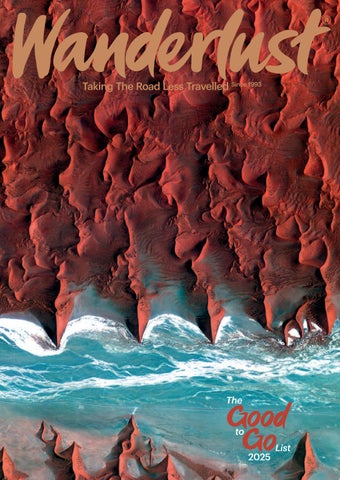
Create a flipbook