PARENTS AND KIDS CONNECT THE MUELLER STROLLER CLUB
HOLLYWOOD IN TEXAS AUSTIN STUDIOS

PARENTS AND KIDS CONNECT THE MUELLER STROLLER CLUB
HOLLYWOOD IN TEXAS AUSTIN STUDIOS



Half Sandwich or Shrimp Taco



Side Salad or Cup of Soup




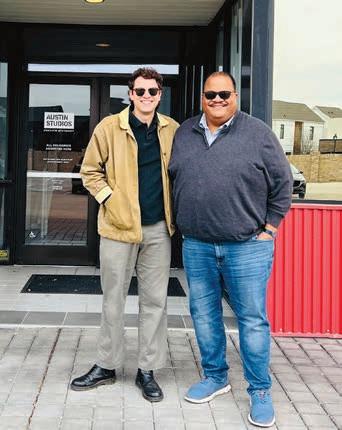




Among Mueller’s many gems is Austin Studios, a production house that brings our favorite movies and TV shows to life. 18 Building Connection, One Stroll at a Time
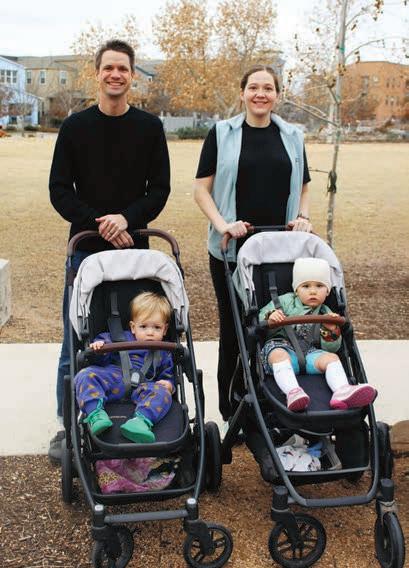
The Mueller Stroller Club, a gathering place for new parents and their young children, is creating community—one walk at a time.
22 A Call to Care
In the face of life’s biggest hardships, Susannah Trunick offers a hand and heart to those in need.









APRIL FEELS LIKE a reward. Even if winter barely made an appearance, this time of year is always worth celebrating. In Austin, April is when the city truly shines. Flowers are in full bloom, patios are buzzing with life, and we can sense that fleeting stretch of perfect weather before the summer heat settles in. There’s an unmistakable spring in our step and a renewed energy that invites us outdoors and into community. With the weather so inviting, it’s the perfect time to connect with the Mueller Stroller Club and enjoy meaningful moments with neighbors. Cristina Tangredi spent time with this spirited group, discovering how simple walks can
foster friendships, support, and a deep sense of belonging, one stroll at a time.
Carmen Gray has also been busy this month. She went behind the scenes at Austin Film Studios; a fascinating creative hub tucked right here in Mueller that many residents don’t even realize exists. It’s a reminder that sometimes the most interesting places in our neighborhood are the ones hiding in plain sight.
Carmen also sat down with Mueller resident Susannah Trunick, whose work with Hospice Austin brings comfort and compassion to individuals and families during life’s most difficult moments. Her story is a powerful reflection of service, empathy, and the impact one person can have on an entire community.
In Meet Me at the Market, she also visits Yaupon Tea, an inspiring local business crafting teas that are as flavorful as they are beneficial. Rooted in history and sustainability, their products offer a uniquely Texan take on a daily ritual many of us cherish.
And if spring has you feeling motivated to refresh your wellness routine, Lee Vallely shares thoughtful guidance on how to adapt fitness practices through every stage of life helping us navigate change, stay strong, and prioritize movement in ways that truly serve our bodies.
There is so much happening around us this season. Step outside, explore something new, and take time to appreciate the connections, stories, and experiences that make this community so special.
See you in the neighborhood.

Liz Reingold Publisher muellermagazine.com
Editor & Publisher
Liz Reingold
Writers
Carmen Gray
Cristina Tangredi
Photographer
Margarita Garcia Acevedo
Marketing Coordinator
Nicole Higgins
WAINSCOT MEDIA
Chairman
Carroll V. Dowden
President and CEO
Mark Dowden
SVP, Group Publisher
Thomas Flannery
VP, Content Strategy
Maria Regan
Creative Director
Kijoo Kim
Art Director
Rosemary O’Connell
Executive Editor
Elaine Quilici
Associate Editor
Sophia Carlisle
Advertising Services Director
Jacquelynn Fischer
Operations Director
Catherine Rosario
Production Designer
Chris Ferrante
Print Production Manager
Fern Meshulam
Advertising Production Associate
Griff Dowden
Mueller magazine is published by Wainscot Media. Serving residents of Mueller, the magazine is distributed monthly via U.S. mail. Articles and advertisements contained herein do not necessarily reflect the opinions of the publishers. Copyright 2026 by Wainscot Media LLC. No portion of this magazine may be reproduced in any form without written consent.








Many thanks to our committed sponsors, who make it possible for us to bring you high-quality local stories each month. Shopping and doing business close to home are excellent ways to support our community. When you visit our sponsors, please tell them Mueller magazine sent you!

Austin’s locally owned, family-run laser clinic for over 30 years. Offering expert laser hair removal and electrolysis, ethical treatments, real results, and payas-you-go care. Look good, feel great, be confident. 512-328-1555 | alitelaser.com

Dish Society is a Mueller neighborhood favorite for locally sourced food, everyday feel-good meals, good vibes, and great company
512-623-1498 | dishsociety.com @dishsociety

Floyd’s 99 Barbershop offers expert cuts, shaves, and color for everyone—set in a fun, family-friendly space with our iconic poster wall and lively music. 325-268-5906 | floydsbarbershop.com @floyds99atx

Explore the beauty of Nature’s Treasures, your iconic rock and crystal shop since 2000, and invite nature into your daily life with home and garden décor, jewelry, sage and pocket stones. 512-472-5015 | ntrocks.com @naturestreasurestexas

Mexican Restaurant
Santa Catarina is a boutique family restaurant with homestyle cooking from South Central Mexico. Our bar features 100% Agave tequilas and Mezcales. All of our juices are homemade: no sugar added. 512-291-7154 | santacatarinarestaurant.com @santacatarinatx

Carlin Wealth Management Group helps families optimize the efficiency of their finances. It also introduces Empowered Café, creating opportunities and inclusion for a staff with Down syndrome. 512-688-7414 | carlinwmg.com

Empowered Café is a full-service coffee house, also offering juices, soup, sandwiches, and pastries from a friendly staff of individuals with Down syndrome 512-855-1222 | empoweredcafeatx.com

A distinguished real estate advisor and proud Mueller resident, offering expert guidance whether you’re buying, selling, or exploring the neighborhood. 512-831-6577 | sotheybysrealty.com @soud_twal

Discover Origin Hotel Austin, blending Texas charm with modern comfort, stylish rooms, and all-day dining from Blue Lacy right in the heart of Mueller. 512-861-1140 | originhotel.com @origin_austin

Since 1917, St. Austin has partnered with families to form Christ-centered, academically strong, moral community leaders through faith, service, scholarship, and a nurturing Catholic environment. 512-886-1756 | staustinschool.org

Crane & Holtzman is a boutique, full-service accounting firm providing tax, consulting, and accounting services to individuals, businesses, and trusts. 512-215-0057 | craneholtzman.com

European Wax Center is the numver one safe place to start removing hair safely and effectively at an incredibly affordable price. First Time Guests can try it for free. 512-617-9157 | waxcenter.com/pages/first-wax-free @europeanwax

Since 2008, the Mueller Silent Market Team has specialized in Mueller and Central Austin real estate, offering expert guidance on both public and private listings. 512-913-8642 | muellersilentmarket.com @muellersilentmarketteam

Parkside Family Vision provides comprehensive, familyfocused eye care in Mueller offering routine exams, advanced myopia management, and stylish eyewear with warm, personalized service to help your whole family see their best. 512-276-6117 | parksidefamilyvision.com @parksidefamilyvision

As the state’s leading workers’ compensation provider, Texas Mutual Insurance Company is dedicated to protecting employees, supporting local communities, and fortifying the state economy. 512-224-3800 | texasmutual.com @texasmutual


The Herb Bar, Austin’s oldest apothecary, has served the community for nearly 40 years with teas, tinctures, organic body products, and holistic workshops focused on wellness and connection.
512-444-6251 | theherbbar.com @theherbbar

Fresh made from scratch food made from all clean ingredients in a full market experience including a bakery, cafe, deli, and grocery. thoroughfare.com | @thoroughfare


Thinkery, a nonprofit children’s museum and home to Little Thinkers Preschool, sparks joyful, play-based STEAM learning so ALL children cultivate a lifelong love of learning.
512-469-6201 | thinkeryaustin.org @thinkeryatx
Vaura Pilates fuses reformer precision with athletic training in a sensory rich studio. Energize your body, elevate your mind, and awaken within. 512-481-2795 | vaurapilates.com | @vaura-mueller
Feel great, look amazing at VIO Med Spa. Our medical professionals specialize in skin rejuvenation, Botox, cosmetic injectables, skin care, weight loss and body contouring.
521-900-1051 | viomedspa.com @viomedspa.mueller







Jason Ellis is spotlighting an Indigenous plant that’s turning the heads of coffee and tea lovers in Mueller.
BY CARMEN GRAY
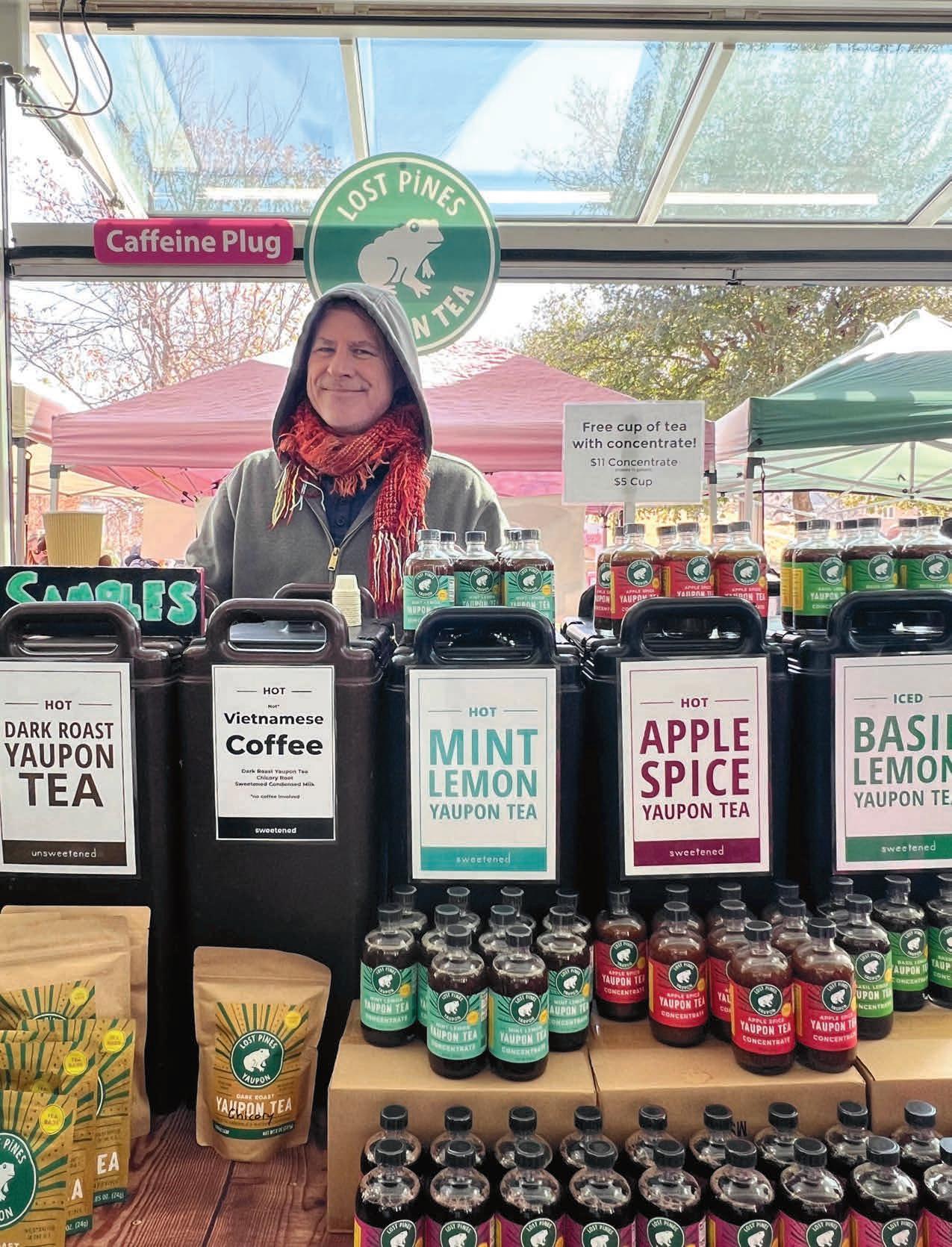
BEHIND ONE OF the booths at the Texas Farmers’ Market at Mueller stands a guy whose curiosity took him down a rabbit hole and brought something extraordinary into the world. Jason Ellis isn’t your typical vendor. He’s a gardener, forager, and plant lover whose journey into the world of yaupon began with a simple but powerful question: What useful plants could he grow or forage in his own yard?
That curiosity ultimately led him to rediscover a native plant with a long, ancient history and a definite comeback.
Years before yaupon became his business, Ellis was exploring native flora and experimenting with edible and useful plants through gardening and permaculture. One day, while leafing through a Native American ethnobotany book, he stumbled on a surprising revelation. There was
a caffeinated plant growing wild all around him: yaupon holly. You’ve probably even seen it yourself in gardens around Austin. He learned that Indigenous peoples had been drinking it for centuries.
Like many people unfamiliar with it, Ellis assumed that if nobody was widely drinking this native caffeine source anymore, it must taste terrible.
“I started experimenting with it,” he recounts, “only to discover it was delicious. It wasn’t just drinkable: it was rich and nuanced, with a smooth energy that didn’t have a jittery edge.”
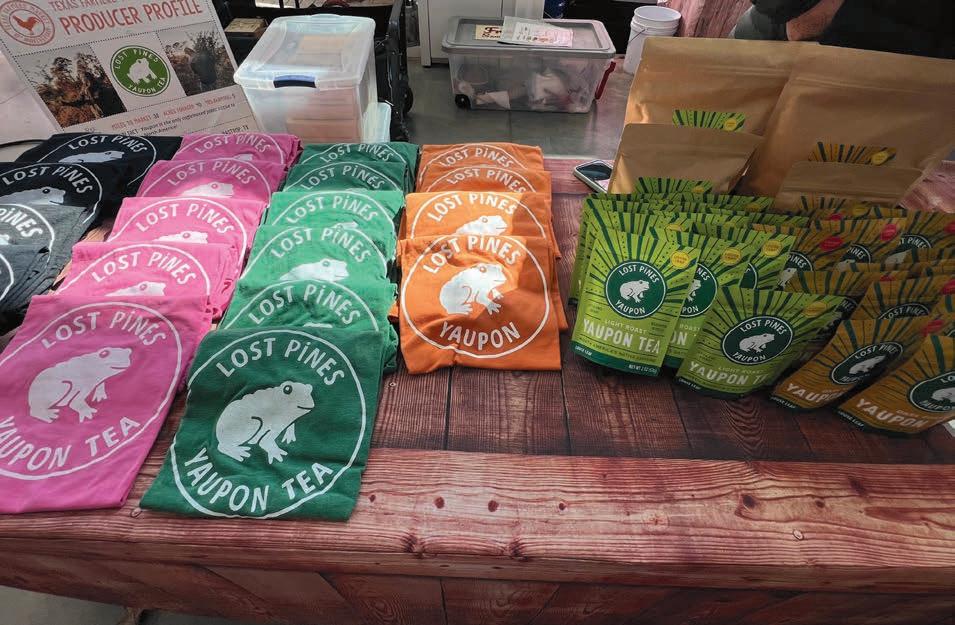
Ellis spent years refining how to harvest, cure, and roast the leaves before he landed on methods he felt produced the best yaupon tea possible. In 2015, he and his partners founded Lost Pines Yaupon Tea in Austin, Texas, with the mission of bringing this forgotten native beverage into the mainstream.
Ellis notes that this beverage that once served as a staple for Indigenous communities is also a sustainable caffeine source. It thrives without irrigation, pesticides, or cultivation, flourishing even in poor soils. And the yaupon serves as a dense understory in forests like Bastrop’s Lost Pines, a region that now serves as one of their primary harvesting grounds. Harvesting yaupon not only supplies the tea but also benefits the landscape. Removing dense yaupon thickets helps restore habitat for native species like the critically endangered Houston toad and supports forest health, reducing wildfire fuel loads.
At the market, people are often very curious about the products, and Ellis offers free sample tastings. His light roast brings out bright, tea-like
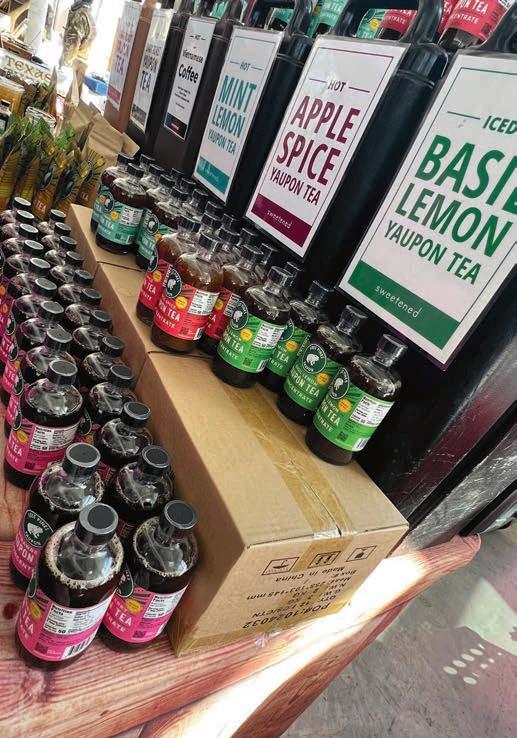
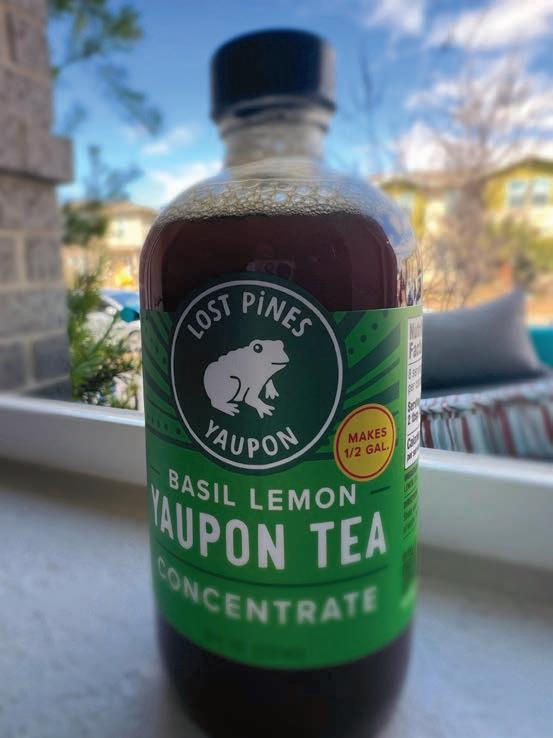
notes that remind drinkers of green tea with a twist, while the dark roast delivers deeper, roasty, campfire-like flavors that appeal to coffee lovers and adventurous palates alike. He also prepares flavored tea concentrates with fresh, real ingredients like basil, mint, and Texas fruit, turning the ancient plant into modern, seasonal refreshers.
Perhaps the most talked-about concoction lately is the take on a creamy caffeinated treat Ellis cheekily calls ‘(not) Vietnamese Coffee.’ I tried it iced, and it was so delicious! By blending dark-roasted yaupon with chicory, brewing it strong, and adding sweetened condensed milk, the resulting drink is a rich, comforting beverage that both delights and gives a gentle energy boost.
Ellis is not just selling a drink. He’s inviting people to be part of something local, regenerative, and energetic. The market itself, full of neighbors, makers, growers, and curious explorers, feels like the perfect stage for this rediscovered plant. And Ellis, with his grounded enthusiasm and deep respect for both tradition and innovation, is exactly the kind of helper the community needs right now. Through his work with Lost Pines Yaupon, Ellis brings a sense of connection to land, history, community, and sustainable practice in every cup. What began as a backyard experiment has grown into a mission to revive a native treasure, one sip at a time.
Carmen Gray has lived in Austin since 1992. She is a retired teacher, published author, and freelance writer.
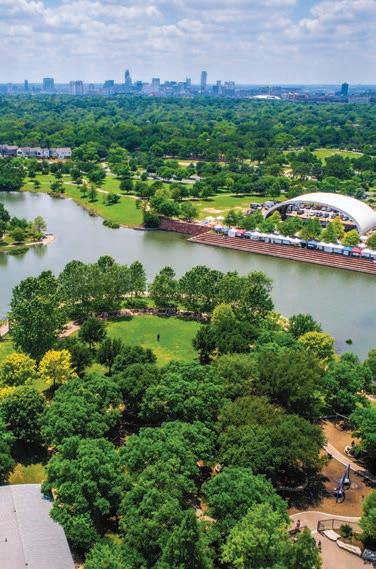












The transition into spring has never felt so sweet in the neighborhood.
Bring your children and grandchildren to enjoy the annual Mueller Egg Hunt, Saturday, April 4 from 8:30 a.m. to 11 p.m. The Mueller Neighborhood Association will be hosting the event this year, and it promises to have fun activities for all who attend.


The Mueller Neighborhood Association is a 501(c)(4) nonprofit building a strong, inclusive, and connected community through events, activities, advocacy, and outreach. To learn more about Mueller, visit muellerneighborhood.org.
Join us on Saturday, April 25 from 8 a.m. to noon for the spring community yard sale. This Mueller Neighborhood Association event draws treasure hunters across Austin! Declutter, earn some cash, and donate what is left to charity at neighborhood drop-off locations.


Join us for our 5th Mueller Eid Celebration on Saturday, April 11, from 11 a.m. to 3 p.m. at the Branch Park Pavilion. We will have food, henna, fun activities for children, and lots of local businesses.
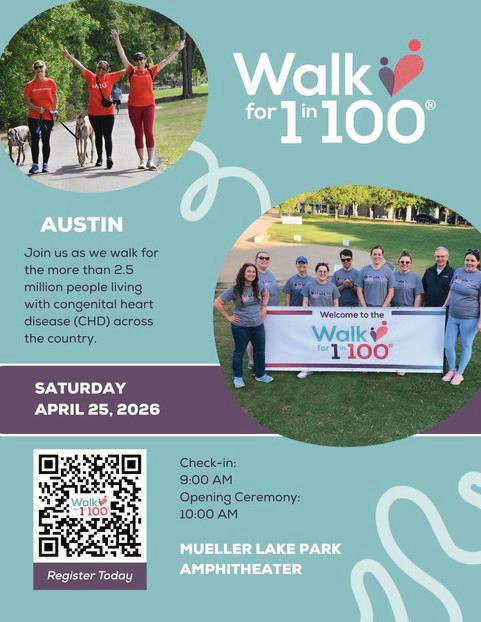








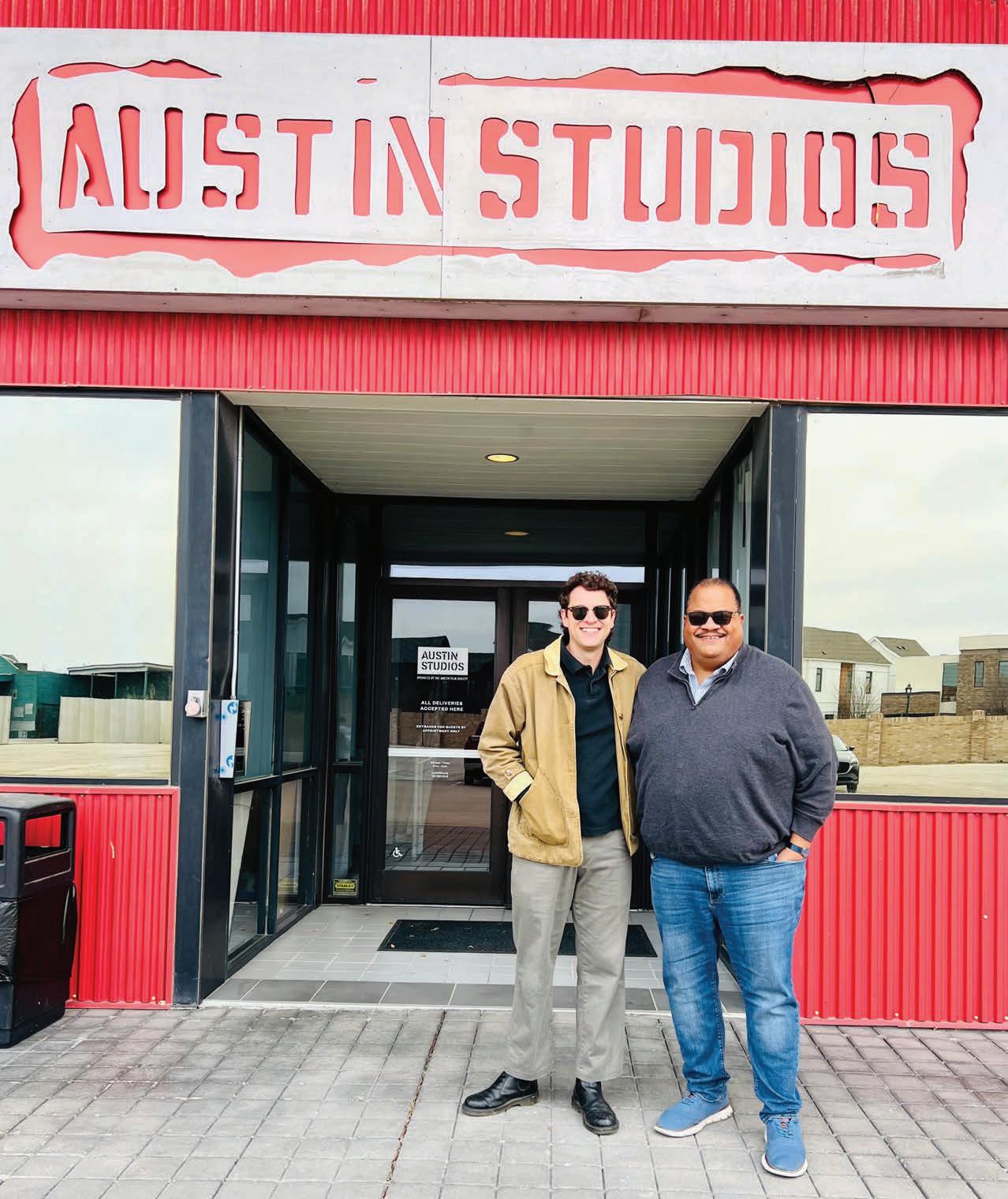
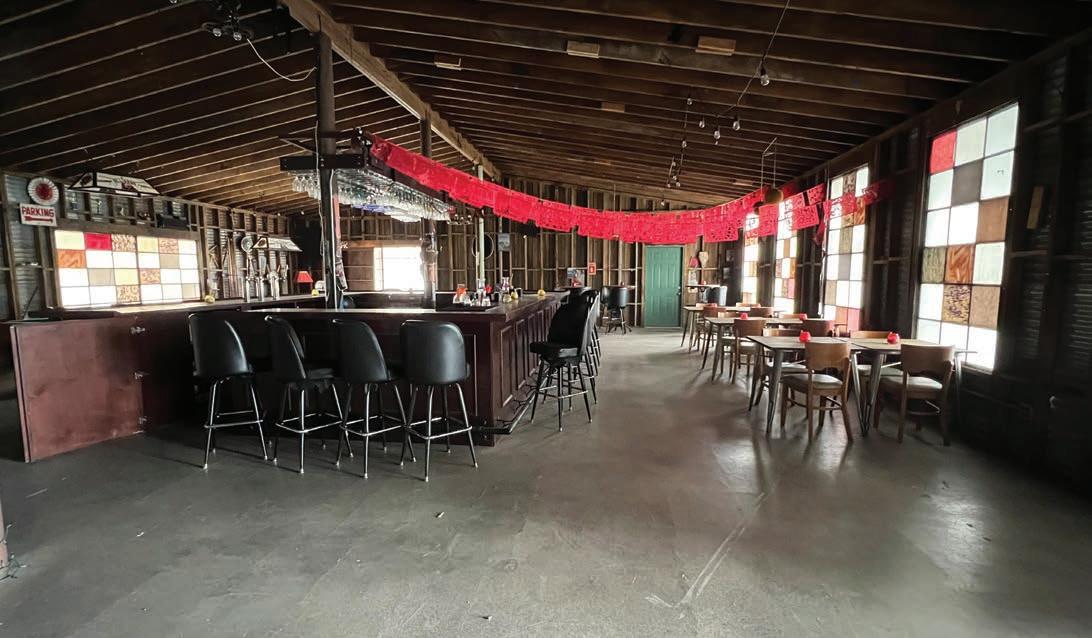
Among Mueller’s many gems is Austin Studios, a production house that brings our favorite movies and TV shows to life.
BY CARMEN GRAY
DDID YOU REALIZE that not only is Mueller a walkable, community-oriented central Austin neighborhood, but it is also adjacent to Austin Studios? While you’re shopping at H-E-B or strolling through the neighborhood, you may not realize you’re within walking distance of one of Texas’ most significant film production hubs. Mueller is unique in many ways, and its proximity to a thriving studio lot is yet another example of the creativity rooted in this community.
I recently met with Martin C. Jones, AFS Head of Austin Studios, and Communications Manager Will Stefanski for a tour. For more than two decades, they explained, Austin Studios has been at the center of Central Texas’ film and television industry.
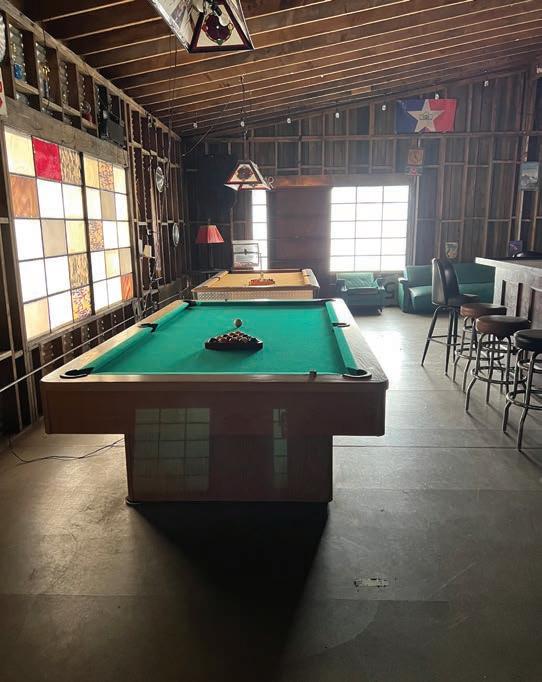
What was once the decommissioned Robert Mueller Municipal Airport has been transformed into 20 full acres of space with seven production stages. Today, it stands as one of the city’s most powerful economic and cultural engines.
The idea began in 2000, when Texas filmmaker Richard Linklater asked then-Mayor Kirk Watson what the city planned to do with the old airport property. That conversation helped lead to the creation of Austin Studios, a move that solidified Austin’s reputation as a serious production hub. Since filming began there, the lot has hosted major productions including “Boyhood,” “Spy Kids,” “Miss Congeniality,” and “Friday Night Lights.”
Austin Studios now generates around 37% of the Austin Film Society’s
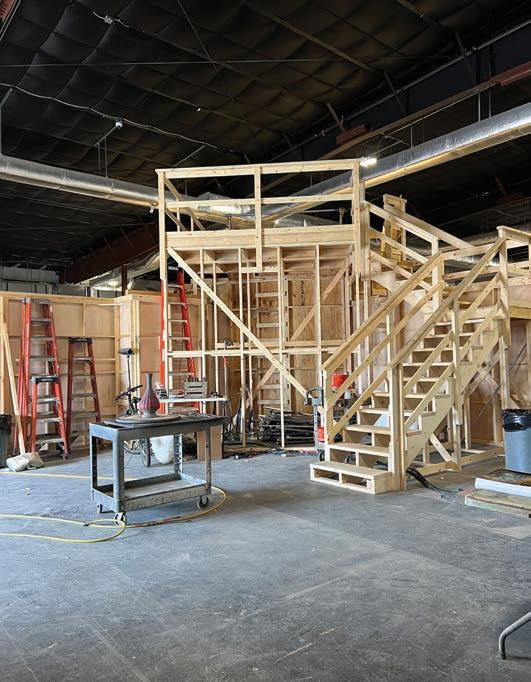
(AFS) annual revenue, making it central to sustaining the nonprofit’s broader mission. Its economic footprint reaches far beyond the organization itself. Approximately 1,250 productions have filmed at the studios, creating more than 46,000 jobs and generating an estimated $2.9 billion in regional economic impact.
An average show employs about 300 crew members, ranging from electricians, carpenters, camera operators, costume designers, production assistants, and many others. During our visit, I watched a set designer meticulously construct a basement scene from scratch, a reminder that entire worlds are built inside these sound stages. Each project brings meaningful workforce engagement and local spending to Austin.
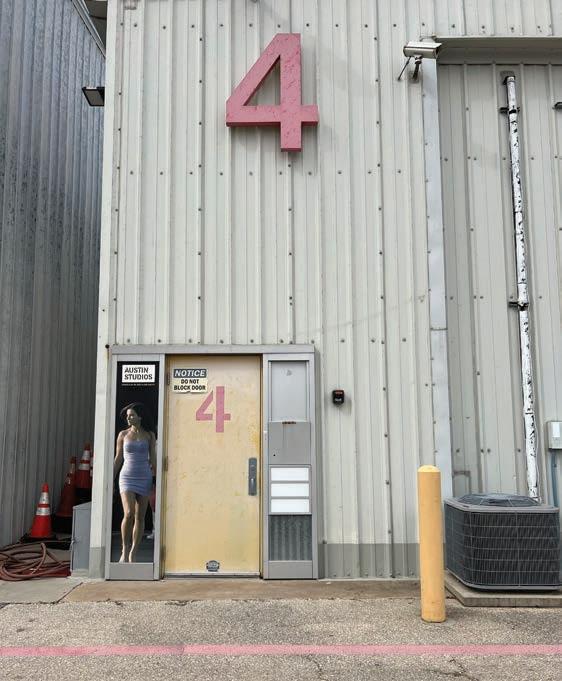
“At peak capacity, the lot housed 17 companies employing 600 full-time workers,” Jones said. “Rooster Teeth, a long-term tenant in Stage 4, alone employed 400 people at its height.” These figures reflect an ecosystem that supports both temporary production crews and permanent creative businesses.
Austin Studios operates under a unique public-private partnership. The lease with the City of Austin is just $100 per year. In exchange, AFS assumes responsibility for all upkeep and improvements to the property, a structure AFS leadership has described as “lessening the burden of government.” The arrangement allows the city to maintain a major creative asset without operational costs, while AFS reinvests directly into infrastructure and industry growth.
Austin’s film legacy stretches back decades. The city has served as the backdrop for cult classics like “The Texas Chain Saw Massacre,” “Dazed and Confused,” and “Office Space,” as well as acclaimed films such as “The Tree of Life,” “True Grit,” and “What’s Eating Gilbert Grape.” More recent productions include “1923,” “Bad Thoughts,” “The Leftovers,” “Fear the Walking Dead,” and the four-season run of “Walker,” starring Texas native Jared Padalecki.
The industry’s strength has earned national recognition. Austin has been named one of MovieMaker Magazine’s “Best Places to Live & Work as a Moviemaker” every year since the list launched in 2001, a 26-year streak that culminated in a #5 ranking in 2026. That consistency reflects the city’s combination of infrastructure, creative culture, and skilled workforce. Beyond hosting productions, AFS is investing in the next generation of industry professionals through its Creative Careers program. Designed to open doors for Austinites pursuing film and television work, the program offers three pathways: a hands-on internship track for 18- to 24-year-olds; an immersive on-the-job technical training program; and continuing education courses that provide equipment certifications. “These initiatives help ensure that the industry’s economic impact translates into sustainable career opportunities for local residents.
With productions continually reaching out to film in Austin and the infrastructure to support them, Austin Studios remains a cornerstone of the city’s creative economy. So, the next time you’re walking near Jesse Andrews Park, where the beloved Ocho sculpture stands, remember that just a block away, actors, designers, and production crews are building stories that will reach audiences around the world, all from right here in Mueller.
Carmen Gray has lived in Austin since 1992. She is a retired teacher, published author, and freelance writer.

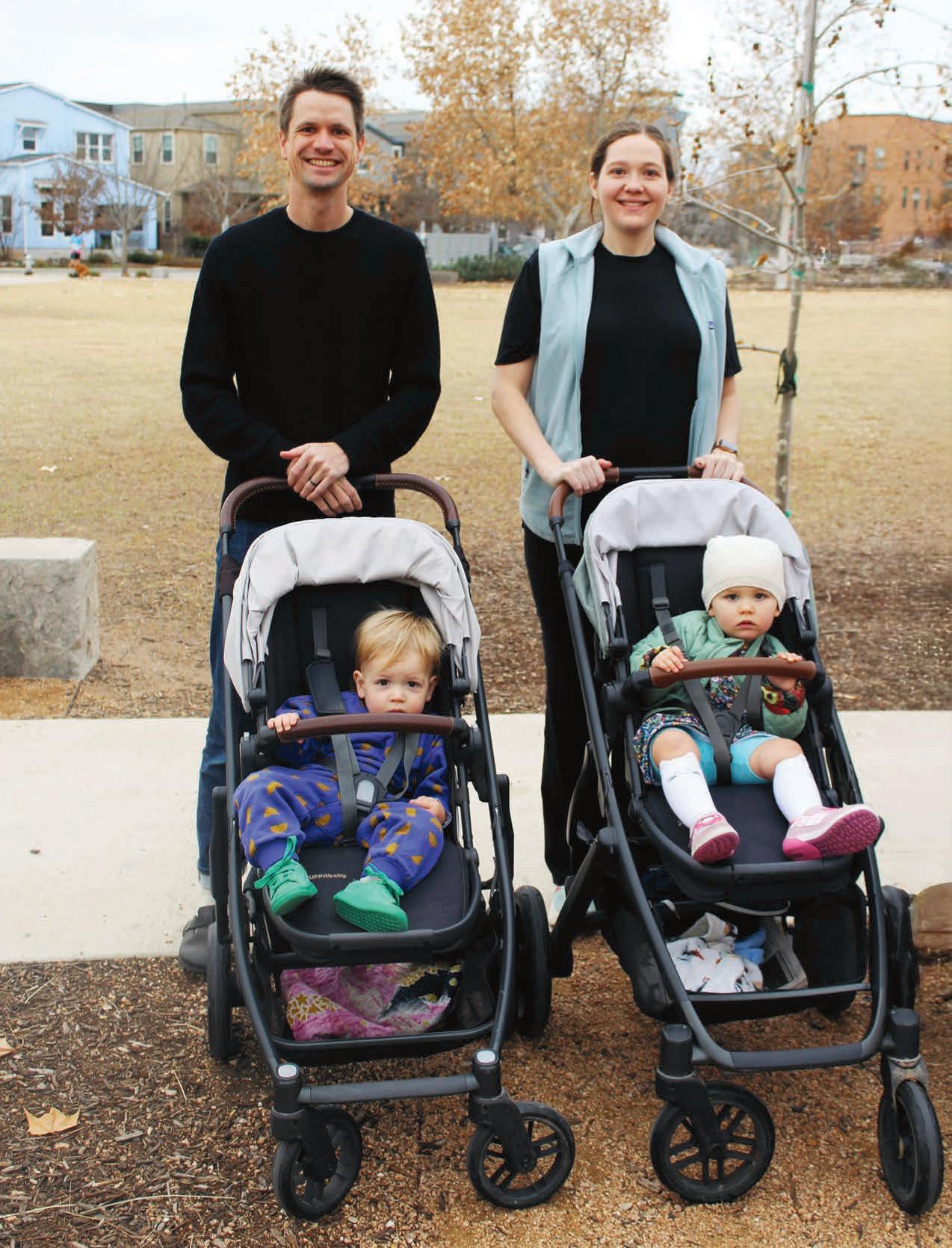
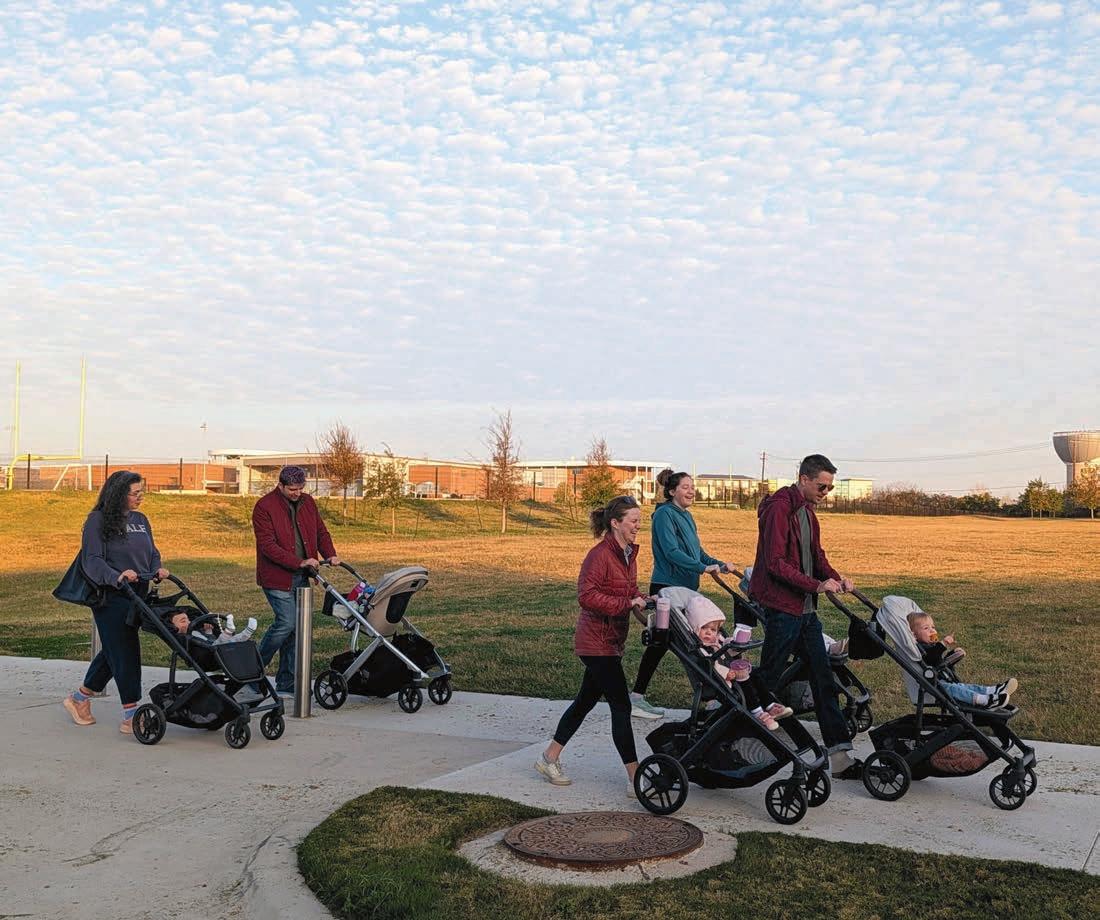
The Mueller Stroller Club, a gathering place for new parents and their young children, is creating community one walk at a time.
BY CRISTINA TANGREDI
IIT’S NO SECRET that community is at the heart of the Mueller neighborhood. With an abundance of parks, shops, and local events, the area naturally encourages connection. Yet even in a neighborhood filled with young families and new parents, it’s easy to fall into routines and experience moments of isolation during life’s biggest transitions.
For Mueller resident Jordan Tranchina, that realization came during paternity leave after he and his wife, Madeleine, welcomed their first child. Although Jordan had lived in Mueller since 2024 and loved the neighborhood’s energy, his daily
stroller walks often felt solitary, accompanied by a podcast and limited interaction with others along the route. Like many new parents, he was already adjusting to a new schedule, new responsibilities, and a new identity, and all the newness made him long for the familiarity of connection.
Jordan reflected on the sense of community he had experienced through the Mueller Run Club and began wondering how a similar model could support parents with young children.
That idea became the Mueller Stroller Club.
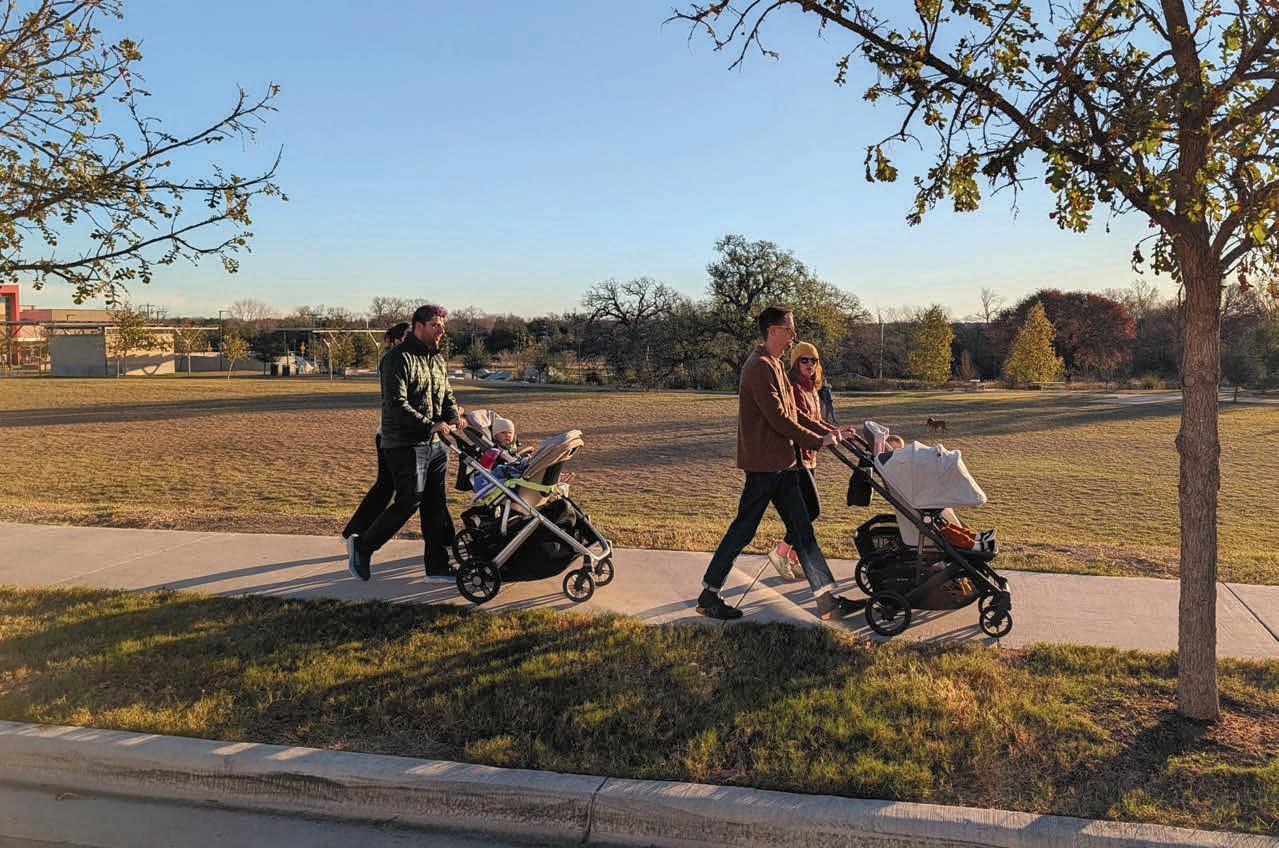
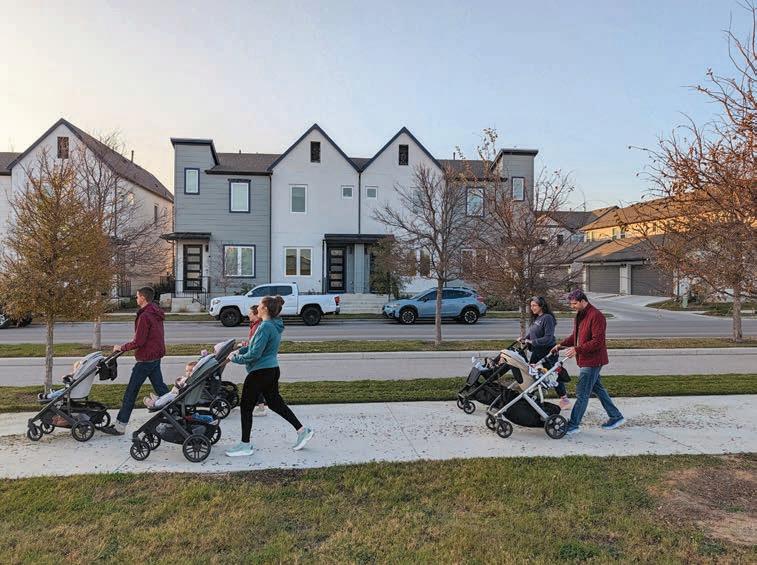
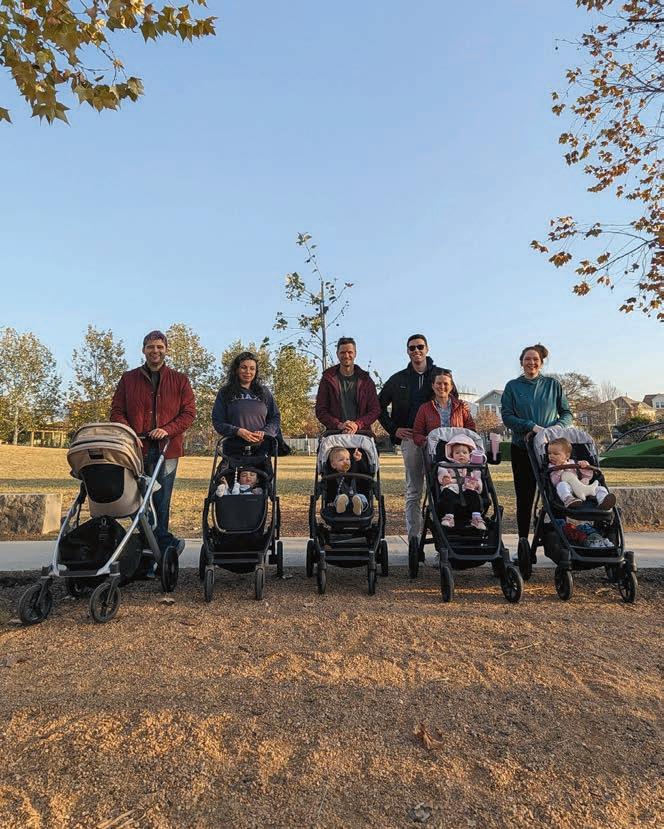
Mueller Stroller Club is exactly what it sounds like: a welcoming group of parents walking together with their children in strollers. Jordan started by inviting parents he knew, posting flyers on neighborhood buildings and street signs, and sharing the idea on social media. What began as a single open invitation quickly grew into a consistent weekly tradition, something parents now look forward to.
The group meets every Wednesday at 8 a.m. at John Gaines Park. The predictable meeting time and location remove the guesswork for parents navigating an already unpredictable stage of life. With a manageable start time, the walks offer a realistic opportunity to get out of the house, get
moving, and connect with others.
Parents gather at the park, chat for a few minutes, and then head out on a roughly 20-minute loop through the neighborhood. The route passes Marshall Middle School, continues by Gaylord Sackler Memorial Skate Park, and winds by Taniguchi Park before returning to the starting point. The path is both scenic and safe, making it an enjoyable walk, especially as warmer weather encourages more time outdoors.
While the walk itself lasts about 20 minutes, the conversations extend far beyond the route. Parenting advice may be easy to find online, but the empathy and connection that come from in-person conversations with
others experiencing the same stage of life is something the internet simply can’t replicate. During the stroller walks, parents discuss developmental milestones like introducing solids, sleep schedules, or returning to work. Children who attend the strolls also see benefits. When they interact and spend time with one another, they develop early social familiarity in a relaxed and supportive environment.
Participants of the stroll can also explore friendships beyond the challenges of parenthood, connecting on things like recently moving to Austin or getting excited about new restaurants coming to the neighborhood. The group occasionally gathers outside the weekly stroll, meeting at neighborhood favorites like

Zed’s Ice Cream and other local spots, strengthening friendships that continue well beyond the walking route.
When I joined one of the stroller walks, I saw firsthand how warm and welcoming the group was. New members were quickly included in conversations, with parents taking time to introduce themselves and help others feel comfortable. During our walk, we passed other parents strolling alone. Without hesitation, members of the group invited them to join the next meetup. It was a small moment that perfectly reflected what makes Mueller special.
At its core, Mueller Stroller Club is about creating space for connection during a transformative season of life. Inspired by the community-building model of the Mueller Run Club, the group demonstrates how simple ideas can grow into meaningful traditions.
Jordan’s message is clear: If you see an opportunity to bring people together, Mueller is the perfect place to make it happen. Connection often begins with one idea, one open invitation, and in this case, one stroll at a time.
If you are interested in forming connections and having meaningful conversations, make sure to join the next stroll on Wednesday at 8 a.m. at John Gaines Park.
Cristina Tangredi is dedicated to creating community-first communications, and has over seven years of experience in nonprofits, government agencies and PR firms.
BY CARMEN GRAY
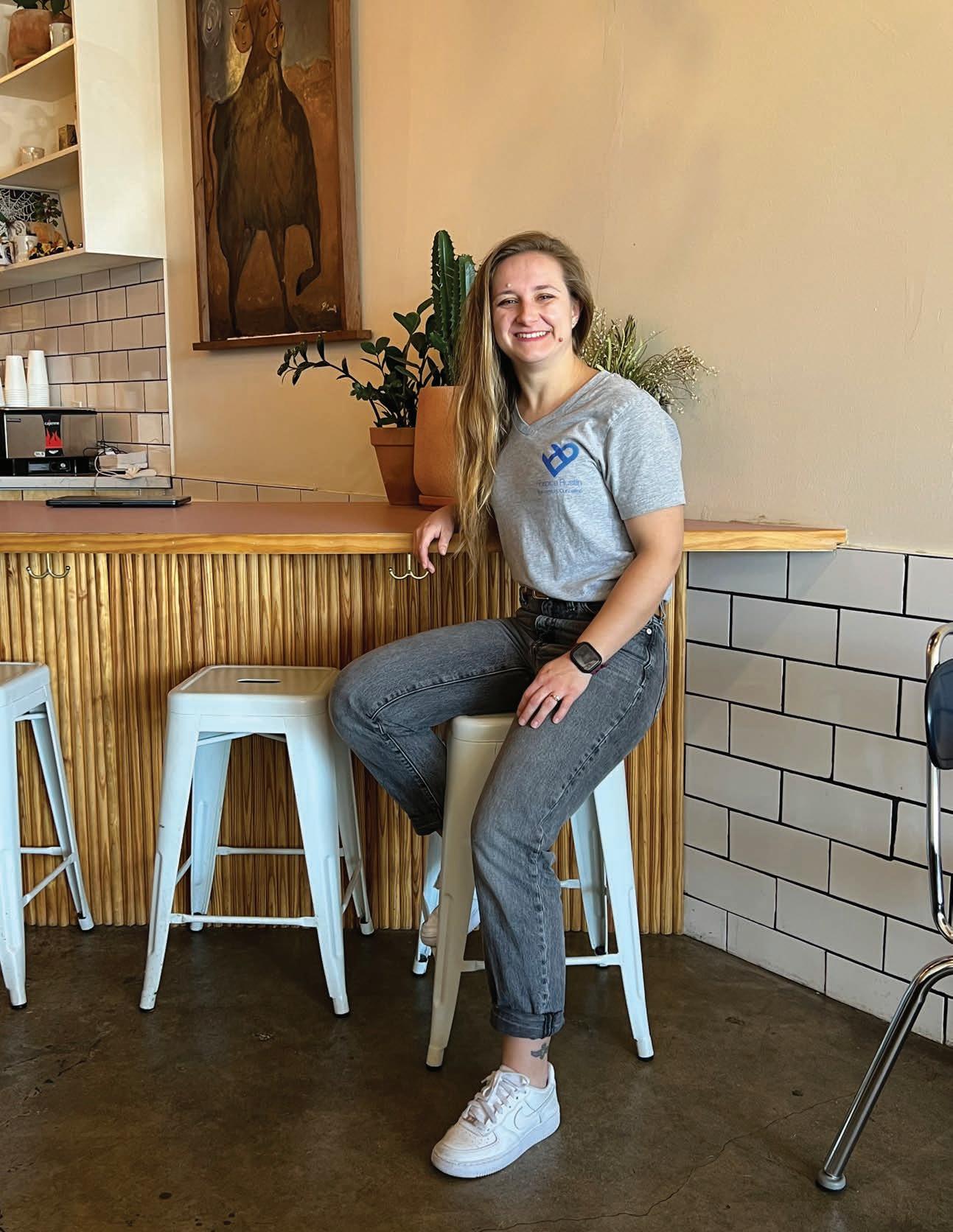
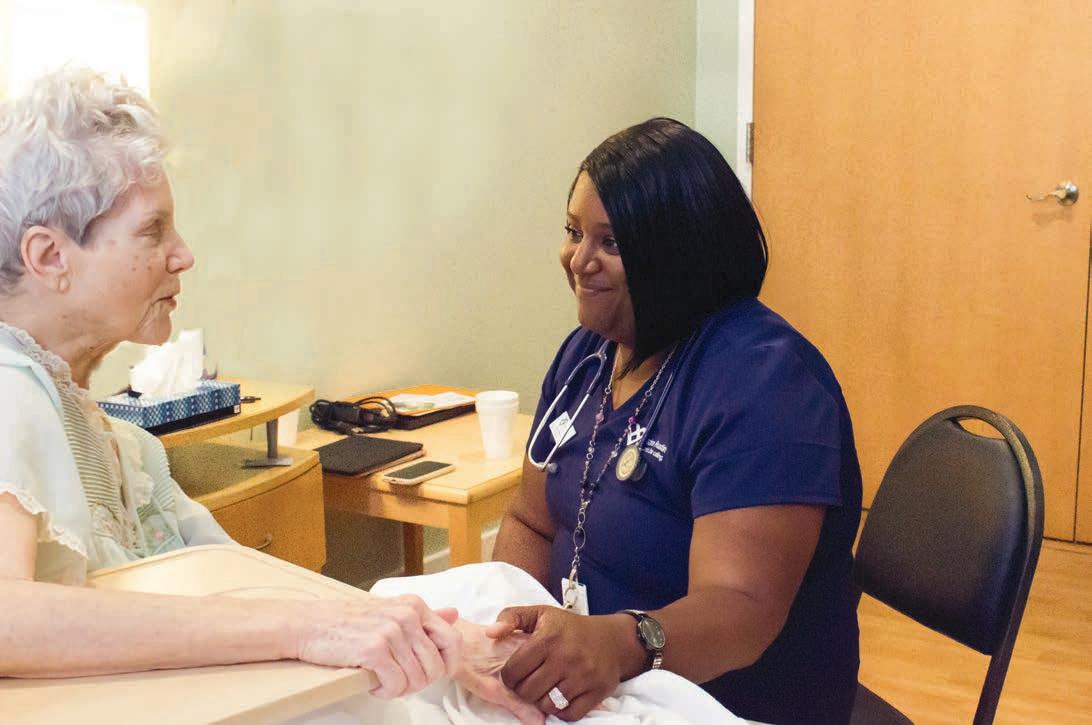
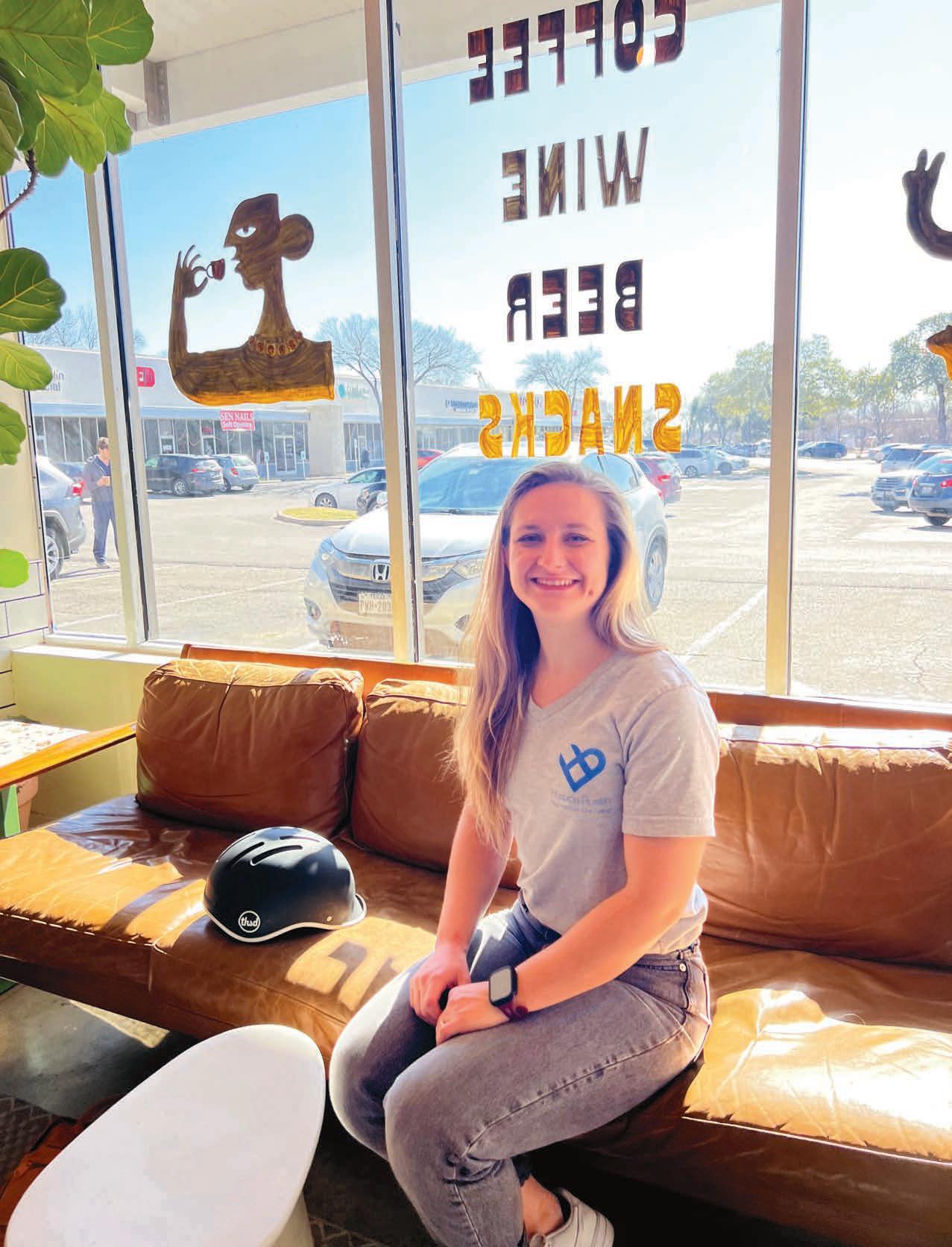
SSUSANNAH TRUNICK is more than a familiar face in the Mueller neighborhood. She’s a connector, a caretaker, and a quiet force for good. On her block, neighbors gather regularly for shared coffee, homemade baked goods, and Sunday suppers. Beyond Mueller, Trunick extends that same spirit of care into her professional life as a compassionate admissions nurse with Hospice Austin, the city’s only nonprofit hospice. Trunick and her husband, Josh,
who proposed to her right here in Mueller, chose the neighborhood intentionally. After spending a month in Amsterdam, the couple returned to Austin searching for a place that felt walkable, bikeable, and deeply connected. Mueller checked every box. True to form, Trunick biked to meet me for our interview at Figure 8 Coffee Roasters on Airport Boulevard.
A native Austinite, Trunick grew up in North Austin and graduated from the University of Texas School of Nursing in
May 2020. She began her career at Seton Main on the Intermediate Care (IMC) floor, entering the profession during one of the most difficult moments in modern healthcare history: the COVID-19 pandemic. After a year and a half in the hospital, she transitioned to Inhabit as a Nurse Case Manager, gaining experience across a wide range of care settings. Still, something was missing. That search ultimately led her to Hospice Austin, where she has now worked for three years.
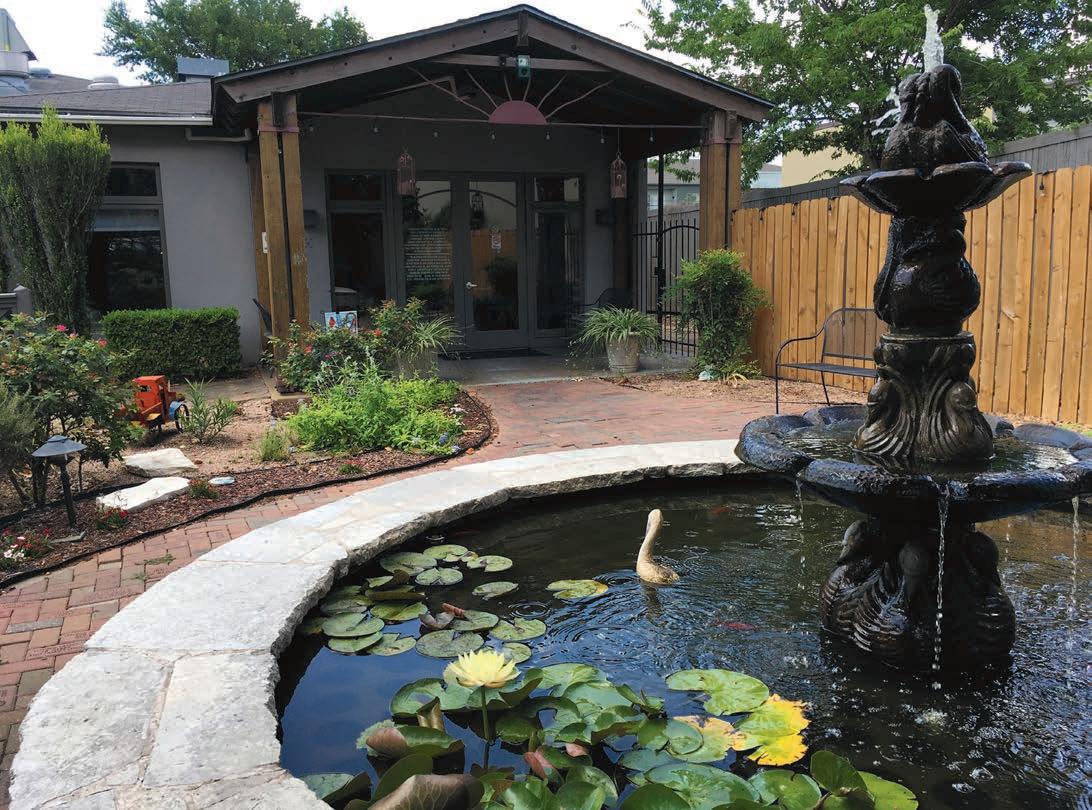
As an admissions nurse, Trunick spends her days meeting patients and families where they are, often literally. Hospice Austin provides care wherever a person calls home, whether that’s a private residence, assisted living facility, or, when symptoms are too severe, Christopher House, Hospice Austin’s inpatient facility with 14 beds dedicated to comfort care. Trunick splits her time between admissions and the occasional shift at Christopher House, biking there when she can and driving across Austin when patients are farther afield.
“Hospice Austin provides care focused on comfort,” Trunick explains. “That’s very different from hospital care, where the goal is often to cure.”
The work is deeply meaningful and deeply challenging. “You’re going
into people’s homes, so it’s incredibly intimate,” she says. “I work with patients with dementia, cancer, and other serious illnesses. I have to clearly explain what hospice can offer, whether that’s nursing care, social work support, or spiritual services. Even though these conversations are hard, I know I’m helping families who are struggling.”
One of the most moving aspects of Trunick’s work is advocating for those who might otherwise be overlooked.
At Hospice Austin, patients without family or stable housing receive care they may not have access to elsewhere such as chaplains, musicians, volunteers, and, most importantly, dignity, and love.
“Some people don’t have advocates,” Trunick says. “Here, they’re not alone.”
Hospice Austin relies heavily on volunteers and welcomes community
members interested in helping. Opportunities range from reading to patients and running errands to playing cards, assisting with office work, or offering specialized skills such as sound therapy or bilingual support. Those interested can learn more at hospiceaustin.org/get-involved/ volunteer.
Every Hospice Austin patient is supported by a dedicated care team, and the organization also offers the most extensive bereavement program in Central Texas. As Austin’s only nonprofit hospice, Hospice Austin serves anyone in need, regardless of age, diagnosis, or ability to pay, directing all resources back into patient and family care rather than shareholders or investors.
Having recently lost my own motherin-law, I was especially moved to learn
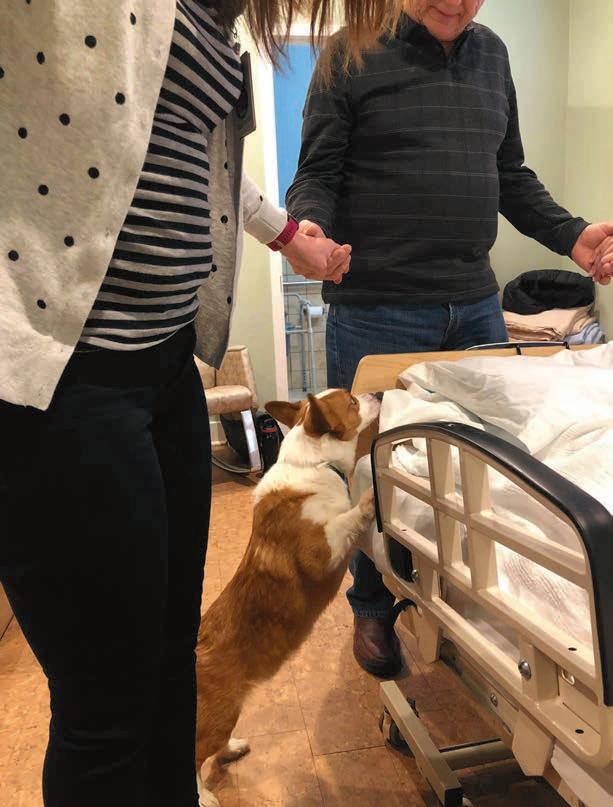
that Hospice Austin’s grief counseling services are open to the entire community. They offer virtual and in-person support groups, sliding-scale counseling, and Camp Braveheart, a free bereavement summer camp for third-through tenth graders held in Wimberley, Texas. Applications open each March.
Susannah Trunick embodies the true meaning of “help your neighbor.” With her steady compassion and generous heart, she is an invaluable presence in Mueller and beyond. We are lucky to live alongside people like her: People who show up, care deeply, and quietly make our city a kinder place.
Carmen Gray has lived in Austin since 1992. She is a retired teacher, published author, and freelance writer.



















Lee Vallely provides valuable insight on why your training needs to shift and evolve over your lifetime.
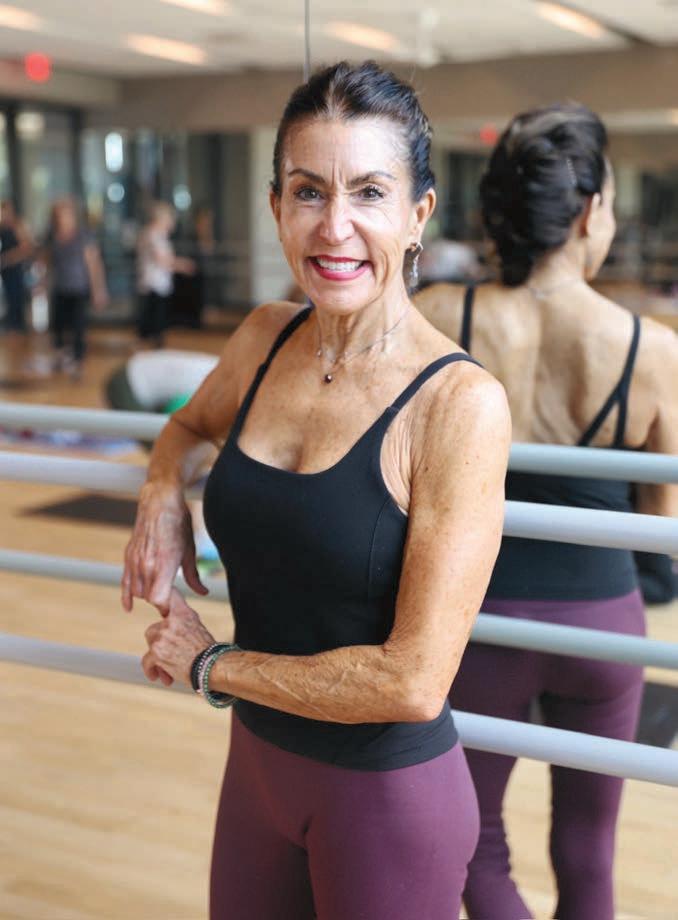
IN A CULTURE that often equates fitness with intensity and aesthetics, Lee Vallely has built her career around something far more sustainable: longevity. With more than 30 years of experience training clients across every decade of life, Vallely focuses on helping people build strength, preserve movement, and stay capable well into their later years. Her philosophy is simple but powerful: Training should evolve as we age, but it should never stop. We sat down with Lee to talk about how fitness needs shift over time and what it really takes to stay strong for life.
From your experience, how do fitness needs shift from our 20s and 30s into our 40s, 50s and beyond?
After 30 years of training myself and others, I’ve learned this: your training should evolve with age, but it must continue.
In your 20s and 30s, build your foundation. You recover faster, but you shouldn’t waste that advantage simply chasing intensity with sloppy mechanics. Instead, prioritize skill, strength, and consistency.
In your 40s, you stop getting away with poor form and overtraining. Recovery, sleep, and movement quality matter more. Strength training becomes essential.
In your 50s, train for longevity, not just appearance. Cardio alone isn’t enough. Focus on muscle and bone preservation, joint function, balance, and energy.
In your 60s and 70s, protecting movement capacity becomes critical. Staying active is important, but it’s not enough. Strength, safe power training, balance, gait, and reaction time preserve independence.
The shift over time is from “How hard can I go?” to “How well can I preserve and build capacity?” The goal becomes staying strong, moving well, recovering well, and remaining capable for life.
What are the most common mistakes people make when they age, especially when trying to train like they did in their 20s?
People confuse familiarity with effectiveness. They keep the 20-yearold mindset even when their body has different recovery needs and stress tolerance.
In your 20s and 30s, it’s building fitness around calorie burn instead of skill and mechanics. In your 40s, it’s trying to prove you’re still 25 by pushing through pain and doing more when the body needs smarter movement.
In your 50s, people either overtrain like they’re younger or overcorrect and do only light cardio. Both miss the mark. In your 60s and 70s, many equate “staying busy” with training.
Daily movement is great, but without intentional strength and balance work, decline accelerates faster than aging alone.
Avoiding challenge speeds decline. Smart challenge preserves function.
Hormones, stress, and sleep all change over time. How should men and women adjust their routines?
Both men and women experience recovery and hormonal shifts with age. The practical response is surprisingly similar: strength training is non-negotiable.
For women entering midlife and menopause, resistance training supports muscle and bone health. Shorter, focused sessions often work better than constant high-intensity training. Recovery becomes critical.
It’s also time to let go of under-fueling, excessive cardio, and back-to-back HIIT.
Men may experience gradual testosterone and recovery changes. The answer isn’t more max-effort lifting or ego training. It’s smarter programming, balanced intensity, recovery days, and maintaining mobility and balance.
For both: Train to increase vitality and resilience, not just burn calories.
For those over 50, what does a smart and sustainable fitness plan look like?
Midlife training should focus on increasing capacity, not training to exhaustion.
A solid weekly plan might include:
• 2 to 4 strength sessions
• Walking or cardio most days
• Brief balance work most days
• Short mobility/control sessions
• 1–2 harder efforts per week (only if recovered)
• At least one lower-load recovery day
That’s enough to move the needle without burning out. Sustainability is the goal.
If the goal is long-term vitality, staying active and independent for decades, what should people prioritize at any age?
Long-term vitality comes from consistently training five pillars: strength, cardio fitness, mobility/ control, balance/power, and recovery.
The dosage changes with age, stress, sleep, injuries, and goals, but the framework holds.
Fitness isn’t about proving how hard you can push. It’s about protecting and expanding your capacity so you can keep doing what you love for decades to come.
This content was created in partnership with Lee Vallely.





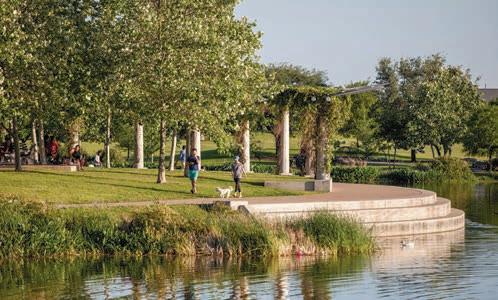
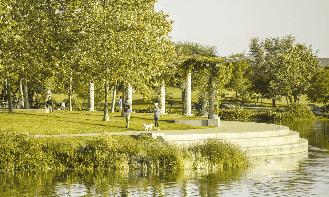






PHOTO OP IN BLOOM
MUELLER FLOWERS in full bloom, drinking in water from a recent rain, which lately is hard to come by.

Have a great image for Photo Op?
Submit your high-resolution shot to hello@