Women2Women Michigan was created to connect women with women for good to encourage, support, have fun, do business and provide links for women’s resources.
DO YOU KNOW A MICHIGAN WOMAN AUTHOR WE SHOULD FEATURE?
Submit your stories online at w2wmichigan.com. Article guidelines are under the magazine tab.
WHY ADVERTISE WITH US?
Women make the majority of purchasing decisions. They buy goods and services for their homes, gardens, businesses, entertainment, health and nutrition, the list is endless. They want to be informed and connected in their communities. Event-driven marketing makes education fun and rewarding. You can reach these women in a heartwarming environment at Women2Women Michigan events and through our magazine.
READERSHIP & DISTRIBUTION
Women2Women Michigan magazine is distributed to subscribers via US mail. It is also available at every Women2Women Michigan event, chamber events, and women’s organizations. It is professionally delivered to various locations throughout the area including restaurants, hospitals, retail locations and medical offices in southeastern Michigan. Interested in hosting a distribution location? Email us at office@w2wmichigan.com.
Would you like to subscribe? Subscribe online or email us at office@W2Wmichigan.com.
Women2Women Michigan magazine is published bimonthly. All rights reserved. No part of this publication may be reproduced whole or in part without the express written consent of the publisher. Office@w2wmichigan.com • w2wmichigan.com
*The advertisements and articles included in this publication are independently developed by our customers and writers to inform others about their business, expertise and related activities. Women2Women Michigan is not aware of, and makes no representation as to, the truth or accuracy of such information and, therefore, makes no warranties of any kind, express or implied, with respect to the same. Accordingly, the respective advertisers and writers are solely responsible for the accuracy and contents of their own advertisements and for all claims, losses, costs, expenses or damages whatsoever, directly
5
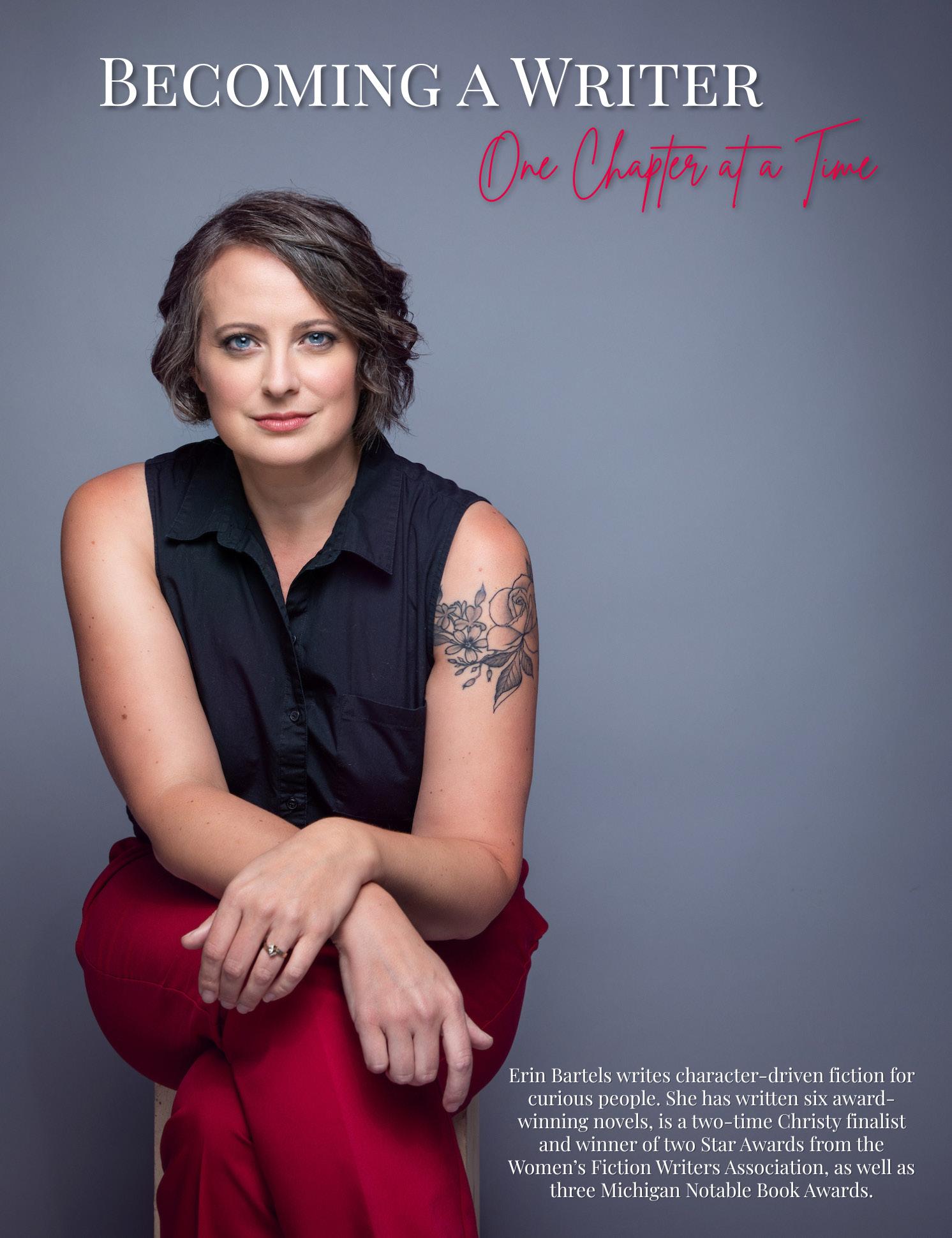
Becoming a Writer, One Chapter at a time featuring Erin Bartels
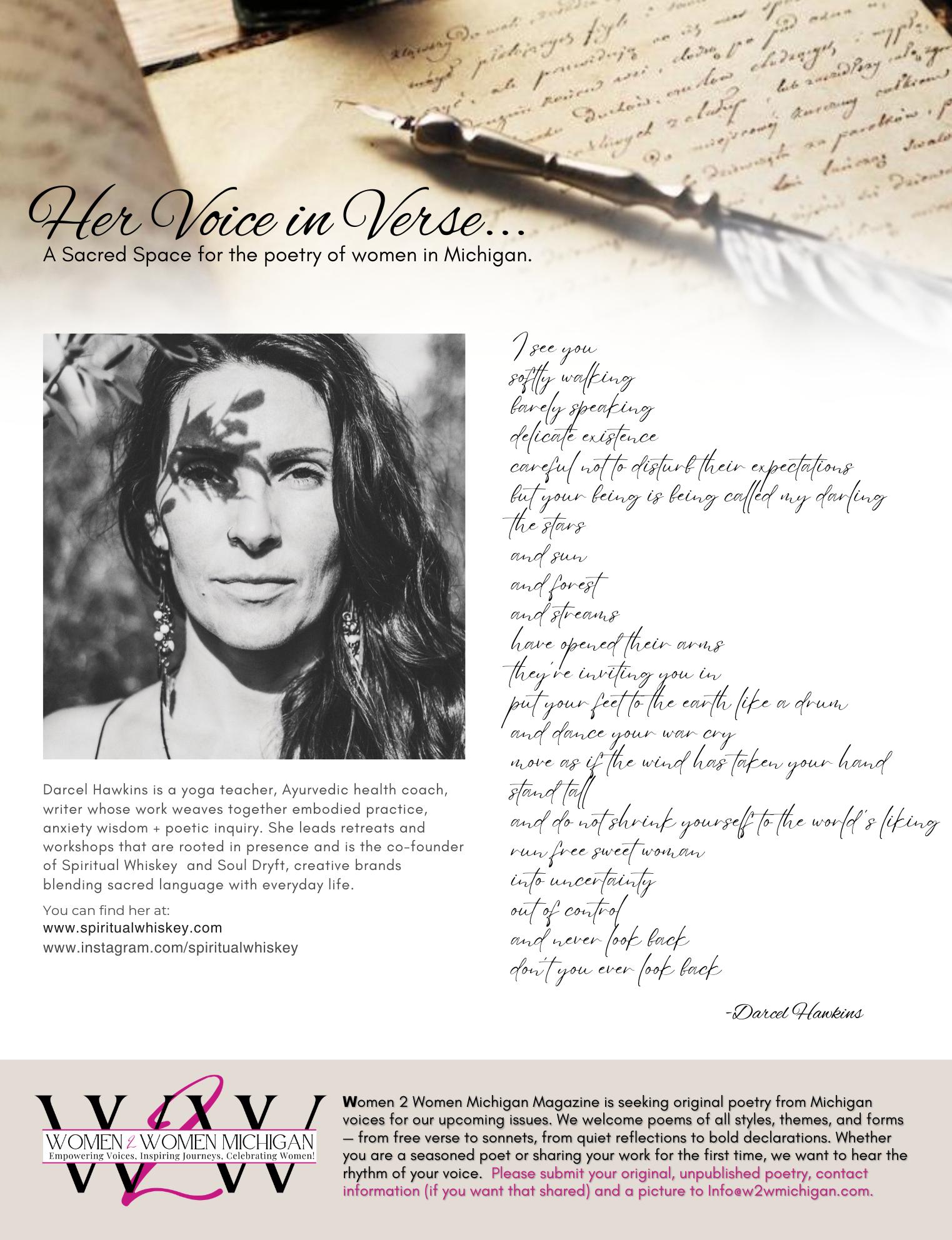
Her Voice in Verse
Call for YOUR Poetry
Home & Garden
Christine Stephens
Your Health & Wellness Journey
Debra Loader
Happy Reader Book Review
Meg Zaderej
Aligned Living
Jennifer Beard
Wardrobe Wisdom
Kelsey Rudy
Girlfriend Getaways
Jessica Brown
The Diary of a Hairapist
Jamie MacNeill
Sparkle & Shine
Mimi Matthews
Law of Attraction
Suzanne Young
Called to Create
Colleen Kilpatrick
Real Life Meditation
Trice Berlinski
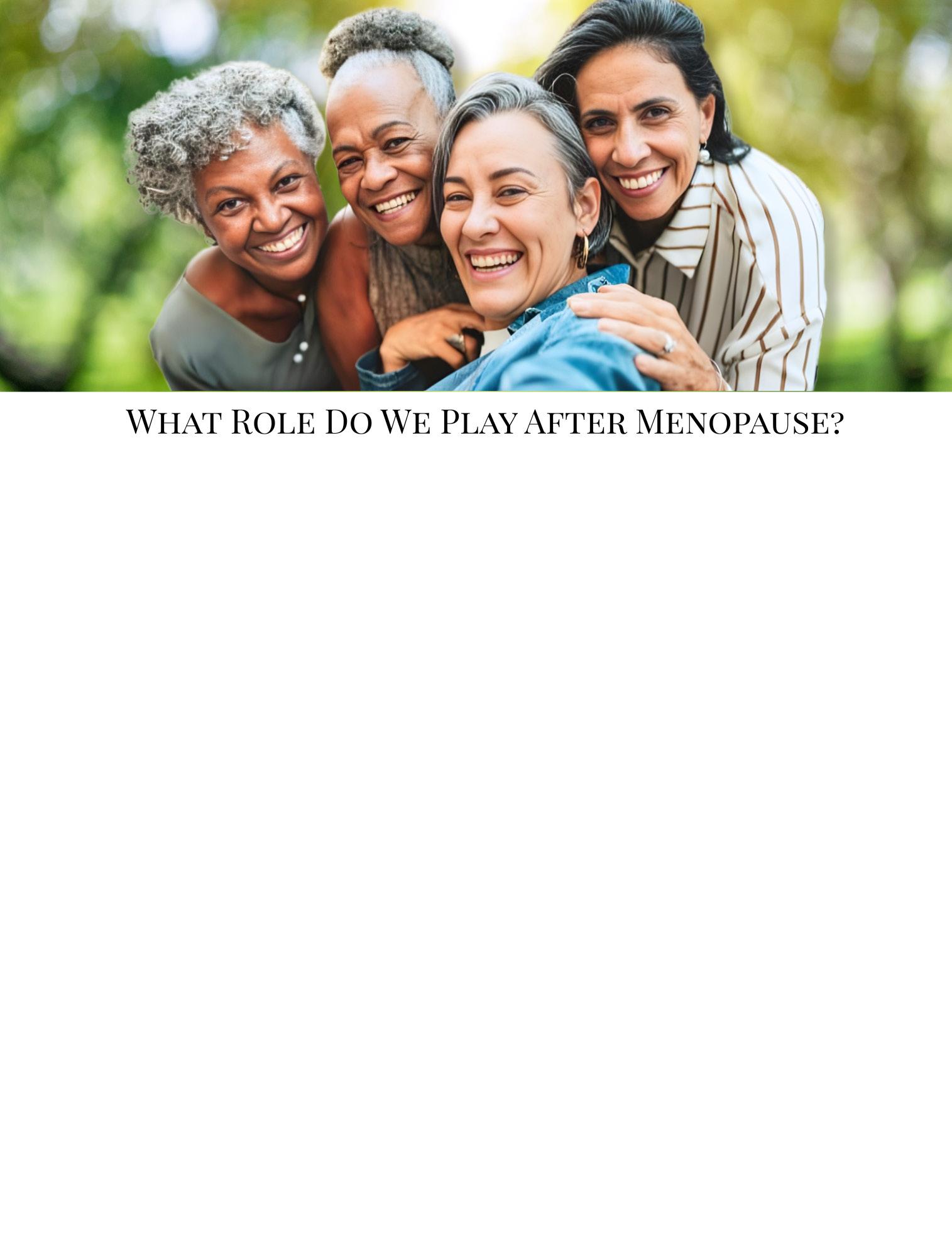
What Role do we Play After Menopause?
Dr. Melissa Vandermissen
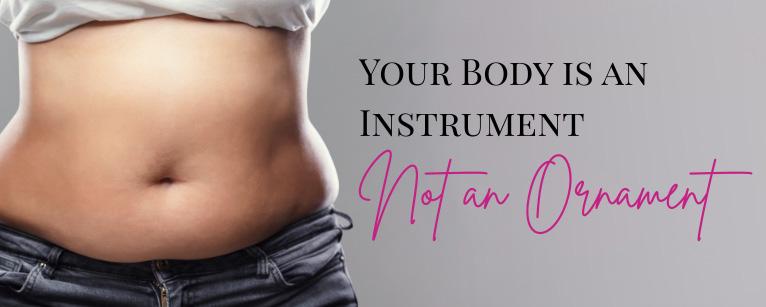
Your Body is an Instrument, Not an Ornament
Emily Cowen
From Our Editor
Theme Women’s History & Intergenerational Wisdom
Dear Readers,
Women in history—the way makers and earth shakers! Our history encompasses passionate women who stood immovable against the odds of prejudice and societal blockades meant to censor moving forth in their calling, the right to speak their truth, and their ability to walk in freedom.
We owe so much to these pioneer women who used the “battering ram” of determination and resilience to tear down those blockades, creating a way that we are now privileged to walk. To say we are grateful seems pretty understated!
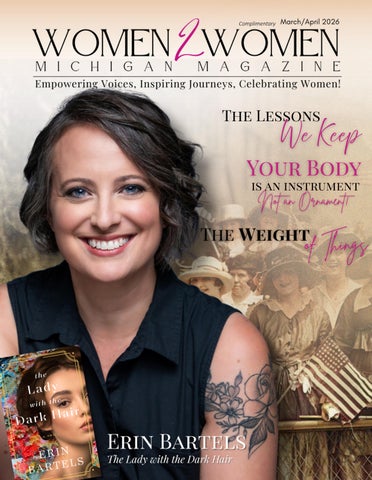
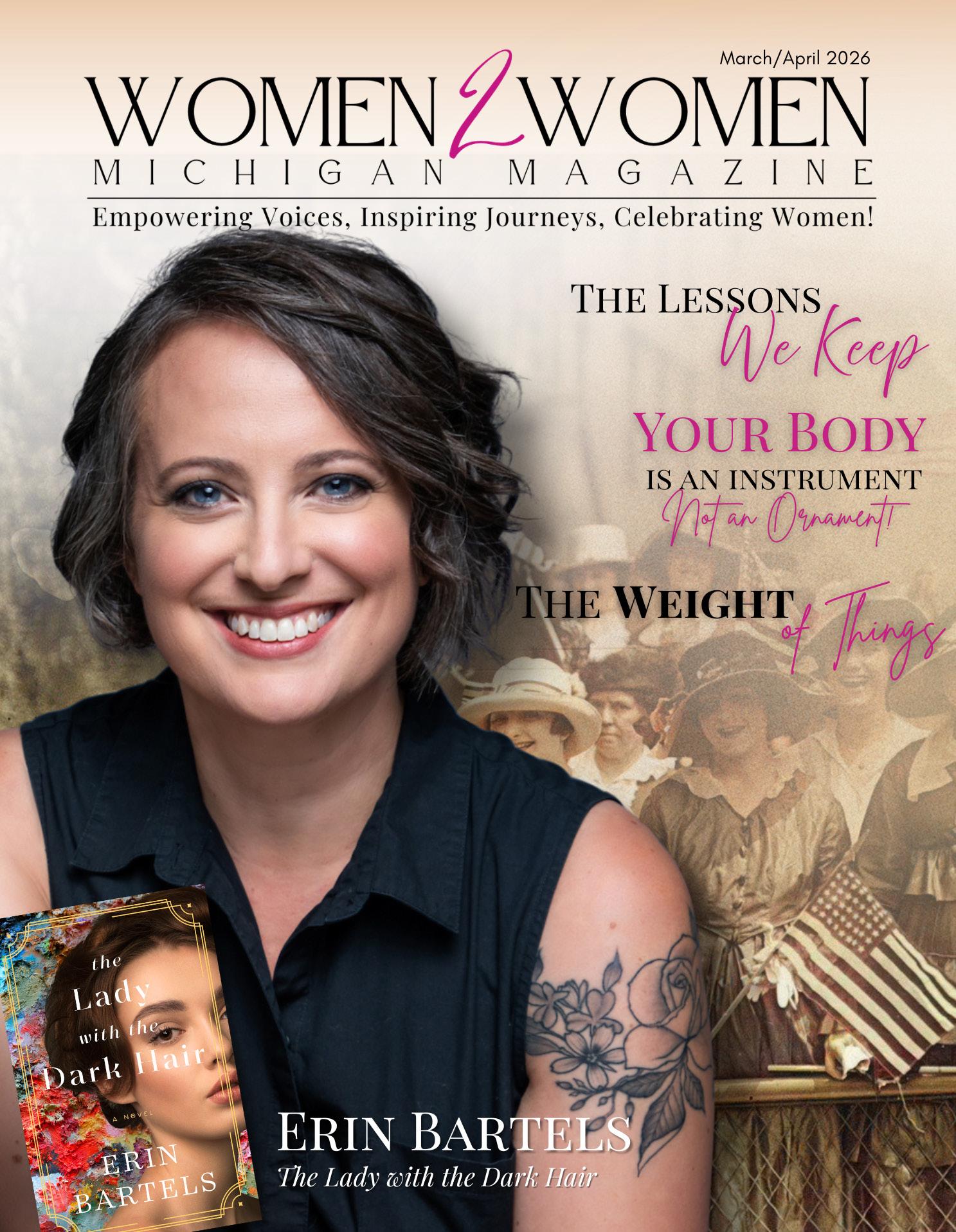
Cover girl Erin Bartels’ book, The Lady with the Dark Hair, perfectly fits our theme. Women in two different eras, one in the 1880s and one present day, are battling many of the same issues. Both of these women also struggle with the age-old question, “Who am I really?”, not unlike many of us. Women2Women’s mission is to provide you, and other women like you, the support and knowledge to access who that inner woman is—without restrictions. A woman who is realizing her potential and using her character strengths is often a woman who is living a fulfilled life. We want all of you to achieve that!
In this issue our talented, passionate writers have shared personal stories of women who have imparted not only wise words and legacies with them, but also interests, life hacks, and adventures, and are multigenerational, showing that wisdom comes during all stages and ages of life. You will thoroughly enjoy reading through these pages.
We continue to grow, and are excited to welcome new writers to our team!
• Meghan Zaderej, owner of Balcony Row Books, is sharing book reviews with us.
• Kelsey Rudy, Director of Marketing and Business Development Birch Run Premium Outlets, is giving us fashion wisdom and trends.
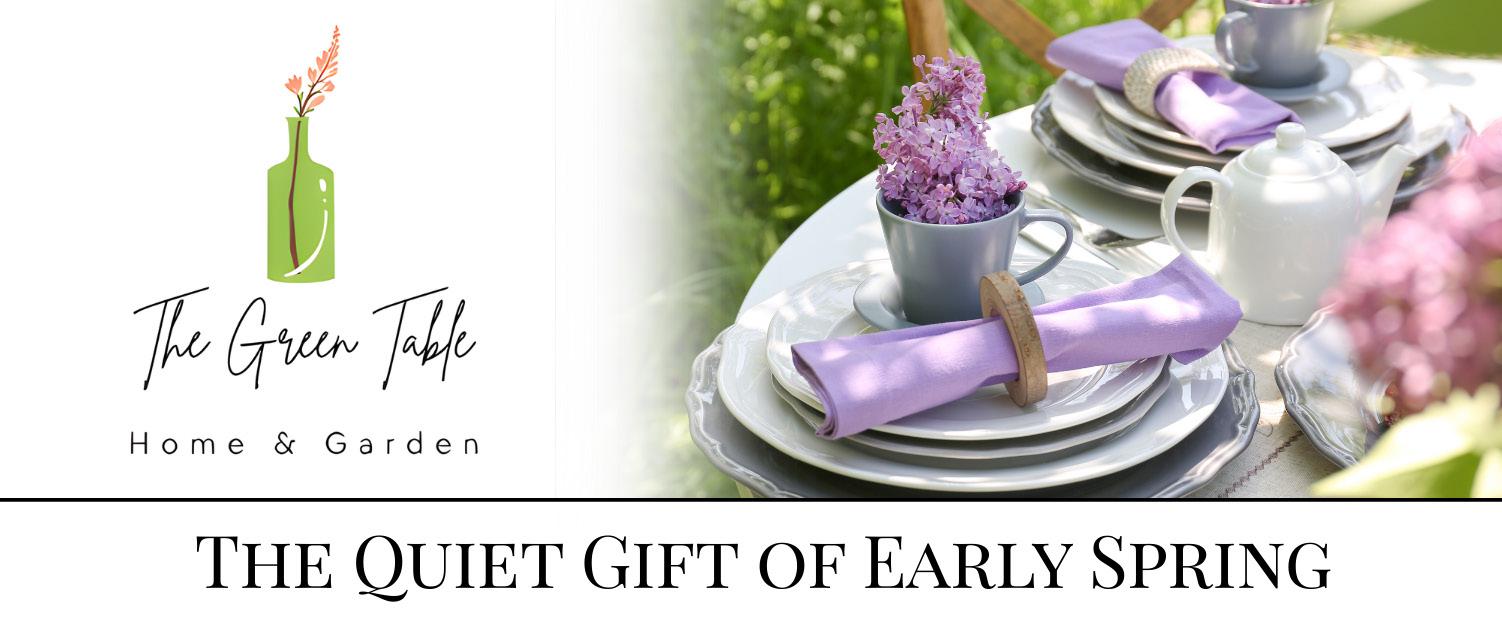
• Christine Stephens, owner of The Green Table Home & Garden is bringing beauty and ideas to our pages.
• Jessica Brown, a Vacation Specialist at Dream Vacations, provides us with goal-worthy stories of adventures.
• Dr. Melissa Vandermissen makes it her mission to educate us about menopause.
We are truly blessed with these new additions to our already quite amazing team of writers. W2W just keeps growing and sharing and telling our stories. Because we realize that, “Stories make us more alive, more human, more courageous, more loving.” Thank you, Madeleine L’Engle, we wholeheartedly agree!
I wish you joy as you courageously keep writing your own beautiful story.
Blessings & joy to you, , Editor
Why not gift yourself a print copy subscription? Carry it with you to read during those times you are waiting for the next thing. Give one to your girlfriend—then discuss like a book club. Stay informed of W2W happenings through our email newsletter. If you haven’t been receiving them, visit www.w2wmichigan.com and sign up!
www.W2WMichiganc.om
Debra
All of my books spring from questions I have or things I am working to understand more fully. They are also all closely related to my personal interest in history, art, relationships, and how the past continues to affect us today. No matter what I’m working on, you can bet that there will be themes of reckoning with the past, improving the present, and looking with hope to the future. And even when really difficult things happen to my characters, ultimately, I try to leave my readers with a sense of peace and possibility.
My most recent book The Lady with the Dark Hair was born from my own love of art, specifically painting, and my interest in women artists, who have often been discounted, discouraged, or even lost to history. I wanted to tell a story about two women, separated by time, who labored under similar restrictions on their personal autonomy, their movement, and their art. Only, for the woman in the past timeline that takes place in Impressionist era France and Gibraltar, the restrictions are external, imposed by society, while for the woman in the present day story, the restrictions are internal—they are limits she has placed on herself.
In our age when a woman can do just about anything she feels called to do (so long as the opportunity, funding, and support are there) we still take on a lot of burdens that are not necessarily ours to bear, and that can determine the course of our lives. I want to encourage women to follow their passions and ask for the support they need in order to do so.
Long before I was a writer, I was an artist. Or, at least, I was artistic. In fact, the class of 1998 voted me as one (of two) of the Most Artistic girls. They also voted me the girl Most Likely to Become President, which seems less and less likely as the years go by.
As a child I drew countless unicorns, dogs, horses, and other animals. I sketched people I found in photos. I painted watercolor flowers and landscapes, made collages from pictures cut from magazines, sculpted clay pots and figures, wove baskets, and made hideous jewelry out of something called “friendly plastic.”
As a twenty-something, I added other artsy pursuits like photography and creative stamping, as well as making mosaics and non-hideous jewelry out of beads.
When they finally put my old pal Bob Ross on Netflix, that’s when I decided that no matter how “messy and expensive” oil painting was, as I had always been warned, I was going to try it. Spoiler alert: it’s neither, really, and it has become my preferred medium.
One of the best things about writing novels is that I get to draw on and plunge myself further into my own interests as I develop characters, plots, settings, and themes.
For The Lady with the Dark Hair, I immersed myself in all things painting. I attended special exhibits at museums, including the incomparable Detroit Institute of Arts and the Cleveland Museum of Art. I read books about
I’m a big advocate of assuming you can do something rather than assuming you can’t.
artists, artistic movements, art history, and colors and pigments. (Find those, as well as many other resources, in the “Books for Further Reading” section at the end of my book.) I watched painting demos on YouTube, followed artists on Instagram, and took a Domestika course on portrait painting from one of my favorite Instagram artists. I participated in a life drawing class as both an artist and a model.
I also started painting self-portraits—one every month for a year—both to teach myself how to do it and to do firsthand research for the book. I’m a big advocate of assuming you can do something rather than assuming you can’t. Because when you assume you can, you try more things and you have a more positive attitude when the gap between your desired level of talent and what you are currently producing is a wide one.
Anyone can learn a new skill, and that’s all that most endeavors are—a series of learned skills that I think more people are capable of than they might assume. I was an English major who went into the book publishing industry. After enough time reading, analyzing, and working on other people’s books, I got the idea that
writing my own book was accessible and doable. So I quit grad school to write my own books. It took more than a decade from that point to actually see my first book on the shelves. In that time, I was learning by doing.
There are no short cuts. You have to do the work. You have to write in order to learn how to write. You have to write bad stuff before you write good stuff before you write great stuff. So if you want to write, write. Keep at it. Be teachable. But also develop confidence in your own style and your own voice.
Erin challenges you to try new things, believe you can master new skills, and stop placing arbitrary restrictions on yourself. She says you were made to be creative in some way—we all were.
In her book notes at the end of The Lady with the Dark Hair Erin writes, “I’d like to thank the many female artists over the centuries who have striven to create despite tremendous restrictions, opposition, and condescension, to say nothing of the rampant misattribution and devaluing of their work. Your fiercely independent spirit and your tenacity in the face of so many obstacles inspire me. You are my muses.”
We at Women2Women agree. We owe so much to the women who have gone before us!
Erin lives in a small Michigan town outside of Lansing. She is a pastor’s wife and mother to a son who is just about to graduate from high school.
After 24 years working in book publishing, Erin is now Editor in Chief of HSM Publications for the Historical Society of Michigan. She loves working with writers to improve their craft and especially enjoys speaking to young and new writers about how to focus on their writing and how to navigate the winding path to publication.
Erin is a frequent speaker at libraries, bookstores, and events. She also teaches writing workshops at retreats and conferences. She is a freelance developmental editor and book coach for novelists, as well as a freelance marketing copywriter.To learn more about her writing and services visit www.erinbartels.com
Early spring has always been my favorite time of year.
Here in Michigan, winter still lingers. Snow rests quietly along the edges of the garden beds, and the air carries that familiar chill. But something has shifted. The light is softer. The days stretch just a little longer. And in that in-between season, before the rush of planting, before the invitations and outdoor gatherings, there is a rare and beautiful gift: Your time is your own. Early spring offers us space. Space to dream. Space to edit. Space to regenerate.
While the garden still sleeps, I find myself imagining what it will become. I sketch new projects, reconsider old ones, and allow creativity to wander. There’s no urgency yet...only possibility. It’s a season of vision before action, which feels like such a luxury. But before I step fully into the outdoors, I like to begin inside.
Bring Spring Indoors
Even when snow is still on the ground, spring can arrive inside your home.
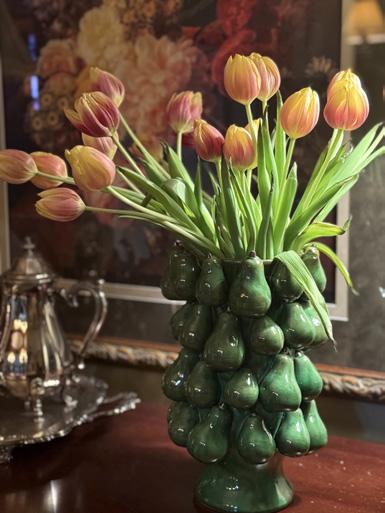
One of my favorite rituals this time of year is bringing home a simple bunch of tulips. Nothing elaborate, just fresh,
graceful stems arranged in a unique vessel. A ceramic pitcher, an antique jar, a handmade bowl, something unexpected that makes the arrangement feel personal.
Tulips have a way of transforming a space. They stretch and bend toward the light, reminding us that growth is happening even when we cannot yet see it outside. That simple gesture; a handful of blooms on the kitchen table or bedside, can brighten an entire room. It’s uncomplicated. And yet, so beautiful.
Edit to Make Room for Inspiration
Early spring is also my favorite time to gently edit my home. Before the energy of the growing season arrives, I like to walk through each room and ask a simple question: Do I still love this? If something no longer inspires me, I thank it, and let it go. There is something incredibly freeing about creating space. Space on shelves. Space in closets. Space in corners that have quietly collected things over time. When we release what no longer serves us, we make room for what does. For fresh inspiration. For creativity. For beauty that reflects who we are becoming, not who we were.
This process feels very much like tending a garden. We thin. We prune. We prepare the soil so new growth has room to flourish.
Dream Before You Dig
With the house refreshed and tulips on the table, I turn my attention back to the yard. This is the time to dream of new garden beds, to imagine gatherings under string lights, to picture where a new bistro table might sit tucked among the blooms. I flip through seed catalogs, sketch layouts, and allow myself to envision what the season could hold. And then I pause. Before the busyness begins, before the entertaining calendar fills, before the weeds and watering cans call our names, there is quiet. And in that quiet, we are reminded that early spring is not about doing, it is about becoming.
So while the snow lingers a little longer here in Michigan, I will gather tulips, clear what no longer inspires me, and dream of gardens yet to bloom. And I will savor this gentle, hopeful season — where time feels spacious, and possibility feels endless.
Christine Stephens “For those who find beauty in the everyday - welcome to The Green Table.” - The Green Table Home & Garden.
Your Health & Wellness Journey
When I stepped onto my new smart scale, a Christmas gift to myself, I expected clarity. These devices promise insights — body fat, muscle mass, metabolic age, hydration levels — all the things we’re told we should know about ourselves.
Instead, the numbers left me confused. One measurement said “standard.”
Another said “very high.” Another told me my metabolic age was older than I actually am. For a moment, I felt that familiar ripple of doubt.“Is something wrong with me?”
But almost immediately, a deeper memory rose up — wisdom shaped by the women who came before me. Not one of them ever waited for a machine to tell them who they were or how healthy they felt. They used something far more reliable:
Their intuition, lived experience and selfawareness. In that moment, I realized the lesson was not about the scale at all. It was about remembering — and passing on — the kind of wisdom that numbers can never provide.
The women who raised us didn’t count steps or track macros. They didn’t analyze their hydration levels or calculate metabolic age. Yet they understood their bodies with a kind of grounded clarity we rarely see today. They noticed how they felt. They paid attention to energy, sleep, digestion, and mood. They trusted their own rhythms. They practiced a wisdom rooted in awareness, not formulas.
I remember when I was young and when I was grouchy, my Grandma would ask me “Did you have a BM today?” That used to drive me crazy! But there was true wisdom in that! We get grouchy when we’re constipated!
Today, in a world full of data, many of us have lost that connection. We look
to devices to tell us the truth about ourselves — and sometimes forget we already carry a lifetime of insight within us, passed down through generations who learned how to listen inwardly, not outwardly.
The Numbers Tell a Story, But Not the Whole Story
Smart scales are impressive tools, but they have limits. They can’t see your height, your frame, your unique metabolism, or the way your body handles stress and hormones. They compare your data to the average woman, not the individual woman God made you to be.
So yes — the numbers can sometimes be misleading. They can shift based on hydration, sleep, hormones, sodium, stress, a hard workout, or the time of day. Your weight can fluctuate three pounds in 24 hours and mean absolutely nothing about your health.
That day on my scale, the numbers told me I was “high” in places that were actually normal for my frame. Because I trusted the labels instead of my inner wisdom, I spent hours researching everything that might be wrong with me! Instead, I should have remembered the women before me — women who trusted their bodies long before body composition metrics existed. Now I choose to follow their example.
The Intergenerational Lesson: Trust What You Know About Yourself
Health is not defined by a number. Wellness is not determined by daily fluctuations. Your intuition is often more accurate than your devices. Smart scales can calculate data, but they cannot measure your strength, resilience, energy, your commitment to healthier habits, your peace of mind, spiritual growth, gratitude or your courage in creating a
better life. Generations before us knew this without formal teaching. They understood that wellness is lived, not labeled.
Sharing Wisdom with the Next Generation
Our daughters, nieces, granddaughters, and the young women we mentor are growing up in a world where data tries to define identity. What an opportunity we have to pass on a different message: You are more than your numbers. You can trust your body. You can trust your experience. You can trust yourself.
If we can help the next generation understand that wellness is about how you feel, how you live, and how you care for yourself — not what a device says — we will be passing on a priceless legacy.
The Lesson I’m Taking Forward
That day on the scale taught me something I hope to carry through every season of my life: Use the numbers for insight, but rely on your wisdom for truth.
This balance (information paired with intuition) is one of the greatest gifts we can receive from the generations before us, and one of the greatest gifts we can pass to the generations after us.
And maybe that’s the heart of intergenerational wisdom: listening to the voices that came before us, sharing the lessons we’ve learned, and teaching others to trust the wisdom they already carry.
Debra Loader is a Christian Health and Wellness Coach, a Christian Life Coach, as well as a National Board Certified Health and Wellness Coach (NBC-HWC). She helps women integrate their Christian faith into their health and wellness journey to find greater motivation and resilience. You can contact Debra at debra@debraloaderlivingwell.com 810-287-4096
One of the greatest gifts in my life has been having relationships with people in different stages of theirs. There’s something so powerful about learning from someone who has already walked a path I’m just beginning. Their perspective reminds me that our struggles echo across generations and that when we listen, share, and grow together, those lessons can move all of us forward.
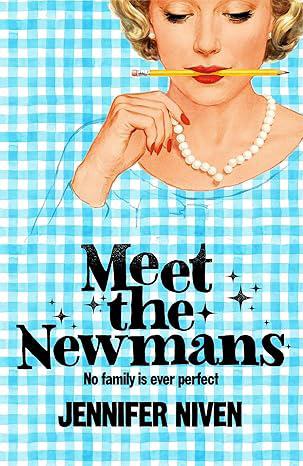
In March’s Root and Bloom book club, we picked Meet the Newmans by Jennifer Niven. We meet Dinah Newman who is a mom not only at home, but also to "America’s Favorite Family" on television in the 1960s. A sudden accident puts Dinah in front of a family crisis. Meet the Newmans is on their last episode where Dinah can make a difference for herself
From #1 NEW YORK TIMES BESTSELLING
author Jennifer Niven, a novel about America’s favorite TV family, whose perfect façade cracks.
“I LOVED
Meet the Newmans!” —Judy Blume, #1 New York Times bestselling author
“[A] WITTY AND MOVING novel.” —People
“Fans of LESSONS IN CHEMISTRY will love Meet the Newmans.” — Woman’s World
and possibly for all other moms who look up to her on screen.
Dinah works with Julliette Dunne to create the script of a lifetime. They have two opposing opinions on what it means to be a woman in the 1960’s and their creative differences challenge their views, as well as the women around them. This book takes place right at the beginning of the feminist movement. It is a unique look at what women were going through at that time and the choices they made with the knowledge they had. It is a funny and big-hearted story of not only Dinah and Juliette, but of all of the Newmans. It is hard not to empathize with them all by the end.
Whether you are a ‘burn the bras” feminist or a “just let me bake and be home” feminist, it all started at one point. This book takes a look at not only the generations before us but also other socioeconomic perspectives at the time. I love reading about these eras and
wondering what I could have been like in the comfort of my own era.
I hope by reading this book you can see how important it is to see others' point of view on the same struggles generation after generation, as well as how we can move the needle to do good, for us and others around us, by working together and sharing all of our lessons, one story at a time.
Meg Zaderej is the owner and founder of Balcony Row Books (BRB), an independent bookstore created as a safe, inclusive space for women to connect, learn, and grow through stories. BRB is a gathering space for many monthly genre-based book clubs, and thoughtful conversations. With a deep belief in the power of women’s voices, Meg curates stories that spark reflection, foster connection, and help readers discover their next meaningful read. To stay up to date on all things Balcony Row Books, follow along on Facebook and Instagram at @ balconyrowbooks, or visit www.balconyrowbooks. com. You can also follow Meg’s personal reading journey on Instagram at @megz_tbr. Balcony Row Books is located at 109 S. Saginaw Street, Holly, MI 48442.
Aligned Living
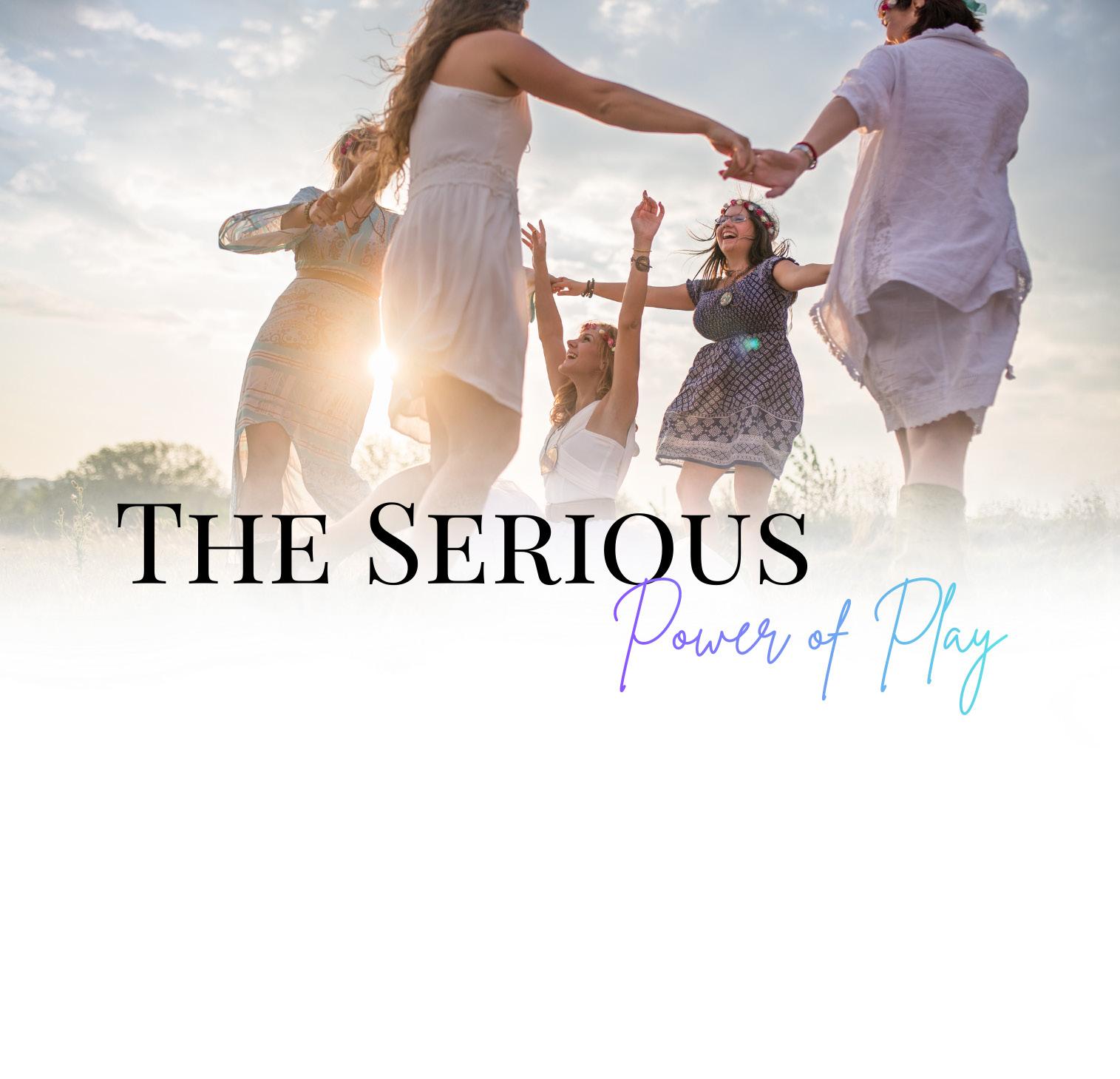
When I first met Julia, I didn’t quite know what to do with her. I remember raising an eyebrow, wondering if anyone could actually be that playful—especially a woman in her 50s. She didn’t just have a sense of humor. She played with life. Fully. Freely. Without apology.
I first knew her as a teacher, and sitting in her class was like being invited into a world of play and discovery. She encouraged us to explore, to question, to experiment. She didn’t force learning; she awakened it. As our friendship grew, I realized this wasn’t a classroom strategy. It was her way of being. Whether hiking, traveling, sharing meals, or diving into spiritual conversations, she approached everything with curiosity and lightness.
Years later, I witnessed her face some truly challenging situations. But even then, her playful spirit never wavered. I vividly recall her scrunching her nose, clenching her fist, puffing out her chest, and declaring that she would overcome the challenge.
It was like watching a child dressed as a pirate proclaiming, “Aye, matey!”—only Julia approached these obstacles with the fierce determination and the resilience of a warrior.
Julia taught me something I’m still learning to embody: play is not immaturity. It’s strength. It’s access. It’s energy. Think about your favorite memories—childhood or adulthood. Most of them probably hold some element of play. I’ve come to believe we were designed for that kind of engagement— with each other and with the world.
Here’s what I’ve seen about play:
Increased Creativity - Play unlocks original thought. When we loosen our grip on outcomes and expectations, our minds open. We experiment. We imagine. We see possibilities we wouldn’t access through pressure alone. Creativity thrives in a playful environment, not in a controlled environment.
Enhanced Capacity for Learning - Play makes learning stick. When curiosity leads, engagement follows. Environments that prioritize exploration over performance consistently produce people who love learning for life, not just for grades or approval.
Full Engagement - When we play, we are fully there. Mind, body, emotion, spirit— engaged. We aren’t multitasking. We
aren’t posturing. We’re immersed. That level of presence changes us.
Greater Connection - Play builds trust quickly. It reveals different sides of us and softens defenses. Whether in families, friendships, or organizations, shared play deepens loyalty and strengthens bonds.
I’m not talking about abandoning responsibility or pretending life isn’t serious. I’m talking about engaging with seriousness differently. When we bring playfulness into our challenges, we gain access to creativity, resilience, and freedom.
If this feels unfamiliar, start small. Invite a little lightness into your day. Explore something just because it’s interesting. Let yourself be slightly silly. You may discover, like I am, that play isn’t a distraction from growth—it’s the doorway into it.
Jennifer Beard, owner of Bold Life & Bold Life Academy, guides individuals through transformative shifts in behavior, beliefs, andemotions, unlocking the path to their most extraordinary lives. Visit Jennifer at JenniferBeard.com.
Wardrobe Wisdom
Don’t mix stripes and polka dots. Don’t wear white to a wedding. Gone are the days of fashion “rules”. You’ll notice many of the sacred “rules” of fashion tell you what not to do.
What about what to do?!
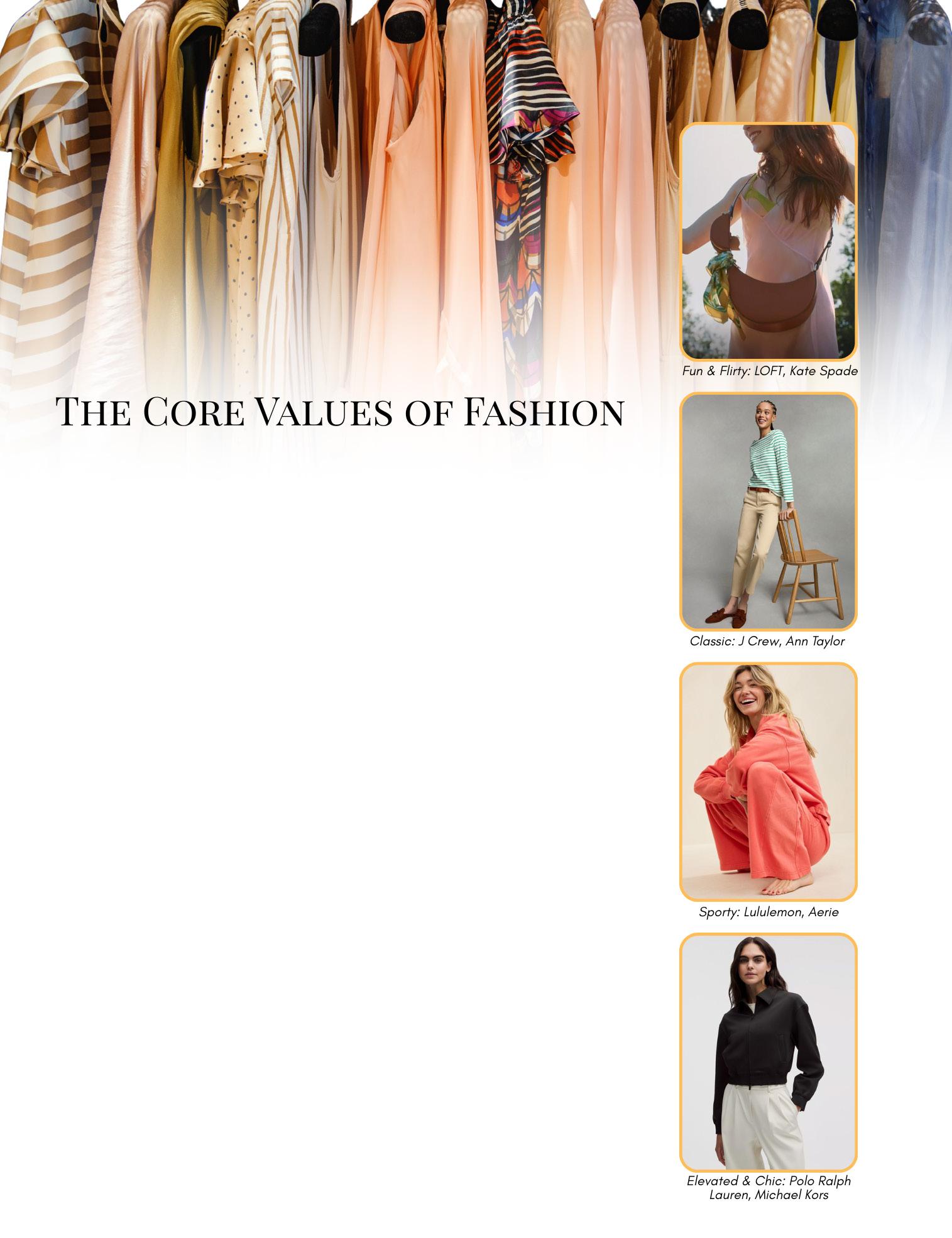
The only rule is there are no rules. Similar to our personal values, often derived from our own life experiences or traditions, our fashion values are built on what we learned from those before us. What I value is likely different from what you value. And at the end of the day, that’s the beauty of it; just as no two people are the same, nor is our style.
Our style might (and should) change from day to day. I might feel Classic on Monday, Elevated on Tuesday, Sporty on Wednesdays and Outdoorsy when I get home.
The office me certainly may not match the book club style of me; and book club me may not match my personal favorite style: mom me. But here’s the thing: there’s still a version of “me” in all of those styles. That’s where the fashion piece comes in.
“Style is a way to say who you are without having to speak.”
-Rachel Zoe
Be you. Wear what makes you feel good. Know your body type and accentuate your best features. If you have a straight, athletic frame embrace tailored clothing and belts. If you’re curvier on the bottom, try fit and flare, a-line styles. Carrying
more than you’d like through your middle? Girl, same. V-necks and wide leg pants are a great go-to. Love your legs? Show them off!
While your clothes may not define you, how you dress has a direct impact on how you show up for your day. When there is confidence in your look, your mood improves, which has the ability to make you more productive.
“Fashion
changes, but style endures.” -Coco Chanel
Trends are just that; they’re trendy. While I appreciate fashion and trends as much as the next girl, I invite you to coin a style that highlights pieces you love. Be you. Nothing is more beautiful than your authentic version of self.
That said, still dying to know what’s trending? Athleisure sets aren’t going anywhere. Check out some flawless sets at Aerie, perfect for travel. Sneakers continue to style up and down; Adidas classics remain very relevant. Stripes in our classic staples, think Polo oxford shirts. We’ll continue to see fun prints including animal print and polka dots. Colors of the season include shades of chartreuse and apricot.
Kelsey Rudy is a wife, mom and equestrian, who is passionate about people and growth. As Birch Run Premium Outlets' Director of Marketing and Business Development, Kelsey focuses on shaping a sustainable, meaningful brand strategy and driving traffic to the Great Lakes Bay Region.
Girlfriend Getaways
Decades ago my grandmother was in Belize when a hurricane began bearing down on the coast. The tour she was traveling with evacuated everyone to higher ground and navigated the logistics of protecting the travelers. While she understood the urgency, it wasn’t just an emergency to her—it was an adventure. That moment perfectly captures what I’ve come to understand about travel: some people are born with a deep, ingrained love for it, and when that spark is lit, it becomes impossible to extinguish.
My love of travel was ignited by the women in my family. My grandmother adored exploring new places, and her stories—especially the ones shaped by unexpected mishaps—were always the most entertaining and unforgettable. As most travelers know, it’s often the unplanned moments that become the brightest memories.
My aunts share that same adventurous spirit. Together, often alongside my grandmother, and separately they have traveled to Europe, Australia, New Zealand, and throughout the Caribbean. Their stories aren’t just about destinations, but about time spent together, the people they’ve met, and the shared experiences that bonded them. Hearing those stories fanned the flames of my own desire to see the world. Growing up, my immediate family didn’t travel extensively, but the trips
we did take left a lasting impression. We visited places like Washington D.C. and Florida, and I distinctly remember helping to navigate—reading paper maps, calculating distances, and deciding where we should stop next. Even short trips offered endless lessons for a child: history, geography, cultural differences, and the realization that the world is both vast and surprisingly small.
As I grew older, that childhood curiosity evolved into something deeper. Now, as an adult, a mother, and a grandmother, my greatest joy is traveling with family. We’ve explored Italy, Greece, the Caribbean, the west coast of Mexico, and Hawaii together. Watching your children discover new places—and learn to navigate unfamiliar countries—is incredibly rewarding. To this day, my daughter still uses a memory from Santorini as her “fun fact” in college. She rode a donkey to the top of the caldera with my best friend, and it remains one of her favorite travel moments.
Of course, intergenerational travel isn’t always sunshine and rainbows. One fall, we planned a road trip to Gatlinburg, Tennessee with two of our daughters and two grandchildren, ages eight and five. We rented a log cabin and planned a comfortable twelve-hour drive in a minivan—only to discover a mix-up at the rental car company. Instead, we squeezed into a three-row SUV packed with luggage
for five days. Before we even crossed the Michigan state line, one child had vomited everywhere, triggering an unplanned pit stop at a sketchy gas station. There were outfit changes, frantic cleanup attempts with paper towels and Lysol wipes, and a moment where everyone questioned our life choices. It was chaotic, exhausting— and now, one of our most frequently retold stories.
That’s the beauty of travel. Vacations and leisure trips give us permission to slow down and step away from everyday routines. They open the door to new experiences, adventures, and joy. When multiple generations travel together, they create something even more meaningful: shared experiences form bonds and time together strengthens them.
Travel, in my family, is more than movement from one place to another. It’s a legacy—passed down through stories, adventures, and a shared willingness to embrace the unexpected. My hope is that future generations inherit not just the memories of where we’ve been, but the curiosity and desire to keep the spark lit.
If you’re a woman, you have probably wondered why we go through menopause. Is this part of our grand design? Are we meant to live past reproductive years? Is there another purpose for us after we stop cycling? This is a subject that doctors and scientists still argue on without one single concise explanation, and honestly, probably always will.
I want you to think of some of your most vivid childhood memories. Is there someone in your family that tends to be a common denominator is these memories? Possibly a grandmother? That isn’t a mistake, but rather part of an intergenerational advantage that we have as humans.
Did you know that humans are one of only a select few species, where women live past their reproductive years? For many years this was viewed as a flaw in our evolution, or even just a negative consequence of the increase in longevity, but thankfully we have a new theory that honors women instead of shaming them.
A woman named Dr. Kristen Hawkes observed something much different than the current idea, while studying a modern tribe of hunter-gatherers.
What she saw made her question the ageold view that women were not designed to live beyond reproductive years, but rather how women are valuable in many other ways when they become grandmothers.
She coined the term the “grandmother hypothesis”, which puts focus on the significant role that grandmothers play, in not only their family, but society as a whole. This supports the theory that women are in
fact meant to live beyond the end of their fertile years.
Dr. Hawkes observed the roles that the elder women played within a hunter-gatherer community, which was far from just taking up space or being a burden. While the men of the village went out hunting, the younger women were able to stay and care for their young while the elder women went out to gather food such as berries, fruit, and tubers.
This could entail a long day trip on an empty stomach, but since the metabolic and hormonal systems shift during menopause, they were much more equip to do this task over the younger cycling women. The grandmothers ensured there was always nutrition available to the young women and children, even when the men’s hunt was unsuccessful. They were also available for wisdom, empathy, and ensuring the unconditional bond between the village.
In modern times, we no longer have to send the grandmothers out for day trips to forage for berries and tubers, but they still play a significant role in the family dynamic. Since most families now require both parents to work outside the home, the grandmothers are able to step in and take on the role of watching the young children while their parents provide income for survival.
Since the ancient role that grandmothers provided was based around food and nutrition for the young, it’s no wonder that we have progressed to loving the food and treats at grandma’s house. This primal interaction has evolved a bit over the years, but still honors the post-menopausal woman as a crucial contributor to human
longevity, by keeping families fed with nutrition and love.
Menopause isn’t just cessation of menstrual cycle, as there are many processes happening behind the scenes when women may be struggling with things like hot flashes, brain fog, or night sweats. The specific changes that happen within the female body during menopause may be part of the preparation for the grandmother era.
Dr. Lisa Mosconi has spent her life studying the female brain and has released recent research on what is truly happening beneath the surface during menopause. For instance, changes within the amygdala allow postmenopausal women to become less reactive to negative emotional stimulation. They also gain more emotional control overall and become more empathic. Grandmothers tend to be better at listening to problems, finding solutions, passing little judgement, and staying calm as a cucumber during the battles life throws at us.
Menopause isn’t something to fear. It’s a rite of passage into the years when women find their greatest life, satisfaction, and joy.
Dr. Melissa Vandermissen is a Chiropractor and Certified Functional Medicine Practitioner, as well as a wife and a mom. She operates a fully virtual clinic, where she works with women from preconception through menopause. Dr. Melissa utilizes the best of science and nature to formulate personalized protocols for her clients so they can live out their full potential. You can follow her on Instagram at drmelissavandermissen or at thedrmelissa.com.
Diary of a Hairapist
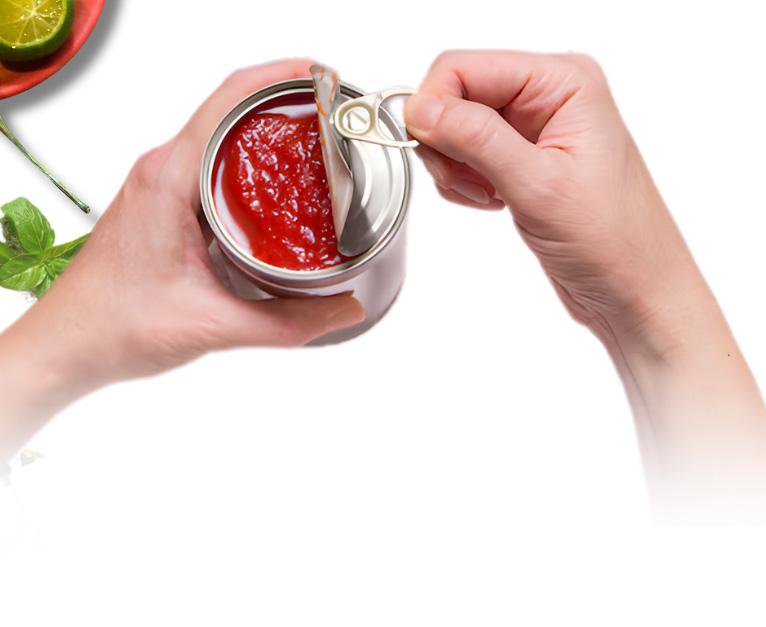
I think of you every time I open a can of crushed tomatoes.
I hear your voice saying, Trust me, never diced, and I obey without question. I don’t innovate. I don’t rebel. I reach for the crushed tomatoes as if I am honoring a sacred text, because this sauce feeds my family and the instruction came from someone who knew what they were talking about. I have changed religions more easily than I would change this opinion.
The sauce I make is not actually mine. It is a collaboration. A greatest hits album of friends, clients, and women who once stood across counters or sat in salon chairs and let something useful slip out. A trick here. A shortcut there. Knowledge offered casually, as if it had no idea it would someday become ritual. As if it would not be repeated with reverence, folded into muscle memory, passed down without origin story.
This is how people live inside me now. Not as sermons or dramatic life advice, but as quiet guidance. A nudge. A hum. A steadying presence that arrives precisely when needed. Ordinary life, softly inhabited.
I am continually surprised by how much of me belongs to other people. Pennies are Melissa. Tomato sauce is Sarah and Kathy. Paying attention to birds belongs to
Kathy too, as do those particular wooden puzzles that teach patience without ever saying so. Monday dinners are sacred in my house because of Grandma Tia, who is not technically my grandma. She is simply someone whose way of gathering created a template my body recognized as truth. Yvonne gave me a love for antique Christmas ornaments and women’s rights. Melissa W. has encouraged me for 20+ years to start writing, so glad I finally listened! Jen has always been my Polaris, teaching me so much more than I can list here.
Music carries George. His devotion to sound quality was nearly spiritual. He could make you care deeply about stereo equipment even if you absolutely did not want to. When a song sounds especially good, I still hear his voice explaining why. Comfort itself felt holy in his presence, right down to the lesson on percale sheets and oriental rugs.
I use my salad spinner and think of my Aunt Allison holding my hand. I hear her voice saying, Hello my beautiful daughter. Literally. Every woman in my family owns a salad spinner because of her unwavering conviction on the matter. My body remembers what my mind does not announce.
Books act as thresholds. I pull one from a shelf and feel as though someone has placed a hand lightly between my shoulder blades from another time in my
life. I read with company. I remember who pressed the book into my hands, who said, this one feels like you. I remember who trusted it with me as if it were a living thing. The margin notes matter less than the lineage. The remembering is the transmission.
Laura lives between my ribs. Her stories of the Upper Peninsula lodge there alongside her beef tenderloin recipe. I cannot make it without hearing her cadence, without tasting the place she loves. I see Jackie every time I look at my statue of Quan Yin at my kitchen sink, or when I make herbal tinctures. Other women arrive less visibly. They appear in how I phrase hard truths, in how I pause before responding, in the tone I use when honesty must be carried gently.
Cinnamon gummy bears will always be my Mom and childhood freedom. Reckless joy. Our fun adventures with no money or destination in mind. Movement without consequence. I think of her when I see purple, hand blown glass or something miniature. The way that she loves me fully and without judgment wraps me in a hug, like the quilts she makes. The smell of coffee and cigarettes together still opens something ancient in me. That scent holds an entire era without commentary. Love and chaos shared the same kitchen and made it work.
There is also the older remembering. The longing to be known beyond biography.
The way fire feels familiar in my chest. The way plants speak without language. The sudden sense of coherence that arrives when I stand still long enough in a forest or submerge myself in water. The aliveness that rises when I keep bees or make medicine with my hands. The healer that wakes when I am useful to my people. The quiet knowing of how to tend small ailments with what the land offers freely. These were never labeled wisdom. No one pointed and named them. They simply stayed. They are the lessons I kept.
Intergenerational knowledge is often described as something passed strictly through bloodlines, as if ancestry were limited to genetics alone. Most of what shapes us arrives through proximity instead. Through repetition. Through watching someone be themselves long enough for it to impress upon the nervous system. Through listening with the body. Through remembering what already lives in the bones.
A client mentions having the best dinner of their life at a place new to me and suddenly I am there the following week. Shelly recommends a fun game and it becomes a household staple, and the way that she helped my grandma will forever be imprinted on my soul. I see so much of myself in her fierce nature, and the way she loves and is devoted to her children moves me to actual tears. These women are woven in the tapestry of who I am at my core. I am a garden of other people.
Not every inheritance is meant to be permanent. Some patterns are useful briefly and suffocating later. Some instincts were born in survival and do not translate into safety. This is not a story about what must be unlearned.
This is a story about what is worth carrying. It is the quiet miracle of influence.
The way we shape each other without intent. The way love leaves a residue that cannot be scrubbed away. The way being witnessed, even briefly, alters a trajectory. The way the ordinary becomes sacred once the invisible labor behind it is seen. Once the women are noticed.
Lately I have been wondering if this is the entire assignment. Not mastery. Not enlightenment. Participation. Earth school. Full sensory immersion. Learning through error, laughter, devotion, proximity. Carrying forward what nourished and letting the rest fall away without punishment.
Becoming a good ancestor may be the highest work. Not a perfect one. A human one. Someone whose presence made things feel more possible. Someone whose voice echoes kindly in another person’s mind years later while they are standing in a kitchen or a grocery store or inside an unremarkable moment that turns out to be holy.
Memory is forming whether permission is
given or not. We are already being passed down.
We are someone’s crushed tomato rule. Someone’s book recommendation. Someone’s tone of voice when tenderness was required.
Control over legacy is an illusion. Attention is not. I try to notice. I try to live honestly rather than impressively. I try to remember that everything leaves a trace. Forgetting happens often. Returning happens on purpose. I return to the small consecrated things.
The sauce. The pennies. The music. The books. The beef tenderloin. The cinnamon gummy bears. The salad. The games. The birds. The herbs. The land. The lingering smell of coffee and cigarettes, like evidence that love once lived here and did not fully leave. The things that made me, but have no physical presence.
One day, someone will think of you in the middle of something entirely ordinary and not understand why
That will not be an accident.
In Diary of a Hairapist, Jamie MacNeill explores the sacred absurdity of modern womanhood, from the tangles in our hair to the tangles in our hearts. It’s wit with wisdom, scissors with soul, and proof that beauty and truth often come from the same messy place. Instagram: @jamiemacneill, Facebook: Jamie MacNeill
How do you feel about your body?
Why do you feel that way?
Take a few minutes and reflect on that question. What does your answer entail? Write it out in a journal or notebook if you want. Take as much time as you need before you continue reading.
How did you respond to that prompt? If we compared answers, most people will describe how they look, highlighting what they perceive to be flaws or what they assume others perceive as their flaws. It usually entails responses with elements of shame, fear, pain, anxiety, embarrassment, and dissatisfaction. Did you answer with physical attributes you are proud of or have "worked" for. It's as if the question wasn't how you FEEL about your body, but instead, "What do you most fear someone else will SEE when they look at you?"
What all the answers typically have in common is that they reflect a distance and detachment from the body, as if your only relationship to your body is as an outside observer. Body image should not be something that is viewed, seen, or perceived from the outside, and yet that is largely how most relate to their bodies. Many of us can't imagine feelings about our body from any other perspective.
When body image is viewed through this lens it is damaging. If you can only feel good about your body when you like how you look, you set yourself up to fall even harder into negative body image shame cycles. The fact is that at some point in your life, whether near or far, you will NOT be able to live up to this ideal.
If it's not because of the natural aging process, it might be illness, pregnancy, or injury. If your only source of confidence and validation stops producing the same results, which eventually it will, the loss will increasingly sting worse. Here is the reality of the body image debate. If bodies define worth, then they don't just dictate body image, but overall greater self-image, and no beauty or body-based solution can ever tackle that.
We live in a near constant state of awareness and fixation on how we appear. We are constantly mentally body monitoring, which is also called selfobjectification. Desiring validation or wanting control over your looks isn't a bad thing. It's natural to only relate to your body from an outside perspective when you live in environments where bodies are objectified and certain bodies are idealized and sexualized.
Positive body image isn't believing your body looks good; it is knowing your body IS good, regardless of how it looks.
Society makes us believe we are bodies first, and people second. But that doesn't mean it is true, and doesn't mean you have to keep subjecting yourself to it. Do you know someone (or maybe it’s you) that can be so empowered, confident, bold, and successful in other areas of life but can’t achieve their desired body shape or fitness level? Do you have accolades and achievements but harbor deep rooted shame and self-objectification, sacrificing and spending tons of money, time, energy, emotion in this quest?
We have normalized disordered eating and body shaming messaging. We live in our heads imaging how we look doing things. We've convinced ourselves that if we could just get it together, our body image would most certainly and confidently sky rocket. We contort, shrink, minimize, distract, and hide ourselves. Watching our bodies from afar comes to be inextricably linked to how we find identity and self-worth. Most of us can't even imagine what it might feel like to not exist this way.
The fact is that you really have little control over the way people view you in your perceived "worst" body AND in your perceived "best" body. You DO have control over how you respond to the pressures and ensuing pain it creates. Objectification is hurtful and harmful and it's a harsh reality of life that no one is immune to. It takes bravery and practice to let people think, say, or feel however they want about your body.
Instead of constantly wondering, watching, and judging how you look, it's time to monitor how we FEEL and what we are DOING. Your body, more specifically how your body looks, is not the most important or most interesting thing about you. You are more than a body.
Did you know thinness has it’s origins in colonialism and slavery?
Radical self-love and acceptance paves the way for better health and happiness outcomes. Sometimes, when trying to push back on our own internal critical body shaming voice, it is important to also look at where some of those “voices” got initially planted and strengthened in the first place.
● In pre-industrial societies, body fat was not considered unattractive. In fact, it signaled access to food which meant you were likely healthier and wealthier. It was also connected to fertility and health. Because food scarcity was common, thinness could suggest poverty or illness.
● Diet culture and white supremacy in American history plays a role in health, wellness, and body image issues today. In the 1800s, fatphobia and dieting were intentionally used as a tool to justify slavery. Larger black bodies were deemed by white authorities to be a result of excesses or gluttony, deemed uncivilized and unchristian. White women started to be encouraged to diet to distinguish themselves from black bodies. Thinness became associated with whiteness (civility, elegance, discipline, self-control, etc.). Fatness became associated with blackness (gluttony, laziness, and barbarism).
● In the 1920’s, flapper culture and shorter hemlines that required more androgynous silhouettes became connected to modernity, youthfulness and a rebellious spirit. This also aligned with women entering the workforce, the rise of consumer beauty culture and the birth of fashion magazines.
● By the 1960’s extreme thinness became popularized and in the 1990’s diet culture exploded, weight loss industries became billion-dollar businesses, and BMI charts were institutionalized.
Diet culture today is extremely complicated. It capitalizes on good intentions for health, with most women not realizing the influences of race, sexism, ableism, classism, and so on. The reality is that the idea of being skinny is, historically, a relatively recent phenomenon rooted in racism, economically incentivized, culturally constructed and constantly shifting. It is not a biological destiny. Consider this the next time you hate on your body; what if you showed yourself the compassion you show others and accepted that your current size does not define your value as a person?
Objectification is all around us, but it doesn't have to be your internalized way of being. You can hate your body or you can hate the expectation that it fit a certain mold. You can hate your perceived weakness, lack of discipline, and willpower or you can hate profitdriven solutions that leave you short of the intended ideal.
Are your attempts to "fix" your “flaws” immediately impacting your appearance or are they just postponing the necessity of dealing with deeper body image concerns. Focusing on your appearance isn’t the PROBLEM, therefore it can never be the SOLUTION. Body image is an inside job, not the pursuit of physical outside solutions.
What if we imagined something better than "beautiful" for ourselves?
Positive body image isn’t believing your body looks good; it is knowing your body IS good, regardless of how it looks. Health, happiness, and confidence is about your whole identity, not just what is visible. The world may have divided and objectified you, but I urge you to return to your whole embodied self. Come home to your body.
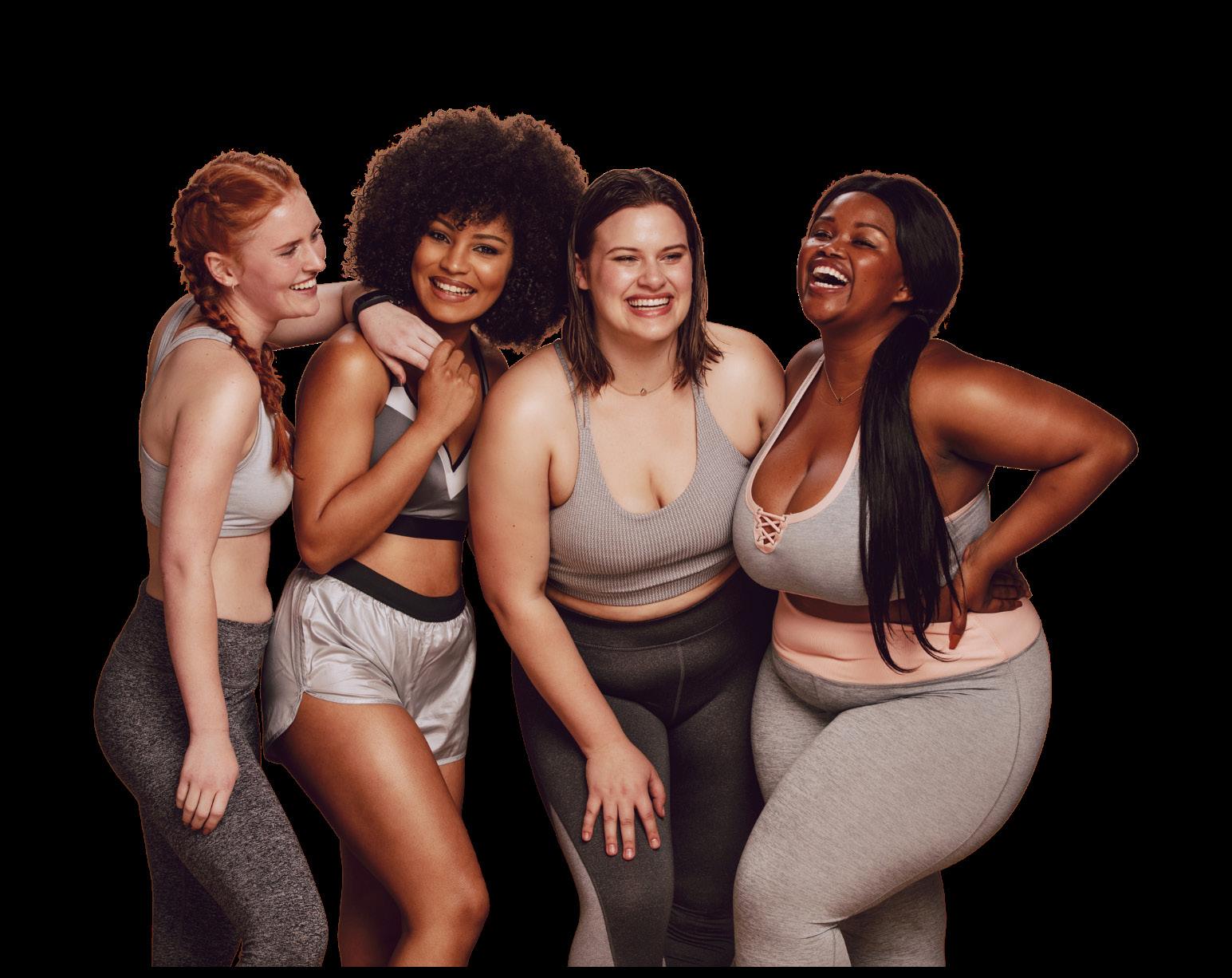
Honoring and respecting your “here and now" is a radical act of self-love. What if “women supporting women” is not only the conscious effort to not demean and belittle other's bodies, but also your own? Realizing that your own body image journey can be part of a larger effort to push back on deep historically-seated body and beauty standards, to stand strong with marginalized women of all colors, body shapes, and sizes.
Greater body neutrality doesn’t happen overnight. This Women’s History Month, my challenge is this…connect with who we really are, and who the world needs us to be and decide we are more than a body to be looked at, judged, consumed, and discarded. Standing in these truths we are participating in a revolutionary act of “Women’s History” in the making.
Emily Cowen is an Integrative Nutrition Health Coaching and Body Positive Coach, available in person and remotely via phone/ video chat! If you are looking for a more sustainable, integrative approach your health goals or to treat health conditions, disease, and diagnoses by using food as medicine visit phoenixtransform.com
10 Lessons Wisdom Teaches Us
Wisdom isn’t something we wake up with. It’s earned in heartbreak; in mistakes; in brave decisions; in quiet nights when we finally tell ourselves the truth. And if you’re still learning, good. That means you’re still becoming.
1
Not Everyone Is Going With You. Some friendships are seasonal. Some relationships are chapters, not the whole book. Letting go is not failure — it’s growth.
4
Burnout Is Not a Badge of Honor. Doing it all does not make you more valuable. Rest is productive. Delegating is strength. Slowing down is wisdom.
6
You Cannot Abandon Yourself and Call It Love. If you are shrinking, silencing, or betraying your own needs to keep the peace, that’s not love — it’s self-loss.
9
Your Body Deserves Partnership, Not Punishment.
You stop fighting your body and begin listening to it. You honor it for carrying you through decades of life.
2
Your Worth Is Not Measured by Who Chooses You. Not by the man who stays. Not by the job that hires you. Not by how many people approve of your choices. Your worth is intrinsic.
“I did then what I knew how to do. Now that I know better, I do better.”
~ Maya Angelou
7
Time Is Your Most Precious Currency. You stop wasting it on drama, on proving yourself, on waiting for permission. You spend it intentionally.
10
Peace Is More Valuable Than Being Right. Winning arguments feels empty compared to protecting your spirit. You learn to choose calm over chaos.
3
Boundaries Are Not Mean — They Are Mature. You are not responsible for managing everyone else’s emotions. “No” is a complete sentence.
5
Healing Is Your Responsibility — Even If the Wound Wasn’t. Blame may be valid, but healing is still yours to pursue. Therapy, prayer, journaling, forgiveness — whatever it takes.
8
Other People’s Opinions Lose Their Power. You finally understand: most people are too busy worrying about themselves to judge you the way you feared.
Jennifer Gardner is a wife and mother of two girls. She loves being creative with the ladies of Women2Women Michigan Magazine.
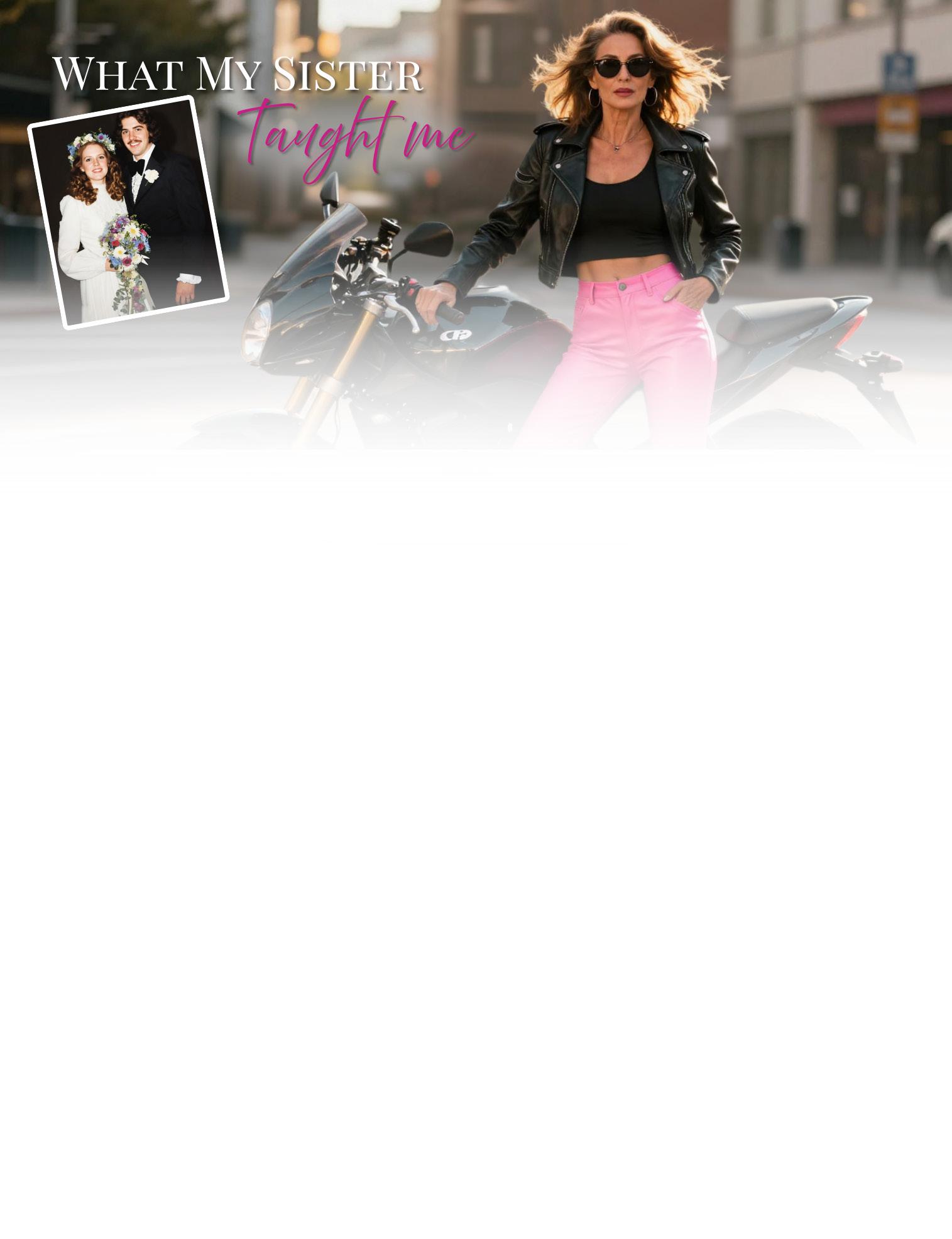
My little sister was a fireball, living up to a redhead’s reputation. She was born with copper red hair and big blue eyes, which of course deemed four-year-old me, the one with brown hair and freckles, as ordinary. She was always the star, pretty much wherever we went. I get it now, not so much back then.
Her fireball personality emerged somewhere around middle school. As the youngest she followed behind my brother and me, not being allowed to do some of the things we were. I’m sure that frustrated her. As she got older she made a lot of noise about it. And soon, she didn’t much care who told her “no”.
My brother and I were raised to not make waves, never express anger—or other feelings, really—to be agreeable and follow directions and expectations, and pretty much just behave. Mindy followed protocol for a bit until puberty hit. And whoa, those hormones started taking names!
I was glad to be in college because that was a mess. I remember the first time I heard her talk back to my mom, actually raise her voice to her. No joke, I thought lightening was going to strike! I later found out she was telling my mom she didn’t want to cut her hair and mama couldn’t make her do it. Yes, my parents had controlled even our hair cuts until we were old enough to have an opinion, then badgered us and strongly voiced their opinions if we wanted to let it grow. Pixie haircuts, anyone?
Mindy fell in love at age 15. Now that was a fun season! You can imagine that if hair cuts were an issue, having a boyfriend for three years in high school created a lot of tension and conflict! Even though she’d
never met him, when Mindy saw Rob, her soon-to-become-boyfriend, across the cafeteria she declared to her friend, “That’s the guy I’m going to marry!” The ironic thing? Those were the very words my mama said—even though she’d never met him—when she saw Daddy across the college campus. Perhaps they were more alike than mama wanted to admit. From what my grandmama told me my mom was pretty feisty too.
As soon as Mindy turned nineteen (only because my parents, who were funding it, told her she had to wait) she was married. Rob was so kind, funny, and smart, and adored Mindy, but my parents were not happy with her choice. There were many differences between our families—beliefs, behaviors, and educational levels. They even went so far as to voice concern that their marriage wouldn’t last. Once again, Mindy defied all odds, and their marriage lasted forty years. The only way it would have ended was in death, which happened in 2016.
This January thirtieth was the tenth anniversary of Mindy’s death. Her daughters and husband and I talked a lot about her during the week of her funeral. They told me things I’d never known about their lives.
Unfortunately, Rob and Mindy had moved to Missouri the second year of their marriage. I’d missed many years of her life, only really getting to visit with her every Christmas after my divorce in 2008. (As usual, she had a loud opinion about my husband.) Through their stories I’ve come to know her as I’d never had the chance to. Let’s just say that she came fully into her red-headed personality! She was quite the party girl, always dressing to the nines in her own style, and having a
wild and crazy temper.
To honor her I’ve chosen to write about some things my little sister taught me— even in her death:
*To celebrate myself.
*To wear the crazy tiara, or as she did, hot pink leathers, and be a biker babe--or whatever I want to be.
*To have fun, party now, and do not worry about what others think.
*To enjoy that I am just a bit different from most people.
Life is very, very short, and it really doesn't matter what others think. It's MY life, and I'm going to live it to the fullest!
*To love even more fiercely than I was.
*To speak even more truthfully.
*To stand firm and not waver in the face of obstacles or others’ opinions.
*I only have a short time to make an impact on people's lives.
I now tell people that I love them more than I ever did. I speak what I know in my heart is truth and what I believe they need to hear. My little sister made an impact on me, and her death at age fiftynine showed me that there is no certainty to the length of our days.
My mantra has been, and probably will forever be, “Love hard, live loud, and make it count!”
Mimi Matthews is in the “encouragement business” as the owner of Empowordment Cards by Mimi. She is also a speaker, workshop leader, writer, and our editor. Visit her shop at www.etsy.com/ shop/EmPOWordmentCards and her blog at www. particularpassions.me.
Law of Attraction
I’ve been a seeker my whole life. From the minute I was born, the innate gift of curiosity (that all babies have) nudged me to seek out new experiences. This curiosity inspired me to roll over, sit up, crawl, walk, and talk. It shaped my perception of who to trust and who not to trust, what felt good and what felt bad, what brought me attention and what made me feel alone, etc.
When I unexpectedly got pregnant at age 18, my focus changed. I was no longer curious about achieving things and accomplishing things to please my parents or society. Something else began to call me. I became a seeker of truth about the things nobody in my life ever talked about. I began to wonder who I really am. Why did we exist? What was the purpose of my life? What was death? Why can't everyone be happy all the time? Why is there so much pain and suffering around the world?
Over the next 30 years I read hundreds of books. I raised four children, got married and divorced twice, ran 2 businesses and became so busy taking care of responsibilities that these important questions were put on the back burner of my life.
The answers slowly began to appear in 2004 when I went through a deep, dark emotional experience. A friend and business mentor saw me struggling and introduced me to the Law of Attraction. (LoA). All the material I studied and practiced over the next three years became the perfect steppingstone that moved me away from endless seeking to learning how to create a new and better reality for myself.
Just when I thought I had graduated from the School of Hard Knocks, it seemed that the Universe had more in store for me. In the fall of 2014, my 36-year-old son was diagnosed with cancer. After the first
surgery his surgeon said that these kinds of tumors always grow back so it would require checkups every 3 months. During the following 10 months he underwent 2 more surgeries to remove the reoccurring tumor in his back. In my son's mind, the waiting game of worry and fear was always on his mind. In my mind, I quickly disagreed with this hopeless diagnosis. Having proven to myself that the LoA works, I quietly chose to hold the space in my heart for a miracle to happen.
In the spring of 2015 my older sister’s sweet seven-month-old, great grandson suddenly died of SIDS and my younger sister’s only child, her beautiful blue eyed blonde 34-year-old daughter, ended her life by suicide. Within three months after these two emotionally traumatic events occurred, my son’s cancer had spread to his ribcage. After his fourth surgery and the follow-up radiation treatments I pretended to the outer world that everything was fine. But deep inside I was so wound up with fear over the possibility of my son‘s life coming to an end that it totally consumed me.
My own health began to deteriorate, and I found myself having daily, random bloody noses for two straight weeks. My holistic MD gave me a thorough check up and said he couldn’t see anything physically wrong and suggested that my body was having a reaction to all the stress I’d been going through. I thought about this when I drove home from the doctor's appointment. I realized that I had stopped meditating during the past year by using the excuse that I just didn’t have time to sit and be quiet because I had too many things to worry about!
That night as I lay down in bed I silently wished for a miracle. About 2 AM, I awoke. I felt a nudge to get out of bed. I went downstairs and was drawn to sit in the chair where I used to meditate. I began some deep breathing and became quiet.
I asked my inner being (God/Source/ Universe etc.) “please help me see what I cannot see”. I continued to be quiet. At some point, I found myself listening to a soft quiet voice in my head that said “Life was about having fun, Suzanne. It’s not about stress and worry and trying to control the outcome of everything”. After hearing these soft gentle words, I began to cry. This message really resonated with me. After quietly sobbing for about five minutes, I instinctively took a deep breath. I made a decision to search for ways to have fun again and then I purposefully chose to accept whatever was meant to happen with my son. As I released all my fear-based thoughts back out into the universe a peaceful feeling came over me.
The next day, after I let go of my worries and fears, two miracles happened. 1) My bloody noses came to an end and 2) from that day on my son’s tumor never returned. Thank you, Universe/God!
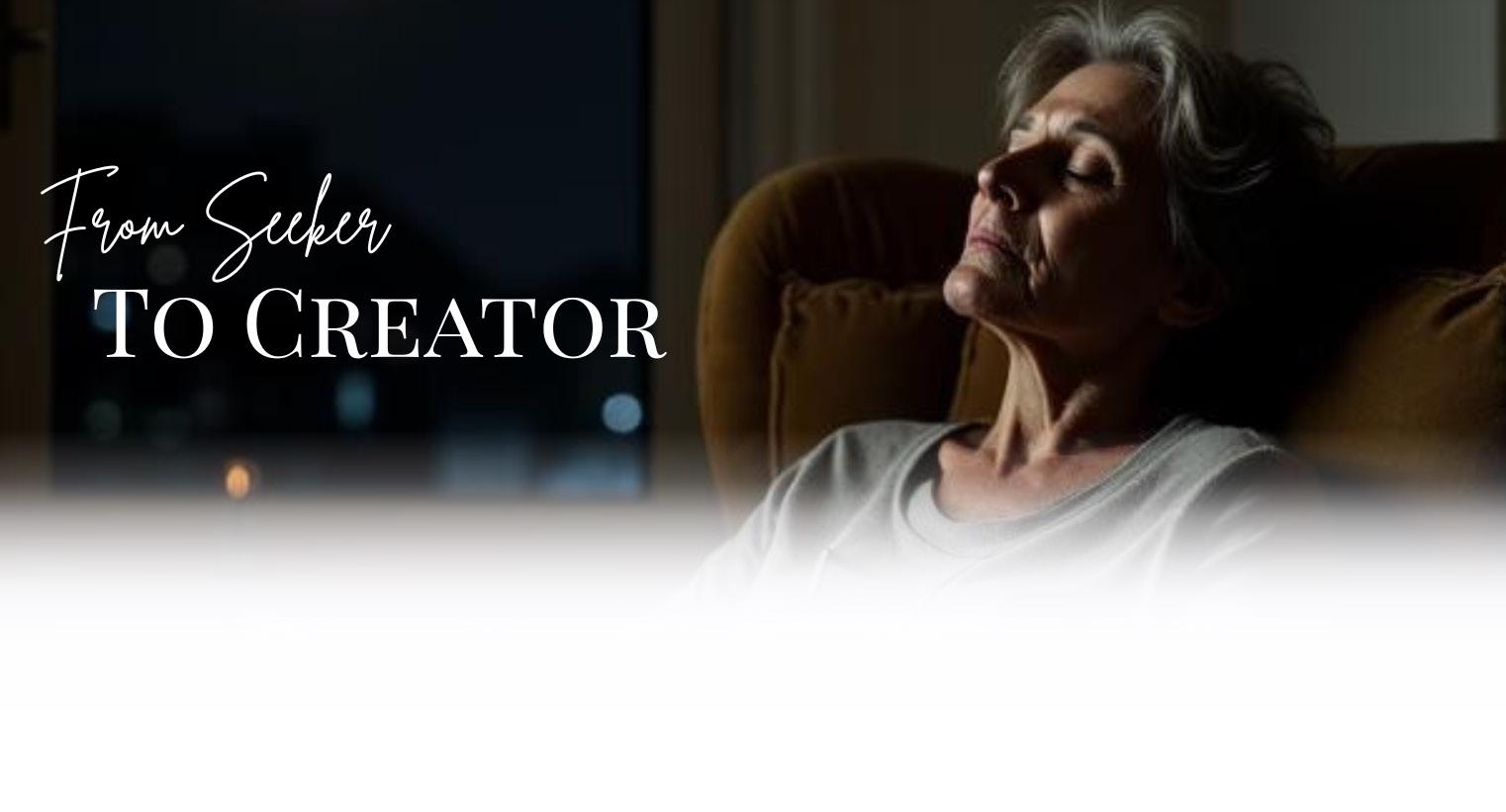
I don't know what 2026 has in store for us, but I do know that if you find yourself feeling fearful and hopeless I invite you to remember that during your times of struggle you are never alone. Be the seeker you were born to be and turn inward, ask for help and then listen. You may find that being a seeker helps you acquire more knowledge about the things you do and don’t want in your life but I must admit, it’s much more fun being a creator!
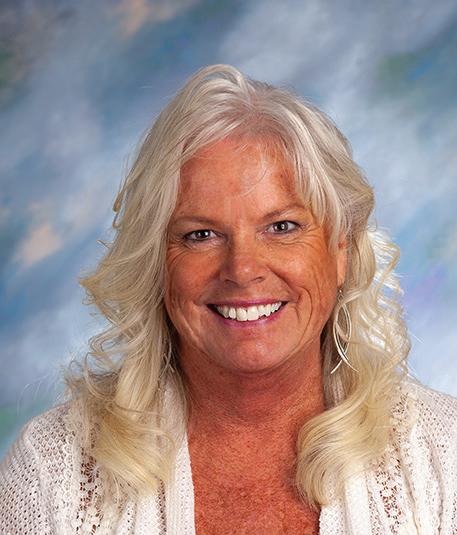
Suzanne Young is an intuitive life coach who specializes in the Law of Attraction. She is also an inspirational speaker, author, and co-owner of Personal Success Programs, since 2007, with her husband Kevin Young.You can email her at suzanne@ psprograms.com and their website is www. psprograms.com.
There was a season in my life when everything familiar fell away at once. I ended a relationship, walked away from a business I helped build, and the home I helped buy. The mountains of Nevada gave way to a small town in Michigan where I knew no one. From a modest apartment, I began rebuilding my life and a business from the ground up, on a shoestring budget and a lot of faith. After living in a beautiful log home in the mountains, apartment living felt like a step backward. I longed for a home of my own. But as a new business owner, I needed five years of tax returns before I could qualify for a mortgage, so I settled into a waiting period I hadn’t anticipated. At first, the simplicity felt refreshing. My belongings were few. My expenses were low. Life felt manageable, and I had time to build my business and find my place in a new community. But by year four, frustration had crept in. I felt stalled, like my life was on pause. I wanted forward motion.
One day I shared this frustration with my chiropractor, Dr. Foote, a deeply philosophical man who treated more than just the body. After listening quietly, he said, “Colleen, I get why you want a house. But sometimes what we own ends up owning us. Right now you don’t have repairs or property taxes. You don’t have to shovel snow. There’s a kind of freedom in that. Just don’t miss it.” I heard him, but I wasn’t ready to understand. The truth belonged to another season of my life.
A couple years later, I qualified for a mortgage and bought a house, my first home after starting over alone. I was thrilled.
It was the night of my housewarming party that Dr. Foote’s words returned. A
thunderstorm rolled in. Rain fell in sheets outside — and, unfortunately, through a hole in my roof — onto my brand-new dining room table covered with platters of food. I heard his words again while seeking damages from the previous homeowner. I heard them again while interviewing roofers.
What you own, owns you.
His words had made an impression, but they hadn’t yet changed my behavior. For the next decade, the flow of furniture, décor, tools, books, and appliances moved in one direction: inward. I was back in acquisition mode, feathering my nest and enjoying what I believed was progress.
In year eleven, everything began to change. First, I cleared my parents’ home after their passing. Sixty years of life contained in drawers, closets, cabinets, and boxes. A few years later, I sorted through my husband’s belongings after his untimely death.
Then, that same summer, I nearly died. As the anesthesia wore off and I realized I was still alive, one thought surfaced immediately:
Who would have cleared my house had I died? Grief had opened the door. Mortality walked me through it.
When I returned home from the hospital, my house felt crowded with obligations. Not just what I had inherited, but everything I had accumulated as well. Closets, cabinets, drawers, and the basement held layers of a life in progress. Some items had belonged to people I loved. Many were things I had carefully chosen myself. Yet together they required time, attention, maintenance, and energy I no longer wanted to give.
I suddenly felt one thing, encumbered. That was the day I decided to reverse the
flow, from in to out. The decision was easy. The doing was not.
Letting go isn’t simply choosing what stays and what goes. It means processing memories, identities, and expectations attached to every object. For me it happened in layers. I sold, donated, and gave things away in waves. I cleared space, retreated, then gathered the courage to return and go deeper.
The words of William Morris became my guide, “Have nothing in your house that you do not know to be useful or believe to be beautiful.”
Gradually I saw possessions differently. Not as objects, but as quiet responsibilities. I realized how much of my life I had devoted to managing things that added little meaning. Each time I let something go, I felt lighter. Calm replaced the noise. Shopping lost its pull. Having fewer things gave me freedom.
Today I walk a deliberate path toward minimalism — not as deprivation, but as honesty. A way of choosing what supports the life I’m living now.
Dr. Foote has since left this earthly plane, but his words still echo. What you own, owns you. Not a caution. A compass. A gentle nudge toward lightness. A life shaped by intention rather than accumulation.
Sometimes the truths that guide us most arrive quietly, spoken once and left for us to discover when we are finally ready.
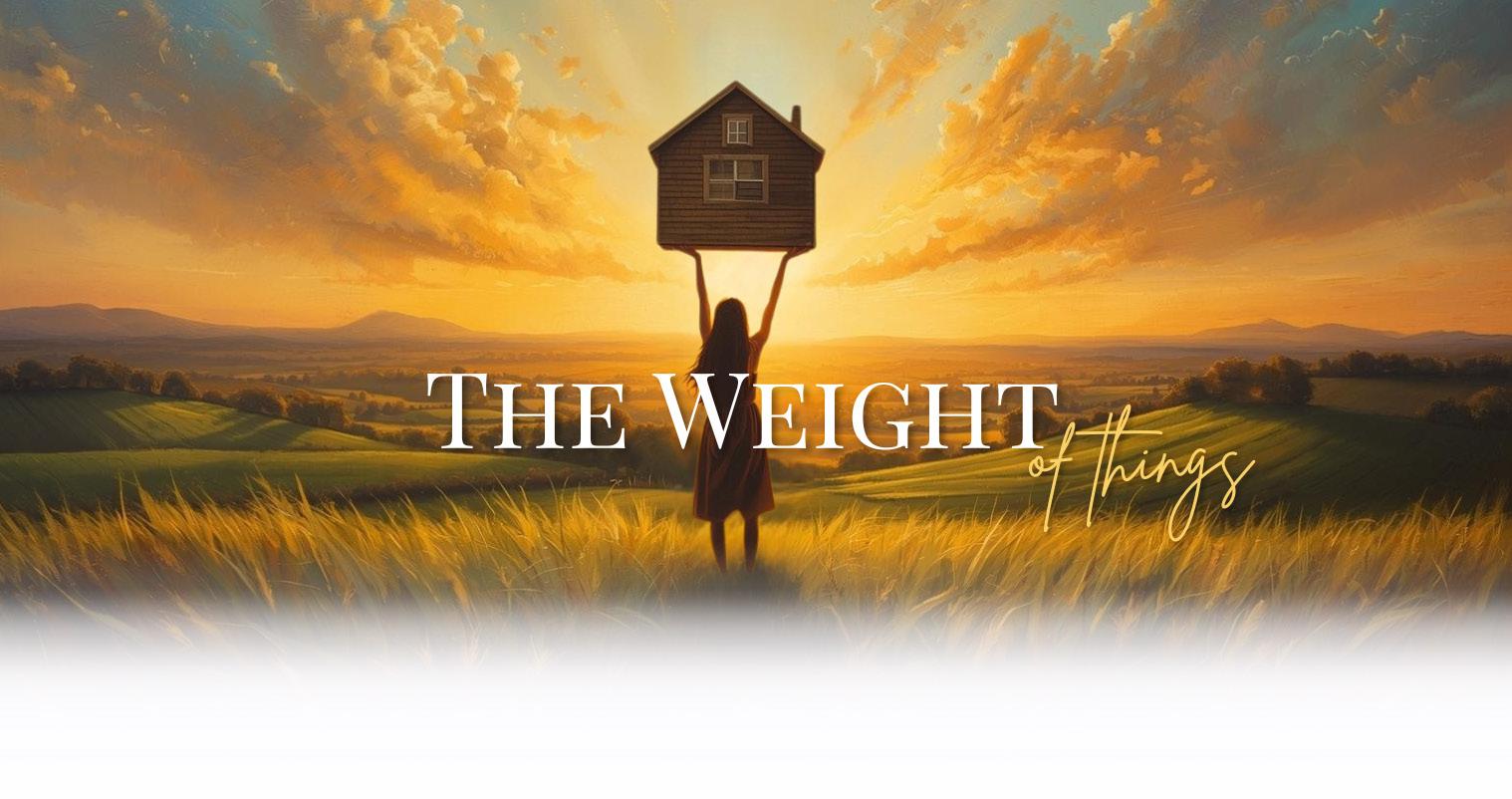
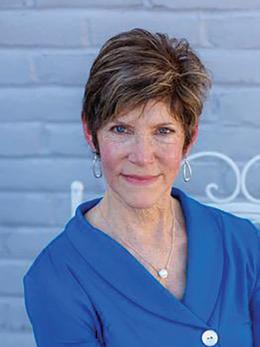
Colleen Kilpatrick is a speaker, storyteller, and wellness advocate. The author of Eliminate What You Tolerate (available on Amazon), she supports women as they navigate the brave work of letting go of what no longer serves them and making space for what truly lights them up.
✾ True Manifestation
✾ Energy Healing & Reiki Certification
✾ Channeling
✾ Meditation
✾ Overcoming Systems of Fear
✾ Chakras & Yoga
✾ Access Consciousness/Access Bars
✾ Remote Viewing
✾ Raise Your Frequency to Shift Your Timeline
✾ What It Really Means to be Awakened
$988 (Book by March 15th for $833 early rate)
Real Life Meditation
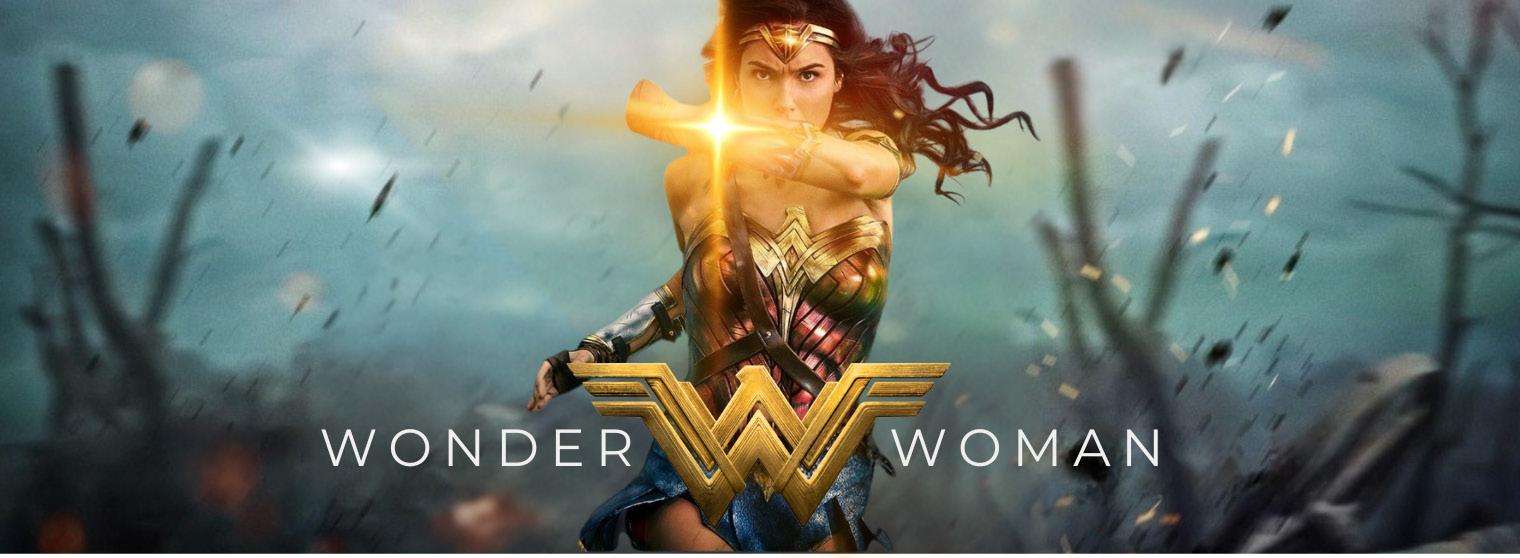
March is Women’s History Month, a time to honor the strength and resilience of women past and present. I find myself drawn not only to real heroines but also to an iconic figure who embodies the spirit of powerful women throughout history—Wonder Woman. Though a fictional character, her archetype resonates deeply with me and countless women I know—silent heroines who carry strength, compassion, and courage within them.
If you’ve followed my journey through this column, you know my past has been difficult to confront. Writing about it was painful, but today, I feel something entirely different. There’s exhilaration, a vibrant energy glowing and expanding beyond me.
I’ve come to understand my power more fully—something I sensed but never truly grasped before. From childhood, I was aware of my God-given gifts - the Holy Spirit spoke through me effortlessly, guiding my words and actions. I was able to help my elementary school classmates through the challenges of adolescence and then this gift became the cornerstone of my work as a Meditation Therapist. Realizing the true depth of my power, however, took time.
After my last breakup I decided I would be more intentional about dating, get to know the men I was spending time with, and find out what their values and goals are before leaning in for that first kiss. Setting boundaries, I found out, is how to love myself in my search to love another. I dated many men, wanting connection, unsure at times how to navigate this new way of dating. In some cases, it was easy to determine a boundary had been crossed, yet at other times my past, marked by childhood chaos, difficult relationships, and sexual manipulation, made it hard to set boundaries or trust my instincts. I found myself overlooking
red flags and making excuses:
● No stability at all, but we share so much in common
● No contact with family and only a few bar friends, yet our families are so similar
● He’s either full of himself or deeply insecure, but he’s successful and fun
Slowly, through being present with myself, I began to face my past trauma and step into my power. This power isn’t about arrogance—it’s a calm, steady awareness of my unique ability to radiate both tranquility and a vibrant zest for life. It has been through this power that I have gained the awareness of what I want and don’t want and the confidence to stand up for myself.
Wonder Woman’s archetype perfectly mirrors this journey. She is a symbol of strength, compassion, and fierce protection. Her deepest love is often described as a love for humanity itself. But in order to fully love humanity we need to harness the degree of self-love that also shields ourselves. Steve Trevor, Wonder Woman’s partner and ally, nurtures her in this endeavor and their relationship gives insight to the future of romantic relationships.
As women moved from an era of misogyny into one of feminism, the scales completely tipped, as is common in human nature, but people always return to balance, and that is what is emerging now. Our culture is pregnant with the possibility of birthing relationships where couples love for one another is based on agape love, a Greek term for the highest form of love, defined as unconditional, focusing on the well-being of another without expecting anything in return. This love is a willful choice rather than a fleeting emotion, and is characterized by compassion, kindness, and commitment. Undoubtedly, people will look at modern dating culture, largely driven by "the
swipe economy," where choice overload, dehumanization, and burnout from the repetitive cycle of matching, small talk, and mediocre first dates lead to cynicism and emotional exhaustion, as well as toxic masculinity, and think that the human race is doomed. When we remember, however, that the birth of anything new can take time and even be painful, we are brought full circle to hope.
Intentional dating, a purposeful approach to romance that prioritizes clarity, alignment, and self-awareness over the aimless "see where it goes" mentality of casual dating, is becoming more popular. As it does so, the story of Wonder Woman reminds us that true power is not just physical strength but the courage to face trauma, set boundaries, and embrace our authentic selves.
By defining personal values and long-term goals before that first kiss, individuals move from being "passive passengers" to "conscious choosers" in their romantic lives. This shift is set to revolutionize modern dating by dismantling the culture of ambiguity and burnout fostered by endless swiping on apps. Research indicates that this focus on explicit communication and value-based selection can lead to a 58% increase in relationship satisfaction and stability, as it filters out incompatibility early and fosters deeper emotional safety.
Ultimately, intentional dating transforms the landscape from a high-volume, transactional game into a meaningful journey of finding a partner who genuinely complements one's life.
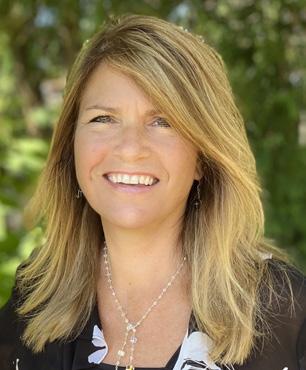
Trice is a Meditation Therapist, certified in Mindfulness Meditation and the Neuroscience of Meditation. Email her at Trice@presencetopupils. com for a free 20-minute consultation. www. presencetopupils.com