
BE DRAWN IN















be drawn in
our mission is to help stimulate the local economy by promoting and introducing the faces behind independently owned businesses.
VISITvortex is a celebration of each season and a portal to the great people and places of the Hudson Valley. Sharing the very best of local.
publisher
creative D irector
editor
design & production sales socials photography
cover photo writer
Jesse Marcus
Melissa Hewitt
Jean Cassidy
Melissa Orozco
Jesse Marcus
Kristina Santamauro
Rachel Collet
Khairil Junos
Anne Pyburn Craig
if you’d like to advertise in this quarterly magazine or on the website, please call us at 845-687-3470. ©2026 visitvortex
VISITvortex.com | 845-687-3470
PO Box 82, High Falls, New York | visitvortex@gmail.com
instagram: @visitvortex | facebook.com/visithudsonvalley

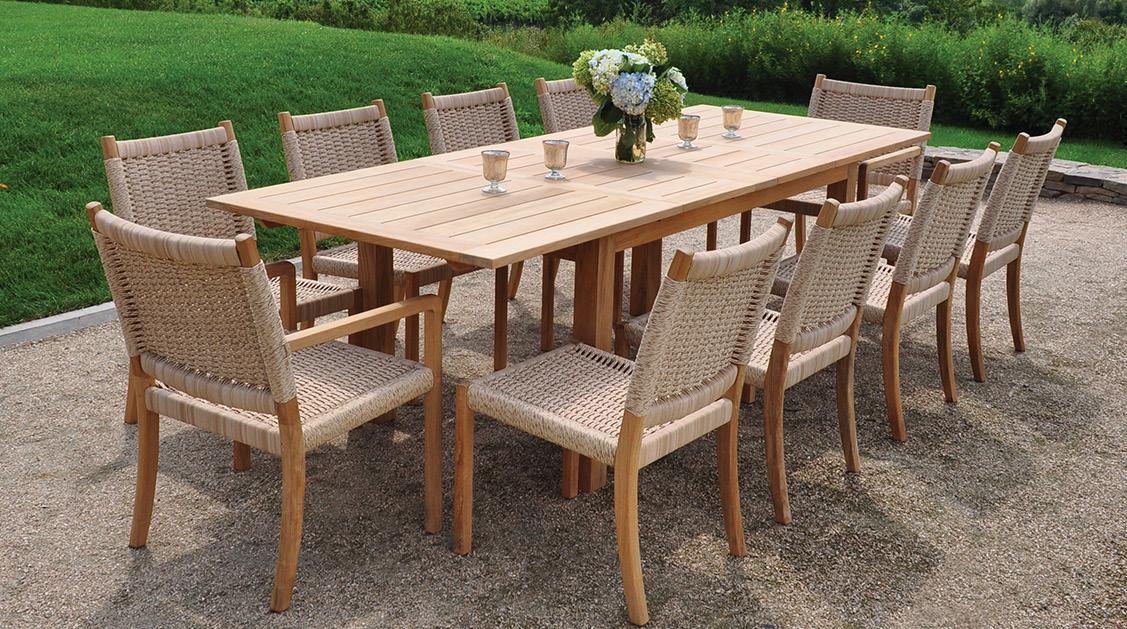



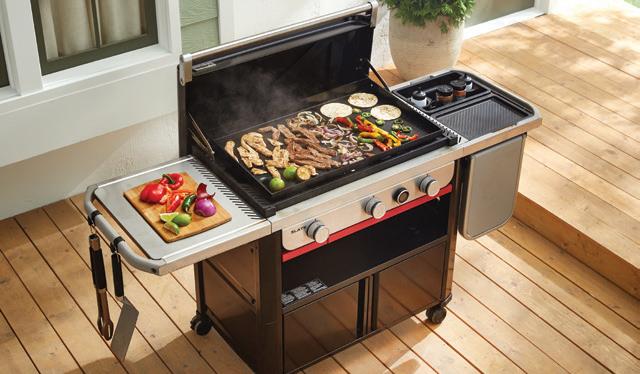
Featuring a variety of dining sets, deep seating groups, umbrellas, lounge chairs, hammocks & more.


as this spring issue arrives, the light is returning, the trees are budding, and there’s that unmistakable feeling of possibility in the air. Spring always feels like a turning point—an invitation to plant new seeds, to grow, to begin again.
We are deeply grateful for this beautiful community. For nearly 20 years, VISITvortex has been rooted in sharing the stories of the people who make this region extraordinary. The local business owners, farmers, chefs, makers, and visionaries in these pages are the heart of this place. Their work shapes our daily lives in ways both seen and unseen.
In these pages, you’ll find inspiration for the season ahead— where to hike and wander, riverside walks to take, kayaking spots to explore, and the best places to eat or gather for spring brunch.

Our Chef Recipe Series continues, highlighting the incredible culinary talent in our region and bringing fresh, seasonal flavors straight to your kitchen. And in this issue, we introduce the very first installment of A Day in the Life, beginning with our local farmers—the people with whom it all truly starts. Their dedication to the land feeds not only our tables, but our entire regional ecosystem.
You’ll also discover gardens you can visit, along with ideas for how to bring that beauty to your own home. Spring reminds us that inspiration is everywhere— sometimes just beyond our doorstep.
And as always, we believe deeply in print. There is something almost sacred about sitting back, turning real pages, and allowing yourself to truly take something in. No scrolling. No notifications. Just presence. A printed magazine invites you to slow down. To linger over a story. To notice a photograph. To dog-ear a recipe. To circle a place you want to visit.
In a world that moves faster every day, choosing to pause is an act of intention. Print gives us that pause. It gives space for depth, for connection, for reflection. And that is something we will always value.
We started VISITvortex because we fell in love with this community. When we met the owners of local businesses and heard their stories—the risks they’ve taken, the dreams they’ve built—we knew those stories needed to be shared.
The people in these pages are your neighbors—real businesses rooted in this community. When they choose to partner with us, they’re inviting you to step through their doors and see what they’re building.
If you visit one of our advertisers, let them know you found them here. That simple mention goes a long way. It supports small businesses—like ours—and helps keep our local economy strong. Let’s continue to support local.
With gratitude,
Jesse & Melissa





Outdoors
Experience the Hudson Valley & Catskills From a New Perspective
Paddling is glorious. Slipping quietly through the water, you’ll see and hear places and wildlife that you’d never glimpse any other way. A paddling excursion is an ideal adventure for bonding with family,
adventuring with friends, getting to know a partner, or luxuriating in solitary bliss. The rhythmic motion is a meditation of its own, as well as a great blend of cardio and resistance exercise.

Once you get your sea legs (or, more accurately perhaps, your paddle arms) you’ll find that there are nearly unlimited options in the Hudson Valley and Catskills, from mysterious swamps to peaceable ponds, from shimmering lakes to the quieter corners of the mighty river Herself. The region’s earlier residents, of course, paddled all over the place; the scenery is vastly changed in most spots, but paddling is one of a very few ways to catch just a faint whiff of what they must have experienced.
But as with anything worth doing, there’s a learning curve involved, and knowing a few basics before you head out is the difference between bliss and disappointment, or even disaster. Bliss is what we want for you, Dear Reader, so here are some things to know before you go:
Dress for success. In paddling, that means closed-toe footwear and stretchy clothing made from a fast-drying fabric. (Wet cotton or wool will stay wet and make you miserable.) Most importantly, always wear a life vest, even if you’re a strong swimmer.
Pack a lightweight, waterproof bag. Essentials include sunscreen, lip balm, water, a rescue whistle, and your phone in a waterproof case, along with a lightweight rain jacket. Binoculars and a snack are highly recommended extras.
As with anything worth doing, there’s a learning curve involved, and knowing a few basics before you head out is the difference between bliss and disappointment.
Be smart about the weather, including water temperature and wind speed.
Make sure you let someone know where you plan to go and when you plan to return.
If you’ll potentially be sharing a waterway with larger craft, think about timing your expedition to avoid rush hour, also known as weekend afternoons. Most boaters are lovely, but boats don’t have brakes, and kayaks or canoes can be invisible from some angles, especially close up. Give them a wide berth.
Choose the right kayak or canoe and the right paddle. Stability and a comfortable fit are key to a good experience. Consider your goals: do you want to explore nooks and crannies, or take on long-distance endurance tests? Will you want to try some fishing? How will you be transporting your craft? If you’re investing in a kayak or canoe, you want an expert salesperson who will listen well and help guide you to just the right choice.
Get a general idea of the moves involved. Getting into a kayak or canoe without tipping it over is easy once you know how, but knowing how is key. Paddling, done right, involves your entire body, from your fingers to your core and beyond; expect to discover and build muscles you barely knew existed. Happily, we live in an age of video; there are scads of resources out there that demonstrate ways of getting launched, basic beginner strokes, and the all-important moves called “self-rescue.”
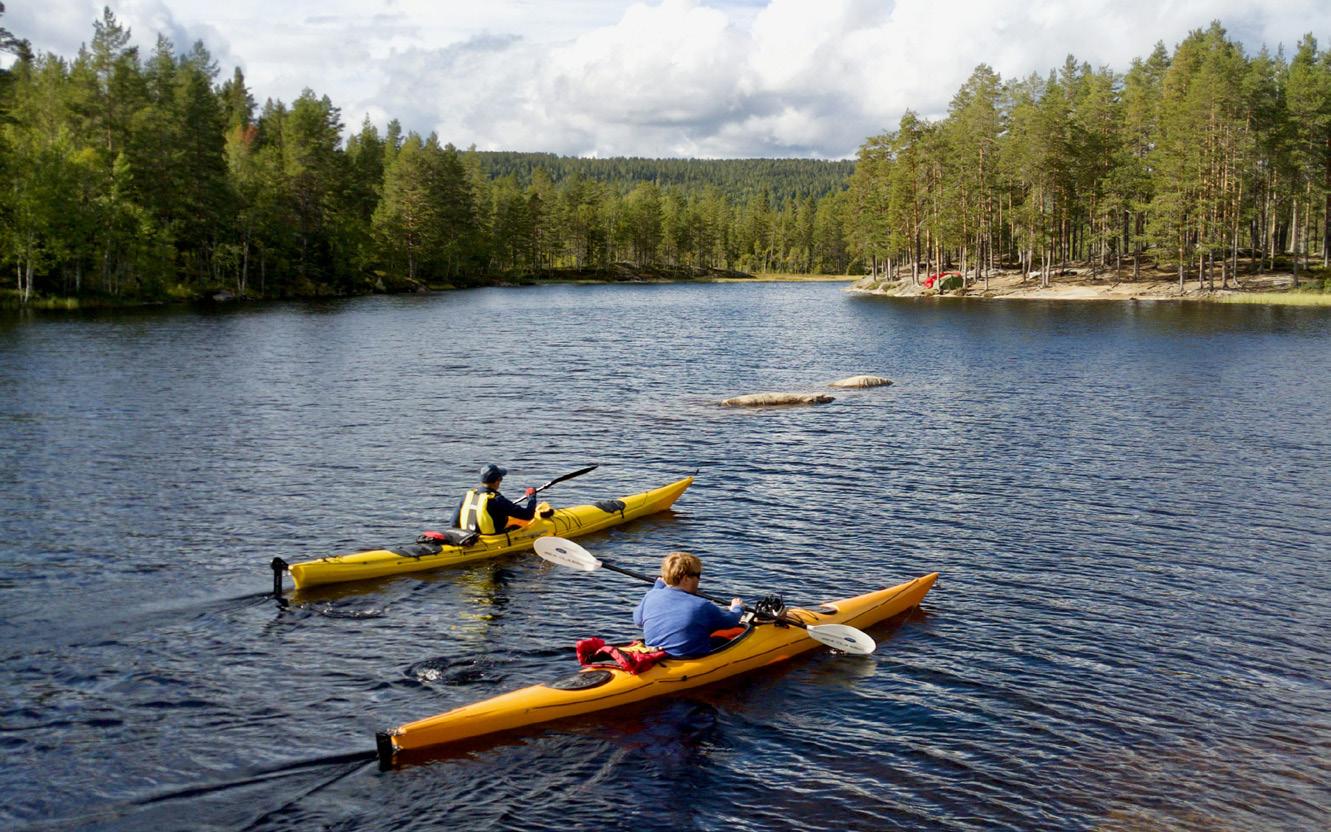


No two adventures, of course, are ever alike, but moving at water level and a human-powered pace is practically guaranteed to deepen your strength and skill, as well as thrill your soul with unforgettable sights and sounds.
setting yourself up for success
For the best possible experience, plan a visit to one of our favorite local outfitters. Nothing equals having a real-live human help you figure it all out, and you’ll find passionate experts who love nothing more than making sure beginners have a great time; many places offer free tutorials. You’ll find a wide selection of locations and watercraft choices, and many places offer guided tours of special spots and sunset or even full-moon expeditions.
With the right equipment—and some experience—you’ll be all set to explore our vast array of watery wonderlands. No two adventures, of course, are ever alike, but moving at water level and a human-powered pace is practically guaranteed to deepen your strength and skill, as well as thrill your soul with unforgettable sights and sounds, leaving you dreaming of and planning your next journey.
Happy paddling!


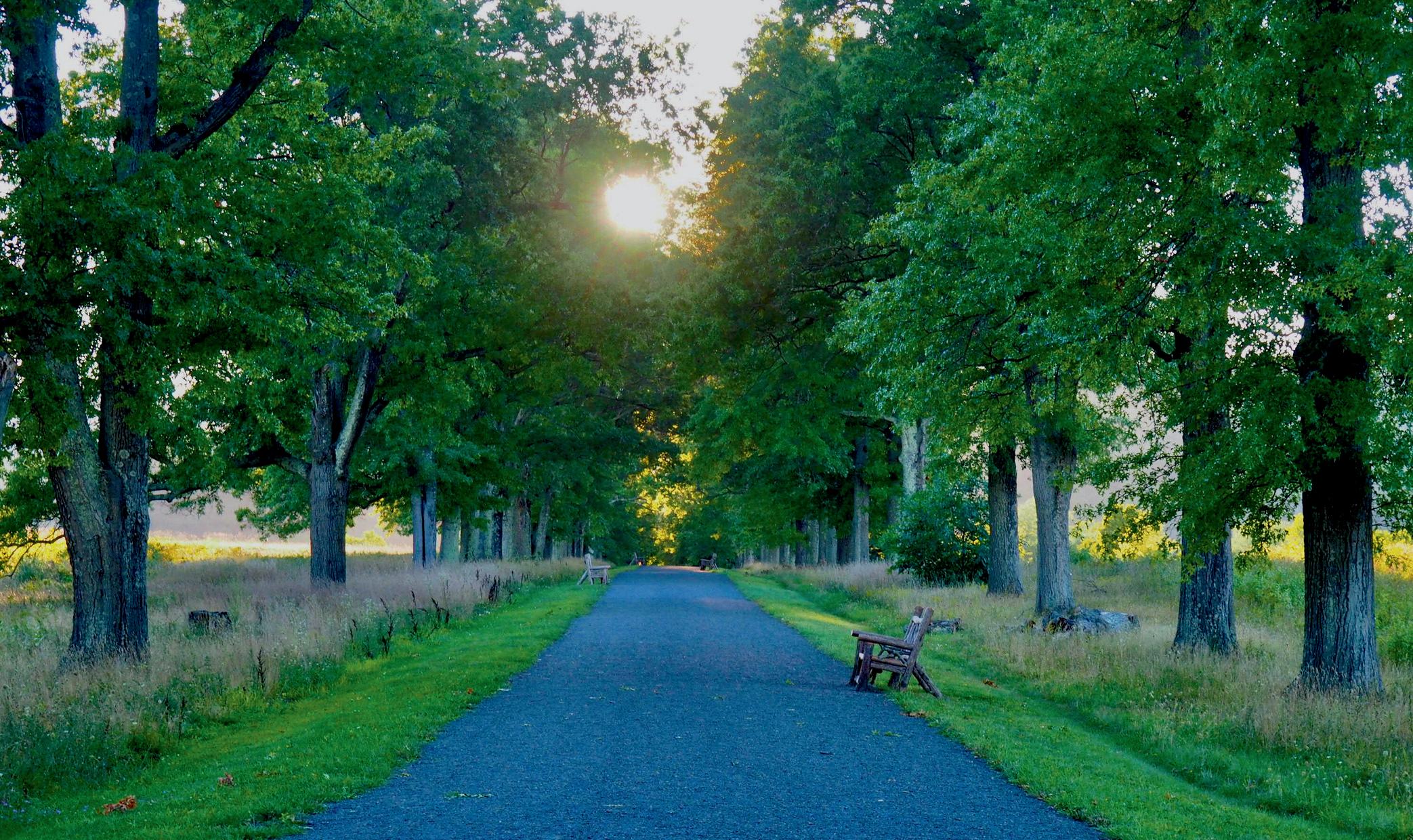
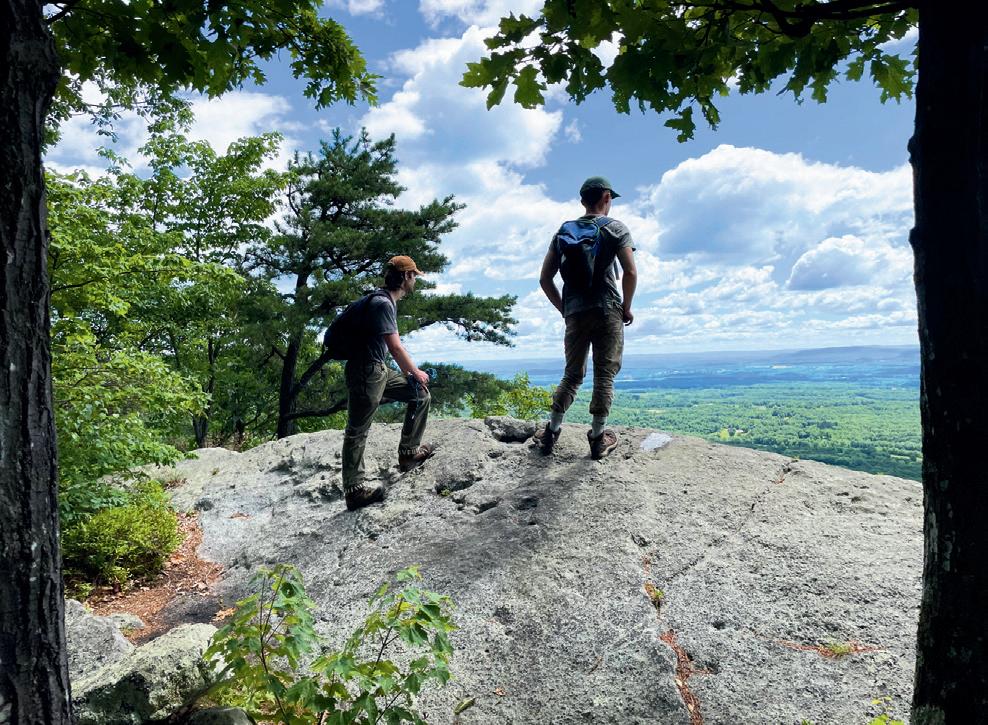





















We made it. After one of the coldest winters in recent memory, the Hudson Valley and Catskills are thawing—and so are we. Heavy coats are trading places with lighter layers. Windows are opening. Trails are drying out. There’s a collective exhalation happening.
Spring isn’t just a shift in temperature; it’s a shift in wellness. It’s a chance to reset the body, strengthen the heart, and rebuild healthy rhythms outdoors—with family, friends, and even our four-legged companions by our side.
This is the season to move again. To eat lighter. To breathe deeper. To step back into the landscape that makes this region so extraordinary.
a seasonal reset for body and mind
Winter calls for comfort foods and slower habits. Spring gently nudges us toward fresh greens, crisp herbs, asparagus, radishes, and farmers’ market abundance. Think morning juices. Big leafy salads. Clean hydration.
When paired with regular outdoor movement, these small shifts support cardiovascular health, circulation, digestion, and sustained energy. Spring wellness isn’t about extremes—it’s about steady momentum.
Just 20–30 minutes of moderate activity most days of the week can strengthen your heart, improve lung capacity, reduce stress, and boost mood. And here in the Hudson Valley and Catskills, that movement comes with mountain views, open skies, and trails your dog will be just as excited to explore.
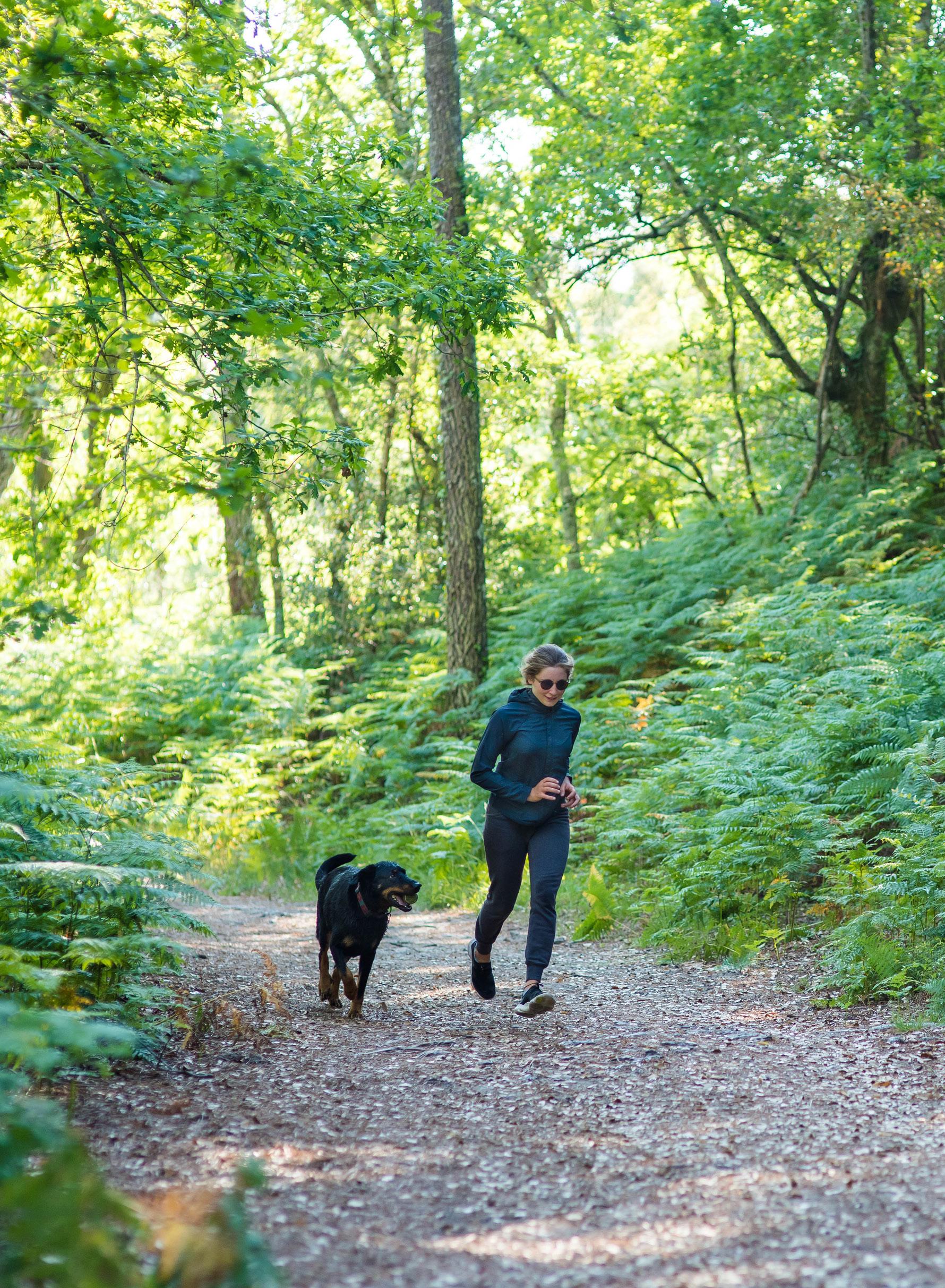
One of the easiest ways to build heart-healthy wellness into your week is exploring the region’s rail trails—former railroad corridors transformed into wide, scenic pathways perfect for walking, biking, jogging, and rolling at your own pace.
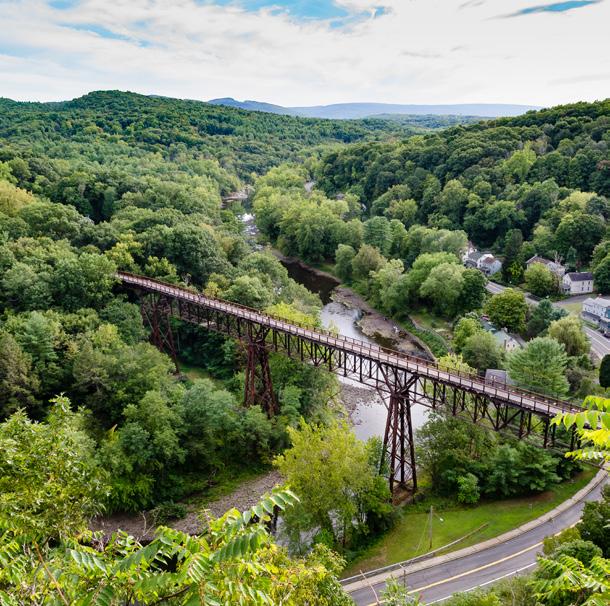

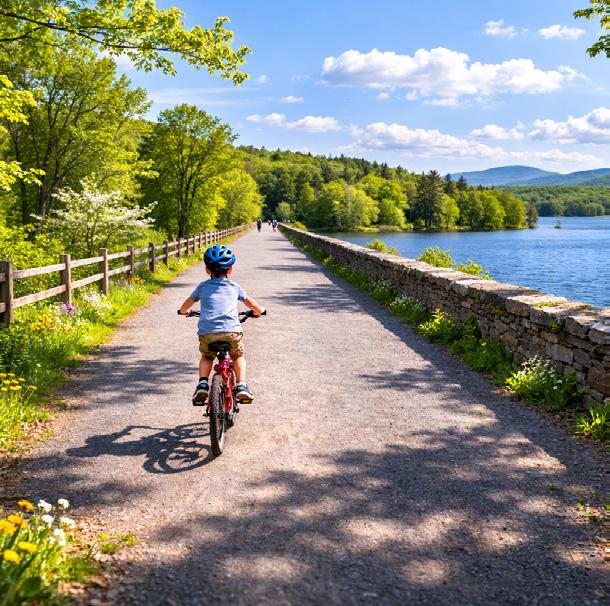
Winding through farmland, forests, and small towns, this mostly flat trail offers expansive views of the Shawangunk Ridge—ideal for steady cardio and family outings.
wallkillvalleylt.org/wvrt/
The world’s longest elevated pedestrian bridge connects Poughkeepsie and Highland with panoramic river views. A brisk walk across and back provides a perfect moderate-intensity workout with unforgettable scenery. walkway.org
Running alongside the Ashokan Reservoir, this Catskills gem delivers smooth terrain, open sky, and dramatic mountain backdrops—perfect for peaceful endurance rides or restorative walks.
ashokanrailtrail.com
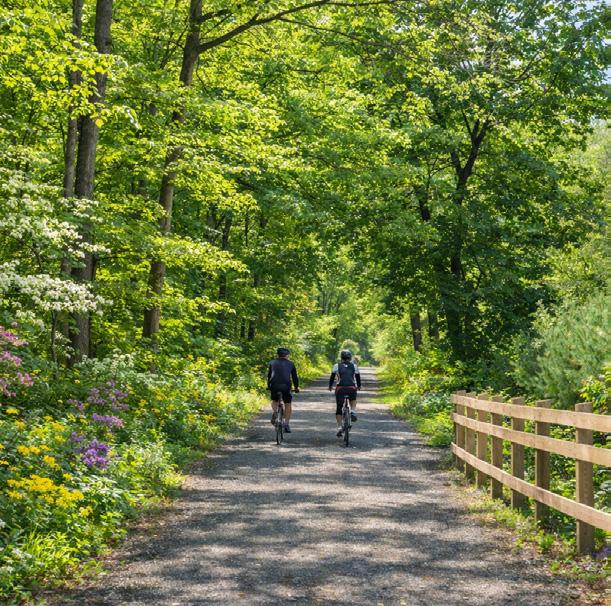
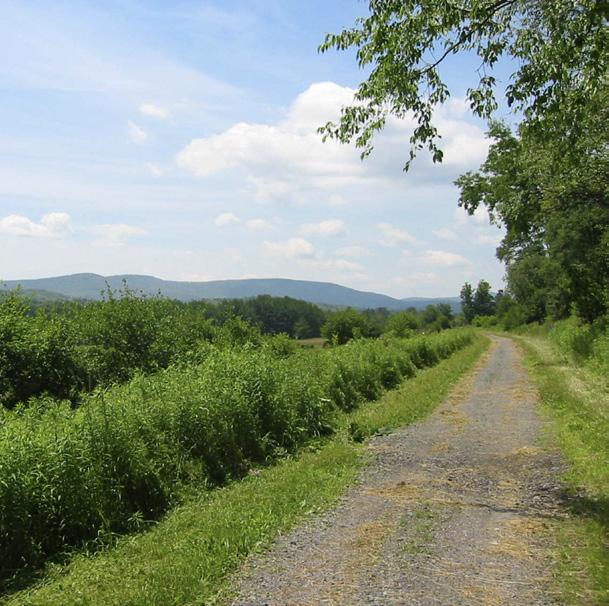
Connecting Highland to New Paltz, this paved and crushed-stone route offers accessible, scenic movement for cyclists and walkers alike.
hudsonvalleyrailtrails.org
Stretching nearly 19 miles along the former Ulster and Delaware Railroad corridor from Grand Gorge to Bloomville, this Delaware County trail winds through farmland, mountain views, and stretches beside the West Branch of the Delaware River—ideal for longer, steady outings without leaving the county.
catskillscenictrail.org
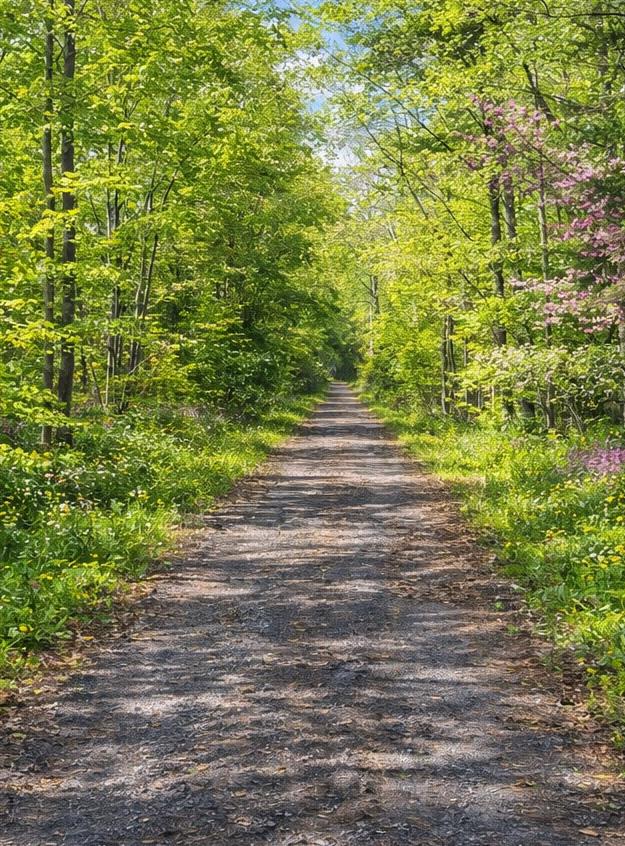
Flat terrain makes these trails perfect for maintaining a consistent heart rate—especially helpful if you’re rebuilding endurance after a long winter. Bring your dog, lace up your boots, invite your kids, call a friend. When movement feels like an outing rather than a workout, consistency follows naturally.
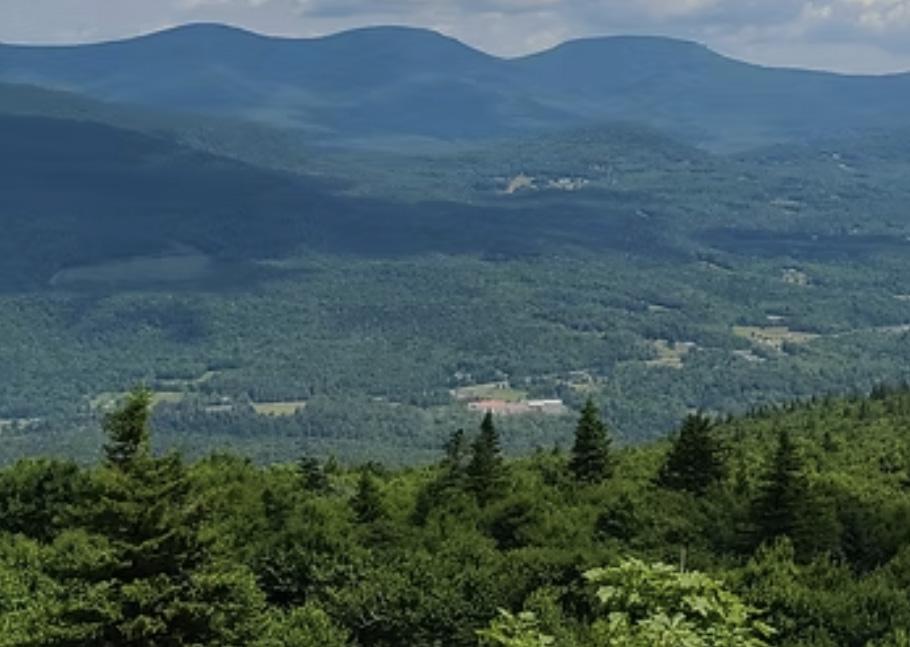

ready for elevation ? consider the 3500 club
If spring awakens your adventurous side, the Catskills offer something bigger.
The Catskill 3500 Club is a hiking organization for those who summit all 35 Catskill peaks above 3,500 feet. Four of those peaks must be completed in winter conditions to qualify. It’s not about speed; it’s about commitment, endurance, and deep familiarity with the region’s rugged terrain.
Training for these climbs naturally builds cardiovascular strength, stamina, and resilience. Even if you never pursue all 35, choosing a few higher-elevation hikes this season can elevate both your fitness and your confidence.
catskill3500club.org
make wellness a ritual
Spring wellness thrives on rhythm:
• Morning rail trail walks
• Midweek sunset bike rides
• Weekend summit hikes
• A weekly “no screens, just trails” rule
Outdoor movement regulates stress hormones, stabilizes blood pressure, strengthens muscles, and clears mental fog. It reconnects us—to nature, to loved ones, and to ourselves.


a note on spring essentials
As temperatures rise, so do the bugs. Natural options like citronella, eucalyptus, lavender, and lemon eucalyptus essential oils can help deter spring pests while you stay immersed in the experience. Dress in breathable layers, stay hydrated, respect early-season trail conditions—and check your pets for ticks after woodland outings.
Spring in the Hudson Valley and Catskills is brief—and generous. It offers blooming trails, soft light, cool mornings, and the opportunity to rebuild healthy habits before summer distractions arrive.
Photo by Yuriy T.
This is the season to strengthen your heart—on the rail trails, on the peaks, and in the rhythm of everyday life.




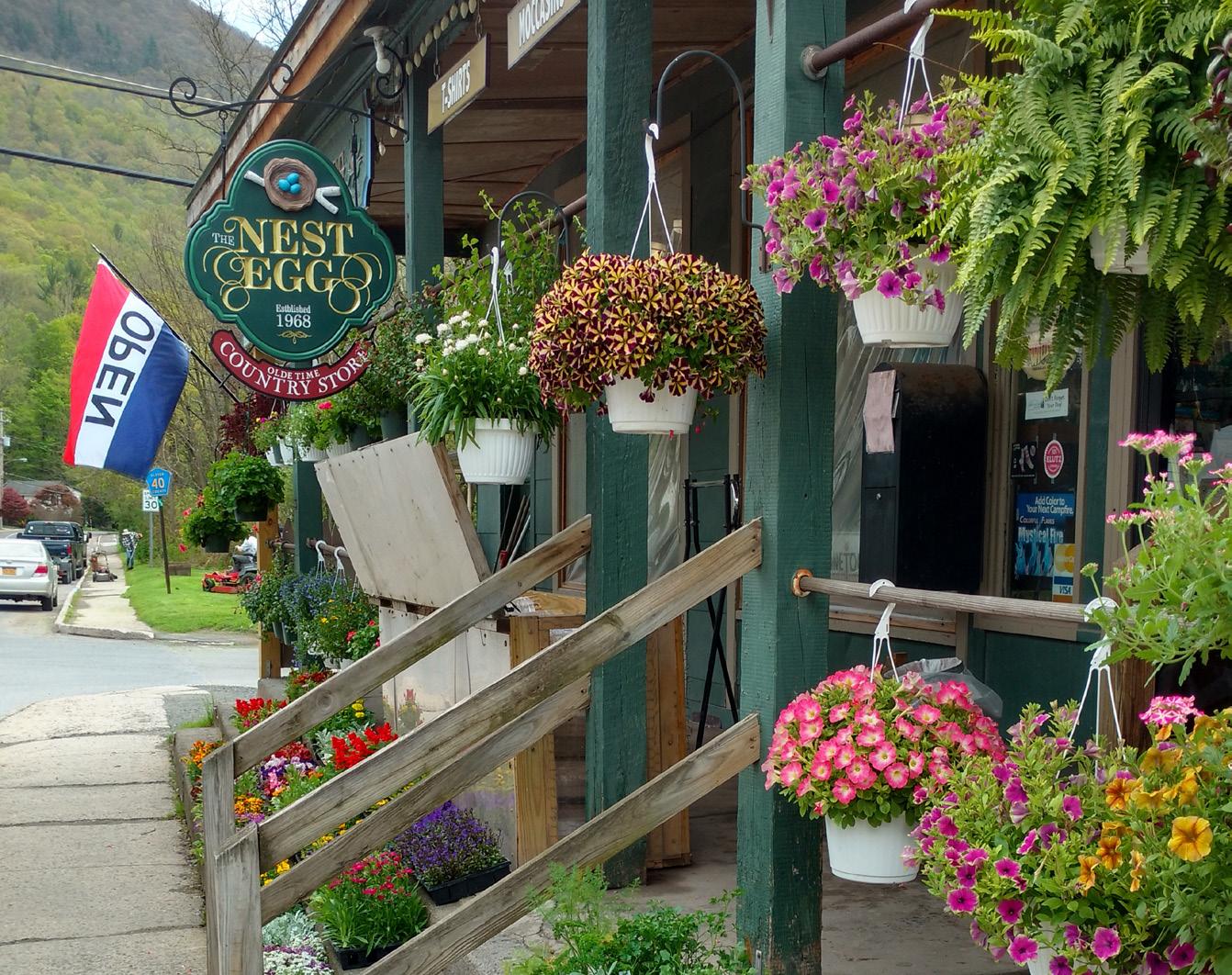

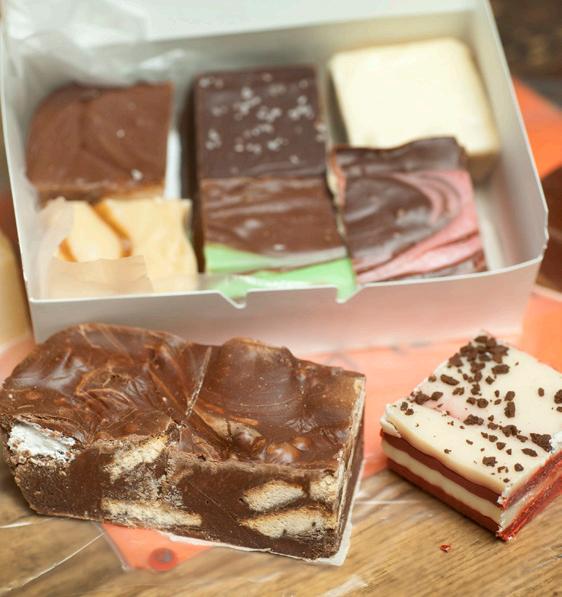
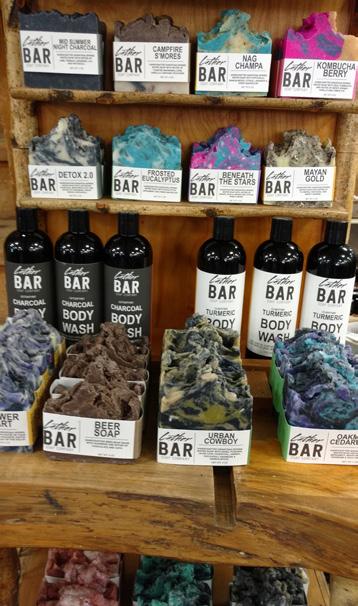



We are located in the heart of The Catskill Mountains. We carry Minnetonka Moccasins, chimes, puzzles, local books & maps, gemstones, homemade fudge, jewelry, candy, t-shirts, games, crafts and so much more. We are packed to the rafters with fun, practical, and hard-to-find merchandise. Come visit us for a unique shopping experience.
OUR HOMEMADE FUDGE IS WORTH THE TRIP!



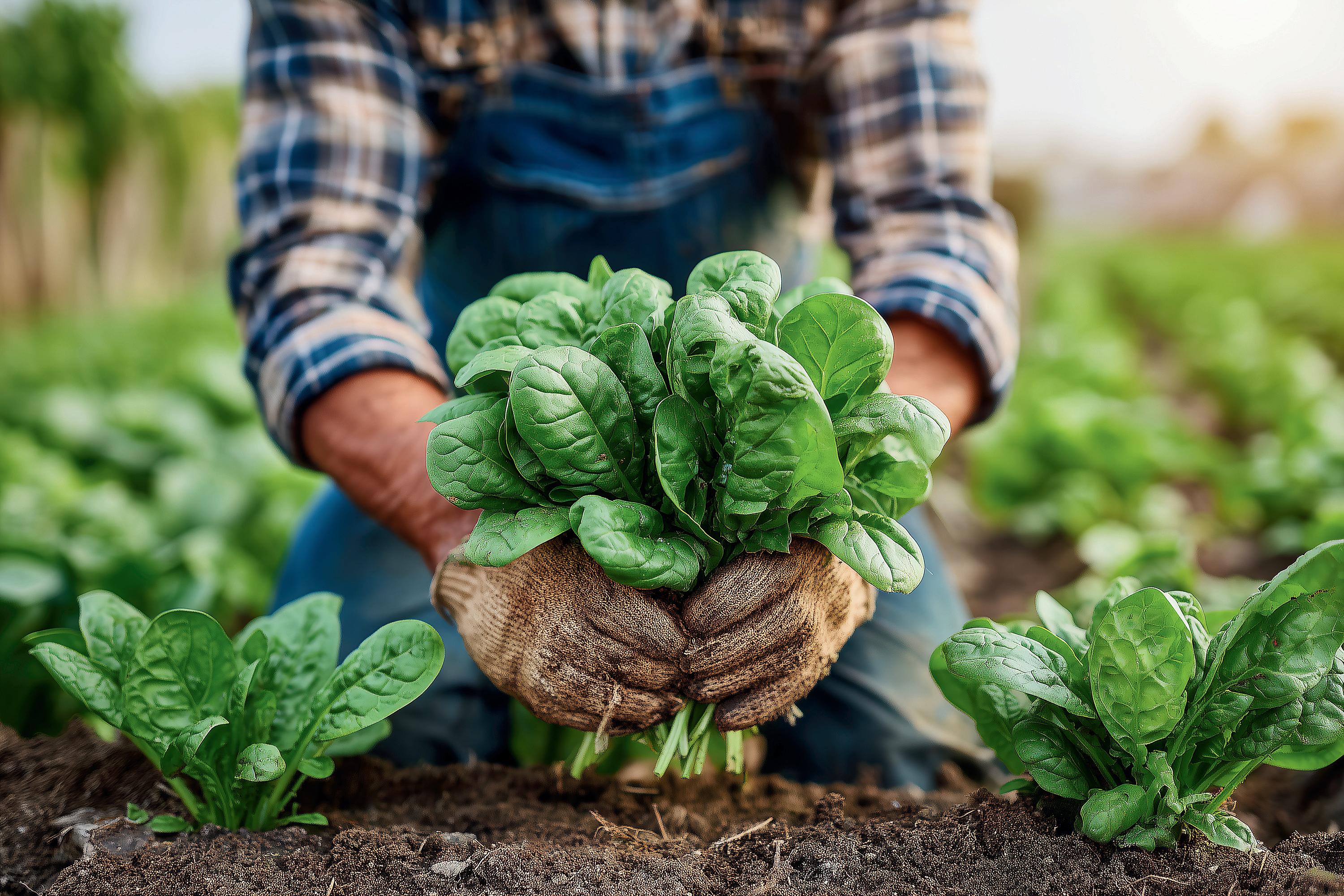
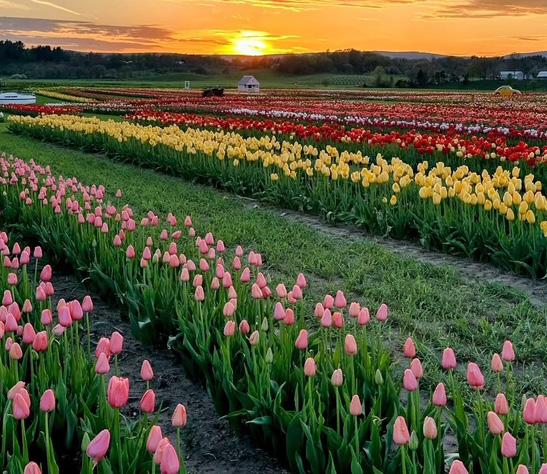




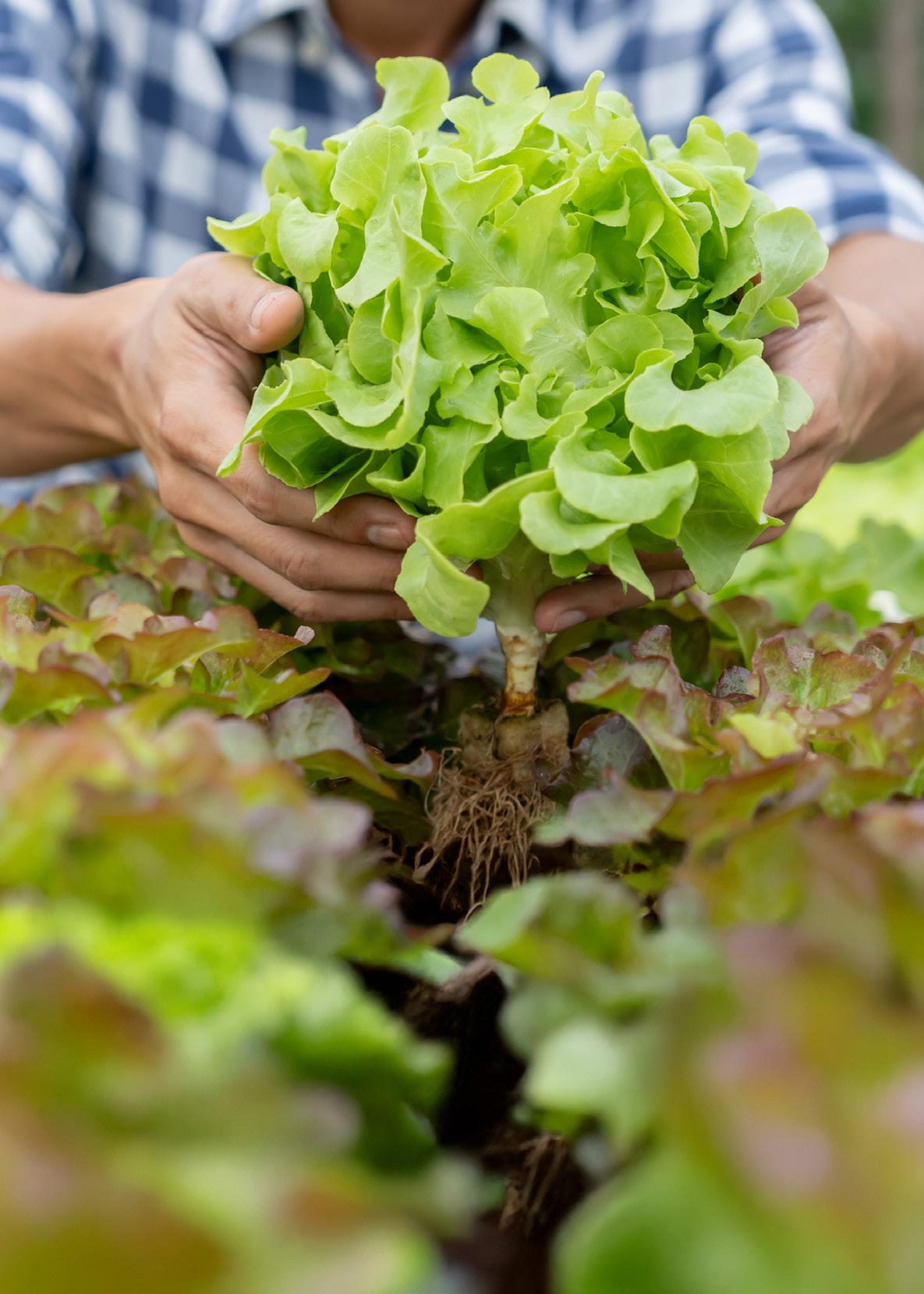
Photo by Nuttawan Jayawan.
the spring dance with timing Day in the Life Series
e’ve always been fascinated with how it all happens. How do our independent business-folk, a varied group indeed, make the magic happen day in and day out? What goes into the creation of a destination shop, a community get-together, a gallery?
Clearly, the universal answer would be that a lot of talent, study, and hard work go into making a creator’s dream a reality. Beyond that, though, both the pathways and the results are as individual as fingerprints.
We find it fascinating, and it’s an honor and a great privilege to tell these stories, as we do in our Meet the Owners articles. Now we’ve decided to take you behind the scenes in yet another way.
Welcome to our Day in the Life series. Farming seems like the perfect vocation to start with, given that a bin of gleaming fruit or an enticing pie stands as a silent testimony to a process that literally begins under the ground, requires intense devotion, and is key to our collective survival.
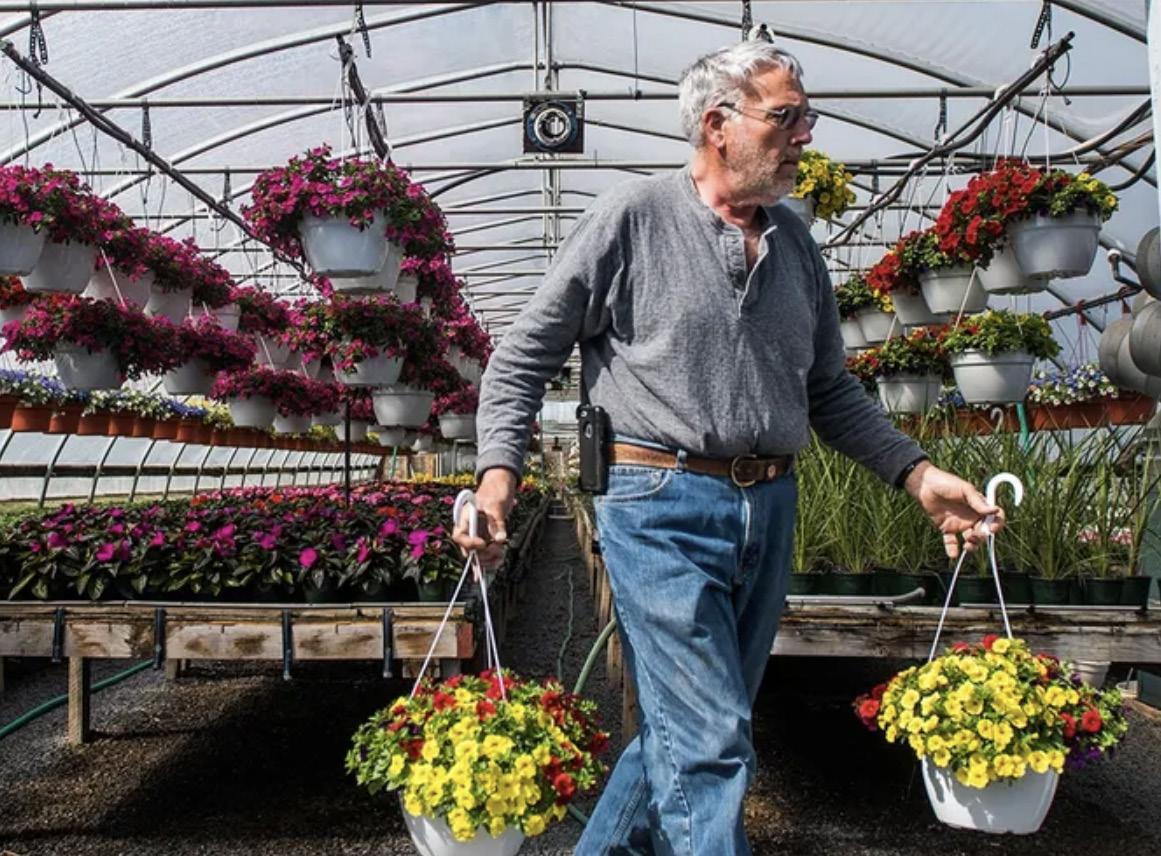
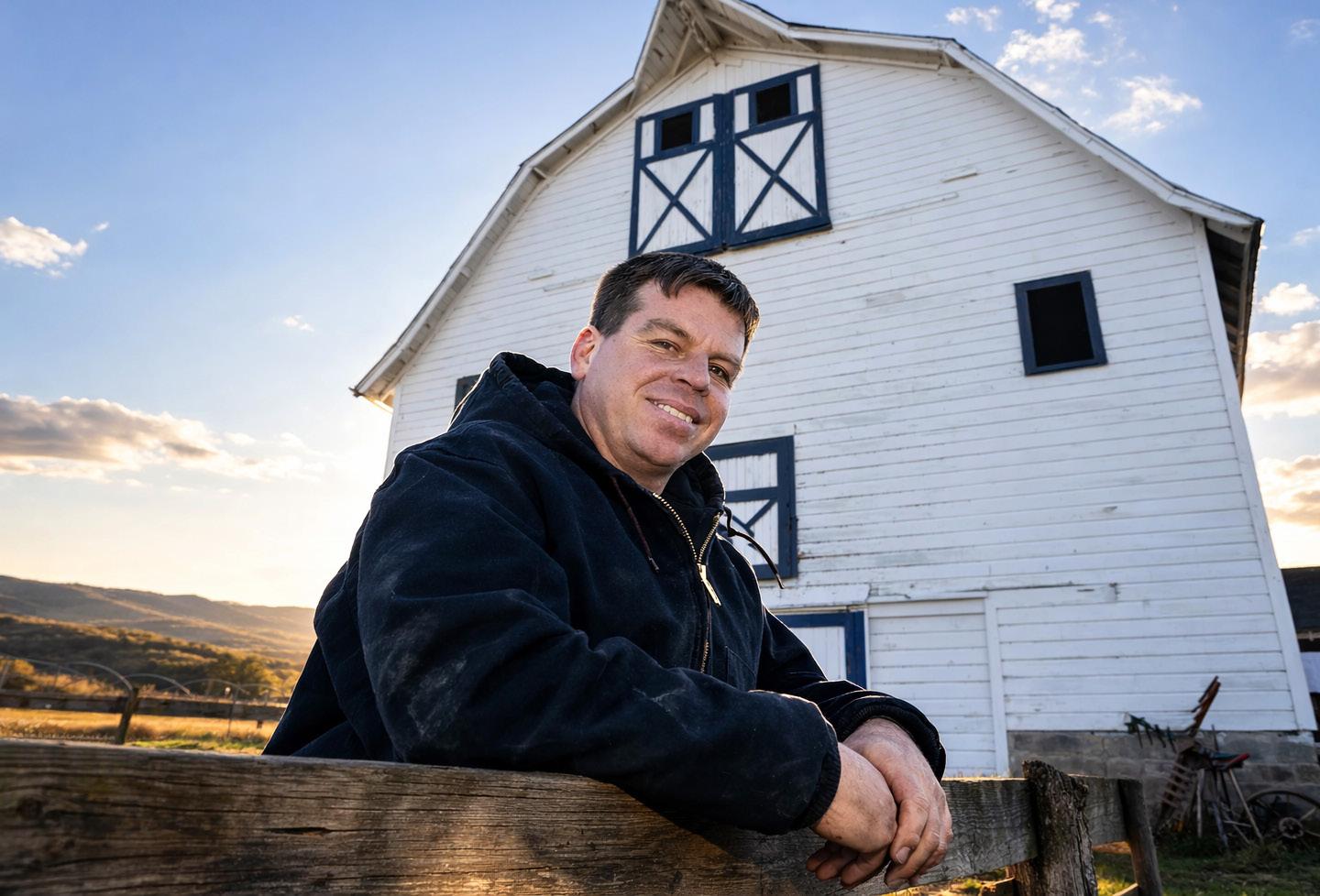
A spring day in the life of... dan schoonmaker of saunderskill farms
What does a typical spring day look like for you?
Dan Schoonmaker: Initially, we look at the weather to review the forecast for the upcoming days, which helps us devise our plan for that day and often for the next few days regarding planting. This is crucial because spring is the most significant season for getting things planted
When does spring preparation begin?
Dan: In terms of preparation, we typically start a few months in advance as we get ready for spring.
What are you typically working on during winter?
Dan: Starting in the fall, we place orders for all our seeds, fertilizers, and greenhouse supplies, including packaging and plants that we will transplant in the spring. We are continually maintaining our equipment and also planning ahead for the fall, deciding which crops will be planted the following year.
Dan: We have some downtime if we want to engage in things on our own or with family. We spend a considerable amount of time maintaining the greenhouses and equipment. Additionally, we trim the hedges around the perimeter of the fields; the brush tends to grow rapidly over the summer season.
Dan: Typically, the initial crops planted in early spring are peas and sweet corn. The primary tasks involve retrieving the equipment from storage and ensuring it is properly tuned for the upcoming season.
Dan: The most difficult aspect of spring is the weather, as it significantly influences our ability to plant crops on schedule. My father often reminded me, "If you don't plant crops, you won’t harvest crops." Timely planting is crucial, and the weather plays a key role in whether we can proceed with planting or not.
Dan: The most rewarding experience is sowing the seeds, observing their growth over the season, and reaping the rewards when it's time to harvest. Harvesting is likely the most rewarding part of the year, but you’ll never get there without sowing, so getting that done is satisfying.
How is spring different from other seasons on your farm?
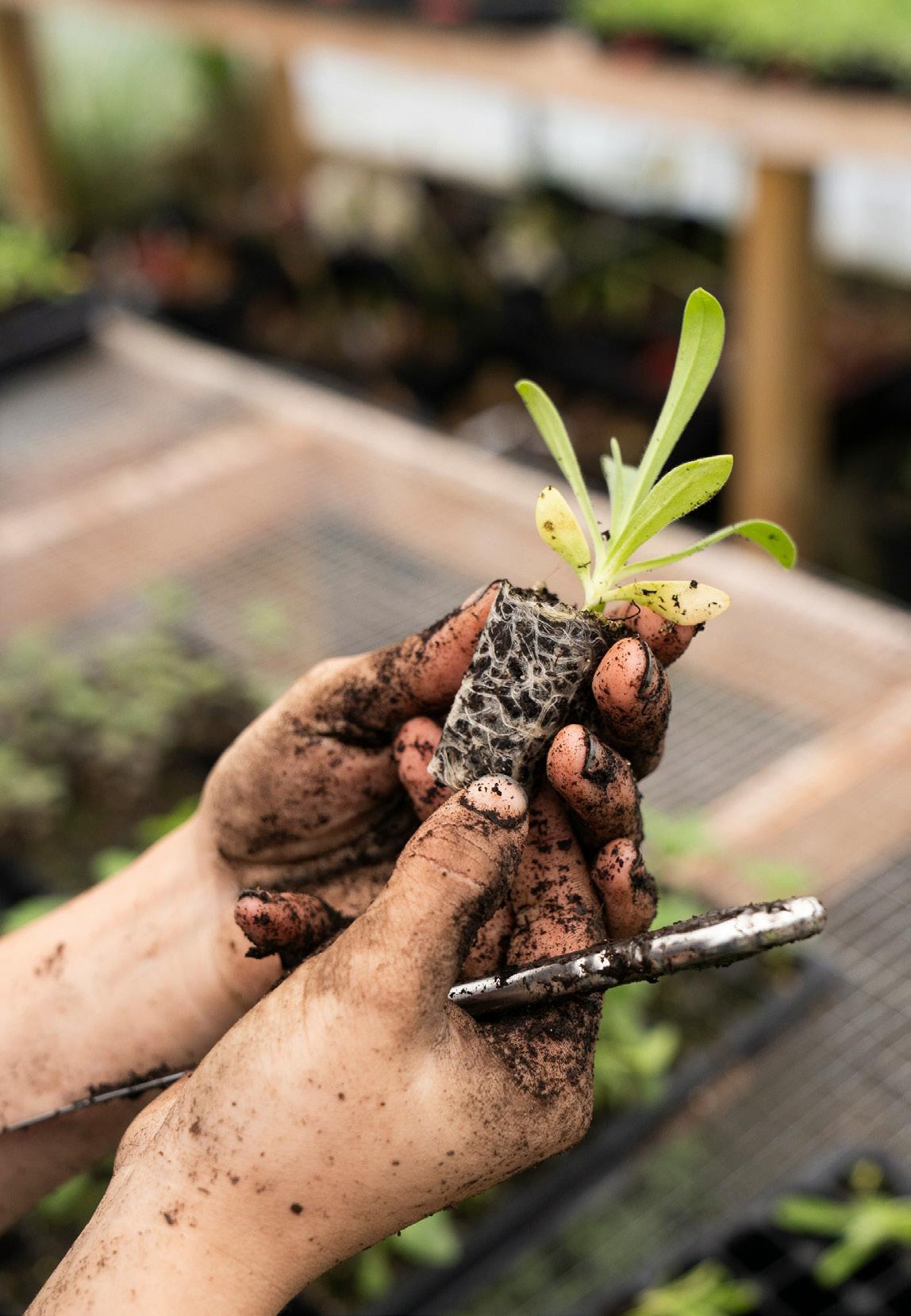
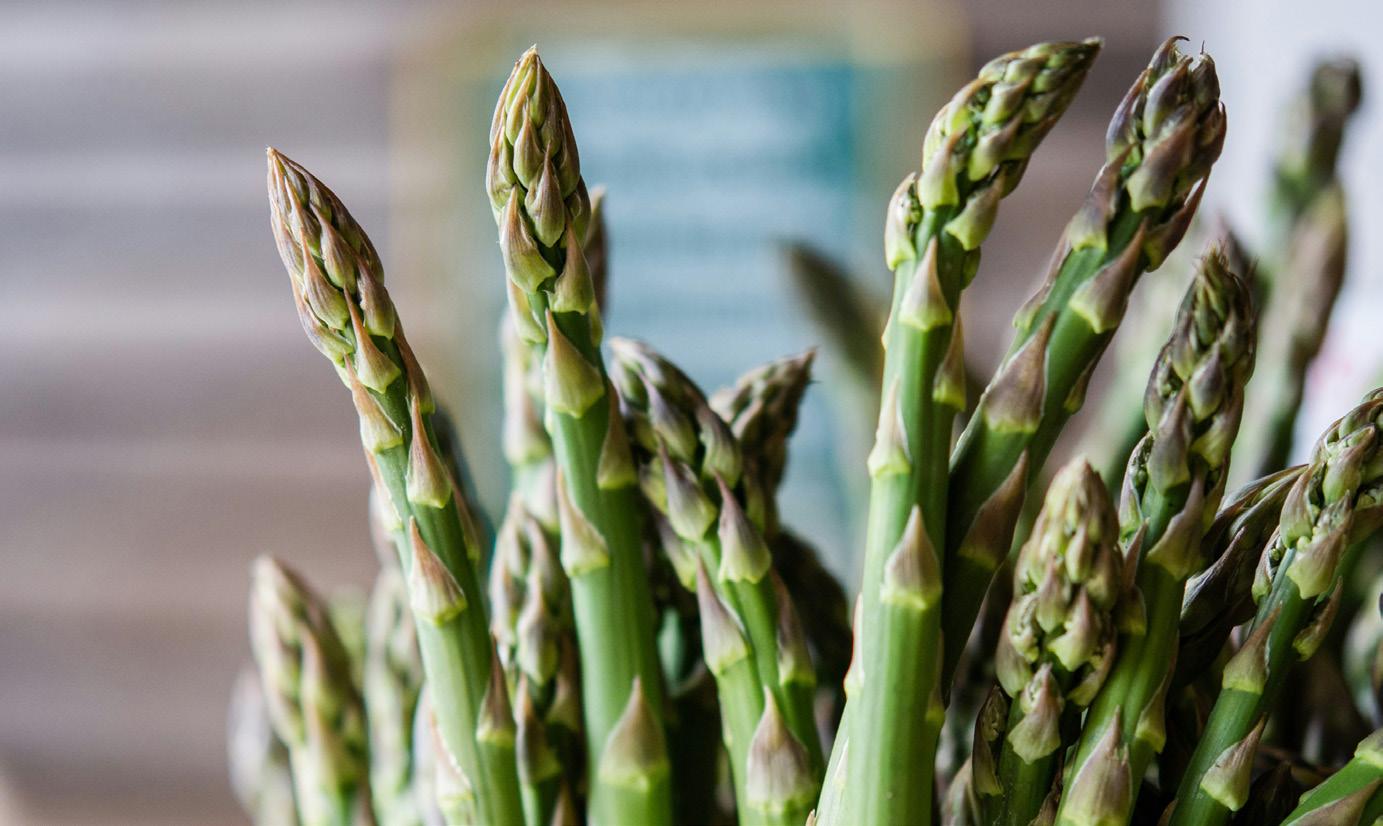
Dan: Spring is the most active and crucial season, as it involves planting crops while managing greenhouse production, wholesale deliveries, and harvest of early crops like asparagus. During the summer and fall, the work in the greenhouse shifts towards maintaining the products, with our primary focus being on harvesting the crops.
What do you wish customers understood about early-season farming?
Dan: A lot of folks are unaware just how important it is to plant your crops on time. If crops aren't planted on schedule, it leads to delays in harvesting and, given the already brief harvesting season, this is crucial for our industry, since that's when you start generating income from your products. Therefore, it's essential to complete our early-season tasks promptly.
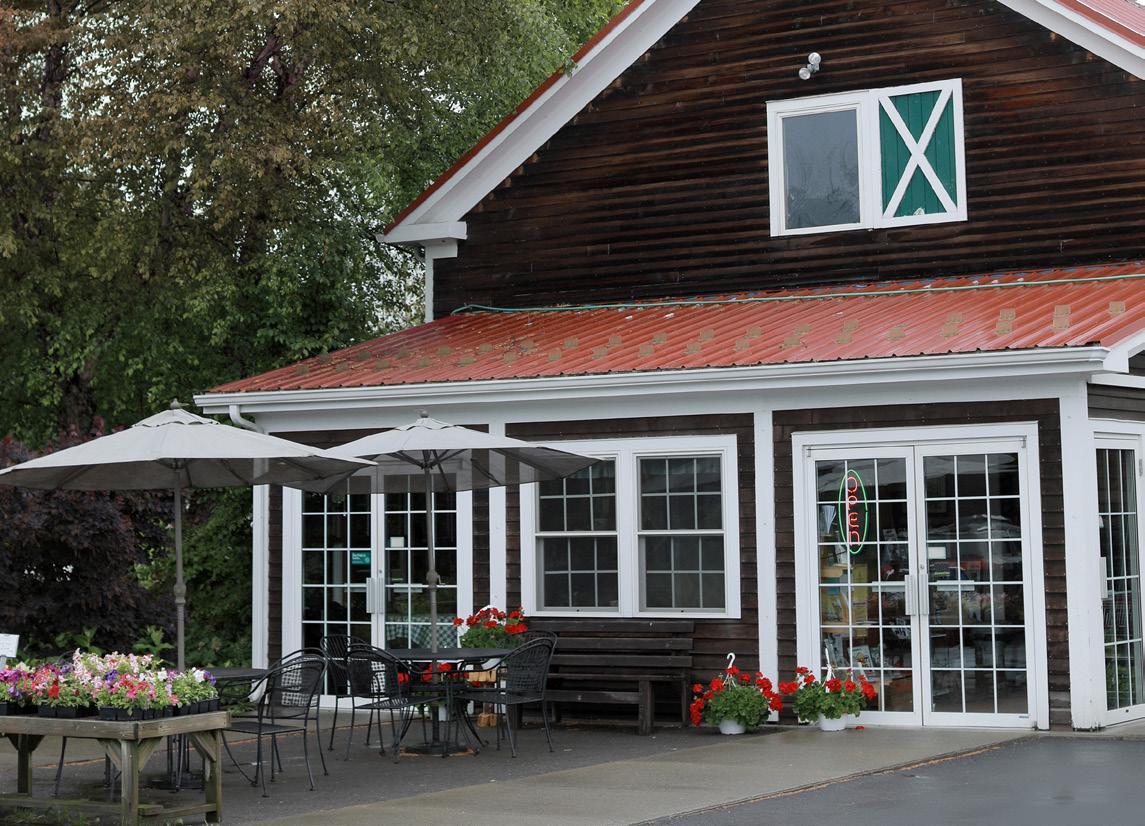
Saunderskill Farms is one of a very few in the United States to have celebrated its tricentennial, having begun to sprout in 1680. Come here for superb homegrown produce, delicious premade meals (grab a bench by the pond!), soups, and bakery items, plus delicious soft-serve ice cream. saunderskill.com

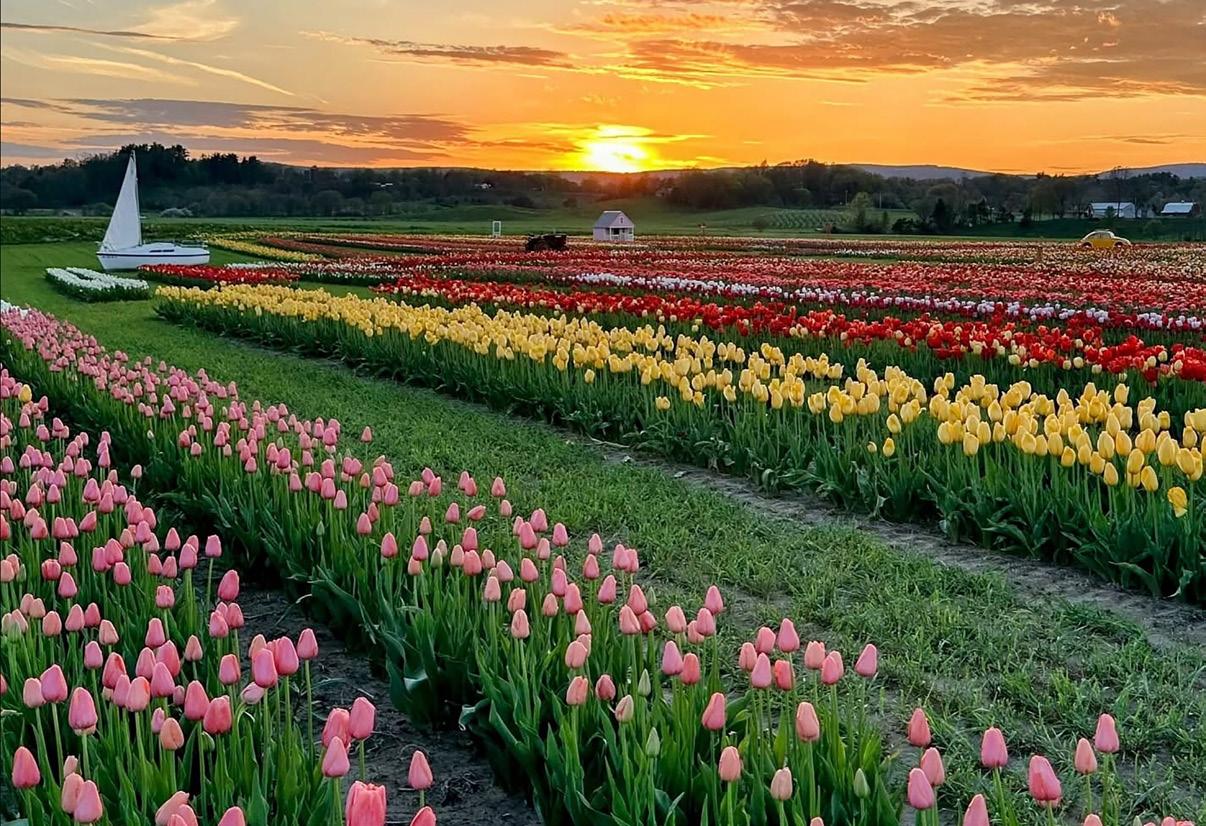
Tulip fields at Kelder's Farm.
A spring day in the life of... chris kelder of kelder ' s farm
What does a typical spring day look like for you?
Chris Kelder: We love spring; plants wake up, and we as farmers get to start fresh with new optimism that it will be a good year on the farm. We start tilling ground and planting crops.
When does spring preparation begin?
Chris: Depending upon the year, we start planting in the field in April; many crops have been started in the greenhouses as early as late February.
What are you typically working on during winter?
Chris: In the winter months, we repair equipment, care for our animals, plan for the coming season, and recharge our batteries for the upcoming season.
Do you have downtime in the winter months?
Chris: Yes, winter is a nice time to relax and recharge.
What crops or tasks begin first in early spring?
Chris: The first tasks include finishing pruning the perennial crops and getting the tulip field ready for tulip time.
What’s the most challenging part of springtime farming?
Chris: Timing! We wait for the right time to accomplish tasks, and then all of a sudden they all need to be completed yesterday.
What’s the most rewarding?
Chris: The most rewarding part of spring is watching crops and animals start fresh and grow.
How is spring different from other seasons on your farm?
Chris: Spring is an extremely important time of year, and you have to get it right. Mistakes made in spring carry forward throughout the entire farming season.


What do you wish customers understood about early-season farming?
Chris: Spring is just the beginning. There is a seasonal rhythm to farming, and many things planted in the spring don't come to fruition until later in the season, so they’re not visible yet.
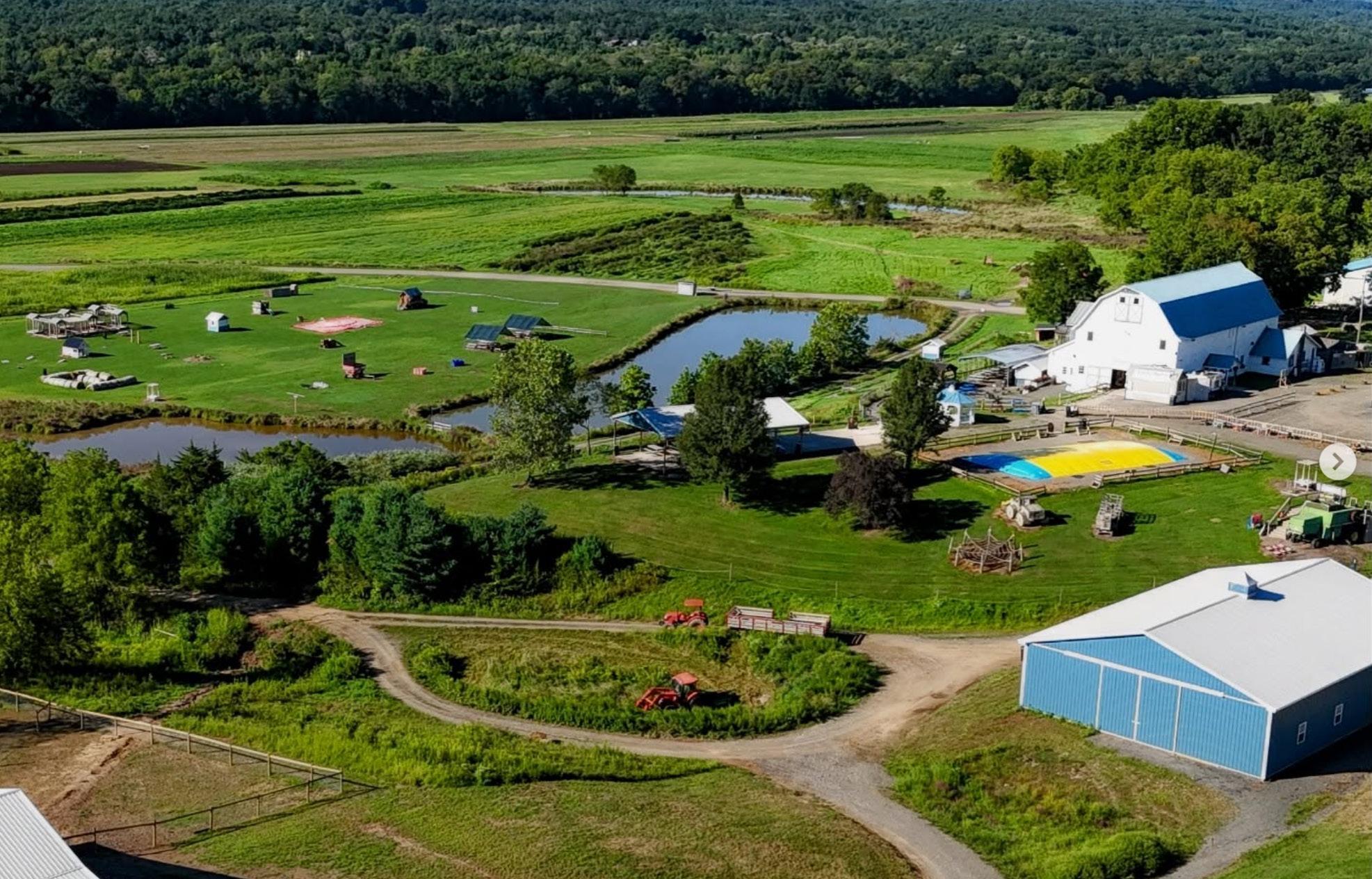
Kelder’s Farm is famed for creative agritainment. You’ll find over three dozen fun things to do here, way more than you can fit into a single afternoon, but there are season passes. Don’t miss the stunning 4th Annual Tulip Festival happening late April through early May; over 50 varieties fill 10 acres with over 800,000 blooms. keldersfarm.com
There’s something deeply grounding about stepping behind the scenes and witnessing the devotion, timing, and quiet resilience that sustain our local farms. We’re grateful to Dan Schoonmaker and Chris Kelder for sharing a glimpse into the rhythm of their spring days—and for reminding us that every harvest begins long before we see it. Join us again in our Summer Issue as we continue our Day in the Life series, spotlighting another one of our local neighbors. We’re excited to bring you even more behind-the-scenes moments and the stories that make this region so extraordinary.

















your guide to brunching at home or out
Photo by Davey Gravy.
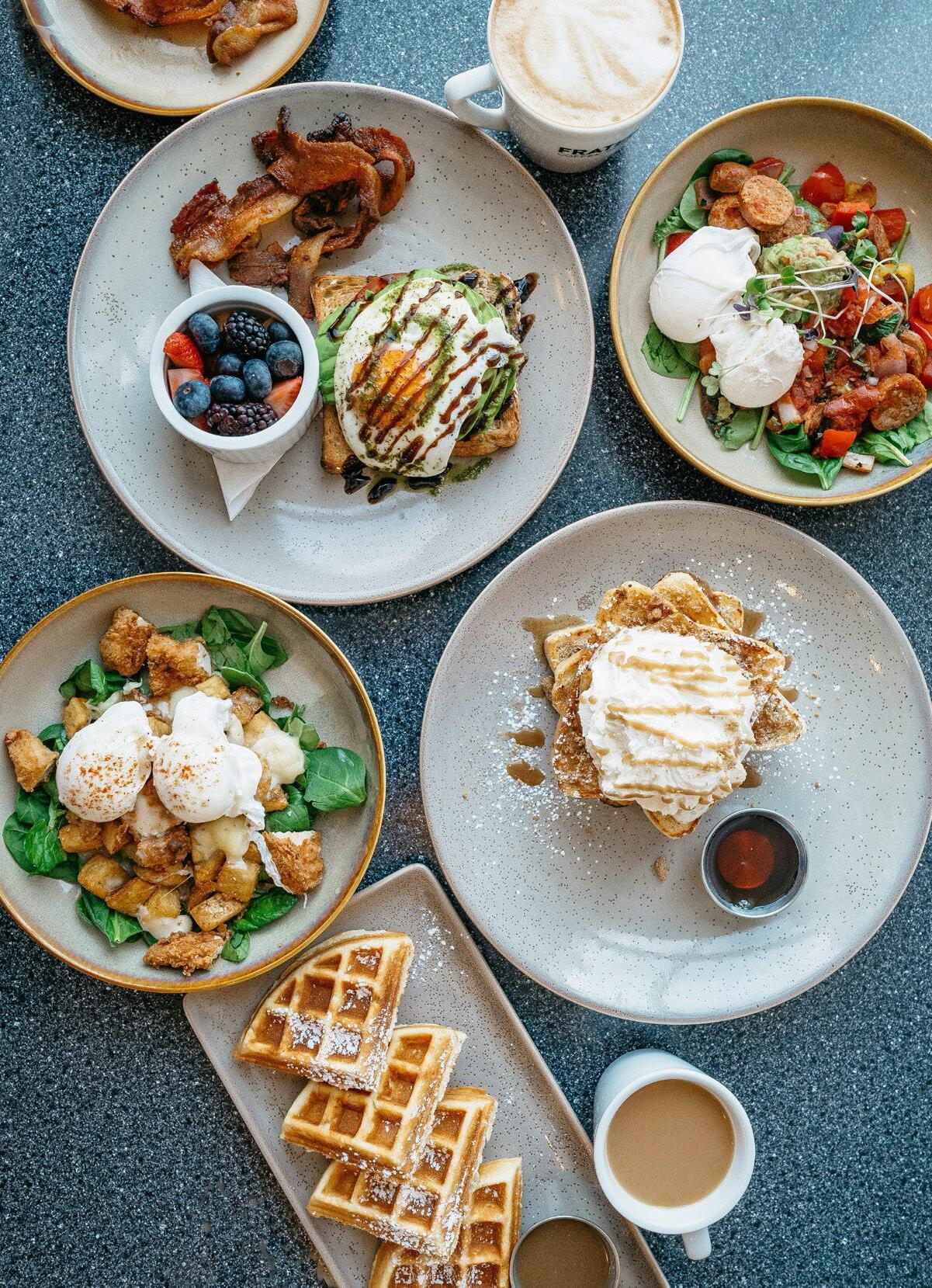
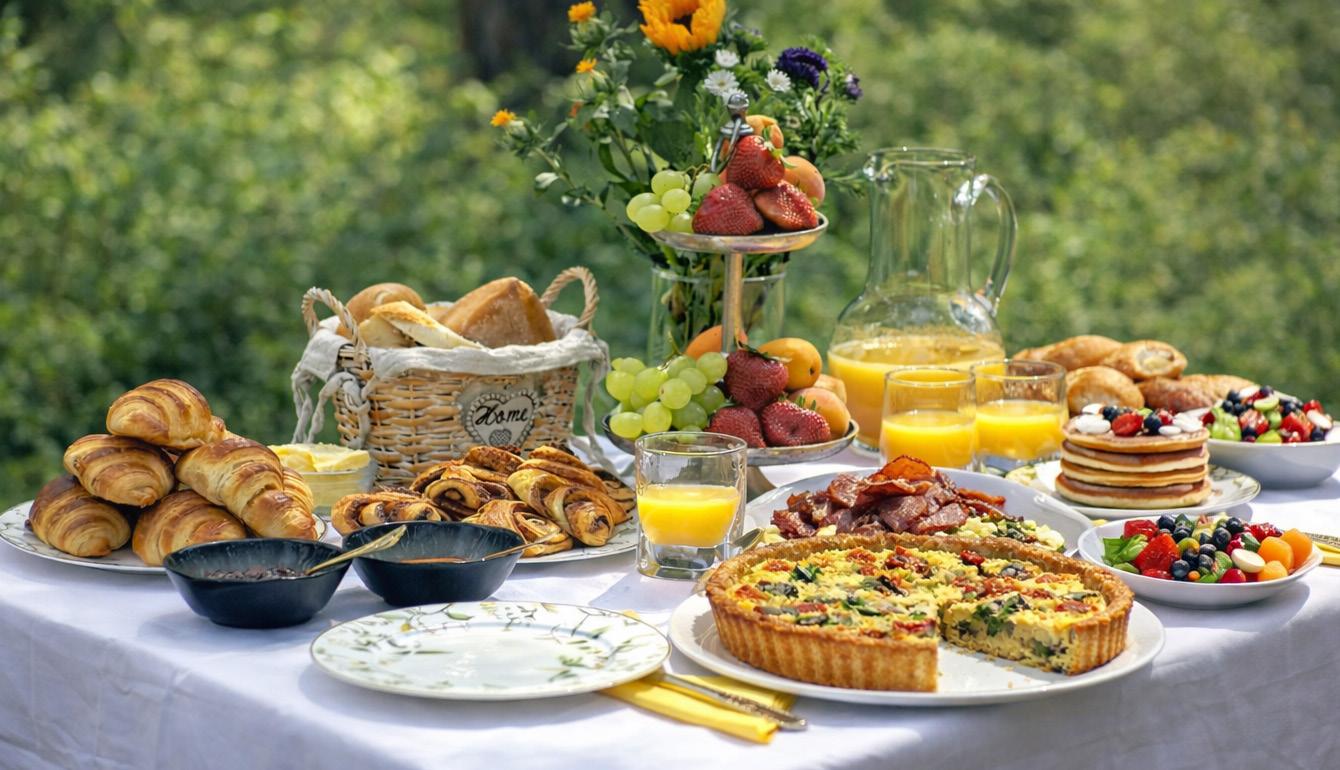
There’s nothing quite like brunch. It goes beyond breakfast, blending savory and sweet, coffee and cocktails, in a way that feels celebratory yet relaxed. It’s generous without being formal—perfect for welcoming the season.
Brunch is ideal for casual spring entertaining on your deck, porch, or patio. Let the budding trees and fresh air set the scene. Even better, most dishes can be prepared ahead—quiche baked, hash prepped, smoothie toppings chopped—so you can spend less time in the kitchen and more time with your guests.
Here, straight out of the Rondout Valley—home of fabulous farmfresh everything—are recipes from local master chefs guaranteed to delight. (And of course, to truly experience them, visit each establishment and taste the master’s version.)
TO ROUND OUT YOUR SPREAD
beyond the quiche, hash, and smoothie bowl (recipes here), consider:
• Spring greens salad
• Smoked salmon platter
• Herbed frittata
• Biscuits or croissants
• Yogurt parfaits
• Fresh fruit salad
• Deviled eggs
• Baked French toast
• Pancakes or waffles
• Mimosas or bellinis
Set it out buffet-style, keep the coffee flowing, and let everyone linger. Spring brunch is about ease, abundance, and gathering in the open air.
Chef Ty Baughman makes quiche every day at The Roost in Stone Ridge.
“People might think a quiche can only be cheddar, broccoli, and bacon, but you can put whatever you like in it,” he says. “At the restaurant, we do something different every day and just put that day’s quiche on the board. Once you have the custard, you can flex it—fresh herbs, dried herbs, meat or no meat, any veggie you like.”
chef ty ’ s signature quiche
from the roost
Serves 6 Prep: 30 min Cook: 35-40 min
ingredients
• One 9-inch pie crust, blind baked (baked without filling)
• 1-1/2 cups eggs, beaten to liquid
• 1-1/2 cups heavy cream
• 2 tbsp grated Pecorino, Romano, or cheese of your choice
• 1/2 cup of your choice of flavorings (meat or veggies)
• Salt, black pepper, herbs, and spices to taste
directions
Combine ingredients, pour into prebaked pie crust and bake at 325 degrees for 35-40 minutes, until center is cooked.

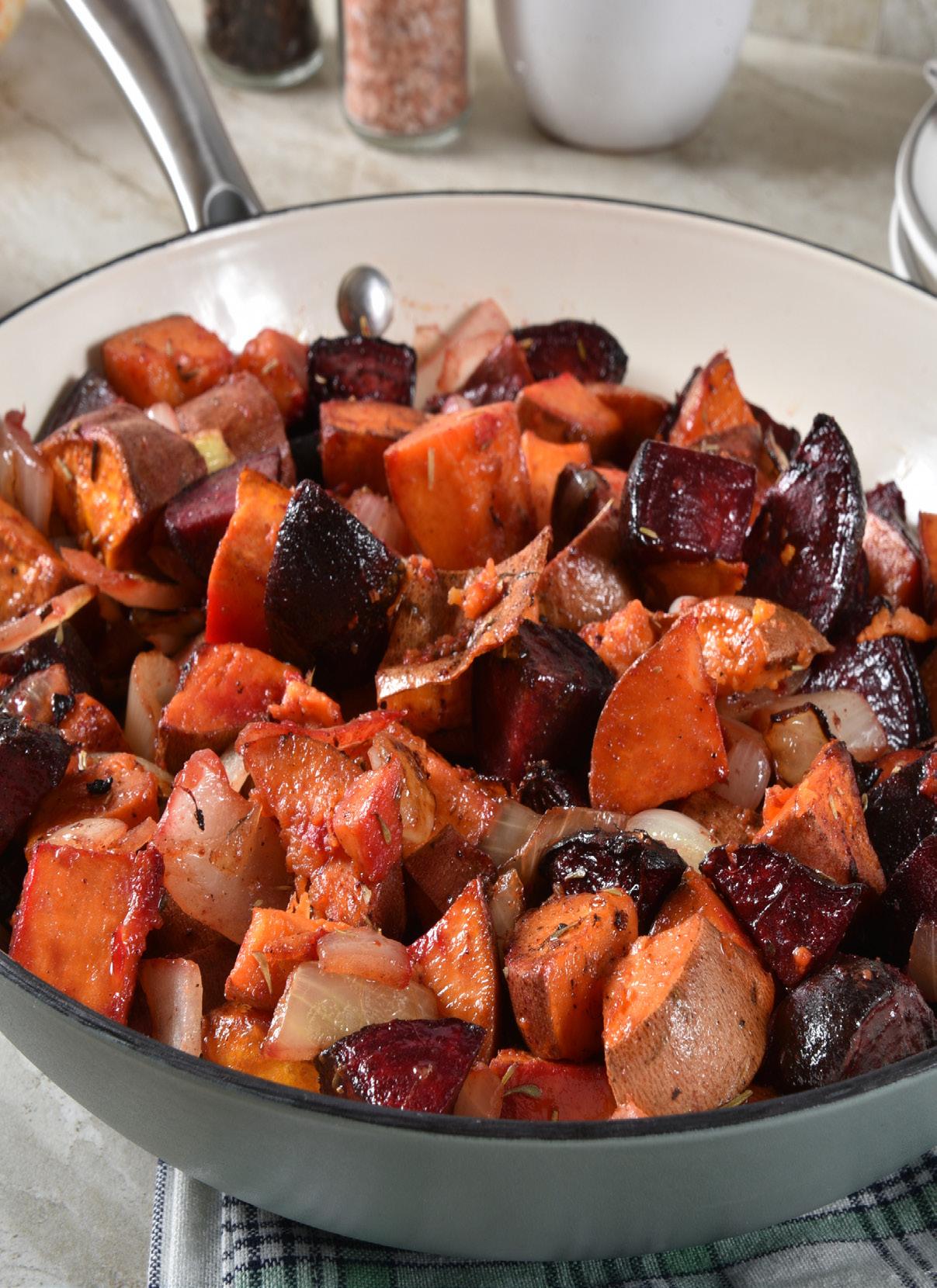
Up the road at High Falls Cafe on the Kingston/Marbletown border, Chef Brian Gribbon makes his Marigold Hash—a satisfying side that can also shine as a main topped with two poached eggs and hollandaise, says Buffy Gribbon.
chef brian of high falls cafe ' s marigold hash
Serves 6-8 Prep: 15 min Cook: 60-75 min
ingredients
• 2-3 diced beets, a mix of golden and red, or either
• 2 diced sweet potatoes
• 1 onion, diced
• 2-3 gold or baking potatoes
• 3 strips bacon (can be omitted for veggie version)
• 2-3 tbsp olive oil
directions
1. Peel and cube gold potatoes; boil 15 minutes until fork-tender, then drain. Roast sweet potatoes and beets at 300°F for 40–45 minutes until tender. Cook bacon until just under crisp; remove. Sauté onion in the same pan (or in olive oil if ski ping bacon) until translucent.
2. Heat olive oil in a large sauté pan. Add bacon and onion; cook briefly. Stir in gold potatoes and cook over medium-high, breaking up slightly to crisp. Add roasted sweet potatoes and beets; reduce heat and sauté until heated through and browned to taste. Serve hot.

And here’s a blast of health and sweetness from Adams Fairacre Farms, offering standout produce and more in Kingston, Poughkeepsie, Wappingers Falls, Newburgh, and Middletown.
blueberry mango smoothie bowl
À la Adams Fairacre Farms
Serves 1 Prep: 5 min Cook: 3 min
• 1 cup frozen blueberries
• 1 cup frozen mangoes
• 1/2 avocado, diced
ingredients
• 1/2 cup unsweetened almond milk
• 1 tbsp unsalted almond butter
• Dash cinnamon
• 2 tsp maple syrup
• (Optional toppings) blueberries, banana, cashews, coconut flakes, or chia seeds
directions
1. Place blueberries, mango, avocado, almond milk, almond butter, maple syrup, and cinnamon into a food processor and blend until smooth. It will be very thick.
2. Pour smoothie into a bowl and add your favorite toppings—blueberries, banana, cashews, coconut flakes, or chia seeds are all wonderful.
out to brunch
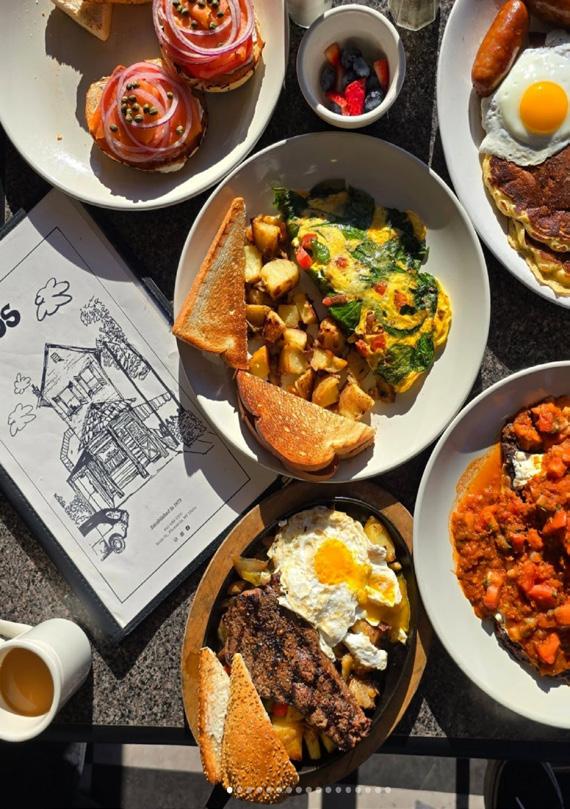
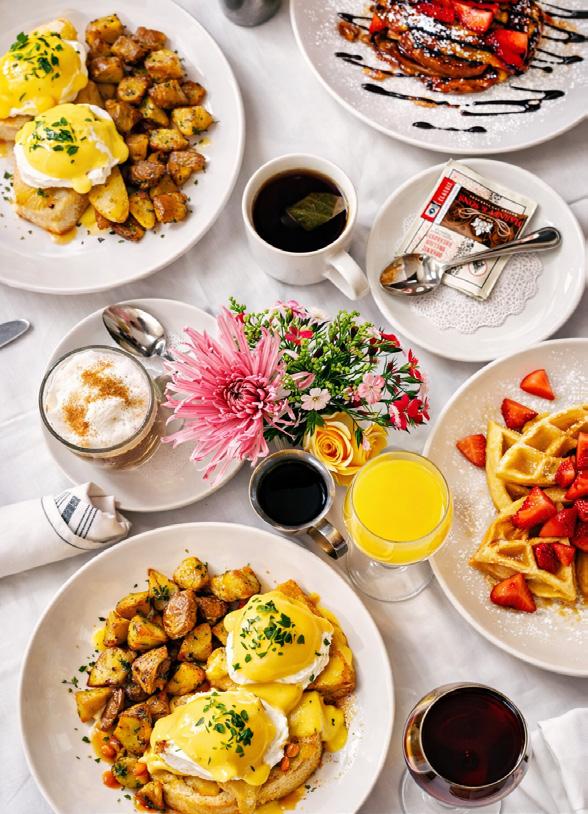
Some days, you just want to go have somebody fix you some fabulous brunch fare. Here’s our insider’s guide to the places that make brunch beautiful.
Some of these places serve specific, often sumptuous, brunch on weekend mornings. (Everybody knows 1 pm is still “morning” on a brunch sort of day.) Others just offer the kind of menu from which you can construct a tasty brunch. All of these choices open no later than 11 am.
As always with our super-creative restaurant folk, menus change frequently, and it’s worth a visit to the website to get the latest information.
Bon appétit!
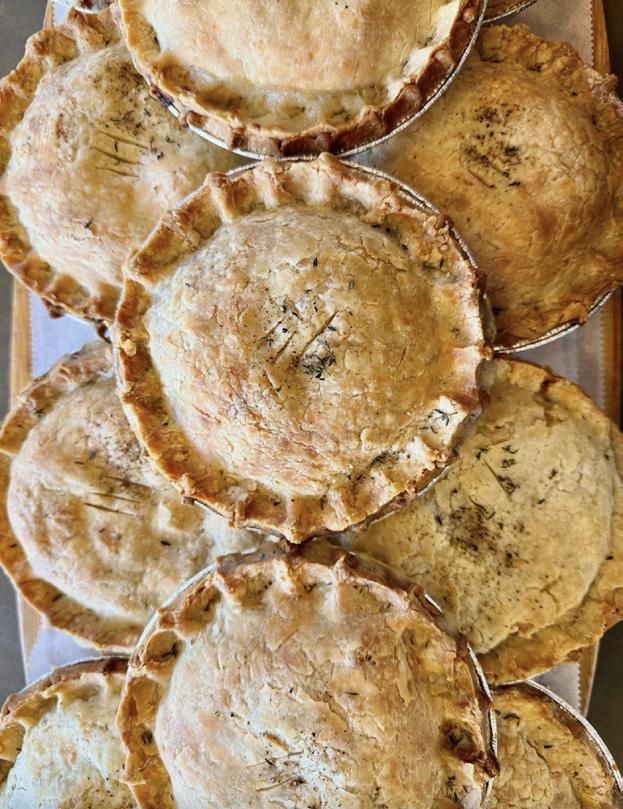
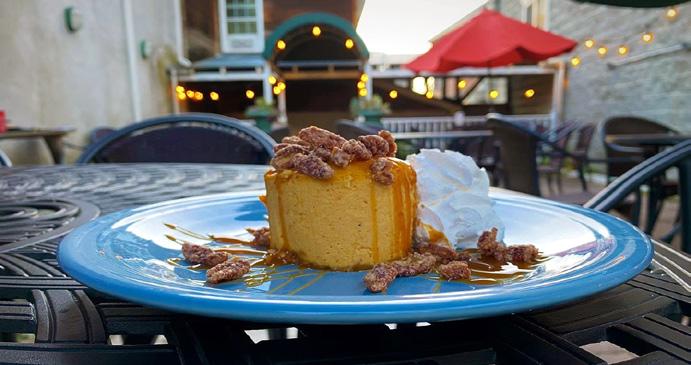
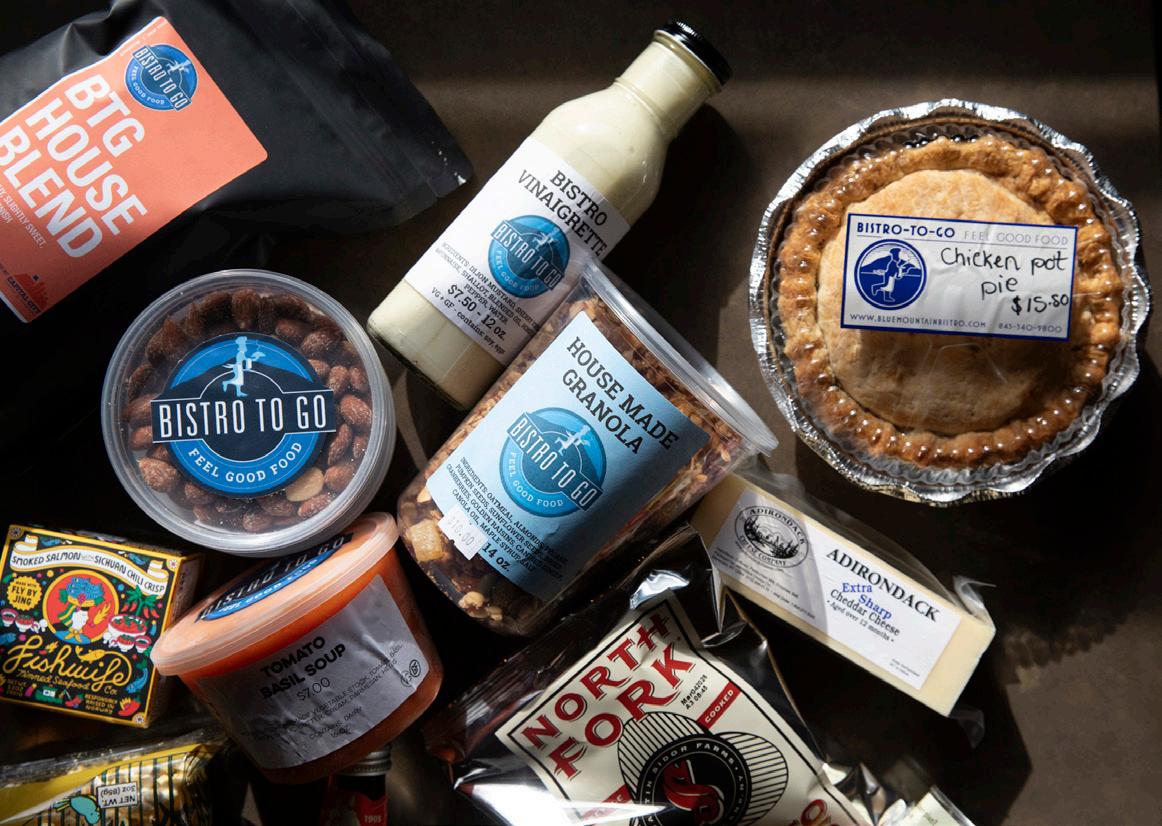
GO in Kingston is a great spot to grab a brunch picnic. They serve up feel-good takeout that will satisfy and delight you every time. Try their famous daily-made Chicken Pot Pie, a comforting classic filled with tender chicken, vegetables, and rich, savory gravy wrapped in a perfectly flaky crust.
bluemountainbistro.com
+ BAR in
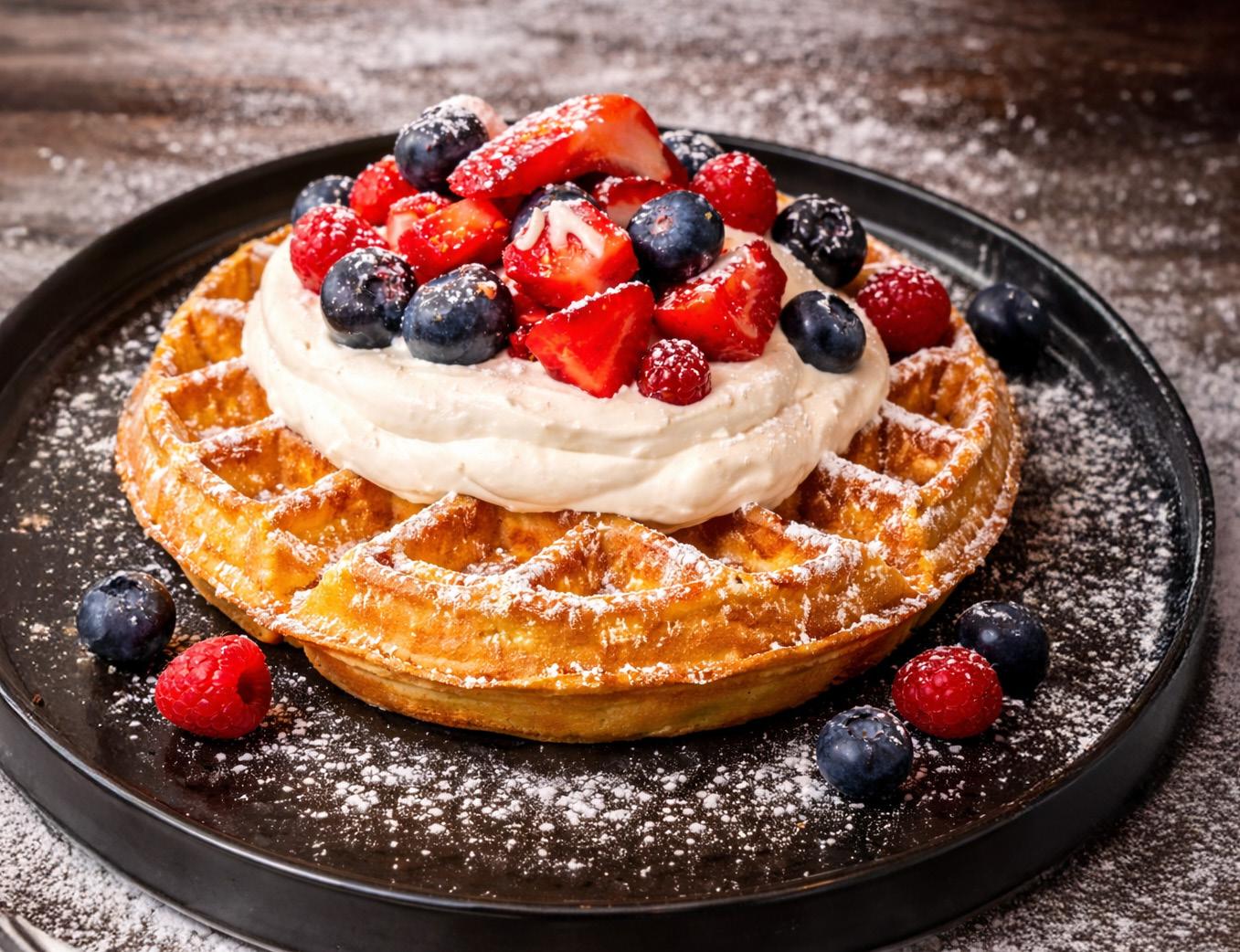
Kingston serves a Sunday brunch menu from 10-2. The restaurant pairs vintage charm with sweeping Catskills views, creating a cozy-yet-refined spot to linger over good food. Try the Belgian Waffle with fresh mixed berries and Chantilly cream, or the Lobster Benedict. brickmenkingston.com
BRIO'S PIZZERIA & RESTAURANT in Phoenicia is a casual, wonderful
feature of the village’s Main Street that’s got a delicious menu of breakfast choices served till 3 pm and does all their baking in-house. Try the Philly Cheese Steak Skillet or some “Big Mike’s” Avocado Toast. briosny.com
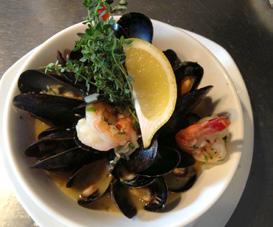
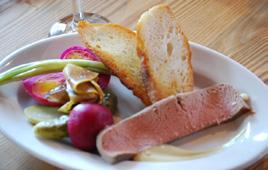
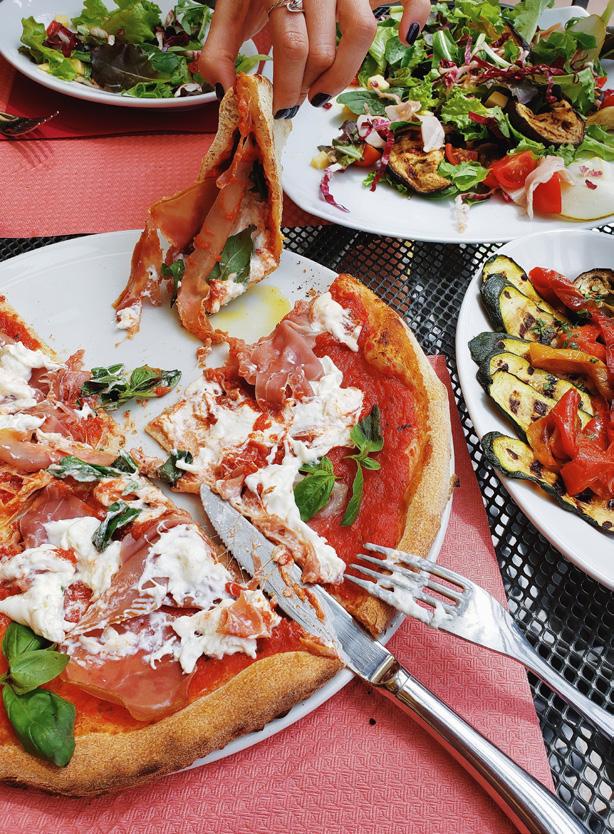
CAFE MIO in Gardiner serves local fare with flair from an open kitchen where you can watch the magic being made. They do breakfast all day, so you can brunch when you wanna brunch. Try the Veggie Tofu Scramble or the Banana Bacon French Toast. miogardiner.com
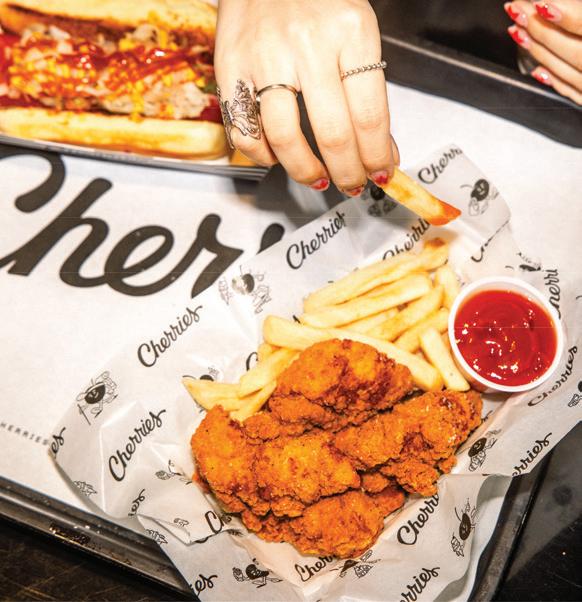
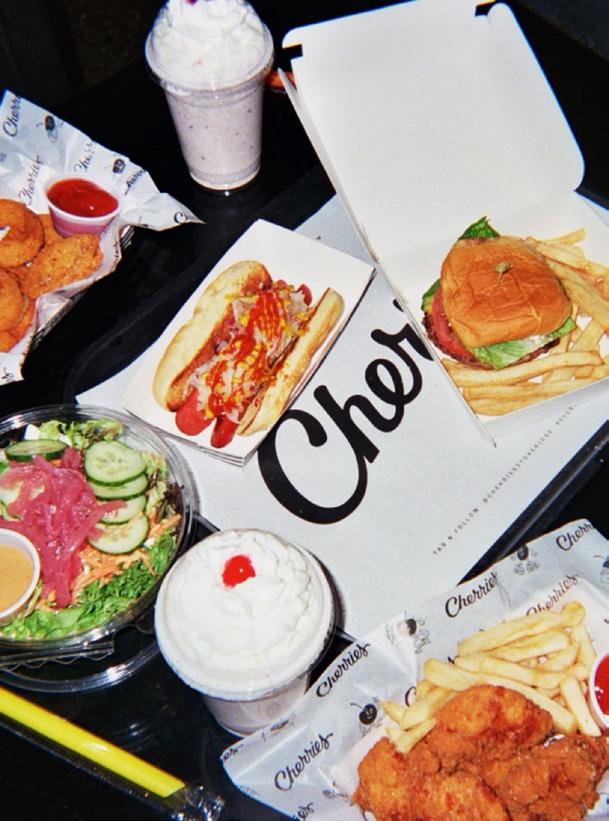
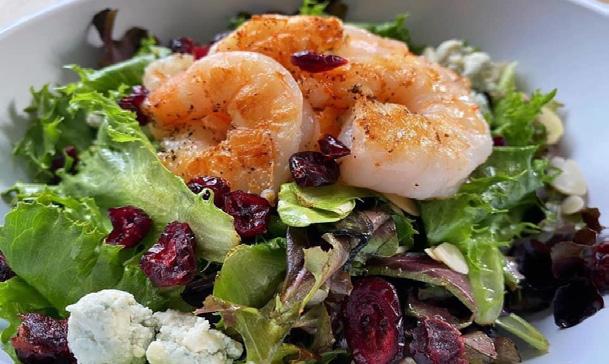
CHERRIES in Stone Ridge offers handmade ice cream and gourmet candy in a curated general store alongside yummy wraps and sandwiches. Try Melinda’s Mediterranean Kale Salad for an energizing brunch option: fresh chopped romaine paired with shredded carrots, cucumbers, pickled red onion, tomato wedges, and feta cheese
crumbles, served with a tzatziki vinaigrette dressing on the side. cherriesnewyork.com
in
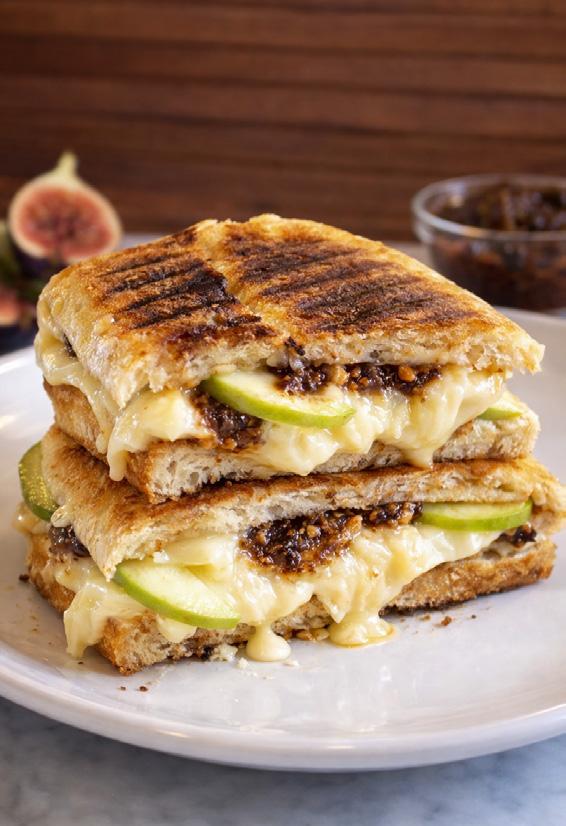
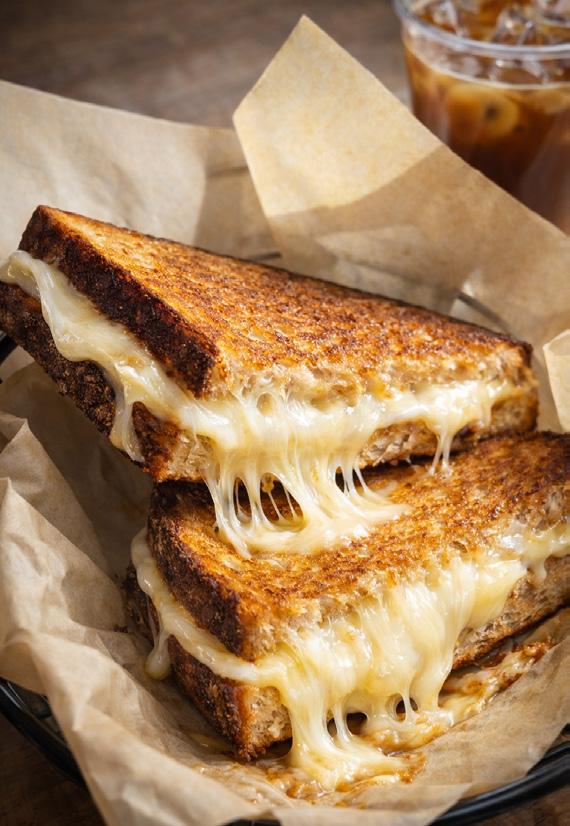
Ellenville takes pride in offering a community space to share good books, art, and ideas over tasty refreshments. They’ve got wonderful coffee and cocktails, along with superb scones and paninis. Try the Fancy Fig, Green Apple, and Brie for a brunch you won’t forget. thecommongoodny.com
+ BAR in Kingston, situated right on the Rondout, pays homage to the city’s history of steamboats and honest work. They serve a brunch buffet from 10-2 that features a waffle/pancake station, omelet station, and carving station, and you can add unlimited Mimosas for $20.00. cornellkingston.com
GIGI TRATTORIA, located in Rhinebeck’s Montgomery Row,
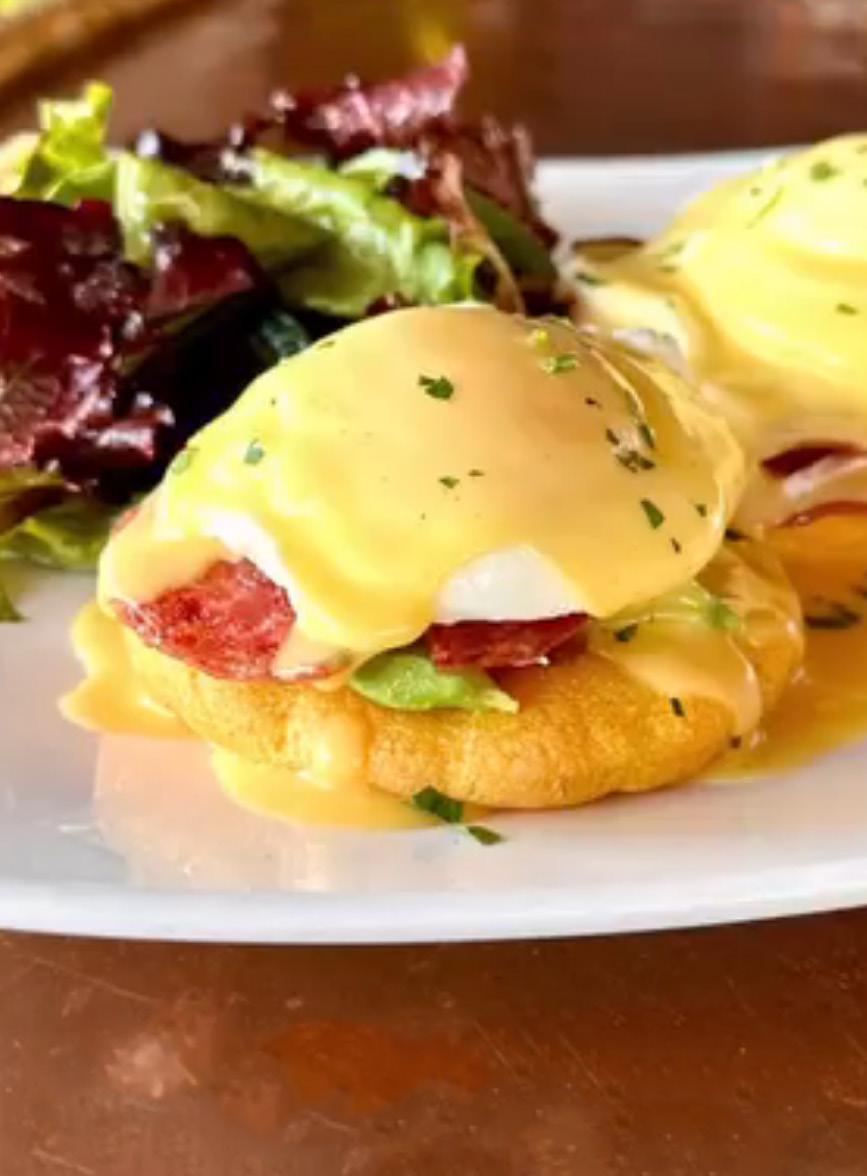
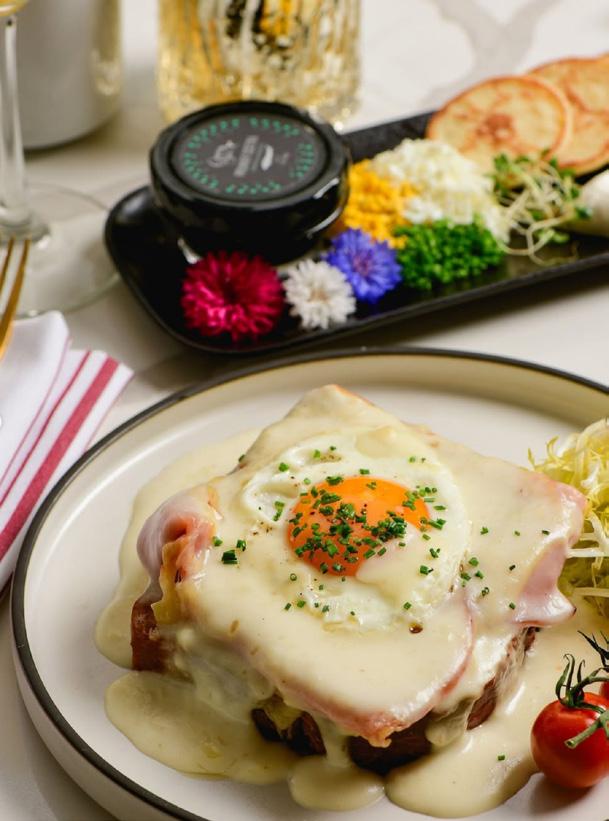
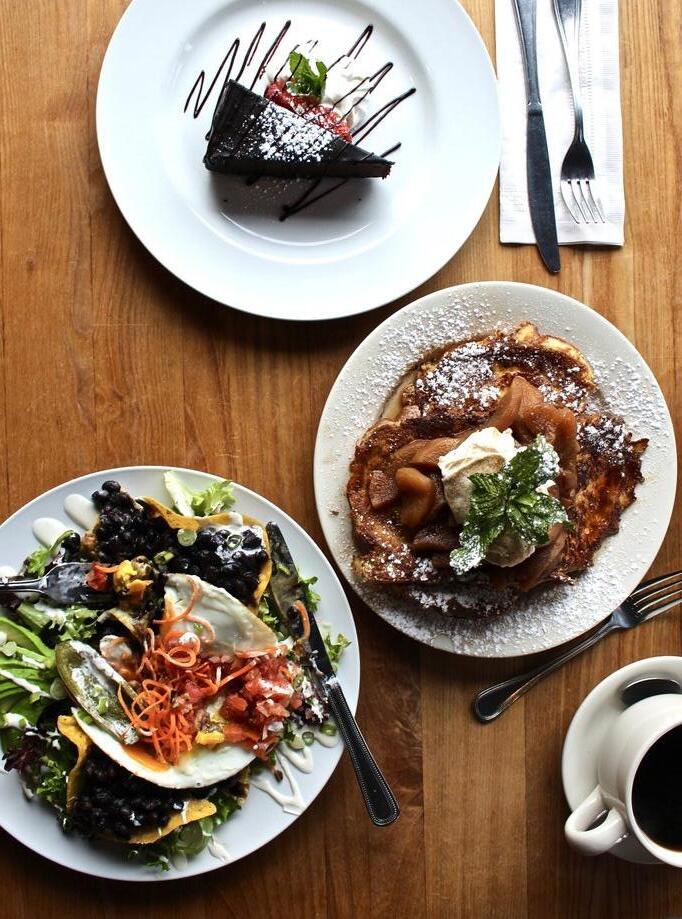
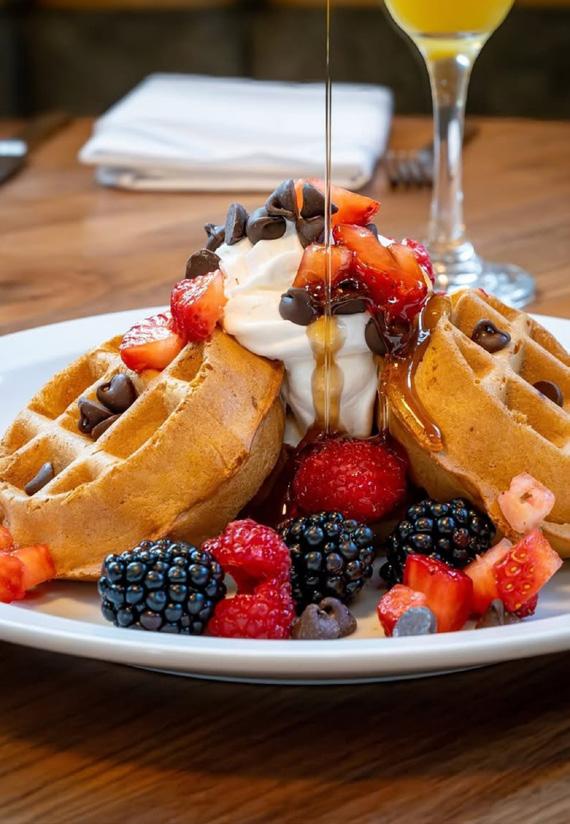
serves up a Mediterranean Sunday Brunch menu packed with sweet and savory goodies. Try the Arepas Benedict: Venezuelan corn cakes, poached eggs, crispy soppressata, avocado, and Hollandaise sauce—or some Snickerdoodle French Toast with cinnamon-vanilla whipped cream and local maple syrup. gigihudsonvalley.com
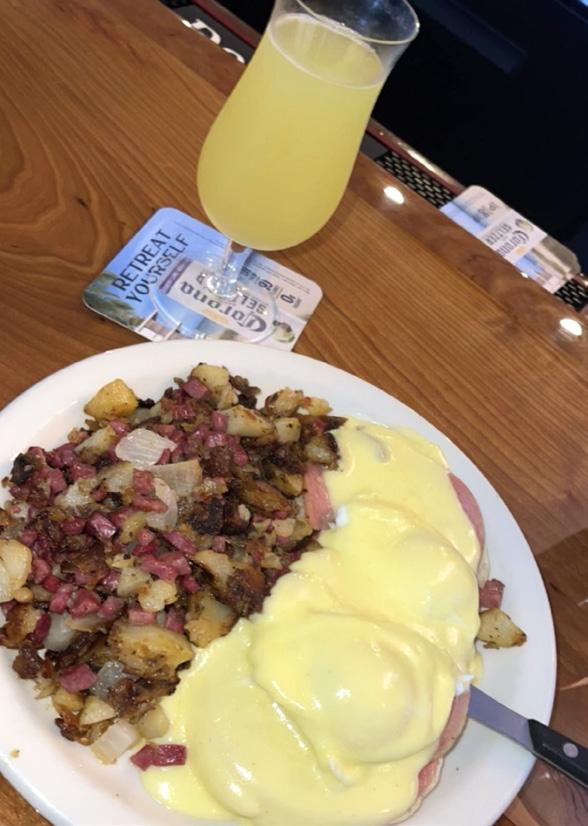
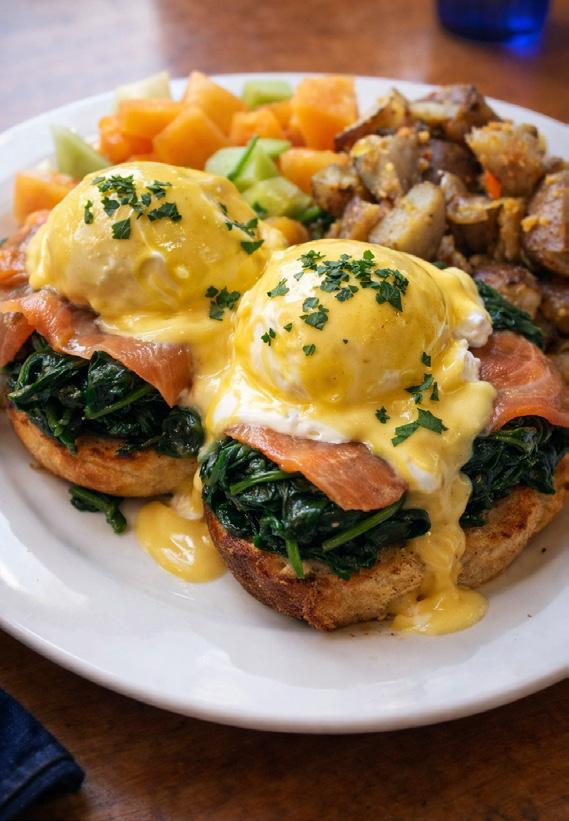
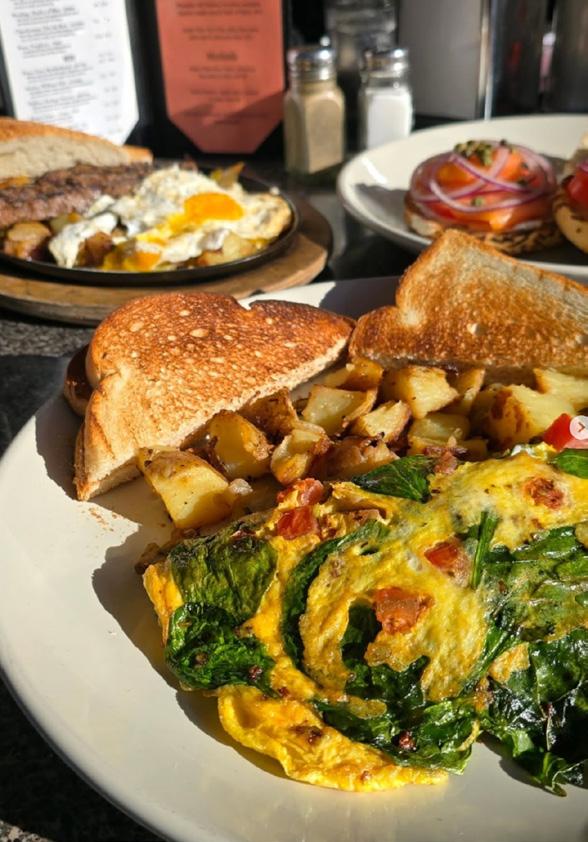
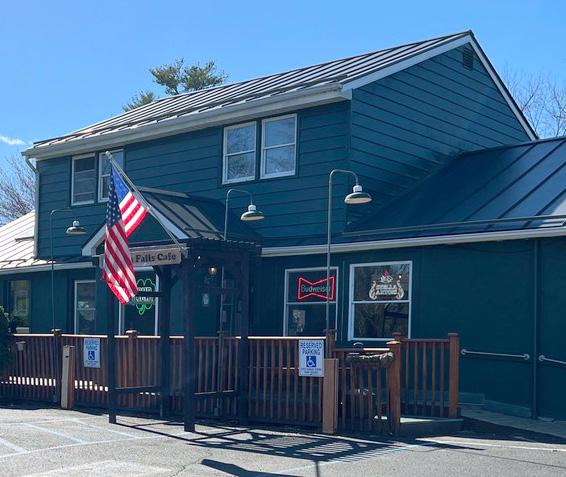
HIGH FALLS CAFE in Marbletown is a classic community pub accented with great vibes, and they cook up breakfast/brunch fare on Sundays from 9 till 1. Try the house-made corned beef hash and/or Eggs Benedict with house-made Hollandaise. highfallscafe.com
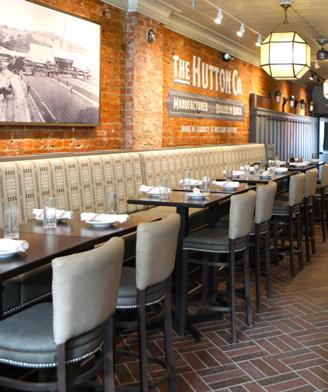
HUTTON BRICKYARDS/ EDGEWOOD RESTAURANT in Kingston is a riverside treat—a reimagined industrial site that’s now peacefully elegant. They’ve got a delicious brunch menu on weekend mornings,
and you can add “bottomless bubbles”—champagne, Mimosas, or Bellinis—for $30. Try the Bruléed Brioche French Toast. huttonbrickyards.com
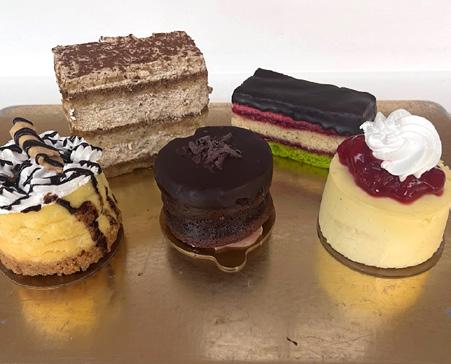
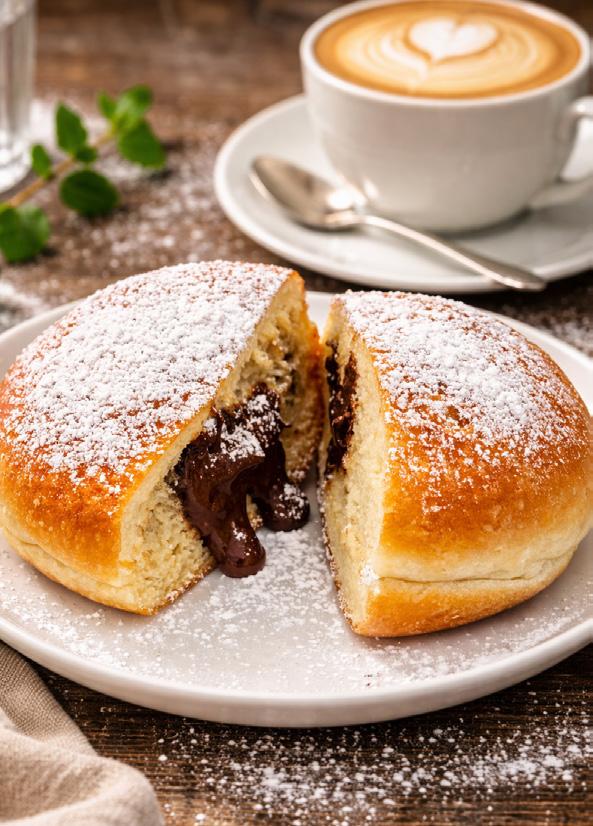
KINGSTON SOCIAL NY in Kingston is fun, friendly, and full of charm—a vibrant spot where art, community, and good taste meet. Sip a perfectly pulled espresso or a velvety cappuccino and pair it with classic Italian sweets like a filled cornetto or a pillowy bombolone. kingstonsocialny.com
LA DELIZIOSA in Poughkeepsie is an old-world-style Italian pastry shop serving a variety of decadent dessert treats handcrafted from the freshest local ingredients. Try their cannoli; it’s as good as any you’ll find in New York City or maybe even Sicily. And they open at 8:30 for early brunchers craving something sweet and sassy. ladeliziosany.com
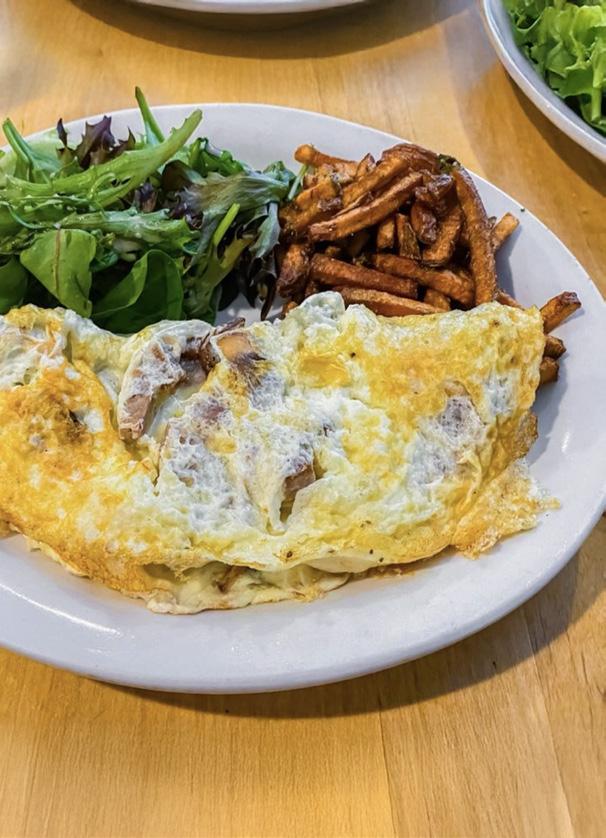
+ MARKETPLACE in New Paltz was one of the birthplaces of our foodie revolution and still stands out. They serve brunch on Sundays from 9 till 3. Hungry? Try the Farmer’s Harvest Breakfast featuring scrambled Feather Ridge Farm eggs, buttermilk biscuit, chicken apple sausage, nitrate-free bacon, Wright’s Farm preserves, home fries, and mixed green salad. maincoursecatering.com
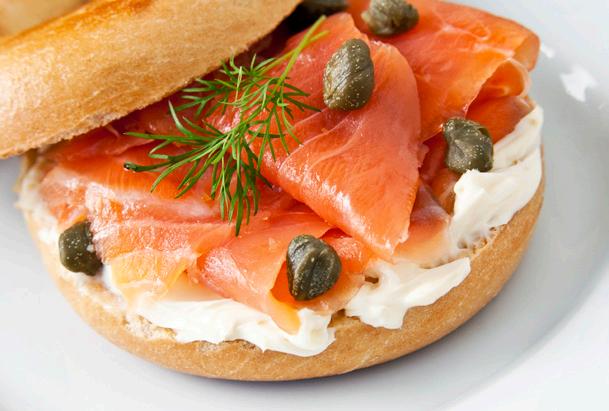
MILL & MAIN RESTAURANT in Kerhonkson blends Italian and Caribbean influences with the freshest local ingredients in its New American menu. They serve splendid brunch fare from 10 to 3 on Saturday and Sunday. Start off with some warm cinnamon rolls or a Dubai chocolate croissant, then feast on grits and eggs or try a smoked salmon bagelwich with tomato, red onion, dill, capers and arugula. millmain.com
OLSEN & COMPANY in Saugerties offers delicious breakfasty/brunchy choices served with some of the finest coffee you’ll find on Planet Earth. Try the cheese & toast, featuring Hawthorne Valley fresh cheese on sourdough with evoo; you can add lox and/or red onion if you like. olsenandcompany.com
in
Accord is a charming farmstand and café serving up fresh, local breakfast favorites in a relaxed country setting. Grab a classic egg-and-cheese breakfast sandwich, a bagel with cream cheese and lox, and a hot coffee before browsing the farm market. saunderskill.com
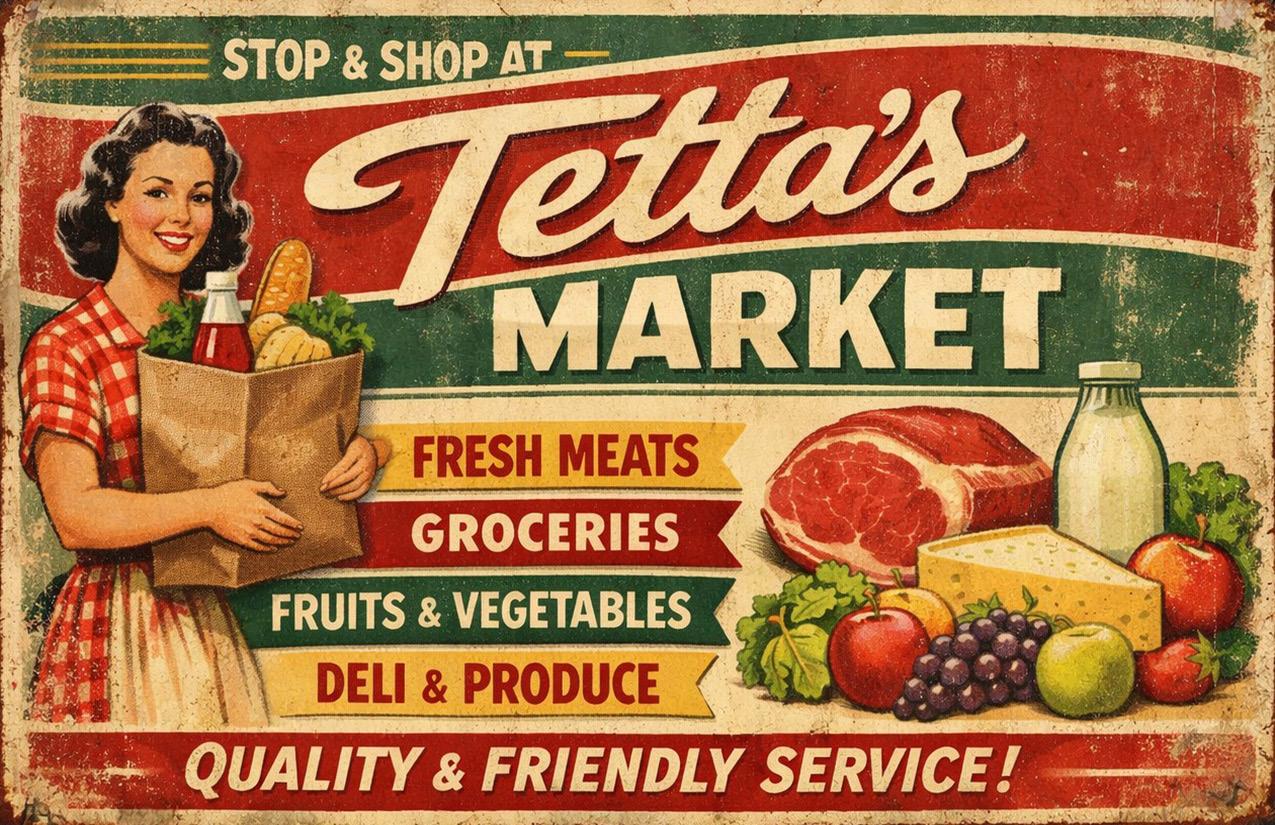
TETTA’S MARKET in Olivebridge is a longtime local favorite—part country store, part café, and always welcoming. Grab a fresh coffee and a classic egg-andcheese breakfast sandwich, or pick up a muffin or pastry before

heading out for the day. tettasmarket.com
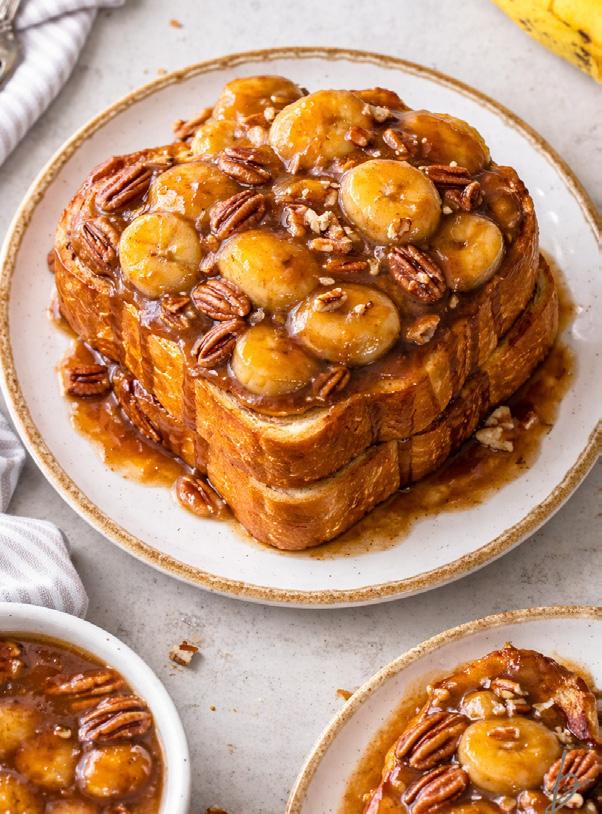
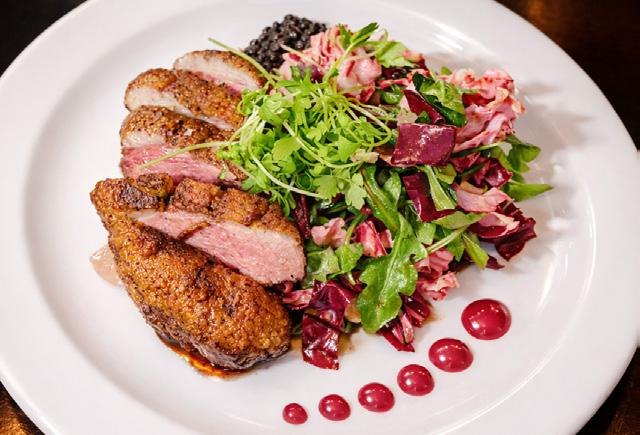
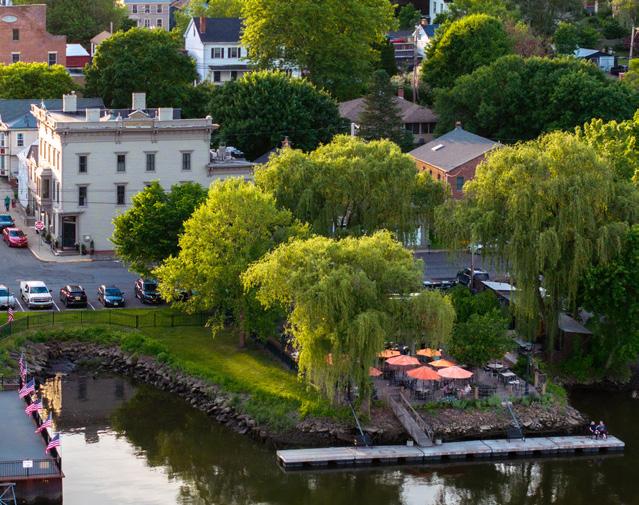
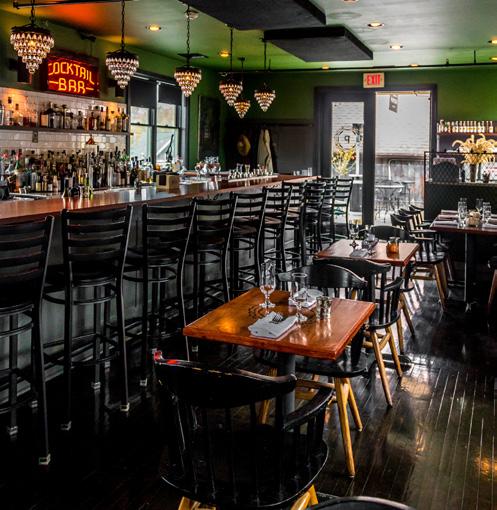
THE PARISH in New Paltz serves a weekend brunch on Saturday and Sunday starting at 11 am with New Orleans-inspired morning fare. Try their savory Egg Sandwich or their indulgent Bananas Foster French Toast—perfect for a relaxed weekend brunch with bold flavors and creative twists on classic breakfast dishes. theparishrestaurant.com
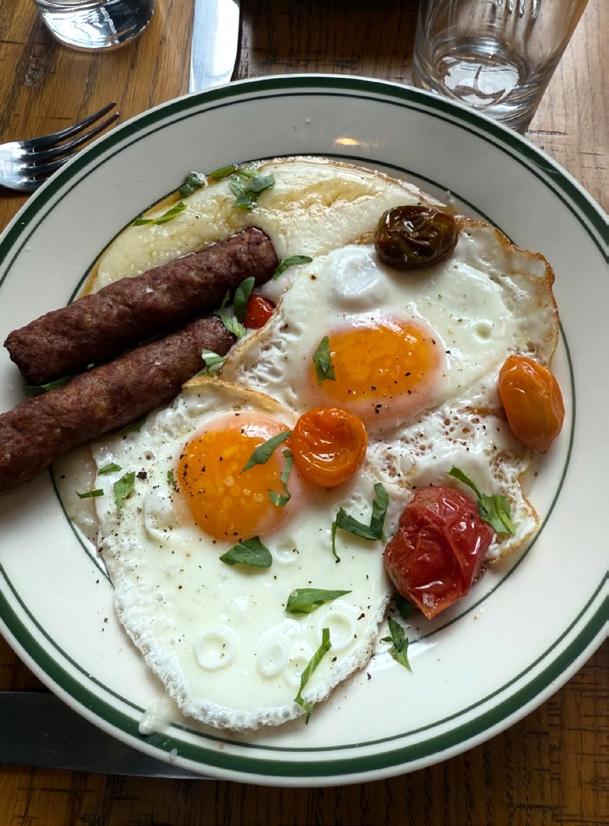
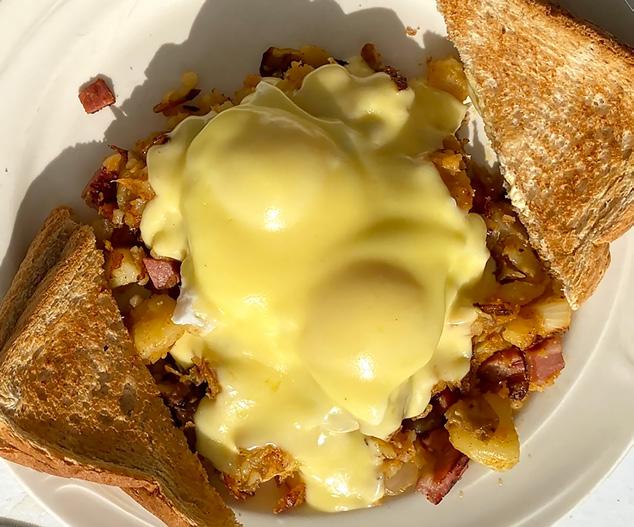
THE ROOST in Stone Ridge has loads of fresh homemade goodies and serves breakfast till 3 every day, in case you’re brunching late-ish. Treat yourself to warm cinnamon apple bread and coffee while you await your Farmer’s Hash—sauteed potato, bacon, and crumbled sourdough toast topped with 2 sunny eggs, accompanied by breakfast greens. theroostinstoneridge.com
SAVONA’S TRATTORIA has locations in Kingston, Red Hook, Poughkeepsie, and Hudson, all four of them serving up a scrumptious Sunday brunch from 11 to 3—Harney & Sons handcrafted local teas, four coffee variations, a mimosa bar with ten different choices, and more.
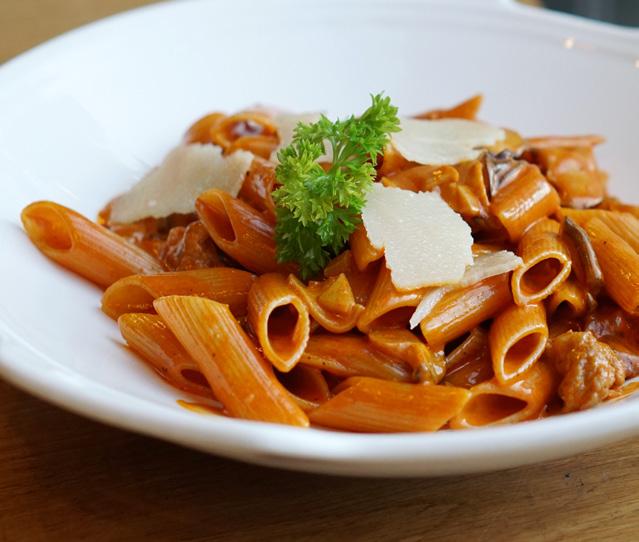
Try the Sicilian street breakfast sandwich: pan-fried soppressata, fried egg, baby spinach, and melted mozzarella on housemade semolina bread, with a side of Italian herb-roasted potatoes. savonas.com
CANTINA in Phoenicia is a time-honored and locally loved watering hole; Babe Ruth used to stop here when he came up to do some fly fishing. Try the Country Skillet—eggs scrambled with potato, sausage, bacon, ham, onions, mushrooms, and cheddar, served with house-made toasted asiago bread. alamo-cantina.com












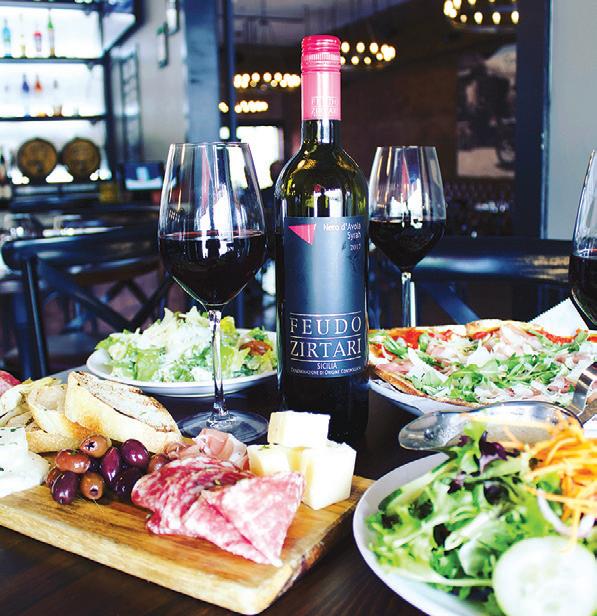
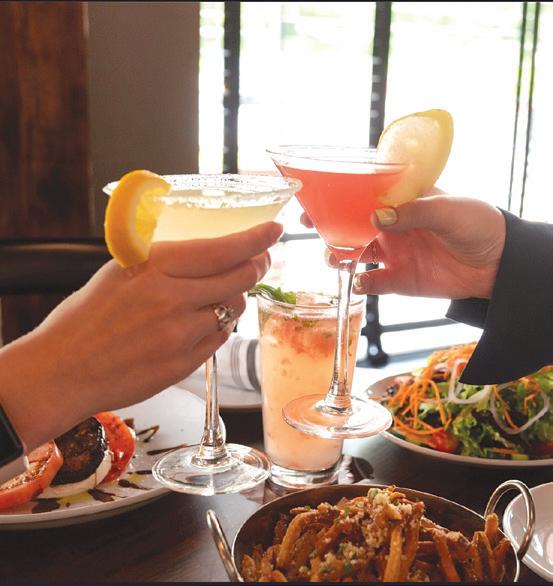
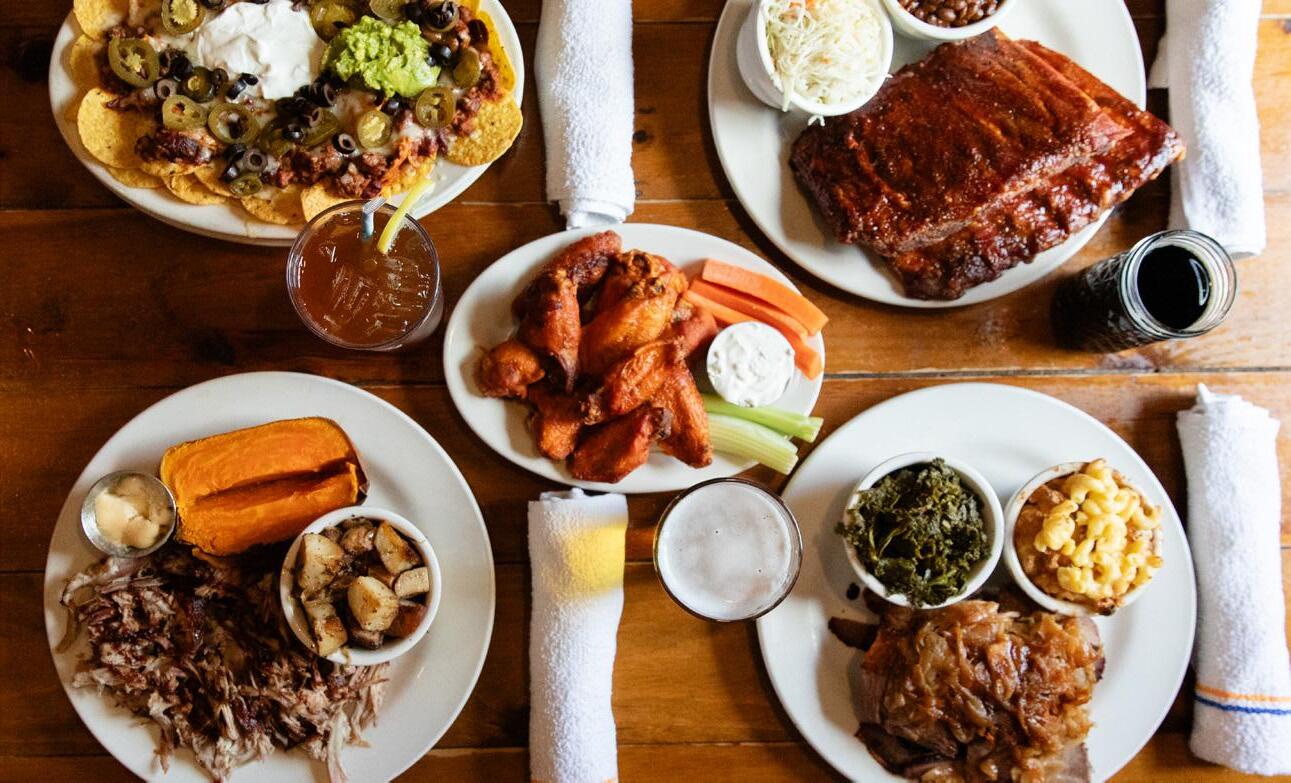


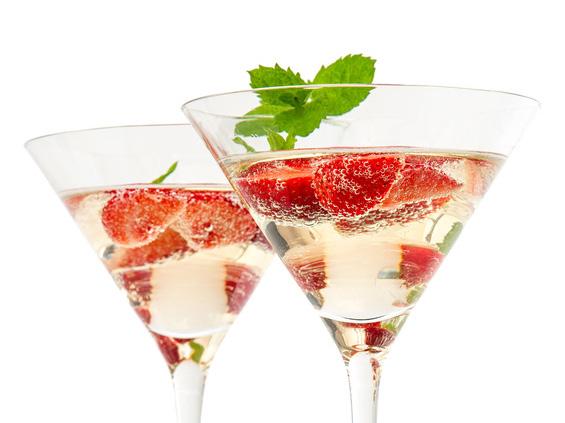


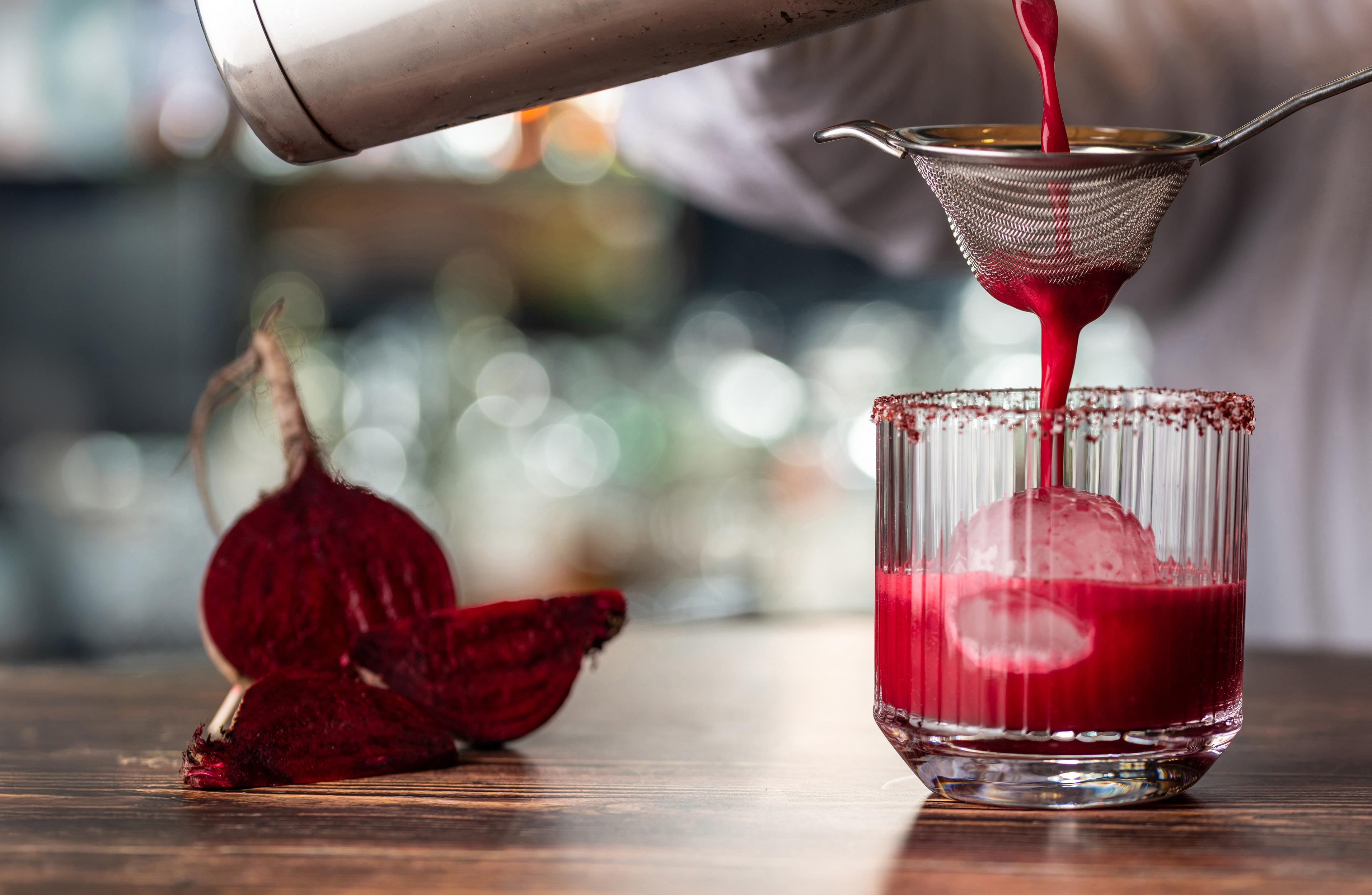
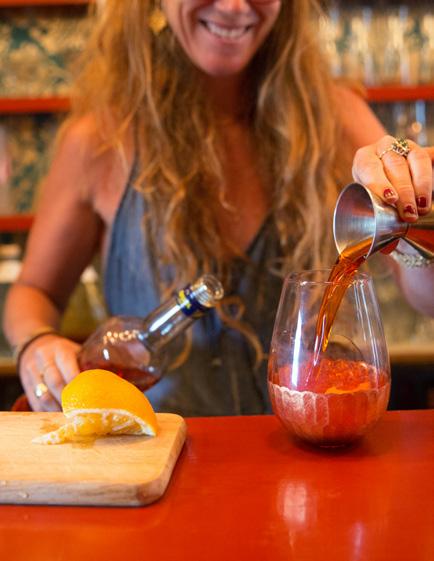
a brunch cocktail that can ' t be beet
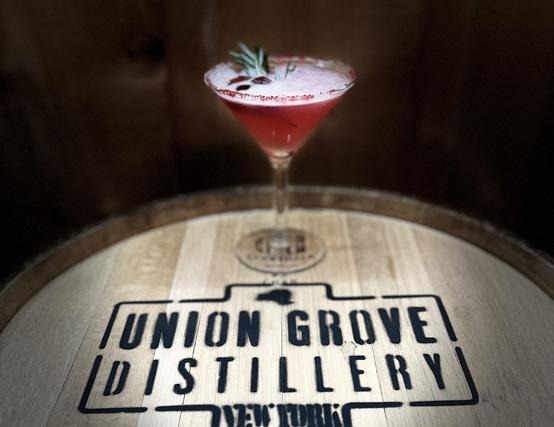
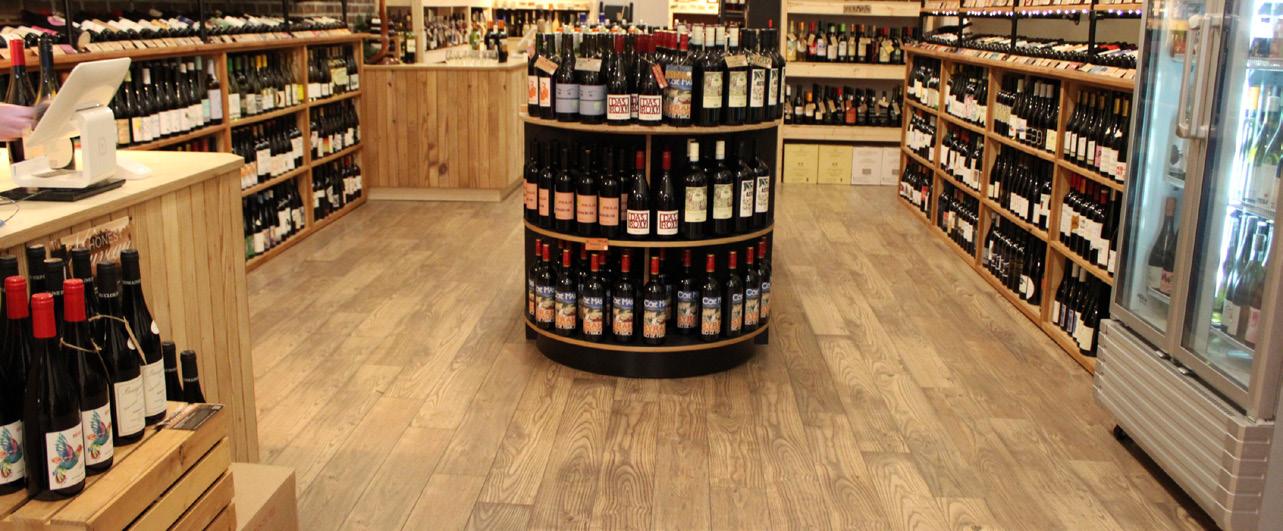
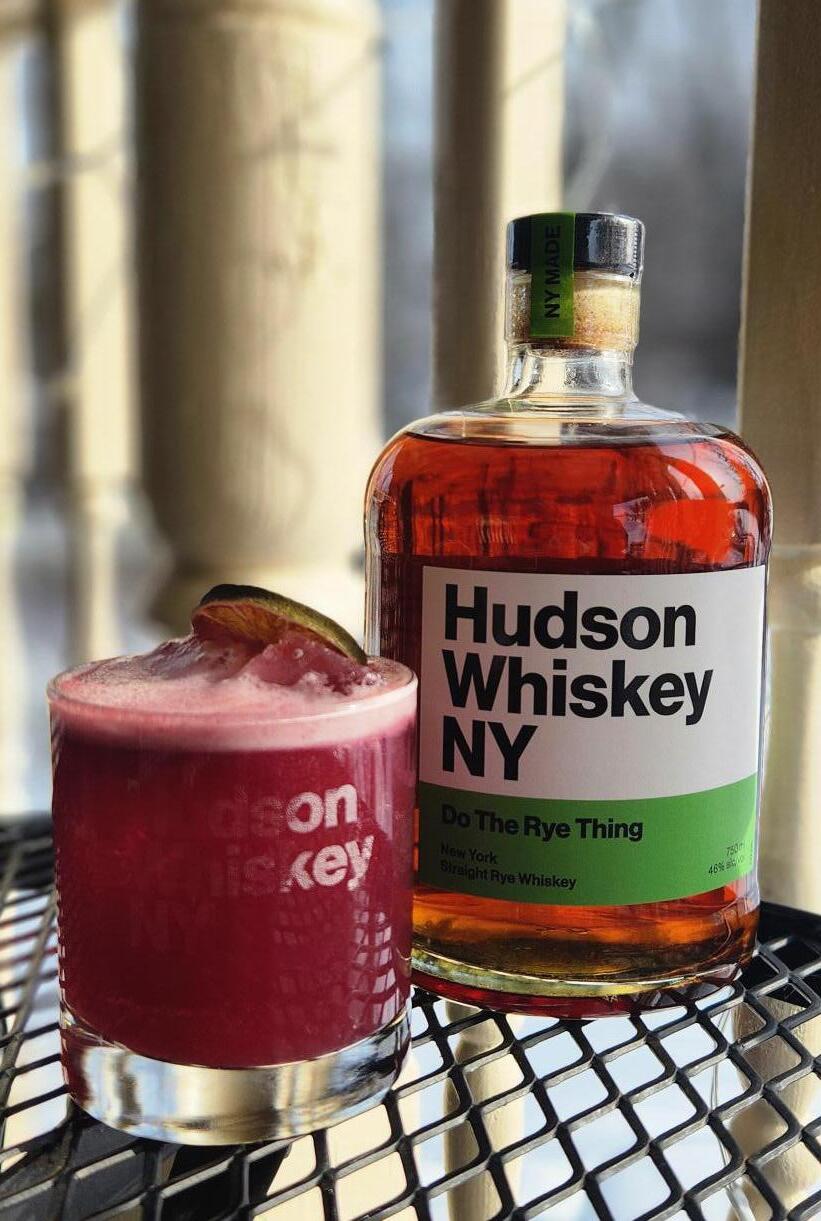
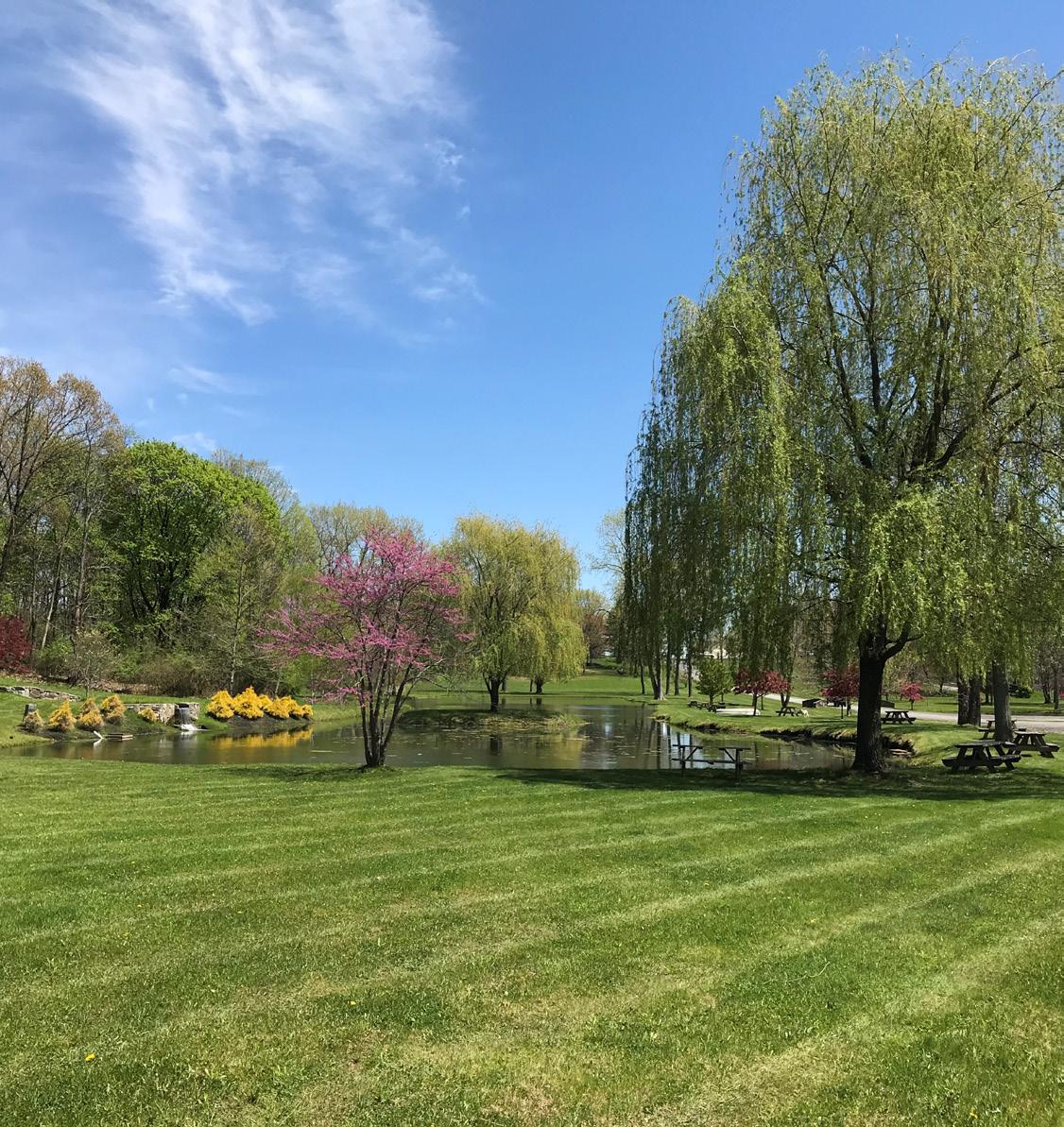
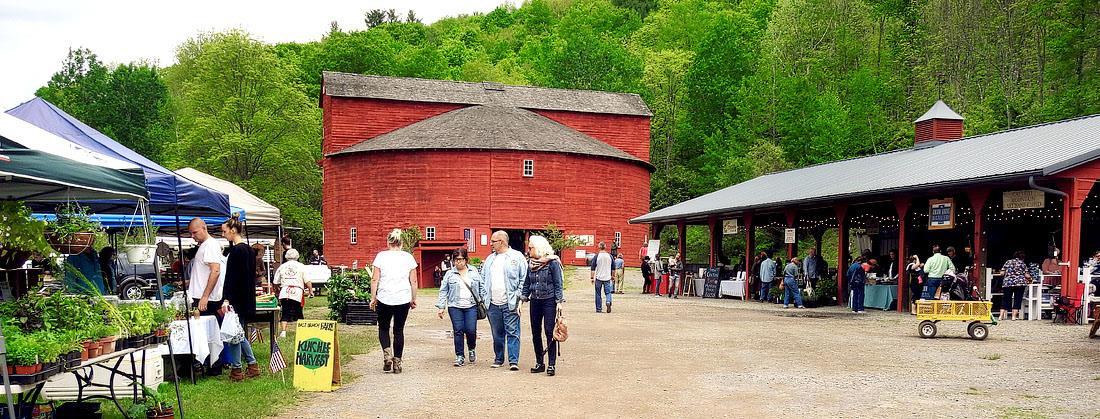
Tuthilltown Spirits Distillery is a glorious Gardiner landmark, housed in a 1788 gristmill and situated on over 30 acres of meadow and wildlands. There’s a deck overlooking the Shawangunk Kill where you can relax after exploring the nature trails (did you find the waterfall?), and they’ll be happy to give you a guided tour of the operation, complete with a customized tasting flight. This is where you can taste New York’s first bourbon, along with other housemade delights like Hudson Whiskey, Citrus Moon Gin, and Cacao-Boy Chocolate Liqueur.
Spring is a great season to visit, whether for a picnic, live music event, tour, or mixology workshop. And for your own springtime brunch, Tuthilltown’s Philip Rafferty has generously agreed to share a drink that celebrates the season and the good earth from which it springs.
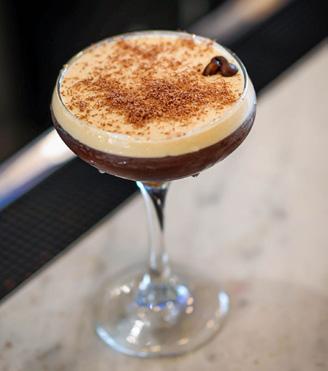
tuthilltown beet rye daiquiri
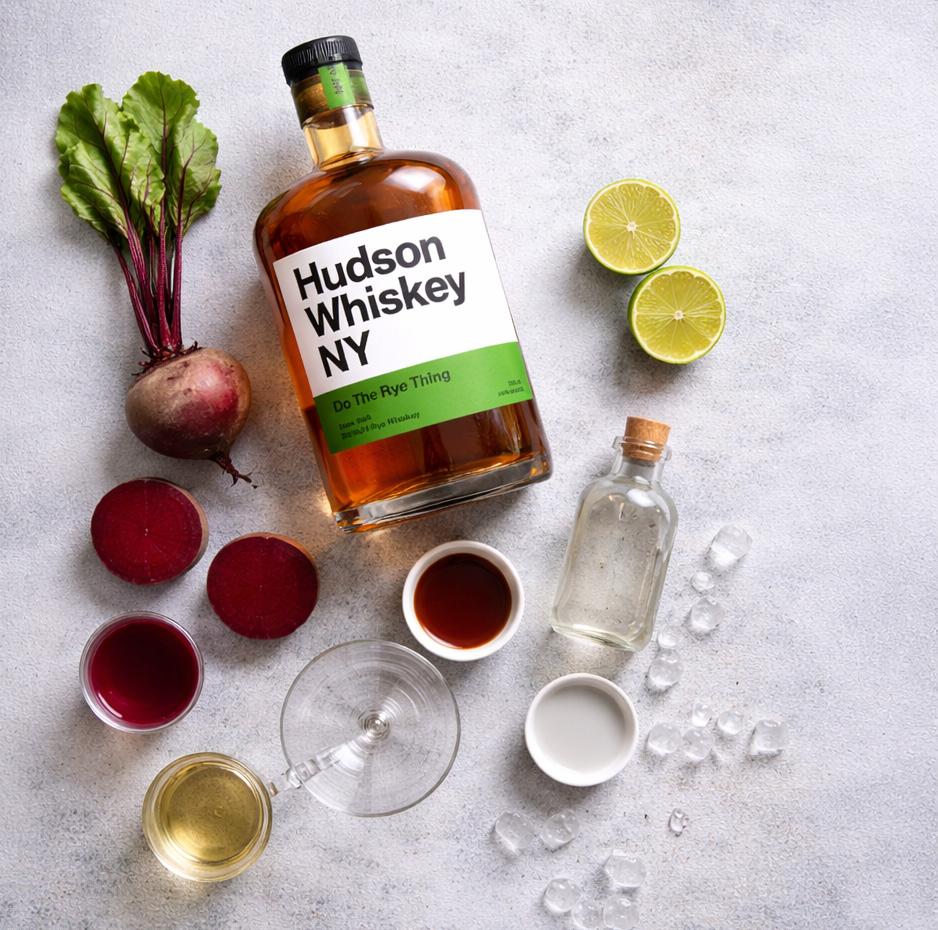
“A fantastic spring sipper that maintains the brightness of a daiquiri but gets a subtle earthiness and round cocoa notes from the interaction of the rye and the beet juice, Rafferty says. “The beet flavor is slight, for those who are beet-phobic, but can be ramped up to taste if you want to go fully dirty. We use this one regularly when we collaborate with the Borscht Belt Museum on their events, and it's always a hit.”
Serves 1
• 3/4 oz Simple syrup ingredients directions
• 2 oz Hudson Do The Rye Thing
• 1/2 oz Beet juice
• 3/4 oz Lime juice
1. Combine ingredients and shake all vigorously with ice.
2. Strain into glass and serve.
tuthilltown distillery 14 Grist Mill Lane, Gardiner 845-419-2964 • tuthilltowndistillery.com












Recipe
from yum yum noodle bar
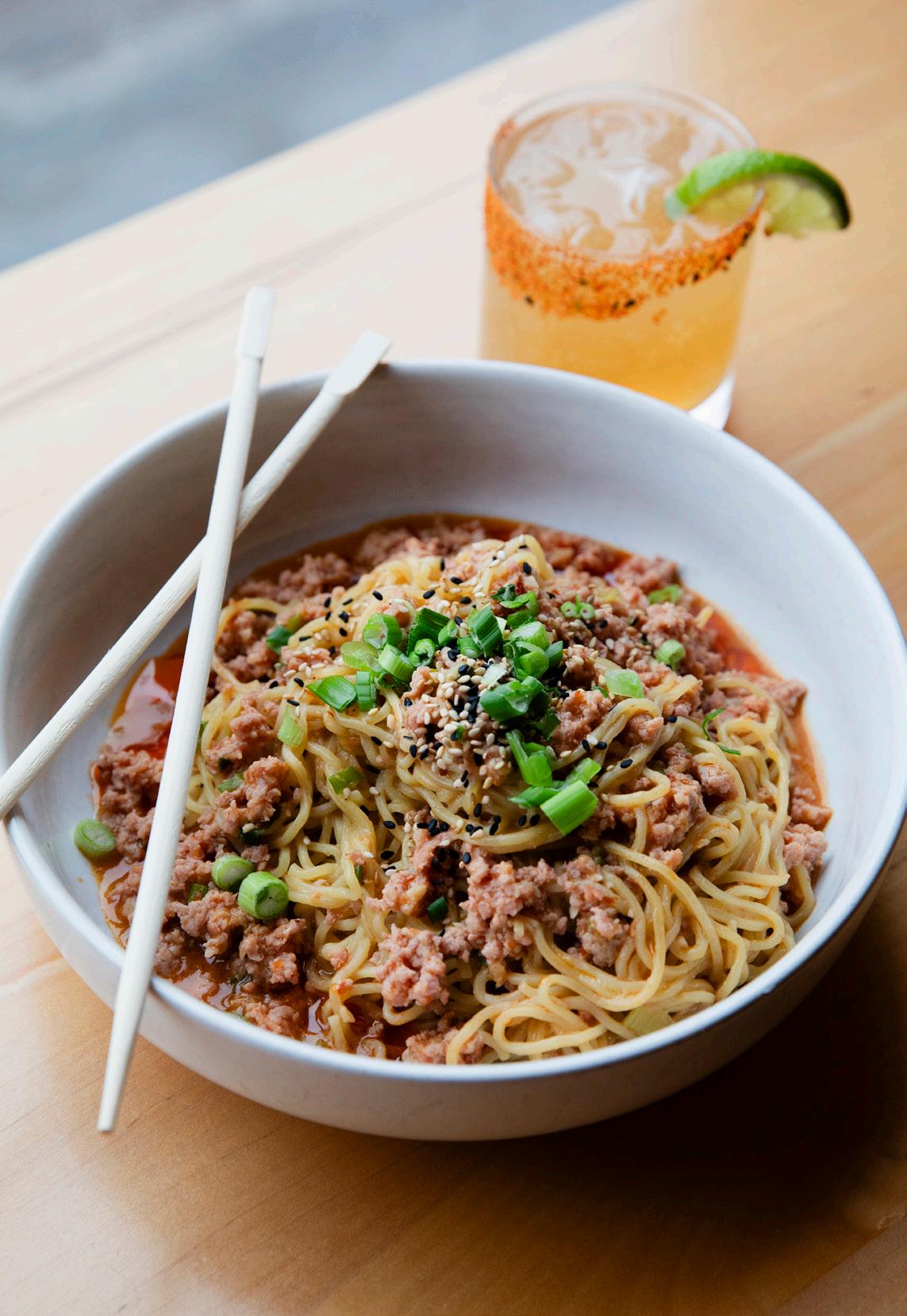
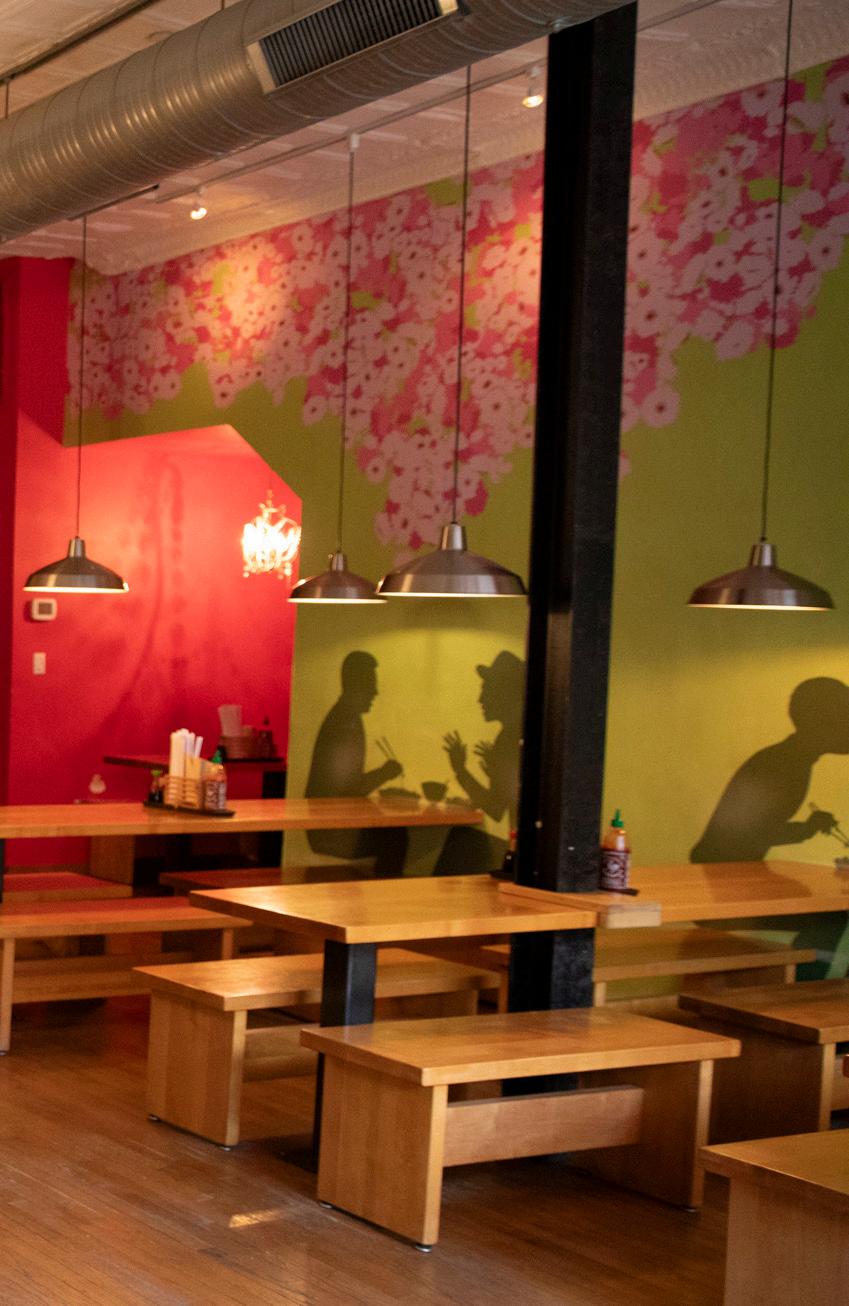
Yum Yum is as good as it sounds, with thriving locations in Woodstock, Kingston, and Red Hook where you can customize a bowl with your choice of noodle, broth, and protein; there are also a wide variety of plates and small plates you can customize—it’s all about choices here, and there are loads of yummy vegan and gluten-free options. You can wash it all down with cocktail options like a Yuzu Margarita or a Thai Martini, or with some bubble tea.
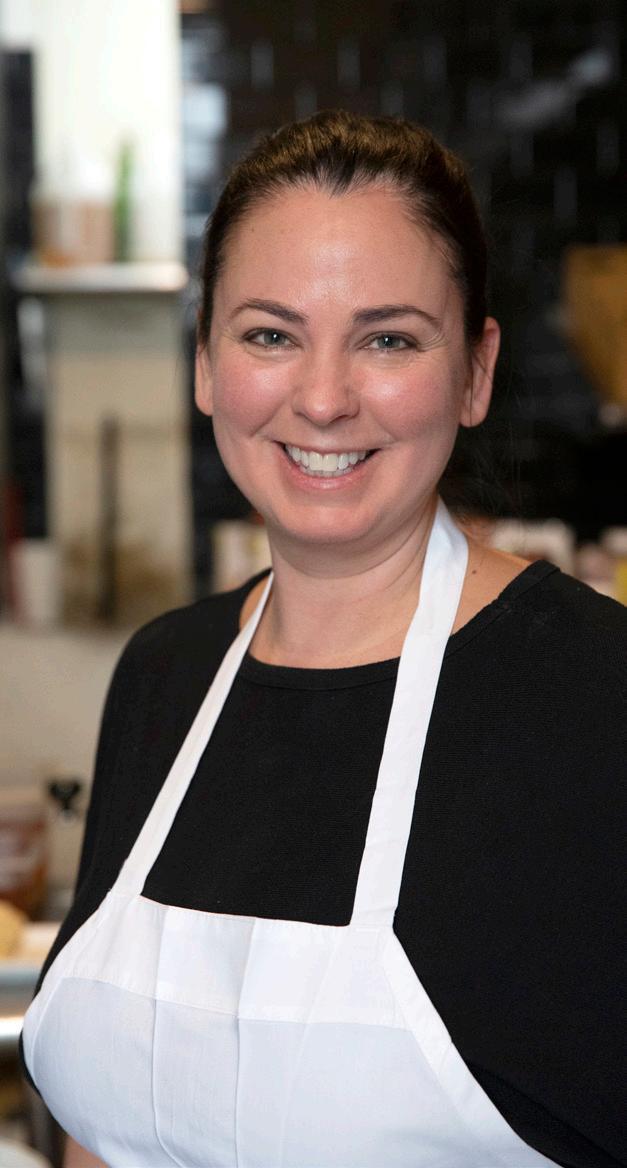
Chef Erica Mahlkuch has been cooking professionally since she was 16, with a lengthy and stellar list of accomplishments; she opened the first Yum Yum back in 2010. Among a long list of accolades, she won Food Network’s popular “Cutthroat Kitchen” competition in 2014.
To make some Yum Yum magic at home, here’s Chef Erica’s recipe for Pork Tan Tan Noodles.


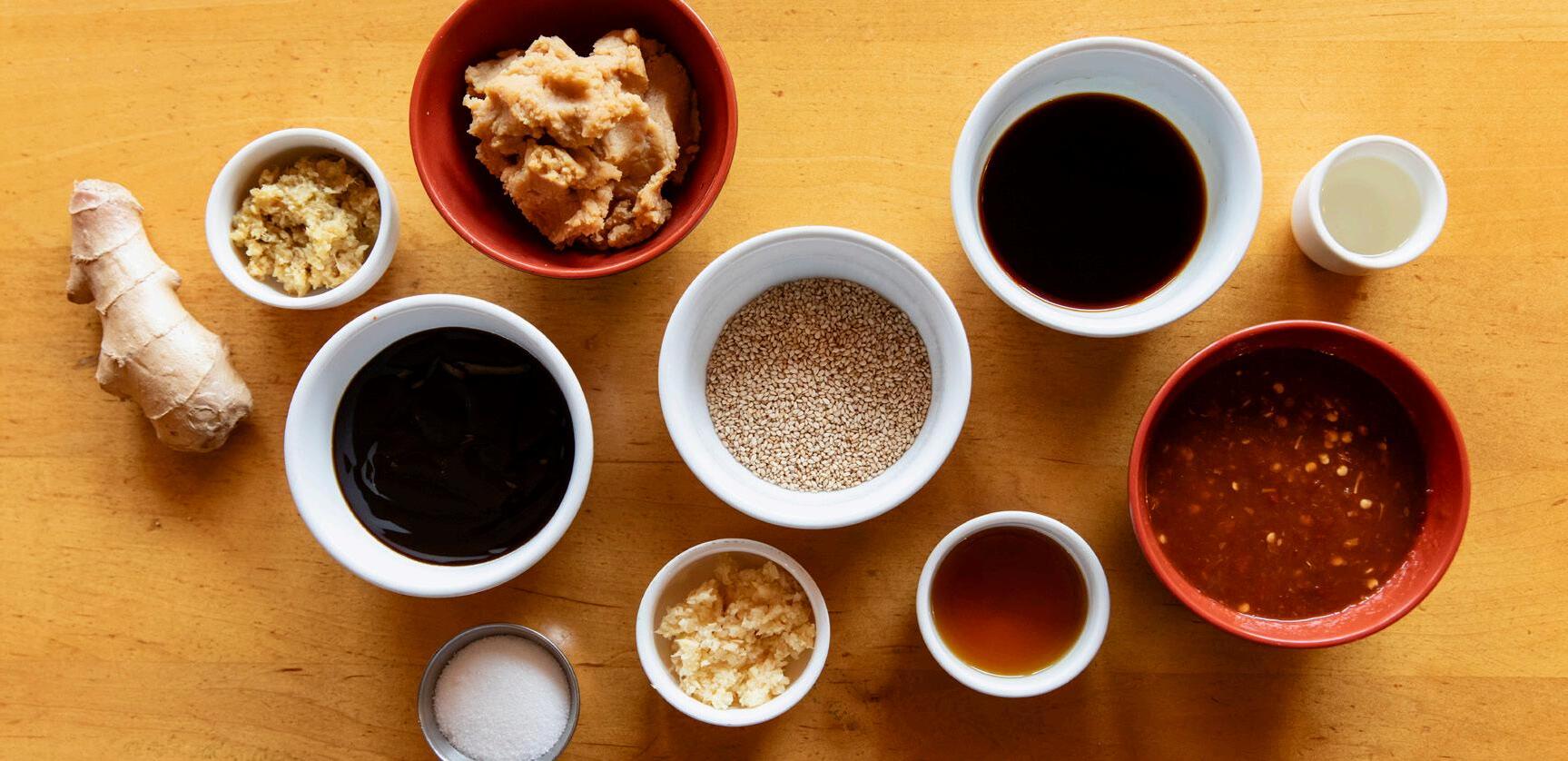
Serves 4 Prep: 5 min Cook: 10-15 min
• 6 cups chicken broth or water
• 1/2 cup oyster sauce
• 1/4 cup miso paste
• 3 tbsp toasted sesame oil
• 1/4 cup soy sauce
• 1 cup sambal oelek
• 3 tbsp sake
• 3 tbsp sugar
ingredients
• 1/3 cup toasted sesame seeds
• 1 pound ground pork
• 3 tbsp toasted sesame oil
• 2 tbsp minced garlic
• 2 tbsp minced ginger
• 1/2 cup finely chopped scallions
• 1 pound fresh cooked ramen noodles
• Chili oil (optional)
directions
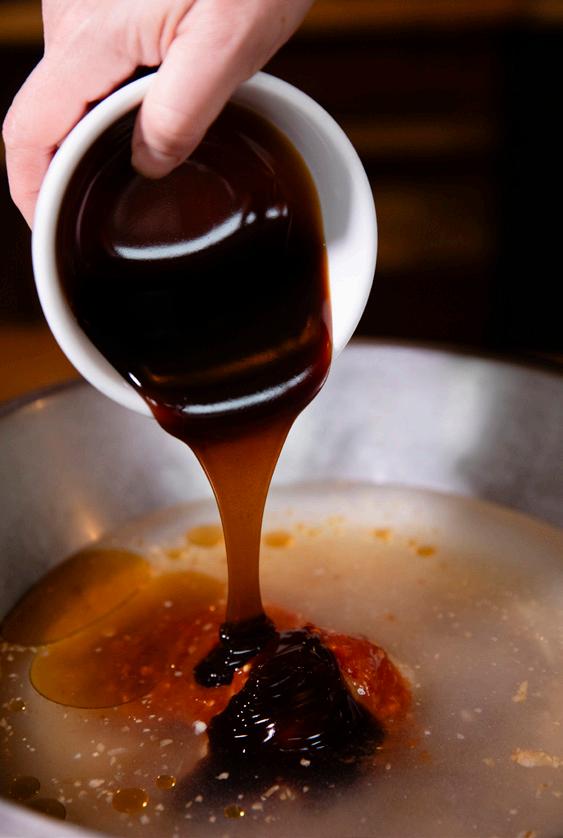
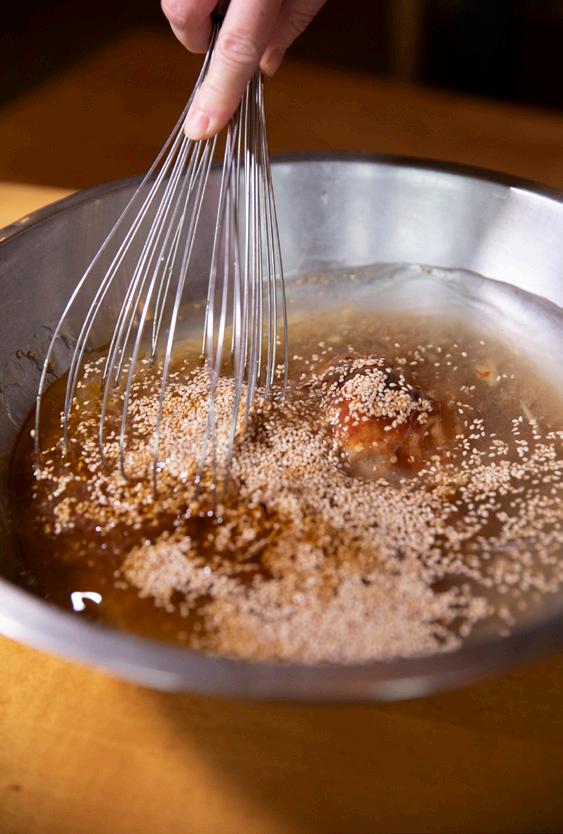
1. Whisk together first nine ingredients to make the sauce. Set aside.
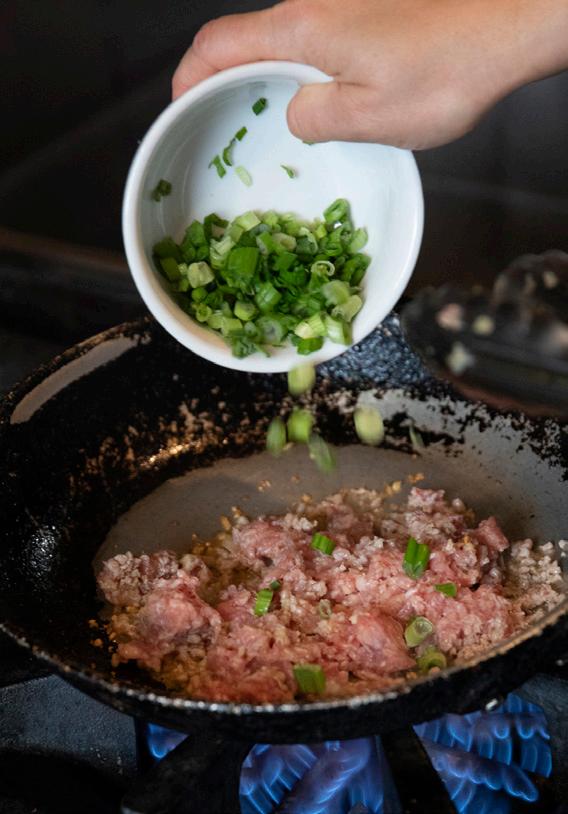
2. In large sauté pan, heat oil, add pork, and break apart meat while cooking.
3. Add ginger, garlic, and scallions and cook until the meat is cooked through.
4. Add all the sauce, bring to a boil, and simmer for 5 minutes.
5. Add pre-cooked ramen noodles. Toss.
Optionally, the dish can be garnished with additional chopped scallions, chili oil, and toasted sesame seeds.














How It's Made
photos provided by lasting joy brewery
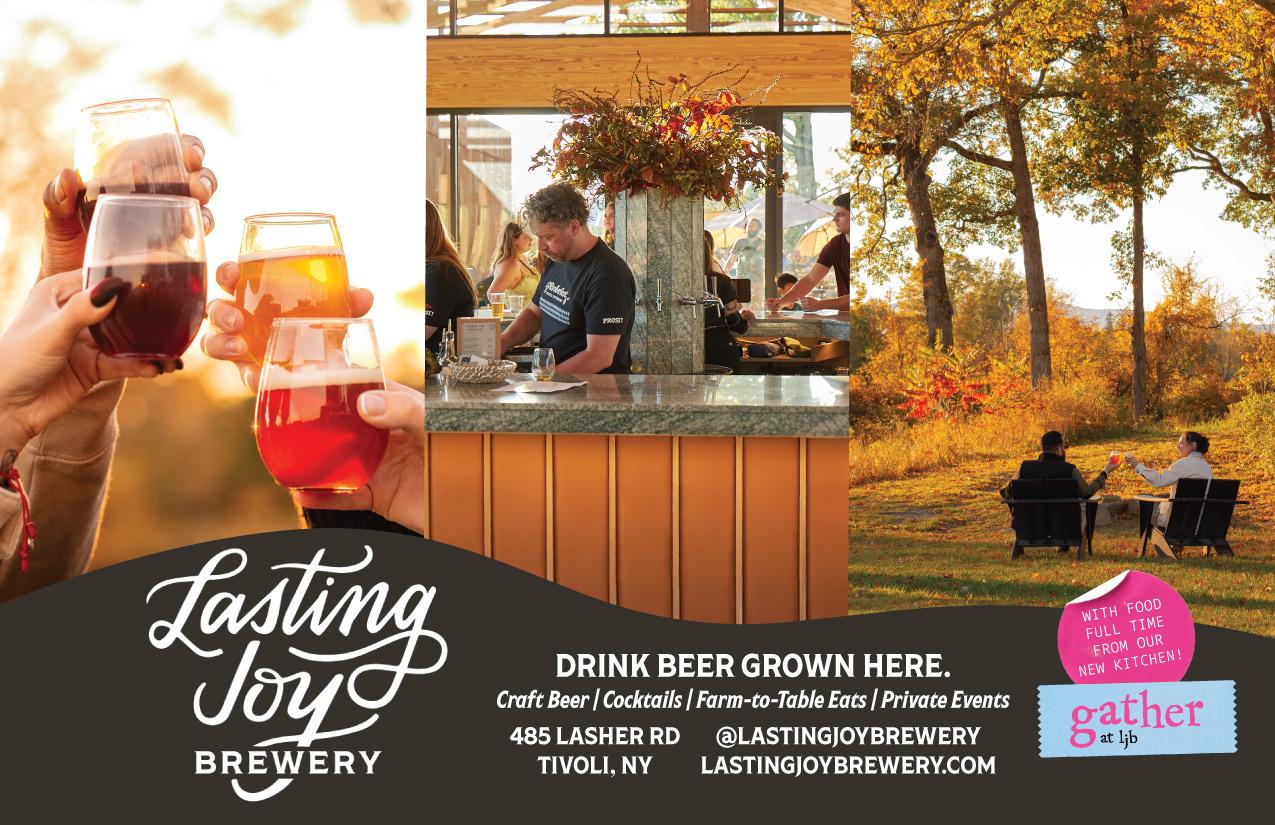
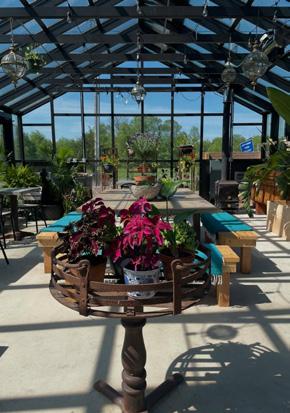
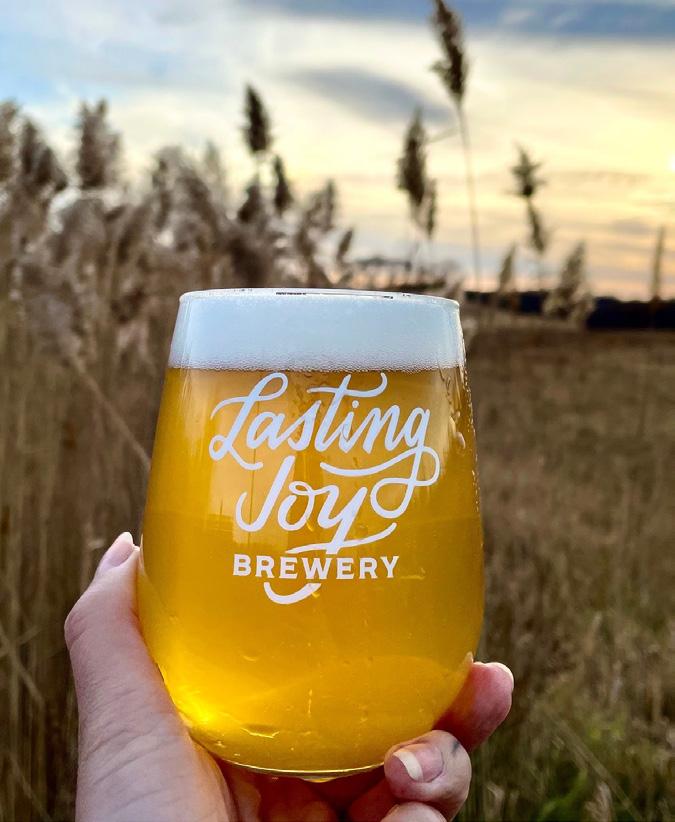
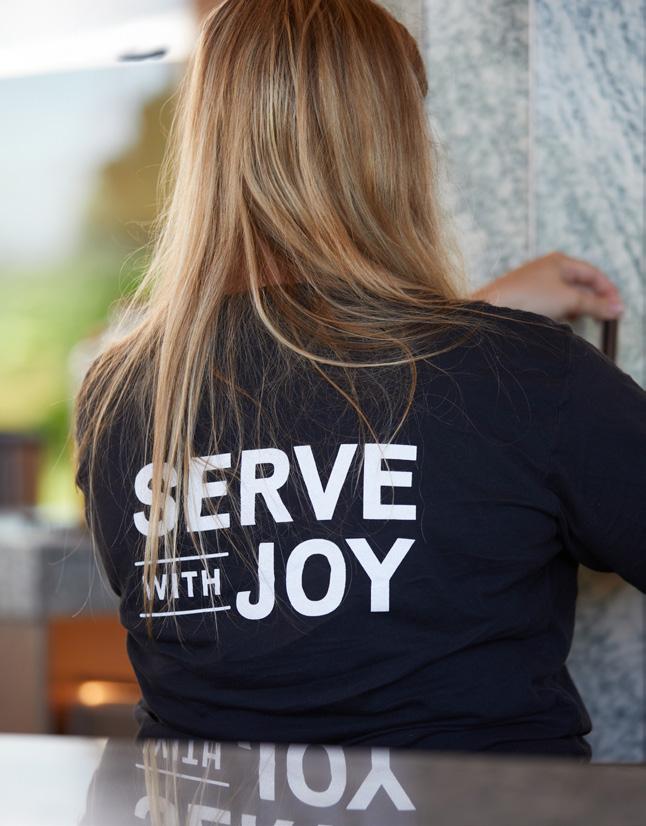
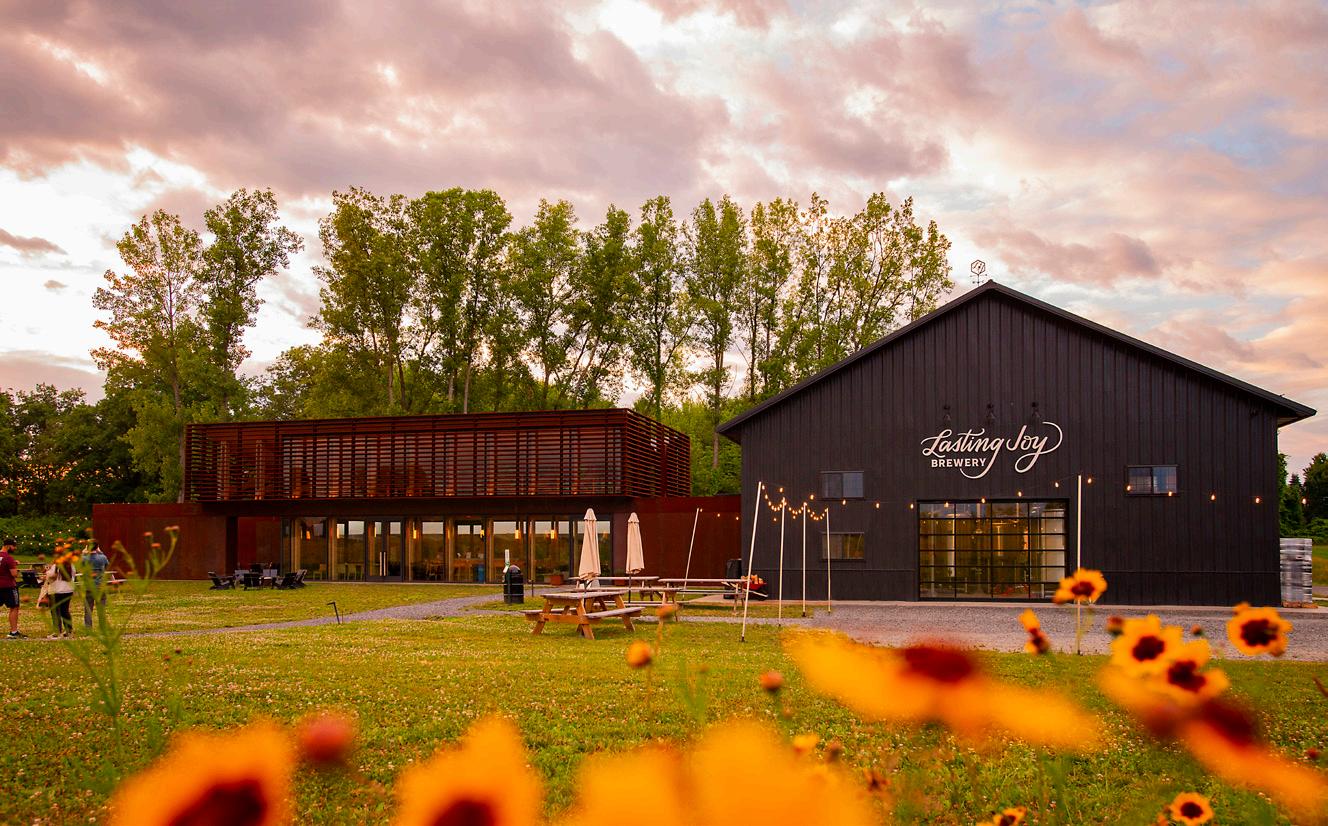
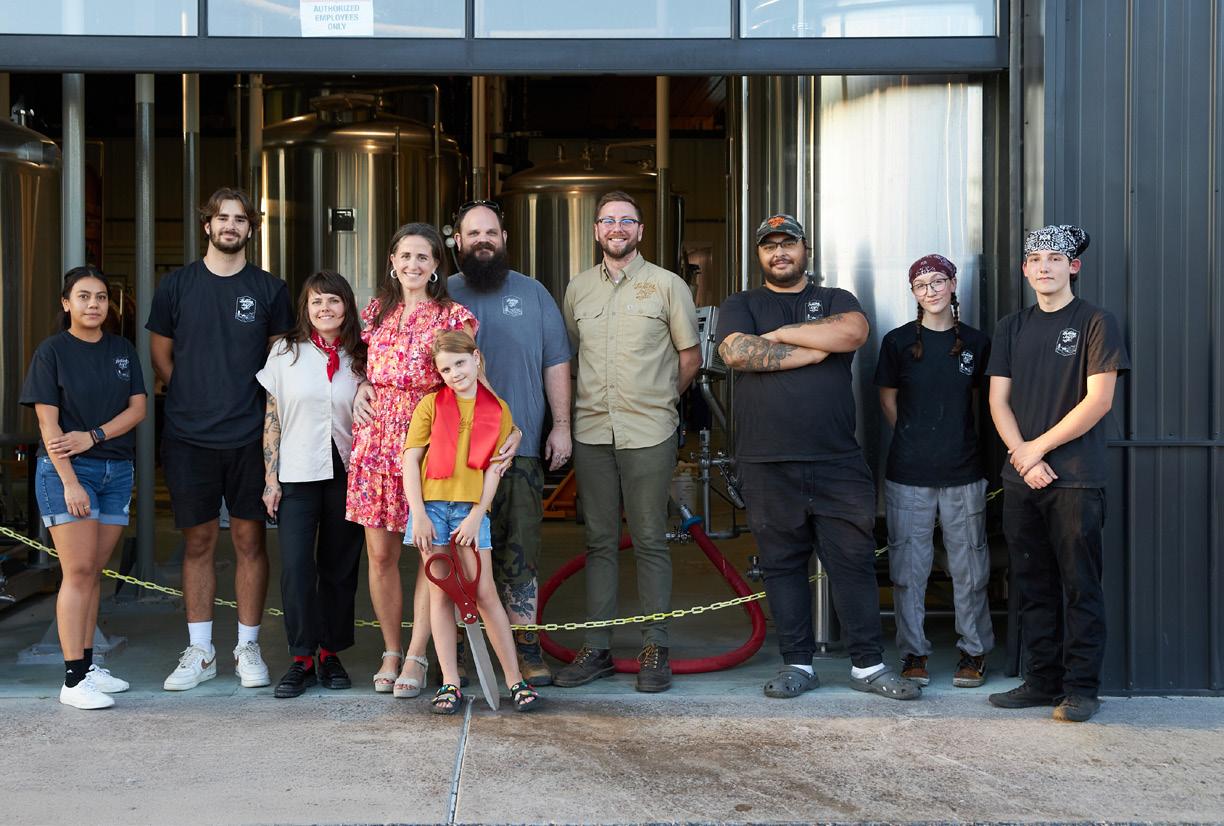
Tucked away on a winding rural road by the pretty village of Tivoli, Lasting Joy Brewery is a thoughtful and passionate oasis. Its lightfilled taproom with floor-to-ceiling windows and a hexagonal bar, its 32 acres of rolling fields bordered by lush woodland, the memorable events held here, and the warm, family-friendly welcome have made this place a favorite hangout for folks from all over the area.
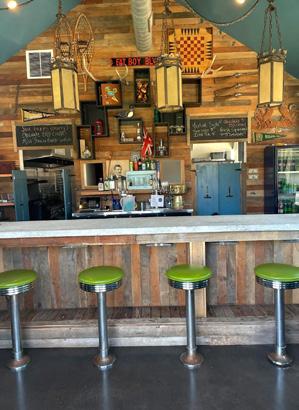
Emily and Alex Wenner knew from the very first that they’d be keeping the vibe mellow and the ingredients local, and it’s that philosophy that has guided the debut of their full-on kitchen, Gather at LJB. For the first couple of years after opening in June 2022, the brewery hosted food trucks, but the Wenners soon realized that having food available full-time and exactly the way they wanted it—especially when hosting their growing
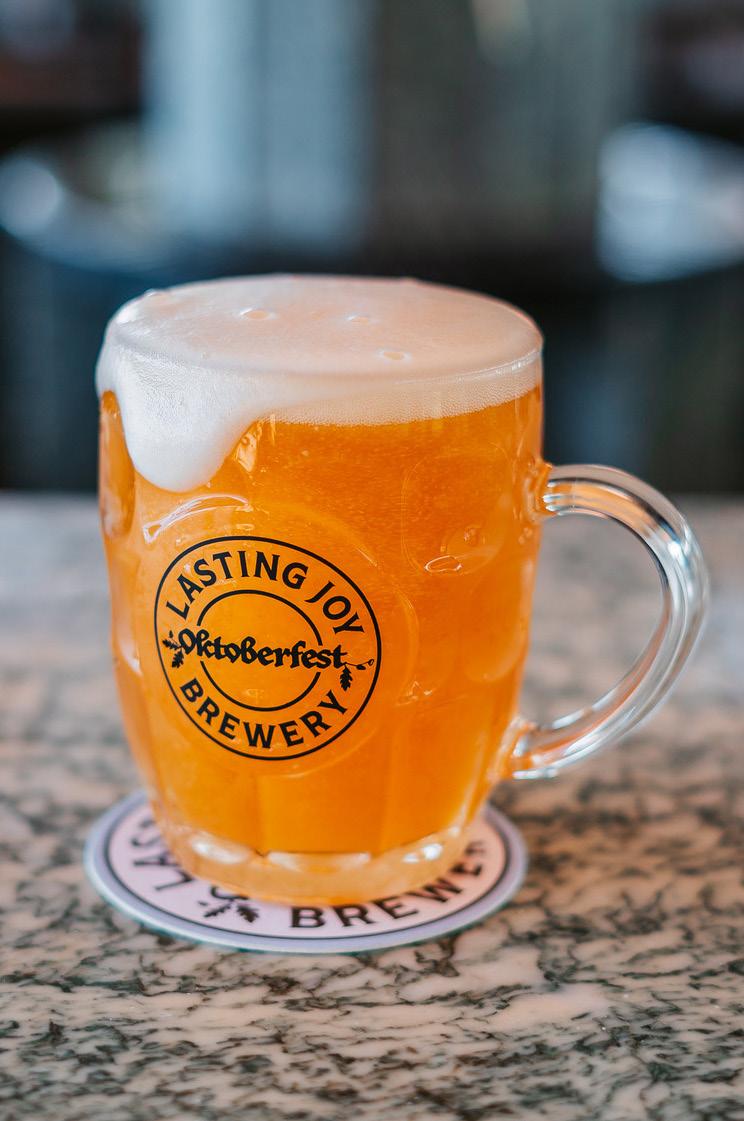
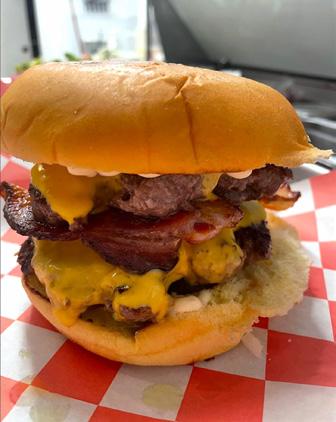
calendar of catered events—would be a big plus, so they’ve gone allin on Gather, with a fresh, locally sourced and seasonal menu of food that goes well with fine beer: great burgers and popcorn chicken, hand-cut fries, toasted garlic hummus, giant pretzels, and cookies that melt on your tongue.
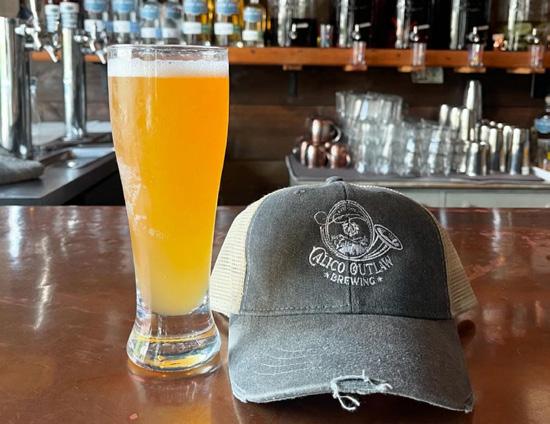
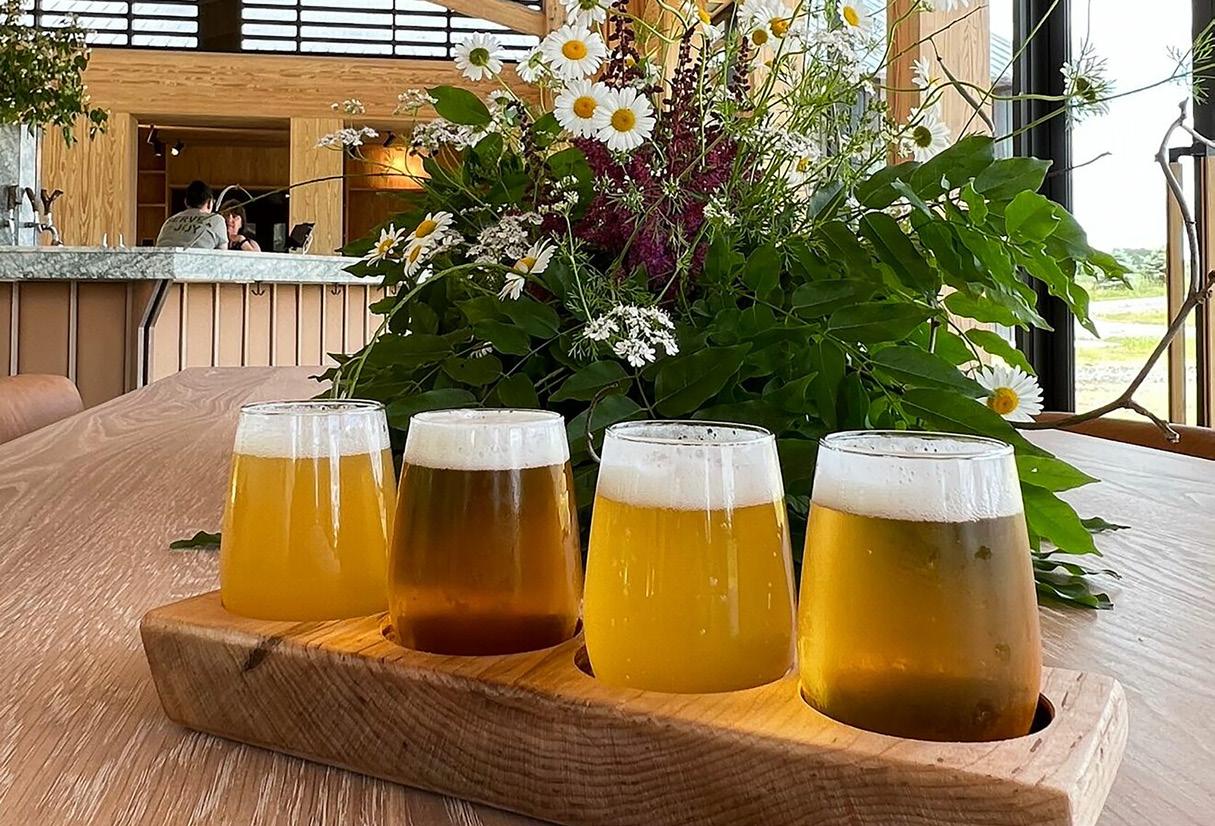
Being a brewery, of course, the beers are the stars of the show. Alex fell in love with the brewer’s art when all he had to work with was one burner in a cramped Brooklyn kitchen; now that he’s got his own 15-barrel system to work with, there’s just no end to what he can and does accomplish, with five classic offerings always available and four seasonal choic -
es inspired by local ingredients and tasteful, bold creativity.
So here’s the story of how they craft these mighty fine beers, from their American Light Lager,
Clouds Over Clermont (a hazy IPA), the Heartbeet of the Hudson (local beets and a hint of bittersweet chocolate in the flavor), Pick-Your-Own Raspberry (a brut IPA “like an effervescent daiquiri”), and Berry Trifle, a sour ale that’s aged for a year in oak. And those are just the house classics that are always available; you’ll also find special seasonal options at any given moment.
The story of much Lasting Joy beer begins right here on the
The story of much Lasting Joy beer begins right here on the property.

“The spent grain gets dumped out and turned into high-quality cattle feed."
– Co-Owner Alex Wenner
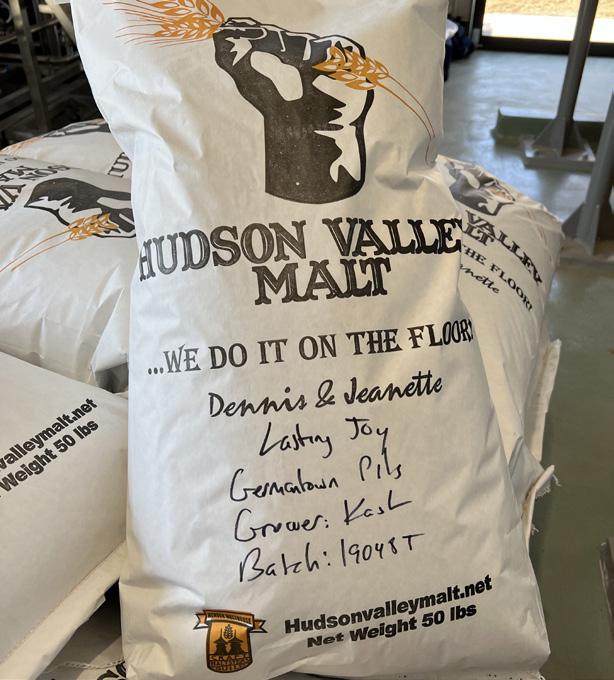
property, where local farmer Ken Migliorelli grows some of their cereal grains. The grain then goes to nearby Hudson Valley Malt, where it’s brought to peak flavor and function using the time-honored process of floor malting. “It’s a specialized, hyper-local product that travels about 3 miles in the process of being grown, malted and brewed into beer,” Emily says.
The 50-pound sacks of malted grain are milled in Lasting Joy’s own milling room before being heated into mash in a giant kettle called the mash tun—extracting the yeast-friendly sugars—and then being transferred to a boil kettle, where the liquid boils for
another hour. That’s the point at which, depending on the type of beer, hops from the HOPGUILD may be added.
“The mash tun has a false bottom so that only the liquid gets transferred to the boil kettle,” Alex says. “The spent grain gets dumped out and turned into high-quality cattle feed. Local farmers are thrilled to get that for free, and we’re thrilled not to have to pay to dispose of it, although sometimes we use a little to mix with peanut butter and make dog treats.”
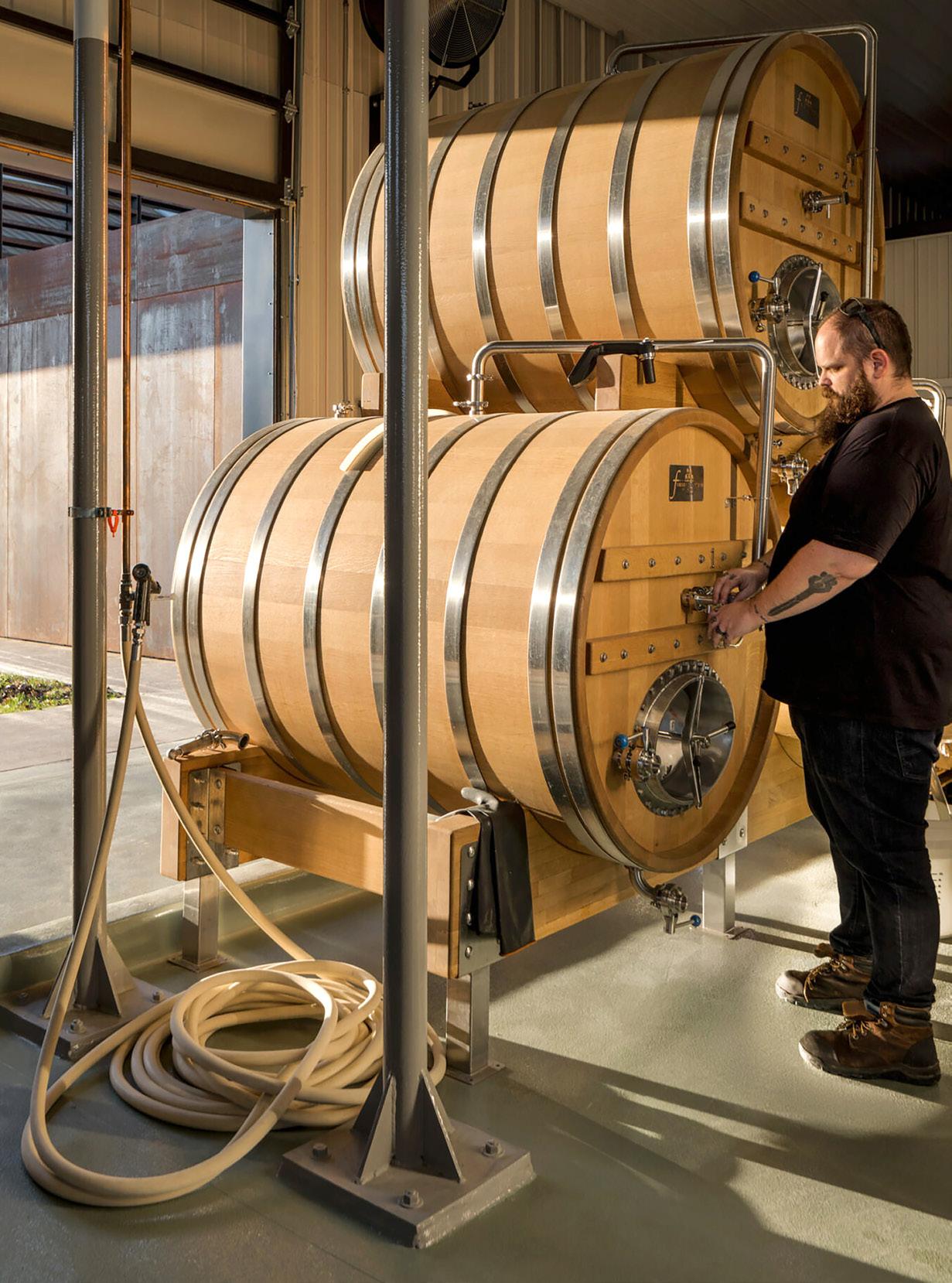
The liquid then goes into the conical stainless-steel or oak fermenters, where the yeast does its magic for anywhere from two
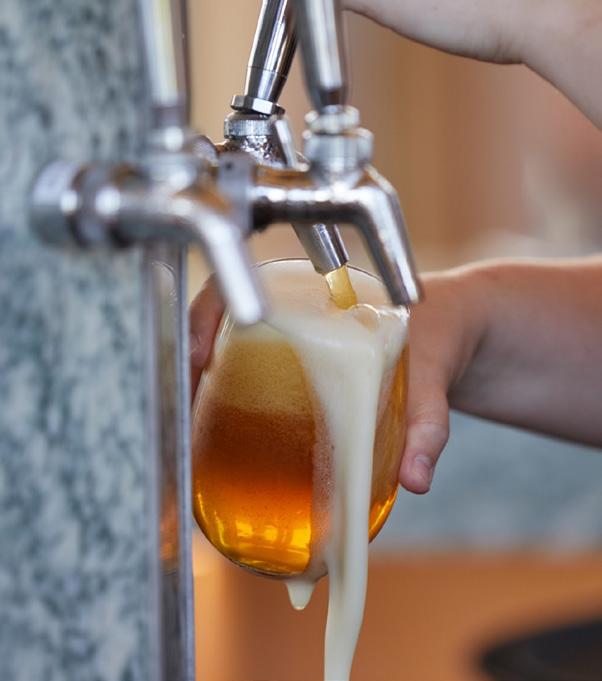
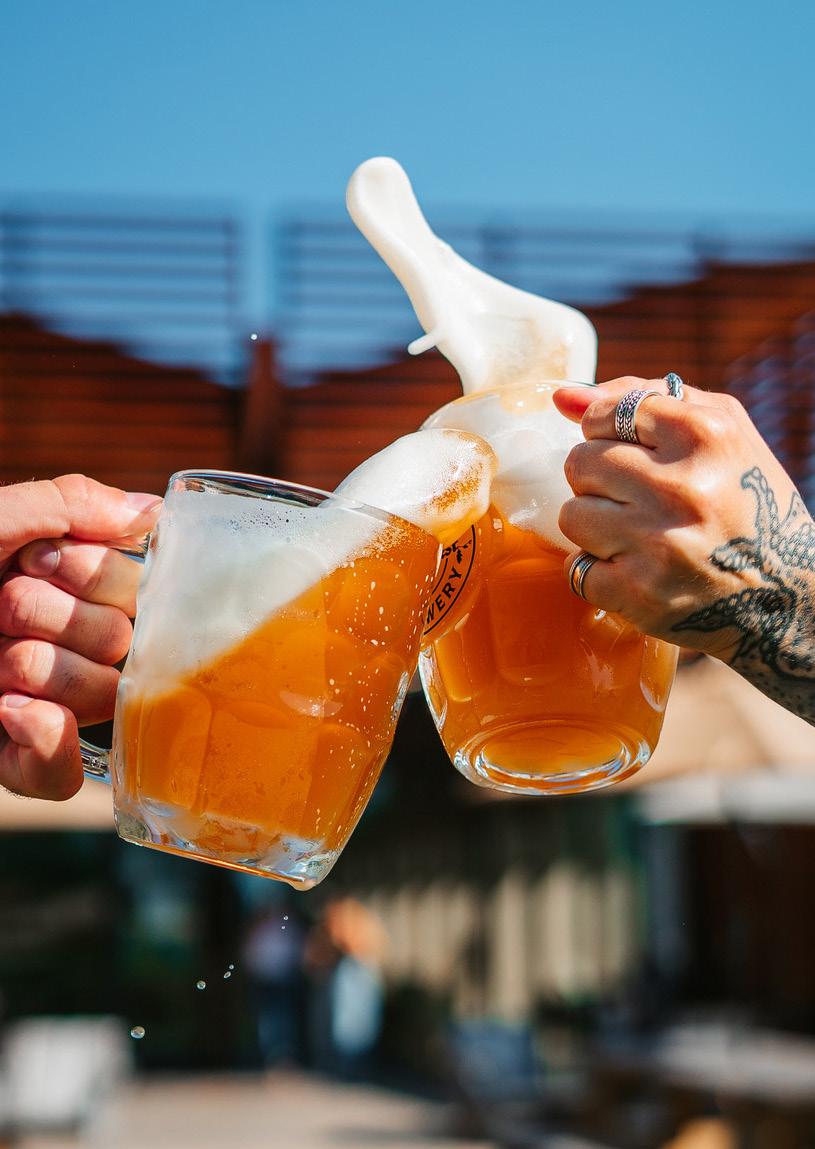
Once it’s fully fermented, the beer is transferred to a pressurized brite tank for carbonation and then to kegs and cans to be served to thirsty patrons.
to eight weeks. (Oak is typically used in the creation of sour beer varieties.) As fermentation slows, special ingredients like fruit are added at just the right moment— earlier for a beer that’s intended to be drier.
Once it’s fully fermented, the beer is transferred to a pressurized brite tank for carbonation and then to kegs and cans to be served to thirsty patrons. A typi -
cal batch is between 340 and 450 gallons. Last year, Lasting Joy turned 20,000 pounds of grain into beer.
“It’s great for local ag that New York State brewing is back,”
Alex says. “Historically, it was an important piece of the local economy. And for me, the brewing is still the fun part—from getting the grain in to tasting the results.”
lasting joy brewery
485 Lasher Road, Tivoli
845-757-BEER lastingjoybrewery.com





Local Eatery
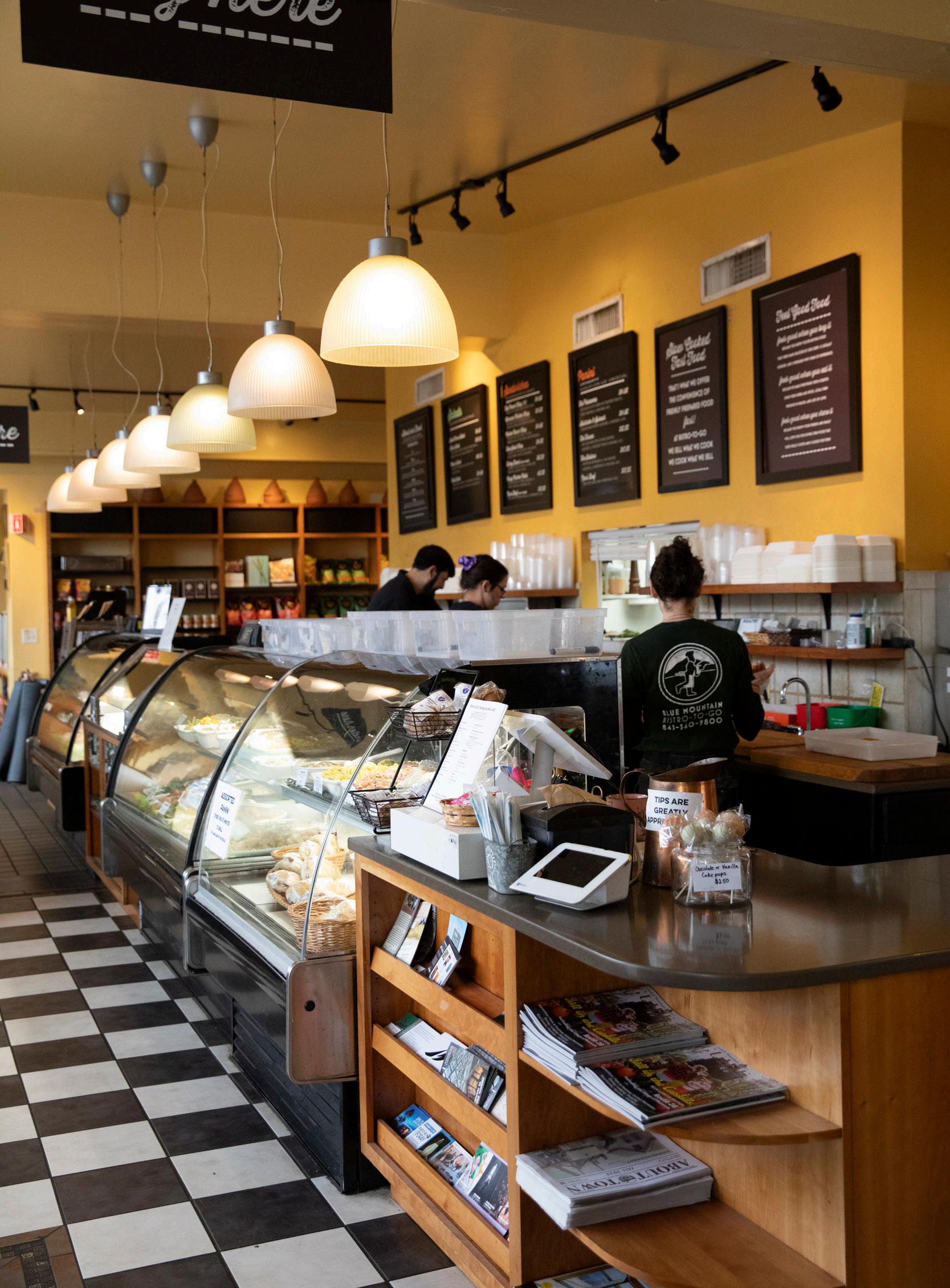
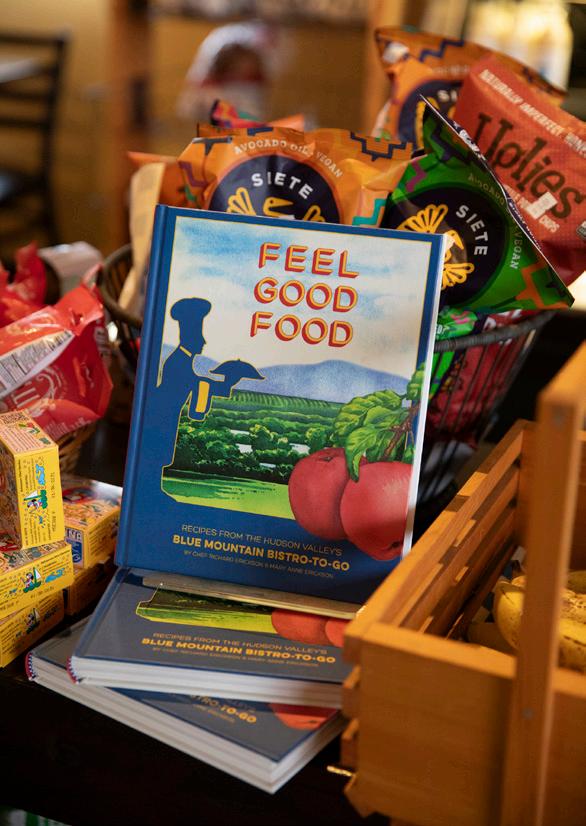
When Richard and Mary Anne Erickson announced their intention to retire in 2022, fans of their unique café, takeout, and catering business got nervous.
Blue Mountain Bistro-To-Go, with a decades-long history of providing “slow-cooked fast food,” was not considered replaceable. Would the Ericksons succeed in finding righteous new owners who could achieve their stated goal, keeping the standards high and crafting reliable culinary bliss?
It turns out they did. On November 1, 2024, the reins at the Bistro were
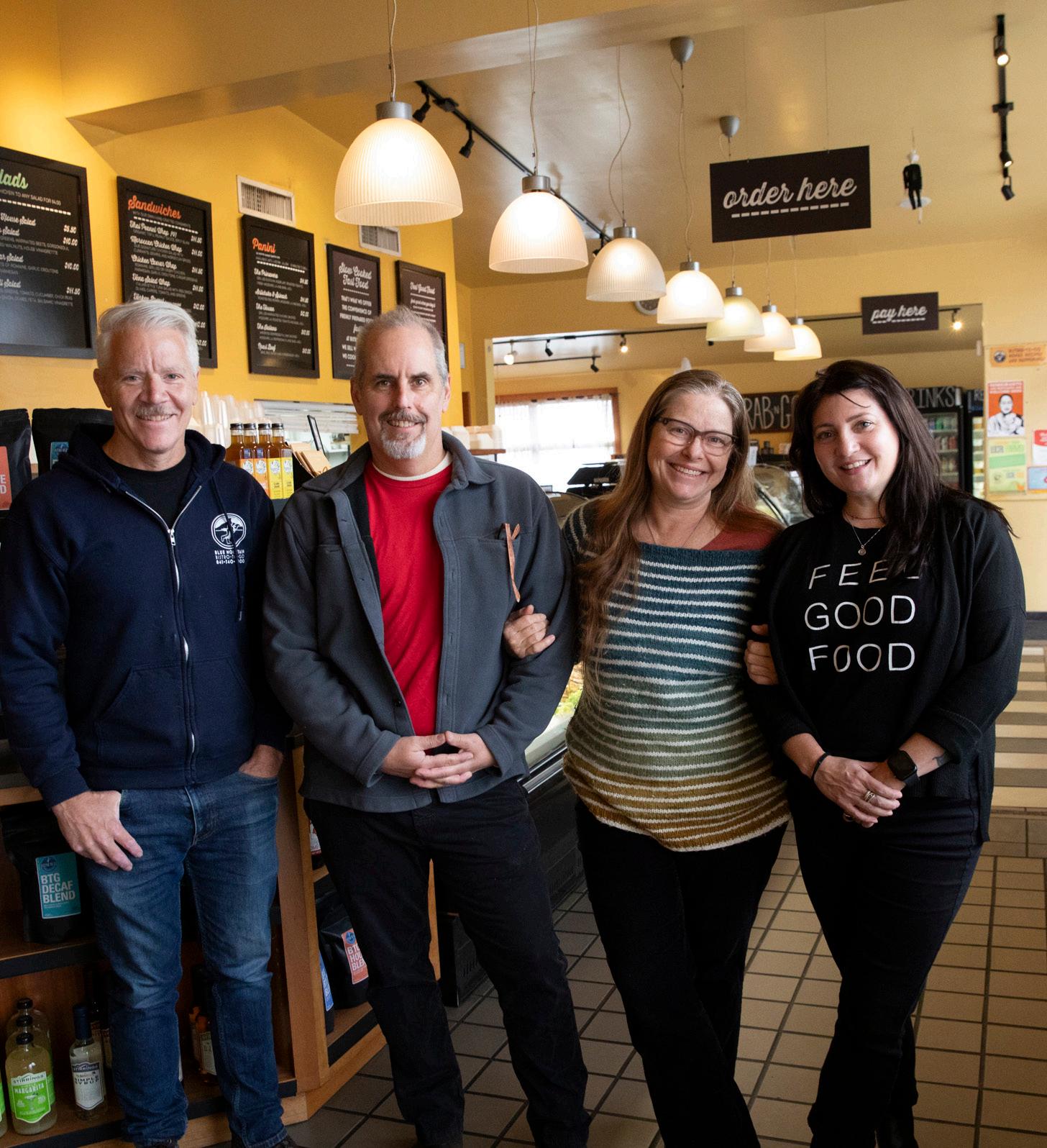
turned over to a new team of longtime locals: Colin Lewellyn, Lauren Radel, Michael Quinn, and Whitney Hall. Lewellyn, Quinn, and Hall met in 1998 and have been working together on creative projects ever since; Radel, a Cordon Bleu–trained chef, was a natural fit for this one.
“Lauren grew up in a restaurant, and she’s always found joy in feeding people and seeing the happiness they get from well-prepared food,” Lewellyn says. “She’s been honing her craft for decades, cooking all over the United States and at some of the finest places
Would the Ericksons
succeed in finding righteous new owners who could achieve their stated goal, keeping the standards high and crafting reliable culinary bliss?
in New York City. Michael was vice president and creative director for the Blue Man Group; he was responsible for all of their artistic output and directed some of their biggest shows Whitney, along with being a midwife and delivering babies, just got her MBA. That knowledge and her energy level—she’s a natural hustler—are a huge help. And for me, working on a number of start-ups during the first dotcom boom got me used to wearing a wide variety of hats and taught me all about business development in a fast-paced growth environment.”
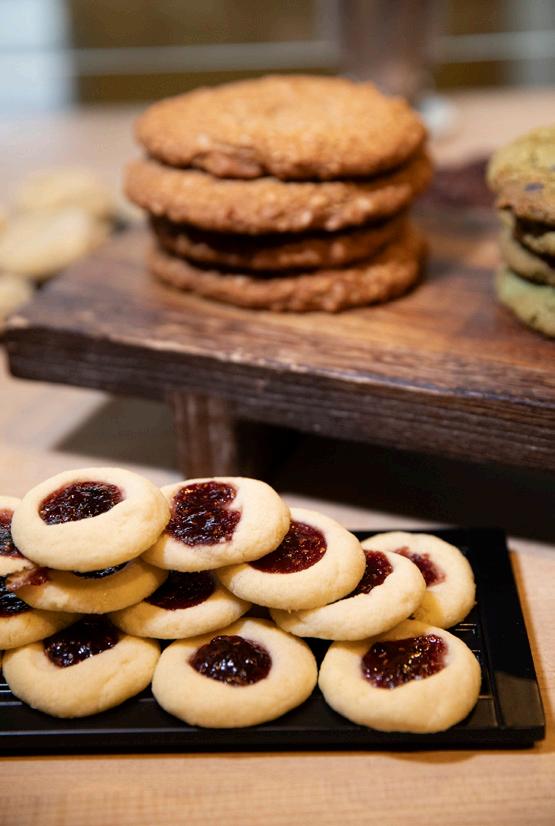
They’re delighting the establishment’s long-time fans and newcomers alike. “Cookies so good I no longer need a grandmother,” one
recent reviewer remarked. “Continues to be the great food place & dinner savior of the Rt 28 corridor & surrounding area,” another writes. “From a well-balanced, crowd-pleasing menu to just the right quantity of food, everything was beautifully organized,” a catering client says.
It’s music to the team’s ears. All of them knew they had big shoes to fill and were being entrusted with something very special. “First and foremost, we want to make sure Bistro-to-Go continues to be a beloved food source for the community. The warmth we have felt from the community is truly inspiring, and we want to continue earning that respect with great food and a fantastic environment,” Lewellyn says.
“We believe that people come first. We’re all smart business people, smart enough to know that you don’t need to sacrifice caring for people to make a profit. We believe that if you deliver a positive experience, and let kindness and quality guide you, the business will be there.”
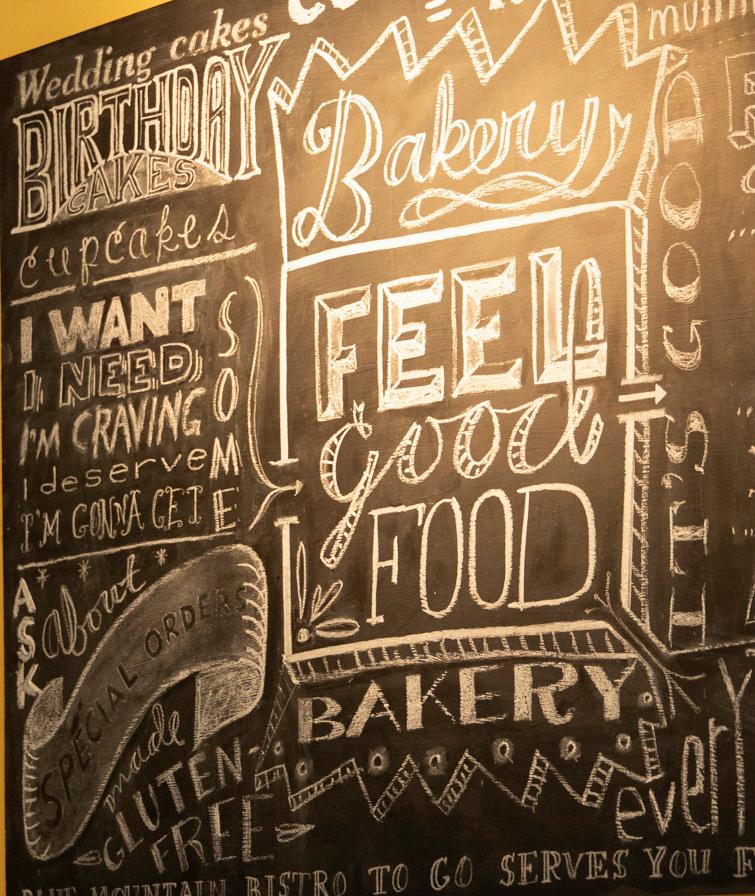
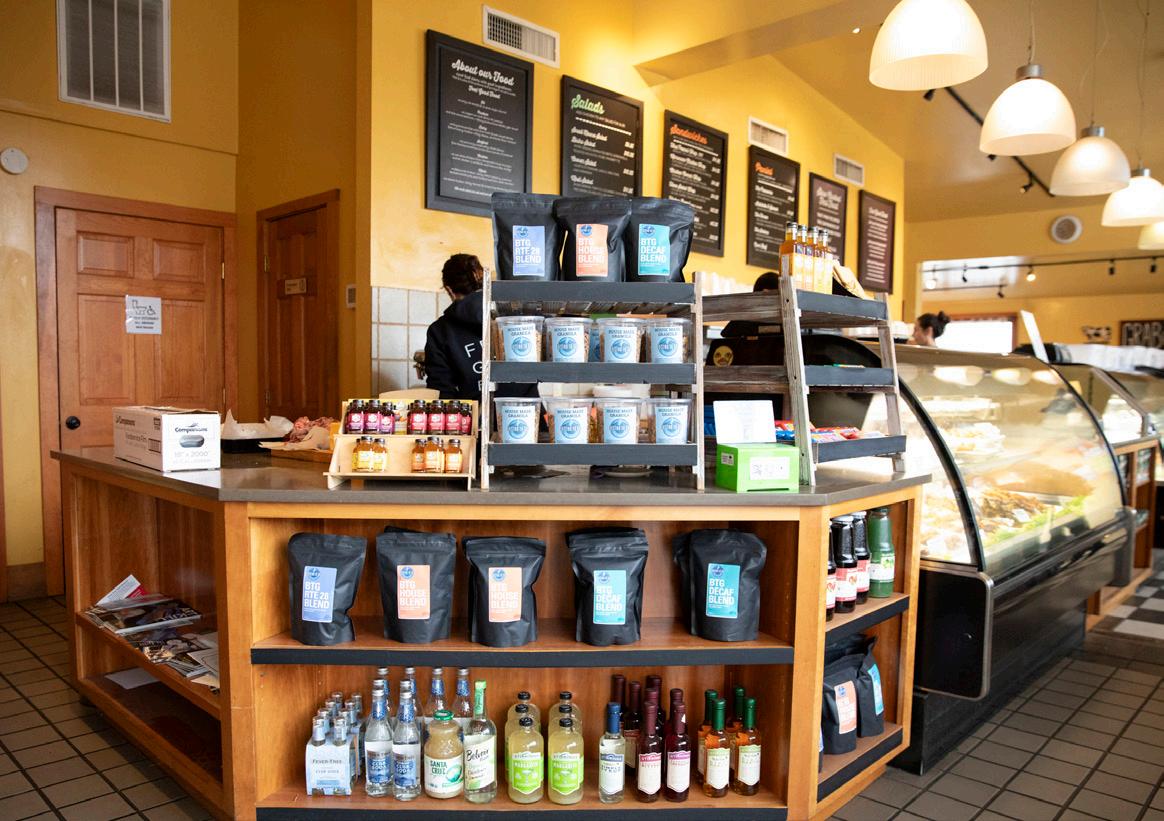
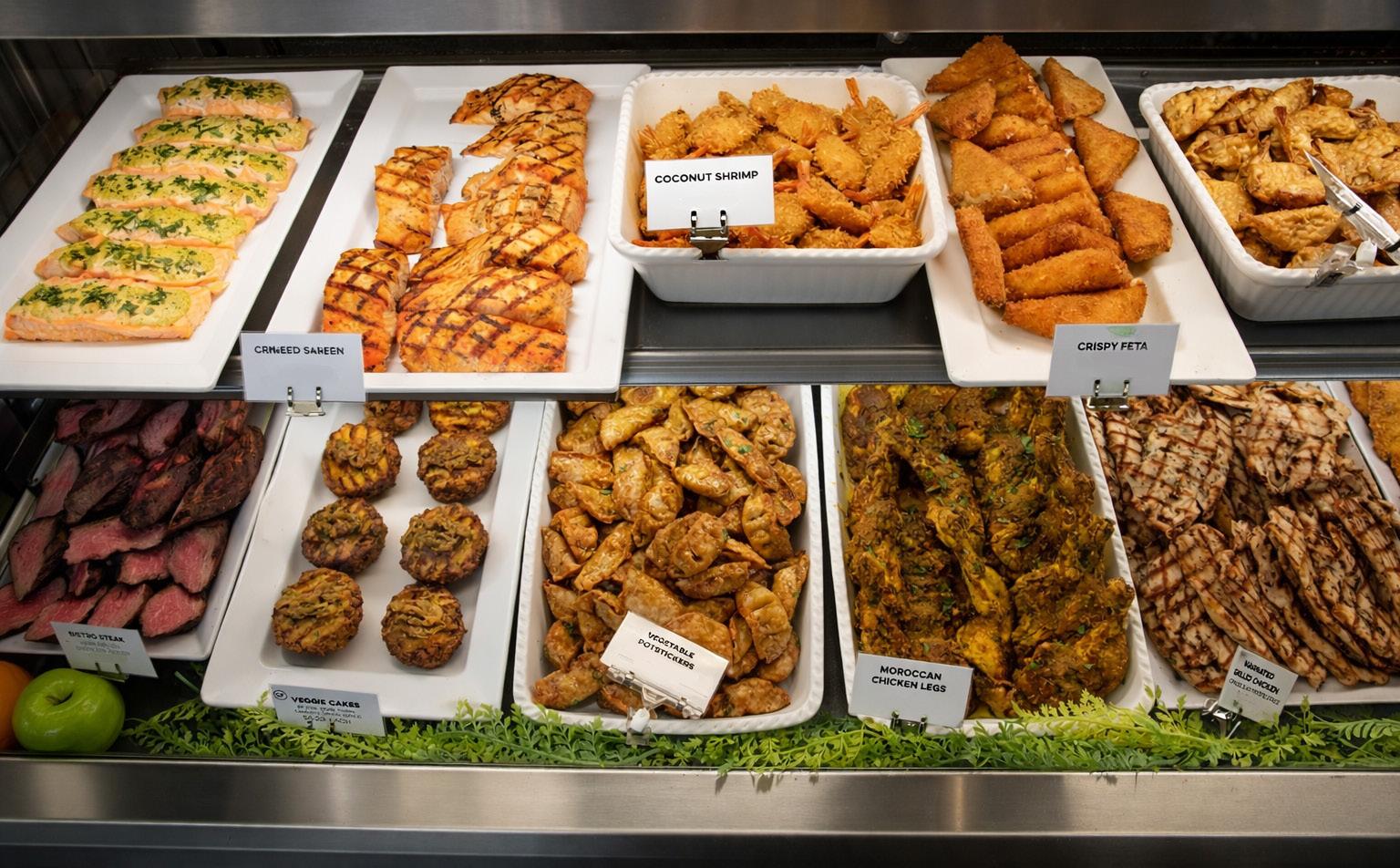
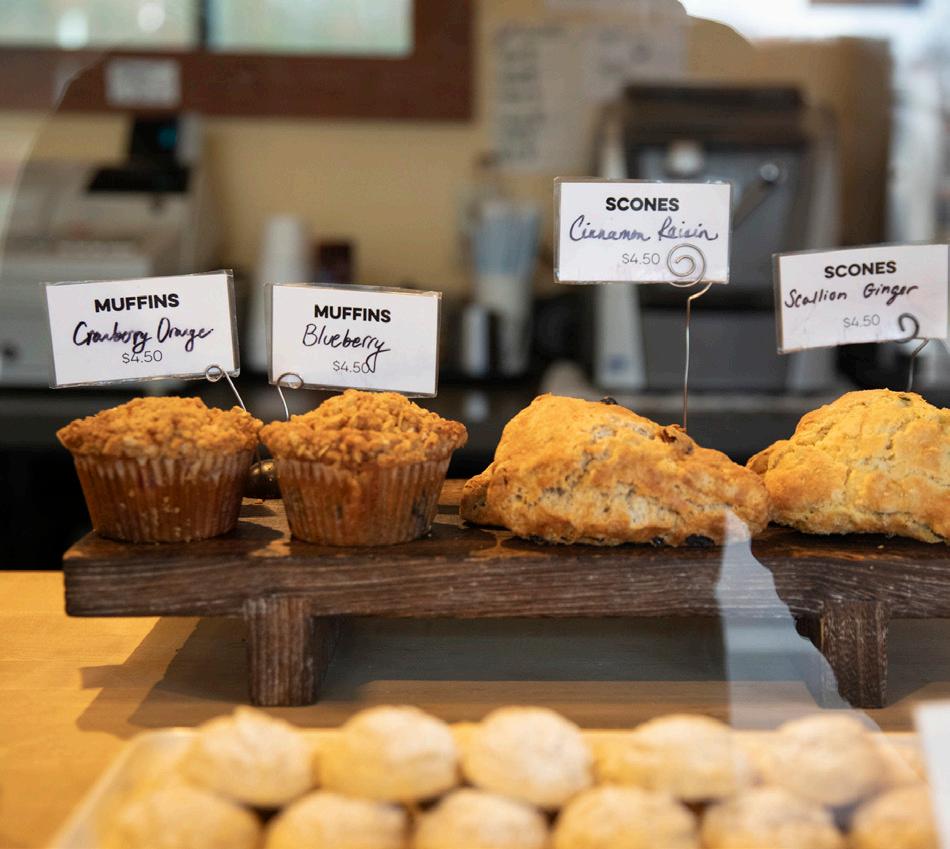
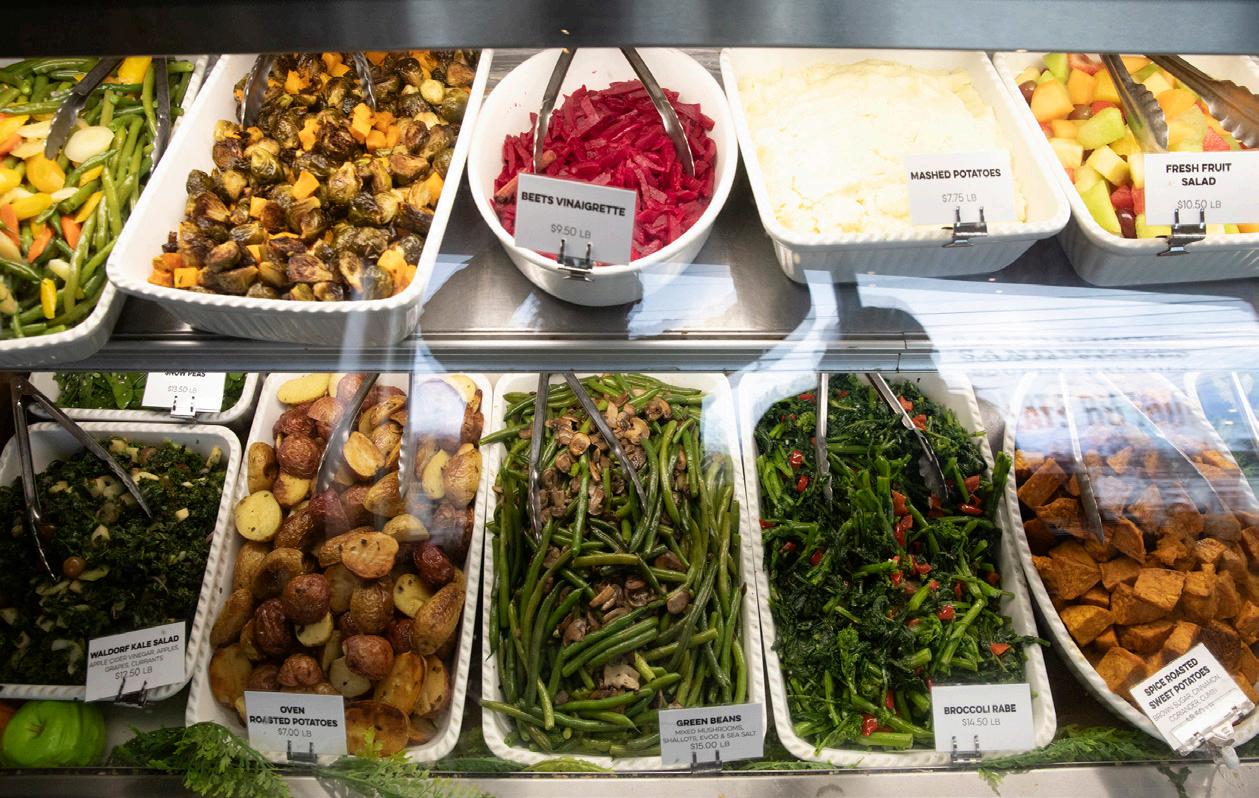
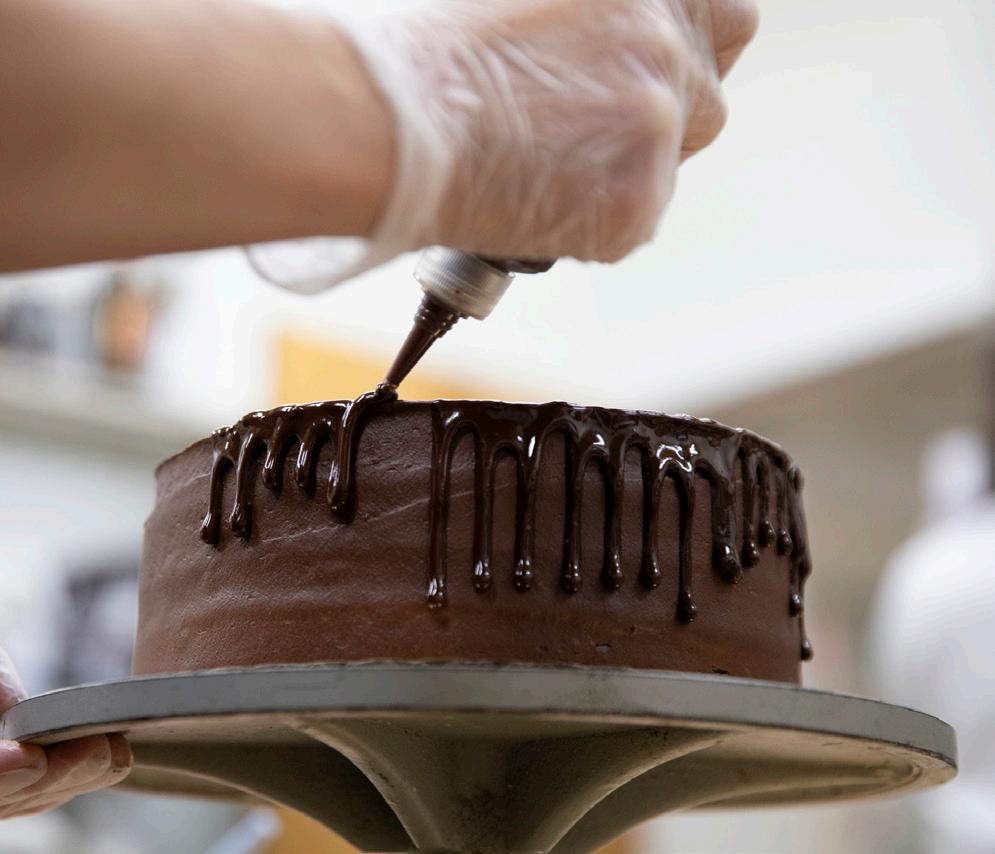
As one might hope with a place famous for being fabulously good, the core offerings have remained the same: a top-notch grocery/deli/ café with a full-service bakery and a catering division. Much of the team employed by the Ericksons has stayed on too.
And, as has been true throughout the decades, Bistro-to-Go is for everyone. “We have locals whose
families have lived in the area for generations, and we also cater to weekenders and tourists, as well as people planning weddings and other events in the area,” Lewellyn says. “We’re quite fortunate that we’re not pigeon-holed into any one customer type. We’ve got something for everyone!”
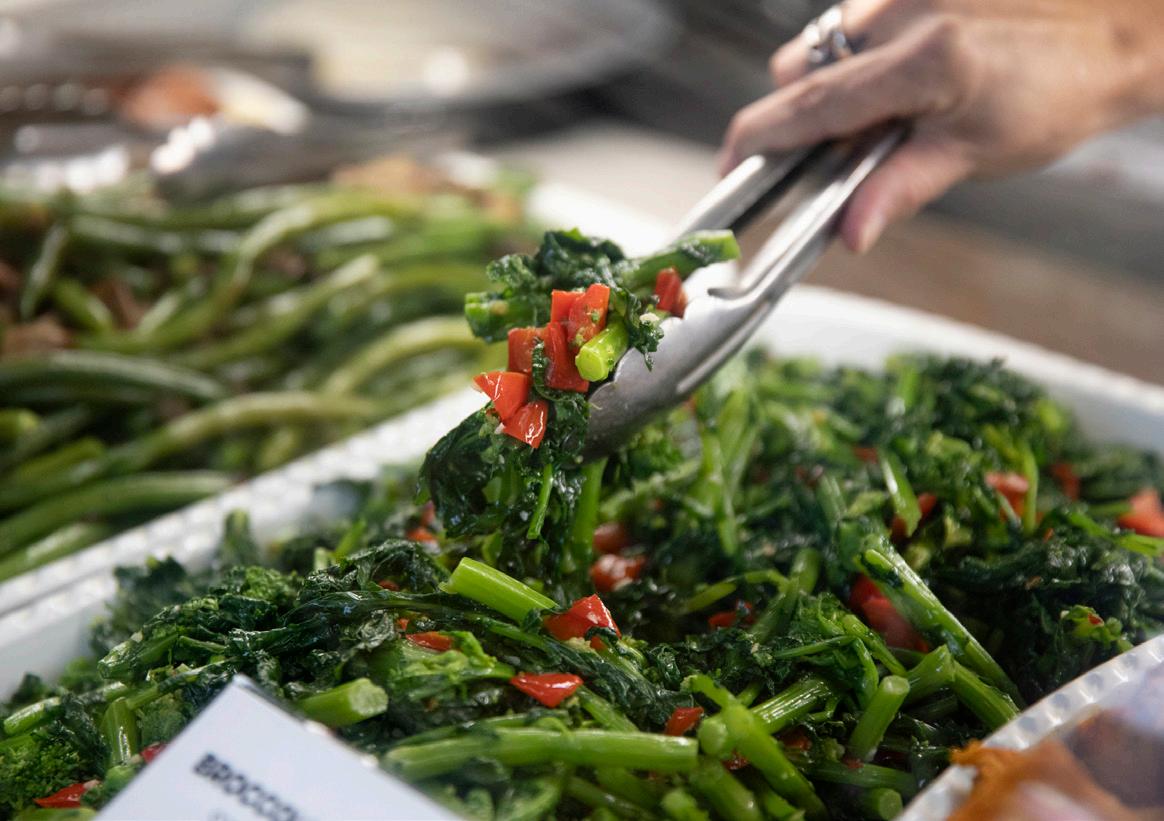
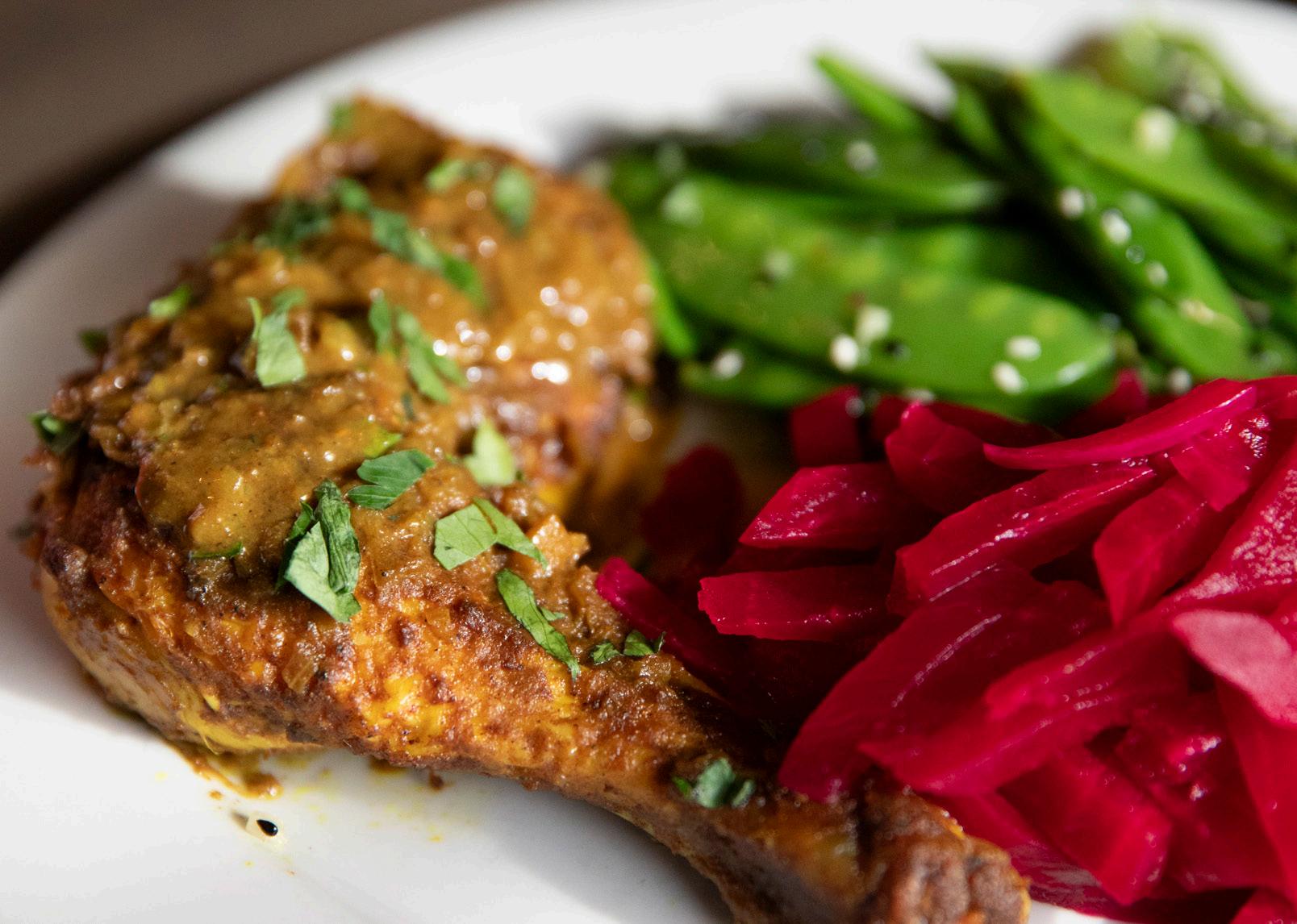
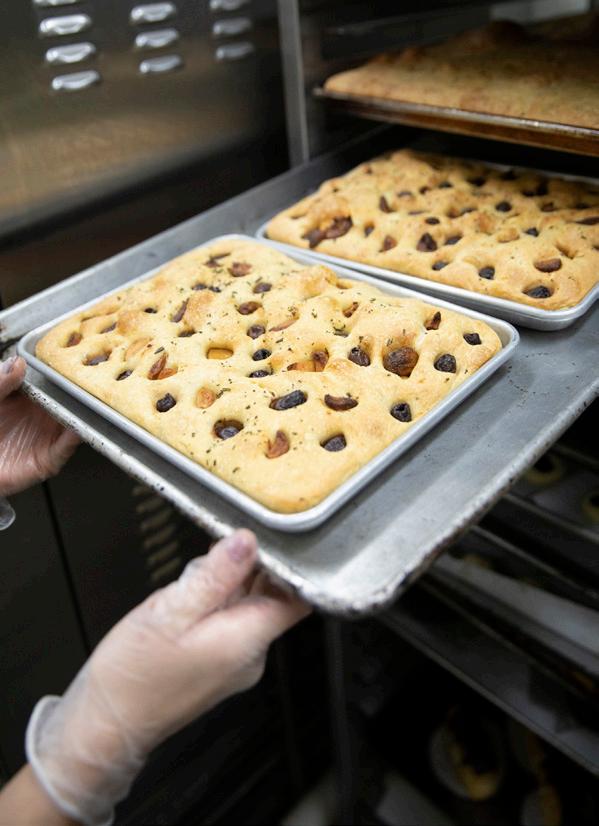
Choices include a variety of sandwiches made with house-roasted meats and hand-crafted spreads, along with panini served on fresh focaccia rolls from Deising’s in Kingston; special menus are rolled out on holidays, and the catering options are extensive and sumptuous. Beyond all that, there are daily specials: Meatless Mondays, Taco Tuesdays, Chicken Marsala
"We believe that if you deliver a positive experience, and let kindness and quality guide you, the business will be there." – Co-owner Colin Lewellyn
“What we all love most is seeing how happy our food makes people. We get a lot of warmth from the community, and, honestly, that's what keeps us energized and engaged.” – Co-owner Colin Lewellyn
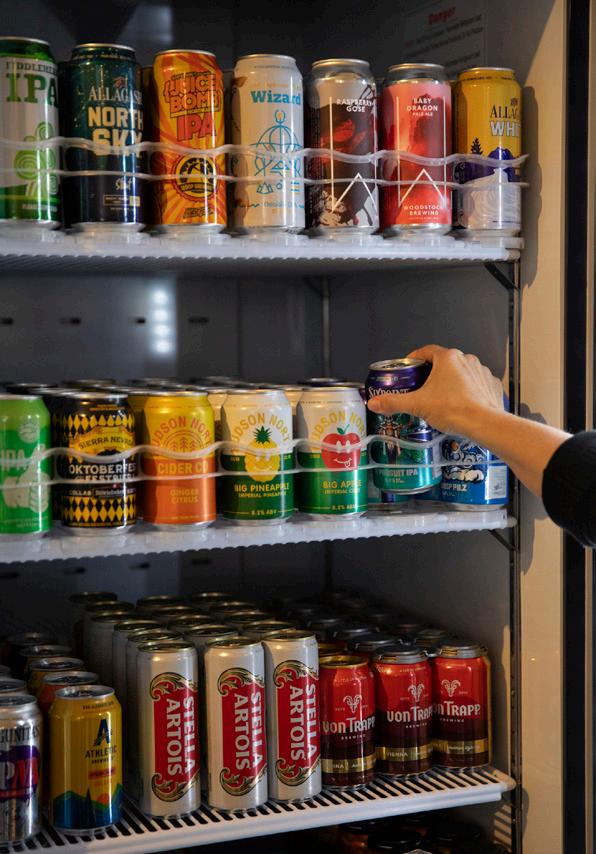
on Wednesdays, Chef’s Choice on Thursdays, and a Friday sandwich served on house-made focaccia bread. Longtime Bistro fans will notice some new items: “We now offer house-made ice cream sandwiches,” Lewellyn says. “We're baking our own focaccia loaves for sale each week. We also added sunbutter and jam sandwiches with house-made sunbutter. We’re always introducing new menu items and thinking of new, exciting items for our grocery. And we just added a liquor license, so we now sell beer and cider from the store and offer a full bar for catering events.”
The core philosophy remains unchanged: top quality, wedded to convenience. “We have the best, healthiest food you can get, and it’s easy to stop in and grab lunch or dinner,” Lewellyn says. “When you do, you know you are getting quality food that is prepared on site. We use high-quality ingredients and make most of our food in house. We want to know that what we are serving will leave you feeling good after you eat it. What we all love most is seeing how happy our food makes people. We get a lot of warmth from the community, and, honestly, that’s what keeps us energized and engaged. Humor and authentic human
interactions are the ingredients that keep work from becoming ‘just a job.’"
Having a successful first year under their belts, the team is looking forward to fresh creative twists to come, so expect ever more deliciousness. “We’d love to expand our catering business; as I mentioned, we just got our liquor license, and so we’d love to cater holiday parties as well as more weddings and other events,” Lewellyn says.
“We also have plans to improve our outdoor dining. We plan to keep introducing new items to the grocery and our in-store menu, and we’d like to grow. We believe in the food we are providing and really think there are more ways we can deliver it. So more catering, perhaps more locations, expanding our food trailer business, and other creative ways to get our great food to people… we’ve got lots of fun things coming in the year ahead."
blue mountain bistro - to - go 948 State Route 28, Kingston 845-340-9800, bluemountainbistro.com







MarbletownAnimalHospital.com 3056 Route 213 East
Ridge, NY, 12484
845-687-7800
Urgent Care, Acupuncture, Pet Nutrition, Cardiac and Abdominal Ultrasound. Call for more info. MarbletownAnimalHospital.com











Meet the Owner
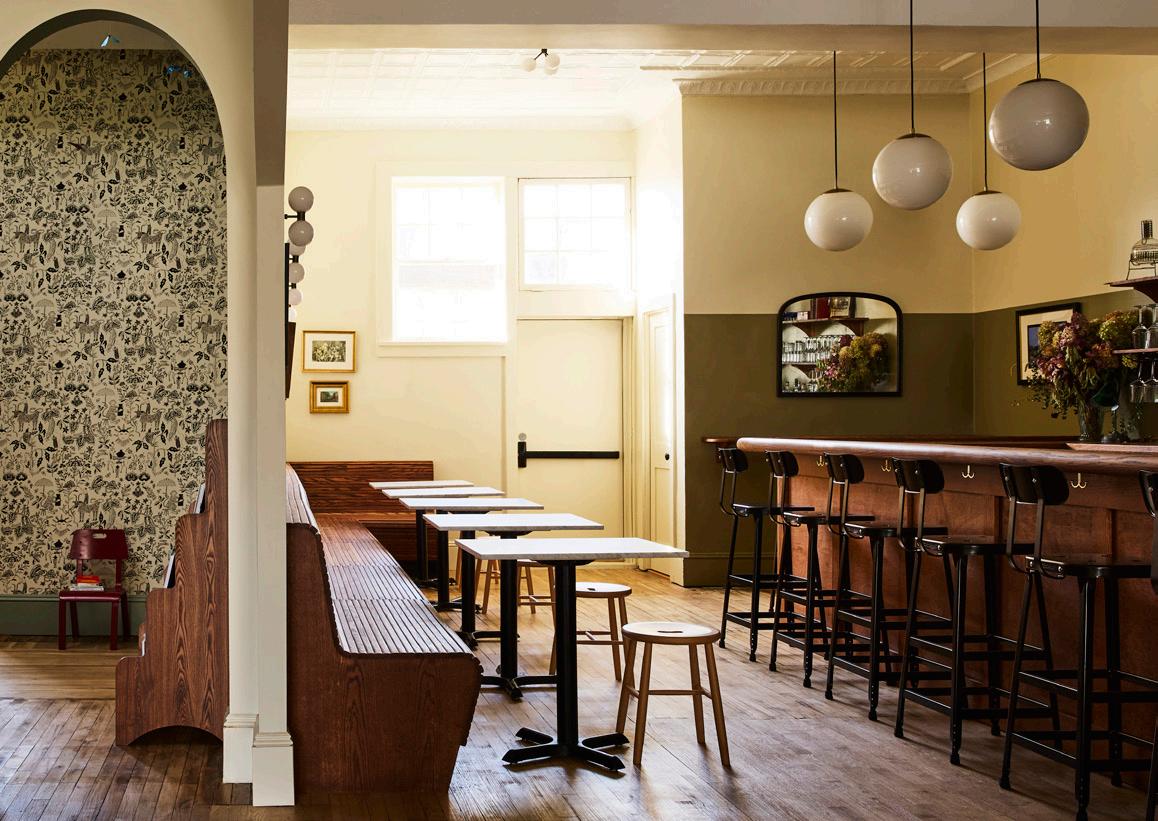
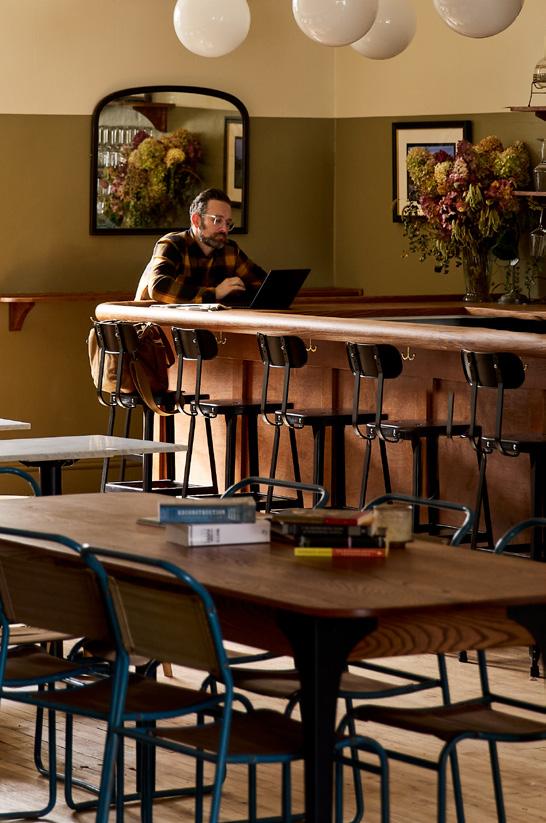
There’s nothing quite as precious as a great place to hang out, the kind of place where you can count on a warm welcome, a lively conversation, and the freedom to relax and be yourself.
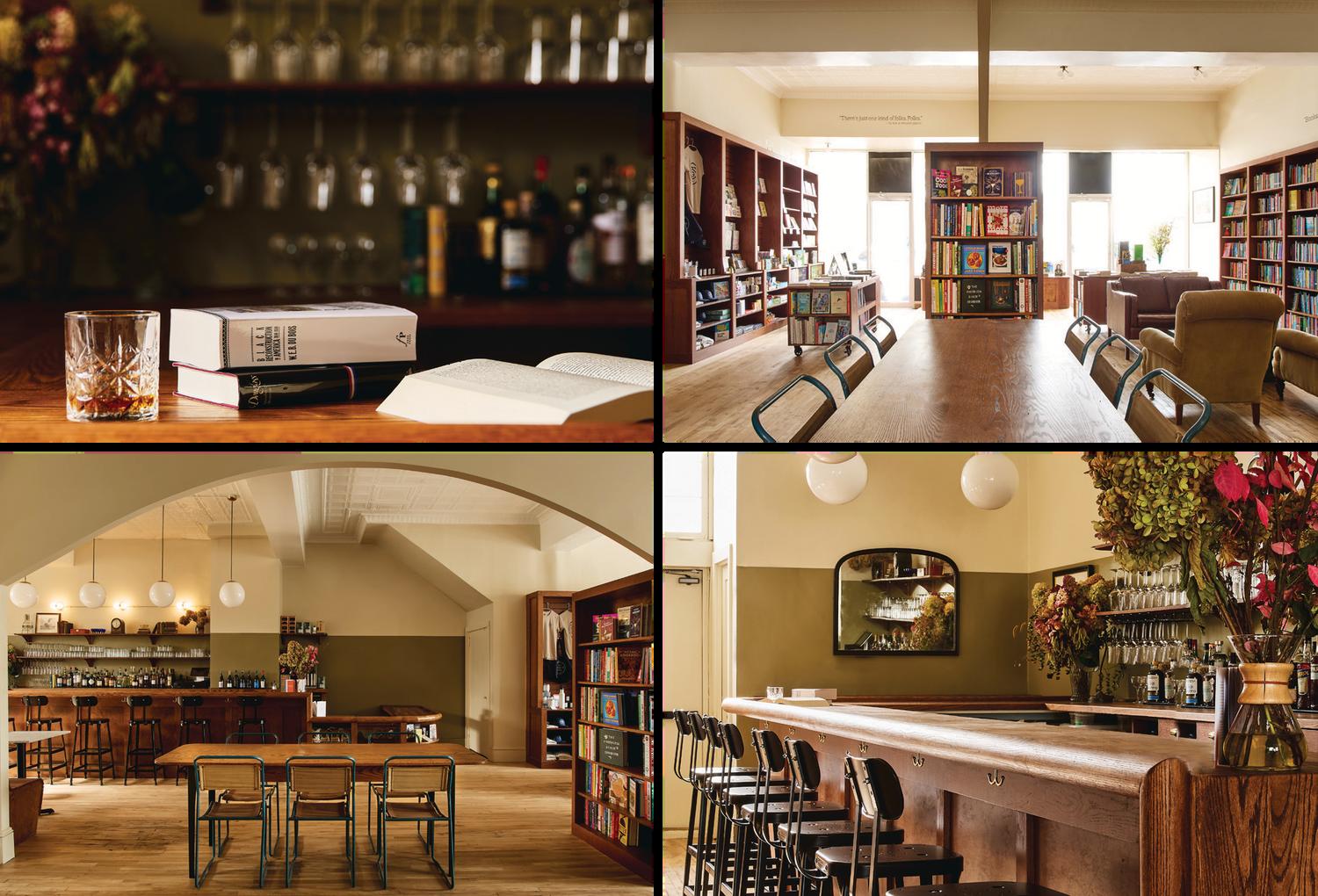
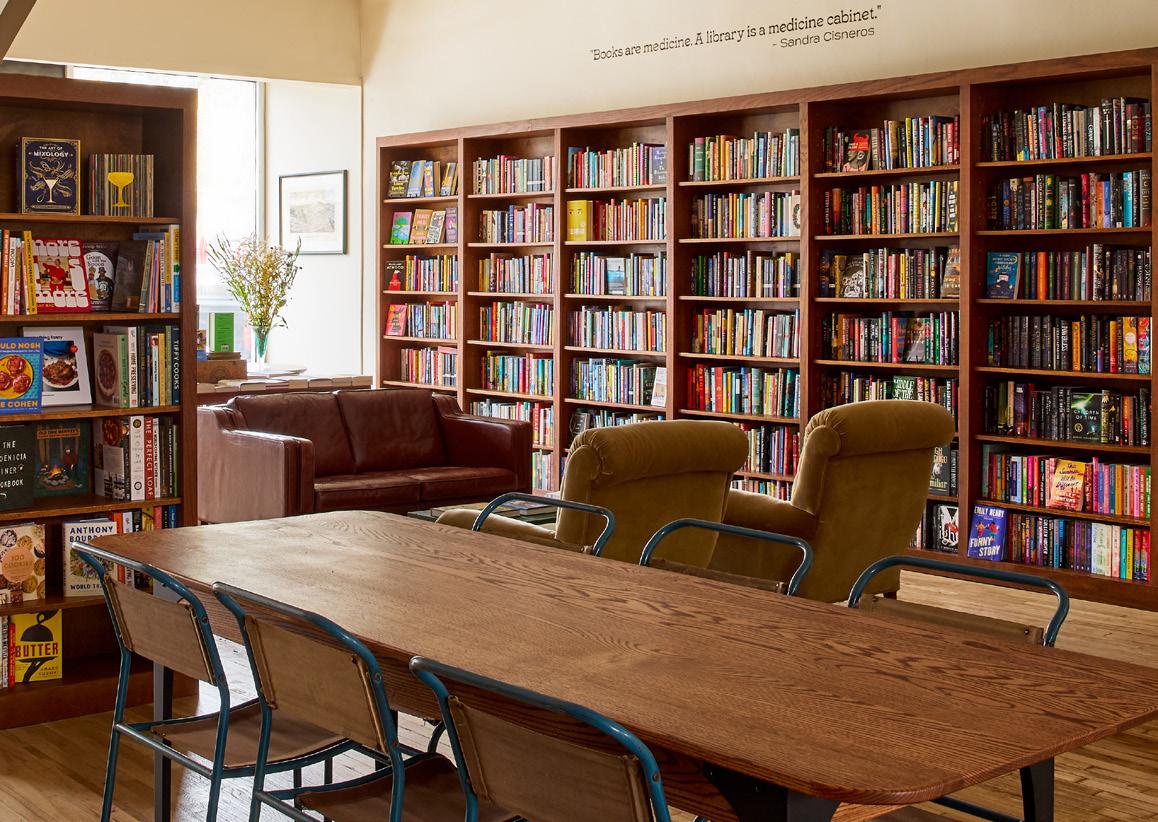
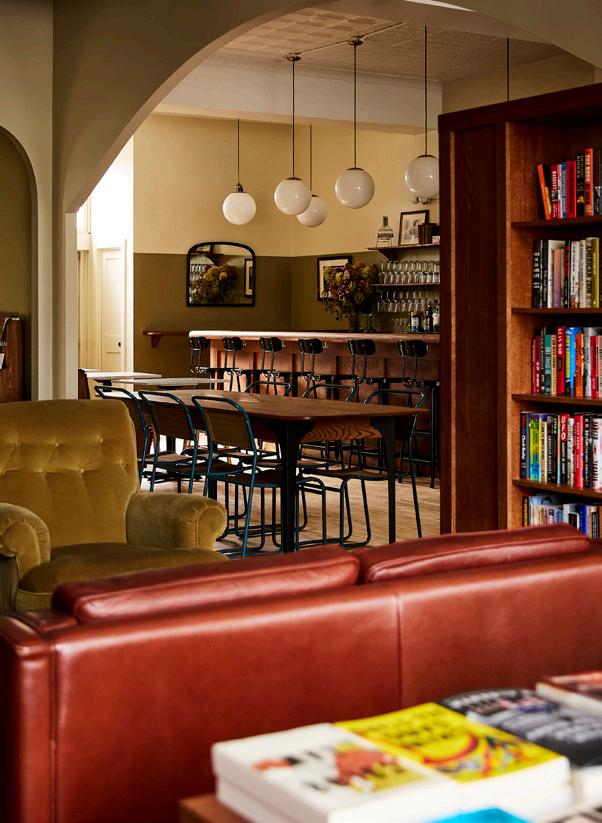
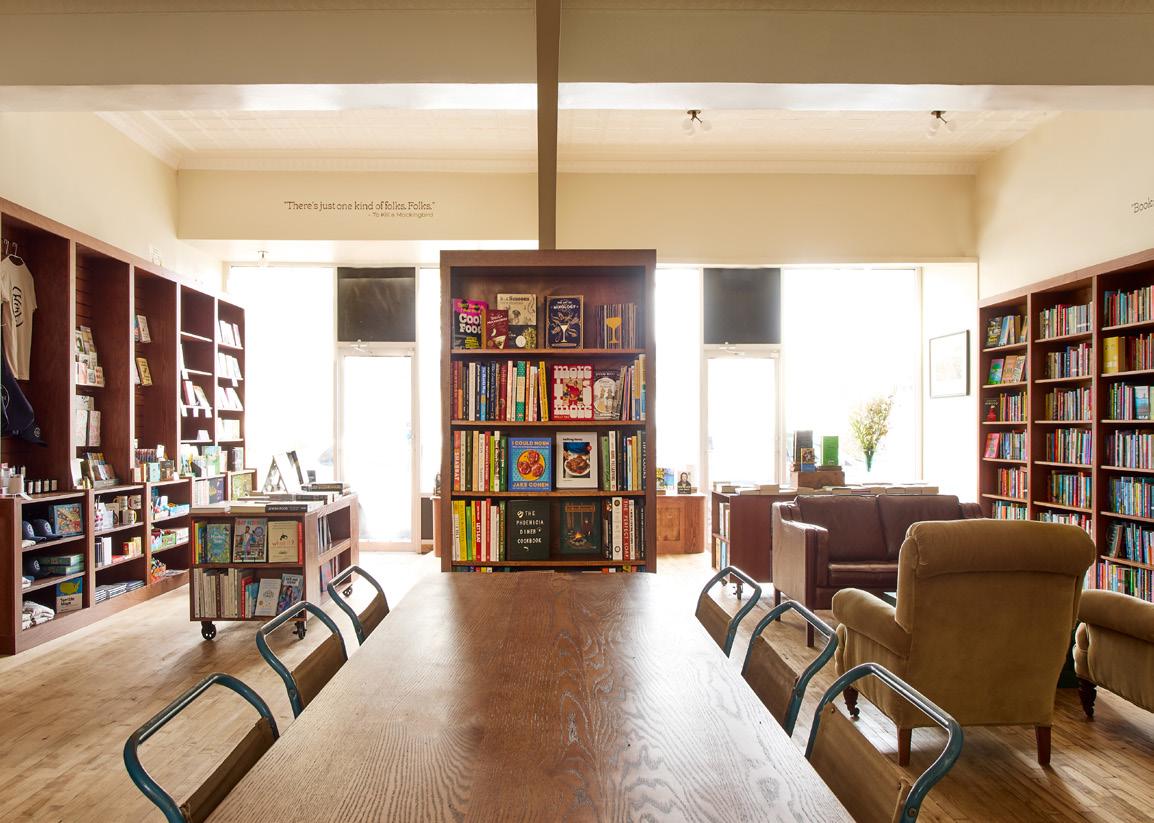
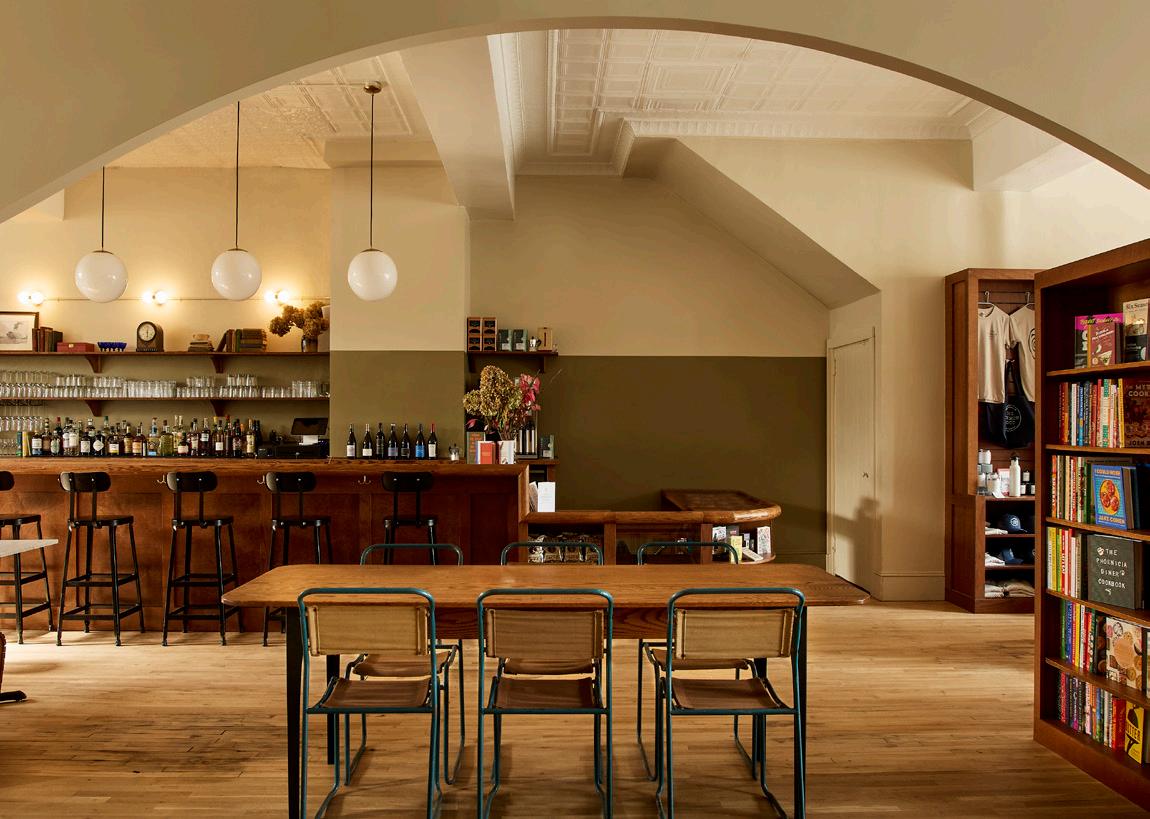
Sound like you? If so, you need to get to know The Common Good in Ellenville, where you’ll find books, art, ideas, coffee and tasty bites, beverages, and the kind of gatherings—both scheduled and spontaneous—that happen when good folks come together.
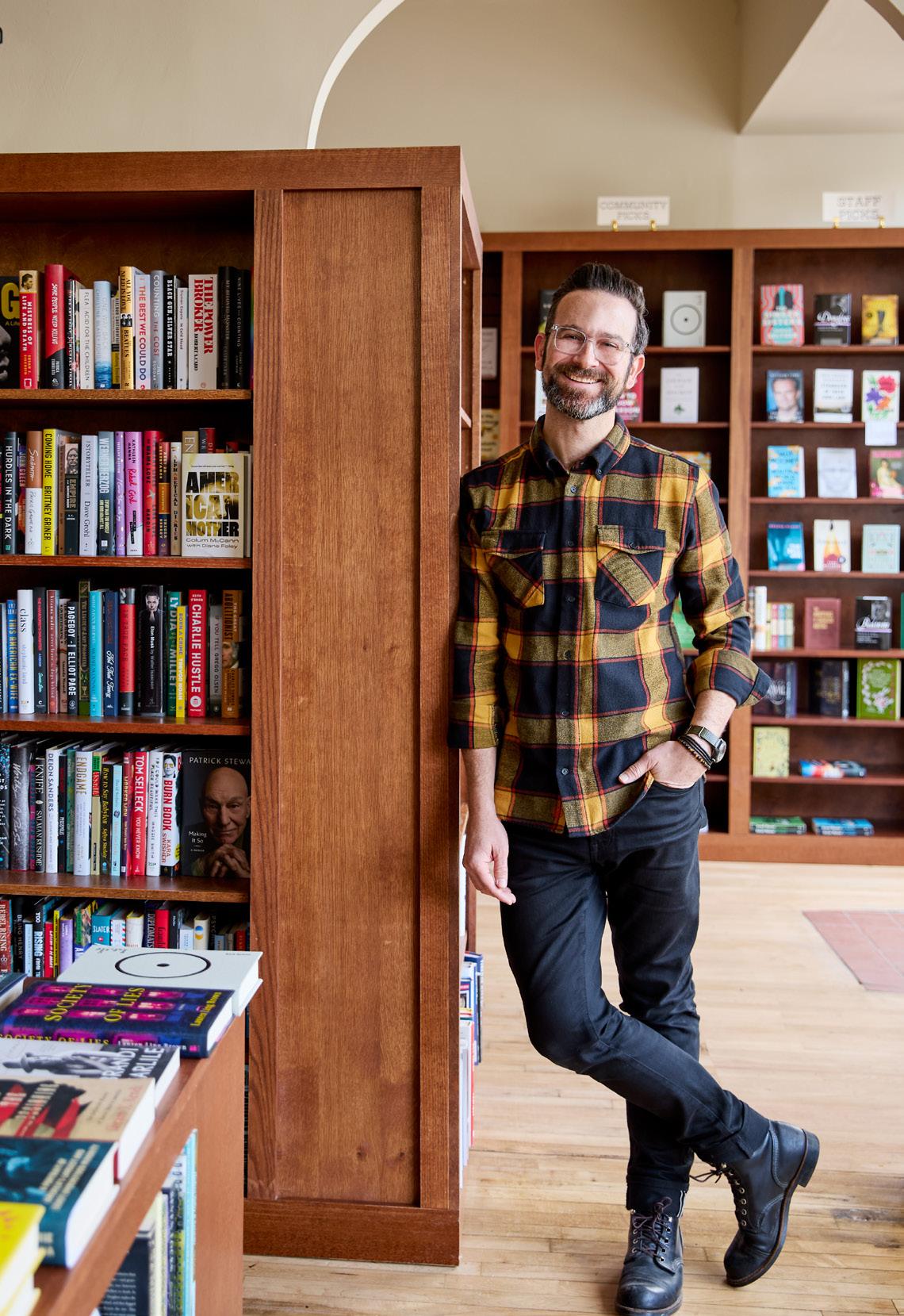
“It’s a project that unites all of my personal and professional interests, my passions, into one,” Mat-
thew Goldman of The Common Good says. “It’s a path I’ve been on since I was a teenager, but it’s not like it’s been a straight line. I mean, I worked as a bookseller in my 20s, in my hometown of West Caldwell in New Jersey, and when I stopped working there, the owner said, ‘Matt, you’re really good at this. Remember that.’ I absolutely didn’t forget, but it wasn’t linear; I didn’t just set out to become a bookstore owner after that. I went and did a bunch of other things, and they all have kind of come together to form this place.”
From age 19 until age 24, Goldman played guitar and sang

“I remember thinking that maybe some of what I'd been chasing on the stage—the communion with other people, the desire to figure out what we're all doing here and leave this place a little bit better than we found it—maybe I could try that in the classroom? It was really just a maybe, but it ended up being a ‘Hell yeah!”
– Owner Matthew Goldman
backup with the band Steel Train, and it was a good run. “I did everything I ever wanted to do as a musician. We played the big festivals, and I got to meet a lot of my idols, saw a lot of the country. But I wanted something deeper.”
Unsure of exactly what that would be, he agreed to help an old friend coach the local middle school girls’ basketball team. “One day in the back of the bus, coming home from an away game, I was helping this girl with a worksheet on climate change and I remember thinking that maybe
some of what I'd been chasing on the stage—the communion with other people, the desire to figure out what we're all doing here and leave this place a little bit better than we found it—maybe I could try that in the classroom? It was really just a maybe, but it ended up being a ‘Hell yeah!’”
Picking up where he’d left off at Boston University as a 24-year-old sophomore, studying American history and then social studies education, he took refuge at O’Leary’s Pub. “My classmates were a lot younger, so instead of dorm parties, I’d take a book
to O’Leary’s and have a beer, and before you know it, somebody’s asking you about the book and a half hour later you’re friends, because you’ve realized how much you have in common. So that was inspiring too—I realized that when we talk about books, we’re really talking about ourselves and how we relate to the themes, the plot twists. Readers are often introverts, so a beer or a cocktail can be the ideal ingredient.”
He spent 15 years as a self-described “hair-on-fire” American history teacher, mostly at the secondary-school level. “I’ve always held a deep, abiding core belief in the power of art, stories, and history to help build bridges and unite us with one another. I’ve always been all about trying to
figure out what it is we’re supposed to be doing here, and I want to do that together. So I guess the mosh pit of live music became the discussions in the classroom, which became running this space, you know?” Teaching evolved into being a founding faculty member and dean at BASIS Independent Brooklyn. Goldman loved it, but when he started feeling that familiar urge to take on a fresh challenge, he wanted to create something that was uniquely his own.
Meanwhile, he’d established a Catskills outpost. “My dad’s family, like so many others, found enormous joy and community in the Borscht Belt. I went to summer camp up here with my brother. We stayed at the Nevele once, with my
"I’ve always held a deep, abiding core belief in the power of art, stories, and history to help build bridges and unite us with one another."
– Owner Matthew Goldman
grandparents. I loved the area, so about four years ago, my wife and I bought a house up here.”
It was, they told themselves, just a weekend house. They didn’t start out planning to be full-time Catskillians or to open a shop, but enchantment and magnetism did the rest. “We just fell in love with the strip here, with the people here and the history. The businesspeople running Top Shelf and Gaby’s, the record shop, and Morning Sunshine—it felt like there was another chapter being written about Ellenville, and it was a chapter that maybe I could participate in. We saw this space, these two bays available smack in the middle of Ellenville, right across from the post office that FDR helped build with the New Deal. And I was like, maybe this is the space where I can do this thing that I've been thinking about. And my wife was so supportive, my family was so supportive. It was a big change, but we ended up moving up here full time.”
The Common Good opened its doors in October of ’24, and folks are finding it to be, well, uncommonly wonderful: a gem, an absolute favorite, safe and welcoming—online reviewers rave about everything from the cocktails to the comfort to the company. Goldman’s personal harmonic convergence has drawn in all the right elements. “We’ve got a great group of regulars,” he says. “Monthly community gatherings, a mend and stitch circle where people eat paninis and sip really good cocktails and fix clothes, three book clubs—fiction, fantasy, and romance—civic groups like the NAACP and the Ulster County Democrats, live music, art workshops, author readings, poetry nights…It isn’t just a place to have a drink, or just a place to buy a book, although you can certainly do those. It’s become a place to make friends, and I’m finding people are very receptive, and it’s enormously gratifying.”
"It’s become a place to make friends, and I’m finding people are very receptive, and it’s enormously gratifying.” – Owner Matthew Goldman
Goldman credits his wife’s brother, Adam Stein, with helping him take The Common Good from a fanciful idea to a buzzing, blossoming reality. “He’s a restaurant consultant, and at a family dinner I was talking about it and he said, ‘You can actually do this; I can help you do this,’ and here we are! And my wife, Erica, will tell you it’s all me, but none of it would exist without her.”
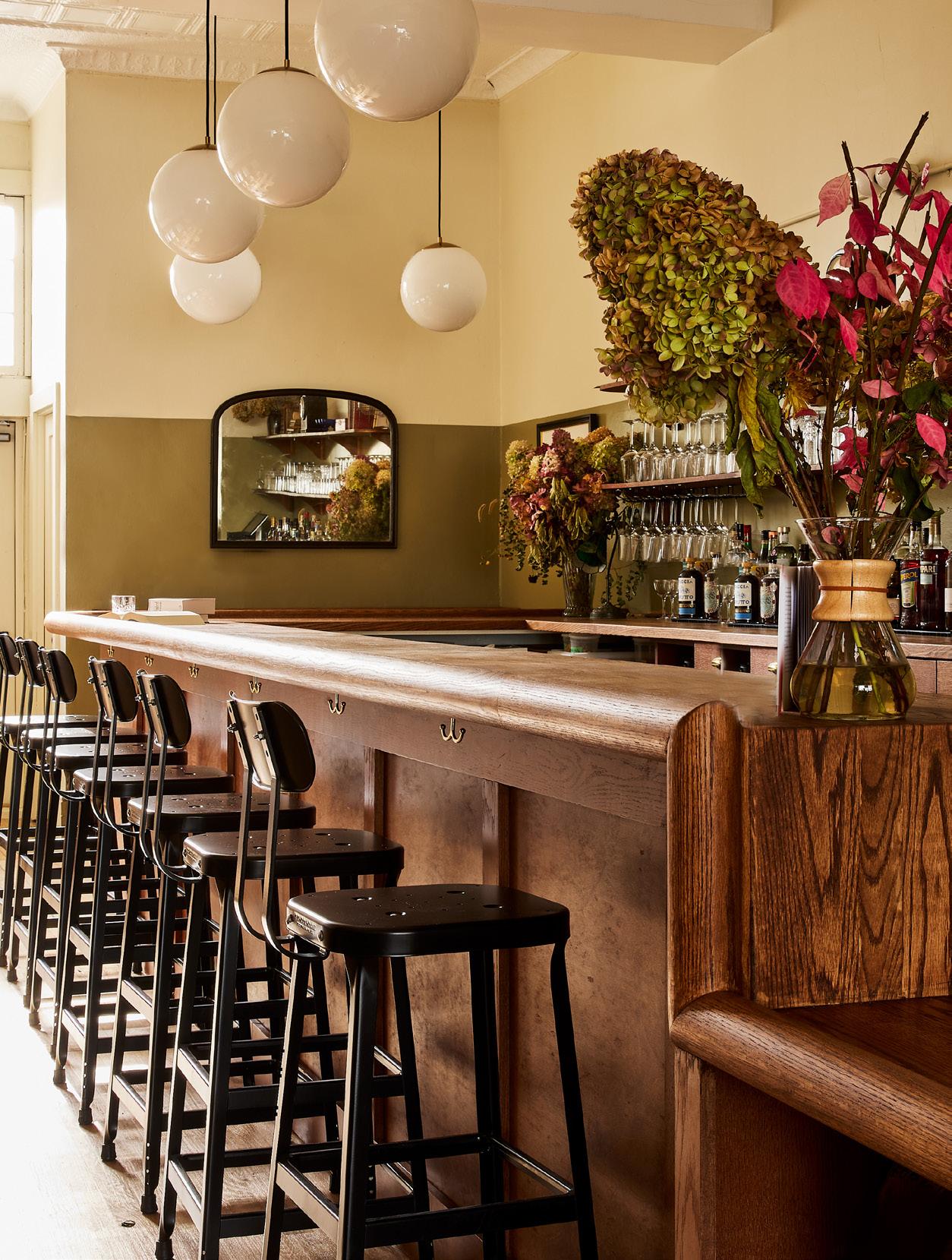
Bar manager Ellie has created a cocktail program that Goldman says exceeds his wildest dreams. “She’s a master. I’ve never seen or had cocktails like the ones she builds. And she makes her own syrups, which also enrich our coffee program; our lattes—like toasted black sesame seed and vanilla jasmine—are very
well loved. So we’ve got quite an array of very original seasonal beverage choices; we had lots of hot toddies in winter. We’ll always have plenty of whiskey, gin, mezcal, and tequila choices, as well as local beers and natural wines.”
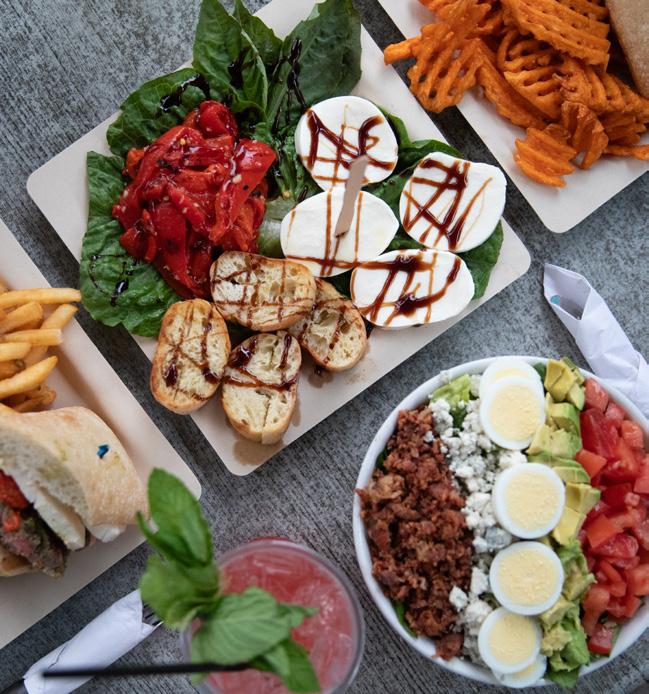
The kitchen focuses on simple dishes with fine ingredients. Goldman says the soups and paninis are a big hit, with an elevated grilled cheese featuring aged cheddar and onion jam that pairs exceptionally well with tomato soup and a brie, mission fig, and green apple panini with balsamic drizzle being particular favorites. Prices—for everything from the elevated comfort food to the cocktails and books—are consciously kept “friendly” and approachable to all.
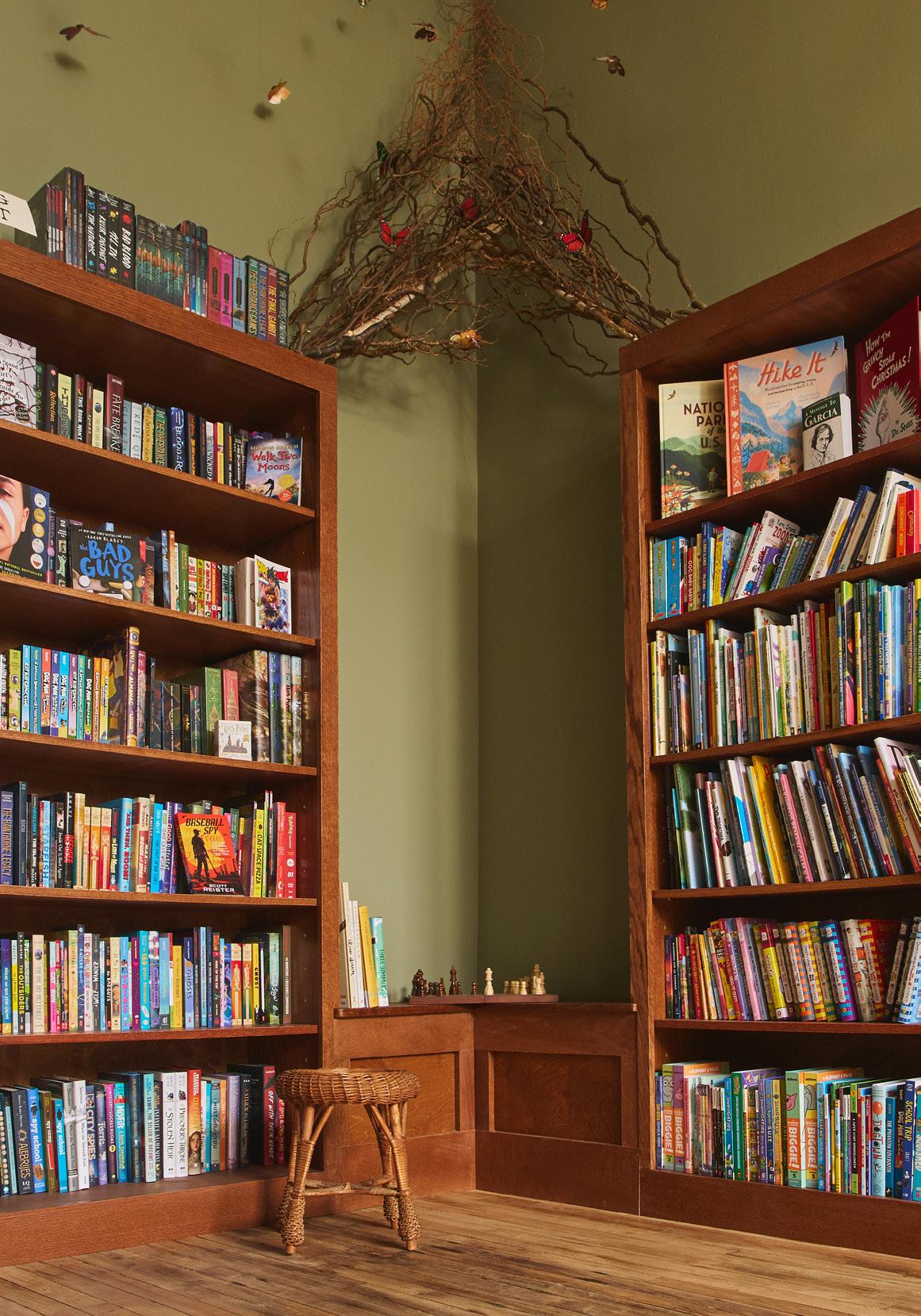
"I love seeing parents just sit down with their kids and read,” he says. “This is designed to be a great place for a family to spend the afternoon.”
– Owner Matthew Goldman
Books run the gamut from romance and fantasy to US and world history sections featuring the latest accessible scholarship, and Goldman takes pride in the children’s section, bright and cozy and beckoning. “I love seeing parents just sit down with their kids and read,” he says. “This is designed to be a great place for a family to spend the afternoon.”
Over 16 months in, Goldman is thrilled with and grateful for the community’s embrace of his dream in all of its mindfully executed particulars. “We have two ongoing discounts,” he says. “All current teachers get 10% off all books, and all students get 20% off food at lunchtime, from 11:30 to 1:30. I want this place to be filled to overflowing with teachers and students and families of all descriptions.”
the common good 119 Canal Street, Ellenville 845-210-7112 thecommongoodny.com
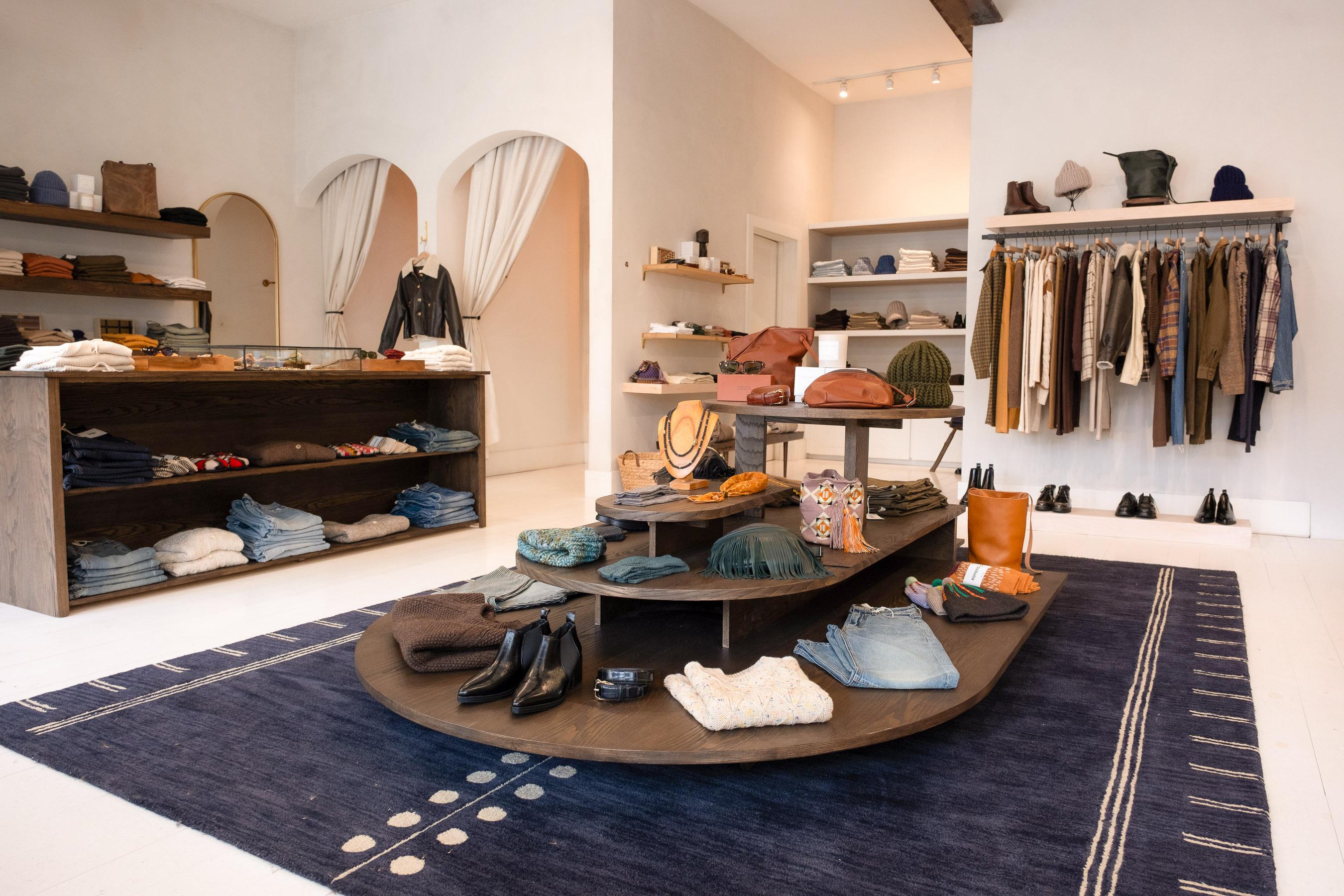
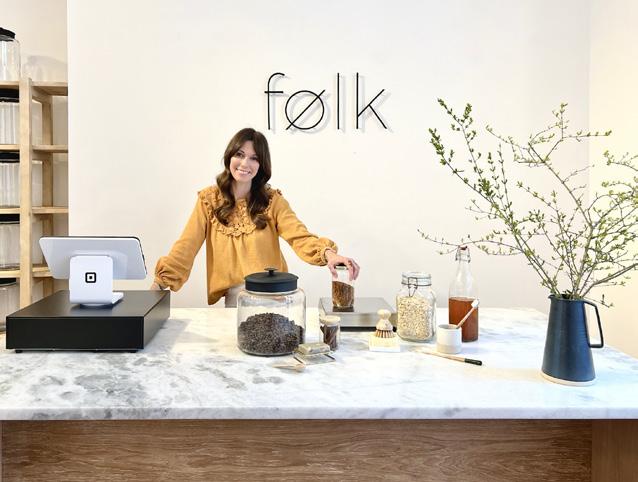
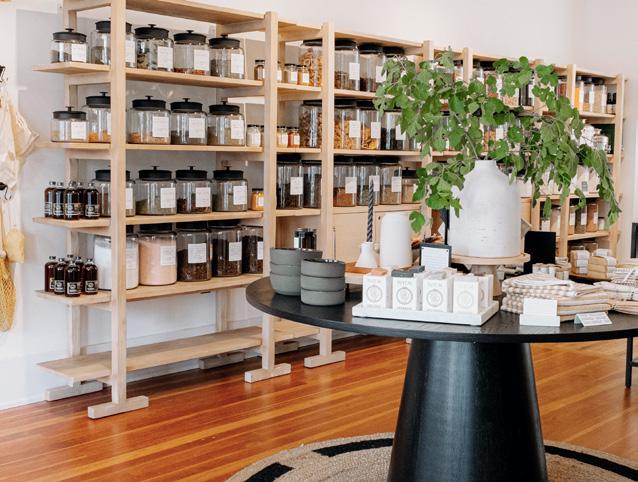
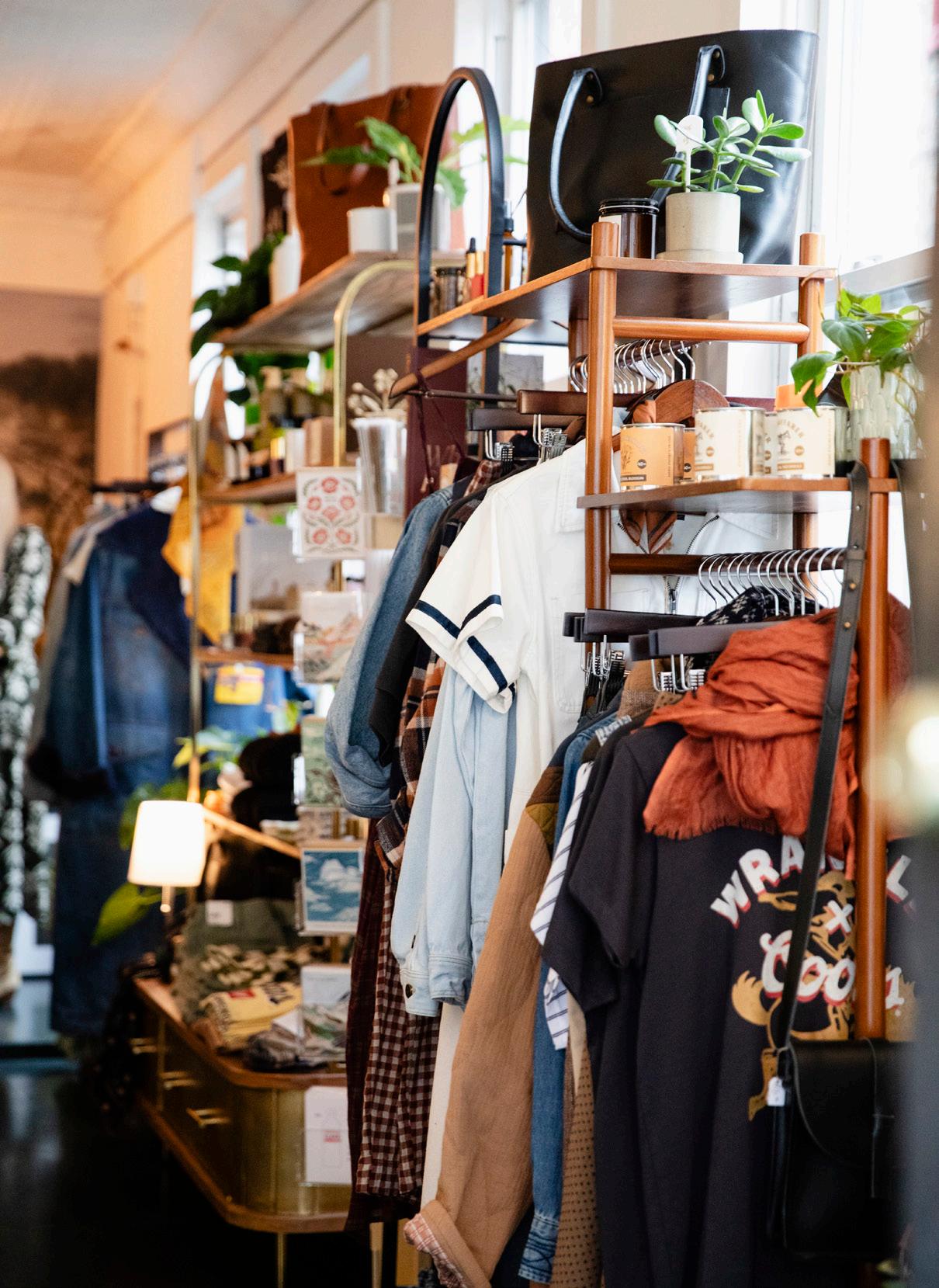
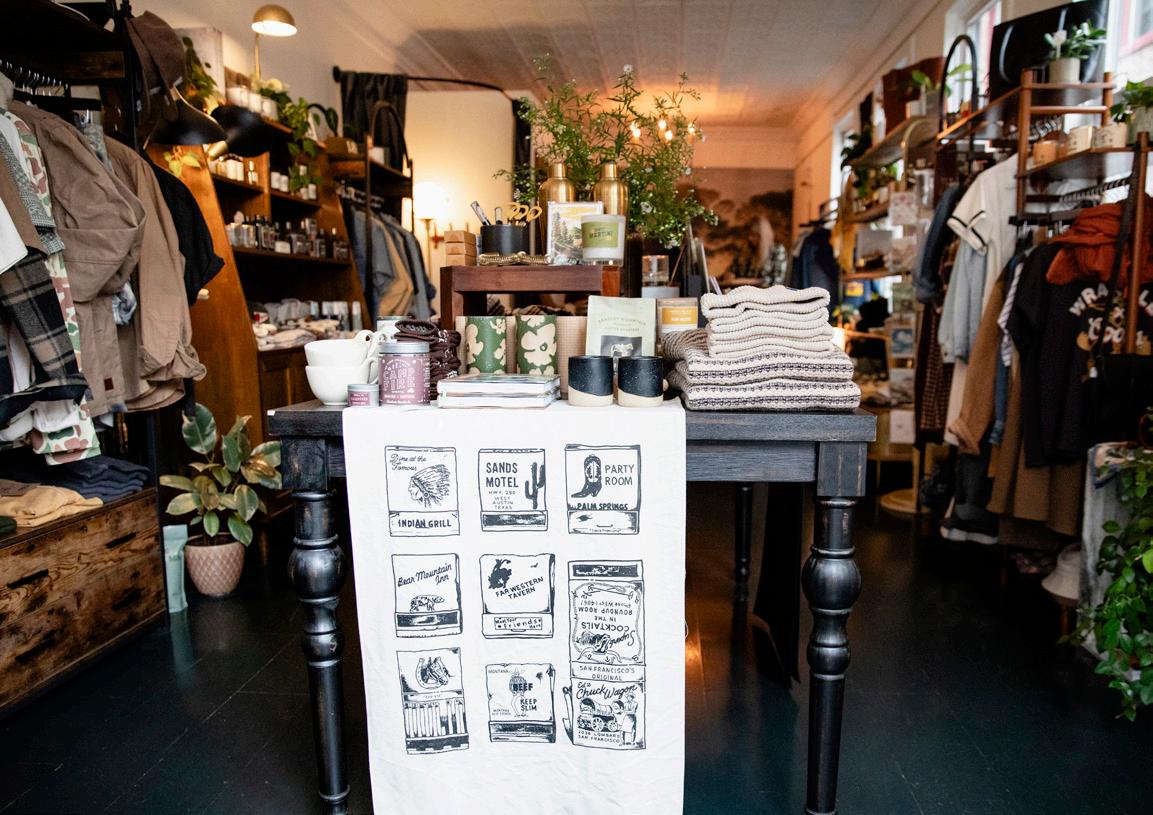
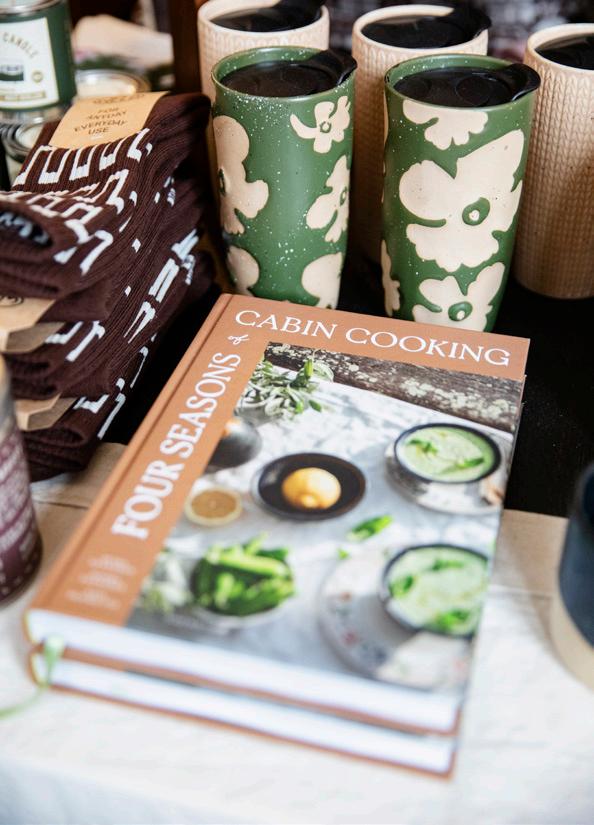
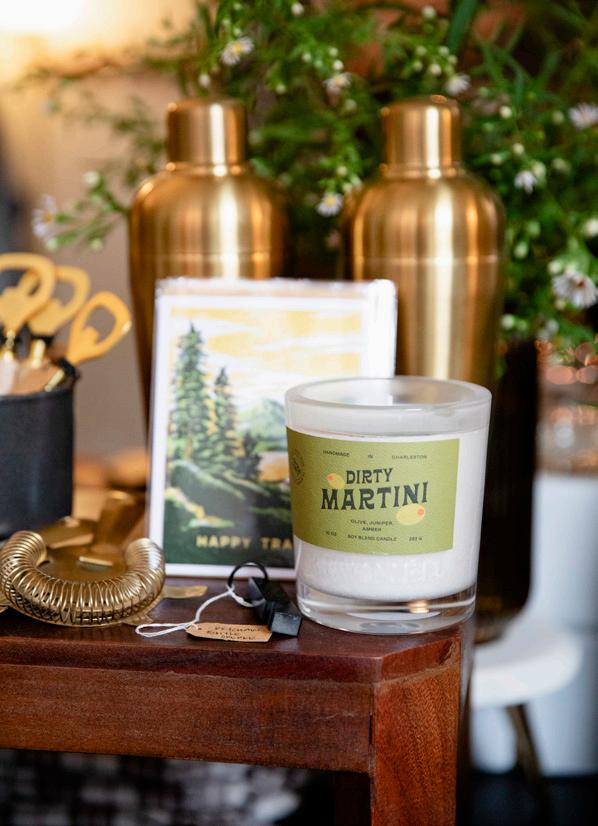
Looking for the perfect gift for someone special, or yearning for something fresh for your home or your wardrobe? Want a special souvenir of your Catskills visit? Check out Foundluck in Saugerties, where just browsing the loveliness will lift your spirits and remind you that life is about celebration—because that’s what Foundluck is, a shared celebration of lifelong dreams made real.
“People regularly walk in and comment on the scent of the store,”
Jess Mannhaupt says. "‘It smells so good in here!’ It's usually a mix of new candles or soaps we've gotten in. We're working on a shop candle that hopefully captures that scent for our customers to take home. Our hope is that stepping inside feels familiar and new all at the same time. We try to rotate goods fairly often, so even for our locals and regulars it seems different from week to week.”
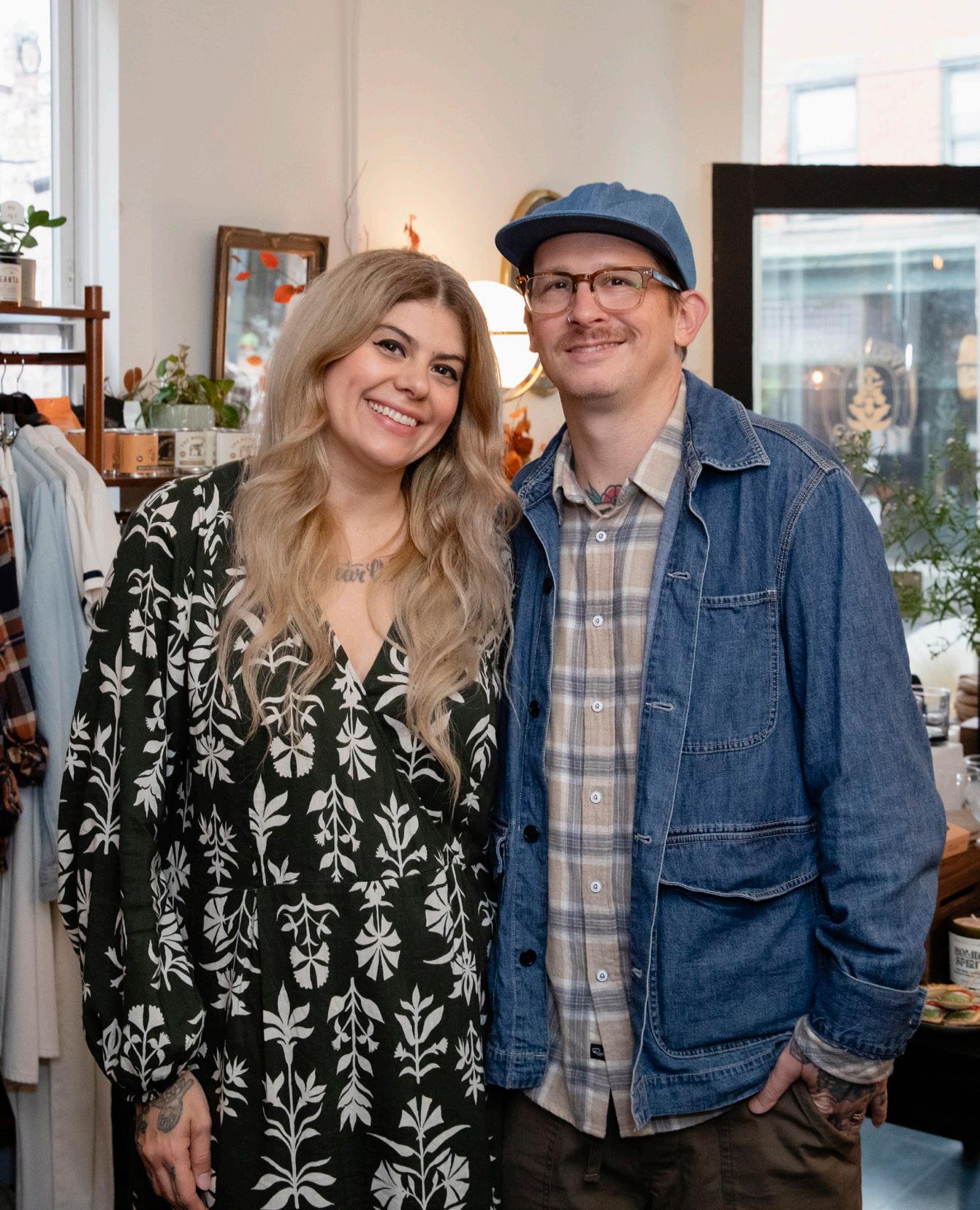
That’s the spirit of Foundluck, created as a labor of love by Mannhaupt and her husband, Mike—two

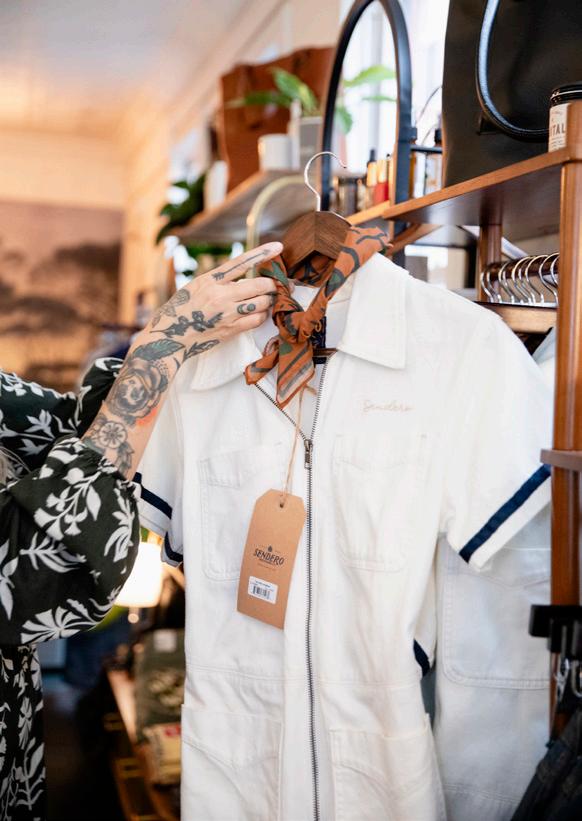
Hudson Valley locals (he’s from Lake Katrine; she grew up in Lagrangeville) who lived in Chicago for a few years, polishing their already-established retail skills, before coming home to nest in the countryside just north of Saugerties.
Mike’s grandmother had run the neighborhood convenience store while he was growing up, and he loved to spend time there basking in the affection she shared with her regulars. “He admired how she was a part of the community and had always wanted to find a way to do the same,” Mannhaupt says. “We actually met while both working at the Poughkeepsie Galleria in the early 2000s. We worked our way up through var-
ious mall jobs from sales associate to management. Then, while we were living in Chicago, we worked in a neighborhood with lots of small businesses, as opposed to the corporate retail world we were used to. I worked in a shop that carried both new lifestyle brands and vintage apparel, so I really got to see how the buying process worked and got to dig deeper into visual merchandising.”
A place of their own was a dream that came into sharper focus as their experience grew deeper, but it was after they came home that it started to feel achievable. “We really love Saugerties and are among so many great, hard-working business owners that promote and lift each
“We really love Saugerties and are among so many great, hard-working business owners that promote and lift each other up.”
– Co-owner Jess Mannhaupt
Since opening as Foxglove General in March of 2024, the shop’s wares have evolved to better fit the community.
other up,” Mannhaupt says. “The village and the building we're in have tons of historical charm and details that we appreciate. We really feel at home here and are thankful for how welcoming the neighborhood has been. Owning our own shop was something we would daydream about, but it was really the space we're currently in that made us take the leap. Driving through the village we had always admired the curved glass windows of the storefront and the old tin ceiling. As soon as we saw it was available and walked inside—that was it.”
Since opening as Foxglove General in March of 2024, the shop’s wares have evolved to better fit the community. “When we first opened, we went into it trying a lot of dif-
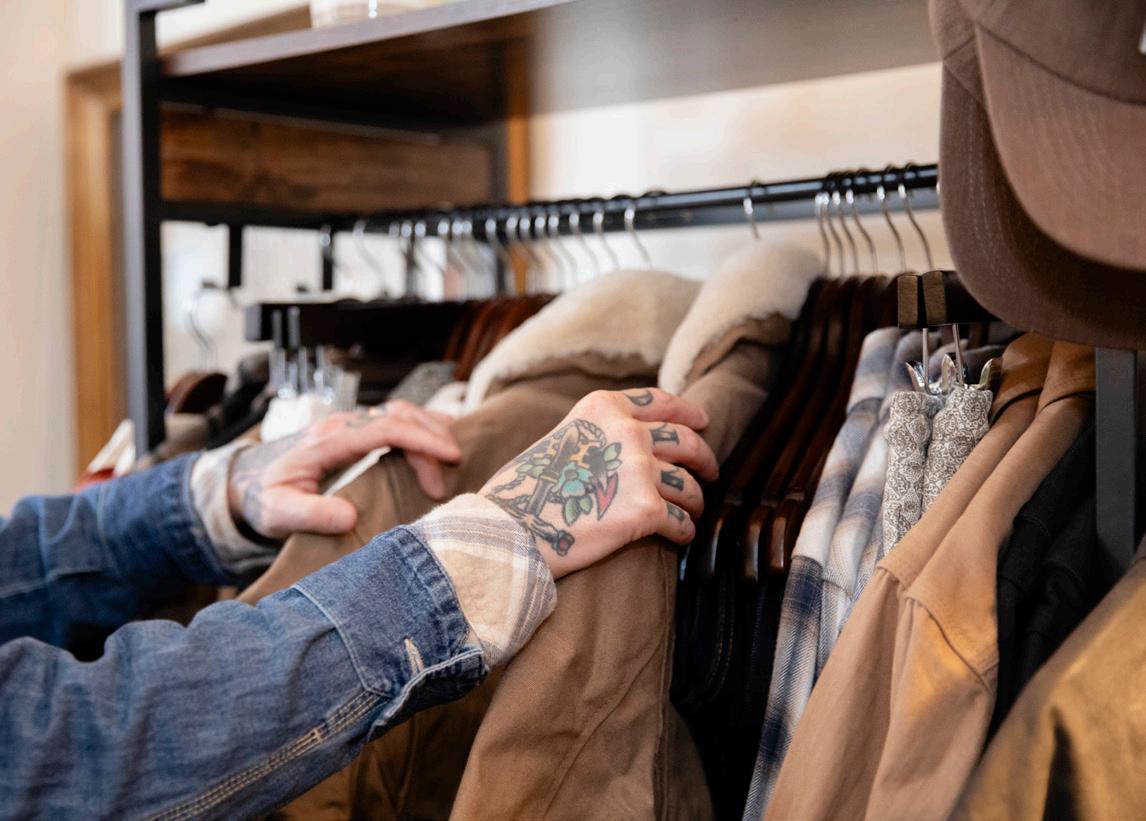
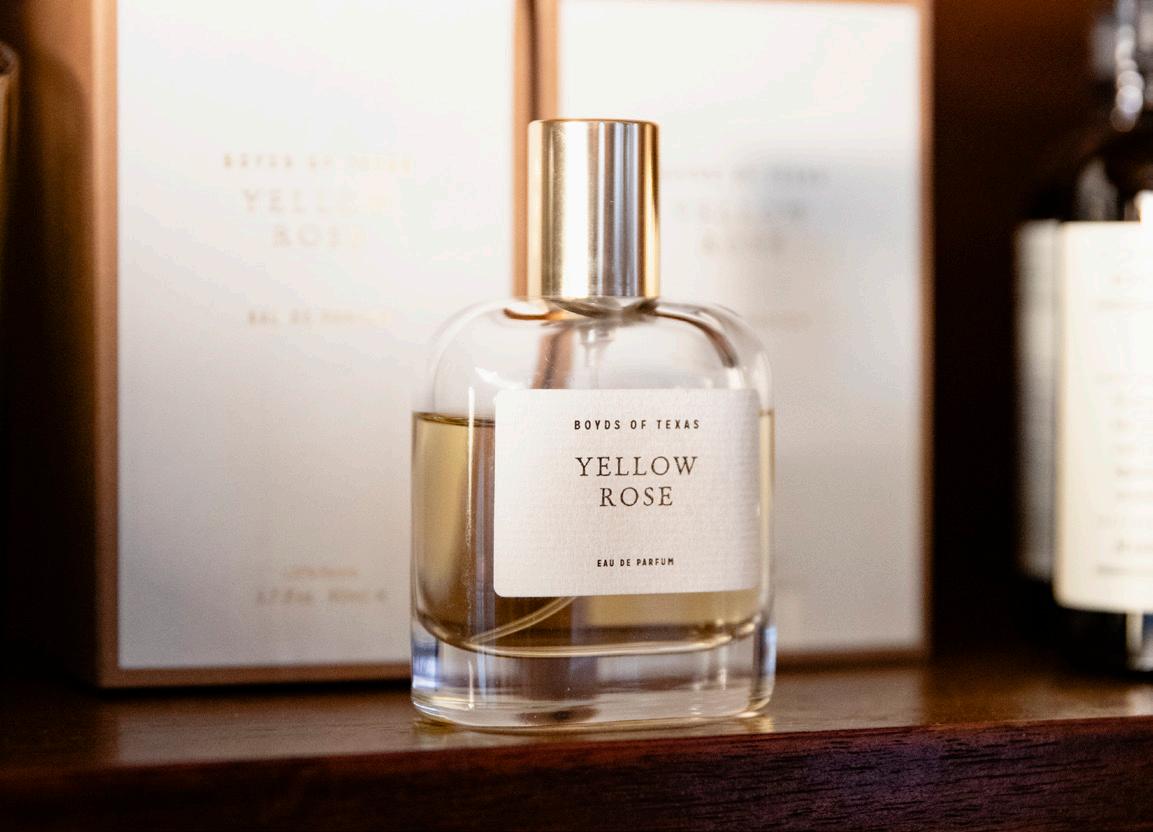
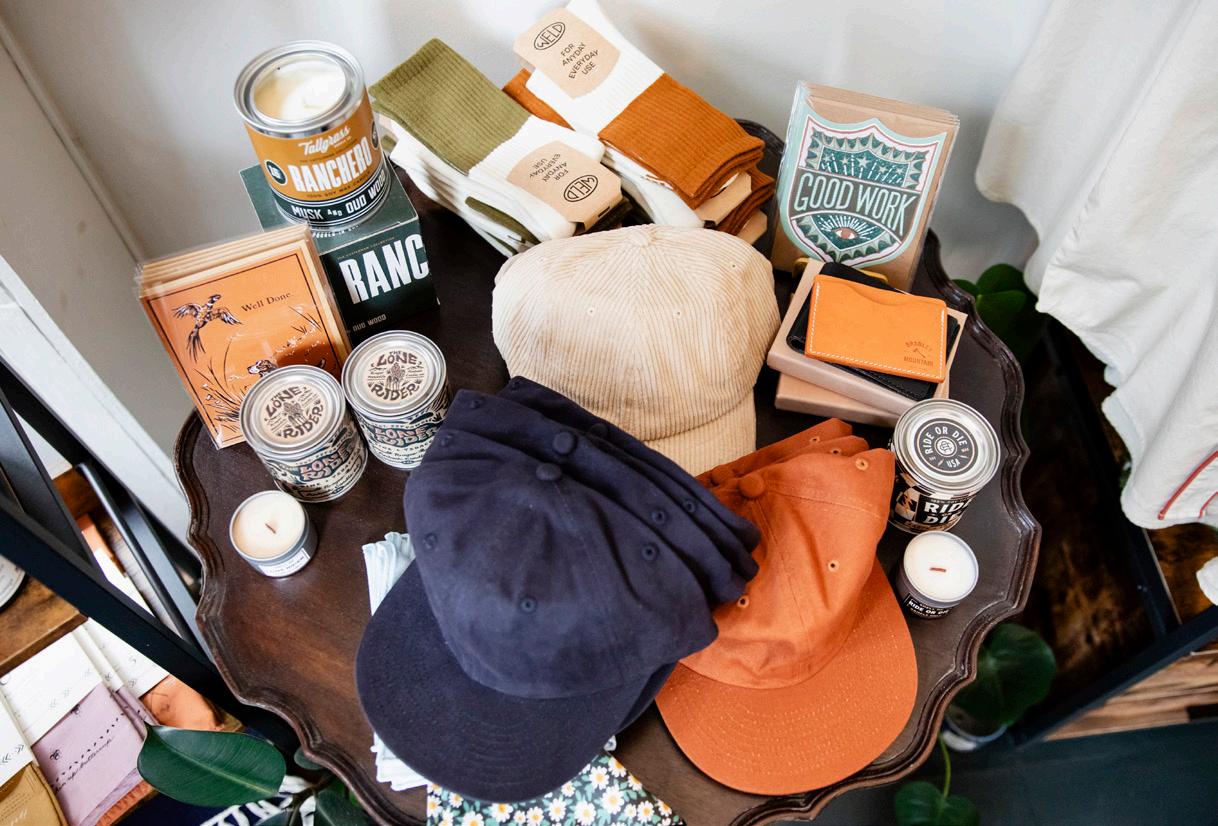
ferent product categories to see what would resonate with people,” Mannhaupt says. “We've somewhat scaled back on the pantry and ‘general store’ type goods and have expanded the men's and women's apparel. We've stuck with a tight mix of around seven clothing lines and do an assortment from each every season. It's a lot of classic Americana gear: snap shirts, lots of denim, whether it be pants, or shirts and jackets. There's accessories in that same classic vein—bandannas, hats, socks. It's funny, because I'll get asked if we're from out West because there's brands from Texas and California—but the truth is we try to carry a range of brands from all over the country. It's the best way to get a variety of things customers may not have seen before. It also allows


“I had someone tell me ‘there's nothing like being able to steer your own ship’ when we were talking about opening the store, and that really has stuck with me.” – Co-owner Jess Mannhaupt
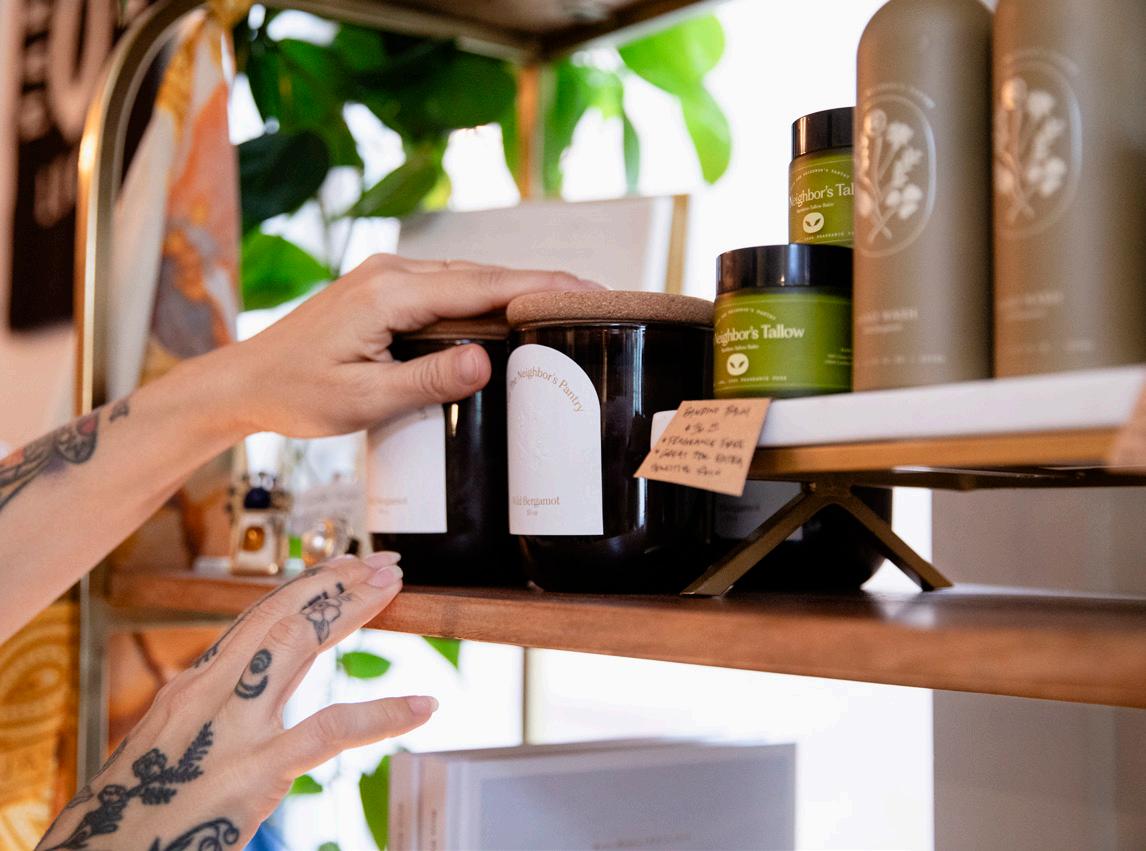
us to support small makers from not just our immediate area. There's also lots of gift items, which change often depending on the time of year. Candles and greeting cards are always a staple, then we drop in specific gifts for occasions like Valentine's or Mother’s and Father's Day, and we usually do something fun for the Fourth of July.”
When they first returned to the Hudson Valley, Mannhaupt spent a few years working in floral design and loved it so much that she wanted to make it a part of her retail journey. “Having fresh flowers around is really important to me,” Mannhaupt says. “So while we’re primarily a lifestyle shop, I offer hand-tied
bouquets in store during the local growing season and à la carte event and wedding florals year round. I also do some seasonal items like wreaths and small arrangements during the holiday season.”
It’s the kind of diversification and self-expression they could only dream about while working for others. “I had someone tell me ‘there's nothing like being able to steer your own ship’ when we were talking about opening the store, and that really has stuck with me,” Mannhaupt says. “In good times or otherwise, we have the ability to adjust, get creative, and really change the course if needed. Working in a small business changes everything;
you really have the freedom to get creative and make adjustments as often or as little as you need. It also allows you to build strong relationships with customers. It's just the two of us here, so it's really nice to be able to catch up with people when they visit regularly.”
Just as Mike’s grandmother did, they’re building their community and lifting it up, and a lot of that still has to do with good old-fashioned face-to-face interaction. “In a world where so much is happening online and [on] Instagram, there's moments that you just can't re-create in the digital world,” Mannhaupt says. “The scent of a candle, the way that the breeze and sunlight come through the front door at different times of the day, being able to feel the textures of different fabrics and see their true colors in person. We really believe in keeping these things alive, and while we understand their role and importance to the business, we try not to
get too caught up in the pace of the Internet and evolving technology.”
Keeping genuine interaction and customer service at the center means they’re getting to enjoy the reasons they both fell in love with shopkeeping in the first place. “I love hearing the stories of where the goods in the store end up,” Mannhaupt says.” There was a day we had two separate customers coincidently buy something they were going to wear for their upcoming weddings, which was really special. Another time, a mother picked out a packet of seeds to give to her daughter that had just bought her first home. It makes us work really hard to find the right mix of goods so that hopefully everyone can find a little something that speaks to themselves or makes them think of someone in their life they can give to.”
Both the Mannhaupts thrive on the rhythm of retail, planning a season or two ahead, constantly research -
“Not a day goes by where we don’t stop to acknowledge how fortunate we are to be doing something we’re both proud of.”
ing the coolest new items to stock. In rebranding the shop as Foundluck, they’re keeping to their roots, infusing personal meaning into every choice. “Mike and I started dating on January 14th in 2007, and got married on October 14th in 2016, so we figured we'd keep the tradition going, so our opening date as Foxglove General was March 14, 2024. With
our two-year anniversary this year, we've decided to rebrand as Foundluck; it feels like this fits us and what the personality of the shop has become since opening. Not a day goes by where we don't stop to acknowledge how fortunate we are to have been in the right place at the right time and be doing something we're both proud of.”
foundluck 85 Partition Street, Saugerties 518-859-1723 foundluckshop.com










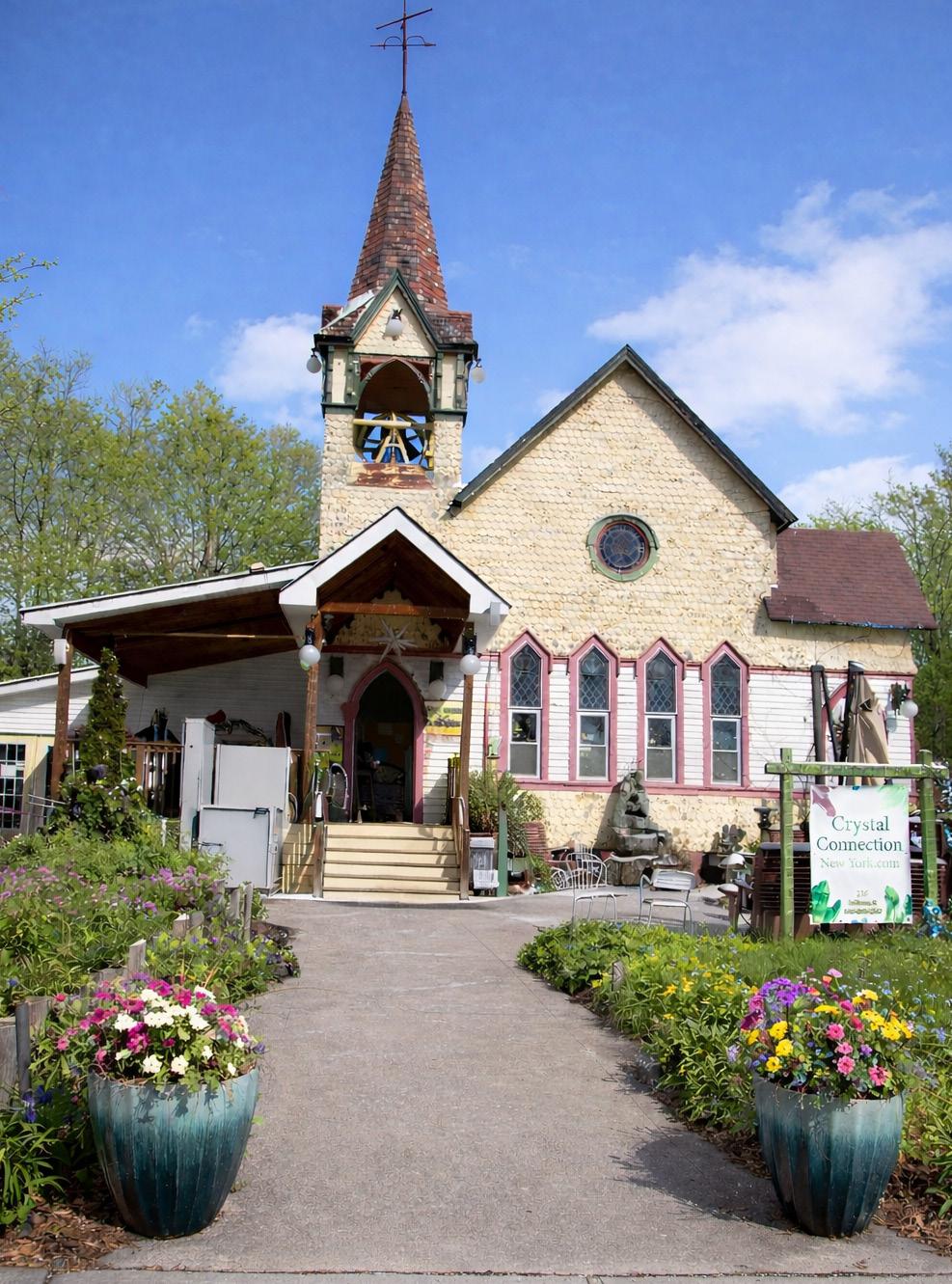
Want to boost your well-being? A new wellness center in Wurtsboro allows you the chance to try out some new ways of doing that, while being dazzled by a profusion of energetic beauty and meeting some lovely people.
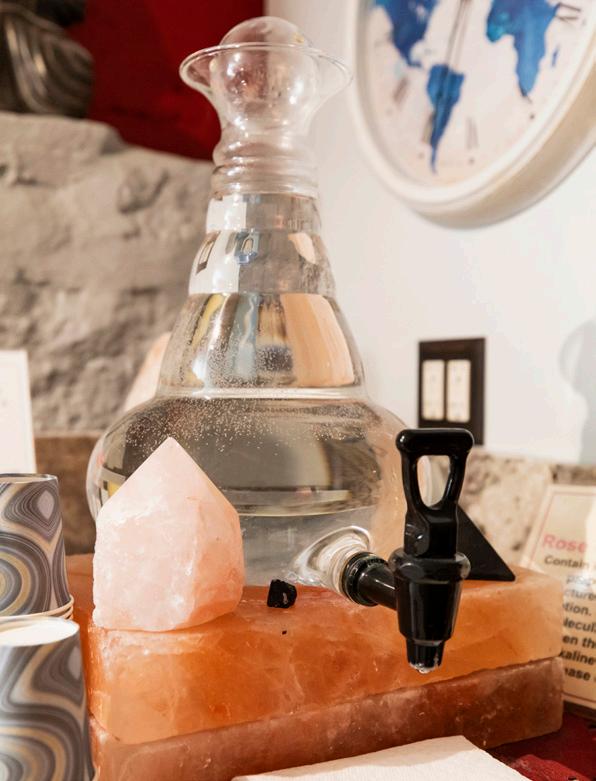
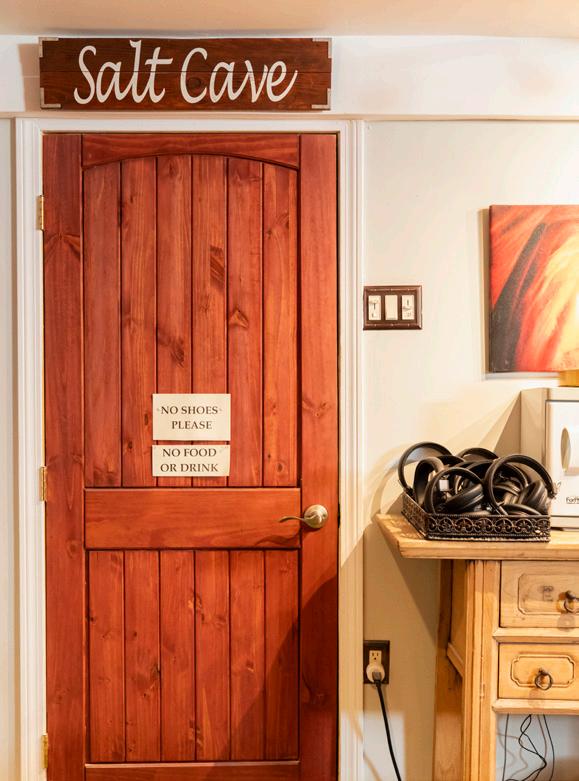
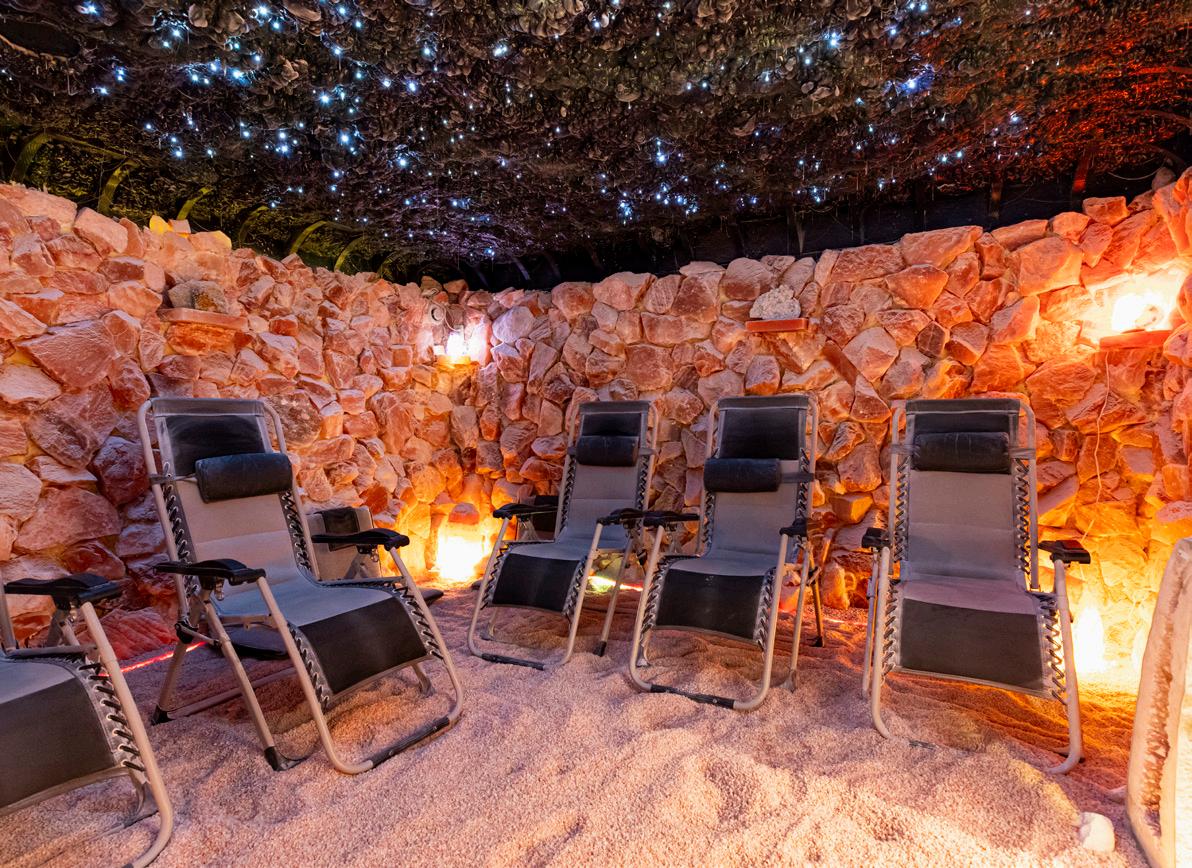
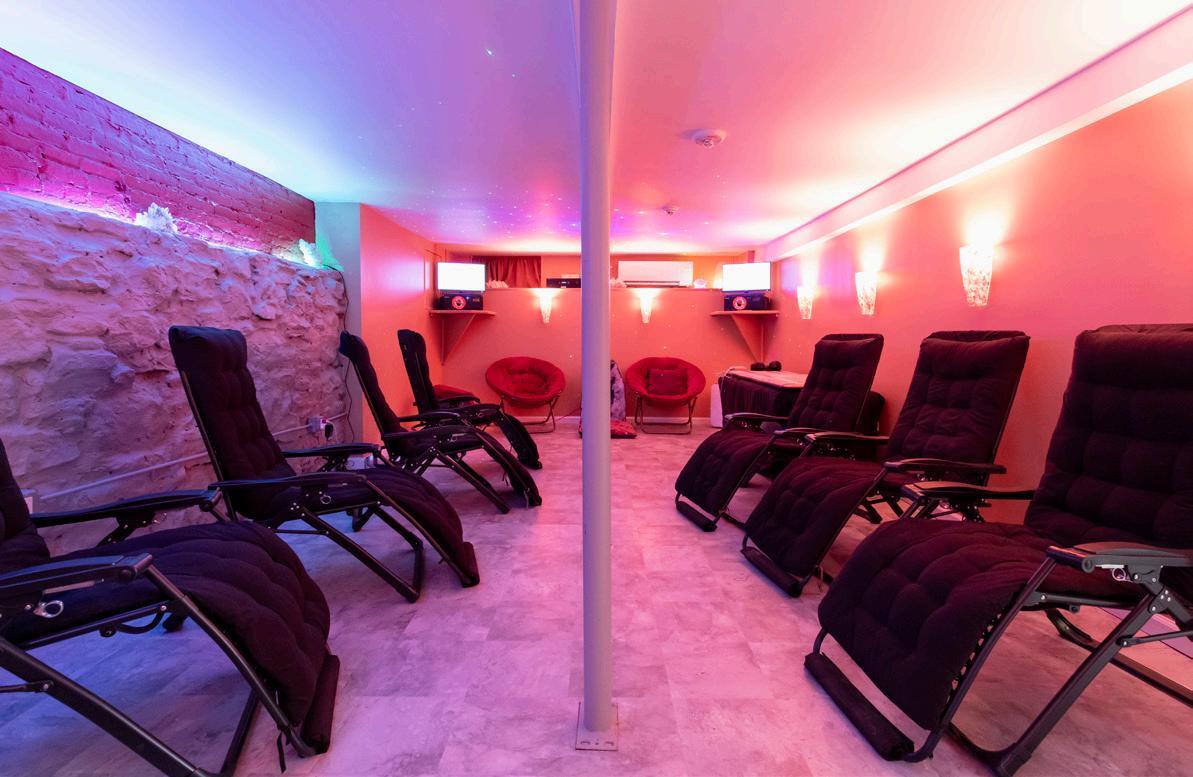
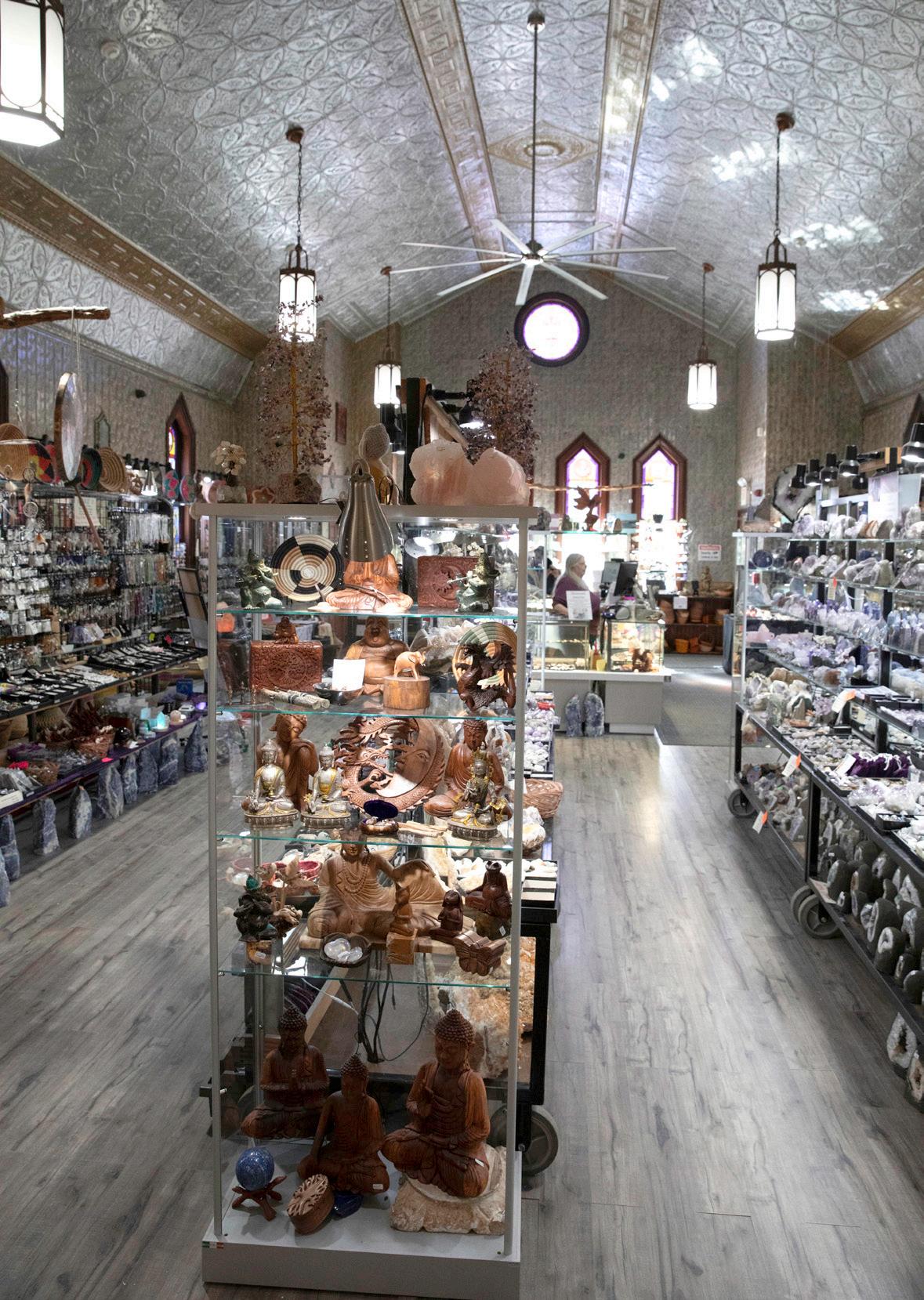
1890s Methodist church has a salt cave, geodes big enough to sit in, and a welcoming spirit that brings visitors back again and again. “A crystal lover’s dream!” says one of many five-star reviews. “The most energetically amazing place!” says another.
For close to two decades now, people have been journeying to Wurtsboro to experience Crystal Connection NY—the largest “rock shop” in the Northeast—and the adventure that is shopping here. Besides a vast array of crystals, jewelry, books, gemstones, and gifts, the metaphysically minded establishment housed in an
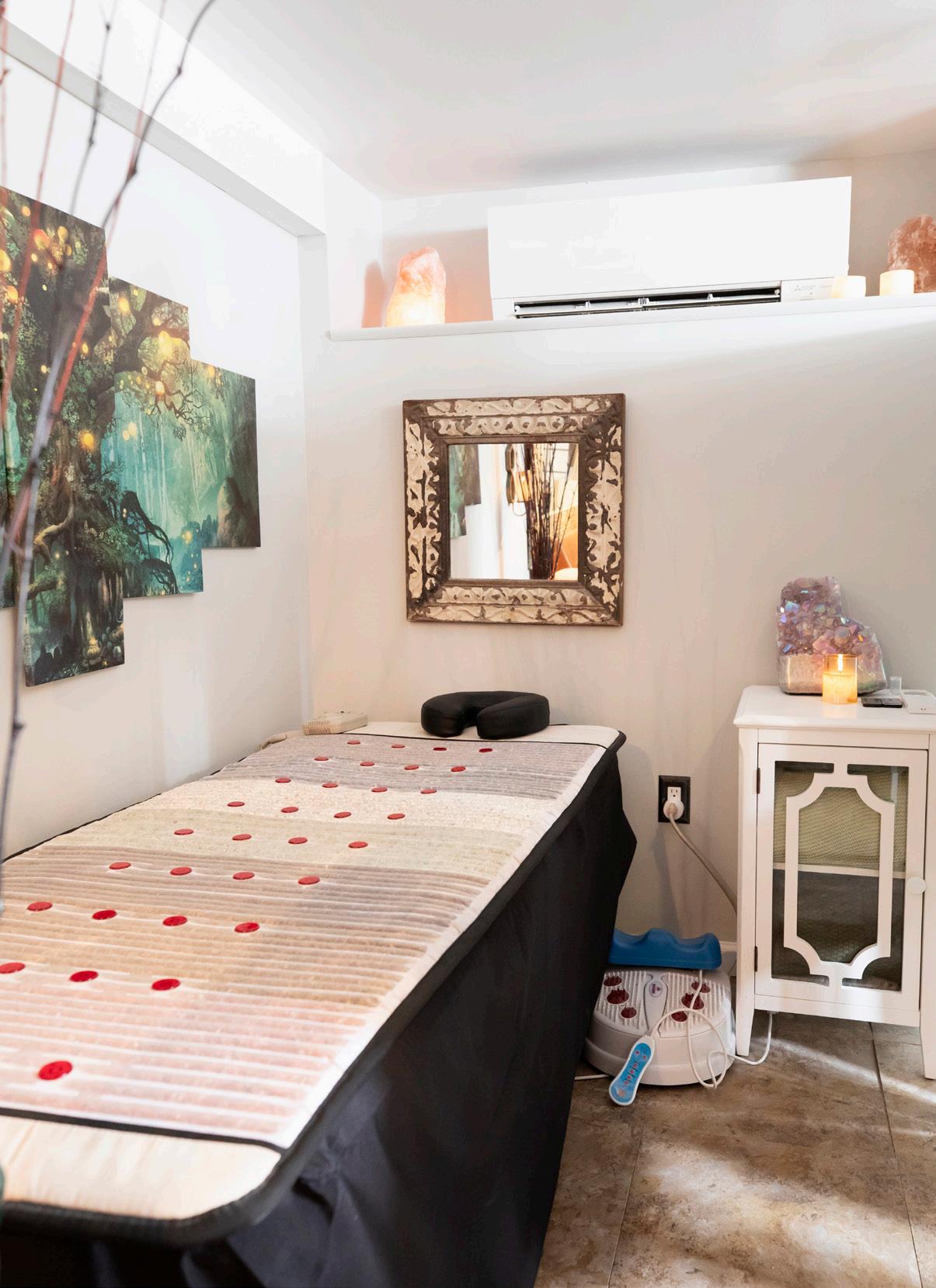
Heeding the vibes and following their intuition, the Crystal Connection core team—father and son duo Tim and Jonathan Bracci and Travis Ogden—began adding non-invasive energetic healing modalities to their offerings bit by bit—sessions with practitioners along with the salt cave and an assortment of infrared and
The Wellness Center, celebrated with an open house on March 20, will include several state-of-the-art non-invasive modalities.
energy-based mats, belts, and other tools, including a vibro-acoustic bed. As the popularity of that side of the business continued to grow, they decided that a full-service wellness center should live here—and this spring, you can stop in and give it a try.
The new wellness center occupies the adjacent building at 118 Sullivan, expanding the historic 1890s church at 116 Sullivan into a two-building wellness campus.
“It's been something that's been growing kind of naturally, in the works for years now,” says Ogden. “Tim has been into the healing arts for decades. Now we have the building right next door to the shop, so we could renovate that and grow into that harmony that just works so well with what we're already doing,”
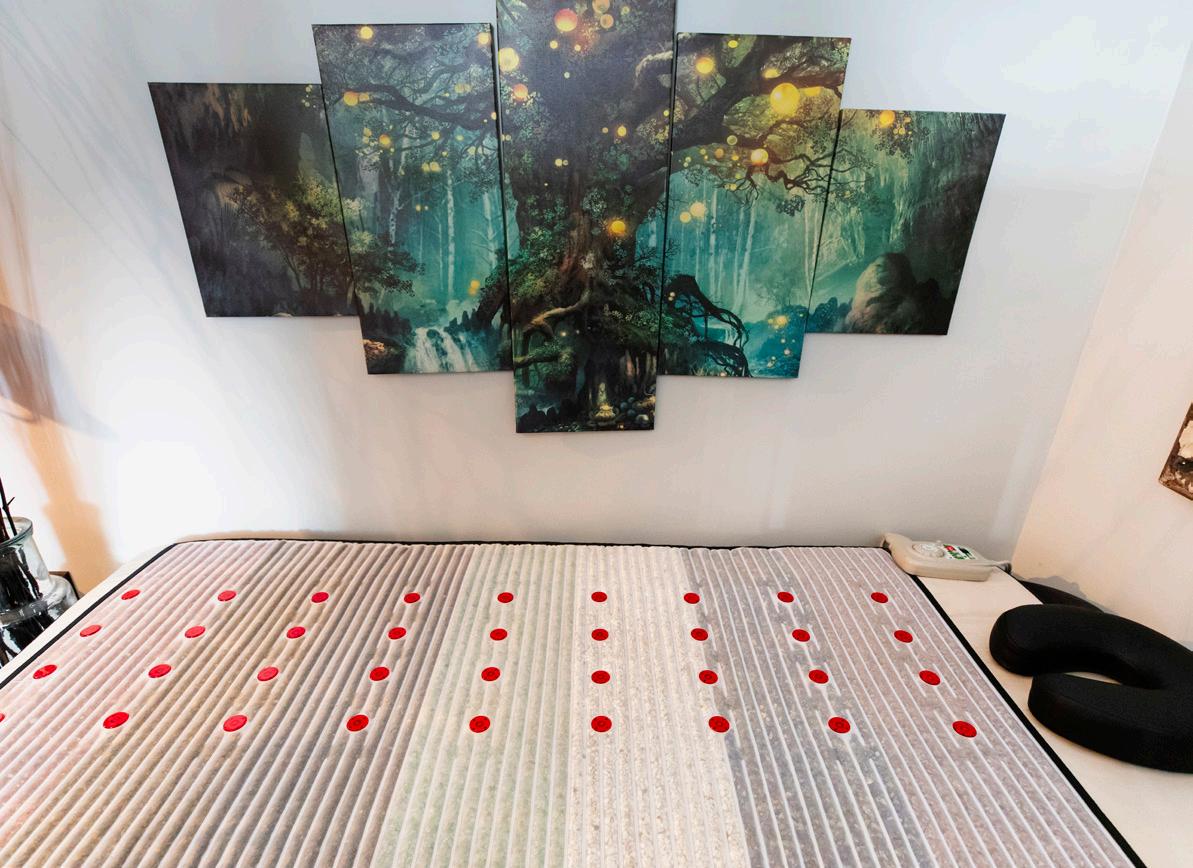
The Wellness Center, celebrated with an open house on March 20, will include several state-of-the-art non-invasive modalities. Pulsed electromagnetic field (PEMF) therapy uses low-frequency electromagnetic pulses to stimulate cell activity, promote natural healing, reduce inflammation, and improve circulation. Rife therapy, developed in the early 20th century, is an alternative, non-invasive treatment that uses low-energy electromagnetic waves to target and destroy harmful microorganisms, such as bacteria, viruses, and molds, by resonating with their specific vibrations. Crystal Light Therapy is a non-invasive holistic treatment that uses seven Vogel-cut quartz crystals, combined with colored LED lights, to align, balance, and clear the body's chakras and energy fields. Infrared
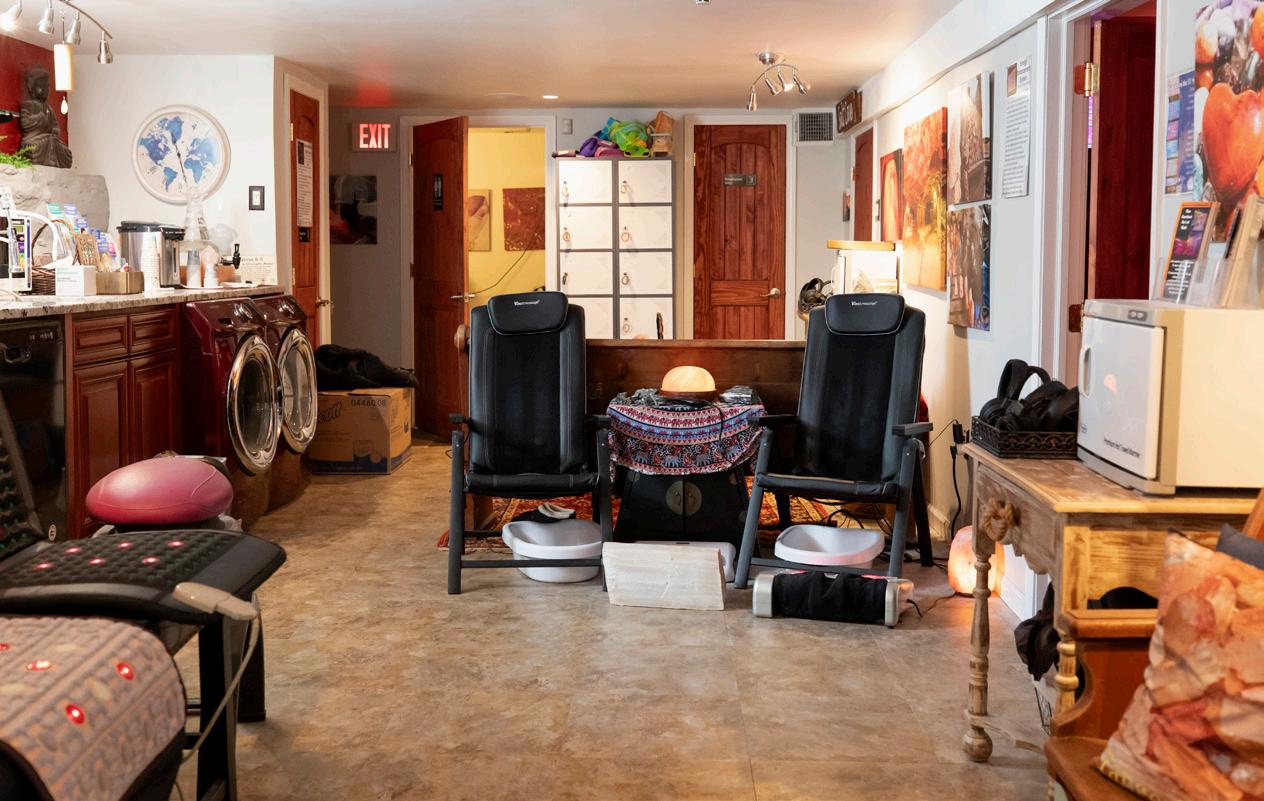
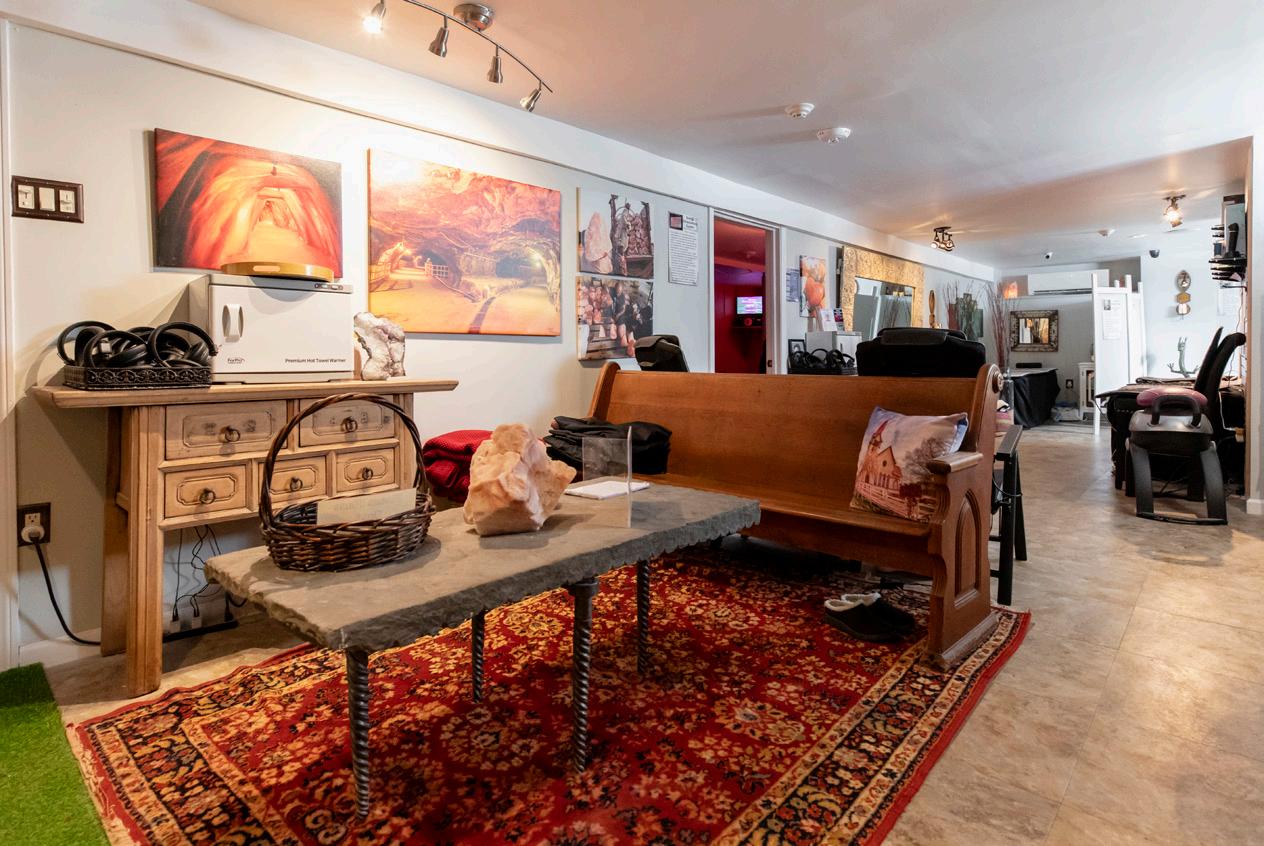
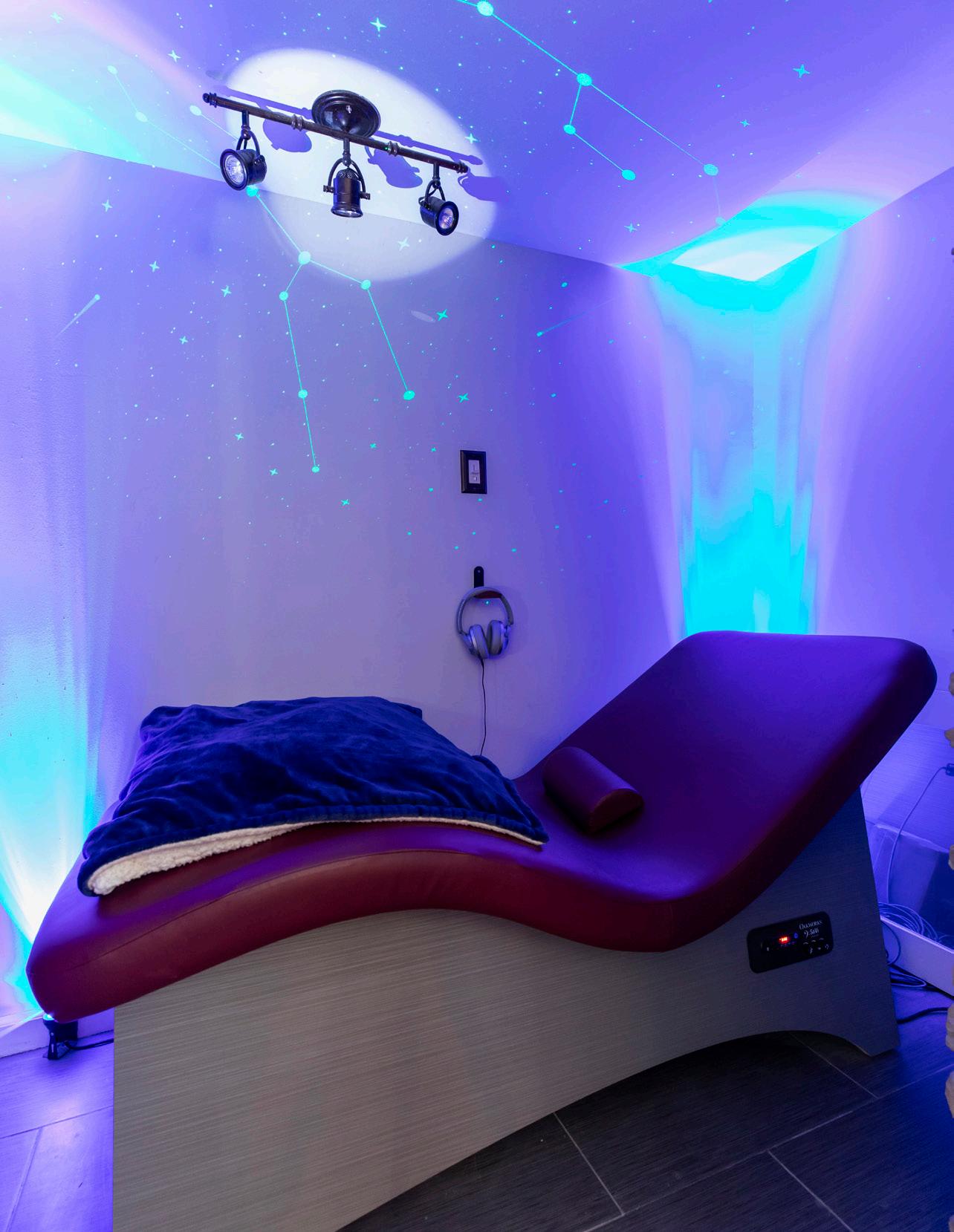
Complementary therapies like chiropractic, massage, and acupuncture, along with Reiki, aura photography, and intuitive readings, will also be offered on-site, making this a one-stop shop for well-being, insight, and clarity.
sauna therapy uses light-based heat to directly warm the body’s muscle tissue from the inside out, offering benefits like improved circulation, pain relief, muscle recovery, and detoxification at lower, more comfortable temperatures than traditional saunas.
Red light therapy uses near-infrared light to stimulate cellular energy production, offering benefits like improved skin health, reduced wrinkles, and faster wound healing. And cryotherapy, a therapeutic technique that exposes the body to extreme cold—in chambers or via localized nitrogen—to reduce inflammation, alleviate pain, and enhance athletic recovery, weight loss, and mood, works by inducing vasoconstriction to decrease blood flow and trigger natural healing.
“All of these natural wellness devices actually have a pretty good track record— They’re designed to be non-invasive and supportive, and might well help,” Jonathan Bracci says. “Chiropractors actually use PEMF a lot—it helps with all sorts of aches and pains. The cryotherapy is great to get you up and moving; it helps with endorphins, which help your mood.”
Complementary therapies like chiropractic, massage, and acupuncture, along with Reiki, aura photography, and intuitive readings, will also be offered on-site, making this a one-stop shop for well-being, insight, and clarity. “We also have a lot of tinctures and remedies that are made by a local Pennsylvanian Amish company. They grow all their own herbs,” Ogden says. “On what could be consid-
"We like to use the most non-invasive techniques as much as possible, because we can keep the price down and people can do more visits and get more benefits.” – Co-Owner Travis Ogden
ered the more metaphysical side, for the crystal light therapy, you lie on a bed that heats the body up and is good for muscle tissue, and also has crystals with light frequencies moving through them that go through your whole body. And then for Lyme disease, for instance, the Rife machine is a frequency-based machine that is very old technology, but all the research was done and they picked out every frequency based on what's going on your body, and the machine can take the same type of frequency to match it, to break up the bad stuff. There’s a frequency for just about every ailment.”
As you might expect, there are treatments for the mind as well as the body.
“We have a system called Brain Tap, which is like a very light hypnotherapy, a suggestive meditational device with
light therapy,” Bracci says. “We can find the right mode for you, whether you’re experiencing sleep conditions, negative thought patterns around money and finance and wealth, or the effects of loss and trauma—there's a program of brain taps that can be completed in sessions of about 20 minutes, and it helps to change your brain patterns and how you think. People report feeling a very real difference.”
“We’ll be adding more, of course, as time goes on,” Ogden says. “We’re going to have a menu with a lot of different packages and hourly rates that work out to be around $1-2 a minute—of course, if you’re working with a practitioner for massage or acupuncture, it’s more like $80 to $120 a session. But we like to use the most non-invasive techniques as
much as possible, because we can keep the price down and people can do more visits and get more benefits.”
The team did a lot of research before choosing the wellness center equipment, Ogden says. “We studied what heat, cold, electromagnetic pulses, and vibrational healing do to the body, going through all the different things that we could possibly do and finding what we thought were the best things to include. Tim (Bracci) was very instrumental in all this; he has many years of experience and a deep background in these techniques.”
Though your doctor might consider it woo-woo, the Crystal Connection folks have tapped into a deep alternative stream of therapies that have their own body of research and anecdotal lore attached. “Infrared is an old technology; how we're using it is newer,” Bracci says. “It uses a mat lined with crystals; the
infrared moves through the crystal, harmonizes that mineral energy, and floods your body with this enhanced energy. So it revitalizes the body, kind of like taking vitamin supplements, but on an energetic level—not to mention the muscle tissue and cellular regeneration. Adding light therapy is mitochondrial health, treatment for the powerhouse of the cell. What we've seen in terms of the impact on how people feel is amazing.”
The restored church will continue to house the crystal showroom, salt cave, vibro-acoustic bed, and Energy Enhancement System room, while the newly renovated building next door introduces private treatment rooms and dedicated technology suites designed for more individualized sessions.
Curious? Step inside, explore the crystals, and experience it for yourself.
crystal connection
116-118 Sullivan St, Wurtsboro 845-888-2547 crystalconnectionnewyork.com



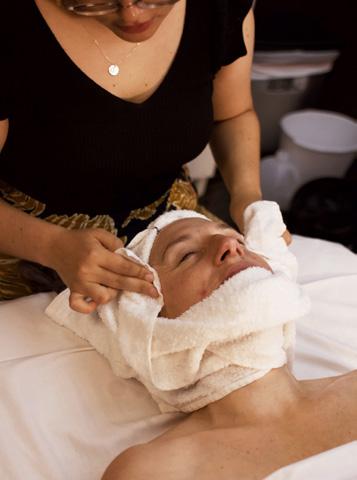
• shop our gift boutique
• therapeutic massage & reiki
• organic skincare
• gift certificates
73 crown st. kingston, new birchkingston.com 845-331-7139





finding a path out of the chaos and stress
Is your plate full these days?
Many of us know the feeling. Work–life balance barely scratches the surface; then there are family, friends, health, finances, and—somewhere on the to-do list—things you just plain need and want to do to be a happy human. Adulting is a lot, even or especially for those of us with an aptitude for it. We can easily take on a ton of roles and not be aware of how far we’re stretching until we suddenly realize we’re living at the center of a whirlwind.
Enter the WINGMAN. Kimberlie Dykeman knows how it is—and how to handle it. She’s spent over 25 years as an entrepreneur studying and mastering a wide variety of problem-solving skill sets that most of us don’t have at our fingertips—but when we need them, we really, really need them. Her roles include estate manager, lifestyle coach, personal assistant, private concierge, real estate salesperson, and a range of things that are hard to categorize and perhaps understood by considering her nick-
by Brad Switzer.


Dykeman’s calling is making your world a better place, smoothing the wrinkles from your life, and facilitating your success in ways you may only have dreamt of.
names: Troubleshooter, Connector, Miracle Worker, Confidante, and Fixer. Through her company WINGMAN Enterprises, Dykeman’s calling is making your world a better place, smoothing the wrinkles from your life, and facilitating your success in ways you may only have dreamt of; she’s in the business of abolishing stress and chaos wherever and whenever they pop up.
“Lots of people have one or more trusted wingmen in their lives: best friends, confidantes, hairdressers,” she says. “It’s wonderful to have friends and loved ones like that, but there are times when a situation
arises that calls for something more. Your people may be a little too close to be objective, or maybe what you need is outside of their area of expertise. That’s when Wingman can be the magical ingredient that can turn your struggles into solutions.”
A globetrotter since completing studies at Binghamton University, her entrepreneurial journey began in Austin, TX, where she started a personal training business. Her empathetic nature clued her in to the reality that there were situations facing a lot of her clients that physical fitness alone wouldn’t fix. “I found that many people who sin-
"I developed my own methodology that transcended the body, because I’ve always believed our lives involve so much more: body, mind, family, career, and role in society." – Owner Kimberlie Dykeman
cerely wanted to get fit and strong were also dealing with challenges and hiccups that 12 more pushups or lunges wasn’t going to resolve,” she says. “There might be underlying things that brought them to where they were in the first place, things that were impeding their ability to stick to a training plan.”
Like many a personal trainer, she found herself hearing about a lot of these peripheral issues in the course of any given day. “I knew there was more to it than I could do in a strictly fitness-focused role,” she says. “So I went through months, probably a year, of asking questions and doing all sorts of research, and then I segued into
lifestyle and stress management
coaching. I developed my own methodology that transcended the body, because I’ve always believed our lives involve so much more: body, mind, family, career, and role in society. For me, the hub of that wheel is my spirituality and my relationship with God; but the basic methodology—which has developed through several iterations and just keeps growing—equipped me to look at what was going on in those pillars of a client’s life and assess their situation. To say, okay, let’s figure this out. Let’s address the people, the places, the things, and the habits that might be holding you back, and find the solutions you can act on that will lead to solv-



ing problems, removing stressors, and getting you to your goal.”
Dykeman initially found that the American Council on Exercise didn’t even think lifestyle coaching was a thing. “They didn't even give me the time of day,” she says. “They said, ‘We don't know what you're talking about. This is such a silly topic!’ I said, ‘Well, it's going to be huge someday.’ But I didn’t bother trying to convince them. I built out my methodology, and that led me into a full-blown coaching business.”
A stand-out in Austin’s tech space, Dykeman coached executives and startups on their quests for success and happiness, and eventu-
ally bloomed into a motivational speaker, published author, TV host and producer. During her time spent in places from Los Angeles to Boston to the Philippines, Kimberlie kept building her techniques along the way and finding the common-ground issues that make life worth living. “You assess the situation, marshal your tools and resources, make a game plan, and figure out what to outsource, what to do yourself, and how to fit it all together,” she says. “For me, I know I want to work as smart as I can, think clearly, feel strong and healthy, and lead a happy life. So, over the decades, I’ve been crafting a simple methodology from which I can extrapolate that to fit just about any situation you might be
"My whole goal is always to be of service, to motivate, educate, activate and execute for people so they can have a better life with less stress and focus on what really matters to them." – Owner Kimberlie Dykeman
facing. My whole goal is always to be of service, to motivate, educate, activate and execute for people so they can have a better life with less stress and focus on what really matters to them. I help people sort priorities, deal with the things that are keeping them up at two in the morning. I think it’s almost always easier for someone else to see a path forward out of the chaos, to mitigate the stress, and focus on the goals. We get granular, make a game plan, and take it from there.”
Eight years ago, facing a complicated health crisis, Dykeman came home to heal and found that plenty of us right here in the Hudson Valley needed a wingman too. Mid-pandemic, she reinvented herself and launched her multifaceted business, WINGMAN Enterprises, and she feels as though the move has kept her in sync with her own sense of the divine and her own life path. “Being seriously ill—I couldn’t
drive, my memory was shot, I could barely stay awake for more than a couple of hours—and having to shut down my entire life out there and get home was a big lesson in applying my techniques to my own life. Then, as I healed, I didn’t want to commute to the city every day, so I started looking at what I could do up here. I found there were people juggling second homes, family obligations, big decisions of all sorts. So, I inserted myself as estate manager and personal assistant, and it really calls upon my whole skill set, which is constantly expanding.”
Every day brings fresh situations. What do you do when the pipes burst in a sixth-floor walkup and the owner is in Egypt? How do you handle a blended family Christmas across three separate homes? How does one best manage a squirrel invasion, an aging relative’s needs, or an offspring’s college logistics in a faraway state? “You name it, Ghent House, One of Dykeman's Concierge Properties.
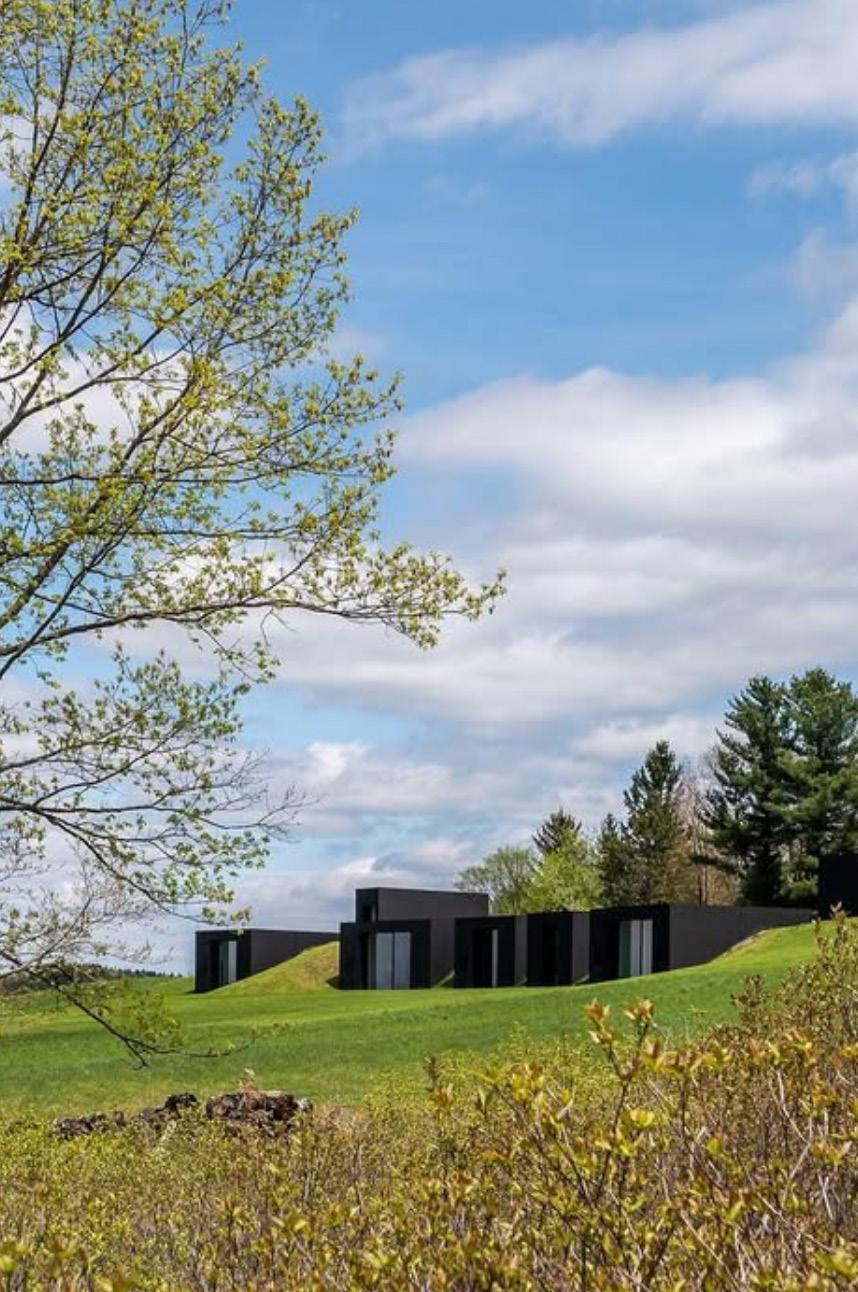

I’ve dealt with it,” Dykeman says. “It amazes me, the variety of scenarios people have entrusted me with back here in New York over the past several years. But I’m blessed with “mini-me” helpers, connections and resources all over the country, from all walks of life, and I just keep cultivating more, globally and locally. It’s amazing how much we have right here. I love the Hudson Valley, and I can tap into amazing, seasoned vendors, contractors and experts, and it’s such an honor to be trusted in my hometown.”
She’s developed a custom that she believes helps weave the fabric of the local community and build
neighborly networks. “About once every quarter, I have what I call the Wingman Social; I invite my network to come get together for a meetup, maybe at Greig Farm for a beer or Mighty Donuts or some other wonderful local spot, so I can just love on them and thank them and they can see for themselves what a wonderful community this is and further build their own relationships. That’s the core of Wingman, really; I just come at every situation—physical, mental, spiritual, professional—from that place of love. That, plus decades of experience, helps my clients to ultimately work smarter, think clearer, feel healthier, and live happier lives.”
wingman enterprises
Based in Rhinebeck, available worldwide 310-500-9587, grabyourwingman.com
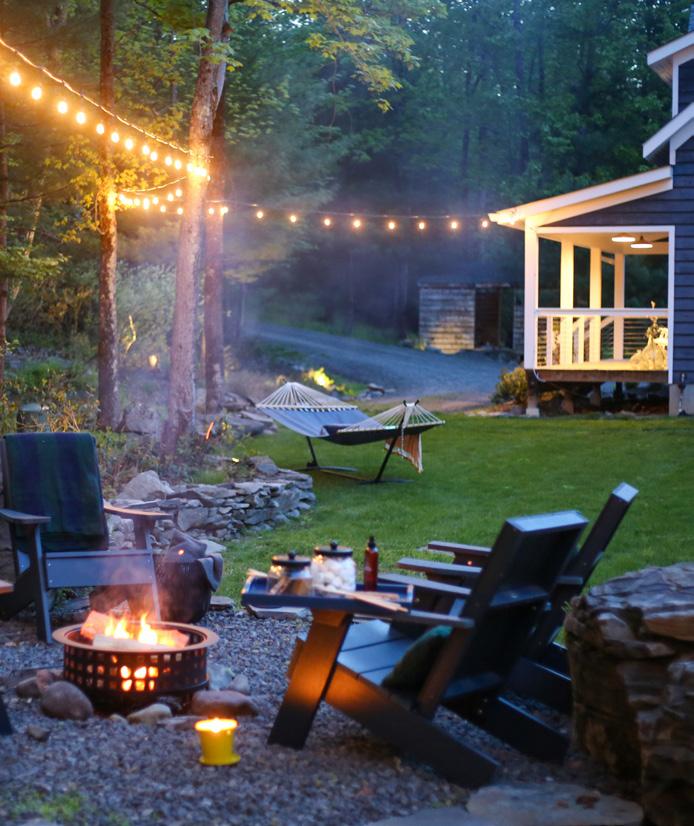






WE IMPROVE OUR CLIENTS’ LIVES BY IMPROVING THEIR LIVING SPACES
WE IMPROVE OUR CLIENTS’ LIVES BY IMPROVING THEIR LIVING SPACES
We’re not your typical kitchen and bath company.
We are a design firm that creates functional spaces tailored to the unique needs and preferences of our clients.
We’re not your typical kitchen and bath company. We are a design firm that creates functional spaces tailored to the unique needs and preferences of our clients.
WE IMPROVE OUR CLIENTS’ LIVES BY IMPROVING THEIR LIVING SPACES
We pay close attention to detail and take the time to understand their lifestyle, needs, desires and vision, ensuring that every element is both intentional and beautifully designed.
We pay close attention to detail and take the time to understand their lifestyle, needs, desires and vision, ensuring that every element is both intentional and beautifully designed.
We’re not your typical kitchen and bath company. We are a design firm that creates functional spaces tailored to the unique needs and preferences of our clients.
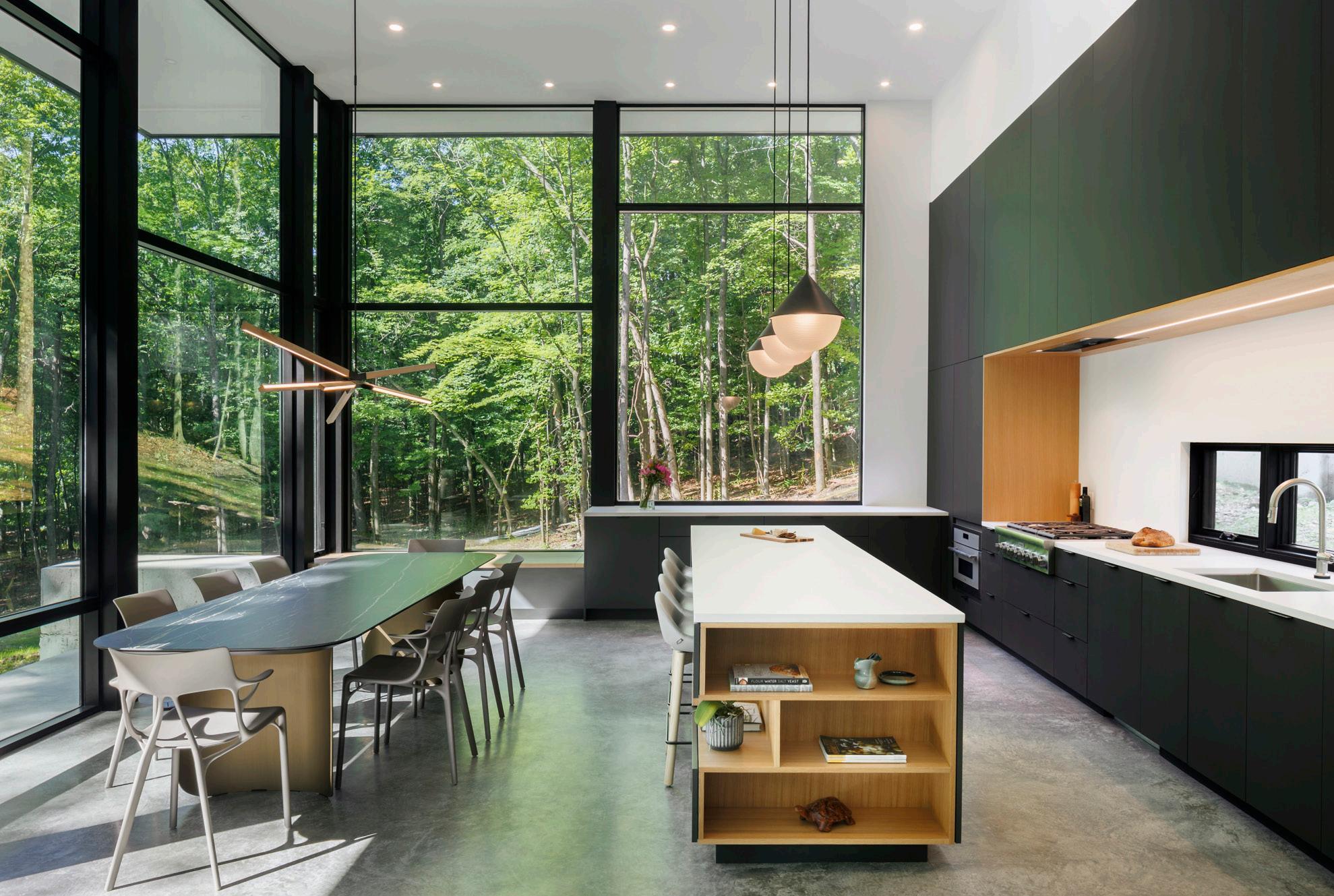
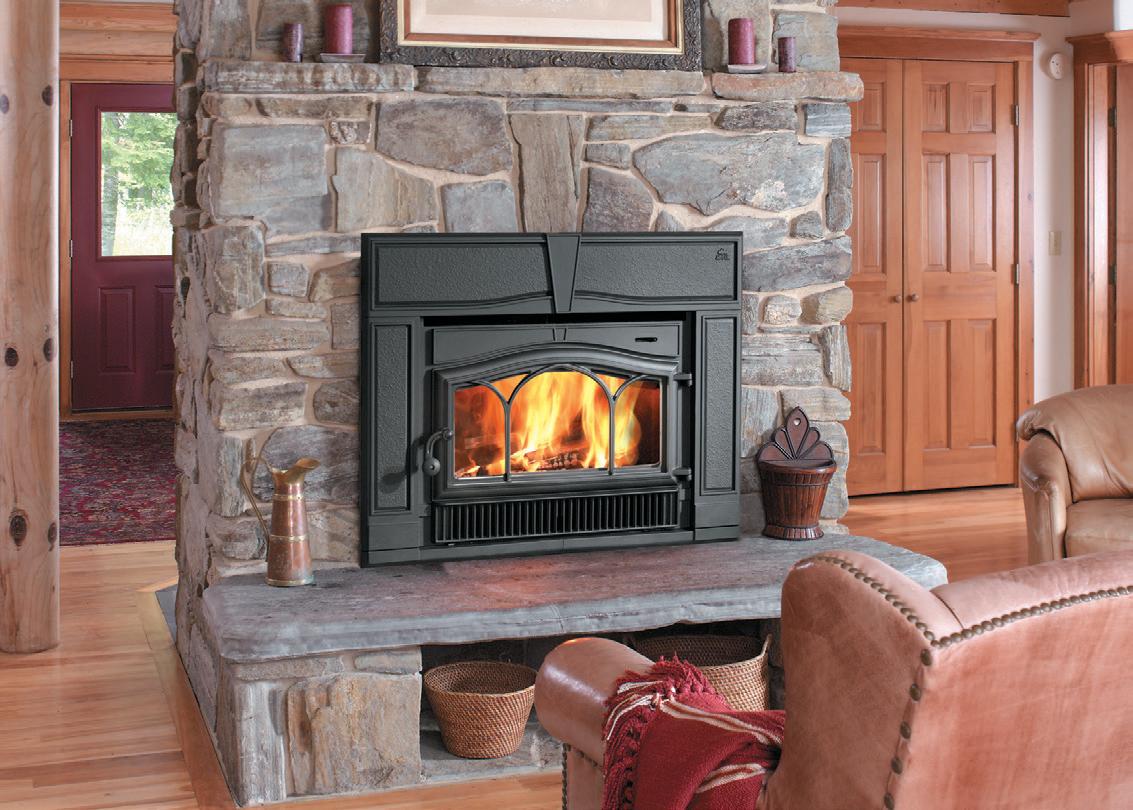

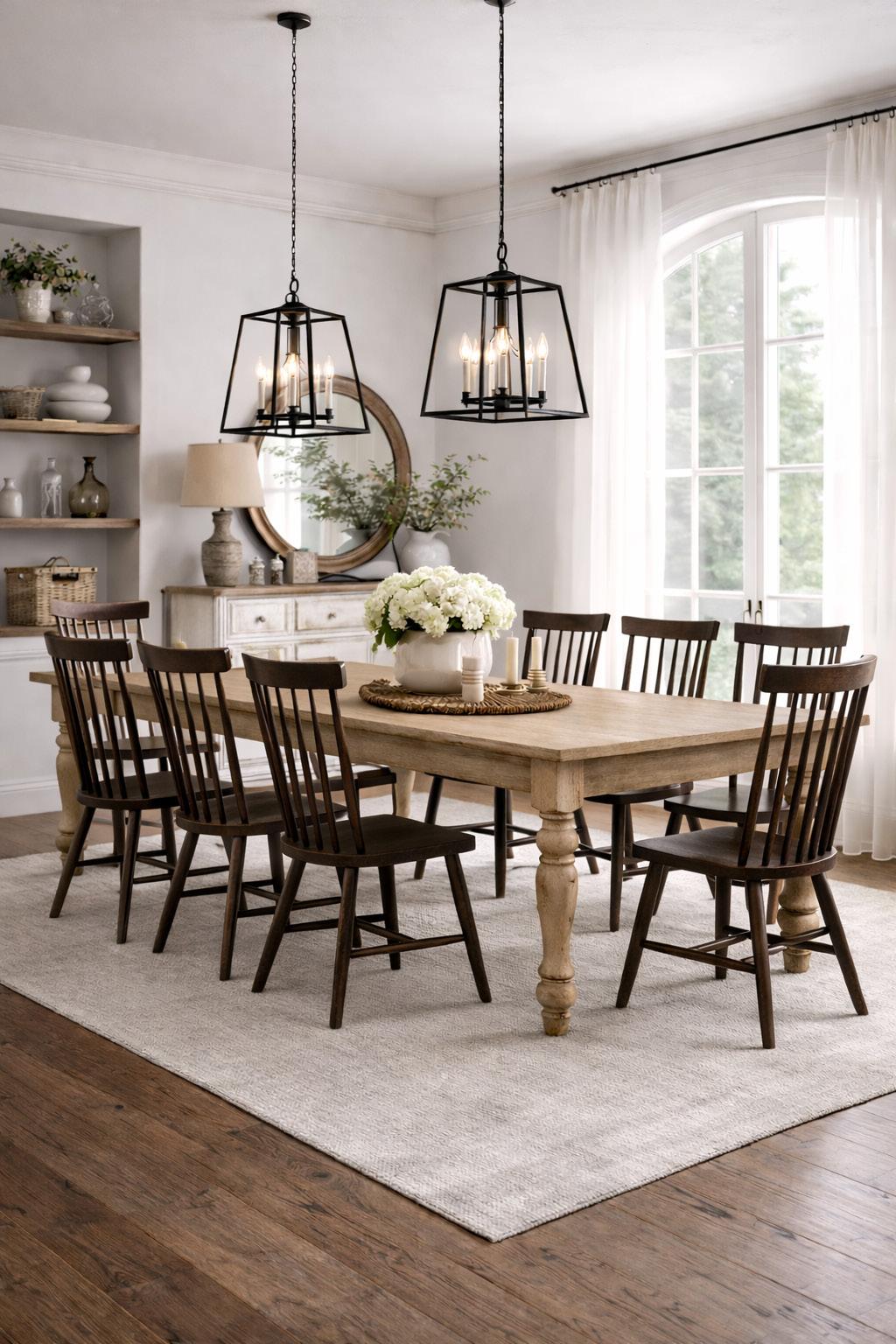

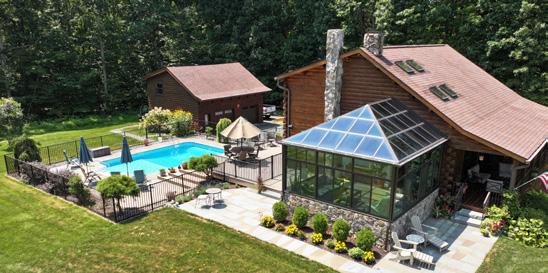

It’s
Photo by Ali G. Rashidi.

In case you haven’t noticed (wink), it’s lovely around here in the springtime. Part of that is innate. The landscape has great bones, from mountain peaks to muddy shorelines and everything in between. Part of it is cultivated: humans inspired by the natural glory of this place have made an art of collaborating with what exists to add their own bursts of form and color, planting and tending and nurturing and trimming to craft the looks they love.
You’ll see examples of this art form dotting the byways and countryside everywhere you go, from rolling meadows to inviting arbors, from swaths of flowering trees to a carefully nurtured burst of vines encircling a fence or trellis. We
love our landscape and it loves us back.
Here are some places to check out where you can relish this relationship in its full glory. If you’re visiting, add one of these special spots to your itinerary for a heaping helping of grace and peace. If you’re a resident, consider this a study guide: gardeners through the ages have been guided by the hills and hollows, the waters and the stones, to create something original with the beauty that’s here, and you can do likewise in your own backyard, whether it’s big or small, flat or sloping, shady or sun-kissed, or all of the above.
Have a beautiful tour, and stay tuned till the end for our local garden tips.
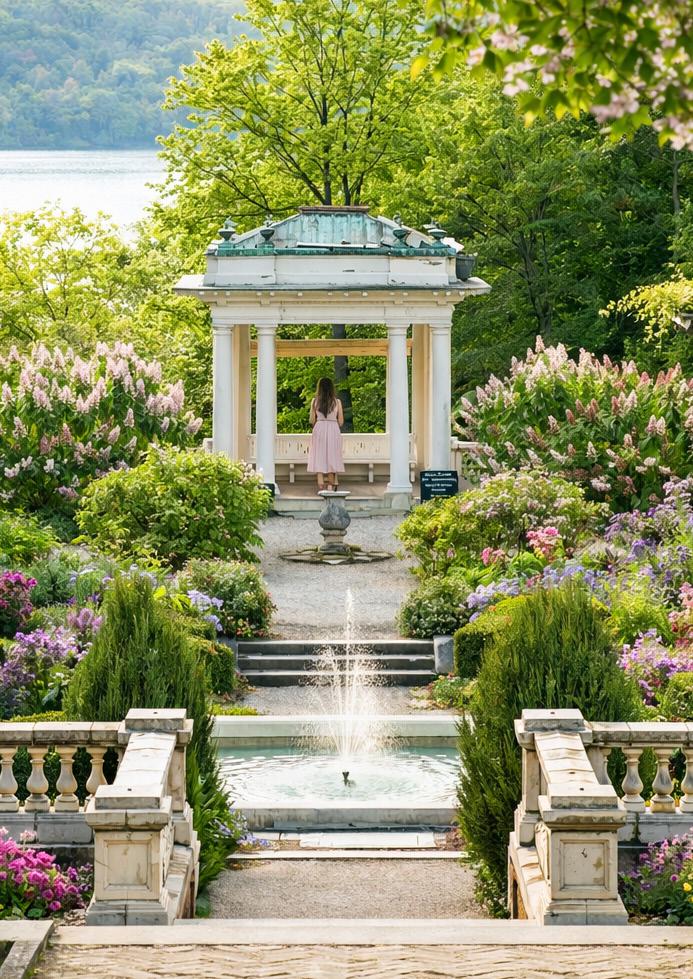
Blithewood Garden in Annandale is a formal Italianate walled garden set on a bluff that swoops dramatically toward the Hudson. Designed in 1903 by Francis Hoppin for a New York City real estate magnate and his wife, it occupies what AmericanAristocracy.com designates as “one of the most enviable positions along the Hudson.” Squint just a bit and you can conjure the specters of Gilded Age afternoons and sunsets.
The symmetry and strong lines framing views of the Hudson and Catskills were originally laid out in 1841 by noted landscape designer Andrew Jackson Downing, a Newburgh native and horticulturist, as well as a strong advocate for the importance of public green space. Sensibly, Hoppin kept much of Downing’s original plan intact.
Note the strong framing established by the geometry of the pathways and built elements. Consider planning out your own pathways, structures (a birdbath? a bench?), and fences before you plant.
Blithewood Manor was gifted to Bard College in the mid-20th century, and the grand manor now houses the college’s Levy Economics Institute. Restoration began in 2016, a joint project of Bard and the nonprofit Garden Conservancy. The garden is part of the Bard Arboretum; you can pick up a self-guided walking tour brochure at one of several on-campus visitors centers or download a printable version online. It's open to the public free of charge from sunrise till sunset every day.
30 Campus Road
Annandale-on-Hudson, NY 12504-5000
845-752-LEAF (5323) • bard.edu/arboretum/about/blithewood
Locust Grove Estate in Poughkeepsie is famed for having been the home of Morse Code inventor Samuel Morse, who transitioned a so-so farmstead into a scenic wonder with a view framed by woodlands, orchards, and meadows. Its gardens were expanded and re-envisioned by the property’s next owners, William and Martha Young, who purchased the property in 1895.
Their planted gardens—both the formal garden and the “cutting garden,” as well as the kitchen garden that fed the family—were Martha’s domain; they’ve been preserved and restored to capture her unique tastes.
The Youngs added a privacy barrier of trees and shrubs on three sides, leaving open the Hudson River viewshed, where Morse had painstakingly developed a “composed picture,” working, as Morse had done, in collaboration with existing features of the landscape he adored. (“I am almost afraid to tell you of its beauties and advantages,” Morse wrote to his brother of the property on the day the sale closed.)
Note the gentle blurring of the lines between garden, meadow, and woodland. Locust Grove’s gardens and landscapes present a master class in working the land with a light touch, adding features that spark joy while protecting Nature’s own creations.
William and Martha’s daughter Annette Innis Young created the nonprofit foundation that maintains the house and grounds. The grounds are open every day from 10 am till 5 pm, April 1 through December 30; mansion tours are available Friday through Monday.
2683 South Road, Poughkeepsie, NY, 12601
845-454-4500 • lgny.org

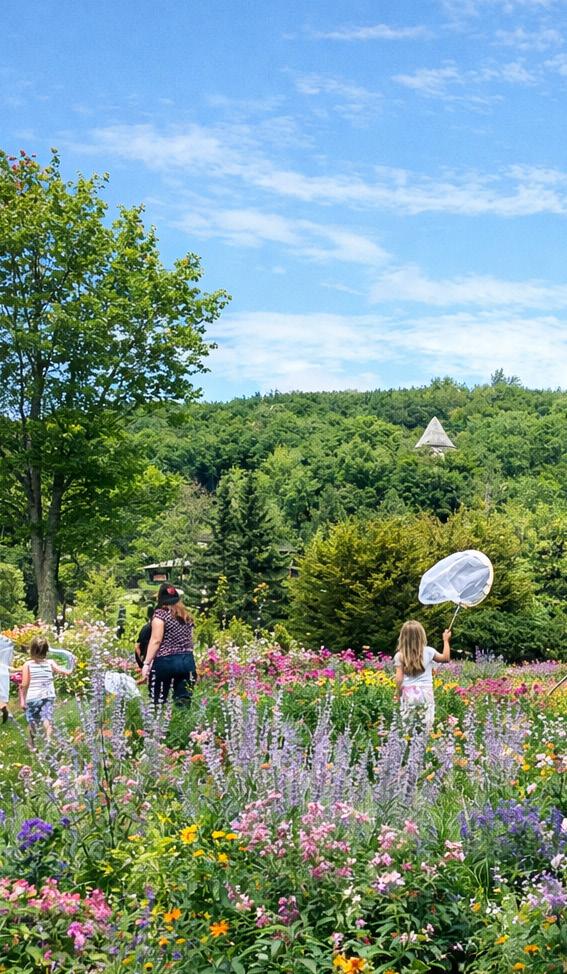
Mountain Top Arboretum in Tannersville was founded by Peter and Bonnie Ahrens, whose summer place overlooked seven acres of scrubland in the Greene County Catskills. Peter Ahrens was a noted research doctor studying cholesterol and health, and when the couple decided to purchase their viewshed, they set about supplementing the land with topsoil and planting trees, wanting to study how various species—both native and exotic—would manage to survive a harsh mountaintop winter.
The results were interesting and lovely, and in 1977 they opened their seven acres as a public garden. Since then, more land has been added; the Arboretum is now 200 acres of forest, meadows, and wetlands and has become a land stewardship organization devoted to understanding the Catskills ecosystem and how best to help it flourish and thrive.
The seven-acre West Meadow section, nestled amid mountaintops, is a wonder of the hardy grasses, shrubs, and flowers that are well adapted to thin soil and wind, with several crafted and planned gardens of native plants: a Rain Garden, a Bird Cove that offers a sheltering habitat for pollinators and feathered friends, a fragrant Spiral Labyrinth, and a section of exposed bedrock in which you can read 375 million years of natural history. Other sections have features like the Fairy Garden, an outdoor amphitheater, a historic pump house, and much, much more.
Note what grows where, what neighbors it, and what type of terrain it’s nestled in. The Arboretum, in contrast to other places on this list, is created by and for the plants themselves; you can find ideas here about what plants might be happy amid the most challenging conditions of your homestead. You’ll notice that Nature has an aesthetic sense all Her own.
The Arboretum’s gardens and trails are open to the public from dawn till dusk every day of the year; Tuesday through Saturday from 9 till 4 you can visit the Education Center. There’s a $5 suggested donation for non-members.
4 Maude Adams Road, Tannersville, NY 12485 518-589-3903 • mtarboretum.org
Mohonk Mountain House in New Paltz offers a different kind of cultivated splendor—one rooted in Victorian-era design and preserved with deep reverence for history. Set within the storied mountaintop resort overlooking Lake Mohonk, the formal gardens unfold in a series of terraces, pergolas, and stone pathways framed by sweeping mountain views. Seasonal plantings—from tulips and peonies to roses and late-summer dahlias—are arranged with classic symmetry and romantic abundance, creating a vibrant contrast against the rugged Shawangunk Ridge backdrop.
Originally developed in the late 19th century, the gardens reflect the Mountain House’s long-standing commitment to stewardship and beauty. Access to the grounds requires either a day pass, a meal reservation, or an overnight stay at the resort, making a visit feel both intentional and immersive. It’s a garden experience layered with history, hospitality, and some of the most breathtaking vistas in the Hudson Valley.
1000 Mountain Rest Road, New Paltz, NY 12561
855-883-3798 • mohonk.com
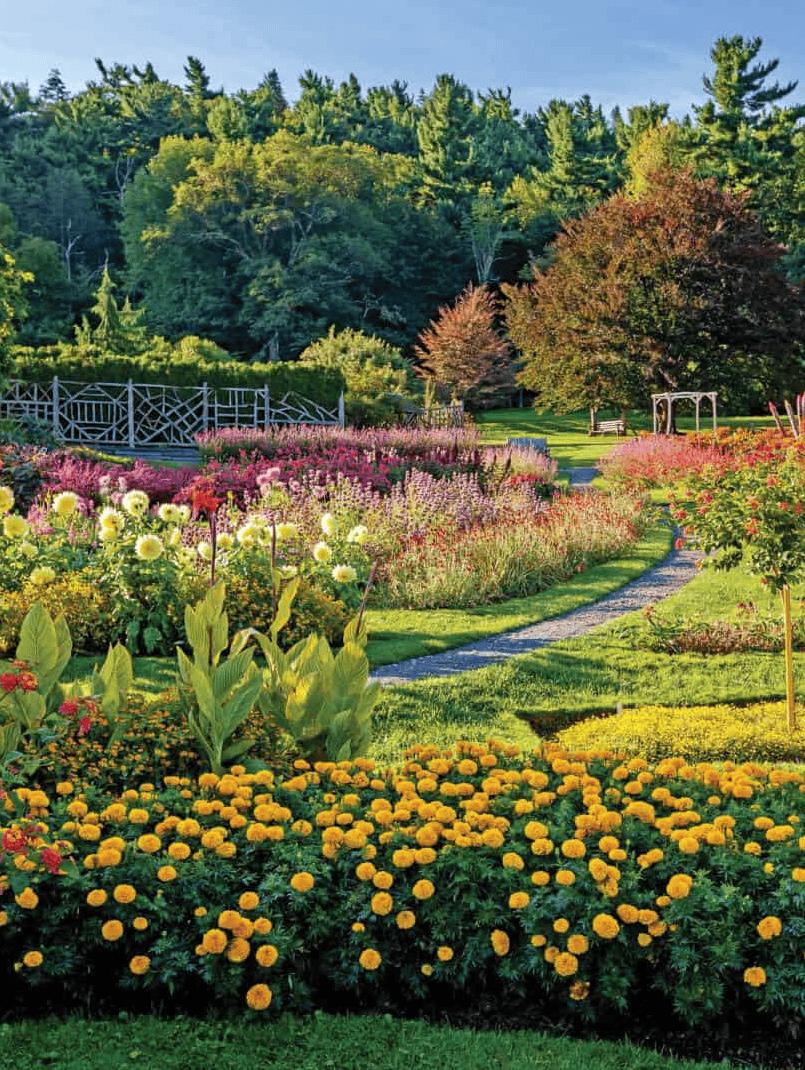
Mohonk Preserve’s Weinstein Butterfly Garden in Gardiner, located near the Visitor Center along the J & S Grafton Sensory Trail, is a lovely and colorful example of human/ecosystem collaboration. Plantings here are the ones that butterflies and other pollinators love, and you’ll find them flourishing most in late spring and summer when the flowers are in bloom.
This is where you can learn and be inspired by the native species that love to grow in the Shawangunks and nourish the pollinators that keep us all alive. The Sensory Trail is a level, 1/4-mile loop perfect for the youngest hikers or for anyone with just a little time to spare who wants a deeply refreshing taste of Nature at work. The adjacent LaVerne Thompson Nature Trail is a tad bit longer and more rolling; both include interpretive stops where you can learn all about the ecosystem you’re immersed in.
Note the names of your favorite butterfly-friendly plants and look for them at local nurseries and garden shops to draw some of the winged beauties to your own yard.
Innisfree Garden in Millbrook was originally the private home of Walter and Marion Beck, an artist and a gardener, respectively, who moved to the property in the 1920s. Beginning in the late 1930s, they collaborated with landscape architect Lester Collins, who would then study and teach his craft at Harvard with a focus on gardens of East Asia.
Innisfree was his magnum opus; he worked the 185 acres for 55 years, opening the garden to the public in 1960 after the Becks had passed and ultimately writing Innisfree: An American Garden, which was published posthumously in 1994. His widow would continue the work until her own death in 2012. Innisfree was listed on the National Register of Historic Places in 2019.
The gardens are a natural bowl centered around the lovely 40-acre Tyrrel Lake and its tributary streams. Walking the Lake Path draws the visitor through a series of natural rooms, smaller focal points for which Walter Beck coined the name “cup gardens.” The designs incorporate East Asian principles with Modernist and Romantic ideals, all of it working harmoniously with Nature to create a unique series of meditative moments.
Note the flow and the homage to the Japanese principle of wabi-sabi, the beauty of imperfection and transience. The creators of this garden knew that they could craft and change the landscape, while it would ultimately do the same to them and to whatever features they chose to craft.
Innisfree is open to the public from 10-5 Wednesday through Sunday and on federal holidays from late April through mid-October and on weekends through mid-November. Advance tickets ($10 general, $5 for seniors and kids 5-15, free for members) are recommended, as parking fills up fast.
362 Tyrrel Road, Millbrook, NY 12545
845-677-8000 • innisfreegarden.org
bring it home : draw inspiration from our grand local gardens
The grand gardens of the Hudson Valley and Catskills weren’t created overnight. They were shaped by observation, intention, and collaboration with the land itself. Whether you’re tending a hillside meadow or a modest village yard, the same principles apply.
Here are six ways to borrow inspiration from these storied landscapes—and make it your own.
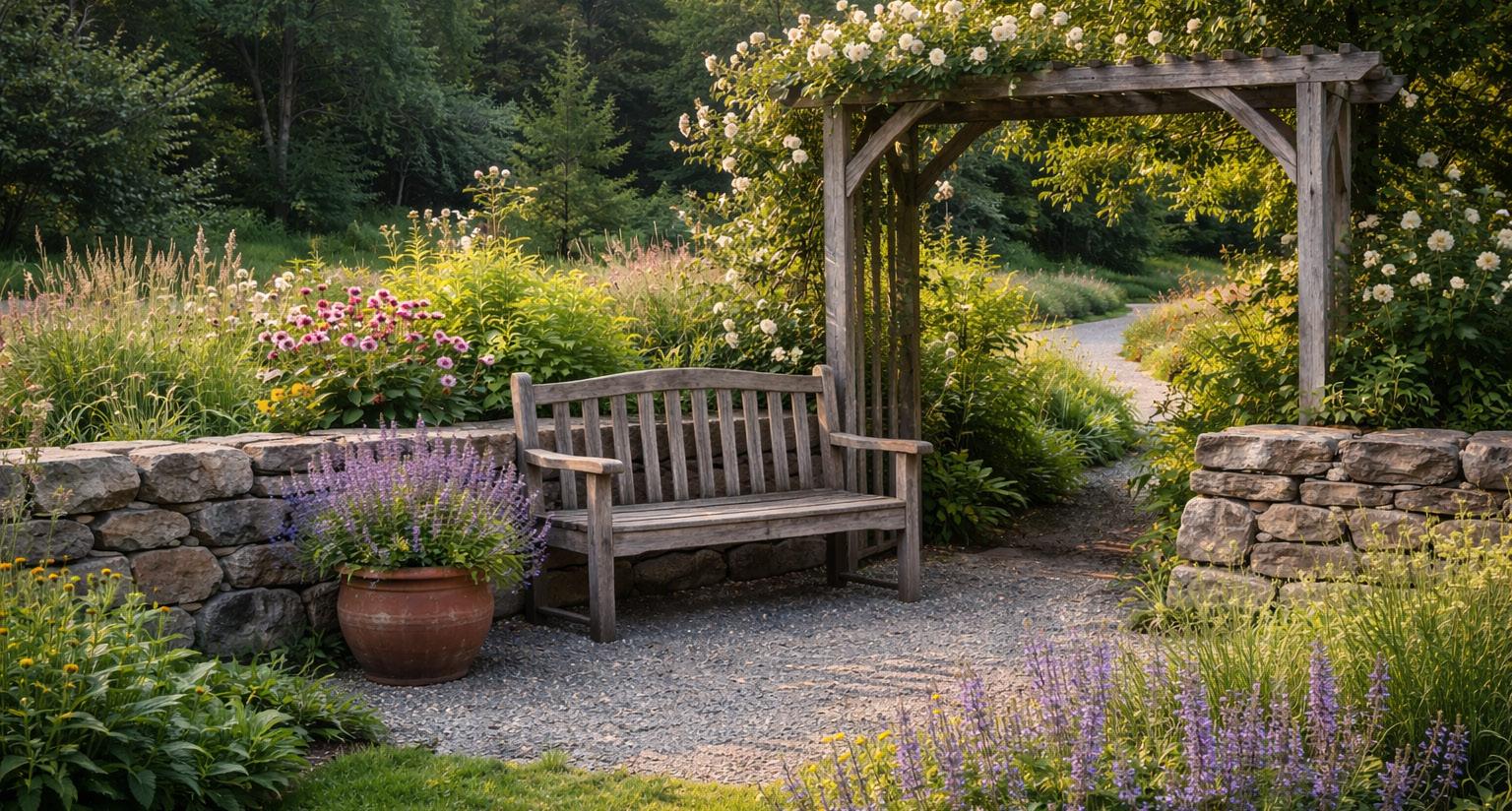
1. begin with observation
Before you plant a single thing, study your land. Notice where the sun lingers longest. Where frost settles. Where soil drains quickly or stays damp. Walk it at different times of day.
Even the most celebrated gardens began with understanding what already existed. Make a simple sketch. Let the land guide your choices.
2 . add structure before planting
Great gardens are grounded in bones. Pathways, pergolas, stone walls, benches—these elements give shape and rhythm year-round, even before anything blooms. Consider:
• Pea gravel or paver walkways • A dry-laid stone border
• A focal-point bench • A birdbath or sculptural feature
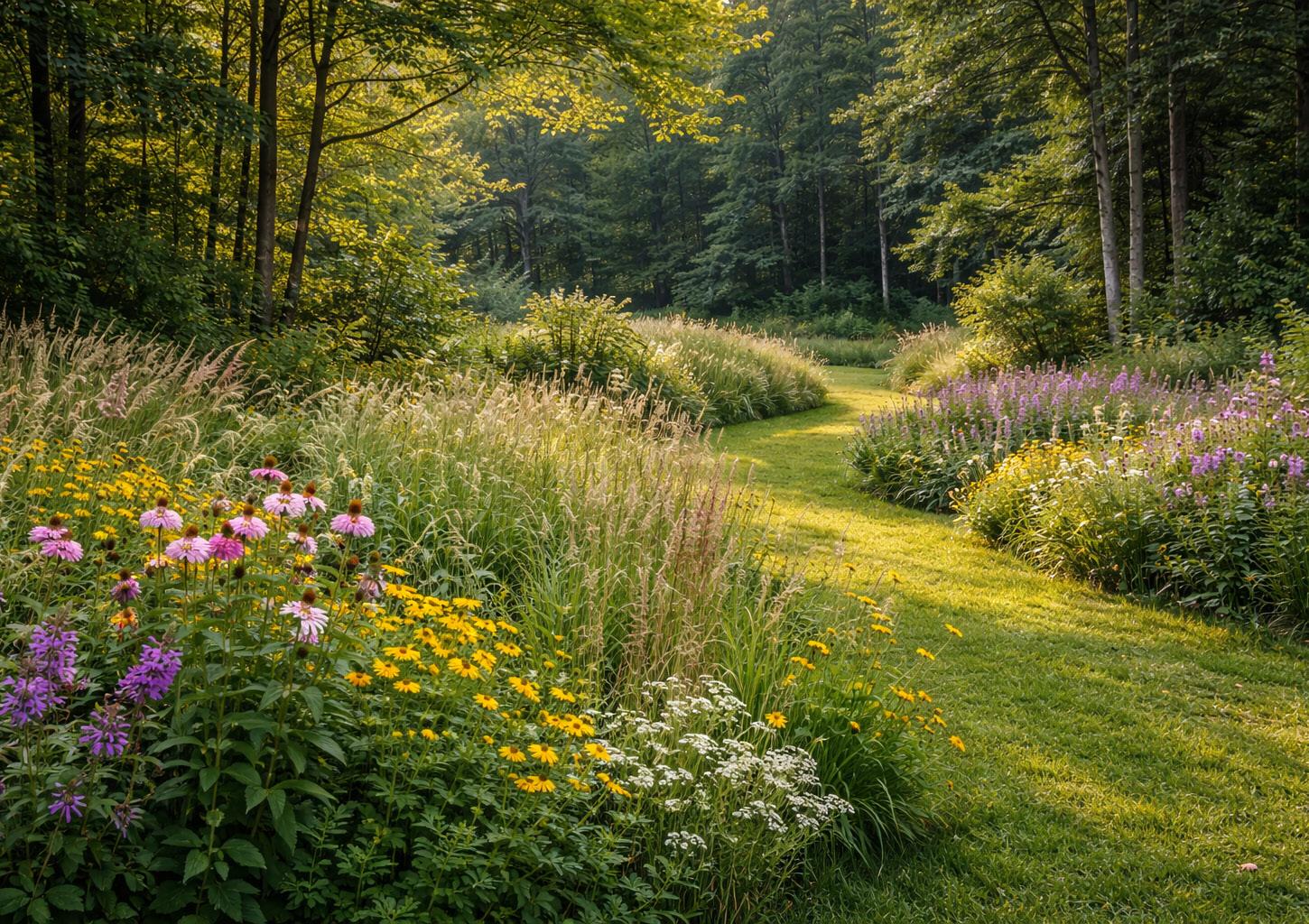
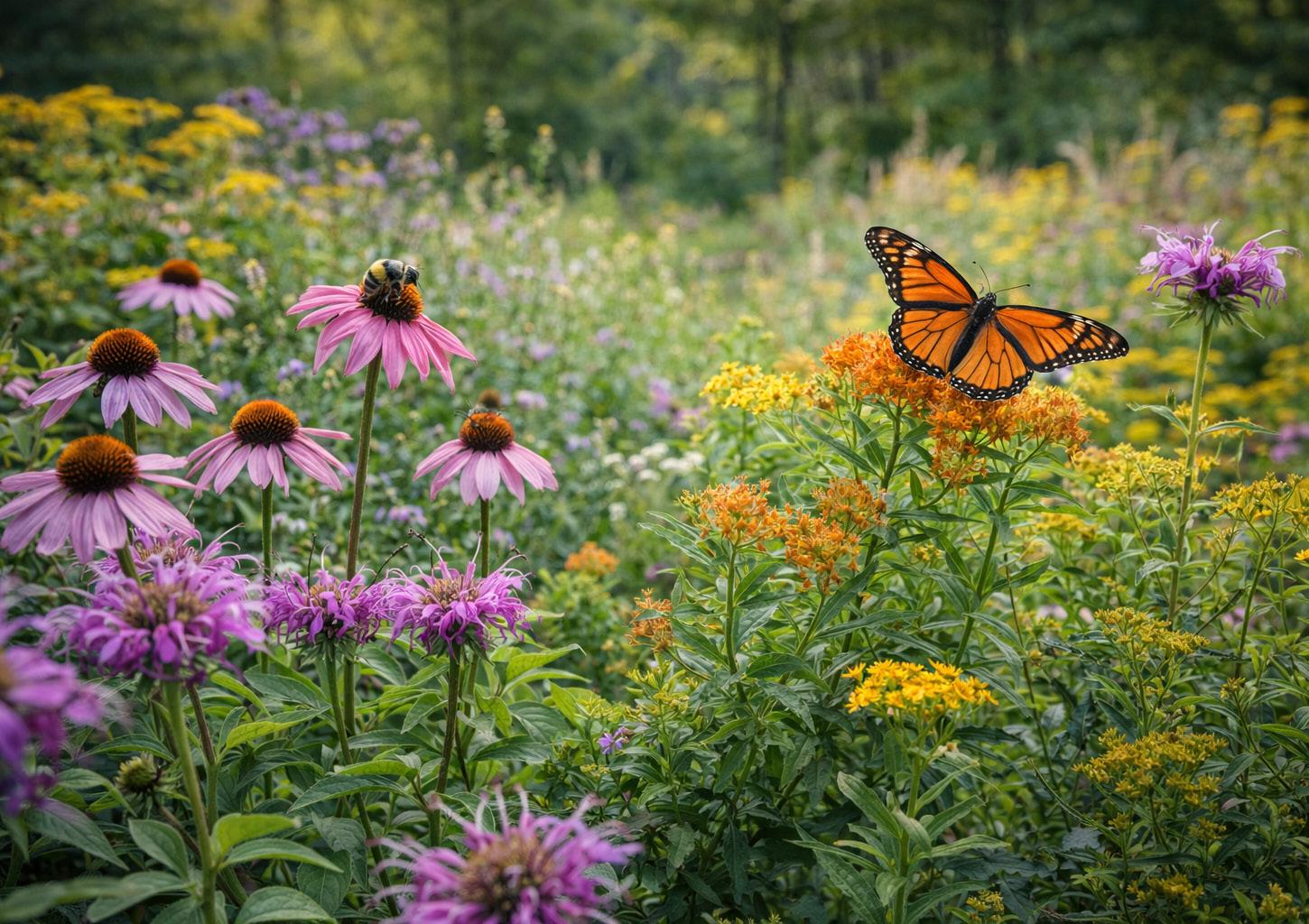
3 . blur the edges
Notice how local gardens allow meadow to melt into woodland.
Instead of rigid borders, let your garden soften at the edges. Allow native grasses, ferns, or shrubs to transition naturally into surrounding woods or fields.
Nature rarely grows in straight lines.
4 . plant with purpose
Mix native and adapted plants thoughtfully. Avoid invasives. Include species that nourish pollinators—milkweed, coneflower, bee balm, goldenrod.
The gardens you visited thrive because they participate in the ecosystem rather than fight it.
Your backyard can do the same.
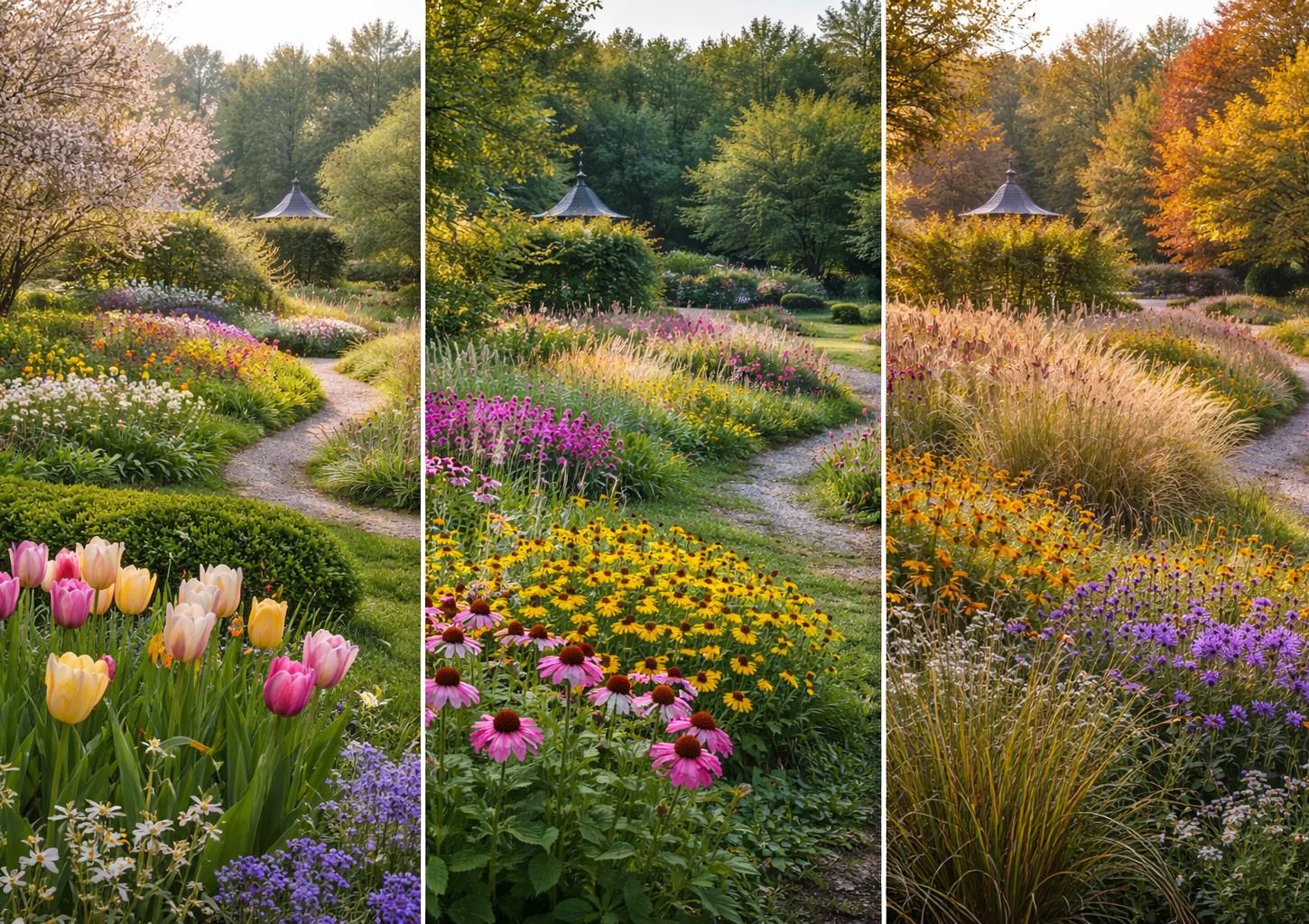
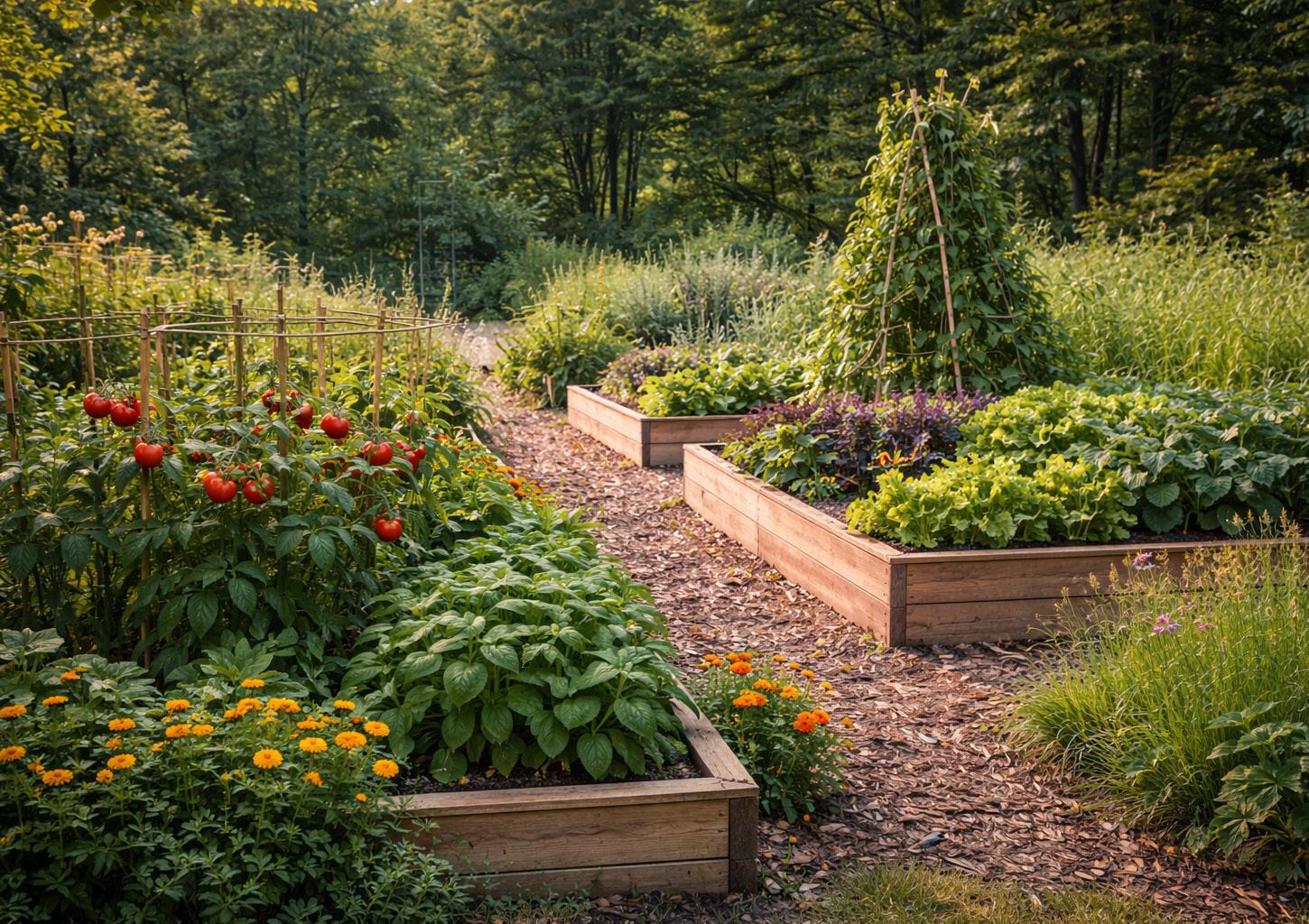
5 . design for a season - long story
The most captivating gardens change as the months unfold. Plan for:
• Early spring bulbs
• Mid-summer perennials
• Late-season grasses and seed heads
Layer bloom times so something is always happening—from first thaw to autumn glow.
6 . grow something you can eat
Kitchen gardens have long been part of Hudson Valley estates. Berry bushes make beautiful borders. Herbs soften pathways. Logs inoculated with mushroom spores tuck naturally into woodland edges. Edible can be ornamental. Practical can be beautiful.
The grand gardens we admire are not distant ideals—they are invitations. Each began as raw land shaped by thoughtful hands. Start small. Plant intentionally. Let your garden evolve with the seasons. The Hudson Valley has already given us the blueprint.
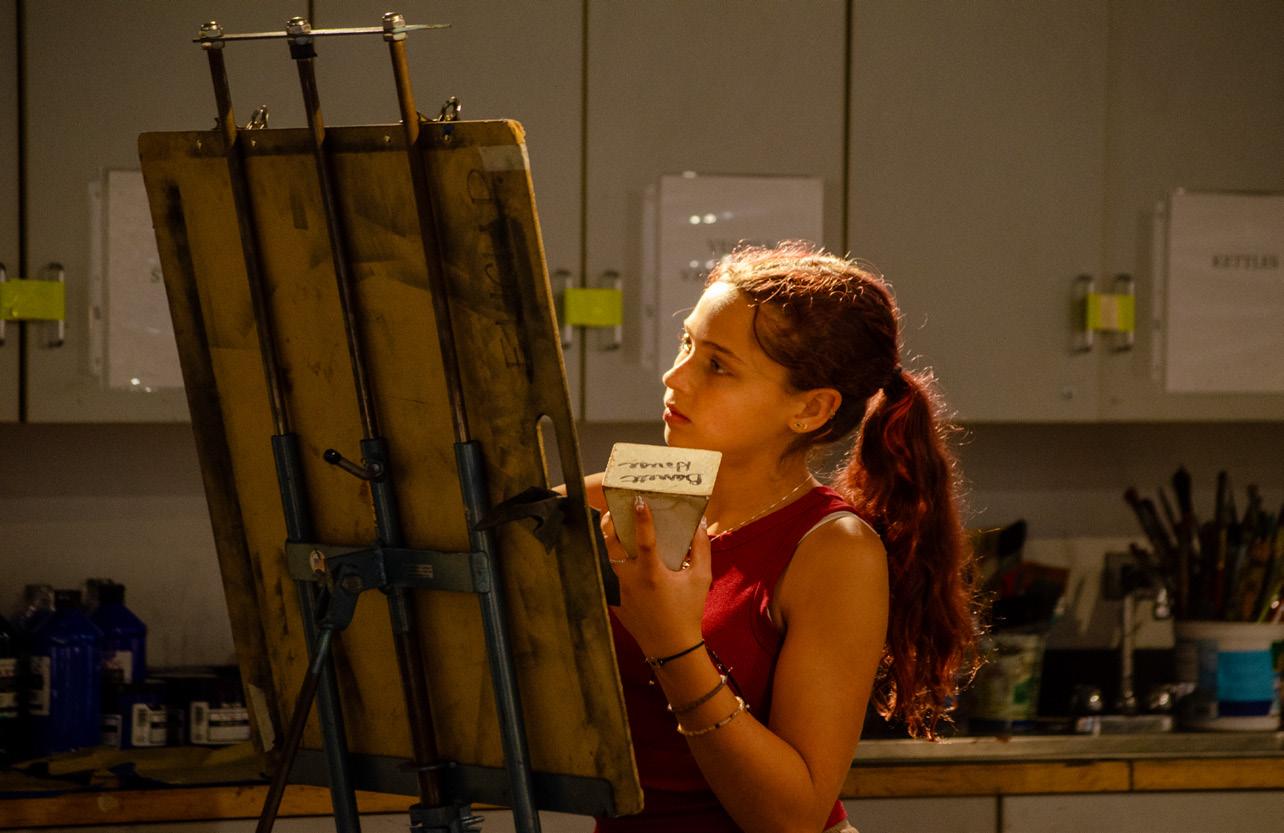












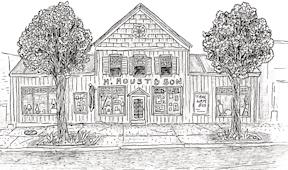





















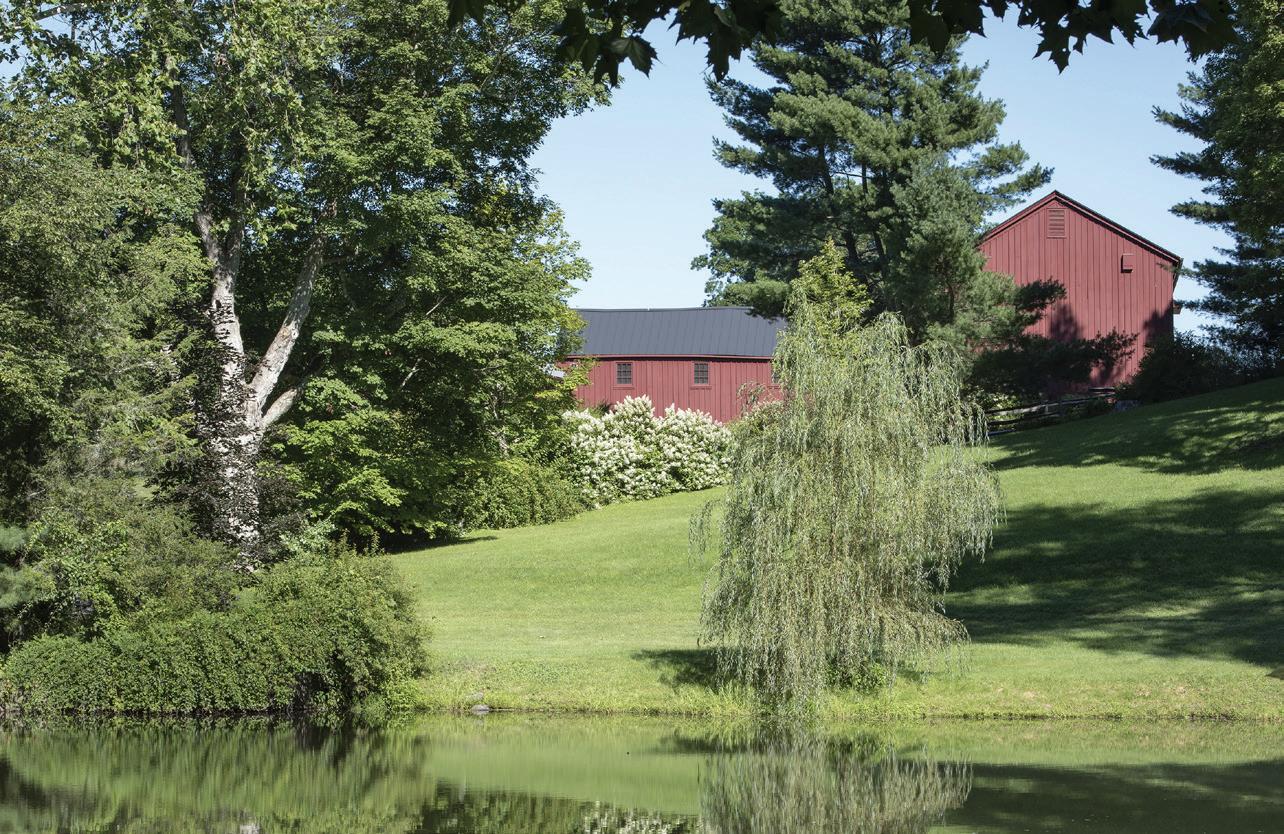
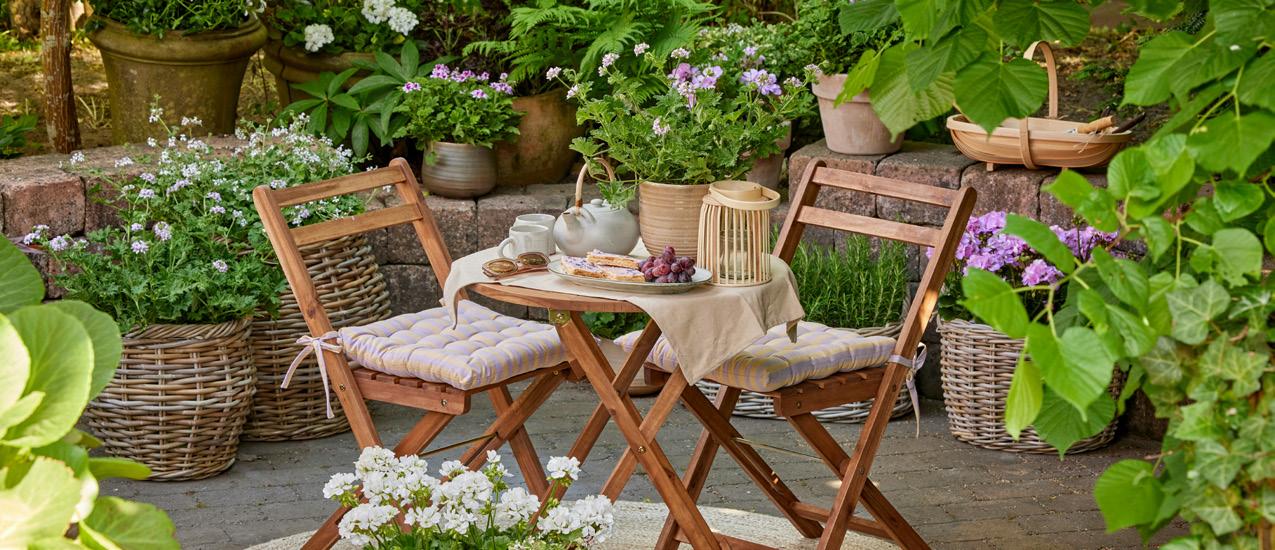





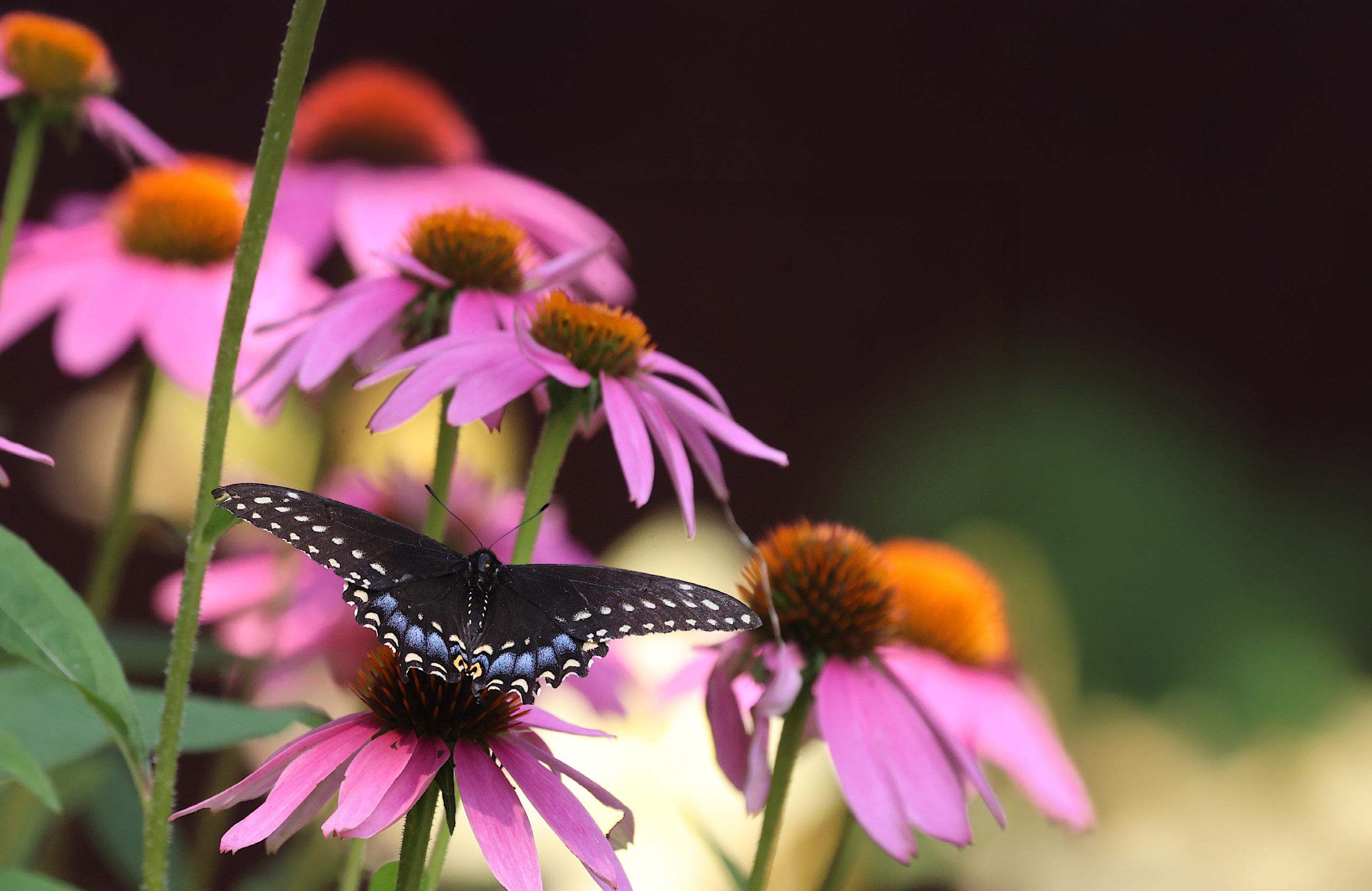
Tucked into tree bark, sheltered in rock crevices, or resting quietly in leaf litter, some species survive the cold months as adults. Others pause their transformation in the egg, caterpillar, or chrysalis stage, waiting
for the subtle cues of spring. As temperatures rise and daylight stretches longer into the evening, something shifts. Wings emerge. Meadows awaken. And suddenly, the air feels alive again.
The Hudson Valley’s varied landscape of meadows, wetlands, forests, farmland, oak ridges, and pine groves creates a rich tapestry of habitat. That diversity supports an impressive range of butterfly species, especially in early spring. As you head outdoors this season, keep an eye out for these familiar and fascinating visitors:

great spangled fritillary
As spring deepens toward early summer, look for this striking orange butterfly with black markings and shimmering silver spots on the underside of its wings. They favor open meadows filled with violets, which serve as host plants for their caterpillars.
This beautifully camouflaged species blends seamlessly into last year’s fallen leaves. Look for warm orange-brown coloring with black markings and slightly jagged wing edges.

red admiral
Often seen darting quickly along forest paths, the Red Admiral is dark with bold red-orange bands and white spots. Like the Mourning Cloak, it may overwinter locally and is frequently among the first to reappear.
Small but brilliant, these vivid blue butterflies shimmer in open areas as wildflowers begin to bloom. You may see them fluttering close to the ground—especially near damp patches or puddles where they gather minerals.

Darker and more dramatic, the Spicebush Swallowtail appears almost black at first glance, but reveals flashes of iridescent blue and orange underneath its wings. They favor wooded areas and shaded trails.

Perhaps the most recognizable butterfly in our region, this large yellow-and-black striped beauty floats gracefully above fields and gardens. Their size and bold pattern make them easy to spot from a distance.

Common in home gardens, especially where parsley, dill, fennel, or carrots grow, the Black Swallowtail is black with yellow markings and subtle blue accents. Their caterpillars are often found munching herbs.
Small, delicate, and bright white with subtle black markings, this common butterfly is often seen drifting through gardens and open fields. They are especially attracted to cruciferous vegetables like kale and cabbage.


Often mistaken for a Monarch at a glance, the Painted Lady features orange-and-black coloring with distinctive eyespots on the underside of its wings. It’s adaptable and can be found in gardens, fields, and roadside blooms.

One of the first butterflies to appear each year, the Mourning Cloak overwinters as an adult. Large and dramatic, it flashes deep mahogany wings edged in pale gold. You’ll often spot it gliding along woodland edges or basking in sunlight on tree trunks.
While more commonly associated with late summer, Monarchs begin returning north in late spring. Their bold orange-and-black pattern is unmistakable, and they rely heavily on milkweed as a host plant for their young.
Butterflies go where the flowers are—and where the sun lingers.
Open meadows, woodland edges, riverbanks, and gardens tend to be the most active spring habitats. Look for sunny stretches along hiking trails, fields bordered by trees, and areas where wildflowers are beginning to bloom. Even a quiet roadside patch of native plants can become a fluttering corridor.
Early in the season, you may see butterflies basking on rocks or tree trunks, warming their wings in the sun. As the days grow warmer, they’ll become more active—drifting between blossoms, gathering near damp soil, or gliding just above tall grasses. Slow down. Scan both the air and the ground. The more still you are, the more you’ll notice.
If you’d like to invite butterflies closer to home, plant nectar-rich varieties—especially native species whenever possible. Choose sunny spots, avoid pesticides, and allow a few areas of your garden to grow a little wild. Butterflies aren’t looking for perfection—they’re looking for habitat. a few favorites :
CONEFLOWER
BLACK-EYED SUSAN
BEE BALM PHLOX

JOE-PYE WEED
VIOLAS & VIOLETS
GOLDENROD (late season)
MILKWEED (for Monarchs)

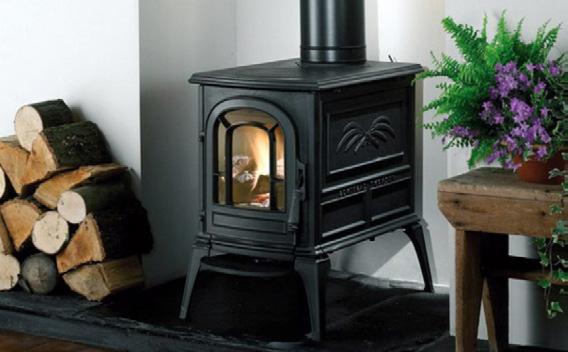
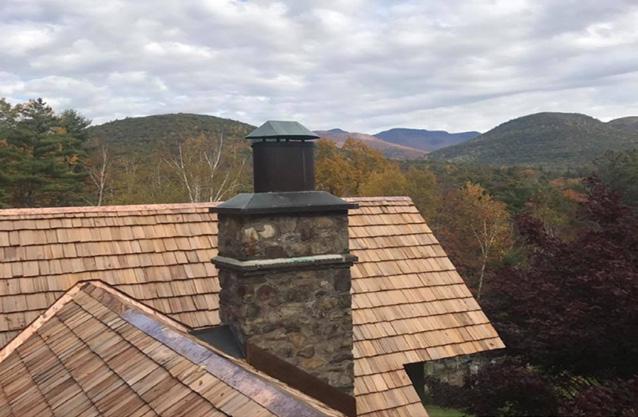
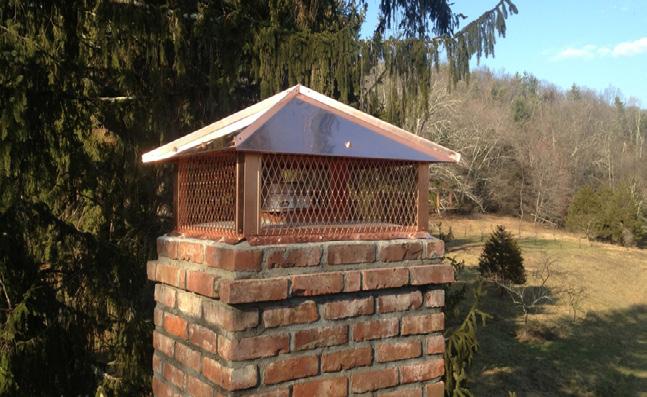

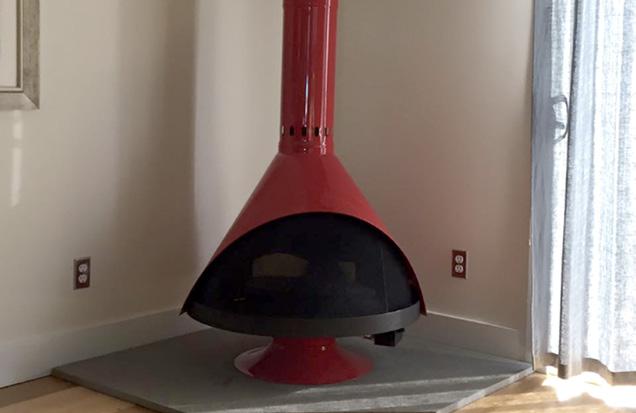


Plumbing Repairs & Installation

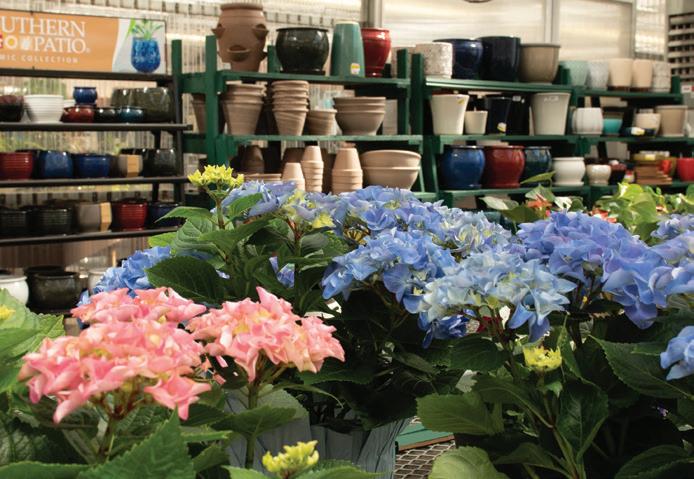












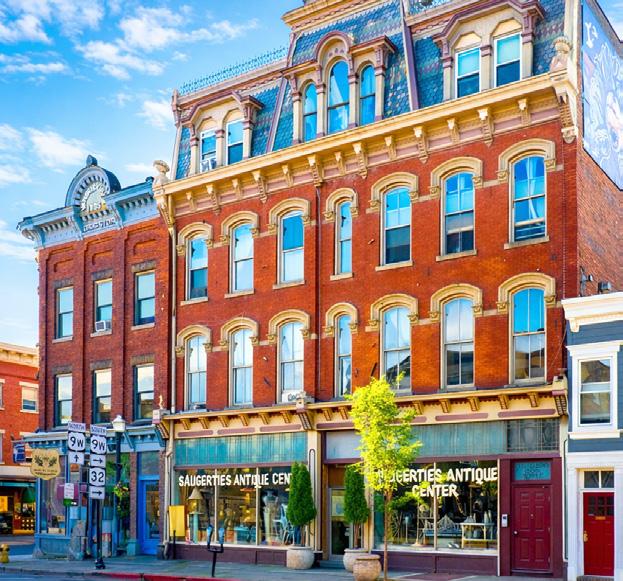
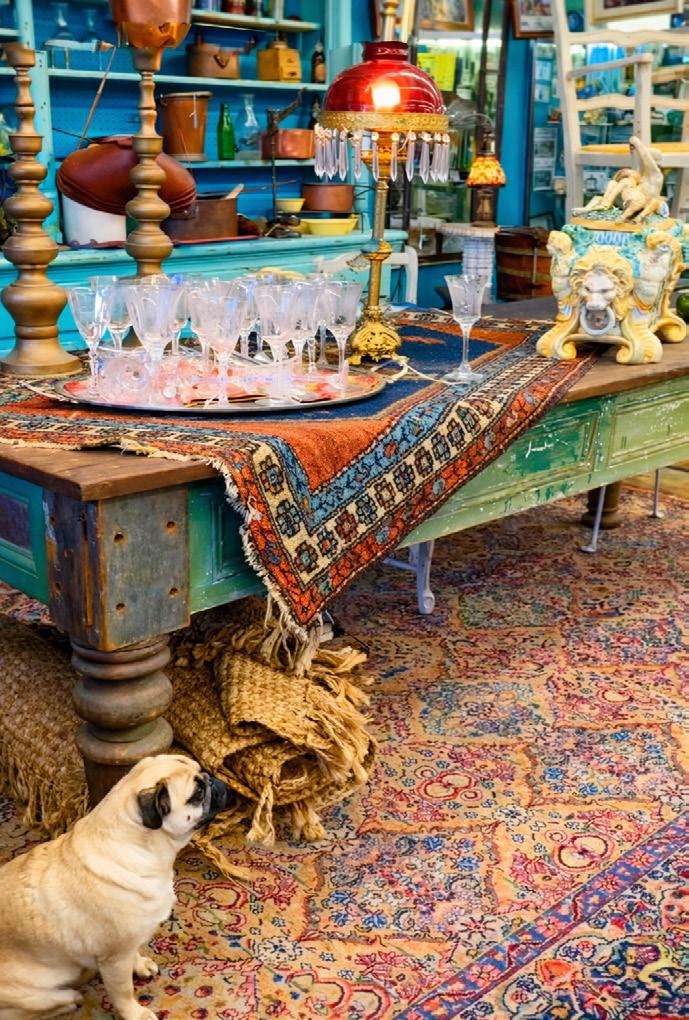
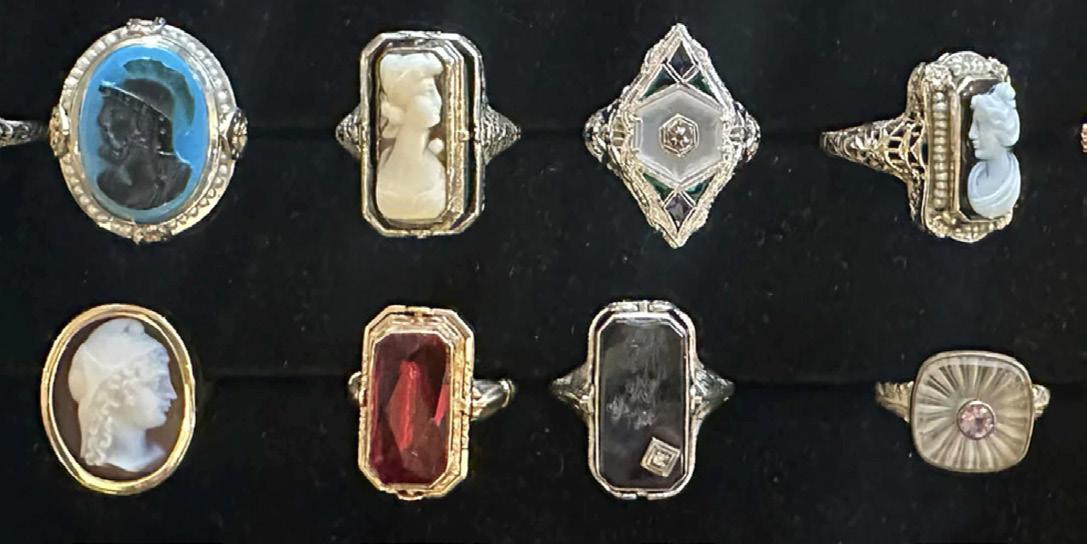

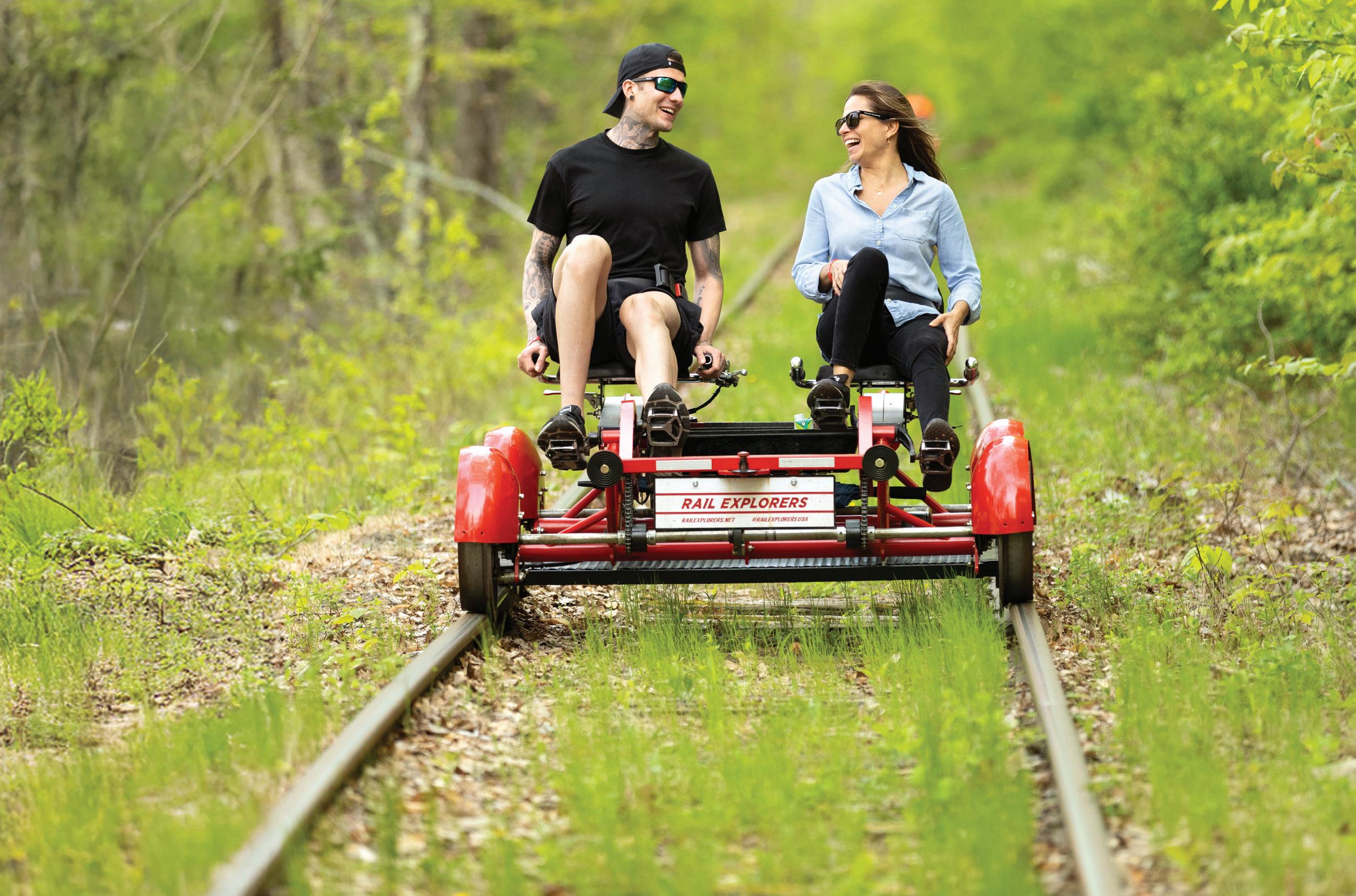
Step outside and discover nature’s renewal in the gorgeous Catskill Mountains of Ulster County, where winding trails, rugged cliffs, and shimmering watersheds invite you to forget your cares, test your endurance, and reconnect with the great outdoors. Hike the Mohonk Preserve, scale the Shawangunk Ridge, take a leisurely bike ride and savor the seasonal flavors of local family farms, and bask in the epic beauty of springtime in Ulster County.
Plan your trip at VisitUlsterCountyNY.com