BIM PORTFOLIO
VIRGINIA LI
l [ 01 ] MIAMI FREEDOM PARK STADIUM
INTER MIAMI CF I SPORTS 422,532 SQ SF CONTENTS
l [ 02 ] MIAMI BEACH RESIDENCE
PRIVATE CLIENT I SINGLE FAMILY RESIDENTIAL 3.682 SQ FT
l [ 03 ] LEADERSHIP IN DESIGN TECHNOLOGY
LEADERSHIP OUTCOMES & IMPACT
CONTACT
l VIRGINIA LI
Advancing design technology and digital delivery through leadership, innovation, and intelligent collaboration.
LINKEDIN EMAIL PHONE
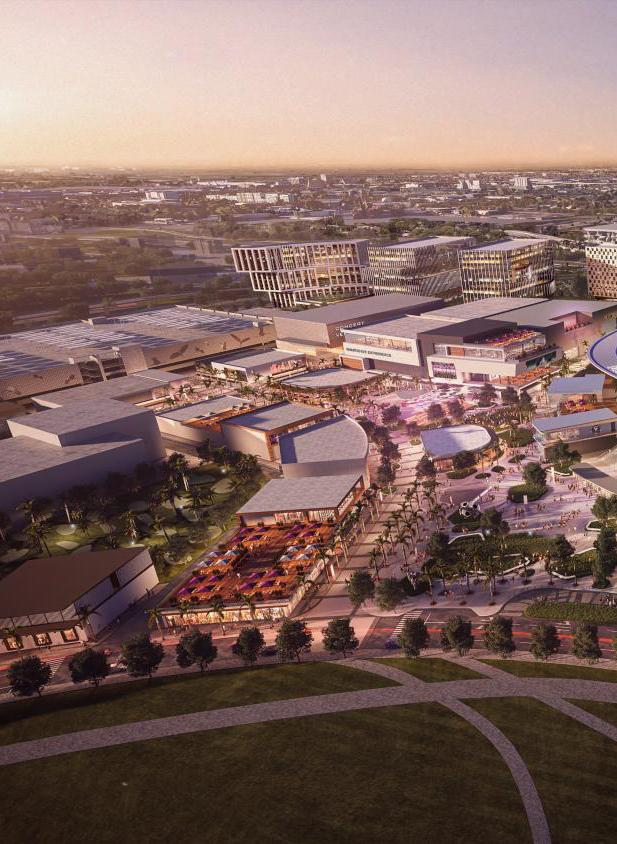
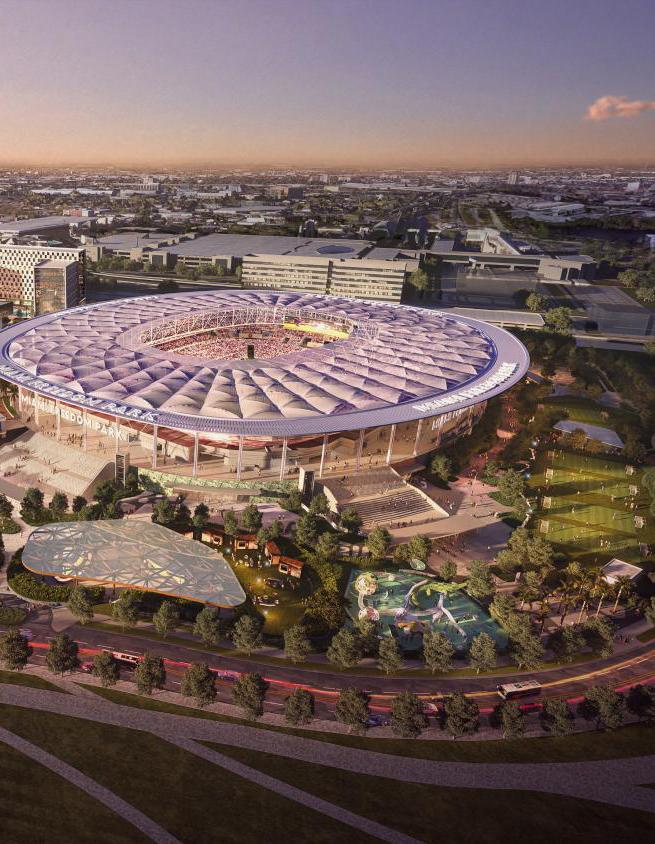
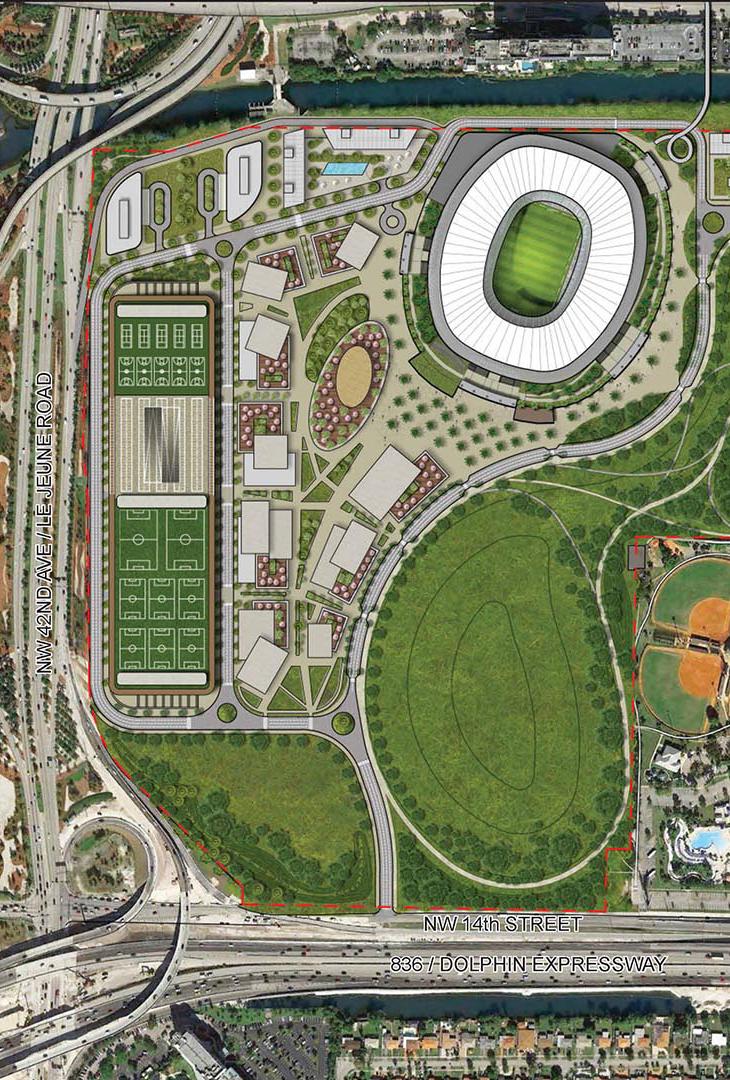
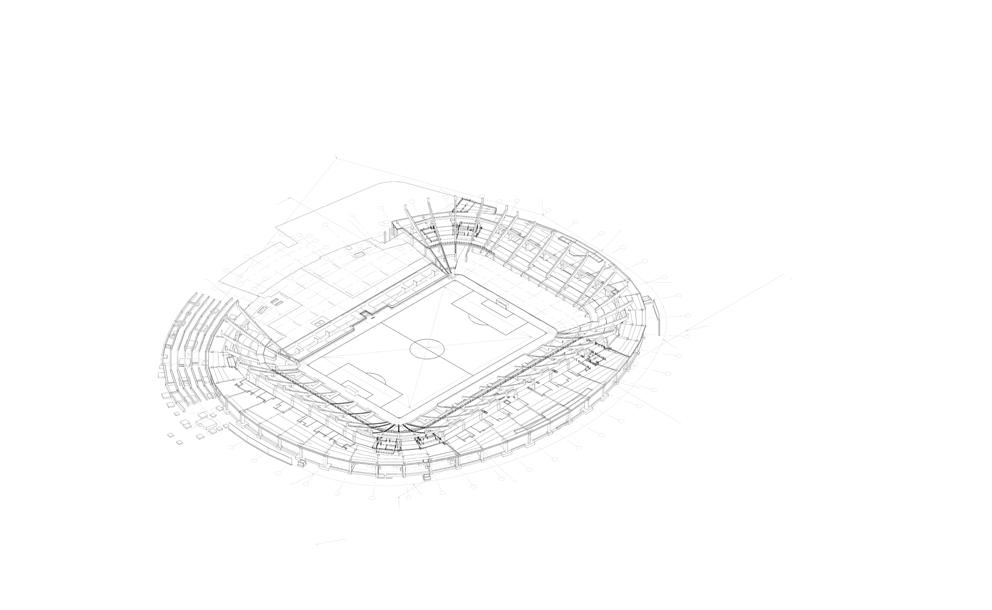
MIAMI FREEDOM PARK STADIUM
PROJECT OVERVIEW
- CLIENT Miami Freedom Park - Inter Miami CF
- SECTOR Sports
- SIZE 422,532 SQ SF
- TIMELINE 2026
- ROLE BIM Manager
- TEAM +/- 105 PPL
- SOFTWARE ACC, BIM360, Revit, Navisworks, Civil3D, AutoCAD ProCore, Bluebeam, Excel
BIM MANAGEMENT
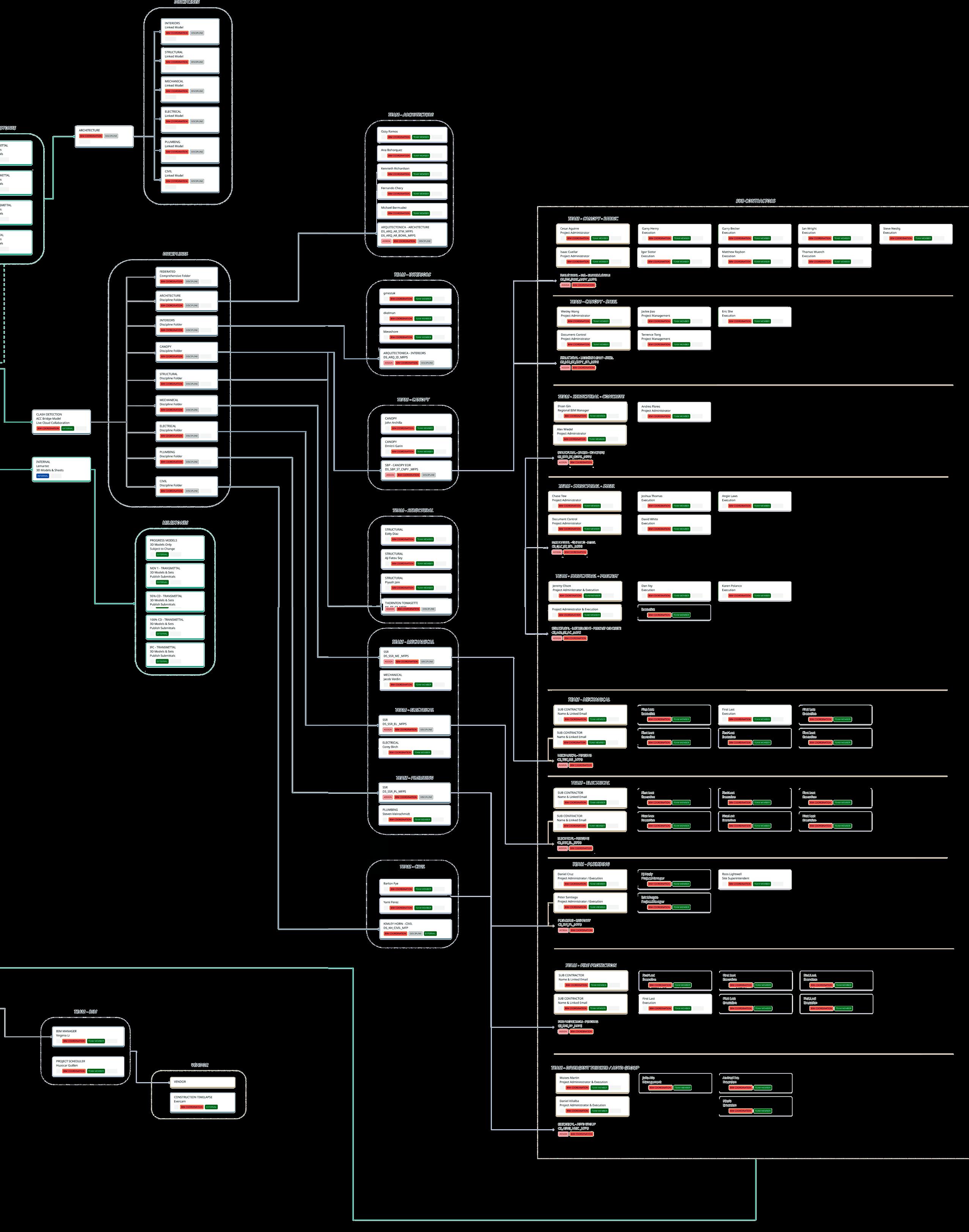
Leading BIM strategy and coordination for a global, multidisciplinary team through cloud-based delivery and structured digital workflows.
As BIM Manager for the Miami Freedom Park master plan, I directed the establishment of a cloud-based BIM infrastructure built on Autodesk Construction Cloud, forming the foundation for seamless global collaboration. Leading a multidisciplinary team of over 30 professionals across architecture, engineering, and construction, I implemented standardized workflows, model federation strategies, and QA/QC protocols to ensure design consistency and technical precision.
Through structured coordination meetings and clash-detection management, I streamlined communication between trades and disciplines, improving issue resolution efficiency and maintaining alignment with project milestones and the $350M construction budget. In parallel, I developed and administered model health protocols, led training for production and consultant teams, and fostered a culture of continuous improvement across all project phases — advancing both the project’s digital delivery and the firm’s BIM capability at scale.
The Miami Freedom Park project exemplified an integrated BIM strategy that connected multidisciplinary teams through a unified digital workflow.
As BIM Manager, I led the coordination of global design and construction models, establishing scalable systems for data management, model federation, and field integration. Through structured communication, technical precision, and continuous innovation, the BIM process advanced collaboration, reduced risk, and delivered a robust framework that set a precedent for large-scale, technology-driven architectural delivery.
AUTODESK CONSTRUCTION CLOUD
MIAMI FREEDOM PARK STADIUM
BIM COORDINATION WORKFLOW
A screen recording demonstrating the BIM management and coordination process for the Miami Freedom Park Stadium project, showcasing model federation, issue tracking, and real-time collaboration within Autodesk Construction Cloud.
BIM CLOUD INFRASTRUCTURE
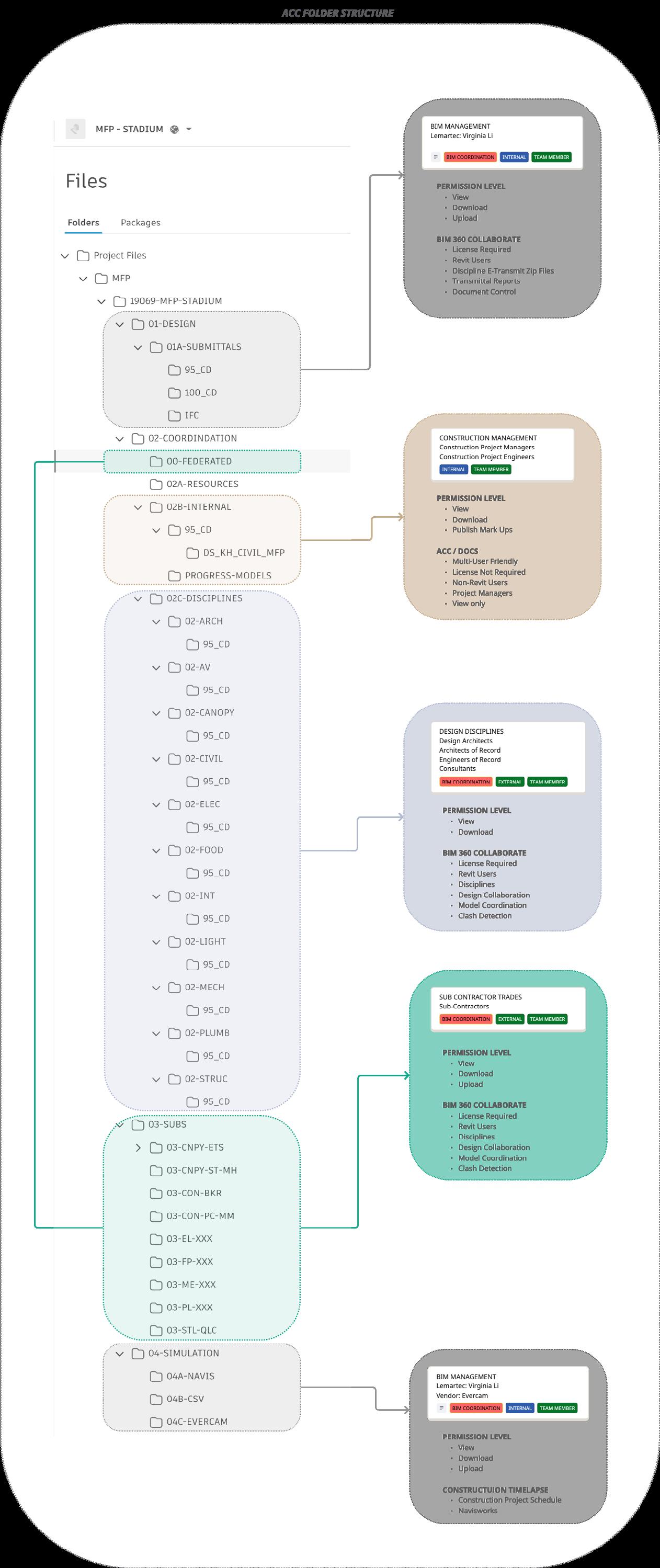
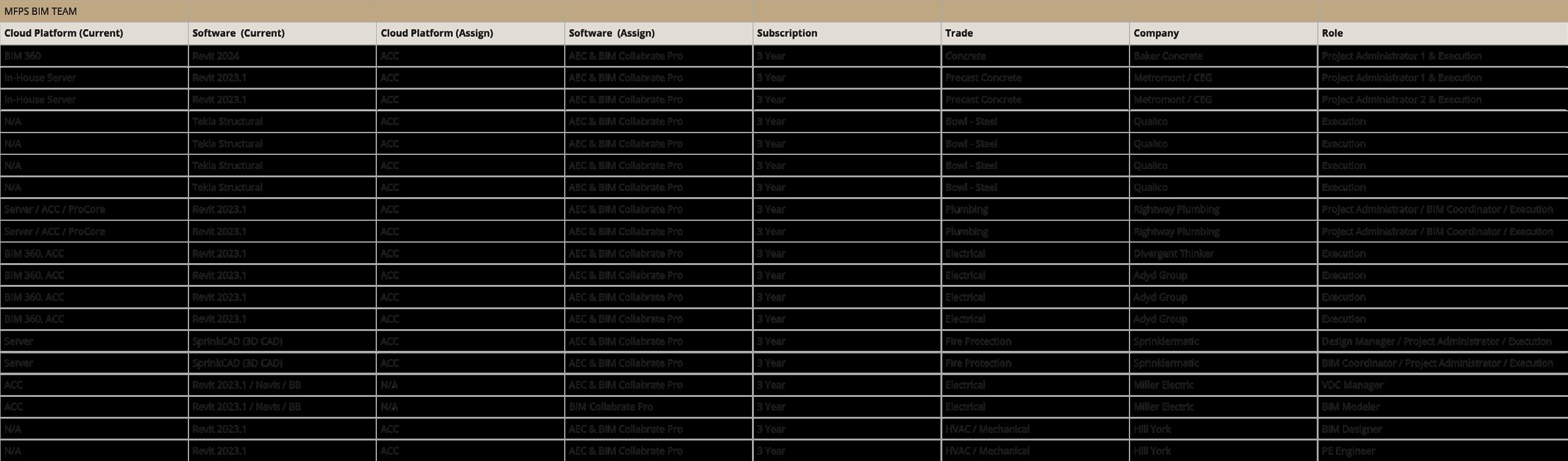
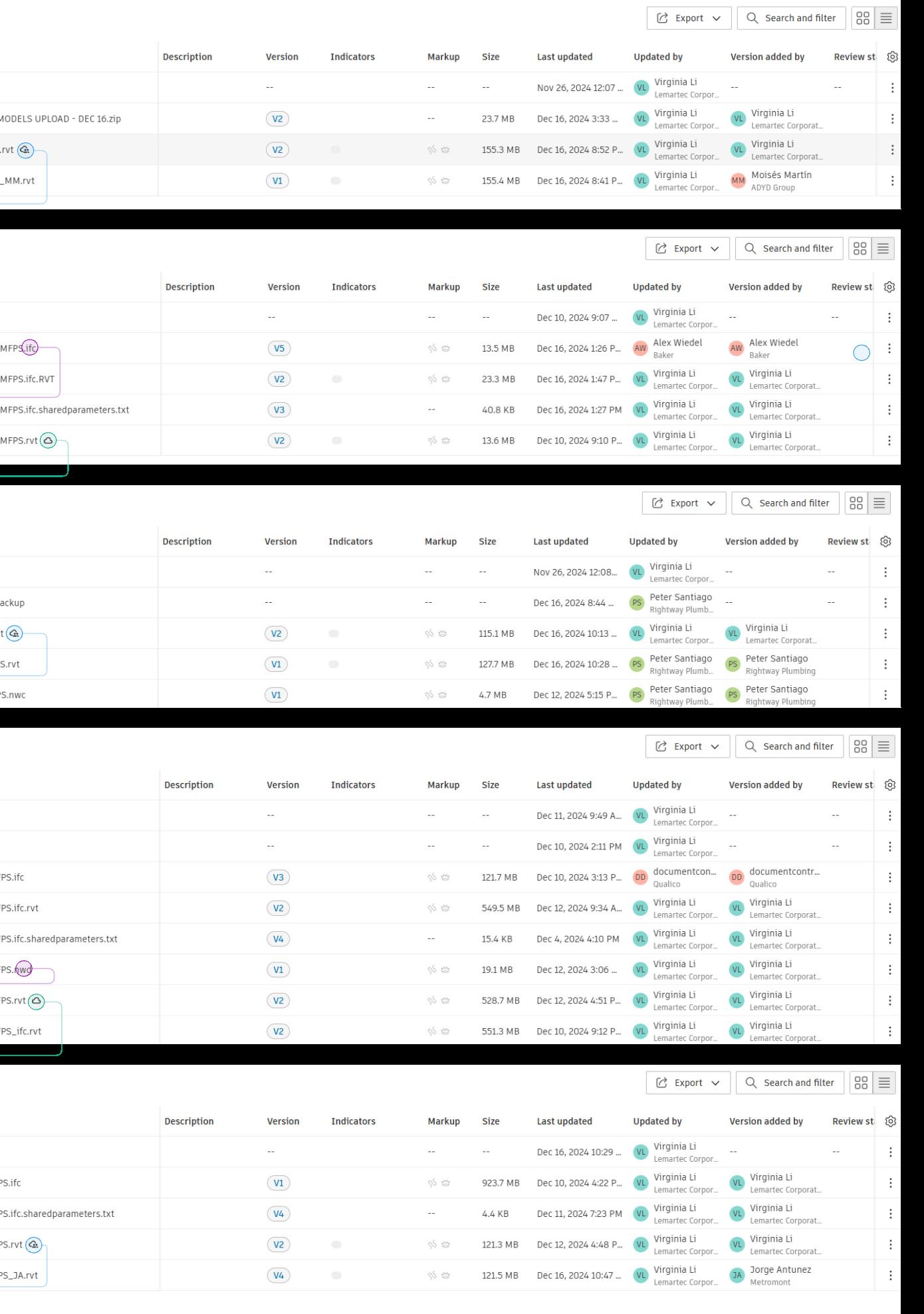
Implementation of a centralized Centralized Data Environment (CDE) built on Autodesk Construction Cloud, integrating Revit models, coordination files, and documentation under unified data standards. The platform supported federated model linking, automated version control, and user-based permissions management, ensuring consistent data integrity across all project disciplines. Through structured folder hierarchies and workflow automation, the system enabled real-time collaboration between global architecture, engineering, and construction teams, reducing data redundancy and improving overall coordination accuracy.
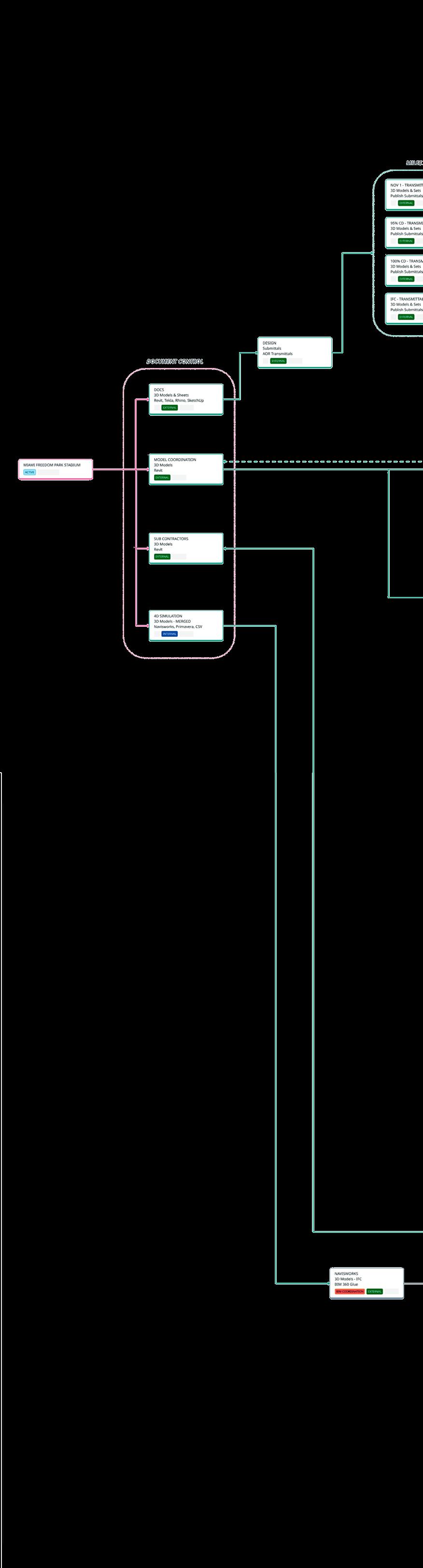
l [ 01 ] GLOBAL COORDINATION PROCESS MAP CENTRALIZED COORDINATION ACROSS GLOBAL TEAMS
l [ 01 ] CENTRALIZED DATA ENVIRONMENT AUTODESK CONSTRUCTION CLOUD
A centralized Common Data Environment (CDE) was implemented on Autodesk Construction Cloud to integrate all project models, documentation, and workflows. The platform standardized permissions, version control, and data exchange, enabling automated synchronization between disciplines and maintaining consistent information flow throughout the project lifecycle.
l [ 02 ] FEDERATED DESIGN MODEL WORKFLOW INTEGRATION
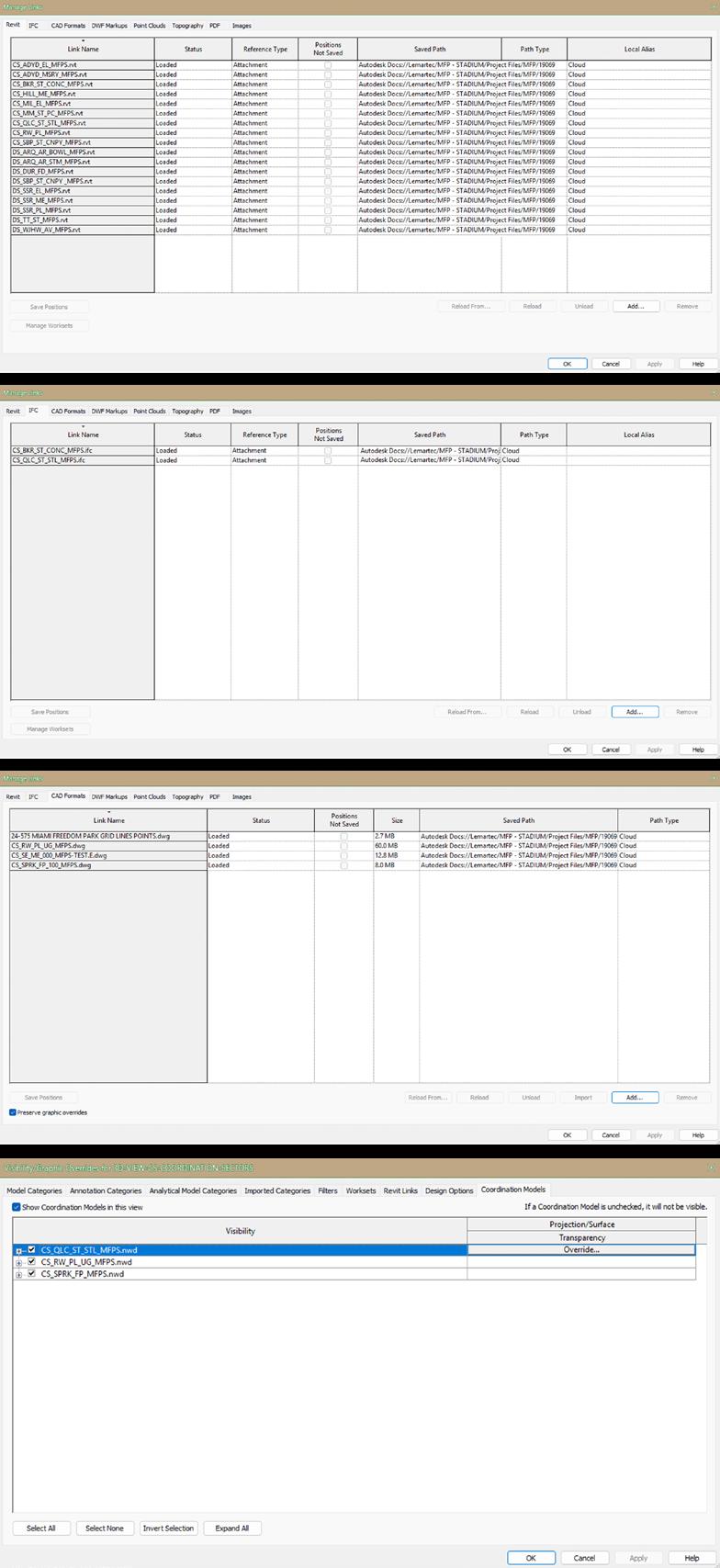
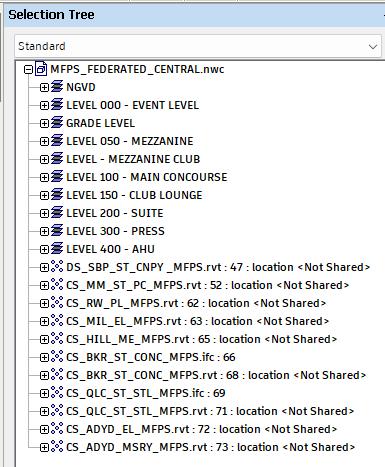
The federated design model was developed from Revit files inherited from the Design Architect and transitioned to the Architect of Record for documentation and permitting. I oversaw the technical migration from BIM 360 to Autodesk Construction Cloud, establishing structured model linking, coordination standards, and federation workflows that maintained design intent and informed the subsequent federated construction model.
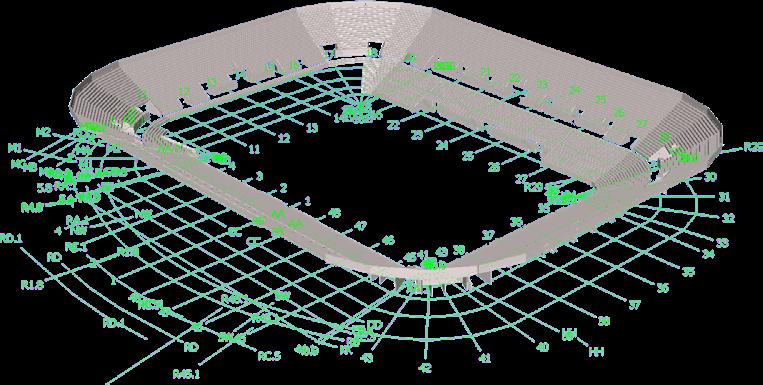
l [ 03 ] FEDERATED DESIGN MODEL ACC / BIM 360 / REVIT
l [ 05 ] ELECTRICAL
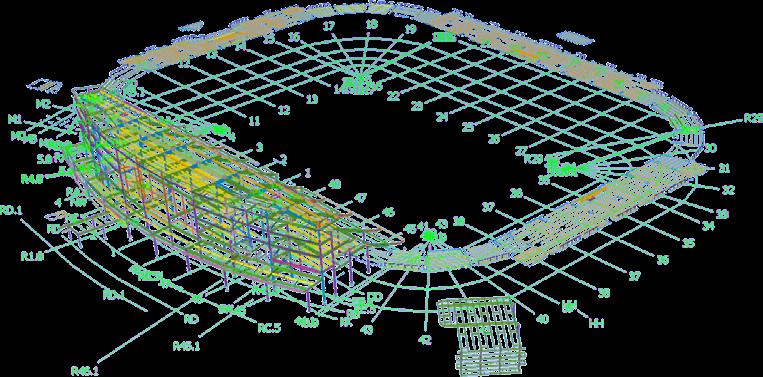
CONSTRUCTION MODEL - LOD 400
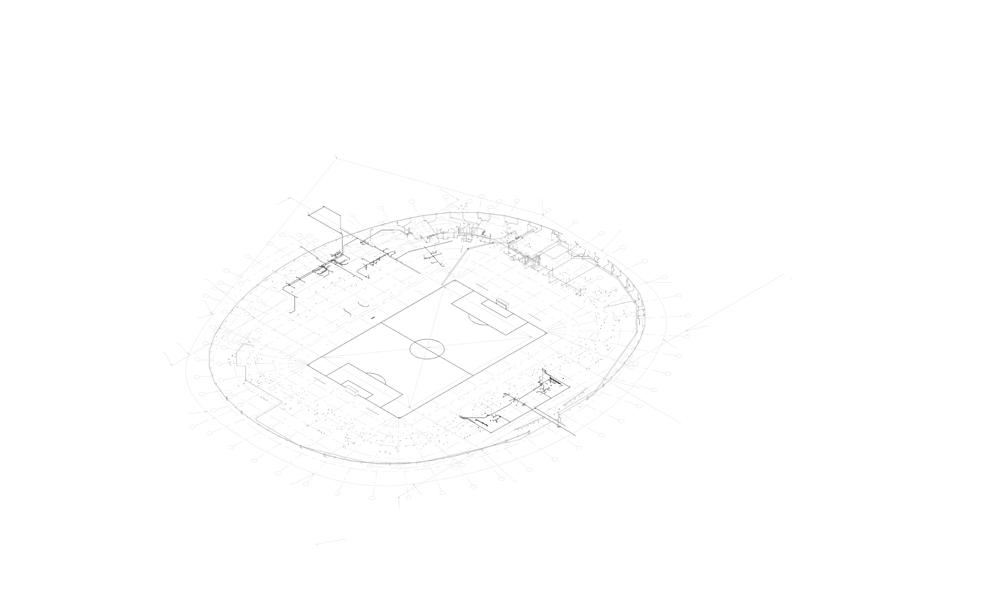
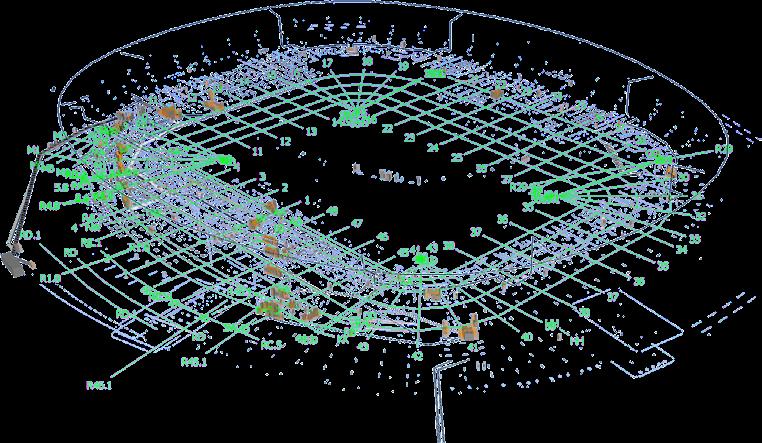
l [ 04 ] MECHANICAL CONSTRUCTION MODEL - LOD 400
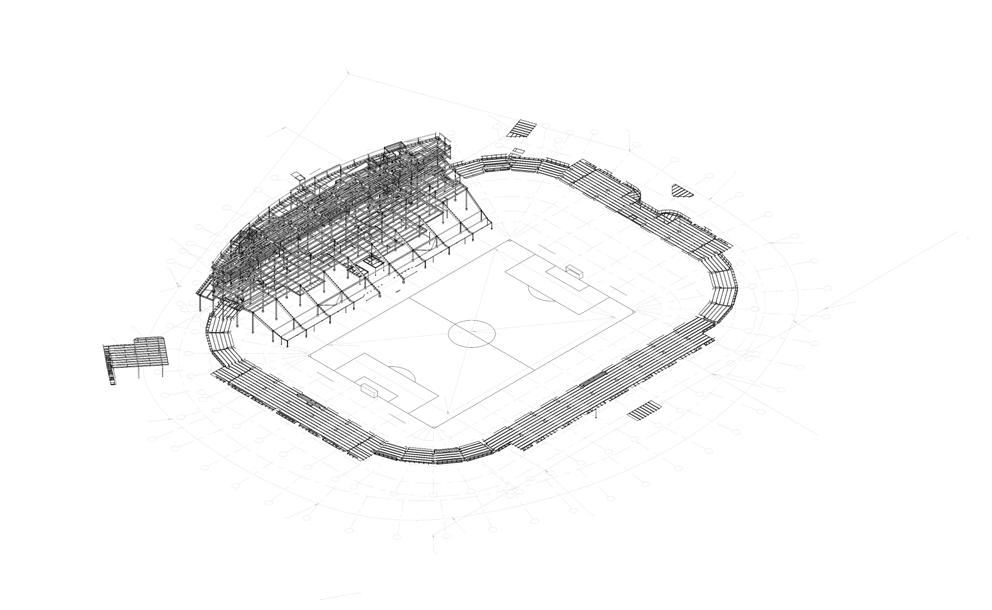
l [ 03 ] STRUCTURAL STEEL CONSTRUCTION MODEL - LOD 400
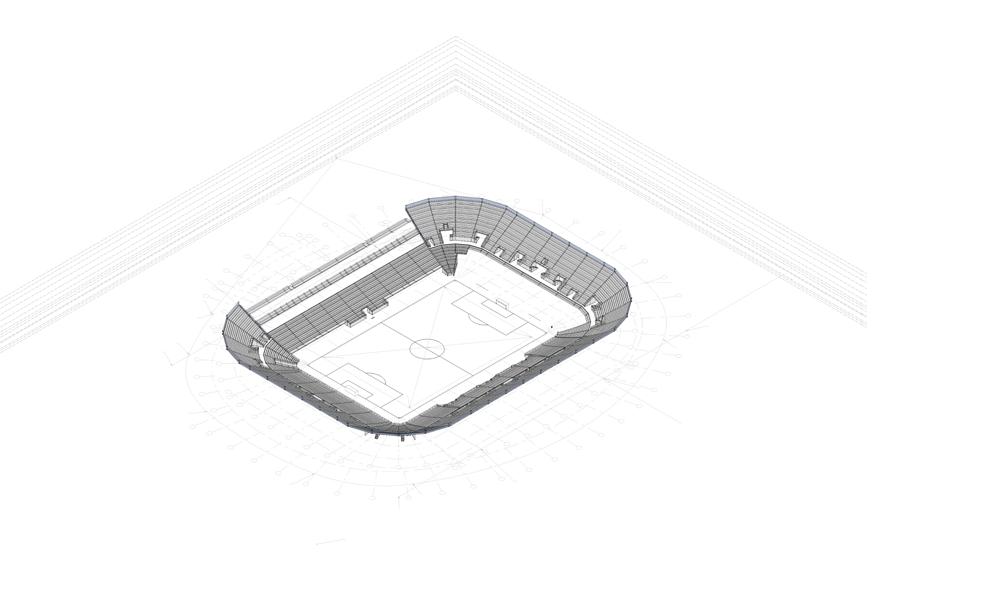
l [ 02 ] PRECAST CONCRETE CONSTRUCTION MODEL - LOD 400
l [ 01 ] STRUCTURAL CONCRETE CONSTRUCTION MODEL - LOD 400
l [ 10 ] ELECTRICAL MADRID, SPAIN & FLORIDA, UNITED STATES REVIT 2023
l [ 09 ] STRUCTURAL CONCRETE FLORIDA, UNITED STATES REVIT 2024 & IFC
l [ 08 ] PLUMBING FLORIDA, UNITED STATES REVIT 2023 & NAVISWORKS
l [ 07 ] STRUCTURAL STEEL ALABAMA, UNITED STATES TEKLA & IFC
l [ 06 ] PRECAST CONCRETE ILLINOIS, UNITED STATES REVIT 2023 & IFC
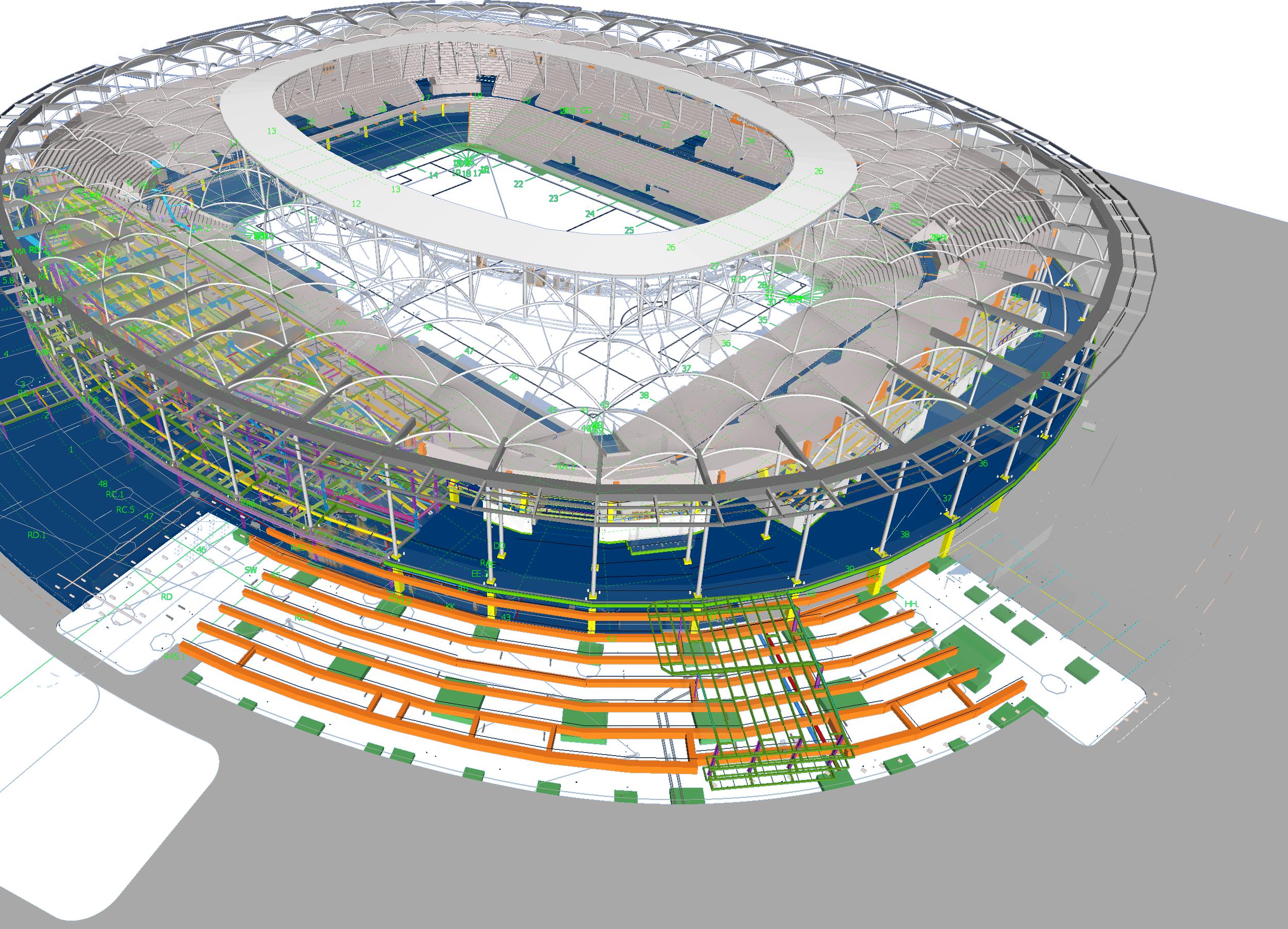
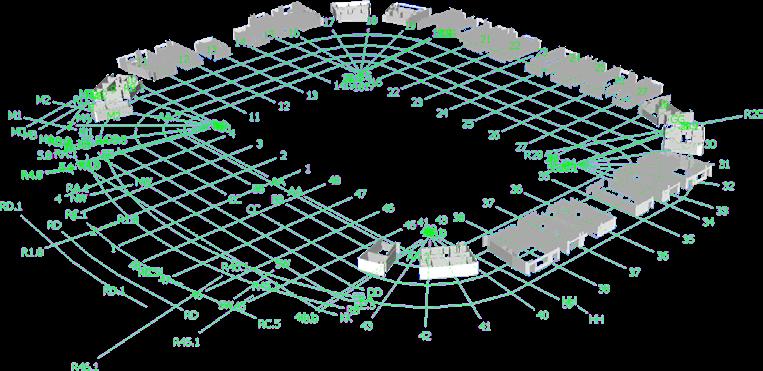
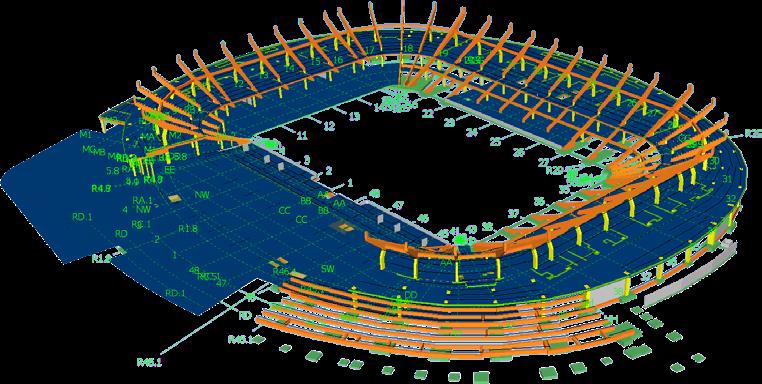
FEDERATED CONSTRUCTION MODEL
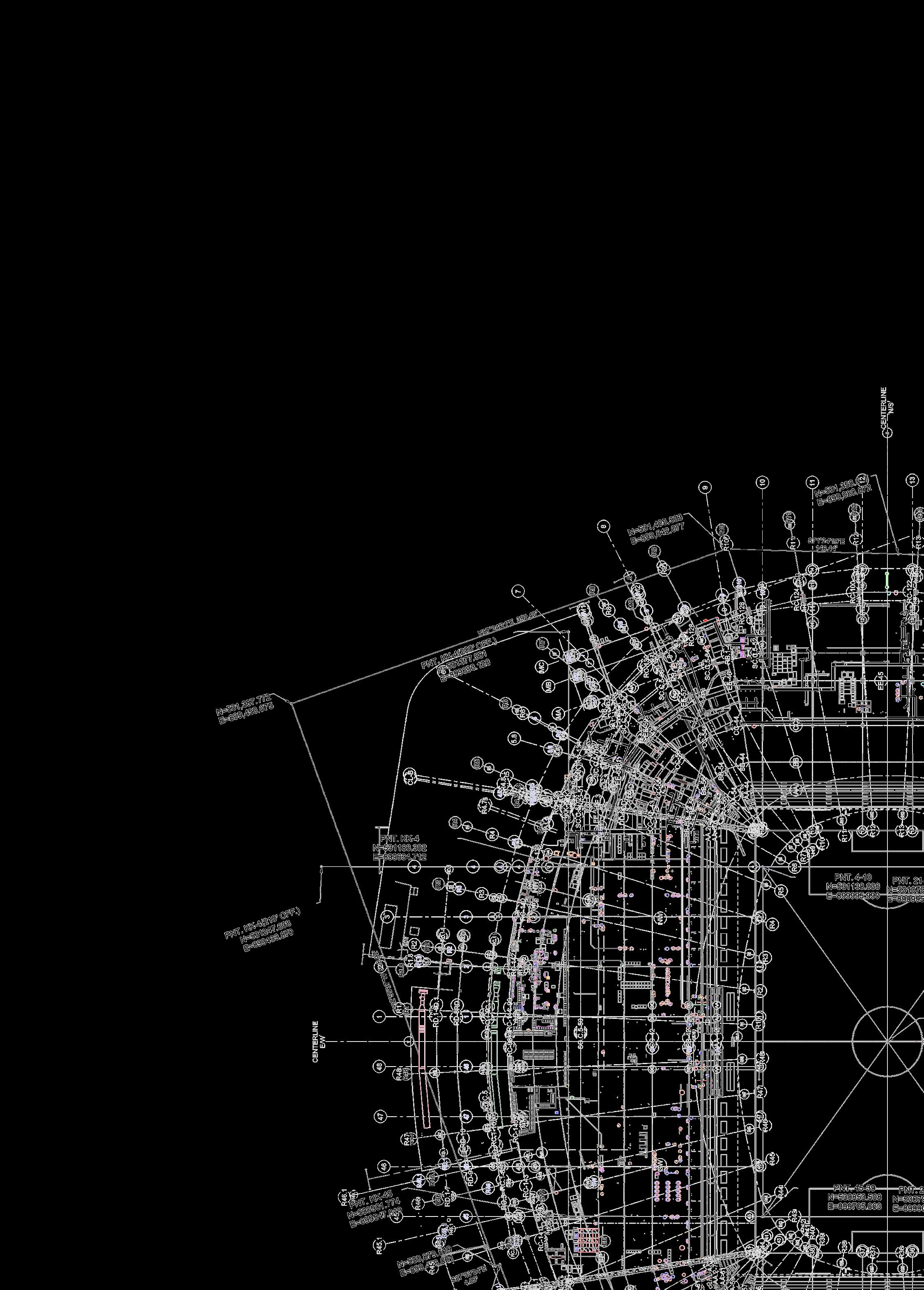
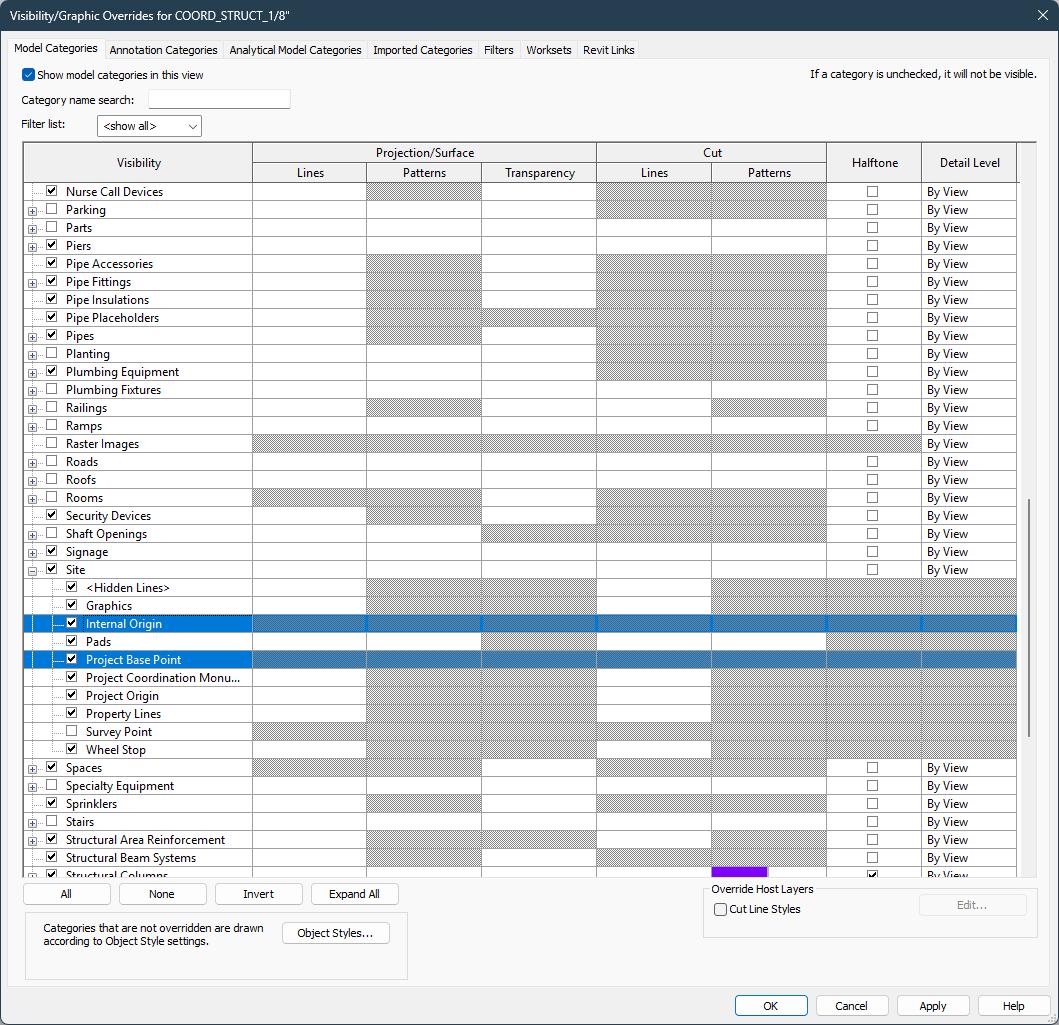
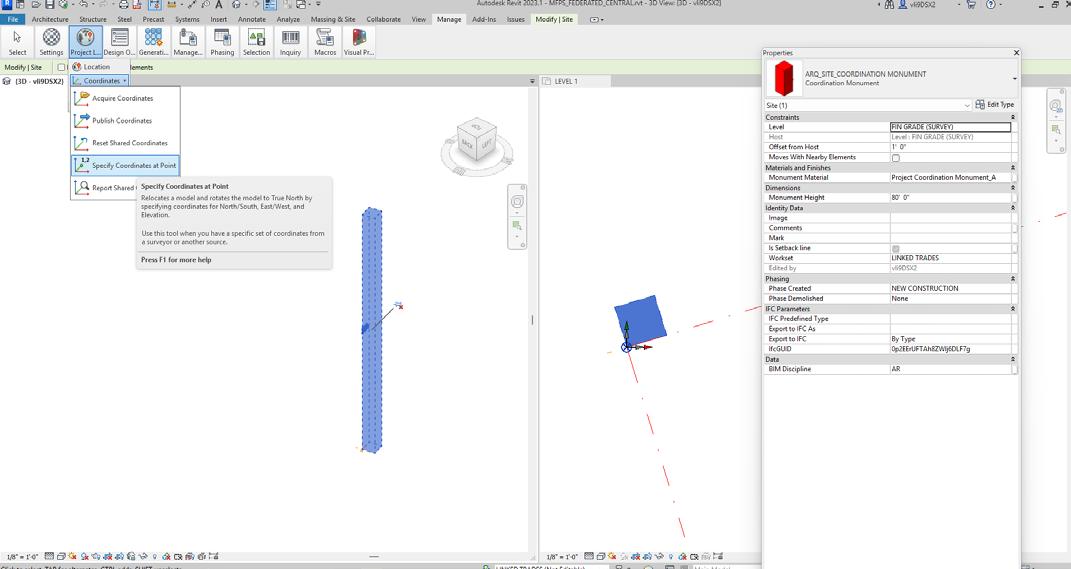
BASE POINT ALIGNMENT WORKFLOW
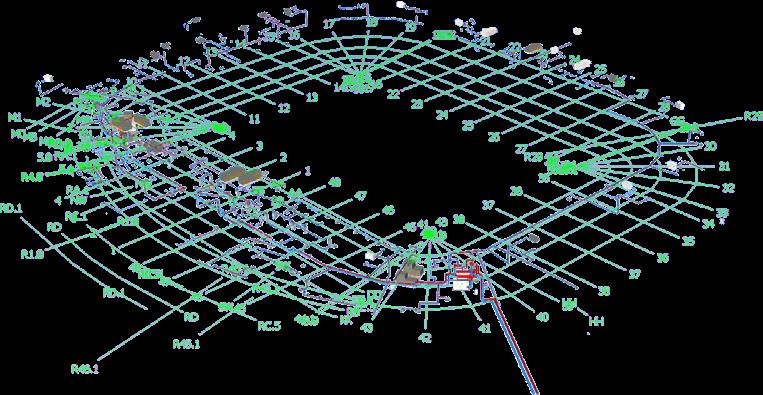
Construction models produced across multiple software platforms required precise spatial coordination.
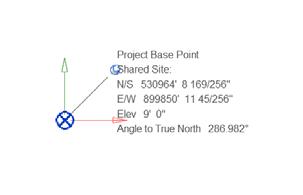
l [ 01 ] PROJECT BASE POINT
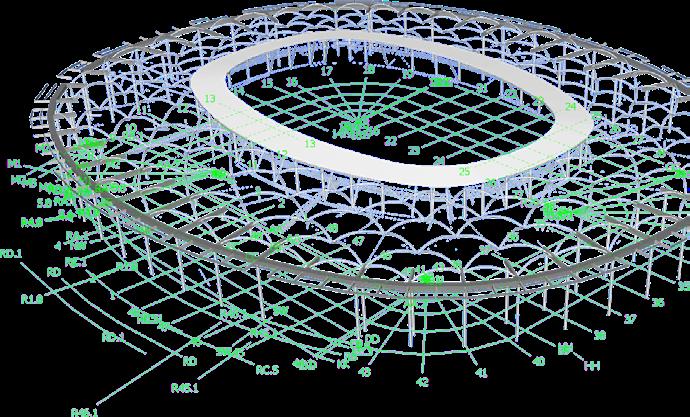
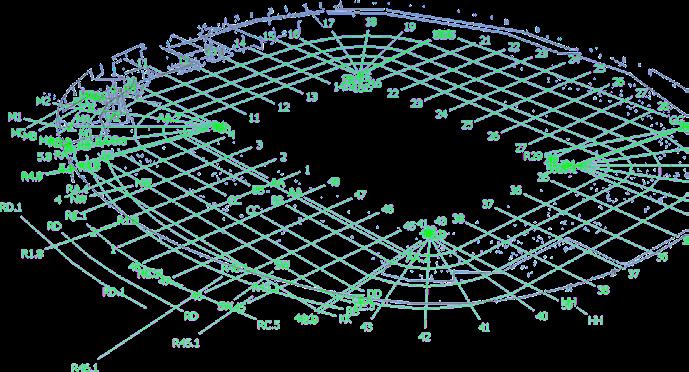
A shared project base point was established using a fixed structural reference to define a common coordinate system.
l [ 02 ] SHARED SITE
This reference enabled consistent model alignment and interoperability across all disciplines
[ 04 ] STADIUM
l [ 03 ] POINT COORDINATION
Spatial relationships, elevations, and site positioning remained accurate throughout the BIM coordination and construction lifecycle.
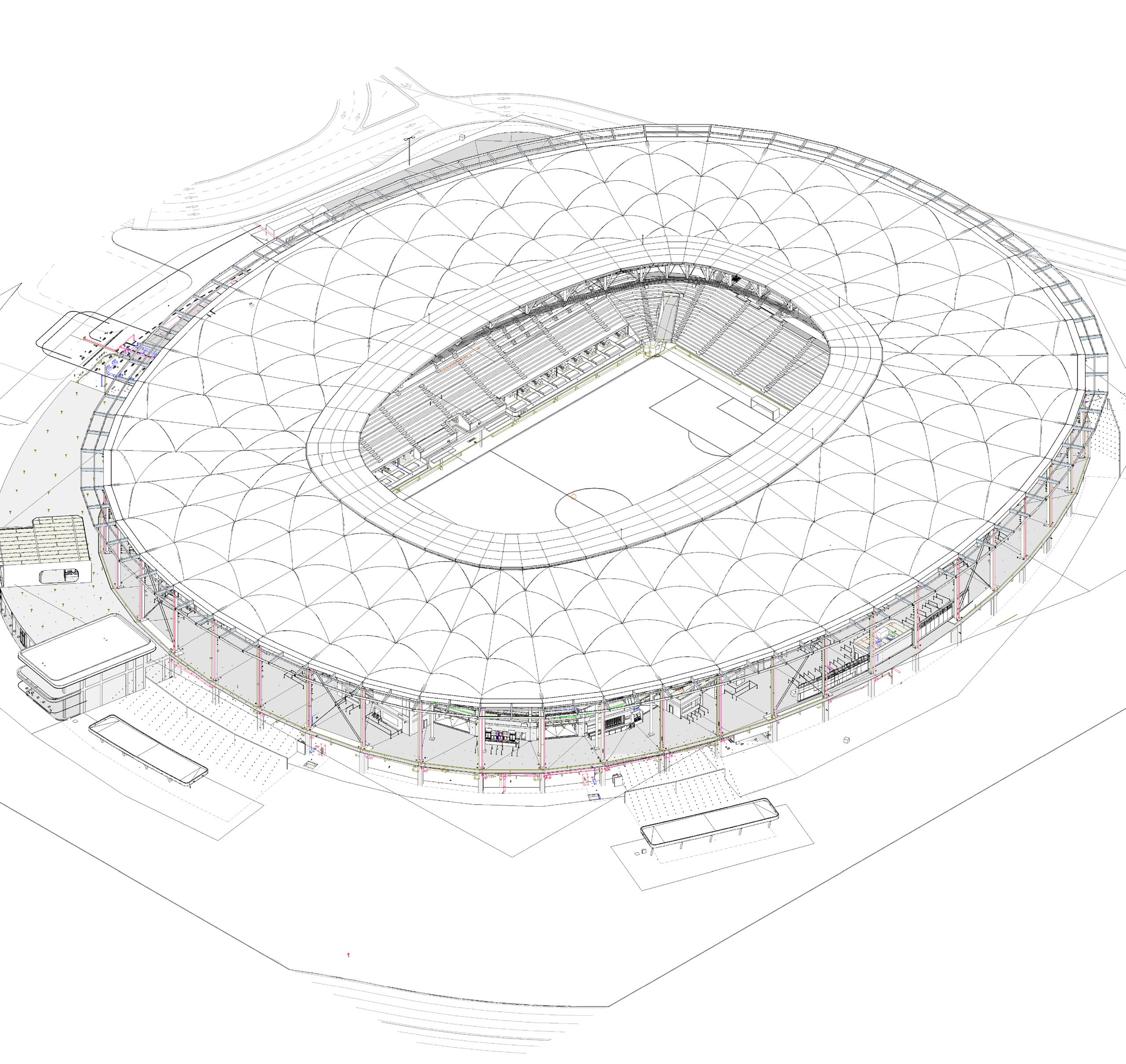
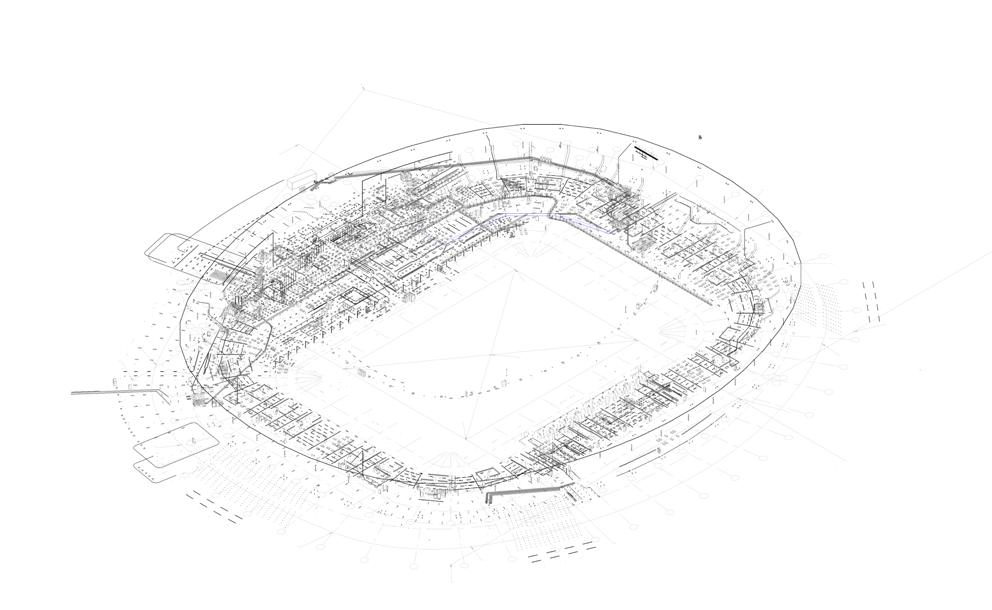
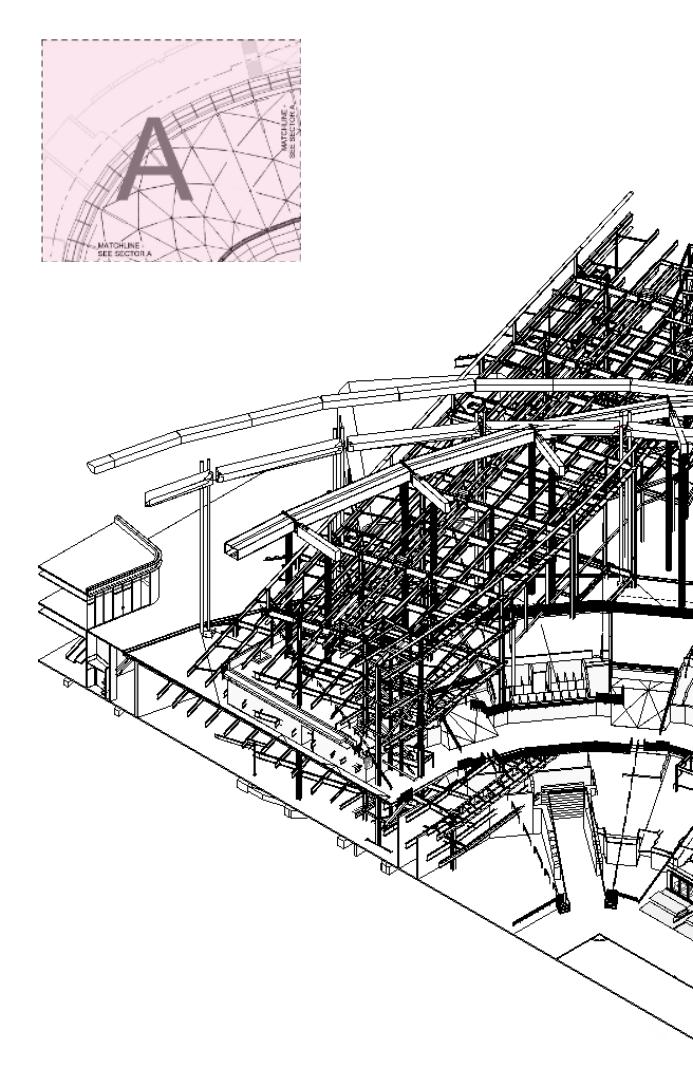
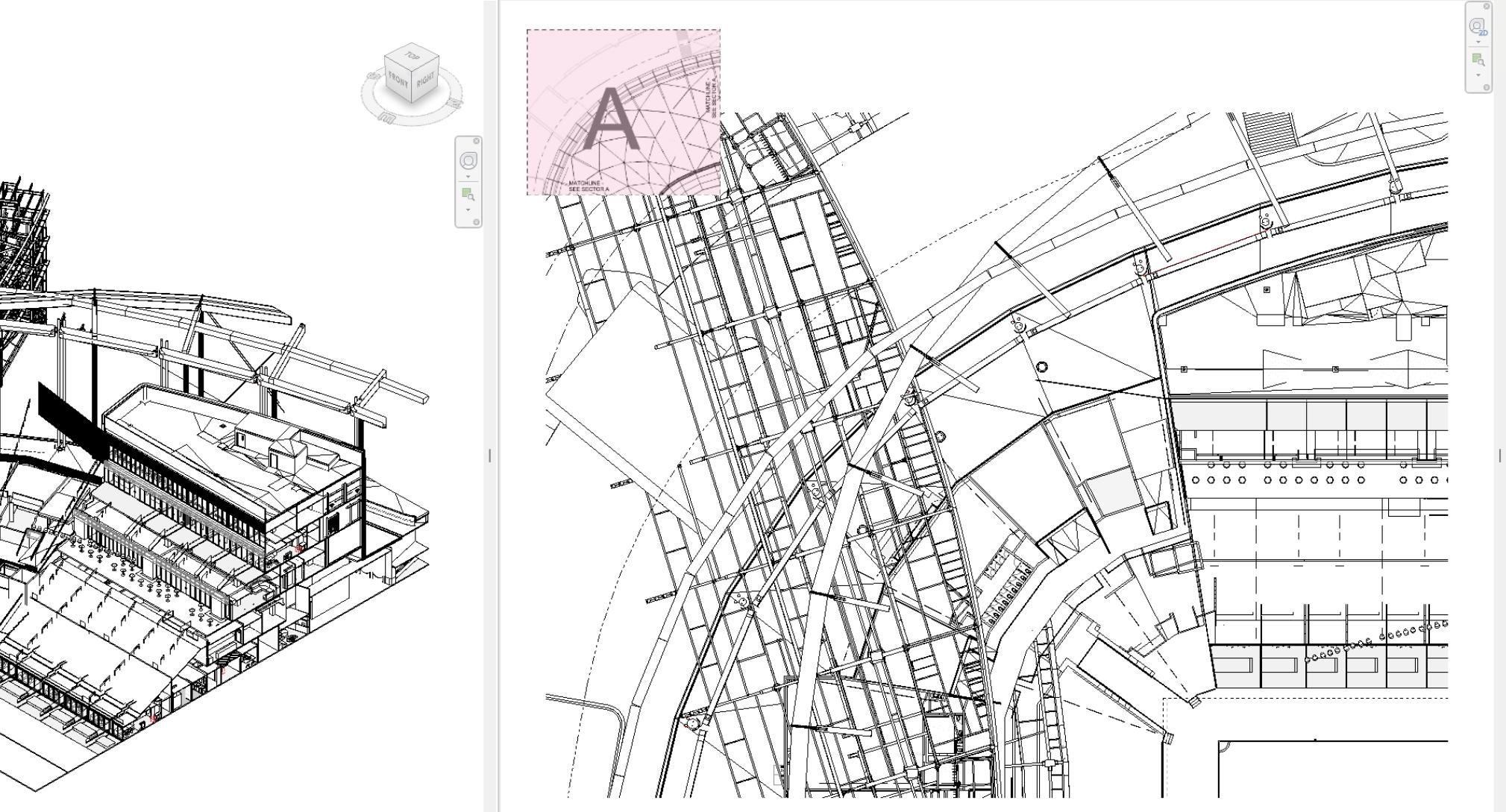
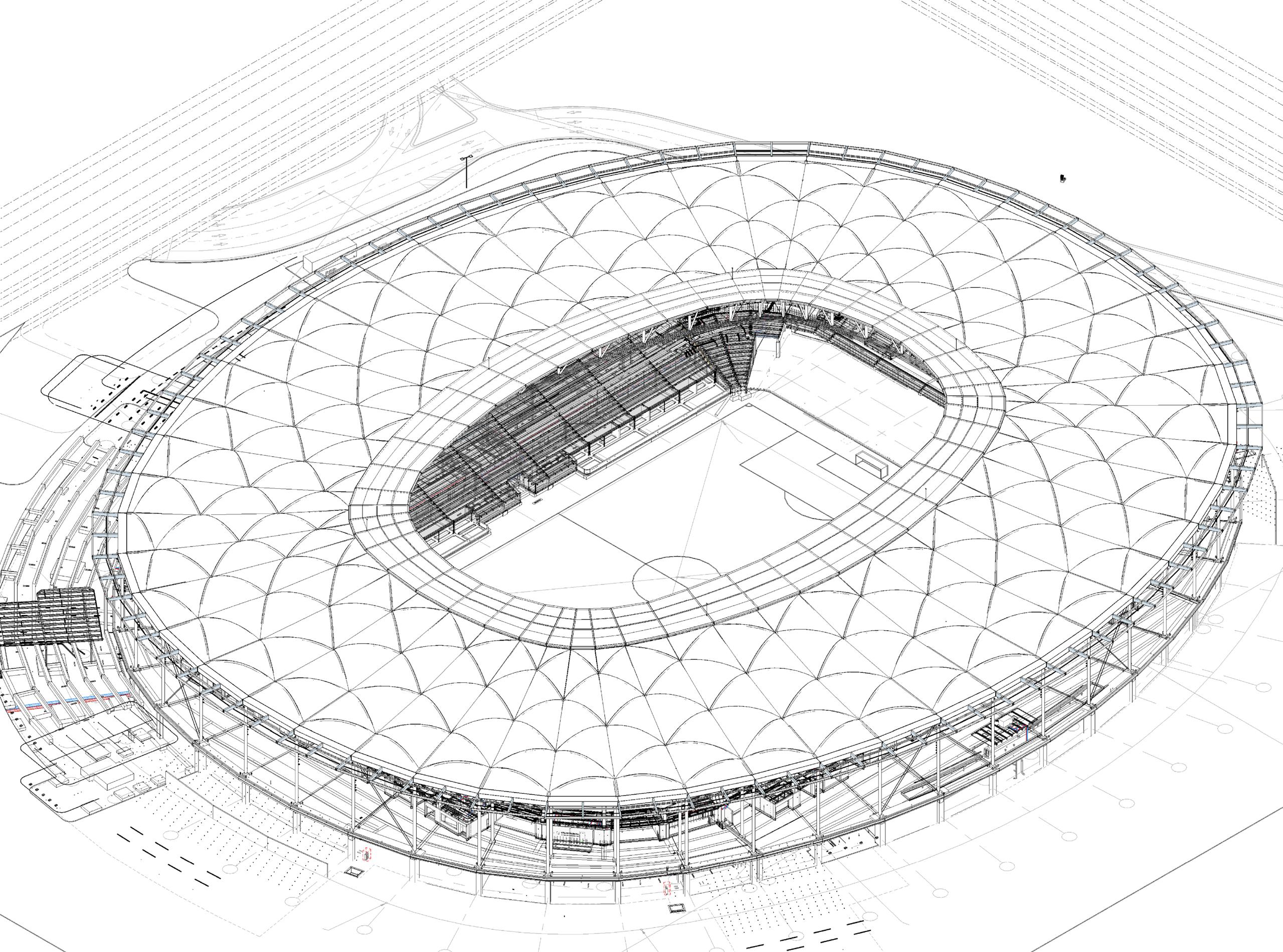
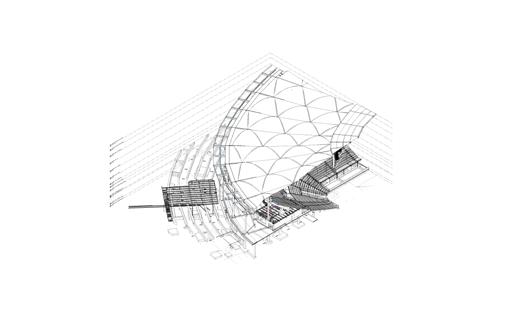
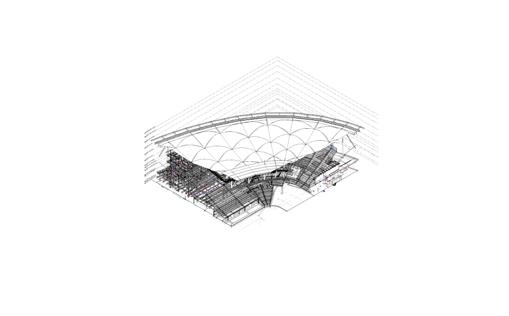
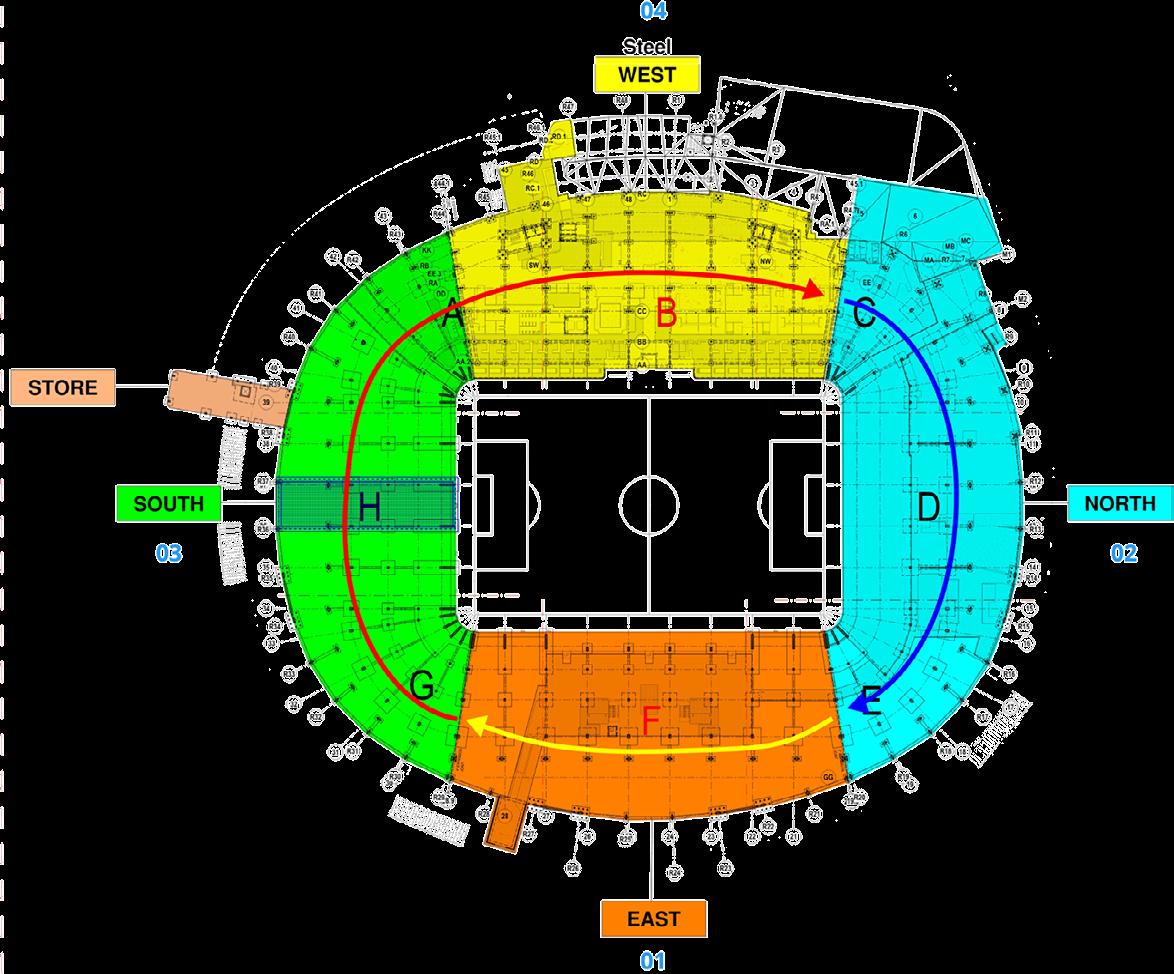
l [ 07 ] SECTOR A AXON VIEW FEDERATED CONSTRUCTION MODEL
l
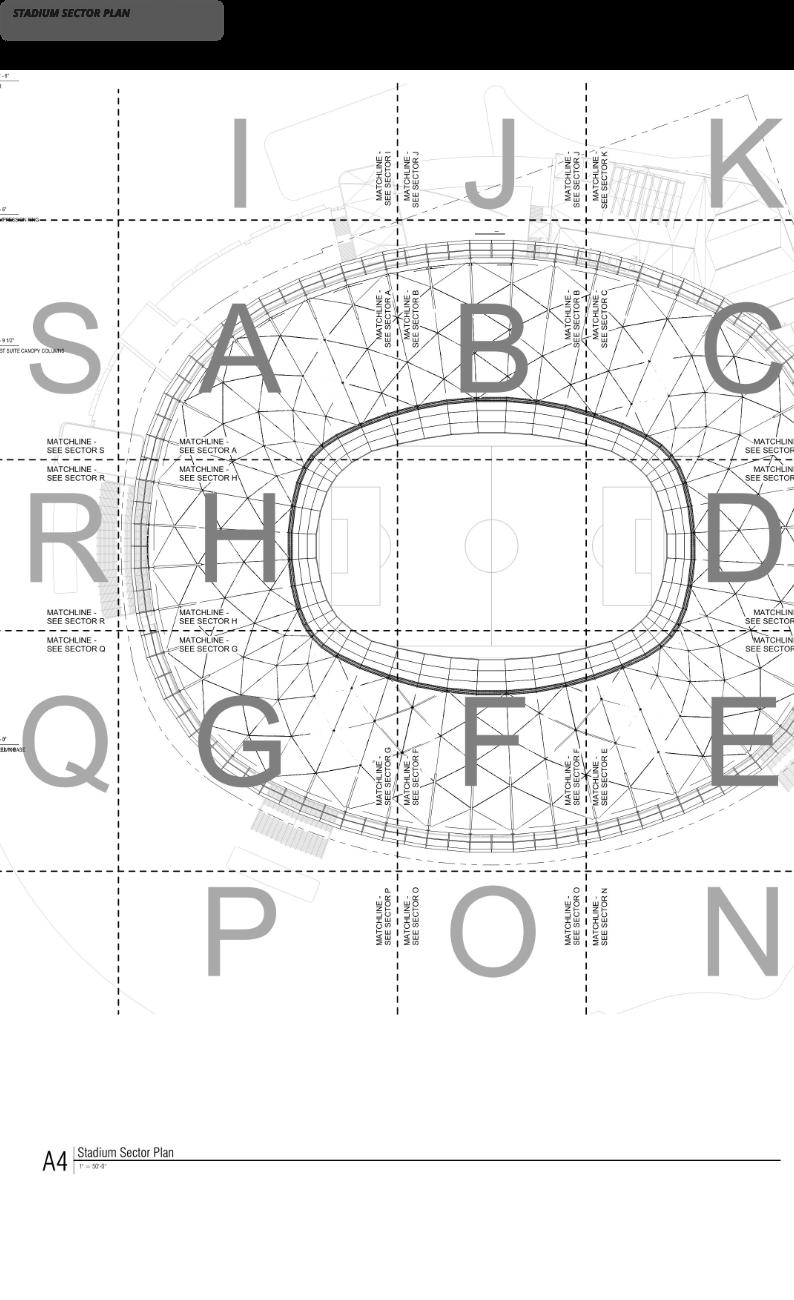
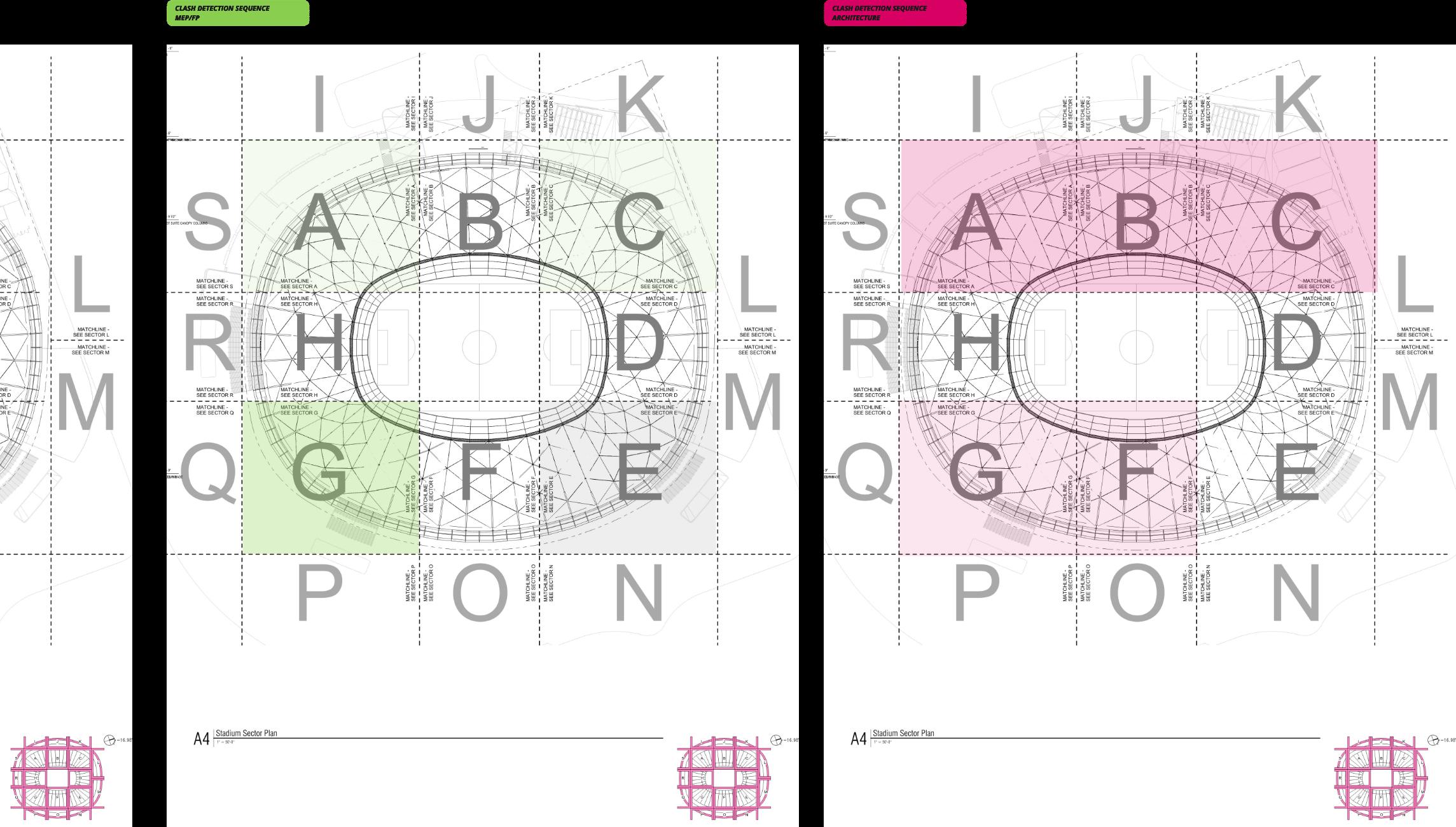
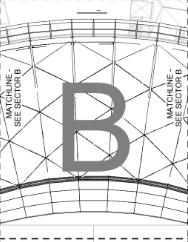
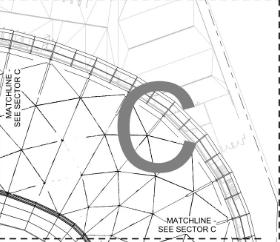
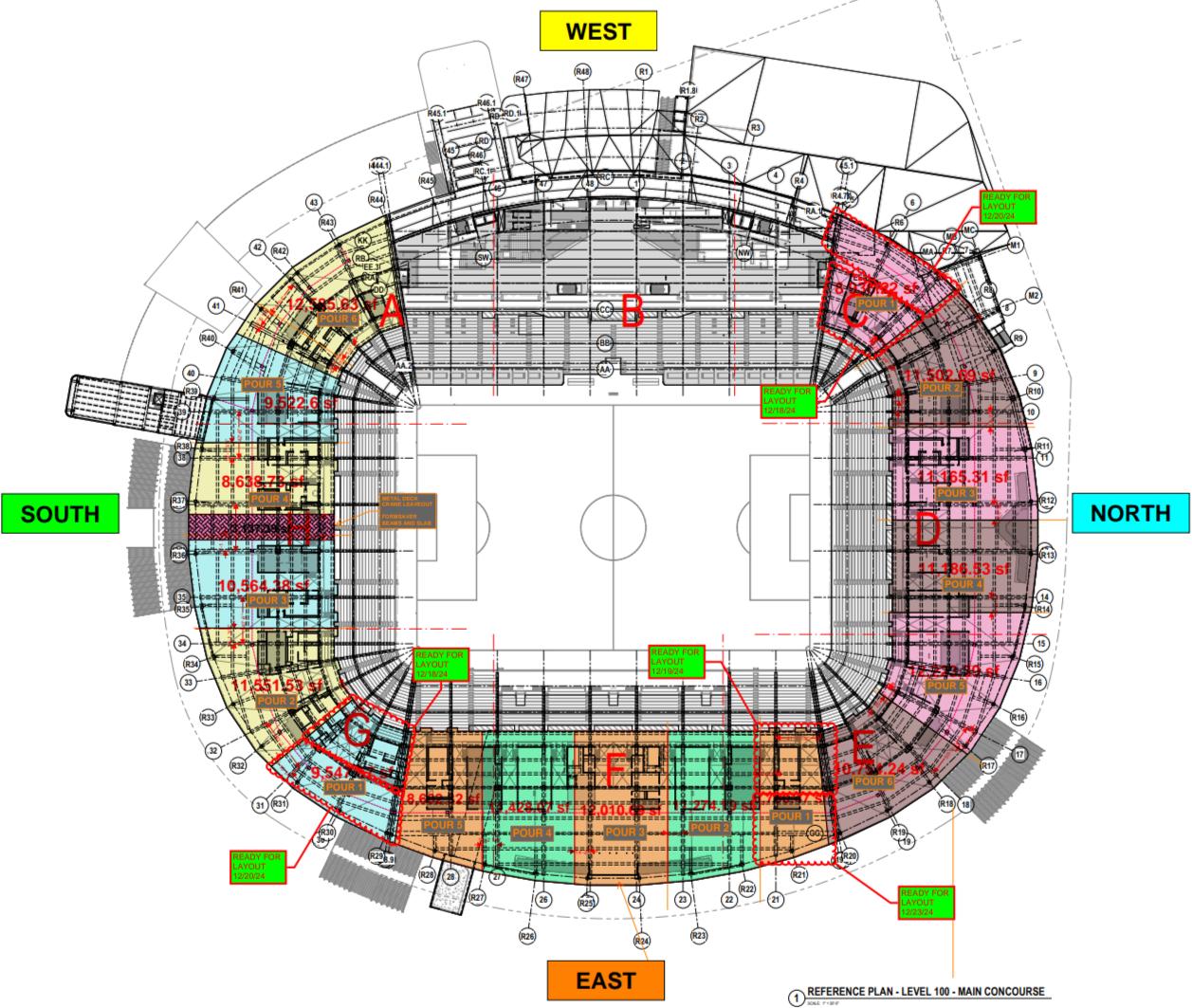
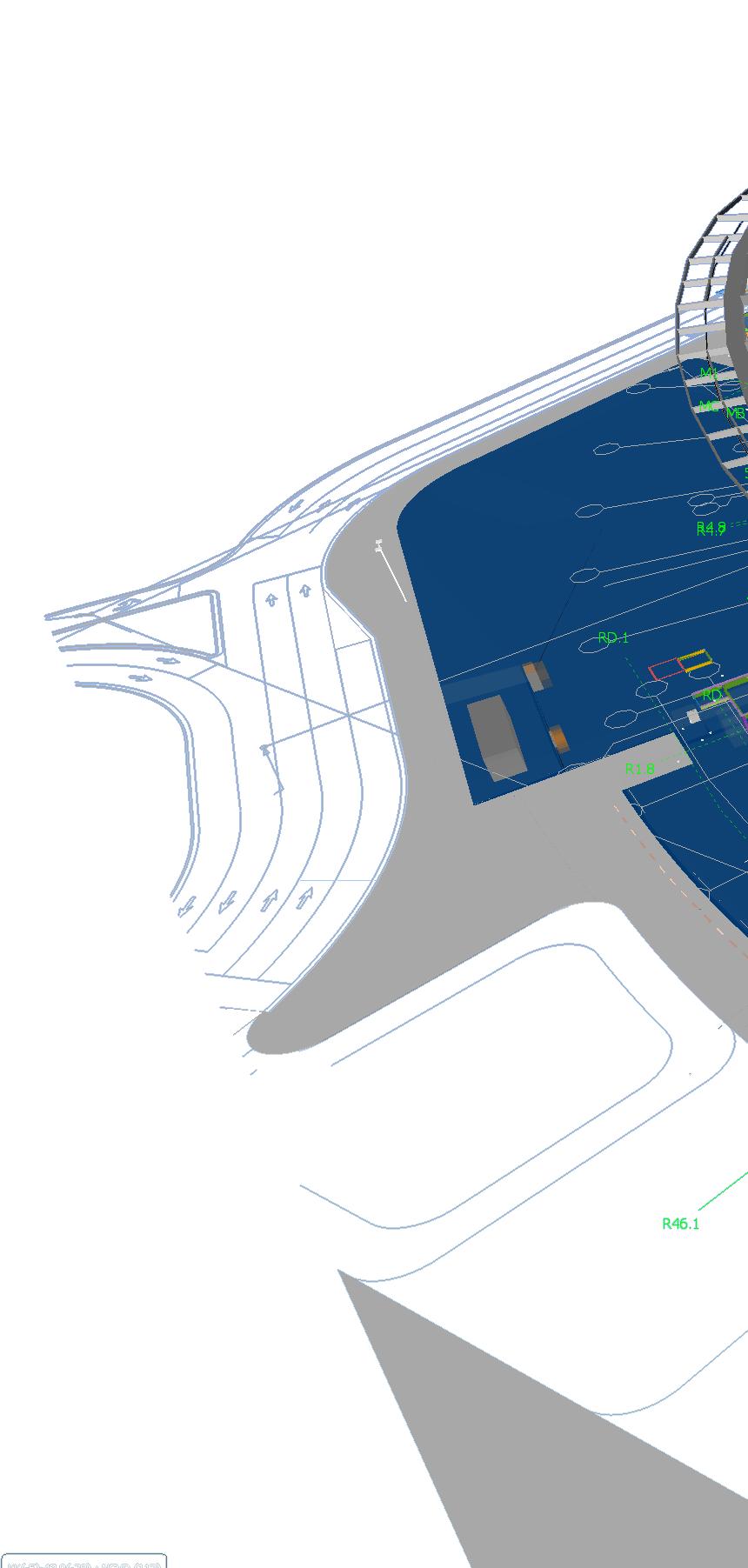
SECTOR PLAN
l [ 05 ] BIM COORDINATION SEQUENCE STRUCTURAL / MEP / FP
l [ 06 ] BIM COORDINATION SEQUENCE ARCHITECTURE / INTERIORS
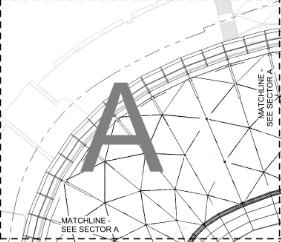
l [ 08 ] SECTOR A PLAN VIEW FEDERATED CONSTRUCTION MODEL
MODEL HEALTH & DATA INTEGRITY QUALITY CONTROL PROCESS
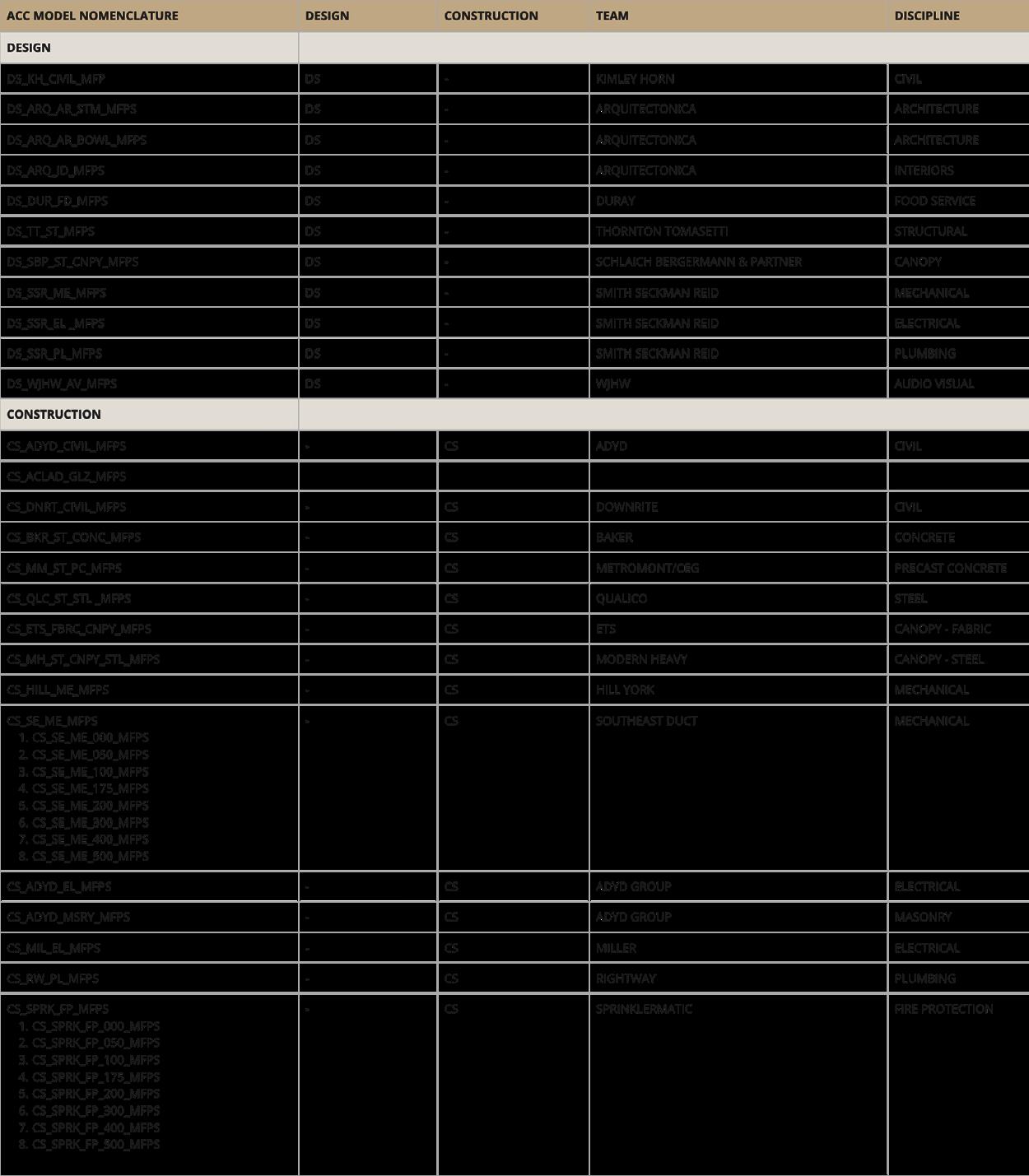
l [ 01 ] DISCIPLINE COORDINATION & NOMENCLATURE
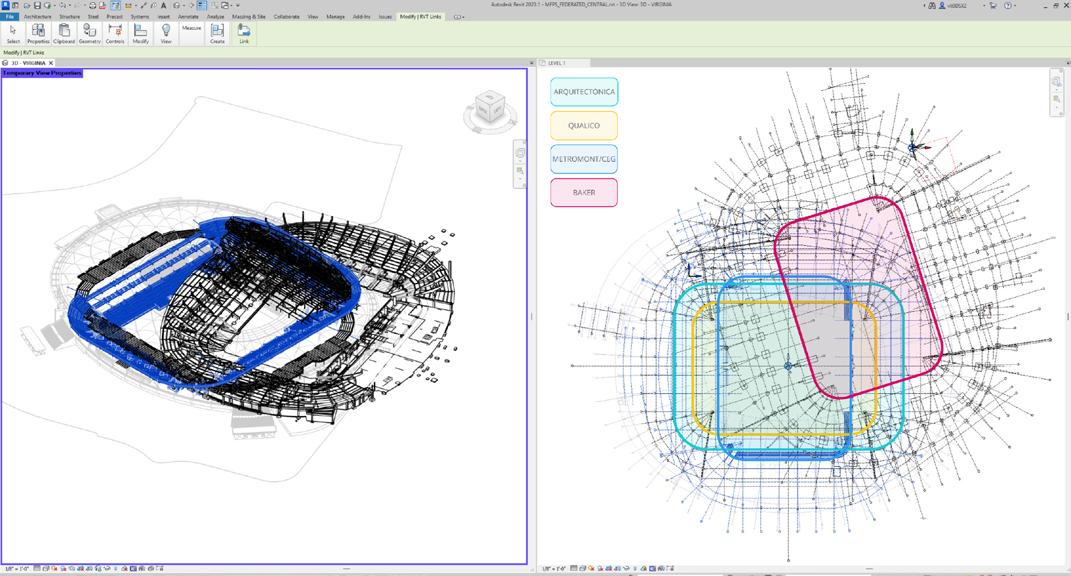
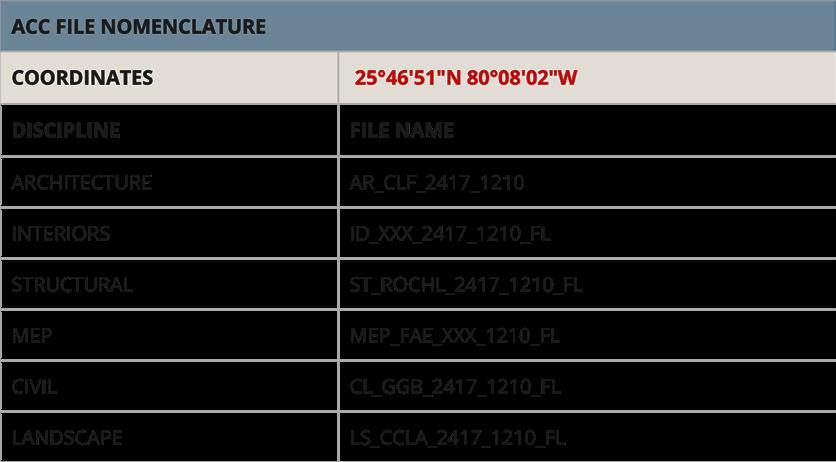
I spearheaded the model federation process, integrating architectural, structural, and MEP models within a unified coordination environment. Using Autodesk Construction Cloud and Revit, I established a consistent linking protocol and naming convention that enabled automated clash detection and geometry validation. The workflow ensured that all consultant models aligned to a shared project base point, units, and coordinate system.
l [ 02 ] PARAMETER & METADATA STANDARDIZATION
Optimal interoperability and reliability across all project models is achieved by implementing a data consistency framework based on standardized Revit parameter templates and shared classification schemas. Coordination of the alignment of metadata structures, ensuring that attributes such as materials, equipment IDs, and spatial parameters were formatted for automated Property ID identification. This enabled efficient data exchange across visualization, analysis, and fabrication workflows, reducing redundancy and supporting robust downstream BIM workflows.
l [ 03 ] FEDERATED CONSTRUCTION MODEL WORKFLOW INTEGRATION
To maintain reliable data across all federated models, routine model health checks were performed to monitor file performance, data structure, and element integrity. Standardized audit procedures ensured compliance with coordination protocols, optimizing model stability and reducing file corruption risks. This proactive quality control process preserved data consistency throughout the project lifecycle and supported accurate, real-time collaboration among disciplines.
[ 05 ]
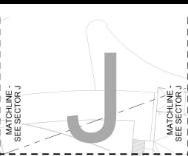
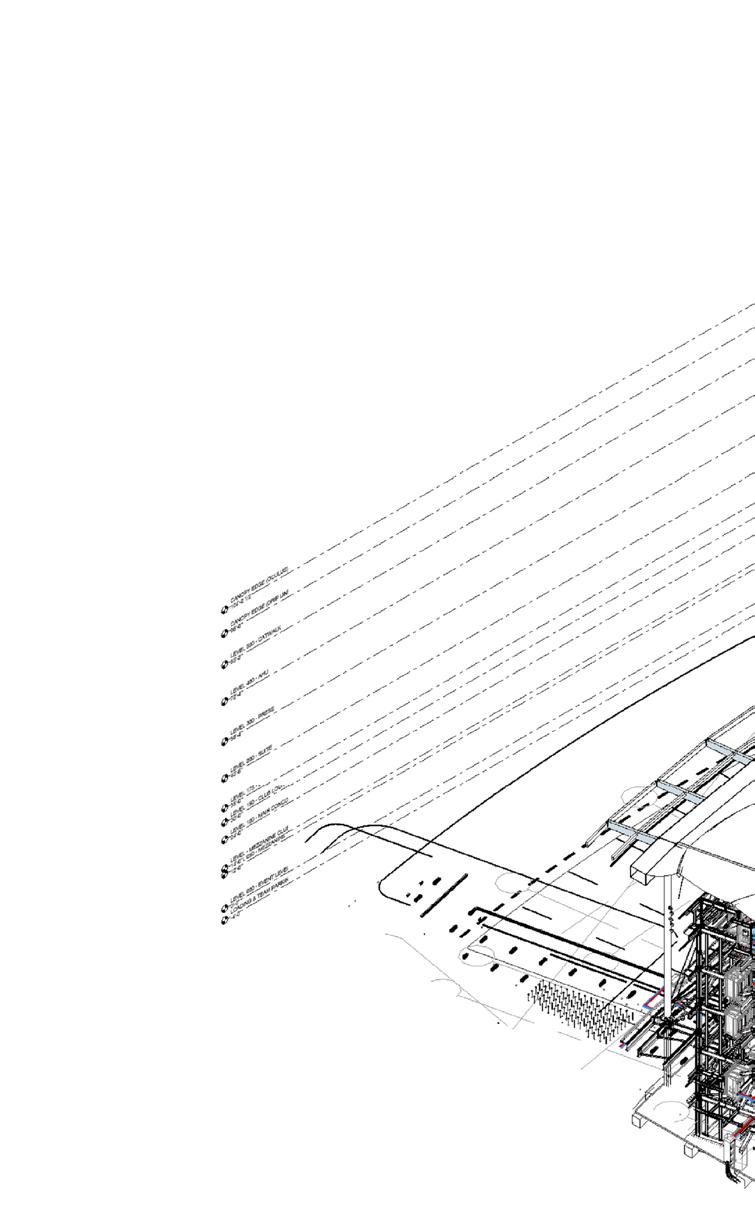
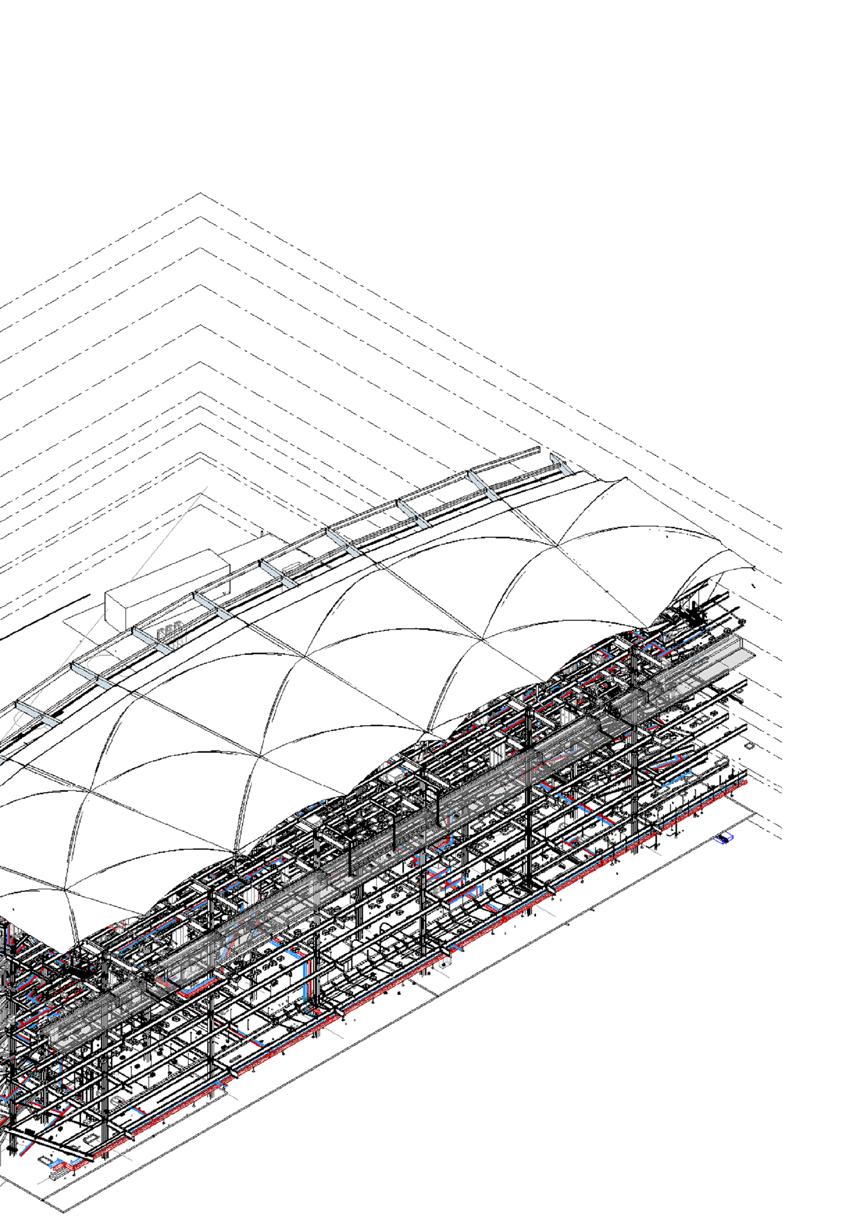
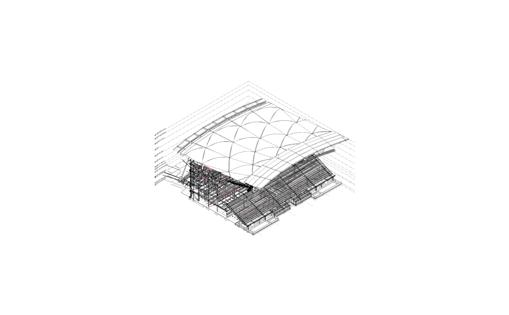
SECTOR J AXON VIEW
FEDERATED CONSTRUCTION MODEL
l [ 06 ] SECTOR A
l [ 07 ] SECTOR A
l [ 04 ] FEDERATED CONSTRUCTION MODEL ACC / BIM 360 / REVIT / TEKLA / IFC AUTO CAD 3D / CIVIL3D / SPRINK CAD
l [ 08 ] SECTOR B
l [ 09 ] SECTOR B
l [ 10 ] SECTOR C
l [ 11 ] SECTOR C
2X
2X
2X
2X
2X
2X
2X
2X
2X
2X
2X
2X WED 5-Feb
2X
FEDERATED MODEL WORKFLOW COORDINATION PROCESS
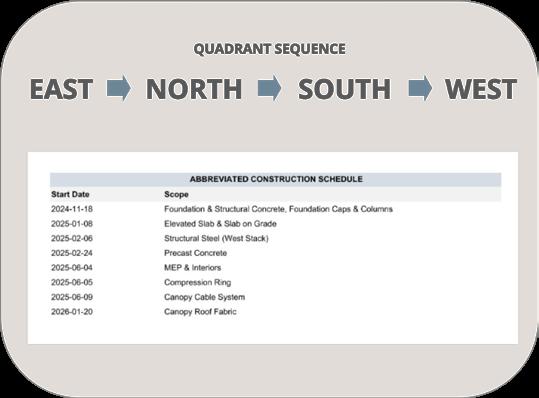
BIM coordination meetings were structured to align with time zones, discipline hierarchy, and construction sequencing. Structural disciplines initiated the coordination cycle and cloud publishing, informing subsequent MEP and fire protection updates. The clash detection workflow progressed in parallel with construction, prioritizing concrete zones scheduled for early erection. Steel zones, coordinated overseas, followed later sequencing to maintain alignment with fabrication and delivery timelines.
FEDERATED CONSTRUCTION MODEL FIELD COORDINATION WORKFLOW
The federated construction model aligned virtual coordination with on-site sequencing to validate constructibility and field logistics. Coordination cycles were synchronized with subcontractor models to verify sleeve placement, equipment clearances, and installation tolerances. Field engineers utilized the federated model for clash detection and spatial verification, ensuring that fabrication, delivery, and installation proceeded in alignment with construction priorities and schedule milestones.
CLASH DETECTION ISSUE MANAGEMENT
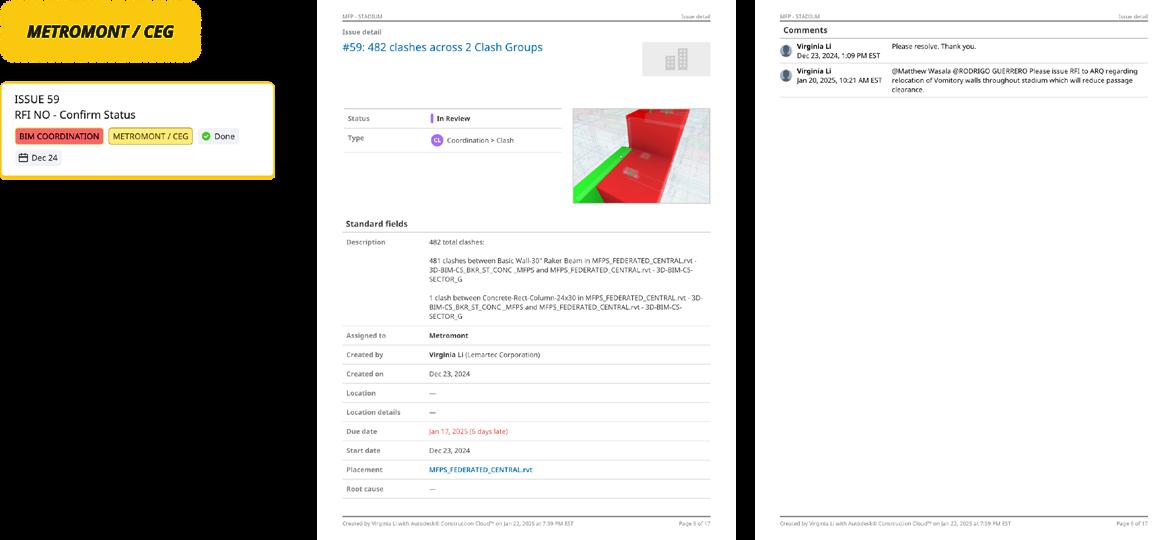
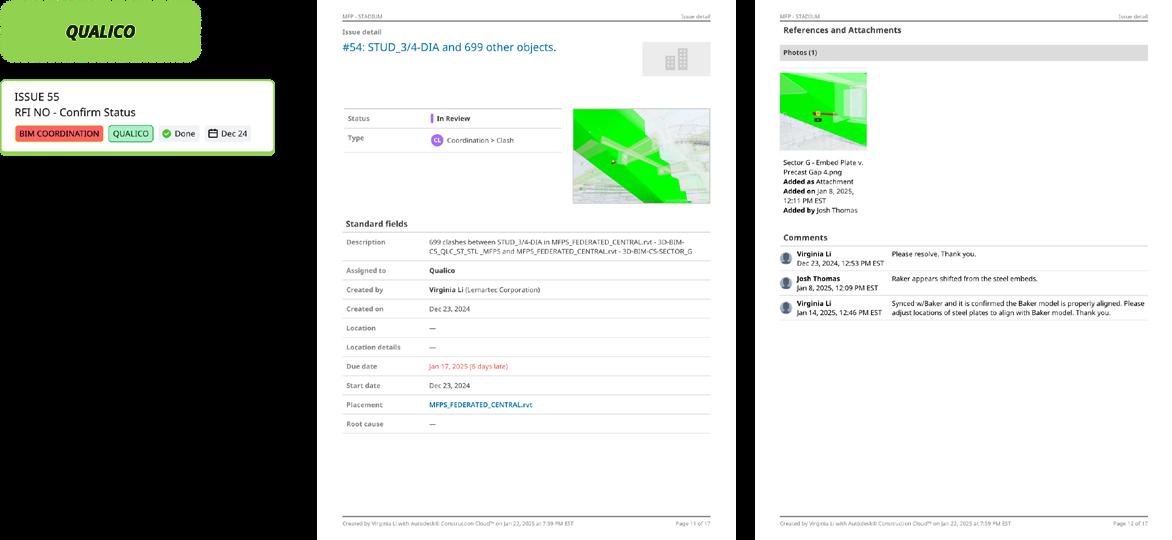
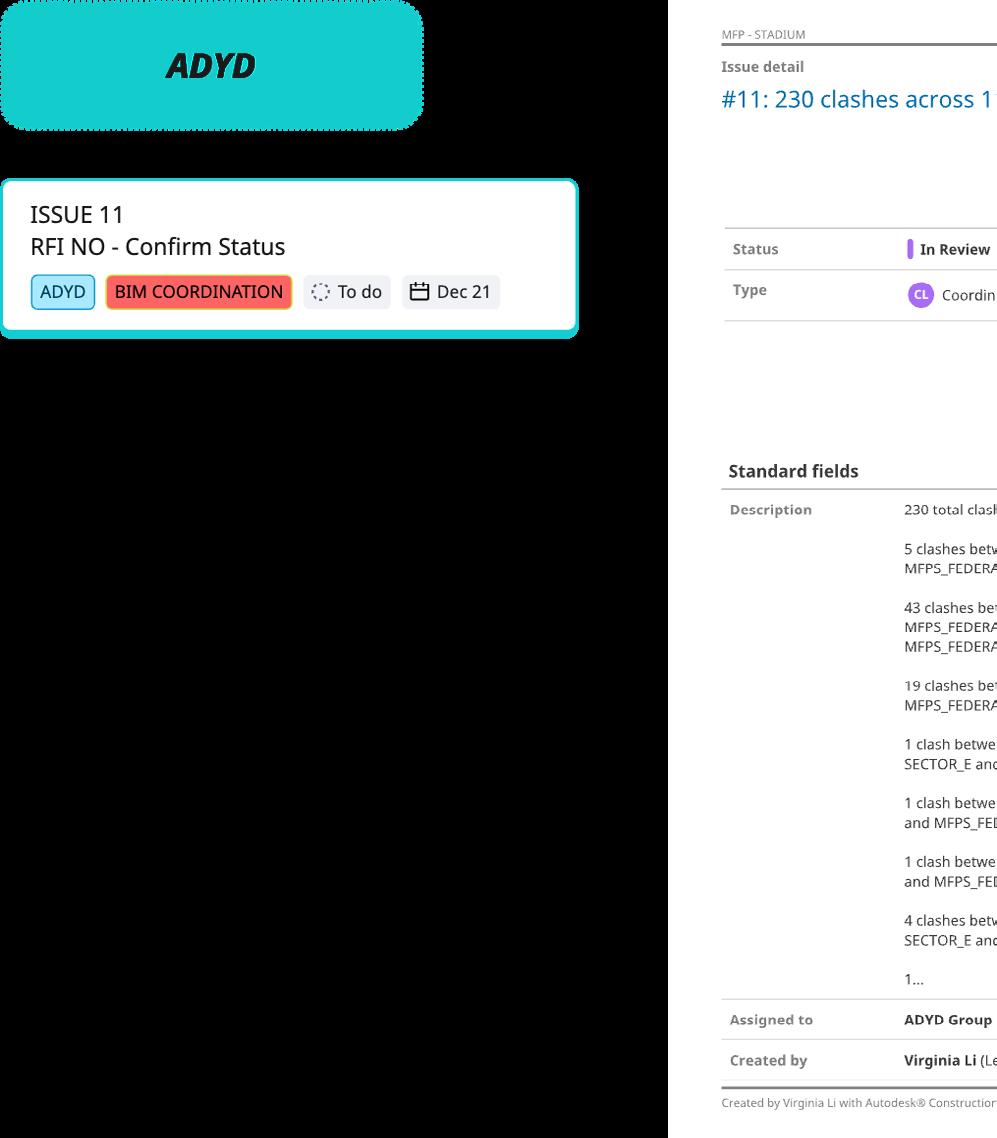
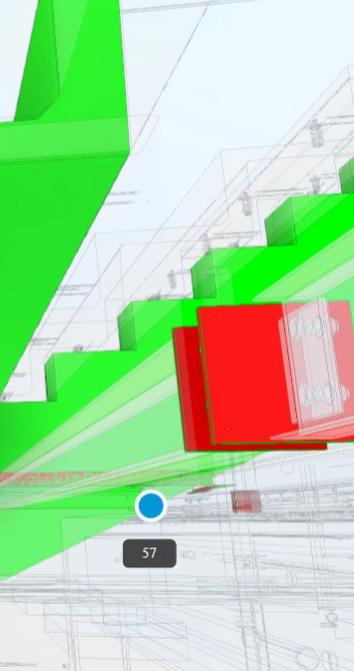
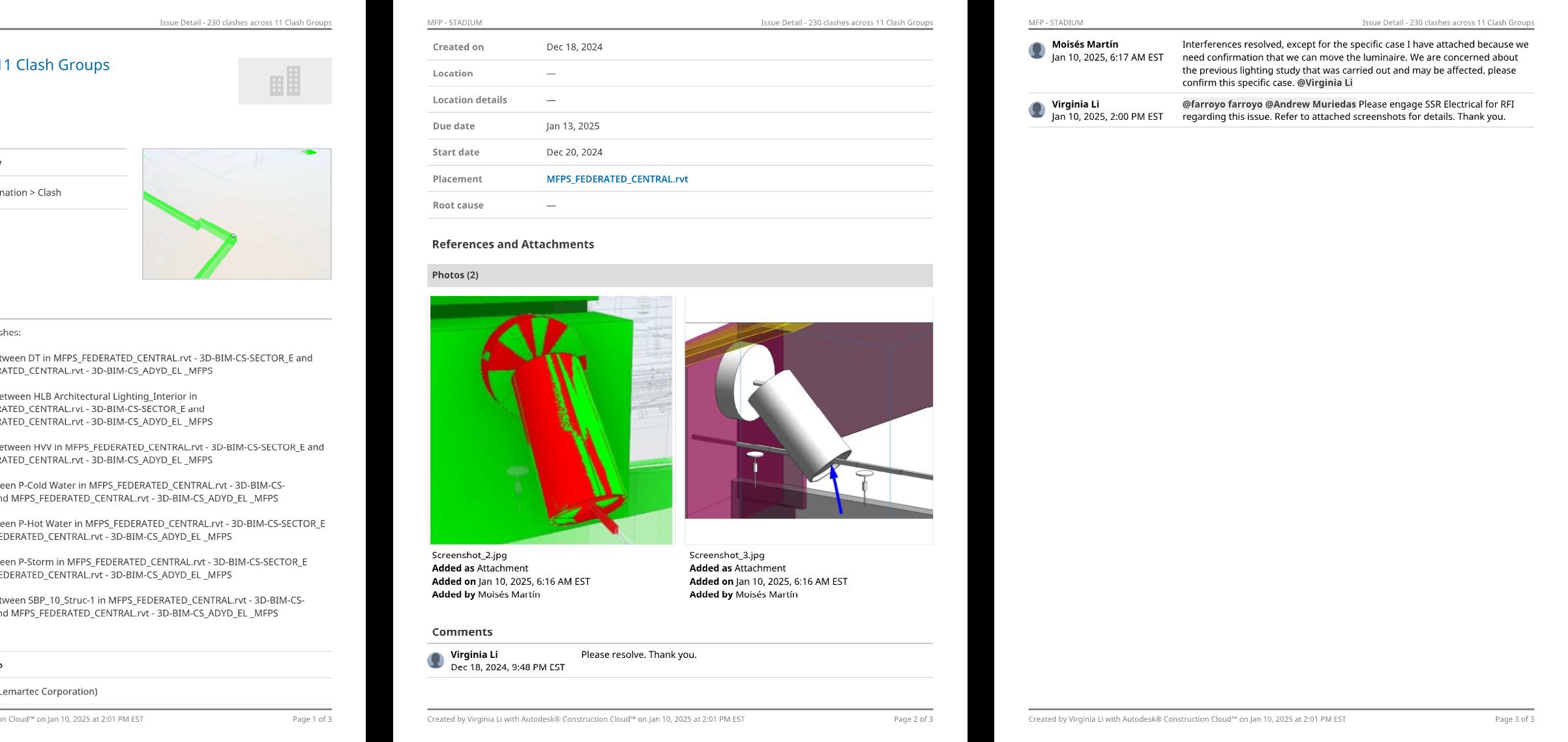
The clash detection workflow utilized federated models to identify, categorize, and resolve spatial conflicts across all disciplines. Automated clash checks were conducted within scheduled coordination cycles, with issues logged and tracked through cloud-based dashboards. Conflicts were grouped by system priority to streamline resolution, ensuring that coordination decisions were addressed efficiently and aligned with construction sequencing and design intent.
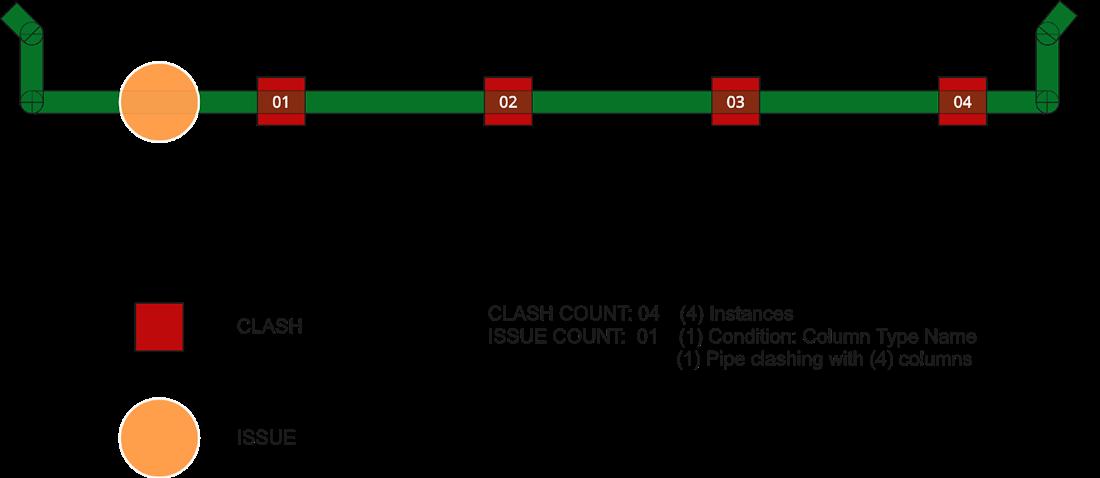
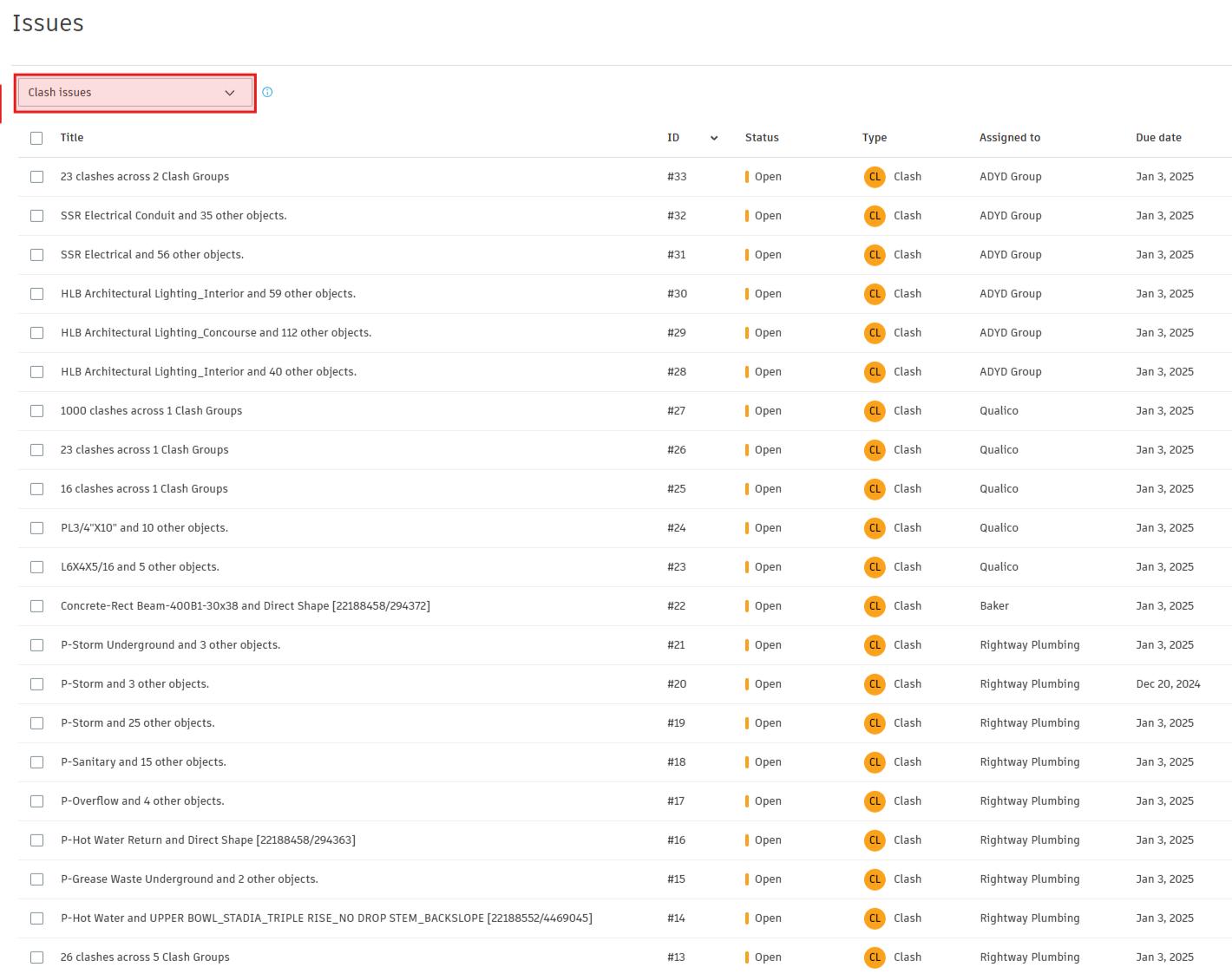
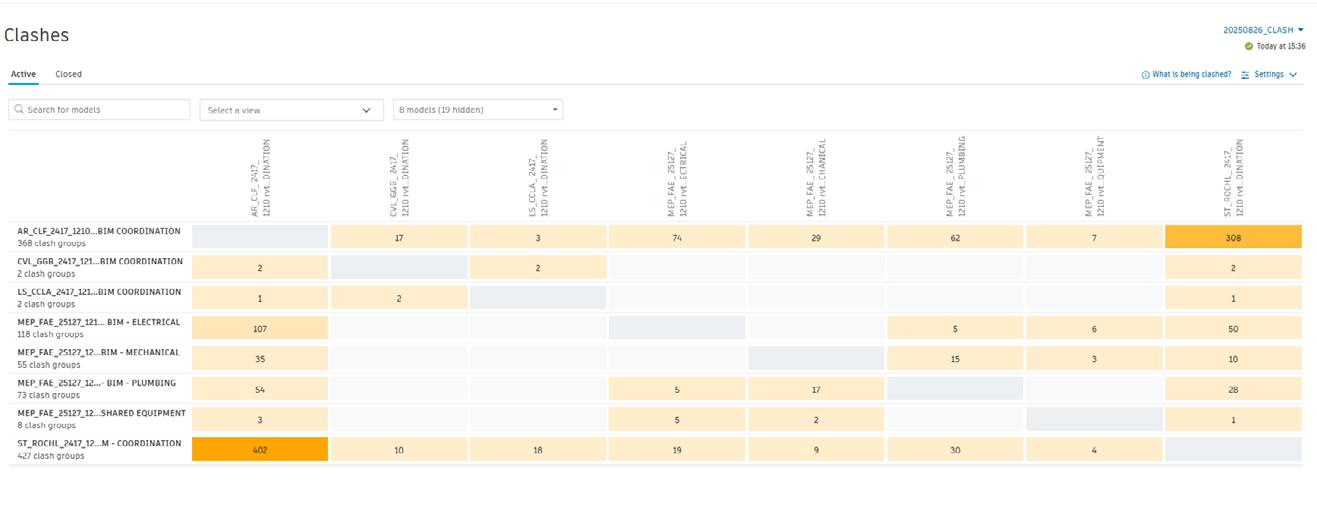
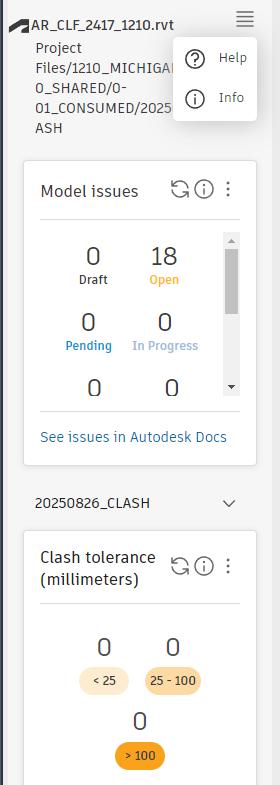
l [ 01 ] CLASH & ISSUE DIAGRAM
Number of detected clashes in the coordination matrix does not directly correspond to the number of issues generated.
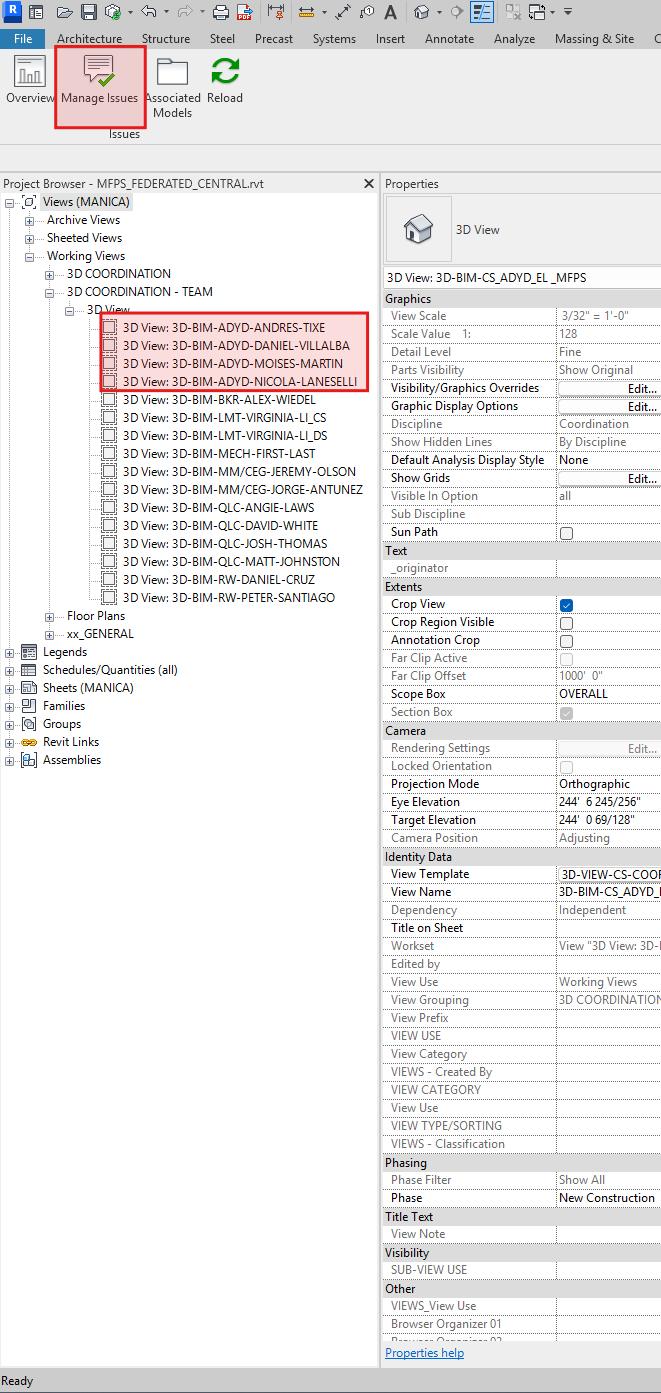
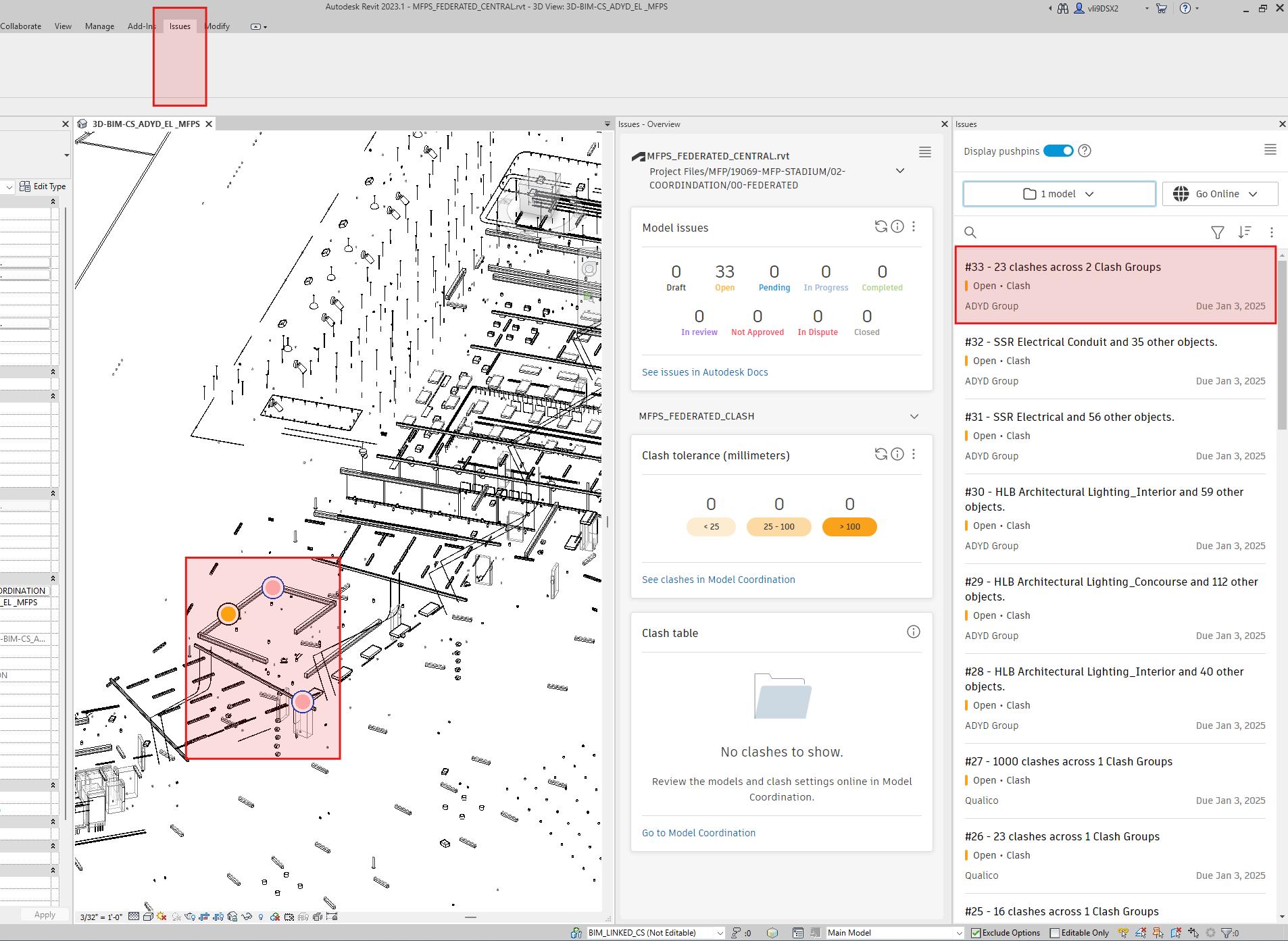
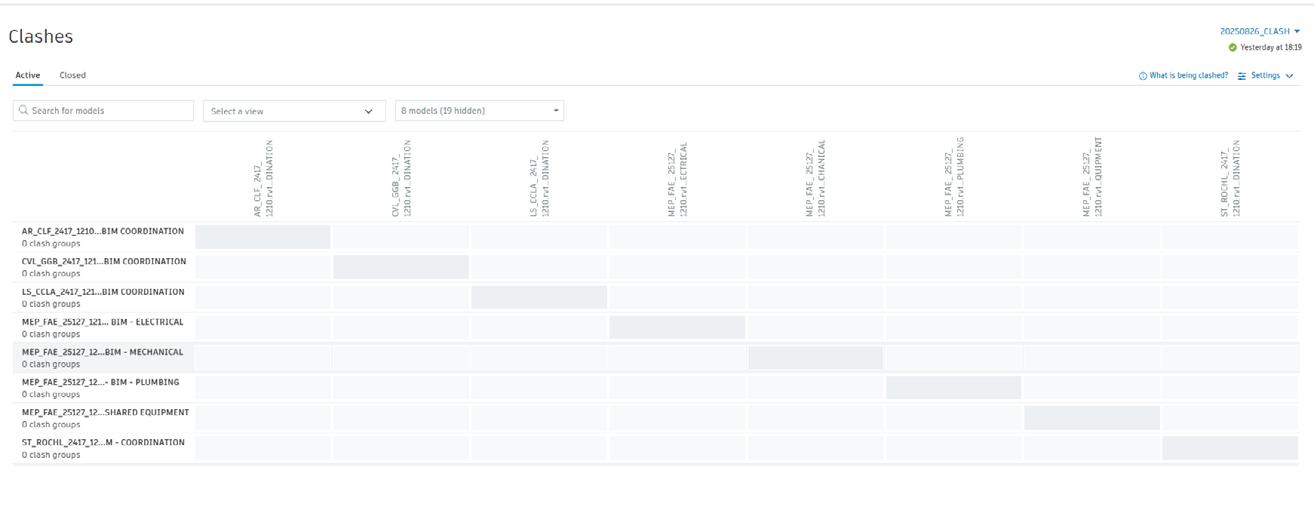
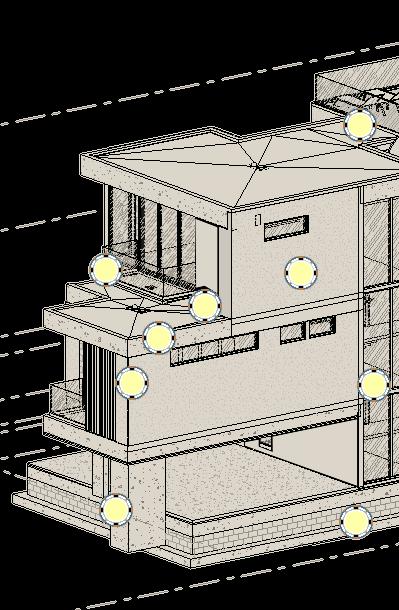
l [ 02 ] REVIT ISSUES
Issues represent aggregated sets of clashes, grouped according to shared parameters, spatial conditions, or system relationships.
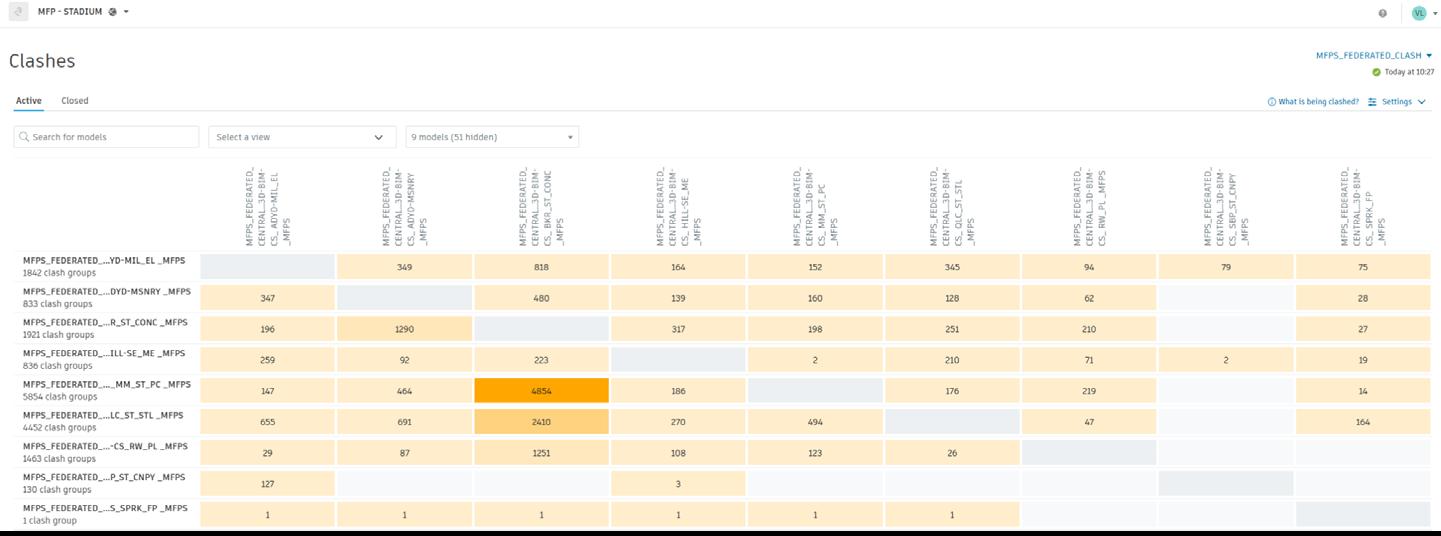
l [ 03 ] CLASH MATRIX OPEN
Each issue may encompass one or multiple clashes, depending on the complexity and proximity of the detected conflicts.
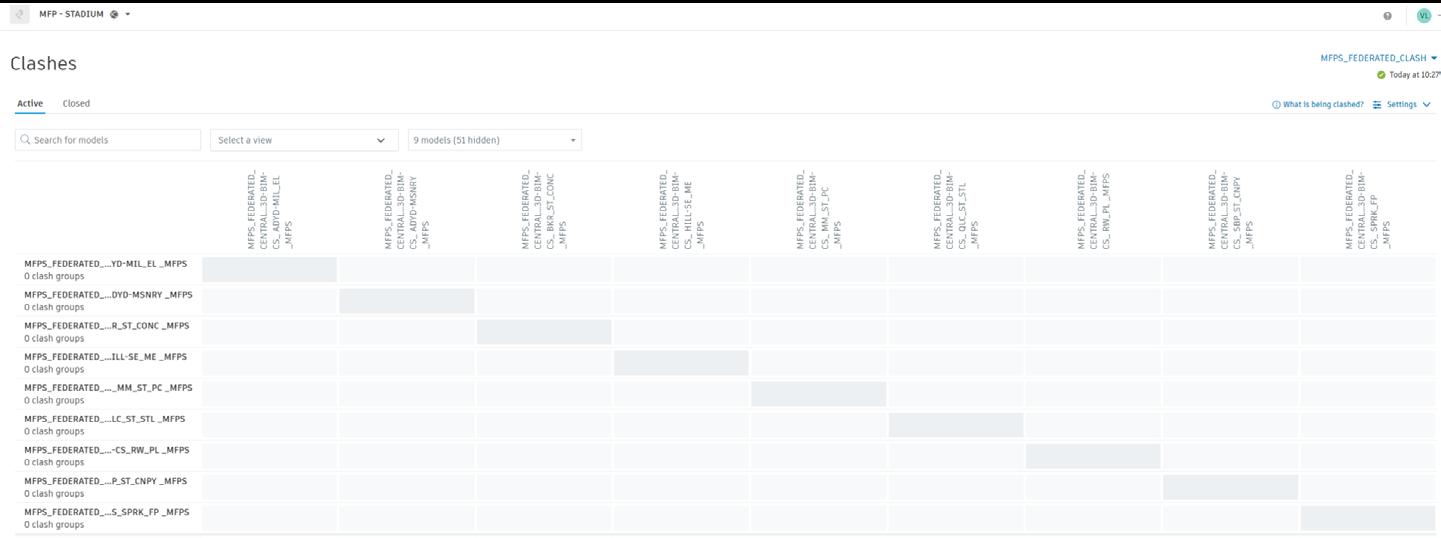
l [ 04 ] CLASH MATRIX RESOLVED
Resolution of an issue may require cross-discipline coordination between two or more project teams or disciplines to ensure alignment and design intent integrity.
Established real-time coordination dashboard to monitor model health, design progress, and issue resolution across distributed project teams. Built within Autodesk Construction Cloud, the dashboard aggregated data from multiple disciplines to visualize open clashes, model status, and version history. This tool provided transparency for all stakeholders—architects, engineers, and ownership teams—enabling informed decision-making during coordination meetings. The dashboard streamlined communication by linking visual issues directly to model elements, reducing coordination turnaround time and improving accountability across the global team network. l [ 01 ]
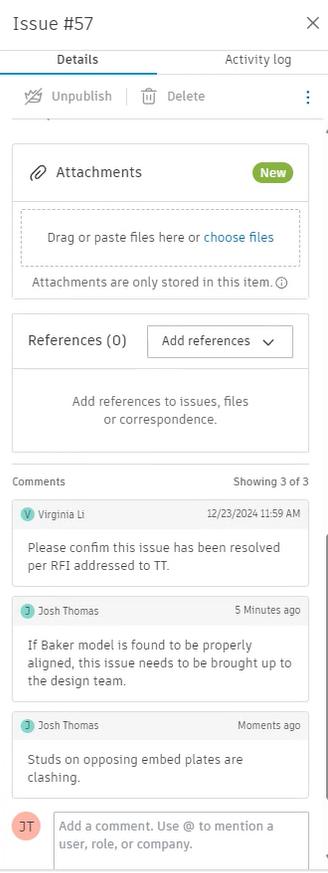
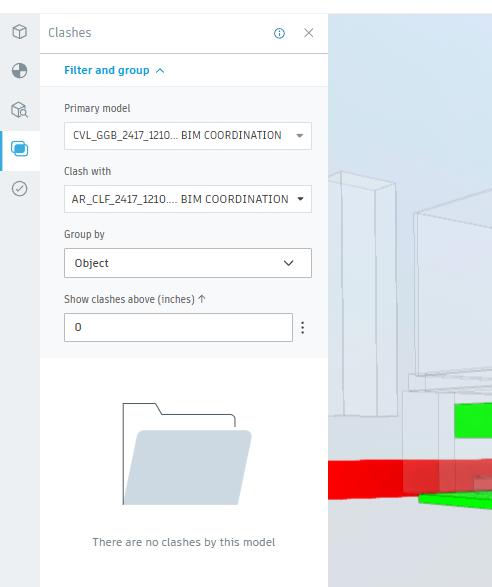
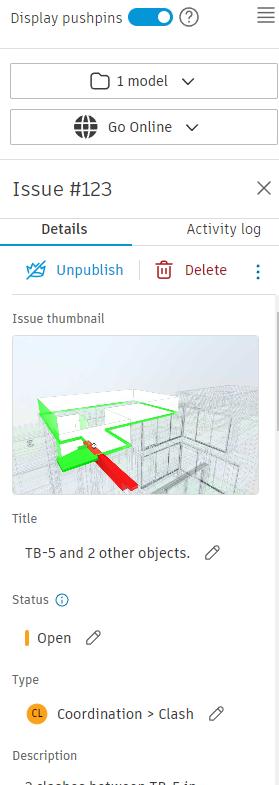
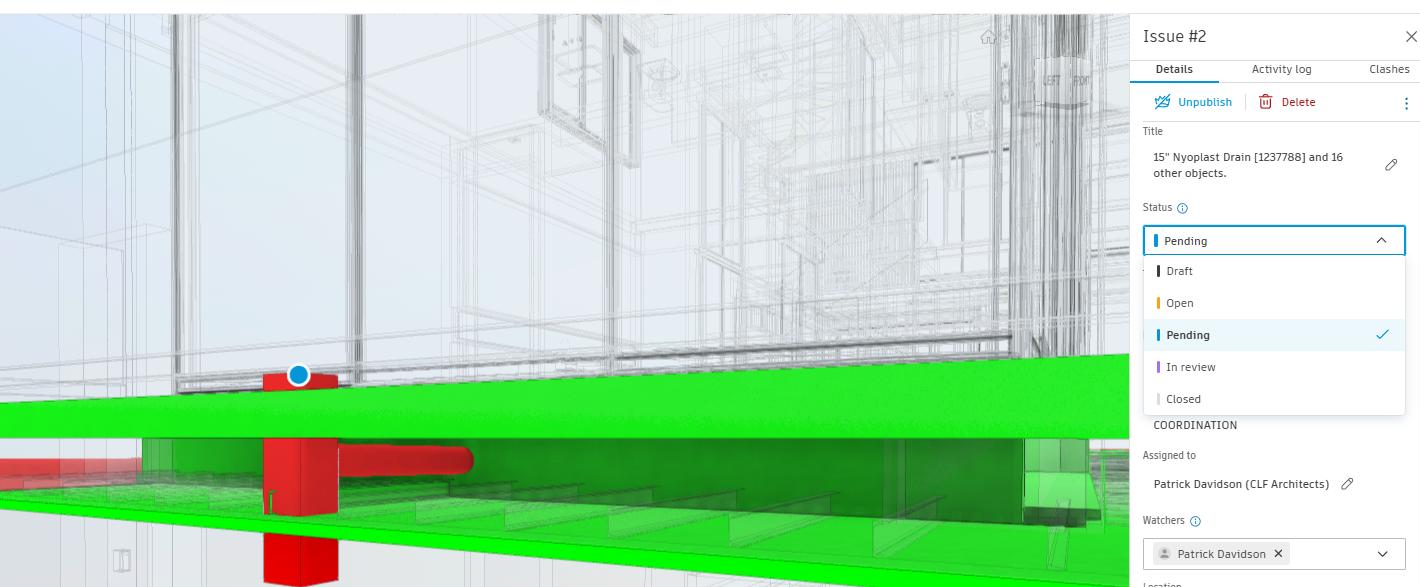
The clash detection interface in Autodesk Construction Cloud (ACC) enabled real-time coordination and live issue tracking across disciplines. Model conflicts were identified, categorized, and assigned directly within the platform, ensuring immediate feedback and accountability. Continuous issue updates reflected production progress, while user tagging and shared visibility enhanced collaboration among design and subcontractor teams, expediting clash resolution and improving overall coordination efficiency. l [ 02
LOD VERIFICATION & MODEL QUALITY ASSURANCE
l [ 01 ] LEVEL OF DEVELOPMENT QA/QC
LOD compliance was maintained through scheduled model audits and coordination reviews. Each model was evaluated for geometry accuracy, data consistency, and parameter integrity before federation. QA/QC procedures verified that systems met the required level of definition, ensuring alignment between design intent, fabrication data, and construction deliverables throughout the coordination workflow.
LOD 300 — FEDERATED DESIGN MODEL
Developed to accurately represent systems, assemblies, and components in form, quantity, and orientation. The model conveyed design intent with defined geometry, layout, and material specifications suitable for documentation and coordination.
LOD 400 — FEDERATED CONSTRUCTION MODEL
Advanced to fabrication-level precision, incorporating detailing, reinforcement, and installation data. This model captured constructibility and assembly information, supporting coordination, field integration, and construction execution.
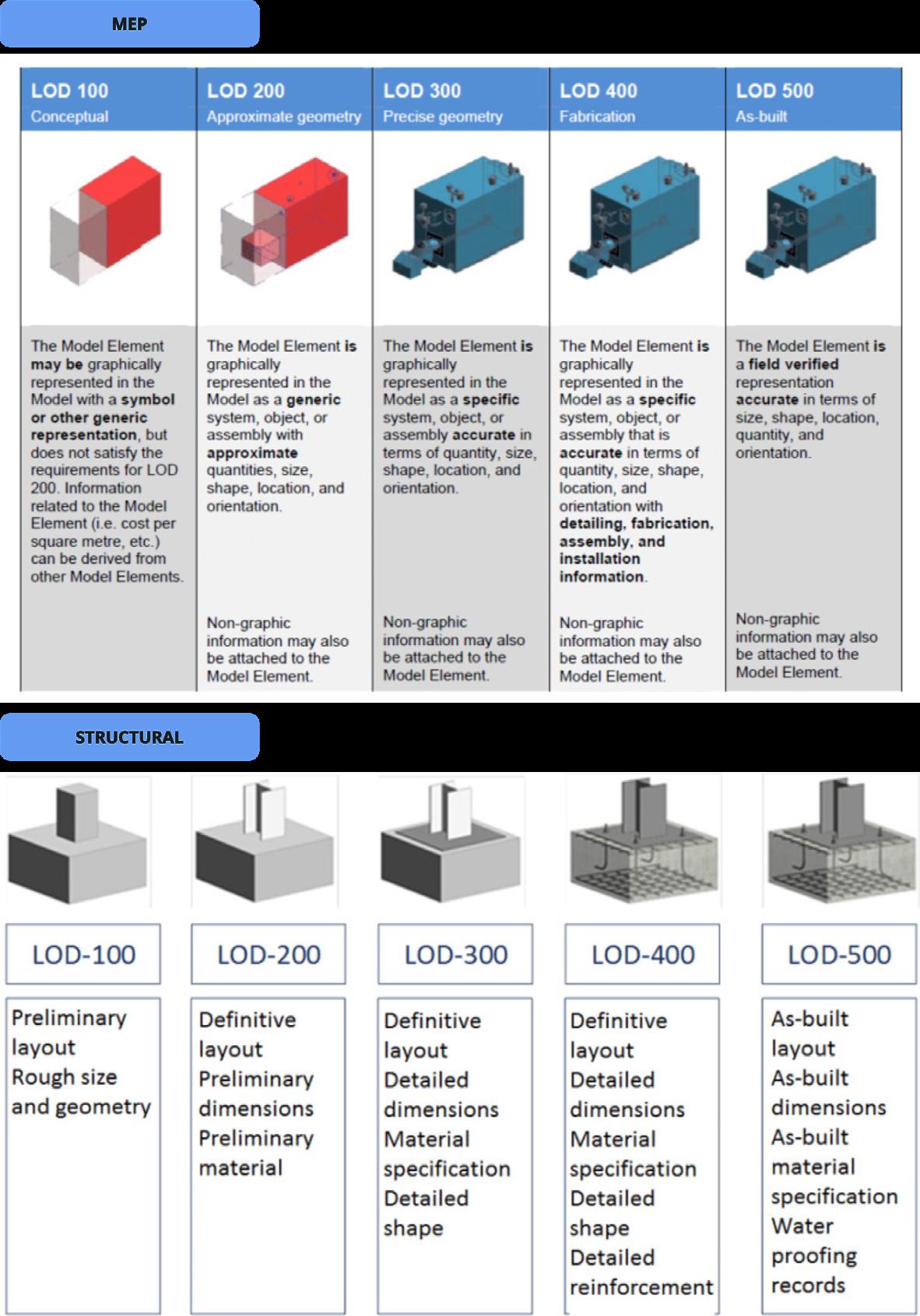
l [ 02 ] LEVEL OF DEVELOPMENT STANDARDS MODEL ACCURACY & DEFINITION
The progression of model detail followed standardized LOD benchmarks to define geometry, data, and constructibility at each project phase, ensuring consistency between design intent and fabrication-ready documentation.
l [ 03 ] BIM COORDINATION WORKFLOW INTEGRATED DELIVERY FRAMEWORK
The BIM coordination process established a unified digital framework connecting design, documentation, and construction. Through structured model federation, standardized data environments, and iterative clash resolution, all disciplines collaborated within a single, synchronized platform. This integrated workflow ensured accurate data exchange, streamlined communication, and consistent model performance, supporting seamless transition from design development through construction execution.
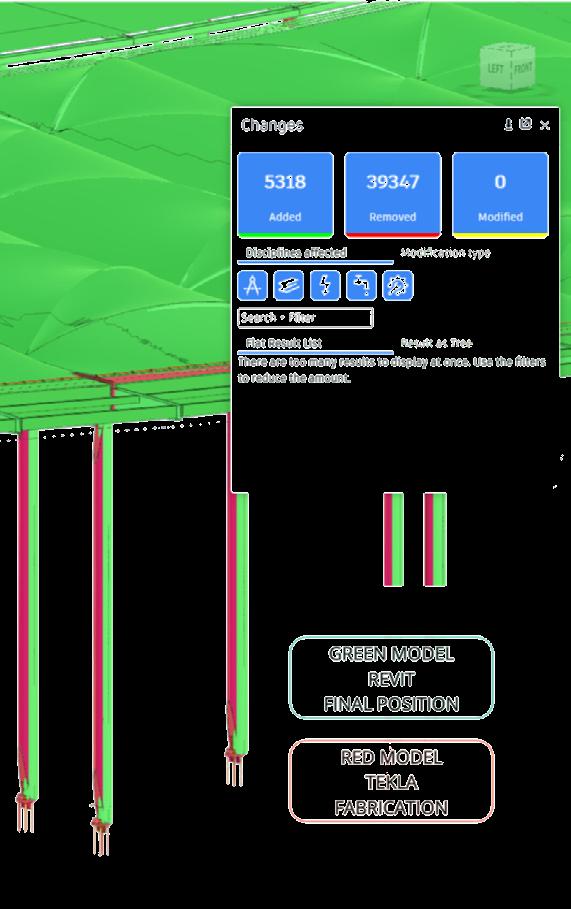
l [ 04 ] CANOPY STEEL MODELS COMPARE VIEW 3D overlay illustrating canopy steel geometry comparison between Tekla fabrication model (red), verifying alignment and deflection
l [ 05 ] FEDERATED MODEL COMPARISON DESIGN VS CONSTRUCTION
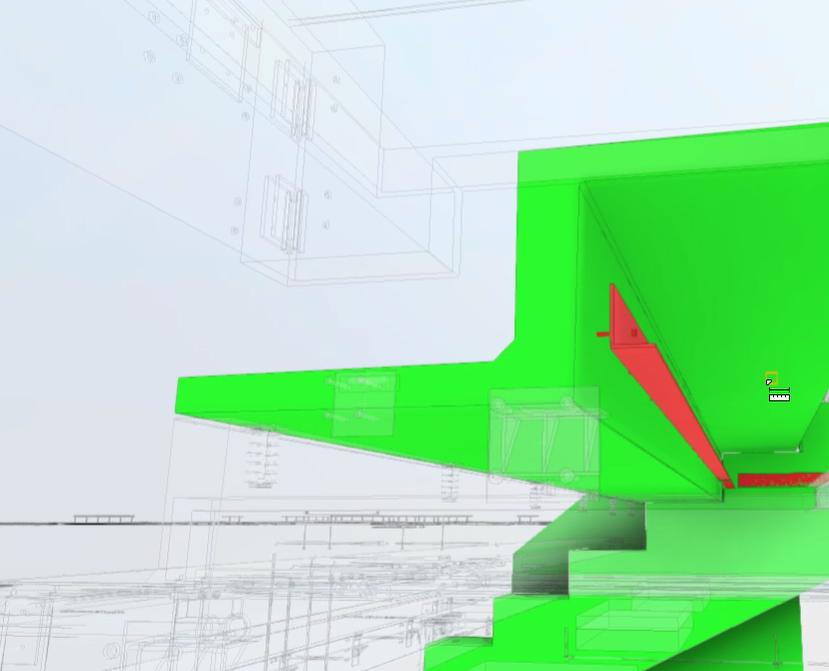
Overlay view comparing the federated design model (red) and federated construction model (green), illustrating geometric alignment, coordination accuracy, and refinements between design intent and constructibility.
between the Revit design model (green) and deflection adjustments for constructibility accuracy.
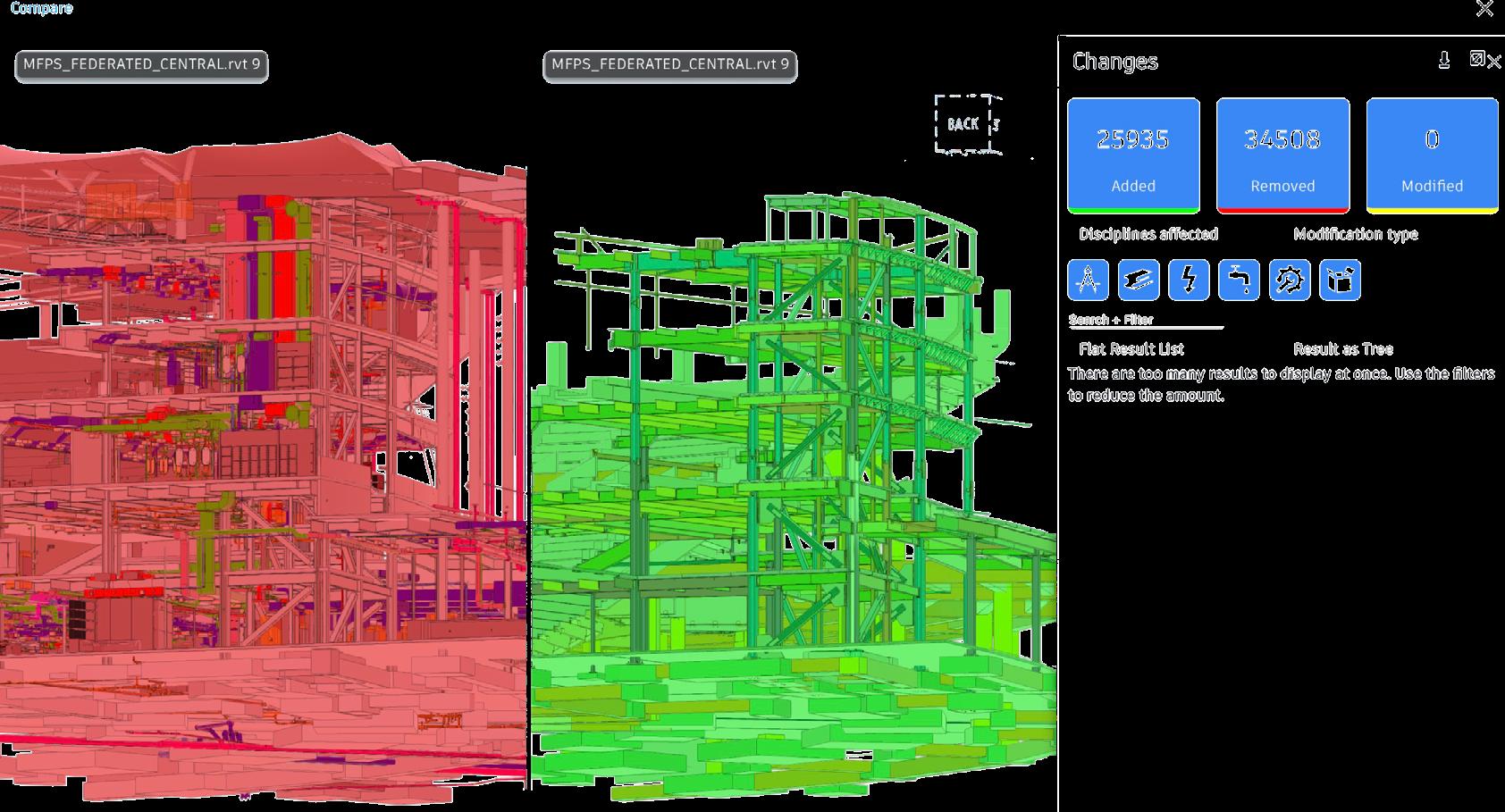
l [ 06 ] FEDERATED MODEL COMPARISON DESIGN VS CONSTRUCTION
Side-by-side view illustrating the federated design model (red) and federated construction model (green), highlighting geometry evolution, coordination refinements, and constructibility validation between design intent and field execution.
4D SIMULATION WORKFLOW CONSTRUCTION SEQUENCING INTEGRATION
The Federated Construction Model was exported to Navisworks to provide subcontractor teams with a unified reference platform across various modeling software. The model was synchronized with the construction schedule using Timeliner for 4D simulation, visualizing the build sequence and project phasing. The resulting simulation was later integrated by an external vendor to align real-time aerial construction footage with digital progress tracking.
The integration of 4D coordination marked a pivotal evolution in connecting design technology with project delivery. Through disciplined model management, structured workflows, and real-time simulation, the BIM process advanced beyond visualization to become an operational tool for planning, forecasting, and communication. This approach unified data, design intent, and construction logic—demonstrating how strategic BIM leadership can bridge technical precision with project-wide collaboration and measurable performance outcomes. l [ 08 ]
l [ 09 ] FEDERATED CONSTRUCTION MODEL
ACC / BIM 360 / NAVISWORKS / REVIT / TEKLA
IFC / AUTO CAD 3D / CIVIL3D / SPRINK CAD
l [ 07 ] STRUCTURAL STEEL
CS_QLC_ST_STL_MFPS
ALABAMA, UNITED STATES
l [ 03 ] PRECAST CONCRETE
CS_MM_ST_PC_MFPS
ILLINOIS, UNITED STATES
l [ 06 ] ELECTRICAL
CS_ADYD_EL_MFPS
MADRID, SPAIN & FLORIDA, UNITED STATES
l [ 02 ] STRUCTURAL MASONRY
CS_ADYD_MSRY_MFPS
MADRID, SPAIN
l [ 05 ] MECHANICAL
CS_HILL_ME_MFPS
FLORIDA, UNITED STATES
l [ 01 ] STRUCTURAL CONCRETE
CS_BKR_ST_CONC_MFPS
FLORIDA, UNITED STATES
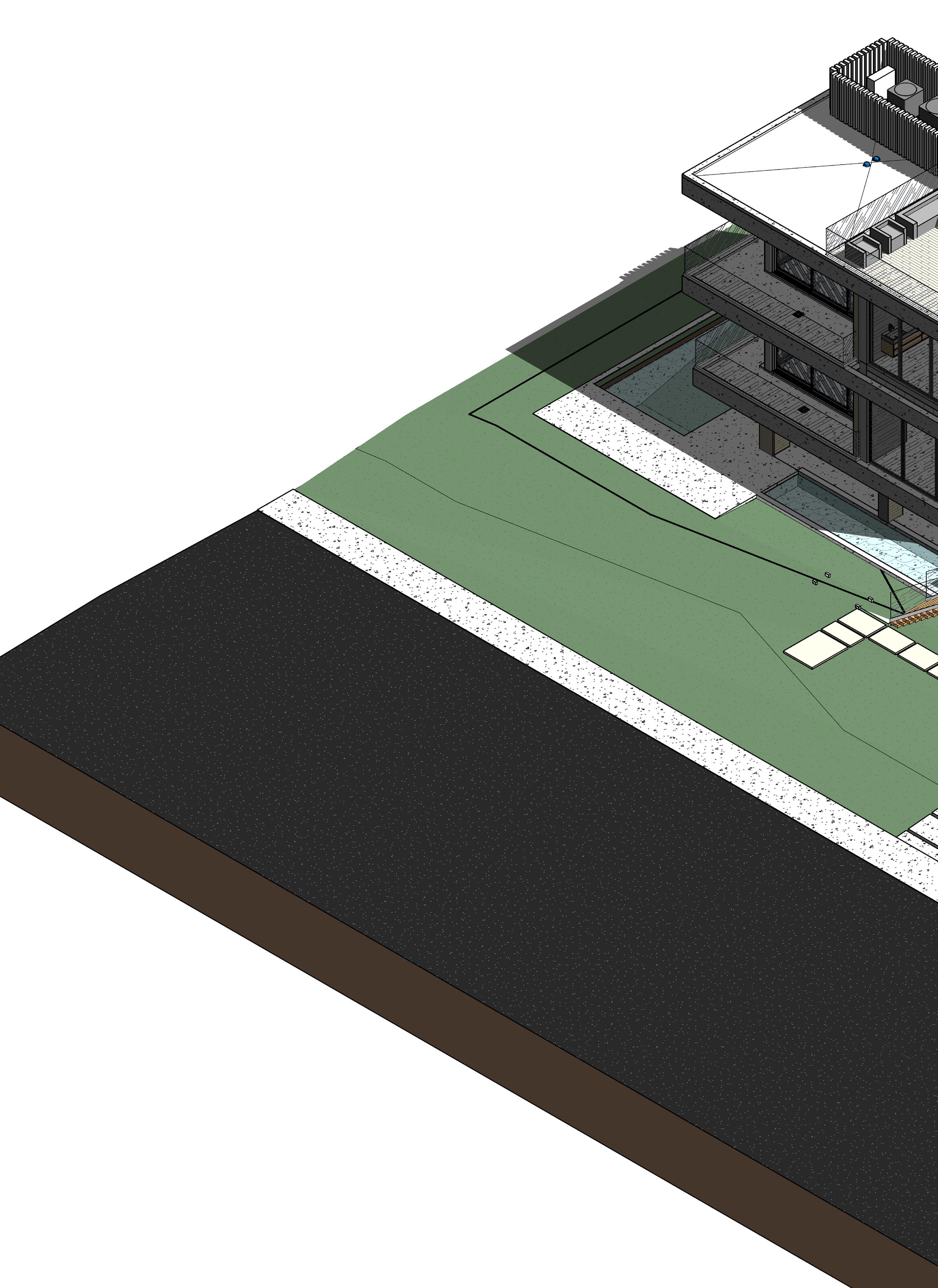
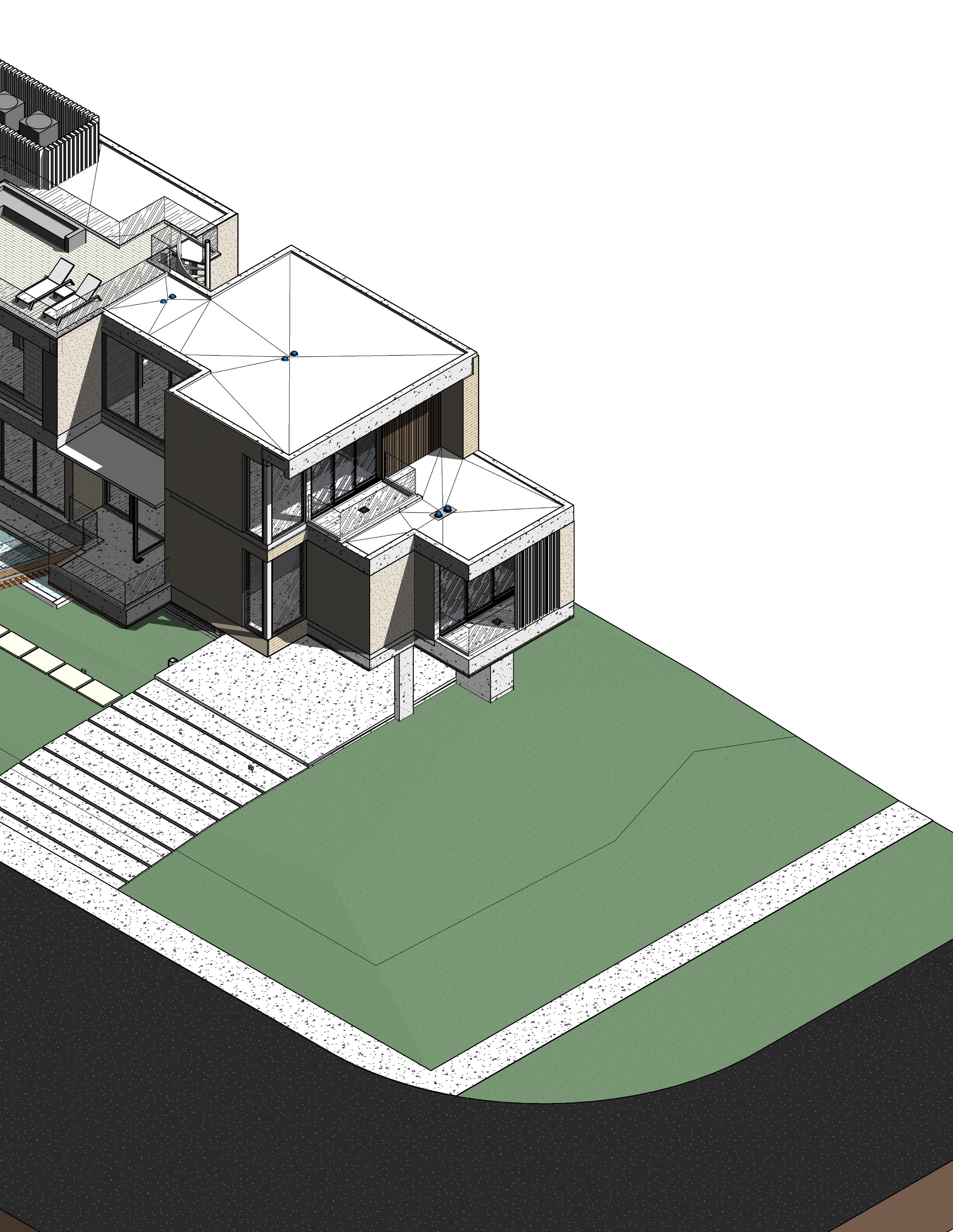
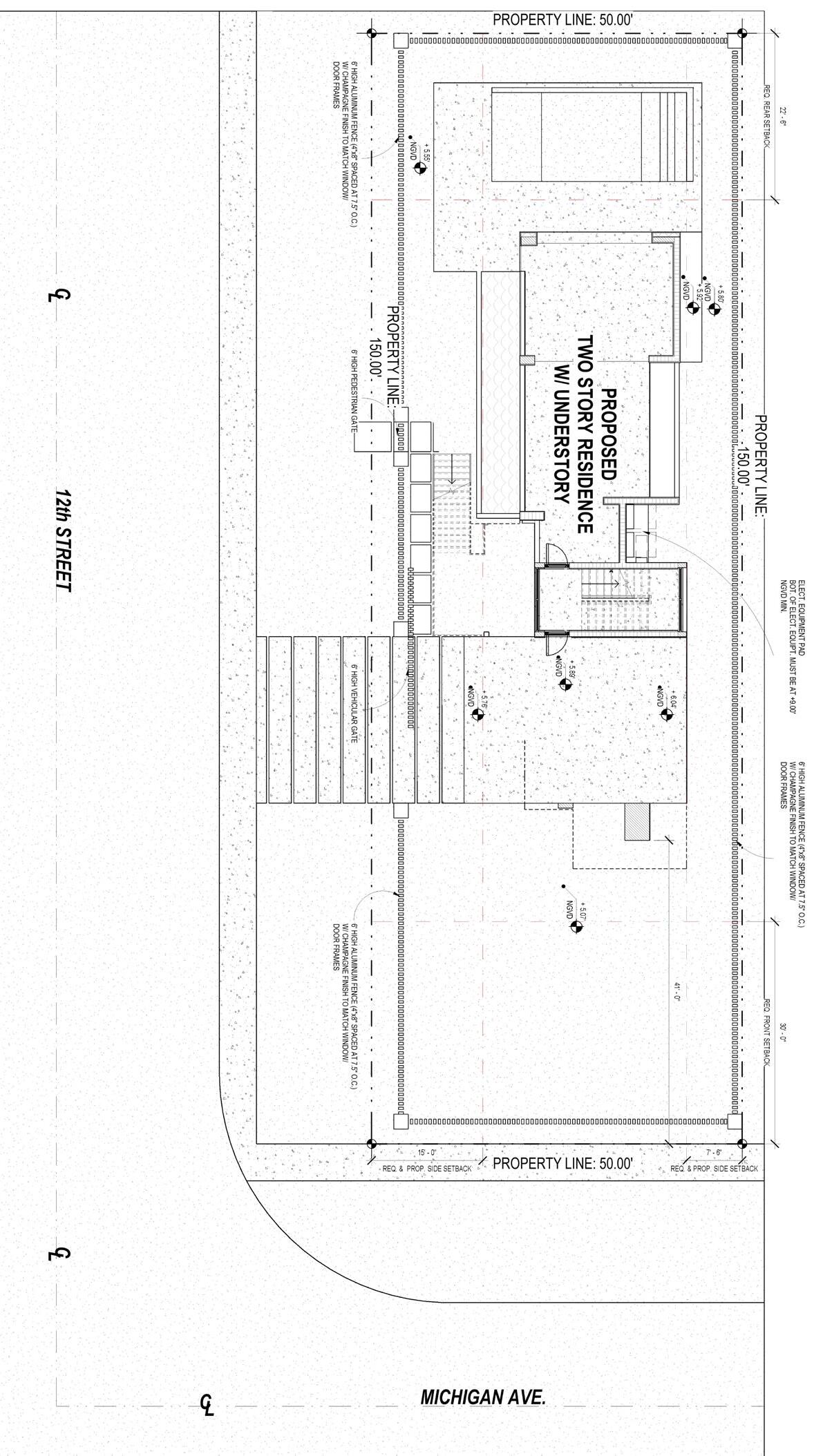
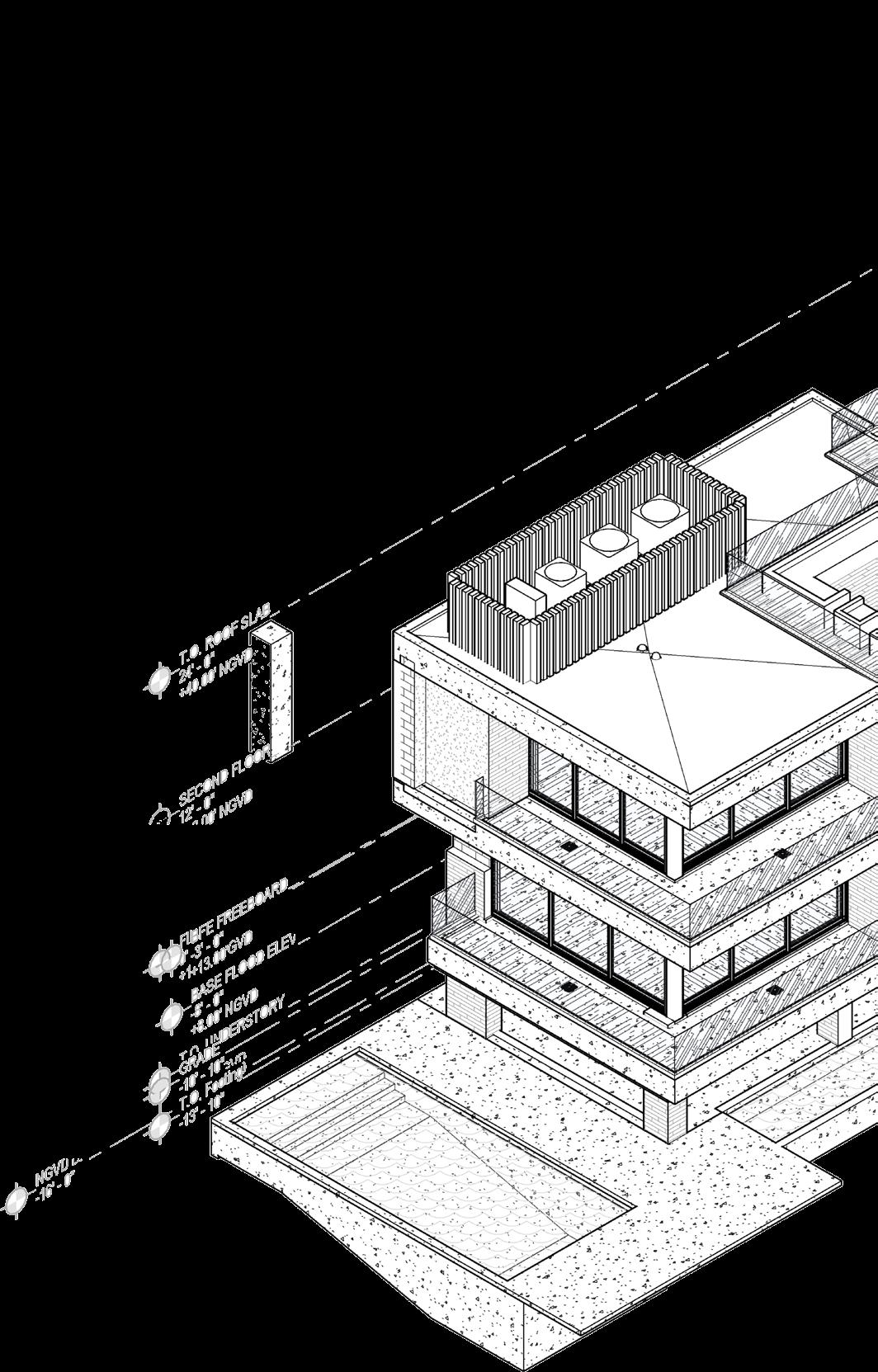
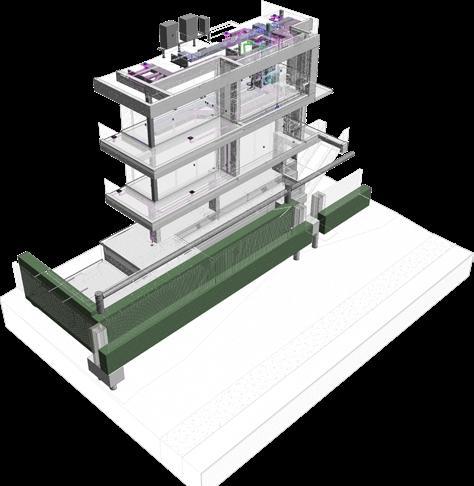
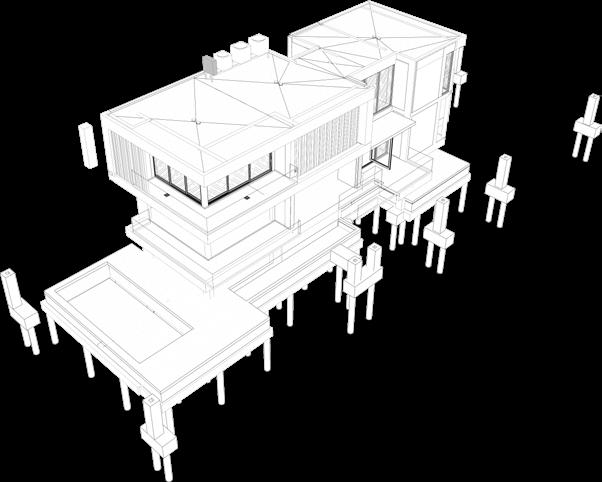
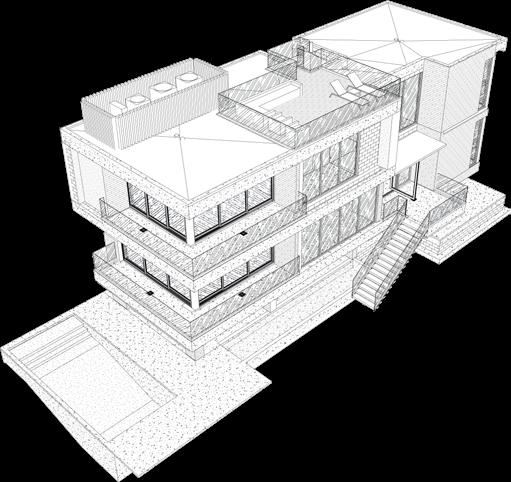
MIAMI BEACH RESIDENCE
PROJECT OVERVIEW
- CLIENT Private
- SECTOR Single Family Residential
- SIZE 3,682 SQ SF
- TIMELINE 2026
- ROLE BIM Manager
- TEAM +/- 17 PPL
- SOFTWARE ACC, Revit, AutoCAD, Bluebeam, Excel
BIM MANAGEMENT & FIRM WIDE INTEGRATION
For this single-family residential project, I led the BIM coordination and technical management efforts while simultaneously developing the firm’s overarching digital delivery framework. Serving as the BIM Manager, I facilitated communication across architects, engineers, consultants, contractors, and ownership teams to ensure a unified and coordinated design process. A key initiative involved launching the firm-wide Autodesk Construction Cloud (ACC) platform, which established a centralized environment for all current and future projects.
I directed the creation of standardized Revit templates, model structures, and cloud-based coordination workflows to streamline production and quality control. Through organized delivery methodologies and model management protocols, I ensured that all BIM data remained aligned with the project’s schedule, design intent, and budget. Beyond technical execution, I mentored internal and external teams, delivering training sessions and best practice guidelines to strengthen the company’s BIM culture. The success of this implementation not only enhanced project efficiency but also established a scalable digital foundation for the firm’s continued growth.
AUTODESK CONSTRUCTION CLOUD
MIAMI BEACH RESIDENCE
BIM COORDINATION WORKFLOW
A screen recording demonstrating the BIM management and coordination process for the Miami Beach Residence project, showcasing model federation, issue tracking, and real-time collaboration within Autodesk Construction Cloud.
BIM CLOUD INFRASTRUCTURE
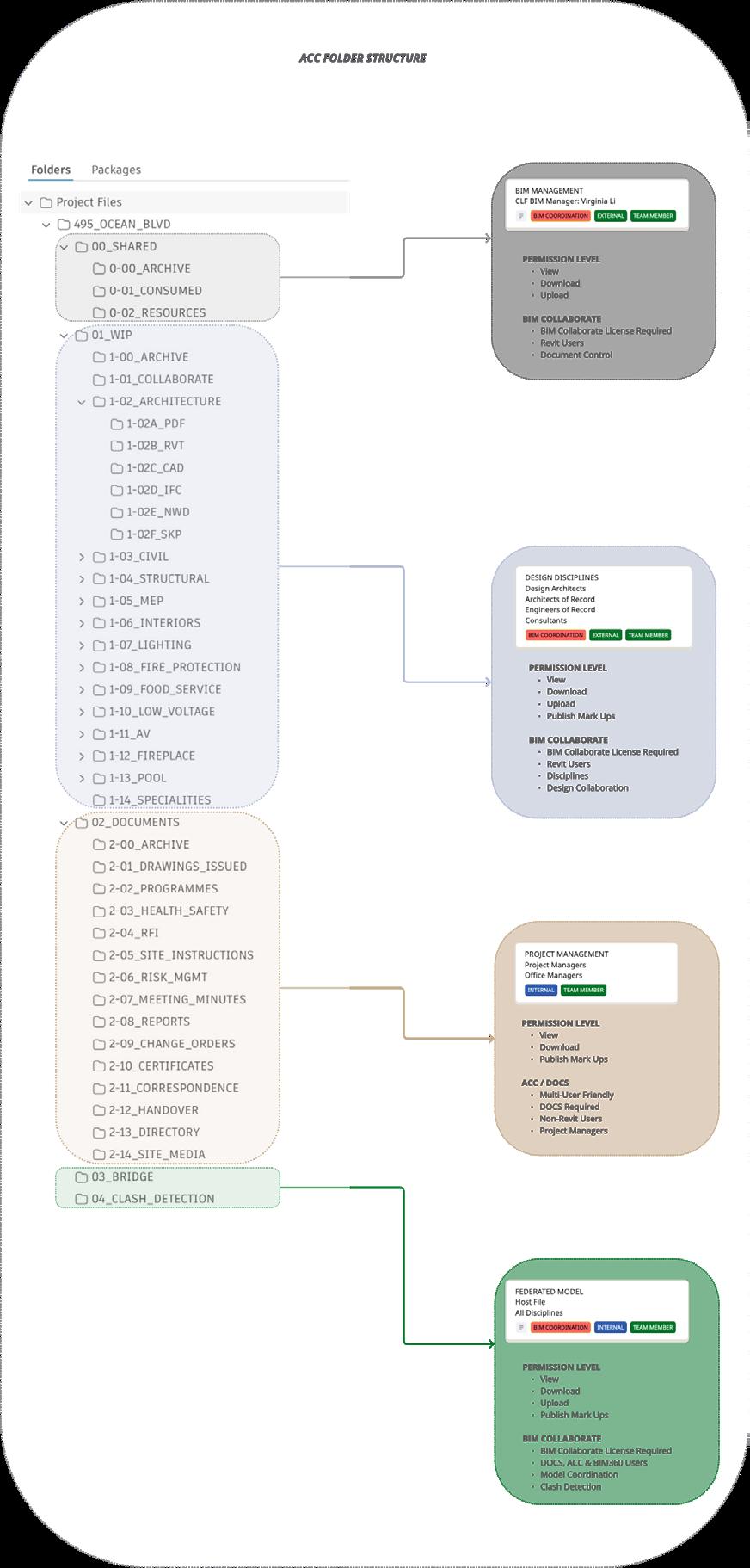
Implemented a centralized CDE on Autodesk Construction Cloud, integrating models, documentation, and coordination files under unified data standards. The platform supported real-time collaboration and version control across disciplines. This initiative streamlined data management, enhanced model accuracy, and marked a pivotal step in the firm’s transition toward cloud-based digital delivery and technological advancement.
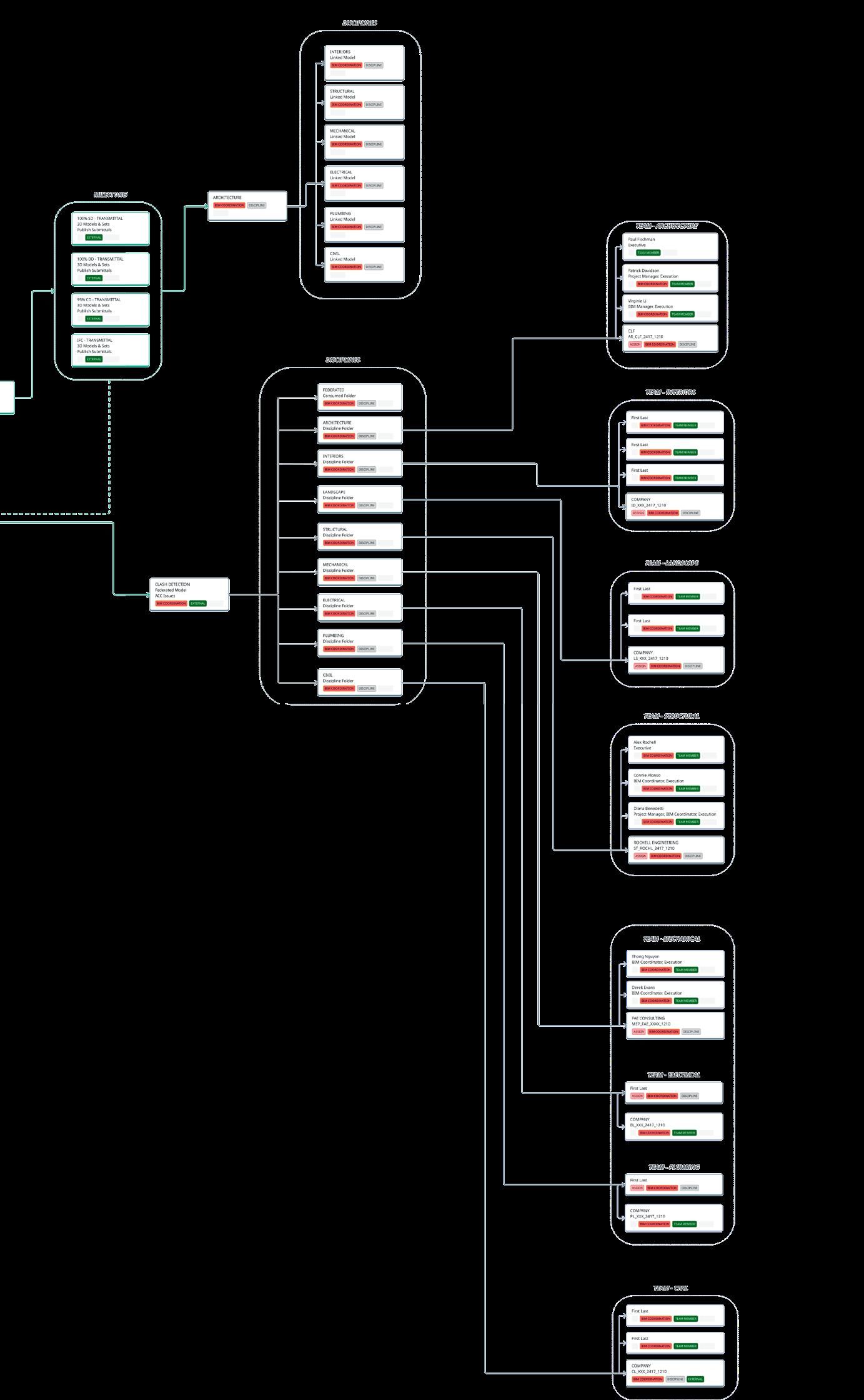
l [ 01 ] DOMESTIC COORDINATION PROCESS MAP CENTRALIZED COORDINATION ACROSS TEAMS
l [ 02 ] CLOUD INTEGRATION BIM LEADERSHIP
Scope of work extended beyond project execution to strategic digital transformation. I led the firm’s migration from a traditional internal server to a cloud-based infrastructure, developing standards and protocols to adapt to modern collaborative practices. This initiative required technical foresight and a deep understanding of interoperability within BIM environments. The successful implementation of this platform not only elevated project efficiency and accuracy but also marked a pivotal step in the firm’s transition toward integrated digital delivery and innovation in design technology.
l [ 01 ] CENTRALIZED DATA ENVIRONMENT AUTODESK CONSTRUCTION CLOUD
A centralized Common Data Environment (CDE) was implemented on Autodesk Construction Cloud to integrate all project models, documentation, and workflows. The platform standardized permissions, version control, and data exchange, enabling automated synchronization between disciplines and maintaining consistent information flow throughout the project lifecycle.
BIM MODEL FEDERATION MULTI DISCIPLINARY COORDINATION WORKFLOW
I led the model federation workflow, integrating architectural, structural, and MEP models within a unified coordination environment using Autodesk Construction Cloud (ACC) and Revit. The process established a standardized linking protocol, naming convention, and shared coordinate system to ensure model consistency across all disciplines.
Each consultant model was aligned to a common project base point, units, and coordinate framework, allowing automated clash detection, geometry validation, and seamless coordination throughout all project phases.
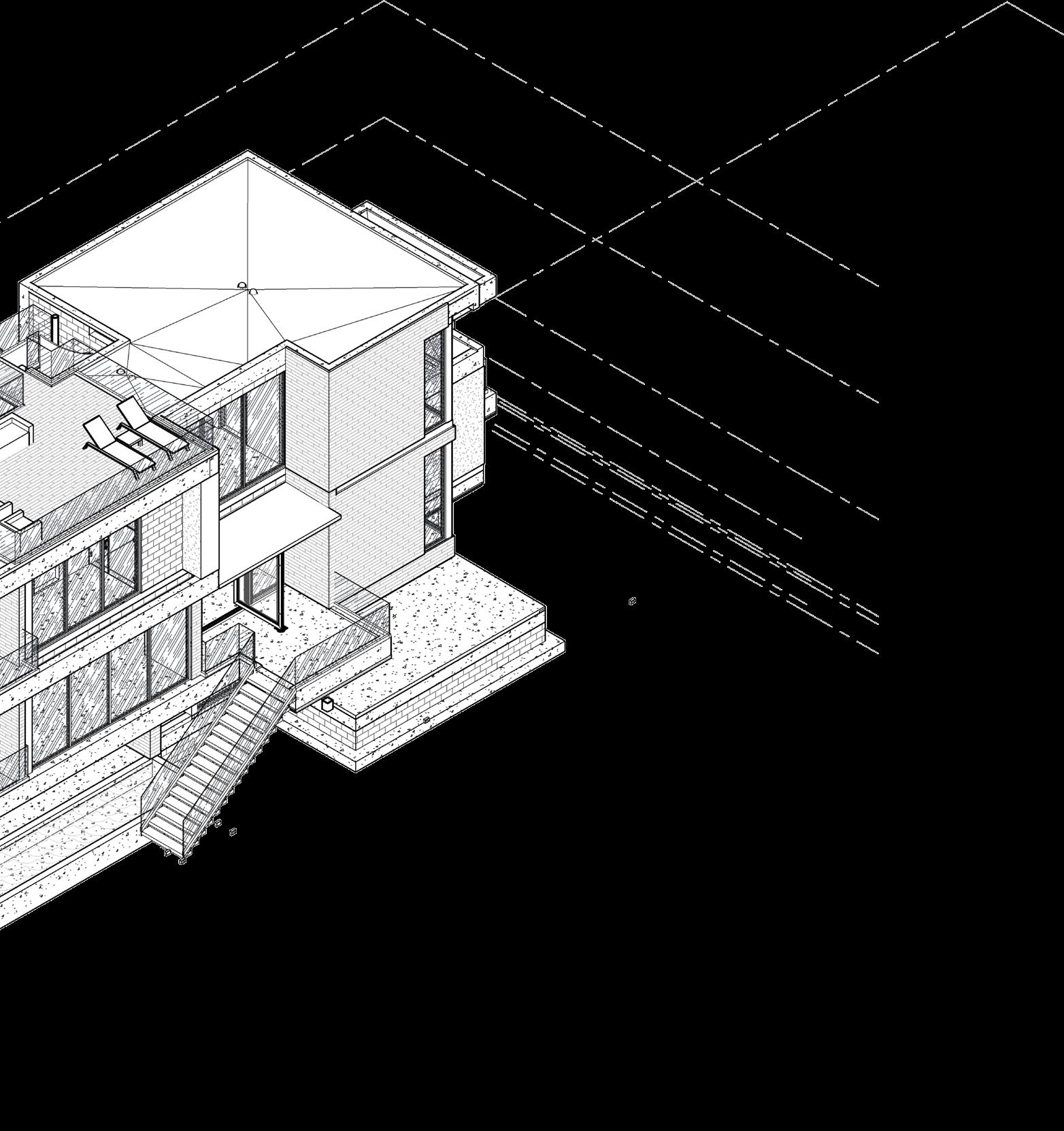
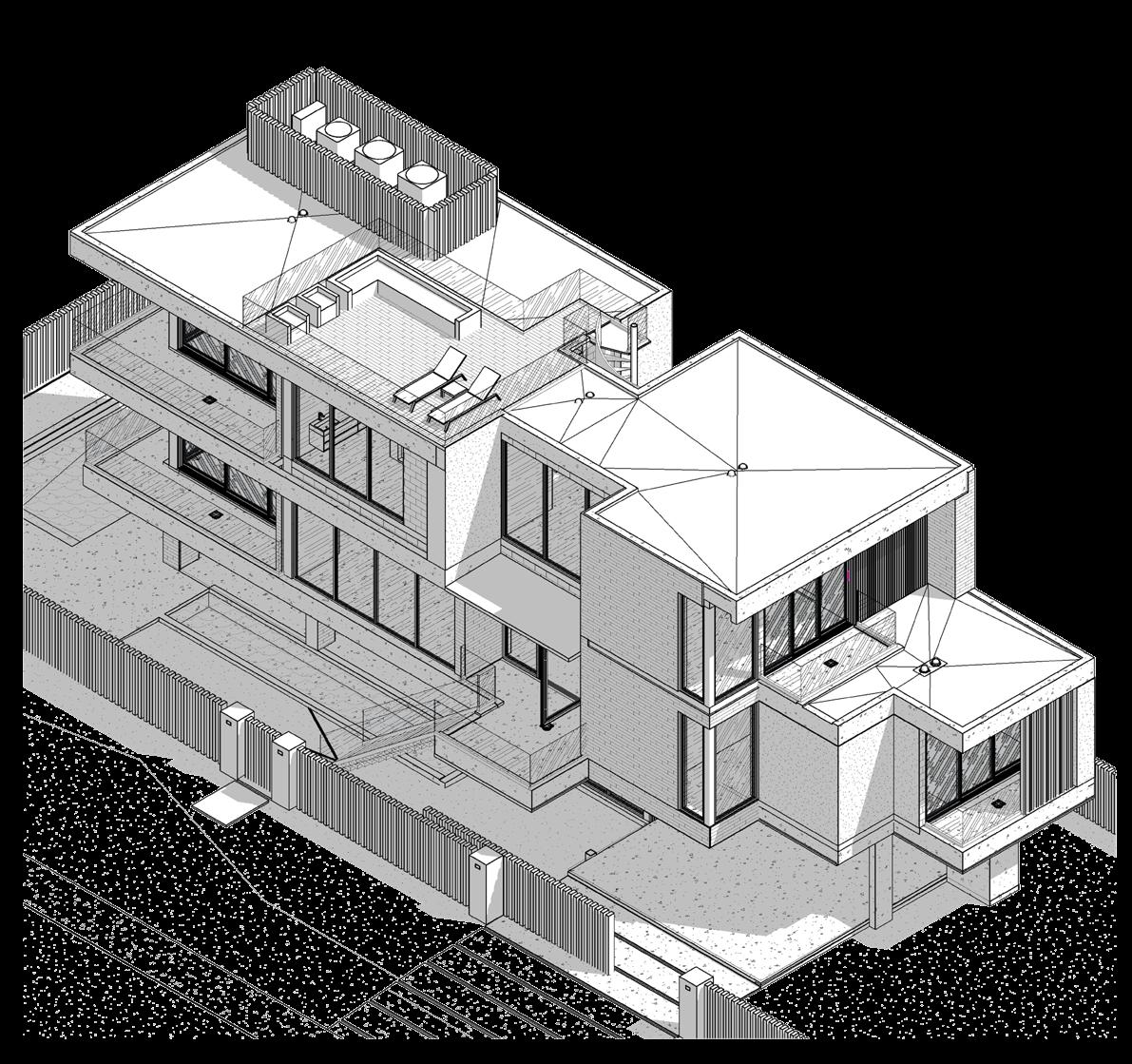
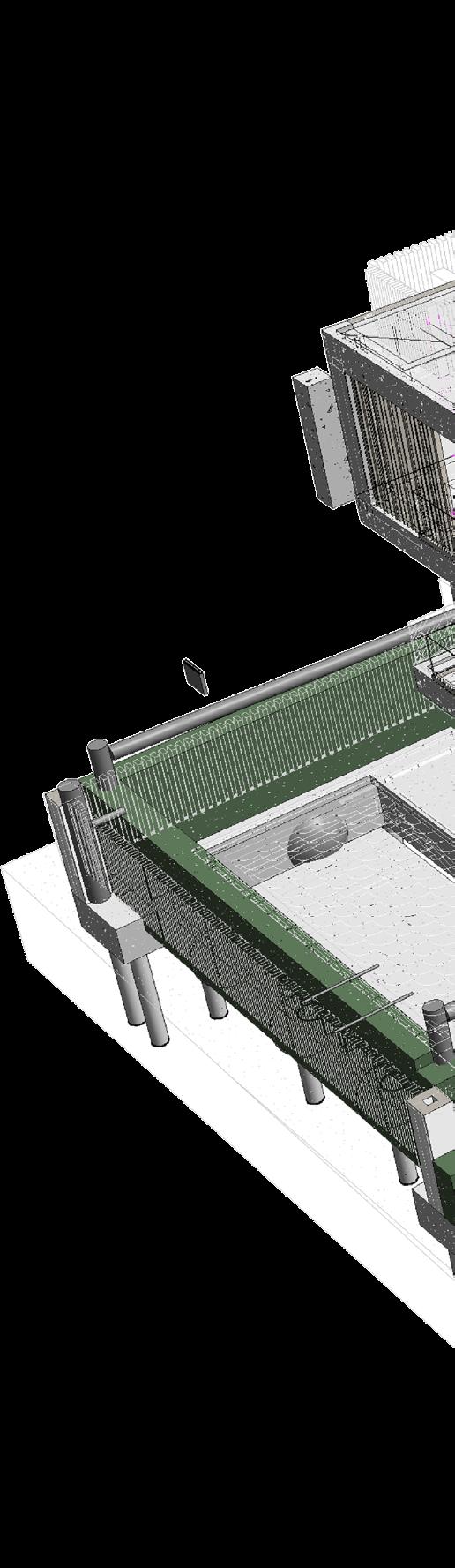
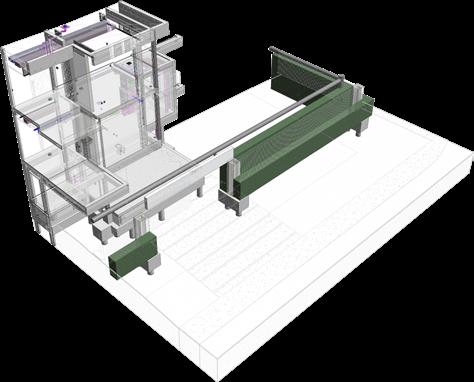
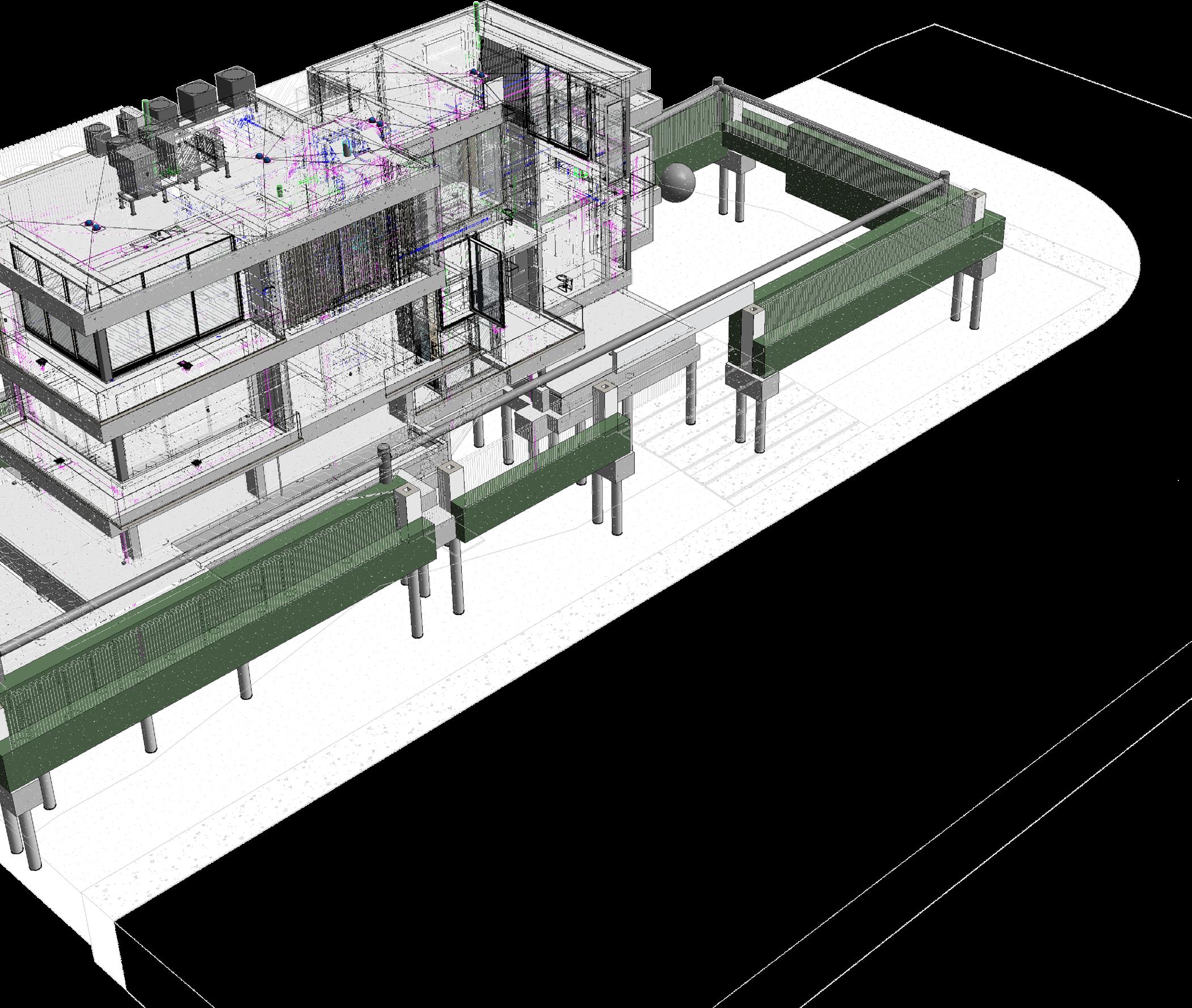
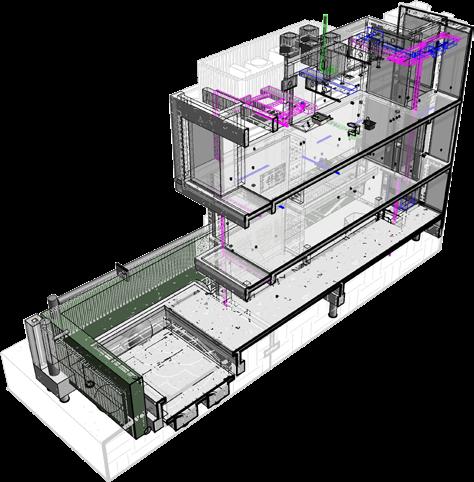
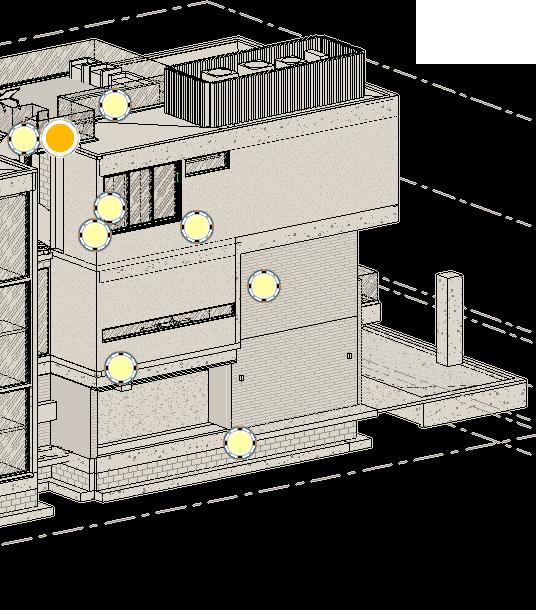
l [ 02 ] SECTOR D AXON VIEW FEDERATED DESIGN MODEL
CUSTOMIZED VIEW TEMPLATES SECTOR OPTIMIZATION
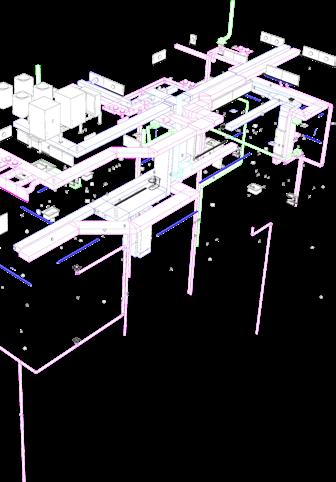
To address the complexity of multiple disciplines contained within a single Revit model—such as mechanical, electrical, plumbing, and shared equipment—customized view templates were developed to isolate each system independently within ACC. This allowed for more accurate clash analysis and enhanced model visibility during coordination sessions.
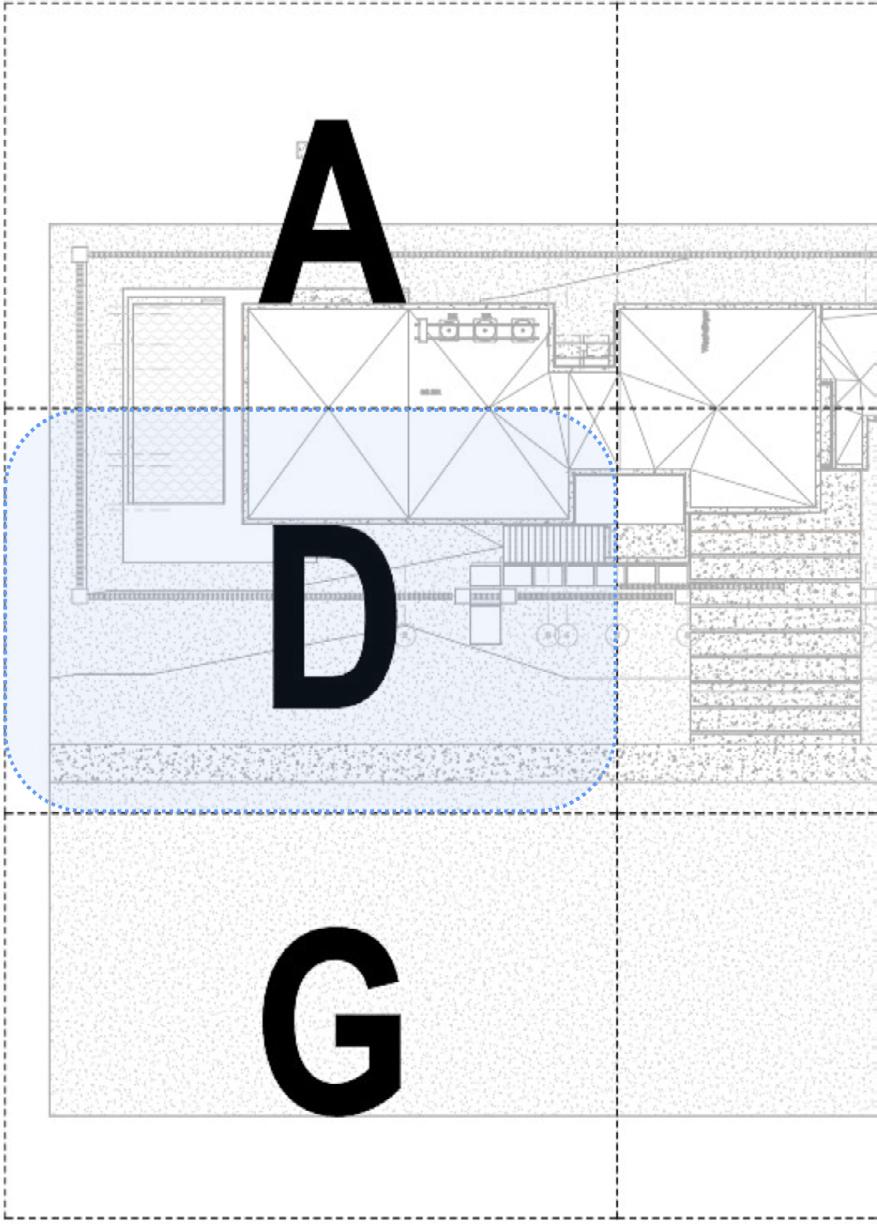
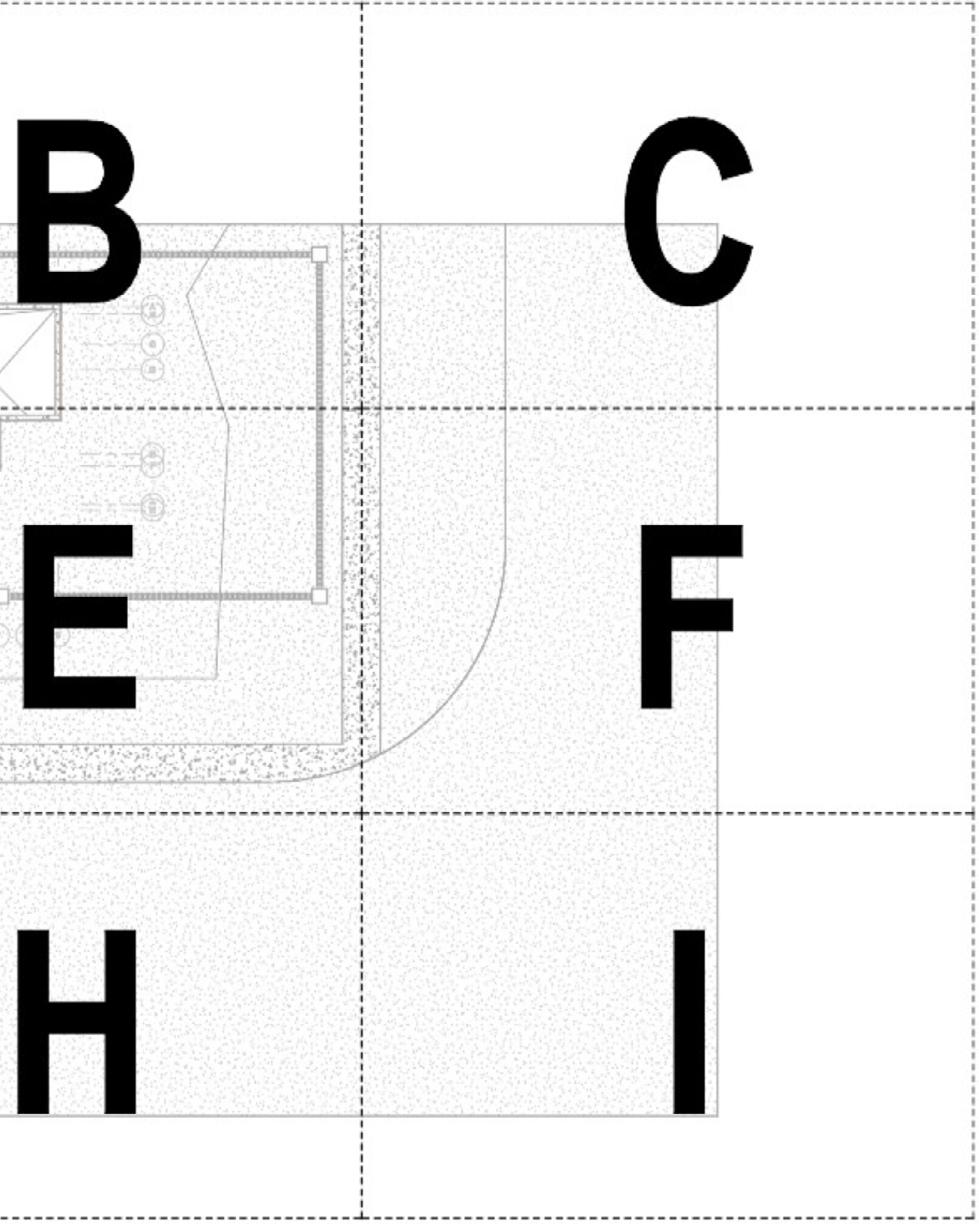
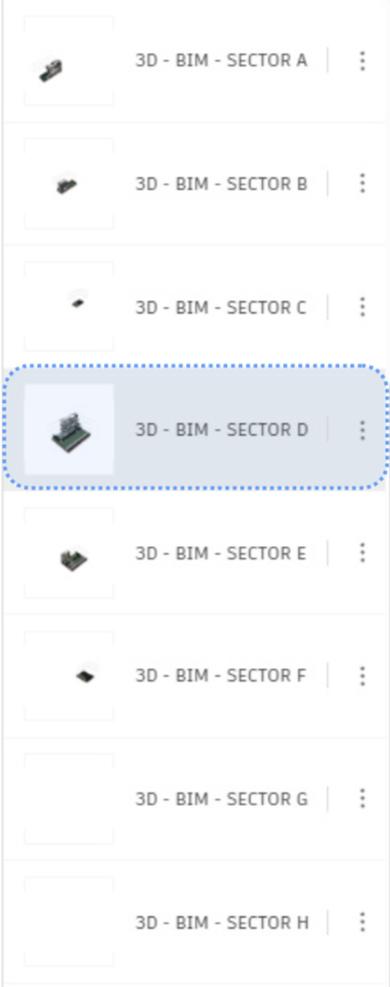
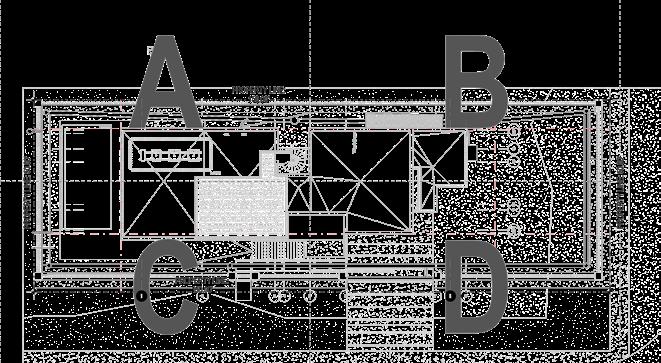
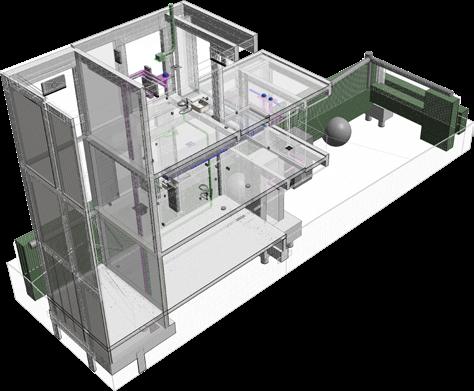
The overall sector layout was refined from nine to four sections (A–D) to optimize cross-discipline coordination between architectural, structural, and MEP teams. This revision streamlined model federation workflows, reduced redundancy, and maintained precise data alignment across the project’s evolving digital environment.
]
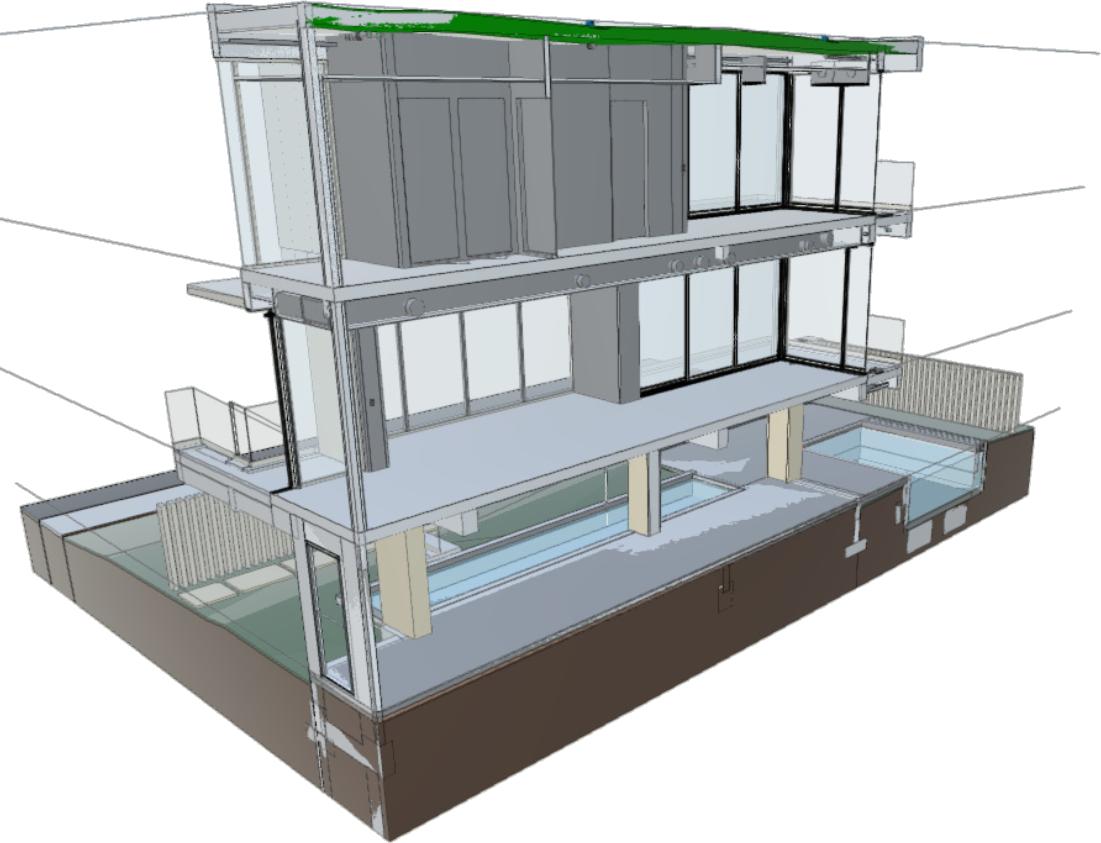
l [ 02 ] STRUCTURAL DESIGN MODEL - LOD 300
l [ 01 ] ARCHITECTURAL DESIGN MODEL - LOD 300
l [ 06 ] SECTOR C AXON VIEW
l [ 05 ] SECTOR B AXON VIEW
l [ 04 ] SECTOR A AXON VIEW
l [ 08
FEDERATED DESIGN MODEL ACC / REVIT
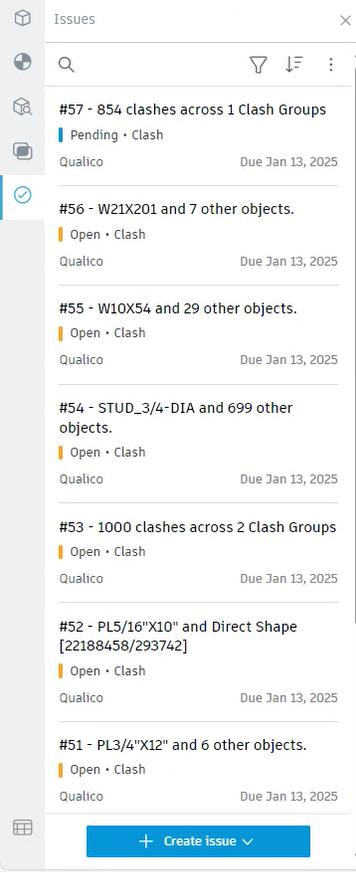
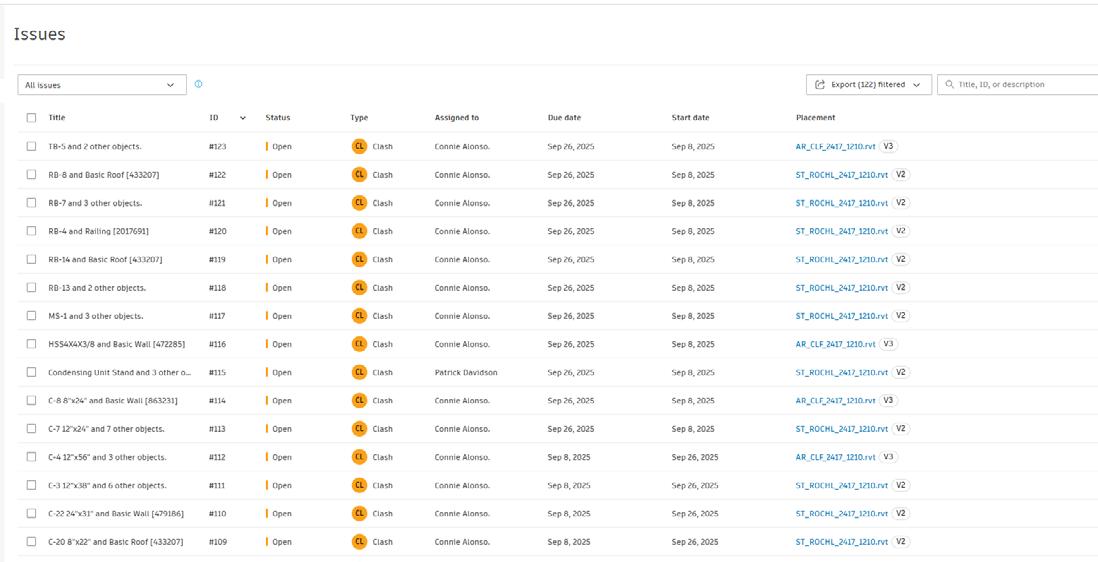
Autodesk Construction Cloud’s Model Coordination includes issue management to identify, track, and resolve design problems by creating issues directly from clashes or while viewing models. Issues are assigned to users with due dates, tracked in a centralized log, and can be resolved in Autodesk Revit or Navisworks via an add-in. This process provides visibility into design health and accountability for fixing design concerns.
l [ 01 ] CENTRALIZED LOG
A single, real-time issue log tracks all open, resolved, and closed issues across the project, providing a clear overview for project managers.
l [ 02 ] REVIT ISSUES
Issues represent aggregated sets of clashes, grouped according to shared parameters, spatial conditions, or system relationships.
l [ 03 ] CLASH MATRIX OPEN
Each issue may encompass one or multiple clashes, depending on the complexity and proximity of the detected conflicts.
l [ 04 ] CLASH MATRIX RESOLVED
Resolution of an issue may require cross-discipline coordination between two or more project teams or disciplines to ensure alignment and design intent integrity.
l [ 05 ] ACC ISSUE INTERFACE
Issues can be filtered by various criteria like type, status,
LEADERSHIP IN DESIGN TECHNOLOGY
ARCHITECTURE & TECHNOLOGY
Advancing digital innovation and integrated design through leadership in BIM, data-driven systems, and intelligent workflows.
I am committed to advancing design technology within the AEC industry through leadership, innovation, and strategic implementation of digital processes. My focus lies in bridging architecture and technology to strengthen interdisciplinary collaboration and enhance project delivery through scalable BIM and data-driven solutions.
As a design technologist, I strive to remain adaptive—continuously learning and evolving alongside emerging technologies such as AI and automation. My long-term vision is to contribute to the digital transformation of the built environment, shaping the future of design through intelligent systems and integrated workflows.
l [ 01 ] IMPLEMENTATION OF SCALABLE Established firm-wide BIM standards LEADERSHIP OUTCOMES & IMPACT
l [ 02 ] OPTIMIZATION OF FEDERATED Reduced coordination turnaround
l [ 03 ] DEVELOPMENT OF INTEGRATED Enhanced cross-discipline communication
l [ 04 ] QUALITY ASSURANCE & MODEL
Delivered consistent model quality
l [ 05 ] KNOWLEDGE TRANSFER & TECHNICAL
Trained internal and consultant
EXPERIENCE HIGHLIGHTS
l [ 01 ] CONSULTATION & WORKFLOW
Defined project goals, optimized global, multi-disciplinary teams.
l [ 02 ] BIM LEADERSHIP Directed technical management schedules, and quality controls
l [ 03 ] TECHNOLOGY ADOPTION Spearheaded company-wide deployment Navisworks, Civil3D, Tekla, and
l [ 04 ] TRAINING & MENTORSHIP
Delivered technical training, mentoring, ensuring successful adoption and
l [ 05 ] CLIENT ENGAGEMENT
Recognized for my ability to communicate and present confidently in client-facing
l [ 06 ] DIGITAL DESIGN LEADERSHIP
Driving digital transformation in BIM leadership, and a commitment
IMPACT
SCALABLE BIM FRAMEWORKS & UNIFIED DELIVERY PROTOCOLS standards and workflows.
FEDERATED MODEL PROCESSES FOR EFFICIENT ISSUE RESOLUTION turnaround time by streamlining model federation.
INTEGRATED COMMUNICATION SYSTEMS ACROSS GLOBAL TEAMS communication through structured collaboration protocols.
MODEL VALIDATION quality across all project milestones.
TECHNICAL TRAINING FOR MULTIDISCIPLINARY BIM TEAMS teams, improving workflow efficiency.
WORKFLOW IMPLEMENTATION
optimized workflows, and implemented scalable BIM and cloud-based solutions across teams.
management for 30+ person international teams, establishing standards, execution controls for projects exceeding $350 million.
deployment of Autodesk Construction Cloud (ACC), integrating Revit with and other platforms to accelerate adoption and collaboration.
mentoring, and best practices guidance to both internal staff and external partners, and sustainable workflows.
communicate technical solutions to executive stakeholders, lead pursuit efforts, client-facing forums, from workshops to executive briefings.
LEADERSHIP in the built environment through adaptive technology, strategic commitment to continuous innovation.