SUN ’N FUN PHOTO ROUNDUP BULLPUP
SHORT-WING PIPERS



SUN ’N FUN PHOTO ROUNDUP BULLPUP
SHORT-WING PIPERS
VAA PRESIDENT JOHN HOFMANN
THESE COLUMNS ARE WRITTEN a couple of months before the magazine’s publication. It is early May, and we have had a windy spring in Southern Wisconsin. Today dawned sunny with no appreciable wind.
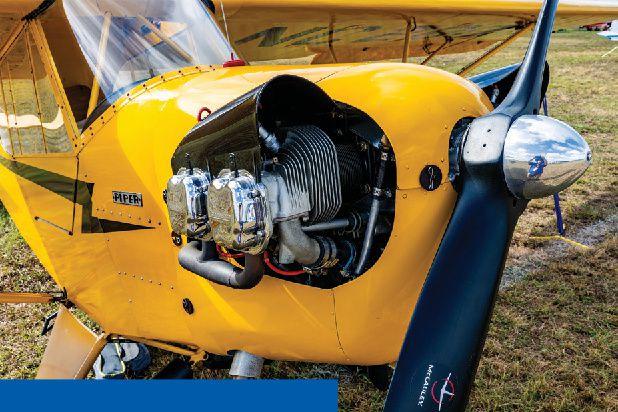
Over the winter, I performed a top overhaul of a stroked C85 for one of Steve Krog’s training Cubs. Per the Aircraft Specialties STC, I replaced all four cylinders and pistons with Millennium cylinders and balanced O-200 pistons. Waiting for warm enough weather to do the break-in flights has proven challenging. Today is that day!
Watching the Cub drone over Hartford airspace, I had time to reflect on the VAA board of directors meeting and plans for future development. The meetings took place from April 30 to May 2 in Oshkosh.
On Wednesday, April 30, I met with parking guru Tim Fox and the 2024 EAA Volunteer of the Year, Dennis Lange. We met at the VAA Red Barn and walked the flightline, discussing special parking and where certain airplanes and groups should be placed.
We recently received word that the French Santos-Dumont Demoiselle has all the necessary clearances and funding to make the trip to EAA AirVenture Oshkosh 2025. First written about in the March/April 2025 issue of Vintage Airplane, this accurate replica will be displayed along the north/south road behind the bleachers adjacent to Interview Circle. When the French were building this airplane, they aimed to bring it to Oshkosh. Stop by and say hello. I know they will appreciate the attention!
The VAA board meeting was held on May 2. We met in the EAA Air Academy Lodge, on the far side of
Pioneer Airport. Highlights included the introduction of our two new advisors, Kyle Ludwick and Stevie Triesenberg.
Kyle is a former EAA employee and current senior marketing manager for Garmin. He is also a pilot for Southwest Airlines and has all the time in the world with his new baby. Kyle has a Mooney, and his wife, Haley, flies an Aeronca.
Stevie is a software engineer and the product manager for Garmin Pilot. She owns and flies a C35
We recently received word that the French Santos-Dumont Demoiselle has all the necessary clearances and funding to make the trip to EAA AirVenture Oshkosh 2025.
Bonanza and won a Bronze Lindy at AirVenture 2024, with her Cessna 140A.
Kyle and Stevie presented a comprehensive marketing plan for VAA that will leverage social media, video, and email to keep members informed and engaged while reaching out to potential new members.
Key to this effort will be a monthly newsletter to members featuring VAA happenings, Tech Tips, Type Club notes, member highlights, and a calendar of events. This is a relatively easy way to contact the membership and inform people about what is happening at Vintage.
CONTINUED ON PAGE 64
July/August 2025
Publisher: Jack J Pelton, EAA CEO and Chairman of the Board
Vice President of Publications, Membership Services, Retail, Safety and Security, and Editor in Chief: Jim Busha / jbusha@eaa org
Senior Copy Editor: Colleen Walsh
Copy Editors: Tom Breuer, Jennifer Knaack
Proofreader: Tara Bann
Print Production Team Lead: Marie Rayome-Gill
Senior Sales and Advertising Executive: Sue Anderson / sanderson@eaa org
Mailing Address: VAA, P O Box 3086, Oshkosh, WI 54903
Website: EAAVintage org
Email: vintageaircraft@eaa org
Phone: 800-564-6322
Visit EAAVintage org for the latest information and news
Current EAA members may join the Vintage Aircraft Association and receive Vintage Airplane magazine for an additional $45/year
EAA membership, Vintage Airplane magazine, and one-year membership in the EAA Vintage Aircraft Association are available for $55 per year (Sport Aviation magazine not included). (Add $7 for International Postage.)
Please submit your remittance with a check or draft drawn on a United States bank payable in United States dollars Add required foreign postage amount for each membership
Membership Service
P O Box 3086, Oshkosh, WI 54903-3086 Monday–Friday, 8 AM 6 PM CT Join/Renew 800-564-6322
membership@eaa.org
EAA AirVenture Oshkosh www EAA org/AirVenture 888-322-4636






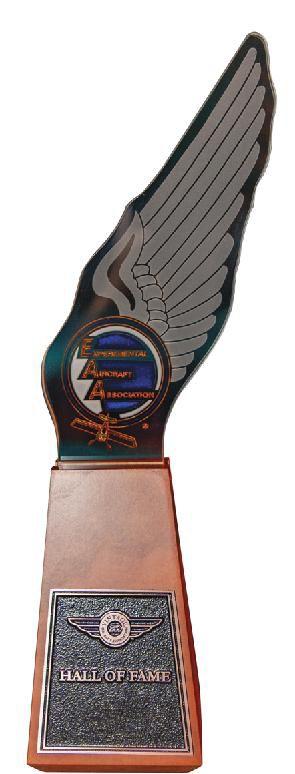
Nominate your favorite vintage aviator for the EAA Vintage Aircraft Association Hall of Fame. A great honor could be bestowed upon that man or woman working next to you on your airplane, sitting next to you in the chapter meeting, or walking next to you at EAA AirVenture Oshkosh. Think about the people in your circle of aviation friends: the mechanic, historian, photographer, or pilot who has shared innumerable tips with you and with many others. They could be the next VAA Hall of Fame inductee — but only if they are nominated. The person you nominate can be a citizen of any country and may be living or deceased; their involvement in vintage aviation must have occurred between 1950 and the present day. Their contribution can be in the areas of flying, design, mechanical or aerodynamic developments, administration, writing, some other vital and relevant field, or any combination of fields that support aviation. The person you nominate must be or have been a member of the Vintage Aircraft Association or the Antique/ Classic Division of EAA, and preference is given to those whose actions have contributed to the VAA in some way, perhaps as a volunteer, a restorer who shares his expertise with others, a writer, a photographer, or a pilot sharing stories, preserving aviation history, and encouraging new pilots and enthusiasts.
To nominate someone is easy. It just takes a little time and a little reminiscing on your part.
• Think of a person; think of their contributions to vintage aviation.
• Write those contributions in the various categories of the nomination form.
• Write a simple letter highlighting these attributes and contributions. Make copies of newspaper or magazine articles that may substantiate your view.
• If at all possible, have another individual (or more) complete a form or write a letter about this person, confirming why the person is a good candidate for induction.
We would like to take this opportunity to mention that if you have nominated someone for the VAA Hall of Fame, nominations for the honor are kept on file for three years, after which the nomination must be resubmitted.
Mail nominating materials to:
VAA Hall of Fame, c/o Amy Lemke
VAA
P.O. Box 3086
Oshkosh, WI 54903
Email: alemke@eaa.org
Find the nomination form at EAAVintage.org, or call the VAA office for a copy (920-426-6110), or on your own sheet of paper, simply include the following information:
• Date submitted.
• Name of person nominated.
• Address and phone number of nominee.
• Email address of nominee.
• Date of birth of nominee. If deceased, date of death.
• Name and relationship of nominee’s closest living relative.
• Address and phone of nominee’s closest living relative.
• VAA and EAA number, if known. (Nominee must have been or is a VAA member.)
• Time span (dates) of the nominee’s contributions to vintage aviation. (Must be between 1950 to present day.)
• Area(s) of contributions to aviation.
• Describe the event(s) or nature of activities the nominee has undertaken in aviation to be worthy of induction into the VAA Hall of Fame.
• Describe achievements the nominee has made in other related fields in aviation.
• Has the nominee already been honored for their involvement in aviation and/or the contribution you are stating in this petition? If yes, please explain the nature of the honor and/or award the nominee has received.
• Any additional supporting information.
• Submitter’s address and phone number, plus email address.
• Include any supporting material with your petition.
For one week every year a temporary city of about 50,000 people is created in Oshkosh, Wisconsin, on the grounds of Wittman Regional Airport. We call the temporary city EAA AirVenture Oshkosh. During this one week, EAA and our communities, including the Vintage Aircraft Association, host more than 600,000 pilots and aviation enthusiasts along with their families and friends.
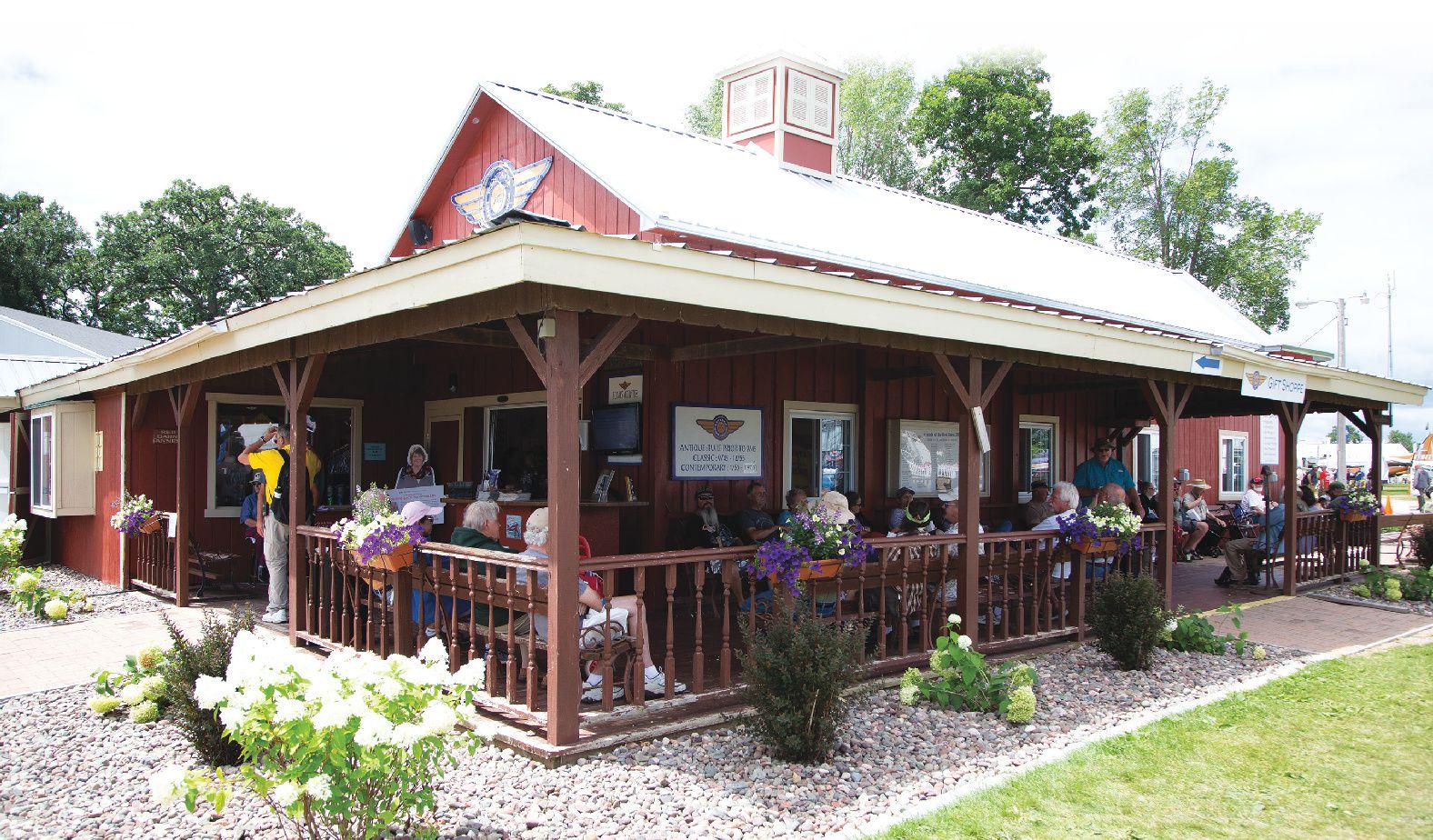
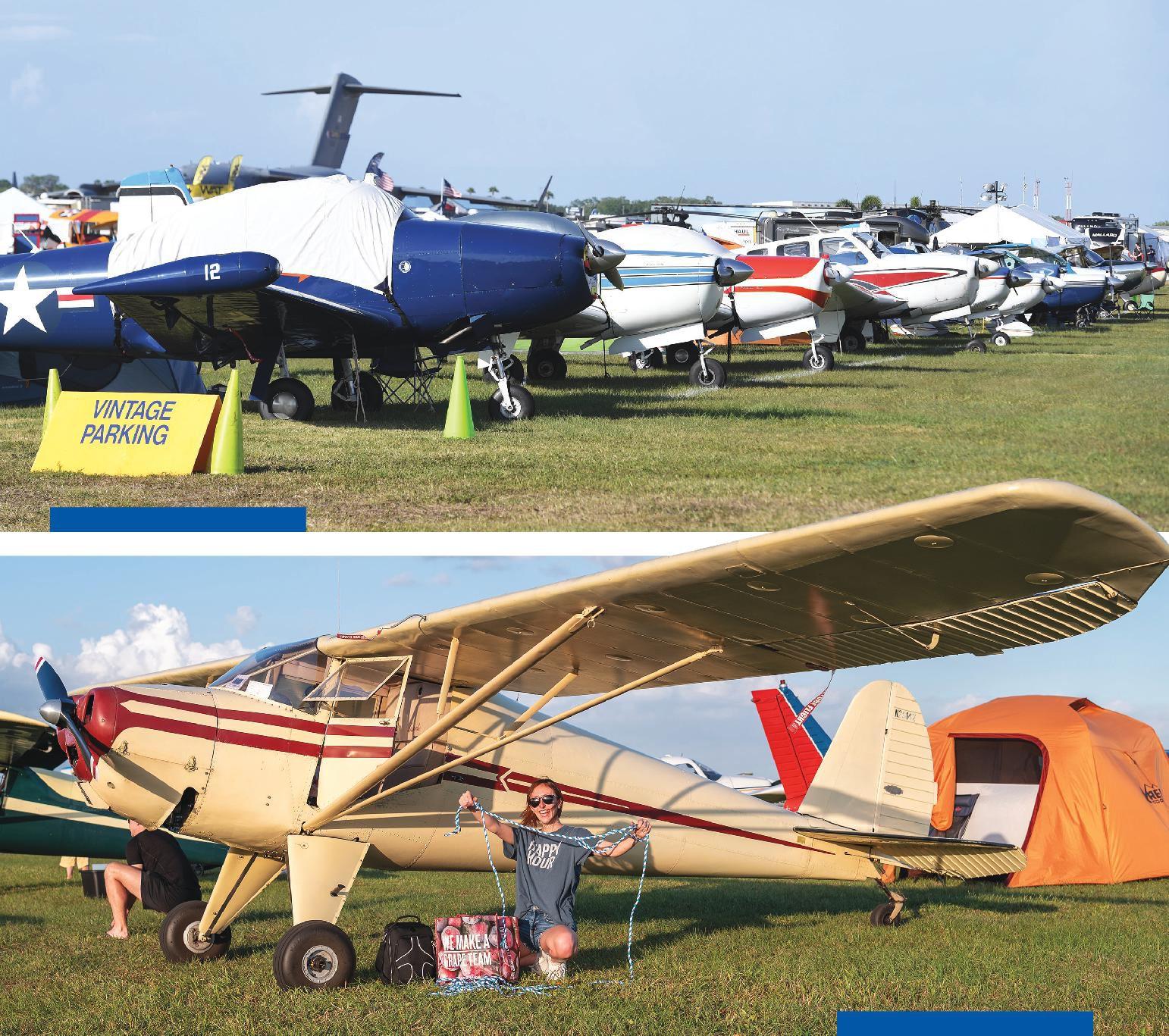
As a dedicated member of the Vintage Aircraft Association, you most certainly understand the impact of the programs supported by Vintage and hosted at Vintage Village and along the Vintage flightline during EAA AirVenture Oshkosh every year. The Vintage flightline is 1.3 miles long and is annually filled with more than 1,100 magnificent vintage airplanes. At the very heart of the Vintage experience at AirVenture is Vintage Village and our flagship building, the Red Barn.
Vintage Village, and in particular the Red Barn, is a charming place at Wittman Regional Airport during AirVenture. It is a destination where friends old and new meet for those great times we are so familiar with in our close world of vintage aviation. It’s energizing and relaxing at the same time. It’s our own field of dreams!
The Vintage area is the fun place to be. There is no place like it at AirVenture. Where else could someone get such a close look at some of the most magnificent and rare vintage airplanes on Earth? That is
just astounding when you think about it. It is on the Vintage flightline where you can admire the one and only remaining low-wing Stinson TriMotor, the only two restored and flying Howard 500s, and one of the few airworthy Stinson SR-5s in existence. And then there is the “fun and affordable” aircraft display, not only in front of the Red Barn but along the entire Vintage flightline. Fun and affordable says it all. That’s where you can get the greatest “bang for your buck” in our world of vintage airplanes!
For us to continue to support this wonderful place, we ask you to assist us with a financial contribution to the Friends of the Red Barn. For the Vintage Aircraft Association, this is the only major annual fundraiser and it is vital to keeping the Vintage field of dreams alive and vibrant. We cannot do it without your support.
Your personal contribution plays an indispensable and significant role in providing the best experience possible for every visitor to Vintage during AirVenture.
Contribute online at EAAVintage.org. Or, you may make your check payable to the Friends of the Red Barn and mail to Friends of the Red Barn, P.O. Box 3086, Oshkosh, WI 54903-3086.
Be a Friend of the Red Barn this year! The Vintage Aircraft Association is a nonprofit501(c)(3), so your contribution to this fund is tax deductible to the extent allowed by law.
Looking forward to a great AirVenture 2025!
ROBERT G. LOCK
BY ROBERT G. LOCK
STREAMLINE
WIRE TERMINAL
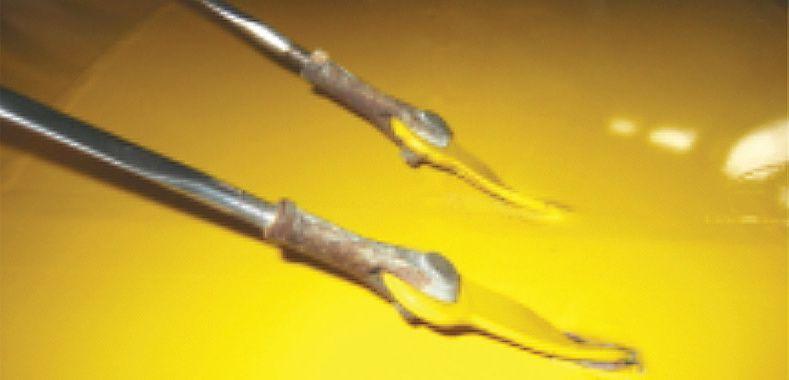
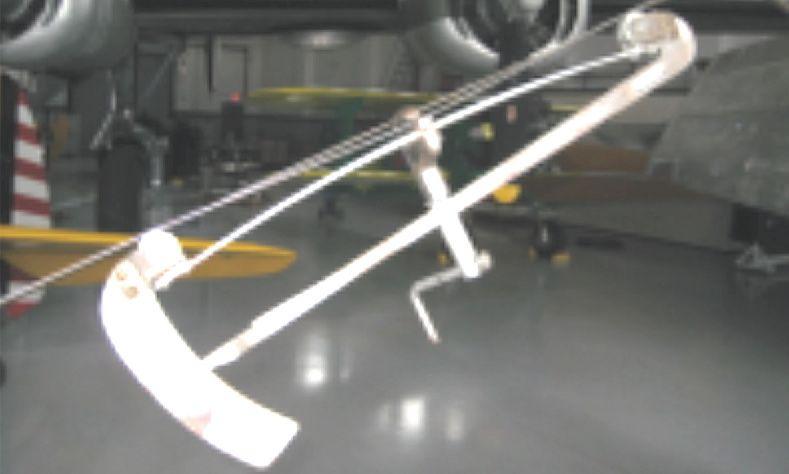
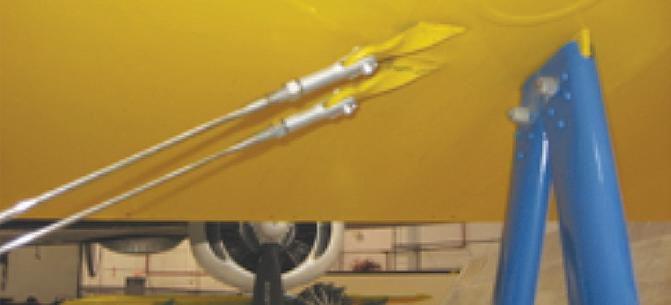
ENDS are made of high-grade steel and heattreated for strength. After this process the ends are plated with cadmium for surface protection against corrosion we call rust. Cadmium is a sacrificial plating process, and corrosive elements will eventually eat away the plating, exposing terminal ends to the corrosive atmosphere. When this happens the ends must be removed, cleaned, and inspected, and the plating reapplied. Photo 1 shows the effects of corrosion on terminal ends. But when you remove these ends the rigging can be affected, causing the owner to have the airplane re-rigged. But now you can use my process of replacing terminal ends without having to re-rig the airplane. Here’s how. First, check the wire tension of each wire before you loosen anything. This will assure the airplane will go back into rig when wires are replaced. I have a Pacific Scientific wire tensiometer that dates back to the Stearman days during World War II. It is very handy. Photo 2 shows the tensiometer in use. Record the tension of each flying wire and each landing wire; however, landing wire tension is determined by flying wire
tension as they pull against each other. The Stearman maintenance manual gives recommended wire tensions; most other old aircraft have no such data.
Loosen the flying wires, but don’t touch the landing wires because they set wing dihedral. Count the number of full turns when the flying wires are loosened, making the turns all the same for both sides of the airplane, and then mark the wires using masking tape and a pencil to reflect each wire’s location. Remove the flying wires from the airplane and unscrew both terminal ends and jam nuts. Now, support the lower wings at the strut point, raising both wingtips to loosen the tension on the landing wires.
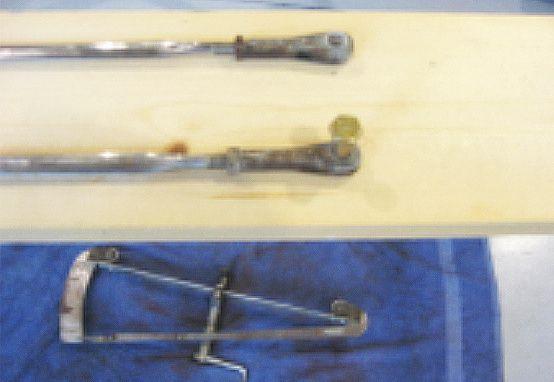
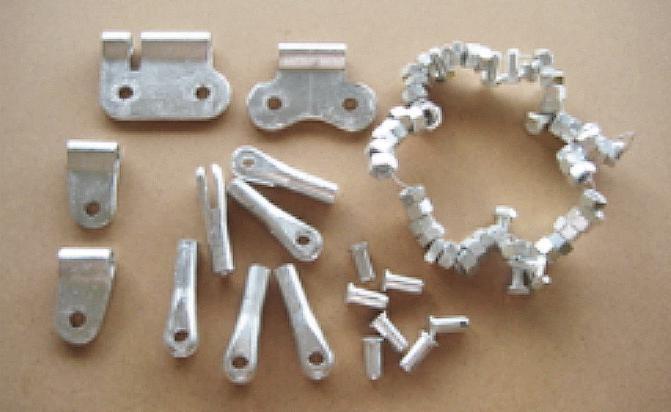
Loosen the jam nut but not the terminal ends and then remove each wire individually. Using a long 2-by-4, lay each landing wire on the 2-by-4 and drill holes through the terminal end, inserting a bolt to make sure alignment is correct. Photo 3 shows the wires on the 2-by-4. Carefully mark each wire and location (front landing left, aft landing left, etc.). Then remove all terminal ends and jam nuts and install the newly plated parts. I have the parts plated with Class I type plating that is silver in color, just like the original plating as in Photo 4.
Begin by installing the landing wire terminal ends and jam nuts, putting the same number of turns in each end (I usually start with 20 complete turns) and then adjust later. Photo 4 shows the new ends just coming back from the plating shop. Once the exact length of each wire has been set, the
landing wires are reinstalled in the proper location. Once again, do not alter the length of the landing wires. Do the same thing to each of the flying wires, screwing on each terminal end by about 20 turns and install these wires. Remove the lower wingtip supports so the wings hang on the landing wires. I install cotter pins in clevis pins and align with the wires, and then I tension all flying wires to the tension reading before removing. Photo 5 shows the reinstallation of flying wires but before the final tension is set.
When tensioning the flying wires, work on both sides of the aircraft. I do not put all tension in one side because it puts a strain on the structure, and on some biplanes it can pull the wings off-center.
Center section roll wires generally have two parallel diagonal wires that place the center section centerline directly above the longitudinal axis of the aircraft. If there are two wires, measure and record tension, then remove one wire from each side to replace the terminal ends and then tension until the reading is the same. Tension on parallel streamline wires should be within 100 pounds of each other. When tension is set, remove the remaining wires to replace the terminal ends. The center section should remain in its existing position.
I have used this method successfully on my Command-Aire and on Stearman aircraft. It has worked well. Just remember that whatever length and tension you have before removing a wire, you should have the same length and tension after you reinstall it. Otherwise, rigging will be compromised.

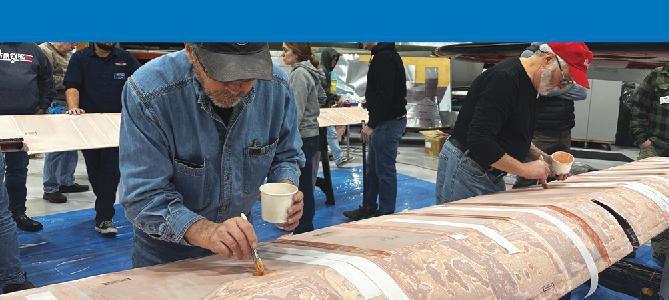
Build confidence, save money, and practice on our wings — not yours!
Expert instruction and practical experience
Confidence, camaraderie, and fun
Discounts on supplies
Visit EAA.org/Fabric to learn more and register
Sponsored by


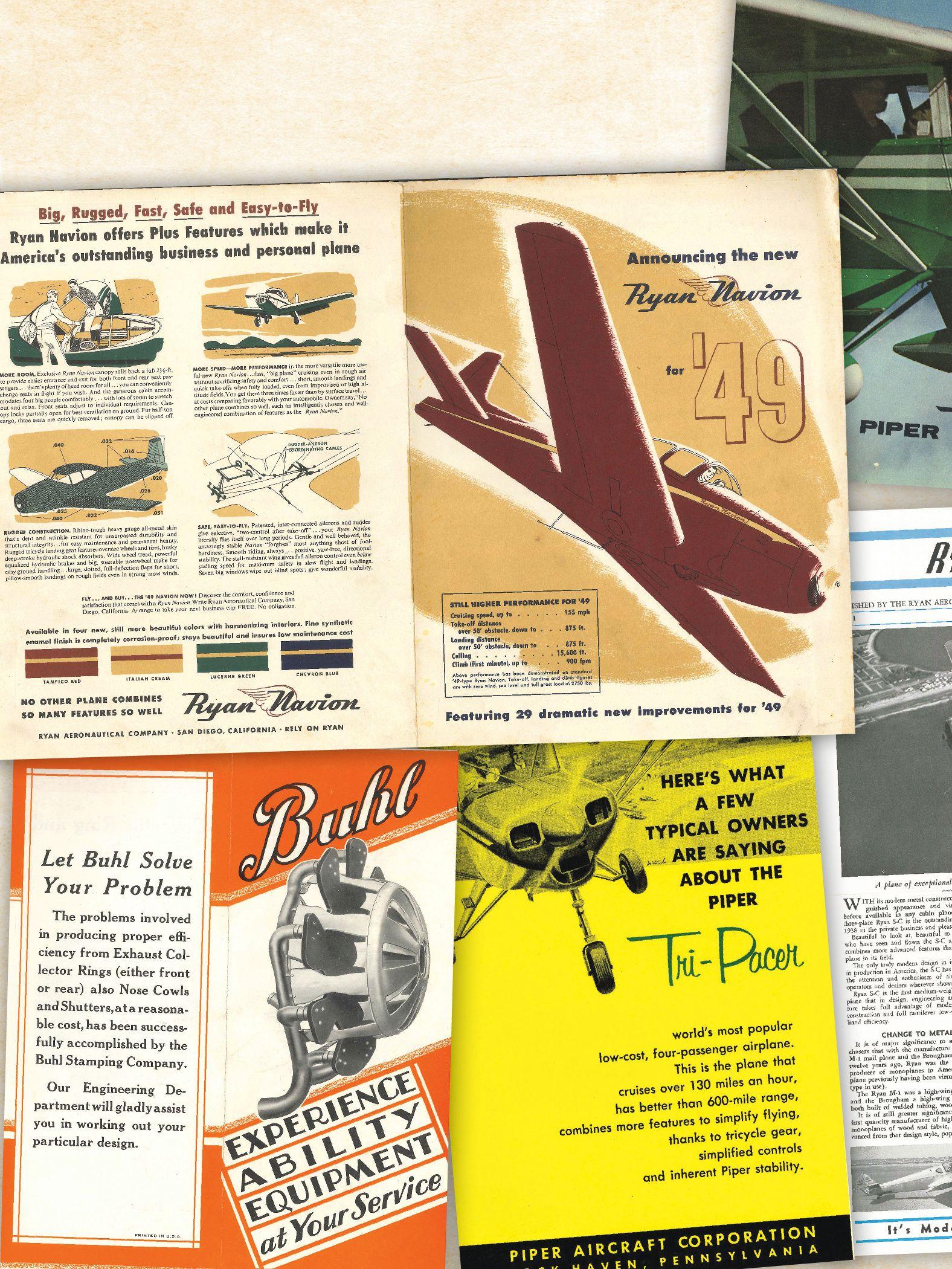
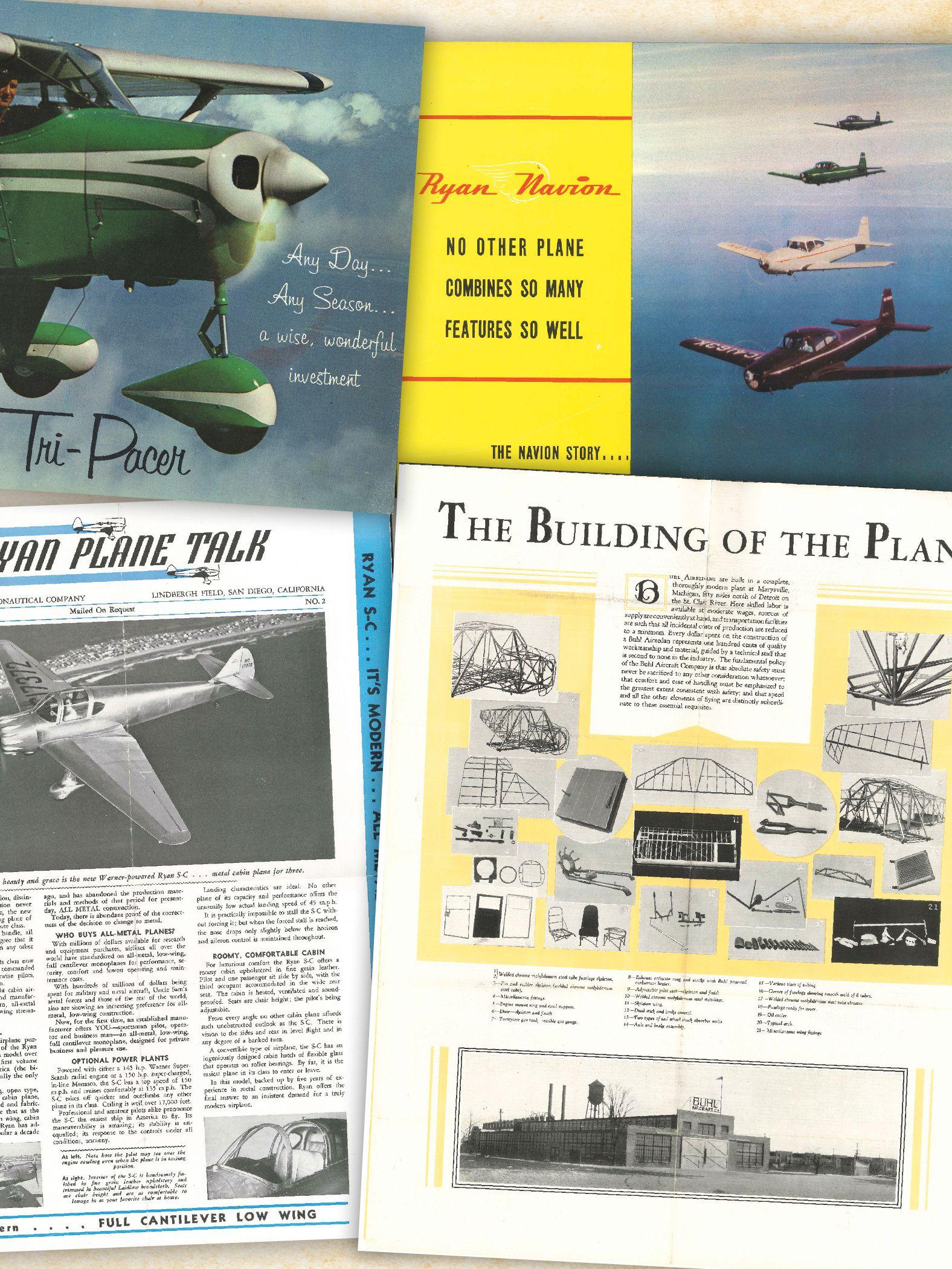
From the pages of what was ...
Take a quick look through history by enjoying images pulled from publications past.

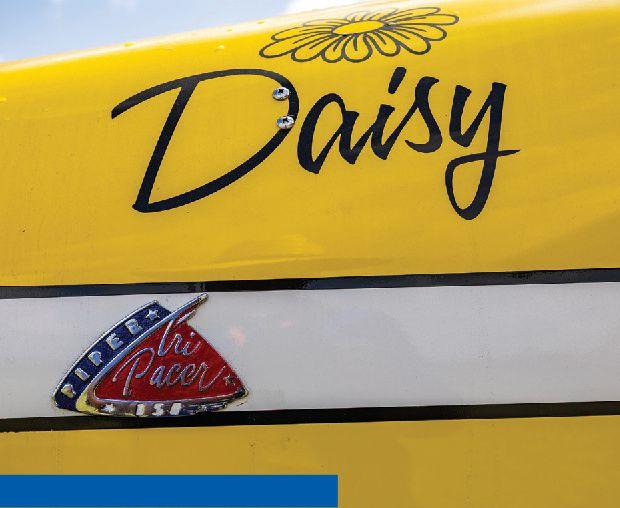
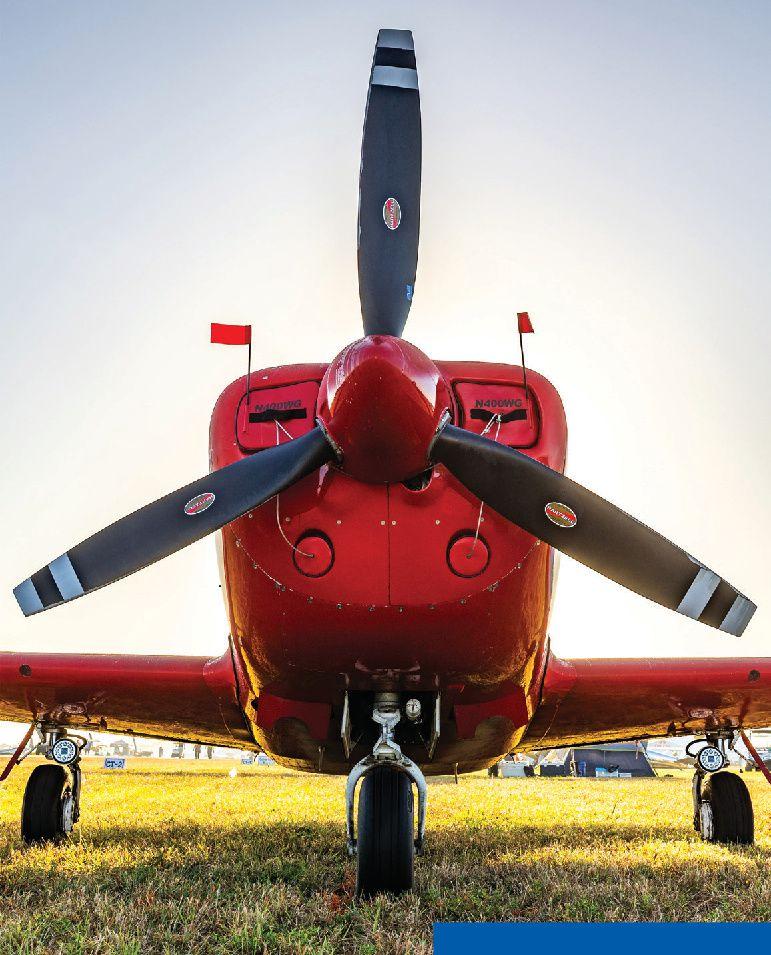
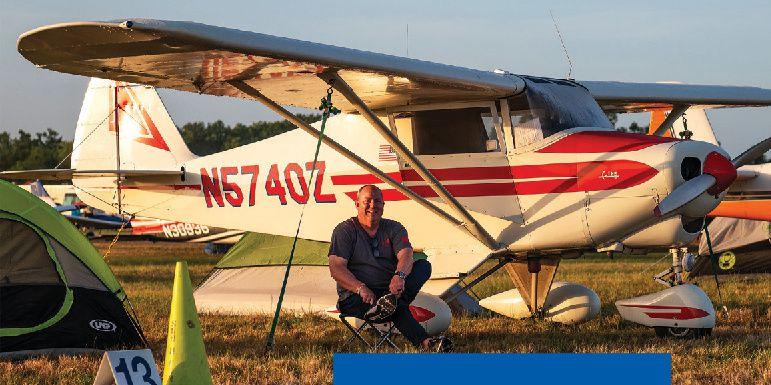

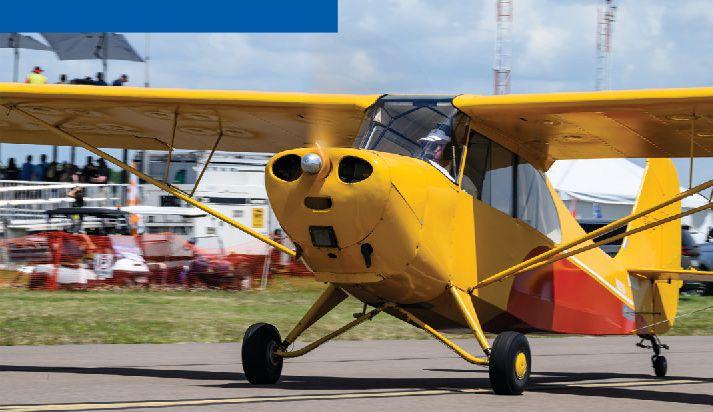
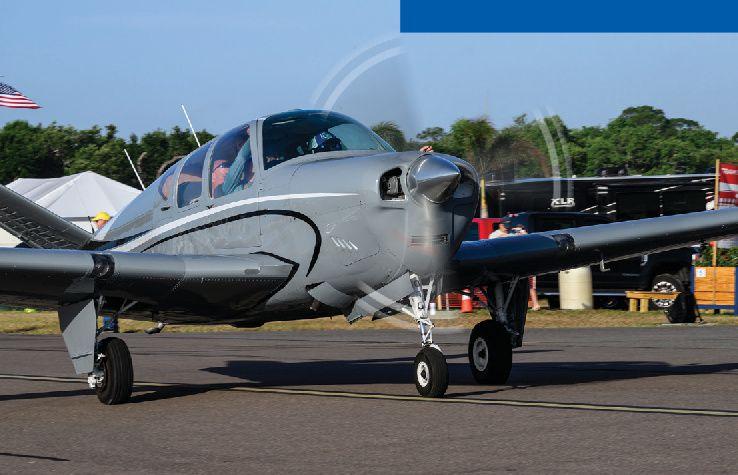
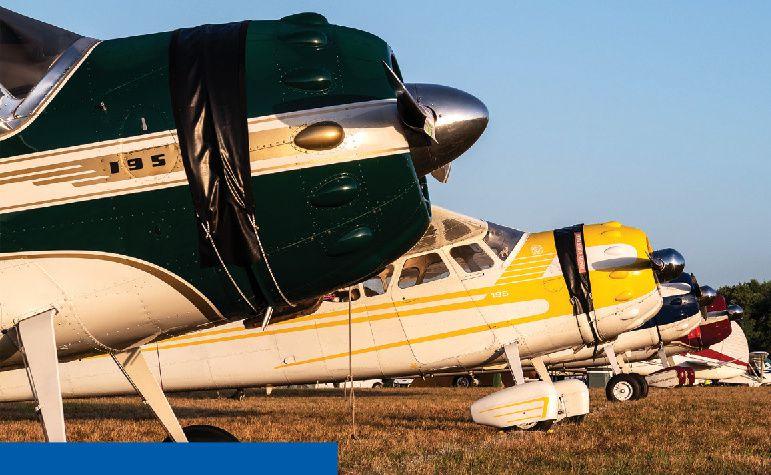
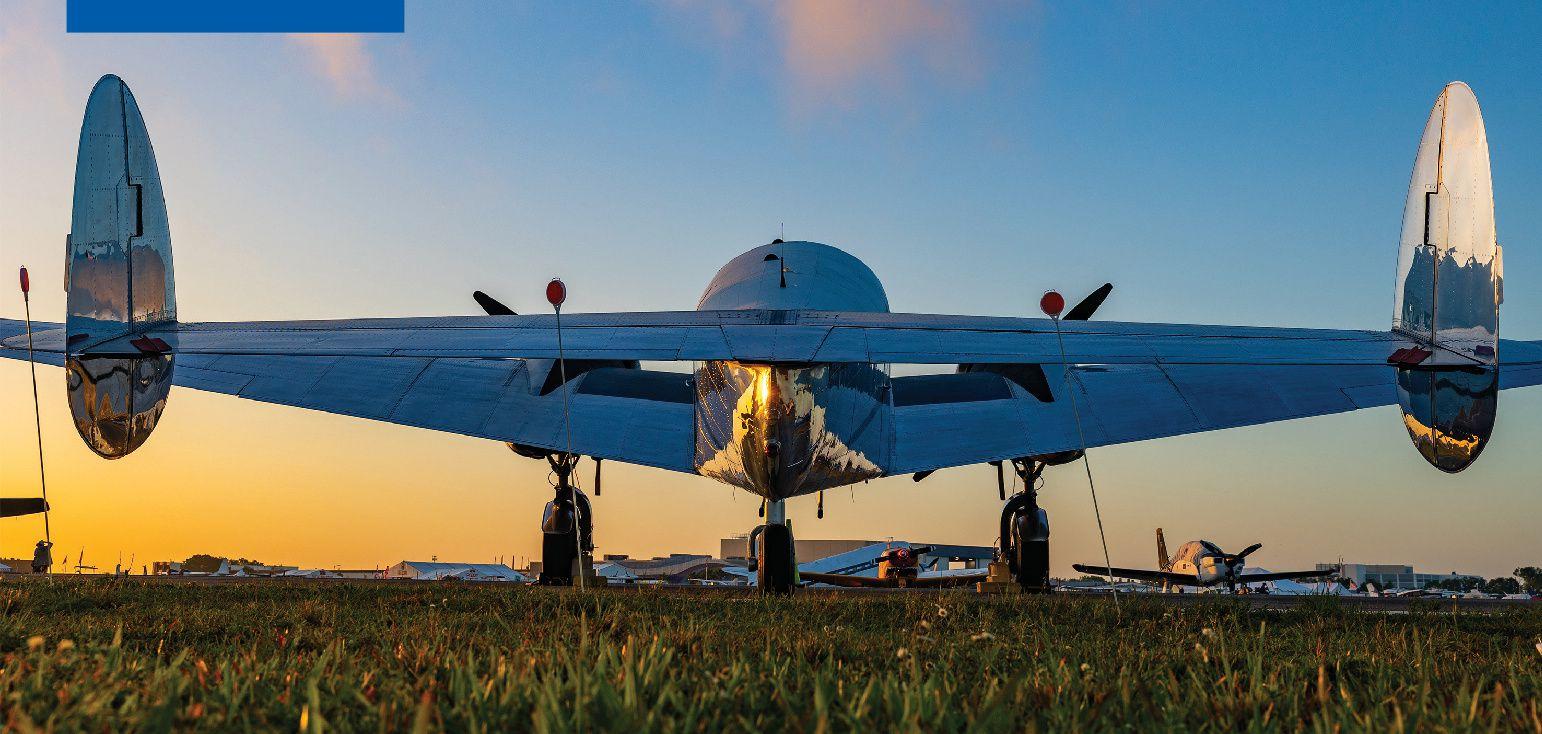
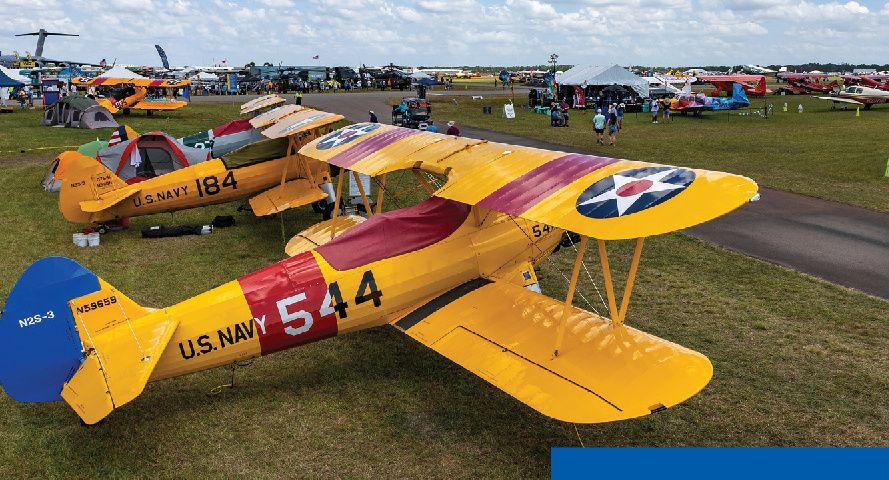
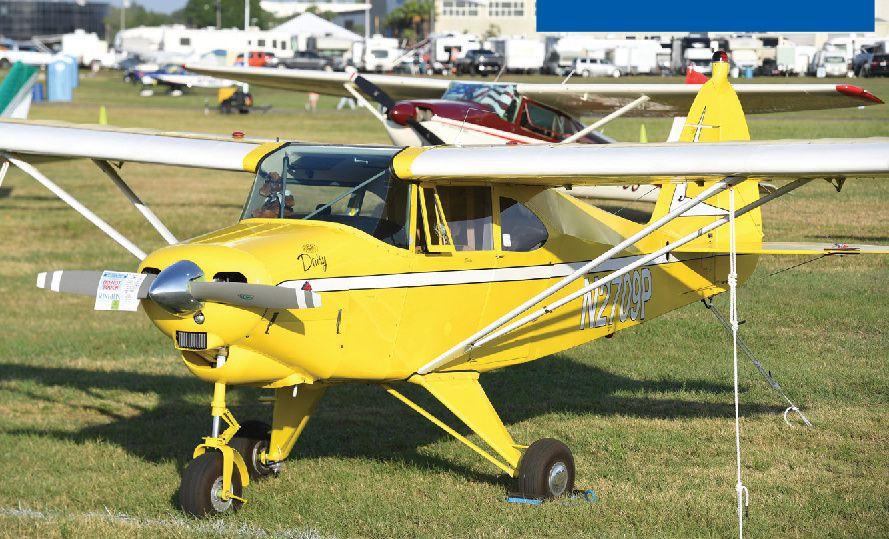
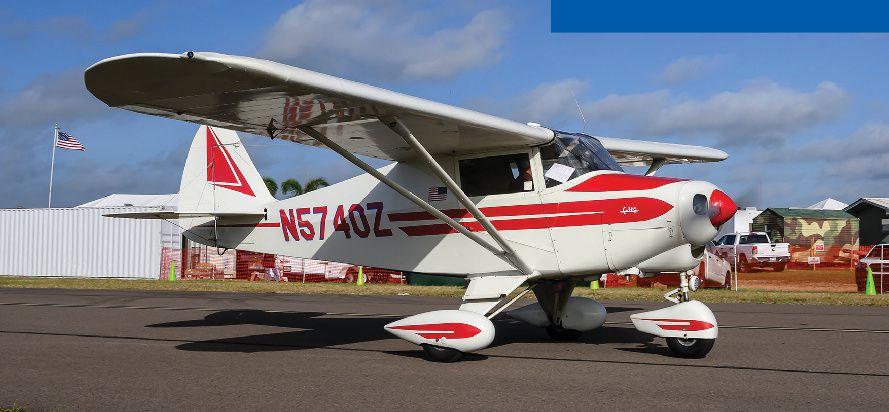





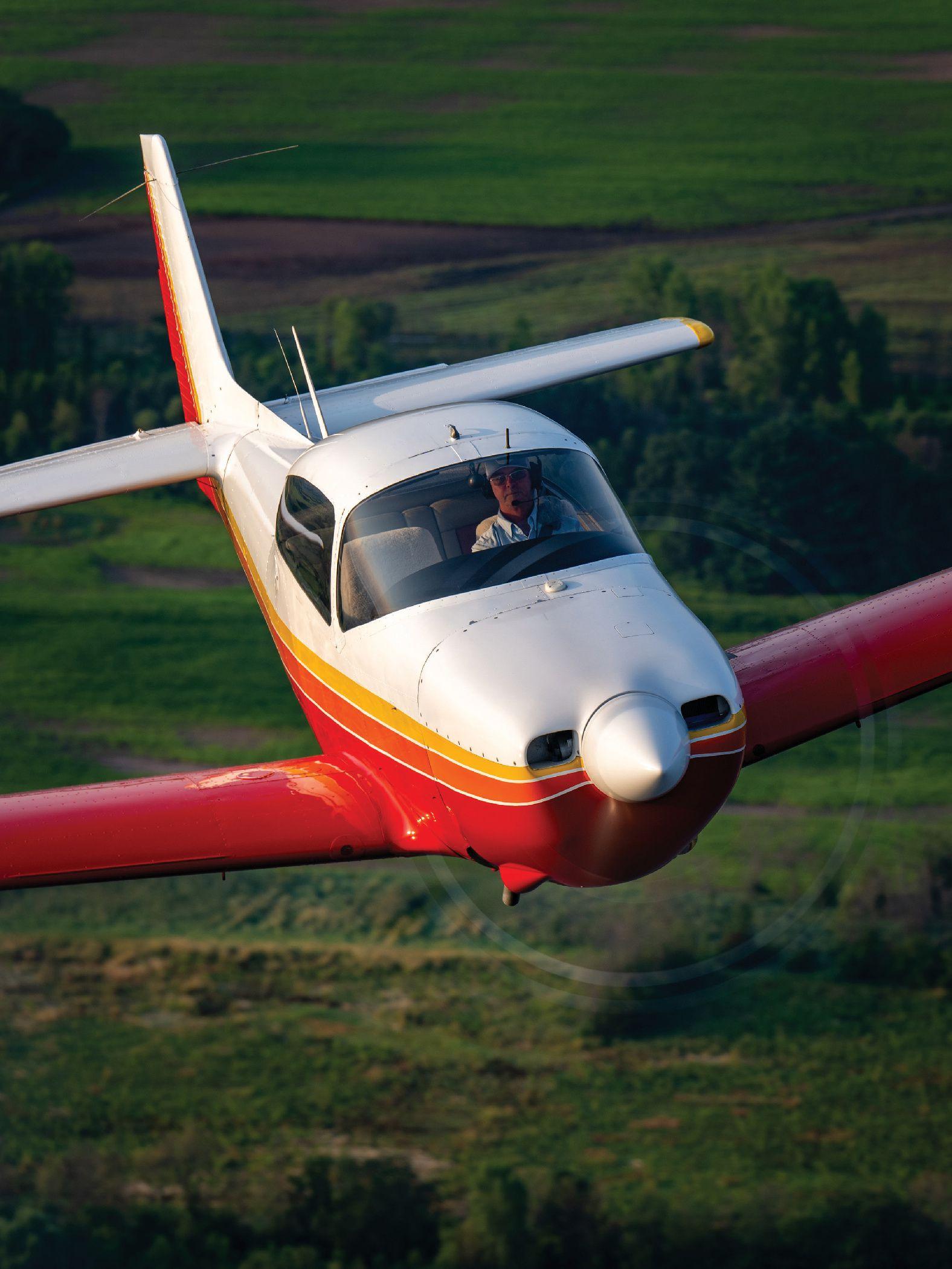
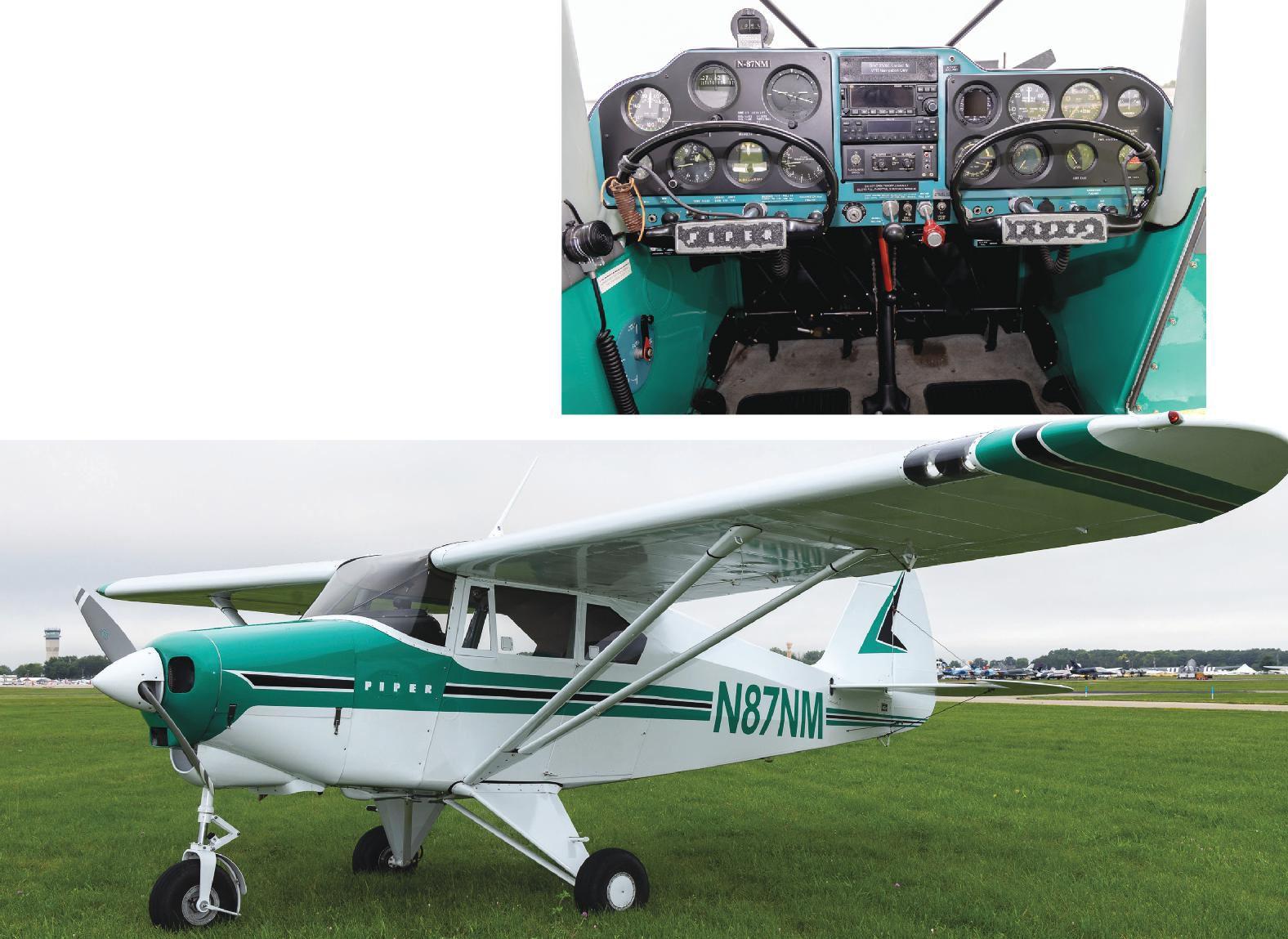
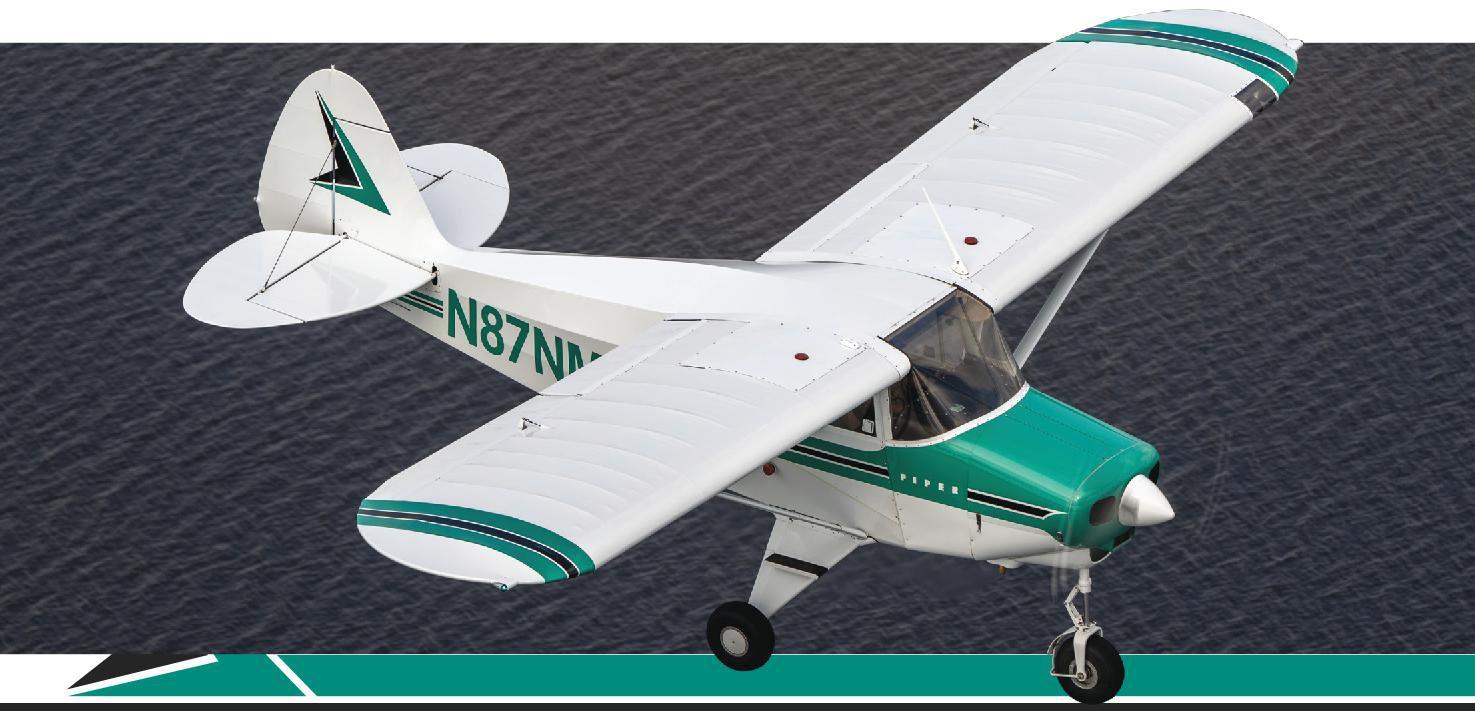
GREG CHILDRESS, EAA 1250299, of Dallas, Texas, the wildly enthusiastic owner of Piper Tri-Pacer 87NM, and John Ostmeyer, EAA 503851, of Gardner, Kansas, the owner of Piper Pacer 31JP, had their birds at EAA AirVenture Oshkosh 2024. Both owe their ownership of those airplanes to the biggest mistake ever made in American aircraft production. In fact, the whole short-wing Piper clan, one of aviation’s strongest organizations, wouldn’t exist if Piper hadn’t come up with a way to survive that mistake.
Market projections right after World War II estimated returning pilots, coupled with an explosion of flying farmers, represented a market for possibly 400,000 aircraft sales. So all the existing manufacturers, along with new ones popping up all over the nation, excitedly put their shoulders to the wheel and started cranking out airplanes like cookies. By 1947-1948, roughly 50,000 aircraft had been manufactured! For comparison, 2024 saw 1,772 piston aircraft delivered to a population nearly two and a half times bigger than in 1946.
In the blink of an eye, acres of unsold airplanes were scattered around the United States, with fire-sale price tags attached to all of them. Cessna, Piper, and Beech were in deep trouble. The newbie manufacturers simply disappeared, while the big three struggled and tried to come up with designs that “might” sell in an oversaturated market. For three or four years, new designs came out yearly. The name of the game was to offer the “mostest but charge the leastest.” Piper had a long-standing built-in way to do this, which allowed it to barely squeak through.
It has often been said that during Piper’s rag-and-tube days, which stretched from 1937 (J-3) to 1963 (Colt, but Super Cub popped up intermittently after that), it only actually designed and built one airplane, the 1937 J-3 Cub. From that point on, Piper used the basic Cub parts (aluminum truss ribs with the lightly modified USA-35B airfoil, steel tubing, etc.) and rearranged them to build an endless series of airplanes. During WWII, the Cub wore a variety of uniforms, and 6,000-plus were built. So when the postwar sales market was glutted with unsold airplanes, Piper knew it had to do something that was both drastic and creative.
Piper management and its designer, Dave Long, walked through the parts storage facility, pointed at ribs and other semifinished parts and materials, and came up with a plan: Use the smallest number of those parts to build the smallest, cheapest two-place airplane possible. In so doing, the first short-wing Piper was born, the PA-15 Vagabond. It featured less wing, less fuselage, less expense, lower price, two places (side by side), rigid gear, and 65 hp. It was something like 30 percent cheaper than the Cessna 120. At the same time, Dave Long aimed at the four-place market by lengthening the Vagabond, adding a back seat, a back door, and hanging a 115-hp Lycoming up front. It was introduced in 1949 as the Clipper, and it looked like a four-place airplane but really wasn’t. It was produced for one year, 1949, at which time Piper combined its parts-mixing concept with a sincere effort to make the Clipper a true four-place airplane by adding control yokes, flaps, and 125 hp up front. The taildragging PA-20 Pacer was born, and the nose wheel appeared on it in 1951 with the PA-22 Tri-Pacer. At that point, a relatively new design trend was solidly launched. Nose wheels were with us for the long term. Prior to the Tri-Pacer, only the Ercoupe and Bonanza sported the nose wheel, so the Tri-Pacer was possibly the first light four-place aircraft to feature it. Three years later, the
C-170 sprouted a nose wheel, the C-172 was born, and general aviation as we know it today was in high gear.
Along the way, John’s Pacer rolled off the line in 1956 but not as a Pacer. It was originally a PA-22 Tri-Pacer that a previous owner had converted to a taildragger. Greg’s Tri-Pacer was produced in 1957. Despite displaying similar taste in airplanes, the two men represent totally different paths people take when giving in to the charm of short-wing Pipers. John was born into sport aviation and had lots of intense tailwheel time when he bought the Pacer. Greg had not a single hour of logged flight time of any kind when he bought his Tri-Pacer. Their stories are totally different with almost identical endings.
An interesting side note: To this day, Pacer owner John has never flown a Tri-Pacer, and Tri-Pacer pilot Greg has never flown a Pacer!
John said his intro into aviation was something of a family affair.

“My grandfather flew in the Marine Corps from right after World War II and up until mid-’60s. The last thing he flew in the Reserves was the ‘Ford,’ the unique Douglas F4D Skyray,” he said. “My dad had a private license and a 152 Aerobat when I was a kid. My uncle Mark still has a Stinson 108. So flying’s part of our family. However, I’m the only one crazy enough to do it for a living. I’m a line check airman on the 767.”
John said that after a couple years of college, he went back home, got his CFI, and started teaching.
“I didn’t really want to go to the airlines, but six airlines, a couple of layoffs, and 30 years later, it’s a success! I got hooked on aerobatics really early and went to contests and gave puppy-dog looks to pilots,” he said. “The first contest I actually flew in was flying Basic with a safety pilot in a 7KCAB Citabria. I flew a couple in Decathlons, and I think I was in the front seat of an S2B once. The first airplane I ever bought was a factory-built Pitts S-1S. I flew that for a couple of years and then bought a Pitts S-1T. More motor, same tiny airplane.
“Even when I was airline flying and broke, I kept my toes in aerobatics and was involved in the IAC when I was a flight instructor, flying local

It’s small and light enough to push out the door by yourself at the end of the day and enjoy the sunset. But it’s just big enough and fast enough to fly it somewhere.
— John Ostmeyer
contests,” he added. “I bought a factory kit S-1T that was done and flying, and while I flew it, I built a set of Wolf wings for it.”
John said he flies Advanced now, but it may be his last year. He was the national Advanced champion in 2018, which, he said, may have been the last four-cylinder biplane to win. John also serves on the IAC board of directors.
John explained why he chose the Pacer.
“Recently I bought the Pacer,” he said. “I got old enough that I needed a real airplane. For years, I’ve been saying that Pacers and short-wings in general are the best bang for the buck when it comes to performance. They’ll outperform the 170, 172, and they’re about two-thirds the price. I’ve given dual in Pacers, and I like their crisp handling and the room up front. I took the back seat out so I could haul all my camping gear. If you take the back seat out, there’s lots of baggage space. With the back seat in, I can haul three people for sure.
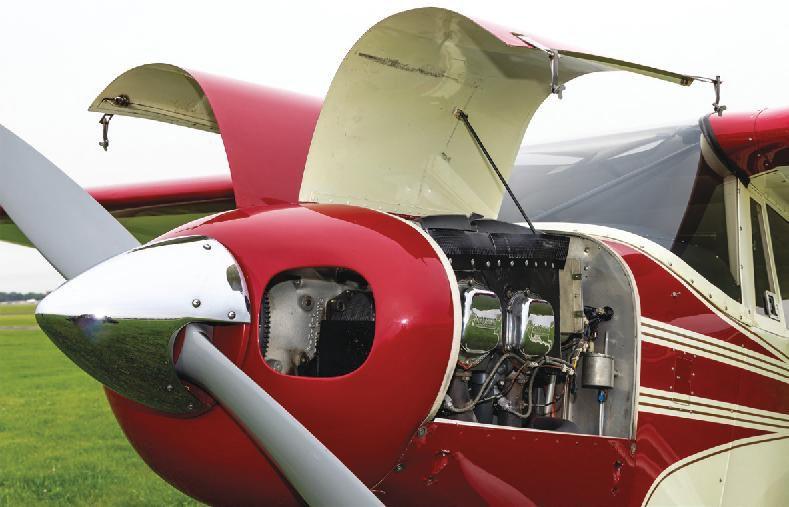
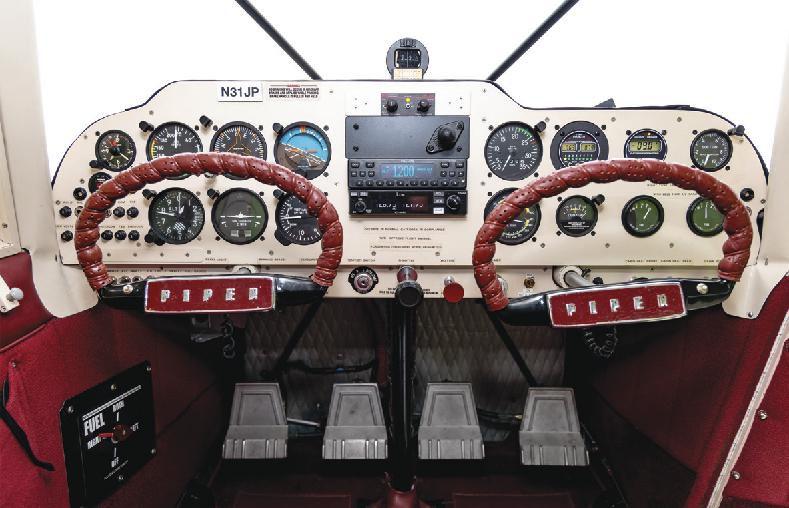
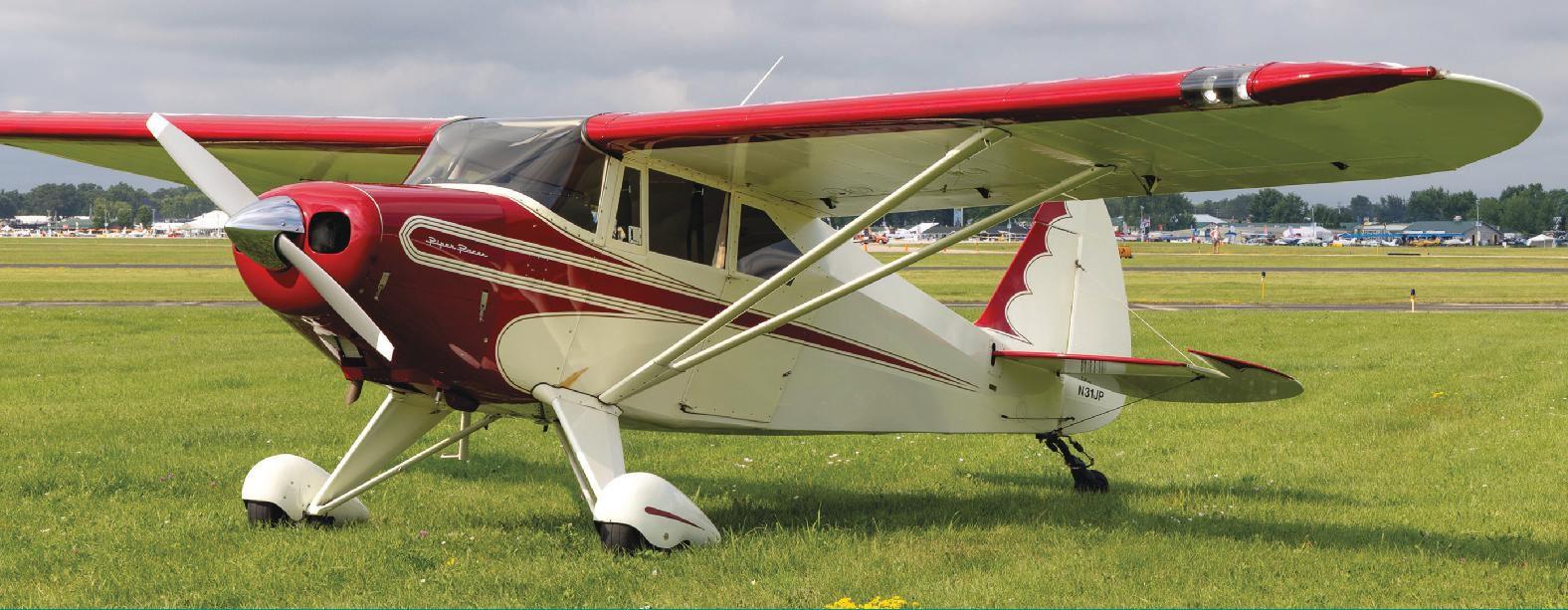
I could do four if I had the 160. N31JP started as a 150 Tri-Pacer, which were the most common. However, the original Pacers only had 125 hp, so they’re three-people airplanes, and one had better be small.
“I’ve given Young Eagles rides, and the airplane works out well for giving kids rides,” he added. “It’s just a great all-around airplane. It’s small and light enough to push out the door by yourself at the end of the day and enjoy the sunset. But it’s just big enough and fast enough to fly it somewhere. Oshkosh or Texas or places like that. However, I actually wanted a 180 conversion. If I could have found one for a decent price, that’s exactly what I would have bought.”
John said it’s not often you can buy an airplane like his and not have something to complain about.
“The guy I bought it from had a logbook of every CHT and every EHT for every cylinder for every flight that he’d flown the airplane,” he said. “Unfortunately, that record stopped when I bought it. I did change the bungees. It had two 1080HD bungees on each side; it was a little stiff, so I cut one off each side and put standard 1080s on to soften the gear up a bit to make it a little easier to land.
“It’s set up so perfectly; it’s exactly what I wanted,” he said. “Yeah, if I was building it from scratch, I would do a few minor things differently, but there’s nothing on it that’s worth changing.”
John said when it comes to radios, his aircraft has an Icom and a Stratus transponder, and that’s it.
“It’s got ADS-B In and Out with that transponder, so I can go anywhere I want,” he said. “I’m not a big fan of ADS-B, but at least I don’t have to talk to it. Basically, I can’t imagine what more I’d want in an airplane that I could afford. As I said, it’s a huge bang for the buck.”
Greg Childress had an entirely different introduction to aviation than John did.
“The romance of aviation for me started when my dad would take my brother and I to a local airport to watch planes take off and land,” he said. “I remember one of the times we went out to the airport, in probably 1962-63, and there was a Piper airplane showroom. We walked in, and my dad told the guy in the office we were just looking. I was fascinated by the new gleaming white airplanes and knew from that moment that I would own an airplane one day. I’ve been an airplane nut ever since.

“I’ve flown the Tri-Pacer to AirVenture the past three years, and I get those stories a lot,” he said. “I park on the Fun and Affordable row in Vintage. People tell me their personal stories about Tri-Pacers and how they flew in one, their dad owned one, had soloed in one, etc.”
Greg said that during his time attending the University of Texas at Austin, he spent summers working as a surveyor, later working in surveying, civil engineering design, and land development. When the Texas real estate boom ended in the late ’80s, he got his stockbroker license and became a broker, investment adviser, and branch manager.
“While all this was going on, I was always in aviation but only on the periphery,” Greg said. “I barrel-rolled the Collings Foundation’s P-51C, learned aerobatics in a Waco at Katama Airfield on Martha’s Vineyard, pestered my pilot friends to take me flying, and went on the occasional discovery flight. I was constantly doing all that kind of stuff. I drove to Oshkosh from Austin a couple of times in the ’80s. I remember standing in the midst of it all and decided that one day I would fly here, with my family. Then, around 2017, I decided I’d been looking for an airplane for myself for years — I should do something about it.”
Greg said that while a Tri-Pacer hadn’t been on his radar, a single incident piqued his interest.
“In 2017, I flew up to Oshkosh with a friend in his Piper PA-28 Pathfinder,” he said. “I was at — okay, snuck into — a dinner for an avionics company and was sitting next to a pilot who was a foreman on one of those huge industrial farms. He pulled out his phone and was showing me pictures of his airplanes. He had three or four. And, I’d say, ‘Oh, that’s nice. So is that one.’ That type of thing. Then he showed me a Tri-Pacer. His Tri-Pacer was absolutely white. No other color on it.
“I didn’t know much about Tri-Pacers,” Greg said. “However, in my head I had the same feelings about them as other people who don’t know a lot about them have. I looked at it and frowned and asked him why he has a Tri-Pacer. He laughed at me like I was crazy and said, ‘Why not a Tri-Pacer?’ That’s all he had to say. I’m thinking, hmm, here’s a guy with a lot of airplanes and he loves a Tri-Pacer. That had to mean something.
“That’s when I started looking at Tri-Pacers, and I found Dale Berger’s PA-22 in the Short Wing Piper Club magazine for-sale ads,” he said. “Part of the listing said it was an Oshkosh 2011 Bronze Lindy winner, along with numerous other awards, so that gave me some confidence in it.”
Dale was in Pennsylvania, so Greg planned a trip with his family, taking them to New York City for a vacation. While they were being entertained there, he took a jaunt over to Pennsylvania to see the airplane. Dale had completed a seven-and-a-half-year restoration, with a goal of keeping it as stock as possible while making updates for safety purposes.
“He did a beautiful job,” Greg said. “It was even better than I expected, so I told him I wanted it, and it was mine in 2019. The rest is history.”
It’s worth pointing out here that Greg didn’t have a single hour of flight time officially logged. He
This airplane has been such a great thing in my life. Through it, I’ve met so many great people.
— Greg Childress
bought an airplane before he knew how to fly or had taken even one official lesson! And he’d never even sat in a Tri-Pacer. To this day, he’s never flown another airplane as pilot in command.
“I’d done discovery flights, but I figured out how and where to get lessons. I went through four instructors,” Greg said. “I was in no hurry. I wanted to do this right because I was going to be flying my family in it. So I took my time and soloed at 30 hours. I had something like 120 hours before passing my checkride on the first try in 2021. It was the fulfillment of a lifelong dream!
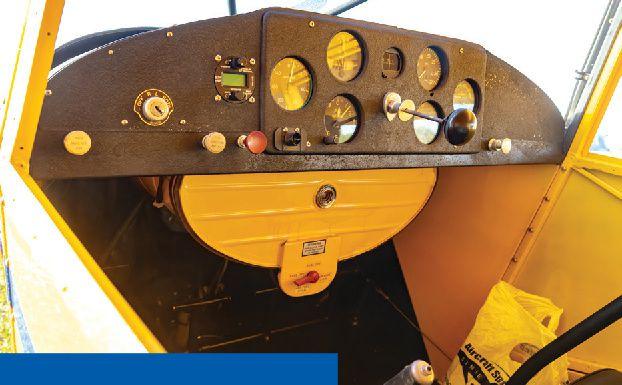
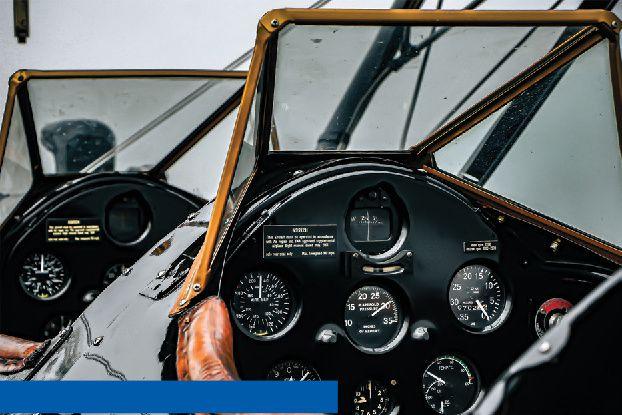
“One thing I don’t understand, however, is why so many people look down their noses at TriPacers,” he said. “They’re not ugly. Okay, so they’re not super sleek, but they do have their own character. One of the things I really like is that mine has a stock panel, including the old vacuum gauges. The DG is WWII war surplus out of a B-25. Come to think of it, I was reading a magazine article written on a Tri-Pacer a long time ago. The writer was a longtime pilot who, at the end of the article, said he just might have to buy a Tri-Pacer for himself. That said a lot to me.
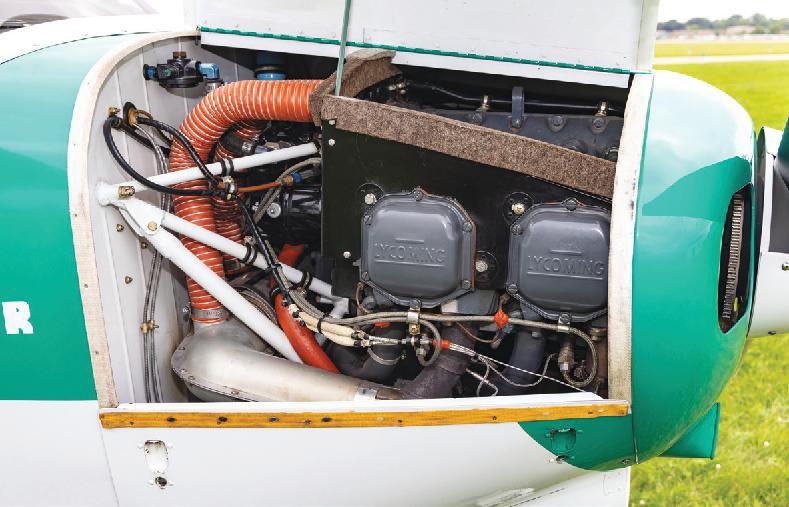

“Of course, there’s the new AD on the tail that’s going to make something like 31,000 fabric Pipers replace their rudders because a few of them broke,” he added. “So I have that on the horizon.”
Greg said his biggest worry about that is getting the paint to match.
“The Tri-Pacer was a good choice; it gets the job done. 87NM has good upgrades, like disc brakes, Bogert battery cable, Garmin nav/comm, Stratus transponder with ADS-B In and Out. I get 8 to 8-1/2 gph. I plan for 110 mph but usually get better, 115 to 120, and it hauls pretty much everything I can stuff in it. It can burn mogas,” Greg said.
“I should mention that I did have to make an emergency landing Christmas Eve when the cockpit filled with smoke,” he said. “The only thing Dale hadn’t changed on the airplane was the exhaust. It’s common for them to crack and cause smoke. So I had it replaced. Coming back from AirVenture a few months later, the engine got rough when one of the exhaust pipes separated from the engine because both bolts holding it on had lost their nuts.”
Despite that, Greg said this airplane has been such a great thing in his life.
“Through it, I’ve met so many great people, and if I want to get philosophical about it, I’ve fulfilled the dreams that began when I was 5 in that Piper dealership,” he said. “I own an airplane. I flew with my 18-year-old son, Roman, to AirVenture. He was flying with me for the air-to-air photos for this article. And I flew to Katama. I’ve done wonderful things. I’ve flown to neat places from Oregon to Martha’s Vineyard. This aviation thing is a really neat deal! I’m sorry I took so long to get more serious about it. I now base my bird at KHQZ Mesquite Metro, about 10 miles east of Dallas.”
Different folks, different approaches to aviation, same outcome. Seems like some things are just meant to be. That happens a lot in the world of the short-wings. Go to ShortWingPipers.org if interested but prepare to be infected if you do.
WHEN LES WHITE OF Gulf Breeze, Florida, decided he needed a new aircraft to use for business and pleasure travel, he had some very specific requirements.
“I wanted something that had good cruise performance and good comfort,” he said. “So in the universe of GA, Cessna’s got a bunch of comparables — Beech, Piper — and I’ve flown in and on many of them.” Plus he was replacing a different sort of aircraft entirely, an ex-military Hughes TH-55 helicopter.
“So I wanted something that had a broad spectrum of performance characteristics, that got me close to the chopper,” he said. “The thing I liked about a chopper is if I had an engine out, I could spot a landing. I don’t need much room. I just need a relatively small, clear area and I can hit it … One of the [other] things that I liked about being a chopper pilot is this huge visibility that you have.”
Obviously, a fixed-wing aircraft can’t simply autorotate down to a zero-length landing after an engine failure (a Cirrus under canopy notwithstanding), but some reasonable short-field performance was important, in addition to speed, range, price, comfort, visibility, and ease of maintenance — and a bit of character to boot. He looked at newer (mostly nonvintage, anyway) Bonanzas, Cessna 210s, even the Cirrus.
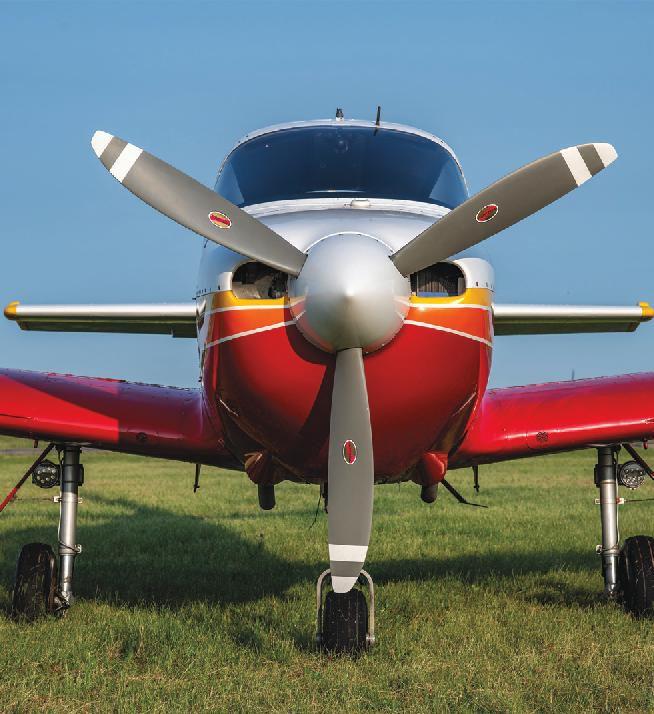
Naturally, he chose a nearly 75-year-old Navion.
As World War II wound down, North American Aviation, like many other U.S. aircraft manufacturers, began looking ahead to an exploding postwar market for civil aviation. After all, hundreds of thousands of pilots would be returning home, presumably victorious, and would need airplanes of their own for business, travel, and recreation. The Wrights had shown that aviation as we know it was possible, barnstormers brought it out to the country, Lindbergh proved it to be practical, and wars made it ever more visible. Those who didn’t fly admired those who did, and 1946 would surely see the oft-dreamt-of “airplane in every garage” as flying did to driving what cars did to horses. As Budd noted on page 24, the projected market for GA airplanes was 400,000. It was as safe a bet as anyone could imagine, and a lot of companies anted-up.
While the early postwar years did see a slew of new private aircraft models, the expected boom, of course, never materialized. A few of the major manufacturers stuck it out and survive to this day, but some fascinating, very viable — aerodynamically if not necessarily financially at the time — designs were only produced in relatively small numbers, built in response to a
promise unkept. Those aircraft were destined to live as glimpses of a world that might have been, but wasn’t quite.
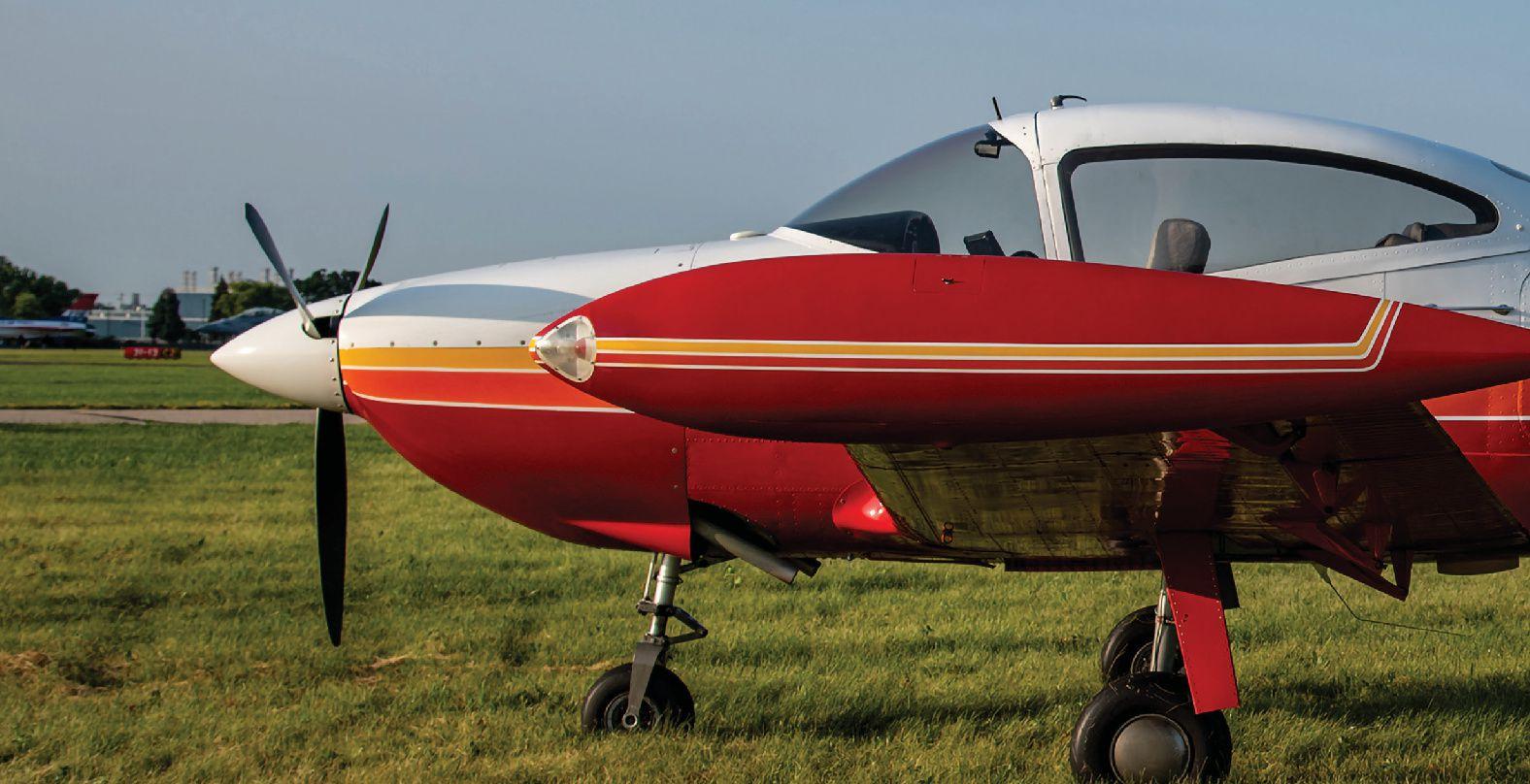
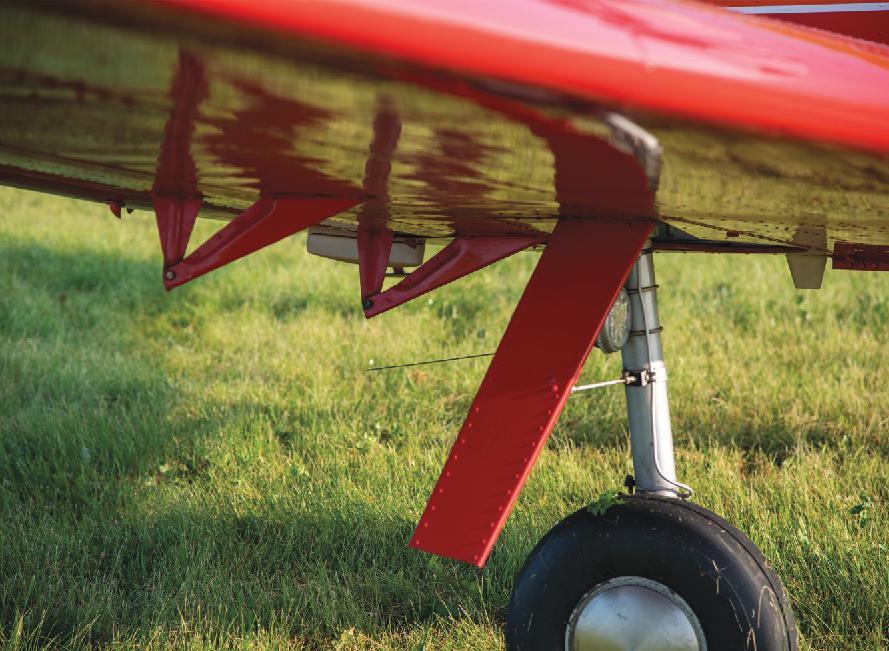
North American’s entry into the field was the Navion, which started as the NA-143 prototype, of which two examples were built. It first flew in early 1946 and went into production as the NA-145 almost immediately. The Navion is a four-place, all-metal, cantilever low-wing monoplane, with a semi-monocoque one-piece fuselage built around four primary longerons under an aluminum-alloy stressed-skin cover. It’s equipped with tricycle gear on air-oil shock absorbers that retracts hydraulically, the mains inward into the wings and the steerable nose gear aft into the fuselage, leaving a small portion of the wheel protruding.
The first production airplanes were originally powered by a six-cylinder, horizontally opposed, air-cooled Continental E-185 (part of the O-470 family) engine that produced 185 hp at 2300 rpm, and spun either a Hartzell or Aeromatic variable-pitch prop. The original fuel capacity was 40 gallons, which, at economy cruise of 51-percent power, enabled a maximum range of 700 miles at 115 mph. At 70-percent power, cruise
speed was 150 mph, with a fuel burn of about 13 gph, which dropped the range to about 385 miles with a 30-minute reserve. The initial empty weight was 1,551 pounds, and max gross was 2,570 pounds, leaving nearly 780 pounds for people and bags with full tanks. Takeoff and landing distances were reported as approximately 700 and 600 feet, respectively, though a contemporary newspaper account described a lightly loaded Navion lifting off in about 300 feet and then climbing at 1,250 fpm.
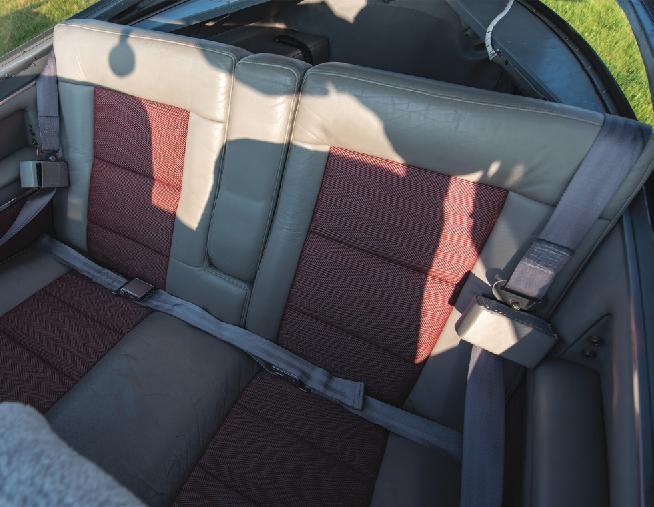
One of the most distinctive things about the airplane, especially when compared to its low-wing contemporaries from Beech, Bellanca, and the like, is the large, sliding canopy. You climbed into the roomy, 45-inch-wide four-seat cabin, and then pulled the canopy closed above you, just like a fighter. Specifically, like a P-51. While no one would ever misidentify one as the other, the overall shape of the canopy, not to mention the vertical stabilizer with its small leading dorsal, are absolutely and intentionally reminiscent of the Mustang that came before it, and, to a lesser extent, the F-86 Sabre that came after. While the performance of the Navion is miles from that of the P-51, North American counted on the fact that pilots would trust the brand, and appreciate a certain familiarity of style.
Early advertisements for the Navion touted its heritage, with one proclaiming, “From the North American AT-6 and SNJ Texans … came the Navion’s inherent stability,” and others simply including
Les is a happy member of the American Navion Society, travels to their annual fly-ins every year, and recommends membership for anyone considering finding a Navion of their own. The organization was founded in 1960 and supports all of the variants. Learn more at NavionSociety.org.
“Creators of P-51 Mustang and advanced Army and Navy aircraft” next to the Navion logo. Hilmon Pinegar, writing in the February 25, 1947, edition of the Memphis Press-Scimitar, described it as the “baby brother of the famous P-51 Mustang” and a “super deluxe job” that “borders on the highbrow.”
A pilot report written by Max Karant in the January 1947 issue of Flying magazine described an early production model of the airplane as “a dream to fly,” and predicted strong sales.
“This excellent airplane will go a long way toward selling many nonflyers on the utility, speed, and economy of small plane flying,” Karant wrote. “And any present-day flyer who could use an airplane in the $6,000-$7,000 class, and wants one that will fly as slowly as a lightplane and almost as fast as an airline, had better look up a North American Navion demonstrator first thing in the morning.”
Speaking of price, North American’s original plan was to sell the airplane below cost at just $3,995, dramatically undercutting the Bonanza, for example, which cost nearly $7,000. Adjusted for inflation, those prices work out to about $60,000 and $100,000 in 2025, respectively. Just as Republic learned with the Seabee, you can only sell at a loss for so long, and Navion prices quickly went up to the range Karant mentioned. Given that the airplane reportedly cost $9,000 to build, even that major price increase wasn’t enough.
North American built slightly more than 1,100 Navions by the end of 1947, and then sold the rights to the Ryan Aeronautical Co. of San Diego, which produced about 1,200 more through 1951. Around 250 Navions, some from North American but the bulk built later by Ryan, joined the Army and the Air Force as the L-17 series, later redesignated U-18. Ryan continued to develop the airplane, starting with the model A, powered by a 205-hp version of the Continental E-185, followed by the model B, which boasted a 260-hp Lycoming GO-435. Ryan got out of the Navion business in 1951, and a company called TUSCO picked it up from there, further developing the airplane into the Rangemaster in 1960. Over the years, a number of companies built twin Navions, including Acme Aircraft, TEMCO-Riley, and Camair. The rights eventually ended up in the hands of the Navion Aircraft Corp., which was founded by members of the American Navion Society in the mid-1960s.
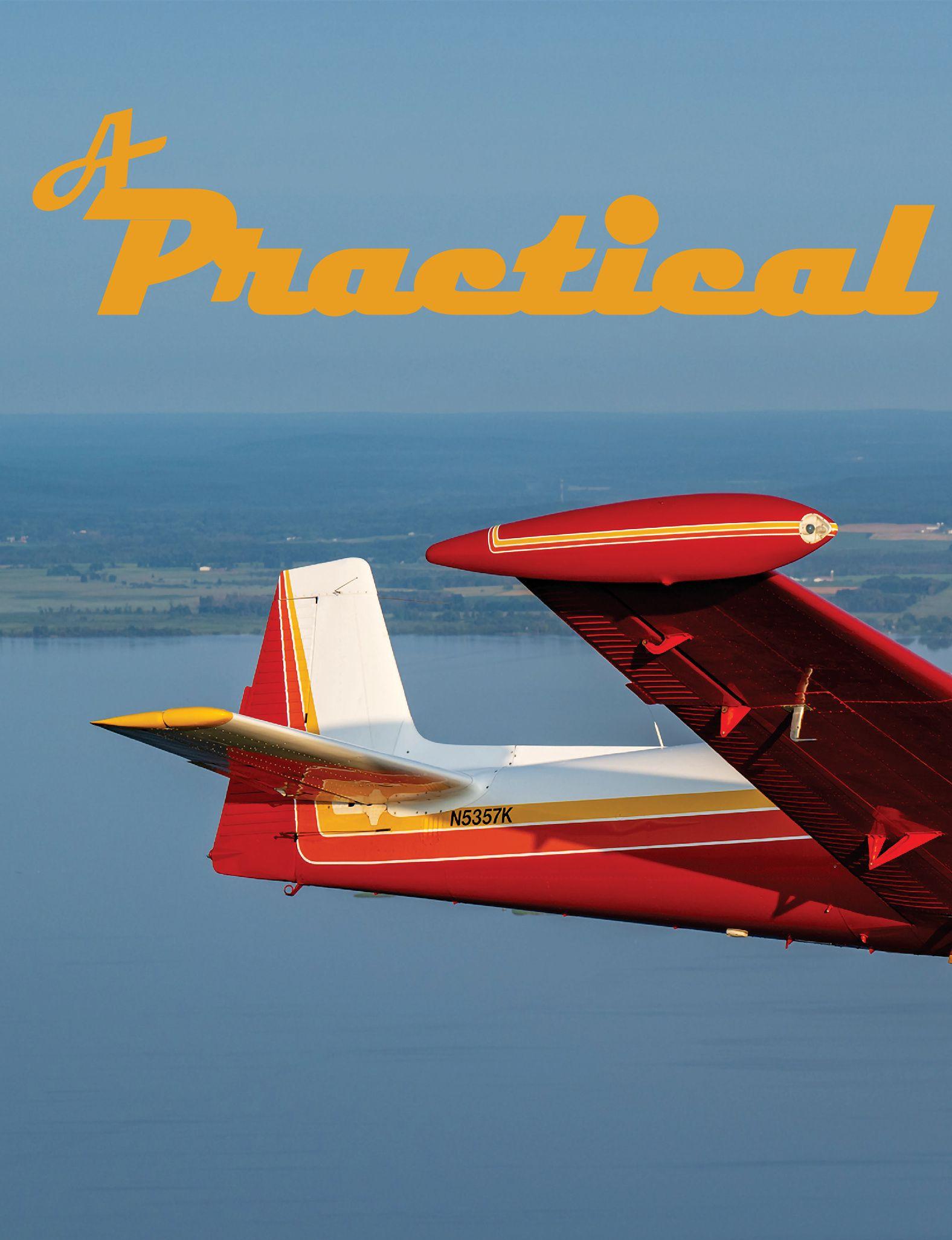
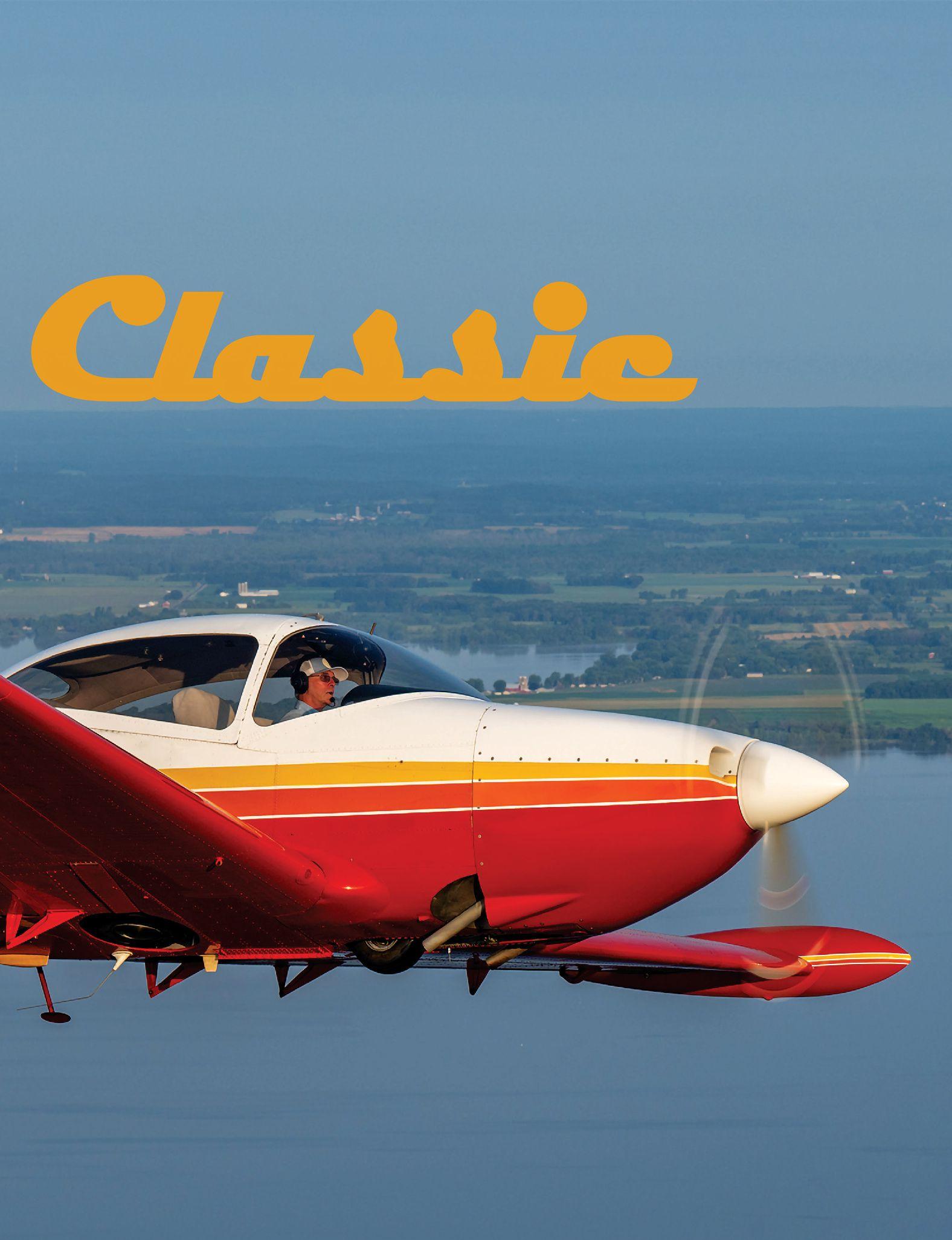
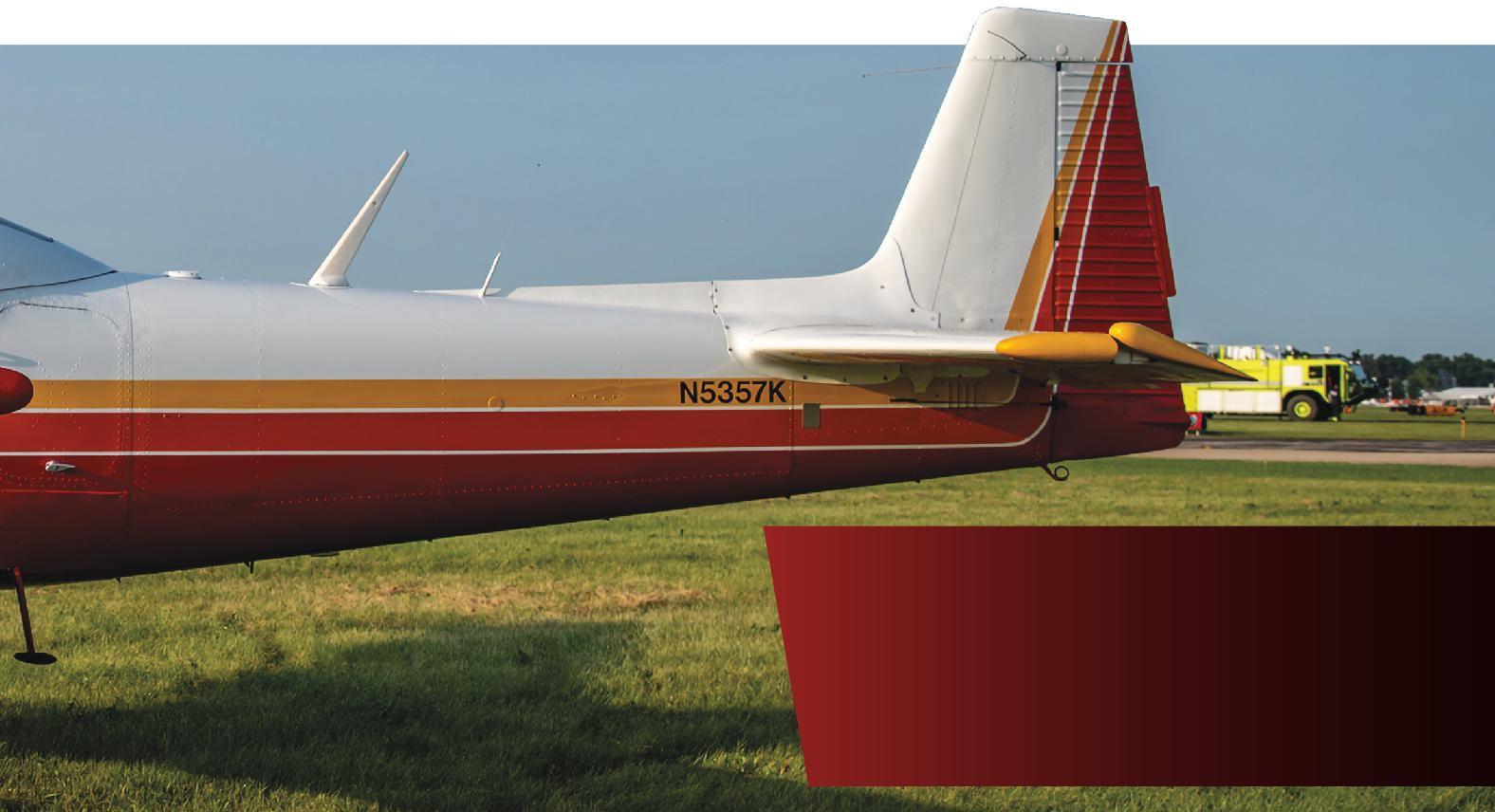
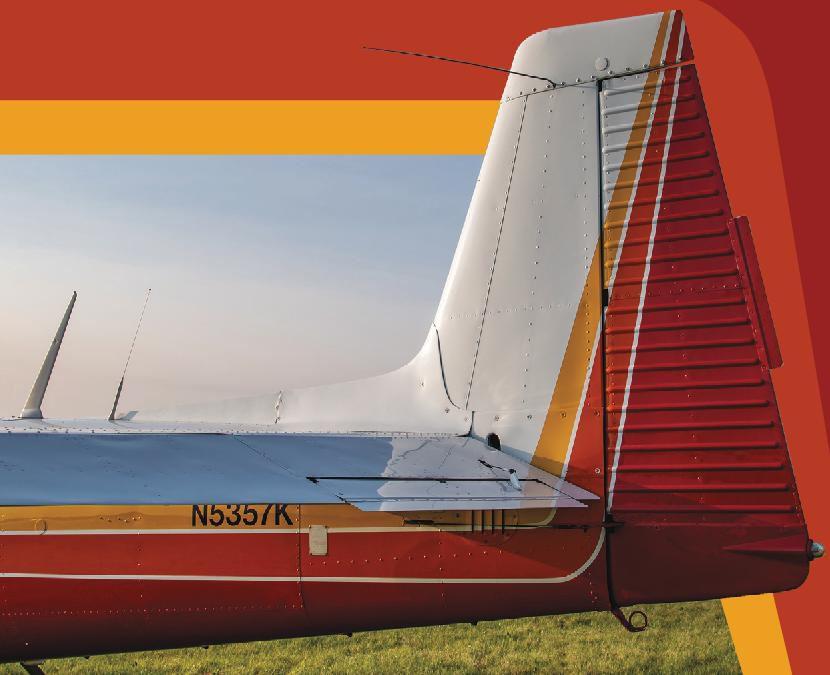
During the latter part of Ryan’s production, a Navion B, serial No. 2257B, later registered as N5357K, rolled out of the company’s San Diego factory in 1951. The original owner, whose name is unknown, based it in El Paso, Texas, and flew it regularly to Chihuahua, Mexico, for about 14 years. According to a story by Mark Huber in the November 2008 issue of Air & Space magazine, a herd of donkeys trampled a number of airplanes at a Mexican airport, trashing the wood and fabric designs but leaving the sturdy, all-metal Navion largely intact. “Ryan’s Bill Wagner … quickly issued a press release headlined ‘Navion Demonstrated as ‘Jackass Proof,’” Huber wrote. That particular Navion was probably not 2257B, but one supposes it might have been.
From there, it went to a man named Fred Peterson in Northern California in March of 1965, who sold it a year and half later to Jim Turner, also of Northern California. Turner owned the airplane for the next 45 years until his death in 2011, when a retired software engineer from Kansas City named Richard Stigall bought and enjoyed it over the next 12 years.
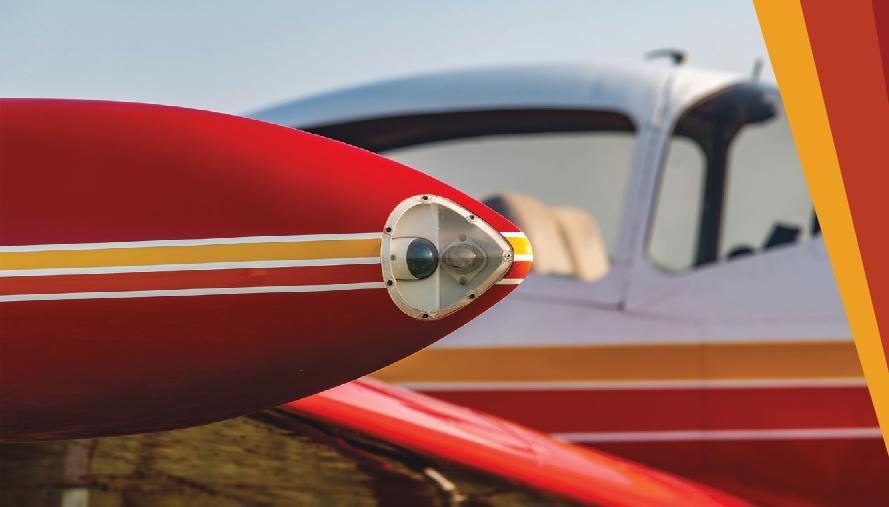
Along the way, the airplane was steadily upgraded, including a series of engine swaps while Turner owned it, culminating in 2005 with the installation, under an STC, of the 310-hp Continental IO-550-R that currently powers the airplane. Other upgrades over the years have included a carbon cowling for easier maintenance access, a replacement fuel selector (required by an AD), a speed mod that involves reducing the horizontal stabilizer’s angle of incidence by 1 degree, and aux and tip tanks increasing the Navion’s fuel capacity from 40 to 100 gallons, giving it a 1,500-mile range.
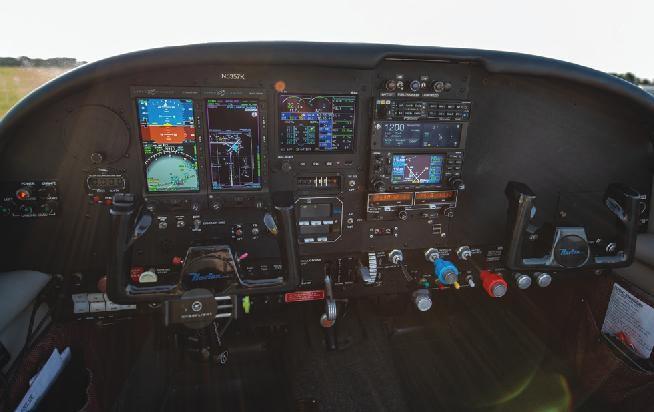
And then, of course, there’s the instrument panel, which is now built around a lot of glass and other fancy stuff, including dual Aspen Evolution 1000 primary flight displays (PFDs), a Garmin GNS 430W Navigator WAAS GPS and nav/comm unit, an Electronics International MVP-50P engine monitor, an S-TEC 60-2 autopilot, and, naturally, an iPad mount.
Les, who came around about just a few years after 57K, got his aviation interest early from his dad, a Naval aviator who was going through flight training in Pensacola in 1959 when Les was 4 years old.
“That bug really infected me from a very early age, because I was around it, I lived it, my father was in it, and I began my interest in aviation when he began his,” he said. That interest stuck with him as the family moved around, relocating every couple of years following Les’ father’s Navy assignments.
“When I graduated from high school and was somewhat adrift in what I wanted to do and what I wanted to become, my dad alerted me to the fact that the Army had a great helicopter training program that you could go from basically a high school graduate to a cockpit in a couple of years,” he said. “That clicked real fast with me. And so I became an Army aviator at a young age. I think I was 19 when I graduated from flight school.”
Les flew the Hughes TH-55 Osage in training and then went on to fly the iconic Bell UH-1 Iroquois, best known as the Huey, on active duty for a few years. After he got out of the Army, he shifted gears and started a long and successful career as a custom home designer and builder.
“I never lost interest in aviation, but I finally found a way to get back into aviation in the mid-’80s,” he said. “As my geography of homes that I build expanded, I found myself on the road all the time going here, there, and everywhere, a lot of windshield time, and finally it clicked for me. I either have to hire a superintendent to take this load off me or snap, I could get a helicopter and do it myself.” That’s when he bought the TH-55, just like the one he’d flown in training a decade earlier.
Les used the helicopter for a while, but, as the hours piled up on the airframe, concerns about keeping it flying built up and he decided to sell. He indulged his aviation interests vicariously, especially in more recent years with the advent of social media and YouTube, doing a lot of what he calls “chair flying.” In order to instill the importance of things like checklists into his chief superintendent, Les sent him to flight school under the guise of professional development. About five years later, when his employee was thinking of moving away since his kids had grown up and moved out, Les tried to convince the man that he should buy an airplane. That idea backfired.
“He thought about that for about five seconds, and then he turned to me, and he said, ‘Hey, Les, I can’t afford an airplane, but you can,’” Les said. “That was a seed that hit me straight between the eyes. So then I got to thinking, well, that would be awesome. Yeah, I could do that. That could be a perk; that could be a retention benefit. And, oh, wait, well, maybe I would like that too. Maybe it’s a retention benefit for me. So just everything’s converging on my vicarious resurgent interest in aviation and then this justification, ‘Well, I’m really not necessarily buying it for me. I’m buying it as a business expense to retain a valued employee.’ It all mixes together.”
From there, Les defined his mission and his parameters, and the shopping began.
“In most of these GA airplanes, you’re stuffed in a tin can, shoulder to shoulder, and this panel in your face with relatively low visibility,” he said. “Part of the appeal of the Navion for me, well, it’s a nice roomy cabin. It’s got high visibility. It’s got very good low-speed stall characteristics. It’s good for maybe low-time pilots that aren’t very well experienced. It’s got some rudder mix to it, so you don’t have to be critically on your rudder all the time. It has a rugged airframe. If I have an engine out in the Navion … maybe I can’t spot a landing in a confined area, but I don’t need a whole hell of a lot of room. And if I’ve got to go into the trees, I’m in a heavy-duty cockpit with a lot of metal.”
Then, of course, he found N5357K, when Richard Stigall listed it for sale in 2023.
“So, I’m looking at this plane; obviously the owners have cared for it, kept it hangared, and it’s their time to move on and my time to move up,” he
Aircraft Make & Model: 1951 Ryan Navion B
Length: 27 feet, 6 inches
Wingspan: 33 feet, 5 inches
Height: 8 feet, 8 inches
Maximum Gross Weight: 3,100 pounds
Empty Weight: 2,100 pounds
Fuel Capacity: 100 gallons
Seats: 4
Powerplant Make & Model: Continental IO-550-R
Horsepower: 310
Propeller: Hartzell three-bladed
Cruise Speed/Fuel Consumption: 185 mph/11 gph
Power Loading: 10 pounds/hp
Wing Loading: 11.4 pounds/square foot
VNE: 190 mph
VSO: 55 mph
VX: 70 mph
VY: 95 mph
said. “So I got lucky, and landed it in my lap, and have been really happy.”
While Les had plenty of helicopter time, his fixed-wing experience was another thing altogether. In fact, when he did his flight training back in the mid-’70s, he only flew helicopters, but, in 1977, he used military benefits to get his fixed-wing private certificate. Still, it took him some time and instruction to get current and then transition to the Navion.
“So much has changed,” he said. “We didn’t have GPS back then. We had NDB approaches, all kinds of stuff that doesn’t even hardly exist anymore, and steam gauges. Well, I needed to get good at fixed wing, and I would have to say that’s one of the more difficult things I’ve done in life.”
Les immersed himself in his instruction and, tough as it was, he loved it.
“I was using a part of my brain that had long been dormant,” he said. “Growing the new neurons and then allowing them to sheath, and then I start picking up the speed. Speed and the accuracy … elevating myself up to a higher level of proficiency. Shoot, that was helping me in my business. I’m thinking faster over there too.”
Finally, he was ready.
“I remember when I soloed in that thing, I felt like I was 20 years old again,” he said. “My girlfriend said, ‘I’ve never seen you happier.’”

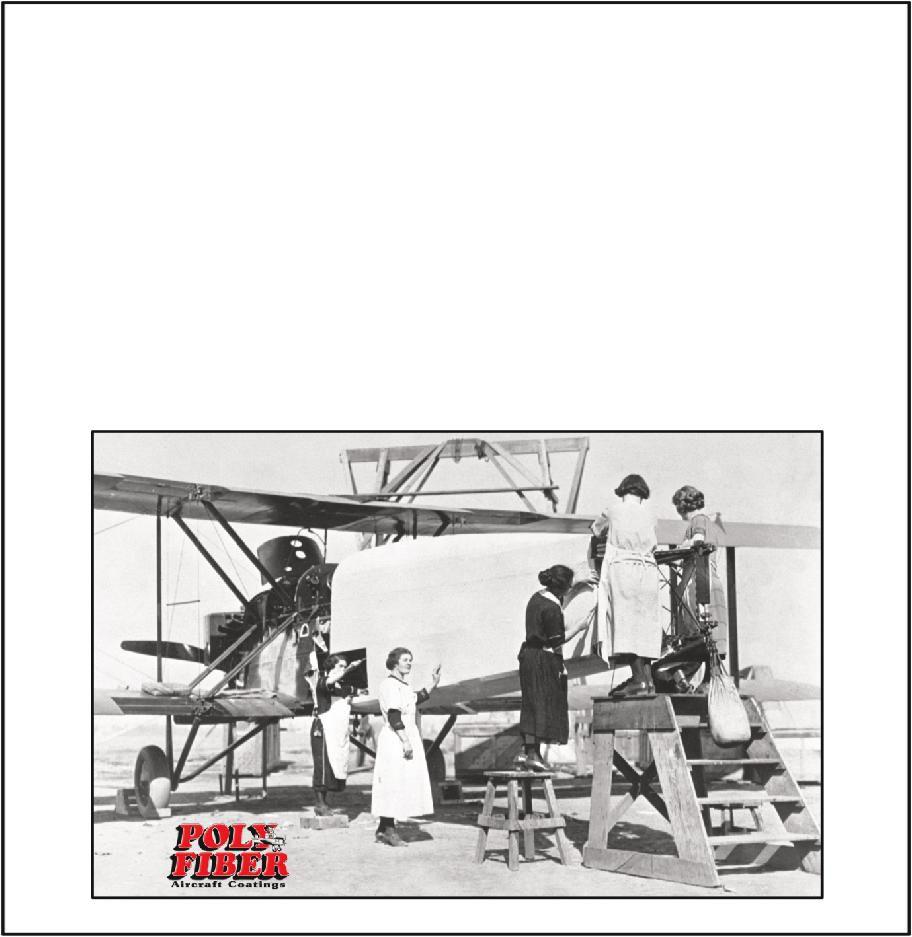
“So This Is Where My Sheets Went!”
In World War I, refitters often depended on bed sheets for quick repairs. An early experiment to make bed sheets out of heat-shrinkable Poly-Fiber fabric did not go well When a Chicago stockyard worker topped his Poly-Fiber sheet with a powerful electric blanket one blustery winter night, he was nearly cocooned as he dozed off
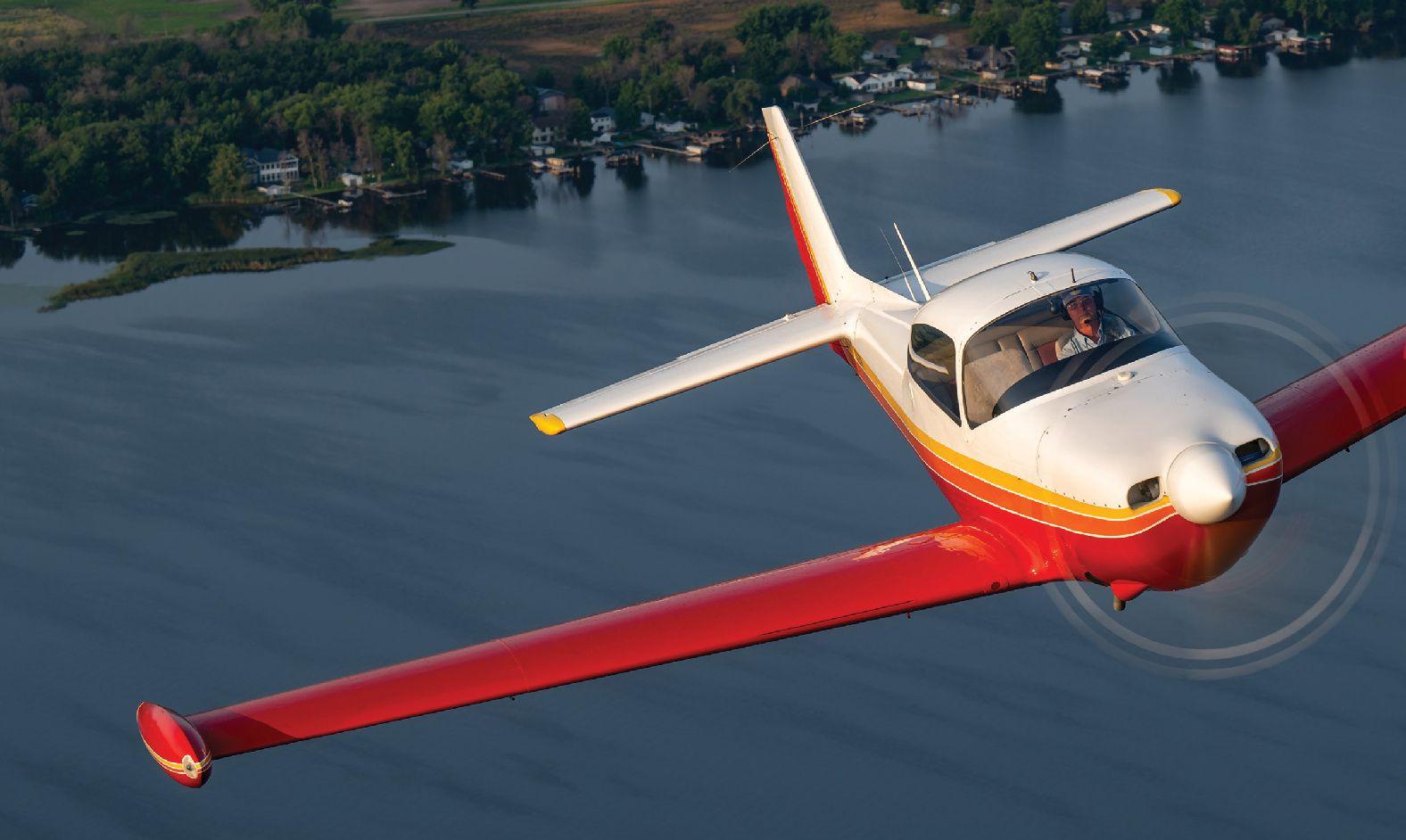
Once he was checked out and comfortable, Les put the airplane to work.
“I’m flying all over the country, having a ball, and I take clients up for it in joyrides and $100 hamburgers as part of a client relations thing,” he said. “I’ve got clients and subcontractors; hey, it’s a bonus if someone is performing outstandingly for us and they have an interest in aviation, I can take them for a local cruise. So, it’s more than just personal pleasure. I get a lot of business use out of it and client relation value out of it. It’s all of those things.”
Les isn’t exaggerating when he says that he’s gone all over the country. In addition to his first trip to Oshkosh for EAA AirVenture 2024, he’s gone from his home base in Pensacola to places like Phoenix and Albuquerque, the Grand Canyon, Chino, California, and up to the airplane’s old stomping grounds in the San Francisco Bay Area. Les not only loves traveling with the airplane, he enjoys the response he gets when he arrives.
“Part of the joy of this particular aircraft, it’s got such a ramp presence,” he said. “It’s a conversation starter. And I’ve had callouts from the tower, ‘Oh, is that a Navion? My uncle had a Navion, blah, blah, blah.’”
The original designers at North American and the folks at Ryan who refined and built Les’ example would hardly recognize the restomod rocketship it’s become. However, it does seem as if some of those original advertisements were speaking to him directly. “Navion cut our travel time by 80 percent!” reads one Ryan ad from 1948. An earlier ad placed by North American led with “Businessmen save money with this practical 4-passenger plane,” and went on to proclaim that “many a Navion has paid for itself in a matter of weeks as a dramatic sales tool in meeting competition.”
Even though Navions and their contemporaries were built for a boom that didn’t happen back in the ’40s, many of them are still flying and are highly prized to this day. And, clearly, at least one is living up to every breathless promise that those early admen could come up with.
“Part of what led me to this specific aircraft was because someone already did all of that in
Part of the joy of this particular aircraft, it’s got such a ramp presence. It’s a conversation starter.
— Les White
spades — the glass, the engine, the care and maintenance,” Les said. “So I bought it, I would say, at 98 percent of what it can be. Now I view it as my mission to be the … ongoing caretaker of it until whoever follows me with it.”
As much as he loves — and flies — his Navion, Les still has a few upgrades in mind.
“I’m considering the SureFly [electronic ignition], to do one mag and one SureFly,” he said. “That’s probably one of my next upgrades. I finally removed the last vacuum-driven instrument that aircraft had. It had a backup attitude indicator, but the vacuum pump went out, so okay, I got an orphan steam gauge hole here. … I don’t really need a vacuum-driven backup, so I’m probably going to put a [uAvionix] AV-30 in there. It gives you AOA, which I don’t have. It’s got a bigger turn-and-slip indicator than the Aspen does. … So minor tweaks like that.”
It seems that 57K is destined to continue to evolve. Given its utility, and its history thus far, it certainly seems possible that it will still be out there, crisscrossing the country and earning its keep when it turns 100 in 2051. A truly practical classic.
We have thousands of quality FAA-PMA approved and original Piper parts specifically for the Piper J-3, J-4, J-5, PA-11, PA-12, PA-14, PA-15, PA-16, PA-17, PA-18, PA-20, PA-22, and PA-25. Univair has the largest inventory of parts in the world for these aircraft. We also have distributor parts such as tires, batteries, tailwheels, and much more.
Call or visit our website to request your free catalog with over 11,000 parts (foreign orders pay postage).




BY BUDD DAVISSON
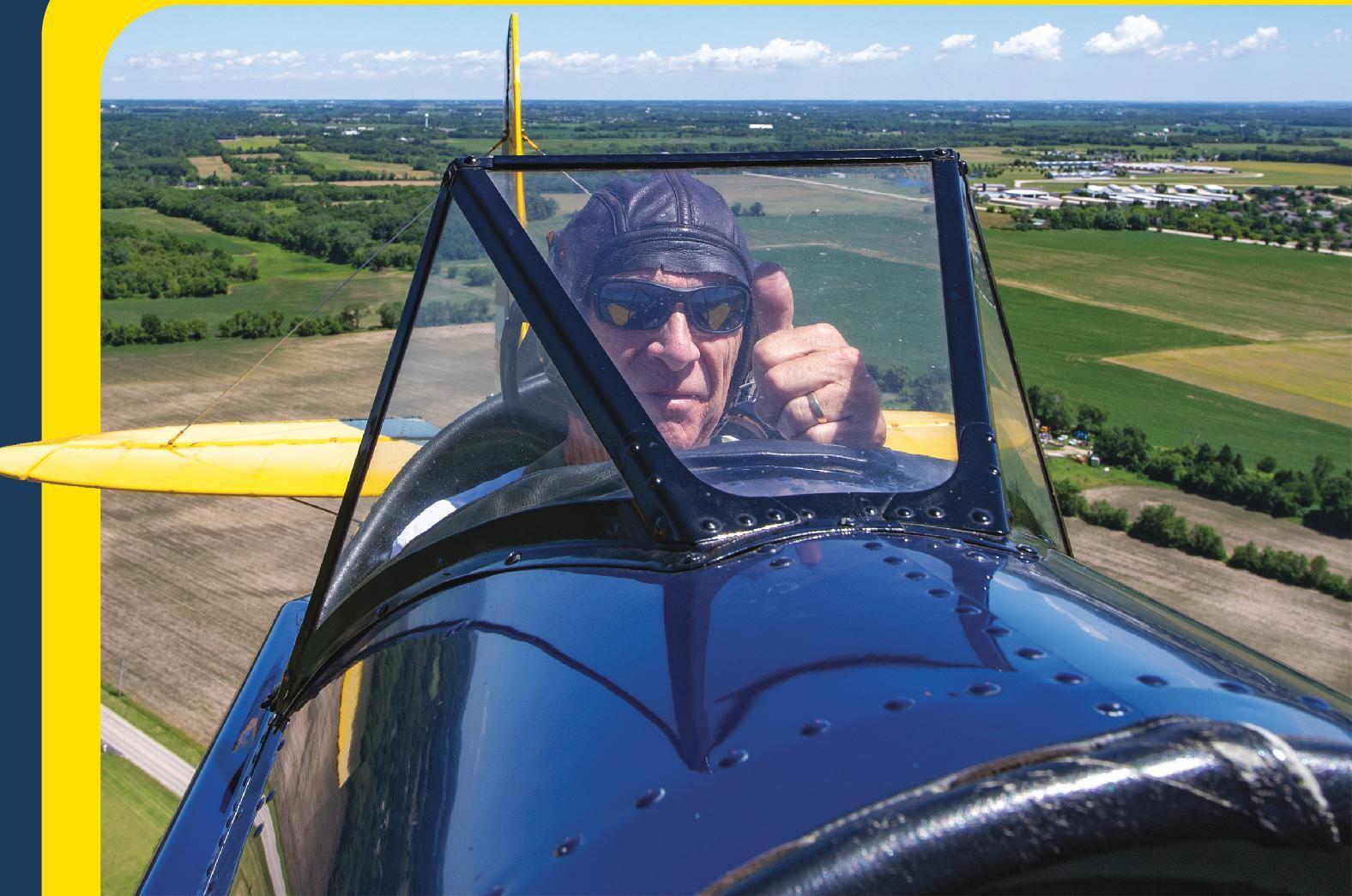
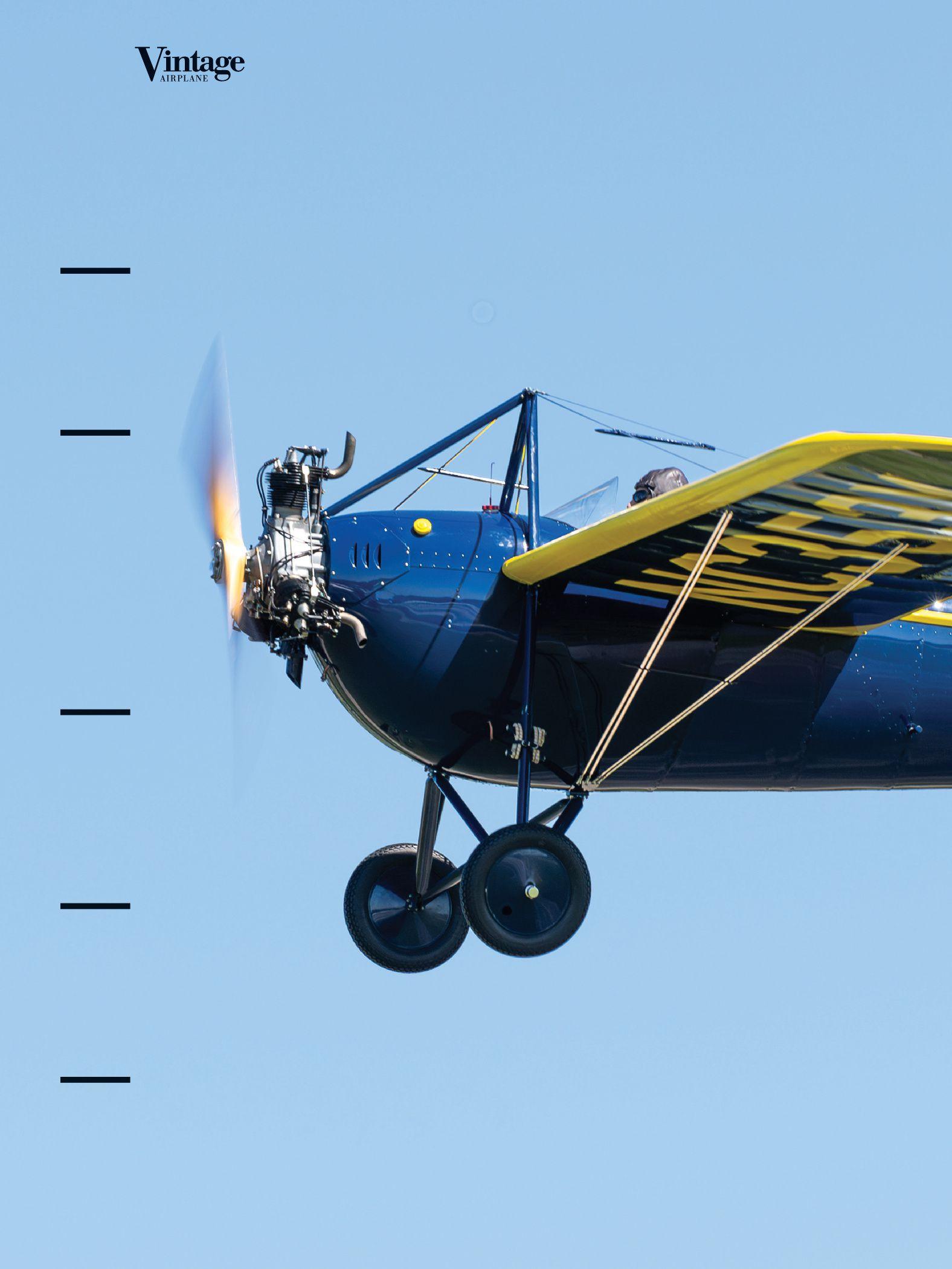
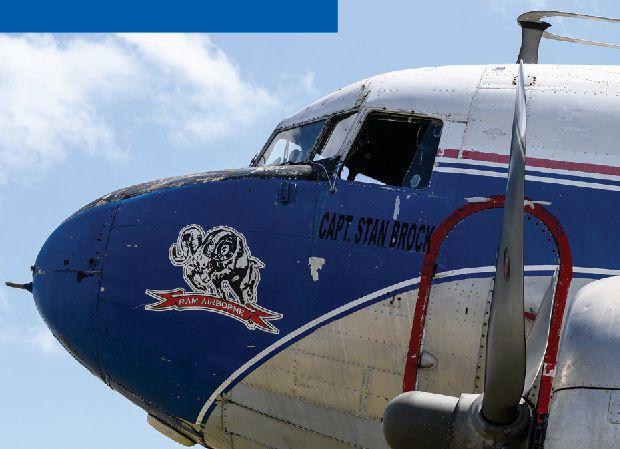
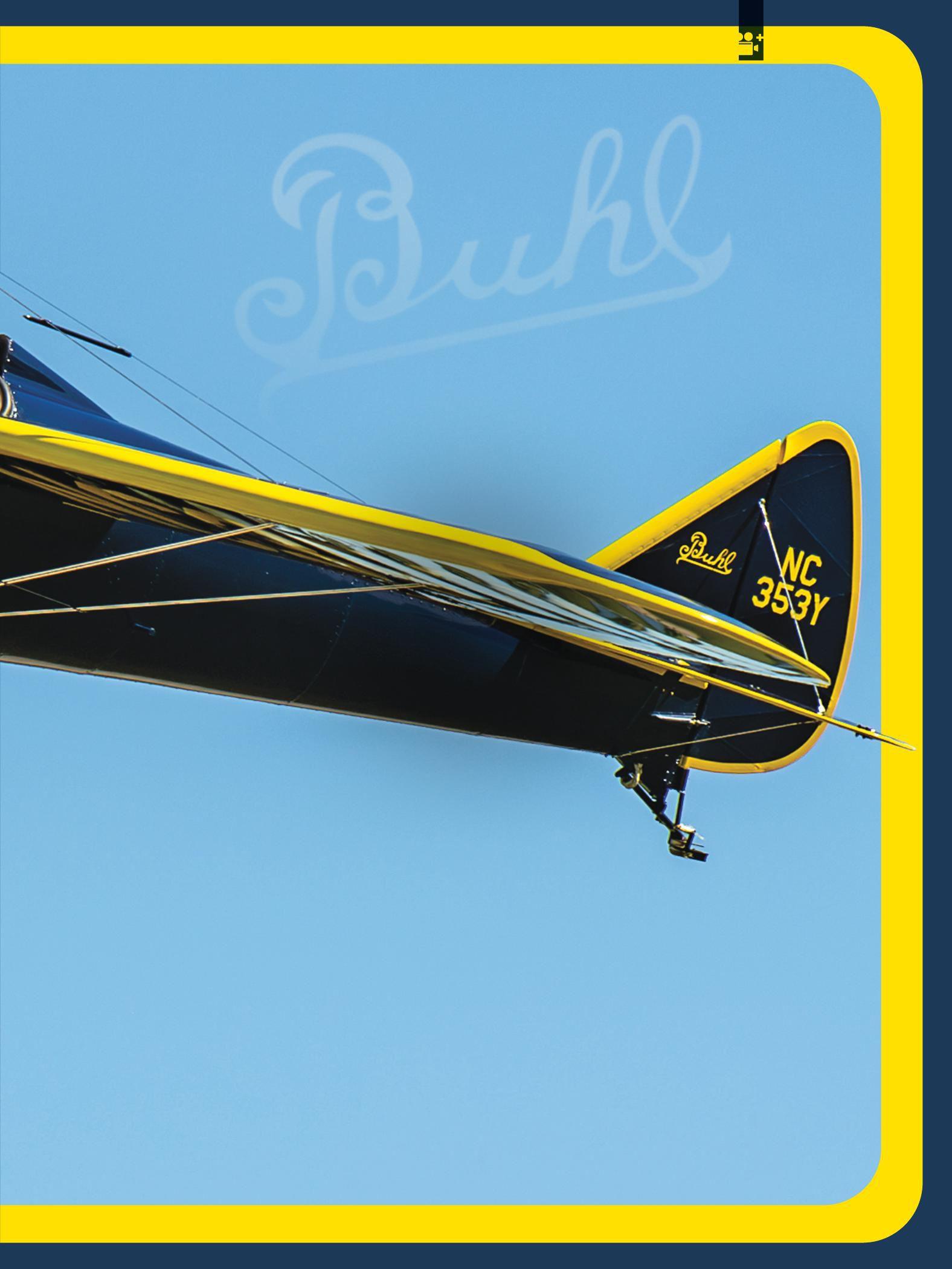
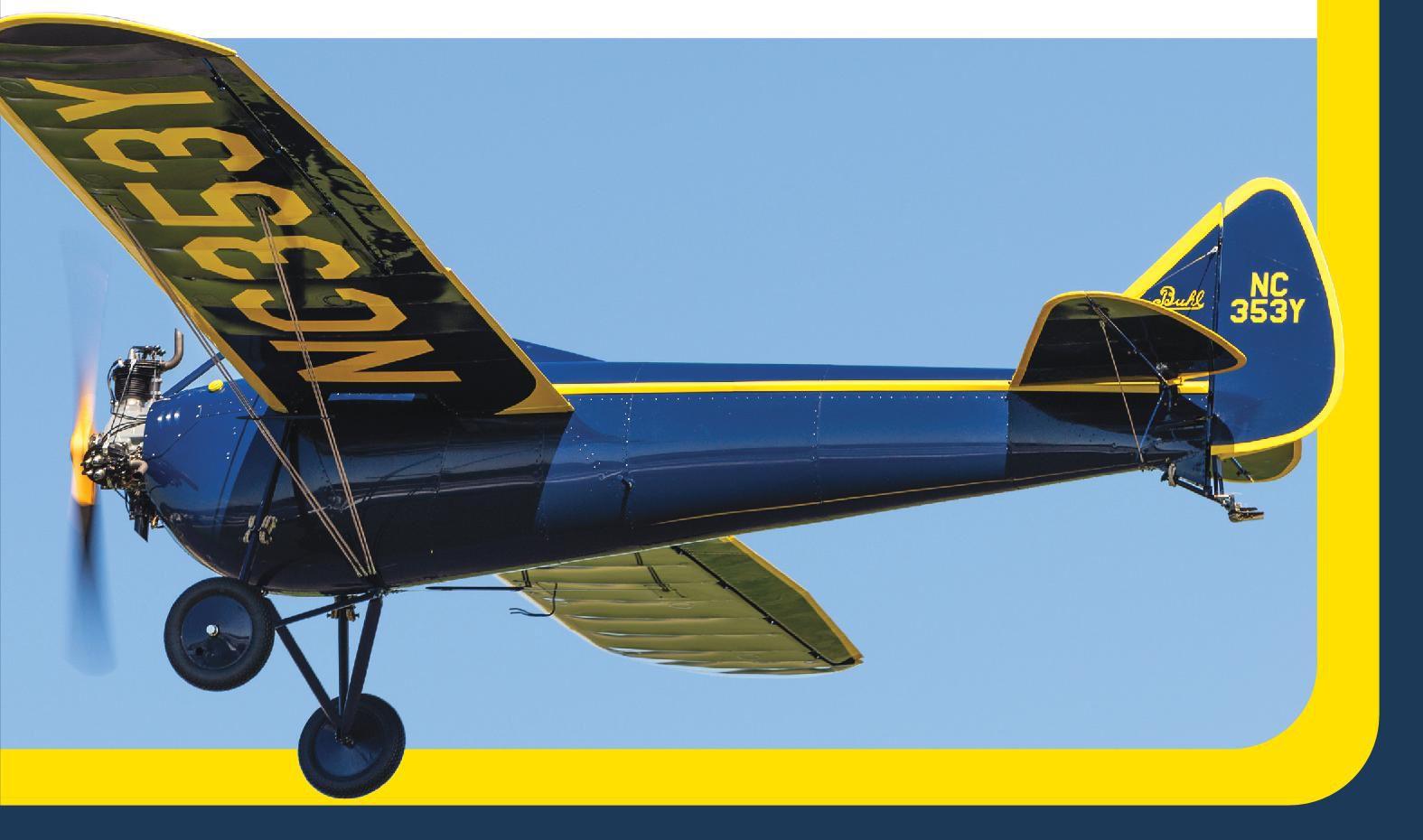
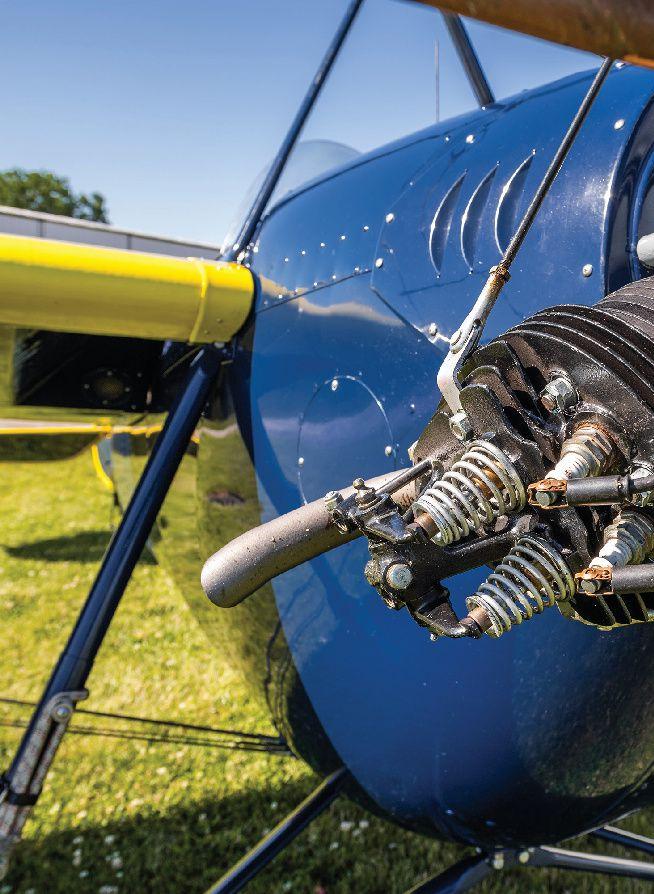
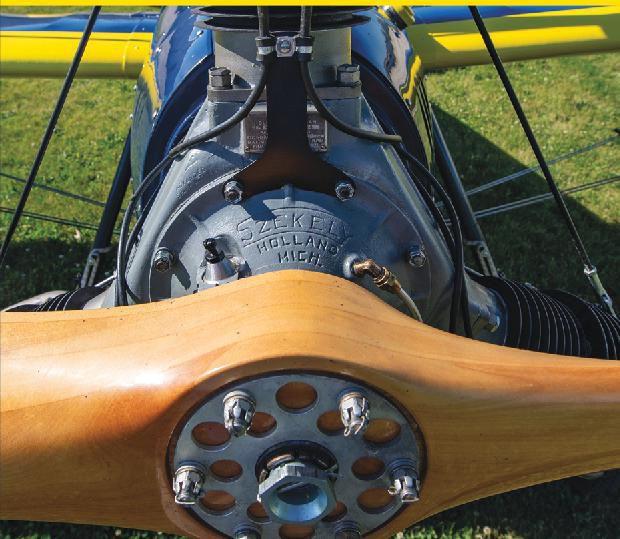
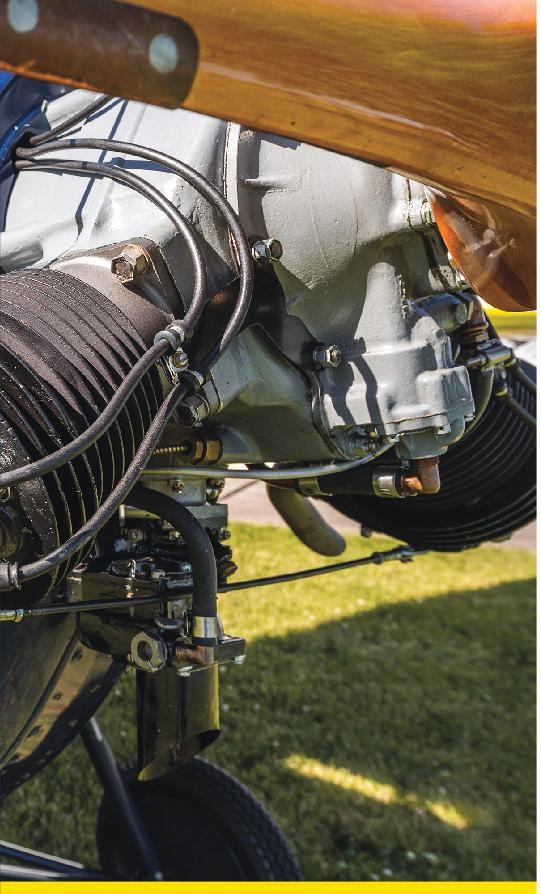
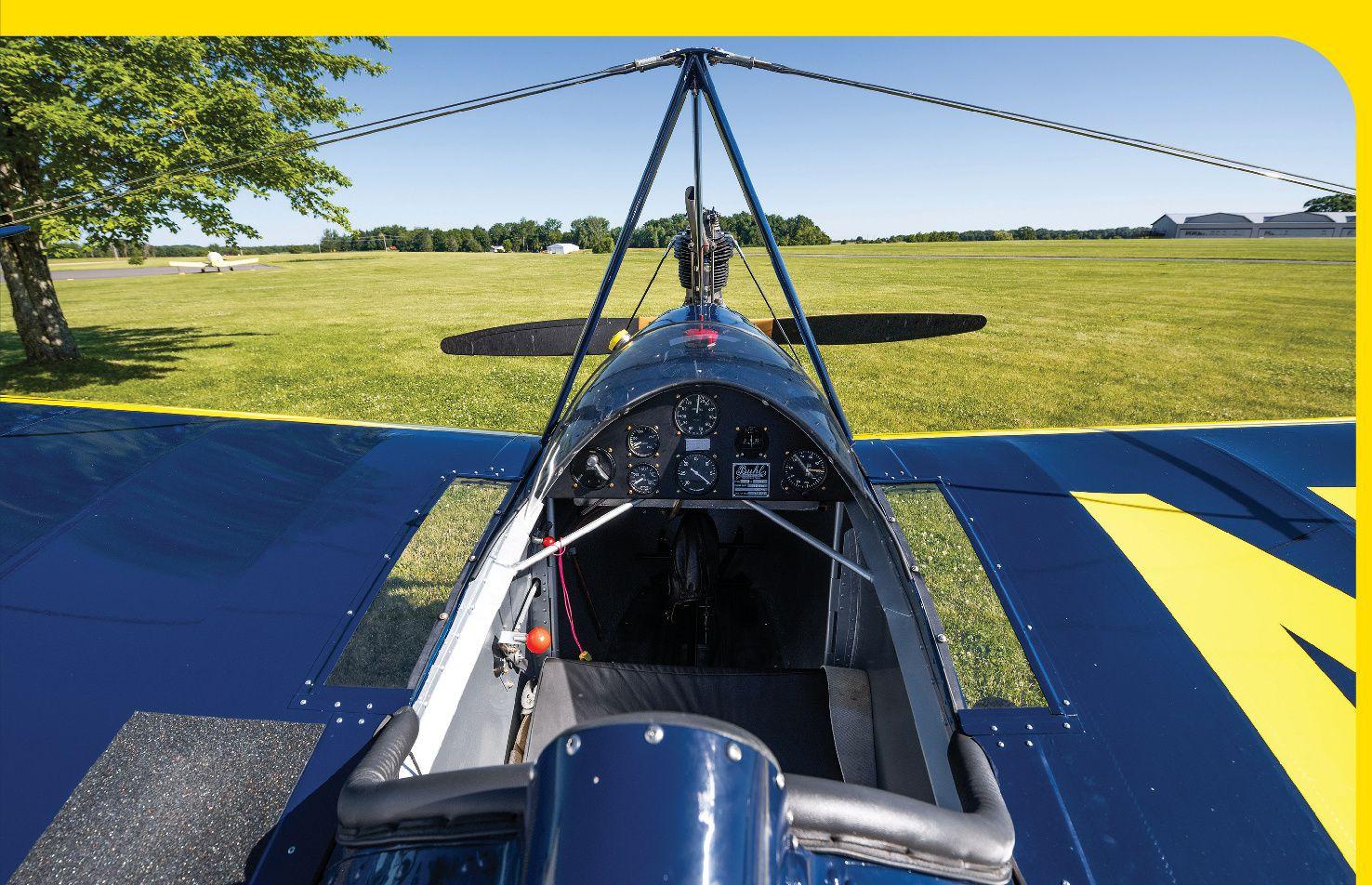
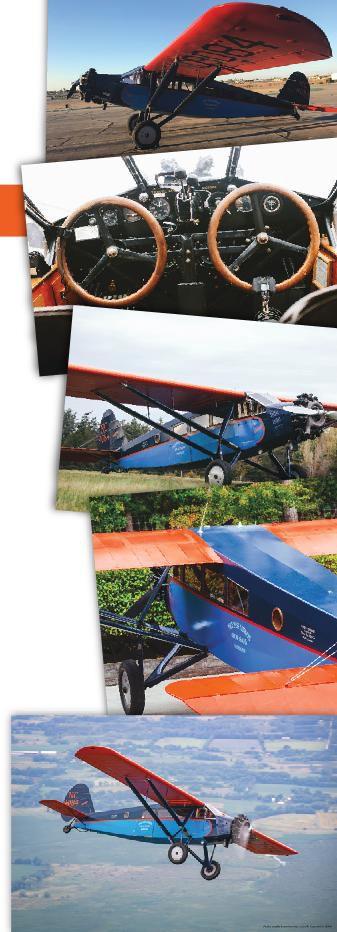
THERE ARE NUTS-AND-BOLTS KINDS of guys. There are gearheads. There are folks who are driven to associate themselves with oddball transportation contrivances of all varieties (airplanes, race cars, motorcycles, etc.). And then there is Ron Johnson, EAA 136045/VAA 4629, of Rockford, Illinois. As if cementing his reputation of being a lover of unusual forms of transport, at EAA AirVenture Oshkosh 2024, he chose to spend his time lounging under the wing of one of the most unusual, most unknown aircraft on the grounds: a 1931 Buhl Bull Pup, powered by its original, equally unusual and unknown, engine, a three-cylinder Szekely SR-3 O, 45 hp. That’s not a typo. The Szekely has only three cylinders.
An argument could be made that the Szekely isn’t a radial engine but a tridial engine. To most, the Szekely is a motor only a serious motorhead could love.
Ron said, “I can’t explain my love of mechanical things, but my dad was a tool and die maker for the same company for 45 years. Without him saying so, it was clear that if you were willing, motivated, and capable of repairing and building things, those skills could substitute for money. That is why I’ve been able to accumulate — not collect, there’s a difference — a lot of mechanical stuff I wouldn’t have been able to afford otherwise.”
It would be easy to view Ron and his unimaginable accumulation of toys and assume he was and always has been a wealthy man. That, however, is not the case. He’s always been what would have to be termed a “working stiff.” No generational wealth. No company to be sold. He just showed up for work for many years doing sometimes very exotic, fun stuff, some not.
“For 17 years, I was a high school automotive industrial arts/electronics instructor. Also, I worked 11 summers during those years for an aerospace manufacturing company here in Rockford. I quit teaching in ’84 and went full time with the company. I worked 20 years on the British spearfish torpedo engine, and another four on the space shuttle program. We built what they called APUs — aux-hydraulic power units fitted to the Orbiter and booster rockets. I officially retired from full time in 2007, and then went back full time in 2008 and worked as a contract engineer on the F-35 joint strike fighter. Mainly, I worked on the augmenter fuel pump, which is the afterburner pump.
I soldiered on with that as a contractor for eight or nine years because I enjoyed it and then went part time, finally quitting for good last year.”
While all that was going on, he worked his magic as an “accumulator,” picking up a wide variety of really interesting transportation items. He focused on unusual vintage motorcycles, vintage open-wheel racecars, and the occasional vintage semi-special performance car. He started keeping his eyes open for vehicles of all types, airplanes included, all of which struck his fancy long before they became popular and expensive. Most needed serious repair. In other words, he was ahead of the pricing curve and has seen all of it gain in value.
Ron said, “As for airplanes, I walked the same road as most of us, beginning with models, etc. In second grade, I was already fiddling with model engines. My mother said the interest went further back than that. She said when I was a toddler and an airplane flew over, I’d always look up and say, ‘I hear it!’ It was the sound of the motors, probably the big round ones, that hooked me. They haven’t let go yet.”
At Oshkosh, Ron is traditionally found under or around his Ryan PT-22. 2024 would have been its 46th flight to the annual gathering of the aerial faithful. This time, however, Ron was apparently overpowered by the urge to spread the Word of Szekely to the “Zeke” enthusiasts. All three or four of them. The powerplant (a word in which “power” may be an exaggeration in this 45-hp application) is seen so seldom that if one were to say “Szekely”
in a crowded room, a half a dozen within earshot would say “gesundheit” and offer a Kleenex. While the Buhl Pup was a never-before-seen sight for 99 percent of AV24’s attendees, it had crouched in the back of Ron’s mind for decades.
“I remember the Pup as a kid because Berkeley had a model of the Buhl Pup and it was in their one-page ad in the model magazines. I had always thought it was an interesting, kind of odd-looking little thing. Then Dan Neuman out of Minnesota had his at Oshkosh in 1980, which was the second year I’d flown the PT-22 up. Walking around that little airplane, I thought it was cute in a very unique sort of way. It spoke to me. Especially the mighty Zeke. Besides that, reportedly a CAA bulletin requirement in 1939, which put the cable around the engine to hold the cylinders on, was intriguing. Basically, it said, ‘You’d better not buy one of these.
“The airplane and the Zeke, however, continued to lurk in the back of my mind. Further, Ken and Lorraine Morris, both wellknown antiquers, and Ken, a well-known test pilot, call Poplar Grove Airport home, which is where I’ve been based for decades. They are the go-to people for a variety of airplanes, including the American Eaglet. The Eaglet had a Zeke, as did the Curtiss Junior. Those three production planes of the ’30s were where most of the Zekes were used. Ken had a large pile of Zekes lying around, which fascinated me. I thought they were neat.”
Ron said he eventually gave in and found himself looking for Pups for sale. “First, I ran into a couple of project airframes in California. They were priced right, and the owner offered to deliver them from California to Rockford for cost. I couldn’t turn that down! So one day two aluminum tubes, two good wings and two not-so-good wings, and two and a half Zekes were lying in my driveway. One of the fuselages had been badly butchered by someone wanting to hang a flat motor on it. The one I picked to use was
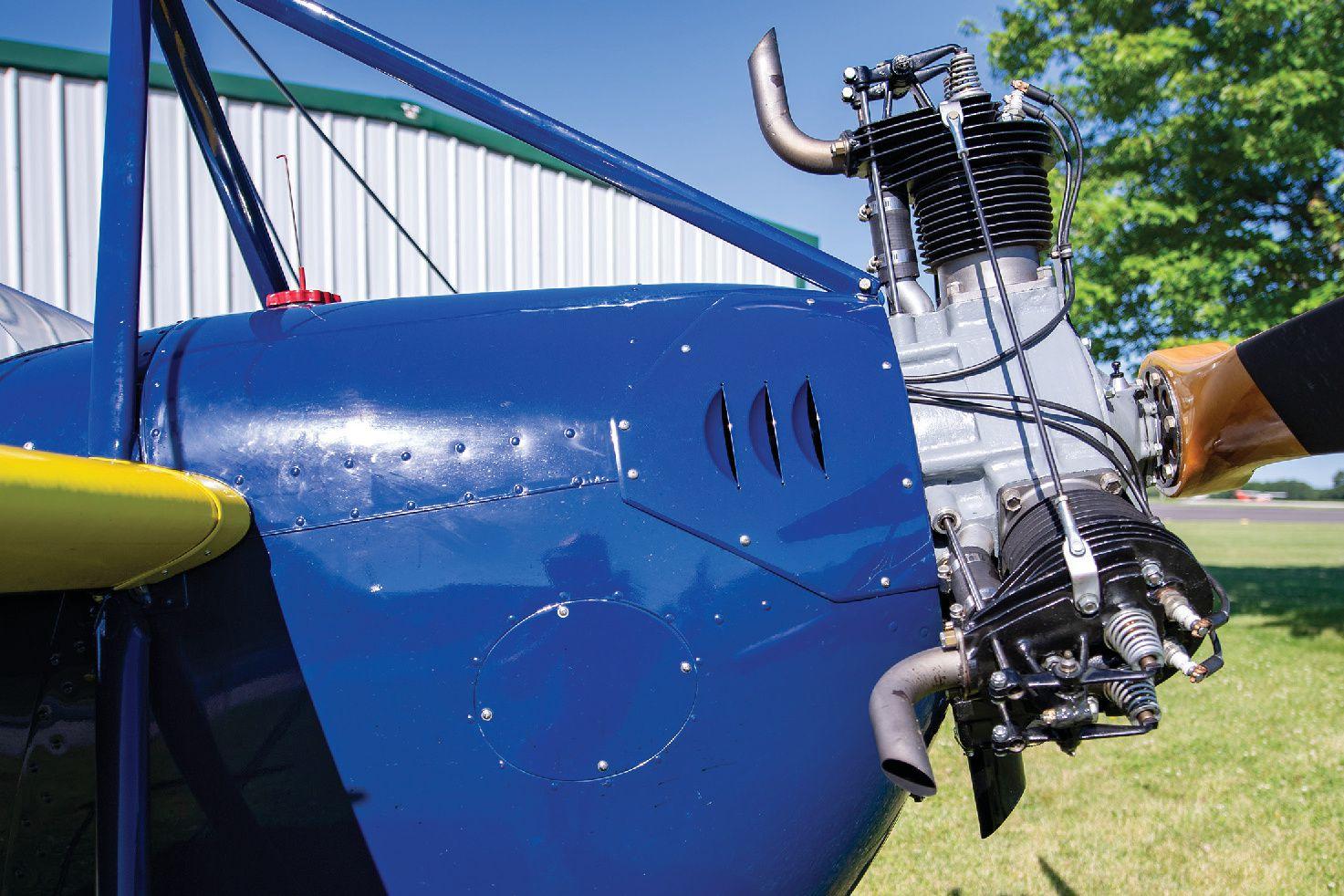
missing the big pressed-aluminum clamshells up front. I figured it would be easier to make two of those than try to salvage the other fuselage. After picking the best parts, the remainder was sold to another guy who likes odd stuff,” Ron said.
“At the same time, I got to wondering what had happened to Dan Neuman’s Pup I’d seen in 1980 (NC348Y). It had been in Minnesota, so I called and found they still had the airplane and the wings were off. Then later, they called me because they were moving and wanted to know if I was still interested in the airplane. What a silly question! In a week or so, the Pup followed me home on a trailer. It was in quite good condition but had been ignored for a long time. By that time, I’d convinced myself that I knew something about Zekes and tore into that engine. It was a good thing I did because the rod retaining ring bolts were loose and it would have self-destructed in just a few more hours. I spent a lot of time getting the engine and the airframe tuned up and flew it, 97 hours, which is a lot of Zeke time, while restoring NC3537. Then collector/friend Walt Bowe in California decided he needed something to balance off his Bearcat project powerwise, and my Pup went to live with him.”
An editorial comment here: Don’t ask Ron anything about Zeke engines if you don’t have some time to spare. He has spent so much time mechanically analyzing the engine, he knows things about them even the factory didn’t know and can’t begin to make
“If anyone feels the urge to work on their Zeke and needs help, give me a shout. We Zekesters have to stick together.”
— Ron Johnson
simple, generalized comments about them. You want Zeke details, you’ll get them.
“Actually, as I’ve found with everything — airplanes, race cars, motorcycles, etc. — if you keep your ears open and keep talking, stuff just seems to find you. I was hanging with the guy who does the sheet metal shops at Oshkosh. He saw my Ryan hat and my -22 and we started talking about him wanting to get a PT-22. He walked off, and a couple of guys came up from the tail and said, ‘You look like someone who flies other stuff too.’ I said I flew a Buhl Pup, NC348Y with a Zeke, and one of them blurted, ‘You have got to be kidding! My best buddy and I salvaged a derelict Pup and we drilled all the skins off of it. It’s at my father’s farm at Flint, Michigan. You can have it if you want it.’ Obviously, I wanted it.”
When Ron went to get it, he found a pile of skins, tail feathers, and nothing left of the wings. “To most people, it was literally junk. No paperwork or anything, which didn’t matter one bit because the forward fuselage clamshells, the big, formed panels, were in the pile. Both of them were repairable. I had scored some wrinkled gold for the price of gas out and back. Suddenly, I was officially in the Pup rebuilding business.
“Those big chunks of stretch-formed aluminum are the central part of the fuselage. I wouldn’t say these looked like accordions; however, they’re dead-soft aluminum, about 0.06-inch


thick, so you could dent it with your thumb, and they had lots of dents and bends. However, my magic sheet metal man, Shawn Miller, Miller Metal Craft, in Beloit, Wisconsin, did an absolutely amazing job smoothing them out. Then he and his father reskinned the rest of the fuselage except for the top pieces, which are formed aluminum and didn’t need a lot of work. All of the flat sheet material was dinged and banged and bogusly repaired. I could have done it myself, but Shawn had all the sheet metal equipment and skills, and at that point in my life I could hear the clock ticking. So I bellied up, intending to do this one right and trade money for time. For a change, I paid someone to do something. In the meantime, I restored another vintage dirt track race car and motorcycle,” Ron said.
“Incidentally, I think the Pup was the first U.S., civilian airplane to have a sheet aluminum — Duralumin actually — fuselage. There were lots of corrugated ones but not sheet aluminum.”
Ron said the two wings he used, which he believes to be original, were in surprisingly good condition. “They just needed a couple of minor repairs and they were ready for rag. It’s got wood spars and three steel compression members with normal drag/anti-drag wires tying them together. The center compression tube holds the fittings for the flying and landing wires that go down to the fuselage and up to the cabane strut tripod on top.
“The only concern I had about the wings was the 85-year-old glue joints. So after cleaning the wings, in fact, I carefully power washed them on a nice hot day and got them all dried off and cleaned up. Then I formed little T-88 epoxy glue fillets at every rib, gusset, and joint. That effort really stiffened them up,” he said.
“I needed a prop, and a nice 75-47 scimitar prop was made by an acquaintance. It came out as a 75-46 and could use a bit more pitch but is fine for what I use the airplane for. The original props were Flottorp.”
Ron said everyone comments on the three retaining rods/ cables tying the cylinders together, but they are not there for show. “During the engine’s period of use, too often a cylinder would simply blow off the engine, causing it to lose power and shower the pilot with oil and engine parts. In analyzing the engines and preparing them for my own use, I spent a lot of time analyzing that problem. Once you look at the cylinders closely, the cause is readily apparent. First, they are made out of cast iron, not steel. That doesn’t seem logical until the engine’s period of design
“I had scored some wrinkled gold for the price of gas out and back. Suddenly, I was officially in the Pup rebuilding business.”
— Ron Johnson
is reviewed. The engine was originally designed beginning in 1928, and cast iron was a logical selection because of easy manufacturing. However, cast iron has minimal strength in tension, and the basic design of the jugs didn’t take that into account. Rather than using long through-bolts that go to the top of the cylinder and hold it to the case, the jugs are attached to the crankcase by four studs going through a square base flange. Complicating this is the fairly thick gasket the factory used. So the studs/nuts at all four corners are compressing the gasket and trying to bend the mounting flange. This puts a bending stress on the radius where the flange meets the cylinder, and after use the radius cracks, eventually failing the entire flange/cylinder joint. I had something like 15 cylinders in my stash, and, when I Magnafluxed them, most of them had microcracks in the flange joint. Some were cracked completely around the cylinder.
“My fix for that problem was to have the cylinders stress relieved, make sure the flange and the case face were both perfectly flat, and I mean perfectly flat. Then the cylinders were painted cast-iron color below the fins for visual inspection and using a paper-thin gasket, about 0.003 inch, and torque it down. There is no flange bend at all.”
However, according to Ron, the flanges aren’t the only design problem. The connecting rods are as well. “Almost all radial engines have a master rod, and each of the cylinder connecting rods attach to a flange on the master rod. Not the Zeke. The three identical connecting rods have curved flanges front and back and are installed around the full floating rod bearing assembly. What might be called rod retaining rings, they look like connecting rod caps are bolted together around the flanges front and back to retain the rods in place.”
Ron said he carefully made sure the connecting rod retaining rings weren’t cracked. “Then I radiused any corners that needed to be radiused and made sure that the crankpin, bearing assembly, rods, and retaining rings are fit right. Frankly, now I don’t think it’s going to be an issue. I flew the other Pup 97 hours. And the second half of that was after I had refit these connecting rod retaining rings one time, and there still wasn’t much play out at the prop tip.
“So, is there a TBO? I don’t know. But I’m certain the ‘new’ engines will fly much longer than the originals did if proper and timely inspections are performed.”

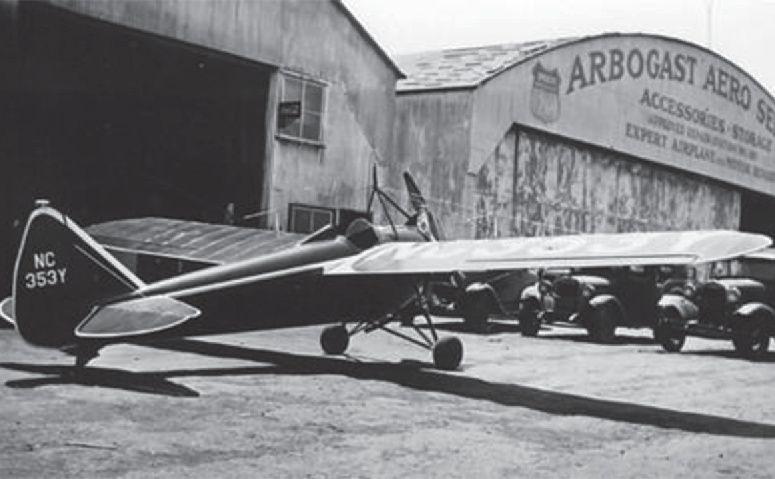
The airplane was NOT invented by Orville and Wilbur. Their main contribution to aviation was proving the concept of controlled flight was possible. From that point on, they threw their arms about the concept, using lawsuits to limit the competition in what they saw as their territory. In so doing, they held back the development of American aviation, until Glenn Curtiss’ inventive mind came up with practical ways to circumvent the Wright patents and invented the airplane as we know it today.
Across the pond, the French didn’t care if the Wright boys thought they owned the world. They didn’t. So the French went their merry way, developing aircraft design after design. The result is why so many airplane parts and language are French. Empennage, fuselage, aileron, decalage, etc.
YoungEtienneDormoygraduatedcollegeintoFrance’s frenzied world of aerial design as a mechanical engineer in 1906. Aircraft design companies and manufacturers were popping up like weeds around the world. Quickly, he found himself in Paterson, New Jersey.Then it was back to France, working on the famous SPAD fighter of WWI.
It was while working for the engineering division of the U.S. Army Air Service that he designed a landmark light airplane, the Dormoy “Famous Flying Bathtub,” which won the Dayton Daily News light airplane race and Rickenbacker Trophy in 1924. He hit his stride when hired by the Buhl Aircraft Co.
During the last half of the 1920s, Dormoy designed a wide variety of aircraft for Buhl that included large, multipassenger aircraft. The Bull Pup of 1929 was Dormoy’s vision of a light aircraft, and its monocoque, sheet aluminum fuselage competed with the rag-andtube Aeronca C-2 and C-3. Dormoy had a hand in the Buhl CA-3 Airster, a three-place that was awarded the first type certificate of any kind issued in the U.S. It is said that his use of sheet aluminum for the Pup was the first civilian design of its type in the U.S.
His is one of many pioneering names that have lost their recognized spot in aviation history.
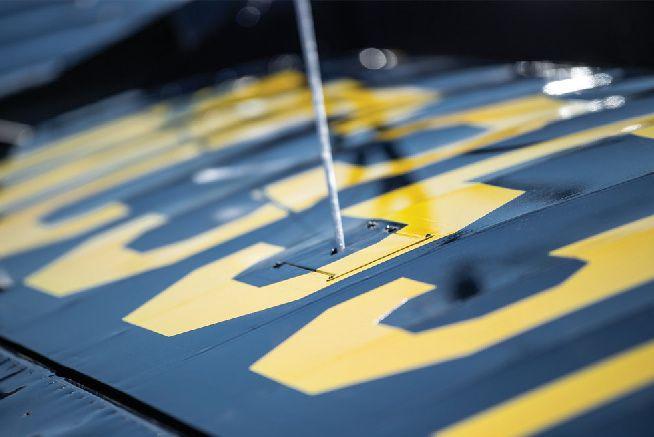
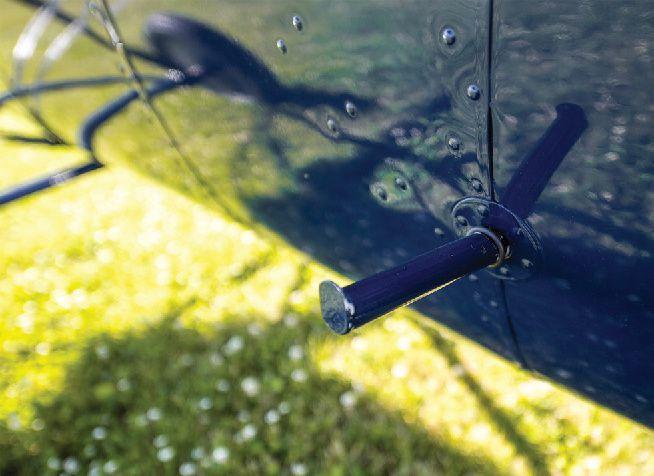
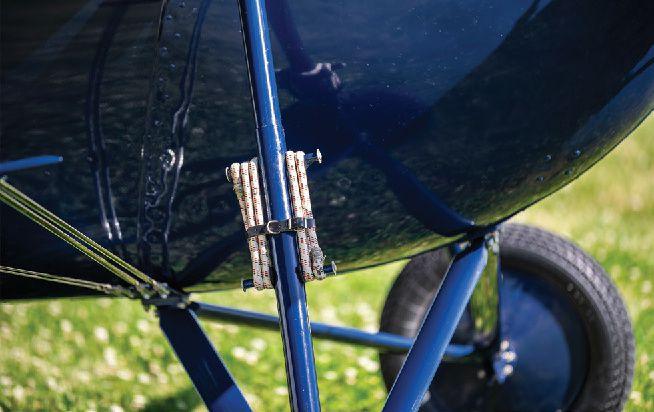
Ron said that while he trusts his engine, he’s mindful that it’s a 94-year-old motor. “Ken Morris flew the airplane up to Oshkosh early for me because I couldn’t do it at the time. We intended on landing on the ultralight grass runway. The airplane hates asphalt because of its tail skid and lack of brakes. Just 25 minutes out of Poplar Grove, he lost a third of his power and had to land in a mowed wheat field. Lorraine was following by car and called me. She said he had a broken valve spring. So I got a GPS fix, drove up, and we installed a new valve spring. Lorraine is close to 100 pounds lighter than Ken, so she took it out of the field and finished
the trip. There is a short clip on YouTube she made on her way up. They were waiting for her at the ultralight strip. I had fitted the airplane with a steerable tailskid, which works very well on the grass, but having no brakes can be exciting.
“It’s an incredibly fun airplane to fly, and discussing takeoff and approach speeds isn’t necessary. Basically, if it came off the ground, it was fast enough. If it’s stable and flying on final, it’s fast enough. It does have an airspeed indicator but it seems optimistic. It’s not important, but you have no idea what those numbers actually mean. However, it seems to cruise at 78 mph or so.
“I may have overhauled my last Zeke,” Ron said, “because I just pulled another 1940s flathead Ford-powered sprint race car into the shop. However, if anyone feels the urge to work on their Zeke and needs help, give me a shout. We Zekesters have to stick together.”
WHAT’S
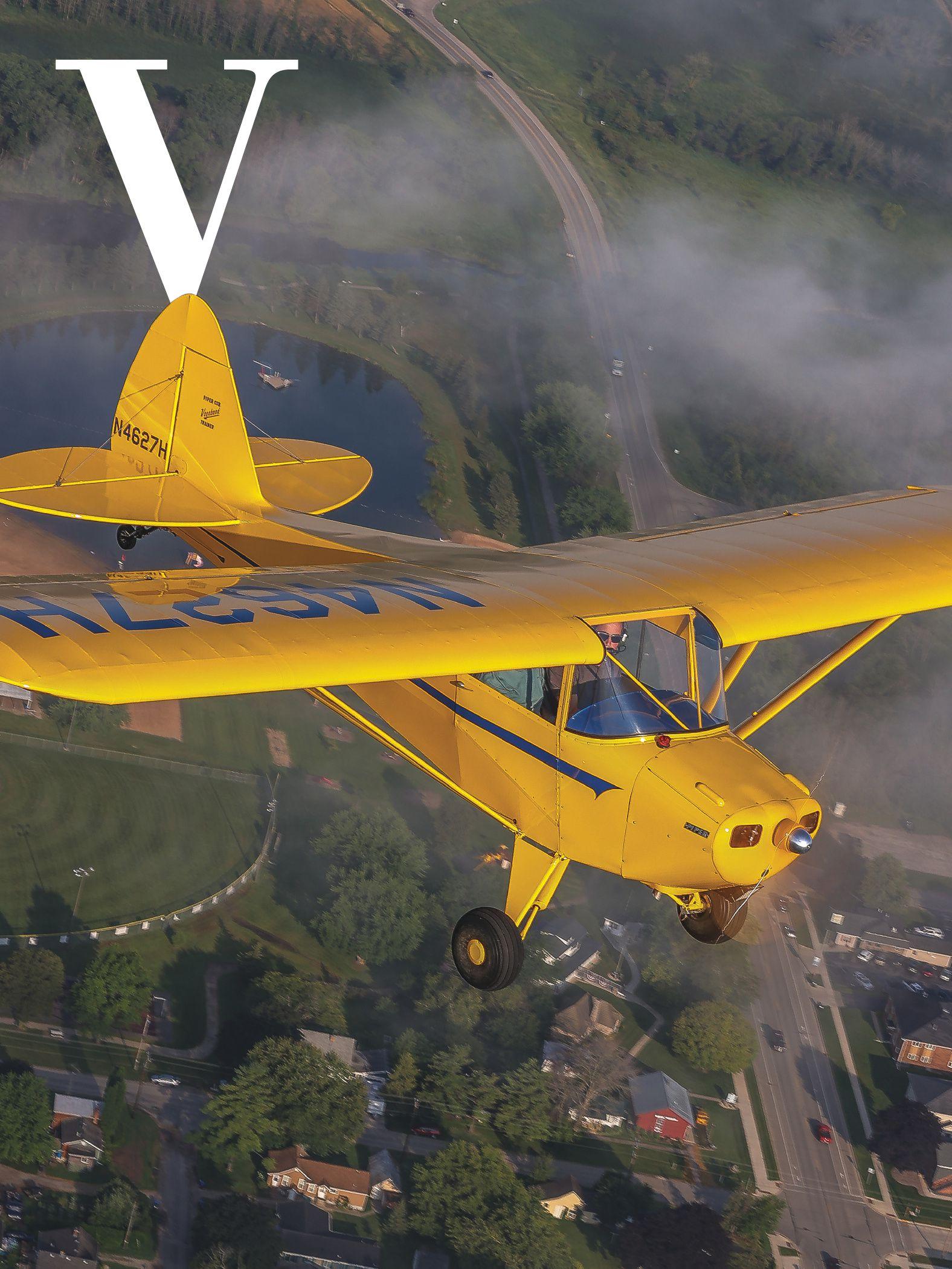
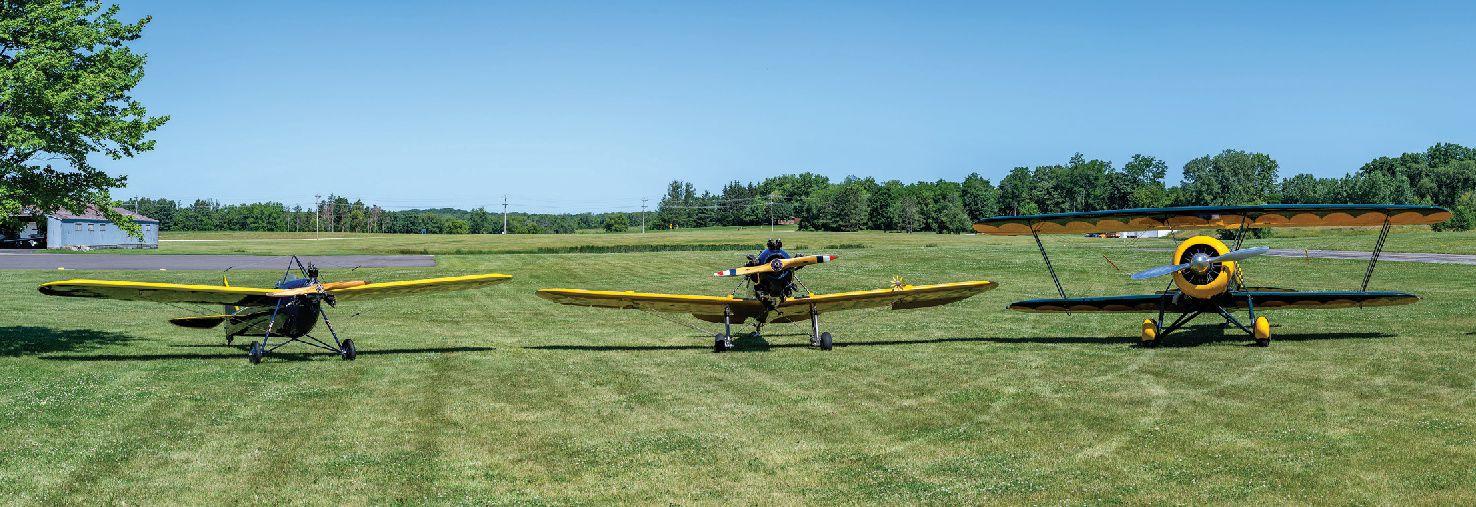
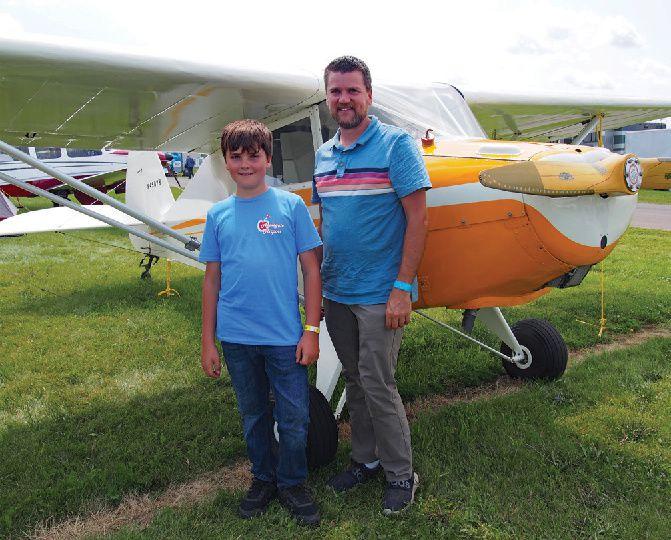
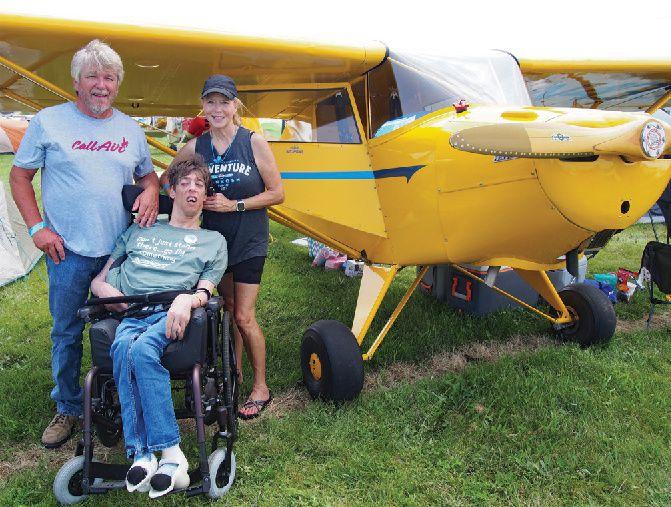
One, two, three! It’s a delightful trio of Vagabonds, nestled wingtip to wingtip. They had each wended their way through time, adopting multiple owners during their 76 years, until, like Cinderella airplanes, they found their perfect fit. Together, this Happy Vagabond Trio launched from Memphis, Missouri, and flew to Oshkosh, Wisconsin, in 2024 for their first visit to the world’s largest air show.
Oddly enough, two of these three Vagabonds had adopted the same owner back in January 1967. Joe Keister of Thomasville, Georgia, was the registered owner of N4627H and N4567H. He sold the former in August 1970 and the latter in May 1968. (For a time, he was manager of Camilla-Mitchell County Airport in Georgia and may have been renting or selling aircraft as well.)
N4627H (serial No. 17-42) was born in June 1948 and sold to Muncie Aviation Co. in Indiana. It changed hands about two dozen times until May 2020, when it landed in the care of DeVon Martin and his father-in-law, Alvin Musser Jr., of Memphis, Missouri. It had graced the skies of Nebraska, Texas, New York, Vermont, Georgia, Florida, Tennessee, Illinois, Wisconsin, and Ohio.
N4567H (serial No. 15-337) went to its first owner, Charles Greene of Chambersburg, Pennsylvania, in October 1948. From then on, it traveled elsewhere in the state, as well as in California, Texas, Maryland, Alabama, Michigan, Georgia, Ohio, Minnesota, and Florida. It had changed hands about 30 times. Finally, in September 2018, it went home with Leo Fox of Lancaster, Missouri.
The third Vagabond at EAA AirVenture Oshkosh was Harve and Carolyn Applegate’s N4304H (serial No. 15-87). It went from Lock Haven, Pennsylvania, to Pekin Air Service in Pekin, Illinois, in March 1948. It changed hands at least 15 times through the years but stayed primarily in Illinois — with a brief stint in Iowa — until it found its home in March 2010 at Applegate Airport in Queen City, Missouri.
Thumbing back through the faded pages of history, an article about Piper Aircraft’s ferry pilots illuminates the provenance of the name “Vagabond” for the PA-15 and PA-17 models. “The pilots are the ‘vagabonds’ who since the war have ferried over 3,000 airplanes from Piper Aircraft Corporation plants at Lock Haven, Pa., and Ponca City, Okla., to all parts of the continental United States, Panama, and Alaska. … So successful has been the work of the vagabonds that William T. Piper, himself a confirmed ferry pilot, has decided to name a plane after them. He plans to produce the Vagabond, which may make aviation history before the year is out” (“Aviation’s Vagabonds,” Flying, October 1947).
In 1947, the Vagabond went from the drawing board to the prototype’s first flight in only 88 days. The Lycomingpowered PA-15 had rigid gear and single controls. Cub wings (minus 3 feet from the inboard section) and ailerons were used for the Vagabond; hence, the first short-wing Piper was born. Production began in early 1948; 347 PA-15s were
manufactured. The Continental-powered, bungee-geared PA-17 Vagabond Trainer had dual controls; 214 were produced. There are currently about 160 PA-15s and 99 PA-17s on the FAA Registry.
Stubby, spunky, spartan, minimal, chubby, peppy, perky, capable, spirited, and swell. Those are just some of the adjectives attributed to the Piper Vagabond. No matter how it’s described, the Vagabond is a hero, for it rescued Piper Aircraft from drowning in a sea of red ink, and resuscitated the company to thrive for decades while producing an impressive family lineage.
In 1948, William T. Piper himself flew a PA-15 Vagabond from Lock Haven to Miami, enthusiastically promoting his company in general and the Piper Vagabond in particular at every stop he made. At Woodrum Field in Roanoke, Virginia, he let some flight instructors fly it, and they were favorably impressed. During a stop at Brockenbrough Field near Charlotte, North Carolina, he unabashedly touted the Vagabond. His aerial venture was effective at stirring up excitement for the model within the general aviation realm, but he wasn’t the only one getting press.
The Vagabond is mentioned in numerous newspaper accounts — even to the present day — for its economical and pert performance as well as its award-winning status. It was favored by flying clubs and flight instructors, and used for business ventures such as aerial photography. The Vagabond has captured the hearts of many an aviator through the years. In some cases, it has become intricately woven into the fabric of aviators’ lives, from honeymoon flights to notable inclusion in obituaries.
Back in the day, there were various and sundry Vagabond “giveaways,” such as one that was given away during the Air Force Day observance at Birmingham in 1948, and another as a bingo prize in Pittsburgh. Yet another was offered by Owl Drug Store at Riverside, California, in a prize drawing in 1949.
The Vagabond was featured as a backdrop for the Wings Over the Nation aviation celebration event in Long Beach, California, in 1948. In 1951, Maxine Smith of San Diego flew a Piper Vagabond in the 5th annual Powder Puff Derby from Orange County to Detroit.
For a time, the Vagabond was marketed to farmers, and in 1951, the head of the McLoud Blackberry Growers Association in Oklahoma devised a creative way to signal to blackberry pickers that it was time to go to work — by flying his Vagabond over their homes.
The Vagabond even made a cameo appearance in the April 12, 1949, issue of Look. In the “World’s Smallest Airport” photo spread sequence, Lowell White’s Vagabond (NC4426H) is shown landing atop a platform on a Mercury station wagon.
Aviators who have flown their Vagabonds far and wide across the United States have been in the press through the



Earn complimentary weekly wristbands and camping based on hours worked, all while having fun with other Vintage volunteers!

years. Brothers Doug and Dan Stewart of Washington flew their Vagabond north of the arctic circle in Alaska; NASA astronaut Steve Robinson of Texas flew his N4389H just for fun; and Gale Perkins of Indiana flew his award-winning Vagabond all over the country.
Present-day Vagabond owners happily continue the trend of ardent devotion to their short-coupled, short-wing Pipers. DeVon Martin learned how to fly a Cub with instructor Steve Krog back in 2018 at Hartford, Wisconsin. In early 2019, DeVon finished the requirements for his private pilot certificate in a Cessna 152.
DeVon’s father-in-law, Alvin, learned how to fly at age 20 so he could become an ag pilot.
“I was doing ag flying for 20 years,” Alvin said and smiled. “I’m not a super high-time ag pilot; I have about 6,000 hours. I flew Cessna 188s and Air Tractor 602s at the end.”
DeVon and Alvin shared aviation interests and became partners in a Cub. Then DeVon bought him out a year later. DeVon’s interest in restoring tube-and-fabric airplanes was energized years ago when he watched Alvin bring Vertigo back to life as an award winner in 2016. Vertigo, originally built by Van White, is a hot rod clipped-wing Cub with a 150-hp fuel-injected Lycoming O-320.
“Then I started hanging around more and going to Brodhead and Blakesburg, and seeing how people can re-cover airplanes and make them like new again. I wanted to see what it’s like to do that,” DeVon said.
Alvin and DeVon decided to go in together on a project of some sort. “We watched Harve [Applegate] rebuild his, and kind of learned something about Vagabonds. So when DeVon started asking about learning to re-cover an aircraft, I was already familiar with Cubs and Vagabonds,” Alvin said. “Knowing about these airplanes, I knew they’re not easy to do, but they’re about as doable as I believed we could tackle ourselves.”
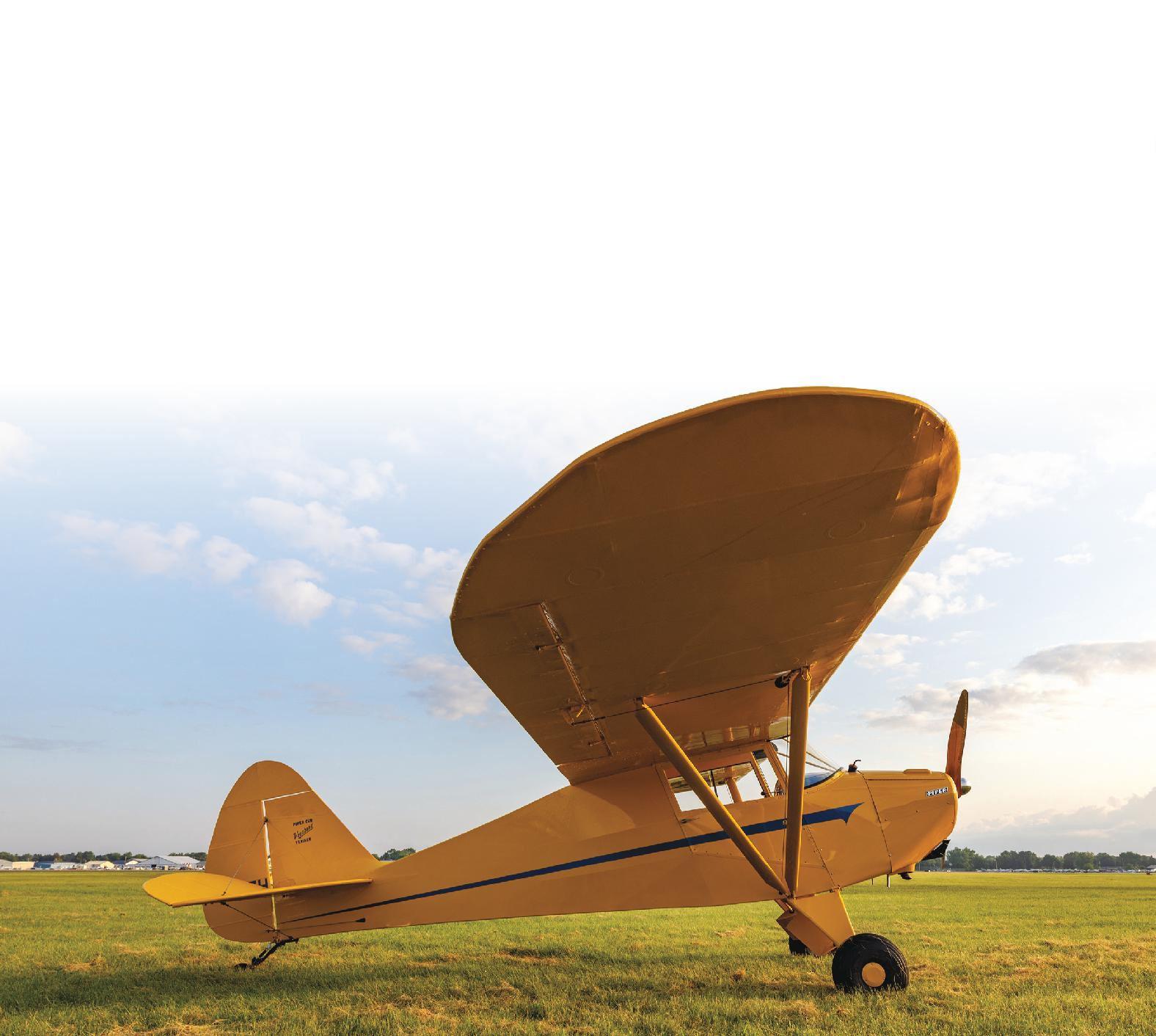
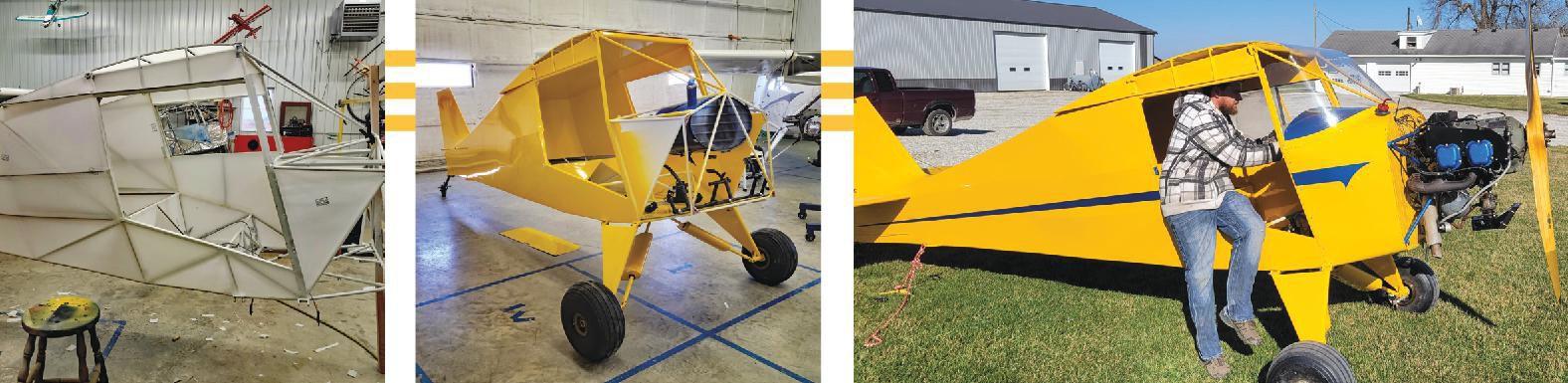
DeVon and Alvin found N4627H for sale in Nebraska and purchased it. They knew it needed to be re-covered, and, fortunately, the airframe had only 2,170 hours on it. The airplane turned out to be in better condition than they expected. They brought it home to Alvin’s hangar shop on his farm strip, in which they set up a makeshift booth. Then they rolled up their sleeves and started into the restoration right away.
The first order of business was peeling off the old fabric and inspecting the airframe. “We worked on it ‘between life’ for about three and a half years, just picking through it a piece at a time,” Alvin said. “The airframe was in good shape; we didn’t have to replace any tubing, and that was a very pleasant surprise. We had Brian Stansberry of Moulton, Iowa, custom-build a new cowling.”

1948 Piper PA-17 Vagabond
Aircraft Specification No. A-805
Eligible to be flown by a sport pilot.
Wingspan: 29 feet, 3 inches
Length: 18 feet, 7 inches
Height: 6 feet
Empty weight: 650 pounds
Gross weight: 1,150 pounds
Useful load: 500 pounds
Seats: 1 pilot, 1 passenger
Engine: Continental A65-8
Fuel: 12 gallons
Oil: 1 gallon
Max speed: 100 mph
Cruising speed: 90 mph
Stalling speed: 45 mph
Rate of climb: 530 fpm
Service ceiling: 10,500 feet
Cruising range: 250 statute miles
The ribs, spars, and engine mount were also in good condition. Even the Continental A65-8 proved to be in good shape and had only about 450 hours on it. They did, however, install new Bendix mags on it.
For DeVon, the entire process was a grand experience.
“To see it actually coming together again and being able to do the work ourselves was great,” he said. “We epoxy-primed the fuselage, and the wingtip bows were in good shape. We started with the fabric by covering the wings first.”
They bought an envelope for the fuselage, but when they slipped it on the frame, they weren’t quite satisfied with it.
“Back where the vertical stabilizer comes down to the fuselage, it didn’t fit very good,” DeVon said, “so we took the seam out and sewed a little section back in, to try to make it fit better. That worked and was definitely worth the effort. Then we used the Airtech Coatings system from Robbie Staton in Arkansas, and it was very educational.”
Alvin described the major challenge during the Vagabond project as trying to remember how he’d done things when he had worked on Vertigo.
“It had been a while since I was involved in re-covering anything,” he said, “so I had to relearn some things. DeVon is a good cutter/fitter; when he makes a cut in fabric, it usually works. We also figured out how to build a paint booth and how to build wing racks to use in the booth.”
The Vagabond was finished in yellow and Newport blue. N4627H has a couple of modifications, including the installation of Grove disc brakes, which was done by a previous owner in 2013. A Steve’s Aircraft fuel gascolator was installed during the recent restoration.
Leo Fox enrolled in the A&P program at Indian Hills Community College in Ottumwa, Iowa, thinking that if he became an A&P mechanic, he’d have to get his pilot certificate to be able to fly the airplanes on which he worked. That strategy worked; the college’s program allowed him to become a pilot while completing the A&P requirements.
Soon afterward, Harve took Leo flying in his Vagabond. “I really liked how it flew, and how responsive it was,” Leo said, “then Harve pretty much talked me into buying my own.”
N4567H was based at Harve’s airport, and Leo bought it from its then owner, Mark Flounders. In the six years Leo has owned it, he’s logged more than 300 hours in it.
“I really enjoy it. It’s a cheap time-builder and fun flying,” he said. “I have not really done any work other than maintenance on it since I bought it, and the expander tube brakes still work. It’s a PA-15, but somewhere along the way it was converted to dual controls and it has an A65 engine. My children enjoy flying in it a lot.”
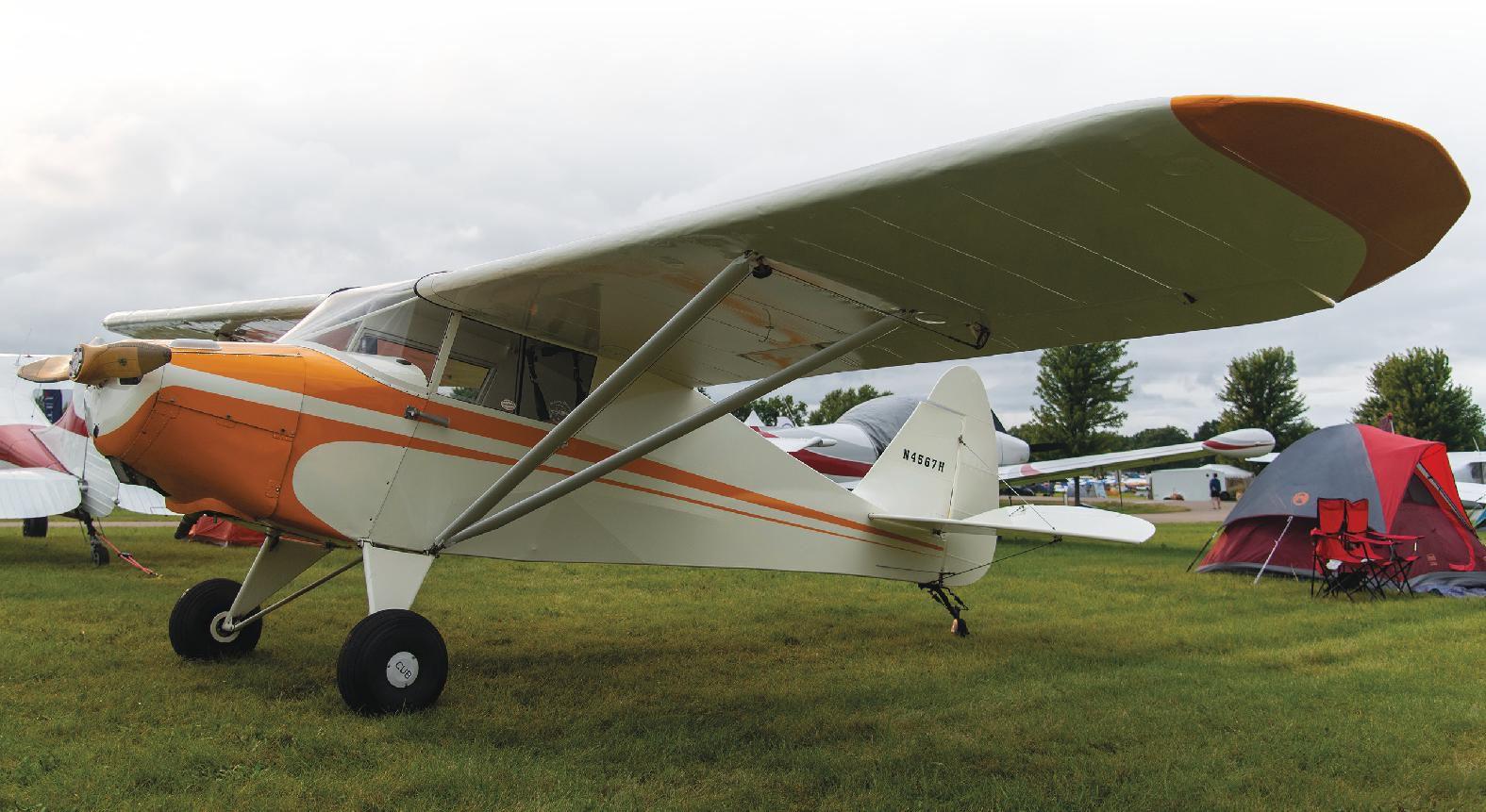

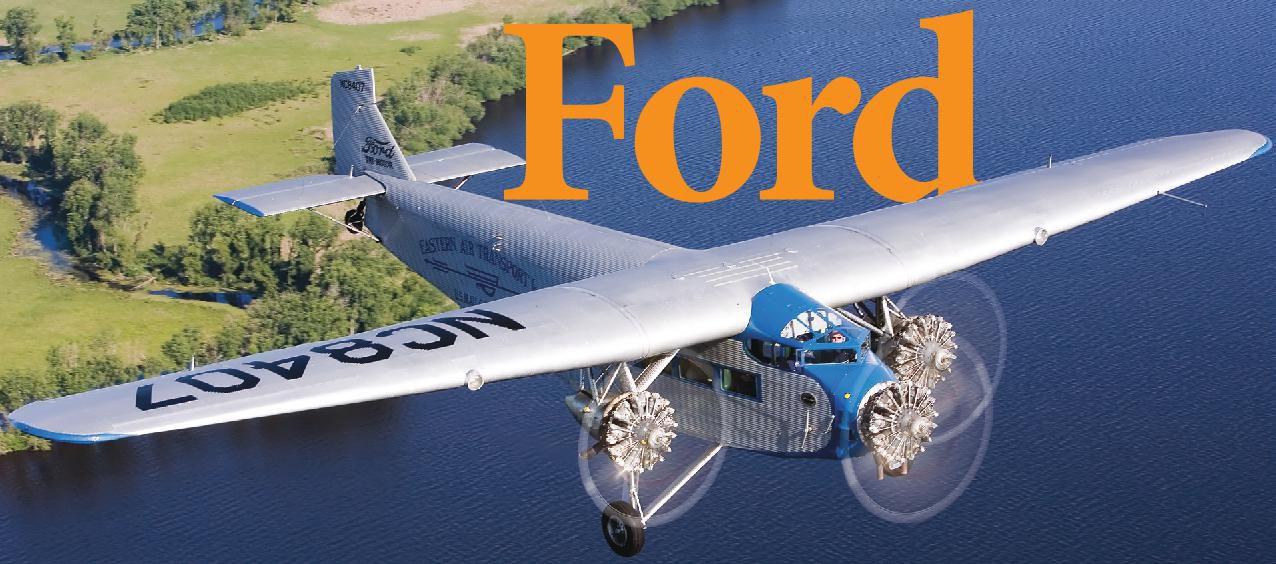
Leo also has inspection authorization (IA) and kept an eye on DeVon and Alvin’s progress on their Vagabond, ultimately signing it off in July, just before AirVenture.
It was Harve who really encouraged the Vagabond trio pilgrimage to AirVenture.
“Actually the whole Vagabond thing started with Mark Flounders, the previous owner of Leo’s Vagabond. Mark had the first Vagabond on our field [Applegate Airport], and he wanted me to help get him checked out in it,” Harve recalled. “So I flew Mark’s a little bit and thought, ‘Man, this is a neat airplane!’ I had one of my own within a year.”
At first, Harve thought he’d probably keep N4304H for a year or so — but that was 15 years ago.
“When I got it, it looked like an A&W commercial because it was tan, orange, and brown! But I had fun with it anyway, and that winter I re-covered it with Airtech Coatings,” Harve said. “One of the reasons I’ve kept it so long is that our son, Matt, kind of claimed it. I’ve painted his name as co-pilot on the door.”
This group of Missouri comrades shares a special synergy. Alvin met Harve back around 1997.
“I was working off Harve’s airstrip, and the wind was really bad and his airstrip was wet,” Alvin reminisced. “I was embarrassing myself with my inability to land; I was making skid marks all over his runway. I was actually concerned that he was going to be angry, but he just said, ‘Great job!’ I thought, ‘Oh, we’re going to be alright!’”
Harve chuckled at that memory and added, “We’ve owned a couple of airplanes together, and I met Leo through Alvin.”
Leo recalled, “Alvin was spraying ag, and that’s really what got me the bug. He also had a Champ and let me fly it quite a bit, and that got me hooked. The first time I met Harve, I rode over there with Alvin in a friend’s Skyhawk. My dad was building Harve’s hangar at that time. I was just a kid, so I didn’t get into aviation until long after that, but I remember that Harve had cool airplanes!”
DeVon has discovered that flying the Vagabond is quite a bit different from flying the Cub.
“I like the Vagabond; it’s very responsive and fun to fly. It will keep you busy when you’re landing on pavement, compared to the Cub,” he explained. “On our flight up here, I almost didn’t believe it — we’d just got it done right before we left. It’s really cool being here, and it seems to be unusual that there’s three Vagabonds parked here together.”
Alvin said there’s a slight similarity between the Vagabond and Vertigo as far as the “very responsive short wings, so the roll rate is similar, but that’s all. When I’m flying Vertigo, a burst of power will fix anything, but that doesn’t work in the Vagabond. So I have to be on it a little more than I was used to, and it’s fun for me to fine-tune it, to get where I just make fine adjustments,” Alvin reflected. “The Vagabond burns a lot less fuel, so you can pull them out and fly them, and they don’t cost you much. The Vagabond’s 65-horse engine makes it feel balanced. It’s light and you kind of forget you’re flying — until you’re landing!”
DeVon and Alvin made a concerted effort to have their Vagabond ready to fly to AirVenture. They spent quite a few evenings working on a short list of items to finish, including
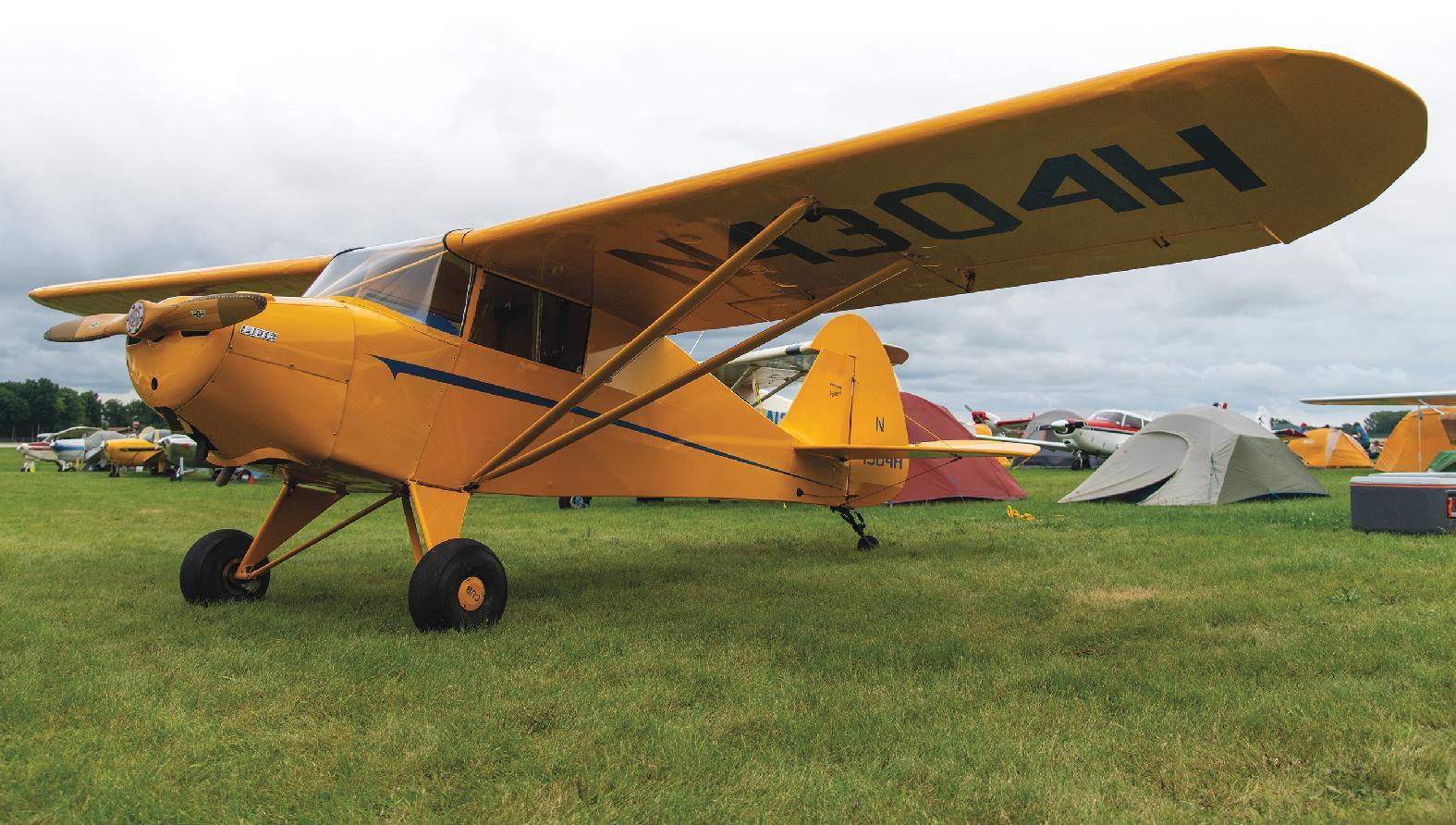
sealing some air gaps where the wing-root fairings fit the windshield, sewing a pouch on the back of the seat, and fixing a sticking fuel gauge.
Leo and his son, Braylon, flew N4567H and were appointed lead airplane for the Happy Vagabond Trio during the flight to Oshkosh. DeVon flew N4672H, and Alvin flew Harve’s N4304H. (Harve flew separately in his Stinson, and his daughter, Shalyn Marchetti, flew his CallAir.)
Leo shared that the Vagabond “is not only fun to fly, but you can also get somewhere in it. It took us three-and-a-half hours to fly the 274 miles from Memphis to Oshkosh.”
There’s no doubt about how much they all enjoyed their flight from Memphis — in short, they had a blast!
“We used to fly quite a bit of formation, and we always had very varying airplanes that flew lots of different speeds,” Alvin said. “So this flight was just a lot of fun because it was three 65-hp airplanes that flew very close to the same speed.”
Touted as “America’s Lowest Priced Airplane” in 1948 company advertising, the Vagabond clearly offers economical flying — and the charming bonus of a wealth of fun. As Flying’s check pilot Max Karant wrote in the May 1948 issue of Flying: “This trim little lightplane might have revolutionized private
Inspiring Aviation
Professionals of the Future
FREE aviation resources for K-12 students, teachers, EAA chapters, and youth leaders
Online activities, hands-on projects, and in-person experiences to help youth gain knowledge and skills
Aviation scholarships and career exploration
Innovative badging system
AeroEducate.org/Enroll
flying five years ago. … Of course, there were lightplanes in the class of the Vagabond back in those days, but they cost more than $1,990 and they hardly ever gave the kind of performance the Vagabond has, at such low operating cost. … It’s a pity this airplane couldn’t have been produced sooner.”
Though DeVon and Alvin initially bought the Vagabond with the thought of restoring it and then selling it, that has changed a bit. DeVon wants to keep flying it and get to where he’s as comfortable in it as he is in the Cub.
“I don’t know that our Vagabond is going to go anywhere anytime soon. My son Tyler is 16, and he got involved in the restoration, so he’s looking forward to getting some time in it,” Alvin said. “I might add that 65 hp and a 90 mph cruise is impressive, with two people and 40 pounds of baggage — the numbers are great!”
N4627H was featured in Ray Johnson’s Vintage in Review during the week at AirVenture, and DeVon Martin was especially honored to fly home with the 2024 Classic Reserve Grand Champion Silver Lindy for N4627H. There’s no doubt the Happy Vagabond Trio will always have jovial and fond memories of their AirVenture adventure. They know from experience that whenever and wherever they fly their respective Vagabonds, that’s “Where the Fun Is!”
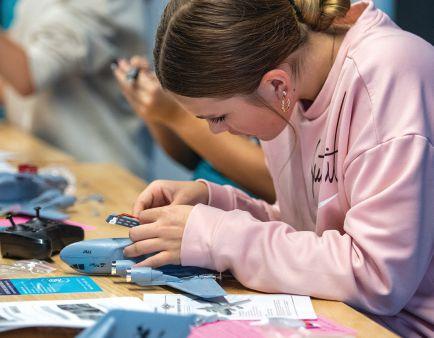
Our principal sponsors:
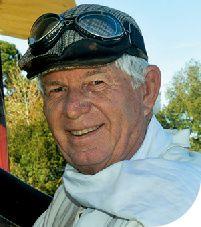
ROBERT G. LOCK
BY ROBERT G. LOCK
IN THIS ISSUE I want to follow up on the subject of a previous article — bonding. Specifically, I want to comment on the use of epoxy resin on type-certificated aircraft. But first, let’s explore where the FAA stands on this issue. Advisory Circular 43.131B is the latest revision and contains the approved adhesive for the construction and repair of type-certificated aircraft. Chapter 1, Paragraph 1-4a (1) says to refer to the aircraft repair manual for acceptable adhesive selection. There’s only one problem here — there are no structural repair manuals for old airplanes! Paragraph 1-4a (2) says adhesives must meet a military specification, aerospace material specification, or technical standard order for “Wooden Aircraft Structure.” Further, Paragraph 1-4b states, “Adhesive technology continues to evolve, and new types (meeting the requirements of Paragraph 1-4a) may become available in the future.” And finally, Paragraph 1-4b (6) states, “Many new epoxy resin systems appear to have excellent working properties. Caution: It is essential that only those products meeting the requirements of Paragraph 1-4a be used in aircraft repair.” So where does that leave us? Currently there is no directly approved type of epoxy adhesive for the construction and repair of wood aircraft structures. Each approval, including the use of the WEST SYSTEM on an FAA type-certificated airplane, has been done on an individual basis. Don’t look for any mil spec, AMS, or TSO approvals for epoxy adhesives for wooden aircraft to come jumping out of the woodwork! The only way to use this new stuff is with an FAA field approval, and they are beginning to come forth. Before you start your restoration, touch base with your local flight standards district office inspector to be sure you’ve gotten approval to proceed with restoring your structure with epoxy. Perhaps the best epoxy laminating system for wood is the WEST SYSTEM, manufactured by Gougeon Brothers Inc. It was specifically designed for marine use and can be used on woven fibrous materials, such as fiberglass, Kevlar, and graphite. I have used it on both wood and fiberglass structures. It works well, is easy to
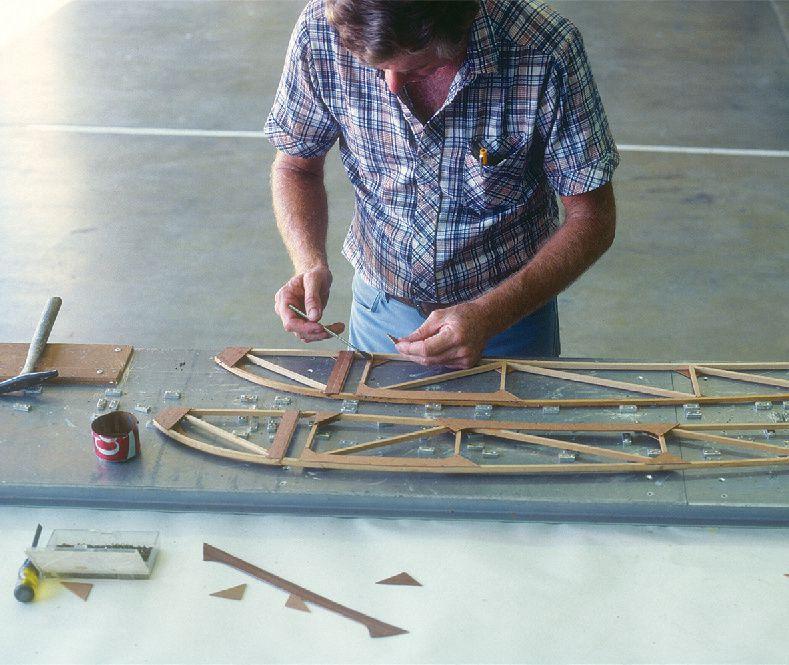
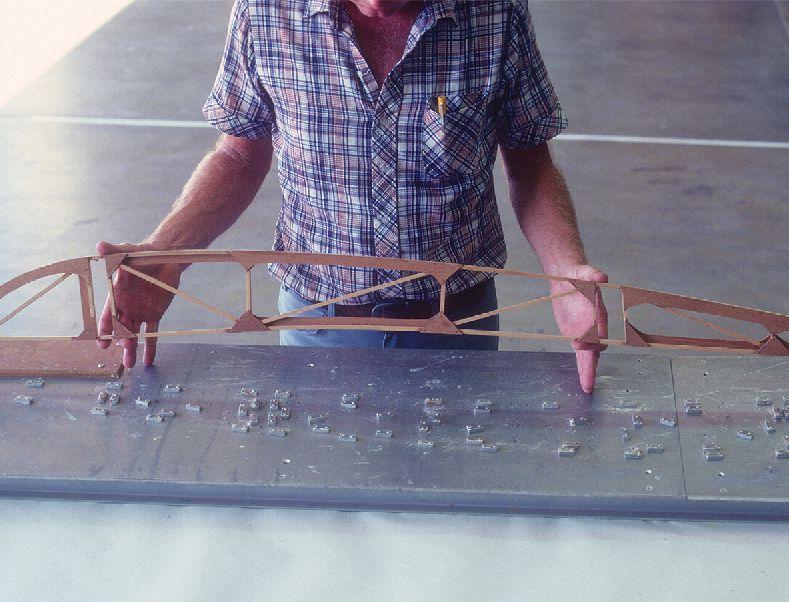
mix (ratio of five parts resin to one part hardener or three parts resin to one part hardener, depending on what type mix you need), and is relatively easy to spread. When cured it is clear, so the epoxy does not stain the wood structure. Take a look at www.WESTSYSTEM.com. You can read product information and download the instruction manual. The epoxy resin and hardener are available from Aircraft Spruce & Specialty Company or almost any marine supply business.
There are precautions that must be observed when using any epoxy adhesive. For old-timers who have used resorcinol or plastic resin (no longer approved) adhesives, clamping pressure for spar splices or any bonded joint with a large surface area was by means of C-clamps or parallel clamps. Clamping pressure for those older adhesives is recommended at 125-150 psi for softwoods and 150-200 psi for hardwoods. If one uses that much pressure with epoxy adhesives, the pressure will drive the epoxy resin from the joint and a weak bond will occur. A clamp that applies enough pressure to bring surfaces into contact and allows some “squeeze-out” of excess resin is needed. If possible, springtype clamps and caul blocks should be used.
For rib fabrication, use brass nails and nail through gussets for pressure during cure. For installation of plywood skin over wood ribs, use nailing strips and 1/2-inch- to 5/8-inch-long plain wire nails. The nailing strips will be removed after cure.
Note: My main concern when using epoxy resin is clamping pressure when the joint requires mechanical clamping. If mechanical clamping is required, make several test samples until the clamping pressure yields an airworthy joint. An airworthy joint will cause wood to fail or show wood fibers in the bond line when tested to destruction. Clamp, cure, and destruct test samples until you achieve the desired results. Most repairs to wood structures are classified as major repairs, so the airframe and powerplant mechanic with inspection authorization must conduct these tests since he or she will be signing to return the structure to service.
Mixing the WEST SYSTEM is easy. While many previous epoxy resins were quite viscous (resistant to pouring), the WEST SYSTEM is about the right consistency and is easily spread with a brush. The mix ratio is specified by the manufacturer but is either five parts resin to one part hardener or three parts resin to one part hardener depending on what you are using. The resin is Part No. 105, fast hardener is 205, and slow hardener is 206. I’ve used only the slow hardener. You can purchase pumps that fit in the can that will meter out the exact amount of resin/hardener.
Mixing: Use unwaxed paper cups; do not use any container that is glass, waxed, or plastic foam. Sometimes the pumps that dispense the resin and hardener will “spit” some air, particularly if they haven’t been used for a period of time. In that case, meter some resin into a cup, then meter some hardener into the same cup. If the pump does not emit any air with the material, you’re good to go. If some air is emitted with either the resin or hardener, throw the batch away and mix a new batch as the ratio of resin to hardener will not be correct.
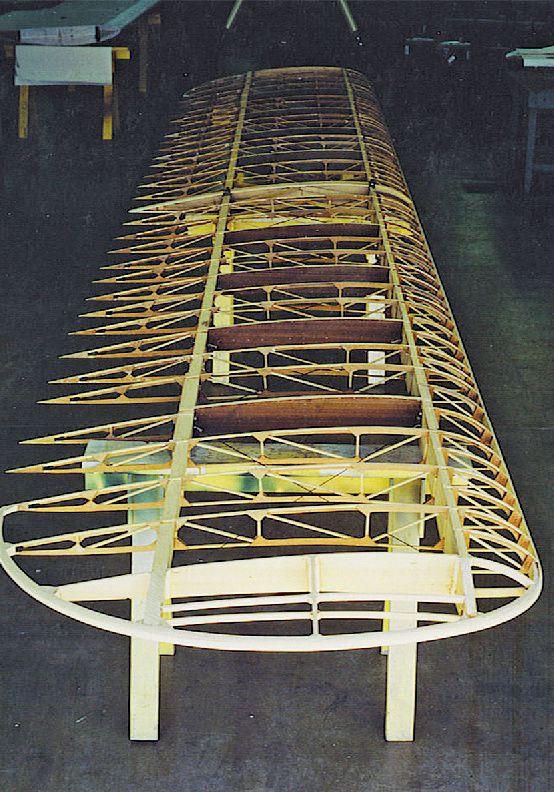
The Command-Aire upper wings taking shape. Note that the wings are bolted together to assure proper fit when aircraft will be rigged for flight. At this point the leading edge plywood skin has not been installed. Installation of the leading edge skin takes skill; the job is made easier if one has done it before. Nailing strips will be used to apply pressure to glue joints while the adhesive cures. Nailing strips are cut from clear pine and will measure 1/8-inch thick and 1/4-inch to 1/2-inch wide depending on how wide the glue joint requires the clamping pressure to be applied.
Stir slowly for at least a minute to thoroughly mix the hardener with the resin. Don’t “whip” the mixture, as you will introduce air bubbles into the adhesive. Popsicle sticks or tongue depressors make good stir sticks.
Once mixed, the pot life will depend on ambient temperature and amount of epoxy in the cup. Epoxy resins cure by chemical cross-linking of molecules. The byproduct of this cure is exothermic heat. Once the cure process kicks off, the material will begin to gel. Your project must be assembled and clamped before the material begins to gel. If the resin is in a pot, the gel time will be very limited due to exothermic heat buildup. So don’t mix too much material at one time. It’s always better to mix small quantities often than to throw away large batches when they kick off.
ROBERT G. LOCK
Spreading: Use a brush that doesn’t shed bristles. For hardwoods (plywood) I sand bonding surfaces lightly with a fine grade sandpaper, just enough to put some scratches in the surface. Softwoods (spruce) do not need sanding. Spread an even coat on both surfaces to be bonded, assemble, and then apply appropriate pressure.
Clamping: Apply only enough pressure to bring surfaces into good contact and allow for a small amount of squeeze-out of resin. Maintain pressure until resin has cured.
Curing: I usually leave clamps in place at least overnight and keep temperature to around 70 degrees Fahrenheit (I’m from the old school).
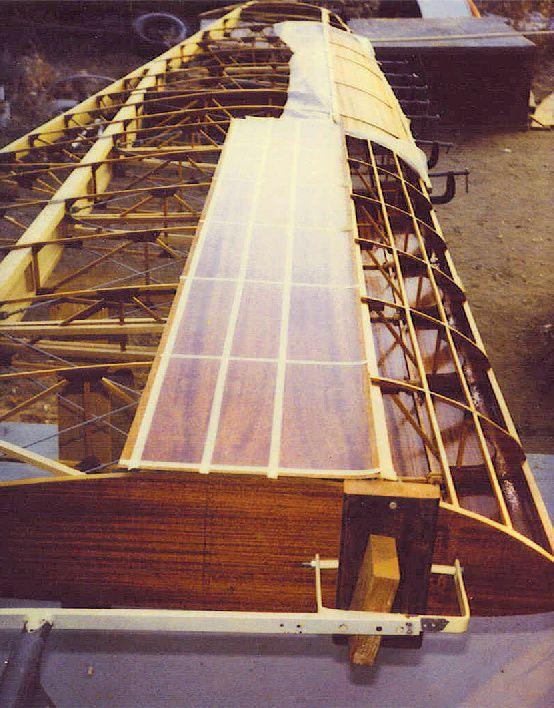
The upper left wing for a New Standard ready for installation of plywood leading edge. The lower skin is bonded in place and varnished well to resist water damage. Outboard skin is bonded in place, and nailing strips can be seen applying pressure to the adhesive joints. Inboard skin has been prepared by applying several coats of varnish. Note the rib, spar, and stringer locations do not have varnish but are the raw wood. A light sanding, just enough to scratch the surface, will improve bonding strength. Adhesive is applied to both surfaces to be bonded, and the skin aligned and tacked in place at the upper corners. Now the nailing strips are put into place to apply pressure to the joint. Waxed paper is placed between nailing strips and skin. I’ll go into more detail as to how to align, mark, and apply skin in a future article.
There may be a time when a filler material can be added to the epoxy resin mix to create a special occasion product. I have used two types: microballoons and cotton linter. Micro reduces the density of the epoxy and can be mixed to any consistency from syrup to peanut butter. It depends on what you are going to do with it. Micro and epoxy make good filler that is easily sanded but has very little structural strength. Cotton linters with epoxy resin is strong when cured, but it has little use on wood aircraft structures. Be sure to thoroughly mix the resin/ hardener first and then add in filler.
When we were restoring the New Standard biplane, the factory made all wing and landing gear struts from round chromoly tubing. This was faired to streamline with balsa wood leading and trailing edges, then wrapped with pinked-edge surface tape. Since this was a nonstructural fairing, I decided to hot-wire cut polystyrene foam to the desired shape and fiberglass the outside surfaces. I used a medium-weight glass fiber cloth and the WEST SYSTEM epoxy resin. I should note that epoxy resin will stick to polystyrene foam, but polyester (boat resin) will cause the foam to soften. When the laminated glass fiber is in the “B” stage of cure (resin begins to gel and exothermic heat increases), the glass can easily be trimmed to shape using a razor blade, knife, or scissors. After complete cure I sanded the fairings to fit each
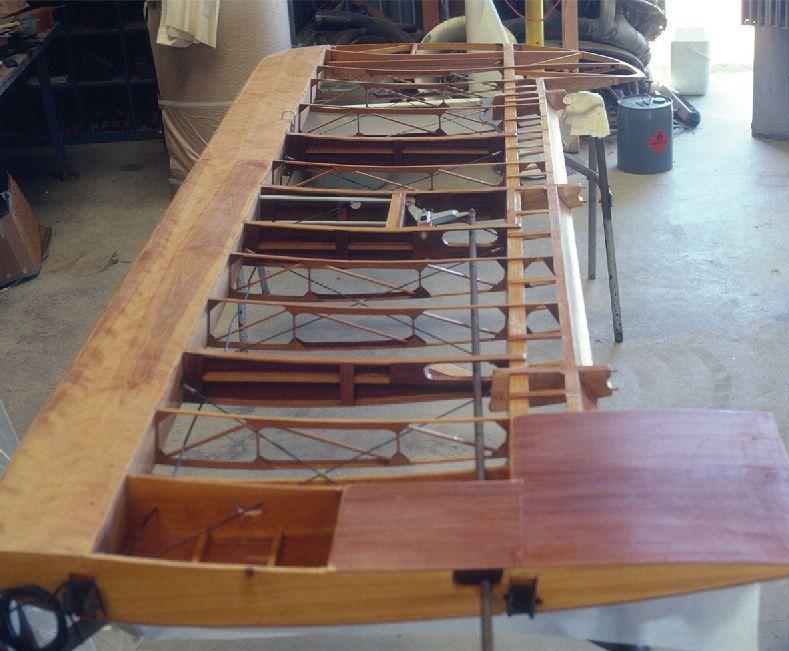
especially if
is more than
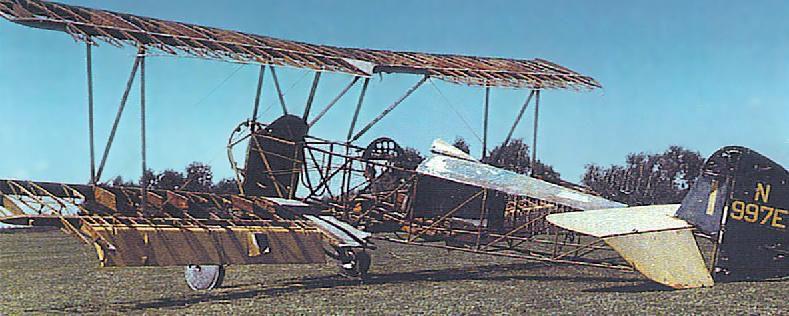
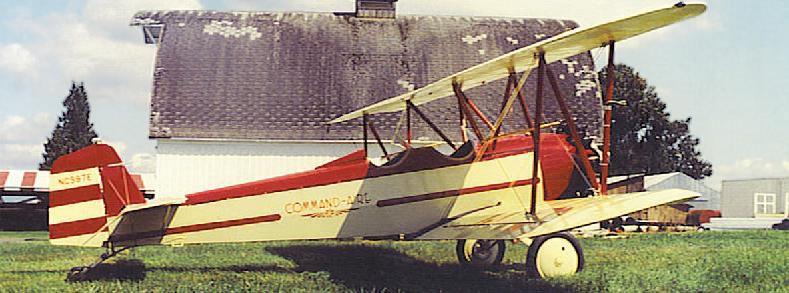
strut. I then mixed resin and added cotton linters to make a thick paste and stuck the fairings to the struts, applying pressure with masking tape until cured. Adding filler material (cotton linters) to epoxy resin makes a good gap-filling adhesive, but it doesn’t sand easily, so wipe off excess resin that squeezes out. I then sanded and wrapped the fairings with pinked-edge surface tape and finished with the Poly-Fiber process. It worked great and is very lightweight.
Epoxy resins can be useful for repair of structures due to their flexibility. Perhaps the FAA door to granting approval for use on type-certificated aircraft has opened ever so slightly. There are some FAA field approvals available for use of WEST SYSTEM epoxy resins in wood structures. Some of the type clubs would have a 337 available. It’s only a matter of time now.

JOHN HOFMANN, VAA PRESIDENT
We will also explore an endowment fund, look into a formal budgeting process, explore investment of funds, and look at our bylaws and changes that should be addressed. Board meetings are open to the public, and if you are in the area when a meeting happens, stop and say hello and join in.
In April, I held a session on the VAA at the SUN ’n FUN Aerospace Expo in Lakeland, Florida. Attendance was low, but those who did attend were enthusiastic, and I think we even picked up a couple of new members.
One topic of conversation was the Piper rudder airworthiness directive (AD). AD 2025-02-11 requires the replacement of many rudders on classic Piper Aircraft. VAA led the fight to negate this AD, but the FAA saw it otherwise, and it became effective in February. While
Kyle and Stevie presented a comprehensive marketing plan for VAA that will leverage social media, video, and email to keep members informed and engaged while reaching out to potential new members.
the outcome of this effort is not what we wanted, I can proudly say we fought the good fight and are prepared to advocate for vintage aircraft when and where we can.
If you see me at Oshkosh, stop and say hello. I will be in an orange golf cart when moving between volunteer areas. That should make me pretty visible. I would be happy to discuss old airplanes and share a couple of dad jokes with you.
See you at AirVenture 2025! Happy flying, safely!
COPYRIGHT©2025 BY THE EAA VINTAGE AIRCRAFT ASSOCIATION. ALL RIGHTS RESERVED
VINTAGE AIRPLANE (USPS 062-750; ISSN 0091-6943) copyright © 2025 by the EAA Vintage Aircraft Association, Inc., is published bimonthly and owned exclusively by the EAA Vintage Aircraft Association, Inc., EAA Editorial Department, 3000 Poberezny Road, Oshkosh, WI, 54902. Periodicals postage is paid at Oshkosh, WI, 54901, and additional mailing offices. U.S. membership rate for the EAA Vintage Aircraft Association, Inc. is $45 per 12-month period for EAA members, and $55 for non-EAA members.
POSTMASTER: Send address changes to EAA MEMBERSHIP SERVICES, P.O. Box 3086, Oshkosh, WI 54903-3086. CPC 40612608
FOREIGN AND APO ADDRESSES: Please allow at least two months for delivery of VINTAGE AIRPLANE to foreign and APO addresses via surface mail.
ADVERTISING: Vintage Aircraft Association does not guarantee or endorse any product offered through the advertising. We invite constructive criticism and welcome any report of inferior merchandise obtained through our advertising so that corrective measures can be taken.
EDITORIAL POLICY: Members are encouraged to submit stories and photographs. Policy opinions expressed in articles are solely those of the authors. Responsibility for accuracy in reporting rests entirely with the contributor. No remuneration is made. Material should be sent to: Editor, VINTAGE AIRPLANE, P.O. Box 3086, Oshkosh, WI 54903-3086. Phone 920-426-4800.
STATEMENT OF OWNERSHIP, MANAGEMENT, AND CIRCULATION (Required by 39 U.S.C. 3685). 1. Title of Publication: Vintage Airplane. 2. Publication No.: 062-750. 3. Filing Date: 5/7/2025. 4. Issue Frequency: Bimonthly. 5. No. of Issues Published Annually: 6. 6. Annual Subscription Price: $45.00 in U.S. 7. Known Office of Publication: EAA, 3000 Poberezny Rd., P.O. Box 3086, Oshkosh, WI 54903-3086. Contact Person: Ron Lindgren, Telephone: 920-426-6571. 8. Headquarters or General Business Office of the Publisher: Same address as above. 9. Publisher: Jack J. Pelton, EAA, 3000 Poberezny Rd., P.O. Box 3086, Oshkosh, WI 549033086. Editor: Jim Busha, same address as above. Managing Editor: None. 10. Owner: EAA Vintage Aircraft Association, 3000 Poberezny Rd., P.O. Box 3086, Oshkosh, WI 54903-3086. 11. Known bondholders, mortgagees, and other security holders owning or holding 1 percent or more of total amounts of bonds, mortgages, or other securities: None. 12. Tax Status: Has Not Changed During Preceding 12 Months. 13. Publication Title: Vintage Airplane. 14. Issue date for circulation data below: May/June 2025. 15. Extent and Nature of Circulation (Average No. Copies Each Issue During Preceding 12 Months/No. Copies of Single Issue Published Nearest to Filing Date): a. Total No. of Copies Printed (6619/6377) b. Paid Circulation (By Mail and Outside the Mail): 1. Mailed Outside-County Paid Subscriptions Stated on PS Form 3541 (Include paid distribution above nominal rate, advertiser’s proof copies, and exchange copies) (5677/5706). 2. Mailed In-County Paid Subscriptions Stated on PS Form 3541 (Include paid distribution above nominal rate, advertiser’s proof copies, and exchange copies) (0/0). 3. Paid Distribution Outside the Mails Including Sales Through Dealers and Carriers, Street Vendors, Counter Sales, and Other Paid Distribution Outside USPS (319/312). 4. Paid Distribution by Other Classes of Mail Through the USPS (e.g., First-Class Mail) (13/16). c. Total Paid Distribution (Sum of 15b (1), (2), (3), and (4)) (6009/6034). d. Free or Nominal Rate Distribution (By Mail and Outside the Mail): 1. Free or Nominal Rate Outside-County Copies Included on PS Form 3541 (0/0). 2. Free or Nominal Rate In-County Copies Included on PS Form 3541 (0/0). 3. Free or Nominal Rate Copies Mailed at Other Classes through the USPS (e.g., First-Class Mail) (0/0). 4. Free or Nominal Rate Distribution Outside the Mail (Carriers or other means) (0/0). e. Total Free or Nominal Rate Distribution (Sum of 15d (1), (2), (3), and (4)) (0/0). f. Total Distribution (Sum of 15c and 15e) (6009/6034). g. Copies Not Distributed (See Instructions to Publishers #4 (page 3)) (611/343). h. Total (Sum of 15f and g) (6619/6377). i. Percent Paid (15c divided by 15f times 100) (100/100). 16. Electronic Copy Circulation (N/A). 17. Publication of Statement of Ownership: Publication required. If the publication is a general publication, publication of this statement is required. Will be printed in the July/August 2025 issue of this publication. 18. I certify that all information furnished on this form is true and complete. I understand that anyone who furnishes false or misleading information on this form or who omits material or information requested on the form may be subject to criminal sanctions (including fines and imprisonment) and/or civil sanctions (including civil penalties). Jim Busha, Editor, 5/7/2025. PS Form 3526, July 2014.
PRESIDENT John Hofmann 548 W. James St. Columbus, WI 53925 608-239-0903 john@hangar102.com
VICE PRESIDENT Dan Knutson 106 Tena Marie Circle Lodi, WI 53555 608-354-6101 lodicub@charter.net
SECRETARY Kathy McGurran Brighton, CO 303-829-4808 kmcgurran@aol.com
TREASURER
Paul Kyle 1273 Troy Ct. Mason, OH 45040 262-844-3351 paul_e_kyle@hotmail.com
AC Hutson Griffin, GA 678-457-8957 achutsonjr@icloud.com
Ray L. Johnson Marion, IN 765-669-3544 rayjohnson@indy.rr.com
Vaughn Lovley Webster, MN 913-981-3696 pa11pilot@yahoo.com
Steve Nesse Albert Lea, MN 507-383-2850 stnes2009@live.com
Earl Nicholas Libertyville, IL 847-504-6945 eman46@gmail.com
Joe Norris Oshkosh, WI 920-279-2855 wacoflyer@gmail.com
Marla Simon Boone Troy, OH 937-216-5133 msimonboone@yahoo.com
Charlie Waterhouse Dayton, OH 260-385-0851 charles.e.waterhouse@gmail.com
Jesse Clement jesseclement1@gmail.com
Luke Lachendro avidaviator98@gmail.com
Kyle Ludwick ludwickk1@gmail.com
Kevin McKenzie kevinamckenzie@yahoo.com
Stevie Triesenberg stevie.triesenberg@gmail.com
Maxwell Wenglarz waco20900@gmail.com
David Bennett antiquer@inreach.com
Robert C. Brauer photopilot@aol.com
Jerry Brown lbrown4906@aol.com
Dave Clark davecpd@att.net
Phil Coulson rcoulson516@cs.com
George Daubner gdaubner@eaa.org
Susan Dusenbury sr6sue@aol.com
Ronald C. Fritz itzfray@gmail.com
Tim Popp tlpopp@frontier.com
Amy Lemke alemke@eaa.org