2025 Advent Reflections
from the Villanova University Community

Pope Leo XIV has made peace a central theme of his pontificate, describing it as both a gift from God and a human mission requiring concrete action. This season of Advent provides an opportunity to prepare our hearts to become advocates of peace as we prepare to celebrate the birth of the Prince of Peace, God with us.
Pope Leo’s own words on peace inspire and challenge us:
• “Peace is built in the heart and from the heart, by eliminating pride and vindictiveness and carefully choosing our words.”
• “Let us disarm words and we will help to disarm the world.”
Diplomatic Corps, 16 May 2025.
• “Peace begins with each one of us: in the way we look at others, listen to others and speak about others.”
Address to the Media, Paul VI Hall, 12 May 2025.
• “War does not solve problems. On the contrary, it amplifies them and causes deep wounds in the history of peoples—wounds that take generations to heal. No military victory can ever compensate for a mother’s pain, a child’s fear, or a stolen future.”
Angelus Address, 22 June 2025.
• “The earth will rest, justice will prevail, the poor will rejoice, and peace will return, once we no longer act as predators but as pilgrims. No longer each of us for ourselves but walking alongside one another.”
Homily at Pentecost Vigil, 7 June 2025.
• “If you want peace, prepare institutions of peace – not just political institutions, but educational, economic, and social ones as well.”
Address to the Popular Movements for Peace, 30 May 2025.
• “He who does not accept peace as a gift will not be able to give it away.”
Canonization Mass Homily, Vatican, October 19, 2025.
May the opening words of Pope Leo XIV on the day of his election serve to encourage us to restore hope through concrete gestures and actions of love and mutual respect;
“Peace be with you all. I would like this greeting of peace to enter your heart, reach your families, to all people, wherever they may be, to all the earth. Peace be with you!”
NOVEMBER 30, 2025
The walls in the friary where I live are very thin, so much so that we friars can hear each other’s alarms as they go off every morning, all within twenty or thirty minutes of each other. We can easily tell if one of us is struggling to wake from sleep, depending on the length of the alarm, or if it sounds again, indicating that a snooze button was hit!
The world’s walls are also thin, as we hear alarms resounding in every corner, crying out for peace, yet so many of us are struggling to wake up and be attentive to this urgency.
This Advent season calls us to awaken to a peace that is both unarmed and disarming, that turns swords into plowshares. Now is the hour for us to wake from sleep. Now is the hour to help awaken each other: for, as Pope Leo XIV said in his inaugural homily, now is the hour for love.
—The Rev. Kevin DePrinzio, OSA, PhD Vice President Office for Mission and Ministry
How will this Advent be a time for me to awaken to peace?
IS 2:1-5
PS 122:1-2, 3-4, 4-5, 6-7, 8-9
ROM 13:11-14
MT 24:37-44
“So too, you also must be prepared,for at an hour you do not expect, the Son of Man will come” (MT24:44).
DECEMBER 1, 2025
IS 4:2-6
PS 122:1-2, 3-4b, 4cd-5, 6-7, 8-9
MT 8:5-11
“May those who love you prosper! May peace be within your walls, prosperity in your buildings.” (PS 80:4).
Peace in our souls comes when action follows conviction. —Augustine, City of God, 19.13
Advent is a season of active hope and preparation. It takes effort to wait with deep faith and expectation. The Gospel of Matthew illustrates this through the story of the Roman centurion (MT 8:5-11).
The centurion, a Gentile with authority, recognized Jesus’ divine power more than many in Israel. Instead of asking Jesus to come to his house, he trusted that a simple word from Jesus would heal his servant. His faith, humility, and compassion serve as a model for the expectant and trusting heart that the Advent season encourages in preparation for Christ’s coming.
As we begin the first full week of Advent, we are challenged to reflect on the depth of our own faith. Do we truly believe that Jesus can enter the paralyzed areas of our lives—our anxieties, our broken relationships, our lingering doubts—and heal them with a single word?
How can I prepare a true dwelling place for the Lord in my heart?
TUESDAY OF THE FIRST WEEK
DECEMBER 2, 2025
As the Christmas season rapidly approaches, Isaiah 11:10 is a sharp reminder to always seek hope, even when we’re hurting with something in our lives or if the overall vibes just aren’t as immaculate as we’d like them to be. Isaiah imagines a leader who rules with wisdom, protects the less fortunate, and isn’t influenced by appearances. In a time when many people in our society are treated as if they don’t matter, that vision confronts us. From Pope Leo XIII to Dr. Martin Luther King Jr., we’re reminded that any peace without justice is fragile and “injustice anywhere is a threat to justice everywhere.”
The powerful images of wolves and lambs at peace, natural enemies resting side by side, are not a fairy tale, but a glimpse of a world where fear doesn’t rule and every person is valued.
When I stand under the massive oak tree in my backyard, I remember it began small and became a place of shade, safety, and peace, much like the Villanova community has been for me.
Joseph Milliken Jr. ’99 CLAS
If we took Isaiah’s hope seriously, who would feel more welcome and protected in our world?
IS 11:1-10
PS 72:1-2, 7-8, 12-13, 17
LK 10:21-24
“Justice shall flower in his days,and profound peace, till the moon be no more” (Ps 72:7-8).
WEDNESDAY OF THE FIRST WEEK
DECEMBER 3, 2025
IS 25:6-10a
IS 29:17-24
PS 27:1, 4, 13-14
PS 23:1-3a, 3b-4, 5, 6
MT 9:27-31
MT 15:29-37
“I fear no evil; for you are at my side.” (PS 23:3b-4).
“Wait for the LORD with courage; be stouthearted, and wait for the LORD” (PS 27:14).
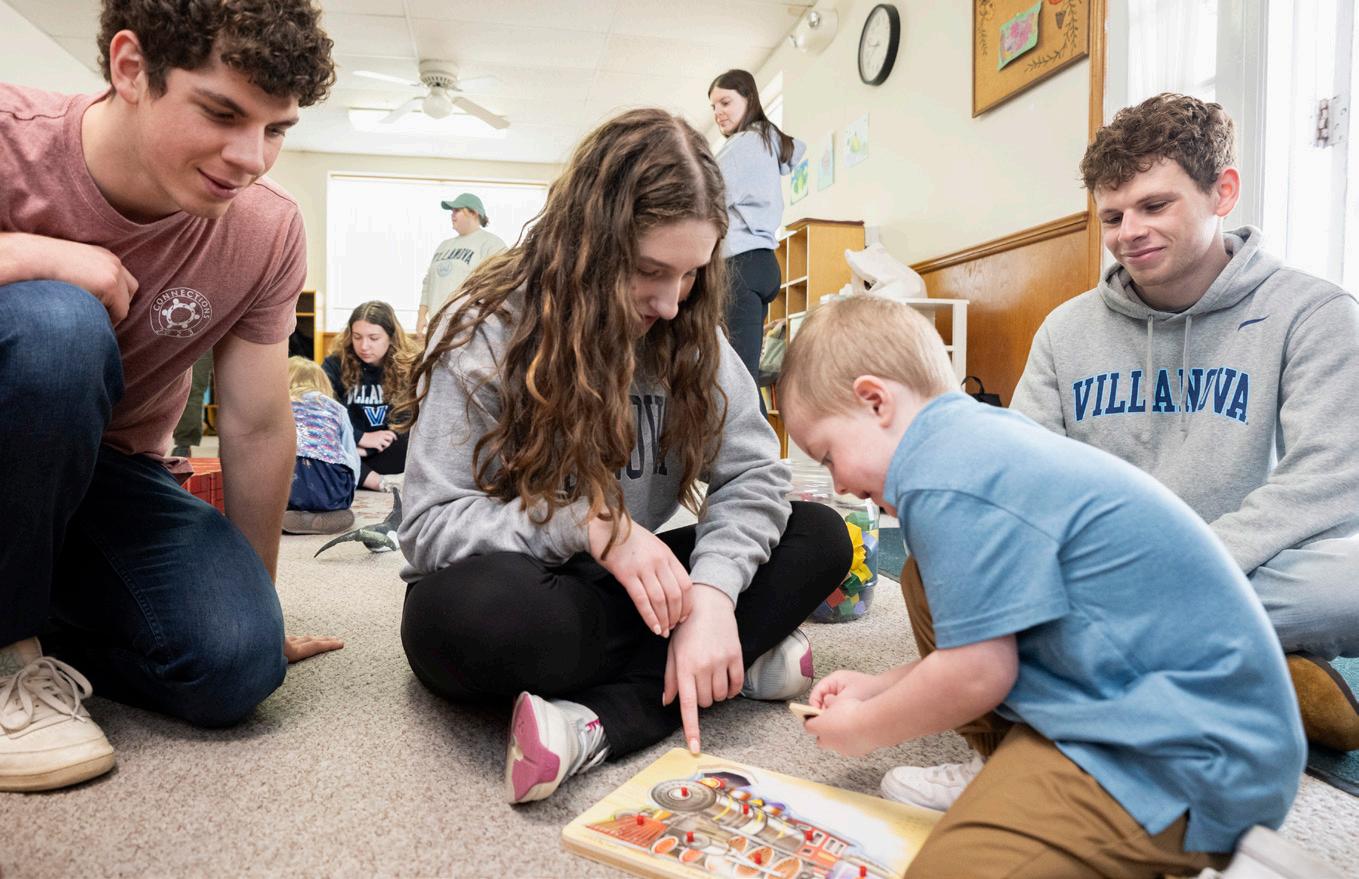
Working as a youth minister, I am moved by how joyfully my elementary students latch onto the shepherd imagery in Psalm 23. With little ones, you’ve gotta begin with the basics: What is a sheep? We made them out of pompoms and googly eyes. What is a shepherd? We would pore over coloring pages. Why does a sheep need a shepherd? Cue the silly videos of sheep getting stuck in trees, falling into streams, and chasing each other around. Imagine their laughter when they discover that they are sheep, and the Lord is their shepherd! Children love playful ways to understand the stories of their faith. In these tough economic times, I have been praying extra hard for their families and their pantries—the nonprofits, food banks, and good-hearted people fighting holiday hunger. With grocery prices so high, even small donations keep many little sheep fed. This is the modern call to feed the hungry, and I’m so grateful Americans are taking action.
—Guinevere Keith ’26 MA Graduate Resident Minister Office for Mission and Ministry
How am I mindful of the little sheep and their needs? What can I do to support families in need?
THURSDAY OF THE FIRST WEEK
DECEMBER 4, 2025
Today’s readings inspire us to promote justice, faith and peace in a world overwhelmed with fear and violence. The prophet Isaiah’s metaphor of a strong city encourages us to find hope amid despair by reassuring those who, as the psalmist echoes, “come in the name of the Lord” to trust God’s unwavering divine protection (Ps 118:1). The psalmist’s cry challenges us to take meaningful steps of gratitude, find refuge in God and open His gates for the marginalized in society. In today’s Gospel, Jesus says, “Everyone who listens to these words of mine and acts on them will be like a wise man who built his house on rock” (Mt 7:24). He prompts us to reevaluate our spiritual foundations and examine how and where we anchor our lives. Ask yourself: Are my values built on a solid rock? Are relationships in my family, workplace and school founded on God’s word?
—Sam
Odidi ’25 MA
IS 26:1-6
PS 118:1 and 8-9, 19-21, 25-27a
MT 7:21, 24-27
“Open up the gates to let in a nation that is just” (IS 26:2).
Are my values built on solid rock?
DECEMBER 5, 2025

IS 29:17-24
PS 27:1, 4, 13-14
MT 9:27-31
In today’s Gospel, Jesus asks the two blind men before him, “Do you believe that I can do this?” What a question!
Admittedly, I’m challenged by interpretations of today’s Gospel—and others like it—that tie belief and healing together. I find myself wondering, “What about all the people past and present who indeed believe(d), but whose prayers have seemingly gone unanswered?” As I wonder, something my grandfather often said comes to mind: “God always answers my prayers—just not always in the ways I’d wanted.”
“Wait for the LORD with courage; be stouthearted, and wait for the LORD” (PS 27:14).
Out of gloom and darkness, the eyes of the blind shall see” (IS 29:20).
If you share my question or a variation of it, perhaps today’s Gospel can serve as an invitation to “live the questions,” as Rainer Maria Rilke famously wrote. For indeed, questions are journeys unto themselves. As we question, let us stand beside the two blind men in believing that Jesus will open the eyes of our hearts this Advent to the ways which our prayers are always taken into the Heart of God.
—Bridget Rickard ’26 MA Graduate Assistant in Liturgical Music Office for Mission and Ministry
What questions might you bring to Jesus this Advent day, and what questions might he ask of your belief in return?
DECEMBER 6, 2025
Pope Leo shared a message of peace upon his election, but it is hard to imagine a peaceful world this year. Sudan. Gaza. Ukraine. The India/Pakistan border. The list of conflicts continues. It is tempting amid such turmoil to revert to passivity—to hide under the covers and do nothing. To combat that fear, we must cultivate peace.
Peace is active, not passive. Just as God tends the fields in Isaiah and rebuilds Jerusalem in the Psalm, and just as Jesus and his disciples heal the sick, we must aid our own communities and, if opportunity allows, communities farther away. We need not aspire to miracles. Nor do we need to learn new skills. (I, for one, am no farmer.) We can start by checking on our families, then our neighbors and strangers. Find a cause that moves you. Through quiet devotion, tend your field.
—Daniel Gorman ’16 MA
What peaceful acts can you fit into your daily routine?
IS 30:19-21, 23-26
PS 147:1-2, 3-4, 5-6
MT 9:35-10:1, 5a, 6-8
“Without cost you have received; without cost you are to give.” (MT 9:8).
DECEMBER 7, 2025
IS 11:1-10
PS 72:1-2, 7-8, 12-13, 17
RM 15:4-9
MT 3:1-12
“Welcome one another, then, as Christ welcomed you” (RM 15:8).
Jesus emerges as a remnant of King David’s devastated lineage, a “bud” blossoming from the “stump of Jesse,” and in his blossoming he grants a new hope, wisdom and justice for the lowly, the poor and the afflicted (Isaiah 11:1). Despite his Godliness, he strives to see the goodness in the flawed people around him, welcome them, and forgive them in spite of their brokenness.
The second reading encourages us to “think in harmony with one another” and grow together in unity, while each feeling liberated to express our unique gifts, talents and traits. (ROM 15:6). Trying to be in harmony with others can be difficult, but as the Gospel reminds us, our mistakes are forgiven; it’s our efforts that matter most.
—Mia Familetti ’27 MA Graduate Assistant in Communication Office for Mission and Ministry
How can we use our own flaws and brokenness to better understand and connect with others?
8, 2025
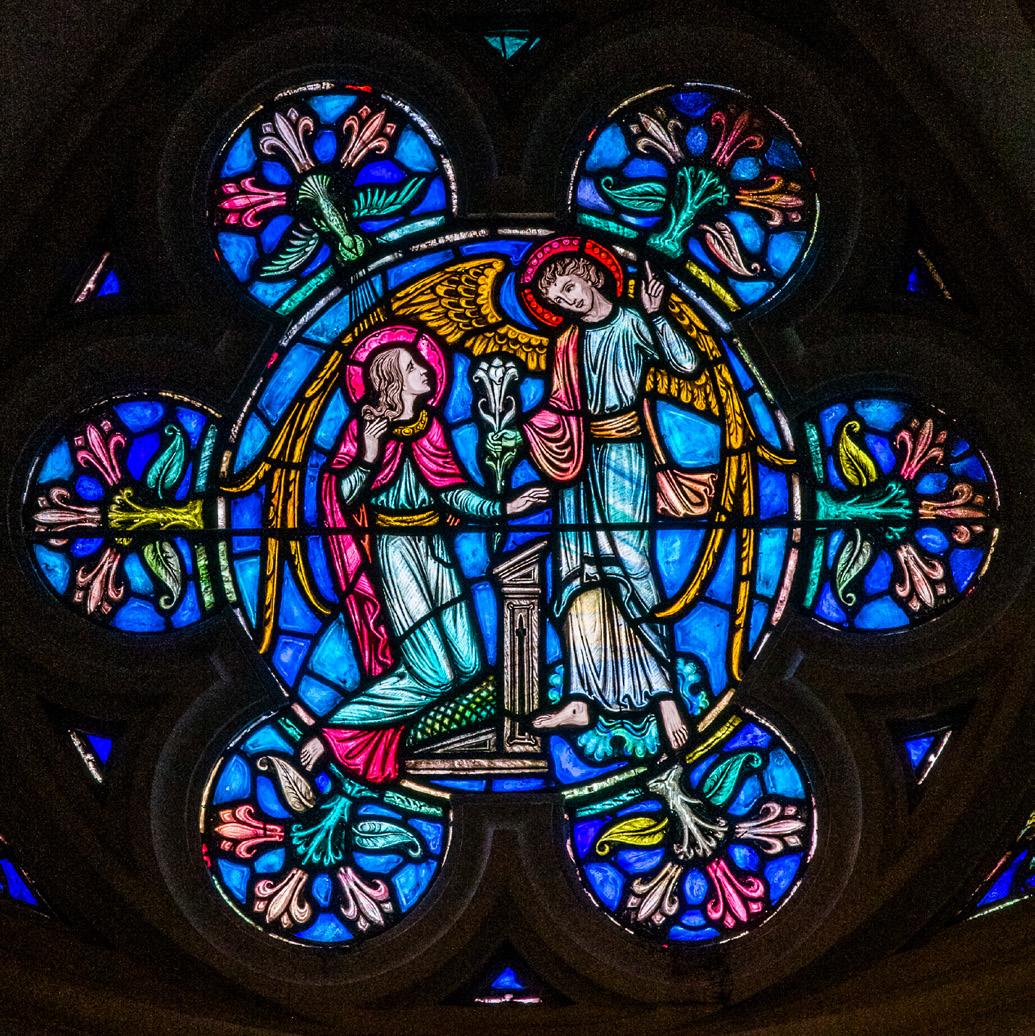
I wondered—why Mary? Of all people, why was she chosen? When the angel Gabriel appeared, Mary was confused and afraid. Yet through questioning, she found peace through her “yes” to God’s plan. That peace flowed from faith and surrender—perhaps nurtured by years of prayer and small daily moments of trust.
In today’s second reading, St. Paul reminds us, “Blessed be God, who has blessed us in Christ with every spiritual blessing in the heavens.” We already have the grace we need for each moment. Like Mary, it’s okay to question, to fear, and to seek understanding—God meets us there. Have you ever asked, “Why me, God?”
—Sister Elizabeth McGill, SSJ, PhD Sister of Saint Joseph, Philadelphia
What practices—prayer, service, reflection, community— help you stay grounded in faith and find peace, not only in life’s defining moments, but also in the quiet, everyday ones?
IS 26:1-6
GN 3:9-15, 20
PS 118:1 and 8-9, 19-21, 25-27a
PS 98:1, 2-3ab, 3cd-4
MT 7:21, 24-27
EPH 1:3-6, 11-12
LK 1:26-38
“I will enter [the gates of justice] and give thanks to the LORD” (PS 118:19).
“May it be done to me according to your word” (LK 1:38).
TUESDAY OF THE SECOND WEEK
DECEMBER 9, 2025
IS 29:17-24
IS 40:1-11
PS 27:1, 4, 13-14
MT 9:27-31
PS 96:1-2, 3 and 10ac, 11-12, 13
MT 18:12 - 14
“Wait for the LORD with courage; be stouthearted, and wait for the LORD” (PS 27:14).
“Comfort, give comfort to my people” (IS 40:1).
In the first reading, the Lord speaks in four ways: comforting us, showing mercy, calling us to make His way straight, and inviting us to cry out to Him. This aligns beautifully with the theme of Hope. Isaiah reminds us to be merciful and compassionate, for God gives grace freely—not because we merit it, but as a gift. During Advent, He invites us to open our hearts; He will never force us, but longs to dwell within us. The Gospel reassures us of His relentless love: He leaves the ninety-nine to seek the one lost sheep—that’s us in our struggles. Though we question our crosses, God’s plan is that none be lost. Cardinal Sarah’s The Power of Silence teaches that God’s silence is an invitation to inner peace and deeper listening amid life’s noise. Let us make His way straight so His peace can reign in us.
—Obed Ketty Cubahiro ’29 PhD
When was the last time you really comforted someone? Or did a work of charity toward people in need?
WEDNESDAY OF THE SECOND WEEK
DECEMBER 10, 2025 IS 40:25-31

Today, the Word invites us to ponder and live peace. This peace emerges not as mere quiet or absence of conflict, but as the deep assurance of God’s presence amid weariness. Isaiah reminds us that even the strongest grow tired, yet those who hope in God renew their strength and soar like eagles. Peace, then, is found not in our striving, but in surrendering.
In Matthew, Jesus invites those who are burdened to rest, promising a yoke that is easy and a burden light.
On the Feast of Our Lady of Loreto, we remember Mary’s “Yes!” in the quiet of Nazareth, a peace-filled trust that welcomed the Word into the world. Her home, humble and hidden, became a sanctuary of divine encounter. May we, too, find peace in our waiting, strength in our weariness, and courage to say “Yes” to God’s presence dwelling among us.
—Beth Hassel, PBVM
Explore areas in your life where being weary is an invitation to live peace!
IS 26:1-6
PS 103:1-2, 3-4, 8 and 10
PS 118:1 and 8-9, 19-21, 25-27a
MT 11:28-30
MT 7:21, 24-27
“Come to me, all you who labor and are burdened, and I will give you rest.” (MT 11:28).
“I will enter [the gates of justice] and give thanks to the LORD” (PS 118:19).
THURSDAY OF THE SECOND WEEK
DECEMBER 11, 2025

IS 41:13-20
PS 145:1 and 9, 10-11, 12-13ab
MT 11:11-15
“Your Kingdom is a Kingdom for all ages, and your dominion endures through all generations” (IS 45:8).
It can be easy in college to feel anxious about the pressure to figure out our future, learn from our past, and succeed in our present all at once. As a senior myself, I have found time slipping away from my grasp and little in the way of answers. In those moments, it can be hard to feel accomplished or like I’ve done enough.
But “fear not,” says God in today’s readings, for His hand is always ready to help us (IS 41:14). While addressing Jacob and Israel, He refers to them as “worm” and “maggot,” but says they will be made sharp enough to thresh through mountains (IS 41:15).
This image is a striking reminder that no matter how small or helpless we may feel, we always merit and receive God’s love—an uplifting, peace-bringing love. There is no better time to embrace this truth than during Christmas, a celebration of God’s saving plan and Christ’s peace.
—Juan Pablo Tampe ’26 CLAS
How can I embrace God’s peace and love this season?
12, 2025
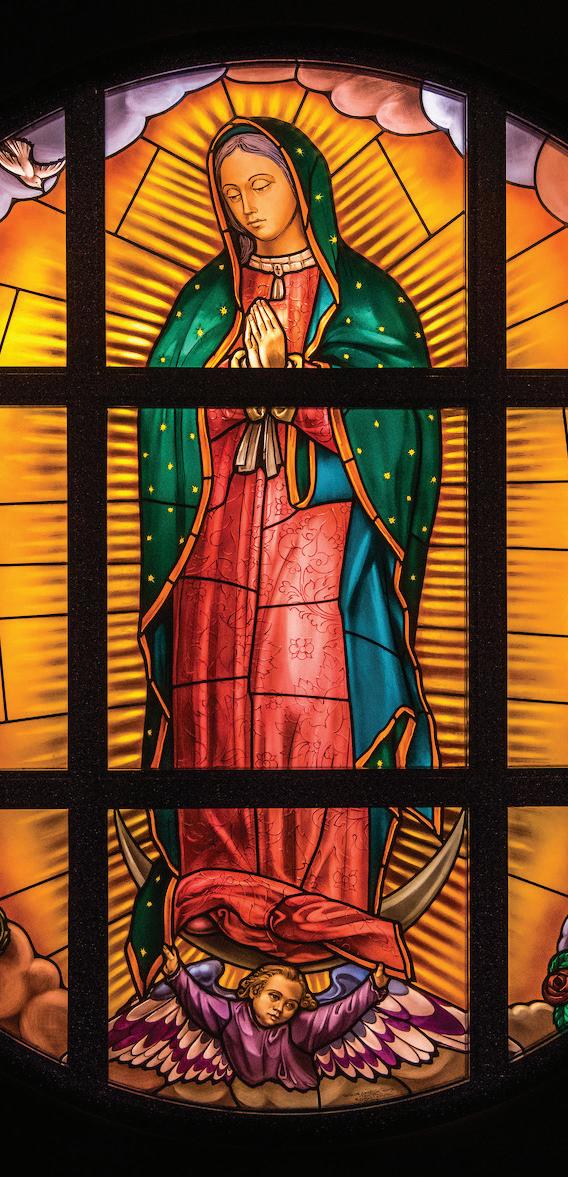
On this date, nearly five centuries ago, Juan Diego lost his tilma! Juan Diego’s lost tilma served to provide a way of getting to know God’s love for us through his mother.
By sending Mary, his Mother, revealed on the tilma of humble Juan Diego, to console and attend to the needs of the little ones, without excluding anyone, to embrace them as a caring mother with her presence, love and consolation, God wants us to know that we are not alone.
Our Lady of Guadalupe invites us to leave behind all the prejudices and fears that populate our hearts and to trust in the true God for whom we live. We are one family meant to enjoy our common home.
The Lord continues to call us to fraternity, to set aside selfishness, indifference and enmity, inviting us to get involved with one another “without delay” and to go out to meet our brothers and sisters who have been forgotten and discarded by our consumerist and indifferent societies.
—The Rev. Arthur Purcaro, OSA Assistant Vice President Office for Mission and Ministry
En esta fecha, hace casi cinco siglos, Juan Diego perdió su tilma. La tilma perdida de Juan Diego sirvió para conocer el amor de Dios por nosotros a través de su madre.
Al enviar a María, su Madre, revelada en la tilma del humilde Juan Diego para consolar y atender las necesidades de los pequeños, sin excluir a nadie, para abrazarlos como una madre cariñosa con su presencia, amor y consuelo, Dios quiere que sepamos que no estamos solos.
Nuestra Señora de Guadalupe nos invita a dejar atrás todos los prejuicios y miedos que pueblan nuestros corazones y a confiar en el verdadero Dios por quien vivimos. Una familia destinada a disfrutar de nuestro hogar común.
El Señor sigue llamándonos a la fraternidad, a dejar de lado el egoísmo, la indiferencia y la enemistad, invitándonos a involucrarnos “sin demora”, a salir a encontrarnos con nuestros hermanos y hermanas que han sido olvidados y descartados por nuestras sociedades consumistas e indiferentes.
“Blessed are you who believed that what was spoken to you by the Lord would be fulfilled” (LK 1:46).
ZECH 2:14-17
JDT 13, 18bcde. 19
LK 1:26-28
“La mujer dio a luz un hijo varón, destinado a gobernar todas las naciones (AP 12:4).
SATURDAY OF THE SECOND WEEK
Memorial of Saint Lucy, Virgin and Martyr
DECEMBER 13, 2025
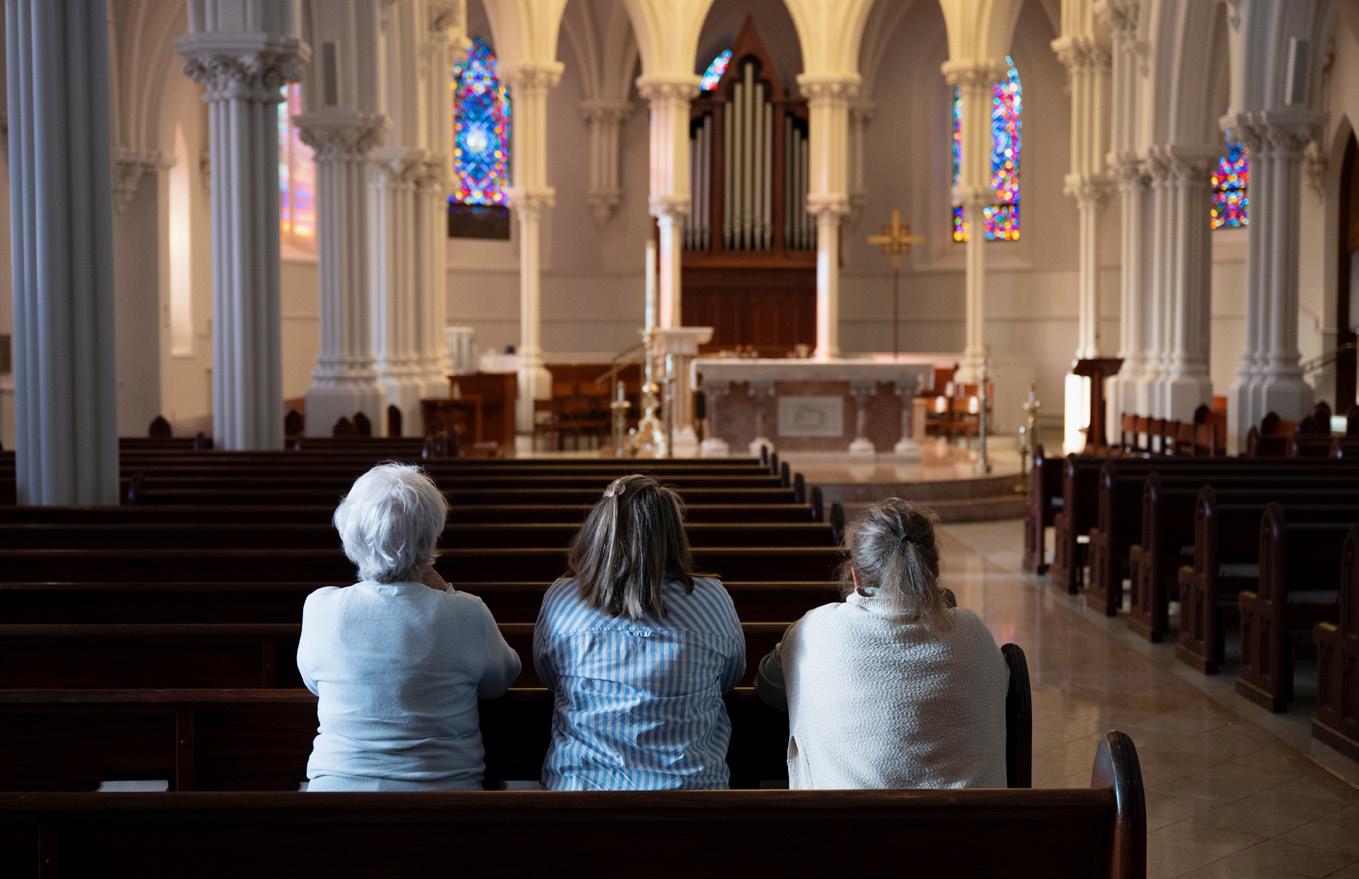
Advent is the time to prepare for the birth of Christ, and when doing that, we must also prepare for the way of the Lord. Allowing God into our minds and lives enables us to feel His presence and trust in Him.
In Matthew 17:9a, 10-13, they ask Jesus, “Why do the scribes say that Elijah must come first?” They fail to see God’s plan for Elijah and doubt what he is doing to prepare for the Lord.
In life, we sometimes doubt the path we are on. We ask, “Why, Lord? What is my purpose?” But we must remember that God has a plan for us all. During this time of preparation and anticipation for the birth of Jesus, let’s remind ourselves of God’s presence in our lives.
—Lucy Dierkes Friend of Villanova
Do my words and actions show how I observe Advent?
SIR 48:1-4, 9-11
PS 80:2ac and 3b, 15-16, 18-19
MT 17:9a, 10-13
“Give us new life, and we will call upon your name” (PS 80:19).
SUNDAY OF ADVENT
Gaudete Sunday
DECEMBER 14, 2025

IS 35:1-6a, 10
PS 146:6-7, 8-9, 9-10.
JS 5:7-10
MT 11:2-11
“Strengthen the hands that are feeble, make firm the knees that are weak, say to those whose hearts are frightened: Be strong, fear not” (Isaiah 35:4).
Today’s readings call us to rejoice. Isaiah speaks of exultation, rejoicing, blooming, abundance, glory, splendor and gladness. In a world as troubled as his (or our own!), what basis do we have for rejoicing? It is our trust that the psalmist’s plea—“Lord, come and save us” (cf. IS 35:4)—will not go unheard. Rather, God’s saving action is about to take place.
What will this saving action look like? As the psalmist and the Gospel suggest, it involves “glad tidings to the poor”—that is, caring for the vulnerable, welcoming the outcast, raising the lowly, and humbling the mighty. “The coming of the Lord is at hand” (5:8), James reminds us. Until then, we must remain patient for only a little while longer.
This Gaudete Sunday, may we rejoice with the birth of our long-expected, much-hoped-for Savior and the arrival of the peace for which we have yearned. Our waiting will soon be over.
—Peter Fay, PhD Catherine of Siena Teaching Scholar Ethics Program
How can I rejoice this Sunday?
MONDAY OF THE THIRD WEEK
DECEMBER 15, 2025

Balaam is given a rare gift: the ability to see as God sees. While others looked at Israel and saw uncertainty and struggle, Balaam saw a hopeful future. A star and staff rising from Israel, signs of God’s presence and guidance. Balaam reminds us that sometimes all we need is a shift in perspective to realize how God is already working.
When I think about this passage, I’m reminded of how often God’s presence is felt through the people and communities around us. Villanova is a perfect example of this. I consistently see Villanovans showing up for each other and for the world beyond our campus. Whether it’s through simple acts of kindness, genuine conversations, or the many ways we support others, God’s love is quietly at work here.
Like Balaam, I realize that what might look difficult or even uncertain at first glance is truly overflowing with God’s goodness. Advent invites us to pause, step back and look again. To notice the light when all we see is darkness. To recognize God’s guidance, even when we feel unsure of the road ahead.
What areas of my life are overflowing with God’s goodness, regardless of difficulty?
NUM 24:2-7, 15-17a
PS 25:4-5ab, 6 and 7bc, 8-9
MT 21:23-27
“Your ways, O LORD, make known to me; teach me your paths, Guide me in your truth and teach me” (PS 25:4-5ab).
TUESDAY OF THE THIRD WEEK
DECEMBER 16, 2025

ZEPH 3:1-2, 9-13
PS 34:2-3, 6-7, 17-18, 19 and 23
MT 21:28-32
“When the poor one called out, the LORD heard, and from all his distress he saved him”
(PS 34:7).
Zephaniah lived in the 600s BC, during the reign of King Josiah. Before Josiah’s reforms, Judah had become corrupted by the worship of Baal and other deities. It also saw its elite classes corrupted by material pleasures—such as fine clothing, palaces and food—while the poor languished. Zephaniah delivered a harsh message for Judah—prophesying its destruction except for the humble and lowly.
In contrast to the proud, who put their trust in themselves, or other people, or who worship things like money, material goods, approval, security, health, etc., the humble and lowly put their trust in God. Pope Leo XIV opened his pontificate with the words “Peace be with you all.” When Jesus spoke of peace, he was referring to the peace that comes from surrendering to God’s will.
—Pat
Campbell ’85 VSB, ’88 JD
What are the idols in your life that interfere with your total trust in God’s plan?
WEDNESDAY OF THE THIRD WEEK
DECEMBER 17, 2025
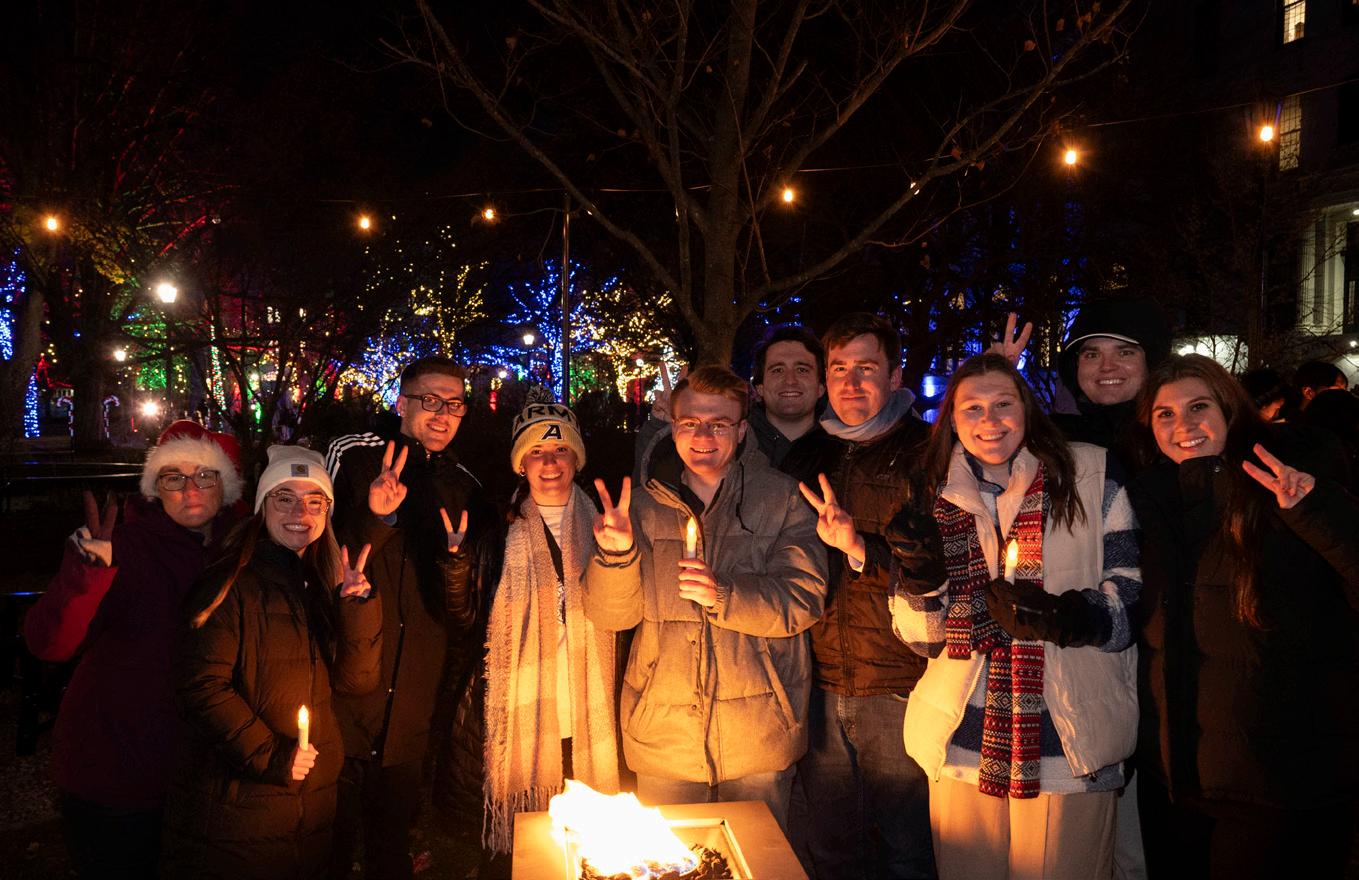
In the first reading, we hear Jacob’s prophecy that Judah will guide his people to victory. This prophecy reminds us that, no matter how bleak our current circumstances, God’s plans will come to pass and peace and justice will reign.
In today’s world, the lack of peace can feel discouraging. The news provides endless coverage of heartbreaking conflicts between nations and people. However, as Catholics, we may take refuge in God’s beautiful promise of peace. As the Responsorial Psalm says, “Justice shall flourish in his time, and fullness of peace forever.”
Around the season of Advent, we hear the word “peace” so often that it may become as familiar and overlooked as a decorative wreath. But “peace” is more than just a word; it is God’s wonderful and miraculous gift to us, His children.
Peace be with everyone who is reading this reflection!
—Ailish Wilson ’26 CLAS
How do I accept God’s gift of peace? How can I share this gift to increase virtue in my world?
GEN 49:2, 8-10
PS 72:1-2, 3-4ab, 7-8, 17
MT 1:1-17
“ The mountains shall yield peace for the people, and the hills justice” (PS 72:3-4ab).
THURSDAY OF THE THIRD WEEK
DECEMBER 18, 2025
JER 23:5-8
PS 72:1-2, 12-13, 18-19
MT 1:18-25
“Justice shall flourish in his time, and fullness of peace for ever” (PS
72:12-13).
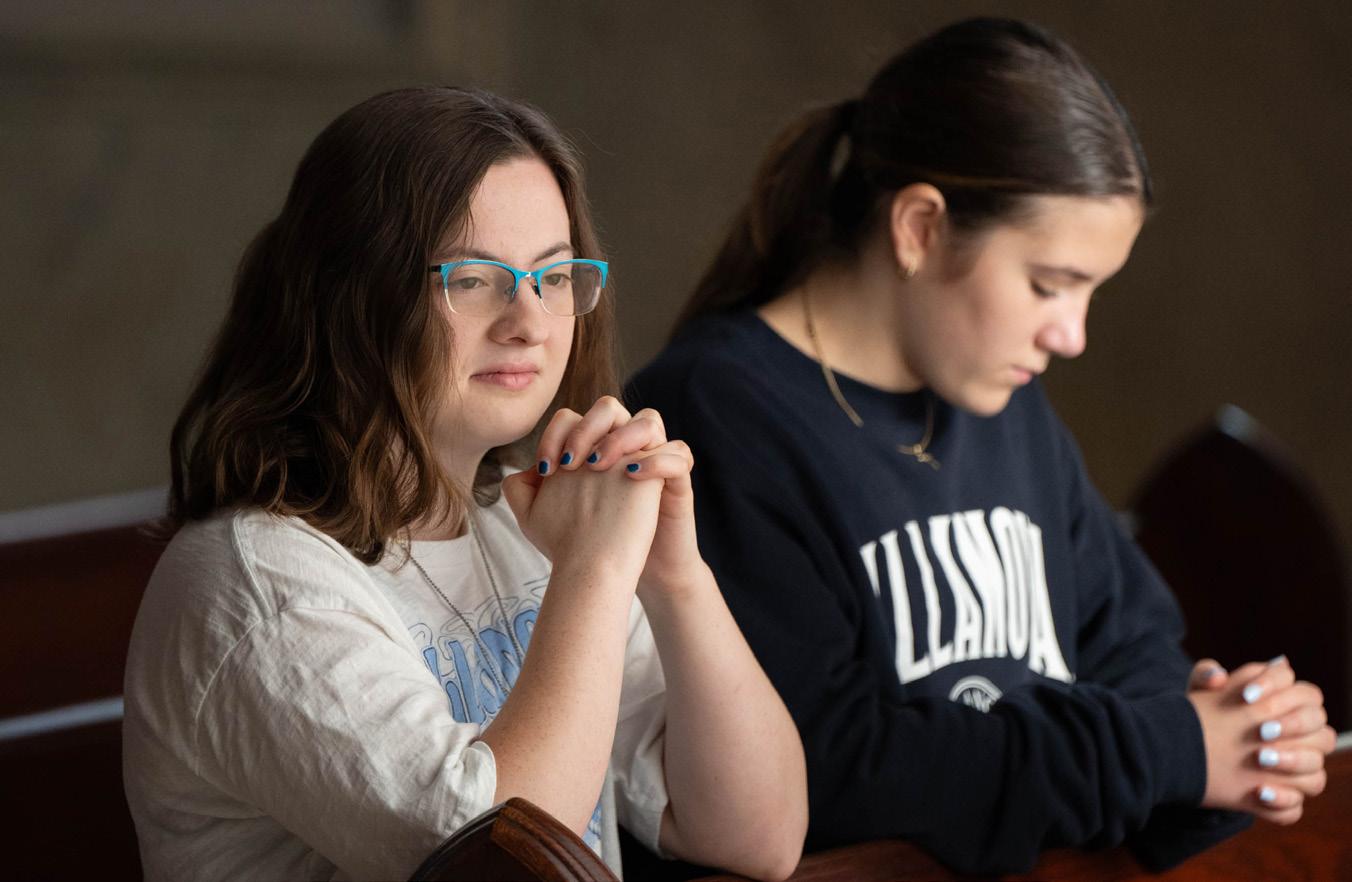
Christmas has come early! Well, maybe not quite yet, even though we get a sneak peek at Matthew’s narrative of the Annunciation and birth of Jesus a week early. But today’s readings are an invitation to consider what happens in God’s time. Jeremiah and the Psalmist speak about the days coming when God’s justice and peace will reign—the days when the poor are saved and the dispossessed are returned to their land.
In a world torn apart by war and strife and poverty, it can seem that the days of justice and peace are always out of reach. That we are waiting and waiting for God’s time to arrive, finally, just as we must wait one more week for Christmas. But perhaps today’s sneak peek of the birth of Jesus is also a reminder that even as we wait for God’s time to arrive, He is already here, and His time is now.
—Matt Ryan-Bender Director of Finance and Administration Office for Mission and Ministry
How can I live each day as if God’s time of justice and peace is now?
FRIDAY OF THE THIRD WEEK
DECEMBER 19, 2025
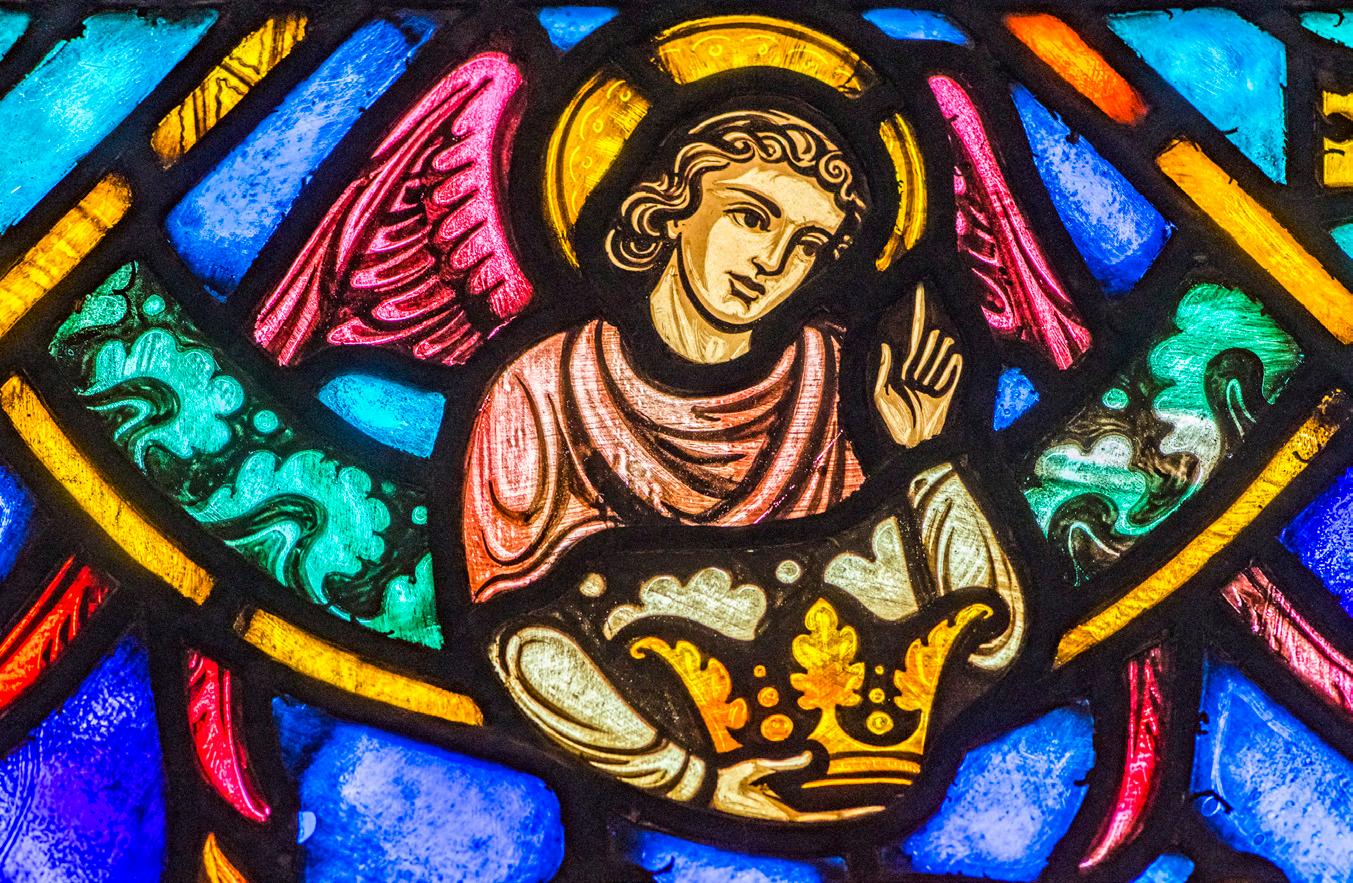
We, as people of God, must understand that although certain things in life may seem impossible, by keeping God’s Commandments and ordinances and trusting in what usually does not happen, miracles can occur and we can become fruitful in God’s eyes. The first reading from Judges and the Gospel according to Luke are parallel stories of angels appearing to men, instructing them about the fulfillment of God’s plan with prophets through their barren wives; for Manoah, the angel foretold Samuel, and for Zechariah, it was about John the Baptist.
In understanding the stories of history, we can then apply them to our own lives and ask ourselves, “Where has God imprinted His mark and shown us? In the most ordinary moments, how is He leading us to bring life through our living?”
—Franklin Hung ’28 VSB
How do I tangibly feel God’s presence this Advent season?
JD 13:2-7, 24-25a
PS 71:3-4a, 5-6ab, 16-17
LK 1:5-25
“Be my rock of refuge, a stronghold to give me safety, for you are my rock and my fortress” (PS 71:3-4a).
SATURDAY OF THE THIRD WEEK
DECEMBER 20, 2025

IS 7:10-14
PS 24:1-2, 3-4ab, 5-6
LK 1:26-38
“Come and free the prisoners of darkness”
(Psalm 24:6).
In our first reading, Ahaz hesitates to ask God for a sign, stubbornly insisting he “will not ask or tempt the Lord” (IS 7:11). Yet Isaiah reminds us that God yearns for us to call on Him—so much so that He offers signs of His presence each day, even when we fail to ask for or recognize them.
Mary, in the Gospel, receives the clearest sign imaginable from the angel Gabriel: “You will bear the Son of God” (IS 26:31). And still, Mary—the most faithful among us—is filled with fear, “greatly troubled.” Mary teaches us that true faith is not the absence of fear, but the courage to trust God through it.
Gabriel’s assurance, “The Lord is with you” (LK 26: 28), mirrors both the greeting of peace at Mass and Pope Leo XIV’s first words, “Peace be with you.” It reminds us that God’s presence itself—He who is the fullness of peace— is the sign we seek.
—Mary Kate Farrell ’26 CLAS
How often do we ask God for signs in our life, yet overlook the One already walking beside us?
DECEMBER 21, 2025
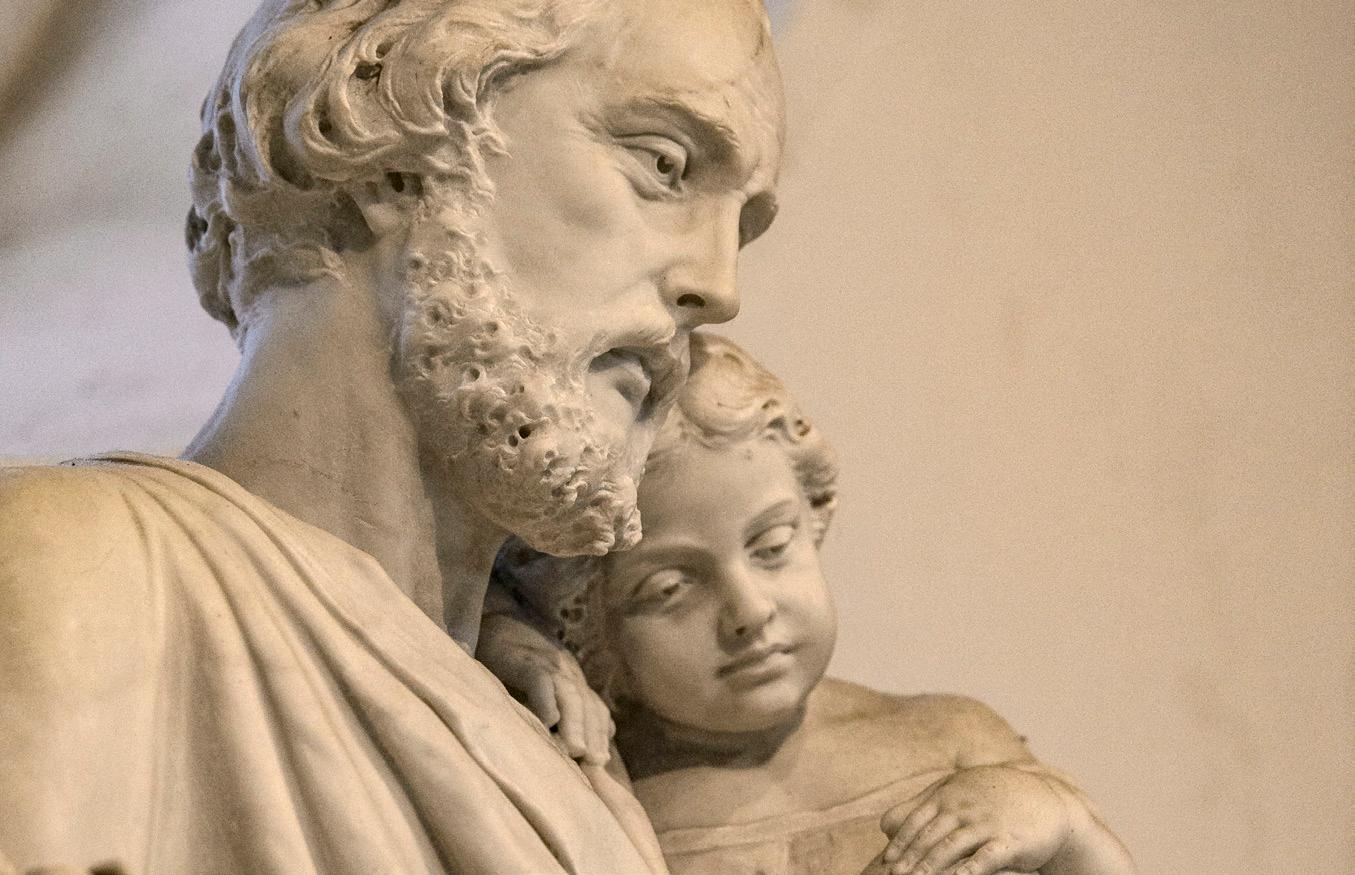
Do not be afraid—Emmanuel, God is with us!
In our Advent season, we have heard this phrase spoken by God’s messenger to Mary, and now to Joseph. Joseph was certainly confused by the unexpected presence of a child, whom he knew was not his, yet he wanted to trust Mary. If he had reported her, she and the child could have been stoned to death according to the law. But because Joseph trusted the angel’s message and overcame his fear, he continued on the journey towards the birth of Jesus, and he and Mary raised him to grow in wisdom and faith. Joseph is a great example for us!
When things are complex and confusing, whether in life or in faith, remember that God is with us— Emmanuel! God will not let us down but will continue to walk with us on the journey of life and faith.
— The Rev. Bernie Scianna, OSA, PhD Senior Associate Dean of Students for Student Support
What fear(s) keep us from the peace of Christ? How can we learn to fear less and trust God more?
IS 7:10-14
PS 24:1-2, 3-4, 5-6
RM 1:1-7
MT 1:18-24
“When Joseph awoke, he did as the angel of the Lord had commanded him” (MT
18:24).
DECEMBER 22, 2025
1 SA 1:24-28
1 SA 2:1, 4-5, 6-7, 8abcd LK 1:46-56
“He has filled the hungry with good things” (LK 1:53).
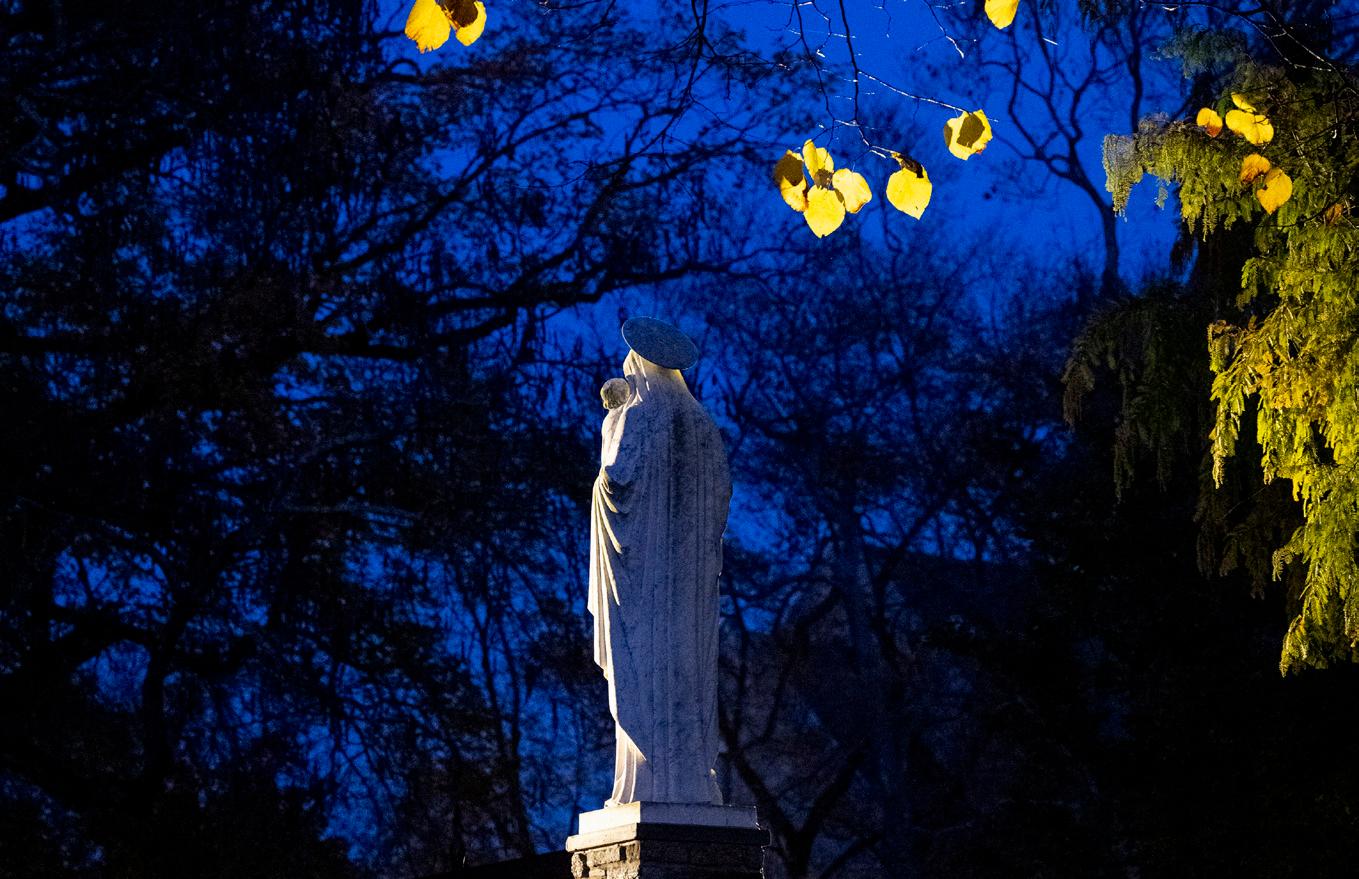
Today’s reading from the Gospel of Luke is known as Mary’s “Magnificat,” in which she humbly and with great exuberance praises the Lord as she carries in her womb the Savior of the world. Mary joyfully exclaims the wonders of God’s love for mankind and His will that the poor will receive justice.
Much has already occurred before we arrive at this text. The angel Gabriel announced to Mary that she would be the mother of the Messiah, and she spent months visiting Elizabeth, who was pregnant with John the Baptist. Both women rejoiced in the presence of their Lord developing in Mary’s womb.
Looking back 2000 years later, it’s easy to assume Mary fully understood what was happening. However, as the Gospels develop, we see that she only knew the outline of what it meant to become Jesus’ mother.
The lesson we can take from Mary is that while she didn’t know everything (just like us), she knew enough. She understood what was expected of her; she said “yes,” and in so doing changed the history of mankind.
—Dennis McAndrews, Esq. ’75 CLAS, ’78 JD
Can we recognize that we “know enough” about the needs of our fellow man? Can we emulate Mary?
TUESDAY OF THE FOURTH WEEK
DECEMBER 23, 2025

This year’s Advent theme, “Peace be with you all!” is taken from Pope Leo XIV’s first speech after his election as pontiff on May 8 of this year.
In today’s readings, we see the promise of God’s peace in the form of Jesus—the Prince of Peace. In the first reading, the Lord promises a messenger who will “prepare the way before me” (MAL 3:1). The Gospel reading tells us of the birth of John the Baptist, who was the fulfillment of the Old Testament promise of a messenger.
During Advent, we wait in prayerful anticipation of the birth of Jesus. With the birth of Jesus, God became flesh and dwelt among us, thus Jesus embodied God’s peace. In preparing the way for Jesus, John the Baptist prepared the way for peace. Earlier this year, Pope Leo invited us to accept God’s peace.
—Tia Noelle Pratt, PhD Special Assistant to the Vice President Director of Mission Engagement and Strategic Initiatives Office for Mission and Ministry
In these final days of Advent, how will we receive God’s peace and share it with the world?
MI 3:1-4, 23-24
PS 25:4-5ab, 8-9, 10 and 14
LK 1:57-66
“And suddenly there will come to the temple the LORD whom you seek” (MI 3:1).
WEDNESDAY OF THE FOURTH WEEK
DECEMBER 24, 2025
2 SA 7:1-5, 8b-12, 14a, 16
PS 89:2-3, 4-5, 27 and 29
LK 1:67-79
“Guide our feet into the way of peace” (LK 1:79).
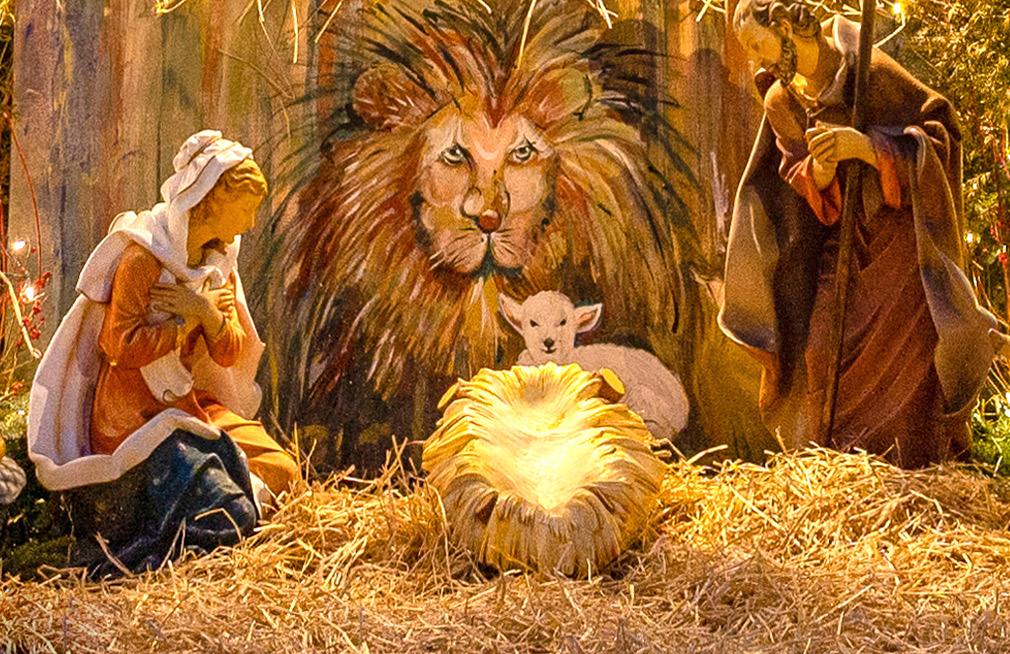
As we meditate on Pope Leo XIV’s call to be agents of a disarming peace and prepare ourselves to celebrate the Nativity of the Lord, today’s Gospel illuminates the need to reflect on something we are all too familiar with: the invitation of interruption. The season of Advent calls us into a mode of attentive watch, and our readings continually draw us deeper into hope, peace, joy and love. With today’s Gospel, we see the culmination of these themes emerge in the Benedictus: the hope that comes with the realization of the Messianic Prophecy, the peace with knowing He who shows us the way, the joy in being illuminated by He who is light, and the serenity that comes with all of this being a blessed culmination of love.
These themes are not simply passive elements, but an active invitation. It’s an active invitation to recognize God’s love, manifest in Jesus. An invitation to be led out of darkness into the light. An invitation to be agents of disarming peace. But most importantly, an invitation to dare to hope, an invitation to embrace the interruption. May we be a people forever on the pathway of peace and to joyfully await the culmination of our blessed hope, Jesus Christ.
How do we allow moments of interruption to invite us into deeper reflection?
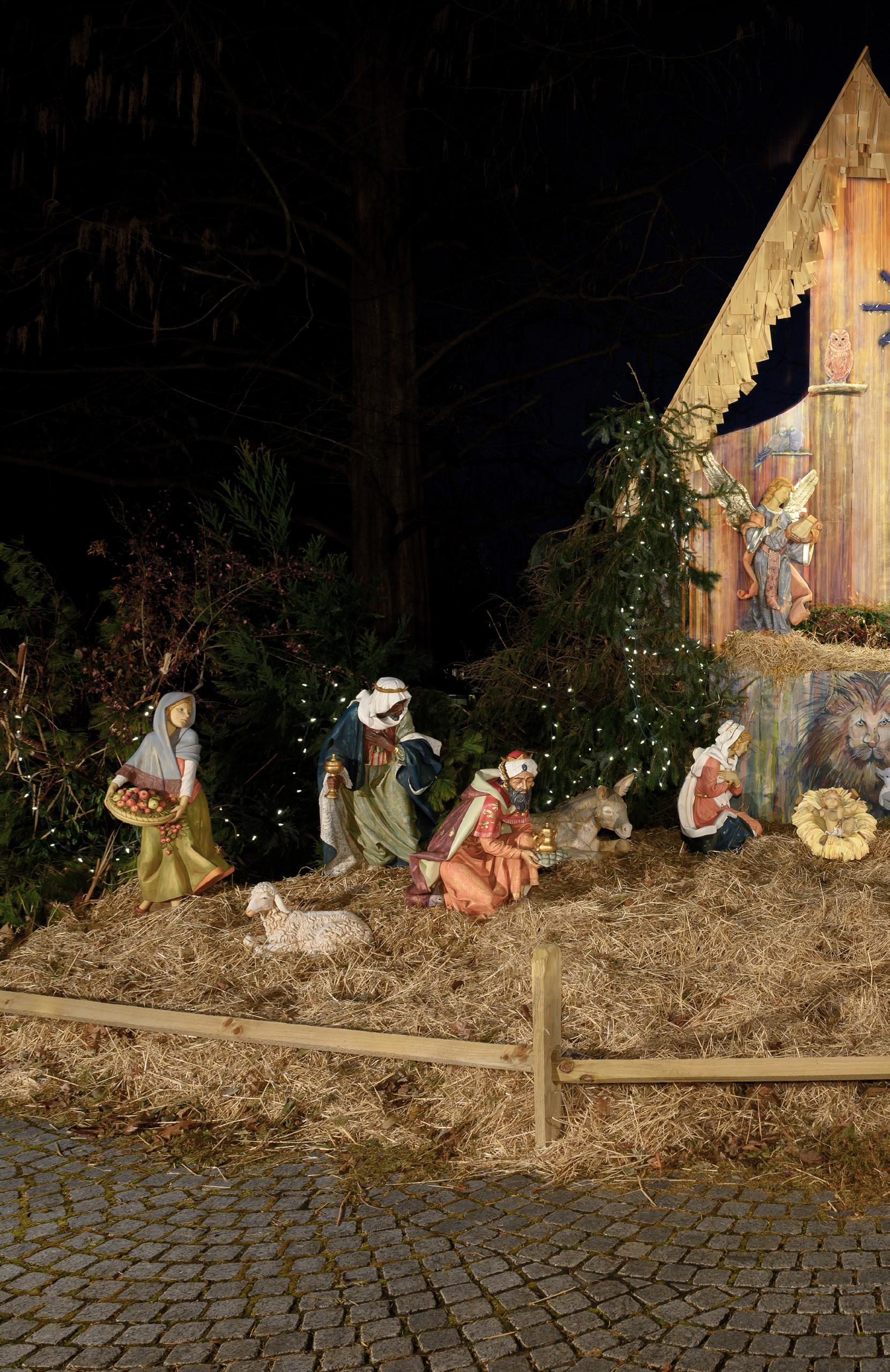
“Let us announce the coming of our Savior with joy!”
—St. Augustine, Sermon 190, 3