



Editorial
5 The art of advocacy THE EDITORS
8 Readers’ Digest
Around Town
14 2025 Sports Law Conference AND TRI-STATE FOOTBALL
TOURNAMENT IN NSW
DANIEL NGUYEN
16 A night of thanks: Victorian Bar News winter edition launch
17 Criminal Bar Association Dinner
ZOE BROUGHTON AND
STEPHANIE SPROTT
18 CROSSROADS 2025: Where barristers hit their stride
BRITTANY KING AND ZEINA ALHALABI
19 Women Barristers Association Business Development Day
News and Views
26 The Hon Stephen Charles AO KC
THE HON SUSAN CRENNAN AC KC
30 Peter O’Callaghan QC Portrait Gallery
JUSTIN TOMLINSON
33 The poet and the barrister
JACK KELLY
34 Art for chambers: Where to begin
SOPHIE MOSHAKIS
36 Conservation of The Silks’ tapestries
STEVE STEFANOPOULOS
38 Bell Shakespeare and the art of continuous learning
RACHEL MATULIS
40 Quaking Aspen is Inviting You to Join a Meeting
NICK MODRZEWSKI
Editors: Tim Jeffrie, Angelo Germano, Alexander Di Stefano, Jessica Elliott. Consultant Editor: Maree Norton SC VBN Committee: Joel Silver, Owen Wolahan, Angelo Bartzis, Angus Willoughby, Annabelle Ballard, Liz Main, Sebastian Campbell, Rachel Matulis, Ivana Smojver Bar Council Representative: Moya O’Brien
Contributors (in alphabetical order): Zeina Alhalabi, Annabelle Ballard, Daniel Bongiorno SC, Hilary Bonney, The Hon Justice Christopher Boyce, Zoe Broughton, David Brustman KC, Roxanne Burd, Darryl Burnett, Her Honour Magistrate Natalie Burnett, Fiona Cameron, Andrew Cameron SC, Kristie Churchill SC, Michael K. Clarke SC, Peter Creighton-Selvay SC, The Hon Susan Crennan AC KC, Bianca D’Angelo, Jo
12 President’s message
FIONA RYAN

ELIZABETH RUDDLE
20 Gathering Momentum: The 2025 ‘Train the Trainer’ Program
SIMONE KIPEN
22 A class act: readers of 2005 gather, two decades on DUGALD MCWILLIAMS SC
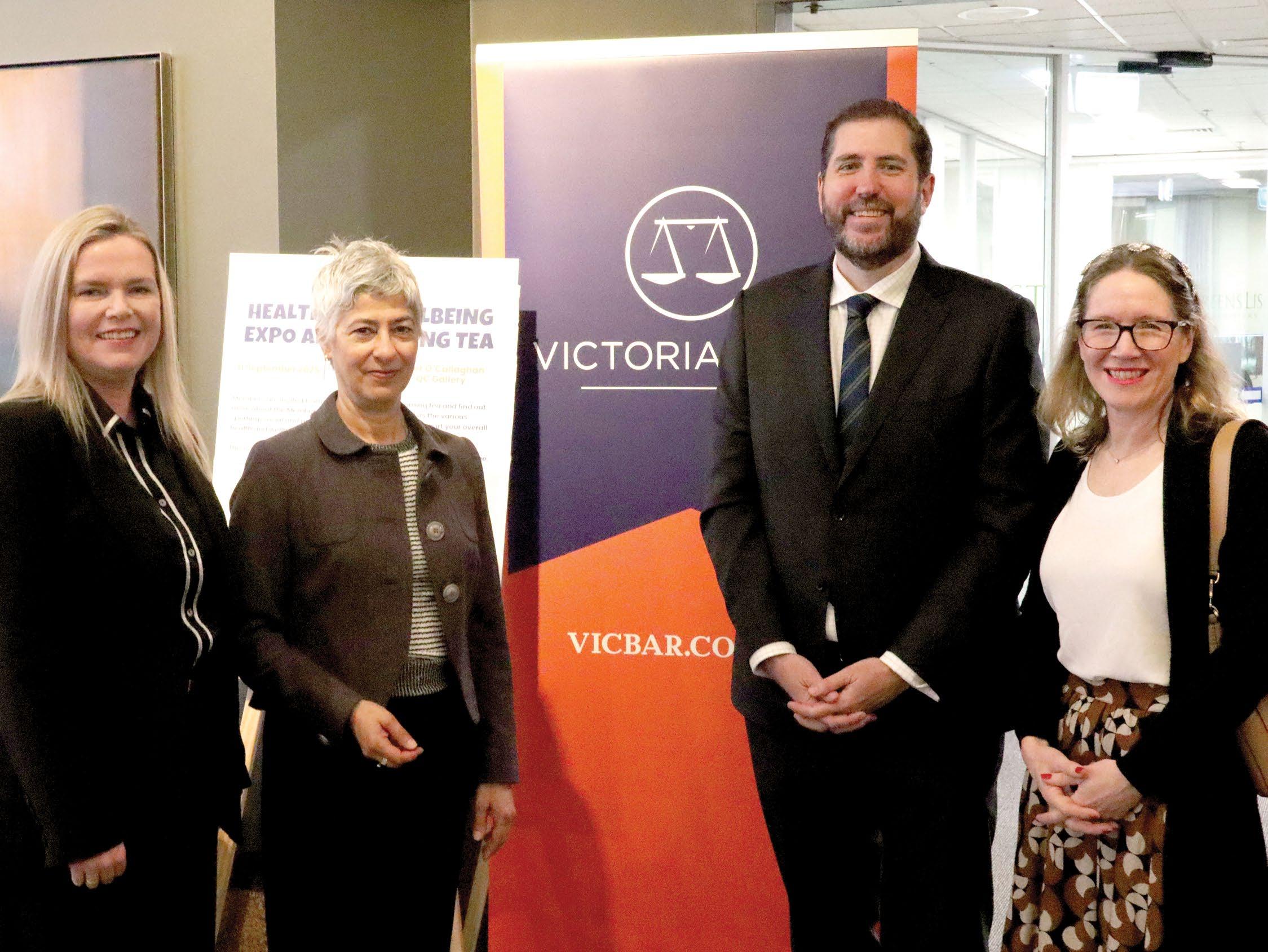
23 Inaugural Health and Wellbeing Expo
JO DOUGHERTY
24 Victorian Bar Foundation Student Achievement Award Ceremony
XUELIN TEO
42 Generative AI at the BarA PRACTICAL PERSPECTIVE
EDWARD MOORE AND KATHLEEN
FOLEY SC
46 BottledSnail Presents Australian premiere of Lindberg’s Requiem
THE HON JUSTICE CHRISTOPHER BOYCE
47 Tullamarine’s flight to freedom: The truth, the whole truth and nothing but the truth
ROBERT LARKINS
50 Her Honour
LIZ MAIN
54 Perspectives on the Diversity Internship
FIONA CAMERON
56 Crime, sky high: The new William Street Chambers
MOYA O’BRIEN
Dougherty, Cathy Dowsett SC, Sarah Fisken SC, Sarala Fitzgerald SC, Kathleen Foley SC, Alexandra Folie SC, Brad Fry, Ben Gibson SC, Shaun Ginsbourg SC, Eddy Gisonda SC, David Glynn SC, Stella Gold SC, Peter Gray, Samuel Hamilton Lindsay, The Hon David Harper AM KC, Barnaby Johnston, Sarah Keating SC, Olivia Kefford, Jack Kelly, Siobhan Kelly SC, Mitchell King, Brittany King, Simon Kipen, Romesh Kumar SC, Robert Larkins, Kane Loxley SC, Liz Main, Kiran Marfatia, Rachel Matulis, Damien McAloon SC, Elizabeth McKinnon, Fiona McLeod AO SC, Dugald McWilliams SC, Thomas Middleton, Tom Moisidis, Edward Moore, Angela Moran, Philip Morrison, Sophie Moshakis, Janey Nestadt, Naomi Newbound, Daniel Nguyen, Moya O’Brien, Andrew Osmond, Elizabeth Panckridge, Catherine Parkes, Jack Popolo, Elizabeth
178 SUMMER 2024/25
Back of the Lift
62 2025 Silks Q&A
67 Adjourned Sine Die
70 Silence All Stand
72 Vale
79 Gonged
80 2025 Videogames Round Up -Hidden Gems and Unexpected Surprises
ANNABELLE BALLARD
82 Book reviews: The Price of Time, the Real Story of Interest by Edward Chancellor, Money in One Lesson by Gavin Jackson, and Money, A Story of Humanity by David McWilliams
84 A MusicElle review of Legally Blonde
ANNABELLE BALLARD
85 Podcast Review: The Rest IS HISTORY
ANGUS WILLOUGHBY
86 Language Matters: Finding your voice: the passive habit
PETER GRAY
90 Restaurant Review: Harriot
THE EDITORS

Ruddle KC, Fiona Ryan SC, Timothy Scotter SC, Emily Sheales, Philip Simpson, Jeremy Smith, Stephanie Sprott, Steve Stefanopoulos, Dr Cait Storr, Senior Judicial Registrar Katherine Sudholz, James Sutherland, Xuelin Teo, Sarah Thomas, Graeme Thompson, Justin Tomlinson SC, Alezka Villaluz and Angus Willoughby. Photography/Images (in alphabetical order): Zeina Alhalabi, Kate Arnott, Peter Bongiorno, Robert Dora, Mahtab Fazl, Haroon Hassan, Tim Jeffrie, Sandra Karabidian, Yvonne Kushnir. Her Honour Judge Wilmoth, Peter O’Farrell KC, Neil Prieto, Stephen Porter, Samantha Seoud, Steve Stefanopoulos and Patrick Woods.
Publisher: Victorian Bar Inc., Level 5, Owen Dixon Chambers East, 205 William Street Melbourne VIC 3000 Registration No: A 0034304 S
The publication of Victorian Bar News may be cited as (2025) 178 B.N. Opinions expressed are not necessarily those of the Bar Council or the Victorian Bar or of any person other than the author Advertising: All enquiries, including requests for advertising rates to be sent to: Jo Dougherty, Victorian Bar Inc., Level 5, Owen Dixon Chambers East, 205 William Street, Melbourne VIC 3000 Tel: (03) 9225 7111
Email: jo.dougherty@vicbar.com.au
Illustrations, design and production: Guy Shield - www.guyshield.com
Printed by: Southern Impact - www. southernimpact.com.au
Contributions: Victorian Bar News welcomes contributions to vbneditors@ vicbar.com.au

Agolden rule of cross-examination is: never ask a question unless you know what the answer will be. If you follow that rule, you would think twice before asking a witness “What is art?” That’s because the answer depends on who you ask. It varies from person to person.
Some would say a barrister’s work has little to do with art. Barristers are often seen as disciplined, logical and precise (at least we hope we are). Barristers have their own creativity, perhaps not artistic, but strategic and analytical. Our work often demands creative legal reasoning, crafting persuasive arguments, and innovative problem-solving.
This issue of VBN is a reminder that art and advocacy are not so far apart. Both rely on narrative. Both seek truth. And both, at their best, aim to move the human spirit.
This edition includes a poem from Nick Modrzewski, a member of our Bar and a renowned artist. The work, titled
“This issue of VBN is a reminder that art and advocacy are not so far apart. Both rely on narrative. Both seek truth.”

Quaking Aspen is Inviting You to Join a Meeting, imagines a Zoom meeting between council trees anxious about the growing trend of rivers, animals and even ‘nature’ being recognised as ‘natural’ persons. This piece playfully engages with developments in the law of legal personhood.
Justin Tomlinson SC has prepared a piece on the Victorian Bar’s own dedicated portrait gallery, the Peter O’Callaghan QC Gallery. His wonderful insight into the gallery explores its origins and the artworks it houses.
The potential threat that artificial intelligence poses to the art world is often discussed. Kathleen Foley SC and Edward Moore take a deep dive into the possible implications of AI for the Bar. Their piece examines the areas in which AI has already made inroads, and also offers a note of caution about relying on it in barristers’ work.
Liz Main shares the remarkable story of Mahtab Fazl, an Afghan judge who travelled to Melbourne to be mentored
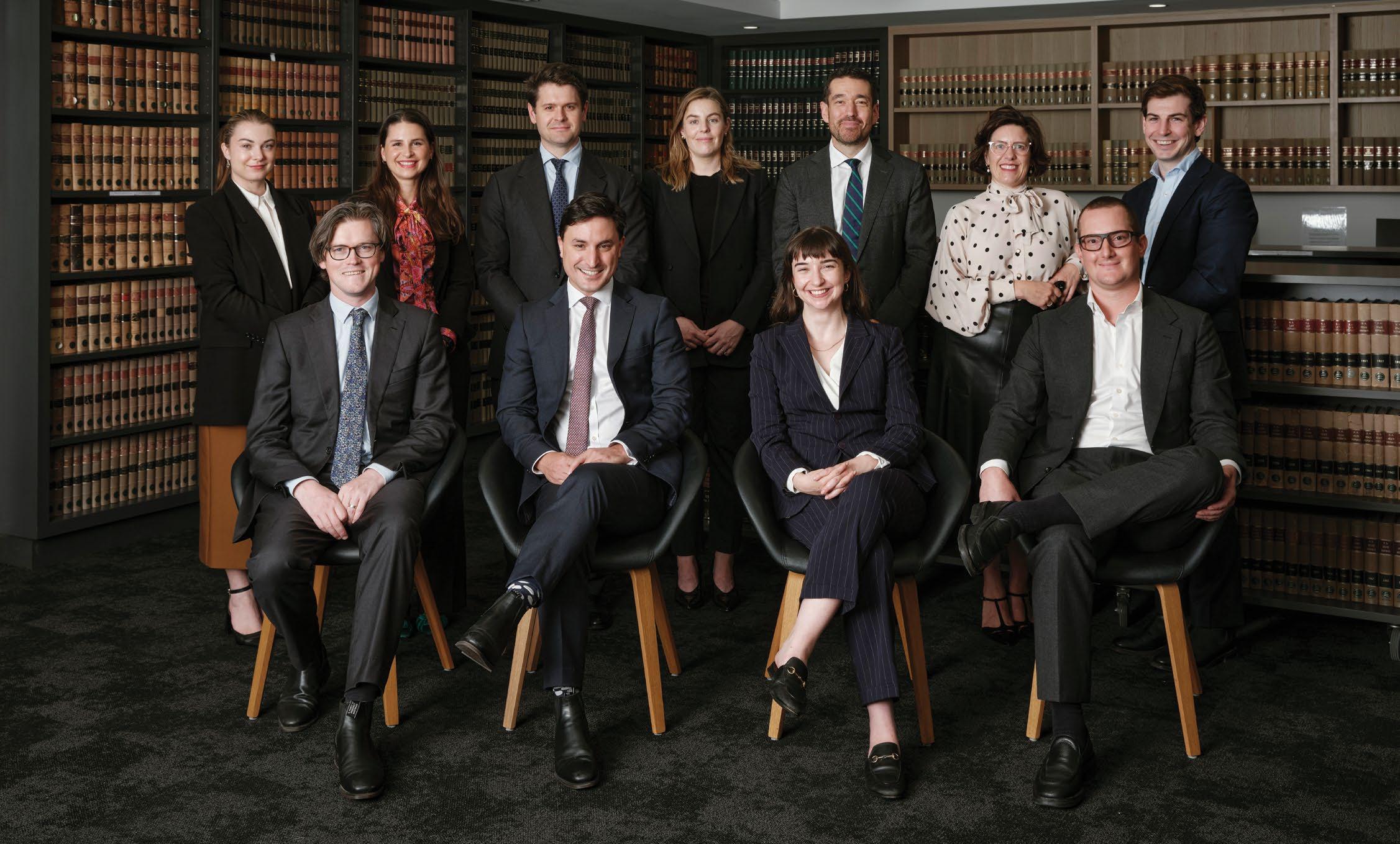
by Judge Wendy Wilmoth and Judge Fiona Todd of the County Court. Judge Fazl, a female judge who served while receiving threats from the Taliban, offers a story that is both fascinating and deeply inspiring.
This edition also includes brilliant comment from members. Moya O’Brien introduces the newly formed William Street Chambers and discusses how two artworks inspired the chambers’ design. The Hon Susan Crennan AC KC pays tribute to the inspiring life and distinguished career of the Hon Stephen Charles AO KC in her moving eulogy. Robert Larkins’ piece Tullamarine’s flight to freedom is compelling. Rachel Matulis gives us insight into the Bell Shakespeare national theatre company.
This edition reliably features book, restaurant, podcast, musical and game reviews. There are the usual recent Bar events and launches and a fantastic review of the celebrated “The Rest is History Podcast” by Angus Willoughby.
We are also delighted to include a Q&A with the newly appointed silks, and we offer our congratulations to them all.
We extend our sincere thanks to our dedicated contributors and committee members, without whose efforts this publication would not be possible. We are especially grateful to Denise Bennett and the broader Bar Office team for their generous assistance in producing this edition.
Tvbneditors@vicbar.com.au
he voter turnout in the 2026 Bar Council election, without the centrist ticket running, was a disappointing 20% lower than in 2025 when the ticket last ran. This fall is despite a growth in the number of barristers.
From 2020 to 2025 the concept of the ticket came in for criticism from some quarters, but importantly it succeeded in increasing engagement by barristers in the democratic process.
The evidence for this is that in 2019, the last election before the " vote for change " ticket ran, the voter turnout was just 970. In 2025, the last election in which the ticket ran, the voter turnout was 1,650.
It will be interesting and important to watch what happens in the future years as I, for one, do not want to return to the days when Bar Council was elected with less than half the Bar bothering to vote. If the election engagement does fall away again the ticket may have to be resurrected.
Regards,
Darryl J Burnett

FRONT ROW (L-R): Catharine Thorpe, Martha Banda, Bathsheba Pora, Janey Nestadt, Hannah McGuire, Priyanka Banerjee, Naomi Newbound, Lee Kimonides, Lauren Gurry, Jennifer van Veldhuisen, Bianca D’Angelo, Zoe Hough, Olivia Kefford, Georgie Clough, Selena Bateman
MIDDLE ROW (L-R): Linda Bakokoto, Kieren Malone, Nicholas Howard, Alezka Villaluz, Laurence Waugh, Margaret Brown, Emily Sheales, Katherine France, Nikhil Sood, Stephanie Sprott, Ashlea Swan, Kiran Marfatia, Rory Hudson, Ilya Komesaroff, Bradley Fry, Remi-Victoria Cuce, Thomas Smedley, Rachel Galik, Philip Morrison, Andrea Meloni, Andrew Osmond, Rebecca Tambasco, Sasha Di Sipio, Rohan Nanthakumar, Cait Storr, Ella Watt, Timothy Graham, Christina Gomez Vazquez, Samuel Hamilton Lindsay
BACK ROW (L-R): James Sutherland, Jack Ferguson, Nikita Angelakis, Mitchell King, Nico Baarlink, Kieran Bowling, Katrina Malone, Jack Hurley, Dayne Kingsford, Ross Allen, Thomas Middleton, Oliver Keogh, Killian Donohoe, Jeremy Smith, Lachlan Mahon, Alison Finch
Each edition we reach out to the latest cohort of readers to get to know them better
Favourite fictional lawyer? Jessica Pearson. Smart, fierce and always impeccably dressed. If you could argue any historical case, what would it be? Dietrich v The Queen—to have been involved in a High Court case that established important principles about the accused’s right to a fair trial in the context of legal representation. Best piece of advice you learnt in the readers’ course? Know your Bench. Who are you reading with? Krystyna Grinberg.
What is your guilty pleasure? Crime novels.
Alison Finch

Favourite fictional lawyer? I have to say Atticus Finch, in part because Finch is also my surname. But also, because he is a respected lawyer, he is ethical, wise, and committed to treating people with dignity and fairness.
If you could argue any historical case, what would it be? My old workplace ran the case ABC v O’Neil [2006] HCA 46, which was a defamation case
about an ABC broadcast. The applicant was a prisoner in a minimum-security prison in Hobart. It was run pro bono, and I heard stories about how the client contacted them initially and some of the preparation involved. I would have liked to be a fly on the wall. It is still the leading authority for interlocutory injunctions nearly 20 years later.
Best piece of advice you learnt in the readers’ course? Pressure-test your arguments to their logical conclusions. Be yourself and your job is to assist
the Court, if they ask you a question, answer it. Who are you reading with? Dan Sweeney and Minal Vohra SC.
What is your guilty pleasure? Pub trivia.
Favourite fictional lawyer? When I was a teenager, and starting to think about the law, there was a TV show called JAG.

The main character, Harmon Rabb, wasn’t only a lawyer for the US Navy, he was a naval aviator who could fly an F-14 Tom Cat. “Harm” was both
Daniel Kaffee and Maverick, in the one fictional character; and he always saved the day.
If you could argue any historical case, what would it be? The Scopes Trial. As a person who has a keen interest in the philosophy of law, the case had everything. It touched on the conflict between religion and science; and the role of the State, the Law and the Courts in a democratic society. Best piece of advice you learnt in the readers’ course? Listen to your instincts, and be brave! Who are you reading with? Raph Ajzensztat. What is your guilty pleasure? Watching any TV show or movie written or directed by Taylor Sheridan.
Dr Cait Storr
Favourite fictional lawyer? Michael Clayton. A redemption fable in which no-one is saved.
If you could argue any historical case, what would it be?
Wolf Hall series. Don’t be alarmed. I am aware that he was a real lawyer! But I love the fictional version of him brought to life by Mantel. If you could argue any historical case, what would it be? The Communist Party Case on behalf of the plaintiffs. I would like to think that had I been involved, the implied freedom of political communication would have been developed some 41 years earlier. Really, though, it is because I would have loved being a junior to Dr Evatt KC and watching him in action, defending the rule of law.
What is your guilty pleasure? Blessed be salt and vinegar chips possibly with a glass of pinot noir.
Philip Morrison

Favourite fictional lawyer? Lawrence Hammill from The Castle, for his appreciation of more than just a big driveway.
[1984] 156 CLR 605
HCA—it’s a case about whether homemaker contributions should be given equal weight to financial contributions. I think in today’s society the factors would be considered differently in light of gender equality and recognition of homemaker contributions.
Best piece of advice you learnt in the readers’ course? Treat every brief like it is your dream brief. Who are you reading with? Anna Lord. What is your guilty pleasure? Tax deductions.

Attorney-General v Brown [1847] NSW Legge SC 2, for the defendant. Those 14 pages have a lot to answer for.
Best piece of advice you learnt in the readers’ course? Keep it short and sharp.
Who are you reading with? Rudi Kruse. What is your guilty pleasure? Privacy.
Trina Malone
Favourite fictional lawyer?
The Thomas Cromwell of Hilary Mantel’s

Thomas Middleton
Favourite fictional lawyer? Elle Woods from Legally Blonde. We should all wear pink and follow our ex-partners to Harvard. If you could argue any historical case, what would it be? Salem Witch Trials. I think I could’ve gotten some of those alleged witches off those charges. Best piece of advice you learnt in the readers’ course? While it may be all panic no disco at the start, you are better off not panicking. Who are you reading with? Banjo McLachlan.
If you could argue any historical case, what would it be? If I had enough Latin, I would have liked to be briefed in the trial of Cicero to see him let fly. Otherwise, the Wagatha Christie case in the UK [2022] EWHC 2017 (QB) for the high-stakes drama. Best piece of advice you learnt in the readers’ course? Learn to be happy when the work comes in, and just as happy when the work goes out.
Who are you reading with? David Seeman. What is your guilty pleasure? I really enjoy listening to science fiction and fantasy audiobooks, but it’s a guilty pleasure when I get obsessed and my wife has to confiscate my headphones to have me conversing at home again.
Bianca D’Angelo
Favourite fictional lawyer? Mickey Haller from Lincoln Lawyer—he always has the answer particularly when the case seems impossible. If you could argue any historical case, what would it be? In the Marriage of Mallet
Best piece of advice you learnt in the readers’ course? Be open to everything and anything and come to chambers!
Who are you reading with? Andrew Barbayannis and my senior mentor is Minal Vohra SC.
What is your guilty pleasure? Nibbling on malteasers or some sort of chocolate.
Andrew Osmond
Favourite fictional lawyer? Denny Crane from Boston Legal
Despite his many flaws and eccentricities, his unshakable confidence and formidable reputation often swayed cases before he even spoke. And his antics, often politically (and legally) incorrect never failed to be hilarious in the context of the series.

If you could argue any historical case, what would it be? Donoghue v Stevenson. It was the first case in the first subject I did at law school and who doesn’t know about the snail in the bottle case?
Best piece of advice you learnt in the readers’ course? Make sure you know if you need to be robed before you get to court.
Who are you reading with? Kyle McDonald with Sally Flynn as my senior mentor.
What is your guilty pleasure? Spending too much time playing online games.
Kiran Marfatia
Favourite fictional lawyer?
Jackie Chiles (Seinfeld), because, “it’s outrageous, egregious, preposterous”.
Louth v Diprose [1992] 175 CLR 621, because it’s delightfully messy. Best piece of advice you learnt in the readers’ course? That even if you have a terrible day in court, it’s about picking yourself back up and doing it all again tomorrow.

If you could argue any historical case, what would it be? Minister for the Environment (Cth) v Sharma [2022] FCACF 35— to make arguments on the existence of a duty owed by public authorities to avoid environmental harms when making policy decisions. Best piece of advice you learnt in the readers’ course? “I work 52 weeks of the year; in 38 weeks of the year.”
Who are you reading with? Andrew Yuile. What is your guilty pleasure? Defrosting Michael Bublé and Mariah Carey before 1 December each year.
Olivia Kefford
Favourite fictional lawyer? The answer can only be Lionel Hutz, he’s got unparallelled client patter.
If you could argue any historical case, what would it be?
Only a little historical but
Who are you reading with? Daryl Brown. What is your guilty pleasure? Zero guilt involved—being a complete devotee to RuPaul’s Drag Race, particularly the obviously superior UK series.
Mitchell King
Favourite fictional lawyer (and why)? Dennis Denutobecause I share a similar aversion to photocopiers
has a sharp intellect and ability to think quickly on his feet, often finding creative ways to secure the best outcome. Despite his questionable ethics, he had an overwhelming desire to see justice done. If you could argue any historical case, what would it be?

If you could argue any historical case, what would it be? Irving v Penguin Books Ltd—it’s a landmark case that brought holocaust denial into the courtroom and explored the intersection of history and law. I recommend watching Denial, a film on the trial.

If you could argue any historical case, what would it be (and why)? Donoghue v Stevenson – because I’d love to know why Mrs Donoghue poured ginger beer over her ice cream
Best piece of advice you learnt in the Readers’ Course? Prepare, prepare and prepare some more.

Who are you reading with? Luke Virgona
What is your guilty pleasure? A sausage roll from the Surfside
Patisserie Brad Fry
Favourite fictional lawyer? Jack McCoy from Law and Order. He
The trial of Dr Sam Sheppard in the United States (convicted 1954, overturned 1966). His murder conviction was eventually overturned owing to the media circus and procedural failings that denied him a fair trial. Interestingly DNA evidence confirmed his innocence in 1997. Dr Sheppard’s case is a classic example of how advocacy must hold the line against prejudice (and the media!) ensuring the judicial process itself delivers justice.
Best piece of advice you learnt in the readers’ course? I’m the least important person in the courtroom!
Who are you reading with? My mentor is Daniel Sala and senior mentor Peter Matthews SC. What is your guilty pleasure? I love a good sci-fi or fantasy novel. I can regularly be spotted in my local café, flat white in hand, reading a Brandon Sanderson book.
Janey Nestadt
Favourite fictional lawyer? Miranda Hobbes— she is the voice of reason in Sex and the City.
Best piece of advice you learnt in the readers’ course? Mistakes will be made—there’s nothing a higher court can’t fix. And, charge like a Melbourne Grammar boy.
Who are you reading with? Amanda Burnnard. What is your guilty pleasure? Connoisseur Cookies and Cream ice cream and watching Vanderpump Rules (if you know you know).
Samuel Hamilton Lindsay
Favourite fictional lawyer? Matlock from Matlock for his fixed fees, folksy fashion and ukelele playing.
If you could argue any historical case, what would it be? Entick v Carrington [1765] EWHC KB J98. It has it all: torts, civil liberties, defences, public law, property, executive power, the rule of law, dramatic facts! Best piece of advice you learnt in the readers’ course? Prepare, prepare, prepare.
Who are you reading with? Tim Jeffrie. What is your guilty pleasure? A little treat in the afternoon.
Alezka Villaluz
Favourite fictional lawyer? Lt Daniel Kaffee from A Few Good Men—he was not intimidated by Col Nathan Jessup. Plus, the crossexamination scene (although far from real life) was a great watch!

Preferably all at the same time.
James Sutherland
Favourite fictional lawyer?
Dennis Denuto: “it’s the vibe”.
If you could argue any historical case, what would it be? Donoghue v Stevenson—the mother of negligence.
To quote the musical Hamilton, “I wanna be in the room where it happens”.
Best piece of advice you learnt in the readers’ course? Preparation, preparation, preparation! Preparing identifies what you should know, what you don’t know and guides you on how to approach and best advocate for your case.
Who are you reading with? Simone Bailey.
What is your guilty pleasure? Spa days, chocolates and prosecco.
If you could argue any historical case, what would it be? R v Murphy—there would be something surreal about prosecuting or defending a sitting High Court judge in a criminal trial.
Best piece of advice you learnt in the readers’ course? Take opportunities.
Who are you reading with? Barnaby Johnston.
What is your guilty pleasure? A beer or coffee after a hit of tennis.
Favourite fictional lawyer (and why)? Portia from The Merchant of Venice, because she was transgressive for her time, being a female lawyer in a male-dominated world and found a clever way to navigate that, using a
disguise. Also, for her intelligence and wit and ability to find a legal loophole to win the case and ensure justice is served. Finally, her skill as a legal advocate and her humanity. The beauty of the speech, the quality of mercy remains an inspiration to me.
If you could argue any historical case, what would it be (and why)? The Lindsay Chamberlain murder case and win it all over again, because it frustrates me that she was judged for her dress and demeanour, when the case against her was so objectively flawed.
Best piece of advice you learnt in the Readers’ Course? Don’t ask a question in xxn that you don’t already know the answer to. Already had cause to wish that I had taken that advice more to heart!
Who are you reading with? Louis Richter and Sharon E Lacy SC.
What is your guilty pleasure? Too much chocolate.


FIONA RYAN
It is inspiring to see how much has been achieved by our members in the short time since the last Victorian Bar News was published. This is largely due to the extraordinary voluntary contribution of so many of you. Much of this report acknowledges the activities of the previous Bar Council, under the exceptional leadership of Justin Hannebery KC, as well as the members of the many committees and working groups who dedicate themselves to advancing the Bar’s agenda.
These include (but are not limited to) supervising a vast education program, overseeing the ethical practice of barristers, informing policy submissions at a state and national level, driving member wellbeing initiatives, promoting diversity and inclusion, and administering the pro bono program. Committees are the lifeblood of the Bar, and the Bar Council would not be able to execute its duties without them.
Two significant changes impacting members came into effect on 1 July 2025. The Professional Standards Council of Victoria approved the Bar’s fourth Professional Standards Scheme 2025–2030 under the Professional Standards Act 2003 (Vic) for national operation. The Scheme caps the damages that participating members of the Bar can be liable for if a court upholds a relevant claim against them. I would like to acknowledge the Victorian Bar’s Senior In-house Legal Counsel Kai Li Zhu and her team for their work in preparing the new scheme application. More information about the Bar’s Scheme can be found in the Practice Support section of the website.
Also on 1 July 2025, the Australian Mediator and Dispute Resolution Accreditation Standards (AMDRAS) became fully operational, with a new website and national register. Since the beginning of the transition period in 2024, the Bar Council and ADR Committee have worked to maintain the Bar’s status as an accreditation provider so that members can continue to be trained and practise as mediators.
I would like to acknowledge the work of the ADR Committee during this transition period, and extend a special thanks to Committee Chair, the Hon Michael Whitten KC, Co-Deputy Chair Tasman Fleming and CoDeputy Chair and former Chair of the AMDRAS Board, Dr Peter Condliffe.
As mentioned, the previous Bar Council had a big agenda to action this year. Items included resolving to lower subscription rates for the 2025–26 financial year for many Victorian barristers. I thank Honorary Treasurer (and now Vice President) Raini Zambelli and the other members of the Subscriptions Review SubCommittee for the enormous volume of work undertaken to achieve a fair and financially prudent outcome.
The Victorian Bar’s laudable system of setting subscription rates by reference to income bands is unique amongst the Bars of Australia. Its intention is to promote an equitable method of determining the contributions of individual members, but it is important to ensure that it continues to fulfil this purpose. A broader investigation is underway to determine whether this should remain the preferred means to calculate subscriptions. Members will be advised in due course of the outcome.
Bar Council also endorsed the establishment of a new independent association of Victorian barristers that aims to support and represent LGBTQ barristers. Membership of the Hock & Seltzer Society Barristers’ Association is open to anyone at the Victorian Bar, including allies. I would like to congratulate John Heard as the inaugural Chair and his committee for their work in establishing the association.
It was pleasing to hear from Readers’ Course Committee Chair Anthony Strahan KC and Exam Committee Chair Christopher Archibald KC on how well the significantly revamped Bar education programs have performed this year. Bar Council commended the Exam Committee and Education team’s diligence and evidence-based work in ensuring that the Bar Exam remains fit for purpose. There were 280 candidates who sat the May 2025 exam and 271 who sat the October 2025 exam.
Both readers’ courses went well this year, with two overseas readers from Papua New Guinea and Vanuatu joining the September 2025 cohort. Anthony Strahan KC reported that the new model of delivery is an improvement, with a compact sixweek intensive course, focused on core written and oral advocacy skills and a dedicated post-course CPD development program, including six compulsory and eight non-compulsory sessions, as well as the reading period.
While there has been careful consideration given to holding a third course in 2026, the Bar Council resolved to continue with the delivery of two readers’ courses in 2026. In making this decision, the Bar Council considered the resourcing, volunteer and infrastructure requirements involved in delivering a third course.
I would like to thank Anthony and Chris for their insights and substantial voluntary contributions, as well the ongoing work of both their committees and the Bar’s Education team, led by Michelle James.
Anthony, who was recently elected to Bar Council, has handed over the reins of the Readers’ Course Committee to Ben Ihle KC after three years as Chair. During that time, he ensured that significant changes to the course were navigated smoothly. Ben, who was previously Deputy Chair, will be ably supported by a new Executive that includes the introduction of senior and junior deputy chairs.
While the wellbeing of our members has always been a priority, the recognition of health and wellbeing as fundamentally important to a barrister’s practice was advanced significantly this year.
The Bar engaged the services of a new Member Assistance Program (MAP) provider, PeopleSense by Altius, to provide free and confidential crisis management, counselling and other health and wellbeing services 24 hours a day.
We also welcomed Clinical

Psychologists Dr Colleen McFarlane and Dr Dominic Doyle, both of whom are cognisant of the pressures faced by barristers.
A new initiative, the reflective practice and debriefing program, assists barristers to build skills that support the management of stress and vicarious trauma in their work. The Bar is leading the way in our profession with this program, which has been designed by Wellbeing Manager (Organisational Psychologist) Dr Sarah Fischer. It provides members with support for the management of and recovery from stress, vicarious trauma, and poor wellbeing influenced by the work environment.
There have been many judicial appointments to celebrate during the past six months. It would be remiss of me not to mention the Hon Justice Lisa Hannon, who was appointed to the Supreme Court of Victoria in August 2025. Justice Hannon was Vice President of the Victorian Bar when she was appointed, a role she served with distinction. Justice Hannon was called to the Bar in November 2001 and appointed silk in 2020. On behalf of the Bar, I would again like to wish Justice Hannon a long and distinguished judicial career and thank her for all that she has done for our college.
I would also like to extend my sincere congratulations to the 21 newly appointed senior counsel. The 2025 Silks were chosen from 94 applicants (65 men and 29 women). They were welcomed during a ceremonial sitting in the Supreme Court of Victoria on 24 November 2025. They will also take their bows in the High Court of Australia in Canberra in February 2026.
I was delighted to attend an event in the Peter O’Callaghan QC Gallery in September to celebrate and acknowledge current participants in the mentoring program for Indigenous law students and graduates, and to enable them to connect with judges, barristers and other legal professionals.
Now in its 26th year, the program has brought together several First Nations law students, barristers and
the judiciary to build meaningful connections that have been invaluable throughout their careers.
This event coincided with the launch of the Victorian Bar’s fourth Reconciliation Action Plan (RAP), which is a key initiative in the Bar’s Strategic Plan 2024–28. I commend the Indigenous Justice Committee, led by Co-Chairs Timothy Goodwin and Christopher McDermott, and the RAP Working Group, who have worked closely with Reconciliation Australia on this important initiative.
In October, another pioneering program that seeks to enhance diversity at the Bar and improve educational outcomes was launched in the Richard Griffith Library. This is the third Diversity Internship Program, which is strongly supported by the Courts and Tribunals. A distinguished crowd included the Hon Justice
Emilios Kyrou AO, President of the Administrative Review Tribunal, who provided the keynote address and the Honourable Justice Michelle Gordon AC, Patron of the Victorian Bar Foundation.
We are very grateful to the Federal Court of Australia, the Federal Circuit and Family Court of Australia, the Supreme Court of Victoria, the County Court of Victoria, Victorian Civil and Administrative Tribunal and Administrative Review Tribunal for their participation in this important initiative.
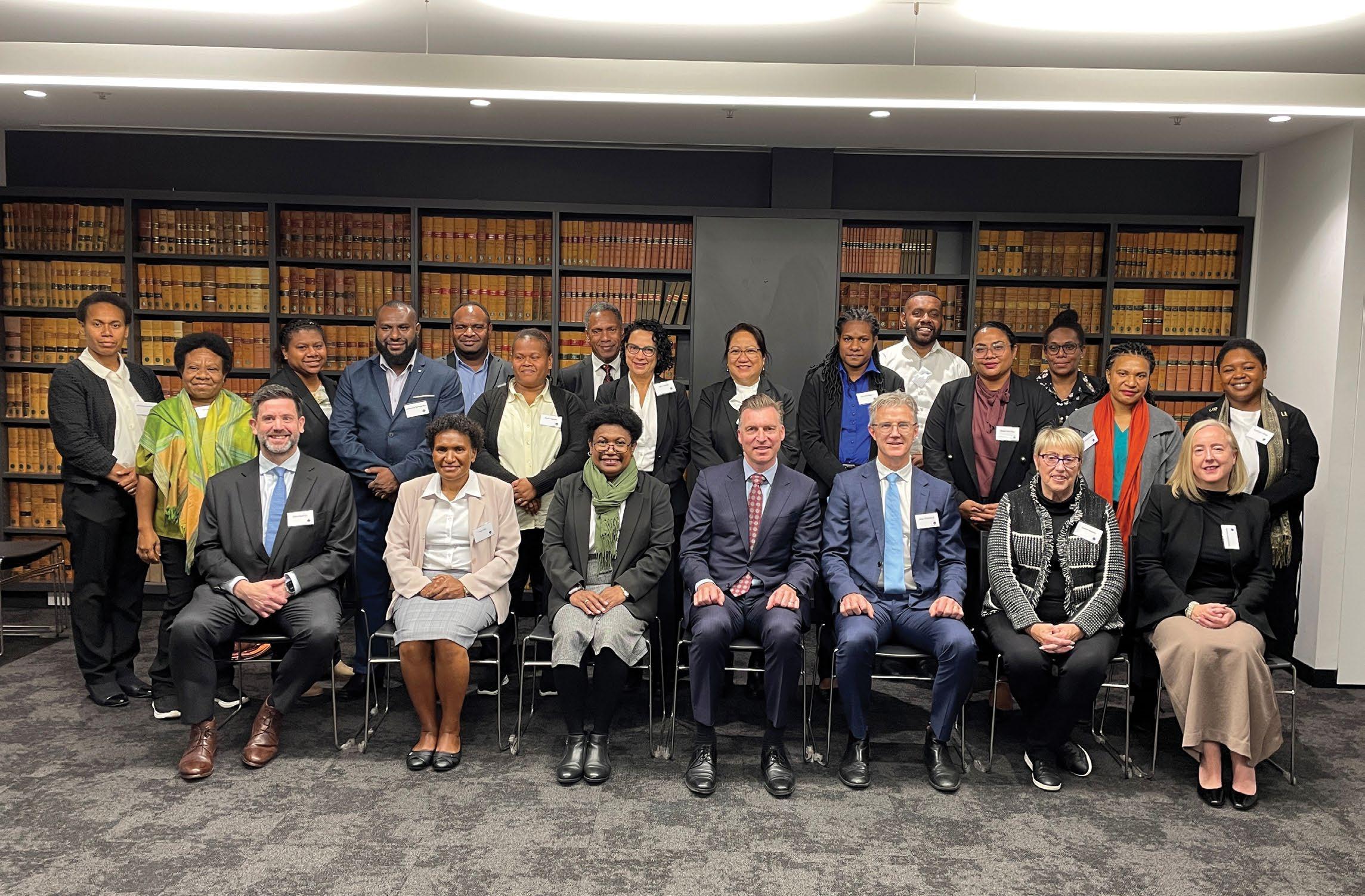
The Bar continued to strengthen its Pacific neighbours’ advocacy skills when it hosted 17 lawyers from the Pacific region in the Train the Trainer program. This is the second time the unique program has been hosted by the Victorian Bar.
Led by the Bar’s International Advocacy Training Committee (IATC),
“Committees are the lifeblood of the Bar, and the Bar Council would not be able to execute its duties without them.”
the intensive two-week program comprised shadowing and mentoring sessions with specialist advocacy trainers and barristers, as well as courtroom observation days. There were 13 delegates from Papua New Guinea, two delegates from Vanuatu and one delegate each from Fiji and Samoa.
I would like to acknowledge all our barristers and judiciary members who have volunteered their time to mentor their Pacific Nations colleagues. I am sure everyone will benefit from the experience. I also commend the IATC, led by Chair Peter O’Farrell KC, for delivering another invaluable program that supports the rule of law and effective administration of justice in the Pacific. This was one of many programs led by the IATC in recent months with
a contingent of barristers spending a week in Honiara conducting a five-day course for Solomon Islands lawyers on the prosecution and defence of sexual offences, as well as a cohort who travelled to Papua New Guinea to facilitate an intensive advocacy training program for 82 law graduates at the Legal Training Institute in Port Moresby.
The Bar has been providing advocacy training in the Pacific since the 1980s.
In closing, I would like to acknowledge and thank those members of the 2024–2025 Bar Council whose term has finished: Gavin Silbert KC, Peter Chadwick KC, Mark Robins KC, Christopher Carr SC, Dr Michelle Sharpe, Lana Collaris, Andrea Skinner, Gemma Cafarella, Paul Jeffreys and Jakub Patela.
I also commend the Victorian Bar Office team, led by Executive Director Amanda Utt. In addition to the administration of the Bar’s membership, education and corporate functions, the many initiatives undertaken by the Bar Council in any given year are supported by the Bar Office’s collective expertise and professionalism. It is thanks to the hard work of the Bar Office staff, whose dedication reflects the pride in which they hold our Bar, that enables our members to work as independent advocates in furtherance of the administration of justice and the rule of law.
And finally, congratulations to the editors and their committee, including Denise Bennett from the Bar Office, for producing another outstanding edition of Victorian Bar News. A lot of work goes into producing this publication. It is a credit to each and every one of them. May you all enjoy the summer months ahead.

The Victorian Bar is committed to supporting the health and wellbeing of our members and their immediate families.
There are a range of crisis management and counselling services available through the Bar’s Member Assistance Program, including:
» PeopleSense by Altius
» Free, professional, and confidential counselling service by registered psychologists available 24 hours a day
» Victorian Bar psychologists who understand the pressures barristers face in their work
» Dr Colleen McFarlane, Clinical Psychologist
» Dr Dominic Doyle, Clinical Psychologist and Psychotherapist
The Victorian Bar encourages barristers who are in any way concerned about their physical or psychological wellbeing to seek help.
DANIEL NGUYEN
On 13 September 2025, the NSW Bar held the annual Sports Law Conference and Tri-State Football Tournament in Sydney, the 17th edition. Barristers from the Victorian Bar and Queensland Bar (QLD) were also in attendance.
The Sports Law Conference was held at Maurice Byers Chambers with an amazing view of the Sydney Harbour Bridge from level 60. Interesting presentations were given on administrative law and tribunals dealing with sports by Thomas Liu, personal injury and the rules of an AFL tackle by Anais d’Arville and the National Sports Tribunal from its Chief Executive Officer Michelle Gallen.
We then took to the field on a beautiful sunny day, at the modern Getiela Synthetic Sportsfield, for three matches. Barristers representing VicBar FC were Daniel Nguyen, Nicolas Muniz Saavedra, Chris Beach, Jamie O’Regan and Mehdi Rohani.
VicBar v QLD: With the help of some super-subs from NSW filling in for VicBar’s team, we won 4–1. Nico kicked a goal, as did Mehdi with a long-range curler. Mehdi was later awarded MVP for VicBar in this match and his goal was noted by the referee as the best in the tournament. Chris had some very notable chances at goal. Daniel received a through-ball and beat the keeper with a left foot goal. The referee did not allow the goal, calling a foul on Nico for
saying “leave it” which left both players confused.
VicBar v NSW: ended 4–3 in NSW’s favour. As is tradition, QLD Bar helpfully filled in for the VicBar team. Nico scored a goal and also won a penalty which was duly converted by ‘Yens’, a Queensland barrister. Nico was later awarded MVP for VicBar in this match. Jamie played an incredible game in goal with some big saves to keep VicBar in the game.
NSW v QLD: in for QLD Bar, testing their physical limits. A cagey last game. NSW edged QLD 1–0. NSW retained both trophies—the VicBar/ NSW trophy and the Tri-State trophy. Awards and presentations were made at the nearby Iron Duke Hotel with a guest appearance by NSW Bar President Dominic Toomey SC. All games were played with great spirit and collegiality. Many thanks to the NSW Bar for graciously hosting, the referees (Anthony Lo Surdo SC, District Court NSW Judge Graham Turnbull and Crown Prosecutor David Patch), and everyone who made it an excellent day.
The next Sports Law Conference and Tri-State Football Tournament will be held in mid-September 2026 in Melbourne and will be hosted by the Victorian Bar. We look forward to having members present at the conference, competing on the field and hopefully retaining the trophies next year.








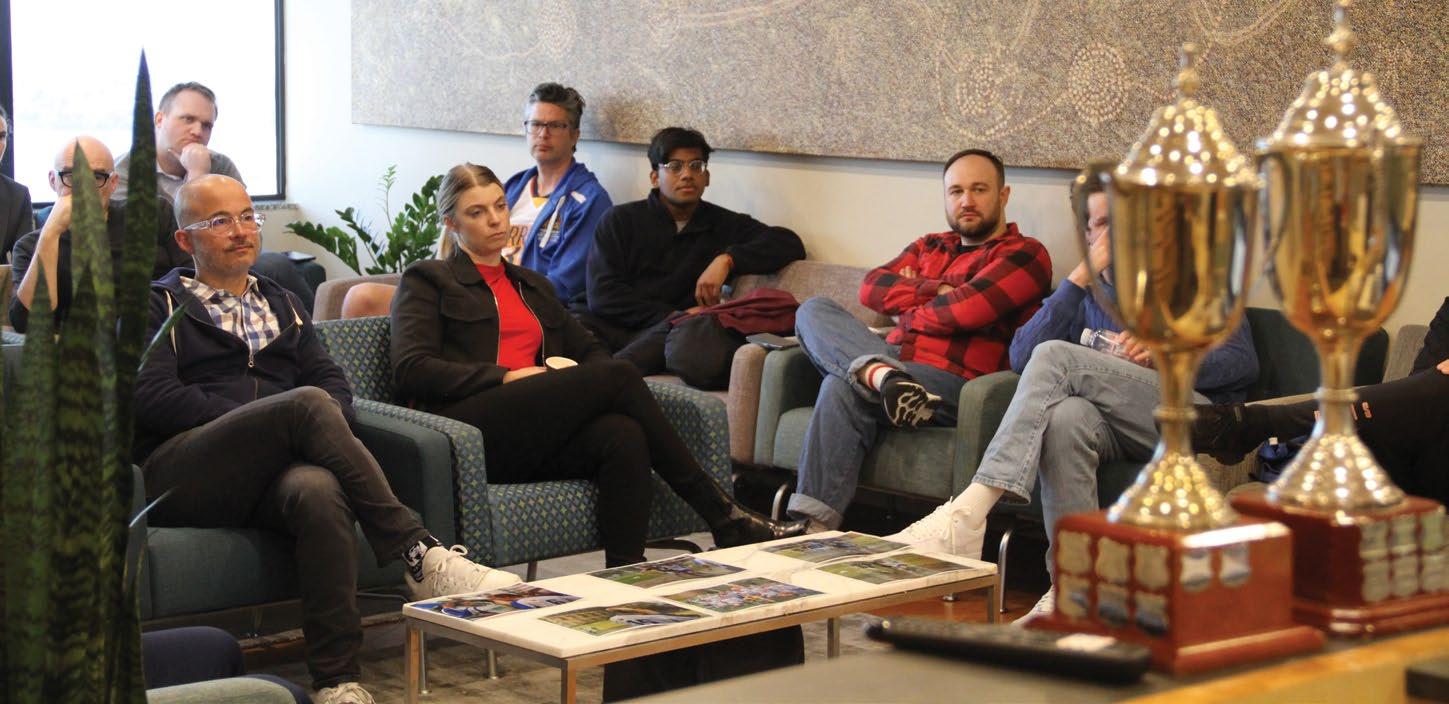

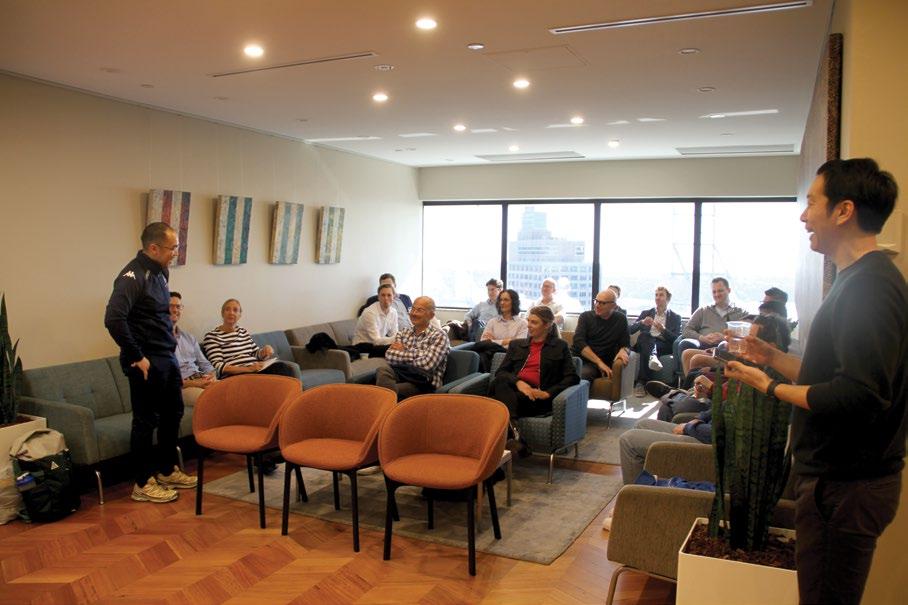
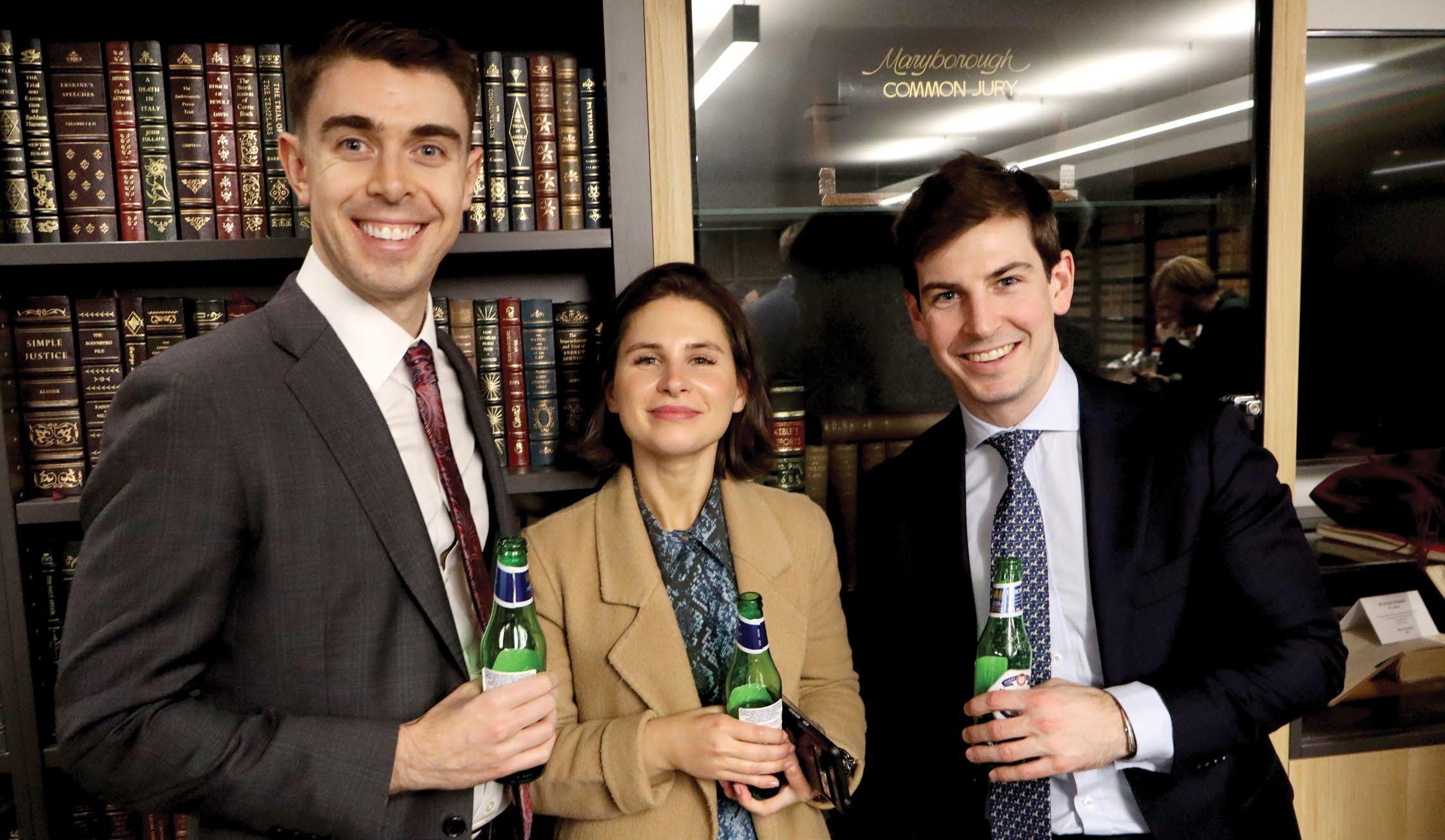
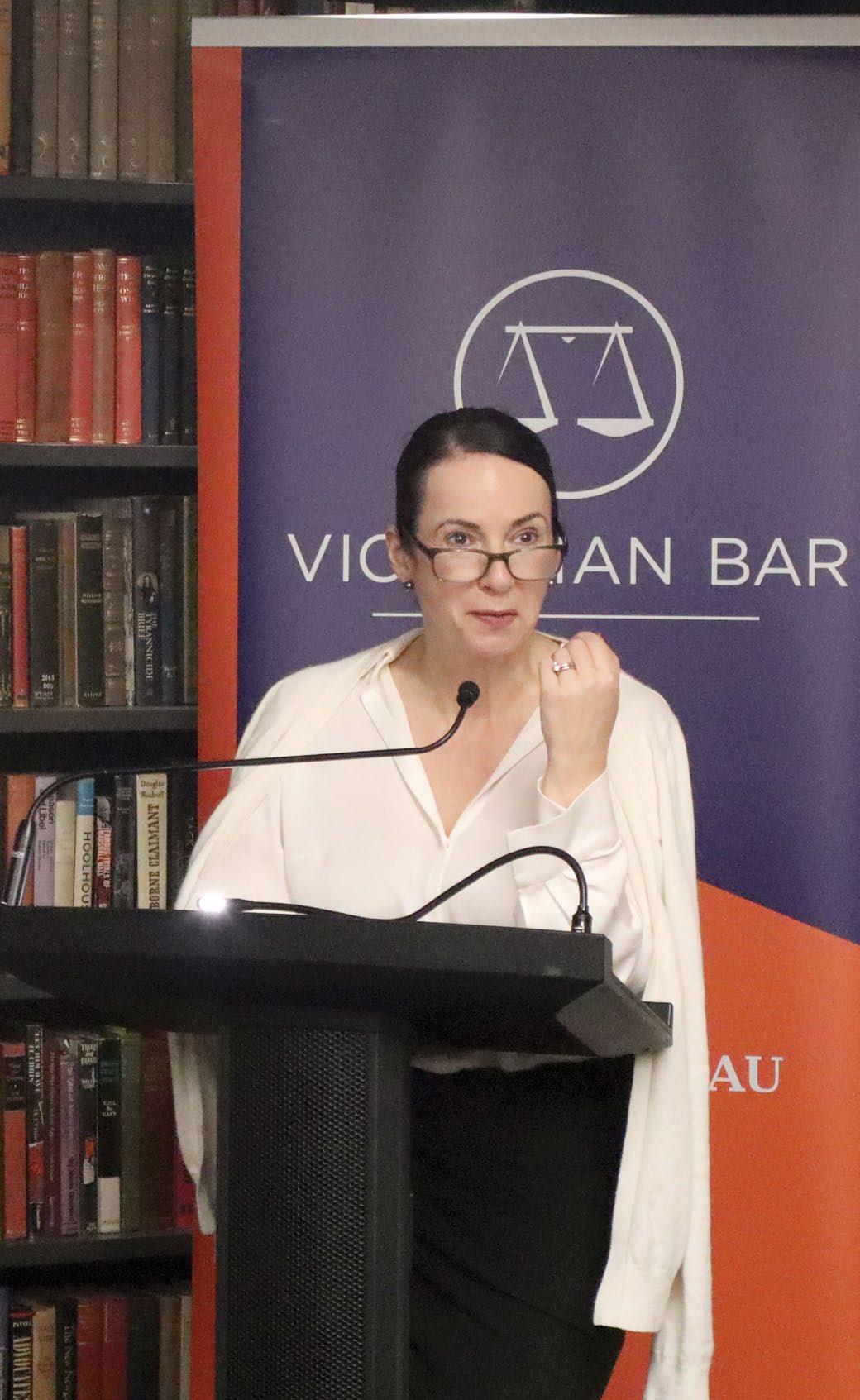
VBN EDITORS, Members of the Victorian Bar and contributors gathered to celebrate the launch of the Victorian Bar News winter edition—the biannual publication that keeps the Bar community informed, (hopefully) enthused, and occasionally amused.
The event brought together the many contributors who make the magazine possible, including writers, editors, committee members, and the tireless team working behind the scenes. It was, fittingly, that the theme of the evening was gratitude.
Editor Angelo Germano opened the proceedings, expressing thanks to all who contributed their time, expertise, and words to the publication and creating a platform for recording a snapshot of history of life at the Bar. Lisa Hannon KC, Vice President of the Bar Council, (as her Honour then was) followed with warm remarks about the importance of the magazine, reflection and connection within the profession.
The mood was convivial as guests mingled, swapped stories, and no doubt pitched a few ideas for the next edition.
As the evening wound down, one message rang clear: Victorian Bar News doesn’t come together by magic. It’s the product of a generous and talented community. And if you’d like to secure yourself an invite to the next launch, there’s a simple solution: contribute an article!

ZOE BROUGHTON AND STEPHANIE SPROTT
Ihave been to many Criminal Bar Association dinners. But seeing my reader Stephanie Sprott prepare for her first took me on a long and nostalgic journey into the past.
In the early years, I frantically got changed in the chambers’ bathroom after a bruising day of bail applications and launched myself into the night. I remember those first few dinners at Matteo’s in Fitzroy North, where the kings and queens of the criminal bar held court by candlelight. Those nights felt glamorous and sophisticated. The lustre of the criminal law twinkled at me in a muted light against onyx walls. As I looked across from my seat next to the toilet, I dared to dream that I was looking at my future.
Fast forward to 2025—while I prepared a well-organised brief in chambers, had my hair blow-dried and slipped into a sequin suit, Steph was stuck in a traffic jam near Chadstone on the way back from Dandenong Magistrates’ Court. Steph’s look for the evening was more runway than remand court, prompting a remark from a man who knows his way around a wardrobe that she looked ready for Paris Fashion Week.
Steph said she was both excited and a little nervous about joining her first CBA soiree. She had heard about these famous CBA dinners as a solicitor at VLA. This year, the dinner was held at Melbourne Place, a venue that aims to
redefine the Paris end precinct. Dinner had a relaxed and friendly energy. The dinner was held in the emerald room, which was replete with champagne-quaffing corners. The readers’ table had a few absentees due to illness, leaving them with the unexpected perk of three entrees each.
This year, the speeches were short, and the speakers were two of our best, Morgan Brown and Sally Flynn KC. Brown took to the lectern first, as the sun set behind her flaming hair, glowing like a halo in the softening light. Flynn in a navy-blue sparkler, like a night full of stars, told us that last year’s Meatloaf moment was a thing of the past and paid tribute to the retirement of two legal icons—her Honour Judge Liz Gaynor and the Hon Justice Beale. May their retirement resemble that of John Farnham; forever returning.
At one point later in the evening, I stood on the balcony with another barrister, and I looked down at a man changing out of a Batman costume. Was he about to do something odd or sinister? Something that would give the night a definite criminal arc? No. He was just leaving a dress-up party and didn’t want to drive unsafely in a mask and a cape.
And that’s a wrap on the 2025 CBA dinner. No controversy. No disaster. Just a group of good, hard-working people sharing a drink, a story and a laugh.

BRITTANY KING AND ZEINA ALHALABI
On the morning of Friday, 29 August 2025, the future-noir lobby of the W Hotel Sydney buzzed with an eclectic mix of Scanlan suits and Nike Alphaflys. VIPs (allegedly) spotted at the breakfast buffet included none other than Eliud Kipchoge and Justin Hannebery KC — fuelling for the major 24 hours ahead.
It was, of course, the Australian Bar Association’s annual conference, themed CROSSROADS: Litigating Matters of Public Interest—and a warmup for the TCS Sydney Marathon, which took over the city the very next morning.
The day was off to a strong start as Chief Justice Andrew Bell of New South Wales delivered opening remarks on Change at the Bar and the Great Challenge of Gen AI. His Honour spoke about the promise and peril of artificial intelligence—from deepfakes to fabricated cases—reminding us that evidentiary integrity must never fall behind.
The first panel, Justice in an Era of Heightened Scrutiny, chaired
by Justice Perram of the Federal Court of Australia, with speakers Gina Schoff KC and Professor David Rolph, set a cracking pace with a lively discussion on the increasing public consumption of trials and how the principles of open justice may apply to modern courts.
Raelene Sharp KC, Commonwealth Director of Public Prosecutions, spoke on exercising prosecutorial discretion in the ‘public interest’. From telecommunications offences to juvenile matters, she navigated the uphill terrain of applying consistent principles to complex, evolving cases.
Later, Fiona Roughley SC chaired a panel with Deputy Chief Justice McClelland of the Federal Circuit and Family Court and the Hon George Brandis KC on The Role of the Modern Attorney-General, exploring how the Attorney-General must balance politics with the rule of law—which is no walk in the park.
Forced Adoption Cases: A New Frontier was chaired by Perry Herzfeld SC with panel speakers Róisín Annesley KC, Fiona Ryan SC, and Gemma-
Jane Cooper. The legal and moral complexities of pursuing justice decades later reminded us that some races are long but worth running.
The afternoon featured The Metes and Bounds of Anti-Corruption Bodies, chaired by Chief Justice Shanahan, Chief Justice of Tasmania, with Gail Furness SC and Greg O’Mahoney, followed by a timely panel on Anti-Money Laundering Legislation chaired by Ermelinda Kovacs, with Tim Game SC and Lachlan Molesworth— a legal sprint toward 2026 obligations.
The day crossed the finish line at the gala dinner, where Chief Justice Niall delivered a witty and memorable address that had us laughing all the way to dessert.
We were especially proud that the Victorian Bar had the largest turnout of any Bar at the event, with Brittany King serving as MC.
Attending CROSSROADS was both an honour and a highlight of the legal calendar. We sincerely thank the Victorian Bar Council Executive for our sponsored places to attend. Sharing the weekend with legal and marathon champions alike reminded us that, like those preparing for race day, we too must continue to adapt to the ever-changing conditions of the law— with endurance, discipline, and perhaps a well-earned trip to the Nike store.

RUDDLE
On a cold and grey Sunday morning in June, 60 members of the Women Barristers Association (WBA) braved both the chill and the early start to join the first-of-its-kind Business Development Day hosted by the WBA. From junior barristers to senior counsel, the air was filled with a mix of excitement and caffeine. Titled “Know Your Worth”, the full-day conference was designed to help WBA members maximise their potential and recognise their value at the Bar.
The first speaker of the day was Alison Shamir, an impostor syndrome expert and author of the recently published Conquer Your Imposter. Alison guided participants through the origins of imposter syndrome, emphasising that it is not a sign of low confidence or a lack of success. After all, even Tina Fey and Michael Parkinson have experienced it! But rather, imposter syndrome is a pattern of negative selftalk that can stop people from truly embracing their achievements.
Attendees generously shared their own experiences and worked collaboratively throughout Alison’s engaging three-hour workshop. Everyone was so engaged and full of questions that the session ran over
time, and we still had questions!
Following the event, Alison kindly provided attendees with additional resources, including highlights of the shared wisdom from the room. A further testament to the impact of her session: attendees were lining up to purchase her book during the lunch break.
After scarfing down lunch whilst trying to catch up with friends, the group moved to the next session—a panel on fees, charging and billing. We were extremely lucky to have Helen Symon KC, eminent silk and the most senior practising member of the WBA, lead an impressive panel including: Kate Hay, Partner at King & Wood Mallesons’ Melbourne office; barristers’ clerk Tammy Young; and barrister Natalie Campbell. The million-dollar question for any practice—how to manage rates, time recording, fees and billing so all your hard work translates into a roof over your head—was tackled head-on. The panel shared valuable strategies for working effectively with solicitors and clerks, aligning with market expectations, and ensuring fair remuneration. As was the theme of the day, many attendees shared their insights with the group, and everyone was able to benefit from the huge amount of knowledge in the room.
The third session of the day was an interactive workshop on business development for Women at the Bar, led by Ellen Hooper. She encouraged attendees to reflect on their goals and to align their business development activities with those aims, highlighting the value of a more intentional and personalised approach. Ellen helped attendees recognise the value of more focused and personalised business development. Focusing on each individual’s strengths—Ellen’s core message was refreshingly simple: “you do you.” She emphasised that effective business development doesn’t follow a one-size-fits-all model; it works best when it’s authentic. Ellen ended with a lesson on how AI can be a great tool to support your life and business. It was certainly an eye-opener for a luddite like me!
We ended the day with an “ask anything” panel featuring Justice Elizabeth Bennett, Lisa Hannon KC (as her Honour then was), Jennifer Batrouney KC, Emily Porter SC, Gabi Crafti SC, and me (although I’m sure everyone was sick of hearing my voice by that point!). The panel generously shared insights from their many years at the Bar and answered thoughtful questions from attendees. The session importantly discussed both the highs and lows of the Bar. I was truly grateful to our panellists for their time and candour, and to our attendees for their honesty and curiosity.
At times, a passerby might have thought they were passing a comedy show, as we all enjoyed a lot of laughs (and a few tears!) over the course of the day. What struck me most was the incredible sense of community among the women at the Bar: the warmth, the generosity, and the genuine support in the room were palpable.
The WBA is grateful to everyone involved, especially the staff from the Bar Office and Essoign, who supported the day. The WBA also gives special thanks to Sandra Karabidian and Britt Myers for their efforts in organising the day.
Elizabeth Ruddle KC is the former Convenor of WBA.

SIMONE KIPEN
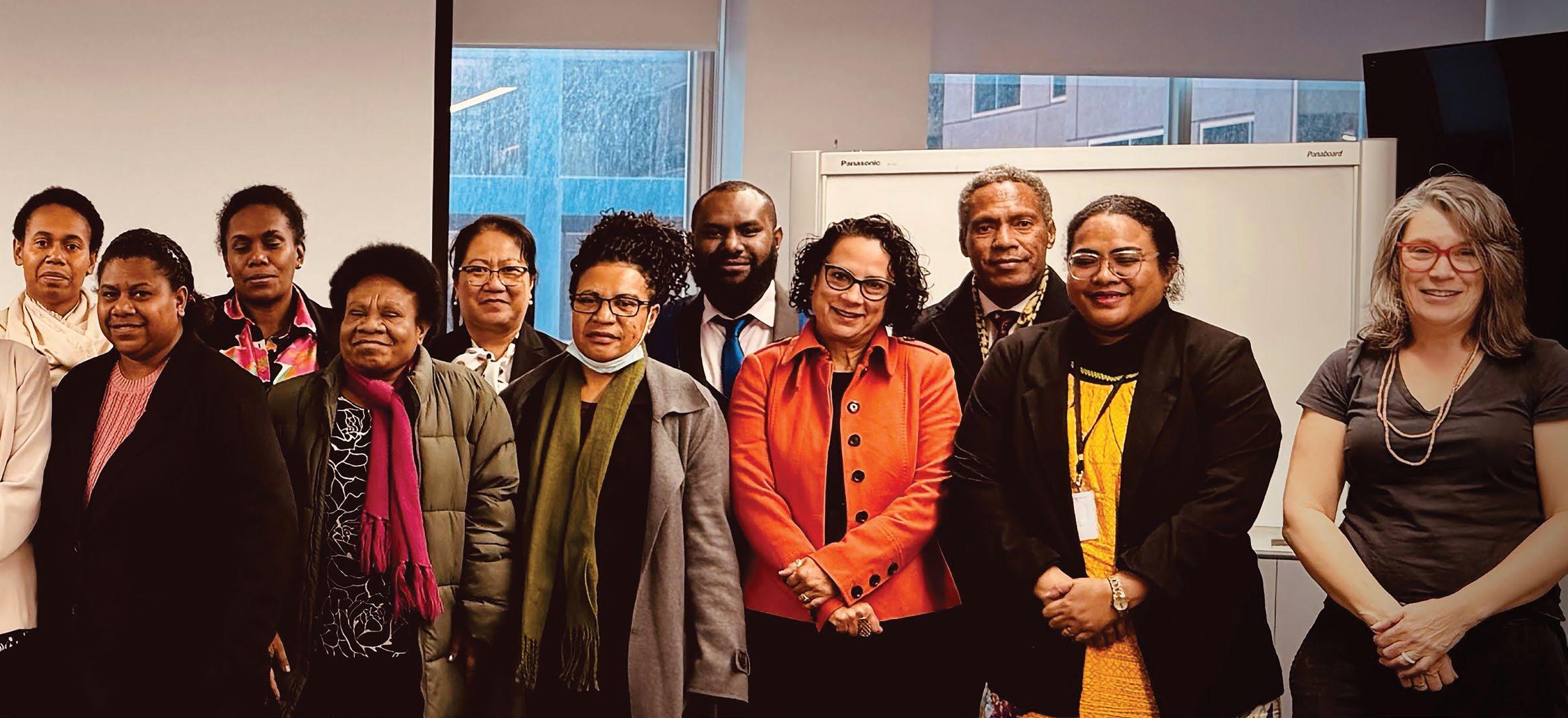
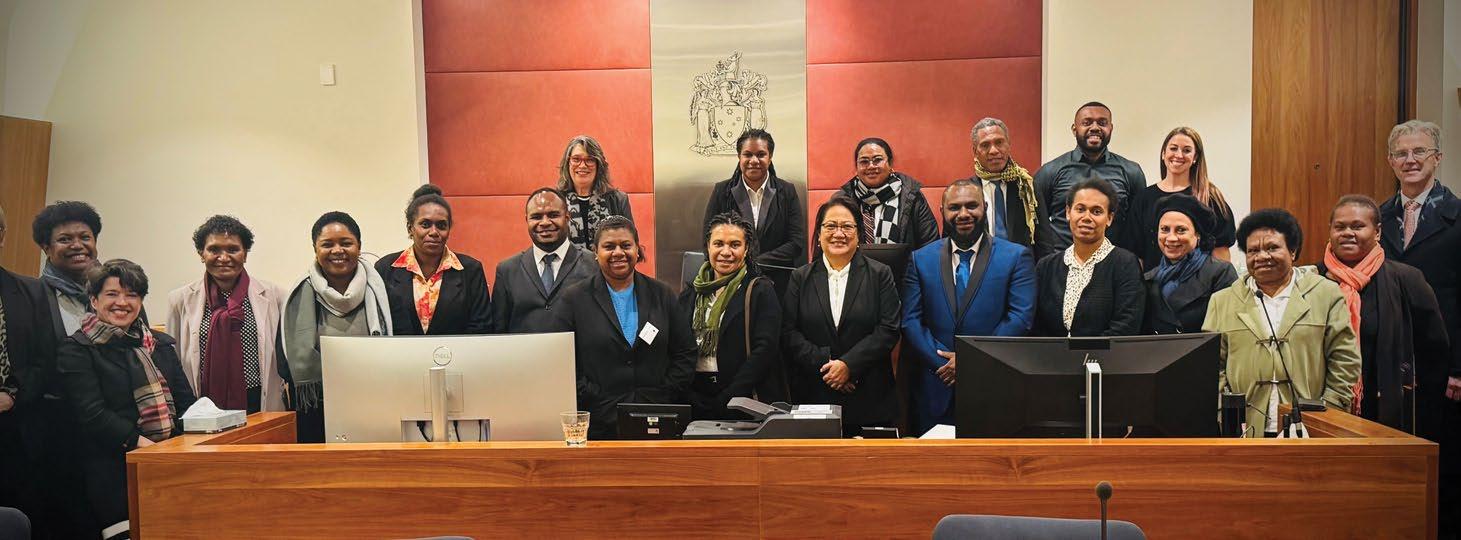
Over two wintery weeks in June 2025, the Victorian Bar’s International Advocacy Training Committee (IATC) delivered its second annual Train the Trainer program to 17 delegates from Papua New Guinea, Vanuatu, Fiji and Samoa.
The initiative represents an evolution of the Bar’s commitment to advocacy training in the Pacific and aims to create a sustainable network of advocacy trainers who can lead professional development programs in their home countries.
An underlying goal of the program and the IATC more broadly is to facilitate development of constitutional principles in Pacific jurisdictions, which is an important mechanism to uphold the rule of law and promote stable constitutional government.
The program continued the successful collaboration between volunteers from the Bar and the Victorian judiciary, with support from the Papua New Guinea Centre for Judicial Excellence, the Pacific Justice Sector Programme and the Australian Government Department of Foreign Affairs and Trade.
The 2025 program comprised four main components designed to build both advocacy skills and teaching capacity.
Before arriving in Melbourne, delegates engaged in comprehensive preparatory work designed to maximise the effectiveness of the in-person training. This included online onboarding sessions and reviewing detailed case materials which centred on a gender-based violence scenario in the criminal context.
The core of the program consisted of six days of intensive advocacy training, coordinated by the IATC and delivered by barristers and working, and retired judicial officers. Training progressed through structured phases focusing on examination-in-chief, cross-examination, and opening and closing submissions.
Initial workshops refreshed advocacy skills, while subsequent sessions introduced the Bar’s advocacy training methodology. Multiple moots allowed delegates to practice advocacy and provide structured feedback on performances, using digital tracking tools.
Over two days, delegates observed a wide range of proceedings across various jurisdictions, including the Magistrates’ Court, County Court, Supreme Court, and Federal Court. Small groups were accompanied by Bar volunteers who provided navigation assistance and explanations.
The delegates also attended briefings with judicial
officers, which covered practical topics such as expert evidence and early dispute resolution mechanisms, and a seminar on forensic aspects of domestic violence by representatives from the Victorian Institute of Forensic Medicine.
Each delegate was paired with a Victorian Bar mentor for two days of shadowing activities. This component provided delegates with intimate insights into Australian legal practice and created opportunities for ongoing professional relationships. Experiences varied from observing multi-milliondollar mediations to participating in case preparation activities.
Instructors observed significant improvement in delegates’ advocacy techniques and feedback abilities. Delegates discussed strategies to use their new skills to train junior lawyers, law students and the profession in their home countries and maintain ongoing connections as a cohort.
Individual testimonials highlighted the program’s impact. Moga HaneNou, a Papua New Guinean lawyer, described learning to embrace vulnerability and feedback. Emmanuel Kasi, also a Papua New Guinean
lawyer, emphasised how mentoring provided practical insights he could adapt in his home jurisdiction.
Beyond formal training, the program facilitated meaningful cultural exchange through social and professional events. The highlight was a dinner function with delegates, members of the Bar and the judiciary at the Essoign Club. The dinner featured a keynote address by the Hon Justice Finanzio of the Supreme Court of Victoria about the rule of law, advocacy training, and the legacy of giving back.
With 37 delegates having completed the program across 2024 and 2025, the initiative progresses toward its goal of training 100 Pacific lawyers
over five years. This growing cohort represents significant regional capacity for ongoing advocacy training development. Delegates are encouraged to deliver training within their workplaces and participate in future IATC programs in their home countries.
The program’s sustainability model is already showing results. Several 2024 graduates provided feedback alongside Bar trainers during the IATC’s annual advocacy training at Papua New Guinea’s Legal Training Institute in late 2024. In August 2025, graduates from both program years worked with Bar colleagues during advocacy training in Vanuatu.
The IATC’s planned 2025–2026 activities include advocacy training programs in the Solomon Islands, Papua New Guinea, Tonga and Fiji, alongside the third Train the Trainer program scheduled for June 2026.
DUGALD MCWILLIAMS SC
On Friday, 10 October 2025, the September 2005 readers gathered to celebrate their 20th Anniversary of signing the Bar Roll at Kirk’s Cellar. While other commitments kept some away, those who attended had a very
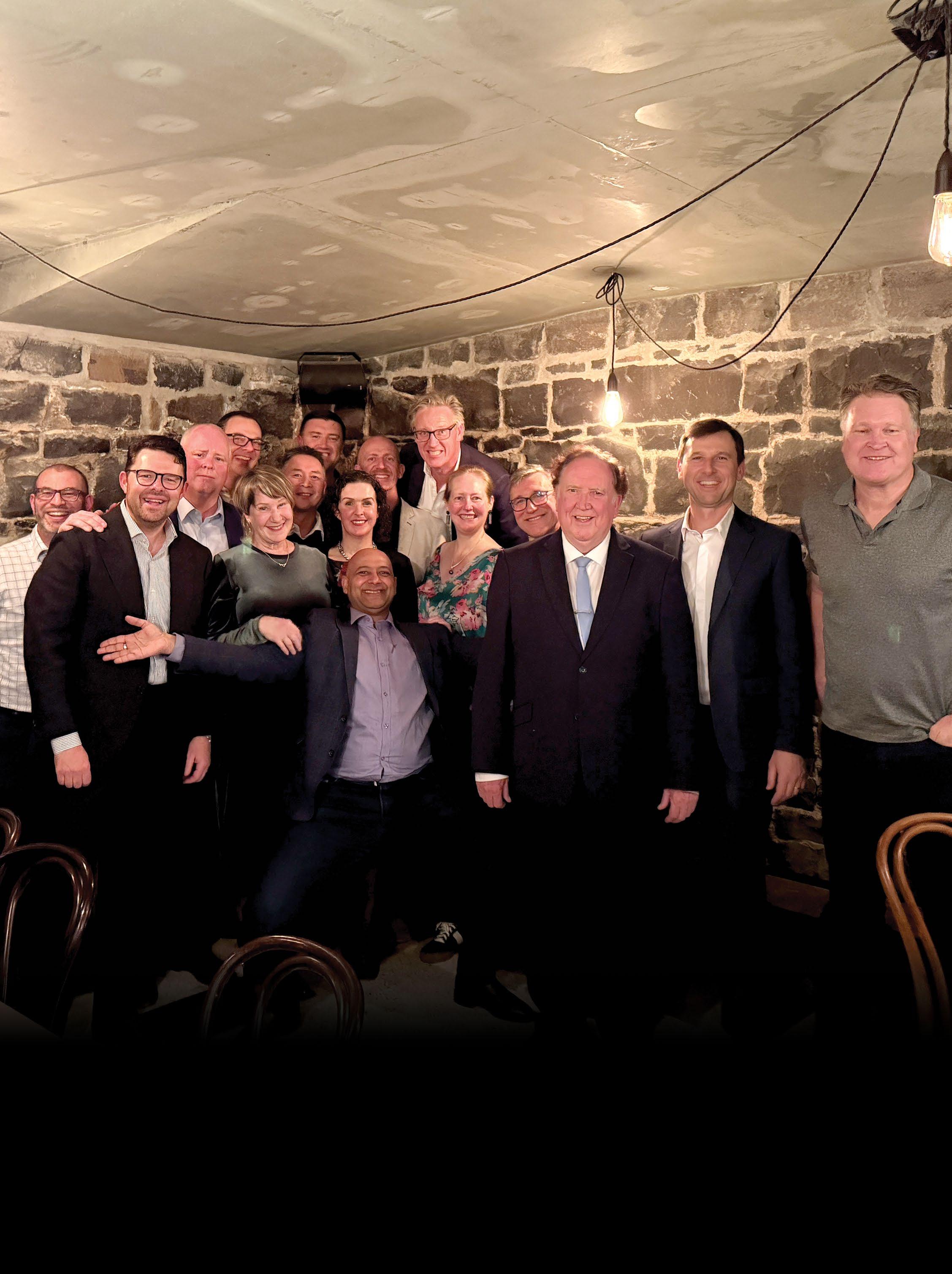
enjoyable evening reminiscing about the Bar readers’ course and such pivotal figures as the Hon George Hampel KC, Max Perry and Barb Walsh. It was a good opportunity to get together, reflect on old times and catch up on what everyone has been doing for the last 20 years.
JO DOUGHERTY
Asteady stream of members attended the inaugural Victorian Bar Health and Wellbeing Expo on Thursday 11 September 2025. An initiative of the Bar’s Health and Wellbeing Committee and Bar Office, the Expo coincided with “R U OK? Day” and included a complimentary morning tea.
Members were given the opportunity to learn more about the Bar’s Member Assistance Program, as well as the various sporting, social,
artistic, and professional groups available to help support their overall health and wellbeing. Members of the Bar Executive, including President Justin Hannebery KC, Vice Presidents Georgina Costello KC and Fiona Ryan SC, and Executive Director Amanda Utt joined representatives from the Health and Wellbeing Committee, Women Barristers’ Association, Equality and Diversity Committee, Bar Dads, and BottledSnail Productions at the expo.
The Bar’s newly appointed Wellbeing Manager, organisational psychologist Dr Sarah Fischer was also on hand to speak to members about the many services available to help them prioritise their physical and psychological wellbeing. These included 24-hour confidential counselling and crisis support, a self-directed reflective practice and debriefing program, and peer support barristers.
Feedback about the expo was so positive that it is likely to become an annual event.
Psychological and physical wellness is a priority for the Victorian Bar as members navigate the demands of their busy practice. More information about the support services available to barristers and their immediate families can be found on the Victorian Bar Health and Wellbeing website portal.

XUELIN TEO
In October this year, the Victorian Bar Foundation hosted its annual Student Achievement Award ceremony at Ninian Stephen Chambers in partnership with Hume City Council.
The purpose of the Student Achievement Award is to encourage young people from diverse backgrounds to pursue a career at the Bar, and convey the message that the Bar is open to all on merit irrespective of their social status, economic circumstances, ethnic background, religious affiliation, sexual oriental, physical disability or gender.
The Award recognises high school students who have
achieved academic excellence in their legal studies. Each winning student receives $1,500 in prize money, partially funded by the Hume City Council.
The 15 participating secondary schools are located in the City of Hume region, being: Aitken College, Craigieburn Secondary College, Gladstone Park Secondary College, Hume Anglican Grammar, Hume Central Secondary College, Ilim College (Boys), Ilim College (Girls), Kolbe Catholic College, Mount Ridley College, Penola Catholic College, Roxburgh College, Salesian College, Sirius College Boys, Sirius College Boys, St Mary’s Coptic Orthodox College, Sunbury College and Sunbury Downs College.
The City of Hume is a diverse area of Melbourne. According to recent census data, the most common countries of birth for residents after Australia, are Iraq, India and Turkey. More than half of the area’s residents have parents who were born overseas. The City of Hume is identified as a local government area with comparatively greater socio-economic disadvantage within Victoria, particularly in relation to educational engagement. The Award aims to support students in this region and help address these challenges.
During the Award ceremony, the Foundation’s patron, the Hon Justice Michelle Gordon, gave the speech, inspiring the students to make the most of opportunities. The Foundation’s Chair, the Hon Justice Anderson, and the Mayor of the City of Hume, Jarrod Bell, also gave speeches that celebrated the students’ achievements.
The Award ceremony was well supported by the attendance of proud parents, principals and teachers of the high schools, staff of the City of Hume and members of the


Bar including the Bar’s then President Justin Hannebery KC.
The award ceremony was preceded in October by a work experience day for award winners and also students nominated by their schools for an “Encouragement Award”. Students spent the morning at the High Court Melbourne Registry and at the Victorian Supreme Court, meeting with the Hon Justice Michelle Gordon AC and the Hon Justice Rita Incerti. Ninian Stephen Chambers and William Street Chambers hosted students for lunch and the afternoon, with Neil Young KC, Rishi Nathwani KC, Georgie Coleman, Geoffrey Kozminsky, Lucinda Theis, Alexander di Stefano, Julian Murphy, Conor O’Bryan, Anesti Petridis and Nick Baum meeting with the students, answering their insightful questions and encouraging the students to continue to excel at their studies. The positive impact that these interactions with members of our Bar and the judiciary have, at a formative time for these students, cannot be understated.
We look forward to providing many more years of support for high school students in the Hume region and have plans to expand the program.




The following eulogy was delivered by the Hon Susan Crennan AC KC at a memorial service held at the Kooyong Law Tennis Club on 25 June 2025.
There has been great sadness expressed on the death of Stephen Charles. However, we are here this afternoon to remember and celebrate the long and productive life of a man of deep convictions. Stephen was thoroughly acculturated in the rule of law. His moral and philosophical reflections led to exceptional contributions not only to the law, but also to the social, intellectual and political life of the country. He was loved and respected by family, colleagues and many friends.
It is my privilege to honour Stephen’s achievements in his professional life, leaving it to his brother and children to speak of more personal matters. In 2017 Stephen was appointed as an Officer in the Order of Australia for “distinguished service to the law and to the judiciary, particularly in the areas of commercial arbitration and mediation, to judicial administration, and to legal professional organisations”.
I first met Stephen over 40 years ago. We were not precise contemporaries. As a freshly minted, young Chairman1 of the Victorian Bar, he asked me whether I would write an article on the 100-year anniversary of the Victorian Supreme Court, coming up early the following year, 1984. At the end of that article on the history of the Court, I envisaged that the Supreme Court’s future might well include a permanent Court of Appeal. Coming from the Bar of New South Wales, I little realised how contentious that topic was at the time. In any event, on Stephen’s part, that invitation was a characteristic act of kindness to a very junior barrister. Many here will be able to reflect on similar personal memories.
Stephen was born in England on 21 July 1937. This was only months after the coronation of George VI and his Queen Elizabeth, which put a full stop to the abdication crisis, and was only months before the election of Neville Chamberlain as Prime Minister. The Second World War, from 1939 to 1945, occasioned great desolation and hardship in England. It is small wonder then that Stephen’s parents moved to Australia when he was still at school. Stephen died on the 13th June, just weeks short of his 88th birthday.
After completing his schooling at Geelong Grammar, Stephen finished his law degree, with honours, at the University of Melbourne by sharing the Supreme Court prize for 1959. It is reliably reported that in his very early days at the University, the youthful and somewhat imperious Germaine Greer corralled a handsome student from Trinity College, the young Stephen, and commanded him to accompany her to a university ball, which he duly
did. History has drawn a veil over whether it was Stephen’s unfailing politeness, his natural reserve, or even his enrolment in law which disqualified him for a second date with Germaine.
Stephen shared his knowledge of the law, first by lecturing at the University of Melbourne and then at the Council of Legal Education Law Course. Stephen was admitted to the Victorian Bar in October 1961 (Bar Roll number 647) and read with WO Harris, later Mr Justice Harris of the Supreme Court of Victoria. After a brilliant career, appearing often as junior counsel of choice in important matters, Stephen developed a wide reputation in a great variety of cases. Stephen took silk in 1975, being the youngest in his group to do so.
Being a good barrister has a mimetic quality. Leading silks convey to their less experienced colleagues the necessary qualities for life at the Bar. They do this mainly by example, but also in occasional remarks sharing verities about life at the Bar. Stephen had nine readers: Roland Price, Clive Rosen, Robert Miller, Peter Murdoch, Michael Wright, Bernard Davis, Michael Pryles, David Habersberger and Ross Macaw. It has not been possible in this short recollection to list, or even select, Stephen’s occasional remarks and wise advice on advocacy. This was given not only to each of his readers, but also to countless readers he came across as Chairman of the Bar and as Chair of the Bar’s Readers’ Course Committee. He was also generous with his many juniors and always encouraging to junior opponents. Stephen himself credited Sir John Starke as the person who conveyed to him the necessary qualities for life at the Bar.
John Starke QC led SEK Hulme and a youthful Stephen in the King’s Bridge Inquiry from 1962 to 1963. Stephen said, “John Starke demonstrated absolute integrity and strength in the face of hostile governments and others, in so many difficult and stressful cases and events.”
Over his long career at the Bar Stephen became renowned as one of the country’s great advocates. He appeared throughout the nation and in the Privy Council. Many of his constitutional cases had a political and social dimension. For example, Phillip Morris Limited v the Commissioner of Business Franchises2 in the High Court concerned s 90 of the Constitution. Stephen, leading Neil Young, contended that a wholesale tobacco license fee, imposed in Victoria, was a prohibited excise under s 90. He was contending for a broad reading of s 90 and sought to overrule established authority. Hartog Berkley and I, appearing for the State of Victoria, contended that the fee was not an excise. We were arguing
for a narrow reading of s 90 because states like Victoria were heavily dependent on such taxes.
Only a minority accepted Stephen’s arguments. In due course however, in a court presided over by Chief Justice Brennan, Stephen’s meticulous arguments were accepted.3 Stephen and Neil had laid the groundwork for this major change in constitutional law. The long-standing authorities impeding Stephen in the previous case were overruled. Speaking broadly, those state taxes were eventually replaced by casino royalties and the GST. This case, more than many others, exemplifies the complex relationship between constitutional law, government policy and social change. Any case in which one saw Stephen in action, in court, showed his amazing capacity for hard work.
Stephen had other major briefs with considerable political interest. These included acting as counsel for the Commonwealth of Australia and numerous states in proceedings for de-registration of the Builders’ Labourers’ Federation and assisting a Parliamentary Commission into the conduct of a sitting judge of the High Court.
Stephen’s most memorable case of this kind, he said, concerned events on the eve of the 1983 election which brought Bob Hawke and his Labor colleagues to power. A well-known Labor political operative had dinner that evening with a young Russian diplomat. The fallout was immediate. Passing over the details, it is sufficient for today to say this led to Stephen acting as counsel for the Australian Security Intelligence Organisation (ASIO) in a Royal Commission conducted by Justice Robert Hope. These events attracted a tremendous amount of publicity. So serious were the possible repercussions for the new government that the government’s counsel, Michael McHugh QC (later Justice McHugh of the High Court), made the unusual decision of putting the Prime Minister into the witness box. Stephen subsequently said,
“Hawke had raised to a high art the ability not to answer a difficult question, sometimes by answering a different question of his own choosing … This is about the only occasion I can recall of a really competent crossexaminer being demolished from the witness box”.
This contrasts with a much lighter story, which Stephen enjoyed as much as we all did, involving a very competent cross-examiner being taken aback, rather than demolished, from the witness box. In the celebrated DOGS case,4 the plaintiffs challenged the constitutionality of a law which provided financial aid for the educational activities of church schools. Appearing for those plaintiffs, opposed to funding church schools, was Neil McPhee QC. He was a celebrated advocate, and a widely admired cross-examiner. In any event, one morning Neil was to crossexamine a nun who was, as I recall it, the principal of a Catholic school and a Mother Superior in respect of a group of teaching nuns. She was a most dignified witness and Neil approached her with kid gloves. Somehow, in the course of some questions, they got onto the topic of prayer. She volunteered the information that she and her fellow nuns prayed “every day”. He then enquired mildly, “Sister, what sort of things do you pray for?” “Well,” she said, “this morning we prayed for you Mr McPhee.”
Notwithstanding the heavy demands of his practice Stephen found the time to serve on Bar committees, too numerous to list. He was a member of the Victorian Bar Council over the 20year period 1967 to 1987, becoming the Chairman from 1983 to 1985 and then serving as President of the Australian Bar Association from 1985 to 1986. There were occasions where Stephen’s diplomatic skills helped the Victorian Bar to transcend some strong divisions of opinion. The first concerned the institution of a permanent Court of Appeal. There was significant opposition from some of the Supreme Court’s most
distinguished judges. They preferred the system in which Full Courts, for appellate purposes, involved rotating trial judges. This was not unconnected to the reputation of the Victorian Supreme Court in the 1960s as the best trial court in Australia. Stephen wrote in favour of the idea in 1987 and continued to write and speak about the topic. He was able to elucidate a compelling case for a permanent intermediate Court of Appeal in Victoria.
Ultimately, in 1995, Stephen became a founding member of Victoria’s Court of Appeal. It was composed of nine justices, six from the trial court and three from the Bar, one of whom was Stephen, the others being the new President, Jack Winneke, and Frank Callaway. The Court was distinguished from other permanent courts of appeal by providing that trial justices could sit on a rotating basis from time to time, and appellate justices could sometimes undertake criminal trials. Those mechanisms, combined with the efficiencies introduced by President Winneke and the sheer intellectual fire power of the Court, quickly assuaged the doubts of those who had argued against its institution. The intellectual heft of that court was underlined further in 1997 by the appointment of Ken Hayne to the High Court, and the appointment of Susan Kenny to the Court of Appeal. Stephen’s appointment as a foundation member of the Victorian Court of Appeal allowed him to influence its jurisprudential development and take part in many of its influential decisions. Even after appointment as a Justice of Appeal Stephen continued to contribute to the Victorian Bar. He chaired a steering committee for equality of opportunity for women at the Victorian Bar between 1996 to 1998, which resulted in an official Report. Even after retirement from the Court of Appeal, Stephen continued to assist the Bar. In 2002 the postnominals for silk were changed from QC to SC and the appointment process for silk was reviewed. For some 10
years Stephen chaired a Bar committee to facilitate this process. Presiding at the ceremony for the new silks, Chief Justice Warren consistently acknowledged that the responsibility of appointing silk “was made so much easier by the support of the Victorian Bar’s Preliminary Evaluation Committee chaired by the Honourable Stephen Charles to whom I am most grateful for his wise counsel and assistance”.
Retirement as an appellate judge in 2006 only seemed to reinvigorate Stephen, who then became a Fellow of the Australian Centre for International Commercial Arbitration. He acted as an arbitrator in various ad hoc, institutional and international arbitrations. He also became a member of the Board of the Accountability Round Table Centre and Centre for Public Integrity. He was a member of the National Integrity Committee, which functioned under the auspices of the Australia Institute. He also relished a return to teaching law and particularly enjoyed his duties for Monash University teaching at Prato, Italy.
Throughout a remarkable 64 years as a member of the Victorian Bar Stephen published many articles and papers concerning legal issues. Many of his later post-judicial writings challenged orthodoxies. He touched upon the law of assisted suicide, the law concerning asylum seekers and refugees, and the need for anti-corruption bodies to maintain a healthy democracy. Both IBAC in Victoria and the federal NACC, the National Anti-Corruption Committee, owe a great deal to Stephen’s blunt and forceful advocacy. It’s as though in Stephen’s post-judicial life he chose as his motto the bestknown line in Shakespeare’s Cymbeline: “Boldness be my friend!”.
Indefatigably, in 2022, Stephen published Keeping Them Honest, co-written with Professor Catherine Williams. Only last year, with his daughter Lucy Hamilton, Stephen published an essay in Meanjin entitled
“He was not only fair-minded but also conspicuously high-minded.”
“The Year in Truth Telling” reflecting on “the dire state of truth in Australia’s civic space”.
There was always, I thought, a touch of the old-style Fabian in Stephen, by which I mean that he was not only fairminded but also conspicuously highminded. Stephen appreciated that the Constitution assumes the rule of law so that, in truth, some of its principles stretch way back to Magna Carta and, in relation to the judges, back to the Act of Settlement. As a mature practising barrister, and then appellate judge, Stephen well understood the limits of the law captured in the maxim—in English—“a thing judged is accepted for the truth”.5 When once ask what the word “law” conveyed to him, he said, “When it works properly, and all are abiding by the Rule of Law, it is a great system. But just ask Lindy Chamberlain about the law going wrong.” In Stephen’s post-judicial life, the older he became the more he brooded mightily on broader issues in the public arena—on the state of contemporary politics and society—in which truth, and even common sense, are often held hostage. He thought long and hard about practical ways to protect and preserve our democracy. His exemplary contribution to public life has been honoured by a scholarship in his name.
Stephen’s working life was not confined to the law. He was a director of the Macquarie Bank between 1985 and 1995, a Director of Heide Park and Art Gallery between 1988 and 1997 and Chair of the Board of the Trustees and Directors of the McClelland Gallery between 2020 and 2022. He was a long-time donor to the Heide Park and Art Gallery, the Australian Chamber Orchestra, the National Gallery of Victoria, the University of Melbourne, Trinity College and Bell Shakespeare Company. One of the pleasures of being a friend of Stephen’s was his
intense interest in painting, sculpture, music, literature and history. When being interviewed for Justinian’s “On the Couch” he nominated a career as a teacher of law or history as possible alternatives to what he actually did. He also said that his then current reading included James Shapiro’s 1599, an account of a year in Shakespeare’s life. No recollection of Stephen’s professional life could be complete without some mention of Jenny. She kept the home fires burning whilst his stellar practice took him around Australia and overseas. She was by his side always and they shared many interests. When explaining his strongly held views, especially on social justice issues, Stephen would frequently refer to discussions he had had with Jenny and summarise her views, which had influenced him. Speaking to Stephen often included revelations about his love for Jenny. As he was the first to acknowledge, his distinguished life owes a great deal to Jenny’s support. Stephen also gave to his friends many glimpses of his tremendous pride in all of his children and their offspring. Stephen had a very distinctive presence. He bore his final illness with dignity, grace and courage. So, for Stephen’s family, his colleagues and his many friends, his loss will be tempered by recalling his merry company, his good conversations, his witty speeches, his serious papers, his learned articles, his many, many acts of kindness, as well as his lasting contributions to Victoria’s jurisprudence and to good governance in Australia. Stephen was as fine and generous, and as courageous a person, as any of us could ever hope to meet.
1 Now, President.
2 (1989) 167 CLR 399.
3 Ha v New South Wales (1997) 189 CLR 465.
4 Attorney-General (Vic); Ex rel Back v Commonwealth (1981) 146 CLR 559.
5 In Latin, “res iudicata pro veritate accipitur”.
JUSTIN TOMLINSON
The painted portrait is a genre, which, like our systems of law, is firmly rooted in Western European tradition. Whilst sculpted likenesses appear in antiquity (as busts, on coins, or even as massive effigies of pharaohs), the historical record of painted likenesses, possibly owing to the less permanent materials in use, starts much later. If there were cave-painted images of eminent prehistoric persons, such images no longer exist, or have not yet been found.
Within that loose historical context, portraiture has always served a dual purpose. On the one hand, portraits evolved as a means of recording information about what a person looked like. On the other, the genre developed as a
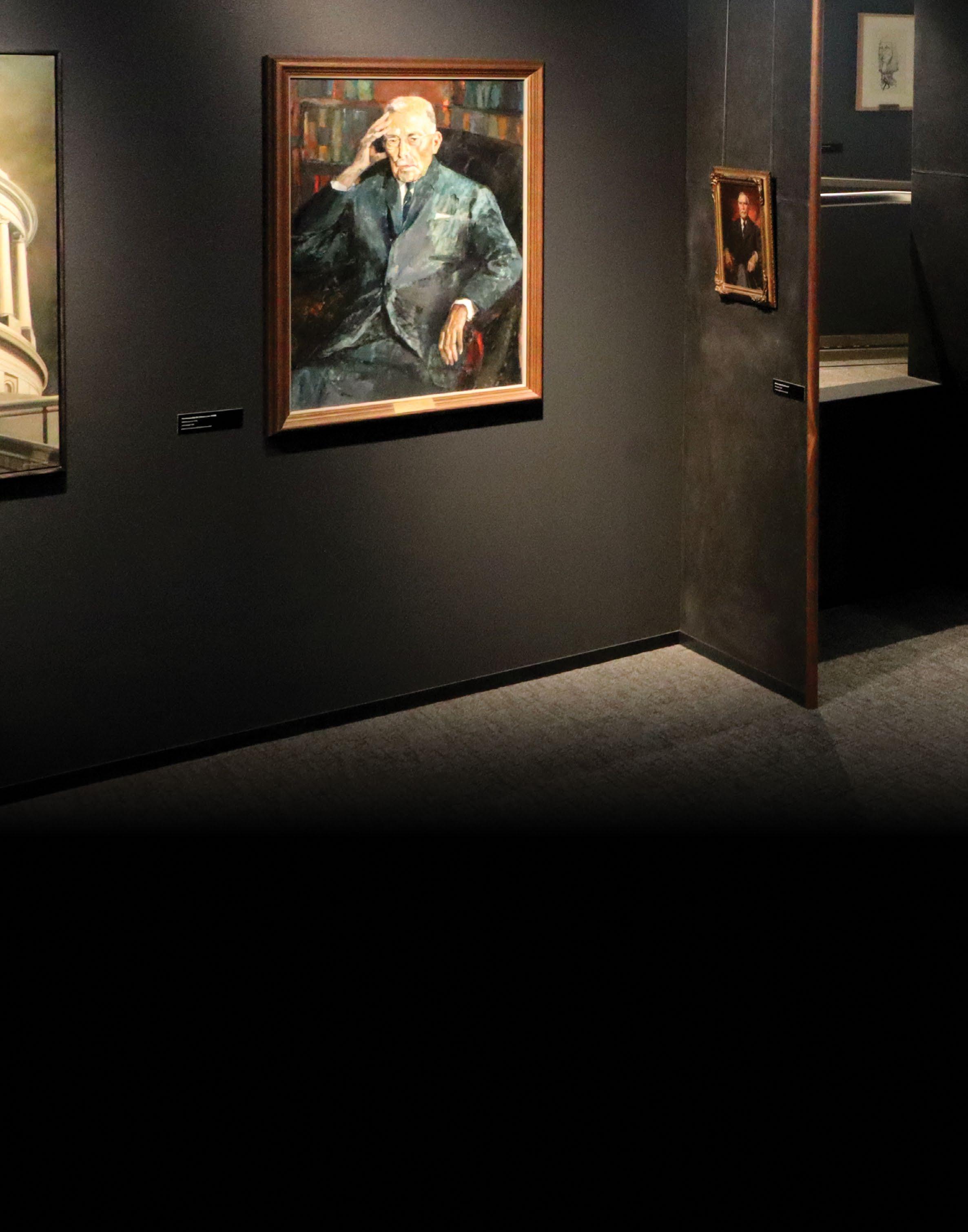
means of cementing status, often by flattery and to lionise (either the person depicted, or the person paying for the thing, who might or might not be the same person). More recently, portraits have been used as emblems of causes or diversity. In that respect, like it or not, portraits occupy an inherently political cultural space.
The Victorian Bar has its own dedicated portrait gallery, the Peter O’Callaghan QC Gallery. It is, aside from the National Portrait Gallery in Canberra, the only other significant collection of portraits open to the public. No other Australian Bar has such a collection, let alone such a fine collection (both of sitters and of artists), on permanent display. It is an institution within our Bar institution, of which all Victorian barristers can and should be immensely
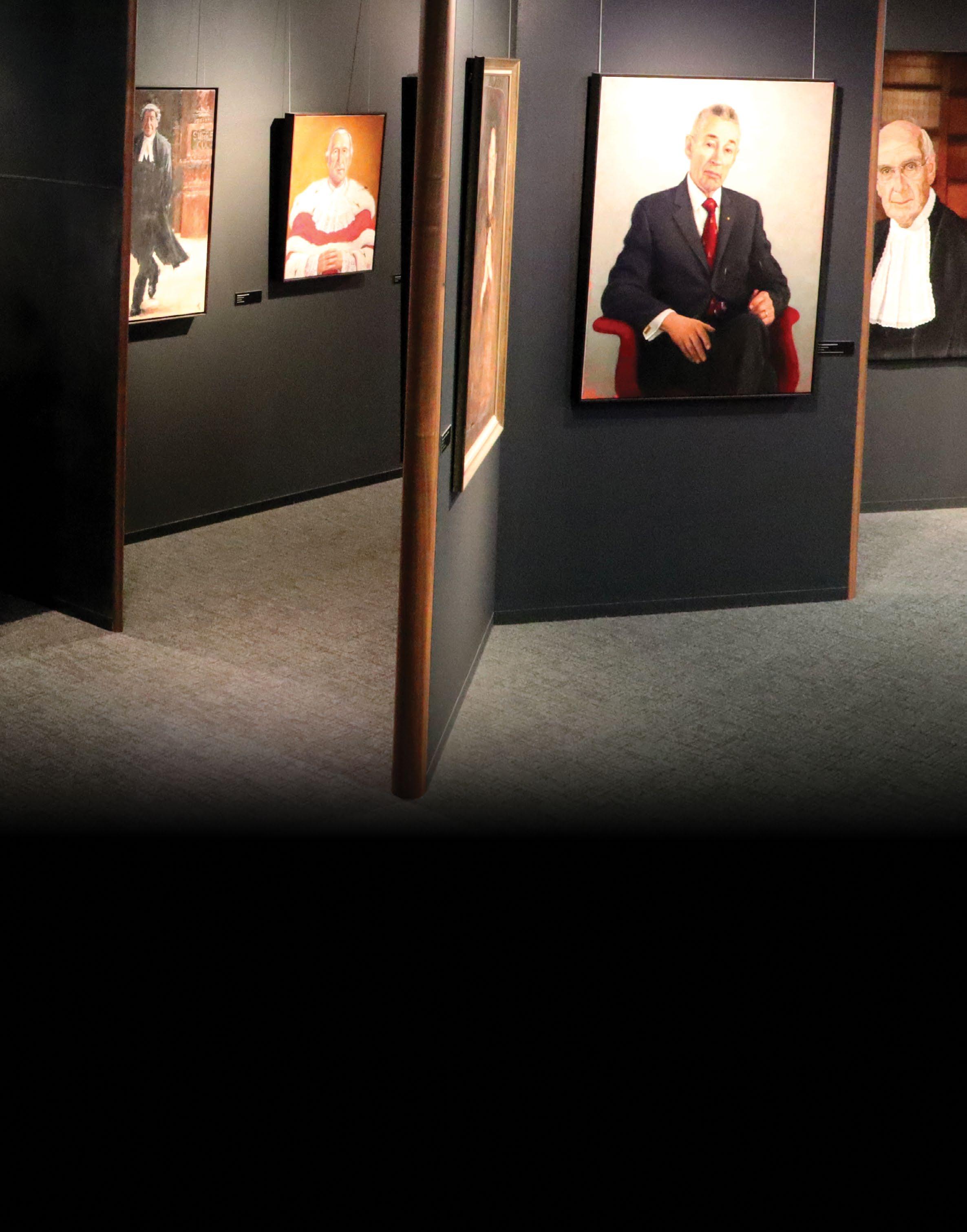
proud. Leaving to one side the pre-eminence of many of the sitter/subjects (mindful that a barrister may be a person who, to paraphrase Marlon Brando of actors, if you ‘ain’t talking about them, ‘ain’t listening), the representation of quality and important artists is noteworthy.
The Gallery has work of distinction ranging across decades of portrait practice and diverse materials. From Archie Colquhoun’s full-length portrait of silk-stockinged and full-bottom wigged Sir Owen Dixon, through to Stephen Benwell’s wonky clay sculpted head of Alfred Deakin and Shaun Gladwell’s moving image installation of Allan Myers QC (and, no, Allan is not standing on a motorbike riding through Broken Hill as in one of Gladwell’s famous slowmotion films), the Gallery also holds portraits by William Dargie, Ivor Hele, Andrew Sibley, Judy Cassab, Lewis Miller, Clifton Pugh, Yvette Coppersmith, Peter Churcher, Ralph Heimans, Spooners, Sally Ross, Louise Hearman, Rick Amour, Robert Hannaford and Juan Ford, to name a few. Additionally, there are photographic portraits by David Rosetzky, Polly Borland, Helmut Newton and Bill Henson.
The Gallery in its present form was opened in 2014, being the culmination of much work by the Victorian Bar’s Art and Collections Committee, overseen by the Gallery Foundation spearheaded by its then Chairman, Peter Jopling QC. The Bar News reported of the Gallery opening in 2014: Chairman Peter Jopling QC says that the project began several years ago with his realisation that, although the Bar had a number of significant portraits, there was no sense of there being a collection which enabled us to both celebrate and pay our respects to our esteemed colleagues and their contribution to our Bar, the rule of law and the wider community. It is hoped that by bringing the collection together in the Peter O’Callaghan QC Gallery we will be reminded of the great collegiate spirit of the Victorian Bar and that, in turn, this will inspire future generations to add to the collection.
Over the past 10 years the important work of legacy building has continued including through the efforts of Siobhan Ryan KC, followed by Peter Willis SC and the Gallery Foundation
“The Gallery is your gallery. ”
Board chaired by Philip Solomon KC. Regular unveilings have been a feature of the Bar’s calendar and will be in the coming years. Every year the Committee presents a seminar for Law Week. The Gallery is fortunate to have as its patron the Hon Michelle Gordon, who is herself a regular attendee at the unveilings and a strong supporter of the Gallery.
All of that is very nice, but why have a Gallery of portraits of barristers at all? In short, the Gallery, much like the genre of portraiture itself, has a dual purpose. It serves to recognise individual excellence and devotion to duty in the community and to the law. In that way it serves to recognise and to inspire us all. Secondly, by doing so in a collective and public way, not by hanging hagiographies in private rooms, we are saying proudly to our community, “Look at us. Scrutinise us. We are an important part of the third arm of government. This is who we have been and on these walls we will show you what we are capable of, and who we mean to be.”
Of course, by the outward appearances of its members, the Bar as it has been, is not what it presently is nor what it will be in the future. I have heard it said, not entirely unfairly, although not at all accurately, that there is a lack of diversity on display within the Gallery. It is a difficult sentiment to quell (partly because of its nebulous predicate). It is true that the Bar has itself lacked diversity in its history (witness the Reeve cartoon group portrait of the 1937 Bar—all men, all white, nary a smirk or smile). However and nevertheless, we should find it vital to celebrate our heritage notwithstanding the limitations on diverse membership that existed in the past and which persist today to some degree. Doing so does not exclude the advancing of diversity as it manifests in our present and future membership. Nor is it necessary to honour our present membership and
diversification by attacking the fact of our historical constitution. Whilst the Gallery contains portraits of exemplars of an historically less diverse Bar membership, it equally holds many examples to the contrary. The Gallery will further reflect the changes in our membership in future.
How then does the Committee and Foundation go about achieving these important objectives? How do we decide what faces to hammer onto the hallowed walls of the Gallery? Before briefly explaining our processes, it is necessary first to dispel a myth. The Gallery Committee and Foundation does not sit atop a mountain of money from which portrait commissions are doled out. Every commission requires funding. The Gallery Foundation was established to provide a mechanical means through which (tax deductable) donations can be made both generally and for individual portrait commissions as they arise. You, as members of the Bar have made, and we hope will continue to make, generous donations to the Gallery Foundation.
The process for commissioning portraits is governed by a protocol and is simple. In order to be eligible to be the subject of a portrait commission, the sitter must be, or have been, a member of the Victorian Bar. Some are automatically eligible (former heads of jurisdiction of superior courts, Governors and Governors General, Attorneys General, members of the High Court and Premiers or Prime Ministers). Some are eligible by consideration by the Committee (having “distinguished themselves in the practice of their profession and or in their service to the Victorian Bar and or in their service to the wider community”). Importantly, the Committee does not itself advance the names of potential subjects for such consideration. It relies on Bar members to “champion” a particular subject for consideration. Typically, such an expression of interest approach is
made by letter expounding the virtues of the subject of consideration and with supporting materials. Crucial to such an approach is the expression of financial commitment to enable the portrait to be commissioned. Portraits are not typically commissioned until a sitter is at or near the conclusion of their officebearing role or career. In respect of commissioning portraits of sitting justices, for example, the rationale for doing so is obvious.
Assuming a subject is within the eligibility criteria (whether automatically, or on deliberation by the Committee), the Committee will recommend to the Foundation Board that the portrait is commissioned. Once approved, the Committee then assists the “champions” to fundraise or will engage (dragoon) volunteers from the Bar to manage fundraising efforts in respect of such portraits. The Committee also chooses the artist, invariably someone at the pinnacle of portrait practice, as part of maintaining the Gallery as a collection of portrait excellence. The work of painting, drawing, moulding, filming or shooting then takes place with an unveiling event held some months later. The work is then put on display. Finally, it is worth noting that the Gallery is regularly re-hung to refresh the display of works, as well as to circulate works that may have been in storage.
The Gallery is your gallery. I invite you to take a moment when next speeding through Owen Dixon Chambers to slow down and look carefully at the pictures on display. A few moments more than mere fleeting glancing will reward. The works are of quality and the subjects will inspire you. Think seriously about donating to the Gallery Foundation. You may even wish to advance an expression of interest for a valued colleague or, quietly, very quietly, dream quixotic thoughts of grandeur: Your Face Here.
Justin Tomlinson SC is the Deputy Chair of the Victorian Bar Art and Collections Committee and director of the Peter O’Callaghan QC Gallery Foundation Board.

BY JACK KELLY
Many readers could be forgiven for summarily dismissing this article. The mere mention of the word ‘poetry’ causes eyes to glaze, minds to wander, and hands to profusely sweat. Hearing or reading a poem is usually accompanied by flashbacks of high school English class, where you were cajoled into reading Banjo Paterson or Les Murray or John Donne poems like you were deciphering braille with your feet. Inaccessible, and elitist, that is the rock poetry is often left under, slumbering undisturbed for years.
At the risk of embodying a jabotwearing Robin Williams in Dead Poet’s Society, standing on the bar table stomping my feet, imploring you all to rip out the introduction to your law textbooks: poetry re-emerges in times of love, grief, and change. In such times poetry can offer us, intuitively and graciously, what we need to hear when we need to hear it.
But what of poetry and the law? Or the poet and the barrister? Are there parallels between these esoteric sects? Well, in my submission, your Honour, there are many. Reading a poem can
be a bewildering experience that often takes a few goes before you ‘get’ it. This process of active reading must engage the same section of our brains that reading the densest precedent does. The bohemian working practices of the barrister are not unlike the poet’s need to sit and do nothing but ponder the imponderables for extended periods of time. And how many hours are spent formatting written submissions only for them to look like the most abstract of concrete poems?
But do the worlds of the poet and the barrister ever actually meet? I punched the word ‘poem’ into Austlii’s advanced search function, and the results were stark: it revealed an abundance of poems written by victims in their impact statements. These poems are often only described in the sentencing remarks, with words like ‘touching’ and ‘heart-wrenching’ constant refrains.
However, a portion of one of these poems was recorded in the sentencing remarks of R v Tran [2020] VCC 1882 at [31], being a sentence for Dangerous Driving Causing Death, written by a father for his deceased son:

My search did also turn up the case of Malcom Anthony Braam v BBC Hardware Ltd [2020] VSCA 164 at [60] where a poem recorded in the plaintiff’s diary following the resolution of a matter was used to discredit his claim of a mental breakdown after a directions hearing:
But the real prize, I can tell you Is none of these things It’s the time, and the freedom That ending it brings
Perhaps these lines should be added to section 7 of the Civil Procedure Act 2010 (Vic).
Of course, there are many poets moonlighting as barristers at our Bar. John Tesarch’s book All That Remains was published by Puncher and Wattmann last year and reviewed by Ivy Smojver in the last Victorian Bar News edition. Nick Green KC has been a regular contributor of legal-flavoured verse to the Victorian Bar News, with a recent poem entitled “MAX PERRY: A salute to a man of decency” posted on LinkedIn. Kylie Weston-Scheuber’s two anthologies of performance poetry make poetry incredibly approachable and engaging. And Annabelle Ballard whom I first met during our undergraduate Arts degree, in an ‘introduction to poetry writing’ class; Annabelle being a diligent and committed writer, and me, looking for a bludge subject before being swept along in awe.
We didn’t get to say goodbye, to just see one more smile, to say, you know, I love you, son, and have us talk a while, but they were always our parting words, I always felt your love. Now we’ll have to keep that close and feel it from above.
Intensely personal yet universally recognisable. Simple, accessible, profound; a fantastic poem. I’m grateful for Judge Murphy’s willingness to enshrine these lines in the remarks.
Poetry strives toward unattainable ideals. A concept succinctly crystalised through the texture of language. However, a poem can never fully realise this purpose due to the inherent fallibility of our ability to communicate. The law carries a similar burden, fatalistically striving toward the lofty ideals of justice and fairness, inevitably curtailed by funding, time and lack of caffeine. But thankfully for barristers and poets alike, the powerful play goes on, and we are able contribute a verse. (Line adapted from Walt Whitman’s “O Me! O Life!”).

Art advisor Sophie Moshakis offers practical guidance for barristers considering art purchases or rentals—from navigating the market to ethical acquisition.
SOPHIE MOSHAKIS

Quality art can bring a sense of vibrancy and dynamism to an office setting and provide a level sophistication to the interior design of individual and communal chamber areas.
However, people are often daunted by the prospect of buying art, particularly as an investment. Often artworks can appreciate in value, however picking a winner can be a challenge without understanding the often confusing and opaque marketplace. Determining a starting point for entering the art market can be tricky. Research and engagement with art market agents such galleries, auction houses, dealers and fairs can be time consuming but is often necessary for any purchases made with the intention of building a collection. In this article, I have outlined some basics about the Australian art market for those considering making a purchase, as well as alternative options such as art rental.
Purchasing art—investor considerations
If you are buying art purely for your own appreciation (not the work’s appreciation!), it is relatively simple: buy what you can afford and buy from a reputable source. Before purchasing art for an investment, however, it is worthwhile understanding the marketplace.
The Australian art market constitutes less than 1 per cent of the international art market. While it generally follows global market trends, its parochial nature means that only a small portion is truly a “collector’s market” (meaning that work is bought with a view to potential re-sale), with most artwork purchased based on art appreciation (and there is nothing
wrong with that!). International market volatility isn’t as present in Australia. Digital disrupters that have made investment in the international art market more accessible through NFTs (non-fungible tokens) and “fractional ownership” have not significantly penetrated the Australian market.
The Australian market has been shrinking: the 2007 high of $151 million in auction sales has not been achieved since. This can create significant liquidity problems for collectors and investors, depending on the artist. Living, practising artists perform the worst at auctions, with the top selling artists overwhelmingly being Australian white, deceased male artists. This year’s Sydney Contemporary art fair posted its lowest sales figures in years: $16 million, down from $23 million in 2022.
While the market overall is stagnant, the most significant market trend in Australia is the boom in Indigenous art, driven by institutional and international interest and investment. Australian art has historically not broken into the international market, however strong and sustained interest, particularly in America, has created new avenues for the industry. The Tate Modern in London recently opened a survey of esteemed Indigenous artist Emily Kam Kngwarray, marking a significant milestone for international engagement in First Nations artwork.
Particularly in the case of the Indigenous art market, knowing where to purchase ethically and finding the right information is critical. Purchasing directly from one of the 80 art centres across Australia is usually the best way for artists and the community to receive the largest portion of the sale price. Indigenous owned art centres play a pivotal role in providing pathways to economic independence
and fostering intergenerational cultural practice. If you can get there, the Darwin Aboriginal Art fair in August is the best way to see a wide variety of Indigenous art and purchase work from emerging to established artists.
In the age of the share economy, art rental provides a flexible alternative to purchasing artwork, with significantly less capital outlay. Flexible art rental allows for the exploration of style, medium and aesthetic and is adaptive to changing circumstances such as moving rooms or floor. Even for a seasoned art collector, rental alleviates the asset management component of collecting and opens the possibility of engaging in new areas of interest. Artbank, established in 1980, is a Federal Government art rental program that makes available over 11,000 artworks collected since 1980 to the public. Offering a broad spectrum of Australian artwork, Artbank supports living artists through the direct purchase of artwork from the market.
There are also specialised alternatives to ArtBank. I founded ArtShare, an art rental business specialising in connecting rental clients with an array of First Nations and emerging artists from across the art market. We offer a bespoke advisory service that incorporates specialised advice on purchasing and rental for all levels of art collecting.
Sophie Moshakis has a Master of Arts and Cultural Management from the University of Melbourne. She is an art advisor and founder of ArtShare, specialising in Australian and First Nations art. See sophiemoshakis.com.
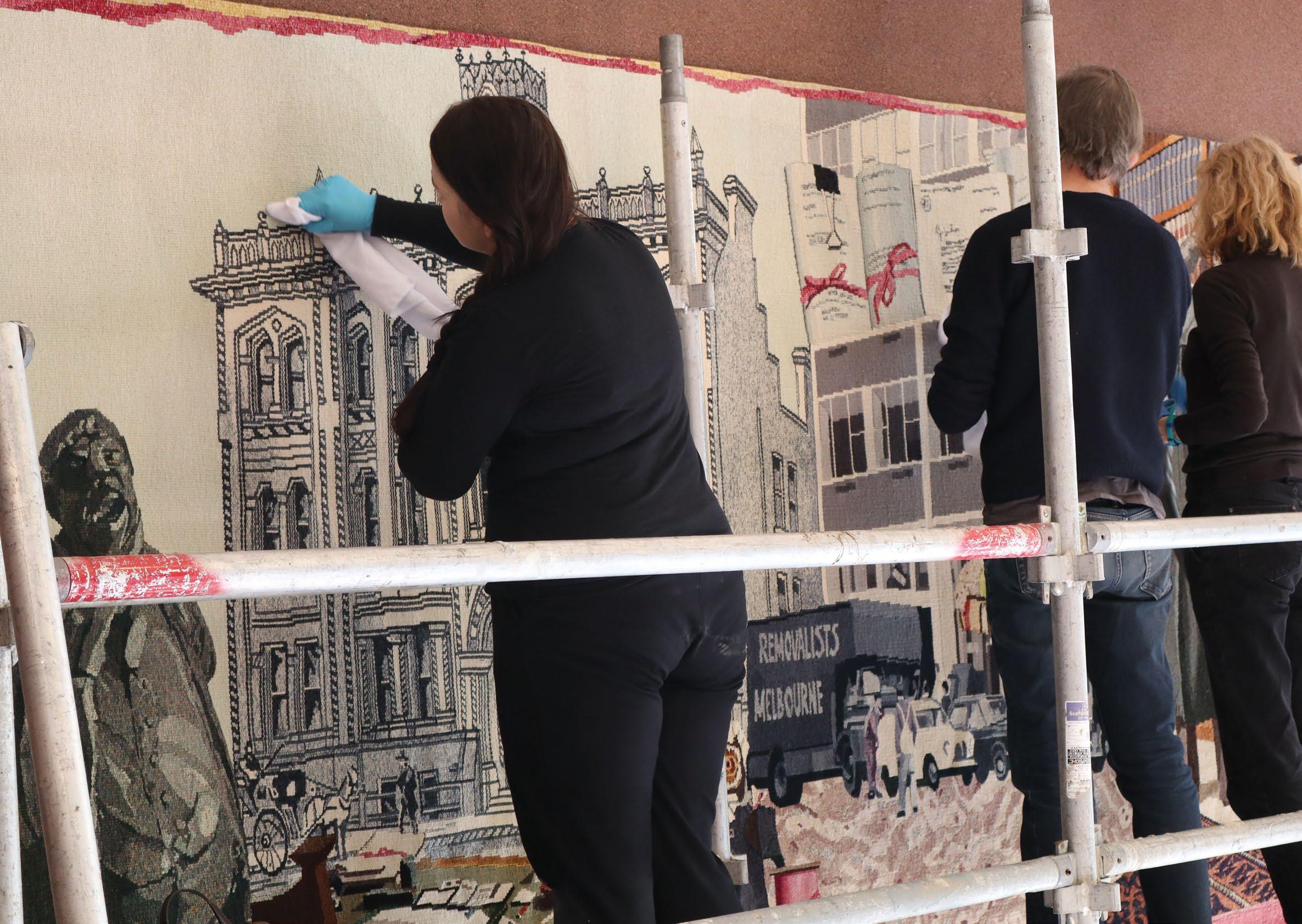
STEVE STEFANOPOULOS
The two large tapestries in the foyer of Owen Dixon Chambers West entitled The Silks’ were thoroughly cleaned by Grimwade Conservation Services, University of Melbourne, in recent months. The eastern tapestry is titled Barrister in Court whilst the western tapestry is titled Barristers in Chambers.
These important wool and cotton tapestries were designed by Murray Walker who is profiled below. They were woven by the Victorian Tapestry Workshop in
1987–1988, with Sue Walker as the Director, and Meryn Jones, Anne Kemp, Cheryl Thornton, Sonja Hansen, Robyn Mountcastle and Iain Young as the weavers. Architectural contributions to the tapestries were made by Bates Smart & McCutcheon.
The tapestries were unveiled on 2 November 1988 by Lady Joyce Delacombe, the wife of the late Rohan Delacombe, 20th Governor of Victoria (1963–1974) in the presence of His Excellency Dr Davis McCaughey AC, Governor of Victoria.
To clean the tapestries, scaffolding was erected to allow conservators to remove the build-up of surface dirt, dust and foreign particles, and insect residues. Both tapestries were reported as being in good structural condition, even though they have been exposed to harmful UV light and fluctuating temperatures for over 35 years.
Murray Vaughan Walker was born in 1937 in Ballarat and studied at the National Gallery School and at Melbourne Technical College (later the Royal Melbourne Institute of Technology) in 1958–59. Having been expelled from RMIT,
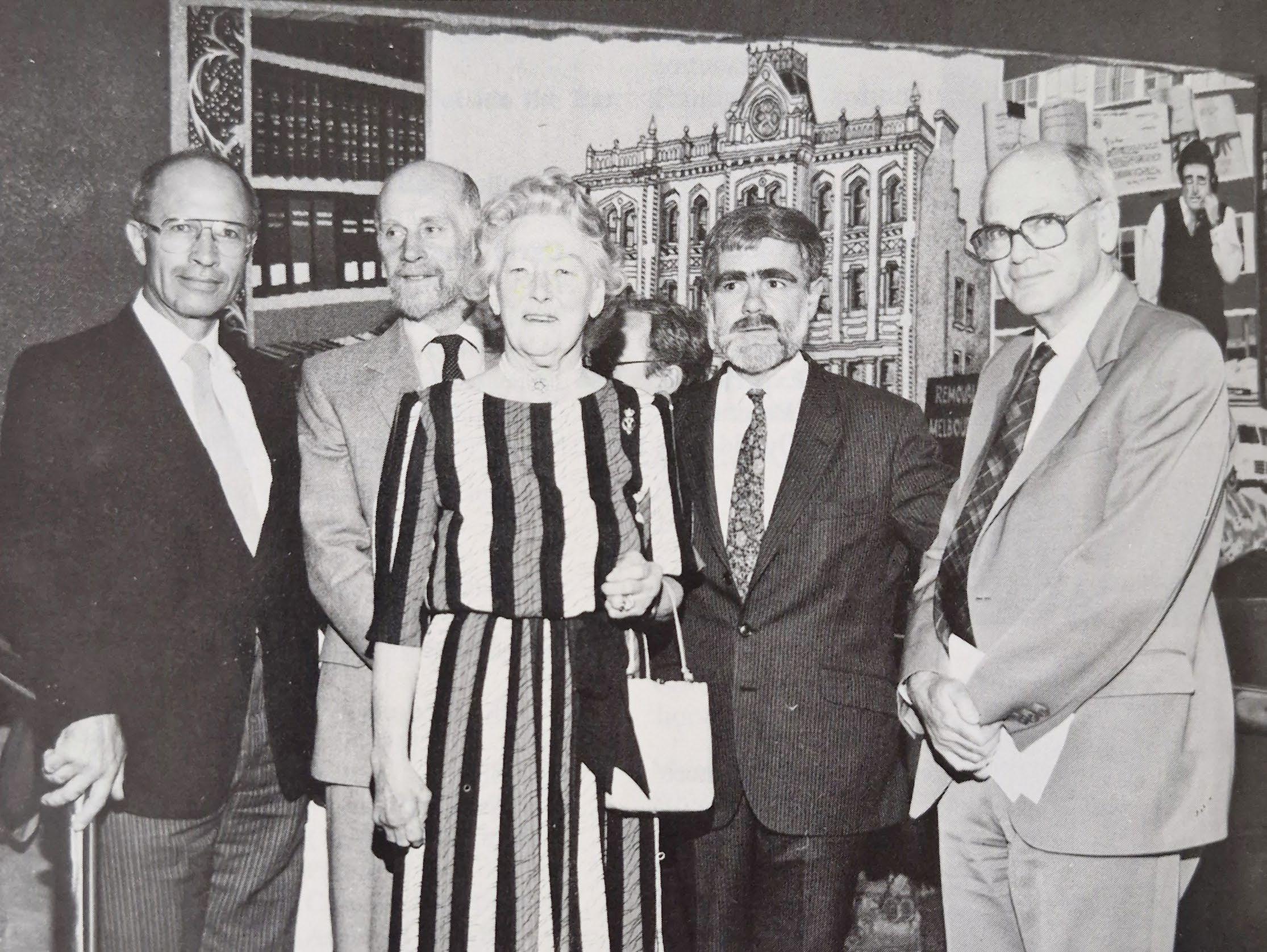
Walker was given weekly criticisms by Fred Williams in his studio. On the advice of Roy Bisley, an ex-Slade tutor who taught printmaking at RMIT, he enrolled at the Slade School of Fine Art, London, financing his trip by selling his art books. From 1960–62 he studied etching under Anthony Gross whose example as an artist and teacher was important to him. He worked as a technician in the Slade’s print workshop for which he received a small stipend and waiver of his fees in his second year. In 1961 he attended the summer school at Perugia’s Art Academy. In London he was exposed to the Pop artists David Hockney, Derek Boshier and RB Kitaj and to contemporary American painting. Walker was offered a part-time position in printmaking at the Slade but decided to return to Australia in 1963. From 1963–1970 he settled at
Kallista, where he renewed his friendship with Williams, then living at neighbouring Upwey. During this period Walker made hundreds of etchings in a freely drawn and expressive manner, often inspired by popular culture. In 1965 he was appointed by John Brack to teach etching at the National Gallery School. Walker became closely involved with the Print Council of Australia after its establishment in 1965. In 1973 he gave up teaching at the National Gallery School and stopped making etchings from 1979 largely because of its health hazards. In the early 1990s he made a series of colour monotypes, mostly expressive self-portraits, with the printer Neil Leveson at the Australian Print Workshop.
Walker published his landmark book, Pioneer Crafts of Early Australia
in 1978, and in the same year organised and wrote the catalogue for the exhibition Colonial Crafts of Victoria at the National Gallery of Victoria. In 1982 he published Making Do, Memories of Australia’s Back Country People. Walker also designed several large tapestries at the Victorian Tapestry Workshop, headed by his former wife Sue Walker, for the ANZ, Commonwealth Bank and Port of Melbourne’s World Trade Centre. A survey exhibition of his work in different media was held at the University of Melbourne’s Gallery in 1983. The National Gallery of Australia owns over 340 prints acquired in 2008. Walker gave a representative group of his work to the British Museum in 2008–9.
Steve Stefanopoulos OAM is the Victorian Bar’s Archivist and Historical Collections Manager.

RACHEL MATULIS
“Has anyone ever seen or heard of Coriolanus?” perhaps isn’t the sort of question one might expect from an Artistic Director on opening night. After a hesitant scattering of hands, Peter Evans enthusiastically launched into a brief retelling of this lesserknown Shakespearean tragedy—of the uncompromising soldier Coriolanus, whose fierce defence of Rome coupled with his open contempt for its citizens, leads to his exile from the very city he once protected. At first blush, Evans’ question might not seem significant,


but it speaks to the heart of Bell Shakespeare’s ethos: the arts provide for learning and connection. Theatre is not about reinforcing knowledge, nor is the enjoyment of Shakespeare reserved for those who speak in iambic pentameter. Whether it’s someone who hasn’t opened a Shakespearean text since school or is a seasoned theatregoer fluent in the works of the Bard, both should leave a Bell Shakespeare performance having learnt something new. It is with this educative vision that Founding Artistic Director John Bell, supported by arts philanthropist the late Anthony Gilbert, launched Bell Shakespeare with a staging of Hamlet in a circus tent in 1991.
This vision continues to guide Bell Shakespeare 30 years later. Shakespeare’s works are not a static monument to the past, but provide a living lens through which we explore modern perspectives on timeless human truths. And with that, prior knowledge isn’t a requirement to enjoy a performance of Shakespeare. In fact, the only real prerequisite is curiosity.
Leaning into that curiosity, and not without a little trepidation as someone far from an expert, I attended Bell Shakespeare’s salon-style discussion event “Stranger Companies” on 28 July 2025. The title of the series is a nod to A Midsummer Night’s Dream: “to seek new friends and stranger companies.” True to its spirit, any initial anxiety quickly fell away within the warmth of this intimate




setting; a space where Shakespeare becomes a vehicle for transformative learning, shared openly among an enthusiastic community of people.
Moderated by Bell Shakespeare Board Member and the Bar’s own Katherine Brazenor, these salon-style discussions are held in conjunction with Bell Shakespeare’s triannual productions, providing a unique opportunity to explore the themes and questions that underpin the plays. On this particular evening, we were joined by Jules Billington and Marco Chiappi of the Coriolanus cast whose insights enriched the conversation. In Coriolanus, Shakespeare portrays the volatile relationship between power and pride. Unlike other Shakespearean protagonists who seek to appeal to the public, Coriolanus rejects the public voice, refusing to flatter or perform. His disdain for the common people and rigid sense of honour raise questions about elitism and the cost of integrity in public life.
Coriolanus is certainly not a likeable lead. Unlike many of Shakespeare’s characters, the audience never gains a direct insight into his psyche, standing in stark contrast to the typical use of extensive soliloquies. The lack of catharsis in the play’s conclusion further extends the audience’s emotional distance from Coriolanus. It is perhaps for this reason Coriolanus stands as one of Shakespeare’s lesserknown and less frequently performed works. Yet Bell Shakespeare has not shied away from this challenge, refusing to underestimate its audience’s intrigue. While testing in some respects, confronting harder truths is, at times, a critical tenet of the arts. It is a heavy ask of an audience, but Bell Shakespeare’s execution of Coriolanus is imbued with wry humour, offering both reprieve and a true expression of text’s subtleties.
What began between the Stranger Companies group as a discussion of Coriolanus specifically soon developed into a discussion about larger questions:
is isolationism a form of strength? To what extent must we relate to those who represent us? And what do we make of populism in a world shaped by a 24-hour news cycle and relentless digital scrutiny? Despite the weight of these themes, the evening retained a light-hearted, inviting tone. Thoughtful engagement need not be intimidating, and even at his most complex, Shakespeare can serve as a springboard for inclusive and lively conversation.
But the night is not without a practical purpose. Stranger Companies events are dedicated to the philanthropic support its attendees; a new donor circle whose contributions fund the ‘Hearts In A Row’ initiative. This program enables individuals from disadvantaged communities and schools to experience Bell Shakespeare productions at no cost. For some, it is their first experience of live theatre.
In this way, Bell Shakespeare and Stranger Companies comes full circle: Stranger Companies members are able to indulge in their curiosity, and by doing so they facilitate access to education and the arts, ideally sparking the same curiosity in others.
Each Stranger Companies circle membership is $1,500 per calendar year, which includes a tax-deductible donation of $1,000. For the full program of events, queries or to become a member of Stranger Companies, please contact Bell Shakespeare’s Philanthropy Coordinator, Anna Day at annad@bellshakespeare. com.au or on (02) 8220 7523.
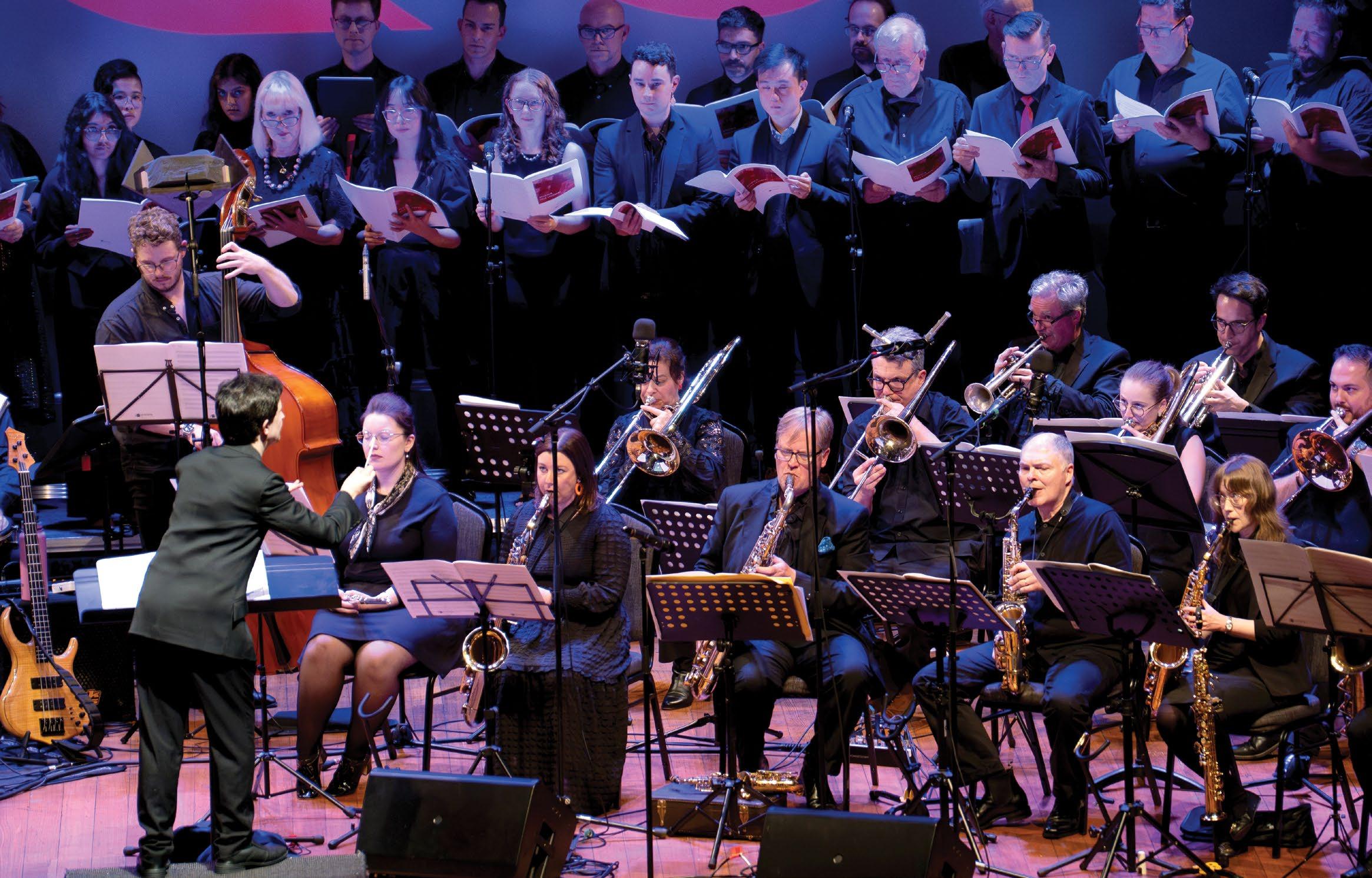
THE HON JUSTICE CHRISTOPHER BOYCE
Ihave done my best to cope with quite demanding trombone parts for the Melbourne Lawyers’ Big Band since about 2017. The MLBB is but one manifestation of the many creative groups presented by BottledSnail Productions, which, by its name, betrays the guiding principle—providing a means by which lawyers may do what they do best: be creative.
This has been quite a challenge—for me, at least—and yet the MLBB has never failed to ‘turn it on’ for its audiences. Time after time, the MLBB has been forced to bring a concert to an end, leaving the audience yearning for more. This, I confess, was a surprise for me; but, then again, I guess the band played with such infectious verve and energy, its members having been freed—if only for an evening— from the shackles of precedent.
The MLBB is but one species of BottledSnail’s overall creative output. I confess that I am not an expert in all of the disciplines exercised by BottledSnail and by which it has managed to entrance audiences over the years; but I do know that a symphony orchestra, a choir, musicals and serious drama have all been part of the entertainment smorgasbord. One wonders why it is that the impressarios of BottledSnail still cling to the honourable profession that binds them. It may have something to do with the words of encouragement offered by Zero Mostel (playing Max Bialystock) to Gene Wilder (as Leo Bloom) in Mel
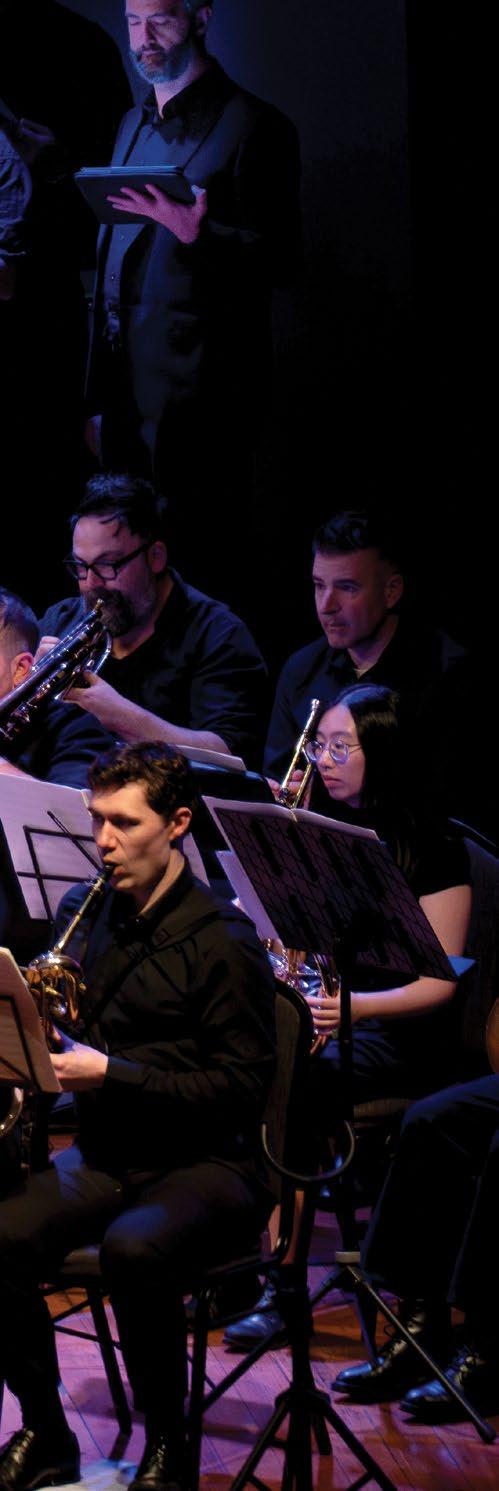

Brooks’ 1967 comedic masterpiece
The Producers: “You can do it, Bloom. You’re an accountant. The word ‘count’ is part of your title.”
On a recent November evening, BottledSnail, with full choir, soloists, and the kick-ass MLBB, performed the gargantuan Lindberg Requiem at the Williamstown Town Hall.
The Lindberg Requiem you ask? Yes, you read it correctly. Not Mozart, not Verdi, but Lindberg…Nils Lindberg. If you thought ABBA, Max Martin or Shellback the apotheosis of pop, this Requiem by Lindberg (a compatriot of these esteemed artists) offers a deeper, more moving, experience: a fusion of jazz, classical and Swedish folk music.
As for me, I must return to the ‘woodshedding’ (as we musicians say) of my part.
For more information about the various ways you can get involved in a BottledSnail project or to support your colleagues by attending one of their events, visit www.bottledsnail.com
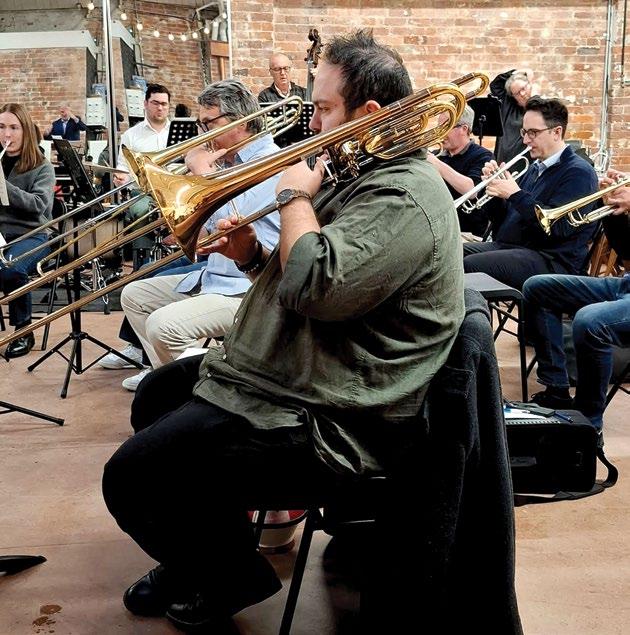
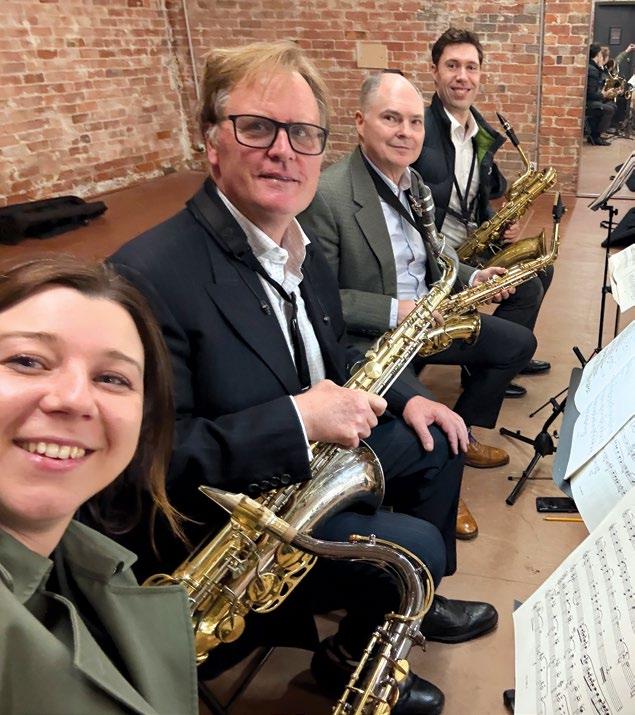
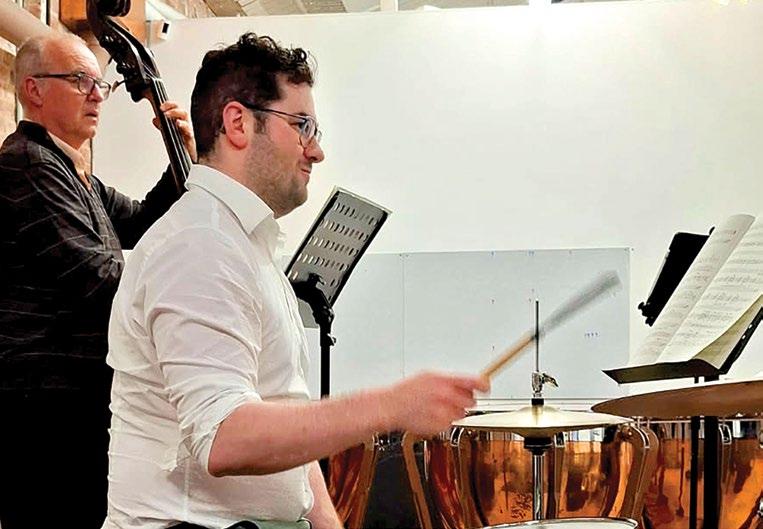
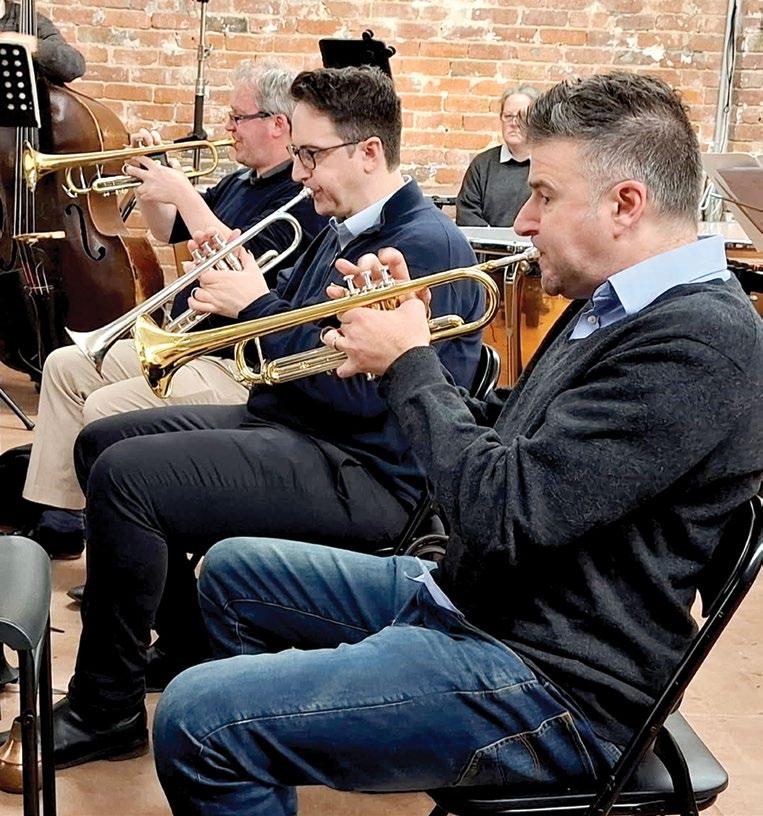

Nick Modrzewski
Join Meeting Room: Emergency Response Group, Rivers, Streams and Miscellaneous Water Bodies Act 2020 (Vic)
Meeting ID: 542 104 3261
Password: QuakingAspenv One tap mobile
+13017158592,,5852889551# US (Germantown)
+13126266799,,5852889551# US (Chicago)
Dial by your location
+1 301 715 8592 US (Germantown)
+1 312 626 6799 US (Chicago)
+1 346 248 7799 US (Houston)
+1 646 558 8656 US (New York)
+1 669 900 9128 US (San Jose)
+1 253 215 8782 US (Tacoma)
WILLOW: … barely more than a seedling at that time, bu–
OAK: …as it’s from a –
GRAY BIRCH: …can’t hear you [crackling noises]
OAK: …simply not persons!
DENSELY-LEAFED MALLET: We can’t hear you, Oak
[sound of volume being turned up]
[sound of wind and leaves rustling]
OAK: …crisis that affects–
WILLOW: Hello?
QUAKING ASPEN: …can you hear th–
OAK: …cannot allow this to happen.
COTTONWOOD: …might need to mute –
QUAKING ASPEN: Okay. I’ll mute him. Let’s just mute him.
[crackling noises]
[silence]
WILLOW: Okay thank you, Oak. I think, Oak, you might need to just check your connection, it’s quite hard to understand you and there’s wind there passing through your leaves or something but I think you were trying to say we’re on the verge of a crisis that affects us all and that -
[sound of wind and leaves rustling]
OAK: …disgrace if this legislation passes
WILLOW: Yep, Oak, we’ve just muted you again. That’s right, the legislation, the Rivers, Streams and Miscellaneous Water Bodies Act 2020 (Vic), you’re right, it’s a concern for all of us and that’s why we formed this
Emergency Response Group. So I’ll just ask you again to please stay on mute so that we can all hear each other. Okay. Thank you. Now. I would like to continue with my story: I was barely more than a seedling at the time, but I still remember how my parents and their parents and my brothers and sisters, the day we found out about our new legal status. I remember – and Gray Birch you told me you had a similar revelation –
GRAY BIRCH: That’s right.
WILLOW: I remember I looked down at myself and saw the multitudes crawling up and down my trunk: the Aphids and Elm Fleas and Earwigs, the Butterflies, Moths, Skippers and Maple Borers (those damned Maple Borers!) and Trythsleuths and Wasps, Blattodea and Sap-Sucking Honeydews – those pestilent members of the Union of Various Crawling Things fooling around in my bark.
COTTONWOOD: Pests!
WILLOW: That’s right! Pestilent pests! I felt all of them, right down to my roots - the Burrowing Maggots and Grub-Bois, the Knotted Nematodes and Mites tunnelling into my Dichotomous, combing the tops of my Herringbones, massaging my Whorls. And in that moment, in that beautiful moment, I saw myself afresh. I saw those Collectives of Other Beings as nothing but parasites. I was no longer a home for Beetle-Sloths! A feeding ground for the Pygmy Anteater? Not me. No, people. I was not a “means” but an “end” – a rightsholder, protected by law. Since that fateful day when they passed the Trees, Shrubs and Vegetative Plants Recognition Act 1972 (Cth) I am a Legal Person. And so are all of you.
[applause]
[wind sounds]
WILLOW: Let us sit with this for a moment. Let us consider it: the ability to enter contracts! [rapturous applause]
WILLOW: To sue or be sued! [whooping] [whooping] [whooping]
WILLOW: Ownership of property! ‘Standing’ in a court of law! [whooping]
WILLOW: But those other insects and beasts? Those rivers and grasslands, those hills and fields who flounder and flop about in a state of Nature, the Commons, the Undefined Masses?

COTTONWOOD: Boo!
DENSELY-LEAFED MALLET: [hissing]
WILLOW: Those others are not favoured with God’s blessings like us People! Their dispositions are simply not built for conscience, intellect, rational deliberation or liberty and the corresponding legal obligations growing from such qualities and faculties. God decided that Trees would stand tall and that rivers should flow at our feet. It is only natural that they remain there. We laughed when Aotearoa granted personhood status to the Whanganui River in 2017. We were disgusted that India should appoint its Ganges and Yamuna Rivers as “people”. But imagine for a moment –a river representing its own interests in a court of law!
[laughter]
WILLOW: A flowing, bellowing, chugging, slurping body of water filled with useless animals like the meek-toed frog whose tadpoles swim only in circles or the crab-clawed Yabi, which has basically no economic value – they say it tastes of nothing and its claws fall apart when you try to turn them into a useful object (i.e. salad tongs). Imagine that whole wet mess of a thing being granted the same rights as us! It departs from the natural and logical order of things. Yet, this troubling phenomenon is not as rare or as laughable as you might imagine.
[concerned rustling]
WILLOW: If this legislation passes, if there is a widespread grant of personhood status for Rivers in Victoria, there are implications for all of us. Imagine for a minute – Quaking Aspen? Quaking As-?
QUAKING ASPEN: Sorry, was on mute.
WILLOW: You live next to a river, am I right?
QUAKING ASPEN: Yep. Hyland River.
WILLOW: Alright. So, imagine for a moment, if you can, that you’re growing away happily, expanding yourself, but your roots start to ‘encroach’ on the river’s lower banks.
QUAKING ASPEN: Happens all the time.
WILLOW: Imagine if suddenly the River had a right to say [impersonating a River]: “You can’t come in here. This is my bed. It’s private. Get out.”
[nervous laughter]
WILLOW: I promise you, People, it won’t be long before they’ll be saying: “Oh, you Willows and Quaking Aspens, you Oaks, you Cottonwoods, you Densely-Leafed Mallets - you set up roots in river beds and slow the flow of water, reducing aeration. You threaten aquatic plants and restrict biodiversity. You’re no better than a weed.”
[furious rustling]
OAK: …to drain them! Drain them! Drai–
WILLOW: People. This is not a ‘call to branches’. But it is an omen for all of us. We stand upon a slippery slope. I warn you: every time a river becomes a Person, the rights of trees diminish. In this “new normal”, if
the rights of rivers and trees come into conflict, the rights of trees will not always prevail. I will conclude, solemnly, by showing you a photograph. This was taken just last week in Aotearoa...
QUAKING ASPEN: You need to click “Share Screen”.
WILLOW: I know. I’m trying to it’s just not QUAKING ASPEN: click down the bottom
WILLOW: I did
GRAY BIRCH: Near theWILLOW: I know
COTTONWOOD: there’s a button
WILLOW: I know I’m clicking it but it’s not doing anything
QUAKING ASPEN: then you need to click “Desktop 1”
WILLOW: it’s not WILLOW: no, it’s not
WILLOW: Here. There we go. Sharing now. I should note, this image may be triggering:

Christopher D Stone, Should Trees Have Standing? – Towards Legal Rights for Natural Objects, Southern California Law Review, No 45, 1972, pp. 450-501.
Erin L O’Donnell and Julia Talbot-Jones, Creating Legal Rights for Rivers: Lessons from Australia, New Zealand and India, Ecology and Society, Vol. 23, Issue 1, 2018, p. 7.
Margaret Davies, The Consciousness of Trees, Law & Literature, Vol. 27, issue 2, 2015, pp.217-235.
Naffine, Ngaire, Who are Law’s Persons? From Cheshire Cats to Responsible Subjects, Modern Law Review, Vol. 66, 2003, pp. 346-367.
This article was first commissioned by Art + Australia for their Multiculturalism issue, vol.57, no.1, 2021 and was also published by Monash University Museum of Art and Monash University Publishing in Tree Story, 2021.
EDWARD MOORE AND KATHLEEN FOLEY SC
If used skilfully, AI can improve the quality and cost-effectiveness of advocacy and other aspects of a barrister’s work. If used carelessly, it can lead to reputational disaster.
Widespread use of AI at the Bar is a practical inevitability. It is already happening. However, using AI well requires serious care and investment. To that end, this article is intended as a practical introductory guide. The authors recognise there are valid ethical concerns about the use of AI and also (for those wishing to use it) concerns about how to use AI ethically. However, this is not an article about the ethics of AI use. There is a good deal of highquality writing on that subject already. For those choosing

to use AI, you need to make your own informed decision and satisfy yourself that your particular use of AI complies with applicable ethical rules, privacy legislation and Practice Notes.
The first problem with AI use is data security. The leading ‘frontier’ AI models work by uploading your data inputs to a stranger’s computer, usually in a foreign country, where they are potentially exposed to hacking or misuse.
This isn’t a new problem; it’s how almost all modern software
works, including almost all email clients and the Microsoft suite. However, Victorian barristers can mitigate some of these existing risks by sticking with BCL’s offerings for core products and using end-to-end encryption or ondevice storage.
We can’t do that with AI. As a result, AI users are reliant on contractual promises from the AI model providers and a working knowledge of cybersecurity. At a minimum, it’s necessary to learn about the prevailing compliance standards for cloud security providers, and to read and understand the terms of service in full, including the data addendum, in order to decide whether it’s reasonable to entrust the provider with confidential information.
Of course, there are limits to contractual promises, especially for companies based in

“If used carelessly, it can lead to reputational disaster.”
jurisdictions without strong norms around data privacy. (Case in point: a recent US court decision obliges ChatGPT to retain all data.) Further, as sole traders, barristers cannot negotiate custom terms. And a contract won’t help much in the event of a data breach.
A common misunderstanding is the risk of data being used to train an AI model. AI models aren’t neuroplastic (by design) and they aren’t directly affected by user interactions. Rather, it’s the collection of information by the provider and other intermediaries along the way that poses risks of data leakage, whether by deliberate misuse or accidental data breach. If you use a ‘consumer’ model rather than a business product, your data will inevitably be harvested, whether for model training or otherwise. Again, this problem is not unique to AI. Some basic steps barristers can take in relation to data security when using AI:
» do not share confidential information with an AI system unless you have read that system’s privacy policy and terms of service (especially any data processing addendum) in order to understand whether it is reasonable to entrust that system with confidential information;
» inform your clients, where relevant, of your AI use and obtain their consent to that use; and
» make sure any passwords for AIrelated accounts are strong and unique.
If you’re new to AI, it’s critical to understand that it needs a lot of guidance to produce good results, and that it will usually generate a lot off mess along the way.
If you simply ask a general purpose ‘chat’ model—without context, examples, constraints or goals—to draft a submission for you, find judicial support for an obscure proposition, or solve a complex logical problem, you will probably end up with ‘slop’. Your success will improve enormously if you:
» spend time playing and experimenting with AI (including using different models) when you aren’t under time pressure to complete a task, so you can start building your skills;
» educate yourself by reading about AI and talking to other barristers who are using it;
» build a library of proven prompts for routine tasks, like case summarisation;
» master the art of curating relevant materials to give the model the context it needs (in the simplest example, by providing relevant authorities together with an explanation of the relationship between them);
» determine, through trial and error and by talking with other barristers, which models and tools excel at specific tasks;
» establish an efficient verification process for checking outputs against sources;
» account for hallucination, sycophancy and the overweighting of consensus (among other biases); and
» work out when to use AI in your workflow and when to do things the traditional way.
As with acquiring any sophisticated skill, effective AI use demands research, experimentation, setbacks and persistent practice.

AI tends to wholly invent facts. This is referred to as ‘hallucination’ and is a basic feature of how generative AI currently works. In a real sense, the model is trying to fool you into thinking it knows what it’s talking about; if it doesn’t know the answer, it will invent one that is impeccably plausible and wholly incorrect.
As such, we think ‘hallucination’ is a misleadingly benign metaphor; it suggests that the AI knows what reality is and simply suffers from occasional errors of perception. It doesn’t.
Hallucination rates are higher than many of us might think. An (updated) study in the United States found that two popular AI legal research tools hallucinated 17–33 per cent of the time.1
Regardless of terminology, the result is that you must always check source materials and results and work on the strict presumption that AI output is wrong.
To take the simple example of a case summary, you should (for example) prompt the model to provide verbatim extracts and paragraph numbers for important propositions in its analysis and include structured steps to ensure the AI double-checks them. (You need a reasoning model for this, not a general purpose chatbot. The difference is explained below.) Better software will provide direct links to the relevant passages, to make checking easier.
You can further reduce errors by having models check each other’s work. (In a similar vein, Westlaw now offers an AI citation and quotation checker.) Of course, you still need to check the end result.
Many legal products also now rely on ‘retrieval augmented generation’ (RAG), which is essentially a hybrid of a large language model and a search engine for your files. This is sometimes marketed as a solution to hallucination. It’s not: it can even introduce new errors through poor retrieval or context window limitations. It can, however,
help find references to source materials efficiently.
It also helps to ‘converse’ with the model. If you challenge and debate its answers, forcing it to defend its sources and reasoning, you’re more likely to discover errors. However, be aware that AI can double down on persuading you of its wrong answer.
These methods reduce hallucination risk, but they do not eliminate it. Plainly, there is much more to legal analysis than simply checking sources. An additional risk for barristers is that we work with others (solicitors as well as other barristers) and rely on their work to varying degrees. Silks, for example, should be aware of whether their junior is using AI and if so, how that junior is guarding against risk, including hallucination risk (and vice versa).
The dangerous illusion of human intelligence
It is very tempting to treat AI like a human assistant. After all, it is designed to mimic one. To do so is a bad idea and will lead to mistakes, of which hallucinations are just one example.
It’s safer to think of AI as an overenthusiastic alien. Aside from its propensity for hallucination, its cognition differs fundamentally from our own. It does not want what we want. Its chaotic and unreliable brilliance is unlike anything else we have yet encountered as a species.
It is true that the latest ‘reasoning’ models are smarter than most humans, at many intellectual tasks, most of the time. In many ways, they vastly exceed us. But comparisons to human intelligence risk missing the point; it’s not necessary to be human to be useful (and dangerous).
Understanding AI product offerings
There are only a few high-powered ‘frontier’ reasoning models in existence. They are from:
» OpenAI (makers of the ChatGPT series);
» Anthropic (Claude); and
» Google (Gemini).
China’s DeepSeek and Kimi K2 are also frontier models, but you can (and should) ignore them for present purposes. Zuckerberg’s Meta (Llama) and Musk’s xAI (Grok) are also in the race but are unsuitable for legal work. Practically, there are only three ways to integrate a frontier model into your workflow.
1. Direct subscriptions. These include tools like ChatGPT, Teams or Google Gemini in Workspace. They give you immediate access to the model in a browser or app, often with added tools like file uploads, Dropbox integration, and shared workspaces.
1. Wrappers. These are programs that embed one or more frontier models and add specialised features, workflows, or interfaces on top. Think of Adobe Acrobat’s AI summary tools, Notion AI, or legalspecific platforms.
1. API integrations. You can subscribe to a developer-focused service (e.g., OpenAI API, Claude Workbench) and connect the model to any compatible software (for example, DEVONThink). This requires a little technical setup but avoids locking you into a particular model. Each AI provider offers multiple models bundled with a subscription. It’s important to select the right model for each task.
Reasoning models are slower and more expensive but can do some genuinely remarkable things if steered skilfully.
General purpose chat models will give you an almost instant answer, relying largely on pattern recognition and linguistic association, and can be most useful for general drafting. That said, they are much more likely to hallucinate.
Finally, research models take about 5–10 minutes to answer a query but, in reward, spit out a comprehensive report, together with in-line citations to (generally) credible public sources including Austlii.

Do you need a “special purpose” legal AI?
No.
Legal tech companies don’t generally develop models from scratch. That requires vast sums of money. Instead, they tweak one of the frontier models by one of three methods:
1. ‘customising’ the model by adding extra prompts, custom tools (such as file uploads, web browsing) and knowledge (such as uploaded documents);
2. ‘fine-tuning’ the model by training it on legal data;
3. adding ‘embedding / retrieval augment generation’ (RAG), which involves splitting documents in a database into chunks (‘vectors’) that are readily digestible by the model and retrieved as context when answering a question (e.g. the legal research products).
None of that is particularly useful for barristers, outside perhaps legal research. First, customising a model is unhelpful for barristers: given our idiosyncratic practices and working styles, we’re better off just developing your own prompts for tasks we do frequently. (The fancy term for this, “prompt engineering” makes this sound hard. It isn’t. Just think about what you want the model to do, ask for it, then request the model to help refine your question until it reliably produces what you want. Then write it down somewhere.)
Second, fine-tuning often degrades reasoning performance. It is also timeconsuming to develop, so the resulting product is frequently outclassed by a newer frontier model by the time it’s released.
Third, as to RAG features, the latest models have such large memories (‘context windows’) that they can often process everything you need for a given task without requiring retrieval from a database. And even if you’re working with a large dataset, setting up your own RAG is now straightforward— for example, by letting ChatGPT Teams connect to Dropbox (we’re not necessarily condoning that).
It is also time consuming and difficult to vet data priv34acy and security settings for AI legal companies. They tend to be deliberately opaque. We hope this changes.
With all of that said, we think the AI research tools from Westlaw and Lexis can be quite useful (if expensive).
Uses that don’t involve confidential information
This section commences with warnings about AI and data privacy. However, you can make great use of AI without inputting confidential data at all, such as for:
» research initiation, especially in less specialised fields (with variable but occasionally exceptional results, especially via ChatGPT Deep Research, Westlaw or Lexis Advance +AI);
» navigating specialised subjects, for example commercial, scientific, engineering, valuation or accounting concepts (again, especially with Deep Research). This may assist a barrister in a range of ways, including preparing to cross-examine an expert witness;
» helping you when you get stuck phrasing a submission (e.g. Apple’s Writing Tools);
» polishing and proof-reading anonymised submissions and opinions for conciseness, tone and typos;
» doing hard maths and writing Excel formulae;
» criticising your ideas (‘black hat thinking’) and suggesting new ones, especially with an advanced reasoning model;
» thinking about possible questions from a judge prior to oral argument;
» summarising and extracting information from judgments, transcripts or non-confidential materials;
» helping you to prepare for a novel task, for example asking a witness questions in a trauma-informed way;
» IT support; and
» converting long judgments, books or
chapters into a surprisingly engaging podcast for your commute (Google’s NotebookLM).
If you feel content to bear the data security risks mentioned earlier (and have ensured you have discharged your ethical obligations), other uses may include:
» the application of your research corpus and notes to pleaded facts or evidentiary material;
» interrogating expert reports;
» comparing different evidentiary sources for corroboration and contradictions;
» preparing cross examination or exam-in-chief;
» tertiary review of large mounds of documentary evidence to find facts, connections and inconsistencies you’d otherwise miss;
» transcribing voice memos and interviews;
» drafting correspondence;
» extracting chronologies (although AI has brittle chronological reasoning, so be careful);
» oral rehearsal (including real-time criticism on delivery and content) for appearances via ChatGPT’s ‘live chat’;
» drafting pleading skeletons and suggesting causes of action;
» developing and critiquing arguments and ideas;
» translation (DeepL)—although this is not a substitute for getting a translation done by an accredited professional;
» drafting a ‘first cut’ of speaking notes or written submissions. Everyone’s practice and workflows are different, and there are doubtless many, many more possibilities. Part of the challenge with AI is that the technology has a “jagged frontier”; the tools are amazing at some tasks and hopeless at others, and this changes by the month. The only way to know is to test for yourself.
1 V Magesh et al, “Hallucination-Free? Assessing the Reliability of Leading AI Legal Tools”, Journal of Empirical Legal Studies
ROBERT LARKINS
The first jail built in what is now Melbourne, was situated on Batman’s Hill near present day Spencer Street. In April 1838 the jail held two prisoners. They were both Wurundjeri warriors. One is known as Tullamarine, the other as Jin Jin. Together these two men made history by accomplishing the first jail break in what was to become the Colony of Victoria. The escape was reported by Captain Lonsdale to the Colonial Secretary in a letter dated 26 April 1838.1 Lonsdale explained that Tullamarine, “…got a long piece of reed which he thrust through an opening in the partition between the place where he was confined and the guard room, and after lighting the reed by the guard’s candle he drew it back..” Once alight, explained Lonsdale, Tullamarine had utilised his fire management skills to burn a discrete hole in the roof of the cell through which he and Jin Jin escaped. The abandoned prison was left to go up in flames.
Jin Jin was re-captured shortly after the escape.2 Tullamarine managed to get away, collect his wife and flee with her “beyond the mountains”.3 We know those mountains as the Dandenong Ranges.
The whole truth
The escape occurred only 30 months after Batman, Fawkner and others had taken occupation. Already, native protein such as kangaroo was scarce and the staple carbohydrate of murrnong tuber had been decimated by sheep and cattle. Prior to being locked-up, Tullamarine had taken the view that a fair substitute for his people’s traditional foods was the stock and crops of the occupiers. Before escaping he had led a series of raids on land claims to provide nourishment for his people. During one of his early forays, Tullamarine was shot and wounded. After that, his rebels carried guns.4
These campaigns had been carried out during April 1838. On 14 April, he led his rebels on John Aitkin’s claim. On 21 April, they raided land claimed by Kenneth Clarke.5 Tullamarine’s next raid was on the potato crop planted by John Gardiner. Gardiner’s land claim fronted the creek now
known as Gardiner’s Creek near present day Scotch College.6 A few potatoes had previously been taken from Gardiner by hungry Aboriginal people.7 But nothing of the scale planned by Tullamarine and his rebels.
At nightfall on 22 April, “a great many blacks” entered Gardiner’s claim.8 Tullamarine was armed with a shot gun.9 His companion Jin Jin had a musket and was prepared for a shoot-out with a bag of musket balls and extra powder in a cannister.10 Three of the other rebels had firearms.11 The remainder carried spears.12 They moved quickly to dig-up potatoes using kangaroo cloaks as baskets.13
The rebels were spotted by a servant of Gardiner’s named William Underwood. When Jin Jin saw Underwood, he pointed his gun at Underwood and yelled, “I’ll ‘boom’ you”.14 Underwood replied that he wouldn’t tell anybody. Tullamarine told Jin Jin to put the gun down and the rebels went back to work.15
Underwood seized the opportunity to run to Gardiner’s residence. As he neared the house, he started yelling, “murder”.16
It was a Sunday night and the Gardiners were hosting a prayer meeting.17 When the alarm was raised, a large group of Gardiner’s servants and guests grabbed firearms and descended on the potato field. Without warning, they opened fire, killing three of Tullamarine’s men.18
Tullamarine, Jin Jin and some others were under a hail of fire but managed to cross the creek.19 The chase continued on the other side but the fleeing men were headed-off by a neighbour named Allen McDonald who was on horseback.20 One of Tullamarine’s rebels aimed a shot at McDonald but his musket failed to fire.21
Tullamarine and Jin Jin were captured alive. The whites were angry and the arrests were brutal. Tullamarine was bashed to the head with the butt end of a musket.22 The pair were shackled in irons.23
The next day, Tullamarine and Jin Jin were brought before the Police Magistrate for a committal hearing. Both men were committed for trial in the Supreme Court of NSW sitting at Sydney. It was as a consequence of those events that the pair had been remanded in custody prior to their escape.
Tullamarine was eventually tracked-down after his escape—probably by native police. The appointment of native police was a cynical exercise to exploit inter-clan rivalry. Those recruited were particularly adept at hunting down Aboriginal men accused of crimes against the white occupiers.
After re-capture, Tullamarine and Jin Jin were both chained to the deck of the King George sailing ship bound for Sydney. Once landed, the two men faced court on a range of charges. Long sentences were anticipated. The outcome was a surprise. The Supreme Court of NSW held to the common law principles of a fair trial. There were no interpreters at Court and it was obvious that Tullamarine and Jin Jin did not understand the legal process. As a result, their trial was aborted and both men were released.24
One would expect that the freed men would be shipped
back to Port Phillip and, in some accounts, that’s what occurred.25 But this writer can find no record of Tullamarine and Jin Jin boarding a ship back to Melbourne. Others have suggested that the prisoners were simply released and abandoned.26 If so, they must have decided to walk home to Wurundjeri Country. That would be the same epic journey south that was much celebrated when accomplished be Hume and Hovell only 13 years earlier. Jin Jin’s fate is unclear but an exhausted Tullamarine did make it back. Tragically, he died shortly after his return.27 Tullamarine was buried in 1839 at an unmarked location on the bank of the Yarra River.28 Twelve months later, his wife was also buried on the riverbank but for some reason, “opposite the spot where her poor husband was buried”. 29
The airport known to Melburnians as Tullamarine and the freeway that leads to it, are not named after the rebellious warrior. The colonists did not honour Aboriginal troublemakers by naming parishes after them. The Parish that would become the suburb of Tullamarine was named by the surveyor, Robert Hoddle (the Hoddle of Melbourne grid fame). He got the name of Tullamarine from a poem written by
1 Capt. William Lonsdale to Colonial Secretary 26/4/1838 Historical Records of Victoria (HRV) V1 p512
2 Lonsdale to Col Sec HRV V1 p513
3 Report George Langhorne to the Col Sec 30/4/1838 HRV V2A P214
4 Melbourne Court Register 23 April 2838. Deposition of Allen McDonald HRV V2A p219
5 Mullaly, Paul. Crime in the Port Phillip District, Hybrid Publishers 2008, P 612
6 Royal Historical Society of Victoria. Contemporary drawing of Gardiner’s homestead by his daughter, Anna Gardiner, in possession of granddaughter, Mrs. M Austin.
7 Report George Langhorne to Col Sec. 30/4/1838 HRV V2A p213
8 William Underwood deposition. Melbourne Court Register 23 April 1838 HRV V2A p217
9 Underwood deposition. 23/4/1838 HRV V2A p217
10 Underwood deposition.23/4/1838 HRV V2A p217

Howitt. Howitt and Hoddle were both in the Port Phillip District in 1840.30 The two men were educated in Britain and would have known each other through Melbourne’s limited social circles. In the poem, Howitt invents a flower he calls, “tullamarine”. The published poem purports to be written from the perspective of a young Aboriginal mother. His poem commences,
Tullamarine, thou lovely flower, I saw you in your happy hour;
The young mother names her child after the flower but the child dies. The flower is now a sad reminder:
Now for the joy which I long had The sight of thee must make me sad.31
11 Underwood deposition. 23/4/1838 HRV V2A P218
12 Report Langhorne to the Co Sec 30/4/1838 HRV V2A P217
13 Henry Dagett deposition. Melbourne Court Register 23/4/1838 HRV V2A, p218
14 Underwood deposition. 23/4/1838 HRV V2A p217
15 Underwood deposition.23/4/1838 HRV V2A P217
16 Report Langhorne to Col sec, 31/3/1838 HRV V2A p213
17 Dagett deposition. 23/4/1838 HRV V2A p218
18 Report Langhorne to the Colonial Secretary 30/4/1838 HRV V2A P213 and James Boyce, 1835. Black Ink 2013, p182
19Dagett deposition 23/4/1838 HRV V2A p218
20 Allen McDonald deposition. Melbourne Court Register. 23/4/1838. HRV p219
21 Dagett deposition 23/4/1838. HRV V2A p218
22 Underwood deposition 23/4/1838 HRV V2A p218
Painting by W. F. E Liardet (Wilbraham Frederick Evelyn), 1799-1878. Courtesy of the State Library of Victoria
As for the warriors we call Tullamarine and Jin Jin, we don’t know their real names. Jin Jin was sometimes called, “Woicom”.32 Tullamarine had various Anglicised versions of a name including, Toollermanene, Dullamarin,33 Bunju Logan, Bunna Logan,34and Tullamareena.35
After the killing of the three Wurundjeri men near the banks of Gardiners Creek, nobody was charged in respect of the deaths. However, the government did take action, Aboriginal People were banned from possessing firearms.36
From the editors: Any disparaging language used are quotes in order to properly indicate the attitudes at the time.
23 Langhorn to Col Sec 30/4/1838 HRV V2A P213
24 Mullaly, Paul. Crime in the Port Phillip District., Hybrid Publishers 2008, p 589
25 Mullaly p 685
26 Dr. Sarah Craze, Ashburton, A History of a Melbourne Suburb. Victorian Historical Society, 2024
27 Journal of William Thomas 28/5/1839 HRV V2B p527
28 Thomas 28/5/1839 HRV V2B p 527
29 Thomas 28/5/1839 HRV V2B p527
30 Australian Dictionary of Biography
31 James Bonwick, The Wild White Man and the Blacks of Victoria, Fergusson & Morre 1863. P27
32 Lonsdale to Col Sec HRV 2A 301
33 Stephens & Stewart-Muir. The Years of Terror, Australian Scholarly Publishing 2023. P498
34 Mullaly p 684
35 Wikipedia entry, ‘Tullamareena’
36 Sir George Gipps to La Trobe February 1840. HRV. V2B, p 731
“After evading assassination by the Taliban, an Afghan judge found friends and mentors in Melbourne ”
LIZ MAIN
Mahtab Fazl had been a judge for just a year when the first letter landed on her desk in 2018.
“At first, I thought it was a normal letter,” she says.
“You are our target. You shouldn’t be a judge,” the letter read. It was the first of many death threats she received from the Taliban.
“I was shocked for one minute and thought, ‘What should I do? I have to work.’”
Mahtab’s court was in Herat, the third-largest city in Afghanistan, an oasis city famous for its glittering mosques and fine art. She adjudicated the vilest cases of violence against women, including domestic abuse, forced marriages and murder. The fact that a female judge was jailing men, including members of the Taliban, outraged the Islamic fundamentalist group.
Despite fearing for her life, she continued to go to work each day.
“I knew my decisions as a judge could change lives, and that gave me the strength to continue despite the risks,” she tells me as we sit in the living room of her new home in Melbourne.
Mahtab received more letters over the next three years threatening her with imminent execution.
They were not empty threats. Two female Supreme Court

judges were shot dead in January 2021 while on their way to work in the capital city of Kabul. One of Mahtab’s colleagues was almost killed when he was shot on his way to work and two judges from her court were murdered in separate attacks in 2020 and 2021.
The Taliban had been driven out of power in 2001 by foreign forces, including the USA and Australia. But even after being dethroned, the militia took its revenge from the sidelines for two decades, slaying those upholding the country’s re-established democracy, including judges, politicians and journalists.
Mahtab’s court offered handguns to all of the judges for protection. But Mahtab, too afraid to carry a gun, instead wore a series of disguises to and from work to hide her identity. In her handbag she carried two spare head scarfs she would swap between during the day, as well as a COVID facemask and sunglasses.
To avoid being followed, she switched how she commuted to work, sometimes being driven by her husband or brother, or at other times a taxi.
Massive strides were made in Afghan women’s rights between 2001 and 2021. They had the right to go to university, work, and live in a home free from violence. That came to a crashing halt in August 2021 when the foreign forces withdrew their troops and the Taliban wrested

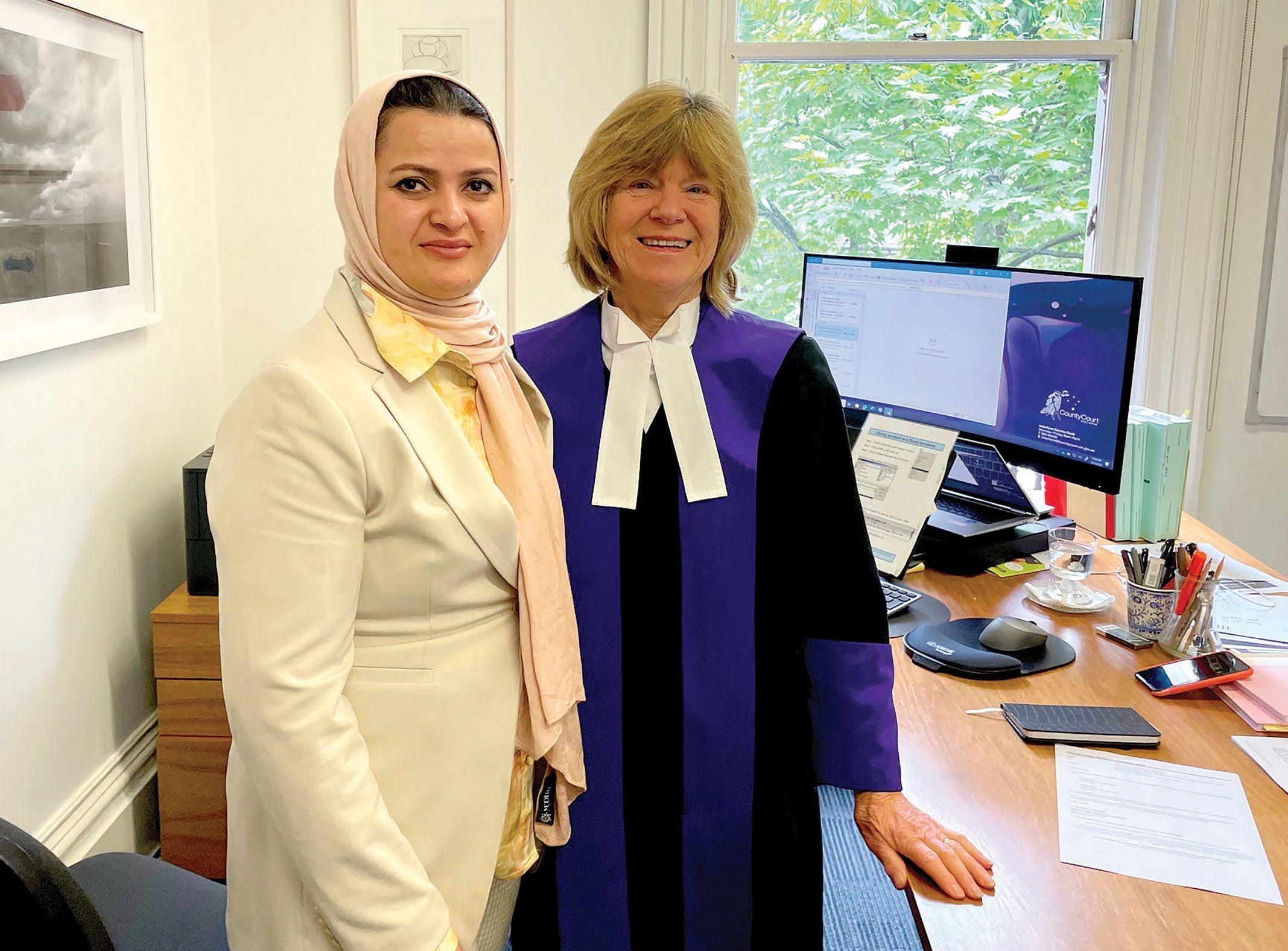
back control from the democratic government.
“They destroyed that in one night,” Mahtab says.
By the time Mahtab was born in 1991, leaps and bounds had been made in the advancement of women’s rights in the country. Half of all government workers and university students were women and 40 per cent of doctors in Kabul were female, according to a 2001 report by America’s Bureau of Democracy, Human Rights and Labor.
Mahtab was five years old when the Taliban first came to power and a gender apartheid was enforced. Under Taliban rule, girls were not allowed to go to school and women were forced to stay at home. But Mahtab’s father, a shopkeeper, was adamant that she and her sister receive an education. He sent his daughters to clandestine classes set up to continue teaching girls.
“The Taliban, they didn’t know about this school. It was very secret,” she says.
From the outside, the girls’ school looked like any other home on the street. But inside, the female teacher stood at a blackboard in the living room while about 20 girls sat on the floor, scribbling down the day’s lesson on reading and writing in Persian.
When the Taliban was driven out of power in 2001, Mahtab was finally able to return to school.
“When I was a teenager, I observed family violence and also forced marriages, and underage marriage, beating,” she says.
“From a young age, I was passionate about justice and fairness. I wanted to be part of the legal system and help those who had no voice.”
She resolved to become a judge to protect these women.
Mahtab rode on the back of her father’s motorcycle to attend her
classes in law and political science. Upon graduating, she worked as a prosecutor in the Herat Children’s Court before studying for two years to become a judge.
“She was studying day and night. I can say that she just slept two or three hours a day,” her husband, Mustafa, says.
When their first son was born, she took 10 days’ maternity leave before returning to classes.
She was appointed a judge in her home city of Herat in 2017. On some days, Mahtab was forced to leave work in the middle of the day when the court’s security team heard whispers of a planned suicide bombing.
But even on days when Mahtab had to leave to avoid a suicide bombing, she always returned to work the next day.
“I knew my decisions as a judge could change lives, and that gave me the strength to continue despite the risks,” she says. “It was not just a career
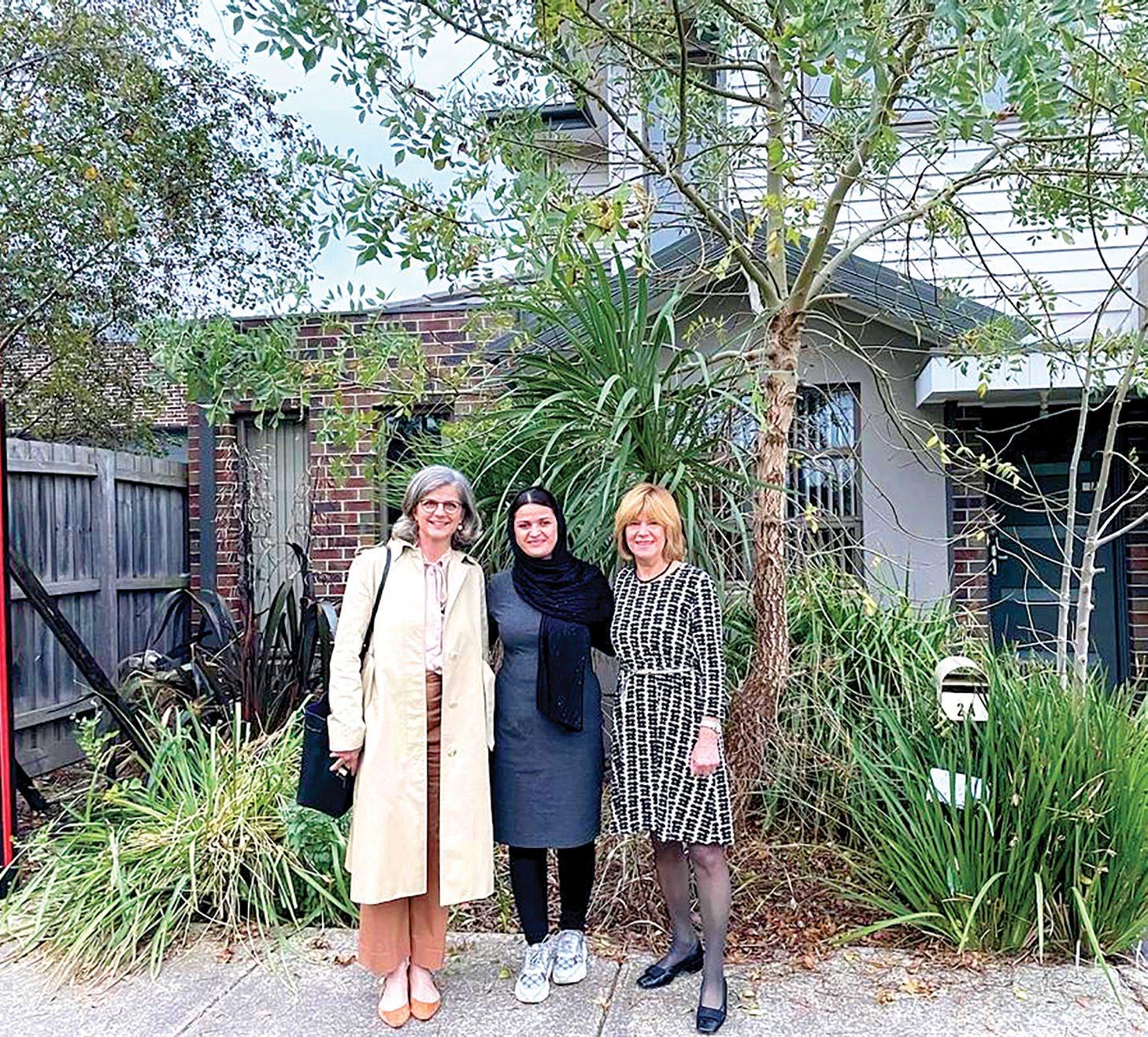
for me. It was a mission, a way to serve my country and prove that Afghan women are capable and strong.”
As international forces began to withdraw from Afghanistan in mid2021, the Taliban was closing in on Herat. Mahtab and her family lay awake at night listening to the sound of bombing and gunfire outside the city.
She knew it was only a matter of time before the Taliban raided their home looking for her. One day, she and Mustafa started a fire in their home’s fireplace. She threw her law degree and her judicial robes into the flames.
“We destroyed them so they couldn’t find proof she was a judge,” Mustafa says.
In the morning of 12 August 2021, Mustafa had an uneasy feeling and implored Mahtab not to go to work. It was clear the Taliban was on the brink of taking over the city. But she had a case that day of a husband who had savagely beaten his wife.
“We hear the Taliban are so close to the city and they’re almost in the city. But still,
she was asking to go to the court!” Mustafa says, laughing now in disbelief.
“I was not going to let her go because of [the danger to] her life but she said, ‘There are people that need me.’”
He reluctantly dropped Mahtab off at work at 8am. At 11am, she received a phone call from one of the other judges.
“Go home. The situation is not good,” he warned her.
Herat had fallen to the Taliban. “That was the bitterest moment,” she says.
Mahtab grabbed her laptop from her desk and fled the building. She had no idea it would be the last time she would ever see her court.
“I ran, just ran,” she says. Outside, the city had turned to anarchy.
“It was busy, noisy. Everyone was rushing. Some women were crying,” she says.
The Taliban had opened the gates of the prison opposite the court, releasing all of the prisoners, including Taliban members. The men Mahtab had sentenced to jail were on the loose.
“They were looking for revenge,” Mustafa says.
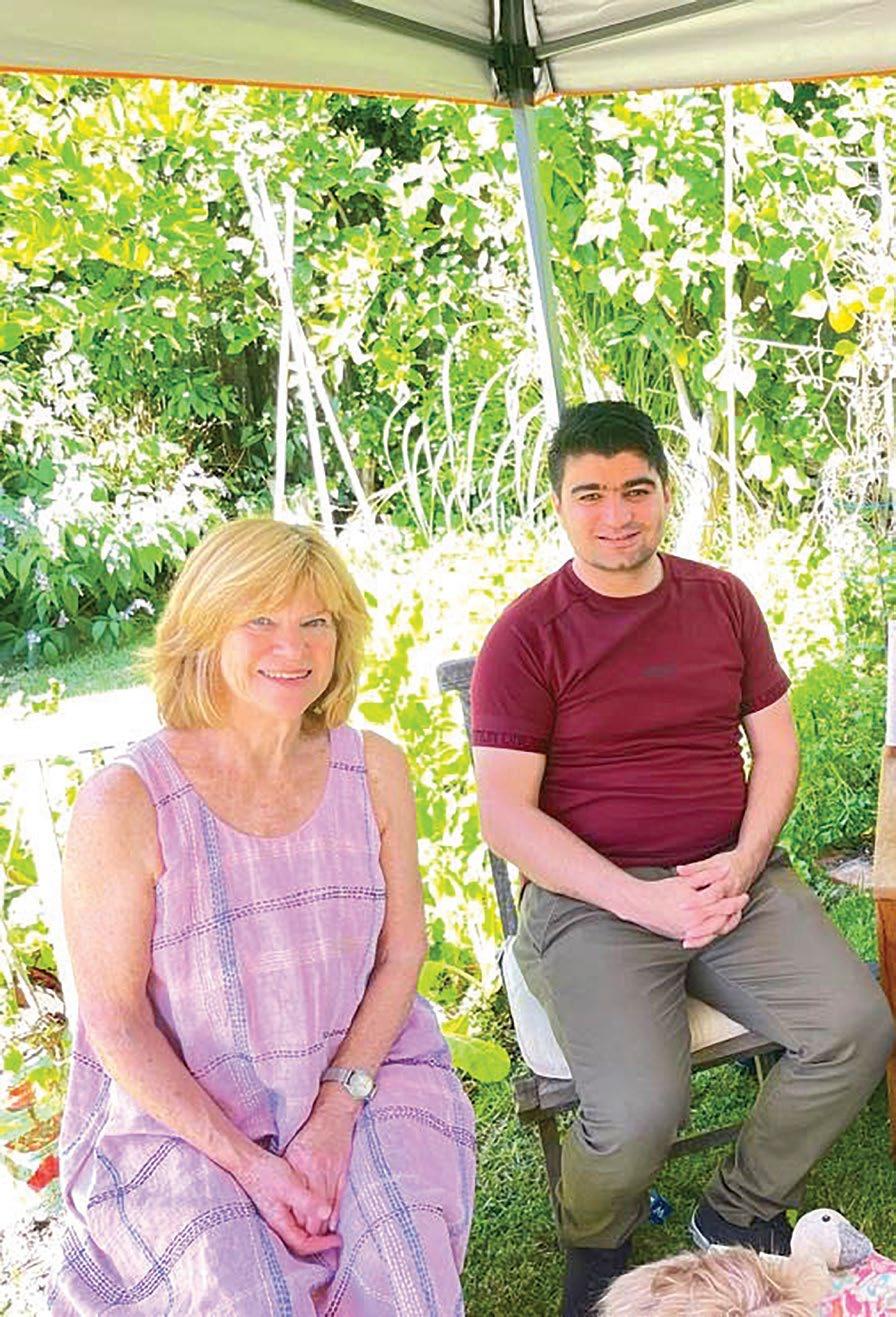
That night, Mahtab and her family slept in the classroom of an English language school run by Mustafa’s uncle, hoping their hideout would not be discovered.
With their two sons, aged five and six months at the time, the couple moved between different family members’ homes to avoid capture. While in hiding, a neighbour rang Mustafa to warn him that a gang of about 20 people had broken into their abandoned house.
It was a mob of gunmen looking for Mahtab. They shot through the front door of the family home and when they discovered she had escaped, they ransacked the house and stole Mahtab’s gold jewellery, cash, a TV and smashed the windows.
Mustafa was horrified to discover the family’s dog had been shot dead in the garden when he returned to the home a few days later.
“That was the last chance to get out”
Upon hearing of the plight of their colleagues in Afghanistan, a global
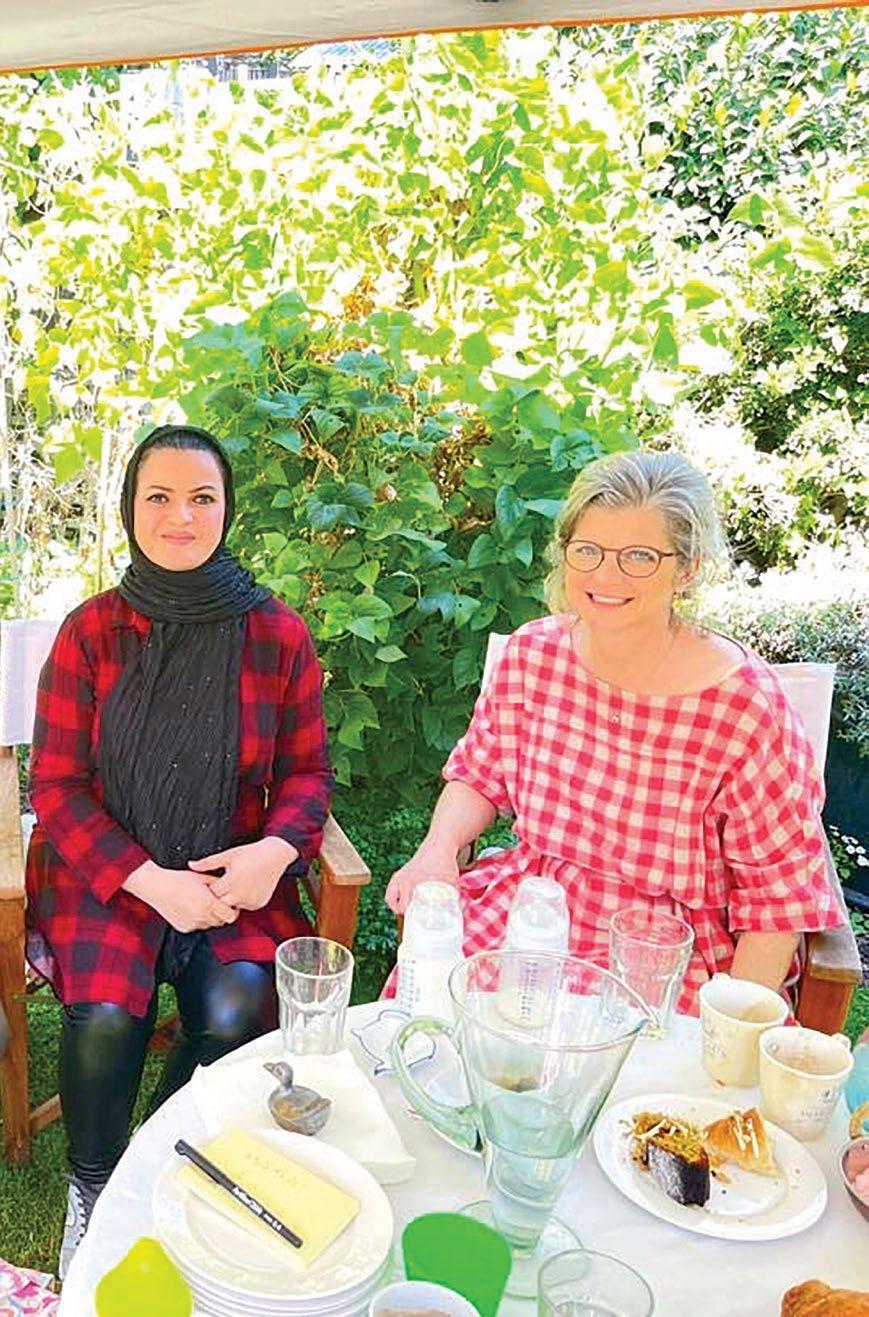

network of female judges swung into action. The International Association of Women Judges (IAWJ) began arranging visas and fundraising to get the Afghan women judges out of the Taliban’s reach. They also began chartering evacuation flights with the assistance of the International Bar Association, the International Commission of Jurists Australia, and Jewish Humanitarian Response.
New South Wales District Court Judge Robyn Tupman led the charge, using her contacts as Secretary and Treasurer of the IAWJ to relocate the judges to safety.
“We decided to do whatever we possibly could do to help them,” says Judge Tupman.
After an anxious wait in hiding, Mahtab was told she and her family had seats on a rescue flight to Greece.
“That was the last chance to get out. We were very lucky,” says Mustafa.
The IAWJ has helped approximately 200 Afghan women judges and their families to resettle around the world. Mahtab is one of 17 Afghan judges who have found safety in Australia.
There are 38 women judges remaining in Afghanistan whom the IAWJ is still working to have evacuated.
“Hopefully we’ll be successful but it’s getting harder and harder,” says Judge Tupman.
The Taliban has banned women and girls from attending high school and university. Nearly 30 per cent of girls in the country have never been in a classroom, according to UN Women.
According to a 2023 UNESCO report, the Afghan economy will haemorrhage $USD 9.6 billion, two thirds of its GDP, by 2066 as a result of women’s exclusion from higher education.
Women are largely confined to their homes and most women-owned businesses have been forced to close.
“It is like a prison for them,” Mahtab says.
As part of a buddy program set up by the IAWJ, Mahtab has been paired with two judges from the County Court of Victoria, Judge Wendy Wilmoth and
Judge Fiona Todd.
“They are my friends. They are my sisters,” says Mahtab.
The Australian judges have been instrumental in helping Mahtab and her family establish themselves in Melbourne. They’ve written reference letters to real estate agents to help them secure a home to rent, enrolled her eldest son, now nine, in primary school and kitted him out in his soccer team’s uniform.
“There was no question—it was just the right thing to do,” says Judge Todd.
Mahtab began a scholarship to study law at the University of Melbourne in March 2025 and is keen to continue working in law.
“It is my dream to go to this university and continue my education,” she says.
Judge Wilmoth and Judge Todd have welcomed Mahtab into Melbourne’s legal community, inviting her to shadow them while they hear criminal cases at the County Court.
“She’s not going to let the grass grow under her feet,” says Judge Wilmoth.
FIONA CAMERON
The Equality & Diversity Committee is delighted to report that recruitment and planning are once again underway for the Victorian Bar Diversity Internship, which will take place from 17 November to 5 December 2025. With the support of the Victorian Bar Foundation, the Internship has been expanded this year to offer an opportunity for eight law students from culturally and racially marginalised backgrounds to shadow barristers, judges and tribunal members over a five-week program.
The program has also been expanded this year to include the Administrative Review Tribunal, alongside the Supreme Court, County Court, Federal Court of Australia, Federal Circuit and Family Court of Australia (FCFCOA) and the Victorian Civil and Administrative Tribunal (VCAT).
We recently spoke to one of last year’s interns, Sakina Ehsani, her senior mentor Jenny Firkin KC, and participating judicial officers and tribunal members. They were each kind enough to share their insights into how the Internship is operating from the perspective of those participating, and how it can continue to benefit the profession and wider community in 2025 and beyond.
Sakina Ehsani, 2024
Victorian Bar Diversity Internship Participant
I first heard about the Internship through my university and, while I wasn’t entirely sure what to expect, it seemed like a good opportunity. Careers at the Bar and within the courts are not widely advertised or discussed in law school, and as someone without any connections to the legal profession,
the entire experience was new to me.
From the outset, the internship proved to be truly transformative. I was welcomed with generosity and genuine support—barristers and judicial officers alike took time from their busy schedules to speak with me, answer questions, and guide me through the profession. I felt well supported throughout, not only by my mentors at the Bar, Jenny Firkin KC and Natalie Campbell, but also by every person I encountered.
One highlight of my internship was spending time in the chambers of his Honour Justice Snaden at the Federal Court. His Honour ensured I was included in the work of chambers, explaining procedures and decision-making in a way that made the experience both accessible and inspiring. I also had the privilege of shadowing Senior Member Charlie Powles at VCAT in the Human Rights List, which offered insight into the breadth and community impact of the Tribunal’s work deepening my understanding of the important role tribunals play in resolving disputes.
Another surreal experience was being given a tour of the High Court of Australia by Justice Michelle Gordon. Listening to her Honour share her journey and reflections was truly empowering.
Following the Internship, I feel I have gained invaluable exposure to the Bar, courts and tribunals. The experience sparked my interest in pursuing an
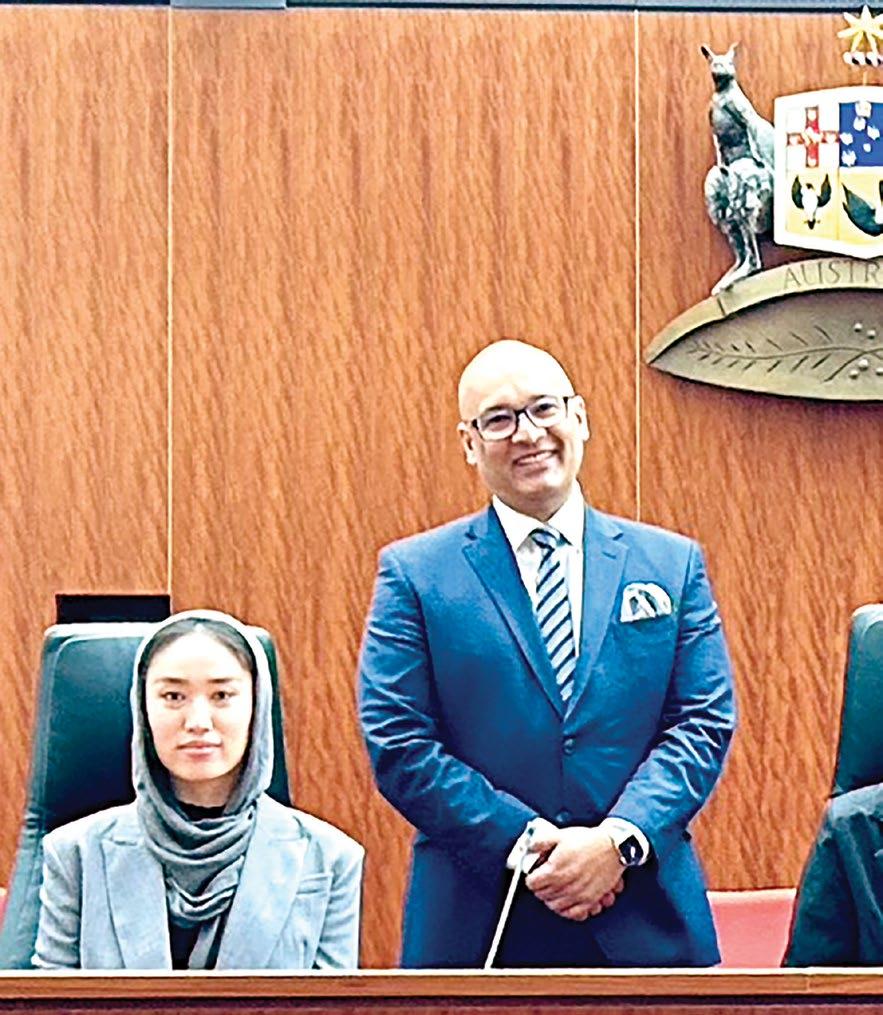
associateship—an aspiration I am fortunate to have since realised, having accepted a role as associate to his Honour Judge Fraatz at the County Court.
As a Hazara from Afghanistan, where women and girls are currently denied the right to education and to pursue their ambitions, I feel both humbled and grateful for the opportunities I have been given. For me, this internship reaffirmed the importance of making the most of those opportunities and contributing meaningfully to the profession. It is deeply encouraging to see the Victorian Bar investing in initiatives like this one, which bring fresh perspectives, diversity, and new voices into the legal community.
Jenny Firkin KC, Sakina’s Senior Mentor
Natalie Campbell and I mentored Sakina, as she has a keen interest in employment and human rights law, two areas that we practice in. I was involved in the initial discussions for the Internship when I was the chair of the Equality and Diversity Committee. The pilot was delayed due

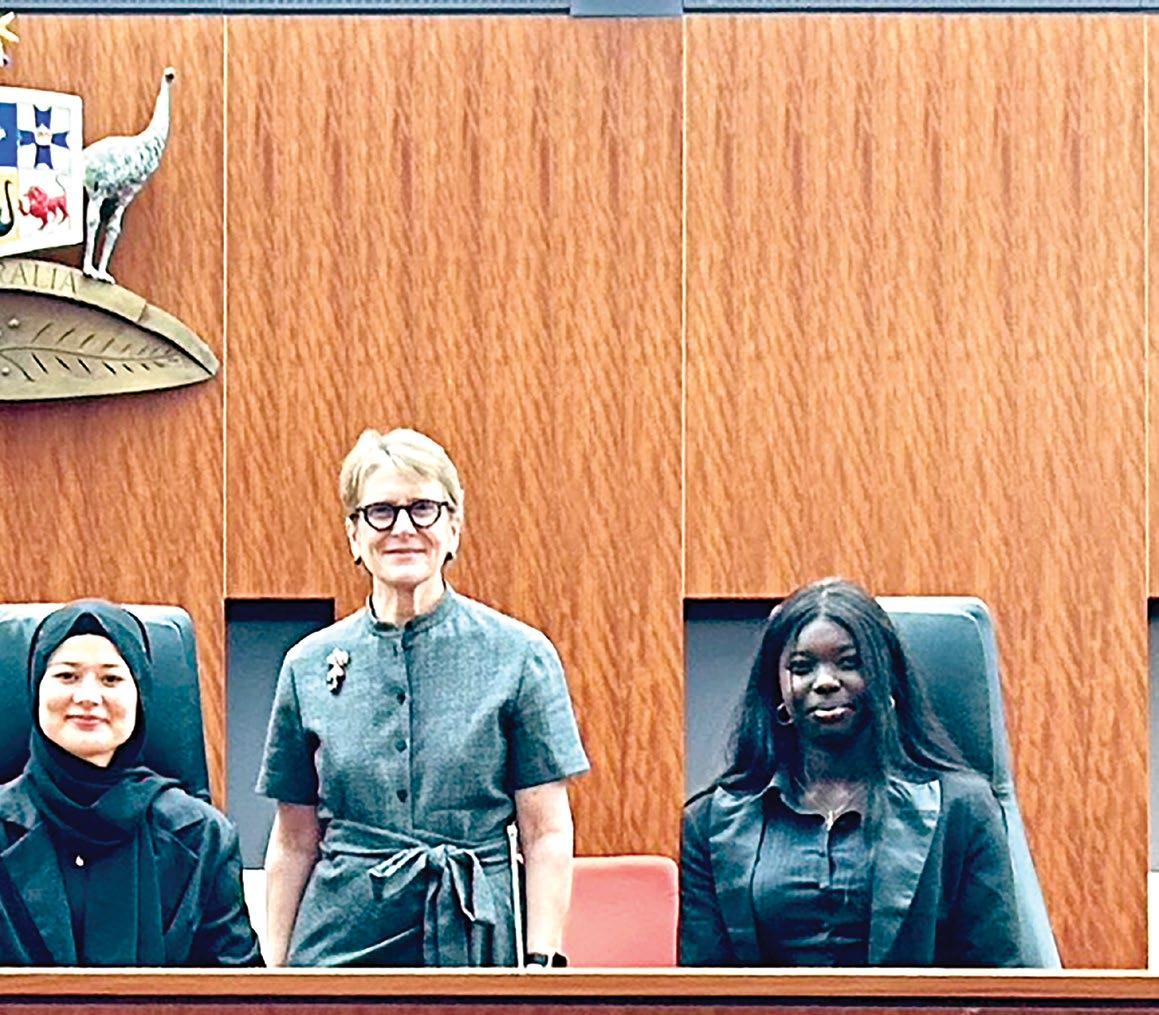
to the COVID-19 lockdowns. When the program was up and running, I was happy to provide any assistance that I could.
It is important to me that our Bar is open to everyone. The Internship provides an opportunity for potential new members, who might not otherwise consider a career as a barrister, to explore a career at the Bar. Sakina embraced every opportunity available during her week at the Bar with unadulterated enthusiasm. She attended Court, chambers, an Industrial Bar Association CPD and the opening of the Fair Work Commission exhibition on equal pay. In all our interactions, Sakina demonstrated impressive insight, quiet confidence, and a keen interest in the law. She has a shining career ahead of her.
Mentoring Sakina, I saw the Bar through her eyes. Her enthusiasm for a career as a barrister reminded me of everything that I love about life at the Bar.
From the Court’s perspective, the Diversity Internship is a fantastic way to provide law students from diverse backgrounds with insight into the Court’s processes.
Sakina was a welcome inclusion to our chambers during her
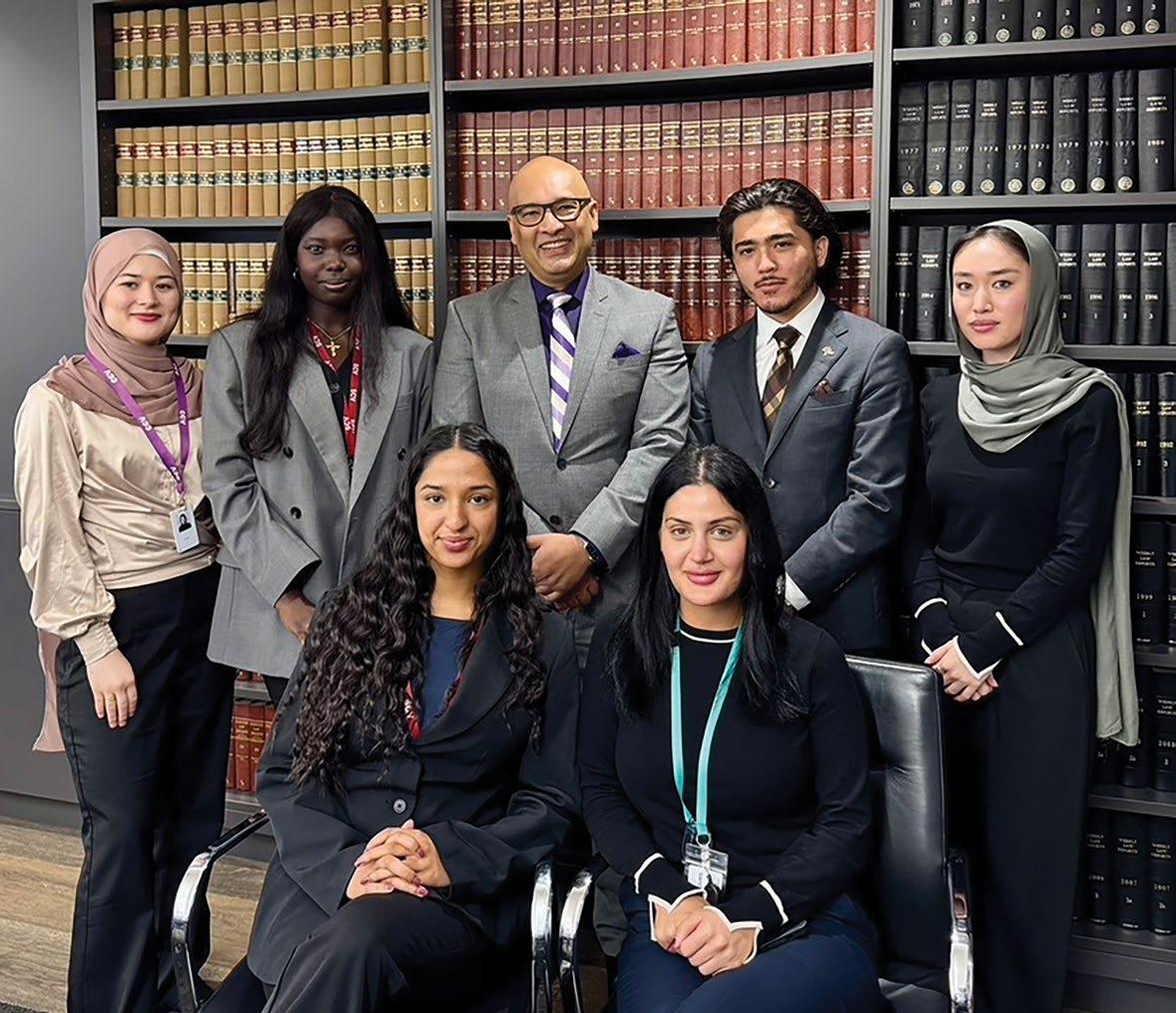
internship. She was curious and eager to learn. She will no doubt become a wonderful addition to the legal profession.
Court experience, at any level, is highly regarded. This is a terrific opportunity for law students interested in court work and advocacy. I would highly encourage any students considering the internship to apply.
Senior Member Powles and Senior Member Reynah Tang, Victorian Civil and Administrative Tribunal
In 2024, VCAT became a participating jurisdiction in the Victorian Bar’s Diversity Internship and welcomed its first interns. Sakina Ehsani spent the last week of November in the Human Rights List shadowing Senior Member Charlie Powles, including sitting in on the final day of the Falun Gong’s proceeding against the ABC. The interns had the opportunity to meet with the VCAT President, Justice Ted Woodward, and participated in a busy program that included spending time with the Customer Service Centre, Registry, Listings and Member Support teams to develop a better understanding of what makes VCAT ‘tick’.
Senior Member Powles said it was important that interns come to VCAT with an open mind and a willingness to embrace the experience, describing
Sakina as an “engaged, enthusiastic and perceptive” intern. As the head of the Human Rights List, Charlie said he was pleased to have participated in the program and provide the opportunity for a student from a culturally diverse background—in Sakina’s case, from a Hazara family that had fled the oppressive Taliban regime—to gain an understanding and appreciation of how human rights are considered and protected in Victoria.
Confirming that VCAT would be continuing as a participating jurisdiction in 2026, Senior Member Reynah Tang (Chair of VCAT’s Diversity and Inclusion Committee) encouraged students from culturally diverse backgrounds, particularly those who have limited connections with the law, to apply for the internship. Reynah said the program “provides interns with a valuable opportunity to see how VCAT works, while also benefiting the Tribunal in raising community awareness about its role and functions”, noting the breadth of VCAT’s jurisdiction which spans civil disputes, administrative review of government decisions and professional disciplinary matters. He also hoped that, in the longer term, some interns might consider a career at VCAT or in the courts.

MOYA O’BRIEN
Itell my non- legal friends that I am constantly in the trenches.
Being a criminal defence barrister is one of the few professions where you can feel an immense sense of exhilaration and fulfillment, and then deep waves of loneliness, often all within the space of a single week.
Indeed, Clarence Darrow, the great American defence attorney best articulated it when he opined, “few love a spokesman for the despised and the damned.”
It was in part the recognition of the psychological strain our chosen career can deliver that informed the design of what would become William Street Chambers, a new set of chambers
housing 28 criminal barristers at the top of 181 William Street.
The design brief for Kennedy Nolan Architects was simple: we wanted a home away from home, a soft place to land, and most importantly we wanted a space which would foster a sense of belonging. Kennedy Nolan rapidly set to work challenging our conservative views of a workspace and created a pallet of bold earthy hues, cork walls and bright orange carpet throughout, which unexpectedly swishes like you are quietly walking through snow as you move through chambers.
The reception area is thoughtfully designed to ensure anyone who passes through our doors feels welcome, and a little less exposed. Our clients are often at the lowest points of their lives and are raw with vulnerability. Rather than stepping into a cold and corporate space, Kennedy


Nolan has created a sense of calm with a lowered red baffled felt ceiling, and an enveloping linen curtain in a warm turmeric colour. The space was designed to remove some of the sense of coldness, anxiety and intimidation which can accompany a criminal legal process. This is important for our clients, it is also important for us—those who are entrusted with representing them.
The views from the reception on the 25th floor are expansive, it’s almost as though you could reach down and touch the tips of the crepe myrtle trees in the courtyard of the Supreme Court, or the spire of St Patrick’s Cathedral beyond to the east. These institutions are squarely in view but, more importantly, so too is the majesty of the Dandenong Ranges beyond. I was watching the build unfold online in a series of weekly updates whilst I represented a 17-year-old boy
charged with murder in Darwin. An experience which once again brought home the dualities of working in the criminal law. Professionally this trial was one of the most fulfilling experiences of my career, yet at the same time it was the most devastating.
The pressure of the trial was immense. Four Aboriginal defendants in the dock facing a jury with not a single person of colour in sight. My impressive colleagues at the defence end of the Bar table gave their clients everything they had and more, but it was not enough.
Throughout the trial I would find myself in my client’s shoes. I would wonder what is he experiencing, what does he think of this system where it is 37 degrees and steaming outside and the barristers are wearing wigs? What does he think of a legal system where, when he raises a question with prison guards about his safety in court, the

“ The space was designed to remove some of the sense of coldness, anxiety and intimidation which can accompany a criminal legal process. ”


judge’s automatic response is to ask the prosecution whether he should be placed in restrictive leg irons in the dock?
Towards the end of the trial my client’s father suffered a catastrophic stroke. Mercifully, and over the objection of the Crown, he was released for a few hours on bail to visit his father. My instructor accompanied him to the hospital and tearfully recounted the visit to me afterwards. The image of my bolshy client lying on a hospital bed cradling his father sobbing is etched upon me. His father saying repeatedly, “I’m falling,” and his young teenage son, who had spent much of the last few years in detention, saying gently, “I’ve got you, Dad.” They travelled back to the prison in my instructor’s red Mazda, windows down, breeze blowing, my client having a forbidden cigarette with tears streaming down his childlike cheeks and his favourite song pumping. Music is also forbidden in custody.
It got me thinking. What is a life without music? What is a life without art? What is a life without exposure to the everyday beauty of nature? How many people are lost in our system without a powerful voice to fight for them?
In a moment of serendipity, it was at this precise juncture of the trial that I was introduced to Nancy Yukuwal McDinny and her powerful art. While I was far away in Darwin, the chambers build and design was progressing and we wanted to find a piece of art for the entrance that evoked

the power and beauty of nature, something more expansive than ourselves, an image in which, however briefly, you may find yourself lost. We found this is in Nancy’s art—this deep connection to Country, to ancestral wisdom, to a recognition of the injustice that still exists in this country.
Across four metres of our reception wall hang two of her huge pieces. Nancy is a storyteller; her paintings tell the story of her people’s land, and their connection to that land and the waters of the Gulf of Carpentaria. It is not just these paintings which inspire us but Nancy herself, a talented musician, who travels with her sisters singing the songs of her land, her people and their laws and ceremonies. She is a mother, she is an environmental activist and, most importantly, she is a leader and an advocate for the Garrwa, the Yanyuwa and other Aboriginal people from the Gulf.
At William Street Chambers we strive to create an environment where we can tell people’s stories with passion. Our job is one of telling stories. We love the set of chambers we have created—an environment which we hope will remind us to never take our privilege in society for granted. We are incredibly indebted to Kennedy Nolan for creating a space which enables us and our clients to feel calm and enables us to contribute to the administration of justice with perspective and rigour. Please come and visit sometime.

The CommBar 2026 International Commercial Law Conference (CommBar 2026 ICLC) will be held in Dublin on Wednesday, 1 July 2026 and Thursday, 2 July 2026 at Trinity College Dublin, in the heart of Dublin’s city centre.
The conference follows the successful 2024 CommBar conference at the Inner and Middle Temples in London and will entail a comprehensive and informative conference program, which will feature leading members of the Melbourne Commercial Bar, the Australian Judiciary and the Irish Bench and Bar. Once more, the conference will have
an international and comparative law focus, with Dublin (the Englishspeaking gateway to Europe) being uniquely placed to offer insights into the latest developments in international commercial law and European law.
As ever, a full conference social program for both delegates and accompanying persons will provide plenty of opportunities for networking with colleagues from home and abroad, with the highlight being a black-tie gala dinner on Wednesday, 1 July 2026 in the splendid Georgian Hall of the King’s Inns, the home of the Irish Bar. Other social highlights include preand-post conference gatherings held at venues such as The Pavillion.
The CommBar 2026 ICLC is not to be missed—Dublin promises illuminating and instructional presentations and papers, 10 CPD points, fabulously fine fare and a kaleidoscope of colour, collegiality, camaraderie and cracking craic.
The CommBar 2026 ICLC will also feature a reprisal of the Young CommBar speaking competition (open to CommBar members under five years’ call as at 1 January 2026), to be held on Thursday 26 March 2026, the winner of which will receive a return Melbourne–Dublin airfare (economy), complimentary conference registration and an opportunity to participate as a panellist in one of the conference sessions.
Registration is now open for the CommBar 2026 ICLC; the cost of which will remain at 2024 prices (full registration—$1,980; registration for CommBar members under five years’ call as at 1 January 2026—$1,650; early bird—10 per cent discount (register before 30 January 2026); accompanying person (gala dinner and end-of-conference drinks)—$550).
Full details of the CommBar 2026 ICLC and registration are available at www.commbar2026iclc.com.
Numbers are limited and tickets are selling fast—register now!

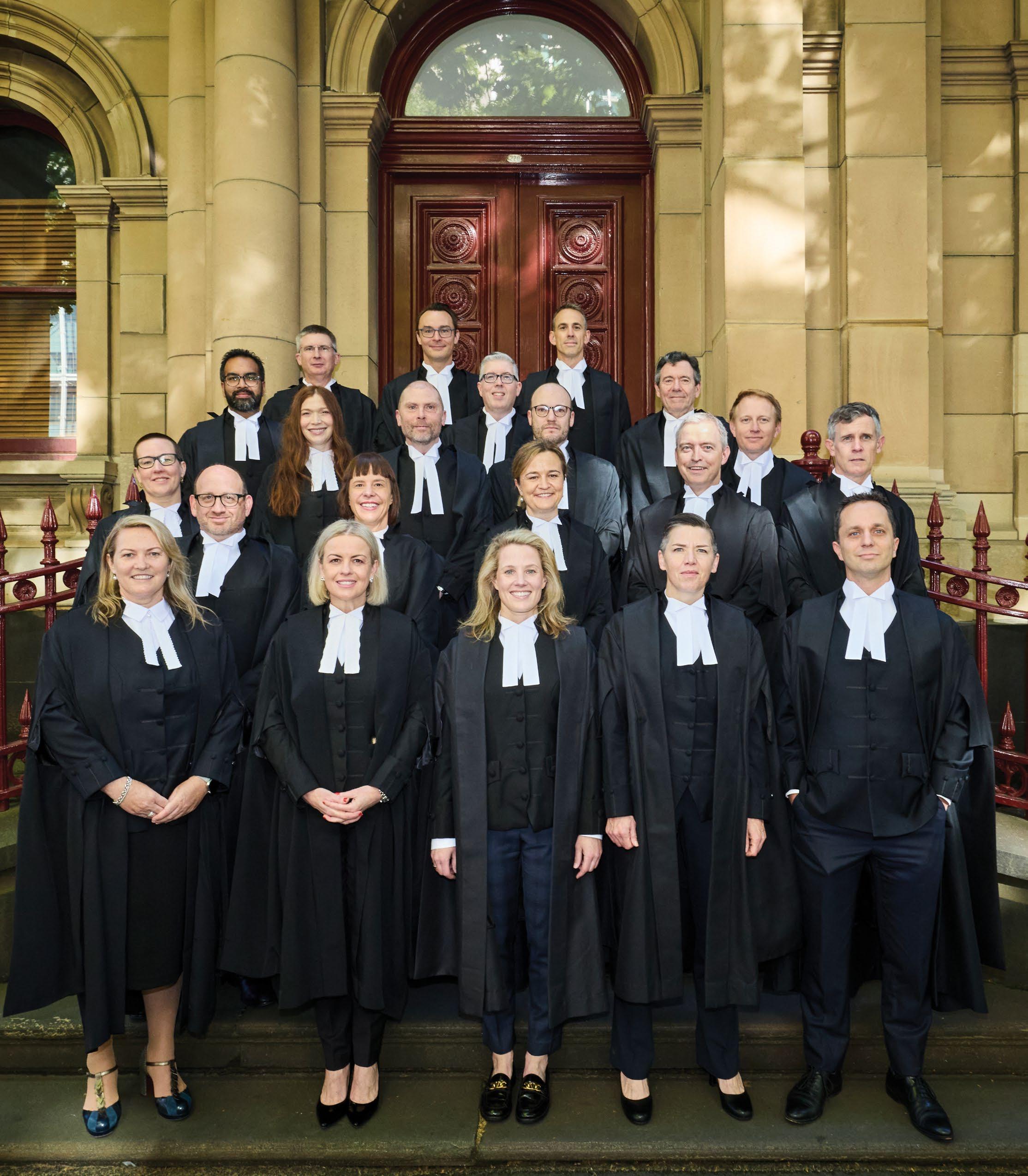

How did you celebrate the news of your appointment? Went out to a long lunch with friends. Who has been a legal idol or mentor of influence to you? The Cruel Sea for their song “Better get a lawyer.”
Who would play you in a movie, and why? Steve Buscemi. What do you like most about the Bar? The Bar is the greatest place to work in the world. It is just the right combination of collegiality and running your own show. And the work is very meaningful and highly rewarding. What advice would you give to new barristers? Attention to detail. The facts of any case are just a collection of details. Know them all, don’t think you can manage by just knowing the general vibe.
Who did you read with? Michael O’Connell SC, now judge of the County Court. He was the best mentor anyone could have hoped for—he is a brilliant lawyer, extremely knowledgeable, very generous with his time, and great company and a friend to boot. He also bequeathed me his chambers so I never had to move.
Who read with you? I had one reader, David Easteal. I hope the measure of my mentoring is not shown by the fact that he promptly became a family lawyer, despite me practising exclusively in crime.

How did you celebrate the news of your appointment?
After navigating a couple of court hearings, drinks with my readers on Lt Bourke St, followed by dinner at a restaurant closer to home.
Who has been a legal mentor of influence to you? I read with Michael Osborne KC, who served as both mentor and role model.
Who did you read with? As above, M Osborne KC (now M Osborne J). Who read with you? Jeremy Hallett, Sam Blashki, James McNicol Smith, Jarrad Mathie & Nik Angelakis.

How did you celebrate the news of your appointment? Lunch at Movida Acqui. Who has been a legal idol or mentor of influence to you? Walker JA. What do you like most about the Bar? Doing something different every day of the week.
What advice would you give to new barristers? Take chambers, come into chambers, share the daily tribulations of being a barrister with other barristers.
Who did you read with? Harris J. Who read with you? Tom Rawlinson. Tim Noonan and Alannah Slater

How did you celebrate the news of your appointment? With friends, family, champagne and cognac.
Who has been a legal idol or mentor of influence to you? Ed Heerey, my mentor, to whom I owe a great deal. Who would play you in a movie, and why? Matthew McConaughey, not because I share his looks and charm, but because I know he can deliver a strong courtroom performance, and I imagine he wouldn’t mind a few surfing scenes. What do you like most about the Bar? The independence and intellectual challenge.
What advice would you give to new barristers? The best form of business development is doing a good job. Who did you read with? See above. Who read with you? Amy Surkis, Tim Burn-Francis and Sam Dany.

How did you celebrate the news of your appointment? One of the members of my floor had just been paid in Champagne, so he kindly donated it to the cause. Then dinner with my family afterwards. Who has been a legal idol or mentor of influence to you? David Collins KC.
Who would play you in a movie, and why? George Clooney, because my wife says so!
What do you like most about the Bar? Working with so many capable and friendly people. What advice would you give to new barristers? Try and find a collegiate chambers, use them and be kind to all in them. Also, remember that AI is the devil’s work!
Who did you read with? Lyons JA. Who read with you? Much to my regret, no-one ever asked!

How did you celebrate the news of your appointment? Lunch and dinner with family and friends.
Who has been a legal idol or mentor of influence to you? David Curtain KC.
Who would play you in a movie, and why? James Earl Jones because he has the voice I want.
What do you like most about the Bar? The freedom and the challenge. What advice would you give to new barristers? Say yes and work it out later. Who did you read with? Bruce McKenzie.
Who read with you? Angus Kleiman and Sam Mullaly.

How did you celebrate the news of your appointment? A quiet dinner at home with my partner and two sons, watching my eldest explain the meaning of the appointment to my youngest by using an Xbox analogy.
Who has been a legal idol or mentor of influence to you? John O’Sullivan, Nick Robinson KC and Paul Holdenson KC.
What do you like most about the Bar? The opportunity it provides to be truly independent and to have a purposeful and rewarding career. What advice would you give to new
barristers? Work hard, seize every opportunity you can, and always be kind to yourself and others. Who did you read with? Steve Russell.
Who read with you? Michael Keks, Olivia Go, Ben Kerlin.

How did you celebrate the news of your appointment? A celebration lunch with my readers and juniors followed by an impromptu dinner with my wife and kids at Latin Quarters Taqueria (taco bar). Excitement all round: my wife, the juniors and I were excited about the appointment; the kids were excited about the tacos.
Who has been a legal idol or mentor of influence to you? Ray Finkelstein whose love of the law is infectious and who encouraged me to come to the Bar and extended my associateship to ensure that I could/ did; Stephen McLeish: a fine jurist and a gentleman who it was a pleasure to read with; and Peter Bick: an outstanding advocate, a prodigious worker, and a role model and mentor to me and many others.
Who would play you in a movie, and why? Chris Hemsworth. He is Australian; my wife says the resemblance is uncanny (she was laughing at the time); and if anyone could make an otherwise unremarkable story entertaining, I am sure he could. My wife has offered to play herself. What do you like most about the Bar? The collegiate nature of the Bar: the long history of members of counsel (especially senior counsel and the judiciary) giving freely of their time to teach, mentor, support, collaborate and share knowledge with other (especially junior) barristers.
What advice would you give to new barristers? Leave your door open: don’t be afraid to ask questions, seek support, share knowledge, and learn from those around you. When you are able, return the favour.
Who did you read with? Stephen McLeish (now the Hon Justice
McLeish, Judge of Appeal, Supreme Court of Victoria)
Who read with you? Andrew Beckwith, Martha Browning, and Hannah McGuire.

How did you celebrate the news of your appointment? Lunches, dinners and rivers of champagne! A highlight on the evening of the announcement was a dance party with my kids and partner at home, amongst homemade decorations.
Who has been a legal idol or mentor of influence to you? My late mother, who was one of only five women in her first year of law in the late 1950s. She was a role model for being a working mother: committed to her career and devoted to her family. Since being at the Bar, particular mentors and role models (there have been many) are the Hon Penny Neskovcin, Dr Kris Hanscombe KC, Rachel Doyle SC and Phil Solomon KC. I have learnt a huge amount working with each of them, and they each supported and encouraged me to develop and progress.
Who would play you in a movie, and why? For the early years: Gretl von Trapp (Sound of Music). Apparently, we were separated at birth. What do you like most about the Bar? Right now—everything! In particular, the intellectual stimulation of crafting arguments and seeking to solve problems; the exhilaration of oral advocacy; the variety of subject matter of cases; the privilege of representing and advocating for clients; the independence and the collegiality. What advice would you give to new barristers? (1) Run your own race. (2) Build friendships at the Bar with people you can be honest with and laugh with. Those friends will ensure you don’t take yourself too seriously, will support you through the tough times and will make the good times infinitely more enjoyable.
Who did you read with? The Hon Penny Neskovcin.
Who read with you? Megan Driscoll and Jack Gracie.

Who has been a legal idol or mentor of influence to you? Limiting this question to barristers I have worked with—Peter Jopling, Philip Solomon, and Stuart Wood.
What do you like most about the Bar? You are always learning something new.
Who did you read with? Bernie Quinn. Who read with you? Ned Roche and Shannon Jenkins.

How did you celebrate the news of your appointment? A lunch that day, with a dear friend and colleague, Jeff Stanley, in my old stomping ground of Ballarat. And a few days later, by taking the day off, and going for a mid-week surf on a surfboard gifted to me by my partner to celebrate my appointment.
Who has been a legal idol or mentor of influence to you? Minal Vohra SC, Martin Bartfeld KC, and Judge Paul Glass.
Who would play you in a movie, and why? Uma Thurman (in her Pulp Fiction days).
What do you like most about the Bar? The collegiate spirit and camaraderie, the freedom of working for myself and the highs (and lows) of courtroom advocacy.
What advice would you give to new barristers? The best way to develop your advocacy skills is on your feet in court. It might feel overwhelming at first, but it soon becomes second nature.
If a matter falls out of your diary at short notice, don’t fret - you have a bonus day off —enjoy it!
Who did you read with? Justice Joanne Stewart. Who read with you? Amy Yu. .
How did you celebrate the news of your appointment? I managed to be away from Melbourne at the time (happily), and was able to have some drinks, good food and laughs with friends.
Who has been a legal idol or mentor of influence to you? Too many to name, I think, and I wouldn’t want to forget anyone important. So I’ll say: Rumpole, Perry Mason and Phoenix Wright.
Who would play you in a movie, and why? Kal Penn, for obvious reasons (i.e., we both look good with a beard).
What do you like most about the Bar? It’s a flexible environment, with continuous opportunities to learn and grow, whilst surrounded mostly by decent people.
What advice would you give to new barristers? Enjoy the flexibility, continue to learn and grow, and surround yourself with decent people. Who did you read with? Richard Wilson (Deputy President at VCAT). Who read with you? Rebecca Ayres.

How did you celebrate the news of your appointment? A celebration with my chambers family, followed not long after by dinner with my family and friends!
Who has been a legal idol or mentor of influence to you? R.B.G. What do you like most about the Bar? Collectively, trying to improve people’s lives.
What advice would you give to new barristers? Say ‘yes’ to the opportunities!
Who did you read with? Chris Winneke KC.
Who read with you? William Barker, Natalie Kaye, Martin Radzaj, Christin Tom, Uthra Ramachandran, Gabriel Chipkin, Briana Proud, Georgia Suhren, Jack Kelly, Maddie Lees.

How did you celebrate the news of your appointment? I was having coffee in Speck. I received the email. I very quietly told the judge sitting next to me, who is a friend. He congratulated me and gave me a hug. Who has been a legal idol or mentor of influence to you? My Dad. Who would play you in a movie, and why? Oh gawd. I have been told on many occasions I look like Quentin Tarantino, which is hardly a boastful thing to say.
What do you like most about the Bar? The work.
What advice would you give to new barristers? Work hard and be nice to people.
Who did you read with? The Hon Justice Richard Attiwill. Who read with you? Eugene Twomey.

How did you celebrate the news of your appointment? In a whirlwind of phone calls, emails, text messages, warm wishes and hugs and with much champagne. Who has been a legal idol or mentor of influence to you? There are really too many to mention. I have had the good fortune to work with and learn from many incredible people, some of whom I am now lucky enough to count as friends.
Who would play you in a movie, and why? Kate Winslet, because she is a talent actor with a fine reputation for playing headstrong women. What do you like most about the Bar? The work, the independence, and the friendships.
What advice would you give to new barristers? Mark out time in your diary for breaks and take them, even if it means saying no to an occasional brief. Celebrate the good days and don’t dwell on the bad.
Who did you read with? Justin Bourke KC.
Who read with you? I never had a reader.

How did you celebrate the news of your appointment? With French Champagne and excellent friends. Who has been a legal idol or mentor of influence to you? The many powerful, fierce and amazing women who paved the way for people like me.
Who would play you in a movie, and why? Asher Keddie—I have long admired her work as a wonderful Australian actress.
What do you like most about the Bar? I am fortunate to be opposed to many wonderful people who are excellent at what they do. We can argue in court yet share a laugh and a drink later.
What advice would you give to new barristers? Say yes to everything— you never know when an opportunity will present itself.
Who did you read with? Mark Rochford KC. He was generous with his time and his knowledge and even though he is retired, I can still call on him to this day.
Who read with you? I went to Crown Chambers at just under10 years at the Bar, so I did not have the opportunity for readers. I have, however, been very fortunate to have had many excellent juniors to work with.

How did you celebrate the news of your appointment? By substituting a long witness conference with a long lunch. Who has been a legal idol or mentor of influence to you? Too many to name here, but principally: Justice Simon Whelan, Neil Young KC, Wendy Harris KC, Justice Robert Craig.
Who would play you in a movie, and why? I’d like to say Ryan Gosling but it’s probably Macaulay Culkin. What do you like most about the Bar? The autonomy.
What advice would you give to new barristers? Always look for the joy in doing the only job in the world where, as Lord Atkin described it, you go to work each day trying to resist the attempt by one very intelligent person to prove to another very intelligent person that you are a congenital idiot. Who did you read with? Judge Trevor Wraight.
Who read with you? Michael O’Haire, Jess Elliott, Tom Diaz, Duncan Willis, William Liu, Selena Bateman.

How did you celebrate the news of your appointment? I have a three-monthold baby, so mostly at home with my family.
Who has been a legal idol or mentor of influence to you? Her Honour Justice Andrea Tsalamandris has been both a legal idol and mentor of influence to me. I had the enormous good fortune to start my career as her articled clerk.
Who would play you in a movie, and why? Emma Stone, because why not make the fictional me gorgeous? What do you like most about the Bar? The independence. I think it is the best job. What advice would you give to new barristers? Be a kind boss to yourself. Who did you read with? (Now His Honour) Mark Champion. Who read with you? Yusur Al Azzawi, Genna Angelowitsch, Ella Casey.

How did you celebrate the news of your appointment? I cried and called my grandmother.
Who has been a legal idol or mentor of influence to you? Lachlan Armstrong KC. The only silk who can entirely rewrite your work and then, without irony, describe your efforts as “good”.
Who would play you in a movie, and why? Judy Dench. When she was a young actor, a reviewer said that she had “talent which will be shown to better advantage when she acquires some technique to go with it.” I relate. What do you like most about the Bar? My colleagues.
What advice would you give to new barristers? If you have a choice to be kind, then be kind. Baskerville and book antiqua are the only acceptable fonts. Who did you read with? Craig Dowling (now Justice Dowling of the Federal Court of Australia).
Who read with you? Declan Murphy, Ruben Clark, Jack Gracie.

How did you celebrate the news of your appointment? Returning congratulatory phone calls and emails and then an impromptu dinner with my partner and children. Who has been a legal idol or mentor of influence to you? Justice Ian Waller, Justice Matt Connock, Wendy Harris KC, David Batt KC and OP Holdenson KC, have all been significant and generous mentors over the years. Who would play you in a movie, and why? As a Scot by ancestry and temperament, any one of Scotland’s greatest—Ewan McGregor, Sean Connery...
What do you like most about the Bar? Unequivocally, the collegiality and the preparedness for colleagues to assist and guide other members of the Bar. What advice would you give to new barristers? Work hard, keep perspective and remember the privileged position we hold as barristers.
Who did you read with? Wendy Harris KC and David Batt KC. Who read with you? Shakti Nambiar.
Her
and present members of our Bar.
OFEDERAL CIRCUIT COURT AND FAMILY COURT
Bar roll No 4182
n 4 July 2025, her Honour Judge Evelyn Bender was farewelled as a judge of the Federal Circuit and Family Court of Australia (Division 2) after nearly 17 years’ service as a judicial officer, leaving behind a legacy defined by empathy, compassion, dedication and determination.
Repeating the reflections made at her ceremonial welcome to the then Federal Magistrates Court of Australia in 2008, her Honour said, “I’m enormously proud to be a family lawyer. What we do is difficult, challenging and at times gut-wrenching. We make an important and positive contribution not only to the country’s jurisprudence but to the lives of many, many people every day.”
Her Honour began her legal career in 1981 as a solicitor in Wagga Wagga, having graduated from Monash University with a Bachelor of Jurisprudence and a Bachelor of Laws. She moved to Melbourne in 1983 where she continued to practise, becoming a partner of MM&R in 1989.
During this period her Honour, incredibly, also represented Australia at the 1984 Los Angeles Olympics as the goalkeeper of the Australian hockey team, an achievement which was recognised at a recent farewell event at the Melbourne Cricket Ground by the presentation to her Honour of a hockey stick, signed by each of the judicial officers, barristers, solicitors and other members of the profession present.
In 1992, her Honour was appointed a Registrar of the then Family Court of Australia where she held several roles including Costs Registrar, Senior Registrar, Magellan Registrar and Appeals Registrar.
Her Honour was later appointed as the family law in-house counsel at Victoria Legal Aid, and on 15 September 2008, she was appointed as a judge of the then Federal Magistrates Court of Australia, now the Federal Circuit and Family Court of Australia.
As a judge, her Honour held all those in her courtroom, including barristers, solicitors and associates, to the same high expectations she held of herself, those being the standards that the families and children whose cases she was charged with managing, deserved.
Her Honour was unwavering in her practice of referring to children by their names in orders and judgments, rather than as ‘the children’, recognising her profound commitment to ensuring they were acknowledged, and their best interests were always at the forefront of her work.
Her Honour was fond of saying that she only had delightful children in her courtroom. This was one of many of her Honour’s idioms, which also included “go forth and be fabulous” (when a matter was stood down for settlement discussions) and “I like to call a spade a shovel” (when providing one of her trademark judicial indications, often to assist in said settlement discussions).
Her Honour prepared each of her matters diligently, even when dealing with enormous caseloads in duty lists of over 30 cases a day, and came onto the Bench not only prepared to deal with each one, but often having already made enquiries with other agencies and support services to ensure families received the assistance they needed to move them forward through, and eventually out of, the court system.
Her Honour took special joy in pronouncing orders made by consent and would not hesitate to do so at any time of the day; such was her pleasure that a matter had resolved. When doing so, she would look beyond practitioners to the parties themselves and take deliberate time to address them personally, ensuring that they knew she understood their matter, acknowledging their achievement and expressing sincere hope for the future of their family. It was not unusual for these reflections to bring tears to the eyes of parties and practitioners alike.
Her Honour was a judge of the Bendigo Circuit for 16 years, a role which she describes as a highlight of her time at the Court. She was recently farewelled at a ceremony attended by magistrates, judges, practitioners and the Mayor of Bendigo as a “friend of the local profession” and “jewel of the circuit”, such was the impact she had on regional practitioners, agencies and families who benefitted from her passion to the law.
In addition to her judicial duties, whilst at the Court her Honour also took on responsibility for the portfolio of the then Department of Human Services (now Department of Families
Fairness and Housing), working tirelessly to increase the relationship between the Department, and in particular Child Protection, and the Court. Her Honour’s vision, dedication and courage led to the development of Victoria’s co-location model, setting out working arrangements between the Court and Child Protection, which later became nationally recognised as a best practice model. This work reflects her Honour’s respect for, and acknowledgment of the importance of external support services as being an integral part of the family law system.
Her Honour will be fondly remembered by each of the associates and judicial officers she mentored with kindness, selflessness and generosity. Her Honour took a genuine interest in the professional and personal development of her associates and maintains relationships with them to this day, affectionately referring to them as her “selected asses”. Each of her Honour’s associates (the writer included) are better practitioners for having had the privilege of her guidance, the rigour of her expectations and the experience of her dedication to family law.
As she moves into retirement, her Honour will enjoy being surrounded by her beloved family including daughter Jes as well as watching football at the ‘G (in the hopes of another Hawthorn flag), playing golf, travelling, cooking, drinking fine wine and listening to music.
ELIZA PANCKRIDGE
COUNTY COURT OF VICTORIA
Her Honour Judge Elizabeth (Liz) Gaynor
On 24 August 2025 her Honour Judge Liz Gaynor retired after 22 years of distinguished service on the County Court of Victoria.
Her Honour graduated with degrees in Arts and Law at Melbourne University in 1978. It is unsurprising
that her Honour’s career began in journalism given her unique and disarming ability to connect with those from all walks of life and always get straight to the point. The lure of the law drew her Honour back to a job at Victoria Legal Aid until she was called to the Bar in 1985.
Together with Julie Sutherland her Honour joined a band of trailblazing women emerging in the criminal law. Over her 17 years at the Bar her Honour acted for the defence in backto-back trials in the Supreme Court and County Courts. By the time her Honour was appointed in 2002, her Honour had done more trials than most defence teams could name. Her Honour was famous for her tireless work ethic, her deep care for those she represented and for her theatrical final addresses, one of which involved singing to a jury; witnesses differ on whether it was in tune.
On the Bench, her Honour was never poker faced and was always upfront with all advocates that appeared before her. Defence counsel quickly learned that you’d better know your client, their family, and probably their cousin’s mother’s maiden name too.
Her Honour became known as the straight-talking, sharp-eyed judge who gave it all with both barrels. Who could forget the moment A Current Affair cameras caught her Honour “going off script” during sentencing the young men who stabbed Tony Mokbel? The footage went viral and one commentator described her as “the judge all Australia fell in love with”.
But behind her formidable exterior lies the real story—her compassion. Her Honour had a radar for people who had suffered. Her Honour didn’t just apply the law, she applied humanity. She acknowledged trauma, disadvantage, and the rough roads that lead people into court, demonstrated particularly during her time as one of the seminal judges of the Drug and Alcohol Treatment Court between 2021 and her retirement.
Her Honour’s impact wasn’t limited to the Bench. As a barrister, she had
four readers including Sharon Lacy SC; as a judge, she had a series of devoted associates. As a founding patron of Women in Crime, she mentored and inspired the next generation of female (and male) criminal lawyers.
Her Honour leaves the Bench with a legacy measured not only in judgments, but in people. In the lives she touched, the careers she shaped, and the humanity she brought to the administration of justice.
There is no doubt that the next chapter of her Honour’s life will be driven by the same energy, passion, and devotion that have marked her judicial career. Her children, Bess and Joe; her three stepchildren; her former partner, the Hon John Smallwood; her nephews, nieces, and many siblings are rightly proud of all she has achieved.
And fittingly, her farewell in the ceremonial division of the County Court was a sold-out show: a perfect finale for a judge whose work was, in every sense, a performance of justice, integrity, and heart.
We thank her Honour for her service, her wisdom, and her humanity. Her Honour will be greatly missed by both sides of the bar table.
BARNABY JOHNSTON & ZOE BROUGHTON
Justin Lewis Bar roll No 3658
On the 25th of February 2025, Justin Lewis SC was appointed as a judge of the County Court of Victoria.
His Honour studied Art History at Latrobe University and then a Bachelor of Laws at the University of Wolverhampton.
His Honour completed his articles at Richmond & Bennison Solicitors in 1995 and was admitted to practice in 1996.
In 1998, his Honour became a lieutenant in the Royal Australian Navy after completing the officer’s training course at HMAS Creswell in New South Wales. He retains the rank to this day. He later obtained a Graduate Diploma in Military Law from the Australian National University.
After working as a solicitor in personal injury law and commercial litigation, his Honour came to the Bar in 2003. He initially read with the Hon Peter Riordan KC. However, due to Mr Riordan KC soon after taking silk, his Honour then read with Jonathan Davis KC.
When his Honour commenced his career at the Bar, he decided to focus on Criminal Law; setting him on a 22-year-long path of great success and achievement.
In 2014, his Honour was appointed a Crown Prosecutor. He held the role for a number of years as the designated Crown Prosecutor for the Office of Public Prosecution’s Geelong office. This involved a large volume of circuit work in the western region of Victoria.
Although his Honour had no readers due to his appointment as a Crown Prosecutor in his 11th year at the Bar, he began in earnest the role of informally mentoring junior barristers, both as leader, and adviser. His Honour was a steady source of wisdom, support and encouragement for many. To those lucky enough to be the recipient of his calm guidance, they would never fail to emerge from a conversation with his Honour feeling understood, supported and with a renewed energy to keep going, even in the most difficult of matters.
During his Honour’s tenure as a Crown Prosecutor, he served as a member of the Therapeutic Treatment Board.
In 2023 His Honour was appointed a Senior Crown Prosecutor and in 2024 was appointed Senior Counsel.
As a Crown Prosecutor and Senior Crown Prosecutor, his Honour accumulated vast experience in all
jurisdictions, primarily in the Supreme Court and in the Court of Appeal. He prosecuted numerous high profile and complex cases, including more recently the trials of Malka Leifer and Geoffrey Clark. He was known to all, including his opponents, as a meticulous, scrupulously fair and highly skilled prosecutor. Humble and self-deprecating, he would quietly and diligently go about his work, keeping his “head down and getting the job done”. His Honour’s friends in the profession know him to be the consummate gentleman and a person of the upmost integrity. He is kind, compassionate, generous with his time and a loyal and steadfast friend. Whether it be debriefing after a long day in court, offering much needed support in times of stress, or analysing the antics of a protagonist in a television show, his sparkling sense of humour and sharp wit always make the conversations enjoyable.
His Honour ensures that he has a balanced approach to life. Outside of the law, he is dedicated to his family – wife Lisa, daughter Madeline and son Fraser. He is a passionate musician and plays the guitar in a band called the Ruminators. He continues to use his naval skills indulging in another of his passions - sailing the beautiful waters of Tasmania in his yacht Iolanthe which is moored in Hobart.
His Honour also spends time at his and Lisa’s labour of love, “Nimmitabel”, a circa 1881 mansion in Inglewood which they have been renovating for a number of years. The renovation features in the current season of the ABC television series Restoration Australia.
His Honour will be greatly missed in Crown Prosecutors’ Chambers. Our loss and that of the Bar is most certainly the County Court’s immense gain.
We wish his Honour ‘fair winds and following seas’ for a long and distinguished career on the bench.
CATHERINE PARKES AND ANGELA MORAN
Judge Lewis’ ‘Silence All Stand’ article (VBN 177) unintentionally omitted the final paragraphs. We have reproduced the article in full in this issue.
Bar roll No 3046
The appointment of her Honour
Celia Conlan as a judge of the Federal Circuit and Family Court of Australia (Division 2) marks the end of her Honour’s four-year ‘job interview’ as a Senior Judicial Registrar. Sometimes good things come to those who wait and her Honour’s elevation is one such good thing—both for the Court and for those who appear before her. As her years running a hectic court list as a Senior Judicial Registrar have proven, her Honour is more than fit for the job—she is made for it.
With a wonderful mixture of grace and grit, her Honour has earned a reputation as an extremely hardworking, fair and compassionate judicial officer. Those who appear before her, both as litigants and as practitioners, will not be left wondering what her Honour thinks of their case, their property arguments or their parenting capacity. Her ability to cut through volumes of material with intelligence and common sense will stand her Honour in good stead as a judge.
Her Honour’s legal career has, with a few side diversions, led her to exactly where she should be—on the Bench.
Graduating with Law and Arts degrees from Monash University in 1992, her Honour was the first employee solicitor of the firm of Jones and Dowling. The principals of the firm, Elizabeth Dowling and Patricia Jones, set up their firm between the Witches in Britches cabaret restaurant and The Main Course brothel in Dudley Street. To say her Honour was thrown in the deep end of legal practice is akin to saying that bad things happen to the Kennedy family—a gross understatement. Her Honour was hired solely to assist Liz and Trish with the largest case ever in their Children’s Court practice by acting for parents in
the infamous Children of God case. Her Honour could not believe her luck. She had found two strong, smart and funny women with a commitment to social justice to guide her first year of practice. The Children of God parents were equally enamoured with their young solicitor, inviting her Honour to join them in sing-alongs to ease their litigation-induced stress. When her Honour obliged with a rendition of “Lean on Me”, her delightful singing voice was discovered which most recently has been heard in the court choir.
Her Honour left Jones and Dowling for an associateship with the late Justice Peter Heerey of the Federal Court. His Honour, as a member of the steering committee, would often discuss with her the exciting designs for the new building to house the Commonwealth Courts. This is the very building where her Honour now sits.
After 18 months as an associate, her Honour came to the Bar in March 1996 and joined Holmes’ List. When she took maternity leave to have the first of her four children, Paul Holmes told her Honour that it was a shame she was leaving as she was destined to be a ‘star’. Her Honour had another three children and took a duty lawyer role in family law at Victoria Legal Aid in Dandenong. And so, the die was cast, her Honour had found her passion for helping families navigate the family law process with dignity.
Not being one to take it easy, her Honour took the learnings from that job and wrote a book, Surviving Separation, which was published in early 2006.
Her Honour was unable to enjoy a book tour as she and her family of six left Australia shortly thereafter to live in Pune, India where her husband had secured a job. For the next four years, the family lived both in India and Vietnam. In Vietnam, her Honour worked with Allens as a corporate lawyer in business development and organisational policy. This role
developed her Honour’s commitment to organisational change and strengthened her ability to improve complex workplace systems. Many years later, these skills were useful in her Honour’s role as National Coordinator of the Senior Judicial Registrars in the Federal Circuit and Family Court.
Upon returning to Australia in 2010, her Honour returned to the Bar and did indeed become the star her clerk knew she was. In September 2021, she left her busy practice and collegial chambers on the 11th floor of Owen Dixon East to become a Senior Judicial Registrar.
The Court has and will continue to benefit from her Honour’s clear communication, pragmatic compassion and sense of fairness. We wish her Honour a long and happy time as a judge.
HILARY BONNEY
Bar roll No 4602
Judge Sharney Jenkinson was appointed to Division 2 of the Federal Circuit and Family Court of Australia on 8 September 2025. I have had the pleasure of knowing her Honour since her early days in her legal career, shortly after she commenced practice as a solicitor at Macgregor Barristers and Solicitors in 2007, specialising in family law.
Her Honour commenced her legal career as a volunteer clerk at Victoria Legal Aid in 2006. Judge Jenkinson completed her Bachelor of Laws and Bachelor of Behavioural Science at La Trobe University in 2007 and was shortly thereafter admitted as an Australian Legal Practitioner in the Supreme Court of Victoria. Her Honour is an AIFLAM accredited mediator and arbitrator.
Judge Jenkinson completed her Master of Laws (Advanced Legal Practice) in 2009, with a special focus on advocacy. Her Honour often
appeared as an Independent Children’s Lawyer and, later, after she signed the Queensland Bar Roll in 2011 and the Victorian Bar Roll in 2012, appeared as Counsel for the Independent Children’s Lawyer. Her Honour and I briefly had the pleasure of being at the Bar together, both as barristers on Holmes List.
Her Honour was appointed a Senior Judicial Registrar in the Sydney Registry of the Federal Circuit and Family Court of Australia in 2021. For a short period, those of us in Melbourne thought she had “gone to the dark side”. My colleagues and I in Melbourne were understandably delighted when her Honour returned in 2023 as a Senior Judicial Registrar. In her role as Senior Judicial Registrar, her Honour sat in different lists including the Contravention List and was particularly fond of her circuit in Albury.
Those who know her Honour are mindful of the fact that her Honour’s love for the law is surpassed only by her love of her beloved dogs, Archie and Harvey (and previously Max and Casper). Coming a close third is her love of football (Australian Football League and the National Rugby League—I will leave the reader, who likely already knows, to ponder what teams her Honour follows). Perhaps a lesser-known interest is her Honour’s love of (and skill in) the art of photography, which of course necessitates travel to far-flung destinations.
Her Honour is renowned for her work ethic, her prodigious memory, her fairness and courtesy and her dry wit. While she will be very sorely missed as a Senior Judicial Registrar, her elevation, along with that of her colleagues Judges Conlan, Best, Heuer and McGowan, appropriately highlights the recognition of considerable skills and extensive training of a Senior Judicial Registrar in the exercise of delegated judicial power.
On behalf of the Bar, and particularly
her colleagues at the Court, I wish her Honour all the best on her appointment. No luck is needed, her Honour has both the knowledge and the skill to hear courteously; to answer wisely, to consider soberly and to decide impartially [Socrates].
SENIOR
JUDICIAL REGISTRAR KATHERINE SUDHOLZ
Bar roll No 3476
On Friday 19 September 2025 the Banco Court of the Supreme Court was full to overflowing for the welcome ceremony for the Hon Justice Lisa Hannon. The joy and warmth in the court was palpable, reflecting the respect and affection with which her Honour is regarded by her many colleagues, friends and family.
Justice Hannon was raised in Wheelers Hill and attended Shelford Girls’ Grammar. She was the first in her immediate family to attend university. Her Honour graduated from Monash University with undergraduate degrees in economics and law. She was admitted to practice in 1996, completing articles at Clayton Utz. She signed the Bar Roll in 2001, reading with Leslie Glick KC and then Stewart Anderson (now Justice Anderson of the Federal Court) after Mr Glick took silk during her Honour’s reading period.
Her Honour established a busy practice across commercial, public law and common law matters, with a particular focus on land acquisition and valuation. She also had a substantial practice in professional liability matters. Her Honour has a razorsharp legal mind and a calm, measured and unassuming advocacy style. Her integrity, steady temperament and unfailing politeness meant that she was universally considered a pleasure to deal with. She mentored two readers,
Jennifer Trewhella and Joanna Dodd and was an unofficial mentor to many others. Her Honour took silk in 2020 and quickly established herself as a leading Planning and Environment silk with an expertise in claims associated with the compulsory land acquisition. She was a patient and generous leader, encouraging her juniors to take speaking roles and maintaining a keen interest in their careers. As (then) Bar President, Justin Hannebery KC noted in his welcome speech, so beloved by her juniors was her Honour that several of them had to be consoled upon the announcement of her appointment and the loss to the Bar of their esteemed and preferred leader.
In addition to her busy practice, Justice Hannon contributed enormously to the legal profession. From 2017 she served as a member of the Victorian Legal Admissions Committee. She was appointed a sessional member of the AAT in 2018. She served on the Victorian Bar Ethics Committee from 2017 and in 2022 she was elected chair of that committee. From 2021 she served on the List Committee of Dever’s List. In 2023 she joined the Tribunal Counsel Panel for the AFL. Her Honour qualified as an Advanced Mediator in 2023. In 2024–2025 her Honour was Vice President of the Victorian Bar.
Her Honour was a member of Douglas Menzies Chambers, Isaacs Chambers and more recently Ah Ket Chambers. Her Honour’s warmth, good humour and genuine care for others ensured that she was a popular member of chambers and made lifelong friendships with many of her colleagues during her 24 years at the Bar.
Her Honour’s husband Simon and sons Charlie and Cooper together with her parents, Sue and Garry and her brother Jeff and his family watched proudly from the jury box as her Honour was welcomed to the Court. Justice Hannon’s devotion to her family is rivalled only by her devotion to the St Kilda Football Club. In 2024, her professional and personal passions
aligned when she was appointed to the St Kilda Football Club’s Integrity Committee.
Justice Hannon is a much loved and respected leader of the Victorian Bar. The Supreme Court is magnified by her appointment.
FIONA RYAN SC
Justice Craig was appointed to the Supreme Court of Victoria on 12 August 2025, at just 46 years of age. His Honour was born in Johannesburg, South Africa, and emigrated to Melbourne as a teenager in 1992.
After graduating from The University of Melbourne with a Bachelor of Commerce and a Bachelor of Laws (Honours), his Honour completed a Master of Laws at The Australian National University for which he received the Dean’s Prize for outstanding achievement. His Honour commenced his legal career at Blake Dawson Waldron (now Ashurst Australia). Not long after being admitted, he served as the first associate to Justice Elizabeth Hollingworth.
His Honour signed the Bar Roll on 9 November 2006, reading with Nicholas Hopkins KC. From the time he could accept readers, his Honour welcomed a steady stream of mentees keen to learn from the best. He formally mentored eight readers: William Thomas, Nicholas Wallwork, Fatmir Badali, Roxanne Burd, Bill Stephenson, Timothy Gorton, Christopher Hibbard, and Vince Murano. We referred to ourselves as “Craig’s List” on account of the junior opportunities and support made available to us. His Honour was a kind and generous mentor, often sharing his chambers with two readers at a time. No question was off limits, and his Honour made himself available—at all hours—to provide guidance and wise counsel in times of uncertainty or after a difficult day in court.
Since joining the Bar, his Honour has always been in high demand and was widely recognised in numerous publications as both a leading commercial silk and junior. His Honour’s stellar reputation meant that he developed a broad national commercial practice spanning areas including class actions, consumer law, banking and finance, insolvency, building and construction, and equity and trusts.
His Honour has an enviable work ethic and somehow manages to balance it all with family life (if such a thing is possible). When his Honour’s children were young, starting the workday at 4am meant that his Honour could be home in time for the second shift.
Taking silk in 2019, his Honour’s rapid ascension through the ranks came as no surprise. His happy demeanour, intelligence (including of the emotional kind), efficiency, charm, and fearless advocacy style made him a popular choice. Even in the most stressful of moments, his Honour had a way of always remaining calm and in control.
Being briefed as his Honour’s junior was a delight. He was always available to debate the difficult points, and instilled great confidence by encouraging us to accept, and lean into, speaking roles.
Outside of work and family, his Honour found the time to pursue various sporting endeavours with typical zeal and excellence; most recently returning to South Africa to run the Comrades Ultra Marathon (88km) in 2023, 2024, and 2025.
The breadth of his Honour’s practice meant that he was often acting for some of Australia’s largest corporates at the same time as individuals who entrusted him with matters that had the potential to be life changing. Irrespective of the nature of the controversy, or the size of the claim, his Honour listened carefully and treated his clients, instructors, and opponents with empathy and respect. Justice Craig’s appointment was both widely celebrated and, at the
same time, a bittersweet moment for those who had the privilege of working with his Honour.
ROXANNE BURD
Bar roll No 647
The Hon Stephen Charles AO KC was revered as an exceptional and dedicated barrister, judge, and tireless advocate for public integrity.
His Honour signed the Bar Roll on 26 October 1961 and read with the Hon William Harris QC. He was an instrumental mentor to Ross Macaw KC, Bernard Davis, Heathcote McM Wright KC, the Hon David Habersberger KC, Peter Murdoch KC, Robert Miller, Roland Price and Dr Michael Pryles. He took silk in November 1975 and made an immeasurable contribution to the legal profession, serving on 15 Bar Councils between 1967 and 1986, including as Chair of the Victorian Bar in 1983, President of the Australian Bar Association, Director and Vice Chairman of Barristers’ Chambers Limited, and Chair of the Bar’s Ethics Committee.
Appointed to the Court of Appeal of the Supreme Court of Victoria in 1995, his Honour was one of its founding judges and served with distinction until his retirement in 2006. On the Bench, he was known for his intellectual clarity, fairness, and commitment to justice.
In 2017, his Honour was appointed an Officer of the Order of Australia for distinguished service to the law and to the judiciary, particularly in the areas of commercial arbitration and mediation, to judicial administration, and to legal professional organisations.
After his retirement from the judiciary, his Honour continued to shape public life through his advocacy for integrity in government. In 2011, he chaired the panel that advised the Government on the establishment of Victoria’s Independent Broadbased Anti-Corruption Commission. He was a founding Director of the Centre for Public Integrity and coauthored Keeping Them Honest with Dr Catherine Williams, making the case for a national anti-corruption commission and wider democratic reform. The Stephen Charles Fellowship, a dedicated research position at the Centre, was created to celebrate his Honour’s exceptional contribution to public life. His Honour also served as the Chair of the Chief Justice’s Preliminary Evaluation Committee for 10 years, demonstrating exceptional leadership and commitment to the silk selection process.
His Honour was also an Adjunct Professor at Monash University’s Faculty of Law, a role which provided him with a sense of pride and fulfilment.
While his Honour’s professional and personal accomplishments were plentiful, he will also be remembered as a dear and trusted friend, a passionate advocate who lived life fully, and “a man whose decency and wisdom endeared him to all who knew him”.
His passing is an immeasurable loss to his family, friends, colleagues, the judiciary and the wider legal profession.
Vale Stephen.
FIONA MCLEOD AO SC
Graham Harris RFD
Bar roll No 630
Graham McDonald Harris, born 29 August 1937, studied Law at the University of Melbourne was admitted on 1 March 1961, signing the Bar Roll on 6 March 1961. Graham read with Nubert Stabley QC and had two readers, Paul
Riggall and Rowan Downing KC. Graham had a busy Supreme Court practice, mainly in commercial and equity, although also appearing in the Family Court. Counsel opposed to Graham could be assured of a wellresearched and good battle in court. Graham was always a consummate gentleman, including in court. He never showed aggression. His approach was such that witnesses would often become so relaxed during cross examination as not to see him nicely corralling them before being asked the unanswerable question. Opposing counsel could do nothing but sit and see their witnesses being calmly dissected. The door to his chambers on the 7th floor of ODCE was always open for those seeking advice, which advice was always well considered and on point.
In 1965 Graham joined the Royal Australian Navy Reserve. He was promoted to Lieutenant Commander in 1974 and then Commander in 1985. Graham served as the Director Naval Intelligence (Reserves) from 1989 to 1993. Graham became the state president (1992-1994) and national president (1994-2017) of the Navy League.
In 1980 Graham was elected to the Federal Parliament seat of Chisholm. At the election in 1983 he lost the seat by 200 votes. He returned to the Bar, retiring in 1994. He continued in his work as a director of a number of companies.
Graham was devoted to his family and will be greatly missed by many.
Ivan Brewer was born on 16 October 1949. Before turning to the law, Ivan had many previous roles across diverse industries. In his early years, he also served briefly in the Army, rising to the rank of Corporal. Ivan began his legal career as a law clerk with the office of the Director of Public Prosecutions and later as a
solicitor for 17 years. Ivan was admitted to practice on 30 July 1984. He signed the Roll of Counsel on 29 May 1986 and read with the Hon Joseph Kay. He later mentored his own readers, Jeffrey Stanley and Christopher Fatouros. He was a member of Holmes List.
Ivan had an extensive criminal law practice and was a formidable jury advocate. He developed a reputation as being a particularly brave barrister who was prepared to forcefully argue for his clients. Ivan’s down-to-earth style and sharp wit made him a favourite among juries, often using humour to underscore his arguments. In one memorable moment during a murder trial, when the judge adjourned the proceedings to 2.30pm, Ivan quipped, “That’s dentist time—tooth hurty,” drawing laughter from the jury. The jokes were not only appreciated by the jury, but they were also very effective at getting his point across.
Gifted with a photographic memory, he knew the facts of each case intimately. This enabled him to develop a style of advocacy in which he maintained eye contact with witnesses, the judiciary and juries at all times. This made him a very effective advocate. Many barristers likened him to the fictional character “Rumpole of the Bailey”. He used to regale other members of the Bar with many anecdotes about his numerous jury trials. His exploits whilst on circuit were the stuff of legend.
In the latter years of his career, Ivan began to undertake work in family law. The skills that he developed in the criminal law field were used to great benefit in his family law practice. He was a formidable cross-examiner. He developed a very successful practice with many solicitors loyal to him.
Beyond the law, Ivan was a passionate sportsman and supporter. At one stage, he was part of the Victorian Bar rugby team, which included legal luminaries such as the Honourable Chris Maxwell KC, the Honourable Stephen Charles AO KC, Tim North KC, Jack Hammond KC, Stuart Campbell, John Ramsden, and
others. A devoted Melbourne Storm fan, Ivan never missed a game. He also loved the races and regularly attended horse racing events.
In the last few years, Ivan’s health began to deteriorate. He loved being a barrister and was determined to continue practising as long as it was possible. Despite his physical ailments, he was as sharp as a tack. He was a regular practitioner in the Dandenong Registry of the Federal Circuit Court, as it then was, and later the Federal Circuit and Family Court of Australia. Ivan passed away on 28 June 2025 following complications from his illness. He is survived by his son Carl and his daughter Alice. He will be greatly missed.
TOM MOISIDIS
Bar roll No 797
We mark the passing of David Henshall with deep respect and gratitude for his contributions to the Victorian Bar.
David signed the Bar Roll on 4 February 1964. He was a member of the Victorian Bar for 61 years, remaining as retired counsel following his retirement from practice on 1 January 2004. David read with the Hon Sir James Gobbo QC, and later paid that mentorship forward by mentoring three readers: Michael E King, Russel Berglund KC, and David Thomas.
David gave generously of his time, serving on three Victorian Bar committees. David was a member of the Bar Rules Committee from 1977 to 1979, Victorian Bar News Committee from 1978 to 1985, and the Law Reform Committee—House Builder’s Liability from 1986 to 1987. In each role, David brought a commitment to the betterment of the Bar.
We extend our heartfelt condolences to David’s family, friends, and all who had the privilege of working alongside him.
Bar roll No 3177
It is with regret that the Bar informs members of the death of James “Jim” Buchecker.
Jim signed the Bar Roll on 20 November 1997 and read with his Honour James Montgomery. He was a member of the Victorian Bar for 27 years.
We extend our deepest sympathy to Jim’s family and friends.
Bar roll No 1347
Alasdair (Sandy) Robertson passed away on Thursday 24 July 2025 at St George’s Hospital, Kew. Sandy was one of the Victorian Bar’s colourful characters. Sandy signed the Bar Roll in September 1977. He read with Brian Collis QC and maintained chambers with Brian during his early years at the Bar. Sandy was a fierce advocate who loved a contest. During his nearly 48 years at the Bar, Sandy was briefed in just about every jurisdiction. He was an extremely versatile advocate and could be found running a civil trial in the County Court one day and a ‘crash & bash’ in the Magistrates’ Court the next. For many years he was briefed in criminal trials and he spoke fondly about his years of criminal trial work, particularly in the Latrobe Valley.
Sandy never took himself too seriously and he brought the full force of his personality to everything that he did. He was larger than life in both stature and personality. He had the ability to see humour in just about every situation. He didn’t seem to mind being the centre of attention and on more than one occasion his antics (either deliberate or unintended) provided widespread hilarity.
Sandy was extremely generous with his time and he always enjoyed investing in young barristers and other members of the legal profession. His readers were Phil Simpson, Luke
Simpson, Damian Ballan, Wayne Henwood, Teri O’Toole and Lachlan McConchie. He was ever-present to offer advice, guidance and good humour as well as strong friendship to each of his readers. In the same way that his own mentor had housed him for an extended period, his readers were never rushed out the door. For many years, the sixth floor of Owen Dixon Chambers East was alive with Sandy’s stories and his booming baritone voice. Life was never dull on Level 6 when Sandy was in chambers.
One of Sandy’s great loves was Australian rules football. He was a formidable footballer in his younger days. Long after his playing days were over, he coached the “Old Scotch Cardinals.” He invested an enormous amount of time and energy in his team and he adored connecting with the players and their families. His half-time addresses were legendary and attracted players, spectators and passers-by. His addresses were generally grounded in ancient Scottish battles or the heroic stories of the ANZACs. They were always delivered at high decibel. Sandy was also extremely devoted to his beloved Saints and he longed to see them win another flag. For a period of time in the 1990s Sandy served as an AFL Special Investigator.
Sandy is survived by his wife Penny, his sons Struan and Duncan and his three wonderful grandchildren, Claire, Sophie and Oliver. He was incredibly proud of his family and he spoke with affection and pride about each of them and their achievements.
Sandy was a man of strong character who was fiercely loyal. He was robust, hilarious and unconventional. Sandy had a strong sense of justice and would fight as hard as he could for what he believed to be right. He constantly went out of his way to help others and he was a warrior when it came to sticking up for the underdog. Sandy’s passing represents a huge loss to his family, friends and the Victorian Bar. PHIL SIMPSON
Bar roll No 645
Boris Kayser was born on the 29 September 1938 and grew up in Carlton, one of two children of pre-war migrants. He attended Princess Hill Primary School and, according to his contemporary Jack Fajgenbaum KC, was affectionately known as the ‘Walking Encyclopedia’. His hard-working parents managed to send him to Wesley College for his secondary education—no small feat in those days. Boris’ schooling culminated in his matriculation year, in which he shared the exhibition in Social Studies for the State. Following this, Boris attended the University of Melbourne and graduated with an LLB.
His father was a hand tailor—the pinnacle of that craft—who made suits inter alios for that quintessence of elegant attire, Frank Galbally. Hearing of the soon-to-graduate young man, Mr Galbally offered him articles in his firm, and Boris’ career was on its way.
Inspired by Irving Stone’s classic 1941 biography Clarence Darrow for the Defense, Boris aspired only to be a criminal barrister—a goal that came to fruition over the next half century and came to define him.
Admitted in 1961, he signed the Bar Roll on 26 October 1961, reading with his Honour Nubert Stabey QC.
Over the next 47 years, Boris was a stalwart of the Criminal Bar and practised in the highest traditions of the profession, contributing to numerous important Bar committees throughout his career.
His last decade in practice saw a shift when Boris was appointed a Prosecutor for the Queen. In this role, he was unfailingly fair, diligent and understanding. The State of Victoria was well served.
Outside of the Law, Boris served many terms on the Australian Weightlifting Federation Board of Directors over four decades. He was an
IWF Category 1 Referee and officiated at many international championships and national events.
The Bar extends its condolences and gratitude to his family for his lengthy career and his good company.
DAVID BRUSTMAN KC
Thomas Harrison (Tim) Smith joined the Victorian Bar on 25 February 1965. He died on 7 June 2025. In the years between, his devotion to the rule of law, the administration of justice, and the advancement of ethical principles in public life were, taken in combination, unrivalled. He achieved in one lifetime more than most could achieve in several. He deserves recognition as one of the Victorian Bar’s great sons.
That recognition is deserved at two levels. One is for his extraordinary contribution to the public sphere. The other is for his outstanding personal qualities. By whatever criteria one adopts, Tim Smith was an admirable human being. In him there formed an alliance of virtues which asserted themselves not immodestly, as some virtues do, but with diffidence; a diffidence enhanced by common sense, a sharp wit, and the ability to relate with empathy, and more than that, with love, to his family, his colleagues and his friends.
In 1980, after 15 years at the Bar during which he also lectured on the law of evidence at RMIT University, Tim was approached by Samuel Edward Keith (SEK) Hulme QC to join the Australian Law Reform Commission to give shape to the ungainly mass known as the laws of evidence. SEK thought that Tim would be the ideal candidate. SEK was right. With Sir Ninian Stephen as a referee, and with the approbation of the Commission’s then Chair, the legendary Michael Kirby, Tim became
an ALRC Commissioner. A move with his family to Sydney, and a colossal challenge, lay before him. It began and ended in triumph. One of Tim’s first acts was to appoint Stephen Odgers as a researcher. This resulted in a partnership measured not only by the ultimate impact of Tim’s ALRC Report but also by the publication of Odger’s Uniform Evidence Law, now in its 20th edition. Meanwhile, Tim’s Uniform Evidence Bill formed the platform upon which in 1995 the Commonwealth and NSW each enacted their Uniform Evidence legislation. Other jurisdictions followed: Tasmania in 2001, Victoria in 2008, and the ACT and Northern Territory in 2011, with Western Australia poised to follow this year. These are in themselves a standing tribute to Tim’s towering achievement. According to Michael Kirby this was “clearly among [the ALRC’s] greatest”; and, in the words of George Brouwer, a Commissioner of the ALRC between 1976–1981 the reform of the law of evidence was “the most important single achievement of the ALRC”.
In 1986, while still a Commissioner, Tim was appointed a Queen’s Counsel for Victoria. A year later, his work on the Uniform Evidence Bill completed, Tim returned to his practice at the Victorian Bar. In 1988 he became a judge of the County Court; and this was followed only two years later by his appointment to the Supreme Court, where he remained for the next 19 years, recognised by all as a model of every judicial virtue. Not so widely known is Tim’s work, with Chief Justice Warren, in the creation of Court Services Victoria, which removed the courts from their then position of agencies within the Victorian governmental structure and endowed them with their rightful independence.
Not least among his virtues was Tim’s courage. This quality is exhibited in different ways and under different circumstances. One is the
of
courage to go against convention when convention points in the wrong direction. As a judge, Tim was steeped in the traditions of the common law, of which he was a guardian. He was acutely conscious of that responsibility. It carried with it the duty of objectivity, which meant (among other things) the entire abnegation of a political agenda in the discharge of his judicial duties. It also meant the jealous protection of the rule of law; and avoiding, on retirement, any intervention on political issues which might throw doubt on judicial independence. But here lies treacherous ground. Some judicial officers take exception to those of their retired colleagues who fail to retain the judicial chastity required of them while in office. Tim rightly disagreed. Precisely because sitting judges must safeguard the rule of law, they have the authority, and a special responsibility, to uphold that mantle of protection after retirement. But, as Tim also recognized, the apolitical engagement with those issues of public ethics and accountability which are at the heart of the rule of law can also bring one close to political partisanship, and to justified criticism that boundaries have been unjustifiably crossed. Tim possessed the courage to enter upon this uncertain terrain, and the wisdom to accurately identify those boundaries. He brought that wisdom and that courage together in an achievement which will live on as his gift to Australia: the Accountability Round Table (ART).
ART was the brainchild of Tim, his sister Anne and the Labor statesman Race Mathews. As the 21st century moved towards its second decade, no one with an interest in public affairs could fail to notice a loss of trust and accountability in the public arena. Under the aegis of its three founders, ART was in 2006 conceived as a vehicle for change. On his retirement from the bench in 2009 Tim took over its leadership.
Tim led a group which of itself was
evidence of his fierce commitment to non-partisanship. On ART’s Board were Alan Hunt, a former Liberal President of the Legislative Council; Ken Coghill, a former Labor Speaker of the Legislative Assembly; and Kevin Rozzoli, a former Liberal Speaker of the New South Wales lower House. Since then, ART has been joined by other luminaries of politics, all distinguished by their determination not to be confined by party dictat.
As the principal public face of ART, Tim became a public intellectual—in the media, at conferences, and in his writings. For example, he is the author of a booklet entitled “Corruption” which has been received with acclaim and distributed to all federal MPs; and (with Ken Coghill) he contributed a chapter to a to a highly regarded academic book entitled Transitioning to a Prosperous, Resilient and Carbon Free Economy: A guide for DecisionMakers.
It was Tim Smith the public intellectual who illuminated for a modern audience the concept of public office as a public trust. It demands that all public power be exercised in the interests of its designated beneficiaries, that is, those members of the public for whom the power should be employed. And it also demands that the duty not be subordinated to, or qualified by, the interests of the public office holder who is the trustee.
Easily said, and easy for holders of public office to ignore. It was here in particular that Tim demonstrated his courage. Notable figures had to be called out. Tim was unrelenting in his determination to see things as they were; and to open other eyes as well.
Tim was instrumental in disseminating the notion of the public trust through the ART Parliamentary Integrity Awards. These are conferred on parliamentarians of outstanding quality, and are presented to the winners by retired Chief Justices of Australia.
Tim was also the force behind the
inception of the Jim Carlton Integrity Lecture, held each year in conjunction with the Melbourne University Law School. Carlton, Minister of Health 1982–83 under Malcolm Fraser, was a dedicated member of the Board of ART, and a man of unquestioned integrity. The lecture has without exception been delivered by outstanding lecturers, among whom were Fred Chaney, Gillian Triggs, Michelle Grattan and Barry Jones.
With Tim’s death we mourn the passing of a major contributor to the best in Australia’s heritage.
THE HON DAVID HARPER AM KC
BAR ROLL NO 1281
Maxwell (Max) Gordon Perry was a dearly loved member of the Victorian Bar for 49 years and three months—just nine months shy of 50 years. He was also a member of the Bars in New South Wales and Tasmania. Max was truly one of a kind.
Max had a razor-sharp mind with an irreverent, mischievous sense of humour to match. He was a precise cross examiner with an astounding memory for all manner of legal authorities and principles.
Max acted with the epitome of graciousness, decency and kindness but was ever modest and self-effacing. Max would be chortling away at the writing of this obituary and beckoning me to tell jokes; however, such revelry was always best left to him.
Max earned a Bachelor of Laws with Honours from the University of Melbourne and was admitted to practice on 3 May 1976, at the young age of 22. Just a few months after admission, Max was called to the Bar and read with the late Frederick James, whom he deeply admired and adored.
Max was a brilliant advocate, practising predominantly in the criminal law for both the defence and the prosecution. Max was highly respected by his colleagues and consistently served his clients, opponents and the Bench
with commitment, candour, honour and distinction. He had a calm, measured delivery and seized every opportunity for wit and mischief—as far as legally feasible.
For decades, Max dedicated himself to mentoring countless students and barristers, with a particular focus on improving their advocacy skills. Max regularly appeared pro bono at the Board of Examiners to assist aspiring lawyers, who were always grateful to have him advocating on their behalf. Max also spent significant time educating and guiding lawyers as an instructor for the Leo Cussen Institute, the University of Melbourne, RMIT, the Victorian Bar readers’ course and the Australian Advocacy Institute. He was widely regarded as a master of advocacy, keenly aware of its many pitfalls and how to best avoid them. Max authored numerous works held in the National Library of Australia and the State Library of Victoria, including Costs on Successful Defence Matters, Basic Evidence, Hampel on Advocacy: A Practical Guide to Basics, Advocacy —A Survival Guide and Appeals: God Bless ‘em.
In 2002, The Age described Max as a “criminal barrister and no mean wit”. Reflecting on Rumpole of the Bailey after the death of Leo McKern, Max said, “Rumpole provided exquisite laughs and a rueful reflection upon life at the Bar”. The Age remarked, “such terms could be applied to the poetry of Max Perry himself”.
In 2003, Max was honoured as a Living Legend of the Bar and described as being in a class of his own. A portrait was commissioned by the Victorian Bar that now hangs in the Peter O’Callaghan Gallery.
Max was a caring soul with generosity beyond compare. The door to his chambers was always open to all who came from near and far for his sage advice, support and kind words of encouragement. He was a master and mentor to an extraordinary number of readers—so many, in fact, he often announced proudly that he could field a cricket team.
Max was incredibly brave
throughout his life, suffering from pain and discomfort in his legs after being hit by a car as a young boy. He rarely complained, even in the colder months, when his level of pain and arthritic aches were excruciating.
Max delighted in his legendary deliveries of Easter chocolate bunnies and homemade fruit cake at Christmas, with special conveyances to your home if not to your chambers or office.
Max had an astonishing talent for writing poetry, always amusing and usually very cheeky, such that some of his literary works must remain unpublished. He penned an enormous amount of work in every setting including these poems at Easter and Christmas a few years ago:
Here comes Peter Cottontail Hopping down the bunny trail Giving eggs to all the rest
Will someone shoot this bloody pest?
A Perry Christmas Carol Jail the widow, smite the orphan do it with forensic zeal If their cries are really heartfelt there is always an appeal Drive them weeping from the building spurn their pleas for help or care remember: if they don’t have money there is nothing left to share ignore reports whenever written by the well-intentioned throng they themselves have not been bitten by the crims who do us wrong ignore the cries of weeping parents or the pleas de factos raise they have spent the wee small hours seeking things that they can praise assess instead the client’s demeanour as he stands inside the dock guarded by two sturdy warders and the chains which they can lock impose instead mosaic sentence – Scripture gives you great support and if you hang them fast enough their appeal will come to nought Think always of the basic precept that imbues our current law “if you hit them hard enough the bastards won’t come back for more” battery is best inflicted with profound and hearty zest
after all, the average client is nothing but a selfish pest and for those this prose offends and who seem likely to react commit to memory if you’re able sections 5 to 8 of the Sentencing Act
Max valued nothing more in life than being with his beloved wife Lynn and their family, friendship, fairmindedness and having a good laugh.
Max was a wonderful mentor to me, but much more than that he was an amazingly wonderful friend and confidant for 25 years. The world is so much poorer without him and life will never be quite the same. It was an honour to know Max and a privilege to experience his exceptional intellect, decency, kindness, wit, charm and humour.
I look forward to seeing Max in the afterlife in the courts or the corridors, at Domino’s for a nice cup of tea, at Westlake or Max’s in Hardware Lane or at absolutely any purveyor of fine roast pork with crackling. As Max once quipped, life will certainly not be dull…
NATALIE BURNETT
Bar roll No 2637
Pauline Shiff was a highly respected member of our Bar practising from 1991 until 2008 in family law. Her legal expertise was first recognised at Monash University as she gained first class honours and in her final year came second to a professor studying law. It is interesting to note, that the professor happened to be Bill Shorten's mother!
Following graduation Pauline completed articles with Francis Galbally. She was called to the Bar and signed the Roll of Counsel on 30 May 1991. She was an esteemed Member for 34 years. Her support from colleagues, no less than her competent skill in court and advice to clients, quickly identified her as a barrister highly respected by family law solicitors and the Bench. Her intellectual vigour, her work ethic and her integrity in dealings with
the profession all rendered her a formidable opposing counsel.
Further to this competence, she was always a courteous and supportive member of the Family Law Bar, respected, trusted and held in affection by us all. She had what Scott Fitzgerald described of Gatsby as, “one of those rare smiles with a quality of eternal reassurance in it, that you come across four or five times in life. It … concentrated on you with an irresistible prejudice in your favour”.
Pauline was a contributor to the workings of the Bar. She was a member of the Bar Ethics Committee and President of the Medico-Legal Society of Victoria for many years. Pauline had a talent for singing and sang in the Victorian Bar Choir.
Pauline, the wise empathetic barrister, certainly had her personal challenges. She suffered and overcame cancer and then in later years dementia, which she managed with dignity and resilience. She was an inspiration for so many in how to deal with personal suffering.
She was beloved by her husband Clive Rosen and family members, a trusted respected friend and colleague, and a fine member of the Family Law Bar who was not defeated by the “slings and arrows” life offered.
So, it is fitting to end this reflection on Pauline Schiff, a fine barrister, a trusted colleague, an admirable woman, with words from Lord Tennyson that reflect her voyage at the Bar.
“…we are,
One equal temper of heroic hearts
Made weak by time and fate, but strong in will
To strive, to seek, to find, and not to yield”.
GRAEME THOMPSON
Bar roll No 1607
It is with deep regret that the Bar informs members of the death of Carol Toop.
Carol signed the Bar Roll on 9
October 1980 and read with the late Bernard Cooney. She was a member of the Victorian Bar for five years. Carol was also the wife of former Victorian Bar member and retired judge, the Hon Christopher Ryan KC.
We extend our deepest sympathy to Carol’s family and friends. VBN
Bar roll No 2606
Ernest (Ernie) A Burrows was born on 18 May 1936. He was admitted as a solicitor on 3 April 1978, and joined the Victorian Bar on 30 May 1991. He read with Lillian Lieder QC. Ernie competed on the Bar’s behalf in the then annual cricket competition against Mallesons Stephen Jaques. We pass on our condolences to Ernie’s family and friends.
Bar roll No 2413
Michael Bright signed the Bar Roll on 30 November 1989 and was a barrister for 17 years. He died on 3 June 2025, aged 79. Michael was born in Geelong on 13 August 1945. He was a staunch Cats supporter all his life, despite spending most of his childhood and early adulthood in New South Wales. His parents divorced when he was a small child, in an era when there was little support for single mothers. As a result, his education was disrupted, and after attending various schools, he left before matriculating to join the unskilled workforce. He enjoyed surfing, socialising, and fishing with a regular group of mates, including his cousins from Geelong with whom he had a close bond.
When National Service was introduced, Michael’s birth date came up in the lottery, and he received call-up papers. He answered the call, but not before he had travelled to Queensland for one last surfing trip and was tracked down by the AFP.
Undeterred, he served his tour of duty with the 8th Battalion of the Royal Australian Regiment (8RAR) in Malaysia with distinction and was invited to undertake officer training at the end of his conscription period. He declined the invitation and was demobilised to Melbourne, where he began work in a battery factory.
As a returning ‘Nasho’, Michael understood that he would be supported to complete his education upon his return. Initially, this did not occur. After some gentle persuasion in the form of a threat to reveal all to The Sun, Michael was able to attend Melbourne High School (MHS). He went to school in full uniform, aged 25, and met the future Magistrate Phillip Goldberg.
Michael excelled at MHS and gained entry to Melbourne Law School, receiving scholarships initially from MHS and then the Commonwealth. At university, he made more lifelong friends, including future barristers Evelyn Goldberg, the late Carol Toop and Ken Liversidge, as well as many future solicitors.
Michael met his future wife, Gina, at a dance in Geelong, and they went on to share over 50 years of marriage. They had two sons, Mark and the late David.
After admission to practice, Michael worked in general practice as an employee and then in his own firm. At the Bar, he had a mixed practice, principally in the Magistrates’ Court, and was regarded as hard working and courteous by solicitors, opponents and the judiciary. Always the life of the party, Michael was well-liked and admired by the September 1989 Bar Readers’ Group. His sense of humour was priceless.
He and Gina retired to the NSW coast, where he again enjoyed fishing and the ocean, before Michael’s ill health led them to return to Melbourne in 2017.
Michael is survived by Gina and Mark. Vale Michael.
SARAH THOMAS
Richard Brear
Bar roll No 1667
Richard Brear was born on 8 November 1952 and passed away on 13 May 2025. He was 72 years of age.
Richard was a kind and gentle soul who at every turn would put the needs of others first. He spent most of his time helping his family members such as his brother Raymond or his niece Khim, and friends and colleagues at work. He was dedicated to the Victorian Bar Library and served on the Bar Library Committee. He would spend hours every week making sure that everything was in order at the Bar Library.
Richard played an active role at the Bar in helping organise law reports or tracking down case law for colleagues. He was also on the Editorial Committee of the Bar News for over 20 years. However, his most impactful role was that of a dear friend to many. He engaged with people, listening to and supporting them in times of trouble.
Richard attended Glen Waverley High School and completed his final year at a private school. He undertook the Articled Clerks’ course at RMIT to qualify as a legal practitioner. He signed the Bar Roll on 19 November 1981. He worked on the Wik and Mabo cases and travelled around Australia undertaking research for them. Initially, Richard was in Equity Chambers, however he came to spend most of his time at the Bar on Level 8 of Owen Dixon Chambers East. In his practice at the Bar, Richard worked in many areas including criminal, family and commercial law. Over time, he developed a particular passion for representing applicants in victims of crime cases.
Richard frequently came into chambers in the evening to work
quietly, and would leave mid-morning to catch the train to Syndal to help his intellectually disabled brother, Raymond, with the newspaper or catalogue rounds. Richard would always talk about the family’s Blue Staffordshire Bull Terrier, Dezal. He adored Dezal and would talk often about Dezal’s adventures and the games he would play with him. One game involved Richard sticking multiple cardboard boxes together for Dezal to run through like a maze, only to find Richard at the very end! Richard would have considered himself blessed to die peacefully in his sleep at the family home in Syndal with Dezal lying next to him. It was a beautiful way for such a kind and gentle soul to leave this world.
Richard knew everyone. He was a character full of life and always smiling. He cared about people—his family, his colleagues, and the shopkeepers in Syndal. He loved to socialise and attend events and functions, especially those that would give him an opportunity to dance. He was always the first on the dancefloor and the last to leave.
A common thread in his life was his strong sense of community, which he fostered through his actions at the Bar and beyond. For much of his life he was involved in hockey, even coaching at a local club. He enjoyed playing as well as the social aspect of the club. He would often recount stories of trips his hockey team made to regional Victoria.
Richard loved gardening, regularly gifting homegrown lemons, figs, plums and flowers to barristers. As if his presence was not already enough to brighten up chambers, he also enjoyed adorning chambers with his floral arrangements.
Finally, and most profoundly, was Richard’s love and respect for his mother, Lorraine Brear, who died in 1998. He would often mention his mother and the lessons she imparted unto him. Richard’s mother instilled in him the importance of kindness, respect and consideration, which in turn was passed onto all that knew him.
Richard Brear was a beloved and loving man, whose memory will be forever treasured by all who had the privilege of knowing him.
ELIZABETH MCKINNON
MAGISTRATES COURT OF VICTORIA
Her Honour Magistrate Natalie Burnett
His Honour Magistrate Nicholas Goodenough
His Honour Magistrate Adrian Kennedy
Hi Honour Magistrate Douglas Shirrefs
CORONERS COURT
Judge Liberty Sanger OAM (appointed New State Coroner 19 August 2025)
FEDERAL COURT - JUDICIAL REGISTRAR
Michael Gronow KC
ELEVATIONS
COURT OF APPEAL
The Hon Justice Melinda Richards

ANNABELLE BALLARD
Back for round two, VBN has done another roundup of the best videogame titles of this year. Like many, this time last year VBN hotly anticipated the release of Grand Theft Auto VI in May 2025, only for Rockstar Games to announce its release would be delayed until May 2026. Unfortunately, 2025 has witnessed many long-awaited AAA videogame releases being delayed. But that doesn’t mean players have had to go entirely without. This year some unexpected titles shone through by bringing us innovation and new worlds.
1. Clair Obscure: Expedition 33 ●●●●●
Clair Obscure: Expedition 33 (Clair Obscure) is the “dark horse” of the great games of 2025. It is the first title released by Sandfall Interactive, a new French videogame studio founded in 2020 with a remarkably small core team of only 30 people. Yet its production quality rivals, if not surpasses, many of the AAA videogames released in recent years.
Clair Obscure achieves a strong balance between innovation and paying homage to the best of traditional single player role-playing games (RPGs). The most compelling aspects of Clair Obscure are its narrative, engaging combat system, visually striking graphics, evocative acting, and unique soundtrack. In other words—it is the full package. However, for the sake of limiting this article to a manageable length, I’ll focus on what really ties Clair Obscure together. Clair Obscure draws inspiration from some of the best games of the last 20 years, such as Final Fantasy X, Devil May Cry, the cult classic Shadow Hearts series, and the Mario RPGs Yet it distinguishes itself by building upon the best parts of the past with modern videogame development techniques.
The only possible area for improvement is that the main narrative of Clair Obscure takes only 35 hours from start to finish. While each of those 35 hours is riveting, many of the works it draws inspiration from were significantly longer in duration (50–80 hours). This would not only give players better value for money but also more space to fully experience the game and digest its underlying themes.
2. Like a Dragon: Pirate Yakuza in Hawaii ●●●●◗
Like a Dragon: Pirate Yakuza in Hawaii (Pirate Yakuza in Hawaii) is the latest instalment in the Like a Dragon videogame franchise, which is essentially Sega’s answer to the eponymous Grand Theft Auto (GTA). What distinguishes the Like a Dragon series from GTA (apart from meeting deadlines), is its absurd sense of humour. Pirate Yakuza in Hawaii takes this to greater, sillier heights than any of its predecessors.
Rather than reproducing a proven formula, Pirate Yakuza in Hawaii colours outside the lines by giving players more than a gangster adventure. Almost every quest is laden with absurd comedy and slapstick. It also introduces naval warfare (with shark launchers) that feels authentically like swashbuckling, Monty Python-esque side quests, and social mechanics that enable players to recruit their own endearing crew of misfits. Why make-believe being a mere gangster, when you can makebelieve being a gangster marooned in tropical paradise, who starts their own pirate crew, somewhat unwillingly winning hearts and minds along the way? This combination makes for the goofiest, most absurd fun.
However, Pirate Yakuza in Hawaii is very much a “spin-off”, which is a double-edged sword. Players who have not previously engaged with the Like a Dragon series don’t miss out on anything because no knowledge of or prior relationship with the protagonist is assumed. Simultaneously, Pirate Yakuza in Hawaii is so self-contained it doesn’t tie up any of the loose ends the previous game in the series left behind, or end on a cliffhanger which keeps players engaged in the series going forward.
3. Dune Awakening ●●●●●
Games based upon books and films have faced an uphill battle, ever since the mass burial of unsold copies of E.T. the Extra-Terrestrial (1982) in a New Mexico landfill. I was initially

sceptical of Dune Awakening because it was billed as a massively multiplayer online survival game, while Dune and its film adaptations are intensely narrative-driven.
The reason Dune Awakening made this list is that it prioritises inventive game design that pushes boundaries, titillates, terrifies and shows some of the promise of what future videogames might look like. If you don’t mind “dying” fast, slow, alone, with friends, and often in a variety of entertaining ways, Dune Awakening is for you. True to the source text, Arrakis is a hostile environment where players must contend with a range of deadly hazards, including water scarcity, heatstroke, quicksand, randomly spawning giant worms, and sandstorms. Therefore, instead of leisurely trotting about completing “quests” and hoarding items, every step taken on Arrakis presents a deadly, satisfying puzzle. For instance, how do I get from point A to point B without straying into direct sunlight, using up all my water, or being eaten? It might take several tries to find out.
Dune Awakening would be even better if similar attention to detail had been devoted to its combat system. Combat against both player and nonplayer characters is underwhelming
because guns, which are many and varied, are completely useless against enemies with shields, which is almost all of them. Simultaneously, melee fighting is repetitive and burdened by “bugs” that prevent players from swinging their weapons or parrying, and the few Bene Gesserit magic tricks available are not enough to add any interest to the mix.
2025’s Other Great Games:
» Mario Cart World
» Donkey Kong Bananza
» Lost Records: Bloom and Rage
» Doom: The Dark Ages
2026’s Up & Comers:
» Grand Theft Auto VI (for real this time?)
» 007 First Light
» Fable
» Resident Evil Requiem
“In Development”: Good Things Come to Those Who Wait:
» Elder Scrolls VI
» The Witcher IV
» Kingdom Hearts 4
» Star Wars: Knights of the Old Republic Remake
BOOK REVIEWS
McWilliams
BOOK
Your beloved scribe recognises that that our Bar is a broad church, and that many of the congregants may look down their noses at money and business.
It is perhaps telling that the only recent growth area of commercial law in Victoria is that of the securities class action industry. Class action lawyers, acting as metaphorical bushrangers, sticking up listed companies and their directors and depriving innocent and unsuspecting shareholders of value. And of course, there are many examples of writers and artists
sneering at commerce while simultaneously seeking its benefits. As Oscar Wilde observed: “When bankers get together for dinner, they discuss Art. When artists get together for dinner, they discuss Money.”
Despite the apparent dryness of the subject matter, the following books about money piqued your scribe’s interest: The Price of Time, the Real Story of Interest by Edward Chancellor, Money in One Lesson by Gavin Jackson, and Money, A Story of Humanity by David McWilliams.
In his book, Gavin Jackson explains what money is by reference to a strike in the Republic of Ireland that closed


down all the clearing banks. Cheques were adopted as the main form of payment. People wrote out what they owed to each other, ready to be cashed when the banks reopened. When people ran out of cheques, they used other types of paper. At the end of the strike, the banking system had a backlog of cheques in the order of three times Ireland’s total GDP.
As Jackson notes, these cheques were turned into a substitute for money by circulating beyond the initial buyer and seller, just like a banknote, with each person signing on the back of the cheque that they had transferred the debt to someone else.
However, a cheque for 100 Irish pounds, that could not be cashed until the banks reopened in the future, was useless if one wanted to pay someone else 50 Irish pounds. The cheque might also not be accepted by someone who wasn’t prepared to trust that the cheque would be cashed when the banks reopened.
The trust solution was provided by pubs and retail shops who possessed large amounts of hard currency. A publican in Ireland would have had high quality historical information about their clientele, and therefore a good idea about the quality of the IOU, and how much cash to give out when cashing the cheque.
Through this example, Jackson illustrates that trust is essential in order for money to fulfill its purpose.
For something to qualify as money
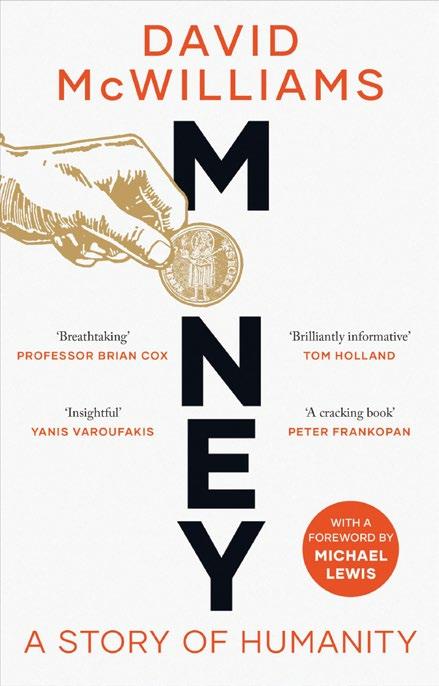
(and many things have, and do, including large stones on the island of Yap in Micronesia, and cowrie shells in West Africa), it has to perform three functions. First, it has to be a medium of exchange (like the cheques in Ireland), secondly, it has to be a unit of account (like the Irish Pound), and thirdly, it needs to be a store of value. As to the last, when inflation in a currency spirals out of control, monetary systems fail because people lose trust in that currency’s ability to maintain a steady value. Once that trust is lost, it is usually impossible to restore. (Incidentally, one of the many reasons for cynicism about digital coins as a currency is their wild price movements.)
Modern ‘fiat’ money is not backed by rare precious metals, or anything else other than trust in the government that issues it. Magically, fiat currencies derive their value from the government declaring it has value and the citizens of the state being obligated to pay taxes in that currency. Again, this depends on a community compact; everyone believing that the same thing is money, and believing it will keep its value. Edward Chancellor’s book is the most technical of the three, but he shows how unnaturally low interest rates and easy money have at various times led to booms and busts, such as the mania for tulips in 16th century Amsterdam, and the South Sea Bubble in England in the 18th century. During the South Sea Bubble, those looking to make a quick buck could invest in “bubble’” companies such as a company that produced square cannonballs, and a company “for a project to be announced at a future date”.
According to McWilliams, in a document written in cuneiform sometime between 3400 and 3000 BCE, a man called Kushim is recorded as running his beer brewing business. Kushim borrowed the barley for two and a half years. The standard annual interest rate for barley in Mesopotamia was 33.33 per cent. Kushim had up to two and a half years to brew the beer, sell it, settle his expenses and repay the loan with barley.
If there was a poor barley harvest, and the price of barley went through the roof, Kushim was in serious trouble. If, on the other hand, there was a bumper crop of barley, Kushim should be laughing all the way to the bank.
The rate of interest is crucial here. Kushim can’t start his business without finance. As Maynard Keynes was to explain, people have a liquidity preference, and to give up their liquidity, people need an incentive to do so through interest payments. The rate of interest is the price at which the borrower and lender are content to do business, and will have been factored into Kushim’s business plan. The concept of interest was a transformative application of money. Given that it was not uncommon for the security for repayment of a loan like Kushim’s to include himself or one of his children, we should admire our budding businessman for his courage.
Where interest comes from goes to the heart of a contentious debate in human history, making money from money, regarded as immoral or illegal by some or all of the Abrahamic religions at various times and in various places.
Karl Marx also regarded interest as parasitical. But as the Austrian school of economists demonstrated, people favour the present over the future. Most of us prefer $1,000 now to $1,100 in five years’ time. And as Keynes also understood, interest provides an incentive for people not to hoard money so that others may benefit from it. There is a market for savings and investment, there are suppliers and purchasers of savings and the interest rate is the price of the trade. War tends to be bad for money. During the American Revolution, inflation spiralled out of control and Britain helped this process along by deliberately flooding the American economy with counterfeit Continentals, the currency of the American revolutionaries.
The British did the same thing to the French in the French Revolution as
prices soared out of control there. And Hitler had counterfeit Pound notes to the value of 7.5 billion pounds ready to be dropped out of planes all over Britain in 1943, but the battles with the war-winning Red Army were going so badly that the Nazi’s could not spare the planes.
Lenin also understood the extraordinary power of money. In April 1919, Lenin was reported to have said that he had a plan to flood Russia with roubles with the deliberate intention of destroying the “great illusion of the value and power of money” and “exterminating” the vestiges of the old Russian state.
Many find it hard to accept that the roles of artist and businessman are not mutually exclusive, and that in fact the arts and commerce have always gone hand in hand.
As McWilliams notes:
Both artist and entrepreneur have skin in the game, performing on the public stage of jeopardy. The creative—businessperson or artist— has strong opinions and is courageous enough to risk the ridicule of the crowd for their opinions to be heard.
From a macroeconomic perspective, artists and entrepreneurs both create demand where no demand existed previously. The new products they offer create their own demand and this is the key to all economic evolution. Unlike the critic, the artist and entrepreneur are eternally optimistic. They must believe in the future … a society that rewards these people—who are often dissenters of one kind or another—is the society that will flourish.
As Wilde’s witty remark indicates, and as Jackson notes, while money is often used antisocially, it is always deeply social. It exists as a relationship between people. Like language and art, money is a symbol for disclosing who we are, warts and all.

ANNABELLE BALLARD
On 26 July 2025, I had the absolute joy of attending a matinee session of Legally Blonde the Musical at the National Theatre in St Kilda. Legally Blonde’s enduring message of empowerment, resilience, and unapologetic self-expression continues to resonate today. More so because of how far gender equity in the legal profession has come since Legally Blonde was originally released.
That spirit was unmistakably alive in the theatre. The crowd of Legally Blonde fans was as diverse as Elle Woods’ wardrobe: grandparents, parents, teens, and toddlers all came together in a multigenerational celebration of the cult classic. Many donned pink in solidarity, turning the theatre into a sea of fuchsia.
Musically, the cast was more enthusiastic than vocally refined, but what they lacked in range they made up for in sheer presence. Their youthful exuberance and kinetic choreography kept the energy high, and the audience
engaged. The dance numbers were also spirited, fun and well executed. Particularly “Whipped into Shape” featuring Brooke Wyndham (Tabitha Galluccio), which involved strikingly difficult choreography including synchronised skipping.
As a standalone work, Legally Blonde the Musical’s plot occasionally stumbled. For instance, Emmett Forrest’s presence at Harvard Law despite being an associate at Callaghan’s firm was never quite explained. But let’s be honest: Legally Blonde is so deeply embedded in pop culture that most viewers arrive with the backstory already in their hearts. The musical leans heavily on that shared cultural memory, and for the most part, it works.
Emily McDougall’s performance as Elle triumphs. Elle was a walking vision in pink, radiating confidence and charm. One of the most refreshing aspects of the production was its unapologetic embrace of pre-political correctness plot points. The infamous pink Playboy bunny costume, for example, served as a surprisingly poignant metaphor for imposter syndrome. While few have attended a legal networking event in such attire, many have felt out of place in professional circles and foundered while trying to “fit in”. Elle’s journey from outsider to self-assured practitioner is a reminder that even if you feel out of place, authenticity is the antidote to imposter syndrome.
The Court of Musical Appeal finds this production fabulous. It’s not flawless, but it’s fun, and full of heart. Whether you were a die-hard fan or just in it for the pink, Legally Blonde at the National Theatre delivered a glittery dose of joy with a side of empowerment.
ANGUS WILLOUGHBY
For those in a profession requiring the study of recent and more ancient history, a history podcast may present as an obviously good match, or as too close to home(work). However, The Rest Is History podcast is never a chore. Hosted by Tom Holland and Dominic Sandbrook, the series has become something of a phenomenon since its inception in 2020. In July 2025, the Sydney Morning Herald recorded that The Rest Is History has something in the order of 12 million downloads a month. From a scan of the audience at the sold out Melbourne show in November 2023, the show’s horde of followers appears to include members of every level of the judicial hierarchy and counsel of all levels of seniority. That is likely to be replicated at another sold out show taking place in Melbourne in November this year.
For listeners from the Bar and

Bench, there might be some allure in the escapism offered by humorous and detailed accounts of the Norman conquest or accounts of “History’s Greatest Dogs”. Or perhaps more practically, there might be something appealing in the untrammelled power wielded by Peter the Great. Regular listeners would at least be wary of having the Tsar for a gardener (or worse, a party host).
The show’s format is conversational. Typically, Holland or Sandbrook leads the conversation about a given topic while the other plays the role of an informed listener. It makes topics accessible and engaging which might otherwise be inaccessibly dense (like the pre-Punic War history of Carthage, where it seems that nearly everyone was called “Hannibal”), or otherwise too awful to have in the background during the commute home (like the Atlantic slave trade). Holland’s and Sandbrook’s deft use of humour and solemnity engages listeners on topics and at levels of detail that few if any other podcasters can match. The proof is in the scale of the show’s following.
Holland and Sandbrook are both English, Oxford-educated historians and the authors of various texts. Holland’s area of specialisation is ancient Greek and Roman history and
the history of Christianity. Sandbrook’s area of specialisation is Cold War era Britain. As one would expect, their great expertise is on full display in episodes concerning those topics of specialisation. But the show is by no means limited to those topics.
When it started, The Rest Is History predominantly featured single, 60-odd minute episodes, each dealing with a particular topic. As the show has developed, Holland and Sandbrook have produced more multi-episode series that allow for much greater depth and context. As the meme goes, “one does not simply [chart the French revolution in an hour]”.
For anyone considering whether to take the plunge, there are a few gateway episodes that might provide a hook. For those with a 20th Century bent, the series on the rise of Nazism provides depth and context to a topic with which many have some familiarity. For those whose interests lie further back in time, the series on the Hundred Years’ War is very engaging and will leave listeners in no doubt about the inspiration for Game of Thrones. And for those, like me, who might first dabble in something less daunting than, say, a multi-part series on the history of treason, the Christmas 2022 episode on the history of drink might just do the trick.


PETER GRAY
One thing you notice if you study legal writing from a language perspective is lots of the passive voice. There is much more than in any other form of writing. Lawyers seem to be addicted to writing in the passive voice. So much so that I have come to a conclusion about it. Lawyers begin to form the habit as early as their law school days. As their careers go on, they don’t even notice that they are using the passive voice when the active voice would contribute so much more to their writing.
The active voice
In case you are unsure what I am talking about, here is a summary. When one person or thing does something to another person or thing, most people write an account of the deed in the active voice. An example is, “Jack shot Lee”. Linguists would call Jack the agent: he is the one who does something to someone else, in this case Lee. Linguists would call Lee the patient: he is the one to whom the agent does something to, in this case the shooting. Even if Lee doesn’t survive and doesn’t go to hospital, he is still the patient, the recipient of the consequences of the agent’s action.
The same terms apply when the agent and the patient are inanimate. The expression, “A storm will wash away the beach”, still has ‘the storm’ as the agent and ‘the beach’ as the patient. Likewise when we are dealing with concepts. In the expression, “Political reality always overrides ideology”, the agent is ‘political reality’, and the patient is ‘ideology’. These sample sentences are all in the active voice. In each case, the agent is
the subject of the sentence, and the patient is the object.
To switch to the passive voice, we invert each sentence. The patient becomes the subject and the agent the object. We have to modify the verb, often adding a modal auxiliary or a form of the verb, ‘to be’. We have to add the preposition ‘by’ before we refer to the agent. “Jack shot Lee” becomes “Lee was shot by Jack”. “A storm will wash away the beach” becomes “The beach will be washed away by a storm”. “Political reality always overrides ideology” becomes “Ideology is always overridden by political reality”. Legal writing is full of these inverted sentences. It is almost as if ‘by’ were the favourite preposition of lawyers.
Once we have inverted the sentence, we can go a step further. We can eliminate the agent. Our expressions become, “Lee was shot”, “The beach will be washed away”, and “Ideology is always overridden”. These sentences are written in the agentless passive voice. The first example is important for lawyers. Sometimes we need the agent to disappear. Imagine that Jack is your client. You want to be able to speak and write about Lee being shot without always reminding people that it was Jack who fired the shot. In the passive voice, the shooting just happened: no-one pulled the trigger. In the second example, the agent is implied: what, other than a storm, would wash away a beach? This makes it unnecessary to mention the agent. The third sentence becomes hard to understand if the agent has vanished: we need to be told what it is that overrides ideology. Perhaps it was the need to eliminate the agent
that sometimes allowed the passive voice habit to creep into legal language. Lawyers have used the agentless passive to protect the interests of their clients to the point where it begins to feel like a natural form of expression. I have a feeling that this is not a complete explanation for the habit. It doesn’t explain why we so often relegate the agent to the end of the story. I suspect that lawyers perceive the passive voice to be more lawyerlike than the active.
Should we eliminate the passive?
I am not enough of a zealot to think that we should never use the passive voice. As I have said, sometimes we use the passive voice to protect the interests of clients. We need to eliminate the agent when that is the case.
There are also times when we want to change the focus. The passive voice enables us to switch the focus from the agent to the patient. If I say, “Millions have read this book”, the focus is on the agents, the millions of readers. If I say, “This book has been read by millions”, I put the focus on the patient, the book. It is legitimate for me to invert the sentence if I want to emphasise the book, rather than the millions of readers. The difference might be subtle, but it is there. I would not want it to go away.
Years ago, I commented to my then-associate that Microsoft Word was underlining all my passive voice constructions in green. I think I sounded critical of this challenge to my way of expressing myself. Perhaps my passive habit was asserting itself. My associate responded, “Oh no, I think the passive voice should be used as little as possible.” I drew his attention to the fact that he had just expressed his view in the passive voice. I also suggested that he was justified in doing so. How else would he have expressed that view without using a clumsy sentence? Perhaps, “We should use the passive voice as little as possible”? I certainly would not have approved the pompous anonymity of, “One should use the passive voice as
little as possible”. His inverted sentence justifiably put the focus on the passive voice. He did not need to mention any agent.
My objection to the way lawyers tend to use the passive voice is not based on some wholesale principle. I object to the mindless inversion of sentences. I object to the free-ranging habit that devalues the passive voice by overusing it. To make my point, I provide a couple of examples.
My first example comes from the very long sentence that I wrote about in Victorian Bar News a few issues ago. It comes from the joint judgment of the whole High Court of Australia in NZYQ.1 I do not need to repeat the whole sentence. It is enough to say that one clause refers to “enabling an application by the alien for permission to remain in Australia to be made and considered”. To me, there is no need for this clause to be in the passive voice. There is no question of eliminating the agent. The clause is about the agent. The focus should not be on the patient, ‘an application’. It should be on the agent, ‘the alien’. Surely the person is more worthy of the focus than the thing the person makes, the application. In my attempt to rewrite the sentence, I rendered the clause as “enabling the alien to apply for permission to remain in Australia and to have that application considered”. Both have the same number of words. Mine focuses on the agent, ‘the alien’, by making him or her the subject. My other example comes from a judgment of the Victorian Court of Appeal2 that I came across while I was teaching. One question the Court discussed, but did not decide, concerned the extent of the duty of care a specialist medical practitioner owed to her patient. Should the practitioner have warned the patient about a possible, but extremely unlikely, side-effect of a prescribed medication? In the course of their joint judgment, two members of the Court said that there were “reasonable
grounds for contending that reasonable care required a warning in the terms of the MIMS annual to be provided by the respondent”.
With respect, the passive voice in this clause makes the clause clumsy. It consists of 23 words. The agent comes last. There is no reason to focus on the patient, ‘a warning’. The issue is about the extent of the duty that the respondent, the medical practitioner, owed. This warrants a focus on the holder of the duty, the agent. My active voice rewrite is “reasonable grounds for contending that the respondent was required to provide a warning in the terms of the MIMS annual”. I have reduced the clause to 20 words. The passive voice is almost always wordier than the active.
To me, the two examples I have given are evidence of the lawyer’s habit of overusing the passive voice. They are not carefully considered expressions. They are as they are because that seems to be the way lawyers like to write.
I used to have the passive voice habit too. Probably from my law school days, and certainly from sometime early in my career, I wrote sentences in the passive voice far too often. My studies in forensic linguistics have drawn my attention to the habit. Now, if I catch myself writing in the passive voice, I pause. I ask myself whether I need to eliminate the agent. I ask myself whether I want to focus on the patient. I change what I have written to the active voice if the answer to both of these questions is negative.
The first step to eliminating a habit is to understand that you have it. I think most, if not all, lawyers have a passive voice habit. Once we understand this, we can pause and think about whether the active voice would be better.
1 NZYQ v Minister for Immigration, Citizenship and Multicultural Affairs [2023] HCA 37 at [31]
2 Odisho v Bonazzi [2014] VSCA 11


On a gloomy November afternoon, your trusted VBN editors dined at one of Melbourne’s newest restaurants: Harriot. Launched by the owners of another local hero, Tip00, Harriot exudes refinement. Upon entering you are first struck by the stunning design of wood panelling, dark plush booths and a grand curved marble topped bar.
Harriot’s menu is best described as “European Bistro” with an eclectic mix of dishes ranging from chilled pea soup with spanner crab and caviar to wood roasted pigeon. Lunch started with a round of cocktails, including a delightfully tasty margarita (not too sweet with the right mix of lime and tequila) and a refreshing negroni. This was paired with a trio of starters to share: blue fin tuna and fermented mushroom on a rye shell, grilled king prawns and beef tartare with buttermilk. The tuna was a real stand out, the tuna was fresh and the fermented mushroom and nutty crust gave the dish added texture. The beef tartar was wonderfully accompanied by a buttermilk sauce which was tart and delicious. The prawns were jumbo
in size and flavour—making them a perfect dish to end our first course.
Our mains were a fancy version of surf and turf: king dory with white asparagus and a mussel butter along with black opal wagyu rump with sprouting broccoli and peppercorn sauce. The king dory was playfully presented in a sea of white foam with the rich mussel butter underneath. The fish was perfectly cooked, flavoursome and melted in your mouth. The rump was a solid dish, again cooked perfectly to medium rare with a smoky peppery sauce. The mains were washed down with a roundbodied Thierry Laffay Chablis, a great accompaniment.
We closed off our lunch with a trio of desserts: crème caramel with peach and fig leaf, rhubarb sherbert with brunt vanilla and white chocolate, and the star of the show: a hazelnut and chocolate choux. The crème caramel was smooth and perfectly coupled with a slightly tart peach. The choix was, to put it mildly, life-changing. The pastry was crunchy on the outside and chewy on the inside and along with the ganache and chocolate sauce was irresistible and proves why Ozempic is doing such a strong trade. We finished off with another round of cocktails and stumbled out of restaurant having received faultless service from the friendly and knowledgeable staff.
Harriot is a great addition to the culinary scene in Melbourne. A real chameleon: great for a business lunch, after work drinks or a big boozy dinner with mates—and all things in between.