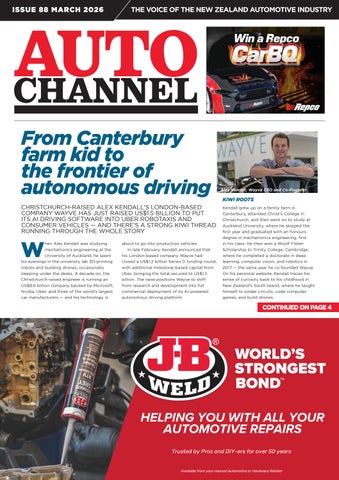
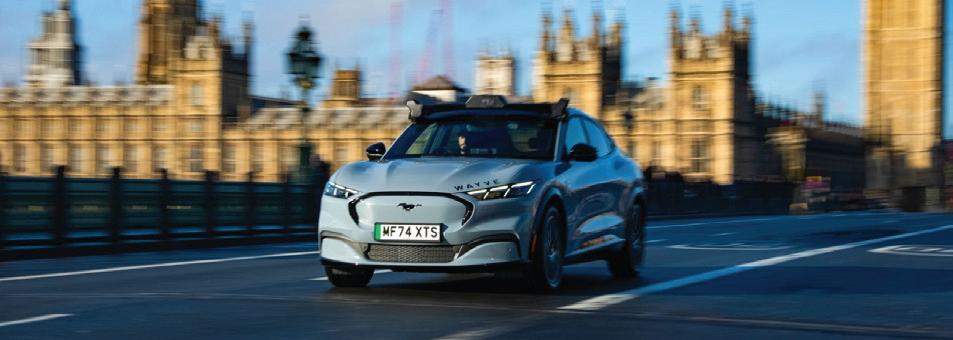
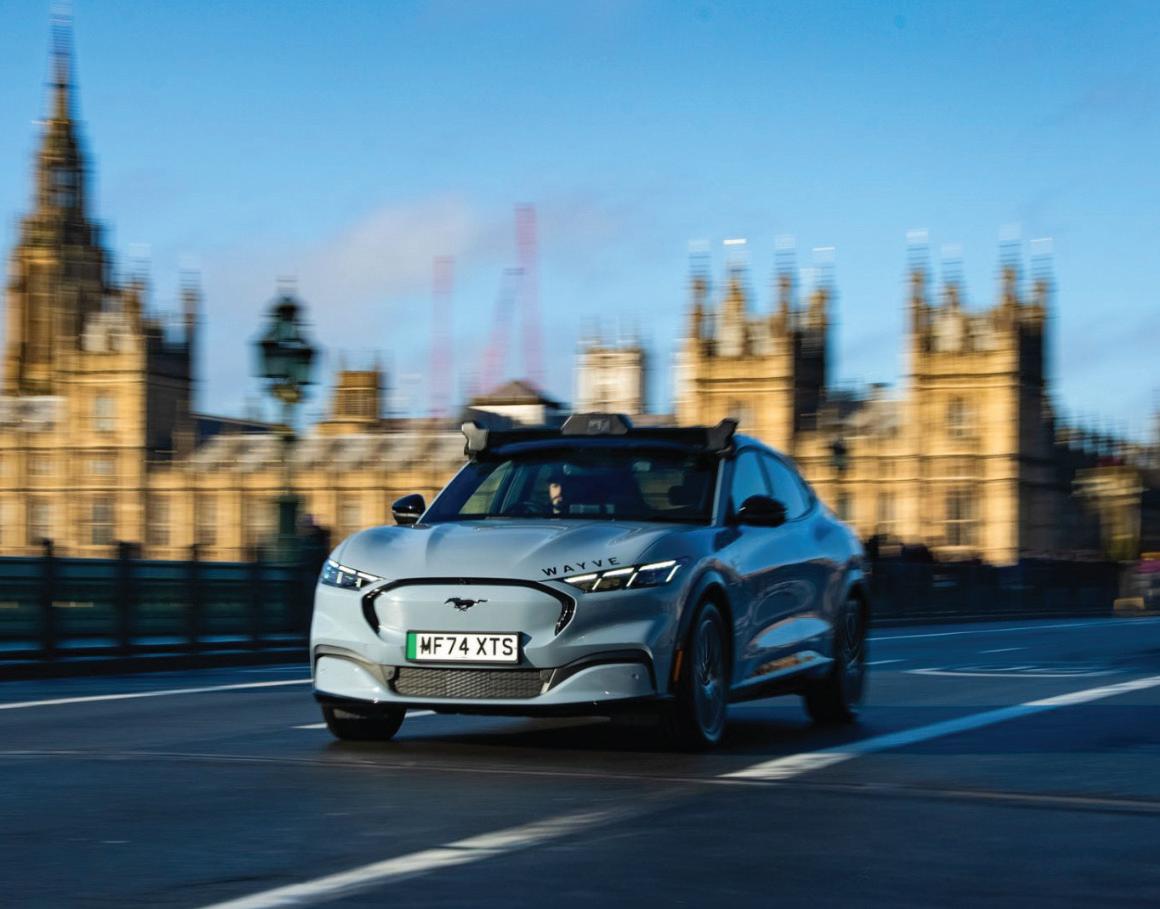
CHRISTCHURCH-RAISED ALEX KENDALL'S LONDON-BASED COMPANY WAYVE HAS JUST RAISED US$1.5 BILLION TO PUT ITS AI DRIVING SOFTWARE INTO UBER ROBOTAXIS AND CONSUMER VEHICLES — AND THERE'S A STRONG KIWI THREAD RUNNING THROUGH THE WHOLE STORY
When Alex Kendall was studying mechatronics engineering at the University of Auckland, he spent his evenings in the university lab 3D-printing robots and building drones, occasionally sleeping under the desks. A decade on, the Christchurch-raised engineer is running an US$8.6 billion company backed by Microsoft, Nvidia, Uber, and three of the world's largest car manufacturers — and his technology is
about to go into production vehicles.
In late February, Kendall announced that his London-based company Wayve had closed a US$1.2 billion Series D funding round, with additional milestone-based capital from Uber, bringing the total secured to US$1.5 billion. The raise positions Wayve to shift from research and development into full commercial deployment of its AI-powered autonomous driving platform
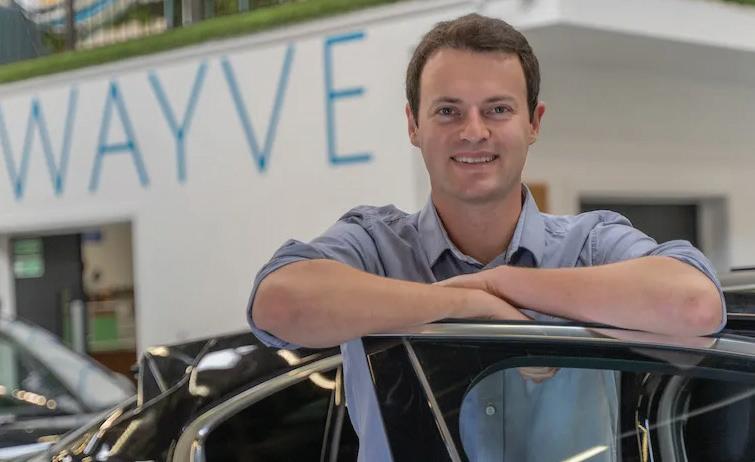
Kendall grew up on a family farm in Canterbury, attended Christ's College in Christchurch, and then went on to study at Auckland University, where he skipped the first year and graduated with an honours degree in mechatronics engineering, first in his class. He then won a Woolf Fisher Scholarship to Trinity College, Cambridge, where he completed a doctorate in deep learning, computer vision, and robotics in 2017 — the same year he co-founded Wayve. On his personal website, Kendall traces his sense of curiosity back to his childhood in New Zealand's South Island, where he taught himself to solder circuits, code computer games, and build drones.

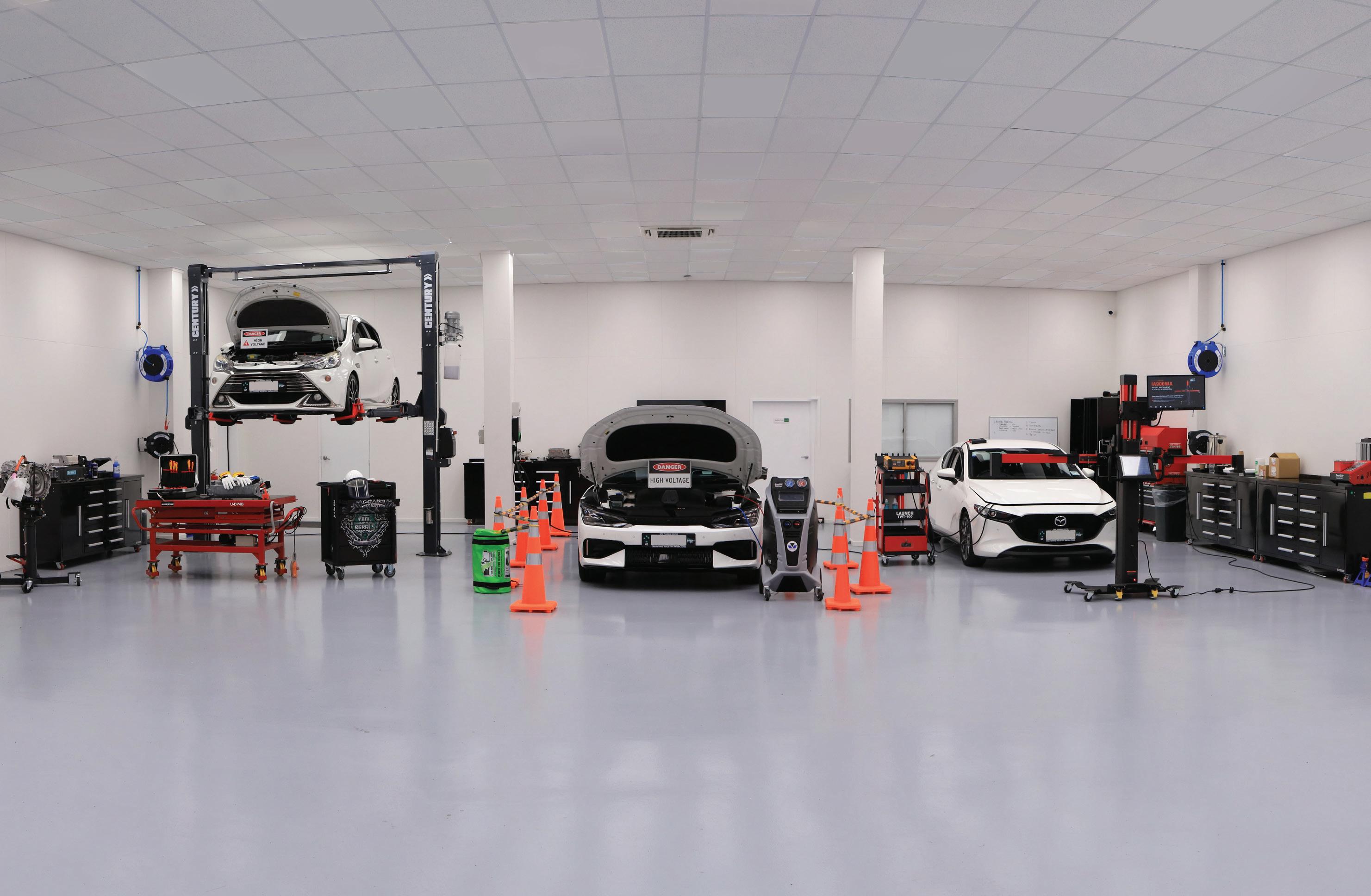
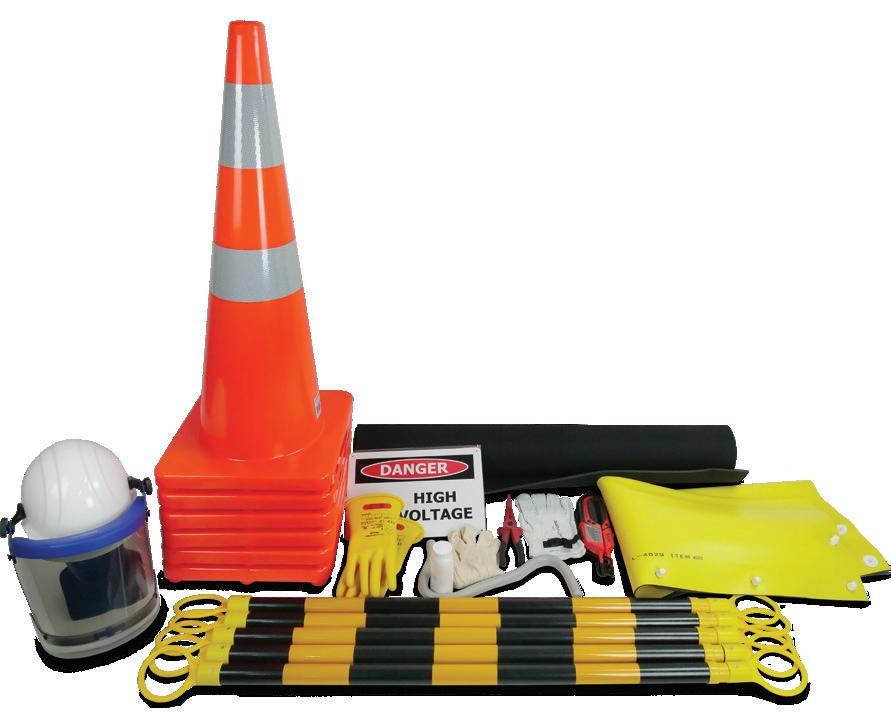
Now delivering comprehensive electric vehicle diagnostic training courses. Ensure your team:
• Are EV ready
• Understand BEV and hybrid architecture
• Know the safety procedures and mandatory specialist workshop equipmentPPE, hand tools etc
• Know how to depower and reinitialise electric vehicles plus more...
SPEAK TO YOUR REP ABOUT THE COURSES & RANGE OF EV EQUIPMENT & CONSUMABLES
Christchurch-raised Alex Kendall’s London-based company Wayve has just raised US$1.5 billion to put its AI driving software into Uber robotaxis and consumer vehicles — and there’s a strong Kiwi thread running through the whole story
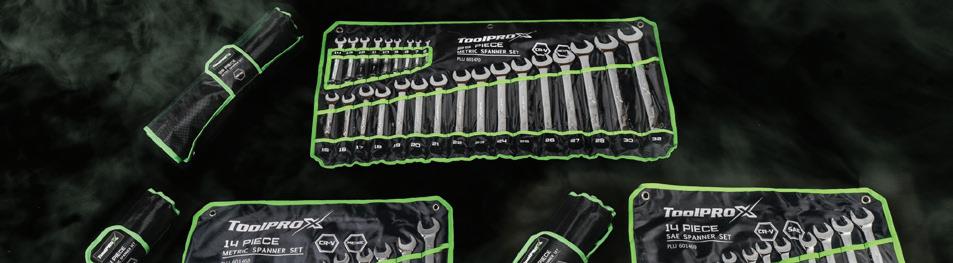
Supercheap Auto Trade offers an extensive range of automotive tools built to support the demands of New Zealand workshops
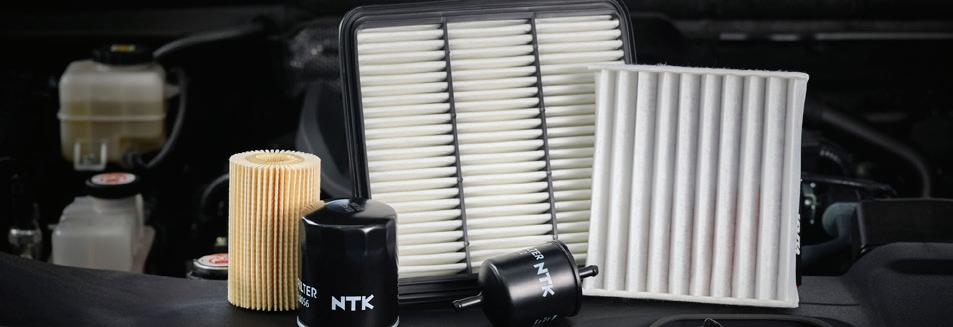
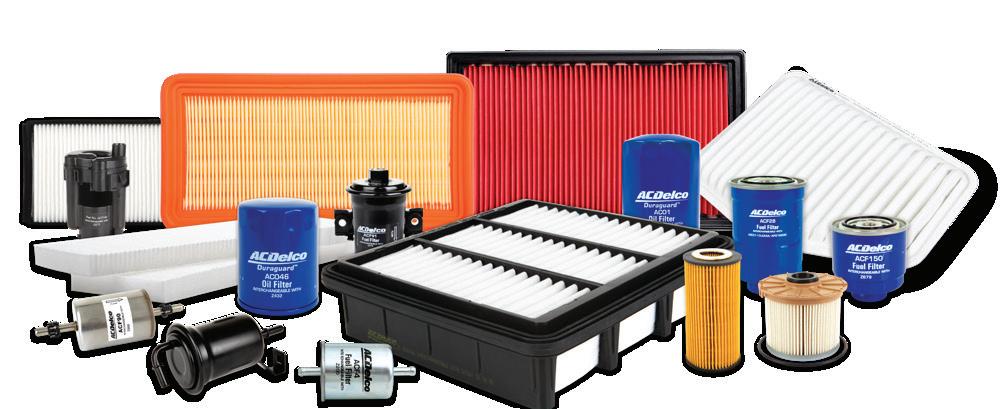
Niterra supplies NTK filters to the New Zealand aftermarket, covering oil, air, cabin air, and fuel applications, which meet original equipment (OE) standards, providing workshops with reliable replacement parts for common service
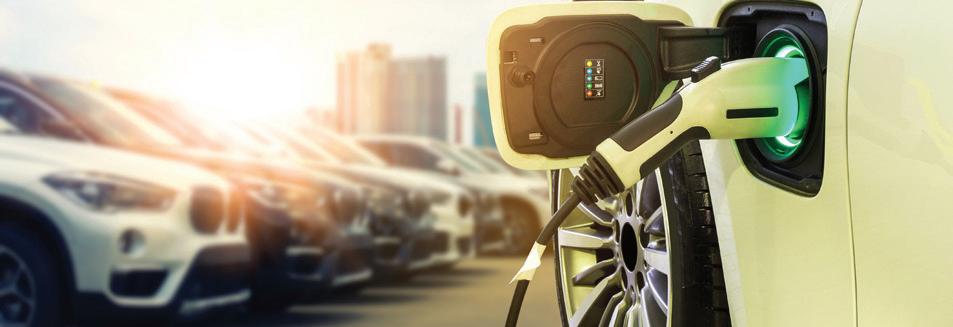
A single line in WorkSafe’s EV charging guidelines was creating headaches for fleet operators and limiting the rollout of home charger installations — now it’s gone, and the aftermarket stands to benefit
Auckland-based
Tyrepower: still Independent, now stronger; Patch Rubber Tyre & Tube; Tyrewise update; YHI: your partner for globally recognised tyre brands
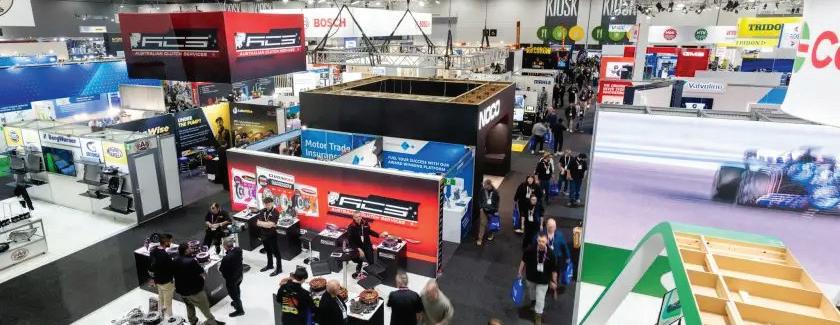
Australian Auto Aftermarket Expo returns in May with a global roster of diagnostic and business trainers — and free registration makes it an accessible
ISSN 2816-0959 (Print)
ISSN 2816-0967 (Online)
ONLINE autochannel.co.nz
EMAIL contact@autochannel.co.nz
SUBSCRIPTIONS subscriptions@autochannel.co.nz
MAIL PO Box 202152, Southgate, Takanini 2246
MEDIA SALES
Michael White, michael.white@viamedia.co.nz
Mark Everleigh, mark.everleigh@viamedia.co.nz
PRODUCTION
Harrison Wade
Deven Solanki
AUTO CHANNEL IS PUBLISHED BY

BUSINESS DIRECTOR
Michael White, michael.white@viamedia.co.nz
GENERAL MANAGER
Simon Holloway, simon.holloway@viamedia.co.nz
FINANCIAL CONTROLLER
Mel White
NOTICE TO ADVERTISERS
Via
Auto Channel is the best way to reach the wider automotive industry. The publication is direct mailed to New Zealand businesses in the following automotive sectors: Automotive workshops, parts importers and distributors, transmission specialists, automotive recyclers, towing operators, panel beaters and painters, crash repairers, tyre dealers, suspension and underbody repairers, steering specialists, autoelectrical repairers, new and used-car dealers, air-conditioning repairers, trucking and transport.
hold key roles at the company, and Aucklandbased venture capital firm Icehouse Ventures participated in the Series D round.
Wayve's technology differs fundamentally from other autonomous driving systems. Rather than relying on expensive lidar sensors, highdefinition maps, or city-specific engineering, Wayve's system uses onboard cameras and computing power combined with end-to-end artificial intelligence. The software learns from driving data and generalises across different environments without needing to be fine-tuned for each new city.
The company was founded in 2017 by Alex Kendall and fellow Cambridge researcher Amar Shah, and unlike many autonomous vehicle efforts that rely on detailed maps and handcoded rules, Wayve has built what it calls an ‘embodied AI’ driving system. That approach was considered contrarian when Kendall started, and even a year before Wayve's major Series C raise in 2024, the company could not get meetings with car executives.
However, in the past year, Wayve became the first autonomous vehicle developer to drive in more than 500 cities across Europe, North America, and Japan without any cityspecific preparation — a capability the industry calls ‘zero-shot’ driving. That performance is powered by a foundation model trained on data from more than 70 countries and across multiple vehicle platforms.
The Series D round was led by Eclipse, Balderton, and SoftBank Vision Fund 2. New investors include Ontario Teachers' Pension Plan, Baillie Gifford, British Business Bank, Icehouse Ventures, and Schroders Capital. Microsoft, Nvidia, and Uber also participated,
alongside automakers Mercedes-Benz, Nissan, and Stellantis.
Uber will invest up to an additional US$300 million in milestone-based capital tied to the deployment of Wayve-powered robotaxis on the Uber network, with plans to scale across more than 10 markets globally. Commercial trials will begin in London this year before expanding internationally. Under the partnership, Wayve supplies its AI Driver software while Uber owns and operates the fleet.
From 2027, Wayve's AI Driver-equipped consumer vehicles are expected to go on sale. The initial offering will be L2+ supervised autonomy — allowing vehicles to steer, navigate, and respond to traffic while the driver remains in the loop. Wayve licenses its software directly to automakers, allowing them to customise driving models for their specific vehicles and brands.
In 2025, Wayve signed a production partnership with Nissan to integrate its AI Driver into Nissan's next-generation ProPILOT driver-assistance systems, with the first massproduced vehicles expected to launch in Japan and other global markets from fiscal year 2027.
The trajectory of companies like Wayve signals a shift in how vehicles will be engineered and maintained in the coming decade. As AI-driven systems become embedded in mass-market vehicles from manufacturers already selling in this market — Nissan, Mercedes-Benz, and Stellantis brands among them — workshops will increasingly encounter advanced driver-assistance technology as standard equipment rather than a premium option.
Kendall himself remains characteristically understated about what his company has achieved, fitting the quiet Kiwi approach of letting the work speak for itself.

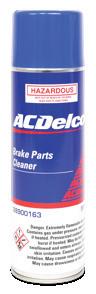
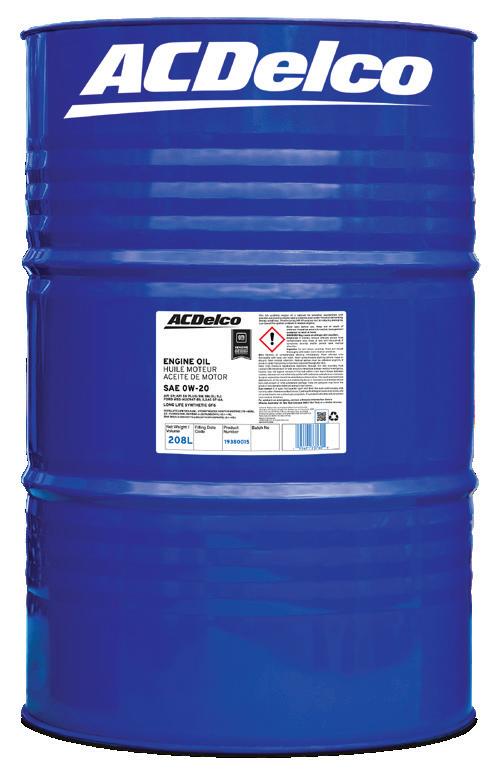
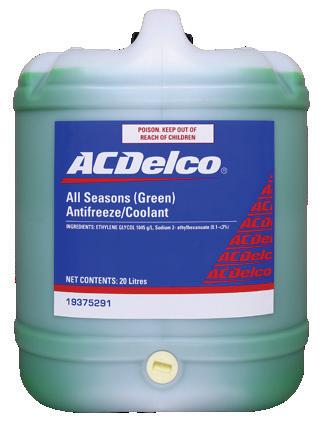
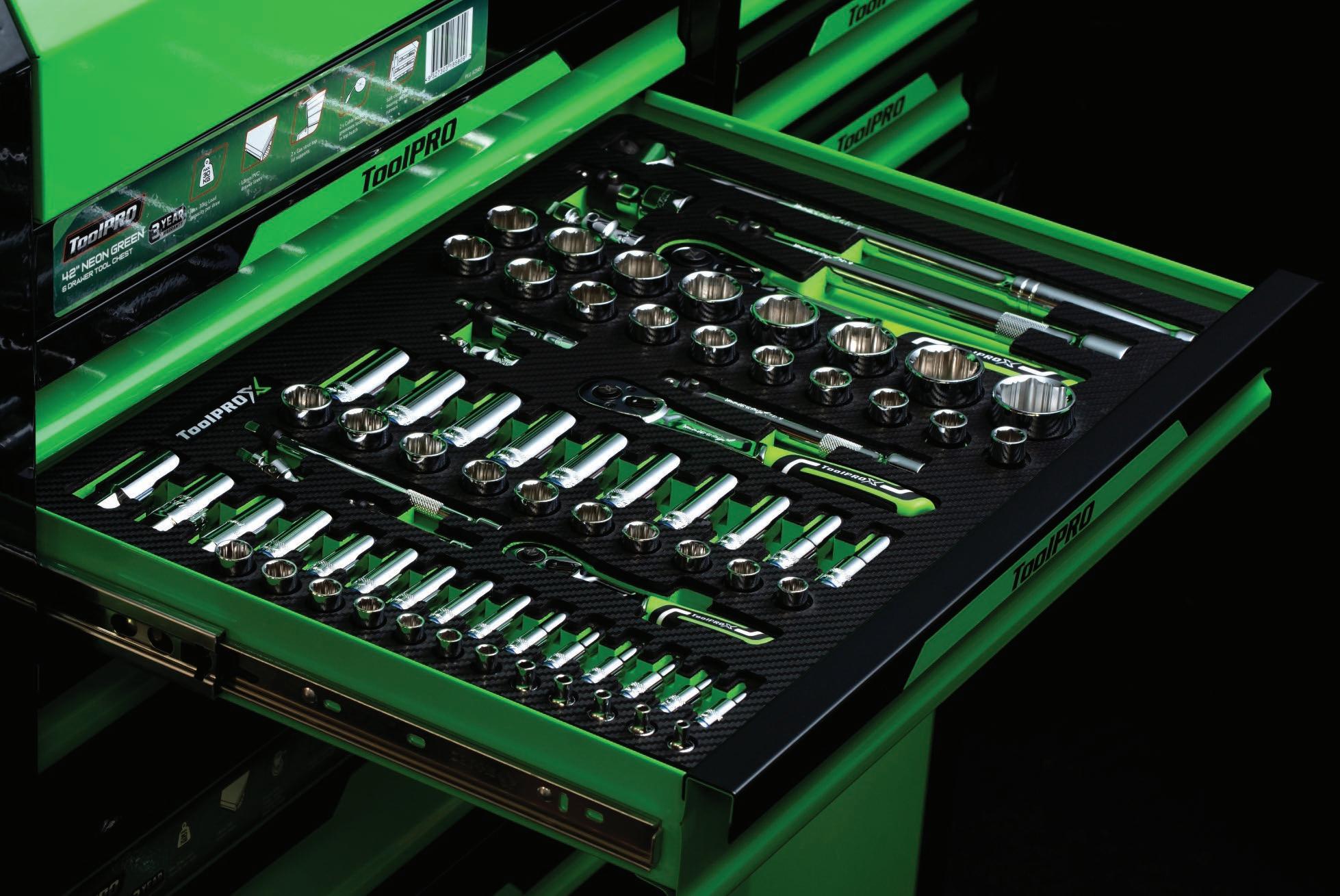
Supercheap Auto Trade offers an extensive range of automotive tools built to support the demands of New Zealand workshops. From everyday hand tools through to workshopready power tools, the range is designed to improve efficiency, reduce downtime and support consistent job quality across all types of automotive work.
With trade pricing available across the full range, NZ workshops can manage costs while still investing in tools built for professional use. Whether you’re equipping a single-bay operation, upgrading a growing workshop, or standardising tools across multiple bays, Supercheap Auto Trade provides practical, flexible solutions that make sense for local businesses.
A brand that deserves a place firmly on your radar is ToolPRO-X. Developed specifically for workshop environments, ToolPRO-X represents the ultimate in workshop quality tools, designed with the expectations of trade mechanics and automotive professionals in mind.
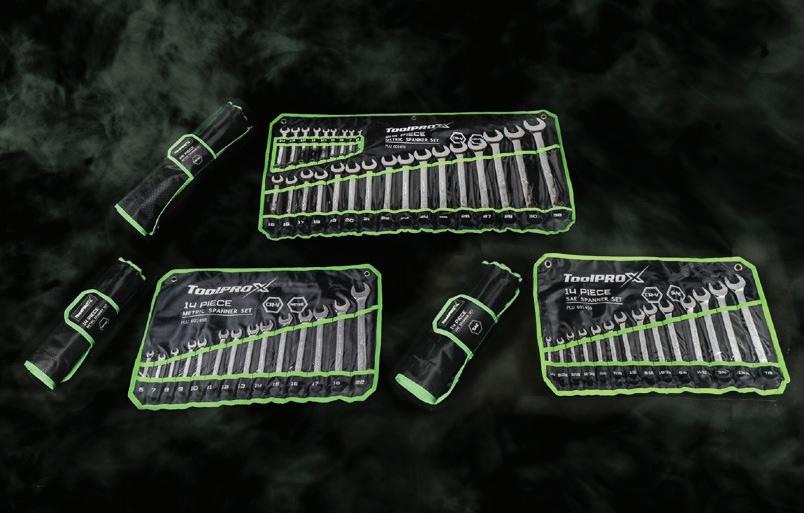
The range includes comprehensive tool kits, socket sets and spanner sets, covering the tools technicians rely on most. The focus is on consistent, repeatable performance, making ToolPRO-X a practical choice for workshops that demand reliability from their tools every day.
ToolPRO-X tools are built for the realities of daily workshop life. Precision- machined
sockets and spanners provide a secure fit on fasteners, reducing the risk of rounding and improving control under load. Slip resistant sockets improve grip on stripped or rounded fasteners, delivering up to 85 percent better hold compared to traditional socket designs and helping prevent further fastener damage.
Ratchets offer smooth engagement and reliable locking, supporting confident work in tight or awkward spaces. Slip resistant open end spanners are engineered to provide up to 25 percent more torque than standard open end designs, allowing mechanics to apply force more effectively and safely.
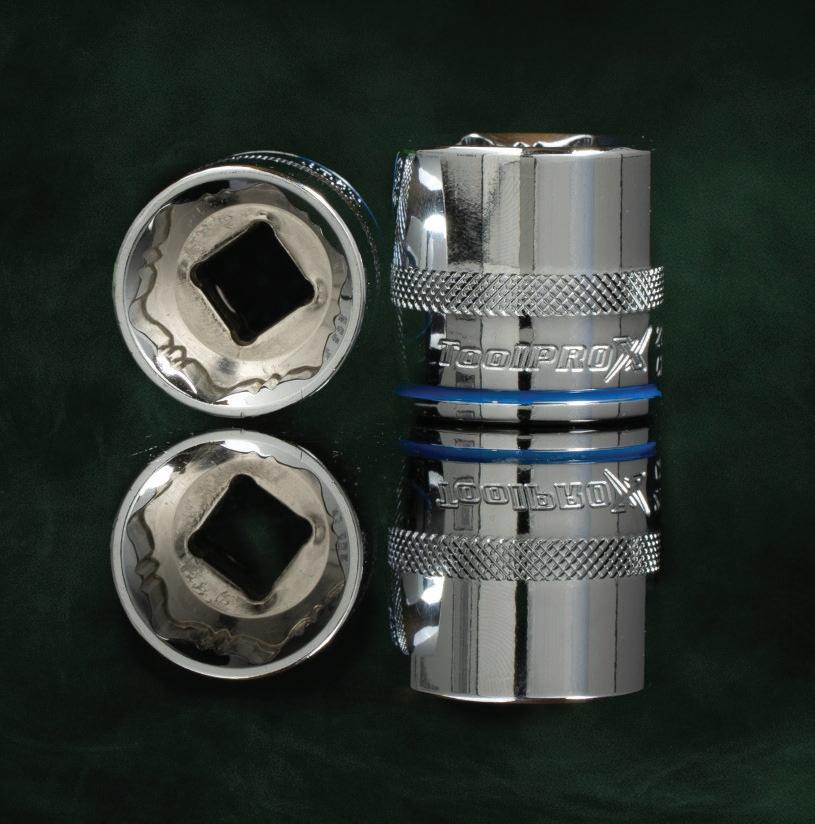
Across the range, materials such as chrome vanadium and high-strength steels are used to ensure durability and longevity. Protective finishes help resist corrosion and wear, extending tool life in demanding workshop environments.
One of the strengths of the ToolPRO-X range is its well-considered tool kits and sets. These are ideal for workshops looking to streamline tooling across bays, onboard new technicians, or replace ageing equipment with a cohesive solution.
Tools are organised for easy access, helping reduce wasted time and support smoother, more professional workshop workflows.
For many workshops, the challenge is finding tools that deliver professional performance without inflating costs. ToolPRO-X addresses this by offering workshop-grade quality at competitive trade pricing. By reducing tool failure and minimising downtime, the range supports long-term value rather than shortterm savings.
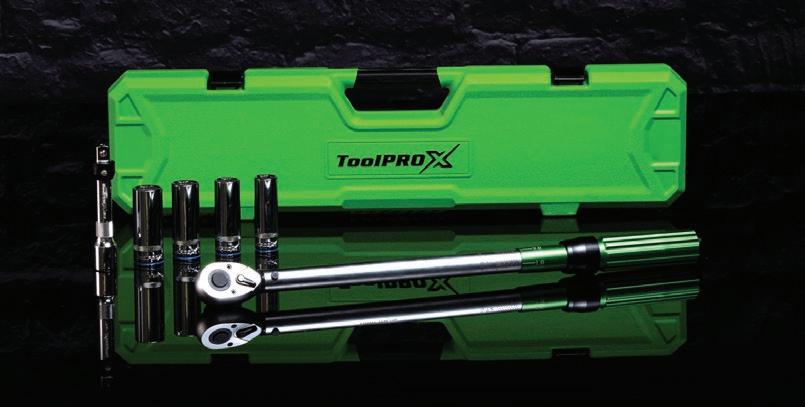
ToolPRO-X reflects Supercheap Auto Trade’s commitment to supporting professional workshops. The range continues to evolve alongside changes in vehicle technology, ensuring mechanics have access to tools that remain relevant. Combined with the convenience of shopping both in store and online, ToolPRO-X fits seamlessly into modern business operations.
For New Zealand workshops looking to invest in reliable tools without the premium price tag, ToolPRO-X is a range worth serious consideration. It delivers workshop-ready quality, consistent performance and practical features that support how technicians actually work.
Explore the ToolPRO-X range at competitive trade pricing on the Supercheap Auto Trade website today. Not a Trade customer? Create your free NZ Trade account using your NZBN at trade.supercheapauto.co.nz to access trade pricing and additional benefits designed specifically for New Zealand workshops.
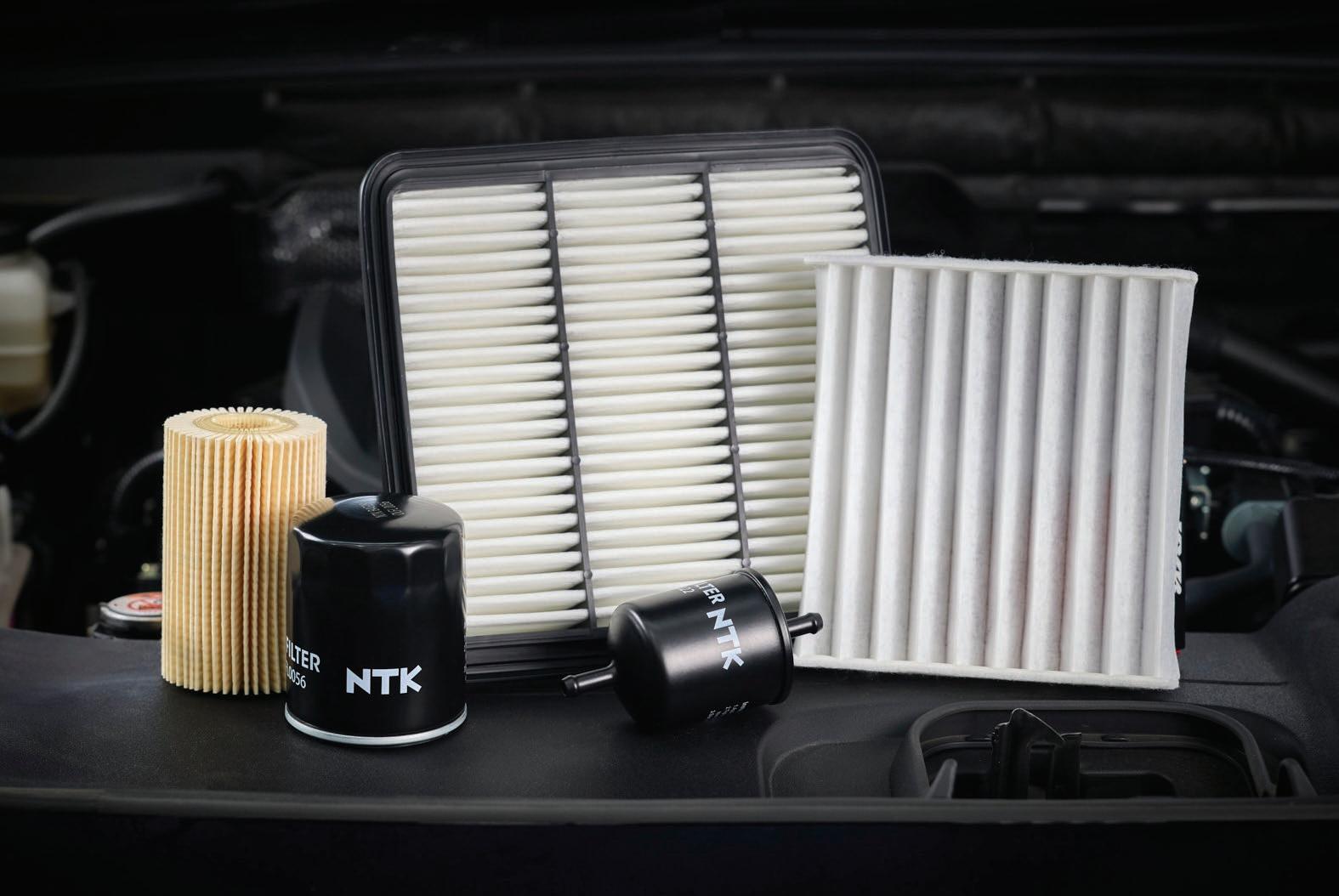
NITERRA SUPPLIES NTK FILTERS TO THE NEW ZEALAND AFTERMARKET, COVERING OIL, AIR, CABIN AIR, AND FUEL APPLICATIONS, WHICH MEET ORIGINAL EQUIPMENT (OE) STANDARDS, PROVIDING WORKSHOPS WITH RELIABLE REPLACEMENT PARTS FOR COMMON SERVICE
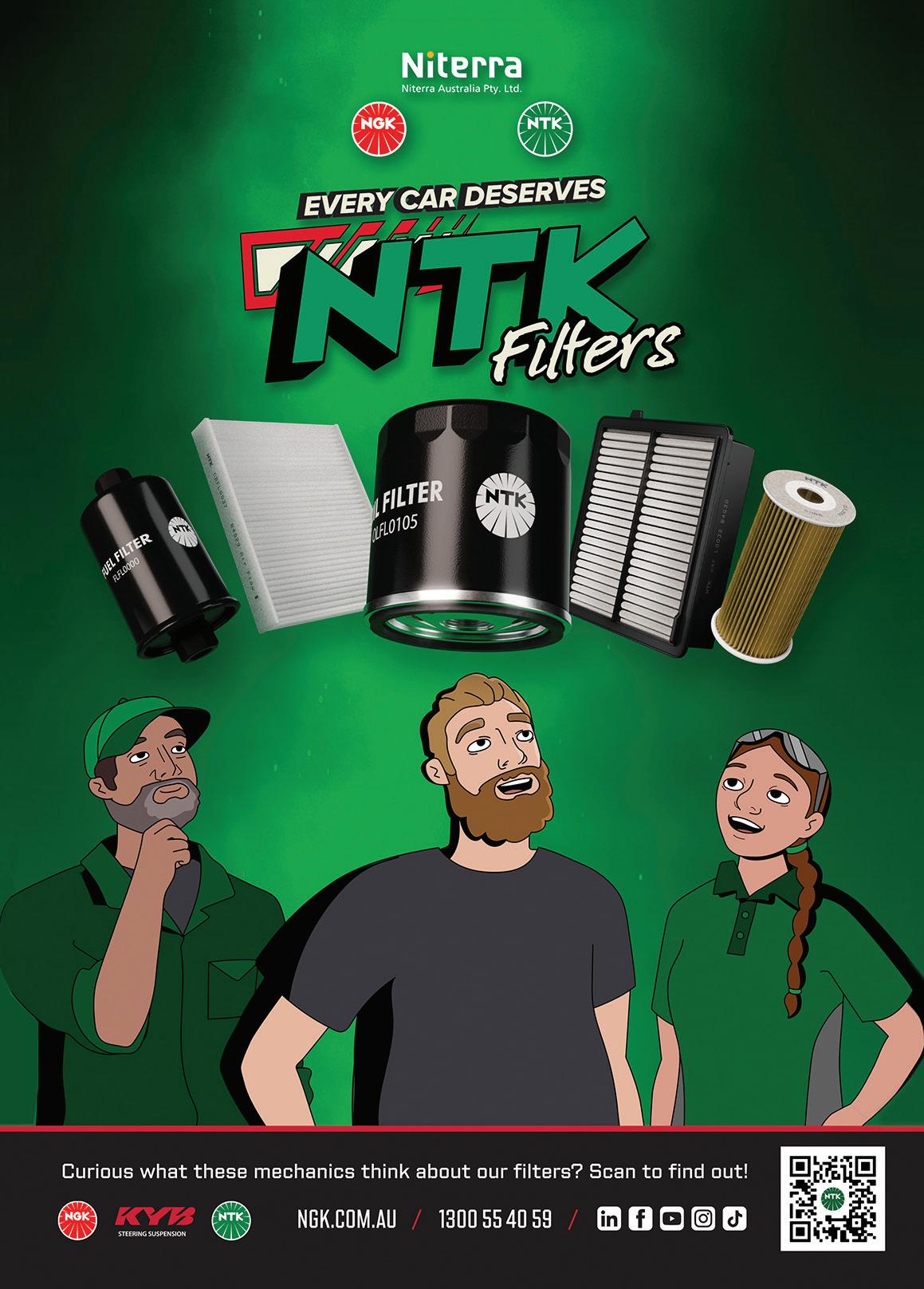
The company, formerly NGK Spark Plug, rebranded as Niterra in 2023 to cover a wider range of automotive components. In New Zealand, Niterra has long supplied ignition parts and sensors under NGK and NTK brands. The NTK Filters range now fills a gap in filtration products, allowing parts suppliers and workshops to source OE-equivalent filters from a familiar name.
NTK Filters include options for key maintenance items:
• Oil filters: Cartridge and spin-on types protect engine internals during oil changes.
• Air filters: Cylindrical and panel designs fit various engine bays.
• Cabin air filters: Standard and carbon versions improve interior air.
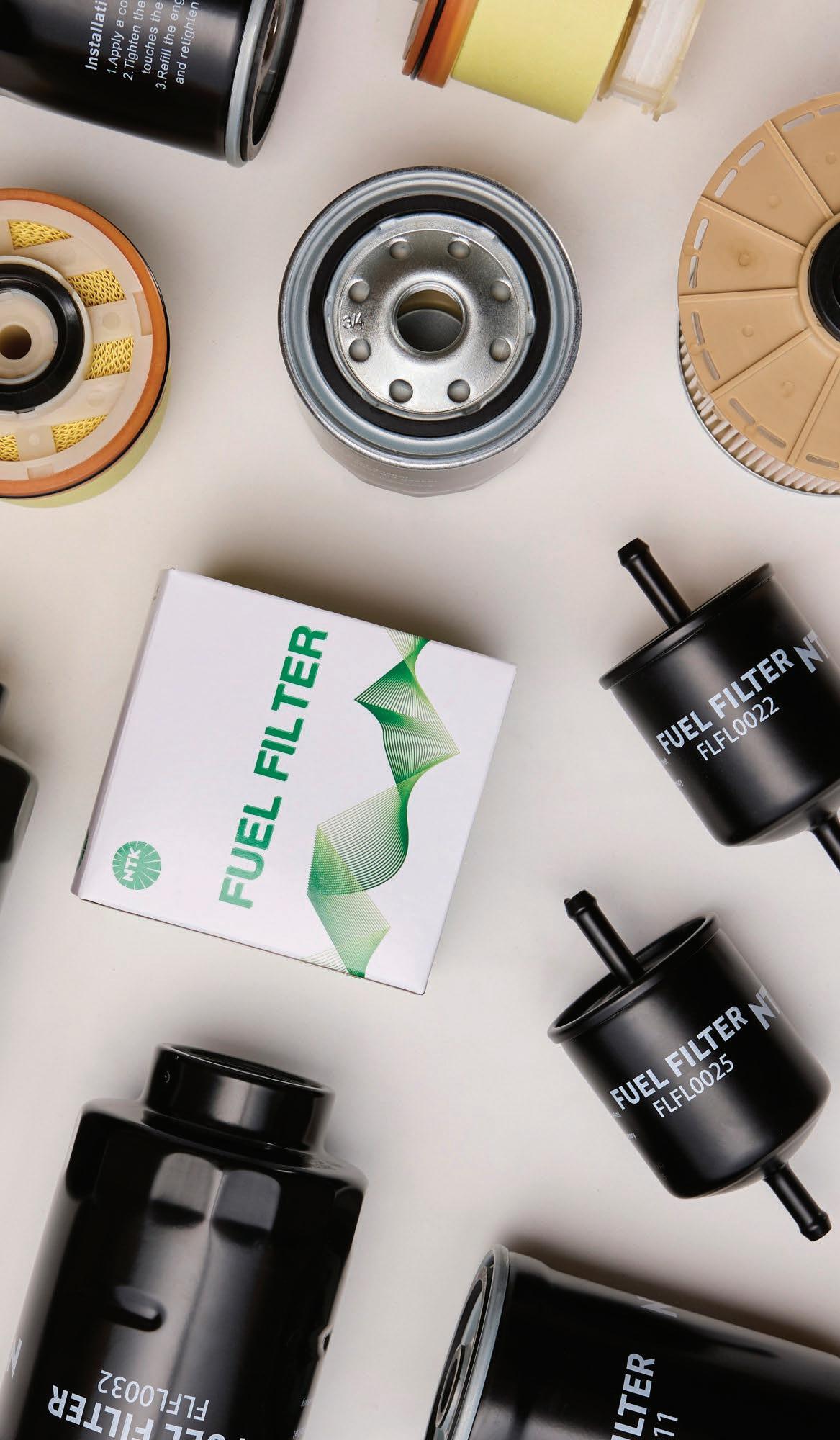
• Fuel filters: Fuel delivery is supported by a variety of filter configurations, including cartridge, in-line, in-tank, and spin-on models.
This selection supports the New Zealand vehicle parc, including passenger, SUVs, and light commercial vehicles. Workshops handling routine services, such as oil changes or air filter swaps, will find broad application coverage.
NTK Filters follow OE specifications for
materials, construction, and dimensions. This means exact fitment without modifications. Application-specific designs account for vehicle differences, such as thread sizes or seal types. Proper filtration traps contaminants, supports oil flow, and helps engines run efficiently. Over time, this can extend service intervals and reduce repair costs caused by poor-quality parts. Fuel and air filters similarly protect injectors and intake systems, while cabin filters reduce allergens for drivers.
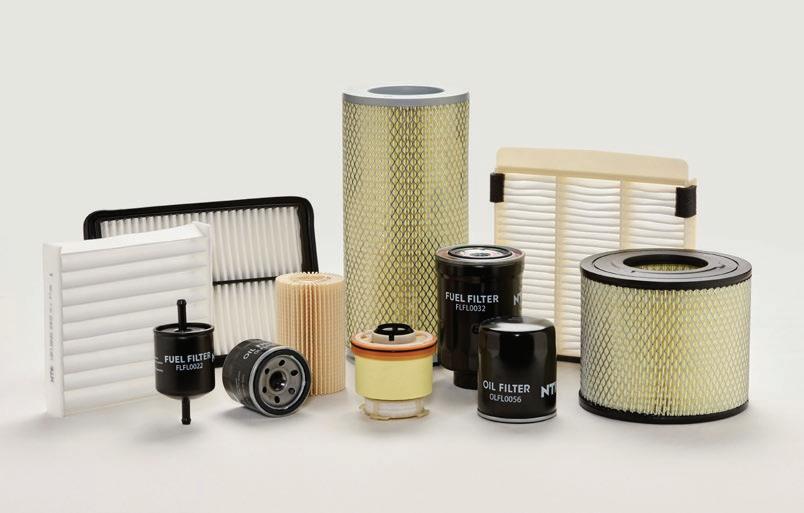
New Zealand workshops gain several advantages from stocking NTK Filters:
• Reliable fitment: OE-level precision minimises leaks or installation issues, reducing comebacks.
• Stock efficiency: One brand covers multiple filter types, simplifying inventory for parts managers.
• Service support: Longer component life from effective filtration builds customer trust and repeat business.
• Known supplier: Niterra’s track record in sensors and plugs extends to filters, backed by global quality controls.
In a market with varied imports, these filters offer a middle ground: better than budget options, without high-performance premiums. For oil services, spin-on and cartridge oil filters integrate easily into standard procedures.
Niterra provides a Part Finder tool on its website and app. Enter a vehicle’s VIN or registration details to get matching NTK part numbers. This reduces ordering errors, especially for less common models. Workshops can access catalogues through local distributors for stock checks and pricing.
NTK Filters are available now via Niterra’s New Zealand distribution network. Parts suppliers can order for immediate delivery, supporting workshop needs during peak service periods. Contact local partners for catalogue access, technical bulletins, or bulk pricing.
The range suits passenger, SUVs, and light commercial vehiclescommon in New Zealand. Distributors report growing demand as workshops seek consistent OE-quality stock.
Niterra plans to add more part numbers and applications to the NTK Filters line. This will increase coverage for newer models and imports. Workshops should monitor updates via the Part Finder or distributor newsletters.
For more information about NTK Filters, visit niterra.com.au

A SINGLE LINE IN WORKSAFE’S EV CHARGING GUIDELINES WAS CREATING HEADACHES FOR FLEET OPERATORS AND LIMITING THE ROLLOUT OF HOME CHARGER INSTALLATIONS — NOW IT’S GONE, AND THE AFTERMARKET STANDS TO BENEFIT
Aregulatory change that took effect in January 2026 has removed what had become an unexpected roadblock to EV fleet adoption in New Zealand. WorkSafe’s updated Energy Safety Addendum (3rd Edition) drops the previous requirement that employer-owned electric vehicles “should be charged in a garage” — a single line in the earlier guidelines that was causing confusion for businesses and, by extension, limiting demand for home charger installations.
The change may sound minor on paper, but for the auto aftermarket — particularly businesses involved in EV charger supply, installation, and electrical work — it opens the door to a significantly larger pool of potential home charging customers.
The previous WorkSafe guidance (2nd Edition) specified that employer-owned EVs should be charged in a garage. The issue was that this didn’t reflect how many New Zealanders actually live. Around a third of the population rents, and many homeowners simply don’t have a garage. Workers in those situations were effectively locked out of fleet EV programmes, even when a perfectly safe outdoor charging setup could be installed to full New Zealand electrical standards.
For fleet operators weighing up the switch to electric, the garage requirement added a layer of compliance uncertainty. Some businesses delayed or restricted home-
charging programmes to employees with garages, reducing the pool of drivers who could participate and undermining the business case for going electric.
The updated WorkSafe addendum removes the garage stipulation entirely. Safety requirements for home EV charging are now determined by how the equipment is installed and managed, not by whether the vehicle is employer-owned or whether a garage exists.
The existing electrical safety standards already require appropriate RCD protection, weather-rated equipment for outdoor installations, correct installation height, and work carried out by licensed electricians. Those requirements remain unchanged. The update simply aligns WorkSafe’s guidance with the rules that were already in place, removing the contradiction.
Drive Electric, the industry body that advocated for the change, had formally raised the issue with the Minister for Workplace Relations and Safety in December 2025. The organisation also wrote to the Minister of Building and Construction recommending better alignment of AC charging building regulations between Australia and New Zealand.
The practical effect for the trade is straightforward: more homes are now eligible for work EV
charger installations, which means more work for electricians, auto electricians, and businesses supplying and fitting charging equipment.
Previously, a fleet manager looking to equip 50 drivers with home chargers might have had to exclude a significant number simply because they didn’t have a garage. That barrier is gone. Outdoor-rated charging equipment installed to standard is now explicitly acceptable under WorkSafe guidance, regardless of vehicle ownership.
For workshops and suppliers already operating in the EV space — or considering entering it — this is a useful tailwind. Home charging is widely regarded as the most costeffective and convenient way to keep fleet EVs topped up, and businesses that can offer endto-end solutions covering supply, installation, and maintenance are well-positioned as fleet electrification continues.
Drive Electric’s advocacy didn’t stop at WorkSafe. The organisation’s letter to the Minister of Building and Construction flagged the opportunity to align New Zealand’s AC charging building regulations more closely with Australia’s. If that push gains traction, it could lead to EV-ready wiring requirements in new residential builds — another potential growth area for the electrical and automotive trades.
For now, the immediate takeaway is simple: the garage rule is gone, outdoor home charging for work EVs is officially endorsed when installed to standard, and the addressable market for home charger installations just got bigger.
Drive Electric has published a comprehensive guide, Home Charging Work EVs: A Practical Guide for Businesses, developed in partnership with Fleet Partners, Meridian Energy, PDL by Schneider Electric, and Singer Electric. The guide covers planning, safety, technology, staff engagement, and daily operations, and is available through Drive Electric’s website.
For the full WorkSafe guidelines and Drive Electric’s home charging guide, visit driveelectric.org.nz.
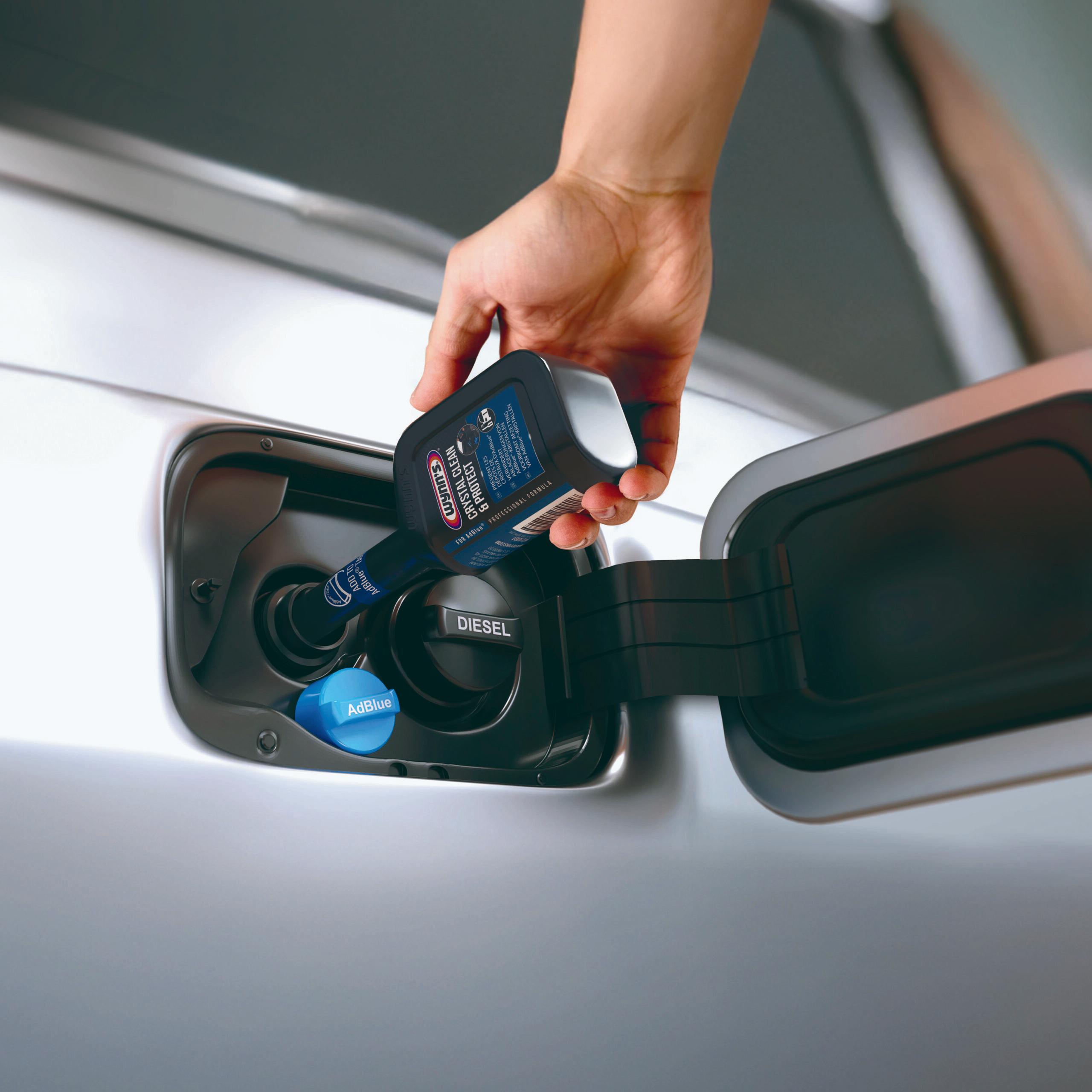

Avoid costly repairs on AdBlue® components by preventing crystallization and keeping the SCR system clean
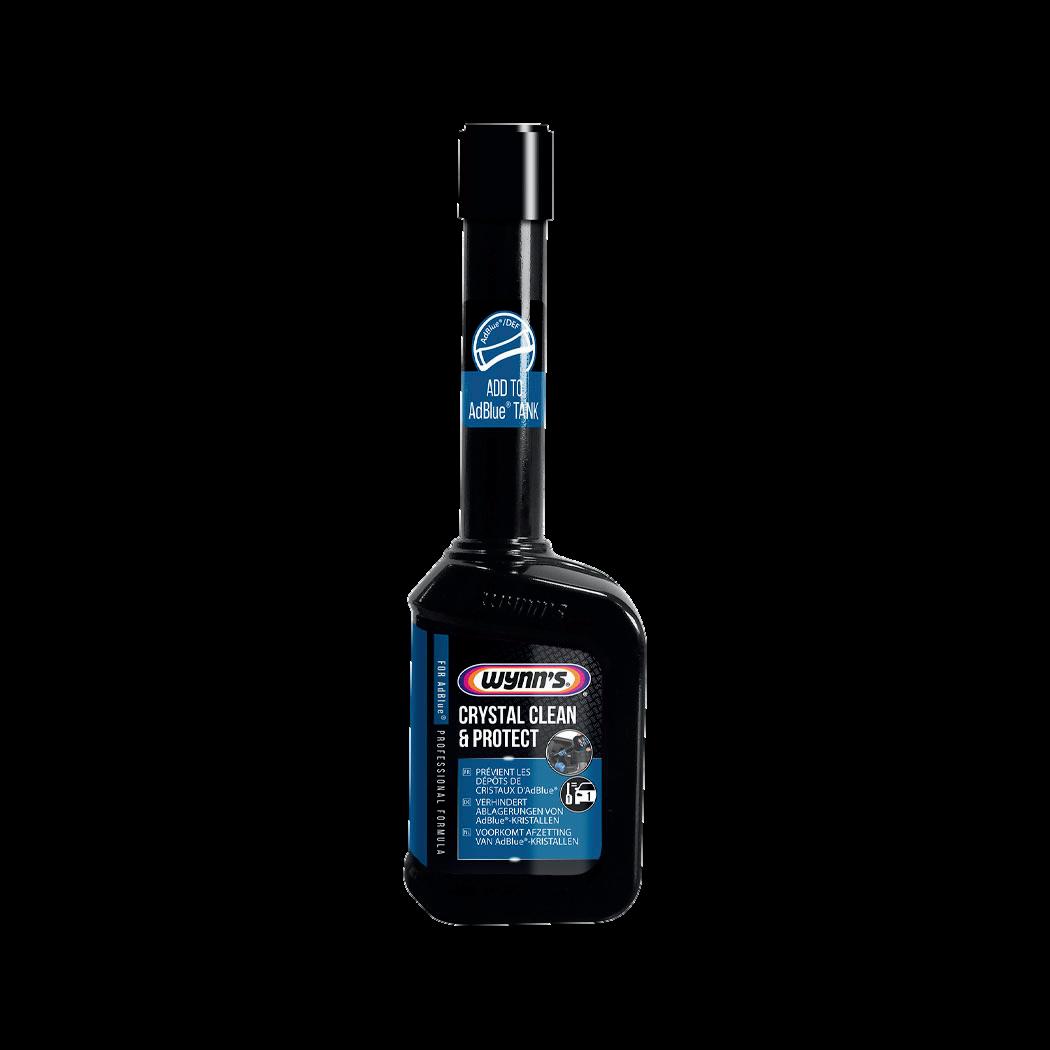
Wynn’s Crystal Clean & Protect is an in-tank additi ve that prevents the formation of deposits In the AdBlue® system, it reduces the emission of harmful Nitrogen Oxide gasses and keeps the system clean.
Brand new profit center opportunity for quality workshops by additional service item upgrade. Enhancing your service offer and helping reduce costs for customers with SCR systems fitted.
To find out more, speak with your local Autoserv Sales person or call our National support office on 092721940. Email sales@autoserv.co.nz
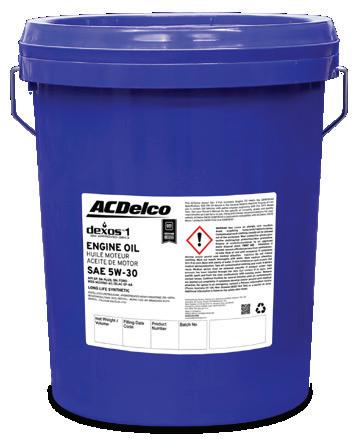
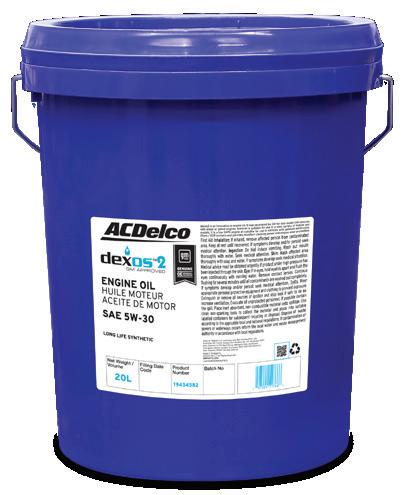
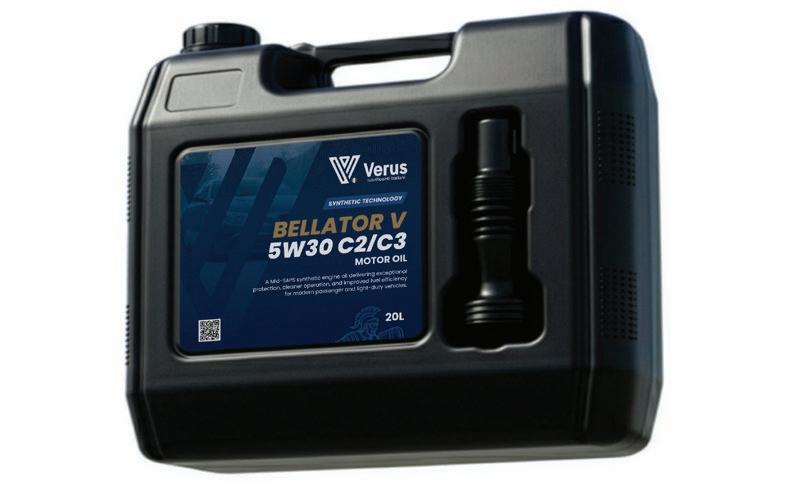
COOLDRIVE AUTO PARTS IS EXPANDING ITS OIL AND LUBRICANTS RANGE IN NEW ZEALAND, RECENTLY WELCOMING VERUS LUBRICANTS’ AUTOMOTIVE OIL BRAND, BELLATOR, EXCLUSIVELY TO ITS SHELVES
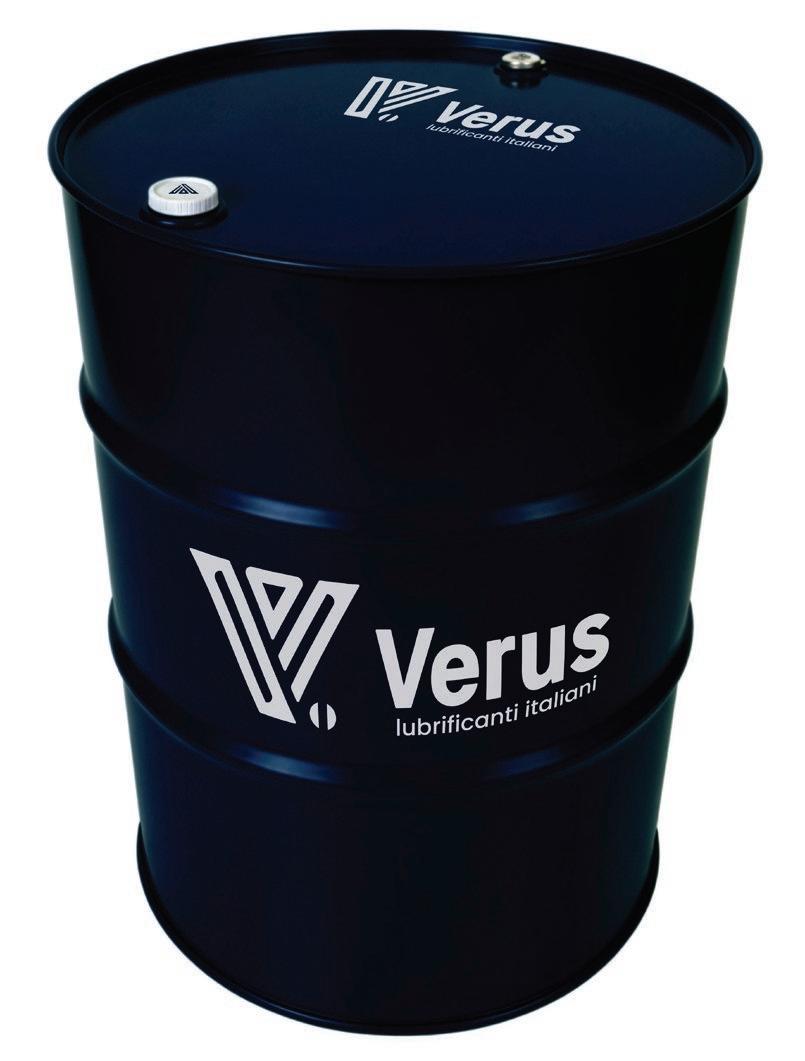
Formulated by Italian lubricant experts, Verus combines decades of lubrication science with performance trusted by equipment manufacturers worldwide. Its automotive oils are designed for modern cars and light trucks, delivering a smooth efficient operation drive after drive.
Bellator, meaning ‘warrior’, is Verus’ highperformance range of engine oils formulated to battle friction, heat, and deposits inside the engine and driveline components.
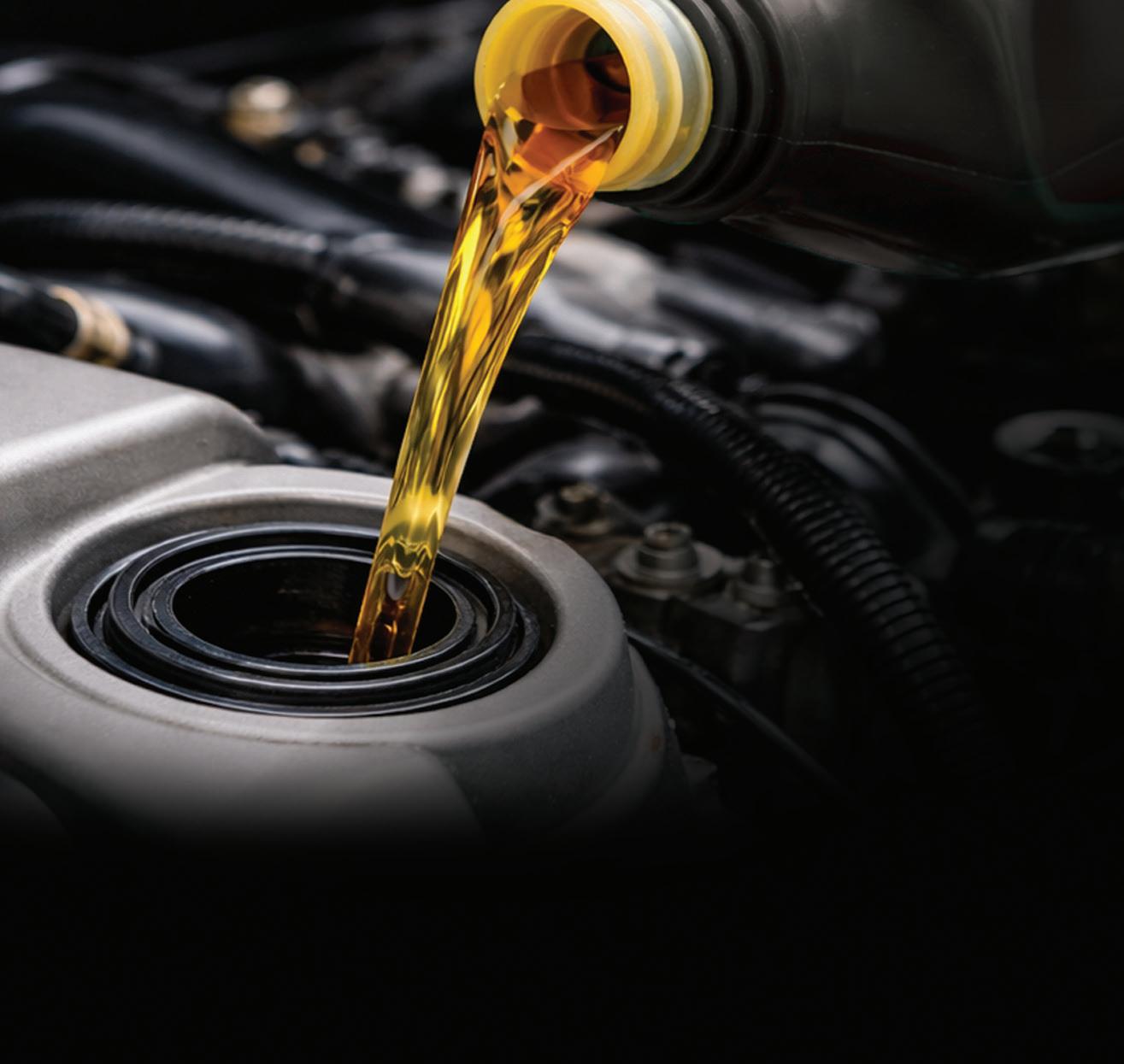
At the heart of Bellator’s strength is advanced lubrication technology. These hightech engine oils maintain a robust protective film under extreme temperatures, preventing metal-to-metal contact when it matters most. They flow quickly during cold starts, one of the most critical moments in engine life, reducing wear before it begins.
The result is smoother operation, preserved power output, and improved fuel economy.
Cleaner engines are also assured with advanced detergent additives which actively prevent sludge and varnish build-up, keeping pistons, turbochargers, and vital components free from harmful deposits. A cleaner engine runs more efficiently, maintains performance longer, and helps vehicles meet emission standards without unnecessary strain.
Formulated to meet the latest industry standards, many Bellator engine oils support extended drain intervals recommended by
vehicle manufacturers.
Their resistance to oxidation and acid formation allows longer service life, helping drivers save both time and maintenance costs without compromising protection. Importantly, Verus’ lubricants meet or even exceed leading OEM specifications, which means factory-level quality without an expensive price tag.
Bellator engine oils in 20L and 205L sizes are now available exclusively through CoolDrive Auto Parts.
For more information, visit www.cooldrive. co.nz.
Right Parts is a family-owned heavy truck, trailer, and fleet parts supplier based on Anvil Road in Silverdale, Auckland. Founded by Nathan and Kerry in 2019, the business is built on a simple philosophy: do things their way, with a down-to-earth Kiwi attitude and genuine customer service. Pop in if you’re local — you might find one or both of their older kids working alongside mum and dad in the warehouse.
Nathan brings more than 25 years in the transport industry to the business. He started behind the parts counter and worked his way through group product and general management roles, including sitting on company boards. That depth of experience has made him the go-to person for tricky truck and trailer parts solutions. Kerry brings her own expertise in accounting, marketing, and public relations — and as a former Air New Zealand cabin crew member, she knows that high standards of service and attention to detail
make all the difference.
Nathan’s well-established local and international supplier network has been a cornerstone of the business since day one. Those relationships, built over more than two decades in the transport industry, kept Right Parts moving through Auckland’s Covid lockdowns shortly after launch and continue to underpin the company’s ability to source and deliver today.
The team stocks a broad range of products including filtration, grease, lubricants, wheels, and suspension parts, supplying quality brands locally and nationally. But what sets Right Parts apart is their willingness to go the extra mile. If they don’t currently carry something you need for a truck or trailer, get in touch — their global supply network and competitive freight rates mean they can source parts oneon-one with you to get the job done. That’s the
advantage of a business where every decision is made in-house by the owners.
Right Parts has joined Blackfern as a new supplier, so Blackfern members can now put their Right Parts purchases through a single, simple statement. Not yet a Blackfern member? Visit www.blackfern.coop to find out how to join.
Get in touch with Right Parts today on 021 730 905, email sales@rightparts.co.nz, or visit rightparts.co.nz.

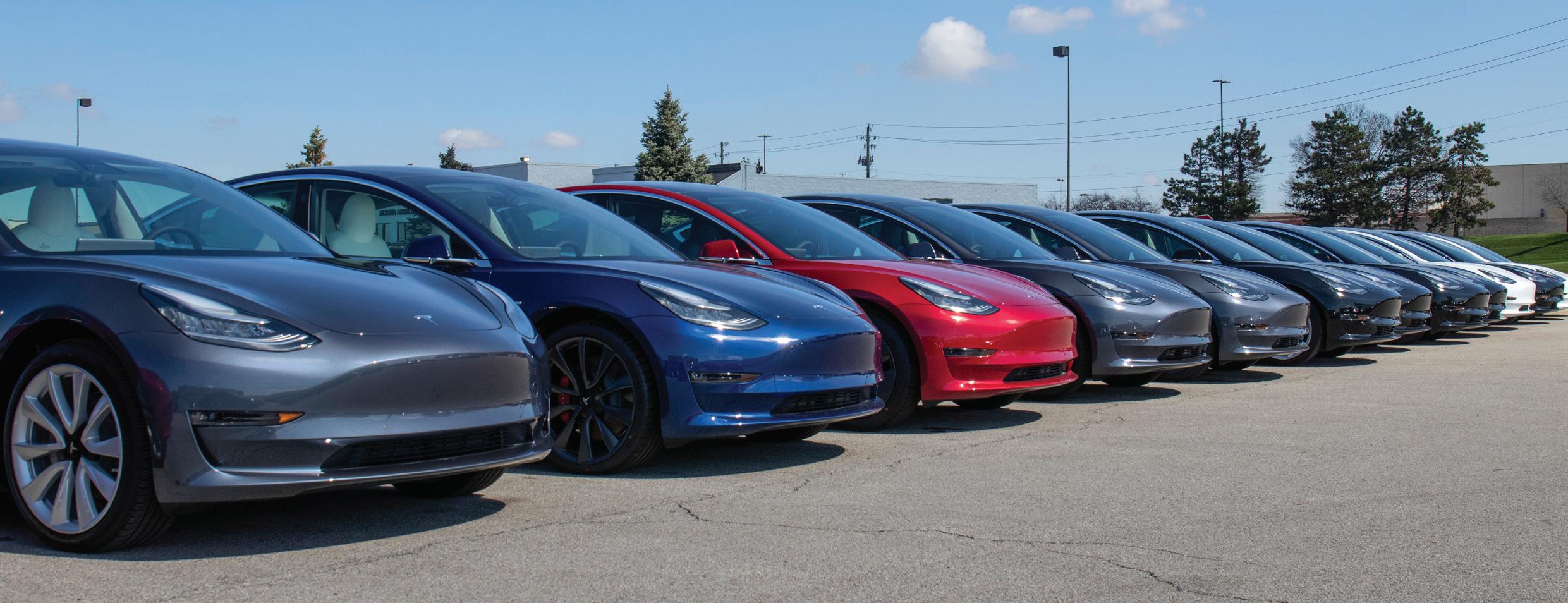
THE ENVIRONMENTAL CREDENTIALS OF BATTERY ELECTRIC VEHICLES FACE CONSTANT SCRUTINY, BUT WHAT DOES THE MOST UP-TO-DATE EVIDENCE ACTUALLY SAY?
It’s a question that keeps circulating in workshops, on social media, and around the smoko table: are electric vehicles actually any better for the environment once you factor in the mining, the manufacturing, and the electricity that powers them? For anyone working in the automotive aftermarket, it’s worth cutting through the noise and looking at what the data says — because the answer has direct implications for where the industry is heading.
MANUFACTURING QUESTION
The most common criticism is that building an EV — particularly its battery — produces so much carbon that it takes years to offset compared to a conventional ICE vehicle. There’s a grain of truth in the starting point: battery production is energy-intensive. Mining lithium, cobalt, and nickel, then transporting and processing those materials, does result in higher upfront manufacturing emissions.
According to the International Council on Clean Transportation’s (ICCT) updated 2025 lifecycle analysis, BEVs have roughly 40% higher production emissions than equivalent ICE vehicles, primarily due to the battery. However, the same study found that those additional emissions are offset after approximately 17,000km of driving — typically within the first one to two years of ownership. The often-repeated claim that it takes seven years to break even doesn’t stack up against current research.
Over a full vehicle lifetime, the ICCT found BEV lifecycle emissions in the EU are 73% lower than petrol cars. In the United States, a separate
ICCT study of 2024-model-year SUVs put the figure at 71% lower. And those numbers are based on average grid electricity — not bestcase renewable scenarios.
This is where it gets particularly relevant for New Zealand. Our electricity grid runs on 80–95% renewable generation on any given day, primarily hydro and wind. That’s significantly cleaner than the EU average of around 50%, and well ahead of the US grid. When the ICCT modelled BEVs running on 100% renewable electricity, lifecycle emissions dropped to 78% lower than petrol vehicles. New Zealand sits much closer to that end of the spectrum than most countries.
The Ministry of Business, Innovation and Employment has noted that EVs currently draw less than 1% of total electricity demand. Even under projections of significant fleet electrification, EV electricity demand is expected to reach around 15% of total supply by 2050 — substantial, but manageable with continued investment in generation and grid infrastructure.
As at the end of 2025, New Zealand had approximately 135,000 registered plug-in electric vehicles, comprising around 92,500 BEVs and 42,800 PHEVs, together making up about 2.8%of the national fleet. New EV registrations took a hit after the Clean Car Discount scheme ended in December 2023, but have since recovered to around 11% of new car sales in 2025.
That’s a small but growing share of the overall fleet. For the aftermarket, the practical reality is that the vast majority of vehicles coming through workshops are still ICEpowered, and will be for years to come. But the EV population is building steadily, and with it, the demand for servicing, tyre work, suspension, and electrical diagnostics on these platforms.
One legitimate concern has been end-oflife battery disposal. Here, too, the picture is developing. Auckland-based Mint Innovation signed a deal with Jaguar Land Rover in 2025 to use its technology to recover lithium, nickel, and cobalt from end-of-life EV batteries, as part of an $18 million collaboration with the University of Warwick and LiBatt Recycling. The company’s hydrometallurgical process operates at lower temperatures and produces less carbon than traditional smelting methods.
Battery recycling is still in its early commercial stages, but economic incentives are growing as critical mineral supply chains tighten globally. An estimated 235 kilotons of EV battery waste will be generated in the UK alone by 2040, and similar pressures will emerge in every market with a growing EV fleet.
None of this means ICE vehicles are disappearing from workshops any time soon. New Zealand’s fleet of 4.7 million vehicles turns over slowly, and petrol and diesel will dominate workshop bays for the foreseeable future. But the direction of travel is clear. The environmental case for BEVs is well supported by independent research, the economics are improving, and the fleet is growing.
For aftermarket businesses, the practical takeaway is straightforward: understanding EV technology isn’t optional for much longer. Whether it’s upskilling on highvoltage systems, stocking EV-compatible consumables, or simply being able to have an informed conversation with customers about what’s under the bonnet — or what isn’t — the trade benefits from staying ahead of the curve rather than behind it.
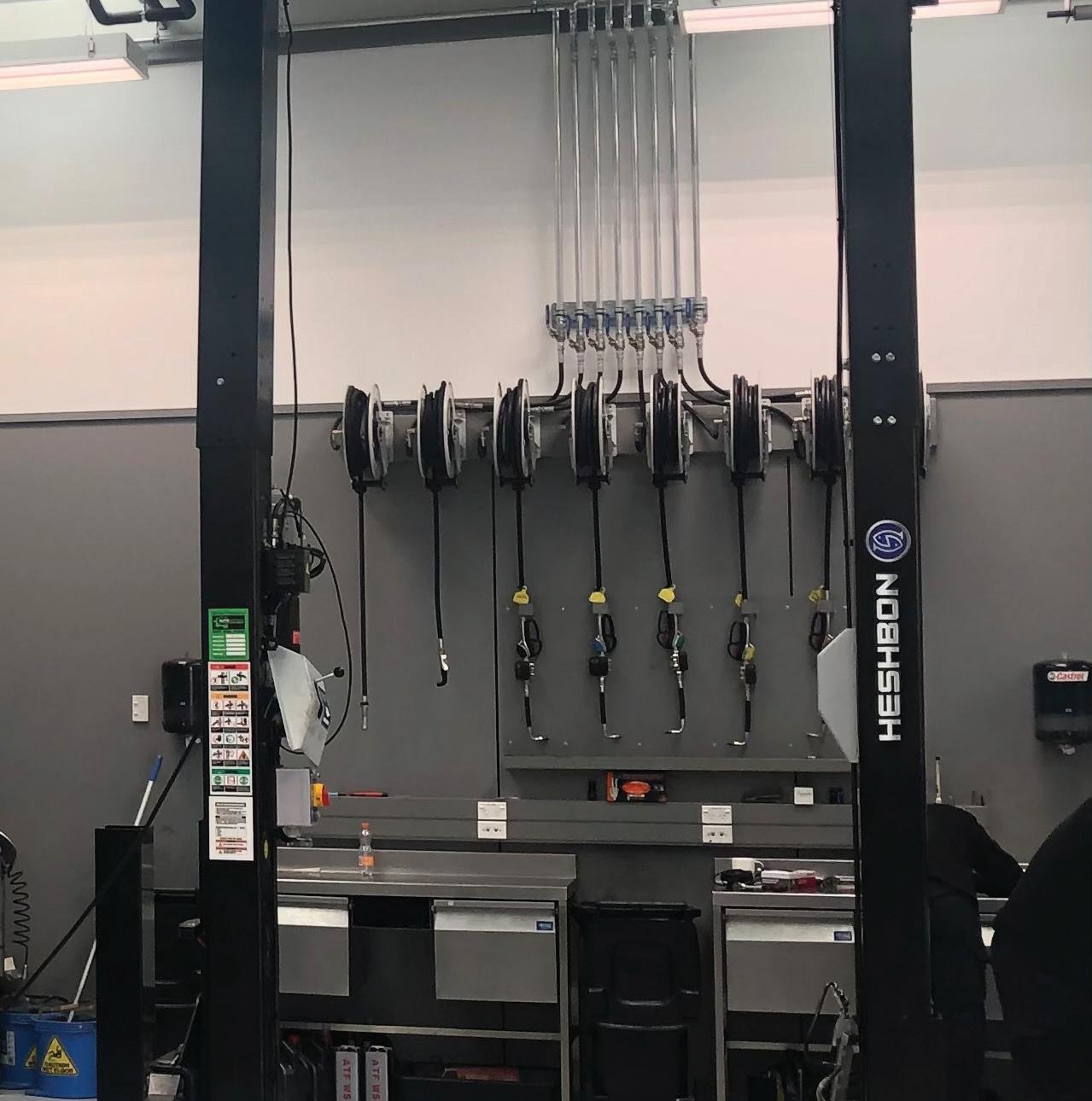
TALK TO EMCO FOR NATIONWIDE DISTRIBUTION AND INSTALLATION OF EQUIPMENT FOR LUBRICANTS, FLUIDS AND GASES.
EMCO offers an extensive range of premium reticulation products, sourced from quality manufacturers across the globe.
Pumps, reels, dispensing equipment and accessories, along with site planning, installation and support.
Using only products with the highest levels of functionality and design consideration, our team makes sure EMCO products and installations solve even the most technical of reticulation challenges.
Brought to you by a committed team of determined problem-solvers who are passionate about quality, service and doing what’s right for you.
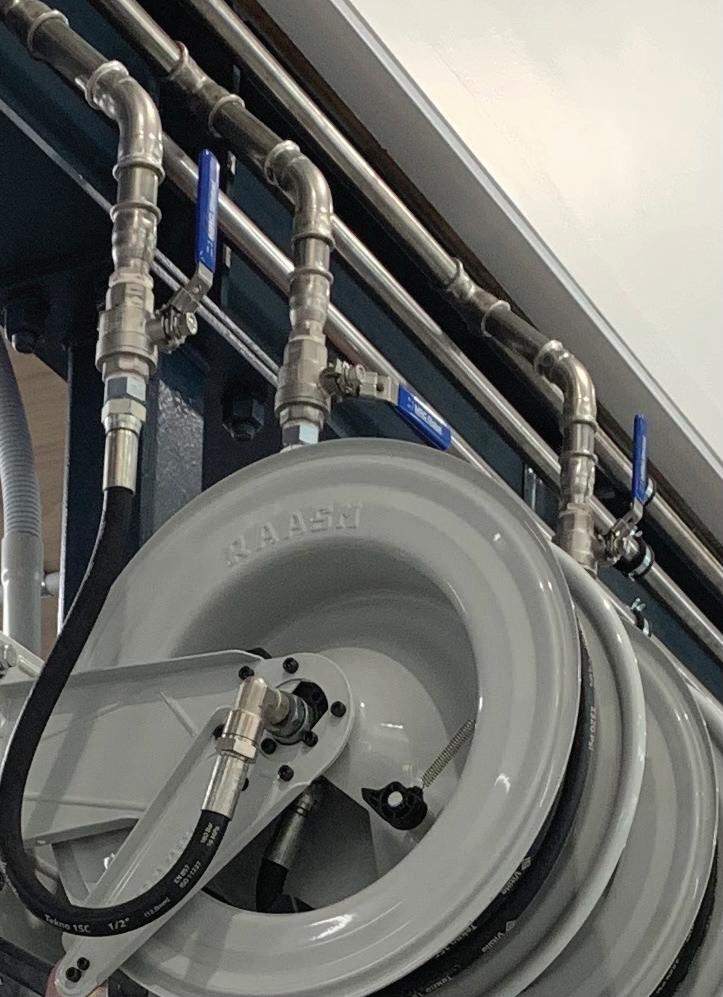

New Zealand agent for world-leading RAASM products
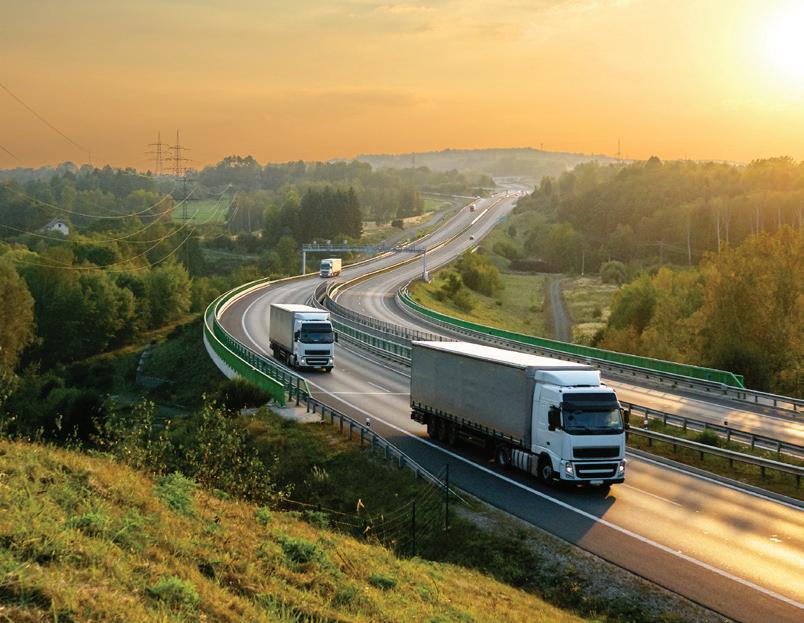
Transport Minister Chris Bishop has opened public consultation on two packages of proposed changes to New Zealand’s Land Transport Rules, covering everything from children cycling on footpaths to streamlined permitting for heavy vehicle operators. For the automotive aftermarket and wider transport trade, the most relevant proposals sit in the heavy vehicle package — particularly around licensing for electric trucks and buses, and reduced compliance requirements for freight operators.
Consultation on both packages runs until 25 March 2026, with submissions accepted via the NZTA website.
The heavy vehicle proposals are designed to reduce what the government describes as unnecessary compliance costs for truck operators, while also clearing a path for greater uptake of electric commercial vehicles.
Under the current rules, moving an empty High Productivity Motor Vehicle (HPMV) truck and trailer combination between depots or to customers requires a permit — even when the vehicle is unladen. The proposed change would remove that permit requirement for rental operators repositioning empty HPMV combinations, cutting what the industry has flagged as a source of delays and paperwork that adds cost without improving safety.
For operators managing large fleets of trucks and trailers across multiple depots, this is a practical efficiency gain. It won’t change how loaded HPMVs are managed on the road, but it removes a bureaucratic step from what is essentially a logistics exercise.
Perhaps the most forward-looking proposal in the package involves driver licensing for zero-emissions vehicles. Currently, gross laden weight thresholds determine which licence class a driver needs. The proposed changes would allow Class 1 licence holders to drive zero-emissions vehicles with a gross laden weight of up to 7,500kg — above the current 6,000kg threshold for a Class
1 licence. Class 2 licence holders would be permitted to drive electric buses with more than two axles and a gross laden weight of up to 22,000kg.
The reasoning is straightforward: electric drivetrains and battery packs add significant weight to commercial vehicles compared to their diesel equivalents. A zero-emissions truck or bus performing the same task as a conventional vehicle may weigh more simply because of its powertrain, pushing it into a higher licence class even though the driving task is essentially the same. The proposed changes aim to remove that barrier to adoption.
For the aftermarket and commercial vehicle sector, this signals a deliberate policy push to make it easier for operators to transition to electric without having to retrain or relicense drivers. It also suggests the government expects the commercial EV fleet to grow meaningfully in the coming years and wants the regulatory framework to keep pace.
The package also includes changes to make signage requirements for load pilot vehicles more practical, and a new pathway for overseas heavy vehicle licence holders to convert their licences — either by sitting New Zealand tests or completing approved courses. Both are aimed at reducing friction in the sector and addressing workforce availability.
The second consultation package focuses on everyday road rules. While less directly relevant to the aftermarket trade, several proposals will affect how vehicles, cyclists, and other road users interact — and some will be familiar topics for anyone who drives for work.
The headline proposals include allowing children up to and including age 12 to ride bicycles on footpaths, bringing the law into line with what many families already do in practice. A mandatory passing gap of between one and 1.5 metres (depending on the speed zone) would be introduced
for motorists overtaking cyclists and horse riders, replacing the current vague guidance with a specific, enforceable distance.
E-scooter riders would be permitted to use cycle lanes under the proposals, and drivers travelling under 60kph would be required to give way to buses pulling out from bus stops. Signage rules for berm parking would also be clarified to give councils better tools to manage on-street parking.
The passing distance rule is worth noting for anyone operating service vehicles or commercial vans in urban and rural areas. A defined gap makes the expectation clear for drivers, but it also means enforcement will have a measurable benchmark — something to factor into driver training and fleet management.
Submissions on both the Lane Use Package and the Heavy Vehicle Package close on 25 March 2026. Details and submission forms are available at nzta.govt.nz/laneuse and nzta.govt.nz/hvp-phase-2.


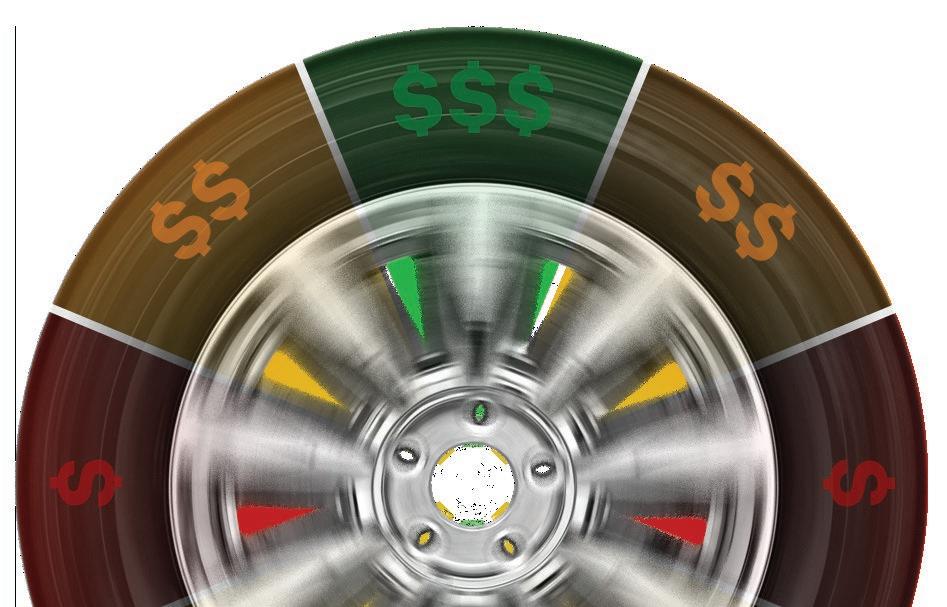
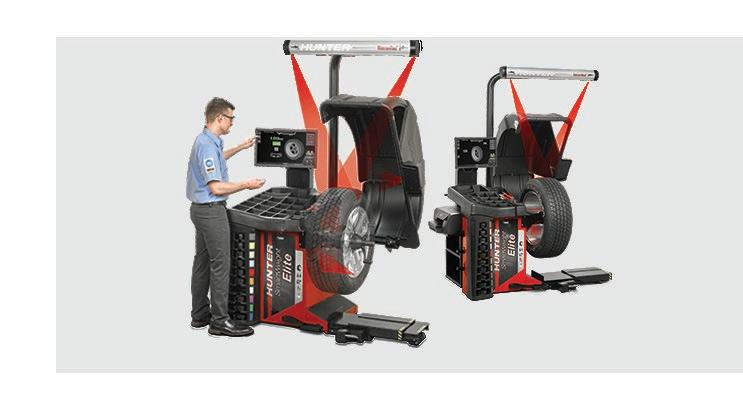
Generate an additional $150,000 or more in revenue a year by rotating and balancing wheels
We’ve run the numbers and found that dealerships and workshops can make an extra $690+ per day* by rotating and balancing wheels without needing to find any new customers. That’s approximately $172,500 a year.
Stocks’ recommends the Hunter SmartWeight® Elite wheel balancing machine
Mount, spin, balance, and remove a wheel in as little as 70 seconds
Lease to own over five years for less than $46.00 per day $
*Figure
www.georgestock.co.nz

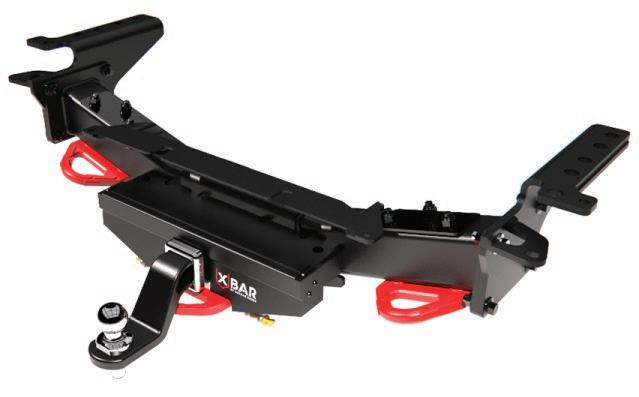
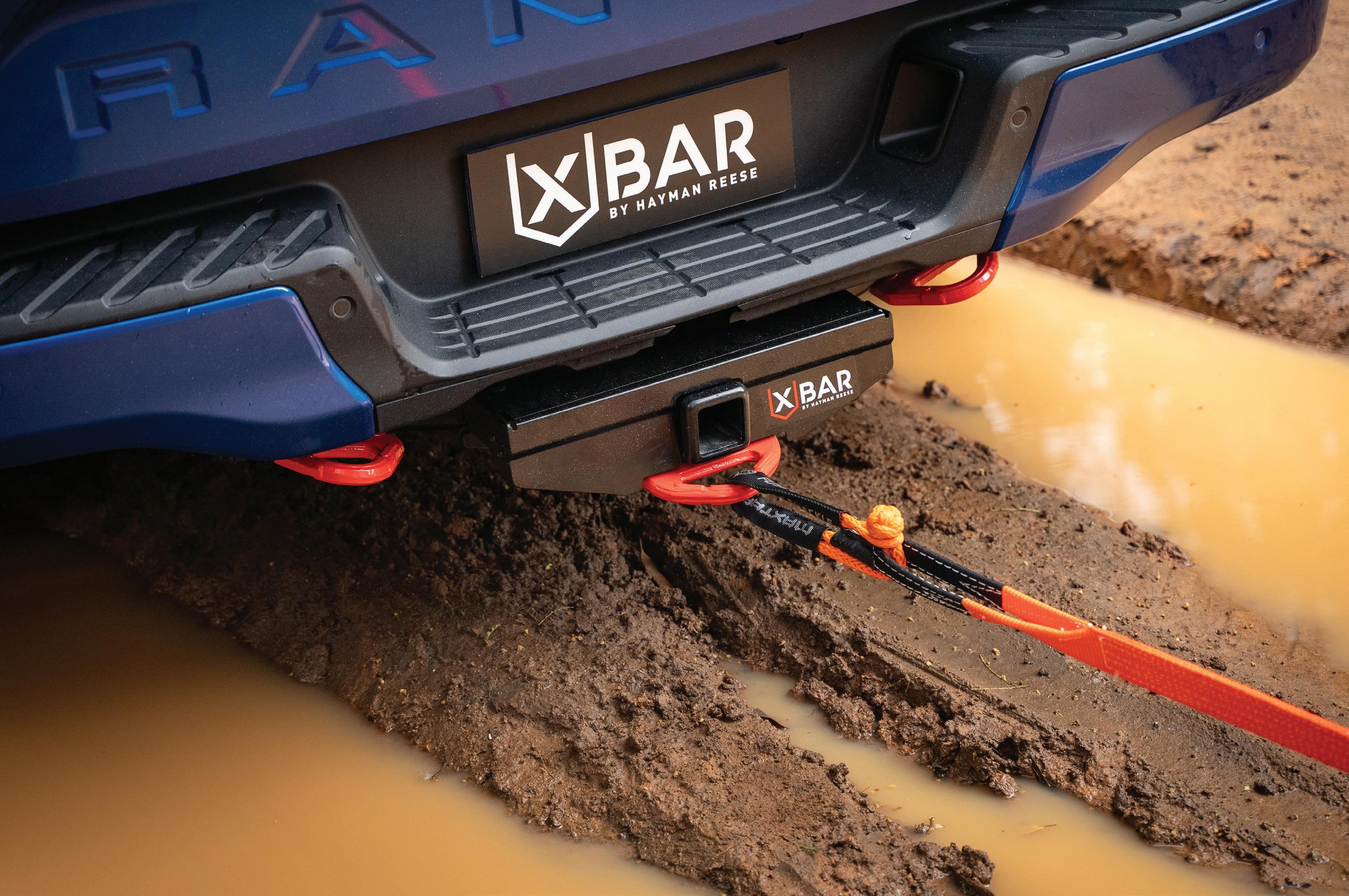
New Zealand drivers demand more from their vehicles than most. From towing boats to the ramp before sunrise to hauling caravans across the South Island to navigating gravel forestry roads, strength, safety, and versatility are essential. The X-Bar from Hayman Reese has been engineered with these real-world Kiwi conditions in mind, delivering a premium towing and recovery solution for both leading Utes and selected SUVs.
Unlike conventional tow bars, the X-Bar integrates towing capability with vehiclerated recovery points in a single, purpose-built system. This eliminates the need for separate recovery accessories while ensuring forces are safely managed through the vehicle’s chassis. For drivers who venture beyond sealed roads — whether accessing remote campsites, boat ramps, or work locations — this integrated approach provides both convenience and confidence.
It was originally developed for popular cab chassis Utes such as the Toyota LC79 Land Cruiser, with an improved departure angle compared to traditional tow bars. This
helps reduce the risk of ground contact when navigating uneven terrain, steep driveways, or off-road tracks — a common scenario across New Zealand’s diverse landscapes.
Since its introduction, the X-Bar range has expanded to include wellside (TUB) variation of popular utes such as Ford Ranger, Mitsubishi Triton, and now selected SUVs. These vehicles are increasingly used for towing caravans, trailers, and boats, making a heavy-duty, vehicle-specific towing system more important than ever.
Durability is central to the X-Bar’s design. With a corrosionresistant finish and robust construction, it is built to handle New Zealand’s harsh coastal conditions, frequent towing loads, and demanding environments. The
system is also designed to integrate seamlessly with modern vehicle safety technologies, including parking sensors and advanced driver assistance systems.
In New Zealand, the X-Bar is available through Trailcom, a leading supplier of towing and trailer components. With strong local availability and expertise, Trailcom ensures Kiwi customers can access and fit the X-Bar with confidence.
For ute and SUV owners who rely on their vehicles for work, adventure, and towing, the X-Bar represents a smart investment — combining towing strength, integrated recovery capability, and vehicle-specific engineering to meet the unique demands of New Zealand driving.
For more information on the X-Bar, contact Trailcom on 0800 698 227, or visit x-bar.co.nz

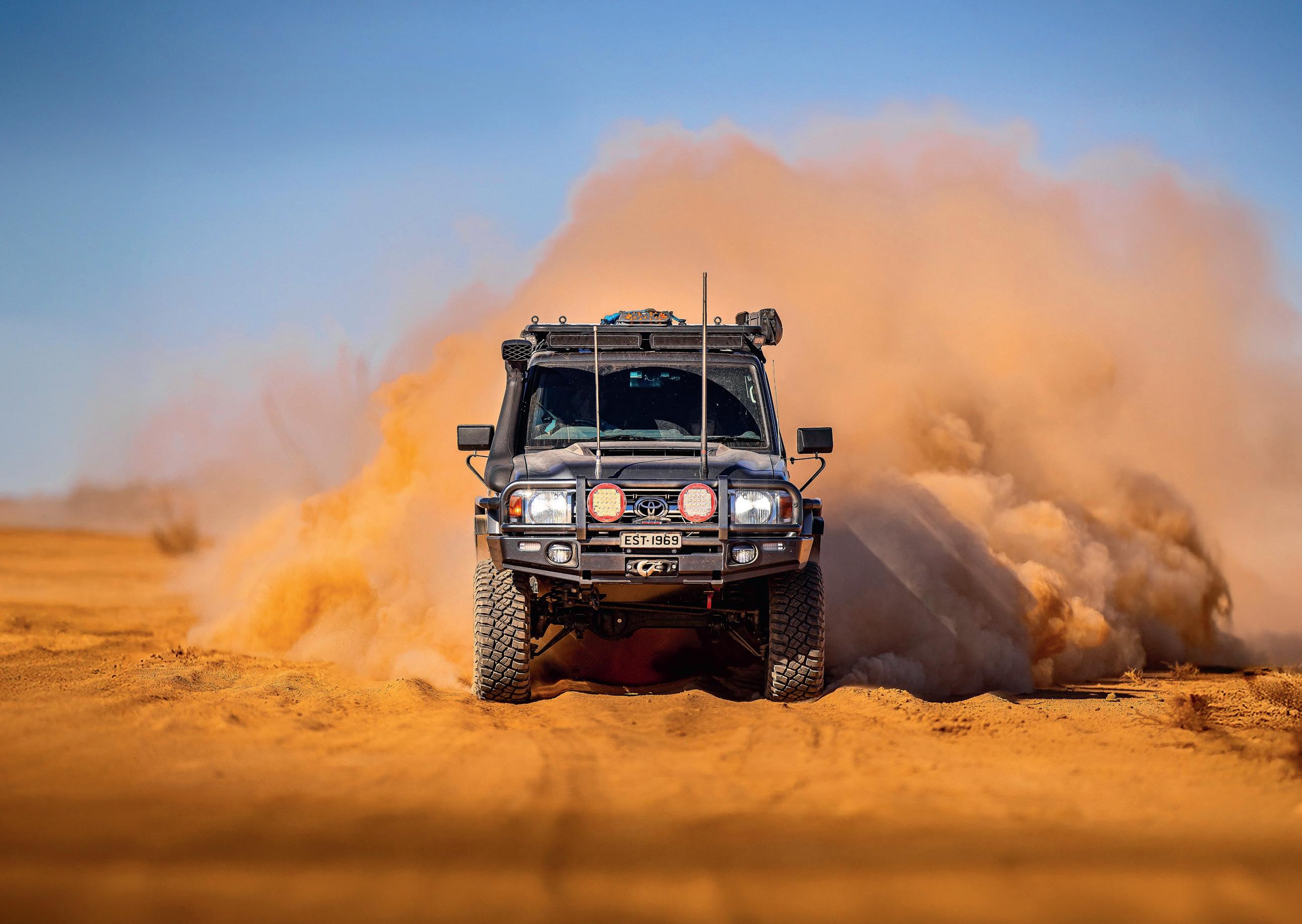
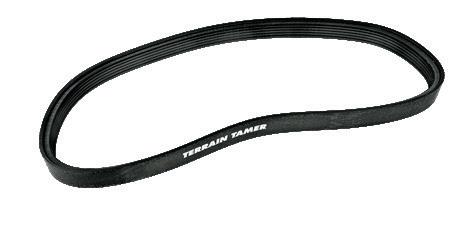
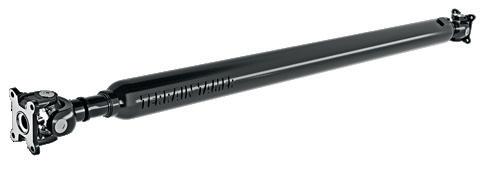
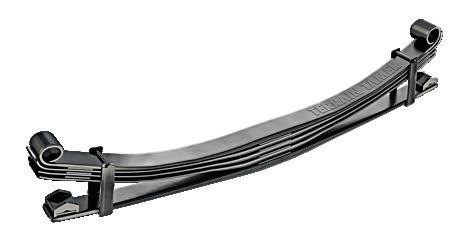
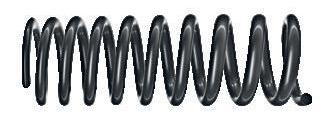
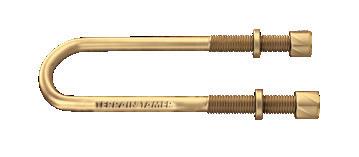
Abroken or badly stretched drive belt in the middle of nowhere is more than an inconvenience — it can mean overheating, loss of power steering, and potentially a complete breakdown. Terrain Tamer’s new Fortified Drive Belts are engineered to reduce that risk, offering a 34% increase in belt life compared to original equipment equivalents.
The Fortified Parts range has its origins in military use. Terrain Tamer spent over a decade developing components specifically for military applications, where vehicles carry the weight of heavy armoured plating, operate without formed roads, and need to stop reliably under extreme loads. That programme produced parts built to a higher threshold than standard aftermarket or OE components. The Fortified range extends that same thinking to vehicles
working in mining, emergency services, agriculture, and serious off-road touring — anywhere reliability matters and conditions are harsh.
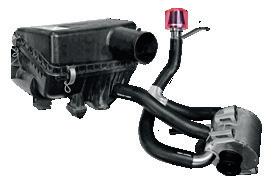
The Fortified Drive Belts are a serpentine-style belt with a patented construction. The design uses a specific blend of elastomers combined with strengthened tensile cords in the inner core. An adhesion gum layer bonds the composite materials together, improving overall durability and enabling the belt to withstand wear for significantly longer than a standard OE belt.
These construction features work together to maintain stability in belt length over time. Reduced stretch means less load on tensioners, idler pulleys, and other drive components — which in turn helps extend the service life of the broader accessory drive system, not just the
belt itself.
The design delivers a 40% improvement in load and wear protection, with better resistance to oil, heat, and general degradation over long operating periods. For vehicles running in dusty, hot, or wet environments — or simply covering big kilometres between services — that added margin can make a practical difference.
The drive belt’s job is straightforward but critical: transferring engine power to auxiliaries including the alternator, air conditioning compressor, power steering pump, and cooling fan. When a belt degrades, stretches, or fails, those systems lose efficiency or stop working entirely. The Fortified belts are designed to maintain efficient power transfer over extended use, keeping those auxiliaries performing at their peak.
The current Fortified Drive Belt range covers a solid cross-section of popular 4WD utes and wagons common in New Zealand workshops. Applications include the Toyota Hilux (KUN and GUN series), LandCruiser 70, 100, and 200 Series, Prado, and Fortuner. Ford Ranger PX models with 2.2-litre and 3.2-litre engines are covered, along with the equivalent Mazda BT-50 UP and UR. Mitsubishi Triton ML, MN, MQ, and MR models are listed, as is the Pajero Sport QE. Nissan Navara D23 NP300 applications round out the range, with both drive-belt and airconditioning-belt options available.
For the full application listing and further information, visit terraintamer.com

Brett Flintoff has been appointed president of the New Zealand Automobile Association, following his election at the organisation’s National Council meeting in December 2025. He takes the helm of what is the country’s oldest and largest motoring organisation, with more than 1.8 million members nationwide.
Flintoff’s connection to the AA stretches back more than 20 years. He first became involved through the Southland AA District Council, where he began in 2003. He was appointed to the AA’s national board in 2010 and elected vice-president in March 2023 — a role he held for three years before stepping up to the presidency.
That kind of long-term governance involvement is worth noting. The AA’s structure — built on district councils feeding into a national board — means its presidents
typically arrive with a deep understanding of how the organisation operates at both local and national level. Flintoff’s path through the Southland district council, onto the board, and through the vice-presidency follows that tradition.
As president, he will oversee governance of the AA’s commercial businesses and represent the organisation on transport and road safety matters. The AA’s advocacy role covers a broad spectrum of issues relevant to the automotive industry, from WoF policy and vehicle safety standards to fuel pricing, road infrastructure, and the transition to low-emissions vehicles, which all have downstream effects on workshop volumes, parts demand, and how the trade operates day to day.
The AA describes Flintoff as bringing innovation and a genuine passion for supporting members, along with what it calls an authentic and friendly outlook. Outside the AA, Flintoff spent his professional career
THE XAI-POWERED CHATBOT IS NOW ARRIVING VIA OVER-THEAIR UPDATES ON COMPATIBLE
Tesla has begun rolling out its Grok artificial intelligence assistant to vehicles in Australia and New Zealand, embedding a conversational AI chatbot directly into the infotainment systems of compatible models via an over-the-air software update. The deployment, confirmed by Tesla Australia and New Zealand on 23 February, follows earlier launches in the United States in July 2025 and across nine European markets in mid-February 2026. New Zealand and Australian owners are among the latest to receive the feature as Tesla accelerates its global rollout.
Grok is an AI assistant developed by xAI and differs from conventional in-car voice command systems in that it uses natural language processing, allowing drivers to speak to it conversationally rather than relying on rigid, pre-programmed phrases.
In practical terms, that means a driver can ask Grok to find a highly rated restaurant on the way to a destination, or plan a multi-stop route — and Grok will parse the request and
adjust navigation accordingly. It can also answer general knowledge questions using real-time information. Drivers can choose from a range of voice personalities — from the straightforward ‘Assistant’ mode through to more colourful options including ‘Storyteller’ and ‘Unhinged’, which has already generated attention online for its sharp and sometimes sarcastic responses.
Grok is currently in beta. Its main functional capability beyond general Q&A is navigation — it can set destinations, adjust routes, and discover points of interest. To use navigation commands, the personality must be set to ‘Assistant’ and the vehicle needs to be running software version 2025.44.25 or later, with Tesla’s FAQ referencing version 2026.2.6 for full functionality. Importantly, Grok does not yet control vehicle functions such as media playback, climate systems, or other cabin settings. Tesla’s existing voice command system remains unchanged and continues to handle those tasks.
as a chartered accountant. He established his own accountancy firm in Southland in 1994 and ran it for 30 years before retiring from the profession.
Flintoff also has a track record in road safety work beyond the AA. He previously served as chair of Students Against Dangerous Driving (SADD), the youth road safety charity that works with secondary schools across New Zealand. Road safety remains a significant focus for the AA, which regularly weighs in on speed management, vehicle safety ratings, and infrastructure investment through its Motoring Affairs division.
Closer to home, Flintoff remains active in the Southland Jaguar Drivers Club — a detail that confirms the new president is a car enthusiast as well as a governance figure.

Grok is available on Model S, Model 3, Model X, and Model Y vehicles equipped with an AMD Ryzen processor — hardware that has been fitted to Tesla vehicles manufactured from approximately December 2021 onwards. Owners also need either a Premium Connectivity subscription or a stable Wi-Fi connection. No separate Grok account or subscription is required at this stage, although Tesla notes that this may change.
The rollout is proceeding in phases, with HW3-equipped vehicles receiving updates first, followed by HW4 hardware in the coming days. Owners can check whether their vehicle has the required AMD processor by navigating to Controls, Software, then Additional Vehicle Information on the touchscreen. Tesla says interactions with Grok are processed by xAI in line with its privacy notice, and that conversations remain anonymous to Tesla — they are not linked to individual users or vehicles.

THE SILVERDALE HEAVY VEHICLE WORKSHOP MANAGER HAS PICKED UP HIS THIRD MITO SCHOLARSHIP AND IS NOW TARGETING A DIRECTORSHIP — A CAREER TRAJECTORY THAT HIGHLIGHTS WHAT STRUCTURED INDUSTRY TRAINING CAN DELIVER
Harry Shaw started his career behind a toolbox as a heavy automotive technician. Today, he manages one of the largest heavy vehicle workshops between the Auckland Harbour Bridge and Whangārei, and he’s working towards becoming a company director. The common thread through that progression has been MITO — New Zealand’s workplace training organisation for the automotive, transport, and logistics sectors.
Shaw, who is Workshop Manager at Truck Tech Solutions in Silverdale, has been named the 2026 recipient of the Janet Lane MNZM Scholarship, awarded annually through MITO’s scholarship programme with support from the Inspiring Futures Foundation. It’s the third MITO scholarship he’s received since 2022.
CAREER BUILT ON QUALIFICATIONS
Shaw’s training history with MITO reads like a checklist of the organisation’s heavy-vehicle pathway. He has completed the New Zealand Certificate in Heavy Automotive Engineering — Road Transport at both Level 3 and Level 4, the Business (First Line Management) certificate at Level 4, and the Heavy Automotive Engineering qualification at Level 5. He is currently working through MITO’s Level 5 Electric Vehicle programme.
That combination of technical and management qualifications reflects a deliberate
approach to career development — building depth in the trade first, then adding the business and leadership skills needed to step into management.
“I am truly grateful to MITO,” Shaw says. “The variety of courses has certainly supported me to grow and develop many new skills. I have done all the available programmes and achieved all the relevant scholarships.”
The Janet Lane MNZM Scholarship is MITO’s premier leadership award, recognising one individual each year whose development of leadership capability is expected to have a meaningful impact on their sector’s performance and productivity. It is named after the former long-serving MITO Chief Executive, whose career was defined by her commitment to excellence in trades training.
Shaw will use the scholarship to undertake the Icehouse Owner Manager Programme, a five-month course that combines expert-led sessions, one-on-one coaching, peer learning, and real-world case studies. The programme is designed to strengthen leadership strategies and give participants fresh perspectives on how their business operates.
The timing fits. Truck Tech Solutions has recently been through a growth phase, acquiring a new workshop and expanding its site to become one of the largest heavy
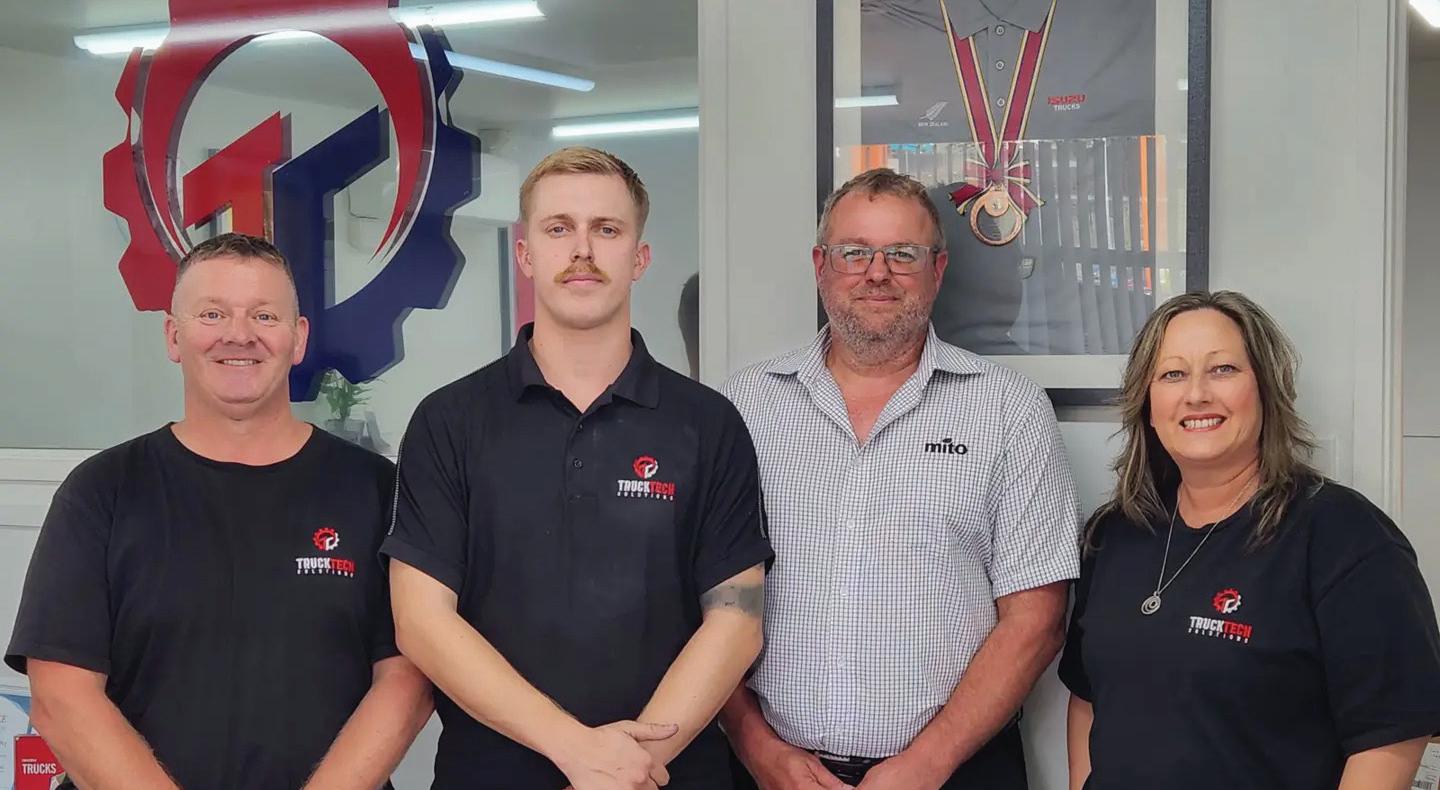
vehicle operations in the upper North Island. That kind of expansion creates exactly the environment where structured leadership development pays dividends — more staff, more complex operations, and higher stakes.
Shaw is open about where he wants to take his career. “I have goals in which, through positive leadership and management, we can change not only our workshop and team, but change and drive a new industry standard for the heavy vehicle workshop,” he says.
Truck Tech Solutions Company Director Helen Shaw supported his scholarship application and sees a clear trajectory. “Harry is passionate and eager to learn,” she says. “I truly feel that with the support of the Janet Lane MNZM Scholarship, alongside Harry’s drive and motivation, the Icehouse programme will assist him in taking his career to the next level, which is to become a company director and shareholder of Truck Tech Solutions.”
It’s a path that should resonate with workshop owners across the aftermarket. The industry regularly talks about the challenge of attracting and retaining good people, particularly in heavy vehicle trades where demand for skilled technicians consistently outstrips supply. Shaw’s story illustrates what a structured training and development pathway can look like when an employer and an employee are both committed to it.
MITO Chief Executive Verna Niao says Shaw’s achievements reflect the core of what the organisation is trying to do. “Harry’s continued pursuit of excellence, combined with the support of his employer, demonstrates what is possible when talent meets opportunity,” she says. The Inspiring Futures Foundation, which supports the scholarship programme, echoed that view. Trust Convenor Louise Sixton noted that Shaw’s commitment to professional growth extends well beyond technical skill, and that his development will support the next generation of technicians and leaders in the sector.
For those in the heavy-vehicle space, Shaw’s career arc is a useful case study. The investment in training hasn’t just produced a better technician; it’s produced a future business leader who is actively working to raise standards across the workshop. That’s the kind of return on investment that’s hard to quantify on a balance sheet but easy to see in the quality of work that comes out of a wellrun operation. It also underscores the value of MITO’s EV training programmes. With Shaw currently completing the Level 5 Electric Vehicle qualification alongside his leadership development, he’s positioning himself — and Truck Tech Solutions — for the shift towards electric commercial vehicles that proposed government licensing changes are designed to support.
For more information on MITO’s training programmes and scholarships, visit mito.org.nz.
Toyota C-HR (210), and Nissan X-Trail (208).
The dominance of hybrid and fuel-efficient models at the top of the charts reflects a buyer profile that is largely price- and economy-driven. The Aqua and Prius are both hybrid models sourced overwhelmingly from Japan, and their continued popularity suggests fuel costs remain a key purchase motivator in the used import segment.
We've been rebuilding batteries foryears.
We've been rebuilding batteries foryears.
NThe presence of the C-HR and X-Trail in the top 10 also points to ongoing appetite for compact SUVs — a trend that mirrors new vehicle buying patterns across the market. And the gradual appearance of Tesla and other EV models in the used import data, while still small in absolute terms, is another signal worth watching.
Here's some handy information foryou to get started. www.infinitev.nz to download a copy of our Cheat common fault codes, safety info, and general servicing the QR codes below to watch our favourite videos.
ew Zealand’s used import market recorded a 2.1% increase on the 7,158 units registered in the same month last year. It’s the second consecutive month of year-on-year growth — a notable turnaround after consistent declines through most of 2025. Year-to-date registrations now sit at 15,302 units, tracking 2.7% ahead of the same period last year. While the numbers remain well below pre-pandemic levels, when February alone would regularly attract more than 10,000 passenger registrations, the back-to-back gains suggest the used import market may be finding a floor.
Passenger vehicles accounted for the bulk of February’s total, with 6956 registrations — up 2.4% year-on-year. The commercial used import segment was softer, recording 353 units, a 3.3% decline from 365 in February 2025.
Toyota continued to lead the used passenger market with 2361 registrations, giving it a 33.9%
market share despite a 6.3% drop in volume. Nissan was the big mover in the top five, climbing 16.6% to 1066 units, while Mazda was close behind with 968 registrations, up 17%. Subaru (680 units, up 5.9%) and Honda (567 units, down 17.2%) rounded out the leading brands. Among premium and niche marques, Lexus was a standout, jumping 51.6% to 144 units. Land Rover more than doubled its registrations to 61 units, and Tesla continued to build from a small base with 38 registrations — up 137.5%. Mini also surged, rising 166.7% to 24 units.
Here's some handy information foryou to get started. Head to www.infinitev.nz to download a copy of our Cheat Sheet containing common fault codes, safety info, and general servicing tips. Or scan QR codes below to watch our favourite videos.
In the used commercial space, the Toyota Hiace held firm as the undisputed best seller with 145 registrations — exactly matching its February 2025 result. The Nissan NV200 and NV350 tied for second with 19 units each, followed by the Hino Dutro (13), Nissan Caravan (12), and Daihatsu Hijet (10). Toyota dominated the commercial segment overall with 177 registrations, commanding more than half the market despite a 7.8% year-on-year decline. Isuzu saw the sharpest drop, falling 47.8% to just 12 units.
Keep an eye out for our free information nights across where demystify hybrid and electric vehicles. You our battery experts and ask them anything you like. them a call on 0800 360 111.
The Toyota Aqua retained its position as the most popular used import model with 622 registrations, followed by the Toyota Prius (430), Nissan Note (348), Toyota Corolla (336), and Subaru Impreza (249). The top 10 was rounded out by the Mazda Axela (232), Honda Fit (225), Mazda Demio (217),
Keep an eye out for our free information nights across New Zealand, where demystify hybrid and electric vehicles. You get a chance to talk to battery experts and ask them anything you like. Ifyou can't wait, give them a call on 0800 360 111.

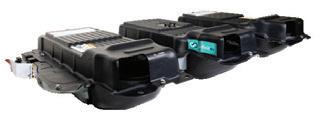
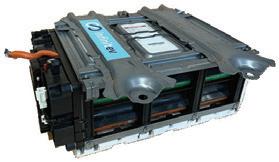
range of rebuilt replacement batteries offers
Plug-and-Play: Batteries arrive fully assembled, with no need for additional components or rewiring
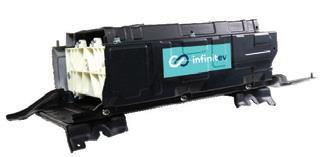
like. Ifyou can't wait, give them a call on 0800 360 111.
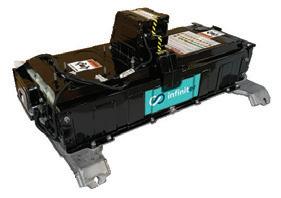
Hybrid electric vehicles are growing fast. Expand your business with our plug-and-play products.
High-Quality and Reliable: Built with NZ’s only NTRO-certified process and backed by a 3-year, 200,000 km warranty
We’re hybrid battery specialists with thousands of happy
� We’re hybrid battery specialists with thousands of happy customers
Advanced Battery Cell Design: Providing superior cooling compared to OEM batteries
� Plug and play: our batteries come fully
� Plug and play: our batteries come fully assembledfor a fast fit
� Built in New Zealand at our
Our range of rebuilt replacement batteries offers outstanding value of money. In some cases, we replacement battery made from new aftermarket cells for high-intensity applications
Short Lead Times: Fast availability for workshops, ensuring minimal vehicle downtime
� Built in New Zealand at our ISO9001-certified facility
� Backed by industry-leading 3-year/limited km warranty
� Backed by industry-leading 3-year/limited km warranty
Extensive Coverage: Batteries are available for 99% of hybrid models, including grey imports
� Short lead times and great servicefrom
� Short lead times and great servicefrom our local team
� Largest
� Largest range of new aftermarket and rebuilt batteries

0800
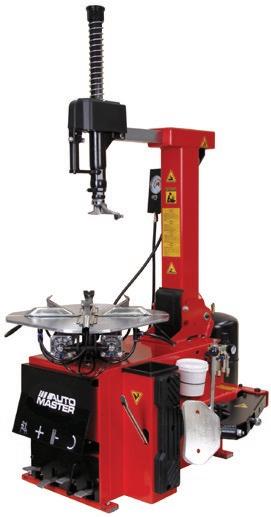
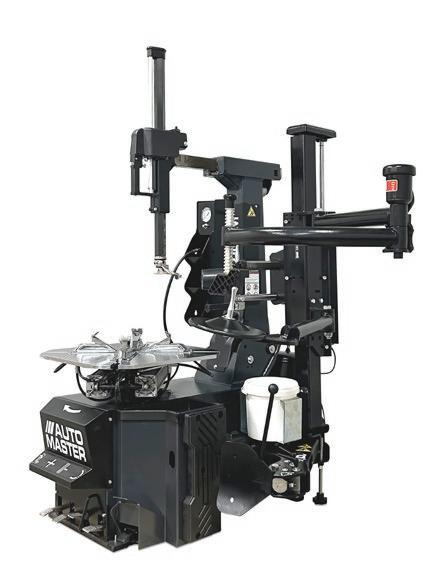
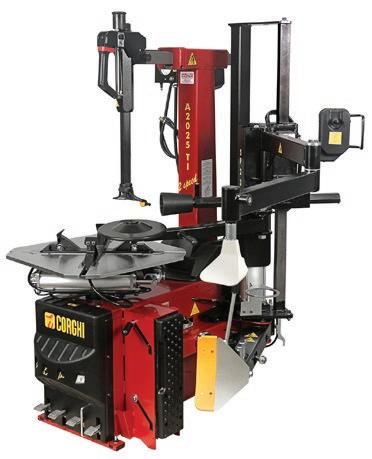
CORGHI’S ARTIGLIO LEVERLESS TYRE CHANGERS ELIMINATE RIM CONTACT ENTIRELY, OFFERING A FASTER, SAFER WAY TO HANDLE TODAY’S WHEELS — AVAILABLE FROM AUTOMASTER
Corghi’s Artiglio leverless tyre changers are designed to eliminate the risk of wheel rim damage during tyre changing. Two models — the Artiglio A5000 and the Artiglio Master Jolly — are available in New Zealand through Automaster Equipment. Both use Corghi’s patented ‘Leva la Leva’ (literally ‘remove the lever’) technology to mount and demount tyres without any tool-to-rim contact at all.
Both machines are built around Corghi’s SMART Corghi System, which synchronises tool movement with the rim throughout the entire mounting and demounting process. The result is contactless operation at every stage — not just during bead breaking, but right through the procedure. For workshops handling expensive OE alloys or aftermarket wheels, this removes the anxiety and potential cost associated with rim damage. The system also reduces stress on the tyre itself during operation, which matters when working with run-flat tyres or soft-walled SUV rubber where sidewall integrity is critical.
The Artiglio A5000 is designed to handle wheels
up to 28 inches in diameter with a maximum tyre width of 15 inches. Its automatically positioned head unit simplifies mounting and demounting, while a dynamic bead-breaking device uses a double-bead breaker disc with controlled penetration for consistent, repeatable results.
A Motoinverter drive system adjusts torque to match rotation speed, providing smooth operation regardless of tyre type. The A5000 also features a reinforced structure and an integrated wheel clamping system with support plate. The included wheel lifter (85kg capacity) takes the physical effort out of positioning heavier assemblies on the turntable.
The A5000 clamps wheels from 12 to 28 inches, operates at 7–18 rpm, and runs at 120–145 psi operating pressure. It weighs 440kg and runs on a 230V motor.
The Artiglio Master Jolly features an advanced automated system allowing you to electronically set the rim diameter, automatically positioning the bead breaking discs, tool head, and mounting centre post for precise and efficient operation.
Both manual rim clamping and automatic
pneumatic clamping configurations are available. It handles 12 to 26 inch wheels with a maximum tyre width of 14 inches, and includes a pneumatic bead depressor with an adjustable working height, helping with UHP and run-flat tyres.
The Master Jolly uses an advanced autopositioning dual-disc bead breaker with symmetrical, synchronised movement and controlled penetration for even force distribution. Its digital display and clearly defined work zones on the control console let operators set and adjust tool positions with precision. An integrated wheel lifter reduces physical strain, particularly useful for shops processing high volumes of SUV and light truck tyres.
The Master Jolly shares the A5000’s 440kg weight, 7–18 rpm rotation speed, and 120–145 psi operating pressure, making it a capable machine for workshops that work within the 26-inch wheel size range.
The choice between the two comes down to wheel size requirements. Shops regularly servicing large-diameter SUV, 4x4, or performance wheels up to 28 inches will want the A5000. For workshops where UHP and run-flat tyres cover the bulk of the workload, the Master Jolly delivers more automated contactless technology in a slightly more compact package, with the added flexibility of manual or pneumatic clamping options.
Further information is available from Automaster on 0800 214 604 or at automaster.co.nz




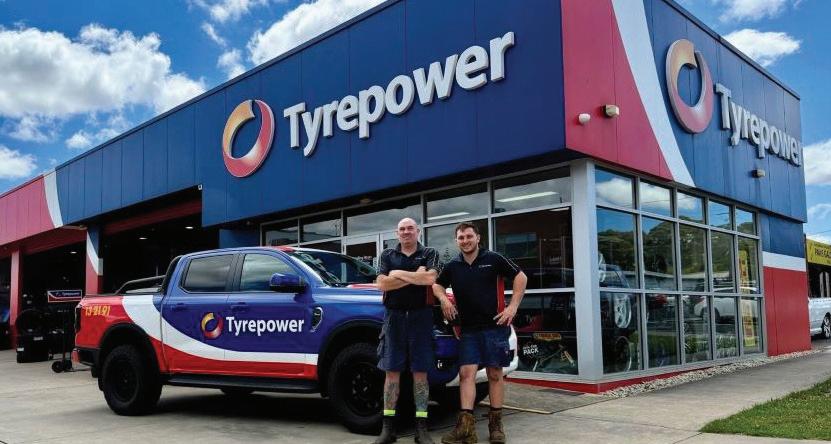
For nearly 50 years, Tyrepower has helped independent retailers adapt, compete, and grow while remaining independently owned. Independent tyre stores have long been the backbone of the New Zealand industry — local businesses built on reputation, relationships, and loyal customers. But the environment around them is changing quickly.
National chains continue to expand, online pricing is reshaping customer expectations, and digital marketing has become essential. At the same time, supplier complexity and operating costs continue to grow. For many operators, the question is no longer whether independence works, but how to stay competitive while keeping it.
Across Australasia, more dealers are exploring collaborative models like Tyrepower — a network of more than 350 independently owned stores that has supported independent retailers for almost 50 years, helping local businesses gain the benefits of scale without losing their independence.
One of the biggest concerns owners have about joining a group is losing independence. In practice, the opposite tends to be true. All Tyrepower stores remain locally owned and operated. Decisions around staffing, suppliers, and pricing stay at the store level. What changes is having a network behind you.
For many members, the biggest difference is practical — stronger buying support, industry-leading rebates, improved marketing visibility, and a steadier flow of customer enquiries, helping make it easier to protect margins and build more consistent
profitability while still running the business their own way.
Competing with larger retail groups can make supplier negotiations challenging for independent stores operating on their own. By working collectively, Tyrepower members gain access to aligned supplier programmes, rebates, and coordinated promotions aimed at improving overall profitability rather than just driving volume. Importantly, flexibility remains. Dealers still stock what suits their customers and their local market — something many independents see as essential.
Marketing is often where independent operators feel the biggest gap compared with corporate competitors. Through shared investment, Tyrepower delivers national marketing and digital activity that an individual store would struggle to replicate on its own. Strong online visibility and search rankings help generate quote and booking enquiries that flow directly to local dealers. A key difference is how pricing is handled. Rather than promoting fixed national pricing online, enquiries are directed to the local store, allowing dealers to set pricing based on their own market conditions and costs. For many operators, this protects margin while still benefiting from national-level exposure. Members also gain access to ready-made campaigns, promotional support, and digital assets that reduce workload while maintaining a consistent professional presence.
Independent tyre stores have always played a role in their local communities, often supporting local clubs, schools, and customers behind the scenes. Tyrepower builds on this through its national hospice partnership, where qualifying tyre purchases contribute to local hospice donations around New Zealand. For many stores, this provides a meaningful point of difference — allowing customers to support a local business while contributing to their community.
Customers still value dealing with local owners, but they also look for reassurance when making larger purchases. The Tyrepower model combines both — a recognised brand supported by independently owned stores delivering local service and accountability.
Not every business exploring Tyrepower comes from the same starting point. Some are established tyre retailers looking for stronger marketing support or a clearer path for growth, while others are mechanical workshops recognising tyres as a natural extension of their service offering and an additional revenue stream. In both cases, the goal is similar — growing the business while remaining independently owned and locally focused.
The tyre industry continues to evolve. EV fitments, online competition, and changing customer expectations mean standing still is becoming harder for independent operators. What’s becoming clear is that collaboration doesn’t replace independence — it can help protect it. More dealers are recognising that working together may be one of the most practical ways to remain competitive while keeping control of their own business.
For many independent dealers, the goal hasn’t changed — running a successful local business — only the way they get there is evolving.
Independence doesn’t have to mean doing everything alone — and more dealers are discovering the strength that comes from working together. If you’re curious about what that looks like in practice, the best place to start is simply by talking to another independent who’s already part of the network.
For a confidential conversation or to be introduced to a Tyrepower store owner: contact Johno Harmer, Retail Development Manager, Tyrepower New Zealand, jonathonh@tyrepower. co.nz 021 910 066 or Christine Johnstone, Operations Manager, Tyrepower New Zealand christine@tyrepower.co.nz
• 350+ independently owned stores across Australasia
• Strong national online visibility generating customer enquiries
• No forced national pricing — dealers retain pricing control
• Shared investment in marketing and promotions
• National brand recognition backed by local ownership



1

1









In the tyre trade, reliability isn’t a marketing slogan — it’s the difference between keeping a customer moving and losing business. Whether servicing a busy rural tyre shop during its local harvest season, fitting out a busy urban workshop, or supplying commercial transport tyre specialists on tight deadlines, the expectation is the same: have the right product, in the right place, at the right time.
For nearly 40 years, Patch Rubber Tyre & Tube has quietly built its reputation around delivering exactly that. From its beginnings as a specialist supplier, the company has grown into one of the most significant wholesale partners to New Zealand’s tyre and automotive sectors. Today, five fully stocked distribution centres span the country, carrying what is widely regarded as the most comprehensive range of specialised tyre industry products available nationally.
That scale is supported by smart infrastructure. Integrated distribution and IT systems connect operations across all locations, providing real-time stock visibility and streamlined purchasing efficiencies. For customers, that means fewer delays, improved ordering accuracy, and the confidence that stock availability is backed by robust systems rather than guesswork.
But infrastructure alone doesn’t build loyalty. Patch Rubber complements its national footprint with a network of mobile sales representatives operating fully equipped vans. Covering industrial, agricultural, and retail tyre businesses from one end of the country to the other, this boots-on-the-ground model keeps the company closely aligned with customer needs. It allows the team to respond quickly to supply gaps, workshop requirements, and changing market demand — particularly in rural and regional areas where downtime carries real cost.
With around 30 experienced staff nationwide, industry knowledge runs deep.
Many team members have spent years in the trade, understanding firsthand the pressures facing tyre retailers and service providers. That experience translates into practical advice, reliable sourcing, and a service approach built on long-term relationships rather than transactional sales.
A defining strength of Patch Rubber Tyre & Tube is the breadth of its product portfolio. This diversity allows retailers and service centres to consolidate purchasing through a single trusted supplier rather than juggling multiple accounts.
As the New Zealand agent for Myers Industries, one of the world’s largest tyre supply organisations, Patch Rubber provides local access to globally recognised products. The combined Myers and Patch Rubber catalogues cover an extensive selection of workshop consumables, repair materials, tools, valves, and tyre service equipment. The scale of that offering is captured in the company’s longstanding motto: ‘Everything for the Tyre Dealer’.
Inner tubes remain another core category. Patch Rubber imports the largest range of inner tubes available in New Zealand, with more than 300 different sizes in stock. All products are ISO 9001-certified and supported by a full manufacturer/importer warranty. Regular fullcontainer shipments ensure continuity of supply and consistent product freshness, reducing the risk of shortfalls and giving customers confidence during peak seasonal demand.
Beyond consumables and tubes, the company maintains a substantial and growing catalogue
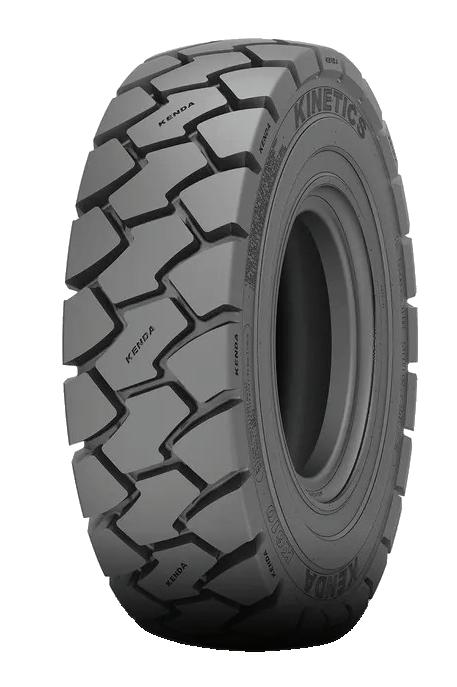
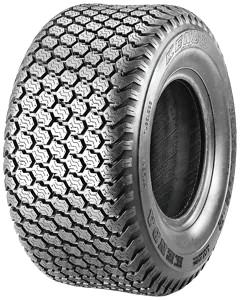
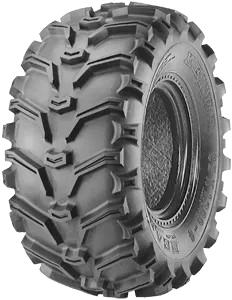
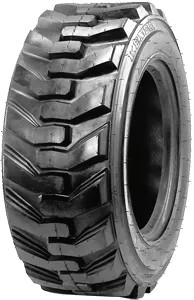
of specialty tyres. Applications range from wheelbarrows and industrial handcarts through to forklift and skid steer tyres, as well as motorcycle, lawn, garden, agricultural, tractor, and implement tyres.
Importantly, the range continues to expand. Each shipment introduces new product lines and specifications aligned with evolving customer requirements. Regular full container shipments arrive from some of the world’s leading specialty tyre manufacturers to all distribution locations in NZ. These include: KENDA, CARLISLE, DURO, KINGS TYRE, FORERUNNER and GAMMA. To support sellthrough at retail level, point-of-sale materials are also available — helping dealers present specialty products professionally and maximise in-store conversion.
Longevity in the tyre trade is earned, not assumed. Over nearly four decades, Patch Rubber Tyre & Tube has navigated economic cycles, evolving vehicle technology, and changing market expectations. Its continued growth reflects a consistent focus on fundamentals: product availability, service reliability, and industry understanding.
The company’s national coverage ensures that customers — whether located in major centres or remote rural regions — are supported by both physical stockholding and knowledgeable personnel. Real-time stock systems reduce uncertainty. Regular import schedules protect continuity. Experienced staff provide the reassurance that comes from dealing with people who understand the pressures of the trade.
In an industry where downtime is costly and margins are carefully managed, suppliers play a critical role behind the scenes. Patch Rubber Tyre & Tube has positioned itself not simply as a distributor, but as a long-term partner to New Zealand’s tyre professionals. For workshops, retailers, and industrial operators alike, that partnership continues to be built on the same principle that has guided the company for almost 40 years: keep the industry moving — efficiently, reliably, and nationwide.
Find out more at patchrubber.co.nz
AS TYREWISE SCALES UP END-OF-LIFE TYRE COLLECTION ACROSS NEW ZEALAND, FOCUS IS SHIFTING TO HIGHER-VALUE REUSE — WITH CRUMB RUBBER IN ROAD CONSTRUCTION EMERGING AS A MAJOR OPPORTUNITY FOR THE AUTOMOTIVE AND INFRASTRUCTURE SUPPLY CHAIN
When Tyrewise first started collecting end-of-life tyres in 2024, its focus was on getting operations up and running. Getting contracted transporters on the road collecting tyres, making sure businesses knew how to use app to book and verify collections, and using that same app to track what happened to tyres.
With over 100,000 collections under its belt and millions of tyres a year going through the system, the scheme’s next challenge is finding high-value uses for the recycled rubber materials they turn into.
MARKETS FOR RECYCLED RUBBER
Some old tyres are ending up as tyre-derived fuel, which helps to reduce the emissions from Golden Bay’s cement kiln, and there’s also a growing demand for a permeable paving product that helps manage stormwater. Tyres that can’t be used onshore are currently being exported, but the goal is to reduce that over time.
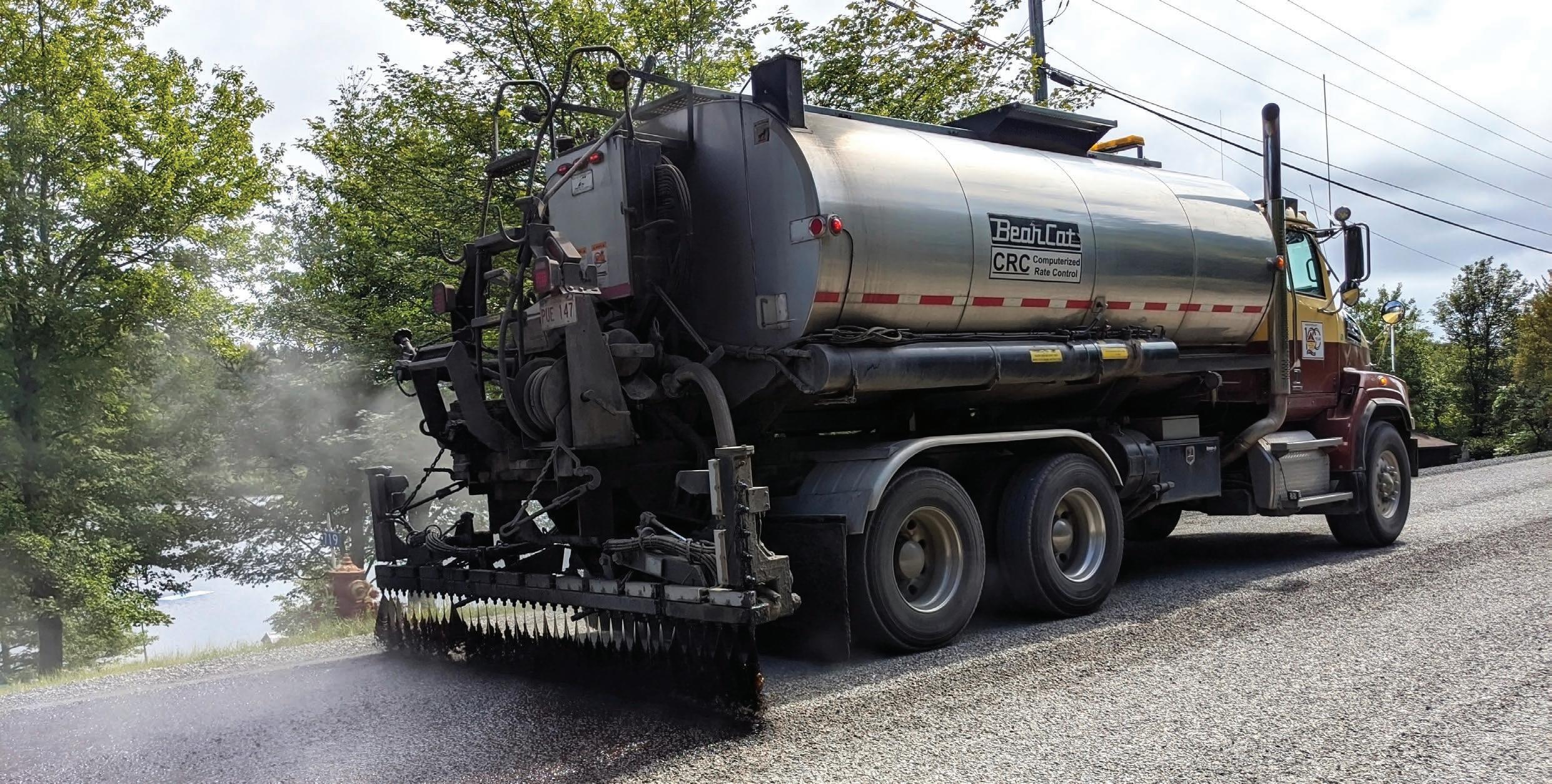
One of the biggest potential uses in New Zealand is rubber in roading.
Up to 14,000 tonnes of crumb rubber per year could end up in our roads, according to Tyrewise GM Innovation Trevor Tutt.
“Using recycled tyre rubber in roading isn’t a brand-new idea. It’s been toyed with in New Zealand in the past, and it’s business as usual in some places overseas,” he says. Many of those responsible for our road networks are looking at what has been learned overseas, and how it can help with costs and performance over the whole life of a road.”
Some benefits come from the properties of recycled rubber. Improved performance and durability, better skid resistance and less road noise, to name a few. Some come from using resources more efficiently, reducing the need for new materials and creating economic activity right here in Aotearoa New Zealand.
Turning those opportunities into action is a bit
of a jigsaw. Those responsible for our roading networks, like local councils and NZTA Waka Kotahi, need to know that it’s going to work in our local conditions, and that it’s safe for our workforces. And processors of rubber materials need to know there’s a market for what they can produce.
Tyrewise has recently published an action plan to help move things along. It includes the need for research, and for technical specifications everyone can rely on, as well as real-world trials.
Trevor says some recently approved grants from Puna Taurima, the Tyrewise Fund, will help move some of this work along. And in October, Tyrewise held a workshop bringing researchers, roading contractors and a major roading network owner across the ditch in Australia together with key stakeholders from New Zealand.
“There is strong interest across the supply chain,” says Trevor, “It’s our job to put the pieces of the puzzle together so that everyone involved, from the automotive industry to tyre users, can start seeing more of their end-of-life tyres used for the benefit of New Zealanders.”
To find out more about the Tyrewise programme, see tyrewise.co.nz
FOR THREE DECADES, YHI HAS ESTABLISHED ITSELF AS A CORNERSTONE OF THE NEW ZEALAND WHEEL, TYRE, AND BATTERY MARKETS, BUILDING A REPUTATION ON PRODUCT QUALITY, NATIONWIDE ACCESSIBILITY, AND ENDURING TRADE RELATIONSHIPS
Since establishing its Auckland operations in 1995, the SingaporeanNew Zealand partnership has developed an extensive distribution network serving automotive retailers throughout the country. What began as a single-branch operation has grown to nine strategically located branches covering Auckland, Hamilton, Tauranga, Napier, Palmerston North, Wellington, Christchurch, Dunedin, and Invercargill, complemented by third-party warehouse partnerships in Nelson, Whangarei, and New Plymouth.
This expansion reflects YHI’s understanding that successful distribution requires more than logistics. Supporting a growing dealer network demands consistent brand availability, responsive service, and sustained business relationships, all of which remain fundamental in today’s competitive market.
YHI’s product strategy centres on a carefully selected range of globally recognised tyre manufacturers, ensuring retailers can meet varied customer requirements without managing multiple supplier relationships. The portfolio spans premium performance through to commercial applications:

Pirelli remains the premium anchor, chosen as OEM supplier by numerous high-end vehicle manufacturers. The range encompasses innovative technologies including SEAL INSIDE™ self-sealing capability, RUN FLAT construction, and ELECT™ tyres engineered specifically for electric vehicle characteristics, addressing both performance requirements and environmental considerations.
performance-oriented consumer tyres.
Toyo Tires delivers premium products across passenger vehicles through to performance applications, providing retailers with established brand recognition and broad application coverage.
Radar Tyres addresses the mid-market segment with affordable options whilst maintaining manufacturer commitments to sustainability and carbon-neutral production processes.
Nankang offers value-oriented solutions backed by expanding motorsport credibility. The range includes track-focused options such as the AR1, NS2R, and recently introduced CRS, alongside EV-specific products and
Evergreen, a newer addition to YHI’s portfolio, strengthens commercial vehicle coverage with truck tyres designed for New Zealand’s freight sector demands.
CEAT specialises in agricultural applications, delivering durability and performance characteristics suited to farming conditions and heavy-duty rural use.
YHI’s product development has tracked New Zealand’s shifting vehicle demographics, from sustained growth in the 4x4 and SUV segments through to accelerating adoption of electric vehicles. The evolving range reflects ongoing assessment of market requirements: expanded choice within segments, competitive value positioning, and products engineered for contemporary vehicle technology.
This responsiveness extends beyond product selection to include distribution of batteries and EV charging equipment that increasingly support automotive retail operations seeking to diversify service offerings.
YHI’s operational continuity stems partly from workforce stability. Many team members have remained with the company for decades, accumulating deep product knowledge, established supplier relationships, and practical understanding of dealer requirements. This institutional knowledge enables YHI to anticipate market shifts rather than simply react to them, providing trade partners with informed guidance on stock positioning and product trends.
The combination of long-tenured staff, comprehensive branch coverage, and curated brand relationships positions YHI as a consistent supply partner for retailers navigating an automotive aftermarket characterised by rapid vehicle technology change and evolving consumer expectations.
For product information and dealer enquiries, visit yhiautomotive.co.nz or call 0800 99 33 44.
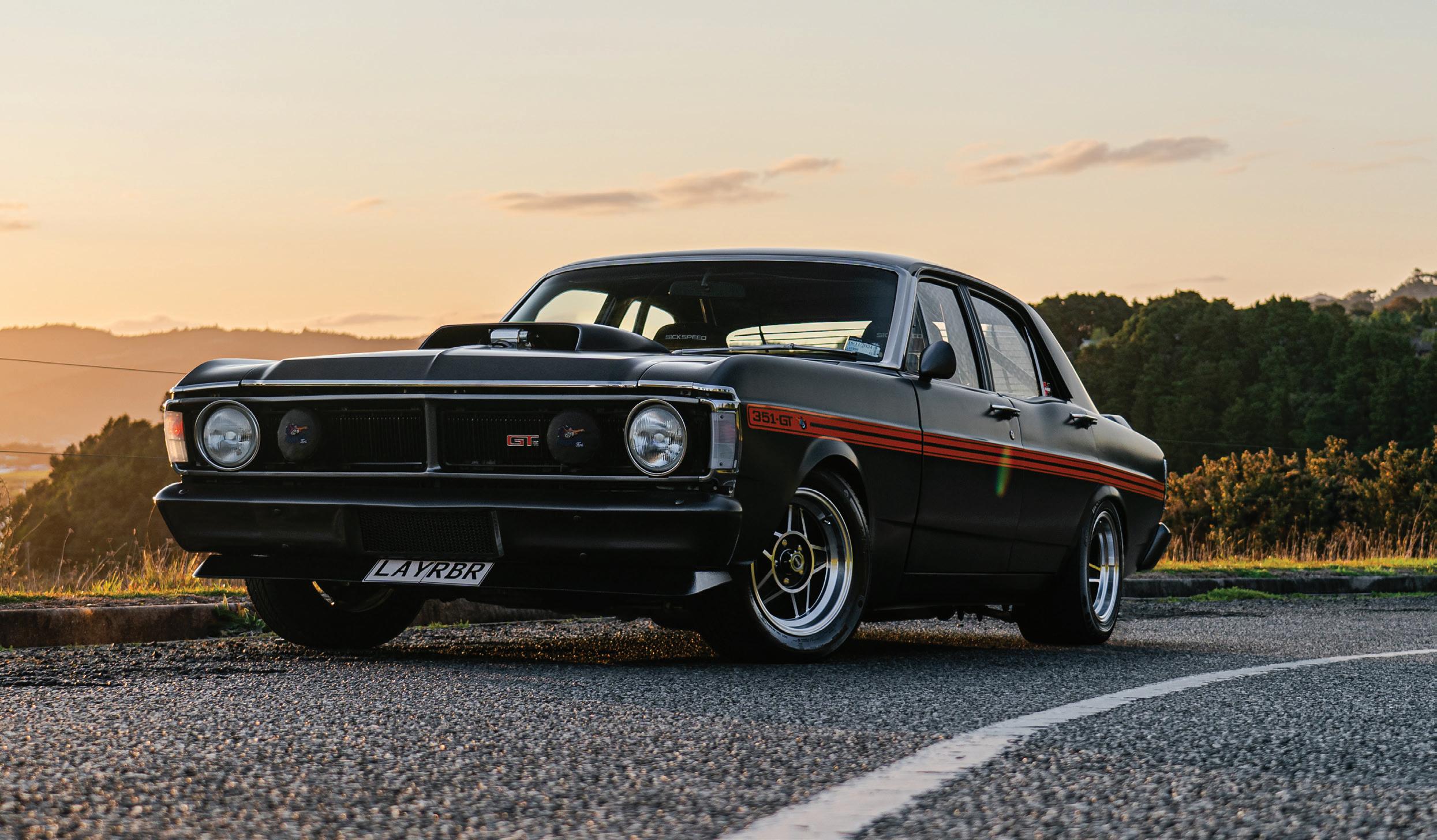
WITH 572 CUBIC INCHES OF BIG-BLOCK AND A PROCHARGER UNDER THE HOOD, THERE’S MUCH MORE TO ALAN MESSENGER’S XY THAN JUST A TOUGH LOOK
WORDS: TODD WYLIE PHOTOS: LEO BATGER
Given that Alan Messenger’s car ownership list is basically a list of Australia’s all-time greatest automotive creations, it should be no surprise that he’s ended up with arguably the toughest
perfect starting point to make it his own. That process started slowly with a few tweaks to get the car looking how he wanted it to, which, given he loved the paintwork and overall finish, was focused mainly on upgrading
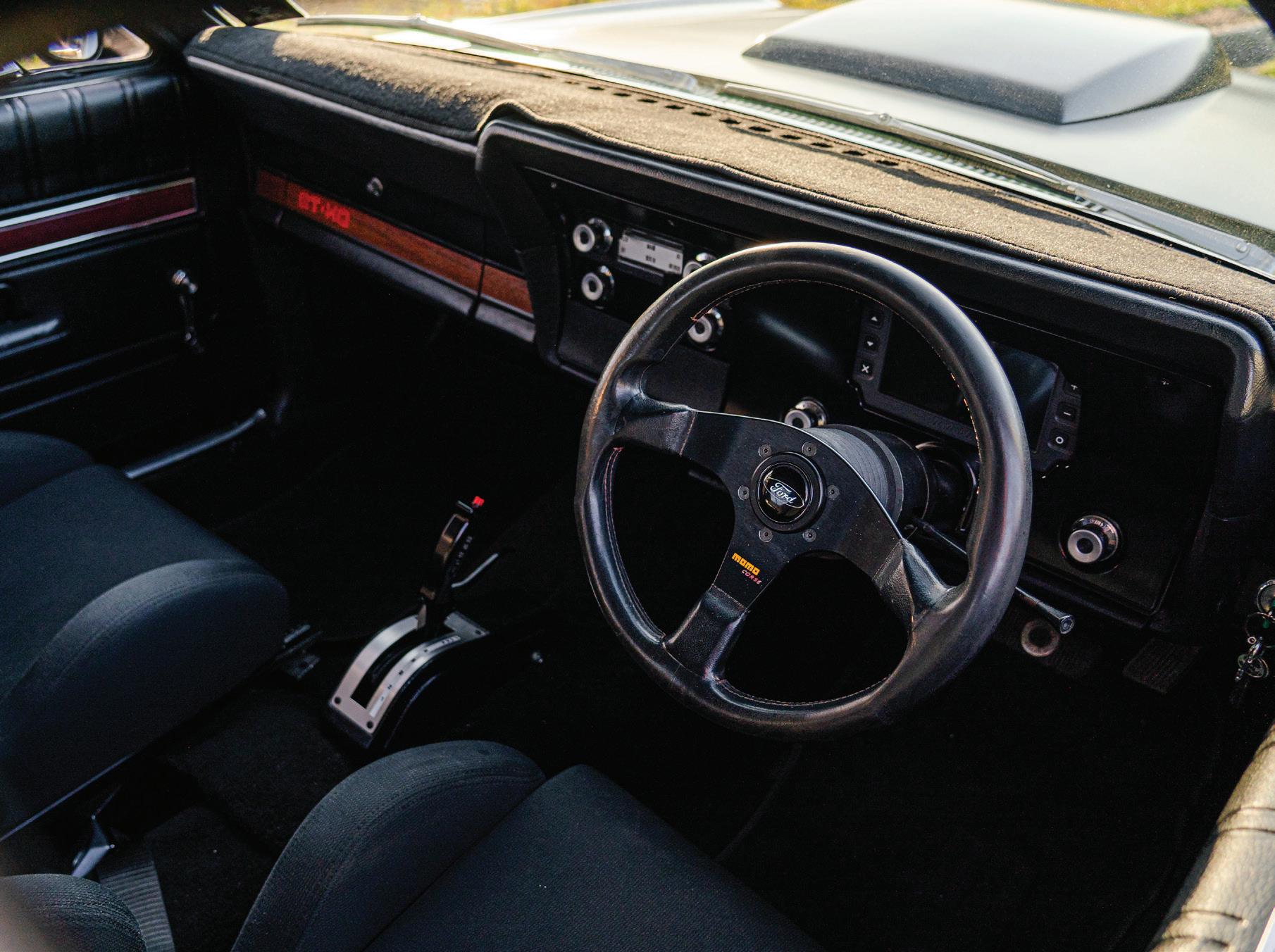
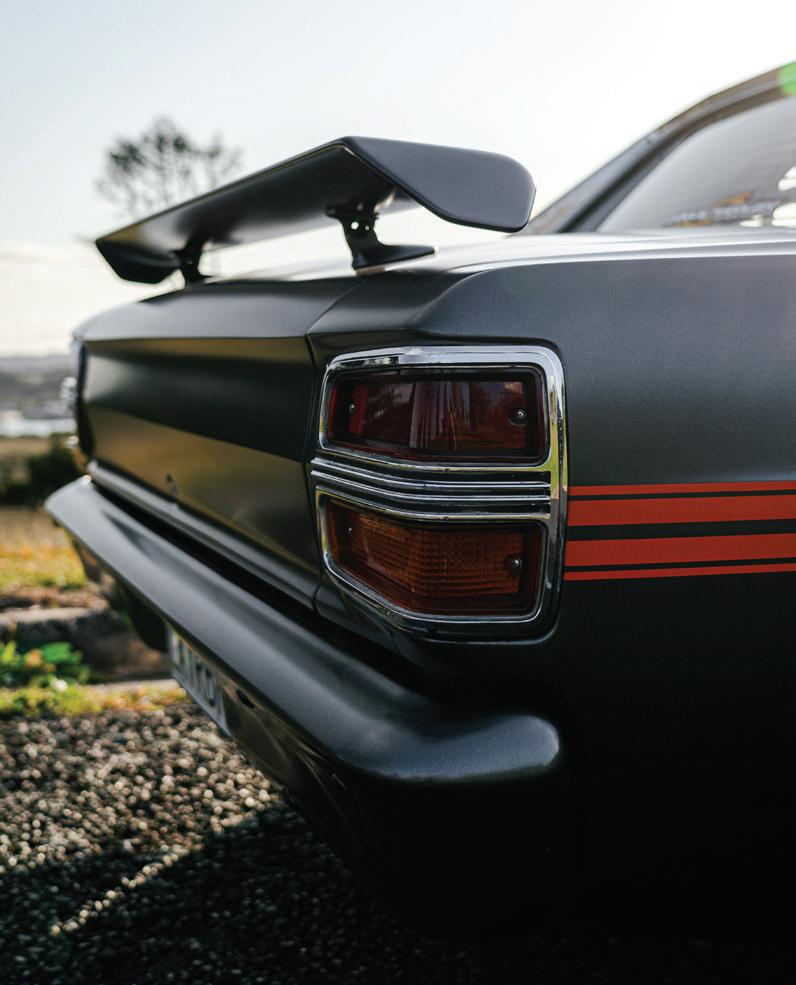
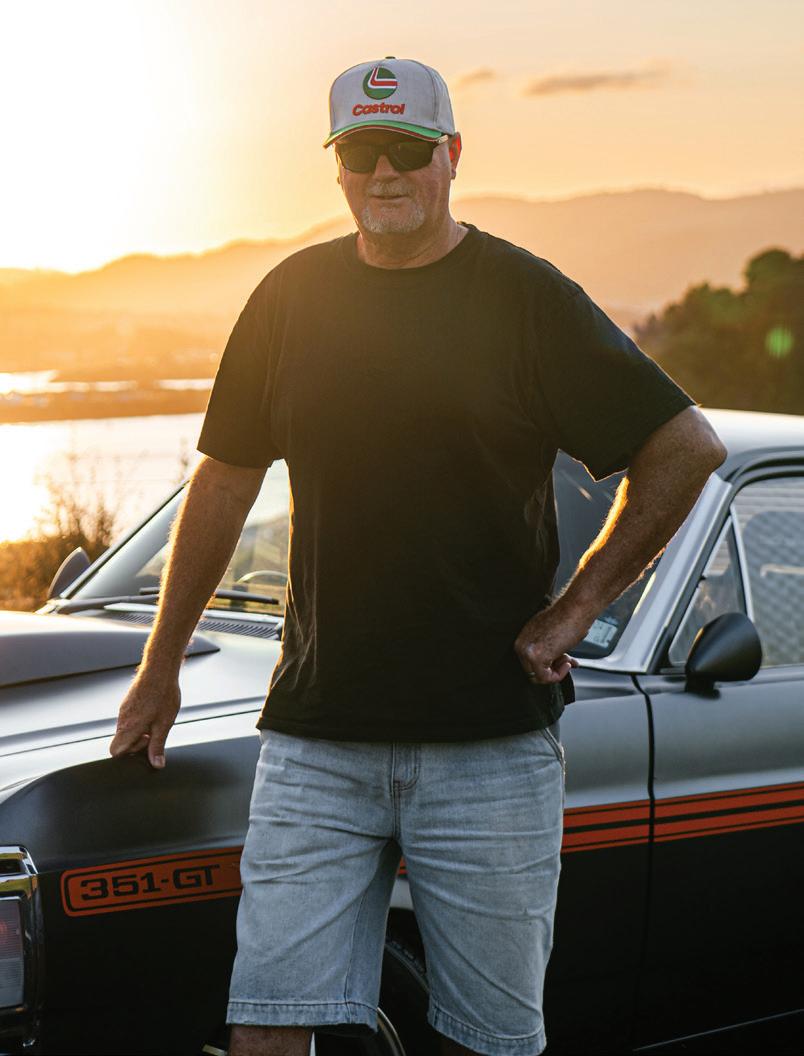
Vehicle: 1971 Ford XY Falcon
Engine: 572ci big-block Ford, Ford Racing
A460 big block, Scat 4340 steel crank, Scat rods, Wiseco forged pistons, 9.0:1 compression, AFR Bullet CNC ported 3816 heads, custom Crow Cams hydraulic roller cam, Crower roller lifters, T&D shaft mounted rockers, Trend pushrods, custom billet intake manifold, Fast 102mm throttle body, Tick Performance water-to-air intercooler, F2 ProCharger, twin intake pumps, external regulator, Bosch 1650 injectors, Link Storm ECU, LS style coil packs, MSD leads, Pacemaker headers, twin three-inch exhaust, Flowmaster mufflers, custom radiator, twin Spal fans, custom water-to-air cooler core, Mr Gasket electric water pump
Driveline: Ford C6 Ridgeback, 2500rpm stall
that look is substantially aided by a reduction in the car’s ride height, courtesy of some re-set leaf springs.
Of course, that was just the start though, as Alan always had plans to make the 460cibig-block even tougher, so in preparation he set about replacing the brakes with a Wilwood package far more suitable for what was to come. With the mechanicals sorted for the interim, the car remained in this state, albeit with some bodywork touchups being undertaken.
It wasn’t until life threw Alan a curveball in the form of a heart attack that the car progressed further. He tells us, “While heading into theatre for my second lot of stents, and being told this would be quite tricky, I jokingly said to the wife, ‘If I survive, can I have a supercharger?’ and she said yes!” We’re not sure if that means she really loves him or expected it was a promise she wasn’t going to need to deliver on, but needless to say he survived, which meant forced induction was now on the menu.
It was while he was in Whangamata at
converter, nine-inch diff, Strange alloy head, chromoly 3.5-inch driveshaft
Suspension: RRS coilover struts, reset leaf springs, Caltrac bars, Koni rear shocks, RRS rack-and-pinion steering, Holden Astra electric power steering
Brakes: Wilwood manual brake booster, Wilwood four-pot calipers
Wheels/Tyres: 15x6-inch and 15x10-inch Globe wheels, 195/50R15 and 275/50R15 tyres
Exterior: Toyota Magnetic Grey paint
Chassis: Strengthened chassis
Interior: Race seats, Momo steering wheel, Haltech IC7 dash, half cage, custom dash Performance: 1100hp, 1035 lb/ft
Driver: Alan Messenger
Age: 57
Repco Beach Hop 22 that Alan got talking to Steve Walker, owner of Mike’s Engines about the best approach to that force-induction dream. “We went down the roots blower track but soon realised to get it certified with a mountain blower sticking out of it would be too much of a mission,” he tells us, explaining the logic behind opting for a ProCharged combination.
Rather than tear down the existing motor, he wisely decided to move it on and start fresh, but rather than just selling the motor itself, he dropped it into an XD Falcon in an effort to make some extra cash. With the engine gone, he also took the opportunity to give the bay a tidy up. Sadly, but not completely unexpectedly this turned into a can of worms, or more accurately, a section of rust, when the wiper cowl was opened up. On the plus side, he had Jordan at Whangarei Autobody on hand to handle all the required repairs. While the grinder was out, knowing the bay needed repainting anyway, the pair also took the chance to install RRS shock towers to give the big-block a bit more
Occupation: Painter/Decorator
Previously owned cars: BA XR8 ute, EF Tickford Fairmont, XY Falcons, XD Falcons, BF Typhoon, Chev Silverado, VG Valiant, LH Torana, LJ Torana
Dream car: ’70 Hemi Cuda and too many others to list
Why the Falcon?: Loved the staunch look of the car and the fact that it had a big-block in it
Build time: Ongoing
Length of ownership: Five years
Alan thanks: Firstly my wife, Steve and Casey at Mike’s Engines, Whangarei Autobody, Prestige Auto Customs, GDS Automotive, Advanced Automatics, MTS Electrical, Super Natural Auto Electrical, Quinton at Mag and Turbo Whangarei, Checkered Flag Motors
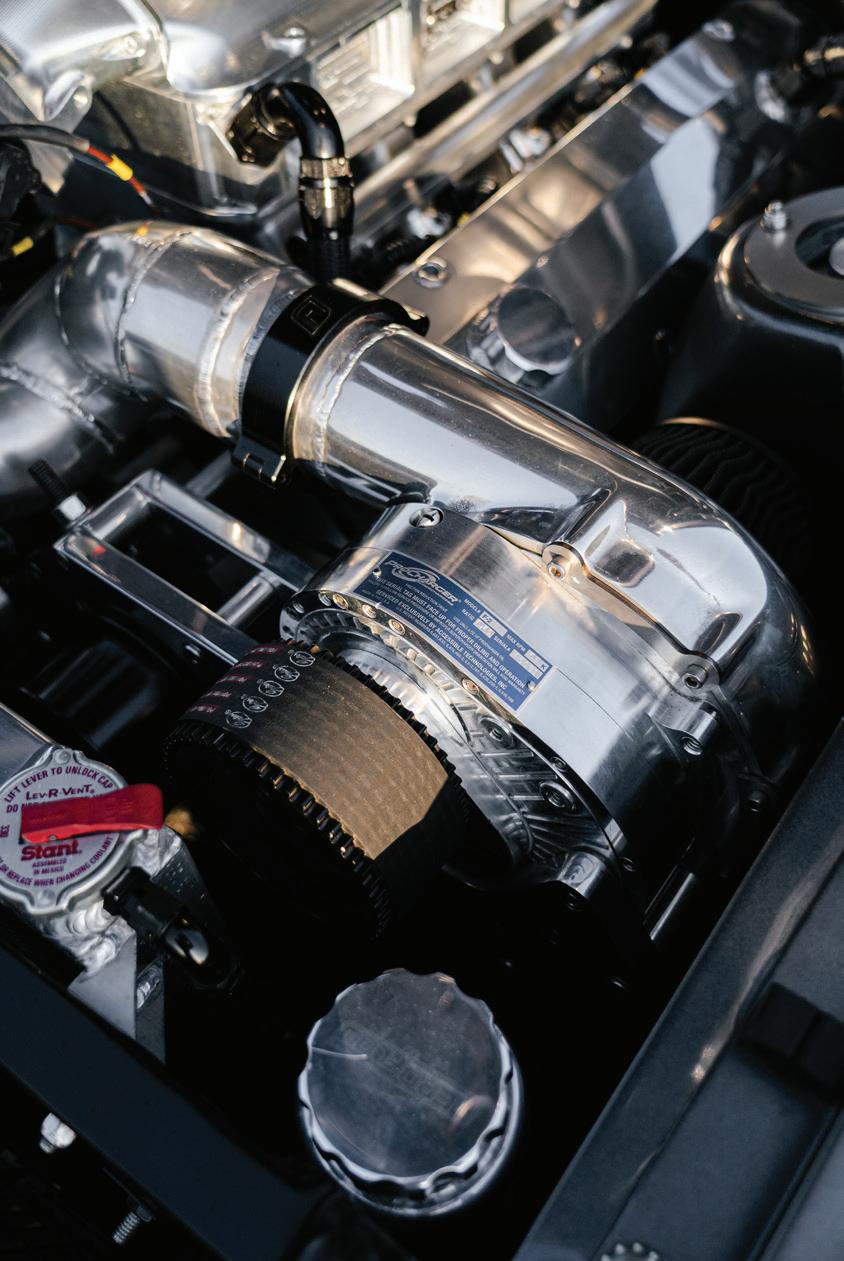
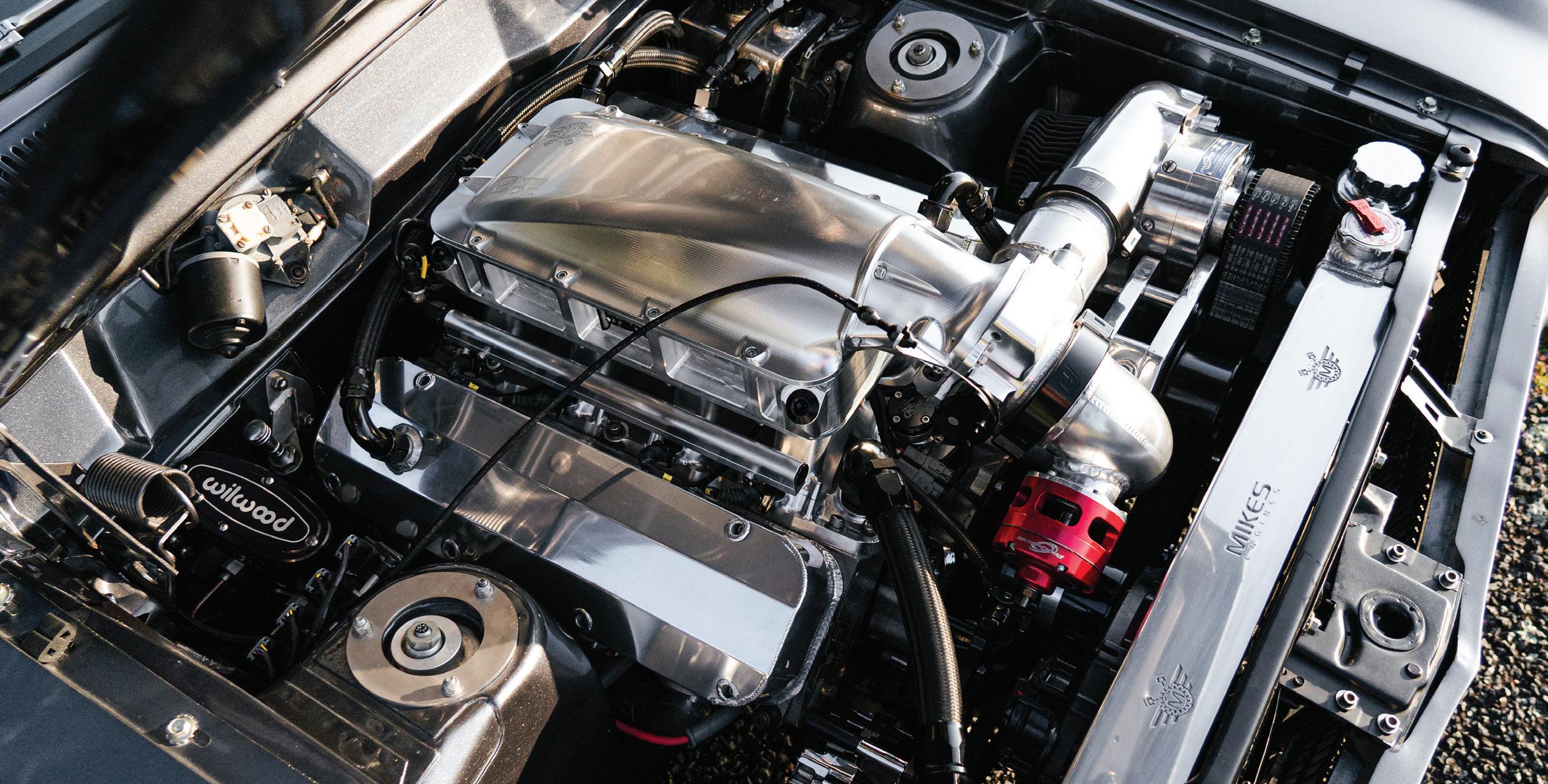
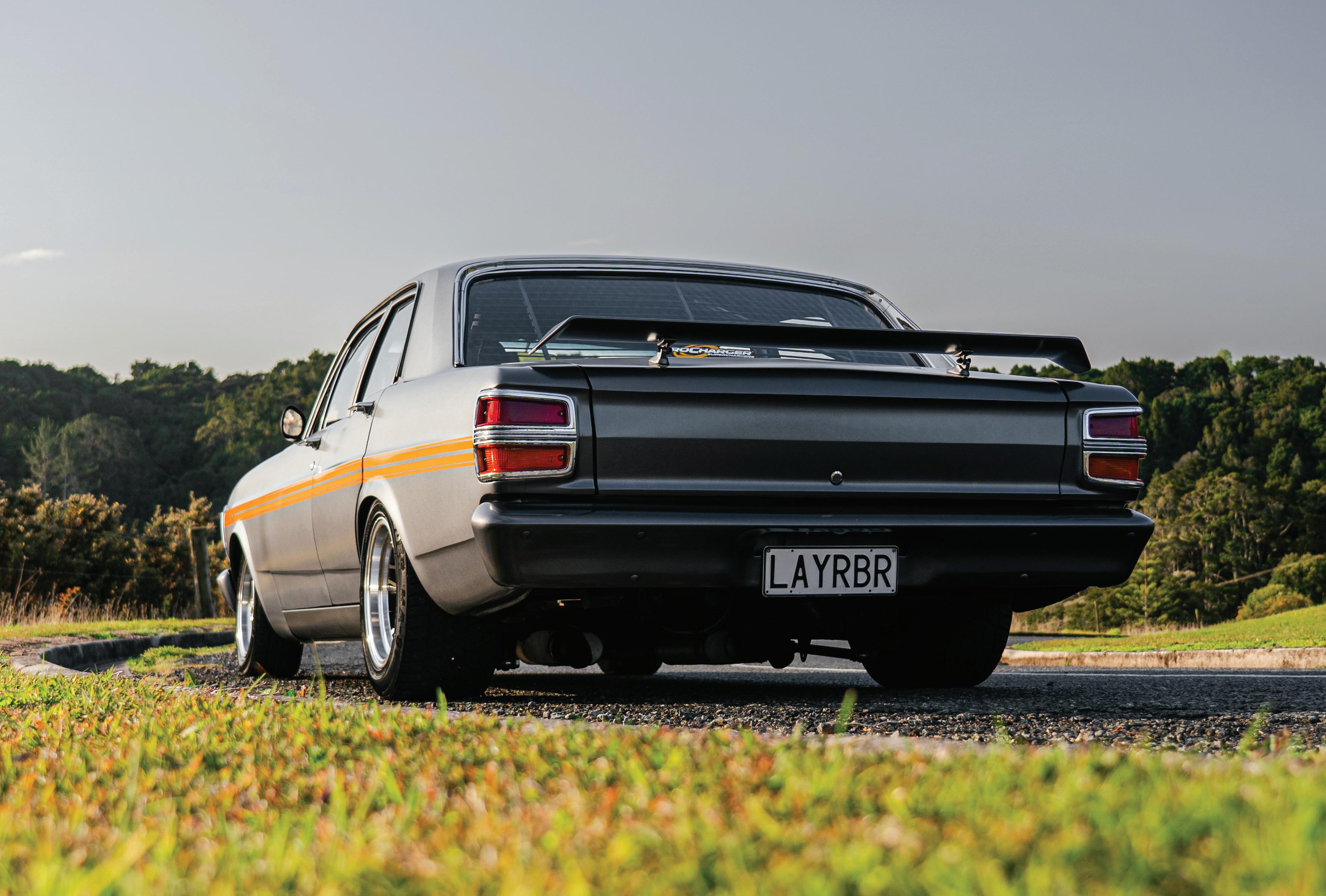
room. This both enabled and necessitated the installation of an RRS coilover front suspension to which an RRS rack-and-pinion steering assembly was connected.
Meanwhile, not far away, the mother of all big-block Ford motors was being built. While most people associate the 572 moniker with GM products, we can assure you the over-bored 460 block is 100-per-cent Ford Racing. Steve worked his magic to assemble it with a Scat 4340 steel crank, Scat rods, and Wiseco pistons that offer a boost-friendly 9.0:1 compression ratio. The top end is equally as impressive, based around AFR Bullet CNC-ported 3816 heads fitted with Crower roller lifters and T&D shaft-mounted rockers. Below these is a set of sturdy Trend pushrods that move to the tune of a custom camshaft. It’s a serious bit of kit, but it needed to be for what was planned to be strapped to the outside of it. The key piece is obviously the F2 ProCharger, but there’s far more to the package than just that.
Initially, it was put together with a carburettor, but a later re-think of the combination saw it adapted to feature a Tick Performance water-to-air intercooler that sits below a custom billet intake manifold.
The conversion to EFI wasn’t without its share of challenges, as Alan recalls, “Being an XY there’s not a lot of room in the engine bay. So we came up with the idea of running a water-to-air intercooler — as there is no room left with a big-block Ford. So we got in touch with Dan at Kiwi CNC in Cromwell. Dan ended up 3D-scanning the AFR manifold that matched the heads and a Holley LS High Ram
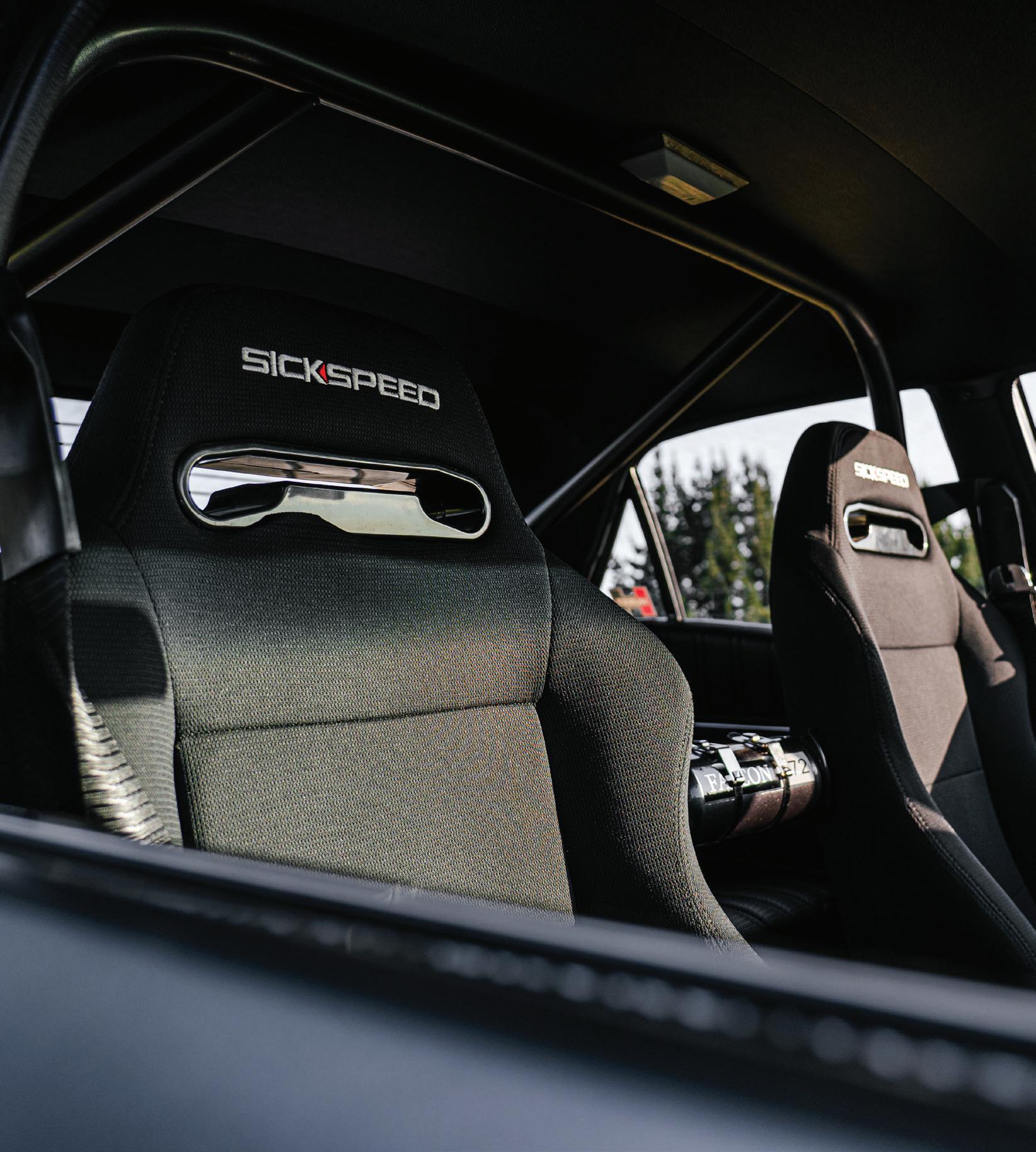
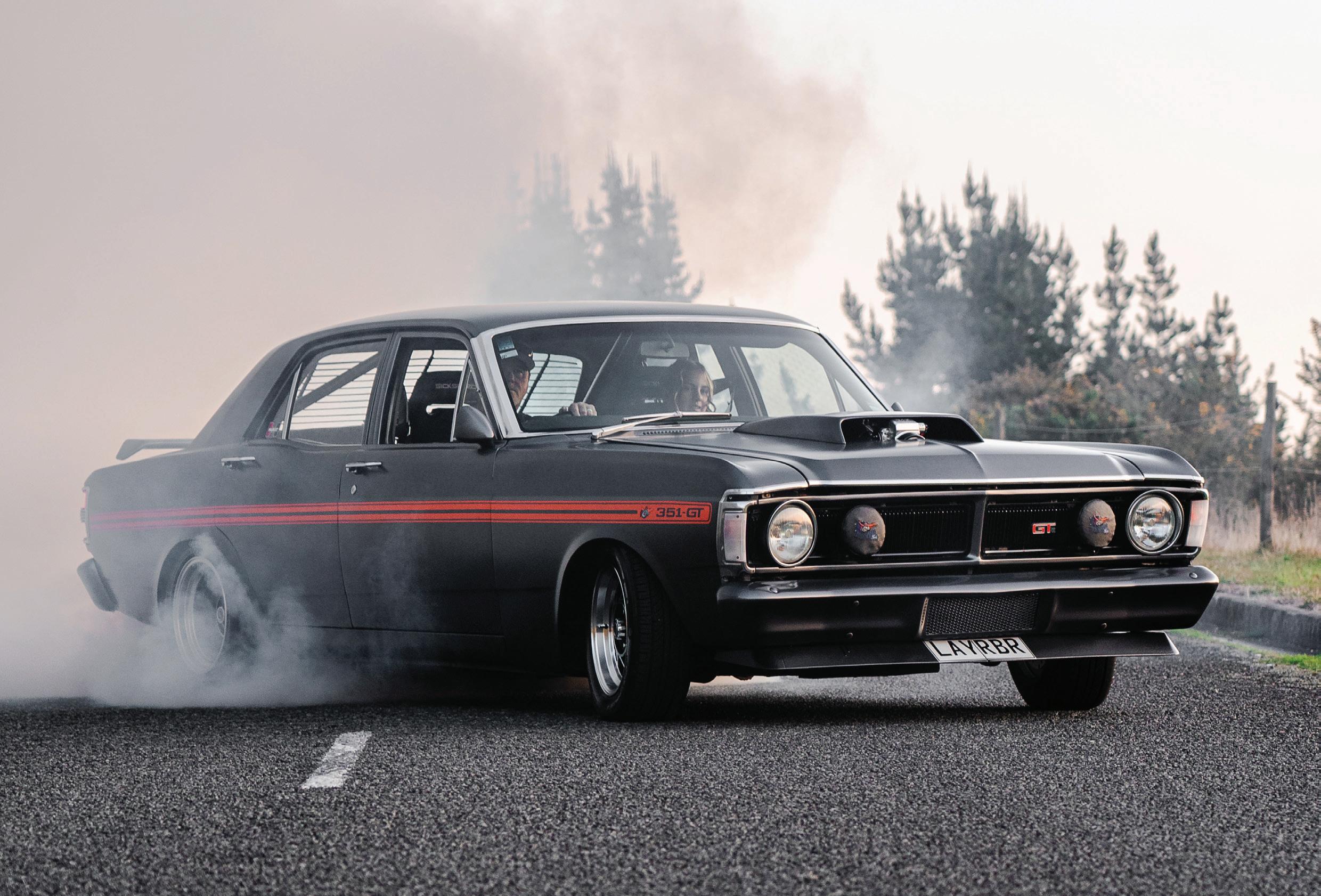
top section for it to fit and match the Tick performance intercooler.” The amount of work in that process shouldn’t be underestimated, and it included setting up the fuel rails that house 1650cc injectors.
Once completed, the car was taken back to Glenn Suckling at GDS Automotive for tuning, while the carburettored setup had made 989hp and 890ft/lb with 12psi boost, the EFI combo offered so much more. That turned out to be an accurate assessment, as the car didn’t just break the 1000hp barrier, it blew past the 1100hp mark!
While a Link ECU is now running the show, Alan decided on a Haltech digital dash to help monitor the combination. Rather than try and butcher the dash, he hit up JMB Draft and Design in Australia for one of their custom 3D-printed cluster surrounds. The remainder of the interior is as it was when purchased, which sees a half-cage out back and race seats up front. Similarly the driveline was built tough enough from the start to be able to handle the massive power now thrown at it. That being said, Ian at Advanced Automatics was called upon to freshen up the C6 transmission and
supply a 2500rpm stall converter.
He’s now owned the car for five years and over that time it’s essentially been through three different phases, but now, with the look that he loved to begin with and 1100hp on tap, it’s easy to see why there’s nothing else left to do but enjoy what is possibly the ultimate XY streeter.
Previously published in NZV8 Magazine issue 224.
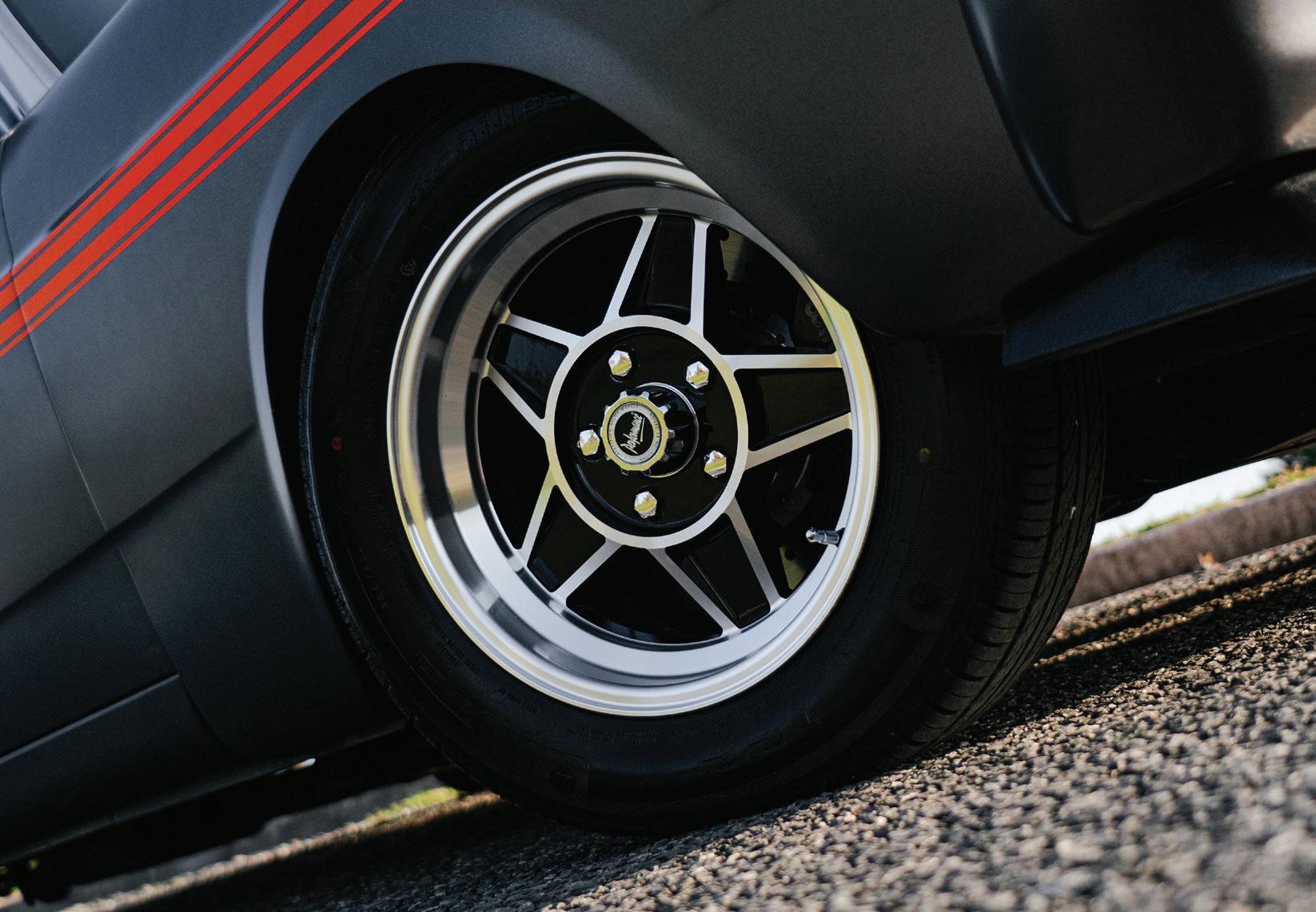
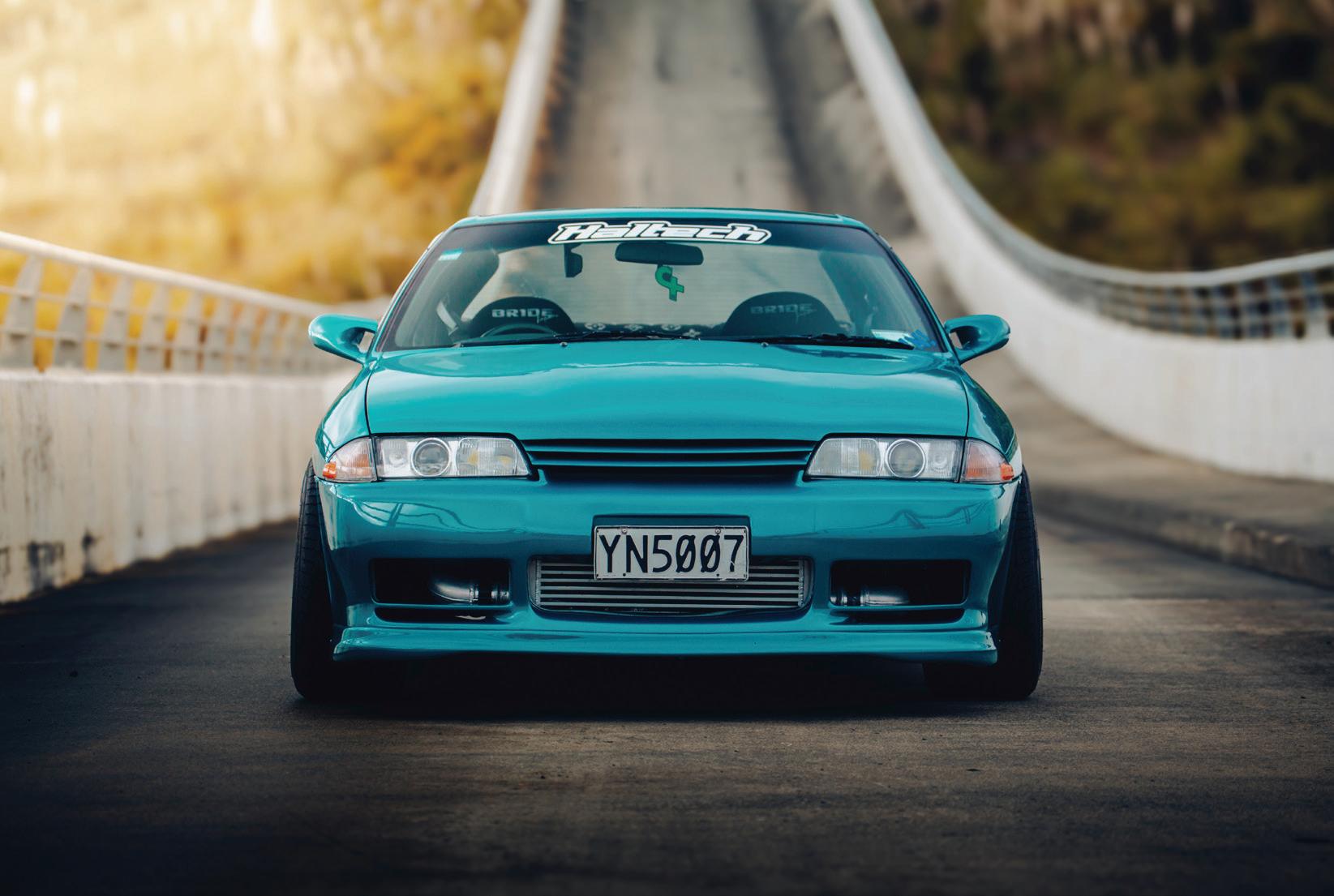
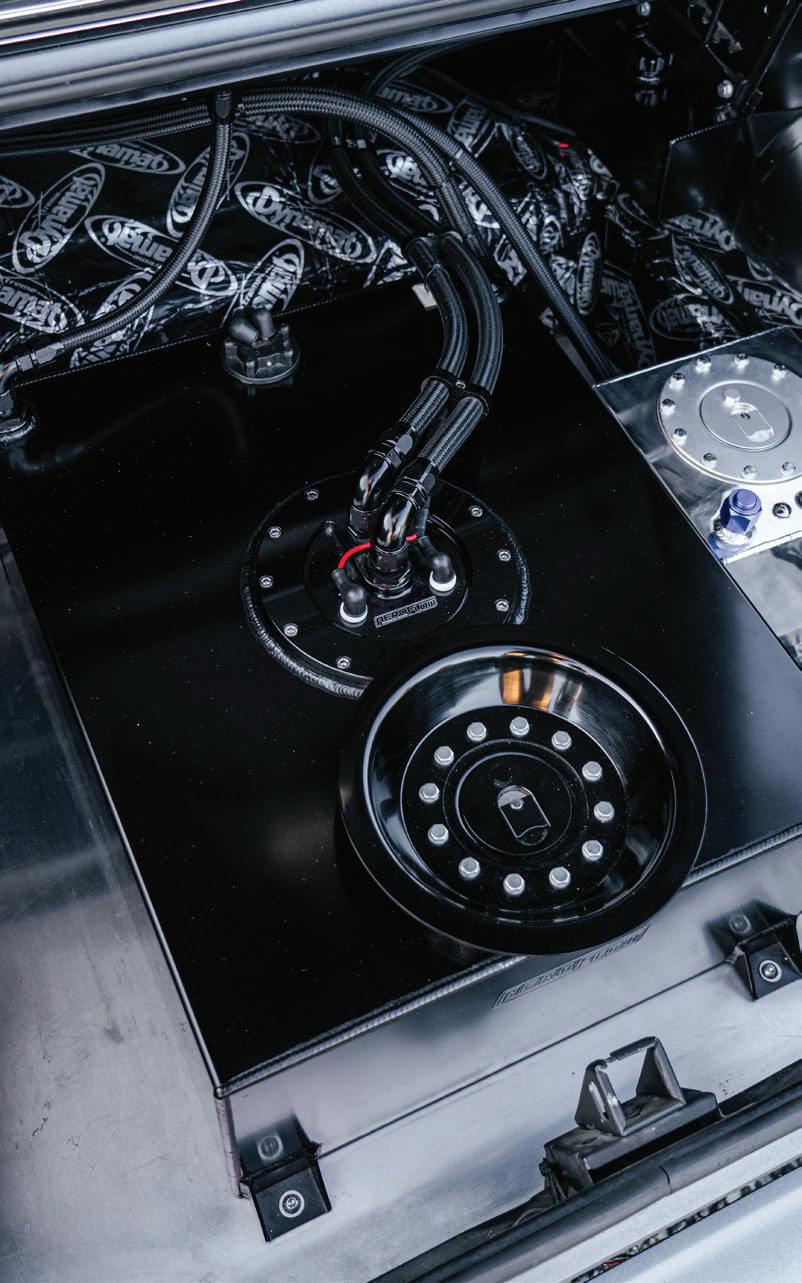
While rust is usually thought of as a problem for older vehicles, it can begin forming much earlier — even on new cars sitting in the lot. In New Zealand’s humid, coastal environment, overnight condensation and salt-laden air can quickly set the stage for corrosion. Vehicles stored for extended periods, particularly near the coast, are especially vulnerable, says David Kirkham, director of Autoblast, a specialist in professional underbody protection.
To address this, Autoblast offers advanced underbody treatment solutions designed to prevent early-stage rust in new vehicles. These treatments are particularly useful for coastal vehicles that tow boats or jet skis, where regular saltwater exposure can cause visible corrosion in a matter of months. Increasingly, dealerships are taking a preventative approach by treating new inventory before the vehicles are delivered to customers.
At the core of Autoblast’s offering is the AutoLAST System — a rust-prevention
process that begins with thorough surface preparation, followed by a five-part coating system engineered for long-lasting protection. Compared to conventional oil- or wax-based products, the AutoLAST system delivers greater durability and a cleaner finish.
Autoblast has also expanded its Auckland facility to meet growing demand, now operating five dedicated service bays, including two downdraught spray booths and heavy-duty hoists. These upgrades provide a controlled environment that ensures quality, prevents overspray, and supports high-volume commercial work. While private owners continue to be a key part of the business, Autoblast’s services are widely used by commercial fleets, including port companies looking to extend vehicle lifespans in corrosive working environments.
Vehicle importers and dealerships are increasingly working with Autoblast to protect new vehicles before they reach the customer. Cars transported by sea often spend time
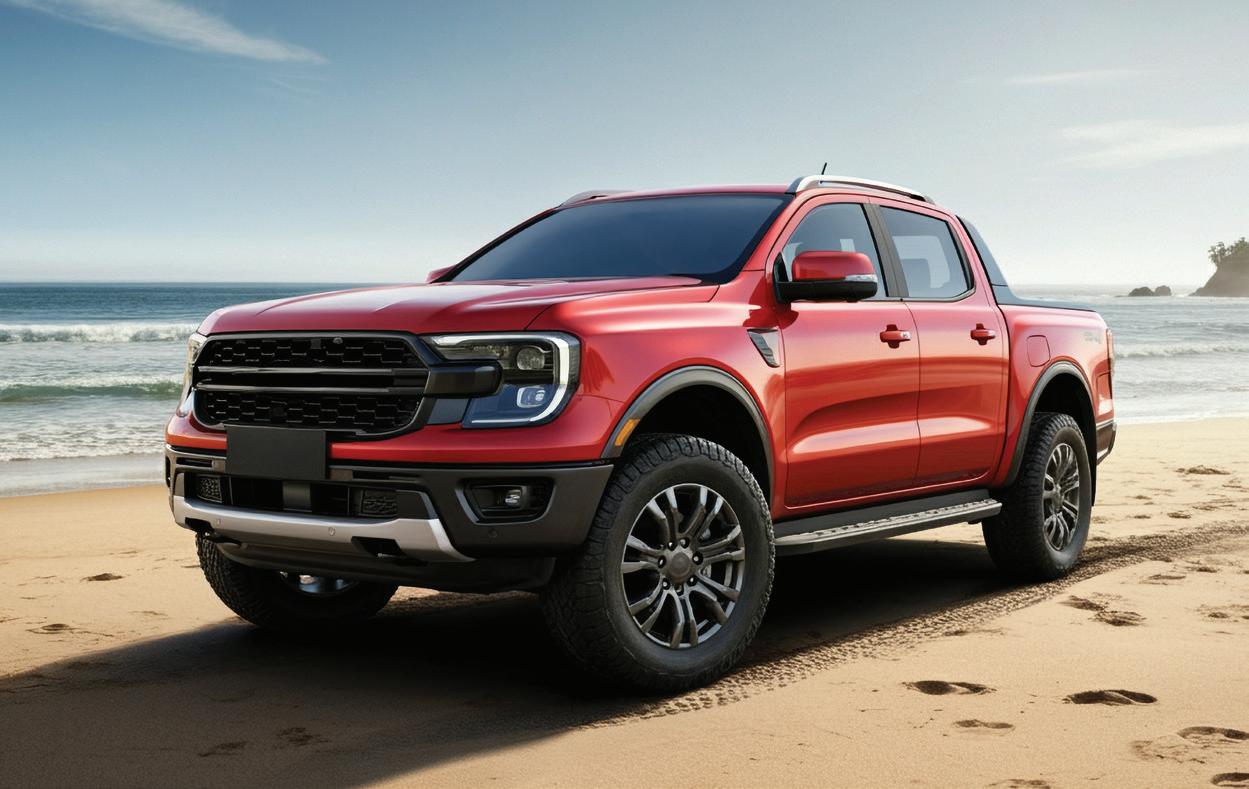
exposed to the elements on arrival, which can lead to early surface oxidation if left untreated. With most panel shops focusing on exterior work, Autoblast fills a gap by providing specialised underbody protection that complements existing pre-delivery processes.
In addition to rustproofing, Autoblast offers a complete range of protective services — including media blasting, rust removal and treatment, undersealing, epoxy finishes, and the AutoLAST hybrid rust proofing system. They also offer a ‘new vehicle rust correction’ service that addresses any early signs of discolouration or surface rust before a vehicle hits the showroom floor — helping dealerships meet customer expectations for a flawless finish.
To find out more about how an Autoblast treatment can provide peace of mind for new car owners, contact Autoblast on 09 443 65 74 or see autoblast.co.nz for more information.






The recently upgraded Automaster AM-7140D now offers a 4000kg lifting capacity, an ultra-low platform height of just 105mm, and a full-rise height of 1900 mm. Designed as either an aboveground or flush-mounted installation, the AM-7140D is a practical solution for workshops dealing with ceiling height or width restrictions where a conventional two-post hoist won’t fit.
Contact Automaster at info@automaster.co.nz, automaster.co.nz, or 0800 214 604.
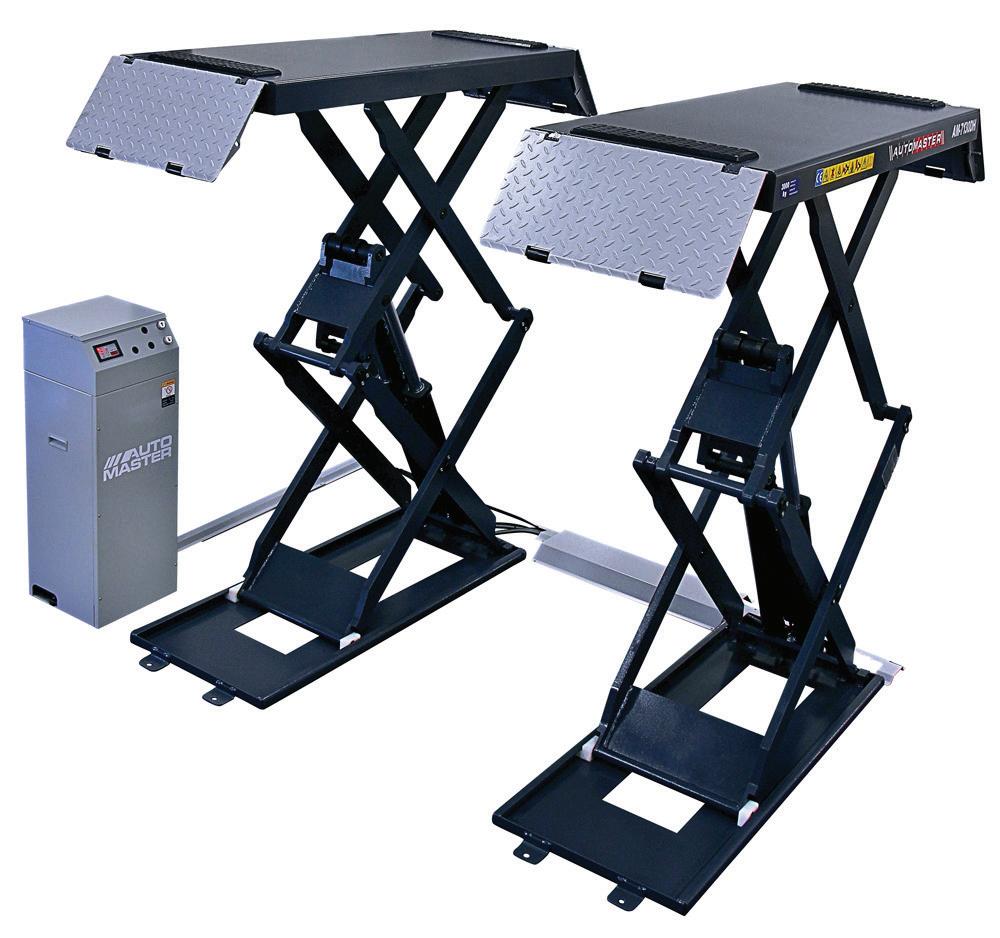
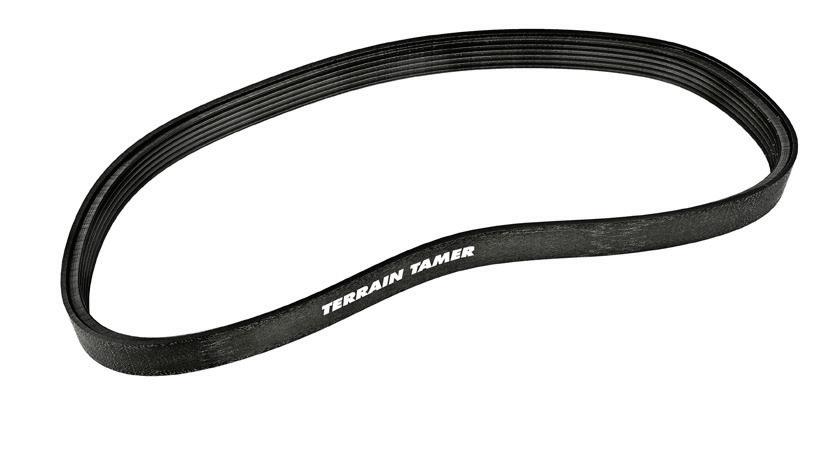
Developed from over a decade of military parts engineering, Terrain Tamer’s Fortified Drive Belts offer a 34% increase in belt life over OE equivalents. The patented serpentine belt construction uses strengthened tensile cords and a specific elastomer blend to resist stretch, heat, oil, and wear. Applications cover popular 4WD models including Toyota Hilux, LandCruiser, Prado, Ford Ranger, Mazda BT-50, Mitsubishi Triton, and Nissan Navara.
Visit terraintamer.com for the full listing.
Koni STR.T shocks deliver entry-level performance with premium engineering. Nonadjustable and easy to fit, they provide workshops with a no-fuss upgrade option that enhances handling and road control over factory shocks. Pre-set damping balances sporty response with everyday comfort, making them ideal for European cars, hot hatches, and Japanese performance models. Backed by Koni’s global reputation, STR.T provides reliable performance, broad vehicle coverage, and strong customer appeal at an accessible price point.
Koni STR.T shocks are available through Mount Shop
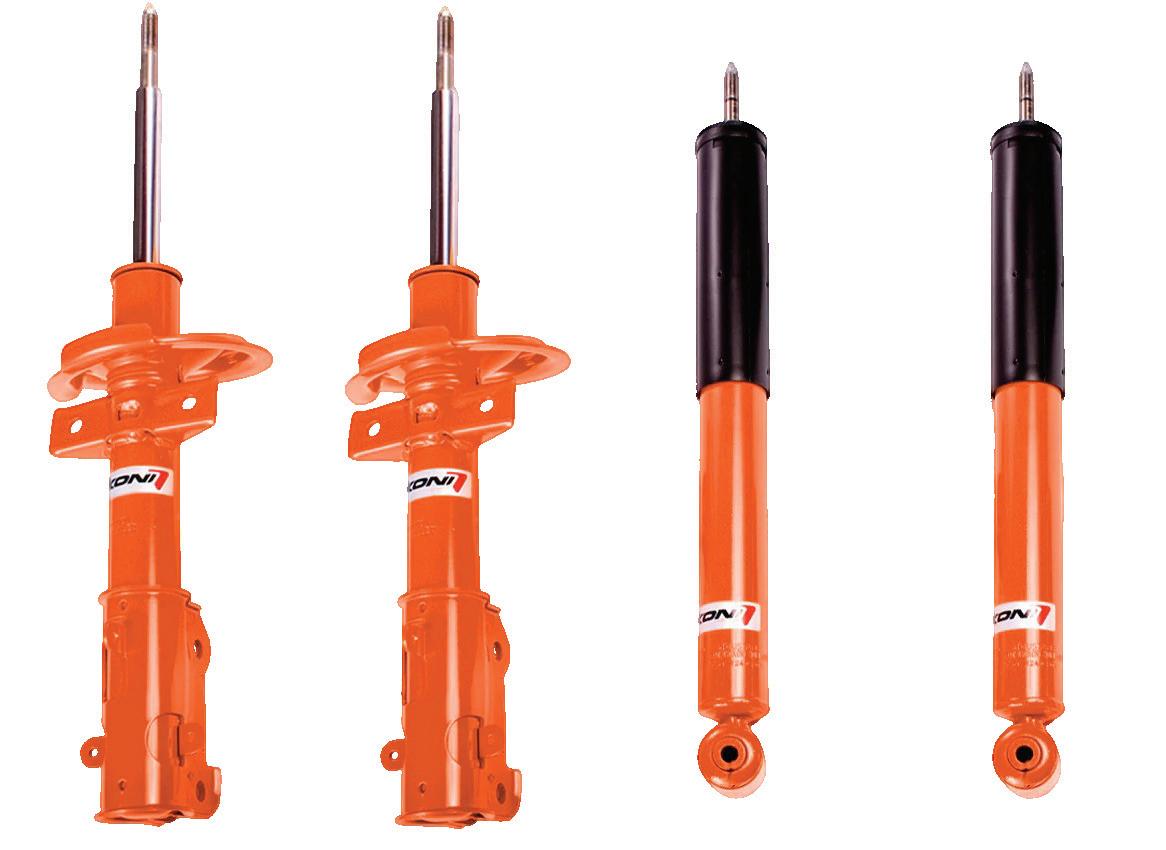
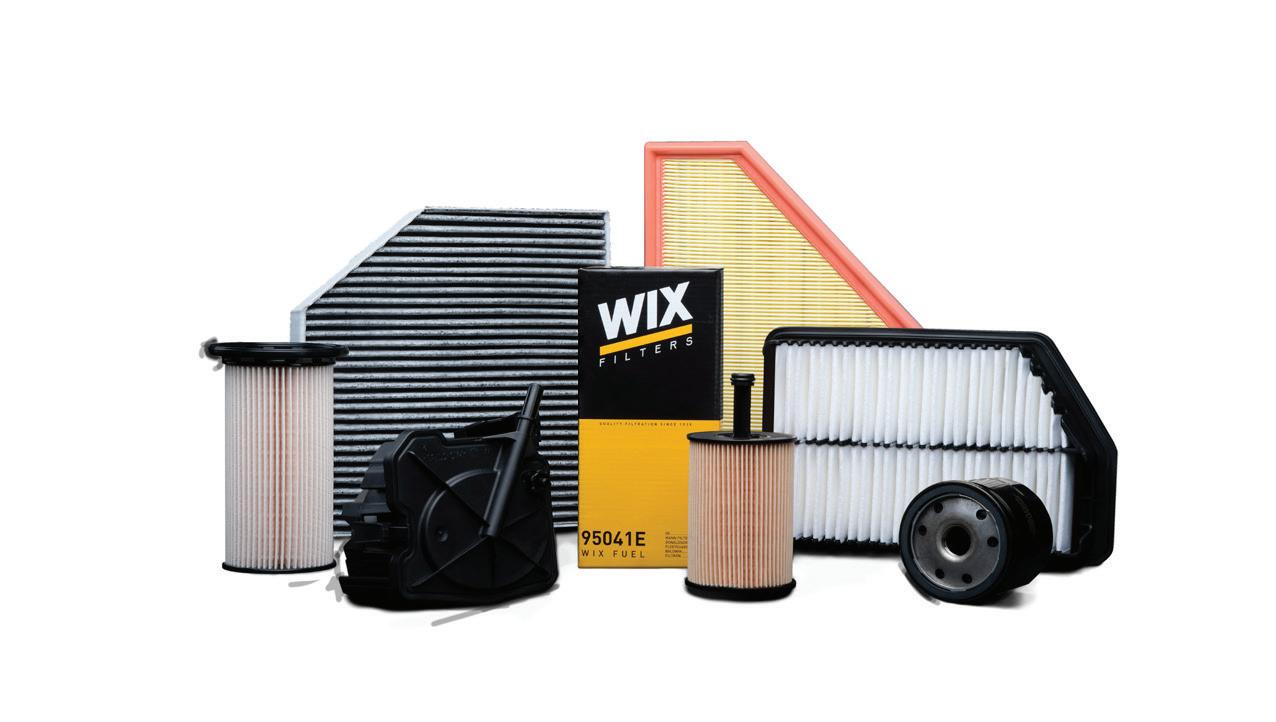
A legendary brand has returned to New Zealand, with CoolDrive Auto Parts now exclusively stocking WIX filters for passenger vehicles. Trusted by generations and engineered for today’s engines and conditions, WIX delivers best-in-class filtration with enhanced dirt-holding capacity, competitive pricing, and extended service life.
Built to OEM standards and tested to the toughest global benchmarks in the lab and on the track, WIX filters keep vehicles running cleaner for longer.
Choose WIX for filtration you can trust.
For more information, cooldrive.co.nz.
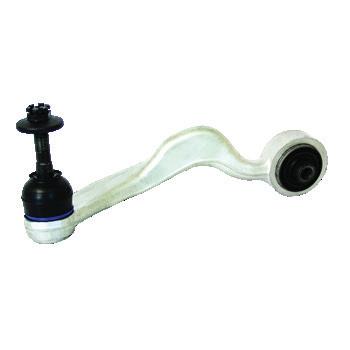
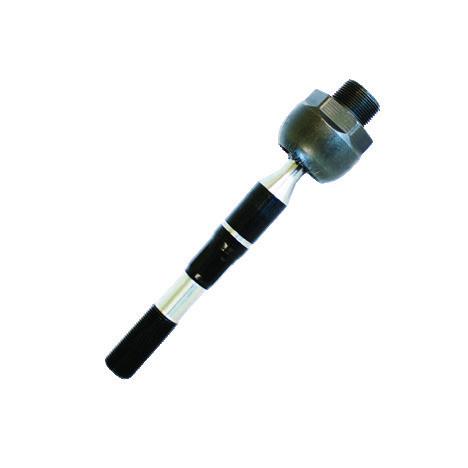
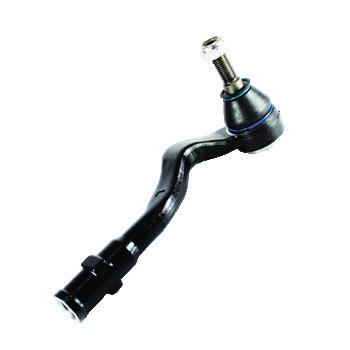
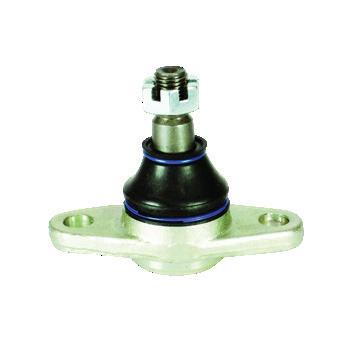
Mount Shop has over 650 ball joint SKUs, 1000 tie rod end SKUs, 600 rack end SKUs. All makes and models from early to late model, covering Japanese to European, comprising one of the largest ranges of ball joints and steering components in the country.
Available through Mount Shop
ACDelco 3V Lithium Coin Cell Batteries are equipped with advanced technology you can count on! Made to power small electronic devices such as vehicle keyless entry remotes, calculators, watches, medical devices and much more. Contains no mercury or cadmium; safe for the home and better for the environment, anti-leakage protection; holds in power for up to five years in storage under normal conditions. All ACDelco 3V Lithium Coin Cell Batteries are sealed in child-resistant packaging.
For more information, visit gmtradeparts.co.nz or acdelco.co.nz
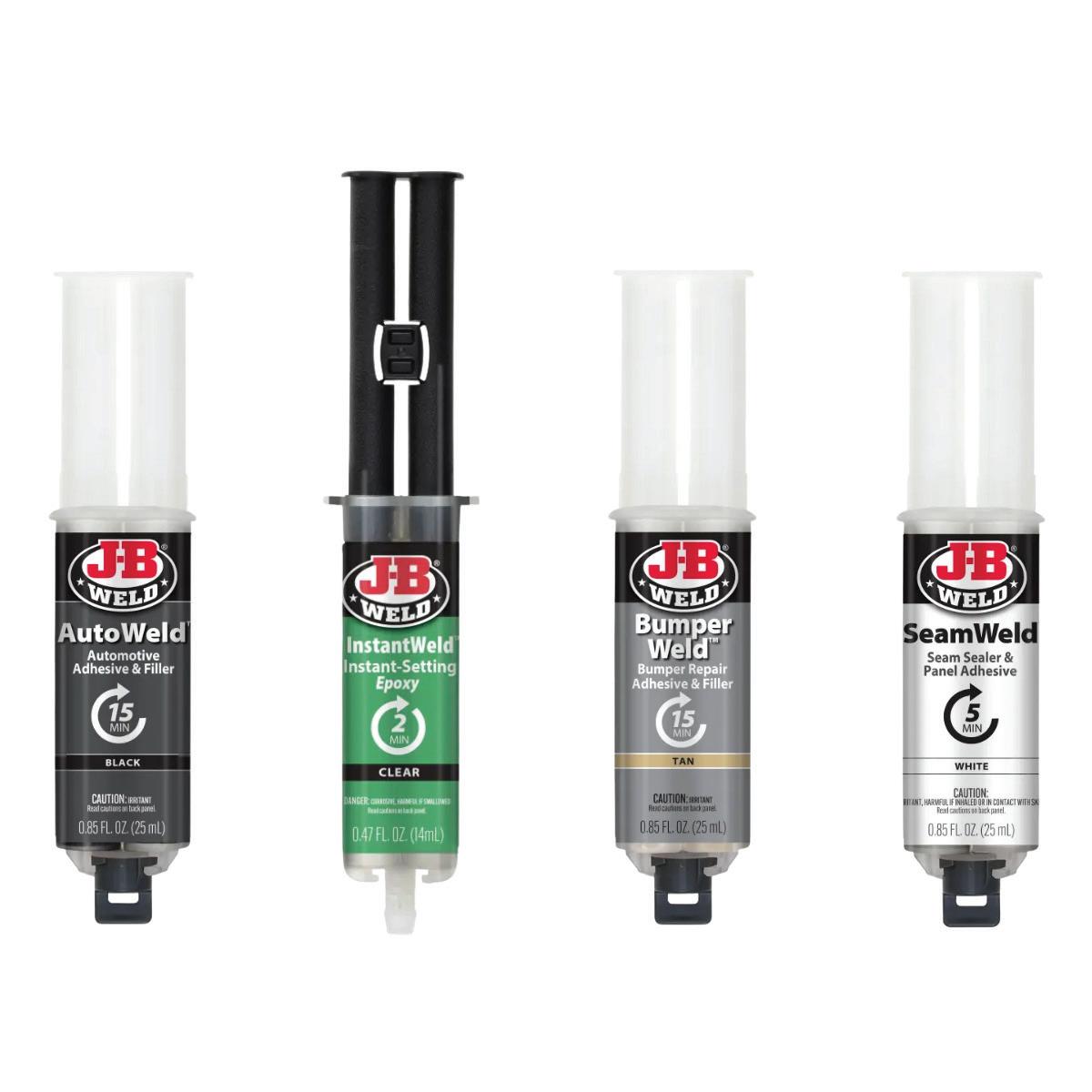
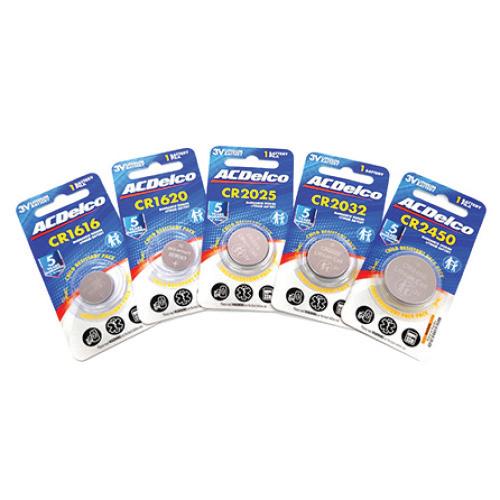
JB Weld introduces a new range of high-performance automotive adhesives designed for professional results: this lineup includes Autoweld Black, an impact-resistant automotive adhesive, filler and sealer, Bumper Weld Tan for flexible, paintable bumper fixes, Seamweld that provides high impact and vibration-resistant bonding and sealing to automotive body panels, and Instant Weld Clear, a fast-setting epoxy for invisible, high-strength repairs.
Trusted by mechanics and DIYers alike, this new range is available now from your nearest automotive or hardware retailer.
Aerpro’s latest inspection camera range is built for automotive professionals who demand precision and flexibility. Perfect for diagnosing hard-to-reach areas in vehicles, these cameras feature mini heads and flexible cables for effortless manoeuvring. The lineup includes HD articulating borescopes (G9200HD, G9300HD), the G9120 with 4.3” display, G5100 with 2.7” LCD, and the G1000T handheld thermal camera. From engine bays to underbody inspections, Aerpro delivers advanced imaging solutions that keep your workshop efficient and your diagnostics accurate.
For more information, visit www.bwinz.co.nz or contact sales@nz.brownwatson.com, or call 09 525 4575
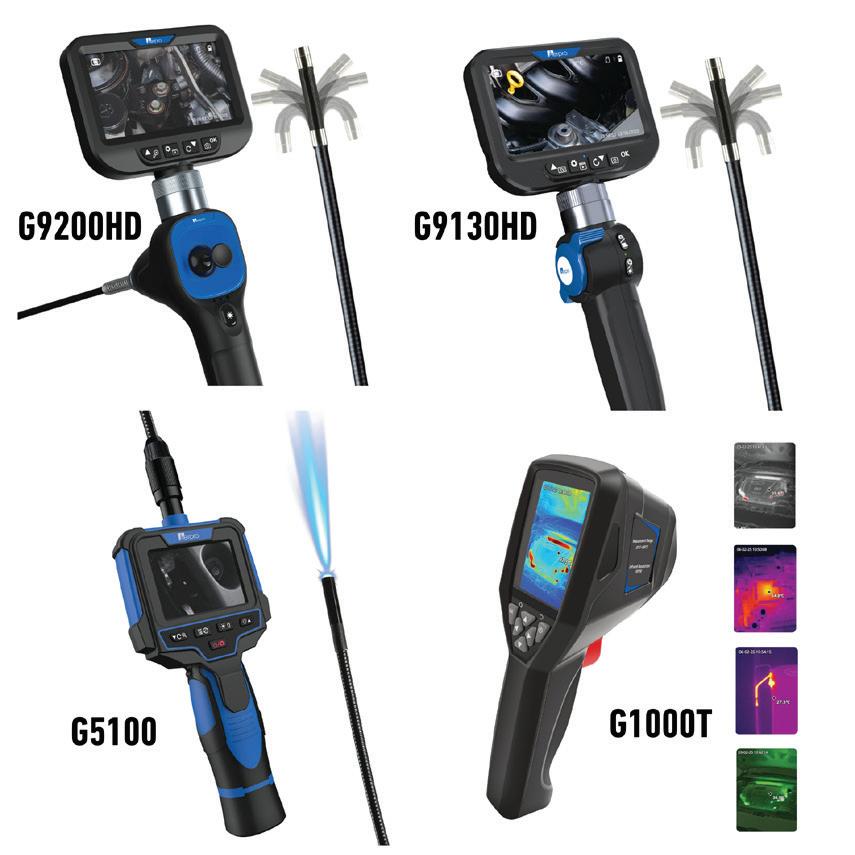





















PARTSSUPPLY
Bearings,diffs,alternators,brakecomponents,radiators,enginecomponents,batteries,trailerparts
SERVICECONSUMABLES
WORKSHOP CONSUMABLES
Oils,grease,coolant,transfluid,bulbs,flushes
Rags,lubricants,PPE,aerosols,abrasives, cleaners,carcare,aircon
Tierods,balljoints,rackends, bushes,bearings,shocks
SUSPENSIONAND STEERING
AFTERMARKET ACCESSORIES
Audio,performanceparts,bodykits, dressup,paint/wrap,driveline
WORKSHOP EQUIPMENT
GENERALREPAIRSERVICE
Diagnostics,hoists,electrics,powertools, handtools,specialistserviceequipment
Autoelectrical,clutches,cylinderheads, enginerebuilds,suspension,cooling
WINDSCREENSANDGLASS
Windscreens,chiprepairs,sideglass, mirrors,wipers,customfitment
WHEELSANDTYRESOEMreplacement,tyres, fitting/balancing,repairs,consumables,innertubes
AUTOREFINISHERS
Restoration,smashrepairs,auto-bodysupplies,spraypainters,paintcorrection
DRIVETRAINREPAIRSERVICE
Automatics,Transfercases,Manuals,DSGs,CVTs, Differentials,Wheelbearings,TorqueConverters
parts@1stautoparts.co.nz or 09 638 6439
abdgroup.co.nz or 0800ABDGROUP
acdelco.co.nz
aecs.co.nz or 0800 673 034 or sales@aecs.co.nz
alleuroparts.co.nz or 0800 255 387 or parts@alleuroparts.co.nz
amsoil.co.nz or 021 395 320 or wayne@amsoil.co.nz
ateco.co.nz or 09 979 8000
automaster.co.nz or 0800 214 604
autolign.co.nz or 09 574 2288
bacsystems.com.au
06 306 8446 or blackfern.coop
tyreorder.co.nz or 0800 80 90 96
bmw.co.nz or 0508 269 727
bntnz.co.nz or 09 414 3200
bridgestone.co.nz or 0800 802 080
capricorn.coop or 0800 401 444
0800 CASTROL (0800 227 876)
centurydistributors.co.nz
cyb.co.nz or 09 978 6666
chemz.co.nz or 06 877 9690 09 636 5428 or sales@clutchindustries.co.nz
cooldrive.co.nz or 0800 327 868
cool-safe.org.nz
crc.co.nz or 09 272 2700
dieseldistributors.co.nz or 09 265 0622
dtm.co.nz or 0800 621 233
07 850 5240
eproducts.co.nz or 09 916 6750
0800 757 333 or fenixautoparts.co.nz
0800 465 855
ford.co.nz or 0800 367 369
fuchs.co.nz or 09 828 3255
garageworkshop.co.nz or 03 244 0441
gearwrench.co.nz
gmtradeparts.co.nz
The Auto Channel supplier directory is your easy reference for sourcing a range of automotive products and services. This directory is a paid service for businesses who supply to the New Zealand automotive trade. To secure your inclusion, contact Mark Everleigh on 021 140 6855 or mark.everleigh@viamedia.co.nz.

























PARTSSUPPLY
Bearings,diffs,alternators,brakecomponents,radiators,enginecomponents,batteries,trailerparts
SERVICECONSUMABLES
WORKSHOP CONSUMABLES
Oils,grease,coolant,transfluid,bulbs,flushes
Rags,lubricants,PPE,aerosols,abrasives, cleaners,carcare,aircon
SUSPENSIONAND STEERING Tierods,balljoints,rackends, bushes,bearings,shocks
AFTERMARKET ACCESSORIES
Audio,performanceparts,bodykits, dressup,paint/wrap,driveline
WORKSHOP EQUIPMENT
GENERALREPAIRSERVICE
Diagnostics,hoists,electrics,powertools, handtools,specialistserviceequipment
Autoelectrical,clutches,cylinderheads, enginerebuilds,suspension,cooling
WINDSCREENSANDGLASS
Windscreens,chiprepairs,sideglass, mirrors,wipers,customfitment
WHEELSANDTYRESOEMreplacement,tyres, fitting/balancing,repairs,consumables,innertubes
AUTOREFINISHERS
Restoration,smashrepairs,auto-bodysupplies,spraypainters,paintcorrection
DRIVETRAINREPAIRSERVICE
Automatics,Transfercases,Manuals,DSGs,CVTs, Differentials,Wheelbearings,TorqueConverters
THE AUSTRALIAN AUTO AFTERMARKET EXPO RETURNS IN MAY WITH A GLOBAL ROSTER OF DIAGNOSTIC AND BUSINESS TRAINERS — AND FREE REGISTRATION MAKES IT AN ACCESSIBLE OPTION FOR KIWI TECHS LOOKING TO UPSKILL
The 2026 Australian Auto Aftermarket Expo is shaping up as a serious training opportunity for technicians and workshop owners on both sides of the Tasman, with organisers confirming a lineup of international diagnostic and business management experts to lead its education programme.
The Expo runs from 14–16 May at the Melbourne Convention and Exhibition Centre, co-located with the Collision Repair Expo and sponsored by Repco. More than 13,000 industry professionals are expected to attend. Registration for the Expo and its free training sessions is complimentary, which lowers the barrier for New Zealand aftermarket professionals considering the trip.
The headline training programme draws on a mix of international and Australian expertise. Leading the international contingent are Keith and Liz Perkins from L1 Automotive Group in the United States, both ASE Subject Matter Experts and widely recognised authorities in advanced diagnostics and module programming. They’re joined by Steve Smith from UK-based Pico Technology, a specialist in helping technicians get more out of oscilloscope-based diagnostics, and Scott Hicks from TOPDON USA, an ASE Master Technician with a strong reputation as a trainer and mentor.
Robert Snook, CEO of Business Success Global in the UK, rounds out the international roster. Snook is a well-known automotive business coach who focuses on helping workshop owners build more profitable, sustainable operations. Australian trainers and business leaders fill out both the technical and business management streams.
The free technical training sessions are built around the challenges facing modern workshops. Topics include NVH diagnostics, oscilloscope-based fault diagnosis, the fundamentals of transitioning from ICE to electric vehicle diagnostics, engine oil additives, and the use of thermal imaging to improve workshop efficiency.
Two new hands-on zones on the trade show floor extend the technical programme beyond the classroom. The Diagnostic Discovery
Zone gives attendees the chance to explore real-world diagnostic techniques, tools, and workflows in a practical setting. The ADAS Training Zone focuses on calibration, with equipment showcases and live demonstrations covering the systems that are increasingly central to modern vehicle servicing.
For those prepared to invest in deeper learning, paid half-day Advanced Technical Masterclasses will run on 13 May — the day before the Expo opens. These limited-capacity sessions are led by Keith and Liz Perkins, Steve Smith, and Scott Hicks, covering advanced programming, network communications, and diagnostic decision-making. Given the calibre of the trainers involved, these sessions are likely to fill quickly.
The business side of the programme targets workshop owners and managers looking to sharpen their leadership and operational skills. Free sessions cover topics including leadership development, an interactive HR question-and-answer session, the ADAS Code of Conduct, managing customer expectations, understanding business lifecycles, and strategies for making smart investments that drive long-term productivity.
Access to this level of international training expertise is rare in the southern hemisphere. AAAA Chief Executive Stuart Charity says the demand for advanced skills across the aftermarket is significant. “Expo 2026 will deliver exactly what the industry needs to stay ahead,” he says. “Access to this world-class training is the single best move workshops can make to remain competitive.”
For more information and to register, visit autoaftermarketexpo.com.au.
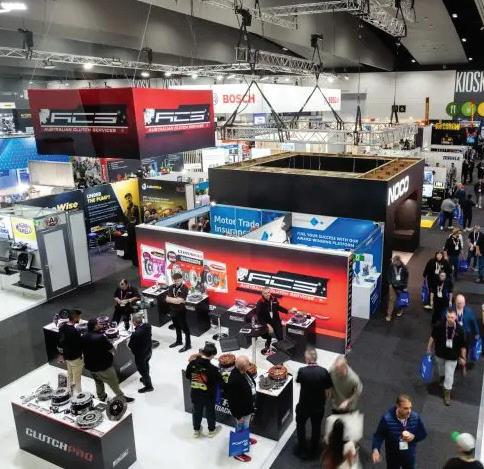
Automotive workshops
Parts importers and distributors
Transmission specialists
Automotive recyclers
Towing operators
Panel beaters and painters
Crash repairers
Tyre dealers
Suspension and underbody repairers
Steering specialists
Towing operators
Auto-electrical repairers
New- and used-car dealers
Air conditioning repairers
Trucking and transport
Editorial: editor@autochannel.co.nz
Advertising: Mike White michael.white@viamedia.co.nz
Mark Everleigh mark.everleigh@viamedia.co.nz
All other enquiries to: autochannel.co.nz
Auto Channel is produced by Via Media, publishers of two of NZ’s biggest-selling automotive magazines: NZ Performance Car and NZV8.

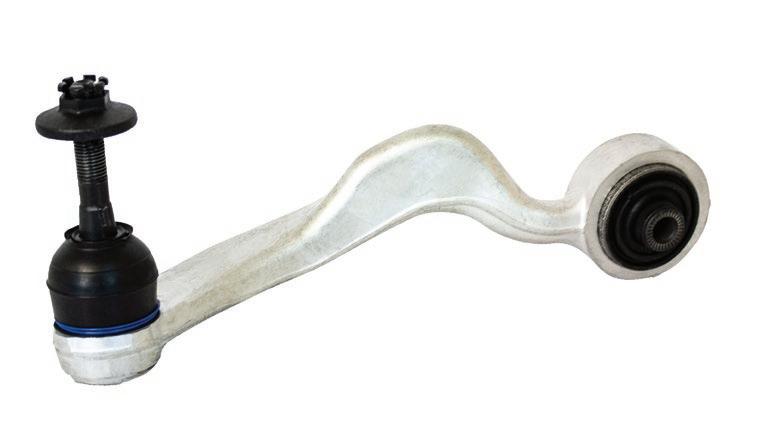
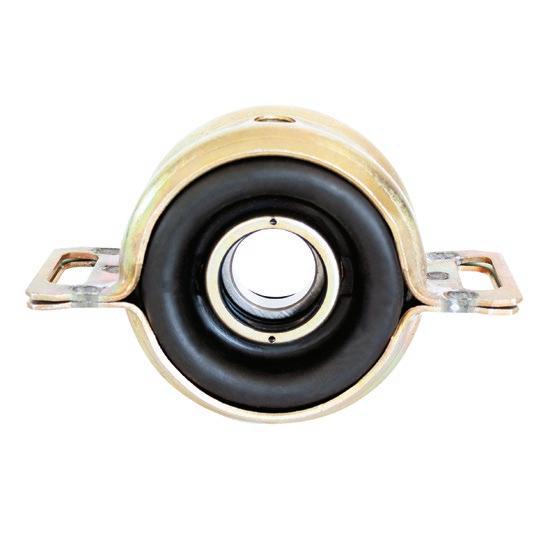
HANGER MOUNTS
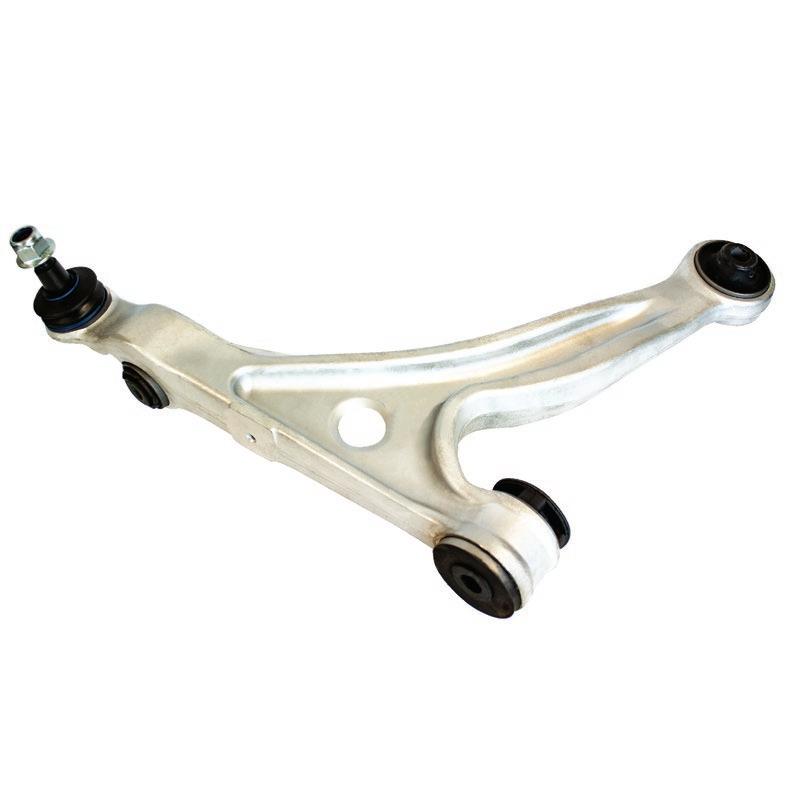
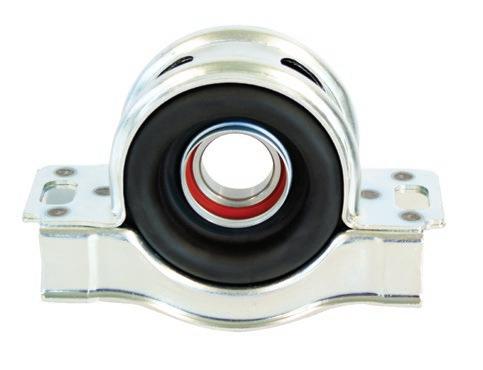
ENGINE MOUNTS