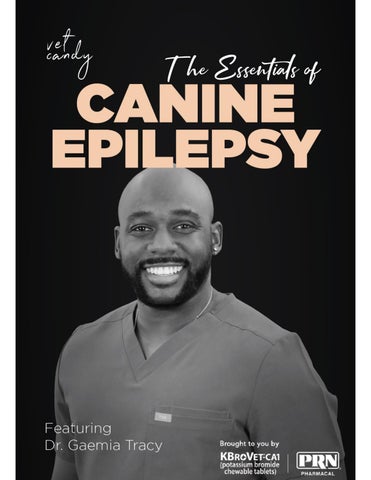
Essentials of Canine Epilepsy

Page 1


It’s

always there— looming, unpredictable, and yet certain.

A diagnosis of idiopathic epilepsy can feel like a dark cloud always hanging around. A persistent, lingering anxiety as they wait for the next seizure episode to strike.

KBroVet®-CA1 (potassium bromide chewable tablets) For complete prescribing information, see full package insert. Caution: Federal law restricts this drug to use by or on the order of a licensed veterinarian. It is a violation of Federal Law to use this product other than as directed in the labeling. Indication: for the control of seizures associated with idiopathic epilepsy in dogs. Warnings: Not for human use. Keep out of reach of children. Contact a physician in case of accidental ingestion by humans. KBroVet®-CA1 should not be used in animals with a history of hypersensitivity to bromide or any of the components of the tablets. Not for use in cats. Keep tablets in a secured location out of reach of dogs, cats, and other animals to prevent accidental ingestion or overdose. Precautions: The safe use of KBroVet-CA1 Chewable Tablets has not been evaluated in dogs that are intended for breeding, that are pregnant or lactating, or less than 6 months of age. Reproductive e ects of potassium bromide (KBr) have been reported in other species. In dogs, ataxia, diarrhea, hematochezia, excessive salivation, shivering, skin lesions, stupor progressing to coma, and death have been reported with high doses.1,2 Dogs receiving KBroVet-CA1 should be carefully monitored when changing diets, administering chloride-containing IV uids, and administering concurrent medications. Careful monitoring is important in dogs that have a condition that may cause di culty maintaining electrolyte balance. Animals with decreased renal function may be predisposed to bromide toxicosis. Some dogs may experience epileptic episodes that are unresponsive or refractory to KBr monotherapy and KBr alone may not be adequate treatment for every dog with idiopathic epilepsy. Adverse Reactions: In a retrospective eld of study of 51 dogs diagnosed with idiopathic epilepsy and treated with KBr, the most common clinical abnormalities documented in the 60 day period after start of KBr therapy were increased appetite, weight gain, vomiting/regurgitation and sedation. Additional eld reports of clinical abnormalities in dogs dosed with KBr for idiopathic epilepsy showed polyphagia, polyuria, polydipsia, weight gain, lethargy and decreased physical activity. Ataxia was the most common body-system (i.e. CNS) speci c clinical nding. Adverse events associated with concurrent use of KBr with other antiepileptic drugs such as phenobarbital have been reported, including sedation, irritability, restlessness, depression, behavioral changes, ataxia, hind limb paresis, mydriasis, stupor, and coma. These neurologic signs were reported to be reversible.1,3 Reasonable Expectation of E ectiveness: This drug is conditionally approved pending a full demonstration of e ectiveness. In a dose determination retrospective study involving a total of 284 canine case records, the mean total oral dose was determined to be 46.6 (±21.9) mg/kg/day with a range of 24.5-68.3 mg/kg/day, describing the range to achieve serum bromide concentrations within 10% of the published therapeutic range for dogs with idiopathic epilepsy. In a pilot retrospective study spanning a 5.7 year period, involving the review of case records of 51 client-owned dogs contributed by 18 veterinarians, and comparing the 30 day period before initial treatment with KBr and the 30 day period of steady state KBr dosing, 27 cases were determined as valid for evaluation of e ectiveness. The mean maintenance dose in those 27 cases was 37 mg/kg/day, with a mean duration of 286 days. Approximately 67% of those cases were dosed once daily and 33% were dosed twice daily. Based on seizure count results, 70% of the 27 cases were de ned as “success” and 30% were de ned as “failures.” Based on seizure event day results, 67% were de ned as “success” and 33% were de ned as “failures.” Seizure severity score decreased or did not change in 25 of the 27 cases evaluated for e ectiveness. Overall, of the 27 dogs included in the e ectiveness analysis, 67% were considered treatment successes and 33% were considered treatment failures. To obtain full product information please call 800-874-9764 or visit KBroVet.com.

Conditionally approved by FDA pending a full demonstration of e ectiveness under application number 141-544. Pegasus Laboratories, Inc. Dosage and Administration: For use in dogs only. The total recommended daily dosage range for KBroVet Chewable Tablets is 25-68 mg/kg, dosed with or without food, and should be adjusted based on monitoring of clinical response of the individual patient.4 Use of an initial loading dosage regimen may be considered on an individual patient basis, balancing the time required to achieve a therapeutic response while minimizing side e ects. Storage: Store at 20-25°C (68-77°F).

WARNINGS: NOT FOR USE IN HUMANS. KEEP THIS AND ALL DRUGS OUT OF REACH OF CHILDREN.

1. Baird-Heinz, H. E., Van Schoick, A. N. L., Pelsor, F. R., Ranivand, L., & Hungerford, L. L. (2012). A systematic review of the safety of potassium bromide in dogs. Journal of the American Veterinary Medical Association, 240(6), 705-715. 2. Nichols, E. S., Trepanier, L. A., & Linn, K. (1996). Bromide toxicosis secondary to renal insu ciency in an epileptic dog. Journal of the American Veterinary Medical Association, 208(2), 231-233.

3. Boothe, D. M., Dewey, C., & Carpenter, D. M. (2012). Comparison of phenobarbital with bromide as a rst-choice antiepileptic drug for treatment of epilepsy in dogs. Journal of the American Veterinary Medical Association, 240(9), 1073-1083. 4. Podell, M., & Fenner, W. R. (1993). Bromide therapy in refractory canine idiopathic epilepsy. Journal of Veterinary Internal Medicine, 7(5), 318-327.

Comprehensve Insghts nto Canne Eplepsy Management: A Veternary Perspectve

Admnstraton and Montorng of Potassum Bromde

Decpherng the Multfactoral Etology of Canne Eplepsy: A Comprehensve Revew

Phenobarbtal n the Management of Canne Sezures

The Hstory of Potassum BromdeThe World's Oldest Antconvulsant

Veternary Professonals

Zonsamde n Canne Sezure Management:

Topramate n Canne Sezure Management:

Ultmate Gude to Educatng and Supportng Owners of Newly Dagnosed Epleptc Pets!

Explorng the Ecacy and Safety of KBroVet-CA1 n Canne Eplepsy: Lessons from a Retrospectve Plot Study

Comprehensive Insights into Canine Epilepsy Management: A Veterinary Perspective

Canne eplepsy, characterzed by sezures or convulsons, presents a challengng neurologcal puzzle for both pet owners and veternary professonals. Ths multfaceted dsorder nvolves paroxysmal dsturbances n the cerebral (forebran) regon, resultng n abnormal electrcal actvty and overt sgns known as sezures. In ths exploraton of canne eplepsy, we wll delve nto the ntrcaces of ths condton, encompassng causes, sezure types, dagnostcs, and treatment.

Understandng Canne Sezures

Canne sezures are ntrcate events characterzed by sudden, abnormal electrcal actvty n the bran, resultng n a loss of conscousness or control over a specfc muscle group. Identfyng the root causes of sezures s paramount for eectve management, wth trggers rangng from metabolc dsorders, bran tumors, toxn ngeston, trauma, brth defects, to dopathc eplepsy.

Explorng Types of Canne Sezures

Sezures n dogs manfest n derent forms, each presentng dstnct characterstcs. Focal sezures aect specfc muscle groups, wth dogs typcally remanng conscous. Absent sezures may nvolve starng o or zonng out, often accompaned by fallng over or loss of conscousness. Generalzed sezures, or "Grand Mal," encompass full-body convulsons wth a loss of conscousness, lastng between 30 seconds to 3 mnutes.

The Three Phases of a Canne Sezure

Understandng the three phases of a canne sezure s crucal for both pet owners and veternarans. The pre-ctal phase may nvolve hdng or aenton-seekng behavor, along wth sgns of worry or confuson. The ctal phase encompasses the sezure event, whle the post-ctal phase may nclude confuson, fatgue, aggresson, loss of vson, and pacng, potentally lastng up to one week.

Dagnostc Procedures for Canne Sezures

Dagnosng the cause of sezures n dogs necesstates a comprehensve evaluaton by veternarans. Ths nvolves dscussng the pet's general hstory, sezure frequency, and ther appearance. Dagnostc tools may nclude general chemstry, complete blood count (CBC), urnalyss, and advanced procedures such as bran MRI and spnal tap for cerebrospnal flud analyss.

Treatment Optons for Canne Sezures

The treatment approach for canne sezures vares based on the underlyng cause. Idopathc eplepsy often nvolves the use of ant-sezure medcatons. Condtons lke menngts may requre ant-nflammatory and mmunosuppressve medcatons, whle bran tumors may necesstate surgcal nterventon, radaton therapy, or chemotherapy. Immedate toxn removal s crucal for toxn ngeston cases. Supportve care and blood thnners may be prescrbed for strokes, and addressng specfc dseases s essental for metabolc condtons.

Understandng Canne Eplepsy Medcatons: A Multfaceted Approach

Managng canne eplepsy often nvolves a combnaton of medcatons are commonly used, each wth ts unque mechansm of acton:

talored to the ndvdual needs of each patent. The followng medcatons

There’s help to steady the storm

Formulated specifically for dogs, conditionally approved KBroVet ® -CA1 is a flavored, once-a-day option to control seizures associated with idiopathic epilepsy. Renally excreted, it’s an ideal choice for dogs with compromised liver function.

Scan here to learn more about conditionally approved drugs

KBroVet®-CA1 (potassium bromide chewable tablets) For complete prescribing information, see full package insert. Caution: Federal law restricts this drug to use by or on the order of a licensed veterinarian. It is a violation of Federal Law to use this product other than as directed in the labeling. Indication: for the control of seizures associated with idiopathic epilepsy in dogs. Warnings: Not for human use. Keep out of reach of children. Contact a physician in case of accidental ingestion by humans. KBroVet®-CA1 should not be used in animals with a history of hypersensitivity to bromide or any of the components of the tablets. Not for use in cats. Keep tablets in a secured location out of reach of dogs, cats, and other animals to prevent accidental ingestion or overdose. Precautions: The safe use of KBroVet-CA1 Chewable Tablets has not been evaluated in dogs that are intended for breeding, that are pregnant or lactating, or less than 6 months of age. Reproductive e ects of potassium bromide (KBr) have been reported in other species. In dogs, ataxia, diarrhea, hematochezia, excessive salivation, shivering, skin lesions, stupor progressing to coma, and death have been reported with high doses.1,2 Dogs receiving KBroVet-CA1 should be carefully monitored when changing diets, administering chloride-containing IV uids, and administering concurrent medications. Careful monitoring is important in dogs that have a condition that may cause di culty maintaining electrolyte balance. Animals with decreased renal function may be predisposed to bromide toxicosis. Some dogs may experience epileptic episodes that are unresponsive or refractory to KBr monotherapy and KBr alone may not be adequate treatment for every dog with idiopathic epilepsy. Adverse Reactions: In a retrospective eld of study of 51 dogs diagnosed with idiopathic epilepsy and treated with KBr, the most common clinical abnormalities documented in the 60 day period after start of KBr therapy were increased appetite, weight gain, vomiting/regurgitation and sedation. Additional eld reports of clinical abnormalities in dogs dosed with KBr for idiopathic epilepsy showed polyphagia, polyuria, polydipsia, weight gain, lethargy and decreased physical activity. Ataxia was the most common body-system (i.e. CNS) speci c clinical nding. Adverse events associated with concurrent use of KBr with other antiepileptic drugs such as phenobarbital have been reported, including sedation, irritability, restlessness, depression, behavioral changes, ataxia, hind limb paresis, mydriasis, stupor, and coma. These neurologic signs were reported to be reversible.1,3 Reasonable Expectation of E ectiveness: This drug is conditionally approved pending a full demonstration of e ectiveness. In a dose determination retrospective study involving a total of 284 canine case records, the mean total oral dose was determined to be 46.6 (±21.9) mg/kg/day with a range of 24.5-68.3 mg/kg/day, describing the range to achieve serum bromide concentrations within 10% of the published therapeutic range for dogs with idiopathic epilepsy. In a pilot retrospective study spanning a 5.7 year period, involving the review of case records of 51 client-owned dogs contributed by 18 veterinarians, and comparing the 30 day period before initial treatment with KBr and the 30 day period of steady state KBr dosing, 27 cases were determined as valid for evaluation of e ectiveness. The mean maintenance dose in those 27 cases was 37 mg/kg/day, with a mean duration of 286 days. Approximately 67% of those cases were dosed once daily and 33% were dosed twice daily. Based on seizure count results, 70% of the 27 cases were de ned as “success” and 30% were de ned as “failures.” Based on seizure event day results, 67% were de ned as “success” and 33% were de ned as “failures.” Seizure severity score decreased or did not change in 25 of the 27 cases evaluated for e ectiveness. Overall, of the 27 dogs included in the e ectiveness analysis, 67% were considered treatment successes and 33% were considered treatment failures. To obtain full product information please call 800-874-9764 or visit KBroVet.com.

Conditionally approved by FDA pending a full demonstration of e ectiveness under application number 141-544. Pegasus Laboratories, Inc. Dosage and Administration: For use in dogs only. The total recommended daily dosage range for KBroVet Chewable Tablets is 25-68 mg/kg, dosed with or without food, and should be adjusted based on monitoring of clinical response of the individual patient.4 Use of an initial loading dosage regimen may be considered on an individual patient basis, balancing the time required to achieve a therapeutic response while minimizing side e ects. Storage: Store at 20-25°C (68-77°F).

WARNINGS: NOT FOR USE IN HUMANS. KEEP THIS AND ALL DRUGS OUT OF REACH OF CHILDREN.

1. Baird-Heinz, H. E., Van Schoick, A. N. L., Pelsor, F. R., Ranivand, L., & Hungerford, L. L. (2012). A systematic review of the safety of potassium bromide in dogs. Journal of the American Veterinary Medical Association, 240(6), 705-715. 2. Nichols, E. S., Trepanier, L. A., & Linn, K. (1996). Bromide toxicosis secondary to renal insu ciency in an epileptic dog. Journal of the American Veterinary Medical Association, 208(2), 231-233.

3. Boothe, D. M., Dewey, C., & Carpenter, D. M. (2012). Comparison of phenobarbital with bromide as a rst-choice antiepileptic drug for treatment of epilepsy in dogs. Journal of the American Veterinary Medical Association, 240(9), 1073-1083. 4. Podell, M., & Fenner, W. R. (1993). Bromide therapy in refractory canine idiopathic epilepsy. Journal of Veterinary Internal Medicine, 7(5), 318-327.

Phenobarbtal:

Mechansm of Acton: As a barbturate, phenobarbtal enhances the actvty of the neurotransmer gamma-amnobutyrc acd (GABA), resultng n a calmng eect on the bran.

Montorng:

Therapeutc blood level testng s avalable to ensure the medcaton s wthn the optmal range for sezure control.

Phenobarbtal for Sezure Control

In addton to potassum bromde, phenobarbtal stands out as a notable medcaton for controllng sezures n dogs. As a barbturate, phenobarbtal works by enhancng the actvty of a neurotransmer called gamma-amnobutyrc acd (GABA), resultng n a calmng eect on the bran. It s often prescrbed for long-term use and requres careful montorng to ensure therapeutc blood levels are mantaned.

Potassum Bromde (Kbr):

Potassum bromde emerges as a well-establshed medcaton n the management of sezures n canne patents, especally those wth dopathc eplepsy. Ths antepleptc drug plays a pvotal role n stablzng nerve cell membranes and reducng the exctablty of neurons, mnmzng the occurrence of sezures. superscrpt ®-CA1, an FDA condtonally approved flavored chewable tablet contanng potassum bromde, s a valuable addton to the treatment arsenal. KbroVet(R)-CA1 s admnstered once a day and has a 21 day half-lfe.

Mechansm of Acton:

KBr, a halde salt, passes through neuronal chlorde on channels, hyperpolarzng neuronal membranes. Ths rases the sezure threshold and stablzes neurons aganst exctatory nput from epleptc foc.

Montorng:

Lke phenobarbtal, therapeutc blood level testng s employed to mantan an eectve concentraton n the dog's system.

Admnstraton and Montorng of Potassum Bromde

Typcally admnstered orally, the ecacy of potassum bromde s closely montored through therapeutc blood level testng. Ths ensures that the medcaton s at an optmal concentraton n the dog's system to eectvely control sezures. The dosage of potassum bromde s often weght-dependent, emphaszng the mportance of precse dosng.

Levetracetam:

Mechansm of Acton: Levetracetam modulates neurotransmer release by bndng to synaptc vescle proten SV2A, thus reducng neuronal hyperexctablty.

Montorng:

Whle therapeutc blood level testng s less common for levetracetam, regular veternary check-ups are essental to assess overall health.

Zonsamde:

Mechansm of Acton: Zonsamde prmarly works by blockng sodum and calcum channels, stablzng neuronal membranes and reducng exctablty.

Montorng: Close veternary montorng s crucal to evaluate the medcaton's eectveness and address any potental sde eects.

Topramate:

Mechansm of Acton:

Topramate modulates sodum channels, enhances GABA actvty, and

nhbts exctatory neurotransmers, collectvely contrbutng to ts antepleptc eects.

Montorng: on the ndvdual response of the patent.

Veternary supervson s necessary to adjust the medcaton based

Long-Term Consderatons and Combnaton Therapy

Once ant-sezure medcaton s ntated, t s typcally a lfelong commtment. Consstency n admnstraton s paramount to achevng optmal sezure control. In certan cases, a combnaton of medcatons, known as combnaton therapy, may be recommended. Ths approach ams to address sezures comprehensvely by leveragng the strengths of derent medcatons.

Optmal Sezure Control and Seekng Urgent Veternary Care

Achevng optmal sezure control s a prmary goal, defned as experencng one sezure every 2 to 3 months or a 50% reducton n overall sezure frequency. Vglant pet owners should seek veternary aenton n scenaros such as cluster sezures or status epleptcus, where njectable ant-sezure medcaton may be requred.

Mantanng a Sezure Log for Canne Eplepsy

Pet owners can sgnfcantly contrbute to the management of canne eplepsy by mantanng a sezure log. Ths log helps dentfy paerns, trggers, and potental factors nfluencng sezure occurrence. Record detals such as the date, tme, duraton, nature of the event, and assocated crcumstances.

Montorng and Therapeutc Blood Level Testng

Therapeutc blood level testng plays a pvotal role n the ongong management of canne eplepsy. Regular testng ensures that the concentraton of the medcaton n the dog's system s wthn the therapeutc range, maxmzng ecacy whle mnmzng potental sde eects. For medcatons lke phenobarbtal and potassum bromde, these tests provde valuable nsghts for adjustng dosage as needed.

Collaboratve Care for Canne Eplepsy Patents

Eectve management of canne eplepsy requres a collaboratve eort between pet owners and veternary professonals. Open communcaton s essental for montorng the pet's response to medcaton, addressng concerns, and makng nformed decsons about potental adjustments to the treatment plan.

As we unlock the secrets of canne eplepsy treatment, a personalzed and nuanced approach emerges. Medcatons lke phenobarbtal, potassum bromde, levetracetam, zonsamde, and topramate oer hope for sezure control, wth ongong montorng and therapeutc blood level testng gudng the way. The commtment to lfelong medcaton and the possblty of combnaton therapy underscore the mportance of a collaboratve journey towards enhancng the qualty of lfe for our furry companons aected by eplepsy.

Eectvely managng sezures n dogs s an art, as each pet responds unquely to varous medcatons. Open communcaton and collaboraton between veternarans and pet owners are key. Sharng experences and nsghts contrbute to a collectve understandng of ths complex neurologcal condton, ultmately enhancng the qualty of lfe for dogs aected by eplepsy. If your pet has experenced sezures, consult wth your veternaran to talor a comprehensve and ndvdualzed treatment plan suted to your furry frend's specfc needs.

Decpherng the Multfactoral Etology of Canne Eplepsy:

Canne eplepsy, a prevalent neurologcal dsorder, poses sgnfcant challenges n both dagnoss and treatment. Ths comprehensve revew delves nto the multfaceted etology of eplepsy n dogs, explorng genetc predspostons, envronmental factors, and emergng research n ths feld.

Eplepsy n dogs remans a compellng subject of study, gven ts mpact on the qualty of lfe for aected cannes and ther owners. Understandng the dverse causes of eplepsy s crucal for eectve dagnoss and targeted therapeutc nterventons.

Genetc Predspostons

Genetc factors play a substantal role n canne eplepsy, wth several breeds demonstratng a predsposton to the dsorder. The dentfcaton of specfc genetc markers assocated wth eplepsy, such as mutatons n on channels and neurotransmer 1 receptors, has provded valuable nsghts nto the heredtary nature of the condton.

Envronmental Trggers

Envronmental factors contrbute sgnfcantly to the manfestaton of eplepsy n susceptble dogs. These trggers may nclude exposure to toxns, nfectous agents, or traumatc events. Investgatng the nterplay between genetc predspostons and 2 envronmental nfluences s essental for a comprehensve understandng of eplepsy etology.

Inflammatory and Immune Mechansms

Emergng research suggests a lnk between eplepsy and nflammatory or mmune-medated processes. Understandng the role of 3 neuronflammaton and autommune responses n the development of sezures provdes new avenues for therapeutc exploraton.

Metabolc Dsorders

4

Certan metabolc dsorders, such as hepatc encephalopathy or hypoglycema, can lead to sezures n dogs. Explorng the ntrcate connectons between metabolc rregulartes and eplepsy broadens our comprehenson of the dsorder's underlyng mechansms.

Neuroanatomcal Abnormaltes

Structural abnormaltes wthn the canne bran, ncludng malformatons or neoplasms, may serve as focal ponts for epleptc actvty. Advanced magng technques enable researchers to correlate neuroanatomcal rregulartes wth sezure occurrence.

As our understandng of canne eplepsy evolves, ongong research ams to unravel addtonal complextes n ts etology. Targetng specfc causatve factors wll undoubtedly enhance dagnostc accuracy and gude the development of more eectve therapeutc strateges for dogs wth eplepsy.

References:

Hülsmeyer V, Zmmermann R, Brauer C, Sauter-Lous C, Fscher A. Eplepsy n Border Colles: clncal manfestaton, outcome, and mode of nhertance. J Vet Intern Med. 2010 Jan-Feb;24(1):171-8. do: 10.1111/j.1939-1676.2009.0438.x. PMID: 20391637.

Berendt M, Gulløv CH, Chrstensen SL, Gudmundsdor H, Gredal H, Fredholm M, Alban L. Prevalence and characterstcs of eplepsy n the Belgan shepherd varants Groenendael and Tervueren born n Denmark 1995-2004. Acta Vet Scand. 2008 Dec 22;50(1):51. do: 10.1186/1751-0147-50-51. PMID: 19102738; PMCID: PMC2633289

McManus RM, Heneka MT. Role of neuronflammaton n neurodegeneraton: new nsghts. Alzhemers Res Ther. 2017 Mar 4;9(1):14. do: 10.1186/s13195-017-0241-2. PMID: 28259169; PMCID: PMC5336609.

Thomsen BB, Gredal H, Wrenfeldt M, Krstensen BW, Clausen BH, Larsen AE, Fnsen B, Berendt M, Lambertsen KL. Spontaneous schaemc stroke lesons n a dog bran: neuropathologcal charactersaton and comparson to human schaemc stroke. Acta Vet Scand. 2017 Jan 13;59(1):7. do: 10.1186/s13028-016-0275-7. PMID: 28086932; PMCID: PMC5237225.

KBroVet®-CA1 (potassium bromide chewable tablets)

Formulated specifically for dogs, conditionally-approved KBroVet-CA1 is an option to control seizures associated with idiopathic epilepsy. It’s an ideal choice for dogs with compromised liver function that cannot tolerate anticonvulsants that affect the liver.

KBroVet-CA1 has the longest half-life of all seizure medication options. So if an owner misses a dose, fluctuation in drug concentration is unlikely to occur, minimizing the occurrence of a seizure.

Ask your distributor representative for more information about KBroVet-CA1 today!

Scan here to learn more about conditionally approved drugs

KBroVet®-CA1 (potassium bromide chewable tablets) For complete prescribing information, see full package insert. Caution: Federal law restricts this drug to use by or on the order of a licensed veterinarian. It is a violation of Federal Law to use this product other than as directed in the labeling. Indication: for the control of seizures associated with idiopathic epilepsy in dogs. Warnings: Not for human use. Keep out of reach of children. Contact a physician in case of accidental ingestion by humans. KBroVet®-CA1 should not be used in animals with a history of hypersensitivity to bromide or any of the components of the tablets. Not for use in cats. Keep tablets in a secured location out of reach of dogs, cats, and other animals to prevent accidental ingestion or overdose. Precautions: The safe use of KBroVet-CA1 Chewable Tablets has not been evaluated in dogs that are intended for breeding, that are pregnant or lactating, or less than 6 months of age. Reproductive e ects of potassium bromide (KBr) have been reported in other species. In dogs, ataxia, diarrhea, hematochezia, excessive salivation, shivering, skin lesions, stupor progressing to coma, and death have been reported with high doses.1,2 Dogs receiving KBroVet-CA1 should be carefully monitored when changing diets, administering chloride-containing IV uids, and administering concurrent medications. Careful monitoring is important in dogs that have a condition that may cause di culty maintaining electrolyte balance. Animals with decreased renal function may be predisposed to bromide toxicosis. Some dogs may experience epileptic episodes that are unresponsive or refractory to KBr monotherapy and KBr alone may not be adequate treatment for every dog with idiopathic epilepsy. Adverse Reactions: In a retrospective eld of study of 51 dogs diagnosed with idiopathic epilepsy and treated with KBr, the most common clinical abnormalities documented in the 60 day period after start of KBr therapy were increased appetite, weight gain, vomiting/regurgitation and sedation. Additional eld reports of clinical abnormalities in dogs dosed with KBr for idiopathic epilepsy showed polyphagia, polyuria, polydipsia, weight gain, lethargy and decreased physical activity. Ataxia was the most common body-system (i.e. CNS) speci c clinical nding. Adverse events associated with concurrent use of KBr with other antiepileptic drugs such as phenobarbital have been reported, including sedation, irritability, restlessness, depression, behavioral changes, ataxia, hind limb paresis, mydriasis, stupor, and coma. These neurologic signs were reported to be reversible.1,3 Reasonable Expectation of E ectiveness: This drug is conditionally approved pending a full demonstration of e ectiveness. In a dose determination retrospective study involving a total of 284 canine case records, the mean total oral dose was determined to be 46.6 (±21.9) mg/kg/day with a range of 24.5-68.3 mg/kg/day, describing the range to achieve serum bromide concentrations within 10% of the published therapeutic range for dogs with idiopathic epilepsy. In a pilot retrospective study spanning a 5.7 year period, involving the review of case records of 51 client-owned dogs contributed by 18 veterinarians, and comparing the 30 day period before initial treatment with KBr and the 30 day period of steady state KBr dosing, 27 cases were determined as valid for evaluation of e ectiveness. The mean maintenance dose in those 27 cases was 37 mg/kg/day, with a mean duration of 286 days. Approximately 67% of those cases were dosed once daily and 33% were dosed twice daily. Based on seizure count results, 70% of the 27 cases were de ned as “success” and 30% were de ned as “failures.” Based on seizure event day results, 67% were de ned as “success” and 33% were de ned as “failures.” Seizure severity score decreased or did not change in 25 of the 27 cases evaluated for e ectiveness. Overall, of the 27 dogs included in the e ectiveness analysis, 67% were considered treatment successes and 33% were considered treatment failures. To obtain full product information please call 800-874-9764 or visit KBroVet.com.

Conditionally approved by FDA pending a full demonstration of e ectiveness under application number 141-544. Pegasus Laboratories, Inc. Dosage and Administration: For use in dogs only. The total recommended daily dosage range for KBroVet Chewable Tablets is 25-68 mg/kg, dosed with or without food, and should be adjusted based on monitoring of clinical response of the individual patient.4 Use of an initial loading dosage regimen may be considered on an individual patient basis, balancing the time required to achieve a therapeutic response while minimizing side e ects. Storage: Store at 20-25°C (68-77°F).

WARNINGS: NOT FOR USE IN HUMANS. KEEP THIS AND ALL DRUGS OUT OF REACH OF CHILDREN.

1. Baird-Heinz, H. E., Van Schoick, A. N. L., Pelsor, F. R., Ranivand, L., & Hungerford, L. L. (2012). A systematic review of the safety of potassium bromide in dogs. Journal of the American Veterinary Medical Association, 240(6), 705-715. 2. Nichols, E. S., Trepanier, L. A., & Linn, K. (1996). Bromide toxicosis secondary to renal insu ciency in an epileptic dog. Journal of the American Veterinary Medical Association, 208(2), 231-233.

3.

M., Dewey, C., & Carpenter, D. M. (2012). Comparison of phenobarbital with bromide as a rst-choice antiepileptic drug for treatment of epilepsy in dogs. Journal of the American Veterinary Medical Association, 240(9), 1073-1083. 4. Podell, M., & Fenner, W. R. (1993). Bromide therapy in refractory canine idiopathic epilepsy. Journal of Veterinary Internal Medicine, 7(5), 318-327.

Boothe, D.

Phenobarbtal n the Management of Canne Sezures

Pharmacology of Phenobarbtal:

Phenobarbtal, a long-actng barbturate, exerts ts antconvulsant eects by augmentng nhbtory neurotransmsson va gammaamnobutyrc acd (GABA). Its nteracton wth the GABA-A receptor extends the openng tme of the assocated chlorde on channel, leadng to ncreased nhbtory postsynaptc potentals and reduced neuronal exctablty, ultmately mtgatng sezure actvty.

Mechansms of Acton:

Beyond GABAergc modulaton, phenobarbtal may also act through glutamate antagonsm, further dmnshng exctatory neurotransmsson and dampenng neuronal hyperexctablty.

Dosng Consderatons:

Orally admnstered, phenobarbtal boasts a lengthy half-lfe n dogs, rangng from 40 to 120 hours. Intal dosng, typcally at 2 to 3 mg/kg twce daly, may be adjusted based on therapeutc response and serum drug concentratons.

Montorng Parameters:

Routne montorng of serum phenobarbtal concentratons s paramount, mantanng levels wthn the therapeutc range of 15 to 40 µg/mL. Lver functon tests and complete blood counts (CBC) should be regularly assessed due to potental hepatotoxcty and hematologcal sde eects.

Potental Sde Eects:

Long-term phenobarbtal use may pose hepatotoxc rsks, necesstatng vglant lver functon montorng. Common sde eects nclude polyphaga, weght gan, and sedaton, the laer especally durng ntal treatment phases. Adjustments n dosage may be requred to strke a balance between sezure control and sedaton avodance.

Phenobarbtal remans a pvotal opton for managng canne sezures, oerng eectve control of epleptc epsodes. However, ts use mandates careful consderaton of ndvdual patent factors, vglant montorng of serum drug concentratons, and a watchful eye for potental sde eects. Veternary professonals must stay abreast of the latest research and gudelnes to optmze outcomes for ther patents.

References:

Podell, M., & Fenner, W. R. (2013). Bromdes and phenobarbtal for treatment of eplepsy n dogs. Journal of the Amercan Veternary Medcal Assocaton, 242(4), 542-549.

Boothe, D. M. (2014). Antepleptc drugs. In Small Anmal Clncal Pharmacology (2nd ed., pp. 517-552). Saunders.

Charalambous, M., Shvapour, S. K., Brodbelt, D. C., & Volk, H. A. (2014). Antepleptc drugs' tolerablty and safety – A systematc revew and meta-analyss of adverse eects n dogs. BMC Veternary Research, 10(1), 1-19.

The Hstory of Potassum Bromde - The World's Oldest Antconvulsant

Potassum bromde (KBr) has a fascnatng and somewhat dsturbng hstory. Bromde s the oldest antconvulsant and was used n humans n the early 1800s to treat a varety of condtons (n many cases unsuccessfully) ncludng syphls, prapsm, splenomegaly, tetanus, whoopng cough, and gout. It became recognzed as a potental eectve ant-epleptc drug (AED) 1,2 after ts use by obstetrcan Sr Charles Locock n 1857 for the treatment of "hystercal eplepsy" n women. Hystercal eplepsy, or eplepsy dervng from the uterus, s suspected to refer n part to catamenal eplepsy, whch aects approxmately 1/3 of epleptc women and has been defned as an ncrease n sezure frequency begnnng mmedately before or durng menses.3 Several references also suggest hystercal eplepsy referred to eplepsy that was beleved to be trggered by sexual exctement n women. Ths confuson may be due n part to the hstorcal connecton between eplepsy and syphls. Syphls aected over 1,2 20% of people aged 15-34 n late 18th century London, and eplepsy was a common complcaton n many patents. Syphls was known to be a sexually transmed dsease and women wth syphls were consdered promscuous, sexually mmoral, and treated as socal outcasts. Many women around the world were nsttutonalzed due to concern they would nfect solders wth 1,2 syphls and destroy mltares. Sr Charles Locock took bromde hmself and dscovered t caused mpotence. Ths served as further evdence to Locock that bromde's ablty to reduce sexual exctement was the lkely cause for sezure reducton.1,2 Bromde became wdely used as an AED at that tme and was later used most commonly as a sedatve to treat nsomna and dampen sexual exctement n women and men.

In 1859, Sr Samuel Wlks, a physcan and later Presdent of the Royal College of Physcans of London, began usng bromde to 1,2 treat all forms of eplepsy and was the frst to publsh on ts ecacy n 1861. At that tme, odde was used most commonly to treat syphls. Wlks used bromde as an alternatve to odde as t was more eectve n treatng goter and glandular Sr

2 swellngs and concdentally found t to be more eectve n treatng sezures as well.

Phenobarbtal replaced bromde as the AED of choce n humans n 1912, and bromde has been essentally obsolete n the management of human eplepsy snce the 1920s due to promnent negatve sde eects ncludng sedaton, weakness, psychotc behavors, and coma. Bromde s now only recommended as a tertary AED for select refractory sezure dsorders n 4,5 chldren when other treatments have faled.

Bromde was descrbed for use n anmals n the late 1800s but ganed popularty as an AED n the 1980s. KBr s reportedly the second most commonly prescrbed AED behnd phenobarbtal; most veternarans use t as an add-on medcaton when 10 sezures are not well controlled wth phenobarbtal alone.About half of epleptcs can be controlled wth an approprate dose of the frst AED regardless of mechansm of acton assumng t decreases neuronal exctaton and/or ncreases neuronal 6 nhbton, and studes n humans have shown no specfc drug superorty. Some drugs are undoubtedly beer tolerated than others and drug sde eect profle greatly nfluences AED choce n humans, thereby lmtng the use of KBr. The body of evdence adequately evaluatng AEDs n veternary medcne s very lmted gven how few studes are desgned as prospectve, randomzed, blnded, placebo-controlled, cross-over studes wth large enough sample sze and adequate follow up tme to assess sezure control. Many veternary AED studes also carry nherent selecton, performance, and detecton bas whch make 6–8 results challengng to nterpret.

Use of Bromde n Anmals

of Bromde n Anmals

9 6 Bromde was descrbed for use n anmals n the late 1800s but ganed popularty as an AED n the 1980s. KBr s reportedly the second most commonly prescrbed AED behnd phenobarbtal; most veternarans use t as an add-on medcaton when 10 sezures are not well controlled wth phenobarbtal alone.About half of epleptcs can be controlled wth an approprate dose of the frst AED regardless of mechansm of acton assumng t decreases neuronal exctaton and/or ncreases neuronal 6 nhbton, and studes n humans have shown no specfc drug superorty. Some drugs are undoubtedly beer tolerated than others and drug sde eect profle greatly nfluences AED choce n humans, thereby lmtng the use of KBr. The body of evdence adequately evaluatng AEDs n veternary medcne s very lmted gven how few studes are desgned as prospectve, randomzed, blnded, placebo-controlled, cross-over studes wth large enough sample sze and adequate follow up tme to assess sezure control. Many veternary AED studes also carry nherent selecton, performance, and detecton bas whch make 6–8 results challengng to nterpret.

Phenobarbtal was essentally the sole AED used n anmals for many years. Potassum bromde was ntroduced prmarly as an adjunctve medcaton n dogs where phenobarbtal was neectve (even at hgh doses) or n dogs wth severe hepatoxcty or 11 bone marrow suppresson assocated wth phenobarbtal. When added to phenobarbtal, there s a reported decrease n 6,12–14 sezure frequency and ntensty, however there s a hgh degree of bas n many KBr drug studes. There are a few blnded, randomzed clncal trals evaluatng the ecacy of KBr and t s currently consdered a grade B antconvulsant, meanng t has 6,8 been gven a moderate recommendaton and s most lkely an eectve treatment. In some dogs, addton of KBr allows for 12–14 dose reducton or complete taperng and dscontnuaton of phenobarbtal. Steady state bromde levels should be acheved 12 before aemptng to wean o phenobarbtal.

Potassum Bromde as a monotherapy

Potassum bromde has several potental benefts as a monotherapy ncludng low cost and long half-lfe that allows once daly dosng, a huge beneft for famles where schedulng makes twce daly drug admnstraton challengng or when owner admnstraton of AEDs s nconsstent/unrelable (long half-lfe makes a mssed dose less lkely to cause sezures than mssng dose of other AEDs). Potassum bromde s also favored n stuatons of lver or bone marrow dsease. Potassum bromde does not have any dentfed drug nteractons nor does t nterfere wth thyrod hormone montorng, both common problems wth phenobarbtal.6 In the few studes reportng the ecacy of KBr as a monotherapy, a reducton n sezure frequency s seen n 6,15 9 most dogs. Sde eects are typcally less severe when KBr s used alone.

Use
Potassum Bromde as an Adjunctve to Phenobarbtal

Sde eects of Potassum Bromde With

Although sezure reducton s often the prmary goal n eplepsy management, t s very mportant to recognze and acknowledge owner concerns about negatve AED eects that can have a profound mpact on qualty of lfe. Whereas many veternarans may prortze sezure 16 control when choosng and adjustng AEDs, owners often value AED sde eects and overall eect on pet and famly qualty of lfe as greatly.

The most common sde eects of KBr as a monotherapy nclude ataxa, sedaton, hyperactvty, polyura (PU), polydpsa (PD), polyphaga 7,17 (PP), darrhea, tetra or paraparess, vomtng, anorexa, aggresson, dermatologc ssues, and elevated ALP/ALT. Over 1/2 of dogs have PD 13 and 1/3 show excessve sedaton and ataxa. The level of ataxa, sedaton, PU/PD/PP, tetra or paraparess, and lver enzyme elevatons s 7,17 compounded wth combned phenobarbtal use. Other more severe adverse events that have been reported nclude pancreatts (fatal n 18 19 20 some dogs) , panncults, neuromyopathy wth generalzed lower motor neuron sgns, generalzed appendcular repettve myoclonus, and 7 hyperchlorema wth negatve anon gap after loadng dose. Sde eects assocated wth KBr are generally seen wth adjunctve treatment or 9 hgh serum bromde levels. Bromde serum levels were hgher than the recommended margns n 58% of dogs wth less severe adverse eects, however they were wthn normal ranges for 67% of dogs more severe adverse eects, therefore t may be ndvdual dog senstvty 7 that dctates drug reacton as much as blood level.

Gastrontestnal upset can be acute or chronc and lead to dscontnuaton of bromde n some dogs. Vomtng s thought to occur due to 21 drect rrtaton of the gastrontestnal lnng and may be more common durng the loadng perod. Potassum bromde n capsule form s a 6 stronger gastrc rrtant due to drect contact of a concentrated amount of drug wth the gastrc mucosa, therefore lqud formulaton s recommended to lmt gastrc rrtaton. Admnsterng KBr wth food can also reduce gastrontestnal rrtaton, and t s not recommended to 9 gve KBr n a dog that s anorexc or vomtng.

Acute and chronc vomtng can also be seen n dogs on KBr due to predsposton to develop pancreatts n some dogs. Hgh fastng 22 trglycerde levels have been reported n 1/3 of dogs recevng phenobarbtal and KBr and could be a rsk factor for pancreatts, therefore fastng trglycerde levels should be perodcally montored n dogs on KBr, especally f concurrently takng phenobarbtal. KBr and phenobarbtal have also been assocated wth ncreased pancreas-specfc lpase whch s assocated wth an ncrease n trglycerdes, ALP, 23,24 and ALT but not necessarly an ncreased rsk for acute pancreatts.

Although KBr s a somewhat eectve AED n cats, t results n a severe and potentally fatal pneumonts n about 50% of cats and s therefore 25 not a recommended AED n cats. Bromde has been used as a sedatve and AED n horses, but neurologcal sde eects often preclude ts 26 use due to concern for horse and rder safety.

Bromde Neurotoxcoss aka, Bromsm

17 The term "bromsm" refers to neurotoxcoss assocated wth hgh levels of bromde and s typcally reversble wth dose lowerng. The 2 potental for bromsm greatly lmted ts use after the early 1900s n humans due to the potental for addcton and ntoxcaton manfestng as severe neuropsychatrc (lethargy, sleepness, confuson, hallucnatons, muscle pan, ataxa, stupor, and coma), dermatologcal (acneform 9,17 and erythematous rashes, nodular and pustular skn lesons) and gastrontestnal (nausea, vomtng, anorexa) complcatons. Chronc KBr 27 admnstraton at 50 mg/kg/day has also been shown to sgnfcantly reduce cogntve functon n rats. Although a hgh bromde blood level s more lkely to be assocated wth bromsm, ndvdual tolerance between dogs ndcates bromde level 11,17 s poorly predctve of adverse drug eects. Breed predsposton, concurrent neurologcal dsease, combnaton AED therapy, and reduced 28 17 17 salt ntake are all rsk factors to develop bromsm. Bromsm has also been assocated wth reducton n renal functon, however sgns of renal dysfuncton ncludng PU/PD may be dcult to recognze n a dog on KBr. Rarely bromsm can occur due to excess bromde after ngestng water wth hgh bromde content (.e. chemcally treated spa water) or other medcatons contanng bromde. Treatment for 17 bromsm typcally nvolves salne duress and n some cases the use of addtonal duretcs ncludng furosemde.

KEY POINTS:

Bromde works by:

Competng wth chlorde at neuronal membranes causng hyperpolarzaton, rasng the sezure threshold and makng sezures less lkely to occur

Potentatng GABA-actvated currents, thereby nducng hyperpolarzaton

Bromde level s aected by:

Total and any change n detary salt contentncreased salt makes bromde level go down

Excess salt consumpton from non-detary sources

Renal dsease - decreased excreton makes bromde level go up

Bromde should be deally admnstered as:

Once a day

Wth food

References:

Bromde dosng and montorng:

30-40 mg/kg - sole agent; 20-30 mg/kg - adjunctve agent

Load at 450-600 mg/kg dvded over 1-5 days to acheve steady state levels more quckly

Check blood level at 2-3 months then annually

Montor renal functon (bochemstry panel, urnalyss) annually

Montor trglycerdes annually

Eade M. Sr Charles Locock and potassum bromde. J R Coll Physcans Ednb. 2012;42(3):274-279. do:10.4997/JRCPE.2012.317

Trepaner LA. Use of bromde as an antconvulsant for dogs wth eplepsy. J Am Vet Med Assoc. 1995;207(2):163-166.

Dowlng PM. Management of canne eplepsy wth phenobarbtal and potassum bromde. Can Vet J. 1994;35(11):724-725.

Suzuk S, Kawakam K, Nakamura F, Nshmura S, Yag K, Seno M. Bromde, n the therapeutc concentraton, enhances GABA-actvated currents n cultured neurons of rat cerebral cortex. Eplepsy Research. 1994;19(2):89-97. do:10.1016/0920-1211(94)90019-1

Suzuk S, Kawakam K, Nakamura F, Nshmura S, Yag K, Seno M. Bromde, n the therapeutc concentraton, enhances GABA-actvated currents n cultured neurons of rat cerebral cortex. Eplepsy Research. 1994;19(2):89-97. do:10.1016/0920-1211(94)90019-1

Lchtenauer EA, Evers B, Van Den Broek J, Mandgers PJJ. Bromde Dose n Dogs Wth Eplepsy Lvng Close to Coastal Areas and Lvng More Inland: A Retrospectve Observatonal Study. Front Vet Sc. 2022;9:906288. do:10.3389/fvets.2022.906288

Fantnat M, Prymenko N, Debreuque M. Bromde toxcoss (bromsm) secondary to a decreased chlorde ntake after detary transton n a dog wth dopathc eplepsy: a case report. BMC Vet Res. 2021;17(1):253. do:10.1186/s12917-021-02959-x

Rossmesl JH, Inzana KD. Clncal sgns, rsk factors, and outcomes assocated wth bromde toxcoss (bromsm) n dogs wth dopathc eplepsy. javma. 2009;234(11):1425-1431. do:10.2460/javma.234.11.1425

March PA, Podell M, Sams RA. Pharmacoknetcs and toxcty of bromde followng hghdose oral potassum bromde admnstraton n healthy Beagles. Vet Pharm & Therapeutcs. 2002;25(6):425-432. do:10.1046/j.1365-2885.2002.00440.x

Podell M, Volk HA, Berendt M, et al. 2015 ACVIM Small Anmal Consensus Statement on Sezure Management n Dogs. Veternary

Gndcos B, Palus V, Emnaga S, Vllers E, Bruto Cherubn G. Serum bromde concentratons followng loadng dose n epleptc dogs. J of Small Anmal Practce. 2014;55(2):108-111. do:10.1111/jsap.12173 nternal Medcne. 2016;30(2):477-490. do:10.1111/jvm.13841

Trepaner LA, Van Schock A, Schwark WS, Carrllo J. Therapeutc serum drug concentratons n epleptc dogs treated wth potassum bromde alone or n combnaton wth other antconvulsants: 122 cases (1992-1996). J Am Vet Med Assoc. 1998;213(10):1449-1453.

Veternary Professonals

Pharmacology of Levetracetam:

Levetracetam's unque mechansm of acton nvolves bndng to synaptc vescle proten 2A (SV2A), a proten crucal for neurotransmer release. By modulatng SV2A, levetracetam contrbutes to the regulaton of neuronal exctablty, makng

t an eectve antepleptc agent.

Mechansms of Acton:

Levetracetam's prmary target, SV2A, s found on synaptc vescles n neurons.

Through ts bndng to SV2A, levetracetam modulates neurotransmer release,

dampenng excessve neuronal actvty and reducng the lkelhood of sezures.

Dosng Consderatons:

necesstates multple daly doses. Whle ndvdual patent factors nfluence dosng,

Levetracetam s admnstered orally, and ts relatvely short half-lfe n dogs a common startng dose s 20 mg/kg admnstered every 8 hours. Adjustments may be

made based on therapeutc response.

Montorng Parameters:

Routne montorng s essental to ensure therapeutc ecacy and detect potental adverse eects. Whle levetracetam does not requre routne serum concentraton montorng, regular clncal assessments, ncludng neurologcal evaluatons, are crucal.

Potental Sde Eects:

Levetracetam s generally well-tolerated n dogs, wth few reported adverse eects. Mld sedaton and gastrontestnal upset may occur ntally but often dmnsh wth contnued use. Unlke some other antepleptc drugs, levetracetam has a favorable sde eect profle, makng t a valuable opton for long-term sezure management.

Levetracetam has emerged as a valuable addton to the therapeutc arsenal for managng sezures n dogs. Its unque mechansm of acton, favorable sde eect profle, and ease of admnstraton make t an aractve choce for both prmary and adjunctve treatment. Veternary professonals should stay nformed about current research and gudelnes to optmze the use of levetracetam n ther patents.

References:

Charalambous, M., Shvapour, S. K., Brodbelt, D. C., & Volk, H. A. (2014). Antepleptc drugs' tolerablty and safety – A systematc revew and meta-analyss of adverse eects n dogs. BMC Veternary Research, 10(1), 1-19.

Dewey, C. W., Cerda-Gonzalez, S., & Levne, J. M. (2009).

Levetracetam as an adjunct to phenobarbtal treatment n dogs wth suspected dopathc eplepsy. Journal of the Amercan Veternary Medcal Assocaton, 235(12), 1442-1449.

McKenze, E. C., & Jose-Cunlleras, E. (2012). Levetracetam as a treatment for sezures n dogs: a retrospectve study of 131 dogs. Journal of Veternary Internal Medcne, 26(2), 275-284.

Zonsamde n

Canne Sezure Management:

Pharmacology of Zonsamde:

Zonsamde's multfaceted pharmacology nvolves blockng sodum and calcum channels, thereby stablzng neuronal membranes and nhbtng exctatory neurotransmer release. Addtonally, zonsamde modulates GABAergc neurotransmsson, contrbutng to ts antconvulsant eects.

Mechansms of Acton:

Zonsamde's nhbton of sodum and calcum channels reduces neuronal exctablty, mpedng the ntaton and propagaton of sezures. Furthermore, ts postve modulaton of GABAergc transmsson enhances nhbtory eects, provdng comprehensve sezure control.

Dosng Consderatons:

Admnstered orally, zonsamde oers the advantage of once-daly dosng n dogs. The recommended startng dose s generally 5 mg/kg once daly, wth gradual ncreases based on therapeutc response. Regular reassessment of dosages ensures optmal sezure management.

Montorng Parameters:

Routne montorng s crucal to assess therapeutc ecacy and detect potental adverse eects. Whle zonsamde does not typcally requre routne serum concentraton montorng, perodc clncal evaluatons, ncludng neurologcal assessments, are essental.

Potental Sde Eects:

Zonsamde s generally well-tolerated n dogs, wth few reported adverse eects. Gastrontestnal upset and sedaton may occur ntally, but these eects often dmnsh wth contnued use. Careful montorng s advsed, partcularly for potental dosyncratc reactons, such as hepatotoxcty or blood dyscrasas.

Zonsamde stands as a valuable therapeutc opton for managng sezures n dogs, oerng a dverse array of mechansms to address varous aspects of epleptogeness. Its once-daly dosng and favorable sde eect profle contrbute to ts appeal as a prmary or adjunctve treatment. Veternary professonals should reman abreast of current research and gudelnes to optmze the use of zonsamde n ther epleptc patents.

References:

Boothe, D. M. (2014). Antepleptc drugs. In Small Anmal Clncal Pharmacology (2nd ed., pp. 517-552). Saunders.

Dewey, C. W., Gulano, R. M., Boothe, D. M., Berg, J. R., Kortz, G. D., & Joseph, R. J. (2004). Zonsamde therapy for refractory dopathc eplepsy n dogs. Journal of the Amercan Anmal Hosptal Assocaton, 40(5), 285-291.

Govendr, M., Perkns, M., Malk, R., & Hughes, D. (2005). Comparatve pharmacoknetcs of zonsamde n healthy dogs and cats and those wth eplepsy. Journal of Veternary Pharmacology and Therapeutcs, 28(5), 479-487.

With Dr. Gaemia Tracy

Topramate n

Canne Sezure Management:

Pharmacology of Topramate:

enhancement of GABAergc neurotransmsson, blockade of sodum channels, and

Topramate's pharmacology encompasses multple mechansms, ncludng the antagonsm of glutamate receptors. Ths comprehensve approach contrbutes to ts ecacy n controllng sezures.

Mechansms of Acton:

crucal n the epleptc process. By enhancng nhbtory GABAergc actvty, antconvulsant eects.

topramate addresses varous facets of neuronal exctablty, provdng robust

Dosng Consderatons:

Admnstered orally, topramate oers flexblty n dosng frequences, wth once or

Topramate's unque profle nvolves the modulaton of neurotransmers blockng exctatory sodum channels, and antagonzng glutamate receptors, adjustments based on clncal response. Indvdual patent factors, ncludng concurrent medcatons, nfluence dosng consderatons.

Montorng Parameters:

Regular montorng s mperatve to gauge therapeutc ecacy and dentfy potental adverse eects. Whle routne serum concentraton montorng s not standard for topramate, perodc clncal evaluatons, ncludng neurologcal assessments, ad n optmzng treatment.

Potental Sde Eects: twce-daly regmens. The ntal dose s typcally 2 to 5 mg/kg twce daly, wth subsequent

Topramate s generally well-tolerated n dogs, wth reported sde eects typcally beng mld and transent. Gastrontestnal upset, sedaton, and weght loss may occur ntally but often dmnsh wth contnued use. Veternary professonals should reman vglant for potental dosyncratc reactons, ncludng renal calcul formaton.

Concluson:

Topramate emerges as a versatle antepleptc opton for managng sezures n dogs, oerng a multfaceted approach to sezure control. Its vared mechansms of acton, flexble dosng, and generally favorable sde eect profle contrbute to ts utlty as both a prmary and adjunctve treatment. Veternary professonals should stay abreast of current research and gudelnes to optmze the use of topramate n ther canne epleptc patents.

References:

Boothe, D. M. (2014). Antepleptc drugs. In Small Anmal Clncal Pharmacology (2nd ed., pp. 517-552). Saunders. Muñana, K. R., & Nefee-Osborne, J. A. (2008). Comparatve tolerablty of the newer antepleptc drugs. The Veternary Clncs of North Amerca: Small Anmal Practce, 38(3), 663678.

Podell, M., & Volk, H. A. (2015). Antepleptc drug therapy n dogs and cats. Journal of Veternary Internal Medcne, 29(3), 759-773

Ultmate Gude to Educatng and Supportng Owners of Newly Dagnosed Epleptc Pets!

The hard truth s that veternarans are not the most essental members of our patents'healthcare team - that dstncton falls to our clents, the pet owners. Whle veternarans are nstrumental n dentfyng the cause of sezures and provdng recommendatons for therapy, at the end of the day, we are not the ones responsble for gvng medcatons three tmes a day or lvng through the day-n and day-out fear of our pet havng a sezure. Veternarans must recognze the role pet owners play n carng for ther pets. The emotonal toll and burden of care for chronc llnesses often put a stran on the human-anmal bond. Ths stran may lead to the euthanasa of the pet when ths relatonshp s negatvely aected. Empowerng pet owners wth knowledge s as mportant as dagnosng and prescrbng medcatons when managng a condton such as sezures.

One study suggests that the most common cause for euthanasa n epleptc patents s an unacceptable level of control (Berendt, 2007). At the same tme, another study from the UK reports that only 21% of pet owners consdered themselves 100% complant, wth the medan days of mssed treatment reachng sx days (Booth, 2020). Wthn ths dsconnect, we, as veternarans, can advocate for both pets and ther owners: educaton about sezures, expectatons of therapy, antcpated sde eects, and defnton of control can be vtal to savng a patent's lfe. Ensurng that we understand and help establsh approprate expectatons for our clents and ther pets can make all the derence n how that owner perceves therapeutc success. Dscusson of sezures themselves s nnately complcated, whch s then exacerbated by the need to dscuss addtonal related topcs, ncludng sezure logs, emergency stuatons, expectatons, sde eects, etc. In my experence, educated clents who feel they have a grasp of the overall condton and plan, have actonable plans n place for emergency stuatons, and have defned expectatons for the outcome are beer able to manage ther pet's care and ther own emotons durng a sezure epsode. However, for busy veternarans, ths can be dcult to accomplsh wthn 15–30-mnute exam slots. There are multple optons veternarans can employ to ensure ther tme s utlzed to peak ecency whle also ensurng they can `cover the most mportant aspects of clent educaton.

Clent handouts have long been utlzed but have lmtatons. Clents must actually read ths nformaton, and for those who do, the opportunty to ask follow-up questons s often lackng. A more valuable opton for clents ncludes tranng, engagng, and utlzng our techncans to have these more n-depth conversatons, allowng them to be part of the relatonshp and management team for pets wth chronc llnesses. Ths methodology works for the beneft of all. It bulds trust between the clent and techncan, preventng those awkward "can I just talk to the doctor" calls, allows a team approach to handlng varous questons, and rases our techncans up to the level of utlzaton they deserve! However, a balance must be found f utlzng ths method; as we all know, great veternary techncans are also very busy and keep our hosptals runnng. A thrd method to mprovng clent educaton s usng a thrd-party educaton program or hostng clent educaton days at your clnc, brngng clents wth smlar dagnoses together.

Petparenteducators.com was developed followng the human dabetes educaton model and seeks to help provde foundatonal educaton for newly dagnosed patents wth sezures and other chronc condtons va modules and lvebased educatonal experences. Utlzng these programs allows your team to focus conversatons on the most crtcal questons related to specfc care whle gvng your clents the knowledge base they need to best care for ther pets!

Outsde of ensurng our clents understand the bascs of therapy and have approprate expectatons and acton plans, takng tme to lsten to ther needs s vtal. As noted prevously, complance can be a sgnfcant barrer to patent care. Complance starts wth our clents andensurng the medcaton schedule fts ther lves. Basc pharmacology prncples dctate that medcatons only work f they are actually gven to the patent. Ths mantra serves as the foundaton for how I approach sezure therapy as a combnaton of art and scence. "The Art of Sezure Therapy" s perhaps one of my favorte presentaton topcs because t recognzes that there are more factors to selectng a medcaton than just the sezures themselves. Ths lens allows us to consder the clent's emotons, threshold for sde eects, and daly schedule. Brace yourself: I am gong to answer the most popular queston neurologsts get when t comes to sezure therapy, but you wll not lke the answer. So, what s the best sezure medcaton? My answer s "the one your patent needs." Please hold your tomatoes and ptchforks for just a moment. For example, when I have clents who make t clear to me that they can't do multple dosngs n a day or are honest and say they are gong to struggle to remember to gve medcaton multple tmes per day, I wll often reach for potassum bromde as my frst-lne therapy (n dogs only). I always dscuss the pros and cons of each therapy opton, notng that potassum bromde can be gven once a day and s very forgvng for those owners who just aren't as complant.

There are, of course, tmes when I tell clents that we don't have a choce when t comes to themedcatons we can use, but each case should be truly consdered on a case-by-case bass. All therapy optons have the rght tme and place.I am often crtczed because I may "scare" owners out of utlzng certan medcatons,

but sometmes, clent educaton should be scary because t s honest. However, preparng ownersfor medcaton sde eects and understandng what s temporary or what to look out for n the long term s essental to catch thngs early and set expectatons for owners n the early stages where sde eects are more common. Beng honest and upfront allows them to understand and manage ther expectatons and emotons when they encounter the sde eects and mentally prepares them approprately. In addton to sde eects, whch often get marquee headlnng n our conversatons, beng aware of the cost of montorng varous medcatons should also be dscussed. We cannot gnore that montorng phenobarbtal approprately s more expensve than montorng levetracetam or potassum bromde. Whle none are free when done va textbook methods, there are varatons n frequency, costs, etc., between these medcatons. Another example s of a college student who once brought ther pet to me. They wanted a medcaton that had no sde eects, ddn't have to be gven frequently, was cheap, and ddn't requre a lot of back and forth to the veternaran. We had a serous conversaton about havng an epleptc dog and that what they were requestng ddn't exst. We seled on a mnmal workup wth blood work, potassum bromde as a therapeutc, and a recheck n three months. Ultmately, ths was the best plan for ths stuaton, and t ended up workng out very well for that pet andther owner.

By approachng sezures as a combnaton of art and scence, workng to understand the needs of our clents as well as the pets, and ensurng owners are educated about the fundamental aspects of sezure therapy, we can buld the best chance for a postve outcome and support the most crtcal member of our patent's health care team – the pet owner.

References:

Berendt, M., Gredal, H., Ersbøll, A. K., & Alvng, J. (2007). Premature death, rsk factors, and lfe paerns n dogs wth eplepsy. Journal of Veternary Internal Medcne, 21(4),

Booth, S., Meller, S., Packer, R. M., Farquhar, R., Maddson, J. E., & Volk, H. A. (2021). Owner complance n canne eplepsy. Veternary Record, 188(4). 754–759.

Dsclosures:

Dr. Ryan Gbson s the Founder/Owner of Petparenteducators.com Clck Here Clck Here

LATEST SCIENTIFIC STUDIES ON CANINE EPILEPSY

Enhancng Canne Eplepsy Understandng: Tools and Technques

Eplepsy stands as a prevalent neurologcal challenge n dogs, necesstatng a comprehensve understandng of assocated behavors for optmal care and management. Smlar to humans, dogs grapplng wth eplepsy often manfest behavoral comorbdtes, such as heghtened fear, anxety, and aggresson, as reported by ther caregvers. However, the ntrcate nature of canne behavor, partcularly the derentaton of nterctal, pre and postctal behavors, prodromal changes, and sezureprecptatng factors, presents sgnfcant hurdles for researchers. In a recent exploraton led by Emly Folkard, Lee Nel, Lus Gatero, and Fona May Ker James, the nuances of canne behavor n eplepsy take center stage. Publshed n Fronters n Veternary Scence, the artcle scrutnzes the lmtatons and potentals of three pvotal tools n nvestgatng these behavors: questonnares, electroencephalography (EEG), and actgraphy.

The study underscores the challenge of under-recognzng absence and focal sezures, complcatng behavoral assessments n dogs contendng wth eplepsy. The ntrcate behavoral dynamcs, coupled wth the complextes of carng for an epleptc anmal, exert a consderable mpact on both the dog's and the caregver's qualty of lfe.

Tools at a Glance: Questonnares, EEG, and Actgraphy

Questonnares:

Tradtonal tools for gatherng nformaton about a dog's behavor,

questonnares, whle common, carry the challenge of subjectve

caregver responses and potental bases. The revew acknowledges

ther utlty n capturng specfc behavoral aspects but stresses the

need for more objectve measures.

Electroencephalography (EEG):

A robust tool recordng bran actvty, EEG oers nsghts nto sezure

neurologcal aspects, EEG may fall short n capturng the complete spectrum of behavoral changes. The revew proposes combnng EEG

wth other methods for a more holstc understandng.

Actgraphy: actvty and related changes. Whle nvaluable for understandng

Montorng a dog's movements to assess actvty paerns, actgraphy yelds valuable data on behavoral changes. The revew hghlghts actgraphy's potental n capturng subtle alteratons n behavor, especally durng pre and postctal perods.

A Comprehensve Approach for Deeper Insghts

The narratve revew emphaszes the necessty of a prospectve combnaton of these tools to enhance the objectve classfcaton and quantfcaton of canne behavor n eplepsy. By captalzng on the strengths of questonnares, EEG, and actgraphy, researchers can overcome the lmtatons of ndvdual methods, pavng the way for a more holstc understandng of behavoral comorbdtes lnked to canne eplepsy.

In concluson, ths study sheds lght on the challenges nherent n studyng canne eplepsy behavors and underscores the potental of a multdmensonal approach. As our comprehenson of these behavors advances, t not only deepens our knowledge but also opens avenues for enhancng the qualty of lfe for dogs grapplng wth eplepsy and ther dedcated caregvers.

Explorng Cannabdol as Adjunct Treatment for Drug-Resstant Idopathc Eplepsy n Dogs:

A Comprehensve Study

Eplepsy remans a challengng condton n dogs, wth approxmately 30% exhbtng resstance to conventonal antsezure drugs (ASDs). Recent studes have gnted nterest n cannabdol (CBD) as a potental antconvulsant for dogs wth dopathc eplepsy (IE). Ths double-blnded crossover study delves nto the ecacy and safety of CBD as an adjunct treatment for 51 dogs facng drug-resstant IE.

The prmary objectve was to assess the mpact of addng CBD to exstng ASDs on sezure frequency. Addtonally, the study amed to metculously report any adverse events assocated wth CBD admnstraton. The study ncluded 51 dogs meetng the crtera of experencng at least 2 sezures per month whle recevng at least one ASD.

Conducted as a double-blnded placebo-controlled crossover study, the research ntally employed a 5 mg/kg/day dosage, meetng futlty requrements after 12 dogs. Subsequently, a 9 mg/kg/day dosage was appled to the remanng 39 dogs. Dogs were randomly assgned to receve ether CBD or a placebo for 3 months, wth a 1-month washout perod between treatments. Sezure frequency and adverse events were dlgently recorded, and dagnostc testng was perodcally performed throughout the tral.

At the 9 mg/kg/day dosage, a sgnfcant decrease n total sezure frequency was observed compared to the placebo group. Dogs recevng CBD exhbted a noteworthy 24.1% reducton n sezure days, whle those n the placebo group experenced a 5.8% ncrease (P ≤ .05). Although no sgnfcant derence emerged n the number of responders showng a ≥50% decrease n sezures, lver enzyme actvtes ncreased at both dosages. Notably, decreased appette and vomtng were more prevalent durng the CBD phase (P ≤ .05).

Admnsterng CBD at 9 mg/kg/day resulted n a sgnfcant decrease n total sezures and sezure days compared to the placebo group. However, close montorng of lver enzymes s essental when usng CBD n dogs, and clncans should be aentve to potental sde eects such as decreased appette and vomtng. Ths study contrbutes valuable nsghts nto the potental of CBD as an adjunct therapy for drug-resstant dopathc eplepsy n dogs.

Explorng Optmal Duraton of Anesthetc Infuson for Canne Cluster Sezures and Status Epleptcus

Cluster sezures (CS) and status epleptcus (SE) n cannes pose sgnfcant challenges, requrng eectve therapeutc nterventons when standard benzodazepnes prove non-responsve. Constant rate nfuson (CRI) of benzodazepnes or propofol (PPF) emerges as a vable opton, yet the lack of specfc gudelnes regardng the optmal duraton of CRI remans a gap n current veternary practce. Ths study endeavors to shed lght on the mpact of anesthetc CRI duraton on outcomes and the length of hosptal stay for dogs experencng refractory sezure actvty of dverse etology.

Conducted as an open-label non-randomzed clncal tral, the study enrolled 73 clent-owned dogs. The partcpants were dvded nto two groups: the expermental (EXP) group, recevng dazepam (DZP) or PPF CRI for 12 hours, and the control (CTRL) group, recevng CRI for 24 hours. Both groups followed an dentcal emergency treatment protocol. Outcomes were categorzed as favorable or poor based on predefned crtera, and unvarate statstcal analyss was performed.

Of the 73 dogs, 45 (62%) receved DZP CRI, and 28 (38%) receved PPF CRI. No statstcally sgnfcant derence n outcomes was observed between the EXP and CTRL groups. The medan length of stay was comparable at 56 hours for the ALL EXP group and 58.5 hours for the ALL CTRL group (p = 0.8).

Whle a shorter duraton of DZP or PPF CRI dd not correlate wth a worsened outcome, the study dd not establsh a defntve superorty of shorter CRI duraton n terms of outcomes or hosptal stay length. The fndngs emphasze the complexty of managng refractory sezure actvty n dogs, urgng further research to delneate optmal therapeutc strateges for mproved patent care. Ths study contrbutes valuable nsghts nto the nuanced consderatons surroundng anesthetc CRI duraton for canne cluster sezures and status epleptcus.

Explorng the Relatonshp Between Puppyhood Detary Fat Sources

and Adult-Onset Eplepsy

Eplepsy stands as a prevalent neurologcal concern n dogs, wth a notable proporton of cases demonstratng unsatsfactory control despte the avalablty of varous antepleptc drugs. Ths study delves nto the potental lnk between detary fat sources provded durng puppyhood and the occurrence of eplepsy n adulthood among Fnnsh companon dogs.

Conducted as a nested case-control study, data were extracted from the valdated DogRsk food frequency questonnare (DogRsk FFQ), encompassng feedng habts, dsease hstory, and background nformaton. The study nvolved 108 ownerreported epleptc cases matched wth 397 non-epleptc controls based on key confoundng factors—sex, breed, and age. Cox regresson analyss was employed to scrutnze assocatons between puppyhood feedng practces and the onset of ownerreported eplepsy, consderng 55 derent food varables.

The study revealed a noteworthy nverse assocaton between feedng fsh fat from detary sources at least once a week durng puppyhood and eplepsy n adulthood. In unadjusted analyss, the odds rato (OR) was 0.46 (95% CI 0.25-0.83, p=0.01). Adjustng for keepng condtons and dog characterstcs mantaned sgnfcance [OR 0.45 (95% CI 0.23-0.88), p=0.02], whle further adjustment for addtonal feedng factors rendered the assocaton of smlar magntude but non-sgnfcant [OR 0.56 (95% CI 0.27-1.15), p=0.12].

The fndngs suggest a potental protectve assocaton between detary sources of fsh fat durng puppyhood and the development of eplepsy n adulthood. However, the results may be nfluenced by other feedng factors, warrantng cautous nterpretaton. Algnng wth exstng knowledge on the role of omega-3 fay acds and ketogenc dets n eplepsy management, ths study lays the groundwork for future detary nterventon studes to valdate and elucdate these observed assocatons.

Unvelng

Sezure-Precptatng

Factors n Border Colles wth Idopathc Eplepsy: A Complaton of Noteworthy Narratves

Eplepsy remans a prevalent chronc neurologcal condton n dogs, sgnfcantly mpactng the well-beng of both canne companons and ther owners. Sezure-precptatng factors (SPFs), also known as "trggers" or "provocatve factors," have been extensvely studed n both human and canne dopathc eplepsy. Stress, hormones, sleep deprvaton, and weather varatons are documented SPFs n dogs. The Border Colle (BC) breed, predsposed to dopathc eplepsy, often experences unfavorable outcomes. Recognzed for ther senstvty and strong connecton wth owners, BCs may have stress levels nfluenced by these dynamcs. Ths artcle delves nto sx unrelated BCs wth dopathc eplepsy, hghlghtng dstnctve SPFs and demonstratng how targeted management strateges led to mproved outcomes.

In ths complaton, each BC showcased unque SPFs that, when dentfed and addressed, postvely nfluenced ther eplepsy prognoss. Intrgungly, the trggers vared wdely among the dogs and ncluded factors such as the presence of another famly dog, ntellectual challenges, nteractons wth an autstc chld, exposure to a bustlng street, the nature of the owner relatonshp, and actvtes lke ball throwng at the beach. These cases underscore the pvotal role of recognzng specfc SPFs and mplementng strategc management approaches, showcasng a potental reducton n sezure frequency or even achevng sezure freedom.

These anecdotes oer valuable nsghts nto the dverse nature and mpact of SPFs n Border Colles wth dopathc eplepsy. By unravelng these trggers and talorng management practces accordngly, veternarans and owners can potentally enhance the overall well-beng and sezure outcomes of aected dogs wthn ths predsposed breed.

Explorng

the Ecacy and Safety of KBroVet-CA1 n Canne Eplepsy: Lessons from a Retrospectve Plot Study

In the pursut of convenent and eectve treatments for dopathc eplepsy n dogs, KBroVet-CA1 emerges as a breakthrough soluton. Boastng a once-a-day dosng regmen, a long half-lfe ensurng contnuous coverage even f a dose s mssed, and palatable flavorng, KBroVet-CA1 oers unparalleled convenence for pet owners. However, ts ecacy as a monotherapy warrants closer examnaton. To address ths, a retrospectve plot study was conducted to evaluate the ecacy and safety profle of KBroVet-CA1 n managng canne eplepsy.

Methodology Overvew:

The retrospectve study enrolled 51 dogs dagnosed wth dopathc eplepsy, wth researchers rgorously assessng the safety and ecacy of KBroVet-CA1. Over a 60-day perod followng the ntaton of KBr therapy, clncal fndngs and treatment outcomes were metculously documented.

Outcome Measures:

Researchers utlzed predefned crtera to gauge treatment eectveness, comparng pre-treatment and steady-state dosng parameters. Success was defned based on reductons n sezure counts, sezure event days per month, and sezure severty scores. Achevng a "success" status n all three varables consttuted an overall treatment success.

Key Fndngs:

Of the ntal 51 cases, 27 met the crtera for eectveness data analyss. Notably, KBroVet-CA1 demonstrated an overall treatment success rate of 67%. Specfc fndngs revealed that 70% of cases exhbted a decrease n sezure counts, 67% showed a reducton n sezure event days or remaned stable, and 93% experenced mprovements n sezure severty scores or no change, hghlghtng the drug's ecacy n mtgatng sezure severty.

Ths study provdes valuable nsghts nto the ecacy and safety profle of KBroVet-CA1 as a monotherapy opton, n addton to an adjunct therapy, for dopathc eplepsy n dogs. Wth promsng results, KBroVet-CA1 holds potental as both a mono-treatment and adjunctve therapy for managng ths challengng neurologcal condton.

DATA ON FILE Efficacy and Safety Profile of

KBroVet-CA1 demonstrates potential as both a standalone and supplementary treatment for idiopathic epilepsy in dogs. 70% 67% A Retrospectve Plot StudyOutcome Measures: 93% Key Fndngs

27 out of 51 67%

Concluson:

Special thanks to

Veternary TeleSpecalty by VOCN for provdng experts for ths textbook.

About the authors:

Dr. Gaema Tracy

Gaema Tracy, DVM, DACVIM (Neurology) was born and rased n Psburgh, PA and graduated from Penn Hlls Senor Hgh School. Dr. Tracy aended The Unversty of Pennsylvana and graduated n 2008 wth a Bachelor of Arts (Bology) degree. Whle there, he played baseball and Sprnt Football. He aended The Oho State Unversty School of Veternary Medcne from 2008-2012. Immedately after graduatng veternary school, Dr. Tracy completed a rotatng small anmal medcne and surgery nternshp at Carolna Veternary Specalsts n Charloe, NC. Dr. Tracy then completed a Neurology and Neurosurgery resdency n Jacksonvlle, FL at North Florda Neurology wth Dr. Andrew Hopkns and Dr. John Meeks as hs mentors.

Dr. Tracy's professonal nterests nclude IVDD, spnal surgery, management of sezures and nflammatory dseases of the bran and spnal cord.

Dr. Rchard Joseph

Wth over 30 years of expertse as a board certfed veternary neurology specalst, Dr. Rchard Joseph s a tralblazer n neurology. Dedcated to empowerng fellow vets, he envsons a landscape where every veternaran s equpped to dagnose and treat patents often overlooked. As the drvng force behnd Veternary TeleSpecalty wth VOCN, Dr. Joseph ensures coast-to-coast access to advanced expertse for optmal care recommendatons. Learn more at VOCN.org.

Dr. Rebecca Wndsor

Dr. Rebecca Wndsor graduated from the Unversty of Southern Calforna n 2001 wth a degree n Psychobology. She then aended the Unversty of Calforna, Davs where she earned her Doctor of Veternary Medcne degree n 2005. Followng her graduaton from veternary school, Dr. Wndsor completed a yearlong nternshp n small anmal medcne and surgery at North Carolna State Unversty. She then completed a three-year resdency n neurology and neurosurgery at the Unversty of Calforna, Davs and became board certfed n 2009. Dr. Wndsor has worked n prvate practces n the Washngton DC and San Francsco Bay areas and Chcago before jonng Wheat Rdge Anmal Hosptal n May of 2017.Dr. Wndsor has a specal nterest n complex neurosurgcal procedures such as bran and spnal cord tumor removal and skull and spnal fracture repar.

Dr. Ryan Gbson

Dr. Gbson has a rch nterest n neurology/neuroscence and veternary/hgher educaton pedagogy. After workng n prvate practce, Dr. Gbson returned to academa to focus on hs passon for teachng and supportng students both nsde and outsde of the classroom. He s a strong proponent of mental health ntatves. Ryan Gbson, DVM, DACVIM (Neurology) s a member of the Anatomy, Physology, and Pharmacology Team wthn Auburn's College of Veternary Medcne and currently teaches wthn the Mcroanatomy (Hstology) and Neuroscence courses.

Dr. Gbson completed hs undergraduate work at the Unversty of Fndlay n 2012 wth focuses n Bology, Anmal Scence, and Pre-Veternary medcne. In 2016 he completed hs DVM wth Msssspp State Unversty followed by a small-anmal rotatng nternshp at The Oho State Unversty. Followng hs nternshp, he completed a prvate practce specalty nternshp n neurology/neurosurgery wth Gulf Coast Veternary Specalsts n Houston, Texas followed by hs resdency at Msssspp State Unversty. He became a Board-Certfed Dplomate of the Amercan College of Veternary Internal Medcne – Neurology n 2021. He contnues to serve veternary patents though general practtoner support platforms.

Outsde of veternary medcne Dr. Gbson enjoys campng, boatng, readng, and s a supporter of the performng arts. Hs dog Bogart has been wth hm snce the frst semester of vet school and was the frst patent he ever dd a neurologcal exam on durng a frst-year lab – Bogart was adopted mmedately followng the lab and has been wth Dr. Gbson ever snce.

Turn static files into dynamic content formats.

Create a flipbook
Essentials of Canine Epilepsy by Vet Candy Magazine - Issuu