Visit to Singapore What will be the Hottest Job in 2032
NINA IVARSEN, CHAIR OF VEFF
Dear reader,
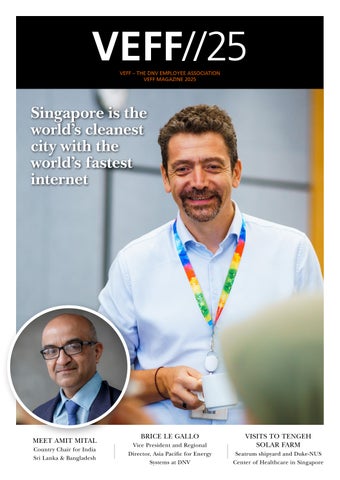
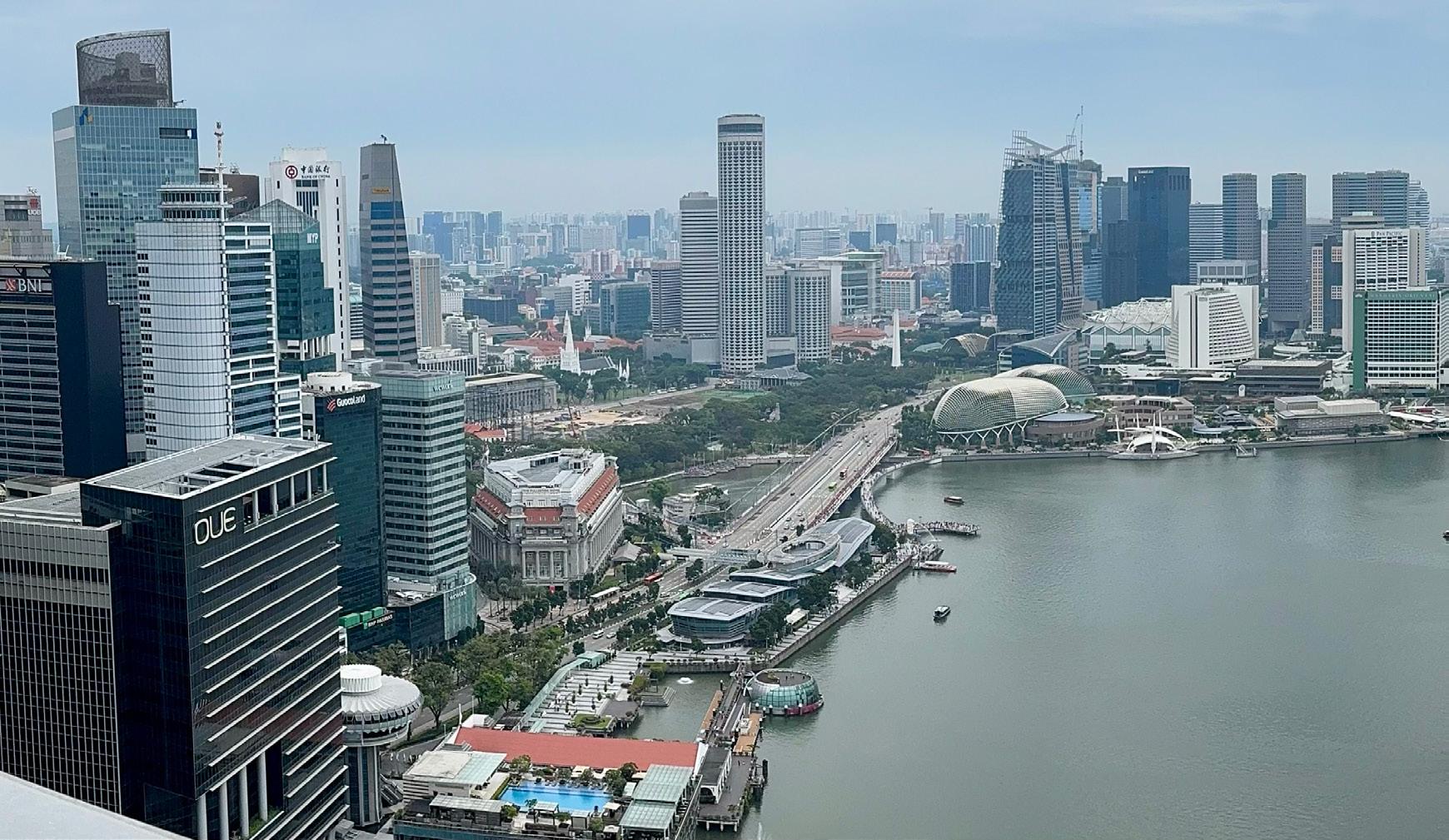
In this magazine, we will focus on trends and our exciting visit with the DNV board and executive committee members to DNV in Singapore. Singapore is the world’s cleanest city with the world’s fastest internet. It is amazing to see the development this small country has achieved in a very short time.
• We visited DNV customers and had the opportunity to see a freshwater with solar farm Tengah, one of the largest in the world, equivalent to 50 football fields.
• We visited a large shipyard, Seatrium, imagine the size when they have over 4,000 employees living on the premises.
• We visited several government departments and, not least, experienced
client dinners with guest of Honor, Senior Minister of State of Law & Transport, Mr. Murali Pilla and met the staff at our DNV office.
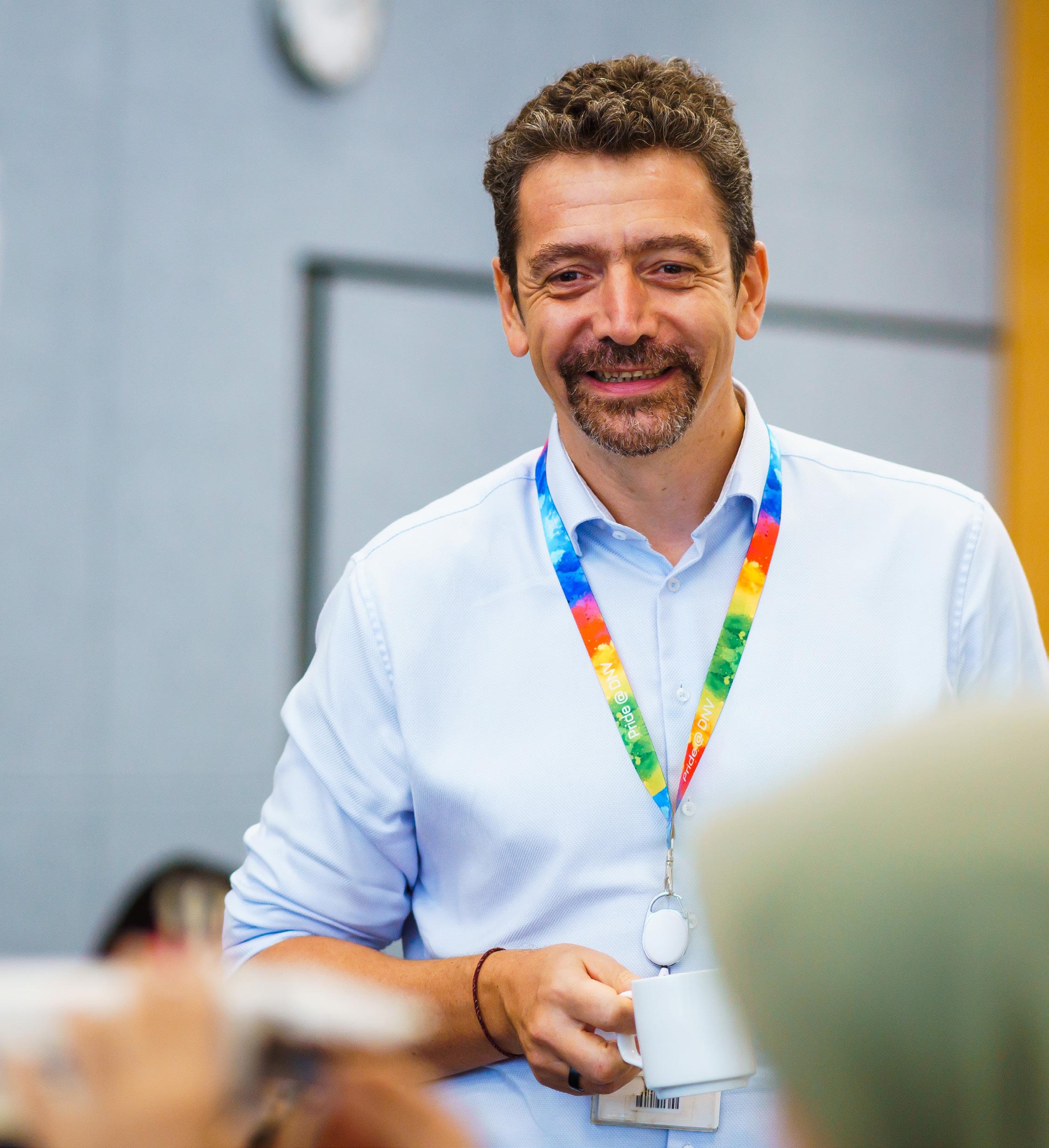
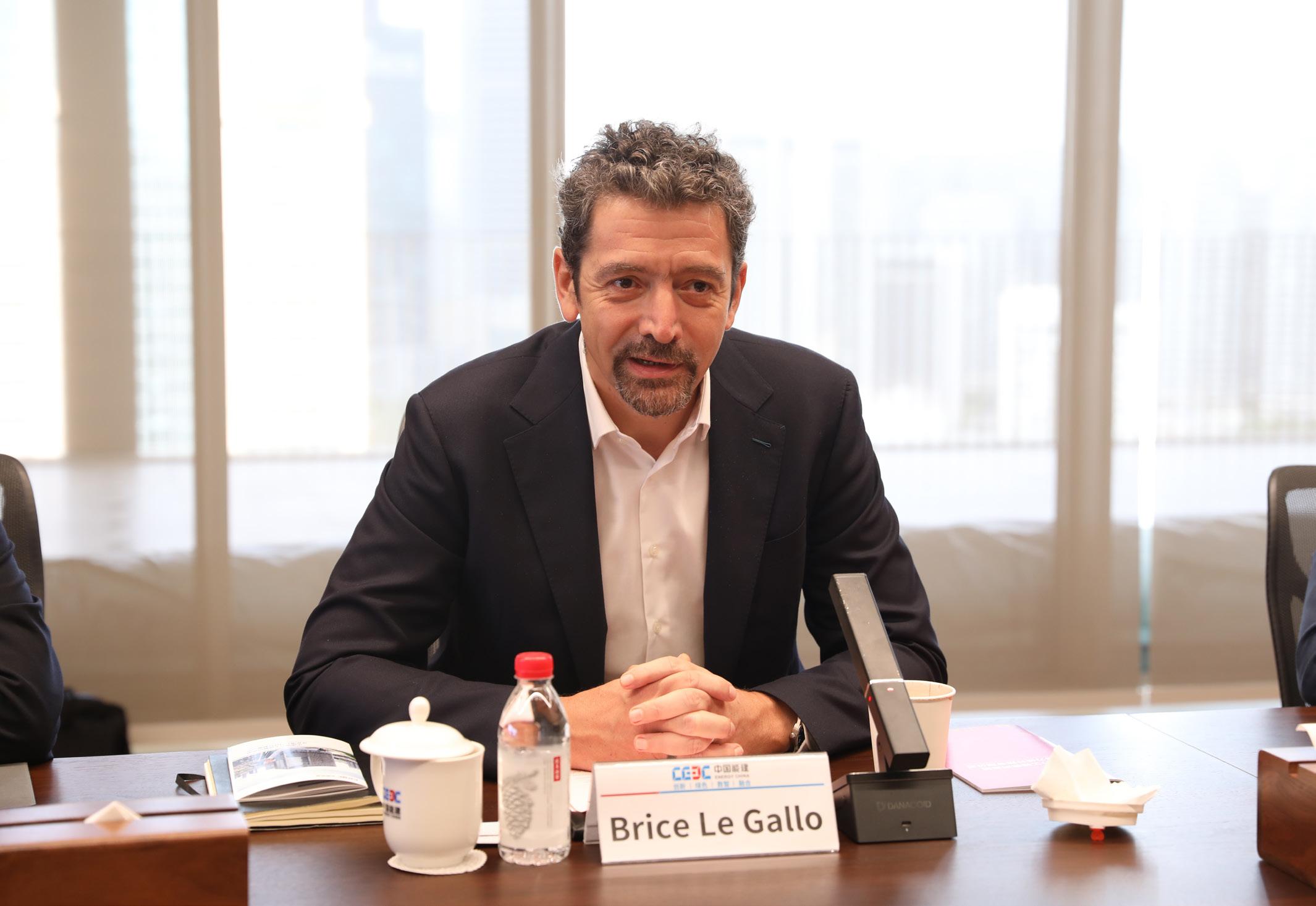
• We had the opportunity to meet the country manager Brice, get to know him in the interview found in this magazine.
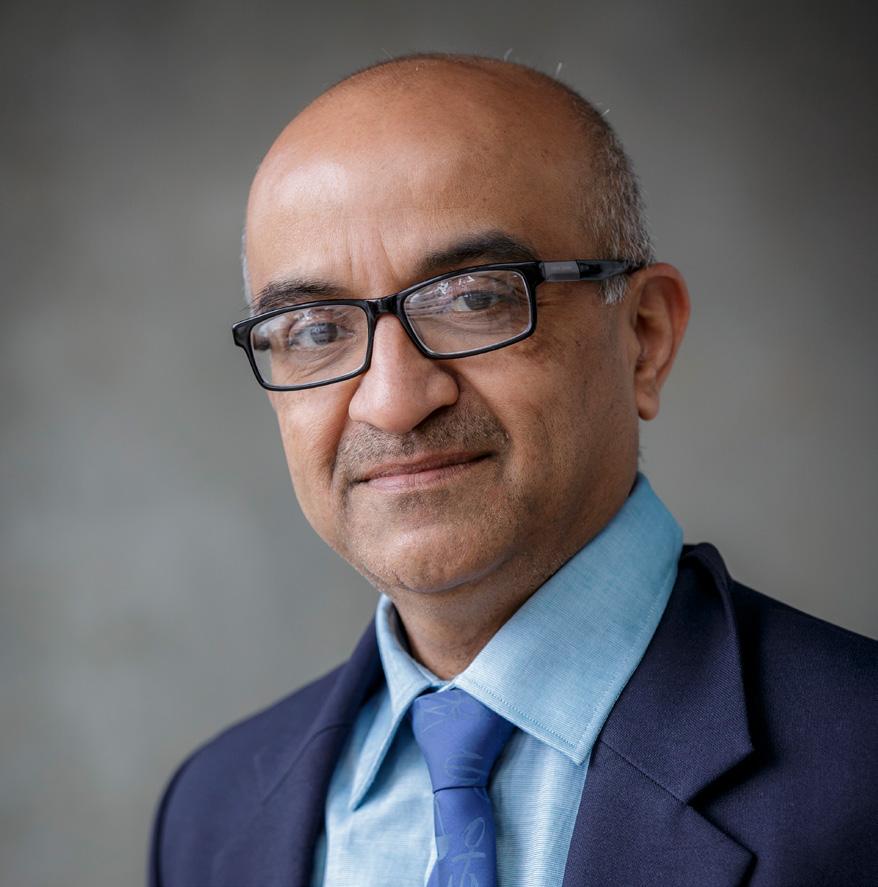
• We also interviewed the country manager in India, Amit, whom Remi visited before coming to Singapore.
We met many dedicated colleagues at DNV’s office in Singapore. They presented topics that we found really interesting, and we have written articles about these teams.
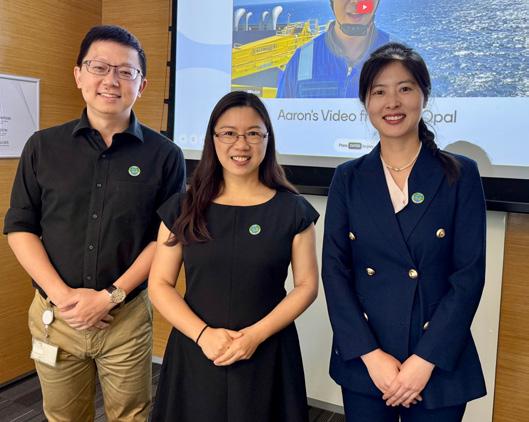
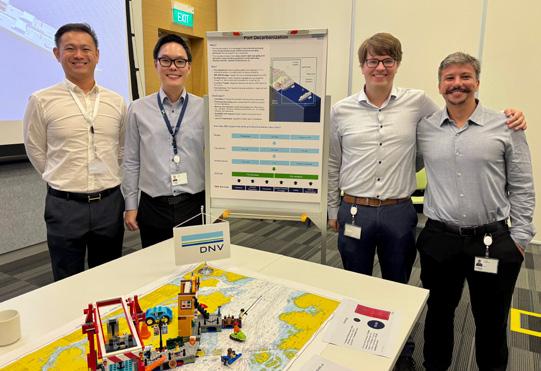
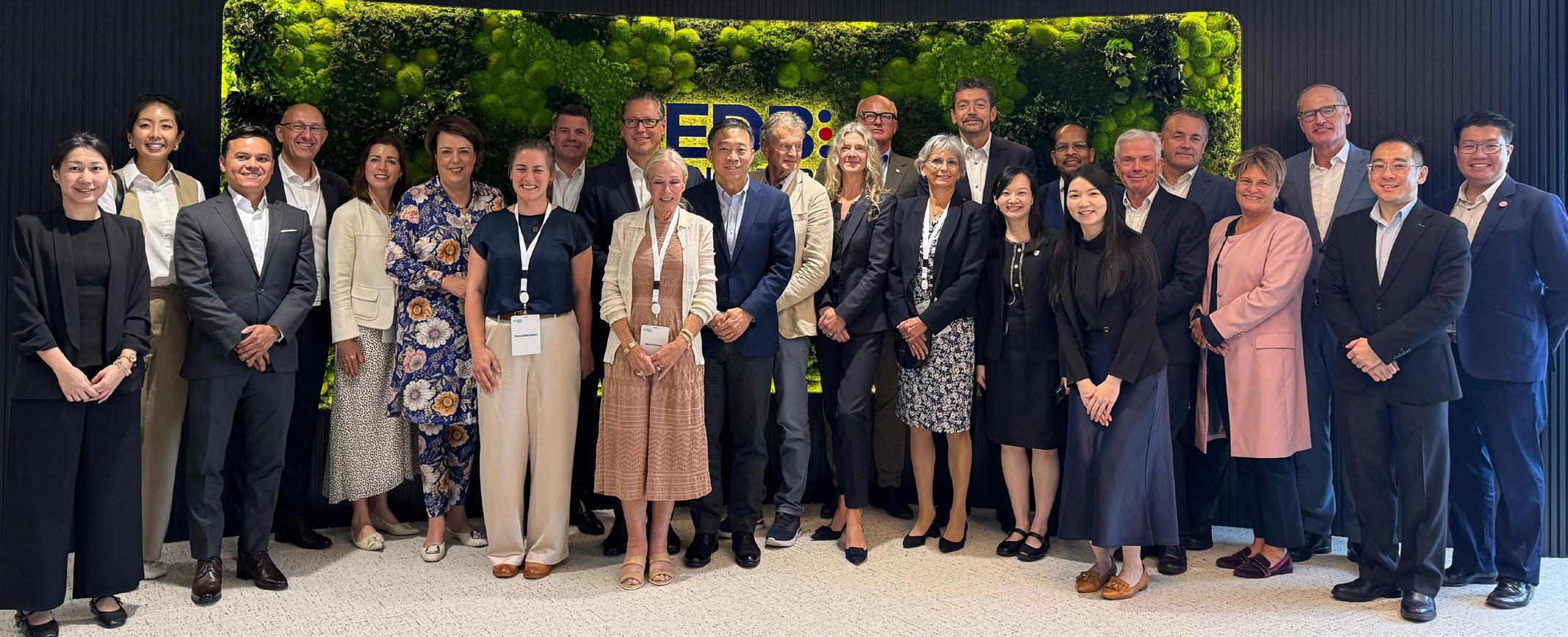
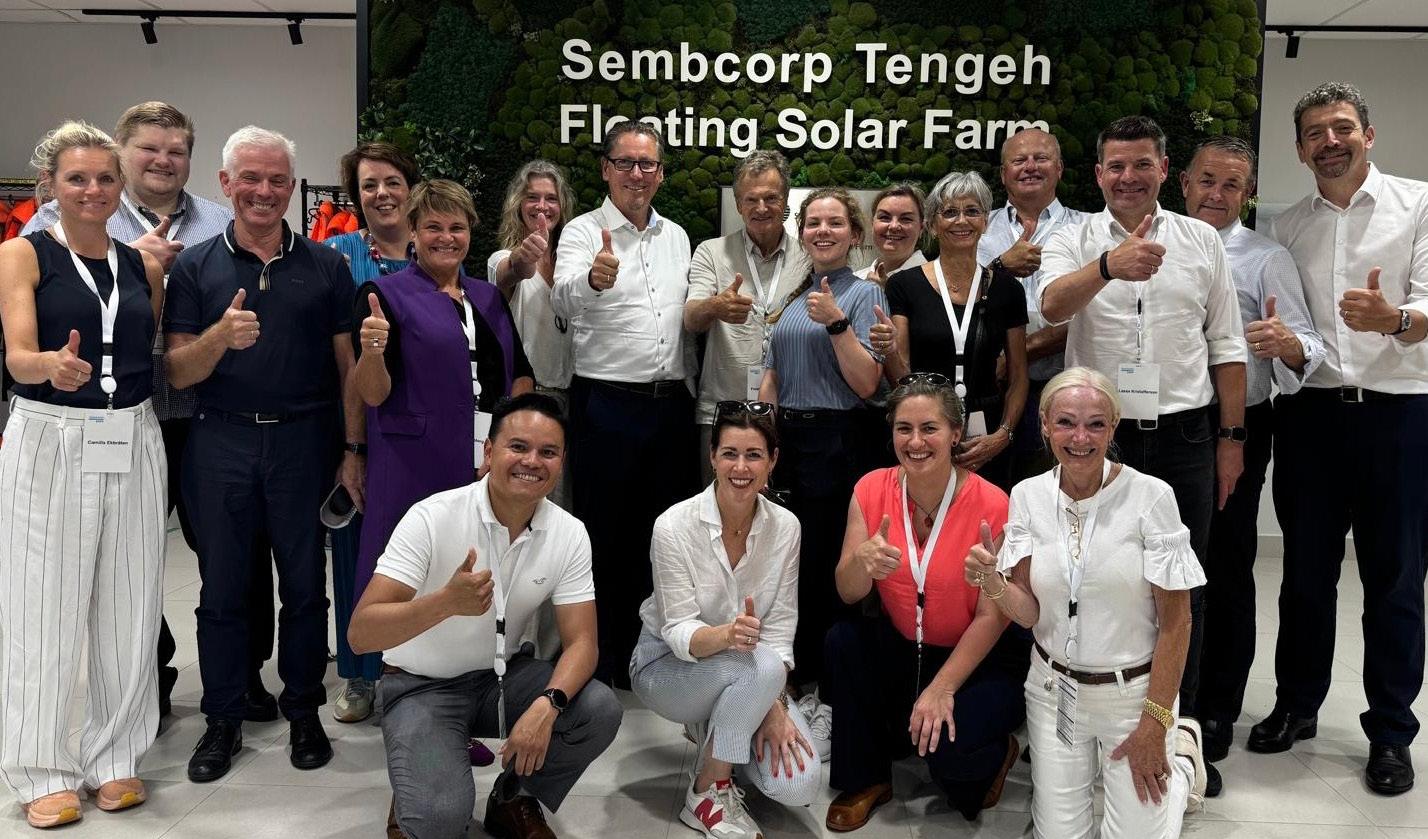
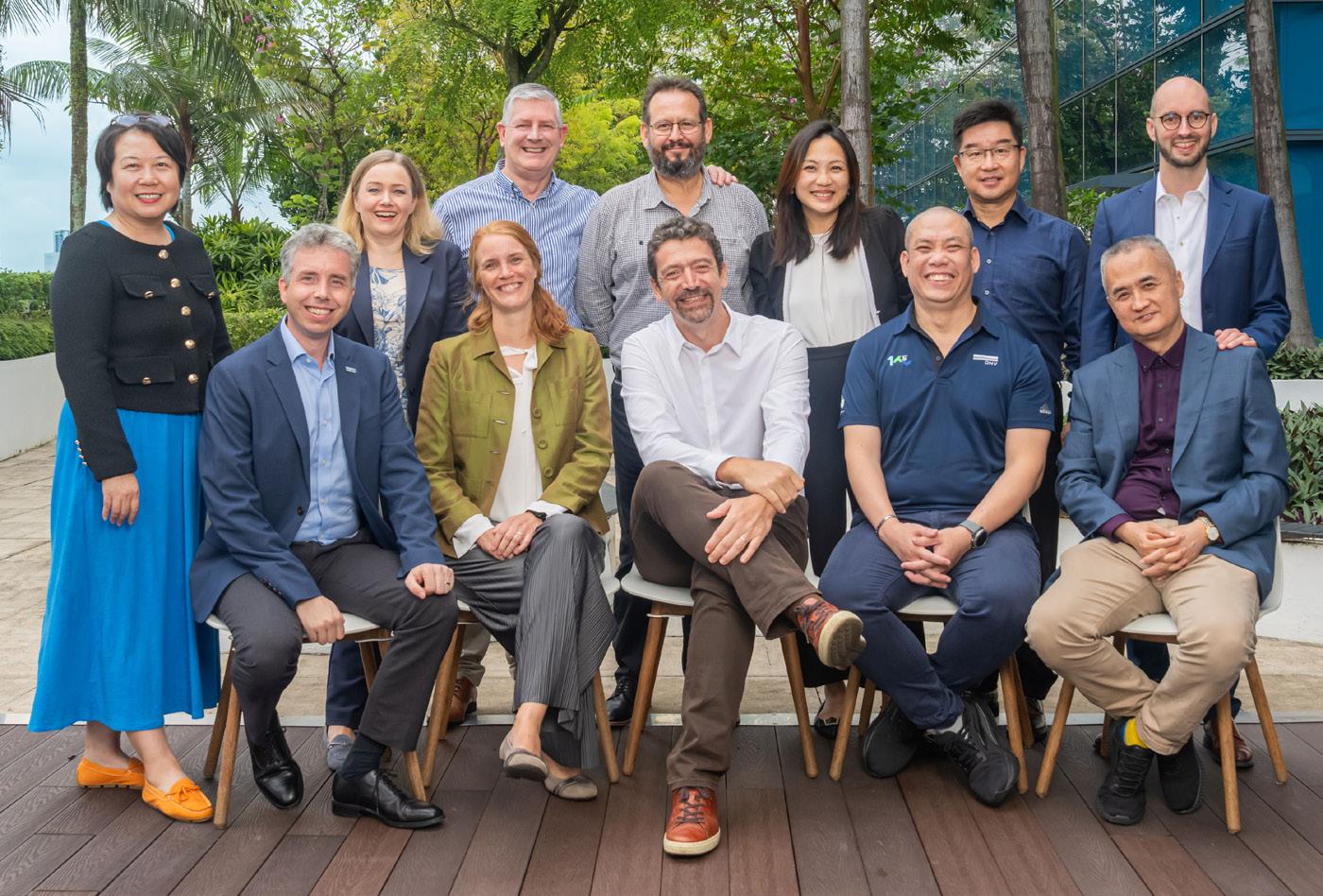
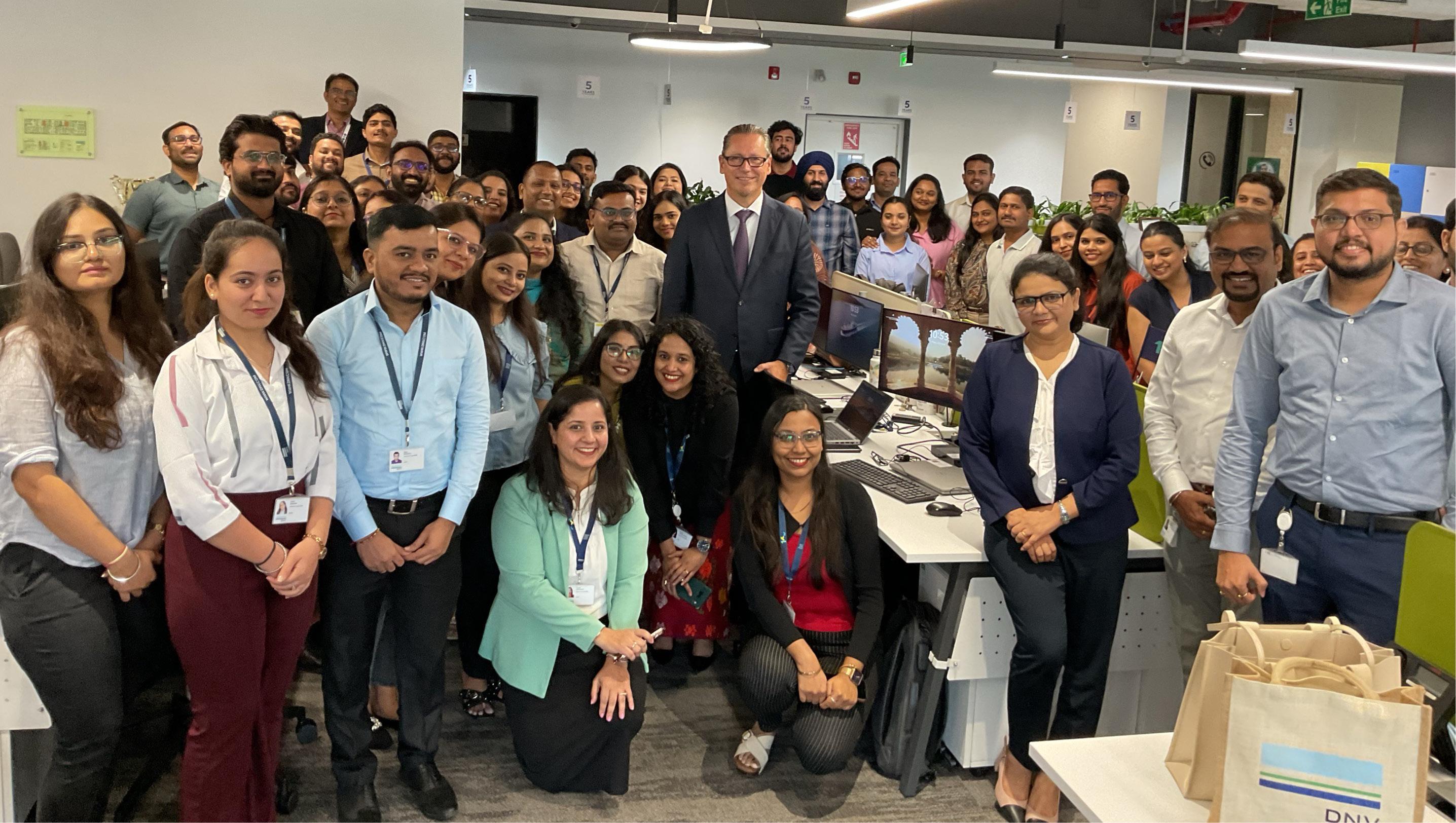
Here is a nice collection of colleagues from the marketplace at DNV office in Singapore.
Nina Ivarsen, Chair VEFF. Foto: Rikke Helen Adde
Trends towards 2032
In 2032, one of the hottest jobs is likely to be sustainability analyst. As the world increasingly recognizes the importance of sustainability and environment, organizations across various sectors will seek professionals who can help them make informed, eco-friendly decisions.
This report outlines three critical talent trends projected to shape our strategy by 2032: the rise of sustainability analysts, a looming shortage of managers, and the strategic integration of AI talents.
Sustainability roles will be among the most in-demand, driven by regulatory pressures, consumer expectations, and ESG commitments. Analysts will require cross-functional expertise in data, environmental science, and business strategy. Organizations like DNV must proactively build internal capabilities to meet future sustainability demands and maintain competitive advantage.
Managerial Talent Shortage: A Hidden Risk A projected global shortfall of 2.9 million managers signals a reversal in current downsizing trends. Over-flat-
tened hierarchies and reduced entry-level hiring are constraining the leadership pipeline. Strategic workforce planning must prioritize leadership development and succession to mitigate long-term operational risks.
AI Strategy & Transformation:
Building Future-Ready Teams AI talent will be central to innovation, efficiency, and competitive differentiation. Key roles include AI strategists, data scientists, infrastructure engineers, change management specialists, and ethics officers. Cross-functional AI teams will drive enterprise-wide transformation, requiring investment in both technical and leadership capabilities. Invest in sustainability talent pipelines aligned with regulatory and market shifts. Reassess management structures to ensure leadership continuity and readiness. Accelerate AI integration through targeted hiring, internal upskilling, and ethical governance frameworks.
Sustainability Analysts will focus on evaluating the environmental impact of business operations, developing green strategies, and implementing practices that promote resource efficiency.
Climate change over millions of years with CO2 levels that were considerably higher than today
a Bipolar to a Multipolar World
New Era of Global Relations
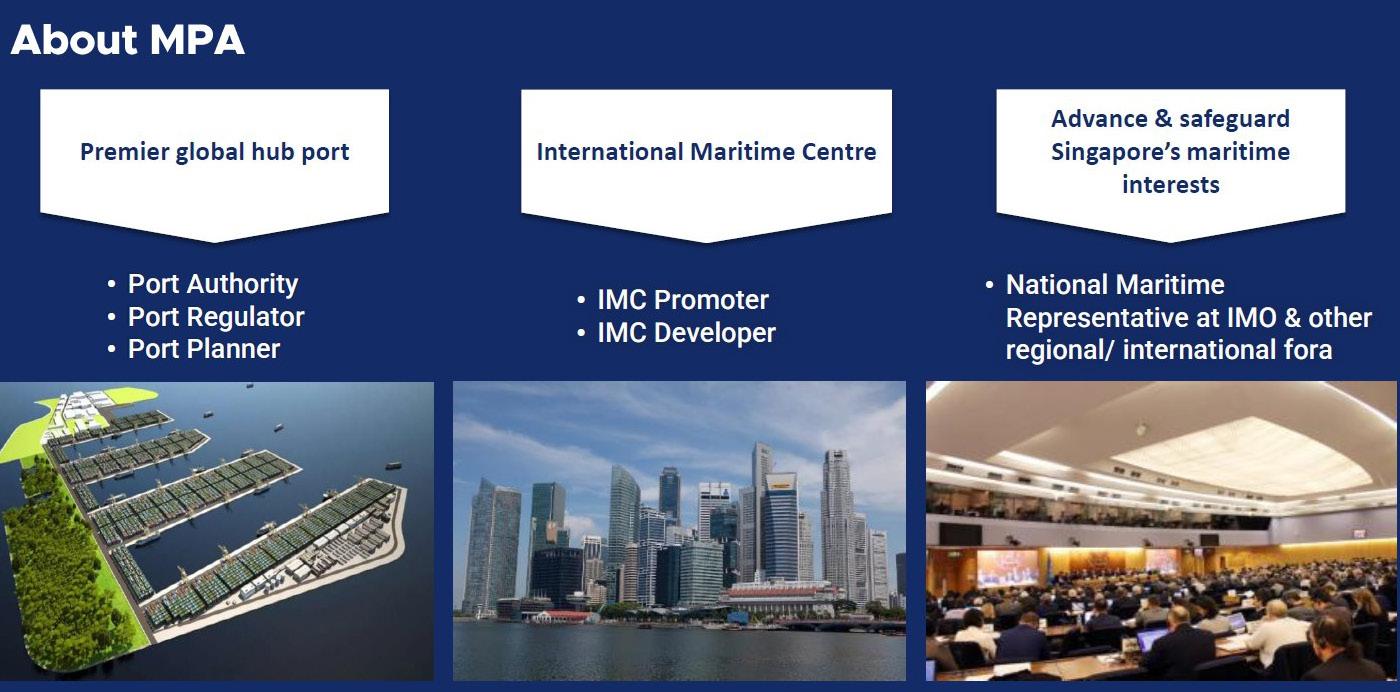
The Economic Development Board (EDB) is a statutory board under the Ministry of Trade and Industry of the government of Singapore that plans and executes strategies to sustain Singapore as a leading global hub for business and investment
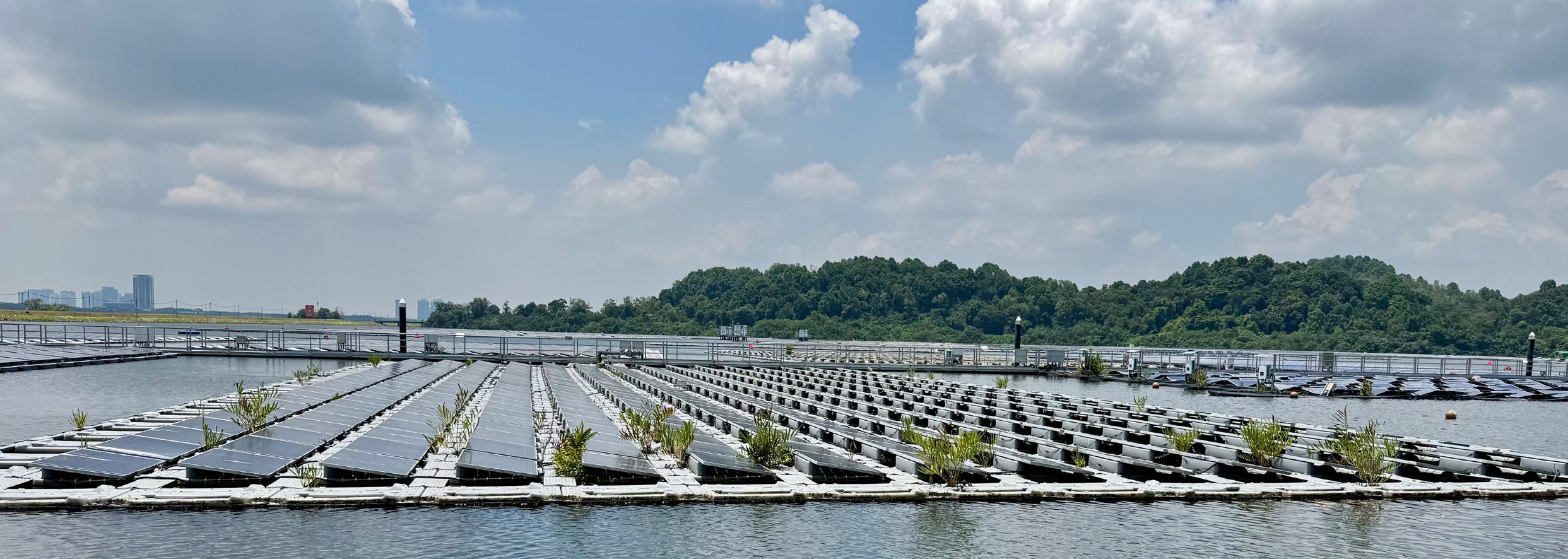
13 The Tengeh Solar Farm in Singapore is the country’s first large-scale floating solar photovoltaic system, located on Tengeh Reservoir
The Exciting Potential of Alternative Rare Minerals
Seatrum - Engineering Our Future Together
Gut cells found to ‘whisper’ like brain neurons
The Interconnection of Planetary and Human Health
Cybersecurity Marketplace I DNV Singapore
Genuine Connection in Discretionary Effort
President and Regional Director, Asia Pacific for Energy Systems at DNV
Ripple Effect of Healthy Teams
Power of Stretch Goals
Meet Amit Mital
Traditional authority comes from position; zero-distance authority must come from authentic competence and emotional presence
times and our own responsibilities to adapt
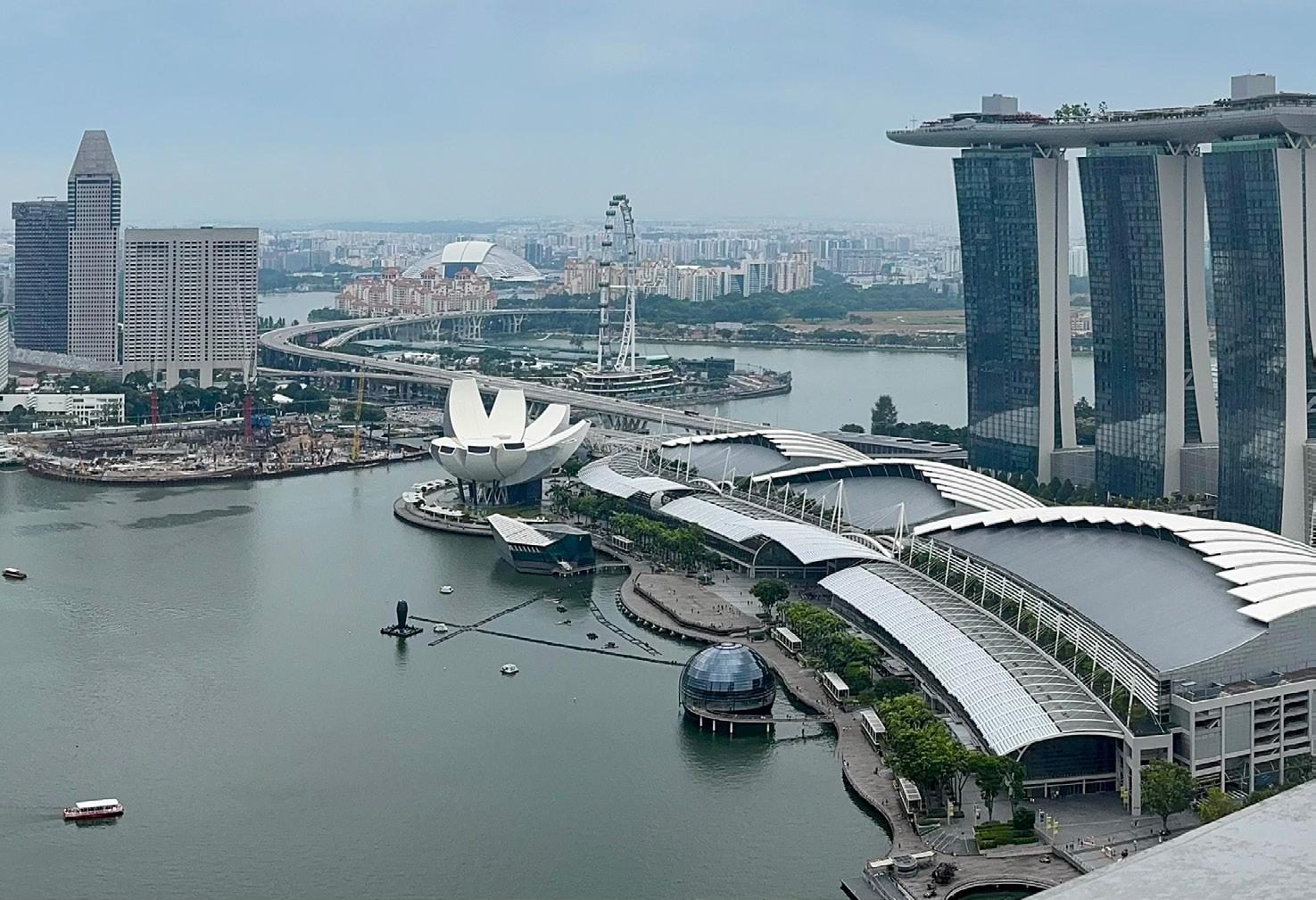
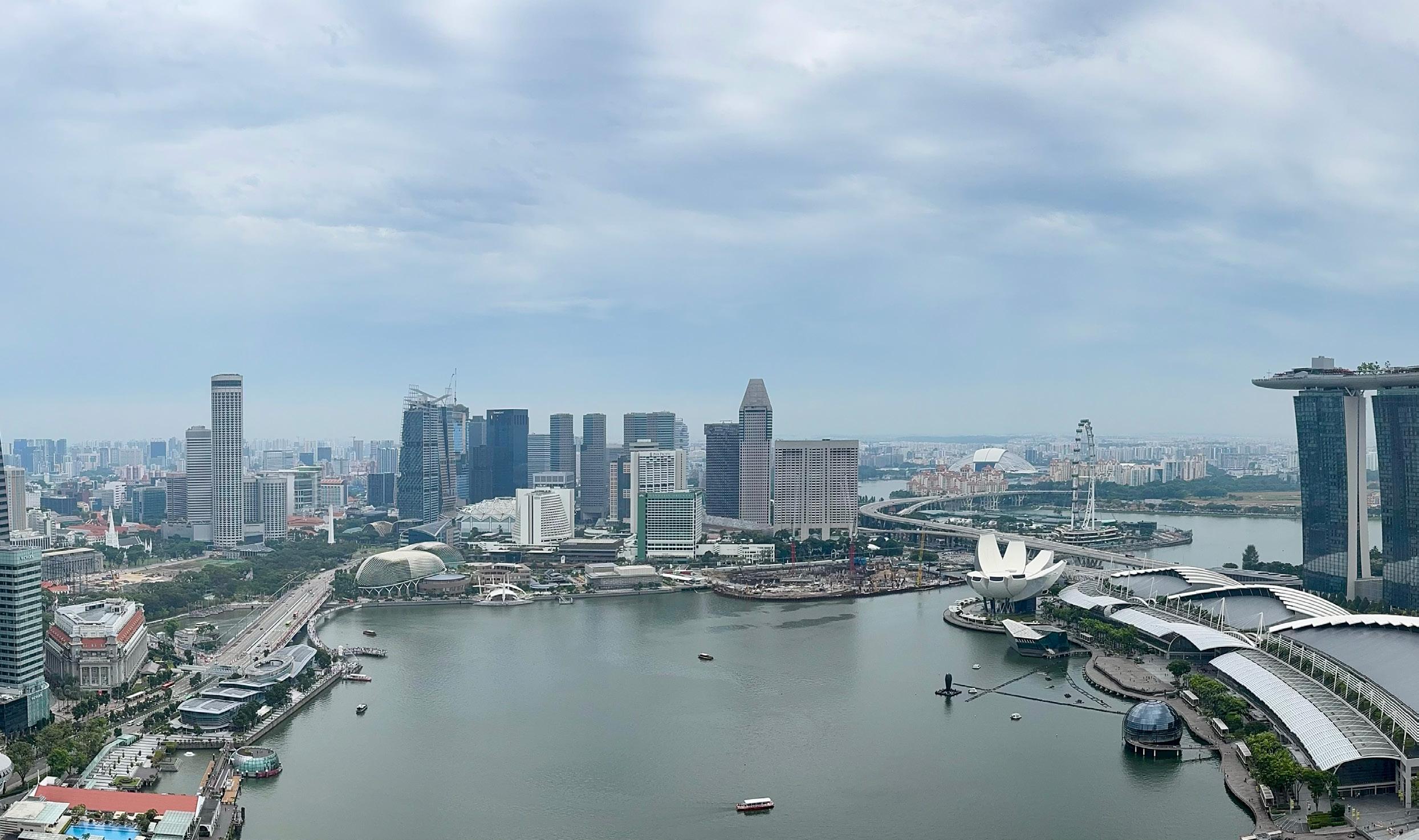
Marina Bay
With an emphasis on renewable energy, waste reduction, and carbon neutrality, these analysts will play a crucial role in guiding companies towards sustainable growth while meeting regulatory requirements and consumer expectations
Moreover, this role will be incredibly multifaceted, often requiring expertise in data analysis, environmental sciences, and business management. Sustainability Analysts will work hand-in-hand with other departments such as marketing, finance, and project management to ensure that sustainability goals align with overall business objectives.
Companies will recognize that consumers prefer brands that demonstrate a commitment to sustainability, leading to increased demand for skilled professionals, also for DNV
Governments around the world are expected to implement stricter environmental regulations, prompting businesses to hire experts who can help navigate these requirements. As new technologies emerge, there will be a need for professionals who can assess their impact and suggest improvements for sustainability practices. Issues like climate change, resource depletion, and social accountability will necessitate that businesses adapt, resulting in a surge in demand for sustainability-focused roles.
Looking at trends and the future
an unexpected twist will be that the world will have a shortage of 2.9 million managers by 2032.
Management roles have recently been perceived as unstable and less desirable. Indeed, across many industries, companies worldwide have been cutting managers by tens of thousands, either belittling them as unnecessary middle people or arguing that flatter organizational hierarchies perform better. Have organizations overcorrected flattening hierarchies? A surprising study from the Georgetown University Center on Education the workforce projects managers will be among the most sought-after
roles by 2032. According to the new report on skills shortages, companies are expected to face a shortage of 2.9 million managers, a deficit that trumps other much-discussed shortages, such as those affecting nurses (362,000), teachers (611,000), and engineers (210,000). This comes at a time when companies are holding off on hiring for many entry-level jobs, which is also limiting the pipeline of future managers. If the trend is right and most companies do this, we’re not going to be developing managers for the future.
Talent shortages drive up compensation costs and compromise candidate quality, posing strategic risks. Companies have been openly trimming their managers since the pandemic; recently, some major firms announced cuts of 20%.
“Managers have become a focal point for cost-reduction strategies,” says Iktimal Daneshvar, EMEA vice president for RPO at Korn Ferry.
US public companies cut their mid-
Photo: Nina Ivarsen
dle-managers by 6.1% as of the end of last year, according to figures from employment-data company Live Data Technologies. Experts say that the manager pipeline is further constricted by uncertainty, which is leading companies to press pauses on hiring incoming employees, especially in roles that AI might soon augment or replace. Unemployment rates for young workers (ages 22 to 27) currently stand at 7.4%, which is nearly double the overall unemployment rate for all workers of 4.0%.
Industry experts continue to advocate for management career paths, albeit through more adaptive and future-oriented training models. With AI, looming experts say, the roles of future managers, not to mention their staff, are likely to change drastically in the next year or two.
The Georgetown study is predicting many years ahead, but it is important to reflect on the future and what kind og manager we would like to hance and develop in DNV.
In a tough job market, candidates
with AI skills may find some friendly opportunities beyond traditional tech centers. We are starting to see two kinds of AI spread, one is around the creation of the technology, and the other is the usage of it in enterprise business processes.
According to research, Silicon Valley still leads the way in AI readiness, with the San Francisco and San Jose metro areas accounting for about 9% of the roughly 287,000 job listings requiring AI skills as of April 2025. We see significant pres-
ence of AI in the areas of automotive, healthcare, aerospace and defense, and financial services.
In 2032, AI strategy and transformation teams will be at the forefront of driving innovation and efficiency across our organization. As artificial intelligence continues to evolve and integrate into various sectors, the need for specialized teams that can harness its full potential will be paramount.
Key Roles within AI Strategy and Transformation Teams
AI Strategists, these professionals will define how AI can be leveraged to achieve business objectives. They will assess market trends, identify opportunities for AI integration, and formulate comprehensive strategies that align with the organization’s goals. Their optimistic vision will help inspire teams to embrace AI innovations confidently. As the backbone of AI initiatives, data scientists will analyze vast amounts of data to develop algorithms and predictive models. They will play an important role in driving data-driven decision-making, ensuring that we can make informed choices backed by solid evidence.
These technical experts will focus on developing and implementing AI solutions. They will build and maintain AI infrastructures, ensuring that systems are reliable, scalable, and capable of adapting to changing business needs. Their work will be instrumental in transforming theoretical strategies into practical applications like we have seen in the maritime sector in DNV for many years.
The transition to AI-enabled processes can be challenging. Change management specialists will help guide employees
through this transformation, addressing concerns and promoting a culture of innovation. They will foster an optimistic mindset
about technology, emphasizing the potential benefits while mitigating fears of job displacement.
With the rapid expansion of AI technologies, it will be important to have professionals dedicated to ensuring ethical standards and compliance. They will evaluate AI applications to mitigate biases and safeguard privacy, ensuring organizations adhere to ethical norms while innovating responsibly.
By implementing AI solutions, DNV can streamline operations, improve customer experience, and reduce costs. AI teams will analyze workflows to determine where automation can have the most significant impact.
AI
strategy
and transformation
teams will work cross-functionally, collaborating with various departments to ensure that AI initiatives
align with overall business strategies. This collaborative approach will help us harness collective expertise for better outcomes.
By combining technical expertise, strategic thinking, and a focus on ethical considerations, these teams will lead the way in effectively integrating AI into business processes.
Climate change over millions of years with CO2 levels that were considerably higher than today
Earth’s climate has always been dynamic, influenced by tectonics, atmosphere, and oceanic systems. Pangea significantly impacted climate, geography, and biodiversity —its story offers vital lessons for understanding today’s climate change. Though human-driven climate change is serious, natural events in Earth’s past show that global transformations can occur with or without human influence.
NINA IVARSEN
Climate change has existed on Earth for many millions of years. The largest and most well-documented changes that wiped out more than 90% of all life on Earth occurred 252 million years ago, long before there were mammals on Earth. Our contribution to global warming is serious, but through this article we also want to tell about major climate changes the planet has undergone and will experience in the future with or without help from humanity. As we reflect on the dynamic interplay between Pangea and atmospheric carbon dioxide levels, it’s clear that this era holds invaluable lessons about Earth’s climate systems and the intricate balances that govern our planet’s ecosystems.
During the time of Pangea, carbon dioxide (CO2) concentrations in the atmosphere were markedly different from what we
experience today. Research makes it abundantly clear that CO2 levels were considerably higher, especially prevalent during the late Paleozoic era.
Why did it rain so much 200 million years ago?
Approximately 200 million years ago, during the geological period known as the Triassic, a complex interplay of factors contributed to high rainfall and a generally wetter climate on Earth. It is incredibly fascinating to think about how the Earth has undergone so many changes, and among the most notable causes of this climate change is the breakup of Pangea during the Triassic period 250 million years ago.
During this period, the Earth was characterized by a warmer climate, with much higher global temperatures than we see today. This warmer climate led to
a significant increase in the amount of water vapor in the atmosphere, which in turn could create more precipitation.
The warm oceans, which were rich in energy, greatly contributed to increased evaporation, which led to more moisture in the air. The resulting moisture gave rise to heavier and more intense rainstorms, which could dramatically change the landscape and ecosystems.
The high concentration of CO2 in the atmosphere intensified the greenhouse effect, leading to elevated global temperatures.
During the Triassic period, the supercontinent Pangaea began to form. The unique configuration of this enormous landmass affected both wind patterns and ocean currents in ways that could have led to significant changes in how moisture was distributed across the continents. For example, the massive size and shape of Pangaea may have led to varying climates, with some areas, especially those near the coasts and in tropical zones, experiencing much more rainfall than others. This could have given rise to rich and lush ecosystems.
Geological activity, including volcanism and plate tectonics, may have had a major impact on the composition of the atmosphere. Such natural processes can release large amounts of gases, such as sulfur dioxide and carbon dioxide, into the atmosphere. These gases may have contributed to climate change by creating conditions that resulted in increased precipitation, such as the formation of acid rain, and
various changes in cloud cover and weather patterns.
During the Triassic period, there were also significant changes in sea levels. For example, changes in ocean currents could create new coastlines, which in turn affected local climate and rainfall patterns. Rising sea levels led to more humid, subtropical conditions in many areas, which provided a fertile ground for a variety of life. Together, these factors contributed to significantly more rainfall 200 million years ago than in many areas today. It is fascinating to reflect on how these climate changes and conditions have had long-lasting and profound effects on the geology and ecology of the planet. These changes have shaped the development of life on Earth throughout time and provide us with a testament to the incredible dynamism of Earth’s history. Pangea what happened?
Pangea was a supercontinent that existed during the late Paleozoic and early Mesozoic eras, approximately 335 million years ago. The concept of Pangea is fascinating as it not only represents a significant geological phenomenon but also illustrates the dynamic and ever-changing nature of Earth’s geology and how continents have shifted over millions of years, bringing with them a myriad of changes in ecosystems and life forms.
The formation of Pangea was a process that unfolded over a vast span of time through the gradual collision of several landmasses. As tectonic plates shifted and moved, these continents came together, amalgamating into a single, extensive landmass. The sheer size of this formation provided a variety of habitats that nurtured an incredible richness and diversity of life, from towering forests to vibrant wetlands teeming with unique flora and fauna.
The formation of Pangea had profound and far-reaching effects
on the Earth’s climate. The vast interior of the supercontinent, shielded from the moderating influence of the oceans, experienced extreme weather conditions.
This resulted in arid deserts developing in the center while other regions were gifted with green vegetation thriving in milder environments. This variation in climate and geography fostered the emergence of diverse ecosystems, each uniquely adapted to their surroundings.
Fast forward to around 175 million years ago, during the Jurassic period, when Pangea began its dramatic breakup a pivotal moment in Earth’s geological history. The forces driving this monumental shift were the relentless movements of tectonic plates. This breakup meant that the immense landmass we knew as Pangea would start to fracture and splinter, a process that unfolded over millions of years and can be closely linked to the activity of mantle convection, a powerful driver of tectonic movement that reshapes the Earth’s surface.
Separation of Continents
As Pangea split apart, it divided into two smaller supercontinents. Laurasia, which nestled in the northern hemisphere, and Gondwana, positioned in the southern hemisphere. This separation marked the beginning of a new chapter in the Earth’s geological narrative. Over time, these supercontinents too fragmented and evolved, giving rise to the diverse continents we recognize and inhabit today, each with its unique characteristics and ecosystems.
The breakup of Pangea left a legacy on both the biodiversity and geology of our planet. It opened up new avenues for different species to evolve in isolation, creating a multitude of unique life forms adapted to their particular environments.
What killd spices in Panegea?
The extinction of various species during the time of Pangea is primarily attributed to a combination of ecological changes, climatic shifts, and geological events associated with the supercontinent’s formation and eventual breakup. Pangea was not just a singular landmass; it was a pivotal player in the Earth’s evolutionary history. Let’s delve deeply into the major factors that contributed to these extinctions, providing a thorough understanding of this significant period in our planet’s past.
Environmental Changes
The formation of the vast supercontinent Pangea led to monumental alterations in the environment. With immense land areas coming together, distinct ecosystems began to emerge, leading to pockets of biodiversity that were once seamlessly connected. The isolation of these land masses from one another created unique habitats, but it also subjected many species to new and often harsh conditions. Some regions endured extreme climates, turning into arid deserts or enduring severe fluctuations in temperature. These drastic changes proved to be challenging for many species, especially those that were unable to evolve and adapt to the newly established environments. Consequently, a decline in populations became evident in species ill-suited to these transformed surroundings.
During the time of Pangea, Earth
experienced substantial climate changes, with notable shifts oscillating between warmer and cooler periods. These fluctuations posed significant challenges for various species, disrupting their habitats and altering their food sources.
One key area particularly prone to these climatic changes was the expansive interior of Pangea. It bore the brunt of extreme weather patterns, which often resulted in unstable conditions, leading to a decrease in biodiversity. Species that could not adapt to these rapid climate changes found themselves at greater risk, further exacerbating the rate of extinction.
The gradual fragmentation of Pangea and the subsequent geological events characterized by mountain building and profound sea-level changes dramatically affected ecosystems worldwide. As landscapes morphed and evolved, countless species suffered from habitat loss, leading to an alarming decline in their populations. With ecosystems being disrupted on such a scale, many organisms could not survive as their food sources became scarce, and suitable habitats vanished from existence. This loss of habitats was a significant driving force behind the extinction of numerous species, casting a shadow over the era.
Global Volcanic Activity
The dynamic breakup of Pangea was accompanied by extraordinary volcanic activity that reshaped the landscape in unimaginable ways. Massive eruptions led to catastrophic events, such as sweeping lava flows and broad ash fallout, that dramatically altered the terrain. The consequences of such volcanic activity extended beyond mere physical changes; it likely impacted global temperatures and air quality, creating inhospitable conditions for many species. The toxic environment generated by these eruptions posed yet another layer of threat to the survival of various organisms, pushing more species to the brink of extinction.
In this ever-evolving environment, species found themselves in a constant struggle for survival as
they adapted to the new landscapes. With the emergence of new habitats, competition for resources such as food, water, and shelter has intensified significantly.
This new reality meant that many species faced challenges in competing effectively for their survival. Those unable to secure the necessary resources or those that fell prey to increased predation risk faced the dire consequences of extinction. This relentless battle for survival painted a stark picture of life in this era of change.
Mass Extinction Events
While Pangea itself did not directly initiate a recognizable mass extinction event, the prior Permian-Triassic Extinction, occurring around the time of Pangea’s early formation, profoundly impacted many species. This cataclysmic event led to the eradication of a staggering proportion of Earth’s inhabitants, with estimates suggesting that over 90% of marine species and a substantial number of terrestrial species faced extinction during this turbulent epoch. The fallout from this mass extinction paved the way for new life forms to rise in the wake of such devastation, fundamentally restructuring the biological landscape for ages to come.
Through the trials of extinction and transformation, new forms of life arose, ultimately painting a vibrant and diverse snapshot of the biodiversity we are privileged to witness in our world today.
References: Snowball, «Jorden en planet- mange liv» by BBC, Chris Packham
FROM A BIPOLAR TO A MULTIPOLAR WORLD A NEW ERA OF GLOBAL RELATIONS
NINA IVARSEN
The transition from bipolar to a multipolar world is one of the most significant shifts in international relations in recent history. Following the Cold War, the global landscape was dominated by two superpowers: the United States and the Soviet Union. This bipolarity shaped international policies, alliances, and conflicts. However, as we move deeper into the 21st century, we are witnessing the emergence of multiple influential players on the global stage, fostering a more complex and interconnected world.
One of the most optimistic aspects of this transition to a multipolar world is the potential for increased cooperation among nations. In a bipolar framework, relations were often characterized by competition and rivalry, leading to tensions and even conflicts.
In contrast, a multipolar world encourages nations to collaborate and engage in dialogue to address global challenges. Issues such as climate change, terrorism, and pandemics require collective action, and with more nations participating, there is great potential for innovative solutions and shared responsibilities.
The rise of countries like China, India, Brazil, and the European Union means that decisions affecting the global population are now influenced by a broader range of voices. This diversity of perspectives fosters creativity and resilience, enabling the international community to tackle issues from multiple angles.
With China’s growing economic influence and India’s demographic power, the two countries can play pivotal roles in driving sustainable development initiatives that benefit not just their regions but the world at large.
A multipolar world promotes the idea of regionalism, where nations collaborate based on geographical proximity and shared interests. This can lead to stronger regional alliances and organizations that address local issues effectively. For example, in Africa, the African Union plays an increasingly important role in promoting peace and stability across the continent, while ASEAN in Southeast Asia focuses on economic integration and cooperation.
The transition to a multipolar world is not without its challenges. The potential for conflicts of interest between nations can lead to tensions and power struggles, requiring diplomatic skills and international frameworks to manage disputes peacefully. Nevertheless, with the right strategies, coordination, and mutual respect, these challenges can be navigated, allowing the world to thrive in its new paradigm.
The shift from a bipolar to a multipolar world represents an opportunity for global growth and collaboration. As nations learn to work together in harmony, we can create a brighter, more inclusive future. By embracing diversity and promoting dialogue, the international community can tackle pressing global issues and build a world that reflects the shared aspirations of all humankind.
The Economic Development Board (EDB) is
a
statutory board under the Ministry of Trade and Industry of the government of Singapore that plans and executes strategies to sustain Singapore as a leading global hub for business and investment.
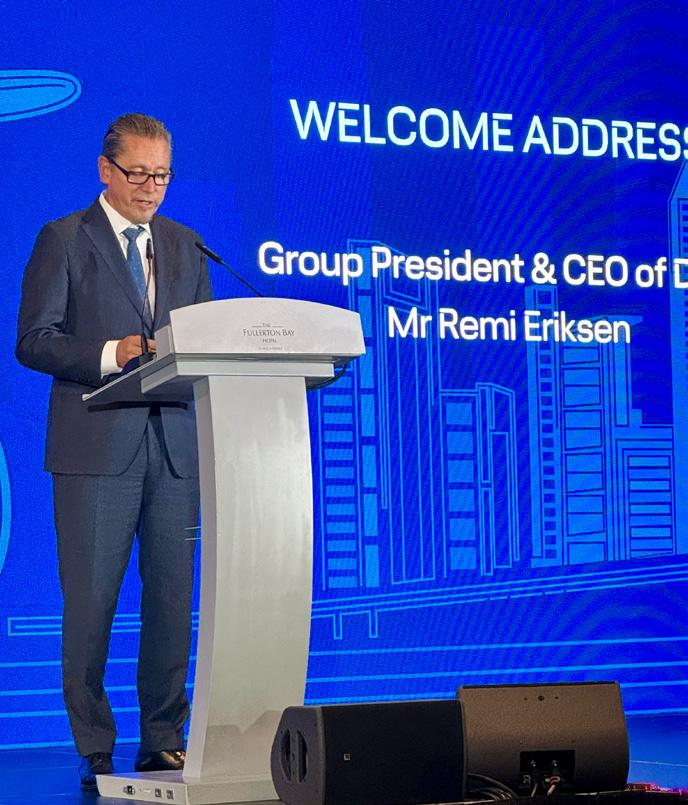
The Board of directors and EC in DNV visited the Economic Development Board (EDB), hosted by Chairman, Mr. Png Cheong Boon on August 27, 2025.
EDB is the lead agency that plans and executes economic and industrial development strategies for Singapore to drive economic growth and create good jobs for Singaporeans.
Enterprise Singapore is the statutory board operating under the Ministry of Trade and Industry (MTI) of the Singapore government. Their partner committed companies to build capabilities, innovate and go global and to drive growth, empowering local businesses and shaping industries, anchoring
Singapore as a trade and startup hub, establishing trust in their products through quality and standards.
• 35% of Singapore’s investments are in markets such as Medical Technology, Aerospace, Green Economy, and AI.
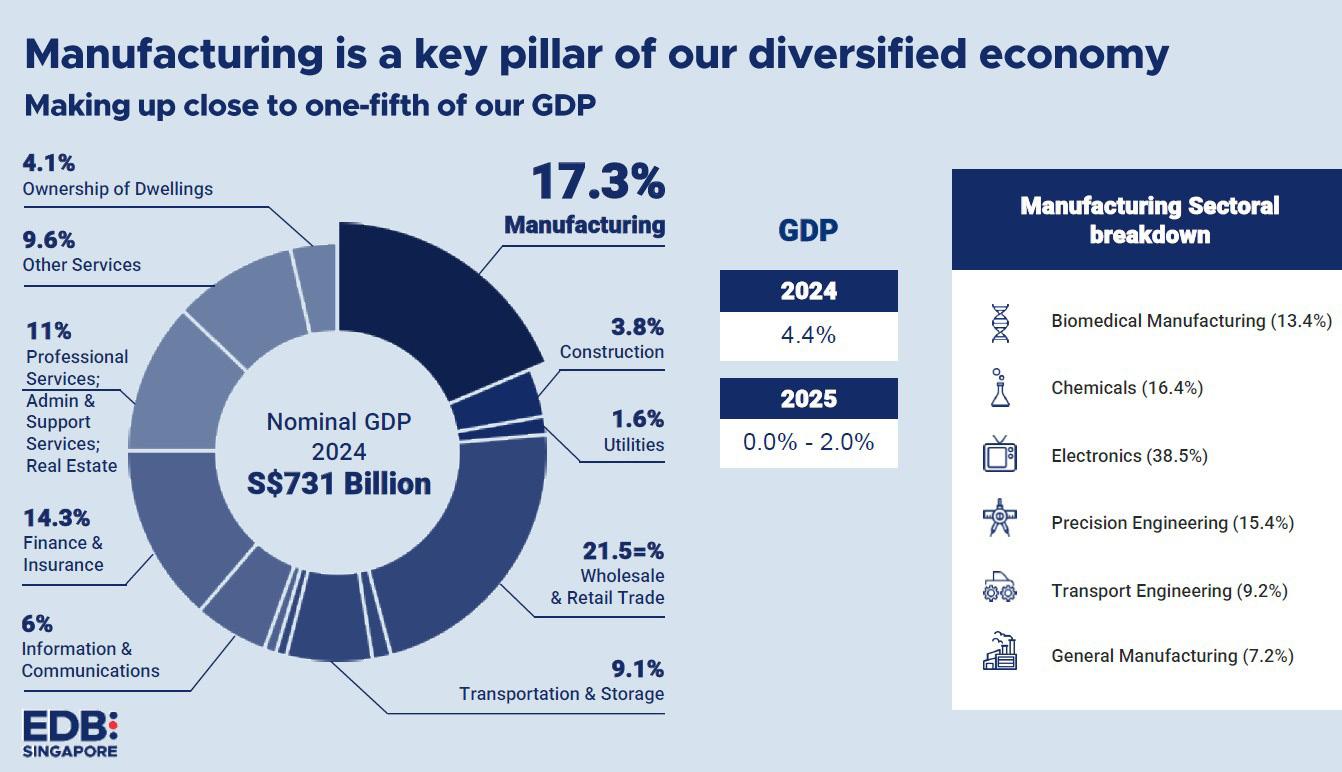
• Global manufacturing accounts for 17.3% as key pillars and represents S$731 billion.
• 6 out of 10 Top Tech companies have a staff of specialists totaling 16,900 employees only in Singapore, although Silicon Vally tops the list.
• There are over 130 aerospace companies in Singapore.
• Ecosystem development and talent cultivation in testing, inspection, and certification in the large TIC sector support Asia’s green transformation.
• Singapore’s decarbonization strategy is to have 35% renewable energy by 2035.
• All electricity, food, and minerals are exported to Singapore. Their philosophy is not to be an importer, meaning that if you buy from exporters, those who export must then pay for the shipping.
• All food is processed in Singapore. This gives it a quality stamp, and they sell high-end food further out into the world. An example is that they buy chicken from Brazil which is processed in Singapore.
• Singapore has the world’s largest seawater distilleries.
• All rainwater in Singapore is stored in underground reservoirs.
Singapore’s Economic Development Board (EDB) is a statutory board under
the Ministry of Trade and Industry responsible for sustaining Singapore as a global business and investment hub. It evolved from the Singapore Industrial Promotion Board (SIPB) formed in 1957, which was limited in capital and effectiveness, leading to the establishment of EDB in 1961 with greater funding and broader responsibilities.
• Formation of SIPB: Established in 1957 with $1 million capital to support industrial undertaking but faced criticism for inefficiency and limited resources. [1] [2]
• Transition to EDB: In 1959, plans for EDB with $100 million capital emerged, leading to the Economic Development Ordinance in 1961, which replaced SIPB and involved international experts. [3] [4]
• Early operations and Jurong Industrial Estate: By late 1961, EDB was operational, providing advice to industries and developing the 9,000acre Jurong Industrial Estate with additional government grants. [5]
• Attracting foreign investment: In 1962, EDB actively courted overseas
NINA IVARSEN
Remi & Brice at EDB meeting at Singapore General Hospita
industrialists, notably from Japan, leading to joint ventures such as a $23 million shipyard project. [6]
• Industrial banking role: EDB also functioned as an industrial bank offering loans at reasonable interest rates to companies. [7]
• EDBI investment arm: Since 1991, EDBI serves as the corporate investment arm focusing on highgrowth technology sectors including ICT, emerging technology, and healthcare. [8]
• Expansion of roles and global presence: Since 2019, EDB manages the Design Singapore Council and Singapore Global Network to support company expansion beyond Singapore and maintains 20 international offices across 14 countries. [9] [10]
History
1957–1961: Singapore Industrial Promotion Board
• In 1957, the Singapore Industrial Promotion Board (SIPB) was formed through the passage of the Singapore
Industrial Promotion Bill, to empower the Singapore Government in establishing, developing, and financing industrial undertakings.[1]
• It had a capital of $1 million, and had received requests from local companies for loans totaling up to $500,000 at its formation.[2] However, SIPB was criticised by political opposition as being slow, not transparent, and ineffective in aiding local businesses.[3] The board was hamstrung by the limited capital that it had with the Minister of Commerce and Industry, J. M. Jumabhoy, blaming on the activities of extreme left-wing politicians on the lack of corporations from financial institutions.[4]
• In 1959, the Singapore Government unveiled a new proposed Economic Development Board (EDB) with a capital of $100 million. The proposed board would be funded partly by a part of the $300 million foreign investments that the government had made before. It would also be a statutory board, and in addition to the current responsibilities of SIPB to disburse loans to companies, it would have a direct part in setting up
factories or make use of its capital for local joint venture projects with the private sector.[5]
• The Economic Development Ordinance was first read in Parliament on 26 April 1961, with its second reading on 24 May 1961. The ordinance commenced on 1 August 1961, thus taking over the functions of SIPB.[6] To facilitate the setup of EDB, international experts were requested from the United Nations and appointed to run the board alongside local officers.[7][8]
1961–present: Setting up of Jurong Industrial Estate and overseas missions
• By 24 November 1961, the agency was fully operational.[9] In December 1961, the agency started offering free advice to nine electrical industries, releasing research materials to entrepreneurs and manufacturers.[10] It also spearheaded development works at the 9,000 acre Jurong industrial estate.[11] In 1962, EDB introduced a simplified process of buying industrial land. An applicant would have to submit a building plan
Clifford Pier, customer dinner with Minister KOH Poh Koon, Second Minister of State of Sustainability and Environment Singapore
in three months and build in two years before a lease of land no more than 99 years be issued.[12] EDB received an additional grant of S$40 million to develop Jurong Industrial Estate from the Singapore government.[13][14]
• 1962 was also the year which Singapore begun to actively woo overseas industrialists as such the Japanese,[15] with some indicating interests in joint development projects and sending study missions to Singapore.[16] A Japanese economic survey mission led by Shinichi Takasugi, President of Mitsubishi and Head of Japan’s Economic Cooperation Committee and the
Federation of Economic Organizations[17] found that Jurong Industrial Estate was “the best site for industrialisation for Singapore.”[18] A S$23 million shipyard joint venture between Ishikawajima-Harima and EDB was planned for as well.[19][20]
• EDB was also functioning as an industrial bank, offering loans to companies at “reasonable interest rates”.[21][22]
• Investing since 1991, EDBI is the dedicated corporate investment arm of the EDB, and a global investor in select high growth technology sectors covering Information & Communication Technology (ICT), Emerging Technology (ET),
Healthcare (HC) and other strategic industries.[23]
• Since 1 April 2019, the EDB manages Design Singapore Council, the national agency for design. This is done to help companies expand beyond Singapore.[24][25] It also manages Singapore Global Network, which was set up in 2019 to grow Singapore’s networks and connections around the world.[26]
• The EDB maintains 20 international offices in 14 countries which includes Brazil, China, France, Germany, India, Indonesia, Japan, Netherlands, South Korea, Sweden, Switzerland, Thailand, United Kingdom and the United States.[27]
References
1. “Aiding Industry”. The Straits Times. 14 January 1957. 2. “Cresson to run $1m. promotion board”. The Straits Times. 10 April 1957. 3. “INDUSTRIAL BOARD IS UNDER ATTACK”. The Singapore Free Press. 21 October 1957. Retrieved 5 June 2021. 4. “Mr. J ON THE BIG FINANCE FLOP: ‘I BLAME LEFT’”. The Straits Times. 8 December 1958. Retrieved 5 June 2021. 5. “That board may he ready in six months”. The Straits Times. 21 July 1959. Retrieved 5 June 2021. 6. “Economic Development Board Act - Singapore Statutes Online”. sso.agc.gov.sg. 7. “Three more U.N. experts due soon”. The Straits Times. 16 September 1962. Retrieved 5 June 2021. 8. “MEN NAMED TO PUSH STORE INDUSTRY BID”. The Straits Times. 17 August 1961. Retrieved 5 June 2021. 9. “Development Board in full operation”. The Singapore Free Press. 24 November 1961. 10. “Government offers free advice on nine industries”. The Singapore Free Press. 9 December 1961. 11. “JURONG READY FOR INDUSTRY BY END OF NEXT YEAR”. eresources.nlb.gov.sg. The Singapore Free Press. 6 December 1961. 12. “Simplified way to buying industrial land”. eresources.nlb. gov.sg. The Straits Times. 16 September 1962. 13. “$40 mil. for industry plan”. eresources.nlb.gov.sg. The Straits Times. 1 September 1962. 14. “BOARD’S AIM: MORE AND MORE NEW INDUSTRIES FOR STATE”. eresources.nlb.gov.sg. The Straits Times. 16 September 1962. 15. “Goh off to Tokyo to coax bigger capital flow to Singapore”. eresources.nlb.gov.sg. The Straits Times. 2 March 1962. 16. “JAPANESE KEEN ON JOINT VENTURES HERE: MAYER”. eresources.nlb.gov.sg. The Straits Times. 21 March 1962. 17. “MR SHINICHI TAKASUGI, ONE OF JAPAN’S MOST POWERFUL …”. www.nas.gov.sg. 18. “MISSION PRAISES JURONG SITE”. eresources.nlb.gov.sg. The Straits Times. 6 September 1962. 19. “$23 mil. shipyard for S’pore”. eresources.nlb.gov.sg. The Straits Times. 7 September 1962. 20. “SHIP REPAIR YARD PLAN”. eresources.nlb.gov.sg. The Straits Times. 10 May 1962. 21. “Three more U.N. experts due soon”. eresources.nlb.gov.sg. The Straits Times. 16 September 1962. 22. “THIS BOARD HELPS INVESTORS IN MANY WAYS”. eresources.nlb.gov.sg. The Straits Times. 3 June 1962. 23. “EDBI is the dedicated corporate investment arm of the EDB”. www.edb.gov.sg. Retrieved 5 March 2023. 24. “DesignSingapore Council to transfer to EDB under MTI to drive design innovation across industries and enable growth beyond Singapore”. MCI. 1 November 2018. Retrieved 24 September 2019. 25. “DesignSingapore Council to become EDB agency to help local companies expand beyond Singapore”. The Straits Times. 1 November 2018. Retrieved 30 June 2019. 26. “EDB unit wants to go beyond keeping Singaporeans in touch”. The Straits Times. 2 January 2020. 27. “EDB offices”. www.edb.gov.sg. Retrieved 28 February 2023.
Meeting with EDB at Raffles City
The
Tengeh Solar Farm in Singapore is the country’s first large-scale floating solar photovoltaic system, located on Tengeh
NINA IVARSEN
The Tengeh Solar Farm in Singapore is the country’s first large-scale floating solar photovoltaic system, featuring 122,000 solar panels across 10 islands with a capacity of 60 megawatt-peak (MWp), enough to power approximately 16,000 four-room Housing Board flats annually. This project supports Singapore’s renewable energy goals to install at least 2 gigawatt-peak (GWp) of solar PV capacity by 2030 and contributes to environmental sustainability and energy independence. Additionally, the Sembcorp Tengah Floating Solar Farm, also with a 60 MWp capacity, integrates with the Smart Energy Town’s infrastructure, including a Centralised Cooling System and electric vehicle support, while promoting sustainable living through carfree zones and green corridors.
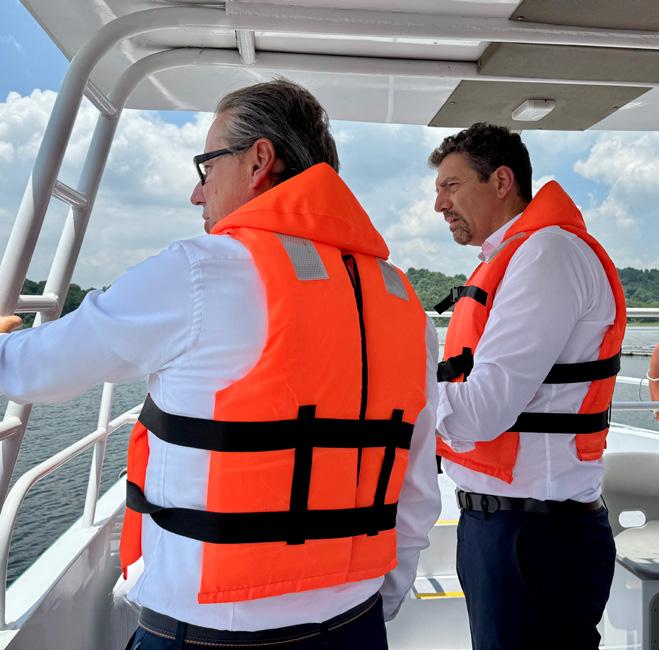
During our trip to Singapore, EC and the board visited Tengeh Solar Farm. This is a floating solar park built on a lake. The size represents approximately 50 football fields. The solar panels are self-cleaning with rainwater and have a lifespan of about 15 years. We got to ride one of the company’s boats and see the solar panels up close. What they have also managed to preserve is the wildlife around the lake, so the project delivers clean energy and is environmentally sustainable.
It features 122,000 solar panels across 10 islands, covering an area equivalent to 50 football fields.
• The farm has a capacity of 60 megawatt-peak (MWp), which can power approximately 16,000 four-room Housing Board flats for a year.
Reservoir
• It aims to contribute to Singapore’s renewable energy goals, with plans to install at least 2 gigawatt-peak (GWp) of solar PV capacity by 2030.
• The project is significant for Singapore’s commitment to sustainability and energy independence, as it harnesses solar energy from large reservoirs.
• This initiative not only enhances Singapore’s renewable energy capacity but also supports its environmental sustainability goals.
The Tengah solar project in Singapore is a significant initiative aimed at enhancing renewable energy capacity.
The Sembcorp Tengah Floating Solar Farm, one of the world’s largest inland floating solar PV systems, has a capacity
of 60 megawatt-peak (MWp) and can power about 16,000 four-room flats and water treatment plants. Tengah is being developed as a Smart Energy Town, integrating solar photovoltaic panels to support its Centralised Cooling System (CCS) and electric vehicle infrastructure.
The project is part of Singapore’s broader commitment to environmental sustainability, aiming to install at least 2 gigawatt-peak of solar PV capacity by 2030.
Tengah is designed with car-free zones and green corridors, promoting a sustainable and eco-friendly living environment. These initiatives reflect Singapore’s efforts to reduce carbon emissions and promote renewable energy sources.
Tengeh Reservoir
THE EXCITING POTENTIAL OF ALTERNATIVE RARE MINERALS New research to guide and support our vision
NINA IVARSEN
As our world continues to grow and evolve, the demand for rare minerals has surged, especially in technology, renewable energy, and industrial applications. While traditional sources provide many valuable materials, alternative rare minerals present a unique opportunity that can lead to more sustainable practices and a bright future for various industries.
Alternative rare minerals such as lithium, cobalt, and graphite are
gaining importance due to their critical roles in technology, renewable energy, and green innovations. These minerals offer sustainable alternatives to traditional rare earth elements and present opportunities for environmentally friendly mining and recycling practices.
What are alternative rare minerals?
Alternative rare minerals are non-traditional minerals that can substitute or complement the functionalities of conventional rare earth elements. These minerals, such as lithium, graphite, and cobalt, are increasingly critical due to their unique properties and applications, particularly in battery production, electronics, and green technologies.
Renewable Energy Revolution
One of the most promising aspects of alternative rare minerals is their role in supporting the renewable energy revolution. For instance, lithium is essential for rechargeable batteries used in electric vehicles (EVs) and energy storage systems. As the world transitions to cleaner energy solutions, the demand for lithium is expected to rise dramatically. This creates a fantastic opportunity for innovation in mining practices and battery technology, leading to sustainable sources of energy.
Green Technology Innovations
In addition to batteries, alternative minerals are crucial for developing advanced technologies. Cobalt, for example, is a key component in lithium-ion batteries, providing stability and longevity. By investing in recycling techniques and sustainable sourcing of cobalt, we can reduce the environmental
Rare Metals on periodic table. gadolinium, samarium, neodymium, Nickel, Cobalt, Lithium, Dysprosium and palladium, chemical elements with a high economic value. Symbols and atomic numbers.
impact of mining while meeting the growing demand for clean technology.
Graphite serves as another exciting alternative, especially in the production of anodes for batteries. With the global shift towards electric mobility, high-quality synthetic graphite and natural graphite from sustainable sources are becoming increasingly important, paving the way for more efficient and eco-friendly solutions.
Reducing Environmental Impact
Exploring alternative rare minerals also offers a path to reducing the environmental impact of mining. Traditional rare earth mining can involve significant ecological disturbances. By focusing on alternative sources that have lower environmental footprints, we can promote responsible mining practices that ensure the well-being of our planet.
Exciting advancements in recycling technology and urban mining (extracting resources from discarded electronics) also present great opportunities. By reclaiming valuable materials from end-oflife products, we can reduce dependency on virgin resources and foster a circular economy, where materials are reused and recycled continuously.
A Bright Future Ahead
ments; it is also a chance to create a more sustainable and environmentally friendly future. By prioritizing responsible sourcing, recycling, and innovative practices, we can harness the full potential of these minerals to benefit society while preserving our planet.
As we move forward, the collaboration between industries, governments, and researchers will be crucial in unlocking the exciting possibilities that alternative rare minerals present.
Rare minerals will be one of the topics DNV research department will study in the new strategy period. Research, Development and Innovation leadership is needed in in the new strategy.
The exploration of alternative rare minerals is not just a response to the growing demand for technological advance-
Consolidating Our Position Globally with Purpose
NINA IVARSEN
Sembcorp Marine and Keppel Offshore & Marine have come together to create a premier global player with deep engineering expertise. Our DNV Bord of directors and EC members was hosted by Executive Vice President (Engineer, Technology & Ne Product Development) Aziz Merchant when we visited the yard.
The integration of these two established industry players unlocks synergies. Together they leverage each other’s wealth of experience, engineering strength, and operational capabilities to better serve customers and provide greater stakeholder value.
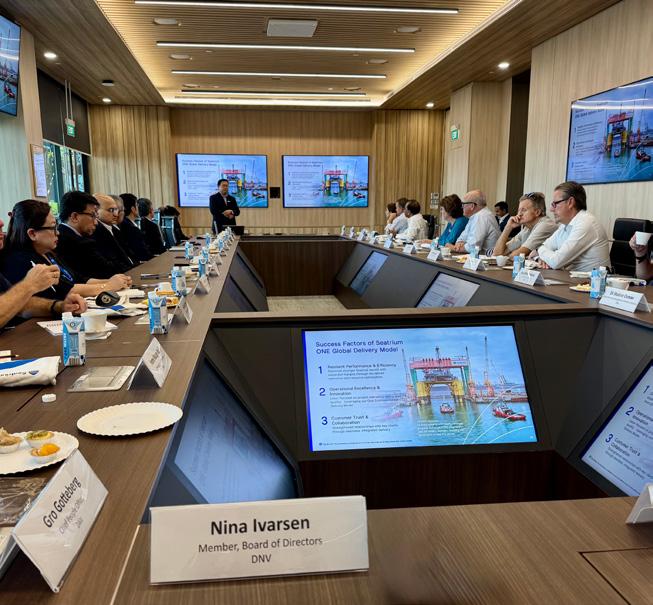
We were welcomed at the shipyard and given a tour on a bus. It was impressive to see how they build modules for gigantic ships, including cruise ships, and assemble them. The largest modules are assembled at sea with the help of tugboats and large cranes. They have all kinds of workshops so that all parts a ship consists of can be maintained and replaced at the shipyard. The vast majority of workers at the shipyard are Chinese. About 4,000 employees live on the shipyard premises, so that says something about how gigantic this is. We got to meet the management in their boardroom, and that is when one understands the importance and the respect there is for this large company and DNV’s client in Singapore.
Seatrium to Propel Offshore
Innovation with First Turnkey FPSO Delivery to Petrobras
Seatrium to Propel Offshore Innovation with First Turnkey FPSO Delivery to Petrobras Singapore, 16 July 2025, Seatrium Limited (“Seatrium” or “the Group”) announce the impending delivery of the PETROBRAS 78 (P-78) - the first of a series of turnkey Floating Production Storage and Offloading vessels (FPSO), to Brazil’s National Oil Company, Petroleo Brasileiro S.A (Petrobras).
The sailaway ceremony took place this summer at Seatrium’s Singapore yard, marking a significant and timely milestone. Upon delivery, the P-78 will be deployed in Brazil’s prolific Buzios field, the largest deepwater oil field globally, with an impressive production capacity of 180,000 barrels of oil per day (bopd), 7.2 million cubic metres (mcbm) of gas per day, and a storage capacity of 2 million barrels of oil. The P-78 will rank among the largest in the global operating fleet of FPSOs.
Mr Chris Ong, Chief Executive Officer, Seatrium said, “We take great pride in delivering the first of the series of Engineering, Procurement and Construction (EPC) FPSO to Petrobras. As a leader in providing sustainable offshore energy and infrastructure assets, Seatrium is committed to supporting Petrobras in their efforts to reduce carbon emissions from their floating production units”.
Our long-standing partnership with
Petrobras in their decarbonisation journey spans five other FPSO projects, each showcasing innovative sustainability features. We look forward to building on our strong track record of performance, leveraging our seamless One Seatrium Global Delivery model to continue delivering safe and high-quality vessels that meet the evolving demands of the industry.
Through its One Seatrium Global Delivery Model, the company collaborates with industry leaders for worldwide project execution leveraging its global footprint to transcend geographic boundaries.
Seatrium’s global teams have fabricated the topside modules weighing an impressive 54,000 MT across its shipyards in Singapore, China and Brazil, in addition to the integration and commissioning works of the P-78 FPSO in Singapore.
Upon completion, the P-78 will transit to the Buzios field, where Seatrium will conduct the final phase of offshore commissioning works. Ms Renata Baruzzi, Executive Officer for Engineering, Technology and Innovation, Petrobras said, “The FPSO P-78 is more than just the largest and most complex unit ever built for Petrobras, it is a testament to how far we’ve come. This vessel embodies the highest standards of construction and commissioning quality, integrating a wealth of new specifications and hardearned lessons from the Replicantes and Cessão Onerosa FPSO series.
References: MEDIA_RELEASE_Seatrium_to_Propel_Offshore_Innovation_with_First_Turnkey_FPSO_Delivery_to_Petrobras_(P-78).pdf Company Registration Number: 196300098Z 2 FPSO P-78 sailing to Buzios field in Brazil. Photo Credit: Seatrium
Meeting in Seatrum’s boardroom with the DNV board and EC Tuas Mega Port
GUT CELLS FOUND TO ‘WHISPER’ LIKE BRAIN NEURONS:
Discovery redefines how the body heals itself
NINA IVARSEN
On August 27, 2025, the DNV Board of Directors and EC (executive members) visited and received a good tour of the DukeNUS Center of Regulatory Excellence for Healthcare (CoRE), hosted by Executive Director of CoRE, Professor Lim Chien Wei Jon, in Singapore.
CoRE was established 11 years ago and is a health cluster created to strengthen health, systems, and access to care. The idea of the project is to promote healthier long life. Research shows that this is achieved by living healthily when you are young. Regulatory standards are being developed in Singapore, including biomedical standards. 75% of the population in Singapore is Chinese, so traditional Chinese medicine is prioritized.
• Singapore-led study shows specialised support cells in the gut form direct, neuron-like connections to deliver precise instructions to stem cells
• Overturns long-held beliefs about how gut cells communicate
• Opens new paths for treating colon cancer and IBD
Singapore, 24 July 2025—In a key advance for regenerative medicine and gut health, scientists from Duke-NUS Medical School and Nanyang Technological University, Singapore (NTU Singapore) have uncovered a precise and unexpected communication system in the gut. Support cells known as telocytes use fine extensions—like neurons in the brain—to deliver signals directly to intestinal stem cells. Their study, published in the journal Developmental
Cell, challenges long-standing assumptions about how the gut maintains and repairs itself, possibly leading to better treatments for conditions like IBD and colon cancer.
The intestinal lining is one of the most active tissues in the human body. It renews itself every few days, thanks to a small group of stem cells that live deep within tiny pockets found in the gut lining, called crypts. These stem cells divide and specialise, becoming the different types of cells needed to keep the gut healthy and functional. To accomplish this differentiation of cells, the stem cells rely on instructions from surrounding support cells in the stem cell niche—the specialised microenvironment in which stem cells live and function.
Until recently, scientists thought that these special chemical signals, called Wnts, floated freely through the surrounding tissue, eventually reaching the stem cells via diffusion. This offered a
partial explanation of how stem cells are regulated, but did not explain how such a random process would ensure that messages arrived at exactly the right time and place when needed.
Professor David Virshup, Director of the Programme in Cancer and Stem Cell Biology at Duke-NUS Medical School and co-corresponding author of the study, explained: “We discovered that these signals aren’t just drifting through tissue. They’re being delivered with surprising precision from the niche to the stem cells by specialised cells or telocytes—changing the way we think about cellular communication in the gut, similar to how neurons pass signals to one another in the brain.”
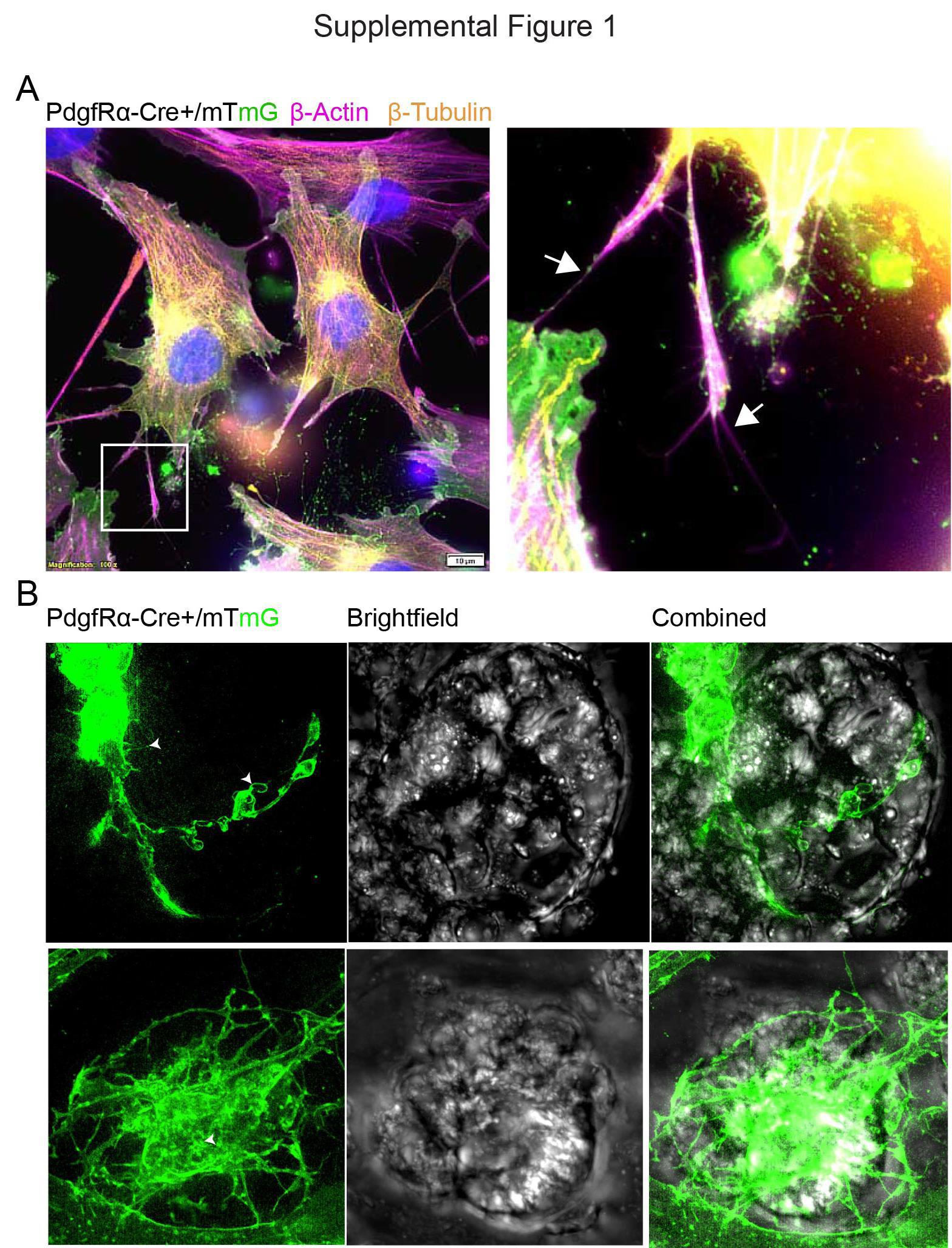
Telocytes are especially interesting due to their ability to send out long, thin extensions called cytonemes. These filaments reach directly from the telocyte to a specific stem cell. Using advanced imaging techniques, including high-resolution fluorescence and electron
microscopy, the team observed that telocytes in the mouse intestine use cytonemes to deliver Wnts directly to individual stem cells in the crypt.
This neuron-like behaviour in gut cells upends our understanding of how organs maintain themselves—making this one of the clearest cellular analogues between brain and gut function seen to date.
The researchers also found that the contact points between the telocyte and stem cell are similar in appearance to synapses, the one-to-one connections between nerve cells. This precise form of communication makes it possible to transport Wnts directly to their intended location.
“This kind of direct, cell-to-cell communication highlights a new level of precision in how secreted molecules are delivered to their target cell.” said Assistant Professor Alexander Ludwig from the School of Biological Sciences at NTU Singapore, one of the authors of the study. “It’s a striking example of how imaging at different scales coupled with new protein tagging approaches can uncover novel mechanisms and change paradigms.”
To better understand how this communication system works, scientists investigated the nuts and bolts of the telocytes, the proteins that scaffold for the cytonemes. When these proteins, specifically two key players named KANK and Liprin, were disrupted, the cytonemes failed to form or function correctly, and the special Wnt transport machinery failed to function.
Principal Research Scientist Dr Gediminas Greicius, from Duke-NUS’ Programme in Cancer and Stem Cell Biology and first author of the study, said the discovery highlights the power of exploring fundamental biology.
“Sometimes when you study the basics closely, you uncover something transformative,” said Assistant Professor Greicius. “This system of targeted signalling was hiding in plain sight, and now that we see it, it reshapes our understanding of the biology of stem cells in the gut.”
While the research focused on healthy
tissue, the implications are far-reaching. Disruptions in Wnt signalling are already known to drive some form of colon cancer. Similarly, impaired signalling may play a role in chronic inflammatory bowel disease (IBD) like Crohn’s disease and ulcerative colitis—conditions that are increasingly common in Singapore[1] and the region.
Professor Patrick Tan, Senior Vice-Dean for Research at Duke-NUS, noted the broader importance of the discovery.
“This discovery could change how we approach tissue repair and regenerative medicine,” said Professor Tan. “If we can harness or restore this precise mode of signalling, it may enhance the effectiveness of stem cell therapies and help develop more targeted treatments for gut-related diseases. It’s a strong example of how basic science drives realworld impact.”
Speaker at customer dinner:
Minister: KOH Poh Koon, Second Minister of State of Sustainability and Envi-
ronment Singapore
Dr. Koh Poh Koon has been serving as the Second Minister of State for Sustainability and the Environment in Singapore since 2022. He is a member of the People’s Action Party (PAP) and has been the Member of Parliament (MP) representing the Tampines Central division of Tampines GRC since 2020. Prior to his current roles, he held various positions at the Ministry of Health, Ministry of Trade and Industry, and Ministry of National Development. Dr. Koh is also a Consultant Colorectal Surgeon at Singapore General Hospital and has been involved in academic appointments as a Clinical Lecturer in the Yong Loo Lin School of Medicine at the National University of Singapore. His expertise extends to securing Singapore’s food supply and safety, as well as overseeing the transformation of the agri-food industry through technology and innovation.
Intestinal telocytes send Wnt signals to nearby gut lining cells using long extensions and fine, finger-like projections. // Credit: Gediminas Greicius
THE INTERCONNECTION OF PLANETARY AND HUMAN HEALTH
A Shared Destiny
NINA IVARSEN
The article emphasizes the intrinsic connection between the health of the planet and human well-being, highlighting how healthy ecosystems provide essential services like clean air and water that directly affect human health, while environmental degradation leads to increased diseases. It discusses growing global efforts toward sustainable practices, such as renewable energy and urban green spaces, and underscores the importance of initiatives like the United Nations Sustainable Development Goals and education in fostering collective action to promote both environmental stewardship and public health.
In today’s world, the health of our planet and the health of its inhabitants are intricately linked, creating an inseparable bond that underlines the importance of both environmental and human well-being. As we grapple with pressing global issues like climate change, deforestation, and pollution, it is becoming increasingly clear that the health of our ecosystems directly impacts our own health. Embracing this connection holds the promise of a brighter, healthier future for all.
When we think about planetary health, we must consider the state of our earth’s ecosystems. Healthy ecosystems provide essential services, including clean air, fresh water, and nutrient-rich soil. These natural resources play a crucial role in human health, influencing nutrition, disease prevention, and overall well-being. Conversely, when ecosystems are compromised due to human activities such as industrial pollution, habitat destruction, and climate change, the consequences are dire. We see an increase in respiratory diseases, waterborne illnesses, and the proliferation of
vector-borne diseases as a direct result of neglecting our planet’s health.
An optimistic outlook can be found in the growing recognition of the need for sustainable practices that promote both environmental stewardship and human well-being. Movements towards renewable energy, sustainable agriculture, and conservation efforts are gaining momentum all over the globe. Communities are uniting to implement eco-friendly practices that not only mitigate environmental harm but also enhance public health. For instance, urban green spaces and community gardens improve air quality and promote physical activity, fostering healthier lifestyles while nurturing local biodiversity.
Global
initiatives
like the United Nations Sustainable Development
Goals (SDGs) underscore the importance of a holistic approach to health. Goals focused on
sustainable cities, clean water, and responsible consumption emphasize the need for integrated solutions that address both planetary and human health.
As countries commit to achieving these goals, we become empowered to envision a future where economic growth and environmental sustainability go hand in hand.
Education and awareness are also pivotal in this transformation. By empowering individuals and communities with knowledge about the connection between their health and the planet’s health, we can inspire collective action. Grassroots movements are emerging, and as more people advocate for sustainable practices, the demand for change will only increase. This wave of optimism has the potential to influence policy decisions at all levels, ensuring that environmental considerations are at the forefront of health initiatives.
CYBERSECURITY
Cybersecurity of Energy Assets – unmanned assets, increasing risks and cybersecurity concerns
NINA IVARSEN
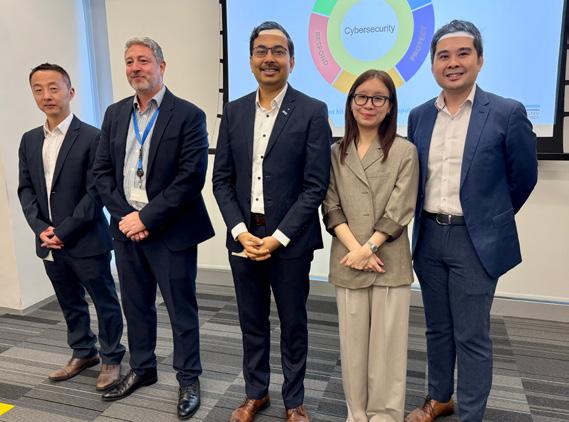
On our trip to Singapore, we also had the opportunity to visit DNV’s office and meet the employees. They had organized a marketplace where they could share some of their cross-business area projects. One of them was CyberOwl’s Medulla, managed and cyber security operations. These are systems that simplify tracking of asset inventories. They have 24/7 cybersecurity monitoring and response specifically designed for shipping. Real-time metrics to easily assess
• Liang, Xiaoning Ivan, Energy Systems DOS Senior Consultant
• Ming Tong, SCPA Marketing an Comm APA India and ME
The document outlines Singapore’s evolving cybersecurity landscape, highlighting rising cybercrime and phishing incidents, the growth of ransomware attacks, government efforts to enhance cybersecurity laws including the 2024 Cybersecurity (Amendment) Act, and challenges such as the dilemmas surrounding cyber-in-
surance and ransomware payments, emphasizing the need for strengthened collaboration and updated regulatory frameworks to address emerging AI-driven threats and protect critical infrastructure.
It has also been interesting to study how Singapore has developed its cybersecurity. Here are some reflections I have made on the topic. It can also be said that Singapore has come a long way in this area.
Singapore has witnessed significant advancements and challenges in its cybersecurity landscape. The integration of AI and other technological advancements have dramatically scaled the sophistication and complexity of potential cyber threats. The inability of traditional cyber defences to protect against the ever-growing threat landscape highlights the need for enhanced threat detection and response. Singapore must continually assess and, where necessary, improve its existing measures to fortify its cybersecurity framework. Moving forward, the government must continue to foster increased collaboration and dialogue between stakeholders, including government agencies, private organisations and other international stakehold-
ers. Developing a forward-looking approach to cyber-readiness will therefore be crucial to securing Singapore’s cyber defense against the growing arsenal of AI- powered threats.
Trends and Developments
The rapid technological advancements of the 21st century and digital transformation have accelerated the development of national cybersecurity concerns globally. As a result, the issue of cybersecurity as a lynchpin of national security has moved to the forefront of many governments’ agendas. Both the volume of cyber threats and their constant evolution have made cyber warfare, cybercrime and cyber-risk the new battleground of the digital revolution. Given
Singapore’s position as a financial and digital transformation leader in Asia, ensuring the city state tackles cybersecurity risks is critical to its security.
Escalation of cybercrimes
Global costs from cybercrime are estimated to reach USD10.5 trillion annually in 2025, despite an estimated USD101.5 billion projected spending on cybersecurity services. Singapore has not been able to avoid the growing threat of cybercrime. The Singapore Police Force reported an 18% increase in scam and cybercrime incidents from January to June 2024, as compared to the same period in 2023. The total losses from cybercrime increased from SGD334.5 million to SGD385.6 million during this period. This increase is accompanied by an increase in the sophistication of cyber scams which have escalated with the use of AI as an effective tool in the hands of cyber criminals.
Surge in phishing attempts
The Cyber Security Agency (CSA) identified a rise in phishing attempts reported to the Singapore Cyber Emergency Response Team (“SingCert”) in recent years. The CSA noted that scammers are employing new methods to make their phishing attempts appear more authentic, such as including HTTPS protocols in their phishing URLS or utilising more legitimate looking domains like “.com” instead of “. xyz”.
In Singapore, organisations in the banking and financial services, government and technology sectors were the most frequently attacked. In 2023, 63% of all reported phishing attempts involved spoofs of companies in the banking and financial services sector. The use of tools like generative AI have also enabled
scammers to produce more convincing phishing content, and the threat of sophisticated, large-scale phishing will continue as a key cybersecurity risk.
Continued growth of ransomware
Ransomware remains another key risk in Singapore, with 132 reported cases in both 2022 and 2023. A survey by cybersecurity firm Cohesity noted that over 190 firms reported being subject to ransomware attacks in 2024. Threat actors have targeted businesses across a wide range of industries, and the CSA noted in 2023 that companies engaged in manufacturing and construction were amongst the most targeted industries.
A Singapore law firm suffered an Akira ransomware attack in April 2024.
Although the firm reported that there was no evidence indicating that its document management systems containing client data were affected, it allegedly paid 21.07 bitcoins to Akira ransomware group. The incident illustrates the attractiveness of targeting organisations holding large amounts of sensitive client data, especially since victims of ransomware may be subject to additional pressure from their clients to pay the ransom to protect their affected data.
Many incidents could have been avoided with reasonable security precautions implemented and the CSA noted that local organisations averaged only a 70% adoption rate of essential cybersecurity measures, with only a third of organisations fully implementing at least 60% of measures recommended in the national cybersecurity standards.
The dilemma of cyber-insurance
The evolving threat has prompted more insurers to offer cyber-insurance for organisations seeking to mitigate the financial risks of cyber-incidents. As costs of a cybersecurity incident or threat can be significant, cyber-insurance coverage is important to manage the various types of costs that may be incurred, including lawyers, computer forensics experts, crisis management and public relations consultants, and ransomware negotiators. Cyber-insurance helps companies mitigate the risk of harm perpetuated by threat actors, allowing organisations to mitigate or even recoup their financial losses.
However, while cyber-insurance often makes commercial sense for organisations, insurance payouts which go towards paying the ransom costs may create a perverse incentive for threat actors, since having more organisations
holding cyber-insurance policies which cover extortion cost payouts may encourage threat actors to launch further attacks. As such many governments, including the Singapore government, discourage victims from paying ransoms, pointing out that doing so perpetuates a cycle where hackers and scammers target firms that have previously made payouts or new organisations with cyber-insurance, as they may be more inclined to pay the extortion costs. As cyber-insurance becomes more widely adopted, the impact on the rates of cyber-attacks remains to be seen.
Is it time to rethink the laws on ransomware payments?
While ransomware payments are not prohibited by law in many countries including in Singapore, anti-money laundering (AML) and countering the financing of terrorism (CFT) regulations, as well as criminal laws, are applicable to such payments. Since cyber threat actors may well be involved in criminal activity, money laundering or terrorism financing, victims seeking to make payment could potentially breach AML and CFT regulations, especially where the attacker is tied to known criminal organisations.
Countries are considering the need to revisit their approach to ransomware payments, such as introducing guidelines balancing victims’ urgent need to resolve cyber-attacks with the need for compliance with international AML/ CFT standards. This could include developing a legal framework requiring businesses to report such incidents without facing penalties, mirroring the Australian regime of requiring organisations to disclose ransomware payments. Conversely, Singapore could mandate that organisations procure cyber-insurance and prohibit the coverage of claims for ransomware payments, with the hope that organisations are deterred from making such payments if the money comes out of their pockets. This also may thwart threat actors’ attempts to identify soft targets likely to make payments.
Improving Cybersecurity Initiatives
The Singapore government has made significant efforts to expand on and further develop Singapore’s cybersecurity infrastructure in light of the evolving cyber threat landscape.
The Cybersecurity (Amendment) Act 2024, which passed in May 2024, introduced several changes to the Cybersecurity Act 2018 (the “Act”) although it has yet to come into force.
Changes to the CII regime
Key amendments include:
• widening the ambit of the Act to cover virtual computers, in light of the increasing reliance on cloud technology.
• broadening the CSA’s jurisdiction to monitor and regulate certain offshore computers where the owner is in Singapore and where the computers would be regulated as CII if they were located at least partly in Singapore.
• expanding the incident reporting duties of CII owners to include threats to their supply chain or of any incidents where their supply chain has been affected; and
• regulating the providers of essential services, where those services are provided on digital infrastructure owned by third parties.
• Designation of STCCs, ESCIs and major FDIs
Furthermore, the Act will regulate new entities and systems.
First, computers may be designated as systems of temporary cybersecurity concern (STCC) where there is a high risk of a cybersecurity risk or threat against it, and where any harm against it will have serious detrimental effects.
Embracing Micro-Affiliation Theory
NINA IVARSEN
The concept of micro-affiliation theory brings an optimistic perspective to our efforts in creating a kinder, more compassionate world. This theory opens new avenues of thought and action that can inspire us and promote positivity not only in our daily lives but also within our broader communities.
Micro-affiliations illuminate the importance of small connections that often slip under the radar of our day-to-day lives. Whether it’s exchanging a friendly smile with a stranger on the street, offering a supportive word to a coworker during a challenging project, or simply taking a moment to show kindness to a colleague, these seemingly minor gestures have the power to create ripples of positivity.
• Significance of small connections: Everyday gestures like smiles or supportive words can create positive ripples that reinforce shared humanity and strengthen community bonds.
• Empowering individual actions: Emphasizing micro-affiliations encourages everyone to contribute to kindness through daily acts, generating collective momentum for compassion.
• Transforming mindsets: Viewing challenges as opportunities for kindness enables empathetic responses and deeper connections, promoting understanding over resentment.
• Building supportive networks: Regular micro-affiliations create inclusive environments where individuals feel valued and supported, fostering
thriving communities centered on mutual encouragement.
Micro-affiliation theory suggests that our small, yet meaningful, everyday interactions and connections have the extraordinary potential to foster a culture of kindness, empathy, and understanding. By understanding the significance of these micro-level associations, we unlock a mechanism through which we can cultivate an environment that nurtures caring and compassion. This nurturing environment can impact both our personal lives and our work environment.
Each small act of kindness helps reinforce our shared humanity and serves as a heartfelt reminder that every individual plays a vital role in cultivating a nurturing community. As we learn to appreciate and celebrate these small moments, we naturally find ourselves feeling more connected to those around us, significantly enhancing our overall sense of belonging and community spirit.
By placing an emphasis on micro-affiliations, we empower individuals from all walks of life to take the initiative in making the world a better place, one kind gesture at a time. Each and every person possesses the ability to contribute to a culture steeped in kindness through their daily interactions. Encouragement to perform small acts of kindness elevates the notion that everyone has the
unique opportunity to create positive and meaningful change. As more individuals resonate with this vision and engage actively in compassionate behaviors, a collective momentum builds, creating a domino effect that makes it virtually effortless for compassion to spread like wildfire within our communities.
Micro-affiliation theory encourages a transformational shift in our mindsets that can lead to profound changes in how we view our interactions and challenges. Rather than perceiving challenges and difficulties as mere obstacles in our path, we can train ourselves to see them as opportunities to engage and connect with others on a deeper level.
This optimistic perspective empowers us to address conflicts and misunderstandings with understanding instead of frustration or resentment. With this mindset, we actively cultivate ways to express empathy and support to those around us, strengthening the bonds formed through our interconnected experiences.
As we immerse ourselves in the practice of micro-affiliations, we instinctively create supportive networks that uplift, nurture, and empower one another. These organic networks foster an inclusive atmosphere where all individuals feel valued, heard, and understood. In a world that can sometimes feel isolated and disconnected, merely knowing that someone cares and acknowledges our struggles can make a profound and life-affirming difference.
GENUINE CONNECTION IN DISCRETIONARY EFFORT
A good start on the new Strategy period
NINA IVARSEN
Genuine connection and alignment with an organization’s values and culture are essential for fostering discretionary effort among employees, which significantly contributes to organizational success. This alignment enhances motivation, engagement, and productivity in the workplace.
• Enhanced Engagement: Employees emotionally invested in the organization’s mission show higher engagement by taking initiative, contributing ideas, and collaborating effectively, creating a positive and dynamic work environment.
• Increased Motivation: Understanding how their roles contribute to the organization’s goals gives employees a strong sense of purpose, driving them to exceed basic job requirements and actively seeking improvement and innovation.
• Stronger Team Cohesion: Shared core values build trust and camaraderie among team members, improving communication, collaboration, and problem-solving, which supports a motivating and high-performance workplace.
• Improved Retention Rates: Employees aligned with organizational values are more likely to remain committed long-term, reducing turnover costs and enhancing team stability and institutional knowledge.
True quality discretionary effort is a vital component in achieving organizational success, and it flourishes when there exist a genuine connection and alignment with the organization’s underlying values and culture. Let’s delve into the details of how this deep alignment can inspire unprecedented levels of motivation, engagement, and overall productivity among employees.
Discretionary effort refers to the level of effort that individuals consciously choose to invest beyond their basic job requirements and responsibilities.
When employees feel a strong and lasting alignment with their organization’s values and culture, they are far more likely to go above and beyond in their day-today responsibilities and roles.
This authentic connection creates an environment that not only fosters collaboration and innovation but also engenders overall satisfaction and fulfillment among team members.
Enhanced Engagement
When individuals feel genuinely connected to their organization’s mission and values, their engagement levels soar to new heights. They are not merely working for a paycheck or a job title; they are emotionally invested in the long-term success and prosperity of the organization and its goals. This heightened level of engagement translates into a genuine willingness to take initiative, creatively contribute innovative ideas, and collaborate effectively with others. Such enthusiasm breeds positivity, becoming contagious throughout the workplace, and inspiring coworkers to elevate their own levels of effort and dedication, thereby creating a vibrant, energetic, and dynamic workplace environment.
Increased Motivation
Alignment with organizational values and culture instills a profound sense of purpose and meaning in employees. When team members understand how their specific roles contribute to the broader organizational
mission and objectives, they are far more motivated to exert discretionary effort beyond what is merely required.
This intrinsic motivation is immensely powerful, as it drives individuals to actively seek opportunities to excel, innovate, and improve. It transforms the workplace into a space where employees are not only eager but genuinely excited to tackle challenges, creatively engage with problems, and push the organization toward achieving its collective goals and visions.
Stronger Team Cohesion
A genuine connection to the organization’s core values fosters a sense of belonging and strengthens interpersonal relationships among team members. When employees resonate with the same foundational values, it cultivates trust, respect, and camaraderie within teams. This cohesiveness encourages collaboration and enhances communication, leading to improved problem-solv-
ing capabilities and creative thinking processes. As relationships deepen and grow stronger, employees are far more likely to support and uplift one another, creating a positive, motivating, and uplifting work environment conducive to high performance and satisfaction.
Improved Retention Rates
When we feel a strong, genuine alignment with the organization’s core values, they are significantly less likely to seek opportunities elsewhere. The potent combination of motivation, engagement, and camaraderie creates a fulfilling and satisfying work experience that encourages long-term commitment and loyalty. High retention rates not only save organizations considerable costs associated with turnover but also enhance team stability, consistency, and overall institutional knowledge. A stable workforce is key in maintaining momentum and achieving sustainable success over time.
Driving Organizational Success
When employees choose to invest their discretionary effort in ways that are
aligned with the organization’s values and culture, it drives impressive outcomes for the organization. This collective contribution greatly enhances productivity, elevates service quality, and fosters a culture of continuous innovation. Organizations benefit immensely from the unique insights, diverse perspectives, and creativity of their engaged workforce, leading to better decision-making processes and more effective strategic initiatives.
When everyone is working enthusiastically toward the same shared vision with unwavering commitment, success naturally and organically follows in its wake.
True quality discretionary effort is only truly achieved when there exist a connection and alignment with the organization’s foundational values and culture.
Up-skilling and re-skilling people, ensuring adaptability to change, innovate and have up-to-date knowledge in traditional, emerging and digital technologies.
Vice President and Regional Director, Asia Pacific for Energy Systems at DNV
NINA IVARSEN
We met with Brice Le Gallo in Singapore when the Board of Directors visited DNV. We asked for an interview, and Brice kindly gave us this very interesting story.
Who are you and what is your role today in the organization?
I am the Vice President and Regional Director, Asia Pacific for Energy Systems at DNV and a member of Energy Systems ELT. Based in Singapore, I lead a dynamic team of more than 550 energy professionals across seven markets (E.g. Mainland China, Australia, Southeast Asia to name a few), supporting industries and governments in their transition toward a safe, decarbonized, and smart energy future. I have around 23 years of experience in the energy and maritime sectors, nearly 20 of which have been dedicated to Asia Pacific. It is a very exciting time for region APAC as it is undergoing a lot of growth and changes and offers many opportunities.
I hold a Master’s degree in Naval Architecture & Offshore Engineering (Genie Maritime in French) from Centrale Marseille (France) and a MBA from Kedge Business School (France) and Shanghai Jiao Tong University (China). Since 2020, I have also served as Country Chair for DNV Singapore, where I drive strategic initiatives, foster cross-business collaboration, and engage with external stakeholders to reinforce DNV’s role as a trusted partner.
In January 2026, I will embark on a new adventure and join a new team within DNV as the new Regional Director for another region in Energy Systems – South Europe, MEA and LATAM and I will move to Madrid with my family. Very excited about the coming years!
Fun fact: I joined DNV in Singapore in January 2013, but this was actually not the first time I worked for DNV – I did a 6 month internship at the end of my Masters programme in 2002 at Høvik Office, studying behaviours of risers in high current environment. One of the young engineers in that section was actually Arve Johan Kalleklev who happened to be my boss when he spent time in Asia and I then took over his role when he moved back, and my HoS was Kim Mork, whom I have been working very closely with as part of Energy Systems ELT. Small world!
Caption: Energy Systems APAC RLT – picture taken on the rooftop of DNV Singapore Office
On the personal side, I am married to Clemence and the father of three children; 1 son (Gustave) and 1 daughter (Capucine) who were both born in Shanghai and 1 daughter (Noemie) born in Singapore and I am working hard to balance my professional commitments with a strong dedication to family life.
What innovations are you seeing in the industry that will really drive forward decarbonization of oil and gas?
The Oil & Gas industry is accelerating its decarbonization through several key innovations. Carbon capture and storage (CCS) is becoming central, enabling companies to reduce emissions from existing operations and support low-carbon hydrogen production. Electrification of oil and gas facilities; using renewable energy to power platforms, refineries, and LNG plants are expanding, especially in regions with strong renewable resources. The industry is investing in both blue and green hydrogen, with blue hydrogen leveraging natural gas and CCS, and green hydrogen produced from renewables. Reducing methane emissions through advanced monitoring and digital technologies is another immediate priority. In Asia Pacific, we see rapid development of CCS hubs, large-scale hydrogen projects for export, and increased electrification, particularly in Australia, China, and Southeast Asia. These innovations, combined with digitalization and a growing focus
on bio-based fuels, are expected to drive significant emissions reductions in the Oil & Gas sector globally and regionally.
As an example:
DNV and Petronas CCS ventures collaborate to enable carbon capture and storage (CCS) value chains across Southeast Asia
DNV and PETRONAS’ wholly owned subsidiary, PETRONAS CCS Ventures Sdn Bhd (PETRONAS CCS Ventures), have recently signed a Master Price Agreement for the certification of carbon dioxide (CO2) storage sites and associated facilities for carbon capture and storage (CCS) projects in Malaysia.
This strategic partnership between DNV and PETRONAS CCS Ventures marked a defining moment in advancing CCS technology in Malaysia and the broader Asian region and is a testament to our commitment to sustainability and our role in spearheading the transition towards a low-carbon future. Together, we are setting a new standard for industry collaboration and innovation in the pursuit of the region’s net zero by 2050 goal.
How long did you live in Singapore and what were you and your family’s motivation for staying in Asia for so many years?
Prior to staying in Asia, I have lived in France, the UK and Norway. We have been in Asia for 20 years, where 15 years have been spent in Singapore after spending 5 years in China. When we first moved to Shanghai in 2006, we had not planned to stay in Asia so long - the plan was to stay 2 to 5 years (if that had been on the table, we probably would not have dared to jump and move). For many people leaving abroad, the move is because they do not want to live in their own country anymore. In our case, while we love our home country and our family and friends back home, we were looking forward to discovering something new and evolving in a different environment. Asia is super dynamic, and the many cultures that we have encountered have made us who we are today. Being in
Caption: My family – picture taken in Oct 2025 in Shanghai
From left to right: Datuk Adif Zulkifli (Executive Vice President & CEO, Upstream, PETRONAS), Nora’in Md Salleh (General Manager, Carbon Capture and Storage, Upstream, PETRONAS), Emry Hisham Yusoff, (Chief Executive Officer of PETRONAS CCS Ventures), Brice Le Gallo (Vice President and Regional Director APAC, Energy Systems at DNV), His Excellency Morten Paulsen (Norwegian Ambassador to Malaysia and Brunei), Zhao Xiaodong, (Vice President, OIT - SEA, Japan, Korea & Taiwan at DNV)
Petronas and DNV teams celebrating the signature of the agreement
Attending a “Women in Engineering” event organized at DNV Singapore office
Addressing the participants of a “Women in Engineering” event organized at DNV Singapore office
Asia has widened my horizons and perspectives, offering many different viewpoint of the world. In a recent workshop as part of Asia Pacific mentoring program, the trainer had shared the idea that “Fish can’t see water” – well, it is the same with each and every one of us – when we are not exposed to other cultures, we will not necessarily understand our own culture.
What
do you like to do when you’re not at work?
Hobby? - I enjoy spending time outdoors – when on holidays, we prioritize outdoor activities, at sea or in the mountains. This includes trekking, camping, and sailing. I also try to maintain a decent physical activity level outside work – it helps me stay resilient and is part of my way of keeping the balance. I picked up cycling a couple of years ago and really enjoyed it. In November 2025, I have actually gone for a charity ride from Ho Chi Minh City in Vietnam to Siem Reap in Cambodia –730km in total to raise funds for an association supporting an orphanage: a very enriching experience.
I am usually pretty good at switching off when not at work, which helps me focus on other important aspects of life – family, friends and time for myself.
Some closing words about working in DNV?
Recent proud moments were the strong teamwork and collaboration which lead to successfully host DNV Board of Directors in Singapore last August, and more recently, the recognition of DNV as Top 55 employers in Singapore across all size categories as a Best Workplace.
I have now been at DNV for close to 13 years and I must say I really enjoy it – when people ask me, I say it is because of the alignment of the company values and culture with who I am and what is important for me. It is a place where I can be myself. It is also about the possibilities to develop and grow in the organization (in the last 13 years, I have had 6 or 7 different roles!) and last but not least, it is because of the people. Great people, super competent yet very humble and truly wanting to do a great job and share their knowledge across the company.
At a recent C-Suite meeting with one of our Key Accounts in China
The Ripple Effect of Healthy Teams
NINA IVARSEN
Healthy team dynamics extend benefits beyond individual groups, positively influencing organizational morale, productivity, and success. These teams foster an environment of trust, open communication, and shared purpose, empowering members to contribute effectively. This is important, and we encourage all employees to have an open, transparent dialogue that creates trust and confidence.
• Open communication drives agility: Healthy teams prioritize honest dialogue, reducing misunderstandings and enabling swift, informed decisionmaking that enhances organizational responsiveness. [1] [2]
• Collaboration fuels innovation: A positive team culture nurtures teamwork, leveraging diverse strengths for effective problem-solving and inspiring similar practices across the organization. [3] [4]
• Engagement improves retention: Supportive team environments boost employee motivation and job satisfaction, leading to lower turnover and stronger employer branding. [5]
• Healthy teams strengthen culture and performance: Positive team behaviors reinforce organizational values, resulting in cohesive workforces and increased productivity that advance strategic goals. [6] [7]
When teams cultivate a healthier dynamic, the benefits extend far beyond the immediate group, positively influencing the entire organization.
The ripple effect of a thriving team environment can lead to enhanced morale, increased productivity, and improved overall organizational success.
Let’s explore how healthy teams contribute to the well-being of an organization, elaborating on each point to appreciate their depth and significance. This article is based om our experience looking at teams in DNV globally.
A healthy team is characterized by strong communication, collaboration, trust, and a shared sense of purpose. When these essential elements are present, they create a vibrant and supportive atmosphere where each member feels not just valued but also empowered to contribute to the team’s success.
Healthy teams prioritize open and honest communication as a cornerstone of their interactions. When team members feel comfortable sharing their thoughts and ideas, misunderstandings are minimized, thus paving the way for collaboration to flourish. This culture of openness ensures that everyone is aligned and on the same page, driving effective decision-making processes that are crucial for expedient operations. When communication flows smoothly within teams, it fosters a culture where information is shared freely and effectively, creating a more informed and agile
organization. This agility allows the organization to adapt swiftly to challenges and opportunities, enhancing its overall resilience in competitive markets.
A positive team environment not only encourages collaboration but actively nurtures teamwork, which leads to more effective problem-solving and innovative solutions. When teams work harmoniously together, they can fully leverage each member’s unique strengths and skills, maximizing their collective potential.
This cooperative spirit is infectious; it inspires other teams within the organization to adopt similar practices, which creates a more connected and harmonious organizational culture. Such a culture can leads to joint initiatives that capitalize on shared knowledge and resources, further amplifying the benefits of teamwork across the organization. We saw that it happened when teams moved to the new office areas and collaboration sones was created.
Higher Employee Engagement
When individuals feel genuinely supported and valued within their team, they are far more likely to be motivated and committed to their work. This increased level of engagement can lead to enhanced job satisfaction, which ultimately results in lower turnover rates and a more stable workforce. Our organizations benefit immensely from retaining experienced employees who understand the nuances of the company’s mission and values. This knowledge retention is invaluable and leads to enhanced performance, productivity, and even a stronger employer brand, as satisfied employees share their positive experiences with potential recruits.
A culture rooted in healthy teams cultivates an environment of psychological safety, where team members feel free to take risks and share bold ideas without the fear of criticism. This open envi-
ronment encourages creativity and innovation, as employees are more likely to think outside the box and propose new solutions to existing problems.
The influx of innovative ideas invigorates the organization, propelling it forward and keeping it competitive and responsive to changing market dynamics. Organizations that harness this creativity gain a significant edge, as they can continuously evolve and meet the needs of their customers in fresh and exciting ways.
When teams operate in a healthy manner, their positive behaviors and attitudes set example for the rest of the organization. Their thriving dynamics can propagate through the organization, effectively reinforcing the core values and culture that underpin our company’s identity. A strong organizational culture enhances the overall employee experience, making it a more stimulating and desirable place to work.
As the healthy behaviors of one team inspire others, the entire organization benefits from a more cohesive and united workforce, which is essential for tackling complex challenges and pursuing ambitious goals together.
Healthier teams lead to significant improvements in productivity and performance within the organization. When teams function well, they operate more efficiently and effectively, resulting in higher quality work and better outcomes across all fronts. This improvement in team performance contributes decisively to the overall success of the organization, helping it achieve its strategic goals and objectives in a timely manner. The increased output reflects positively on the organization as a whole, showcasing its ability to deliver value consistently and effectively.
Photo: Marit Thom Kvale
VEFF Board members, Ivar Magnus Næsset with Solveig, Lin B. Karsten and Marit Kvale Thom
The Power of Stretch Goals
NINA IVARSEN
Stretch-goals can significantly enhance our creative processes and motivation. Let’s explore how they breathe new life into our work and encourage innovation.
At DNV, we are encouraged to take responsibility for personal growth, which of course should be relevant to the tasks you have or wish to have in the future. In my opinion, it is very important to challenge yourself and those you work with on good goal setting. I am not talking about finances, but about well-being, customer relationships, and how you feel appreciated. All of this leads to good results, including financial ones.
Stretch goals are ambitious, often seemingly unattainable objectives that push us out of our comfort zones and invite us to dream big. They can redefine our standards of success, inspiring us not just to think bigger but to also approach challenges with a fresh perspective rooted in optimism.
Stretch goals serve as a catalyst that challenges our conventional ways of thinking, allowing us to break free from the mundane. When we set our sights high, we are compelled to explore unconventional solutions and ideas that we might not have considered were possible oth-
erwise. This creative spark can lead to groundbreaking breakthroughs, whether in product development, problem-solving, or improving existing processes. By embracing the exhilarating challenge that stretch goals present, we allow ourselves to truly think outside the box, subsequently discovering innovative avenues that can inspire both ourselves and our teams.
Setting stretch goals plays a pivotal role in cultivating a vibrant growth mindset among teams and individuals alike. It encourages the empowering belief that our abilities and intelligence can be developed through dedication, resilience, and hard work. This encouraging mindset fosters a strong sense of resilience, motivating us to view failures as valuable learning opportunities rather than discouraging setbacks.
Each step taken toward a stretch goal, regardless of the outcome, serves to build our confidence, expand our skill sets, and instill a sense of accomplishment that propels us forward.
Stretch goals can act as a powerful motivator, uniting team members around a common, exhilarating vision. When every individual within a team rallies together to work towards a lofty goal, it significantly strengthens collaboration and camaraderie among them. The shared excitement of aiming for something grander can be contagious, encouraging individuals to invest their best efforts towards the collective success of the team. This beautiful synergy
can lead to incredible results that may have seemed impossible or out of reach at the outset.
In our pursuit of ambitious goals, we often find ourselves engaging in more frequent experimentation and iteration. This insatiable drive for innovation seamlessly becomes integral to our work culture, as teams are encouraged to take calculated risks, test new ideas, and explore alternative solutions without fear of failure. This iterative process not only leads to the blossoming of novel concepts but also enhances our overall efficiency and adaptability, ensuring that we remain agile in the face of evolving challenges.
Stretch goals create a profound sense of purpose and direction in our endeavors. They serve as poignant reminders of why we do
what we do in the first place, instilling palpable passion for our work. When we have a clear and challenging target to strive toward, our daily tasks transform into meaningful contributions toward a larger vision. This renewed sense of purpose not only boosts morale but also enhances overall job satisfaction and aligns our ambitions with our core values.
MEET AMIT MITAL
Country Chair for India Sri Lanka & Bangladesh and Group Management System Responsible at DNV
NINA IVARSEN
When CEO and President Remi Eriksen went for a business trip to India, he met with Country Chair Amit Mital. We asked Amit to share his story, and here you can read about Amit’s career in DNV.
REMI
“Last week I had the pleasure of visiting India, where I met with customers from the energy, maritime and steel industries. My trip also took me to our offices in Mumbai and Pune, and I was truly inspired by the dedication and expertise of our teams there.
India is becoming increasingly important for DNV - driven by growth, innovation, and sustainability. Over the decades, we have established a strong presence in India, with over 950 talented professionals. Our broad presence is a testament to our deep and lasting commitment to India’s progress.
Thank you to Arjun Chowgule (CHOWGULE & Co.), Jayant Acharya and Sharad Mahendra (JSW), and Baba Kalyani (Kalyani Group) for insightful discussions. I look forward to continuing our partnership and shaping a sustainable future together.”
AMIT
“It was a privilege having Remi and Ulrike visit us in India. It was a hectic visit that included visiting DNV offices in 2 cities (Mumbai & Pune), 3 client visits (in uncertain traffic), 300 kms of road transfers, coping with the Maharashtra monsoon, a dinner with selected employees, all in a span of 48 hours! Remi, we are thankful for the energy and motivation you bring to the team and hope to see you back not so long in the future!”
I am a Marine Engineer by education and started my career sailing on ships. I spent 10 years at sea on bulk carriers and container ships in various positions including as a Chief Engineer and a further thirty years in various technical and managerial in surveying, inspections, verification, auditing, classification support, specialist etc. These experiences have served me well and provided me the competence and confidence to fit in my current role as the Governance and Management systems responsible for the DNV Group, which I have had since 2015.
I have been in my current role as Country Chair for India, Sri Lanka & Bangladesh for 18 months now. It started as an Interim position but for the moment, I continue to be responsible for the 3 countries.
How do you see the impact of DNV’s new strategy on India and what could be the biggest and most important changes?
Among other priorities, it is clear that during the new strategy period we have an ambition to take a leading position in the areas of Climate change, decarbonization, digital assurance and digital health.
Given the above, I believe DNV’s path is closely linked with India’s progress. There is a clear reason to pay attention to the world’s most populous country, the soon third largest economy, the country with highest absolute growth in energy use and emissions in the coming decade.
We have already set the base in India with a competent, qualified, experienced and committed workforce. We now need to work further at positioning ourselves as a preferred partner in the transformation journey of our stakeholders through a precise Country level cross-BA strategy, that will give us clarity in direction and purpose.
What do you like to do when you’re not at work?
I love to travel and ever since I moved to Norway with my family 14 years ago, we have a clear plan to travel both within and outside Norway at least 3 times a year. Sometimes, it could be just looking at the map, picking out a location and driving out!
Spending time with the family is priceless and more so since both my daughter, 30 and my son 21 have moved out of home.
We do enjoy socializing and hosting family and friends visiting us from abroad! I am an enthusiastic cook, albeit not a very good one. Work in progress!
Could you please say a few words about how it is to work in DNV?
Some of us remember the campaign ’Why do I get up in the morning’. I get up each morning, eager and enthusiastic to engage in an environment where we live our values – we care, we dare, and we share. I can make a difference because I have 15,000 colleagues to lean on and 15,000 colleagues who I can trust!
Traditional authority comes from
position; zero-distance authority must come from authentic competence and emotional
presence.
NINA IVARSEN
In this article, we will explore the advantages of an inclusive and flat leadership style called zero-distance authority where leaders do not need to use power to lead but instead use emotions.
Haier’s RenDanHeYi model revolutionizes traditional corporate hierarchy by replacing it with self-managed, customer-focused micro-companies, fostering entrepreneurship and agility. This transformation emphasizes emotional intelligence competencies essential for leading and collaborating without formal authority in flat organizations.
• RenDanHeYi model explained: It replaces traditional hierarchies with autonomous teams that combine employee entrepreneurship (“Ren”), user value (“Dan”), and their integration (“HeYi”) to create a customer-centric culture. [1]
• Benefits of reducing hierarchy: Flattening structures enhances employee satisfaction, decision speed, agility, learning, and resilience by eliminating managers and bureaucracy. [2]
• Emotional entrepreneurship necessity: Without bosses, individuals must lead, give feedback, and resolve conflicts relying on emotional intelligence rather than positional authority. [3]
awareness, emotional regulation, and system thinking to lead, create accountability, give feedback, resolve conflicts, and avoid bottlenecks. [4] [5]
• Leading without positional authority: Authentic competence and emotional presence replace traditional authority, requiring individuals to influence and step back as needed. [5]
• Human operating system upgrades: Companies invest in training to develop emotional competencies through practice, focusing on managing oneself in relation to others rather than managing others. [6]
• Emotional intelligence’s organizational impact: These competencies engage brain systems differently than hierarchical work, activating reward circuits and demanding advanced social management, which supports sustained high performance and collaboration. [7] [8]
The Chinese company Haier, which houses brands such as GE Appliances, CANDY, and Fisher & Paykel, began reducing hierarchical layers in 2005 by introducing the RenDanHeYi model. The goal was to achieve “zero distance to the customer” by replacing the tradi-
tional corporate pyramid with self-managed teams. Under the leadership of CEO Zhang Ruimin, Haier transformed thousands of middle managers into entrepreneurs leading small, autonomous business units. By 2021, the company reduced management layers from 12 to three across all subsidiaries. They eventually achieved a 67% faster decision-making cycle.
WHAT IS RENDANHEYI MODEL
The Rendanheyi model is an innovative organizational model developed by Haier, replacing traditional hierarchies with self-managed, customer-oriented micro-companies that deliver value directly to users. The model consists of “Ren” (employees/entrepreneurs), “Dan” (user value), and “HeYi” (combining value), with the goal of having employees create and deliver user value to realize their own value, promoting entrepreneurship, flexibility, and a customer-centric culture.
The business case for removing management layers is compelling
Research has shown that reducing hierarchy can lead to more satisfied employees and speedier decision-making, while flat structures bring benefits such as agility, speed of learning, and resilience. The fewer managers there are, the more everyone needs sophisticated human skills. Companies pursuing zero distance eliminate traditional hierarchies in favor of networks of autonomous teams that operate without managers, bureaucracy, or rigid chains of command. Instead of relying on positional authority, they depend entirely on what we might call “emotional entrepreneurship.”
In a zero-distance organization, you can’t rely on your boss to resolve conflicts, create accountability, or provide direction. Instead, you must lead without authority, give feedback without hierarchy, and collaborate without the safety net of formal roles. These aren’t just new skills, they’re a fundamental rewiring of how we relate to work and each other.
Research from MIT’s Bill Fischer, who has studied these organizations extensively, shows that autonomy without the right emotional intelligence skills is like installing new apps on an outdated operating system. The structure may look revolutionary, but without upgrading human capabilities, the system fails.
What exactly are the emotional intelligence skills that make zero distance possible? They connect with five core competencies that show up consistently across successful autonomous organizations:
Leading without being “the boss.”
This requires exceptional self-awareness and influence skills. In zero-distance organizations, individuals must know when their expertise is genuinely needed, communicate their vision compellingly enough for others to follow voluntarily, and step back when someone else is better suited to lead. Traditional authority comes from position; zero-distance authority must come from authentic competence and emotional presence.
Creating accountability without hierarchy.
This demands empathy combined with the confidence that comes from knowing your strengths. Zero-distance companies rely on peer review and peer accountability systems. This only works
when team members can read emotional cues, understand others’ motivations, and have difficult conversations with genuine care rather than judgment.
Giving feedback peer-to-peer.
This requires sophisticated social awareness and communication skills. Without the buffer of formal performance reviews or manager mediation, feedback becomes constant and immediate. Successful autonomous organizations develop leaders who can coach, who master the art of feedback that empowers rather than threatens. They learn to read timing, frame observations in ways that motivate, and create psychological safety even while raising challenging issues.
Resolving conflicts without escalation.
Accomplishing this calls for emotional regulation and relationship management at an advanced level. When there’s no HR department or boss to appeal to, conflicts must be resolved between the parties involved. In fluid organizational communities where people move between different roles and responsibilities, constant micro-negotiations are required. People must manage their own emotional reactions while helping others do the same.
Avoiding becoming a bottleneck.
This involves system thinking, organizational awareness, combined with emotional agility. In flat structures, individual bottlenecks can paralyze entire networks. People must be constantly aware of their impact on others and agile enough to adapt their working style in real time. This requires letting go of attachment to particular ways of doing things, a fundamentally emotional challenge.
From a neuroscience perspective, these competencies activate different brain systems than traditional hierarchical work does. Zero-distance structures engage the brain’s reward circuitry more directly, when you succeed, you feel it immediately. But they also require the prefrontal cortex to work harder, constantly managing social complexity without the
simplifying structure of formal roles (Emotional Intelligence, Daniel Goleman).
This explains why many companies pursuing zero distance invest so heavily in what they call “human operating system upgrades.” They run intensive training programs that develop these emotional competencies through practice rather than theory. Traditional leadership development focuses on managing others; zero-distance development focuses on managing yourself in relation to others.
The implications for leaders are significant. Whether your organization is ready for full zero distance or not, these emotional skills are becoming essential for anyone working in flatter, more collaborative, more networked environments. The future of work isn’t just about new organizational structures; it’s about developing the emotional sophistication to thrive in them.
The organizations getting zero distance right understand that removing external structure means building internal capability. They’re discovering that the most sophisticated technology of all might be human emotional intelligence, properly developed and applied.
Text in the article are gathered from Daniel Goleman book
In his groundbreaking #1 bestseller Emotional Intelligence, Daniel Goleman revolutionized how we think about intelligence. Now, he reveals practical methods for using these inner resources to more readily enter an optimal state of high performance and satisfaction while avoiding burnout.
There are moments when we achieve peak performance: An athlete plays a perfect game; a business has a quarter with once-in-a-lifetime profits. But these moments are often elusive, and for every amazing day, we may have a hundred ordinary and even unsatisfying days. Fulfillment doesn’t come from isolated peak experiences, but rather from many consistent good days. So how do we sustain performance, while avoiding burnout and maintaining balance?
In Optimal, Daniel Goleman and Cary Cherniss reveal how emotional intelligence can help us have a great day, any day. They explain how to set a realistic, attainable goal of feeling satisfied that you’ve had a productive day, to consistently work at your ‘optimal’ level. Based on research into how hundreds of people build the inner architecture of having a good day, they sketch what an optimal state feels like and show how emotional intelligence holds the key to our best performance.
Optimal is the culmination of decades of scientific discoveries bearing on emotional intelligence. Enhanced emotional intelligence pays off in improved engagement, productivity, and more satisfying days. In his book, you’ll find the keys to competence in emotional intelligence, and practical methods for applying this skill set more readily. It will equip you to become a highly effective leader and enable you to build an organizational culture that empowers workers to sustain high performance.
Reference:
Optimal, How to Sustain Personal and Organizational Excellence Every Day
By Daniel Goleman, Cary Cherniss
Korn Ferry, 15 September 2025
Decarbonisation of FPSOs
NINA IVARSEN
From the marketplace in DNV Singapore
FPSOs (Floating Production Storage and Offloading units, an innovative maritime vessel used in the offshore oil and gas industry for the production and storage of oil) are being designed and upgraded to reduce their carbon footprint as the oil and gas industry seeks more sustainable operations amidst ongoing reliance on fossil fuels. Various strategies and metrics are driving this transition toward cleaner energy practices in offshore oil production. It’s an innovative maritime vessel used in the offshore oil and gas industry for the production and storage of oil. Here is an overview of FPSOs and their significance in energy production that I found interesting, and we learned a lot from our colleagues at the marked stand.
• Gas produced during oil extraction is often flared for safety and regulatory reasons, but efforts like the Zero Flaring by 2030 initiative aim to eliminate routine flaring by 2030. FPSOs now incorporate closed flare systems, gas reinjection, and gas usage for power generation, with penalties for excessive flaring. [1]
• Carbon capture technologies: FPSOs are equipped with onboard carbon capture systems that liquefy and store emissions for offloading, despite space constraints. Future plans include nearby carbon storage facilities with shuttle tankers to transport captured carbon. [2]
• Renewable power integration: The integration of renewable energy sources such as floating offshore wind turbines, tidal energy through power buoys, or underwater turbines is being
explored to supply green power to FPSOs and reduce reliance on fossil fuel-generated power. [3]
• Circular economy and realistic metrics: Reusing existing FPSOs for new fields is encouraged to minimize material use, with suggestions to design fields around available FPSOs. Carbon dioxide emissions per barrel of oil produced is becoming a key metric used by authorities and potentially by financing and insurance sectors to incentivize lower emissions and innovation. [4] [5]
While energy transition means that renewable and clean energy is a key focus, we cannot ignore that the world still relies heavily on oil and gas. As countries seek to secure their energy supply amidst the Ukraine crisis, several previously rejected oil and gas fields are now being reconsidered for development, though in as sustainable a way as possible and FPSO operators are doing their bit.
FPSOs are being designed and upgraded to reduce their carbon footprint. The Oil and gas authorities are measuring their carbon dioxide tonne per barrel of oil produced when sanctioning new fields, and thus potentially driving forward change. We explore some of the ways that the carbon footprint of an FPSO can be reduced and the key drivers.
Gas is produced during the oil extraction process. It is usually burnt off (or flared) by the FPSO. This is for a combination of safety or regulatory reasons, but also because oil fields can be located in remote locations and there is simply no viable route to a local gas market. In 2015 the World Bank and the UN launched the Zero Flaring by 2030 (ZRF) initiative, which commits governments and oil companies to not routinely flare gas in any new oilfield development and end existing routine flaring by 2030 at the latest. Oil companies are now requiring their FPSOs to include closed flare systems, reinjection, the ability to use gas for power generation or similar and are also penalising their FPSO providers to high levels of flaring through charter rate reductions.
Emissions from FPSOs, like any vessel, can be reduced. FPSOs are being designed and are operating with carbon capture facilities on board,
enabling certain emissions to be captured, liquefied, stored and offloaded. This does take up valuable space on deck and FPSO. However, there are future plans to create carbon capture storage facilities near oilfields and use shuttle tankers to remove and store the captured carbon.
Offshore oilfield developments require serious infrastructure. Adding renewable energy sources to that infrastructure could enable FPSOs to run on green power which is locally generated. Floating offshore wind turbines alongside an
FPSO or using tidal energy, either through power buoys (which use the wave movement to generate power) or underwater turbines to power FPSOs are all being explored.
FPSOs are complex and involve significant amounts of materials and engineering to build. Many FPSOs will be re-purposed several times in their lifetime to fit new fields. There is encouragement to use an existing FPSO for a new project rather than build a new unit. Some commentators go as far as to request that oil companies should design their field to the specifications of available FPSOs, rather than the other way round.
Measuring an FPSO by the tonne of CO2 it produces per barrel of oil allows third parties to distinguish between
FPSOs and their effect on the environment oil and gas authorities are already using this metric, but the financing and insurance community may well be next. If they apply these metrics to their pricing for debt/insurance products, they can encourage this type of innovation. It will also require oil companies to be willing to pay for the value created by a reduced carbon footprint and design their fields with these features included. It is likely the lessons learnt in the shipping industry, which have moved quickly in this respect, will be applied to the oil and gas sector.
As a firm, we will be looking at this area with great interest. Our experience in relation to decarbonising and green financing of vessels will aid the industry as it develops.
Understanding multi-drones
NINA IVARSEN
Multi-drones or coordinated groups of unmanned aerial vehicles (UAVs), represent a significant technological advancement with diverse applications across military, agricultural, environmental, and commercial sectors. Their ability to collaborate dynamically enhances efficiency, reliability, and data collection capabilities, while also presenting regulatory and security challenges.
• Definition and capabilities of multidrones: Multi-drones are groups of UAVs that collaborate using AI and machine learning algorithms to communicate, share data, and make real-time decisions, enabling them to perform complex tasks beyond the capabilities of single drones. [1] [2]
• Agricultural applications: Multi-drones enhance precision agriculture by monitoring large land areas efficiently with multispectral cameras, providing data on crop health, soil, and irrigation, which improves yield predictions and reduces resource use.[3]
• Surveillance and security uses: Multidrone systems enhance surveillance and border patrol by maximizing area coverage and monitoring effectiveness, especially during largescale events. [5]
• Commercial delivery potential: Companies are exploring multidrones for simultaneous package deliveries to multiple destinations, reducing delivery times and increasing
customer satisfaction in urban areas.[6]
• Environmental monitoring role: Multidrones assist in tracking wildlife, monitoring environmental conditions, and gathering diverse data for conservation and scientific research across large territories. [7]
• Operational advantages: Collaborative drone operations offer faster task completion, richer data collection from multiple perspectives, mission reliability through redundancy, and long-term cost savings despite high initial investments. [8] [9]
• Challenges and future prospects: Integration into airspace requires regulatory frameworks to ensure safety, while technological limitations like battery life and vulnerability to cyberattacks must be addressed. Future advancements are expected in AI coordination, battery technology, communication protocols, and autonomy, driving increased investment and innovation in multidrone systems. [10] [11]
Drones and not least multi-drones are objects we are increasingly exposed to both in warfare and as civilians. We have seen drones being used for various reasons to shut down airports and create
unrest and chaos. What can we expect and what is this phenomenon?
The emergence of multi-drones represents a thrilling frontier in technology and innovation, with the potential to revolutionize various sectors by enabling coordinated and efficient operations in the air. Multi-drones, or swarms of drones that operate in unison, are capable of performing complex tasks that single drones cannot achieve alone.
An unmanned aerial vehicle (UAV) or unmanned aircraft system (UAS), commonly known as a drone, is an aircraft with no human pilot, crew, or passengers on board, but rather is controlled remotely or is autonomous.[1][2] UAVs were originally developed through the twentieth century for military missions
too “dull, dirty or dangerous”[3] for humans, and by the twenty-first, they had become essential assets to most militaries. As control technologies improved and costs fell, their use expanded to many non-military applications.[4] These include aerial photography, area coverage,[5] precision agriculture, forest fire monitoring,[6] river monitoring,[7][8] environmental monitoring,[9][10][11][12] weather observation, policing and surveillance, infrastructure inspections, smuggling,[13] product deliveries, entertainment and drone racing.
Multi-drones can be defined as groups of drones that collaborate dynamically to complete specific missions.
With advances in artificial intelligence (AI) and machine learning, these drones are equipped with sophisticated algorithms that enable them to communicate, share data, and make real-time decisions as a cohesive unit. This collaborative functionality expands the operational capabilities of drones across various industries.
Applications of multi-drones
Multi-drones have revolutionized precision agriculture by enabling farmers to monitor vast tracts of land efficiently. Drones equipped with multispectral cameras can provide data on crop health, soil conditions, and irrigation needs. Working together, multiple drones can cover larger areas in less
time, improving yield predictions and reducing resource consumption.
Disaster Response
In the event of natural disasters, multi-drones can swiftly assess damage and deliver critical supplies such as food, water, and medical aid. They can work collaboratively to survey large areas, mapping out affected regions and safely locating survivors. Their ability to cover substantial ground in real-time greatly enhances response efforts.
Multi-drone systems can be deployed for surveillance in security operations or border patrol. By employing multiple drones that work in tandem, organizations can maximize coverage and increase the effectiveness of monitoring activities. This approach is particularly useful in scenarios requiring extensive area surveillance or during major events.
Companies are exploring multi-drones for efficient package delivery, allowing multiple units to transport goods to various destinations simultaneously. This capability can significantly reduce delivery times and enhance customer satisfaction, particularly in urban areas with high demand.
Environmental Monitoring
Multi-drones can be used to monitor environmental conditions, track wildlife, and gather data for research. With their
collaborative abilities, they can cover larger territories in less time while collecting diverse types of data, contributing to conservation efforts and scientific research.
Benefits of multi-drones
By working together, multi-drones can complete tasks more quickly and effectively compared to single drones. Their ability to collaborate minimizes the time needed to cover large areas or handle complex operations, resulting in significant time savings.
Multiple drones can gather diverse data simultaneously from different vantage points, providing richer datasets for analysis. This increased accuracy enhances decision-making capabilities and contributes to better outcomes in various applications.
In multi-drone operations, if one drone fails, others can continue the mission, providing reliability. This redundancy increases the overall safety and effectiveness of missions, reducing the likelihood of operational disruptions.
While the initial investment in multi-drone technology may be high, the
long-term cost savings are significant. Increased efficiency, reduced labor costs, and improved data accuracy can lead to substantial financial benefits for organizations. Coordinating multiple drones in real time is a complex task that poses challenges in communication and decision-making. Ensuring that drones can effectively share information and collaborate requires sophisticated algorithms and infrastructure.
Airspace Regulations
The integration of multi-drones into existing airspace presents regulatory challenges. Authorities need to establish guidelines and frameworks to ensure safety and avoid conflicts with manned aircraft. Although technology is rapidly advancing, there are still limitations regarding battery life, payload capacity, and weather resistance. These factors can impact mission execution and operational efficiency.
Multi-drone systems could be vulnerable to cyberattacks, which may impact data integrity and operational safety. Developing robust security protocols is crucial to safeguarding these systems against potential threats.
The Future of multi-drones
As technology continues to evolve, the future of multi-drones shines brightly. We can expect significant advancements in AI-driven coordination, enhanced battery technology for longer flight durations, and improvements in communication protocols. Moreover, ongoing research in autonomy will empower drones to act more independently while collaborating effectively with their counterparts.
Additionally, as industries increasingly recognize the immense potential of multi-drones, investments and research in this field are likely to grow. This investment will accelerate innovation, leading to novel applications and further integration of multi-drone systems into existing workflows.
Terminology
The term drone has been used from the early days of aviation, some being applied to remotely flown target aircraft used for practice firing of a battleship’s guns, such as the 1920s Fairey Queen and 1930s de Havilland Queen Bee. Later examples included the Airspeed Queen Wasp and Miles Queen Martinet, before ultimate replacement by the GAF Jindivik. The term remains in common use. In addition to the software, autonomous drones also employ a host of
advanced technologies that allow them to carry out their missions without human intervention, such as cloud computing, computer vision, artificial intelligence, machine learning, deep learning, and thermal sensors. For recreational uses, an aerial photography drone is an aircraft that has first-person video, autonomous capabilities, or both.
An unmanned aerial vehicle (UAV) is defined as a powered, aerial vehicle that does not carry a human operator, uses aerodynamic forces to provide vehicle lift, can fly autonomously or be piloted remotely, can be expendable or recoverable, and can carry a lethal or nonlethal payload.
Classification types
UAVs may be classified like any other aircraft, according to design configuration such as weight or engine type, maximum flight altitude, degree of operational autonomy, operational role, etc. According to the United States Department of Defense, UAVs are classified into five categories below:
Classification types
Range and endurance
Size
Weight
References
1. De Gruyter Handbook of Drone Warfare; 2024. e-ISBN (PDF) 978-3-11-074203-9. 2. H. Pan; M. Zahmatkesh; F. Rekabi-Bana; F. Arvin; J. Hu “T-STAR: Time-Optimal Swarm Trajectory Planning for Quadrotor Unmanned Aerial Vehicles” IEEE Transactions on Intelligent Transportation Systems, 2025. 3. Tice, Brian P. (Spring 1991). “Unmanned Aerial Vehicles – The Force Multiplier of the 1990s”. Airpower Journal. Archived from the original on 24 July 2009. Retrieved 6 June 2013. When used, UAVs should generally perform missions characterized by the three Ds: dull, dirty, and dangerous. 4. Alvarado, Ed (3 May 2021). “237 Ways Drone Applications Revolutionize Business”. Drone Industry Insights. Archived from the original on 11 May 2021. Retrieved 11 May 2021. 5. F. Rekabi-Bana; Hu, J.; T. Krajník; Arvin, F., “Unified Robust Path Planning and Optimal Trajectory Generation for Efficient 3D Area Coverage of Quadrotor UAVs” IEEE Transactions on Intelligent Transportation Systems, 2023. 6. Hu, J.; Niu, H.; Carrasco, J.; Lennox, B.; Arvin, F., “Fault-tolerant cooperative navigation of networked UAV swarms for forest fire monitoring” Aerospace Science and Technology, 2022. 7. Remote sensing of the environment using unmanned aerial systems (UAS). [S.l.]: ELSEVIER - HEALTH SCIENCE. 2023. ISBN 978-0-323-85283-8. OCLC 1329422815. 8. Perks, Matthew T.; Dal Sasso, Silvano Fortunato; Hauet, Alexandre; Jamieson, Elizabeth; Le Coz, Jérôme; Pearce, Sophie; Peña-Haro, Salvador; Pizarro, Alonso; Strelnikova, Dariia; Tauro, Flavia; Bomhof, James; Grimaldi, Salvatore; Goulet, Alain; Hortobágyi, Borbála; Jodeau, Magali (8 July 2020). “Towards harmonisation of image velocimetry techniques for river surface velocity observations”. Earth System Science Data. 12 (3): 1545–1559. Bibcode:2020ESSD...12.1545P. doi:10.5194/essd-12-1545-2020. hdl:11563/161555. ISSN 1866-3516. Archived from the original on 12 January 2023. Retrieved 12 January 2023. 9. Koparan, Cengiz; Koc, A. Bulent; Privette, Charles V.; Sawyer, Calvin B. (March 2020). “Adaptive Water Sampling Device for Aerial Robots”. Drones. 4 (1): 5. Bibcode:2020Drone...4....5K. doi:10.3390/ drones4010005. ISSN 2504-446X. 10. Koparan, Cengiz; Koc, Ali Bulent; Privette, Charles V.; Sawyer, Calvin B.; Sharp, Julia L. (May 2018). “Evaluation of a UAV-Assisted Autonomous Water Sampling”. Water. 10 (5): 655. Bibcode:2018Water..10..655K. doi:10.3390/w10050655. 11. Koparan, Cengiz; Koc, Ali Bulent; Privette, Charles V.; Sawyer, Calvin B. (March 2018). “In Situ Water Quality Measurements Using an Unmanned Aerial Vehicle (UAV) System”. Water. 10 (3): 264. Bibcode:2018Water..10..264K. doi:10.3390/w10030264. 12. Koparan, Cengiz; Koc, Ali Bulent; Privette, Charles V.; Sawyer, Calvin B. (March 2019). “Autonomous In Situ Measurements of Noncontaminant Water Quality Indicators and Sample Collection with a UAV”. Water. 11 (3): 604. Bibcode:2019Water..11..604K. doi:10.3390/w11030604. 13. “Drones smuggling porn, drugs to inmates around the world”. Fox News. 17 April 2017. Archived from the original on 31 August 2018. Retrieved 17 April 2017.
STAKES ARE TOO HIGH TO IGNORE’:
Singapore beefs up operational technology masterplan as cyberthreats rise
Singapore is enhancing its operational technology cybersecurity framework to address rising cyber threats targeting critical infrastructure systems. This initiative aims to build a skilled cybersecurity workforce and improve incident reporting to safeguard essential ser-vices.
• Updated national masterplan launched: The Cyber Security Agency of Singapore unveiled a refreshed operational technology masterplan developed with over 60 organizations to tackle evolving cyber risks linked to critical physical systems. [1] [2]
• Growing cyber threats to essential services: Operational technology systems, which control vital utilities like electricity, water, and transport, face increasing cyberattacks due to greater network connectivity, requiring stronger protection measures. [3] [4]
• Workforce and research development: The plan includes integrating operational technology cybersecurity into higher education curricula and establishing a Centre of Excellence to support research on emerging technologies, with updates planned every five years. [5]
• Supply chain collaboration and international partnerships: Fourteen global equipment manufacturers and cybersecurity providers have
committed to supply secure equipment, while Singapore partners internationally to train cybersecurity professionals and share threat intelligence. [6] [7]
Singapore will build a sustainable pipeline of cybersecurity professionals to maintain operational technology systems and explore ways to improve incident reporting amid a changing threat landscape. The moves are part of a refreshed national operational technology masterplan developed by the Cyber Security Agency of Singapore (CSA) to keep up with evolving cyber risks.
Digital Development and Information Minister Josephine Teo launched the updated masterplan at the Operational Technology Cybersecurity Expert Panel Forum on Aug 20, 2025. The blueprint was drafted in consultation with more than 60 organizations. This comes as computer networks are linked to and control many physical systems which
deliver essential services, and threat actors employ more sophisticated attack tactics.
Evolving cybersecurity threats
operational technology is “what keeps the lights on, our water flowing, our trains running and many of the modern conveniences we depend on”, said Mrs Teo, adding that it is no longer a surprise that malicious actors target such systems.
“We know that (operational technology) systems are increasingly under threat. They have traditionally been safe from cyberattacks because they were placed in protected environments and had limited connection to other networks. However, this is no longer the case and will need to do more to protect their safety and resilience,” she noted.
The masterplan was launched in 2019, at a time when operational technology
NINA IVARSEN
cybersecurity in Singapore’s essential service sectors was still nascent.
“Any successful compromise of these systems on which the delivery of essential services depends on will jeopardize our national security, the public, environmental safety and the economy, and our way of life,” said Mr. David Koh, chief executive of CSA.
Mr. Hubert Heng, operational technology cybersecurity systems division manager at ST Engineering, elaborated: “If you look into the perspective of it, (if) I compromise the door access, (if) I compromise the so-called camera systems, then I will have the ability to actually look and change everything and make sure that people don’t even know that I’m there to do an attack.”
Source: CNA/ca(lt)
As part of the updated measures, CSA will work with institutes of higher learning to incorporate operational technology cybersecurity into the syllabuses of degree courses in computer science and engineering. The agency will also work with various stakeholders to set up an Operational Technology Cybersecurity Centre of Excellence to support research into relevant emerging technologies. CSA intends to update its masterplan again in the next five years, to further bolster Singapore’s defense’s and ensure a resilient cyber environment.
Proposed law will require owners of critical services like water and banking to report more types of cybersecurity incidents
Systematically reducing vulnerabilities
To ensure that operational technology systems come with security controls, the different parts of the supply chain must come together, said Mrs. Teo.
Fourteen original equipment manufacturers and cybersecurity solution providers have since committed to ensure the equipment they supply is cyber-secure.
“They are international players, so we hope that this initiative will not just benefit Singapore but will have a wider impact subsequently as the best practices become more widely adopted,” she said while expressing hopes that more suppliers will come on board.
Singapore has also partnered international companies to train the cybersecurity workforce, and to share intelligence on these threats.
Mr. Benjamin Ang, head of the Centre of Excellence for National Security at the S Rajaratnam School of International Studies, said Singapore has so far not been the victim of an operational technology cybersecurity attack.
“(But) we need to learn lessons from overseas, and the best way is to talk to overseas partners who have that kind of experience to share it with us,” he added.
A
OF SINGAPORE
A meeting of tradition and future
As the sun rose over the South China Sea, Singapore came to life. The city, a small island kingdom south of Malaysia, is known for its dazzling blend of ancient traditions and vibrant modernity. Here, East and West, past and future, meet, between colorful markets, green parks and skyscrapers stretching into the sky.
The old and the new city
Aisha, a young girl from Kampong Glam, grew up in a backstreet where the smell of freshly cooked satay mingled with the sound of mopeds and the laughter of her neighbors. She loved to sneak through narrow alleys, where the walls were decorated with colorful street art and old shophouses stood side by side with elegant cafes.
Every Sunday, she followed her grandfather to the Sri Mariamman Temple in Chinatown. Her grandfather told stories about Singapore’s time as a fishing village, about Chinese, Malay and Indian immigrants who all left their mark on the city. Aisha imagined how the city was once full of palm groves and boats on the river, a far cry from today’s high-rise buildings and bustling harbor.
The
green heart of the city
One day her father took her to Gardens by the Bay. There she stood in front of the enormous Supertrees and gazed up at the
living walls of plants and flowers. She realized that Singapore was not only concerned with technology and economics, but also with preserving nature in an urban jungle. No wonder the city is often called the “city in a garden”.
Food from around the world
In the evening, the family went out to eat at one of the bustling hawker centres. Here was the real taste of Singapore: Hainanese chicken rice, laksa, roti prata, dumplings and chili crab. People from all corners of the world sat side by side, chatting and nodding appreciatively to each other over steaming plates.
The future on the horizon
Aisha dreamed of becoming an engineer, perhaps one day designing new skyscrapers or green spaces. She knew that Singapore was a place where dreams could grow, just like the trees of Marina Bay. The city taught her that the past and the future belong together, and that differences can be a strength.
As night fell over Singapore and the lights of Marina Bay Sands sparkled in the water, Aisha knew she lived in a small city with big opportunities – an adventure in itself, always moving between tradition and future.
STORY
NINA IVARSEN
Sri Mariamman-tempelet
Chinatown
Kampong Glam
Haji Lane and Bali Lane
Merlion Park
Changing times and our own responsibilities to adapt
ELLEN MARGRETHE PIHL KONSTAD
The quote “The only constant is change” is attributed to the Greek philosopher Heraclitus (c. 535–475 BC). With these few words, he captured a timeless truth — that everything around us is transforming. And now, almost 2500 years later, this is still valid.
In the early days of VEFF, (between the World Wars), most professional development after starting in DNV happened on the job. Further education after graduating as an engineer was rare, learning took place in the workplace by observing, assisting, and gradually mastering the job as approval engineer or surveyor. For the few administrative and support employees, the career path was very limited.
The Second World War became a turning point. New shipbuilding methods, materials, and safety requirements transformed the maritime industry. To keep up, DNV needed more engineers and more knowledge than Norway’s existing institutions could produce.
At that time, the number of graduates from NTH (now NTNU) was less than the new vacancies we had. To address this, DNV took an active role in establishing the Oslo Maritime College, expanding national capacity for maritime engineering education.
Even so, it was said that it took one to three years before a newly graduated engineer could work independently in DNV. Beyond academic qualifications, one needed to develop what became known internally as “the DNV competence” the ability to apply the theory.
That tradition continues today. Our formal background has expanded. In addition to the classical engineer, we have colleagues with a wide field of expertise. You may find teachers, veterinarians, psychologist, biologist and economists.
While our tools and technologies have evolved from drafting tables to digital twins and AI-assisted simulations the essence of learn-
ing for many of us remains the same: continuous development, but now it is through a blend of formal and practical learning.
The world around us is changing faster than ever, and all these “new tings” are reshaping how we work and how we learn. Both DNV as a company and each of us as employees share a responsibility to stay professionally updated.
So, take the initiative. Talk with your line manager about your learning goals. Is there an area you want to explore further or deepen your expertise in? Perhaps it’s time to build on your degree or even start a new one. Most universities now offer flexible, part-time programs designed for professionals.
Lifelong learning isn’t just part of DNV’s history it’s the foundation for our future.
Ellen Margrethe Pihl Konstad, HVO in DNV
MEMBERSHIP BENEFITS
Being a member of a local Norwegian union like VEFF provides many good benefits to workers.
LIN B. KARSTEN
Being a member of a local Norwegian union like VEFF provides several benefits to workers. VEFF is the only union for all DNV employees, regardless of position or education.
VEFF provides support and representation to workers who face issues such as discrimination, harassment, or unfair treatment in the workplace. In Norway, unions have a strong presence and are an integral part of the country’s labor market. We work closely with our employer to ensure that workers’ rights are protected and that we all receive fair treatment.
Being a member of VEFF provides security in your working life and you will always get support if you need it. You can connect with others who share similar experiences and challenges in the workplace and can receive guidance and advice from union representatives and fellow members.
Overall, being a member of a VEFF can provide numerous benefits to you and your colleagues, including better wages, benefits, and working conditions and legal support.
Here are some links and explanations of what VEFF and PARAT are. Some of the information is in Norwegian. If you have any questions or need assistance to translate, please let us know by sending us an email: veff@dnv.com
JOIN VEFF TODAY!
What is VEFF:
www.veff.no
As a member of YS and Parat, you will get access to many membership benefits.
What is Parat:
This is Parat
• Membership benefits YS
• Membership benefits Parat
As a member of Parat, you have access to many membership benefits. As a member, you also receive two hours free legal assistance in private cases every year.
If you recruit a new member, the new member will get 2 months free membership, half price on housing insurance for a year, and you will get a gift card with the value of 1000 NOK. Campaign until 31.12.2025 (after that 500 NOK)
Lin B. Karsten, Deputy Chair VEFF
VEFF’s 45th anniversary with fantastic entertainment from Frikk Heide-Steen