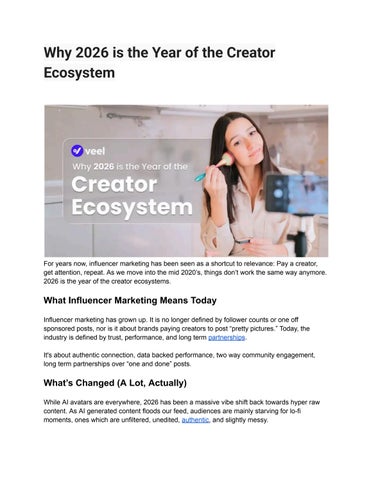
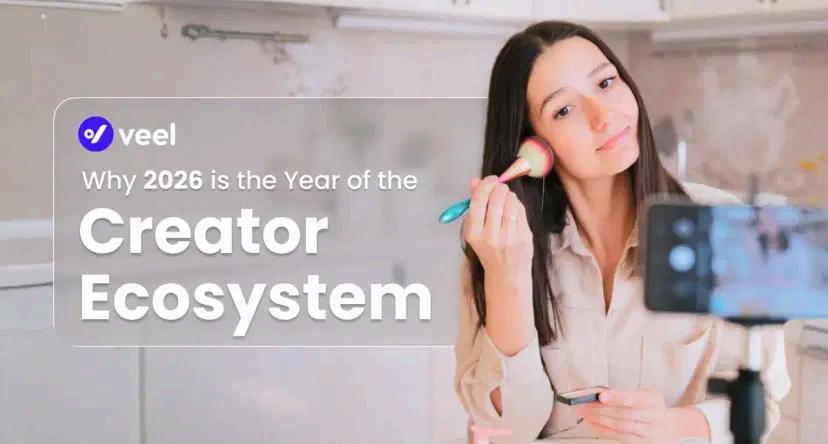
Why 2026 is the Year of the Creator Ecosystem
For years now, influencer marketing has been seen as a shortcut to relevance: Pay a creator, get attention, repeat. As we move into the mid 2020’s, things don’t work the same way anymore. 2026 is the year of the creator ecosystems
What Influencer Marketing Means Today
Influencer marketing has grown up It is no longer defined by follower counts or one off sponsored posts, nor is it about brands paying creators to post “pretty pictures.” Today, the industry is defined by trust, performance, and long term partnerships
It's about authentic connection, data backed performance, two way community engagement, long term partnerships over “one and done” posts
What’s Changed (A Lot, Actually)
While AI avatars are everywhere, 2026 has been a massive vibe shift back towards hyper raw content. As AI generated content floods our feed, audiences are mainly starving for lo-fi moments, ones which are unfiltered, unedited, authentic, and slightly messy
1. From over produced to comfort creators
In unsteady times, we crave for contents that feel grounding Videos that are slow paced, gentle posts, anything that helps us breathe a little easier, and look forward to the brighter side of things And right now, that’s exactly where the audiences are leaning
Instead of highly produced and high energy videos, people are gravitating towards steady state creators: those who show up consistently with calm, repeatable content Think daily routines, GRWM videos, honest vibe checks, and quiet moments of life.
They aren’t posting to go viral They are posting to provide a sense of trust, relatability, and belonging.
2. Creators as strategy consultant
In the past, creators were hired to promote the finished product. However, things have changed significantly Creators now are involved much earlier in the process, as brands now realise that creators understand the audience sentiment and trends in real time
This is where platforms like Veel have changed the game By removing the middlemen, it allows for faster collaboration between creators and brands Brands can launch campaigns, and creators can jump in with authentic ideas straight away.
As a result, they aren’t just advertising the product, they are helping shape the design, positioning, and strategies. When they eventually promote the product, it feels like a founder’s story rather than a traditional ad
3. Search is the new social
The era of chasing likes, saves, shares, and viral moments are getting replaced What matters now is if your video has the answer people are searching for Instead of social media feeds, people use the online search platforms and AI tools in their decision making: decide what to buy, where to go, and who to trust
Let’s say, you search ‘What’s the best durable backpack for 2026?’ many creator contents show up, even the ones with lesser engagement However, it reaches you at the moment of intent; when you are actively ready to decide or buy something.
That is why one search video is more valuable than many viral posts Because viral posts fade away over time, but searchable content keeps influencing real decisions even long after it's been published
Specific Strategy Matters More Than Ever
When you are a creator, the first thing you should be doing is to look out for a platform that works the best for your creation. Many creators still post everywhere chasing virality, without a clear planning or purpose behind their content
Let’s dig a little deeper on how today’s most used platforms can help build your creator journey , depending on your niche and the type of content you make
Tiktok
Tiktok thrives on authenticity, speed, and storytelling. It’s less about teaching and more about triggering recognition, relevance, and reach The goal is to make people think, “Omg this is so me” when they watch your videos.
Tiktok is a trend engine, use it to spark engagement not to overload viewers with information (That said, informational content can still perform well when it’s delivered in a fast and relatable way)
Youtube
Youtube is all about depth and expertise. It’s the go to platform for tutorials, reviews, deep dives, and search driven content Viewers invest time in you (sometimes, even a lot more than you think), so your credibility and value that you provide through your content matters more than edits and clickbaits.
Instagram leans heavily towards aesthetics, community and lifestyle. It’s the ‘This is the me I want you to see ’ It is ideal for creators who can communicate visually, curate a strong personal brand presence, and foster community instractions
Live platforms (Twitch/Discord)
Live platforms reward interaction and transparency. Whether you are streaming on twitch or building a discord community, you thrive more on real time engagement, conversion, and connection On these platforms, your personality and responsiveness are the product
By understanding the unique strengths of each platform, creators can work smarter not harder. Focus your energy to where it counts, and tailoring your content to match the behaviours and expectations of the audience
Authenticity Isn’t Optional, It's The Minimum Requirement
As Brené Brown mentioned in one of her 2010 bookThe Gifts of Imperfection:, “Authenticity is the daily practice of letting go of who we think we’re supposed to be and embracing who we are.”
In 2026, being real is not a marketing strategy, but a bare minimum If you’re looking to connect with people and not be able to provide authenticity, you will find it impossible to build a community And in the era of genuineness, faking is the fastest way to become invisible
Start building your 2026 strategy with Veel, where authentic stories meet data-backed performance