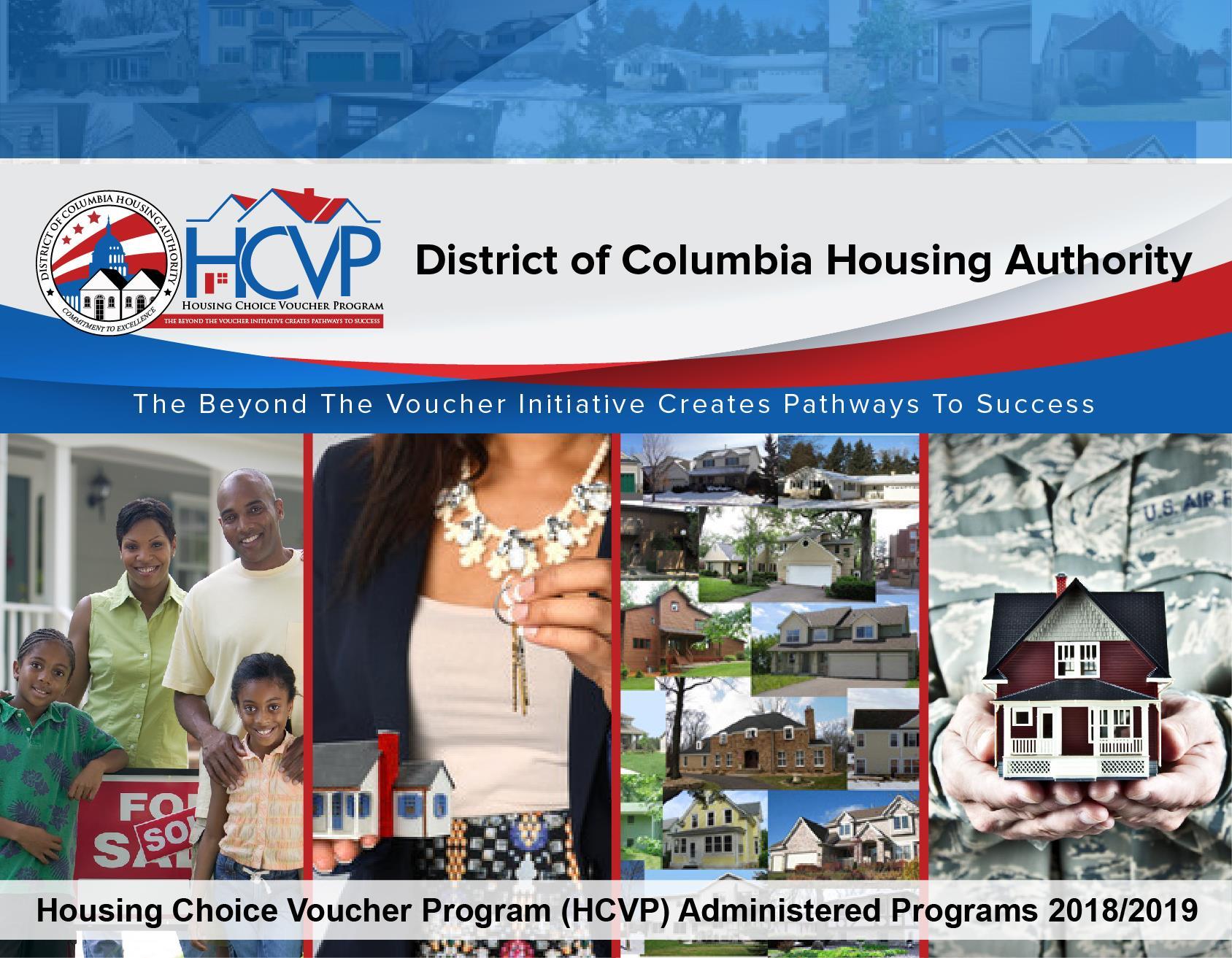
The District of Columbia’s Housing Authority’s Housing Choice Voucher Program (HCVP) fills a critical void to help families compete in DC’s expensive housing market, and has been a success story for more than a decade. HCVP is federally funded by the U.S. Department of Housing and Urban Development (HUD) and is administered throughout the country, with nearly 1.5 million households participating. In DC, DCHA administers several voucher programs to help low- and moderate-income residents find affordable housing by providing vouchers to help participants pay rent in privately owned properties across the city. Today 10,500 families in the city are HCVP federal participants and thousands more are on the waiting list.
The Housing Choice Voucher Tenant-Based Program provides rental assistance to eligible families or individuals who find their own housing (singlefamily homes, townhouses and apartments) as long it meets the requirements of the program. If participants want to move to another location, they simply apply to take their voucher with them to a new home, even out of state. Participants pay a portion of the rent that is based on a percentage of the family’s income (on average about 30 percent), and DCHA pays the rest of the rent directly to the landlord.
Tyrone Garrett
Executive Director
District of Columbia Housing Authority
1133 North Capitol Street NE Washington, DC 20002-7599
Chelsea Johnson
Deputy Executive Director
District of Columbia Housing Authority
1133 North Capitol Street NE Washington, DC 20002-7599
Ronald McCoy
Director, Housing Choice Voucher Program
District of Columbia Housing Authority
1133 North Capitol Street NE Washington, DC 20002-7599
Franselene St. Jean
HCVP Board Commissioner
District of Columbia Housing Authority
1133 North Capitol Street NE Washington, DC 20002-7599
Veterans Affairs Supportive Housing (VASH) Vouchers
24 CFR 982; FR 5596-N-01
Program Overview
HUD-VASH is a collaborative program between HUD and VA combines HUD housing vouchers with VA supportive services to help Veterans who are homeless and their families find and sustain permanent housing.
Funding & Oversight
How To Participate
DCHA can only issue VASH vouchers to veterans referred to DCHA by the local VA Medical Center.
Questions or Concerns Related To Veteran Referrals For HUD VASH: Contact the DC VA Medical Center
Disabled (NED) Vouchers
24 CFR 982; PIH Notice 2013-19
NED vouchers enable non-elderly disabled families to lease affordable private housing of their choice. NED vouchers also assist persons with disabilities who often face difficulties in locating suitable and accessible housing on the private market.
Mainstream vouchers enable persons with disabilities (elderly or non-elderly) to access affordable private housing of their choice.
Enhanced vouchers are special purpose vouchers issued by HUD to DCHA specifically for families impacted by a termination of a contract between HUD and a private owner or other property/unit eligibility event occurs. These vouchers allow families to remain in-place without being impacted by the owner raising the rents after the contract is terminated.
FUP vouchers are vouchers provided to two different populations. They are for families for whom the lack of adequate housing is a primary factor in the imminent placement of the family’s child or children in out-of-home care, or housing is the delay in the discharge aged out youth from foster care.
DCHA can only issue NED vouchers to families off its waiting list OR by referral from an approved DC Gov’t agency
Questions or Concerns Related To HUD NED Vouchers : Contact DCHA 202-535-1000
DCHA can only issue Mainstream vouchers to families off its waiting list OR by referral from an approved DC Gov’t agency Questions or Concerns Related To HUD Mainstream Vouchers : Contact DCHA 202-535-1000
DCHA can only issue Enhanced vouchers to families specifically impacted by a HUD opt-out or eligible property/unit termination. Questions Related To Properties and Families Eligible For Enhanced Vouchers : Contact HUD 202-275-9200
DCHA can only issue FUP vouchers to families referred from Child and Family Services
Questions or Concerns Related To FUP voucher referrals: Contact CFSA at 202-442-6100
Program
Federal Tenant-Based Vouchers
24 CFR 982; DCMR 14
Program Overview
Tenant-based vouchers increase affordable housing choices for very low-income families. Families with a tenant-based voucher choose and lease safe, decent, and affordable privately-owned rental housing.
Funding & Oversight
How To Participate
DCHA can only issue tenant-based vouchers to families off its waiting list or referred to DCHA by authorized agencies.
Questions or Concerns Related To Federal Tenant Based Vouchers: Contact 202-535-1000
Federal Project-Based Vouchers
24 CFR 983; DCMR 14
Project-based vouchers are attached to a specific building or unit. The subsidy does not move with the family if they vacate the unit.
Rental Assistance
Demonstration (RAD) Project-Based Vouchers
24 CFR 983; DCMR 14
Moderate Rehabilitation (MOD) Program
24 CFR 882; PIH Notice 2001-13
Rental Assistance Demonstration (RAD) is a program that seeks to preserve affordable housing by converting public housing or moderate rehabilitation units to HCVP Project-based voucher units
Single Room Occupancy (SRO) Program
24 CFR 882; HEARTH Act
The Moderate Rehabilitation Program provides project-based rental assistance for low income families through a HUD contract. DCHA is a contract administrator on behalf of HUD for MOD units in the District of Columbia
The HUD program consolidates three separate McKinney-Vento homeless assistance programs into a single housing grant program. DCHA is a contract administrator on behalf of HUD for SRO units in the District of Columbia
DCHA can only refer families to be housed in project-based voucher units from off its waiting list.
Questions or Concerns Related To Federal Project-Based Vouchers : Contact DCHA 202-535-1000
can only refer families to RAD units from off its waiting list.
or Concerns Related To
: Contact DCHA 202-535-1000
can only refer families to MOD units from off its waiting list
or Concerns Related To
housed in SRO units are referred to DCHA from the private owners of SRO dwelling units Questions or Concerns
Program
Homeownership Program Vouchers
24 CFR 982; DCMR 14
Local Rent Supplement Program (LRSP)
Tenant-Based Vouchers
24 CFR 982; PIH Notice 2013-19
Program Overview
The Housing Choice Voucher Program (HCVP) Homeownership Program allows families that are assisted under federal tenant-based vouchers to use their voucher to buy a home and receive monthly assistance in meeting homeownership expenses.
Funding & Oversight
To Participate
Local Rent Supplement Program (LRSP)
Project-Based Vouchers
24 CFR 982; PIH Notice 2013-19
LRSP Tenant-based vouchers are provided directly to families or individuals who use the voucher to rent in the private market in the District. The vouchers can be used at any unit rented at or below DCHA’s approved submarket rent . DCHA is only responsible for ensuring the family is eligible for LRSP voucher assistance, inspecting the unit to make sure it meets housing quality standard code, and making rent payments to the landlord. The private landlord is solely responsible for their tenant’s behavior while renting their unit. The private landlord is held accountable for any tenant lease enforcement required.
LRSP Project-based rental assistance is provided to for-profit or nonprofit developers for a specific unit that serves low-income families. Unlike tenant-based vouchers, these vouchers are not portable, meaning that the household using it cannot take the voucher and use it for another apartment elsewhere. Instead, the rental assistance stays with the unit.
DCHA can only refer families to be housed in LRSP project-based voucher units from off its waiting list.
Local Rent Supplement Program (LRSP)
Sponsor-Based Vouchers
24 CFR 982; PIH Notice 2013-19
LRSP Sponsor-based rental assistance is awarded to a landlord or nonprofit group for affordable units they make available to low-income families and individuals. Unlike project-based vouchers, these vouchers are portable in that they can be moved to another unit run by the same non-profit or the landlord. Sponsor-based vouchers are awarded only to groups that will provide supportive services to residents housed in the affordable units in DC.
Families or Individuals participating in the LRSP Sponsor-based program are not part of any DCHA housing program.
Questions or Concerns Related To A Family or Individual In LRSP Sponsor-base: Contact that family’s service provider or case manager
Program
Department of Human Services Permanent Supportive Housing Program
Program Overview
Through the DC Permanent Supportive Housing Program, DC's Department of Human Services provides permanent supportive housing to chronically homeless individuals and families with histories of homelessness. DCHA is only responsible for making payments to DHS landlords and inspecting units on DHS behalf. Funding & Oversight How To Participate
Families or Individuals participating in this DHS housing program are not part of any DCHA housing program.
Questions or Concerns Related To This DHS Housing Program : Contact the DC Department of Human Services 202-671-4200
Department of Human Services Emergency Solutions Grant (ESG) Program
DC's Department of Human Services grant from HUD to assist families in DHS program(s) with security deposit payments. DCHA is only responsible for making these security deposit payments to landlords on DHS behalf.
Families or Individuals participating in this DHS housing program are not part of any DCHA housing program.
Questions or Concerns Related To This DHS Housing Program : Contact the DC Department of Human Services 202-671-4200
Department of Human Services Family Rehousing & Stabilization Program (FRSP)(Rapid Rehousing)
The DHS Family Re-Housing and Stabilization Program (FRSP), or Rapid Rehousing, is a DHS program designed to provide short-term rental assistance to homeless families in DC. DCHA is only responsible for making payments to DHS FRSP landlords on DHS behalf and initial inspection of FRSP units.
Department of Behavioral Health (DBH) Housing Program
The DC Department of Behavioral Health provides rental assistance for the exclusive use of residents receiving services through their public mental health system. DCHA is only responsible for making payments to DBH landlords and inspecting units on DBH behalf.
Families or Individuals participating in this DHS housing program are not part of any DCHA housing program.
Questions or Concerns Related To This DHS Housing Program : Contact the DC Department of Human Services 202-671-4200
Families or Individuals participating in this DBH housing program are not part of any DCHA housing program.
Questions or Concerns Related To The DBH Housing Program : Contact the DC Department of Behavioral Health 202-673-2200
Program
Child & Family Services (CFSA) Housing Program
Regulated: MOU Between CFSA & DCHA
Department of Health Housing Opportunities for Persons With AIDS (HOPWA) Program
Regulated: MOU Between DOH & DCHA – Eff Oct 2018
Program Overview
CFSA has partnered with DCHA to assist in the administration of a housing program in it’s portfolio. DCHA is only responsible for making rental payments to CFSA landlords and conducting initial inspections of units on behalf of CFSA.
Funding & Oversight
The Housing Opportunities for Persons With AIDS (HOPWA) Program is the only Federal program dedicated to the housing needs of people living with HIV/AIDS. The DC Department of Health has a HUD HOPWA grant. DOH has partnered with DCHA to assist in the administration of that grant. DCHA is only responsible for making rental payments, security deposits, and application fees to DOH HOPWA landlords along with assisting in the processing of some HOPWA programmatic functions required by HUD.
DOH/ HUD
Families or Individuals participating in this CFSA housing program are not part of any DCHA housing program.
Questions or Concerns Related To The CFSA Housing Program : Contact DC Child & Family Services 202-442-6100
Families or Individuals participating in this DOH HOPWA program are not part of any DCHA housing program.
Questions or Concerns Related To The DOH HOPWA Program : Contact The DC Department of Health 202-442-5955

The Beyond the Voucher Initiative engages in activities that may include, without limitation, developing, financing, managing, monitoring and engaging in social service programming, providing technical assistance to social service governmental and non-governmental agencies providing social services, and other related activities that will serve to enhance, expand, and foster self-sufficiency for persons and families of low and moderate income throughout the District of Columbia.
The Beyond The Voucher Initiative is Divided Into Three Components:
• Youth-Related Activities Promotes service learning
• Adult-Related Activities Promotes economic self-sufficiency
• Senior Related Activities Promotes stabilization
The Housing Choice Voucher/Home Ownership Assistance Program (HCV/HOAP) is designed to offer eligible households who are participating in the Housing Choice Voucher Program the opportunity of becoming a home owner. The HOAP provides monthly subsidy assistance to participating families to offset their monthly mortgage loan payments through HCVP.
What is the purpose of HCV/HOAP?
• Provide safe, adequate, and affordable housing;
• De-concentrate areas of geographic poverty;
• Encourage upward mobility;
• Foster economic self-sufficiency;
• Increase home ownership, while minimizing mortgage default risk.
What is the maximum term of subsidy?
The maximum term of subsidy is as follows:
• The mandatory mortgage term limit for an elderly household or a disabled family is up to 30 years
• For all other families, there is a mandatory term limit of up to 15 years if the initial mortgage incurred to finance purchase of the home has a term that is 20 years or longer.
• For all other cases the maximum term of homeownership assistance is 10 years.
The Housing Affordable Living Options (HALO) program assists families with a Housing Choice Voucher to move to “Opportunity Neighborhoods” within the District of Columbia. HALO encourages upward mobility by referring voucher holders to these desired neighborhoods. HALO aims to reduce the need for voucher holders’ reliance on subsidy housing through generations, and incentive private property owners to rent to lower income families.
What are “Opportunity Neighborhoods?”
These are neighborhoods that may have better opportunities in the District of Columbia based on characters that include lower poverty rate, racial diversity, and low crime rate, success in education, presence of businesses, employment growth and quality of life. Moving to low poverty neighborhoods encourages a quality life based on standards and economic diversity that will result in a healthier community.
What are some of the Owner/Landlord benefits?
Some of the benefits offered to Owners/Landlords who participate in HALO include:
* Payment Standards that are competitive with fair market rents
* Pre-inspections
* Rapid Leasing
How can a tenant become eligible for the program?
* Biennial Inspections
* Simplified online rent reasonable process
* Access to HALO staff for any mediation or case management needs
Tenants can volunteer to be a part of the program; however they do have to meet the baseline eligibility requirements. These baseline requirements focus on participants overall participation in the program that focuses on recertification, inspection, tenant behavior, relationship with Owner/Landlord and income. Tenants are required to complete a pre-application and a family needs assessment to determine eligibility and placement.
The Housing Choice Voucher Program Housing Enjoyable Living Program (HELP) is designed to assist participating families struggling to keep their unit “decent, safe, and sanitary.” HELP aims to provide those families with tenant caused violations additional opportunities to correct the violations and ensure they remain in compliance so that they continue receiving subsidy for their unit. HELP is also designed to encourage families to be “good neighbors”. HELP provides families with the tools, tips and techniques to limit unnecessary noise and minimize the activities that would annoy their neighbors.
Is this a mandatory program for all voucher participants?
HELP is not mandatory for participants who are in compliance with Housing Quality Standards . However, they are sill able to volunteer if they feel they would like to get more information on home maintenance. But, if a participant fails their annual or complaint inspection on the 2nd attempt, the participant will be referred to HELP and it then becomes mandatory for the participant to complete the program.
What subjects are addressed during the briefing?
During the briefing, participants are informed of their Family Obligations, house cleaning checklists and inspections checklist, DOEE Healthy Homes, home maintenance and other service providers than can assist.
How is the Department of Energy and Environment (DOEE) involved?
DCHA HCVP partners with the DC Department of Energy and Environment Healthy Homes Division to provide comprehensive CARE plans to make safe, healthy and enjoyable homes. DOEE Healthy Homes Division assists families in their homes where maintenance has been deferred due to one or more of the following:
* Chipping or peeling paint
* Mold/Water damage or leaks
* Pests (Insects and/or Rodents)
* Excessive Household Clutter
* Recent Renovations to painted surfaces
* Structural safety concerns
* Cigarette use/Environmental tobacco smoke
* Indoor climate control/ventilation issues
DOEE Healthy Homes Division provides participants with additional services that include home environmental and energy efficiency assessments, environmental health education, trainings on lead poisoning and information on how to reduce or eliminate environmental threats, assistance in coordinating resources and follow-up support.