R I
DGING THE V I SION
with Dr. Kate Daly Rolander
WApril 2024 Volume #34, No. 1

hen it comes to adult learners who have a disability, we oftentimes don’t know what we don’t know. Some of our learners are comfortable sharing with us that they have a learning or mobility-impacted disability. Others, however, are reluctant to disclose information about a disability—or, they have never been identifed as having a disability. As adult education providers, we are not permitted or qualifed to either diagnose or suggest a disability, but what we can do is prepare ourselves to be better able to support those who may have a physical or learning diference that impacts their participation in learning. And as we know from the principles of Universal Design for Learning (UDL), this preparation benefts all our learners!
In this issue of PROGRESS, we present resources, strategies, and partnership models that can bolster our programs’ capacities to expand access to all learners, including those who may have disabilities that have impacted their opportunities to learn and work.
When considering the data, it should come as no surprise that adults with disabilities (both identifed and unidentifed) will be learners in our programs. In its most recent published research, the Centers for Disease Control and Prevention (CDC) (n.d.) found that 12.8 percent of U.S. adults have a cognition disability with serious difculty concentrating, remembering, or making decisions. 6.1 percent of U.S. adults are deaf or have serious difculty hearing, and 4.8 percent of U.S. adults have a vision disability with blindness or serious difculty seeing even when wearing glasses. All of which impede a learner’s ability to succeed in learning.
Further, according to the Learning Disabilities Association of America (Barto, n.d.), less than half of the total number of students in K–12 systems who are estimated to have learning or attention issues are identifed and provided supportive services. And, students with learning disabilities are three times more likely to drop out of high school.
“Disability afects approximately 61 million, or nearly 1 in 4 (26%) people in the United States living in communities…[including] impairments which in interaction with various barriers may hinder their full and efective participation in society on an equal basis with others” (Centers for Disease Control and Prevention, 2020, unpaged).
Continued on p. 2>>>
P4
How to Create a DisabilityInclusive Adult Education Program
P8
Aligning the Work of DARS and Adult Education
P10
Developing a Relationship Strategy
P14
The Adult Education and DARS Connection: Where to Start?
P16
The Pathways for Individuals with Disabilities’ Integrated Education and Training Program
P18
Partnerships = Progress
P22
An Appreciative Approach to Disability Inclusion in Adult Learning
P25
From the VDOE: Accommodations for GED® Test Takers
P27
PROGRESS Calendar
B
PROGRESS
PROGRESS is published by: Virginia Adult Learning Resource Center Virginia Commonwealth University 300 Arboretum Place, #200 Richmond, VA 23236 valrc.org
Permission is granted to reproduce articles from this newsletter. Please credit the author and PROGRESS
Submissions and letters are welcome. Contact Dr. Katherine Hansen, PROGRESS editor. (804) 827-6521 (800) 237-0178 kghansen@vcu.edu
We reserve the right to decline publication.
Director, Ofce of Career, Technical, and Adult Education
J. Anthony Williams, Ed.D.
Adult Education Coordinator, Ofce of Career, Technical, and Adult Education
Heidi Silver-Pacuilla, Ph.D.
VALRC Director of Literacy Programming
Kate Daly Rolander, Ph.D.
Editor-In-Chief
Katherine Hansen, Ed.D.
This product was fully created through a cooperative agreement to the Virginia Adult Learning Resource Center at the Virginia Commonwealth University from the Virginia Department of Education, grant award numbers V002A190047 and V002A200047 under the Workforce Innovation and Opportunity Act. The opinions expressed herein, however, do not necessarily represent the position or policy of the U.S. Department of Education, and no ofcial endorsement by the Department should be inferred.
GED® and GED Testing Service® are registered trademarks of the American Council on Education (ACE) and may not be used or reproduced without the express written permission of the American ACE or GED Testing Service®. The GED® and GED Testing Service® brands are administered by GED Testing Service® LLC under license from the American Council on Education.
>>>Continued from p.1
So, what can WE do to mitigate these barriers for learners who have diagnosed and undiagnosed disabilities that impede their ability to succeed in education and training?
In the articles that follow, we go beyond lists of accommodations and strategies and instead, focus on shifting our instructional and programmatic designs toward a culture of inclusion through collaborative activities that create equitable adult education programming that benefts all learners.
Read about the SABES Program Support PD Center’s Basic Disability Screening for Adult Education open resource (p. 4), which focuses on shifting our thinking as adult education practitioners and creating a comprehensive disability-inclusive program. VCU’s Dr. Lisa Webb (p. 22) writes about a strengths-based approach to organizational change for disability inclusion in adult learning, and the Virginia Department of Education Adult Education Team (p. 25) covers the many accommodations, both those that require documentation and many that do not, for GED® test takers. From Virginia, we hear from Kate Kaegi (p. 8) at the Department for Aging and Rehabilitative Services (DARS) about how partnerships with the VALRC and with local programs are supporting successful transitions to postsecondary training for learners who have disabilities.
Program managers and regional specialists from across the state present their processes for building collaborative relationships with DARS to provide adult learners with the supports they need in real time, to encourage more disclosure to ensure learners are receive the supports they need, to build integrated education and training programs that build on the strengths of adult learners with disabilities, and to ofer programs professional development training through DARS’ Windmills: Employment Disability Inclusion Training that can support programs’ and instructors’ eforts to develop and deliver inclusive learning opportunities, expanding access to quality instruction and career development to all learners.
Enjoy the issue and share with us, and each other, in VALRC’s Stories from the Field what you’ve done in your programs to build inclusive programming that is accessible to all.


Dr. Kate Daly Rolander is the Director of Literacy Programming and Workforce Education Specialist at the Virginia Adult Learning Resource Center (VALRC). She leads the team of educational specialists in carrying out the VALRC mission of equipping the feld of adult education and literacy with essential skills and resources through an equity mindset. In addition, Kate also supports Virginia’s development and implementation of career pathways programs, assists instructors and staf in tailoring instruction for workforce readiness, and coordinates the state’s PluggedInVA programs.
p. 2 PROGRESS April 2024
References
Barto, A. (n.d.). The state of learning disabilities today. Learning Disabilities Association of America. Retrieved April 22, 2024, from https://ldaamerica.org/lda_today/the-state-of-learning-disabilities-today/
Centers for Disease Control and Prevention. (n.d.). Disability and health data system (DHDS). U.S. Department of Health & Human Services. Retrieved April 22, 2024, from https://dhds.cdc.gov/ LP?CategoryId=DISEST&IndicatorId=STATTYPE&ShowFootnotes=true&View=Map&yearId=YR6&stratCatId1=CAT1&stratId1=BO1&stratCatId2=&stratId2=&responseId=Q6DIS1&dataValueTypeId=AGEADJPREV&MapClassiferId=quantile&MapClassiferCount=5
Centers for Disease Control and Prevention. (2020). Disability inclusion. U.S. Department of Health & Human Services. Retrieved April 22, 2024, from https://www.cdc.gov/ncbddd/disabilityandhealth/ disability-inclusion.html

Inclusive Programs
p. 3 PROGRESS Volume 34, No. 1
How to Create a Disability-Inclusive Adult Education Program
by Dr. Andjela H. Kaur & Dani Scherer
Research on the best practices for accommodated teaching, learning, and testing in adult education is scarce and its fndings inconclusive. But, the research on inclusive education provides a broad source of information on strategies used by adult educators who accommodate learners with disabilities. Over the past several years, the SABES Program Support Professional Development Center in Massachusetts has used the available research and combined it with knowledge from adult educators to create the Basic Disability Screening for Adult Education (BDSAE). BDSAE is an open resource that contains practical tools and approaches that help adult educators increase inclusion and efective support of persons with disabilities in their programs.
We introduced BDSAE to adult educators in a workshop where they had a chance to try out the tools. Afterwards, we asked for some refections on what the BDSAE would help them do. Responses included:
• “Help students become aware of what works best for them.”
• “Refer students out to services we might not be able to ofer.”
• “Use a “real” tool to help students with what they need.”
• “Screen students and provide accommodations.”
PROGRESS April 2024
p. 4
A Shift in our Thinking
While we created BDSAE to respond to the needs of educators and refect practitioner experience, our approach draws on literature from disability studies—a feld that encompasses voices from disability scholars and activists alike. From this literature, we have learned that disability experience is both shared by all disabled people and also unique to each person with a disability. Programs can address the commonality of the experience by creating an atmosphere of respect and acceptance of disability diversity, as well as through adherence to disability and rehabilitation laws. We can create disability-inclusive programs by designing disability-conscious environments and activities at all levels of program delivery: by creating disability-inclusive organizational culture, by infusing Universal Design for Learning in the instruction, and by providing easy access to accommodations for all learners.
Creating a DisabilityInclusive Program
Perhaps the most important starting point in designing a disability-inclusive program is the inclusion and promotion of disability culture in all aspects of programming. When an agency’s culture refects respect and recognition of disability culture, students and staf with disabilities will more likely feel accepted and valued. One simple way to signal a program’s welcoming message is to display art made by disabled artists or interpreting disability experience, or showing famous disabled people.

We asked educators about their takeaways on the ideas of being disability inclusive through a cultural shift and they said:
• “It’s about creating a diferent lens.”
• “I plan to implement additional disabilityrelated community building opportunities.”
• “The history of disability is very important and I would not have thought of that before.”
In addition to increasing disability visibility, a program may choose to assess its own Americans with Disabilities Act (ADA) readiness. Using the Basic Accessibility Checklist for ADA Coordinators and Administrators tool (pp. 19–20), programs may begin to evaluate ADA compliance and disabilityconscious program administration as well as assess an organization’s current preparedness to welcome disabled adult students into their program(s).
Suggested Steps for Addressing Individual Student Needs
In addition to creating the culture of belonging and acceptance, and establishing the basic ADA compliance, program staf can also increase inclusion of persons with disabilities in adult education through collaborating with each student with disabilities to develop accommodated teaching and learning plans. The BDSAE contains several forms to help guide the process of increasing disability-inclusive programming. The process may be carried out by instructors, advisors, or ADA coordinators in collaboration with the learner. It consists of three steps to be completed in tandem with students individually or as a group activity.
Continued on p. 6>>>
Franklin Delano Roosevelt is depicted in his wheelchair in the Prologue Room of the Franklin Delano Roosevelt Memorial.
Source: National Park Service
PROGRESS Volume 34, No. 1
p. 5
>>>Continued from p. 5
1. Use the Brief Basic Disability Screening form (pp. 11–12) to start the conversation about disabilities, barriers, and facilitators of learning. If the screening indicates that the student has difculties accomplishing many of the tasks that the screening addresses, refer the student for further testing. The Brief Basic Disability Screening is designed to help providers and students begin the conversation about a student’s desire and need for required professional assessments and accommodations.
2. Use the list in the Common Accommodations for Adult Learning form (pp. 14–16) to identify possible accommodations for the learner. The Common Accommodations for Adult Learning form contains prevalent accommodations for adult learners, which you can use to inform your discussion with students about their past and present accommodation needs. Feel free to add items to this list based on your experience and knowledge of accommodating strategies for teaching and learning.
3. Use the Preferred Accommodations Plan form (p. 18) to summarize preferred accommodations for teaching and learning. The learner may (or may not) choose to share this plan with relevant program staf. The Preferred Accommodations Plan is a form you may choose to record students’ accommodation priorities and monitor the implementation of their accommodation plan.


What’s Next?
BDSAE is created to address the historical and contemporary fact—people with disabilities are a part of adult education systems and programs. They join adult education programs as students, instructors, and staf. As educators and builders of a more equitable world, we must accept this fact as an opportunity to design adult education programs with a strong commitment to disability inclusion.
To continue to work on increasing disability inclusion in your program, we suggest the following introductory steps based on BDSAE.
1. Explore BDSAE.
2. Try out a screening on yourself or a colleague and refect on it.
3. Share BDSAE with friends and colleagues
4. Discuss BDSAE at a staf meeting.
5. Raise questions that make sense for you and your program. For example:
a. What do we want to try out from this approach?
b. Which tools do we want to use?
c. How would we adapt these tools?
d. What resources, support, and guidance from leadership do we need to continue this work?
Andjela H. Kaur (she/they) is an academic-practitioner who has been working in the feld of human services, vocational rehabilitation, and higher education for more than two decades. She has worked in adult education and community mental health settings as a teacher, vocational counselor, program manager, and ADA coordinator. Currently, Andjela works as an Assistant Teaching Professor at The Pennsylvania State University where she teaches undergraduate and graduate courses in rehabilitation counseling, human services and disability studies. Andjela holds a doctorate in global inclusion and social development and is a certifed rehabilitation counselor (CRC).
Dani Scherer is a technical advisor at World Education, Inc., specializing in career pathways, navigating and advising, and immigrant integration for adult education programs. As a member of the SABES Program Support PD Center team at World Education, Dani leads the design and delivery of professional development related to career pathways, integrated education and training, career navigation, and ADA resources and support for adult educators in Massachusetts. Nationally, she provides technical assistance and subject matter expertise for Integrated Education and Training (IET) and immigrant integration projects. Dani holds an M.Ed. degree in teacher education and curriculum studies from the University of Massachusetts at Amherst.
PROGRESS April 2024
p. 6
Brief Basic Disability Screening Process for Adult Learning Flowchart (p. 7)

PROGRESS Volume 34, No. 1 p. 7

Aligning the Work of DARS and Adult Education to Benefit Virginians
Throughout the years, the Virginia Adult Learning Resource Center (VALRC) and the Department for Aging and Rehabilitation Services (DARS) have worked together on several partnerships, projects, and grants. Our current partnership “Pathways to Careers” (Pathways) connects Virginians with disabilities to rewarding careers and job training opportunities—all while helping Virginia employers meet their workforce goals. Pathways focuses on registered apprenticeships, state government employment, and the high-growth, high-demand industries that power Virginia’s economy—particularly for individuals from un- and under-served communities. The program is managed by DARS under a federal grant, and VALRC—and adult education programs from across the state—are key partners in its success.
As the grant began, Pathways noted that the many candidates were looking at entry-level positions that require some postsecondary training. We needed a way to ofer training to participants
by Kate Kaegivirtually as many participants were struggling with postsecondary training at the community college level. What we found with VALRC and adult educators were fexible instructors that met our participants with their current skill sets. Instructors have been able to provide trade-related academics, career-specifc training (with credentials), support for soft skill development, and assistance with work readiness while also addressing digital literacy.
As this partnership has grown, we’ve been adjusting our process according to our successes and our lessons learned. Each cohort goes through orientation with both Pathways and with the adult education programming. To address traderelated academics, Pathways has purchased CASAS assessments and trained Career Assessment Counselors around the state. Pathways also provides support with loaner computers and assistive technology services.
Our partnership has also assisted each agency
PROGRESS April 2024
p. 8
Coming together is a beginning. Keeping together is progress. Working together is success.
– Henry Ford.
with trainings and overviews. VALRC has partnered with Pathways to build capacity at the local level with DARS counselor trainings on Reaching Culturally & Linguistically Diverse Populations. They have also provided assistance with our Pathways Advisory Board and contributed their technical assistance with the development of a Job Club curriculum. In conjunction, Pathways has delivered an Overview of Services and Disability Etiquette training for adult education programs across the state and at several adult education conferences. We also provide free monthly disability etiquette training called Windmills which are ofered virtually for employers and agency partners.
Looking at the sustainability of our work after the grant, we are looping our virtual training into our training center—Wilson Workforce and Rehabilitation Center (WWRC). Pathways will become the virtual training option for WWRC and to assist, VALRC is providing WWRC and Pathways with Canvas training for our candidates. Our plan is to continue our partnership by bringing in adult educators to provide content and academic training while WWRC/Pathways provides supportive virtual services (Job Club, communications groups, driving permit classes etc.).
As adult educators, Pathways encourages you to reach out and partner with your local DARS ofces. With co-enrollment, we have been able to braid funding, provide quicker response to issues, support learners with computers, provide assistive technology for employment and training, and bring a variety of employment opportunities to the candidates.
You can fnd your local DARS ofces here:
https://www.dars.virginia.gov/ofce.html#gsc.tab=0

Kate Kaegi is the Virginia Department for Aging and Rehabilitative Services’ (DARS) Program Manager for the Pathways to Careers grant. She brings to this position more than 20 years of experience working with individuals with disabilities to help them with their career choices, training options, and employment. She has been a vocational evaluator working with consumers and businesses with the Division of Rehabilitation Services, Wilson Workforce and Rehabilitation Center, and VA Rehabilitation Center for the Blind and Vision Impaired. Additional experience includes working as a career coach in the community colleges, adjunct instructor with Virginia Commonwealth University, and Sergeant in the U.S. Army Reserves. Kate received her master’s degree in vocational evaluation and rehabilitation counseling from East Carolina University.
PROGRESS Volume 34, No. 1
p. 9
Developing a Relationship Strategy
by Vici Garber
It is important to note that our relationship was not an overnight success. It was established over time with a foundation built on trust, follow-through, collaboration, and proven expertise.
The Workforce Innovation and Opportunity Act (WIOA) was signed into law in July, 2014. WIOA has fve mandated workforce titles that include Adult Education (Title II) and the Department of Aging and Rehabilitative Services (Title IV). All titles are charged with working together to help job seekers succeed in the labor market and employers fnd skilled workers. For some regions, the prospect of these titles working together may have seemed daunting. For Region 6, Shenandoah Initiative for Adult Education (SHINE), we already had the beginnings of partnerships with most of the entities and strong ties with others. WIOA’s objective ft with our regional goals and by sharing how our regional relationships have been built and cultivated over the years, it is our hope that other programs can beneft from what we have learned.
SHINE has a strong, longstanding relationship with the Department of Aging and Rehabilitative Services (DARS). Region 6 has two DARS ofces
covering its fve counties. Both ofces are managed by Jessica DeCarlo and overseen by John Jackson, the District Manager. It is important to note that our relationship was not an overnight success. It was established over time with a foundation built on trust, follow-through, collaboration, and proven expertise. This partnership took years to build to where we are today and it took cooperation on all levels within both SHINE and DARS. It wasn’t just one event or program that made this work for us. It was a lot of little things that built upon each other.
To elaborate, a year after I was hired as Regional Specialist; Region 6’s Regional Program Manager, Katy Parrish, had two main directives for me. One, I was to form partnerships within our region and two, to put SHINE’s name on the map. I took this responsibility to heart and put my people-skills into action. I spent years building my reputation, as well as SHINE’s, as a networking hub and team-focused partner.
PROGRESS April 2024
p. 10
Collaborate on Grants
One of the best examples of SHINE’s partnership with DARS occurred in 2017. Our region was awarded funding through the Career Pathways for Individuals with Disabilities (CPID) grant. This partnership was a multi-agency endeavor, which also included the Division of the Blind and Visually Impaired, the Shenandoah Valley Workforce Development Board, and Blue Ridge Community College (BRCC). A logistics program was initially designed, with SHINE providing just a small section of Job Readiness instruction for the frst week. During a community information session, BRCC’s career coach supervisor inquired as to who was providing the BRCC instructor with support during their instruction. With that question, SHINE was invited into an integrated co-teaching classroom. This change allowed SHINE to demonstrate our value in working with the DARS population to the partner organizations. With so many eyes on the program, detailed reports and regular updates were provided to all partners and this communication fow strengthened our relationship with DARS.
One especially important relationship established through the CPID program was with Paula Martin, the DARS Assistive Technology Specialist. Paula’s role was to provide assistive technology support (see p. 13) to the participants. She was in the classroom weekly to present useful tools that addressed multiple challenges. Paula and I worked closely within the classroom as well as spending time refecting on needs and successes throughout the program. This formed a relationship that is still strong today. To illustrate, one of our frst in-person trainings after the pandemic was provided by Adult Ed in partnership with DARS. Paula manned the registration table and she told all the other DARS representatives, “She is mine!”That sums up our relationship.
Serve on Committees, Councils, and Boards
To give another example, the SHINE Regional Program Manager and Regional Specialist together serve on numerous committees, councils, and boards. Both SHINE and DARS serve on the region’s Business Solutions Team (BST), Partners Team,
Shenandoah Valley Workforce Development Board (SVWDB), Way to Go Board, Harrisonburg Rockingham Page Reentry Council (HRPRC), and the Central Shenandoah Valley Reentry Council (CSVRC). While the Regional Program Manager tends to focus on state level and regional leadership teams, the Regional Specialist infltrates the hive of “worker bees.” Aline Jackson-Diggs, DARS DOLI Registered Apprenticeship Liaison—a networking powerhouse in her own right—and the Regional Specialist, having similar personalities, are very active within the community. Both were recently recruited by a local employer, Friendship Industries, to serve on their board.
Coordinate Referrals
A signifcant beneft for adult education programs is that DARS can be a funding resource for qualifying learners. If someone is referred by DARS, their enrollment and/or NEDP fees can be covered. Jessica Chenowith, coordinator of the Staunton Augusta Adult Learning Center, contacts DARS when she observes a struggling learner. She has helped set up services through DARS and the Wilson Workforce and Rehabilitation Center to assist learners with their GED® and NEDP credentials. DARS is also one of SHINE’s regular referring agencies. Dana Biby, DARS Vocational Rehabilitation Counselor, shared her thoughts, “I have referred numerous people to the Adult Learning Center in Fishersville for either the GED® or the NEDP [program]. The staf there have always been very courteous and helpful. In particular, Jessica Chenowith always displays a great deal of compassion for the folks I refer there. They are also very good about providing monthly progress updates on my clients which is extremely helpful. Overall, I have been very pleased with our partnership.”
John Jackson, District Director for the Skyline District, had this to say about the SHINE/DARS partnership, “SHINE has been a valuable asset in the Shenandoah Valley and specifcally to the participants working with the Department for Aging and Rehabilitative Services (Division of Rehab Services). We have been able to periodically include SHINE in our staf meetings for updates on unique resources in the community and have assisted our clients with securing competitive integrated
Continued on p. 12>>>
PROGRESS Volume 34, No. 1
p. 11
>>>Continued from p. 11
employment. SHINE has also been a link between community service providers which has encouraged a more collaborative approach to service provision. Vici Garber is awesome!”
Present at Meetings
Through invitations for adult education to present at DARS staf meetings, the DARS counselors have a face to a name, which has led to more comfortable communication and increased interaction. DARS counselors have become more apt to contact the Regional Specialist to discuss unusual educational needs for their clients and once arrangements are approved, the counselor is connected to the SHINE program covering the service area. Penni Wetherell, DARS Vocational Placement Counselor, stated, “… you have been kind enough to include me to staf unique and challenging cases with the group in order to obtain job opportunities I may not be aware of… great networking and very appreciated!” Further, the Regional Specialist assists counselors in stafng, or setting up an action plan, giving the client detailed information on education opportunities within the region. At one point, the Regional Specialist was so involved with the DARS staf that when the former Business Development Manager for Workforce Programs resigned, he requested for the Regional Specialist to apply for his position.
Provide Letters of Support
DARS is always willing to provide support letters for SHINE program grant applications. They are one of SHINE’s frst contacts when requesting reports and they provide letters for AEFLA/IELCE and PluggedInVA. The strength of our partnership was proven, when pre-pandemic, SHINE was invited by Sharon Johnson, the CEO of the Shenandoah Valley Workforce Development Board to assist with a grant opportunity to serve the reentry population that would cover three workforce development areas. Two days before the grant submission, we were instructed to obtain support letters. SHINE advised that we would obtain the needed support letters including one from DARS. After being told by the other regions that DARS would not be able to provide one within the two-day time window,
one was obtained. I was advised from the state level that they recognized SHINE because John Jackson regularly submitted requests for us.
Collaborate on Reentry
One reason SHINE and DARS share such a strong relationship is due to reentry. The Regional Specialist is the chair of the Central Shenandoah Valley Reentry Council (CSVRC) and the vice-chair of the Harrisonburg Rockingham Page Reentry Council (HRPRC). These positions have made her a hub for networking. DARS is a part of that network. Years ago, through HRPRC, the Regional Specialist formed a relationship with the then manager of the Harrisonburg DARS ofce and the two often sat together during meetings. That manager, John Jackson, is now the district director covering all of Region 6’s area. Because of our joint mission on the reentry council, John Jackson, supported the Good Time Release Reentry Resource fairs that ran for eight consecutive weeks. He showed up for kick-of day and each local DARS manager allowed staf to cover resource tables throughout both the CSVRC and HRPRC events. Further, through monthly CSVRC meetings and serving on sub-committees together, the Regional Specialist and Dana Biby, the DARS Vocational Rehabilitation Counselor for Augusta and Rockbridge Counties who specializes in addiction, have formed a close relationship. Being like-minded and driven to serve our populations as best as possible, both meet monthly to strategize reentry solutions and update each other on program changes and/or needs.
I personally am proud of the relationship that has been built with DARS. It took time and efort on both sides. Maybe it was the right combinations of personalities. Maybe it was sitting at the same tables, month in and month out, while serving on our committees, councils, and boards. Maybe it was working together to address community needs. Maybe it was both sides learning about each other’s services and covering for each other when one entity was missing from an event. There are a lot of maybes. What I do know is that all those maybes formed an amazing partnership.
PROGRESS April 2024
p. 12
Virginia Assistive Technology System (VATS)
The Virginia Assistive Technology System (VATS) ensures that Virginians of all ages and abilities can acquire the appropriate, afordable assistive and information technologies and services they need to participate in society as active citizens. Explore their site to learn more about their programs and services — and all you have ever wanted to know about assistive technology.
https://www.vats.virginia.gov/


Vici Garber is the Region 6 Regional Specialist and PluggedInVA Coordinator. She started her career in adult education in 2001 with a focus on employment services. She has previously worked as an independent GED® tutor, an employment specialist, and an ESOL instructor. Through the Shenandoah Initiative for Adult Education (SHINE), she has served as an instructor for GED® classes, Job Readiness, and PluggedInVA. She has created successful programs that run at Middle River Regional Jail and Shenandoah Valley Social Services. Vici was the 2018 recipient of the Virginia Association for Adult and Continuing Education (VAACE) Teacher of the Year award.
PROGRESS Volume 34, No. 1
p. 13
The Adult Education and DARS Connection: Where to Start?
 by Rebecca Scott
The Department of Aging and Rehabilitative Services (DARS) is a great partner to have if, like all twenty-two adult education regional programs in Virginia, you operate under perfor-mance-based funding that follows metrics for workforce participation. Does the phrase “employ-ment and wages 2nd and 4th quarter after exit” sound familiar?
From the perspective of an adult education (AE) program manager, all of us likely connect with DARS at our workforce development board meetings since AE and DARS are both mandatory members. Regional Adult & Career Education of Lee, Scott, Wise, and Norton Public Schools (RACE 1) started real partnership conversations with our regional and local DARS staf in 2020, in the middle of the pandemic. We mainly wanted to learn how our teachers could fnd the right agency person to refer an adult learner for DARS services. For example, we wanted help for a student who was unable to manipulate a computer mouse after a stroke or help another student learn more about assistive
technology for their current job.
This initiative has been a partnership built with small steps. We added DARS agency contact information to our RACE 1 website in 2022 to help make connections for referrals and we had a twohour partnership meeting in 2023 with RACE 1, Mount Rogers Regional Adult Education, and DARS staf to share our core services.
This winter, with the new Ofce of Career, Technical, and Adult Education (OCTAE) Adults With Disabilities (AWD) focus area, we held another in-person networking discussion with two local DARS staf and the RACE 1 leadership team in our ofce. During this four-hour exchange, we gained a deeper understanding of both DARS and RACE 1 oferings, and set specifc goals to collaborate in sharing our core services. For example, we are currently printing an informational fyer for young parents that DARS will distribute to their participants. In addition, the regional DARS unit has been given permission from their Richmond-level administrators to join our TEAMWORK network.
PROGRESS April 2024
p.14
This step shares DARS and RACE 1 key services Going forward, we are working with DARS staf across both digital and print media in addition to review our intake processes to be more disabilityto streamlining the referral processes for both sensitive and planning for DARS-led professional organizations. For examples of our TEAMWORK development for our instructors on The Americans network, see myrace1.org/partners. with Disabilities Act (ADA) topics. DARS staf have also ofered to come to our classes to present their services as a component of our various employability classes that connect our learners with employment.


Looking back, when we started we wanted quick answers for specifc, individual student questions. What we realize now—and central to our current focus—is the importance of incorporating DARS wisdom into our intake practices, our professional development oferings, and— especially—into our workforce readiness classes for Department of Social Services (DSS) agencies, our IET cohorts, and reentry classes.
Rebecca Scott is the Program Manager of the Regional Adult & Career Education Program of Lee, Scott, Wise, and Norton Public Schools (RACE 1) which is based in Gate City, Virginia. In addition to being the recipient of the President’s Award from the Virginia Association for Adult and Continuing Education (VAACE) in 2023, she is a supporter of lifelong learning and collaborative eforts to improve the local economy and the future of southwest Virginia.
PROGRESS Volume 34, No. 1
p. 15
 by Rachel Ambrose
As a Regional Program Manager (RPM), I am like many in our profession who did not start out seeking a career in adult education. Instead, I began by spending several years in a middle school social studies classroom before making the transition to part-time GED® instructor at the local library, which put me on the path to my adult education career that has lasted for more than 20 years.
Growing up, my brother and I attended an Easter Seals facility located in my hometown where they paired physically and cognitively impaired youth with others who did not have a disability for buddy weekends. It was the frst time I was exposed to individuals who were not like me. By the time I entered high school, I started volunteering with the Connecticut Special Olympics and was paired over the years with Andy and Marta. Both runners and swimmers, the two resided at Thompson House Group home, which was a residence for ten individ-
The Pathways for Individuals with Disabilities’ Integrated Education and Training Program
uals who had cognitive and visual impairments. The Thompson House gang became such good friends of mine that they attended my high school graduation party and as a result of my experiences, I thought I was going to be an occupational therapist when I went of to college. While this plan did not happen, what did happen was even better.
Fast-forward to 2015, where my path led me to work for the Virginia Department of Education’s Ofce of Adult Education. Here, I was able to realize my dream of working with the disabled community by participating in the partnership between our ofce and the Department of Rehabilitation Services (DARS) on the Career Pathways for Individuals with Disabilities grant. This state grant connected adult education and DARS partners using the PluggedIn Virginia (PIVA) Integrated Education and Training (IET) model.
By November 2017, my love for program management led me to the Peninsula Regional Education Program (PREP) as the RPM and in the Fall of 2019, PREP partnered with DARS on the Career Pathways
PROGRESS April 2024
p. 16
for Individuals with Disabilities project. This opportunity for adult education providers has enabled PREP to create an Integrated Education and Training (IET) program that met our DARS partner’s needs—virtual instruction with self-paced instruction. After many iterations of the model, I have a few key takeaways to share when working with DARS (or other partners) and enrolling their clients into IETs.
1. Identify the partner who is responsible for completing which tasks.
The following were identifed to be completed by DARS:
• Complete CASAS Reading Min. 238 (8th grade) Math 222 (7th) 214 MOS.
• Client meets with DARS Counselor to complete referral form.
• Send CASAS score report and referral form to PREP IET Coordinator.
• Start accommodation process for credential testing if necessary.
• Set date for CASAS post-testing.
• DARS coach adds credential testing dates to calendar after PREP staf confrms date in third week of class.
The following were identifed to be completed by the PREP adult education program:
• ASPD
• FERPA
• Media Release
• Student MOU including testing expectations
• Release of Information documentation signed
• Student orientation to program, i.e. career coach, technology needed, class details, and expectations
• Weekly updates sent to DARS Counselor.

2. Determine funding for the class. Will the adult education grants cover any or all of the expenses for the IET? For the adult education program to count the data in the LACES reporting system, some part must be funded by adult education funds. If the partner will be invoiced, plan ahead how that will be done and make sure this process is in place ahead of time.
3. Set up meetings with the partners who are decision makers. PREP typically meets at the beginning and end of a cohort or whenever the partner makes a request. Having an agenda with some bullets is also helpful to keep everyone on task and even better if it is sent out before the meeting day.
4. Be fexible. Most of us who have been in adult education for many years already know this. Things happen, and as long as everyone keeps this in mind, it will work out. Because in the end, we are all in it for the students.
In the current year, we at PREP (located in Hampton Roads), have served approximately 1,250 adult learners—30% of which are enrolled in an integrated education and training program. And while I was never going to become that occupational therapist, the path on which I ultimately ended has led me to where I am today. I am delighted to be in a position where I work with such a diverse group of learners who all have the opportunity to achieve success.
For more information about developing career pathways for individuals with disabilities, go to the Virginia’s Pathways to Careers website: https:// www.dars.virginia.gov/drs/cpid/ or contact Rachel Ambrose at Rachel.ambrose@nn.k12.va.us
Rachel Ambrose is the Regional Program Manager (RPM) for the Peninsula Regional Education Program in Newport News. As RPM, she oversees the ABE, GED®, ESOL, and workforce programs in Newport News, Hampton, Poquoson, York, Williamsburg, and James City County. Rachel’s previous experience includes being a classroom instructor, regional education specialist for adult education, and the specialist for adult federal programs and career pathways at the Virginia Department of Education. She is the current president of the Virginia Association for Adult and Continuing Education (VAACE).
PROGRESS Volume 34, No. 1
p.17
Partnerships = Progress
 by Shannon Mutter
Partnerships are so necessary in the adult education world and the Mount Rogers region is extremely lucky to be able to partner with one organization that makes a huge diference in how we serve our adult learners. Our instructors have always been wonderful at designing instruction to meet student needs, but we knew we needed to fnd a more researched-based, successful program to implement into our everyday practices for serving individuals with disabilities.
Not long after becoming the program manager for Mount Rogers Regional Adult Education Program, I was contacted by Christi Altizer, who is the Human Services Manager for the Abingdon and Wytheville Field Ofces for the Virginia Department of Aging and Rehabilitative Services (DARS), to set up a meeting with my staf and her team. This
meeting was to discuss how we could come up with a mutual referral system to ensure that the adults in our program were getting the services they needed to be successful in meeting their educational and career goals.
The referral process was just the beginning of this successful partnership. Christi, who has such a passion for helping everyone, also partnered with our local workforce development board to plan quarterly partner collaboration meetings. It was during these networking meetings that helpful connections were made on how to use the services that DARS provides for the training that our program had been searching for.
PROGRESS April 2024
p. 18
The activity allowed refection on how to examine stereotypes associated with common disabilities and how prior perception of a disability can keep an individual with disabilities from being viewed as competent to complete educational and career goals.
Fast-forward to the September 2023 VDOE Director’s Memo that states a new requirement for professional development for serving individuals with disabilities. Thanks to the collaboration from the partner meetings, we were already working with DARS through their Windmills program online, so it just made sense to reach out for more specifc and in-person training.
Windmills was initially created in 1981 by Milt Wright & Associates as a result of the California Governor’s Commission on Employment of People with Disabilities. “Windmills is a high-impact training curriculum changing the perception of disability” (Wonski, 2022).
As part of the training provided by DARS to the Mount Rogers Adult Ed Program instructors, Matt Herron and Allison Enix presented the frst two modules of the program, The Story Module and Perspectives. This was a great eye-opening opportunity for our instructors since it focused on our own experiences with individuals with disabilities. The activity allowed refection on how to examine stereotypes associated with common disabilities and how prior perception of a disability can keep an individual with disabilities from being viewed as competent to complete educational and career goals.
Continued on p. 20>>>
 Matt Herron, DARS Business Development Manager for Southwest Virginia
PROGRESS Volume 34, No. 1
p. 19
>>>Continued from p. 19
Our plan moving forward with this valuable training is to allow the instructors time at our regional in-service meetings to share how the training has helped them in their adult education classes.
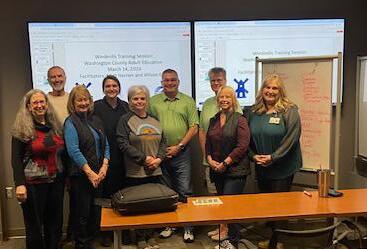
Some comments from the training include: “I realized I was putting too many limits on people based on what I know about disabilities”, “Focus on what they can do and not the disability”, and “I am so much more aware of the resources that DARS has to ofer our adult education students”. All participants recommended the training to others.
We are so pleased with the progress we are making to serve all of our students and are so thankful for our partnership with DARS. We look forward to more training as we look for improvement to our services for individuals with disabilities.
Reference
Wonski, C. (2022). Integrating Windmills into your organization. Ohio Department of Administrative Services. https://dam.assets.ohio.gov/image/upload/das.ohio.gov/employee-relations/diversity-equity-inclusion/2022/Integrating_Windmills_into_your_Organization.pdf

Shannon Mutter is the Regional Program Manager for Mount Rogers Regional Adult Education Program. As the Regional Program Manager, she oversees the ABE, GED®, ESOL, and workforce programs in the counties of Bland, Carroll, Grayson, Smyth, Washington, and Wythe as well as the cities of Bristol and Galax. Shannon’s previous adult education work experience includes classroom instructor and Regional Instructional Specialist. Shannon currently serves on the New River/Mount Rogers Workforce Development Board and as the Vice President of the local prison ministry board. She is a member of the Virginia Association for Adult and Continuing Education (VAACE) and the Coalition on Basic Adult Education (COABE).
PROGRESS April 2024
p. 20

WINDMILLS: Harness the Power of INCLUSION
2024 Monthly Online Training Schedule
4th Thursday of each month 2:00 – 3:30 p.m. EST
January 25
Fact or Fiction -This module teaches participants to anticipate situations that July 25 might occur in the workplace with people with disabilities.
February 22
Whose Fault -This module will improve participants’ awareness of the diferent August 22 players and roles in a successful business practice and to identify more efective ways to communicate and resolve confict.
March 28
Perspectives -This module will examine stereotypes associated with common September 26 disabilities and introduce self-awareness about people with disabilities.
April 25
May 23
June 27
October 24
Taking Emotions out of Emotional Disabilities -This module will provide a way for organizations to consider reasonable accommodations for persons with emotional disabilities in an emotionally neutral environment.
Profles -This module will examine how stereotyping of persons with disabilities may impact employment decisions.
Assistive Technology and Reasonable Accommodations -This module will acquaint individuals with the creative process in Identifying possible reasonable accommodations.
Encounter -This module will highlight the success of individuals with disabilities.
To attend DARS’ online training, pre-registration is required at:
https://dsa-virginia.zoomgov.com/meeting/register/vJIsc-GurzwqE8g3ObvVikmZM1fRu09Zd7s#/ registration
To request in-person training, contact your local DARS representative at:
https://www.dars.virginia.gov/drs/businessservices/team.htm
PROGRESS Volume 34, No. 1
p. 21
An Appreciative Approach to Disability Inclusion in Adult Learning
by Dr. Lisa B. WebbWhat are the life-giving stories of your organization as it relates to learners with difering abilities (i.e., English language learners or learners with disabilities)? What do you experience as the core values of your organization and how do those values inform your approach to these learners? What three wishes would you make to heighten the vitality and health of this organization as it relates to the experiences of learners with difering abilities? These questions represent an Appreciative Inquiry approach to achieving deep organizational transformation.

Appreciative Inquiry (AI) is an evidence-based, generative, and strengths-based approach to organizational development and change. When applied in the context of adult learning, it can be a powerful tool for creating inclusive and empowering learning environments. Issues of access to learning for individuals with difering abilities often relies on a defcit-based approach that prioritizes adherence to legal requirements to ensure access for individuals in protected statuses. AI can signifcantly transform adult education by focusing on strengths, positive experiences, and collaborative problem-solving through a generative process. The AI framework is closely aligned with the principles of Universal Design for Learning (UDL), which aims to reduce barriers in the learning environment through fexible and inclusive instructional practices.
AI is also a culturally responsive process that highlights the importance of collaboration and shared decision-making. This emphasis on inclusive participation ensures that individuals from diferent cultural backgrounds are actively involved in shaping the inquiry process. AI involves asking positive and openended questions that encourage storytelling and refection. These thoughtful questions elicit narratives that incorporate cultural values, traditions, and unique experiences, enriching the understanding of the cultural context. For these reasons, AI is a meaningful way for organizations to reconsider and reevaluate current practices with regard to inclusive learning for learners with difering abilities.
The 5-D process of Defne, Discover, Dream, Design, and Destiny ofers a roadmap for organizations who seek to improve outcomes for learners with difering abilities. The frst step in the AI process is to defne the focus of your inquiry, identifying the opportunities for growth and fourishing in your organization. At the beginning of your work together, your organization will spend time identifying the focal point of your inquiry through questioning. What do you know about the current experiences of learners with difer-
PROGRESS April 2024
p. 22
ing abilities? What is the desired future state of your organization as it relates to this population? Once you’ve identifed the focus of your inquiry, you can move on to the important work of discovery.
The main goal of the discovery phase in AI is to understand the best of what exists within the organization. AI values inclusive participation and emphasizes involving all stakeholders in the inquiry process—educators, adult learners, administrators, support staf, and community members. Inclusive participation ensures that diverse perspectives are considered, leading to more comprehensive and relevant insights. In the discovery part of AI, the organization conducts interviews with stakeholders, asking open-ended questions such as the ones posed at the beginning of this article, to better understand what is working well in the learning environment, what strengths exist, and what positive experiences participants have had. Teams then begin to identify themes that emerge from the interviews and these themes
become the foundation for the next phase in the AI process. It may be important to revisit the initial inquiry and refne your focus even further after you’ve engaged in the discovery process.
In the dream phase, teams begin to envision an ideal learning environment. All stakeholders in the organization are invited to share their aspirations and ideas for an inclusive learning environment that maximizes the strengths identifed during the discovery phase. Based on identifed strengths and aspirations, specifc strategies and actions are developed collectively that will move the organization forward. AI emphasizes collaboration and co-creation. In the context of adult education, this could involve collaborative curriculum design, joint problem-solving grounded in past successes related to equitable access, and shared decisionmaking at the policy level. The remainder of the 5-D process involves deeper planning and implementation (Design) and celebration of accomplishments (Destiny).
Continued on p. 24>>>

PROGRESS Volume 34, No. 1
p.23
>>>Continued from p. 23
The resources, tools, and ideas ofered within this article can inform your practice and transform the learning experience for learners with difering abilities. The AI framework keeps the focus on an ideal future state for your organization as you begin to consider your own practices and imagine possibilities for a more inclusive and transformative learning experience. Beginning with generative questions that focus on the positive core of your organization will allow you to make the best use of the tools and resources ofered. The Center for Appreciative Inquiry provides a wealth of resources to guide your eforts if you are interested in this approach. Bushe’s 2007 study (as cited in Armstrong et al., 2020), defnes AI as “the quest for new ideas, images, theories and models that liberate our collective aspirations, alter the social construction of reality and, in the process, make available decisions and actions that weren’t available or didn’t occur to us before (p. 30).” Through the intentional application of AI, adult learners are empowered to be co-creators in building a better future. I invite you to discover the best of your organization or your own practice, and to dream about the possibilities as together we strive to “liberate our collective aspirations.”
References
Armstrong, A. J., Holmes, C. M., & Henning, D. (2020). A changing world, again. How Appreciative Inquiry can guide our growth. Social Sciences & Humanities, 2(1). https://doi.org/10.1016/j.ssaho.2020.100038
CAST. (2024). About Universal Design for Learning. Retrieved February 23, 2024, from https:// www.google.com/url?q=https://www.centerforappreciativeinquiry.net/resources/the-generic-processes-of-appreciative-inquiry-5ds/&sa=D&source=docs&ust=170897315038952 3&usg=AOvVaw1JgLwFLLOFAJywHEeCRxhG
Cooperrider, D. (2012). What is Appreciative Inquiry? Retrieved February 23, 2024, from https://www.davidcooperrider.com/ai-process/#
The Center for Appreciative Inquiry. (2024). Generic process of Appreciative Inquiry. Retrieved February 23, 2024, from https://centerforappreciativeinquiry.net/resources/the-generic-processes-of-appreciative-inquiry-5ds/

Lisa Webb has more than 15 years of professional experience in the development, implementation, and evaluation of student programs and academic support services in high school and graduate health sciences education. In her current role at Virginia Commonwealth University (VCU), she manages workforce development initiatives as part of VCU’s anchor institution mission, and ensures that current health sciences students have access to academic and disability support services. She is also responsible for the implementation of health career pipeline program initiatives to encourage underrepresented students to pursue careers in healthcare. Dr. Webb is a certifed rehabilitation counselor (CRC), with a Master of Science in rehabilitation counseling and a doctoral degree in educational leadership, both from VCU, and holds a graduate faculty afliate position with the VCU School of Education. Her areas of research interest include implicit bias in the recruitment process and in the classroom, adult learning, impact evaluations of health career pipeline programs, and implementation evaluations of new initiatives in postsecondary education.
PROGRESS April 2024
p. 24
From the VDOE Adult Education Team Accommodations for GED® Test Takers

The following information highlights resources and FAQs available on the GED Testing Service® (GEDTS) Accommodations webpage to help test takers and their advocates navigate the accommodations request process. We know that for many of our students, transportation and ftting classes into their schedule are signifcant barriers. Our students have the option of in-person or Zoom classes, with our Zoom classes being more popular by a ratio of more than 5 to 1. Our Zoom classes are ofered both in the morning and the evening using the same Zoom link, so if a student who normally attends the morning class is unable to come on a given day, they can attend the same class that evening.
The GEDTS (2024) endeavors to provide reasonable and appropriate accommodations to individuals with documented physical, mental, sensory, or cognitive disabilities who demonstrate a need for accommodations. The purpose of accommodations is to provide test takers with full access to the GED® test. The GEDTS Accommodations team manages requests through a centralized review and approval process.
Accommodations are available for the following disability categories:
• Attention Defcit/ Hyperactivity Disorder
• Learning and Cognitive Disorders
• Psychological and Psychiatric Disorders
• Physical Disabilities and Chronic Health Conditions
What types of accommodations are available?
Some commonly requested accommodations include extended testing time, extra breaks, private testing room, and reader/recorder. Students can submit a request via their GED.com account. Additional information and step-by-step instructions for submitting a request is available on the Accommodations webpage.
What type of documentation does a test taker need? Detailed information about documentation guidelines for each disability type along with a description of evaluator qualifcations (e.g., who is qualifed to be an evaluator and provide a candidate with documentation of their disability) is also on the Accommodations webpage under Documentation Guidelines. Before submitting a request, it is recommended that the test taker provide the appropriate documentation guidelines to their doctor or psychologist to evaluate.
Did you know that GEDTS also has a Comfort Aid List, which contains personal items and minor modifcations that do not require preapproval? The list includes items such as medicine and medical devices, mobility devices, and other approved items. Additionally, any test taker can modify what their test looks like on their computer screen to make it easier to read. They are allowed to highlight text, change screen color combinations, and increase the font size. These small adjustments can make a big diference for a test taker.
Continued on p. 26>>>
PROGRESS Volume 34, No. 1
p. 25
>>>Continued from p. 25
GED® Test On-Screen Computer Guides are available on the Accommodations page along with the complete list of Comfort Aid items, a list of lower costs testing clinics that provide disability testing and evaluation, and commonly asked questions about the process of requesting accommodations.
Have additional questions? Reach out to the GEDTS Accommodations team at accommodations@ged.com.
Reference
GED Testing Service®. (2024). Accommodations. https://ged.com/about_test/accommodations/


Still have questions about disabilities, limitations, and accommodations?
Be sure to check out these resources from the VALRC!
Inclusive Virginia Website (https://www.inclusive.valrc.org/): This website provides adult education program leadership, staf, and instructors with information, instructional strategies, resources, and accommodations for providing access to efective adult education for all learners seeking adult education opportunities. Please note that the information provided on this site is to help educators support learners with varying needs. Educators, unless certifed to do so, are not qualifed to diagnose {dis}abilities and should not attempt to do so.
Visitors to the site can explore:
Information about and resources for difering abilities, including acquired brain injury, Deaf or hard of hearing, mental health conditions, neurodiversity, physical {dis}abilities, vision impairment
• Supports for providing digital accessibility, language access, and accommodations
• Information on trauma-informed practice and Universal Design for Learning
• Information on the legal responsibilities of serving adults with difering abilities
• A plethora of resources and partnering agencies
Voices from the Field Episode 13: Learner Spotlight, Lygia Yates (https://valrc.org/community/podcasts/): In this podcast episode, VALRC staf talk with an adult education learner, the Director of the disAbility Law Center of Virginia (dLCV), and a career coach about working with learners with varying abilities. The adult education learner, Lygia, describes her journey back into education and her process for earning Microsoft Ofce certifcations. Then, the Director of the dLCV, Colleen, describes the legal services they provide to individuals and families of individuals with difering abilities. Next, the career coach, Duane, describes how he assists learners in advocating for themselves as they connect with employers.
PROGRESS April 2024
Ask JAN! Job Accommodation Network
p. 26
2024 PROGRESS CALENDAR
MAY
13–15 National Skills Coalition: Skills Summit Washington, DC
29–31Institute for Educational Leadership (IEL) 2024 National Community Schools and Family Engagement Conference (CSxFE) Atlanta, GA
AUG
7–9 LACES Data Training Richmond, VA
19–23 Innovating Digital Education in Adult Learning (IDEAL) Consortium Annual Summer Institute Virtual
JUN JUL
13 Metropolitan Educational Research Consortium (MERC) Summit: Connecting Research, Policy, and Practice Through Shifting Paradigms in Public Education Midlothian, VA
SEP
25–28 National Council of Teachers of Mathematics (NCTM) 2024 Annual Meeting and Expo: The Math of Their Dreams: Illuminating Students’ Brilliance Chicago, IL
27–28 VATESOL Conference
The Future of Multilingual Education: Innovative Approaches for Supporting Multiliteracies Richmond, VA
24–26 GED® Conference: We’re Not Done Yet Long Beach, CA
OCT
6–9 ProLiteracy Conference Baltimore, MD
8 Annual American Association for Adult and Continuing Education (AAACE) Conference Virtual Day
21–23 Virginia Association for Adult and Continuing Education (VAACE) Conference Charlottesville, VA
29–NOV 1Annual
American Association for Adult and Continuing Education (AAACE) Conference Reno, NV