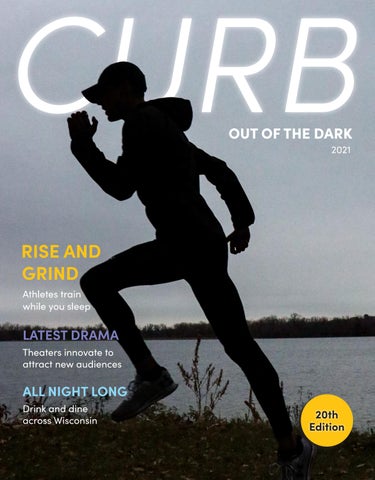
Athletes train while you sleep
LATEST DRAMA
Theaters innovate to attract new audiences
ALL NIGHT LONG
Drink and dine across Wisconsin



Athletes train while you sleep
Theaters innovate to attract new audiences
Drink and dine across Wisconsin
Scientists tell us that humans are born with only two innate fears: the fear of loud noises and the fear of falling. Yet soon, often in early childhood, many develop another: the fear of the dark.
As we grow up, we come to associate different things with darkness. For some it’s the nighttime, crawling with nocturnal life while our own circadian rhythms kick us into sleep. For others, life just begins — whether that means work, play or a rest from the constant rush of the daytime.
I’ll be honest. More often than not, my most memorable tales happen after 12 a.m., whether that be staying up late working on this magazine, bartending at a local student bar or enjoying my senior year in Wisconsin a little too much... So this year at Curb, our team decided to challenge the notion that darkness is inherently villainous. Yes, darkness can be sinister, mysterious and even surprising. Yet some of our most important moments happen in the dark, the peaceful and the joyful. As this collection of stories will come out in December — the darkest time of the year — we are left wondering: can anything good really happen after midnight?
In this issue, we will explore all types of stories rooted in the dark — both literally and metaphorically. In reading “Out of the Dark,” we invite you to challenge your beliefs about darkness and discover what it means to the people of Wisconsin. We hope to reveal how they embrace it, expose injustices in the shadows and highlight the unseen with a celebration of the dark. And hey, maybe you’ll come out a little less afraid of it.
Cheers,

Margarita Vinogradov
Editor In Chief
Editorial
Margarita Vinogradov, Editor In Chief
Maya Fidziukiewicz, Managing Editor
Cailyn Schiltz, Lead Writer
Elea Levin, Lead Writer
Lauryn Azu, Copy Editor
Kate Morton, Copy Editor
Isabella Byrne, Copy Editor
Business
Henry West, Business Director
Anna Aversa, Public Relations Director
Lilly Freemyer, Public Relations Director
Jack Murphy, Engagement Director
Claire Henneman, Marketing Representative
Mallory Pelon, Marketing Representative
Design
Lili Sarajian, Art Director
Grace Landsberg, Production Director
Shannon McManus, Production Associate
Madison Mooney, Production Associate
Kalli Anderson, Photographer and Photo Editor
Online
Molly Kehoe, Online Editor
Jessica Gregory, Online Associate
By Kalli Anderson
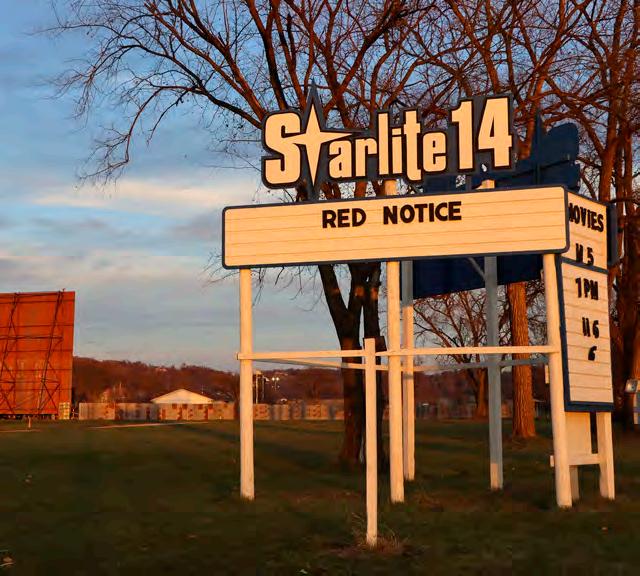
At one time in the 1950s, there were 79 drive-in theaters in the state of Wisconsin. Now, there are only 11 left.
One of them is Starlite 14 Drive-In in Richland Center in the southwestern part of the state. When the previous owners decided they wanted to retire after 32 years of running it, Holly and Tony Johnson and Brent Montry knew they had to buy the drive-in to preserve this essential place in the community.
“This [was] one way families felt safe to be out in public, and also get to do one of the things they love, and that’s watch movies,” Holly says. “COVID has really helped bring back the outdoor movie theaters and really show families how special they are.”
By Kate Morton
No one can function without sleep, but many of us lean into bad habits that keep us from getting a full night of rest. Here are some tips that will have you sleeping like a baby in the wink of an eye.

Don’t use screens right before bed. Screens emit blue light, which suppresses production of the sleepinducing hormone melatonin.

Avoid heavy meals before going to bed. The body needs time to process big meals. At the same time, avoid going to bed hungry by eating a light snack. Dairy foods in particular can facilitate sleep.

Limit napping during the day. Daytime siestas can be tempting, but if you struggle with insomnia, avoid naps longer than 30 minutes after 3 p.m.
There’s more to love! Visit us at curbonline.com
Curb is published through generous alumni donations administered by the UW Foundation and in partnership with Royle Printing, Sun Prairie, Wisconsin
© Copyright 2021 Curb Magazine
Joe Rickles, Online Associate
Tamia Fowlkes, Multimedia Producer
Publisher
Stacy Forster
Editorial support from Jenny Price
Buying the drive-in theater in July 2020, right in the beginning of the COVID-19 pandemic, gave Starlite 14 a new opportunity — not only to keep running, but also to offer a space for people to get out of their homes.
Attendees showed up in all forms, from being masked up and barely rolling down the windows to not having a mask in sight and meeting up with people outside of their household.
As one of the last drive-ins standing in the state, Starlite 14 still has connections to its past. The theater has made significant upgrades — including remodeling the concessions stand — but they still use the old speaker posts to direct cars on where to park.
Still, a huge part of the attraction of an outdoor movie theater is the connection between the motion pictures on a screen and being out in nature.
“Everybody loves the movies, just to be under the stars, be outside, have the fresh air and reunite with each other,” Holly says.


Create your own bedtime routine. Completing prebedtime tasks in the same order helps tell your body it’s time to go to bed.
Avoid using your bed for anything other than sleep. Your bed should be a place of rest. Set up a designated area away from the bed for work and other non-sleep tasks that distract the brain from sleep.
By Margarita Vinogradov
While we all spend at least some of our day in the literal dark, here are some products guaranteed to brighten up these hours.
For the Night Owl
Happy light
$30, verilux.com
Created to simulate sunlight for those that do not get enough during the daytime hours, this light is proven to enhance mood, energy and sleep without the harmful effects of the sun’s UV rays.
“All The Light We Cannot See” by Anthony Doerr
$24, amazon.com
Like the double meaning of this very issue, this title is both a literal reference to the spectrum of light beyond the ability of human eyes to detect and a metaphor for the invisible stories within World War II.
Cable holder
$7, amazon.com
This adhesive cable holder set will be sure to keep all of your messy cables organized.

For the Midnight Snacker Chamomile tea
$3, target.com
A popular herbal tea with a variety of health benefits, evidence suggests that its antioxidants can reduce inflammation, lessen symptoms of anxiety and depression, boost the immune system and promote sleepiness.
Almonds
$7, target.com
Almonds have been shown to lower the risk of developing chronic diseases like Type 2 diabetes, which research attributes to their monounsaturated fat and fiber.
For the Beauty Sleeper Sleeping mask
$10, amazon.com
Gentle on the delicate skin around the eyes, this face mask will block both natural and artificial light, ensuring a deep and undisturbed sleep.
Lavender essential oil
$24, pharmaca.com
Studies show that lavender oil increases the amount of slow and deep-wave sleep as well as vigor in the morning.
Beauty and sleep vitamins
$17, target.com
This blend of melatonin, biotin and vitamin E will ease you into a deep sleep while strengthening your hair, skin and nails.
By Claire Henneman
For the Early Riser Sunrise alarm clock
$100, amazon.com
Popularized by TikTok and chosen as the top pick by The New York Times, this alarm clock simulates the sunset and sunrise during any time of day — which is especially useful in rooms without windows.
“The Little Book of Mindfulness” by Tiddy Rowan
$10, amazon.com
This small book promises wisdom on how to calm your mind and lighten your spirit. Read it in the morning to help declutter your thoughts.
A destination wedding results in a murder. Complicated relationships and pasts are revealed, keeping you guessing whodunit all the way through.
“THE
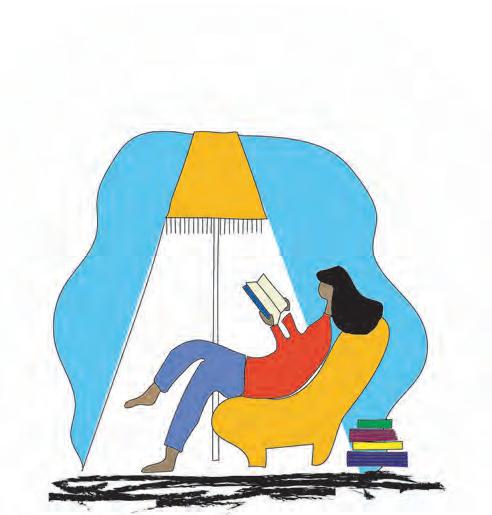
In this complicated mother-daughter relationship that is told through multiple generations, Blythe Connor is determined to have the relationship with her children that she always wanted to have with her mother as a child. This novel will keep you guessing until the final sentence.
Monique Grant, an average journalist, is contacted to write the story of a lifetime about iconic actress Evelyn Hugo. Hugo has not invited media attention in decades, but with Grant she shares details of her personal and professional life that have never been told before. The biggest question of all: Who is the love of Evelyn’s life? And why is Grant the one to tell the story?
By Joe Rickles
Bats nature’s only flying mammal may seem like a creepy concept out of Transylvania, but Wisconsin has its own species of native bats that are vital to our ecosystem. Yet the state’s population of these misunderstood critters is in danger, and they need our help.
GETTING SICK
White-Nose Syndrome is a mysterious fungal disease affecting bats that originated in upstate New York around 2007. Since then, it has spread across the country and has done significant damage to bat populations across North America. Although numbers of bats have stabilized in recent years, they are far from the preWhite-Nose years.
Bats live all over Wisconsin maybe even in your own backyard.
“If you’re there at sunset, you’ll often see lots of bats flying over Lake Mendota or Monona,” says Amy Wray, a postdoctoral research assistant at the University of Wyoming who studied Wisconsin’s bats. “They’re pretty common at Picnic Point, [which] has a little bat house so there’s usually bats flying over the water there.”
Verity Crawford, a highly successful novelist, has a tragic accident that leaves her unable to write again.
Lowen Ashleigh is hired to finish Verity’s renowned book series. During Ashleigh’s stay at Verity’s house, some unsettling events occur. Plot twists will keep you guessing and incredibly creeped out.
Elle Bishop cheated on her husband with her best friend last night, and “The Paper Palace” tells the story of how she got there. A dark family history and upbringing is revealed between a blended
DIFFERENT SPECIES
The Badger State bats. The most common are little brown bats and big brown bats, which hibernate together underground during the cold winter months.
HELP WITH A BAT HOUSE You don’t have to be a things to do is build a bat house. Here’s some tips from conservation biologist Heather Kaarakka of the Wisconsin Department of Natural Resources.
• Do a little bit of research into where you can place it and what type of house you’re going to build.
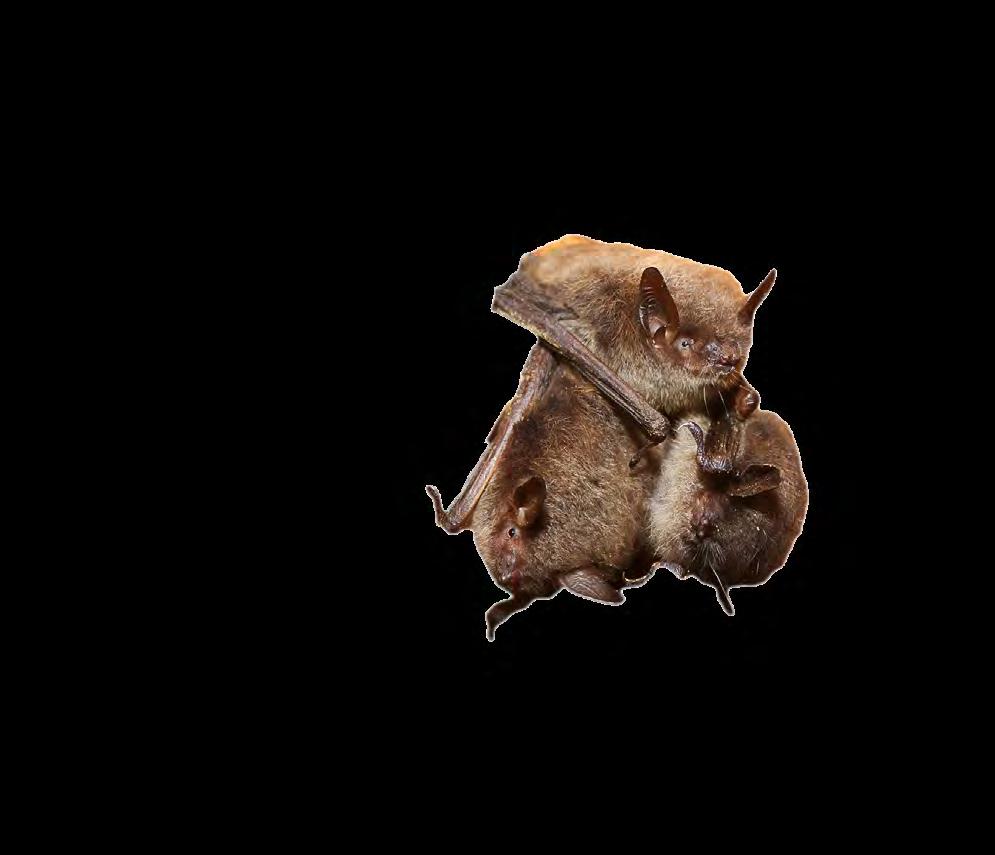
• Generally, the bigger the house the better success you have.
• Bats tend to like it warm. It helps them gestate and the pups mature quickly. Paint your house a dark color.
• Place it 10 to 15 feet in the air. Avoid putting it in a tree because trees can provide too much shade and offer easy access for predators like raccoons.

By Jessica Gregory
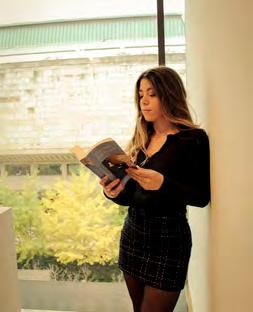
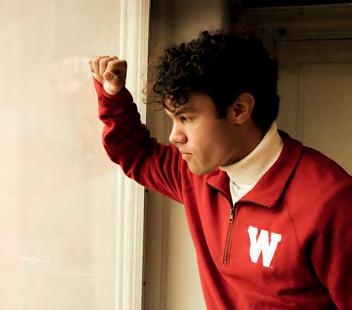
Literature. Poetry. Existentialism. The dark academia aesthetic is perhaps best described as a pretentious, scholarly demeanor accentuated by moody clothing and a classic novel. It’s essential to maintain a mysterious composure, a hunger for knowledge into the unknown and wallow in nostalgia for the romanticized past, just for the aesthetic.
Enjoy a curated gallery of students who donned their dark academia garb, placed in particularly studious locations on UW–Madison’s campus.
Think this aesthetic might be for you? Try it out!
By Mallory Pelon
The northern lights are a natural phenomenon that many people only dream of being able to see. The northern lights have fascinated people for ages, and lucky for the people of Wisconsin, the northern lights are visible from time to time in the state because of Wisconsin’s northern location and its various areas with low light pollution. The best time to see the northern lights in Wisconsin is January through March because of the long and cold nights. So, grab your winter coat and head out there!
The Apostle Islands
Just off the tip of Wisconsin, the Apostle Islands are a group of 22 islands located off the shore of Lake Superior. Since these islands are surrounded by Lake Superior, they offer a great view of the northern lights with little obstruction.
Door County
Get the look yourself
Clothing pieces: blazers, slacks, collared button-ups, vintage university sweaters, turtlenecks, chunky sweaters, knitted vests, plaid pleated miniskirts.
Shoes: brown, black or gray oxford loafers, Dr. Martens black platform boots.
Accessories: full-framed glasses with round lenses (real or fake), vintage gold, silver jewelry or jewelry with unique gems, leather book bags, hardcover notebooks, Pilot G-2 Premium Ink black pens.
By Grace Landsberg and Anna Aversa
When the first edition of Curb was published, most of the current Curb staff was just a year old. Now, 20 years later, this issue of “Out of The Dark” is in thousands of hands. Join us in reflecting on two decades of Curb by taking a look back at our past covers.



The Door County Peninsula extends into Lake Michigan and is home to Newport State Park, an internationally recognized dark sky park — a location that has little to no light pollution, which means the views of the night sky are extremely clear. Grab a cup of hot chocolate and camp out at this park for a breathtaking view of the night sky, with or without the northern lights.
The Chequamegon-Nicolet National Forest
Located in northern Wisconsin, the Chequamegon-Nicolet National Forest covers more than 1.5 million acres. This vast area offers low levels of light pollution, which make the chances of seeing the northern lights much higher.




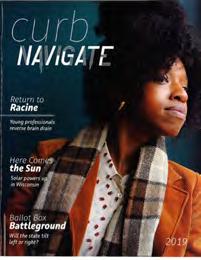

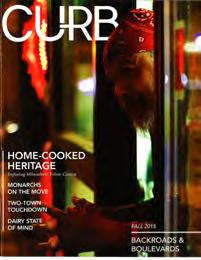

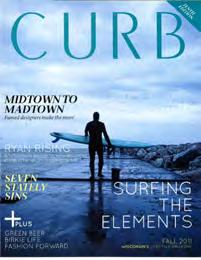
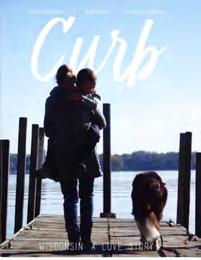
By Anna Aversa
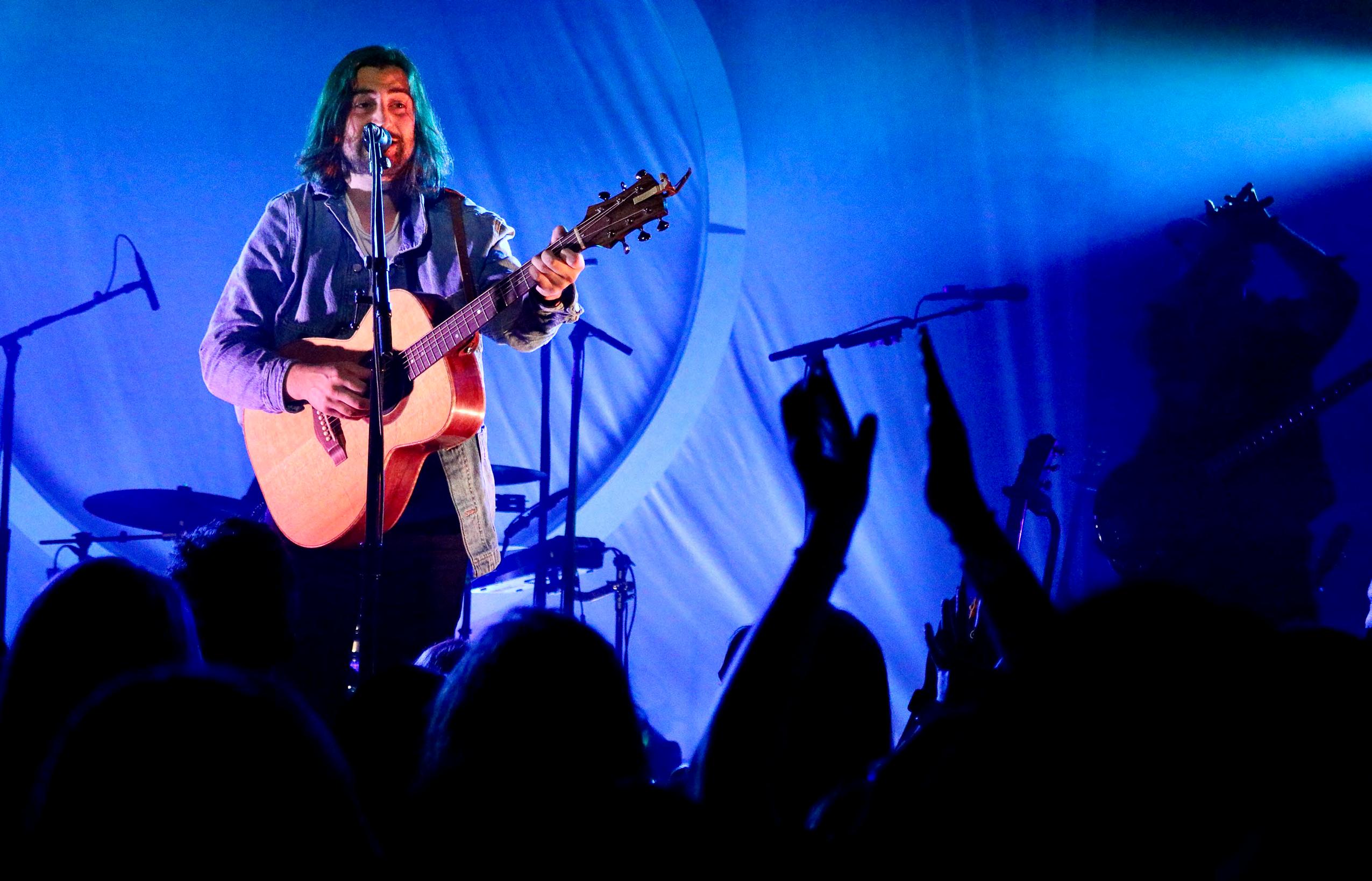
Singer-songwriter Noah
The music blasts through the speakers so loudly that your ears begin to ring. You can feel the floor beneath you shake as the crowd screams out the familiar lyrics. As you jump up and down, your feet stick slightly to the beer-soaked floor while you smile ear to ear, remembering the days when standing next to sweaty strangers was the last thing on your mind.
The intoxicating feeling of standing in a sea of people singing your favorite song with your favorite artist 50 feet in front of you is what live music is all about.
One hundred and fifteen years ago, the Majestic Theatre opened its doors, and 21 months ago, the Majestic closed its doors due to the pandemic. For 17 months, it stood empty and dark. A building that was once home to lively concerts from rock to folk and everything in between didn’t host a concert for over a year. But now, we’re back — maybe with masks and vaccines, but once again that familiar sensation of hearing the pulse of live music from the speakers is alive in the Majestic.
On the night of Oct. 16, Noah Kahan, a pop singer from Vermont, took the stage. The energy vibrated through the venue while the audience sang the lyrics to his songs almost as loudly as the speakers delivered his voice. Live music exists to give comfort in the dark times and to make the joyous times even more exciting. Finally, it seems like we are out of the dark hold the pandemic put on live music. Kahan’s show took work from dozens of people who will never be thanked; individuals who came to the theater long before he was on stage and stayed long after he exited.
People like Reanna Roberts, Frank Productions’ venue director for the Majestic, the Sylvee, High Noon Saloon and the Orpheum Theater, work behind the scenes to ensure the magical feeling of live music for all who attend a show. Roberts has spent 12 years in the live music industry, 10 of which she spent working exclusively at the Majestic.
Show days can vary considerably in length, and Roberts says she works an
average of 14 hours per show day. With schedules well beyond the typical 9 to 5, it is apparent that those who work in the live music industry love what they do.
“It’s so weird to me now that I don’t work in it to go to [concerts] because it almost makes me emotional because I’m like, I can’t believe I literally did this every day,” says Cassidy Schrader, former event manager at Pabst Theater Group in Milwaukee.
Noon
Roberts arrives at the venue, opening the doors for other staff who are essential to setting up, such as the catering team. The groundwork begins, trucks are unloaded and staff begin to show up. The touring crew gains familiarity with the Majestic as its members begin to put together their set. Roberts begins her work communicating with tech workers and stagehands.
“You get goosebumps and you get chills, and you can feel all the people in the room have that same sort of wavelength energy,” she says. “That’s the best part. And you can’t get that from listening to Spotify or from a livestreaming of a concert, you can only get that at shows.”
7 p.m.
Doors open to the public and audience members begin to file into the building. One member of security works his way up the line checking vaccination cards against photo IDs, while another strikes up conversations at the beginning of the line while he waves a metal detector over the audience members.
“Show me some real estate!” one security member jokes, and the man in line happily opens up his arms and steps apart his feet. After one last check-in to prove drinking age, audience members move toward the stage.
Ahead of the show, various staffers work on the out-of-venue side of shows to ensure shows are booked and executed properly. Grace Parshall, a marketing coordinator with Frank Productions, helps spread awareness of shows and get tickets sold through various marketing efforts. For Parshall, this means posting on social media in real time for shows, but that usually requires more work on the front end on such things
as advertising and digital ad spending. Parshall and the rest of her team ensure that the Madison community knows about the show — after all, if the show isn’t made visible to the public, it can’t be successful.
“It really is like a teamwork between us and the public because we need people to come to shows. We can put them on, but we want the community to come to them,” Parshall says.
8:02 p.m.
Blake Rose, the opener, saunters onto stage in a striped sweater, while the crowd is still trickling in. Rose is grinning ear to ear when he tells the crowd that this is his first-ever tour. Some people are chatting among themselves, others are grabbing a drink at the bar. The majority of the crowd, however, is nodding their heads along to the first song as Rose begins to strum his guitar.
At the bar you can overhear a couple conversing about Kahan, hoping that he will play his song “Maine.” The bartenders are smiling and exuding positive energy while slinging drinks, making it apparent that even the staff is happy to be back here.
Local venues have to find staff that keep the concerts alive. While concertgoers are itching to get back inside, stagehands and security are at a disadvantage. With dwindling staff numbers, those on hand fill extra shifts and work longer hours, doing what needs to happen to keep the show going.
“At its core, it’s just like customer service, whether you’re interacting with patrons or with the actual band, and just making it a good experience,” Schrader says.
9:06 p.m.
A hush falls over the crowd ever so briefly, followed by screams that echo across the Majestic as a shadowed figure makes it to the mic. The lights go up and Kahan appears, his long, black hair shining under the light. You can feel the buzz radiating off of the audience and, almost as if in a trance, everyone starts to dance.
After his first song, Kahan addresses the crowd: “Thank you for singing the words, I write a lot of songs and to be
completely honest I forget a lot of the lyrics. To know that you guys are right there with me is just wonderful.”
“We love you, Noah!” a fan screams from the balcony next to the stage. Kahan closes his eyes, takes a deep breath and moves on to the next song.
In the dark, audience members stand side by side, connected through the music, connected through an energy that radiates from the stage. The concert staff ensures that the energy is there, whether by making sure the touring artists have soft towels or that the audience feels safe and comfortable.
“I think it’s such a unique service you provide, it’s an experience for people that can be really cathartic, and really joyful and a memory that will stick with them,” Parshall says.
10:56 p.m.
The lights turn on brighter, but this time the stage is dim and the audience is bathed in light. Audience members are smiling and taking their last selfies of the night, then turning to leave. But work for the venue staff is far from over. The venue must be cleaned, and every piece of Kahan’s band’s equipment must be broken down and loaded onto the tour bus. The bar must close and be cleaned, and eventually the venue must be locked up. The audience files onto the sidewalk, where Kahan’s name has already been removed from the marquee so the next artist can take the stage.
And just like that, the Majestic is silent and empty for the night.
“Even on the absolute worst day when everything is an entire dumpster fire and everything goes wrong, it is still better than a day without a concert,” Roberts says.
Royle Printing is proud to support the University of Wisconsin-Madison School of Journalism and Mass Communication and all contributing students who produced Curb Magazine. As part of our growth, we’re looking for passionate, creative and hardworking team members to join our family. Schedule a tour today and learn more at royle.com/careers

Proudly celebrating over 70 years.
By Grace Landsberg
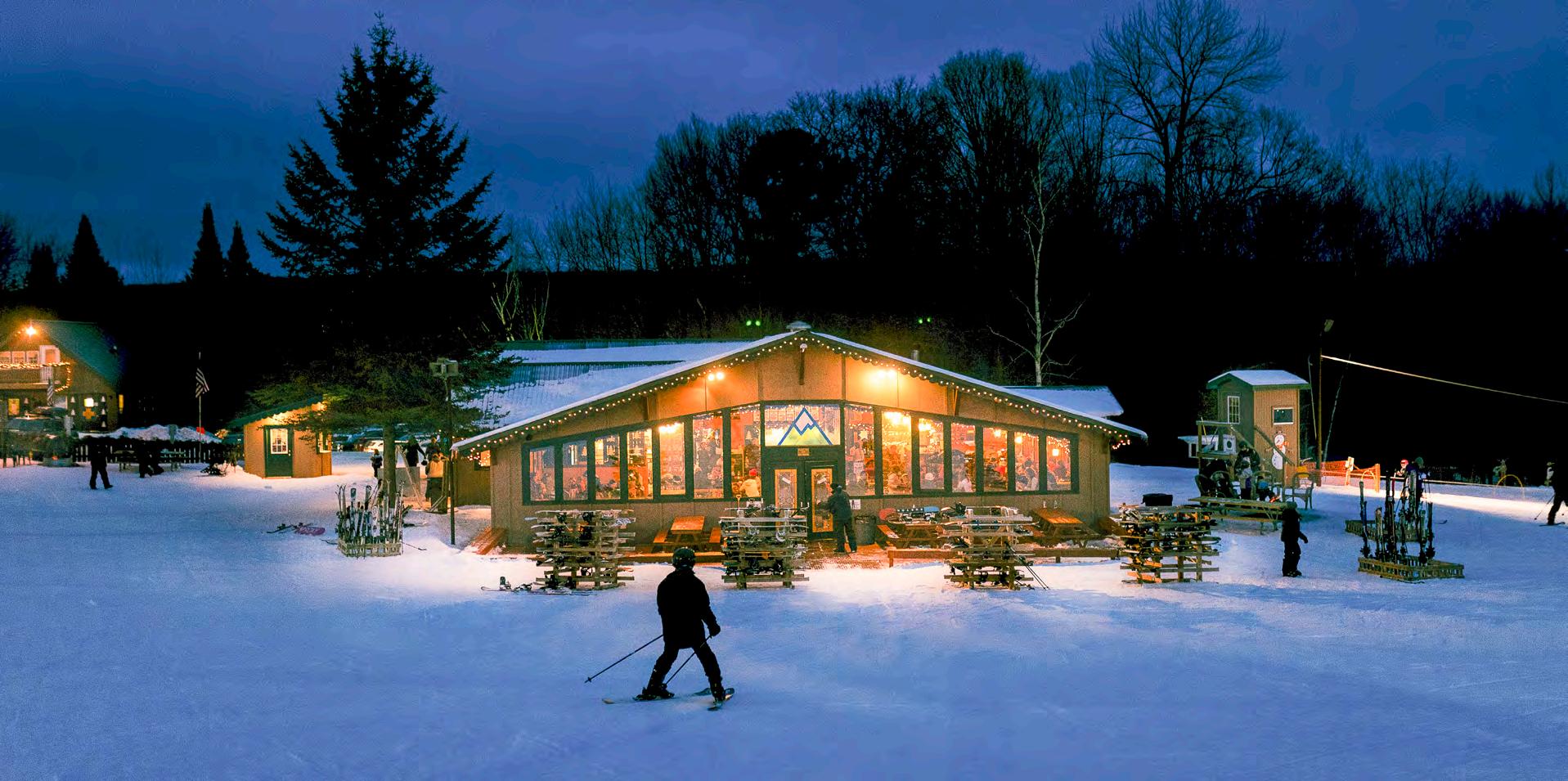
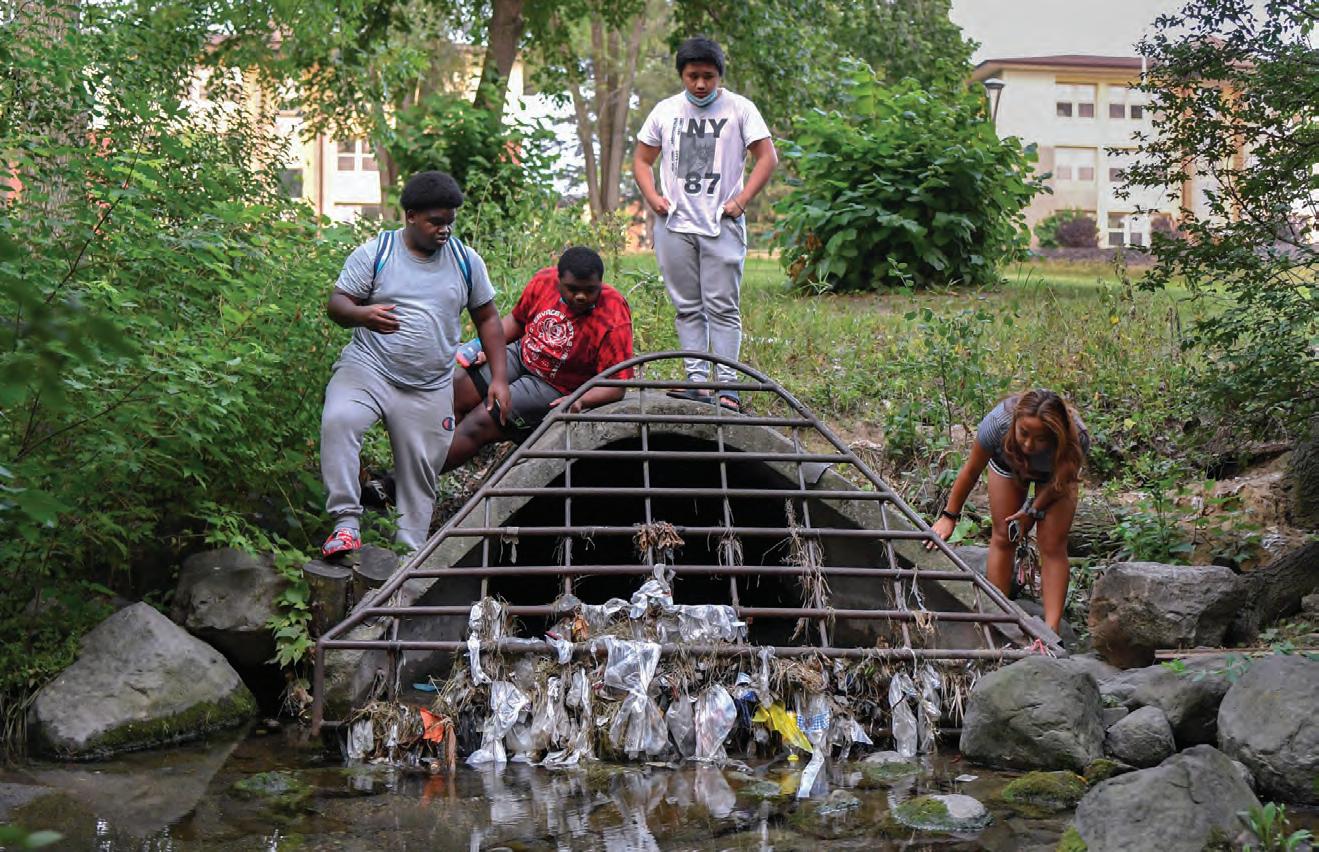
On one of the last runs of the night, Dimi Schweitzer and I decided to extend our poles out to one another and glide straight down the hill without making any turns. Together, we gradually picked up speed as the trees blurred together on either side of us.
After spending the majority of my junior year of college staring at a computer screen, night skiing at Devil’s Head Resort, about 50 minutes from Madison, was the closest thing to normalcy I had felt in a long time.
However, my love for skiing only slightly outweighed my overwhelming anxiety about interacting with the very real snow monsters that were surely hiding in the depths of the woods and were sure to only be active at night.
For a first-time night skier, navigating
in the dark felt daunting. But for kids at the Blackhawk Ski Club, navigating dark trails is just an exercise in trusting themselves and their abilities.
“There are places, especially on the Nordic trails, that are really dark, and it is so cool to watch the kids learn to navigate that and be confident,” says Blackhawk executive board president Amy Grunewald.
A typical night at Blackhawk Ski Club starts the moment kids get released from school. The private, not-for-profit ski club is located in Middleton, Wisconsin, roughly a 20-minute drive west of Madison.
“There’s no lights,” Grunewald says. “So if you forget your headlamp, you just have to let your eyes adjust, and you’re skiing in the total dark.”
Although Grunewald jokes it would
be ideal to have greater funding to replace all of the lights, she doesn’t dwell on their shortcomings. Rather, individuals are challenged to navigate terrain in the dark. This ultimately becomes an exercise of trust.
For talented ski racer Martha Daniels, under the fluorescent lights is where she will do some of her best skiing.
Daniels’ childhood was defined by night skiing. She grew up in a suburb just outside of Milwaukee and spent as much time as possible on the hill both with her family and friends, and later with her competitive high school team.
While many of her peers spent their after-school hours finishing homework or socializing with friends, Daniels was on the slopes until late into the night. It was second nature to her.
“I love night skiing, and I love night
practices,” Daniels says. “It was just so fun to go. I don’t know, it’s just cool.”
In her freshman year, Daniels wasn’t sure she wanted to join the UW–Madison alpine ski team. She remembers missing the deadline to sign up, but later realizing she wanted to continue skiing.
UW–Madison’s alpine ski team is most active at night. Practice typically starts once team members have finished classes for the day, says the team’s senior director Alec Riddle. The team then carpools in fleet vehicles up to Tyrol Basin, a ski hill roughly 40 minutes outside of Madison, sets up the race course and then trains through the night.
For Wisconsin natives Daniels and Riddle, skiing at night is second nature.
As lifelong competitive skiers, the fluorescent lights simply illuminate their playground.
While COVID-19 put a strain on the UW–Madison alpine ski team’s ability to practice, the pandemic may have been a saving grace for Christie Mountain. The small ski hill in Bruce, in northwestern Wisconsin, saw more traffic on the hill than ever before.
Christie Mountain didn’t have limitations on the number of skiers who could purchase lift tickets in a given day, says manager Andrea Vohs.
Without those limitations, skiers flocked to Christie like never before.
Vohs is hopeful that some newer skiers that tried Christie for the first time last season will return this coming season. Without the flexibility of an entirely remote school schedule, I am also hopeful to return to the slopes this coming winter.


By Lili Sarajian
You enter a barren landscape, dry patches of grass spotting the flat dirt plains in every direction. As you take a few steps forward, trees sprout up to your left and a river materializes ahead. You whirl around, looking behind you to find five masked and cloaked figures standing in a line, silent. Suddenly, the action begins.
Each figure takes its place to perform a scene from Shakespeare’s “The Tempest.” But what you’re seeing is not a normal theater performance. It’s happening entirely in virtual reality.
This is the future of theater.
While isolation during the pandemic has yielded a new appreciation for in-person experiences — like watching a show at the theater — the entertainment landscape has shifted irreversibly to digital platforms, and the performance arts
“Light creates a space, so if you want to create an intimate space, take down the lighting.”
industry is due to catch up. Directors embrace the use of digital media in theater performances to increase audience engagement, a direction that parallels avant-garde theater throughout the 20th century. This new wave of theater is capable of revolutionizing the entertainment industry as we know it.
Avant-garde playwrights of the 1920s and 1930s, including Antonin Artaud, Vsevolod Meyerhold, and Maurice Maeterlinck in Europe strayed from the trend of grandiose productions to create more intimate and evocative performances.
These leaders threw out all of the preconceived standards of theater — down to the theater architecture and the stage itself — and started from scratch with just an empty black box.
Black box theaters are flexible spaces that allow theater companies to produce a wide variety of shows with little to no scenery or props. They gained popularity in the 1960s when educational
institutions across the country built black boxes on their campuses. The flexibility of these spaces was ideal for teaching and producing small-scale student shows.
These black boxes are just what they sound like: empty square or rectangular rooms often painted black or draped with black curtains. Portable risers allow the stage and seating arrangements to be configured in any way the designer chooses.
Black box theaters allowed actors and producers to focus on content and performance rather than impressive scenery or mechanics. Traditional proscenium stages only allow the audience to view the action from one direction at a distance, but black box theaters force the audience to sit much closer to the actors.
“There’s an electric connection when you realize that person on stage just saw you and you saw them and you saw them seeing you,” says Rob Wagner, the scenic studio supervisor at the UW–Madison Department of Theatre and Drama.
“You can lose that in a proscenium piece really easily because the actors are playing the fourth wall.”
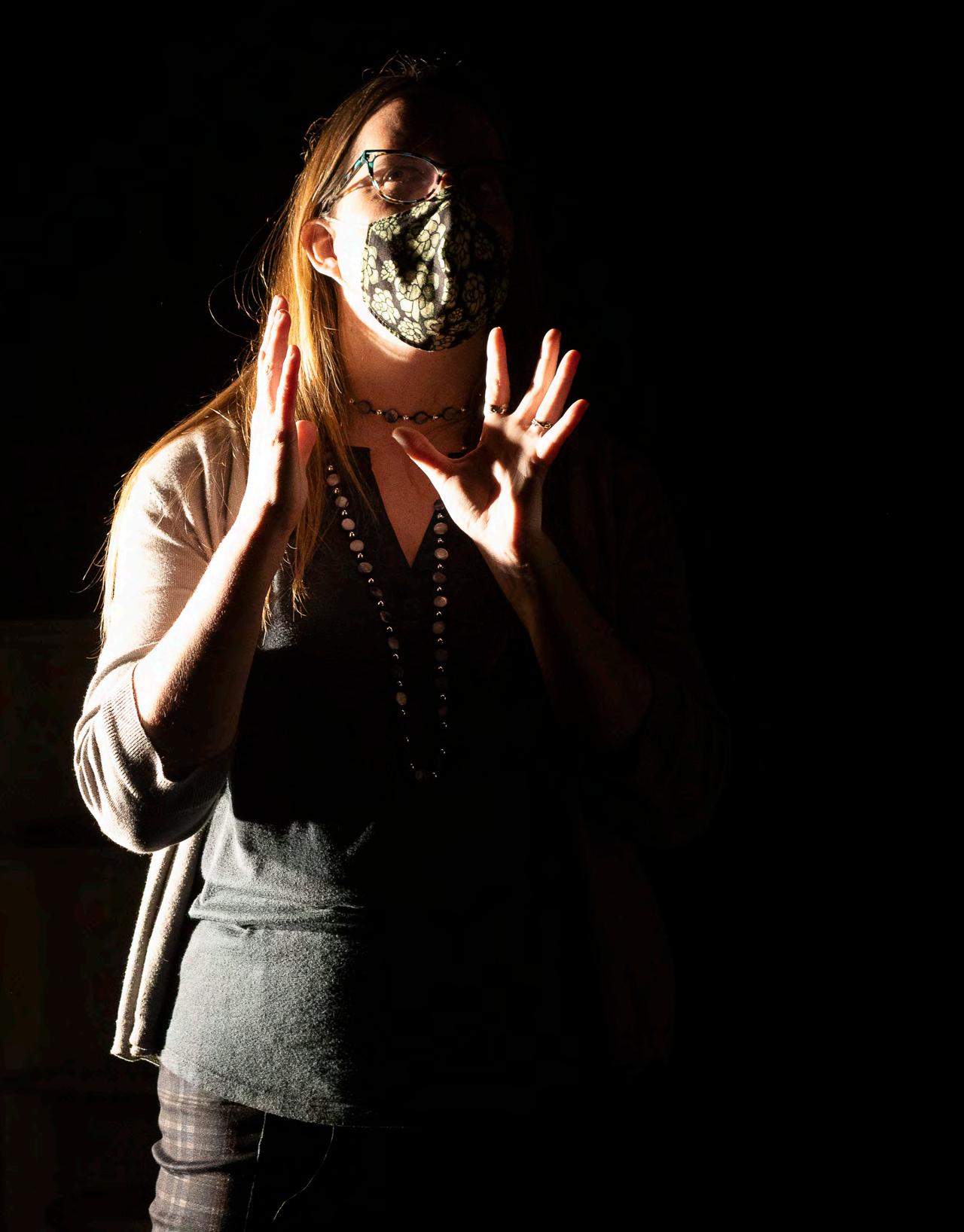
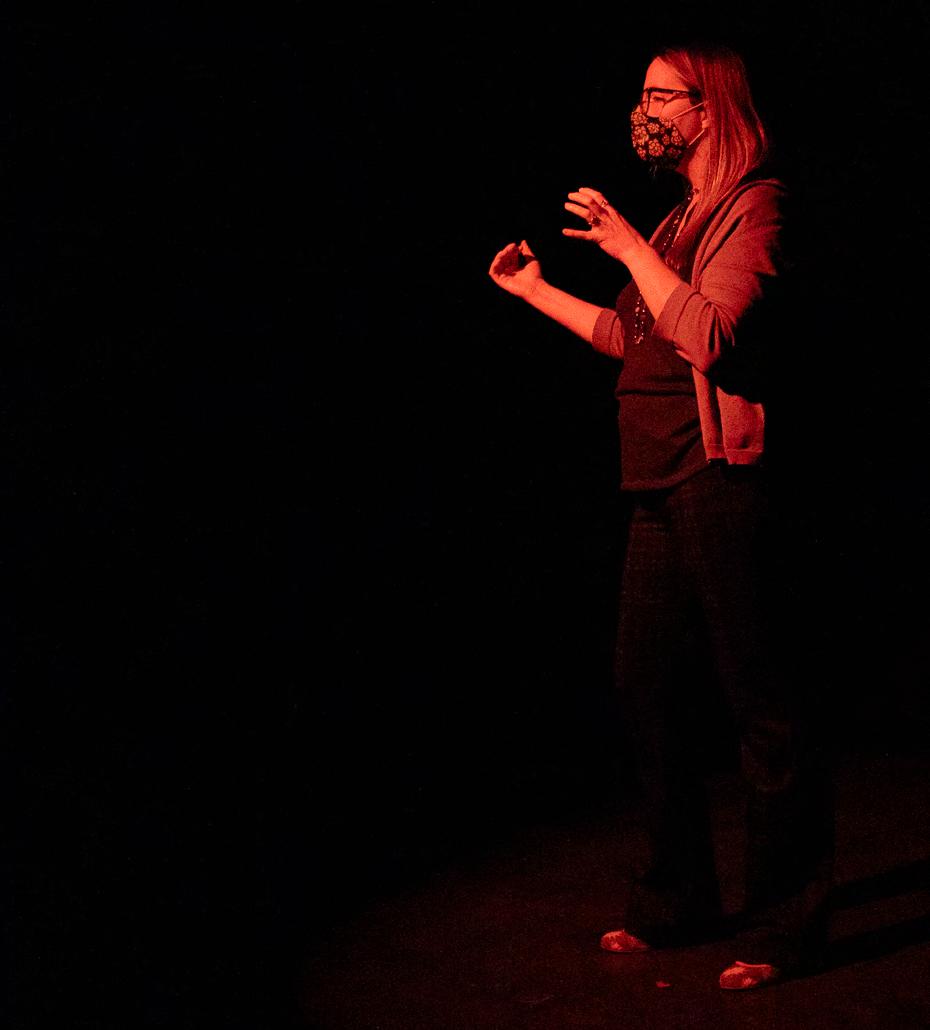
Because the audience is so close to the action, lighting designers can play with shadows. They don’t have to flood the stage with light to make sure the audience can see everything in the same way they would in an opera house or for a musical. Instead, black boxes can be lit with just a spotlight or even a single candle held up to an actor’s face.
“Light creates a space,” says Megan Reilly, assistant professor and lighting designer at UW–Madison. “So if you want to create an intimate space, take down the lighting. Create a smaller circle, create a smaller lit area, to the point of, if you just light a candle, that’s the most intimate space you can get.”
Modern experimentation with digital media, virtual reality and alternate reality is an evolution of those early avant-garde movements that sought to make theater more immersive.
And this new evolution is just in time.
“Traditional theater is in trouble,” Reilly says, speaking to the challenges of the COVID-19 pandemic. Beyond that, with the array of digital media vying for audiences’ attention — social media,
available.

television, film, video games — theater simply can’t offer the same level of convenience and immediacy.
“We’re losing people from live theater because they can get a better, more immersive experience with their 52-inch flat-screen TV, Dolby surround sound, sitting on their couch in their jammies,” Wagner says.
So, directors are embracing the use of digital media on stage to increase audience engagement and immersion during the performance. It’s all about trying to offer a unique performance that audiences can’t recreate in their living rooms.
According to Reilly, the term “immersive theater” has already become somewhat meaningless because every director has their own perception of what it means. For her, immersive theater is “where the actors and the audience share the same space,” she says. “The fourth wall is broken and the audience is on its feet, exploring the same space as the actors.”
Now, some theaters are removing that fourth wall by experimenting with video game design and VR technology to develop virtual spaces in which actors and audience members can interact.
“The Under Presents,” a live, interactive virtual reality game, produced and performed Shakespeare’s “The Tempest” entirely in VR. Audience members joined the game as anonymous avatars that could interact with one another while waiting for scheduled virtual performance times to attend within the game. During the downtime between
experience and the actors’ interaction with their stage environment.
The team consulted with a game designer to sync the actor’s movement with a digital projection behind her using sensors from an Xbox video gaming system. The actor moved forward on a treadmill, triggering the Kinect sensor, which would cause the digital projection to move according to her speed. When she raised her arms to jump down the rabbit hole, the Kinect sensors picked up on the motion, triggering the flying harness to lift her off the ground.
“It inverted the usual actor-digital interaction and put the live actor in control of the environment in a way that hadn’t been done before,” Wagner says. Instead of matching the actor’s blocking and action to a prerecorded projection, she was essentially in control of the entire production, from the projection to the stage lights to the flying harness. With experimental forms of theater on the rise, it’s easy to question what is lost from the live, in-person experience of theater. For theater professionals like Dan Lisowski, chair of the Department of Theatre and Drama at UW–Madison, the goal is to “replicate the feelings of the live entertainment experience in a different medium so that people still experience the art form in a way that is meaningful to them and touches them and kind of changes them going forward.”
This was the same goal of the experimental theater movements in the 20th century. Theater always aimed to create
“There is an electric connection when you realize that person playing that person on stage just saw you and you saw them.”
shows, actors hung around the virtual common area and interacted with audience members.
Even live, in-person theater is making room for digital experimentation.
The UW–Madison theater department produced a research project called The ALICE Project (Augmented Live Interactively Controlled Environment) in 2015 that explored the use of various digital technologies to enhance the audience
immersive spaces where the action is performed right in front of you, but the challenge faced by the industry today is finding a home in the digital landscape of the entertainment industry — offering something more immersive and evocative than audiences can find anywhere else.
By Lauryn Azu

It’s 5 p.m. in Horicon, Wisconsin. We have one hour before sunset, and the sun hangs lazily to the west, shining down on a brisk fall day. A couple of retirees, a family of four, two bird experts and one reporter with her photographer in tow, gather on the edge of a hill to witness the majesty of birds in flight.
After a long day of feeding off crops from nearby farms, the birds will return to the marsh to roost, where they are protected from predators before the sun dips below the horizon.
The beauty and drama of the endless skies at Horicon are what birdwatching aficionados travel for miles to see. And at
dawn and near dusk is when the drama reaches its peak — when birds begin to take flight, feed, continue migration or rest after a long day’s travel.
Over 300 species of birds have been identified in Horicon, America’s largest freshwater cattail marsh. Before European colonization, it was the home of the Potawatomi and Ho-Chunk. Beginning in the 1800s, the marsh was dammed, drained and dredged, and its fauna was exploited for commercial purposes. In the 1920s, conservationists advocated for the state to make the land a wildlife refuge to reverse the rampant destruction of years past.
Today, Horicon Marsh is divided between the federal government and the Wisconsin Department of Natural Resources. The marsh encompasses 33,000 acres, and is an isle of wilderness amid civilization in southcentral Wisconsin.
According to Jeff Bahls, president of Horicon Marsh Birding Club, almost 80% of birds migrate at night, but migration happens year-round. In the fall, birds who summer north are heading back south. In the spring, it’s reversed. Because waterfowl such as ducks, geese and swans migrate in fall and spring and inhabit the marsh’s wetlands,
tonight’s watch is a guaranteed display of their V- and J-formations moving cohesively above.
Night chasers
Birders chase night skies for several reasons. A serious birder gains a different perspective of a favored bird in the dark. A novice would need to learn fewer birds to make initial discoveries. Some birds, like owls, are nocturnal, meaning the greatest opportunity to see them active is at night. Others, like nightjars and American woodcocks, are crepuscular, meaning they are most active at twilight.
A few elements distinguish the night birder from their daytime counterpart.
A healthy sense of adrenaline, for starters.
A keen sense of sound, so you can listen to know whose neighborhood you’re in, and direction, so you don’t find yourself wandering in circles. It doesn’t hurt to nail your bird calls either — Brian McCaffrey, a longtime birder based in Bayfield County in northwestern Wisconsin, can nail the call of the American woodcock.
For some birders, it helps to hear a friendly voice call back to you in the darkness.
About five minutes into our watch at the Horicon Marsh, a red-tailed hawk soars overhead, meeting up with another
hawk. We began our watch seated neatly at picnic tables, but now everyone is on their feet and out from underneath the shelter to get a good view of the commotion. The crowd collectively gasps when the hawks get aggressive, hovering around each other, and a battle ensues.
Down below, a gale streams through long grasses on the knoll we’re standing on, which makes our birdwatching leaders raise their voices a few notches. When McCaffrey goes out at night, he’s looking for times when the wind is low. Night birders need their ears to tell who they’re looking at in poor visibility.
“I go on AccuWeather and see if it’s like
… five, six miles an hour. That’s usually suitable for hearing,” he says.
In Horicon, wind speeds hovered around six miles per hour that night, but as we’re huddled on the side of the hill, the gales feel stronger.
After 15 minutes, we get our first gull sighting: one returning to roost, perhaps after dining in a landfill in Mayville less than 10 miles away from here, says Liz Herzmann, a wildlife educator for the Horicon Marsh Visitor and Education Center who is leading tonight’s discussion with Bahls.
“We’ve had some nights where this whole area up here is just white with gulls, just hundreds and hundreds of them,” Herzmann says.
Not so scared of the dark Here on the state-owned side of Horicon Marsh, hunting and trapping is permitted. Around a half-hour into the watch, the sound of gunshots in the distance reminds those of us on the hill that we’re not the only ones here, nor is birdwatching the sole objective of human activity on these lands.
Birders can’t be naive about the dangers at night that accompany the beauty they’re seeking. Sometimes the wildlife they’re looking for can pose its own kind of threat.
“I was once scraped by a saw-whet owl in the twilight just before dawn,” McCaffrey says. “I’ve been calling it, and it had been calling back. And then, I wasn’t quite sure where it was, and suddenly, out of my peripheral vision I saw it coming right at my head across the top of my car and ducked, and on my recording, you can hear my shuffling as I’m ducking from this little teeny owl that was going for my head.”
When McCaffrey is out night birding in Bayfield County, he’s more often than not looking for owls. He also drives to and from where he’s birding to avoid the risk of getting lost in the woods at 1 or 2 a.m.
“I’m more comfortable doing it up here than I would in a more populated area,” McCaffrey says. “Because really, my greatest concern is encounters with people on these back roads where it’s not many people doing what I’m doing, so it’s like, what are they doing back here?”
For birders in more urban settings, risk
is a certain reality of birding at night. Madison birder Jeff Galligan, who’s seen over 300 bird species in Wisconsin over the years, describes himself as “very careful” during his night outings as a Black man.
Galligan says he’s attuned to his surroundings and where he’s pointing his camera and binoculars when he’s birding at night because people, like police, can make assumptions.
He and Dexter Patterson co-founded BIPOC Birding Club of Wisconsin this year precisely for this reason, with the goal of getting people of color involved in the predominantly white world of birding and feel comfortable exploring Wisconsin’s outdoors. He’s excited about its potential to expose Madison youth of color to different perspectives and opportunities.
“Environmentalism and stewardship and having a vested interest in things like reducing the carbon footprint, being aware of global warming … is something I want people of color to be seeing and experiencing more because we all are here and our children are all going to be inheriting the same Earth,” Galligan says.
Back at Horicon, two sandhill cranes, the night’s main attraction, fly about 15 feet from the top of the picnic shelter and give their strangled honk that jolts me back into the moment.
After 40 minutes a flock of mallards loops around the picnic shelter, and one of robins follows soon after. Of all the waterfowl, wood ducks are the last to roost tonight.
“If you get a good night you’ll see this river, of waterfowl, or cranes or whatever, going from one spot to the other because they’re just kind of following one another,” Bahls says.
It’s 5:50 p.m. now, and as the sun sinks in the sky, the Rock River glistens in the distance. Still, Bahls and Herzmann don’t miss a beat at identifying birds for the thinning crowd. Off in the distance is a sedge of sandhill cranes, says Herzmann.
“A lot of it is just training your eye in silhouettes, is how I look at it, so every bird has a different shape and flight. … They have different wing beats,” she says. Bahls can name birds at the drop of a hat because he’s been birding in Dodge
County his entire life.
The orange band of the sunset thins away, until night envelops the marsh completely. Herzmann and Bahls fold up the scopes they carried in.
It’s 6:24 p.m., the sunset was 15 minutes ago and just a few of us are left. I hear the gurgling motor of a duck hunter and his dog in his airboat first, and then see the flashing green light that guides him through the winding Rock River.
As a writer, I chose Horicon because I wanted to see birds in all their glory and what brings people to them. But what I found instead was how nature brings out
“I want people of color to be seeing and experiencing more because we all are here and our children are all going to be inheriting the same Earth.”
the best in us. Sure, “...it’s fun to at least be aware that a huge number of birds can be flying over you at night at this time of year,” says Madison Audubon director of education Carolyn Byers.
But more than that, birders find it empowering to develop a lifelong connection with the natural world, to make new discoveries in familiar places and see a side of creation while the world is sleeping.
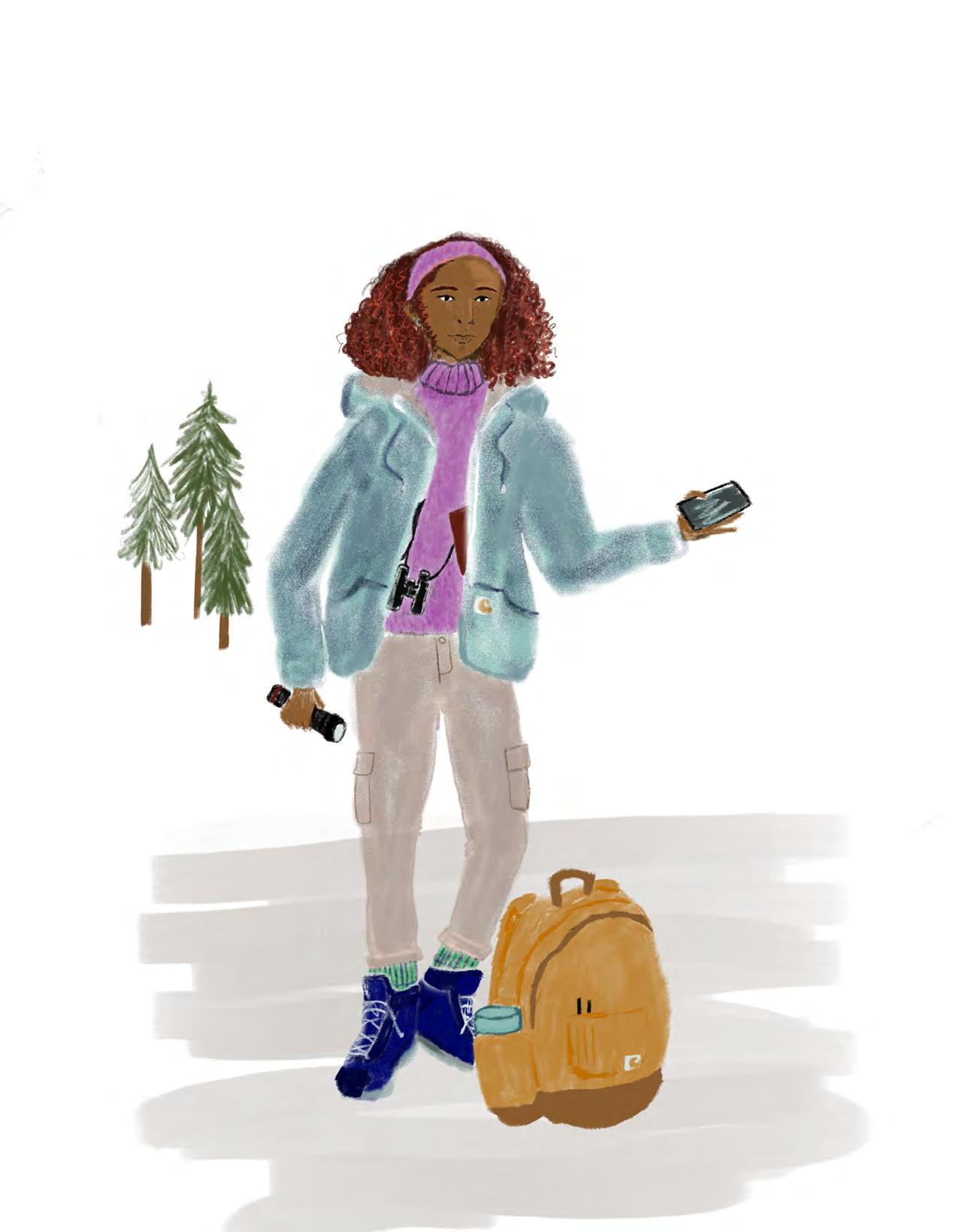
Six essentials you need to get started
Story and Illustration by Lauryn Azu
Be sure to bundle up, as evening temperatures in Wisconsin can drop fast after sunset. “I usually try not to have synthetic fabrics on the outside of what I'm wearing, because they can be surprisingly noisy,” says Brian McCaffrey, a birder in Bayfield County, Wisconsin. He likes to wear a Carhartt coat or a wool sweater to muffle the sound of his steps and not spook off the birds he’s looking for ($110, carhartt.com).
These are essential for spotting birds from far away. Pick up a pair of Nikon Prostaff 3S 10 x 42 Binoculars ($140, rei.com), to bring small creatures to eye. Add a harness ($28, rei.com) so you don’t have to carry them, BIPOC Birding Club of Wisconsin co-founder Jeff Galligan recommends.
Though bright lights are necessary for navigating dark trails, they can damage the eyesight of nocturnal creators if flashed directly at them, according to Carolyn Byers, director of education at Madison Audubon. Still, take extra nighttime precautions with a 3-in-1 safety light, lantern and flashlight from L.L. Bean ($15, llbean.com).
Birders like to use a variety of apps to make their nighttime treks more rewarding. The two apps most favored by birders are eBird and Merlin. Madison birder Neil Gilbert calls Merlin, “like Shazam for birds,” where you can record a bird call and generate an instant identification. Birders who record their observations in eBird are citizen scientists because they contribute to data used for scientific research and the conservation of birds. Wisconsinites have submitted more than one million checklists to eBird, according to the state’s Department of Natural Resources. Also, for safety reasons, a phone is a must in case of an emergency.
Keep track of field observations the old-fashioned way, using paper and pen. For gold standard note taking, try out Moleksine’s Pocket-Sized Classic Soft Cover ($16, moleskine.com), and Muji’s 0.38 Gel Ink Ballpoint Pen which will provide enough ink flow for on-thego notes in cooler temperatures ($1.50, muji.us).
Stay awake and warm in the dark hours with a tumbler of hot coffee or tea. Madison-based JBC Coffee Roasters offers light to medium roasts in whole bean or a variety of grinds ($15-20, jbccoffeeroasters.com).
Wisconsin’s signature drink puts a modern twist on a classic cocktail
By Joe Rickles

It was a dreary Monday afternoon in Madison. I sat on a bench outside the Capitol with headphones in and tears welling up in my eyes. It was one of those days where no amount of good news could lighten it. After a few minutes, my friend and photographer Kalli came by. I took a deep breath to hide the soulless look behind my eyes and walked behind her into The Old Fashioned, the classic Wisconsin supper club on Madison’s Capitol square.
As I slouched over the bar, a bartender asked for our orders. I asked for a classic old fashioned. When he asked if I wanted it sweet or sour, I hesitated and said sour for no other reason than that I was having a sour day.
“That sucks.”
obsession is a little more complicated. For years, it was widely accepted that Korbel’s presence at the 1893 World’s Columbian Exposition in Chicago was the main reason for the state’s fixation on brandy. But Jeannette Hurt of The Alcohol Professor blog explains that Wisconsin’s love for brandy stems more from necessity than choice. It wasn’t the exposition or the deep German roots of the state but rather a shortage of high-quality liquor during World War II.
Whiskey distilleries were converted to torpedo fuel producers and most crops were diverted away from distilleries to feed soldiers. So when Wisconsin’s liquor distributors found out that brandy maker Christian Brothers had tens of thousands of barrels of brandy, it was a no-brainer to buy them up and spread them around the state.
cherries and oranges began to adorn the pudgy glasses that held these drinks. Sometimes, they’ll be Wisconsin-made, like Door County cherries. Other times, it’s just a simple maraschino cherry from a jar and an orange slice on a toothpick.
The tangible components of the old fashioned cocktail in Wisconsin have their own tales and history worth exploring, but that’s only part of the story. The brandy old fashioned is inseparable from Wisconsin’s supper club culture and everything associated with it.
Chefs adapt to a challenging era for restaurants
By Jack Murphy
AThen I took a second sip. There was less brandy in that one, so it was more doable. I took one more sip, sighed and put the drink down. Suddenly, something inside me opened up and I began to talk; about the pressure of school, about the fear of letting down my teammates with a crappy story.
The Korbel brandy old fashioned has been a Wisconsin tradition for as long as most people can remember. Its story is one of mistaken origins, countless variations and above all else the idea of
“gemütlichkeit” — an undefinable German word that still perfectly describes the quietly hypnotic feeling of sipping a cocktail with close confidantes.
When Kalli finished taking pictures, I was able to take my first sip out of the paper straw. I’ll never forget the thoughts that ran through my head.
To understand how the classic Korbel old fashioned came to be one of Wisconsin’s most iconic traditions, we have to explore two pieces. First, where the old fashioned itself came from, and second, how Korbel made it to Wisconsin.
In a 2005 piece for Isthmus, the late Jerry Minnich wrote that the original drink dates back to the 1890s, when Louisville clubs made a drink honoring whiskey maker Col. James E. Pepper. Because it was made to honor a Kentucky whiskey distiller, the original cocktail understandably used whiskey or bourbon as its base. The rest of the drink consists of simple syrup and bitters. Some mixologists made some changes to the original recipe, but that’s the gist of it.
The story of Wisconsin’s brandy
A maraschino cherry and a slice of orange top off an old fashioned made with traditional Korbel brandy.
Once it was clear that Wisconsin had a fervent taste for the fruity liquor, brandy distillers started advertising heavily to Badgers.
The rest is history. Nowadays, Korbel — the Badger state’s brandy of choice — ships 35% of its yearly output of 400,000 barrels here.
Where did the rest of the drink come from? The bitters seemed to be the only piece of the drink that has been consistent throughout time.
Jim Draeger, co-author of “Bottoms Up: A Toast to Wisconsin’s Historic Bars & Breweries,” says much like how brandy infiltrated the state, the rest of the cocktail’s components sprouted from necessity and convenience over actual taste.
As the drink evolved, fruits like
Supper clubs, a strange but charming amalgamation of a restaurant, a bar and a family’s dining room, are scattered across Wisconsin. The key components of a supper club are a set menu for each night of the week, a cozy atmosphere and, most of the time, a generations-old family tradition of running the place.
Supper clubs aren’t just integral to Wisconsin’s culture; in a lot of ways, they defined it.
When I was sitting at the bar on that drab October evening, it’s not like I was visited by some kind of ancient German being that imbued my Korbel old fashioned with the spirit of generations of Wisconsinites who sat at their favorite supper clubs every week for a Friday night fish fry. But there’s definitely something there. Something homey and familiar. You don’t need to understand the complex mythology behind the drink and where it came from to feel the comfort of sitting at a cozy bar with a stiff, classic drink in hand. But it sure doesn’t hurt.
generous cut of pineapple rests on top of a steaming, porous upside-down cake. A spoon glides straight through, revealing a deliciously sticky cake inside. Served amid a halo of sprinkled sugar, the Tornado Room’s signature dessert looks like its usual delectable self.
This time, however, pastry chef Natalia Chehade baked it out of her home and not the industrial kitchen where it’s usually made.
The pandemic put the heart of a restaurant — its staff — in situations that tested their every resolve. In the summer of 2020, the Wisconsin restaurant industry lost 20% of its workers.
On the edge of Madison’s Capitol Square, the staff of Tornado Room was already stretched thin. Instead of five chefs, a team of two now operated every station in the kitchen. Chehade added salad chef and delivery driver to her role as a pastry chef so the team was at its best.
“I love this, this is my job. This is my second home,” she says.
Every industry is facing unique challenges as we emerge from the pandemic, and for the restaurant industry, those go beyond the menu. When COVID-19 hit, the lights went out and businesses lost their staff as sales spiraled without a visible solution to guide the way. In a time when everyone is straining under this new reality, innovation behind the scenes is bringing restaurants into a post-COVID-19 world.
You might not see the difference if you visited Ardent, a restaurant tucked into Milwaukee’s east side. The staff pivoted to offer one seating a night and a prepaid, fixed-cost menu.
Owner Justin Carlisle built a working philosophy around his employees: the walls of the restaurant were not just his — they belonged to every staff member. COVID-19 extinguished the certainty of stability, but the camaraderie of the staff kept the engine running.
“The family and the strength that we have — we made it through this. We pivoted every day we showed up,” Carlisle says.
With the staff revitalized from the initial shock of the pandemic, their focus on consistency made them a James Beard Midwest semifinalist in the past.
Inside Liliana’s Restaurant, in the Madison suburb of Fitchburg, hues of purple, green and gold radiate within.
Chef Dave Heide works with his team to bring the soul of New Orleans to the Midwest.
Heide effuses knowledge on Louisiana’s cuisine and loves the role his food can play in people’s lives. His focus is on the well-being of his community and the passion of his chefs.
Amid the pandemic, the staff continued a favorite tradition. Every Tuesday, the chefs brainstorm a three-course meal, and after 13 years, they have yet to offer a repeated menu item.
While new problems will arise, every innovation rediscovers the passion that led these chefs to their profession. The leading light that drives chefs to find a way is apparent again.
“For me, it’s all about making sure that the people who are in the kitchen continuously stay in love with food,” Heide says.
For a nourishing dish to warm up your Wisconsin night, Carlisle recommends a rice-based mushroom porridge. In a mushroom stock, cook down the rice, then add several sliced raw mushrooms on top. Hard herbs, like rosemary or thyme, are perfect for a winter flavor profile. If you want, root vegetables like carrots and potatoes can add another dimension to your porridge before the next venture into the cold.


By Margarita Vinogradov
There’s a running joke in New York City. When you tell somebody you’re an actor or a dancer, they ask at what restaurant.
That’s according to Helen Rothberg, who says she got to where she is now after bartending her way through life, making up for what she didn’t have in money with moxie.
“From all my consulting and all my teaching, the truth is everything I do, I’m just bartending,” says Rothberg, now professor of strategy at Marist College in Poughkeepsie, New York, and author of “The Perfect Mix: Everything I Know About Leadership I Learned as a Bartender.”
In fact, she learned so many lessons from bartending that she developed a model to train executives of a multi-
tude of Fortune 500 companies: action, determination, vision, integrity, communication and empathy, which form the acronym ADVICE.
(A)ction: “Do more, say less.”
Behind the industrially remodeled bar at what used to be a bank on the east side of the state Capitol is Sawyer Barron. He’s been in the industry since he was 18 years old, working his way up from barbacking — dropping off waters and cleaning up dishes — to bartending and managing at Lucille, a locally sourced cocktail, beer and pizza venue.
Barron says that after the pandemic slightly simmered down in early 2021 and Lucille reopened its doors last June, there has been a fight every sin-
gle night on the block — almost like people have forgotten how to behave themselves.
“They like to over-consume. And there’s not the maturity that once was,” says Barron, now 26 years old. Despite this, he continues to do the most with his actions for everyone in the surrounding Main Street bartending community.
(D)etermination: “Get things done with civility and ingenuity.”
On the west side of the Capitol is bartender Caity Mongeluzo. Now 20, Mongeluzo started bartending the summer after her senior year of high school, first at a Long Island concert venue, then eventually a Hamptons bar
While the affluent residents of the Hamptons could afford to throw away large sums of cash, Mongeluzo says her co-workers there were looking to rake in enough money within two or three months to keep up with rent for the entire year. Yet despite how they behaved for this reason, she became determined to find ways to take it in stride.
(V)ision: “Know where you’re going and turn the lights on for others.”
Alex Mack is just a block and a half away from Mongeluzo at Whiskey Jack’s Saloon, a Wild West-themed bar. She started working there in February 2021 and says keeping up with the crazy hours wasn’t a problem for a night owl like her. However, it’s between the hours of 1 and 2 a.m. when she’s noticed the most eyeopening incidents concentrate.
“Men come up to me while I’m working behind the bar and offer me hard drugs,” Mack says. No matter what she’s presented with, she knows what is ethical during these hours and makes sure to shine light on it for other customers, too.

Ultimately, Rothberg says having a vision of what is right like Mack is a trait that can shape careers — especially for women. When men assumed she was the support person walking into their boardrooms in the ’80s and ’90s, she learned how to give people the stink eye.
(I)ntegrity: “Tell the truth all the time and own your own sh*t.”
“Even if you’re smiling and you’re being yourself, that can be taken as a little flirty, and drunk guys are so aggressive and they don’t understand,” Mongeluzo says. She has since changed the way she acts when bartending to what she describes as a “bro girl” or makes her disinterest in any romantic connections extremely clear.
(C)ommunication: “Try to create meaning.”
Barron has never been one for social media platforms, but he finds his bartending job has created enough meaning to replace this aspect of modern digital life.
“This is my social media, but it’s like
bar media,” Barron says about both his regulars and other bartenders on the block. “You get to talk back and forth. … It’s just something that you don’t really get in day-to-day life, especially at work.”
However, the true bartending communication test for Rothberg is making people feel noticed in conversation while realistically paying them little attention.
(E)mpathy: “Dare to care.”
No matter how long bartenders like Barron, Mongeluzo and Mack remain in this service role, Rothberg is certain that being able to shapeshift throughout their careers by applying the ADVICE model comes down to caring most about the customer.
“When you’re a bartender, so little of it really is about knowing how to mix drinks, especially if you’re in a smaller neighborhood place, and so much more about it is understanding how to read somebody,” Rothberg says.
By Madison Mooney
When hunger strikes past bedtime, it can be hard to find somewhere to grab a bite. Here are some favorite Wisconsin restaurants and bars with late-night grub.
Closing Hours: 8 p.m. Mon 10 p.m. Tue-Thurs, Sun 3 a.m. Fri-Sat
If you find yourself wandering the streets of Milwaukee past midnight on a weekend, the Dogg Haus should be your first stop. Serving Chicagostyle hot dogs, sausages, burgers, chicken sandwiches and more, you’re sure to find something you like. This restaurant stays open until 3 a.m. on Friday and Saturday nights, satisfying the hunger of night goers in Milwaukee.
By Jessica Gregory
Closing Hours: 2 a.m. Sun-Thurs 2:30 a.m. Fri-Sat
Looking for somewhere to watch a game in Wauwatosa? Leff’s Lucky Town is your place.
Established in 1994, Leff’s is famous not only for its burgers, but has become a go-to for the many large screens it has positioned around the restaurant.
After finishing your meal, stay and throw some darts or hang out at the Golden Tee Golf and Buck Hunter.
Ian’s Pizza
Closing Hours: Varies by location
Ian’s Pizza is a late-night favorite in Madison and Milwaukee. Serving pizza by the slice, the line often leads out the door. Stop by after a night on the town and enjoy one of Ian’s Pizza’s iconic offerings — the macaroni and cheese pizza!

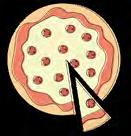

Master scuba diver Rich Laiacona floats down to the sunken SS Milwaukee like he’s her fairy godfather, gaping at the beautiful mess she’s got herself into. Not just anyone can reach out their hand to the ship’s wreckage and offer their condolences.
Laiacona has five minutes. With one oxygen tank at a depth of 120 feet in Lake Michigan, he has limited air at the bottom before he must make his gradual return to the surface. Flying around the ship, peering curiously into its nooks and crannies, Laiacona feels weightless in the frigid water and his senses are restricted.
When he jumped from the charter boat that brought him eight miles
northeast of Milwaukee’s Breakwater Lighthouse, he left the modern world behind. There’s history at the lake’s bottom that is entirely detached from the world above, providing a glimpse into the past, but only for those who know how to access it.
•••
In the case of the Milwaukee, Lake Michigan disrupts time and space to create a time warp. As the diver connects with the mooring line and descends 100 feet in the water, he’s transported to the late 1920s as he reaches his destination.
The Midwest’s Great Lakes served as a highway of commerce before the industry’s decline in the mid-20th
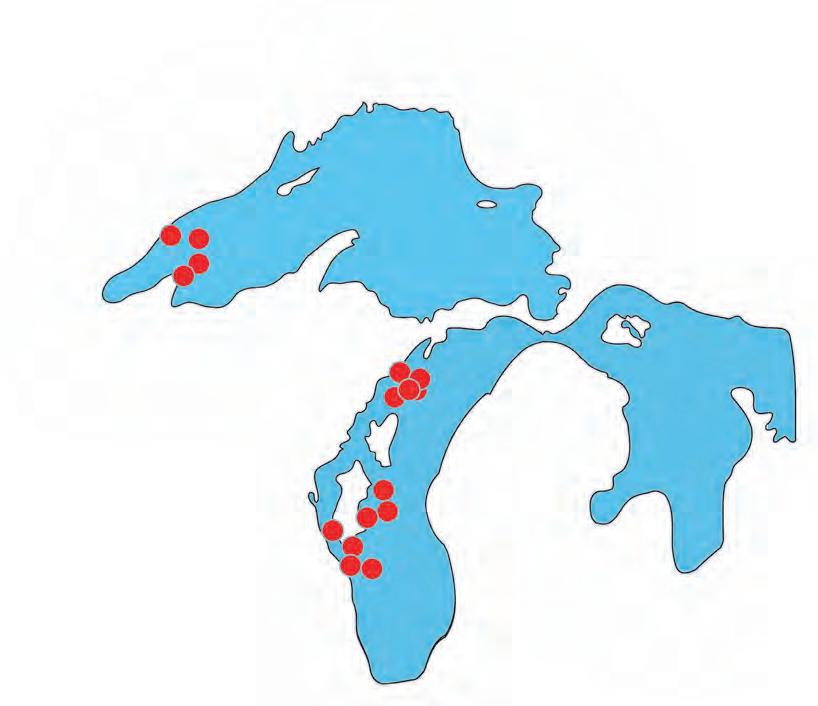
century, carrying passengers and goods from port to port. Deep within its five bodies of water, there are over 10,000 ships locked in a broken time machine. Far past their operation, the ships have proved their tenacity even at the bottom of the Great Lakes. Beautifully preserved by the cold freshwater, divers explore the sunken ships beneath the surface and bear witness to nature’s tragedies. •••
It was Oct. 22, 1929. The turbulent gale of an unforgiving storm rocked the Milwaukee and the 28 railcars stored in the stern’s car deck. Colleagues of the Milwaukee’s Capt. Robert “Bad Weather” McKay placed ominous bets
Divers
Only 30 feet shorter in length than a standard football field, the

on the likelihood of the vessel’s survival.
The ship and its 47 crew members met a foe that boasted unmatchable strengths. As the storm raged on, it broke local wind speed records and carried forceful waves. No one returned. The crew’s families were left to cope with their grief just two days before the stock market crashed, leading to the Great Depression that later washed over the United States.

•••
Not all divers visit shipwrecks for their ties to history. Bob Dankert, a Madison-area diver and instructor, enjoys it as a purely recreational activity.
“I love diving and it gives you something to look at. Even though I might not
“There’s history at the lake’s bottom that is entirely detached from the world above...”
be as into the history, it’s still fun to just dive around on the things and see all the different components of it. It gives you a bit more of a challenge and you just see some really cool things,” Dankert says.
In the summer season, maritime archaeologist Caitlin Zant and her team of historians and divers explore shipwrecks to collect measurements, record their observations and create scaled model drawings of the ships. Archaeologists like Zant who study shipwrecks for a living digitize their records in the winter, write grants for the upcoming summer’s projects and submit historical preservation reports for shipwreck sites.
A rule within the field is to leave artifacts underwater as you found them. When a wreck’s wood is removed from the water by human contact, it quickly deteriorates. The cold, dark, deep freshwater is the key factor in their slow aging, and Zant says some 150-year-old shipwrecks in the Great Lakes look like they
preserved automobile frames and pieces of bathtubs, sinks and toilets.
“Being able to fly around things [in the water] and see it from every angle, turn yourself upside down, it’s just so much fun,” Laiacona says. “You can’t do that in a museum, right?”
Several of the Milwaukee’s artifacts that were detached from the ship by crew members did make their way to museums. Two life preservers branded with “SS Milwaukee” are located at the Wisconsin Maritime Museum in Manitowoc, 81 miles north of Milwaukee.
Chicago’s regional National Archives and Records Administration is working to preserve one intimate artifact — a letter, handwritten by a crewmate — that describes the ship’s final hours.
On Oct. 26, 1929, a letter in a watertight metal case was found in an SS Milwaukee lifeboat off the coast of Holland, Michigan — on the other side of the lake from Milwaukee. Zant says these notes were not unusual for the time.
“All these ships had a black box, essentially, like airplanes do,” she says. “It was a watertight case that if something was going wrong, you could write on it, ‘This is what’s happening,’ and then toss it overboard.”
could sail tomorrow. In these oxygen-depleted waters, there are few aquatic animals that could cause damage to the ship, besides the invasive quagga mussels that have dominated the waters in the past 20 years. In Lake Superior, the water is so cold that some ships still have paint on the exteriors. As long as the sunken history stays in place, the site becomes its own underwater museum. But what is a museum without its exhibits?
•••
Before it left port, the Milwaukee loaded its 28 train railcars with vegetables, butter, cheese, wood veneer, farm animal feed, Kohler Co. bathroom fixtures and three Nash Motor Company automobiles. An estimated $720,000 in financial losses from the cargo and railcars sank with the ship.
•••
In zero-current waters with fair visibility, Laiacona can see 20 to 30 feet ahead. With ease, he traverses obstacles of
The author of the Milwaukee’s letter, purser A.R. Sadon, succinctly described the fateful scene.
“The ship is making water fast,” Sadon wrote. “We have turned around and headed for Milwaukee. Pumps are working but the sea gate is bent in and can’t keep the water out. Flicker is flooded. Seas are tremendous. Things look bad. Our [crew] roll is about the same as on last pay day.”
The note was later authenticated, becoming the only real, recovered record from a lost ship in all of Great Lakes shipwreck history. It did, however, raise questions about what caused the ship to sink. After reports of fishermen snagging their lines in the area where the Milwaukee sat undiscovered, two divers found the ship in 1972.
•••
Some experts theorized that a railcar broke loose and smashed through the sea gate, which was preventing water from penetrating the deck. Zant says this didn’t align well with Sadon’s note,
which indicated the sea gate was bent inward. The Wisconsin Historical Society’s investigation in 2014 determined that there is no evident damage to the inside of the car deck, which wouldn’t be the case if a railcar was freely moving aboard the ship during the storm. It is thought that the sea gate was compromised, allowing for water to flood in, and its hatches might have been loose on the car deck and lower decks.
Without any survivors, it is nearly impossible to know why the Milwaukee found its forever home in Lake Michigan. Without maritime archaeologists and scuba divers, the stories of failed voyages would be unwritten in the cold, dark Great Lakes. The Milwaukee remains a favorite shipwreck for Wisconsin scuba divers.

By Shannon McManus

It is a cool, dark night. A black cat crosses your path. You suddenly trip, fall and end up with a bloody nose. Coincidence?
Your first intuition may be to think it isn’t — it had to be the cat. For centuries, the black cat has been thought to cause bad luck, and those stereotypes run deep. Without realizing it, we’ve been taught to fear black cats.
Since early history, many people have been wary of black cats and the bad luck we think they bring. Over the years, this led to mistreatment of these animals,
ranging from violence against them to lower adoption rates, which has meant more black cats on the streets. However, in modern times, these creatures have proven to be as affectionate, playful and loveable as cats of any other color.
The superstition surrounding the dark feline dates back to the Middle Ages, when people didn’t understand the scientific causes of illnesses and deaths. There needed to be something to blame, and the devil and subsequently witches were convenient targets. With their dark coats and sly nature, black cats
were connected with the sinister nature of witches and often thought of as companions to witches.
Amber Cederström, a folklorist and acquisitions editor at UW–Madison, finds that the beliefs about black cats also stem from the understanding of cats’ roles in earlier societies. Cats were seen closely related to humans in the spectrum between God and the devil.
“Cats, who were around farms, could have this human infant-like existence, [which was] really distressing,” Cederström says, speaking of the
time,” Cederström says, alluding to the prevalence of the black cat superstition continuing in America.
During the rise of the superstition and years following, mass killings of black cats occurred, and Puritans spread the fear of black cats when they came to America. The Puritans worked to protect themselves from the devil and all evil, thus the witches and black cats were feared.
Now, even if people don’t know the history of the superstition, the belief is fed through reinforcement. Andrea Kitta, a folklorist at East Carolina University, notes the belief can continue even if it is not always in the forefront of someone’s mind.
“It kind of constantly gets reinforced by popular culture ... hats and Halloween decorations ... It’s a constant little feedback loop of that association over and over,” Kitta says.
Madelyn Korbas, a student at UW–Madison, was aware of this belief when she visited the Madison Cat Project shelter in Madison. It had two available kittens, one black and one gray. The shelter seemed to have prepared for the black kitten having a smaller chance of adoption by lowering the price.
The superstition didn’t deter Korbas — she left with her pure black kitten, Aries.
Often, there will be incentives for people to adopt black cats at shelters such as a lower price. Shelters around the country also promote black cats on special days or months related to them, such as Black Cat Appreciation Day or in October around Halloween.
relation of cats to humans. The shape of cats worried people as they were so similar to humans, yet not actually humans themselves.
The rise of the superstition toward black cats was more culturally specific, with continental Europe largely associating the black cats with evil. The exact timeline of the origin of the superstition varies, but the fear had a strong resurgence in the 18th and 19th century in Europe and North America.
“The color black has a negative association in our culture and has for a long
lovers to visit and potentially meet their new best friend.
Katy McHugh, owner of Sip & Purr, sees little difference in adoption rates of black cats compared with others. This may be because patrons are able to see more of the cats’ personalities, and McHugh has strong photography to show off the black cats.
In broader media, black cats are becoming more popular in shows such as Salem in “Sabrina the Teenage Witch,” Binx in “Hocus Pocus” and Snowball II in “The Simpsons.” These black cats all show unique personalities that become fitting companions for their humans.
Black cat advocates themselves have also pushed for the adoptions of black cats to combat the superstitions. Kor-
“It kind of constantly gets reinforced by popular culture ... hats and Halloween decorations ... It’s a constant little feedback loop of that association over and over.”
bas has joined Facebook groups that talk about black cats as well as following hashtags on social media to appreciate the beauty of black cats.
With the recent push towards combating the superstition of black cats, it is encouraging to see how it can positively affect adoptions. For Korbas, the joy that she has gained from adopting her black cat inspires her to encourage others to consider doing the same.
While this fear of mistreatment of black cats remains in many shelters, most are pushing for the adoption of the cats all year long to combat the effects of the superstition. Cederström has volunteered at shelters in the past in Oklahoma, where she has found firsthand how deeply rooted the beliefs still are.
While the impacts of the superstition are higher in the South, Wisconsin seems to show more positive attitudes towards black cats from varying shelters and rescues.
Sip & Purr is a cafe in Milwaukee with an adjoined room full of adoptable cats to visit. It is a popular place for cat
“They are super loving, vocal and sassy, and they make great little companions with tons of entertainment,” Korbas says.
Story

Wby Tamia Fowlkes
hen Kirk Bangstad plastered a nearly 32-square-foot Biden-Harris sign to the exterior wall of his Oneida County business in September 2020, he had no idea that he had taken his first steps toward becoming one of the most prominent political action organizations in the state of Wisconsin.
Now, donors have contributed more than $375,000 under Minocqua Brewing Company’s name and a slogan that touts “dark money for good.”
As a political science student and an avid reader of political news, I had some questions: What is dark money in politics, and what does it look like in Wisconsin? And how can it be good?
I thought the answer would be far easier to find than it proved to be. Here’s what I found.
Part I: What is “dark money?”
In 0.53 seconds, my Google search for “dark money” produces more than 2 million results of websites, videos, articles and images that have some relationship to dark money. Definitions offered by Wikipedia to describe the concept include “political spending by nonprofit organizations” and organizations that “can receive unlimited donations from corporations, individuals and unions.”
What remained unclear was how this issue impacted voters on a daily basis and played a role in shaping
their political futures. For many, finding tangible examples of how dark money affects the messages we hear is just as perplexing as understanding its impact.
As I dug in more, I learned dark money has the potential to cross our path at any time and on every platform.
Whether it be Facebook or Instagram, in your mailbox or on your television screen, messages fueled by organizations with a clear intention to sway political perspectives are prominent and commonplace in our everyday activities — even in years between elections like now in 2021.
In her book, “Dark Money: The Hidden History of the Billionaires Behind the Rise of the Radical Right,” journalist Jane Mayer details decades of right-wing campaign fundraising and spending that plagued Wisconsin’s democratic system and redefined the state’s understanding of dark money.
During her visit to UW–Madison in September, Mayer detailed her experiences investigating Charles and David Koch, the owners of the largest private
action committees and organizations have poured more than $1 billion into federal elections since 2010, focusing their efforts on highly competitive races locally and nationwide.
The most major pressure points proved to be growing political division and control over money.
Jay Heck, executive director of Common Cause Wisconsin, has been a champion for transparency in campaign finance for decades. Leading the small team at Common Cause Wisconsin, Heck has seen firsthand the dramatic shifts that Wisconsin campaign finance policy has taken over the past 20 years.
The change is largely due to a pivot in the mindset of business owners, who in the past directly contributed to political campaigns.
Now, more business owners choose to put money into an issue ad group or nonprofit organization, Heck says. By taking that step in today’s political landscape, there are no limits on the amount of money someone can contribute, and their commitment to a particular candidate remains a secret.
know who’s donating the money and that’s why it’s called dark money,” says UW–Madison political science professor David Canon.
In Bangstad’s case, The Minocqua Brewing Company Super PAC — an independent expenditure-only Super PAC — is not a dark money organization but was created to challenge major conservative spending initiatives in the state and provide a stronger voice for the northern population’s progressive ideals.
As an independent expenditure organization, the PAC may receive unlimited contributions from individuals, corporations, labor unions and other political action committees for political activities in the state so long as the funds do not directly support a specific candidate. The organization is also required to report spending and donation records to the Federal Elections Commission.
The effort started when the company was trying to sell its last few barrels of blonde ale before its quickly approaching expiration date and Bangstad decided it was time for a rebrand.
“When they coached American politics, they looked at it as engineers, which I think gave them a great advantage.”
company in the nation, and the rapid growth of their political influence.
“When they coached American politics, they looked at it as engineers, which I think gave them a great advantage,” Mayer said during a Cap Times Idea Fest panel with Washington Post journalist David Maraniss.
Mayer spoke about efforts led by the brothers preceding the 2012 presidential election, detailing a dinner they hosted that year with major conservative leaders from across the country and some of the wealthiest individuals in the world. At the party, Charles Koch implored guests to join a collection of more than 30 private donors who had contributed more than $1 million each to determine “the life or death of this country.”
According to research by the Brennan Center for Justice, powerful political
The reason why this donation privacy exists is because dark money organizations, typically referred to as “social welfare organizations” and 501(c)(4)s, have an IRS tax code designation that requires that they spend no more than 50% of their money on politics.
As regulations continue to diminish, seeking accountability grows to be an increasingly challenging obstacle.
“Dark money for good” is a phrase that comes up several times in my interview with Minocqua Brewing Company owner Kirk Bangstad.
Among political scientists and experts, openly claiming this mantle is rare.
“The big problem is accountability, because with 501(c)(4)s you don’t
Gaining nationwide attention with its celebratory “Biden Beer,” the company took advantage of its newfound visibility to pivot its efforts on progressive policy goals in the state by contributing 5% of its profits to the Minocqua Brewing Company Super PAC in addition to an influx of online donations from people across the country who supported Bangstad’s efforts.
“Instead of running a political nonprofit where one has to constantly ask for donations to exist, The Minocqua Brewing Company is able to sell a product that people want and fund our political activism through those profits,” he says.

Listen to Curb Conversations for more on this story and other “Out of The Dark” pieces.
By Molly Kehoe
Jeneile Luebke is a survivor of an abusive relationship. Sasha Maria Suarez is a survivor of sexual violence. Cherie Thunder was attacked as a college student and then raped years later.
I set out to interview these people based on their careers in research, academia and advocacy surrounding the missing and murdered Indigenous women crisis in Wisconsin. Only in our conversations did they each tell me about their personal experiences with violence, each in an effort to explain the prevalence of this crisis. The story of the missing and murdered Indigenous women crisis is not one that can be told by looking at data, but rather through narratives of resilience from survivors and their families.
Wisconsin Attorney General Josh Kaul defines this crisis as the “significantly disproportionate impact for missing persons cases, as well as homicide cases, within Indigenous communities.” Homicide rates alone are 10 times higher for Native women than the national average. According to the Center for Public Integrity, an independent

journalism organization, more than half of Native women have reported that they were sexually assaulted.
State Rep. Jeff Mursau (R-Crivitz) of the 36th Assembly District proposed legislation in 2019 that would create a missing and murdered Indigenous women task force. In his role as chair of the State and Tribal Relations Committee, Mursau’s Indigenous constituents brought this crisis to his attention.
He and his colleagues subsequently wrote a bill for the creation of a task force that ultimately did not pass in the Assembly, but Kaul decided to move forward with the proposal anyway.
A byproduct of stark cultural differences and disrespect, the history of sexual violence and trafficking by European colonizers is one of erasure as much as the assimilation boarding schools are, says Richard Monette, a professor
Luebke, a postdoctoral fellow in the UW–Madison School of Nursing who studies gender-based violence in Indigenous communities and the barriers to seeking help after experiences of violence, is the only person in the state to ever publish data on its magnitude.
“We estimate, going by the one large national study that was done by the National Institute of Justice, that almost 85% [of Indigenous women] have experienced lifetime violence,” she says.
One of the reasons that quantitative data collection is difficult, Suarez says, is in part because state institutions struggle to classify Indigenous women when reports are made. Resulting from the decades-long boarding school and adoption crises, as well as the Indian Relocation Act and other federal policies, about 70% of all Native Americans in the country live off-reservation in urban areas, according to Luebke.
The story of the missing and murdered Indigenous women crisis is not one that can be told by looking at data, but rather through narratives of resilience from survivors
and their families.
in the UW–Madison Law School. He believes that both tactics work in tandem with the goal of destroying Indigenous livelihood.
One of the reasons the missing and murdered Indigenous women crisis has remained in the dark is the lack of media attention. Journalist Gwen Ifill coined the term “missing white woman syndrome” to explain the media’s disproportionate fascination with stories of missing and murdered white women compared with their Black and Indigenous counterparts.
“Most Native women that you talk to will eventually hint at the fact that most other Native women they know are survivors of sexual violence; it is a very prevalent issue that doesn’t get a lot of attention,” says Suarez, a White Earth Ojibwe descendant and assistant professor in UW–Madison’s history department and American Indian studies program.
in violence during extractive missions to themes of all missing and murdered persons cases. He explains that human trafficking increases when there is an influx of people from “out of town” in a community, so with these camps on Indigenous land he expects similar outcomes.
Monette, a member of the Turtle Mountain Band of the Chippewa Nation, cautions against this narrative, saying non-Native folks have tried to tell the story of this crisis, but the focus on jurisdictional disputes portrays “lawlessness” at these extractive sites.
To deconstruct the barriers Americans have in place that prevent progress, Monette says citizens must reckon with the fact that “raping and plundering and pillaging was part of the charge of the day. This is how you colonize people, at least in some definitions of colonialism. This is how you exploit them. This is how you rend their societies asunder, and that’s what [Europeans] did, and it was rewarded. It wasn’t condemned.”
This presents challenges because of the combination of reservation-based recordkeeping that cannot account for urban relatives’ experiences and urban police departments that can’t keep track of the transitory Indigenous population, Suarez says.
Indigenous communities have been defending their land and fighting for sovereignty since 1492, and in 2021 pipelines and mining ventures threaten not only Indigenous people’s sacred land, but also their women. Suarez explains that these extractive missions are sometimes referred to by the media as “open hunting on Indigenous women” because of the way that non-Native men come to reservation land and kidnap and traffic women.
A study from the National Institute of Justice found that 97% of Native women who have survived violence experienced that violence from a non-Native perpetrator. Kaul attributes this increase
In the meantime, Indigenous advocates and community leaders like Suarez, Luebke and Thunder, a community organizer and Menominee woman, feel cautiously optimistic about the steps being taken in Wisconsin. While some may see the Department of Justice as the colonizer, Luebke says the task force is truly Indigenous-led and that the department leaders have always emphasized the importance of that.
Thunder attributes this centuries-long resilience to the support networks and trust within Native communities.
“Seeing all of the other tribes and Indigenous peoples who have been standing up and making these issues known is part of that, too — part of our reservation and the people there finding their resilience,” Thunder says.

Workers who clock out — then clock back in
By Henry West
Tom and Ingrid Sommers drive to the end of the long, gravel lane heading away from their cozy farmhouse. Three redbone coonhounds ride patiently in the bed of the truck.
The Sommerses are electricians — they own their own contracting business. However, after a long day of manual labor, they slip seamlessly into the second gig they run: Hollow Oak Redbones.
For them, when the sun goes down, another workday begins. The same goes for the other 7.6% of working Wisconsinites who hold two jobs. Whether chasing a passion or a paycheck, thousands of moonlighters throughout Wisconsin aren’t stopping at 40 hours.
Emma Bullard is one of those chasing a paycheck.
Bullard graduated from UW–Stout in August 2021, studying vocational rehabilitation with a focus on psychiatric
rehabilitation. It was an uphill battle for her to find employment in a field that requires several years of experience for full-time roles. She landed on a part-time position with the Boys and Girls Club in Oshkosh, working with kids after the school day.
“It’s pretty fun,” Bullard says. “I like getting to know the kids’ different personalities...because I really want to work with teens [and] mental health.”
However, by the time her students arrive at their after school program with her at 2:30 p.m., Bullard has been awake for 12 hours already. Her work day starts at 2:30 a.m. picking packages in a FedEx distribution center, where she works a full shift before noon.
Christine Whelan, a clinical professor of consumer science in the UW–Madison School of Human Ecology and an expert on the intersection of happiness
and the market economy, says the tradeoff between extra income and extra free time may not always be worth it.
“People who get paid by the hour tend to work more hours, but they tend to be less happy because the time that they’re not working, they feel, is wasted,” Whelan says. “If you are working out of a passion for a particular cause or goal that’s different because the work...is being done for that higher purpose.”
Garth Beyer was an undergraduate at UW–Madison writing a column about beer for the Badger Herald when he realized his passion for beer through connecting with area brewery owners. However, after graduation, he started his career at Hiebing, a Madison-based marketing agency.
He also continued to work with local brewers while covering the beer beat for The Capital Times. Their dedication
Garth Beyer first discovered his love for beer while writing for one of UW-Madison’s student newspapers and thought it could become a reality after a “beer-cation” in Hungary.
to the craft inspired him. Finally, after a stop at a bar called Hops during a “beer-cation” to Hungary, a concept for a new bar clicked, and he returned to Madison determined to make it more than a dream.
His vision came to fruition in December 2019 when he opened Garth’s Brew Bar on the west side of Madison.
In Bullard’s case, she understands her current situation isn’t permanent.
“I’m fine where I’m at now,” she says. “I’m going to use this experience to advance in my field.”
Her ultimate goal is working with at-risk teens in a mental health or substance treatment center. In the meantime, FedEx is strictly to help pay the bills while she acquires the skills to progress.
Finances aren’t always the main motivator for seeking secondary employment.
According to Whelan, not all second jobs are going to be paid.
“Unfortunately, we tend to only value work that is done for pay, but a better way to think about it would be to say that care work is work, whether it’s paid or not,” she says.
For the Sommerses, Hollow Oak Redbones is all about their love for the dogs. The little revenue it brings in through fruitful raccoon hunting and
guided hunts is just a side perk.
Starting with just two dogs, their pack has been as large as 20. Currently, they own seven.
“This is our lifestyle. We choose to be out and doing and going,” Ingrid says.
Beyer is also a doer, balancing his passion for beer and the bar, while being a full-time ideas man at Hiebing and raising his 10-month-old baby with his wife. He says staying regimented and keeping his mind mentally on the task at hand is most important.
“I try to be where I’m at,” Beyer says. “So if I’m working at Hiebing, I’m all in at Hiebing. When I’m working out bar stuff, it’s all bar stuff. Likewise, when it’s family, it’s just family.”
Despite their different reasons for taking up a night-gig, Bullard, Beyer and the Sommerses have all been successful in pursuing their passions — no matter how thinly stretched they’ve been at times. By moonlighting they’ve embraced the grind, enriched their lives with new experiences and found balance among it all. Beyer thinks everyone is capable of doing the same.
“If there’s anybody thinking of quitting a job to start something new and pursue their dreams, I’d say don’t,” he says. “Do both.”

Is brought to you by:

By Elea Levin
Surviving a sexual assault is one of the most difficult experiences a person can go through.
The process of seeking support after can be even harder.
Survivors of sexual assault in Wisconsin face barriers to accessing the appropriate resources and are kept in the dark about where to find help, what options are available and how healing or justice can be achieved. Now, organizations across Wisconsin are working to secure more funding for resources and streamline the process of finding assistance.
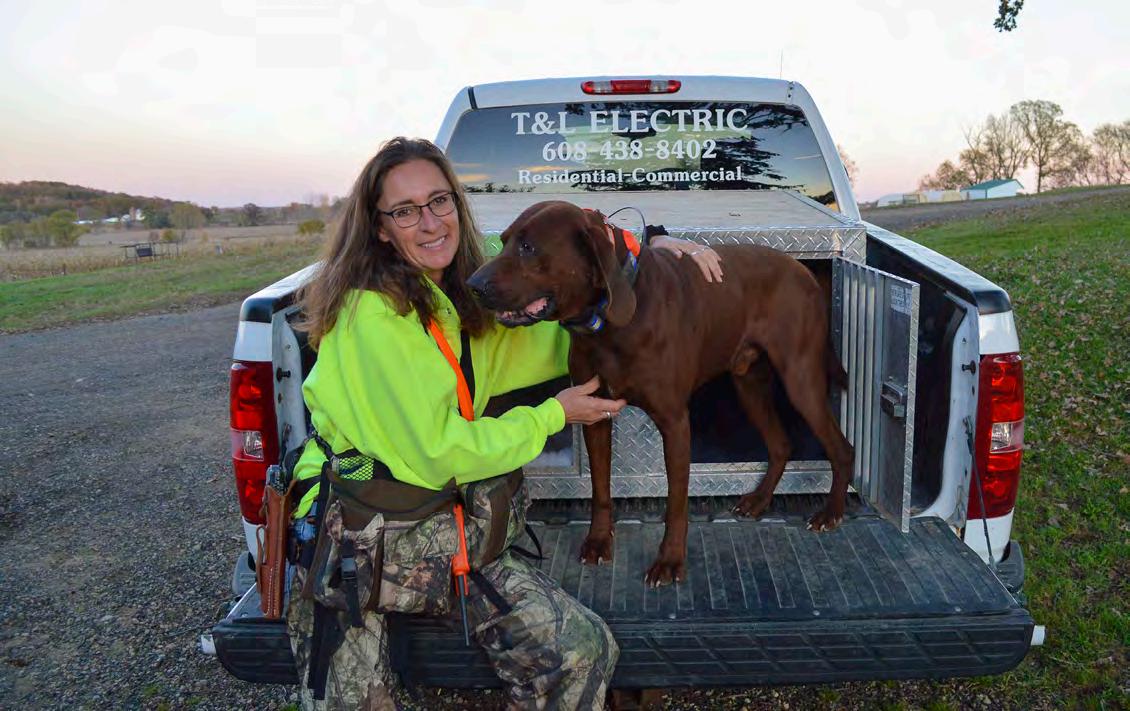
Tom and Ingrid Sommers have been hunting with their own redbone coonhounds for eight years.
Transformative justice can be a particularly important option for people from marginalized communities who historically had more negative experiences with the legal system. One option for informal resolution at UW–Madison is for the survivor to request that
“I fought so hard. I’m no longer the victim, I’m a survivor.”
a staff member issue a reminder to the individual who harmed them about campus policies regarding sexual misconduct.
Other survivors, however, may want to pursue a legal route. Social justice movements that gained national attention in recent years inspired some
survivors to report their assaults and to determine how they want to move forward on their own terms.
When Racine resident Christina Trinidad, 32, was sexually assaulted at age 13, she wasn’t aware that resources and options for sexual assault survivors were available. It wasn’t until she was nearly 17 that she connected with BeLEAF Survivors (previously Sexual Assault Services of Racine) and began to receive counseling.
Trinidad said she might have come forward about her assault earlier if she knew what kinds of resources existed for survivors. She believes that advertising these resources broadly in places like schools and grocery stores could help spread awareness about services and options.
“It’s a lot on your shoulders as a victim,” Trinidad says. “That trauma should never be on them to try to go out and try to find help. The help should be right there in front of their face.”
Rachel Sattler, a victims’ rights attorney, and co-founder Kim Curran were inspired to establish the Dane County Multi-Agency Center to address this problem and take a more victim-centered approach to sexual violence. The purpose of a multi-agency model is that it collects and provides all the options for action and resources following a sexual assault in one place, which can help ease the burden on the survivor.
“I can tell you that when someone
opens their mouth, has the courage to schedule that appointment and actually walks through that door, there’s no way I can get them to go anywhere else,” Curran says.
To help combat the decentralization of survivor services, Kate Walsh, a professor in the gender and women’s studies and psychology departments at UW–Madison, partnered with Dane County Multi-Agency Center after receiving a grant from the Department of Justice Office for Victims of Crime in Wisconsin. They used the grant to bring forensic nurse exams — a physical assessment performed by a healthcare professional following a sexual assault — to University Health Services at UW–Madison in July 2021. Previously, Meriter Hospital was the only location in all of Dane County to offer forensic nurse exams. Having these exams available at University Health Services for students and staff eliminates the extra step of traveling to a hospital.
Though movements like #MeToo have brought greater national attention to the issue of sexual assault, the biggest barrier that many organizations continue to face is a lack of funding.
“I’ve been doing this work for 20 years,” says Kelly Moe Litke, associate director for the Wisconsin Coalition Against Sexual Assault in Madison. “I feel like something’s different, but funding’s not different.”
In 2020, Wisconsin saw a rate of
76.15 sex offenses per 100,000 residents, but the numbers are likely higher in reality given that sex crimes are underreported. These high rates, along with low funding, make it difficult for organizations to prioritize prevention programs.
Lack of funding is also what has prevented the Dane County Multi-Agency Center from launching its newest idea: an app that would put resources for survivors in one place. The app would limit the amount of times a survivor needs to recount their trauma while seeking help — the last thing that someone who just experienced a sexual assault wants to do is to relive their trauma by spending hours retelling their story.
The app would incorporate everything from mental and physical health care to resources on how to go about
reporting an assault to the police. It would also guide survivors directly to in-person services if needed.
While the healing process can vary from person to person, for Trinidad, attending support groups and hearing from other survivors was powerful. She was also inspired to get help for her mental health after having her first daughter, and she is now a mother of four.
Trinidad is taking classes online and hopes to become a crisis counselor to help other survivors after finishing her degree.
“It took me a long time to change my whole persona about my life and what happened to me,” Trinidad says. “I fought so hard. I’m no longer the victim, I’m a survivor.”
“I can tell you that when someone opens their mouth, has the courage to schedule that appointment and actually walks through that door, there’s no way I can get them to go anywhere else.”
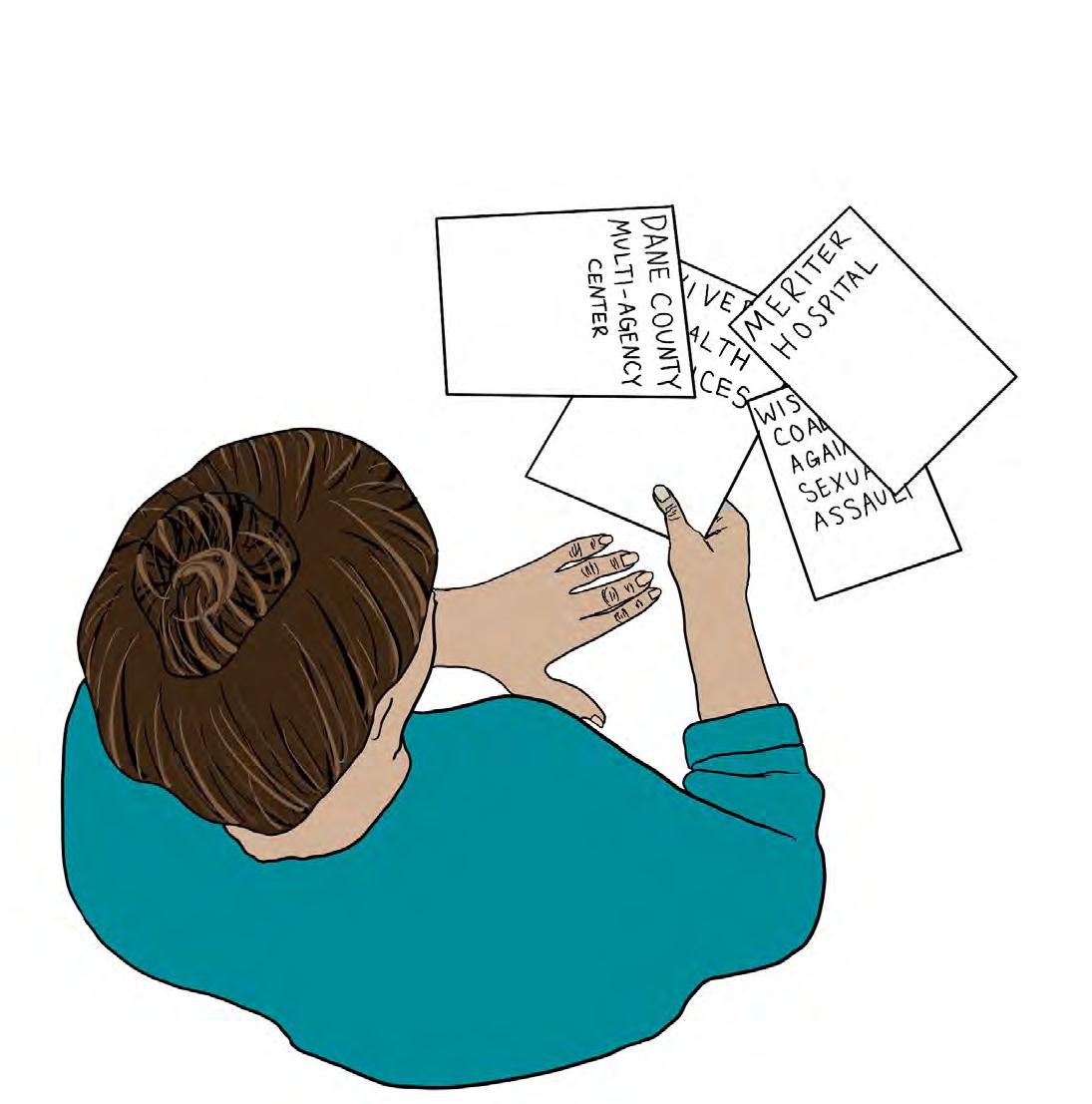
By Lilly Freemyer
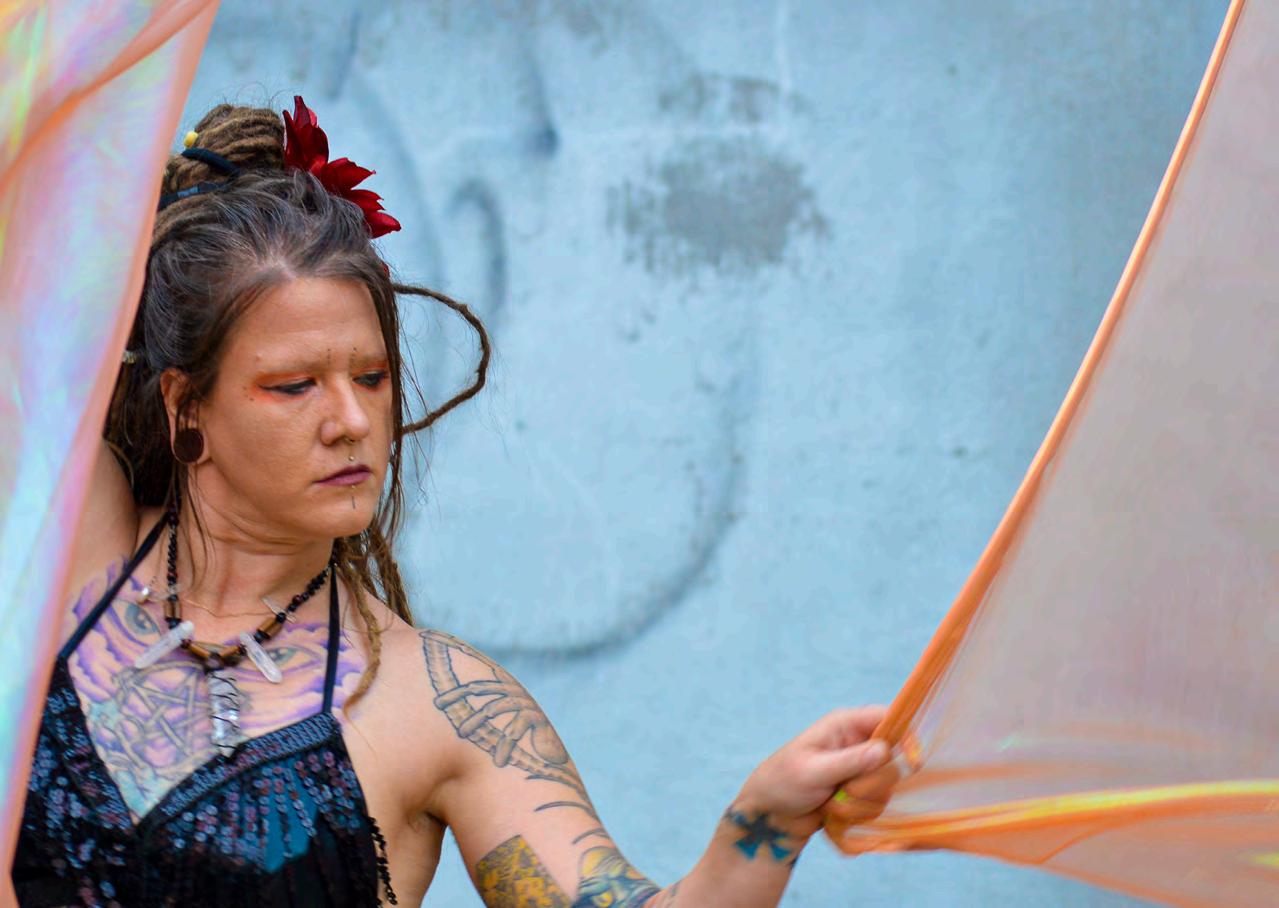
Editors’ note: All of the performers in this piece are referred to as their stage names out of respect and safety for the artists.
Among the smaller cities that make up the Fox Valley in northeast Wisconsin is a unique artistic collective of aerialists, belly dancers and drag queens.
In 2016, Mandie Savage founded the Dark Arts Circus and Cabaret in Appleton. Her goal for the performance art collective was to create an outlet for alternative artists from a variety of skill levels and backgrounds. With the help of other artists and the local community, the Dark Arts Circus opens a door into the darkness for alternative performers and connoisseurs of the dark arts.
The collective’s artistic performances include burlesque, belly dancing, drag
and many other forms of expression.
The Dark Arts Circus welcomes all performers, showing that the dark has room for everyone.
The term Dark Arts Circus is an umbrella term to encompass all of the possible artistic performances incorporated into the shows. Within the collective, there is a sense of freedom. Freedom to learn. Freedom to express. Freedom to explore the darkness. Under this veil, the collective champions many ways of performing so that what might have become a lost art is no longer, because these artists found an outlet to explore their expression and creativity.
“We are just a happy little group of artists and our mission is to bring the weird, wild and interesting to our area and provide that access for folks,” Mandie Savage says.
Savage specializes in burlesque and sideshows but mainly performs as the
primary announcer for the group. Her sideshows include walking across a bed of nails and jumping through fire and aerial hoops. Her signature move is with Dark Arts Circus member Miss Mego, which includes Miss Mego performing a yoga pose on top of Mandie Savage as she lays on a bed of sharp nails.
Miss Mego is a dark fusion dancer, a mixture of belly dancing and other art forms. They use veil fans to add dimension and illusions to the performance by moving the fabric to the beat of the music. The long, colorful fabric is attached to the end of a handheld fan, and it flows around the performer as they incorporate it into their performance. Their costumes are multilayered and include sequined, bikini-like tops, metal-decorated skirts and balloon pants.
A unique aspect of the Dark Arts Circus is that it is artist-designed and directed. All of the performers design their costumes, choreograph their work and create all aspects of the show.
“Nobody knows what to do with us when they ask us to come in and perform,” Miss Mego says. “We’re doing it on our own. We don’t have anybody who is saying, here’s your sound guy. Here’s your venue. Here’s this. We walk into a space and they’re like, we thought about that area as the stage, but we don’t know. And then we’re like, what? It’s very like doing it ourselves. We don’t have a production crew or anything like that, a lot of the stuff is just Mandie and I doing it.”
Several members of the Dark Arts Circus were very clear that it is not a troop or organized performance group, but rather a collective. Dark Arts Circus is not exclusive. No one is to be left out of the group or held back from performing because of their identity or performance level.
“We have performers from all over that come in,” Miss Mego says. “I like the fact that nobody has to be attached to us and feel like that they can’t go do a different show or they can’t attend somewhere else or stuff like that. We just want to facilitate the shows and bring that to these artists so they can get more exposure.”
Together the group’s participants provide each other with the proper tools to expand their creativity within their performance art. For example, Mandie Savage will host workshops for artists in a variety of specialties like aerial and belly dance. The group welcomes an eagerness to learn new styles and art forms. Followers and audiences of the Dark Arts Circus have responded positively to this ethos.
“The crowd that we draw definitely draws a lot of energy and inspiration from the mystical witchcraft,” says Tarl Knight, the co-owner and booking agent of the Tarlton Theater in Green Bay, where the Dark Arts Circus has had a residency since 2019. “People come in, who aren’t a part of the show, dressed very appropriately as what you
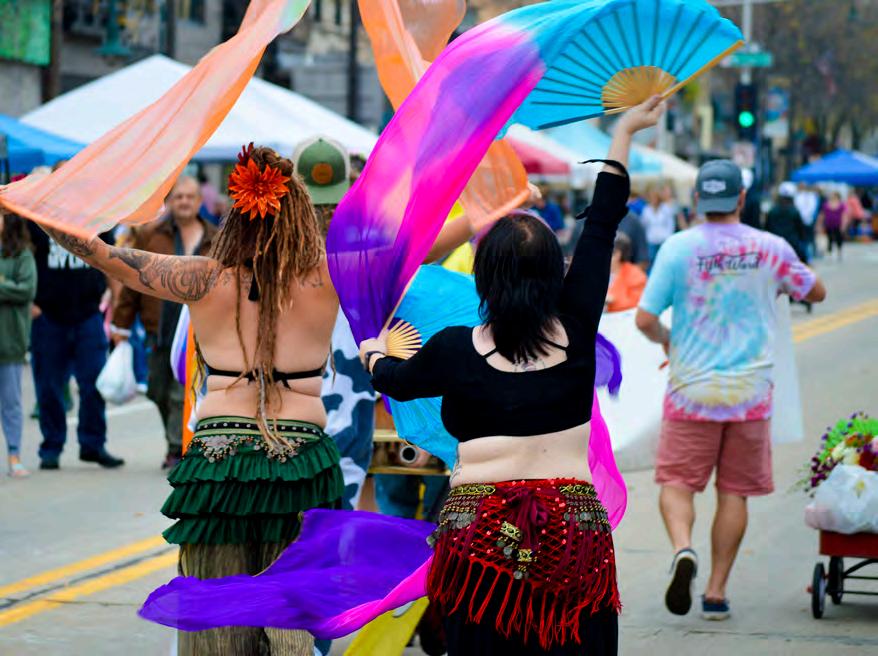
would imagine for a dark arts crowd.”
John Wankerford III is a drag king and a regular member of the Dark Arts Circus. He does a lot of his performing digitally due to his disabilities. The Tarlton Theater also functions as a movie theater where performances like John Wankerford’s III can be projected during live performances.
Occasionally, John Wankerford III is unable to attend performances, but because he prerecords his art, he can still perform with the rest of the circus. The digital aspect also allows performers to be in two places at once. They can digitally perform for the Dark Arts Circus, while simultaneously performing live elsewhere in Wisconsin.
“I went into doing my own truth and into dark arts with the intent that everybody deserves to be beautiful, everybody deserves to have that creativity and express themselves,” says Ivy Scarlette, a belly dancer for the Dark Arts Circus. “I think a lot of our fans really appreciate and are drawn to us because we are so inclusive, with all different kinds of people, all different kinds of visual aesthetics, and again, you know performance art itself.”

One farm strives to protect Wisconsin’s natural resources
Story
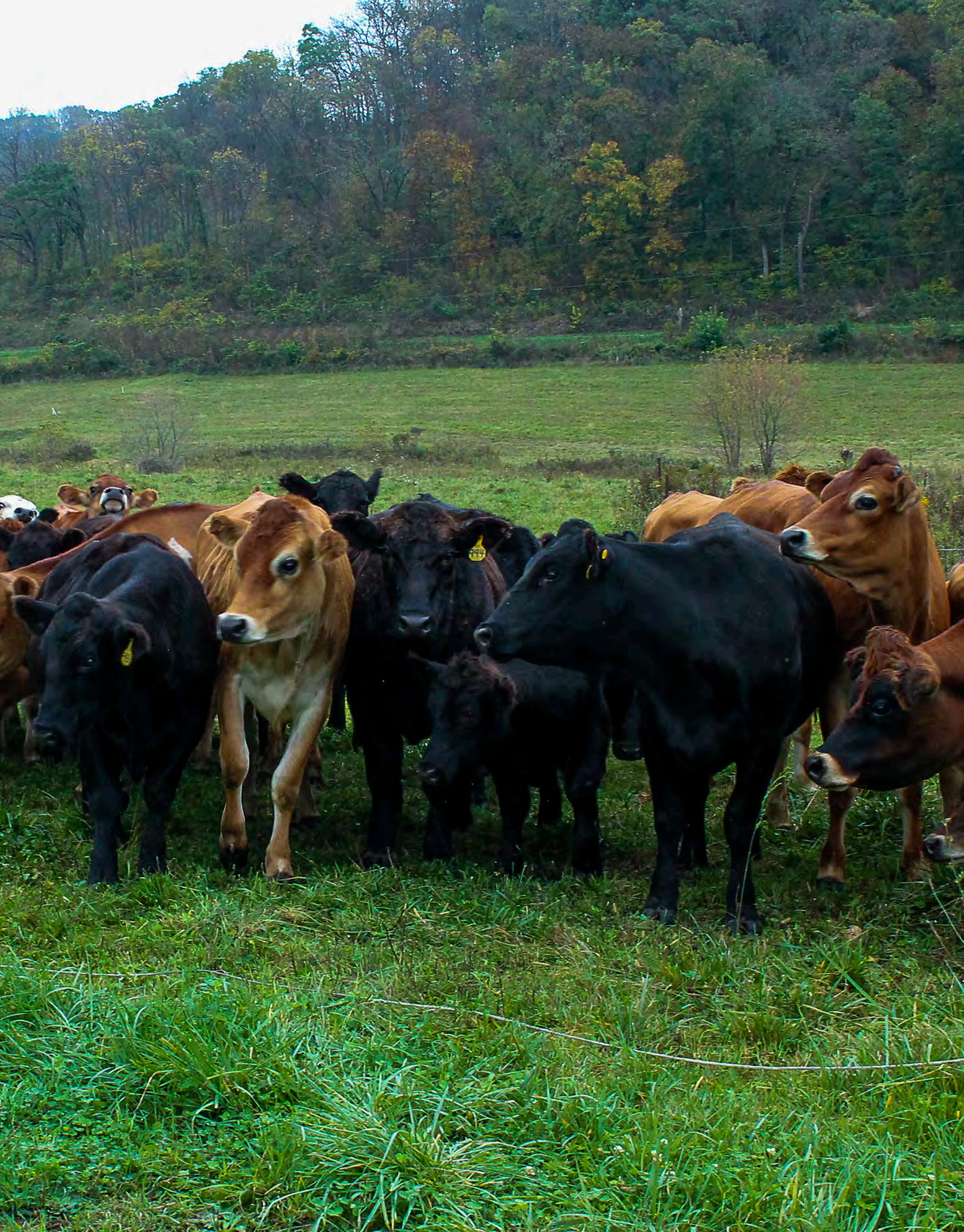
Meandering through the hills of the Driftless Area in Spring Green, Wisconsin, is Lowery Creek, a spring-fed stream teeming with life. Lowery Creek lies on an 8,600-acre watershed, flowing through a valley, continuing through Frank Lloyd Wright’s Taliesin estate, down into the Lower Wisconsin River and on to the Mississippi. A heritage breed of brook trout glides through its cold waters.
On a fork in the stream just south of Taliesin lies Cates Family Farm.
Dick Cates Jr., who passed management of the farm on to his son, Eric, was one of a group of local landowners involved in forming an organization in 2014 to protect the stream. It’s now known as the Lowery Creek Watershed Initiative. Since then, the Cateses have worked alongside other landowners to preserve the stream that runs along their organic, grass-fed beef farm.
father’s farm felt perfect. Dick started to take over management of what was just a small family farm with a couple of cows and transformed it into a grass-fed beef operation. He and other landowners along the stream have taken measures to protect the water through their involvement in the Lowery Creek Watershed Initiative.
“Some of us got together and said, ‘We’ve got a pretty special location here, and we’re all doing things to try to protect it and improve it. Perhaps we ought to band together and give ourselves a name and have membership and have events,’” Dick says.
What started as kitchen table conservation turned into an organization in which each landowner protects the land in different ways. Driftless Area Land Conservancy projects coordinator Barb Barzen helped the group organize a formal structure and goals. To start,
“I want to see my agricultural colleagues step up and do the best job they can in terms of saving soil and protecting our waters.”
Landowners like Dick and Eric Cates ensure the water remains clear of soil erosion, which darkens watersheds with sedimentation that keeps aquatic life from thriving. Maintaining the water quality allows the brook trout in Lowery Creek to flourish and provide eggs to other local streams to boost the native trout population.
Dick always wanted to farm. He started doing farm work in 1967 at the age of 15, when his father purchased Cates Family Farm. However, he didn’t always have the intention of taking over his father’s land.
“I thought, who would want to farm on a side slope like this, where there’s a crick that runs down the middle?” Dick says.
After earning his doctorate in soil science from UW–Madison, Dick, now 69, and his wife, Kim, moved to Saudi Arabia, where he worked on a massive dairy farm with 10,000 cows. When they came back to Wisconsin in 1986 after three years in the Arabian Desert, his
habitat, slope streambanks and build stream crossings. Eric has kept the portion of the stream on the easement fenced off behind a buffer of trees and native plants, except for designated stream crossing areas.
Eric manages the original portion of Cates Family Farm differently, creating a “symbiotic relationship” between the cattle and the land. The farm has a herd of up to 100 Jersey and Angus steers at a time on its 110 acres of grazing pasture. The Cateses consciously understock their cattle and have more than 30 designated paddocks. The cattle are moved on a near-daily basis.
There are 25 designated stream crossings on Cates Family Farm, and Eric makes an effort to protect areas where the cattle gravitate. The Cateses have put breaker rock in along cattle crossings, which provides better footing and prevents cattle from stepping in mud and eroding the area. Eric says many people assume cattle will want to stay in the stream all day when it’s hot out, but that’s not necessarily true.
Barzen enlisted the help of students with the Nelson Institute for Environmental Studies’ professional program at UW–Madison to conduct a report of the stream’s conditions. The quality of Lowery Creek’s water was already very good, so the group decided to focus on outreach to local landowners while still monitoring the water.
In 2019, the Lowery Creek Watershed Initiative hosted a workshop at Cates Family Farm to share streambank management methods the Cateses had implemented on their property. The farm has won several awards for its commitment to conservation, and Eric has continued his father’s work to protect the stream on his land.
When Eric, 36, started to take over in 2016, he, his parents, his sister and brother-in-law purchased another property to expand the existing farm. The newer farm is part of a conservation easement, where the previous owner worked with the Department of Natural Resources to create artificial trout
“If you can create a happy, healthy environment with lots of grass and lots of clovers, the grass actually holds moisture, and they’d rather lie down in the grass,” Eric says.
He uses spot and cross fencing around the stream to prevent cattle from staying in one area too long and destroying the land, a technique called managed grazing. The polywire fences can be cut and moved as needed.
He also targets places to protect where cattle like to rub their heads along the bank and disturb the streambed. The fences are strategically placed to direct cattle to crossings at more gently sloped spots along the stream.
Keeping the cattle away from vulnerable areas keeps streambanks protected from wear and tear. Steep banks worsen the effects of erosion, and measures like these help prevent sedimentation in the stream. The Driftless Area is characterized by high rainfall events, and Department of Natural Resources fisheries biologist Justin Haglund says managed grazing can help to mitigate the erosive effects of rain.
“By rotating those cattle around, it allows the vegetation to come back up,
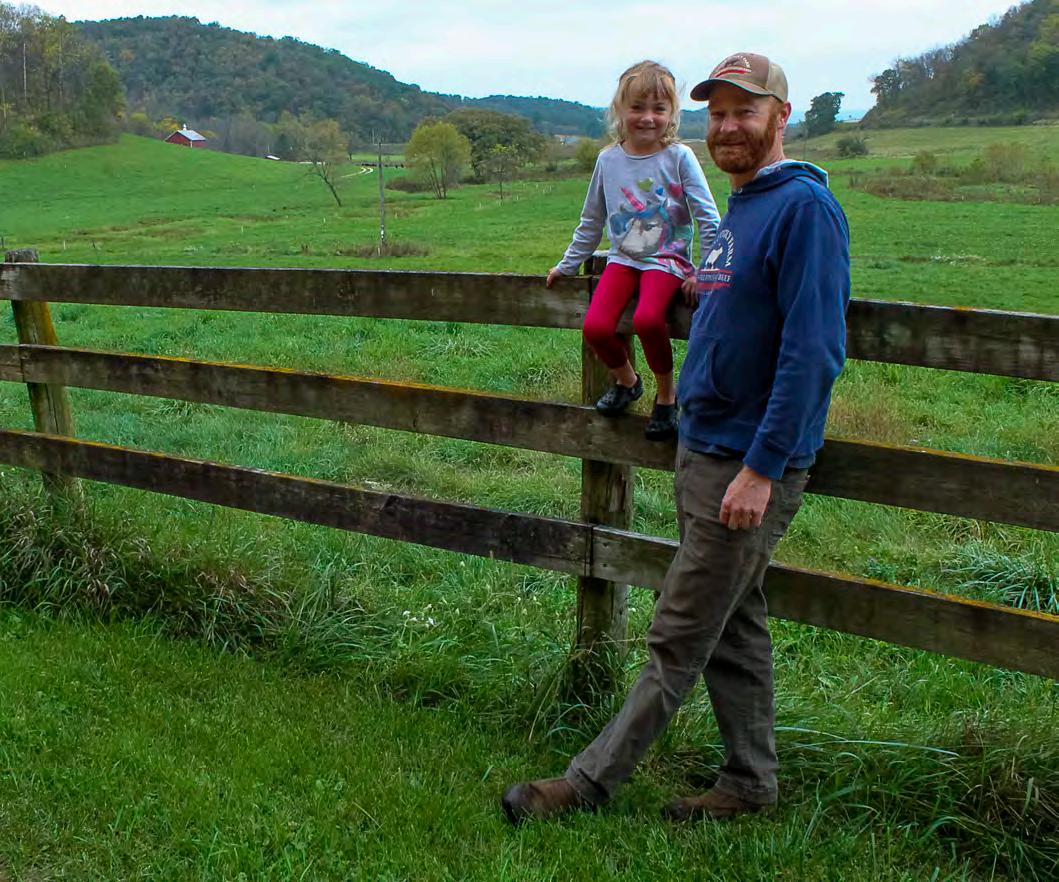
whereas if you kept the cattle in one spot the entire time, you probably would see a lot more bare soil, and then that bare soil also has the potential to be transported to the stream in those high rainfall events,” Haglund says.
Erosion can put the trout population at risk. It is especially important to protect the brook trout in Lowery Creek because they are one of two native brook trout populations in the Southern Driftless Area that the Department of Natural Resources uses for its feral brook trout stocking program to spread the species to other local streams.
“Brook trout do need cold water, and that water needs to be clean,” Haglund says.
If the gravel trout spawn on is covered in sediment, any eggs laid during the winter will suffocate.
Environmental Studies at UW–Madison, says if enough landowners along feeder streams take actions like the Cates family, there could be positive effects downstream in greater bodies of water.
“If you get a number of farmers that begin to bring a stream back to its original condition, where it serves as a filter to dramatic events, then you’re going to lessen that surge of water that goes into the larger water body,” Nowak says.
The natural, curved shape of streams lessens the erosive impact of significant rainfall, which carries sediments into larger bodies of water downstream.
“That’s ultimately the way we’re going to protect those larger bodies of water is to go up into the watershed and protect those smaller streams,” Nowak says.
Cates Family Farm’s dedication to conservation is just one example of a growing movement of farmer-led conservation in Wisconsin. Watershed groups like the Lowery Creek Watershed Initiative use community outreach to demonstrate successful restoration projects and encourage other landowners to take similar steps on their land.
The Cateses allow cattle to graze along the stream for set periods to fight invasive species and unwanted trees, strengthening the streambanks.
“What cattle can help do is that they help manage those weeds so that the grass can grow and the grassroots can kind of take hold and help stabilize that bank. But it only works if you limit their exposure,” Eric says.
Cates Family Farm has made efforts to protect wetland areas along the stream that birds and other wildlife call home.
Many Wisconsin farms plow their fields, causing soil loss, but healthy grassland filters soil and serves as a buffer in the event of rainfall and protects the water.
“Any one of those farms could improve the circumstance by doing no-till and using cover crops, but many do not because they continue to do it the old way, and that’s what I’m concerned about,” Dick says. “It’s not really the size of the operation, it’s how people do things.”
Pete Nowak, retired professor emeritus of the Nelson Institute for
When landowners hear about the successes of their peers, they can be motivated to follow in those footsteps. The Lowery Creek Watershed Initiative does this by holding monthly “evenings afield” events for participants to learn from experts and see what other landowners are doing. Events like these create an opportunity for community exchange.
“If [landowners] get good information and have a good relationship with a neighbor that’s had really great success working with the [state Department of Natural Resources] or other organizations, such as the Driftless Area Land Conservancy, it really helps to build those relationships, especially in small watersheds,” Haglund says.
As watershed initiatives grow across the state and farmers work together to protect their land, Wisconsin’s water — and future — is brighter than ever.
“I want to see my agricultural colleagues step up and do the best job they can in terms of saving soil and protecting our waters,” Dick says.
By Isabella Byrne
Afirst love is powerful and nearly impossible to forget. And if it’s meant to be, it can be strong enough to cross the span of time and space — no matter what happens in between. There’s something truly romantic about a love that never quite ran its course.
In 1956, Ellen Kayser and Peter Johnson came to UW–Madison from two different worlds.
While Peter had his eyes on Ellen during their freshman year, it wasn’t until the fall semester of their sophomore year when they began dating.
It was a love story that began on Langdon Street; Ellen was the president of her sorority, Delta Gamma, and Peter was a part of the Psi Upsilon Fraternity.
At the time, though, they simply didn’t sync up.
Peter was too wild. Ellen was more mature.
Ellen and Peter graduated from UW–Madison in 1960, and diverged onto their own paths into the world, to become the people they were meant to be.
Lights out. Curtains closed. Radio silence.
Each of them went on to marry other people, follow their career dreams and have children.
Back then, it wasn’t hard to be completely in the dark about what an old flame was up to.
While they both lived in Wisconsin, they didn’t cross paths. Until one day when Peter bumped into Ellen for the first time in 20 years.
Peter was out mowing his lawn in Applewood, a subdivision on Madison’s west side. One of Ellen’s good friends happened to live right up the road from Peter at the time. Without knowing it was him, Ellen pulled over the car to ask
for help with directions. As she walked out of the car, Peter looked up and for a brief moment, they simply just looked at each other. Peter realized it was her and Ellen realized it was him, and they went on to engage in small talk conversation — as former flames do — and before he knew it, she was back in her car and on her way.
“When she drove away, I said, ‘You know, I think someday I’m gonna marry that girl,’ and I really did say that to myself as I continued to mow the lawn,” Peter says.
Peter was recently separated, and he promised himself he would wait one year following his divorce before he would pick up the phone to call Ellen. Peter felt he needed to acclimate himself back into being single, getting the hurt out of his system and the failure of his first marriage to allow himself to open his heart again.
It was August 1985 when Peter finally decided it was time.
One day at work, the phone rang. Ellen remembers hearing someone in the department saying that there was someone on the phone with a loud voice asking for her.
“Do you know who this is?” Peter asked her.
“With a voice like that. ... A voice I can never forget,” Ellen told him. “Hi, Peter.” Lights on. Curtains open. A familiar voice.
It wasn’t until November 1985 that Ellen and Peter finally found a date to meet. There was a snowstorm that day, so the roads were icy and Ellen called Peter to reschedule.
The two of them decided to meet at Smoky’s Club in Madison.
In the restaurant’s dark ambience, the two found themselves reminiscing about old memories, old friends and the

Peter
and
Ellen Johnson
keep photos of special moments they shared together after rekindling their love in 1985, 20 years after they met.
nearly 25 years that had passed since they last saw one another.
“At the time, [we were] roughly 45, 46 years old, and you’re a lot more of a mature person, and you’ve experienced a lot of things in life by then. You approach a relationship a whole lot differently than you do when you’re 20 years old,” Peter says.
Ellen’s son, Grant Frautschi, remembers her first official date with Peter. When Peter pulled up in a red Corvette convertible, Frautschi had his doubts.
“I remember thinking to myself that this guy doesn’t have a snowball’s chance in hell taking my mom out in a convertible on a cold night to a hockey game,”
He remembers his mom coming home after the date and asking her how it was, he knew the hockey game wasn’t going to be the highlight of it.
“He drives too fast, but the sound system in his car was excellent!”
Despite the fact that Ellen wasn’t a fan of hockey, fancy cars or cold winter nights, it wasn’t about that. It was about the person sitting in the driver’s seat.
“I always thought they were kinda meant for each other,” says Tim Dean, a friend who first met Peter when they were in high school and was his roommate at UW–Madison.
During their freshman year, following a Badger win, Peter ran out on the football field to yank one of the little red flags out of the end zone. It was an old school tradition for the band to parade down Langdon Street when Wisconsin won. Peter marched behind the band into Ann Emery Hall, where Ellen was living at the time, to leave the flag at the front desk for her.
Years later, after Peter and Ellen were married, the red flag was sitting in their
With the emotions of a first love and depths of lived experience, Ellen and Peter Johnson remain as in love as they were at 50 today at 83 years old.
“As she said after we got married, ‘All that wildness at 20 I didn’t like, but that wildness at 50 I did like,’” Peter says.
A UW education program offers a new direction for those incarcerated
By Kalli Anderson
As Ramiah Whiteside logs onto Zoom, a grainy photo of his granddaughter born on Sept. 9 pops up as his profile picture. His laugh fills the cyberspace as he describes that although her family showers her with tons of attention, right now, she only cares about sleeping and feeding times.
But Whiteside hasn’t always been able to be with his family during these important moments. He learned about the birth of his first granddaughter in 2014 through a paid phone call from the inside of Fox Lake Correctional Institution.
In 1995, Whiteside was in a highspeed chase with the police that ended in a collision that killed four people — one of them was his younger family member. Imprisoned at 19 years old, Whiteside, now 46, spent 24 years on the inside for four counts of second degree reckless homicide, one count of reckless injury and one count of operating an automobile without the owner’s consent.
During that time between 1995 and 2019, Whiteside says he felt emotionally, mentally and spiritually like he was in “the bowels of a slave ship.”
Then, 21 years into his imprisonment, Whiteside found retired talk show host Jean Feraca at the Wisconsin Resource Center. At that time in 2016, Feraca was teaching her first class at the resource center through the Prison Ministry Project. The project, run by the First Congregational United Church of Christ in Madison, directs restorative justice programs that work to mend the relationships between those who have committed crimes, those who are impacted by them and the greater community.
Being allowed to take part in restorative justice programs was the ray of light Whiteside needed to come back from the brink of hopelessness and despair while still being held accountable for his actions.
“It wasn’t until the restorative justice process [that] it really started to resonate that I can be a better person,” Whiteside says. “I can be more than who I was yesterday today.”
Education in prisons decreases the likelihood of recidivism — or the likelihood that a formerly incarcerated person, once released, will offend again. In one study from the Journal of Experimental Criminology, authors found that people who participated in education programs while incarcerated were 28% less likely to commit another crime upon release versus those who did not participate.
Realizing that people who are incarcerated need to have their personhood and inner intelligence recognized inspired Feraca to start teaching noncredit classes in prisons. She adapted the curriculum used at the UW Odyssey Project — a program she cofounded that she says works to “break the cycle of generational poverty” in Wisconsin — into her classes in prison.
The UW Odyssey Project offers four core programs for low-income children, adults and those incarcerated facing economic and other barriers to education by offering a six-credit, two-semester humanities course that analyzes literature, philosophy, history and art. The program aims to strengthen students’ writing abilities and critical thinking skills.
Odyssey Beyond Bars grew out of Feraca’s efforts to introduce humanities-based noncredit classes to students in prison. The program — which recently received the Wisconsin State Public Defender’s Eisenberg Award for its work — seeks to enlighten minds that may otherwise become stagnant in the confines of a roughly 54 squarefoot prison cell by providing for-credit college courses in humanities subjects like English and Afro-American studies.
Odyssey Beyond Bars founder and director Peter Moreno started the program in 2018 to provide a chance to those who are imprisoned at Oakhill Correctional Institution, a minimumsecurity prison in Oregon, Wisconsin, a suburb of Madison.
“Our students are so often labeled as inmates, offenders or worse, and when they are able to finally see themselves as students with long-term goals, their
lives are transformed,” Moreno wrote in an email.
In the classroom, students are required to complete assignments, work on their public speaking skills and be vulnerable with their classmates.
“I could tell that there was this hunger, this huge desire to have intellectually engaging conversations around deep ideas, talk about texts and write together,” says Kevin Mullen, co-director of the UW Odyssey Project.
In Oakhill’s library on Tuesday afternoons, Mullen brings this program to life for 15 men. When he asks his students to share their writings with each other, they get straight to work.
“I’ve been teaching for 20 years, and I have yet to find students who are more enthusiastic, driven and focused than these guys,” Mullen says.
“It wasn’t until the restorative justice process [that] it really started to resonate that I can be a better person. ... I can be more than who I was yesterday today.”
Mullen started teaching for the program in fall 2019, in what he says was the first for-credit, in-person class UW–Madison has offered in prison in more than 100 years. In his English 100 class, he teaches students how to write confidently and comfortably while also connecting to other men.
While educational opportunities for those imprisoned are on the rise — such as Odyssey Beyond Bars opening up three programs at Racine Correctional Institution, Columbia Correctional Institution and Green Bay Correctional Institution in spring 2022 — Feraca advocates wholeheartedly for introducing more programs and classes into prison.
“When you have the opportunity as I’ve had to find out who’s in prison, you realize how much we’re missing as [a] society. There is so much potential there. We’ve just ignored, overlooked and discounted so much of it,” Feraca says.
By Mallory Pelon — Elie Wiesel
In 2018, a picture of high school students from Baraboo, Wisconsin, went viral on Twitter — and not in a good way.
The photo showed a large group of boys standing on the steps of the Sauk County Courthouse grinning and giving what looked like the Nazi salute to the camera. Within the group of about 50, almost everyone appeared to be caught in mid-laugh, their arms raised high above their heads.
The Nazi salute, one of the most recognizable symbols of the Nazi movement of the 1930s and 1940s, remains a jarring act of antisemitism. This incident gave Baraboo national news attention, but now, more and more such acts make global headlines.
The Anti-Defamation League found that antisemitic incidents have increased by 115% since last year. Although it’s impossible to name one reason for the rise in antisemitism across the globe, experts do have some theories. Many attribute this increase in aggression towards Jews because of the increased violence between Israel and Hamas in Gaza.
But political issues aside, current generations know less and less about the Holocaust compared with their parents.
A recent study by the Conference
on Jewish Material Claims Against Germany surveyed knowledge of the Holocaust among Millennials and Generation Z across the U.S. The study found that 63% of respondents did not know that 6 million Jews were murdered during the Holocaust, and nearly 20% of respondents thought Jews themselves caused the Holocaust.
It’s hard to imagine that the gravity of the Holocaust — often called the darkest time in human history — could be forgotten by younger generations. Yet many are concerned about a rise in antisemitic activity, which prompted the passage of a new state law requiring that the Holocaust, and other genocides, must be taught in middle and high school.
Wisconsin is only the 18th state to pass such a law.
This bipartisan bill was signed by Gov. Tony Evers in April 2021. State Rep. Lisa Subeck (D-Madison), author of the bill, says it presents an opportunity to learn from our past to do better, and to take those lessons and put them to use in our daily lives.
“It’s particularly timely as fewer and fewer Holocaust survivors are able to share their stories, that we make a concentrated effort to ensure that history is not only taught but therefore is never repeated,” Subeck says.
The significance of this bill isn’t lost on Simone Schweber, an education and Jewish studies professor at UW–Madison. She said when she first started in this field, people were already worried about the end of the generation of Holocaust survivors — and now that time has come. This bill is a first step in helping to memorialize survivors and their stories.
Additionally, Holocaust education can provide valuable lessons to students.
Brandon Bloch, assistant professor of history at UW–Madison, believes that Holocaust education is highly relevant to students and gives them the tools to look critically at their own government.
“What leads large numbers of people to believe in fanatical political movements or to see radical movements, like national socialism, as the answer to their problems? Those questions are not only historical, they have a bearing on the contemporary world and I think it provides a warning for us in the present day,” Bloch says.
Holocaust education can also affect students on a personal level. Social studies teacher Matt Lambrecht from West De Pere High School, a public school located 10 minutes outside of Green Bay, says, “I would say in the last five years, we’ve had so many more kids who
feel OK with saying, hey, I’m part of the LGBT community. Can you put up an LGBT safe space in your room?”
Lambrecht says he sees these kids, who typically are in the minority group at West De Pere High School, feel proud of who they are. He says this wasn’t the case years ago. In fact, he actually attributes this shift in attitudes in part to teaching of topics such as the Holocaust.
“And I think part of that is the Holocaust does some of that same thing. It helps people want to advocate for themselves, so bad things like this don’t continue to happen,” Lambrecht says.
Implications in the classroom
Because the bill just became la aw, teachers are still figuring out how to integrate it into their classrooms.
To some degree, how to teach about
the Holocaust will still be at the discretion of the school district. The Holocaust Education Resource Center in Milwaukee is there for schools to use, but it’s hard to say how each school will tackle such a tough, intense topic. Schweber notes that teachers will need to prepare themselves, not just the material, when getting ready to talk about a topic as deep and disturbing as the Holocaust.
“When you’re teaching about largescale violence and mass trauma and genocidal atrocity, there are all these skills that go into it and all these other dispositions that go into making it powerful,” Schweber says.
For many teachers, it’s up in the air how the curriculum will change to incorporate Holocaust education. Shad Fanta, an eighth grade social studies
teacher at Waunakee Middle School in a Madison suburb, says since the bill is so recent, it will not affect him or his classroom for some time. In Waunakee, students already learn about the Holocaust in sixth grade.
Ultimately, the goal of the new law is more for people to understand the stories from the Holocaust so that an event of its magnitude will never happen again. Education can be an effective weapon against further injustice, and the passage of this bill is helping to shed light on the importance of Holocaust education.
However, there is still work to do. And Schweber is not done yet.
“We have to take what we can get,” she says. “Absolutely. But we have to fight for the things that we don’t get and we have to keep fighting for the things that people need and deserve.”

By Madison Mooney
Champions are made when no one is watching. And there truly is no one watching when the sun isn’t up.
The sports teams at UW–Madison pride themselves on being among the best in the NCAA. The success of major revenue-making sports is often widely publicized. At the same time, athletes in smaller sports, such as rowing, cross-country, wrestling and softball, dedicate much of their energy and time to their respective sports, yet compete outside the glow of the bright stadium lights.
Four of those athletes shared with Curb their experiences with morning workouts and explained why the early grind is worth the effort.
Grace Belson, 20
Stevens Point, Wisconsin Junior, women’s rowing
The rowers are one of the first teams to start practice on the UW–Madison campus, working out Monday through Saturday and moving their boats into the water by 6:15 a.m. every weekday.
There are lights at the bow and stern of the boats for safety.
Belson joined the rowing team her freshman year of college, after originally being a runner in high school.
The team will practice this early yearround, and the rowers try to stay out on the water as long as possible. This is usually until mid November, when the lake starts to freeze. The winter months
can often be the hardest for them to get up and stay motivated for practice.
“It’s freezing cold outside, pitch black, the whole practice,” Belson says. “People start to get really tired of it. The morale is definitely really low in the winter.”
The long, winter mornings are hard, but the women’s rowing team is determined to do well at the NCAA Championships at the end of the school year.
The rowers hope to qualify for the AB race, making them one of the top eight teams in the nation.
“A lot of people ask me, how do you do it?” Belson says. “How do you stay up so early? But after a while, you just realize that it makes sense to do it then.”
Rowen Ellenberg, 21 Appleton, Wisconsin Junior, men’s cross-country
Morning practice looks different for the men’s cross-country team. Ellenberg finds himself getting up in the mornings, often alone, for runs.
Official practice takes place in the afternoon, but the men need to run several times a day to get in all of the miles they need. For Ellenberg, that’s a total ranging from 80 to 95 miles across nine runs every week.
As the school year goes on, morning runs get colder and colder.
“If it’s below zero, I have to throw on a running jacket and have three or four layers on,” Ellenberg says.
The darkness also means Ellenberg has to choose wisely where he runs. He
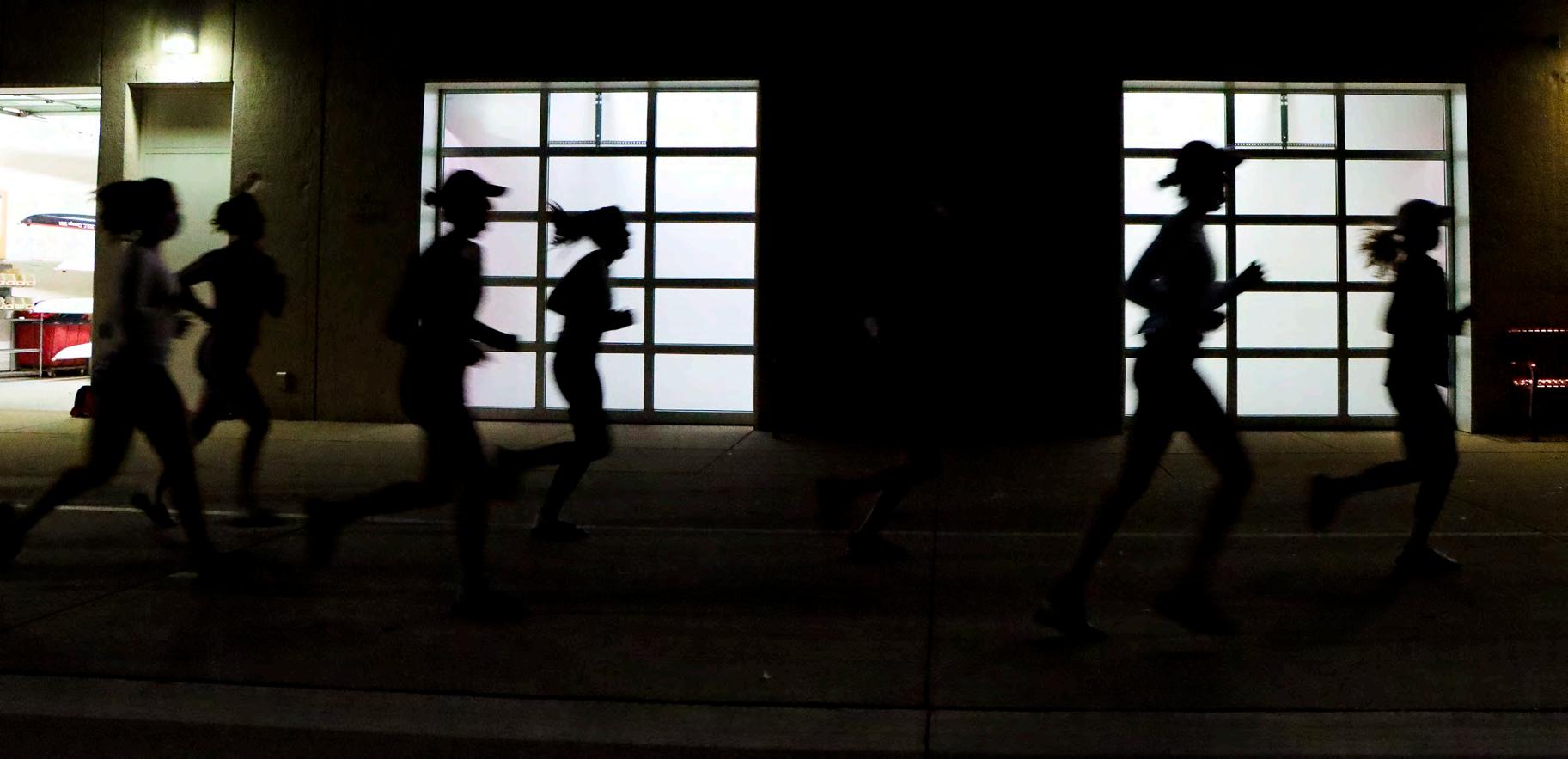
avoids trails in forested areas with lots of roots and instead runs on the concrete bike path that goes through the UW–Madison campus toward Verona.
The path is lit up by street lights and completely flat, perfect for running with limited lighting.
Ellenberg says the team’s goal is to win the Big Ten title and perform well at the national championships.
“We have had trouble really saying specifically what that means, but definitely top 10 and the high goal is top five,” he says.
Ethan Rotondo, 22 Vancouver, Washington Senior, men’s wrestling
Rotondo has trekked to wrestling practice in the dark for four years at UW–Madison. He gets up with his teammates and runs, then follows it with a morning lift.
Waking up early requires dedication from the athletes to get to bed earlier, so they can still function well throughout the school day. Some wrestlers use naps to compensate for loss of sleep.
“After morning practice, if I don’t have class, I’m taking a nap. I nap and then I do homework and I have practice ... There’s not a lot of time to be social when you’re getting up so early and trying to go to bed at a good time,” Rotondo says.
The social life of the typical college student is often nonexistent for athletes. Going out on the weekends and staying up late is not practical for the wrestlers when they have to wake up so early to get their workouts in.
The altered sleep schedule and less-active social life is all worth it when going after their dreams.
“I want to be an All-American,” he says. “So just keeping that in mind and just knowing that getting up early, doing
what I need to do to be ready for practice is just important to me.”
Ally Miklesh, 20 Stevens Point, Wisconsin Senior, women’s softball
The women’s softball team’s practices start at 6:15 a.m. and go until 10:30 a.m.
During this time, players complete a lift session, then practice and have individual meetings with coaches.
Miklesh loves the grind. She treats mornings in the darkness with a positive attitude.
“It’s a really good start to my day,” Miklesh says. “Practices are hard and obviously your coaches are gonna get on you, but they have [the] best intentions. So being around those people right away in the morning just kind of sparks your day.”
Miklesh relies on making sure she has good nutrition to keep herself awake and
energized throughout the rest of the day. Coffee is also an essential part of her daily productivity after practice. Naps help to catch up on the missed sleep.
“I try to fill in some naps here and there, especially when I feel bogged down,” she says. “Having later classes in the day can be a struggle sometimes being awake.”
The softball team hopes to be top 16 in the NCAA this year, which would allow them to host a regional tournament. The work they do in the early mornings of the fall and winter will help them achieve this goal come the spring season.
“I think that the reason why we’re really ready to go in the morning is just due to respect of our team, respect to our alums, just the culture that our coaches and our alums have built here,” Miklesh says. “So the fact that we’re energized, ready to go in the morning is just a tribute to them.”
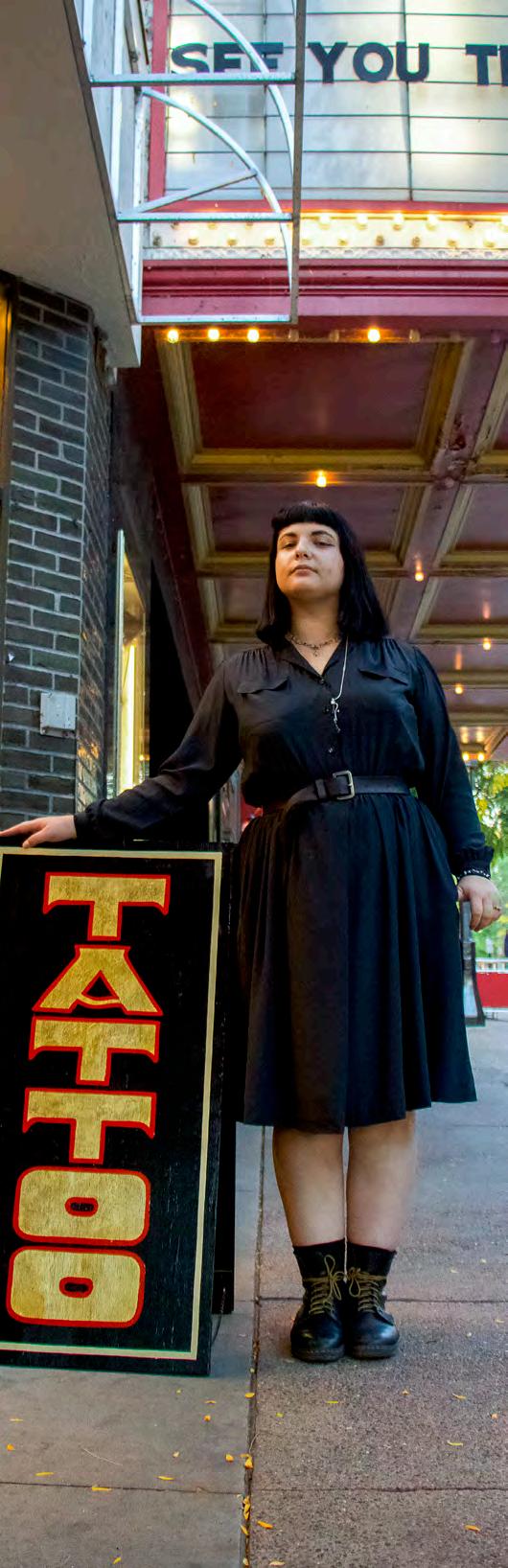
By Cailyn Schiltz
Raven Moon is an artist, fascinated and inspired by darkness.
She’s been creating art since about second grade, wearing all black since middle school and dabbling in a variety of media over the years.
She discovered India ink in the illustrations of Lemony Snicket’s “A Series of Unfortunate Events” and now uses it to add a dark, crisp element to drawings and paintings. She adores gouache, the art of using opaque watercolors to paint, and took about a year to master drawing on an iPad.
But nothing compares to how Raven feels about her newest medium: tattoo ink, with the human body as her latest canvas.
Raven, 25, is an apprentice at Ritual Moon Tattoo on State Street in downtown Madison. Her husband, Abraxas Moon, 26, reads tarot cards at a sturdy wooden table in the corner of the store as the shop’s resident psychic. Her mother, Jaded Moon, is a renowned tattooist who travels to clients across the globe and specializes in inking where the sun doesn’t shine.
Jaded founded Ritual Moon as a space for her family to hone their crafts and support each other in a safe environment. As they explore and create a niche in their home, the Moon family aspires to bring a unique artistic and spiritual experience to downtown Madison.
Jaded always brought her children with her when she traveled — but training an apprentice on the road would have been impossible. She wants stability
“We would really like to live up to our name, the ‘ritual’ part,” Abraxas says.
In Las Vegas, Raven trained in a variety of spiritual practices, but now she strives to incorporate attunement into her tattooing via stick-and-poke tattoos.
Attunement is a method of spiritual and emotional healing that uses strategies such as chakra work and body-tapping. Raven describes it as rummaging through someone’s aura to feel for a “prick,” which indicates a spiritual block, then pulling it out.
This fall Raven stepped into tattooing customers, and to complete her apprenticeship, she gave away 100 free tattoos. Megan Brown found herself as Raven’s first human canvas.
extra to offer, an occult twist.
“Tattoo and tarot? Two of my favorite things,” Brown says.
She chose a line drawing of a flower and made an appointment, keeping her expectations low.
Before any ink is used, Raven ensures that the tattoo is within her skill level, as well as being designed, stenciled and placed 100% correctly.
As Raven tattooed Brown’s ankle, Jaded stood behind her daughter to give helpful feedback and stepped in at the end to touch up the artwork.
Brown was thrilled with how her tattoo turned out, especially considering the price point.
new medium to her support system.
“I will say that my mother is teaching me, and so I’m fairly comfortable. I think if anybody else was teaching me, I wouldn’t be nearly as good,” Raven says. “Sometimes maybe I’d be more comfortable if somebody else was teaching me because maybe I wouldn’t care what they thought, but my mother is my best friend — and I care about what she thinks more than anybody else.”
and success for her children and never suspected they would be interested in following in her footsteps.
“When the kids asked me about tattooing, I obviously had nothing negative to say, because I’ve always loved tattooing, and it’s been so good to me,” Jaded says. “But I’m like, ‘You should do real estate.’”
Raven began her first apprenticeship in her hometown of Las Vegas under a family friend. She describes it as a very masculine space — a huge shift from the matriarchal household where she grew up.
Jaded began tattooing at age 16 as a “street kid” and faced sexual harassment when she apprenticed under bikers. In order to protect her daughter and ensure Raven could flourish in her apprenticeship, Jaded settled down and set up shop.
Raven is not the only Moon training in the art of body modification in the family shop. Middle child Micah Moon, 21, is also a tattoo apprentice, and youngest brother Sequoia Moon, 19, is an aspiring piercer. Abraxas, Raven’s husband, intended to begin his tattoo apprenticeship this summer but it was delayed by two separate hand injuries.
While he waits for his hands to fully heal, Abraxas is mastering the scheduling and communications while developing his divination abilities as Ritual Moon’s resident psychic. He has been reading tarot since age 14 and is studying other forms of spiritual readings to perform at Ritual Moon, such as astrology and palmistry.
Brown, a 21-year-old from Sun Prairie, a Madison suburb, stumbled upon Ritual Moon thanks to a friend. She noticed that the shop had something
Raven learns more with each tattoo, exuding nothing but confidence and optimism. While she is sure of her own artistic and technical abilities, Raven attributes some of her comfort in this
Historically, cultures across the world have tattooed for artistic, spiritual and healing purposes, according to Raven and Abraxas. Ritual Moon plans to continue this tradition in its new home. Between Abraxas’s psychic studies, Jaded’s boundary-pushing art and Raven’s spiritual services, the Moon family is bringing a new element to the city.
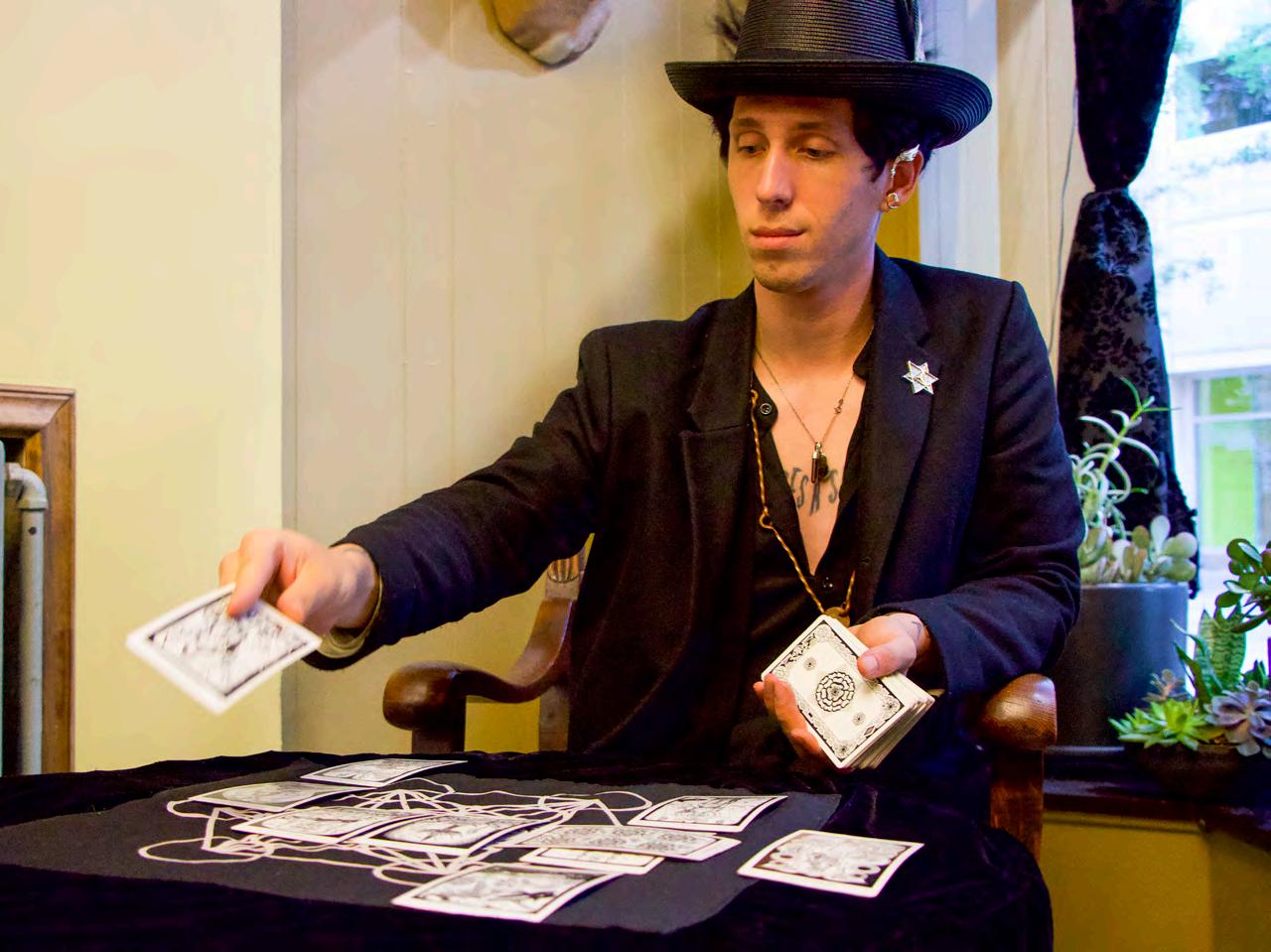
By Maya Fidziukiewicz
Deaf and hard of hearing advocates seek inclusion and equity
By Claire Henneman
What did you say, could you repeat that?”
It’s a common question, but for people who are Deaf, culturally Deaf or hard of hearing, it can be a question essential to understanding a situation.
That’s why the frequent response is frustrating.
“Oh never mind, it’s not important.”
That’s how many hearing individuals deal with the situation. Instead, they should have patience and be considerate when communicating with people who are Deaf, culturally Deaf or hard of hearing, says Kristin Johnson, a staff member of HEAR Wisconsin, a nonprofit organization that serves the Deaf and hard of hearing communities.
Comments like those make her feel left out of a conversation, Johnson says.
About 500,000 people in Wisconsin are affected by hearing loss, according to the state Department of Health Services.
But the barriers they face in educational, community and professional settings often get lost in conversations about diversity, equity and inclusion.
Being Deaf or hard of hearing can be an invisible disability to those uneducated about Deaf culture. One day, Johnson hopes, hearing devices will
be treated the same way as someone wearing eyeglasses to see better.
To foster a more inclusive society, hearing people could consider taking an American Sign Language or Deaf culture class, according to Ryne Thorne, a lecturer in the American Sign Language studies department at UW–Milwaukee. Thorne, who is Deaf, attended UW–Milwaukee as an undergraduate.
Though American Sign Language has similar linguistic features to spoken English, it is a separate language with grammar distinct from English. ASL is “expressed by movements of the hands and face,” according to the National Institute on Deafness and Other Communication Disorders.
UW–Milwaukee has a robust ASL program. ASL courses 1 through 6 are offered as foreign language courses. It also offers courses in ASL semantics, Deaf culture and Deaf history.
The university’s Sandburg Hall hosts an ASL living learning community, which gives Deaf and hard of hearing individuals the opportunity to live on campus together. The community is open to any UW–Milwaukee students, hearing students included, who are currently learning or want to learn ASL.
UW–Madison offers academic services such as live captioning, known as Communication Access Realtime Translation — or CART — to create transcripts of spoken language in real time for in-person and remote classes. Media captioning is another resource the McBurney Disability Resource Center offers to Deaf and hard of hearing students. Students must work with both the McBurney Center and their professors to ensure that learning resources like these are available for all of their classes.
UW–Madison recently posted a job listing for an assistant professor position for ASL and other sign languages. This individual is expected to have extensive knowledge of both ASL and deaf culture.
Thorne mentioned that going beyond UW–Milwaukee and UW–Madison, it is important for the community at large to know the basics of American Sign Language and Deaf culture.
“Law enforcement, hospitals, [the] legal system — I think they should all take classes for sign language and Deaf culture,” Thorne says. “Because I think that would help open their minds a little bit and understand what Deaf culture looks like and how they can be more of an advocate.”
Movements of the hands and body are a crucial aspect of ASL. The word "community" is being signed here.
Andrew, come quick. You have a fire at your camp.”
Andrew and Anna Fidziukiewicz are stirred awake, first by a knock on their door from a Fond du Lac County sheriff, then by calls from the police and fire departments. Their minds race. Maybe it’s the garden shed? Or what if it’s a cabin? There was no one at the camp. Did someone forget to extinguish their campfire? The idea that it was the chapel didn’t occur to them.
Andrew, president of Camp Vista, and his wife, Anna, are trying to collect themselves as they look out their front door. They see what looks like an enormous forest fire lighting up the 5 a.m. dark October sky. On the other side of the trees is a place they’ve called a backyard for the past 13 years of their lives: Camp Vista.
It’s where kids see trees instead of skyscrapers and paved concrete. It’s where people have a spiritual encounter with God. Many couples met, marriages started and relationships were saved here. It’s a place that fostered hope in many young people, and that has a lot of significance to anyone who stays at the camp.
It’s special to me, too. I’m Andrew and Anna’s oldest child, and my siblings and I grew up helping our parents run the programs and maintain the grounds. I don’t know where to begin explaining my involvement with this space — it’s been my life since my family started running summer camps there when I wasn’t even a year old, and then we got more involved as we took over the grounds when I was 8 years old.
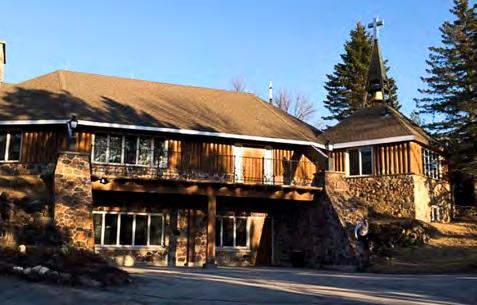

Camp Vista is a recreational Christian campground located in the heart of Wisconsin’s Kettle Moraine Forest near Fond du Lac. It's a retreat center for many local groups, Boy Scouts, summer camps and family retreats — a place where everyone is welcome, regardless of race or creed. Located at its center is a beautiful chapel where every family or group begins and ends their retreat time. In its early days, founder Father Joseph A. Fischer received a lot of help from his good friend, legendary Green Bay Packers coach Vince Lombardi, to help fund the construction of the camp and the chapel.
Camp Vista’s chapel is a special place. It’s where families spend time together.
It goes without saying that this chapel taught me not just about hope, but about life in general.
Now, when I reflect on my concerns I expressed in the past, I realize they all played out differently than I expected, but they still turned out — somehow. Such is the story of the chapel, too.
•••
The night of the fire, Andrew and Anna’s thoughts continue to race in disbelief. “Do we wake the kids up?” Andrew asks himself, and without thinking twice, he commands my brother, the oldest child there at the time, to wake up the others. Meanwhile, my parents run to their truck and speed over to the camp. Adrenaline works well for a quick wake up.
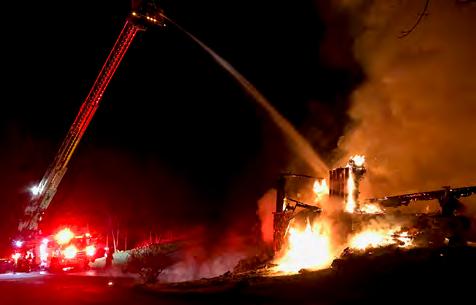
It’s hard to get anywhere past the entrance of the camp, as dozens of firefighters are already at the scene. They’re all asking for water. As my family rounds the corner, they come face to face with the tragedy before them. What used to be the camp’s beautiful wooden spiritual home was now engulfed in flames. The flashing fire against the dark sky lights up the tear-filled faces of my family looming helplessly on the sidelines. Firefighters would not let them come near the structure, but the view was clear enough from where they stood. Limp and anguished, they watch the building that cultivated their childhood memories and their faith be devoured in flames and slowly die before their eyes.
“I never cry. But at that moment, I cried,” Andrew says.
The next few weeks were filled with grief and consoling the many campers and retreatants who felt the loss as well. A metaphorical darkness came about the camp — every time someone drove past the caution tape section, it felt like a healing wound kept being reopened.
Oct. 24, 2018, is a day that the community remembers like it was yesterday.
So many families came up to visit the hole that once held the place they called their second home. Tears were shed and hands were held. All we could do was silently embrace each other because there were no words that could describe our feelings. My family barely had time to process the loss, but we still tried to console others in their grief. Loyal retreatants and musically gifted campers came to sing and to create videos to post as fundraisers, some as soon as the day of the fire.
To this day, we don't know what caused it.
’80s. When you hear them, their accents give away their Polish identity. Tragedy and loss are not new to an immigrant’s life story. Leaving behind a piece of themselves and everything they’d come to know in their physical homes in Poland was incredibly difficult. America could never supply the roots that their home country established for them, but they came here in search of a better life.
But this time it was different. This chapel was a symbol of everything they’ve worked toward — you can say it was like their American dream. Losing a place so filled with spirit, memories and hope for the future was a heartbreak they never thought they would experience.
Immediately after the fire — within hours of the chapel burning down — Camp Vista already experienced tremendous support from the local community.
A friend started a GoFundMe. A group of local 7th graders hosted a bake sale. Local neighbors rolled up their sleeves — and their equipment — to help with the clean up.
The camp itself is a humble place. Built in the early ’60s by founder Fischer, the camp’s purpose is to be a peaceful setting filled with 250 acres of natural beauty that inspires the mind, rejuvenates the soul, and connects people with God and each other.
Andrew, in addition to his presidential role, is also the constructor, carpenter, maintenance man, program developer and project manager — just to name a few — of the camp grounds. Along with my mom, Anna, and my brothers and sisters, we have taken care of Camp Vista since 2008.
My parents both immigrated to the United States from Poland in the
This showed Camp Vista, a nonprofit organization, that we had support from those we serve. A morale boost was very much needed because, in addition to planning the construction of a new building suitable for cultivating the faith and values of the next generation, we had to come up with $3.8 million to fund the project.
The groundbreaking ceremony for the building of the chapel happened on March 13, 2020 — the same day the White House declared the coronavirus a national emergency. While the rest of the world slowed down, construction moved forward on a new chapel. The supplies were preordered and supply chain shortages were avoided. However, with businesses closing down, finding momentum to raise funds proved to be the most difficult task of all.
As a unique aspect to its fundraising, Camp Vista sent out brass vials that served as personal prayer time capsules. Friends of Camp Vista could fill out these time capsules with their family, writing down the deepest hopes and desires for their present and future families. When the foundation was laid, these capsules were placed in the drying concrete and filled in, sealing these intentions in the chapel for generations to come.
Throughout the building process, my dad was very involved in the construction of the chapel. He and my brothers would sometimes wake up at 3 a.m. to get a project done before the rest of the team got there.
My dad also went out of his way to make sure the community was involved in this project. He prioritized getting smaller tradesmen on the job to support local Wisconsin craftsmen.
“Trades on the job were near and dear to the Camp Vista community,” says Jeff Redman, project manager at C.D. Smith, the company that built the main structure of the chapel. “Some craftsmen were too small for us [as contractors] to recommend, but Andrew wanted the community involved.”
Slowly but surely, the construction started looking more and more complete, and we’re growing to love it as much as the old one.
My dad says he wouldn’t want to go back to what the chapel looked like before — the new one is better in every way he could have imagined.
“Everyone has their own little chapel in their life,” my dad says, reflecting on the fire and the effort to rebuild. “To them, it’s perfect and they’re very attached to it. But one day they wake up and their chapel is ripped from their life, burned to the ground. That’s where faith and hope come in — proving in a time that great things can come from our darkest moments.”
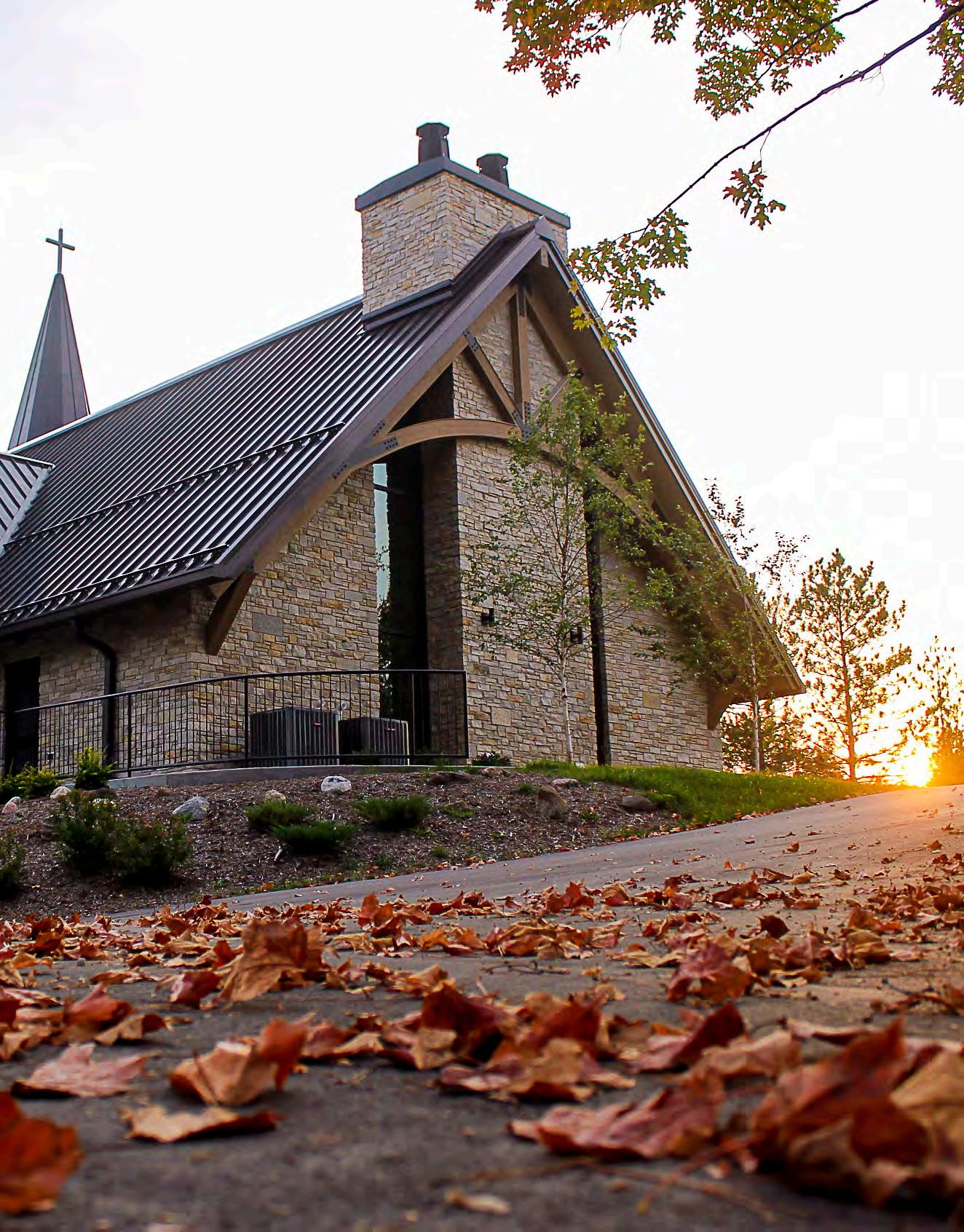
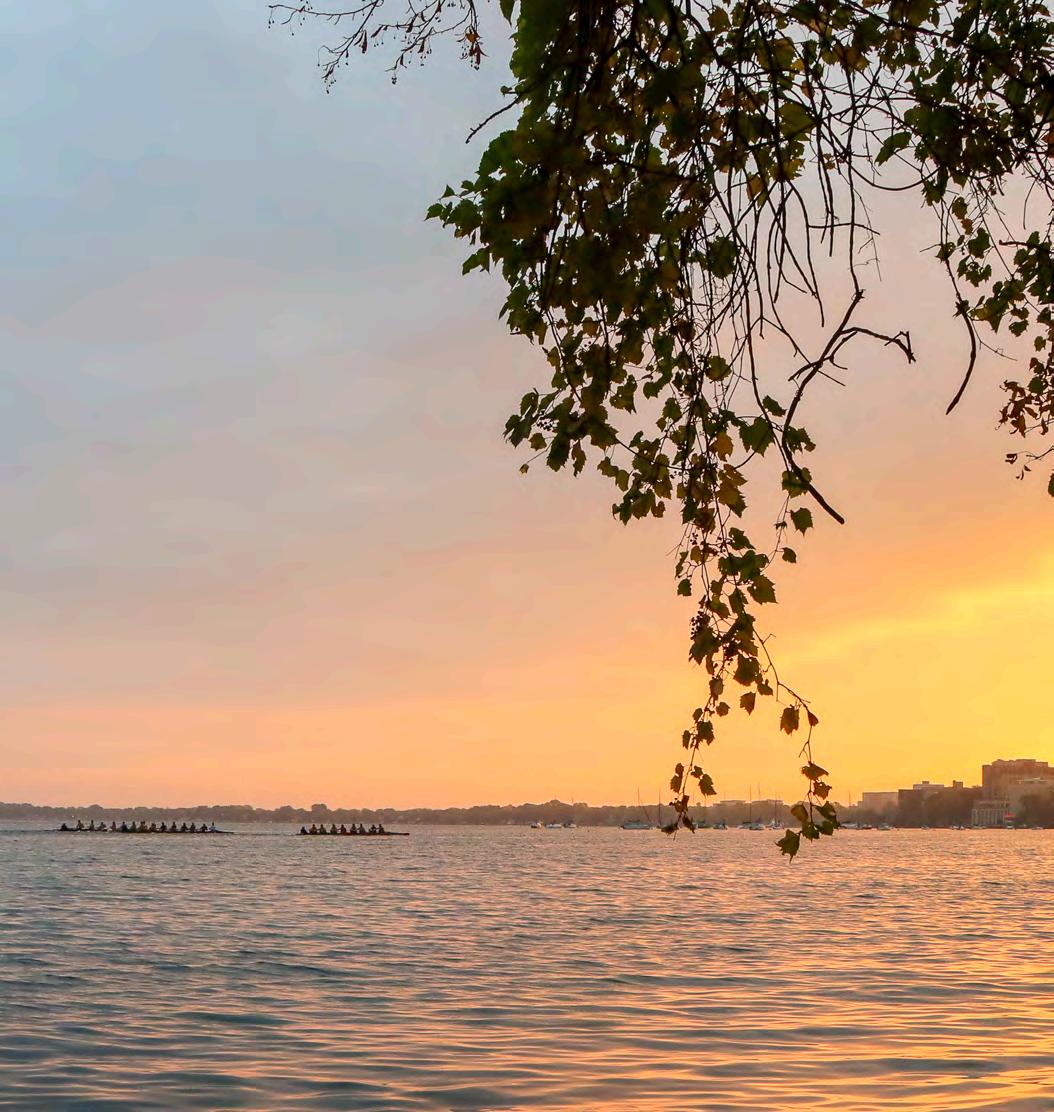
At the break of dawn, a fresh day presents itself as a blank slate — an opportunity to start anew. Our eyes open, and we are called to simply take the next step. But in the end, the darkness is what teaches us to appreciate the day. The gloom makes the sun shine brighter. We now know that the dark is not something to fear — it is a necessary part of our life cycle that we embrace.
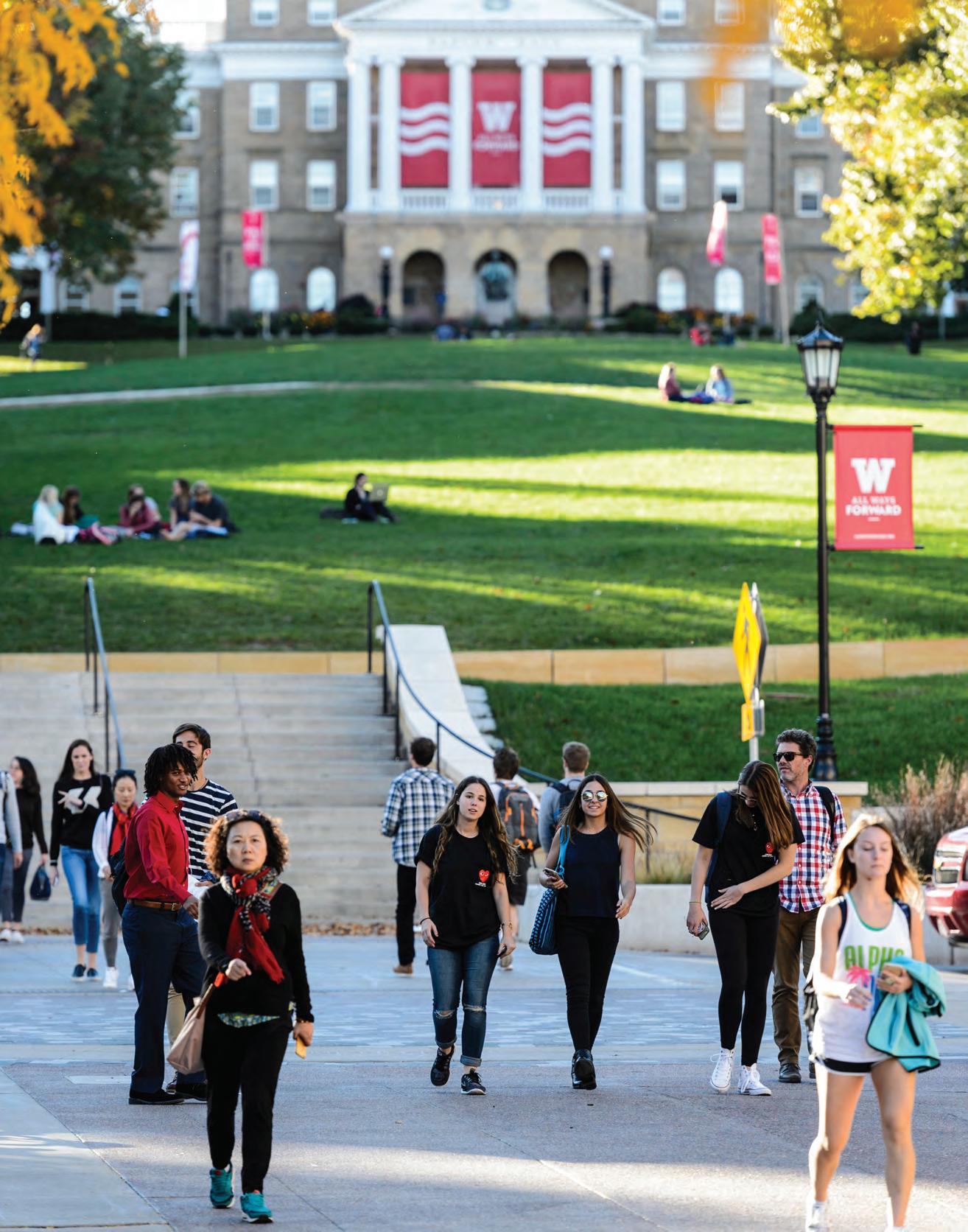
5115 Vilas Hall, 821 University Ave. Madison, Wisconsin 53706
Curb is produced and published every fall by a class of students in the UW-Madison School of Journalism and Mass Communication. Complimentary copies are distributed to thousands of alumni across the state.




J-School students get access to a world-class, hands-on education that sets them up to be the most experienced writer, presenter and thinker in the room.