Whole Notes
The magazine for friends and alumni of the University of Washington School of Music
From the Director IN THIS ISSUE
As we reach the conclusion of a busy quarter and a busy calendar year, we have much news to share from our faculty, students, and alumni about their good work here at the University and beyond. This issue of Whole Notes covers just a small portion of the activities under way in our community during the 2023-24 academic year and up to the final weeks of 2024.
23
25
29
30
Whole Notes
Volume 12, Number 1 Fall 2024
Editor Joanne DePue
Design Chelsea Broeder
Photography Mark Stone, Steve Korn, Madelyn Harris, Joanne DePue, Emilia Kister, UW Photography, and others as credited.
Whole Notes is an annual publication of the University of Washington School of Music.
We’d love to hear from you
We welcome updates from School of Music alumni and faculty. Please drop us a line and share your latest news and accomplishments. We will include your update, as space allows, in an upcoming issue of Whole Notes.
Send updates to:
Publicity Office
School of Music, Box 353450, University of Washington Seattle, WA 98195-3450, or email musinfo@uw.edu
In this issue, we welcome new faculty joining us this academic year: Francisco Luis Reyes (Music Education), William Doughterty (Composition), Andrew Munsey (Music and Technology), and Stephanie Richards (Music). We congratulate School of Music student Olivia Wang, awarded an Arts and Sciences Dean’s Medal (the College’s top academic achievement award for graduating students), as well as students with ties to Music recently chosen for the UW’s Husky 100.
We also are excited to announce in this issue the next phase of our fundraising campaign to update critical spaces in the Music Building. I extend my deepest thanks to the generous School of Music friends whose gifts bring us to this important milestone, and to those who may consider helping us to successfully complete the campaign. Thank you, also, to all of the wonderful audience members who attend our performances. We have greatly appreciated your support over the past year and look forward to welcoming you back to our concert halls in 2025!
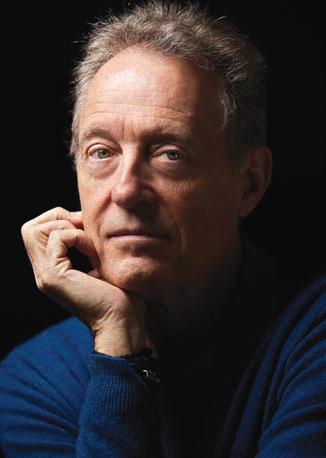
Joël-François Durand, Acting Director, School of Music
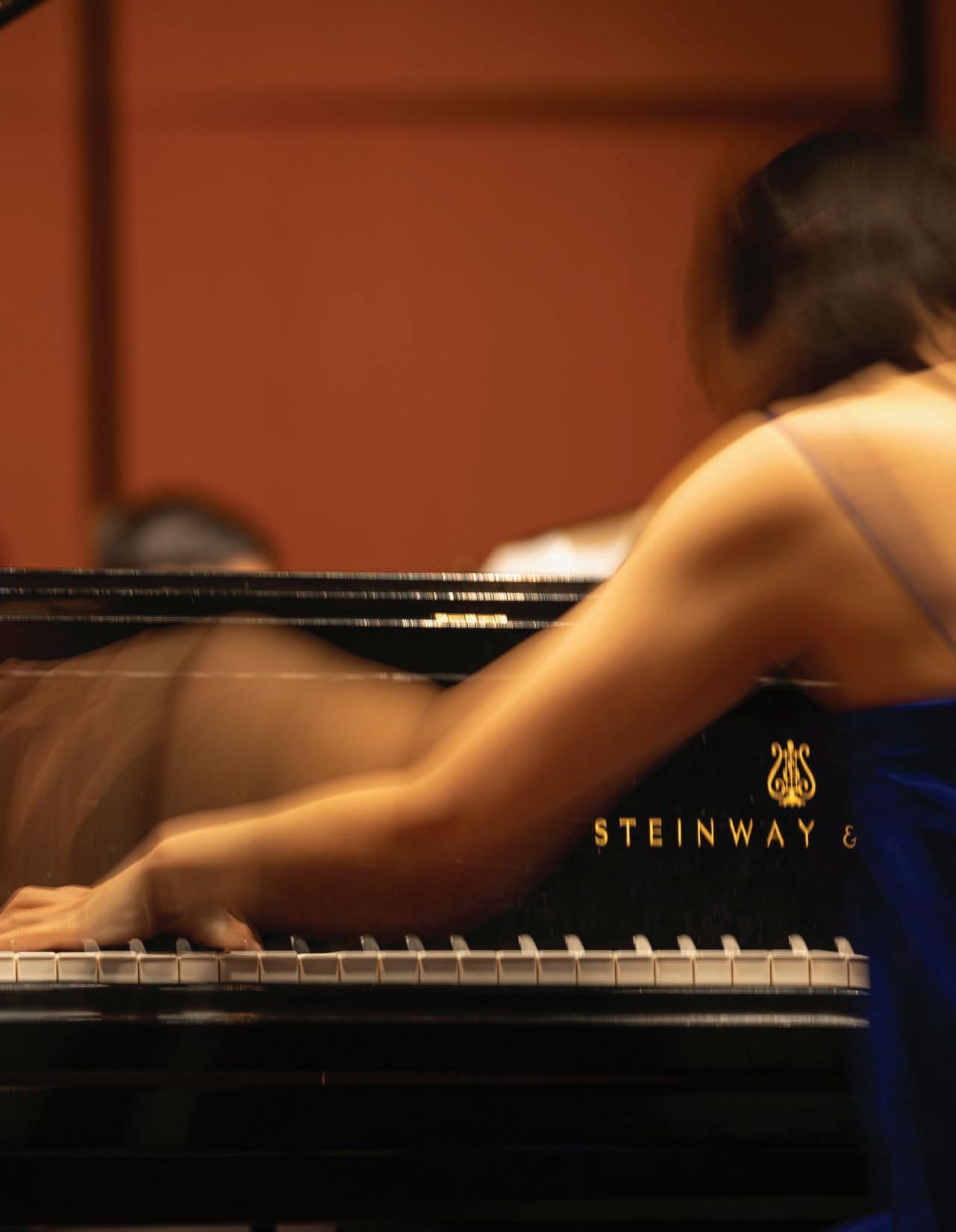
Front Cover: Wind Ensemble South Korea Tour Rehearsal
Photo: Mark Stone/UW Photography
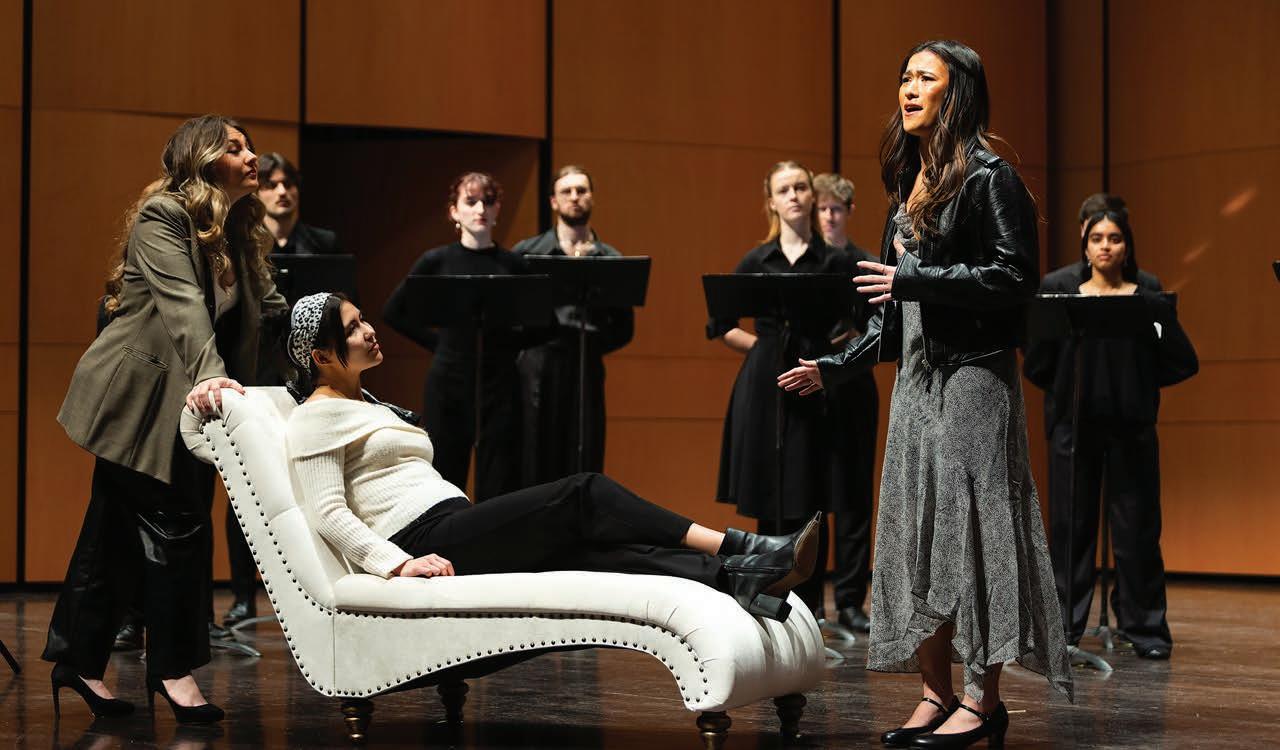
Back Cover: Stage rehearsal, Chamber Singers with Opera Workshop at Meany Hall.
Photo: UW Photography
Music Building campaign milestone reached
The campaign to revitalize critical spaces in the University of Washington Music Building has reached an important milestone, with generous gifts from UW friends helping to secure funding necessary to unlock matching funds from UW leadership and to move the project to the next phase of planning.
School of Music acting director Joël-François Durand recently announced to faculty and staff that LMN Architects will be the official prime consultant and lead design team for the renovations.
“The next phase of the project will be the work on the details of design for the renovation,” he said. “The actual construction is scheduled to start in June 2026, after the 2025-26 school year is over.” Renovation plans include extensive modernization of the school’s Brechemin Auditorium, creation of a new recital hall, and rejuvenation of public spaces.
Seattle-based LMN Architects is deeply experienced in the creation of arts and culture spaces as well as spaces inhabited by schools of music. Some relevant projects include Seattle’s leading performing arts spaces—Benaroya Hall and McCaw Hall, home of Seattle Symphony and Pacific Northwest Ballet; the Voxman Music Building at the University of Iowa; Conrad Prebys Music Center at the University of California, San Diego; and various regional community arts centers, including Vashon Center for the Arts, Federal Way Performing Arts
and Events Center, and the Buxton Center for Bainbridge Performing Arts. The firm excels in the design of collaborative, flexible spaces conducive to innovative work in the arts, with special attention paid to optimizing acoustic and technological environments.
“The support provided by Provost Tricia Serio and Dean of Arts and Sciences Dianne Harris is an unprecedented commitment to the centrality of the arts at the UW,” Durand says. “In addition to the financial investment from UW leadership, we are extremely grateful to our donors who have already contributed almost $2 million of the School’s commitment to raise $2.5 million by March 2025 to complete the project in its entirety. Thank you for considering joining this exciting and vital campaign.”
For more information, contact: Stephanie Kornfeld, Director of Advancement for the Arts, at kornfs@uw.edu.
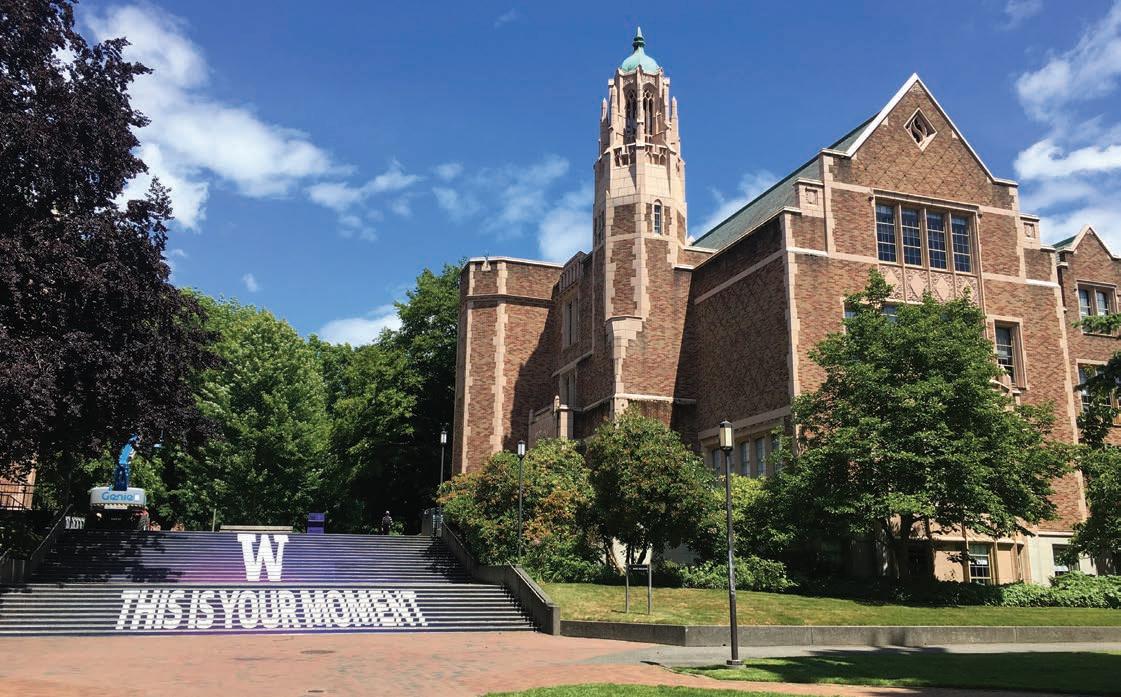
A view of the Music Building from the Quad (Photo: Joanne DePue).
UW Music student Olivia Wang awarded College of Arts and Sciences Dean’s Medal
School of Music graduate Olivia Wang was named a 2023-24 recipient of the University of Washington College of Arts and Sciences Dean’s Medal, a distinction awarded to the top graduating senior of each division of the College.
“This is one of the most distinguished honors we bestow, and I’m very pleased to commend you on your amazing record of academic achievement,” wrote Arts and Sciences Dean Dianne Harris in her commendation letter to Wang.
Along with making exceptional progress in her coursework while earning degrees in Computer Science and Music Theory, Wang integrated her studies into compelling interdisciplinary research and devoted time and energy to volunteer service benefiting the entire School of Music community. She also participated in numerous ensembles on various instruments— piano, violin, percussion, and voice—and even dabbled in conducting for a recent Symphonic Band performance.
While a student at the UW, Wang performed in Percussion Ensemble, UW Symphony Orchestra, Campus Philharmonia Orchestra, performed in chamber music groups, sang in Recital Choir, and served as a piano accompanist for some student juries. She also took an active leadership role in the School of Music Student Advisory Council (SoMSAC) and served alongside faculty and administrative colleagues as the student representative on the School’s Diversity, Equity, Inclusion, and Access (DEIA) Committee.
“I’ve definitely grown as a musician and as a person here,” she says. “I will always owe the School of Music gratitude for that.”
A common theme emerged in the work Wang performed at the UW, both in Computer Science and in Music: playing a supportive but important role in improving the lives of others. This she did as a musician, as a computer scientist, and as an advocate for student voices.
“My personality is like the second violin,” she says. “It’s a supporting role, but an important role in shaping the overall music and working together with others to make something awesome.”
The work of SoMSAC (Wang served as president) has been directed toward amplifying student voices and needs and thereby increasing the visibility of students at the School of Music. “Giving people a chance to shine in ways they should be recognized creates a more connected culture,” Wang says. The group’s work in 2022-23 resulted in more public acknowledgement of student activities such as degree recitals, outside research, and artistic endeavors.
In 2023-24, the group focused on issues related to hearing protection for musicians, and in working toward creating a culture at the School of Music in which wearing ear protection is seen as a positive measure. SoMSAC worked with the UW’s Environmental Health and Safety division to measure levels of noise at a typical orchestra rehearsal and planned to release findings in the coming months.
“Olivia is a brilliant interdisciplinary thinker, and her combination of academic excellence and campus service at the University of Washington merit the highest recognition from the College,” wrote Music History professor Anne Searcy in nominating Wang for the Dean’s Medal. Searcy, chair of the School’s DEIA committee, worked with Wang on that committee and served as a faculty mentor in her undergraduate research, which Wang presented in May at t he
UW’s Undergraduate Research Symposium. Her project, “Impact of Music and Sound on Video Game User Experiences,” incorporated her interests in music, computer science, and accessibility, investigating how elements of a game’s sound or music are perceived by the user and how that perception impacts decision-making. Findings from the work could aid in the development of software with effective and meaningful auditory elements for users.
As she prepared to head off to Illinois to start PhD studies in Informatics at the University of Illinois at Urbana-Champaign, Wang planned to continue exploring the potential of sound and music as accessibility tools—a means of conveying and making more accessible important information that helps to improve lives. “I care a lot about DEIA issues, she says. “DEIA is something I always emphasize or work toward.”
The end game in all aspects of her research and music making is a desire to help others to live better lives and doing so by increasing accessibility.
“The world isn’t accessible to all, but highlighting people’s experiences and the importance of accessibility makes for a more inclusive world for everyone,” she says. “Whenever you center on people you can find ways to create joy. My passion is people and what makes them happy.”
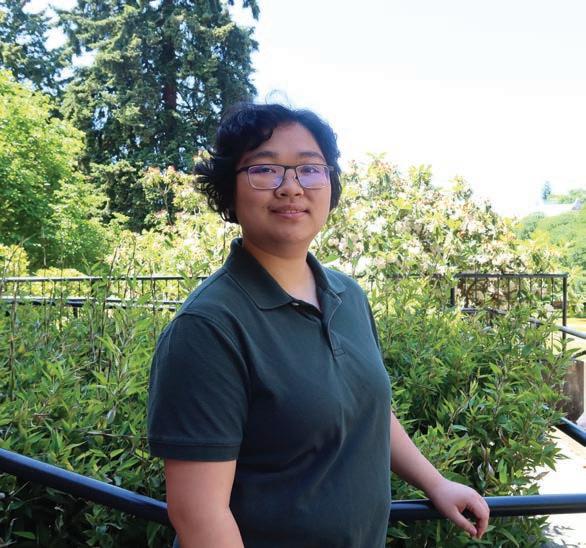
School of Music graduate Olivia Wang (‘24 BS, Computer Science; BA, Music Theory) was awarded a College of Arts and Sciences Dean’s Medal (Photo: Joanne DePue).
New Faculty Welcomed
The School of Music recently announced the successful completion of faculty searches in the areas of Music Education; Composition/Improvisation/Theory; and Music Technology, plus a spousal hire in Music. New appointments became effective in Fall 2024 and Winter 2025.
Francisco Luis Reyes, Music Education
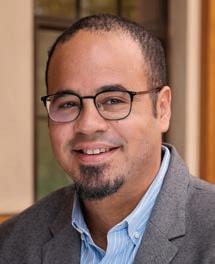
The UW gained a new assistant professor of Music Education in Fall 2024 with the recent selection of Francisco Luis Reyes to join the Music Education faculty at the School of Music.
A Latin Grammy-nominated saxophonist, music educator, and researcher, Dr. Reyes holds a PhD in Music Education from McGill University, an MA in Music Education from the Universidad de Granada, and a BMus in Jazz and Caribbean Music from the Conservatorio de Música de Puerto Rico. His research interests include sociology of education, postcolonial education, and teacher education and traditional music in music education. He has published his work in the Canadian Music Educator and Research Studies in Music Education. He has also been invited to share his research in conferences in Canada, Finland, Italy, Mexico, Sweden, United Kingdom, and United States.
William Dougherty, Composition/Improvisation/Theory
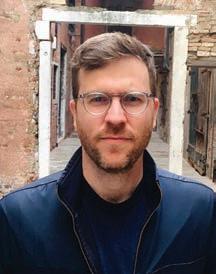
Composer and sound artist William (Bill) Dougherty joins the School of Music faculty in Winter Quarter 2025 as assistant professor of Composition/Improvisation/Theory. Previously a faculty member at Temple University, Dougherty earned his DMA at Columbia University in New York City. His works have been performed internationally by ensembles including BBC Scottish Symphony Orchestra (Glasgow), The Sun Ra Arkestra (Philadelphia),Yarn/Wire (New York), Ensemble Phoenix; JACK Quartet (New York), and Talea Ensemble (New York). He is the recipient of top composing awards and prizes, including the Luciano Berio Rome Prize in Music Composition (2021) as well as honors and fellowships from Civitella Ranieri Foundation, the American Academy of Arts and Letters, G audeamus Muziekweek, the Internationale Gesellschaft für Neue Musik (IGNM/ISCM), and the Aaron Copland House, among others.
Dougherty has served in a wide range of musical capacities outside of the world of art music, playing piano for early childhood music classes at the L ittle London Music School, serving as the Principal Organist and Choir Director of St. Mary Magdalen’s Church in England, and writing and performing original music for a children’s puppet show at the Philadelphia Fringe Festival. As Founder and Director
of the Philadelphia Community Orchestra, Dougherty leads an instrumental ensemble—open to all ages and skill levels—that focuses on experimental, improvised, and alternative musicmaking in Center City, Philadelphia.
Andrew Munsey, Music and Technology
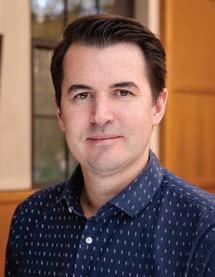
Andrew B. Munsey joined the Jazz Studies faculty in Fall 2024 as an assistant professor, tasked with leading the School’s fledgling Music and Technology program. A drummer, composer, and Grammy-nominated recording engineer, Munsey has performed and premiered works throughout North America and Europe. His collaborative works as a sound designer and composer have been exhibited and screened at the Guggenheim Museum, Centre Pompidou (FR), Documenta (DE), Van Gogh Museum (NL), Anthology Film Archives, and the Library of Congress, with festivals including the International Film Festival Rotterdam, BFI London, and the Sundance and Toronto Film Festivals. His work as a sound mixer for television can be heard on PBS, Discovery International, Smithsonian, Comedy Central, and Spike TV networks.
Stephanie Richards, Music
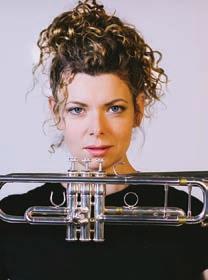
Stephanie Richards joined the UW faculty in Fall 2024 as a professor of music, an appointment made possible through a spousal hire agreement between the UW and her spouse, Andrew Munsey. A trumpet player, improviser and composer, as well as a bandleader, curator, producer, and conductor, Richards has performed commissioned pieces and her own compositions at legendary venues like Lincoln Center, Carnegie Hall, and the Blue Note. She has collaborated with artists including Henry Threadgill, Butch Morris, John Zorn, and Anthony Braxton, composer Helmut Lachenmann, and performance artists Mike Kelly and Yoko Ono. As a founding member of Asphalt Orchestra, created by the new music collective Bang on a Can, Richards has worked with David Byrne, St. Vincent, Susan Marshall, and Tyondai Braxton, among others. She holds degrees from the Eastman School of Music, McGill University, and California Institute of the Arts, and has held residency at Stanford University.
“We are thrilled to welcome Francisco Luis Reyes, William Dougherty, Andrew Munsey, and Stephanie Richards to our faculty,” says acting director Joël-François Durand. “Their areas of research and approaches to teaching and performance are well-aligned with the values and priorities we had hoped to foster with these faculty searches. We anticipate they will enhance in many positive ways the relationships between our programs in the School of Music.”
UW Music students among the 2024 Husky 100
School of Music student Brandon Cain was named one of the University of Washington’s 2024 Husky 100, recognized by the UW as being exemplary of a student making the most of their University of Washington experience.
The annual recognition is granted to 100 undergraduate, graduate and professional students from the UW Bothell, Seattle and Tacoma campuses in all areas of study.
Cain, who graduated in June 2024 with a BM in Music Education and a BA in Music, and a minor in Education, Learning, & Society (ELS), did his student teaching with the Snoqualmie Valley School District working at Mount Si High School and at Snoqualmie Valley middle schools. While a UW student, he performed in the trumpet section of numerous School of Music ensembles, including the Husky Marching Band, Wind Ensemble, Symphonic Band, and Studio Jazz Ensemble.
Besides academics, Cain served as an ASUW senator, and took part in a number of registered student organizations as well as Theta Delta Chi Fraternity. He took a turn as Harry the Husky through his Husky Marching Band affiliation and earned a Husky Leadership Certificate through the U W’s Community Engagement and Leadership Education Center (CELE).
UW Choral students Ruby Whelen, Karsten Lomax recognized
The Husky 100 also recognized undergraduates Ruby Whelen and Karsten Lomax, who participated in School of Music ensembles while earning their UW degrees.
Whelen, a fourth-year undergraduate student majoring in Sociology with a minor in Data Science, wrote her thesis on the intersection of gender, stigma, and incarceration. Aside from her thesis, Ruby sang in University Chorale and UW Chamber Singers and performed in musicals with UW Stage Notes.
Through roles encompassing undergraduate research in Criminal Justice and Sociology, leadership and performance positions with UW Stage Notes,
advocacy with The Pad Project, and global immersion through UW Study Abroad, Whalen cultivated a diverse and valuable skill set. “I am eager to leverage these experiences and abilities,” she says, “to address pressing social and environmental challenges in order to help create a more sustainable and equitable future.” Karsten Lomax, a senior majoring in Comparative History of Ideas and Cinema and Media Studies, found an important sense of community at the School of Music. “I found relationships and community at the UW that granted me the space and freedom to be vulnerable while exploring and experimenting with research and creative work,” Lomax says. “One of the very first communities I found was the UW Chorale. It’s been there year after year as everything else changed. I am so grateful for music and music-making with this incredible group.”
Career honors for violist/composer Melia Watras
Recent honors awarded to violist Melia Watras, head of the UW Strings program, recognize her distinguished contributions to the instrument as performer, composer, teacher, and leader. The Maurice W. Riley Award, granted annually by the American Viola Society (AVS), honors outstanding exemplars of the viola world.
Watras was presented the award at the 2024 AVS Festival, held at the Colburn School in Los Angeles this past summer. AVS also commissioned a work from Watras for viola ensemble. Her composition Fantasies in alto clef received its world premiere at the festival. Watras was the AVS Artist-in-Residence for May and June, 2024.
Watras’s work is multi-faceted and ecompasses composing and commissioning new works for viola, creating and realizing complex interdisciplinary presentations of innovative, original repertoire in both live and recorded formats. In her 2024 UW faculty recital, she debuted works from Play/ Write, her latest release of original and commissioned works. She marks the release of a new CD, the almond tree duos, at the UW on March 14, 2025 (Brechemin Auditorium), and her May 5 faculty recital at Meany Hall premieres a new multi-disciplinary project, Broken Bell, a collaboration with writer Sean Harvey.
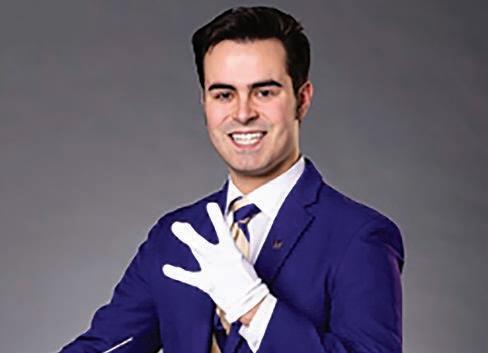
School of Music student Brandon Cain.
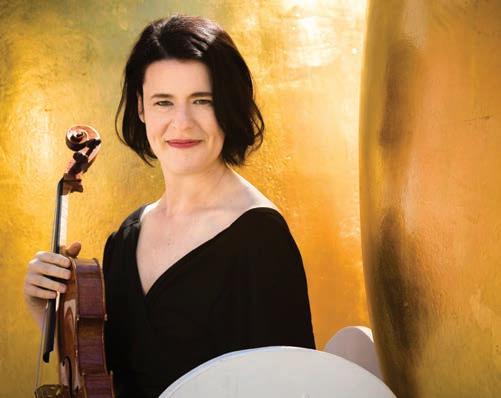
Professor Melia Watras (Photo: Michelle Smith-Lewis).
CLASS OF 2024
GRAND FINALE
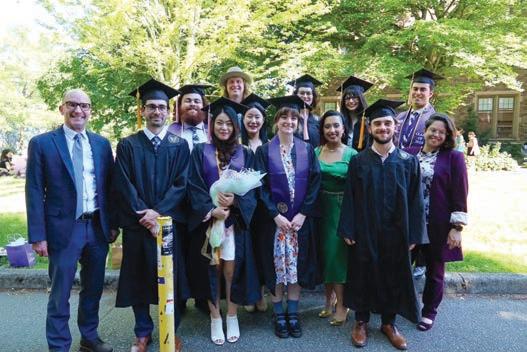
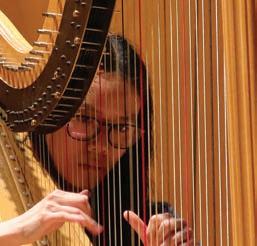
The University of Washington School of Music celebrated its Class of 2024 on Friday, June 7 with the school’s annual Grand Finale, featuring student and faculty remarks, a performance by harpist Kelly Hou (BM Orchestral Instruments, BS Informatics), and a graduate processional across the stage of the School of Music’s Brechemin Auditorium.
The Class of 2024 includes 55 graduates, with 26 earning graduate degrees and 29 earning bachelor’s degrees. Of the undergraduates, seven students earned two degrees, either in music or other disciplines such as Anthropology, Business, Informatics, Communication, and Comparative History of Ideas, among others. Master’s student Nicole Stankovic earned two master’s degrees—an MM in Piano Performance and an MA in Public Health—as did master’s student Melissa Wang—who earned an MM in Composition and MM in Percussion Performance.
Two graduates received special recognition from the UW: Olivia Wang (BA Music Theory, BS Computer Science) was awarded the College of Arts and Sciences Dean’s Medal in recognition of her outstanding academic record. Senior Brandon Michael Cain (BA, Music; BM, Music Education) was named a member of the 2024 Husky 100, recognizing graduates who have made the most of their UW educations.
Special remarks were delivered by School of Music acting director Joël-François Durand, divisional dean for the arts Gabriel Solis, associate professor of Ethnomusicology John-Carlos Perea, and graduates Mavis Chan (BM, Vocal Performance, BA Business Administration) and Justin Birchell (DMA Choral Conducting). Brechemin Auditorium was filled to capacity with grads, families, friends, and other supporters.
Congrats, Grads!
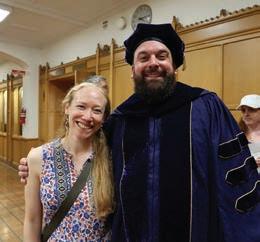
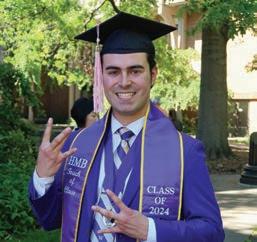
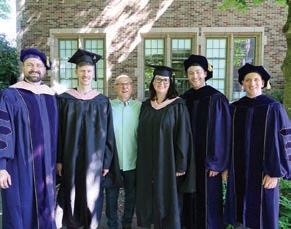
Graduate Choral Cohort with Professor Geoffrey Boes (left to right): Justin Birchell, Scott Fikse, Larke Witten, Tyler Kimmel, and Jeremy Morada.
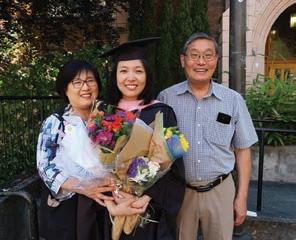
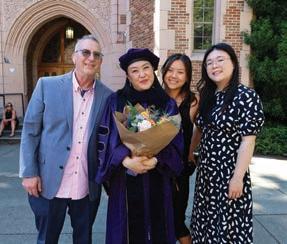
DMA graduate Eun Ju Vivianna Oh (‘24 DMA, Voice) with proud family members.
Grad Kelly Hou (‘24 BM, Orchestral Instruments) performed at the Grand Finale celebration.
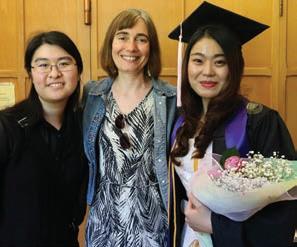
Grads Emily Chua (BA, Music), left, and Ellen Kwon (BM, Music Education, Piano Performance) right, with artist-inresidence Cristina Valdés.
Percussion Studies Chair Bonnie Whiting with graduate Scott Farkus (‘24 DMA, Percussion Performance).
Class of 2024 Music Education graduates with program chair Christopher Roberts (far left) and faculty member Anita Kumar (far right). Photos this page: Joanne DePue
Graduate Grace Jun (‘24 MM, Flute Performance) and parents.
Brandon Cain (BA, Music; BM, Music Education).
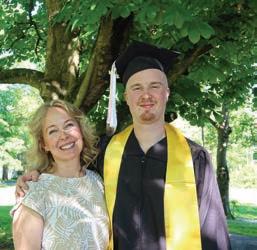
Jazz Studies grad Markus Teuton (‘24 BM Jazz Studies, BA CHID) and mom.
Q and A: Paul Rafanelli, bassoon
When School of Music faculty bassoonist Paul Rafanelli performed Mozart’s Bassoon Concerto in B-flat major with the UW Symphony at Meany Hall on March 8, 2024, it was with a sense of déjà vu—the Seattle Symphony bassoonist and UW artist-in-residence performed the same piece in the same location with the UW orchestra in March 1984—almost exactly 40 years earlier—while a student at the UW.
Leading up to his spotlight performance last March, the head of the UW bassoon studio graciously agreed to answer our questions about his past and current connections to the School of Music, important lessons learned, and advice he would give to any aspiring musician.
Q: How did you get started on the bassoon?
I started late! I grew up going to a private school that didn’t have a music program, so when I went into public high school, I really wanted to play an instrument other than piano (which I had studied for years). I chose the bassoon sort of as a joke because I thought it was funny. That opinion changed as I realized that I had some natural talent for it and started to learn how much range of expression the instrument was capable of. I started buying bassoon recordings (pretty esoteric for a 13-year-old) and really learning what the instrument could do.
Q: Was your solo with the orchestra because you had won the Concerto Competition?
A: When I was a student at UW the Brechemin Scholarship was the top award, and the most prestigious at the School of Music. A concerto/solo performance with the orchestra was part of the package when one won the Brechemin Scholarship. That is how I came to play it with the UW Symphony, by winning the scholarship in my senior year.
Q: What do you most love about this concerto?
A: So many wonderful things. It is “young” Mozart—he was 17 when he wrote it—and it has that youthful sense of freshness and fun to it. The first movement feels like we’re going to a party! And it is deceptive in its difficulty. It sounds simple, but if you’ve ever heard someone struggle with any piece by Mozart (pianists, singers, string players—
anyone), we realize how difficult it is to make his music sound poised and natural.
Q: What is your biggest challenge in preparing for the performance?
A: I am a full-time member of the Seattle Symphony, and we don’t routinely play concerti. So the biggest issue for me to overcome is how to step into that role of “soloist” and take the lead. It’s a mindset that I have to learn to inhabit.
We also don’t play from memory in the symphony, so that is something that I’m very focused on. Luckily this piece is so well known to me, after playing it and refining it for over 40 years, and preparing it for auditions, and teaching it for years, that I am pretty secure about the memorization part.
I’m still a little nervous about the cadenzas—you’re really naked in those moments, so I want them to sound good! When I performed it in March 1984, I wrote my own cadenzas. This time I decided to use the cadenzas written by Bernard Garfield, long time principal bassoonist of the Continued next page
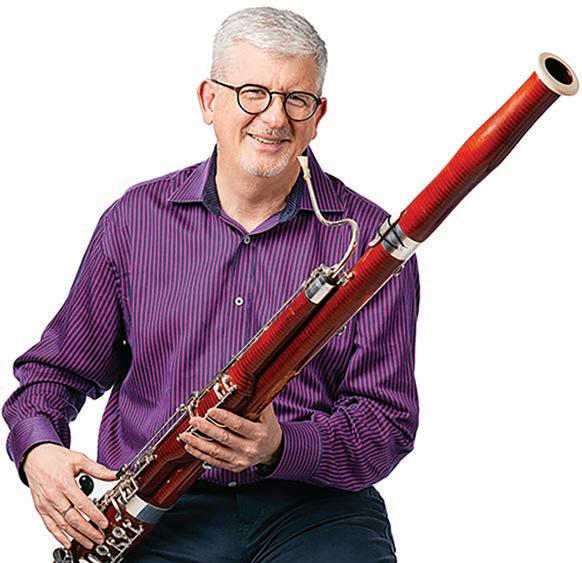
Paul Rafanelli (Photo: Steve Korn).
Philadelphia Orchestra (now retired); his recording of the concerto was the first one I ever heard, so his sound, his interpretation, and those cadenzas are very much a part of my concept of the piece.
Q: Who was the orchestra director when you were a student? Were you the principal bassoonist? Did you study with Arthur Grossman?
The orchestra conductor was Robert Feist, who knew a lot about opera and was actually a very reliable conductor. He is no longer with us, but he used to show up at Seattle Symphony concerts when I first started there, and it was interesting to reconnect. I shared principal bassoon responsibilities at UW with other students, but by the time I got to my senior year I played almost all principal. That was a great great thing about UW, that I had learned so much repertoire by the time I got to grad school. Yes Mr. Grossman was my teacher and he was very demanding! In the good way!
Q: What is something you learned while a student here that you have imparted to your own students?
Preparation is key. I think a lot of students don’t prepare methodically and try to throw things together at the last minute. I try to instill good practice habits. But of course, in the end it is up to the student to take my advice or not.
I also think it’s important to be able to troubleshoot, to analyze exactly where the problems are and isolate them, so you can “teach yourself” when there are really hard passages, or hurdles in your playing that you need to fix.
Q: Reedmaking: Enjoyable or not so much?
It’s a necessary evil. A lifelong struggle, but if you can make something that you can play on, that is the goal. It is such a huge part of our lives—reed making is part of the technique of playing the bassoon! I’m still learning. I hope that by the time I retire from the SSO I will have mastered reed making—Ha!
Q: Any words of wisdom you’d like to share with aspiring musicians?
Again, preparation. Disciplined practice with the metronome. If you prepare well, doors will open to you. I have a little saying: there’s really no such thing as “luck”—luck happens when preparation meets opportunity!
Passages: Susan Willanger Cady
Former longtime School of Music piano technician Susan Willanger Cady died in early September, 2024, after a long, recurring battle with cancer. Susan started work at the School of Music in the early 1990s, assisting Steve Brady, the School’s former head piano technician, and was hired permanently in 1995. She retired in 2017.
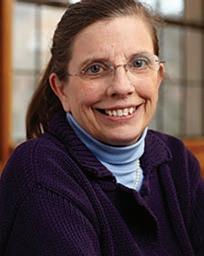
A self-avowed “Steinway junkie,” Susan worked hand-inhand at the School of Music with former tech Doug Wood, who came aboard upon Brady’s retirement, and together they maintained and tuned the School’s fleet of more than 100 pianos, including both modern and historical instruments. The two first met in 1986 when Susan was completing testing to become a registered piano technician.
“When I was taking the tests to put the RPT letters behind my name, Doug gave me one of the tests,” she said. “That set off a whole chain reaction for me. It catapulted me into the world of Steinway. I went back to New York multiple times. We’re both so fortunate that we were in the right place at the right time to be trained by the best Steinway technicians in the world.”
Current School of Music piano technician Jack Lofton considered Susan a close friend and colleague since 1987, from their earliest days working together at Seattle’s Sherman Clay pianos.
“Those first few months at Sherman Clay where she called me a ‘fledgling’ and a ‘downy bird’—it was not meant as a slight at all,” he says. “It was endearing. I found out early on that I could talk to her, not just about pianos, but about anything. She was there for me when I was devastated after my then-girlfriend dumped me. Saying that it was her loss and that I deserved better. I called her late one evening as I had reached what I dubbed ‘tuning delirium.’ She reminded me that it wasn’t me. It was the terrible piano that would never sound right no matter what I did. Told me to go home and get some sleep.”
“There were so many texts back and forth while I was at the UW and wanted some advice,” he continues. “At the end of one thread, I said that I’d better leave before the harpsichord I was working on went out of tune. Her response was immediate and contained one word: Run!!!”
WIND ENSEMBLE SOUTH KOREA TOUR MARCH 2024
All photos: Roger Wu Fu (except where noted)
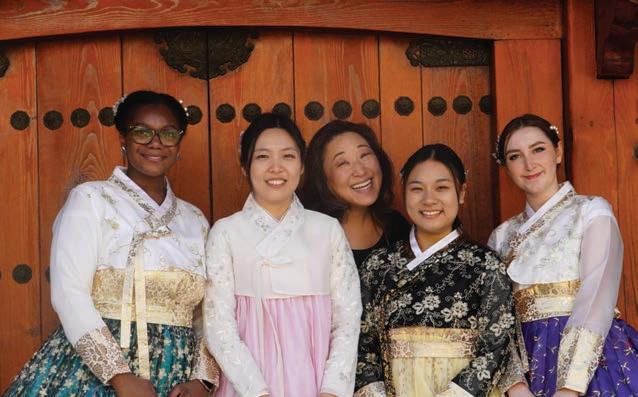
While many of the School of Music’s students and faculty welcomed a short break at the end of Winter Quarter 2024, members of the UW Wind Ensemble and director Timothy Salzman were on the move, traveling, rehearsing, and performing in South Korea.
The ensemble traveled in South Korea March 16-22 for performances at Woosong University in Daejeon, South Korea. They were accompanied by voice DMA student Eun Ju Vivianna Oh, flute professor Donna Shin, and DMA pianist Mia HyeYeon Kim, all of whom were traveling and performing with the ensemble, as well as graduate student conductors Shaun Day, Roger Wu Fu, and David Stewart. Maya Ben-Yosef, the School of Music’s program support supervisor, served as the band’s business manager during the tour. School of Music alumni Minsun Kim (DMA, piano) and Juno Lee (’15 DMA, flute), both of whom live in South Korea, performed with the group in Daejeon.
The 56 student musicians flew out of Seattle on March 16, arriving in Seoul the following day. After a quick day of rehearsals, the ensemble performed back-to-back concerts on consecutive days and wrapped up the trip with a day of sightseeing before flying back to Seattle March 22.
“In March of 2020 the UW Wind Ensemble was only a couple of weeks away from traveling to South Korea for a concert tour when the pandemic hit,” says Professor Salzman. “We are so deeply grateful to Woosong University for this invitation to come and perform as it was definitely a dream fulfilled.”
The group previewed their tour program on March 7 in Meany Hall with a couple of differences: George Gershwin’s Rhapsody in Blue was performed in Seattle by Professor Robin McCabe and in Korea by DMA pianist Mia HyeYeon Kim. Franz Doppler’s Andante et Rondo was performed by Donna Shin and master’s student Grace Jun in Seattle and by Donna Shin and alumna Juno Lee in Korea.
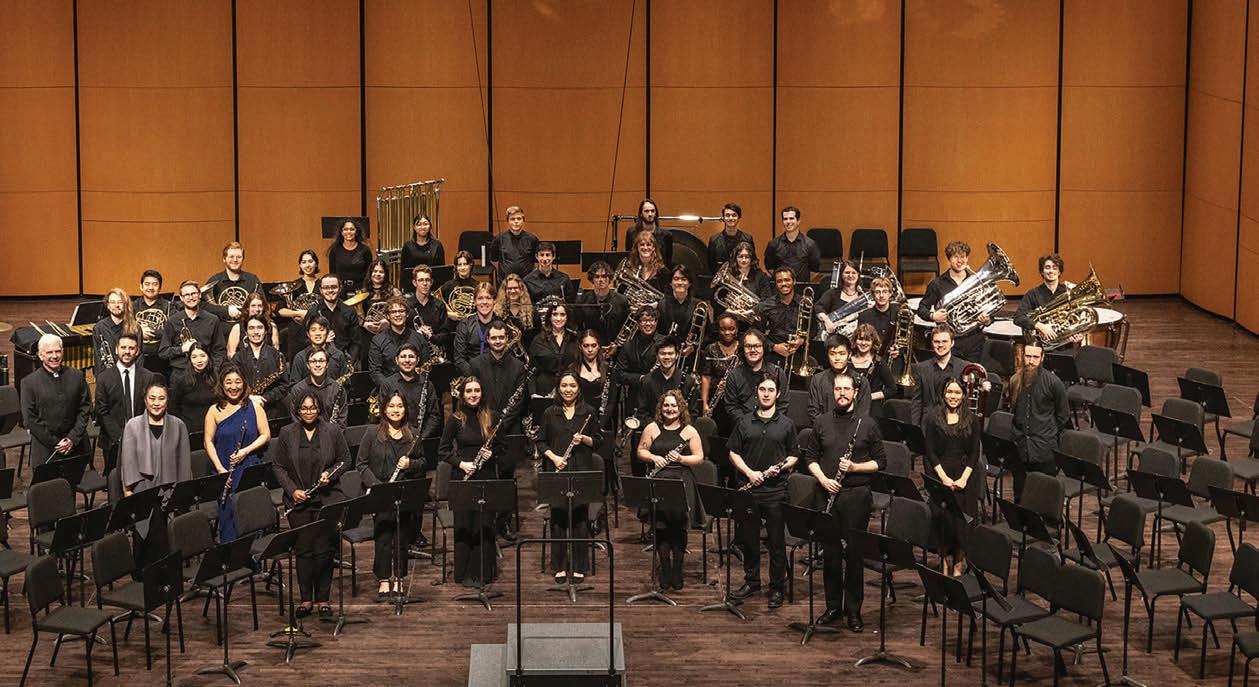
The UW Wind Ensemble and director TImothy Salzman in advance of the group’s 2024 South Korea Tour. Also pictured: Professor Donna Shin, flute and Miya HyeYeon Kim, piano (Photo: Mark Stone/UW Photography).
Professor Donna Shin (back center) and her UW flute students.
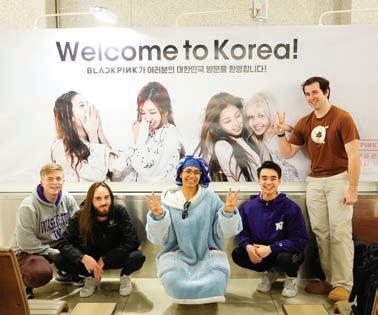
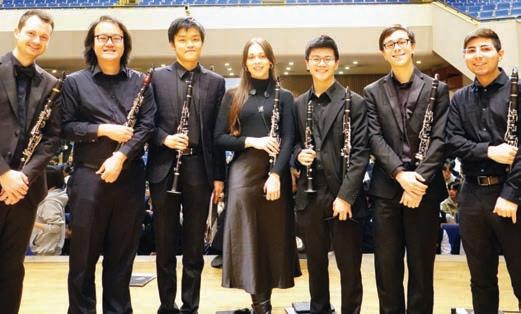

Clarinetists onstage at Woosong University.
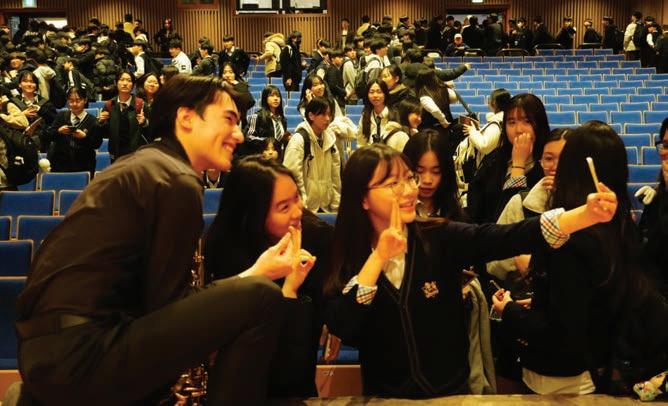
After-concert selfies with attendees.
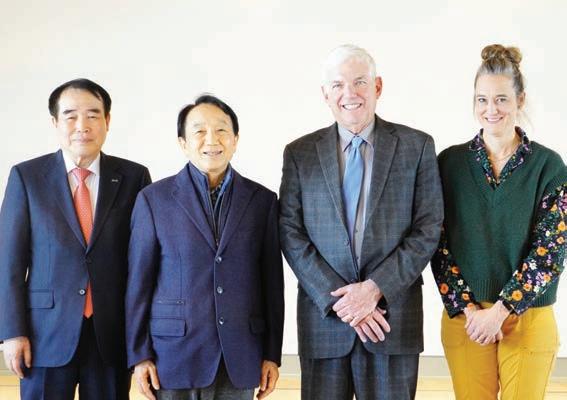
The group’s esteemed hosts with Professor and Jodi Salzman.
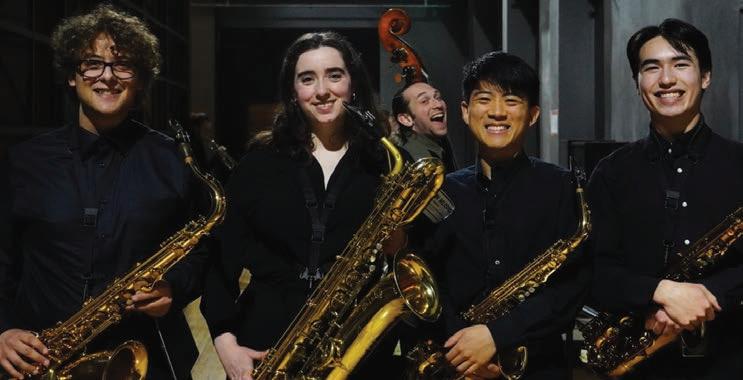
DMA students Eun Ju Vivianna Oh and Mia Hyeoyeong Kim. Saxophonists backstage at Woosong University.
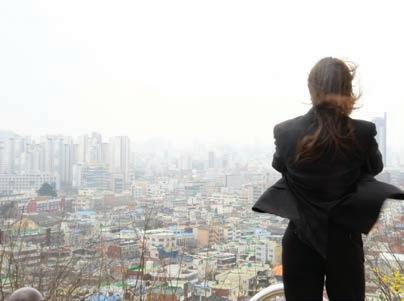
A hazy city skyline.
Doing some quick sightseeing.
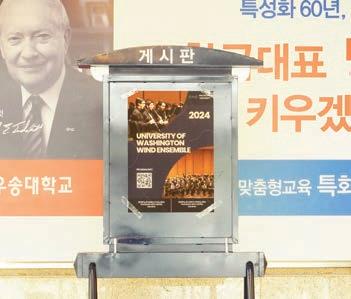
Concert promo poster.
Rehearsing while jet-lagged; still on point.
Welcome to Korea!
Faculty News
UW Music faculty report new publications, recordings, appointments, presentations, and more in their recent work at the UW and beyond.
Geoffrey Boers, Choral Conducting
The UW Chamber Singers, led by Professor Geoffrey Boers, and the University Chorale, led by Professor Giselle Wyers, completed a concert tour of Europe in June 2024. The singers and graduate student conductors presented concerts in Prague, Czesky-Krumłowski, Vienna, Bratislava, and Budapest.
In other summertime activites, Boers led the Cascade Master Classes in choral conducting, a weeklong music festival for conductors, and composers whose participants coming from throughout North and South America. The focus of the program is to support and develop underrepresented communities in those areas.
In July, Boers was a lead lecturer and adjudicator at the Xian International Choral Festival, presenting master classes for teachers and conductors in addition to working with choirs of all ages.
Michael Brockman, Saxophone Artist-in-residence Michael Brockman (saxophone) is celebrating his 30th year as the Artistic Director of the award-winning Seattle Repertory Jazz Orchestra (SRJO) with a season of concerts at Seattle’s Benaroya Hall. Upcoming performances include a tribute to Ray Charles (March 1 and 2), an SRJO Founders Concert (April 12 and 13), and a season finale with special guest Branford Marsalis. Brockman founded the group in 1995 with friend and colleague Clarence Acox.
In other news, Brockman performed with Seattle Symphony for its opening night on Sept. 15, as well as the orchestra’s “Cirque Noir” concerts in October. In February of 2024, he played jazz alto and soprano sax for the entire run of Seattle Opera’s production of Malcolm X.
Shannon Dudley, Ethnomusicology
Chair of the UW’s Ethnomusicology program recently co-led, with School of Music affiliate faculty Marisol Berríos-Miranda, a quarter-long study abroad program in León, Spain. The program included a week of study with master musician and educator Paco Diez, guest lectures by several Spanish ethnomusicologists, Spanish language study, and cultural exploration.
In other news, Dudley was awarded a Grants for Arts Project grant from the National Endowment for the Arts to support a Seattle Participatory Arts Network symposium, which was held at the UW in November. A collaboration between UW and community arts groups, the symposium was instigated and organized by Dudley and Monica Rojas-Stewart, assistant professor, UW Dance, with support from the UW’s Simpson Center for the Humanities. Guest speakers and participants include the School of Music’s Ethnomusicology Visiting Artists for 2024-25, Miguel Ballambrosio (Autumn 2024) and Silvio Dos Reis (Winter/Spring 2025); School of Music faculty and affiliate/adjunct faculty Marisol Berríos Miranda, Francisco Reyes, and John Vallier; alumni Christopher Mena and Emily Silks, past visiting artists Pablo Luis Rivera, Benjamin Hunter, Shoji Kameda, and many other past Ethnomusicology Visiting artists and community members.
Joël-François Durand, Composition
The UW faculty composer (and School of Music director) traveled to Vienna, Austria for a performance of his third string quartet, Quatuor à
cordes no. 3, performed by the Mivos Quartet at Vienna’s vibrant art space the Reaktor. Mivos premiered the work at the UW’s Meany Hall in March 2024.
Durand also celebrated in 2024 the release of Geister, a two-CD collection of his works recorded in 2021 and 2022 and released on the Kairos contemporary music label. Including compositions written over the last two decades, the collection spans a diverse body of work from Mirror Land (2005) to La descente de l’ange (2022), showcasing the development of Durand’s use of microtonality and his ongoing exploration of microtonal spaces.
James Morford, Ethnomusicology
The School of Music faculty lecturer recently co-published with Aaron M. David “Metric Modes and Fluid Meter in Mande Drumming Music” in Music Theory Online (MTO), a journal of the Society of Ethnomusicology. In addition to his teaching duties at the School of Music, Morford serves as co-managing editor of the Analytical Approaches to World Music Journal and as co-chair of the Society for Ethnomusicology Special Interest Group for Music Analysis. In the Pacific Northwest, Morford works as onsite reviewer for the racial equity-focused arts funding agency 4Culture.
Peter Nicolas, Music History
The Music History adjunct professor (and the UW’s William L. Dwyer Endowed Chair in Law) has been cited recently in articles relating to music copyright law, including articles in the Miami Herald and on Bloomberglaw.com, providing expertise in addressing questions of artists’ rights regarding use of their works and on licensing rights in the wake of a vast proliferation AI-generated content on TikTok. Among the many hats he wears at the UW, Nicolas is director of the University’s Intellectual Property Law & Policy graduate program.
Robin McCabe, Piano
Professor McCabe served as an adjudicator for the five-day East Music Festival in April. In December she served as the judge for the concerto competition of the Russian Federation of Music. She continues to serve as artistic advisor and international online adjudicator for the Beijing Royal School, an appointment she has held since 2021.
Michael Partington, Guitar
Head of the UW’s guitar program recently reprised his portrayal of the guitarist in Seattle Opera’s May 2024 production of Rossini’s Barber of Seville, a role he performed in 2011 and again in 2017. In addition to playing in the first act, for this production the guitar reappeared on stage in act two, replacing the orchestra to accompany Bartolo in the music lesson scene, and adding some lively rasgueados to the finale Fandango.
John-Carlos Perea, Ethnomusicology
John-Carlos Perea (Ethnomusicology, American Indian Studies adjunct) was named a UW American Indian and Indigenous Studies (AIIS) Scholar for the 2024-25 academic year. He delivered the first talk in the AIIS Scholar speaker series, “The Intertribal Music and Spiritual Cultures of Pepper’s Pow Wow.” The series and fellowship are hosted and funded by the UW Center for American Indian and Indigenous Studies.
Perea also was invited by the University of North Texas Music Library and University of North Texas Native American Student Association to participate in the First Chair Chat series on the topic of “Contemporary Indigenous Music in North America” with drummer Joseph Sioui and vocalist Julia Keefe.
Associate Professors Perea and Jessica Bissett Perea (American Indian Studies, Music History adjunct) hosted a visiting artist residency with the Öngtupqa Trio from April 17-20, 2024. The trio (Clark Tenakhongva, Gary Stroutsos, and Matt Moon Nelson) partnered with the UW to bring Hopi music, culture, history, current environmental protection initiatives, and other relevant topics to UW students and community members.
Perea presented his first faculty concert at the UW on May 1, 2024
with a program of cedar flute songs and arrangements of jazz standards. Special guests included Jessica Bissett Perea (voice); School of Music graduate student Rose Martin (percussion, voice); School of Education graduate student Jess Peña Manalo (voice); and UW Jazz Studies Professor Marc Seales (piano).
Perea and Bissett Perea hosted a screening of the new documentary film The Healing Heart of Lushootseed on February 10, 2024 in conjunction with the Northwest meeting of the Society for Ethnomusicology. The documentary explains the creation of The Healing Heart of the First People of this Land, a symphony commissioned by Upper Skagit Elder Vi Hilbert and composed by Bruce Ruddell. The symphony was performed in 2006 at Seattle’s Benaroya Hall by the Seattle Symphony and mezzo soprano Jenny Knapp.
Ted Poor, Jazz Studies
The Jazz Studies associate professor (and School of Music associate director) has been on the go with numerous performance engagements, including with the Andrew Bird Trio, which wrapped up a three-week U.S. tour in August with two nights at the Hollywood Bowl, playing selections from their new record Sunday Morning Put-On.
In other recent news, Poor spent a week in Los Angeles collaborating with legendary producer Mitchell Froom (Crowded House, Paul McCartney, Los Lobos) and engineer David Boucher (Disney/Pixar, Randy Newman, Andrew Bird) to complete an album of experimental pop songs with singer, song-writer, and poet Shungudzo Kuyimba. The record, which is co-written and co-produced by Shungudzo and Poor, will be released in 2025 and was supported in part by the UW’s Jones Large Grant program.
Poor performed debut concerts with Cunningham Bird at the Bumbershoot and Hardly Strictly Bluegrass festivals. Cunningham Bird is a new collaboration between Grammywinning singer/song-writer Madison Cunningham and Andrew Bird covering the 1970s album Buckingham Nicks.
Poor performed with the Andrew Bird Trio this fall in Parma, Italy, the London Jazz Festival, and the Ravinia Festival in Chicago. He also completed a live recording of a new solo work for drum set at The Bell Choir Sessions, a new in-studio concert series in Los Angeles.
Stephen Price, Organ Studies
The UW’s head of Organ Studies presented an organ concert at Anchorage Lutheran Church in Anchorage, Alaska, performing on the Byrad Fritts Organ. The performance included works by Bach, Daveluy, Gawthrop, Handel, Hilden, and Coleridge-Taylor.
Price was a featured artist in June 2024 at the Whidbey Island Music Festival (curated by School of Music faculty Tekla Cunningham), playing organ and harpsichord on a program of Bach Cantatas and Concertos featuring renowned Baroque musicians and singers.
In the first installment of a new lecture series organized by Price, Dr. Carole Terry (professor emerita) presented “How the Body Works When Playing Piano, Organ, or Harpsichord” on February 5 at the Walker-Ames Room (Kane Hall). The event was the first in the Paul B. Fritts Organ Lecture series, which continued in May with a presentation and master class by Dr. Kimberly Marshall (Organ Professor at Arizona State University), who presented, “An Approach to Bach,” featuring students from the University of Washington and members from the Seattle chapter of the American Guild of Organists.
Rachel Lee Priday, violin
Assistant professor Rachel Lee Priday celebrated the release of her solo debut album, Fluid Dynamics, with a live multi-media world premiere performance at Meany Hall on Oct. 8. The result of a unique collaboration between ocean scientist Dr. Georgy Manucharyan of UW’s School of Oceanography and Priday, the performance combined videos of fluid motion experiments with new commissions from leading young American composers Gabriella Smith, Timo Andres, Paul Wiancko, Leilehua Lanzilotti, Cristina Spinei, and Christopher Cerrone. Priday was joined onstage by Cristina Valdés, piano. Films were by Manucharyan with video installation and set design by Juniper Shuey. The project was developed at the UW through the Mellon Faculty Fellows program and received further support through a Kreielsheimer and Jones Large Grant.
David Alexander Rahbee, Orchestral Activities
Associate Professor David A. Rahbee was guest conductor at the Bar Harbor Music Festival in Maine this past July, leading performances of Copland’s Appalachian Spring with
Continued next page
Passages: William McColl
William Duncan McColl passed away peacefully on January 7, 2024, of respiratory failure with his son by his side. Bill was an American clarinetist and professor of music at the University of Washington, and a founding member of both the Soni Ventorum Wind Quintet and the New World Basset Horn Trio.
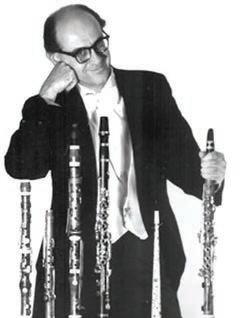
Born May 18, 1933, in Port Huron Michigan, to Duncan and Margaret McColl, Bill began playing clarinet at the age of 12, and later attended the National Music Camp at Interlochen and the Oberlin Conservatory of Music (1951-1953). He graduated with honors as a student of Leopold Wlach from the Akademie für Musik und darstellende Kunst, in Vienna. He was drafted in 1956 and joined the U.S. Seventh Army Symphony Orchestra (1957-1958.) He moved to New York in 1959 and worked as a freelance clarinetist, even appearing on the Modern Jazz Quartet record Third Stream Music.
In 1960, Bill moved to Puerto Rico and began teaching at the Conservatory of Music of Puerto Rico, and performed with the Casals Festival Orchestra. This is where the Soni Ventorum Wind Quintet was founded, where he met his wife Sue who was a bassoonist in the Puerto Rico Symphony, and where his son was born.
In 1968 the members of the Soni Ventorum moved to the University of Washington to become the quintet-inresidence. He began his career as professor of clarinet (1968-2006). Bill became a specialist in early clarinets and basset horns (a member of the clarinet family) and started building instruments in the 1980’s with the early assistance of the UW Aerospace Research Laboratory. One of his colleagues said: “I well recall that during some performances of a Mozart Requiem, he was proud to have been able to copy the measurements of his basset horn so well, that the joints of his reproduction fit perfectly into the original.”
A former student of Bill’s remembers: “He discouraged gossip and hyperbole, had a fine sense of humor, and taught respect for other artists. He regularly attended his student’s concerts post-graduation and set an example for courteous professional behavior. He loved the clarinet so much, you had to love it, too. Playing with him was always a masterclass in performance. His quips and offhand commentary were always spot on.”
Bill is survived by his former spouse, Sue, and his son Duncan. He will be missed by his bandmates, many professional colleagues and friends around the world, and by his former students.
Faculty News
Nimbus Dance, and a program of works by Mozart, Michael Haydn, Grieg, Atterberg, Gershwin and Jessie Montgomery with the Bar Harbor Music Festival Orchestra. In February 2024, he was promoted from senior artist-in-residence to associate professor of music (tenure track), effective in September 2024.
Frederick Reece, Music History
Music History professor Frederick Reece and his research on musical forgeries are cited extensively in “The Lost Haydn Sonatas,” Episode Three of a five-episode series, Classical Deceptions, by journalist Phil Hebblethwaite on the BBC Radio 3 program “The Essay.” “Radio 3 echoes from the family Hi-fi in some of my earliest memories of childhood, a gateway to a larger cultural world I could scarcely imagine,” Reece shared recently on social media. “So, I’m rather touched to have my research featured there now.
Francisco Luis Reyes, Music Education
An article co-written by Assistant Professor Francisco Luis Reyes appeared in the October 2024 issue of the Research Studies in Music Education, a renowned internationally peerreviewed journal that fosters discussion in a wide range of topics in music education. Dr. Reyes’ article, “Analysis of music teacher education programs in Puerto Rico,” sheds light on the state of pre-service teacher training in the Caribbean country by analyzing the curricular content of the programs that offer degrees in Music Education in Puerto Rico.
Mark Rodgers, Music History
Assistant professor Mark Rodgers contributed a chapter to a new book published to commemorate the 400th anniversary of the death of the composer William Byrd, Byrd Studies in the 21st Century (Clemson University Press, 2023). In “Joseph Kerman, the ‘Catholic’ Interpretation of Byrd, and the New Musicology,” Rodgers explores how the twentieth-century musicologist Joseph Kerman developed his ideas about what he called “criticism,” which transformed the discipline of music history in the 1980s and 1990s, in earlier writings on the meanings of Byrd’s Latin-texted sacred music.
In March 2024, Rodgers presented a paper at the Pacific Northwest regional meeting of the American Musicological Society, titled “The Last Days of Local 117: How Tacoma Musicians Lost Their Union.”
Stephen Rumph, Music History
Chair of the Music History program was a presenter at a recent conference devoted to Gabriel Fauré held in Paris at the Opéra Comique, Conservatoire and Académie Française. Professor Rumph also was recently appointed adjunct professor in Cinema and Media Studies at the UW. Rumph co-organized a centenary festival for Gabriel Fauré at the University of Colorado (Feb. 27-March 2). “Fauré 2024” included four concerts, papers by scholars from France, Canada, Israel, Brazil, the UK, and the United States, and newly commissioned works by nine composers.
Timothy Salzman, Wind Conducting
Timothy Salzman was honored in 2024 by the Manteno Historical Society in his hometown of Manteno, IL. Salzman was awarded the 2024 Lucille Thies Personal Achievement Award, a distinction acknowledging residents who have “made great achievements beyond their hometown upbringing.” Previous recipients include former U.S. Ambassador to Malaysia John Malott as well as a Harvard professor, Hollywood screen writer, and numerous area residents who have devoted themselves to community service.
In October 2024, Salzman guest conducted “The President’s Own” United States Marine Band on its Seattle tour stop in Meany Hall, leading the band in a performance of Gustav Holst’s Moorside March from A Moorside Suite.
Anne Searcy, Music History
Associate Professor Anne Searcy was among School of Music faculty and alumni presenting at the recent American Musicological Society Conference in Chicago. She presented “Philip Glass’s Dance and the Institutionalization of Minimalism.” Other School of Music alumni and faculty presenting included Megan Francisco(‘20 PhD,
Continued next page
Yizhak Schotten Passages
Former School of Music viola professor Yizhak Schotten died suddenly on September 23, 2024 at age 81. He served on the School of Music faculty from 1979 to the early 1980s, when he accepted a position as professor of music at the University of Michigan, where he taught for nearly 40 years.
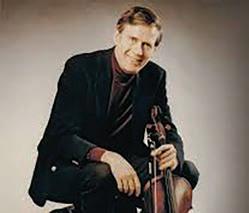
Ann Schnaidt (’82 Viola Performance) of Fort Collins, Colorado, studied with Schotten in his first years at the University of Washington. Schnaidt went on to become an instructor of viola and violin, principal violist of the Fort Collins Symphony Orchestra (1998-2005), and accompanist/collaborative pianist. Our thanks to Ann for her thoughtful tribute to a beloved professor.
A tribute to Yizhak Schotten
It is with deep gratitude and love that I submit this tribute to the life and work of Professor Yizhak Schotten, in praise of his gorgeous sound and virtuosic playing, his dedication to his students and advancement of viola performance and pedagogy, and his kindness and generosity.
I first heard Yizhak Schotten perform at the Provo, Utah International Viola Congress in the late 1970’s. Our then viola professor at the University of Washington, Donald McInnes, insisted that we, his current students, attend this Congress. We knew he was leaving UW for CCM in Cincinatti, and he assured us that his successor would be exactly what we all needed. He was right many times over.
We were Mr. Schotten’s very first class of University students, all seven of us, which of course grew. I remember the party for us that he and his wife, concert pianist and pedagogue Katherine Collier, threw for us at their home that first fall. They were at that time vegetarians, yet they spent a good part of the day frying chicken for us “kids.” That afternoon, the two performed Ernest Bloch’s “Big Suite,” which they were preparing for their first-ever recording. I turned pages for them, and it was thrilling. Later that year, Mr. Schotten hired me to turn pages during their recording session with recording technician Glenn White at the UW. We worked for eight hours. One day some time later, I was delightfully surprised when Ms. Collier drove up the driveway to our family home to give me a copy of the newly minted album, an LP, of course. Again, what a thrill to hear this beautifully performed work.
I last saw Yizhak in person at the Minnesota Viola Congress, where he performed the arrangement of Prokoviev’s Romeo and Juliet Suite. Later, at a masterclass he gave, a student suddenly needed a pianist, so I stepped in at the last moment; that was fun. How I wish there had been more contact in the ensuing years, yet there are a multitude of wonderful memories of our time at UW. We will miss him beyond imagination.
Faculty News
Music History), “Life Has a Melody: Musical Predestination in Battlestar Galactica,” and Gabriel Solis, “A Music Historian on the Histories of Chicago and Futurities.”
Craig Sheppard, Piano
Chair of the keyboard program performed Beethoven’s Choral Fantasy in Benaroya Hall on April 27 with the Northwest Sinfonietta and the Kirkland Choral Society, conducted by former DMA student Glenn Gregg. He joined colleagues Robin McCabe, Cristina Valdés, and Rachelle McCabe in performing four-hand and two-piano works on “Piano Power,” a concert in Meany Theater on April 30. His UW piano studio presented a performance of the complete Schubert Impromptus in Brechemin Auditorium on May 21. Sheppard recently completed a residency at the Central Conservatory in Beijing, China. In addition to working with students at the conservatory and middle school, he performed a recital of the complete Chopin Nocturnes. He performed the same program on June 9 at Westminster Cathedral in London, a recital hosted by the Chopin Society of the United Kingdom.
John Vallier, Ethnomusicology
Ethnomusicology curator and affiliate faculty member John Vallier was interviewed as part of a Seattle Times article about the digitization and online publication of The Rocket, Seattle’s former monthly music newspaper. The Stranger also noted his work on this and another project, the Crocodile Café Collection, which includes five years’ worth of music from that iconic Seattle club. Both resources will be used by students in his Spring Quarter Class, Grunge is for Los$ers (CHID 250G).
Melia Watras, Strings
Professor Melia Watras was awarded the Maurice W. Riley Award by the American Viola Society, for her distinguished contributions to the viola as a performer, composer, teacher and leader. She was presented the award at the 2024 AVS Festival, held at the Colburn School in Los Angeles (See story, page 5).
Watras’s composition Sphere was part of an art installation at the Royal Academy of London in Summer 2024. The installation, The Quartet, by celebrated artist and industrial and architectural designer Ron Arad, featured a musical creative team that included Atar Arad, Steven Isserlis, Igor Polesitsky, David Waterman, Helena Winkelman and Tabea Zimmermann in addition to Watras.
Watras’s album, Play/Write, was released in February on Planet M Records. Featuring Watras as both performer and composer, the release includes compositions by Leilehua Lanzilotti and Frances White, poetry by Herbert Woodward Martin, and performances by UW faculty Rachel Lee Priday (violin), Valérie Muzzolini (harp), Carrie Henneman Shaw (voice) and David Alexander Rahbee (conductor), along with violinist Michael Jinsoo Lim, actor Shelia Daniels and members of the Seattle Symphony and the Pacific Northwest Ballet Orchestra.
Watras soloed with Chicago chamber group Ensemble Dal Niente in April at the UW’s Meany Hall in the world premiere performance of School of Music Director Joël François Durand’s, “Geister, schwebende Geister…,” a viola concerto he wrote for her.
On her faculty concert in May, Watras premiered four new works by UW faculty and student composers and had two collaborative compositions (created with her former UW student Madeline Warner), premiered by faculty vocalist Carrie Henneman Shaw and Pacific Northwest Ballet concertmaster Michael Jinsoo Lim.
Watras spent a week as guest professor at Indiana University, where she taught in the studio of Atar Arad, led a master class, and performed on a faculty/guest recital that included selections from her composition “The almond tree duos.” Watras appeared as both violist and composer at the Jacobs School of Music at Indiana University, as part of Atar Arad’s “Partita Party.” Arad and four of his former students (including Watras) each composed and performed a movement of a partita to create a collective piece in this world premiere performance.
Watras served as performer and composer at the Unbound Chamber Music Festival in Mammoth Lakes, CA, where her composition “Kreutzer” was performed. Her work for violin solo, “Selvaggio” was premiered by Mark Fewer in July at the soundSCAPE Festival at the Hindemith Music Centre in Blonay, Switzerland. Fewer also presented the work at the Vale of Glamorgan Festival in Wales.
Continued on page 29
Passages
Marianne Weitman
Marianne Weltmann, former voice instructor at the University of Washington, Western Washington University, and the University of Puget Sound, died on June 2, 2024, at the age of 93. The cause of death was breast cancer.
Marianne was born in Stettin , Germany, on September 9, 1930 to father Erhard Weltman and mother Emilie Wieluner Weltman.
As a young child she fled Nazi Germany with her family and immigrated to the United States, eventually settling in Ohio.
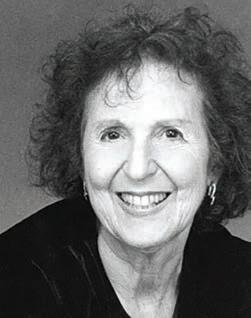
Her early focus on a career in music led her to enter and complete her education at the Juilliard School of Music in New York City, majoring in voice.
After her Juilliard training, she returned to Europe where she had a successful career in opera and on the concert stage performing in many venues. Opera was her true love. She eventually returned to the United States and moved west, settling in Seattle and joining the music faculty at the University of Washington to pursue her academic teaching career.
With her vast knowledge of both opera repertoire and vocal technique, she provided valuable guidance for students at the college level locally, and privately all over the world.
Marianne’s vocal training included studies with baritone Rocco Pandiscio in New York and Lina Pagliughi, the leading lyric coloratura of La Scala in Milan. She was a vocal descendant of the great Bel Canto master Giovanni Battista Lamperti, and her teaching philosophy emphasized the holistic development of the singer, integrating physical awareness, breath control, linguistic precision, and artistic expression. Her students have gone on to grace stages around the world.
Marianne is predeceased by both her parents, her daughter Susanna and her son Michael. She is survived by her daughter Crystal Weltmann Dixon and her grandson, Kendrick Dixon Jr.
MAKING APPEARANCES
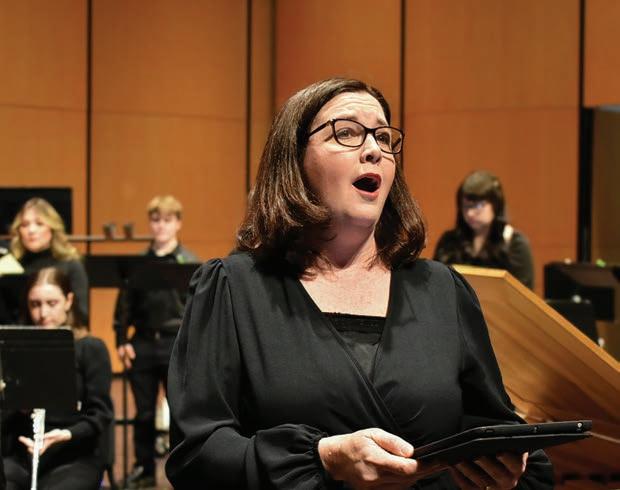
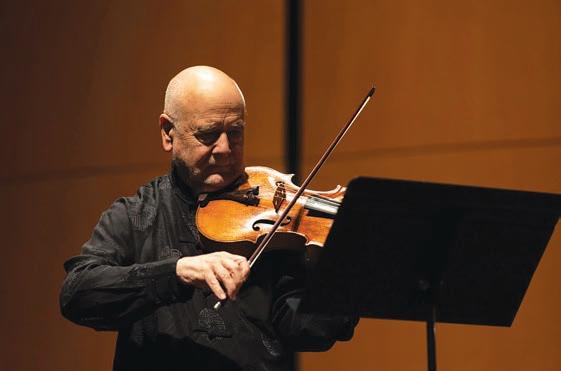
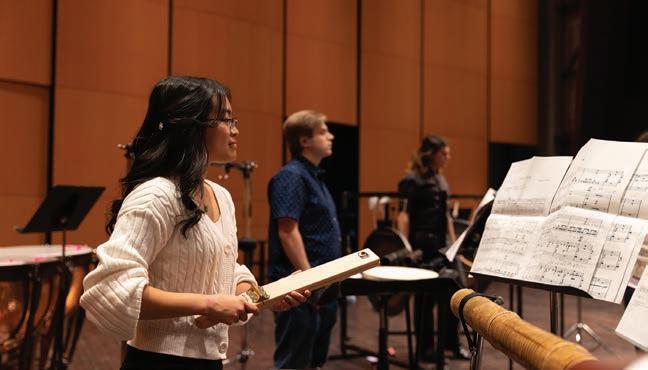
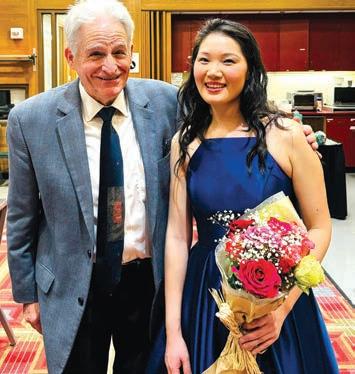
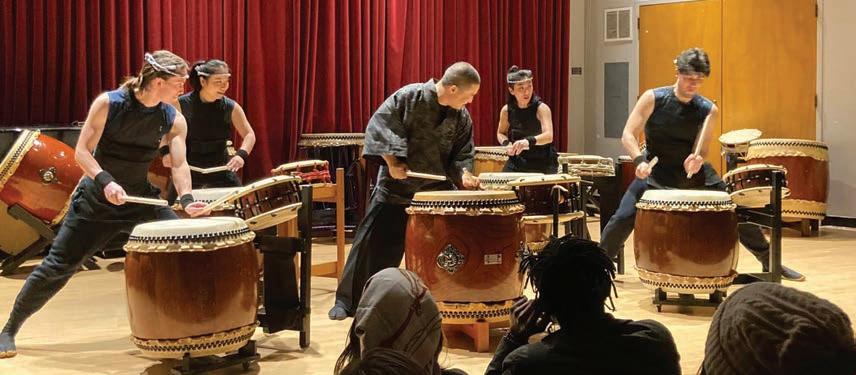
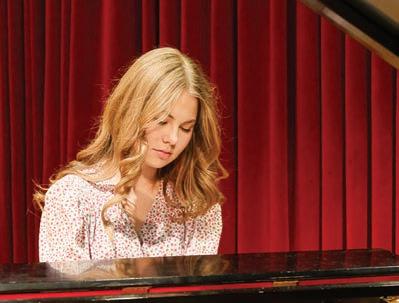
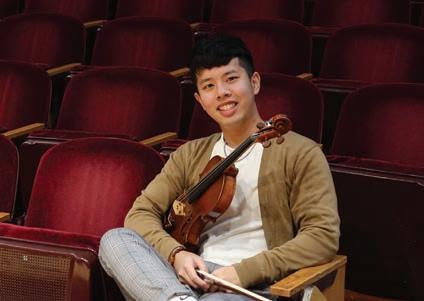
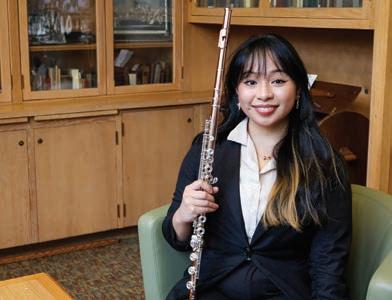
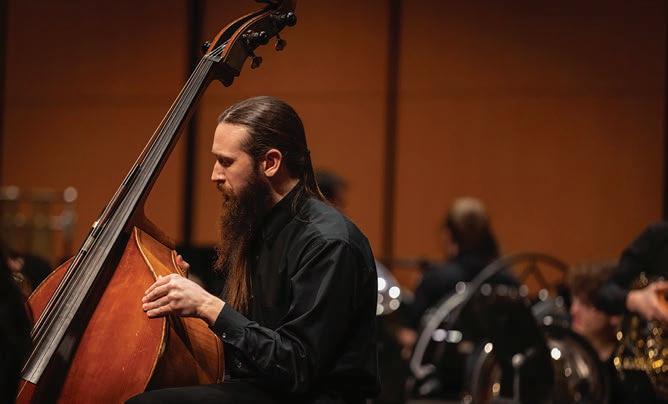
1. Graduate conducting student Larke Witten at a Chamber Singers stage rehearsal at the Gerlich Theater.
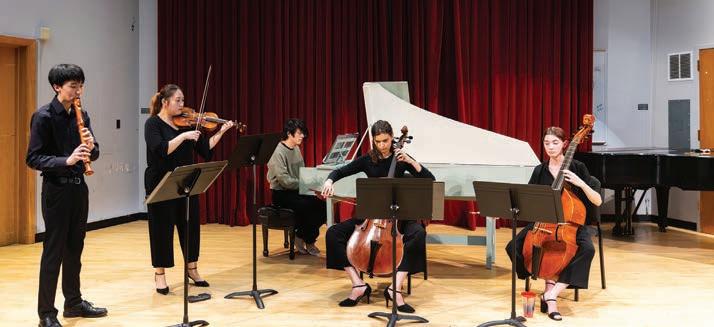
2. UW Baroque Ensemble in rehearsal, Brechemin Auditorium.
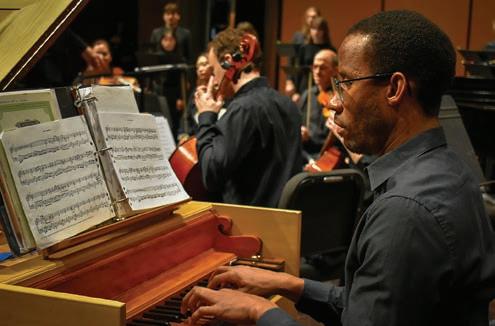
3. Organ Studies Chair Stephen Price performed a Bach continuo with the Chamber Singers and Baroque Ensemble at Meany Hall.
4. Guest artist Atar Arad, viola, appeared in concert with his former student, Melia Watras, at Meany Hall.
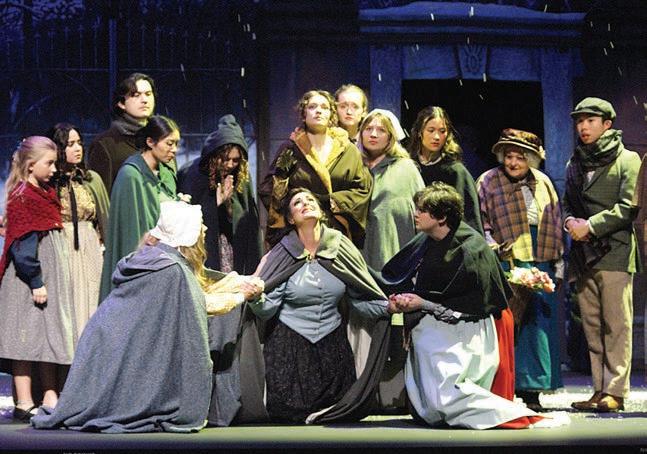
5. Percussion Ensemble stage rehearsal at Meany Hall.
6. Professors Craig Sheppard and Rachel Lee Priday in the Meany Green Room following their January 2024 duo recital.
7. Winter Quarter Ethnomusicology Visiting Artist Shoji Kameda and UW students performed an end-of-quarter concert in Brechemin Audtioroium.
8-10. The winners of three divisional School of Music concerto
competitions— Ella Kalinichenko, piano, Kai-En Cheng, violin, and Rachel Reyes, flute—performed their winning concerto excerpts with the UW Symphony on April 26.
11. Hardest working man in the Music Building? Graduate student Beau Wood (‘24 MM, Jazz and Improvised Music) was frequently seen onstage performing with a variety of ensembles, combos, and chamber groups, as well as on his classmates’ degree recitals. Here, he rehearses with the Wind Ensemble.
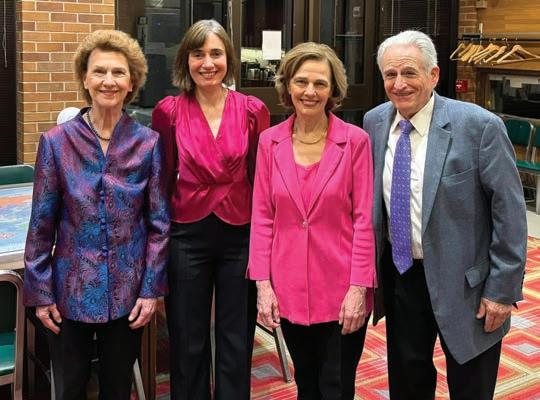
12. Piano Power Times Four: Pianists Robin McCabe, Cristina Valdés, Rachelle McCabe, and Craig Sheppard following their April 2024 Meany recital.
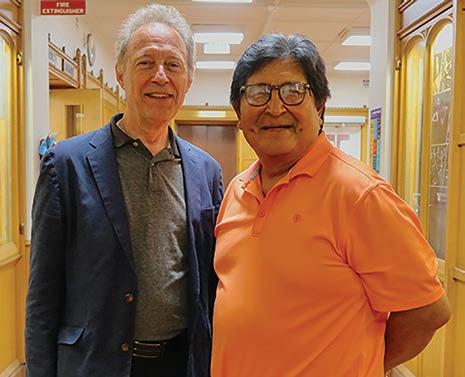
13. Two Composers: School of Music director Joël-François Durand and visiting artist Clark Tenakhongva of the Öngtupqa Trio.
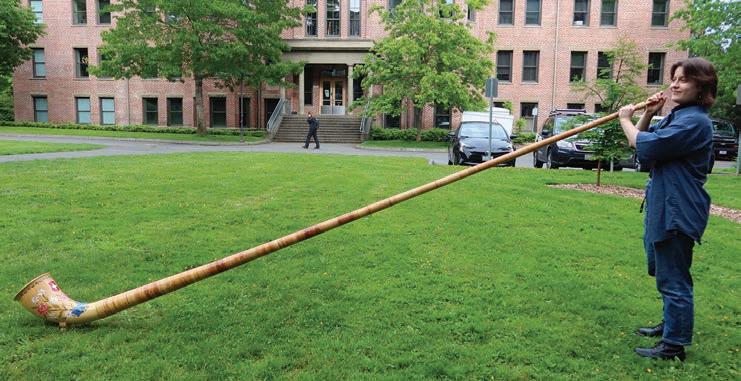
14. Wrapping up the 2023-24 school year in a most appropriate way: an alphorn serenade.
Student & Alumni News
UW Music students and alumni report academic and artistic achievements, career milestones, performance highlights, and more in their recent work at the UW and beyond.
Alumna Kristin Vogel Lindemuth (DMA, Voice) took a starring role as Mimi in Tacoma Opera’s recent production of Puccini’s La Bohème at Pantages Theater. UW Voice professor Thomas Harper directed. School of Music students and alumni performing included Sarah Santos, Meliza Redulla, Mallory McCollum, Sydney Belden, Sophia Parker, Adia Bowen, Raven Forgey, Cassidy Cheong, Tri Nguyen, Zachary Fitzgerald, Oliver Callahan, Jingjing Qi, William Schlott, and Daren Weissfisch (conductor). Tacoma Opera’s artistic director is School of Music doctoral student Limuel Forgey (DMA, Voice).
Soprano Adia Bowen, a UW senior studying with Carrie Shaw and a citizen of the Upper Skagit Tribe, is featured soloist with Seattle Symphony in its March 7 performance of Bruce Ruddell’s Healing Heart of the First People of This Land. The 50-minute work was commissioned by Upper Skagit elder Vi Hilbert shortly after the 9/11 terrorist attacks as a vehicle for, in Hilbert’s words, “bringing healing to a sick world.” Premiered by the Seattle Symphony in 2006, the piece draws inspiration from two sacred Coast Salish songs Hilbert had entrusted to the composer and features percussion instruments native to this region.
Flora Cummings, a BM viola student of Melia Watras double majoring in Music and Wildlife Conservation, was the winner of the prestigious Silver Pendant Competition for Scottish Gaelic learners at the Royal National Mòd, held in Oban, Scotland. Winners of the competition are recognized as among the best emerging Gaelic vocalists in the world. She received top marks in both music and Gaelic. (Read more on page 22).
Seattle Trans and Non-Binary Choral Ensemble (STANCE) recently announced the selection of School of Music doctoral student Cee Adamson (‘24 DMA, Vocal Performance) as the group’s new artistic director. Adamson recently successfully completed her DMA studies in vocal performance with Carrie Shaw and choral conducting with Geoffrey Boers and Giselle Wyers.
The UW’s Choral Conducting cohort was well-represented among recent winners of the American Prize National Nonprofit Competitions in the Performing Arts. Current choral conducting doctoral student Michael McKenzie was awarded an honorable mention in the collegiate level American Prize in Choral Conducting competition. He was competing against professors conducting college and university choirs. UW choral conducting alum Katherine Chan, (’10 MM, Choral Conducting) who serves as director of choral activities and associate teaching professor of music at Northeastern University, won second place in the college/ university division of the American Prize in Conducting, aka The Dale Warland Award in Choral Conducting. Chorosynthesis, a professional choir co-founded and directed by School of Music alums Wendy Moy (’15 DMA Choral Conducting) and Jeremiah Selvey, (’15 DMA, Choral Conducting) was awarded an American Prize in choral performance in the professional division.
Alumna Melissa Wang (’24 MM Percussion, MM Composition) was a featured performer at the Percussive Arts Society International Convention in Indianapolis in November. She presented Kate Neal’s Self Accusation
for speaking percussionist in the society’s New Music/Research series of concerts. This past summer, she was selected by Platypus Ensemble for a new commission at Universität für Musik und darstellende Kunst Wien’s annual festival. Wang returned to her native Illinois after graduating from the School of Music this past June and is teaching percussion and steelband at Waubonsee Community College.
School of Music faculty and alumni presenting at the 24th annual meeting of the American Musicological Society in Chicago this month included alumna Megan Francisco (’20 PhD Music History): “Life Has a Melody”: Musical Predestination in Battlestar Galactica. Francisco is associate professor of musicology at Wake Forest University in Winston-Salem, North Carolina.
Eun Jun Vivianna Oh (’24 DMA Voice) recently completed her doctoral degree in Music but is still active on the UW campus in her current role as part-time lecturer in the French and Italian Studies Department, where she teaches French/Italian 240: Harmonizing Language and Music.
Joslyn Thomas (’20 MM, Choral Conducting), made history in July as a member of the Delaware Choral Scholars (conducted by Dr. Paul Head and Arreon Harley-Emerson) at the 2024 World Choir Games in Auckland, New Zealand. Competing against 250 choirs from 42 countries, the Delaware Choral Scholars won four gold medals and three championships in various categories, including Mixed Choir, Contemporary, Spirituals, and Musica Sacra.
“Performing with the Delaware Choral Scholars was so life-affirming,” said Thomas, a featured soloist in the Contemporary set. “The kindness, inclusivity, and musical prowess of this group is unmatched. It’s so hard to believe that this chapter is over, especially after dedicating 10 months to learning and memorizing over 20 pieces of music in various languages and styles.”
Since graduating from the UW, Thomas has continued to make significant contributions to the choral music world. Her dedication and passion have led her to the forefront of the New York choral community as a teacher, choral artist, and leader, and she will soon assume the role of President of the New York chapter of the American Choral Directors Association.
Alumna Linda Moorhouse (DMA, Instrumental Conducting) has been named the Suzanne and William Allen Distinguished Professor in Music at the University of Illinois. This rare and prestigous accomplishment is conferred upon full professors demonstrating “great expertise and academic abilities within the field of music.” She currently serves as director of the University of Illinois School of Music. Moorhouse earned her doctorate in Wind Conducting at the UW and served for three years as a teaching assistant for the Wind Ensemble.
Daren Weissfisch (DMA, Orchestral Conducting) was recently announced as the new music director of Seattle’s Lake Union Civic Orchestra. The selection followed a year-long search and a season of auditions. “The orchestra and the audience loved his infectious energy, charisma and musical intensity during his successful concert cycle earlier this year,” noted the official announcement of his appointment. Weissfisch debuted in his new role on June 22 in a meet-and-greet and season announcement event hosted by the orchestra.
Weissfisch’s UW colleague, doctoral student Ryan Farris (who also serves as LUCO’s assistant conductor), was recently named the new music director and conductor of the Bainbridge Symphony Orchestra. “This is a truly exciting time for Bainbridge Symphony Orchestra,” the official announcement of his appointment proclaimed, “and we’re so grateful to have the opportunity to work with Ryan as he leads the orchestra into this bright new era.” Farris called the opportunity to lead and program his own orchestra “truly a dream come true.”
School of Music graduate Olivia Wang (’24 BM, Music Theory; BS Computer Science) was awarded a 2024 College of Arts and Sciences Dean’s Medal in recognition of her outstanding academic record throughout her UW studies (see story, page 4). The recognition is awarded to the top graduating senior of each division of the College. Wang is set to begin PhD studies in Informatics this fall at the University of Illinois, UrbanaChampagne, where she plans to incorporate knowledge gained in her music, computer science, and accessibility work at the UW into her research and academic endeavors.
Class of 2024 graduate Sophie Ma (BM Composition, BA Communication), a student of Huck Hodge, started a new job with a video game company in Tokyo in October, working to adapt video game content for different markets as part of the company’s international operations team.
Mavis Chan (‘24 BM, Vocal Performance; BA, Business Marketing) begins a new position in September at the Boeing Corporation. The Class of 2024 graduate is set to work in Boeing’s Defense, Space, and Security division as a global real estate and facilities strategic planner. “My job will entail working and maintain relationships with business partners in order to initiate facilities-related projects before they are sent to Project Management teams,” she says. “Developing projects involves identifying scope, opportunities, and risks, creating proposals for stakeholders, and, ultimately, supporting my recommendations to be approved for implementation.”
Former conducting students of Timothy Salzman are beginning new academic appointments. Corey Jahlas (DMA Wind Conducting) has been appointed associate director of bands and director of athletic bands at the San Jose State University School of Music, where he will lead the SJSU Symphonic Band, the Spartan Marching Band, and the Spartan Pep Band. Prior to this appointment, he served as the Interim Associate Director of Athletic Bands and director of the Campus Band at the UW and as the director of the Wind Ensemble at Seattle Pacific University. In the 2024-25 academic year, he continues to serve as acting director of the Husky Marching Band. Paul Bain (‘09 MM, Wind Conducting) has been appointed director of bands at Western Washington University. The announcement of his appointment states: “He brings his artistry, excellence, commitment to our students, and the respect and admiration from colleagues around the region. We are blessed and fortunate to have him on our music faculty!”
Jiannan Cheng (’16 MM, Wind Conducting), former student of Timothy Salzman, recently rcompeted in an international competition in Romania with 200 conductors from countries throughout the world. She finished second, competing against accomplished conductors from orchestras and opera houses in Italy, Germany, and elsewhere. Cheng joined the
Passages
Jerold H. “Jerry” Jensen
Tech expert and musician Jerry Jensen passed away 2024 July 31 in California, where he had lived since 1975, from complications due to kidney failure. He was 74.
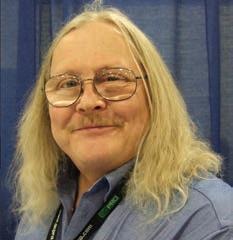
Jerry was the middle son of Norman and Laura Jensen, and grew up in the Ravenna Park neighborhood of Seattle. He played French horn in the Seattle Youth Symphony and kept playing throughout his life. His father was a band director at Ballard High School and later a producer/ director at a new KCTS television station. His mother was a piano teacher, so Jerry was also proficient at the piano. After graduating from Roosevelt High School in 1967, Jerry went to Carnegie Mellon in Pittsburgh for two years studying Electrical Engineering, then returned home to Seattle and completed his education at the University of Washington, Seattle, studying horn with Chris Leuba and graduating with a custom degree from the UW School of Music in “Electronic Art” under the supervision of Glenn White. In Seattle he would work for Kearney Barton’s Audio Recording Inc., at the UW Ethnomusicology Archives, and as the first sound technician for the then-new UW Meany Theater. He was active in the Seattle electronic music scene at New Dimensions in Music, a division of And/Or, a non-profit Seattle arts organization. He also made the custom mixing console at Seattle recording studio Have-a-nice-day on Capitol Hill.
Expert in electronics, computers, and music, he moved to Los Angeles in 1975 to work at the offices of Meany’s acoustician, Paul Veneklasen, but within months was drawn to Capitol Studios in Hollywood, working many years as their head of studio electronic design and studio maintenance. He left Capitol in 1980 to work for Deane Jensen of Jensen Transformers (no relation), where he worked on Comtran, a circuit analysis program based on S.P.I.C.E.
In 1991, he moved to the San Francisco bay area to work as the do-it-all tech person for a Silicon Valley tech entrepreneur, where there were several estates and the infrastructure of a small tech city to take care of, including a theater, recording facility, and an all-inclusive networked control system that included the estate’s lighting and irrigation systems.
Jerry was a Life Member of the Audio Engineering Society and a member of the Institute of Electrical and Electronic Engineers. He is survived by his older brother Bill, of Sequim WA, and younger brother Dick of Sarasota FL, and several nieces and nephews.
UW students and alumni in La Boheme: Left to right: Sarah Santos, Meliza Redulla, Mallory McCollum, Sydney Belden, Kristin Vogel Lindenmuth (center), Sophia Parker, Adia Bowen, Raven Forgey, Cassidy Cheong and Tri Nguyen (Photo Courtesy Tacoma Opera).
Student & Alumni News
faculty of Rowan University in Glassboro, New Jersey in 2020, serving as assistant professor of music, directing the Rowan University Orchestra, conducting opera productions, and teaching graduate and undergraduate conducting.
Lorin Green, DMA flute student of Donna Shin, was featured soloist with the Ballard Civic Orchestra on March 30, performing “Three Philosophies,” by Catherine McMichael, with the orchestra. She was featured on NPR Music’s Live Sessions, performing Jake Heggie’s “I Catch on Fire” with vocalist Mayah Rose Paden and pianist Joe Williams. Green presented at the annual conference of the League of American Orchestras in Houston, Texas in June as a representative of the League’s Student Leadership Council.
Students from the UW organ studio of Stephen Price recently participated in a masterclass with Dr. Kimberly Marshall, organ professor at Arizona State University. The masterclass, held at First Lutheran Church in West Seattle, followed Dr. Marshall’s all-Bach Concert at St. Mark’s Cathedral the prior evening. The class was co-sponsored by the Seattle Chapter of the American Guild of Organists.
Nicole Stankovic, (‘24 MM, Piano Performance), former student of Robin McCabe and a certified bartender, was selected from hundreds of global applicants to be one of 20 Grey Coat mentors for the Cocktail Apprentice Program this past July in New Orleans at “Tales of the Cocktail,” the largest cocktail conference in the world.
At the UW, Stankovic’s thesis on music and health (part of her Master’s degree studies in Public Health in Health Systems) advanced to the final Top-10 round of the UW’s 3 Minute Thesis (3MT) competition. The competition supports graduate students’ capacity to effectively explain their research or capstone project in three minutes, in a language appropriate to a public audience. The competition was organized by the Graduate School’s Student Affairs office and the UW Libraries Research Commons.
Alumnus Steve Treseler (’15 MM, Jazz Studies and Improvised Music) recently completed a residency at Moores School of Music at University of Houston, leading students in improvised chamber music, a sound texture canon, and learning a jazz tune by ear. Treseler received the invitation from Moores’s director, alumnus Brian Kai Chin (’06 DMA, Trumpet Performance).
Music Education alumna Caitlin Sarwono (‘23 BM, Music Ed) was recently seen onstage at Seattle’s Fifth Avenue Theater in lead female role of the theater’s production of “Spring Awakening.” Along with her theater engagements, Sarwano is a music director and voice teacher at Redmond Academy of Theater Arts and part-time music teacher at Lakeview and Ben Franklin elementary schools in Kirkland.
Gabriela Garza (DMA Orchestral Conducting), former student of David Alexander Rahbee, is currently on her third year on staff at the Seattle Youth Symphony Orchestra (SYSO). At SYSO, she is the Director of the Seattle Conservatory of Music. Additionally, she has led and conducted multiple SYSO orchestras and summer programs, including the Junior Symphony Orchestra, the Debut Symphony Orchestra, SYSO Summer Music and Marrowstone Music Festival.
In addition to her roles at SYSO, Ms. Garza has been an active conductor and musician throughout Washington state and abroad, having guest or assistant conducting appearances with the Seattle Collaborative Orchestra, the Sammamish Symphony Orchestra, the Bainbridge Symphony Orchestra, Albuquerque Philharmonia, and UANL’s Philharmonic Orchestra in Monterrey, Mexico.
She was instrumental in the creation, planning and conducting of a concert production with the Lake Washington Symphony Orchestra, presented in June 2024, featuring a show of Latin American music and dance songs.
Alumnus Tigran Arakelyan (DMA Orchestral Conducting), former student of David Alexander Rahbee, was recently named to the Yamaha Music USA’s “40 Under 40” list of outstanding music educators. Nominations for the annual list come from students, parents, teachers and administrators, local instrument dealers and mentors and are intended to honor educators who have “elevated music and music-making in extraordinary ways.” Arakelyan is music director of the Port Townsend Symphony Orchestra, executive director of Music Works Northwest, and director of the Northwest Mahler Festival.
Continued next page
Passages Matthew Wu
Matthew Zhong Qing Wu passed away on November 19, 2024, a few months after his 38th birthday. He was a brave warrior in his 15-month long battle with lung cancer. A beloved husband, father, son, brother, uncle and friend, he graced this earth with his intelligence and gentleness, and made the world a better place.
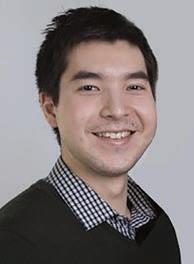
Born in San Francisco, California, Matt grew up in Vancouver, Washington and attended Skyview High School. He played the violin in the Portland Youth Philharmonic, with whom he traveled to New York City and played in Carnegie Hall. He attended University of Washington as an undergraduate and triple majored with two music degrees and a computer science degree. His love of music led him to the love of his life, Julia, whom he met in the University of Washington Symphony. They married in 2011, and four years later welcomed their beautiful daughter, Natalie, to the world.
Relentlessly curious about the universe and wholeheartedly devoted to logical reasoning, Matt was inquisitive, knowledgeable, and open-minded. His creativity and imagination were best exemplified in his parenting to Natalie, whom he loved more than anything else in the world. The two played together every evening since Natalie’s birth. They loved making up stories, building legos, reading books, and playing video games together. His vivid story-telling was on full display when the family went on long hikes. These epic stories would last for hours, where Natalie’s two favorite stuffies, Ducky and Froggy, traveled through centuries and met important figures in history and the future. These experiences instilled in Natalie a love for books and for writing her own stories.
As a senior software engineer at Google for 13 years, he was known not only for his aptitude with solving difficult problems, but also his thoughtfulness and collaborative spirit among his co-workers. He contributed to the making of Google Maps, which changed the world in a significant way. His wit and humor were appreciated by many, and he was quick to lend a helping hand. In his free time, he enjoyed artistic pursuits like photography and drawing. His art often featured the nature he experienced while camping and hiking. In the winter months, Matt skied the slopes of the Pacific Northwest from Whistler to Crystal, and the northern Rocky Mountains in Idaho and Montana. Matt traveled extensively throughout his life. He has visited India, Japan, China, Taiwan, Indonesia, Thailand, Costa Rica, Mexico, Canada, and many countries in Western Europe. Among his favorite memories from his travels was driving his beloved BMW on the windy roads of the Alps,
Continued next page
Student & Alumni News
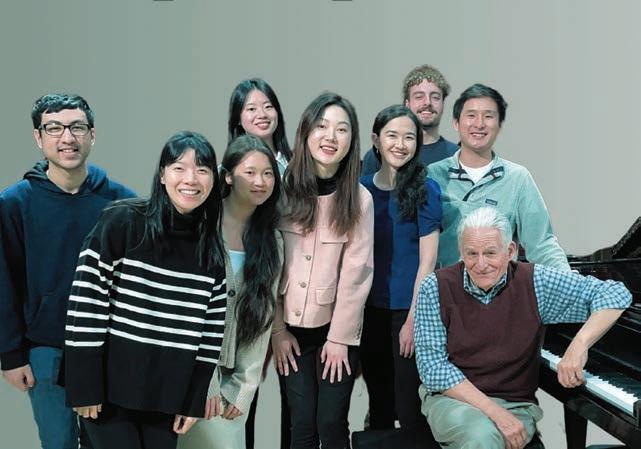
Susan Cady, continued
Many of the instruments requiring Susan’s attention had seen better days. Dean Petrich, Susan’s friend and fellow RPT, recalled an especially memorable challenge:
“A parent donated an old upright to an alternative school in north Seattle. I told the principal that Susan and I could fix it. When we opened it up we saw that it was full of dirt and an enormous mouse nest. We borrowed the school vacuum and a garbage can, removed the action and keys, and cleaned it out. The keybed felts were either rotten or missing, so we replaced the balance rail punchings with the only size I had—medium felt—and proceeded to replace the front rail punchings with the only felts I had—mediumthick. However, we couldn’t remember whether we should put in one punching or two. We remembered the previous piano had multiple punchings of different kinds, so we figured we should add two felt punchings for each front rail pin. We adjusted the blow, the capstans, and the letoff, put the pedal dowels back in place, and figured we were done. I don’t think we ever tuned it.”
In addition to her studies at the School of Music, violinist Hannah Chou (DMA strings student of Ron Patterson) has been taking advanced science courses throughout her program and is currently registered for coursework in the Radiology department, where she is assisting with research to improve diagnostic technologies for breast cancer detection as a student researcher with the UW’s Quantitative Breast Imaging Lab.
Sandy Huang, a student of Robin McCabe double majoring in piano and microbiology, completed an internship at an oncology lab in Barcelona this past summer. Working with the research lab, she learned special diagnostic techniques that help detect lung cancer early on. She acquired useful laboratory skills while practicing her Spanish. Huang traveled to Orcas Island with UW HCASB, a pre-health student organization, where she shadowed doctors to learn about rural medicine.
Anthony Sun, a double major in piano and neuroscience who studies with Robin McCabe, has been working on a research project at the UW’s Freedman lab relating to the possibilities of genetic editing in neuronal cells.
“At the Freedman lab where I work, we primarily focus on growing kidney organoids (basically culturing fully grown kidney nephron cells) by reverse engineering the cells of patients with chronic kidney disease into stem cells and then growing them into these three dimensional kidney organoids that we can target with modern gene-editing techniques like CRISPR-Cas9,” Sun says. “I’ve been taking advantage of this technology to look into ways to genetically edit neuron cells present in these organoids.” Sun was part of a group of students, faculty, and post-bacs from the UW Freedman Lab who presented findings at an Alzheimer and Gene Editing Conference at the University College of London.
Matthew Wu, continued
skiing in Switzerland, hiking in Italy, and beer-drinking in Germany. He was also an amazing chef, who loved making elaborate meals for his family and friends. The combination of his perfectionism and patience resulted in the most scrumptious meals where food, laughter, and joy was shared by all. Albeit short, Matt led a full life and was deeply loved by his family and friends. He left behind his wife of 13 years, Julia, daughter Natalie, mother Karen, father Nathen, brothers Howie and Michael, sister Leslie, nieces Paige and Sydney, and nephew Felix. He left a void in all of our hearts, and will be profoundly missed.
—Julia Tai
UW piano professor Robin McCabe relied on Susan’s expertise at the School of Music and welcomed her many times into her home to tune her personal piano. “Susan was a superb technician, passionate about music and the potentials of a piano to bring beauty into our world,” she says. “She was the personal ‘caretaker’ of my Steinway B at home, and my piano always bloomed after her visits. Susan’s love of nature and animals was a central pillar of her life. She never failed, upon finishing her tuning for me, to stop and give Chloe, my Russian Blue, a few extra treats in her dish.”
Besides her work at the UW, Susan remained busy with private clients and work for Town Hall, the Seattle Chamber Music Society, and other organizations. Her private clients often invited her to arrive early for tunings so they could have lunch and catch up. Susan’s kindness and steadfast expertise gave many School of Music friends the reassurance they needed to donate their precious pianos to the School of Music, and she facilitated a number of such gifts.
Upon her retirement in 2017, Susan was looking forward to spending time with her family and grandchildren, husband Dick Cady, her beloved horses, and her very own Steinway B.
UW students of piano professor Craig Sheppard performed the complete Schubert Impromptus in May 2024 in a studio recital at the UW’s Brechemin Auditoriium (Photo: Mia HyeYeon Kim).
School of Music initiative engages Seattle’s young listeners
A community engagement initiative established at the School of Music last year has brought hundreds of elementary school children to the University of Washington over the past several quarters to observe rehearsals and performances in a guided listening format.
Through a partnership with Seattle educator and arts activist Emilia Kister and her company Common Thread Arts, LLC, the School of Music has engaged young listeners and their families and teachers in live music experiences intended to supplement students’ existing exposure to the arts in school.
Along with bringing elementary school-aged children to the UW School of Music for daytime rehearsals, Kister includes with each visit a custom preparatory lesson that she shares in the students’ classrooms prior to the event and an offer of free concert tickets for students and their parents to attend the related School of Music concert. The preparatory lesson in the classroom is a key component of her approach. “Young children are very capable of listening to live music of many different genres, even for long periods of time,” she says, a conclusion she has reached after almost two decades in the elementary music classroom. “However, it is a skill that needs to be taught. It is remarkable how quickly children respond to these strategies, even with just a 30 minute prep lesson.”
The project got under way in 2023-24, with 285 school children from six different schools attending rehearsals and performances. Participating schools included Jewish Day School, University Child Development School, Our Lady for the Lake School, BF Day School, Villa Academy, and the Giddens School, with students aged from first through sixth grades.
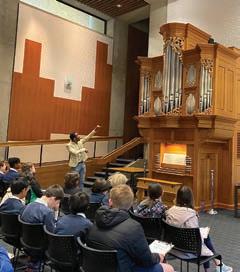
In Autumn Quarter 2024, more than 150 young listeners visited School of Music student ensemble rehearsals.
In November, a group of 55 third graders from BF Day Elementary School attended a Chamber Singers rehearsal in Brechemin Auditorium, with a number of students and their parents opting to also attend the group’s subsequent concert at Meany Hall. Two groups from University Child Development School—a group of 52 first graders and their teachers and a group of 50 second graders and teachers—attended a rehearsal by the Studio Jazz Ensemble, with some families opting to attend the related performance.
“I don’t know who gets more excited, the children or our students,” says Geoffrey Boers, Chamber Singers director and head of choral activities at the UW. “The interaction with the young people is the best part. The questions, their insightful and sometimes hilarious comments—and most of all when they sit with us on stage while we sing. The connection is palpable!”
Kister reports similar enthusiasm from the children and adults involved in the project. “The kids, teachers and parents were thrilled,” she says. “One parent chaperone even told me that it was the best field trip she’d ever been on. We don’t know how many trips she’s attended, but it was still nice to hear.”
Stef Price, head of Organ Studies at the UW, welcomed a group last year for a demonstration of the UW’s Littlefield Organ. “The students were engaged, eager, and prepared to ask questions about the pipe organ in Walker Ames room, keeping me on my toes,” he says.
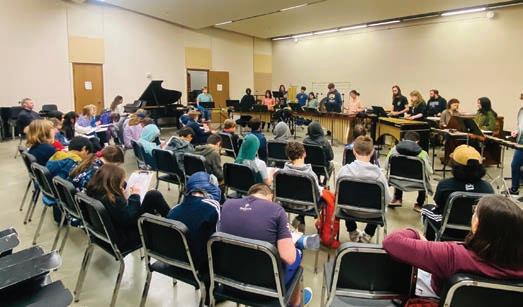
Skúli Gestsson, music specialist at University Child Development School (and UW doctoral candidate in Music Education) brought groups from UCDS to rehearsals by the Percussion Ensemble in Spring 2023 and the Studio Jazz Ensemble in Fall 2024. “Both ensembles did such a good job welcoming our students into their space,” he says. “Emilia Kister is an expert teacher, and it was such a pleasure to work with her on these visits. She visited our music classes to prepare us for our field trips, to teach us about what we would experience, and how to be a great audience member. We can’t wait to visit again.”
Cuong Vu, head of the Jazz Studies program and director of the Modern Band, welcomed students from Villa Academy and Jewish Day School to a rehearsal and performance last spring. “It was such an endearingly positive experience for us (professor and students) to play for and interact with these bright-eyed, curious, open-minded little people,” he says. “Whatever Emilia has been doing in prepping the children for the rehearsal sit-ins opened their minds to our aspirations and intentions while facilitating meaningful connections between the kids and our students in their exchanges.”
The project continues throughout the 2024-25 academic year, with Kister scheduling visits for winter and spring quarters in the coming months.
“A big thank you to School of Music director Joel-François Durand for seeing the vision and supporting this project,” Kister says. “I believe we are really making a difference for the future of live music.”
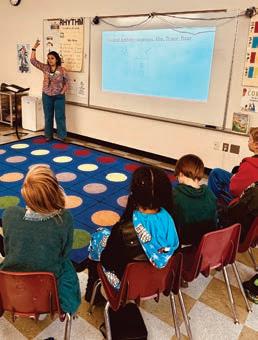
Photos this page, clockwise from top: Students from University Child Development School attend a UW Percussion Ensemble rehearsal; Emilia Kister leads a preparatory lesson in the students’ classroom prior to a UW visit; Stef Price, head of UW Organ Studies, welcomes visiting school children to learn about the UW’s Littlefield Organ.
Photos: Emilia Kister
UW Music student Flora Cummings a winning Gaelic vocalist
School of Music student Flora Cummings is known to her teachers and community for excelling in a variety of settings both on and off the concert stage. An undergraduate viola student of Melia Watras double majoring in Music and Wildlife Conservation, Cummings serves as co-principal violist of the UW Symphony, performs in the Seattle Collaborative Orchestra and the Leonore Chamber Orchestra, competes in Scottish highland dance competitions, and enjoys performing Scottish music with her family, all while simultaneously focused on her studies in biology and eventual plans to work in wildlife ecology and conservation.
Last year, she performed onstage at Meany Hall with Watras and with Watras’s teacher, Atar Arad, in a multi-generational performance designed by Watras. It was an honor rarely extended to a student and even less commonly to an undergraduate, yet Cummings appeared unintimidated, playing beautifully, demonstrating why current and former teachers describe her as “fearless.”
“Flora is an innate musician,” says Watras. “She is an accomplished, inspiring, and generous artist who connects with audiences and her community.”
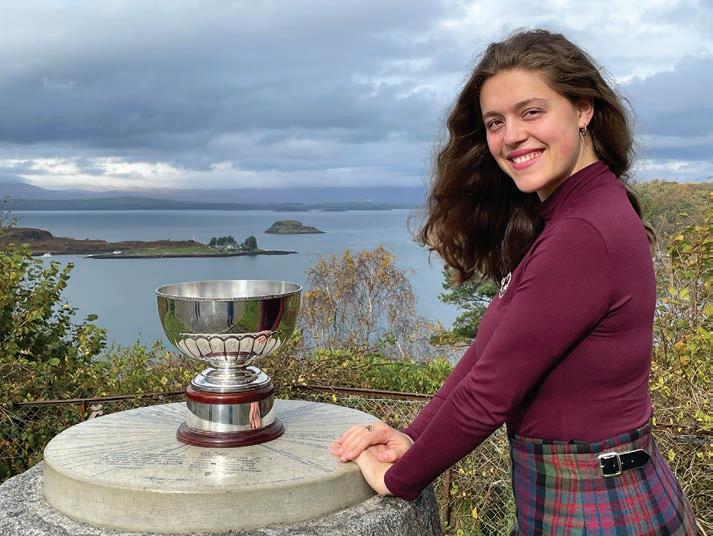
Long aware of Cummings’ abilities in multiple areas, Watras recently was surprised to learn of another talent as Cummings was preparing to take top honors in a national Gaelic singing competition in Scotland. Though she had been aware of her involvement through her family in Scottish and Gaelic music, she had not been aware, she says, that Flora could also sing.
Yet sing she did, winning the prestigious Silver Pendant Competition for Scottish Gaelic learners at the Royal National Mòd, held in Oban, Scotland, in October. Winners of the competition are recognized as among the best emerging Gaelic vocalists in the world. She received top marks in both music and Gaelic, earning her a chance to sing for broadcast on BBC television, as well as live on BBC Radio nan Gàidheal.
As one of 2,600 participants competing in more than 200 competitions over nine days at the Royal Mòd, Cummings took part in a rich tradition extending back to 1891 when hosting organization An Comunn Gàidhealach was founded as a vehicle for the preservation and development of the Gaelic language. The experience also carried heavy family significance for Cummings, who has been steeped in Scottish culture throughout her life, competing in Scottish Highland dance competitions since age 7 and performing traditional Scottish fiddle music and traditional Gaelic song with her family. “We are all members of Northwest Scottish fiddlers and go to music camps and jam sessions throughout the Seattle area,” she says. Even so, winning the Silver Pendant was especially meaningful.
“This was a really special moment as my dad won this competition 21 years ago, also in Oban (I even got to sing on the same stage as he did),”
Cummings shared on her Instagram page soon after the competition. “It was such a delight to be surrounded by so much music and Gaelic, and to travel with my wonderful mum, who has been helping me learn this beautiful language.”
Flora Cummings’ UW education has been supported, in part, by the Milton Katims Viola Scholarship. In addition to upcoming performances with the UW Symphony, Cummings is a featured performer on “Broken Bell,” the May 5, 2025 faculty recital by her professor, Melia Watras.
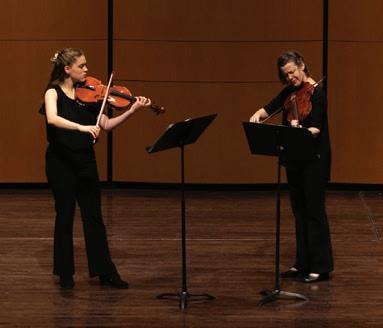
School of Music student Flora Cummings recently took top honors in a Gaelic singing competition in Scotland (Photo: Courtesy Flora Cummings).
Flora Cummings on the Meany mainstage with Professor Melia Watras, Fall 2023 (Photo: Juan Rodriguez).
GIVING UPDATE
Professorship pays tribute to iconic Seattle sound engineer Glenn D. White
When people who knew him say that Glenn D. White was a “Renaissance individual,” they are remembering a brilliant and affable man whose careers variously included work as a physicist, sound engineer, inventor, university educator, wine purveyor, and pipe organ repairman.
The former School of Music faculty member was in a class all his own, a physicist passionate about music who taught acoustics, laboratory instrumentation, recording technology, and research methods at the School of Music from 1969 through 1980. He taught about the ways in which physical acoustics of concert halls impact performers and their instruments and about the connection between musicians’ physical production of sound and the physics underlying listeners’ perception and response to their performances.
Along with his infuence on his students and colleagues at the UW, White made his mark beyond the university. Seattle author Peter Blecha, in an article about White on the HistoryLink website, attempted to describe a remarkable man defying easy categorization:
“The sheer range of the multilingual Mensa International member’s myriad endeavors over the decades is mind boggling. A listing would include organ repairman, physicist, mathematician, Boeing guided-missile engineer and data analyst, experimental-music organization trustee, pipe organ and harpsichord designer/builder, audio engineer, radio station technician, university lecturer, Moog synthesizer instructor, cofounder of the Enological Society of the Pacific Northwest, sound-system designer, professional acoustician, lexicographer—and lastly, in his later years, a Vespa-riding techapplications engineer.”
White made a lasting impression on most who knew him, including one of his former UW students, Doug Solowan, who recently established a new faculty endowment in the School of Music in honor of White, who died in 2014.
Solowan’s gift will create the Glenn D. White Endowed Professorship in Music, an enduring tribute to a singular individual as well as a permanent source of funding to support faculty whose areas of interest and expertise incorporate mathematics, physics, and/or engineering with the field of music. Holders of the professorship may include current faculty members, individuals being recruited for faculty positions, or visiting faculty members, including artists in residence.
“We are thrilled that Doug Solowan has created this professorship in honor of Glenn White,” says School of Music Acting Director JoëlFrançois Durand. “It will be of tremendous help in our efforts to expand our research and teaching in areas exploring the intersections of music, mathematics, physics, and engineering. We are grateful for this generous support from Doug Solowan, and we are delighted that Glenn’s legacy will live on here at the School of Music.”
Glenn White grew up on Seattle’s Queen Anne Hill and attended the University of Washington, graduating in 1955 with a degree in Physics. He already knew when he entered college that he was interested in acoustics. His UW advisor, a Professor Kenworth, was an acoustician, and White specifically chose the UW in order to study with Kenworth. After graduation, he was hired by the Boeing Corporation and worked there for eight years, ultimately supervising instrumentation at Boeing Environmental Test Laboratories.
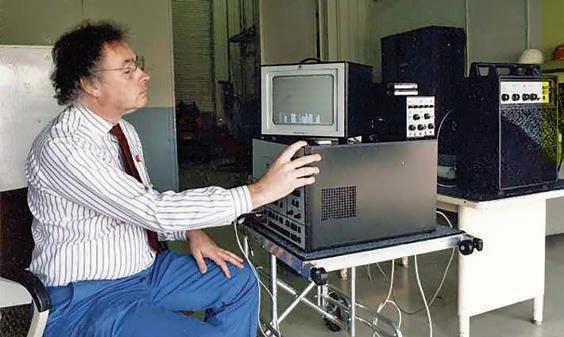
He subsequently became the first sound engineer at the Seattle Center, where one of his fondest memories was doing sound for the Beatles when they performed at the Center in 1964.
From the Center, he was hired by the UW School of Music, where he taught undergraduate and graduate courses in the Systematic Musicology program as well as developing design for and installation of sound systems for university buildings, including Meany Hall.
White also collaborated with several architects on acoustical design in other area venues, including Seattle’s Fifth Avenue Theater, Saint Mark’s Cathedral, and Tacoma’s Rialto Theater.
Glenn’s love of music and passion for instrumentation led him into recording interests. He recorded the Seattle Youth Symphony concerts for more than 20 years and many professional musicians benefited from his expertise. His passion for organs grew into an initial partnership in Olympic Organ Builders with David Dahl, Professor of Music at Pacific Lutheran University and later with James Ludden. He is responsible for designing and installing nineteen organs in the Pacific Northwest— including one suspended in St. Paul’s Episcopal Church in Seattle’s Queen Anne neighborhood.
For the last 16 years of his career White was a field applications engineer working for companies including DLI Enginering on Bainbridge Island. He also wrote The Audio Dictionary (UW Press); its third edition was co-authored with former longtime School of Music audio technician Gary J. Louie.
In creating the professorship in White’s name, Solowan says, “I want to honor Glenn and thank the School of Music for this unlikely hire – bringing the hard sciences into the arts was visionary.”
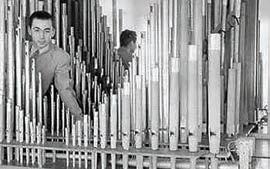
Glenn White was fascinated by pipe organ mechanics and repertoire. Later, he become interested in wine and established the Enological Society of the Pacific Northwest (Photos: Courtesy HistoryLink).
Glenn D. White, 1980s (Photo: Courtesy Historylink).
GIVING SPOTLIGHT
Willard Schultz legacy to benefit UW piano students
A beloved piano teacher’s last acts of generosity will enhance the education of young musicians for years to come, thanks to a former student’s decision to direct a bequest from Seattle pianist Willard Schultz to benefit piano students at the University of Washington.
Schultz was extraordinarily devoted to his students, says UW piano professor Robin McCabe, who studied with him briefly as a young musician and remained friends with him until his death in April 2022 at age 96.
“Will Schultz was my teacher for only two years, before I entered university,” she says. “But they were pivotal and transformative years. I was a hyper-kinetic pianist, with over-abundant energy and extra adrenalin to boot! He created and developed a large and lacking dimension in my playing: an awareness of line, space, and tone, and the magic of lyrical poise and intention.”
Schultz’s influence on his students was felt all through the Pacific Northwest and as far away as China, where he spent several years in the 1980s teaching at Wuhan Conservatory. “Will was an exceptional teacher,” McCabe says. “When he returned from years in China (where his name is still revered at the Wuhan Conservatory), he resettled in Seattle and became one of the Northwest’s most beloved and sought after teachers for K-12 students.” Several of his students have gone on to become professors of piano at the university level. His influence has been
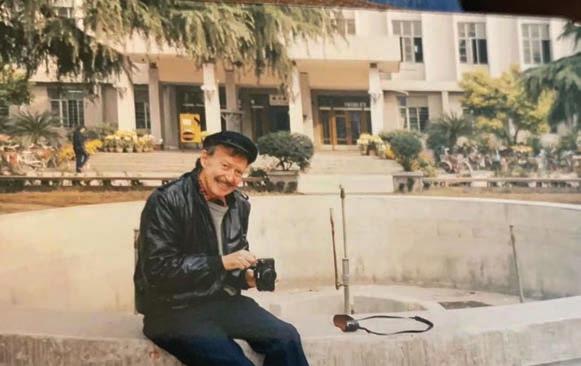
far-reaching in other ways: upon his passing, his estate was distributed to a number of former students and organizations dedicated to music studies. “Will loved, and lived for his students,” McCabe says, “which is why, when I learned to my astonishment that he had left me a generous bequest, I chose to honor that dedication to teaching by creating the Willard Schultz Piano Fund here at the School of Music.” The fund’s $200,000 starting base, she says, “will support our students in various ways, for example, in giving them the invaluable opportunity to play a concerto movement with orchestra.”
Along with benefiting deserving piano students, the Willard Schultz Piano Fund creates an enduring tribute to a highly respected and much-loved educator. “I believe Will would be pleased by my decision,” McCabe says. “It brings me immense gratification to think so.”
May 27 Studio Jazz Ensemble concert honors influential late UW jazz educator Roy Cummings
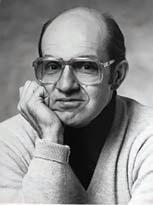
In his 30 years at the School of Music, trumpeter Roy Cummings influenced the musical training of thousands of students, introducing them to the greats of the jazz art form and encouraging their professional and musical aspirations. He also was a cofounder of the School’s Jazz Studies Program, serving as its chair from 1979 to 1993.
Cummings’ career at UW began in 1970 when he became a trumpet instructor after earning music and music education degrees at UW, and continued with his longtime leadership of the Studio Jazz Ensemble. He continued to teach at the School until his untimely death in January 2000, when he suffered a heart attack in the Music Building on his way to teach a class. Cummings was a passionate spokesperson for the importance of music and humanities education, and his opinions on the matter remain relevant today.
“Jazz education in the state of Washington is in pretty good shape,” he said in a 1985 interview in the Olympian newspaper, “but it as well as all music education and humanities curricula are falling on hard times. Humanities education funding is playing second fiddle to the sciences. We can’t all be scientists. We need the human expression and humanities to relax. Music is a big part of that.”
The performing arts, he said, are as necessary to the well-being of humankind as a balanced diet,
and humanities education should be funded as well as sciences, physics, and nuclear sciences.
“These guys are nuclear, too,” he said in reference to the student musicians of the Studio Jazz Ensemble. “There’s some real explosions with these guys.”
The Studio Jazz Ensemble—the UW Big Band—performs Tuesday, May 27, 2025, at the Meany Studio Theater under the direction of Marc Seales. The concert is dedicated to the memory of the ensemble’s former longtime director Roy M Cummings.
ROY M. CUMMINGS ENDOWED SCHOLARSHIP SUPPORTS RISING STARS IN JAZZ
Support from the Roy M. Cummings Endowed Scholarship has enabled promising young jazz musicians to focus on their music studies while taking advantage of performance opportunities both at school and out in the clubs and coffeehouses that play host to the city’s most forward-thinking, musically adept, and creative young musicians.
“I see the scholarship as having afforded the recipients more time to focus on music while rewarding them for their hard work,” says Jazz Studies Chair Cuong Vu. “This kind of support is essential for us to not only keep sustaining these talented and driven young people, but also attracting more to the UW School of Music.” Gifts to the Roy M. Cummings Endowed Scholarship Fund help the School of Music attract top students to the program and provide financial assistance to undergraduates studying jazz at UW.
A bequest from pianist Willard Schultz to former student Robin McCabe will benefit piano students at the School of Music (Photo: Courtesy China Daily).
SENIOR SPOTLIGHT
Mavis Chan (‘24 BA, Business; BM, Voice)
Class of 2024 senior Mavis Chan made full use of her time at the University of Washington, completing dual majors in Business and Music while participating in a busy slate of degree-related and extracurricular activities. She sang in Chamber Singers, Opera Workshop, and quarterly studio recitals. She was vice president of membership for the UW chapter of the American Marketing Association and stook a turn as president of the UW Chamber Singers. She also worked part-time in the Music advising office for much of her tme at the UW. Mavis shared insights with us last spring about her time at UW as she prepared to complete her degree studies and graduate in June 2024.
Why did you choose the UW?
I chose UW because it was close to home and was one of the few universities I visited that was encouraging of me pursuing a dual degree in music and business – here, I get the best of both worlds! I also remember walking around campus as a senior in high school and being able to imagine myself studying and spending time at the school for the next 4 years.
Who is your favorite UW faculty member?
The fabulous Dr. Shaw is my favorite UW faculty member. She is so wonderfully talented and full of knowledge, and I am so honored that I get to be her student. I can still remember the first voice lesson we had and how comfortable I instantly felt singing for her. I always look forward to lessons every week because of the safe environment she provides for me to make mistakes as well as make weird singing faces. I have also learned so much from her about techniques, props, and other resources to help me become a better singer. She is super supportive and inspiring, and my college experience would not be the same without her guidance. Go Dr. Shaw!
What is one fun fact about you?
I have become the designated hair stylist for my family since 2020!
What are some of your hobbies or favorite activities outside of music?
Outside of music, I love to read, bake, crochet, and spend time with my family and friends. I am also always on the lookout for a beautiful sunset or the moon to photograph.
How do you expect to apply your degree after leaving the UW?
With my music and business degree, I hope to start my own music school in the future. Over the years, I have been lucky enough to work with many music educators who have inspired,
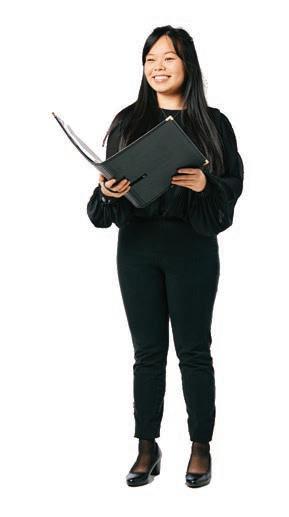
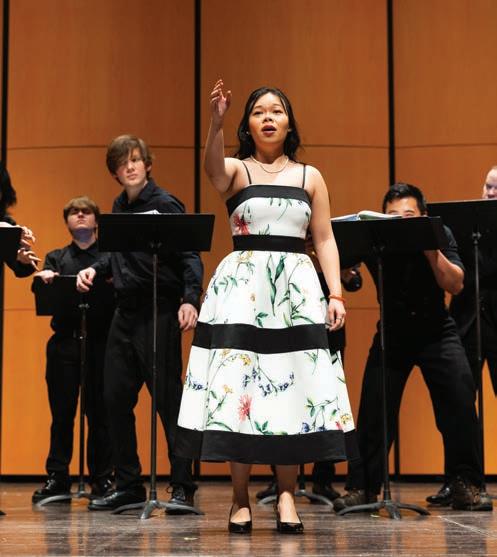
supported, and helped me grow as a musician and as a person. They provided an encouraging environment for me to expand my appreciation for music and led me to new opportunities to explore music. I hope to one day create an accessible and welcoming place to pass on the positive educational experience I have had so far to young musicians.
In the 2023-24 academic year, Mavis Chan was awarded the Hans Wolf Fellows Award for Graduating Seniors in the School of Music. Since graduating in June 2024, she has started a new position with the Boeing Coroporation and remains involved with singing through Choral Arts Northwest and other arts organizations.
YOUR SUPPORT NURTURES GREATNESS
Annual gifts to the School of Music provide important resources benefitting students, faculty, and programs.
• The Friends of Music Fund provides the School of Music Director flexible funds for music student, faculty, and program support.
• The Catch a Rising Star Endowed Scholarship Fund provides long-term scholarship support for undergraduate music students.
Make a gift online at uwfoundation.org, or by calling 1-877-UW-GIFTS. Thank you for your support!
Mavis singing in the UW Chamber Singers and Opera Workshop production in March 2024. (Photo: UW Photography).
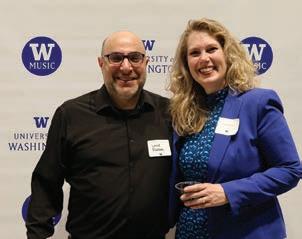
UW MUSIC
HOMECOMING
The School of Music friends and alumni returned to campus on May 31, 2024 for the second annual UW Music Homecoming. Co-hosted by the School of Music and the UW Alumni Association, the event followed a performance by the UW Symphony Orchestra and Combined UW Choirs at Meany Hall, the final School of Music performance at Meany for the 2023-24 concert season. Held at the Hans Rosling Center for Population Health, the reception included live jazz by a UW student trio featuring Toby Miller, drums; Andrew Friedrich, guitar; and Max Young, bass. Guests were welcomed by Gabriel Solis, divisional dean of the arts for the College of Arts and Sciences. Attendees enjoyed drinks, hors d’oeuvres, and many happy reunions of current and former students, faculty, and longtime School of Music supporters. (Photos Joanne DePue).
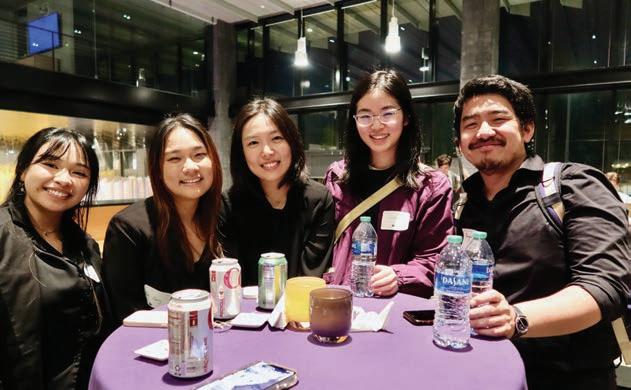
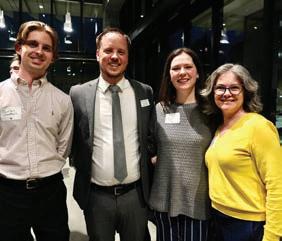
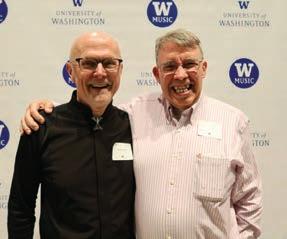
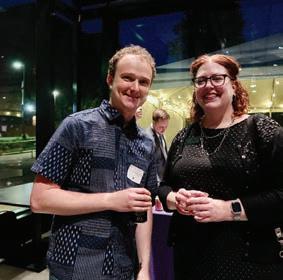
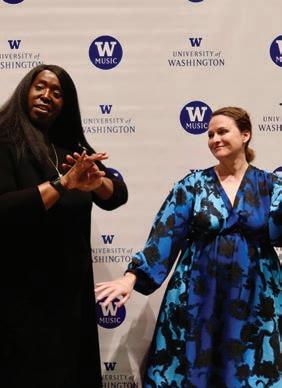
Orchestral conducting student Ryan Farris and School of Music administrator Jen Moreland.
Cee Adamson (‘24 DMA, Vocal Performance with her voice teacher, Dr. Carrie Shaw.
Current and former UW orchestra and band musicians (left to right): Rachel Reyes, Yue Zhong, Grace Jun, Christine Chu, and Roger Wu Fu.
Gabriel Solis, divisional dean of the arts at the College of Arts and Sciences, welcomes attendees to the reception.
A Team: UW Advancement team members (left to right): Jackson Chambers, Benny Shell, Kate Creson, Stephanie Kornfeld.
Professor Geoffrey Boers and longtime UW Music student and community member Paul Johns.
Choral Conducting alums Jennifer Rodgers and Leann Conley-Holcomb reunited at UW Music Homecoming.
School of Music faculty David Alexander Rahbee, and Giselle Wyers looking happy at the conclusion of the 2023-24 performance season.
Grad student Ryan Farris gesticulates; School of Music friend Joanne Bourgeois considers.
School of Music alumnus Yuly Kopkin and friend.
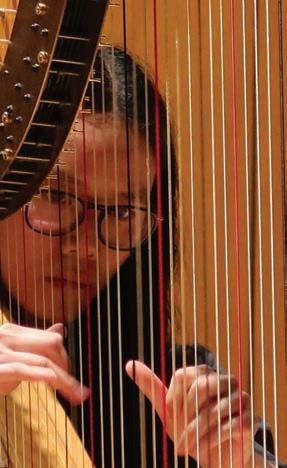
We are grateful to our donors, alumni, and friends, whose generous and thoughtful support creates opportunities for our music students, faculty, and programs.
We regret any inadvertent errors; omissions will be included in the next issue of Whole Notes.
Friends of the School of Music receive invitations to special concert events in addition to recognition in programs and publications. To make a gift, please visit uwfoundation.org or call 1.877.894.4387.
FRIENDS OF THE SCHOOL OF MUSIC
Gifts received July 1, 2023 to June 30, 2024
Gifts $100,000+
Anonymous (2)
Sylvia & Stephen Burges
Paul Johns
Jerry & Linda Paros
Raynier Institute & Foundation
Jane & Roger Soder
Gifts
$25,000-$99,999
Kathleen & Neil Bogue
Stephen & Sarah Carter
Gifts $10,000-$24,999
Anonymous (2)
Dolores Plath*
Gifts $5,000-$9,999
Jiyoung Lee & Sang-Beom Shim
Cary & Joann Oshima
Gifts $1,000-$4,999
Anonymous (2)
Paula & Robert Barta
Mary Anne Braund & Steve Pellegrin
Catherine Cole and Kwame Braun
Davenport Family Fund
JoAnn Forman
Jason & Wendy Froggatt
Harvey Greenberg
George & Mary Kenny
Tung Shing Leung & Cecilia Chung
Greg & Corina Linden
Tonia Lindquist
Michael C. McGoodwin, in memory of Rebecca C. McGoodwin
Jon Nelson
Janet Bogue & Paula Newberg
Marjorie & A. Wayne Pietz
Jane Preston
Richard & Karen Prince
Thank you for your generous support!
Don Sayre
Philip & Kinza Schuyler
Laurel Sercombe & Darwin Alonso
Davis Wright Tremaine
Lavita Wai
John & Lynn Williams
Gifts $500-$999
Anonymous
Charles Alpers & Ingrid Peterson
George & Bonnie Brengelmann
Stanton & Sally Cole
Charles Delahunt & Jean Olson
Warren & Verna Dogeagle
Alan Fine & Carole Terry
Paul B. Fritts
Karen Gottlieb & David Klein
Clint Kraus
James & Margaret Paynton
Ingrid Peterson & Charles Alpers
Alina Ridley
John & Patricia Rose
Annie & Leroy Searle
Shannon & Alan Spicciati
Pamela Steele
John Yearsley
Gifts $250-$499
Anonymous (2)
Tekla Cunningham
Suzanne Dale Estey & Michael Estey
Penny & Dale DeGraff
Sheila Feay-Shaw & Steven Shaw
Mary & William Hallauer Jr.
Jean-Marie Kent
Steve & Katherine Messick
Robert & Karen Mildes
Scott Oswald
Cathy Palmer
Kenneth Rudolf
Glenn Silva
Lisa & John Stewart
Ed Taylor
Paulette Thompson
Tonebase
Robert & Joan Wallace
Christy Watson
Gifts $100-$249
Anonymous
Cee Adamson
Richard & Susan Alvord
Darce Barager
Kayoko Barnhill
Dennis & Betty Behrens
Charisse & Bruce Berner
Robert Carroll
Laura Chang
Richard Chinn
Don Crawley
David Dahl
Pierre Divenyi
Jason Dougherty
Bill Dubay
Tom & Virginia Dziekonski
Ann Eggers
John Gibbs & Janet Ness
David Hirsch
Intel Corporation
Philip Jones
Youngjin Joo
Charles Keagle
Michael Kleinschmidt
Oliver Kou
Ronald Mar
JoAnn & Michael Matlick
Robin McCabe
Ann McLaughlin & Willard Wadt
Gretchen McNamara
Microsoft
Elizabeth Raleigh
Karen & Richard Pickett
W. Ritchie
Maria Sampen
Jeanne Schmitt
Peter & Gail Schmunk
Craig Sheppard & Gregory Wallace
Sara Stamey & Winston Saunders
Linda & Blagoje Stankovic
Jan Stark
Nicholas Strathy
David Streatfield
Valerie Taylor
Jackie Thomas
Nicola Tollefson
Anne-Marie Van Wart & Lee Winkler
Dianne Vars
Norman Walker & Ann Bowker
Steven & Mary Wright
Matthew Wu*
Gifts Under $99
Anonymous (5)
Marnie Arlen
Ashley Bailey
Soo Bang
Boeing
FRIENDS OF THE SCHOOL OF MUSIC
Continued
Kenneth & Marla Bronstein
Marla & Kenneth Bronstein
Robert Brown
Tara Causland
Miriam Champer
William Chapman
Nyaho & Patrick Giles
Kelsey Croft
Molly & Scott Dalessandro
Joanne DePue
Luke Duroc-Danner
Phyllis & John Ernsberger
Amy Finnigan
Linda & Leonard Good
Ryan Hare & Nicole LeBlanc
Tina Harris
Adrienne Hidy
Sachi Hirakouji
Michael Hollman
Ross & Donna Hunt
Wilma Jensen
E. Harvey & Mary Jewell
Richard & Leigh Jones-Bamman
Rhonda & Frank Kline
Frank & Rhonda Kline
Patricia Klotz
Christopher Leuba*
John Long Tyan & Vivian Siao
William Mahrt
Louellen McCoy
Mark Montemayor
Rian Morgan
Bruce Neswick
Theresa & Robert Ogan
Mary & Daniel Owen
Nathaniel Parton
Mina & David Payson
Ksenia Popova
Nancy Price
Cynthia Ramirez
The Red Door Music Studio
Kathryn & Gary Rickert
Marilyn Rogers
Andrew Romanick
Sandra Ruconich
Lynn & Frederick Rupp
Pamela Ryker
Jessica Sands
Atsuko Savorgino
Mary Schneider
Carrie Shaw
Larry Shibler
Vivian Siao & John Long Tyan
Chris Stroh
Richard & Sandra Tietjen
T-Mobile
Michael Toomey
Marc Treyens
Prany Vadisirisak
Maria van Tyen
Christopher & Erica Welch
Ryan Whitney
Joseph Williams
Jason Wyttenbach
* Deceased
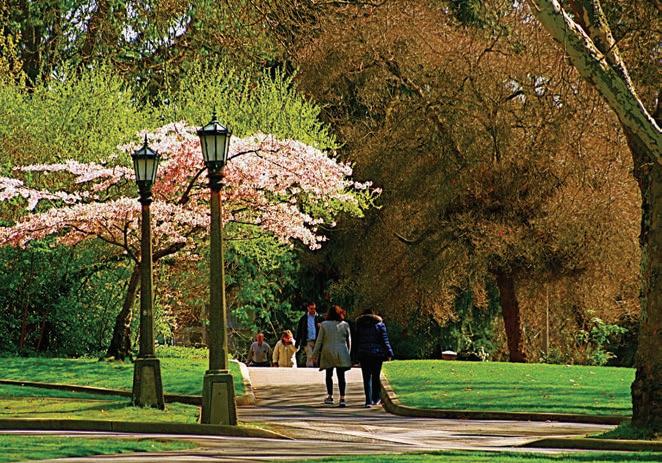
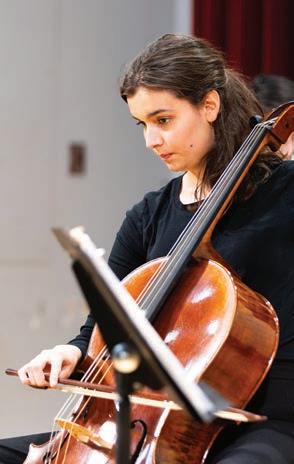
Faculty News
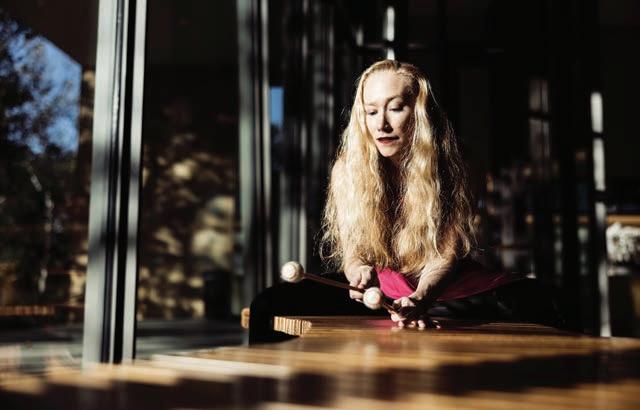
Bonnie Whiting, Percussion
Bonnie Whiting, chair of UW Percussion Studies, recently took on the position of coartistic director of Seattle Modern Orchestra, the Pacific Northwest’s only large ensemble solely dedicated to the music of the 20th and 21st centuries. She joins alumna Julia Tai (‘10 DMA, Orchestral Conducting) in curating adventurous programs; this season includes partnerships with Seattle International Film Festival, Earshot Jazz, and an extension of the group’s annual residency at the UW.
In Summer 2024, Whiting enjoyed performances at Lincoln Center’s Summer for the City Festival (on-stage percussionist with Jonathan Berger’s chamber opera The Ritual of Breath is the Rite to Resist, previewed in the New York Times), at New York’s Performance Spaces for the 21st Century (the east coast premiere of Wang Lu’s new solo work for vocalizing percussionist), and at the Kennedy Center (a new concerto collaboration with composer Jonathan Bingam and renowned children’s author Mo Willems, in four performance with the National Symphony Orchestra for its family pops series.)
Giselle Wyers, Choral Conducting
Head of the UW’s choral conducting program recently conducted the American Choral Directors Aassociation MidWest Regional Tenor Bass High School Honor Choir in Omaha, Nebraska. The choir, which included 110 singers representing 10 states, gathered for a two-and-a-half day intensive as part of the ACDA regional conference. Wyers will be featured in a chapter in the new book published by GIA Music entitled Choral Repertoire by Women Composers, a survey of 400 composers across history and around the world. Wyers’ chorus, the University of Washington Chorale, appeared at the Northwest Regional ACDA conference in Spokane as part of the ceremonial closing concert. The Chorale sang twelve pieces as backup choir for Andrea Bocelli for a Mother’s Day performance at Seattle’s Climate Pledge Arena. Wyers’ climate-change inspired choral cycle, “Fire in the Garden,” is set to be released through Hildegard Publishing, a publishing company dedicated to promoting the works of women composers spanning different historical eras. “Fire in the Garden” was initially commissioned by the Cantilena Women’s Chorus based in Boston. It includes exclusively female-authored texts, featuring prominent voices such as Greta Thunberg, Denise Levertov, Barbara Deming, and Hildegard von Bingen.
Wyers’ composition “Song Has a Bird for Rhythm,” for chorus and piano was published in Fall 2023 by Santa Barbara Music Publishing, and “A Field of Hosannas,” originally premiered by the UW Chamber Singers under the direction of Geoffrey Boers, was published in September by MusicSpoke.
Wyers’ composition “The Waking,” in a newly commissioned chamber orchestra/choral version, premiered at a concert sponsored by the Culture Department of Santiago (Chile) on October 20th with Ensemble Vocal Australes, under the direction of Patricio Hernandez. Her community chorus, Concord Chamber Choir, performed Beethoven Symphony No. 9 in Benaroya Hall with Harmonia Chorus and Orchestra under the direction of William White.
Passages
Kristine Anderson
School of Music faculty, students, and alumni were saddened to hear of the passing of longtime School of Music collaborative pianist Kristine Anderson, who died in September 2024 at her home in Seattle. Active in the larger Seattle music community, she frequently worked with the UW flute studio as well as the Seattle Flute Society and other area arts organizations.
“The flute studio has cherished the time and expertise Kristine shared over the many years,” said Donna Shin, flutist and chair of Woodwinds and Brass at the UW. “I’ve known and worked with Kristine since the late 90’s. She was always a positive light for us. She knew the whole flute repertoire, and she was an important part of the flute community. She was generous with our students and a source of great encouragement. We have greatly missed her both musically and personally.”
Rhonda Kline, who oversees the collaborative pianists at the School of Music, also has fond memories of Kristine and her work at the UW. “Kristine had been working at the UW as a collaborative pianist for many years, and was particularly involved with the instrumental areas here, but she also had a long career with singers and opera in the Seattle area,” Kline said. “I know she was here as a pianist working with students, and perhaps some faculty, for more than 25 years. She was a multi-faceted musician, and a dedicated bicyclist, riding her bike most days from the Ballard area to work at UW, even through the winter months! She was a support and encouragement to me many times in the work I had to do as supervisor/ scheduler of the staff pianists, and I remain grateful for the contributions she made over the years to our students and their musical growth.”
Kristine died Sept. 18, 2024, at her home in Seattle, after enduring three years of aggressive oral cancer. She was born on March 21, 1953, in Richland, Wash. Her parents were Howard and Clarene Anderson.
Kristine earned her music degree from the University of Montana (Missoula) and was well-known as a piano accompanist throughout the Puget Sound region. She was an enthusiastic hiker, exploring the trails of the Cascade and Olympic mountains. She often hiked alone, as no companion could keep up with her. In the winter she skied and snowshoed. Kris is survived by her sisters Ronnene Anderson (Mark Peppler) and Dixie Bradeen (Guy Bradeen), nephews Matthew and Neil Peppler, and grand-nephew Kai.
Bonnie Whiting, head of UW Percussion Studies, was recently named co-artistic director of the Seattle Modern Orchestra (Photo: Courtesy Bonnie Whiting).
2024-25 CONCERT SEASON HIGHLIGHTS
Below are just a few highlights of upcoming performances at Meany Hall. View the full concert calendar at music.washington.edu/upcoming.
Feb. 20
2019-20 CONCERT SEASON HIGHLIGHTS
Guest Artist Concert: Harmonia with UW Piano Students
UW piano students perform concerto movements with the orchestra.
March 12:
Guest Artist Concert: Seattle Modern Orchestra: Tribute to Joël-François Durand
An evening of works composed by Professor Durand and his former students, plus works by current students of the UW Composition program.
March 14
UW Symphony and Combined UW Choirs
David Alexander Rahbee leads the orchestra and choirs in “The Haydn Experience II” and works by Schumann and Ravel.
April 10
Faculty Recital:
Tekla Cunningham, violin
The artist-in-residence performs works for solo baroque violin, including music by Pisendel, Telemann, and a newly commissioned work by Melia Watras.
April 16
Guest Artist Concert:
Eroica Trio
The renowned Eroica Trio—Erika Nickrenz, piano; Sara Parkins, violin; and Sara Sant’Ambrogio, cello—performs works by J.S. Bach, Tomaso Albinoni, Fritz Kreisler, George Gershwin, and Johannes Brahms in this concert concluding the group’s threeday residency at the School of Music.
April 18
Faculty Concert: John-Carlos Perea
Associate Professor John-Carlos Perea is joined by special guests to perform “Improvising Home,” his original work for jazz ensemble commissioned by the San Francisco Arts Commission.
April 22
Faculty Concert:
Stephanie Richards and Friends
The newly appointed professor of music and renowned trumpeter/improviser is joined by UW faculty colleagues in her debut Meany Hall performance.
April 24
Faculty Recital:
Robin McCabe, piano
Around Robin
Professor McCabe performs solo works of Ravel and Faure in the first half of her program then is joined by students from her UW piano studio for a set of transcriptions for two pianos, eight hands.
May 5
Faculty Recital:
Melia Watras
Broken Bell
The faculty violist/composer premieres “Broken Bell,” a collaboration with writer Sean Harvey, involving Harvey’s theater work interwoven with world premiere compositions by Ha Yang Kim and Watras. With Elisa Barton and Michael Jinsoo Lim, violins, and Eric Han, cello. Directed by Sheila Daniels.
May 15
Faculty Recital:
Craig Sheppard, piano
A program of works by French composers, including works by Cesar Franck, Joël-François Durand, and Claude Ravel. With pianist (and Sheppard’s former UW student) ZeZe Xue.
May 22
Guest Artist Concert:
Ekmeles Vocal Ensemble
Dedicated to presenting new and rarely heard works of the historical avant garde, the ensemble turns its focus to premieres by UW faculty composers in its Meany Hall performance.
All programs are at 7:30 p.m. at the Gerlich Theater, Meany Hall. Venue box office opens one hour prior to the performance. Purchase tickets in advance through the ArtsUW Ticket Office or online at music. washington.edu/upcoming.
UW Arts Ticket Office
Purchase tickets by phone or in person Monday through Friday, 12 pm – 4 pm.
Location: 1313 NE 41st Street, Seattle, WA 98105 Phone: 206-543-4880; (1-800-859-5342 outside Seattle)
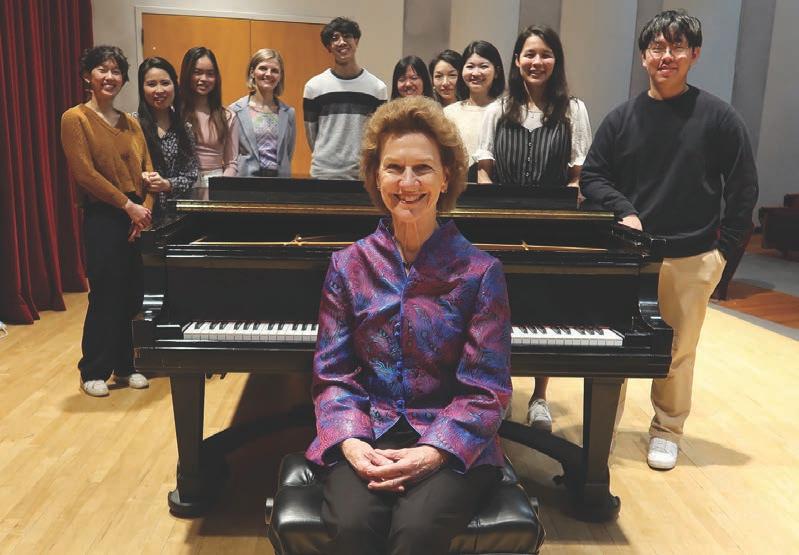
Around Robin: Professor Robin McCabe and students from her UW piano studio perform at Meany Hall on April 24 (Photo: Joanne DePue).