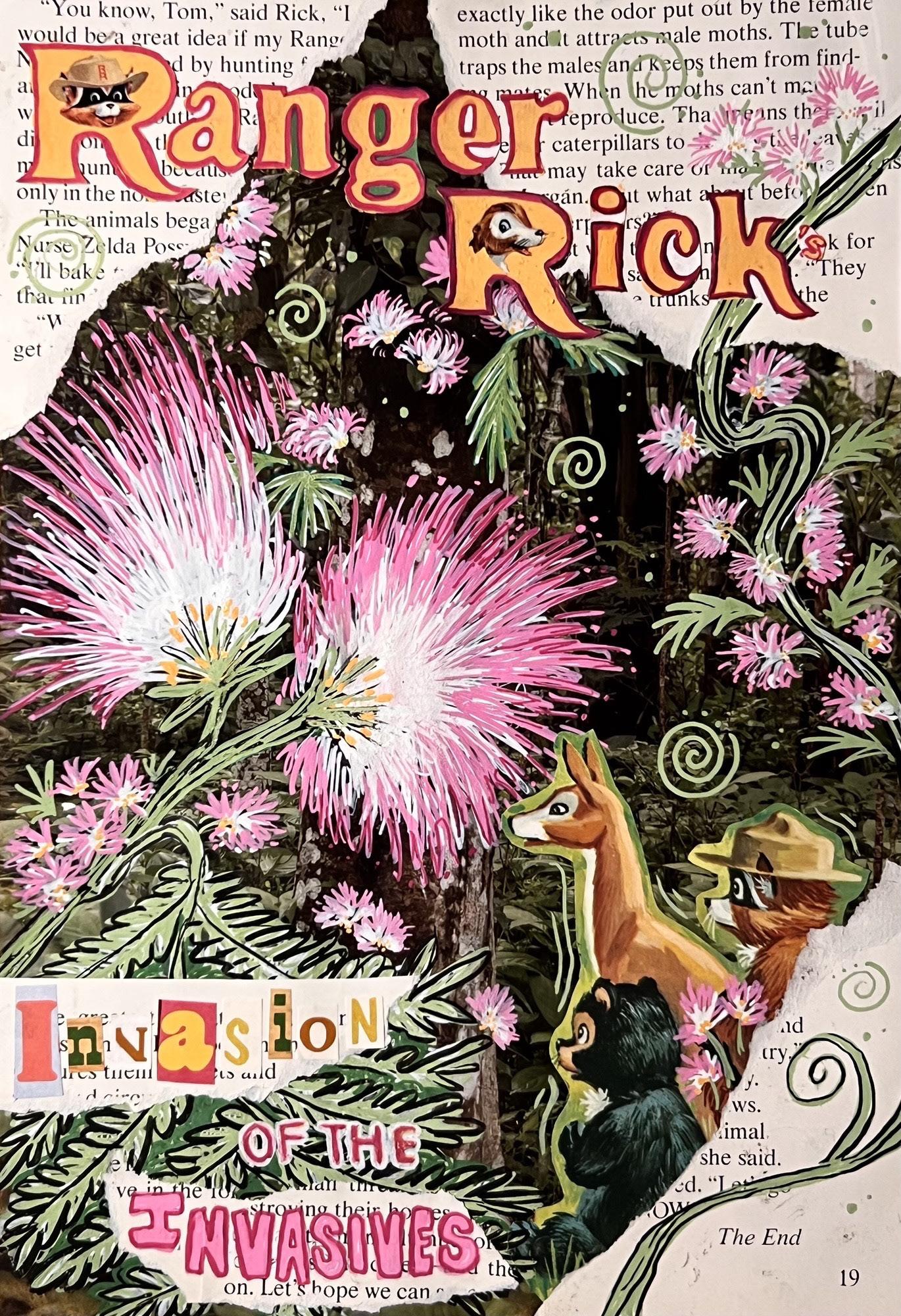
Want to see your writing or art in the Spring 2026 edition? Submit a 100 word pitch outlining your intended topic and approach to uvmheadwaters@gmail.com or stay up to date with our Instagram for prompts @uvmheadwaters
We’re starting a podcast! DM us on Instagram with interest.
Look through our archives at uvmheadwaters.org
Managing
Ruthie Bell Alma
Creative
Via Hedley
Treasurer
Anna Hoppe
Cameil
Katherine
Maya
Ava Scagnoli
Samuel Lee
Alma Smith
Talia Weizman
Kenzie Welsh
Thea Parsons
Ava Buerkle
Loden Croll
Alma Smith
Dear Reader,
As we close out Headwaters’ tenth year, we want to thank you all again for your invaluable contributions to this magazine. Readers, writers, editors, artists, and leaders alike, we could not do it without your passion and commitment to thoughtful and compassionate environmental storytelling. Headwaters Magazine would not be possible without the continued support of the UVM Student Government Association, the Rubenstein School of Environment and Natural Resources, our faculty advisor, Dr. Peter Brewitt, and the Headwaters Leadership Team.
This edition comes to you without any particular theme, rather a genuine reflection between people, place, and nature. All Headwaters issues echo this conversation between human and morethan-human worldly experience, and this one is no different. This issue traverses the gradient scales of observation, focusing inwards on our relationships to nature, and spiralling outwards to focus on human networks and their impact on our beloved planet.
Our hope is that as you read this semester’s magazine, you discern your own orientation within the natural world. You will read about the intersection of global systems that extract from the planet with those attempting to paint another picture, one of balance and moderation; where new opportunities for symbiosis emerge from parasitic ones. Through personal reconciliations and analytical solutions, may you also sort through some of the messiness and grief and elation to find a clearer image of who you are and the person you are called to be. It’s a big ask, but one Headwaters readers are certainly more than equipped for!
The United States’ 24th Poet Laureate, Ada Limón, writes on this tandem between nature and people. When she came to speak at UVM this fall, she read from her poem, “Dead Stars.” The final lines ask what would happen if we chose to act out and interrupt the patterns of destruction wreaked upon the earth for profit:
What if we stood up with our synapses and flesh and said, No. No, to the rising tides.
Stood for the many mute mouths of the sea, of the land? What would happen if audiences became active participants in disruption? What will you learn from your peers’ reflections this issue, and what will you do next?
Yours truly,
Loden Croll ‘26
Alma Smith ‘26 Editor-in-Chief Managing Editor
This magazine was written and produced on the land of the Abenaki Tribe. For more information, visit https://abenakination.com.
Last summer, I ventured to the southern United States for the first time. I was excited to witness new plant and animal species and experience the beauty of a fresh landscape. The Smoky Mountains of Tennessee captivated my attention the second they appeared on the horizon. I’ve lived close to the Adirondacks my whole life, but these mountains felt more massive, more rugged. While I reveled in the gorgeous views above, my sights were also drawn below, to a fuzzy pink tree. This curious plant had started to dot the side of the highway as we exited Virginia. It was a wide, bushy tree, with fuzzy pink flowers that looked like something out of a Dr. Seuss story. I figured I had discovered a common tree of the region, and I couldn’t seem to escape it as we climbed up the winding mountain road to our cabin. It wasn’t just the bright pink shade that captured my attention; the tree stood so out of place in this rough, rocky terrain.
I was dismayed to discover this plant is extremely invasive to the Southeast. The Persian silk tree, as I learned it was called, sucks key nutrients away from native plants and uses its wide canopy to block sunlight from reaching
smaller species. It seemed impossible for such a pleasant-looking tree to be so harmful, and it bothered me that such a central aspect of my trip was spoiled by this new information. With further research, I learned the Persian silk tree had quickly begun its conquest after introduction to the United States in the early 18th century. Originating in southern Asia and brought across the ocean for ornamental purposes, this tree had managed to take over Southeastern ecosystems. It was daunting that a species introduced to a foreign land could thrive so effectively, even outcompeting species who have existed here for centuries.
As my initial disappointment wore off, I grew fascinated at the silk tree’s ability to overtake such a large territory. It had integrated itself into the landscape, secured a spot in every backyard, every roadside, every recently cleared property. It stood out against the green sea of pines, maples, and birches, but blended in with the sweet pink sunsets. Externally, the silk tree may provide a gorgeous sight, but below the surface, it wreaks havoc on surrounding plants. Management efforts are difficult due to the resilient nature of the plant, which resprouts when cut. Even when targeted, the silk tree comes back just as strong.
Invasive species are not beneficial, but this shouldn’t prevent any amazement at their ability to establish in new areas. We have all seen flowers growing through concrete sidewalks, still managing to persist despite every odd, or roots pushing against a man-made struc-
ture, making room for themselves so they can continue to grow. Maybe invasive species are sort of beautiful in this same way, thriving where they aren’t supposed to.
Invasive species may disturb landscapes, but they don’t have to be our enemies. They can serve as a reminder to incorporate ourselves into ecosystems, and they can be our compass towards restoration of natural communities. The whole Earth is intertwined in ways we rarely acknowledge as we focus on the terrible tragedies we incite on our planet. We often forget we are part of the balance, integrated with the land. Our veins resemble the veins in leaves, except they carry blood instead of water. The ripples flashing against the sunny surface of a lake match the pattern of stretch marks lining our legs. The roots of wildflowers, stretching deep into the ground, match the branching of our nerves. Like our intricate biological processes, our backyards are equally elaborate, composed of bustling natural cities full of soil bacteria working below, plants sequestering the carbon we breathe out, birds overhead spreading the seeds of trees, mammals feeding on plants and providing nutrients back to the soil.
Comprehending these connections is the first step towards repair. Restoring balance is the main goal when tackling the removal of invasive species, but how can we restore our planet if we don’t understand our relation to it? Removing invasive species is not an easy process, and it is not a pretty process, but maybe it can bring us together and remind us of something: invasive species are outsiders, humans are not.
The Persian silk tree is one mere example of the abilities of invasive species. I remember this tree from my trip, but I also remember the baby black bears I saw running through a field of
wildflowers. I remember the royal blue butterflies fluttering along a waterfall, the gushing stream following a heavy night of rain, the native flowers lining a hiking trail. Protecting these features is only possible by perceiving their beauty and understanding their roles within the larger landscape, just as we must understand ours.
Invasives have ascended mountains and submerged deep into oceans they were never meant to occupy. Like tree roots expanding sidewalks, these species continue to further ex pand natural habitat bound aries, resulting in ecolog ical disorder similar to cracking of concrete. To fill in the holes and restore order, we need to integrate ourselves with our non-human neighbors and recognize where we stand in the larger balance. Just like invasives, we can all travel across our coun tries, across the ocean, and span entire continents, but this means nothing if we don’t recognize what’s in our own backyard. H
Art by Samuel Lee
Understanding Indigenous Perspectives: Maasai Relationships with the Savanna
By Meredith Loney
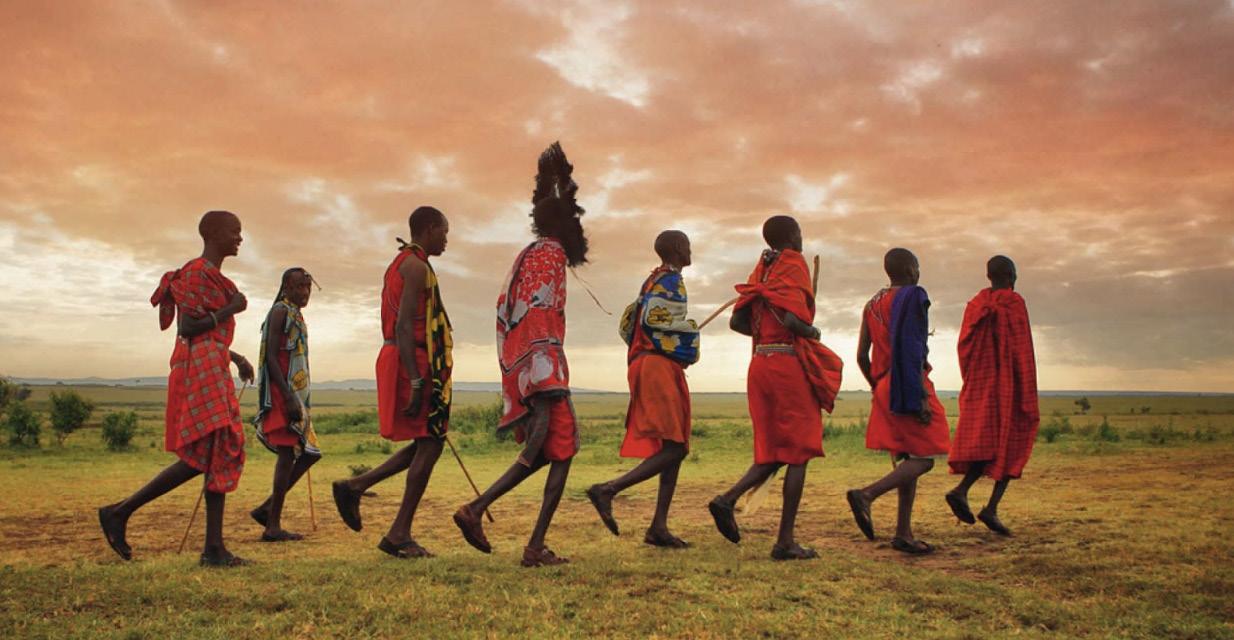
The Maasai are an ethnic group indigenous to northern Tanzania and southern Kenya, known for their vibrant clothing and lively ceremonies. They are also recognized for their pastoral lifestyle, although this cultural practice is diminishing with time and colonial influence. Much of the Maasai culture is tied to their land, which provides an abundance of food, medicine, resources, and spiritual connections. Despite Maasai ties to the land, Western conservation ideas dominate land-use disputes in Tanzania and often exclude Maasai perspectives. To the West, “conservation” revolves around the belief that a properly conserved area sees little-to-no human interaction with the ecosystem, which often differs from local cultures and traditions. Some Western conservationists are fighting for complete protection of the savanna so that no humans are allowed. Others argue that the savanna should be used for tourism and the economic development of Tanzania, establishing a system where humans are allowed in designated areas with tour operators. However, both these arguments overlook the perspectives of the Maasai who use the land for their livelihood. As a result, it is more important than ever to understand indigenous human-environmental relationships and how they can be incorporated into modern environmentalism.
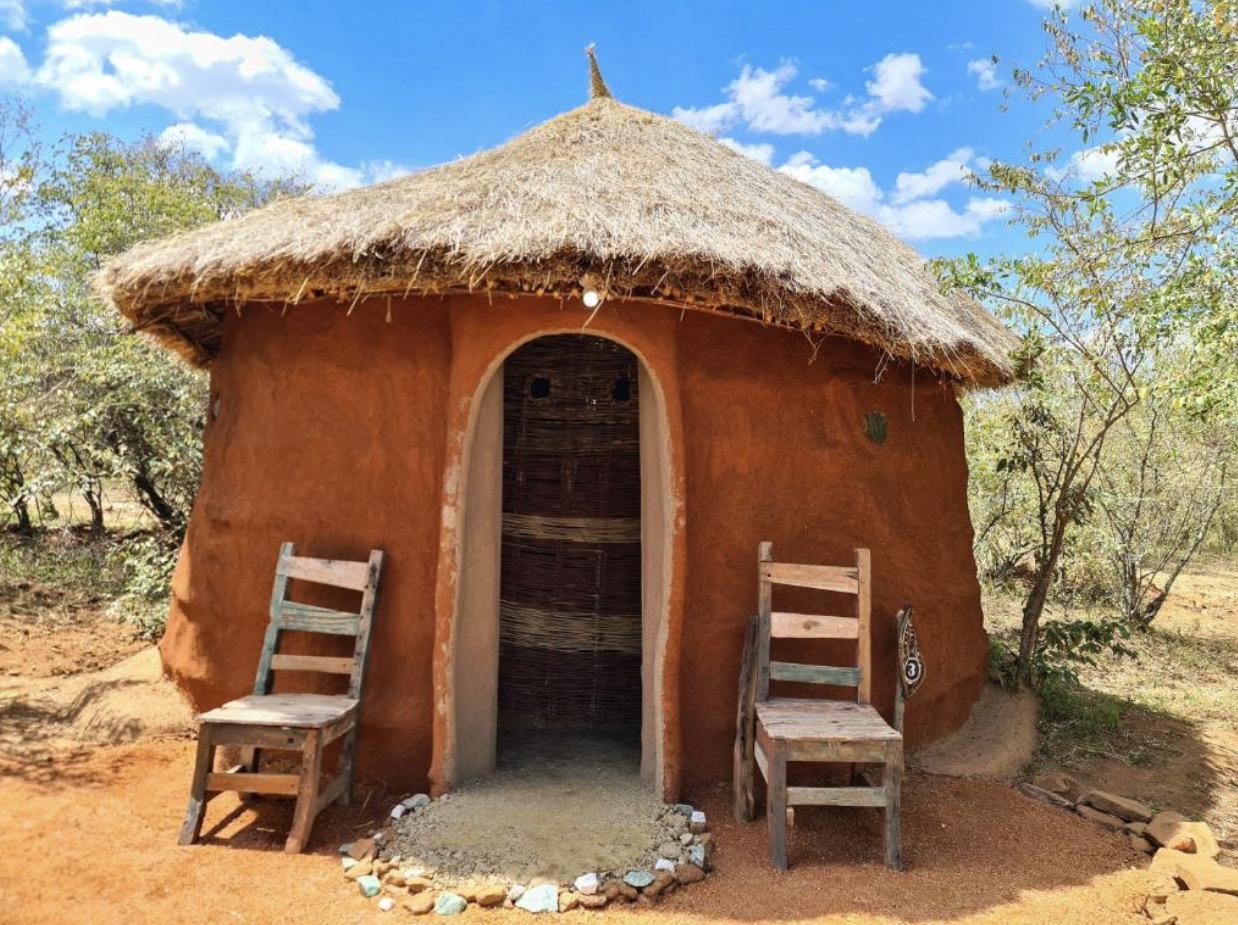
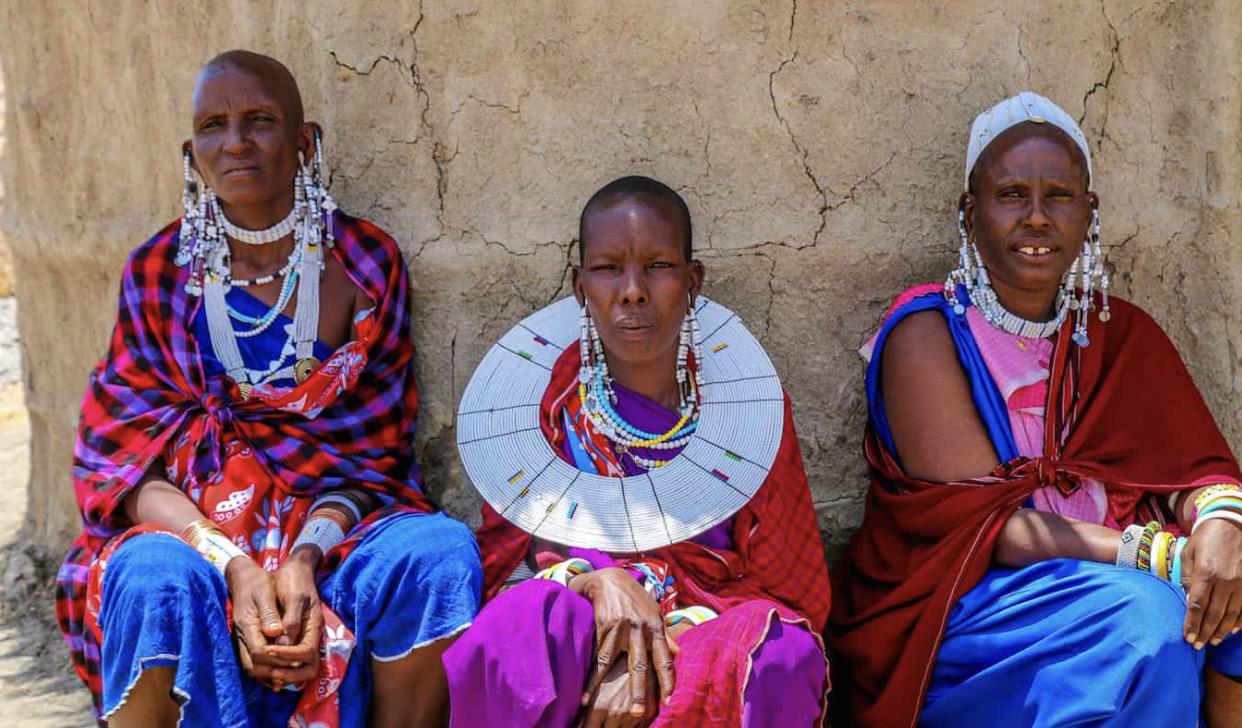
During the Spring 2025 semester, I interviewed members from Maasai communities. I spoke with different Maasai villages around northern Tanzania and asked them about their lives and cultures. Community leaders invited my peers and I into their community, or boma. Families brought us into their homes, built by women, from sticks, grasses, and cow dung. During interviews, women offered me homemade beaded jewelry and tea made of goat milk while children herded cattle outside. I could not collect a direct transcript because of the translation from Maa (the Maasai language) to Swahili and then Swahili to English, but I was able to document the general idea of their stories and sentiments. Current
outside knowledge of Maasai culture comes from academic research, where nonmembers document their observations of Maasai life. However, this research rarely includes personal stories from Maasai because of difficulties with translation, so hearing experiences from the Maasai themselves is rare.
It is said that the Maasai people originated in northern Africa before bringing their cattle to the Serengeti savanna centuries ago. Serengeti, the name of the ecosystem and now the name of the National Park, means “endless plains” in Maa. Next to the Serengeti, on the outskirts of the savanna, is the Olduvai Gorge, also known as the “cradle of mankind.” Olduvai Gorge is the archaeological site of the world’s oldest known human fossils and tools, and it is recognized by many as the place where modern humans originated. The gorge is named after the Maa word oldupai, which means “the place of the wild sisal,” a type of agave plant that grows abundantly in the area.
Over centuries, the Serengeti, Olduvai Gorge, and surrounding areas became culturally important for the Maa-
sai and other indigenous communities. The culture of Maasai people is heavily influenced by their connection to this land and their ties to the savanna. Many of their cultural practices stem from the belief that Maasai people should live as respectful members of their ecosystem. As such, their bomas—a group of homes that share land and labor within a village—live off subsistence agriculture, rotate where they graze their cattle, and use environmentally-based healing practices for both people and animals. While they historically lived pastoral lifestyles, traveling across the savanna to graze cattle instead of staying in one place, the modern development of national parks has limited their range and they now live only on designated lands. Each boma also grows corn and beans, and families work together to feed the entire community. It is strongly prohibited within Maasai culture to kill wild animals in the savanna. Instead, they use natural methods to protect their bomas. At nighttime, men sit outside the community’s farm, looking out for elephants passing by who might trample crops. If an elephant walks near the crops, they use loud noises, bright light, or “chili bombs” to scare them away. The Maasai build chili bombs by filling balloons or condoms with chili powder and throwing them at elephants, causing an explosion of chili powder that deters them. Maasai also build thick fences around their bomas made of thorny branches to keep lions and other big cats away from their cattle.
While these practices are often viewed as environmentally friendly, Maasai culture is villainized by conservationists, who are forcing Maasai people away from their land. Conservationists from NGOs and government institutions want to preserve Maasai land due to its high ecological diversity, specifically the large populations of big cats, and they do not believe humans can live on preserved land. As a result, conservationists designate small sections of land within the savanna where Maasai communities can live, often outside of their original
land. Subsequently, Maasai communities have become victims of extreme poverty. While the rest of Tanzania has shifted to a capitalism-based economy, Maasai bomas remain completely self-sufficient. Because they do not receive income, there are limited funds to support infrastructure like schools and hospitals, making it difficult for Maasai people to move anywhere outside of Maasai communities.
Conservation initiatives in Serengeti National Park are also changing the behavior of wild animals. Elephants are becoming accustomed to human presence and are no longer scared of Maasai methods to keep them away from farms. Conservation of big cats, especially lions, has led to drastic increases in their populations, without an increase in prey populations. Serengeti National Park is notorious for big cat sight-seeing, most notably lions, while on safari. As a result, the park has prioritized the conservation of these species for the sake of tourism without also prioritizing the preservation of species like wildebeests, zebras, and gazelles, resulting in a lack of prey for the increasing lion population. Instead, Maasai cattle are a primary target for lion predation, and fences are not always effective at deterring them. As wild animals destroy both their farms and cattle, some Maasai communities are using more drastic methods to maintain their livelihood. Sometimes it is necessary for Maasai to kill elephants and lions who are going to destroy their boma’s food. Others have gone against their spiritual beliefs, killing wild animals for food. Overall, Western conservation beliefs and changing land-use politics have resulted in social, economic, and cultural problems for communities like the Maasai. It is crucial that environmental conservation and advocacy understand other cultural perspectives and listen to the voices of people who have been there for millennia. H
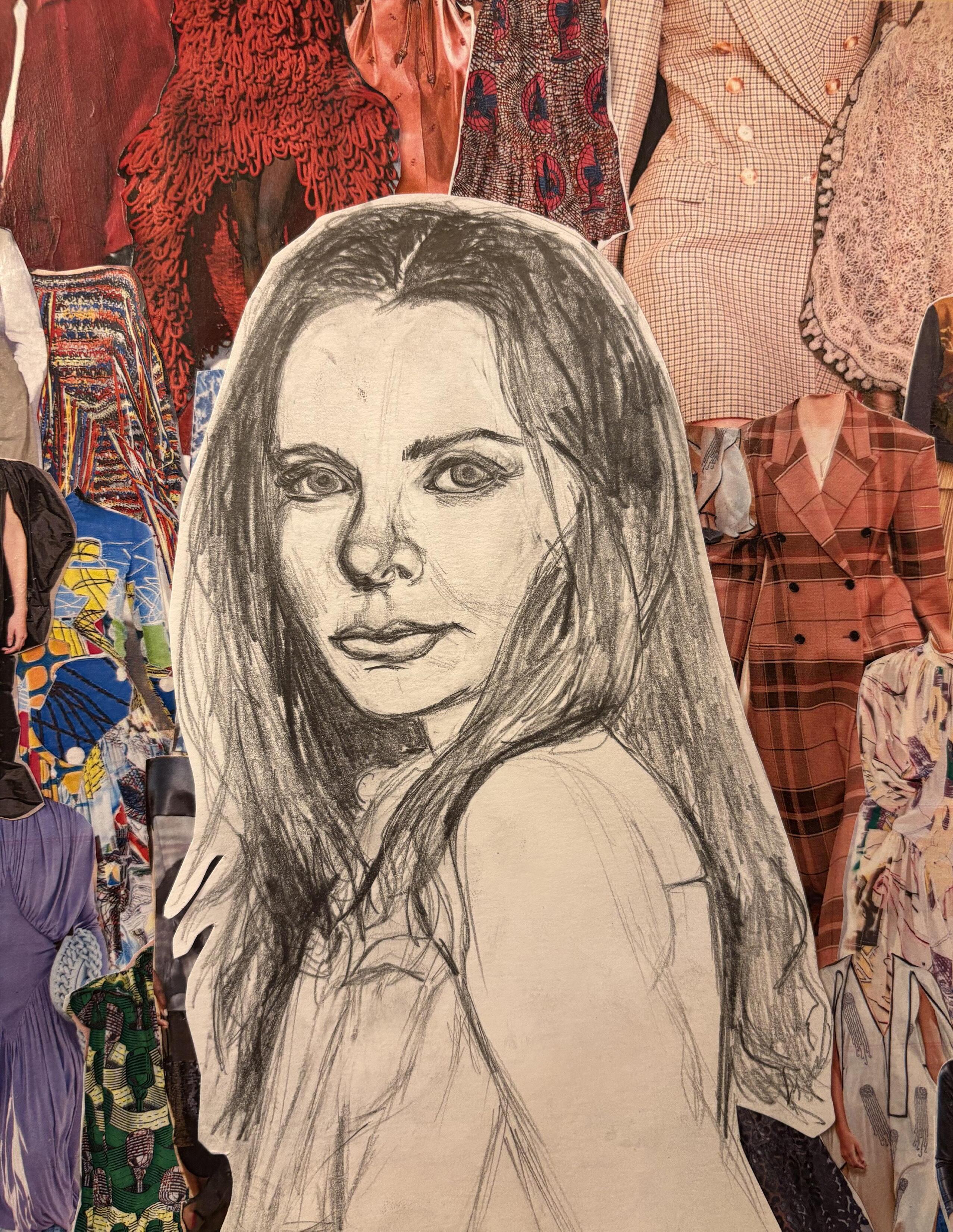
The fashion industry is one of the most polluting industries on the planet, responsible for 10% of global CO2 emissions and more than 92 million tons of textile waste. In our materialistic world, people often don’t realize the environmental effects of their consumption. Designer and activist Stella McCartney has not only pioneered sustainable solutions, but has had a domino effect on countless high-end fashion brands and movements. McCartney built her brand on what she believes in. She refused to compromise with using any animal-derived materials, which was a new idea in high-end fashion. In the 2000s, before sustainability was in the mainstream fashion world’s vocabulary, Stella McCartney was reshaping the industry’s values and proving that you can have stylish self-expression without harming the earth. Today, she is not only one of the most iconic women in fashion, but a trailblazer of high-tech sustainable fashion.
Stella McCartney was brought up on a farm and raised by her father, former Beatle Paul McCartney, and her mother, style icon and animal rights activist, Linda McCartney. Both had a lot of influence on the environmental activism she is known for today. Though her parents tried to give her the most normal childhood possible, McCartney still grew up highly privileged and with far more opportunity than others her age.
McCartney earned her degree in fashion design from Central Saint Martins College of Art and Design in London in 1995. When her brand was released in the early 2000s, the exotic materials Stella McCartney used, like pineapple-based fabric and fungi-derived leather, were unfamiliar to the fashion community. Many designers and critics doubted her ability to keep up with her brand’s promise to be environmentally-friendly. She often felt reduced to being the “eco weirdo,” as she said in a Time Magazine interview. Her goal was to show the connection between the environment and the fashion industry and create ties within the two fields, not keep them separate. McCartney stuck to her motto and has been strict about not using any animal products at all in
her designs, believing you can have creative innovation without hurting other living things.
While her early collections did not feature the advanced biotech fabrics she is known for today, they were still made with textiles sourced with a cruelty-free and environmentally conscious mindset. Her first collection included natural fibers like organic cotton and wool that her brand traced back to ethical farm sources and allowed her company to avoid synthetic blends. McCartney also transitioned to bioengineered silk substitutes to avoid the environmental and ethical complications of silk worms.
Even in her early days, McCartney used recycled materials to avoid using “virgin plastic” (plastic not from recycled materials). She observed the disconnect between people and their clothes; she saw people were not fully aware of the sacrifices others made so they could wear their favorite jeans. This inspired her to not only educate people on where their clothes come from, but also create a company that embodies her morals.
McCartney’s innovation in creating sustainable fashion matters because all these materials she avoided using did—and still do—have an impact on not only the physical environment, but personal ethics. Fur and leather, for example, both often come from animals who were raised in factory farms. Factory farms pose both moral and environmental dilemmas in their raising of animals in close, unkempt quarters, generally poor pollution management, and human worker abuses. Leather and fur ‘factories’ add 40 billion dollars annually to the total revenue of factory farming, which drives demand for not only animal slaughter, but the perpetuation of it as the norm. A few fabric alternatives show that there are other options out there.
Silk uses large amounts of water and energy, and the degumming process releases enormous quantities of waste. The water usage of a conventional silk skirt uses up to 3,000 liters of water compared to a closed-loop system (sustainable alternative to silk made out of bamboo) that uses minimal water and reduces CO2 emissions by up to
80%. Conventional silk also involves boiling silk worms alive. This is a major issue, though often overlooked, that is tied into animal cruelty.
Additionally, polyvinyl chloride (PVC), commonly used in synthetic leather, has a huge environmental impact that is often disregarded because people think, It’s not real leather, how could it be worse? It is. While a lot of people choose synthetic leather as a cheaper alternative or for its vegan properties, PVC is a petroleum-based non-biodegradable chemical that takes hundreds of years to break down. The chemicals released during the production, dioxins and phthalates, are toxic for both humans and wildlife. Though animal-free, PVC does not mitigate consumer culture or advance sustainable fashion goals because of its overuse in fast fashion. McCartney doesn’t avoid these harmful materials as a design choice, but as an ethical and philosophical stance.
One of McCartney’s earlier attempts to use more sustainable materials involved Re.Verso, beginning in 2014. Retrieved from post-factory waste in Italy, Re.Verso is a recycled cashmere fabric that has played a huge role in sustainable luxury fashion. Stella McCartney’s initial move away from non-virgin cashmere, which has up to seven times the environmental cost of recycled alternatives, became a huge motivation for upcycling in her fashion. McCartney transformed this discarded material into high-end garments, essentially upcycling her entire company’s cashmere line, which was previously unheard of. This shift led to a 92% reduction in her brand’s cashmere-related environmental footprint. Her bio-based alternatives have inspired other brands, like Eileen Fisher and Gucci, to utilize sustainable synthetic materials and to use more environmentally conscious production methods.
McCartney’s sponsorship of material development has fused science and fashion in a remarkable way. One of her most impressive collaborations was with Ananas Anam, the creator of a material called Piñayarn. Featured in McCartney’s Autumn 2025 collection, Piñayarn is a 100% plant-based, recyclable, and biodegradable textile made from pineapple leaf fibers, an agricultural byproduct that would otherwise be burned as waste. The production process uses no bleaching, pulping, or dyeing, and instead relies on an enzymatic wash to remove impurities. Enzymes are often seen in skincare products, particularly chemical exfoliates, and are able to break
down dead skin. They are non-abrasive, which is ideal for sensitive skin. Applying these uses in textile development is a great way to organically process materials and grant peace of mind to wearers. Ultimately, this Piñayarn development system saves up to six kilograms of CO2 emissions per kilogram of yarn produced, and offers a high performance alternative to petroleum based products.
Other standout innovations are Hydefy’s textile products, which McCartney actually helped advise and develop. She was the first designer to prototype Mylo, a mushroom leather developed by the Hydefy brand. The fungi-based material was developed using microbes discovered during NASA-backed research in Yellowstone National Park. Through fermentation, Hydefy also produces a bio-composite called Fy, which blends fungal proteins with sugarcane waste to create a durable, stain-resistant, and sustainable material, and replaces up to 85% of the petroleum-derived chemicals normally used! It feels and looks like leather, but without the negative contributions of leather. Hydefy’s ability to produce over 1 million square feet of material within weeks makes its carbon footprint significantly lower than using conventional leather. McCartney debuted Hydefy’s materials in her Stella Ryder handbag at Paris fashion week in 2025, showcasing its metallic finish through a sophisticated design. These innovations add to her creativity and sense of style, while lowering environmental impact, indicating a major shift in high-fashion for the better.
Stella McCartney’s influence extends beyond fashion. She was able to bring sustainable design into global environmental discussions. She attended two different conferences held by the United Nations in the past five years, the COP26 and COP28, where she was the only fashion designer included in huge environmental discussions regarding how communities around the world can become more sustainable as a whole. Stella McCartney used her platform to highlight material innovations like Mylo mushroom leather and regenerated nylon (Nucycle). Her participation in the United Nations demonstrates how motivated designers and producers can make a difference on our planet. McCartney is still broadening her textiles and investing in new ideas for materials. Her innovation can give us hope for a more sustainable future, where we think more deeply about where our clothing comes from. H
From Haven to Hurricane: Asheville One Year After Helene
By Talia Weizman
Imagine waking in the early morning darkness to the sounds of wind howling outside your window and trees crashing down to the earth. On the morning of Friday, September 27, 2024, residents of western North Carolina stepped outside to a changed landscape.
I am from Asheville, a lovely little city tucked in the Appalachian mountains of western North Carolina. My hometown has always been considered a climate haven, protected from natural disasters by our mountains, our distance from the coast, and our temperate climate. However, last year Hurricane Helene devastated my hometown, causing us to question the safety we had always assumed.
I was here, in Burlington, at the time; I remember feeling so incredibly helpless. For many days I couldn’t contact any of my family or friends in Asheville, as the storm had knocked down all the cell towers. Once we finally made contact, it was clear that Asheville residents were just scraping by—clearing out water from basements, checking in on neighbors, and gathering at the fire department to access Wi-Fi.
In the days preceding the hurricane, southern Appalachia was hit by intense, continuous rainfall. The rivers rose and the soil became saturated. When Hurricane Helene hit, houses and roads were washed away, flooded with muddy water, or wiped out by landslides.
Helene was the most devastating storm in the US since Katrina, killing 250 people in its path across the Southeast. It was also the most destructive natural disaster in North Carolina’s history and killed over 100 people, 43 of them in Buncombe County (which includes the city of Asheville and many surrounding towns). In Buncombe
County, more than 300 homes were destroyed, and hundreds more sustained significant damage.
Beyond the immediate damage of the storm, many residents went without power for two weeks, and clean water was not restored to the city until 53 days after Helene. Students in Asheville City Schools were out of school for a month, causing a major disruption in learning.
Many businesses in Asheville suffered huge losses, especially in the River Arts District, which is home to numerous local art studios and restaurants and was almost entirely underwater. Even businesses without building damage couldn’t open for many weeks or months due to a lack of clean water. Many service workers left town in search of work elsewhere, leaving businesses shortstaffed when they did reopen. Asheville’s economy relies heavily on its tourism industry; travel and hospitality make up 20% of Buncombe County’s GDP. Tourism in Asheville peaks during the fall, exactly during and after Helene. A year later, many local businesses still feel the loss, as tourism rates are down an estimated 20-40% from previous years.
Even though Asheville got most of the press, smaller surrounding towns in Buncombe County, such as Swannanoa, were hit much harder and continue to struggle due to lacking funds. This trend is consistent with the impacts of storms across the globe. Recently, geographers such as Neil Smith have begun to identify lack of social infrastructure as the true danger that follows natural disasters. Smith argues that “the contours of disaster and the difference between who lives and who dies is to a greater or lesser extent a social calculus;” thus, there is no such thing as a truly natural disaster. This applies to most, if not all, impacts of climate change. Communities hit the hardest are marginalized and impoverished com-
munities who, paradoxically, often contribute the least to global greenhouse gas emissions.
While Helene was devastating for so many, what I hear most often from family and friends at home is how much the community came together to support each other. My parents had rarely spoken to our next-door neighbors, but during and after Helene, they relied on each other. They have since become friends with their neighbors, and there is a sense of trust there that did not exist before. Communities across Asheville united after Helene to check on neighbors, supply each other with food and water, and clear fallen trees from driveways, regardless of previous friendships, perceptions, or political alignments.
Not only did the community support each other, support poured in from across the country as well. Power line workers traveled to Asheville from all over the nation and managed to restore the grid within two weeks.
Art by Cameil Nelson
Federal organizations such as FEMA, the American Red Cross, the Army Corps of Engineers, the Salvation Army, and the National Guard provided emergency disaster services. World Central Kitchen supplied thousands of meals across affected areas and Hands On Asheville-Buncombe coordinated volunteer efforts to support relief activities. Buncombe County received a flood of donations, and massive distribution centers were constructed to supply relief to its residents.
Apart from restoring crucial utilities, the main focus for the first six months after the hurricane was debris removal. I saw my home for the first time after the storm when I came back to Asheville for Thanksgiving break. Over two months after Helene, there were still piles of tree debris lining the roads of my neighborhood. Driving through the city, I saw once-green parks covered in mud, many roads still closed and entirely destroyed, and plastic waste hanging 30 feet up in trees from the rising river and intense winds.
I was also in Asheville this past summer, and I almost had a feeling of ‘survivor’s guilt’ coming home. In Vermont, it was easy to get lost in the busyness of school and forget what had happened in my hometown, but in Asheville, reminders were everywhere. On one hot summer day, my friends and I hiked to a beloved swimming hole about a 30-minute drive east of home. We were shocked and upset to find that the swimming hole was unrecognizable. Not only were trees down everywhere, but the entire river had shifted, and massive boulders were moved. What used to be a deep pool of water where we would jump off rocks into the cold depths was now full of sand and hardly swimmable.
Everyone in Asheville has a story like this. For some it is much more tragic—homes destroyed, businesses closed, loved ones lost. But for the lucky ones like myself, there is a special spot along a river that has lost its magic. A mountain ridge that lies barren. A massive maple gone from my front yard that used to bathe our porch in shade and birdsong.
There is a word for this kind of feeling: solastalgia. It is the feeling of grief and nostalgia for a home that has been affected by environmental change. People across the globe now experience this kind of loss due to the impacts of climate change: sea level rise, increased extreme weather events, or biodiversity loss.
Helene highlighted to us all that there are no more “climate havens.” From hurricanes in western North Carolina to flooding in Vermont, the effects of climate change can and will be found everywhere. This vulnerability makes climate resilience, adaptation, and mitigation all the more imperative. Every place, not just coastal towns, must think critically about place-specific adaptation tactics and begin implementing them with urgency.
Many months after Helene, organizations such as GreenWorks started working to restore the tree cover in and around Asheville. Over the summer, I volunteered at their tree nursery, planting and repotting saplings. The
organization has given away more than 6,000 trees to residents, community groups, and municipalities with the goal of rebuilding ecological resilience and biodiversity. However, much work still needs to be done, as roughly 40% of tree cover in the Asheville area was lost to the hurricane. Not only Asheville citizens, but entire ecosystems have taken massive hits due to Helene. Restoring and maintaining tree cover, soil retention, and biodiversity in the area is crucial for climate adaptation and resilience.
Over a year has passed, but there are many lingering effects on the community. Many people are still struggling to repair their homes or are mourning loved ones. The city’s water system remains very vulnerable to storms, and many are still waiting on funding promised by the federal government to come in.
However, the Asheville community has shown incredible resilience, and life is finally returning to the beloved River Arts District. The Marquee, a large indoor art market featuring over 300 local artists, reopened this September. The building was submerged under 16 feet of water during the hurricane. Tourists have also begun returning to Asheville to enjoy the fall colors and support the recovering city.
Looking toward an environmentally uncertain future, the aftermath of Hurricane Helene has shown the importance of people- and place-specific climate solutions. The storm only intensified my love for my home; I feel immensely proud to come from a city full of life, strength, and community. People and ecosystems are stronger than we realize, and can exercise both the social and climate resilience needed now and onward, come hell or high water. H
Fall Edition Crossword
By Alma Smith
Crossword Maker
Art by Kellie Brunner
Across
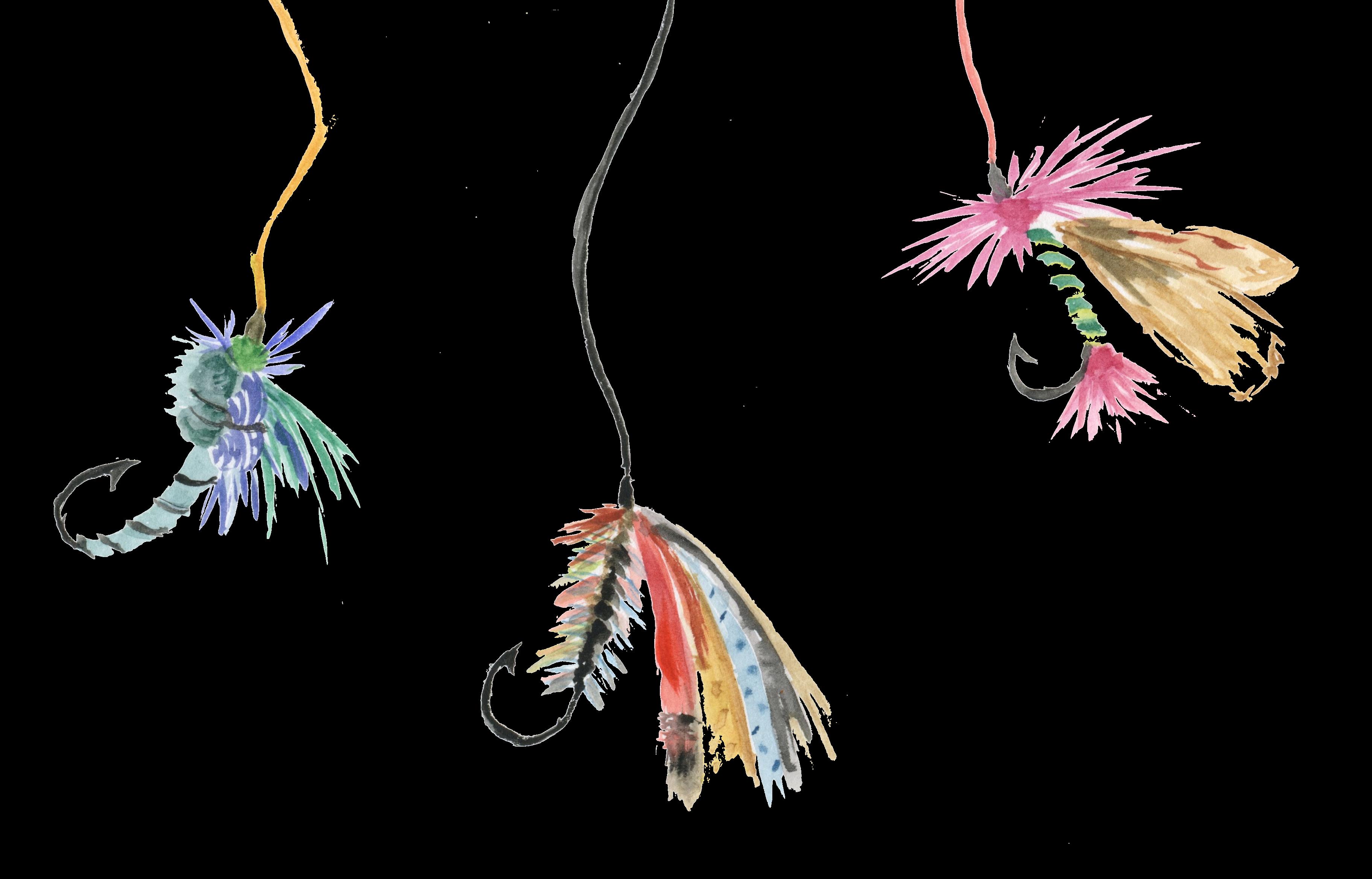
[2] A bundle of string, feathers, perhaps tinsel. Fish food for thought?
[4] One might use the long, spiky, leaves of this fruit as thread.
[7] You or a frog might fall ill by this toxin.
[10] Where a hungry bird may find a friend, off the Baltic Sea.
[11] Someone being nosy, or encroaching on personal space, say.
[12] Same species as "dive" in the past tense.
[13] Tree species that sounds accidental? In Latin.
Down
[1] If chickens are domesticated birds, Scott Black might call these domesticated pollinators.
[3] What you might see in a still body of water.
[5] Speakers of Maa.
[6] What you might feel when realizing your local pond no longer freezes over.
[8] One who may not eat meat or fish, but a secret third source of protein.
[9] Can be made into a ʻfunʼ type of material, not plastic or leather.
Fish Brain
By Lizzie Moty
I fell in love with the intricate skins of trout long before I ever managed to see one myself. Their spotting and sheer iridescence seemed too unreal to have been created by nature. The magnitude of diversity within the species of trout drew me in deeper; their coloration reminded me of something almost alien, not-of-this-world. A small watercolor notebook became my vessel for the collection of my renderings of these fish. I spent countless hours memorizing the shading and variation in their scales to perfectly replicate them in front of me.
I remember the feeling of holding my first rainbow trout. Panicked but fascinated, I clutched its slender body with damp hands and hoisted my newfound friend up into the air, away from the net. As I smiled for the photo, the fish wriggled and flopped back into the water, making a quick exit from my grasp.
It felt electric. The chase, the catch, the hook. It was the first time I had managed to think like a fish. It was safe to say that I was now addicted more than ever.
There’s a certain connectivity it takes to successfully catch a fish. You find yourself learning how to think like them, trying to understand their habits. What flies to pick, where to go, where to cast, and how you cast are all dependent on who you are trying to catch. Each trip, you take on a new persona. After a few trips to my favorite sections of river, I found myself anticipating exactly who I would find when I tossed my fly in the water.
This past summer, when the water was warm and low, you could see fish hiding in the shady spots of the river beneath vegetation and under overhanging branches.
Other times, small, cool brooks that converged in the river became home for the fish who sought refuge from the unfavorable conditions of warm water. Tossing nymph rigs into these spots with the hopes of a bite was often fruitless. Swimming out to see what had just ventured into the current where they feed, the fish would turn their noses up at it and retreat.
On the few days where I stumbled upon many hungry rock bass, I affixed a small hopper to my line. Within a heartbeat of my first cast, I had a bite. Those were the days when many people would say fly fishing, or fishing of any sort, became the most fun. The thrill is indescribable when you feel a fish bite and you begin to strip the line in, anticipating what prize you have won. But if I were asked what my best days were, I would say they were the ones where I caught nothing.
Those were the days that I got to spend extra time memorizing the river bed, carefully deciding where to place my feet and observing what sticks or plants were buried beneath the surface. I noticed where the ground beneath me dipped and rose, and where the cool currents ran. I learned the sound of the stream that flows off of Mount Mansfield and the crinkling it makes as it joins the larger river. I had found a place that I could memorize almost as well as the ceiling above my bed.
Staring at this blank ceiling, made into a kaleidoscope of colors by the trout skins in my mind, I realized that they were ingrained into my thoughts. This peace that I found out on the river had come home with me and tangled itself into my brain. I had managed to not just love and know a place, but somehow become a part of it. H
Art by Katherine McGee
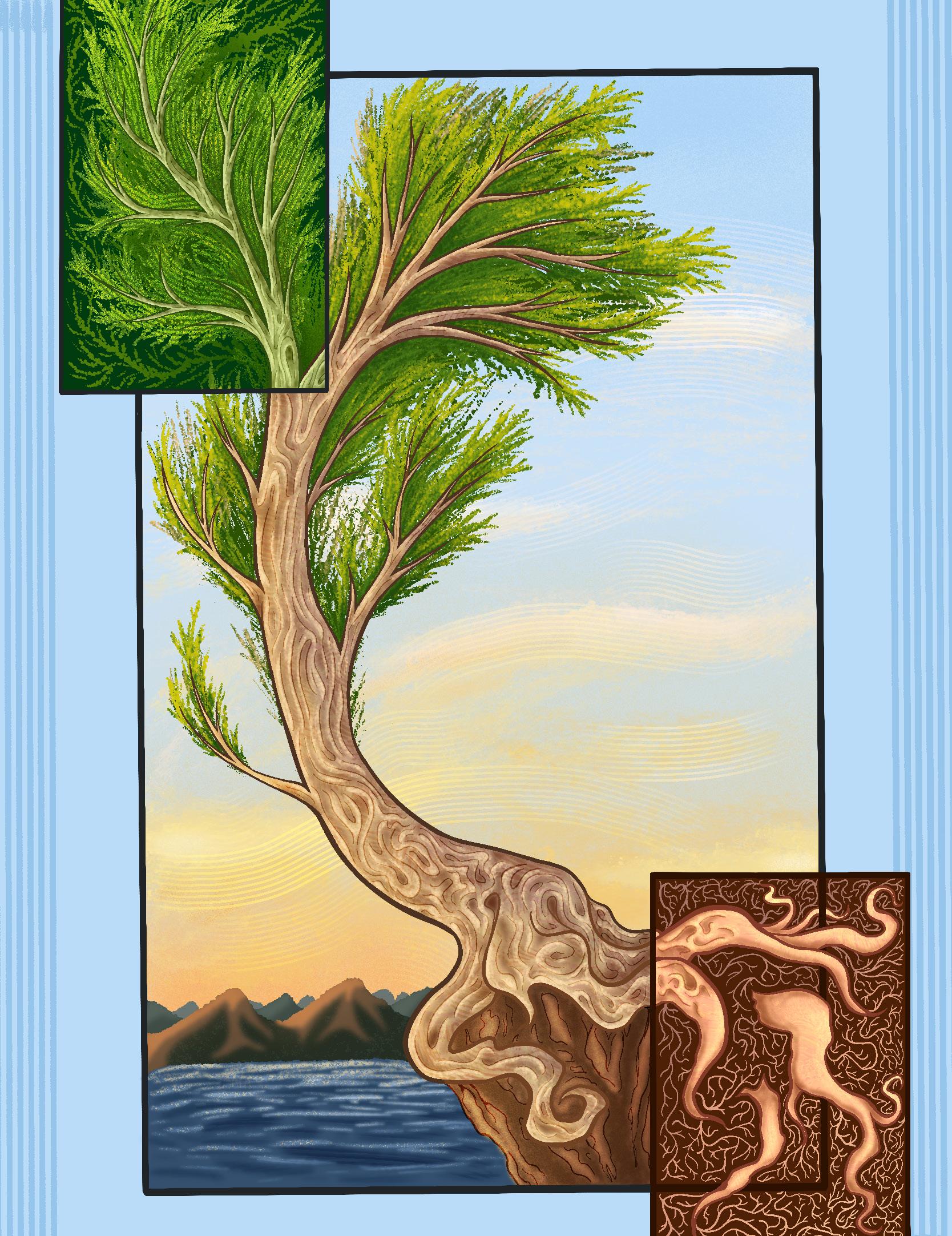
Arborvitae
By Anna Garritano
We have given you so many names
Northern white cedar, Thuja occidentalis
But Arborvitae: Tree of life, fits you best
Because of your ability to heal
What life have you sustained?
In what ways have you sustained it?
A tea made from your twigs
Liniments from your leaves
Bread from your bark
Arborvitae fits you not because of the life you have provided
But because of the one you have lived
Clinging to our planet
Inexplicably, you make the cliff your home
Your roots encase the stone, protecting it from the harsh world
And the treacherous weather
I watch passersby use your trunk for support
I wonder if they know that it wears smooth under their touch
Hundreds of gentle hands contribute to a scar that will stay long after they pass
You jut out and bow,
So that the tips of your needles might be touched by the sun
Leaving only twinkling flecks of light to dance on your fallen needles
You grow tall above buckthorn that chokes out your offspring
Competition your ancestors never knew
You survive
Weathered and aware of the world
You are immeasurable H
Art by Ellen Beck
We Should All Be Insectivores
By Thea Parsons
There are 24,000 factory farms in the United States. They employ horrifying farming practices: debeaking chickens, using electric shocks on cows, caging animals so tightly that they cannot roam. Of the 10 billion animals slaughtered for human consumption annually in the United States, 99% are killed on these factory farms, hav ing been subjected to these con ditions. The waste from these 10 billion animals is filtered into waste lagoons which, come rain, overflow and pollute waterways. Industrial animal agriculture—factory farming—is responsible for 14.5% of human-attributed greenhouse gas emissions. These facts expose that factory farming is destructive and untenable, needlessly harming both the an imals we consume and the environment.
The most obvious solution is veganism. If factory farming is eliminated, the industry becomes obsolete, abolishing its associated carbon footprint. Yet so many Americans depend on large-scale animal agriculture for their livelihoods (and protein) that the widespread boycott of animal products is unrealistic. Still, we cannot continue on this trajectory, subjecting billions of animals annually to cruelty as we slowly destroy the environment. Enter: bugs.
you don’t hear often. In fact, Western culture as a whole tends to have a grotesque perception of insects, which shines through in the disgust with which their consumption is perceived. I remember standing at a science fair in elementary school, frowning up at my father as he popped a fried cricket into his mouth. Hearing its crunch and watching him gulp it down, I cringed.
Yet, insectivorism is commonplace on a global scale. Crickets, for example, are a staple in several Latin American, Asian, and African countries. American culture has always had a tendency to otherize non-Western customs, and insectivorism is no different. Though this is a significant barrier to the consumption of insects in the United States, it is one we must strive to overcome. By distancing ourselves from the judgement that insects are “gross” and consuming them is “wrong,” we can work to limit negative perceptions of non-Western cultures, and make it easier to embrace a truly revolutionary solution.
Insectivorism is the practice of eating insects, worms, and other invertebrates. In the United States, it’s a term
Insectivorism can be implemented without much innovation, maintaining many of the jobs provided by the animal agriculture industry and significantly minimizing environmental impact. A key question is, therefore, what
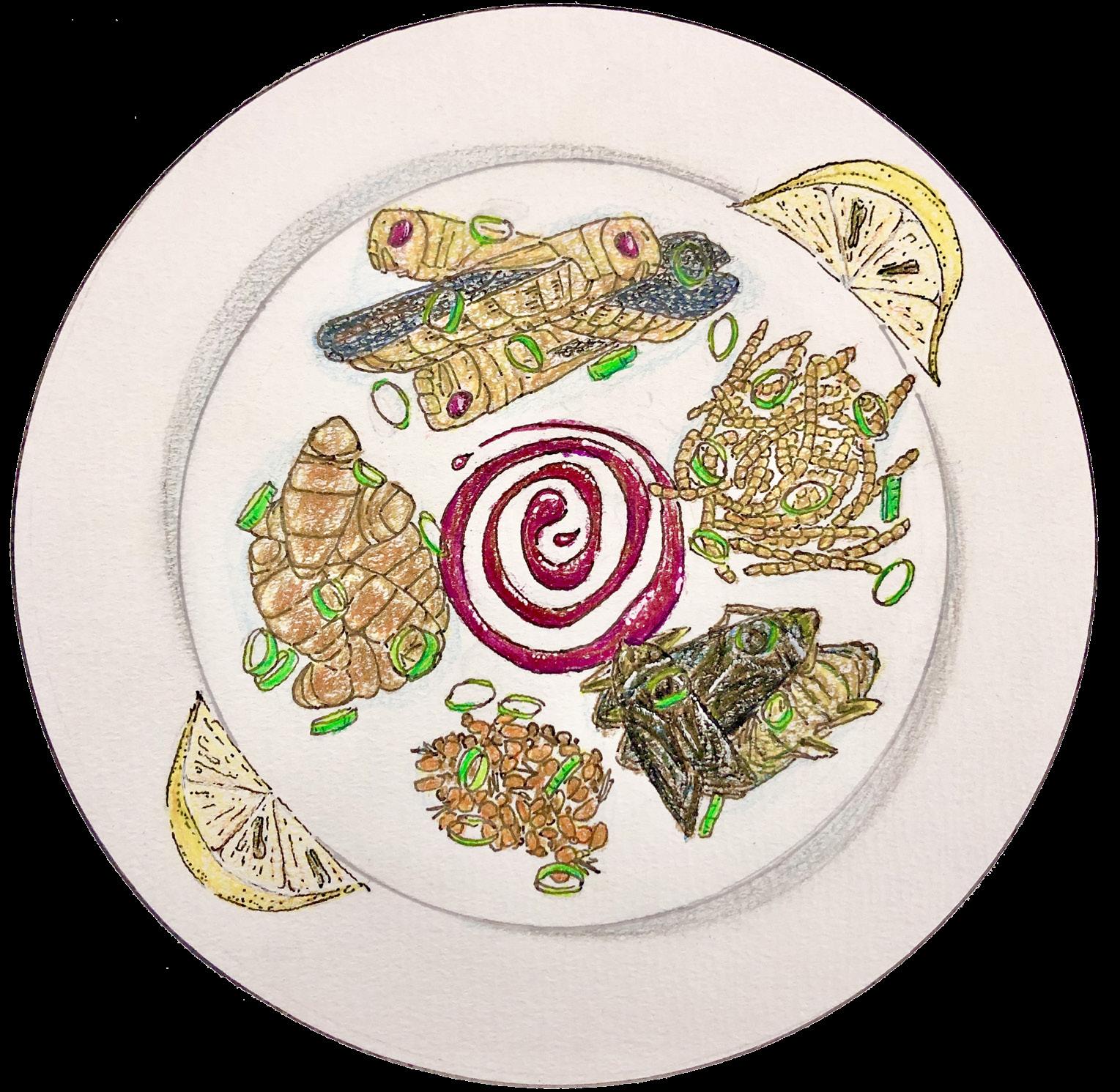
would it take for the United States to make a transition, either partial or full, from farm animals to insects? Perhaps one solution could be to introduce insects through fine dining culture. The world of avant-garde food is much more open to “the next new thing” for the American palate, which could be an opportunity to draw this kind of extreme but sustainable shift into hip cuisine.
In Bangkok, Thailand, a fine dining restaurant called Insects in the Backyard has incorporated “bugs” into its high-end cuisine. Bamboo caterpillars, winged ants, worms, and beetles are paired with grains, vegetables, and seafood to make the experience less intimidating for tentatively adventurous diners. The Head Chef, Thitiwat Tantragarn, was classically trained in Italian fine dining, but decided to make the pivot to this unconventional food source when he began to realize that humanity needed a new protein source to sustain a rapidly growing population. In Thailand, where insect farming is more common than it is in the United States, restaurants like Insects in the Backyard manage to further promote insectivorism. Could implementing similar projects in the United States have the same effect?
Though any modicum of distance from factory farming we can achieve is helpful, the question then becomes, how do we encourage insectivorism in a more generic American diet? And, how do we approach the incorporation of insects into fine dining in a culturally sensitive way? It is important to make sure that this shift avoids the tendency of high-end restaurants to offer an exotic “escape” from traditional cuisine. There is a chance that this push could leave insects burdened by the perception that they are food for the rich, or even estrange the cultural practices of other nations by making them something the 1% can dip into and then critique, or turn away from. These are hard questions to answer, but they signal that any incorporation of insectivorism into American culture would have to happen sensitively and strategically.
For the average consumer, it is important to know what, exactly, the relative nutritional benefits of insects are in comparison to other animals. Pork tissue contains 27 grams of protein per 100 grams of dry weight. Crickets are significantly more protein rich than many of the animals farmed by industrial animal agriculture. One of the
most protein rich, Brachytrupes spp, contains about 65 grams of protein per 100 grams of dry weight. Though they are small, they pack a punch, so if one is concerned about losing protein, insectivorism is not off the table. In fact, it may be a happy shift.
Insectivorism is not only the best alternative for consumers, but for the environment as well. Insects are not difficult to farm. In fact, it is incredibly simple to harvest crickets, for example. In Thailand, cricket farmers rear the insects in large pens with concrete walls, using mosquito nets to keep out common predators. These “farms” are simple to maintain, easy to build, and convenient to clean.
Simultaneously, the life cycle of insects are much shorter than those of many common farm animals. Cricket eggs take seven to ten days to hatch, meaning each harvesting cycle is in between 28-35 days. Producing these animals for consumption can happen at a much faster rate on a much smaller scale, making them an environmentally friendly alternative for both farm animals, which are difficult to rear, and for fish, which take longer to reproduce. One of the main problems with factory farming is that the animals raised in this way require large amounts of food. 50% of the corn and 70% of the soy grown in the United States goes into these operations. Insects as a whole require much less food than larger animals do. They also require different food sources, many of which tend to be much less resource-exhaustive than corn and soy, both of which require a large volume of water to harvest. Perhaps a shift away from traditional farm animals would allow us to scale back our crop farming of these particular plants, or could even leave them free for human consumption in the midst of the growing global hunger crisis.
All in all, the consumption of crickets and other insects addresses many of the common problems we find with overfarming and overfishing—those that have serious repercussions for particular ecosystems and for the entire environment. Insectivorism is the answer—the next step is figuring out how to implement it, breaking down cultural misperceptions and the barrier of disgust alike. H
Under the Surface
By Malcolm Ray
I am standing, ankle-deep, in the water. Tired of the way the blazing sun breathes heat down the back of my neck, I tentatively dip my toes into the lake where it foams and froths against the sand. I am entirely unprepared for the chill that seems to seep into me and crawl up my spine while I wade farther into the water.
I am too scared to swim deeper. The family that we followed down the path to the beachfront pointed out a sign that warned of hazardous conditions at certain times of the year. What if the safety report was wrong? What if the algae makes me sick? What if my feet touch the bottom of the lake and instead of rocks, I stand on a layer of trash?
So I keep standing here, in the shirt I wear that is too baggy and the shorts that cling in all the wrong places. It is all I can do to stare out across the lake and wish that I could bring myself to push through the fear and allow myself to float freely in the expanse stretching out before me.
My friend calls out my name—my real name, since I told him we are too far from anyone I know in the city for me to need to pretend. He is further in than I am, splashing in the gentle waves and trying to dunk the other guys we came with. When he stands up, the smile drops from my face. I can see the scars curling around his bare chest like ivy. The pale pink incisions are so craggy, they almost look like the rocky bar that spills out from the sand into the lake.
At the sight of him, I feel as though I sink deeper into the mud. For now, I am doomed to dream, until my time will come and it will be me with my shirt off and scars bared. When will I be swimming freely, far away from the shores of shame? When will the presence of what I have no longer remind me of the absence of who I am?
I grew up in a place with more coastline than community, where people were just as brisk and salty as the Atlantic Ocean, only a moment’s drive away. All the time I spent under the sun at the bayside means I am no stranger to the water; I can so clearly picture the days I spent lying in the sand, feeling it cradle me as my back dug a divot into it while saltwater dried on my legs. I never visited the beach too frequently, but the sea breeze always felt like it was smoothing out the rough edges of my life. Here, the waves would whisper to me, this is where you are meant to be.
I was hoping to find this feeling once again at the lake today—subconsciously, I think I was aware that this was the only reason I agreed to come. I am older now, and though hints of who I truly am have always darted through my mind like fish escaping a net, it is only clear to me today that I am someone who I always knew I wanted to be. The long stretch of sand parallel to the seemingly endless sprawl of the water in front of me has always been a place where I find my freedom. Maybe today I will find it once again. Maybe here, I can overcome the fear and dip my toe into living as who I truly am.
Art by Robert Stark
Water does not judge, after all. It only reflects what is already true.
My friend is still staring at me, one hand shielding his eyes from the sun and the other inviting me to wade deeper. The water laps at my unmoving ankles, retreating and rolling forward in rhythmic waves. I think of all the other times I have stood just like this, motionless, and let the water run right past me. Even when I was frozen, the water has never remained still.
I have been in this position before. I may be in the same place, but this time, I know I have changed.
This time, I know I cannot go on without doing something about it.
When I look down at my feet again, it is not with discomfort, but with resolution. The surface of the lake is shifting right before my eyes. It is not solid—it is transforming, just as I am.
I finally take in the image staring back at me. It is of him. It is of me. I may not look exactly how I want to yet, but I at last recognize the person in my reflection.
This very area was once all solid rock, waiting to be carved out and chiseled when the climate changed. Did the glacier apologize for retreating? Did we scorn the water for cutting its own path through the mountains?
No. Here on this beach we all celebrate nature’s creation.
I take a step deeper. H
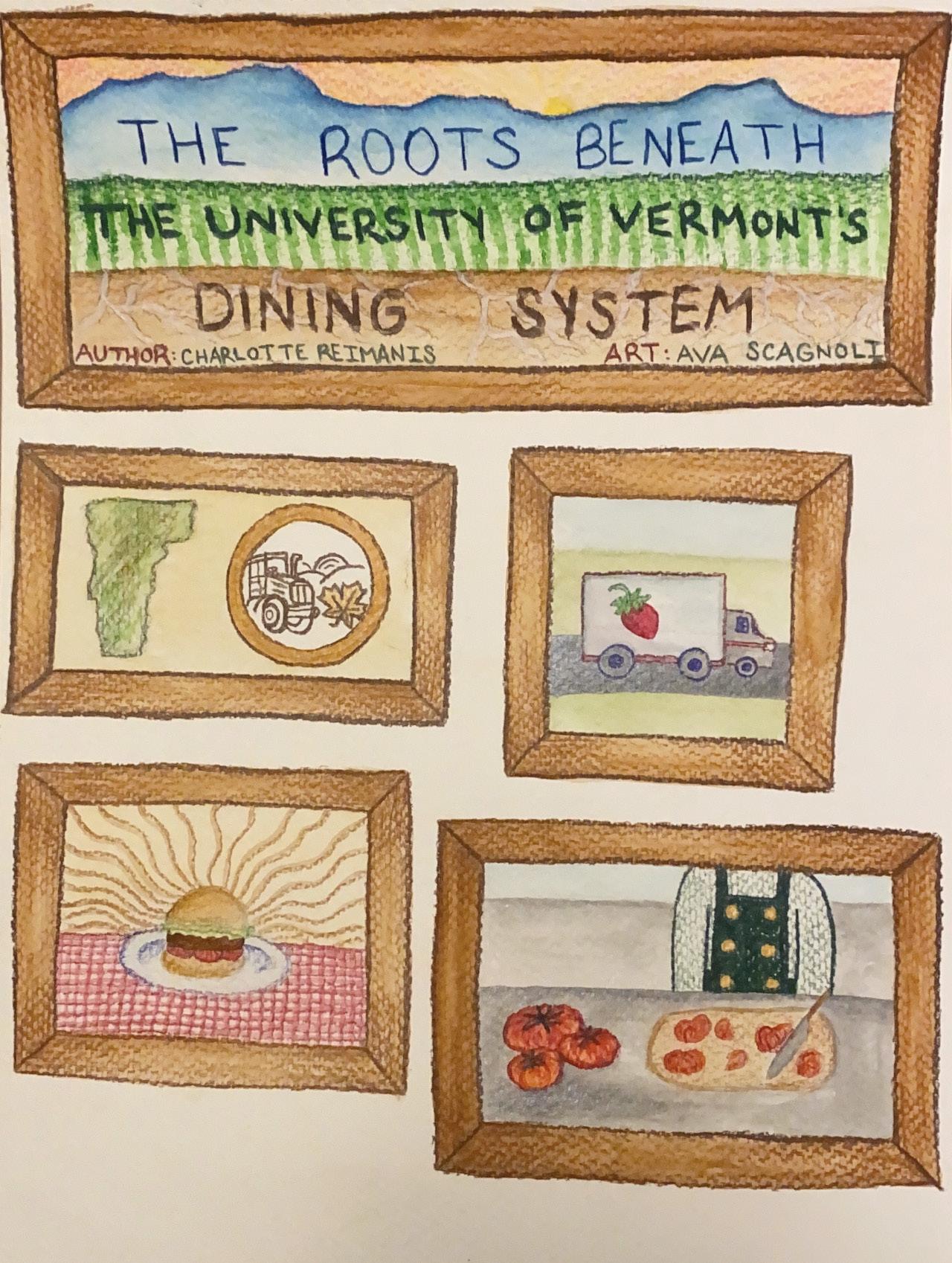
When you enter the dining hall, you are immediately surrounded by a plethora of food options containing a variety of ingredients and preparation methods. How often do you visualize each individual ingredient’s journey to UVM: starting as a seed in the ground and growing into a plant under the care of farmers, then making its way to the talented, passionate chefs who cook the food, and finally onto your plate and into your body? How and where was each ingredient grown? It is interesting food for thought (pun intended) because it is difficult to imagine the complete process by which the food ends up on your plate.
UVM students pride themselves on attending a school with a variety of ways to engage with sustainable initiatives, from classes in the Rubenstein School of Environment and Natural Resources to pop-up thrift shops on the Andrew Harris Green. The word “sustainability” has become common lingo, but what does sustainability look like in practice? Labeling something as sustainable often indicates progress towards sustainability, but in no way marks the achievement of a truly long-lasting, ecologically friendly partnership. One way UVM as an institution works to bridge this gap toward sustainable practice is by connecting their dining system to local farms.
To begin the journey through UVM’s dining system, we start with Sodexo, the international company responsible for providing UVM’s dining system with food. UVM and 11 other Vermont colleges have a one-of-a-kind program with Sodexo called Vermont First, which began in 2014. Vermont First is a commitment to local food sourcing; the current goal is to serve 25% Vermont-grown food by 2030. In 2023 when this target was set, UVM was serving 13% local food, which has gone up to 20% as of the fall of 2025. As of the 2023-2024 report, another 13.5% of UVM’s food comes from regional sources (excluding Vermont), defined as within New England and up to 50 miles beyond its borders. The local sourcing goal also aims to support diverse and small-scale producers, including women-, BIPOC-, and LGBTQ-owned businesses.
While switching to 25% local food sourcing may seem like an easy feat, the realities pose a number of challenges. Vermont has many small and diversified farms, which causes an inconsistent stream of produce to arrive at UVM and can slow down the food preparation process. Additionally, UVM Dining produces 80,000 meals a week, and buying large quantities from smaller scale farms tends to be more expensive. This is challenging since the dining team does not want to raise meal plan prices. However, focusing on more “value-added products,” such as prepared foods instead of plain vegetables, can help mitigate cost and time expenditure and continues working towards the 25% local goal. The seasonality of growing food in Vermont also poses a challenge, since the growing season generally lasts from mid-May to early October, most of which falls over summer break. Additionally, a large portion of agricultural land in Vermont lies on floodplains and, due to the increased amount of flooding the past few summers, consistent crop yields from local partners are uncertain. Despite these challenges, there are a number of ways that the Vermont First team is working with their partners to become more locally focused, leading to a higher level of sustainable action.
Vermont First also works with local aggregators, which are companies that negotiate between producers and businesses like UVM and provide the transportation of their goods. These aggregators also have varying definitions of sustainability for their company. One of UVM’s aggregators, Black River Produce—whose delivery trucks you may have seen around campus with a strawberry pictured on the side—delivers 60% of UVM’s locally sourced food. The president of Black River Produce says the company began on a small scale in 1978, but today has 28 trucks that deliver to over 3,000 wholesale customers across New England. The company was bought by Reinhart Foodservice in 2016. In 2019, Reinhart Foodservice was bought by Performance Foodservice, one of North America’s largest foodservice distributors; in 2024, they had a total revenue of $58.281 billion.
There is a paradox with a company like Black River Produce. On one hand, being under the umbrella of a multibillion dollar company ensures the future of Black River Produce, and their financial backing offers support to small farms and producers through loans. At the same time, Black River Produce is now part of a larger corporate production chain. Where does the idea of locality collide with definitions of sustainability in a company like Black River Produce?
The Intervale Food Hub is another key aggregator that works with Vermont First, providing 19.5% of UVM’s local products. The Intervale is a collective of farms throughout the state, based right here in Burlington. It runs on a community-forward model, leasing out land to farmers in Burlington and coordinating with other small farms. Through the Intervale, farmers can exchange knowledge around farming, like ways to navigate flood and weather challenges, and can also share other resources, like farm equipment. The Intervale facilitates the sale of its produce through food access programming and wholesale distribution. One local business item brought into UVM through The Intervale is the Just Cut vegetables. Just Cut is a business based in Hardwick that provides pre-cut storage vegetables, like potatoes and carrots, which speeds up the process for the chefs once the food arrives at UVM and supports businesses and labor in the Northeast Kingdom. The Intervale Center aids local farm and business practices, approaching farming
with a mindset that prioritizes connection within farming communities and with the land. Their definition of sustainability is synonymous with locality and long-term support systems.
Vermont First recently added a new aggregator, Food Connects, which provides UVM with food from Sherpa Foods USA, a Vermont company producing momos and other traditional Nepalese foods; Harvesting Good, a Maine business supplying UVM with fresh broccoli during the growing season and frozen broccoli during the winter; and Against the Grain gluten-free pizza crusts (another local business).
This fall, there are other new initiatives from Vermont First and UVM Dining in the dining halls. The hummus in the dining halls now comes from Vermont Bean Crafters, located in Warren, and uses locally or regionally sourced organic beans, instead of Sabra. The cream cheese is now sourced from Champlain Valley Creamery out of Middlebury instead of Philadelphia Cream Cheese. The new burgers you have seen in the dining hall—50 Cut—are actually 70% ground beef and 30% mycelium—a fungi component with a natural umami flavor that makes the burgers more moist and cuts down on carbon emissions, as mushrooms require less energy to produce than beef. Additionally, the mushrooms come from right down the road in South Burlington from the business Funj, an organic mushroom producer owned by
a UVM alumnus. These products represent only a few of the new food items and partnerships that show UVM is thinking about how to support the Vermont agricultural industry by bringing in value-added food items. These initiatives are some of the reasons that UVM Dining Services received national recognition in the spring of 2025 for its leadership in local food sourcing and earned the Gold Award for Sustainable Procurement from the National Association of College and University Food Services. The recognition shows the Vermont First commitment is something few other universities of UVM’s size are undertaking.
Once food arrives at UVM, it is in the hands of a team of chefs who come from various high-end restaurants and highly-esteemed culinary schools. The chefs at UVM are always willing to talk to students about which food options would best support their dietary needs, health, and happiness.
Clearly, there is a disconnect between students and the food they consume, with little reciprocity between students and the environment. Addressing this disconnect means understanding the role of all players in the system, from farmers to aggregators to chefs, as well as the team working behind the scenes to provide foods that each student wants and to bring in more local food. This whole system helps us think about how definitions of sustainability and locality connect to the environment and, in the end, to you when you walk into the dining hall. Is the food on your plate part of Vermont First’s local sourcing? Or does it come from further away? What is your definition of sustainability when thinking about food?
[Research, interviews, and thought processes were conducted alongside Will Hamilton (‘26) in the Spring of 2025.] H
Keeping More than Bees
By CJ Sands
“I’m sorry, what? You’re trying to bring insects into the garden?” a visitor at the Sustainable Living Project, an urban farm in Tampa, asked me suspiciously. She eyed me as if I were an agent of chaos masquerading as a farmer when I explained that the plants I was placing in the soil were not for human consumption, but were actually host plants for pollinators such as butterflies, moths, and bees. Like her, many people in the world are unfamiliar with the role of pollinators and that a third of every bite of food you take is due to insects pollinating a flower. Unknown to many, the flourishing of human and pollinator populations is deeply intertwined in the tapestry that is the food system. The health of agricultural landscapes and insect pollinators are mutually dependent on each other.
Wild bee pollination services serve as a vital leverage point in the food system, enabling it to sustain us with abundant and diverse produce by facilitating plant reproduction and introducing genetic diversity in agricultural spaces. Without bees, three-quarters of the world’s flowering plants—35% of the global population’s food crops—would be wiped out, and our landscape would be a wildly different place.
In a time of economic uncertainty, there are tangible qualitative and financial consequences that arise from a lack of pollination services, which in turn increases the price of produce and the availability of it to consumers. But the opposite is also true, where diverse pollination services lead to higher yield, better fruit sets, and a greater abundance for those who grow our food.
Connections to cultural practices that are made possible due to pollination include harvesting, seed saving, ecological pest management, and the persistence of medicinal flora. The Three Sisters combination planting of corn, beans, and squash, which has been a staple of native cultures in North America for thousands of
years, as well as other culturally relevant staple foods, are made possible by native bees that call squash flow ers home. Agricultural landscapes hold dual potential: they can function as sanctuaries for pollinators, enhanc ing ecosystem services like fruit set and crop yields, or they can contribute to pollinator decline through monoculture practices, harmful land management strategies, and chemical inputs.
Despite the ecosystem services they provide for us, pollinator populations are in a significant global decline, putting not only our natural ecosystems at risk but potentially crippling the world’s food production in the process. Key factors behind the decline of bee species include land use changes, from the removal of native plants and habitat to implementation of vast fields of monocropping.
One would be well within their right to argue that the amount of responsibility that we place on the people that grow our food, while also expecting them to be caretakers of the land and engage in a competitive economic market, is too much as it is. To further insist upon including pollinator conservation begs the question: How much more should we expect out of farmers? The important part of the argument is that pollinator conservation is a local solution to a local problem, and the fix isn’t a top-down or one-size-fits-all solution. Pollinators native to an area require native plants to support them and host their young, because these plant-pollinator interactions have co-evolved with each other for millions of years. To implement pollinator conservation, farmers can decide their own level of involvement and decide what solutions work for them. Farmers with the education and agency to tailor their approach to pollination conservation on their land will ultimately lead to improved soil health, improved resilience, increased biodiversity, less need for external inputs, and food sovereignty.
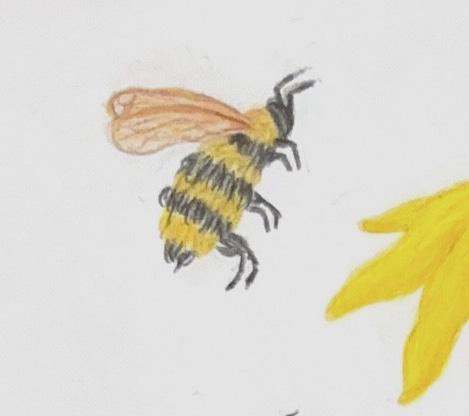
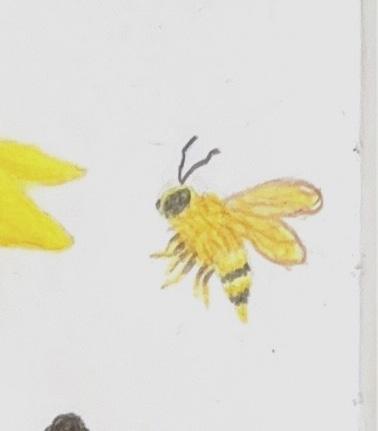
Vermont is home to 351 species of native bees (more than half of those can be found within a 10 minute walk around campus) and it is believed that there are dozens more in the area just waiting to be discovered. Despite the wildly diverse array of bees, our focus as a society remains on the honeybee when policy or advocacy efforts come into play. Scott Black, executive director of the Xerces Society for Invertebrate Conservation states, “Keeping honey bees to ‘save the bees’ is like raising chickens to save birds.” By this Scott means that while honeybees might be important for agriculture, they are raised as livestock and not considered wildlife, so beekeeping is not a form of conservation.
I find myself reimagining the term “Beekeeper” beyond someone who manages honeybee hives, to someone who creates spaces where a diversity of bees can thrive. This expanded definition reflects and deepens my personal connection with the natural world. Watching a bee land on an aster I planted can mean more than any accolade or job title, it could be the purpose of a day or a lifetime. Pollination is not just as an ecological function and service, but a social-ecological process between land, pollinators, and people in dynamic and reciprocal ways. H
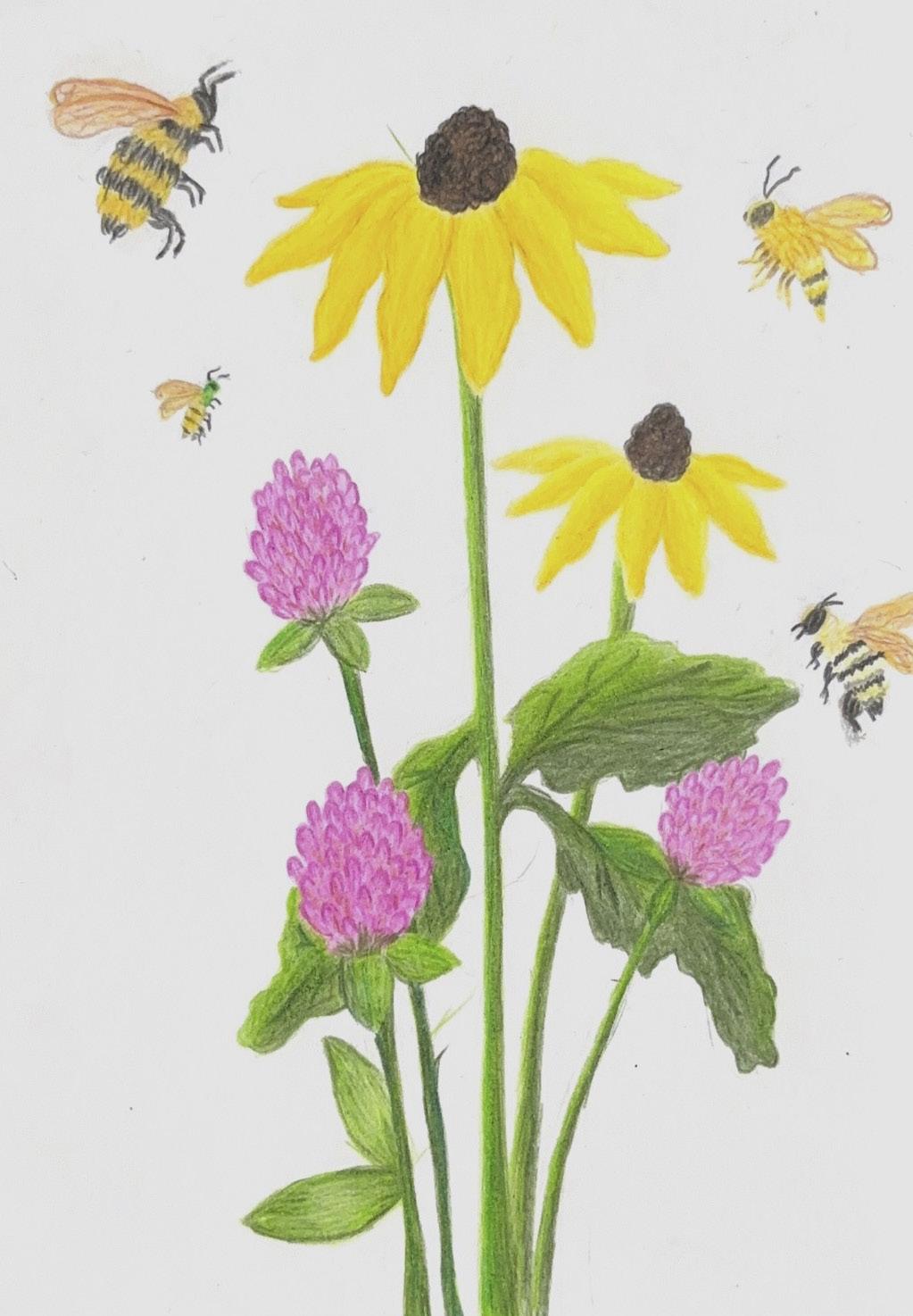
Art by Maya Rentes
Don’t You Know That
You’re Toxic: From Frogs to Factories, The Journey of Pesticides
By Yashika Sharma
Modern society operates within an environment saturated with synthetic chemicals—substances that are often invisible, yet integral to the systems sustaining daily life. In the United States alone, more than 17,000 pesticide products are registered for use, each carrying potential consequences for both human and ecological health. These compounds are not isolated in their effects; they interact with living systems in complex and often unpredictable ways. Among them, the herbicide atrazine stands out as one of the most widely applied and scientifically scrutinized, illustrating the broader tension between agricultural efficiency and environmental responsibility.
What is Atrazine?
Atrazine is not a household name, but it quietly underpins much of American agriculture. Classified as a herbicide, it is designed to selectively target weeds before they take hold of crops. Farmers use it widely on field corn, sweet corn, sugarcane, wheat, and even macadamia nut and guava crops. In the U.S. alone, more than 110 million pounds are applied each year across 62 million acres, making it the most heavily used agricultural pesticide in North America. According to Vermont Public, atrazine use in Vermont has increased by 30,000 pounds between 2010 and 2020, even though genetically modified corn was introduced in 1996 to reduce its use.
Herbicides like atrazine are a subset of pesticides, the broad class of chemicals used to kill or control unwanted organisms. While these chemicals boost crop yields, their power also carries risk: they do not always stay where they are sprayed.
Where It Ends Up
Here is the surprising part: Atrazine does not “stick” to corn in a way that makes the crop unsafe to eat. The her-
bicide works through the soil, absorbed by weeds and broken down by corn’s own metabolism. By harvest, residues are minimal.
The real risk lies in the journey. Atrazine’s persistence in soil and water means it lingers in ecosystems long after application, affecting organisms far beyond the cornfield. Rain carries atrazine into rivers, streams, and groundwater. That’s especially relevant in Vermont, where atrazine has been detected in local water systems. In state water reports from the Department of Environmental Conservation, atrazine shows up under the category of Synthetic Organic Compounds (SOCs), a family of chemicals that includes many pesticides, herbicides, and even fuel addi-
tives. State and federal regulations require that SOCs be removed from public water distribution immediately if levels spike, a reminder of just how hazardous they can be in high concentrations.
How It Works and Why It Matters
So how exactly does atrazine work? Atrazine is a Photosystem II inhibitor, which means it blocks photosynthesis in weeds, stopping their growth. Corn, however, can metabolize and neutralize the herbicide, making it “safe” for crops.
Wildlife is not so fortunate. In a cumulative assessment in 2003, the Environmental Protection Agency (EPA) reviewed all available scientific data, including published toxicity and epidemiology literature. Scientists began to notice alarming effects in amphibians: reproductive abnormalities, including hermaphroditism, and hormonal disruptions that echoed through entire populations. Hermaphroditism is the condition of an organism having both male and female reproductive parts. Atrazine causes these effects because it functions as an endocrine disruptor, a chemical that interferes with the body’s normal hormonal activity by either mimicking or blocking natural hormones. By disrupting hormone regulation, atrazine can cause imbalances in testosterone and estrogen. The consequences include reduced sperm counts, menstrual irregularities, and impaired reproduction. Later studies found that atrazine could also alter behavior, stunt development, and weaken immune systems in aquatic life. This leads to reduction of motor activity and increasing vulnerability to predators. Stunted development causes malformations and immune suppression in larvae.
How much atrazine is harmful for frogs? In 2017, researchers at Ohio’s Miami University examined the effects of atrazine exposure on amphibians. They found that even low concentrations disrupted normal development and reproduction in frogs. The results were striking: Exposure to just 0.1 parts per billion (ppb) caused hermaphroditism, while 1 ppb or higher demasculinized male frogs by shrinking their larynxes. Adult males exposed to 25 ppb experienced a tenfold drop in testosterone, likely because atrazine stimulates an enzyme that converts testosterone into estrogen. The researchers also noted a skewed sex ratio, with fewer females and more males, particularly in Blanchard’s cricket frogs, reflecting atrazine’s impact on hormones and reproductive organs.
To put this in perspective, “parts per billion” (ppb) measures how many tiny parts of a substance exist in a billion parts of water. In water, 1 ppb equals 1 microgram of atrazine per liter, which is about the same as a single drop of atrazine in an Olympic-size swimming pool. As the most widely used herbicide in the U.S., atrazine often appears in runoff and rainwater, and environmental exposure to atrazine and other endocrine disruptors may be contributing to amphibian declines.
Humans are not immune either. Atrazine acts as an endocrine disruptor in humans like it does for wildlife, interfering with hormone systems. Research has linked it to decreased fertility, menstrual irregularities, birth defects, and potential increases in certain cancers, including non-Hodgkin’s lymphoma and breast cancer. The liver and kidneys, the body’s detox centers, are also vulnerable.
Luckily, according to the EPA’s most recent assessment in 2021, research suggests that everyday exposure for the general public is low and unlikely to cause serious health problems. Medical studies on atrazine in humans have mostly focused on people who work directly with the chemical and are thus at higher risk, such as farm and factory workers. For example, studies of manufacturing plant workers and farmers in Alabama and Louisiana have found only weak or inconsistent links between atrazine and certain cancers, such as non-Hodgkin’s lymphoma and prostate, breast, and ovarian cancer. Risks appear slightly higher for people with long-term or frequent exposure, especially those who handle the chemical without protective equipment. Human lethality data for atrazine are extremely limited. A single case report describes a man who ingested approximately 1,429 mg/ kg of atrazine in a weed killer formulation, resulting in coma and death; however, other chemicals in the formulation likely contributed to his death.
The likelihood that you, the reader, work on a farm or in a factory using high levels of pesticides is probably low. Atrazine does not stick to our food, our water systems are strongly regulated, and most of us are never in direct contact with it outside of the farms where it is applied. As consumers, we do not need to be worried about it in our daily lives. However, there are people whose work puts them in close contact with atrazine and other chemicals, and their health can be affected. Just because these risks do not affect you directly does not mean these chemicals are harmless. Many of these workplaces have poor conditions, minimal oversight, and ongoing exposure to substances whose long-term effects are still being studied. It is a reminder that public safety and mindfulness about chemical exposure extend beyond our own immediate experiences. We have a responsibility to be aware of and care about the people who face these risks every day and provide the food we eat. The effects of atrazine on frogs show that these chemicals can disrupt entire ecosystems, not just human health. When species
at the foundation of the food chain are harmed, the balance of the environment shifts, affecting water quality, biodiversity, and even agricultural stability. Caring about atrazine’s impact means caring about the health of our shared environment and recognizing that the wellbeing of people, animals, and ecosystems are deeply connected.
The Push for Control
As previously discussed, the EPA’s 2021 actions represented an effort to contain atrazine’s risks without eliminating its use. The review identified two main populations at risk: children who crawl and play on treated lawns and workers who handle, mix, or apply the chemical. To reduce those risks, the EPA kept atrazine on the market but with stricter safeguards. New rules finalized in 2021 banned aerial spraying, prohibited application before heavy rain, limited how much could be used on crops like corn and sorghum, and required updated product labels with clearer safety instructions. These restrictions aim to reduce runoff into bodies of water and reduce further human exposure.
Yet the agency’s long struggle with this chemical shows a deeper challenge: how to regulate something so widely used, even as questions persist about its broader effects on ecosystems and health. Once a product becomes central to industrial agriculture, taking it off the market becomes enormously difficult both economically and politically, especially when powerful companies depend on its continued sale. Every round of restrictions reflects the pressures between scientific findings and the political and economic forces shaping policy.
These measures are designed to keep atrazine where it belongs—on the crops—and out of our water and bodies. But they also reveal a deeper problem: Why are we allowing chemicals into our environment before we truly understand their long-term effects? The push for control is less about a single chemical and more about how society decides what level of risk it is willing to live with. The European Union (EU) has stricter regulations than the U.S. about what chemicals are allowed on store shelves and in agricultural use, and the difference in numbers is truly striking. As of 2025, Europe has banned or heavily restricted over 1,300 chemicals in cosmetics alone, while the U.S. has banned just 11. This reflects a fundamental difference in how each region regulates
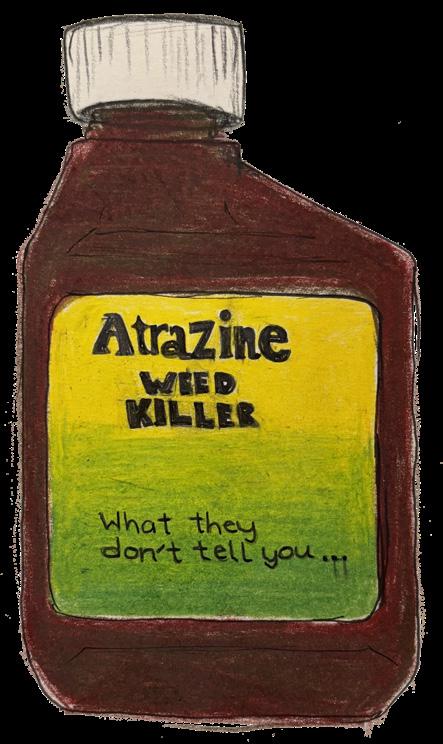
Art by Robert Stark
chemicals. The EU follows a precautionary approach: If a chemical is suspected of being harmful, it is restricted or banned until safety is proven. In contrast, the U.S. generally assumes chemicals are safe until regulators can demonstrate a risk, a process that can take years and often faces pressure from industry. As a result, some pesticides banned in Europe remain in widespread use in the U.S., showing how regulatory philosophy and oversight directly influence the chemicals present in our food, water, and everyday environment.
The Bigger Picture
Atrazine was invented to control weeds. Instead, it’s taught us how thin the line is between “control” and “contamination.” What does this mean for someone buying groceries or living near farmland? Should people be concerned or reassured by regulations? From streams in Vermont to hormone systems in amphibians, its reach shows that chemicals never exist in isolation. They move, persist, and transform. In the process, they shape ecosystems and, ultimately, us.
Most of us are not scientists, and the chemical makeup of pesticides is not something we track in our daily lives. That’s part of what makes them so concerning. Their effects are often invisible, unfolding quietly in our bodies and ecosystems. As a society, we’ve built our food system on a heavy reliance on synthetic compounds, even as research continues to flag potential health risks. It can feel easier to turn away from the complexity of agricultural practices, but the stakes are too high for that.
Chemicals like atrazine remind us that the consequences of exposure are not always immediate. They can ripple across generations, hindering development and even contributing to neurological and reproductive disorders over time. These threats make the conversation about alternatives all the more urgent. Whether it’s developing non-chemical weed management, designing ways to keep herbicides contained on farms, or reimagining how we grow food altogether, the goal is the same: to protect our health, especially the health of farmworkers, while sustaining our crops. The challenge is great, but the path forward is clear. Reducing our dependence on harmful chemicals is not just about cleaner water or healthier ecosystems, it’s about creating a food system that does not compromise us in the process. H
The Pigeon Man
By Isabella Shinkar
Art by Liza Teleguine
For the second time in three days, I found myself walking down the narrow pedestrian streets of Freetown Christiania, a neighborhood that is famous for two reasons:
Its existence as an anarchist commune hidden within the urban streets of Copenhagen.
The open trade of cannabis, despite the substance being illegal in Denmark.
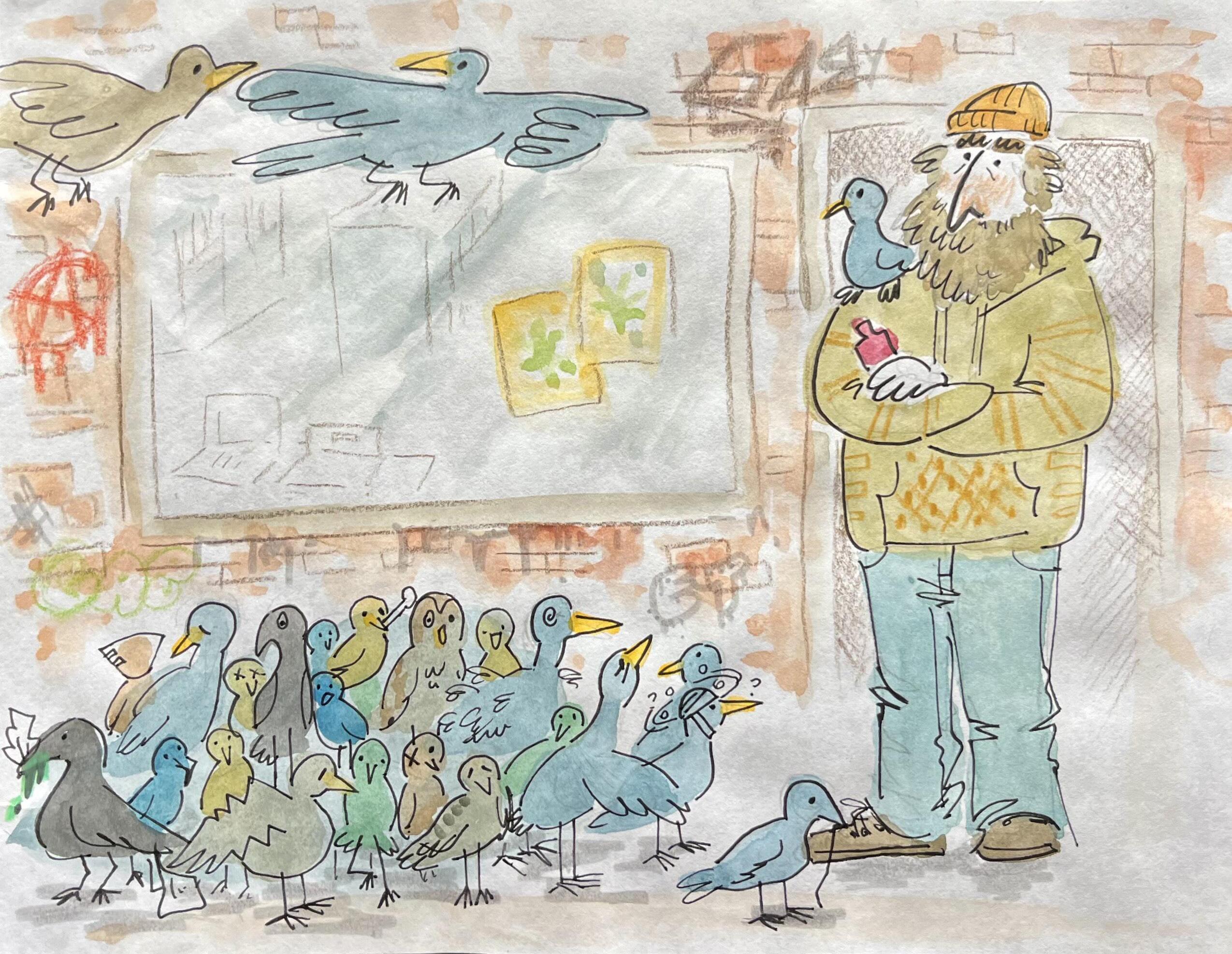
My first visit was as a tourist, exploring the highly recommended neighborhood of Christiania in my first few weeks while studying abroad. Vibrant murals and graffiti calling for radical reform covered many of the concrete surfaces, while unkempt shrubbery and grass grew in the barren parts of the neighborhood.
I saw a gruff man surrounded by birds on a shop porch, some even resting on his shoulder. He was standing authoritatively, hands on his hips, perhaps to let passersby know he was the owner of the establishment, but most likely to keep an eye out for signs of law enforcement. The exterior wall featured a grid of sun-bleached photographs of cannabis, serving as a catalog for customers. I had recently taken up the hobby of birding, so I felt I needed to know why the birds surrounded him. But by the time I gained the confidence to approach him, he and his avian companions were gone.
The only goal of my second visit was to find him again. When I returned three days later, he was back on the porch, no birds in sight.
“Hello. I have a question,” I stated uncertainly.
“I’m sure you do,” he responded. I laughed awkwardly, trying to fill the silence.
“I saw a couple of days ago that you had a crow on your shoulder?”
“It was a pigeon.”
“Oh.”
Up close, I could see that the messy hair under his hat led down into a beard that covered his freckled face. An industrial-looking vape was in his right hand, and it moved into my field of vision every couple of seconds as he took a hit.
“Do you feed the birds often?” I asked. I was determined to discover why the birds flocked to him, but he seemed disinterested.
“I don’t feed them anymore. They just come and come and never leave me.” I posed a few more questions, then walked away—without any weed, but with lots on my mind.
The man told me that all around Europe, the birds recognize him. A few years ago, he saved a pigeon that had plastic tangled around its neck. To give thanks, this pigeon brought her babies to him on their first flight. Urban birds began flocking to him with their injuries. While some had run-ins with falcons, many were wounded after colliding with windows or ingesting litter. He saved each one of them. On a trip to Sweden, he claimed the same crow followed him and his dog around for days, watching over them.
The birds understood him in a way people rarely cared to do. If what he told me is true, then his reputation as a healer is known by thousands of urban birds who show their gratitude through simple gestures: crows calmly perching on his shoulder, and generations of pigeons bringing their brood to meet him. H
Crossword Solutions
By Alma Smith
Environmental Activists Must Focus on Slowing the Global War Machine
By Amira Steinberg
Nearly 14 years after the end of the Iraq War, the country’s landscape still bears the brutal scars of the conflict that took the lives of approximately 200,000 civilians, according to the Watson School of International and Public Affairs. By 2001, the war had destroyed 90% of the country’s marshland, according to the United Nations Environment Programme. These marshlands, which have provided water to raise buffalo, reeds traditionally used to build housing, and more for around 5,000 years, have UNESCO World Heritage status. This country’s mass loss of biodiversity and natural resources is only worsening, as there is no longer enough vegetation to protect the land from dust storms and desertification.
The Iraq War is only one example of countless modern conflicts that have taken harsh environmental tolls. Today, we also see wars in Ukraine, the Republic of Congo, and Gaza, where environmental damage is still unfolding, exacerbating the suffering of war. Furthermore, the large amounts of carbon released during these conflicts have major global repercussions, as they play a large role in greenhouse gas emissions responsible for global warming. According to the Conflict and Environment Observatory, militaries account for 5.5% of global carbon emissions.
Biodiversity Loss
The World Wide Fund For Nature found Ukraine’s territories home to around 35% of Europe’s biodiversity, despite them only making up about 6% of the continent’s land mass. It is home to many threatened species, such as European bison, lynx, and wolves. Russia’s invasion, which began in February of 2022, has put this biodiversity in danger. Satellite data taken from the European Forest Fire Information System has discovered that fires started by military explosives have damaged 100,000
hectares of Ukraine’s natural ecosystems. Furthermore, 30% of all protected areas in Ukraine have been negatively affected by shelling, bombing, oil pollution, and military maneuvers.
Similar damage has been done to the Congo Basin Rainforest, the second largest rainforest in the world, where civil war has prompted exploitation of natural resources. This war has been occurring since the 1990s, with numerous armed groups competing for authority. According to the Center for International Forestry Research, around 60 million people living in or near the Congo Basin Rainforests depend on goods and services provided by the forest ecosystems, such as hunting, fishing, agriculture and timber production. The Danish Institute for International Studies has done extensive research on the impact of Congo’s ongoing civil wars on the forest, which absorbs 4% of global carbon emissions, making preserving this forest vital in the fight against climate change. However, many armed groups take shelter in protected areas of the forest, benefiting from both the location’s remoteness and the abundance of natural resources. They often gain revenue from illegal resource exploitation, including poaching, mining, and deforestation. Their presence makes it difficult for conservation authorities to enforce wildlife protection laws. Poaching has significantly decreased populations of already threatened animals, such as the bonobo, an endangered ape species only found in the Congo.
These are just two examples of many armed conflicts that rage in biodiversity hotspots, putting them at risk.
Pollution of Natural Environments
In the midst of these conflicts, explosives are some of the most commonly used weaponry. Bearing names like TNT, DNT, and RDX, these explosives contain tox-
ic chemicals and heavy metals. According to the EPA, these chemicals are carcinogenic, and exposure can lead to kidney and liver damage. Alongside human endangerment, these chemicals are also toxic to flora and fauna, causing stress, reduced growth, disease, and mortality. Hazardous material can persist for a long time in soil, groundwater, seawater, and marine sediments, impacting the environment for decades to come.
Pollution is also often increased by the destruction of infrastructure. A UN report on the environmental impact of Israel’s war on Gaza reveals the ways in which pollution from the conflict has heavily damaged the region’s ecosystem. In addition to all the pollutants produced by warfare, the destruction of the city’s waste treatment plants means untreated waste is being deposited into the environment, contaminating beaches, coastal waters, soil, and potentially groundwater. As of March 2024, an estimated 60,000 cubic meters of wastewater and sewage per day were being discharged into the environment. This collapse of sanitation has increased the spread of disease. Between October and December of 2023, the World Health Organization reported 136,400 cases of diarrhea among children under five. Destruction of roads, buildings, and other infrastructure have also led to 39 million tons of debris, some contaminated with asbestos, unexploded munitions, and other hazardous substances.
Carbon Emissions
Armed conflict is also a major contributor to carbon emissions. The Conflict and Climate Observatory found that military operations are responsible for 5.5% of global carbon emissions worldwide—significantly contributing to climate change. These emissions only increase in times of conflict. In just the first 120 days of Israel’s siege on Gaza, between 420,265 and 652,552 tons of carbon dioxide were emitted, according to a Queen Mary University study. This exceeds the combined annual emissions of 26 different individual countries.
The U.S. military is the world’s largest institutional consumer of energy and emitter of climate-altering carbon pollution, according to researchers at the University of British Columbia. Yet, military emissions often go unrecorded and unchecked. During the 1997 Kyoto Protocol, the United States lobbied for military activity to be exempted from nations’ recorded carbon footprint. This exemption was removed in 2015, but reporting military emissions is still optional.
Climate Activism and Anti-War Activism
Many climate activists recognize that working to improve the environment must include anti-war activism. Both climate-activism and anti-war activism are nothing new. The modern climate movement gained traction in the 1960s, when Rachel Carson’s book Silent Spring brought mass attention to the environmental harm caused by the pesticide DDT, which was used by soldiers in World War II. Her book is one of the earliest records of climate activists critiquing militaries’ harm to the environment. While war has always sparked backlash, the 1960s also brought about increased attention to change movements through protests against the Vietnam War. Despite the overlap of these two movements, the intersectionality of the two is something that has often been overlooked. In recent years, intersectional activists are working tirelessly to ensure anti-war activism is addressed within the fight for climate justice. For example, Swedish activist Greta Thunberg has focused much of her recent activism on the genocide in Gaza. She has been consistently calling for a ceasefire and an end to the occupation of Palestine. Environmental justice is, and will continue to be, an intersectional issue that must focus on global conflict dynamics.
Imagine waking in the early morning darkness to the sounds of wind howling outside your window and trees crashing down to the earth. On the morning of Friday, September 27, 2024, residents of western North Carolina stepped outside to a changed landscape.
I am from Asheville, a lovely little city tucked in the Appalachian mountains of western North Carolina. My hometown has always been considered a climate haven, protected from natural disasters by our mountains, our distance from the coast, and our temperate climate. However, last year Hurricane Helene devastated my hometown, causing us to question the safety we had always assumed.
I was here, in Burlington, at the time; I remember feeling so incredibly helpless. For many days I couldn’t contact any of my family or friends in Asheville, as the storm had knocked down all the cell towers. Once we finally made contact, it was clear that Asheville residents were just scraping by—clearing out water from basements, checking in on neighbors, and gathering at the fire department to access Wi-Fi.
In the days preceding the hurricane, southern Appalachia was hit by intense, continuous rainfall. The rivers rose
and the soil became saturated. When Hurricane Helene hit, houses and roads were washed away, flooded with muddy water, or wiped out by landslides.
Helene was the most devastating storm in the US since Katrina, killing 250 people in its path across the Southeast. It was also the most destructive natural disaster in North Carolina’s history and killed over 100 people, 43 of them in Buncombe County (which includes the city of Asheville and many surrounding towns). In Buncombe County, more than 300 homes were destroyed, and hundreds more sustained significant damage.
Beyond the immediate damage of the storm, many residents went without power for two weeks, and clean water was not restored to the city until 53 days after Helene. Students in Asheville City Schools were out of school for a month, causing a major disruption in learning.
Many businesses in Asheville suffered huge losses, especially in the River Arts District, which is home to numerous local art studios and restaurants and was almost entirely underwater. Even businesses without building damage couldn’t open for many weeks or months due to a lack of clean water. Many service workers left town in search of work elsewhere, leaving businesses shortstaffed when they did reopen. Asheville’s economy relies heavily on its tourism industry; travel and hospitality make up 20% of Buncombe County’s GDP. Tourism in Asheville peaks during the fall, exactly during and after Helene. A year later, many local businesses still feel the loss, as tourism rates are down an estimated 20-40% from previous years.
Even though Asheville got most of the press, smaller surrounding towns in Buncombe County, such as Swannanoa, were hit much harder and continue to struggle due to lacking funds. This trend is consistent with the impacts of storms across the globe. Recently, geographers such as Neil Smith have begun to identify lack of social infrastructure as the true danger that follows natural disasters. Smith argues that “the contours of disaster and the difference between who lives and who dies is to a greater or lesser extent a social calculus;” thus, there is no such thing as a truly natural disaster. This applies to most, if not all, impacts of climate change. Communities hit the hardest are marginalized and impoverished communities who, paradoxically, often contribute the least to global greenhouse gas emissions.
While Helene was devastating for so many, what I hear most often from family and friends at home is how much the community came together to support each other. My parents had rarely spoken to our next-door neighbors, but during and after Helene, they relied on each other. They have since become friends with their neighbors, and there is a sense of trust there that did not exist before. Communities across Asheville united after Helene to check on neighbors, supply each other with food and water, and clear fallen trees from driveways, regardless of previous friendships, perceptions, or political alignments.
Not only did the community support each other, support poured in from across the country as well. Power line workers traveled to Asheville from all over the nation and managed to restore the grid within two weeks. Federal organizations such as FEMA, the American Red Cross, the Army Corps of Engineers, the Salvation Army, and the National Guard provided emergency disaster services. World Central Kitchen supplied thousands of meals across affected areas and Hands On Asheville-Buncombe coordinated volunteer efforts to support relief activities. Buncombe County received a flood of donations, and massive distribution centers were constructed to supply relief to its residents.
Apart from restoring crucial utilities, the main focus for the first six months after the hurricane was debris removal. I saw my home for the first time after the storm when I came back to Asheville for Thanksgiving break. Over two months after Helene, there were still piles of tree debris lining the roads of my neighborhood. Driving through the city, I saw once-green parks covered in mud, many roads still closed and entirely destroyed, and plastic waste hanging 30 feet up in trees from the rising river and intense winds.
I was also in Asheville this past summer, and I almost had a feeling of ‘survivor’s guilt’ coming home. In Vermont, it was easy to get lost in the busyness of school and forget what had happened in my hometown, but in Asheville, reminders were everywhere. On one hot summer day, my friends and I hiked to a beloved swimming hole about a 30-minute drive east of home. We were shocked and upset to find that the swimming hole was unrecognizable. Not only were trees down everywhere, but the entire river had shifted, and massive boulders
were moved. What used to be a deep pool of water where we would jump off rocks into the cold depths was now full of sand and hardly swimmable.
Everyone in Asheville has a story like this. For some it is much more tragic—homes destroyed, businesses closed, loved ones lost. But for the lucky ones like myself, there is a special spot along a river that has lost its magic. A mountain ridge that lies barren. A massive maple gone from my front yard that used to bathe our porch in shade and birdsong.
There is a word for this kind of feeling: solastalgia. It is the feeling of grief and nostalgia for a home that has been affected by environmental change. People across the globe now experience this kind of loss due to the impacts of climate change: sea level rise, increased extreme weather events, or biodiversity loss.
Helene highlighted to us all that there are no more “climate havens.” From hurricanes in western North Carolina to flooding in Vermont, the effects of climate change can and will be found everywhere. This vulnerability makes climate resilience, adaptation, and mitigation all the more imperative. Every place, not just coastal towns, must think critically about place-specific adaptation tactics and begin implementing them with urgency.
Many months after Helene, organizations such as GreenWorks started working to restore the tree cover in and around Asheville. Over the summer, I volunteered at their tree nursery, planting and repotting saplings. The organization has given away more than 6,000 trees to residents, community groups, and municipalities with the goal of rebuilding ecological resilience and biodiversity. However, much work still needs to be done, as roughly 40% of tree cover in the Asheville area was lost to the hurricane. Not only Asheville citizens, but entire ecosystems have taken massive hits due to Helene. Restoring and maintaining tree cover, soil retention, and biodiversity in the area is crucial for climate adaptation and resilience.
Over a year has passed, but there are many lingering effects on the community. Many people are still struggling to repair their homes or are mourning loved ones. The city’s water system remains very vulnerable to storms, and many are still waiting on funding promised by the federal government to come in.
However, the Asheville community has shown incredible resilience, and life is finally returning to the beloved River Arts District. The Marquee, a large indoor art market featuring over 300 local artists, reopened this September. The building was submerged under 16 feet of water during the hurricane. Tourists have also begun returning to Asheville to enjoy the fall colors and support the recovering city.
Looking toward an environmentally uncertain future, the aftermath of Hurricane Helene has shown the importance of people- and place-specific climate solutions. The storm only intensified my love for my home; I feel immensely proud to come from a city full of life, strength, and community. People and ecosystems are stronger than we realize, and can exercise both the social and climate resilience needed now and onward, come hell or high water. H
Fall 2025
The University of Vermont’s Environmental Publication