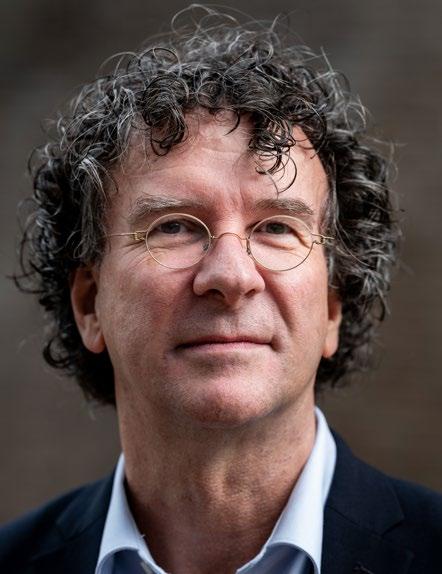
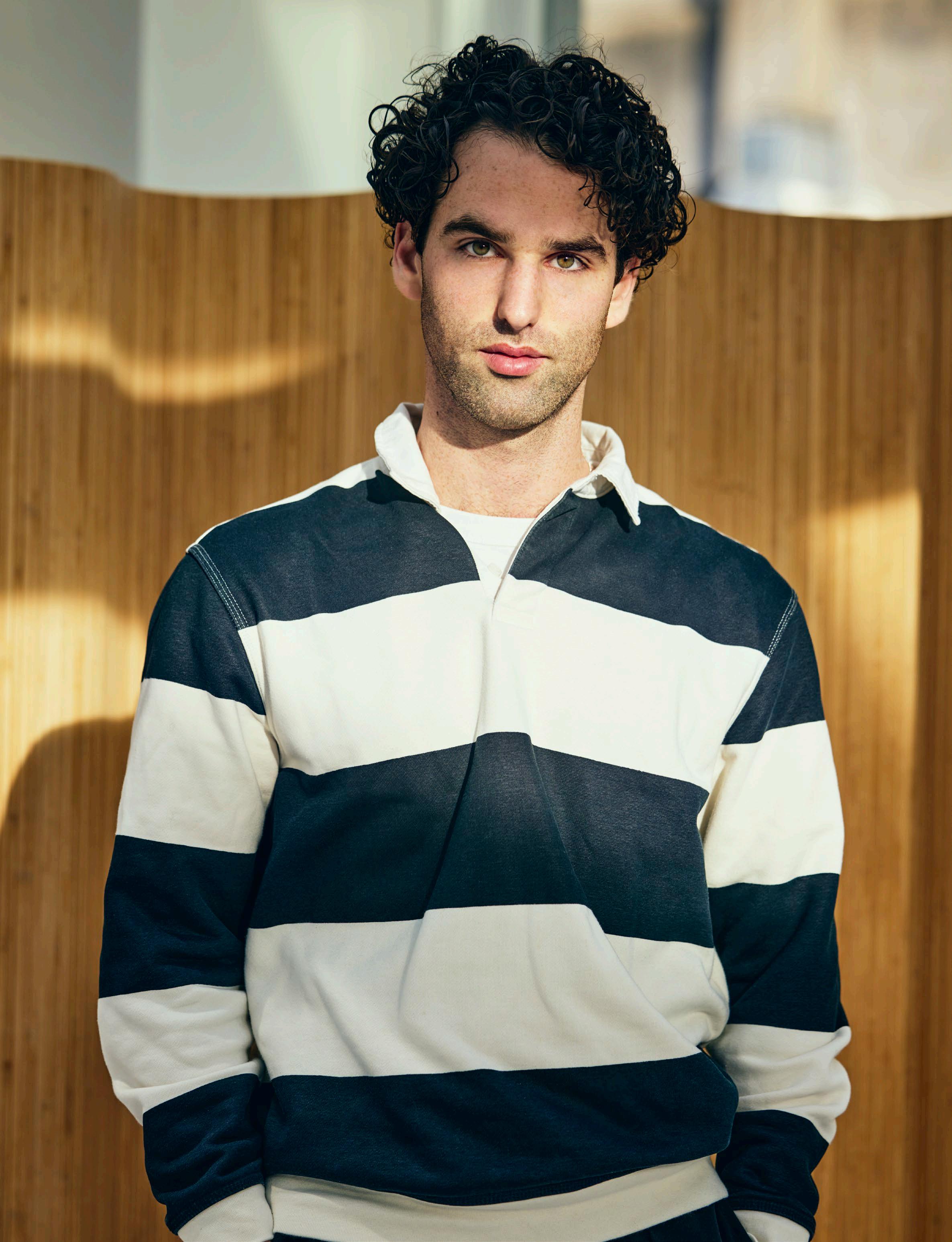
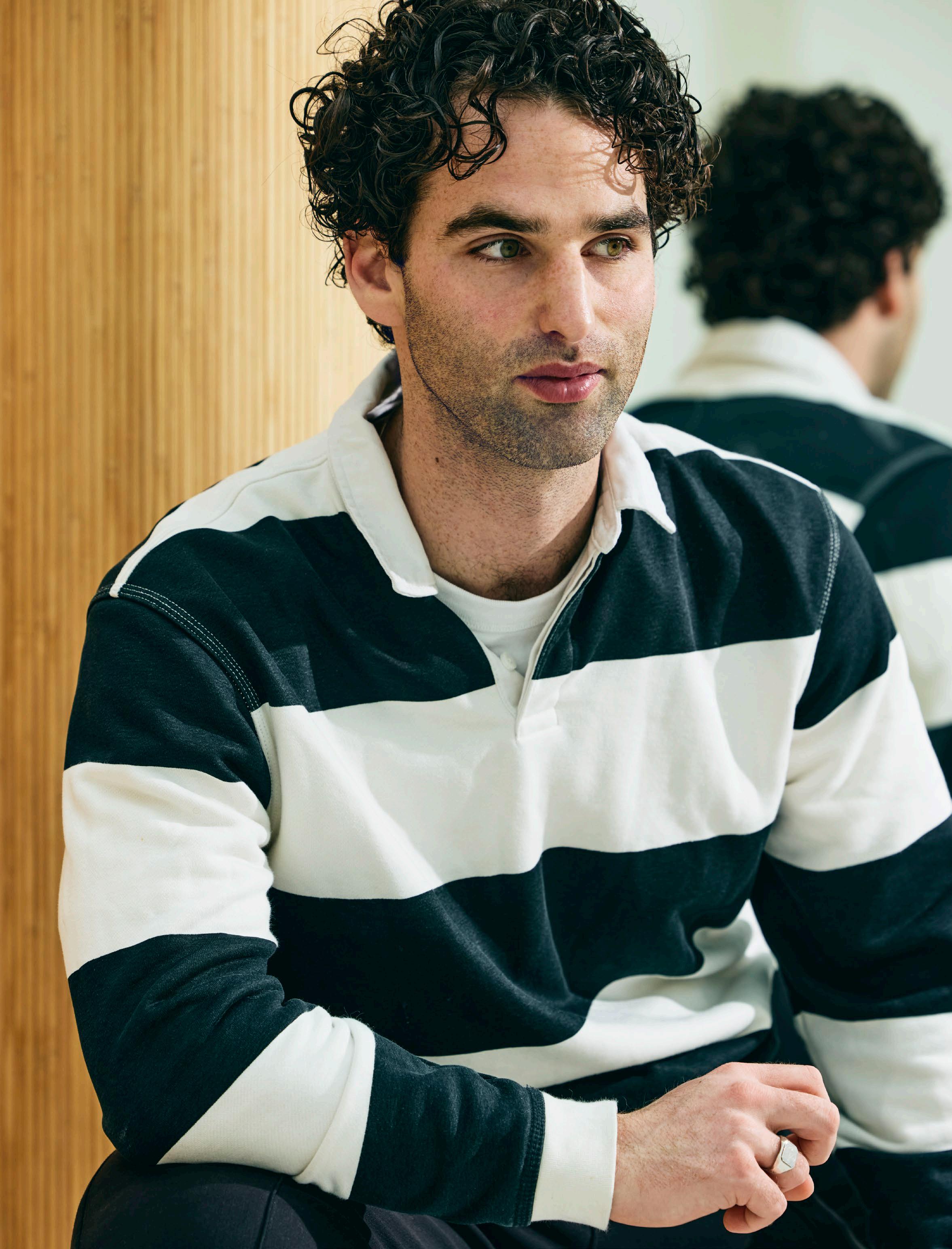
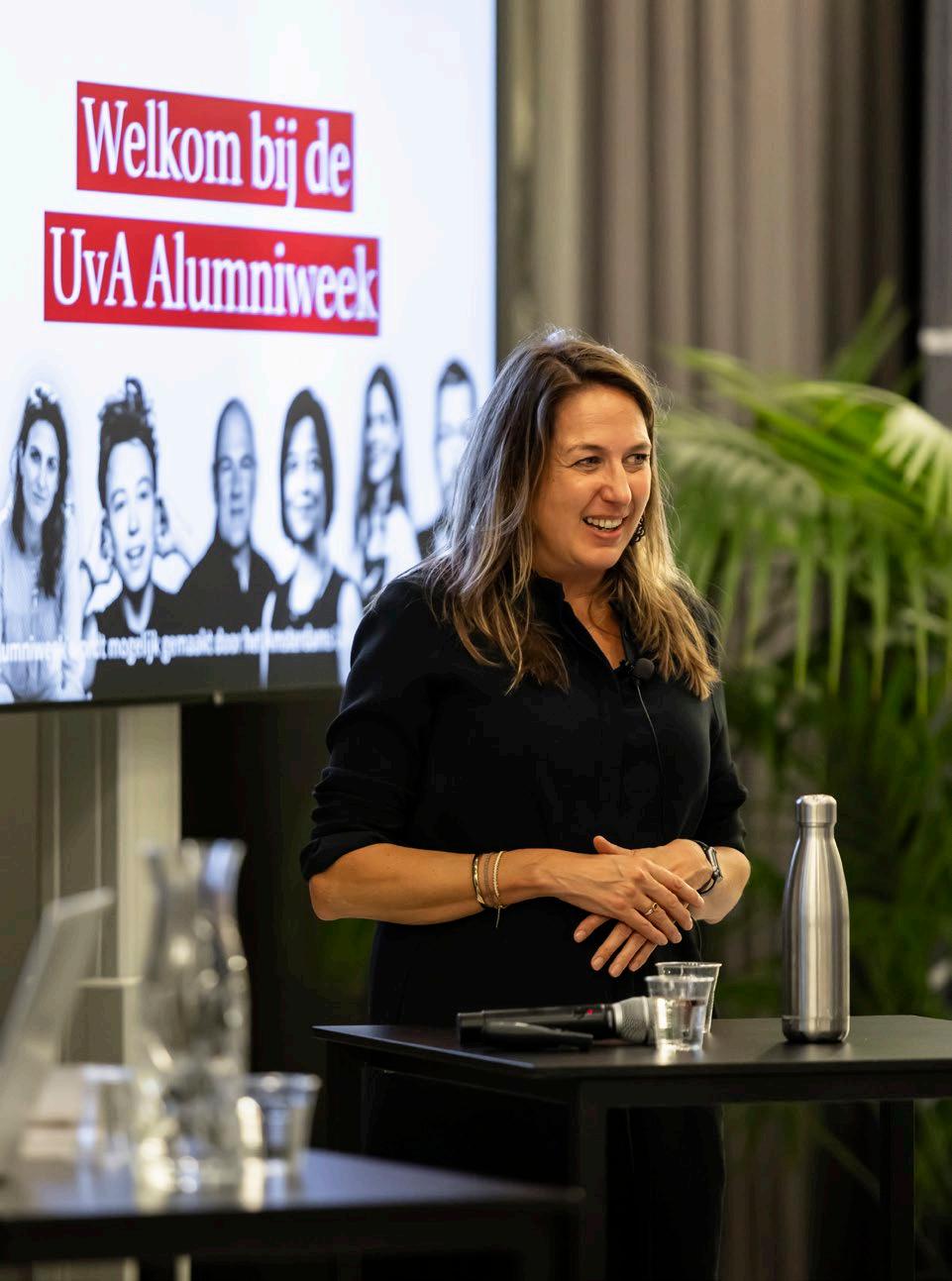
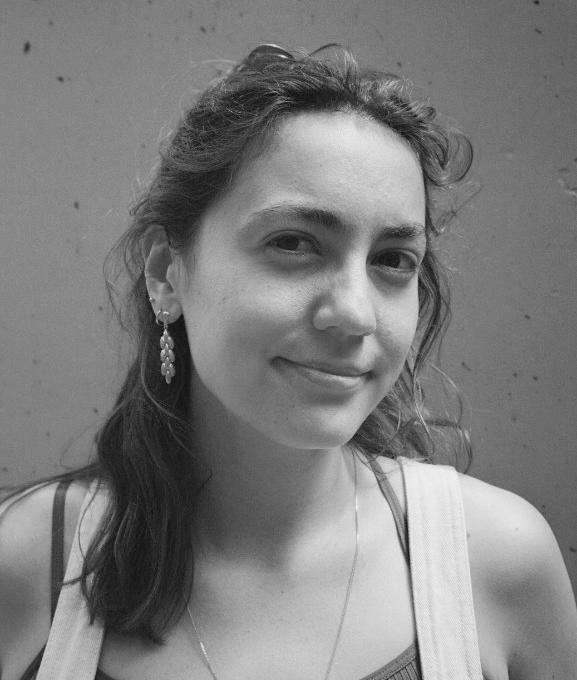
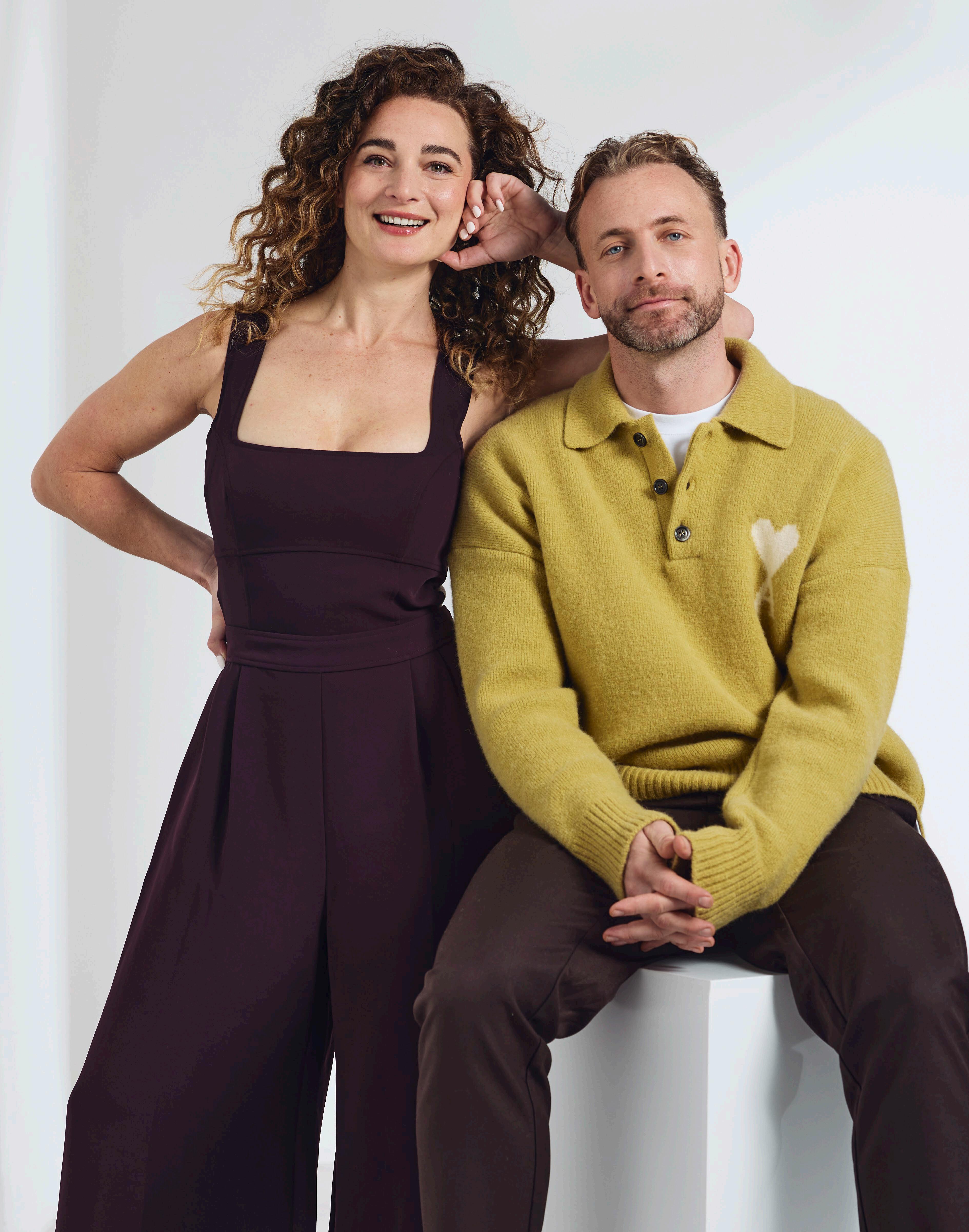
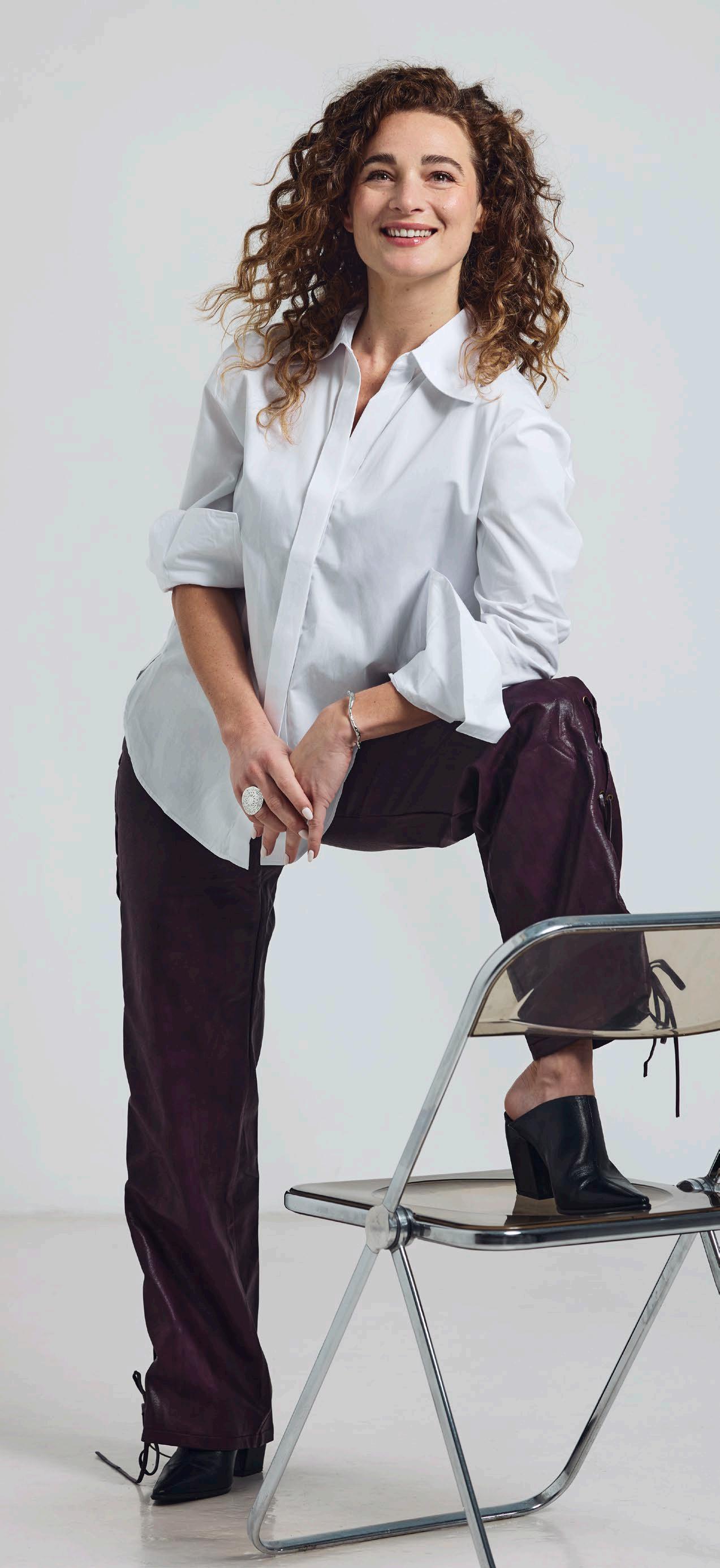
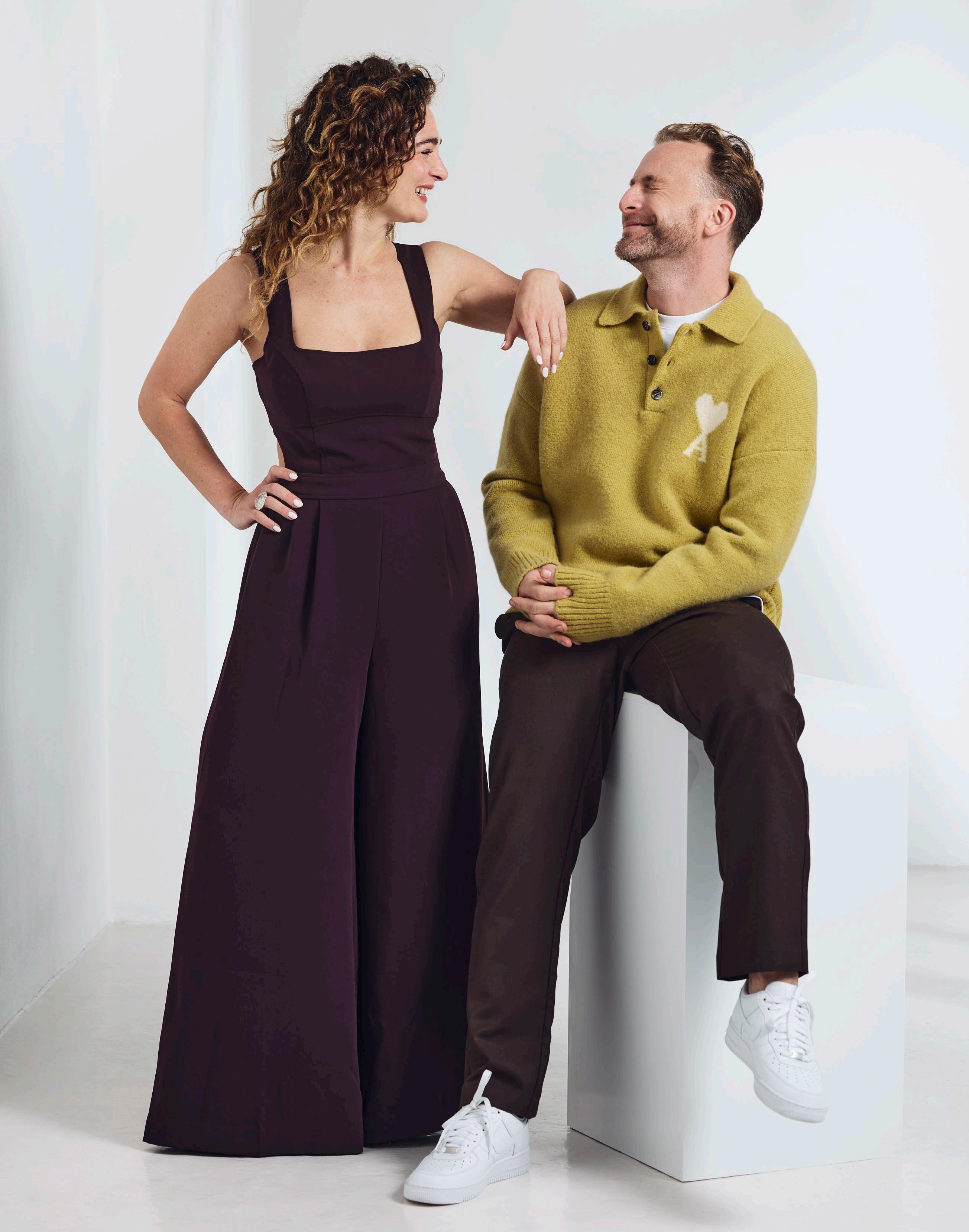
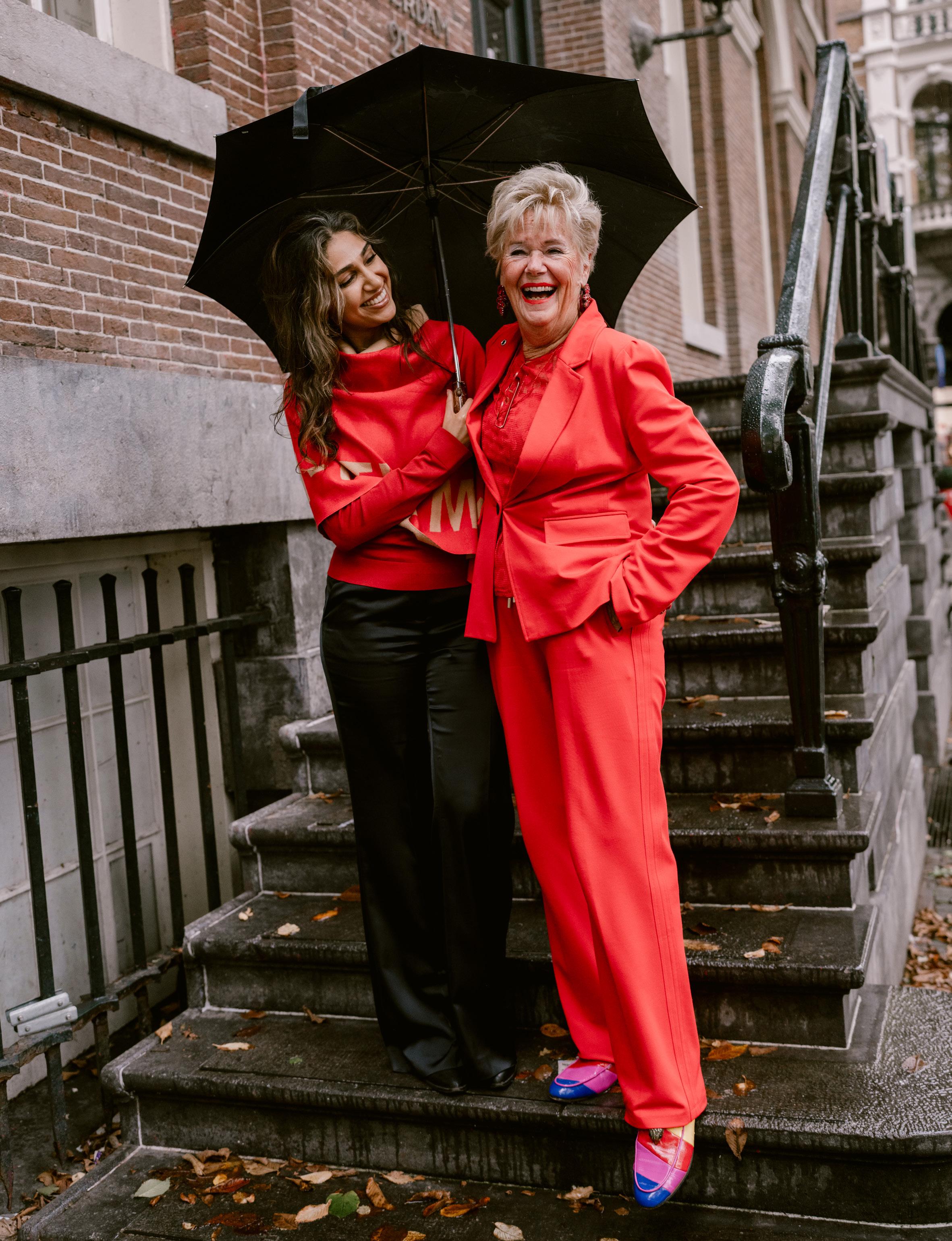
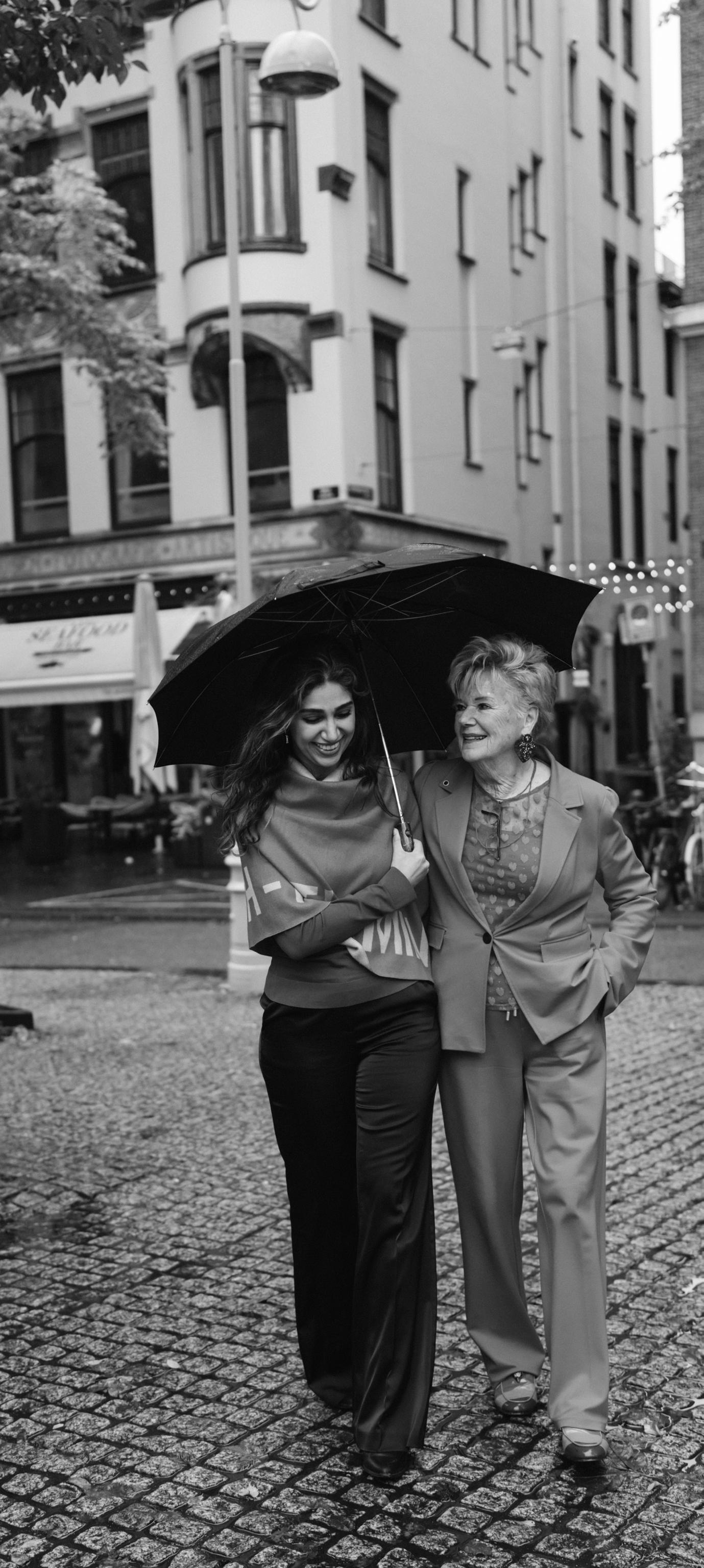
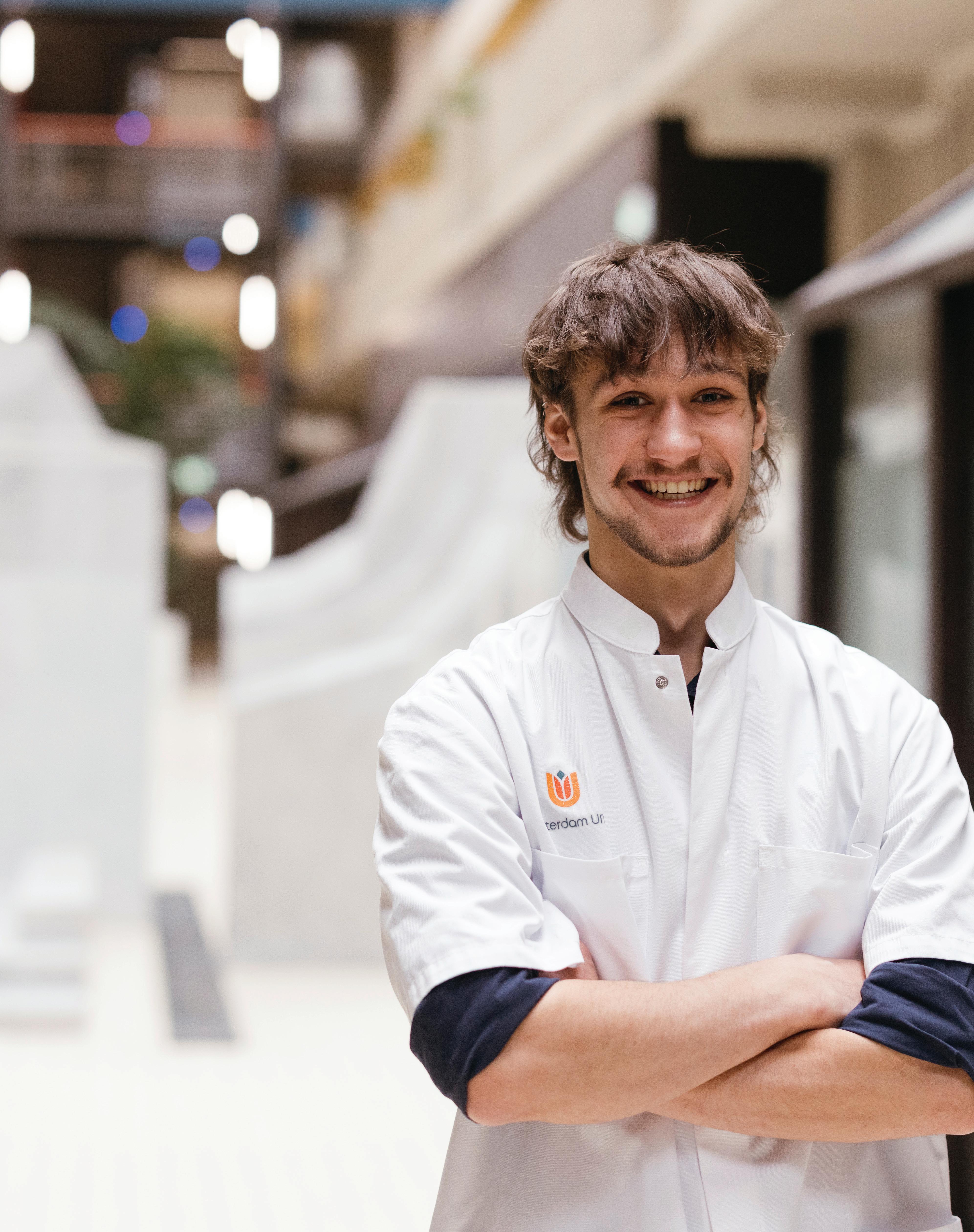
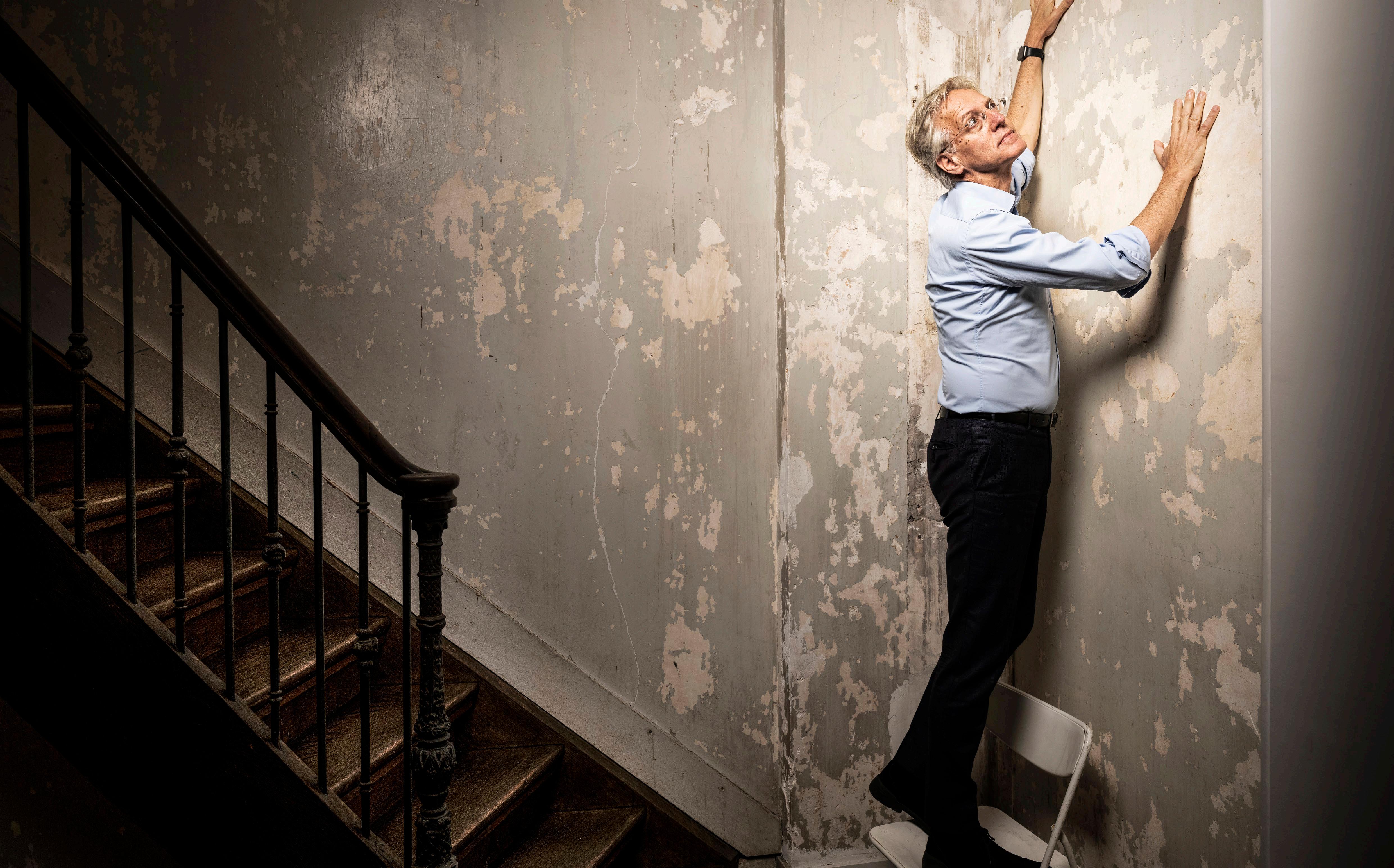
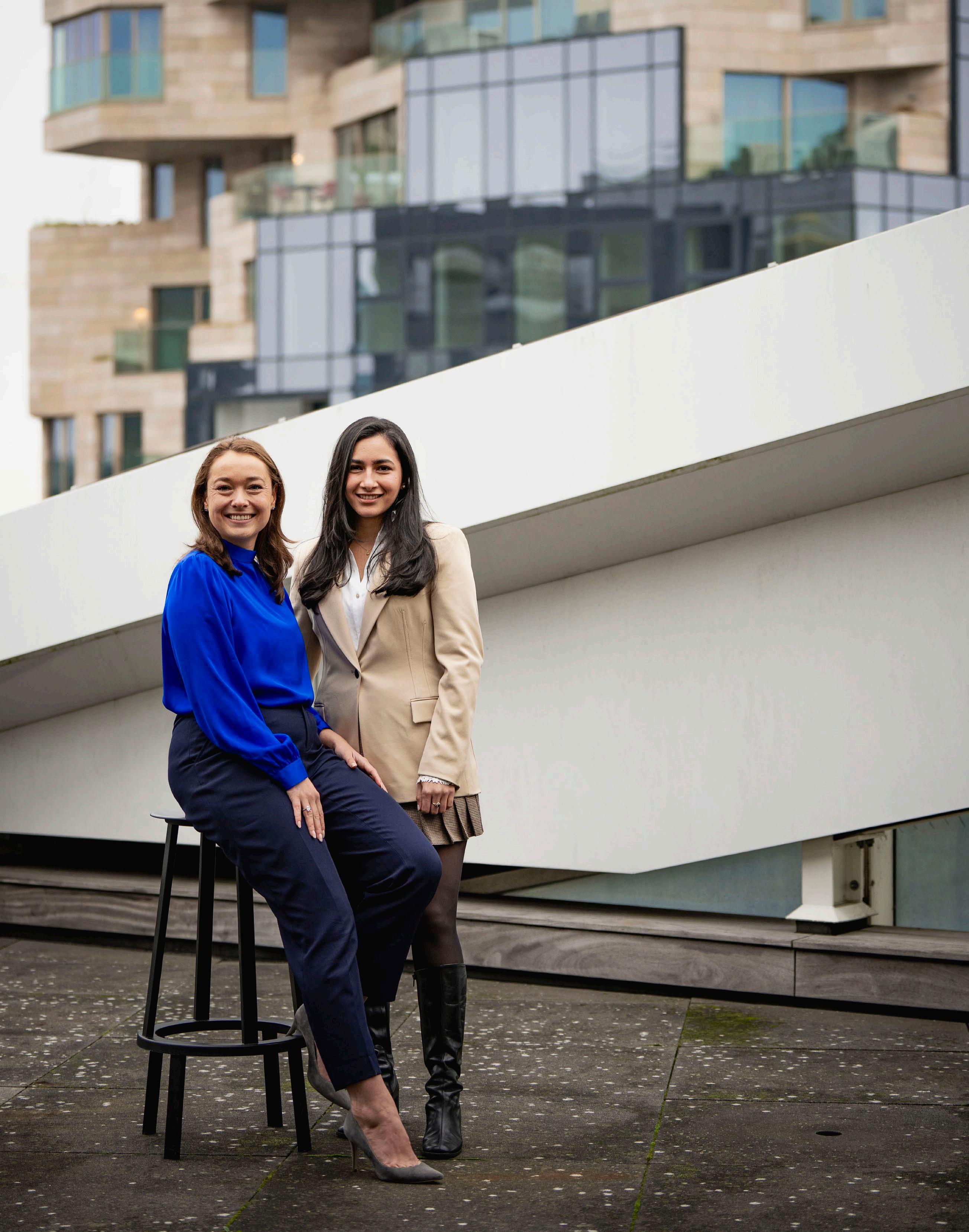
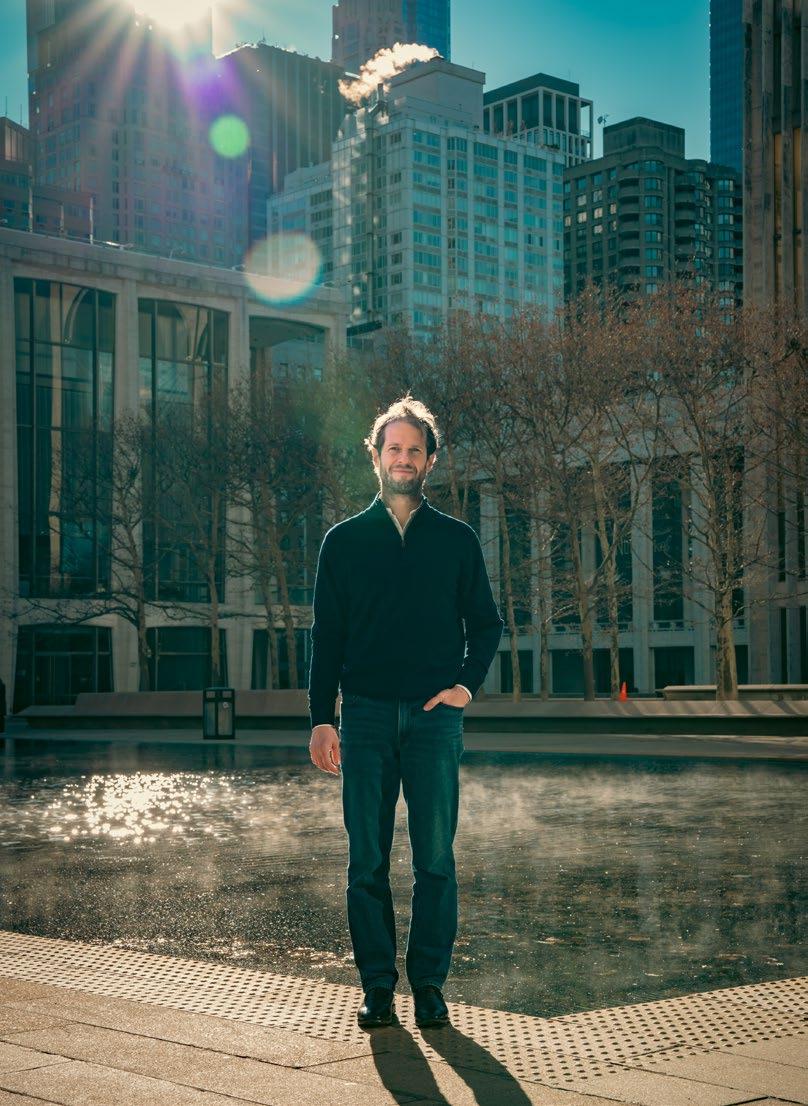
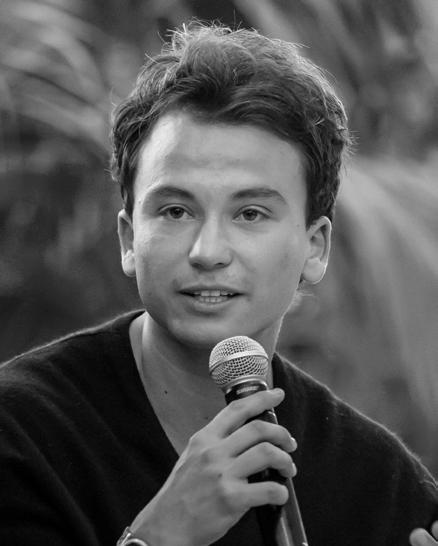
Safae el Khannoussi • Camiel Kesbeke and another 24 remarkable alumni and researchers
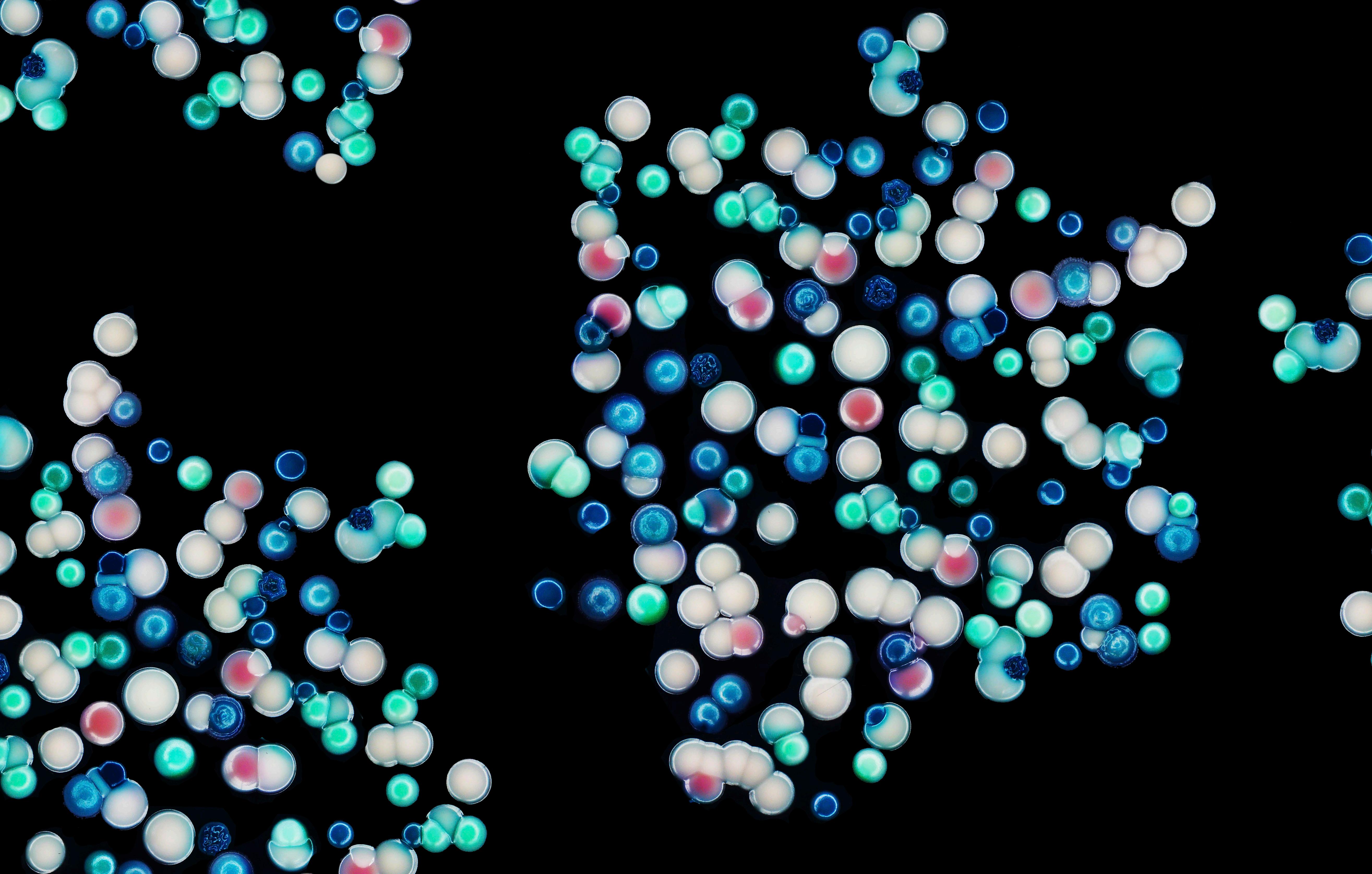
Every groundbreaking discovery begins with curiosity and a fresh perspective
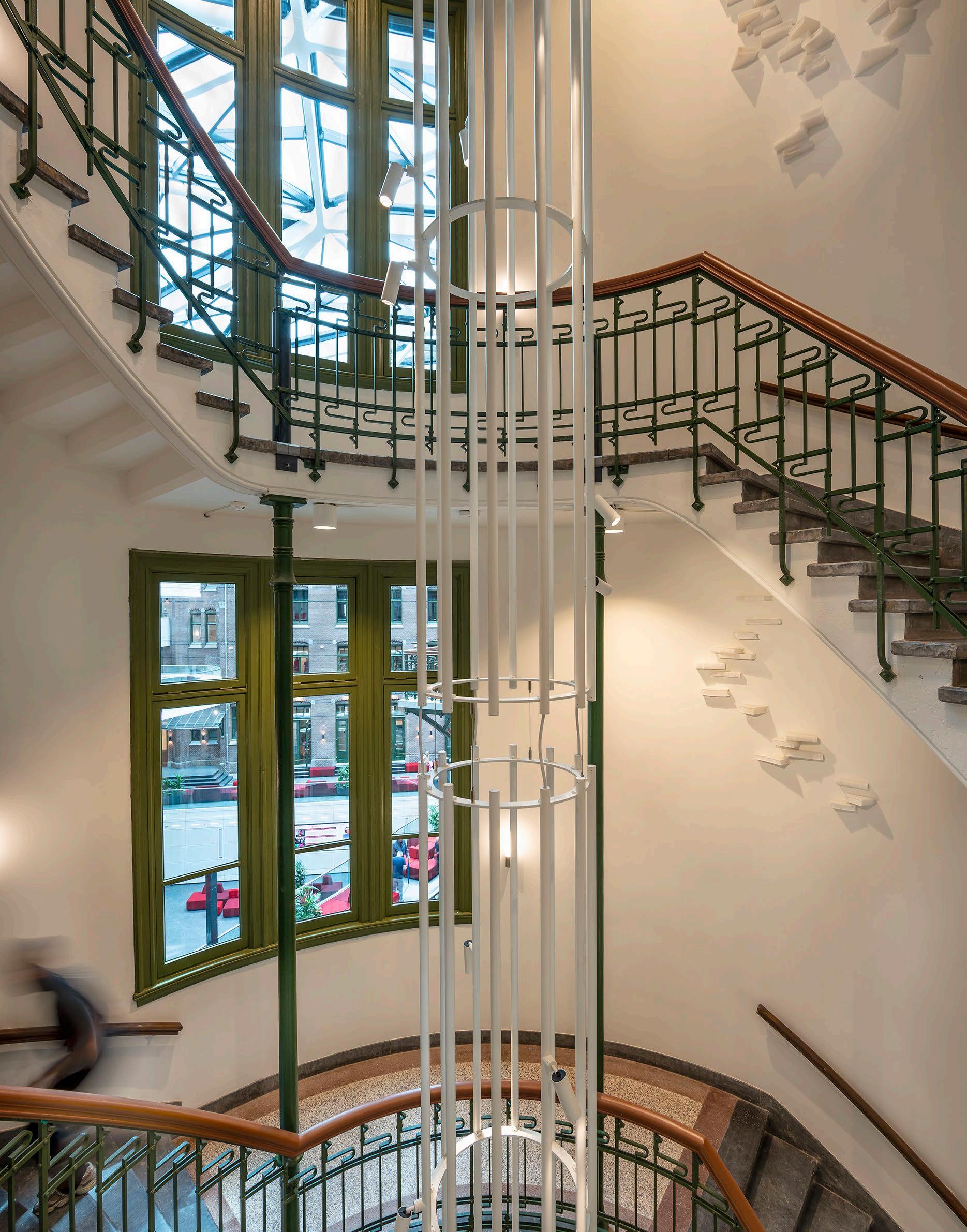
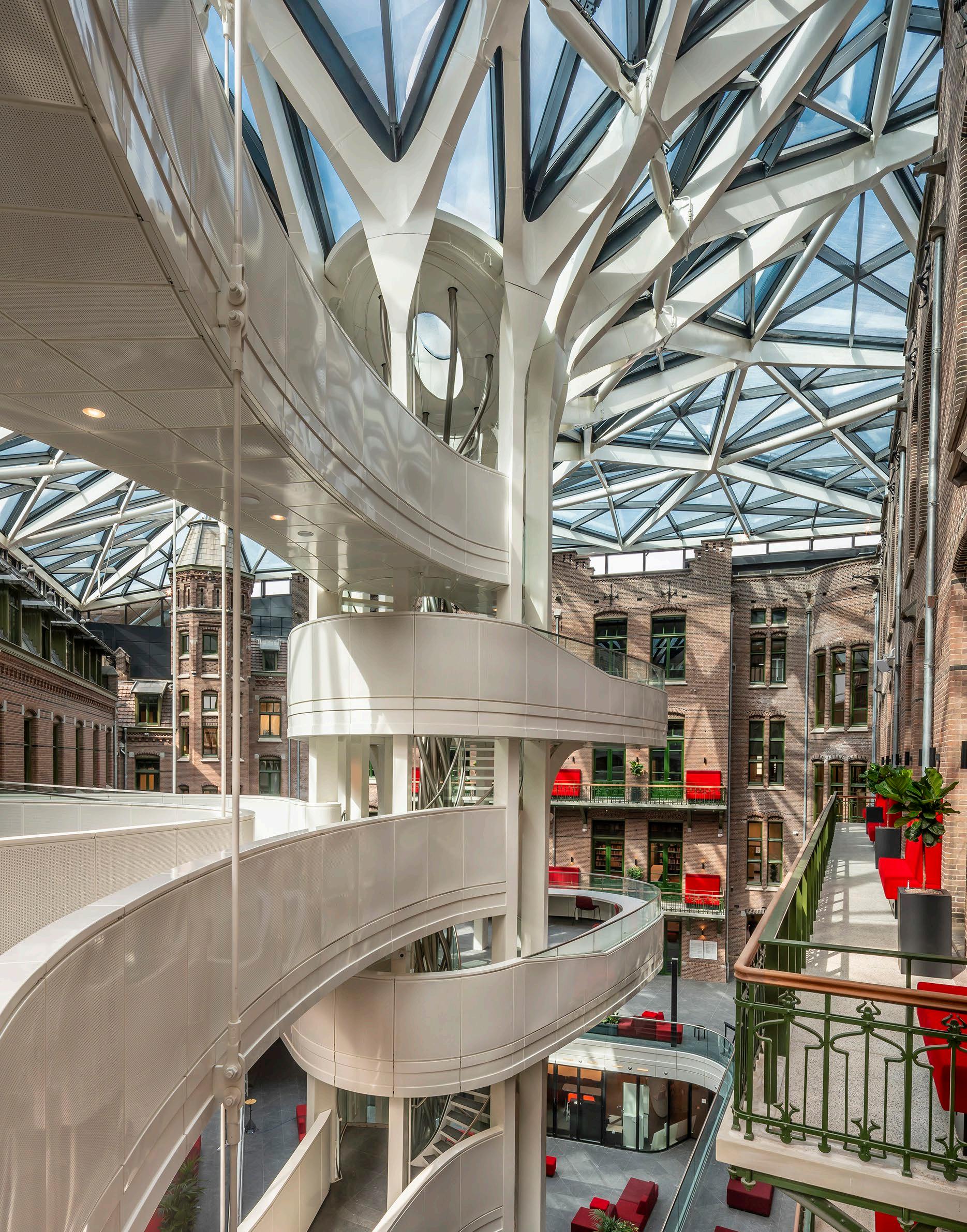
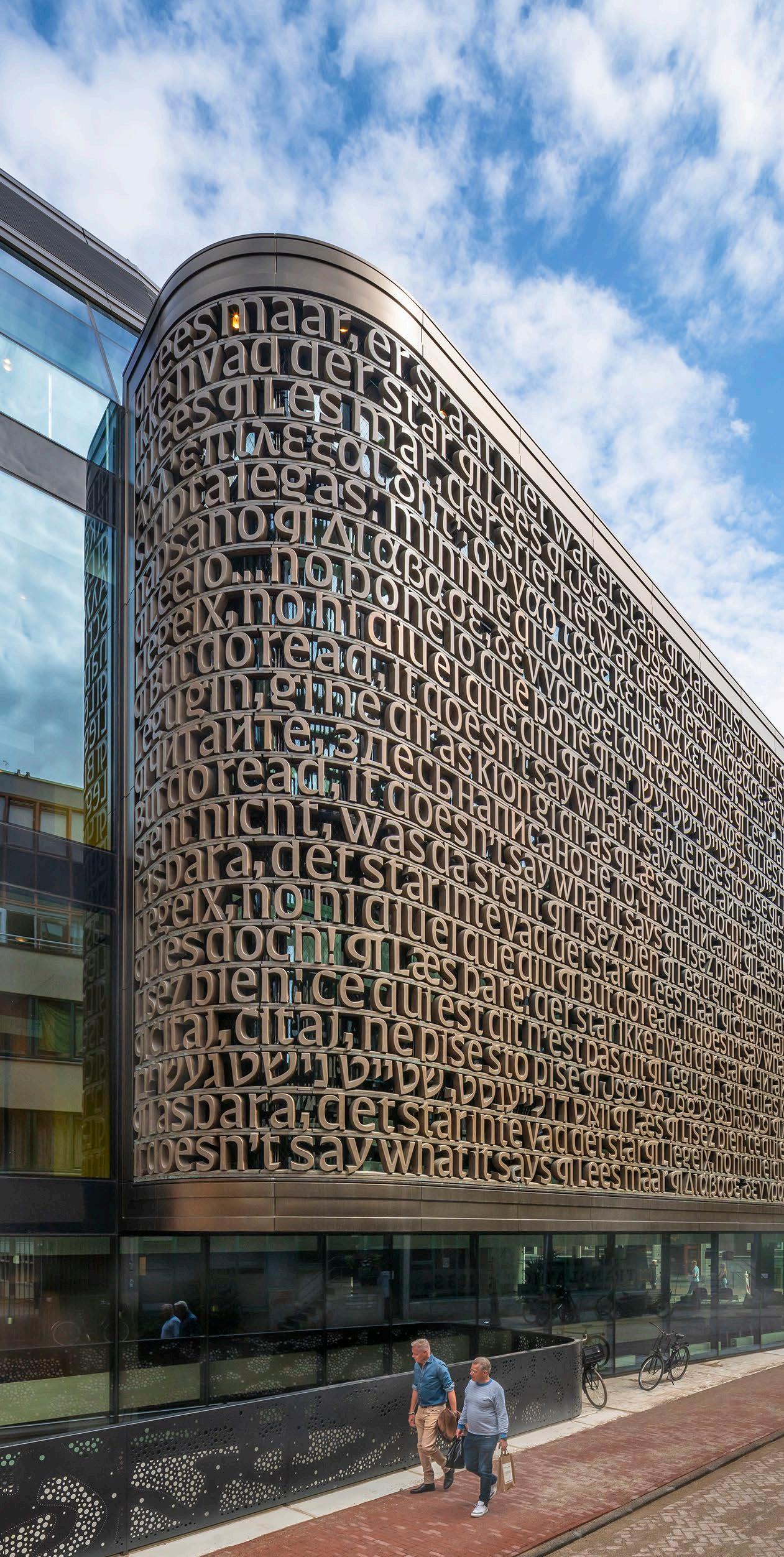
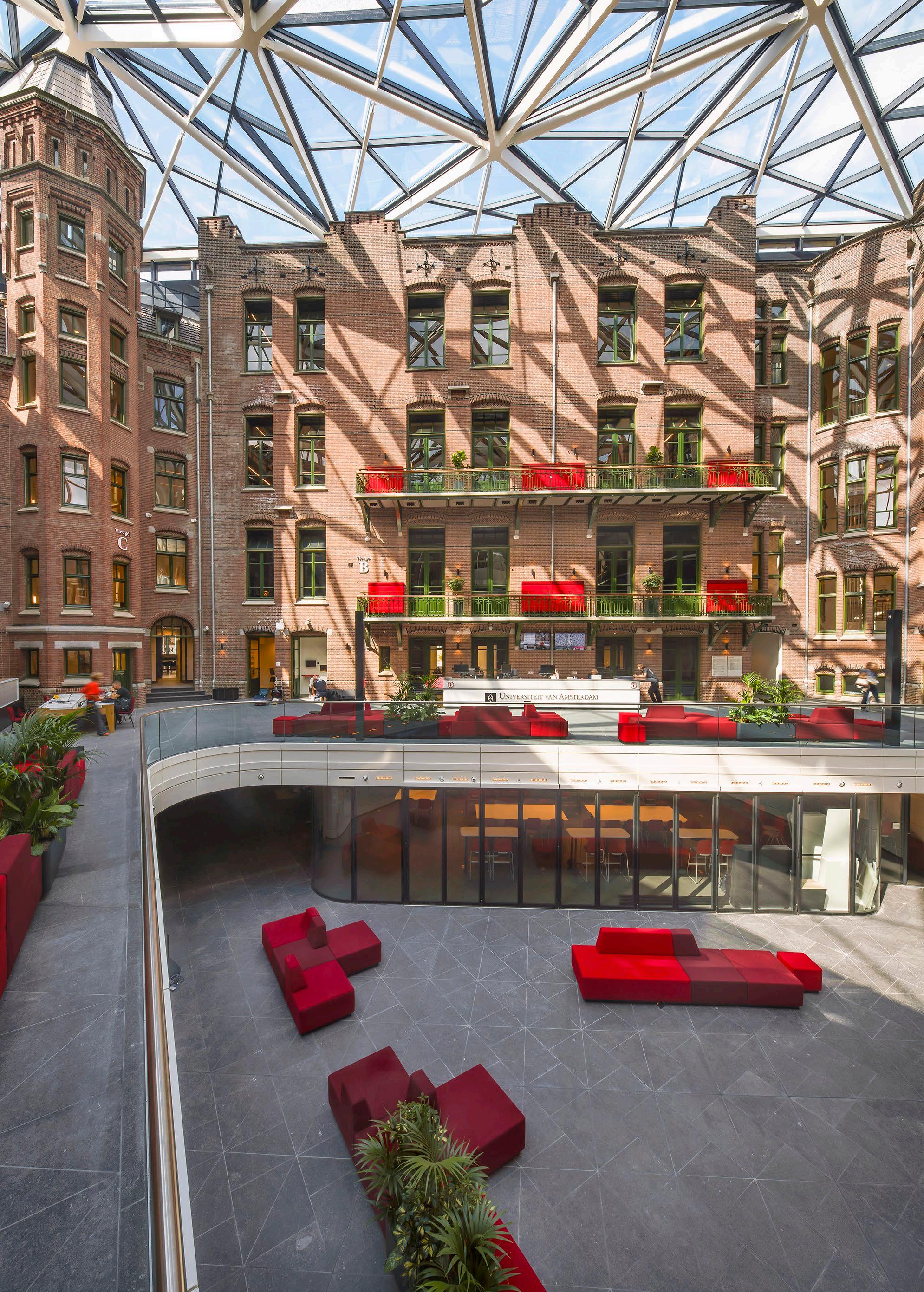
If any building invites curiosity, it is the new University Library. Take a look inside from page 15 onwards.
ROBBERT DIJKGRAAF
CONTENTS
WHAT’S UP
What if we were to reinvent the university, while preserving the value of academic freedom for a healthy, just and sustainable future? Now, more than ever, our society calls for science’s superpower to be linked to the challenges of today and tomorrow.
This magazine brings together stories from researchers and alumni, like Joyeeta Gupta, Robbert Dijkgraaf, alumnus and entrepreneur Camiel Kesbeke, and our connecting student assessor Willem Volker. Each of them is a headstrong individual who keeps asking questions to do things differently — and better. I am proud that there are thousands more like them at the UvA. Our task is to keep opening the windows and doors even wider, so that our work connects even more deeply with the rapidchanges happening in the world. Together, we are shaping this new university — for today and for the future.
PETER-PAUL VERBEEK
Rector Magnificus of the University of Amsterdam, and host of the UvA podcast Net Echt (see page 49).
WHAT’S UP NOW WHAT’S
UP NOW WHAT’S UP NOW
WHAT’S UP NOW WHAT’S UP NOW WHAT’S UP NOW WHAT’S UP UP NOW WHAT’S UP NOW WHAT’S UP NOW WHAT’S
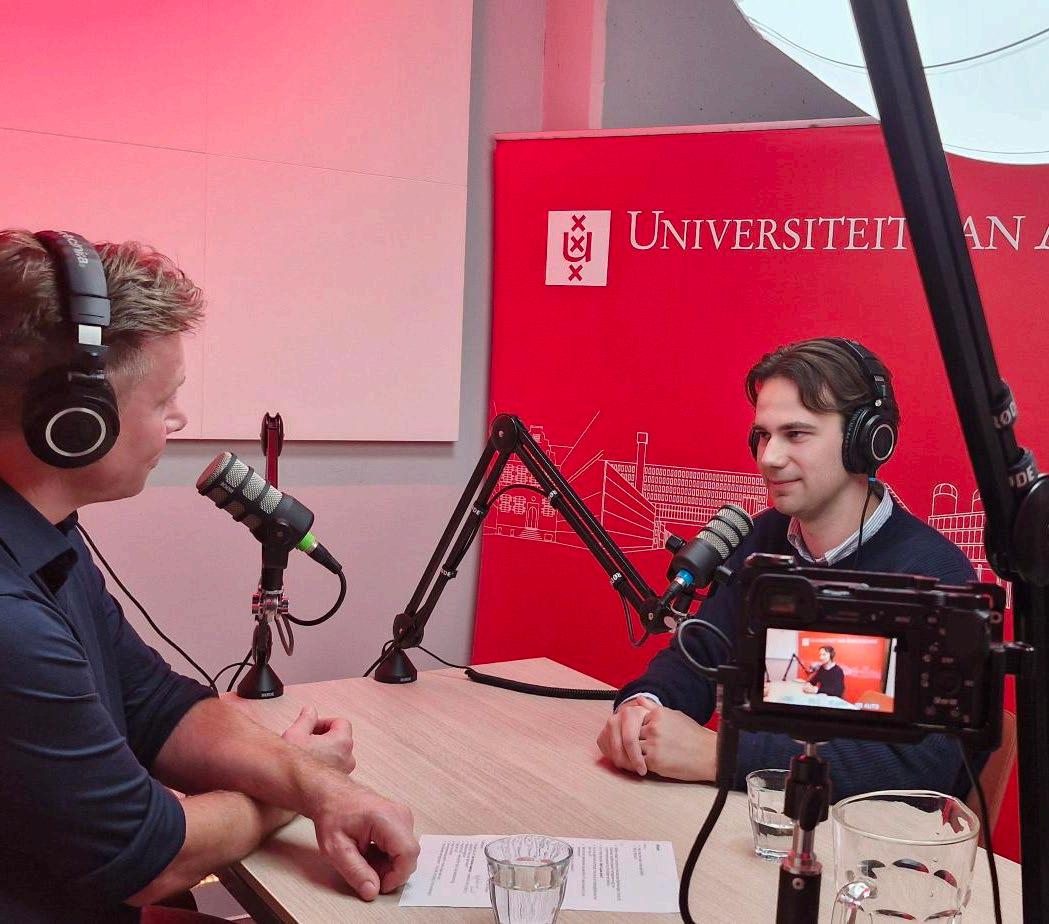
“A DIALOGUE IS NOT A DEBATE”
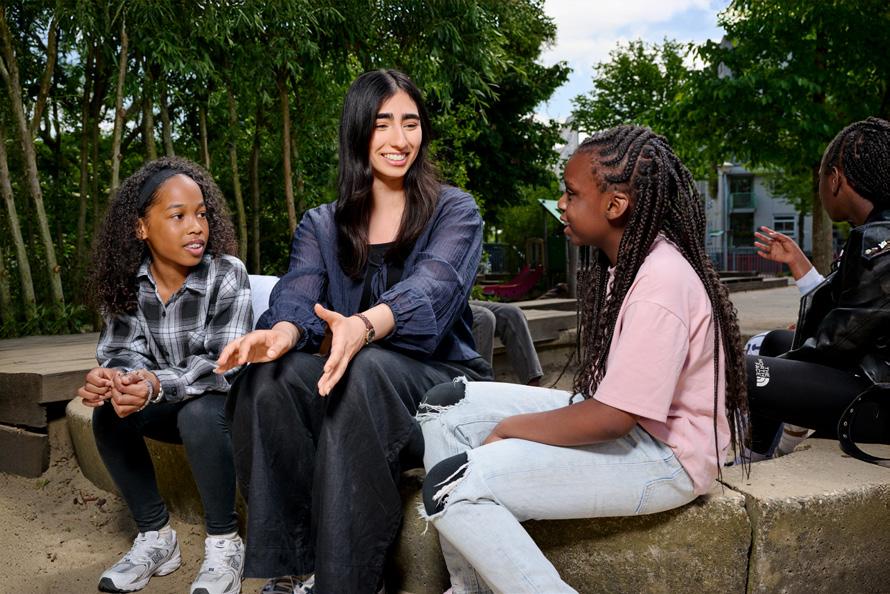
BOAZ CAHN (26) is one of the initiators of Deel de Duif, an award‑winning Jewish–Islamic dialogue initiative. Over the past two years, they have helped countless schools and public authorities to have difficult conversations.
“Explain why something affects you – that is the one thing you cannot disagree on.”
For UvA alumnus Boaz, Deel de Duif was not his first encounter with interfaith dialogue. Even before his studies, he became involved in Leer je buren kennen (“Get to Know Your Neighbours”), an initiative of the Liberal Jewish Community in Amsterdam-Zuid. In this project, Jewish young people welcome secondary school pupils and vocational students to the synagogue.
At home with Femke Halsema
A few days after the Hamas attack on 7 October, Boaz was invited to a meeting at the official residence of Mayor Halsema, organised by the Yalla! foundation – a platform for Jewish–Islamic dialogue. There, he got talking to Noa, an acquaintance from Leer je buren kennen, and two young people with an Islamic background: Selma and Oumaima.
NOW Deel de Duif
BOAZ CAHN
(1999) studied Econometrics and Entrepreneurship (2020–2024) and became involved in Deel de Duif during his Master’s at the University of Amsterdam. On request, Deel de Duif also organises guest lessons and dialogue sessions at educational institutions and companies. More information: www.deeldeduif.nl
“Safety starts with CONNECTION”
“We had a really beautiful conversation,” he says. “That evening was completely different from what you saw on television or social media, where people were only attacking each other. At the end of the evening we said to one another: ‘We have to do something with this,because it is so desperately needed.’ You could see antisemitism and anti-Muslim hatred rising, also among young people, because of what had happened.”
From talk show to classroom
What began as an idea for a social media campaign, quickly grew into Deel de Duif. The symbol – a dove with the word “peace” in Arabic, Hebrew and Dutch –was widely shared. Invitations soon followed from talk shows, schools and municipalities. Teachers got in touch. “They were seeing arguments flare up in class, children who were afraid to come to school. They asked us: ‘Can you show us a different approach?’”
That is exactly what they did: by standing in front of the class together, as Jews and Muslims, and not debating, but talking. “Simply by showing that we can have a normal conversation, you take the tension out of the room.”
Understanding, not arguing
“At school you are taught how to argue your case and debate well, but you are taught less about how to really talk to one another. So, we often start with the question: ‘What is a dialogue?’ Because it is something different from a debate. In a dialogue, you want to understand each other. Many people think it is all about arguments and facts,” he explains. “But often it is about what something does to you. Why does this affect you? That is something you cannot disagree on.”
Personal motivation
For Boaz, his motivation is self-evident.
“When I go to the synagogue, the military police are on guardin front of the building – that has been the case all my life. As Jews, we live under a constant security threat,” he says. That is precisely why he feels it is important to stay in contact with others. “Also, because I have seen where antisemitism can lead. All four of my grandparents lived through the Second World War as young children in hiding. It is not a given that we live in freedom here. Dialogue is a small link in helping to preserve that. For Jews, Muslims and other vulnerable minorities. That is what motivates me so strongly.”
Polarisation on campus
Boaz is realistic about polarisation at universities. “People have to learn to think along two tracks,” he says. “Policy and relationship.” You can clash hard when it comes to policy. But when it comes to relationships, you have to keep investing in conversation. “Most students do not have to make policy together. That makes it all the more important that they continue to see each other as human beings.”
Looking ahead
Deel de Duif is now a foundation, with an advisory board and plans to secure its long-term future. Boaz’s personal dream? “That as a society we invest much more seriously in social cohesion,” he says. “Safety does not start with defence, but with connection.”
NEWS
UVA
DEVELOPS ALTERNATIVE TO CHATGPT
Marjolein Moorman continues her mission
UvA alumnus MARJOLEIN MOORMAN left Amsterdam for the House of Representatives in 2025, representing GroenLinks–PvdA. There, she is now continuing at national level what she was already striving for as alderman for Education in Amsterdam: that everyone is equally valued and given the opportunity to participate in education and in society.
To tackle inequality structurally and to give local initiatives a real chance of success, national legislation is needed, she says.
After completing her degree in Communication Science, Moorman stayed on at the UvA, where she rose from PhD candidate to Associate Professor of Political Communica tion. She worked at the university until she moved into the alderman role in 2018.
The UvA is investing in digital independence with UvA AI Chat, which since 2025 has served as the internal alternative to commercial chatbots. All data remain within the UvA, use is anonymous and prompts are not used for advertising. The free tool, developed by a team of students and lecturers, complies with strict privacy and integrity guidelines. As such, UvA AI Chat offers a secure “sandbox” in which to embrace generative AI while safeguarding the core values of academic education, independently of Big Tech. More at uva.nl/ai.
STUDENT TAKES ACTION AGAINST POLARISATION
How can we keep talking to one another in a constructive way, even when we disagree?
WILLEM VOLKER, a first‑genera‑ tion Philosophy student from an entrepreneurial family, watched the polarisation at the UvA with dismay and wanted to create a platform for a diversity of voices. “The Free Space for Difference is a place where students engage in dialogue with one another – and where Deel de Duif also comes to speak.” Because conversation means connection, especially when you disagree. As student assessor, Willem also repre sents the student voice on the Executive Board. “I want to be there for all my fellow students; they can share their concerns or ideas with me.”
More at uva.nl/vrijplaats.
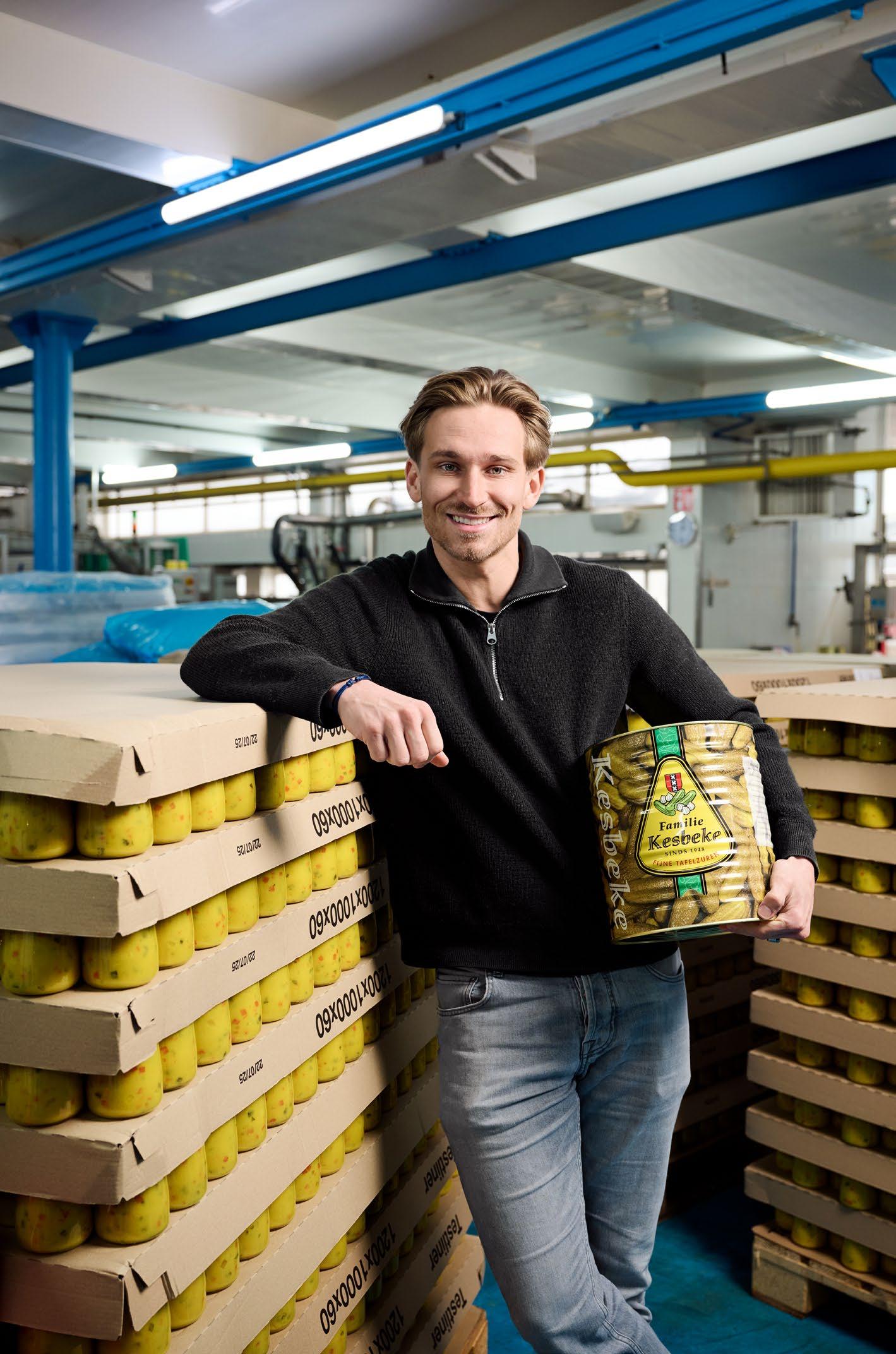
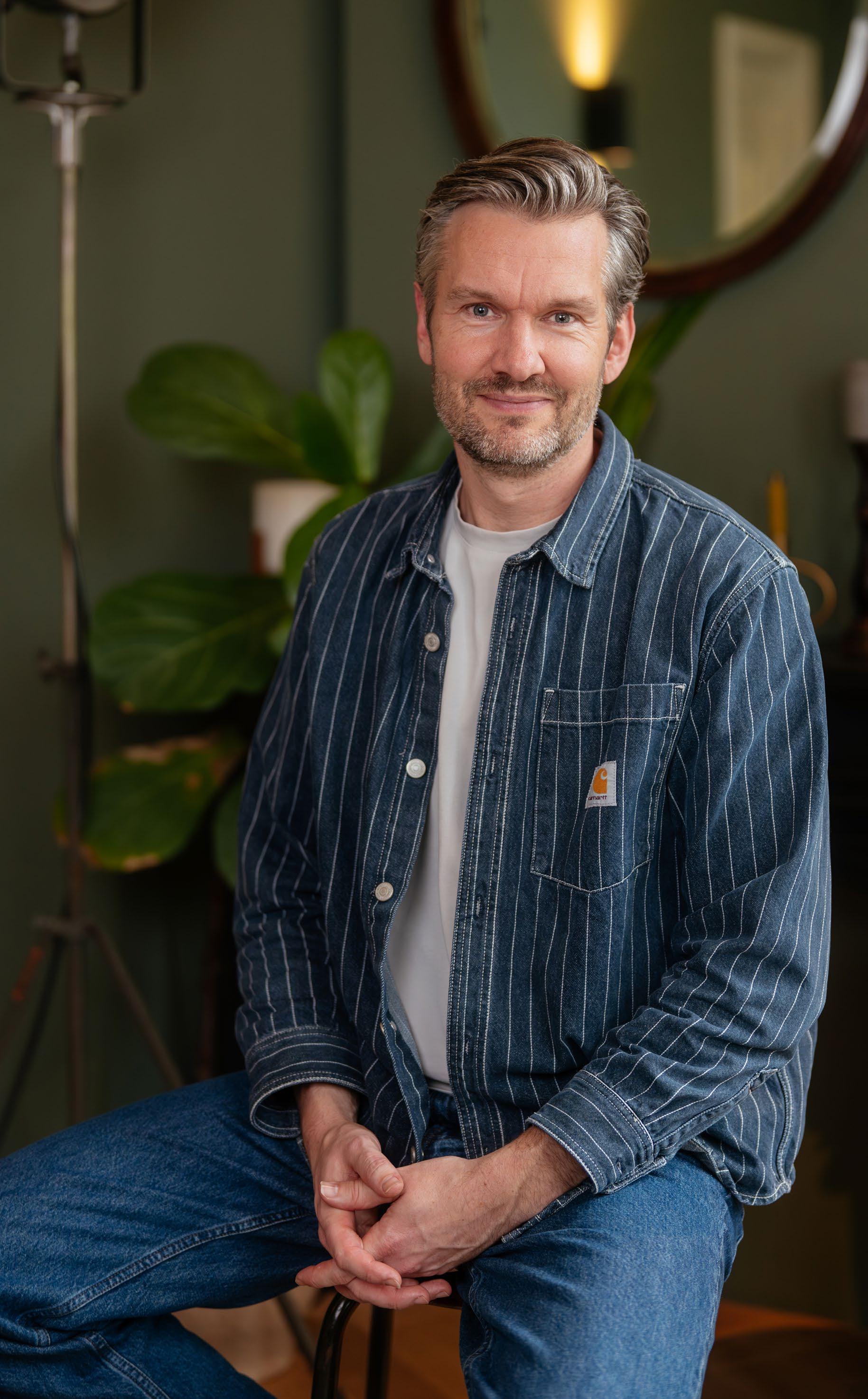
Pickle crown prince Camiel Kesbeke gains knowledge at the UvA
UvA alumnus CAMIEL KESBEKE (known from Expeditie Robinson and the reality series De Augurkenkoning) had never planned to take over the family business. “I decided to study Economics and Business at the UvA, because I did not know what I wanted. But, of course, it was convenient to do my study assignments at Kesbeke. That way I learned more about the company and became increasingly enthusiastic.”
That enthusiasm had to grow, he says. “When I was younger, I did not find pickles all that sexy. But the more I found out about the family business, the more I enjoyed it. I am incredibly grateful to the UvA for that.”
NEWS Feature
DREAM DEBUT
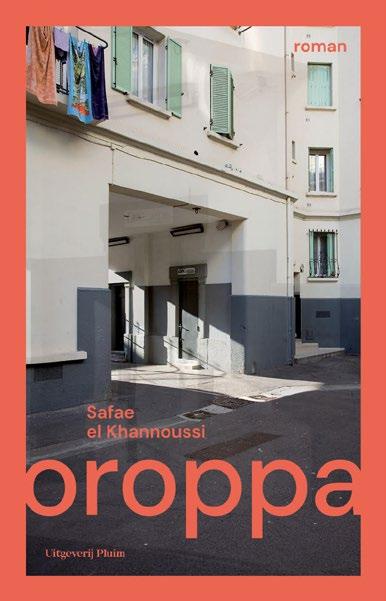
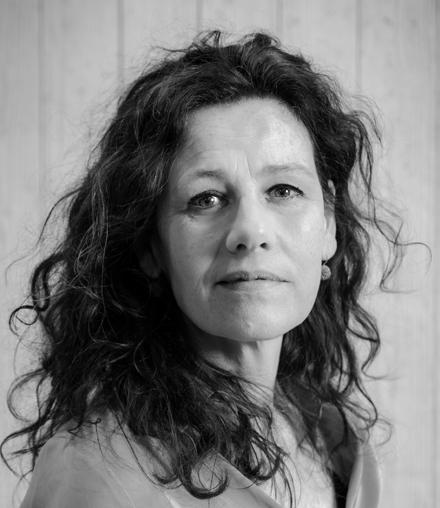
As the first debut author ever, SAFAE EL KHANNOUSSI won the 2025 Libris Literature Prize with her ambitious novel Oroppa. She had previously won the biggest Flemish literary prize with the same book. El Khannoussi studied Philosophy at the UvA, where she teaches and is working on her PhD.
UvA rangs highly
The UvA has once again performed strongly in the international rankings. These programmes are among the global top 50 in the Shanghai Global Ranking of Academic Subjects 2025:
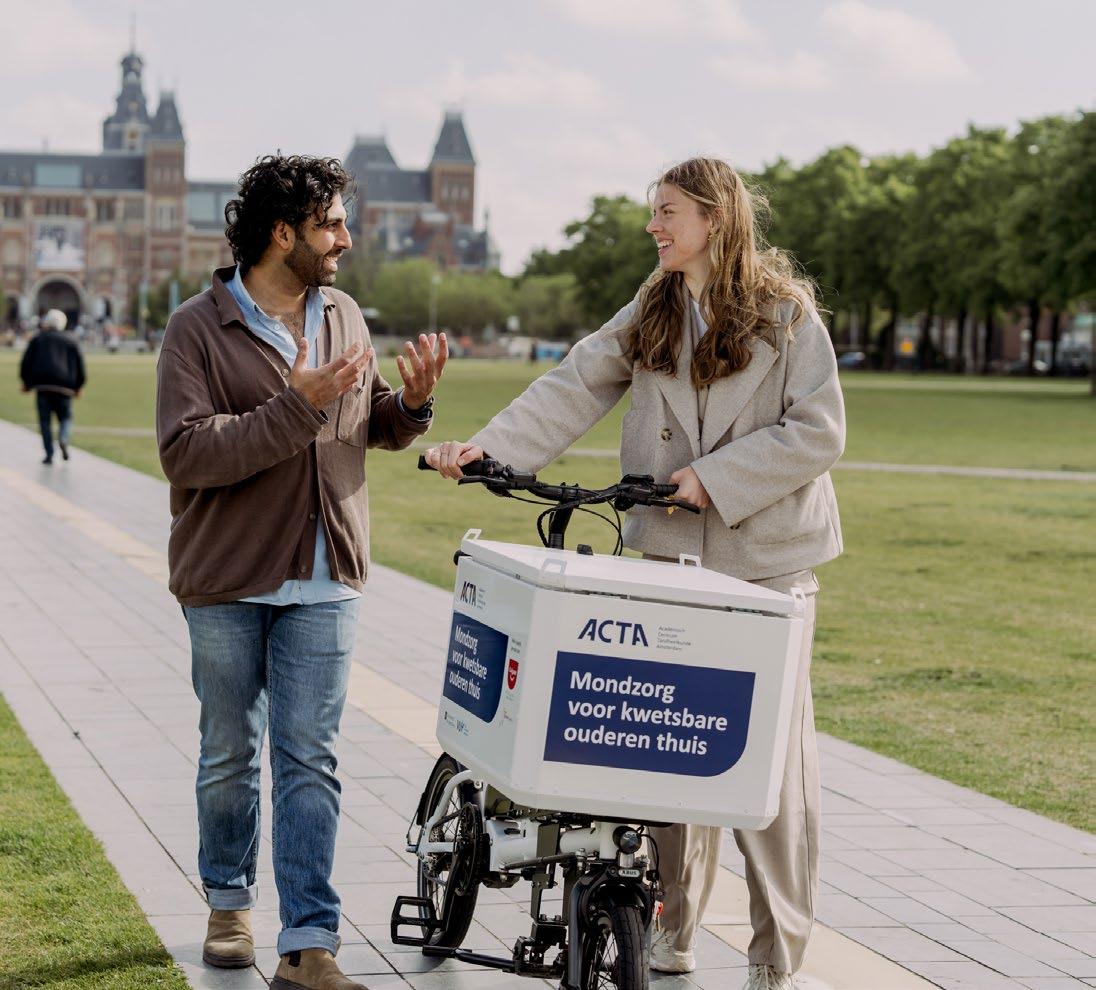
DENTAL STUDENTS VISIT ELDERLY PEOPLE BY CARGO BIKE
Vulnerable elderly people who are no longer able to visit the dentist themselves are now being visited by ACTA students by cargo bike. They provide free preventive care in order to avoid poor oral health. After a successful pilot, the cargo bike project has become a permanent part of the ACTA dentistry curriculum.
A high ranking is not an end in itself; the UvA focuses on high‑quality teaching and research across all its programmes. However, a position in the rankings does offer an indication of quality (depending on what a specific ranking measures).
More information at uva.nl.
Dentist‑geriatric specialist and lecturer CLAAR VAN DER MAAREL‑WIERINK was the driving force behind the project: “It is a win–win situation. Elderly people are happy with the free care they would otherwise not receive.
Students can develop both professionally and personally. In this way, we reach a forgotten group who no longer come to the practice, and prevent problems. This is our social responsibility.”
You can sign up via the QR code.
IF SCIENCE HAS A HEART, THIS IS WHAT IT LOOKS LIKE
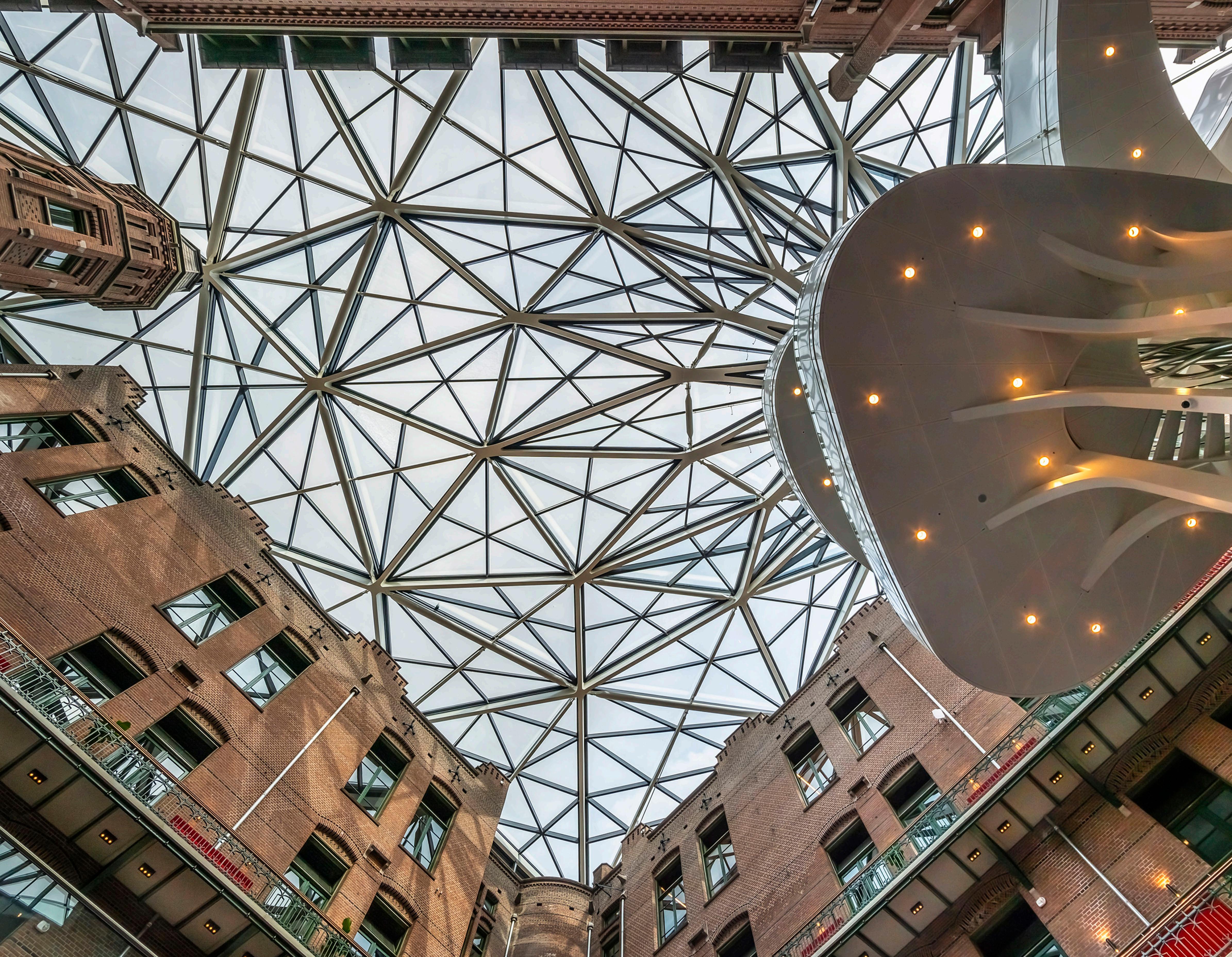
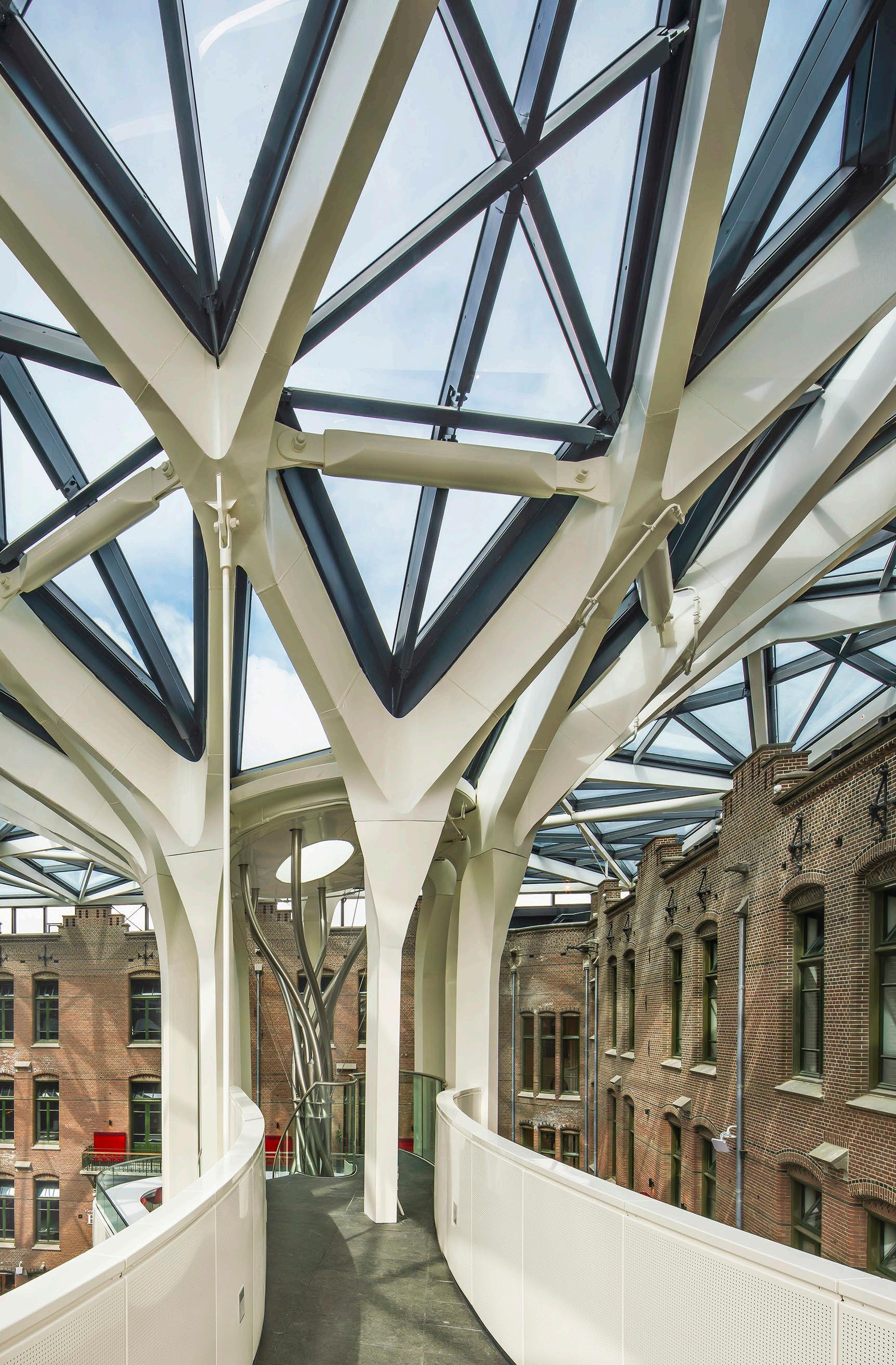
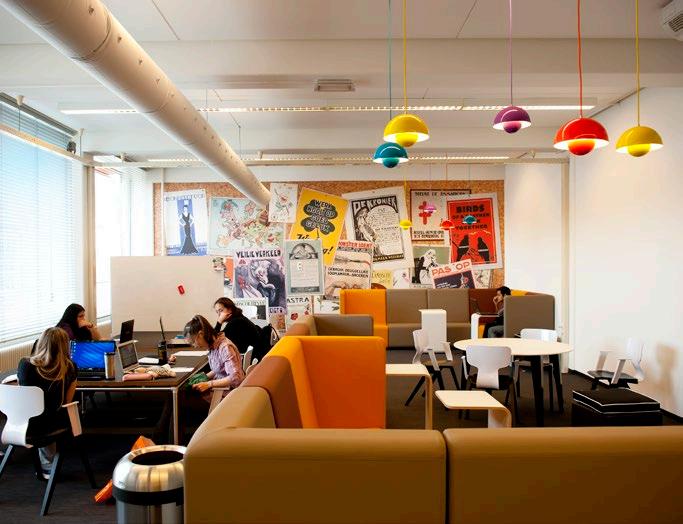
A building that welcomes you with open arms, as impressive as it is inviting: it really does exist. Step through the entry gates and it is love at first sight. Sunlight streams in through the high roof; soft sofas in UvA red invite you to sit down for a moment and look up. The eye‑catcher is the white steel tree structure that fans out into a canopy of steel and glass triangles, ingeniously folded inwards, so that it is invisible from the outside. In this way, the monumental charac ter of the former hospital complex has been preserved, while rain water is collected at the same time – because the new Binnengasthuis Quarter is also as circular and energy‑efficient as possible. From the very start, it was clear that the ambitions were sky‑high. The new University Library was meant to become an open, connecting square of science: a place that invites you to meet one another, but also to do research, to wander, to be surprised and to share new ideas. That goal has been achieved – and then some.
Once, this was the courtyard of a CLINIC
Books still occupy a prominent place. Neatly dusted, they stand in rows on the mezzanines of the former hospital wards, now trans formed into reading rooms with a pleasant “Hogwarts touch”. On the balconies where nurses of the for mer Surgical Clinic once looked out over the courtyard, there are now seating areas where you can make a phone call or take a break. The same goes for the corridors, where a clever colour‑coding of the benches helps you navigate the maze of hallways.
Connecting the three buildings was an architectural brain‑teaser, as all the gutter heights and floor levels were diffe rent. The architects at MVSA also solved this challenge with the steel tree: walkways to the various floors enter at every level and thus create an organic connection. By lowering the atrium at the foot of the tree, it has become possible to hold events there, with visitors comfortably watching from the balustrades above. The circulation desk is also located downstairs.
The variety of spaces has been carefully thought through: there are small meeting rooms, phone nooks, and the former dissection room has been turned into a compact theatre for lectures and graduation ceremonies. Those who arrive early enough, can even claim a romantic little tower room as their study spot. Workplaces have also been created on the landings of the “tree”, and the toilets are aesthetically pleasing enough for a TikTok.
Another favourite is the bright white brainstorming room downstairs, where all the walls and tables can be written on with whiteboard mar kers. Staff and students alike took the new University Library to their hearts from day one. This brings us straight to the only downside people mention: during exam periods you practically have to “reserve your spot with a towel” to secure one of the more than 1,100 study places.
The University Library is open 7 days a week and can be accessed with a UvA card(including for AUV members). Guided tours for interested visitors are held regularly – but be warned: they are fully booked quickly. Reserve your spot:
FAREWELL TO THE OLD UNIVERSITY
LIBRARY
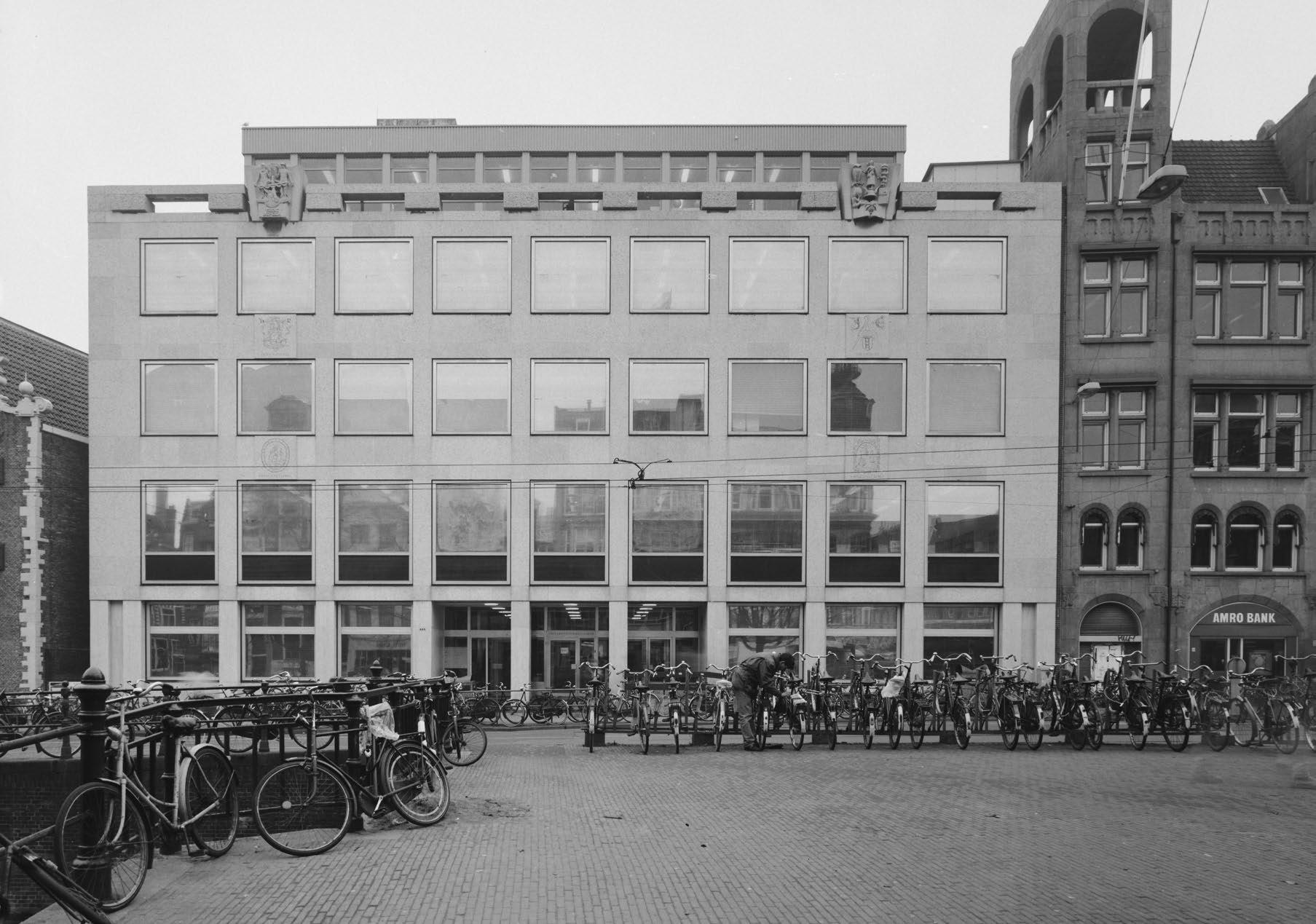
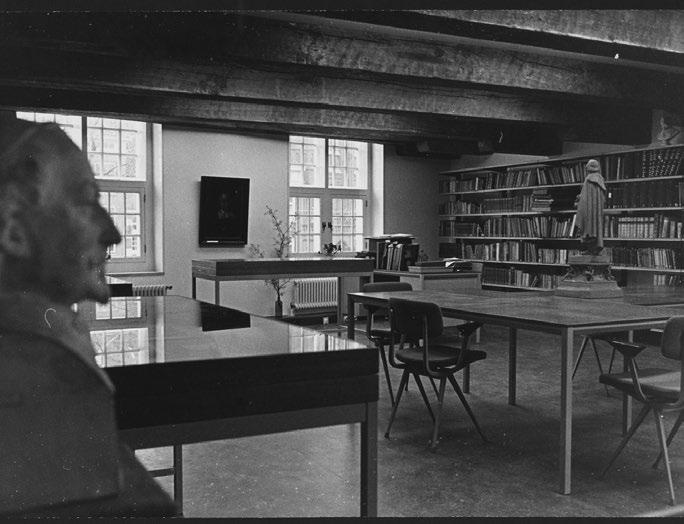
FIFTY YEARS OF HISTORY on the Singel has come to an end. Take one last look.
Showpiece of modernism or hideous colossus?
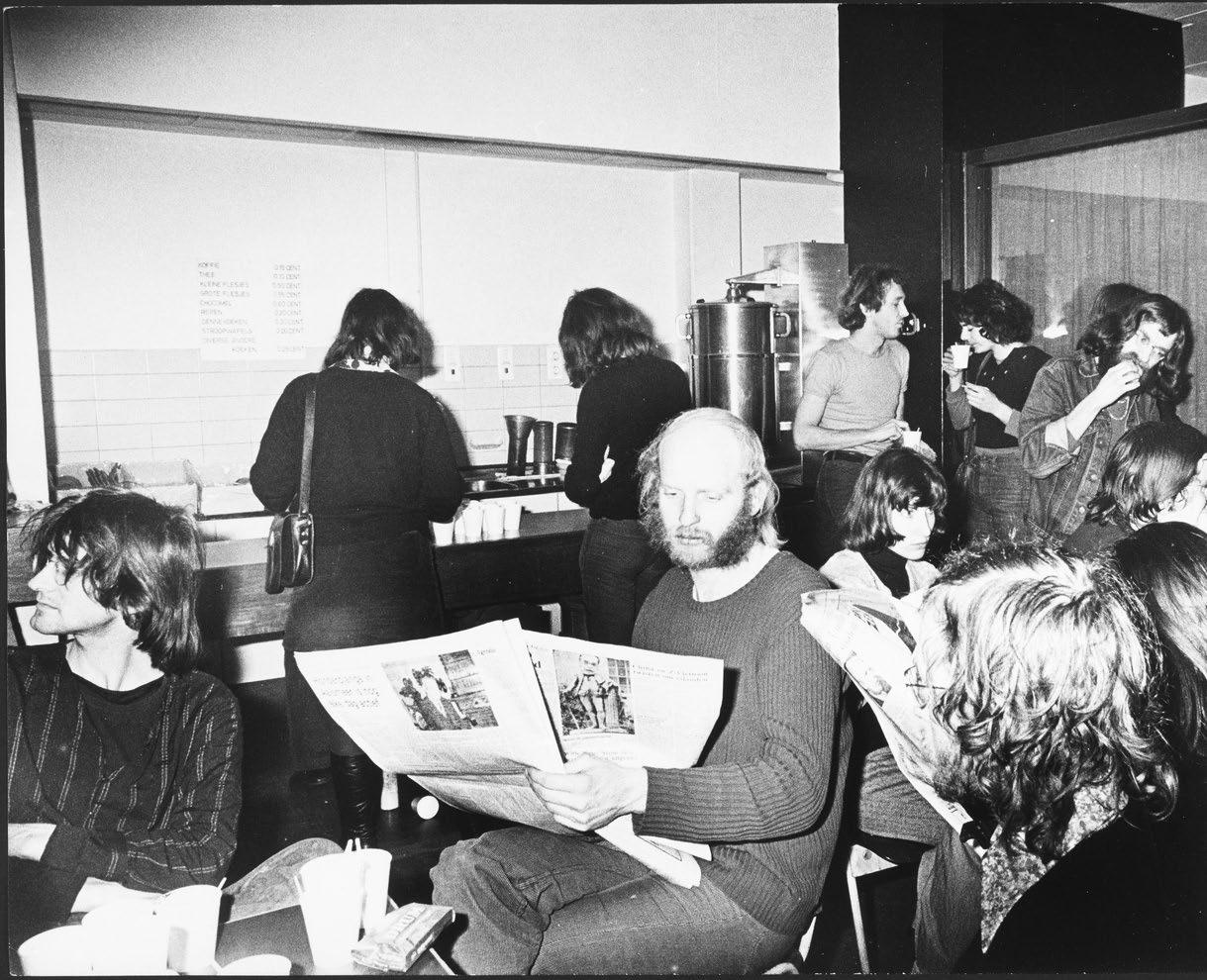
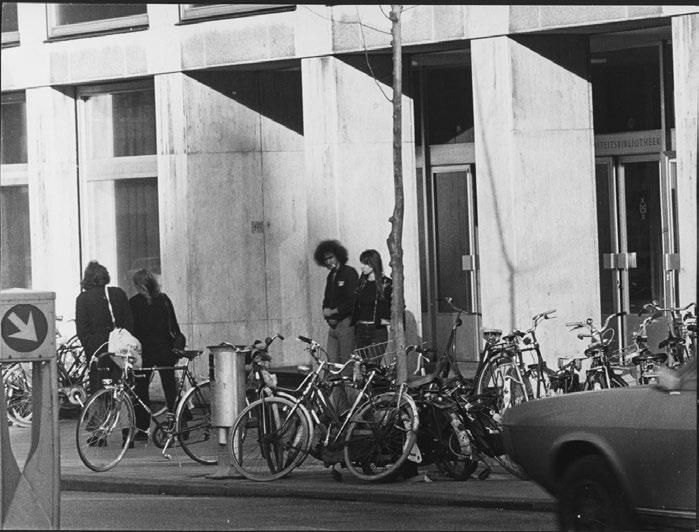
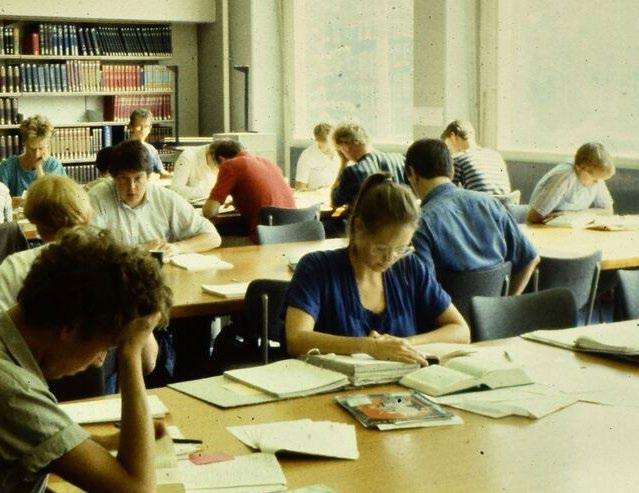
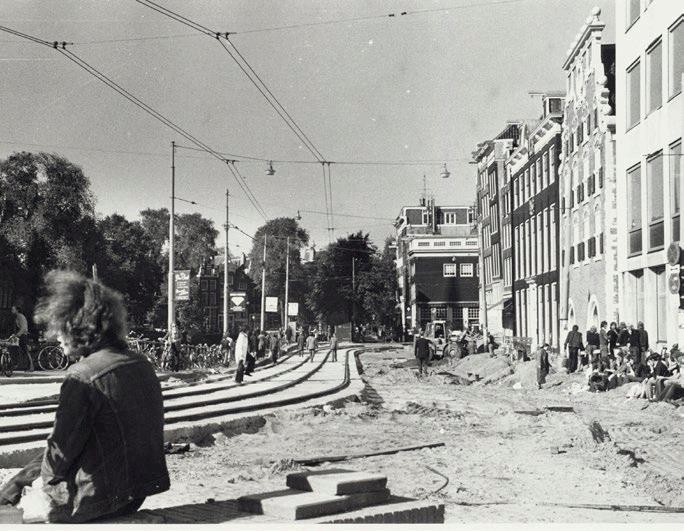
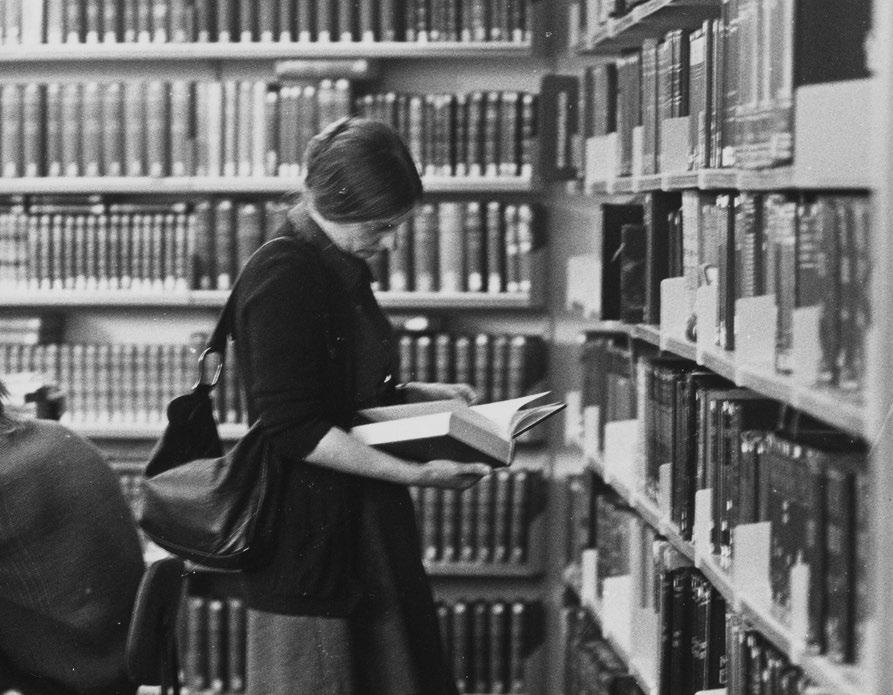
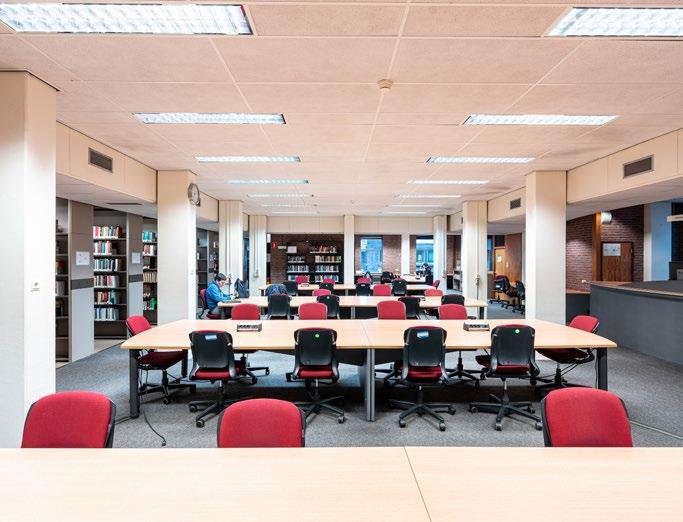
The brutalist hunk of stone on Koningsplein has divided opinion ever since it was built in the 1960s. Generations of students have passed through its revolving doors. Tens of thousands of exams have been prepared there, and count less more cups of vending‑machine coffee consumed. There was sighing, groaning, swearing and flirting (the Facebook dating page “Spotted in the UL” was even a short‑lived hit).
Now the reading rooms stand empty, the bikes out front are gone, the revolving doors are closed for good. Goodbye, old University Library – it still feels strange that you are gone.
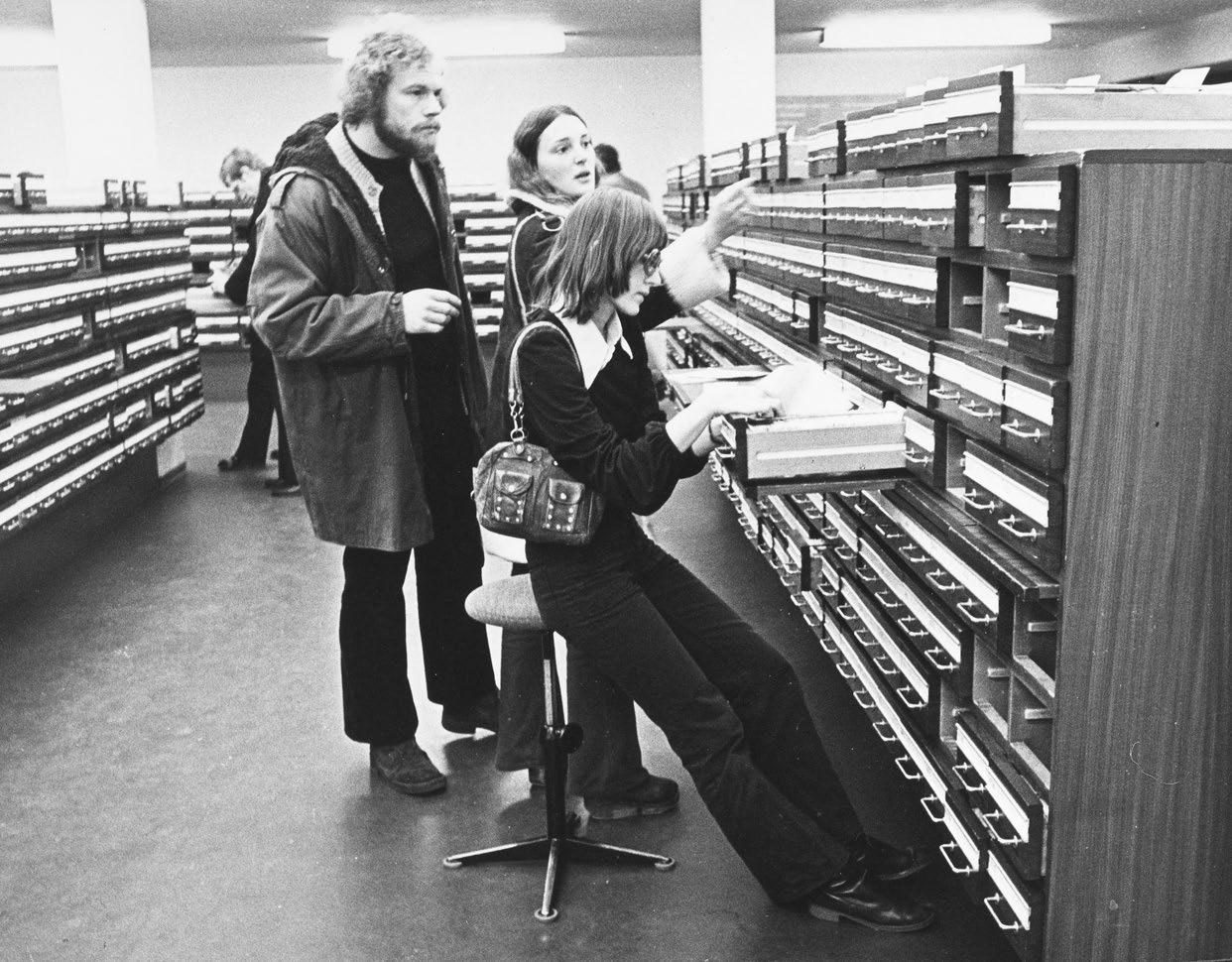
Searching in the Central Catalogue, 1970s
Canteen, 1970s
L LOVE IN TIMES OF study stress
No mood lighting, but laptop screens. No background music or clinking glasses, but the soft tapping of keyboards and the rustling of paper. Silence is required and if your phone rings, you risk receiving irritated looks of your fellow students. At first glance, the library may not seem like the most romantic place for a date.
Yet, that is exactly where this love story begins. It is pin‑drop quiet and all the study places around me are taken. Students are slogging their way through reading lists, exam materials and writing assignments. Next to me, so close that our elbows almost touch, sits the Law student I sent the following message to on WhatsApp 32 minutes earlier:
Hey! How are you?
Are you, by any chance, studying somewhere today?
I find him bent over his reading. When he sees me, he points to the spot next to him that he has kept free for me.
As I take off my coat, and put my own laptop and papers on the table, I try to start a conversation as quietly as
possible. I ask him how he is, what he is working on, and whether he might like a cup of coffee from one of the vending machines.
He answers my questions with a broad smile. He is doing well, he whispers back. He is working on his Bachelor’s thesis and no, he does not want any coffee.
I do not dare ask anything more, because everyone here can listen in on every single word. So now I am sitting next to him, doing my best to formulate a research question for my own thesis. How focused he is on his work. How lovely that he kept this spot free for me.
Has he always had those beautiful black‑framed glasses?
Just over six months earlier, in the summer of 2018, he and I met through a mutual friend. But at that point he was making plans to spend a semester studying in Birmingham. I had just returned from
my own exchange in New York and was still nursing a broken heart over someone I had met there. Fortunately, Amsterdam is a village. We ran into each other again, this time in February. I was now in the final semester of my Bachelor’s in Political Science and was taking a thesis seminar in the basement at Roeterseiland.
During the break I walked up the stairs into the ABC hall, heading towards the kiosk. There was a group of students chatting. One of them caught my eye in particular. My first thought: What a lovely guy. And a few seconds later: Hey, I know him! Nervously, I moved closer and when our eyes met, I immediately felt butterflies in my stomach. A few days later, I sent him the WhatsApp message.
For two introverted, shy twenty‑somethings, the library was the perfect place for a first date. We met up again, and again. Later, we dared to make the setting a bit more romantic and moved to the library in P.C. Hoofthuis. Right at the top, in a corner on the north side, there was a table with exactly two study places. We spent hours there, sitting side by side at that table, working on our Bachelor’s theses, surrounded only by the Humanities Book Collection.
That autumn, we attended each other’s graduation ceremonies. He helped me with my application for my dual Master’s, and I helped him think through an alter native plan when part of his degree programme fell through because of the pandemic. The study sessions continued, at his place or at mine. During the lock downs we watched movies together over FaceTime. We moved in together, and decided to get engaged. In two months’ time, we will celebrate our daughter’s second birthday.
“Our” old library no longer exists. But students are still slogging their way in silence through hundreds and hundreds of pages of academic literature. And there are still students who keep a seat free next to them, for the person who has just sent a message:
Are you, by any chance, studying somewhere today?
MELISA CAN
(1995) completed the Master’s in Journalism at the UvA and has worked for VICE, De Volkskrant and NOS. She made the documentary Momentum (2Doc) about women in politics and is social media coordinator at the UvA.
IF... WHAT IF... WHAT IF... WHAT IF... WHAT IF... WHAT
WHAT IF... WHAT IF... WHAT WHAT IF... WHAT IF... WHAT
TB
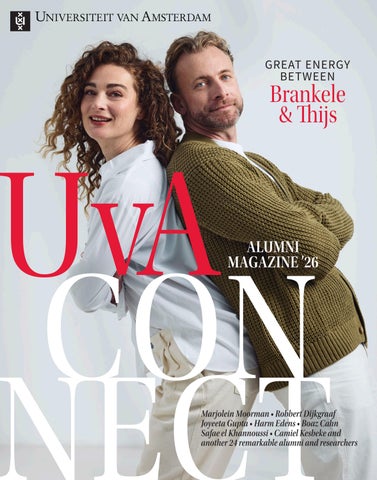
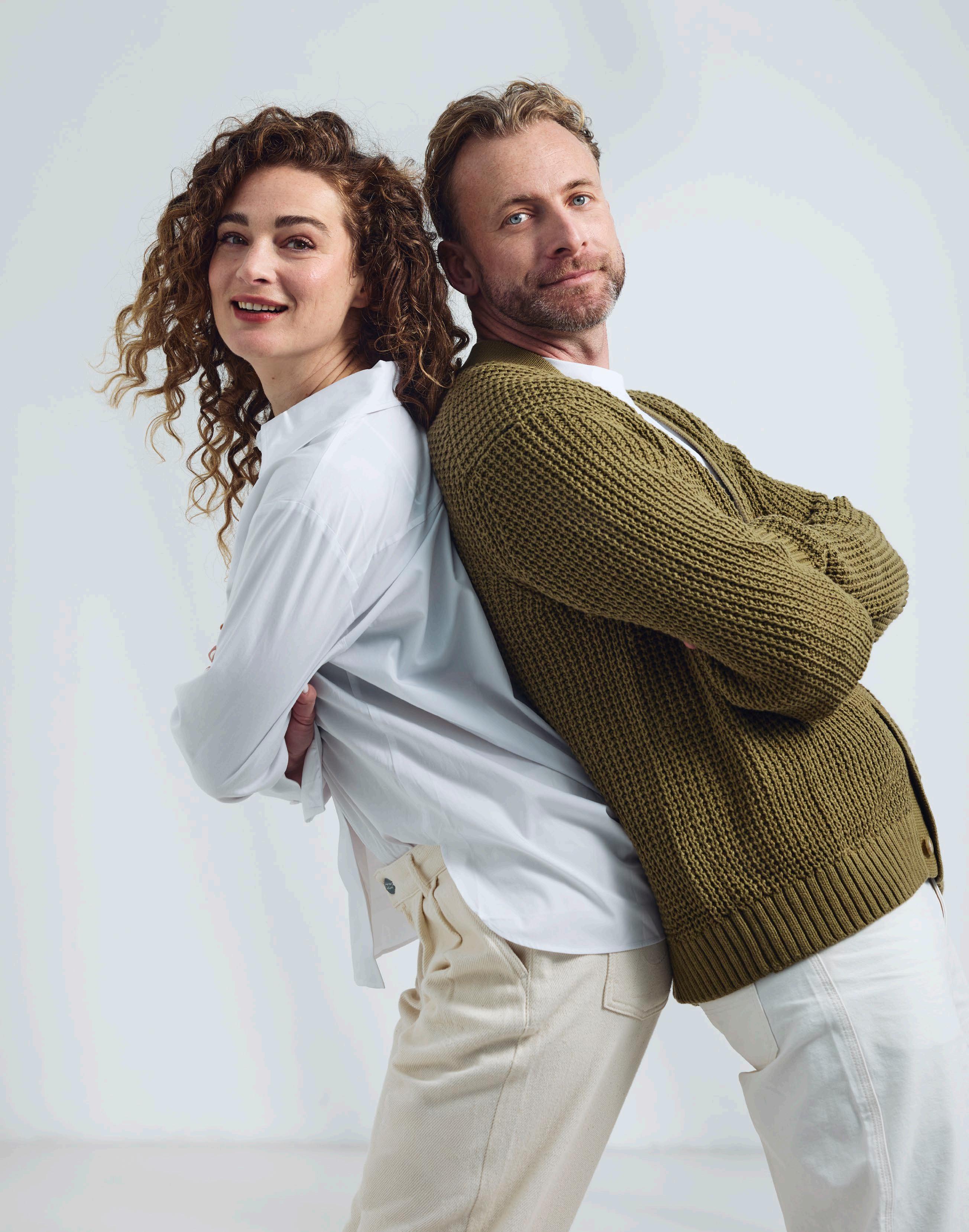
Thijs & Brankele
At the UvA, they walked straight past each other. Now they take to the stage together with their “mental MOT”. A peek under the bonnet with BRANKELE FRANK & THIJS LAUNSPACH.
BTHIJS: Brankele’s superpower? Puns.
And she has the precision and sharp mind to really get a firm grip on how things work.
BRANKELE: Thanks! I think your superpo wer is that you’re very steady – much steadier than I am. You stay calm, even when the pressure is on. Which, by the way, is also very irritating sometimes. I will have an idea that I am completely excited about, and then you react like: “Hmm, okay… we could try that, yes.” Haha, very recognisable. I am more even‑tempered than you.
Exactly. I have had two burn‑outs – the second one while I was writing a book about the first. You have never reached that point, have you? When was the last time you were on the edge of exhaustion?
Me? I don’t think I ever have been. You?
Um… a month ago? Ever since the final of De Slimste Mens, it has been totally crazy.
The first three days I was flooded with thousands of messages; my inbox exploded, LinkedIn, my Instagram,
WhatsApps… Messages, talk shows that wanted me, interviews, SBS6‑type things I turned down. And then there were all the romantic declarations of love.
Seriously?
Yes, I really had not seen that coming at all! Some of those emails were so long – and from really funny, nice people too.
How did you feel about that?
Look, I am single, so in principle… I am pretty open to it. But I didn’t have any time to sit down and read all of that properly. And I also thought: how on earth am I supposed to judge whether you are actually a nice person? And now I honestly don’t know where all those messages have gone. I just remember there was one pretty nice one. Which I had absolutely no time for at that moment.
And now it is gone.
Exactly. That is my tip if you like someone who sudden ly becomes well‑known: wait for about three weeks. Otherwise, your message just ends up in the same big pile as all the others.
How is the craziness now?
BRANKELE: Well, after about three weeks the interview requests started to tail off and I thought: so this is television – it is over again just as quickly. But then the invitations for lectures and hosting events started coming in, programme makers who wanted to work with me… All super fun, but also bizarrely busy. And in the meantime, I am supposed to be writing a new book. But whenever I block out an hour for that, it is already full again.
What if we took MENTAL HEALTH really seriously?
An hour doesn’t really help for a book, does it? What do you do when it all gets too much? What is your go‑to life hack when you’re stressed?
By now I know I really have to pull the plug when that happens. Last month I cleared my diary and went to Spain for a week. A kind of retreat: doing absolutely nothing, just resting. This time I managed to catch it in time, because once you’ve gone over the edge, even recharging like that doesn’t work any more. That is something I have learned from those two burn‑outs.
BRANKELE: Okay, enough about me. Let’s talk about you for a change, Thijs. We were studying at the UvA at the same time, but we never met then. First tell me: what kind of student were you?
THIJS: Hmm, good question… I wasn’t a typical student. In those years I was very much in “home‑sweet‑home” mode in Haarlem, where I lived with my then girlfriend. I was already doing other things at quite a young age: politically active, tan‑ gentially involved in the student protests, and I always worked alongside my studies.
I definitely wasn’t that full‑time student living the Amsterdam student life. Looking back, I do slightly regret that. What about you – did you have a proper student life?
Oh yes. In my second year I started working at the art‑house cinema Kriterion, and from that moment on my life became one big party. Board evenings, evening bar shifts, hanging around with colleagues afterwards and then watching films in the cinema rooms in the middle of the night… I actually found my own fellow students a bit dull compared
“My
idea of studying: GRAND AND SWEEPING.”
to that crowd. Grand and sweeping, philosop hical discussions deep into the night – that was my idea of studying. In the year between my Bachelor’s and my Master’s I also spent a year studying all sorts of things: History, Hebrew, Philosophy. I thought: otherwise I will turn into one of those closed‑off academi cs who know absolutely nothing beyond their own field.
I recognise that. For me, that was a reason to start working straight away, to develop in ways that didn’t come up in my degree. I had a huge urge to be useful and to start doing things in the world.
Are you a world‑improver?
Yes, there is definitely a bit of an activist in me. Knowledge for knowledge’s sake doesn’t mean that much to me – I want to apply that knowledge. I think: if you can do something, or you know something, then you are moral‑ ly obliged to do something with it. It is not for nothing that I come from the left‑wing activist movement.
Does that also mean: putting the message across forcefully, even if it is at the expense of methodological purity?
I can see you smiling.
Do you think that’s what I do?
Well, with Smartphonevrij Opgroeien you got a lot of attention and a lot of support, but you also received that criticism.
I definitely have haters, yes. Maybe because I
like switching between my activist hat and my science‑communication hat. I do always try to be clear about where the scientific uncertainty still lies. My view is: if there are indications that social media or smartphones are not good for children, then you shouldn’t wait until that link has been proven beyond all doubt. Then I say: let’s be extremely careful and play it safe. And by the way, it is perfectly valid to listen to parents in this context. To doctors who are worried, and psychologists, and psychiatrists who see the effects on children and young people in their daily practice.
Imagine: tomorrow you become the new Minister for Mental Health. What is the first thing you would do?
One: introduce an age limit for social media, following the Australian model. Two: invest in prevention, in community centres, in youth centres. Ideally, I would also immediately become Minister for Education, to make sure we have a continuous learning pathway for mental resilience. From primary school through to secondary school. Learning to work together, communicate your needs, set boundaries, seek and offer support.
What about you – what would you do?
That, exactly. Make emotion‑education compulsory in primary school. If children learn from an early age what emotions are, how they feel, what your body needs, what logical reactions are and which behaviours are acceptable… If children develop bodily awareness and emotional intelligence early on, that would be a huge step forward for our mental health. Also, for conflict resolution, and for the way we form relationships with one another.
Good point. There is currently a kind of awkwardness about helping each other when things aren not going well. That explains a large part of the demand for professional help, I am convinced of that. We have forgotten how to live together.
Agreed. And I also think our view has become blurred when it comes to what belongs to the “normal” emotio nal spectrum and what is pathological. I think there are
THIJS & BRANKELE
BRANKELE FRANK (1987) studied, among other things, Psychobiology at the UvA (2005–2009) and went on to do a Master’s degrees in Neurobiology in London and Paris. She became known
nationwide as the winner of De Slimste Mens and is a columnist, speaker, writer and podcast‑maker (Let’s Go Mental).
THIJS LAUNSPACH (1988) is a speaker, trainer, columnist and bestselling uthor of, among others, Smartphonevrij Opgroeien and Fokking druk. He studied Clinical Psychology (2006–2011) and worked for several years as a tutor at the UvA.
Together, Brankele and Thijs regularly appear at events and festivals with their “MENTALE APK” mental check‑up, a day programme focused on mental health.
a lot of people who believe they are ill, when in fact they simply don’t feel good –which is not the same thing.
About that book, then. You can give us a little teaser, right?
Oh yes, the book. It is going to be a thin king‑and‑doing book about the sense and nonsense of “overstimulation”: a collecti on to which you have also contributed an article. Does overstimulation actually exist? Can you see it in the brain, or is it just a buzzword? Does everyone need to “destimulate”; how does it all work? It is going to be really great. And I won’t say too much more about it, because it is not finished yet.
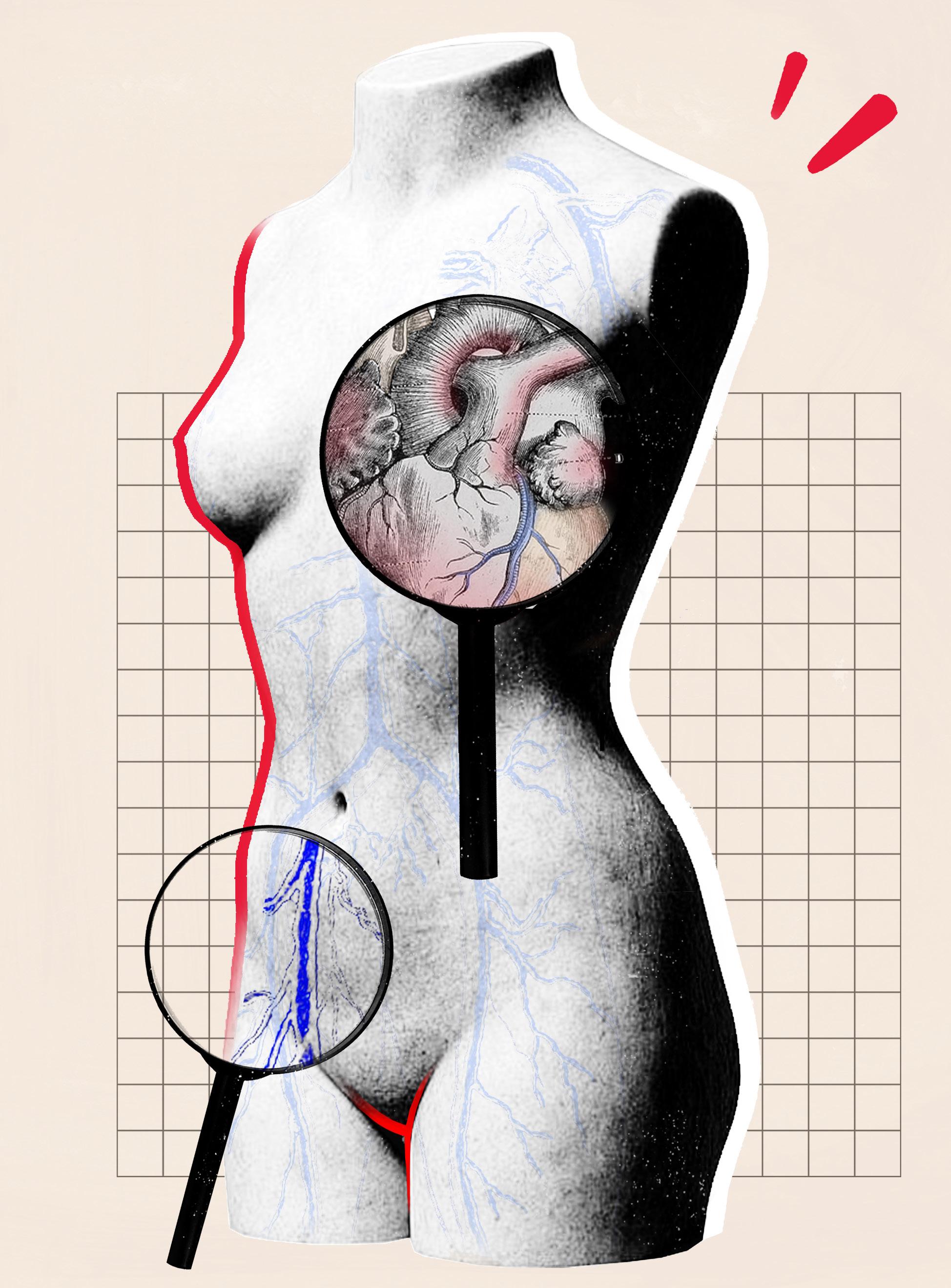
WOMEN ARE STILL GETTING SCREWED
“Error, I am not familiar with that procedure,” says the futuristic surgical robot when protagonist Elizabeth Shaw in the film Prometheus begs for a caesarean section to rid her of the malevolent octopus inside her abdomen.
“I am calibrated only for male patients.”
‘’Who comes up with something like this?’’, American scholar Cat Bohannon wonders as she watches the horror film in a New York cinema in 2012. “You spend a couple of trillion on an interstellar expedition and forget to ensure the equipment on board also works on women.”
Until she realises that, here on earth, in our present day and age, things are not organised all that much better.
Little wonder that her 2024 book Eve – in which she explores what the evolution of the female body tells us about who we are – opens with this scene. What follows
is a “retelling of human evolution” that culminates in a passionate plea for a healthcare system that takes women seriously – including when it comes to accessible contraception and the right to abortion.
Worldwide – including in the Netherlands – there is still a clear health gap between men and women: women receive poorer care. A small selection from the many examples: heart attacks in women are overlooked twice as often because they present with different symptoms. Women receive diagnoses such as autism or ADHD much later than men. Pain complaints are frequently dismissed or psychologised,
which means it takes an average of seven years before a woman receives a diagnosis such as endometriosis. GPs also choose follow‑up tests, such as ultrasounds, X‑rays or referrals to specialists more often for male patients. On top of that, women experience more side‑effects during treatment, because the female body responds differently to medicines than the male body. And yet it took until 2025 before the first National Strategy on Women’s Health was launched – after years of lobbying and demonstrations by women in “penis suits”, drawing attention to the fact that “women are the ones getting screwed when it comes to health”. The strategy aims to tackle the structural shortfalls in knowledge, research and care around female‑specific conditions.
How could this blind spot persist for so long? According to two female historians from Groningen, “the equality paradox” is one of the culprits: because feminists and the women’s movements pushed so strongly for equali ty between men and women, they themselves share responsibility for the neglect of the female body in medical science. It is, they argue, high time to nuance the “tirades against the patriarchy”.
This is a striking case of self blaming, because this neglect goes back a bit further than the second feminist wave.
As far back as ancient Greece, the male body was the ideal; women were seen as nothing more than defective men. Combined with the Christian idea that woman was created merely from one of Adam’s ribs, this paved the way for man as the golden standard in medical science (in the 16th century, the Flemish physician Vesalius even described women’s ovaries as “the testicles of the woman”).
On top of this, knowledge about the male body was simply easier to acquire. One need only look at Rembrandt’s intriguing painting The Anatomy Lesson to see the core of the problem. In the deeply religious 17th
century, public dissections of corpses were permitted once a year under the pious motto memento mori – provided they involved a convicted criminal. And those were usually men, writes Femke van Heun of advocacy organisation WOMEN Inc. in Diagnose: vrouw.
For male doctors, it was also long considered improper to examine naked women. As a result, knowledge of the female body fell dramatically behind. That it took until the 21st century for medical research to stop focusing almost exclusively on men, also has to do with entrenched research practices that favour the simplest possible experiments. In that light, it was convenient to leave the female body – with its fluctuating hormone levels, menstrual cycle and potential pregnancies – out of the picture: mere background noise.
UVA FUND
The UvA Fund makes a wide range of research and initiatives possible, including Machteld Boonstra’s study of women’s hearts. Want to explore this topic further? Listen to the podcast WAT ALS WE BETER LUISTEREN NAAR HET VROUWENLICHAAM? (“What if we really listened to the female body?”), in which journalist Doortje Smithuijsen discusses the issue with Machteld Boonstra, Rebecca Gomperts and Belle Barbé.
Between 1996 and 2006, for example, still 79% of of all studies published in the scientific journal Pain were still conducted exclusively on men, Bohannon notes in Eve. Similarly, medicines were long tested only on men (and male mice!). Women therefore received medication that had been tested only on men. Yet precisely because of sex hormones and differences in organ function, drugs behave differently in female bodies – or sometimes do not work at all.
This centuries‑long backlog is not easily erased, as also became clear during the UvA Alumni Week last October. In a live podcast on the female body, Machteld Boonstra, a technical physician at Amsterdam UMC, spoke about her research on the hearts of pregnant women, which is made possible by an UvA Fund Start Grant. Because pregnant women have been excluded from medical research for so long, it is often unclear whether particular complaints, such as pain and shortness of breath, are simply part of preg nancy, or signs of heart failure. Pregnancy places the heart under considerable strain: more blood has to be pumped around the body and the heart shifts upwards to make room for the foetus. In effect, pregnancy functi ons as a natural stress test for the heart and may well reveal hidden heart disease at an early stage.
UvA alumnus Rebecca Gomperts – known from Women on Waves and the “abortion boat” – is likewise contributing, through new research, to better gender‑ specific healthcare. In a crowdfunded study, she is testing a new type of non‑hormonal contraceptive pill with fewer side‑effects. “In the past seventy years, not a single new pill has come onto the market, even though we know women are crying out for it because of side‑ effects such as increased risk of breast cancer, thrombo sis and loss of libido,” she explains over the phone (you can still take part in her study via womenandmore.org). The new pill will also blur the distinction between regu lar contraception and the morning‑after pill. According
DAPHNE VAN PAASSEN
Daphne van Paassen (1969) is a freelance journalist and studied Dutch at the UvA. She writes for, among others, De Groene Amsterdammer and De Volkskrant, and teaches at Fontys School of Journalism.
to Gomperts, that is no luxury in an age of increasingly autocratic regimes. “In those kinds of societies, the rights of women and minorities are always the first to be sacrificed – and with them the right to abortion and access to contraception.” Many universities are now working to close the care gap through a range of studies, from research into the effects of cancer treatments on women, to studies on the menopause. That does not mean the job is done: this scientific knowledge also has to find its way to doctors and other care providers, so they do not, like the futuristic surgical robot, end up saying “njet”.
This matters not only for women themselves, but also for society as a whole. WOMEN Inc. has calculated that closing this gap would save the community some €7.6 billion a year in sick‑leave and health care costs.
COULD THERE BE ANOTHER WAY?
Keeping pace with a performance‑driven society demands a lot from us – and from our children. What if we consciously chose a different approach? Three alumni share their ideas.
What if we looked at success differently?
ADVERTISING CREATIVE BAS WELLING
“The business was doing well: we were flying around the world, making cool stuff, earning enough. And yet we found ourselves asking: what are we actually doing? The world is on fire, and 80% of advertising in the Nether lands is made for bad brands. Our company was no exception. Colleagues were having children and worrying about their future. That no longer matched the work we were doing. What we’re good at is getting people to talk about something. It turned out that this approach also works if you want to change something in society. So we decided: let’s use the toolkit of the advertising world to make the Netherlands a bit fairer, more sustainable, safer and healthier. That shift also changed how we see success. It is no longer just about money, but about actually making a differen ce in society. Of course we are not going to solve an entire social problem with a single campaign. But we can do our bit.”
Bas Welling studied Economics & Business at the UvA (graduated in 2009) and started his entrepreneurial career while still a student. He is co‑founder and CEO of creative agency We Agency and production company Wefilm, and made a radical switch towards social impact. He has created powerful campaigns for major brands such as Interpolis (“Smoorverliefd” with Snelle) and VRT (“Er zijn geen excuses” with Tom Waes), as well as for organisations like VluchtelingenWerk, Milieu Centraal and #artsenslaanalarm.
What if we dared to say no again?
PARENTING EXPERT KINA SMIT
“We live in a success‑oriented society. Very results‑driven. A child is a project that has to ‘succeed’. We want our child to be happy. We are also in a hurry with life. We cram child ren’s lives full of sport, music lessons, clubs. And then we showcase all of it on social media. Because everything has to be fun. At the same time, parents are more than ever in dialogue with their children. We ask: what would you like to eat, who would you like to play with? We want children to have a say in everything. While we are finding it harder and harder to say no. Before 2000, parents were clearer – also be cause there was simply less choice. Things were fixed: this is what we are eating, this is where we buy clothes, this is the present you’re getting. Now a children’s party means choosing from thirty different attractions. There is an abundance of everything. In the past it was just eating biscuits on a string and sack races – and they loved it. It was clear and straightforward. I am in favour of bringing back that simplicity. And of setting boundaries. Children will end up happier that way – which is what we want so badly in the first place!”
Kina Smit graduated as an orthopedago gue from the UvA in 2004. She runs her own practice and also works as a speaker and author. In her book Opvoeden hoeft niet zo perfect (“Parenting Doesn’t Have to Be Perfect”), she writes about the dilemmas of modern parenthood.
What if parents learn to hold back?
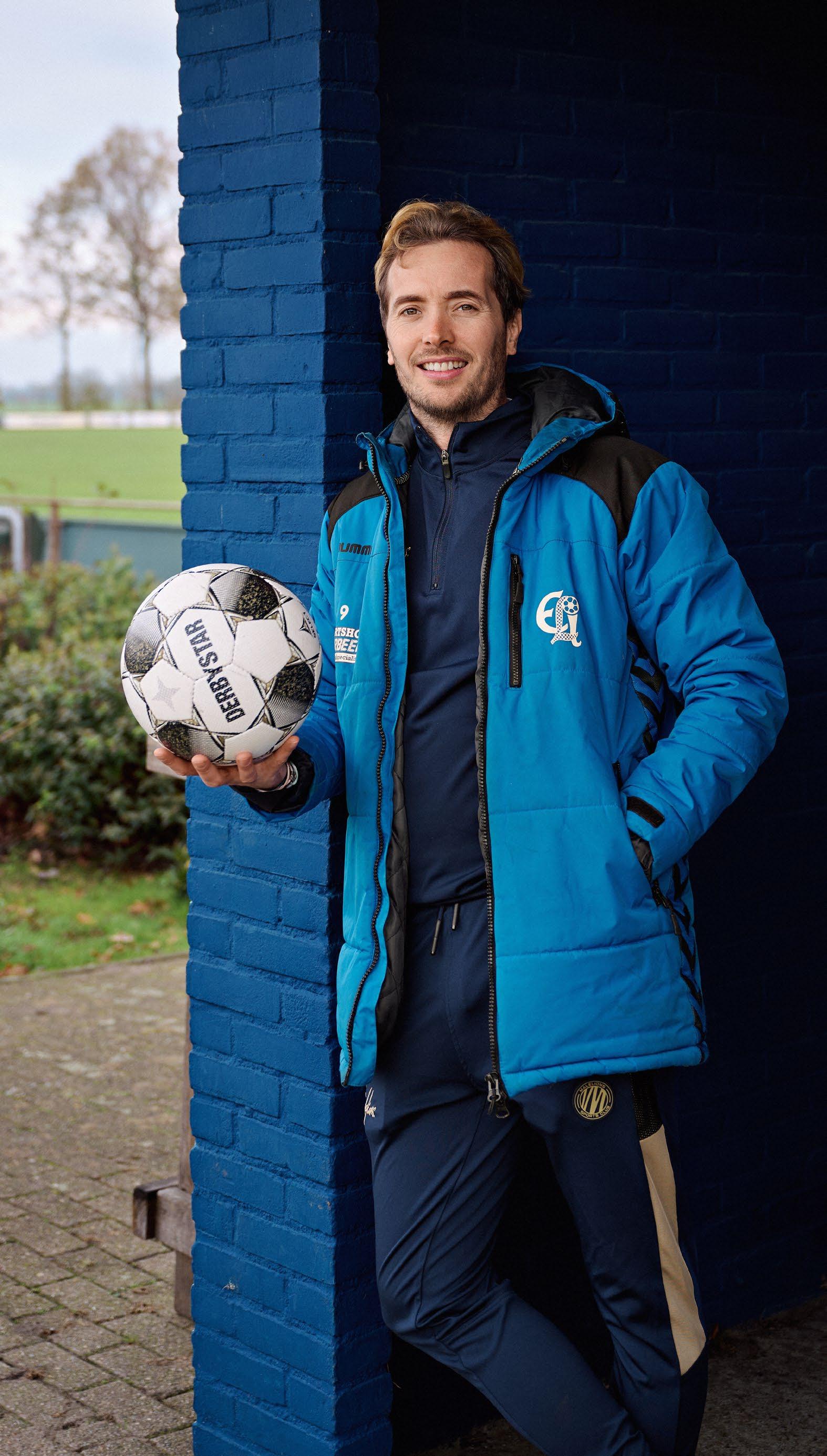
SPORTS COACH MAURO DE LOOIJ
“Almost all children love playing games and want to join in. Some of them also want to perform. By playing football together, children learn a lot about society. Working together, having fun, creating success, dealing with disap pointment. As long as we leave that to the children, things go well. But the adults around the pitch are often the problem. They attach consequences to every match. If the team doesn’t win, or is behind, many parents – and some times coaches – become very emotional and very loud. Children are given the wrong example. They also hear conflic ting instructions from parents and from the coach. And that doesn’t help them. Once I did an exercise where I asked the players to write down what they did and didn’t like about their mums and dads on the sidelines. I shared the results with the parents. It was very confronting for them. But it worked.”
Mauro de Looij is a sport and performance psychologist and former youth coach at PSV and Willem II. He completed the Master’s in Sport and Performance Psychology at the UvA in 2013. In his books De trainer maakt het verschil and Het veld op, he offers tips to coaches on how they can help make children’s time on the football pitch both fun and a valuable learning experience.
THERE IS ONLY ONE EARTH Climate justice
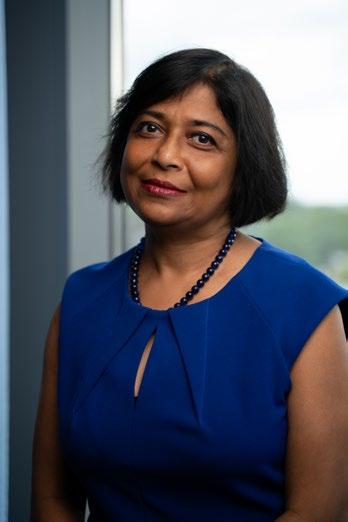
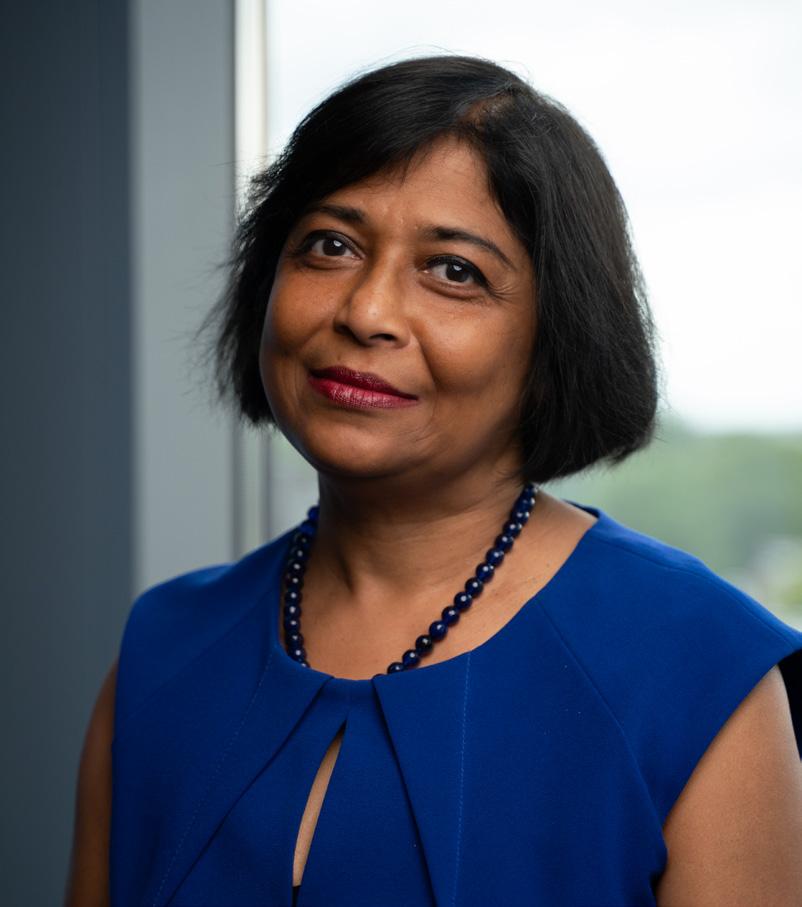
Thinking on a global scale, sharing fairly and taking decisive legal action: only then can we limit climate damage, argues leading scholar JOYEETA GUPTA . What if we had a global constitution?
She was one of the first to write about climate justice. At the time, she was told she was “too normative”. By now, Joyeeta
Gupta’s ideas on justice are internationally recognised, she is a professor at the UvA and, together with the IPCC team, she received the Nobel Peace Prize in 2007.
In 2023, Gupta added the Spinoza Prize to her list of honours.
After winning the Spinoza Prize, she did not hesitate for a moment about what to do with the €1.5 million in prize money: work on a global constitution.
Why is she doing this, and what drives her?
“After I criticised the government’s Covid policy, then‑minister Sigrid Kaag called me: ‘So how should it be done?’ That got me thinking. It isn’t enough to offer criticism; you need a concrete plan.”
This led, in 2024, to The Global Constitution Project, a broad‑based effort to fight for a just, global approach. Wherever she can, Gupta tries to spread her message and mobilise people.
Unequally distributed
“Worldwide, a quarter of all deaths are due to the effects of environmental pollution. Toxic substances threaten health and safety. The powerful fossil‑fuel industry is driving catastrophic warming. And precise ly the people and countries that have contributed least to climate damage – especially in poorer regions in the Global South – are being hit the hardest.”
Yet this is barely taken into account in climate policy. A natural‑science‑driven approach, in which we mainly focus on emission figures and temperatures, dominates.
“But climate, economics, justice, technology and health are not separate from one another. We can only tackle these problems if we dare to see how they are interconnected,” Gupta argues passionately.
JOYEETA GUPTA
(1964) is Professor of Environment and Development in the Global South and has led various major UN processes and research projects on climate, water and development.
“GLOBAL PROBLEMS demand solutions that also transcend borders.”
In 2023 she received the Spinoza Prize from NWO, often called “the Dutch Nobel Prize” – the highest academic distinction in the Netherlands. She previously served as a lead author for the IPCC, which was awarded the Nobel Peace Prize in 2007.
With The Global Constitution Project, Gupta aims to bring together researchers, partner organisations and citizens worldwide. More information: globalconstitution.org.
One constitution above national interests
National‑level actions and solutions are simply not enough to tackle global problems effectively.
“The consequences of climate change do not stop at borders. Air pollution drifts across continents, water scarcity and flooding affect entire regions, and economic decisions in one country have direct effects in another. Problems that are so intertwined and transnational, demand solutions that are transnational too.”
This is easier said than done. How do you bring the whole world together behind effective climate policy?
The Global Constitution Project is an important star ting point. With this project, Gupta advocates a holis tic approach that draws on ideas from science, law, the arts, activism and everyday lived experience. The aim is a globally supported constitution that reflects the world’s diversity and stands above narrow natio nal interests. It is about responsibility for the earth and everyone who lives on it, now and in the future.
Ready for systemic change
A global constitution may sound ambitious, but the momentum is there. Courts are intervening more often in climate cases; cities are joining forces because they face similar problems; and citizens’ initiatives are reaching across borders. This is precisely why such a document is needed, Gupta believes: as input for policymakers, as a source of inspiration for activists and as a framework for future agreements.
Change, she argues, often comes faster than we think. A clear plan at the right moment can make all the difference: a plan in which clearly formulated shared principles, rights and responsibilities provide a real basis for action. That is what The Global Constitution Project is about.
Taking action
“I am a scientist, but I am also a citizen,” says Joyeeta Gupta. “And as a citizen, I want to change things in society. I use my scientific work to convince people that there is a problem – wherever I can. The CEOs and politicians I speak to all say: ‘What you want to achieve with your project is beyond my mandate.’ And then I tell them: that may be true for your professional mandate. But in your role as a citizen, you can take action. And we really do have to act.” What helps – and what is urgently needed – are powerful alternative narratives: new horizons that show that a just, safe and fossil‑free future is not only possible, but also desirable. The Global Constitution Project therefore calls not only on lawyers and researchers, but also on concerned citizens and artists to contribute their ideas. With one central question at the heart of it: What kind of world do you want to live in?
Challenge yourself. Dare to keep learning.
Societal and technological developments are evolving rapidly. This calls for new insights and requires you to adapt. Within our degree programmes and training courses for professionals, you’ll find the in-depth or broadening knowledge that suits you. By combining up-to-date academic insights with practical experience, you stay ahead in your field and gain a fresh perspective on your organisation and sector.
Starting soon
• AI Foundation Models - 12 March 2026
• Conflict Management - 30 March 2026
• Cultural Change in Organisations - 18 March 2026
• Branding in transitie - 7 April 2026
• Business Negotiation - 15 April 2026
• Financial Management for Non-Financial Managers - 20 May 2026
More information: uva.nl/professionals
From zombie fungi to deadly space debris: Hollywood thrives on doomsday stories. Far‑fetched or real danger? These researchers know the answer –and are working out how we can face such threats. What if we could save the world? ?
CAN THIS REALLY HAPPEN
WANT TO KNOW MORE?
Listen to episode 17 of the podcast series Net Echt. Available on all major podcast apps or via uva.nl/ netecht.
CAN WE PREVENT A METEORITE IMPACT?
Sixty‑six million years ago, the dinosaurs died out after a meteorite impact. Could something like that happen again? And is there anything we can do about a meteorite on a collision course?
Astronomer Carsten Dominik starts with the bad news: “The expectation is that a major meteorite impact occurs roughly once every 100 million years. So statistically speaking, it could happen tomorrow.” Meteorites are remnants from the formation of the solar system; from time to time they pass so close to Earth that they actually hit the surface. And such an impact can have disas trous consequences – just look at the dinosaurs.
Predicting impacts
Fortunately, astronomers are working hard to map all the meteorites in the solar system. “We can try to predict the orbit of a meteorite and investigate whether any of them might be dangerous.” But what if all the calculations show that a large meteorite is heading our way? Are we then doomed to suffer the same fate as the dino saurs?
Saving the Earth
It wouldn’t necessarily come to that, Dominik explains: groundbreaking research is underway into how to prevent a meteorite impact. If you can predict such an event decades in advance, you can try to act. “For example, by crashing ano ther object into the meteorite so that it is knoc ked out of its orbit. That could save the earth.”
The Barringer Crater in Arizona, almost 1,300 metres wide, was formed by a meteorite impact.
WANT TO KNOW MORE?
Listen to episode 21 of the podcast series Net Echt. Available on all major podcast apps or via uva.nl/ netecht.
CAN WE GET CRIME UNDER CONTROL?
No film has shaped our image of the under‑ world as much as The Godfather. Reality is no less suffocating, says Professor of Crimi nal Law Sven Brinkhoff. Anyone who thinks of the Netherlands as a neat, well‑tended little country is mistaken, Brinkhoff says:
“The Netherlands has a wide‑ranging organi sed‑crime sector. Because of its infrastructure and trading history, it is a highly attractive country; there are numerous criminal pathways for the transit and production of drugs, for example. We know that internationally, the Netherlands plays a major role in this.”
Encryption cracked
On the other hand, the Netherlands is also at the forefront when it comes to investigation and en forcement. “For instance, by cracking encrypted communication channels. That has given the po lice a very clear picture of how things work in that criminal environment.” Brinkhoff’s own research focuses mainly on infiltration in the underworld and the ethical limits of investigative methods. “The use of crown witnesses and civilian infiltra tors involves all kinds of dilemmas – and literal danger to life. But with a heavy heart, I have to say we probably can’t avoid it.”
Keeping the streets quiet
In The Godfather he recognises “the oppressive atmosphere” of criminal networks that are very hard to escape. The threat of contract killings and revenge attacks is all too real. One small consola tion: organised crime benefits from calm on the streets. “Peace and quiet in terms of violence means that trade flourishes – whatever kind of trade that may be.”
Right: criminals make good money from Dutch crystal meth.
SHOULD WE BE AFRAID OF FUNGI?
Anyone who has watched the series The Last of Us knows the story of the fungus that turns people into zombies. Pure fiction, of course – a parasitic fungus like that. Or is it?
According to microbiologist Auke de Jong, the truth is a little more nuanced. “The fear in the series does not come entirely out of nowhere. In nature there really is a fungus – Ophiocor dyceps – that infects insects and can literally control them.” Infected ants climb up into a tree while a mushroom grows out of their heads. “High up in the tree, the fungus can then spread more easily.”
Climate change
Thankfully for us, this “zombie fungus” cannot infect humans. But de Jong does warn that climate change is giving fungi new opportunities. “As the climate gets warmer, some tropical fungal species are already slowly moving towards Europe. And among them could be dangerous species that we don’t yet know.”
Emerging fungal species
Take Candida auris, a fungal species discovered only in 2009 which is now spreading rapidly across the globe. This fungus can become resistant to almost all available medicines. It does not turn people into zombies – but it is a serious problem in hospitals. “Fungal infections can be particu larly dangerous for patients with a weak immune system,” de Jong explains.
FACT OR FICTION?
In the podcast Net Echt, UvA researchers put films, television series and pop culture to the test of science. You can listen via all major podcast apps or at uva.nl/netecht.
The fungus Candida auris is advancing worldwide, as expert Auke de Jong explains in episode 18 of the podcast series.
YOU CAN’T DO THAT!
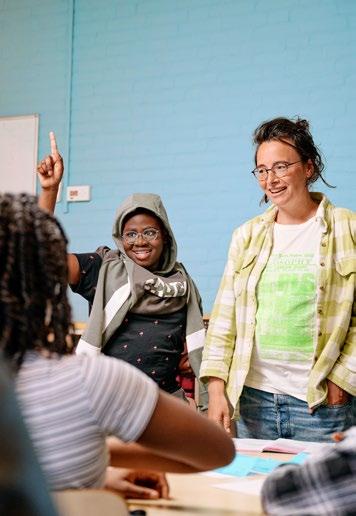
He’s halfway into his jumper, one arm still searching for a sleeve — but his finger is already in the air. This matters. That man should never have put Sofie’s photo in his shop window
— of that he is certain. And Miss Judith needs to know that right now.
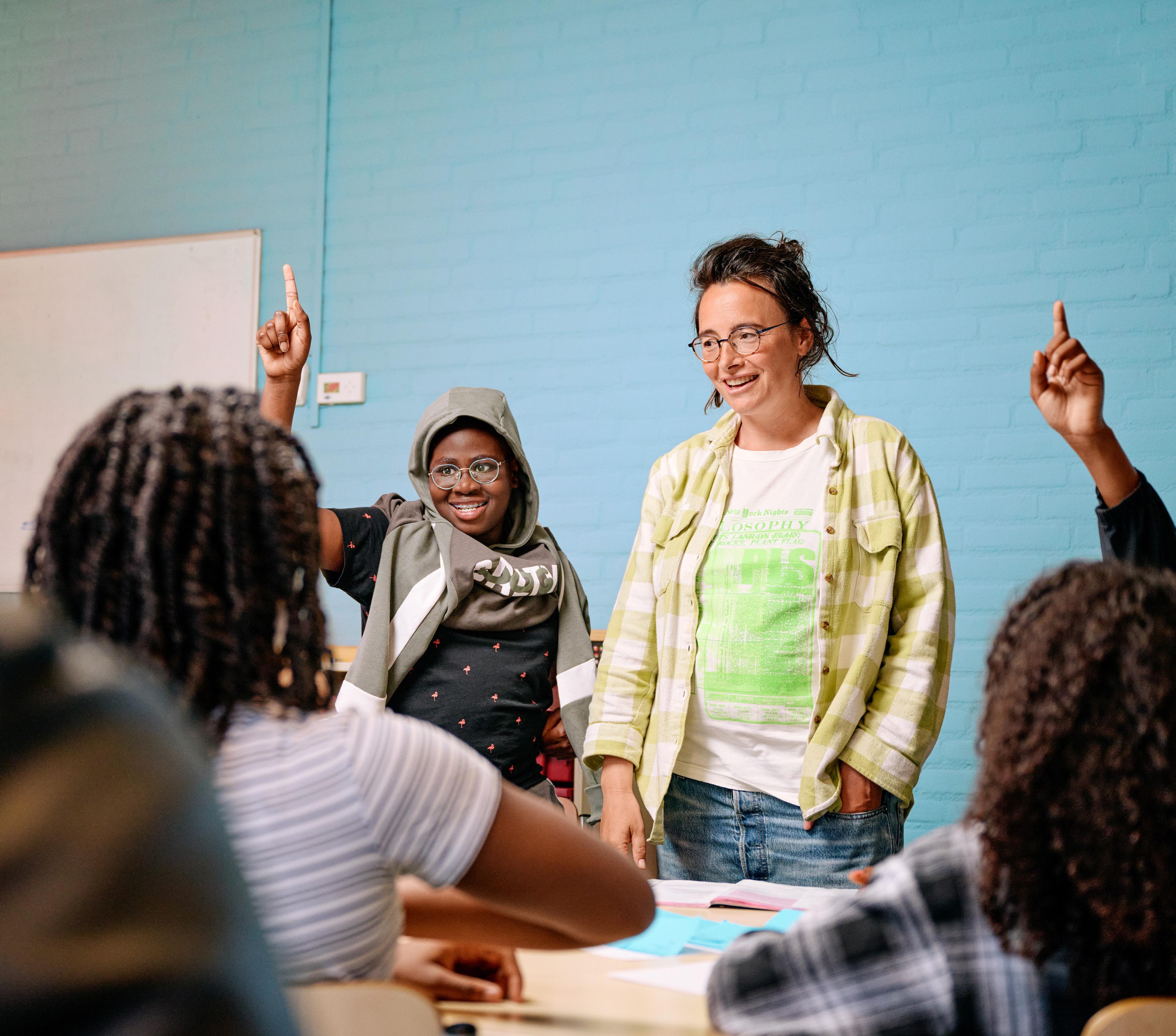
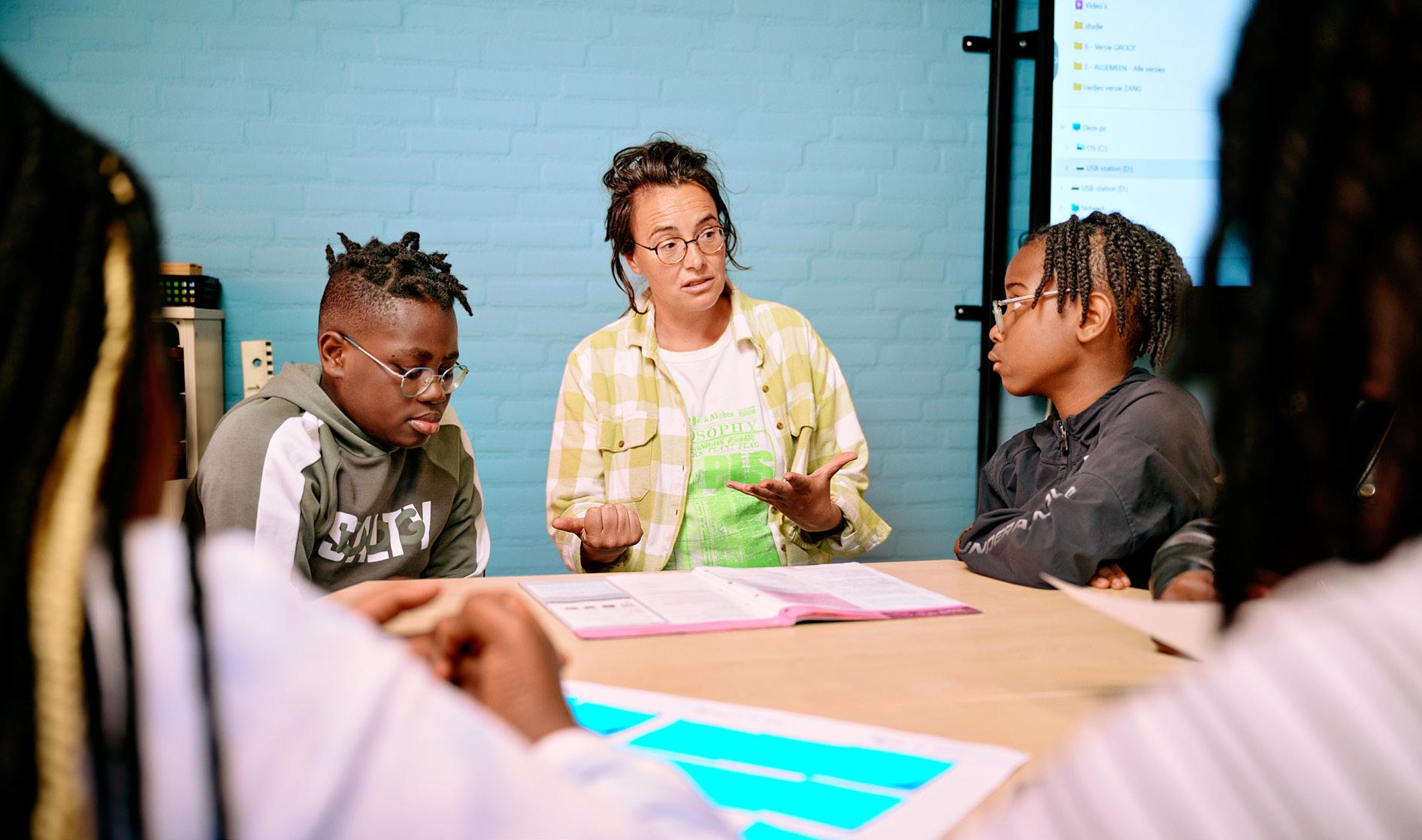
Welcome to Law in the Classroom.
In Law in the Classroom, primary school children learn that the law is not just for grown-ups in suits — it is about them too. About what is fair. What is allowed. And what is not.
Justice everyone can understand
In a classroom full of scraping chairs, half-pulled-on jumpers and excited chatter, a group of children is tackling a tricky question. Sofie is 12 and steals a make-up kit. A silly mistake — everyone agrees. But is the shopkeeper allowed to put up her photograph with the caption: This is a thief?
The classroom becomes a courtroom. They debate, weigh arguments, and reason things out — about guilt and punishment, but also about privacy and proportionality. Not dry theory, but relatable situations where children playfully explore how justice works.
Judith Hoefnagel, legal expert and teacher, takes the lead in the classroom
Law students in the classroom
Law in the Classroom is an initiative of the Amsterdam Law Hub. Law students teach pupils in years 5 to 8, introducing them to their rights and responsibilities. Over ten lessons — including a visit to the courtroom — they learn that laws also apply to their own lives. And the best part? That knowledge doesn’t stay in the classroom. Children take these discussions home and continue them at the kitchen table. So it is not just their legal awareness that grows, but their parents’ too.
Snowball
effect
Mina Mirzai, a third-year Law student, didn’t hesitate to sign up for Law in the Classroom.
‘You don’t often get a chance to really give something back to society during your studies. This project felt different — like it truly mattered.’
Together with other students, she teaches in primary schools, tackling subjects like children’s rights, democracy and image rights. Not always easy.
‘You can’t just explain things to children the way you would to adults. They don’t always say when they are confused, so you really learn to observe, sense and adapt. Luckily, we had Judith Hoefnagel. She developed the lessons — we got to bring them to life.’
But what touched Mirzai most, happens outside the classroom: ‘Many parents don’t actually know what their rights are. When children bring that knowledge home, it can start a snowball effect. That idea really moved me.’
Geoffrey Albertus, also a third-year Law student, knew immediately why he wanted to join: ‘I want to help reduce inequality of opportunity. Children — and their parents — in vulnerable communities often lack legal knowledge. And if you don’t know your rights, you can’t invoke them.’
That is why starting early is so crucial, he
WHAT IF WE TAUGHT CHILDREN about their rights early on?
believes. ‘If you manage to get children to think about justice and fairness in primary school, you give them something powerful. They learn to see the law as a tool — something that can help them shape their own future in a fair and legitimate way.’
Knowledge is power
Project leader Susan Leclercq sees the impact every day. ‘The legal system is complex — but it affects everyone. Yet many people don’t really know what their rights and obligations are. If you show children from a young age that they have rights, they will stand more confidently later in life.’
Learning to stand up for yourself isn’t a luxury, she stresses — it is essential. Especially in a society full of rules, choices and responsibilities.
The project is run in collaboration with the MetRechtInvesteren Foundation, founded by legal expert and primary school teacher Judith Hoefnagel.
‘That combination is golden,’ says Leclercq. ‘Our students learn to explain complex legal ideas in simple terms. And they see how law is embedded in the everyday lives of children. That is valuable education — on both sides of the desk.’
Thinking about right and wrong
A key supporter of the project is the Utopa Foundation, which helps fund the programme through the UvA Fund. ‘We were immediately enthusiastic,’ says Anneloes Dijkman, Director of the Utopa Foundation.
‘This isn’t just memorising rules. Children have to think for themselves. What is fair? What matters most?’
Take the case of Jip the chicken: an animal rights activist rescues a chicken from an art installation at the University of the Arts and takes her home. Heroic act — or theft?
Through such examples, children learn that the law isn’t always black and white — and that their opinion matters.
For Leclercq, the message is clear: legal knowledge shouldn’t be reserved for the privileged few.
‘It should be a basic skill. Law in the Classroom contributes to that — for the children of today and the society of tomorrow.’
UVA FUND
The UvA Fund supports a wide range of research, student projects and initiatives. Students (and student associations), staff and researchers at the UvA can apply for funding for international experiences, social activities, study and research. Will you help? Scan the QR code and help build a world with and for future generations.
P
POWER to change
The general public knows him from the TV show Dit Was Het Nieuws. But Harm Edens has also been a climate activist for more than 30 years – though he had been getting a little more cynical with each passing year. Talking to young thinkers gave him new energy. What if there is hope for the climate?
WWhat did you want to be when you grew up?
“I wanted to be an archaeologist until I was eight. But then I suddenly ended up presenting the school circus, because the head of the parents’ committee dropped dead. They were looking for a replacement: ‘Let’s ask that chubby kid in year three.’
So there I was on stage, calling out ‘Hooggeëerd pu bliek!’ in a fake German accent – and everyone started laughing. That’s when I thought: this is more fun than chiselling trilobites out of rocks.”
What did you go on to study?
“At 17 I finished secondary school. I wasn’t allowed into drama school yet – I was too young. And my parents said: we’re not paying for such a ridiculous hobby. So I dutifully went off to study Dutch in Groningen. After that, I wanted to do Theatre Studies – and the only place you could do that was at the UvA. So I ended up studying for a long time, seven years in total.”
How did you become a climate activist?
“That started in 1999, when I went to Spitsbergen with the band Bløf. I saw how fast those glaciers were collap sing – much worse than I had imagined. Even though I already knew a bit about it, I was really shocked. Since
then, I have been trying to work out how we can make the world a better place. And the more closely you look, the worse you see it is. There is not much escaping it any more. We really have to roll up our sleeves. And if you are in a position to actually do something, that also feels like a privilege. I can’t think of many more meaningful ways to spend my life.”
So you went out to interview young people?
“Every year I get a year older. That is not much of an achievement; you don’t get a Nobel Prize for that. I do get a bit wiser. But not milder – and supposedly that is what is meant to happen. No, I am getting more impatient, angrier and occasionally a bit more cynical. And that didn’t strike me as a great combination of feelings.
So I thought: for my book, I should seek out the younger generation. I talked to them and asked: how do you look at the 70 or 80 years you still have ahead of you?
How do you see the problems? How are you going to solve them? How are you going to give people hope?
That actually worked really well. I could get rid of my grumpiness and in return I received some beautiful things. Some of
HARM EDENS
(1961) studied Theatre Studies at the UvA and went on to work as a screenwriter, television presenter, radio and podcast maker. His book De belangrijkste vragen van je leven. 16 jonge denkers over ons klimaat (Spectrum, 2025) was the starting point for his theatre show De toestand in de wereld volgens Harm Edens, on tour until spring 2026.
“
If you are 20 now, you’re staring into an ABYSS.”
them are still studying, others are already working. All of them are using their brainpower to keep the planet liveable: in agriculture, the energy transition, NGOs, banks, and in their own start‑ups. That gives me hope. If you’re 20 or 25 now, you are basically staring into an abyss. You’ve got climate change, resource crises, the biodiversity crisis. But we have to find answers. And we can only do that together. We have to work out how you do find the meaning and the courage to change.”
How do you hope to achieve that?
“With all the conversations I have – around my book, or in the theatre – I hope that, even if it is only one person, someone gets a little nudge. Because sometimes you need someone who understands what you mean, or who has an answer to the question of how to get star ted. Those small nudges are what we are missing. Eve ryone is just grumbling away in their own algorithm bubble. Everyone is polarising. Whereas in the end, it is all about connection. I still remember all those moments in my life – going back to nursery school –when someone really saw me for a moment. When you feel touched or recognised. That can change lives. And it has to. Because this is everyone’s problem.”
So, no scolding finger?
“Pointing the finger doesn’t help. ‘You are still flying. You are still eating meat.’ What matters more is that we understand that the whole problem is just getting bigger and bigger, fuelled by all the wrong players, and that we are only making profit at the expense of the future. The risk is that the problem – or the fear –becomes so big that you think: well, what can I do? Or: let China change first. But here is the thing: if you stop your fear dominate your thinking, put it on the kitchen table and give it a name – say, Fred the Fear – then it becomes shared fear. So when you come over for coffee, I can say: ‘Have you met Fred yet? My fear.’ And as soon as you do that, it becomes shared fear. And shared fear turns into the most beautiful energy between people: it turns into love. Shared fear becomes the power to change. Share that mess –and then you can move on to the next phase.”
NEXT WHAT’S NEXT WHAT’S WHAT’S NEXT WHAT’S NEXT WHAT’S NEXT WHAT’S WHAT’S NEXT WHAT’S NEXT WHAT’S NEXT WHAT’S NEXT WHAT’S WHAT’S NEXT WHAT’S
FRIENDS FOR LIFE
thanks to the UvA Fund
With a scholarship from the UvA Fund, ZEINEB AL-ITEJAWI (33) was able to do an internship at Harvard. The donation was made by FRÉDÉRIQUE MOESBERGEN (81). They became friends — and to this day, they share a close bond. ‘Giving can bring so much happiness.’
Zeineb, how did you come up with the idea to do an internship at Harvard?
‘In the final year of my Master’s in Neuroscience at the UvA, I wanted to do an internship that was truly unique. To grow as a scientist, it is important to work in an environment that inspires you. And what better place for that than Harvard? At the time, they were also doing sleep research in a truly distinctive way — at the molecular level. That fascinated me.’
And how did you actually get into Harvard?
‘I simply sent an email! I wrote to the head of that specific research group and asked if I could intern there. She replied, “Come over!” After that, I had to start arranging everything.’
A lecturer advised Zeineb to apply to the UvA Fund. Her application landed with Frédérique Moesbergen.
FRÉDÉRIQUE:
‘I took Zeineb into my heart straight away.’
Although Frédérique never attended university herself, she had a warm connection to the UvA through her late husband, UvA alumnus Rob Moesbergen. After Rob passed away in 2009, Frédérique wanted to do something meaningful for a UvA student. She contacted the fund and requested a number of applications. She was moved by Zeineb’s story — who fled Iraq with her parents as a baby and, despite the challenges she faced, made it all the way to university. They also shared a personal connection: both had grown up in Beverwijk. That, too, created a bond. Frédérique decided to set up a meeting with Zeineb.
How was your first meeting?
Frédérique: ‘It was at Leiden train station. I picked Zeineb up and brought her to my home. That is where we got to know each other. I also introduced her to my husband, through a portrait. I said: “This is Rob. He, too, fought for every step he took in life.” I took Zeineb into my heart from that moment.’
Zeineb: ‘It was a very special meeting. I was able to get to know Frédérique and tell her more about my background and my plans. I felt truly honoured that she believed in me.’
Their friendship grew when Zeineb moved to Boston in 2016. She felt it was important to keep Frédérique updated and began writing to her. Soon, they were emailing regularly — and at Christmas, when both were alone, they spent the whole day exchanging messages.
Frédérique: ‘We emailed our way through Christmas.’ They found great comfort in their contact.
Zeineb: ‘While I was living in Boston, my family visited Frédérique. It felt completely natural — she was simply one of us! She has since formed a close bond with my mother, and my sisters absolutely adore her.’ Frédérique brings a great deal of wisdom and joy into Zeineb’s life.
‘She always says: “Keep smiling, my girl.” She helps me see the lighter side of things.’
And how is your friendship now?
Zeineb: ‘We are in touch a lot. We message regularly — often long chats. Sometimes we don’t speak as much for a while, but then we plan a visit, and I stay overnight at Frédérique’s. We talk late into the night and again over breakfast the next morning. It feels so warm and familiar.’
Frédérique: ‘Zeineb feels like a third daughter to me.’
Zeineb, what did receiving Frédérique’s scholarship mean to you?
‘It gave me tremendous strength to know that someone believed in me. And the fact that it was a woman gave me even more strength. That she gave me this opportunity is something I will never take for granted.’
ZEINEB:
‘If you have a dream – go for it.’
Frédérique, what would you say to others who are considering donating?
‘Giving can bring so much happiness. And it is incredibly moving to be able to lift someone up in difficult circumstances.’
And your advice to students thinking of applying, Zeineb?
‘If you have a dream, just go for it. You never know what life will bring. It could be a financial award — but what I gained can’t be measured in money. In short: just do it. I hope everyone finds a Frédérique in their life.’
UVA FUND
Are you considering making a donation to support valuable education or research at the University of Amsterdam? If so, please contact Juliette Nieuwland at j.m.m.nieuwland@uva.nl to discuss the various ways of giving during your lifetime or as part of your legacy. Alternatively, scan the QR code to receive the brochure Giving and Leaving a Legacy for the World of Tomorrow.
CHALLENGE YOURSELF, KEEP LEARNING
Professional growth is about more than simply taking the next step in your career. It also requires new insights, fresh perspectives and the courage to change – especially once your career is already firmly established.
The University of Amsterdam supports its alumni with programmes and training courses that help them deepen their knowledge, increase their impact or make a career change. All programmes are taught by dedicated UvA lecturers and guest lecturers from professional practice. The practical experience of seasoned professionals is combined with up-to-date academic insights, enabling you to look at your organisation and field of expertise with fresh eyes. This is precisely what makes this professional education distinctive. The range of offerings spans inspiring masterclasses and short lecture series to full MBAs, intensive programmes and executive programmes –from conflict management to programming in Python.
Charina Ori took the two-day Future-Oriented Supervision programme at the Amsterdam Business School. ‘I have been working as a supervisory board member for about five years now, alongside my role as a strategic adviser. Precisely because I now have that experience, I wanted to delve deeper. It was a pleasant surprise that I could return to “my” old university for that. The lecturers are experienced supervisors. I found that valuable: they recognise the dilemmas that arise in professional practice. And after the two-day course, I was immediately able to introduce themes that had been discussed, such as looking ahead, scenario planning and taking ageing into account, for example. It was also useful for my network. I now know a guest lecturer whom I can always contact whenever I am facing a dilemma.’
Support our talent
BUILDING THE FUTURE starts now
University Professor ROBBERT DIJKGRAAF knows what drives science f orward: having the space to conduct independent research, free from external pressure. “Let young researchers think freely.”
The Robbert Dijkgraaf Young Talent Fund was established by the UvA Fund. It offers grants of €25,000 to early-career researchers for free, curiosity-driven research – without the immediate pressure of external funding or predefined themes. This gives them the freedom to set their own course and to contribute to the science of tomorrow.
Robbert Dijkgraaf: “We see that the free space available to young researchers is shrinking. There is less and less funding; the government increasingly looks at everything through an economic lens. That means more pressure. Over the years I have learnt that the greatest gift you can give a young researcher is ‘nothing’ – and the freedom to be amazed. Free time, free funding. Those who experience as few constraints as possible truly have the space to think freely. It is that inner drive and motivation that moves science forward.” Every groundbreaking discovery starts with curiosity and a fresh perspective, Dijkgraaf knows.
“The great thing about a university is that there is always a new generation coming in that looks at the world in a new way. They see things that people of my generation no longer see – as long as they are given the space. With the Young Talent Fund, we try to give young researchers that space. That is where the most beautiful science emerges.”
WOULD YOU ALSO LIKE TO HELP BUILD THE FUTURE?
Contribute to the Robbert Dijkgraaf Young Talent Fund.
ROBBERT DIJKGRAAF
Robbert Dijkgraaf (1960) has been University Professor of Science and Society in an International Perspective since 2025. He is also the namesake of the Robbert Dijkgraaf Young Talent Fund. In both roles, he actively seeks out talent around the world, including at Alumni Hubs in New York, London and Brussels. This global network makes a great deal of innovation possible. Want to visit? Stay up to date via uva.nl/alumni-hubs.
Meet Your Mentor: coach a firstgeneration student
When Kaylee Zournas (left) saw a call for Meet Your Mentor, she did not have to think twice – precisely because she recognised herself in the target group.
“In particular, students with a nonWestern background often feel that you can only work at a major Zuidas law firm if you have top grades or are a member of a student fraternity.” What often goes unnoticed, according to Kaylee, is that these students bring highly valuable qualities and experiences. They simply rarely learn how to showcase them.
Her mentoring sessions with mentee Giuliana Raíssa Fernandes da Silva therefore focused on ambitions, but also on unwritten rules and the things you do not dare to ask. This proved effective: Giuliana took steps that had initially seemed daunting and will soon be starting an internship at a large firm.
“Thanks to Kaylee’s dedicated guidance, I felt confident enough to go for it after all. In the end, it even led to two invitations from top firms!”
CONTRIBUTING TO EQUAL OPPORTUNITIES
Are you an experienced professional who would like to promote diversity and inclusion in the labour market? You can register via meetyourmentor.nl. The mentoring is delivered through a digital learning platform, which means you can also take part from abroad.
ALUMNUS IN NEW YORK
MAX RIJKENBERG ended up in the United States while still a student and decided to stay. The University of Amsterdam’s global Alumni Hub events offer expats like Max a valuable opportunity to network – including in the Big Apple.
How is life in NY?
“It is rush hour. My wife Melanie and I both work and we have three children, aged 10, 8 and 4. In our free time we are busy with extra-curricular activities: music lessons, I coach my son’s football team, and our eldest daughter performs in musicals, and so on. Fortunately, I can still find time to play squash and make music. We enjoy the enormous cultural offerings – we live opposite the Lincoln Center for the Performing Arts. I am also a board member of the American Friends of the Concertgebouworkest and of the Mauritshuis. It is a wonderful way to stay connected with Dutch culture!”
How do you make a move to New York like that?
“It started when I was 21, with an exchange to Columbia Law School. New York immediately felt like coming home. So doing my Master’s at NYU a few years later was an easy choice. Finding a job as a lawyer without any significant work experience afterwards, was far from guaranteed. Still, it worked out – in line with the American idea that anything is possible if you work hard and have a bit of luck.”
An important lesson from UvA?
“Do not be put off by ‘computer says no’. I first experienced that when exams for Law and Art History were scheduled at the same time, and neither faculty was willing to be flexible. But I later learnt in my career that
Max Rijkenberg studied Law and Art History at the University of Amsterdam from 1999 to 2005. He obtained his LLM at New York University School of Law. He then worked as a lawyer in New York and for a fund manager in California and London. He is now Chief Legal Officer at Sapient Capital.
there is almost always a way around it. If it does not work out with the first person you speak to, ask, call or email someone else.”
How do you stay connected with UvA?
“I receive the newsletters, the alumni magazine and I am a donor to the UvA Fund, specifically the Robbert Dijkgraaf Young Talent Fund. I also attend annual events. The Alumni Hub meetings are perfect for hearing what is happening at UvA and for meeting fellow alumni who have followed a similar path – from the Netherlands to New York.”
NETWORKING AT THE HIGHEST LEVEL
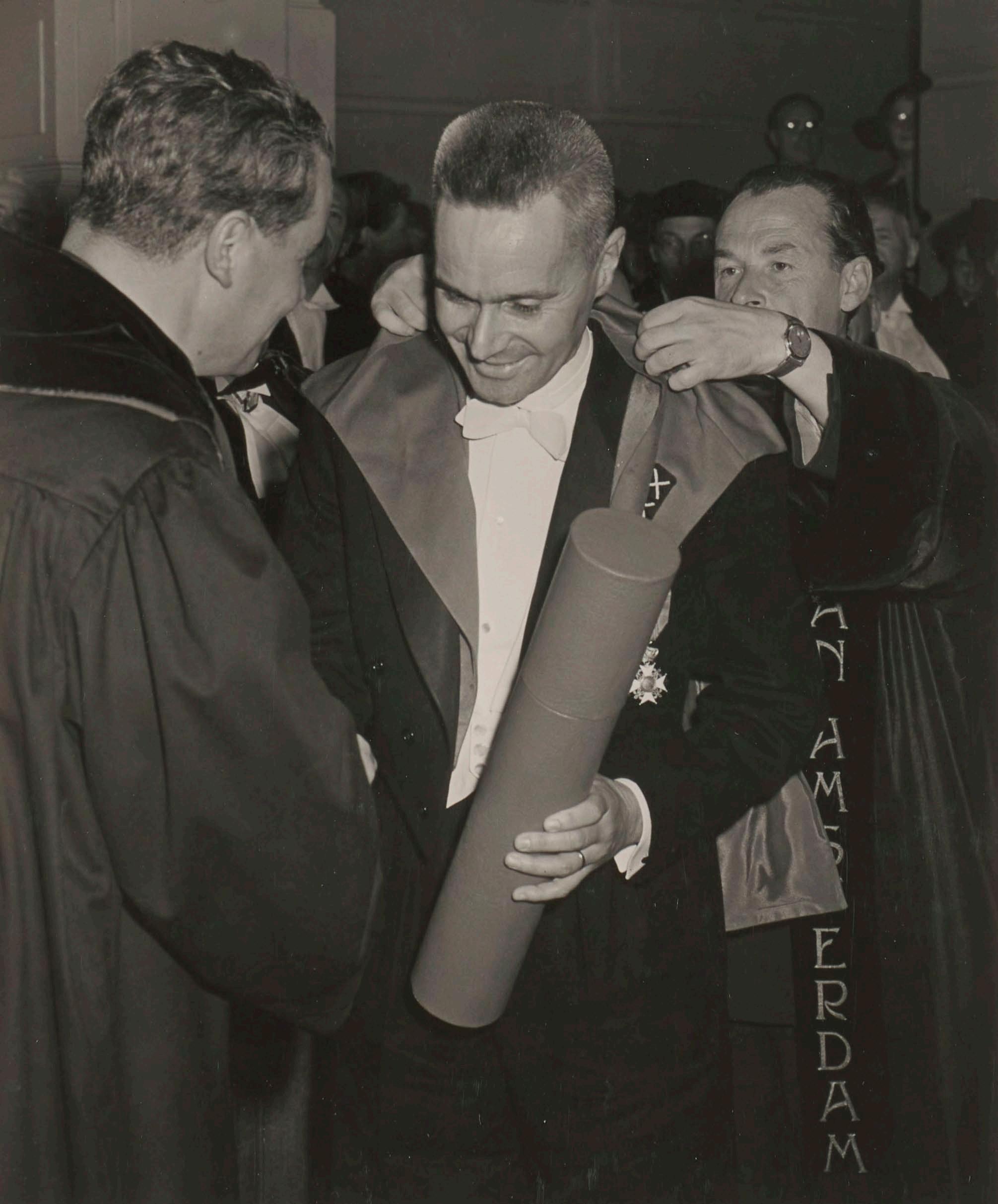
Fifteen years before he would receive the first Nobel Prize in Economic Sciences, Jan Tinbergen was already awarded an honorary doctorate by the University of Amsterdam. The Netherlands’ most renowned economist helped to establish the Netherlands Bureau for Economic Policy Analysis, laid the foundations for development aid and co-authored the report of the Club of Rome. A true idealist committed to making the world a better place, he remained active well into old age.
Are you an economist or business professional who studied at the University of Amsterdam? Since 1936, the Circle of Amsterdam Economists (KAE) has brought together alumni of the Faculty of Economics and Business. It is a fantastic network, with members holding interesting positions across a wide range of sectors, in both business and government – highly valuable for any economist. The Circle regularly organises symposia and study trips, helping members to stay connected to developments in economics. New members are very welcome!
KAE is part of the Amsterdam University Association (AUV). Stay connected with the University of Amsterdam and with other alumni, even after graduation, through one of the many alumni clusters. Build your network – become a member!
THREE WAYS TO CONNECT
1
Go together with a former fellow student.
Gaining stimulating new ideas and stepping back together into those good old student days is more inspiring than simply going out for dinner – and it is free as well.
2 Bring your (grand)child along.
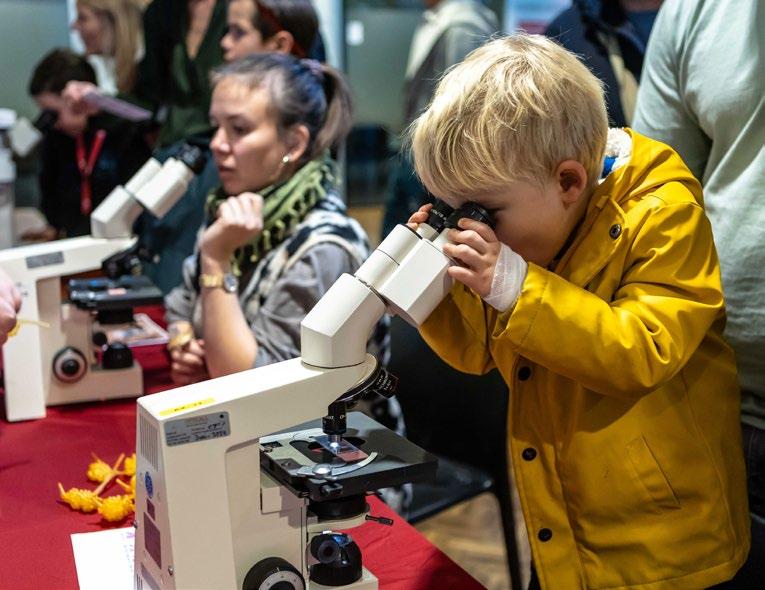
Or your grandfather, or your stepmother. During Science Day on Saturday 3 October, Science Park will be throwing its doors wide open, so come and extract DNA from a strawberry together, build a telescope with LEGO or watch a game of robot football.
3 Stay connected.
A consistently popular annual feature: lunchtime webinars for professionals. UvA researchers will update you in an hour on highly requested topics from the field, ranging from marketing to transition management.
A ALUMNI WEEK
WHAT IF IT IS POSSIBLE?
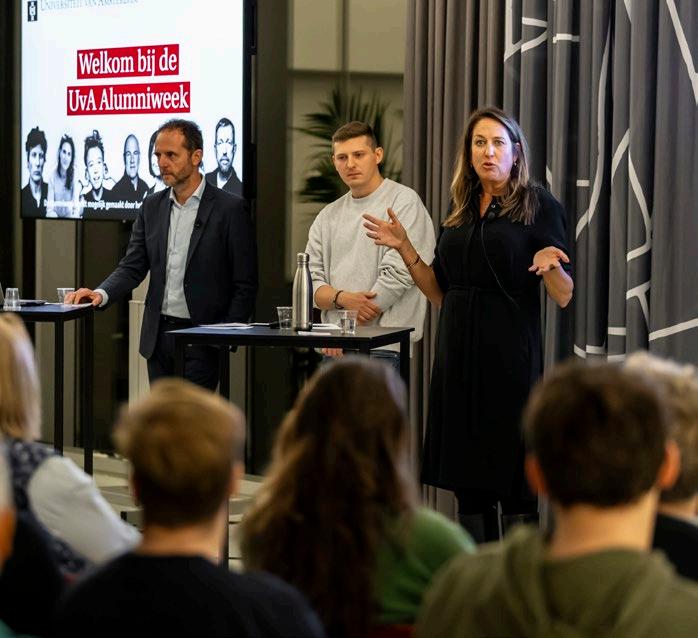
Once again this year, prominent members of the UvA community will share their innovative solutions to today’s pressing issues under this motto. The most recent programmeof Alumni Week attracted more than 2,300 visitors. The guided tours of historic UvA buildings and the new University Library were fully booked in no time. The lecture halls were also filled to capacity for talks by heroes such as André Kuipers, as well as for the session on mental health with Thijs Launspach and Brankele Frank. Other audience favourites included the live podcast recording on women’s health and the panel discussion with Marjolein Moorman on equal opportunities. Want to stay up to date with the new programme? Follow UvA on LinkedIn.
W
WORD AND OBJECT
As a first-year Philosophy student, I almost lost my girlfriend to a book. My girlfriend’s name was Marie and the book I almost – or perhaps completely – lost her to was Word and Object by Willard Van Orman Quine, a famous American philosopher and logician. I never understood what Word and Object was actually about – only that it posed a serious threat to our relationship.
Marie, who like me was in her second year and had to read the book for a course on logic, was chronically downcast thanks to Willard Van Orman Quine. We had been together for just over six months, and throughout that entire period she was reading Word and Object. I hated that book. You could tell from a distance of about eight metres whether Marie was reading it: her shoulders slumped lower than usual, the colour had drained from her cheeks and, above all, her expression spoke volumes. Looking at Marie, I inevitably saw myself as well, reading all the books I did not understand, or trying to understand them at a
TOBI LAKMAKER
Tobi Lakmaker studied Philosophy at the University of Amsterdam, is a writer and columnist, and is currently working on his second novel.
level that was simply out of my reach. Reading a book you do not understand is a very specific experience: constantly going back to the same sentence, the relief when you stumble upon an illustration or a patch of white space, the deep shame of knowing there are probably many more books you do not understand, because it is highly unlikely that this is the most difficult book of them all. Sometimes you hate the book, sometimes you hate yourself, and in that sense reading an incomprehensible work most closely resembles a relationship that is not going well: the only certainty is a lack of progress, and the anger you feel alternately turns inwards and outwards.
Recently, I was standing in a bookshop when I suddenly saw the book I had once despised so much. I only saw the spine, but the tasteless combination of white with orange lettering on a black background was enough to transport me back to Marie in an instant. I pictured her expressionless face by the kettle as she made yet another cup of tea, ready to return to the battlefield.
Marie’s flat was furnished just as Quine would probably have liked it – sober and logical, with a chair to sit on and a desk to work at. I have never been back there since we broke up. I never came to miss that place, but as a graduate I secretly do miss that constant, humble state of not understanding something you long to hear, yet simply cannot make out.
Want to stay connected with the UvA community? Brankele and Thijs follow the UvA on LinkedIn – just like 415,000 others. Every week, we share stories from impact makers, researchers and the latest in science. Scan the QR code and help us grow our extensive network even further.
CONNEC TED STAY
UVA NETWORK FACTS
Over 250,000 alumni worldwide, in 167 different countries 100+ networking events per year (including the Alumni Week) 3,000+ donors and supporters 10 Alumni Hubs in 8 countries – and still growing!
WHAT IF IT IS POSSIBLE?
WHAT IF THERE IS IT IS POSSIBLE? WHAT THERE IS HOPE FOR THE WHAT IF WE CREATE WHAT IF WE CREATE A CREATE A GLOBAL CONSTITUTION? CONSTITUTION? FOR THE CLIMATE?