

Wednesday, April 1, 2026


MARGARET WHITE Staff Writer
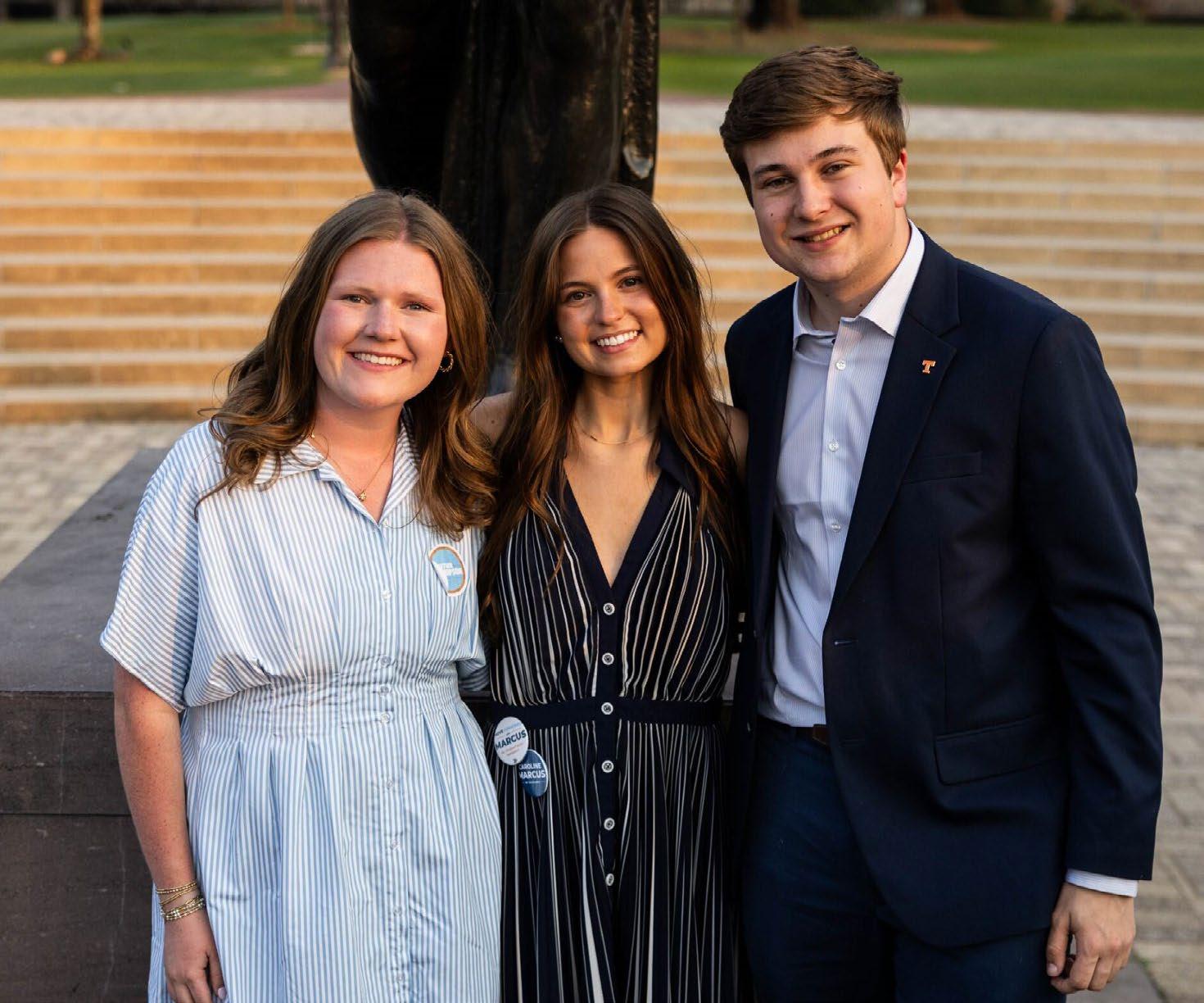
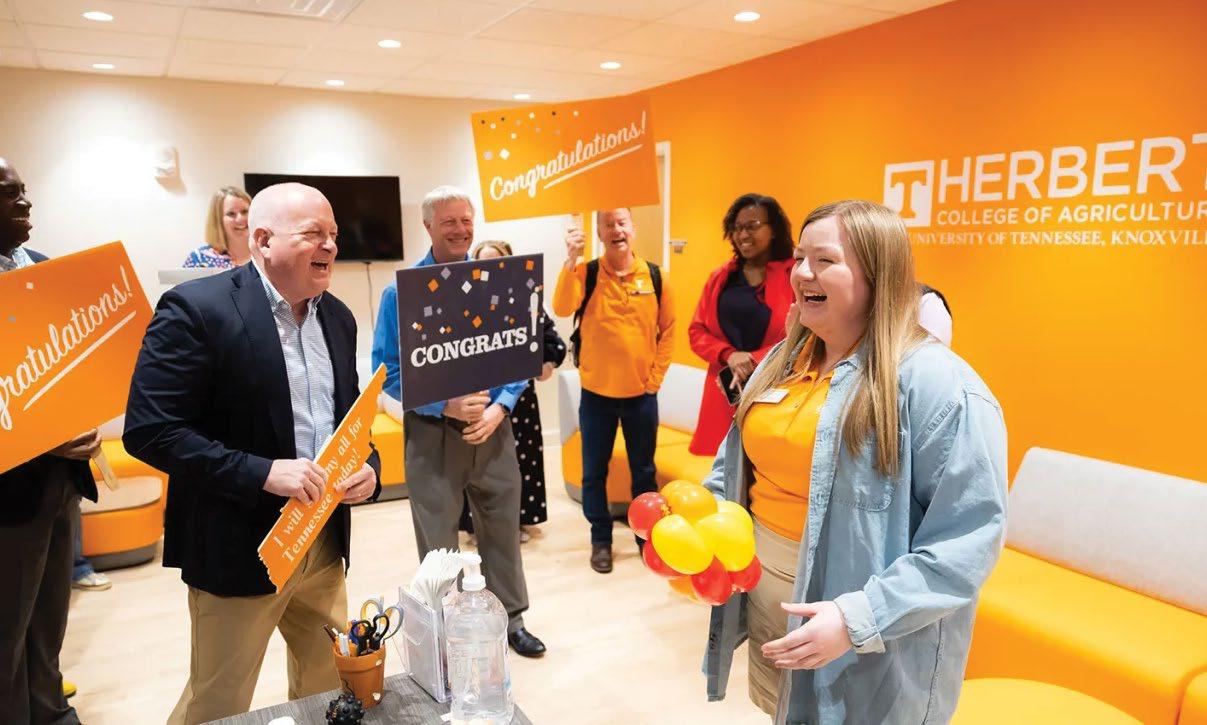
This past week, UT designated nine students as Torchbearers with a surprise celebration, acknowledging each of them for their “leadership, service and Volunteer spirit.”
This award is recognized as the university’s highest honor for undergraduate students, and is given to students who embody the Torchbearer’s creed: “One that beareth
a torch shadoweth oneself to give light to others.”
The students who received this honor are each individually characterized by their fervor, determination and generosity, having accomplished a tremendous amount in their time at UT and paving the way for other Volunteers.
For these individuals, making a positive impact on others was a major motivating factor.
“I grew up knowing so many people who didn’t have access to a
college education in the same way that I did,” Hannah Haston, a senior business management major and Torchbearer, said. “And so, for me, it was very, very important that first of all, I make it count, and second of all, (I) truly leave the place better than I found it. Just because, if I’m going to be given such a special opportunity, it deserves not to be wasted.” Haston took campus involvement to a new level during her time at UT. As UT’s Kappa Delta chap-
TESSA NACKE Staff Writer
For only the second time in UT history, two women have been named the new drum major and assistant drum major of the Pride of the Southland Marching Band.
Sydney Flenniken and Grace Dobrescu were named by the Natalie L. Haslam College of Music. The last time two women filled the positions was 2017.
“It is an incredible honor and achievement. The last time it happened in 2017 was with Rebecca (Percy), the drum major I took lessons from, so having that connection with her has been super interesting to know that she did this, and now I’m getting to do it as well,” Flenniken said. “It makes people feel more empowered to kind of come up and audition for this role.”
As the drum major, fifth-year senior Flenniken is responsible for the entire 415-person band.
“I kind of see it in two different ways, where you’re the representation of the (band). Also, when it comes to duties and responsibilities, the main ones are keeping rehearsal moving, letting the band know what’s going to happen next, starting and ending most actions that the band does. And then for game days, mak-
ing sure you know the tempos for all 64 tunes that we have,” Flenniken said.
Game days aren’t complete without “Rocky Top” blaring through Neyland Stadium, and the band helps that atmosphere come to life. Junior Dobrescu helps assist Flenniken, as well as lead the Vol Walk.
“As assistant drum major, the biggest thing is backup. If anything bad happens, then I will be up there to step in and to do everything that she does. For game days, there’s two ladders, so Sydney will be on the tall one, and I’ll be on the one over, and I’ll basically always be watching the game, and I’ll be the person that tells Sydney when to cut off songs or pieces. And I’ll also be the one that communicates to the band with our little digital board what pieces we’re going to play,” Dobrescu said.
Representing the band is no small feat, and requires a lot of training. Both Flenniken and Dobrescu started their passion and love from a very young age, eventually transitioning from their respective instruments to the drum major position.
SEE “DRUM MAJOR” PAGE 3

SHELBY WILSON Staff Writer
This week, students taking History through Video Games had a surprise visitor join their class.
Known as Franklin Clinton in Grand Theft Auto V, Shawn “Solo” Fonteno stopped by to talk with students and answer some questions.
“(The class) was cool, it was different — this was a first for me, where they had a class based around (Los Angeles) life and Grand Theft Auto,” Fonteno said. “This was at the top of the scale, me being in Knoxville, this is a 10 right here. This is my highlight.”
During the visit, Fonteno went into detail about his own upbringing in Los Angeles and how it helped him connect to his character.
Fonteno grew up in the Watts and Compton area, and both neighborhoods are cited as two of the more dangerous parts of LA.
“I’ve been through a lot. I’ve come up through gang life, I’ve been shot five times. I’ve been through a lot of stuff,” Fonteno said. “I was able to really play that character to a T because of my experience of what I’ve been through in real life.”
GTA V came out in 2013 and is still exceptionally popular to this day. Holding the title as the fastest entertainment
release to reach $1 billion in retail sales, GTA V sold over 200 million copies.
In the game, Fonteno’s character, Clinton, is known by fans as being a true protagonist with relatable choices. Looking between the three main characters, Franklin is the good guy of the bunch.
“Franklin played a pivotal part in the whole story,” Fonteno said. “The best character, as they say.”
Tore Olsson, associate professor of history and director of graduate studies at UT, teaches the course — HIST 150 — and made Fonteno’s visit possible.
“The main goal of this class is to explore the transformations that remade the United States since Ronald Reagan’s first election in 1980,” Olsson said. “There’s a lot of really thoughtful satire and commentary about the U.S. that I’m able to use in the classroom.”
HIST 150 is the first class at UT to look at history through GTA. The class previously used and focused on Red Dead Redemption, another Rockstar Games production.
SEE “GTA” PAGE 3
ter president, Haston has accomplished lots for her chapter, from record-breaking fundraising to “Chapter of the Year” awards.
“Kappa Delta is definitely the absolute cornerstone of everything that I have worked towards at the University of Tennessee,” Haston said. On top of her roles within her sorority, Haston maintained a top GPA in her respective college, earned over 125 service hours and served multiple leadership roles in
UT’s Kappa Alpha Pi pre-law fraternity, among other commitments. According to Haston, receiving the award was “the culmination of everything that I’ve tried to be for the people around me, and so for them to be so excited about that in the same way that I am is just really powerful.”
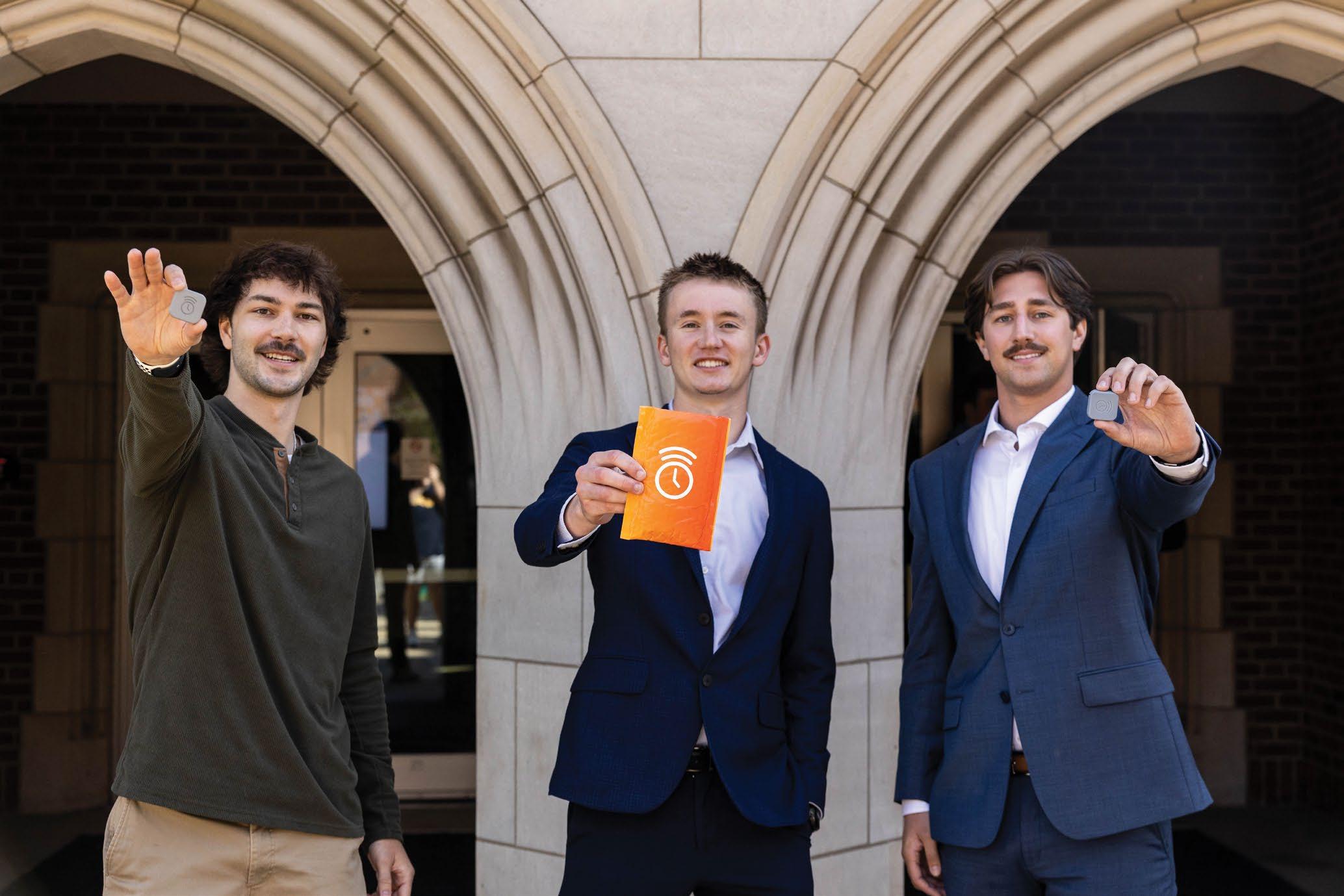
Two University of Tennessee students created a unique alarm clock with the mission of breaking bad habits for young adults.
The Rise Alarm’s design requires users to get fully out of bed and tap their phone on a physical “pod” to turn it off — no snoozing and no way around taking the first step out of bed.
“It’s an alarm clock app, very similar to your traditional iPhone alarm clock app,” Max Gallinek, a UT sophomore and Rise founder, said. “But the only caveat is – there’s no snooze button, and you cannot disable the alarm until you stand up out of bed.”
After hacking the Chickfil-A mobile check-in system, the supply-chain management major saw the same technology as a potential solution to his pattern of alarm snoozing.
“I was having trouble waking up in the morning … A friend of mine was like, ‘You should code a way that will help you get up in the morning,’” Gallinek said.
Gallinek had already been using near-field communication technology to get to the front of the queue when mobile-ordering Chick-fil-A.
“I built my own little Chick-fil-A tag so that I could check in to Chick-fil-A from my backpack,” Gallinek said. “So I was cheating the
system, skipping the line. I realized, like, that technology is very cool. We can use that technology to verify location. Why don’t we use it for the same alarm clock wake up app?”
It was shortly after this idea that the intricate design process began.
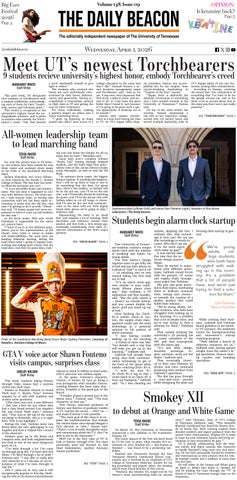
Once he started to experiment with different prototypes, Gallinek joined forces with his partner, UT senior and supply chain management major Dan Fishman.
The pair saw great potential in their alarm, motivating them to dedicate immense time, energy and resources towards the creation of a quality product that could fulfill their mission.
“We’re young adults, college students, who both have struggled with waking up in the morning. It’s a problem that a lot of people have, and we’re just trying to find a solution for them,” Fishman said.
They started utilizing the university’s 3D printing lab to create variations of the NFC pod that corresponds with the alarm app.
“It’s just been design, iteration, prototype, repeat, continue, work out the kinks,” Gallinek said.
They eventually invested in their own filament 3D printer and have continued producing their product from Gallinek’s apartment.
The duo has gone through a trial-and-error process while designing the pods and
On March 26, The University of Tennessee announced a new addition to the Volunteers: Smokey XII. The iconic mascot of the Vols has been loved by UT for over 70 years. After Smokey XI’s retirement in 2025, Smokey XII — also known as Neyland — was found to be a promising candidate. Neyland was discovered through the East Tennessee Bluetick Coonhound Rescue community and is fostered by an employee of UT’s College of Veterinary Medicine. Known for his big personality and playful spirit, the Smokey search team found promise in this rescue.
“Neyland, aka Smokey XII, might just be Vol Nation’s most heartwarming walk-on success
forming their startup in general.
We’re young adults, college students, who both have struggled with waking up in the morning. It’s a problem that a lot of people have, and we’re just trying to find a solution for them.”
While creating their business, Gallinek and Fishman found guidance in yet another UT resource: the Anderson Center for Entrepreneurship and Innovation’s startup coaching program.
“They offered a bunch of different resources for us,” Gallinek said, having gained insight from the center’s legal specialists, finance startup coaches and branding specialists.
story,” Paul Plummer, dean of UT’s College of Veterinary Medicine, said. “This beautiful Bluetick Coonhound has found his forever family on Rocky Top. With training support from devoted students and expert guidance from the nation’s best veterinarians, Smokey XII is ready to meet his new Volunteer family and bring excitement to fans everywhere he goes.” UT is already collaborating with the Hudson family and Alpha Gamma Rho fraternity to handle Neyland’s long-term care and training. He has been personally trained by students and veterinarians as they prepare him for rowdy football crowds and a stadium of more than 100,000 fans. He will debut at the Orange and White game on April 11. Before fans know it, Smokey XII will be leading the team through the “T” as throes of fans in Tennessee orange cheer on the Volunteers.
said.
termination policies in higher education versus other industries.
A bill to streamline termination policy awaits Gov. Bill Lee’s signature after being passed by the Tennessee legislature.
HB 2194, introduced by Sen. Adam Lowe (R-Calhoun) and Rep. Jason Zachary (R-Knoxville), gives the chief academic officer and chief executive officer of Tennessee universities unilateral power to terminate both tenure and non-tenure faculty members, eliminating current policies that require faculty input.
“The problem with this bill is it’s taking away any shared governance in the faculty termination process,” Charles Noble, president of the faculty senate, said. “It really just puts all the power to terminate a tenured faculty member in the hands of one of two people.”
In the Senate’s March 23 floor session, Sen. Lowe clarified the termination is often carried out in conjunction with the UT board of trustees. The board comprises 14 members, 12 of which state politicians appointed.
“This legislation codifies the importance of tenure in state law while requiring higher education governing boards to adopt streamlined disciplinary policies in cases of misconduct by tenured or non-tenured faculty members,” Melissa Tindell, vice president of communications for the university, said.
Current policy gives the chief academic officer and chief executive officer the majority of the power in termination cases, but it also enumerates specific opportunities for faculty input leading up to the final termination decision.
“At the end of the day, the administration can do whatever they want,” Noble said. “The chancellor could always overrule anything the senate said, but at least we had a voice and could express an opinion.”
Tindell said the bill changes termination policies without sacrificing due process.
“As we understand it, the bill would require governing boards to establish disciplinary policies for misconduct that are separate from existing tenure-related policies,” Tindell said. “It does not eliminate due process rights nor does it modify faculty input in tenure-related decisions.”
Legislators in favor of the bill defended it by pointing out the difference between
The problem with this bill is it’s taking away any shared governance in the faculty termination process. It really just puts all the power to terminate a tenured faculty member in the hands of one of two people.”
CHARLES NOBLE Faculty Senate President
“A university is not a corporation,” No ble said. “There are some institutions that are unique to a university.”
One of these institutions, No ble said, is tenure, which protects professors con ducting research from the threat of termination.
“It’s im portant for faculty, but it’s also a compet itive issue,” Noble said. “Every major university in the U.S. grants tenure, as far as I know, to their best facul ty, their best research faculty. So, if we don’t do that, then it becomes really hard to hire good people.”
Noble and other faculty senate leaders have been public about their concerns over the bill, addressing the legislation in the faculty senate’s March meeting and in an email sent to faculty after the House passed the bill.
This bill is not the first piece of legislation introduced in the current legislative session that targets tenure. Lawmakers previously introduced a bill to completely end UT’s ability to grant tenure after summer 2026. The lawmakers dropped the bill after pushback from the UT community, including the UT faculty senate.
“We appreciate the General Assembly’s recognition of the importance of tenure,” Tindell said. “The University of Tennessee has consistently underscored the value of tenure and has worked to ensure that measures to eliminate it do not advance.”
The new bill was introduced 12 days after the initial tenure bill.
“I personally didn’t hear about it until the other bill was put aside,” Noble said. “So after that went away, then all of a sudden this came on my radar.”
Noble said the bill might be
Shirinian has since filed a complaint against Chancellor Plowman and President Randy Boyd in both their personal and official capacities. Although Shirinian initially included Noble in the lawsuit, she recently filed an order dropping him, along with several members of the UT board of trustees, from the lawsuit.
In the same amendment, Shirinian added Rep. Tim Burchett (R-Knoxville) and State Rep. Chris Todd (R-Madison County) as defendants in the lawsuit, claiming they influenced the university’s decision to fire her.
“While I find what the state legislature is doing through their policy work for higher education dangerous, … the adding of elected politicians as defendants is solely because they violated their positions by pressuring a public institution to terminate a faculty member, forcing the university to breach their own policies

it’s written in a very muddied kind of way. It’s kind of wrapped in things that look good.”
sity bylaws with feedback from faculty in mind.
UT administrators at the campus and system level have not yet officially addressed the legislation. At the March faculty senate meeting, Provost John Zomchick said administrators were “doing their best to protect tenure in what is a very difficult environment.”
“I wish they would comment a little more on these things, frankly,” Noble
For Torchbearer recipient Sana Boghani, the award reflects efforts of the people around her in the same way.
“Being a torchbearer is embodying that spirit of community, of celebrating people, of helping others rise as you rise yourself,” Boghani said. “And recognizing that there is an entire community with you that has helped you to get here, and that you have a constant responsibility to give back is what I think this award really embodies.”
Boghani spent her time at UT exceeding academically in her field of communications. As a top four College of Communication and Information graduate, she felt that her leadership within her college and her dedication contributed to her accomplishments in her undergraduate years.
In addition to being a torchbearer for Vols through her ambassadorship and scholarship, Boghani spread the Volunteer spirit by extending her service to communities beyond campus, earning her the Gold Service Medallion.
Torchbearer and senior material science and engineering major Marlena Alexander placed a similar emphasis on those around her and their contributions to her success.
As a staff sergeant in the Air National Guard, Alexander has been able to serve beyond the UT community as well. From her involvement in the military, to her
awards in engineering, to her dedication to learning German, Alexander has dedicated herself to bettering her community with the help of those around her.
Alexander described her recognition as unexpected.
“It was a surprise for sure, but hearing someone talk about my accomplishments, you know, of course I feel proud, and it feels good that, like, my work is being recognized,” Alexander said. “But I just I have to say something for ... everyone who helped me along the way, because I really think that, if you’re able to build up a strong support system like I have, that you can do anything.”
Jourdan “J.T.” Thomas, a UT senior, sport management major, football player and now Torchbearer, touched on his experience being that support system for others.
“Even when my world felt shattered, I put my teammates and the program first,” Thomas said. After a devastating leg injury that required a year of recovery, Thomas learned the importance of bearing light for others. “I learned that it’s not about what happens to you, but how you respond to it, and I tried to do that — focus on responding the right way every day. And, you know, I never let the situation stop me from bearing the torch.”
The bill begins by endorsing academic freedom, a topic that has been widely discussed at universities across the nation after a surge of professor terminations following the death of political influencer Charlie Kirk.
Chancellor Donde Plowman terminated anthropology professor Tamar Shirinian in September after Shirinian commented online about Kirk’s assassination, saying “the world is better off without him in it.”
“They’re going to have to have the parameters that are in the legislation in terms of decision making,” Noble said. “But I think there are some things that we can have some input on, and the provost has expressed that he’s hopeful that that will happen.”
The bill must be signed by Speaker of the House Cameron Sexton (R-Crossville) and Speaker of the Senate Randy McNally (R-Oak Ridge) before it is presented to Gov. Lee.
KELA FIFER Contributor
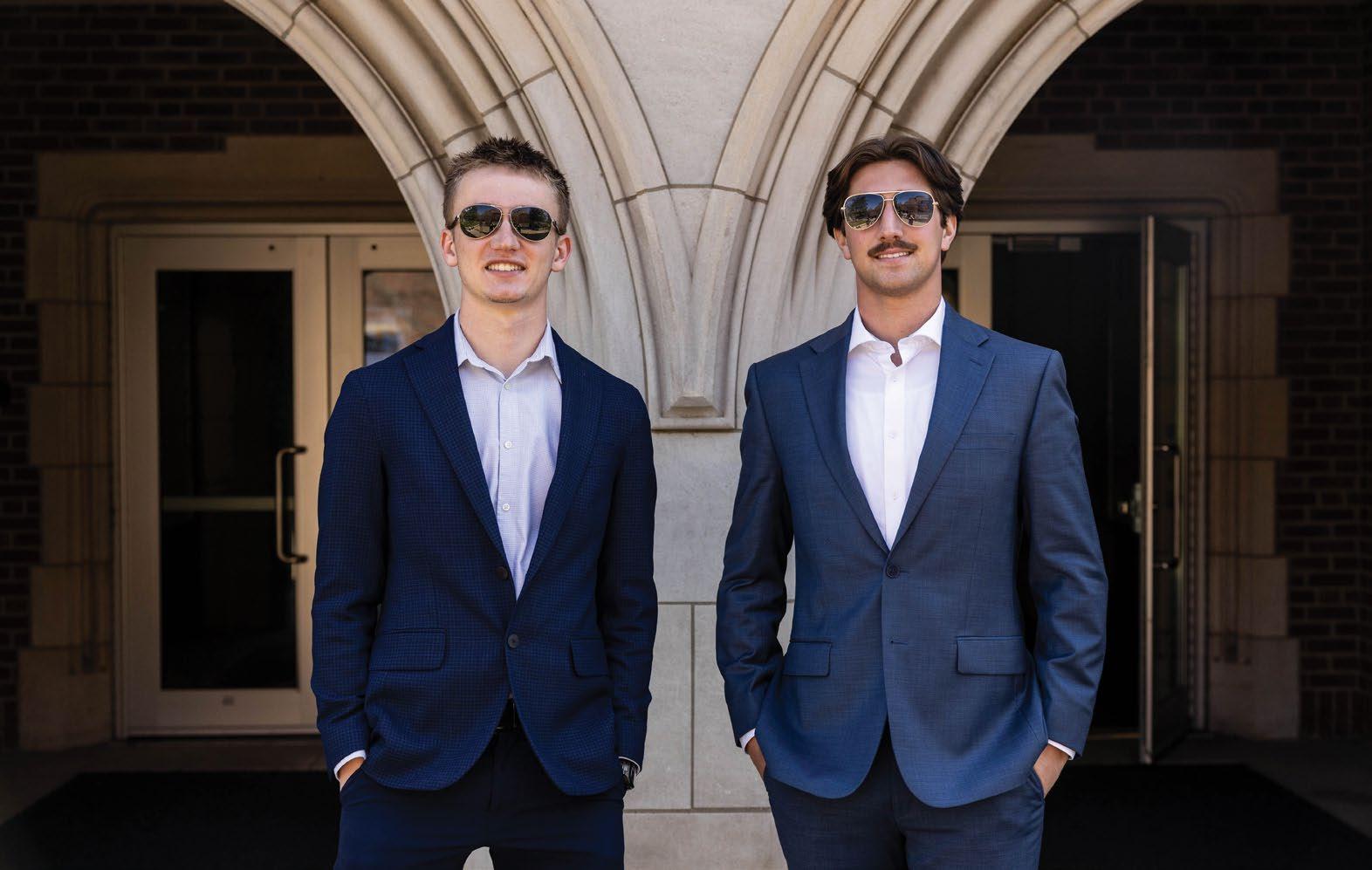
On Thursday, March 26, members of student government, supporters and students gathered around the Torchbearer statue to hear the results of the 2026 Student Government Association elections.
Caroline Marcus was announced as student body president-elect alongside Anna Beth Thompson as student body vice president-elect. Cade Simmons, who ran unopposed, was elected into the position of speaker of the senate.
Student body president
For the past year, Marcus served in the Darwin
administration as chief of staff. As student body president, Marcus plans to emphasize four main pillars within her policies: momentum, openness, volunteerism and empowerment.
Marcus won with 4,111 votes, 57.39% of votes cast.
“I’m just overjoyed. I don’t have a lot of thoughts right now,” Marcus said. “I am just so excited to serve the student body and give it my all.”
“This is an honor,” Thompson said. “ … It is an exhausting process, but it is so rewarding because we got to tell so many students about SGA and the great work SGA does.”
Speaker of the senate Simmons will act as speaker of the senate for the undergraduate student senate. In this position, Simmons will work alongside senators to draft legislation and connect with constituents.
Student body vice president Thompson will assume a new role of student body vice president. She plans to strengthen the connection between SGA and the student body while internally working to refine operational effectiveness of student government. Thompson won with 4,414 votes, with 63.8% of votes cast.
Thomas’s dedication to his team even when enduring his extensive recovery process became the primary reason for his nomination.
“To me, being a torchbearer means living in a way that brings light to other people, even when it costs me something,” Thomas said.
These four individuals, along with the five other recipients — Alice Grace Beavers, Emily Giacini, Justin Henley, Jerome
“I think,
“When I was doing drum major in high school, I actually took lessons from (Percy), who was a drum major here in 2017,” Flenniken said. “Drum major wasn’t really something I thought about until we reconnected, and she encouraged me to go for it.”
Flenniken was named assistant drum major as a sophomore, an impressive feat for
music majors, I’m representing all kinds of people within the band program, so making sure that I’m doing that to the best that I can.”
Flenniken and Dobrescu have both found a second family in the band, citing their enhanced experience because of the people they’ve met and the connections they’ve made.

GTA | cont. from page 1
“I came to realize that video games are this enormously influential form of pop culture that so many hundreds of millions of people play and find meaning in, and it’s also where they encounter history,” Olsson said. “When you play Red Dead Redemption 2, you are engaging with the history of 1899, if you’re playing GTA San Andreas, you’re engaging with the history of 1992 in the United States.”
Olsson believes that the students are enjoying the class and the material. Hearing from students themselves, it is evident that this is true.
“This is a fun class for sure, like this is pretty cool,” David Eterno, a mechanical engineering freshman in the course, said. “Actually connecting footage and stories from the games to real American history (has been memorable).”
In terms of Fonteno’s visit, students in the class seemed to enjoy the surprise.
Emily Snider is a freshman majoring in computer engineering who came to class and took a photo with Fonteno afterwards.
“I think it is very interesting to get to hear his story and see how he related to the character that he was playing,” Snider said.
Other than his class visit, Fonteno is joining the Fanboy Expo this weekend along with other celebrities in the gaming, comic and anime industries.
He and Olsson also sat down together for a 90-minute interview, which will be the topic for the final paper in the course.
“The professor was awesome, we’ve been communicating now for a few months,” Fonteno said. “I was inspired by how I’m a part of a class on the history of LA.”
The good news for students is that Olsson will be teaching the class again in the fall 2026 semester. No prerequisites are required and the class size allows for hundreds of students to enroll.
“I’d love to see more students come back or others join in,” Olsson said. “I hope to make the class even more fascinating and engaging the second time around.”
“It’s a community, and it’s a family. We kind of joke about calling each other family all the time, but that’s genuinely what it is like. There are people like, (I would) take a bullet for, and there are people (that would) take a bullet for me, and it’s people I didn’t know until I joined this group that I marched with now. We all have the same goal, and it’s getting on the field, putting on the best show that we can and doing it together as an en semble,” Flenniken said.
As this close-knit com munity approaches a new season, Flenniken and Dobrescu are deter mined to continue to make the band great.
“Obviously, we want to perform well, and we want to play
well, but at the end of the day, what this ensemble is trying to do is create better people through music and create better people through the community like this, once-in-alifetime kind of opportunity to have this sense of community,” Dobrescu said. “It’s interesting that
415 people could still feel so close together, but I do think it’s really special that this in this program, like it’s just, it’s very easy to feel welcomed and to feel loved.”
It’s a community, and it’s a family. We kind of joke about calling each other family all the time, but that’s genuinely what it is like.”

Rise App | cont. from page 1
As for marketing, the pair brought in another aspiring student entrepreneur. Collin Tornstrom is a senior

marketing major with a collateral in entrepreneurship and is also the student behind
the SixPackVols Instagram account.
“He is a marketing genius,” Fishman said. “He knows everything there is to know about, like, social media and content going viral. He has been great for us, and he’s responsible for a lot of our sales and has really helped us grow.”
The account, which has over 40,000 followers, has been crucial to the growth of Rise and their sales.
According to Gallinek, approximately 99% of the company’s sales are initiated through Instagram.
While Rise is still fairly new, there are approximately 300 of the products in use nationwide.
“We had some pre-sales early on, mostly from, like, family and friends, but then we started seeing orders come in from people that we have no idea who they are,” Gallinek said. “We have orders from Texas, South Carolina, California — all over the place. We have no idea who these people are, they just see the products, they like it enough, they purchase, and we
send it out to them.”
With the early successes of Rise, the startup creators have big dreams for their company’s future.
“Eventually, when we ramp up demand, we’re going to get a couple more printers so we can just keep mass-producing,” Gallinek said. “And then, if and only the demand keeps increasing, then we’re going to outsource it to an injection molding company.”
Gallinek and Fishman also hope to create more variations of the product with different colors, customizations and options available to consumers.
According to the pair, these goals take priority over getting their products into stores for the time being.
As for Gallinek and Fishman themselves, their experience creating Rise has been meaningful in itself.
“It’s fantastic. Like, I love being able to be a supply chain student, but then also learning how to code and 3D model and stuff, stuff that you wouldn’t expect a business student to be learning,” Gallinek said.
Fishman added to this.
“It’s like we’re getting two educations, one from the school and the other from just doing the work ourselves,” Fishman said.

&
Jon Samuels solos during a
Saturday, March 28,
“Big ears, big hearts”
“Bramaya” and stomping their feet, and the very next they are swaying and singing along to a song dedicated to Ukrainian soldiers on the battlefield.
“Love can’t give you an idea of music, but music can give you an idea of love.”
AUBREY HOLLAND Contributor
The crowd hummed in approval to Laurie Anderson’s keynote comments on love, humanity and oppression as the sound of her violin set the touching tone.
Anderson, a Big Ears Festival 2026 performer, is a creative multimedia performance artist well known for her avant-garde music and various projects as a composer, filmmaker, instrumentalist and more.
Anderson has been creating music since the 80s and is one of America’s most beloved creative pioneers. Her hit “O Superman” began her recording journey from her album “Big Science” and led to fifteen more albums. Her newest album, “Let X=X (Live)” with Sexmob, releases May 8. Anderson has published six books, presented visual work in museums, composed music for films and plays, and been appointed the first artist-in-residence of NASA.
John Zorn, another avantgrade artist and composer, is well known for his saxophone playing, improvisation performances and Masada, the musical group he leads. In 1995, Zorn founded the Tzadik Label, a New York label focused on avant-garde and experimental music, which he is a major influence for.
Zorn and Anderson have been friends since they met in the late 1970s New York music scene. Their Big Ears performance at the Bijou Theatre on March 28 interwove their alternative, electronic sounds and tones. Their duets portrayed obvious talent through surrealist style. Anderson’s violin and keyboard playing created various bright harmonies, while Zorn accompanied her with his sharp, trilling punches of saxophone staccato.
Anderson gave a keynote speech, “What War Is This? What Time Is It?,” preceding her concert with Zorn on March 27. She discussed the future ahead and its possibilities within the current
political situation of the United States and the way it affects its people.
“Love can’t give you an idea of music, but music can give you an idea of love,” Anderson said.
The speech centered around love while touching on topics of the world today and comparing past worlds. As Anderson spoke, she went between giving her speech and creating an electronic style sound, along with playing her violin.
“It’s good to try to find out your, let’s say, motivation, let’s try it. And for me, often that’s just playing,” Anderson said, as she drew her bow across her violin. “It just helps, you know. You just sit here, and you gradually figure out what you feel or what you want. Music, sometimes, call it a language. But it’s not really, because there’s so much in music you just can’t put into words.”
Anderson’s keynote ebbed through personal experiences as a child and adult, observations of art and politics, humanity and oppression, and even a narrative conversation between her and an artificial intelligence version of Sigmund Freud.
At one moment, Anderson spoke of her belief that the world is made of stories, and that good stories cause political action. She went back to a conversation in 2004 between a journalist and an advisor to the president.
“And the advisor told the journalist, ‘You people are living in a reality-based community. And you think you can find solutions
by studying reality. But that’s not the way the world works anymore. We are an empire now. And when we act, we create our own new reality. We’re history’s actors, and you, all of you, will just be left to study what we do,’” Anderson said.
Anderson even referenced the quote from Patrick Henry, “Give me liberty, or give me death!” She made a comparison with today’s social turmoil over guns and abortion in relation to this quote, saying that to some, guns are liberty, and to others, death. With abortion, it is the same — to some it is liberty, to some death. When asked to deliver a talk at an arts festival in Europe that surrounded the topic of the rise of fascism, Anderson accepted. The festival wanted her to discuss the relationship between love and government — so she began with a quote from Cornel West: “Justice is what love looks like in public.” Anderson ended her keynote speech with an analogy of King David and his apology for killing his son in a song called “David’s Lamentations.”
“People in different generations say to their kids, ‘I am so sorry we made such a mess of the world. And we took all the research, and made it a dangerous and toxic place. But your generation will be the one that’s going to fix this.’ It’s like, wait a second. When you were a kid, did anyone ask you to fix the world?” Anderson said. “It’s hard enough just to live in it.”

A delayed flight, car crash and medical emergency couldn’t stop Ukrainian band Yagody from performing at Big Ears this past weekend.
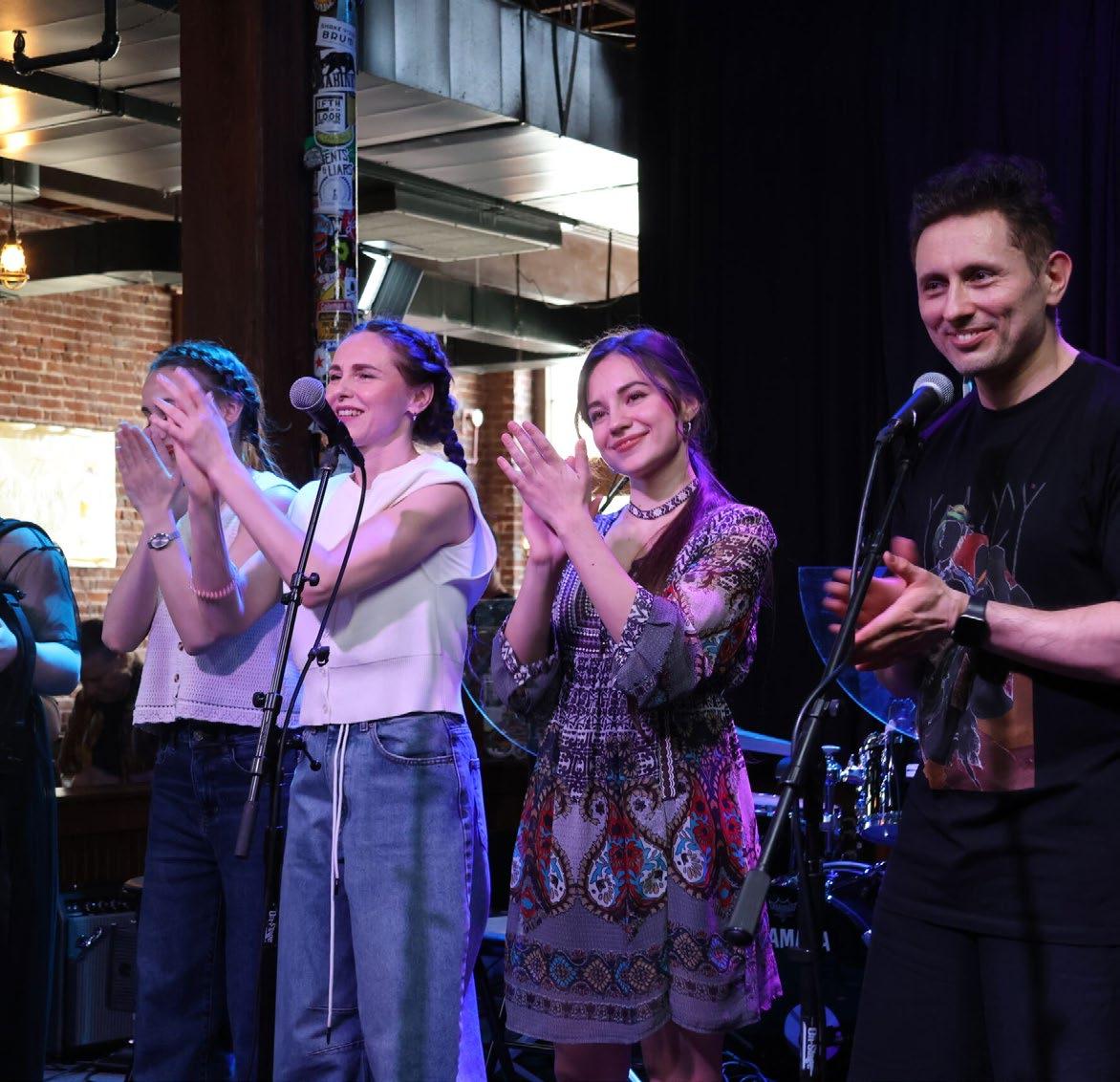
Hosting a slew of artists from all different genres and backgrounds, Knoxville’s biggest music festival welcomed a particularly special band traveling all the way from Lviv, Ukraine. Eurovision finalists Yagody performed twice on Thursday, once at Barley’s and once at Jackson Terminal. Both performances were unforgettable and full of heart.
Kicking off their tour around the United States, Yagody began with a small but lively show for the Blue Plate Special in Barley’s at noon. Before their performance, the band sat down to share more about their musical journey to Knoxville and what their roots in Ukraine meant to them.
“Through our language, we would like to show Americans, the whole world, that you need to appreciate your own culture, your own language, and you need to appreciate freedom,” founder of the band and lead vocalist Zoriana Dybovska said.
With only one of the five band members speaking both Ukrainian and English, communication between artist and audience can be difficult. However, Yagody communicates just as effectively through the powerful language of music.
An emotional rollercoaster of a performance, Yagody immediately opens with their powerhouse songs, full of energy, and soon moves into slower, mournful tracks. One moment, the crowd is chanting
No matter the song, the audience can feel the emotion of the band members on stage. In part, this is due to Dybovska’s background in theater. A famous actress in Ukraine, Dybovska brings a full body experience to her performance.
“These skills are very helpful because we can express the emotions and … you can feel more of what you’re singing,” vocalist and actress Tetiana Voitiv said.
Both performances included dancing and chanting from the audience, as well as boos at the mention of Russia and tears during their mentions of Ukraine.
“I expect that people will cry. They will cry, they will smile, they will jump, they will scream, they will sing. They will dance,” drummer and band manager Teimuraz Gogitidze said.
Honored by the cheers and support from the Big Ears crowd, all of the band members put their hands over their hearts and thanked the crowd with tears in their eyes.
Yagody’s members are excellent performers, but first and foremost they are Ukrainians who feel the reverberations of a war as violent as the Russo-Ukrainian war. Yagody hopes that their music can inspire people “to live” and to appreciate their own freedoms while they still have them.
Later that night at Jackson Terminal, while leaning over an enthusiastic crowd, Gogitidze’s face split into a huge smile as he yelled, “Big Ears, you have big hearts!”

Gia
GIA SCHEELS Contributor
Spring is brewing around Knoxville right now, and specialty drinks are in season. The warmer weather means it’s time to put “iced” back in front of your drink orders — if it ever left.
Some of your favorite cafes have already released their bold, colorful spring drink menus, and they do not disappoint.
Five & Hoek Coffee
Five & Hoek Coffee is a family-owned business located in Old City, close to the Marble City Market Food Hall. They roast ethically sourced coffee, make all of their syrups in-house and have turned their small coffee shop into a friendly community. This spring, they feature bright flavors including a limoncello latte with sea salt cold foam, a white grape and jasmine latte, a matcha lavender lemonade and a hibiscus lavender espresso tonic.
Seed Coffee Co.
and breakfast they sell are made with a purpose. Supporting their business means supporting their mission, and their coffee makes it easy to do. Their spring drinks include an Uncrustables shaken espresso, a croissant and chill cold brew, an orange dreamsicle matcha and a salted honey latte.
Camp Honey Coffee & Provisions
Camp Honey Coffee has become a student-favorite caffeine spot for its cute, cozy vibes and amazing specialty lattes. This spring is no exception, as Camp Honey is releasing a blueberry cobbler latte, a cookie butter latte, a lavender honey latte and a creme brulee fog. The social cafe is warm and welcoming, and you can feel their love for the community they’ve built when you stop by. It is located right next to Lakeshore Park, making for a great stroll while you sip.
Seed Coffee Co. is a sustainable coffee shop that gives back to the coffee farmers they source from by partnering with fair trade roasters. Their mission is to support fair pay for farmers worldwide, meaning all of the coffee
Mis Amores Bookshop Cafe If you’ve never gone to a romance bookshop cafe, it’s the perfect time to go. Mis Amores is Knoxville’s first Afro-Latina-owned coffee and bookstore that puts the love from their books into the drinks that they make. Their specialty menu this spring includes a blueberry dream iced latte, a lavender London fog and a grumpy sunshine matcha inspired by the famous grumpy-sunshine character trope in romance novels.
Jacks of Knoxville Jacks’ seasonal spring menu brings your favorite desserts to life in coffee form. Featuring a honey bun iced coffee, a lemon berry matcha, a tiramisu latte, a berry chantilly latte and a flower bomb latte, they’ve got something to please everyone. Jacks also sells a variety of breakfast foods, lots of fun knick-knacks and best of all, plants. It’s your Saturday morning coffee and shopping run all in one place.
Primo Passo Coffee Co. Located off of South Northshore Drive, Primo Passo Coffee Co. opened less than a year ago and is a hidden gem worth the 20-minute drive. It is a family-owned cafe that roasts in small batches and only uses hand-made syrups. The spring specials are an iced cherry blossom cloud latte, a cherry sakura matcha latte and a vanilla cloud latte. They call their precise craft and flavor profiles “coffee science,” and their seasonal menu proves it. There is nothing a delicious, specialty iced coffee or matcha can’t cure, even your seasonal allergies. Iced cherry blossom cloud latte from Primo

EDITORIAL
EDITOR-IN-CHIEF: Caden Dyer
PRINT MANAGING EDITOR: Emily Hurst
DIGITAL MANAGING EDITOR: Ansley Graves
COPY CHIEF: Lauren Holladay
NEWS EDITOR: Patrick Busch
ARTS & CULTURE EDITOR: Harper Brabson
SPORTS EDITOR: Trevor McGee
ASSISTANT SPORTS EDITOR: Alex Sarkis
OPINIONS EDITOR: Natalie Dripchak
PHOTO EDITOR: Jackson Clavier
DESIGN EDITOR: Lindsay Favre
ENGAGEMENT EDITOR: Sarah Portanka
AUDIENCE DEVELOPMENT EDITOR: Sophie Mehta
COVER DESIGN: Lindsay Favre
PAGE DESIGNERS: Emma Fingeret, Ashley Cammarota, Renee Allen, Maya Williams, SaraJane Weber, Ava Balducci, Ava Edwards, Soma Fulwiler, Kate Wims, Lili
Ellis
GRAPHICS BY: Lindsay Favre, Emma Fingeret, Maya Williams
ADVERTISING/PRODUCTION
ADVERTISING MANAGER: Abigail Cheslock
ADVERTISING REPRESENTATIVE: Joe Slott
CONTACTS
TO REPORT A NEWS ITEM OR SUBMIT A PRESS RELEASE, please email editorinchief@utdailybeacon.com or call (865) 974-2348
TO PLACE AN AD, please email admanager@utk.edu.
LETTERS POLICY: Letters to the Editor must be exclusive to The Daily Beacon and cannot have been submitted to or published by other media. Letters should not exceed 400 words and can be edited or shortened for space. Letters can also be edited for grammar and typographical errors, and Letters that contain excessive grammatical errors can be rejected for this reason. Anonymous Letters will not be published. Authors should include their full name, mailing address, city of residence, phone number and e-mail address for verification purposes. Letters submitted without this information will not be published. The preferred method to submit a Letter to the Editor is to email the Editor-in-Chief.
CORRECTIONS POLICY: It is the Daily Beacon’s policy to quickly correct any factual errors and clarify any potentially misleading information. Errors brought to our attention by readers or staff members will be corrected and printed on page two of our publication. To report an error please send as much information as possible about where and when the error occurred to managingeditor@ utdailybeacon.com, or call our newsroom at (865) 974-5206.
The Daily Beacon is published by students at The University of Tennessee on Wednesday during the fall and spring semesters. The offices are located at 1345 Circle Park Drive, 11 Communications Building, Knoxville, TN 37996-0314. The newspaper is free on campus and is available via mail subscription for $200/year or $100/semester. It is also available online at: www.utdailybeacon.com
VERONICA WHITE Contributor
Over spring break, I took a trip to thehappiest city in the world: Copenhagen.
They live an unhurried life in nearly every aspect, and as I try to walk past slow walkers, I realize I may need to be the one who slows down.
In line with the Danish concept of “hygge,” a foundational cultural value that embodies contentment, Copenhagen is home to theHappiness Museum, a 240-square-meter think tank focusing on the important things in life — well-being, happiness and quality of life.
The museum has become increasingly popular since opening in 2020, and you may have even seen it on TikTok for its aesthetic room covered entirely with sticky notes. Guilty as charged, I walked in thinking these yellow papers were going to give me the best photo op.
But after learning the simple — yet easily overlooked — aspects that brings happiness across cultures, I walked out wondering whether we are directing our energy toward what makes us happy or putting our happiness in the wrong things.
but only up to a certain point. Easterlin said that as we become rich enough to meet our basic needs, the average wealth in society becomes less important to our happiness. As college students, we are eager to find a career that makes us filthy rich. Still chase this to an extent, but it’s important to remember the ceiling is only so high before it’s hit.
a reminder that every day doesn’t need a set schedule.
Even though I was not on the clock, my Type A self would be absolutely baffled that I threw my entire itinerary out the window (excluding the vintage shops I needed to hit. Those stayed put).

The museum begins to examine this by mapping the geography of happiness levels across countries. Using a scale from zero to 10, where zero is the worst possible life and 10 is the best, the United States is ranked at6.8, whereas Denmark is 7.53.
We all know numbers don’t serve any good without reasoning behind them. Here are the different dimensions I saw that can affect these scores.
Trust and happiness
Research shows a link between trust in society and overall happiness. Generally, Nordic countries have high levels of trust. This helps explain why I saw parents leaving their babies in strollers outside coffee shops, women walking alone at night with headphones in, and why the Copenhagen metro system has no turnstiles and operates on the “honor system.”
What I see as outrageous, dangerous and honestly a little crazy, they see as completely normal.
Now, we can’t change the world and control societal trust, but we can control the people we surround ourselves with. You and I probably won’t be leaving our child in a stroller outside, but the little differences in who we choose in our own circle make all the difference.
Wealth and happiness
Money sets the stage — but it can’t buy everything. It can’t buy the feeling of making someone laugh after they cry. Definitely can’t buy waking up well-rested before your alarm goes off. Nor the feeling of being told you’re good at what you love doing.
The common belief is that the richer a country is, the happier the people are. Richard Easterlin, a professor of economics, challenged this belief with the Easterlin Paradox. This concept argues that there is a positive correlation between income and happiness,
What does meanhappiness to you?
Weather
Between 8 and 16 degrees Celsius (about 46 to 60 degrees Fahrenheit) improves your mood. The reality of Copenhagen is that most days are grey and windy, but the weather doesn’t keep people indoors, nor off their bikes.
Copenhagen has an average of1,780 hours of sunshine a year, which is about four hours of sunshine per day, while Knoxville has an average of eight hours of sunshine per day with204 sunny days per year — yet Copenhagen still sits higher on the happiness index score. We like to label it as seasonal depression and let the weather determine our mood, but have we become too comfortable placing the blame there? I am not saying that seasonal depression isn’t real, because I feel an ultimate sense of optimism and joy when the sun peaks out, but let’s face it, it’s never really about the weather. Especially when in Knoxville it can snow and hit 70 in the same week.
Work-life balance
I walk through Nyhavn at 12 o’clock on a Monday and I know I’m on spring break, but it looks like everyone else, of all ages, is too. The work culture in Nordic countries revolves around flexibility. Staying extra hours is discouraged. Taking five weeks of paid vacation a year is expected (with no guilt for actually using it). If you are sick, you are encouraged to stay home. Total parental leave is 52 weeks (generous, as the U.S. offers 12). And if you walk into a business in the later weeks of July, it’s going to be empty due to employees appreciating the short Danish summer.
This doesn’t mean they’re not hard workers — the focus is just on results, and to them, that doesn’t need to correlate with long hours. I’m not shocked that a 9-to-5 won’t bring me ultimate happiness, but it’s
As students, it is extremely important, yet challenging, to have balance in our lives. Whether that’s juggling work, being a student, going out or taking personal time, it can be overwhelming to feel actually present in our hectic lifestyles.
That being said — how we spend our days is how we spend our lives.
I don’t know about anyone else, but I am a little terrified of how quickly this spring semester has flown by, and after seeing people blissfully drink cocktails at lunchtime in Nyhavn, I’m thinking maybe I should too make the most of my time left this semester (Dad, this is a joke)!
In all seriousness, you don’t have to do anything crazy to feel the “I’m living, I’m able, I’m breathing, I’m grateful” sense of accomplishment in life.
As you notice the little joys throughout your days, celebrate and embrace them, because we’re all well aware that the little things add up — and noticing them is the first step in the right direction of appreciating the life around us.
Toward the end of the museum, there were sticky notes (aesthetic photo op) where you could write what makes you happy. Here are some that I saw: The first time she told me she loved me. Being kreativ. My faith. Drugs, sex & side quests. A good meal with friends. My 3-year-old’s head on my chest falling asleep in my lap. A whiskey by the fire. When I feel needed. Diet Coke. The smell of fresh-cut grass. Big biceps. Good company.
The lingering question I saw throughout the museum was: Is there an architecture to happiness?
This concept, created by philosopher Alain de Botton, explores how our surroundings influence our emotions. Specifically, how the design of buildings and cities influences and shapes our happiness.
As the idea has stayed in the back of my mind, I’ve put my own twist on it by imagining that we live inside different intangible “architectures” that shape our happiness.
Friendships, family, self-awareness and routines all act as subtle frameworks to our lives. It is just a matter of how positively or negatively they affect us.
If you see this as the case for you, how can you shape your own architectures to make your life more meaningful?
CLAIRE THATCHER Staff Writer
When someone says the word “ketamine,” my brain immediately goes to horse tranquilizer. Is it a horse tranquilizer? I don’t know. I’m not sure where that association comes from. Either way, I know it’s a drug. Not like cocaine (bad), or fentanyl (really bad), or heroin (no going back), but more … laid back. I’ve never watched the news and saw “millions dead from ketamine epidemic.”
Instead, I watched Jennifer Affleck from “Secret Lives of Mormon Wives” on Hulu do ketamine (if you aren’t watching this show … just watch it) in a massive massage chair and a silk eye mask, taking it in an IV bag like she just got back from Coachella. Confused, I realized that I need to know more.
The DEA describes ketamine as a “dissociative anesthetic that has some hallucinogenic effects.” In the 70s, it was marketed as a short-acting anesthetic, safe to use on both humans and animals (hence the horse tranquilizer association), but was officially classified as a Schedule III non-narcotic in 1999. High doses cause sedation, and lower doses make you trip. Common tripping experiences include “K-land” — the desired, euphoric, “I can’t feel my face,” feeling. Heavier usage can put you in a “K-hole,” an out-ofbody, intensely hallucinogenic and often paralyzing state.
The experience varies person to person, often influenced by dosage and what the drug is mixed with. Are you doing ketamine in a spa through an
IV bag, or at a rave mixed with cocaine?
The reason ketamine isn’t cocaine-level dangerous is that it has a “wide therapeutic range,” which means there’s a big difference between the amount it takes to kill you and the amount it takes to get you high. Also, it’s more psychologically addictive than physical. Users are more likely to desire the emotional sensation than the substance itself. Studies show dependence is driven by craving and a developed tolerance rather than physical withdrawal symptoms.
Ketamine trips are shorter than those caused by other hallucinogenic drugs like LSD and PCP. Instead of blacking out for days and waking up in another state, enjoy a nice, brisk 30 to 60-minute trip with ketamine.
Ketamine is a “dirty drug,” meaning it doesn’t target one precise part of the brain — it affects multiple systems. Often, it blocks NMDA receptors by suppressing communication between synapses.
While blocking NMDA receptors in one area, it heightens activity in others. Glutamate (a signaling chemical used by NMDA receptors) is repurposed, shooting to other neural pathways. If you’re depressed, your neurons are probably pretty weak.
Ketamine-induced neural activity can create new pathways and increase neural plasticity, making it a promising solution. Depending on the person, glutamate can go to different places and disrupt different circuits. Some people don’t feel anything. But it’s fast-acting, so you’ll know quickly. Instead of waiting
days for medication to kick in, ketamine could be a promising tool in treating depressive episodes.
A 2019 study showed that a slow IV of ketamine administered to patients suffering from severe depression and anxiety significantly decreased the severity of their symptoms — positive changes were noticed as soon as an hour after dosage. Affleck credits ketamine therapy for saving her marriage. Her husband, Zac Affleck, is receiving treatment as well, and Jennifer Affleck says it reminded her why they got married in the first place — “ … we were able to actually relive those experiences, not just recall [them].”
In January of 2025, the FDA approved a ketamine nasal spray for treatment-resistant depression. No massage chair, dimly lit room or silk eye mask needed. So, what do you think? You’re sitting in a coffee shop, someone pulls out their Esketamine nasal spray and takes a snort — they just did ketamine. Yeah, it’s weird. But look around. Marijuana is on the road to legalization and footlong Geek Bars are widely socially acceptable. It makes sense that ketamine is next. I used to think ketamine was a middle-of-the-jungle, ayahuasca-esque, hard-core drug. Then, I thought it was an elitist self-care trend for rich people (no offense, Jennifer Affleck). But after thorough research, it seems like a legit mental health resource that is relatively low risk. Out of all the drugs in the world that have been culturally rebranded to seem mainstream, this one gets my stamp of approval. So, while







NATHAN MILES Contributor
Tennessee women’s tennis found its groove early against Missouri and cruised to a 4-0 victory.
The No. 12 Lady Vols (11-6, 6-5 SEC) handed the Tigers (11-13, 0-11 SEC) their fourth straight loss Sunday, claiming the doubles point and singles wins on courts 1, 3 and 6.
“Missouri wants to win,” head coach Alison Ojeda said. “At every spot, they’re coming out competing hard and wanting to put balls on the court. Sometimes shot selection looks a bit different at times, so you have to be ready to go from the very beginning, and our team was.”
Katrina Scott and Maeve Thornton began doubles play with a 6-2 win over Andrea Artimedi and Alex Ackman on Court 3. The Tennessee pair have steadily built up their chemistry over the course of the season and have now won four straight doubles matches as a tandem.
“We know how each of us feels and thinks, and our communication is so much better,” Thornton said. “We know how to help each other, and she helps me a lot. She’s so confident, and that rubs off on me.”
Vanesa Suarez and Francesca Mattioli brought home the doubles point for the Lady Vols, surging from a 2-2 tie to a 6-2 win over Lara Quaglia and Gian Octa on Court 1. It’s Tennessee’s sixth straight doubles point win.
“The big thing with us right now is first serve percentage and returns in court,” Ojeda said. “If we do those two things, we know the way we play doubles, it’s going to be a very short point. So that’s the goal in doubles right now, and the rest will take care of itself.”
Catherine Aulia and Leyla Britez Risso also battled, down 5-4 after falling behind 2-0 to start their match.
The Lady Vols quickly rattled off two singles wins. Britez Risso rolled to a 6-0, 6-2 victory over Ackman on Court 3, then Scott put out a dominant showing on Court 1, taking down Octa by the same score to put Tennessee in a clinching position.
“An excellent job from (Scott) and (Britez Risso) just to get on and off the court,” Ojeda said.
From there, it became a race to be the first to clinch. Thornton won the race,

We know that we’re a really good team ... And so we just try to get better every match and then hopefully, when it comes in May, that everyone is playing their best.
CATHERINE AULIA
taking down Zoe Lazar in straight sets 6-2, 6-2 on Court 6 to give Tennessee the victory. Thornton is now 2-0 in singles this spring after getting the chance to play against Bellarmine on Wednesday.
“Oh, it’s been super fun,” Thornton said. “I’m just happy to be able to help my team, and be out there competing and just giving my all for Tennessee.”
Aulia nearly beat her teammate to the punch. After falling behind to Artimedi in the first set 4-2, she rallied to claim the next seven games and sat up 5-1 in the second set when Thornton clinched.
“(Ojeda) was really helpful with that. She kind of just told me to try to get the ball deeper,” Aulia said. “The girl was playing well, but I just tried to focus on myself and commit to how I wanted to
play.” Suarez held a 4-3 lead on Court 2 after claiming her first set 6-2, and Audrey Aulia possessed a 2-0 cushion after winning a back-and-forth set 7-5. As the regular season winds down, with one road trip and one homestand remaining, the Lady Vols are looking to peak at the right time.
“We know that we’re a really good team,” Catherine Aulia said. “And so we just try to get better every match, and then hopefully, when it comes in May, that everyone is playing their best.”
The Lady Vols split the weekend homestand and moved to 6-5 in conference play. They head on the road for a matchup with No. 27 South Carolina on April 2 at 5 p.m. EST.

Tennessee baseball endured three big blows over the weekend.
Head coach Josh Elander didn’t have much to say postgame after his guys suffered their third straight walk-off loss, but after all the innings of baseball he’d seen, one word best describes them all.
“It’s a gutting, gutting game,” Elander said. “Tough, tough weekend. Our guys just need to get back off the mat. There’s plenty of conference play left, and we can talk about being in these games, but you got a five-run lead in the ninth – you got to attack the strike zone and go do it.”
If it wasn’t one thing falling short for the Vols, it seemed to be something else.
The offense drew a spotlight during the first two games as the main source of concern.
Tennessee mustered only seven runs over 26 innings.
In the opener, Elander chose to make a switch to the weekend rotation, handing the ball to Brandon Arvidson in place of the usual Friday man, Tegan Kuhns. Despite the offense falling flat, Arvidson notched a solid start, and Kuhns provided some quality relief out of the bullpen. Arvidson allowed two runs over five innings, striking out seven. Kuhns worked six strikeouts over 4.1 innings. Wasted opportunities ended the chance at a win. The Vols stranded two runners in scoring position in the
top of the 10th before the Commodores walked things off in their turn at the dish.
“We’re far from playing anywhere near our best baseball,” Elander said. “We have four games at home next week, and we just need to get going, because it won’t be any easier. That’s part of this league. Our guys will and can respond.”
The middle game saw even lower production from the bats. Tennessee scored all five of its runs in one inning, coming up empty in the other 15 frames during the marathon contest.
Cam Appenzeller carried the Vols’ pitching staff with a stellar bulk relief appearance. He continues to impress in conference play with a 0.00 ERA over 7.1 innings.
The series finale proved that the bats are more than capable of making noise.
As the offense finally found itself alive, Tennessee’s pitching wilted. The Vols’ bullpen had been depleted after a long weekend, but Evan Blanco’s start put the team in an offense-dependent hole.
Blaine Brown broke out of his slump with a big day. He tallied three hits, including a home run.
“It’s one of those games, just everybody unloading the clip, and our guys just need to hit the reset button as fast as they can,” Elander said. “A different swing here or there, it’s a completely different weekend. But that’s not where we’re at right now.”
roster.

Tennessee basketball eliminated by Michigan in NCAA Tournament Elite Eight
Staff photographer David Smith captured the Vols’ emotion as their season ended at the hands of top-seeded Michigan in the Elite Eight.

Freshmen to watch in Tennessee track’s 2026 spring season
With the indoor track season coming to an end, the Vols are gearing up for the outdoor season. Several freshmen distance runners and sprinters are set to play a large role in generating team momentum once things kick off.

Struggling Tennessee baseball welcomes reigning national champions to Lindsey Nelson Stadium
After suffering a sweep to rival Vanderbilt, the Vols welcome LSU for their second SEC home series of the season. Follow along this weekend for our coverage of the three-game set.
TREVOR MCGEE Sports Editor
CHICAGO — A tear slipped down Ethan Burg’s face before he could finish answering the final question.
He pulled an NCAA towel over his eyes as Jaylen Carey wrapped his around the Mishmar HaShiv’a, Israel, native. After 30 minutes of reflection on a season that ended in the Elite Eight, Burg couldn’t hold it together.
“(It’s) a blessing to have them in my life, you know?” Burg said. “They affected me. They really helped me to get through this, man. It wasn’t easy at all for me.”
Nor was Tennessee’s season all rainbows and sunshine.
In December, belief inside Tennessee’s locker room was fragile. Associate head coach Justin Gainey admitted he didn’t think this team could make a run. Burg didn’t either.
A new roster, early losses and comparisons to past Tennessee teams left it feeling like something was missing. The results lacked, but the talent didn’t — and the offseason connection that had been established is the No. 1 thing Tennessee leaned upon.
when belief wavered wasn’t built during the season. It was built in the summer.
ball fights, going out to dinner, just messing around, hanging out with each other, play ing 2K,” said J.P. Estrella, one of four scholar ship re turnees on the
With freshmen, transfers and returners arriving near the same time, there were no cliques to fall into. Burg and Clarence Massamba were exceptions, arriving late due to professional obligations — but the two felt more welcomed than anyone.
“Everybody really became a whole family,” Massamba said. “And I felt like that’s what makes it special. I’ve never had a team where I connected that way with people.”
That bond strengthened through difficult practices and shared struggle long before games exposed weaknesses. But Tennessee’s returners made it a priority to show the newcomers what Tennessee’s culture needed to be.
That was a lesson that was passed down from the core of Jahmai Mashack and Zakai Zeigler a year ago.
The two set the foundation for the Vols’ culture — Tennessee’s returning core of Estrella, Felix Okpara, Cade Phillips, Bishop Boswell and Grant Hurst were tasked with continuing that. They received the buy-in instantaneously.
“We kind of just helped the

cember.
“I think nobody really gave us the chance to get here,” Burg said. “After the Syracuse game… (Gainey) didn’t think we had a chance to get here. And I’m going to be brutally honest — neither did I … It always felt like we were missing something.”
Burg couldn’t put a finger on what that something was. What never wavered was how they felt about each other.

ber and De
“I mean, I just think we were never going to give up, never going to quit,” freshman forward Nate Ament said. “I mean, we just kept getting better and better after each loss. I mean, I think that speaks a lot to know what this program is and what it means to be a Tennessee
They tallied eight wins in nine attempts in the heart of SEC play. They still faced adversity, blowing double-digit leads to Kentucky twice, bringing the season total to five. The train began to derail, dropping three of the last four regular-season games.
By March, the Vols had earned a No. 6 seed. They were fresh off a loss to Vanderbilt in the SEC Tournament, their second loss to the Commodores in a week. They rallied with each other
“We never lost belief or faith in ourselves,” Bishop Boswell said. “We know how good we were.”
Some of the weight was lifted as a six seed, and even more loosened when the Cinderella-favored RedHawks of Miami (Ohio) were knocked off in a 22-point first-round win. That carried through when the Vols overcame a blown lead to down Virginia. It prevailed in a dominant win over Iowa State to advance to a third straight Elite Eight.
For the Vols, it was faith, family and basketball.
“Everybody stayed together, and I think that’s the reason we got here,” Massamba said. “Just because this group is very unique. We’re all there for each other.” The run came to an end in the Elite Eight loss, but the camaraderie won’t. Burg feels that more than most.
While Burg’s family bunkers in Israel, his teammates pick him up. That’s what Carey did in the locker beside Burg as he began to discuss the two brothers he has back home.
It’s the same thing the Vols have done all season — built on brotherhood.
“I thought it was going to be easy,” Burg said. “I found real quick it isn’t. Probably the hardest thing I’ve ever done. But it was totally worth it … That’s the biggest blessing I’ll take from here, just the opportunity to get to know these guys.”
‘We kind of gave up’: What kept Tennessee basketball from advancing to a Final Four — again
CHICAGO — It’s called getting over the hump for a reason.
Tennessee basketball is still trying to scale it. Three tries later, the Vols continue to come up shy of breaking through to the Final Four, and by a large margin. Back-to-back Elite Eight efforts have seen the Vols lose by a combined 52 points to the top-seeds in their NCAA Tournament region.
Both defeats saw Tennessee slip into firsthalf holes too deep for it to dig out of, brought about by a lack of scoring efficiency that continues to plague head coach Rick Barnes’ group when it gets within reach of program history. It’s been since the Vols’ 2024 battle with Purdue that they had a fighter’s chance as the closing minutes ticked away.
With its 95-62 loss to Michigan this time around, Tennessee joined the 2011-13 Florida teams as the only ones to lose three consecutive Elite Eight games.
“I felt like we weren’t ready,” Ethan Burg said. “We also didn’t execute completely the game plan. We wanted to stop (Yaxel Lendeborg). He got hot real quick. We talked about transition defense, something that we didn’t execute as well. When you play a team this good, the room for errors, it’s got to be smaller.”
The Vols allowed the Wolverines to have their way on both ends of the floor. Big 10 Player of the Year Lendeborg had his, tallying 27 points while driving a multi-faceted Michigan scoring attack. The forward helped his offense push the pace after Tennessee missed shots, contributing to 21 points off fast breaks.
Michigan’s tempo gave the Vols fits all afternoon long, and with some of Tennessee’s top defensive options in early foul trouble, things got ugly.
“We had open looks,” Barnes said. “We had some open shots that didn’t go down, and that’s where they were able to get out and capitalize.
“It put us back on our heels a little bit, where we had to continue to guard. That’s what got us through this tournament, but our missed shots led to a bunch of points for them.”
The Vols shot it at a 32% clip, slightly improved over their 29% mark in last year’s season-ending loss to Houston. Still, the number never would have been remotely good enough to give Tennessee a shot at pulling the upset.
After a regular season filled with elongated scoring droughts that played a big part in the tallies filling the Vols’ loss column, Tennessee paved its road to March Madness’ second weekend with strong shooting outings. The Vols knew they would have to replicate a similar performance to claim a Midwest Re-

gional title, but a rough start from the field discouraged them.
“I felt like at some point, we kind of gave up,” Burg said. “I feel like that doesn’t identify us at all. If everything else, I feel like we’re the mentally toughest team in the nation. We went through a lot of hard times this year.” Tennessee did experience its fair share of low points this campaign, more so than either of the teams that earned two-seeds in the Vols’ last two runs. A three-game losing streak, blown double-digit leads to Kentucky and consecutive