


“Vols run on Duncan”



forward with Marcus”



“Vols run on Duncan”
forward with Marcus”
These interviews have been edited lightly for clarity.
A: I really don’t want to trash my opponents. ... The question is, who is going to get more done in their 12-month term? I haven’t been in SGA recently, so the example I’ll give for that is I just restarted the Kappa Alpha Order fraternity. I’m the founding president, and in five months, we’ve achieved more than anyone on campus, especially in the Office of Sorority and Fraternity Life, ever thought we would. Anyone involved in Greek life has probably seen and can attest to the success and rapid growth we’ve had thus far. Compare that to my competition, who is currently the chief of staff, essentially the number two to the current president, and ... comparatively, what they’ve done in 11 months, doesn’t compare to what I and my team have done in five months with KA.
A: The biggest problem I’ve seen is that the student body president is not readily available to every student. The problem is, the student body president is just as accessible as Chancellor Plowman is right now. ... It’s easier at this point to go see the chancellor. ... The first issue I want to address is accessibility and visibility, and what this is going to mean is regular tabling across campus ... to actually meet students where they are and not make them go out of their way to an intimidating office in the Student Union. The second way that is already seen in my campaign is keeping open a phone number that any student can text me and my team at. That, in the fall, is going to remain open, along with an email address. ... Different areas of campus have different core issues. Overall, some big issues that I want to try to address are transportation issues, primarily, especially with bus systems and parking systems in Fraternity Park and Sorority Village. Overall, parking issues, especially for commuters on campus as we’re getting rid of G10, trying to address the roofie problem on campus, both on the strip and Fraternity Row.
A: I think the biggest thing that sets me apart from the other candidate, we’re both qualified, but it’s my “why.” It’s my motivation for running. I don’t want to try to guess what her motivation for running is, but I can tell you what mine is. Mine is to make the world a better place. I’m an ROTC cadet, I’m not trying to go to law school after this, I’m not trying to get a job on Capitol Hill or posture, like I think many of the previous SGA presidents have. My sole motivation is to know that I’ve made this campus, and in turn, our world, a better place in some way before I go off to who knows where. ... I plan to be an army infantry man. I don’t know, to be frank, without getting too deep, when my death will come, but when that day comes, I want to know that I’ve left the world better than I found it. ... I think the best way I can have an impact on as many people’s lives as possible is within SGA. If I’m making an impact in SGA, you affect (not just) the next generation of leaders within the state of Tennessee, but the world.
A: I’ve been thinking about doing this run for student body president since April, when I spent about 14 days in New Zealand without a phone, and just really reflecting on what I wanted out of life. That’s where that “why” developed of wanting to make a difference for other students. ... After April — so that’s been almost a full year — I started having conversations with students, talking about potentially running. ... I’ve talked to a lot of students within SGA and adjacent to SGA, and that’s helped me form all the connections that I have now for my campaign team, which is built to include eight people that I would have never previously interacted with this year, trying to better understand SGA. Most of my team includes people from SGA that are from different parts of campus that I never normally interacted with. ... That makes up for any lack of knowledge I have, compared to the competition. ... But I’ve also kept up on social media and by following The Daily Beacon.
The future student leaders of the University of Tennessee faced an audience of an expectant, curious and possibly even critical student body as they answered questions for the annual candidate debate. The debate, held on March 23, presented candidates with the opportunity to reiterate the roadmap of their campaigns in addition to addressing notable concerns.
Student body president:
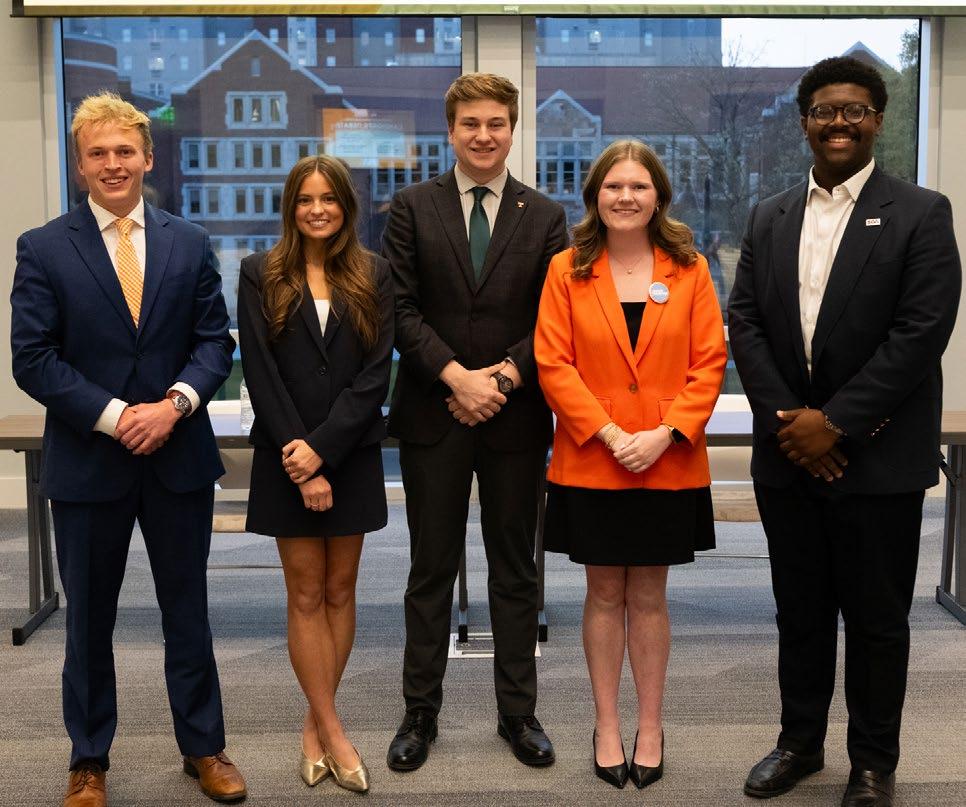
Caroline Marcus and Zack Duncan
For students voting in the 2026 SGA elections, the biggest question at hand is whether ‘VOLS Run on Duncan’ or if the best course of action is to ‘MOVE Forward with Marcus.’ Zack Duncan and Caroline Marcus faced off against each other in the race to be UT’s 105th student body president. As Marcus and Duncan are running to fill the position of student body president, many voters are seeking to understand more information surrounding their initiatives and goals. The debate presented itself as a time to do just that as the candidates were asked to share a specific initiative they plan to execute during their term. Duncan, who came into the debate prepared to “cut through all of the noise,” stressed that the biggest thing he hopes to accomplish during his term is to be the most “accessible and visible administration out of any administration in the past 104 in (the) university’s history.”
Duncan plans to put this goal into action through actively making his way across campus, seeking out students and their issues. Duncan even introduced the idea of a phone number that students can use to communicate their concerns directly with his administration.
Marcus followed up with her initiative that also streamlined communication. More specifically, Marcus plans to tackle university communication, an issue that has caught her attention during her campaign.
According to Marcus, “the biggest overarching thing, that was a repeating pattern in every conversation I had, was about not only our communication in student government but university wide.” To address this, Marcus
Q: What do you believe you will do better than your opponent, and what evidence from your past experience supports that?

A: “With the experience I already have I will be able to seamlessly transition the student government and work on building from what I know, rather than having a learning curve and having to figure out how things work. I know the most effective means of communication, I know the people to ask, I know the people to talk to and I’ll be able to get things done very quickly and very efficiently. I also think that my leadership skills, and focusing on servant heartedness, and having conversations with students excel. My experience with that comes from student government so I know the appropriate ways to communicate and how to maintain a level of professionalism. With that seamless transition it would be able to help us actually accomplish things very quickly and grow from there as a whole.”
Q: What are a few high-priority issues for students you’ve identified and what will you do to address them in the first 60 days?
Q: What do you believe sets you apart from the other candidate?
Q (Marcus): There has been some discourse surrounding your running while currently serving as Chief of Staff of the active administration. What do you have to say to anyone who sees this as a potential conflict of interest?
Q (Duncan): How have you used this past year to refamiliarize yourself with SGA despite not being involved?
A: “A big thing that we talked a lot about and almost every single conversation I had was communication, not only on the student government side but from the university to students and students to the university … In the first semester, I want to visit over 100 student orgs and talk to them about student government and be able to explain what it is and how we can help them and have those individual conversations. … I want people to know we are working for them and if they have something, they can come to us with it ... With that initiative as well, a big part of that, I want to expand a lot of what we do. Working on general body, I really want to open that up and make that a lot bigger than it already is and have more open forum conversations in there, so reaching out to organizations and really pushing people to come to those meetings.”
A: I think what sets me apart is my experience this year being on exec. I have a lot of experience in that realm and I know every single thing about how we operate. There’s no learning curve for me. … Working side by side with Chase this year, I know exactly what he puts into his role and so I know exactly what is expected of me and I know where I can go even further and get results that are really effective for the student body ... The service aspect really goes into it for me. I’ve talked a lot about intention and that is my biggest thing and doing it with my whole heart, that is what I have put into this campaign. It is so important to me with that aspect and making sure that I am very student focused and servant hearted … My love for the student body and my experience in student government really pushed me to run.
A: “I have completely stepped back and I have been stepped back this whole entire semester. Once I expressed that I wanted to run, I did not touch anything with elections. At all. … I see none of it, I know none of it and that’s the way that it should be. I am very far removed from it. It is very, very, very, very important to me that people understand that. This was also a conversation I had with my opponent and assured him the same as well.”
plans to utilize student feedback and present it to the administration to formulate the most effective forms of communication.
At the end of their closing remarks, both Duncan and Marcus left the audience with words to digest. According to Duncan, when it comes time, voters must reflect on whether they want to “maintain the status quo or see big change.” As for Marcus, she advised voters to “choose wisely and truly consider which candidate has your best individual interest at heart and the student body’s.”
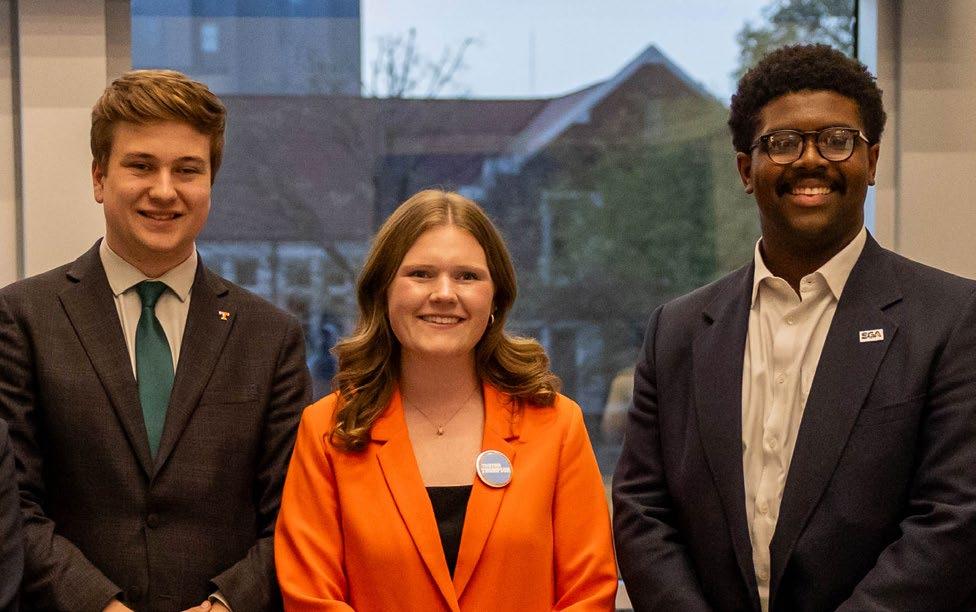
Student body vice president: Anna Beth Thompson and Adarius Parrish
Within the student government, the student body vice president is tasked with overseeing many internal operations and maintaining relationships. Anna Beth Thompson and Adarius Parrish feel up to the challenge of greasing the gears of the machinery that is SGA.
Given that the role of student body vice president is a crucial component of internal organization strength, during the debate, candidates were asked what they would do to improve SGA’s current operations. Thompson, whose campaign emphasizes “connection, transparency and internal effectiveness,” believes that increasing student engagement through social media is an important area of improvement. For Thompson, intentional connection takes place when SGA works to “meet students where they are,” and, as of lately, students seem to be online.
In the golden age of social media, Thompson hopes to utilize technology to bridge the gap between student government and the student body.
Current Interfraternity Council President Parrish holds a similar sentiment. Parrish hopes to improve continuous outreach and student engagement with the student body primarily through “going out and reaching people.” Parrish is in the mindset of making sure that student engagement extends far beyond campaign week.
If elected to serve as student body vice president, he plans to work with various student organizations and “truly seek them out and pull up a seat at the table for them.”
Speaker of the senate: Cade Simmons Cade Simmons, a second-year public affairs and agricultural business major, runs unopposed as this election season’s candidate for speaker of the senate. Simmons, who has served the student body in the capacity of firstyear council chair, in government relations and, most recently, as head lobbyist, is no stranger to the challenges that student government faces.
According to Simmons, “ … constituency connectivity, SGA accessibility … and large structural barriers,” are a few of the noteworthy roadblocks. In the face of challenge, however, Simmons finds himself dedicated to “ … work for (students) and work hard every single day.” During his time in the position, Simmons aims to be a “receptive speaker” that effectively leads a community of undergraduate senators who have well-built relationships with their constituents, enabling them to introduce impactful and relevant legislation to UT’s campus.
Adarius Parrish, a junior political science major, and Anna Beth Thompson, a junior business management major are both candidates for student body vice president. Parrish has previously served on SGA’s first-year council and in the undergraduate senate. Thompson has previously served on the first-year council, on the executive cabinet of the general body and currently as executive secretary in the Darwin administration. The following is a question-and-answer format interview between Beacon staff writer Tessa Nacke and candidates Parrish and Thompson.
Q: What do you believe you will do better than your opponents and what evidence from your past experience supports that?
Parrish: I think I saw something that said that only 20% of people don’t even know that we have an SGA here. And I think that’s a problem, and I don’t think that there’s been any intentionality in addressing that … I think we’ve seen it time and time again for a week. We’re always out there, and then we disappear. So I think trying to keep that throughout the week, throughout the year, and just like we’re here for you, you don’t have to come to us, and we’ll engage you that way.
Thompson: I believe that I bring a deeper and a more comprehensive understanding of how SGA operates and how to make it more effective from my first day in office…Over the past two administrations, I really had a front row seat of what SGA or what the students interests and concerns have been and SGA has made significant internal changes … I believe my experience and my relationship with administration that I’ve built since my freshman year, and my deep understanding of the students here at UT, shows my qualifications to achieve success in this role.
Q: How will you work with university administration when student interests conflict with administrative priorities?
Parrish: One thing I’ve kind of lived by during my administration, and with IFC is that just because we’ve always done it one way doesn’t mean we’ve always
done it the right way. And so engaging in dialog with anybody and everybody that I can and need to to figure out one some of the institutional knowledge pieces about like, how did the way we’re doing it come about?
But obviously there are some things that have worked and trying to make those better, and things that aren’t working, trying to figure out how we engage in dialog and make sure that everybody has a has a voice in the seat at the table to make sure we get it done
Thompson: Relationships are a very important component of all this work, and I’ve really witnessed that over the past two years in my role as the executive secretary, the student interest being met with real, achievable initiatives.
An example of this that comes to mind is the recent Canvas mental health module that was added, which this administration has taken the opportunity to continue the relationship with student success and to bring mental health to students in a way that’s easily accessible. And my main focus as the vice president will be to expand the transparency of the internal work of SGA.
Q: What are a few high-priority issues for students you’ve identified and what will you do to address them in the first 60 days?
Parrish: One is really just the visibility, no one knows what we do. Even if I was doing really cool stuff, if nobody even knows what our organization is, nobody’s really going to engage with it. So the first piece is, let’s keep this momentum up. But I think another big part is trying to increase some of the funds and some of the resources we get to work with … So I think about having those conversations. How do we engage with state lawmakers? How do we engage with the university administration?
Thompson: In my first 60 days as vice president, I really plan to utilize my executive cabinet appointments to focus on the effectiveness of SGA in the projection of effectiveness for this administration in the future, and a position that the vice president appoints as the communication director. And with this role, I plan to really meet students where they are. One of my campaign pillars is together, we connect.
Cade Simmons is a sophomore public affairs and agricultural business major, running unopposed for the SGA speaker of the senate position. The following is a question-and-answer format interview between Beacon contributor Cassidy Gaspard and candidate Simmons.
Q: What do you believe that you will do better than your opponents, and what evidence from your past experience supports that?
A: What makes this race unique for me is that I’m actually running unopposed, which is a little unfortunate from the student engagement perspective, because I think that it would have been awesome to engage with other campaigns’ ideas and initiatives, but it also gives me the really unique opportunity to really focus on engaging with the student body this week. What I think makes this campaign special is that I’ve been working with a wonderful group of individuals who have really broadened my ideas and my perspectives on what we can do with this position and what I can do if elected.
Q: How will you work with university administration when students’ interests conflict with administrative priorities?
A: First off, I just want to say that in my two years of experience within student government, we’ve always had such an incredible working relationship with administration. I think about nine times out of 10 that we have the same vision. It really just comes down to communication. We may have the same vision, but we’re not really seeing how we’re gonna get there. We might have a little bit of a different path. So I think emphasizing that upfront communication from day one, meeting with all the administration possible, (is important) to really get a grasp on where we are as a university.
Q: What are a few high-priority issues for students that you’ve identified, and what will you do to address them in the first 60 days?
A: One of the most unique things about the speaker of the senate position is that my role is really to facilitate and support the operations of the Senate. So while I do, of course, have my own policy ideas and things that I’ve considered, it’s really important for me to try and support the Senate to create those initiatives.
That being said, within the senate and within SGA as a whole, there’s a lot that this position can do to really help facilitate those projects and
‘There was never an open mind’
OLIVIA LEE Staff Writer
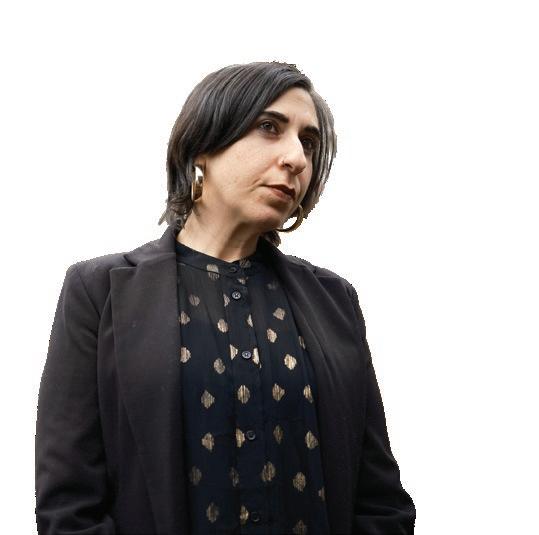
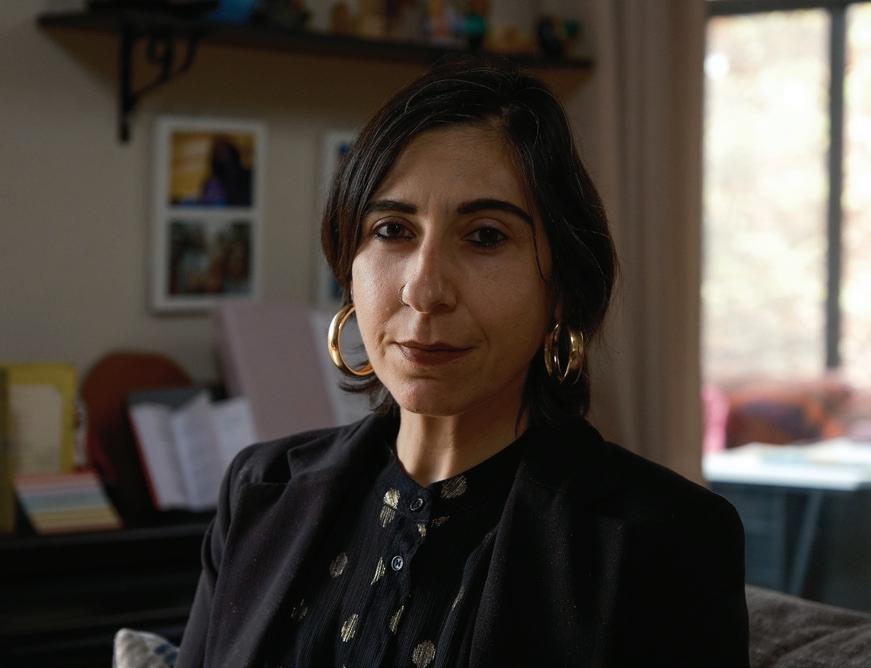
UT Chancellor Donde Plowman sent an official letter of termination to Shirinian on Feb. 11 after months of the former anthropology professor being on administrative leave with pay.
“She was the one who considered and consulted with herself about whether to terminate me or not,” Shirinian said. “Now she’s the one who is also executing the termination, and, funnily enough, she is also going to be the one who has veto power over the appeal process.”
Shirinian faced termination proceedings initiated by Plowman Sept. 15 after commenting online about Charlie Kirk’s assassination, saying “the world is better off without him in it.” The comment surfaced online Sept. 14, drawing the attention of state politicians and the UT community.
Shirinian has since filed a complaint against Chancellor Plowman, President Randy Boyd and Faculty Senate President Charles Noble in both their personal and official capacities.
Since September, Shirinian has denied accusations of her comment celebrating murder or violence.
“Even before I was an adult, I was a peace activist,” Shirinian said. “The idea that I’m celebrating violence is absurd to me. My comment was purely about his presence in political discourse.”
Before sending the official letter of termi-
make sure we’re implementing positive policy. Some of those important things, I think, are to broaden social media strategies, specifically for our student senate in particular, so that way students have access to know when meetings are going on, maybe what the agenda is gonna look like beforehand, and just in general getting more frequent updates on social media about what’s actually going on in the senate.
The second thing is expanding our SGA statutory law and record keeping. Positive change takes a long time. It’s like planting a seed. If you’re gonna get a tree, you gotta be willing to go out every single day and water that tree.
Q: What organizations, administrators, or leaders will you need to work with to accomplish your goals?
A: First and foremost, a great working relationship with the Dean of Students Office and with the Division of Student Life is really important. I feel confident that I already have a great working relationship, through my previous SGA experience, with our leaders such as Mr. Todd Cox, Dean Hughes, and Vice Chancellor Cuevas. Those are all very important people to have a great working relationship with.
From the student leader perspective, I think that there are so many student leaders that I’ve met on campus already through this campaign, whether it be our Greek Life leaders or our multicultural life leaders of our different organizations.
Any organization on VolLink is important to reach out to. I’ve already had a few folks reach out with some excellent ideas, so I think it’s important to get every single perspective, because that’s how we broaden our net and that’s how we get the best ideas possible.
Q: Where can voters go to learn more about your campaign?
A: Instagram. I’m very thankful for the campaign team for all of the work that they’ve done on that. I am also working to design a potential website or a LinkTree. Come meet me in person. We’re going to be tabling on (Pedestrian Walkway) most days. Hours are a little bit flexible on that, but we’re trying to kind of hit all parts of Ped., trying to get some different parts of campus so that students have the opportunity to come meet us. I think that in person is my favorite way, but people can feel free to send me a message on Instagram, email, text or whatever is the best way. I just want to be an available resource.
nation, Plowman sent a letter requesting to meet with Shirinian one-onone to discuss the status of her termination. Plowman held a firm stance against reinstatement in her deposition in early January, Shirinian said.
“She openly stated under oath that she would never consider reinstating me,” Shirinian said.
“The whole point of her wanting to meet with me was to basically take back testimony that she had made under oath.”
Before the official termination, Plowman sent a letter requesting to meet with Shirinian.
“She had sent me a letter earlier in January asking to meet with her one-on-one without counsel, in which she says that she had considered all of the options and was moving forward with termination, but she wanted to have a meeting with me, to hear me out with an open mind, which, of course, doesn’t make any sense,” Shirinian said.
Shirinian said the re-
quest came as a surprise because Plowman held a firm stance against reinstatement in her deposition in early January.
“She openly stated under oath that she would never consider reinstating me,” Shirinian said.
“There was no open mind. I was very well aware of the fact that there was never an open mind.”
Shirinian said the termination was “very clearly political pressure coming from above.”
“She had to terminate me,” Shirinian said.
The Tennessee legislature passed a bill Monday, March 23, that streamlines the faculty termination process, delegating the power to terminate tenure and non-tenure faculty to the chief executive officer or the chief academic officer of an institution.
“They don’t want to actually abide by law. They want to keep doing what they’re doing, but they also don’t want to get sued,” Shirinian said. “So this is really frightening.”
Young Americans for Prosperity set out on Monday to answer one question: who are students voting for in the upcoming Student Government Association elections?
As of Monday evening, the organization’s poll found 48% reporting in favor of Zack Duncan and 44% in favor of Caroline Marcus for the next student body president. Additionally, vice presidential candidates Adarius Parrish was polling at 50% and Anna Beth Thompson at 43%.
YAP is a new club started by sophomore public affairs student Parker Huskey as an extension of a national organization called Americans for Prosperity, a political advocacy group.
“Not a lot of people talk about what’s going on on UT campus. And I think we’re kind of filling that gap, and being a group that represents those problems and has discussions about those problems, and really just tries to find out what the students are feeling,” Huskey said.
The goal of the club is to look at campus and local issues and figure out what’s important to the student body, and use that information to create a nonpartisan communication channel between them and the SGA.
“(We) sort of put our finger on the pulse of what students really care about, and petition them to our student government and to our administration here at UT,” Charlie Olita, a sophomore public affairs student and the club’s vice president, said.
With the SGA elections coming up, they’ve been very interested in how the polls look before and after last night’s debate between candidates. They spent Monday taking a straw poll for the election, which starts Wednesday at 6 a.m. and closes on Thursday at 5 p.m..
“We just wanted to see the numbers and see what students were really feeling like. Obviously, the next couple of days is when the real election starts and campaigning will ramp up and all that kind of stuff. So we just wanted to see how students are feeling right now about it,” Olita said.
Both Olita and Huskey are excited about the data they collected. When they first set up their table, they didn’t have a set goal on the number of responses they wanted, but ended up with enough that Huskey feels it’s “a good enough sized sample that I think it’s gonna be representative of what the election’s going out to be.”
“I think this is a really fun thing that UT does. It gets people excited about these elections, and, you know, everyone wants to know the answer before they come out. So we’re trying to figure out what those things are. And then, you know, kind of tell it to the greater student body beforehand,” Huskey said.
Continue reading at utdailybeacon.com
Shirinian said what left her most shaken after reading the letter was Plowman’s reasoning to terminate her because she had become a target of violence.
“The antagonizing tenor of your words makes you a target for potential retributive violence that could put our students and faculty in harm’s way, as well as irreparably damage the public’s trust in our university,” Plowman said. “I have a responsibility to minimize any such risks.”
Though Shirinian claimed to have never received official death threats, she and the university received emails demanding her termination after her comment surfaced.
“They are claiming that as the target of violence, I should be punished,” Shirinian said. “The university really should press charges against the person who is committing that crime, not against the person who is receiving death threats.”
Despite the chancellor’s decision, Shirinian is continuing with the lawsuit and the university appeal process. Shirinian’s trial date is set for Jan. 19, 2027. “I am going forward because this is not about me,” Shirinian said. “This is about free speech.”
The university has not yet responded to a request for comment.

Over the weekend, the Baker School’s Institute of American Civics hosted its second annual Civics Symposium, with the theme of “American Patriotism at 250.” Former Vice President Mike Pence and Yale University political scientist Steven Smith provided the headline addresses, speaking to the importance of political engagement and what contemporary patriotism looks like in the U.S..
Tennessee legislature passes bill streamlining faculty termination
The Tennessee Senate passed HB 2194 in a 25-5 vote on the afternoon of Monday, March 23. The bill eradicates steps currently required by UT policy in the termination of a faculty member, granting unilateral power to the chief academic office or chief executive officer of the university. The bill awaits Gov. Bill Lee’s signature before becoming law.

Cumberland Avenue car crash
In the 3:00 a.m. hour on Saturday, March 21, a vehicle travelling west on Cumberland Avenue at a high rate of speed collided with a tree and a light pole. 19-year-old Boston West, not a UT student, was arrested on several charges including driving under the influence. Nobody was injured, but damage was done to the street and windows shattered at the Cumberland Food Hall.
Student arrested on 4 counts of exploitation of a minor
On March 18, 2026, sophomore finance major Luke Herrmann was arrested on 4 felony counts of aggravated sexual exploitation of a minor. The warrant was served at 3:44 p.m. at the Beta Upsilon Chi Fraternity House, located at 1812 Fraternity Park Drive. Records show Herrmann was released on a $200,000 surety bond the following day in Sumner County, Tennessee.

EDITORIAL
EDITOR-IN-CHIEF: Caden Dyer
PRINT MANAGING EDITOR: Emily Hurst
DIGITAL MANAGING EDITOR: Ansley Graves
COPY CHIEF: Lauren Holladay
NEWS EDITOR: Patrick Busch
ARTS & CULTURE EDITOR: Harper Brabson
SPORTS EDITOR: Trevor McGee
ASSISTANT SPORTS EDITOR: Alex Sarkis
OPINIONS EDITOR: Natalie Dripchak
PHOTO EDITOR: Jackson Clavier
DESIGN EDITOR: Lindsay Favre
ENGAGEMENT EDITOR: Sarah Portanka
AUDIENCE DEVELOPMENT EDITOR: Sophie Mehta
COVER DESIGN: Lindsay Favre
PAGE DESIGNERS: Emma Fingeret, Ashley Cammarota, Renee Allen, Maya Williams, SaraJane Weber, Ava Balducci, Ava Edwards, Soma Fulwiler, Kate Wims, Lili Ellis
GRAPHICS BY: Lindsay Favre, Emma Fingeret, Maya Williams
ADVERTISING/PRODUCTION
ADVERTISING MANAGER: Abigail Cheslock
ADVERTISING REPRESENTATIVE: Joe Slott
CONTACTS
TO REPORT A NEWS ITEM OR SUBMIT A PRESS RELEASE, please email editorinchief@utdailybeacon.com or call (865) 974-2348
TO PLACE AN AD, please email admanager@utk.edu.
LETTERS POLICY: Letters to the Editor must be exclusive to The Daily Beacon and cannot have been submitted to or published by other media. Letters should not exceed 400 words and can be edited or shortened for space. Letters can also be edited for grammar and typographical errors, and Letters that contain excessive grammatical errors can be rejected for this reason. Anonymous Letters will not be published. Authors should include their full name, mailing address, city of residence, phone number and e-mail address for verification purposes. Letters submitted without this information will not be published. The preferred method to submit a Letter to the Editor is to email the Editor-in-Chief.
CORRECTIONS POLICY: It is the Daily Beacon’s policy to quickly correct any factual errors and clarify any potentially misleading information. Errors brought to our attention by readers or staff members will be corrected and printed on page two of our publication. To report an error please send as much information as possible about where and when the error occurred to managingeditor@ utdailybeacon.com, or call our newsroom at (865) 974-5206.
The Daily Beacon is published by students at The University of Tennessee on Wednesday during the fall and spring semesters. The offices are located at 1345 Circle Park Drive, 11 Communications Building, Knoxville, TN 37996-0314. The newspaper is free on campus and is available via mail subscription for $200/year or $100/semester. It is also available online at: www.utdailybeacon.com
On March 20 at 8:40 p.m., The Daily Beacon received this email from crockettutk@gmail.com.
Dear Editor-in-Chief,
Please take time to reflect on these passages. The Student Government Association is in dire need of visionary change and swift action. I hope that the Daily Beacon can communicate this to the student body at large. The students deserve a more prevalent voice at UTK, something your paper agrees with.
Regards, Crockett
We found the following two essays attached to the email, and an additional hard copy of the essays was delivered to our office. Both were signed “Crockett.”
In light of the Beacon’s plan to produce a semi-special issue regarding the SGA elections, it seemed an appropriate time to publish said essays. Here they are, edited only for AP Style.
CADEN DYER Editor-in-Chief

NATALIE DRIPCHAK Opinion Editor
Volunteer No. 1: concerning the state of the student government
To the Volunteers:
IT IS sometimes asked of students of a university to represent their needs and desires in an organized forum. This is the case of the University of Tennessee and the Student Government Association (SGA). However, the strength of “representation” is not currently sufficient. Students seldom care for the efforts of the SGA. Students seldom feel the impact of the SGA. Most strikingly, members of the SGA seldom speak accurately for the student body at large.
Students and members of the SGA are often underinformed about the governing body’s basic roles. Often, students, when asked about problems SGA should tackle, respond in droves with “parking” and “football tickets.” These are valid concerns and should be addressed in due course, but in its current state, the SGA has no accessible relationship to influence such matters. For members of the SGA, legislation is often mislabeled in its purpose (see “Bills, Resolutions, Proclamations,” Volunteerist #2). Legislation often lacks evidence or proof of student support for the proposed action. Legislation is often proposed with only small groups of students in mind, or actions are proposed without consultation to administrators, killing them in their tracks. With sufficient and comprehensive training of the SGA’s members, more beneficial actions are possible. Each member of the newly elected senate, first year seminar, and the executive branch should be briefed on exactly what the SGA can do.
Part of the SGA’s lack of education stems from the absence of timely information exchange between delegates and the broader campus. Polls say that nearly 20% of students aren’t aware that the University of Tennessee has an SGA. Of the students who are aware of the SGA, three-quarters consider themselves very uninformed on any piece of legislation that has passed in this administration. As referenced earlier, the issues of the student body reach beyond that of reformed bus stops and painted HHS stairs. Delegates seem to dance around the largest issues on campus as if they are taboo or frowned upon. This disconnect between what the students want and
what the legislators propose is a key issue at the heart of the SGA’s weakened state. A clear and concise methodology for constituent-representative outreach must be established. Representatives must meet students where they are.
Within the SGA, communication similarly lacks and harms the productivity of its initiatives. By requirement, committees and the executive cabinet must meet and subsequently give a report on their proceedings to the senate floor. These reports are embarrassingly lackluster. Senators, especially, who are rightfully busy with their own pursuits, are often ignorant of the executive’s initiatives. The executive, which is rightfully preoccupied with pursuits, is similarly unaware of the senate’s actions and then complains of ineffective legislation. The solution is an overhaul: reports in all capacities must become more detailed, more collaboration between branches must be fostered and more understanding must be facilitated. In addition, THE HILL IS NOT UTILIZED ENOUGH FOR ORGANIC INTERACTION BETWEEN LEGISLATORS. All of these are in pursuit of a consistent marketing of the SGA to itself and, more importantly, to the students. Energy in the SGA seems to only come around for one week out of the year. Promises are made to the student body on what will be done, what changes will be made and how the administration will boost campus morale. Yet, by November, the SGA seems to be hollowed out, with no real change being made by legislators and little implementation by the executive. In the last year, one bill was listed in the public OneDrive. Why run for office if you are done by the third session? Promises need to be kept, and the changes need to be actualized. If the SGA really is the voice of the students, the students shouldn’t elect those who aren’t willing to be that voice. Future delegates need to be engaged with their constituencies and ride out the full term. Furthermore, proxies as a prolonged intermediary solution to absences is not efficient or effective in making changes. Accountability requires passion, and those without passion shouldn’t be the ones influencing decisions.
The SGA lacks the energy to make student-to-student decisions, much less have any say or influence in the broader, university-wide decision-making process. Speaking of internal communication, the SGA is lacking a solid mission and member guidance. Within its chamber, debate is dead, and it is no greater outside. The greatest influence the SGA possesses is in its relationship with the administrators. Here, the members approach administrators with little preparation or notification to the most experienced legislators. That being said, with an increase in education, communication, and energy, the student voice can be brought to the table. No revolutionary change is necessary, but student voices must be at the table.
Why run for office if you are done by the third session? Promises need to be kept, and the changes need to be actualized. If the SGA really is the voice of the students, the students shouldn’t elect those who aren’t willing to be that voice.
CROCKETT
In short, the student body needs an energetic governing body. Any student can fill this role, but it cannot exist in the current mindset. Productive change is only possible if the operation of the SGA is changed to better serve and reflect the representative leadership it requires.
Crockett
To the Volunteers:
THE OPERATION of the Student Government Association is complex. There is nuance in legislative structure, particulars in administrative interaction, and strictly limited budgetary allowances. This makes for a governing body that is hard to grasp, but this does not excuse student leaders from taking hold of their rightfully concerned campus. Legislative acts are split between three categories: bills, resolutions and proclamations. Bills are proposed when changes strictly under the authority of the SGA are proposed. No requirements for committees to approve bills are established. Bills require a first and second reading split between two bimonthly sessions.
An example of a bill would be a proposition to change senate bylaws, establish a new position in the executive branch or change the number of required senate sessions. Resolutions are the substance of the SGA. Resolutions call on the university to act in some way decided by a majority vote. Resolutions do not require committee approval and only require one reading. An example of a resolution is to call on the University of Tennessee to reinstate senate control over allocation of the Student Programs and Service Fee, introduction of senate members onto decision-making boards around campus, or, in the case of this current senate, create an A+ grading scale for only Haslam students. Proclamations are less common. They have the same passage requirements as resolutions. Proclamations are used to commemorate, recognize and remember certain individuals, groups and actions across campus. An example of a procla-
mation was a recent one to recognize the life of the late Natalie Haslam. It is relevant to note here that conversation is often more effective than legislation. The pull that members of SGA possess can and should be used to make simple changes without drawn-out legislative procedure.
UTK is the only school in the SEC with allocated SGA power of less than $100,000.
CROCKETT
A crucial component to understanding the operation of the SGA is knowledge of the lobbying process for passed resolutions. Upon passage, resolutions are sent to the head lobbyist, an elected senate executive. This member takes upon themselves the task of creating a presentation and using formed relationships with administrators to argue for the implementation of the legislation. Oftentimes, legislation fails to make it to this stage. The Senate executive, the executive branch or administrators will strike down legislative ideas out of concern for failure. This concern stems from ill-developed policy, and while the administration genuinely wants to help, it is difficult to do so based on the issues at hand. The relationship between the SGA and administrators is important, as strong relationships foster success. It still falls on the student legislators to connect with their constituents and create effec-
tive and creative policy solutions. This too requires immense passion and energy above all.
The SGA has a pseudo-budget. University dollars are allocated towards the SGA, but the use of such is limited and already limited in supply. Currently, the budget is managed by the Chief of Staff, and the budget value is not entirely clear and cannot be easily accessed. It is estimated to be around $48,000. This system is due to a 2019 TN state legislature decision to eliminate the ability of the UT System to provide funds to student organizations. This change came in direct response to “Sex Week,” a student organization event supported with university funds. This did not please the state legislature.
More recent occurrences of budget misconduct have further tightened monitoring of the SGA. This decapitates the common role of many other SGA’s across America. At other institutions such as Georgia Tech, FSU, Florida ($22,000,000!), Auburn, and Alabama, the SGAs all manage major budgets that directly influence student life. UTK is the only school in the SEC with allocated SGA power of less than $100,000. Budgetary procedure at many of these schools involves distributing the Student Programming and Service Fee, which is a fee directly paid by students. Budgeting on this scale would be no easy task, but with passionate members, the student body of UTK can reclaim its voice in deciding how money is spent. Alternatively, student leaders need to be placed in positions to voice student concerns regarding the budget. See the seven-figure balloon budget. The current state of attendance requirements for legislators is loose and unserious. In its current state, legislators can miss up to three sessions a se-
mester, with no more than five absences in the semester. Given the current bi-weekly system, a legislator can miss a third of the sessions without penalty, not to mention the proxy system, which essentially allows for a stand-in legislator in the event of an absence. The SGA is arguably the most important student organization on campus, and its attendance policy does not match such importance. The state of outreach in the SGA is clouded in self-interest and negligence of constituents. Currently, there are few to no requirements placed upon the executive or the legislature where they have to meet with constituents. There is a constituency points system in which representatives must meet a requirement of showing a base-level interest in their constituents. Even with this vague points system in place, over half of the senators have not met the minimum point requirement, furthering the disconnect in external communication between students and SGA members. The lack of constituency representation reflects on the SGA’s decision-making.
Committees are becoming less and less important in the agenda-setting process, if there is an agenda-setting process at all.
To strengthen this SGA, it is critical to improve communication, increase collaboration on all fronts and make clear the expectations for legislators. These initial improvements will surely result in greater passion for the noble cause to lead fellow students. Later, clearer budgetary guidelines, reasoning behind difficult issues, and general education of the students will come to fruition.
Crockett
Polls say that nearly 20% of students aren’t aware that the University of Tennessee has an SGA. Of the students who are aware of the SGA, three-quarters consider themselves very uninformed on any piece of legislation that has passed in this administration.
Crockett
Rhythmic techno music plays as Fashion Society models strut down the hall, showcasing eras new and old.
On March 20, the Fashion Society at UT hosted its largest event: the Spring Fashion Show, Future vs. Past.
On the first floor of Ayres Hall, the show consisted of 60 models, ranging in detailed outfits from a flapper to a cyberpunk, a knight to an apocalyptic cowboy.
The show took four months to orchestrate, with all of the moving parts planned before the show announcement even released. The society’s sole goal is to make the Spring Fashion Show better than the year before.
Each of the society’s committees helped produce the show, with everyone on its executive board overseeing its direction.
This includes the general body committee, event planning committee, social media committee and outreach committee.
Multiple stagehands worked to time every step of the show. Photographers and videographers carried the responsibility of capturing the moving art with their cameras. The decor team added posters and props and controlled lighting for the runway’s setup.
The theme of Past vs. Future is both relevant and expressive for the society and its audience.
For the past theme, the society wanted to explore different, easily recognizable eras of fashion trends. Yet for the future section, more creative liberty existed in outfit choices.
All outfits were completely up to the creative vision of their models, meaning that most made their own. The walk purposely arranged the models in chronological order based on the time their outfits were based on to create a transition from the past, present and into the future.
Morgan Baker, an executive member on the event planning committee, made her entire outfit out of chicken wire, going for a futuristic look. The wire
completely covered her black skirt and black top; her hair and make-up elevated the outfit in a smoky fashion.
“We all collaborated to make all the designs and try to make everything cohesive. We’re really proud of it,” Baker said. “We interpreted it (future) as techno vibes.”
Connor Hopkins is the head of the general body committee and a member of Dauntless Armored Combat, a modern medieval group of knights that practice the medieval combat sport buhurt. He sourced a real kit of armor for his full knight outfit from the team, as well as had a sword, chainmail helmet, and yellow and blue garments underneath his armor.
“I definitely underestimated how loud it would be. I was clanking down the hallway, and I was told that people at the other end of Ayres could hear me,” Hopkins said. “All in all, I’m super proud of my outfit and I really enjoyed that experience. It’s definitely something I’ll remember for the rest of my life.”
Model Valeria Esquivel combined a cavewoman and Viking look for her outfit. She accentuated the look with face makeup as well, adding as much animal print clothing and fur as she could. Most of her items were thrifted or self-made, including a belly ring made to look like bone and a rabbit fur belt with a tail.
“I was thinking that putting it all together spastically would be authentic to what a cavewoman would’ve worn in theory,” Esquivel said.
Madison Le, the executive head of the general body committee, dressed in cyberpunk mecha streetwear fashion with a set from the Vietnamese brand FENG SYSTEM. Le’s shoes were the most tedious aspect of the look, inspired by a pair of boots she fell in love with from another runway collection. As they never went on sale, she made similar heelless pleasers herself with cosplay foam.
“It took weeks, but I am so happy with how it brought my whole look together and added a

very surrealistic touch,” Le said.
Sam Rhoton, a model and a DJ for shakeitupwutk, created the soundtrack for the fashion show. Rhoton mixed all of the music from scratch, saying he wanted to create a sound with at titude.
“I tried to be on theme as I could. With past drawing inspira tion from flutes, vogue beats and throwback house hits, and fu ture highlighting tech no, glitch and experimental confidence tracks,” Rhoton said. “The runway is a spe cial place, and designing music to accompany the visuals was a very special thing to create.”
Ashley Sooklal, an exec utive member on the social media committee, is a se nior this year who began with the club in its early stages as a freshman.
Sooklal is a part of the founding executive board and believes that this year’s spring fashion show is per fect for where the so ciety is now.
“It’s a good point to reflect on the past and where we came from, but look forward to the future because I think now, this year especially, this is our foundation for the fu ture,” Sooklal said. “And every body who joins the Fashion Soci ety from now on will know it as what it is right now.”
The society originally debated charging entry to the show but decided to make the event free. They wanted the show to be as accessible as possible to everyone who came to see all of the work that everyone involved put into it.
“The annual Fashion Show has become a tradition that translates more to labor of love,” Le said.

Though the Spring Fashion Show had many high expectations, it beautifully showcased what the Fashion Society is all about.
soming from their first meetup at the summer solstice, describes their sound as a blend of folk-rock roots with modern indie energy.
“We were Solstice, just as is for through high school, and then when we got to college and started taking it more seriously, probably about two years ago, we fully rebranded to ‘The Band Solstice’ — three words,” drummer Strader said.
Their rebranded name matches their growth as a band, taking music from a high school hobby to a fulltime career. The Band Solstice has over 140,000 monthly listeners on Spotify, and it continues to rise.
This is what this is. We recorded these and wrote these songs to be on this,” Jackson Frazier said.
This 12 song debut album has an alternative and indie vibe, characterized best by the word stories.
“This album wasn’t written in a month. It’s a collection of songs that we have written over the course of our four years in school and these are a lot of personal stories to us and then people around us, our friends, our family, just our experiences,” Gee said.
The Band Solstice, formed by high school friends from Knoxville, released their debut album “The Band Solstice” on March 13 after years of playing together. Band members and University of Tennessee students Marty Gee, Grayson Strader, Jackson Frazier, Maddox Frazier and Jacob Greene found their musical start early, meet-
‘A
ing through mutual connections in high school.
“We all grew up playing our respective instruments … our parents knew each other through work. When we were about eighth grade, freshmen in high school, our parents were like, ‘you guys should meet.’ And so we played together and played a little talent show, and loved it. And that’s kind of how the band blossomed really young,” rhythm guitar and lead singer Gee said.
The Band Solstice, their name blos-
“It takes a lot to treat playing your instruments or writing music as a real thing … I feel like we became better songwriters and better musicians as we grew up. We found joy in writing songs and playing live shows and so that sparked the interest in actually doing it as a band,” lead guitarist Jackson Frazier said. After putting out various singles like “Mile Drive” and “Crashout,” they finally wrote, recorded and produced a full album.
“Starting out and an album can be kind of like a scary idea … It was kind of like a weed out process as well, kind of making everything match that body of work. It’s a little bit of a pruning process that we did over a long time to just kind of create something that we want to be labeled as that first album.
Another huge part of music, and being in a band, is performing. The Band Solstice is no stranger to this notion, having performed three times at the Mill and Mine this year alone.
“I think an interesting part about touring is there’s a lot of highs and lows on it, because we’ll play in towns where we’re playing in front of sold out shows. It’s a great time. And everyone there knows us, everyone knows our music. But then it’s very real to play 600 miles from home on a Monday night to no one … I’d say the highs and lows of touring are very drastic,” bass player Maddox Frazier said.
They performed their album release show in Knoxville on March 19 at the Bijou Theater, with Harvey Street Band as the opener.
Releasing an album is no small feat, and they are excited about the future of the band as they continue to move through school and graduate.
“We’re going full time starting this May, and we have a big summer lined up. We’re going to be touring for a few months. We’re really looking forward to how the summer is shaping up and we’re excited to just launch into it and have boots on the ground and just run full speed ahead and see what happens,” Gee said. Above all, The Band Solstice represents their growth from their start as high schoolers jamming for fun to a successful full-time indie band with a sound and a connection that is undeniably special.
“My little high school self would not, not even believe where we are (today) … It’s so fun to be able to create with them and also the friendships we’ve made along the way and all the people we’ve met even outside of recording the album,” Gee said.
“We genuinely wouldn’t be able to do any of this if it wasn’t for our friends supporting us. They’re like our family. I can’t find the right word right now, but it’s motivating, and it’s also moving.”
“I think playing in college towns is cool, because in a way you’re sort of a part of their college story or their college experience. People remember those bands they saw in college, or the parties they went to in college for the rest of their life. So it’s cool to be kind of part of other people’s story in that way too,” Gee said.
beauty has arisen’: Eugenia Williams House to open April 11
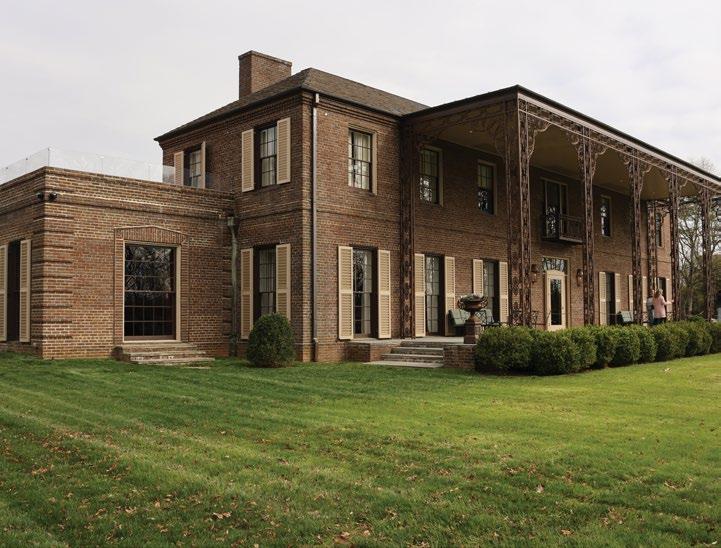
After decades of closed gates, the Eugenia Williams House will hold its grand opening to the public on April 11.
The house, which has been sitting unkept for decades, has undergone a full restoration.
The 24-acre park also went through a full renovation, taking out invasive plants and planting new ones.
Megan Robertson is the director of the Eugenia Williams House and has been working with this project for just under two years.
“One of the most memorable things I can think of is one of our board members has described how when you walked into this house, it just felt desolate,” Robertson said.
Shattered windows joined walls branded with graffiti, left behind by trespassers. A large part of restoring the house had to do with reinstalling products and repainting.
Some of the key features that Eugenia Williams House displays are the brick masonry, the terracotta tile roofing and massive windows that provide a connection to the grounds. Everything is either original or added with a thoughtful decision process.
“One of my favorites is Eugenia’s beautifully appointed dressing room,” Robertson said. “There are cedar shelves and drawers, and inside the drawers, we found tiny slips of paper that said, ‘spring belts,’ ‘summer belts,’ ‘winter belts.’” Paintings as well as furniture pieces are a
few of the new additions. Safety precautions such as railings were put in as well to accommodate visitors.
“This is really an architectural time capsule,” Robertson said. “We thought about style in the 1940s, we thought about, with the paintings, what might have felt like an organic family collection of art that had been acquired over time.”
Architect John Fanz Staub created this home in a way that feels modern. The house became a marvel of technology when it was built, including aspects such as power-operated garage doors, a dishwasher and an electric ice box.
Outside of the house, the grounds needed transformation as well. After fighting invasive species, the team uncovered hidden elements of the original landscape, such as stone trails and evidence of gardens and vineyards.
Katharine Killen is the executive director of the Aslan Foundation and played a major role in the restoration process.
“As a native, I drove by this house a thousand times and always would slow down to try to look through the wall,” Killen said. “I had no idea what the grounds were like in the back, I had no idea that there were over a mile of trails on this property.”
The Aslan Foundation funded the restoration of the Eugenia Williams House and stayed present during the whole process, alongside the architects and team.
“The Aslan Foundation’s mission is all about historic preservation, supporting the
arts and culture and welfare and overall livability in this community,” Killen said. “The project began with a desire to save this property, restore it, and open it to the public.”
Numerous gardens are available for visitors to explore, uncovering bits and pieces of history throughout the grounds — including the stable, which was restored using recycled materials from other outhouses.
Old vines on the trees tell the story of the property’s former desertion. Some trees bear evidence of the strangulation and impact the invasive plants had.
“The invasives were so thick here that our property team recounts going through the back with a machete to cut your way through,” Robertson said. “This is how thick those invasive species and overgrowth were.”
As the property is an accredited arboretum, thousands of species have been planted with the site’s ecology in mind.
Eugenia Williams House is currently working through soft openings to the public Thursday through Saturday from 10 a.m. to 5 p.m. Anyone is welcome to explore the grounds, but entering the house requires booking a guided tour.
QR codes can be found throughout the grounds for more information, and leashed pets are allowed. Eugenia Williams House is also working with partners to host various events on the property.
Partners such as the Knoxville Opera and the Knoxville Museum of Art are collaborating to begin programs like concerts, lectures and more.
“We are working with the Knoxville Museum of Art for a site-specific contemporary art installation that’s going to go up this summer,” Robertson said.
The grand opening will take place on April 11 and information about tours and history can be found on their website.
“I am so excited to have to have people come here and to finally be able to open it,” Killen said. “I think it’s part of the mystery and intrigue of Eugenia and that we know she was a deeply private person, but this house is designed to entertain.”






THEO COLLI Senior Staff Writer
Tennessee baseball’s attitude on the field after Friday night’s series-opening loss to Missouri was one of urgency — the team couldn’t afford many more of those results.
The weekend prior to the three-game Missouri series, the Vols were feeling strong coming off a Friday win against No. 7 Georgia. However, this momentum would soon be put to the test. Instead of capitalizing on the first win, the Vols dropped the next two games, leading to yet another conference series loss. This downturn made the start of the Missouri series all the more critical.
“It’s reminiscent of last week a bit,” junior catcher Stone Lawless said. “We threw the first pitch on Friday and obviously didn’t get the job done, so we know we’re capable of doing it, and in this league it’s all about winning the series.”
Friday’s loss was a mixed bag of issues. Both the pitching and offense fell flat as Tegan Kuhns pitched just three innings while allowing three runs. Outside of home runs from Blaine Brown and Lawless, the effort fell short of winning baseball. Yet, as the Vols learned the week prior, momentum can flip just as quickly as it’s lost.
The unsung hero of the weekend came out of the bullpen on Saturday night, as true freshman southpaw Cam Appenzeller delivered 4.2 innings and was just one out away from finishing the game in relief for starter Landon Mack. Appenzeller tossed seven strikeouts, with two coming in the top of the fifth inning. The most impressive part of the strikeouts was that Appenzeller entered that inning with no outs and the bases loaded, and still exited, allowing no runners to cross home.
“He’s not a normal freshman,” Tennessee head coach Josh Elander said. “I think we’ve all seen that, and maybe I’m being mean to him because every time I bring him in, he’s got the bases loaded or some kind of fire going on. But he’s growing up. It’s really good stuff. It’s slow heart rate, good poise, and he’s very excited for moving forward to the next week with how he’s been able to kind of stack these outings up.”
Mack labored, allowing three walks to the Tigers over four innings and allowed the Tigers’ only two runs of the night. Despite the starting pitcher struggles from Friday and Saturday night, the relief from Appenzeller played a big part in the Vols bouncing back for a Saturday-night win.
Freshman Trent Grindlinger drove in the Vols’ first run of the night, before
sophomores Manny Marin and Levi Clark added runs in the third and fourth off of sacrifice hits.
Sunday’s third and fi nal game marked a rubber match between the Tigers and Vols. Evan Blanco was tasked with the start and broke the streak of rough starts while pitch ing a career-high 7.2 in nings, striking out five, yielding one run and walking two batters.
“He was so good (Sunday),” Elander said. “It was just good to see him really settle in, and they were hacking from first pitch, trying to get after him, but he just did a good job of mixing speeds and really filling it up.”
Garrett Wright and Clark both went yard to clinch the 7-1 win over the Ti gers, giving the Vols their first con ference series win dating back to last season, in April against Ole Miss.
The Vols’ midweek task is against UNC Asheville, before traveling to Nashville for a three-game set with Vanderbilt beginning March 27.
Stone Lawless (27) celebrates hitting a double during a game against Missouri in Lindsey Nelson Stadium. Saturday, March 21, 2026. Jayden Randolph / The Daily Beacon


TYLER EDMANDS Staff Writer
Before the first real tip-off of the 2025-26 season, Lady Vols basketball had already suffered the first gut-punch.
Following a dominant 148-48 exhibition win over Columbus State, guard Ruby Whitehorn was dismissed from the program.
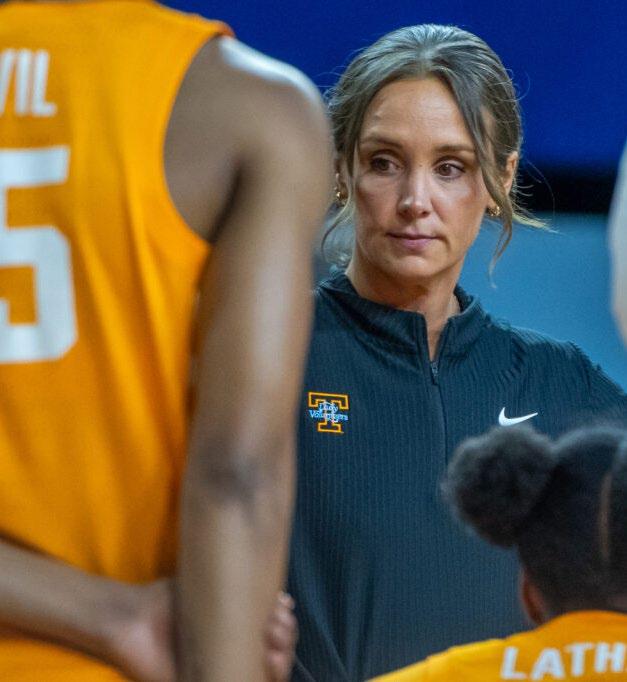
The senior had been projected as one of the team’s offensive focal points and a key voice in the locker room heading into second-year head coach Kim Caldwell’s most anticipated season yet. Losing that locker room leadership before a single game counted cast a long shadow over what was to come.
“I can’t put it on roster construction,” head coach Kim Caldwell said. “I got to put it on me, right? I have always been able to recruit players and stack talent and get them to run through a wall for me and get them to play hard and I wasn’t able to do that.”
The Lady Vols were ranked No. 8 nationally in the preseason after adding a top-two recruiting class to a team one-year removed from the Sweet 16. Though expectations were sky-high after a 24-10 the year prior, the 2025-26 season proved to be the most difficult in program history.
Tennessee opened on the road at the Ro Greensboro Invitational in Greensboro, North Carolina, and fell 80-77 to No. 9 NC State, a loss that foreshadowed the struggles against competition. The Lady Vols rebounded to win their next five games, though there were still growing pains. A fourth-quarter comeback was needed to fend off Belmont, encapsulating those pains as Tennessee searched for consistency.
After five chances to improve, the Lady Vols were faced with another challenge on the road. They failed to even compete, getting decimated 99-77 by No. 3 UCLA. They managed to squeak out a 65-62 win over Stanford, but a 89-65 loss to No. 16 Louisville put another damper on Tennessee’s non-conference slate. Heading into SEC play, the Lady Vols’ schedule was forgiv-
ing. Their first four matchups finished the year 14-50, giving Tennessee ample opportunity to adjust to conference play. Tennessee won all six of its conference games to start the year as guard Mia Pauldo emerged as a playmaker. After averaging 9.9 points per game in the non-conference slate, the freshman suddenly averaged 16 through the first six games. Tennessee capped off its sixgame win streak with wins over
No. 21 Alabama on the road and No. 11 Kentucky. Redshirt junior Talaysia Cooper looked great through the beginning of SEC play, averaging 14.4 points after missing a game due to a head injury. She also grabbed 4.6 rebounds and three steals per game. At No. 1 in the SEC with a 6-0 record, the Lady Vols seemed bound for a deep March run. Then everything unraveled. Tennessee lost a rematch at home to Mississippi State 77-
62 after defeating the Bulldogs on the road 90-80 earlier in the season. Next, the Lady Vols went to Storrs, Connecticut, to face the undefeated defending national champions in UConn. The Lady Vols had pulled off magic at home in 2025 when they beat the Huskies 80-76, but it was nowhere to be seen in 2026. Despite the game being tied at 42 heading into halftime, the Huskies pulled away to handily win 93-66. A tough overtime
win over Georgia gave Tennessee hope, but it would be short-lived. The Lady Vols were tasked with No. 3 South Carolina on the road. Despite it being a game between the No. 1 and No. 2-ranked teams in the SEC, the game never felt competitive. The Gamecocks handed Tennessee the worst loss in program history, 93-50, smashing the record by 12 points. The Lady Vols picked up their last win of the season over a familiar face – former player and head coach Kellie Harper. Harper and the Missouri Tigers were smashed by Tennessee, losing 98-53 in Harper’s return to Knoxville.
Despite the confidence-boosting win over the Tigers, it wouldn’t sustain into the final games of the regular season. Tennessee finished the last six games 0-6, losing to five top20 teams and Texas A&M to finish the season 8-8 in conference play.
March brought no relief to the Lady Vols. Tennessee finished as the No. 6 team in the conference, earning a first-round bye in the SEC Tournament. The Lady Vols were upset by No. 11-seeded Alabama 76-64, extending the losing streak to seven games.
The Lady Vols earned their 44th straight NCAA Tournament bid two weeks later, being selected as a 10-seed. Tennessee was sent to Ann Arbor, Michigan, to face a familiar foe in NC State. The Wolfpack, who opened the season with a win over Tennessee, closed it the same way, 7661. The Lady Vols 16-14 record, including a program-long eightgame losing streak, became the worst single-season win percentage in team history.
“It was the worst year of my professional career,” Caldwell said. “Our players deserved better than that from me and you learn from that going forward.”
A long offseason looms ahead for Caldwell and the Lady Vols. Though the transfer portal doesn’t open until April 6, murmurs of player departures from the program have begun. Junior Alyssa Latham and freshman Deniya Prawl have announced their intention to leave, with presumably others to follow.
TREVOR MCGEE Sports Editor
PHILADELPHIA — Shades of horror presented themselves in Xfinity Mobile Arena. Tennessee basketball did it against Kentucky twice. It did it against Kansas, Missouri and Alabama, too.
A second-half lead has not been safe with the Vols this season. And when a once-nine-point lead turned into a onepoint deficit with 2:03 to go, things were different.
“If we didn’t hold it this time, we were going home,” freshman guard Amari Evans said.
Tennessee didn’t want to go home. It certainly didn’t want to do it in Rocky Balboa’s city, using Apollo Creed’s “there is no tomorrow” one-liner movie clip to prevail over Virginia, 79-72.
After the Cavaliers took a 71-70 lead in the closing minutes, Tennessee outscored Virginia 8-1 and came up with timely defensive stops. The Cavaliers went 0-for-6 from the field after taking the lead. The Vols went 9-for-10 from the free-throw line to seal the win.
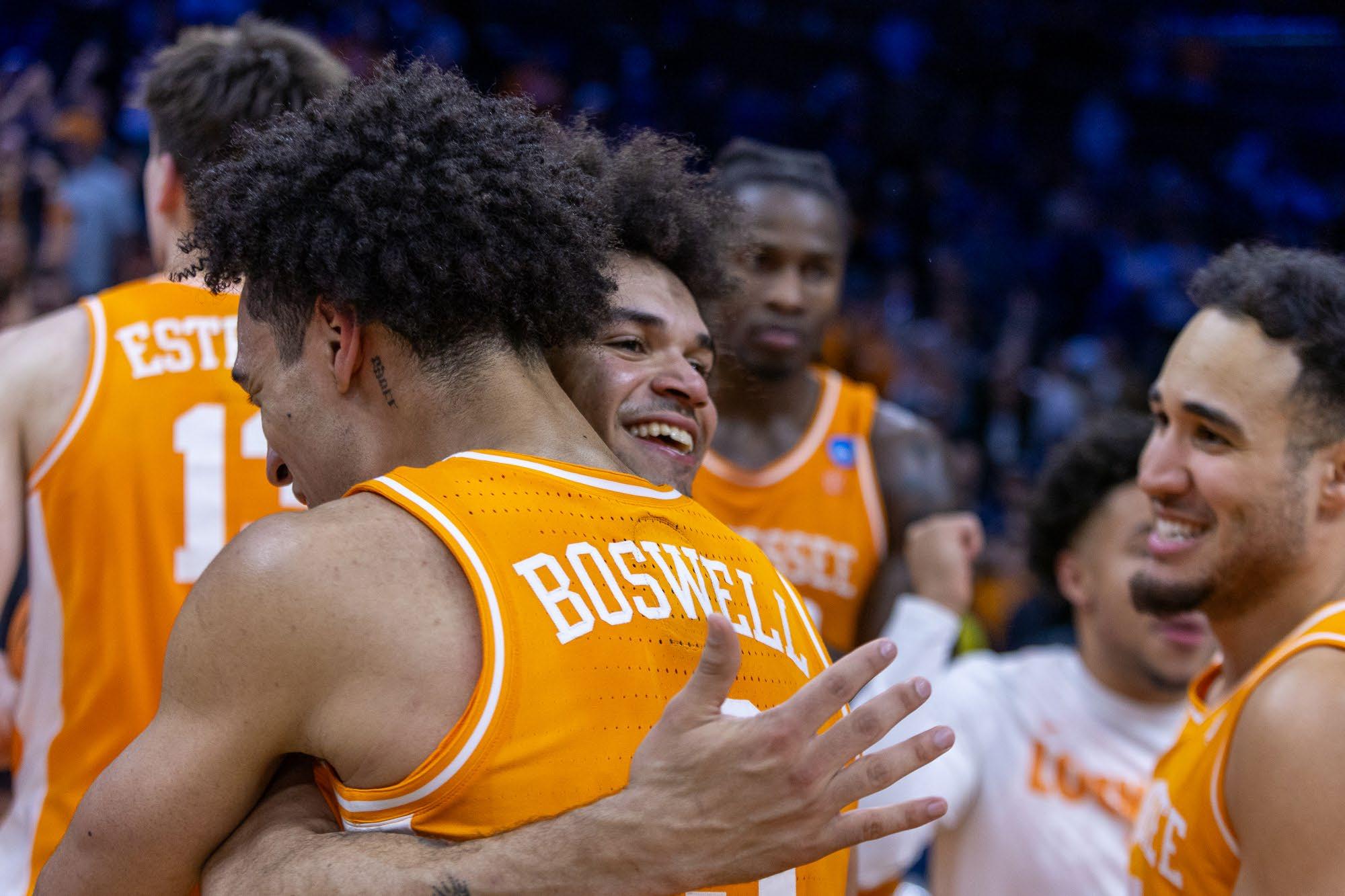
“If we want to win, we have to have that level of intensity on defense, and it just kind of stuck,” defensive specialist Bishop Boswell, who also recorded a career-high nine assists and four 3-pointers, said.
It’s a conversation that began at the break when the Vols led 36-31.
“We emphasized coming in at halftime that we’ve been here before,” forward Jaylen Carey said. “We’ve given up leads like this before, and we don’t want it to happen tonight. We didn’t want to go out like that, with something that we’ve repetitively done in the past. So just changing the narrative and being better.”
Still, they did everything in their power to lose the game in the same ways they blew five double-digit leads this season. They took a nine-point lead with 10:31 to go, then turned the ball over six times from that point on.
Ja’Kobi Gillespie committed three turnovers in the last five minutes of the game, including a costly giveaway with 2:12 to go that led to Thijs De Ridder’s leading 3-pointer on the other end.
It’s a familiar boat that Gillespie has been in this season, where his late-game turnovers haunted the Vols in losses. His lackadaisical pass with 34 seconds remaining against Kentucky in Knoxville led to a Collin Chandler steal and Otega Oweh basket to push the Wildcats ahead from a 17-point deficit.
It didn’t hurt Tennessee as badly this time. Why?
“We’ve been in a lot of situations like that,” Boswell said. “We’ve won a lot of
games like this, and we’ve lost some that we were able to learn from.”
But more importantly.
“We didn’t want to go home,” Gillespie said. “We’ve been through a lot. We worked super hard to get to this moment. So I think just locking in defensively and not wanting to go home.”
That learning curve is accelerated in March when every game is staring down the tombstone. The final two minutes were a testament to how Tennessee has handled the previous 34 games of the season. Tennessee’s final six defensive possessions of the game after falling behind with two minutes to go:
Felix Okpara defensive stand on guard Dallin Hall, pulling down the rebound in traffic. An Ament contest on a reverse layup by Jacari White. Gillespie layup contest on a driving Chance Mallory. Favorable airball on a wide-open corner three from White, rebounded by Gillespie. Okpara locks down De Ridder on an inbounds, forcing Hall to throw the ball away for a turnover. Desperation miss by
White from three, followed by a contested layup that missed at the buzzer.
“We had so many situations in practice where we practiced that, down one, down three with two minutes left, three minutes left,” guard Ethan Burg said. “But that’s something our coaches have prepared us for this, man. We knew it’s March. Every game going to be a close game. So you just got to go out there and the mentally strongest team, I think, usually wins. We don’t lack talent on his team. So the mental toughness and the resilience we show, that’s what I felt like made us win this game.”
Being prepared for the situation became the easiest way to overcome adversity. Sitting in the position of the Vols, with 2:03 remaining on Sunday, is a place they’ve been many times this season — and execution wins.
“At this point, it’s second nature,” Evans said. “We know what’s going to happen. They’re going to hit shots. We going to hit shots. It just comes down to who going to execute, who going to rebound, and big-time players make big-time
‘He’s our
plays.” Okpara was that big-time player for the Vols in the final two minutes. His defensive prowess — and ability to switch onto players one through five — shone when the Vols needed it most.
That impact won’t show up in the stats, but neither will the Vols’ why, which is to play another day.
“I don’t want this team to stop playing,” Okpara said. “I want to keep going. I want to keep playing with these guys.”
“Being able to do that, that’s the magic of that, man,” Burg said. “And the will of these guys, man. They want to go as far as they can. We want to spend more time with each other. We enjoy being around each other — we’re all a big family. So it’s a blessing, and I really, really hope that we going to keep dancing, man.”
The dance will shuffle to Chicago for the second weekend of the NCAA Tournament for Tennessee. They’ll get a tango with No. 2 Iowa State on Friday night in the United Center for a chance at the program’s third-consecutive Elite Eight appearance.
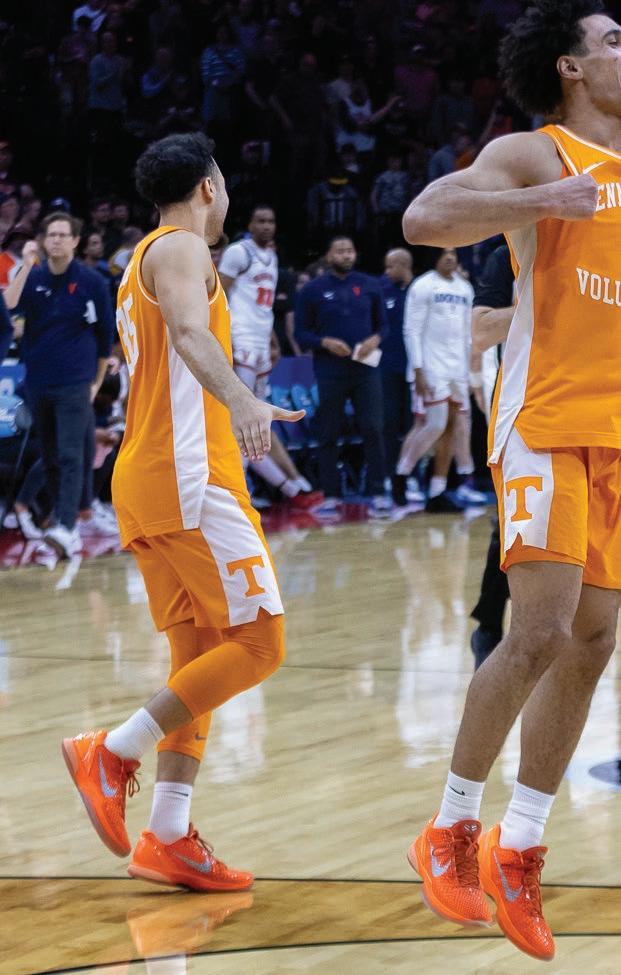

ALEX SARKIS Asst. Sports Editor
PHILADELPHIA — Bishop Boswell gets upset when people view him exclusively through a defensive lens.
The sophomore takes pride in his persistence against each opponent’s most talented guy, but he likes to visualize himself outside of any one ste-
“At the end of the day, I’m a basketball player,” Boswell said. “I’ve been playing basketball my whole life, offense and defense. I know what I’m capable of, and I just like being confident in It only took six seconds for Boswell to start flipping his outside narrative in Tennessee basketball’s NCAA Tournament matchup with Virginia, doing so by draining a 24foot triple to set the tone. In this second-round battle with the Cavaliers, the darts kept on coming. Boswell became an all-
“It means everything,” Ja’Kobi Gillespie said. “If he’s playing like that, that makes us a whole
‘nother team. I think we’re going to be really hard to beat with him doing that. I feel like he had a great game today.”
Boswell would attest.
The Charlotte, North Carolina product contributed 13 points, all but one of them coming from long range. His four 3-point makes marked a new career high, but the utility man takes more pride in another column on his stat sheet.
Even though he didn’t realize in the moment how many he had during the 79-72 win, Boswell’s nine assists shone bright in aiding the Vols to their fourth consecutive Sweet 16.
“You don’t get an assist unless your teammate makes a shot,” Boswell said. “I can’t take too much credit. I was able to get guys in positions, and they were able to knock it down. It goes both ways.”
Sunday evening’s proceedings saw five Tennessee players score in the double digits, an element of the Vols’ offense that provides a sizable boost. When Boswell can help remove some of the weight off the shoulders of leading scorers like Gillespie or Nate Ament, his teammates see their group climb closer to its full potential. It’s all about creating a different look.
“When we have all of our pieces going, it’s kind of unguardable,” J.P. Estrella said. “We’ve got so many different varieties and ways to score.”
Boswell’s prowess on the defensive end didn’t take a backseat to his strong offen-
sive night. He drew the assignment of holding Virginia guards Jacari White and Malik Thomas under wraps. White led the charge for the Cavaliers in their opening round game against Wright State, notching 26 points off the bench. Thomas entered the action as Virginia’s second-highest scorer, averaging 12.4 points per game. Tennessee held both men to 22 points combined.
Even if it means a decrease in playing time for some of the Vols’ reserves, they’ll take watching Boswell’s performance from the bench if it means the best for the contingent as a whole.
“He did it all,” Ethan Burg said. “And it was maybe the reason I feel like I played seven minutes, but I’m happy for Bishop. When he goes out there, he’s going to have the toughest matchup every night. He’s our anchor.”
As Tennessee packs its bags for a date with twoseed Iowa State in Chicago, Boswell isn’t worried about loading up on any extra defensive luggage. He’ll pack as any other basketball player would.
“It’s crazy just actually being here,” Boswell said. “Doesn’t even feel real. Sometimes I kind of have to step back and just really understand where I am. I’m just so blessed to be in this position.”