


EDITOR-IN-CHIEF: Caden Dyer
PRINT MANAGING EDITOR: Emily Hurst
DIGITAL MANAGING EDITOR: Ansley Graves
COPY CHIEF: Lauren Holladay
NEWS EDITOR: Patrick Busch
ARTS & CULTURE EDITOR: Harper Brabson
SPORTS EDITOR: Trevor McGee
ASSISTANT SPORTS EDITOR: Alex Sarkis
OPINIONS EDITOR: Natalie Dripchak
PHOTO EDITOR: Jackson Clavier
DESIGN EDITOR: Lindsay Favre
ENGAGEMENT EDITOR: Sarah Portanka
AUDIENCE DEVELOPMENT EDITOR: Sophie Mehta
COVER DESIGN: Lindsay Favre
PAGE DESIGNERS: Emma Fingeret, Ashley Cammarota, Renee Allen, Soma Fulwiler, SaraJane Weber, Ava Balducci, Ava Edwards
GRAPHICS BY: Lindsay Favre, Ava Edwards
ADVERTISING MANAGER: Abigail Cheslock
ADVERTISING REPRESENTATIVE: Joe Slott
TO REPORT A NEWS ITEM OR SUBMIT A PRESS RELEASE, please email editorinchief@utdailybeacon.com or call (865) 974-2348
TO PLACE AN AD, please email admanager@utk.edu.
LETTERS POLICY: Letters to the Editor must be exclusive to The Daily Beacon and cannot have been submitted to or published by other media. Letters should not exceed 400 words and can be edited or shortened for space. Letters can also be edited for grammar and typographical errors, and Letters that contain excessive grammatical errors can be rejected for this reason. Anonymous Letters will not be published. Authors should include their full name, mailing address, city of residence, phone number and e-mail address for verification purposes. Letters submitted without this information will not be published. The preferred method to submit a Letter to the Editor is to email the Editor-in-Chief.
CORRECTIONS POLICY: It is the Daily Beacon’s policy to quickly correct any factual errors and clarify any potentially misleading information. Errors brought to our attention by readers or staff members will be corrected and printed on page two of our publication. To report an error please send as much information as possible about where and when the error occurred to managingeditor@utdailybeacon. com, or call our newsroom at (865) 974-5206. The Daily Beacon is published by students at The University of Tennessee on Wednesday during the fall and spring semesters. The offices are located at 1345 Circle Park Drive, 11 Communications Building, Knoxville, TN 37996-0314. The newspaper is free on campus and is available via mail subscription for $200/year or $100/semester. It is also available online at: www.utdailybeacon.com

I’m in a hurry and don’t know why
CADEN DYER Editor-in-Chief

Welcome back to campus, Vols!
I had a great winter break and kept busy the whole time — just the way I like it. But in the perhaps not-so-wise words of Taylor Swift, I am indeed “married to the hustle,” and rest is simply not a word often found in my vocabulary.
I’ve done some soul searching lately: What is it about rest that irks me on the inside? My planner is literally organized by half hours, and last week I found myself done with my errands an entire hour early. I sat down to watch a show before my dinner plans, and when I stood up from the couch, I felt overwhelming guilt for wasting an entire 60 minutes.
During the semester, you can find me in the Beacon office any hour of the day, morning or night. I haunt the floors of Hodges in the fall, spend my lunch break
studying on HSS lawn in the spring, and do my very best to use my apartment solely for sleeping.
Busy is the name of the game, and I’ll be damned if I don’t have the most pristine resume when I graduate. Every time someone brings up how the job market is these days, I breathe a sigh of relief because I know that I’ve done everything within my power to become hireable.
Is it worth it? The visions of Future Caden nod their heads yes. I could work myself into an early grave and I’d probably think I’d made the right decision.
Is any of this striking a chord with you? For all of us workaholic guys and gals, why can’t we seem to find rest appealing?
January and the spring semester offer us a chance to reset. To write “chill” in our planners. To step back and examine what we’re really, truly getting out of our college experience.
My favorite memories are not the tears I’ve cried at my desk when a deadline falls through yet again. Nor are they the long trek back to my car from Hodges at 2 a.m.
My favorite college memories are dinners
with my dear friend Leah after a long week, a drive through the hills of Tennessee while listening to Michael Jackson and cheering on the Vols at any game, no matter the score.
Maybe rest is something I need to force myself to experience this semester. And while I pray that Taylor’s hustle will get me a decent job one day, I can’t forget the oh-so-wise words of Alabama:
“Oh, I rush and rush until life’s no fun … I’m in a hurry and don’t know why.”
I truly don’t know why I’m in such a frantic hurry to stack my resume, go to all the meetings and breeze through to the end of my junior year so quickly. This spring, I’m committing to guilt-free rest. Maybe you need to do the same?
Let’s have fun and get into the groove, Vols!

EMILY HURST Print Managing Editor

As we step into a new semester, there’s a familiar mix of energy on campus. Many of us have been here before — eager to move back out of our parents house, see our much-missed friends and return to the habits and routines of campus life. After spending last semester abroad in Scotland, I’ve found myself returning with an even higher level of anticipation than previous semesters with the looming date of my graduation in May.
Studying abroad slowed me down in ways I didn’t expect. Life in the UK often took on a slower pace, and since I didn’t have a work visa, I found myself filling my time by wandering around campus, planning my next weekend trip or junk journaling in my bedroom tucked away in what I called my “castle turret.”
My time there enlightened me in many ways. I spent months learning how to live with my uncertainty and without my familiar routine and cultural expectations. I learned how to be OK with not knowing
which direction my path would take and how to trust that curiosity would guide me forward.
I have always been a very anxious individual. I imagine I came out of the womb and started to worry about the car drive home from the hospital. But this past semester challenged me in that regard. Life in your 20s is about embracing the chaos of it all and trusting that everything will work out (despite the fact that you just made 10 wrong decisions all in a row).
By pushing through the challenges presented to me during my time abroad, I finally feel that I have come into my own as an adult. While I will likely look back in 10 years and laugh at myself for saying that, at this moment I feel that it is true. Freshman year Emily would glance at the workload of my upcoming semester and start anxiously rocking back and forth. Do I have a million unanswered questions? Yes. Do I have any idea how I am going to balance all of my different involvements? No.
But amid the chaos of it all, I have found myself returning to the mindset that got me through my semester abroad: one that lets me take a step back and a deep breath through uncertain or scary moments.
In the newsroom, everything moves at such a fast pace. Deadlines come and go, information is constantly tossed around and last minute edits make life a little stressful. I think this semester is asking me (and maybe you too) to stay grounded in myself, even as everything around me is changing.
I’m so grateful to be back with this incredibly talented and hardworking staff, many of whom are new faces bringing fresh ideas and energy. This issue is a welcome back embrace to our UT community and it’s particularly special to me as the beginning of the end. As we dive into spring, I hope this newspaper continues to be a place where students feel seen, heard and valued. Whatever position that you are facing this semester from, just know that others are on this journey of uncertainty with you.
Here’s to pushing through it and coming out on the other side!
ANSLEY GRAVES Digital Managing Editor

I, along with many of my peers, had several moments in 2025 where I questioned my sanity. It arguably seemed like one of the most eventful years for news, media and ultimately, college students.
Our school year didn’t exactly start as planned. August began with what we now know to be a series of hoax calls called into universities, bringing threats of active shooters and instilling fear within students across America.
September marked a significant shift within the political climate of our university, community and society after the assaination of activist Charlie Kirk.
Voices and emotions reached record highs across America and on campus,
but we kept up — even if it meant sprinting to the Rock to interview students and squeezing in an article after the red paint statement in between taking two exams. Welcome to being a student journalist!
When UT fired assistant professor Tamar Shirinian, I watched brave students like Olivia Lee and Patrick Busch leap into action as they covered the situation thoroughly — coverage that even now, continues into the new year.
The Beacon team persevered as we navigated the larger discussions surrounding academic freedom and what it means for professors and students, obtaining the first public interview with Shirinian.
As the craziness progressed through the semester, October rose to become especially significant to me. I finished my first in-depth feature, “This is not going to break me,” on graduate student Klara Dolin.
By the time we got to December, it is safe to say we all needed a big nap

(shoutout to our sports guys who also covered a football season full of emotional roller coasters). However, we substituted with caffeine and continued publication before the holidays crept up.
Our team hit so many milestones — whether intentionally or not. I cannot believe there is only one more semester of this. Will I ever find this rush elsewhere after college?
This team is truly one of a kind and this semester was another giant reminder of why we won third in the nation for best student newspaper.
As I enter the New Year with excitement and eagerness to begin my last semester in a new role at the Beacon, I can’t help but feel an overwhelming sense of gratitude, grace and even grief
for what last year entailed. With this being said, I am honored to be serving you behind the scenes as the digital managing editor this year, bringing our UT community some inspiring newsletters, digital content and technical journalism.
Cheers!


In the wake of Charlie Kirk’s assassination, UTK’s chapter of the Turning Point USA organization has seen rapid membership growth. At the America Fest conference, it was labeled the Legacy Chapter of the Year and has collaborated with state officials to bring chapters to all public high schools in Tennessee.
MOLLIE POKELWALDT Contributor
The University of Tennessee’s very own Turning Point USA chapter is one of the fastest growing organizations on campus, and it has everything to do with the camaraderie they are creating.
“It’s really a community within itself, a family,” Vice President Nick Suttle said. This family rapidly grew after the assassination of Charlie Kirk, the group’s longstanding CEO and founder.
Kirk served as a role model to many, as expressed by freshman and new member Thomas Herbert.
“I would say most Gen Z, and especially Gen Z men, looked up to him,” Herbert said. “That was all the more reason that I knew I had to, and really wanted to, come in.”
Suttle saw the rapid, recent growth first-hand.
“When Charlie died … we had people flooding our inboxes on VolLink, people flooding our Instagram, people coming to us, instead of coming to them,” Suttle said.
Kirk’s memorial event proved to be a pivotal moment for the chapter. Over 900 students, locals and children visited the Alumni Memorial Building to grieve Kirk on Sept. 17.
As many students expressed their interest in Turning Point, chapter president Emma Arns said the growth is their way of showing students aren’t giving up.
“Now that Charlie has passed, I think there is a fire lit inside of all of us,” Arns said. “My fire has been burning bright, but it’s burning brighter now.”
Arns has a deep history regarding Turning Point. She even had a personal connection with Charlie Kirk, coming from the same hometown — Arlington Heights, Illinois.
“I started my first chapter at Charlie Kirk’s alma mater, Wheeling High School,” Arns explains. “So they had never had a chapter there before, and that’s when I learned about Turning Point.”
As a club, their growth was recognized at the most recent America Fest conference held in Phoenix, Arizona, an annual event with scheduled speakers and breakout sessions for Turning Point students.

Every year for the past three years, the organization recognizes a chapter of the year for high school and college and a student of the year.
This year, the spotlight shone on UTK’s chapter.
“We were awarded the Legacy Chapter of the Year,” Arns said. “It was absolutely surreal.”
Over 15,000 people attended the award ceremony and thousands more watched the live stream.
“We were given the award because we made sure to reach out to as many students as we could on campus, and maintain that momentum from Charlie’s passing,” Arns said.
“We’re here, we’re ready to go. We’re energized.” Suttle said.
This energy has carried on to the new members. Thomas Herbert in particular, explains the liveliness of the club.
“When I came into Turning Point, it was awesome,” Herbert said. “It was
almost like a social club, and we were all fighting for the same cause.”
Some of the responsibility for finding new members like Herbert falls on chapter secretary Caroline Johnson. She focuses on inclusivity and fostering a welcoming environment when bringing students into the chapter.
“One of the main foundations of Turning Point is free speech,” Johnson said. “So being able to invite everyone into that space where you can talk about anything … and just converse with anyone.”
Encouraging civil discourse is a key goal of the organization.
“Sure, we do have like, more conservative leaning values, but again, we’re bipartisan and want to open the conversation to any opinion or any belief,” Johnson said.
To invite that culture, Turning Point partnered with the state of Tennessee to launch a chapter in every Tennessee
public high school.
“Any public high school and public college,” Arns said, “cannot deny students the right to come together under a Turning Point USA or a Club America chapter. ... To have the government backing you … is a really important thing.”
The consensus among the members is that the club wants to hear all sides and opinions of students on campus.
“We love learning, you know, what people are interested in, what their political interests are,” Arns said. “We actually have real opportunities in the political realm we would love to connect people with.”
Johnson disavowed the idea that Turning Point is exclusively for a particular political party.
“I would say we want to include as many people as possible,” Johnson said. “I think that just makes us stronger.”
BIMO SAPKOTA Contributor
Some graduate and soon-to-be graduate students are now facing tighter federal loan limits after the federal government changed what it considers “professional degrees.”
The One Big Beautiful Bill Act passed in July of 2025, eliminating the Grad PLUS program, a loan program for graduate and professional students. It additionally capped loans for non-professional degrees, and in November, the Department of Education established guidelines for what a professional degree looked like.
After July of 2026, these graduate programs will be the only ones recognized as professional: pharmacy, dentistry, veterinary medicine, chiropractic, law, medicine, optometry, osteopathic medicine, podiatry and theology. In the past, other programs also fell under the title of a professional degree.
Programs including nursing, physician assistant studies, physical therapy, audiology, education and social work will now have lower student loan caps due to no longer being classified as professional degrees.
Students in programs that retain professional status are permitted to borrow up to $50,000 per year, whereas students in programs that are not under

professional status are only permitted to borrow up to $20,500 per year.
These limits are applied annually, and are separate to the new lifetime limit of $257,500, which applies to both undergraduate and graduate loans.
Osha Kendrix, a first-year nursing student, said the changes to federal loan allocation have caused her to reconsider her long-term plans to pursue a graduate degree as a pediatric nurse practitioner.
“I really don’t know if I’m going to get any scholarships to be in grad school,” Kendrix said. “Those loans would have helped a lot, so that is kind of making me question my decision on going through
with the grad program.”
Kendrix is one of many in nursing who will be affected by this reclassification.
Allyson Neal, assistant dean of graduate programs, addressed how the policy could affect students across the college.
“Graduate nursing education is a significant investment, and federal loan limits do not always align with the full cost of completing a terminal nursing degree when tuition, fees and living expenses are considered,” Neal said.
For UT’s graduate nursing programs, tuition per year can exceed the loan limit of $20,500, potentially even higher in certain academic years or certain tracks, and for
“While it may still be possible for some students to complete programs without private loans, doing so often requires increased employment during school, which can negatively impact academic performance and clinical success,” Neal said. “Because all our graduate programs are terminal degrees, these changes have the potential to affect students across the college.”
The U.S. Department of Education refutes the claim that many nursing students will be affected by the reclassification, claiming in a Q&A that the loan caps would actually encourage programs to reduce their costs.
For the College of Nursing, that answer could be easier said than done.
“Our curriculum is already highly streamlined, and maintaining required faculty-to-student ratios is essential to ensuring educational quality. These structural requirements limit flexibility around tuition adjustments. As a result, expanding scholarships and targeted financial support remains the most effective way to help students persist and succeed,” Neal said.
The combination of high tuition costs and reduced borrowing capacity may still significantly alter students’ plans for advanced nursing careers, despite the college’s efforts to provide support.
“If I’m being honest,” Kendrix said, “it’s kind of discouraging.”
OLIVIA LEE Staff Writer
Winter break saw several legal updates in Tamar Shirinian’s case against University of Tennessee administrators.
Shirinian, assistant professor of anthropology, faces termination proceedings after commenting online about Charlie Kirk’s assassination in September, saying “the world is better off without him in it.”
Shirinian has since filed a complaint against Chancellor Donde Plowman, President Randy Boyd and Faculty Senate President Charles Noble in both their personal and official capacities.
After a pretrial conference in early December, Judge Katherine A. Crytzer set Shirinian’s trial date for Jan. 19, 2027.
Crytzer also denied Shirinian’s motion for a temporary restraining order, blocking her from returning to the classroom as the case progresses.
“Because Plaintiff has not shown that Defendants likely violated her First Amendment rights when she was placed on administrative leave, the Court denies her Motion,” Crytzer said in the memorandum denying the temporary restraining order.
In the memorandum, Crytzer cited her use of the Pickering Test — a balancing test used by courts to weigh an employee’s free speech rights with an employer’s interest in workplace efficiency.
“Balancing these factors, Plaintiff has not shown that they weigh in her favor at this early stage in the litigation,” Crytzer said. “Therefore, she has not shown that her speech was likely constitutionally protected and that she is likely to succeeded on the merits of her retaliation claim.”
Shirinian’s attorney filed a motion to reconsider the temporary restraining order, prompting a response from the university asking Crytzer not to reconsider.
On Jan. 13, Shirinian sent a public letter to UT’s Board of Trustees asking to be reinstated to her teaching position.
“I am writing publicly because the
University of Tennessee has already acted publicly - and wrongly,” Shirinian said. “University leadership publicly condemned me for speech made as a private citizen on my personal social media account, addressing matters of public concern.”
Shirinian claims the trustees’ roles as independent upholders of the Constitution should motivate them to reconsider her termination.
“That decision was not merely misguided,” Shirinian said. “It was unconstitutional and it carries serious institutional consequences, not only for the University of Tennessee, but for public universities nationwide.”
Shirinian asked the board to respond by Jan. 16, four days before classes at UT commence.
“The Board now faces a defining choice,” Shirinain said. “It may correct this violation, apologize, and reaffirm the University’s constitutional obligations or it may allow the condemnation of protected speech to stand as official policy.”

ZOE MANDEL Contributor
Some of the best ideas start in a basement.
Like UT’s student radio station WUTK, for instance. A team of professors, engineers and students volunteered their time, building the station from scratch.
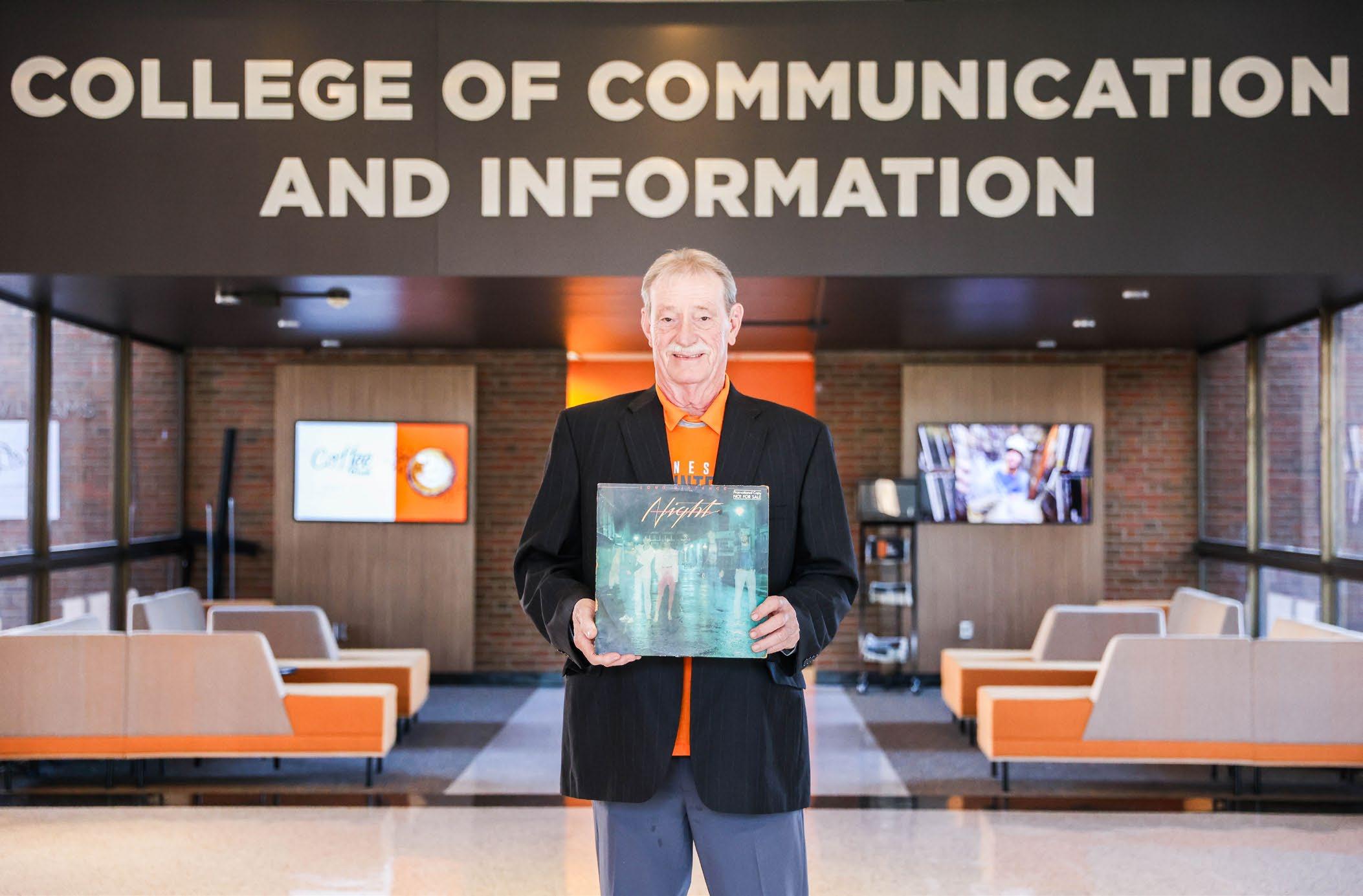
“I had to make an effort to at least preserve what the first song was, how it started,” Troy Davis, a class of 1982 UT alum, said.
Davis, a broadcasting major, fell in love with the idea of being on the radio, being one of the first to sign up for the project of getting WUTK up and running.
“I thought if I were to do something everyday I want it to be fun, and energetic, and silly, and different,” Davis said. “I can’t stand a routine. I require spontaneity and all of that, it seemed to be exactly what radio was from what I’d seen.”
Davis’ drive and passion for radio led him to sign up for WUTK, a decision that shaped the rest of his time in college and led to a successful run in Knoxville’s commercial radio scene for decades.
When preparation started in the fall semester of the 1981-82 school year, Davis joined the brand-new staff of WUTK in working to get the radio station up in running for January of ‘82. He’d heard rumors for years about a possible station, but never imagined he’d be a part of one at the college.
“It wasn’t something that would be planned, it just kind of fell in our laps and we took it and ran with it and did the best we could,” Davis said.
Davis, alongside student Kevin McGee, became the first two music directors of the station. They were selected because of their respective experience working as a service representative for MCA records and working at Music Jungle, a music store chain in the area.
“We were tasked together to put together music for that, we started gathering and we asked for donations and staff brought in albums and we contacted all the record companies we could get addresses from. We had the fall semester to [prepare] and gather,” Davis said.
Throughout the fall semester, the new staff had roughly three months to bring WUTK into a functioning station.
The team built the station from scratch, although none of them had any real experience in radio at the time. They had guidance from professors, but the students came up with the ideas for the on-air shows and studio management.
“As the stuff came in, we would carry it down in the boxes and as we brought it in, the engineer would set it up,” Davis said.
Piece by piece, in the basement of Andy Holt Tower, students assembled WUTK. Across this decades-long stretch, the station has been a place where people have felt a range of emotions, but the most consistent one is excitement. For students, the joy of getting to go in and do something they love has kept the space vibrant and a source of creativity.
“It was an extra energy, because we were really excited and flattered that we were chosen for these various positions and such. We had a whole lot of energy, sort of endless, really, because we had so
much to do. You don’t know how many little things you need to have to get a radio station up and running,” Davis said.
Alongside all of the technology needed, an array of knowledge on different music genres was necessary to build up WUTK from scratch.
“You’d come in with albums and new stuff and new ideas and talk to everybody about it, and there was just a buzz going. There were people there all the time,” Davis said.
After working endlessly throughout the fall semester and over the break, the station was ready to be put on air in January of 1982. The question Davis and his friends now faced was what they want the first song played on air to be.
As a collective, they came up with the criteria: the band would need to have women in it, as WUTK had a mixed gender staff; it would have to be niche yet well known and not top 40; and it
should be more rock n’ roll than pop. Then they turned to Davis to pick the exact song.
After going through stacks and stacks of music, listening to vinyl after vinyl, he finally found the one.
“(There’s a) band called Night, and it had a female singer and stuff ... and there was a song called ‘Love on the Airwaves,’ and I thought it was really good for us, and I listened to it, and it’s a rockin’ song you know,” Davis said.
“It was never a real big hit, but that was exactly what we wanted.”
From that moment on, WUTK has played obscure music and album cuts, oftentimes being the ones to introduce upcoming bands into the Knoxville music scene.
“We could get something in the mail, listen to it, be like ‘ooh that’s good’ and put it on the air immediately. We were the ones who played The Stray Cats first, we were the ones who
played Men At Work, because we didn’t have restrictions like the commercial stations,” Davis said.
For the next couple of months, early WUTK members worked hundreds of on-air shifts, providing students with hidden music gems, weather updates and news reports.
“We got through the winter quarter and then the spring quarter, then a lot of people were graduating and I felt ‘man we just got this going good,’” Troy Davis said. “I had one broadcasting production class (left before) graduation, so I figured ‘I’m going to stay through the summer quarter,’ so I intentionally did not complete a class.”
McGee, Davis’ co-music director, graduated that spring. Left alone, Davis spent a lot of time helping the next music director figure out the ropes, providing him with the contacts needed to be able to keep the ball rolling.
“Aug. 22, I graduated and left with sort of a sadness but a joy at setting out to accomplish what we intended to do,” Davis said. “We wanted to make the university proud for having faith in us. I think we did that. I think we accomplished our goals early on and passed it down to the next generation.”
Multiple generations of college students have cycled through WUTK since Davis’ days, yet, at its core, it remains the same. Sherleen Mwaura, a music business administration
senior, is WUTK’s current station manager and carries the same mission as those who have come before her: to foster a creative environment for anyone in the community to join, connect or relate to.
“(We honor) keeping student voices first and foremost at a radio station that has a vibrant legacy in the Knoxville community, definitely making sure to keep the vision intact by working alongside people that are in their roles because they care, and they’re intentional about wanting to execute a shared vision and be a part of a collaborative process,” Mwaura said.
A WUTK member for all four years of college, Mwaura has ascended up the ranks, starting as an on-air host before joining the music department and now holding the role of station manager.
“I would say being in a leadership role has definitely helped me keep an ear to the ground about the needs of our community, and being in a student-facing position has helped me to work one-on-one with our student volunteers,” Mwaura said.
All of the different student volunteers have received real-life, handson experience through WUTK.
“We didn’t have a radio station to train in. We trained in little booths in the communications building, (so) we knew what a wonderful thing it was to have an actual radio station to train in,” Davis said.

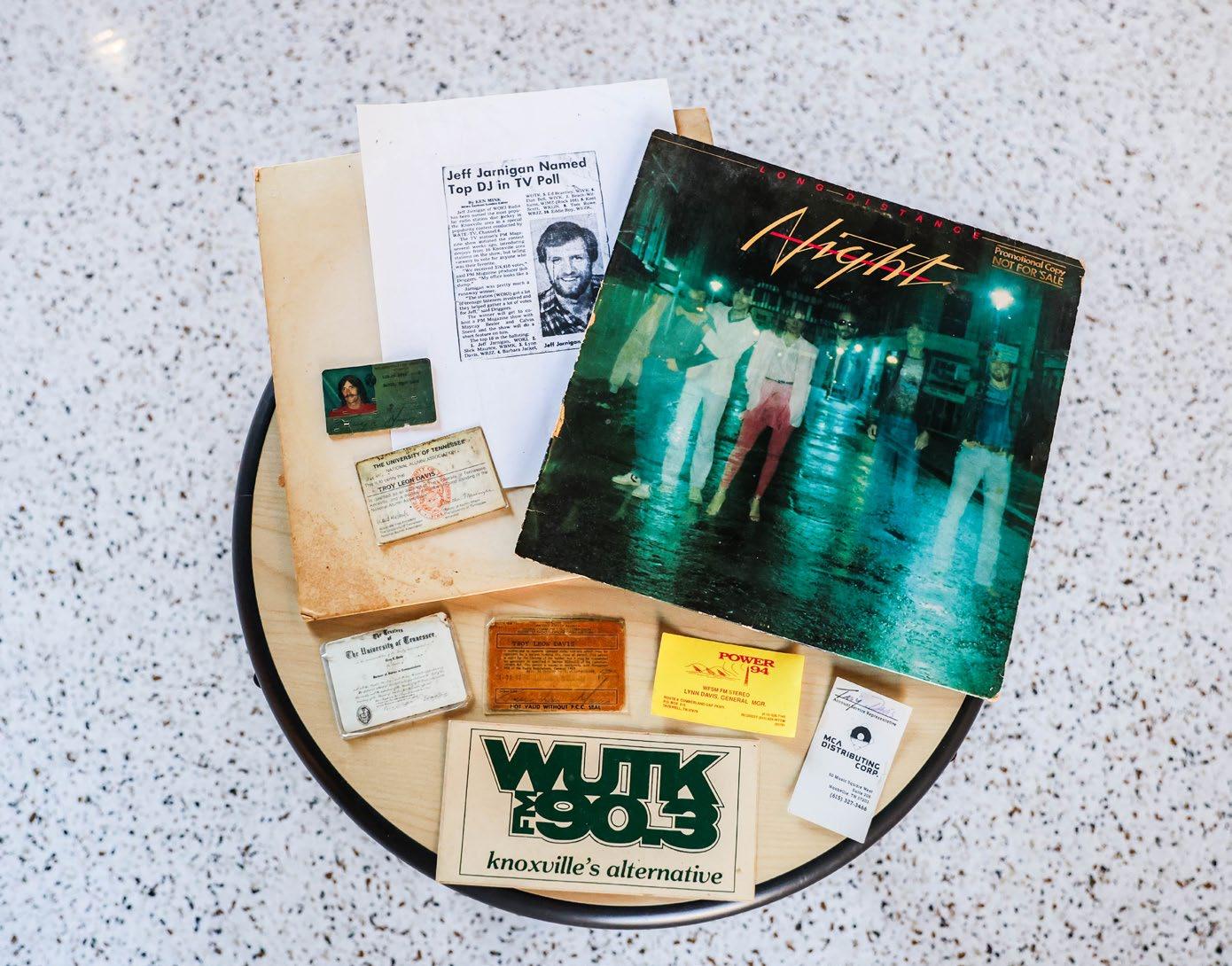
Davis and his fellow students in broadcasting cared deeply about the success of the station. They understood the vast difference between practicing alone in a booth versus being on live air to an entire city. They wanted to do WUTK right, Davis said — to create an opportunity that would help not only their own learning experience, but that of all the students who would come after them.
“I think WUTK offers a great opportunity for students to get practical hands-on experience in radio and media, so that was why I wanted to get involved, to be able to gain those opportunities at an entry level. I think it’s a really cool learning lab for students of all backgrounds. I liked that it was welcoming for people,” Mwaura said.
“There wasn’t pressure or anything, it was just a vibrant energy,” Davis said. “It was just a blast doing something we grew to love. I grew to love radio. It was a lovely career after I left WUTK, but all of the foundation for my career grew right there in the basement of Andy Holt.”
After graduating, Davis started working at WRJZ, a local Knoxville station. What began as a weekend slot turned into a weekend on-air show that grew quickly in popularity. WATE-TV, Channel 6 was a local TV station at the time whose PM Magazine show put out a poll into the city asking who their favorite radio DJ is.
“After only six months, maybe seven months, on the radio … I was the No. 3 DJ in the city, and the No. 4 personality was Barbara Jackel, she was the news director at WUTK. That many students voted for her,” Davis said.
According to Davis, within a year of its founding, people associated with WUTK appeared twice in the top five poll of DJs in the city — one alum and one current student.
“That gives you an idea of how much influence it had, and the students were loyal to it. We had a wonderful listenership to it,” Davis said.
At every stage in the process, students learn skills that last them long past their days at the station, whether they go into radio or not.
“You had to trust yourself, you learned to be spontaneous, to be creative, and what I learned at WUTK was to have confidence in my own ability. None of us had that in the beginning but we learned,” Davis said.
Mwaura credits experiences she’s had at WUTK with learning how to align her actions with her goals and intentions.
Continue reading on page 10
ANDI JONES Staff Writer
The start of a new year signifies fresh starts, reflection and, for most, an opportunity for personal growth in the form of New Year’s resolutions. Having a set list of idealistic goals to work toward all year is great in theory, but it is difficult to accomplish without continuous motivation and an understanding of how to make the changes.
Reading books on health, mental wellness, financial planning and psychology can bridge the gap between visionary goals and reality.

“Atomic Habits” by James Clear
This book is very popular, with over a million ratings on Goodreads, and an average rating of 4.3 stars. James Clear offers practical advice backed by research on how small habits create major life changes. To start off the new year, Clear makes it possible to achieve that list of resolutions with realistic, daily changes.

“The Power of Now” by Eckhart Tolle In college, it is easy to focus on what’s ahead. Assignments, exams, internships, travel, graduation and jobs all loom in the distance. Consistently living in the future can hinder being grateful for and enjoying what’s happening right now. This book encourages living in the present moment through a spiritual and mindfulness framework.

“The Perfectionist’s Guide to Losing Control” by Katherine Morgan Schafler If you have ever had the thought, “I might be a perfectionist,” this book is for you. Psychotherapist Katherine Morgan Schafler breaks down the differ-
ent versions of perfectionism — it’s not always hyper-organized rooms. The book does not give solutions on how to “fix” perfectionism, but how to take the desire for the ideal and apply it constructively in school, work and everyday life.

“Good with Money” by Emma Edwards
Emma Edwards is a financial behavior expert, and her book taps into the emotional and psychological drivers behind spending. The book does not shame spending, but instead strives to give readers a healthier relationship with money. It’s a great read for those hoping to create a sustainable budget and start building smart spending habits early.

“Tiny Beautiful Things” by Cheryl Strayed
This collection of honest, relatable advice columns and essays tackles subjects such as love, identity, loss and the realities of being human. Even for the simplest questions, Cheryl Strayed offers expansive and philosophical responses.

“Big Magic” by Elizabeth Gilbert
Calling all creatives, “Big Magic” is a reinvitation into curiosity and artistic passions. Elizabeth Gilbert’s book is perfect for readers in search of a creative outlet, encouraging self-expression and risk-taking. It’s a wonderful pick to help find a new hobby and foster self-discovery instead of scrolling on a screen.

“Why We Sleep” by Matthew Walker, PhD
This book presents a sleep scientist’s case for why sleep is essential for
energy, memory, mental health and immune functions. Matthew Walker offers actionable advice to improve sleep quality. College students are known for wonky sleep schedules, and those five hours a night are likely to have an impact on overall health beyond just feeling groggy during that 8 a.m. class.

“Everything I Know About Love” by Dolly Alderton
Previously an advice columnist for “The Sunday Times,” Dolly Alderton took all that she had seen and experienced in early adulthood to create this memoir. Alderton explores friendship, self-discovery, relationships and growing up in a humorous and occasionally heartbreaking manner.

“The Let Them Theory” by Mel Robbins
This motivational book, written by widely acclaimed speaker and podcaster Mel Robbins, boils down happiness and mental freedom to two words: let them. In a direct and research-backed approach, the book discusses how focusing on the thoughts and actions of others over your own wastes energy that could be poured into your life, happiness and goals.
“The Happiness Advantage” by Shawn Achor
In an output-focused society, happiness is often left to the wayside. However, positive psychology researcher Shawn Achor argues that happiness is actually what leads to success, resilience and productivity. The book places mental wellbeing as a top priority, helping readers find fulfillment in the process, not just the outcome.

“101 Essays That Will Change the Way You Think” by Brianna Wiest
If you are hoping to read something short yet impactful every day, this collection of essays is for you. With essays that range from a 5-minute to a 30-minute read on topics such as redefining success and emotional intelligence, Wiest offers digestible insights that will leave readers thinking about habit building, personal growth, productivity, human connection and more.

“Happy Place” by Emily Henry For readers who doze off at the thought of nonfiction, there are fictional options that have similar life lessons with themes of growth and finding yourself. One example is “Happy Place” by powerhouse author Emily Henry. While the book is a romance novel at heart, it captures the pains and joys of nostalgia, friendships, growing up and finding a true home.
Picking up a book designed to boost creativity, productivity or healthy habits is a smart way to start the new year for continued encouragement and advice to fulfill resolutions past January.
Margie E. Burke
1 Radiator sound 5 Knockoffs
Abbey area 14 Related (to) 15 It's handed down 16 Film spool
17 Senator, e.g.
19 News tidbit
20 Don Quixote's squire Panza
21 Goes down
23 Long-billed bird
26 Brontë novel
29 Picks up on 32 False friends
33 Flubbed
35 Quilting party
36 French islands
37 "___ Johnny!"
38 Steady
39 Turo offering 40 Musical Clay
41 Bitter-tasting
42 What a spoiler DOWN 13 Classic street
"Nay" sayer may spoil 1 Linden and liners
Women's soccer
44 Fluid losses Holbrook 18 Backs (away) star Michelle
46 Truthful 2 Big furniture 22 Place for a
Cell dweller
48 Plank producer retailer shovel 45 Opposed
50 Programming 3 Highway sight 24 Yogurt type 47 Big name in language 4 Candy bar that 25 "Elf" actor bonding
54 Vicinity really satisfies 26 Steroids, 48 "The Lord of the
55 Devoid of 5 Arson, for slangily Rings," e.g. emotion instance 27 Narnia lion
Riyadh resident

58 "Atlas 6 Dentists' org. 28 Worthless one
Fresh way to Shrugged" 7 Carson of the 30 Spine-tingling start character Old West 31 Watermelon
Astronaut's
59 Emotions, 8 Dangerous waste insignia slangily strain 34 1966 hit "Walk
60 Cozumel coin 9 Emphasizes Away ___"
61 Willing and ____ 10 Come to light 37 Miller beer
62 Bert's pal 11 Tampa neighbor, variety
Amorphous
Pilot product
Wallach or
63 Give and take? with "Saint" 38 Seafood Whitney 12 Caught in the act selection

Solution to Crossword:

“Working with people is a lifelong mission of mine. I want to be at the center of creative spaces, so leading projects and programming at WUTK has prepared me in practical ways such as organizational and leadership, and it’s also fostered a creative spirit and force in my life that’s been very fruitful because it’s honored the intentions that I’ve set in my own life in being able to give back to the community that’s raised me and given the soundtrack of my own life,” Mwaura said.
The experiences that both Mwaura and Davis had, though different, taught both of them lessons that shape the way they interact with the world and others.
“WUTK will always be in my heart,” Davis said. “I cherish the memories, and it was fun, and it was a big part of my life and I am very content with it.”
For Davis, those three quarters of WUTK began a whirlwind of radio success — yet he doesn’t hold it close for that reason. For him, the passion he found for radio within the four walls of the station is what makes it so meaningful.
“It was a wonderful thing to be part of, there were no superstars. We were all students,” Davis said.
For Mwaura, one of the beautiful things about WUTK is that anybody can join, no radio experience required. The only things people need going in is an interest and a willingness to learn, and there will be a spot for them.
“I want people to know that WUTK is a space for everyone, because it works to encompass the voices of our students, our school and our community. In honoring those stories it enriches the livelihood of everyone,” Mwaura said.
Telling these stories has meaning, for both the person whose story is told and also for the one who helps them to tell it.
“(It’s) something that had a lasting sort of legacy, and I hope all the other kids who come through, who train and learn and move on, can look back with the same type of pleasantry, cause it was a wonderful, wonderful experience,” Davis said.
Even 44 years later, Davis still reminisces on his time with WUTK. As Mwaura prepares to graduate in May, she reflects on her time with the station and the lessons she will carry with her into future projects, passions and career.
“It’s been the greatest joy to be able to immerse myself in that way and keep an open mind about the opportunities, because they really are endless at the station,” Mwaura said.
The station has been a gateway to opportunities for students since its inception.
“I hope the students that come behind at WUTK, I hope the world greets them and meets them and presents them with the same opportunities that it presented me,” Davis said.



Interested in continuing Troy Davis' legacy at UT's student-run radio station? The Media Center is hosting an Interest Meeting in 011 Communications Building TONIGHT (Jan. 21) at 6 p.m.! Be there to learn more about WUTK or email wutk@utk.edu.
Over 100 years ago, the 19th Amendment was passed and ratified, officially codifying women’s suffrage into law after a long struggle spanning back to the country’s founding. Many know of the women’s suffrage movement, but it’s a colorful part of history that many classes don’t linger on for too long, leading to forgotten stories.
This is why Knoxville’s very own Suffrage Coalition is working to create and curate a new museum to better tell the story of women’s suffrage in the United States, with a focus on Tennessee’s pivotal role in the fight.
The spark that started it all
The tale of the Women’s Suffrage Museum started when Wanda Sobieski, a local lawyer and president of the Suffrage Coalition, founded the coalition in 1995 after being on Tennessee’s Commemorative Women’s Suffrage Commission.
Sobieski said she realized that nowhere in Tennessee were there any statues or memorials commemorating the movement and hoped that participating in the commission would change that.
Unfortunately, the state commission didn’t end up erecting any monuments, so Sobieski and the Suffrage Coalition did it themselves. The women’s suffrage memorial statue in Market Square was set up and funded by the Suffrage Coalition.
What began talk about creating the Women’s Suffrage Museum was in part Sobieski’s own interest in suffragist history and the lack of historical resources on the subject.
“It became obvious that the materials and information were not readily available in Tennessee,” she said. “[Our mission has] always been to locate and preserve women’s history in Tennessee. We want to make it available for schools, scout troops [and] anyone that wants to learn about the story.”
The story of women’s suffrage in the U.S. isn’t as neat and clear-cut as it’s portrayed in history books. Jessie Wilkerson, associate professor of history at the University of Tennessee, explained how suffragists were treated on a broad scale.
Many suffragists were treated as if they were “shrill, irrational people,” Wilkerson said. Opponents of women’s
suffrage felt as if women were stepping outside the boundaries and societal expectations assigned to them. “It was contending with cultural values that women should not be seen or heard,” she said.
Anti-suffragists were not the only challenges the movement faced, however. Within the suffrage movement itself, it was common for “moderate” suffragists to clash with “radical” ones. The main difference between them was strategy.
Wilkerson also mentioned the movement had an unofficial “third wing.” This wing consisted primarily of black women pushing suffragists to support racial and educational justice reforms alongside suffrage.
The suffrage movement received a major boom with the onset of World War I. While most men were fighting overseas, women were left to maintain domestic production and support the war effort. “Somehow, when there’s a war, women become capable of doing things, and the government expected
women’s right to vote into law.
Putting the pieces together
With so much history to cover, the Women’s Suffrage Museum has a formidable task ahead. Luckily, Sobieski and the Suffrage Coalition are already in the process of planning exhibits, gathering artifacts and acquiring space.
Finally, a year after the Great War ended, Congress passed the 19th Amendment on June 4, 1919, and
By August 1920, the 19th Amendment needed one more Tennessee came the last state to ratify the 19th ment by a one-vote margin, codifying
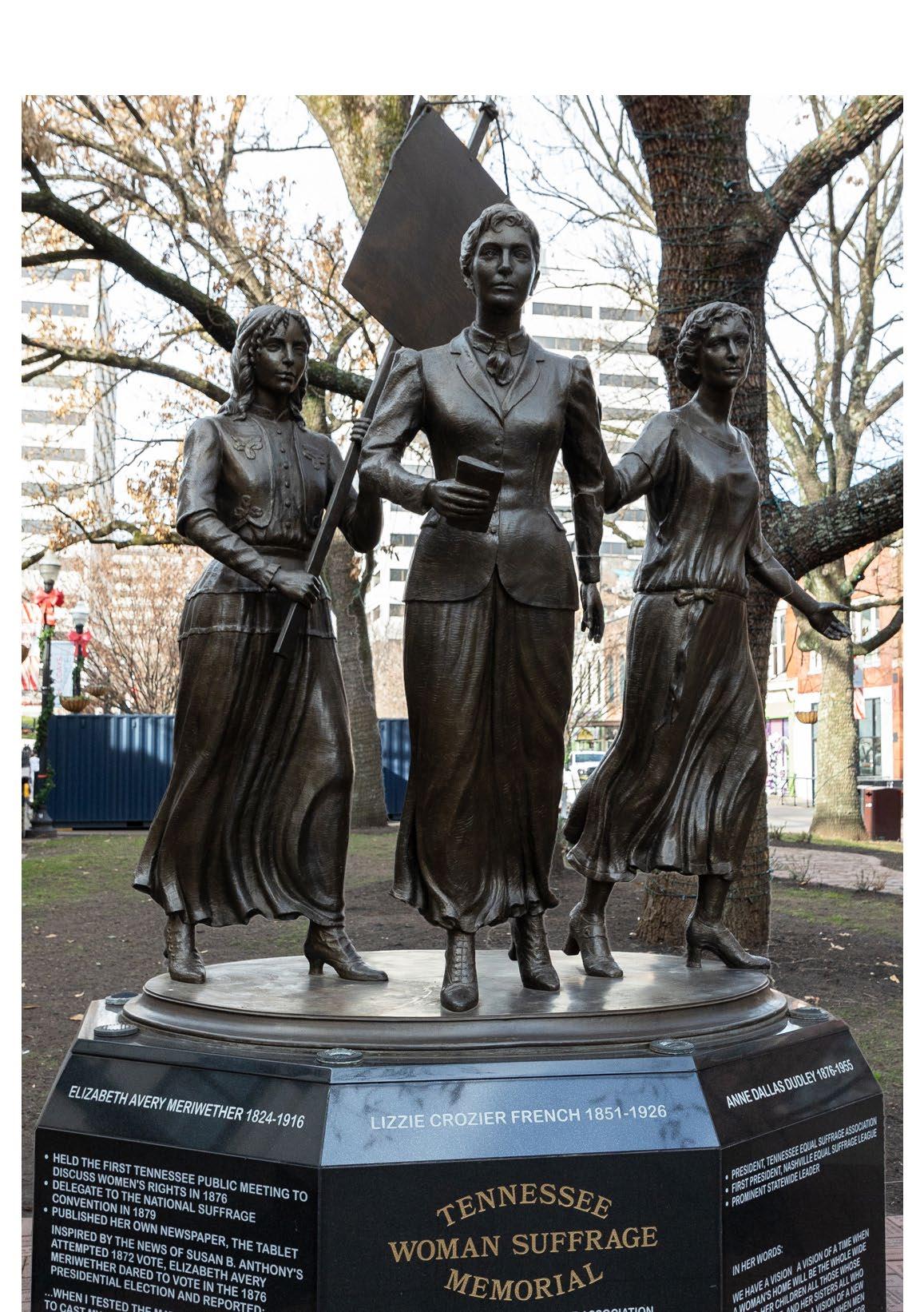
Sobieski says she’s acquired over 1,000 artifacts related to the suffrage movement, including pro- and antisuffrage pamphlets, jewelry and pieces of clothing. She listed her favorite artifacts as original volumes of pro-suffrage books written by Susan B. Anthony.
The Women’s Suffrage Museum won’t be like any other museum, however.
When asked about plans for exhibits, Sobieski said that, while she can’t discuss some of the details currently, many of them will be interactive. “I wouldn’t be surprised if you could talk to some of the suffragists,” she said. “We want it to be a museum that’s much more interactive and much more of an attraction than a normal museum.”
Recently, the Suffrage Coalition was able to acquire 706 Gay Street for the museum, but Sobieski says they would like to extend it to 708 Gay Street as well.
As of this article’s publication, the museum has raised almost $549,100 of its $2.9 million goal for the building. If successful, this would make Knoxville home to the largest women’s suffrage museum in the country.
While the Women’s Suffrage Museum tells the stories of brave suffragists, it will also serve as a testament to the perseverance, determination and spirit of all activists through the ages.
“We want to tell not just the big story,” Sobieski said, “but more about the everyday people who made it possible. It was the power of everyday people that made it happen.”
“They fought for decades, but many never saw the fruits of their labor,” Wilkerson said. “My hope is that [with museums like this] ... people think about what it means to vote in this country.”
To support the Women’s Suffrage Museum, visit the museum’s website or the Suffrage Coalition’s website. The Suffrage Coalition currently plans for the museum to open during Women’s History Month in March 2028.
CLAIRE THATCHER Staff Writer
When you Google “Steal a Brainrot,” it’s hard to discern which sources are credible — largely because I’ve never played and have no barometer for what is accurate, but also because there are no peerreviewed secondary sources on the game.
There is no concrete documentation informing the mechanics of “Steal a Brainrot” besides “Brainrot Wiki” and a recent TikTok trend where people tell their siblings that they “stole a brainrot” to gauge their reaction.
Most of my knowledge on this game has come from watching my 8-year-old stepbrother play. He enters a trance when he opens the game — minutes become hours. As someone watching from the outside, I don’t understand the appeal. It’s clear this game is stupid. But is that just my age talking?
After some brief scroll-based research, I understand the objective is to essentially gather virtual Brainrot characters and steal other players’ Brainrot characters. The longer you have your characters, the more money they accumulate for you. So, the objective is to make money and collect the rarest characters. There aren’t really any levels, it’s just that — over and over and over again.
Users are allowed to create their own games. Steal a Brainrot itself was created by avid player and Do Big Studios executive Sam Bratka under the internet username @SpyderSammy. Visually, the game looks like a 2-year-old made it. That’s kind of Roblox’s style, though — the draw isn’t how amazing the graphics are. Steal a Brainrot is the perfect combo of memeability and repetition that breeds addiction in the 67-addled brains of the youth. I asked my brother if I could watch him play and ask him a few questions afterward. He enthusiastically obliged. Upon opening the game, players spawn at their base. Then, from a tunnel, an endless stream of Brainrot characters walk onscreen, each player racing to snag the most valuable ones. I learned they are ranked as such: uncommon, rare, epic, legendary, mythical, brainrot God, secret and Og’s.

The strawberry elephant is the most elusive and desired character. Brainrot Wiki reports that it costs $550 billion to buy and $550 million to make (not sure what the Brainrot dollar-to-USD conversion is). When I asked why — why the “strawberry elephant” out of all the possible animal and fruit combinations — my brother couldn’t really give
me an answer. “It’s just the strawberry elephant,” he shrugged.
My brother told me that in order to procure a strawberry elephant, you need to buy “Robux” (with real money), which you can then use to buy “luck multipliers” that increase your chances of getting rarer Brainrot characters in the game. You don’t have to spend money to play the game, but it’s just a matter of how badly you want valuable characters.
“But,” he noted, “even with multipliers, you probably will never get a strawberry elephant. There are only three in the world.”
When you collect characters, you can lock them in your base, each character accruing value as time passes. I watched his money total go from $75 to $500,000 in two minutes. And you know what? I get it. The game takes virtually no work and no strategy. There is no end and no ceiling to what you can accomplish. It’s so passive, yet so rewarding.
The money you get in the game doesn’t have any use. You can’t buy anything with it. It’s just a number. It acts purely as a representative of how much time you’ve spent on the game.
The “minutes turn to hours” sentiment has a factual basis — a 2025 study done by the National Library of Medicine concluded “instant response” games lead to hours of mindless gameplay. The study states that games that reward little participation “impair children’s ability to engage in thoughtful, goal-directed behavior.” Steal a Brainrot is the teenage equivalent of scrolling on TikTok for two hours — you are basically just passing time, void of intention.
A 2025 study done in Germany described the vulnerability of children to the commercial intent of these games — their lack of impulse control and critical evaluation abilities leaves them highly susceptible to addiction. The reason that a diamond Tim Cheese makes you $50,000 a minute is that Roblox wants to keep you on the game for as long as they can. No, it doesn’t make sense. But the owners of Roblox don’t care.
When I finally tore him away from the screen, we walked outside and sat in the driveway. I began the interview with a fairly open-ended question.
How do you feel when you play the game?
“Energetic. It makes you stiff. Everybody says, ‘Oh yeah, it’s so fun,’ but you really feel like … full on. Like, you focus,” he said with an excited intensity, rocking back and forth with glee as he described the repetitive nature of the game.
“You’re focused, and when you get a good run, oh yeah, cool. And then you just, you just walk around, just waiting for another Brainrot to spawn. It’s sad. It’s terrible. It feels so bad — when no good Brainrots can spawn.”
Even when discussing how “terrible” the game is, he kept a goofy smile plastered on his face.
Why do you play? Will you ever be done?
“You don’t know when to finish.”
A few seconds later, upon a moment of realization, he proclaimed, “Until you get your base full of strawberry elephants.”
Would you give up all your Christmas gifts for a strawberry elephant?
“Yes. I would spend all my money on it. But my dad wouldn’t let me do that.”
Do you think the game is addicting?
“[My classmates] know that it’s, like, not good for your brain. Like, it’s kind of addictive, [certain classmates] don’t even want to play it anyway. And they just — they just think it’s boring. They get bored with it. That’s what’s gonna happen to me really soon.”
He paused and then added, “Actually, not really soon. But pretty soon.”
What specifically do you find addicting about the game?
“Like if I get [a strawberry elephant], I’ll just go insane,” he said. The idea made him jump out of his chair. He sauntered across the driveway, his head held high, “and I’ll go into a public server, and I’ll be like, ‘Hmm, I’ve got a strawberry elephant,’ and everybody will be jumping over me saying, ‘Hey, I need it, I will trade my whole base.’”
Do you think most kids that play know it’s addicting?
“We’re not, like, worried for them. They’re gonna stop. I mean, it’s not even that bad. It’s bad, but it’s not like — it’s not like it’s rotting your brain and you’re gonna be a dumb adult when you grow up.”
So you don’t think it’s that bad?
“Yeah, I mean, it’s just a video game.”
We talked a little more about the strawberry elephant (the ultimate indicator of elementary school clout) and a few other characters he was on the hunt for. Something slowly became abundantly clear about Steal a Brainrot — a massive part of the psychological appeal is rooted in the collection. The relentless desire to procure the ever-elusive strawberry elephant, or the next best thing, fuels its users to play indefinitely. You never know what could come out of that tunnel. Every minute you spend absent from the game is a minute you could miss the opportunity to collect a rare character. The risk of wasting your time is so insignificant when compared to such an exclusive and valuable reward.
Corporations peddle to our insatiable desire to collect and gamble — our brains’ addiction to dopamine and penchant for overconsumption. But instead of Las Vegas and lottery tickets, it’s Pop Mart, fuzzy toys, Pokémon cards — today’s material objects of desire have a decidedly more youthful energy.
Addiction is repackaged and sold to children in the form of Robux.
“I want the pink Labubu, mommy. I didn’t get it last time, so buy me another one.”
Before you know it, $80 is gone, and a million screaming children create a billion-dollar industry.
In summary, the lack of strategy, the
prospect of infinite reward and the stimulation of collection and risk create the perfect game. Add the viral phenomenon of internet “brainrot,” and you get 25.2 million users at once.
So, we’ve established the appeal. But what does this mean? Does Roblox really pose a danger to forthcoming generations, or is it just the inevitable next stage of the evolution of entertainment?
Since the beginning of time, old people have perpetually wagged a finger at the developing tech habits of the youth. Turn the music down! You spend too much time on the telephone! Don’t sit so close to the TV! Get off your computer! You spend hours on TikTok!
That’s going to rot your brain, they all say in unison.
In my opinion, yes, I would trust a baby boomer to change my tire before I would a Gen Z-er. But I don’t think that signals the decline of civilization — the world is always changing, and technology will change with it. Sure, this might lead to a generational decline in certain skills, but have you ever used Triple A? It’s so convenient!
I’m not saying Steal a Brainrot is leading us farther into the future, but I don’t think it’s sending us back to the Stone Age. I think the kids will probably be fine. They might have a steadily decreasing attention span and be at a potentially higher risk for a gambling addiction later in life, but hey, it’s not like they’re going to be dumb adults.
We can all have a good laugh at the absurdity of “Steal a Brainrot.” But when it comes to deducing the long-term effects, I don’t think there is much to say.
To me, Roblox seems no different than any company that puts its users at risk for profit. Roblox actively seeks to get underage users addicted, encouraging kids to rifle through their parents’ wallets and spend $5.99 for something they are convinced they need. TikTok, Instagram, YouTube, Facebook, everything you see on the internet, any video game ever, anything ever created — they are all designed to do the same: suck you in and keep you sitting on your couch for as long as they can.
Doing so digitally has become increasingly popular in recent years. Taking advantage of the increased presence of tech in homes and in childcare to target minors is a newer concept, but I predict kids will adapt, just like we did. My brain’s not rotted yet.
Photo courtesy of Fandom Wiki user @mhyzic2403.
Columns and letters of The Daily Beacon are the views of the individual and do not necessarily reflect the views of the Beacon or the Beacon’s editorial staff.
NATALIE DRIPCHAK Opinions Editor
As another year comes and goes, there are a few things we can always count on staying the same. The most obvious one is New Year’s resolutions. Many people write down the same familiar goals, like “lose weight” or “run a marathon,”which are all wonderful resolutions, but how often do we see people follow through on them?
In November of 2024, Driveresearch published statistics and trends on New Year’s resolutions and how many individuals actually keep them. According to this article, only about 9% of Americans actually fulfilled their New Year’s goals.
But why?
Sure, life gets in the way, people are busy doing things for their friends and family or their job, but shouldn’t everyone’s priority be to put themselves first, and therefore also their goals?
That is what everyone should be doing. Even if the goals aren’t health or fitness-related, everyone should want to do something for their own personal enjoyment or benefit. Why wouldn’t you want to do something that makes you happy?
I may be an outlier here, but I put myself first in everything I do. And that may be because of this quote my dad has shared with me numerous times: “You are the only person you have to live with for the rest of your life. Make sure you like yourself.”
At first glance, that may seem harsh or even cynical, but to be completely honest, it’s not. It’s a vital message everyone needs to hear, especially college students like me who constantly try to please everyone. You don’t get any benefit from doing that, and it only makes you question your character more.
This article segued into a little bit of advice, but I wanted to share how much hobbies have changed my life for the better. Which, in turn, has made me like myself better, if we are referring to this quote.
Right before Christmas, I saw many social media posts, especially on Instagram and TikTok, about needlepointing.

Graphic by Natalie Dripchak
I had always known what needlepointing was and even had some needlepoint products, but I finally wanted to learn to do it myself.
For some time, I have been looking for a new hobby. I have always loved to read, but if I have any free time, I want to scroll on my phone (which I am trying to do less of) or sit on the couch with my roommates and watch TV.
Needless to say, needlepoint became the obvious choice (no pun intended). I enjoy creating and being productive, yet I can still socialize with others. It truly is the perfect hobby.
Before I found needlepoint, I had looked for months for what I wanted my signature hobby to be. You know, that one hobby you are just known for. I tried crocheting — didn’t love it. I considered starting a blog — as a writer, you would think I would love that, but it ended up being too time-consuming for what I wanted to use it for.
Essentially, I either hated the activity or made up an excuse for not wanting to do it, which happens a lot when people try to choose a hobby. However, just seeing posts of people needlepointing or the needlepointed pillows my friend’s mother had made and displayed in their home, I immediately felt drawn to it. It is such a unique craft that is creative and therapeutic at the same time — it helps my anxiety, which I know many of us college students struggle with as well.
For those who are unaware of needlepoint, the simplest way to
pilot’ and don’t challenge their brains as often as they did when they were children. Over time, when we no longer take on mental challenges, our brains begin to atrophy.”
When our brains no longer learn new things or challenge themselves against their routines, people often see a decline in their health in many ways. In 2026, we are all about health and wellness — being the best version of ourselves.
So why not learn a new hobby? And don’t tell me you don’t have enough time for one. You have enough time, you just choose to spend it on other things — which is fine — but don’t complain that you’re bored, that you have nothing to do or that you have nothing interesting to share about yourself.
describe it is paint-by-numbers, but with thread. The one downside, though, is that this is a costly hobby, and I mean very costly.
The two most popular canvas sizes are 13- and 18-mesh. Essentially, 13mesh has larger holes, which are often easier for beginners to manage, while 18-mesh has smaller holes.
Most canvases are hand-painted, which is why they tend to be so expensive. Prices range from $20 (very rare) to $600, sometimes even more. Most of the time, you can get away with buying a canvas in the “normal” range, which is typically around $120 or less. The threads I use personally are about $2.50 per skein — some brands are even more expensive.
Although this hobby is expensive, I truly haven’t had this much joy from doing an activity in years. I love making personal, unique pieces for myself, my friends and my family.
As the new year begins, I want you to know it is OK if you don’t have a hobby yet, but you should be looking for your next one. Hobbies are not only entertaining and fun but also help you stay off your phone and other devices, and they support brain health.
An article published by Stanford’s Lifestyle Medicine explains why, as we get older, it is increasingly more important to challenge our brains in different ways.
The article explains that “the human brain tends to establish patterns, many adults fall into a state of ‘automatic
I’m only half-kidding, but seriously, you should choose activities and hobbies that make you a more interesting person. You want to enjoy yourself and surround yourself with people who share your interests.
Remember, you are the only person who has to live with yourself for the rest of your life, so make sure you fill your time with people and things you love and strive to be the best version of yourself every single day.
That should be the focus, not a trivial resolution you will forget or end up scrapping three weeks into the new year. Find something you are passionate about and something that brings you pure joy and excitement. After all, those are the most important things to search for in our lifetime.
Natalie Dripchak is a junior at UT this year studying advertising. She can be reached at ndripcha@vols.utk.edu.
Columns and letters of The Daily Beacon are the views of the individual and do not necessarily reflect the views of the Beacon or the Beacon’s editorial staff.
ALEX SARKIS Asst. Sports Editor
While students headed home for the holidays, Tennessee athletics remained full go.
SEC play rolled in for men’s and women’s basketball, bringing about some new concerns for head coach Rick Barnes’ group in particular. The college football transfer portal opened up a window for the only time this year after a calendar adjustment by the NCAA, seeing the arrival and departure of new and old faces to head coach Josh Heupel’s roster for 2026. Lindsey Nelson Stadium started to show some of the first visual signs of completion after undergoing a multi-year renovation.
Here is a recap of those headlines you missed as the second semester kicks off.
Hoops heat up It is officially time to prove it in college basketball.
Conference play got underway for both of Tennessee’s teams at the beginning of January, and it’s fair to say the vibes are different between the two locker rooms. The Lady Vols raced to a 5-0 start in the SEC, handling all five opponents convincingly. Head coach Kim Caldwell watched her group work for three-straight road victories against Auburn and Mississippi State, taking both contests by double-digits before earning a ranked win at Alabama.
On the men’s side, Tennessee sits with a losing record through its first league matchups. The Vols suffered losses to Arkansas, Florida and Kentucky, and haven’t won consecutive Power Four games since late November.
Barnes’ contingent can attribute its issues to several flaws, but turning the ball over is one of their most prominent. Tennessee averages 13.2 giveaways per game, a metric that recently contributed to the Vols blowing a 17-point lead against the rival Wildcats in the closing seconds.
The Vols’ freshman class is emerging as an encouraging group, with the likes of Nate Ament headlining a battletested youth. The highest-rated recruit in Tennessee history isn’t having the monster season like some of his fellow first-year peers around the nation, but continues to grow in mindset

during his adjustment to the college level. His coaches stress an increase in aggressiveness with the basketball when it comes to decision-making.
The Lady Vols are scoring 80.6 points per game while holding their opponents to just 60.4, a margin that even continues to be true through the early portion of the SEC slate. Tennessee features four scorers averaging in double figures. Talaysia Cooper and Janiah Barker pace their team in the category, combining to headline Caldwell’s fastpaced offensive scheme.
Mia Pauldo carries the freshman torch for her group, acting as the Lady Vols’ top deep threat. The Paterson, New Jersey, product can boast a team-best 33 triples on the year.
In past years, college football’s transfer portal featured two windows per year for players to switch schools.
This season, the NCAA eliminated the spring window, forcing players to make their transfer decisions over the course
After hosting a handful of transfer quarterbacks, Colorado signal caller Ryan Staub locked in his commitment to join Tennessee’s most important position room. Along with George MacIntyre and incoming freshman Faizon Brandon, Staub makes himself an option for a starting quarterback position that remains open for competition.
The Vols also received some new troops for their secondary, one of the weaker links of a poor unit under previous defensive coordinator Tim Banks. Safety Qua Moss comes over from Kansas State after recording 41 tackles and two interceptions for the Wildcats. TJ Metcalf and Tevis Metcalf, a pair of brothers who patrolled Michigan’s defensive backfield in different roles, will also suit up for the Vols.
Louisville import Cooper Ranvier will handle Tennessee’s kicking duties in 2026. The freshman connected on 21 field goals for the Cardinals in his first collegiate season, missing only one boot from under 50 yards. The Lexington, Kentucky, native boasted a season-long of 51 yards.
of a two-week period at the beginning of January. Tennessee football saw a fair bit of change at the conclusion of its campaign, welcoming new defensive coordinator Jim Knowles to its staff. The Vols added three other new coaches to the defensive side of the ball, prompting flurries of roster movement.
Edge rushers Jordan Ross and Caleb Herring, along with corner Rickey Gibson III, are among a hefty number of defensive transfers that will seek to succeed in a new home upon the arrival of Tennessee’s new coaching personnel. On the offensive side of the ball, running back Peyton Lewis, offensive lineman Lance Heard and kicker Max Gilbert are headed out with hopes of doing the same.
Knowles spent his last four seasons in the Big Ten, calling the shots for Ohio State’s defense for three years before moving to Penn State in 2025. Four former Nittany Lions have followed their coach to the SEC, a group that includes standout edge rusher Chaz Coleman and defensive lineman Xavier Gilliam.
During Tennessee baseball’s 2023 campaign, construction for Lindsey Nelson Stadium’s major renovation officially began.
Now, the final portion of improvements is expected to be completed for the Vols’ 2026 season under new head coach Josh Elander. There isn’t an announced final date for the project’s conclusion, but the exterior and interior of the new structure feature a wide range of observable changes.
Improved entrances behind home plate and in left field will streamline the fans’ ability to get in and out, while new suites and club areas provide premium seating options and experiences. Two new sets of restrooms along the first base and third base lines will ease up concourse traffic, and a kitchen will add to the concessions options.
Programmable LED and stadium lighting will enhance the action on the field through possible home run or postgame flashing sequences, a growing feature in many modern MLB stadiums and an element of football games at Neyland Stadium.
SMITH
In an era of college athletics that demands maximum performance from everyone involved, the grounds crew remains an integral part of the program.
Such is the case at the University of Tennessee, where the athletic department’s turfgrass management division constantly works with athletic teams to ensure the safety and performance of the nation’s top student-athletes. For Duncan Long and Caleb Waters, the job is constantly demanding, but the two are always up to the task.
Long, the head groundskeeper for baseball, and Waters, the head groundskeeper for football, ensure that the playing fields for two of Tennessee’s highest-money sports are always in top condition. Both are among a crew of roughly 10 to 20 people, both full-time staff and students, who work at Neyland Stadium in the week leading up to a football game.
However, the field preparation for Tennessee football begins long before the Vols run through the T in the fall.
“A lot of it starts actually way back in May, believe it or not,” Long said.
Field prep
For football, field preparation begins in the spring with vertical cutting, removing all of the dead grass. The team then lays new grass, as well as aerates and top-dresses to ensure a smooth, yet firm playing surface. The current grass used at Neyland Stadium is Latitude 36, a bermudagrass which is specially designed for cold resistance and quick, early growth in spring.
“What we’ve noticed with this one, for what we need it to do, it greens up faster coming out of winter,” Long said. “So early spring, we’re usually green by May. And it stays a little bit greener through the winter.”
All of Tennessee’s athletic fields are 100% bermudagrass, except for Lindsey Nelson Stadium, the baseball field, which was converted to artificial turf prior to the 2019 season. That decision was made by head baseball coach Tony Vitello to improve player development by having a playing surface that did not need significant maintenance, ultimately allowing greater flexibility in scheduling as well as the ability to host more local events for the Knoxville community.
“I consider myself a traditionalist, but player development and building

a winning program is more important than any personal preference,” Vitello said in a 2018 release. “All evidence points to this surface being a key component of accomplishing those two major goals.”
Vitello left in October 2025, but not before his leadership brought consistent success to Tennessee baseball, highlighted by the program’s first national championship in 2024.
For each field, the priorities are clear: safety first, then playability, then aesthetics.
“From a fan standpoint, they always want to look out there and be like, ‘Oh, the field always looks good,’” Long said.
“But in reality, that’s not always the case. We’re worried about the safety of the field, make sure none of these athletes are going to get hurt, then they’re out, maybe career-ending, who knows.”
Though Long and Waters hear a lot of nightmare stories about injuries on the playing field, they do not worry too much at the high level of play they work at, with the quality of their fields.
“We hear about it, but I don’t think we are truly responsible for that, because at this level and above, all the fields are pretty much the same,” Long said.
“And football, there’s 130 guys, players, who knows how many coaches. You’re not going to make everybody
and just kind of keep it as smooth as possible,” Long said.
Expense of the job
Nothing causes stress for a grounds crew quite like the aftermath of the newest spectacle in college football — field storming.
Long and Waters experienced this firsthand after Tennessee defeated Alabama, 24-17, at Neyland Stadium on Oct. 19, 2024.
“It messed us up bad,” Long said.
“Sunday, we came in, me and Caleb walked around with flags, and we had to mark every spot that we felt was dangerous to the athlete, whether that be sod that got ripped out, glass that we found in the field or just any random hazard that we might have found.”
Approximately 120 different spots on the field were marked as hazardous and requiring repair. Many personal items dropped in the chaos ended up on the field, such as cigar butts, lighters, shoes, sunglasses and even a cell phone.
happy. But at the end of the day, you just want to worry about safety and playability on it.”
The long-term work transitions into weekly jobs as the season grows near. For football, the preparation for a Saturday home game begins on Wednesday, as the grounds crew begins each day around 7 a.m.
“We end at 3:30 p.m. on most days,” Long said, “but depending on what we have going on, we could be here till 9, 10 o’clock at night.”
“We just stay until we get everything done, until we get to a point where we’re comfortable with everything,” Waters said.
Before any work is done at Neyland, the team begins at the practice fields, having them ready before the football team practices at 9:00 a.m. This includes mowing every day and blowing off the playing surface to ensure it is dry.
On Wednesday of game week, they begin painting the field. They will hand mix all of the paint, which can equate to 175 to 200 gallons, according to Waters. White paint is applied on Wednesday and Thursday, and Friday is strictly an orange paint day.
After a football game comes and goes, the crew will go back out and turn it around for the next game.
“We’ll come out here postgame and patch divots, do it again on Tuesday,
Among all this was the biggest problem of all: fans had torn up the playing field for personal souvenirs.
“Storming the field is one thorn in our side, but fans ripping up the grass is a whole ‘nother,” Waters said. “That’s like getting stabbed in the back by your best friend.”
“You know, the fans make everything great, and then here we are, postgame, walking around the field, half the T is missing, end zone pieces are missing,” he said. “Not to mention, it was after we just laid brand new grass. It was right after the Morgan Wallen concert.”
“So we’re looking at it from the standpoint of, we just wasted $200,000 because we had to come in and replace so much more of it.”
The entirety of the grass surface at Neyland Stadium was replaced in midSeptember of 2024 after the concert, a project which cost approximately $417,000 — ultimately wasted after the Alabama game. Included in the bill for repairs was $30,000 for two new sets of goal posts.
Long said that entire sections of the field had to be replaced in the two weeks before the next home game, including a large square between the 45-yard lines and the entirety of the midfield Power T logo.
Keep reading on next page
Such massive projects require significant resources and manpower to be done quickly while also ensuring the integrity of the playing fields. The University of Tennessee contracts Carolina Green Corp., a third-party source specializing in athletic field construction, for its athletic field products and some larger services.
“They do all our sod work, and obviously, if it’s big repairs, they come in and help us take out the grass, regrade the field and install the new grass,” Long said.
Carolina Green has performed numerous construction and renovation projects — not only at Tennessee, but at many collegiate and professional athletic venues.
Among these major projects are renovation and modernization at multiple athletic facilities on campus, such as soccer, softball and baseball.
In addition, some fields at Tennessee have received quality upgrades, such as new irrigation and sprinkler systems for both the grass watering and drainage on the playing field. At Regal Soccer Stadium in 2022, a $1.4 million project was undertaken to construct an all-new irrigation system, completely replace the grass playing surface and build a spectator berm on the far side of the field.
All of these renovations help illustrate the priority list for the grounds crew — safety, playability and aesthetics.
All the playing fields at Tennessee frequently receive quality and performance testing to ensure they are
safe to be used. There are several metrics that are used to measure these standards, such as surface firmness, strength, traction, stability and surface hardness.
Tennessee’s fields currently utilize FIFA’s standards of measurement.
“We want our numbers to be the best they can,” Long said, “and FIFA usually has the best numbers for testing-wise.
University support and success
Ultimately, Long and Waters feel they receive favorable support from the university whenever they may need it, especially financially for equipment and projects.
“I would say we’re pretty lucky,” Long said. “We’re probably one of the best schools financially for our department. They help us out with anything we need.”
“Some things are a little bit tougher to get approved and all that. But for the most part, if football needs something, they’re going to get it for football because obviously, football’s the breadwinner at any major SEC school and brings in the most money for every school.”
At the end of the day, the athletic department recognizes and understands that all parts of its workforce are necessary for excellence, and so it supports all of them to ensure that the overall goals and standards are upheld.
As another fall season passes, the investment in both monetary and labor forms can be seen across the field at Tennessee, as the grounds crew continues to help lay the foundation to success.

THEO COLLI Senior Staff Writer
With the calendar year turned over to 2026 and the fall sporting window closing, Tennessee athletics turns the corner itself.
Both the men’s and women’s Tennessee basketball teams are diving headfirst into conference play, while the Tennessee baseball team stands ready to launch a thrilling new era under head coach Josh Elander.
Here are the biggest events that’ll be must-watches on campus this spring semester.
Feb. 28: Men’s basketball vs. Alabama
Tennessee basketball head coach Rick Barnes’ team has been on an up-anddown ride so far this season, with six losses through the first three months of play.
With four conference games already under the team’s belt, there still remain some big tests, including two meetings against No. 18 Alabama, with a home matchup on Feb. 28.
The Vols have won the last four meetings between the two schools, with the most recent meeting in Knoxville ending in a tight 79-76 victory, one that Jahmai Mashack sent home on a buzzer beater. The home game for the Vols will serve as the second meeting of the season and will come at a critical time for standings play.
March 1: Women’s basketball vs. Vanderbilt
As always, the SEC is filled to the brim with talented teams this season. The Lady Vols took some time to find their footing, but have gained momentum in recent weeks with six-straight wins, including five conference wins.
The team’s final regular-season contest has the potential to be one of the best, with the undefeated No. 5 Vanderbilt Commodores coming to town for the regular-season finale.
Historically, the Lady Vols have commanded this rivalry, but last season, Vanderbilt flipped the script with two statement wins — including an SEC Tournament upset.
March 6-8: Softball vs. LSU
Ranked No. 4 in the preseason Softball America Top 25 rankings, the Lady Vols enter this season with high hopes and
a heavy chip on their shoulder after a tough Women’s College World Series exit just a season ago.
The SEC is filled with talent, with 12 total teams ranked in the preseason top 25. One of the teams includes LSU, which arrives in Knoxville for a threegame series beginning March 6.
The two schools did not meet last season, but are geared up for a top-25 meeting if all holds up. Senior Lady Vol pitcher Karlyn Pickens will face off against LSU infielder Tori Edwards in what should be a must-see softball game.
April 3-5: Baseball vs. LSU
There is yet another LSU and Tennessee matchup on the diamond, this time taking place at Lindsey Nelson Stadium as Elander and his Vols get to face off against the defending national champions.
The three-game series beginning April 3 runs through the weekend, and both teams have created quite a reputation for themselves in recent seasons. In D1 Baseball’s preseason rankings, LSU lands at No. 2, while the Vols stand at No. 14.
The series, more likely than not, will be the first-ranked conference series at home for the Vols of the season, and it may be the biggest.
8-10:
In fairness, there are storylines for every single home series this season when it comes to Tennessee baseball.
Other than the team’s meeting against LSU, the toughest opponent the Vols may square off against in the 2026 regular season comes in the final home series of the season against Texas.
Texas, ranked No. 2 on D1 Baseball’s preseason rankings, is loaded with talent after a big offseason. Led by former Texas A&M coach Jim Schlossnagle, the same coach who faced off against the Vols in the 2024 College World Series, it’ll be an exciting way to finish the home schedule.
Tennessee and Texas put together a 12-inning thriller in the SEC Tournament last May, as the only meeting between the schools as conference opponents.